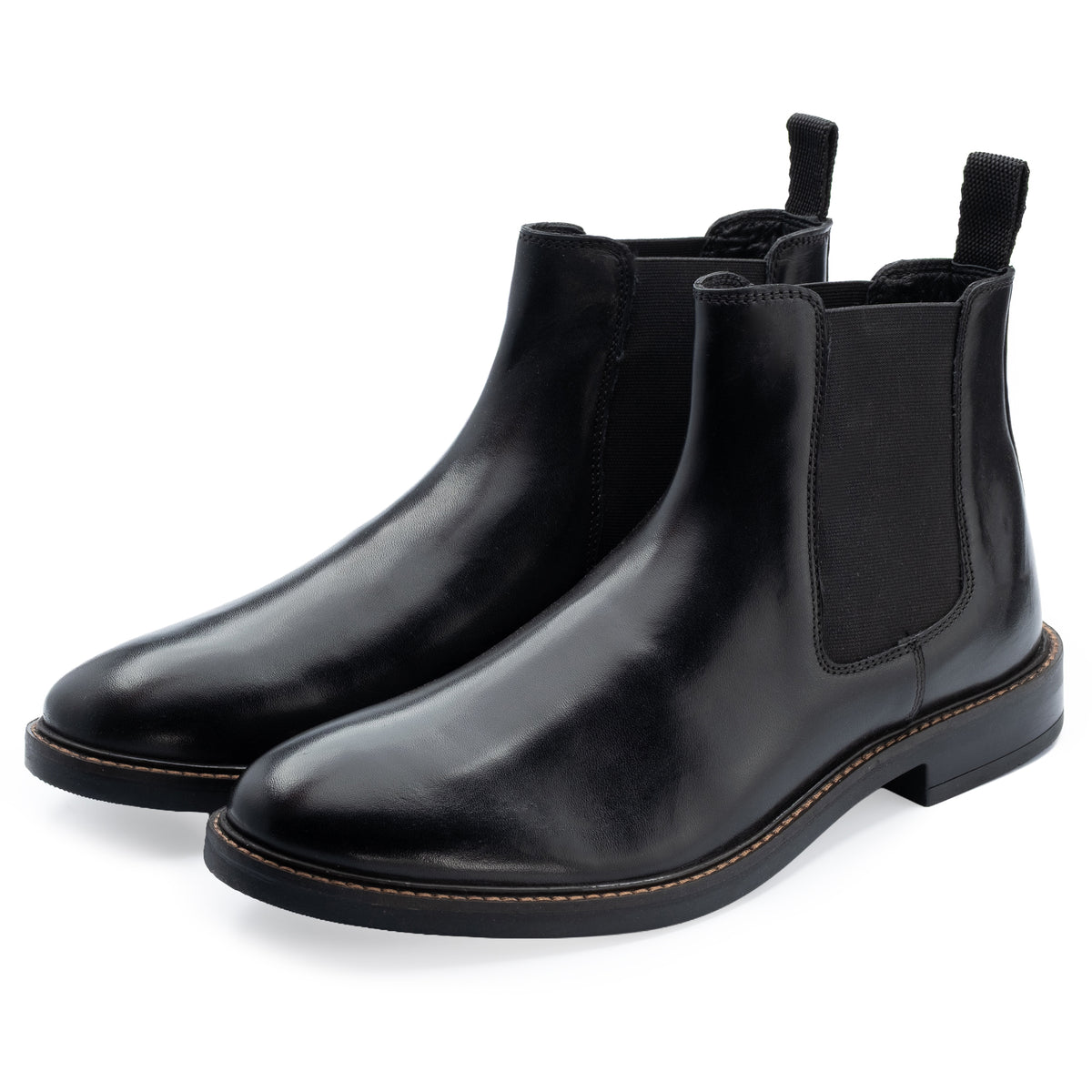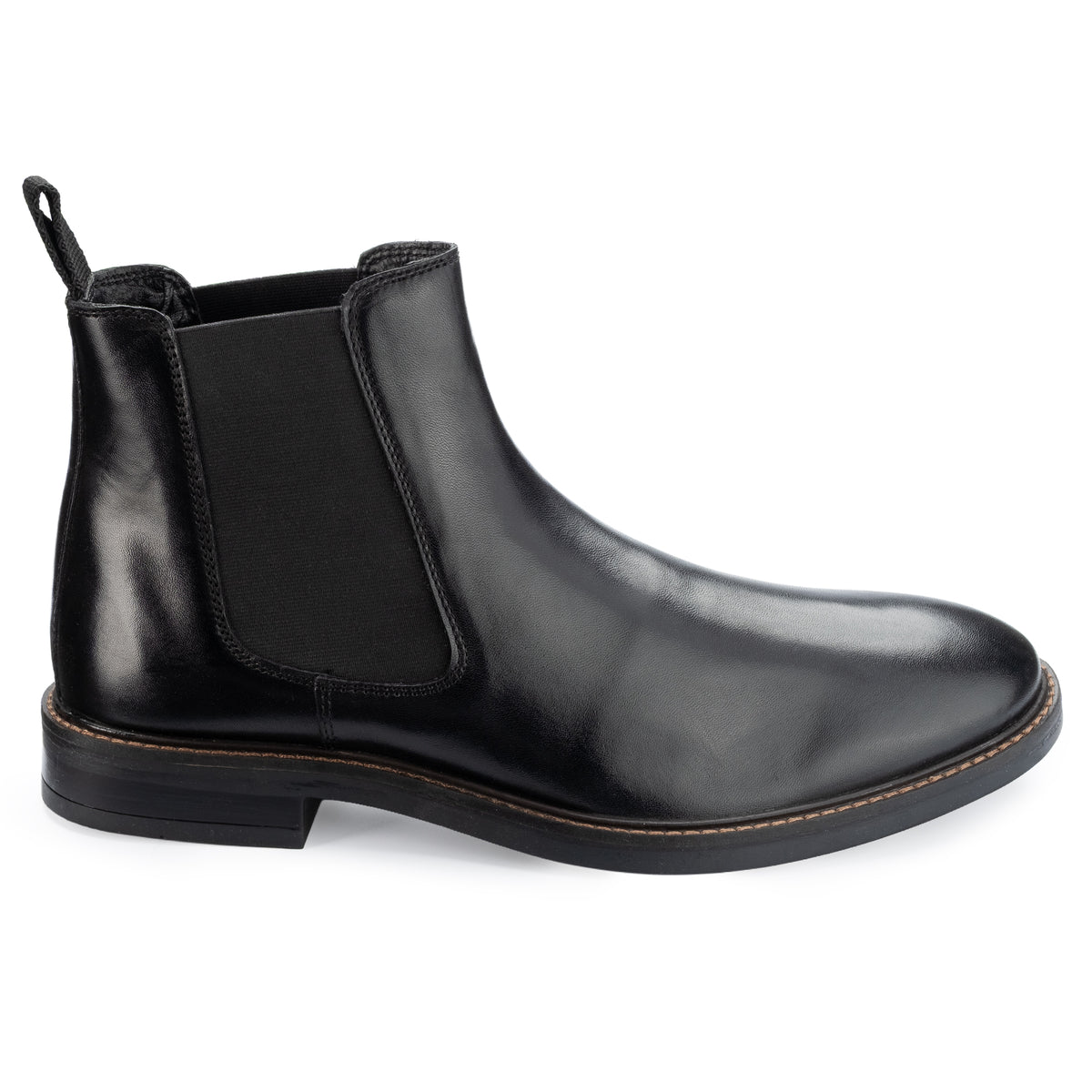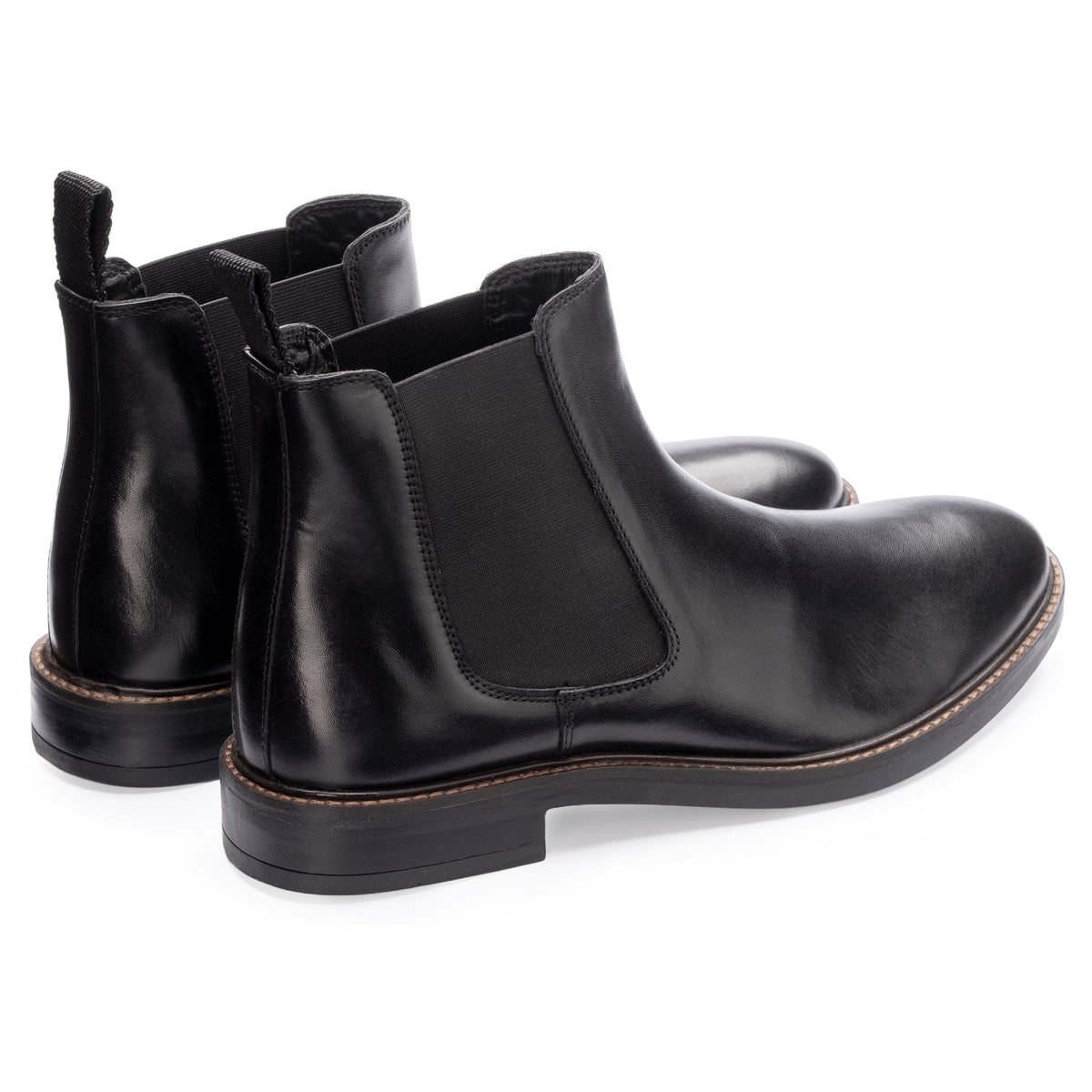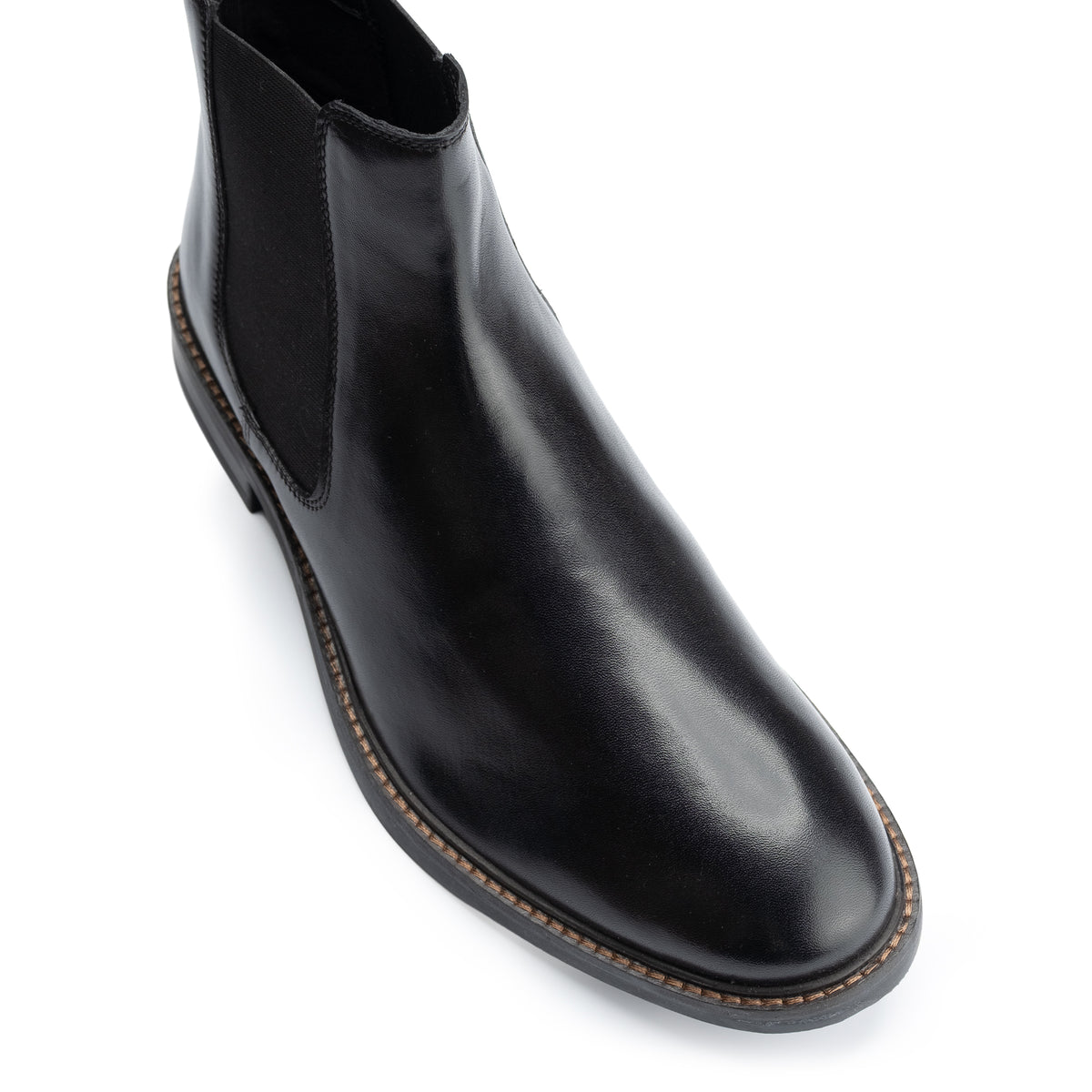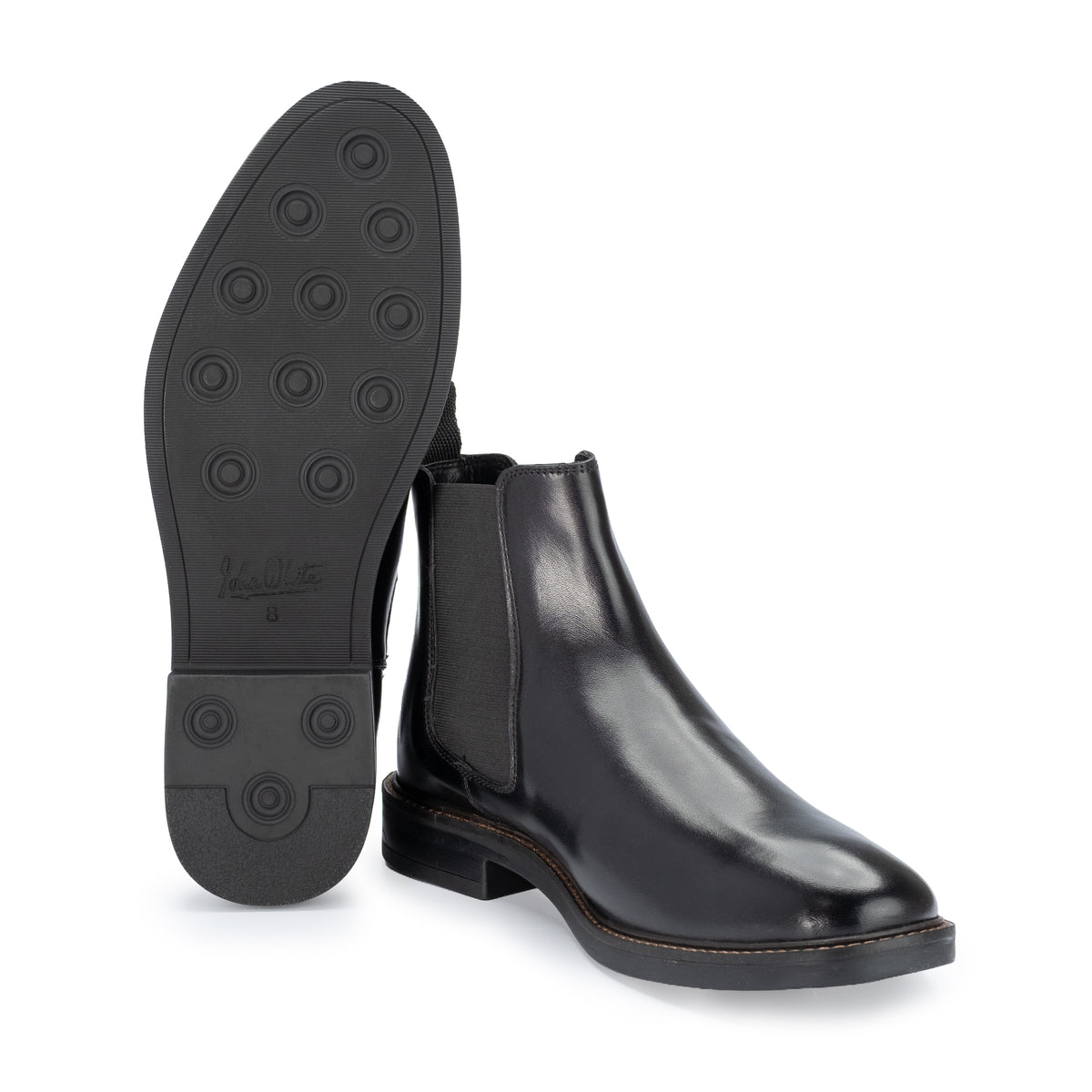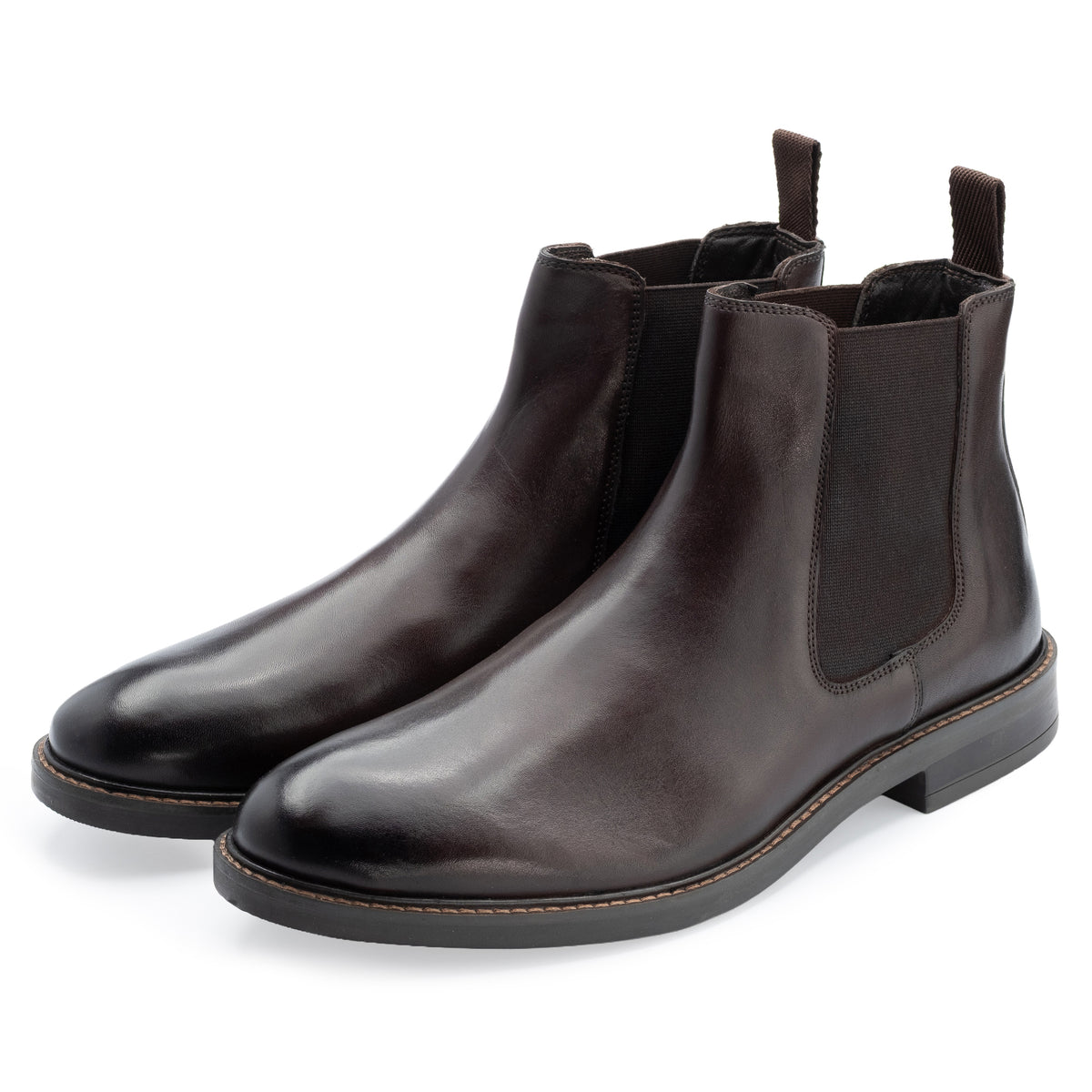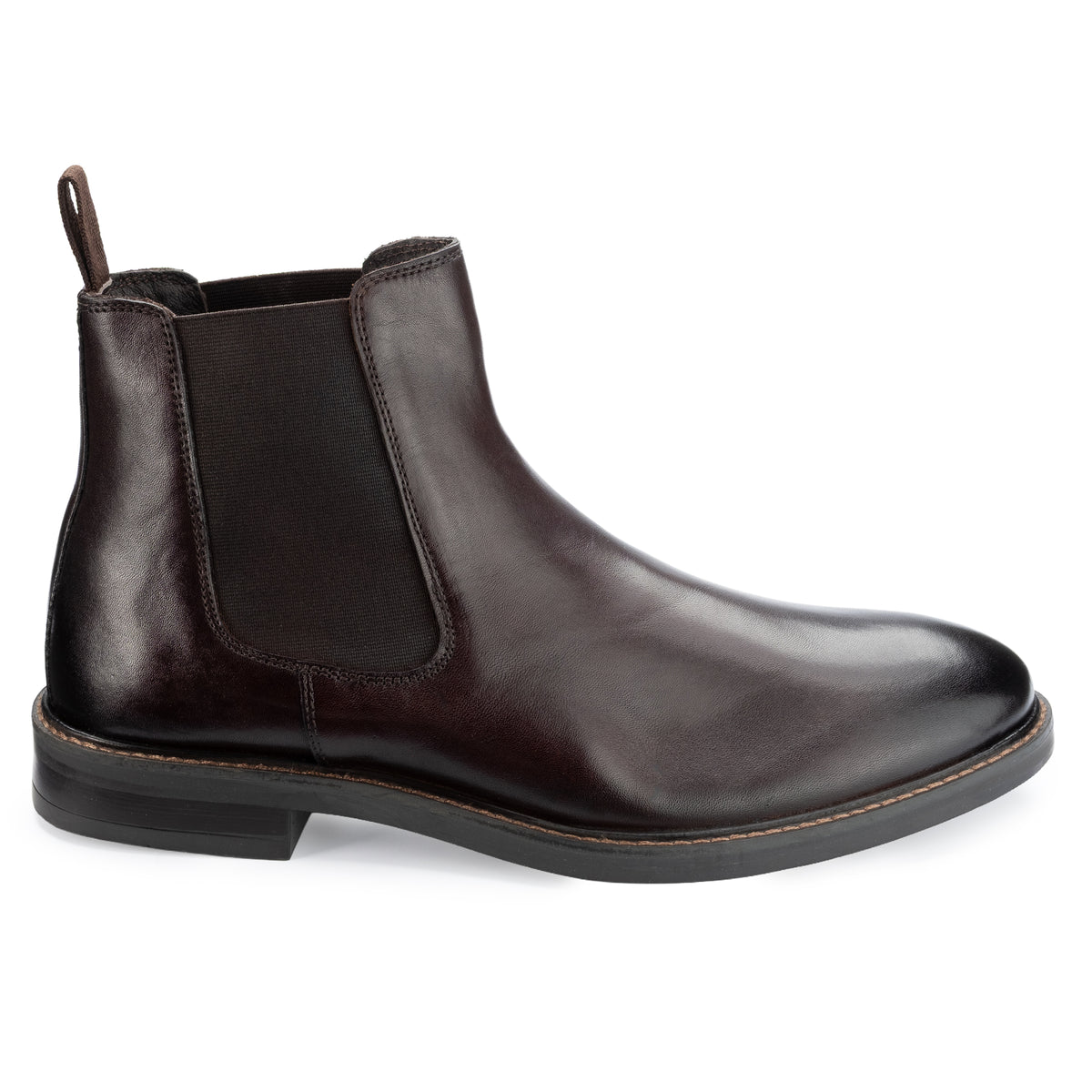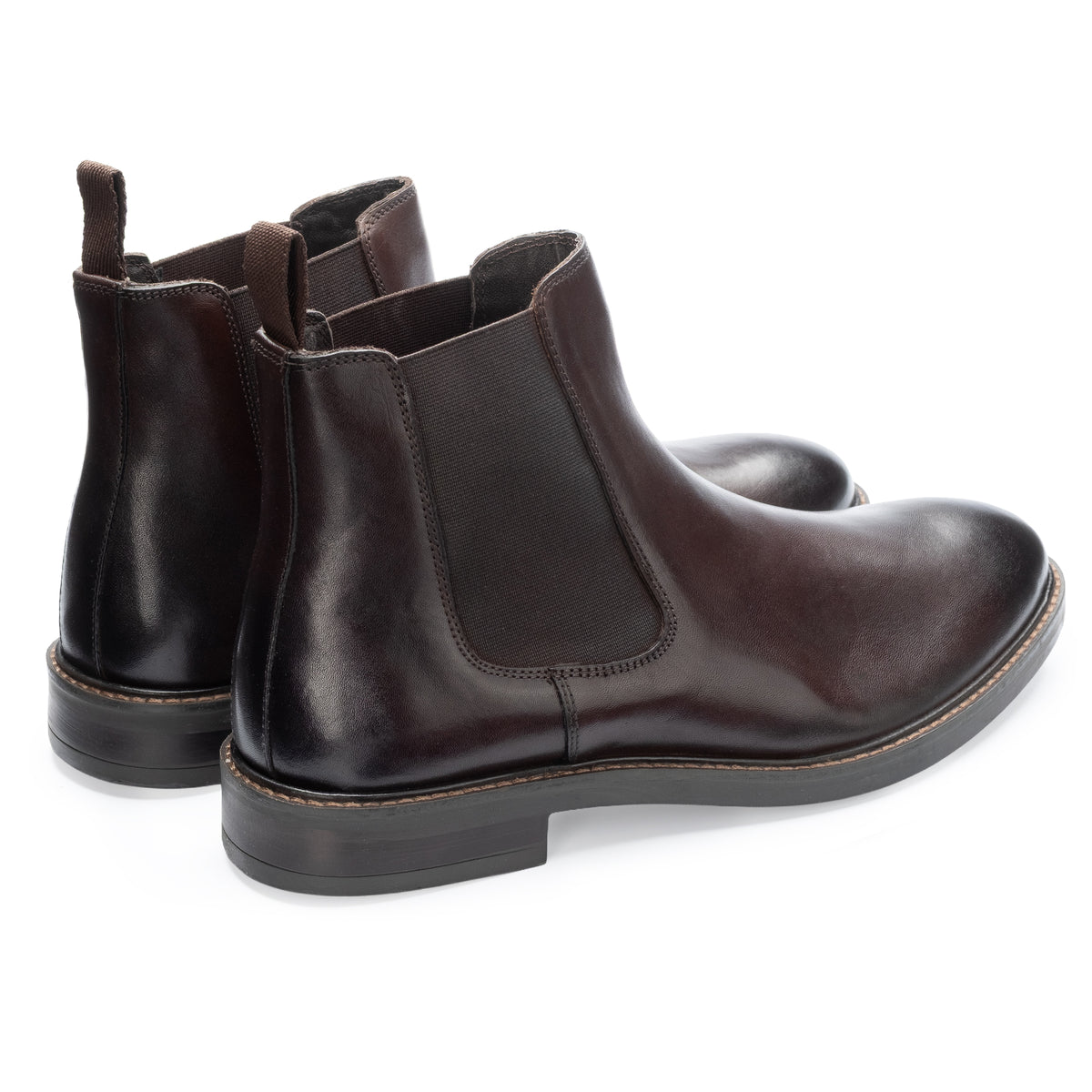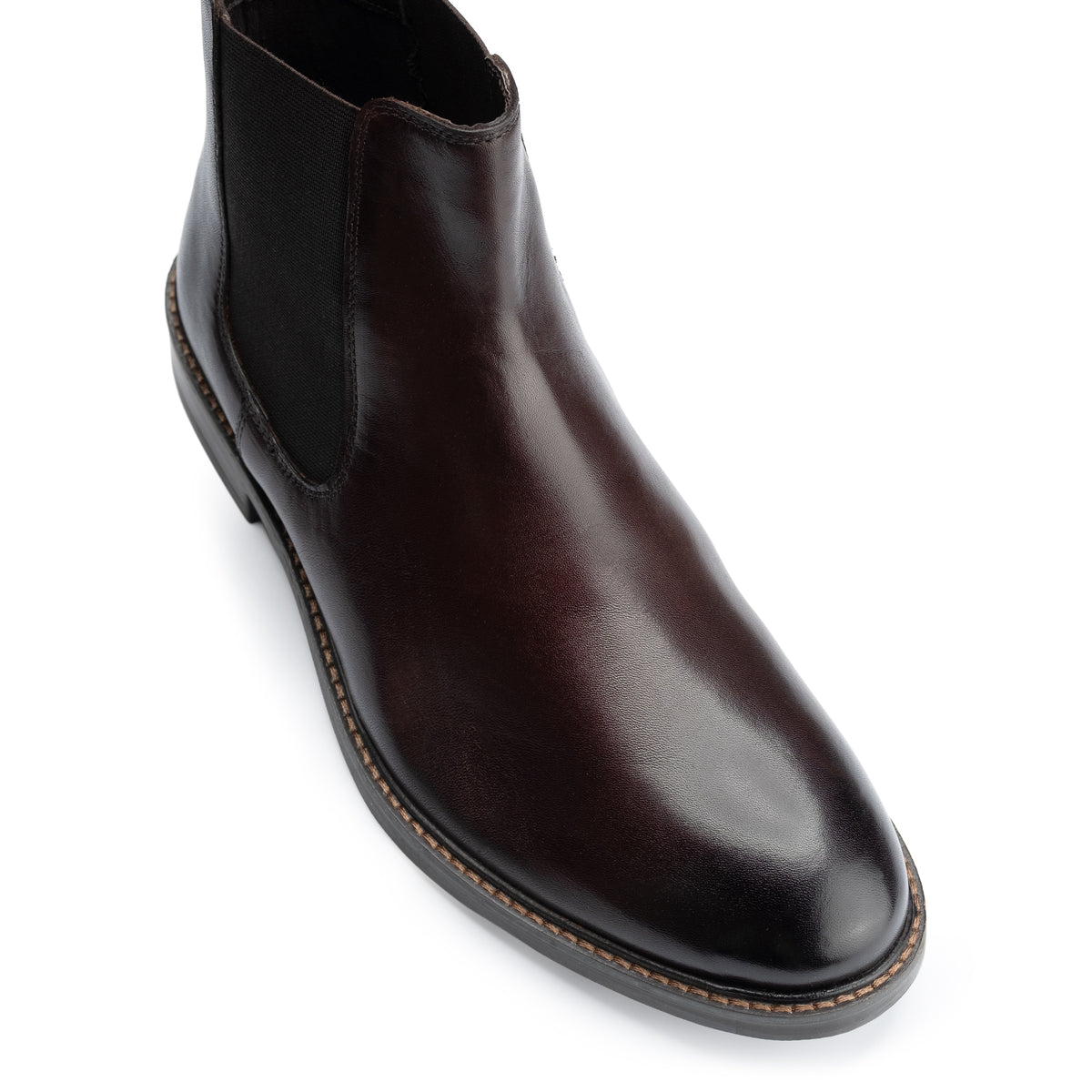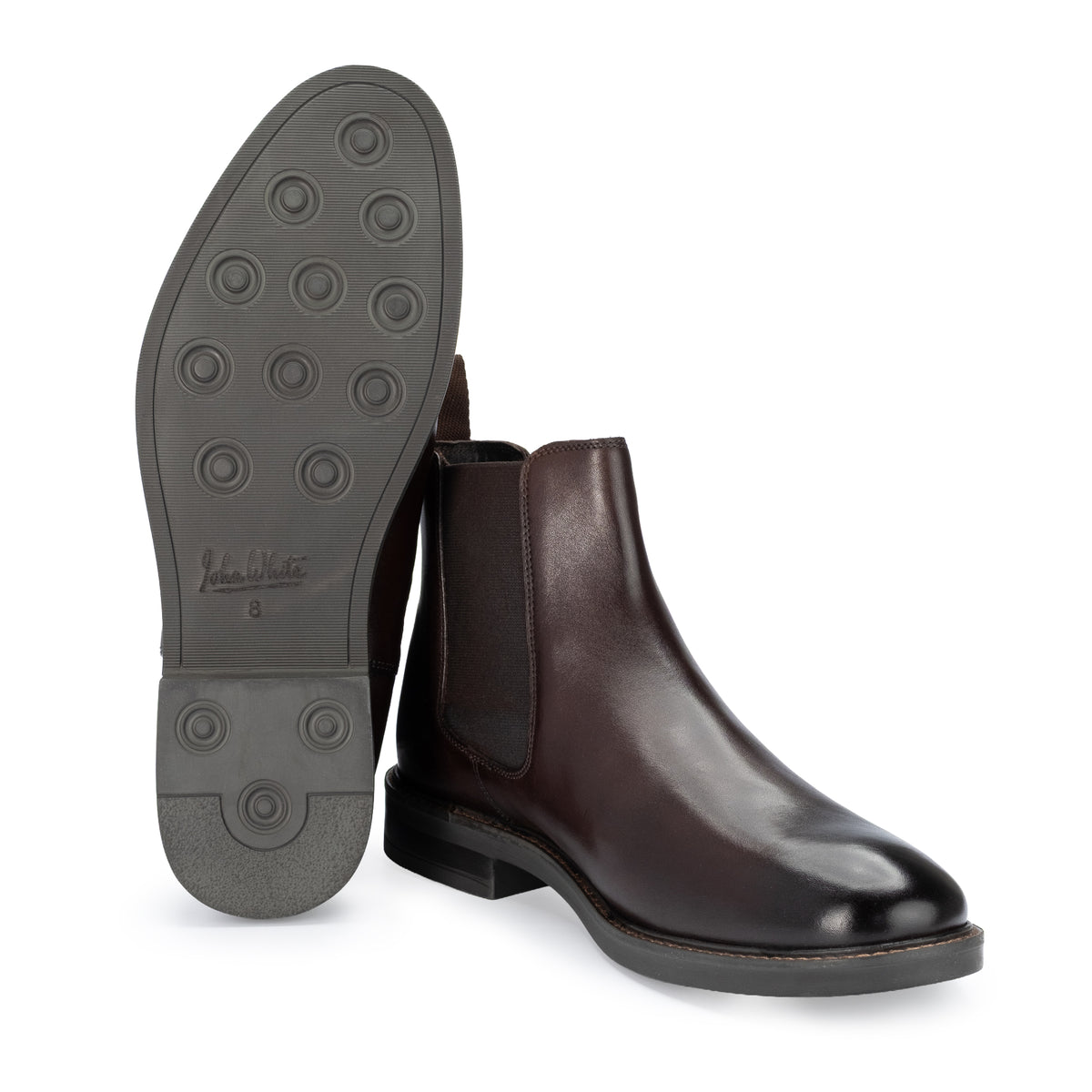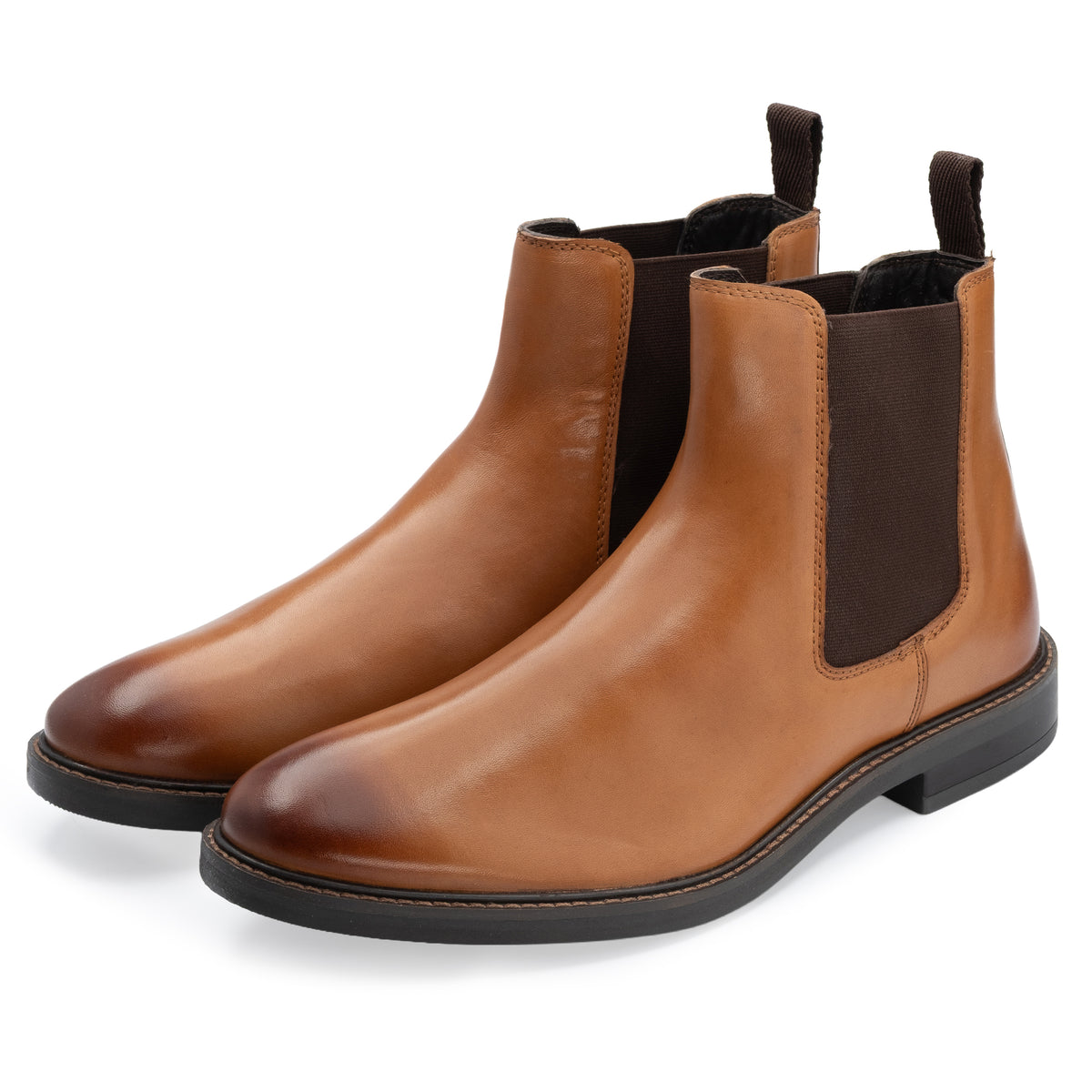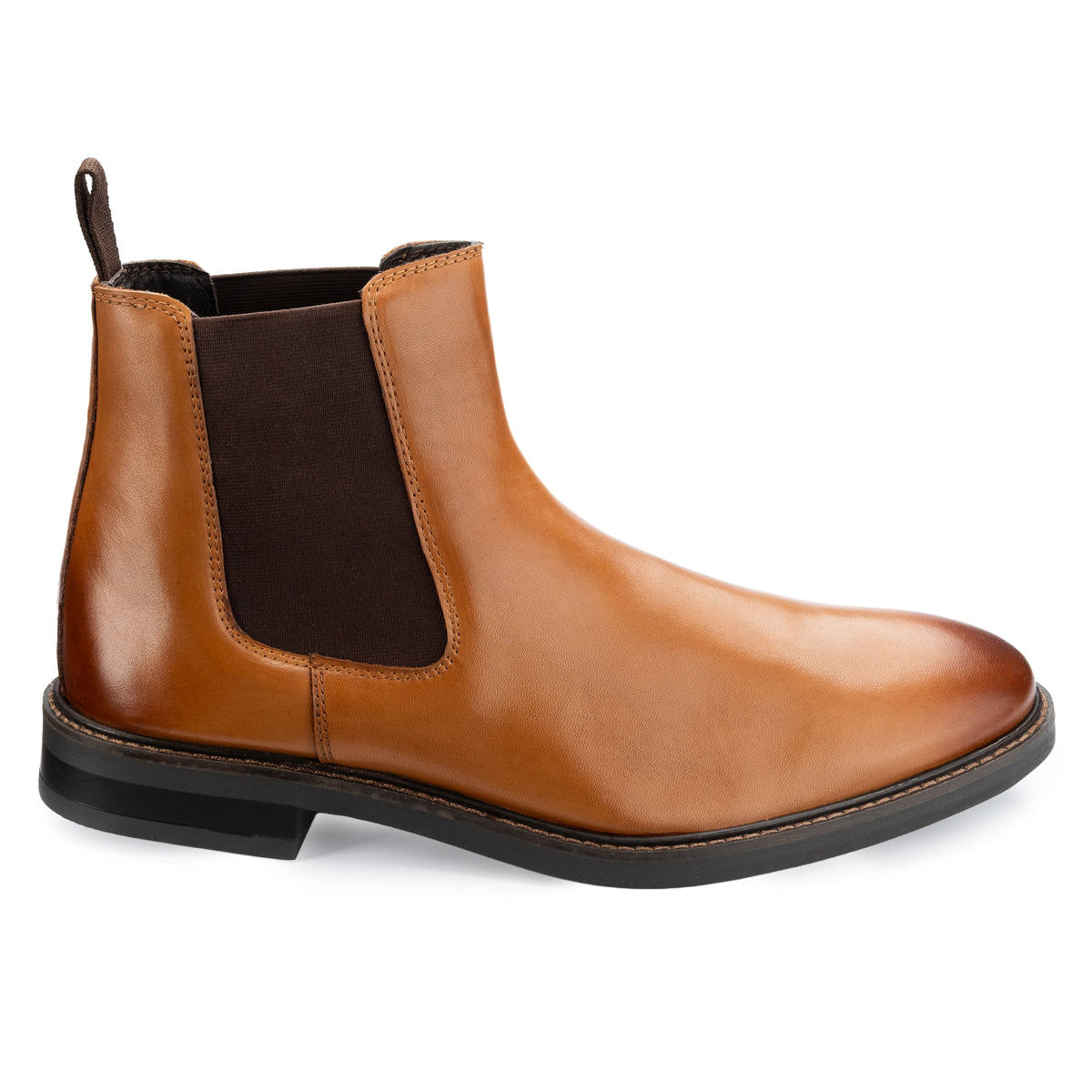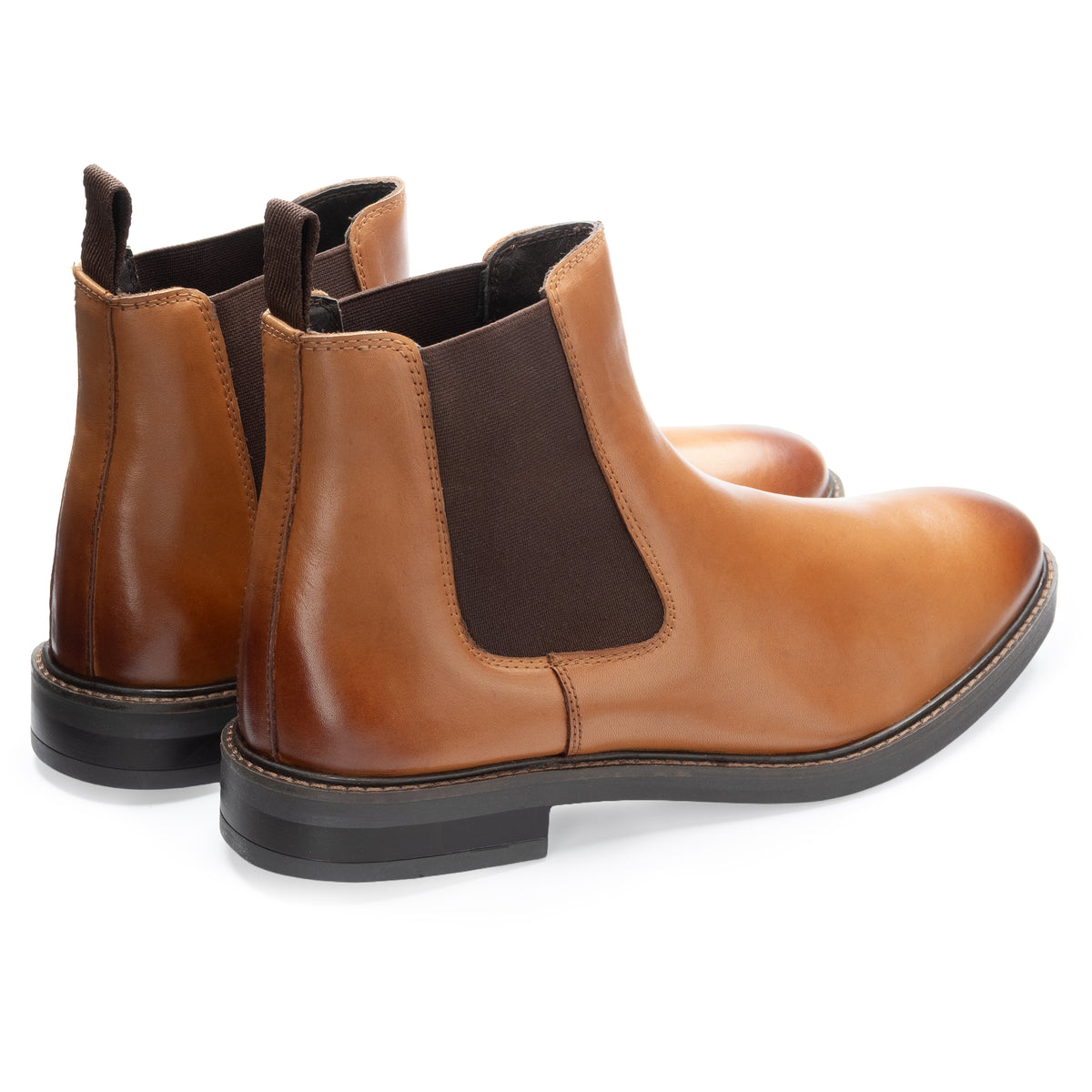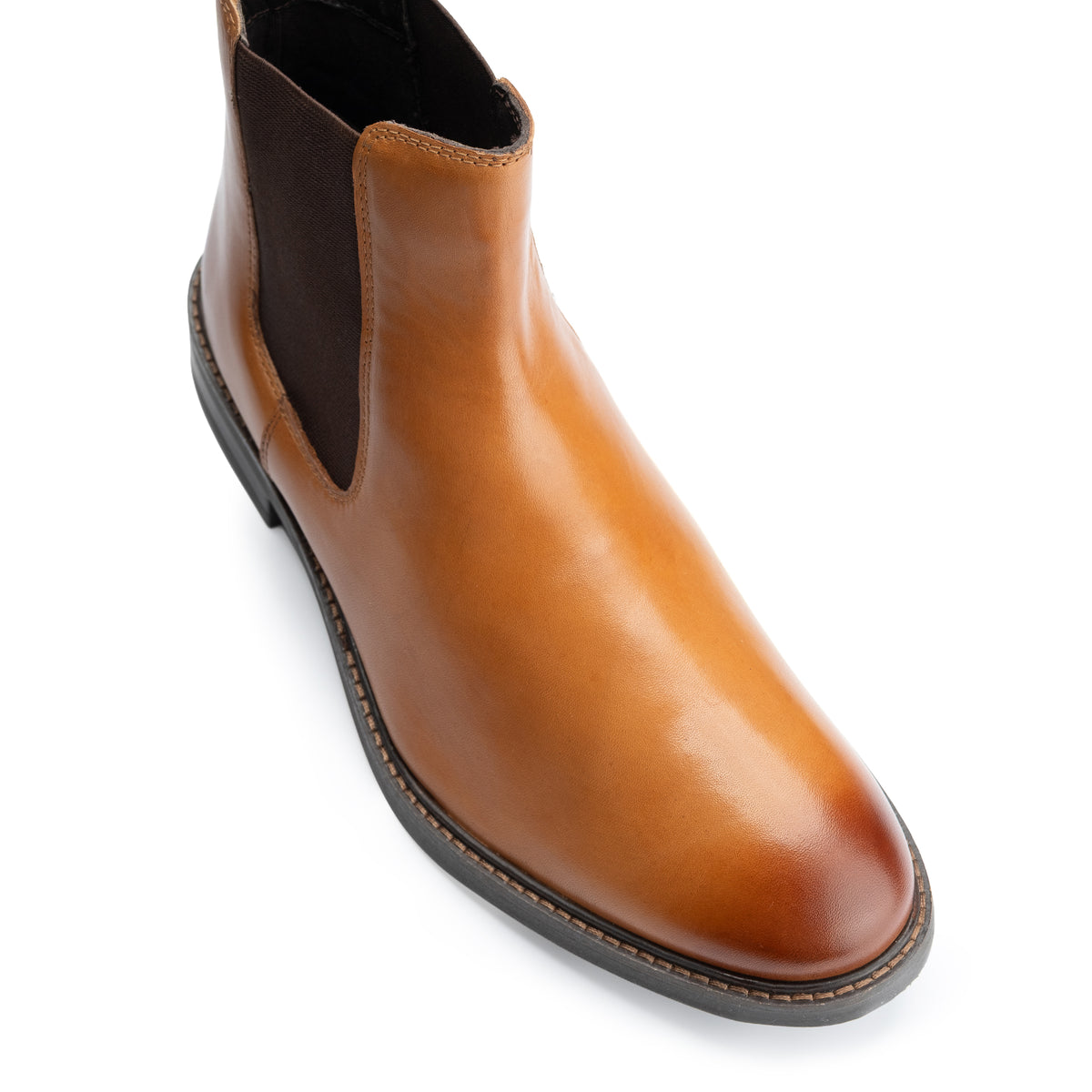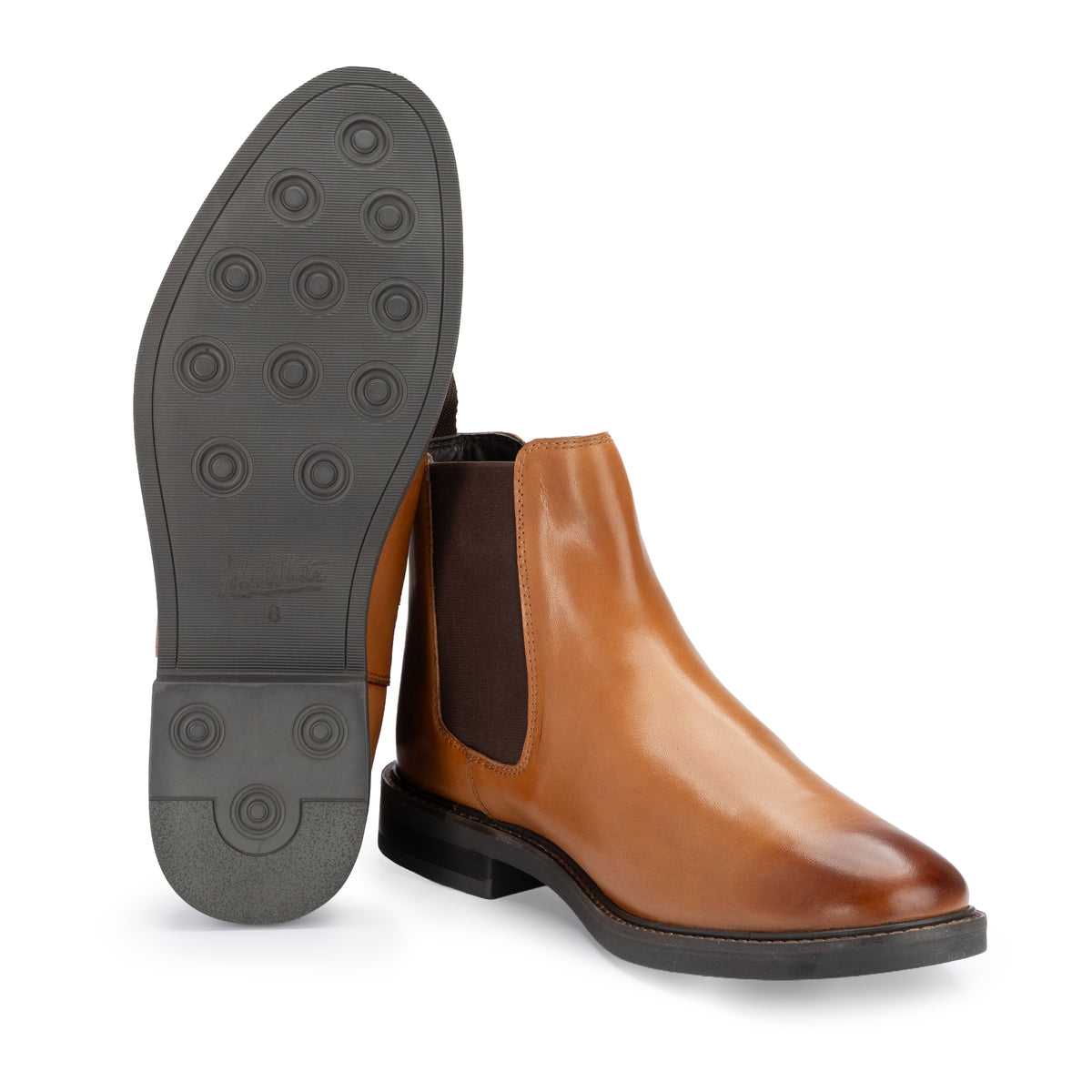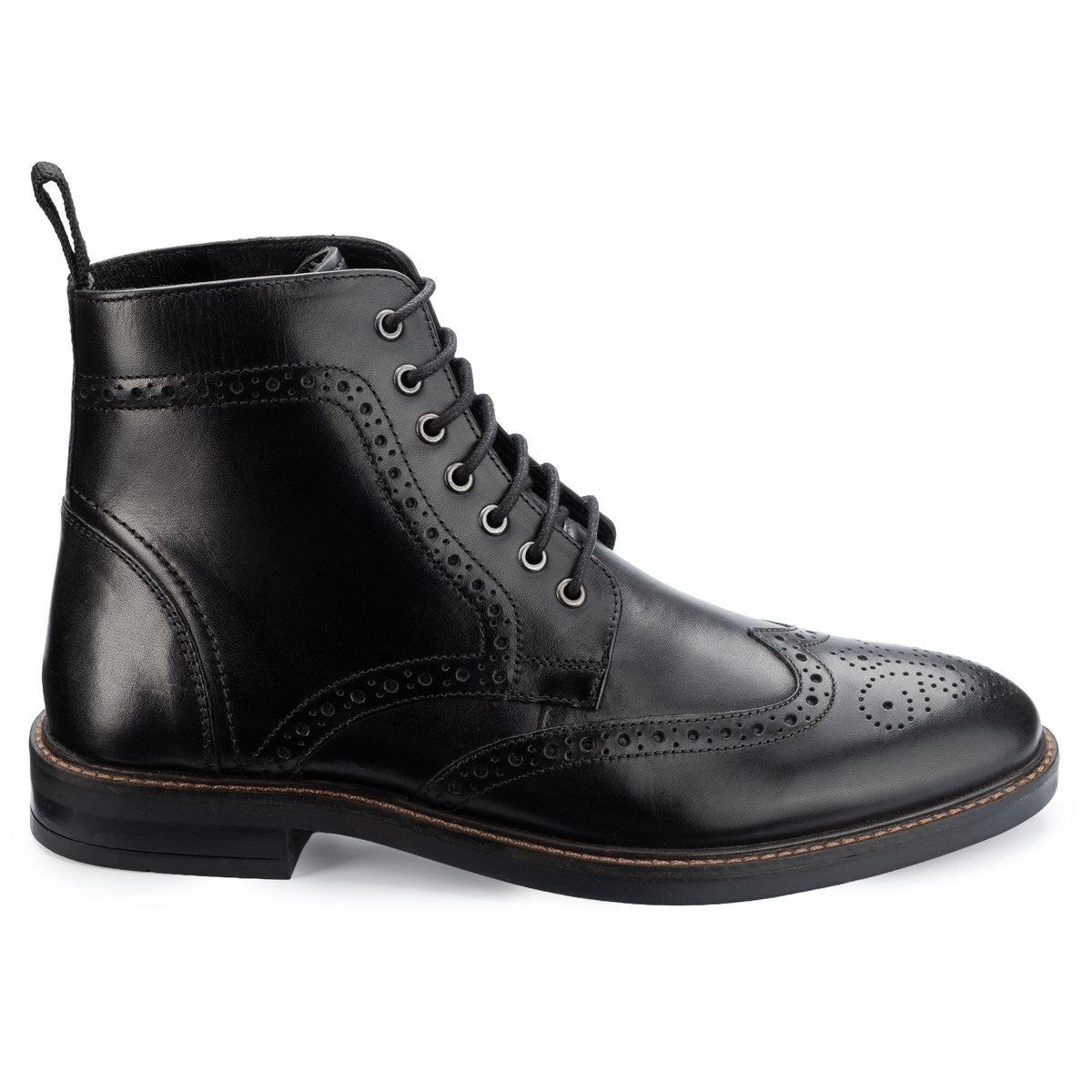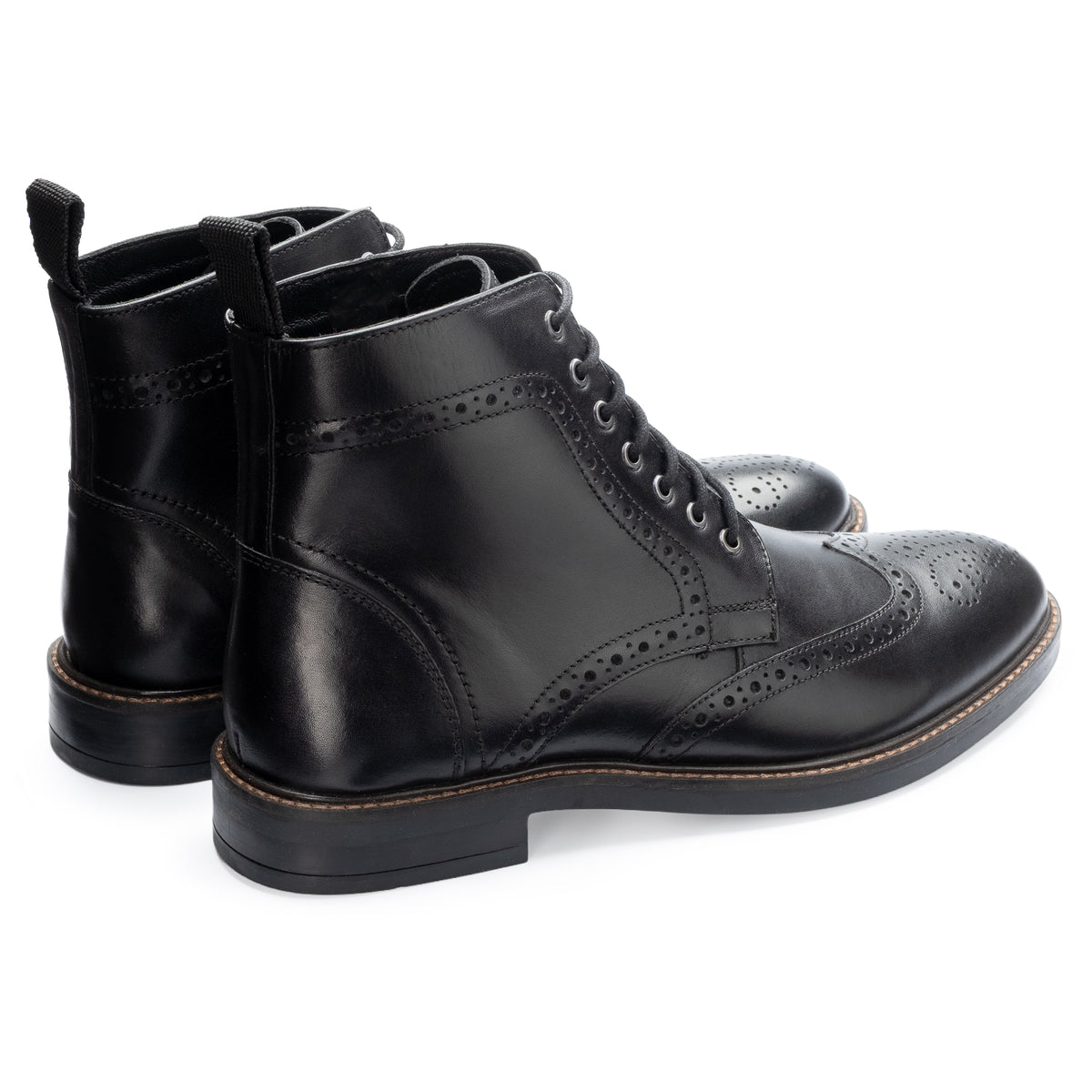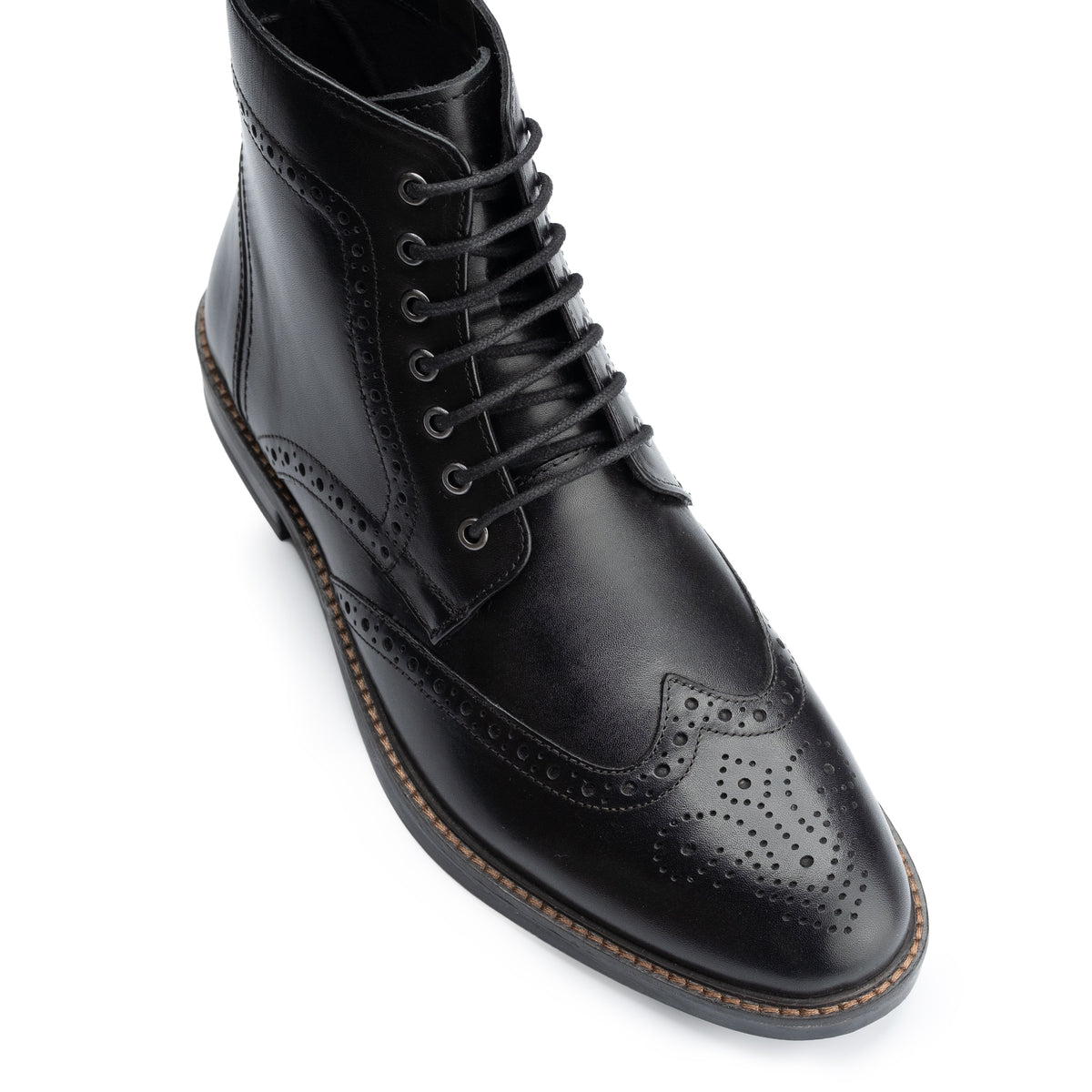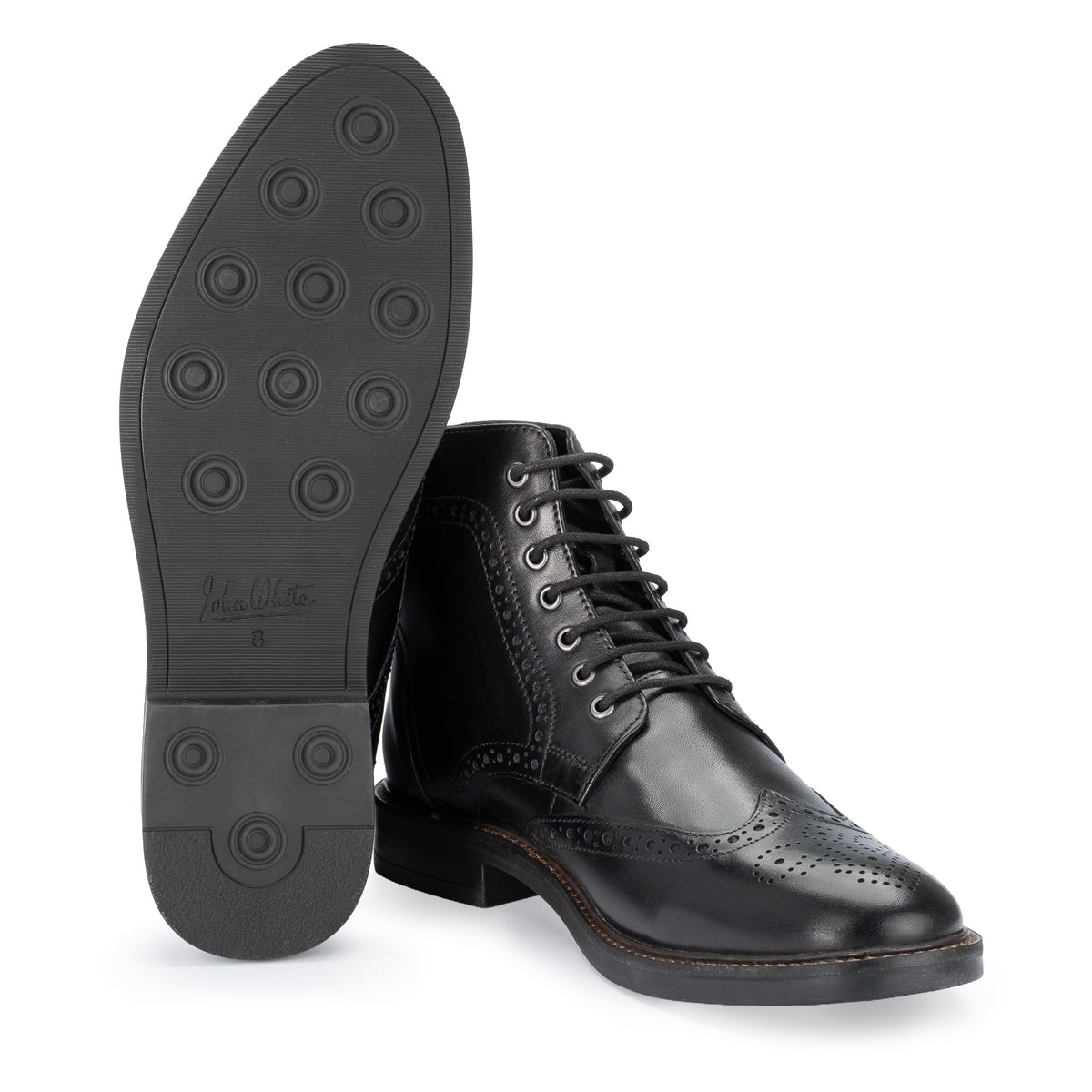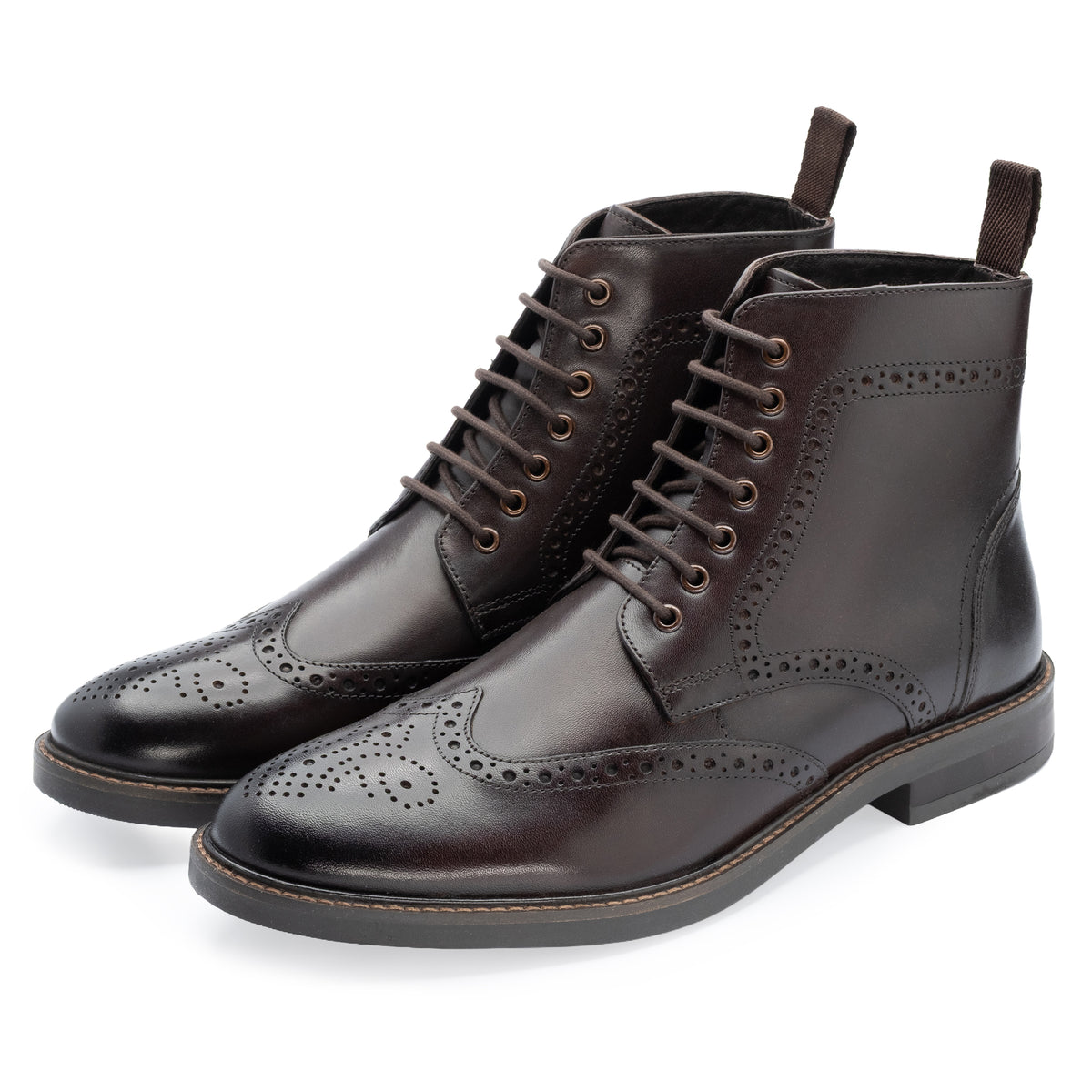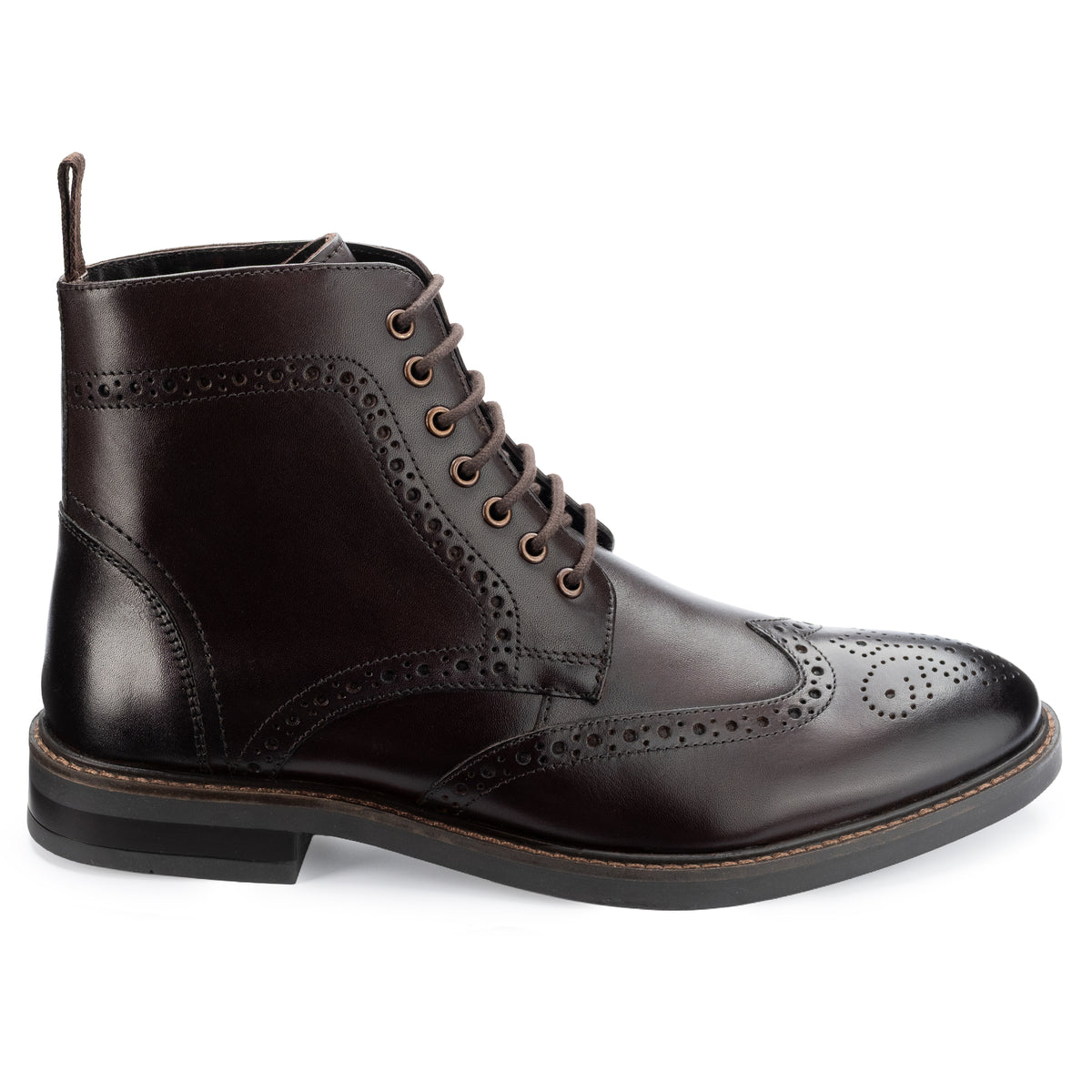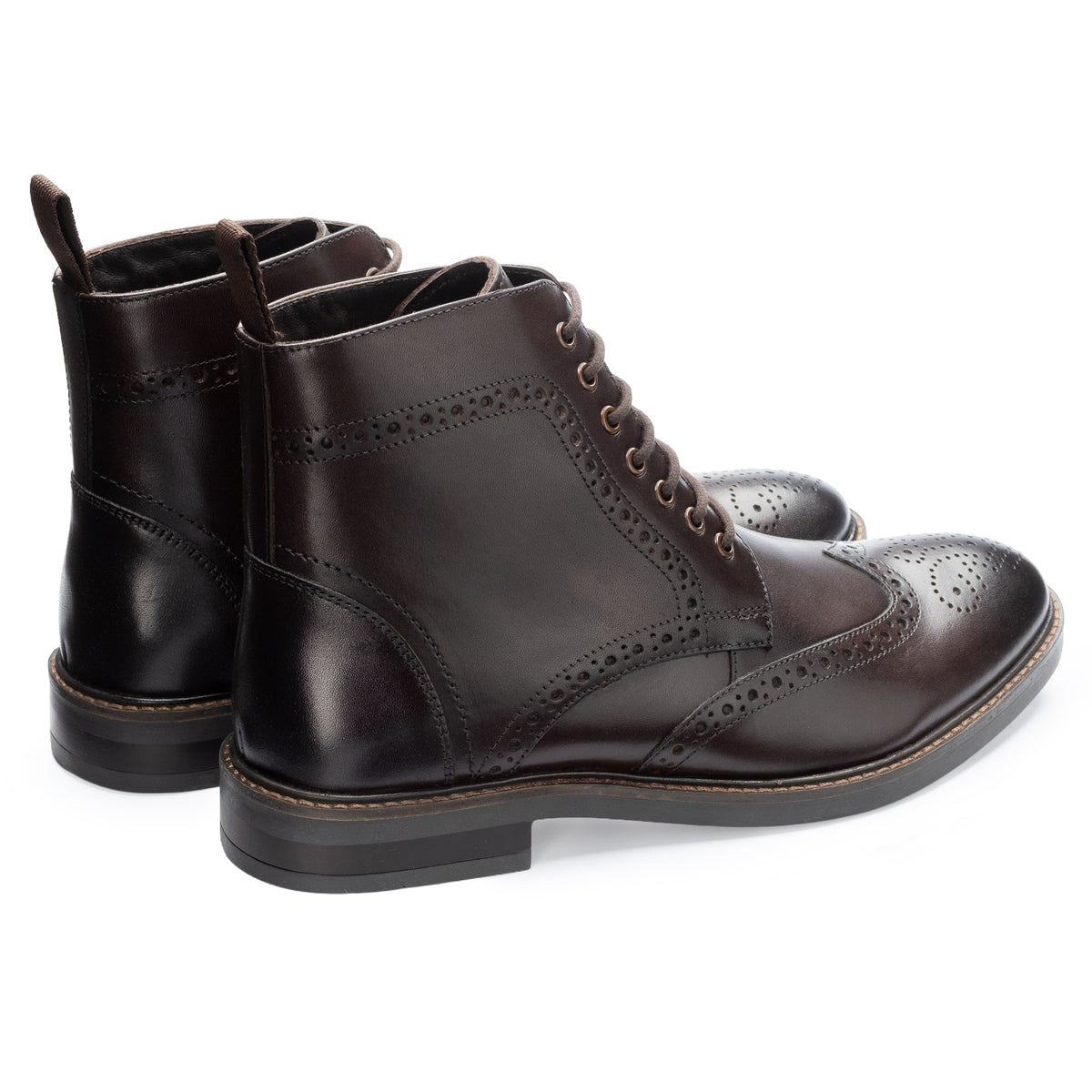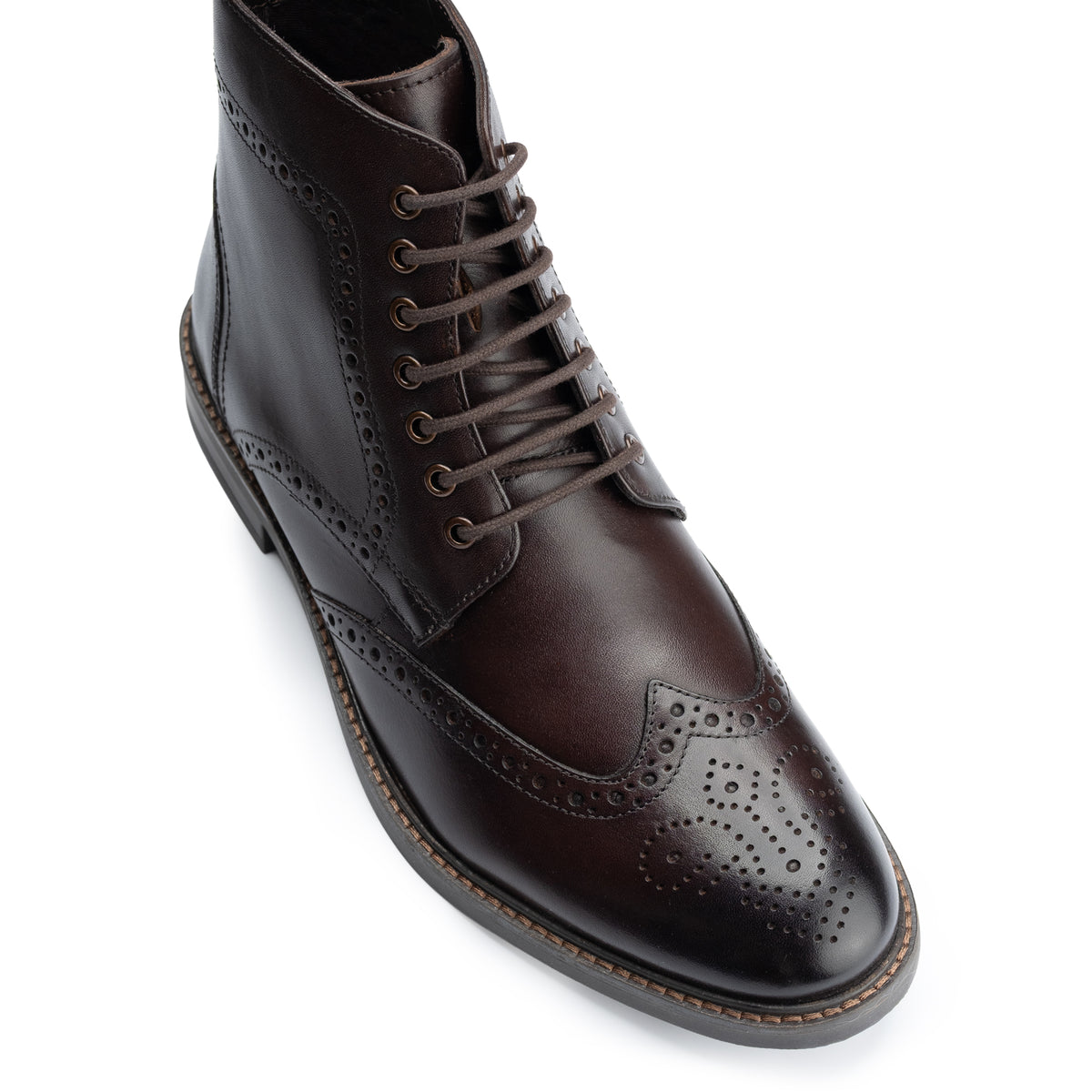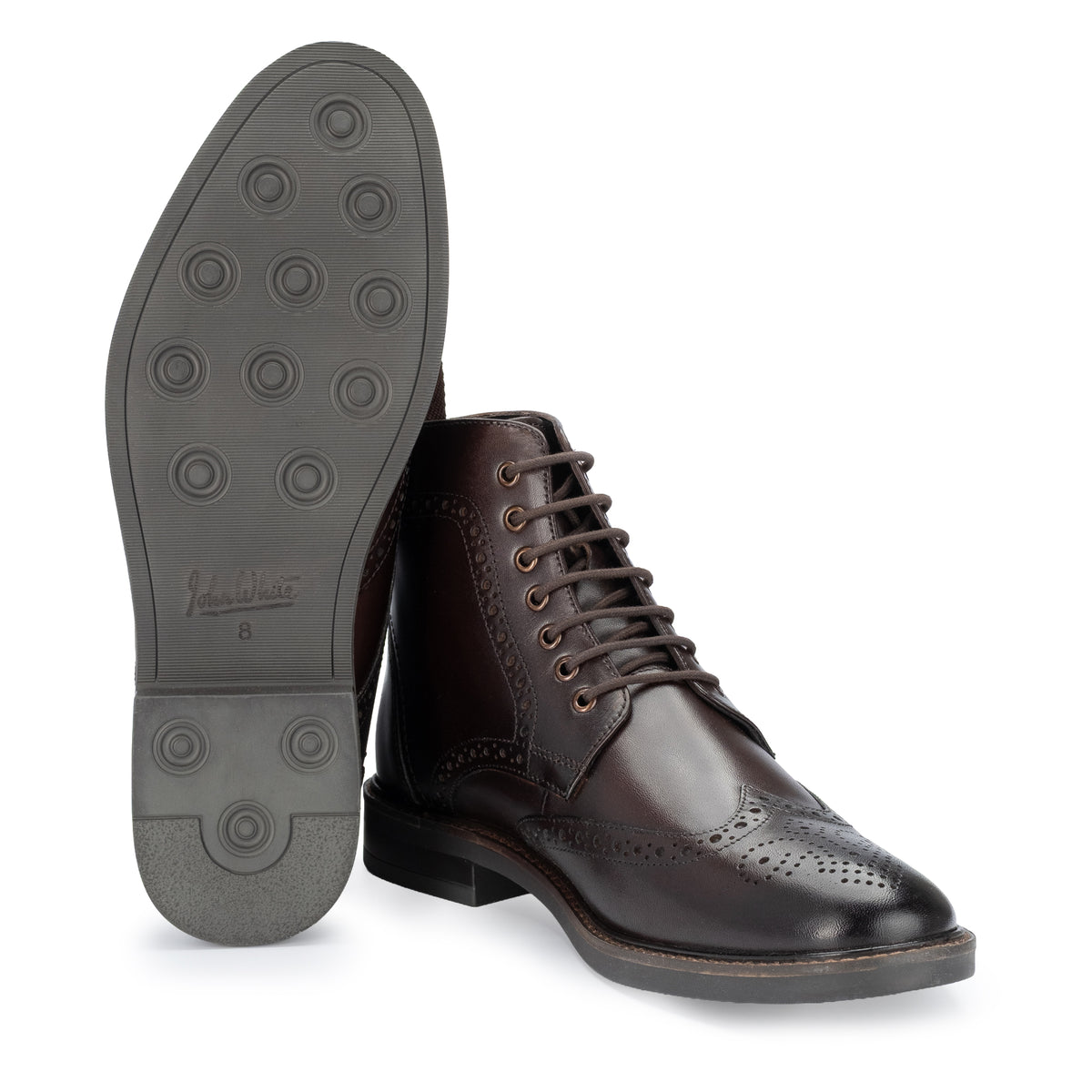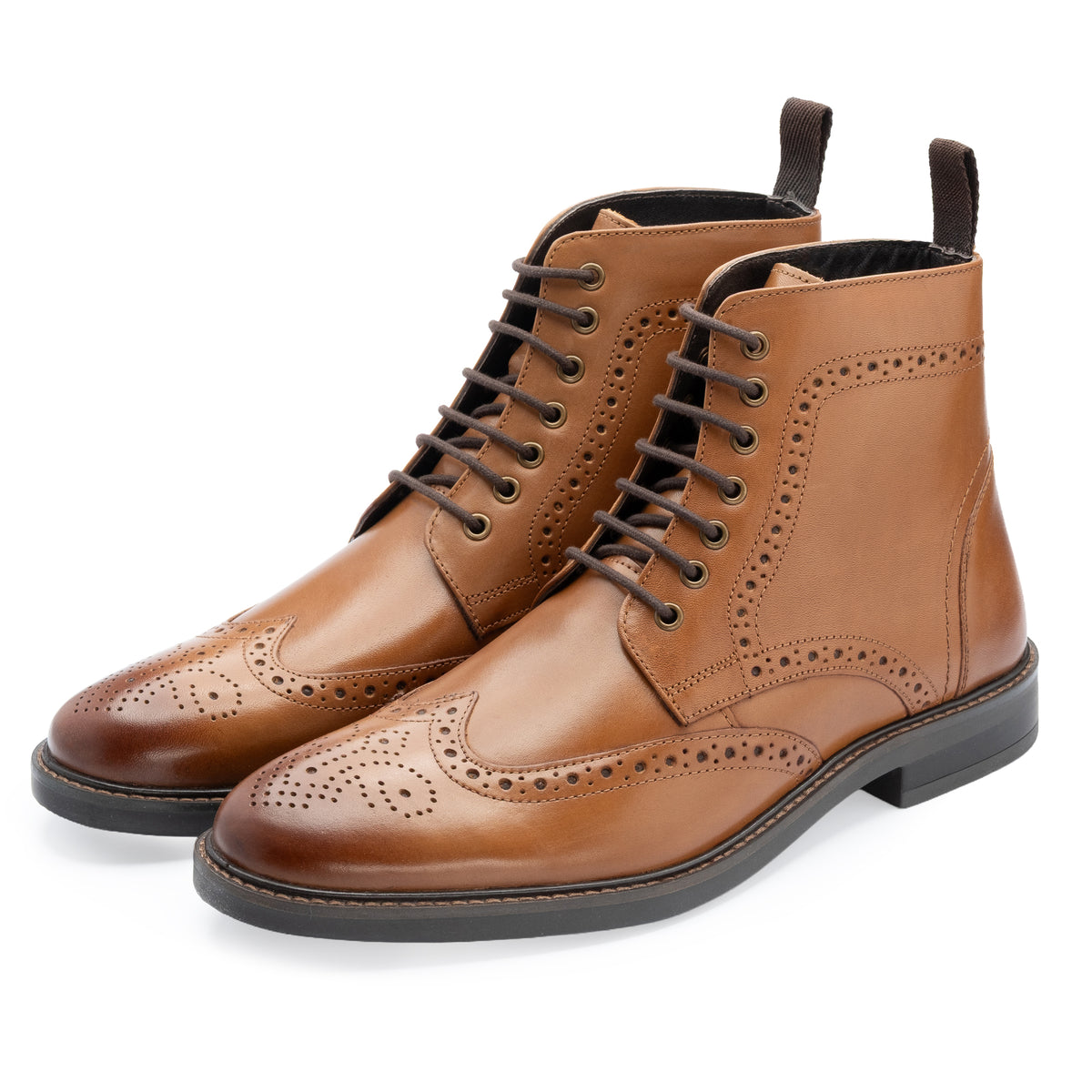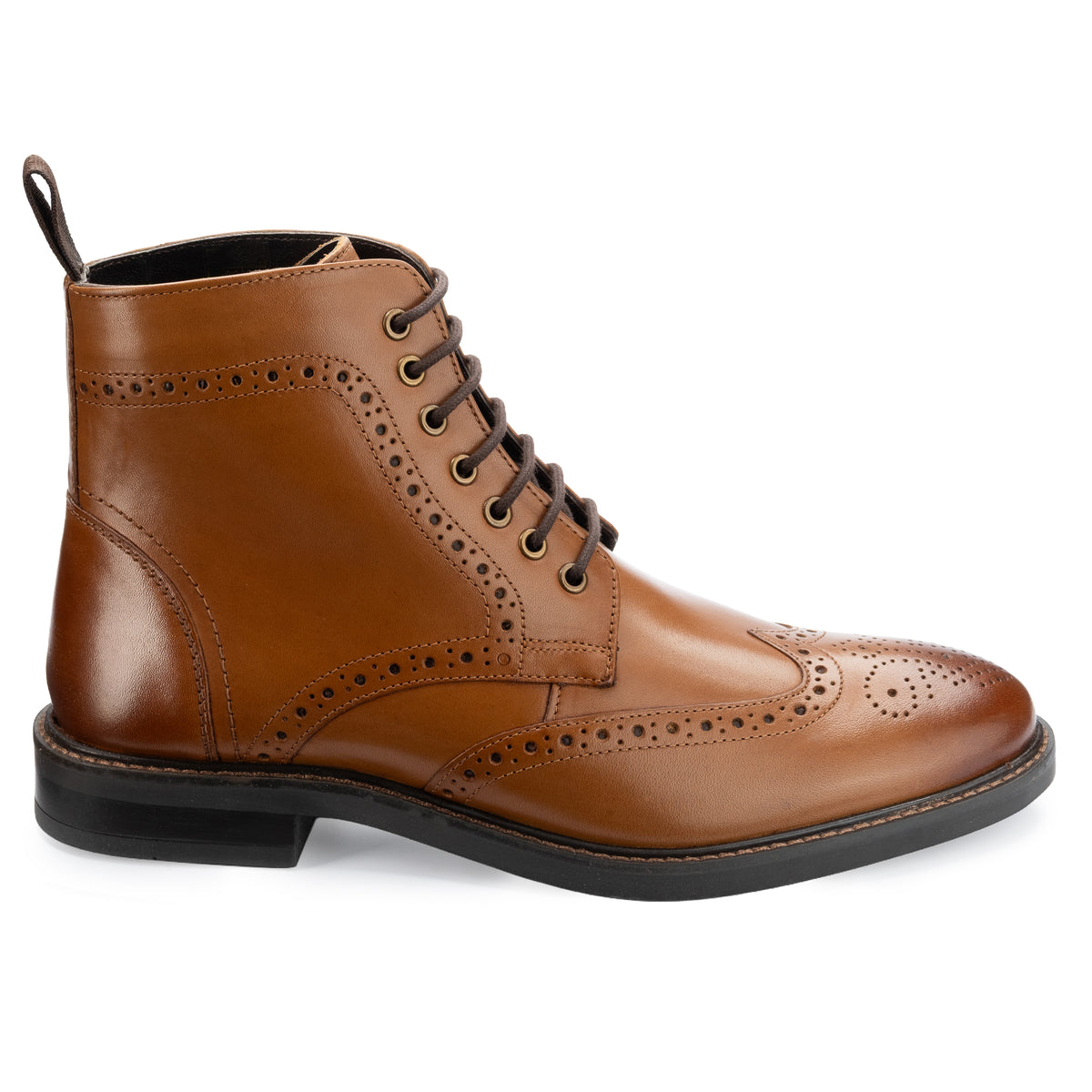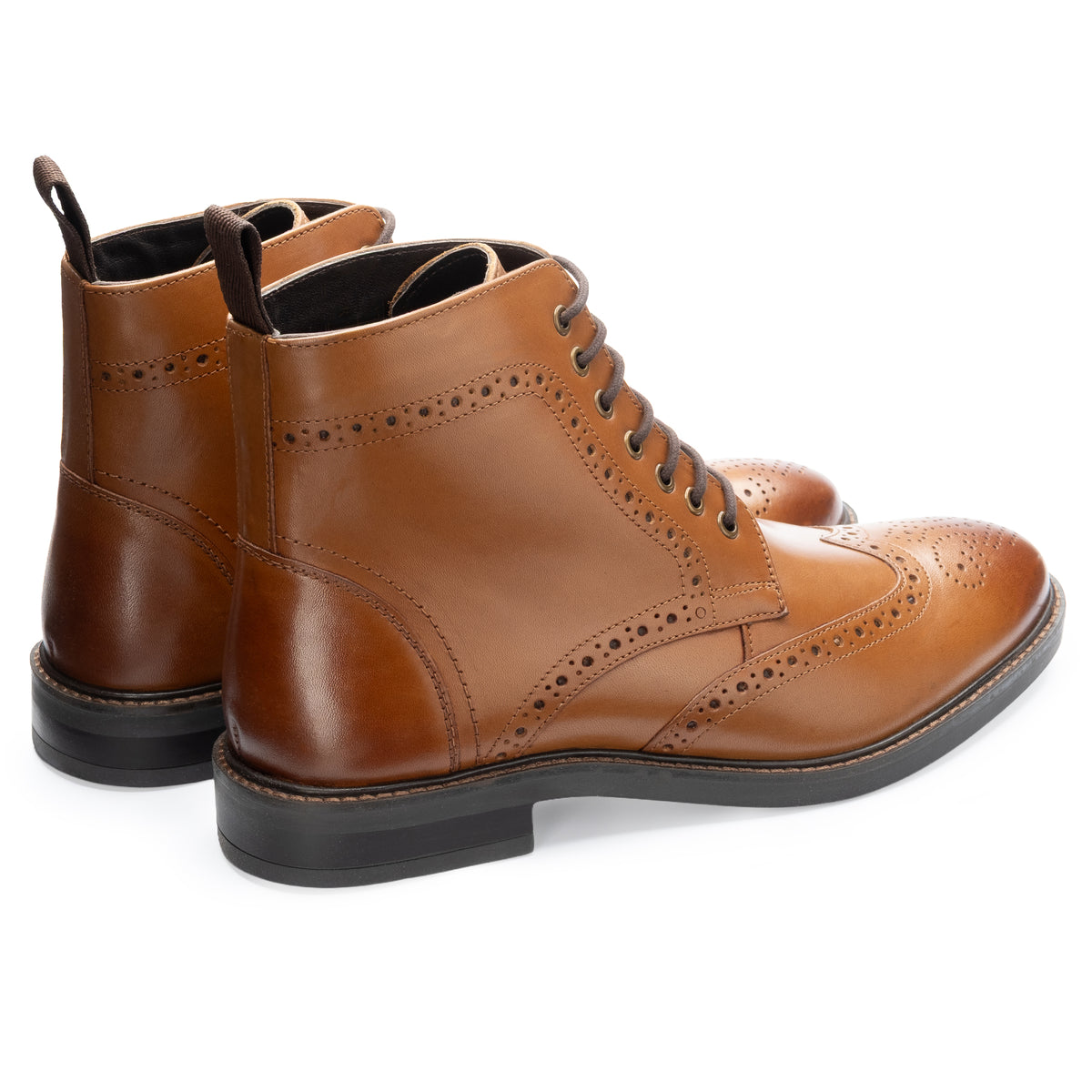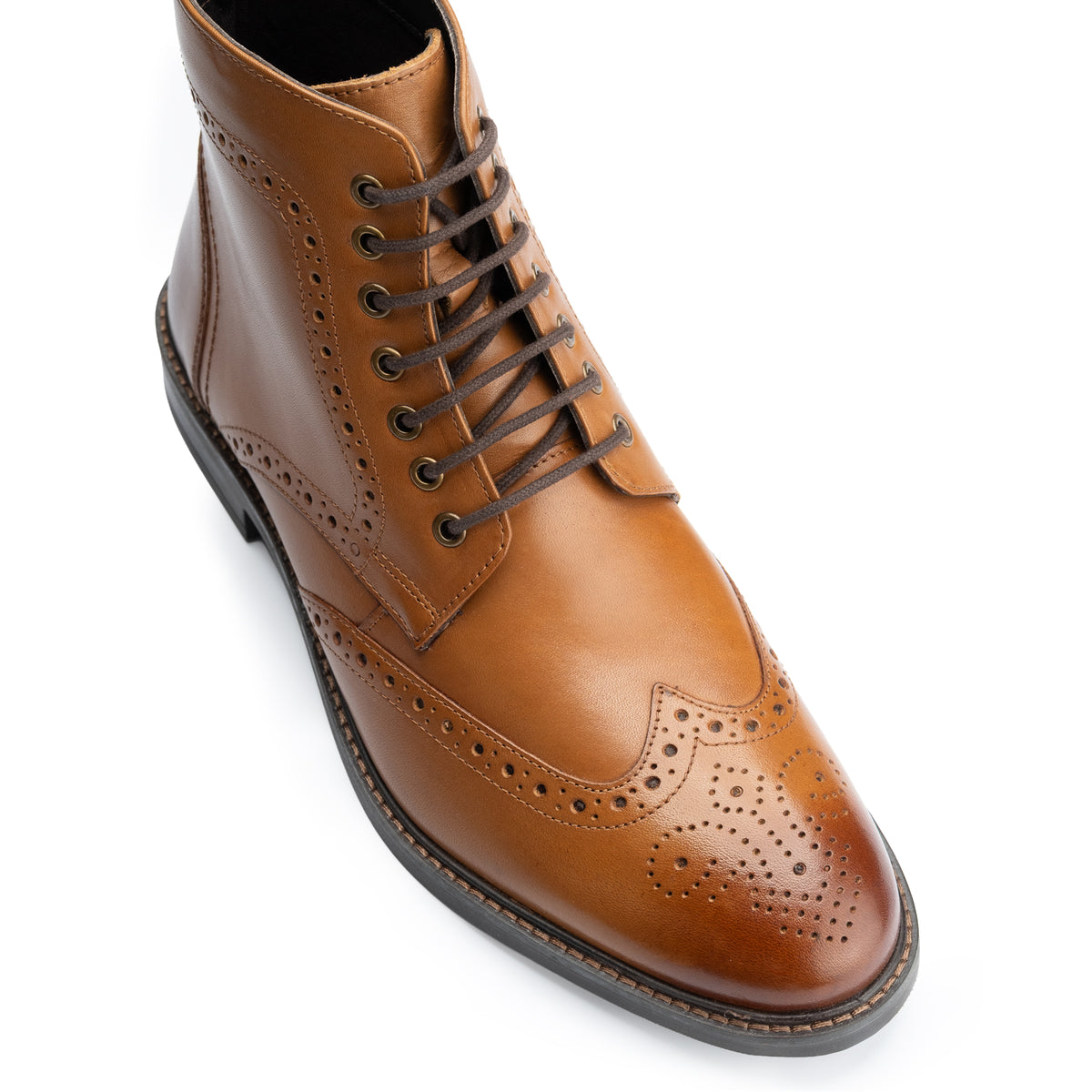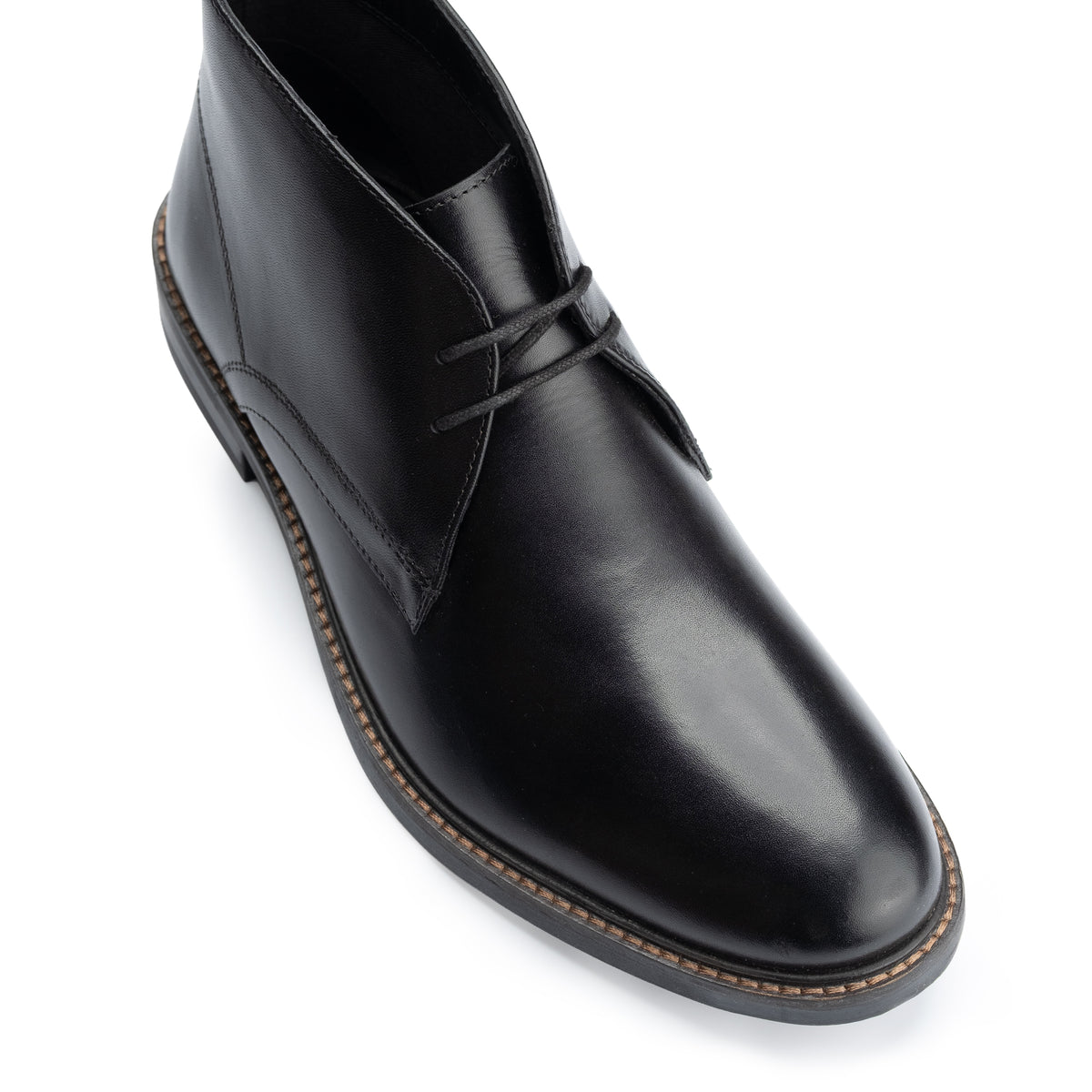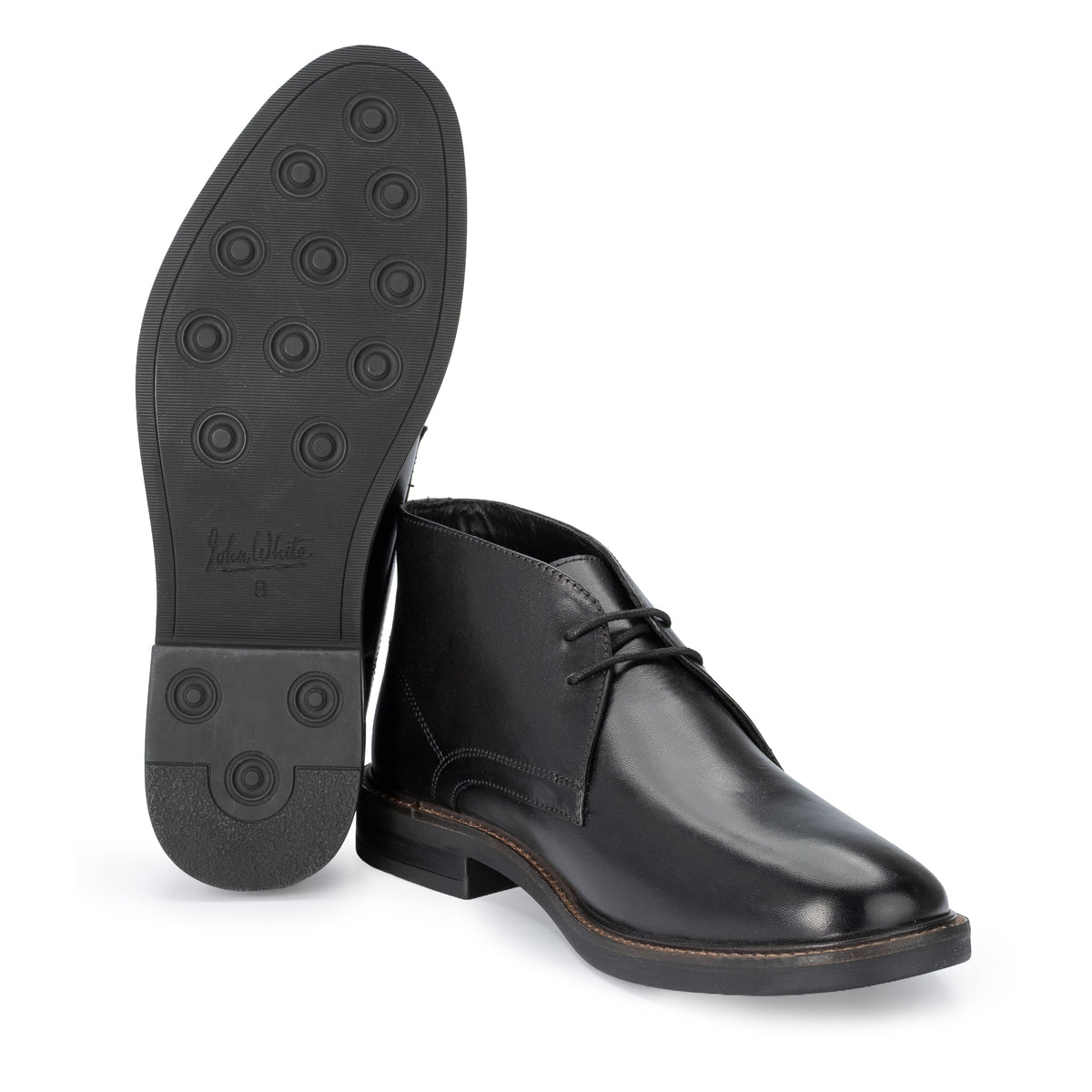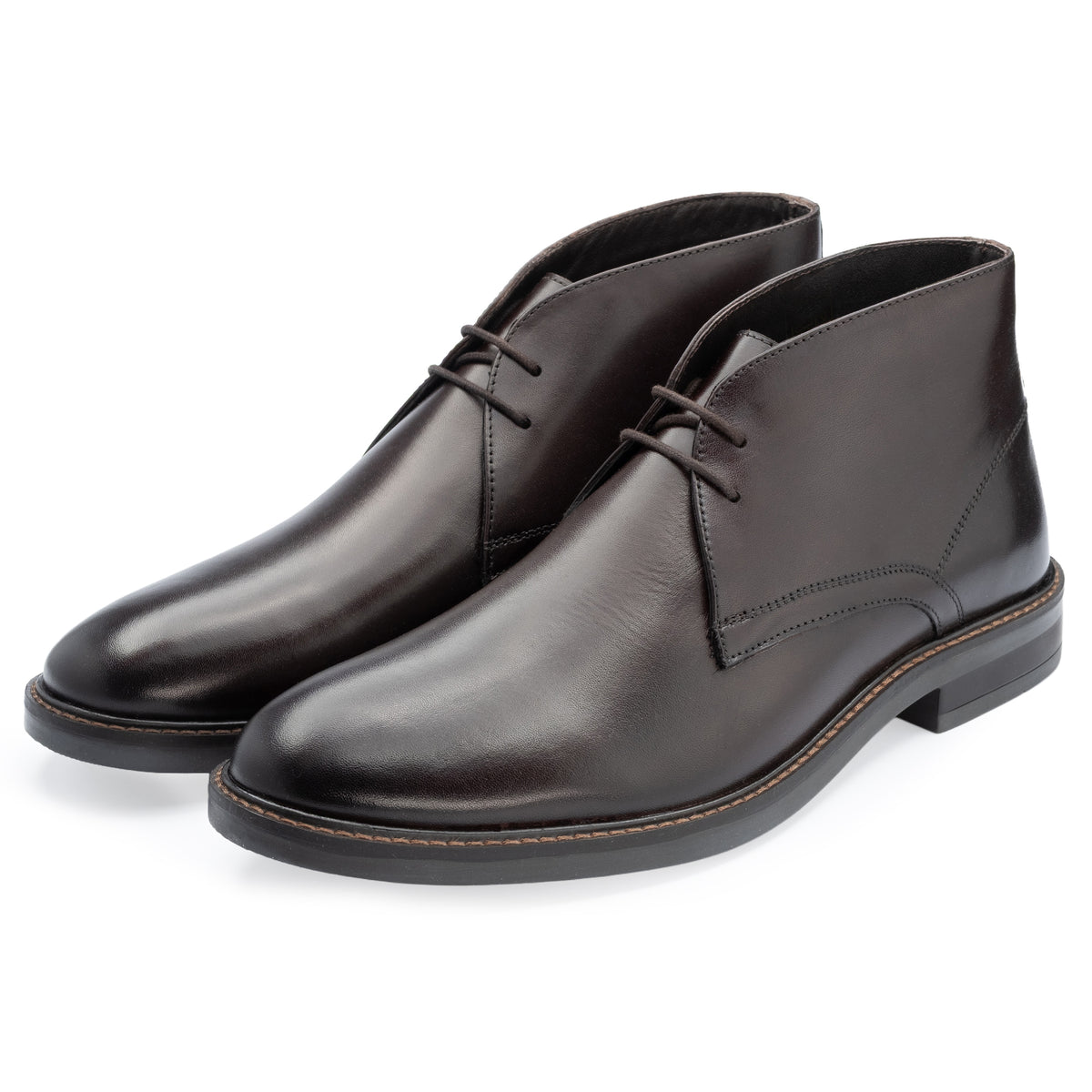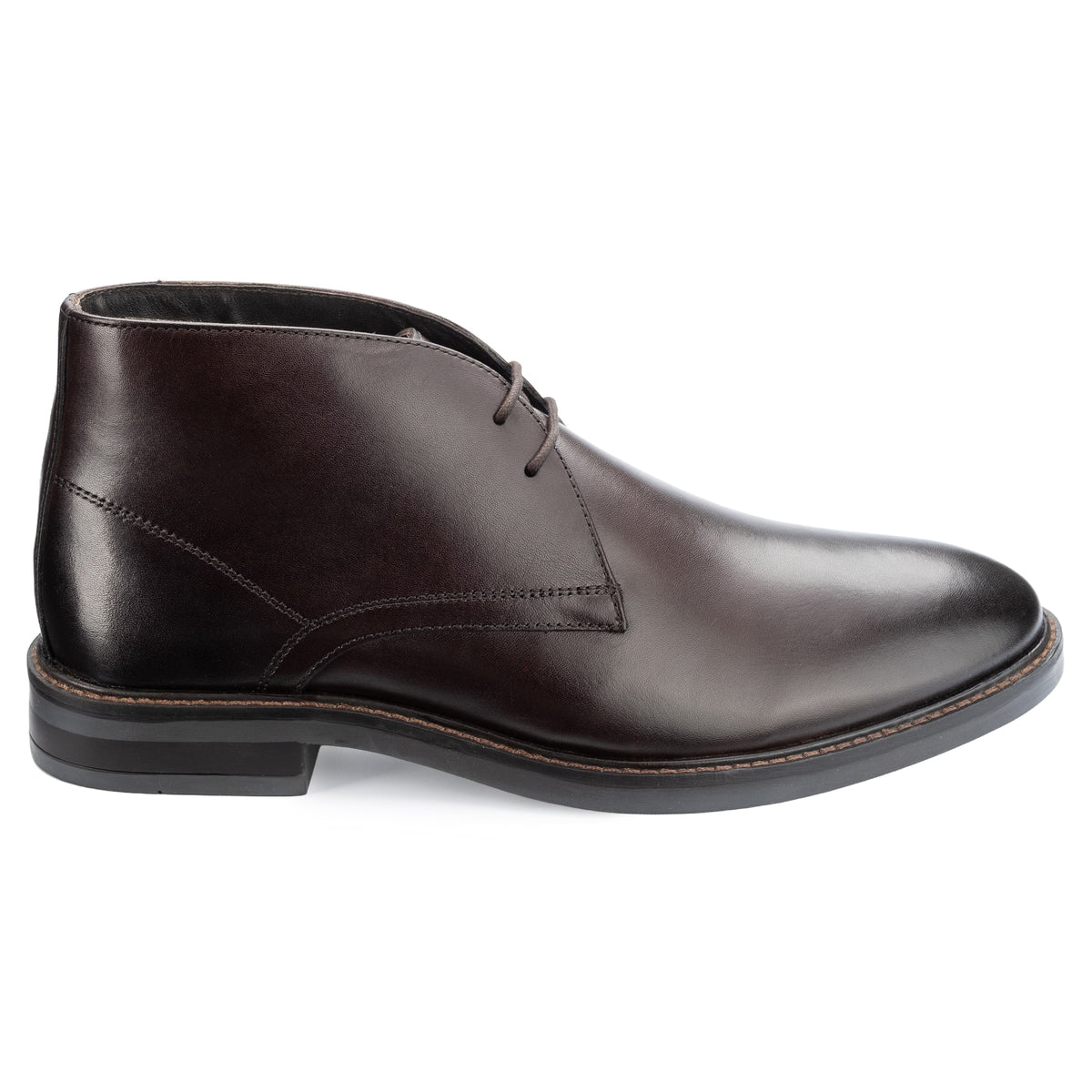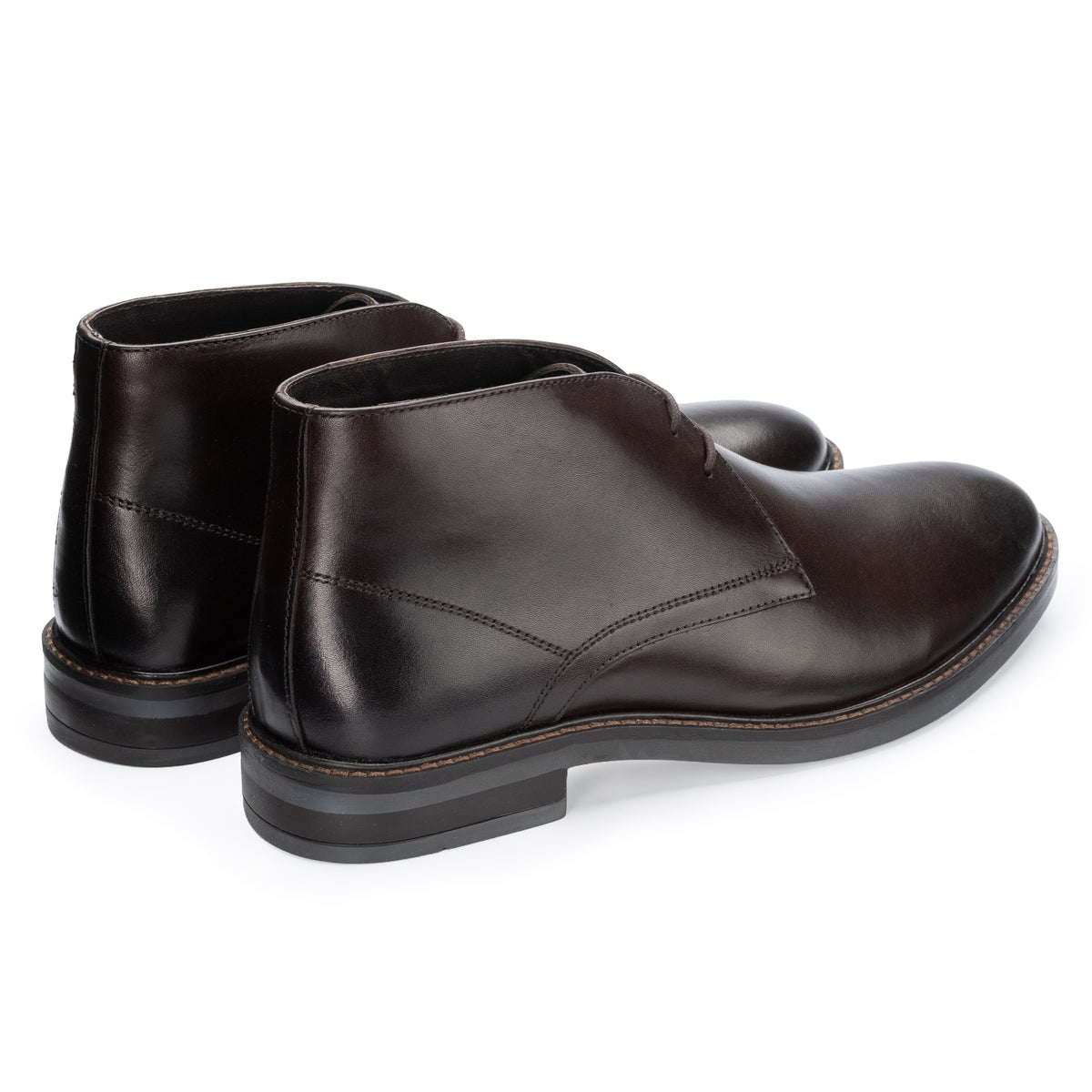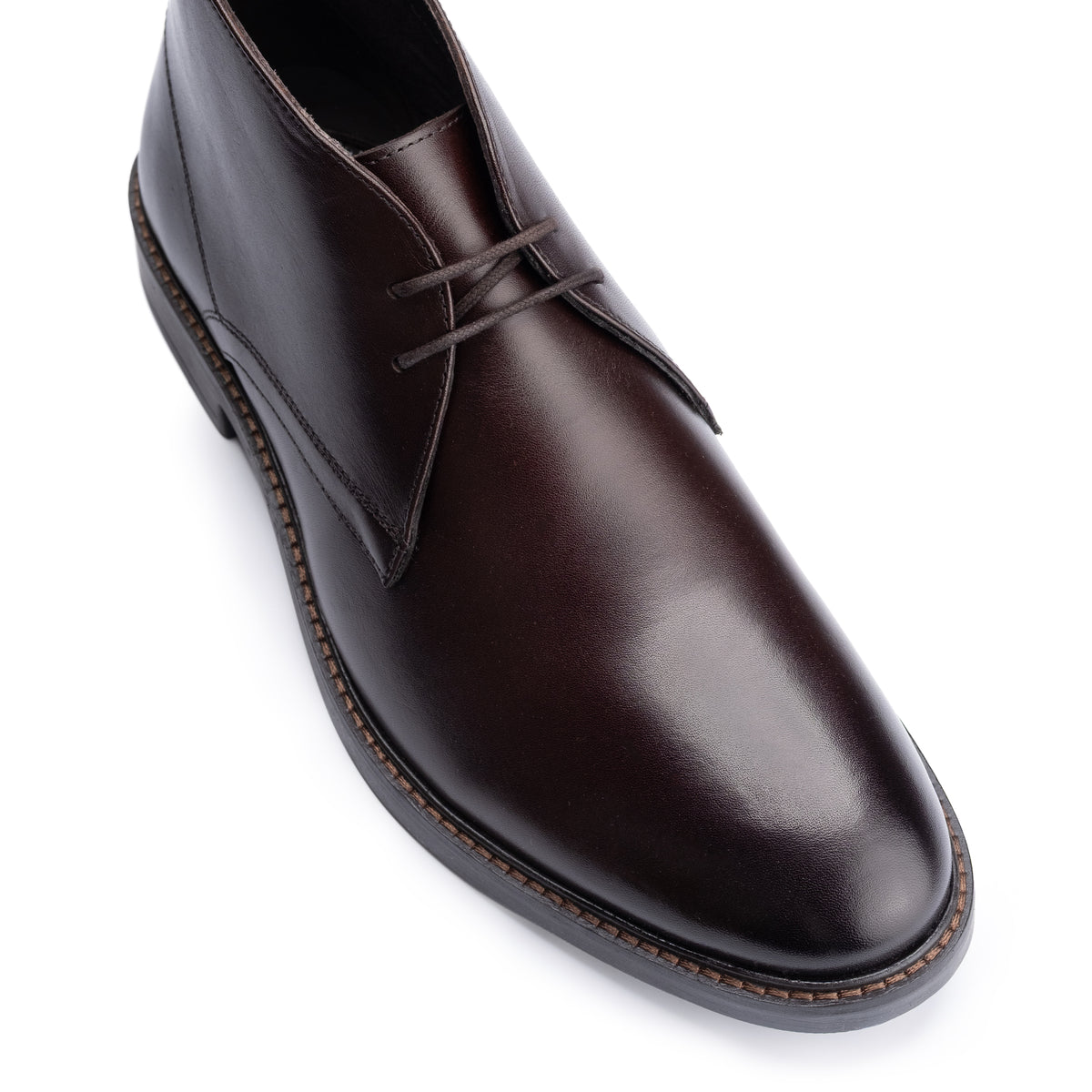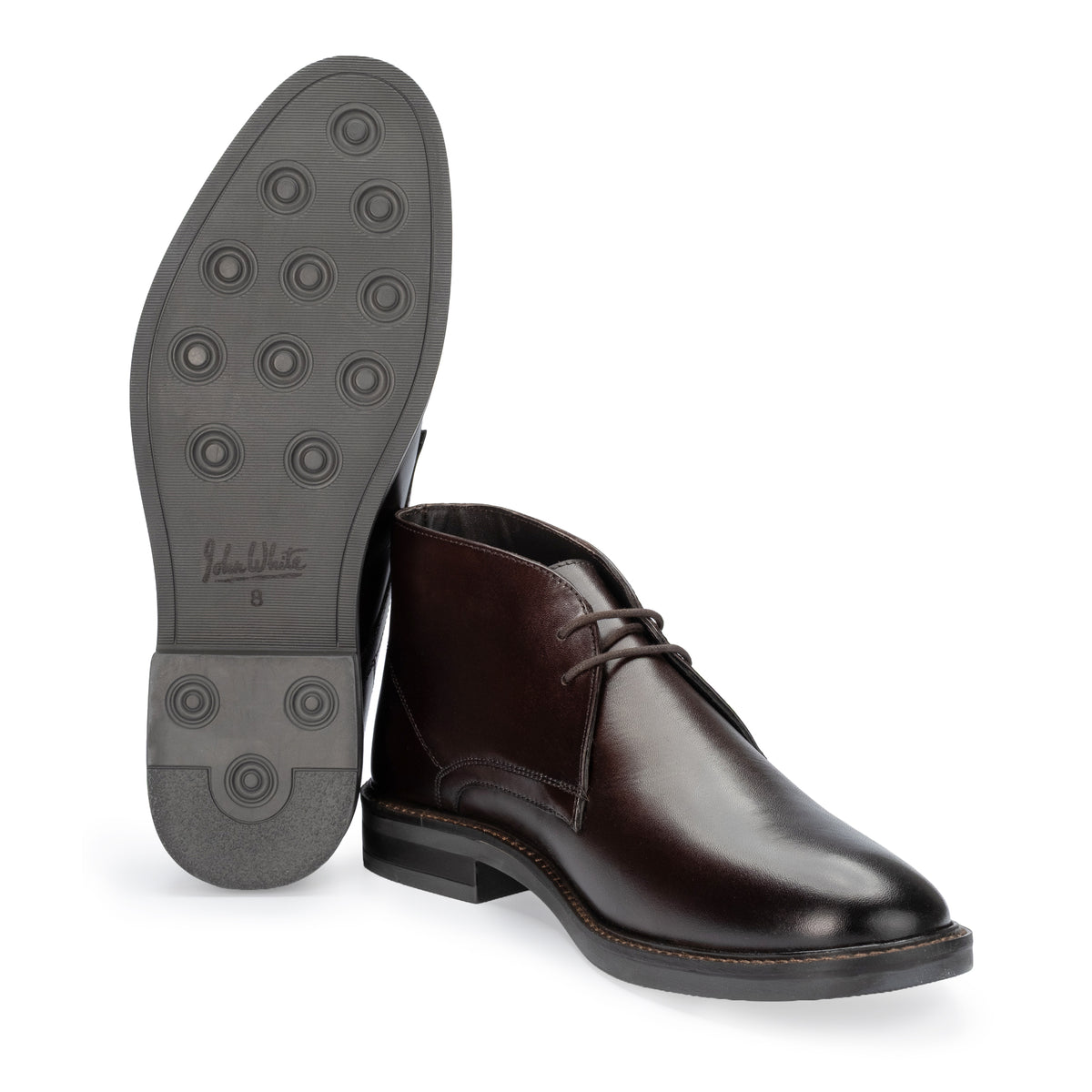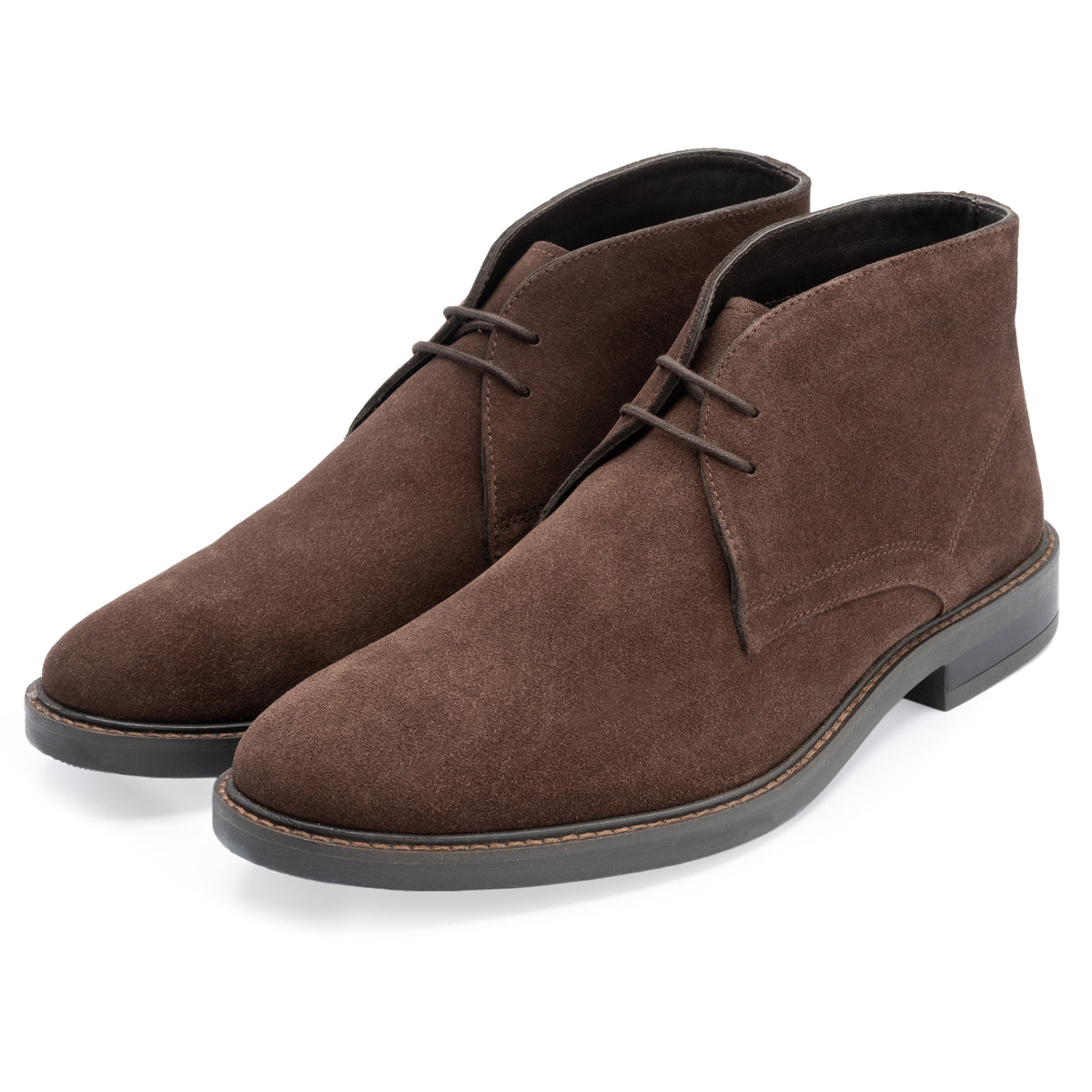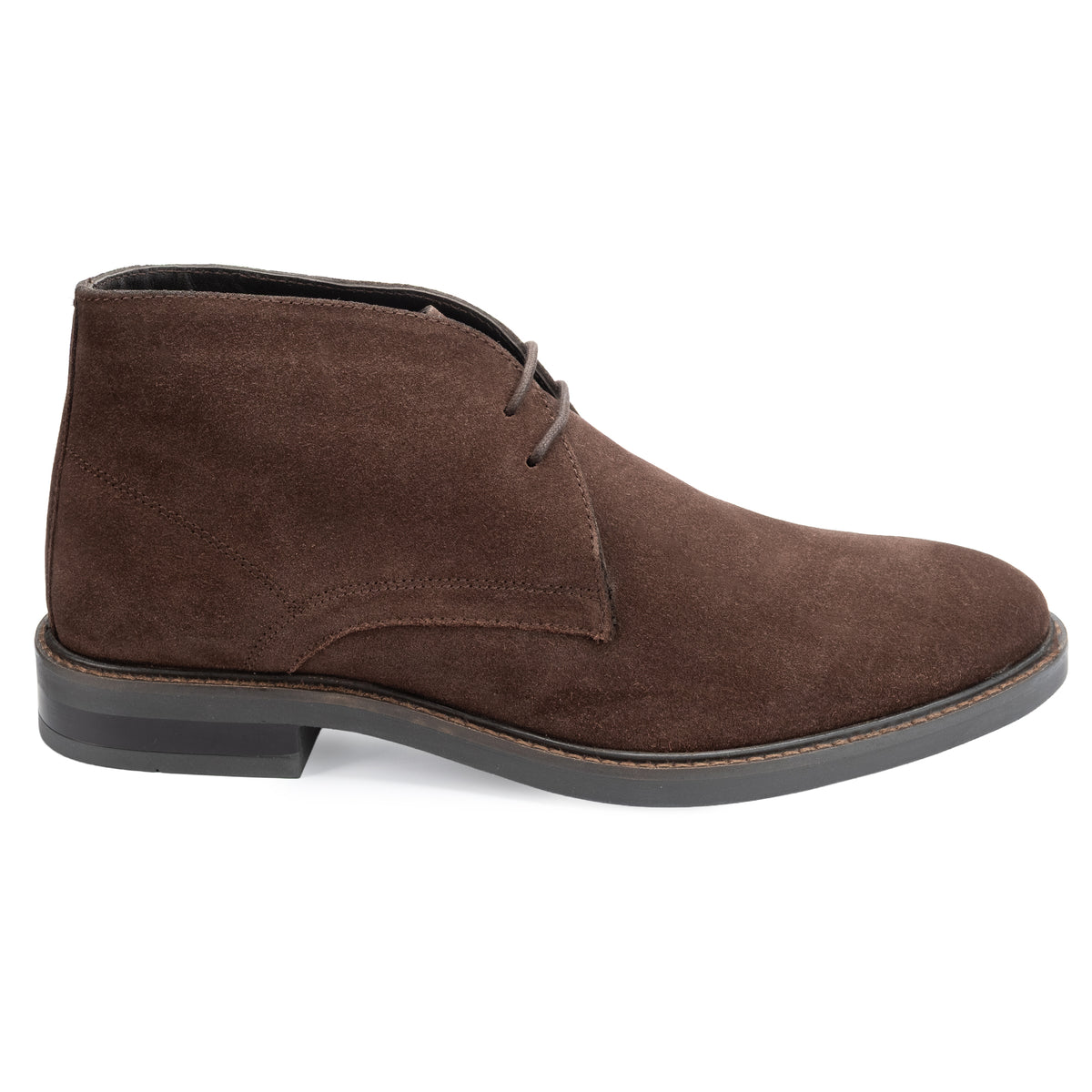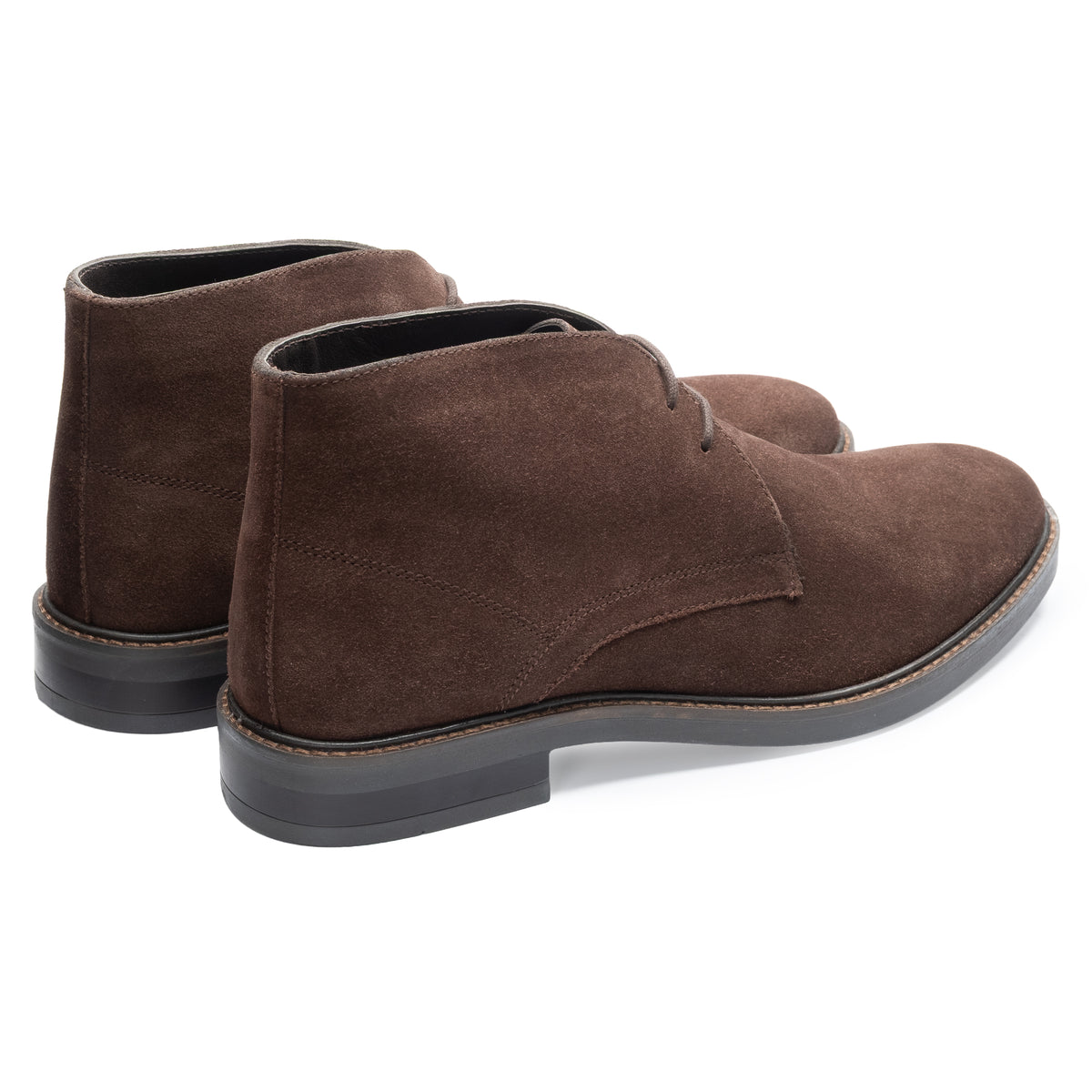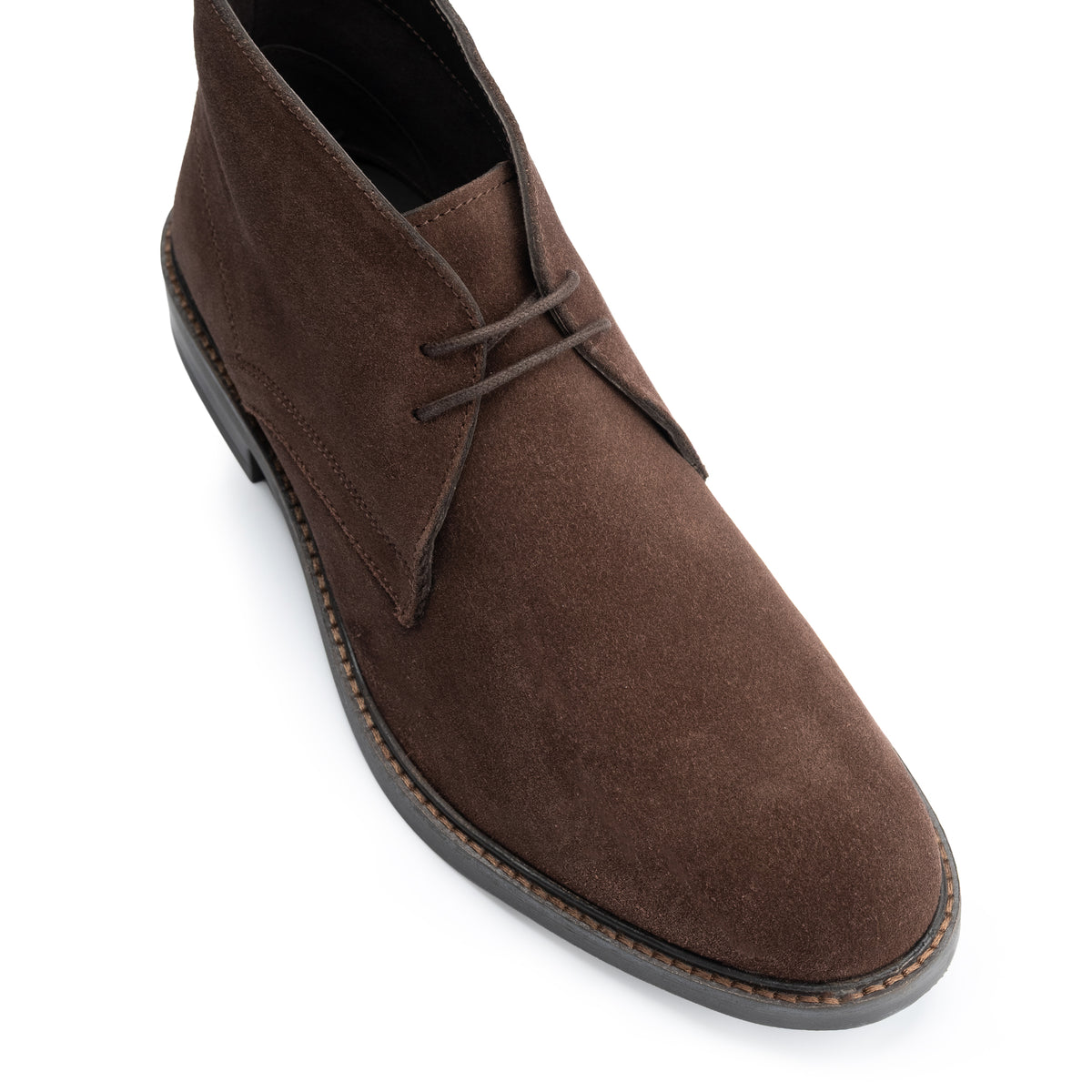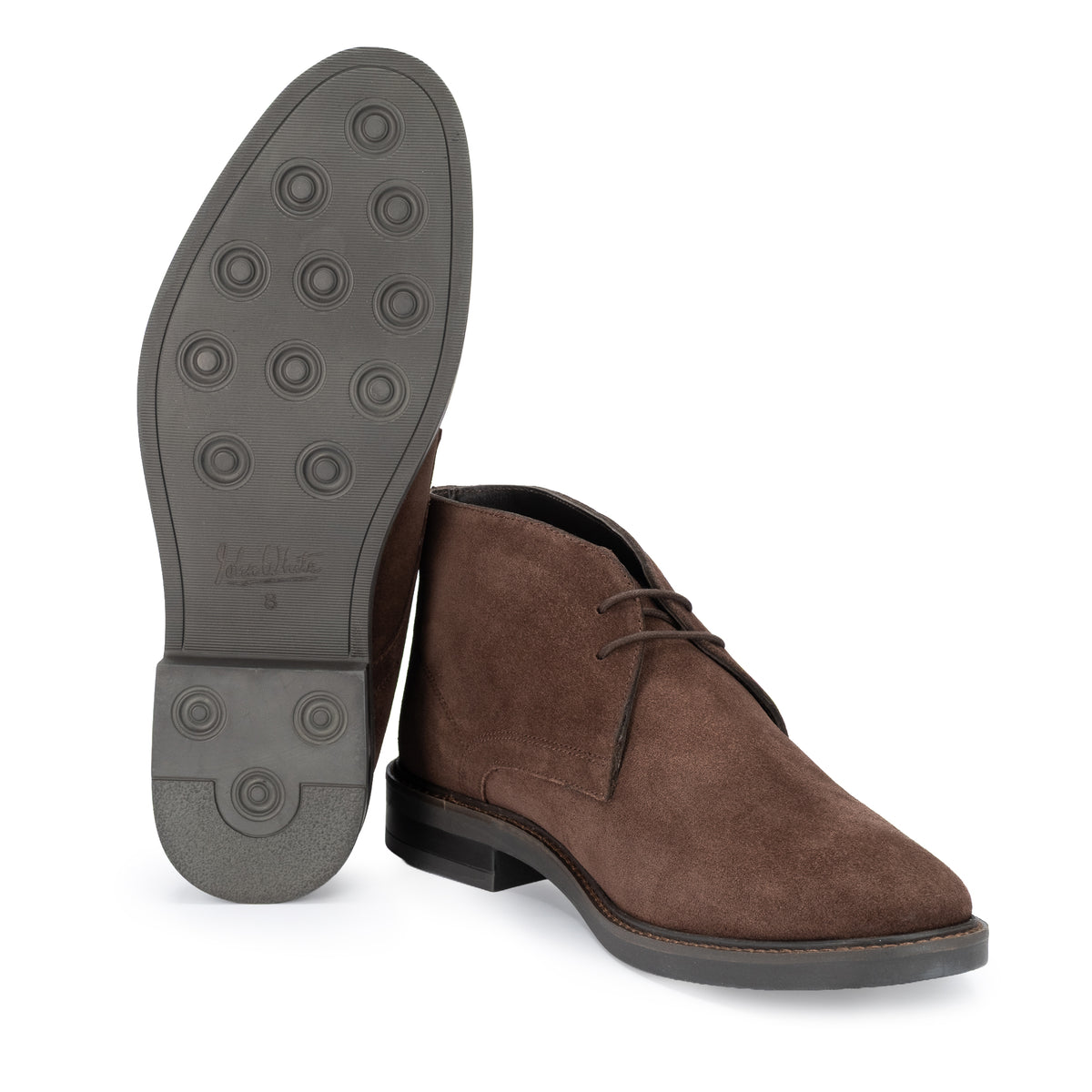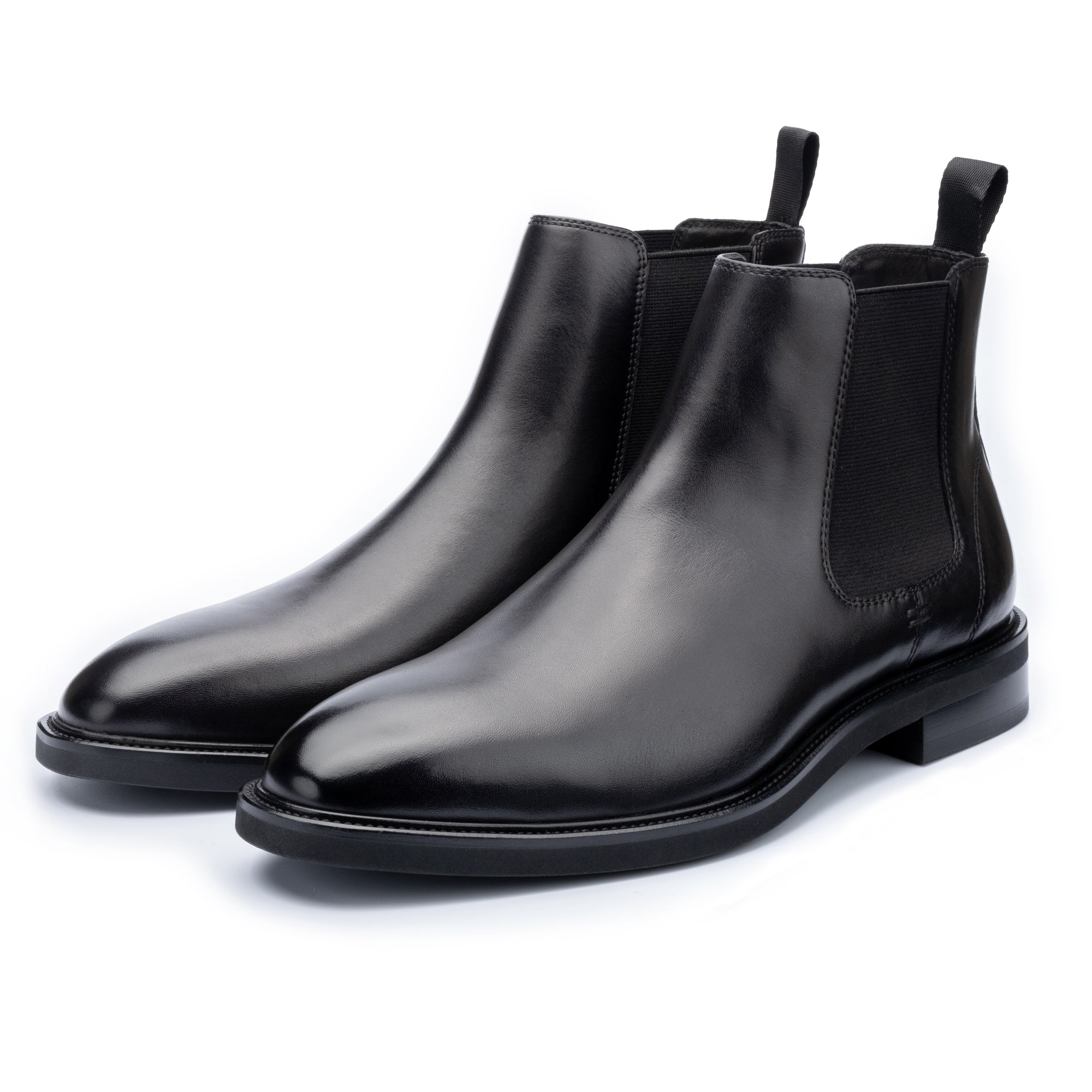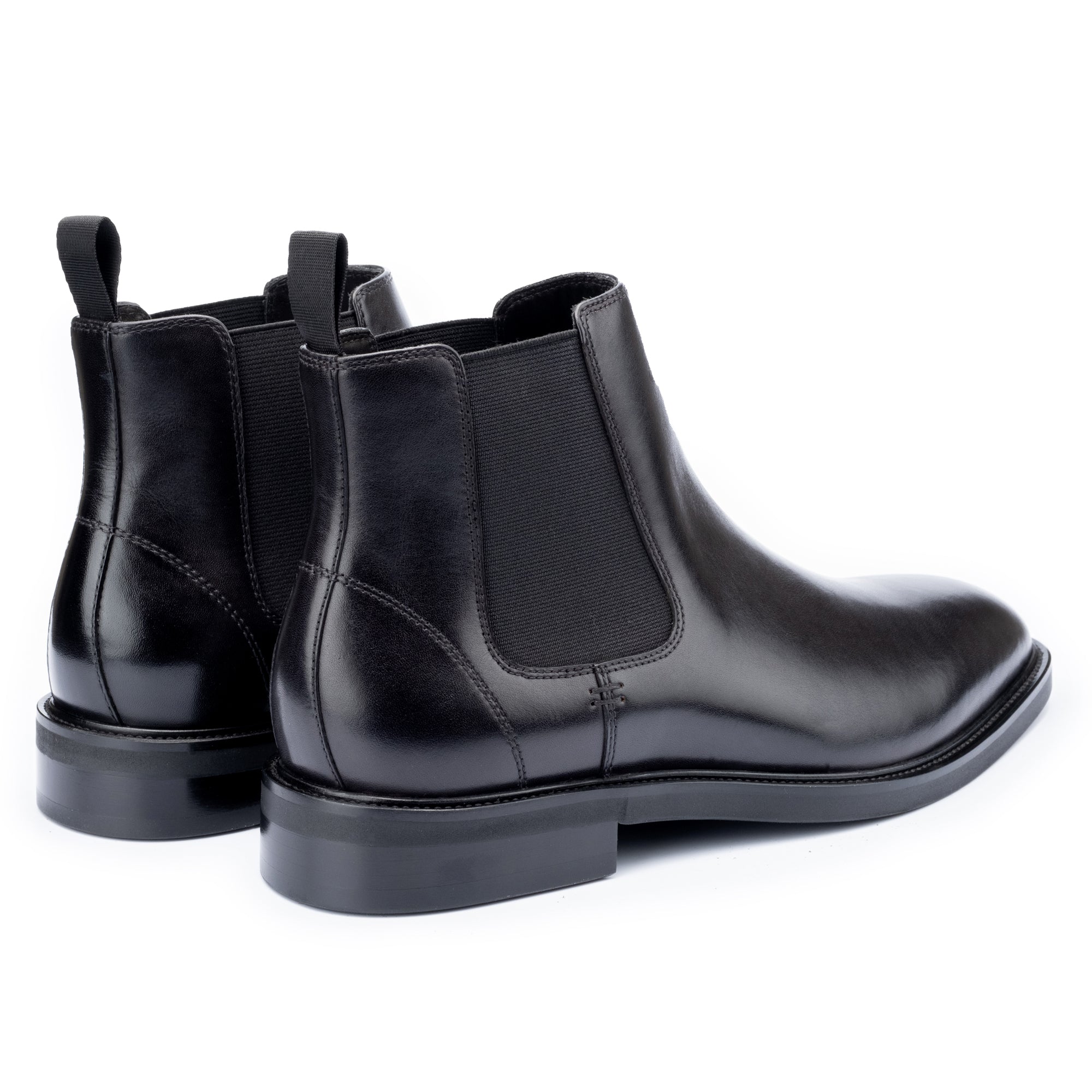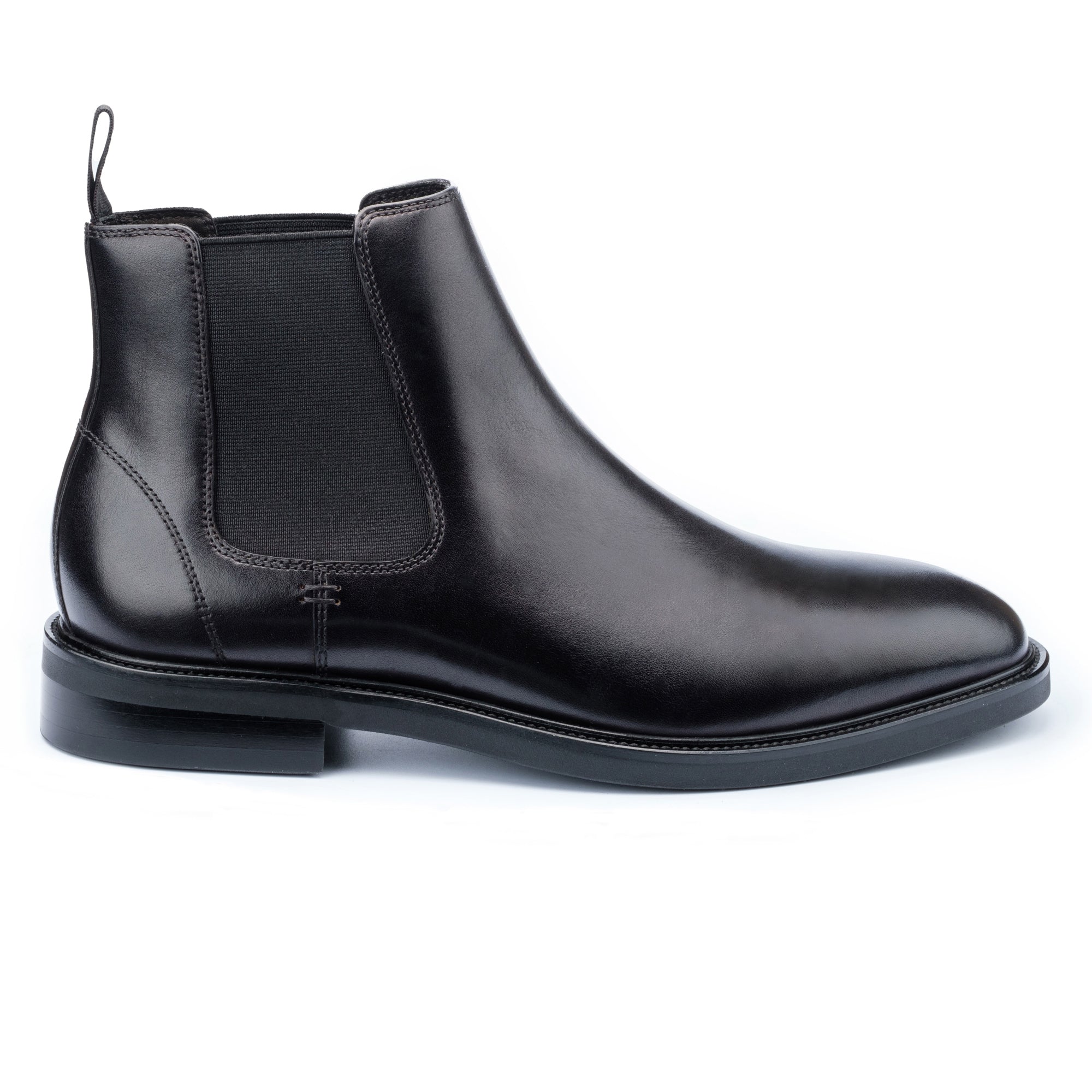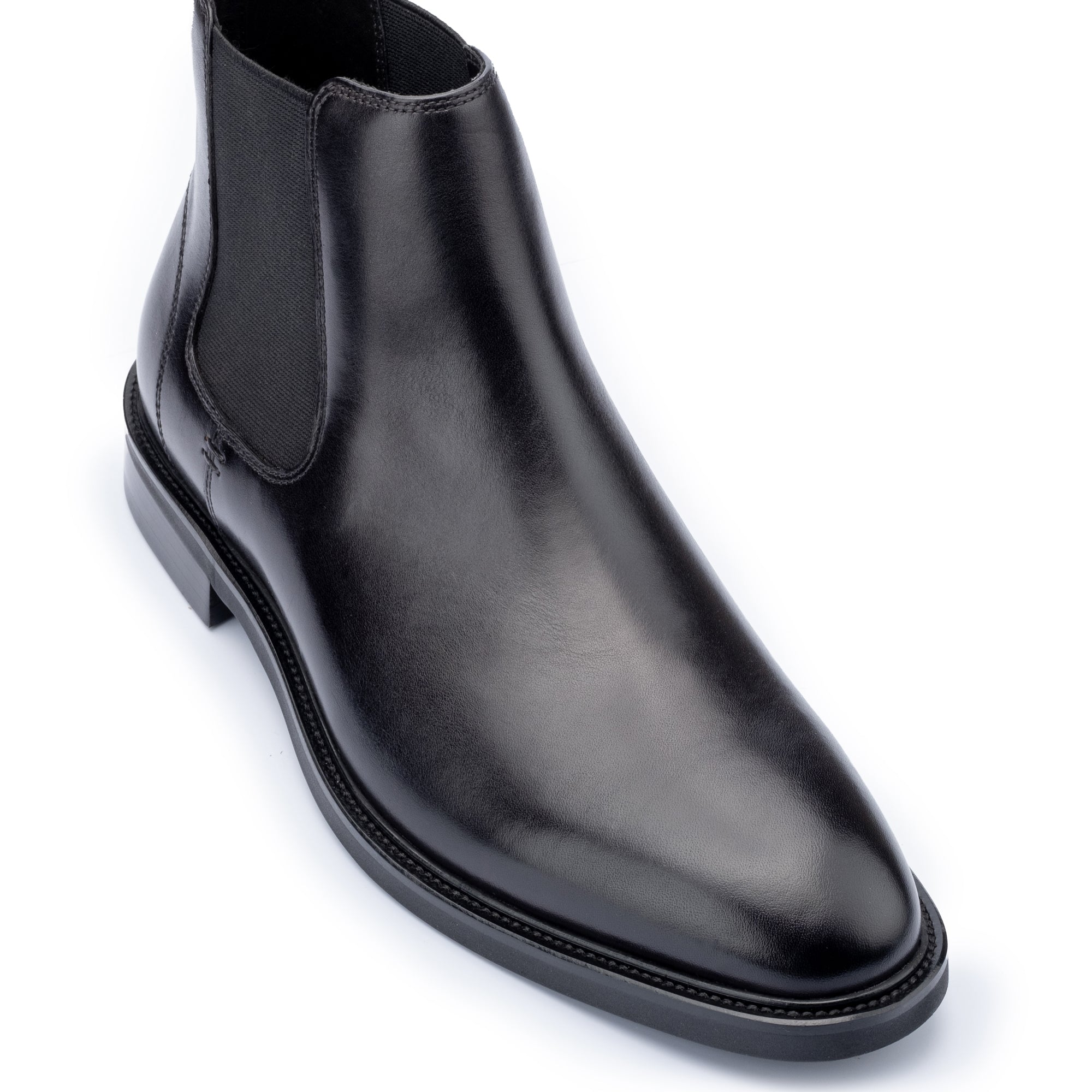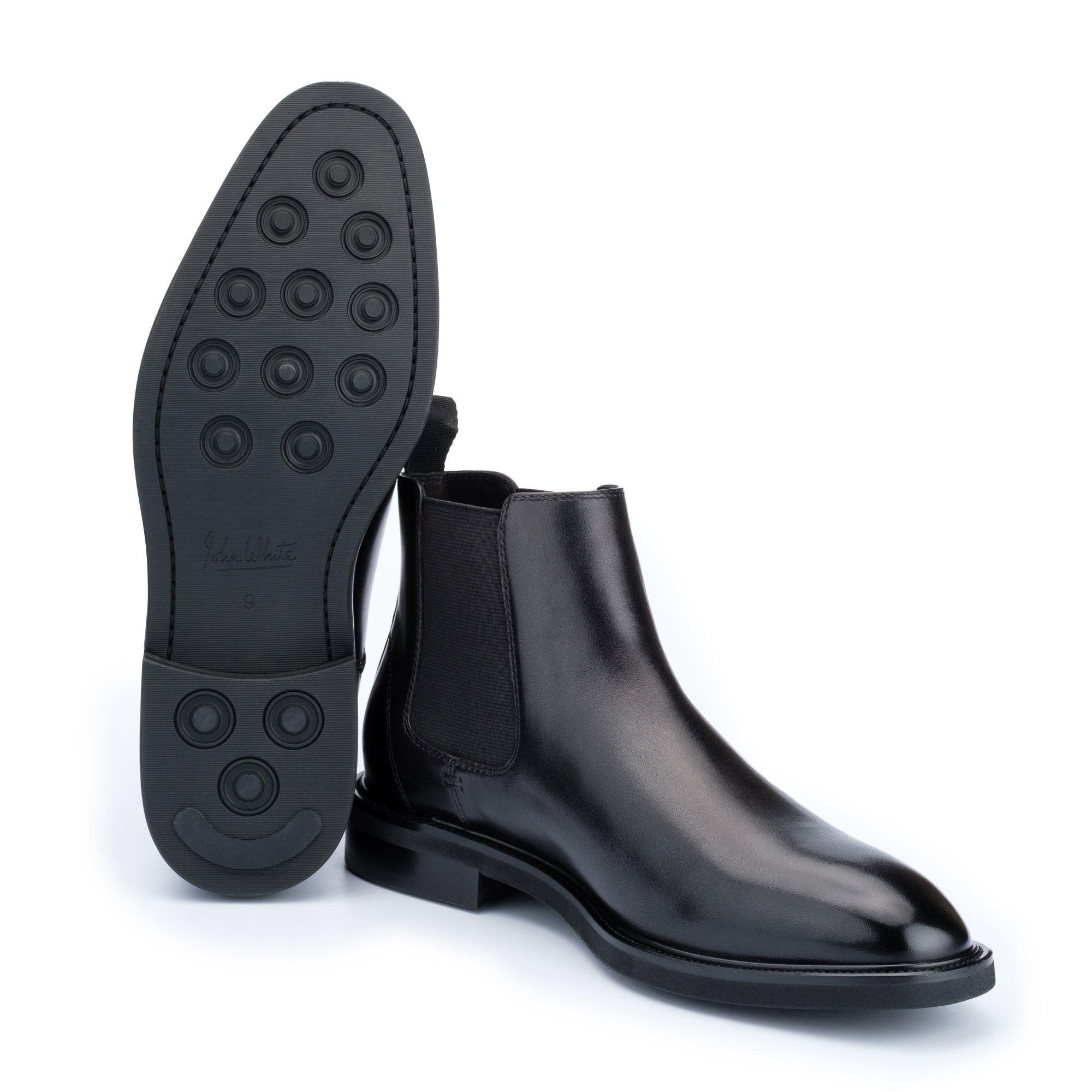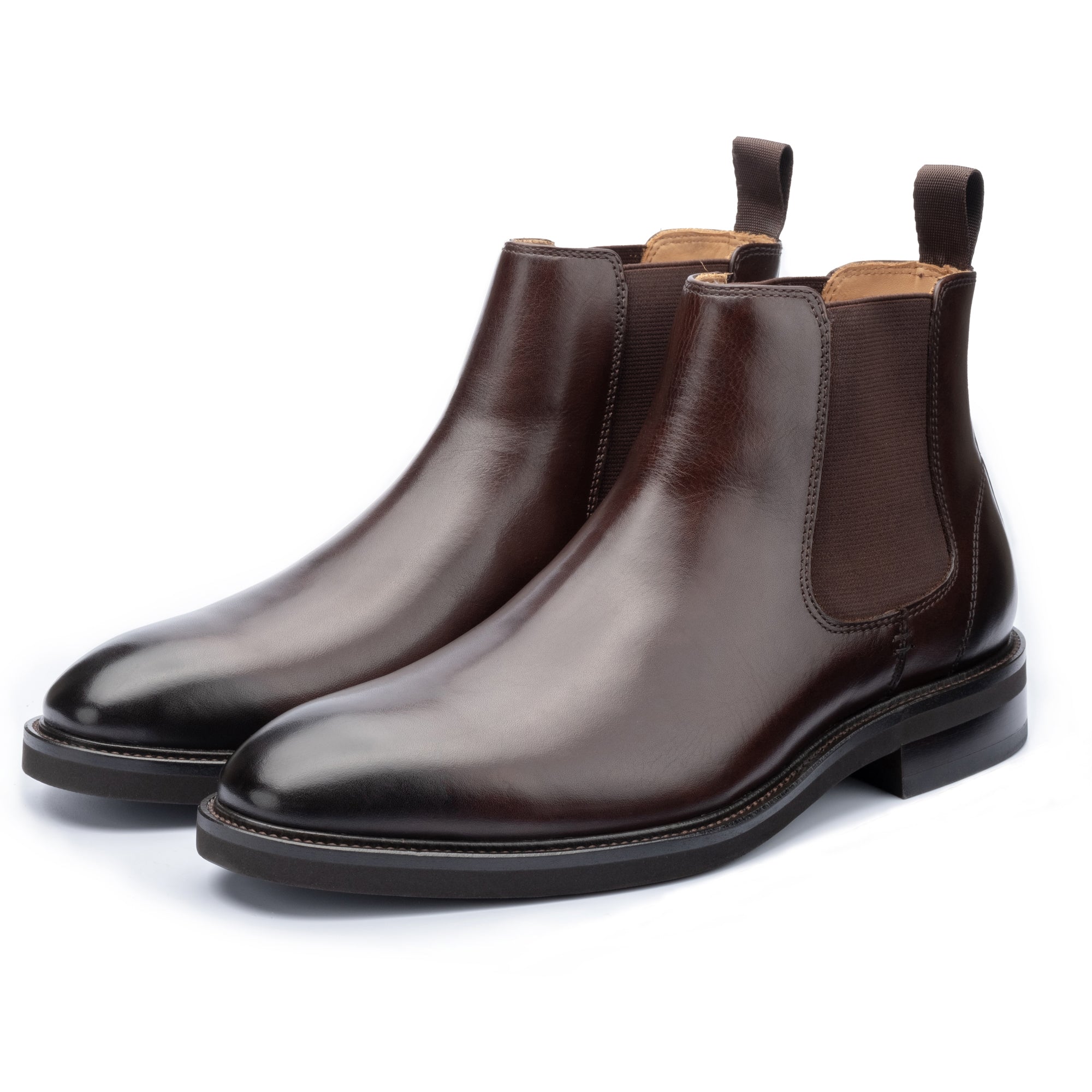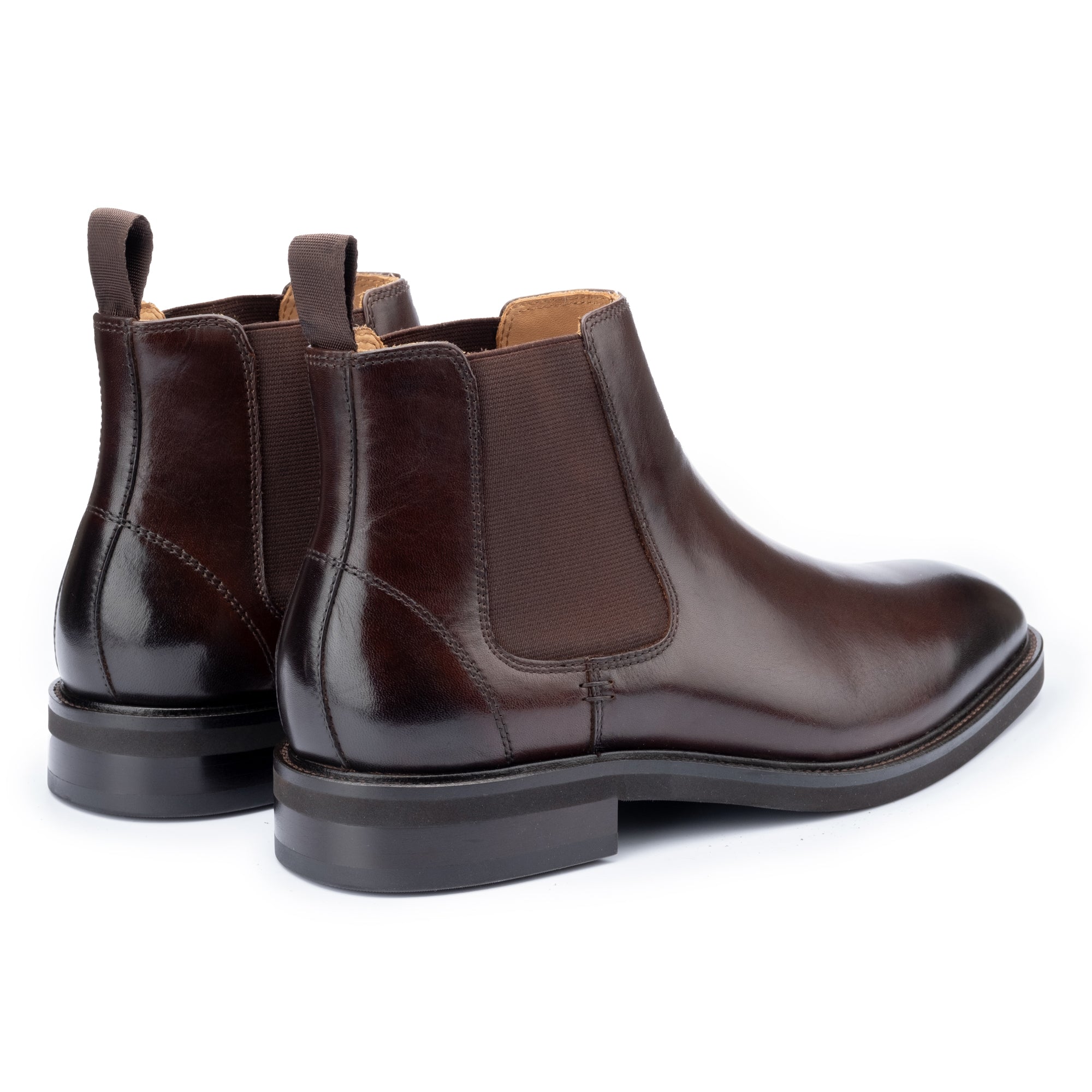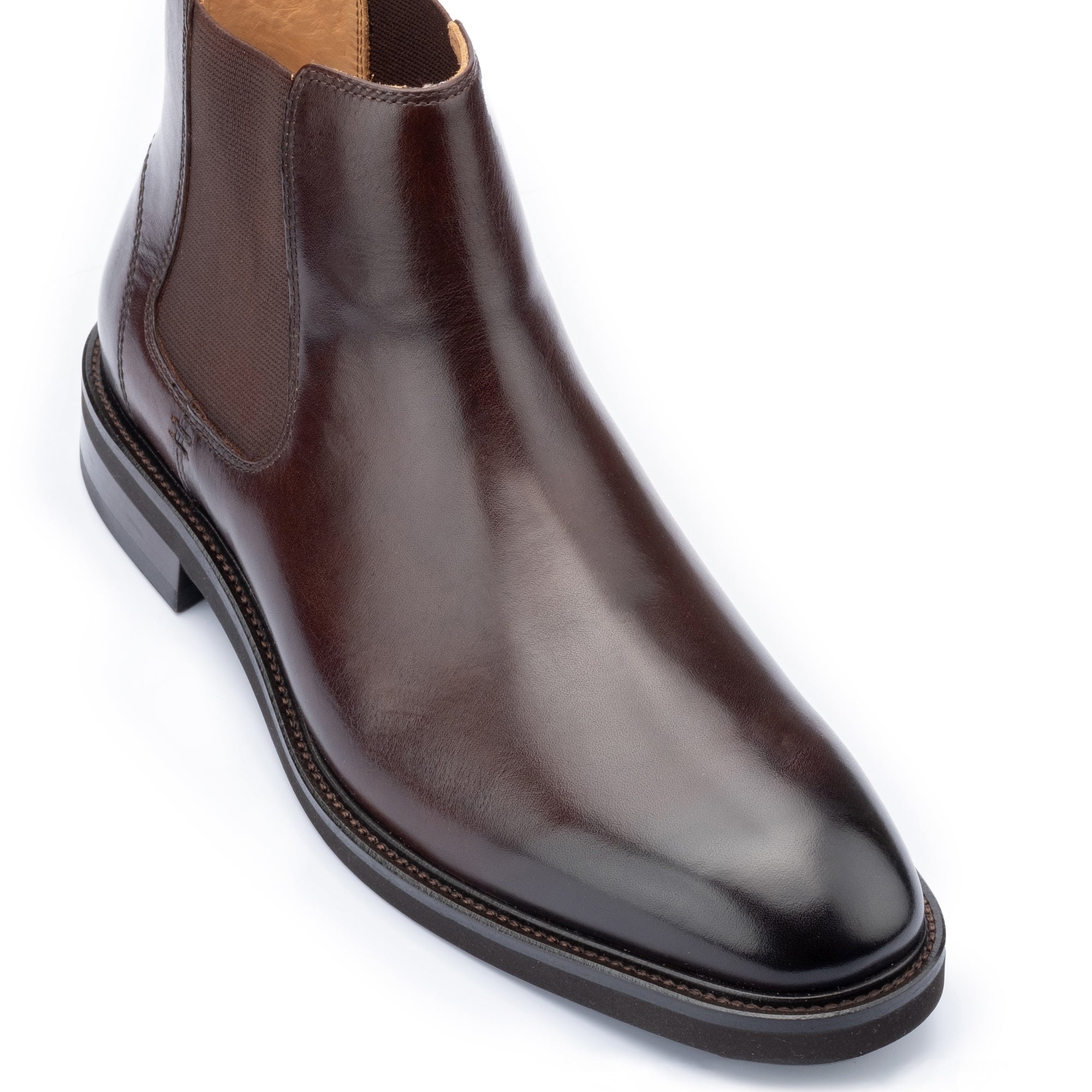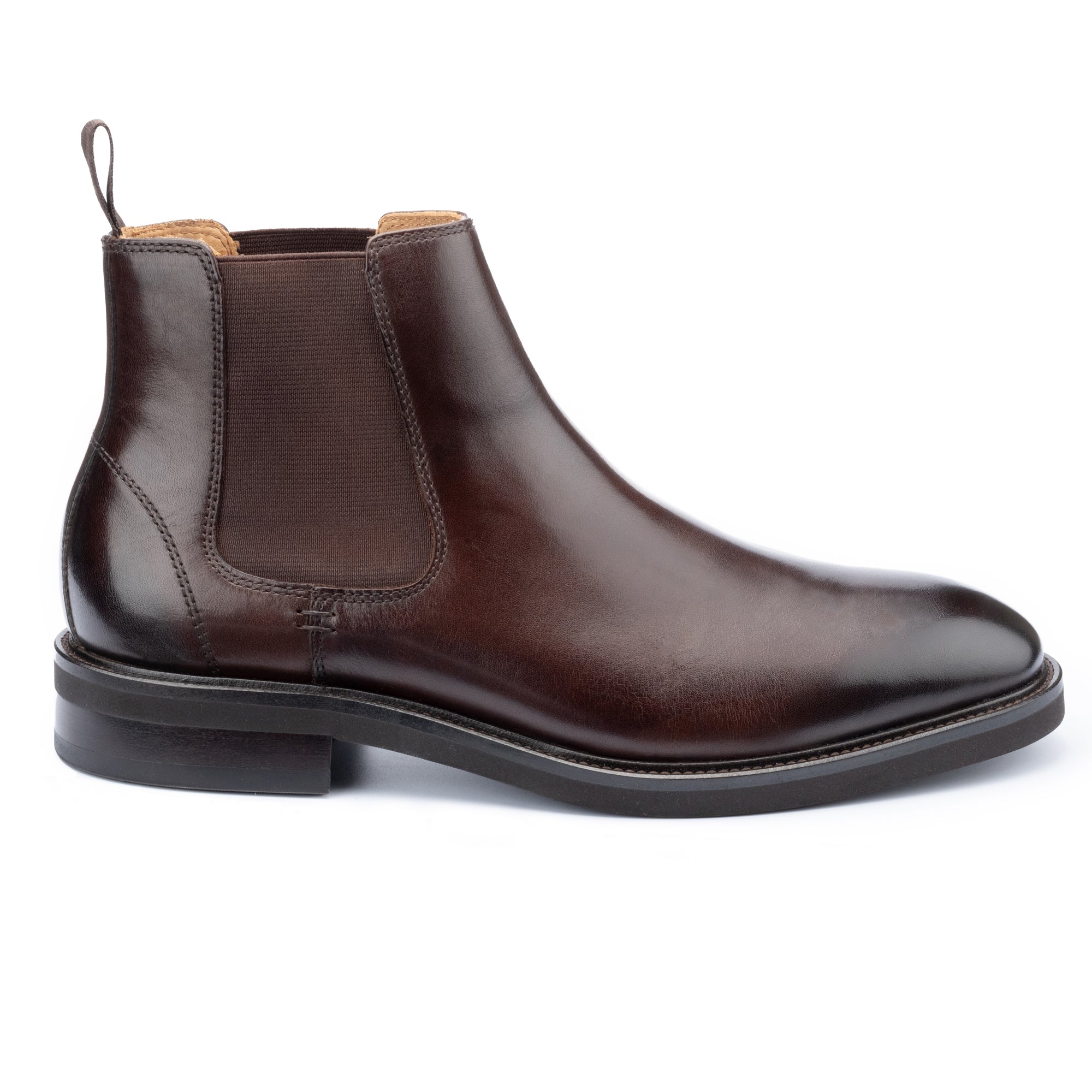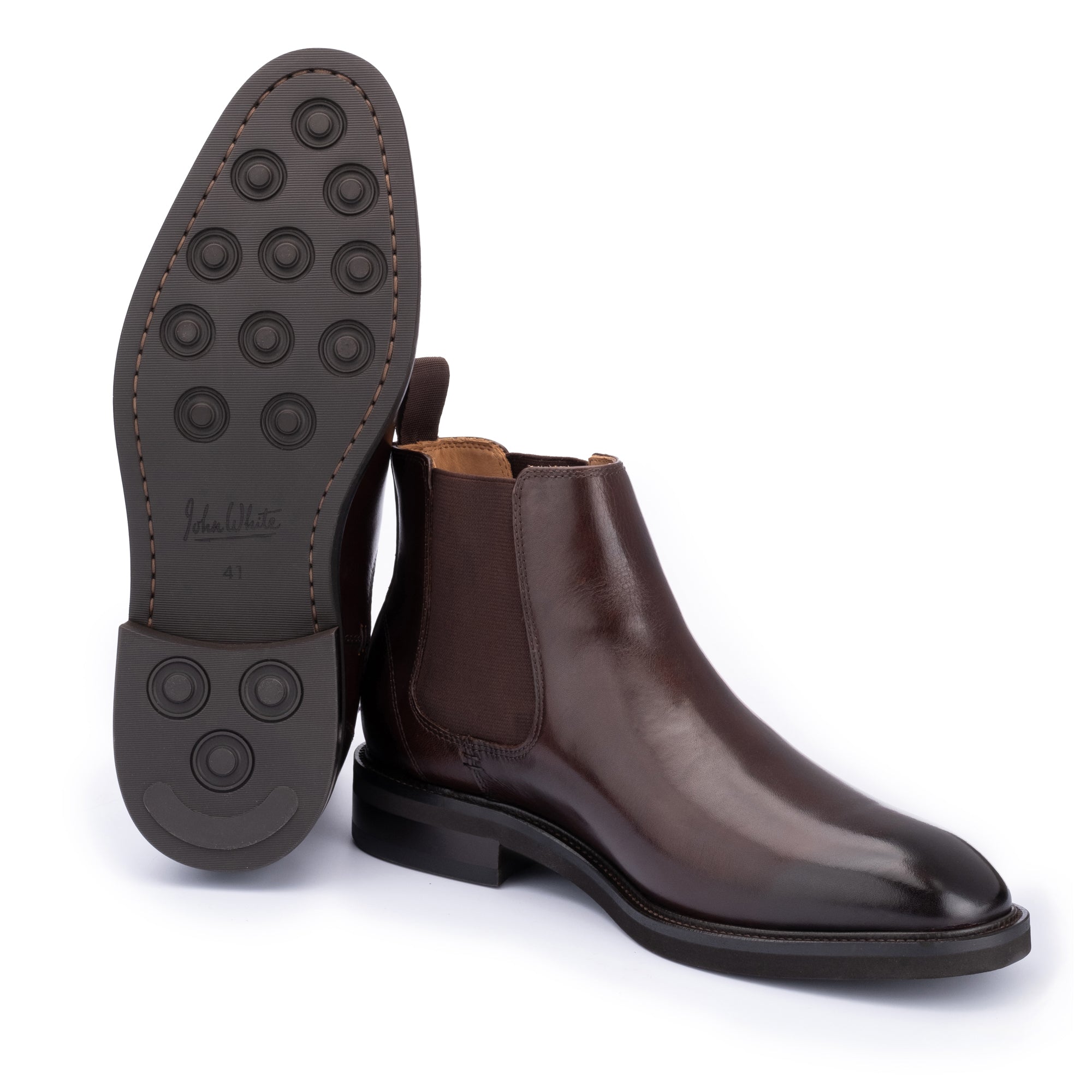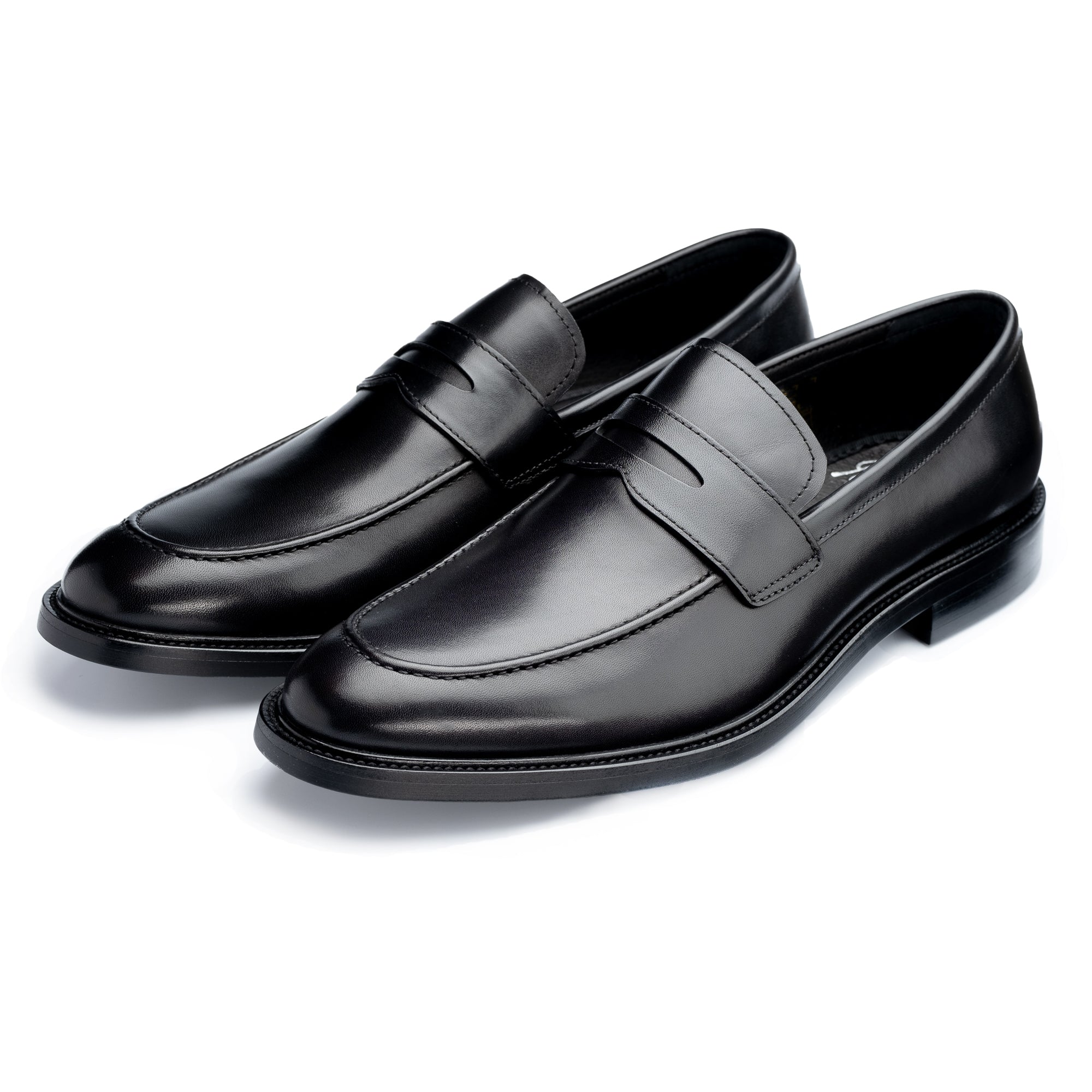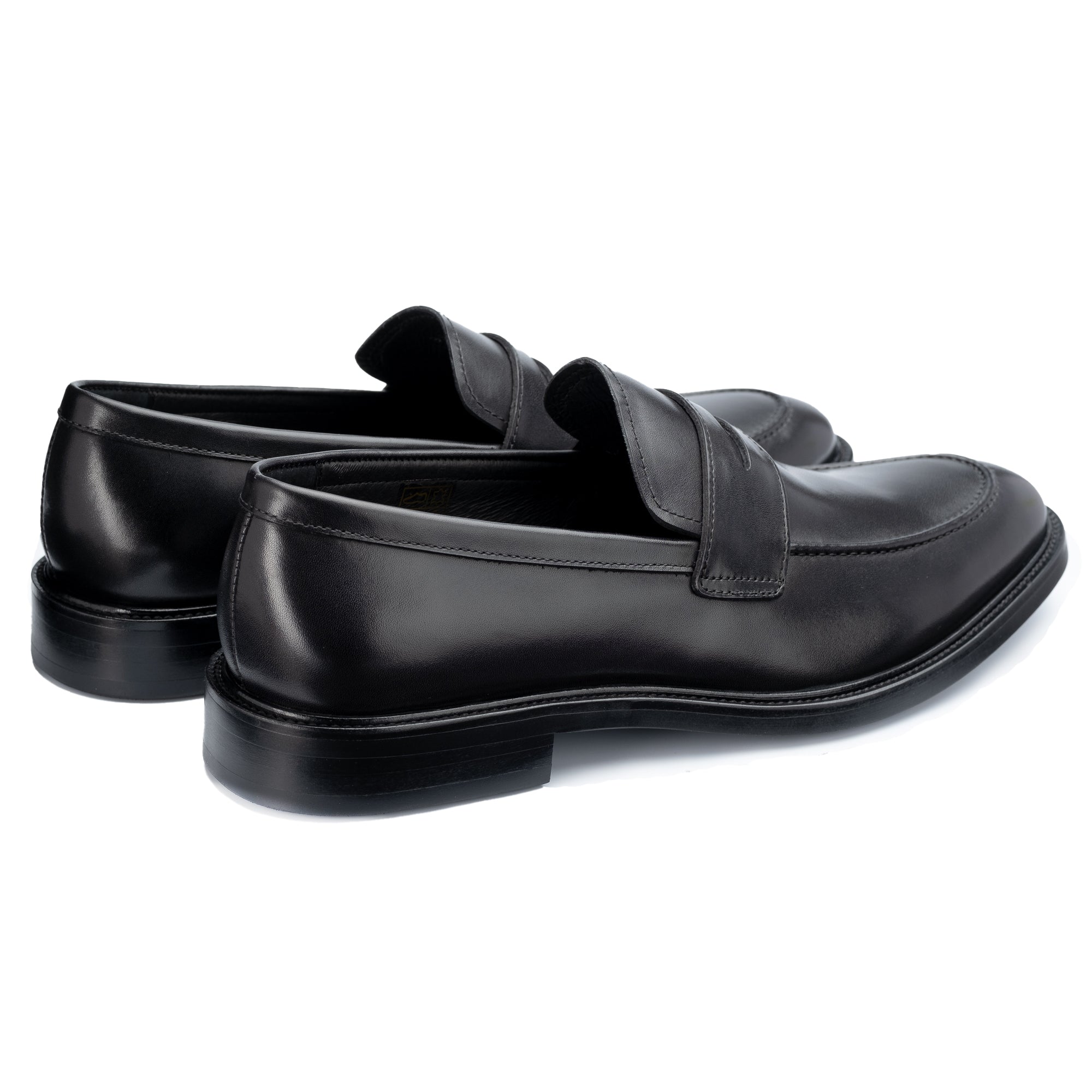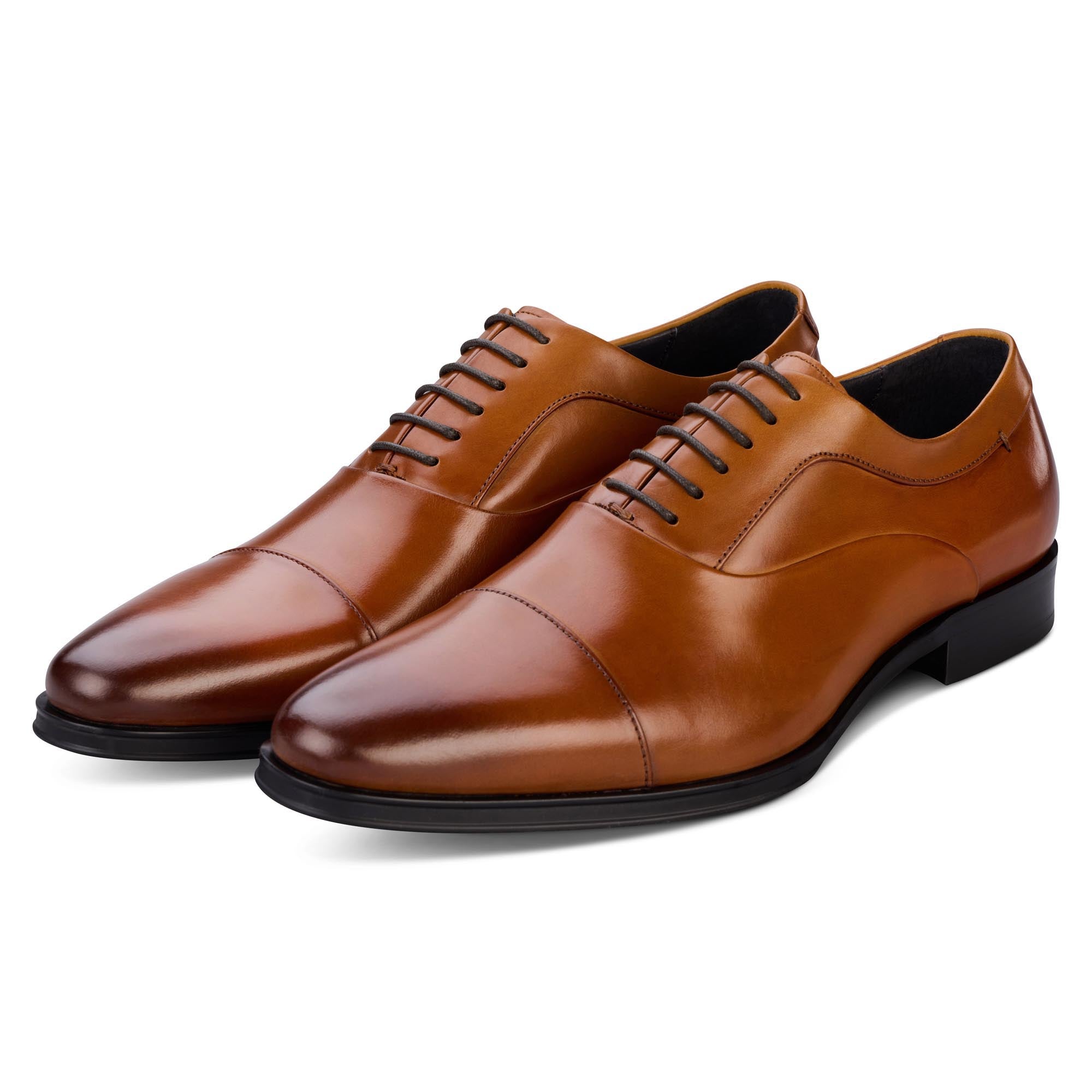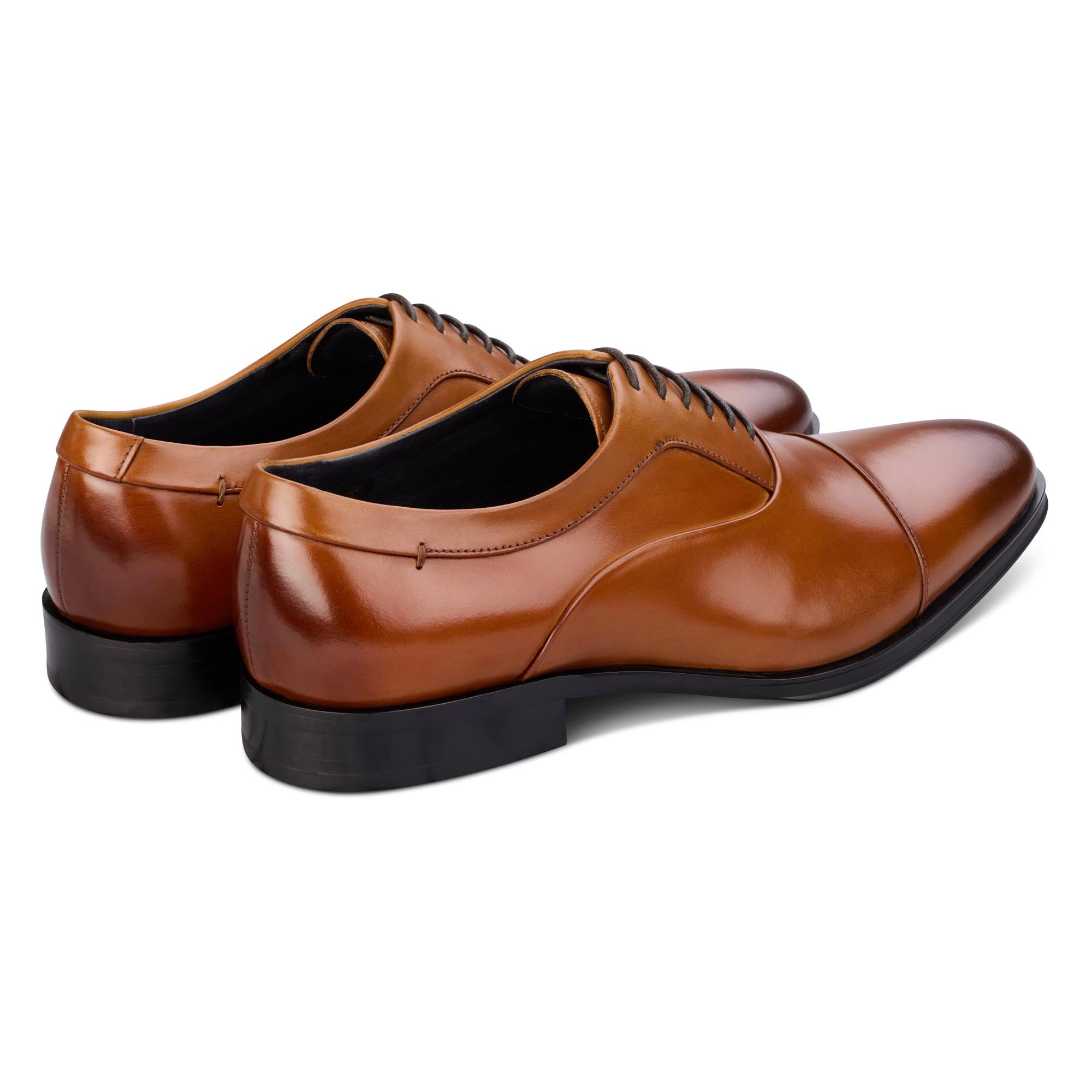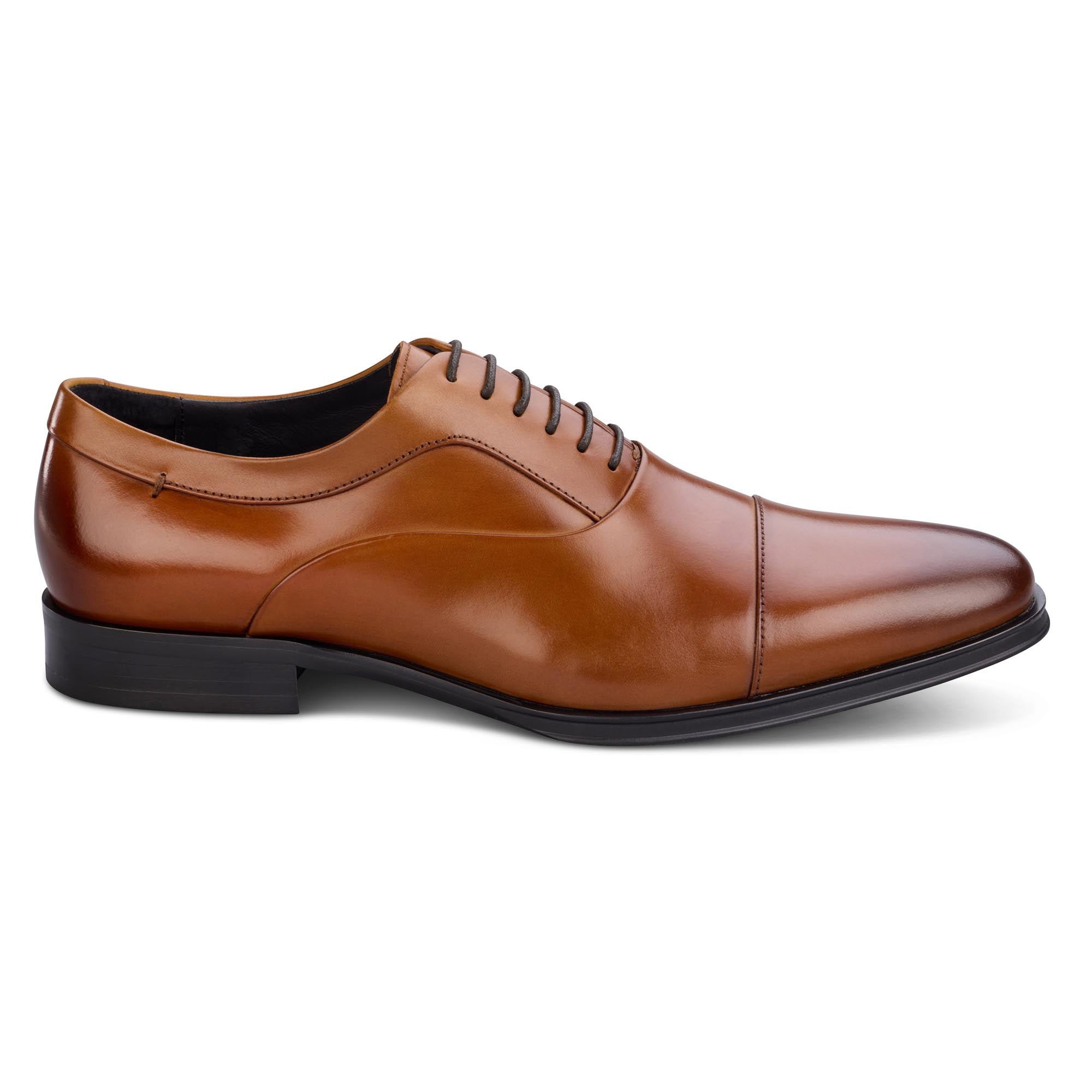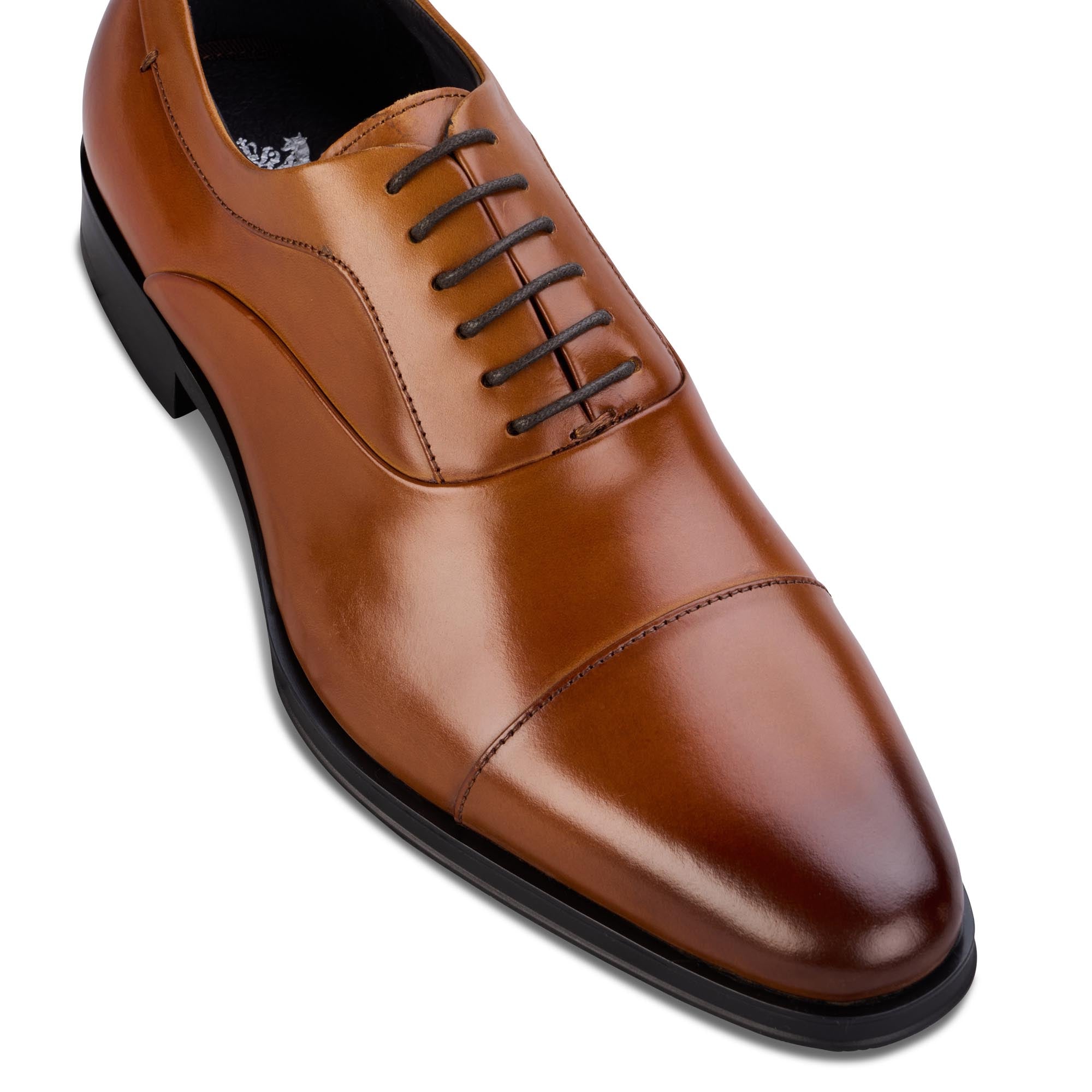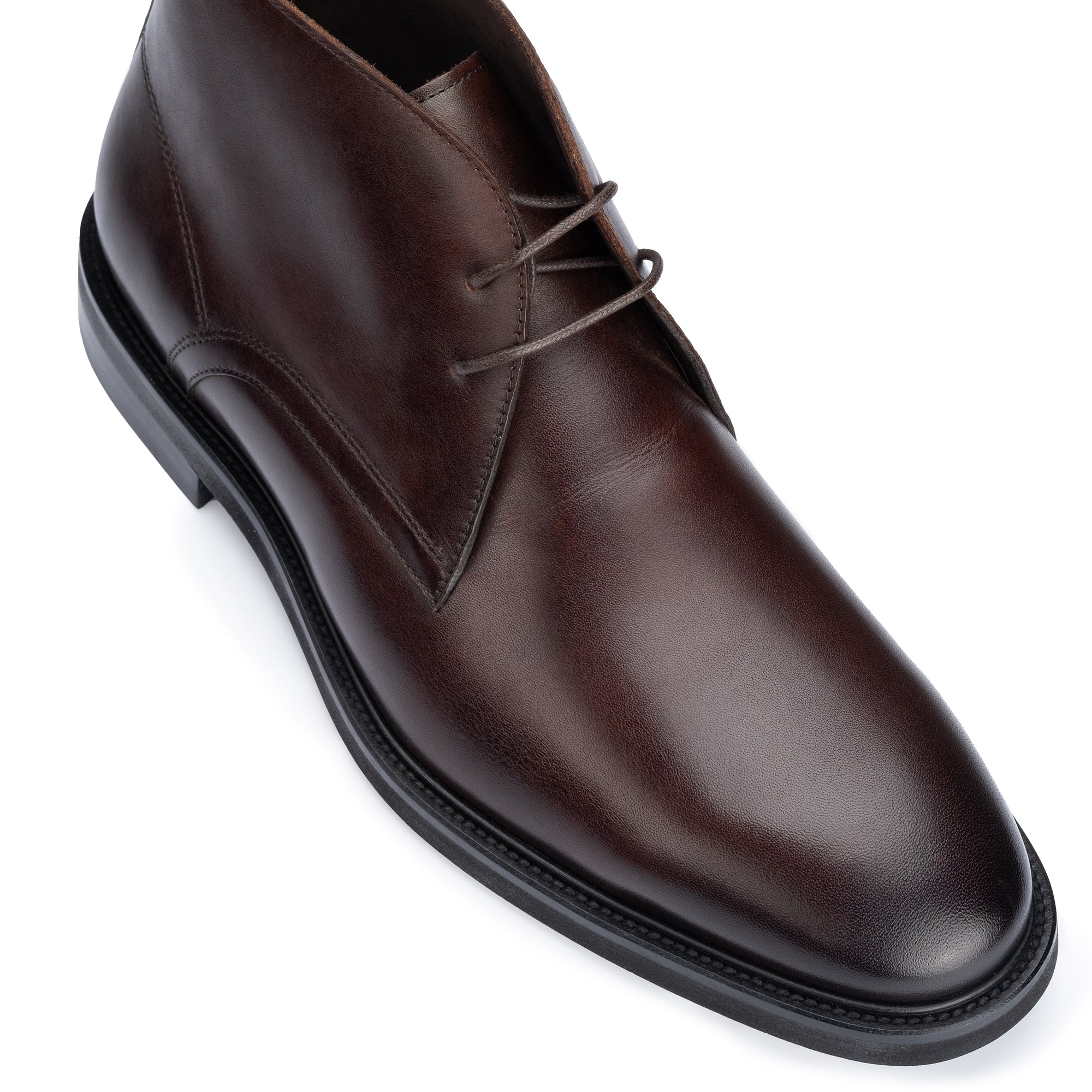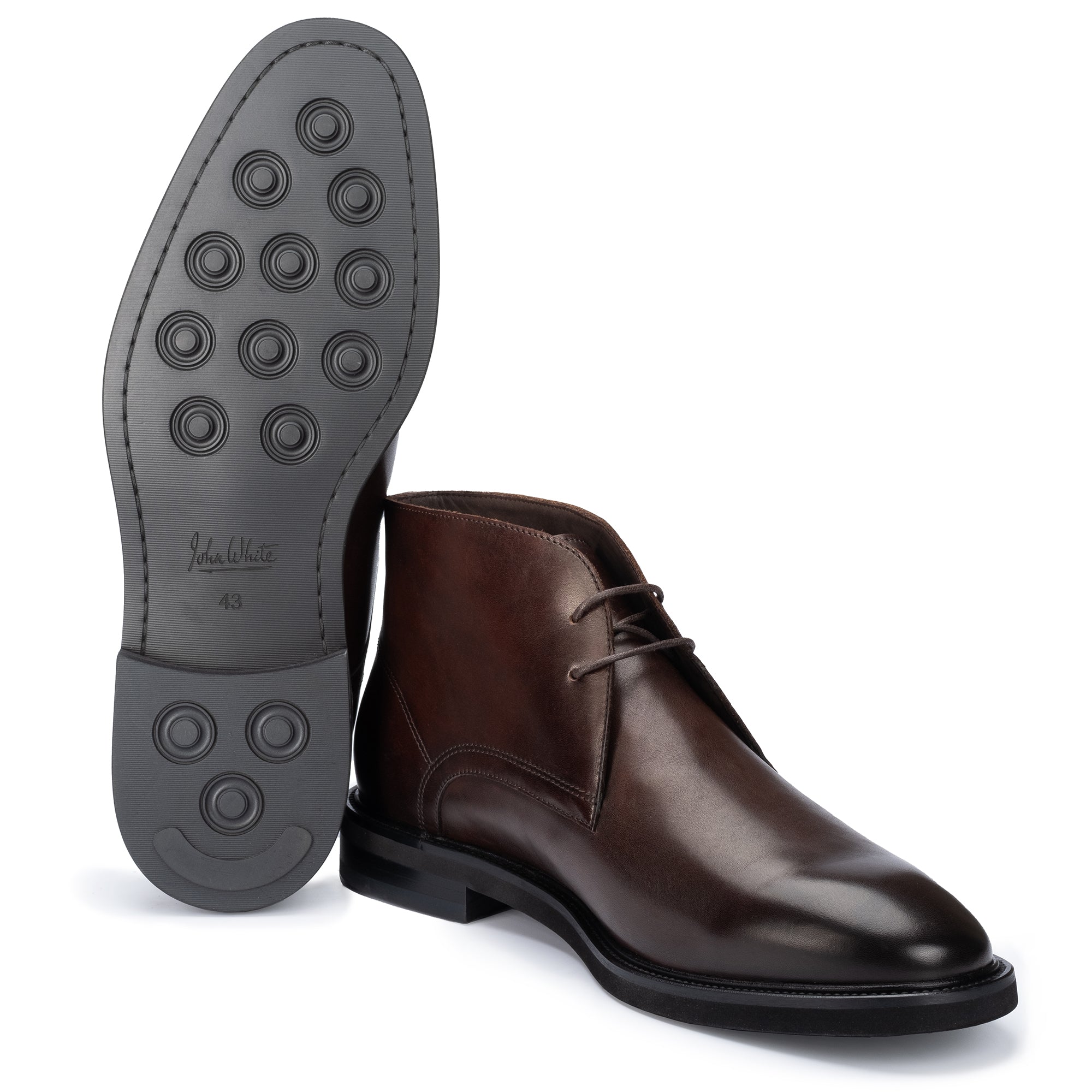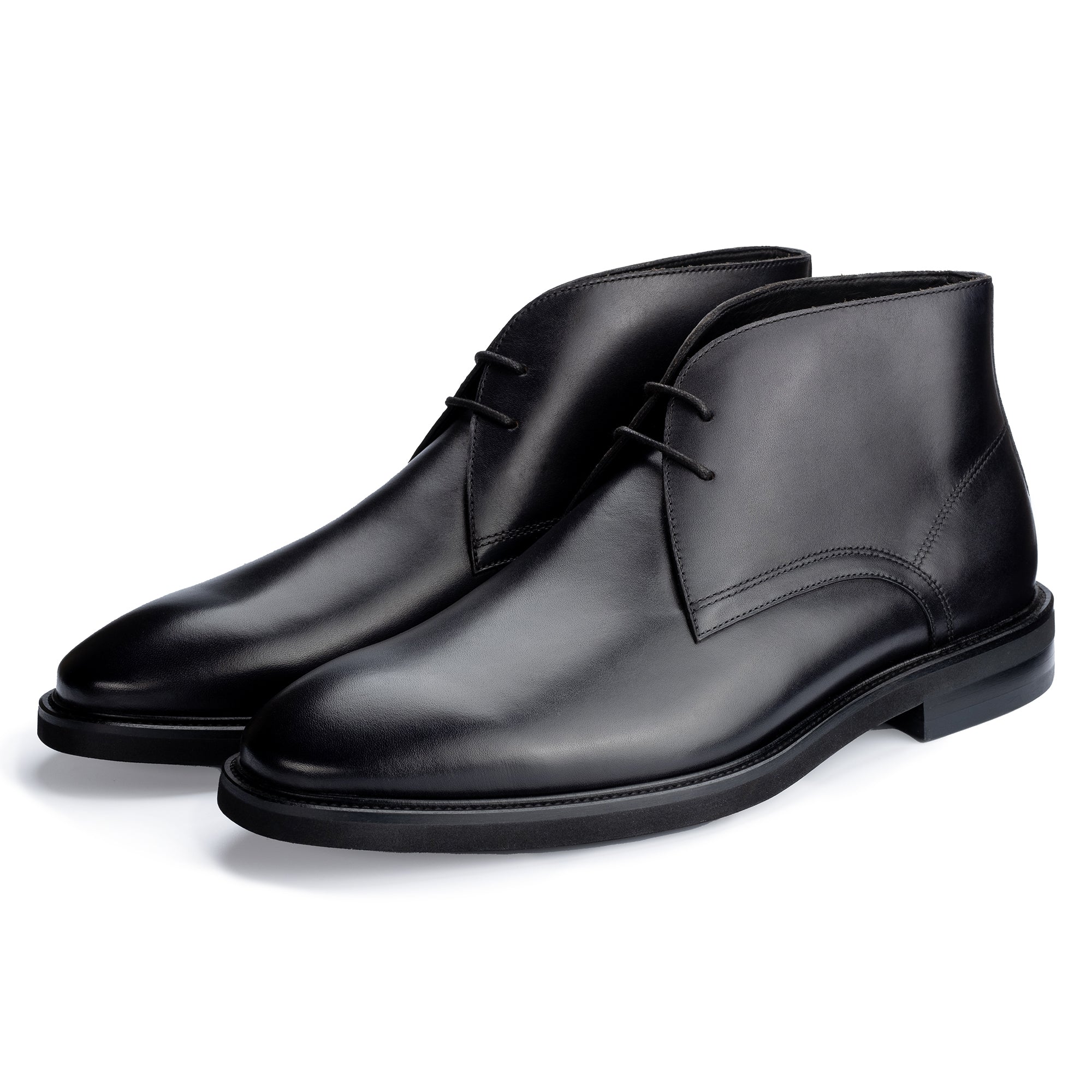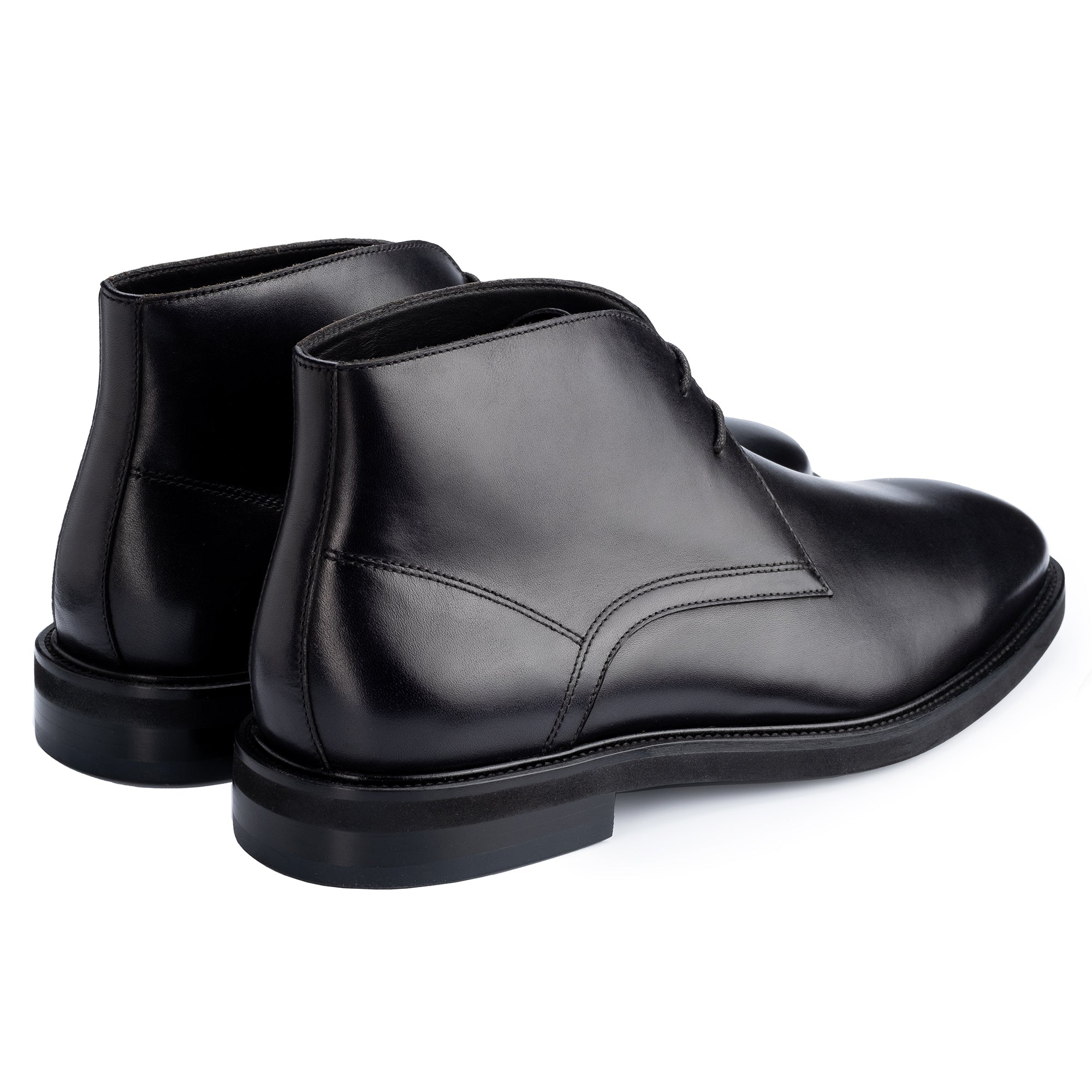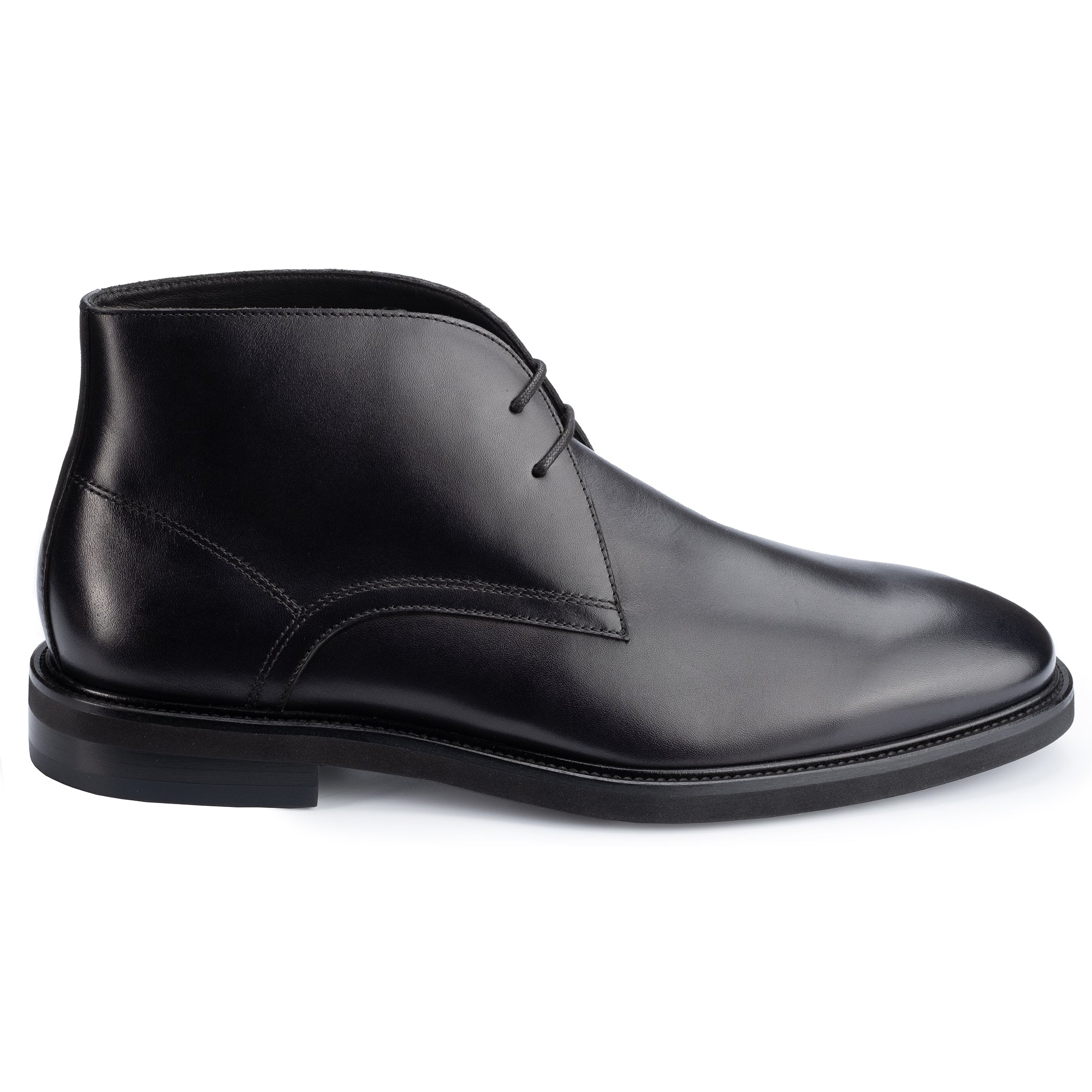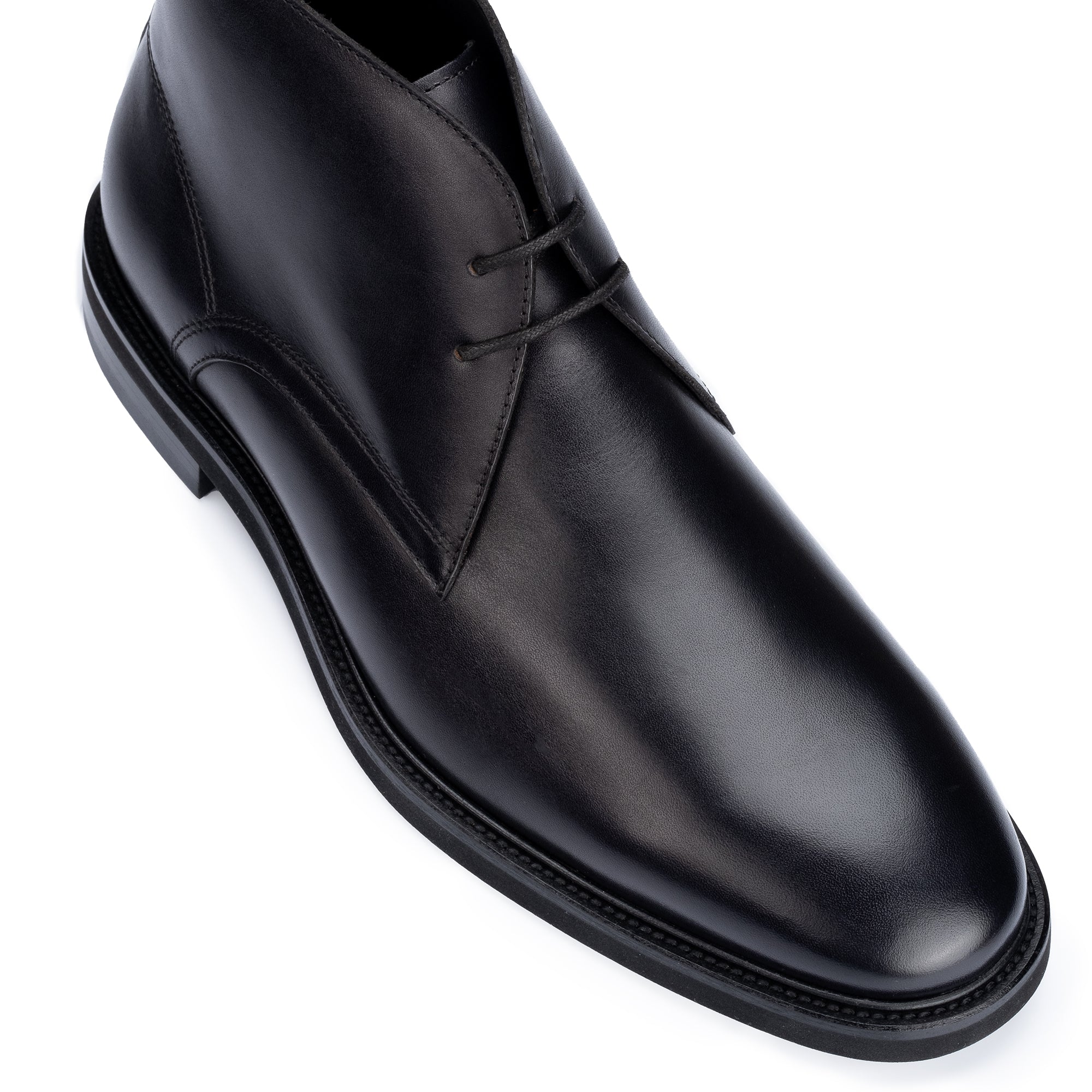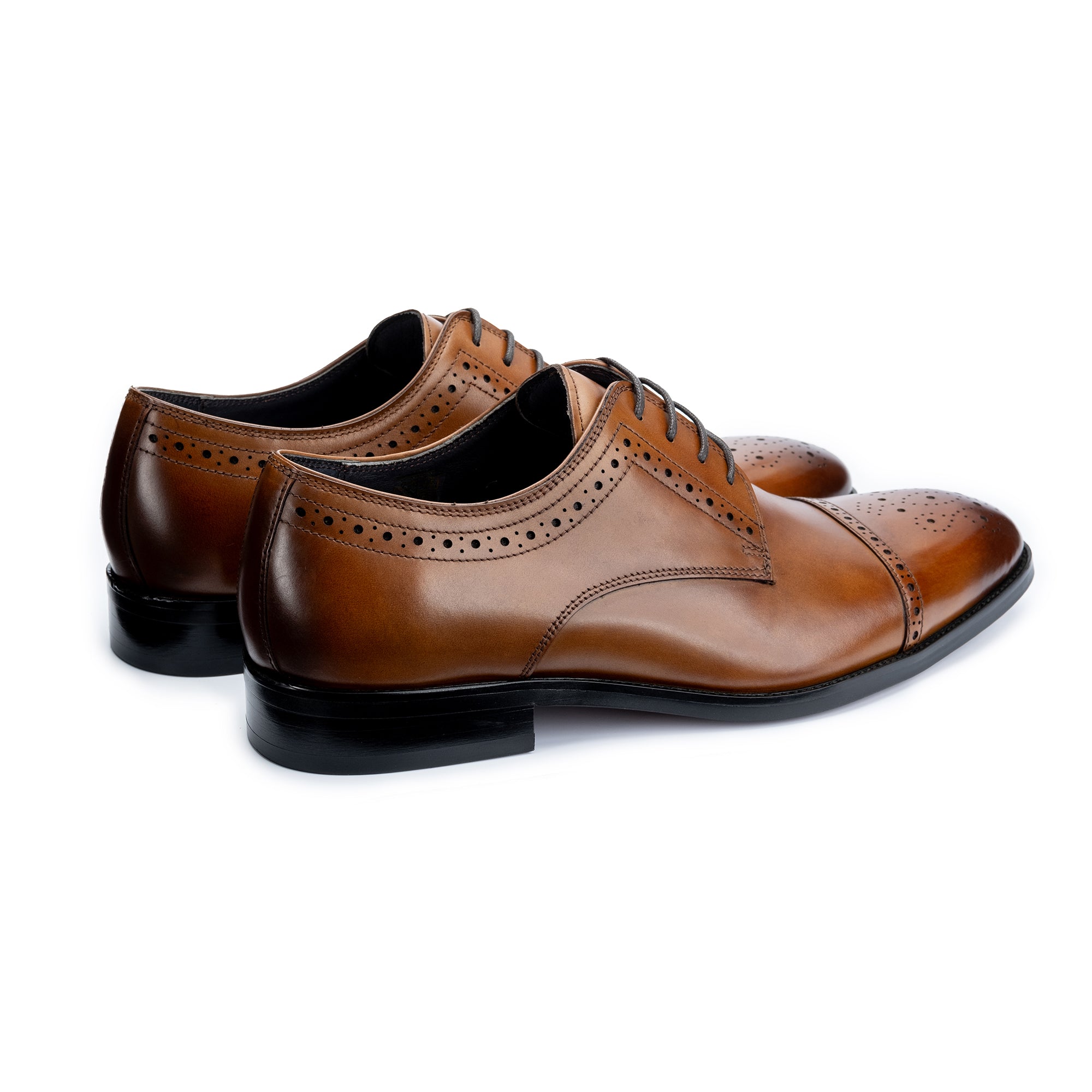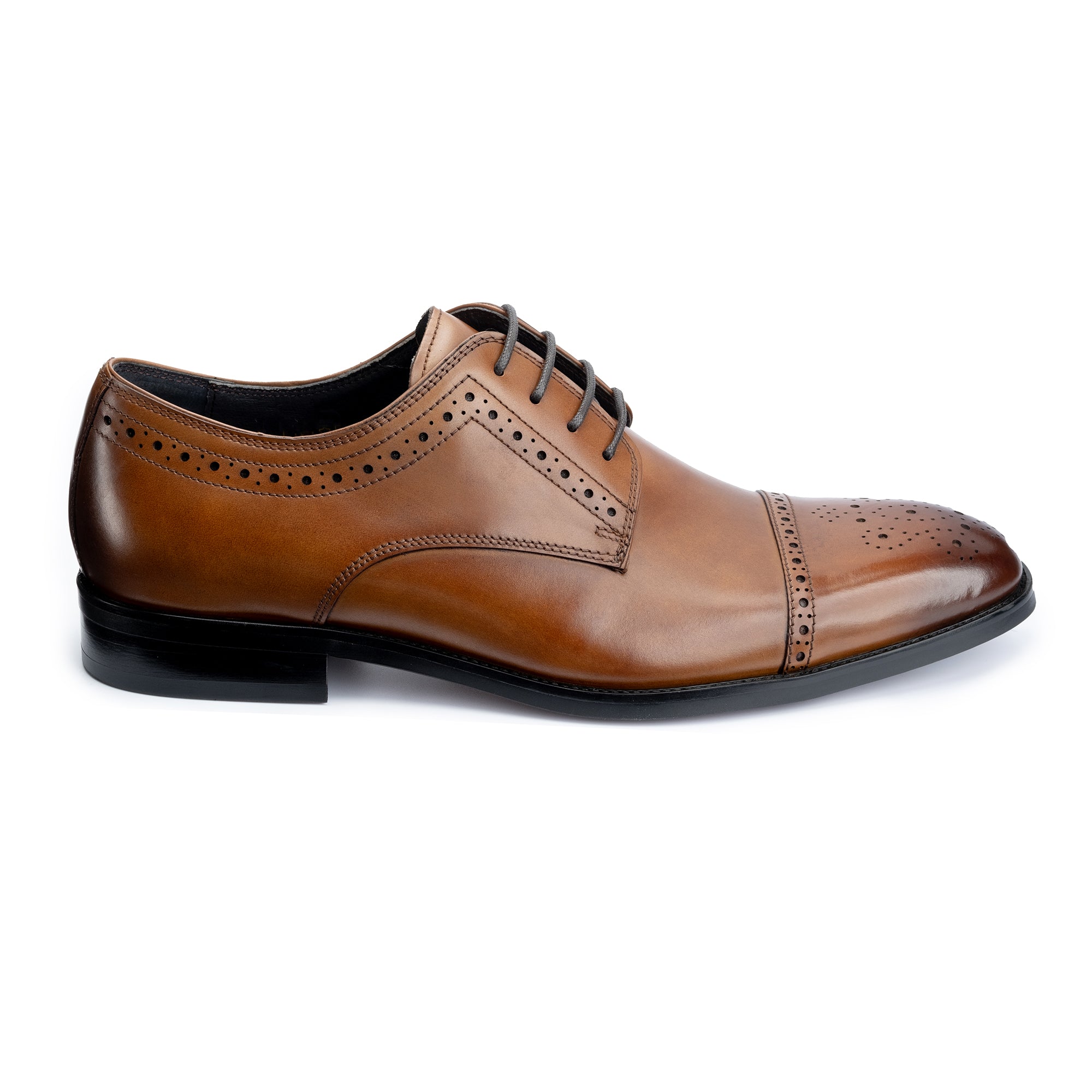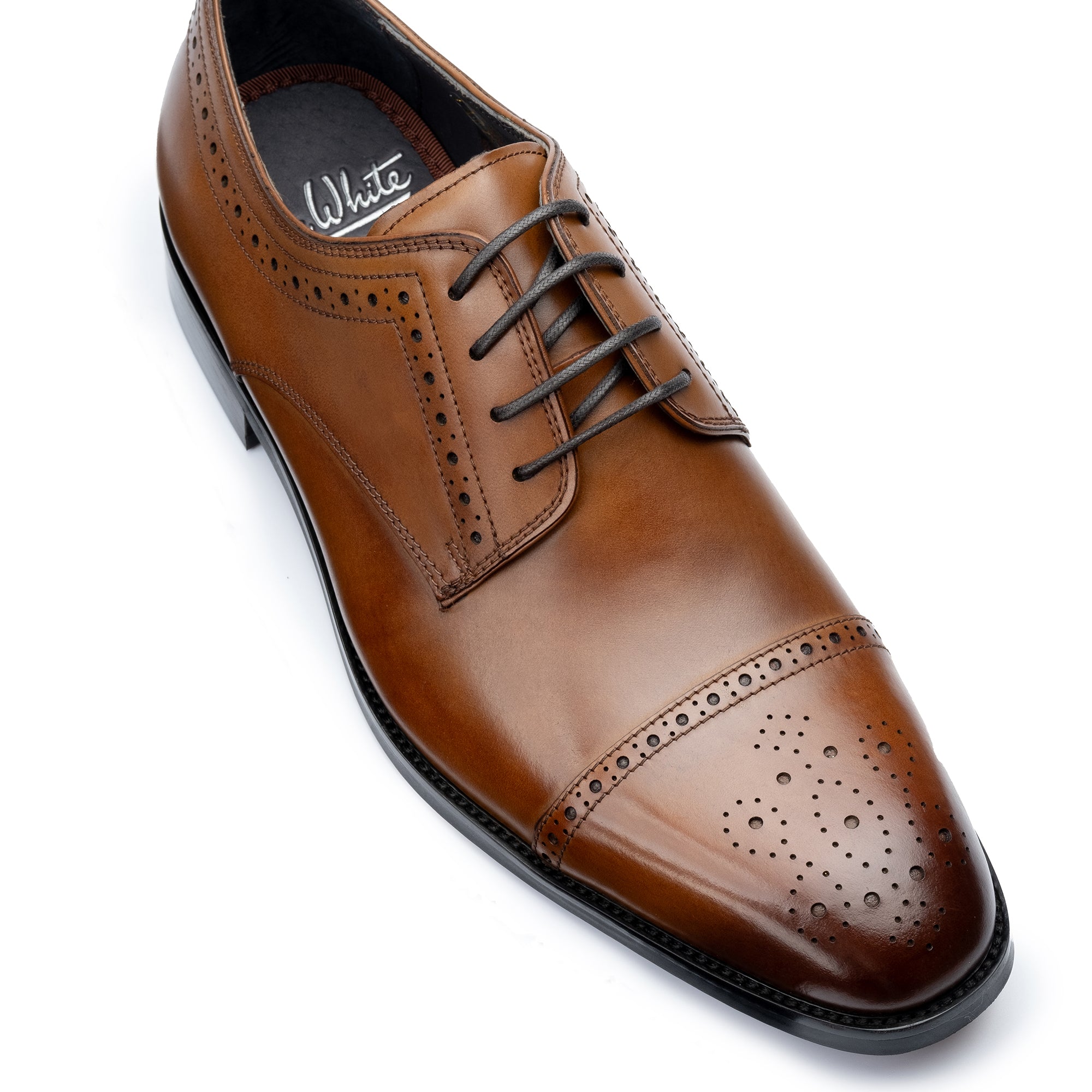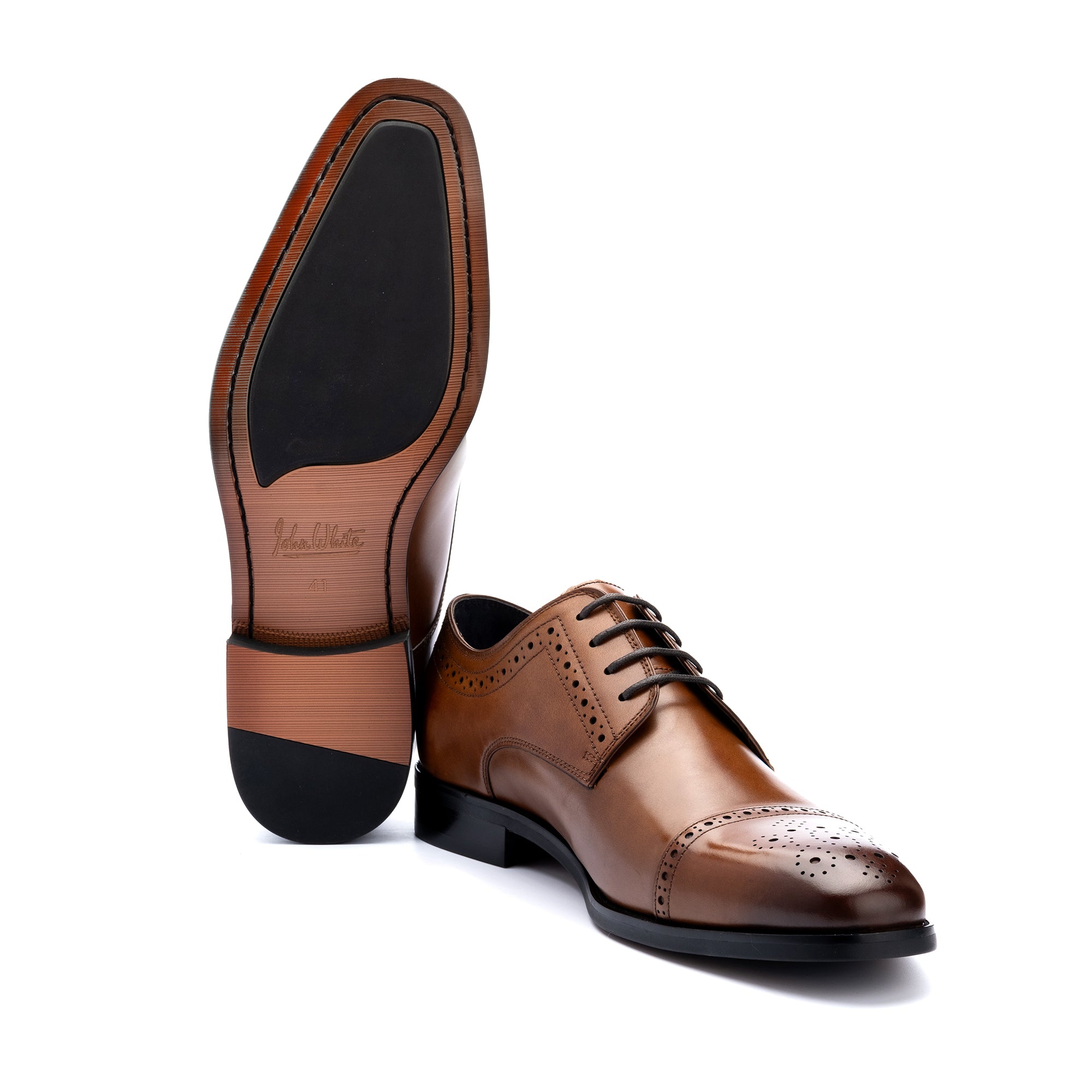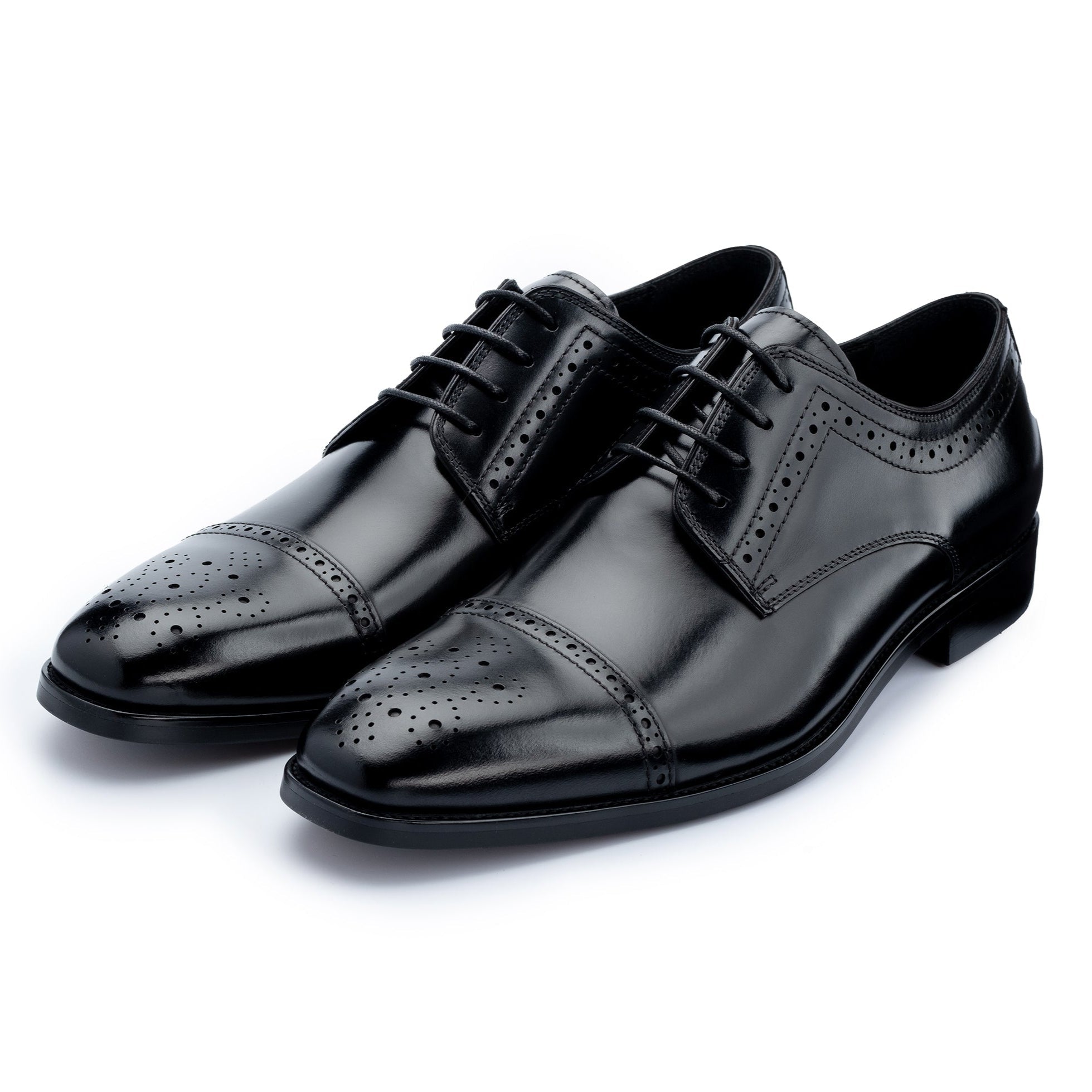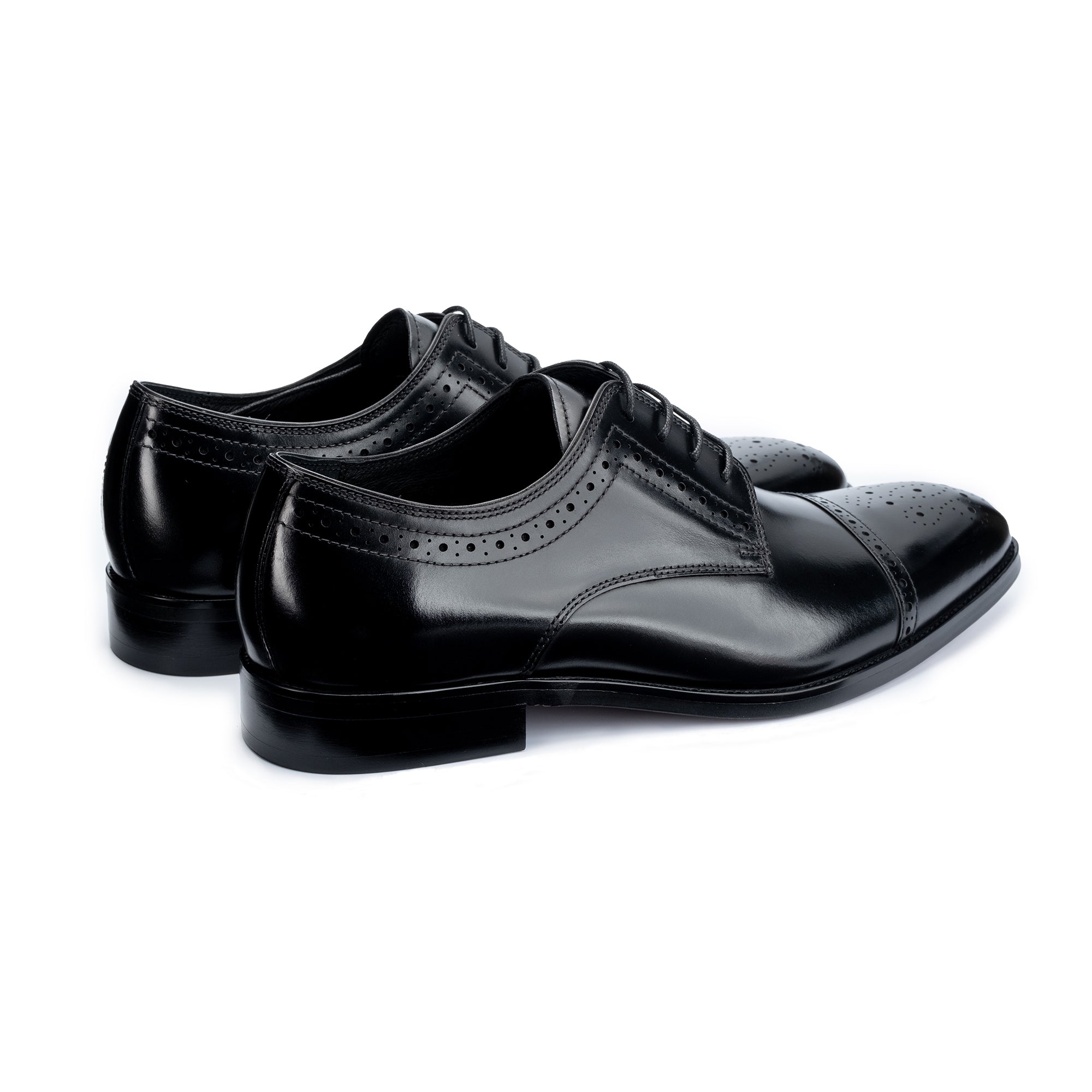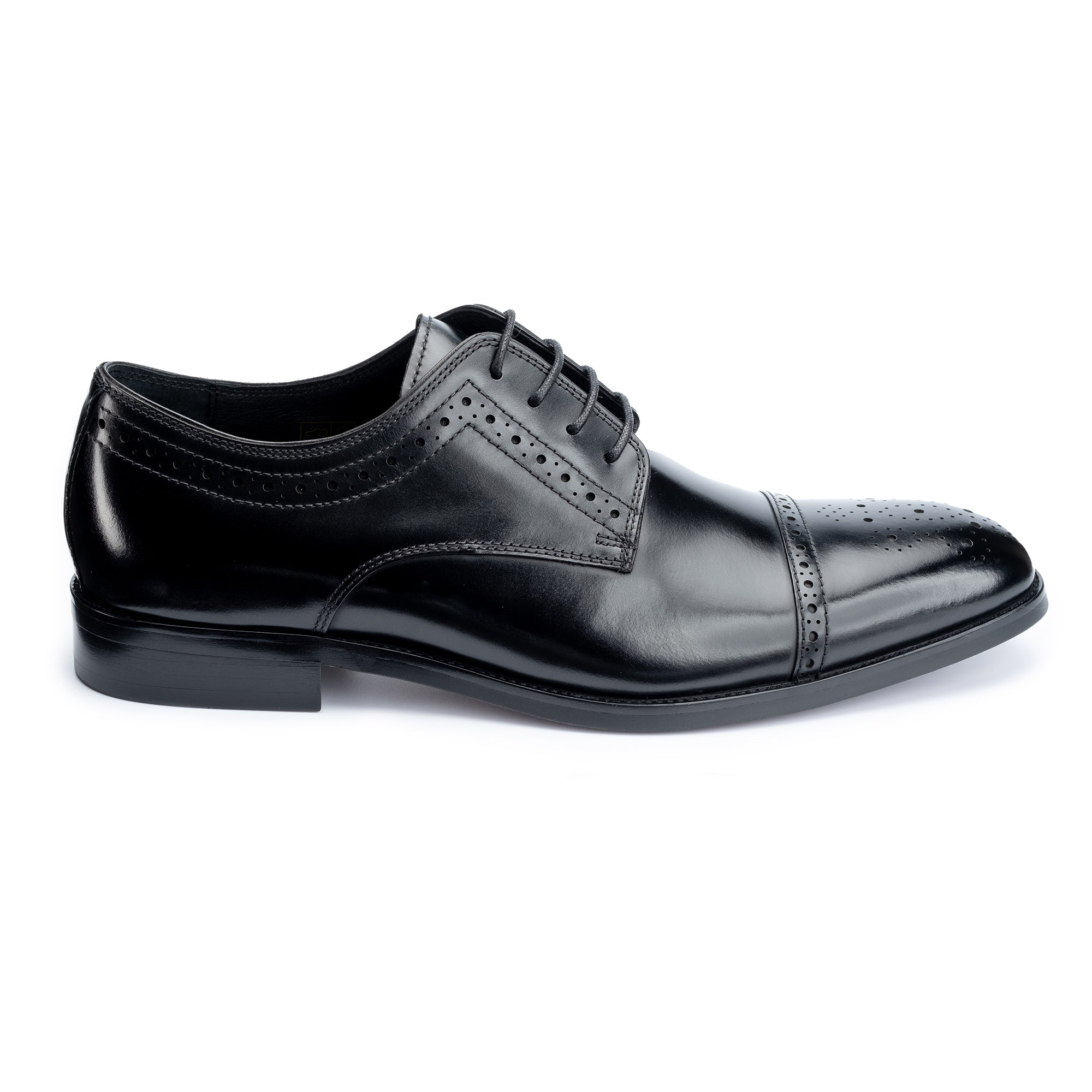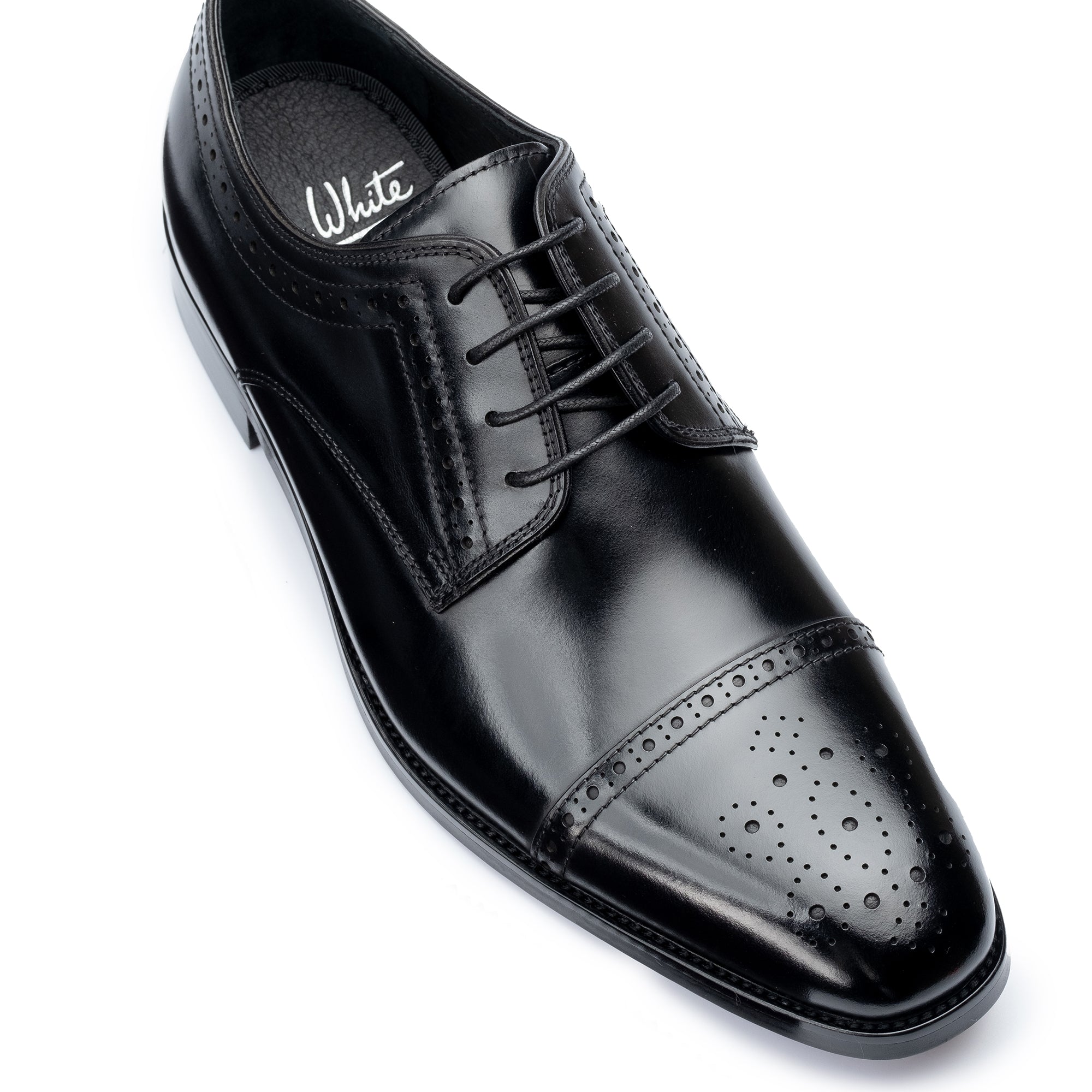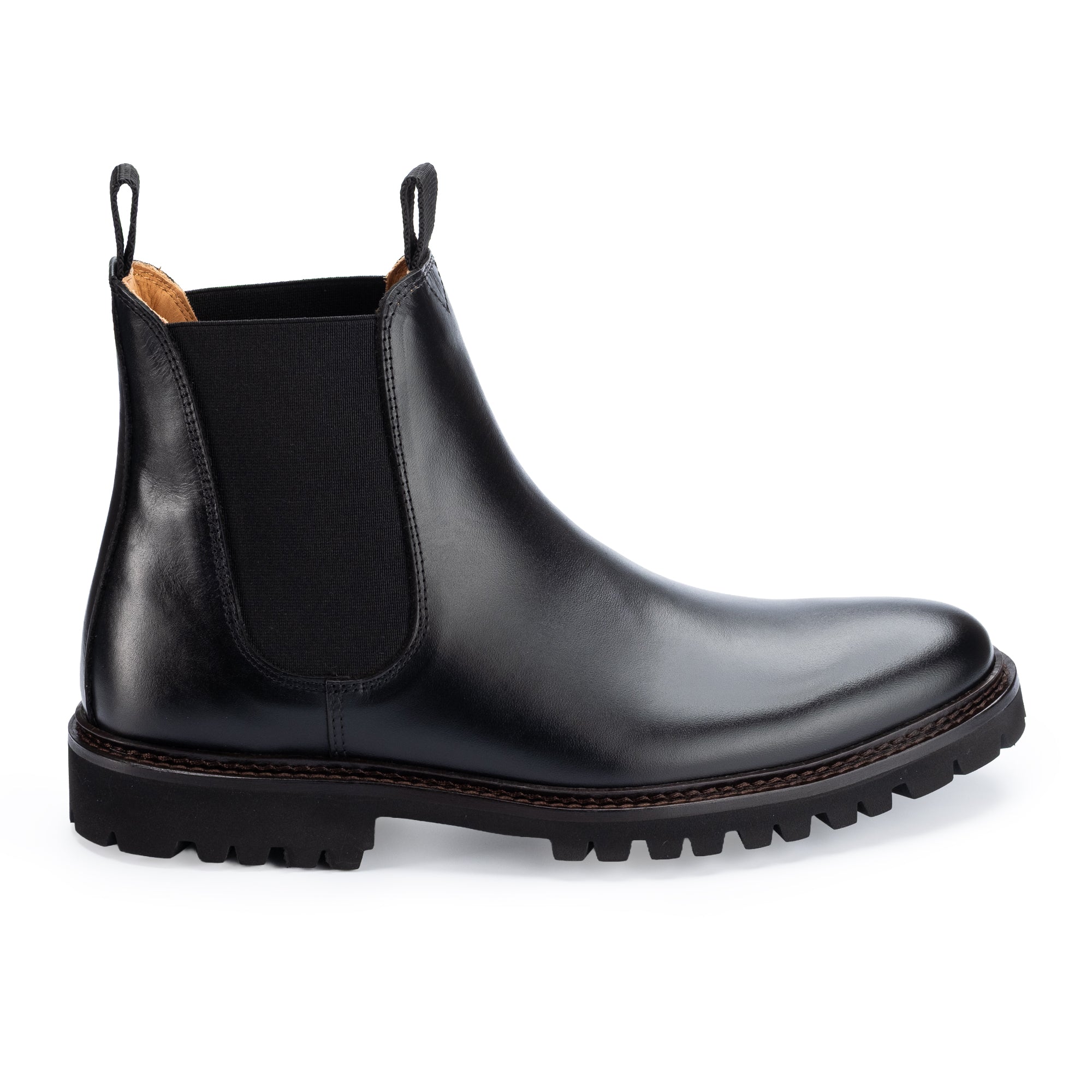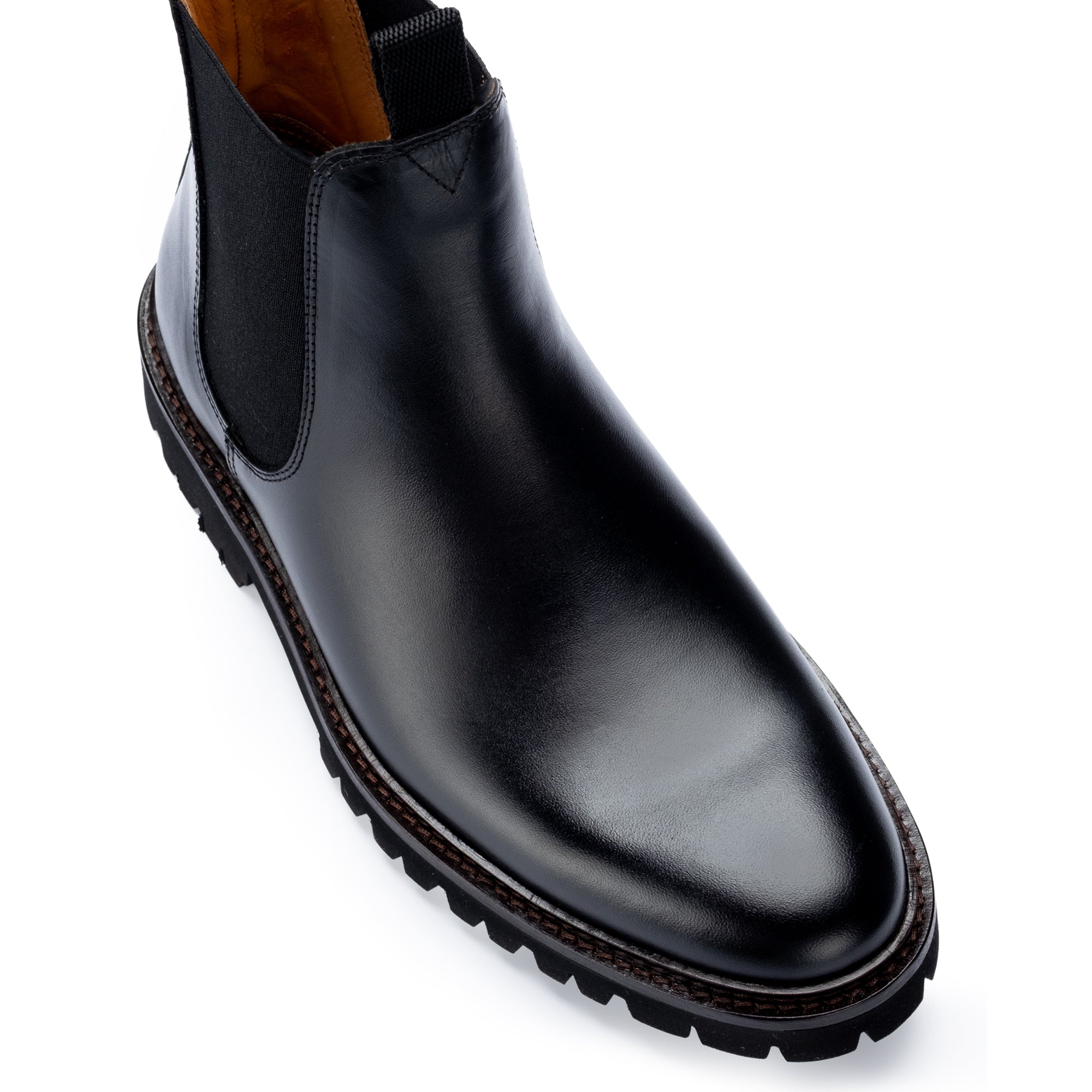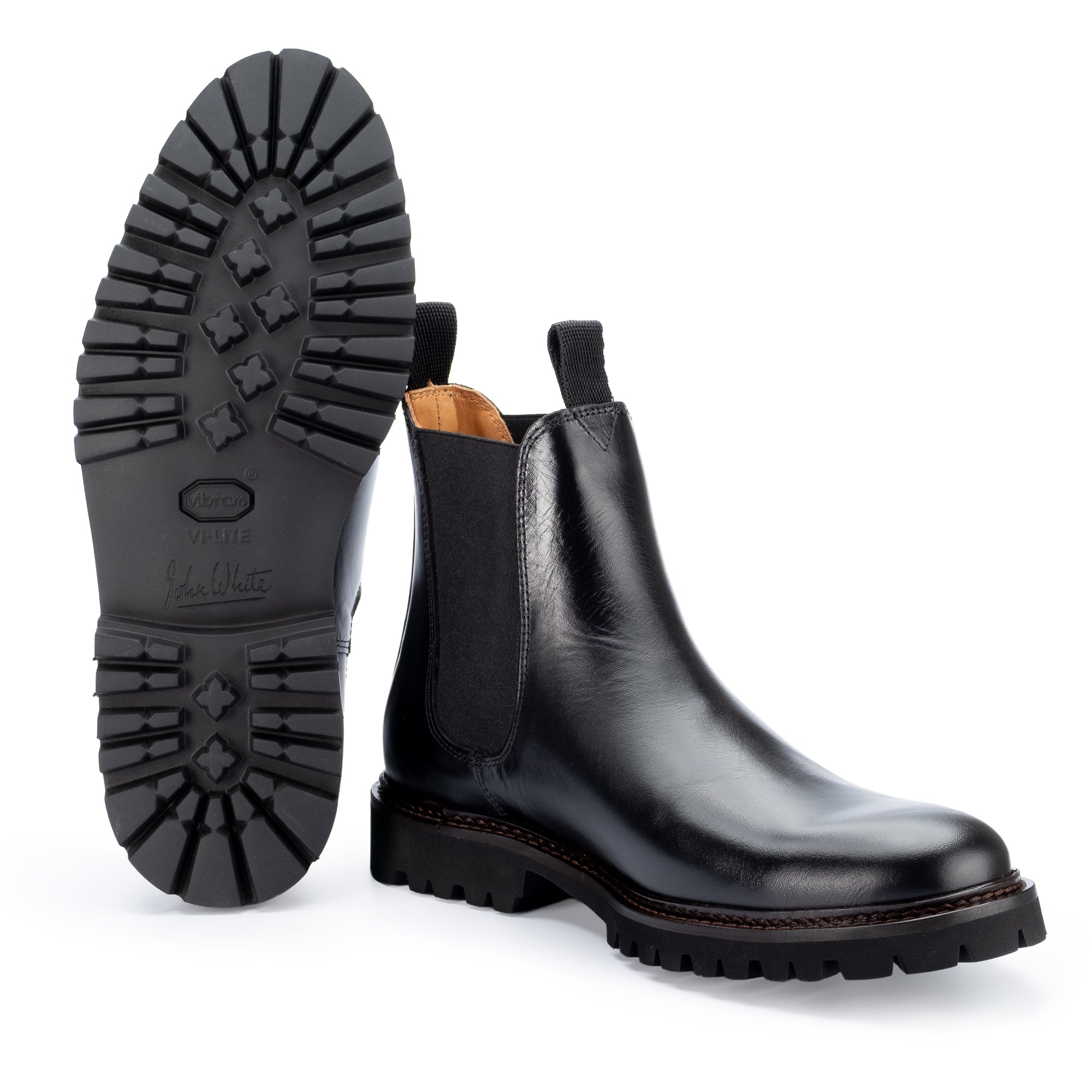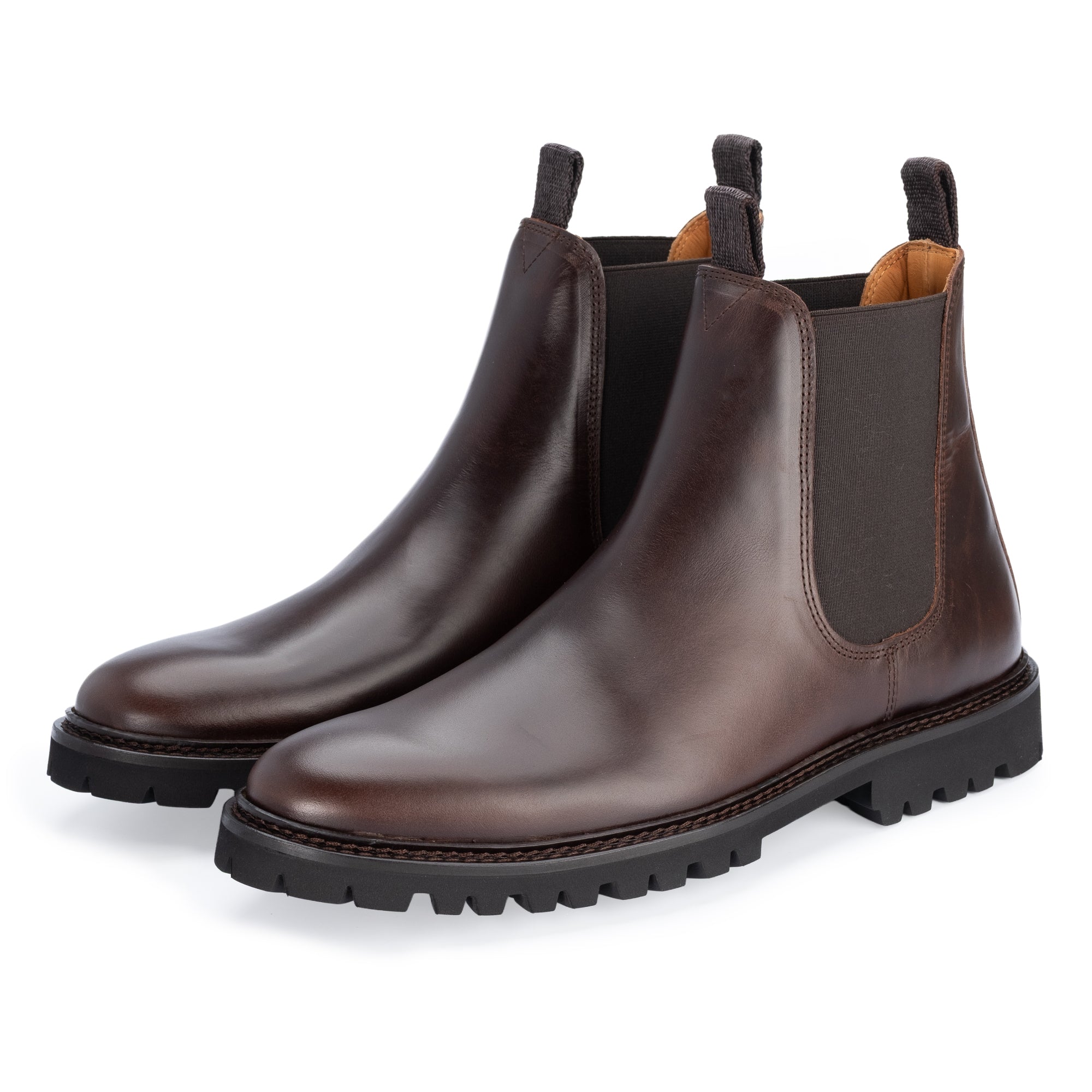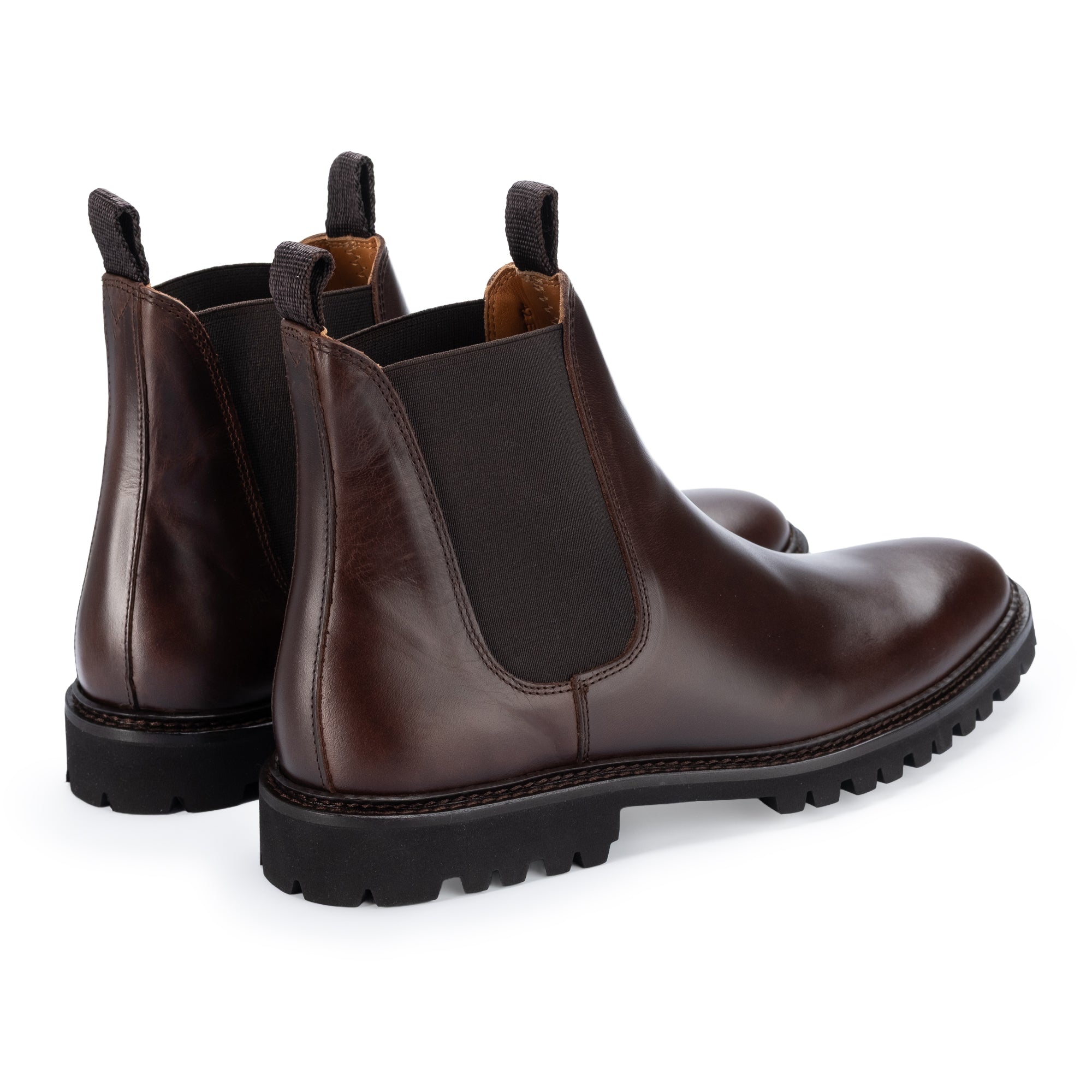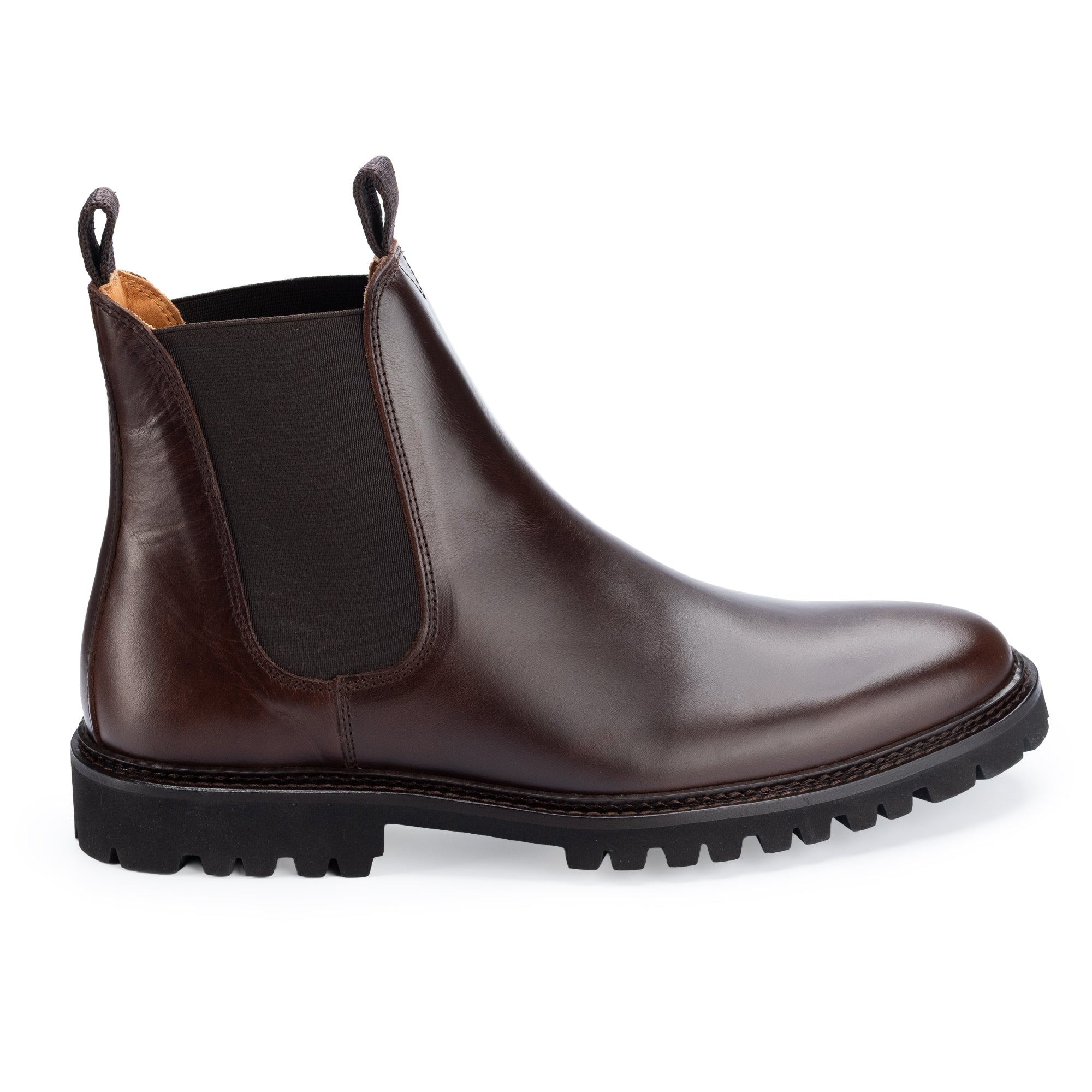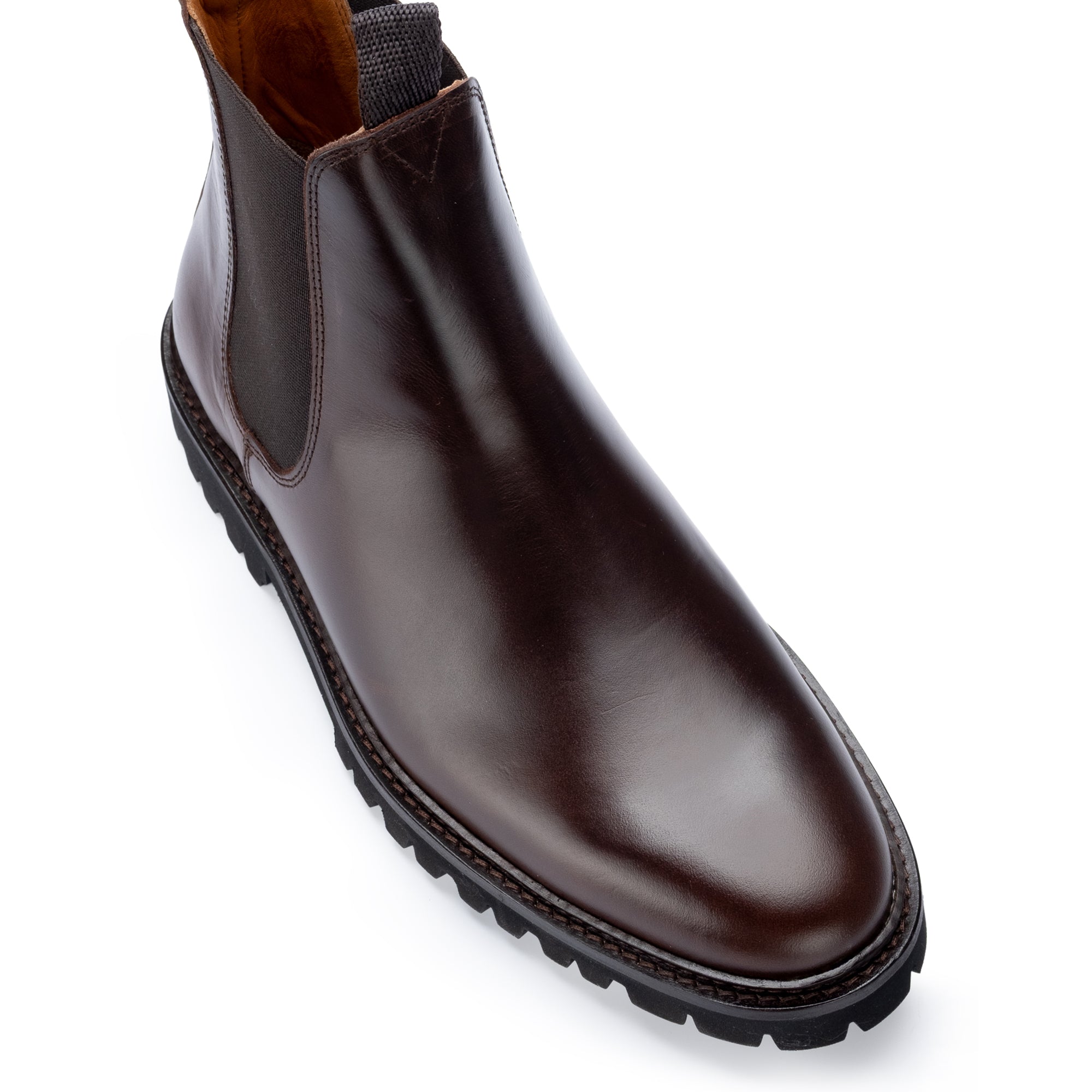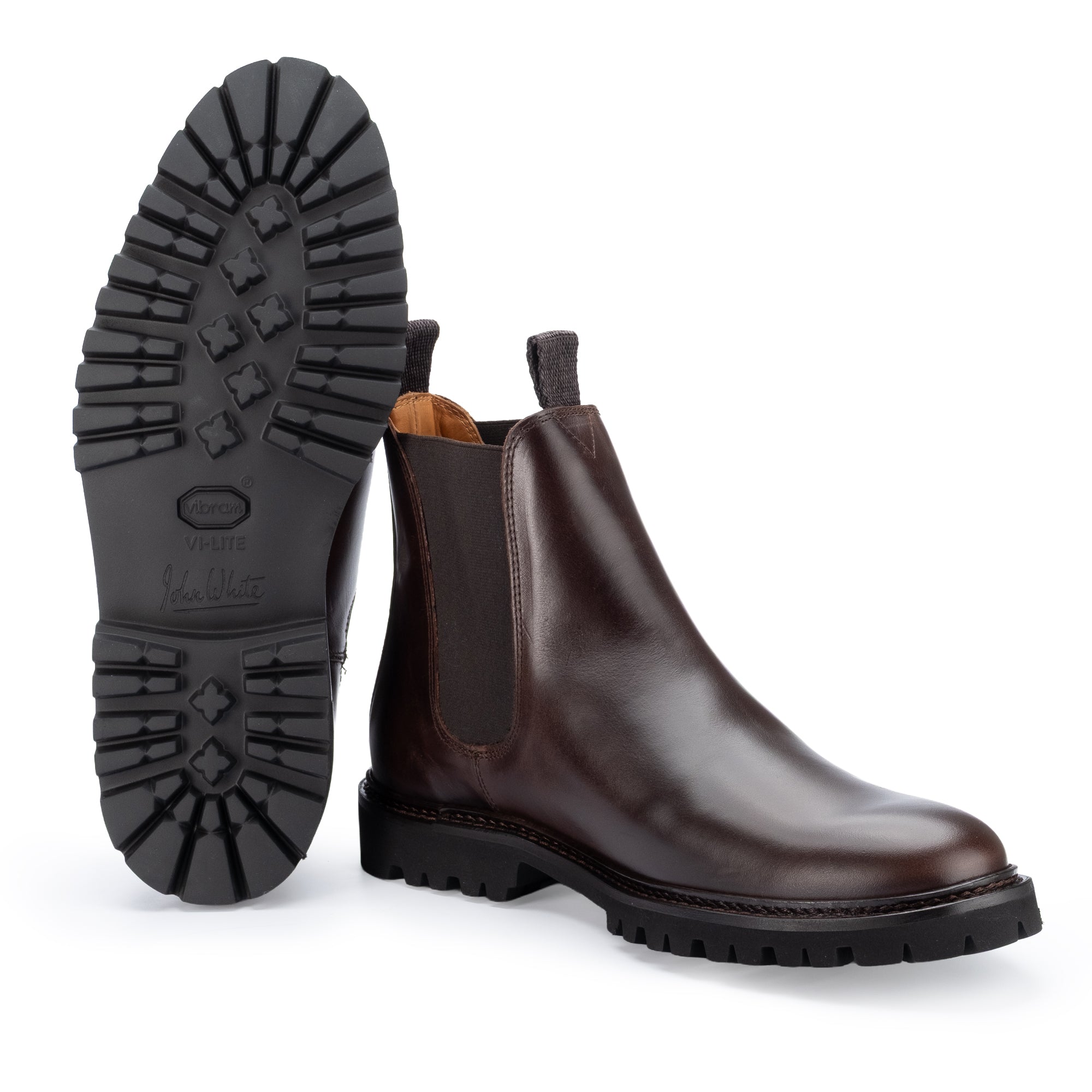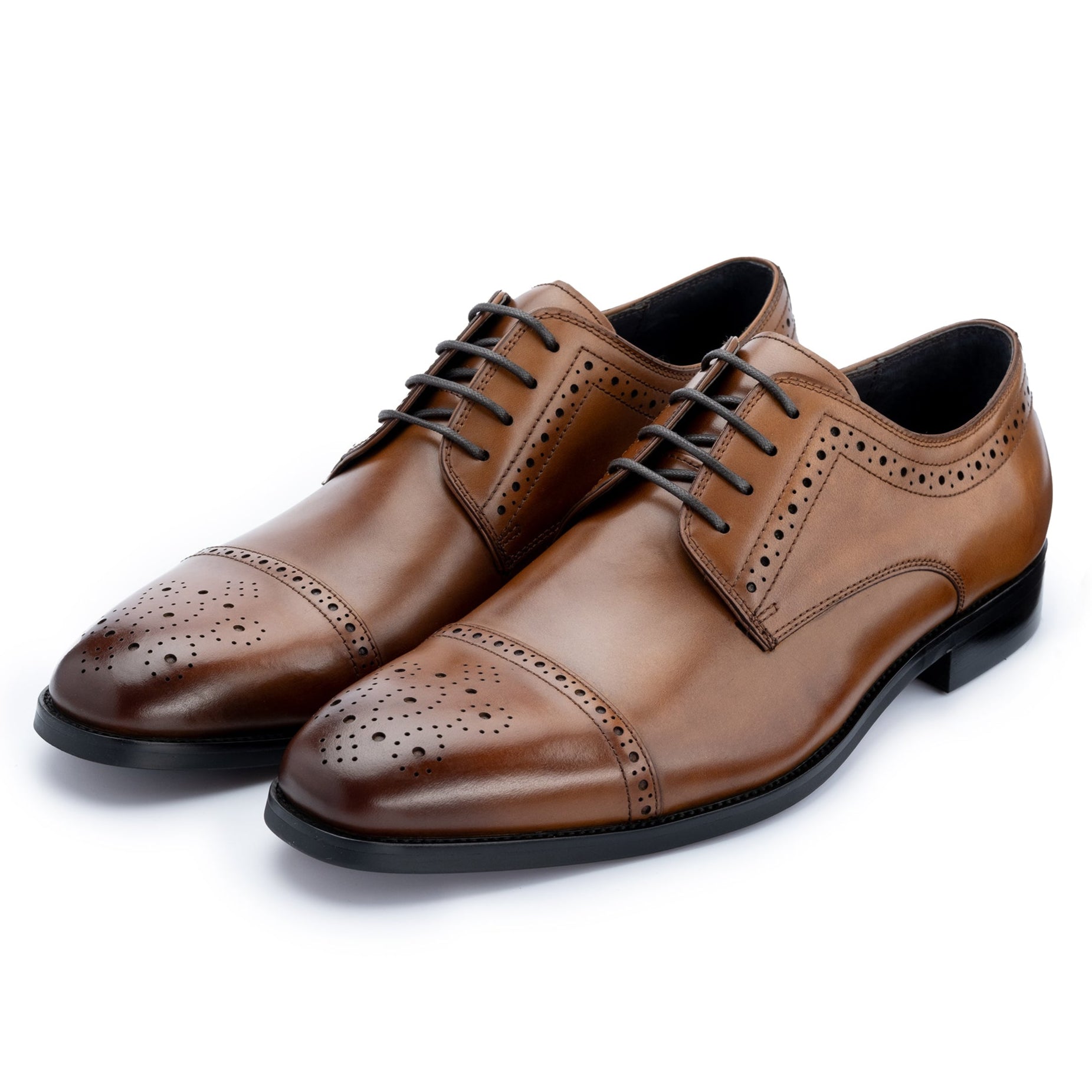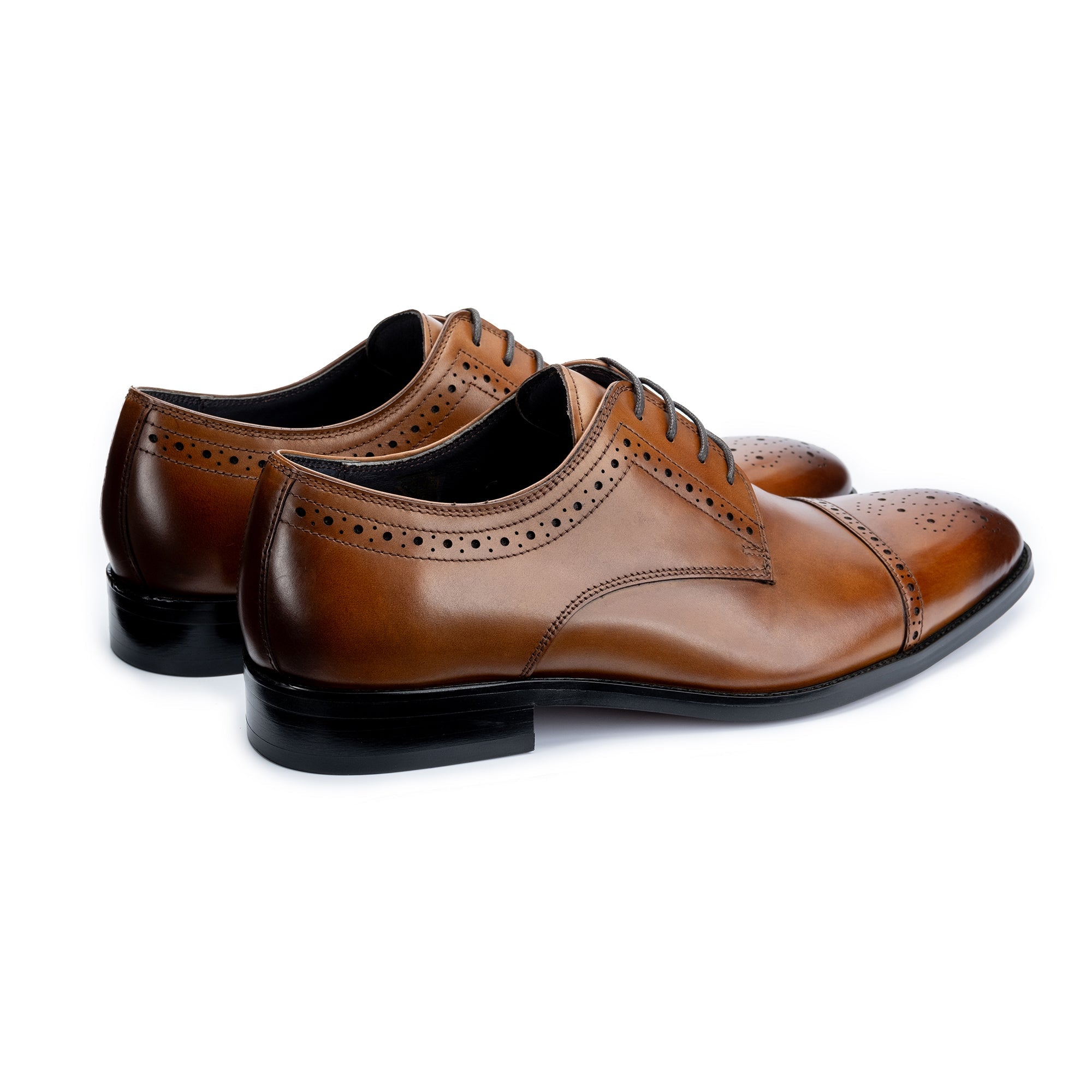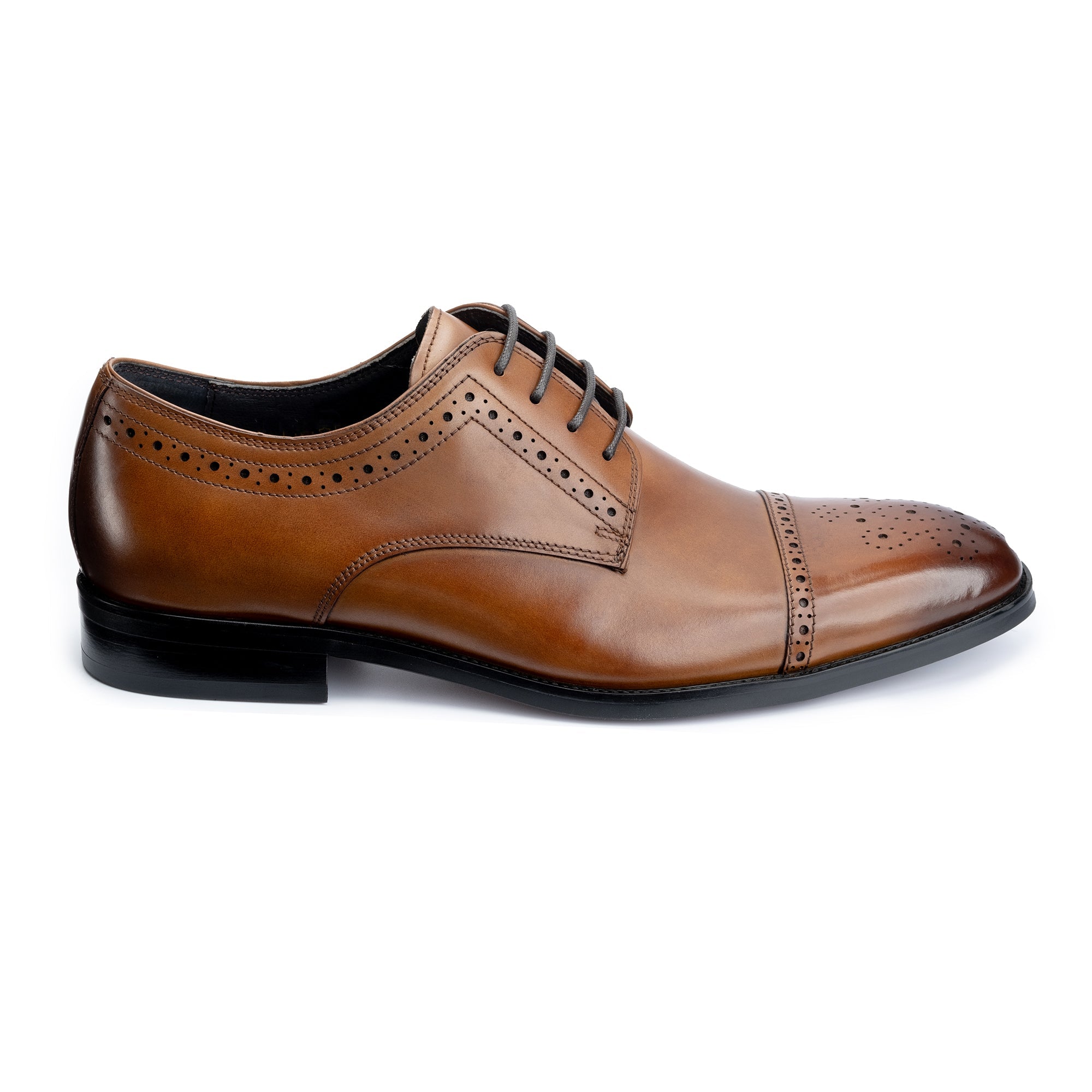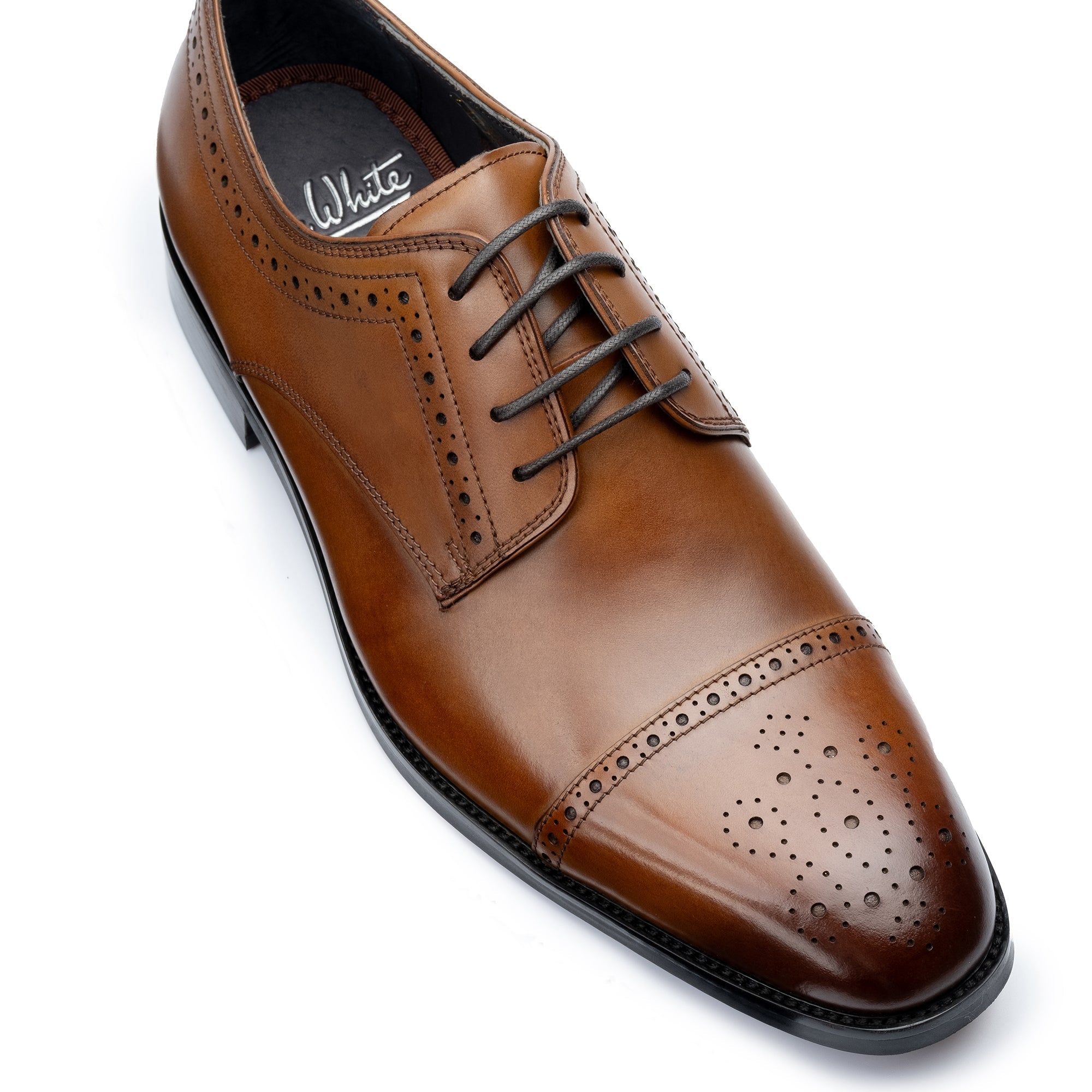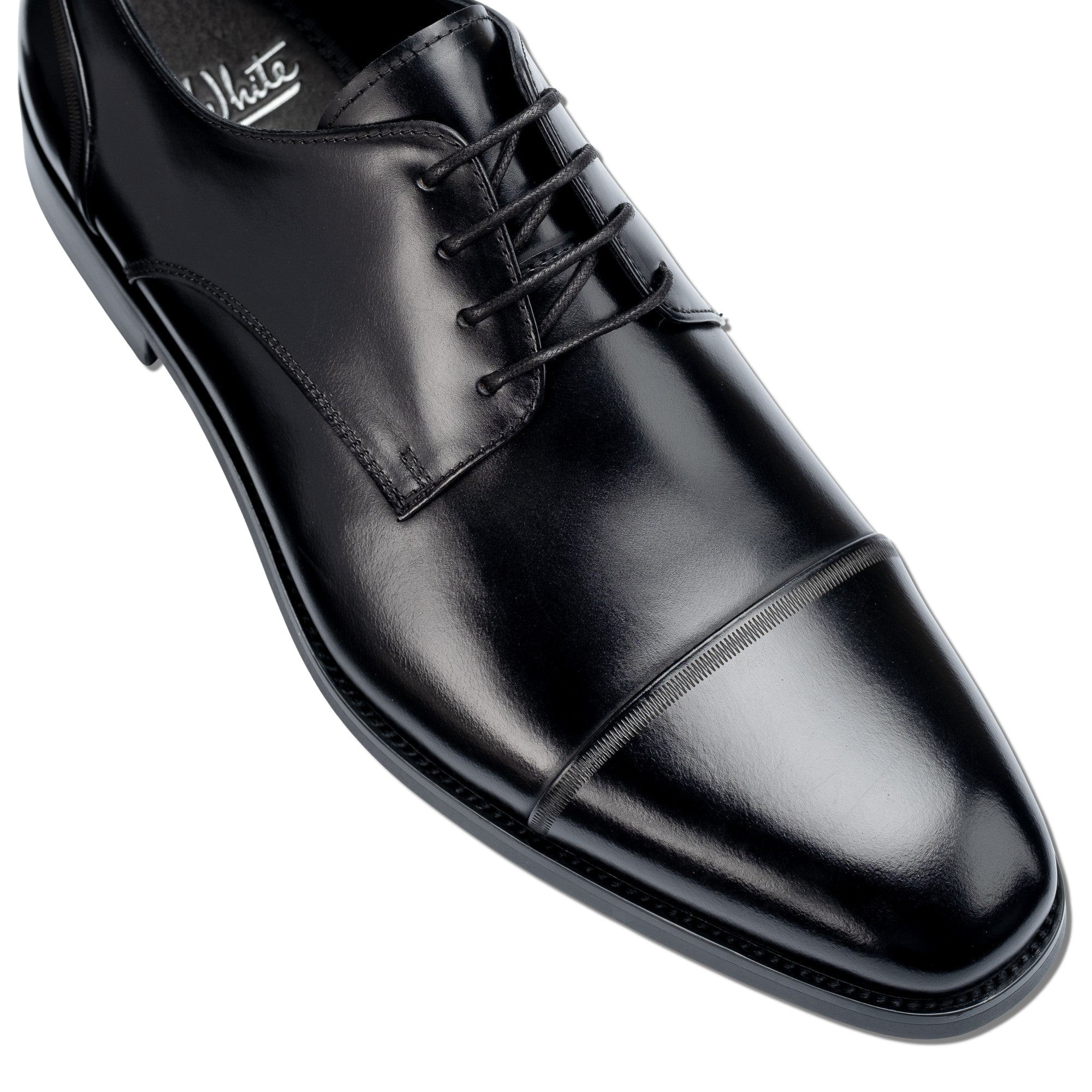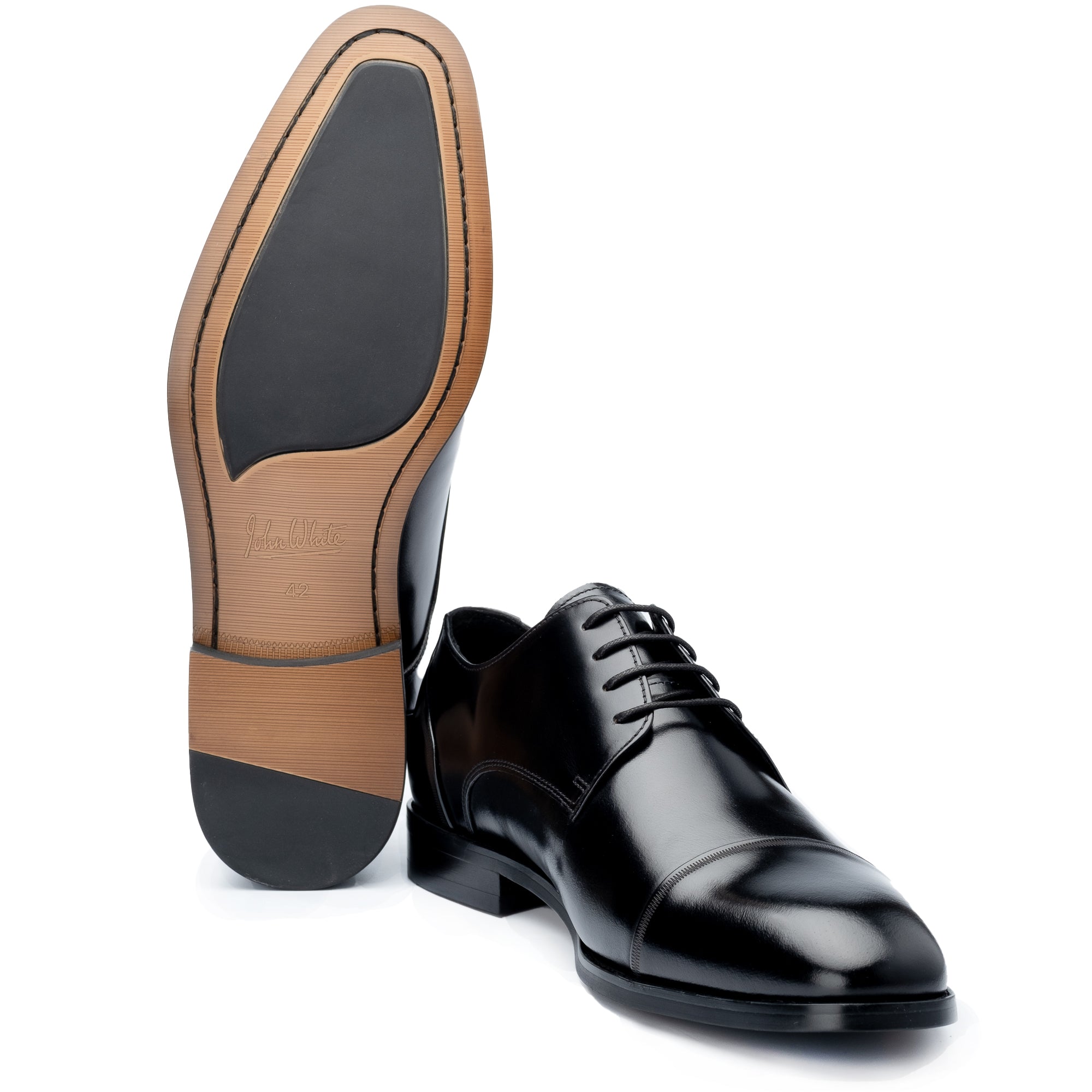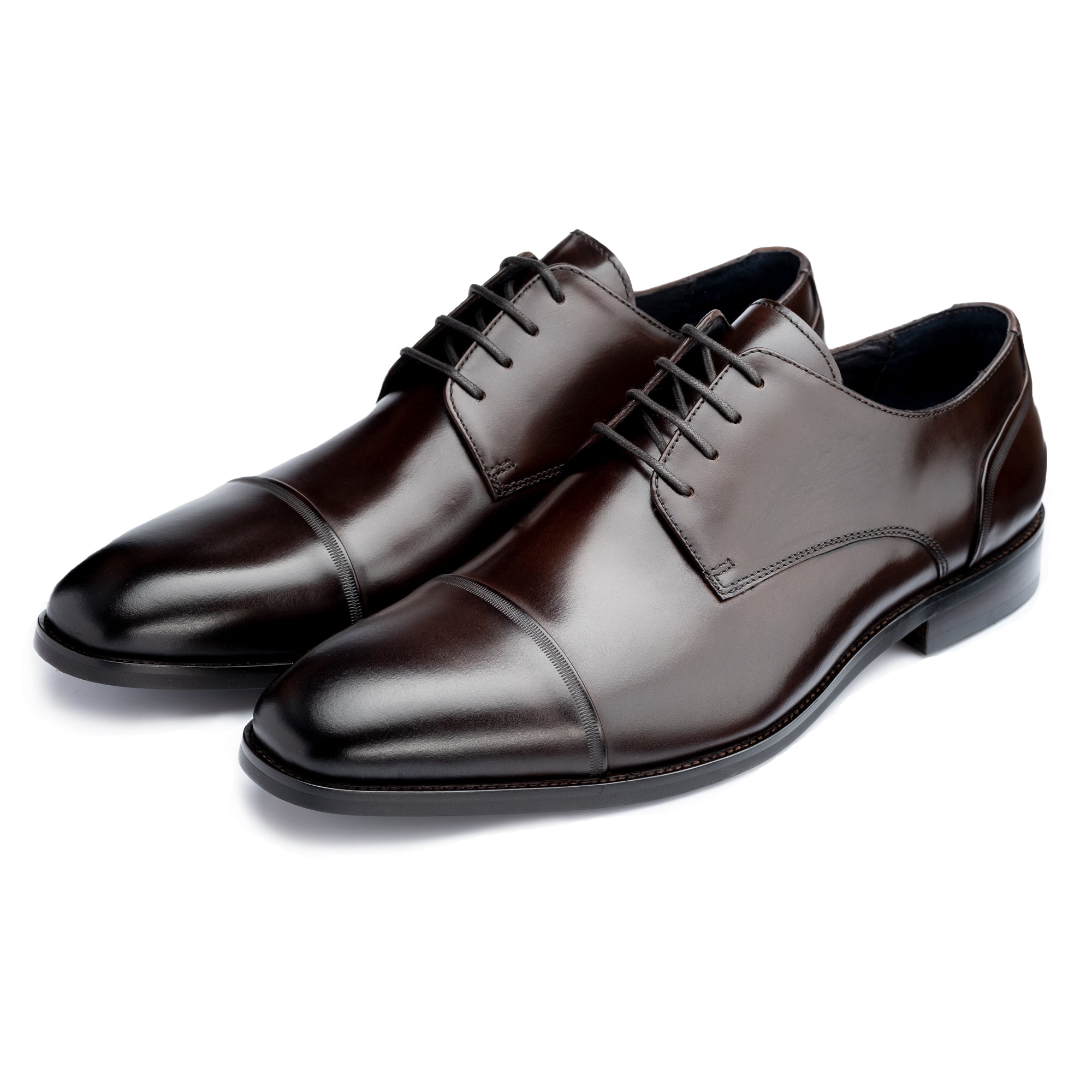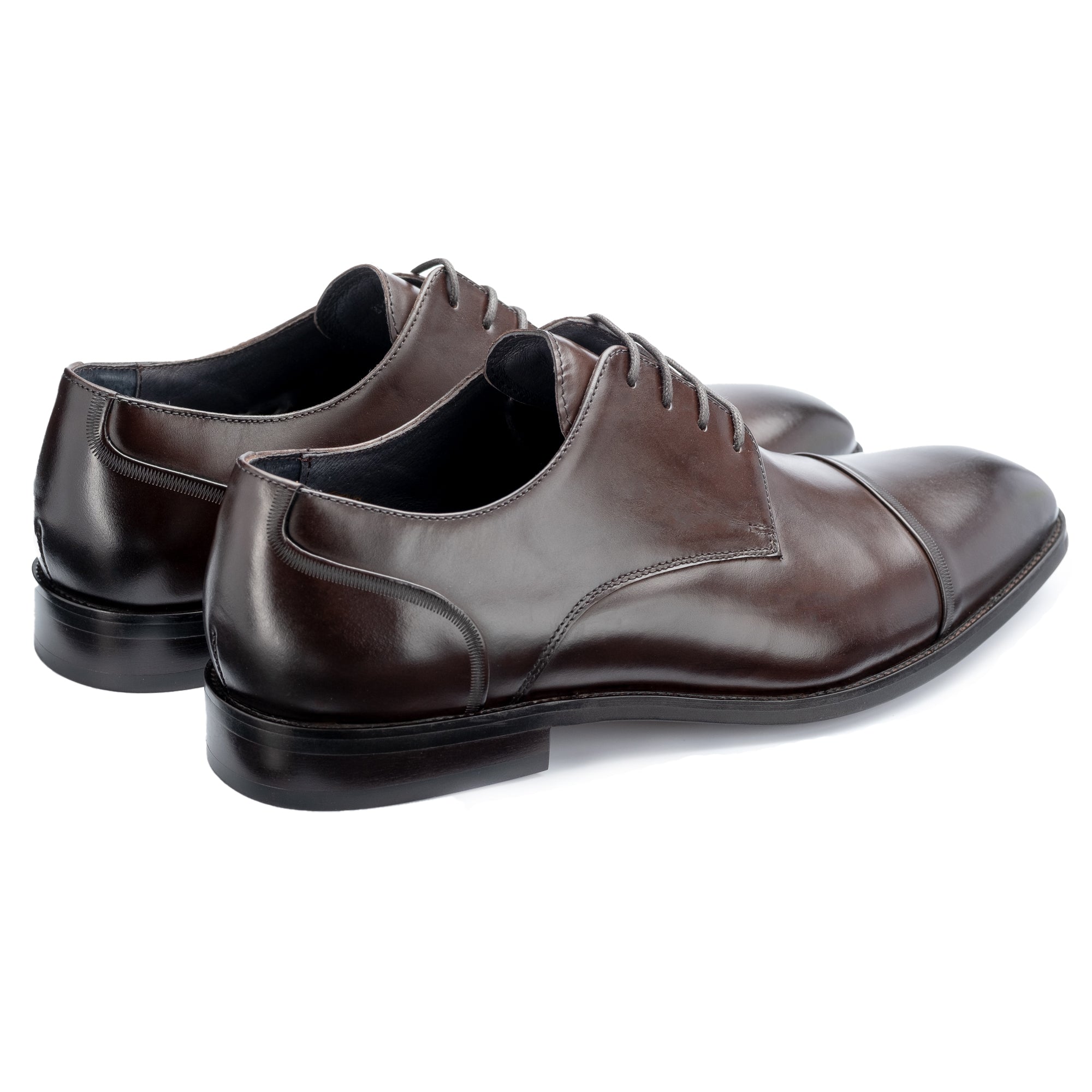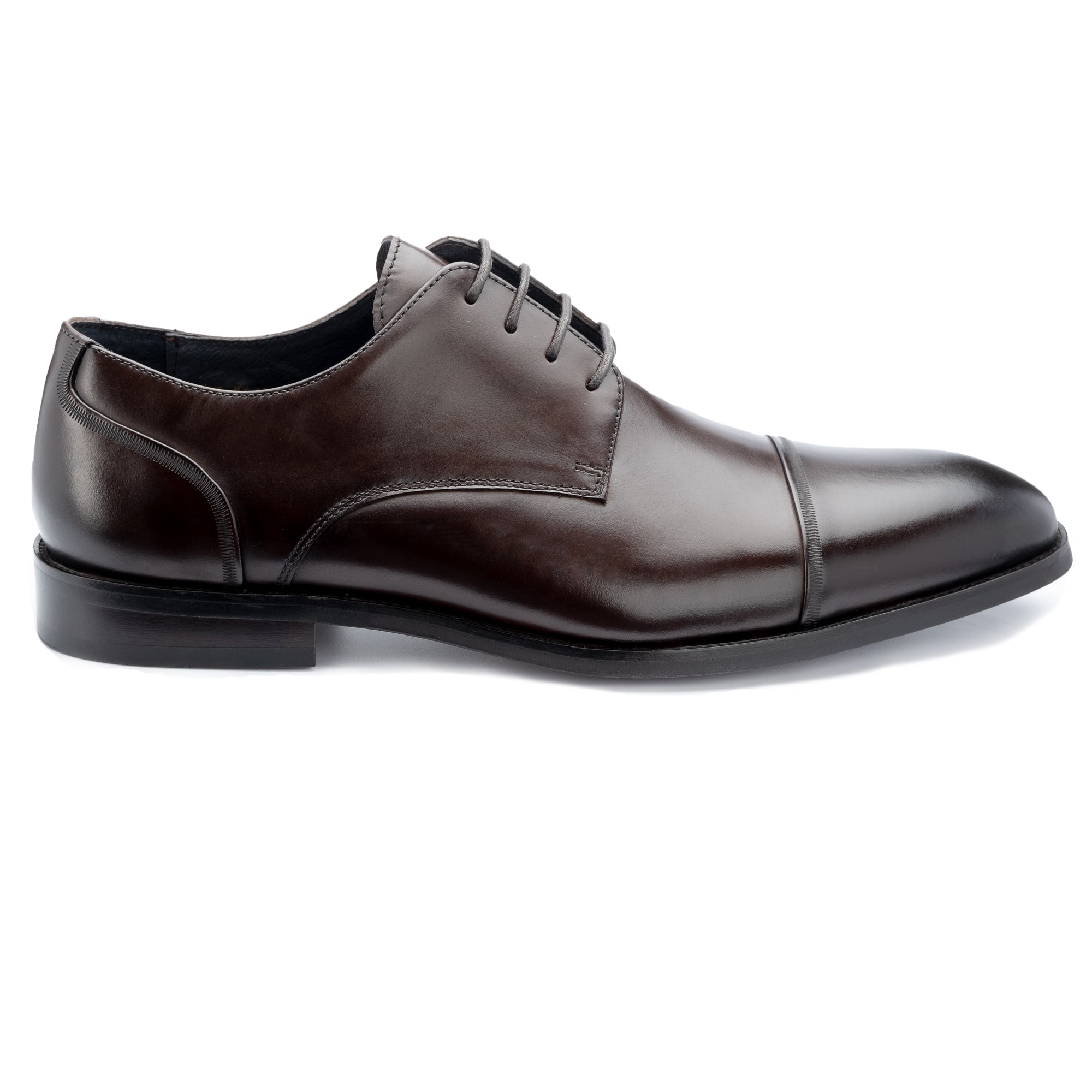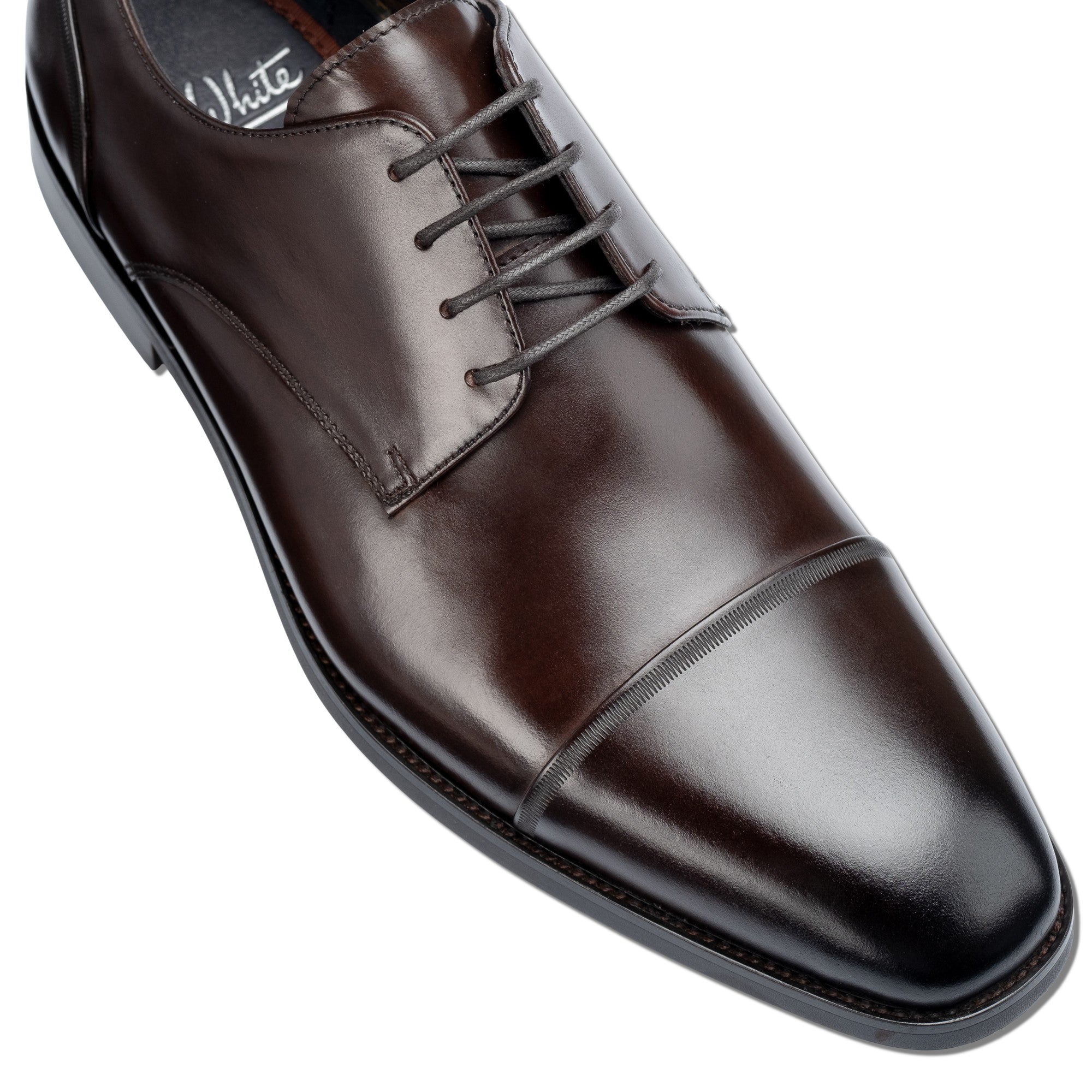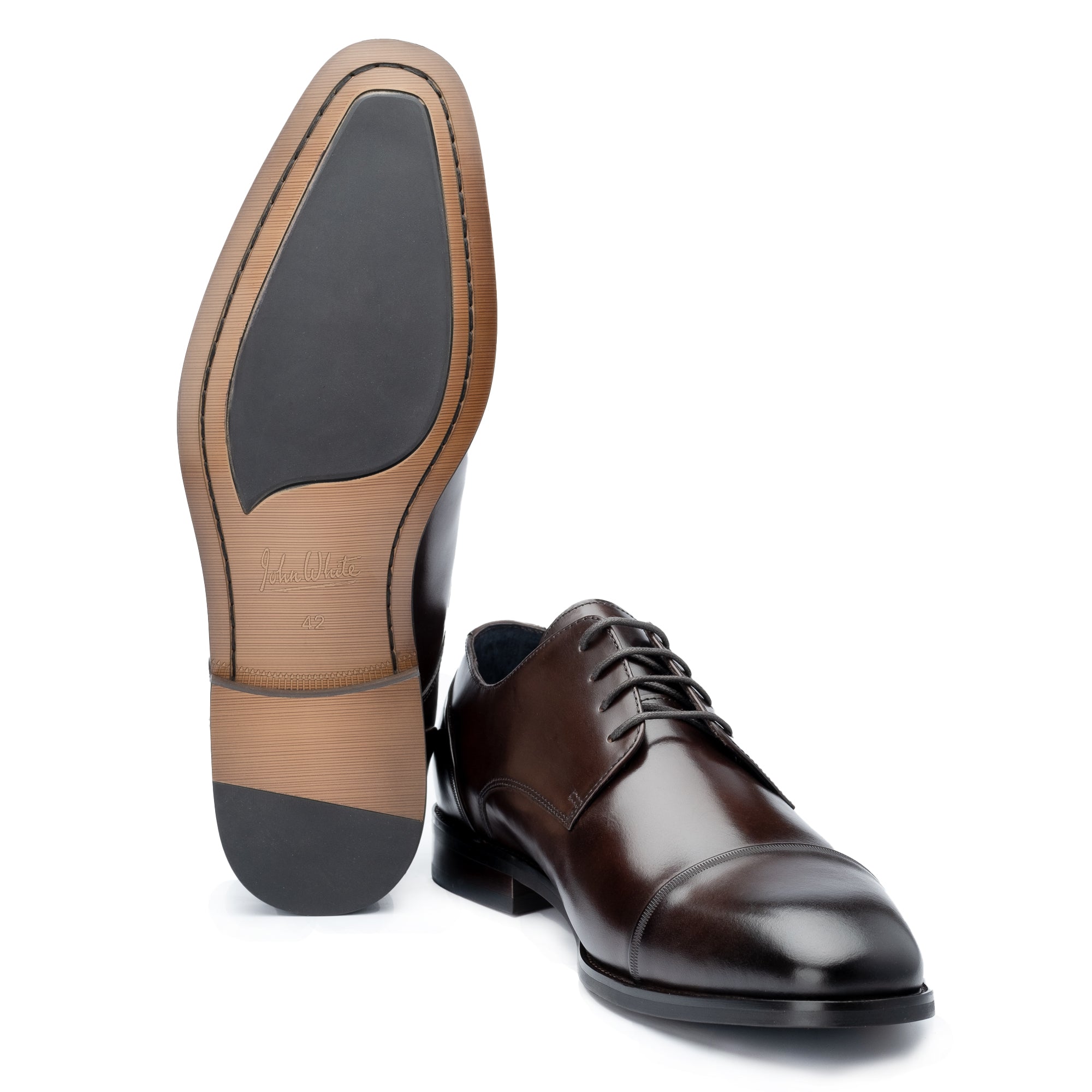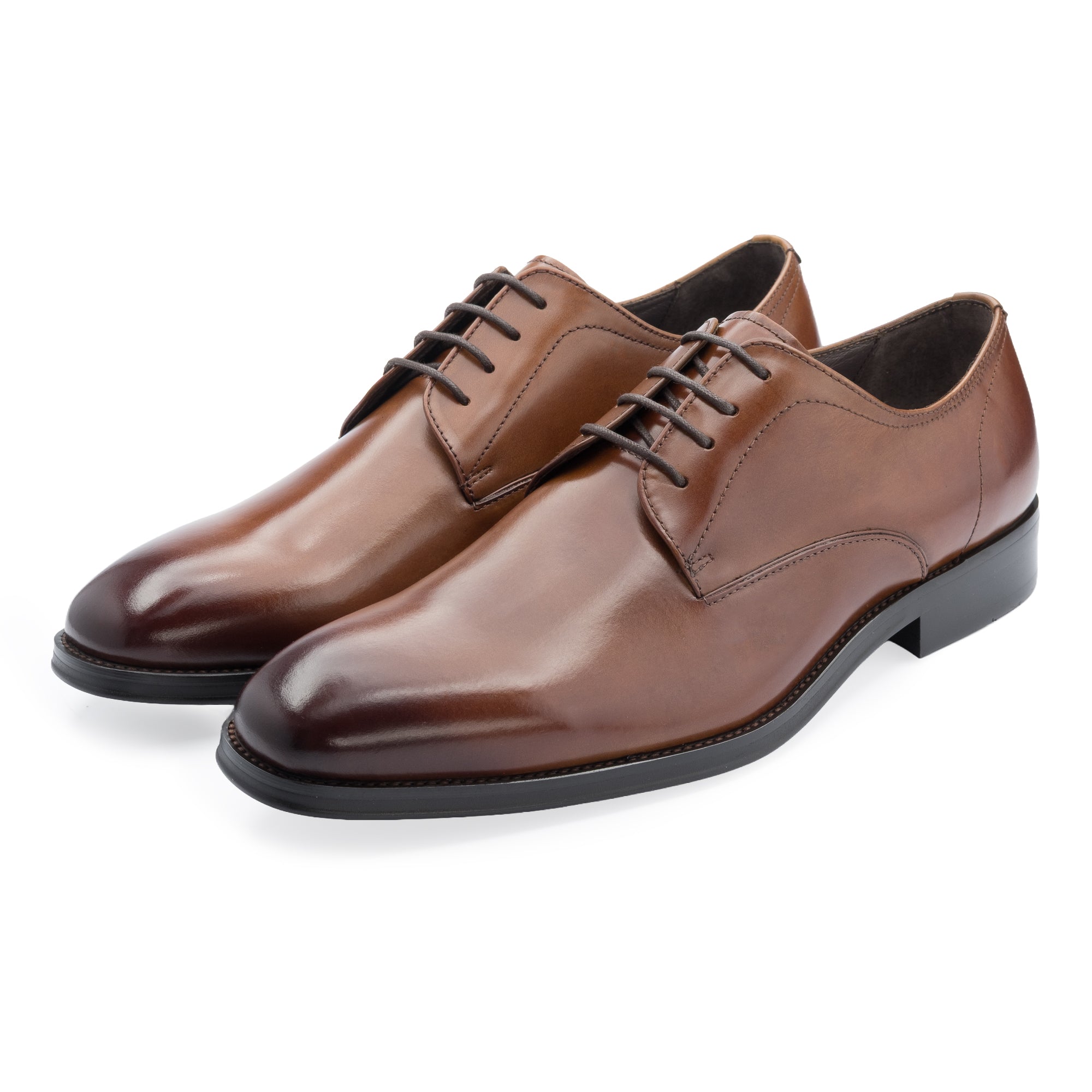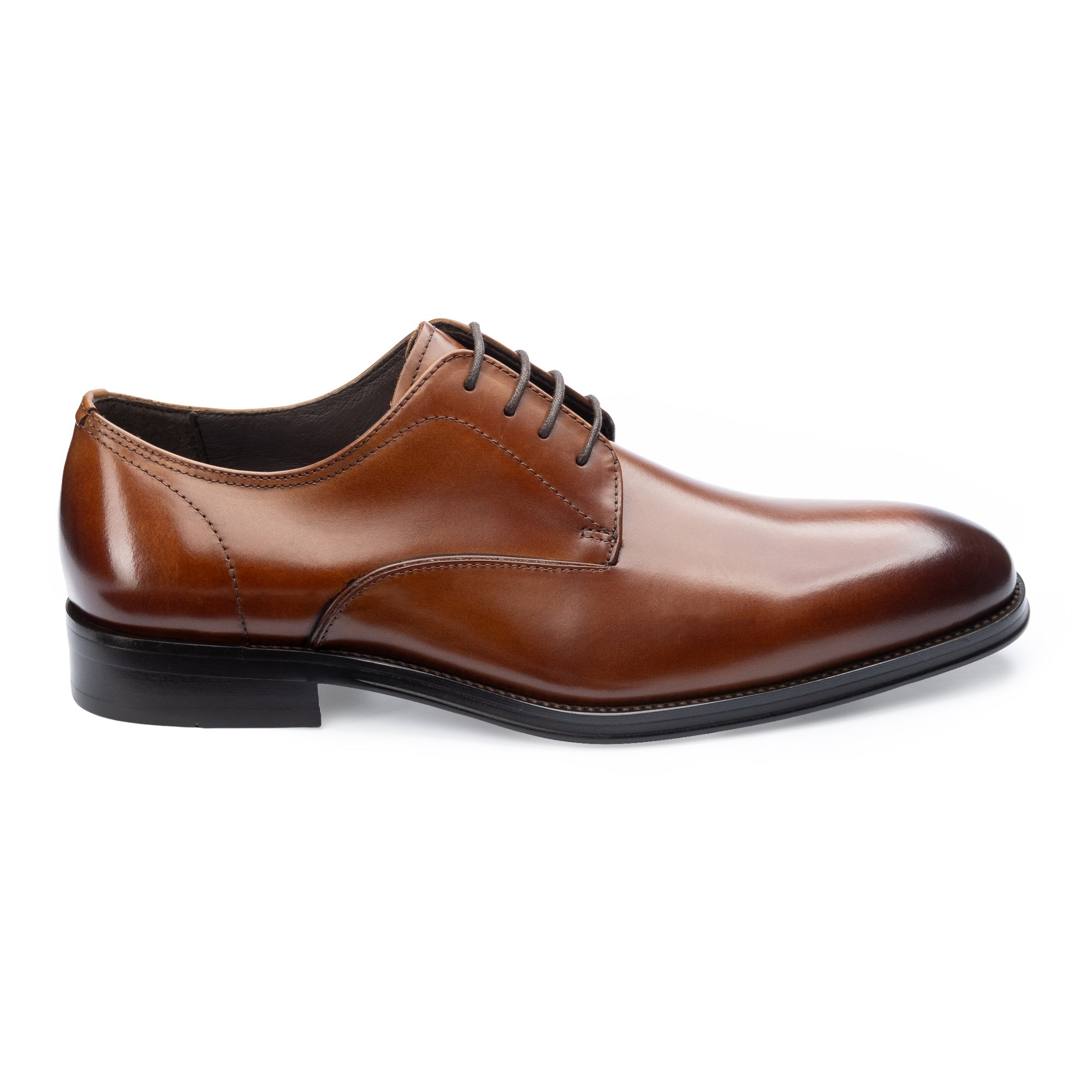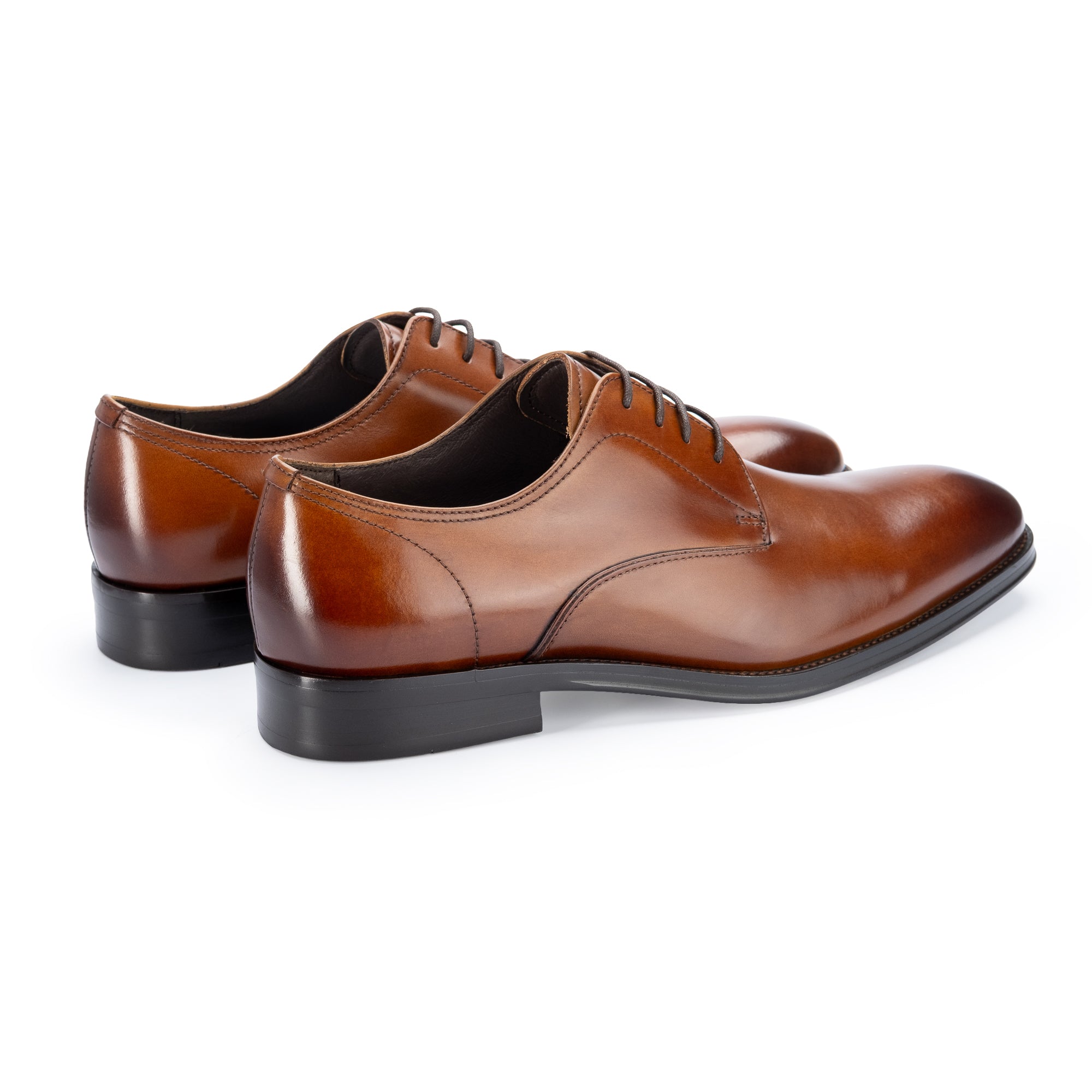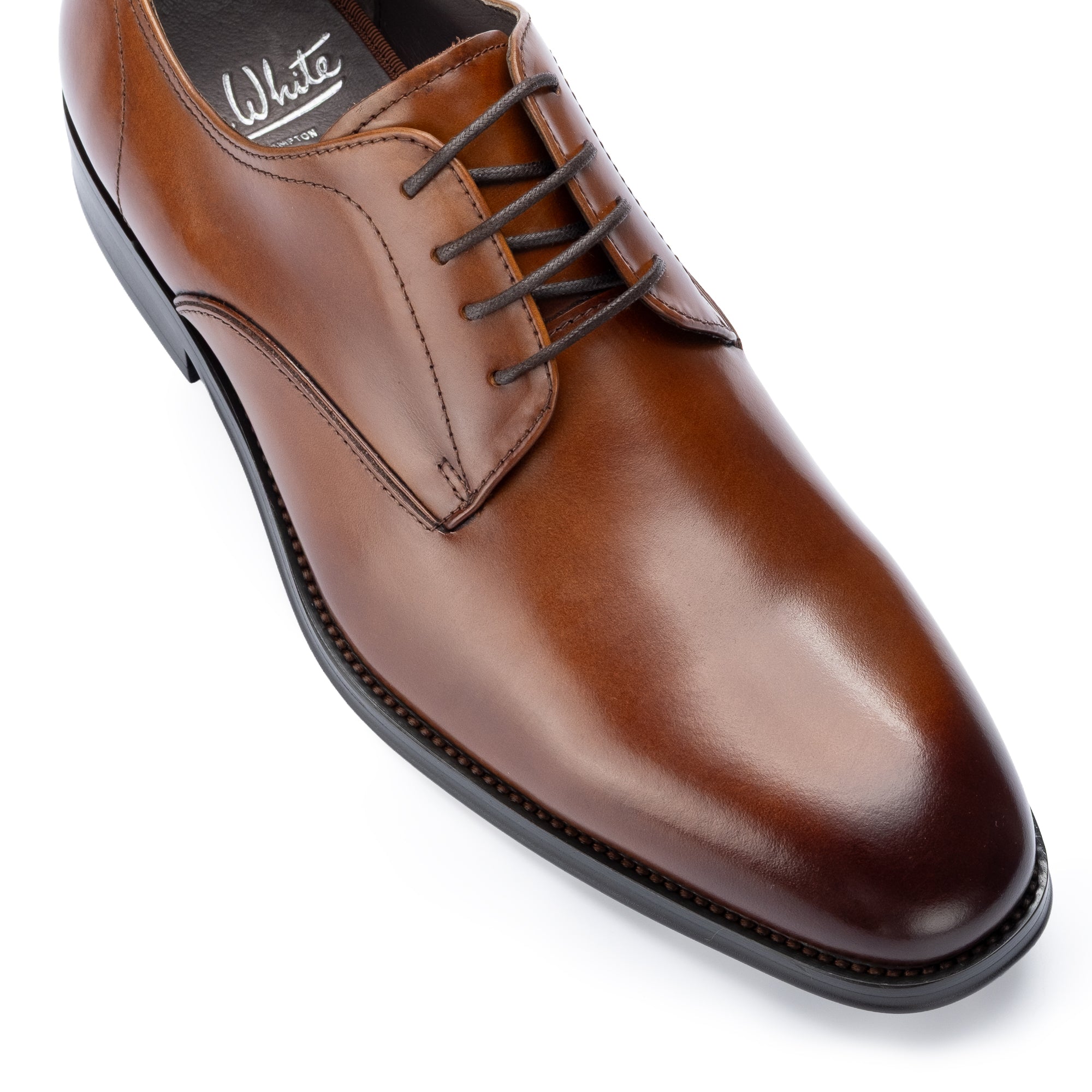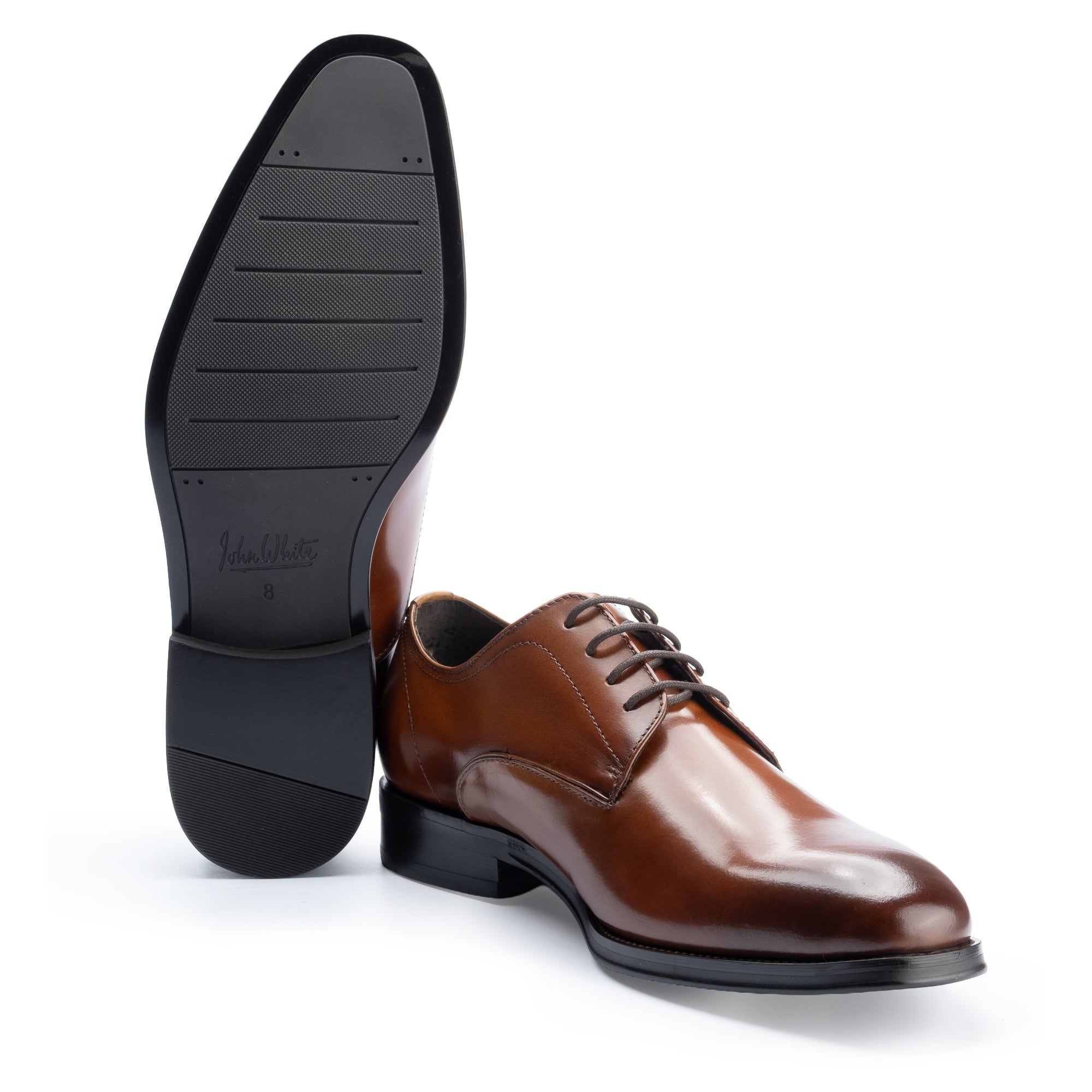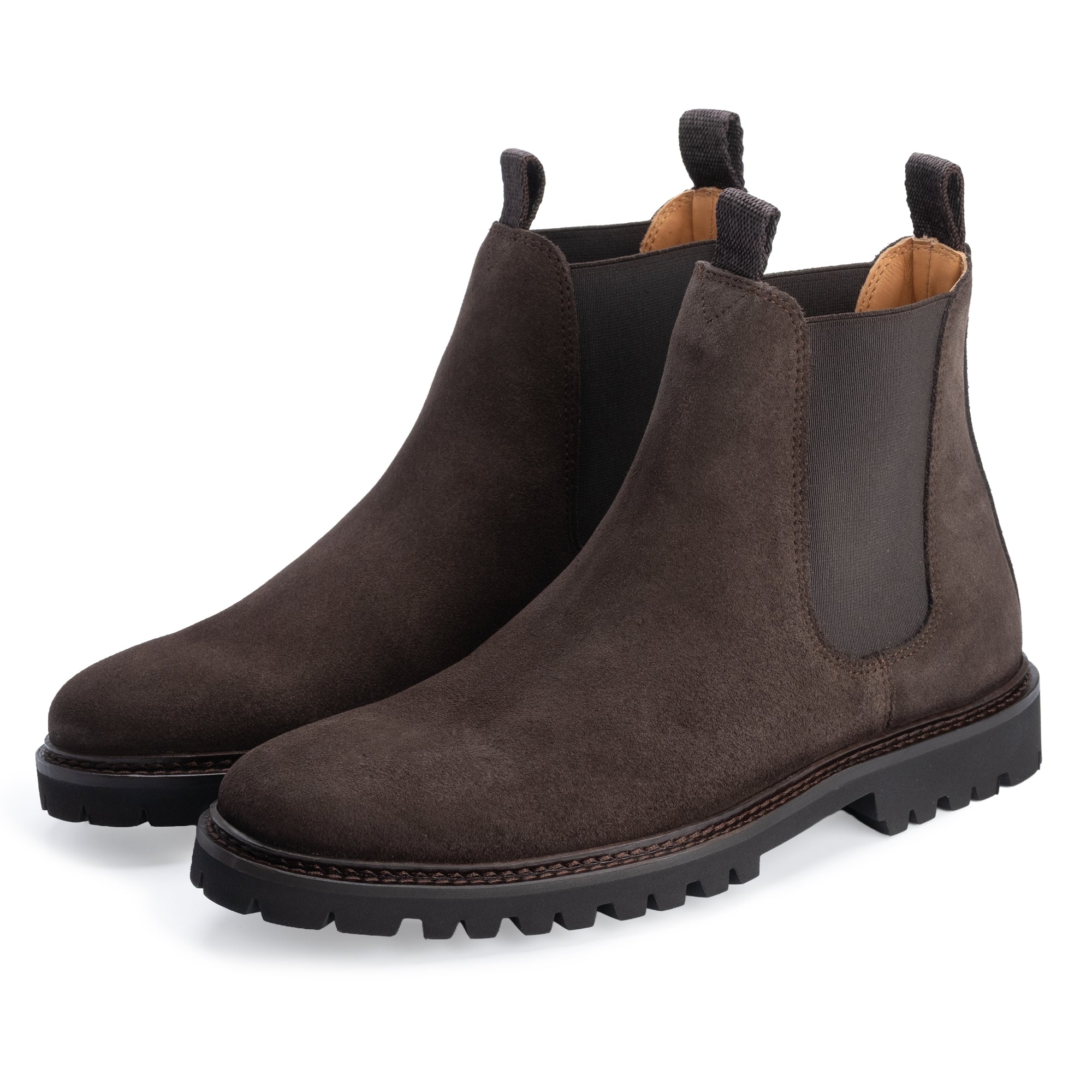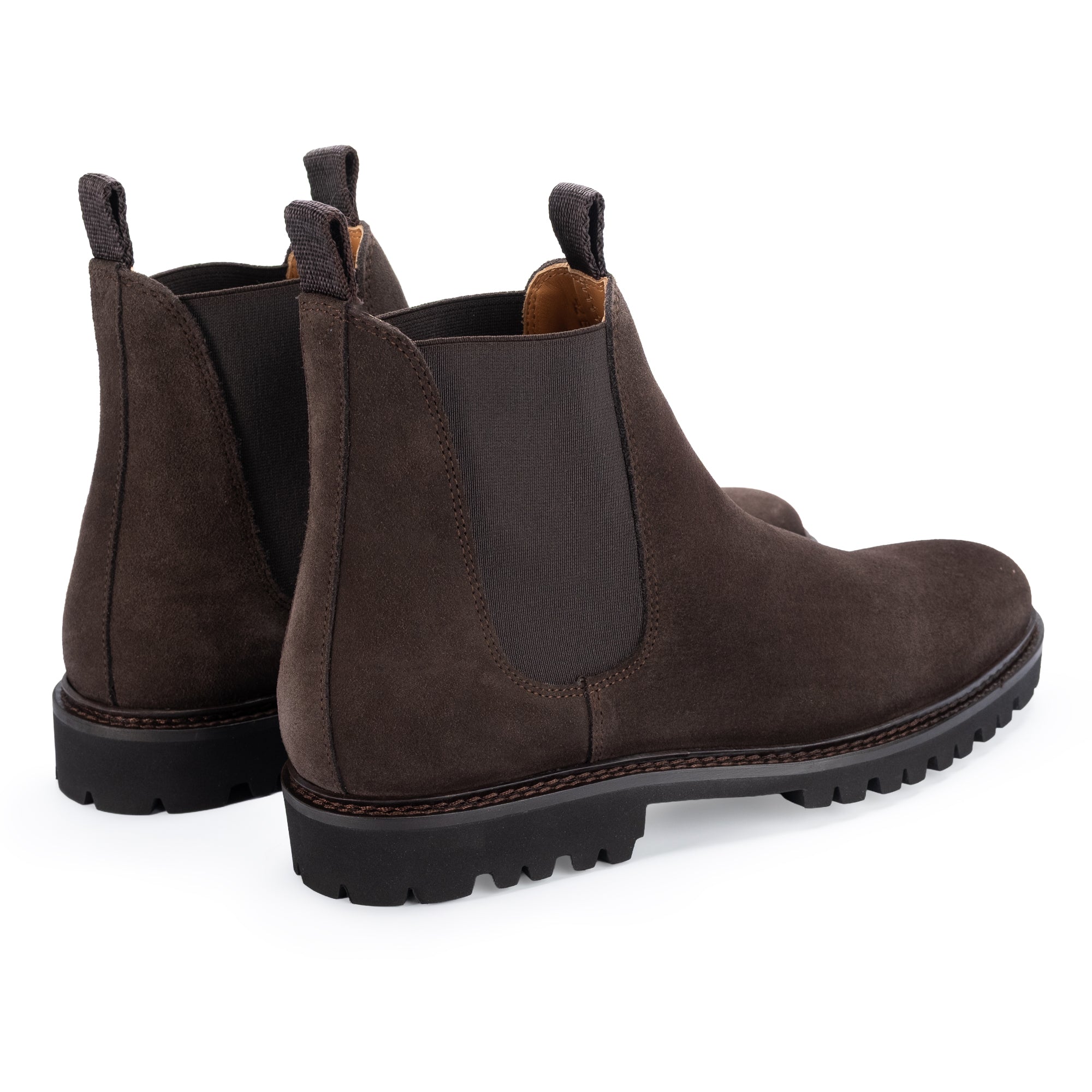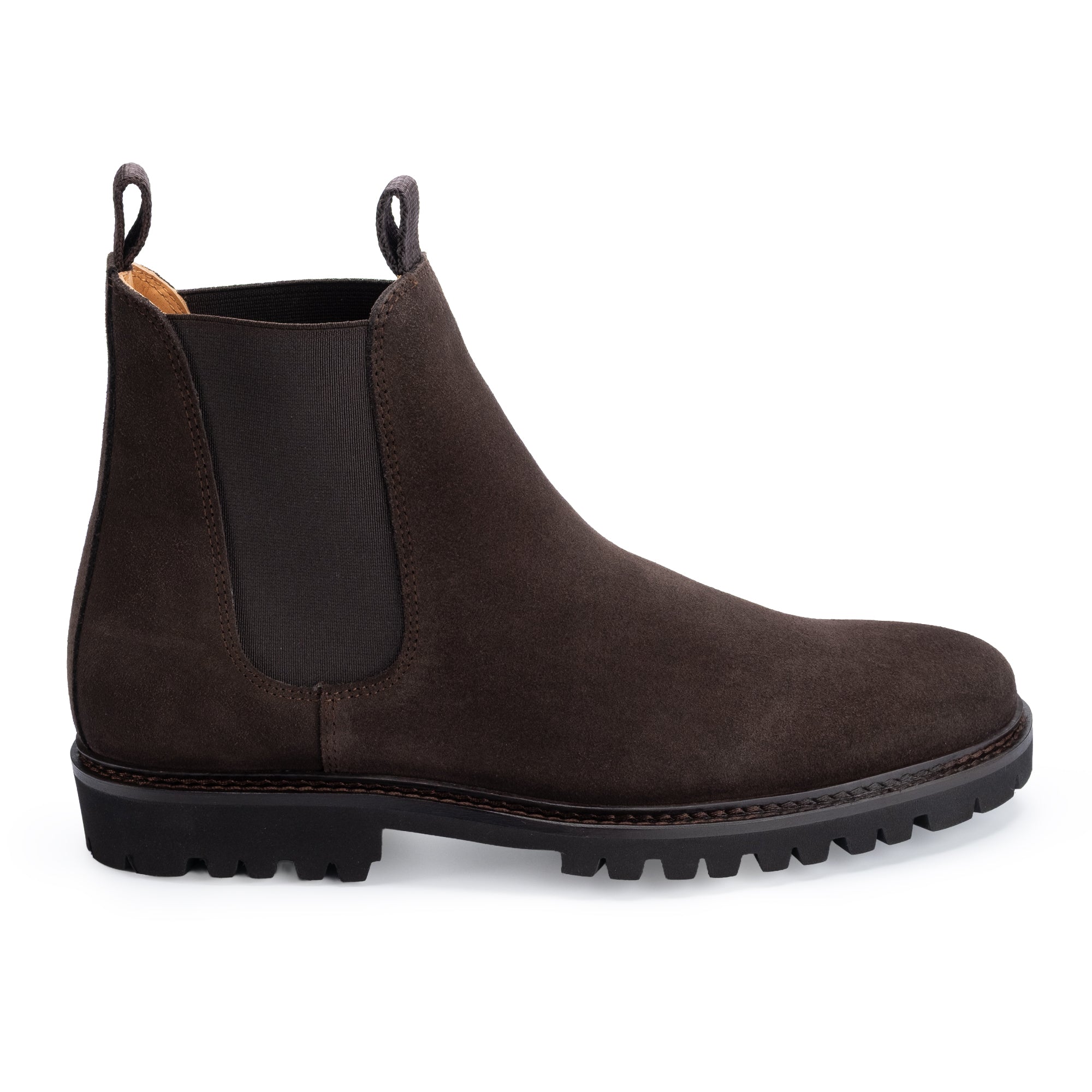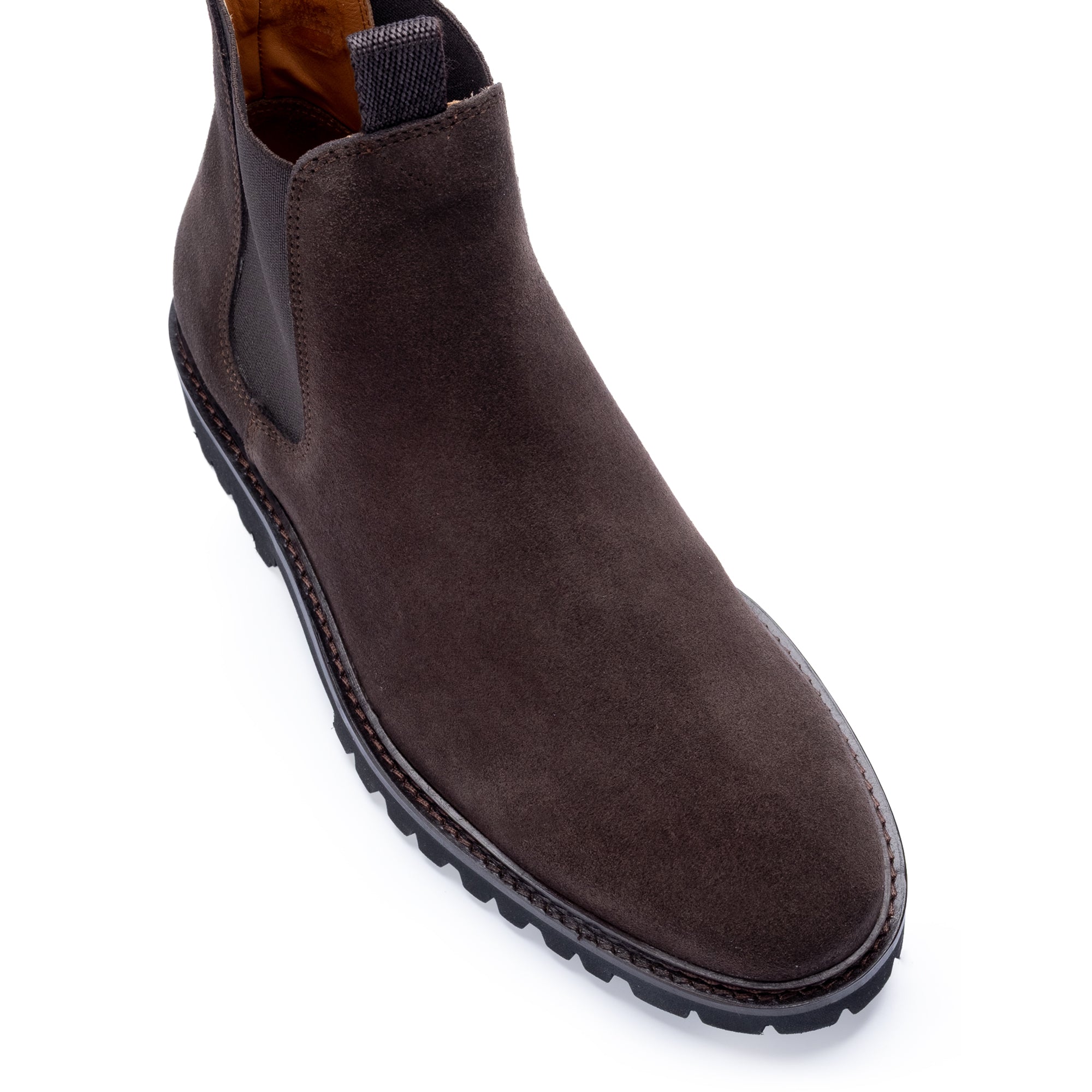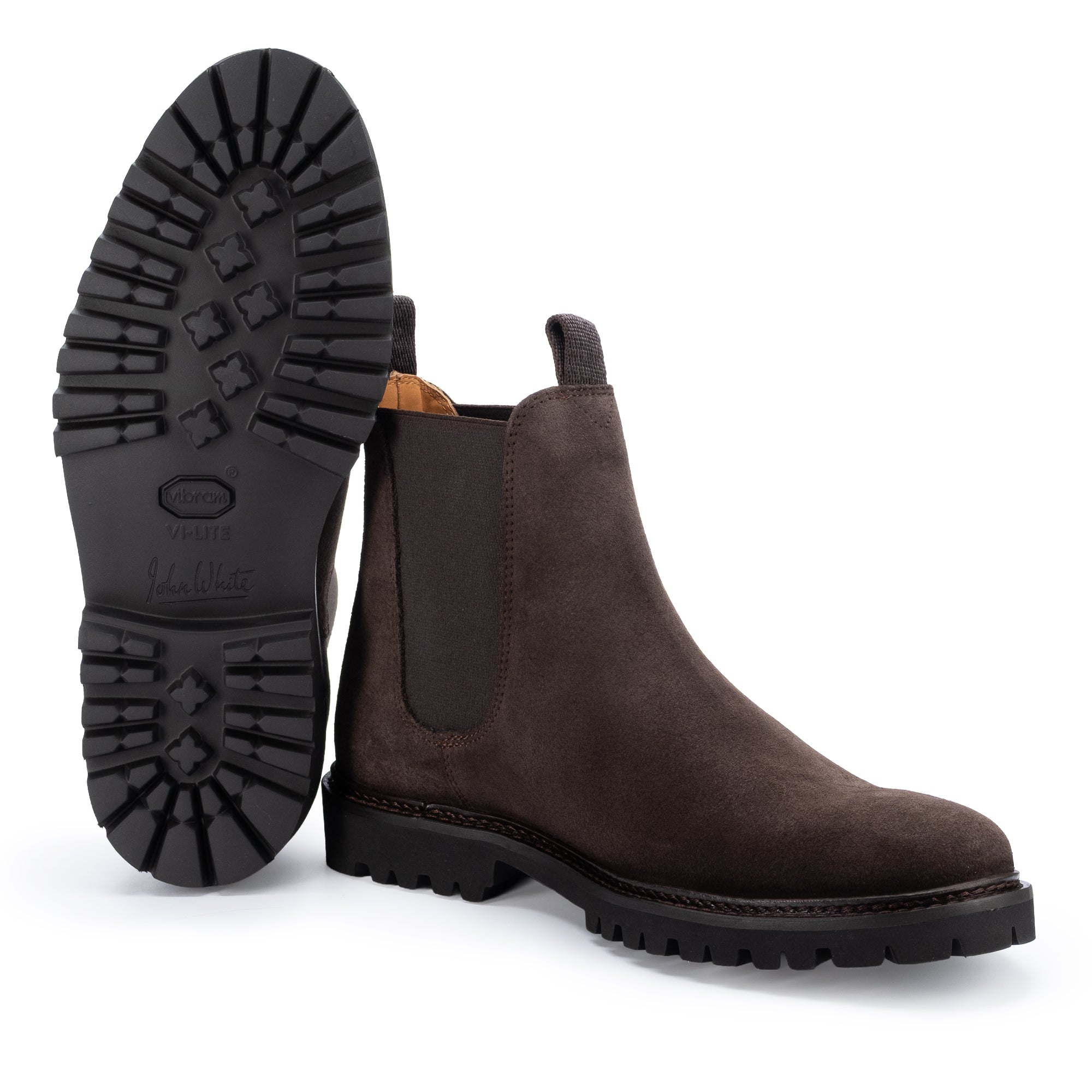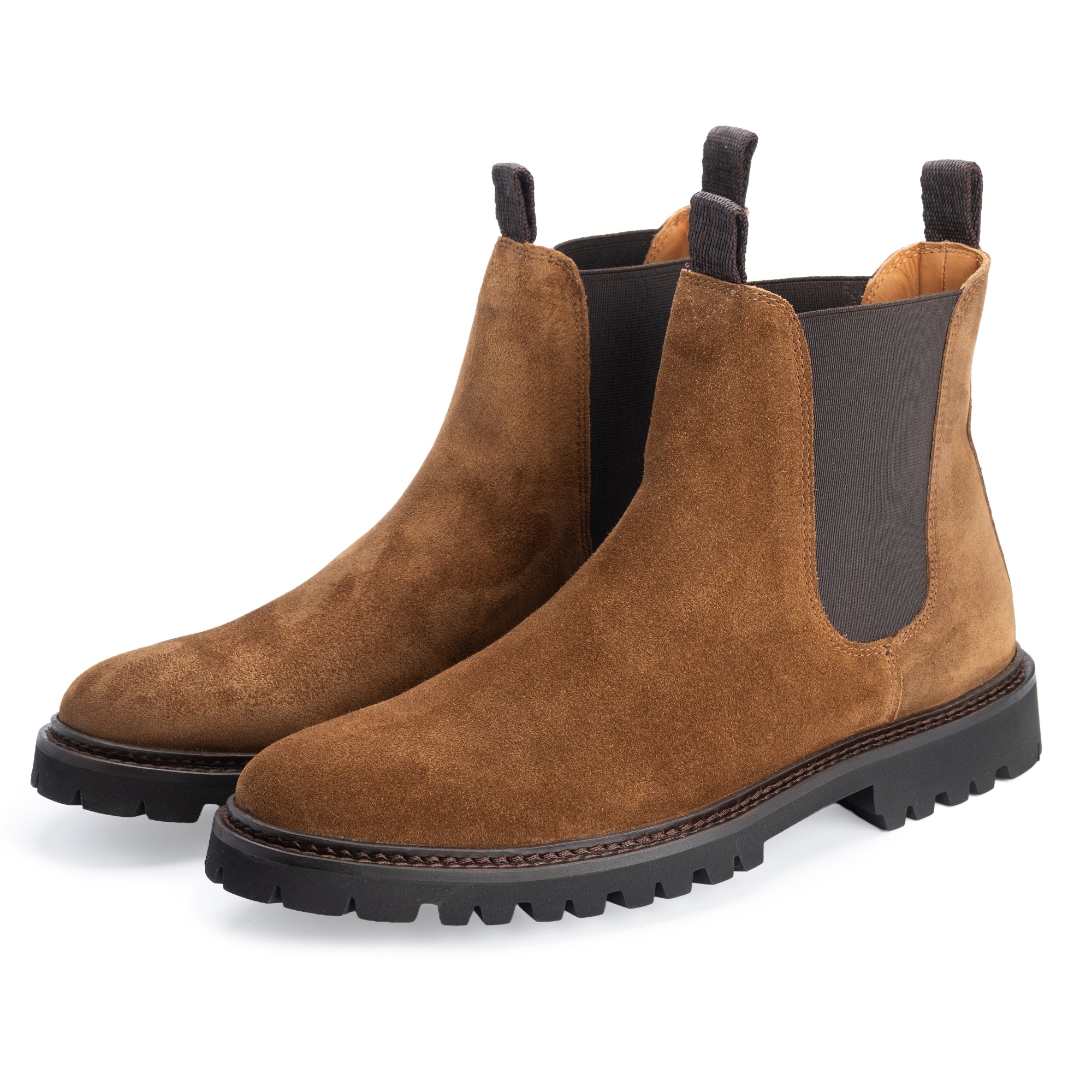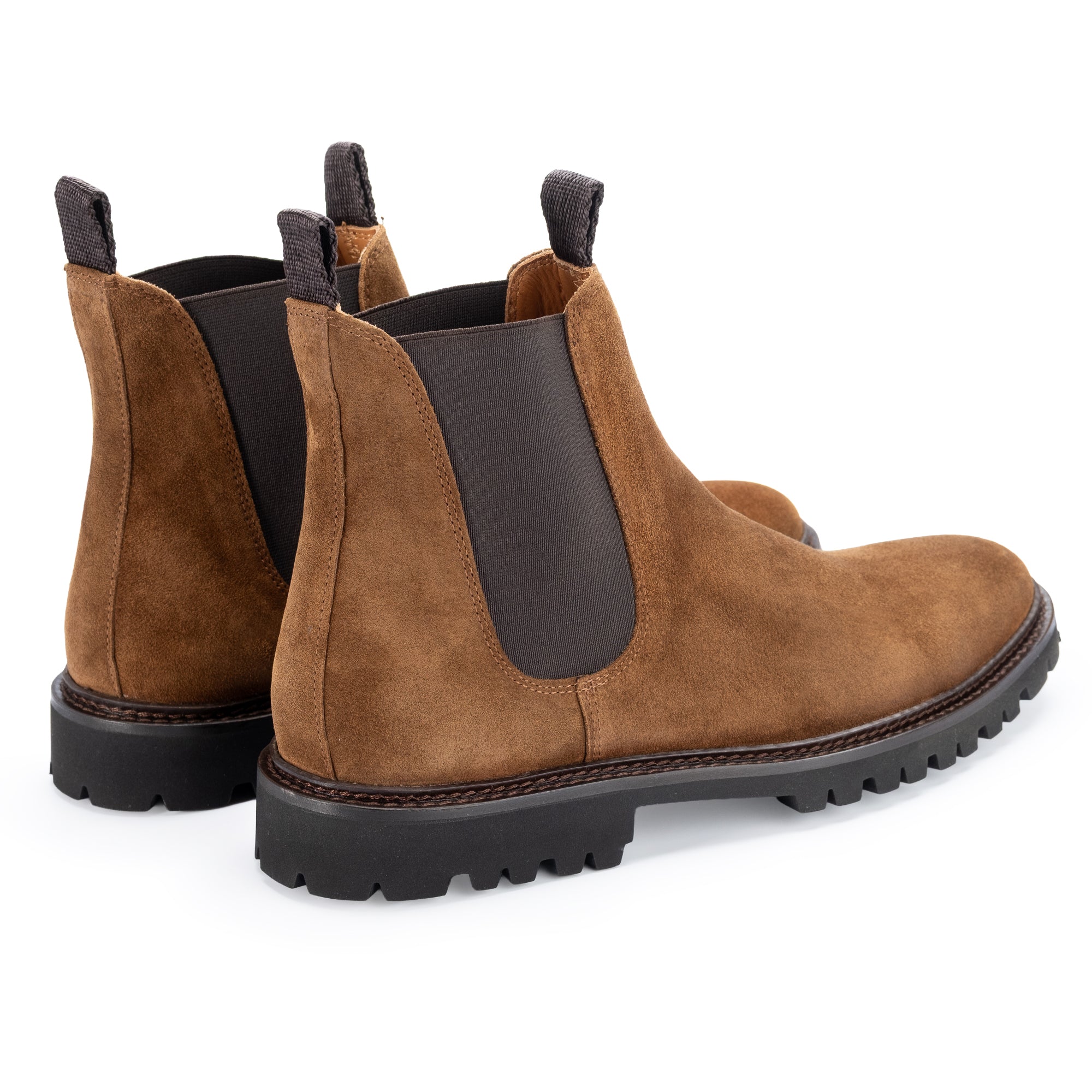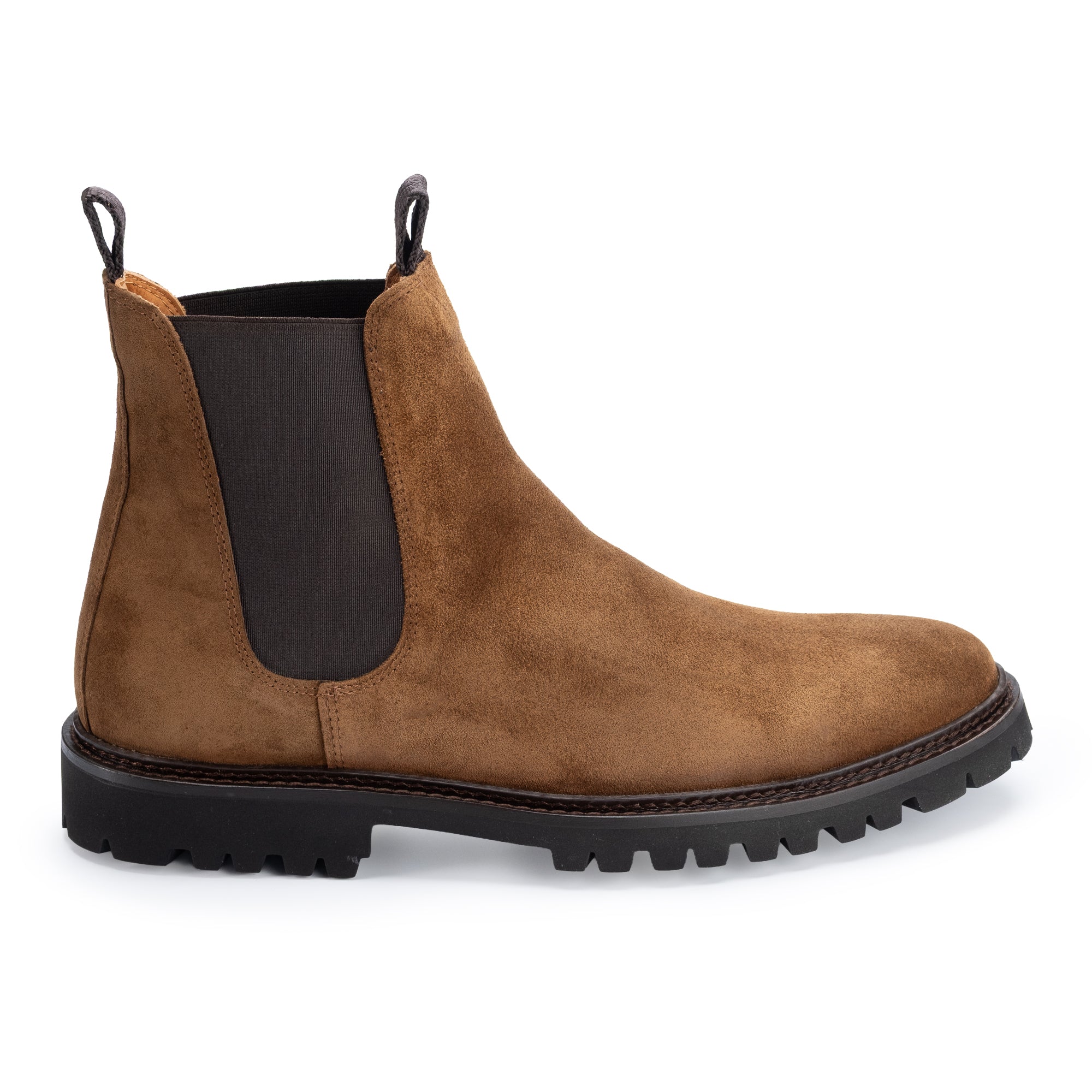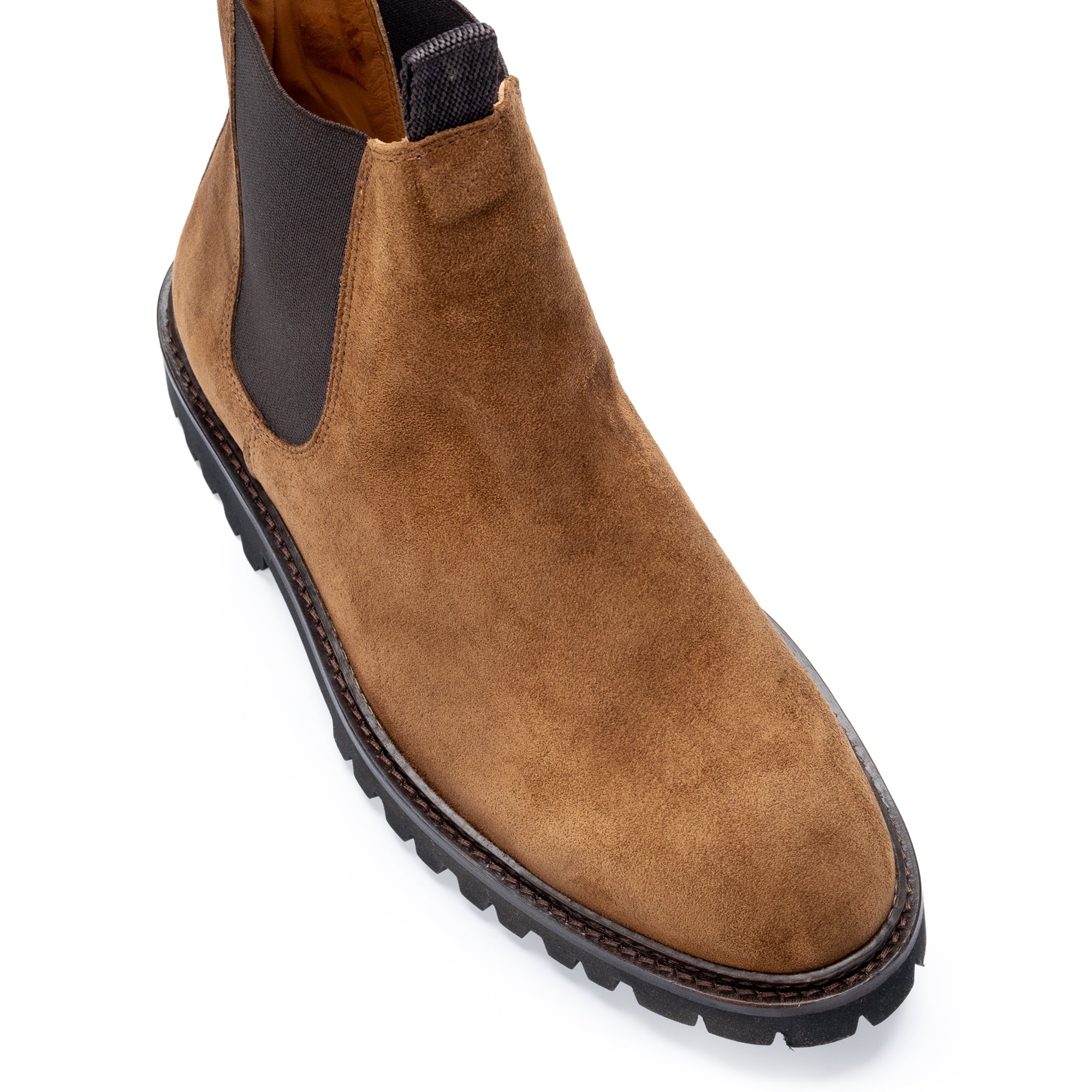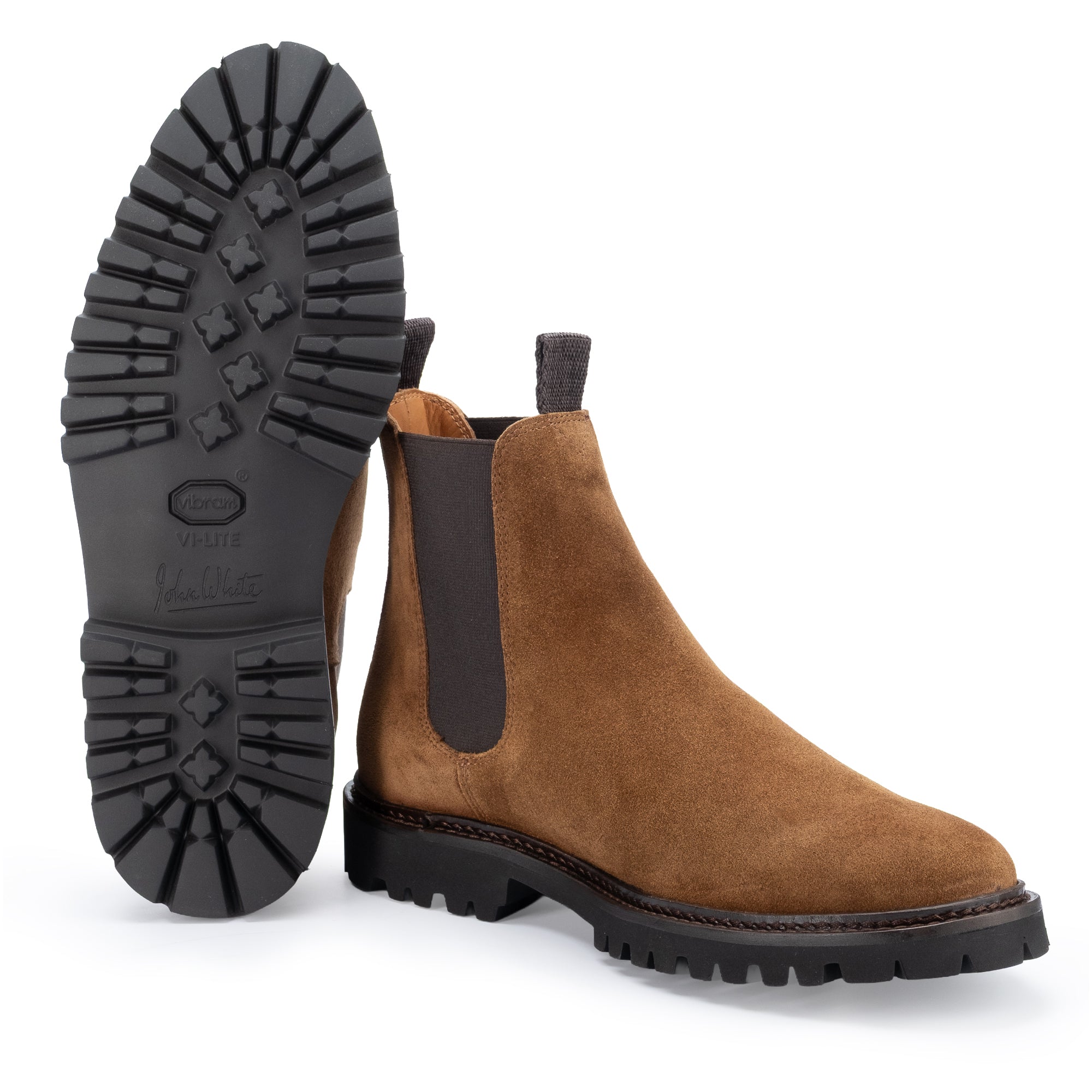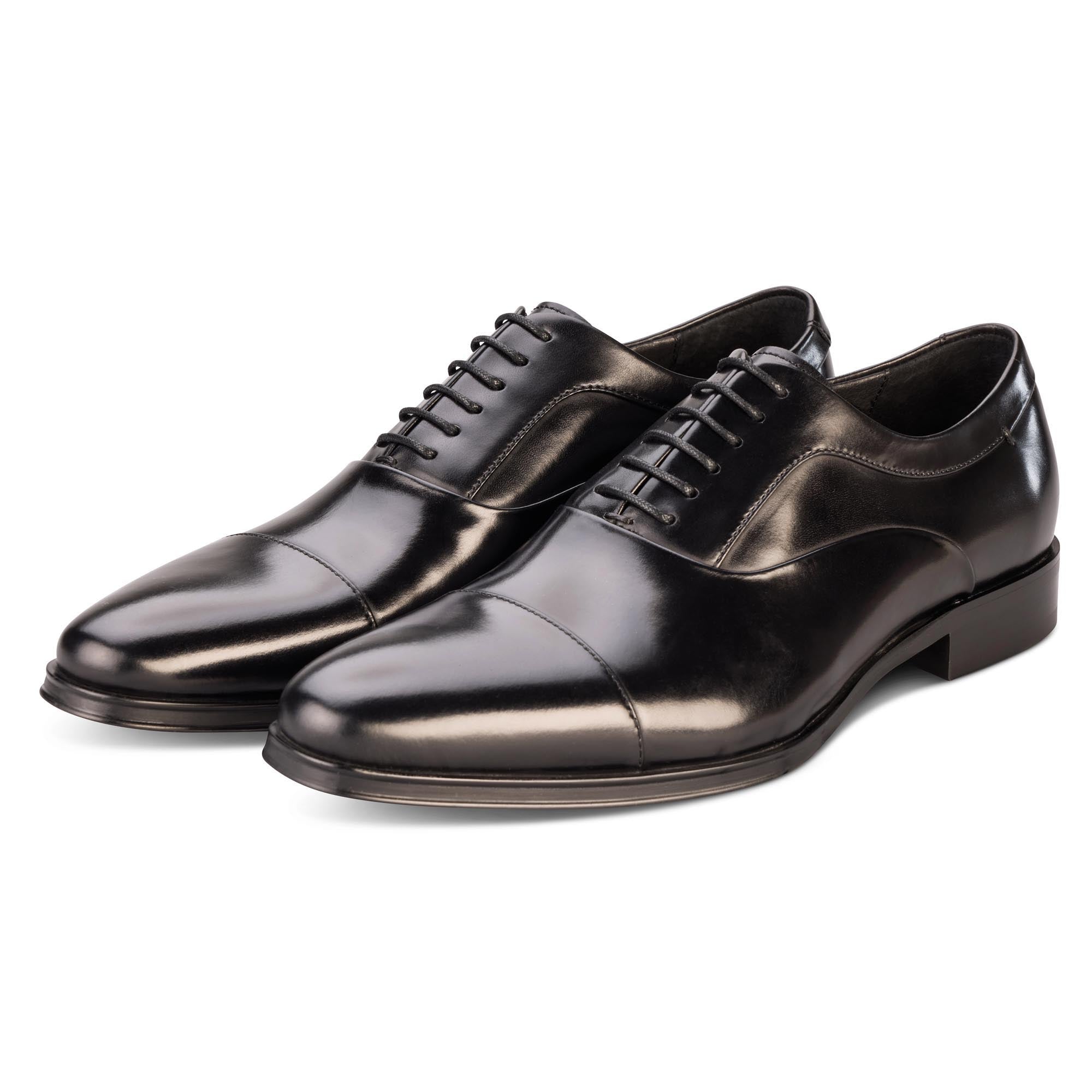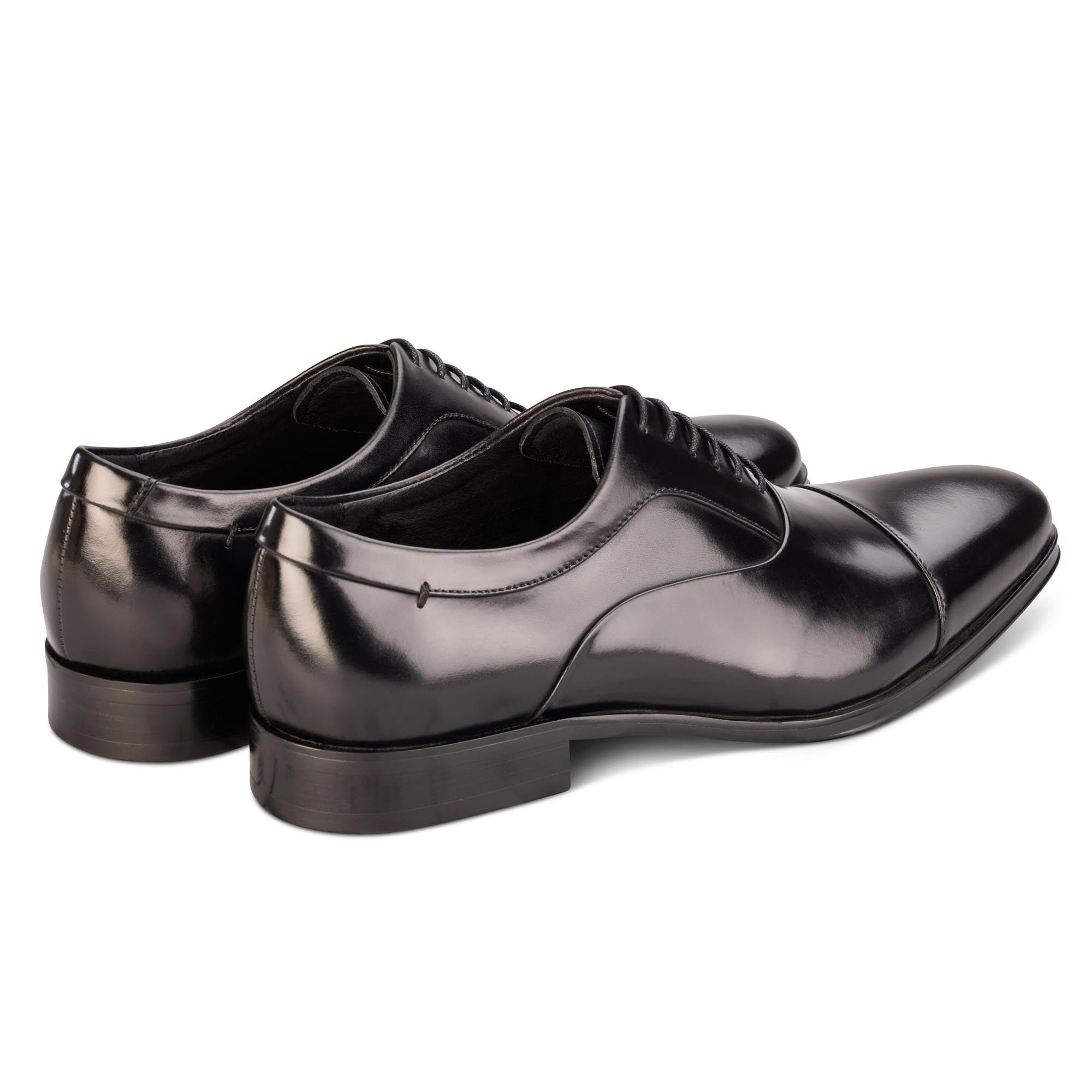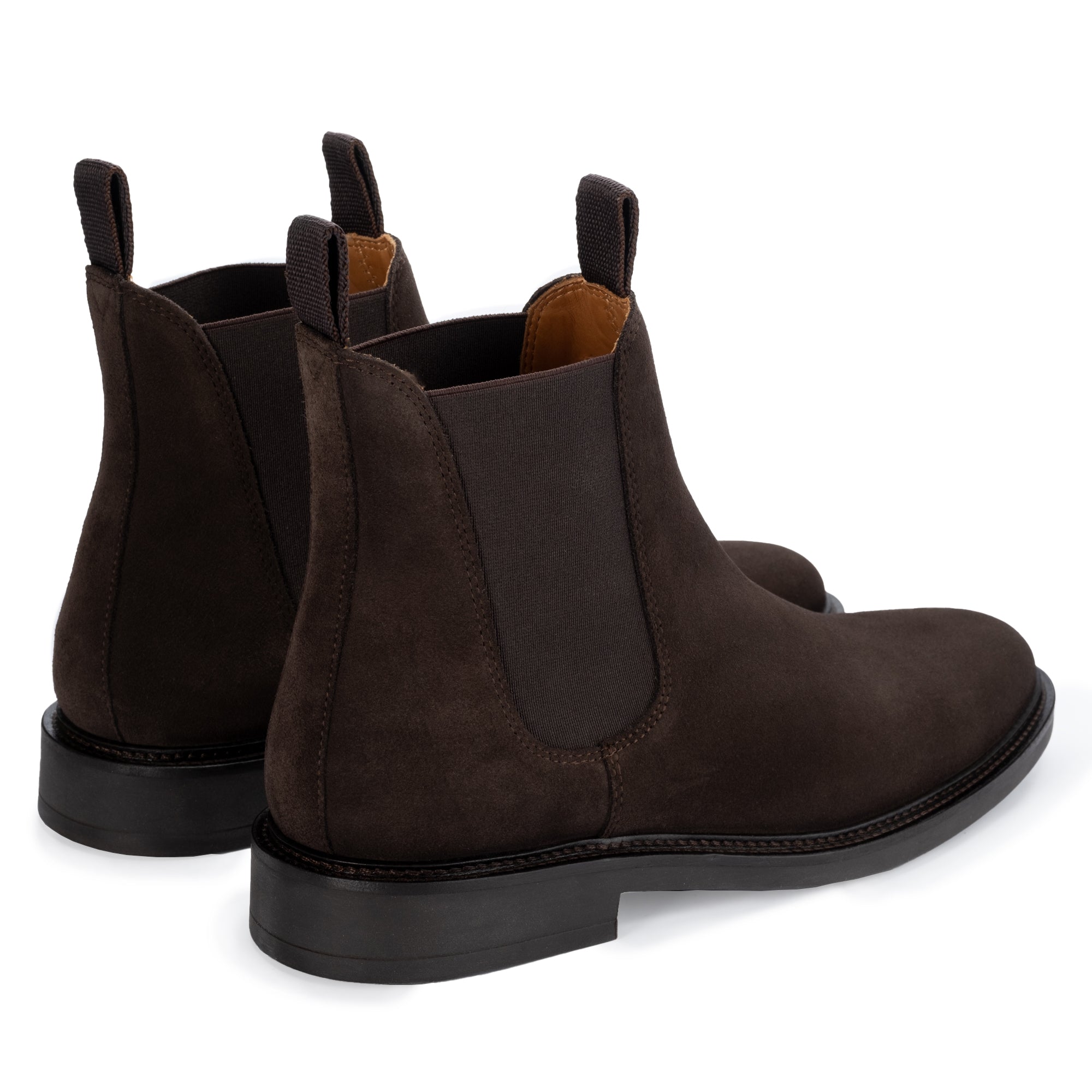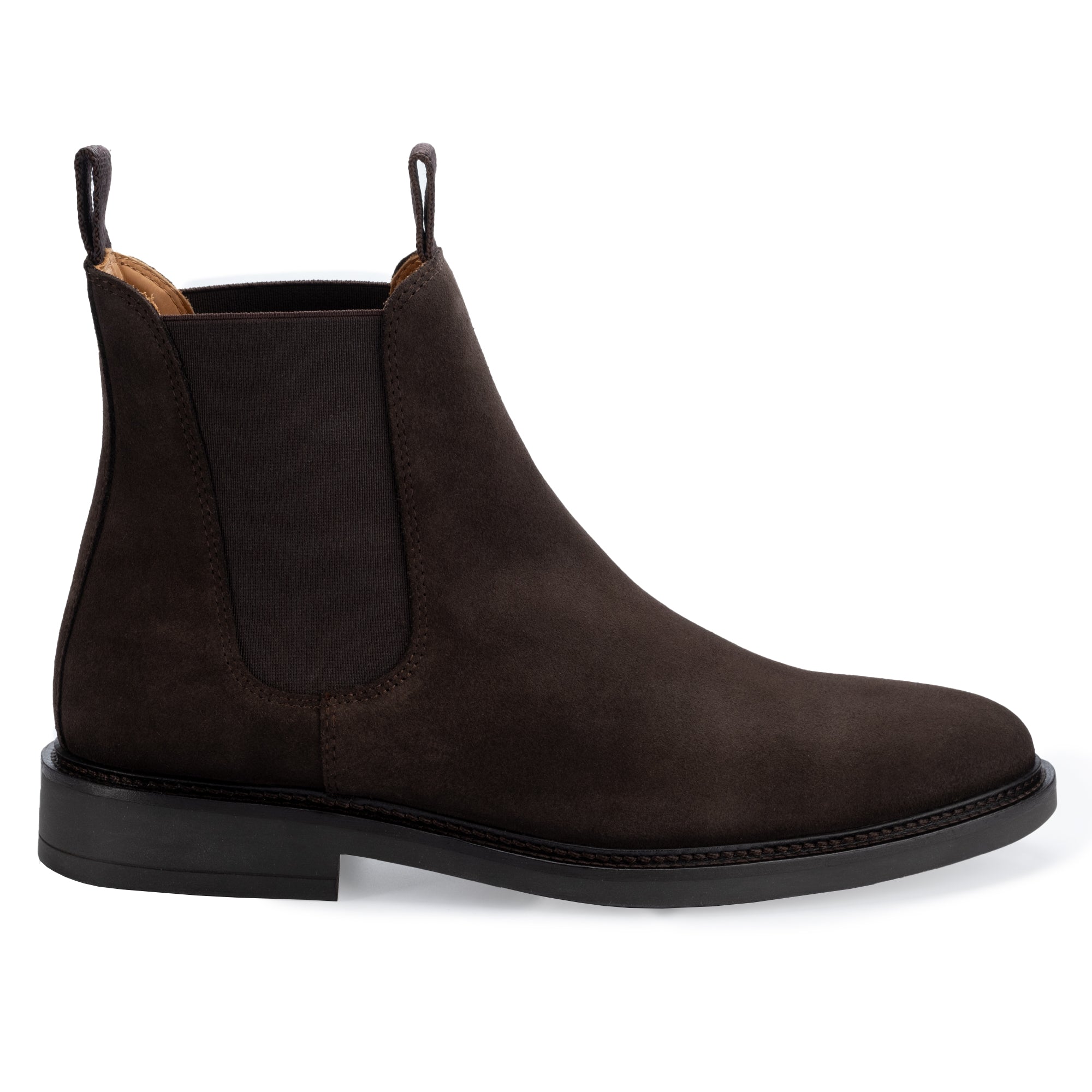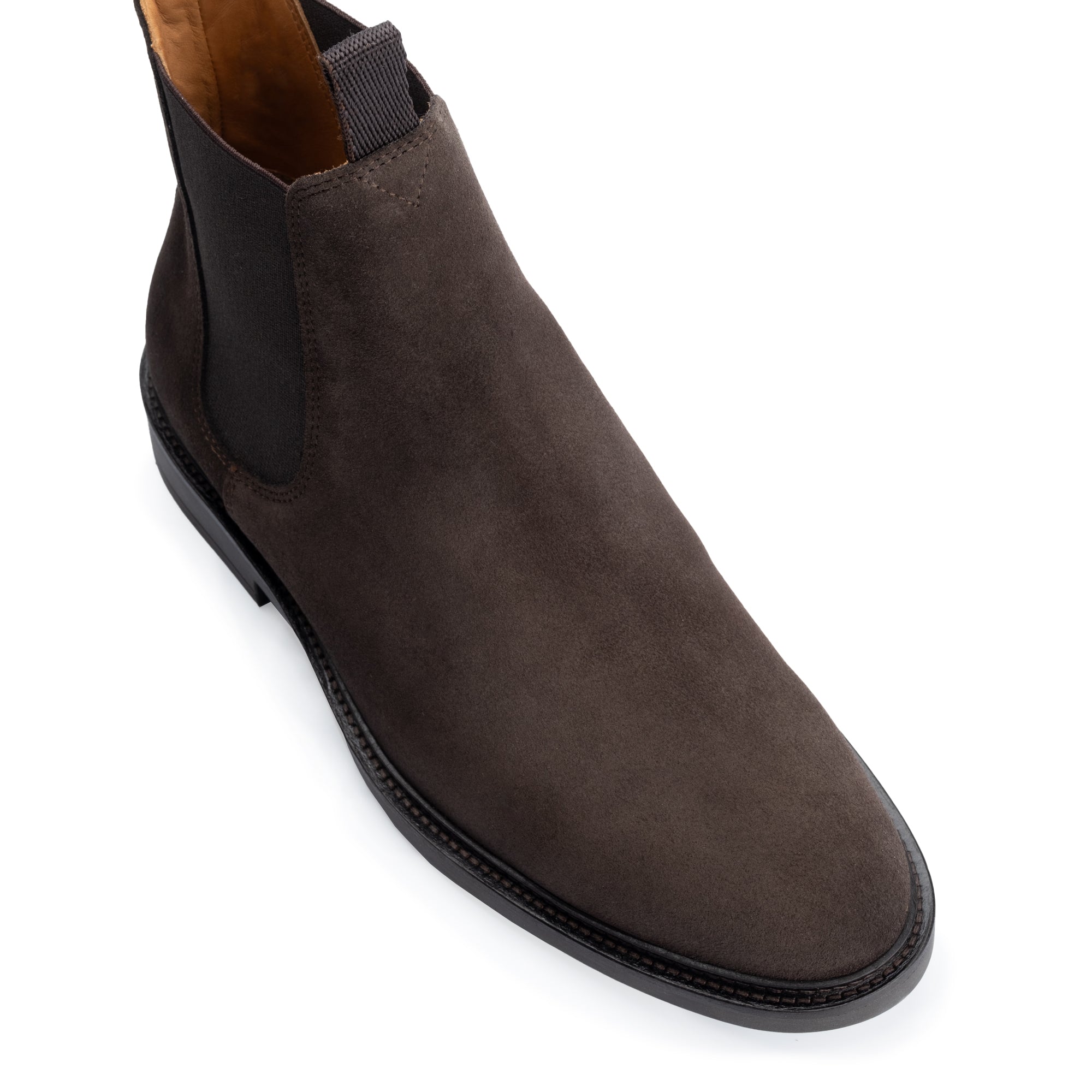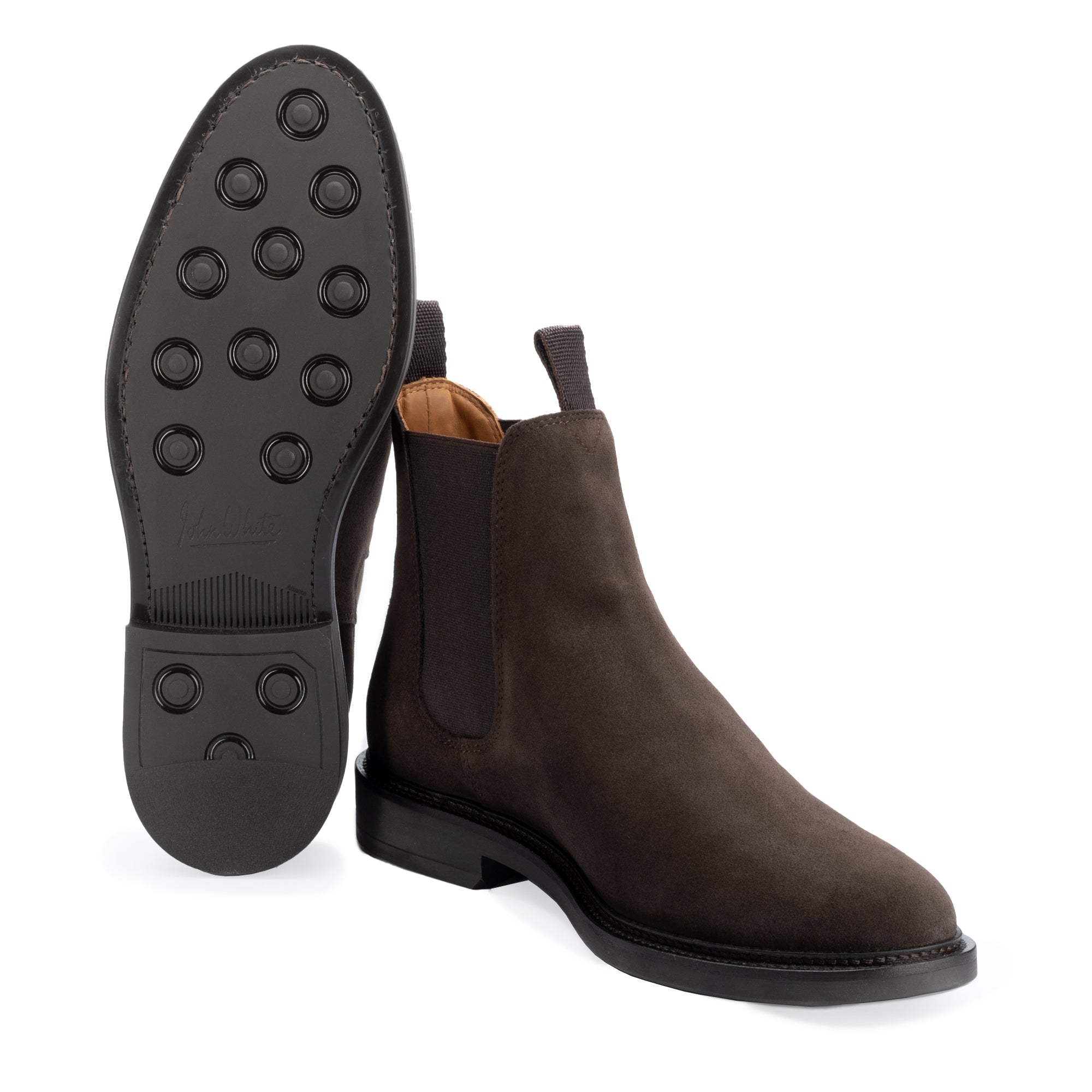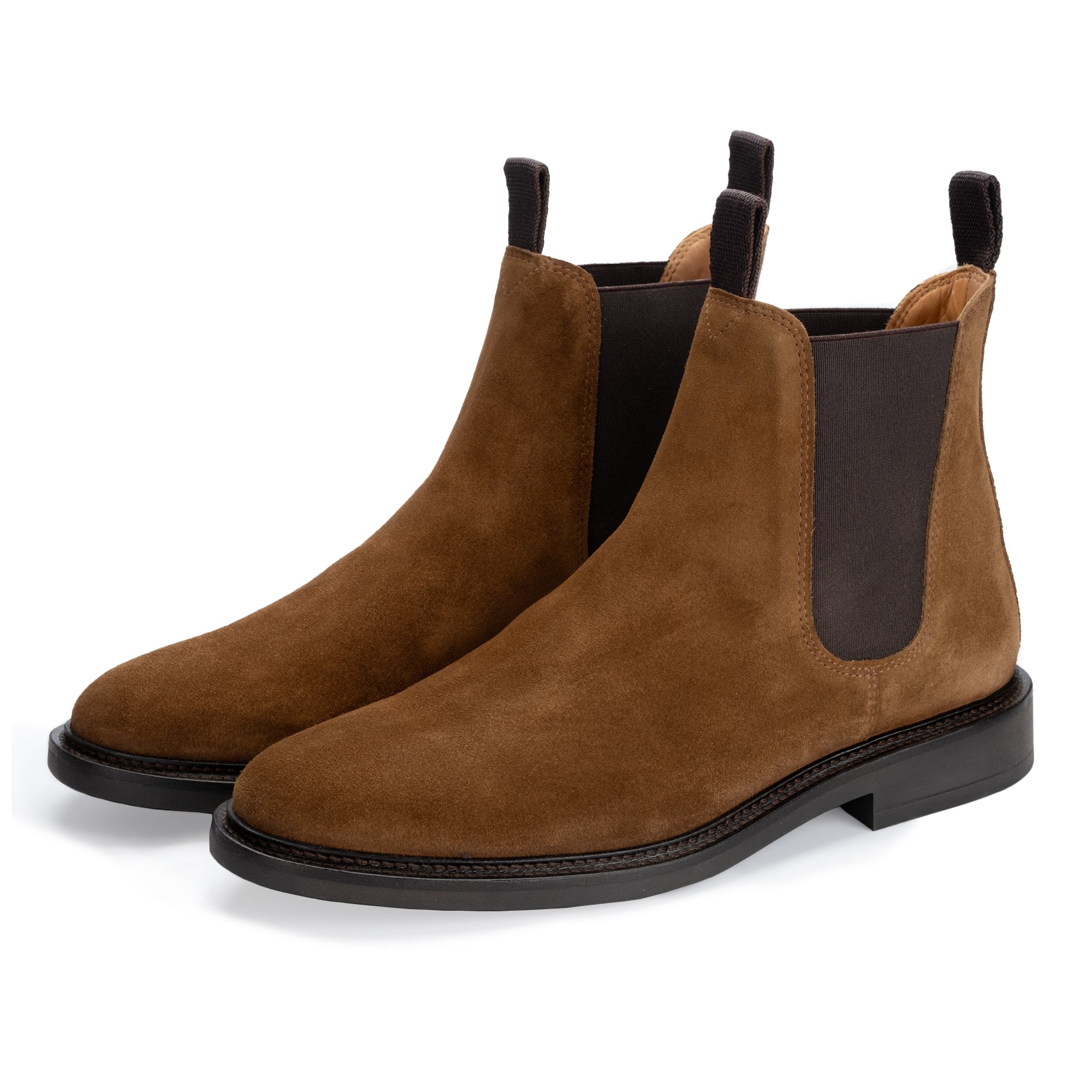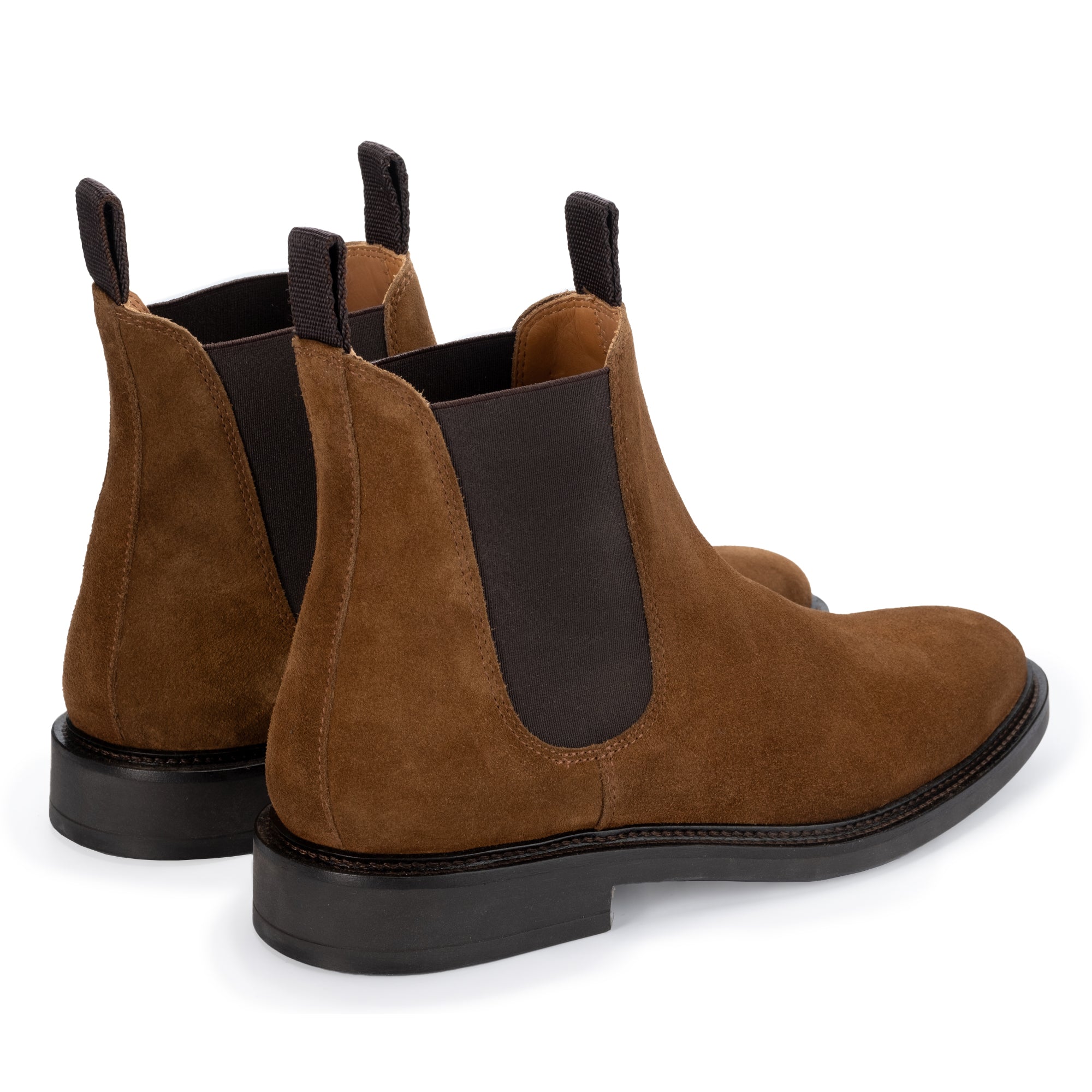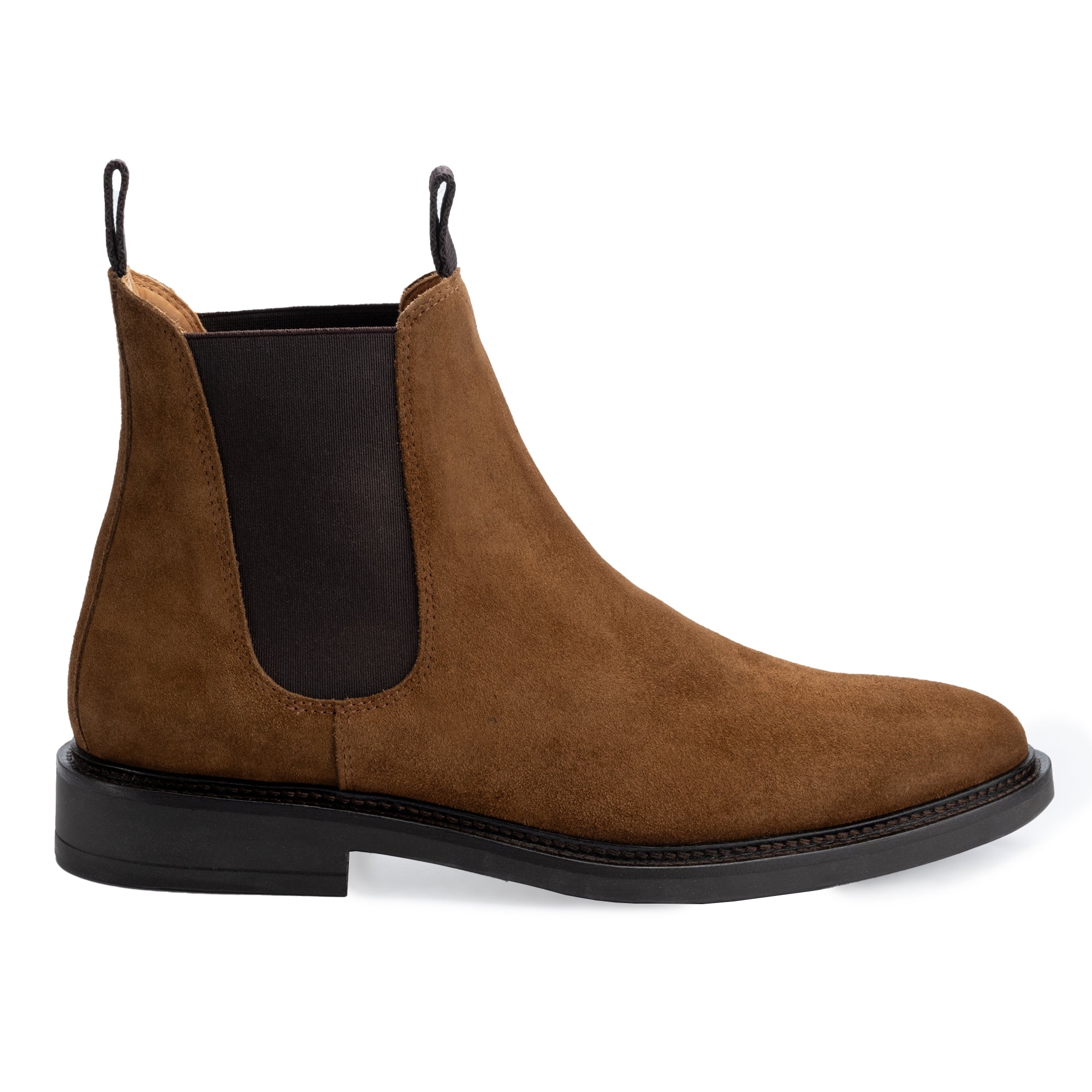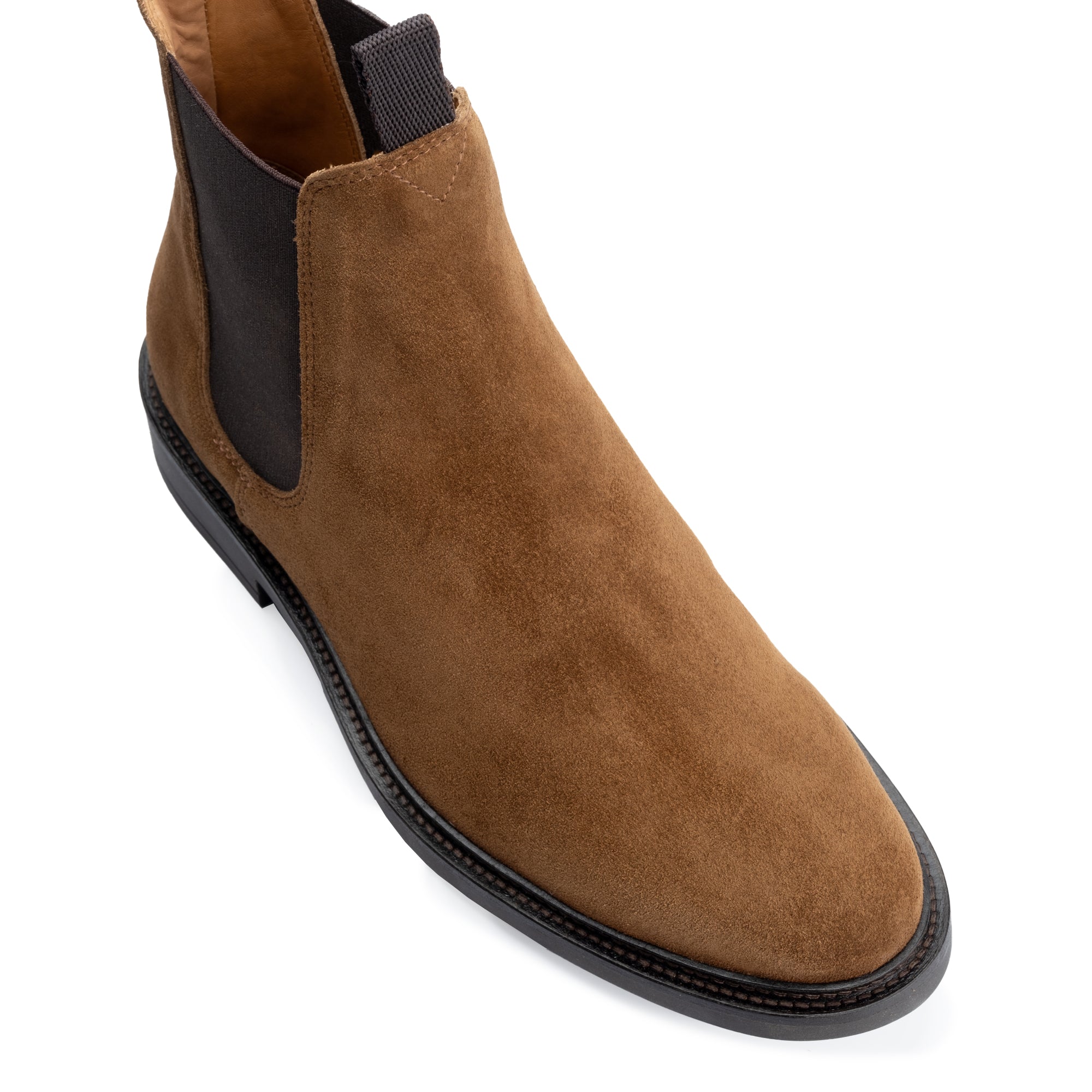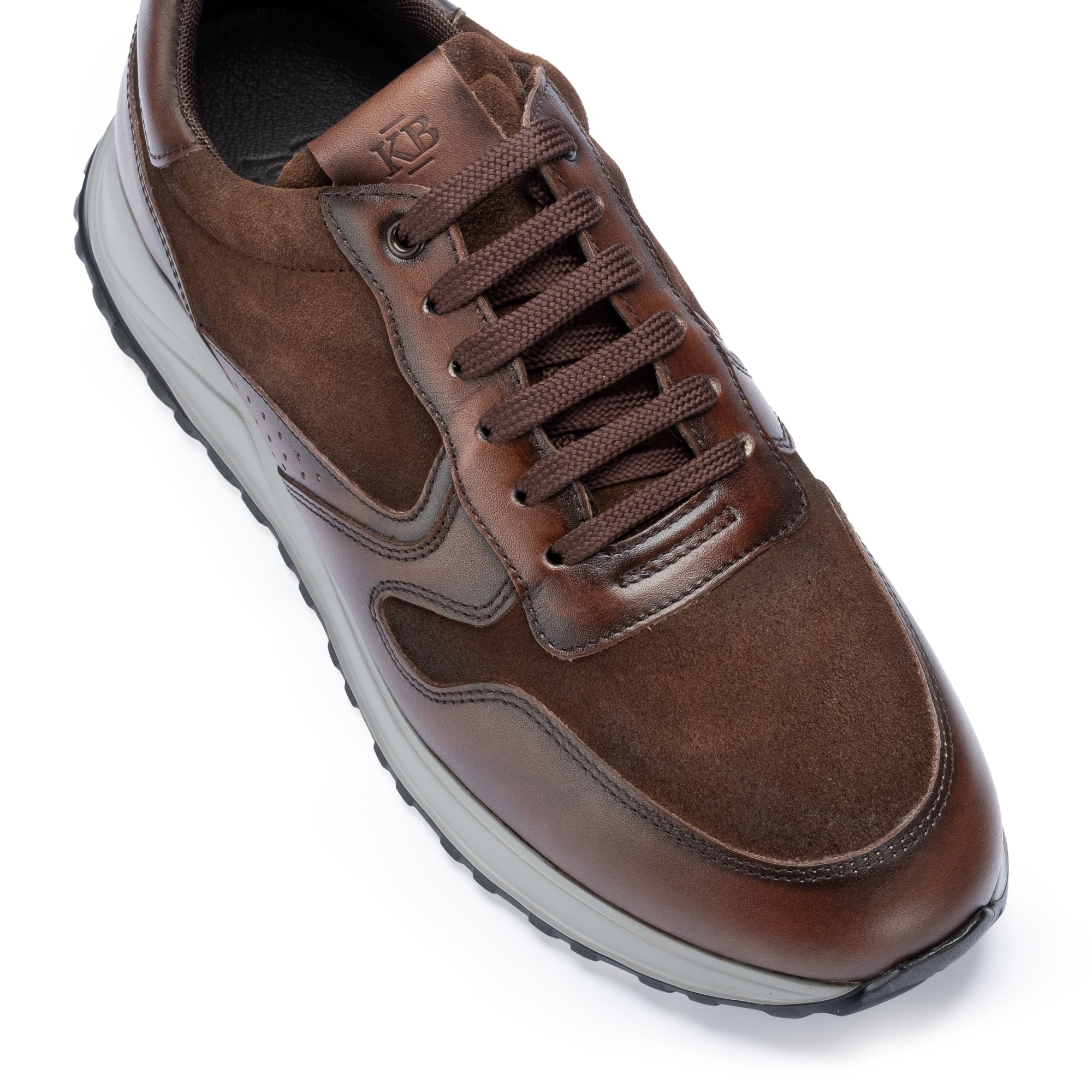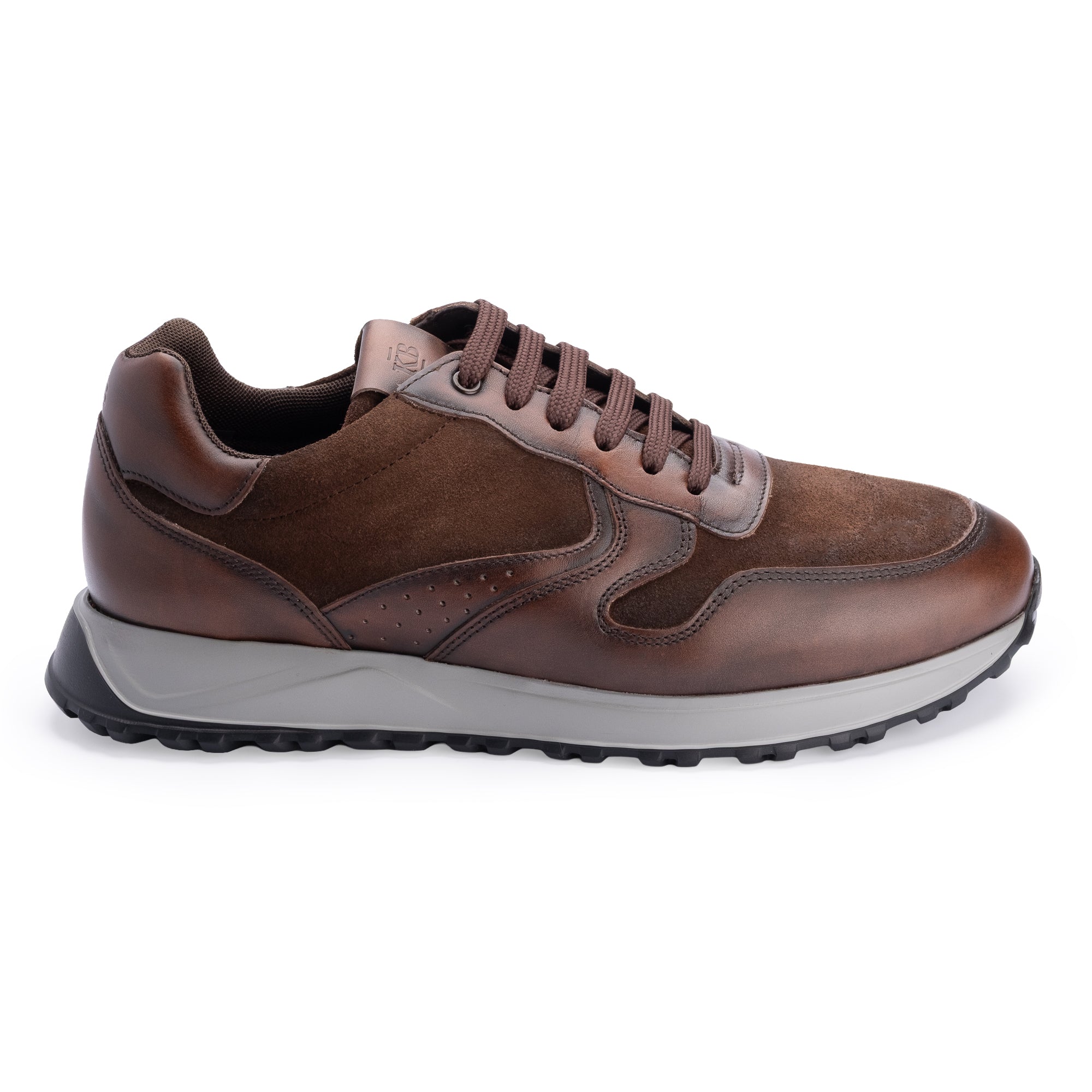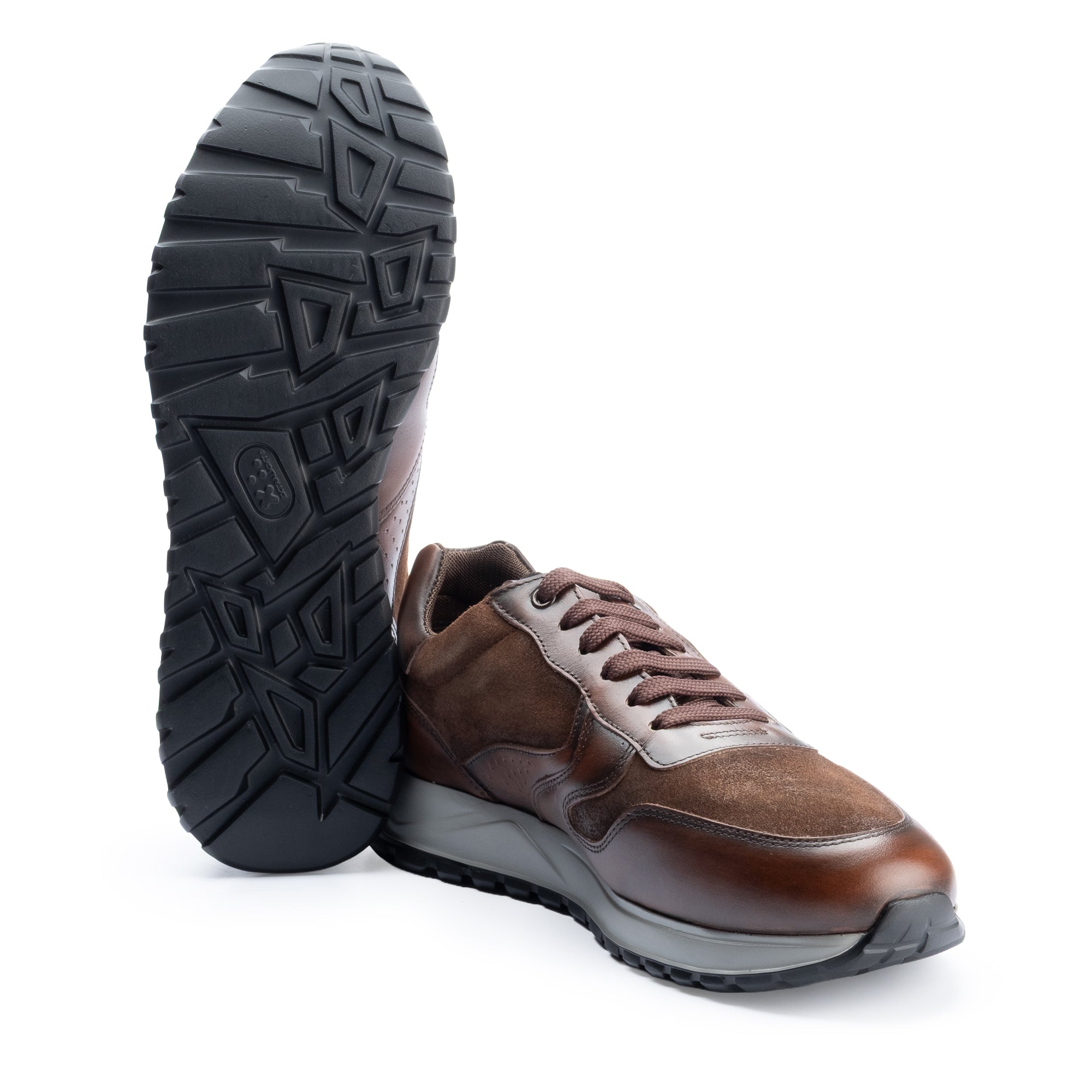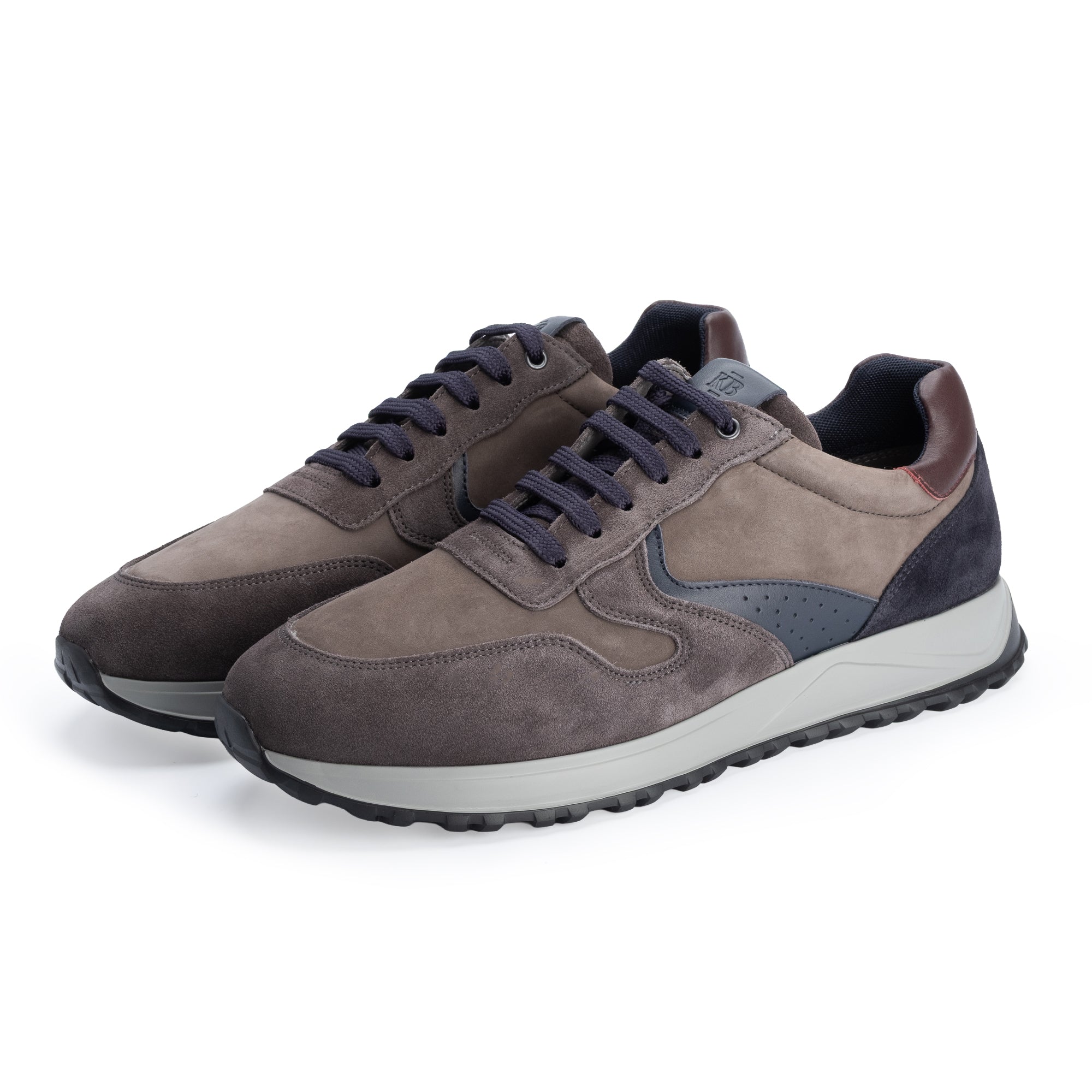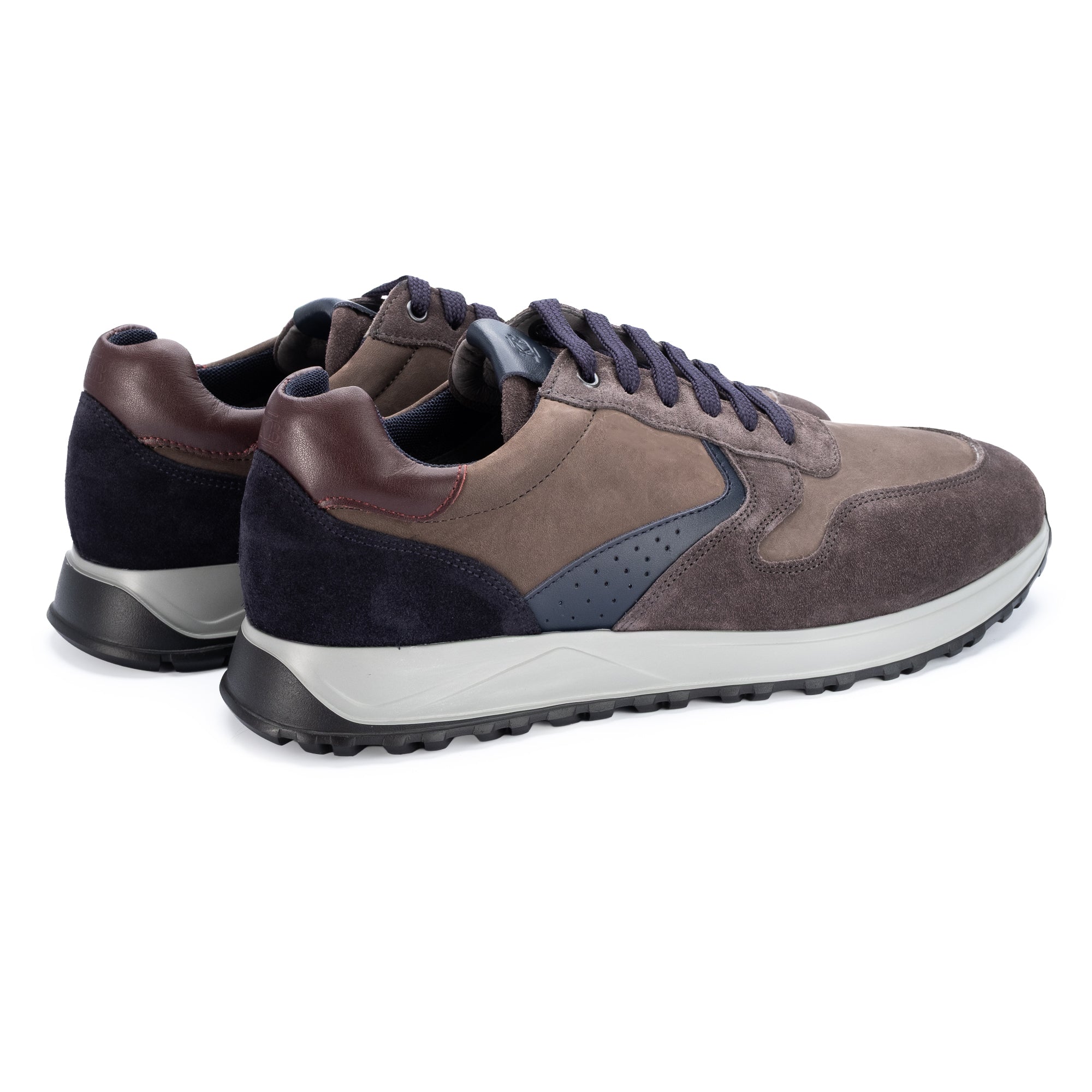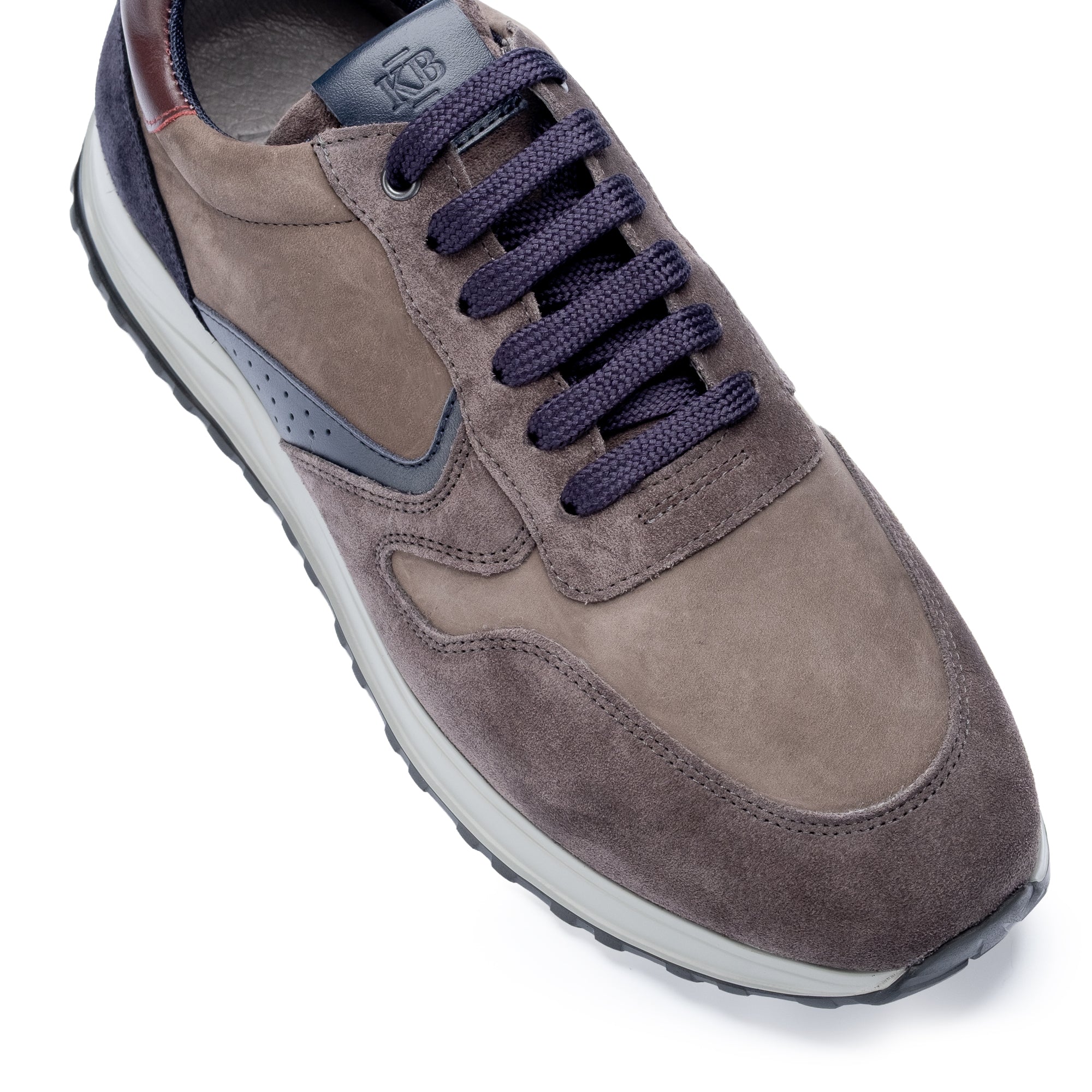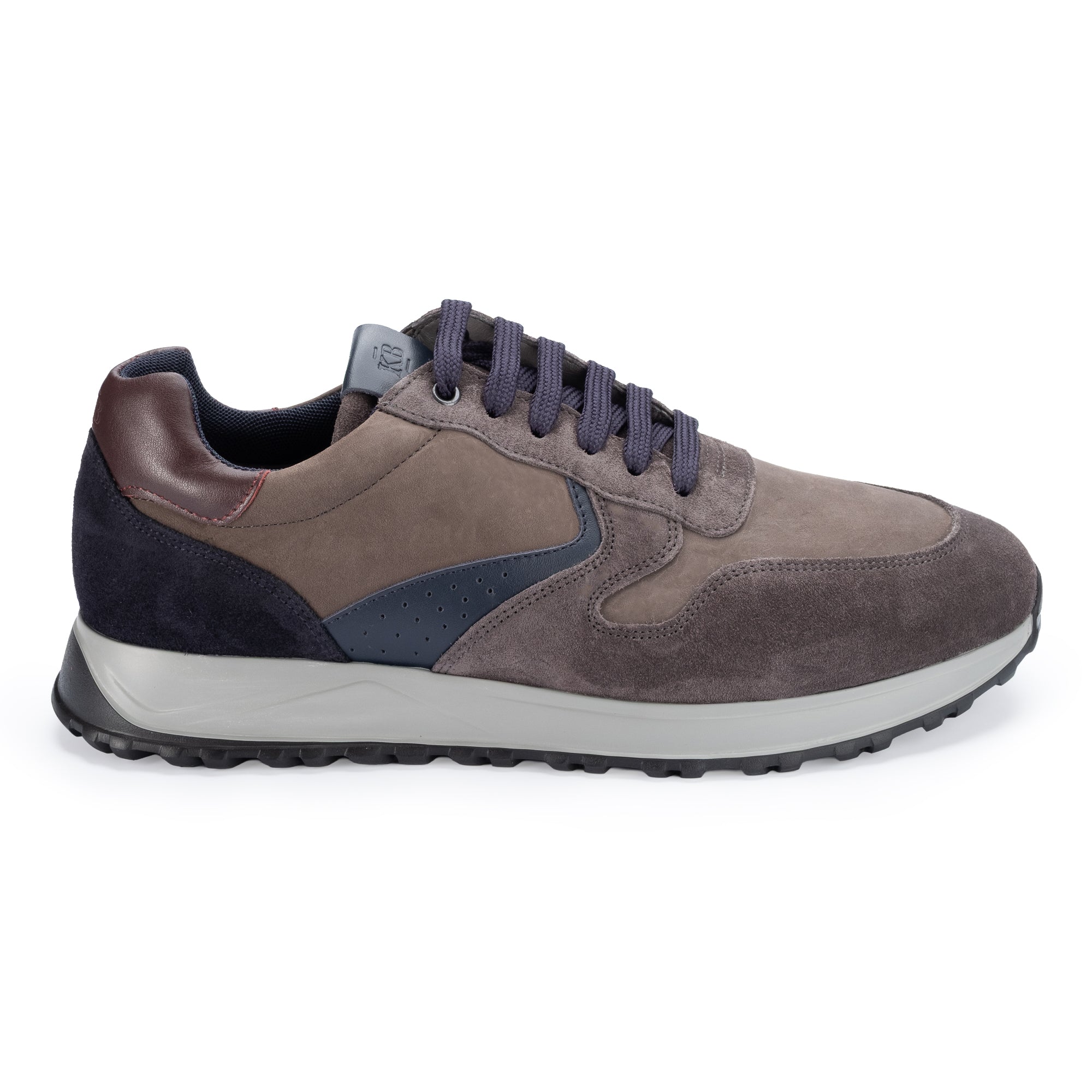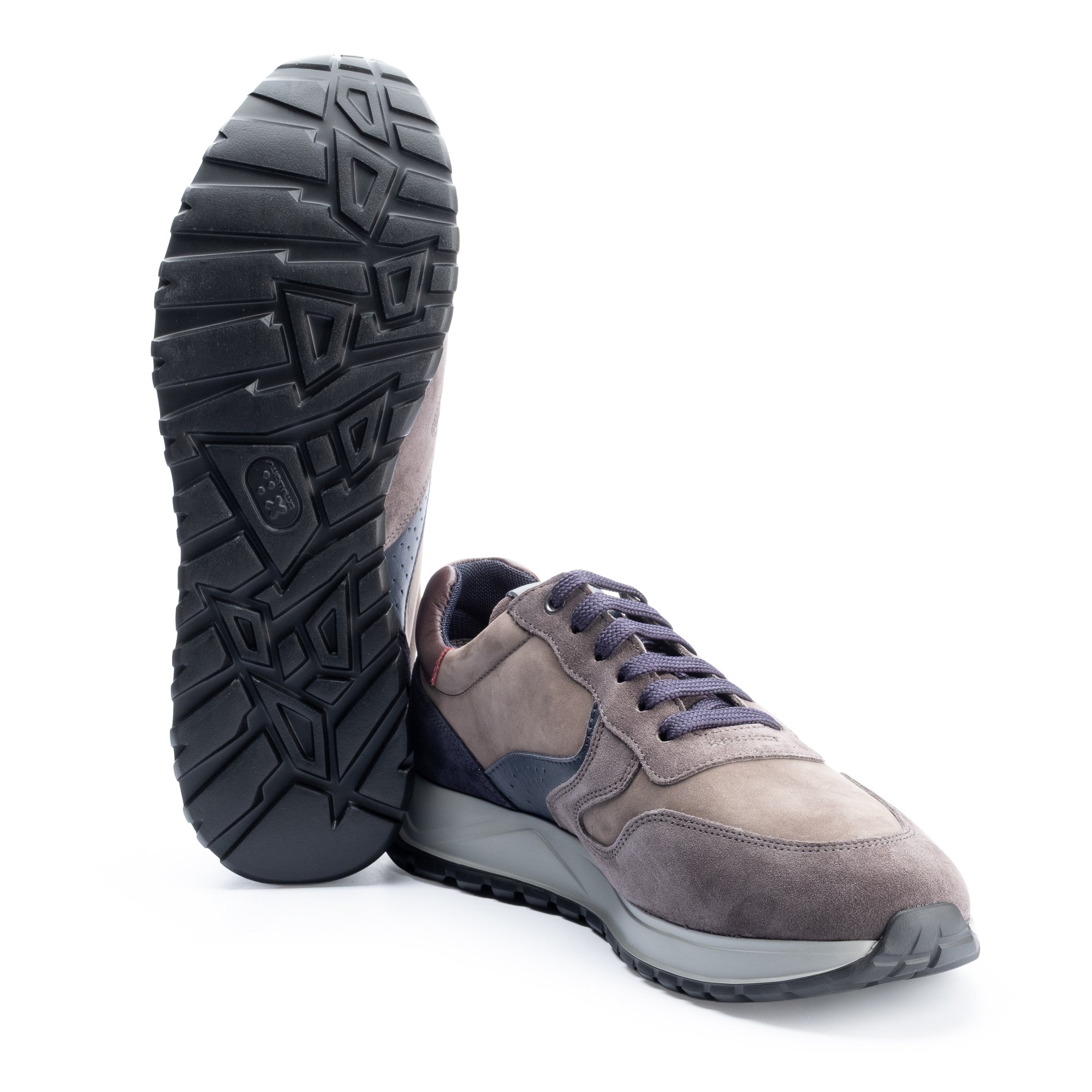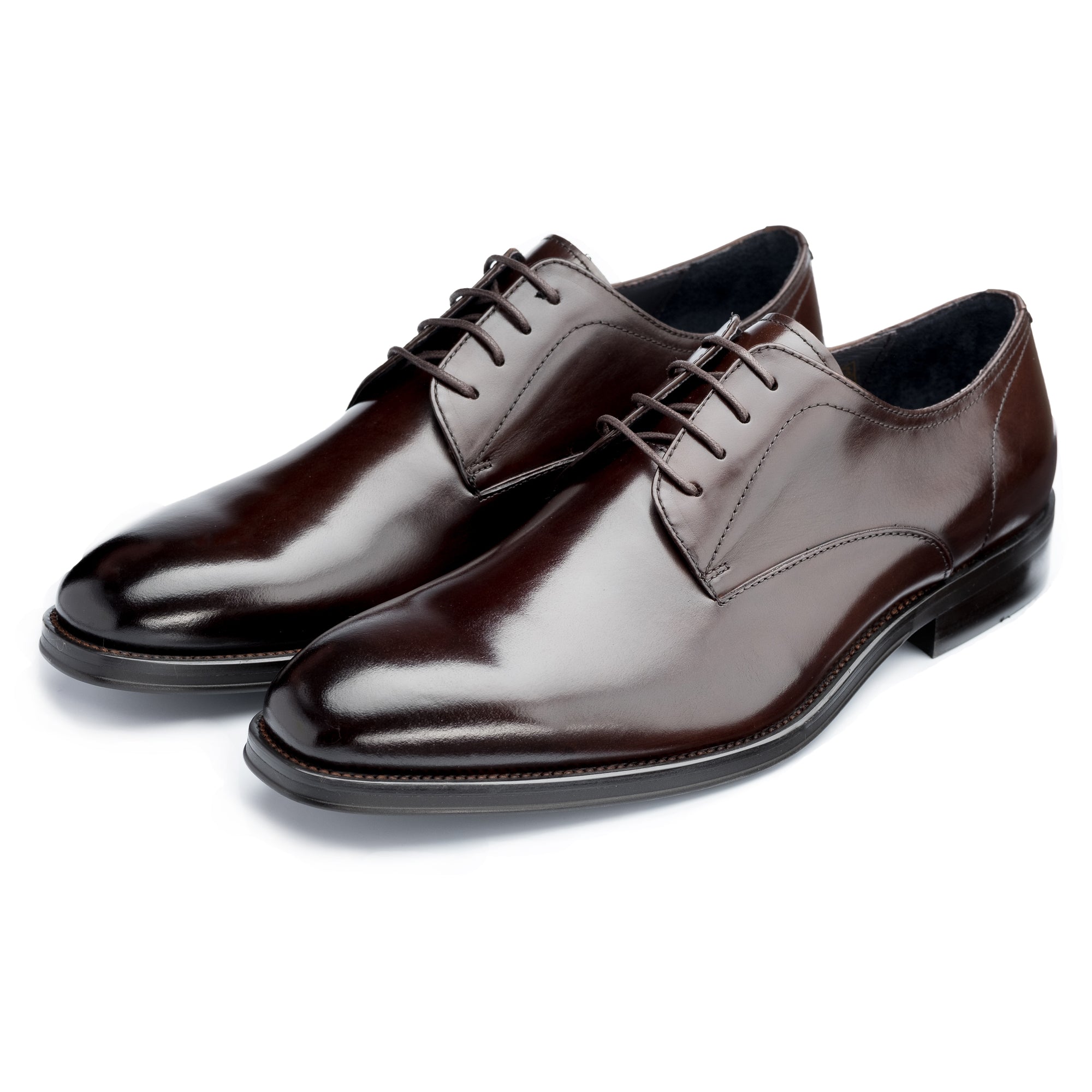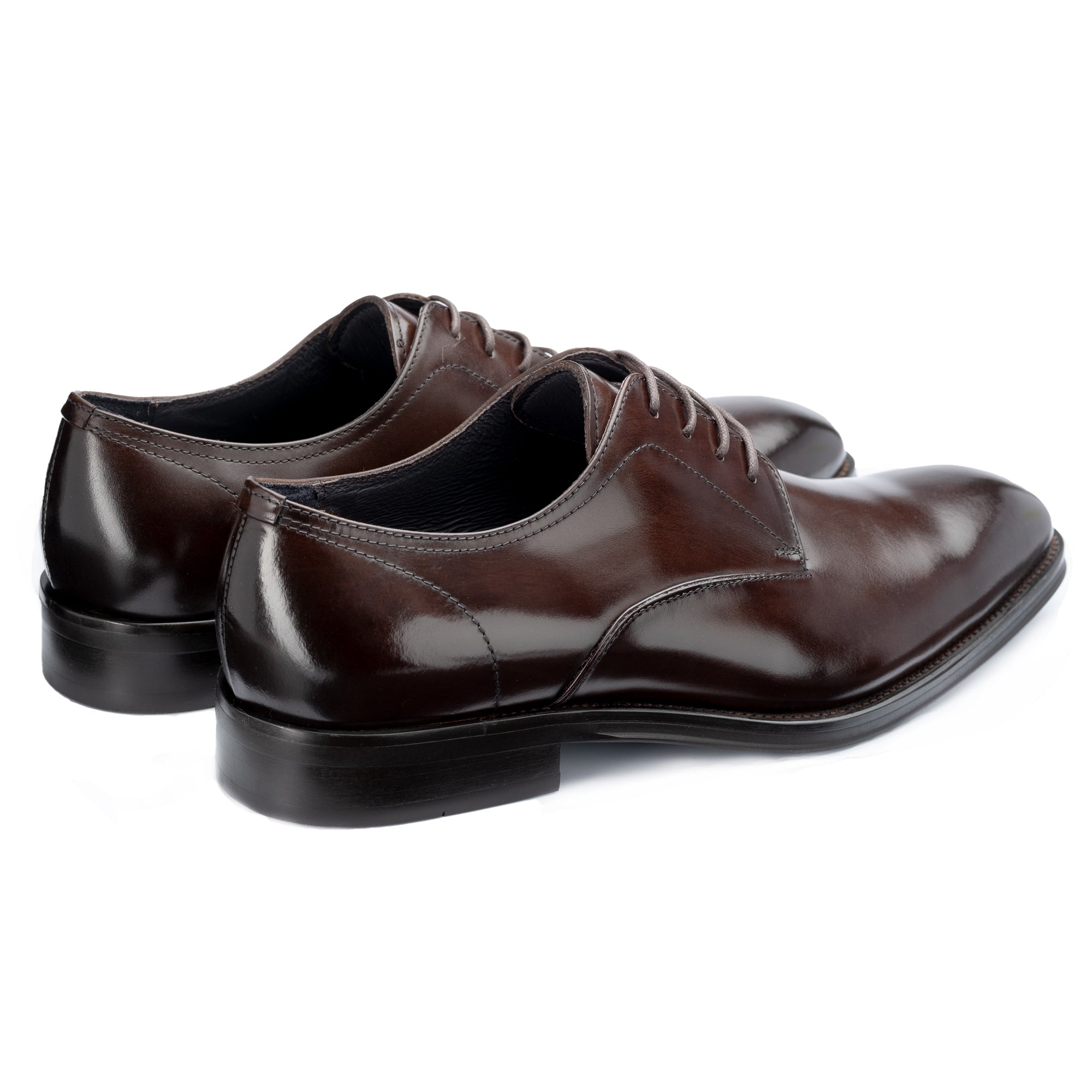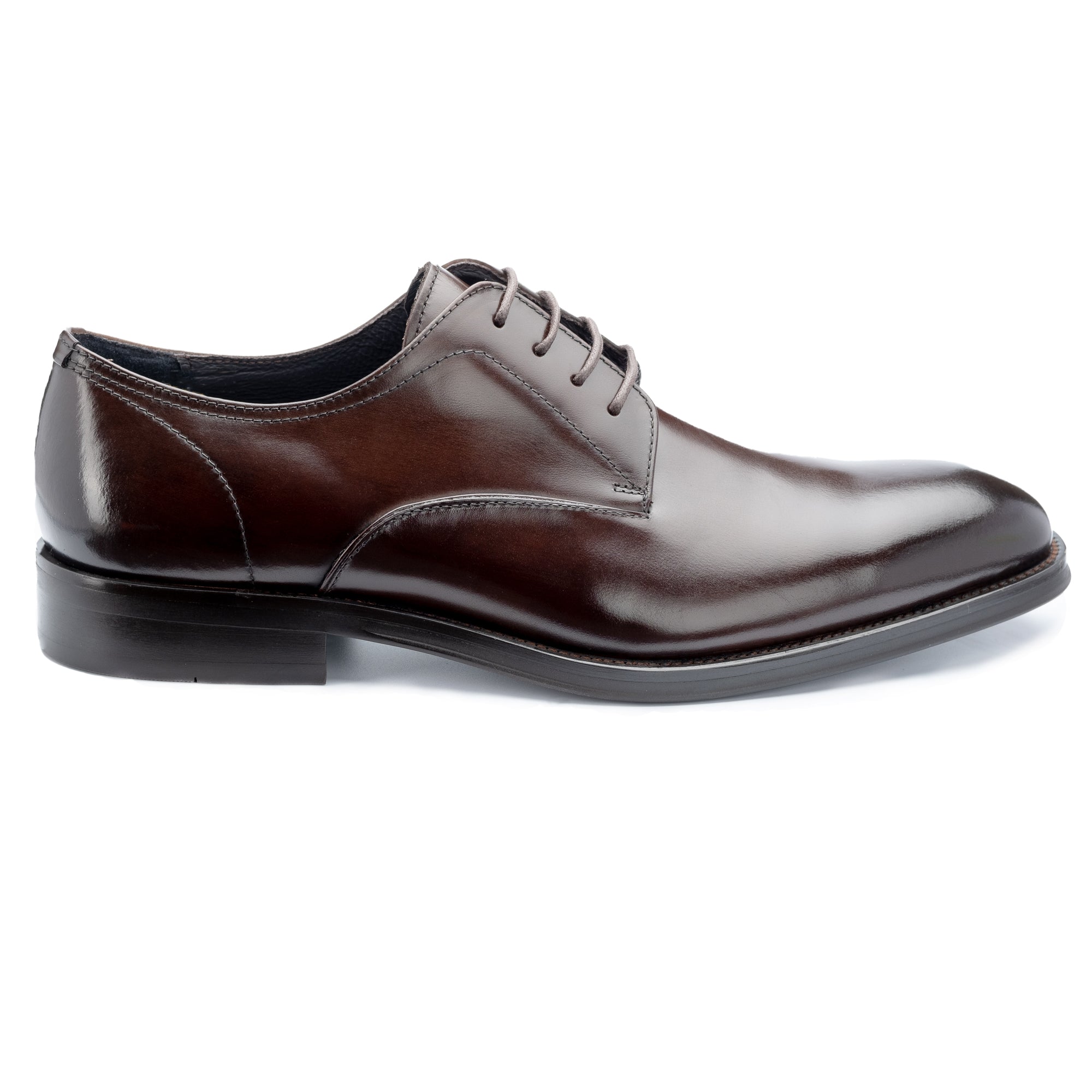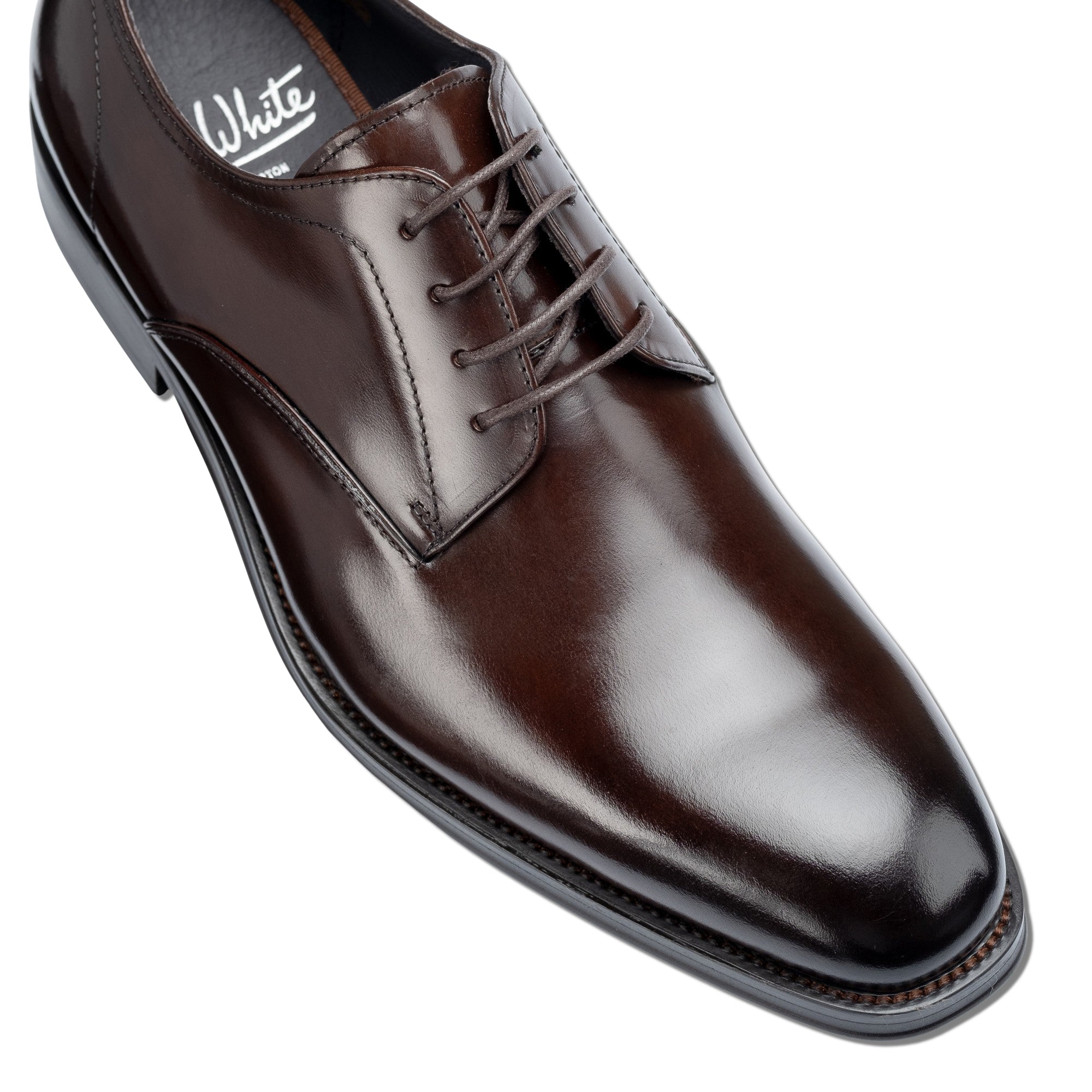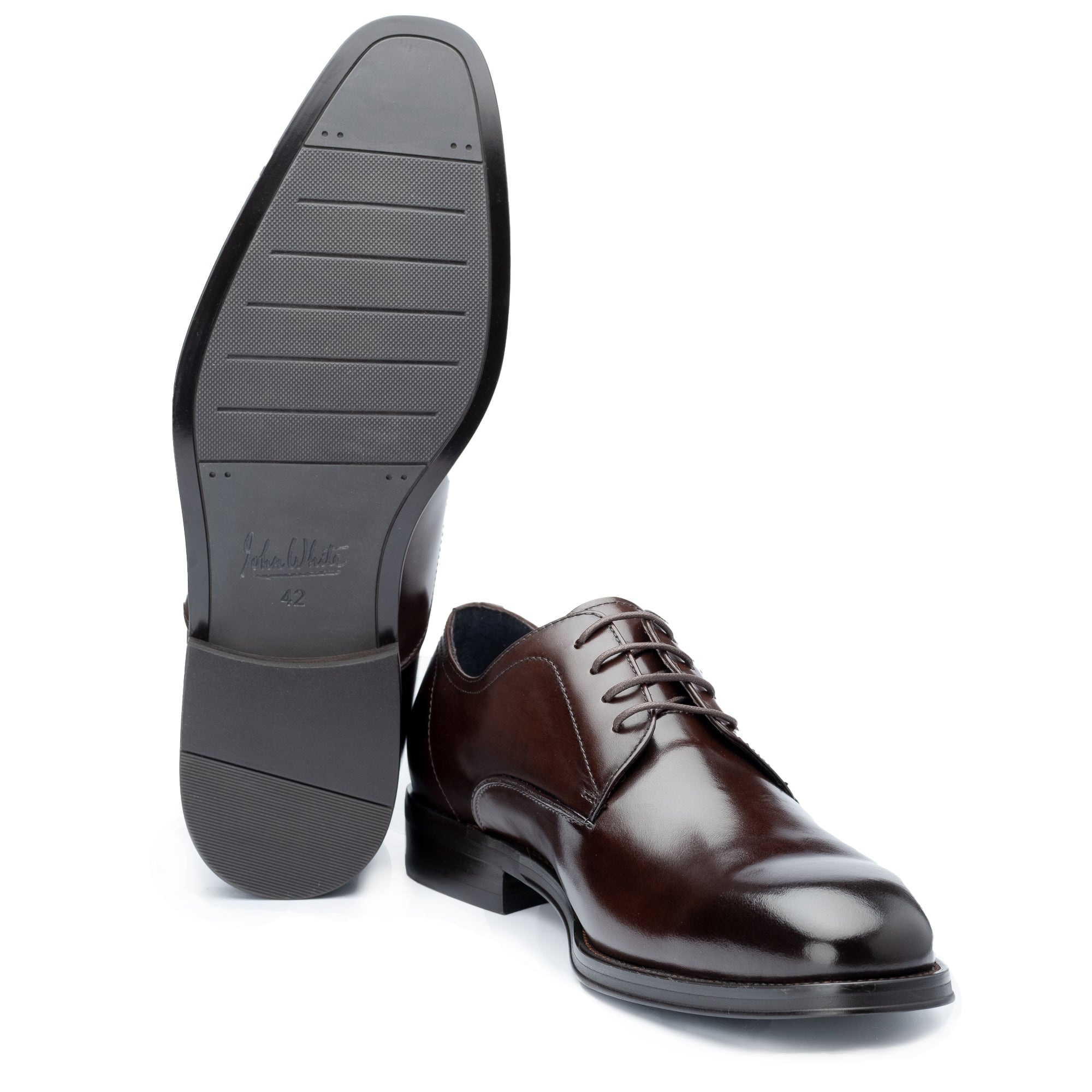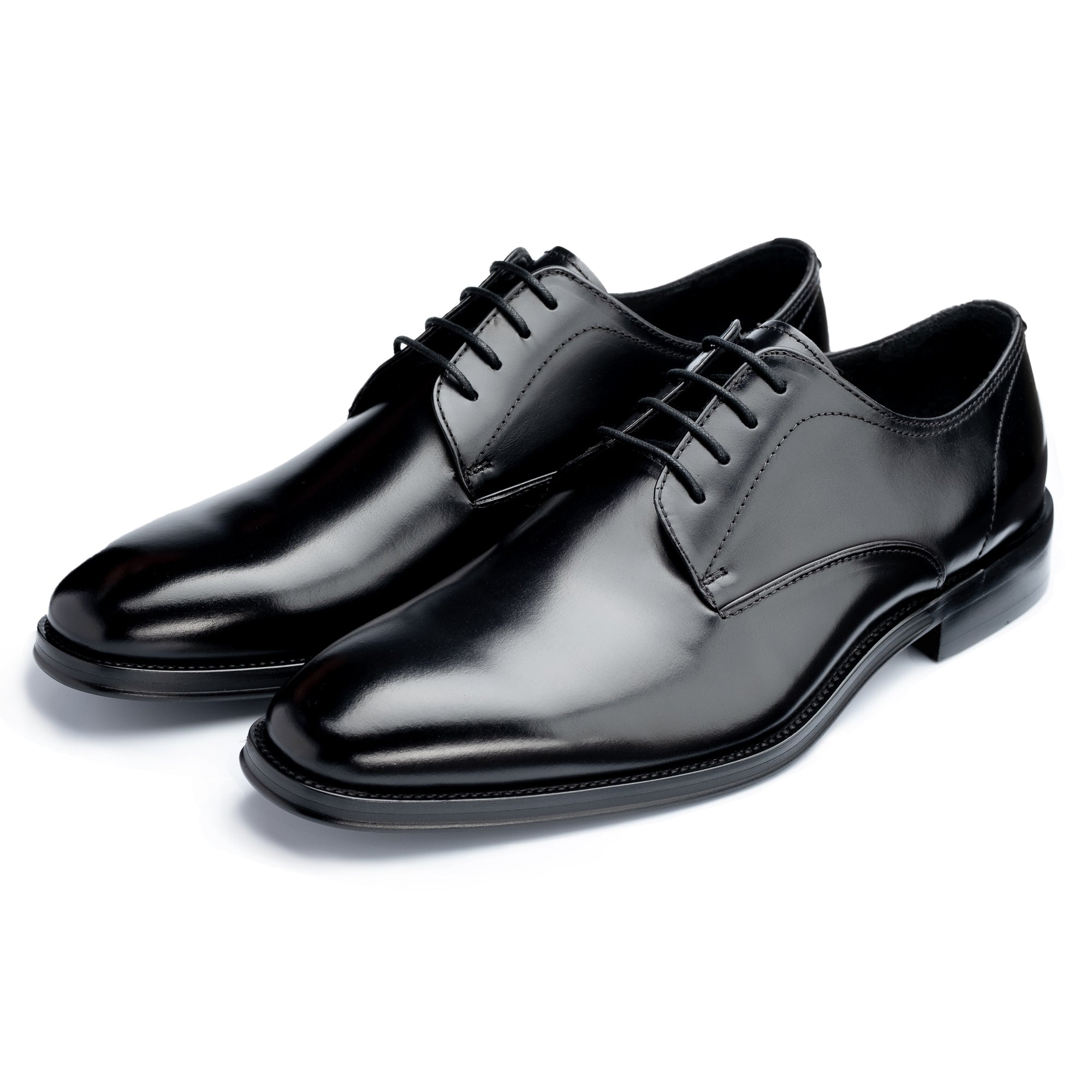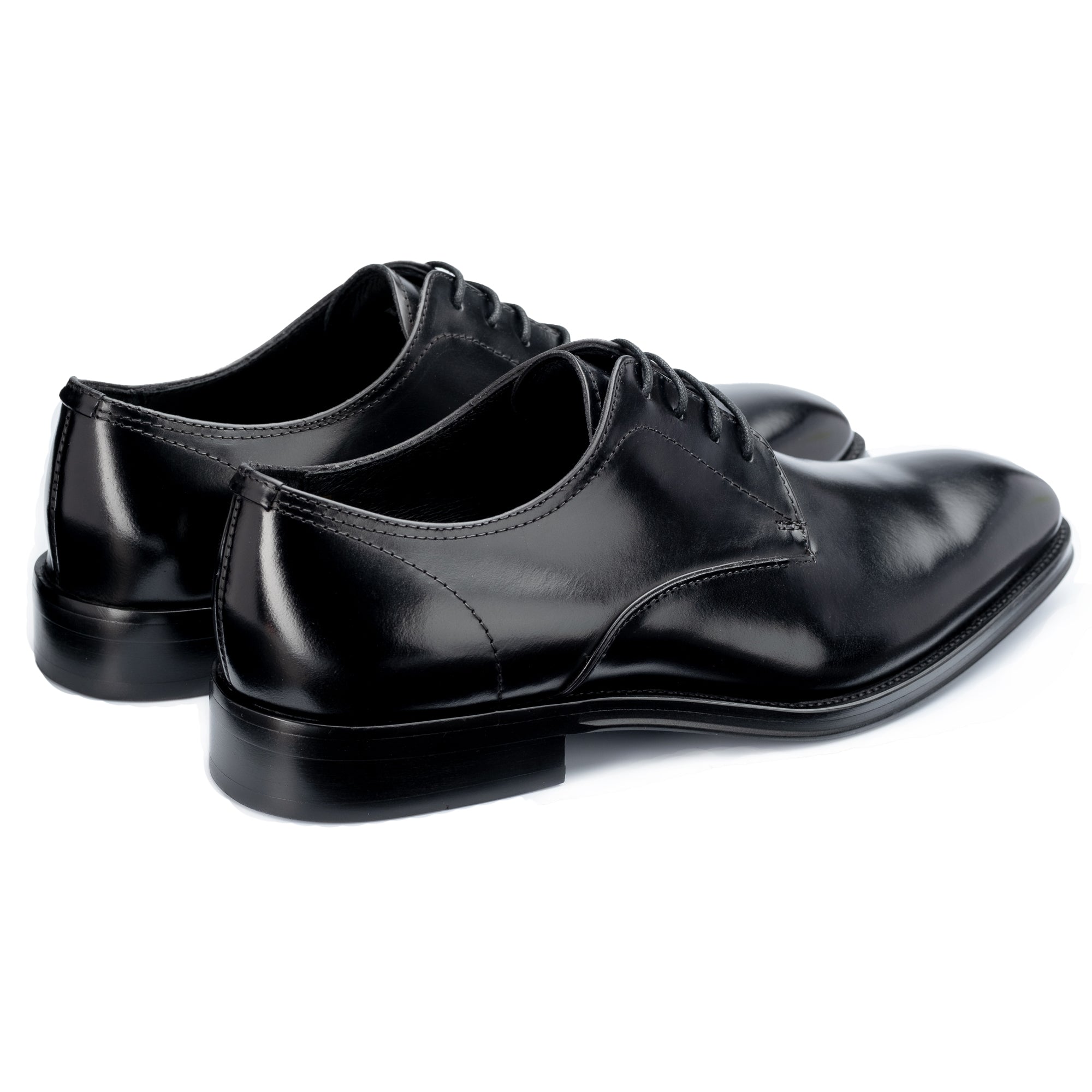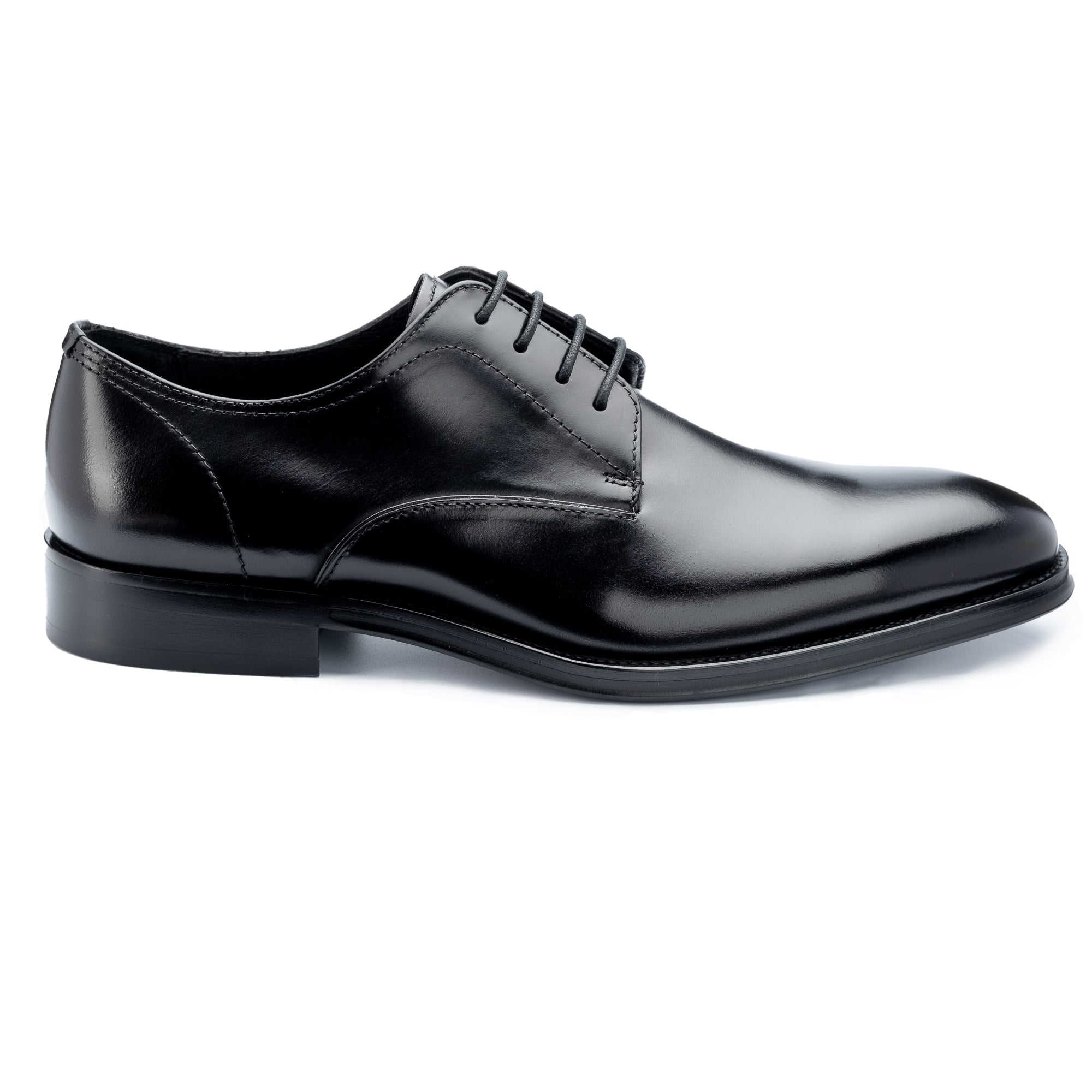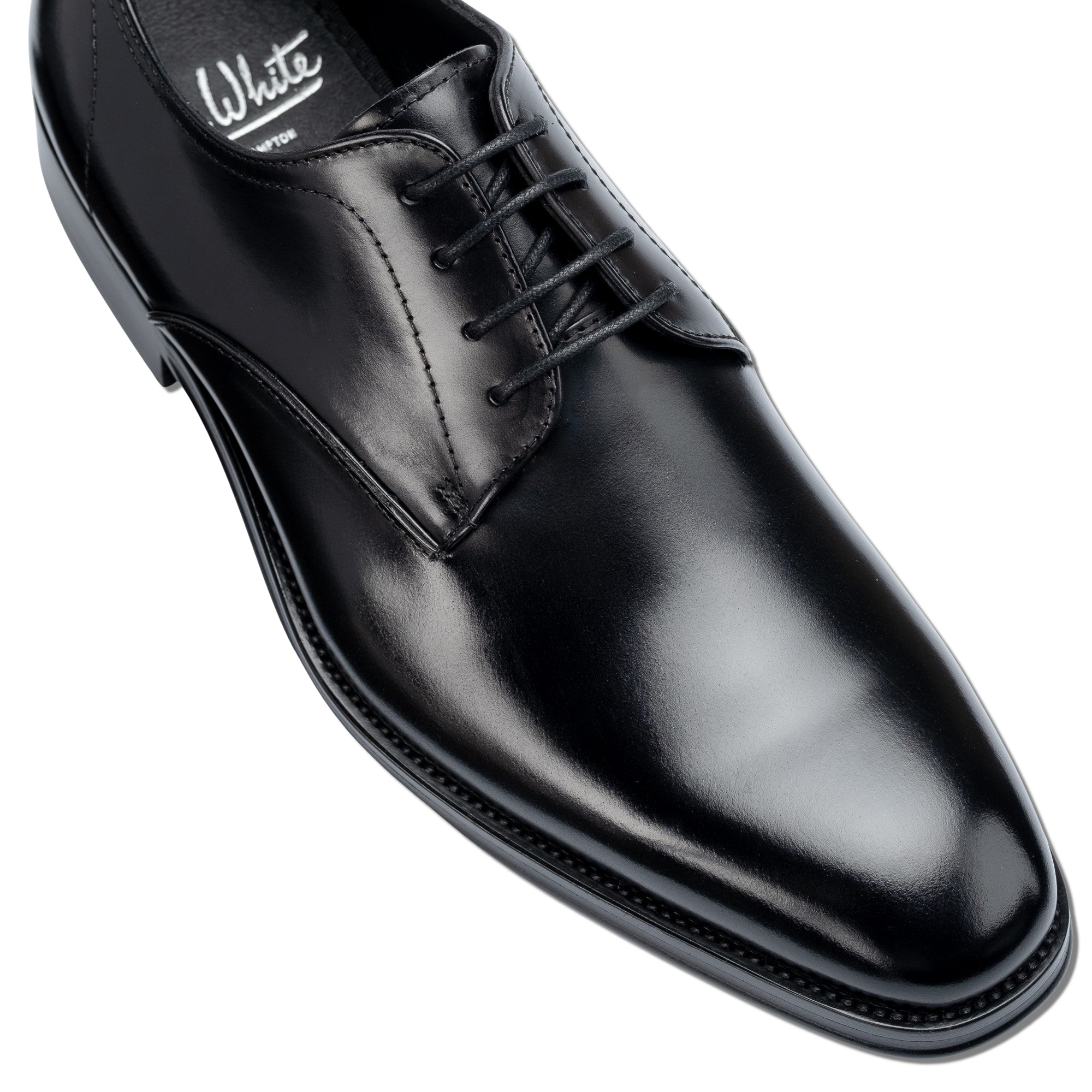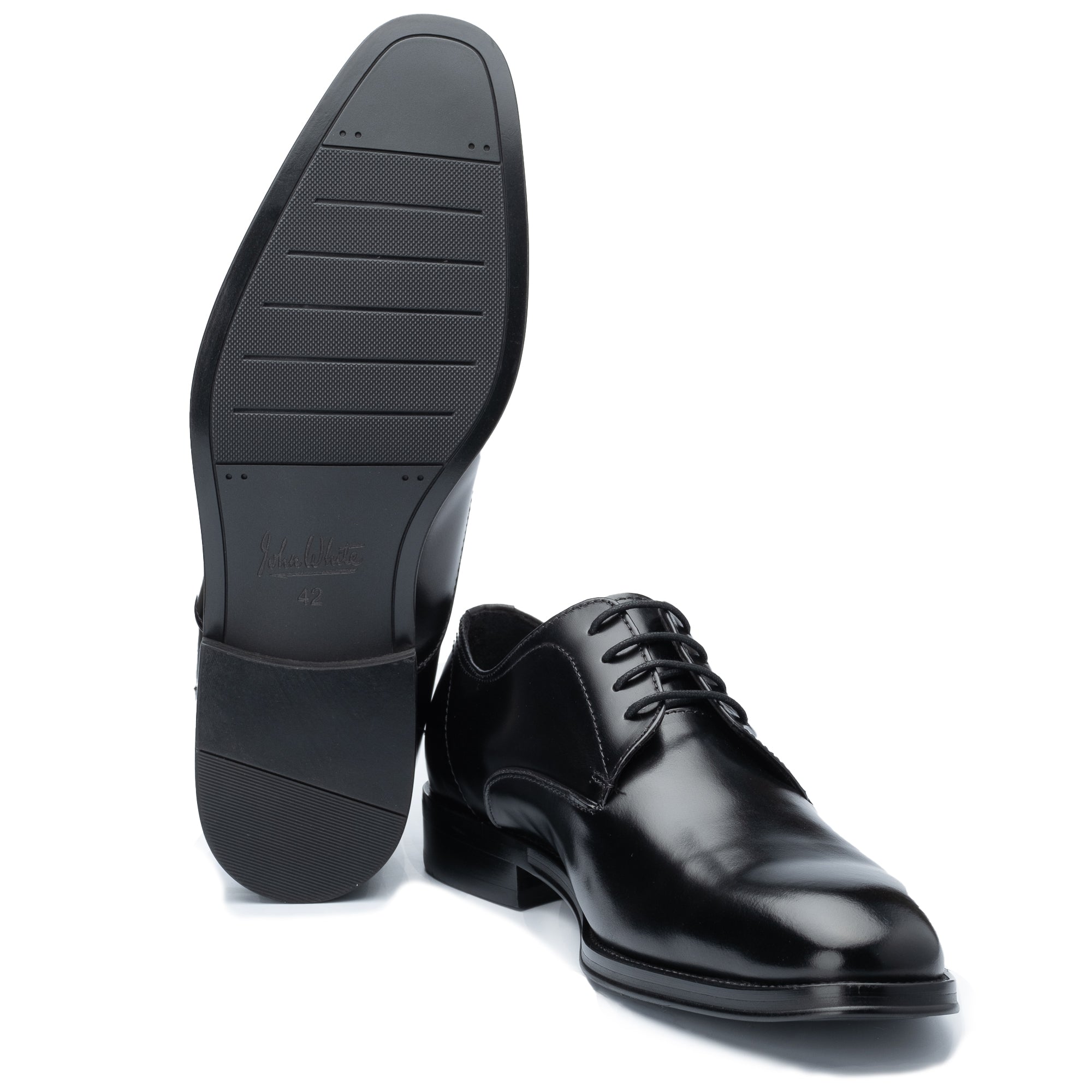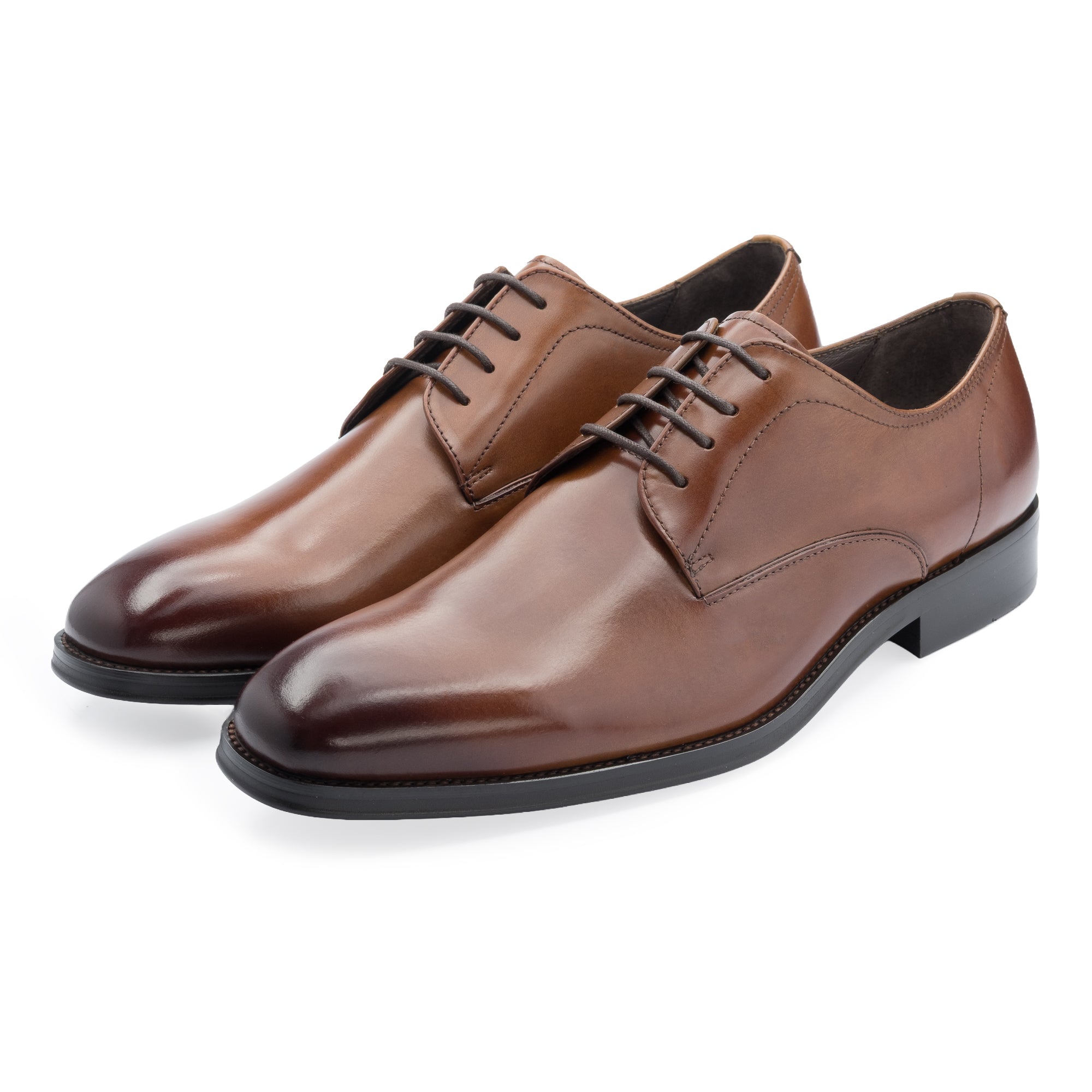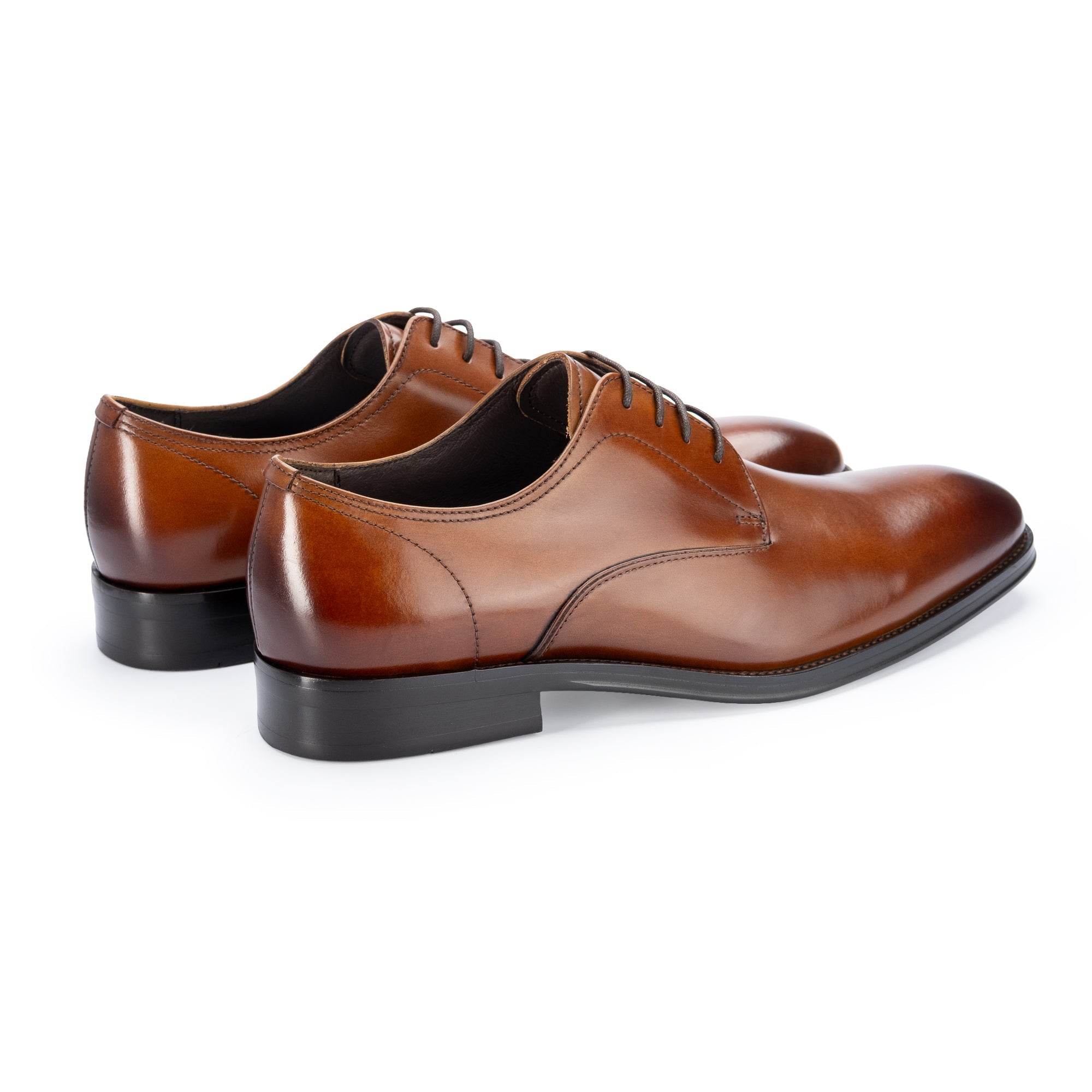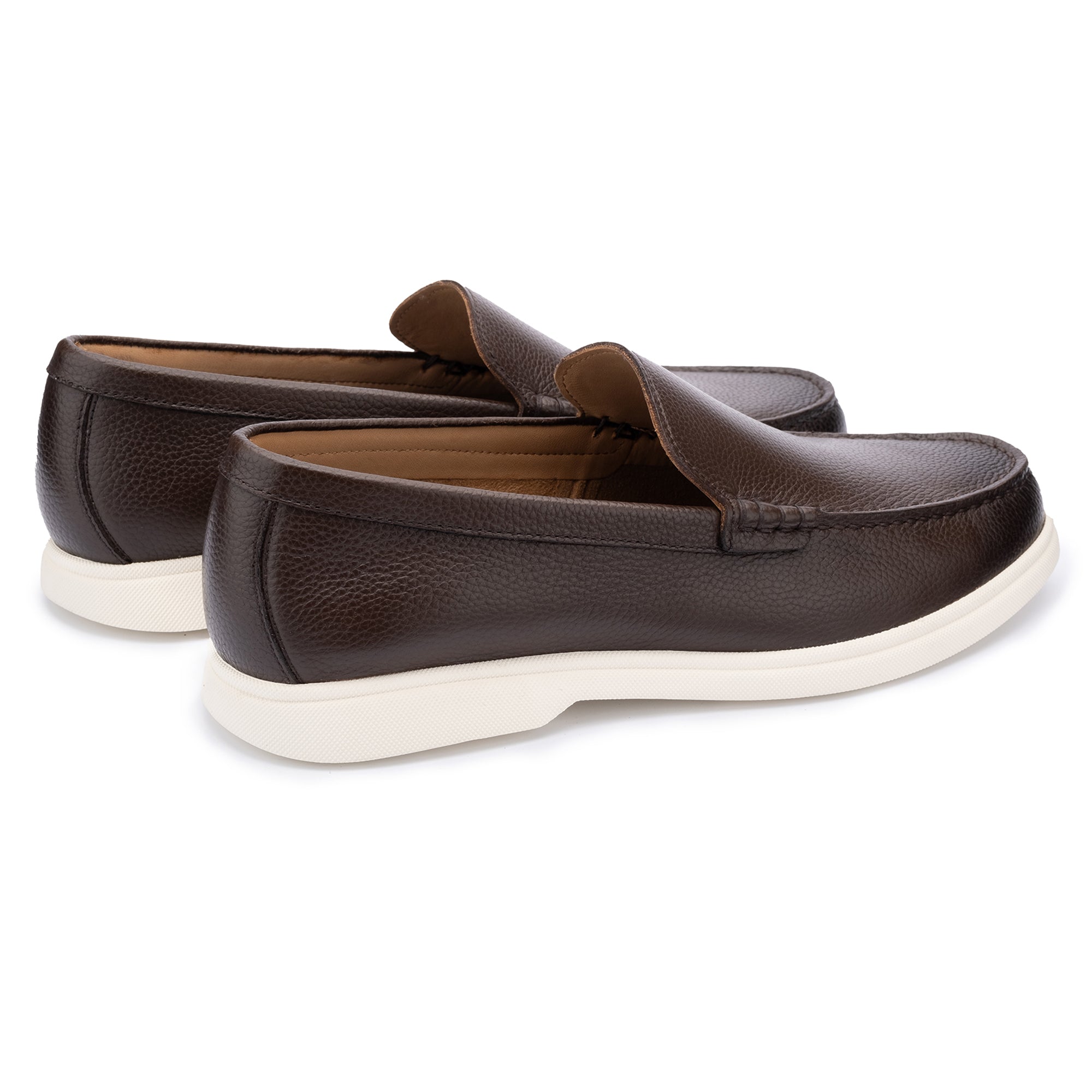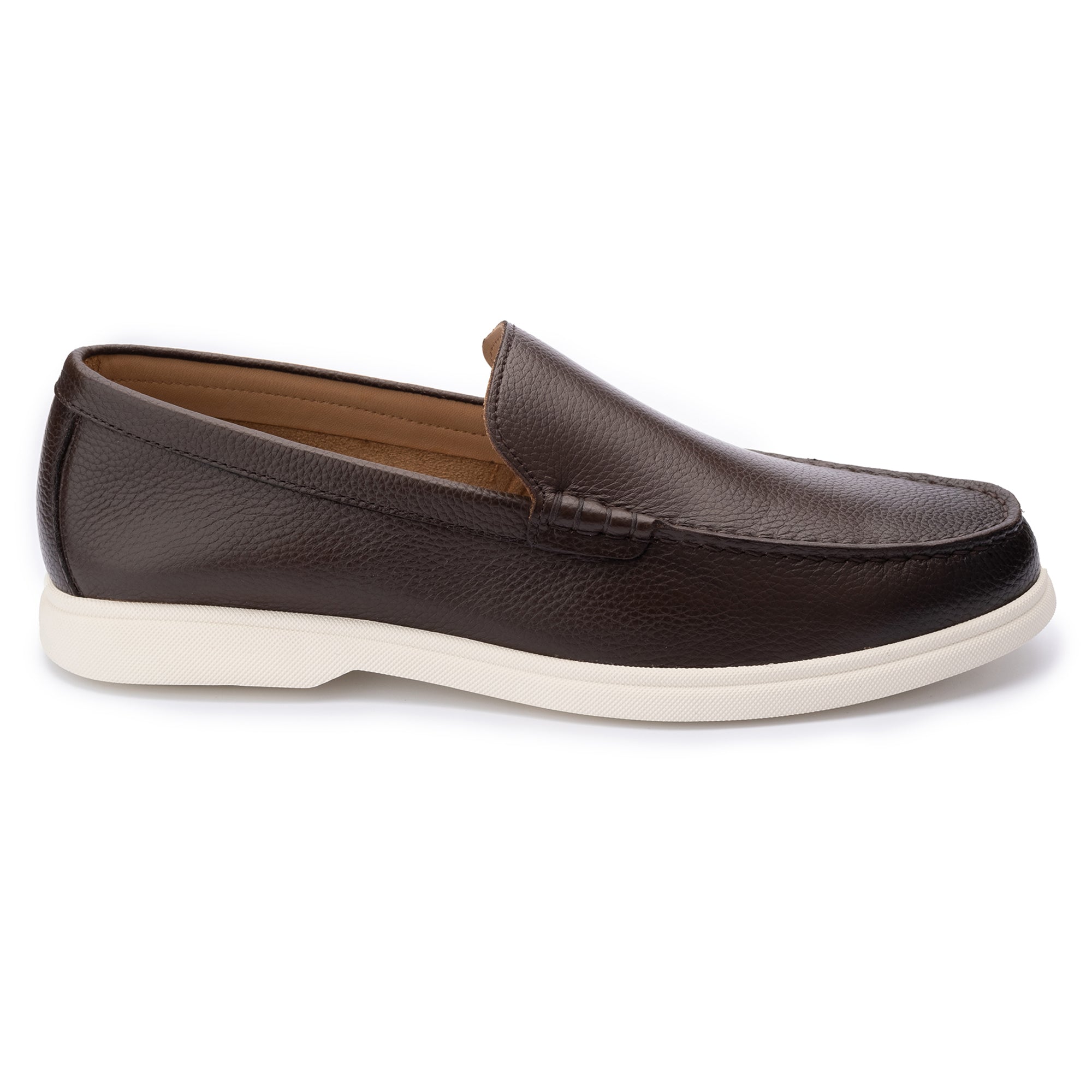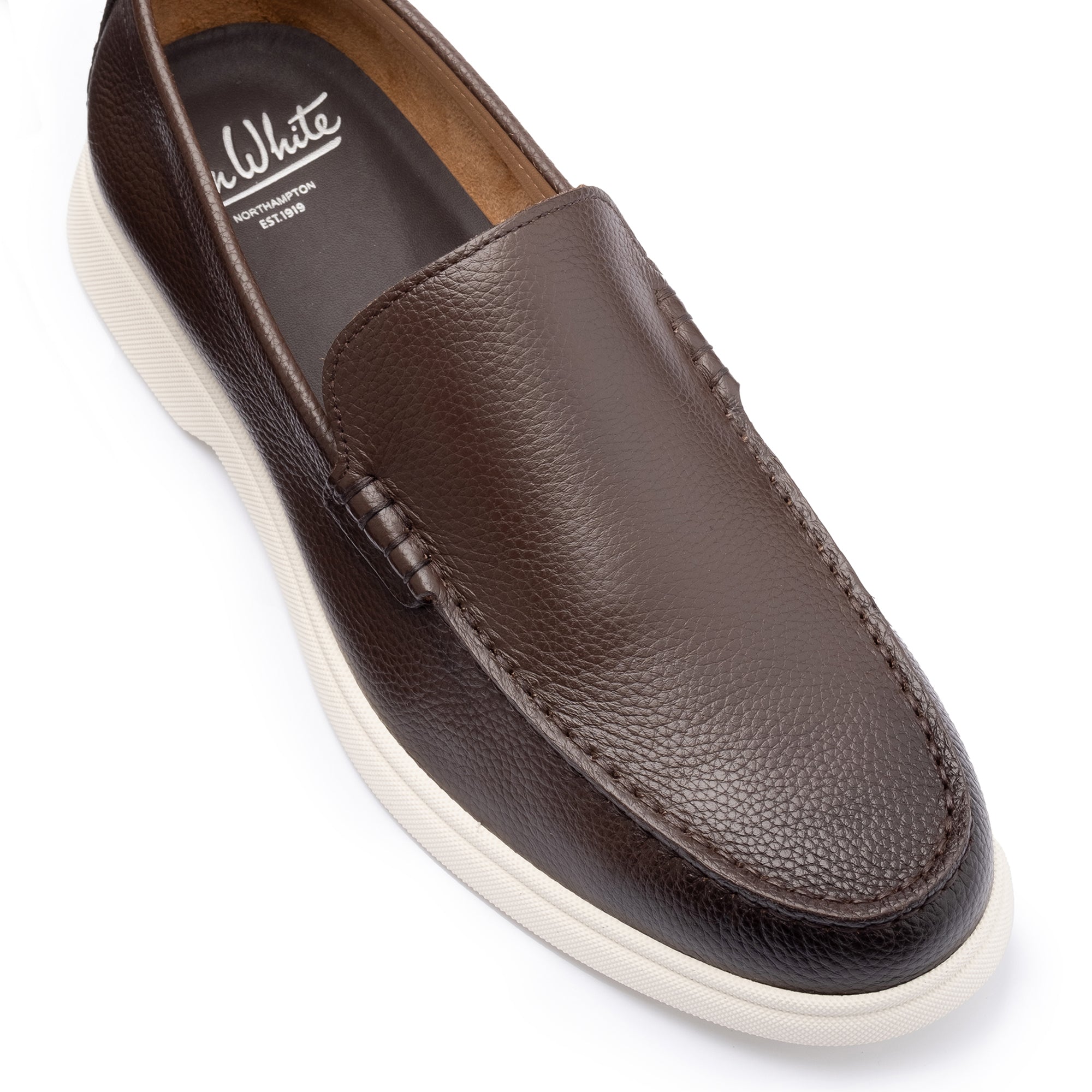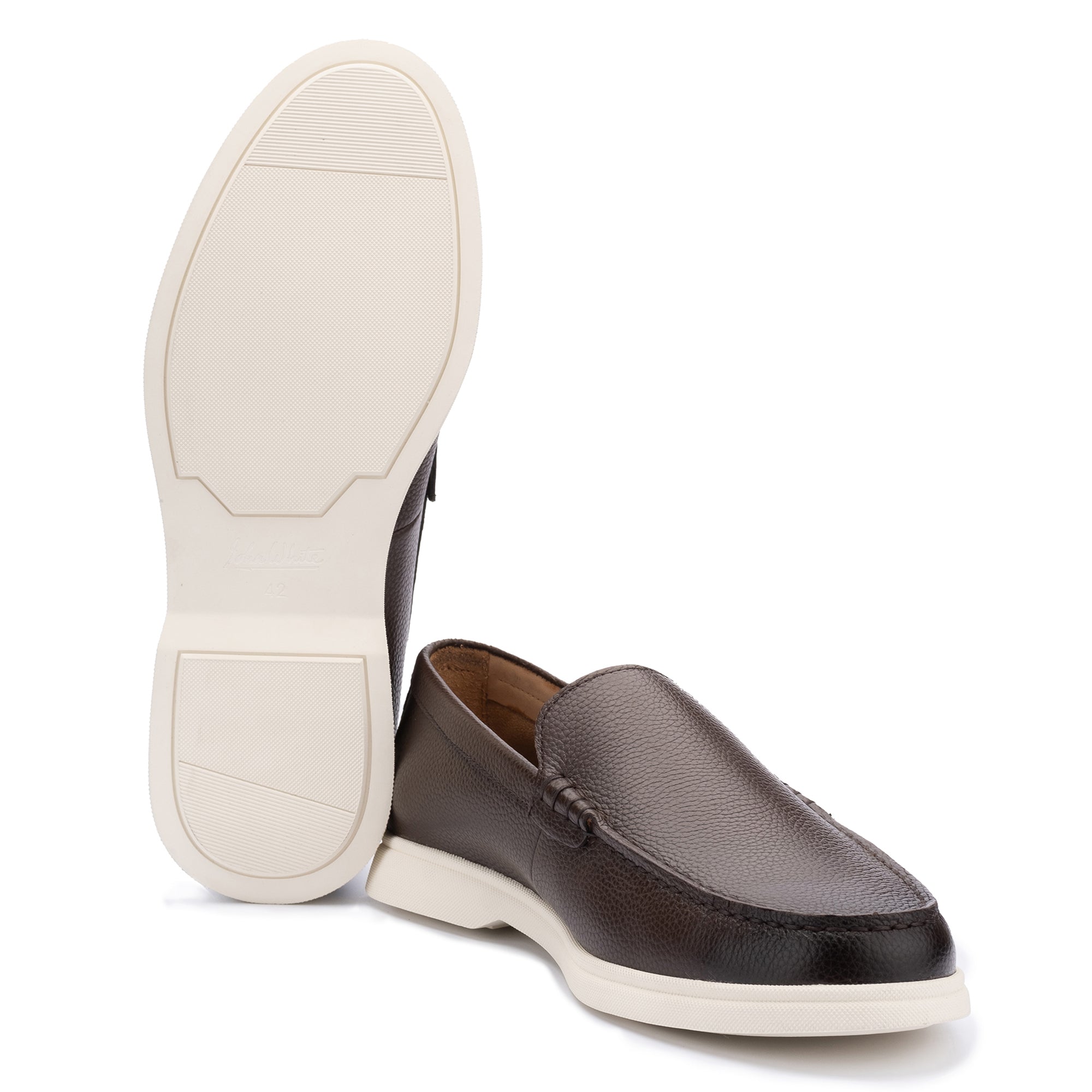

Men's dress shoes are formal leather footwear — Oxfords, Derbys, brogues, monk straps, and loafers — designed for suits, smart occasions, and any situation where trainers or boots won't do. The right pair signals intention. Choose by construction (Oxford for black tie, Derby for everyday smart), leather quality (full-grain calfskin lasts decades), and colour (black for formal, brown for versatility, burgundy for character). John White Shoes has designed dress shoes since 1919, producing footwear that bridges heritage craft with modern wear.
In This Guide
- The Five Types of Men's Dress Shoes
- The Formality Spectrum — What to Wear When
- Oxford vs Derby: The Critical Difference
- Black, Brown, or Burgundy — Choosing Your Colour
- How to Read Leather Quality
- Sole Construction and What It Means for Longevity
- Dress Shoes for Specific Occasions
- Getting the Fit Right
- How to Care for Dress Shoes
- Building a Dress Shoe Wardrobe
- Related Guides
- Frequently Asked Questions
The Five Types of Men's Dress Shoes
Men's dress shoes break into five distinct families, each with its own construction, formality level, and appropriate occasion. Understanding which is which stops you turning up to a black-tie dinner in a brogue, or over-dressing a Friday client meeting with a patent Oxford.
Oxford Shoes
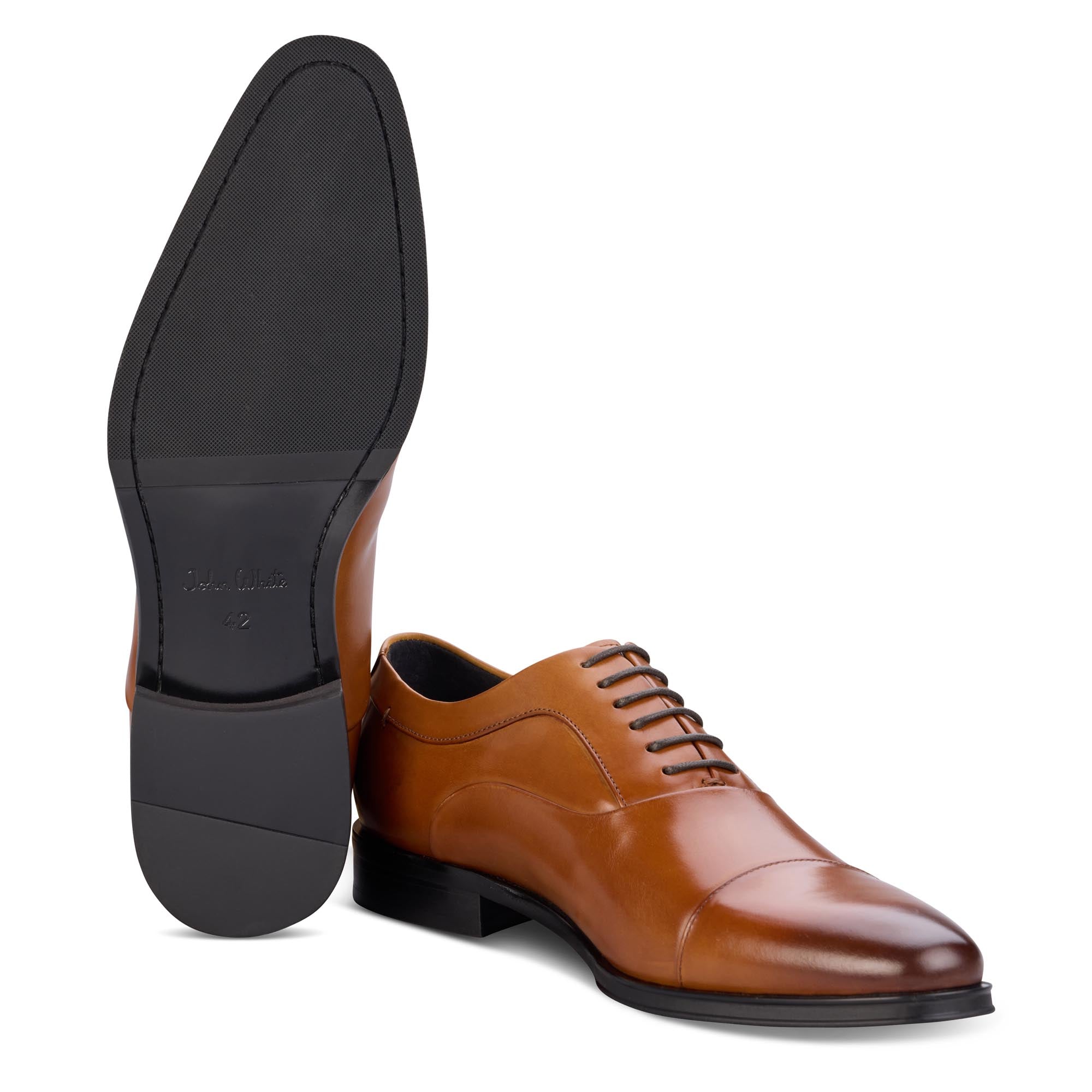
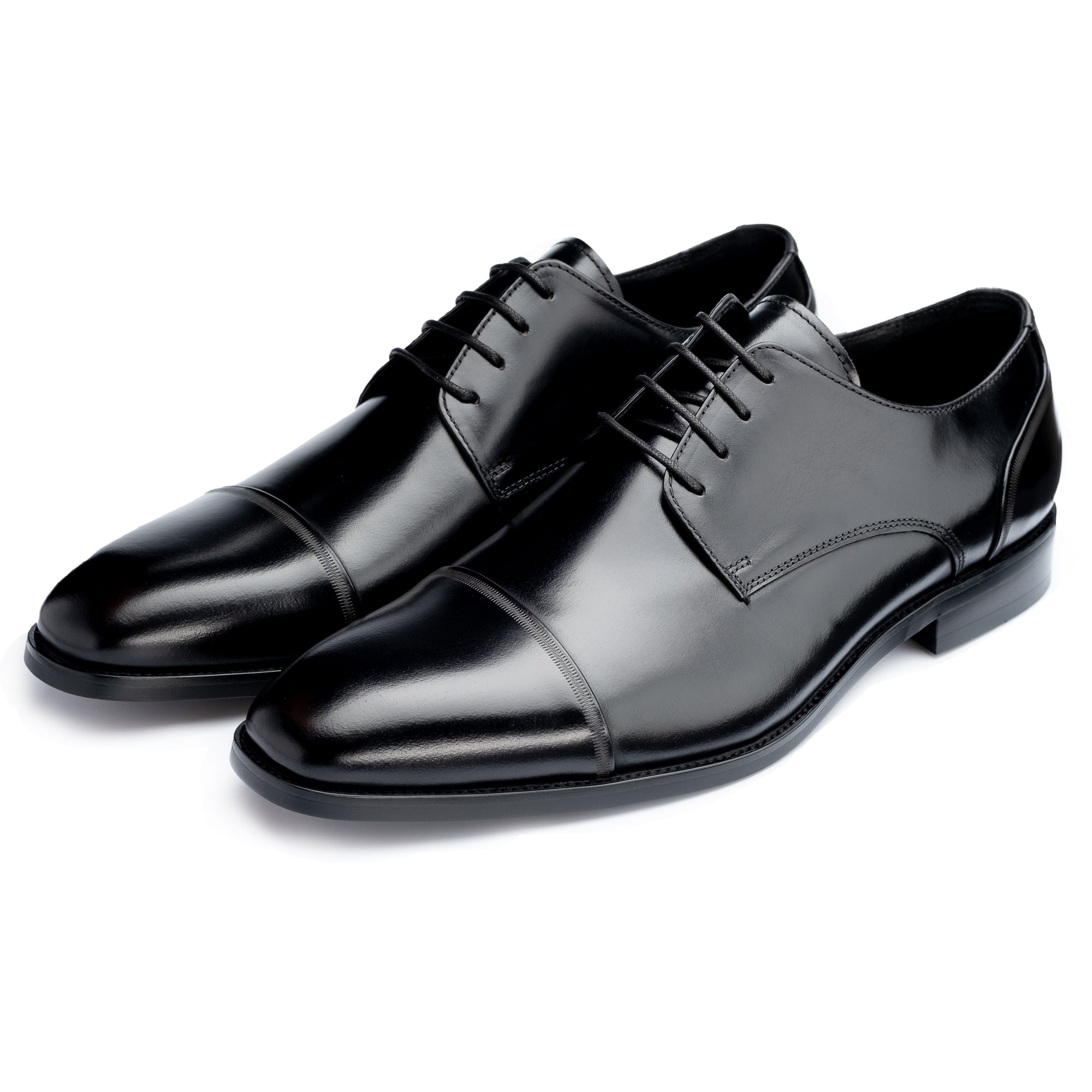
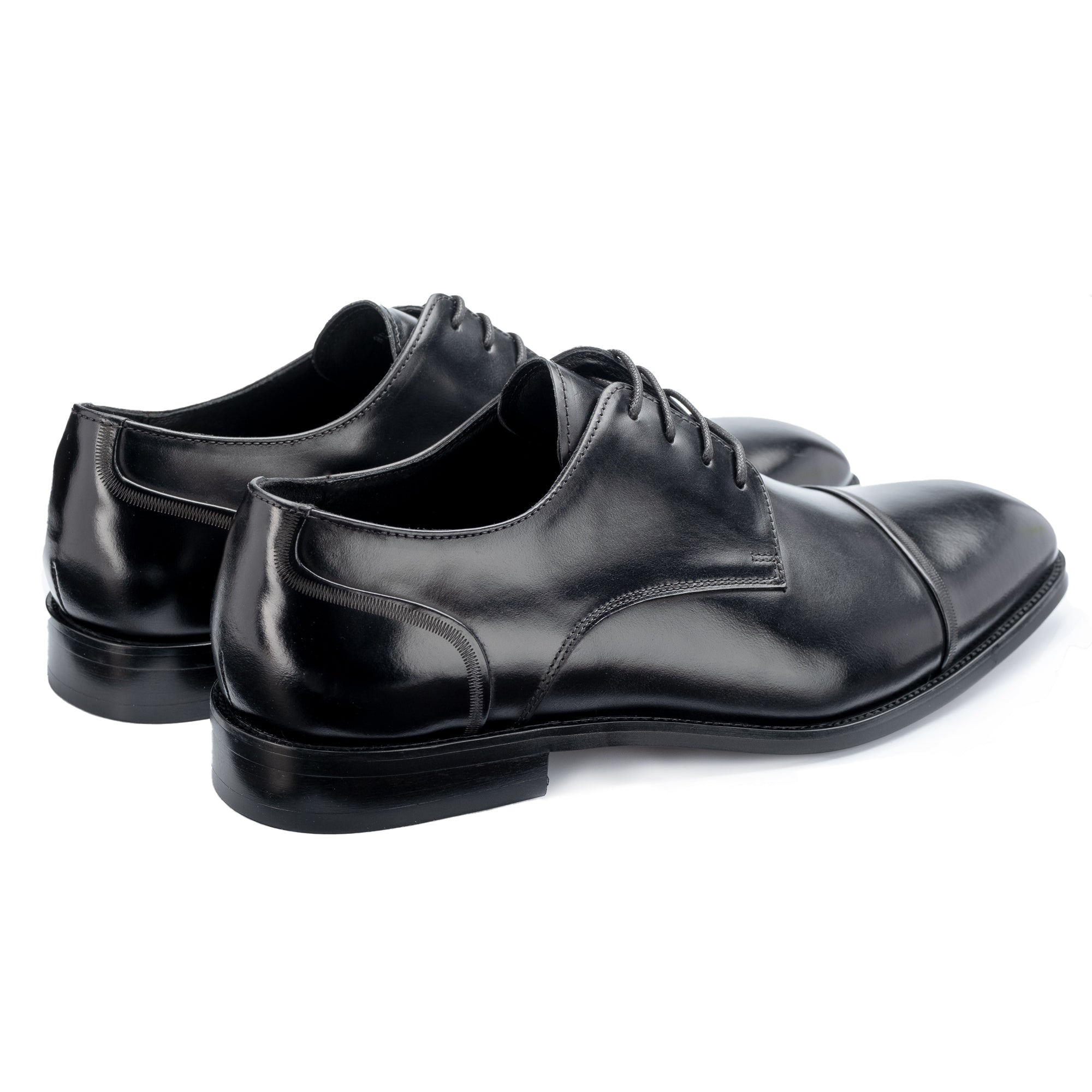
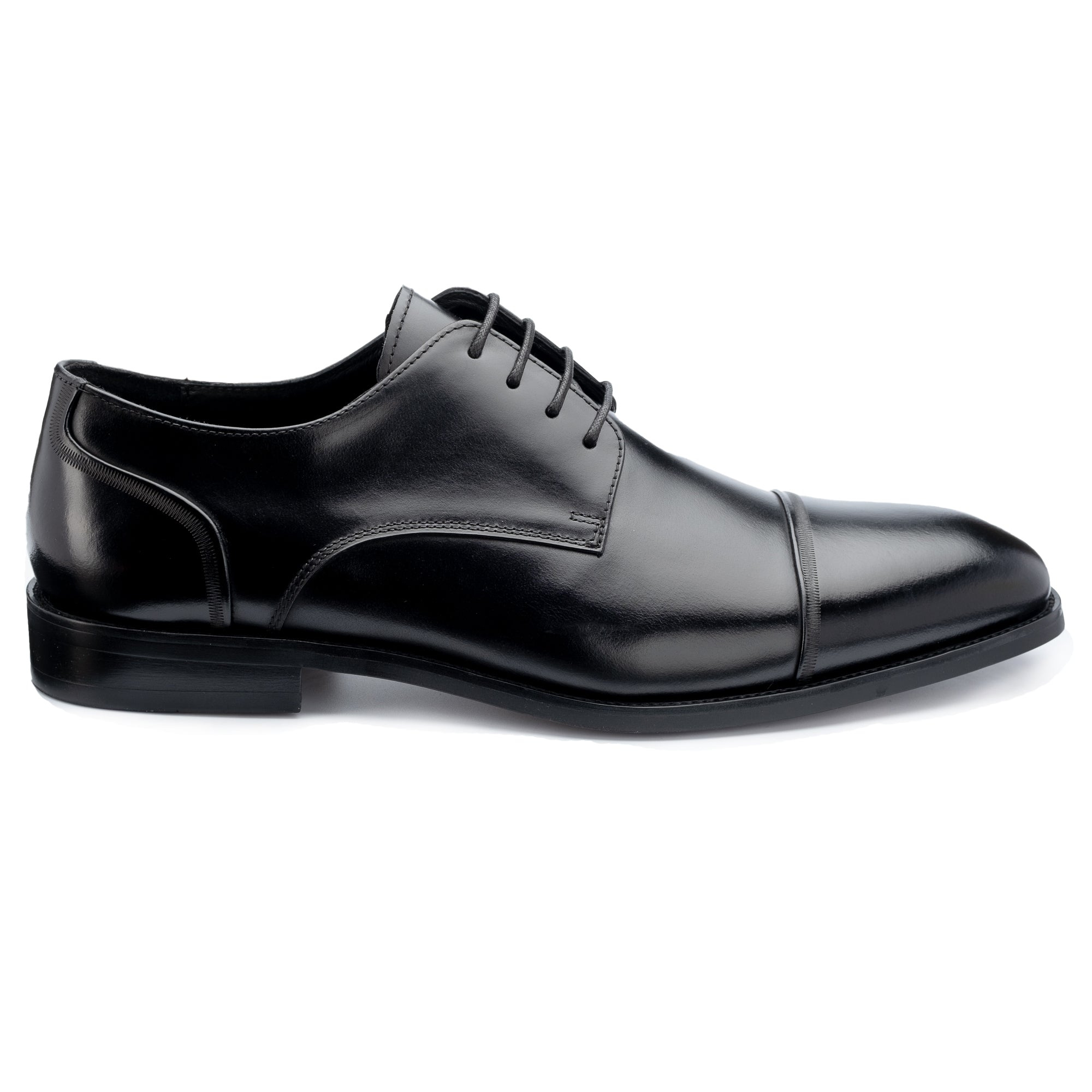
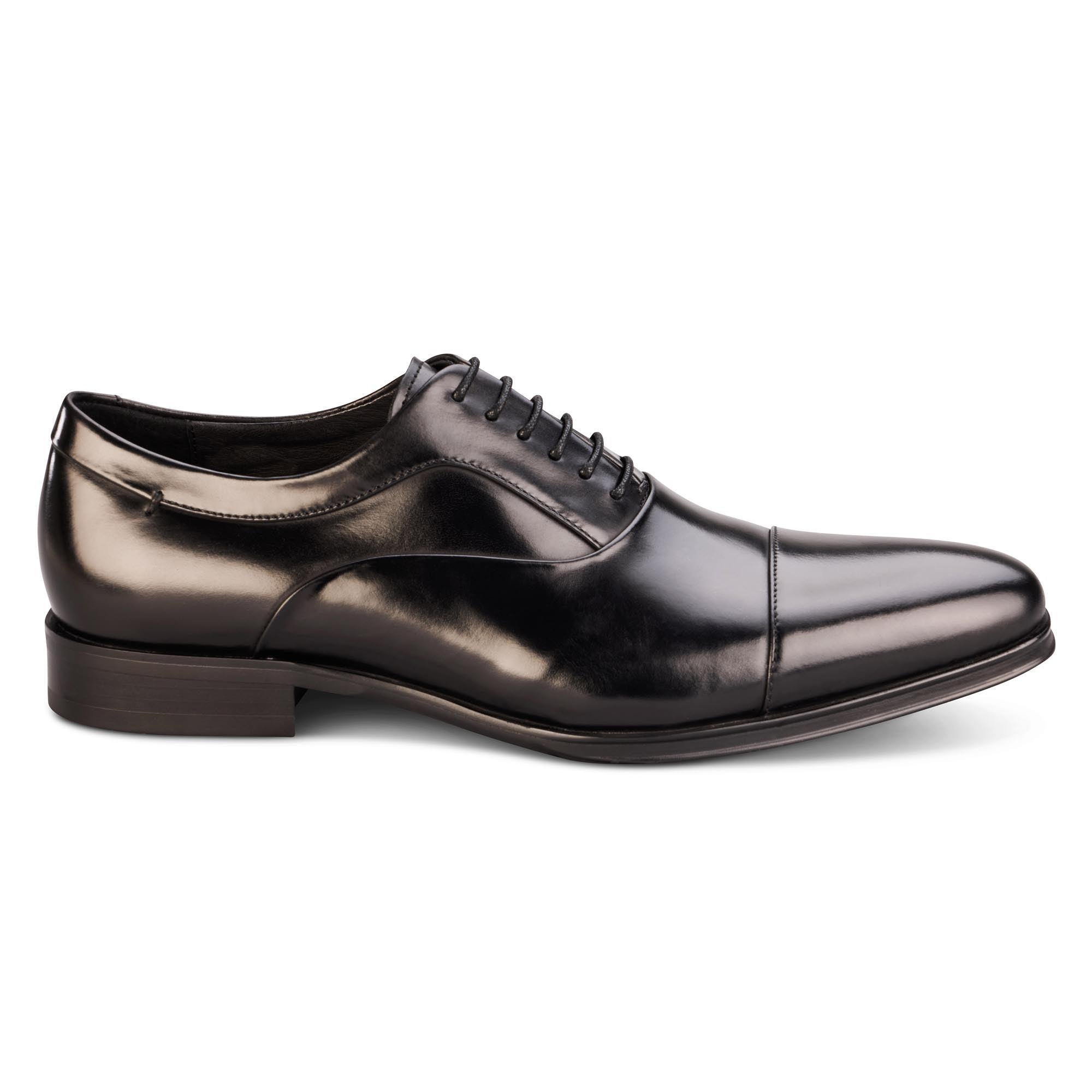
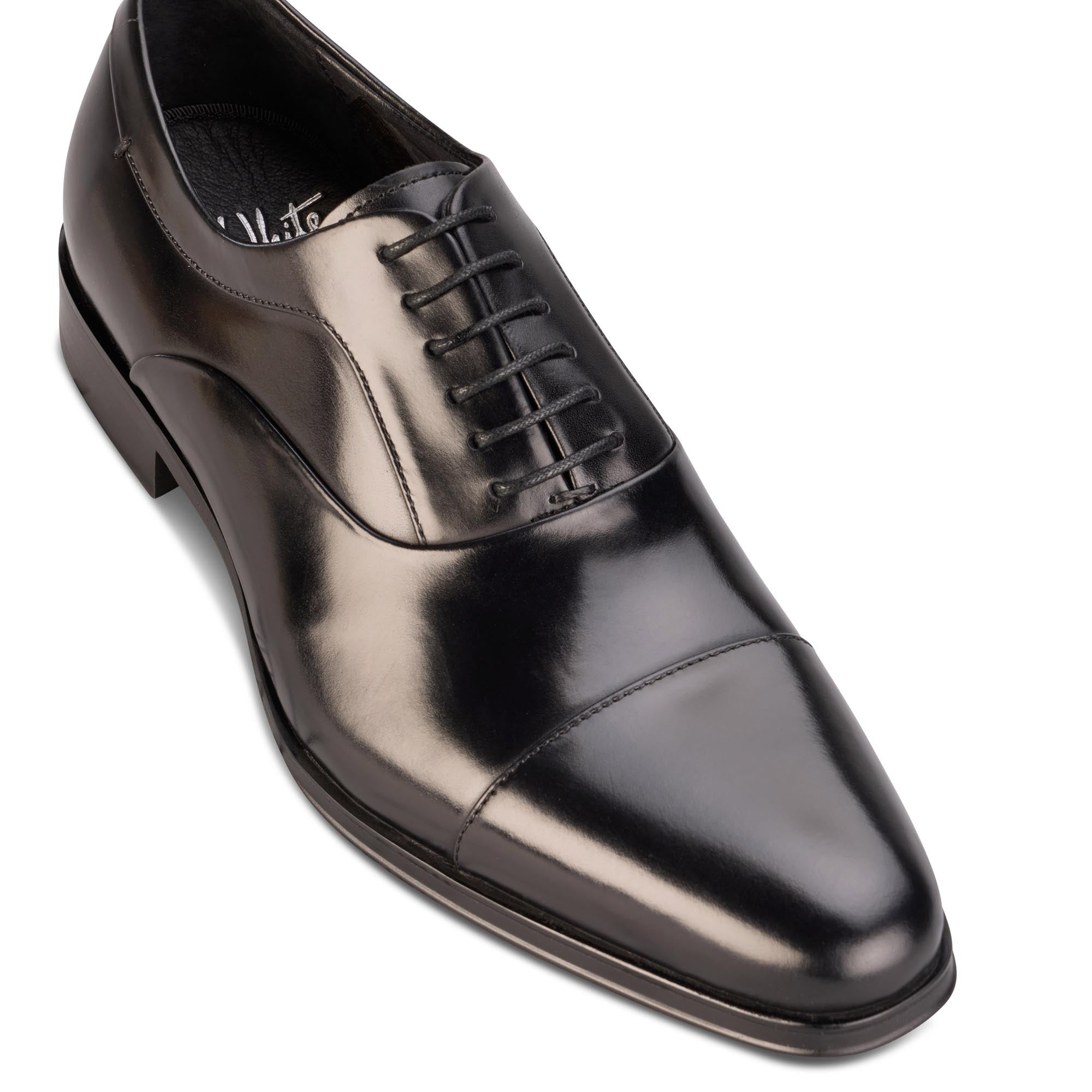
An Oxford is defined by its closed lacing system: the facing (the two sides where laces attach) is stitched under the vamp, so the shoe closes firmly around the foot. That closed construction creates a sleek, unbroken silhouette — the reason the Oxford sits at the top of the dress-shoe formality scale. A plain-toe Oxford in polished black calf is the only correct shoe for black tie; a cap-toe Oxford in black or tan covers every formal occasion below it.
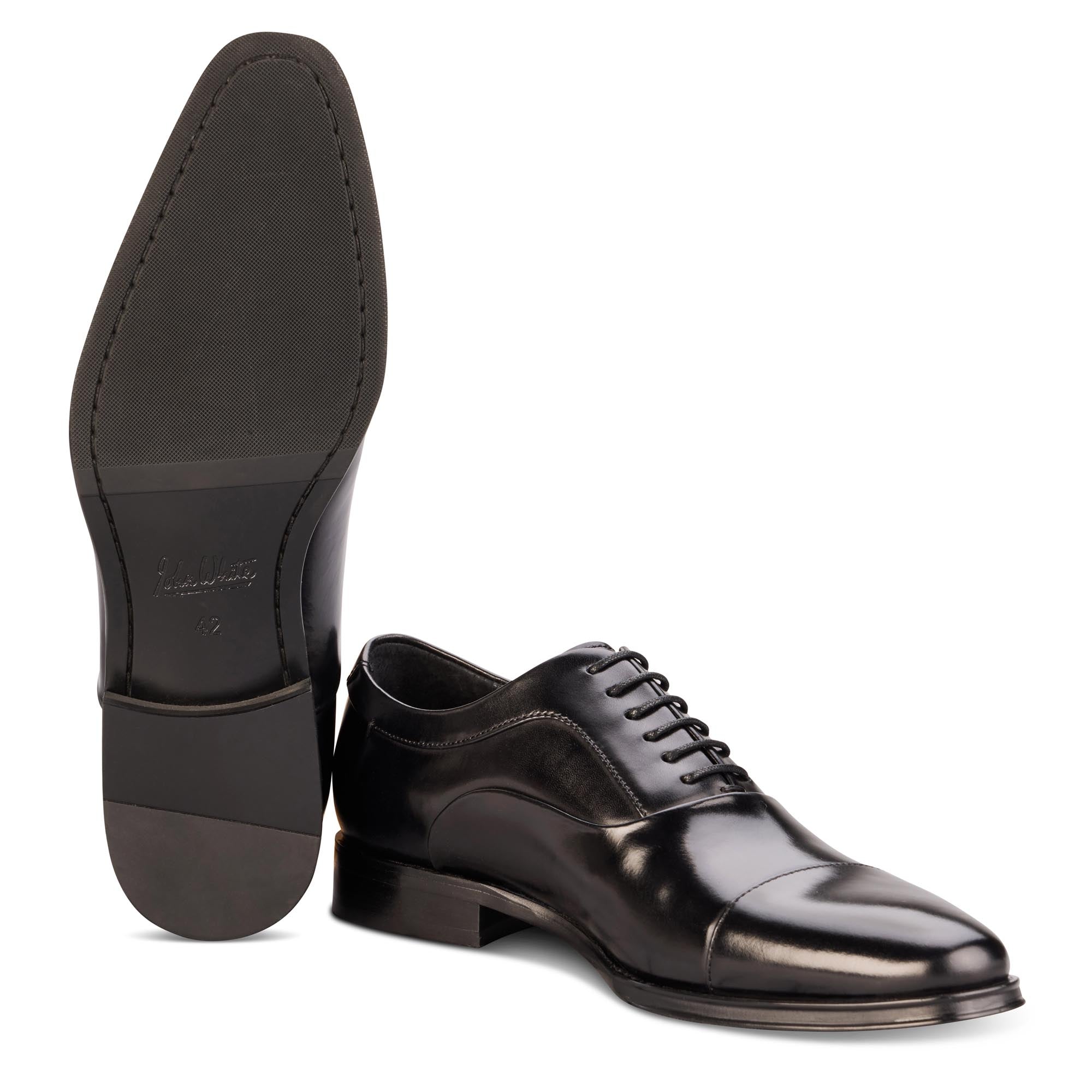
John White Shoes offers the Guildhall Capped Oxfords in Black and Tan — a clean cap-toe with a leather sole, cut for suits and formal separates.
Oxford shoes are the most formal men's dress shoe and the foundation of any serious wardrobe.
Derby Shoes
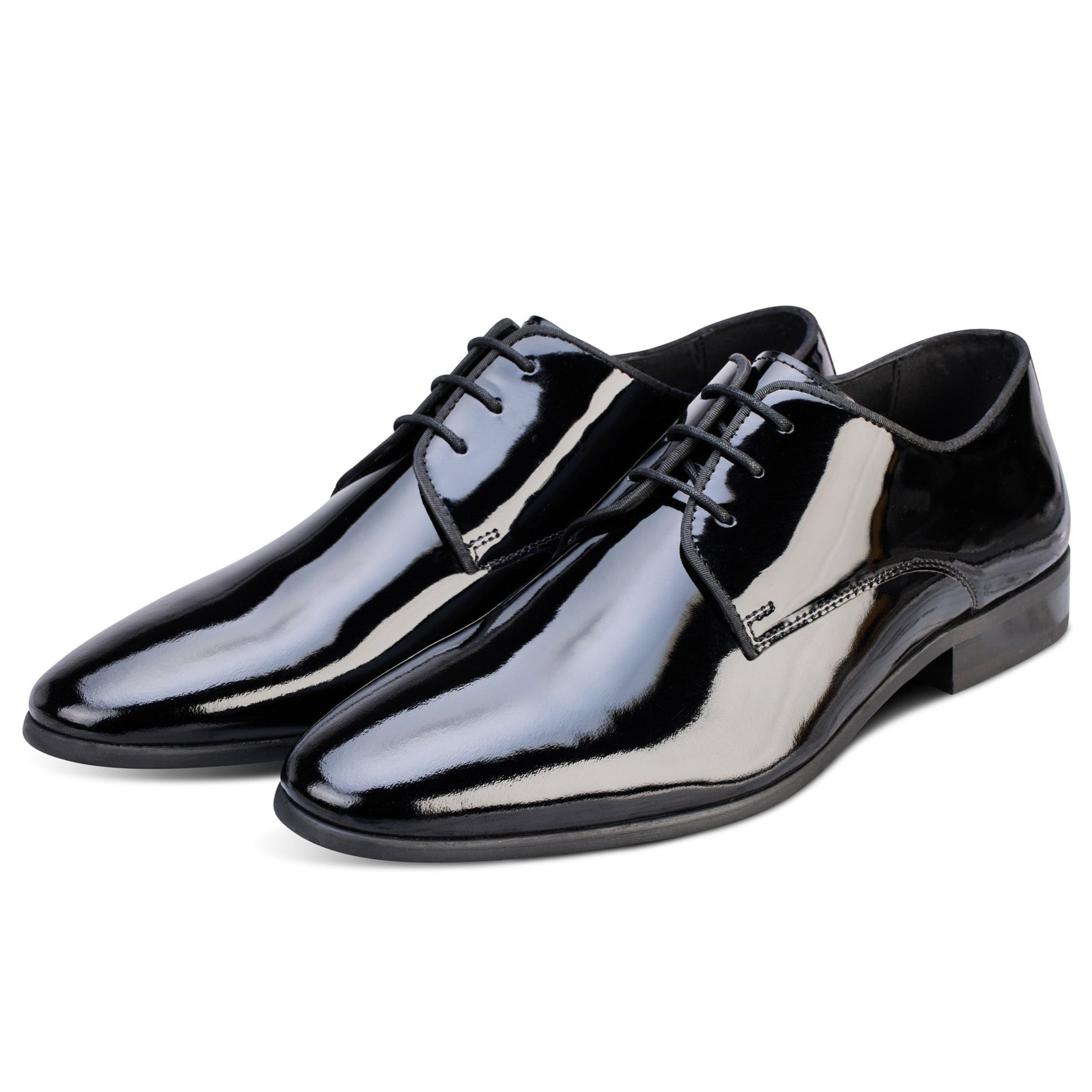
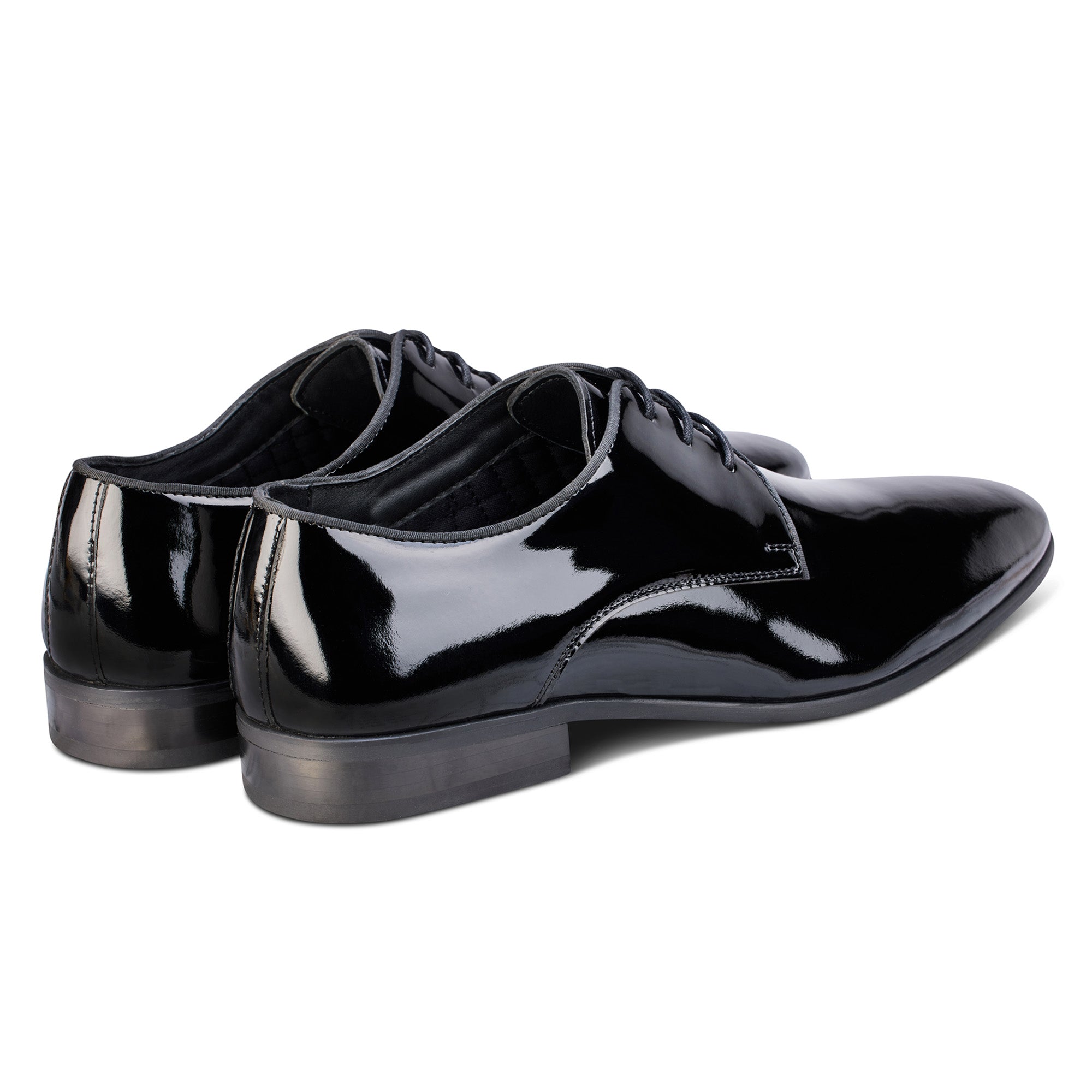
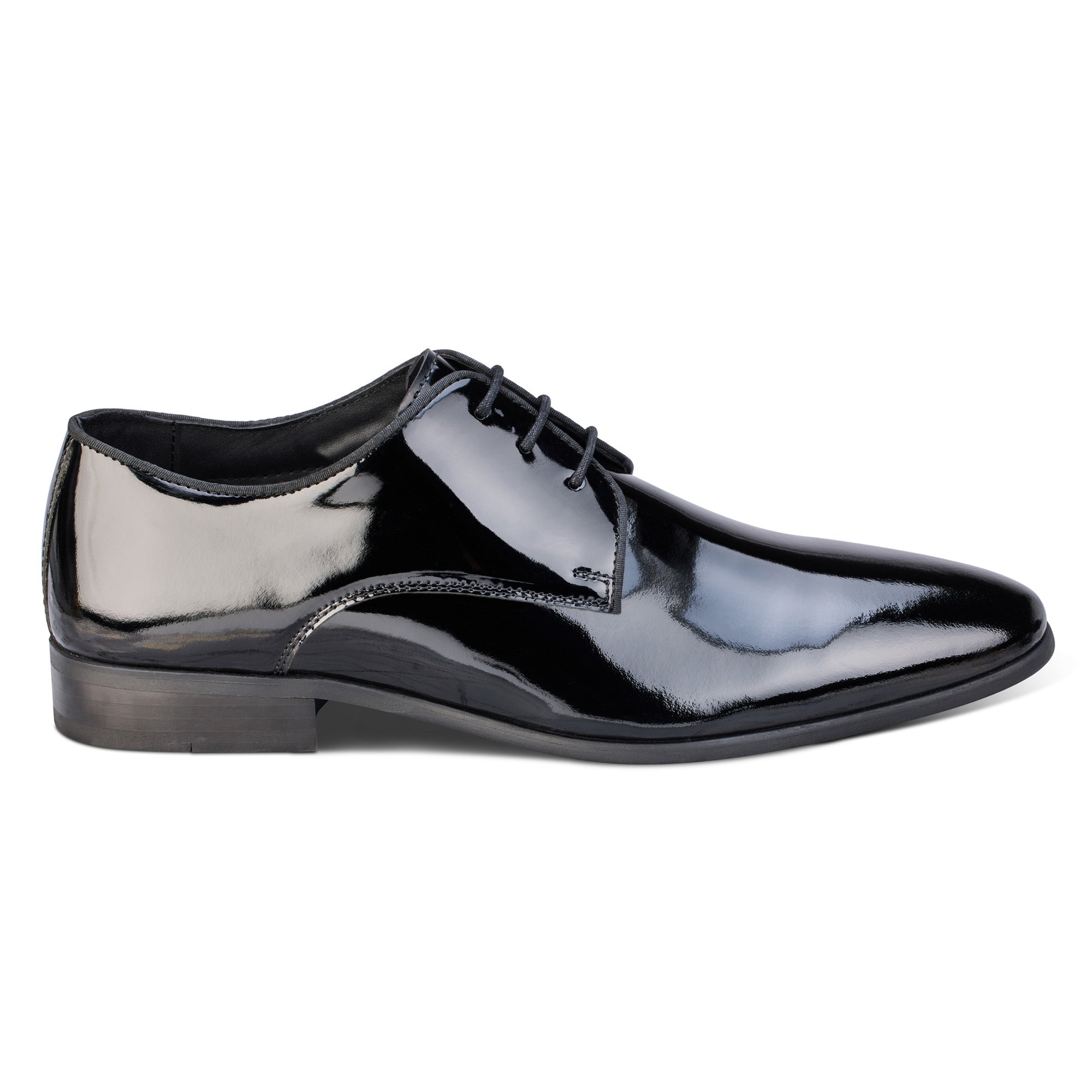
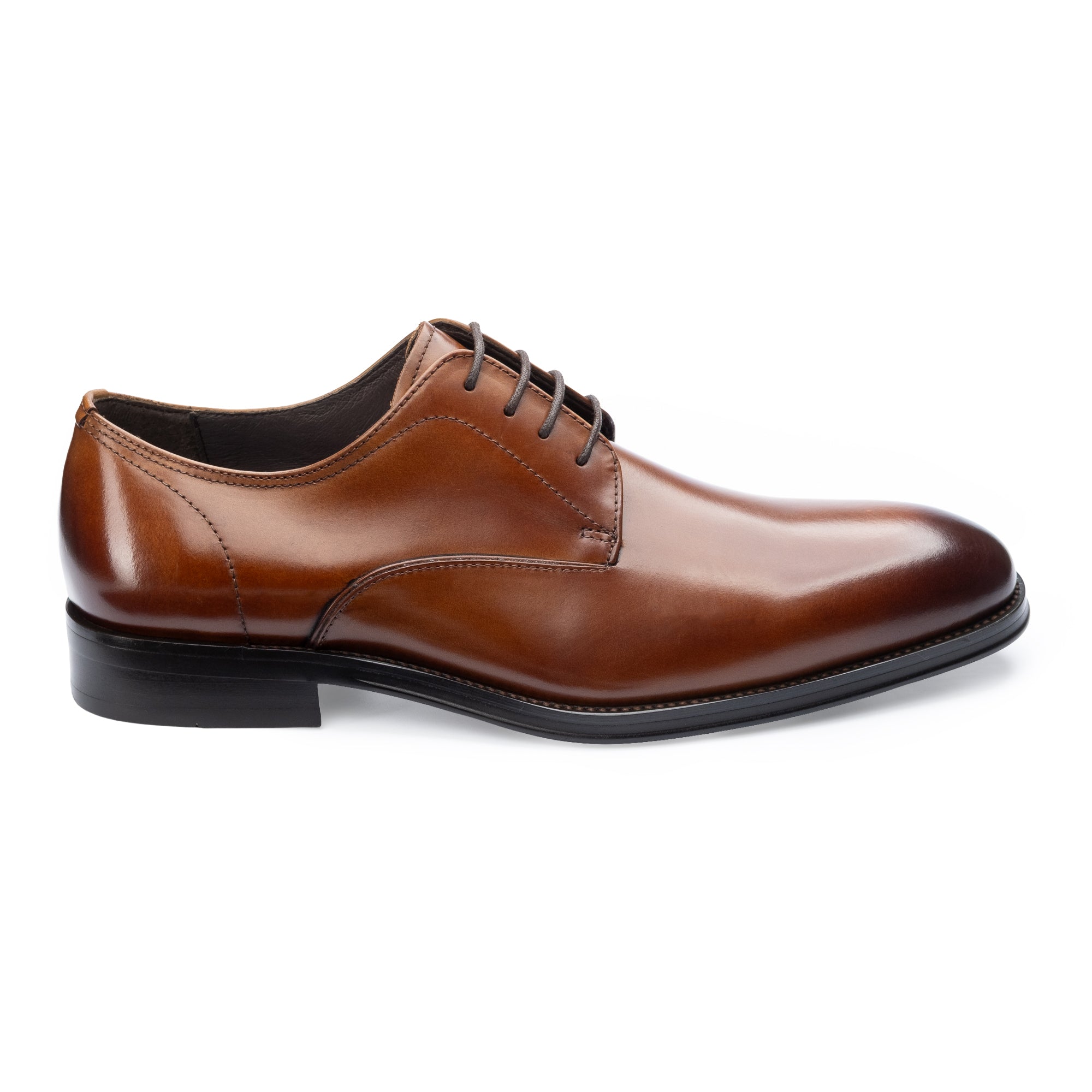
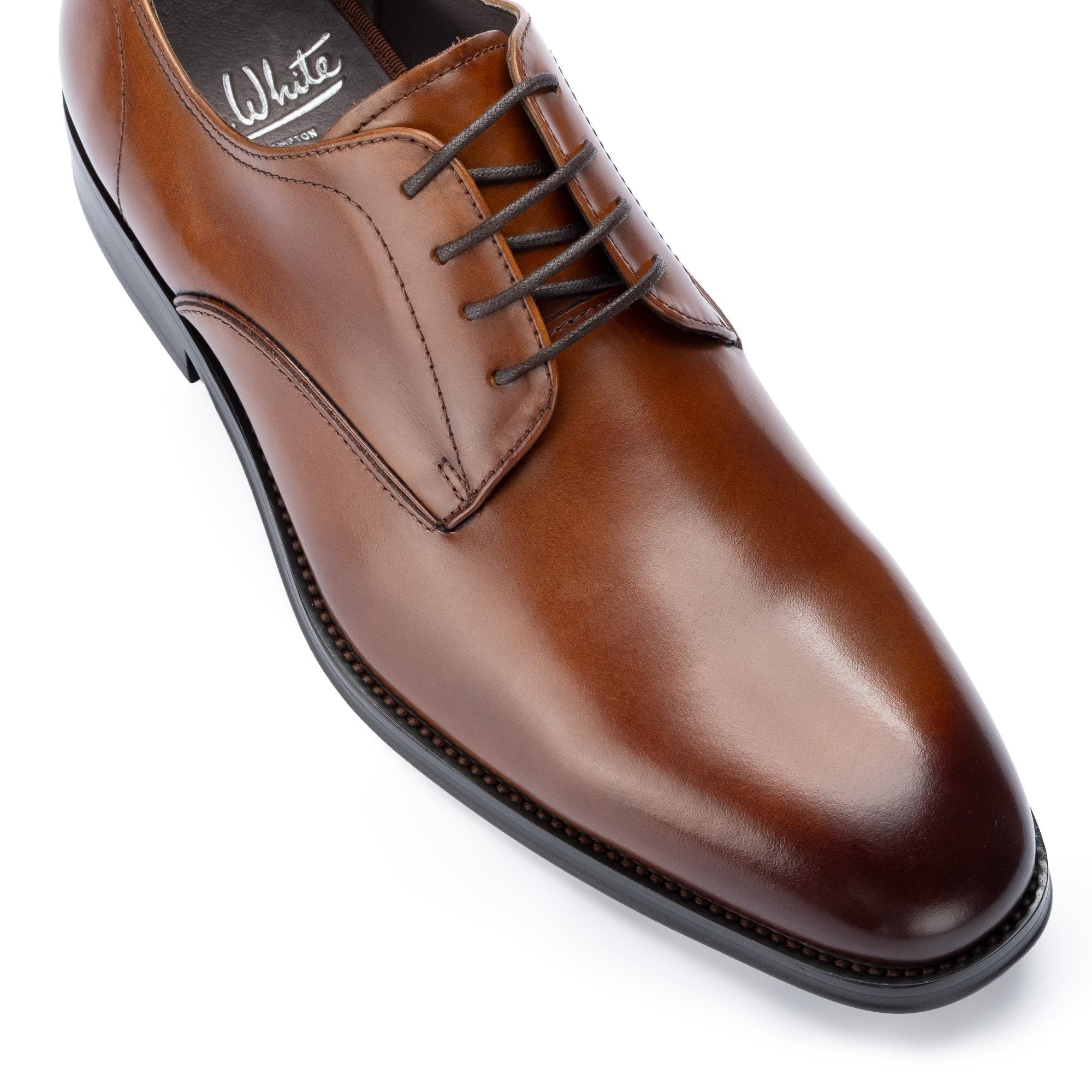
A Derby uses an open lacing system: the facing quarters are stitched on top of the vamp, leaving a wider, more adjustable opening at the throat. That single construction difference makes the Derby marginally less formal than an Oxford — and considerably more comfortable for wider feet or a longer day on your feet. It suits suits, smart-casual, and business occasions with equal confidence.
The JWS range carries multiple Derby silhouettes: the Jermyn Derby Shoes (Black, Tan), the Tanner Derby (Black, Brown), the Rudd Derby (Black, Brown), and the Wilms Derby (Black, Brown), alongside the clean Broad Derby and the entry-level Ivy Black Derby.
The Derby is the most versatile dress shoe — formal enough for a boardroom, relaxed enough for a creative studio.
Brogue Shoes
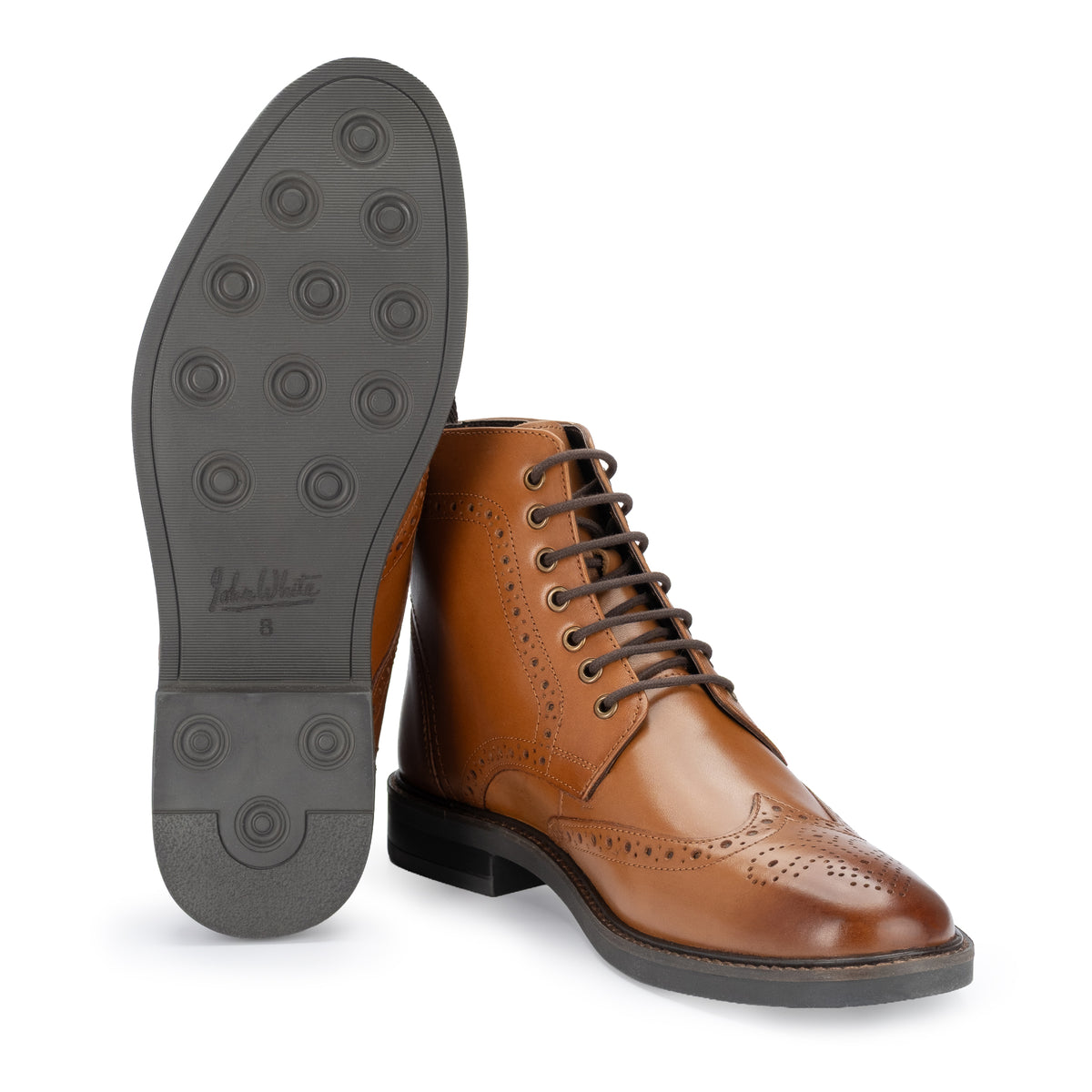
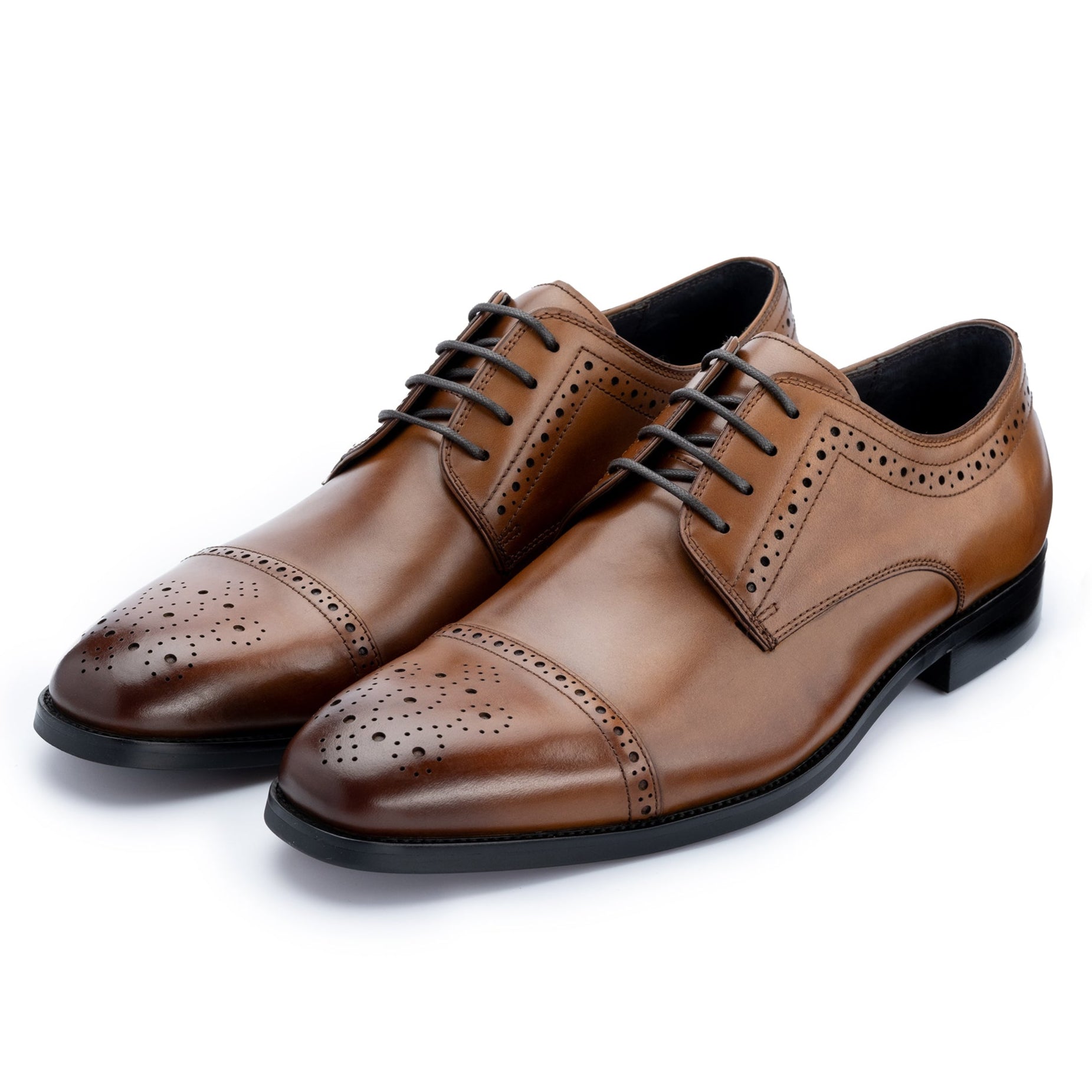
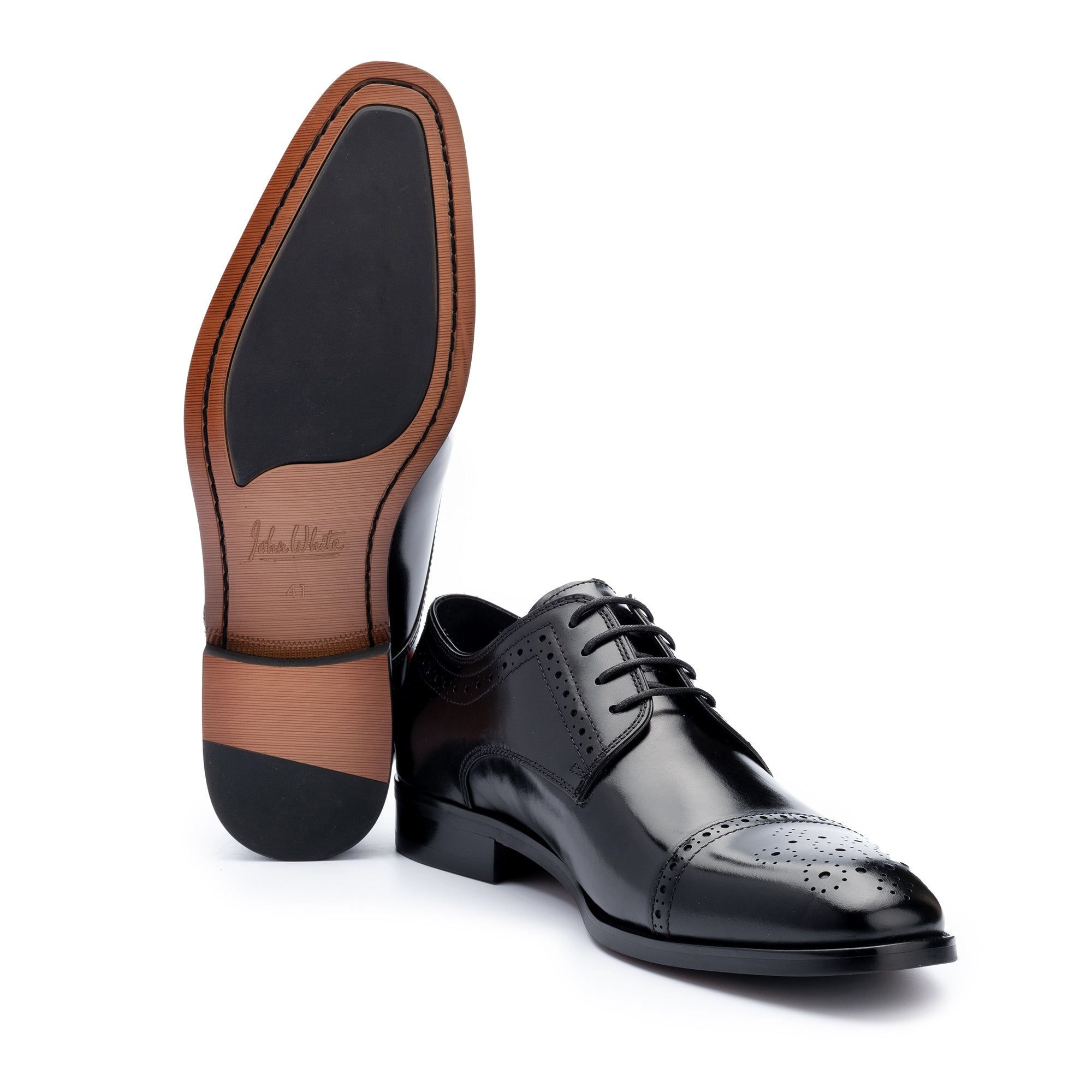
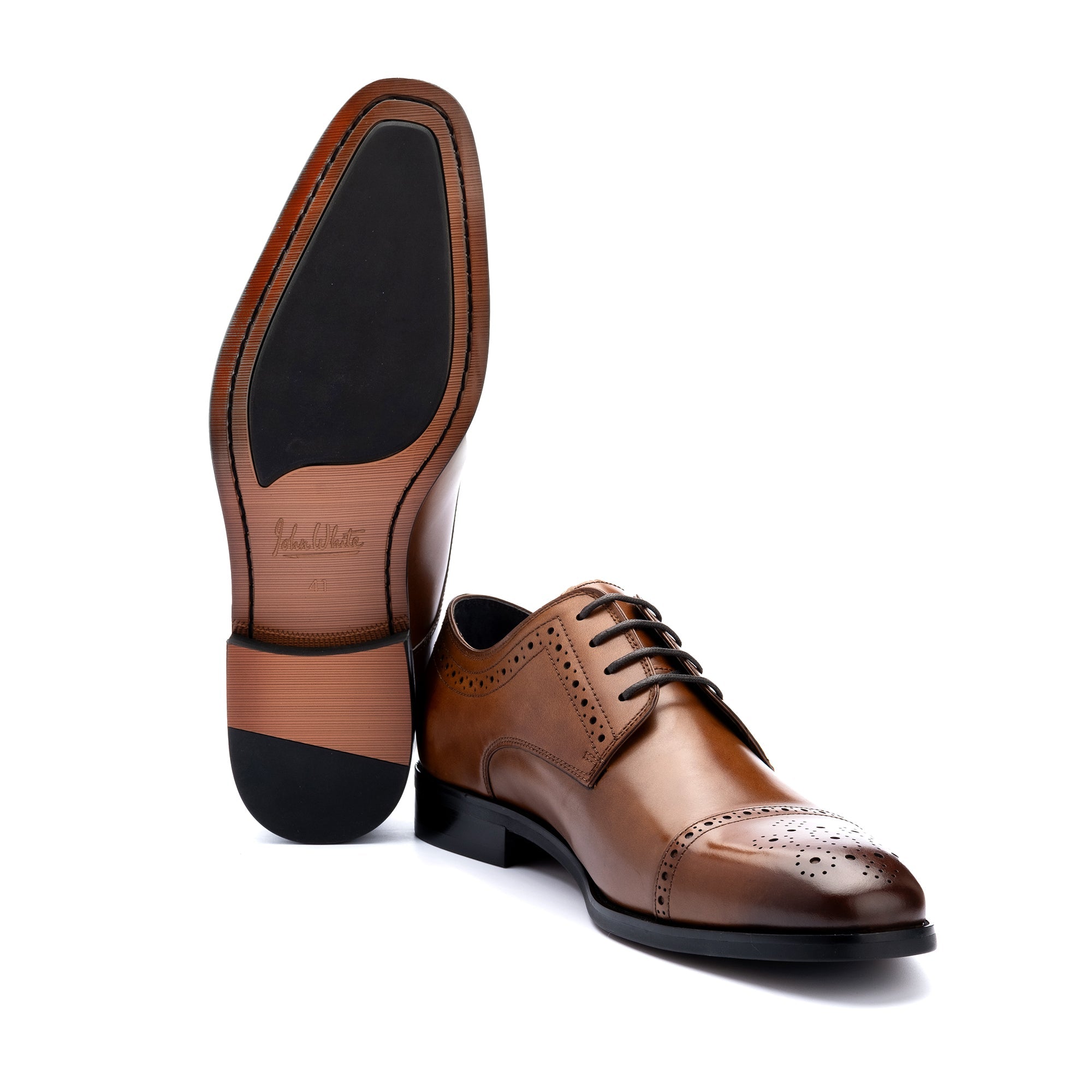
Broguing refers to the decorative perforations — medallions, serrated edges, and wingtip stitching — originally cut into working footwear to let water drain from boggy ground. Today, broguing is a stylistic signal: a full brogue (wingtip + medallion + perforated edges) reads as smart-casual; a semi-brogue (medallion cap-toe only) sits closer to formal and can carry a suit comfortably. A plain Oxford or Derby is always more formal than its brogueed equivalent.
The Lucan Semi-Brogues (Black, Tan) represent the JWS formal end of brogueing. For a fuller brogue, the Stokes Brogue Derby (Black, Brown, Tan) and Hogarth Brogue Shoes (Black, Reef) cover the character end of the spectrum. See our detailed breakdown in Full Brogue vs. Semi-Brogue.
Brogues add personality without sacrificing smartness — choose the semi-brogue when in doubt.
Monk Strap Shoes
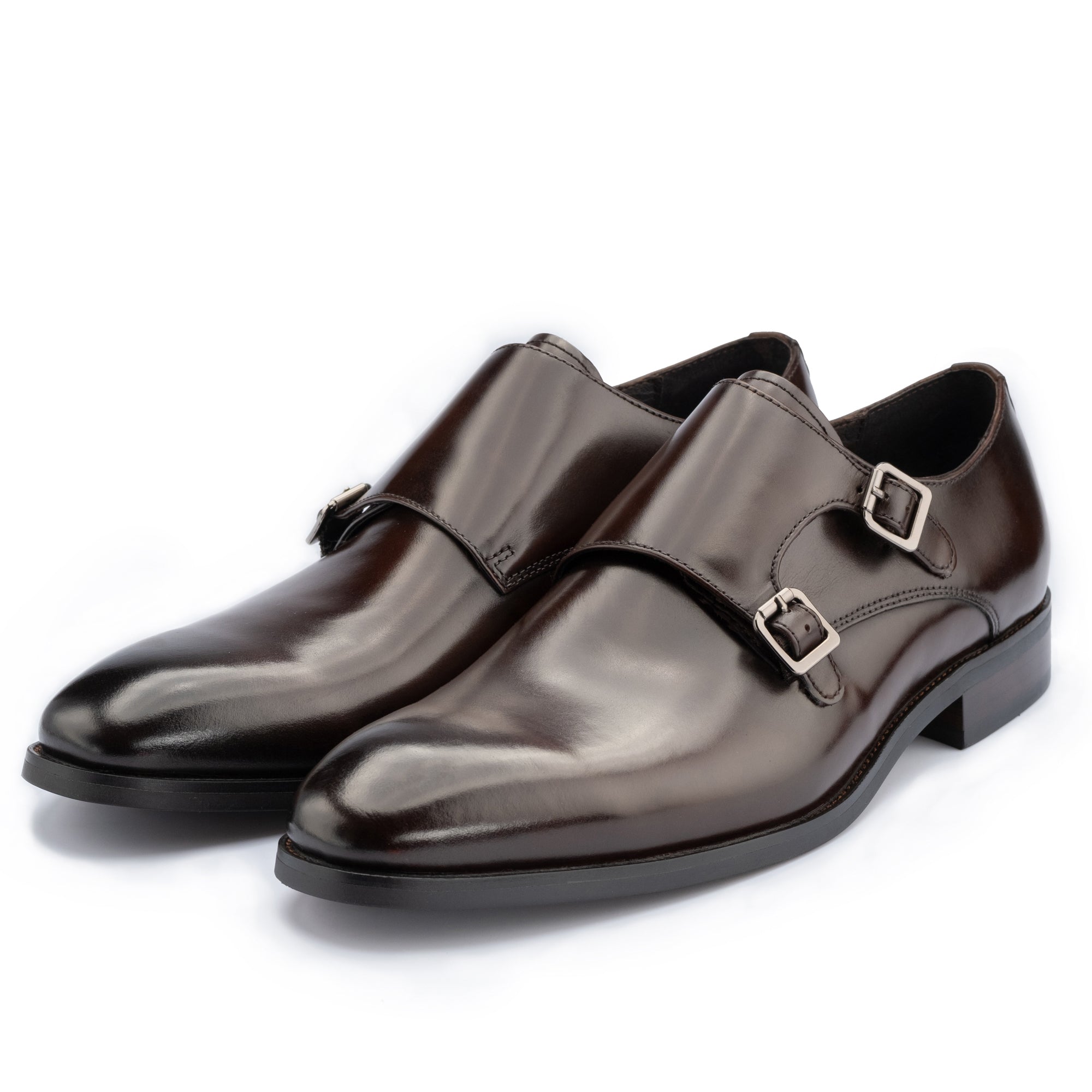
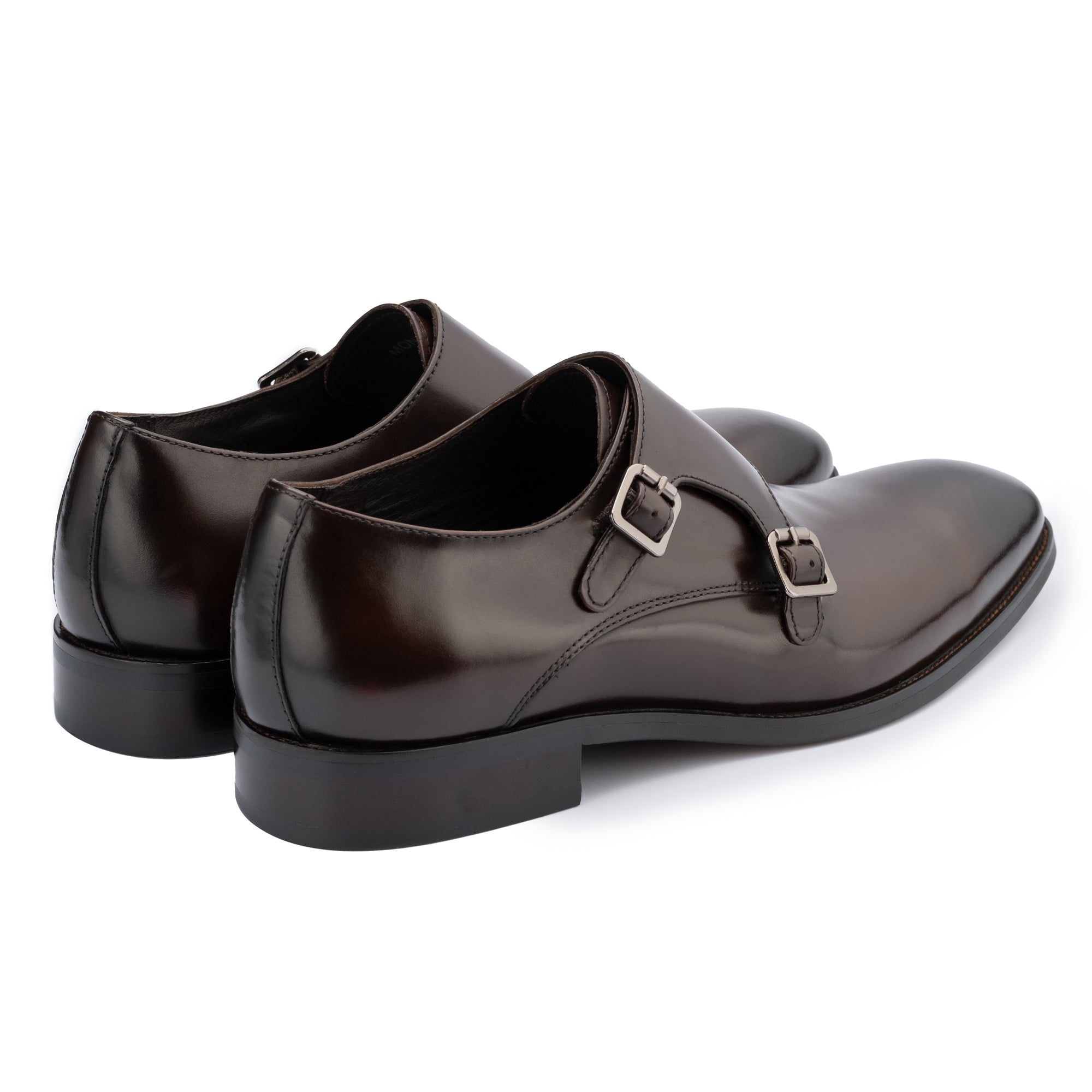
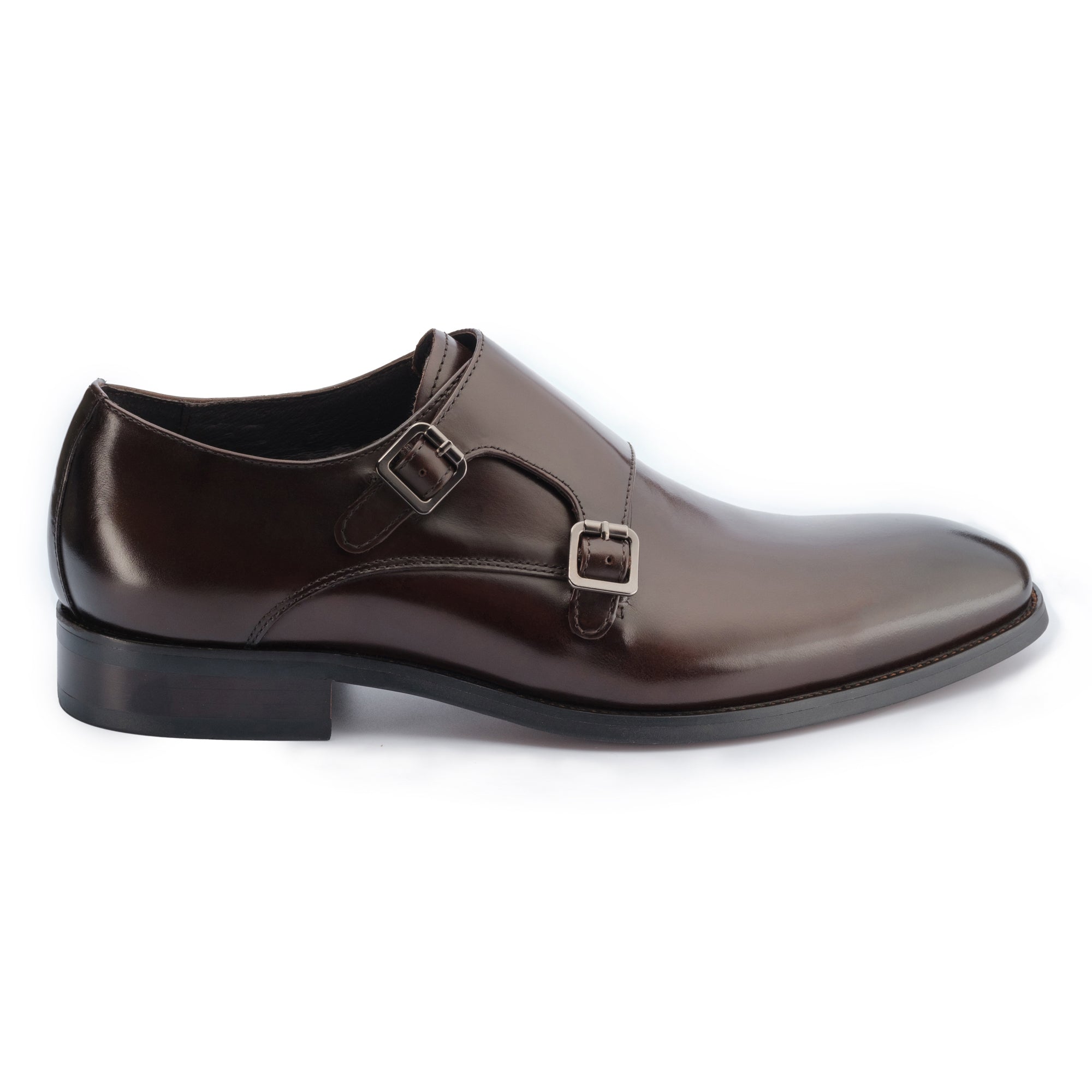
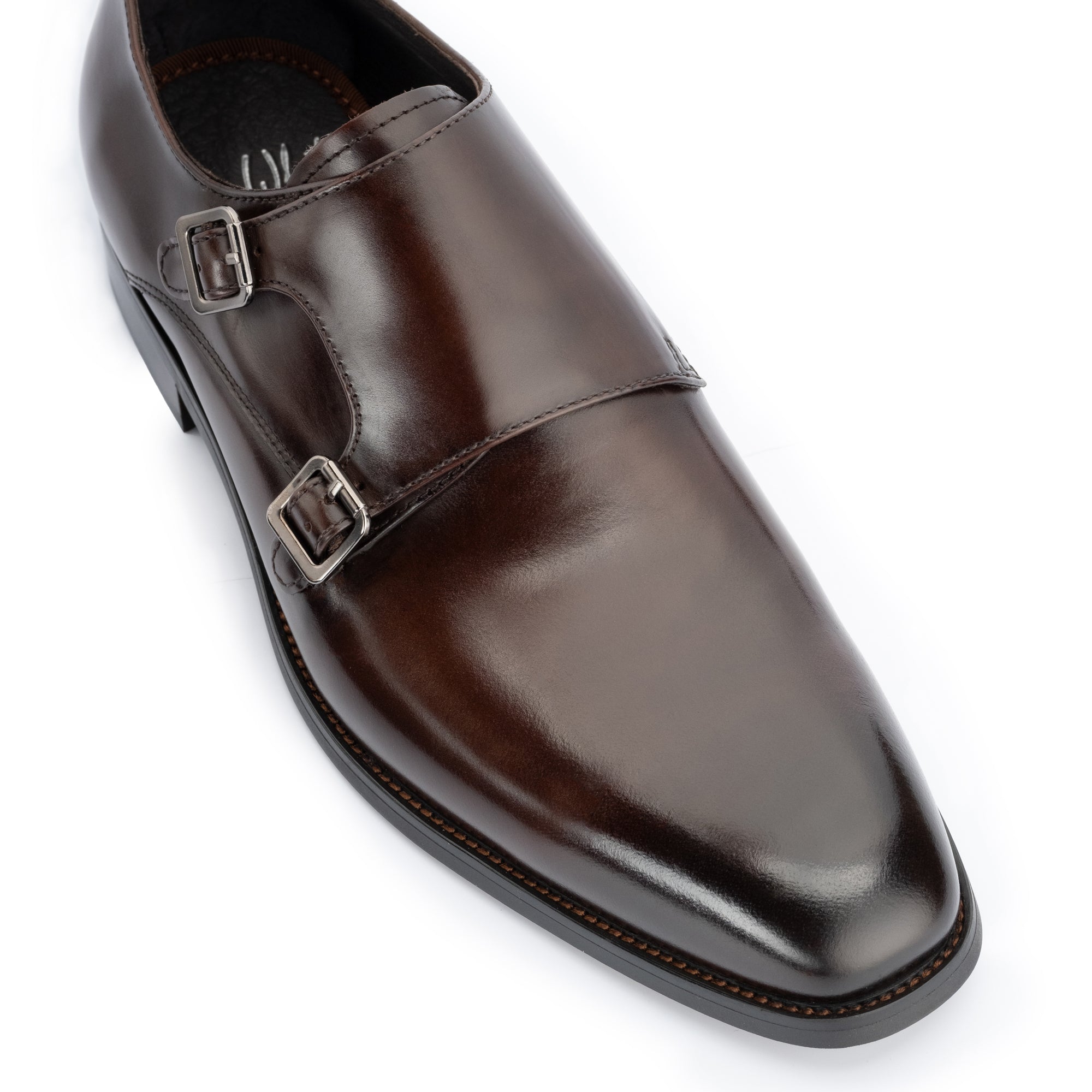
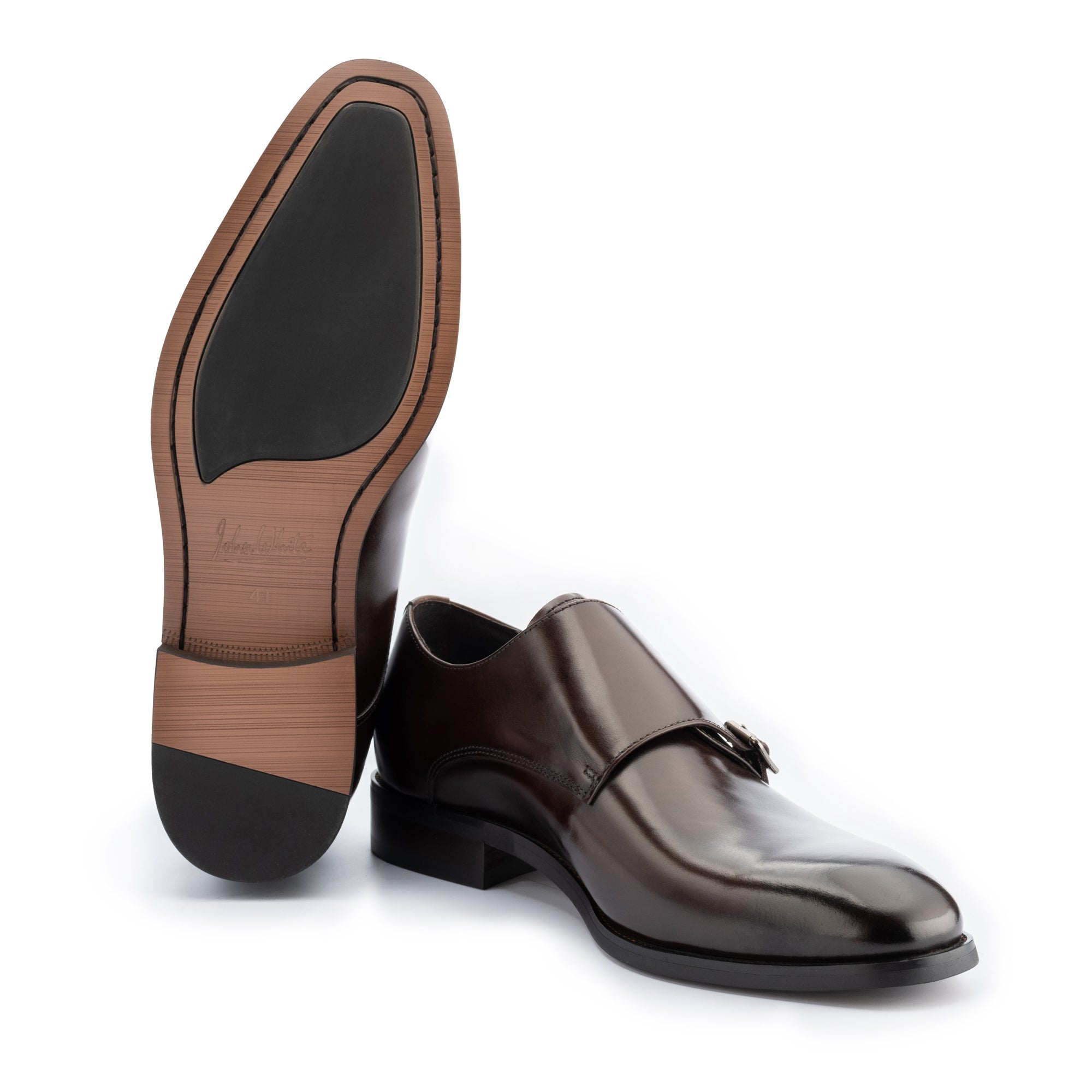
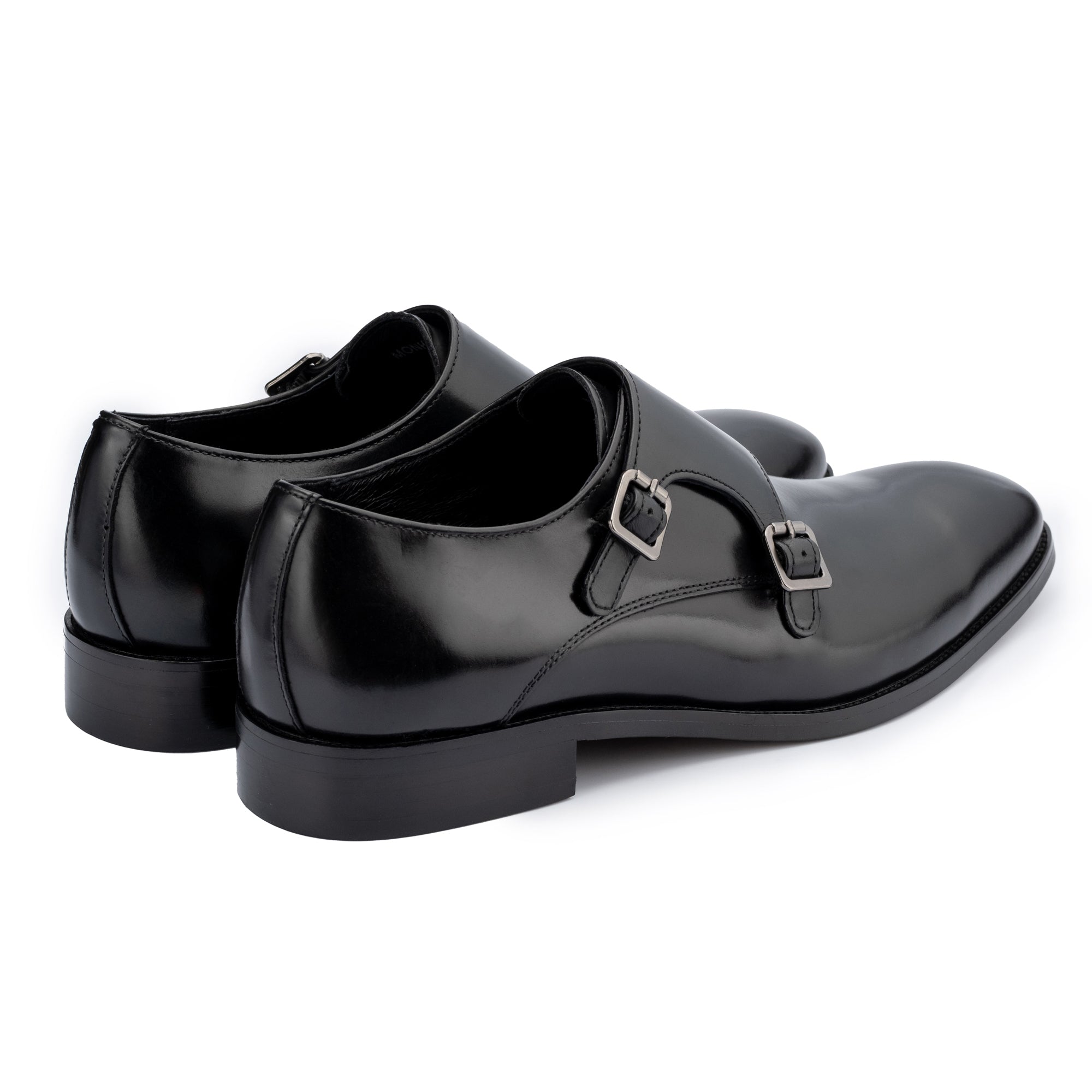
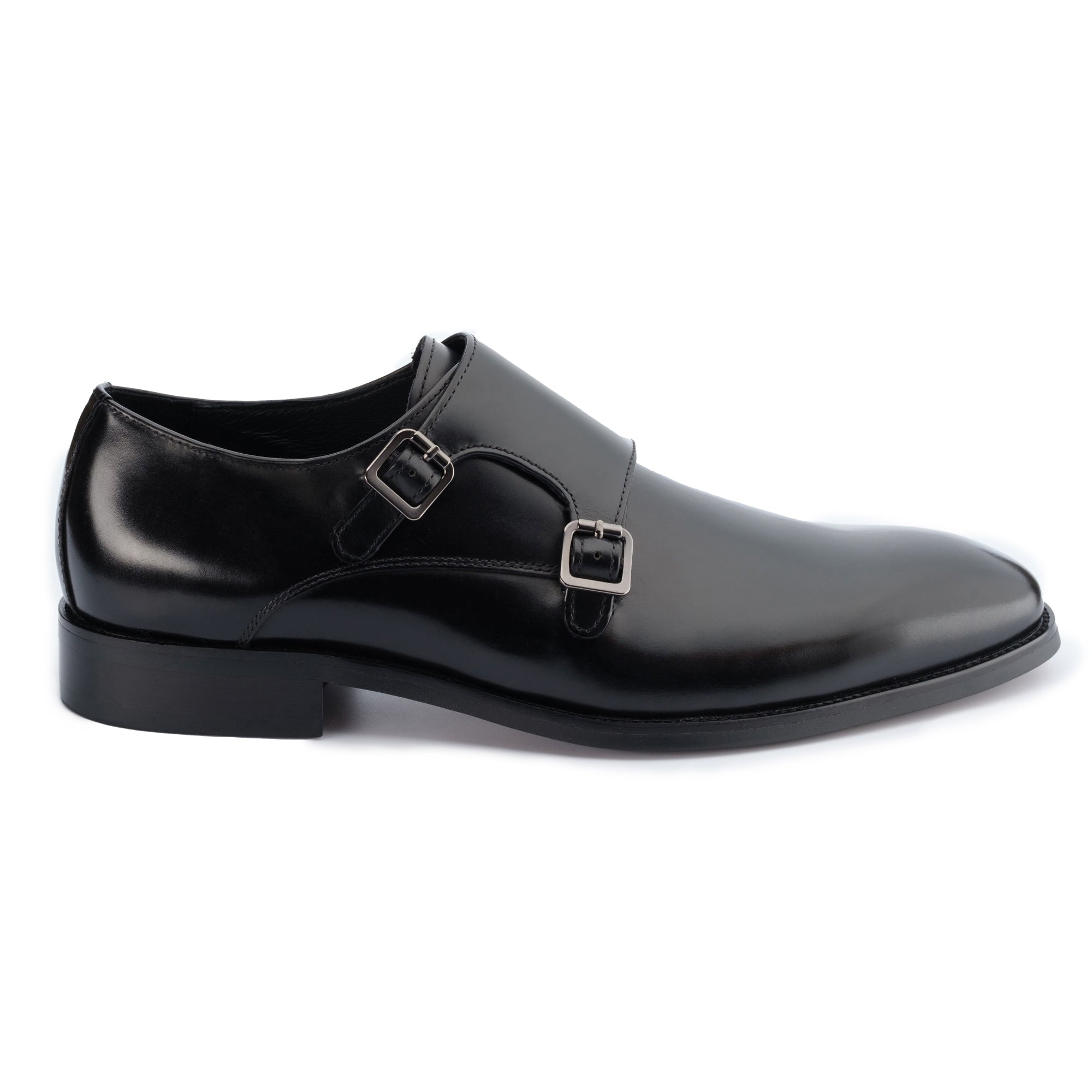
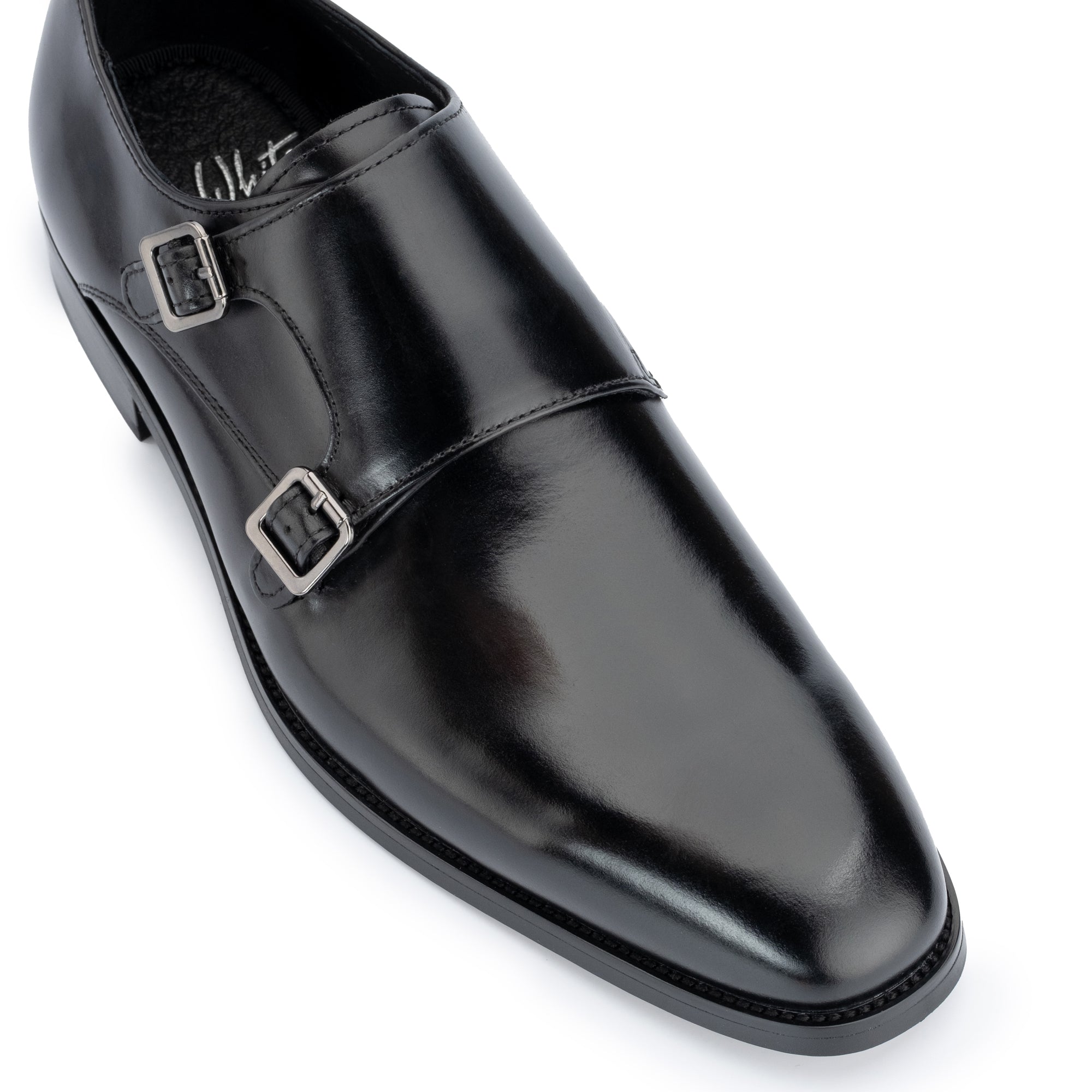
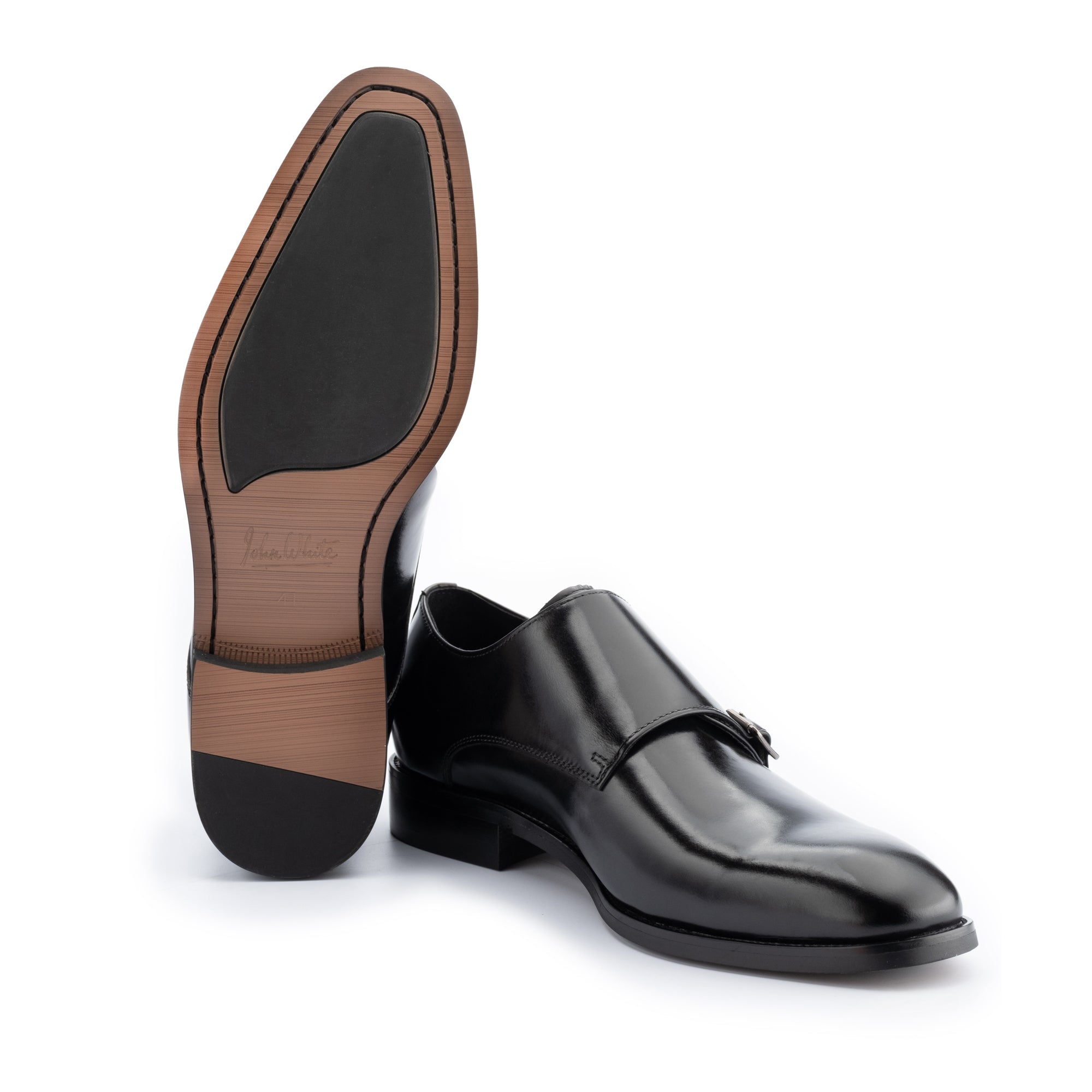
The monk strap replaces laces with one or two metal buckle-and-strap closures across the vamp. A single monk is cleaner and slightly more formal; the double monk is bolder and more fashion-forward. Both sit in the same formality bracket as a Derby — well-suited to suits and smart-casual, but not black tie. The absence of laces gives the monk strap an uncluttered side profile that works particularly well with slim-cut trousers.
The Monkton Double Monk Shoes (Black, Brown) are the JWS double monk — burnished calf, clean lines, a shoe that holds its own at board level and beyond. Full styling advice in How to Wear Double Monk Strap Shoes and Single vs. Double Monk Strap: A Definitive Guide.
Monk strap shoes are the dress shoe for men who want formality with a clear point of view.
Loafers
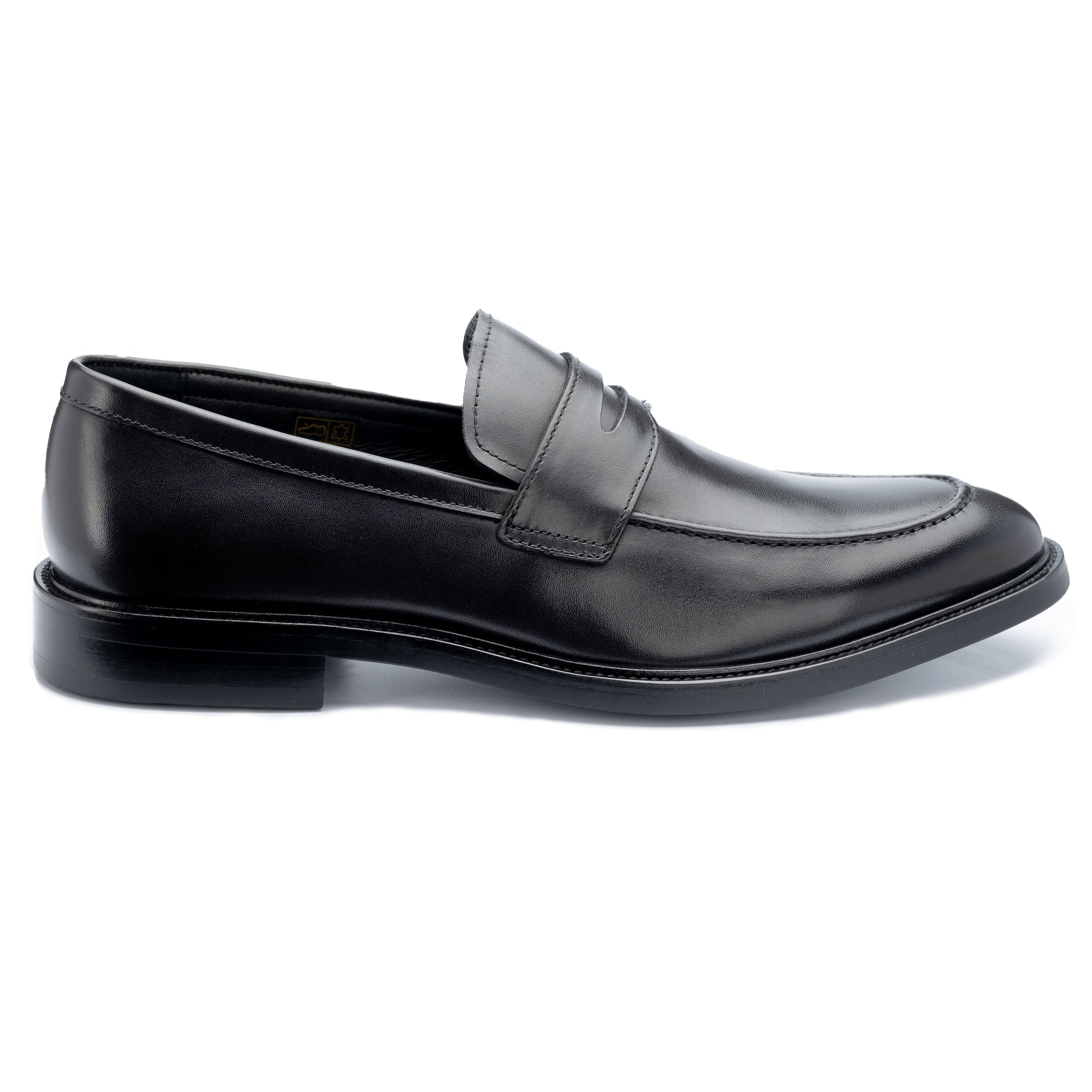
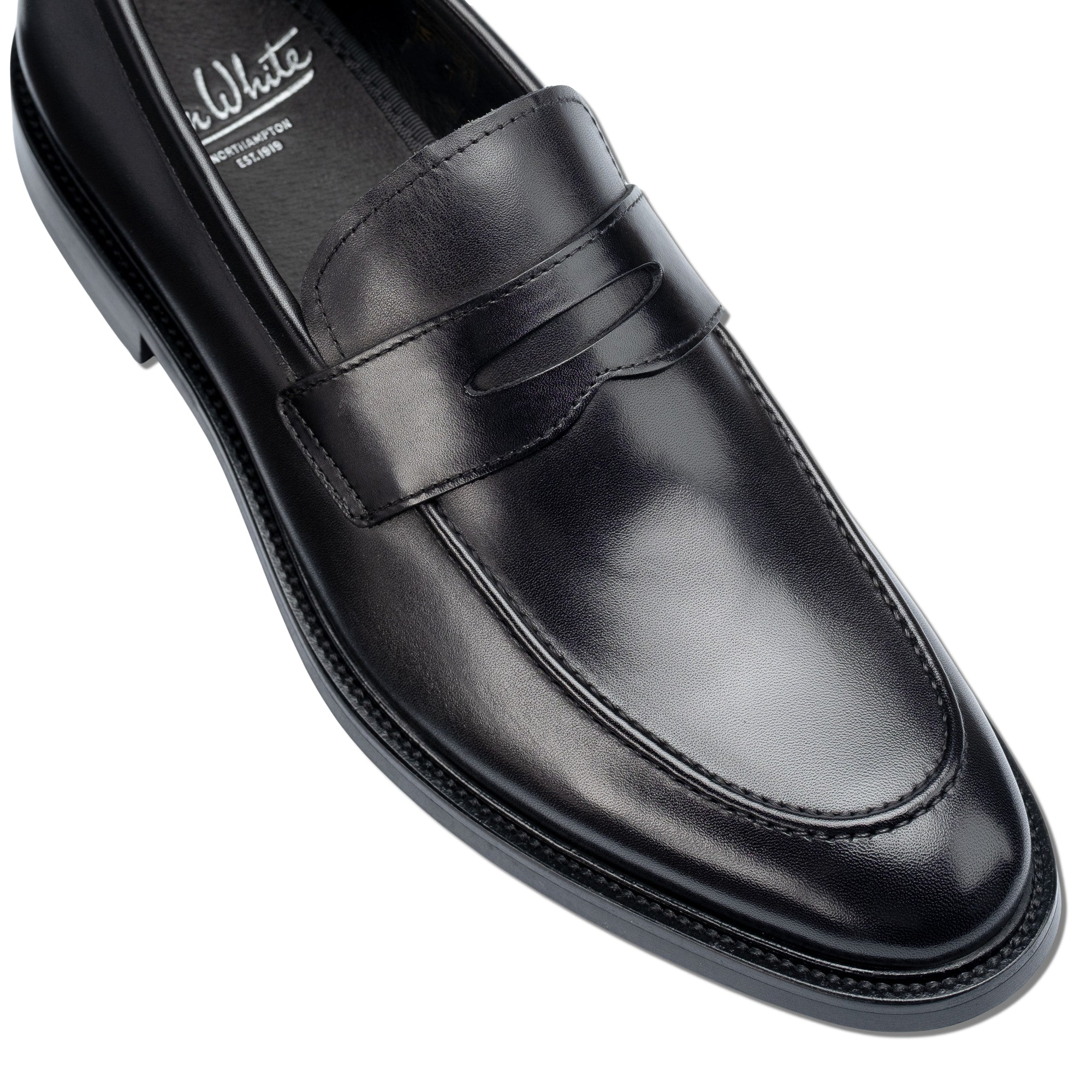
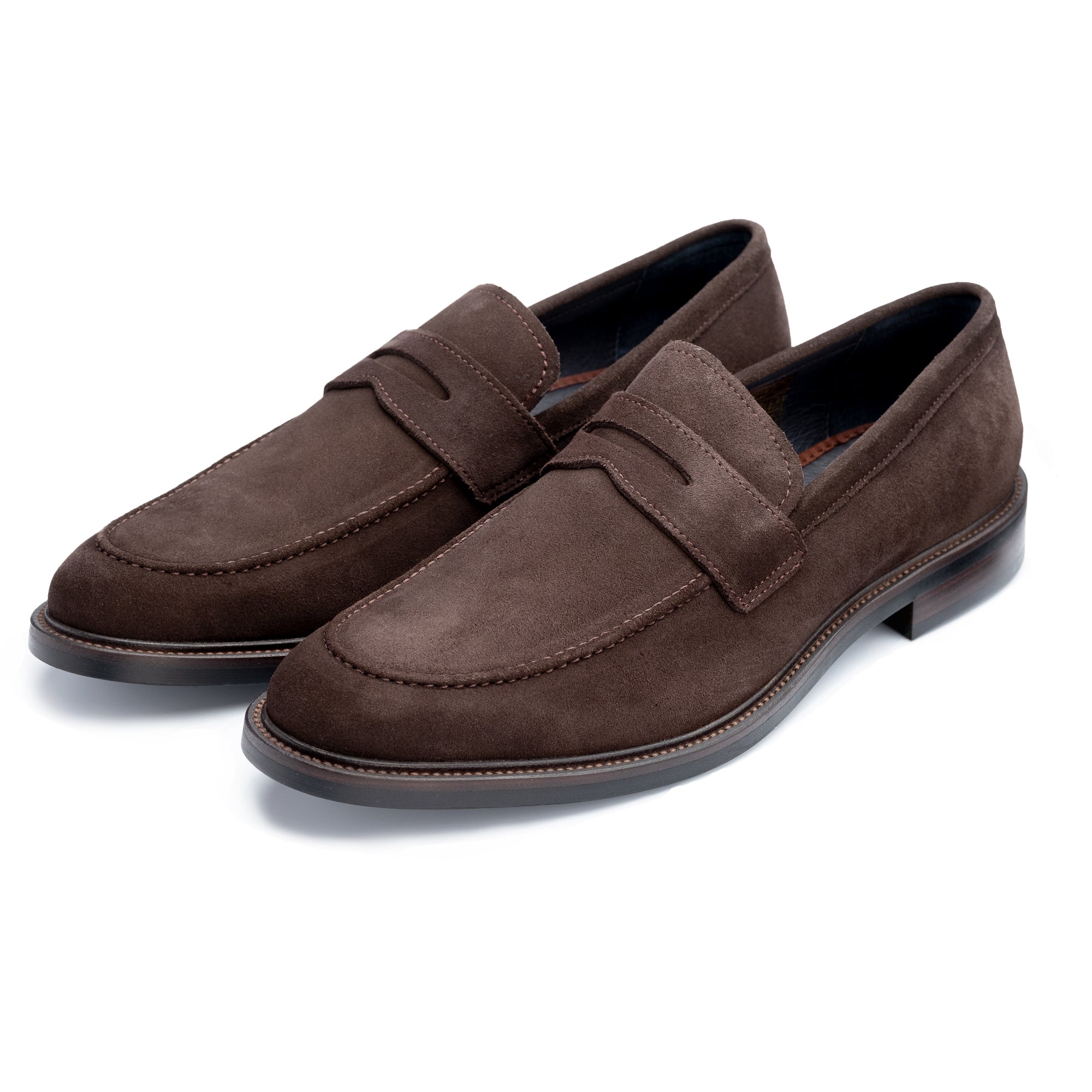
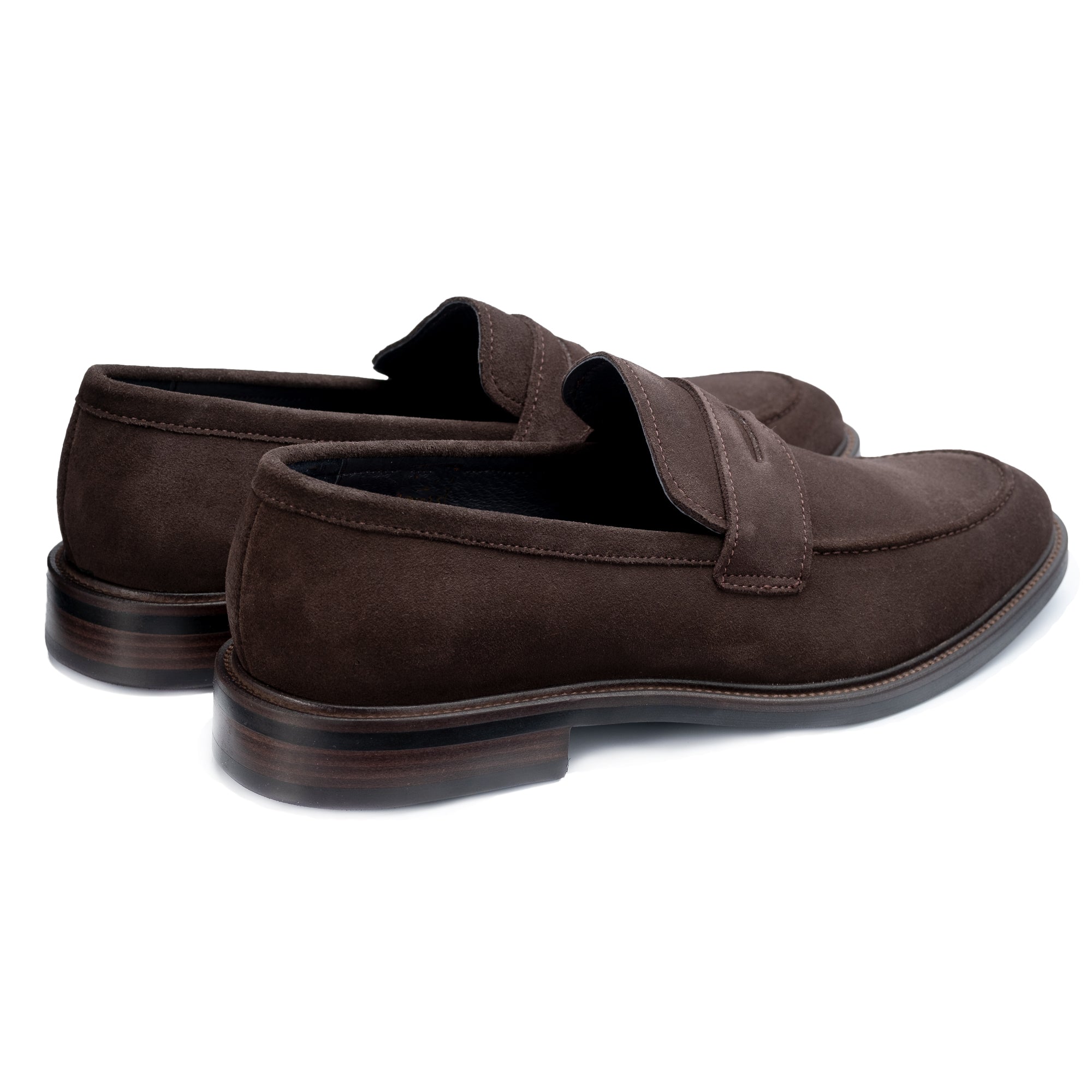
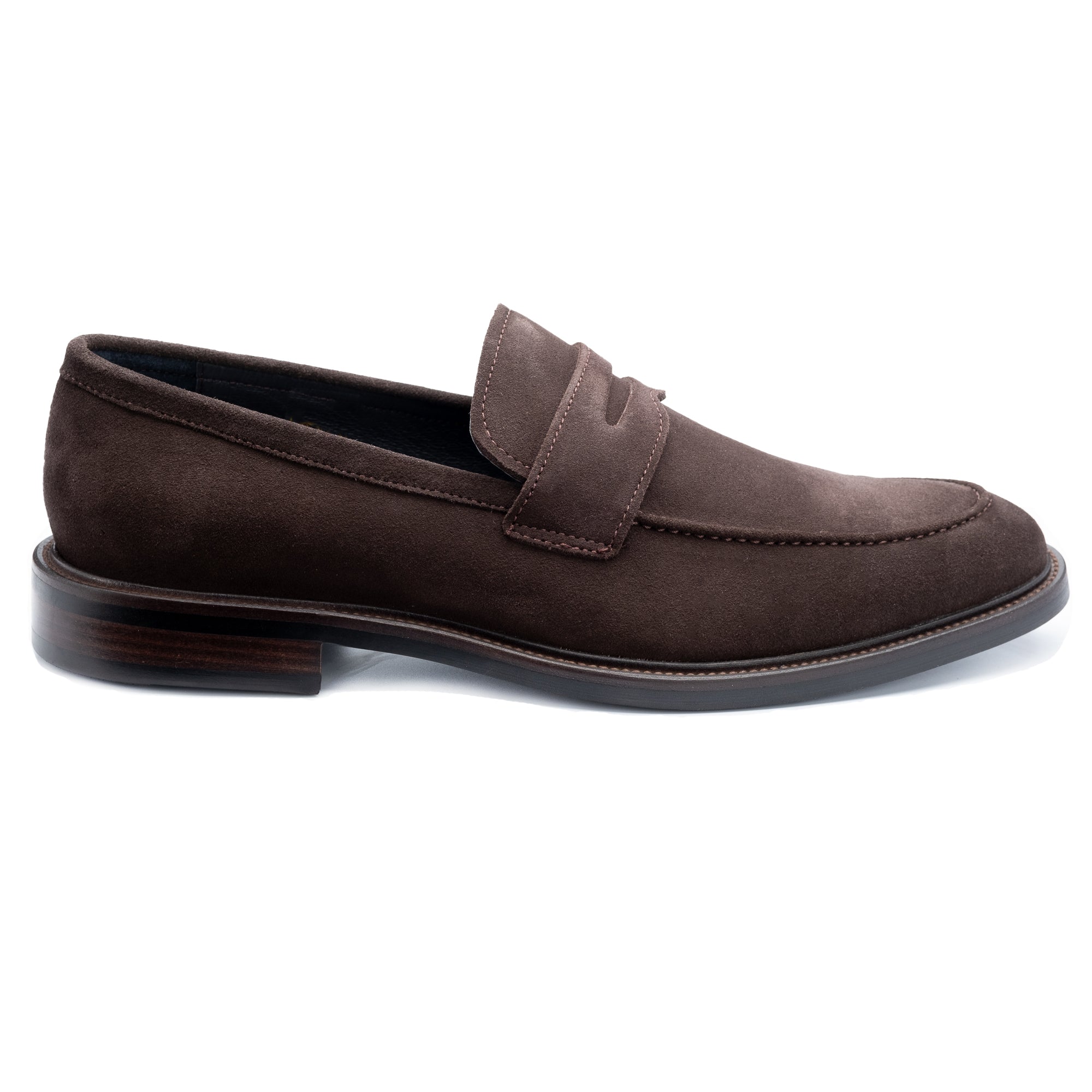
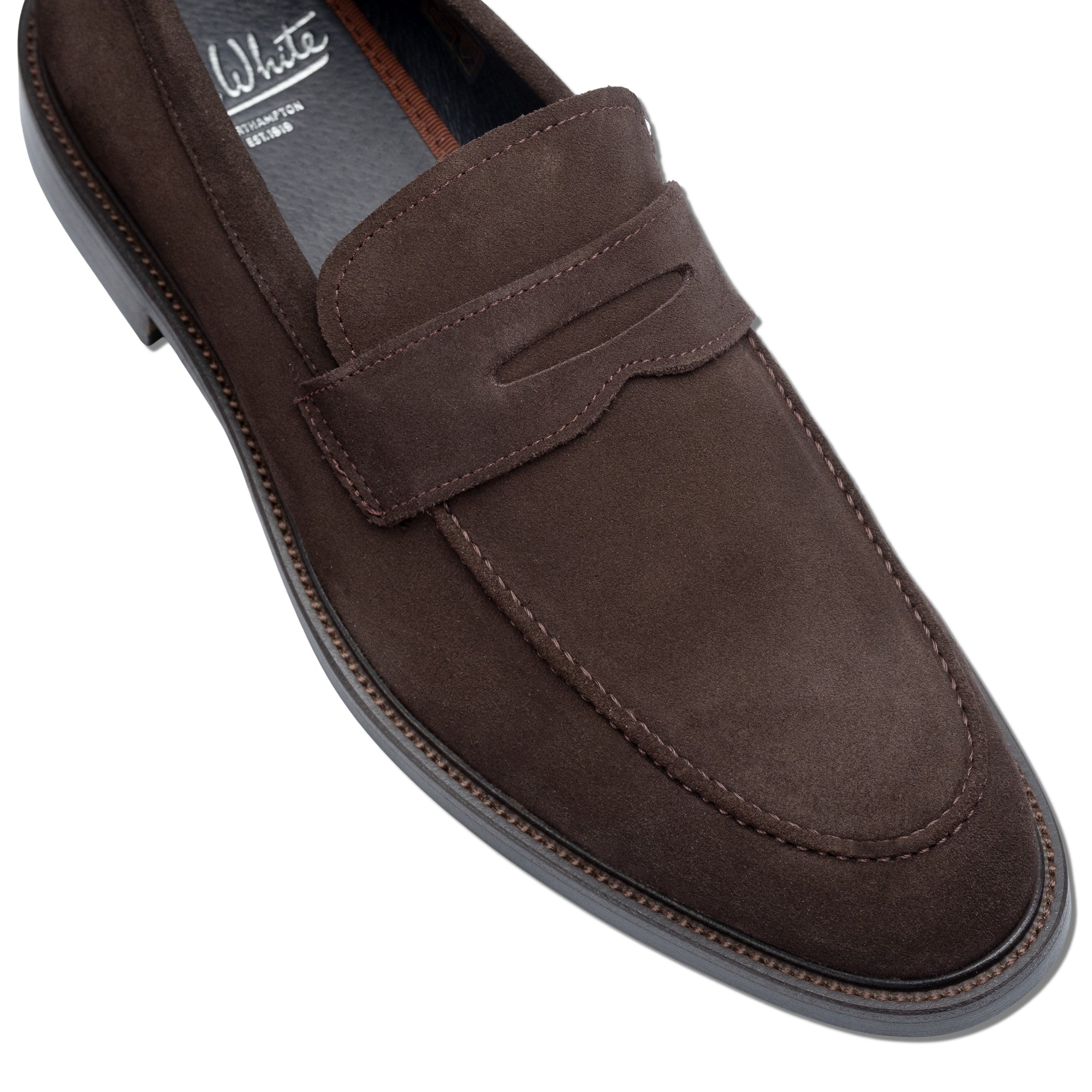
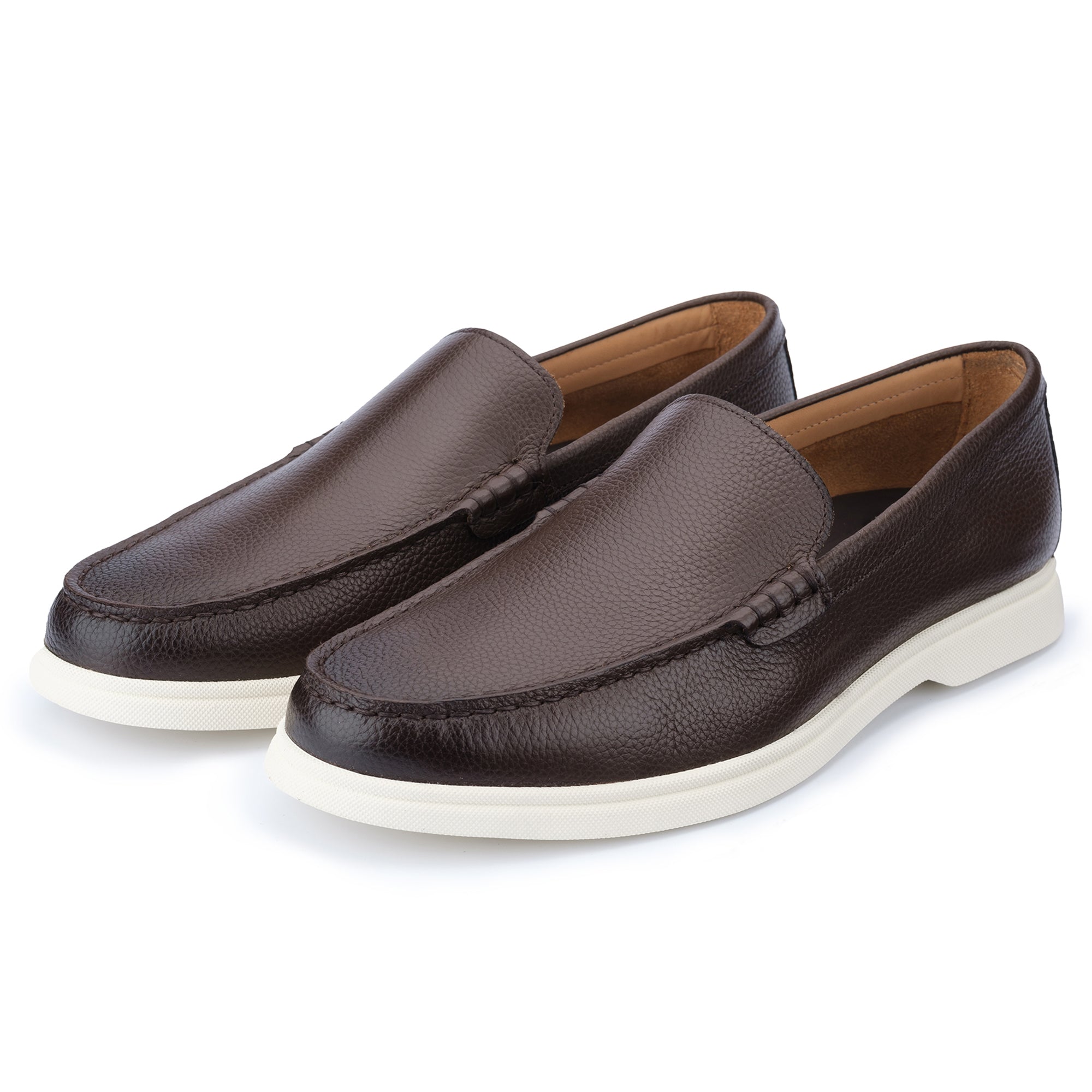
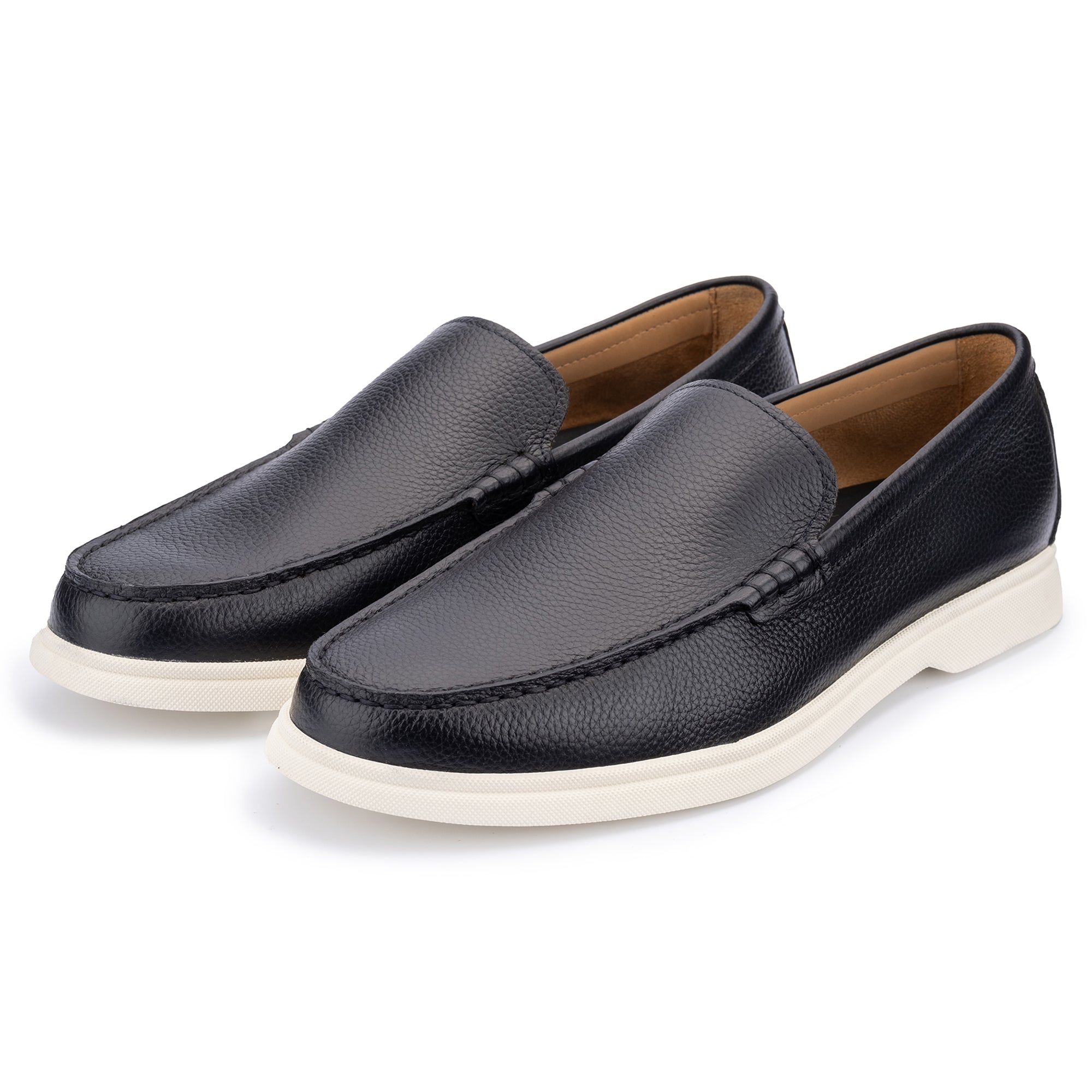
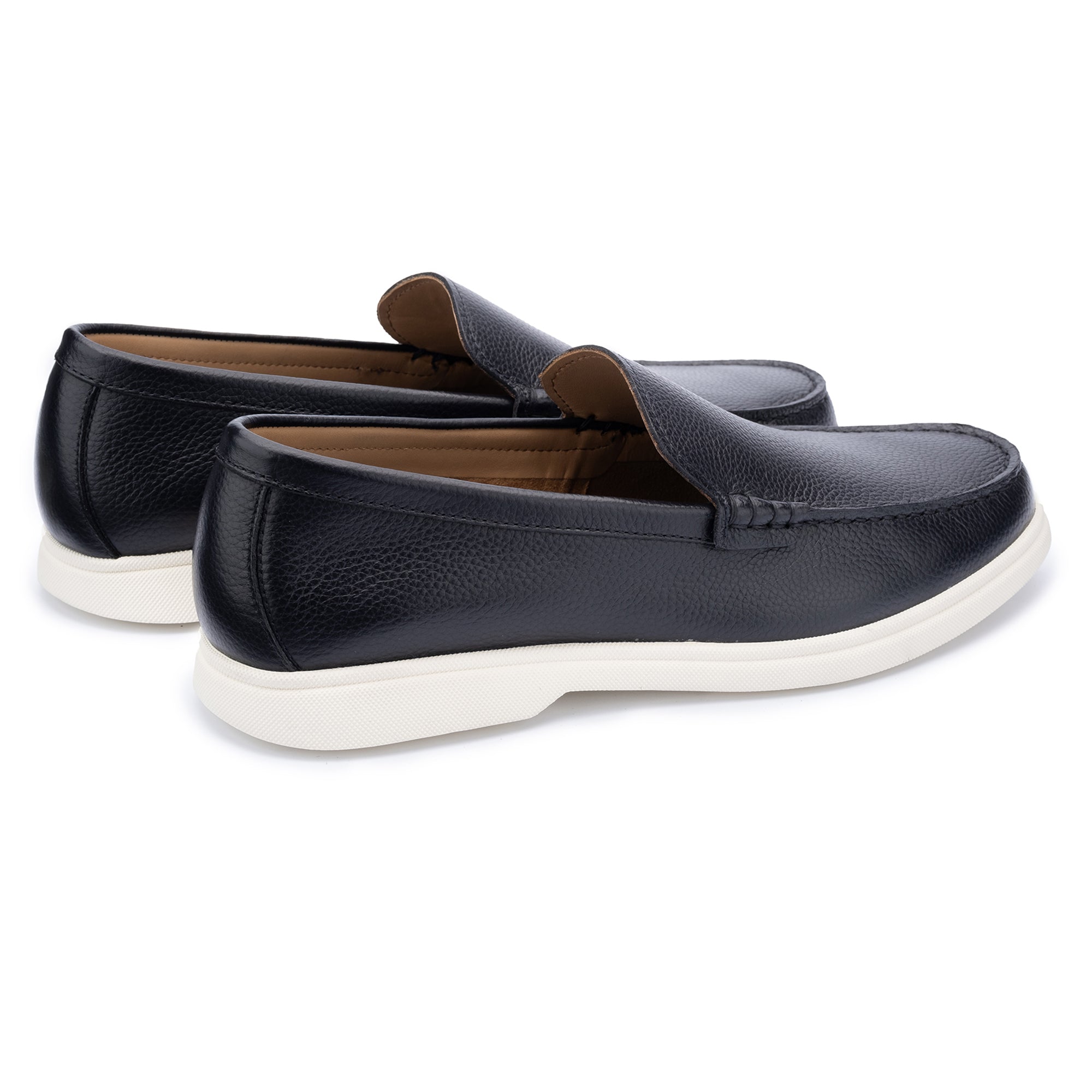
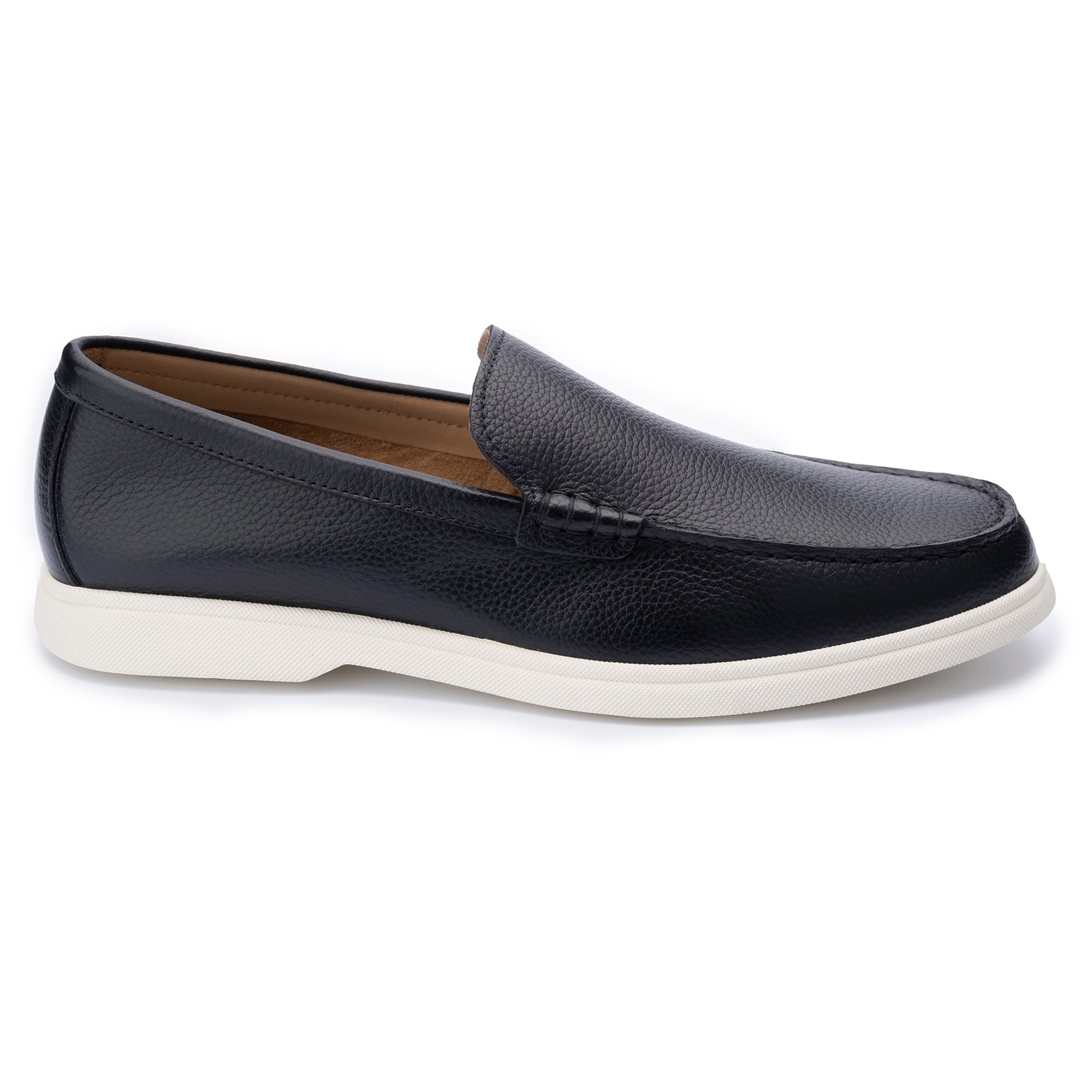
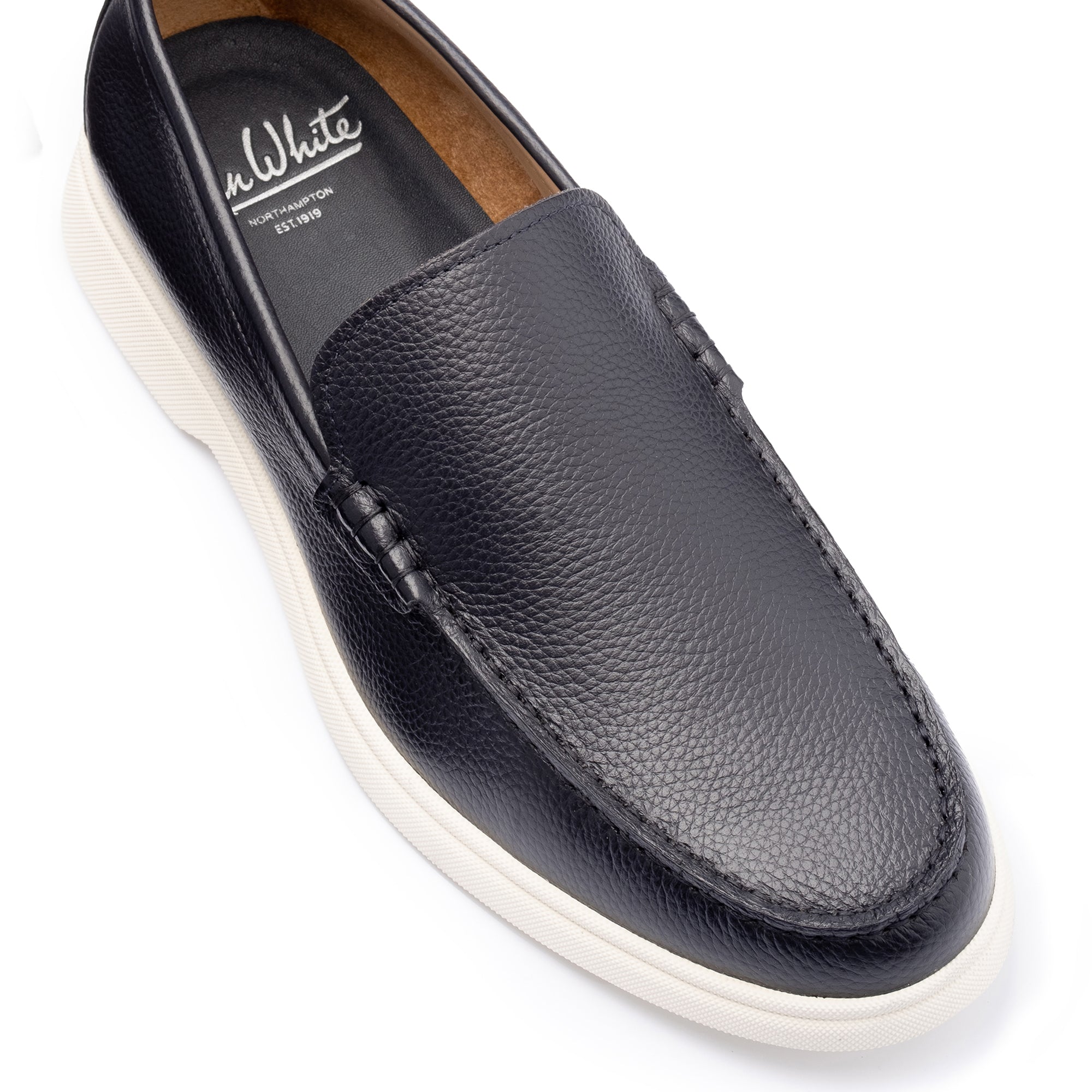
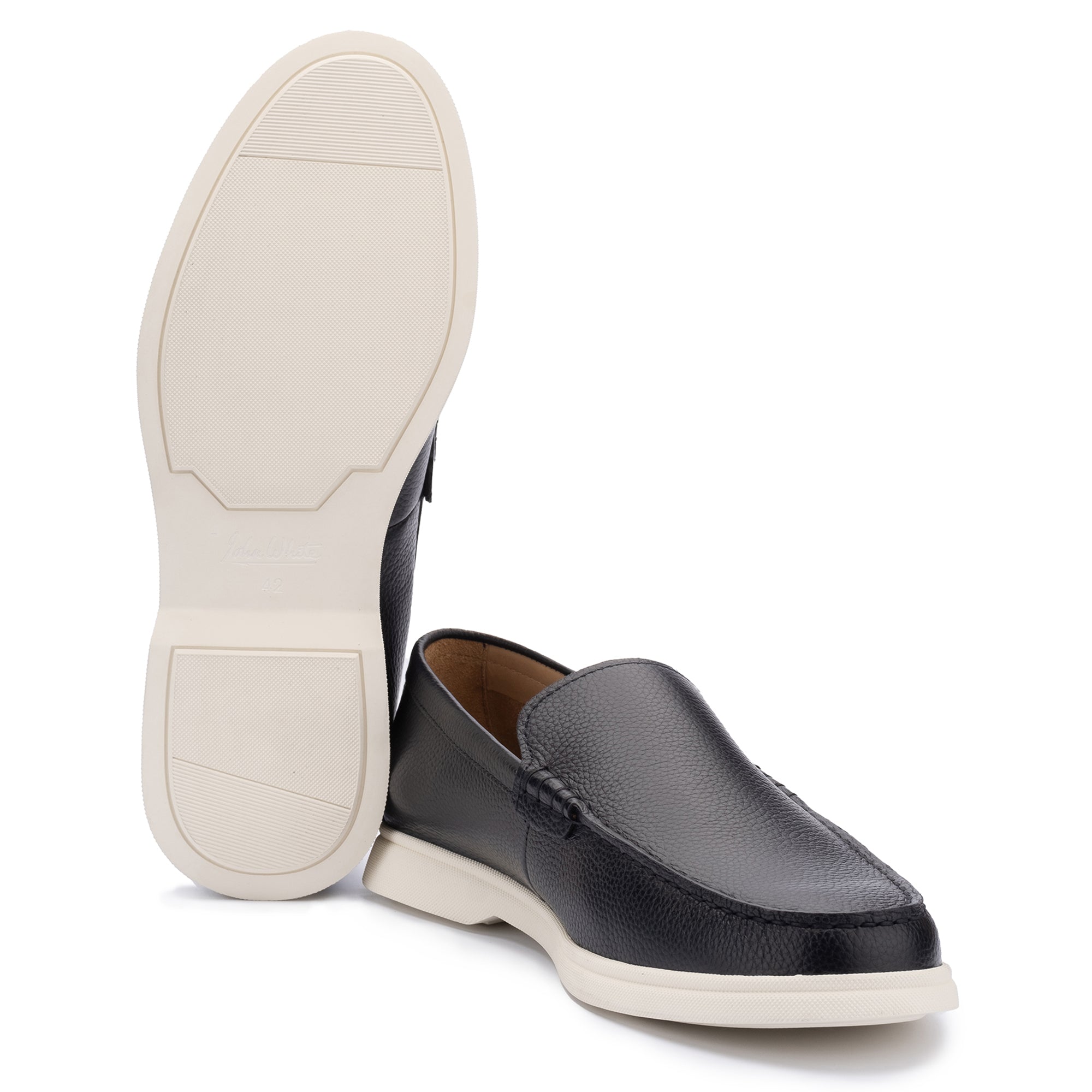
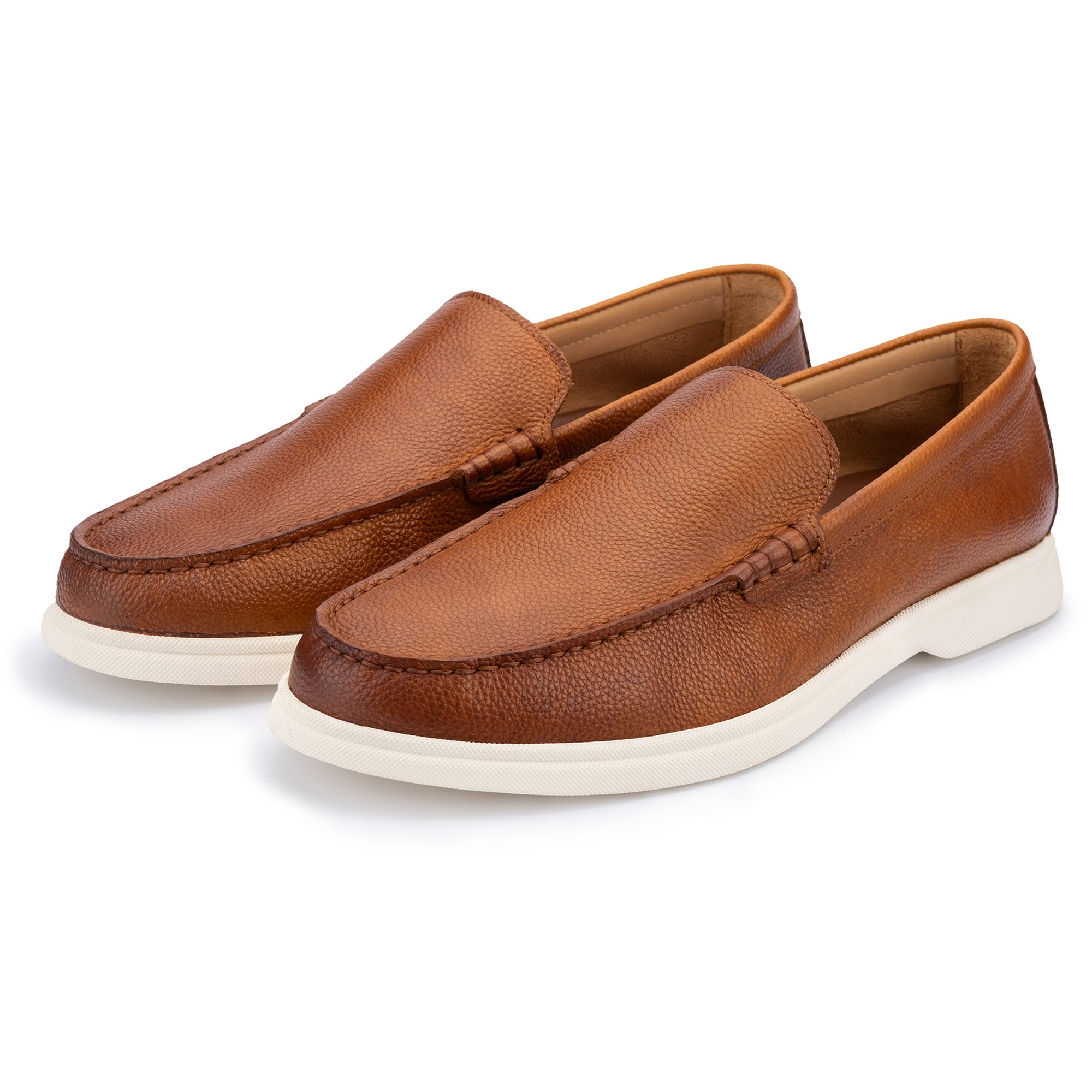
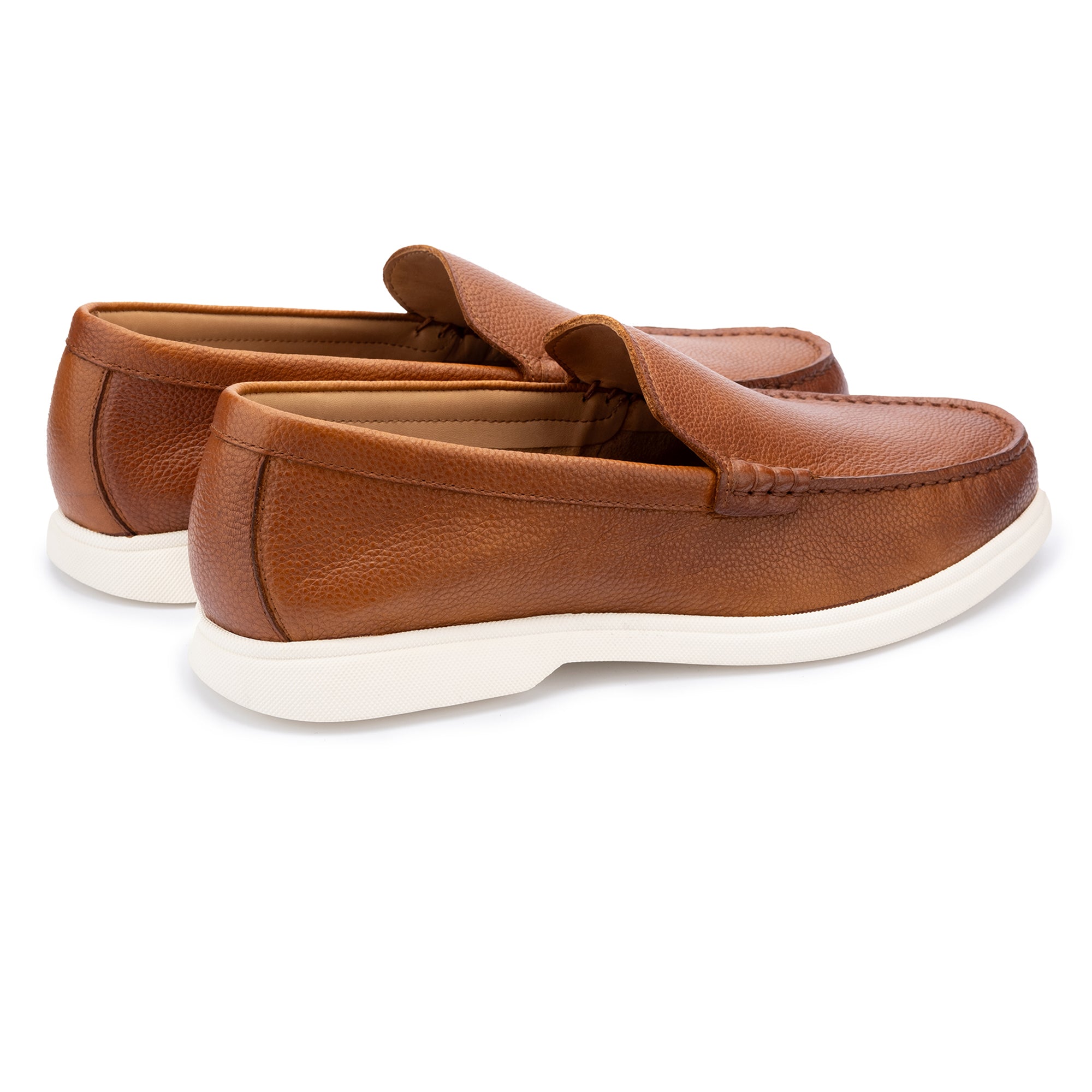
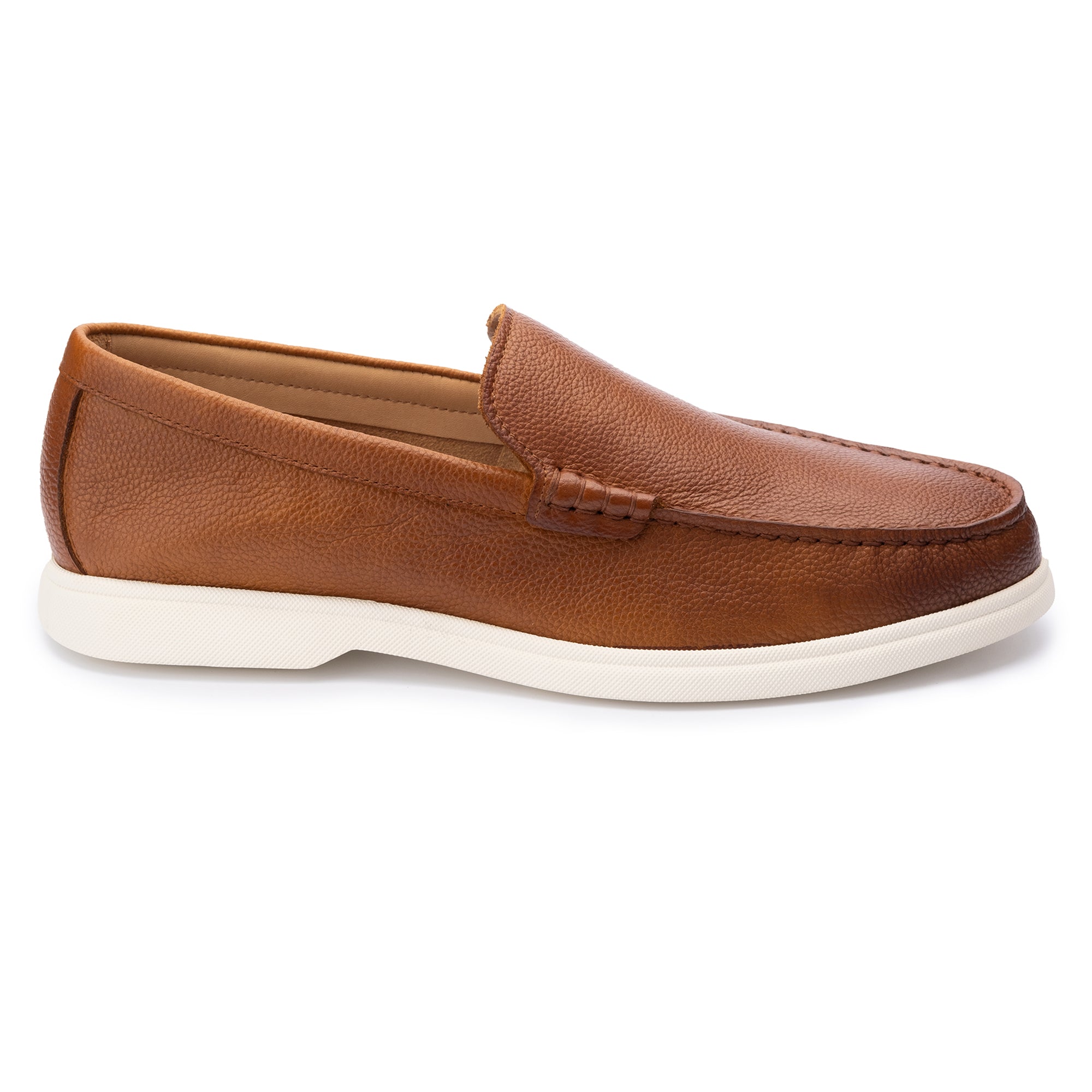
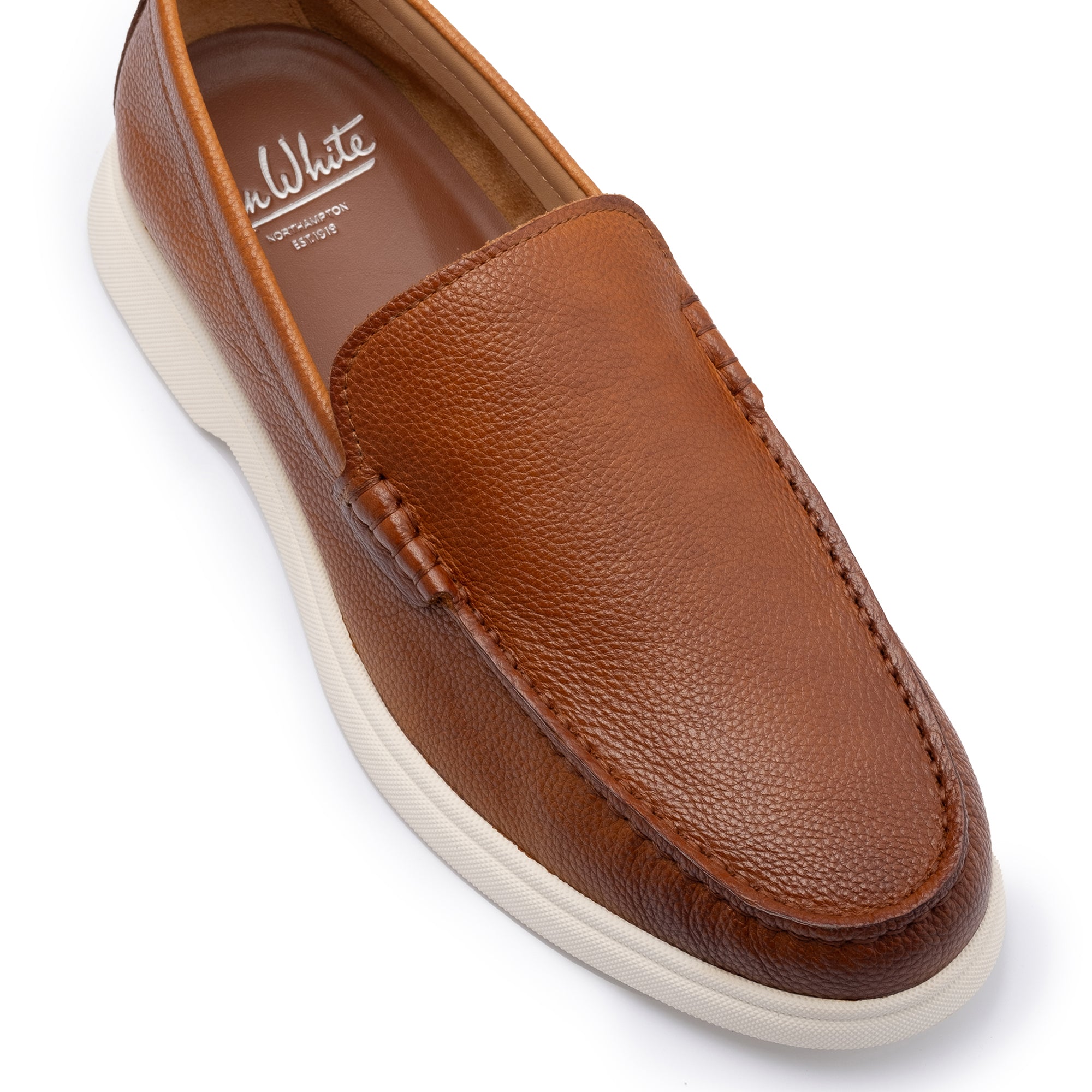
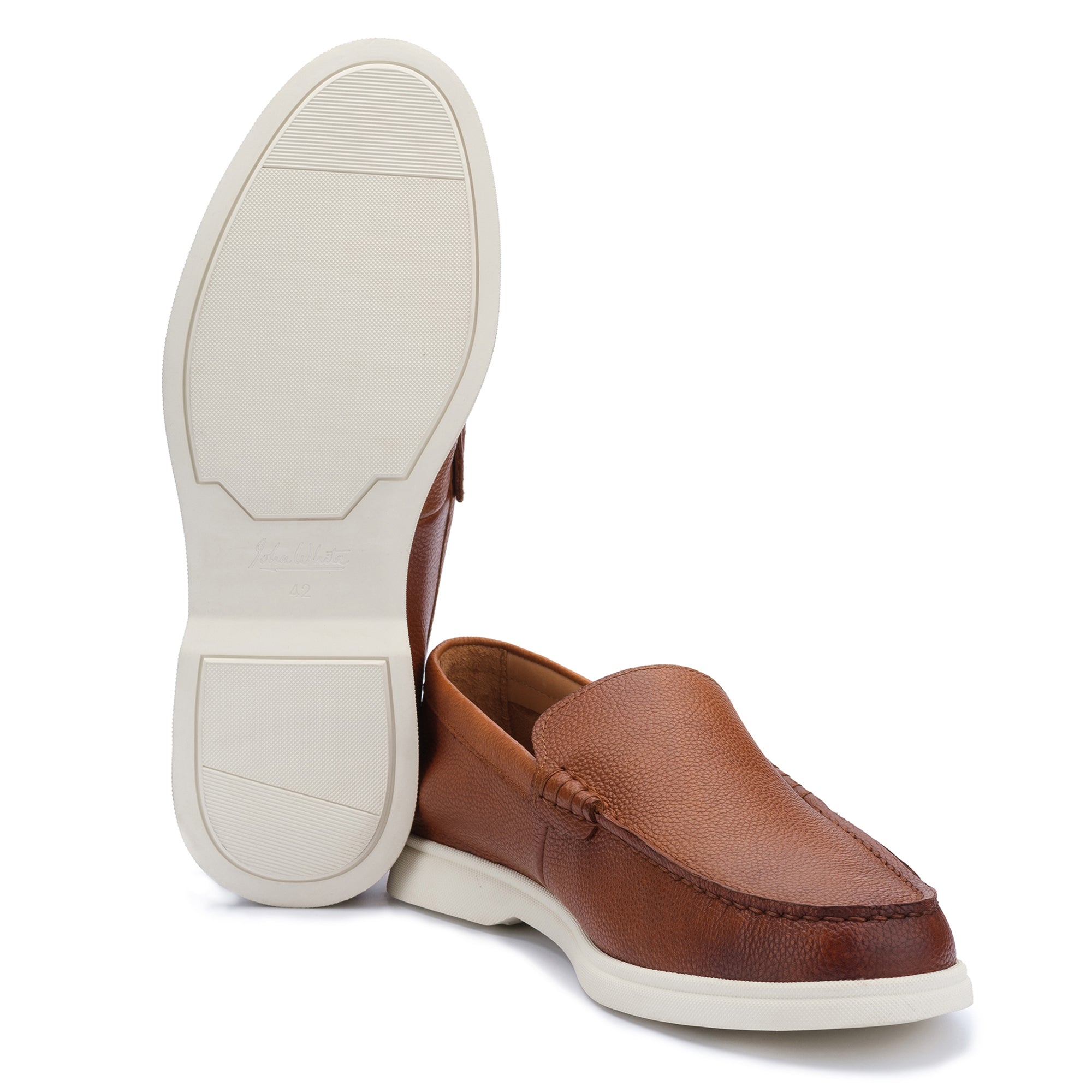
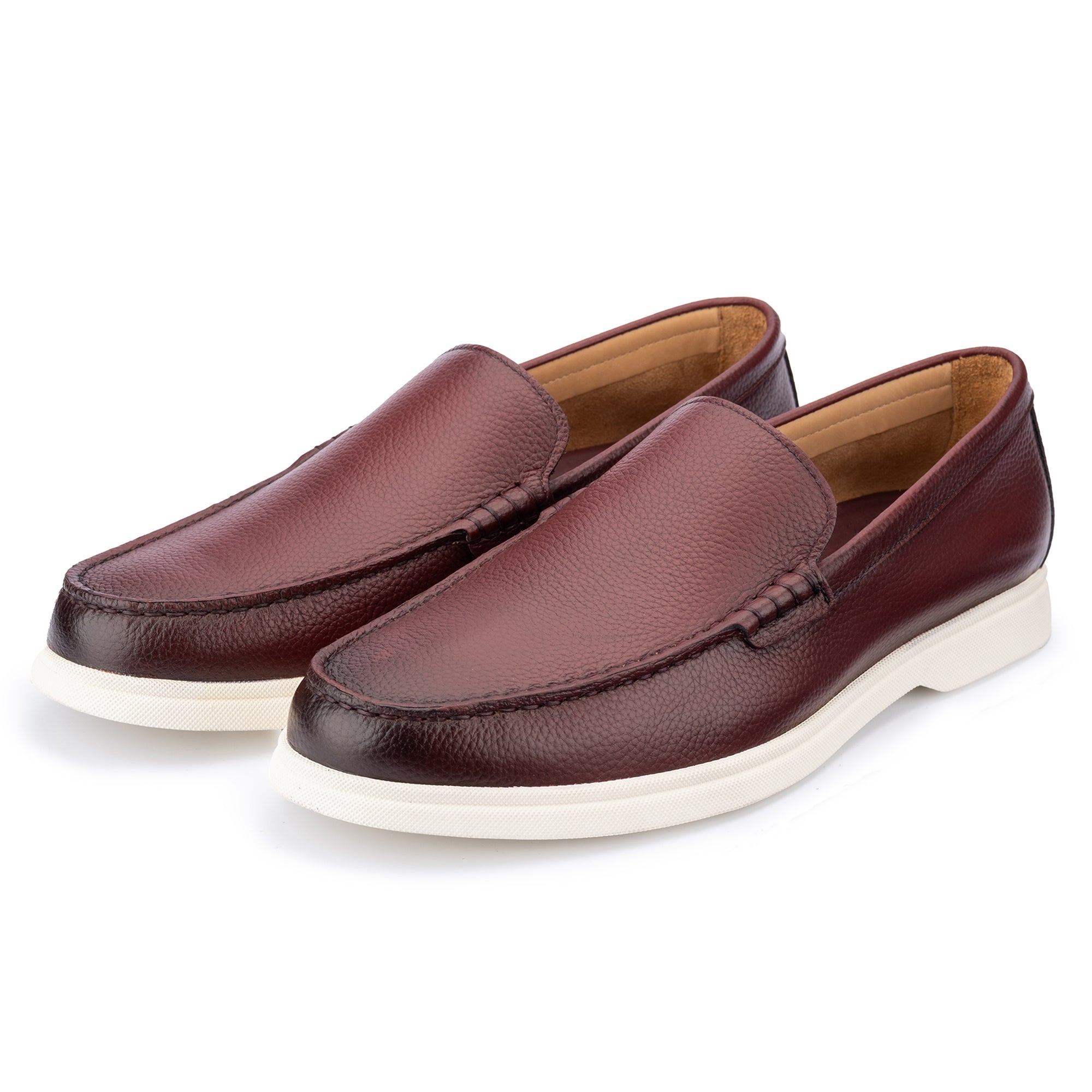
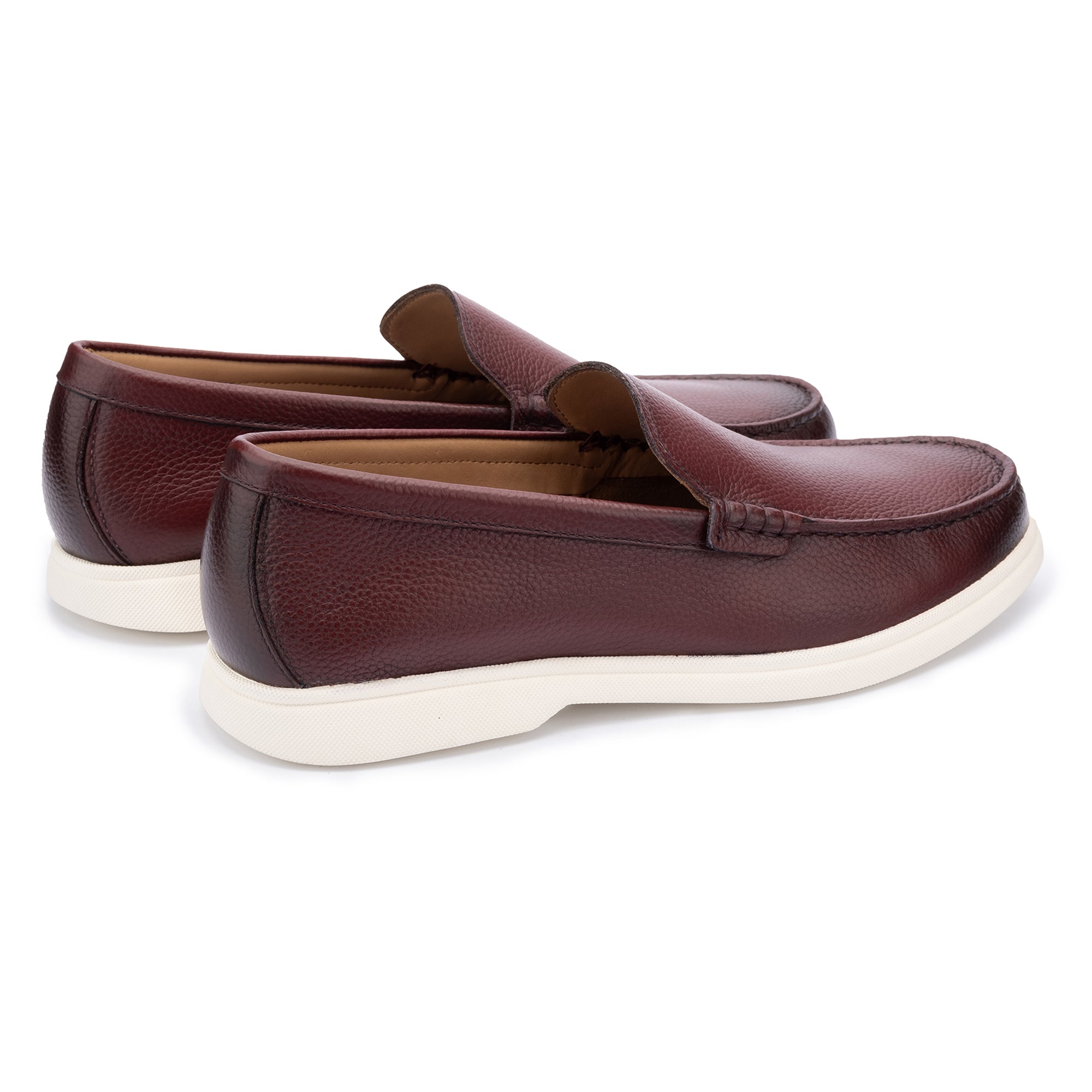
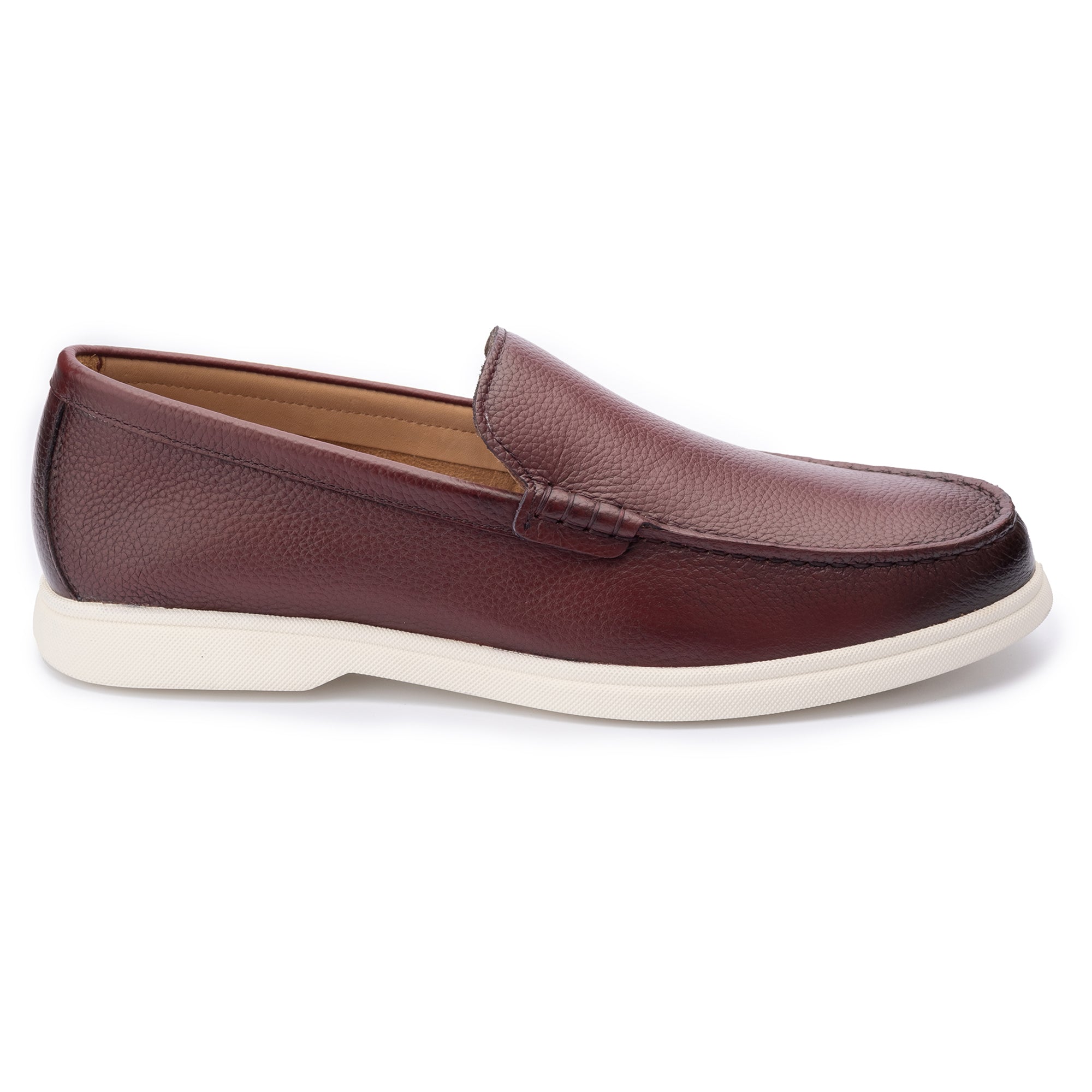
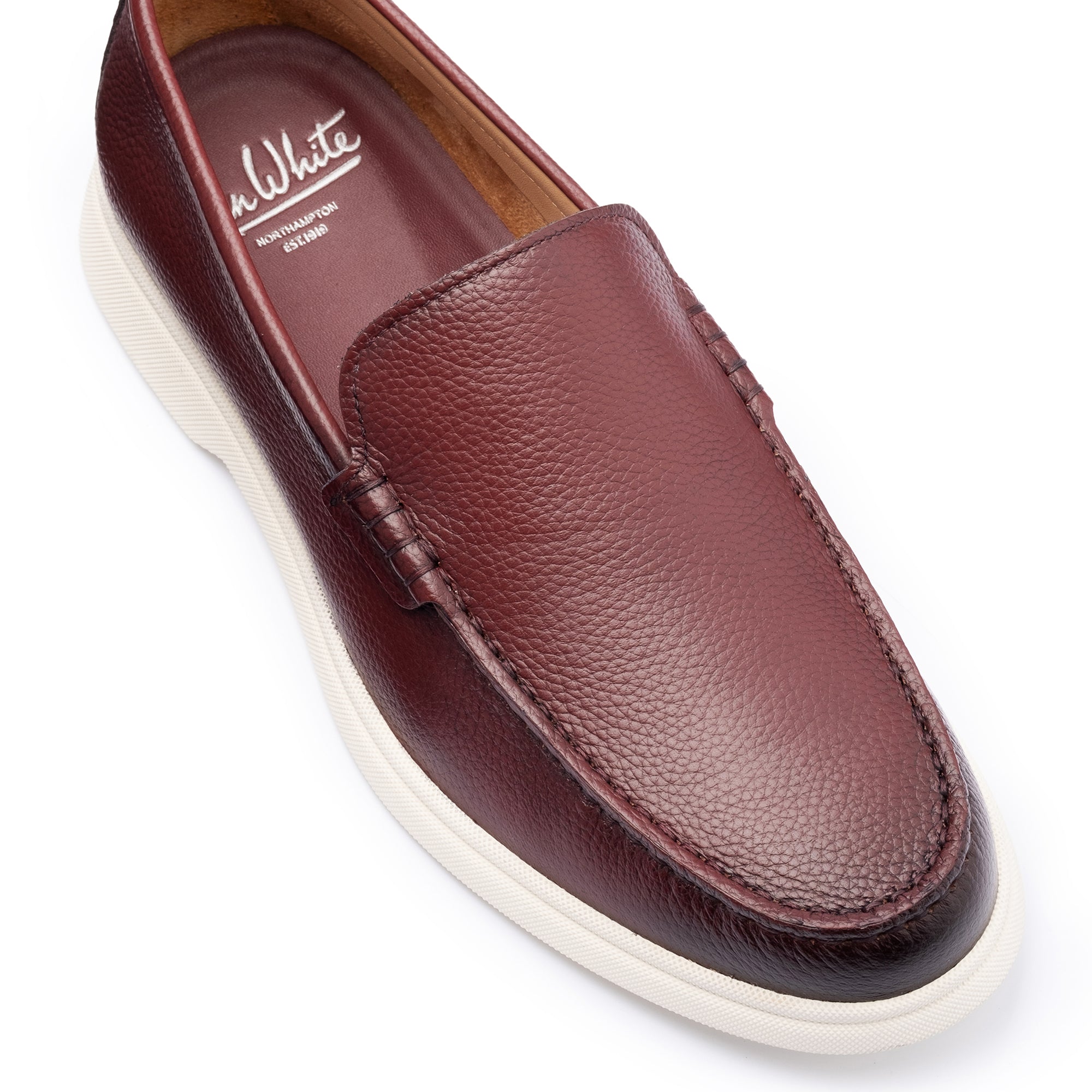
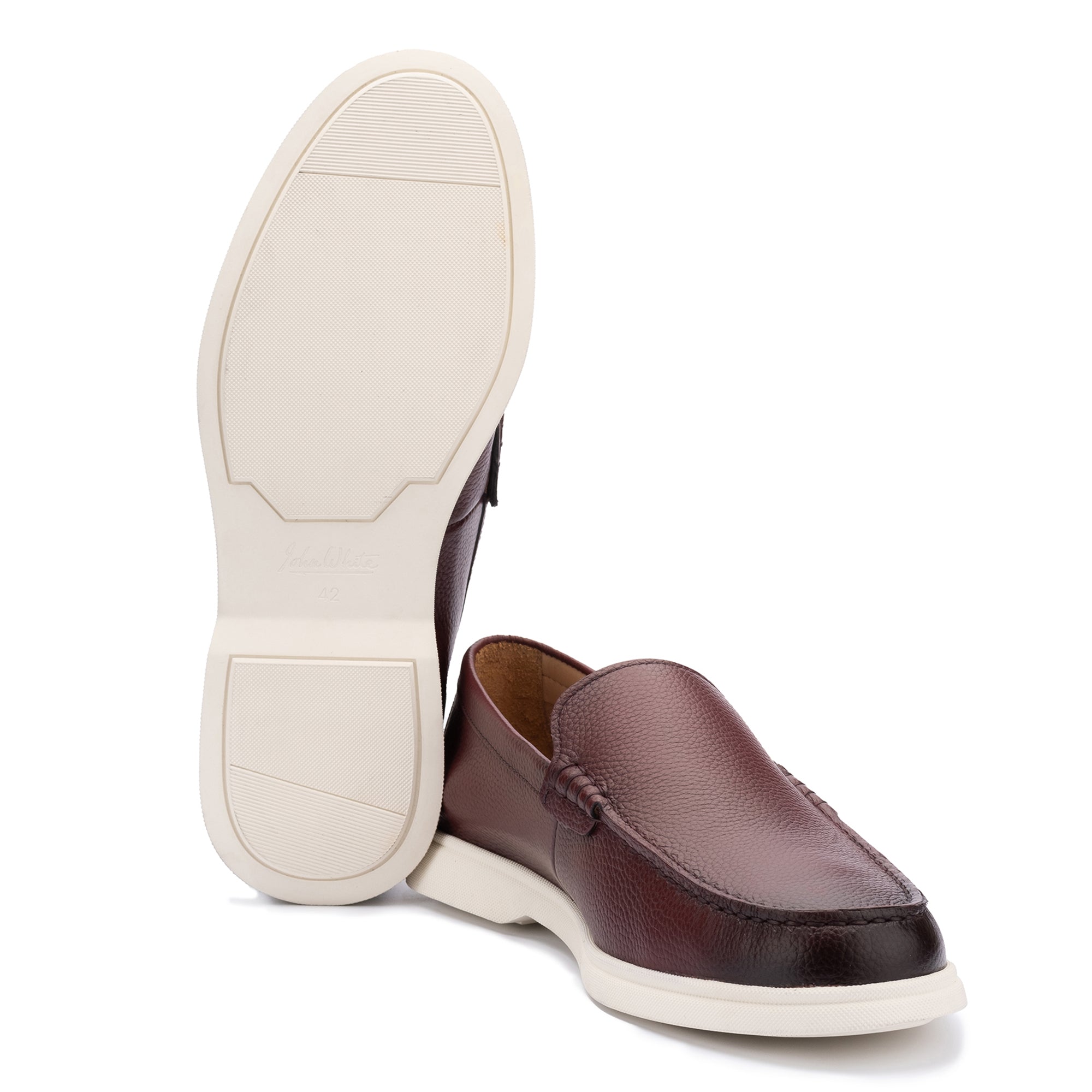
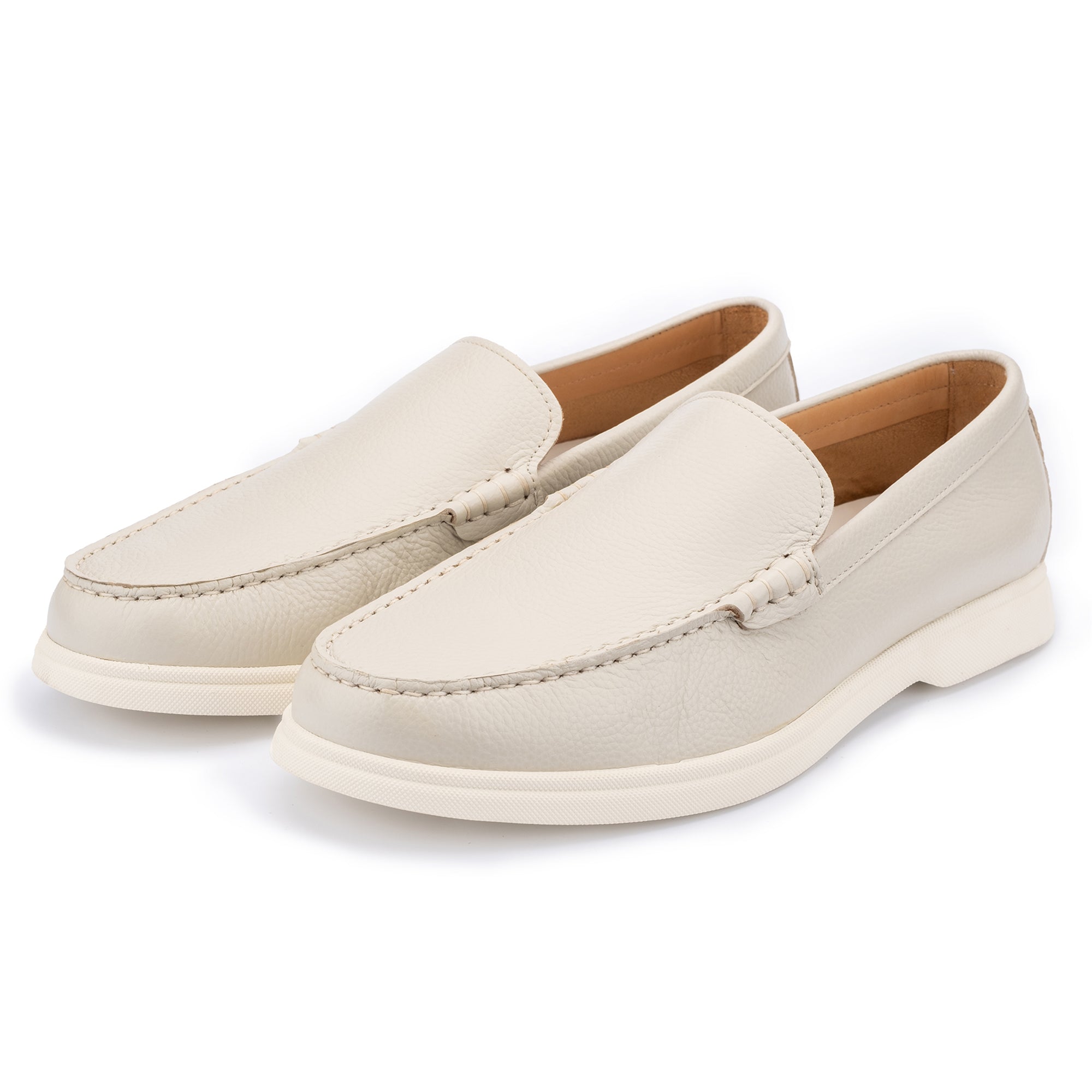
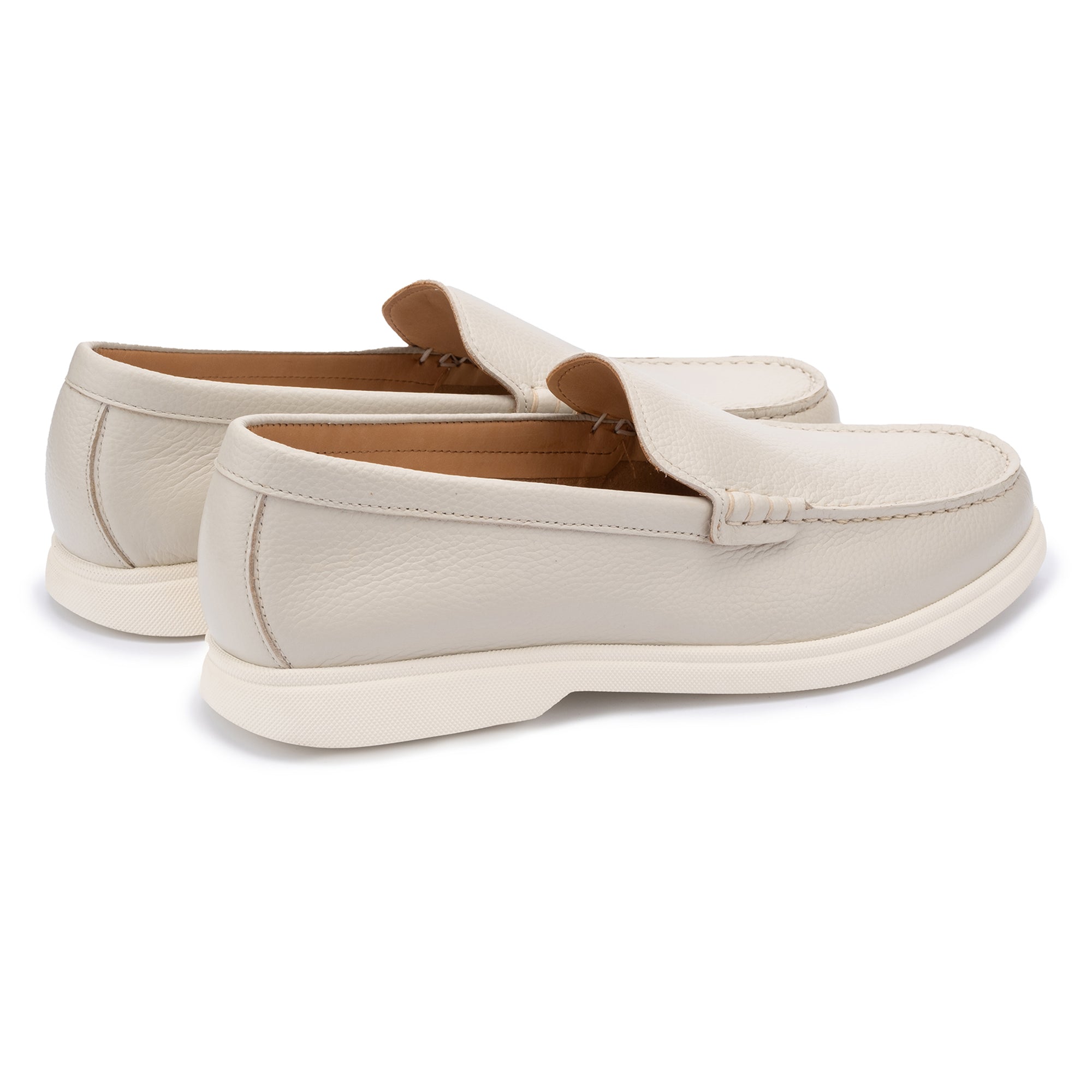
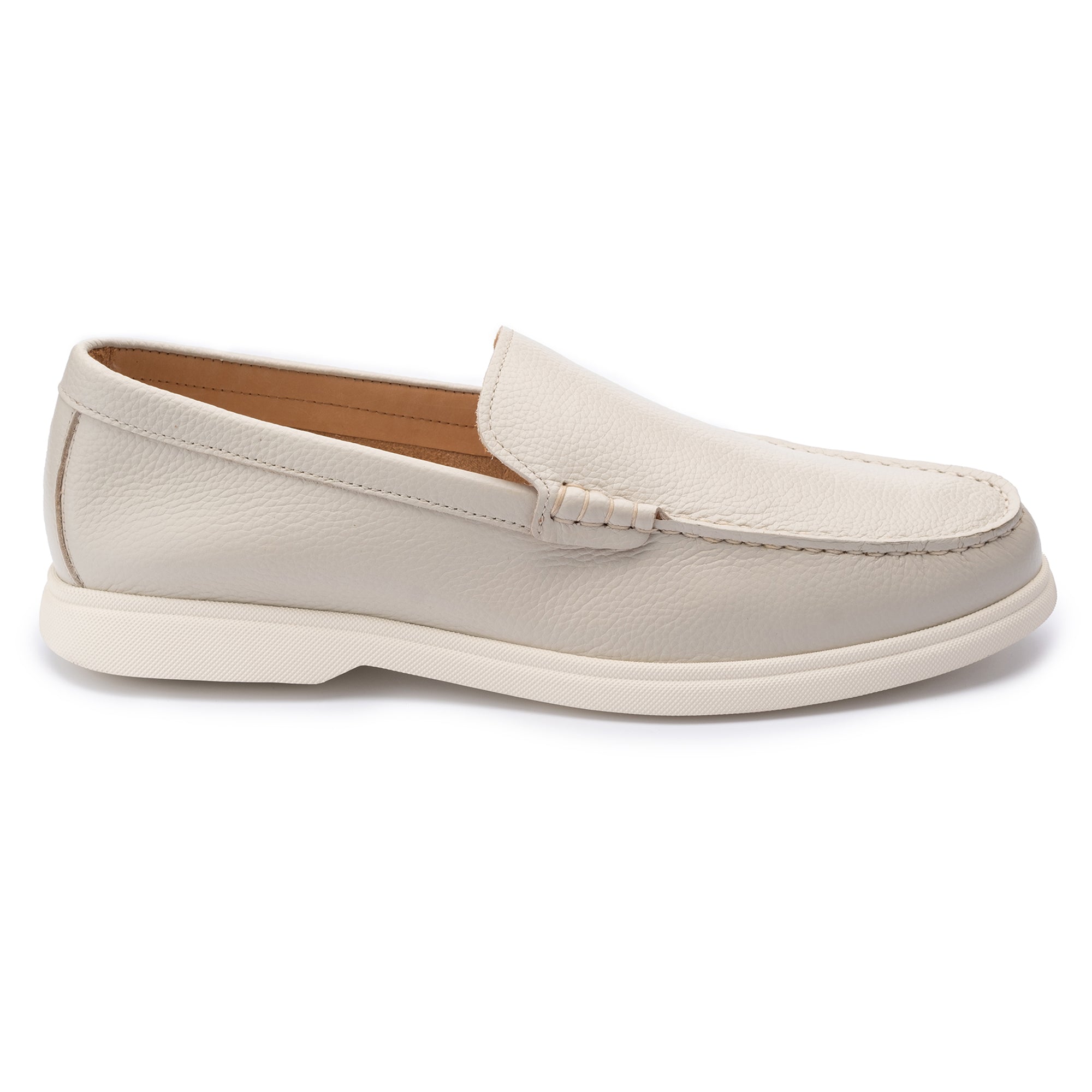
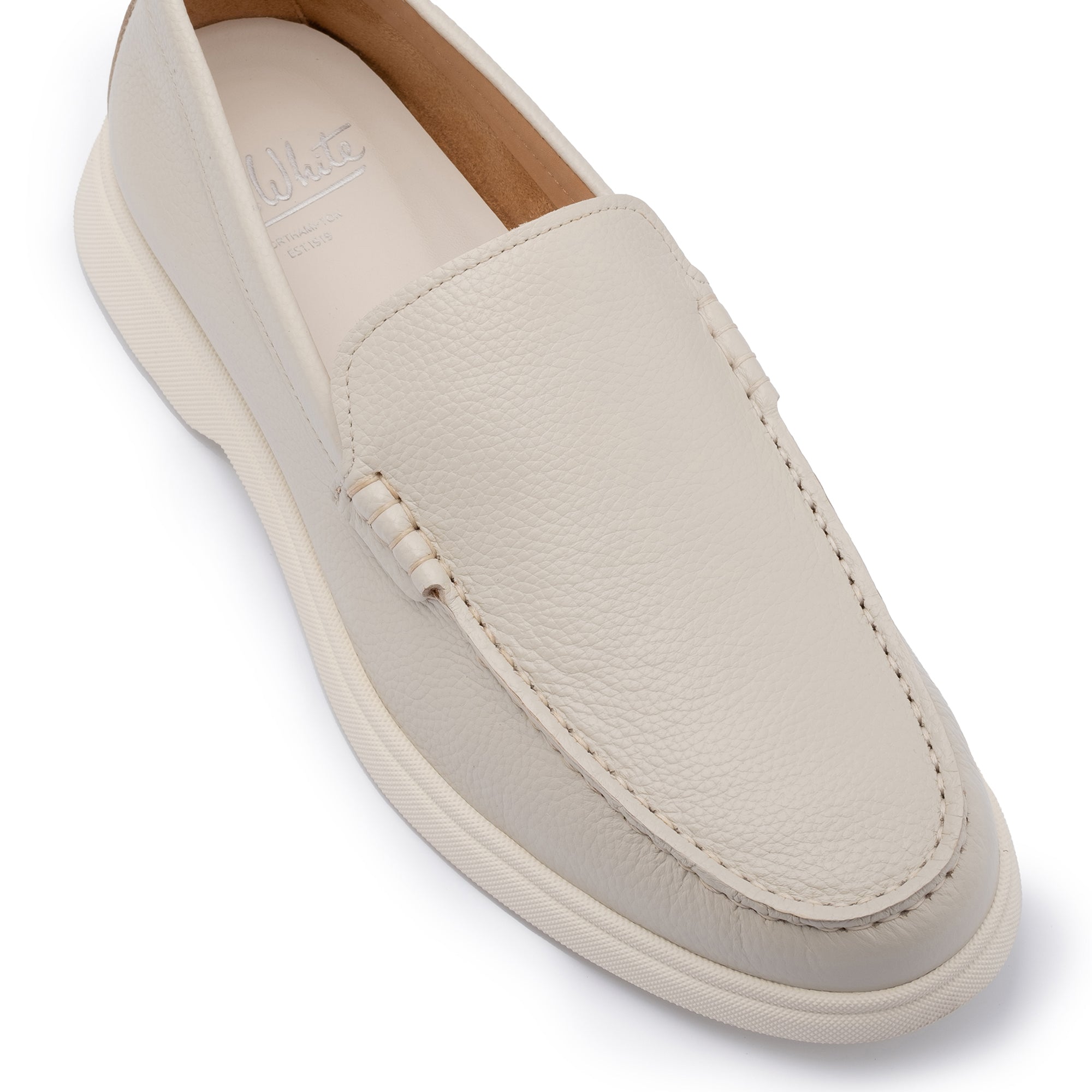
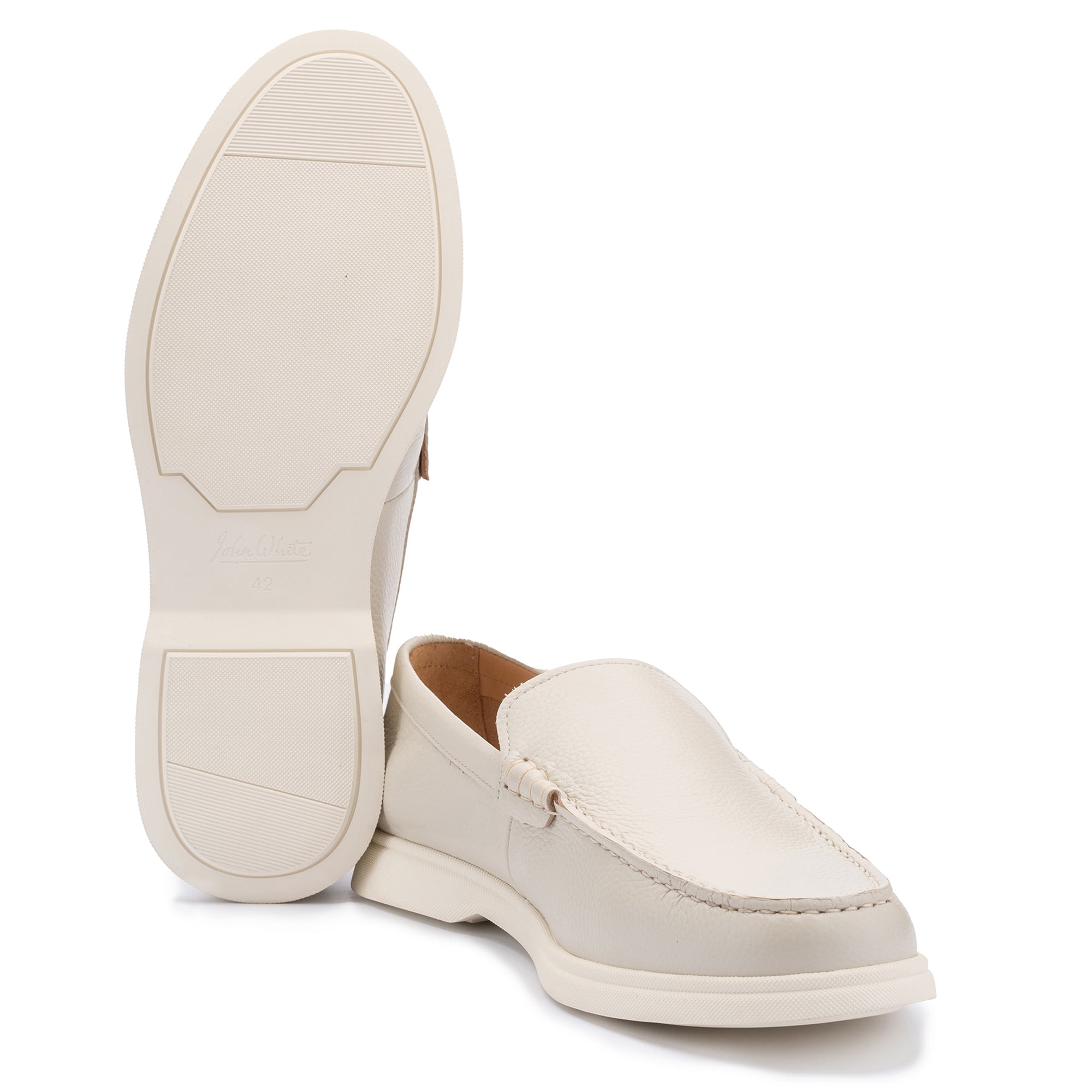
A loafer is a slip-on shoe — no laces, no buckles. In a city context, a plain calf leather loafer pairs confidently with a suit; a suede or penny loafer reads as smart-casual. The loafer's standing in the formality scale has risen considerably over the past decade: it's now standard in City offices, legitimate at smart weddings, and the go-to for men who want intelligent ease.
JWS loafers span plain calf, suede, tumbled grain, and penny styles: the Ethan Plain Tumbled Grain (Brown, Navy, Pearl, Tan, Wine), Ethan Suede (Brown, Green, Navy), Banff Penny Loafer (Black, Brown Suede), and Downey Penny Loafer (Black, Brown). For a full breakdown, see How to Wear Loafers with a Suit and Loafer vs Derby: Which Should Be Your First Premium Shoe?
A leather loafer in 2024 is a full suit shoe — the modern man's answer to the shoe that does everything.
The Formality Spectrum — What to Wear When
The formality spectrum for men's shoes runs from black-tie formal at one end to smart-casual at the other. The mistake most men make isn't wearing the wrong shoe — it's wearing a shoe that's over- or under-dressed for the occasion by two or more steps. One step out is usually fine; two steps reads as careless.
| Occasion | Correct Shoe | Why |
|---|---|---|
| Black Tie / Formal Dinner | Plain-toe Oxford, polished black calf | Closed lacing, no broguing, maximum formality |
| Morning Coat / Races | Cap-toe or plain Oxford (black or tan) | High formality; a semi-brogue is acceptable |
| Business Suit | Oxford, Derby, or monk strap (black or brown) | Smart but not ceremonial |
| Smart-Casual / Client Meeting | Derby, brogue, loafer | Character without crossing into casual |
| Summer Wedding (guest) | Tan Oxford, loafer, or semi-brogue | Suede or lighter leather reads as seasonal |
| Job Interview | Plain Derby or cap-toe Oxford | Understated signals competence |
For a full ranking with edge cases, see The Formality Spectrum: A Definitive Ranking of Men's Dress Shoes.
When dressing for a specific occasion, identify the formality floor first — then choose the most interesting shoe above it.
Oxford vs Derby: The Critical Difference
The Oxford vs Derby question is the most common in men's footwear, and the answer is simpler than most guides make it. The only structural difference is where the facing quarters attach to the vamp.
- Oxford: Facing stitched under the vamp (closed lacing). Sleeker silhouette. More formal. Slightly less adjustable.
- Derby: Facing stitched on top of the vamp (open lacing). V-shaped gap visible at the throat. Less formal. More accommodating of wide feet.
According to the Northampton shoemaking tradition — shared by manufacturers including Church's, Crockett & Jones, and Loake — the Oxford emerged from the formal town shoe of the 19th century, while the Derby developed from the country shooting boot. John White Shoes, designing footwear since 1919, has produced both silhouettes across the full century of its catalogue.
See the definitive breakdown in Oxford vs Derby Shoes: What's the Difference? and the practical buying guide in Derby vs Oxford: Which Lace-Up Should You Buy First?
Buy an Oxford first if most of your occasions are formal or business-formal; buy a Derby first if your wardrobe skews smart-casual or your feet are wider.
Black, Brown, or Burgundy — Choosing Your Colour
Colour in men's dress shoes isn't about personal preference — it's about sartorial grammar. Each of the three core colours carries a different register, and choosing the wrong one for your suit or occasion is an easy mistake to avoid.
Black
Black is the most formal colour in men's footwear. It pairs with black-tie, navy suits, grey suits, and charcoal. It doesn't pair naturally with brown or tan suits, where the contrast reads as deliberate but dated. Black shoes are the one pair every man must own before anything else. See the full guide on Choosing Between Black, Brown, and Burgundy Leather Shoes.
Brown
Brown is the most versatile colour in men's shoes. Tan and mid-brown work with navy, grey, green, and beige suits; dark brown covers most business occasions. Brown pairs poorly with black suits and isn't appropriate for formal dinners. The traditional rule — "no brown in town" — has been abandoned in most City offices since the 1990s, but holds in the most conservative environments (law, finance, old-money club events). Brown shoes pair especially well with navy — see How to Wear a Navy Suit.
Burgundy / Oxblood
Burgundy occupies the character register — more interesting than black, more formal than tan. It works with navy, grey, and charcoal suits, and signals someone who has thought about their wardrobe rather than defaulted to it. The Lucan in Tan and the Ethan in Wine represent the JWS take on the warm-toned palette.
| Shoe Colour | Suits Well With | Avoid With | Formality |
|---|---|---|---|
| Black | Navy, charcoal, grey, black | Brown, tan, beige suits | Highest |
| Dark Brown | Navy, grey, green, earth tones | Black suits | High |
| Tan / Cognac | Navy, stone, light grey, cream | Black, dark formal suits | Medium–High |
| Burgundy | Navy, charcoal, mid-grey | Black suits; black tie | Medium–High |
Own black first, brown second — then everything else is character.
How to Read Leather Quality
The single biggest variable in dress shoe quality is the leather — not the brand name on the insole. Understanding leather grades takes ten minutes to learn and saves years of replacing shoes that weren't worth buying in the first place.
Full-Grain vs Corrected-Grain
Full-grain leather retains the top surface of the hide — the tightest, most durable fibre layer. It develops a patina as it ages, responds to polish and conditioning, and can be resoled and reworn for decades. Corrected-grain leather has had the surface sanded and embossed with an artificial grain. It looks uniform out of the box but doesn't patina, and can't be maintained in the same way.
According to the Leather Conservation Centre, full-grain shoes maintained with wax polish can have a functional lifespan 4–5 times longer than corrected-grain equivalents. All JWS leather dress shoes use full-grain calfskin or tumbled grain — never corrected. For a full comparison, see Full-Grain vs Corrected-Grain Leather.
Calfskin vs Grain Leather
Calfskin (smooth, tight grain, fine hand) is the standard for formal dress shoes — Oxfords, cap-toes, semi-brogues. Grain leathers (pebbled, tumbled, scotch) are more casual in register, very resistant to scuffing, and better-suited to everyday Derby and loafer styles. The Textural Choice guide breaks down the difference in full.
Suede
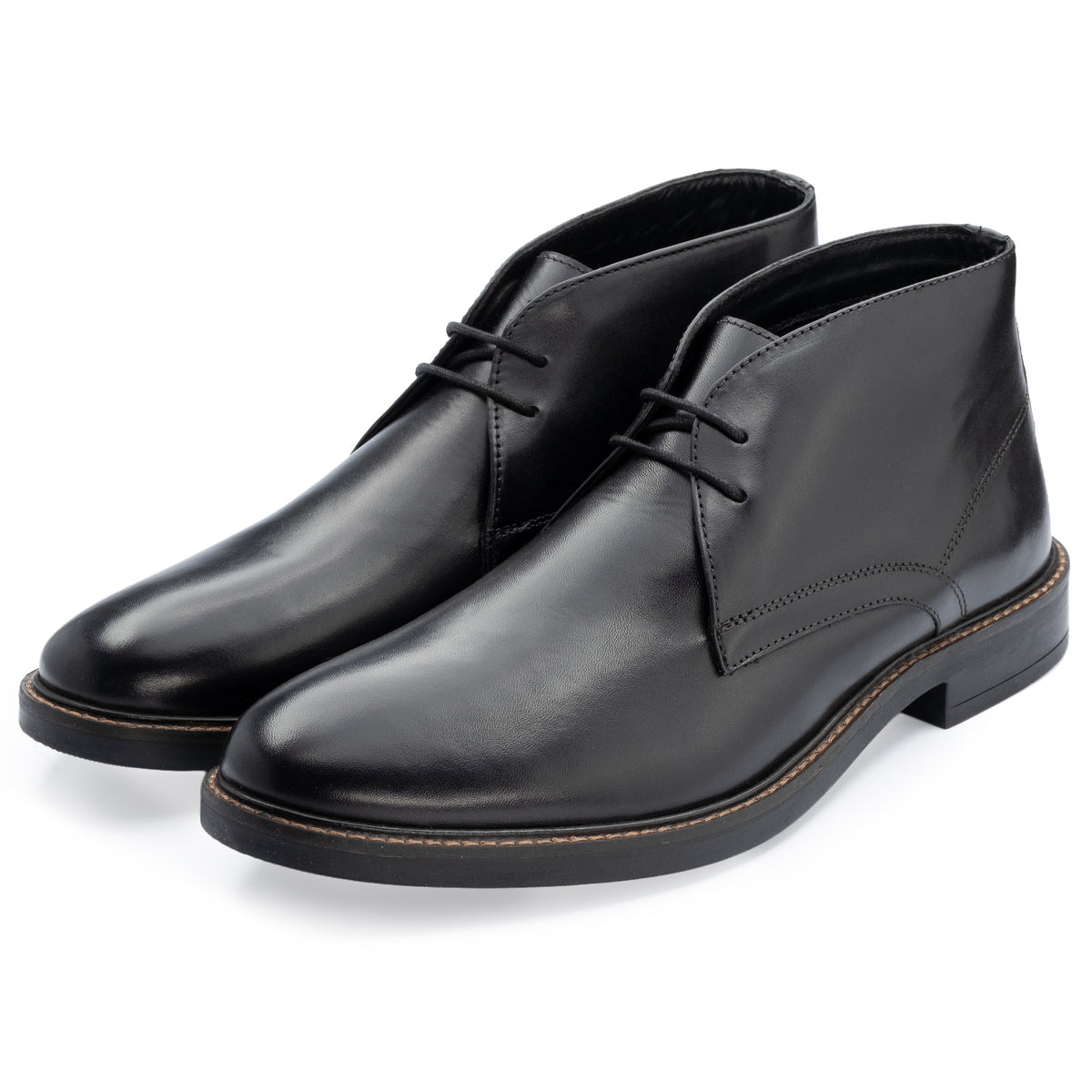
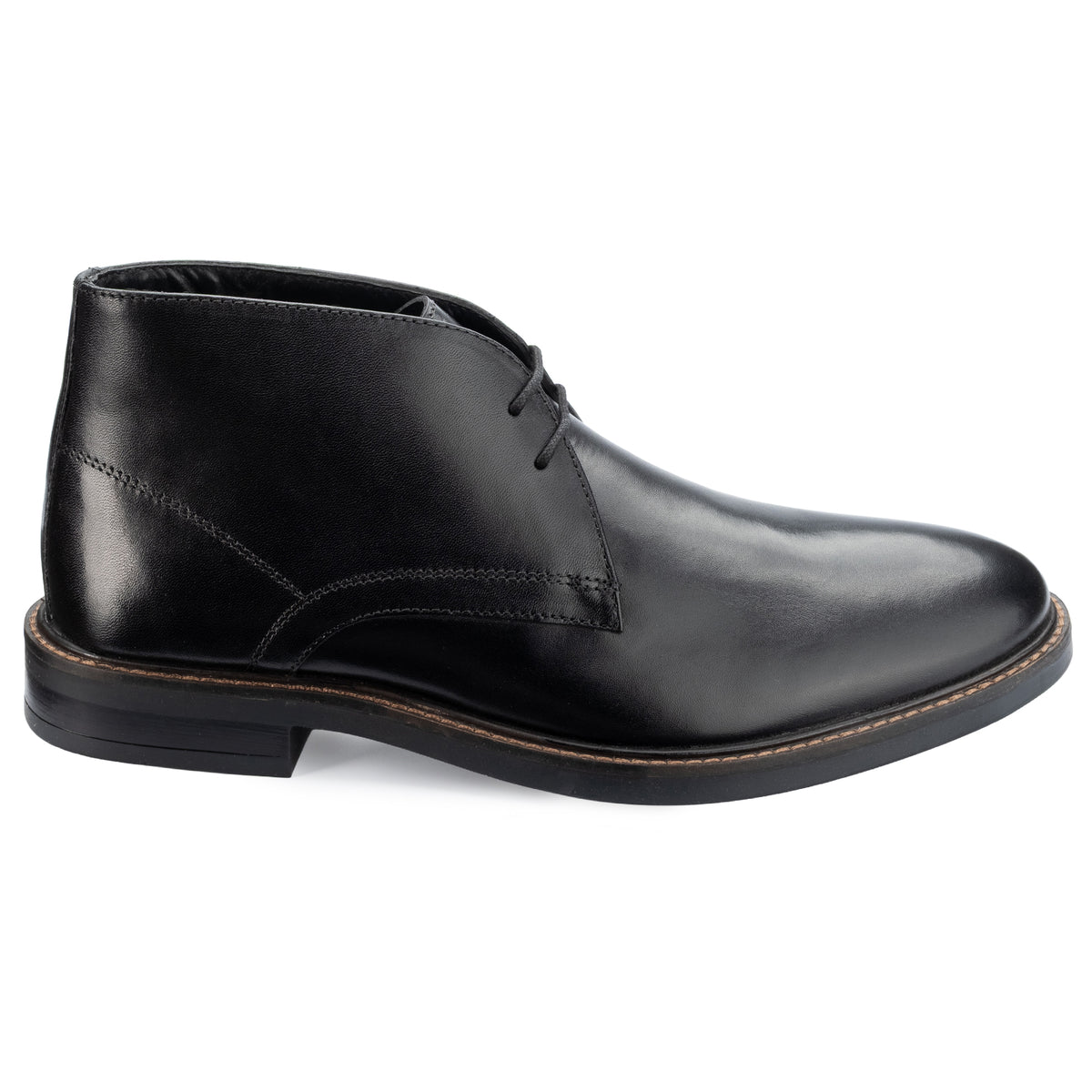
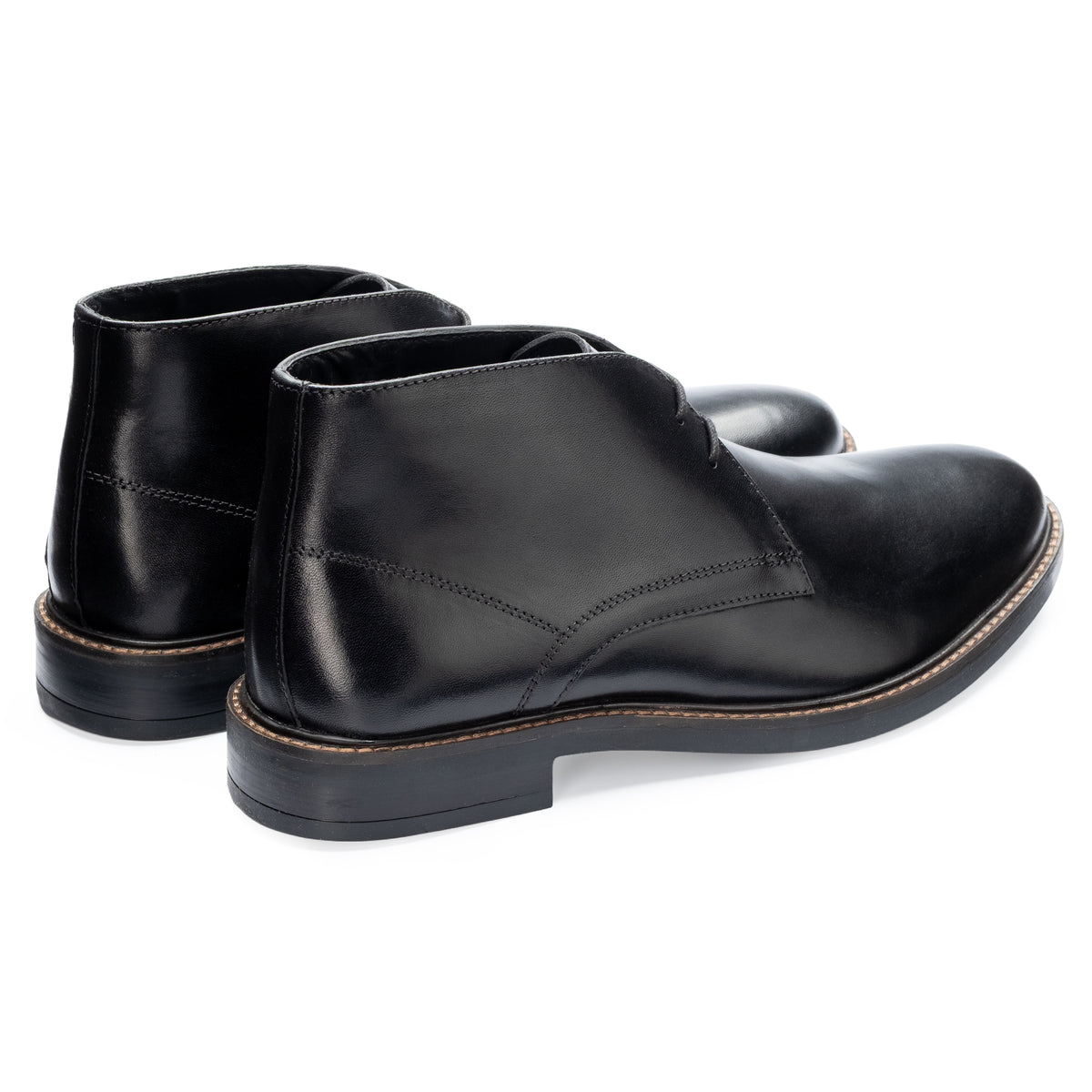
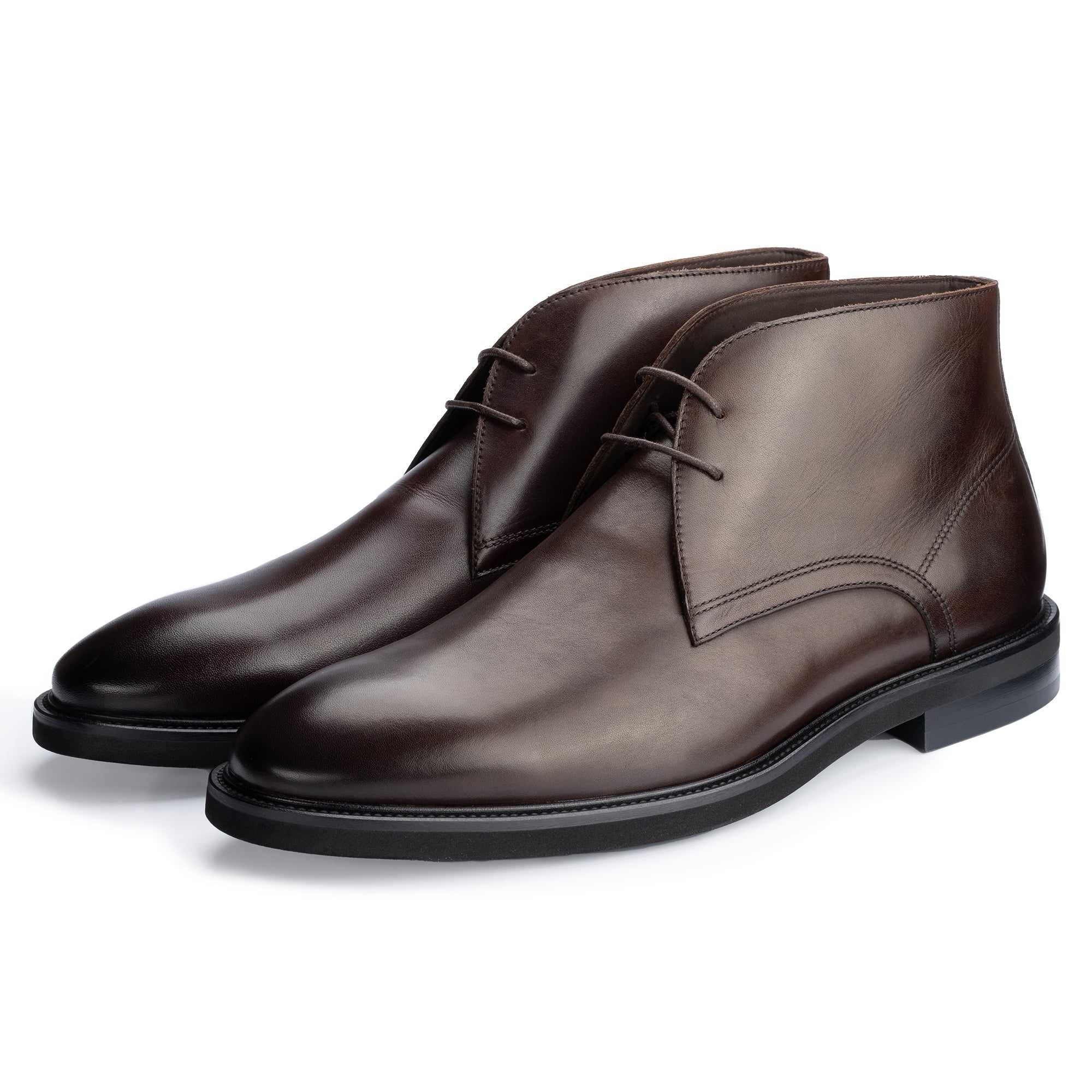
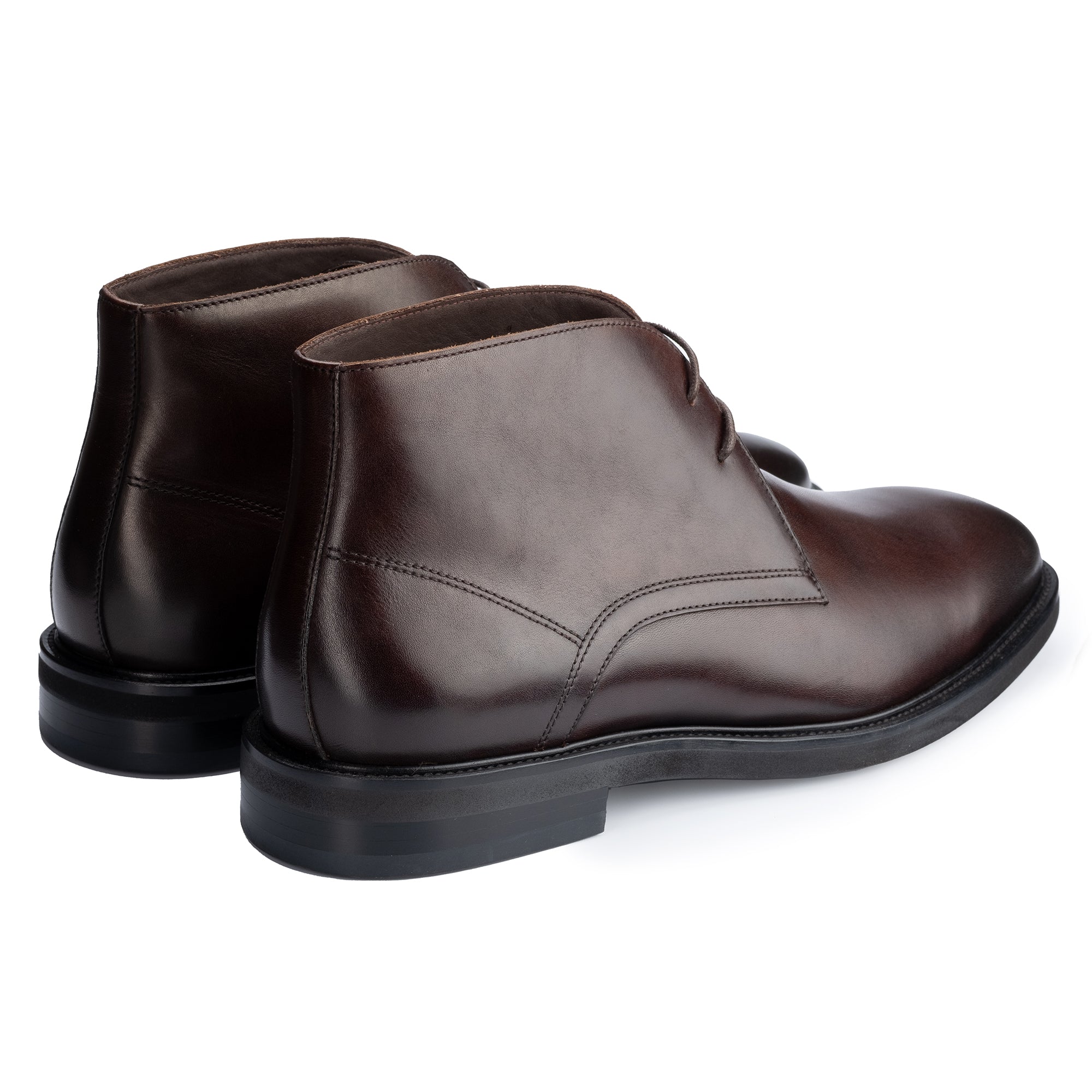
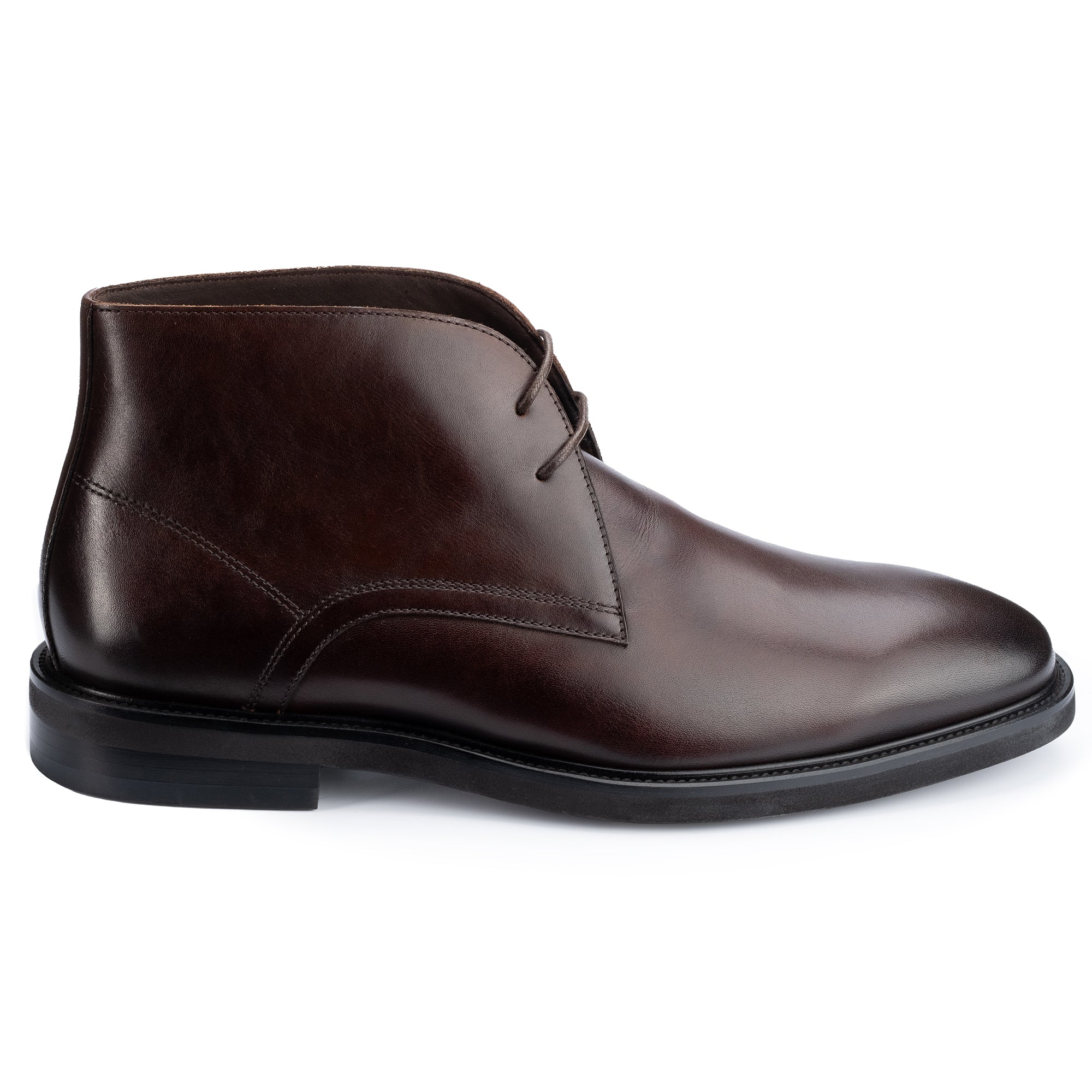
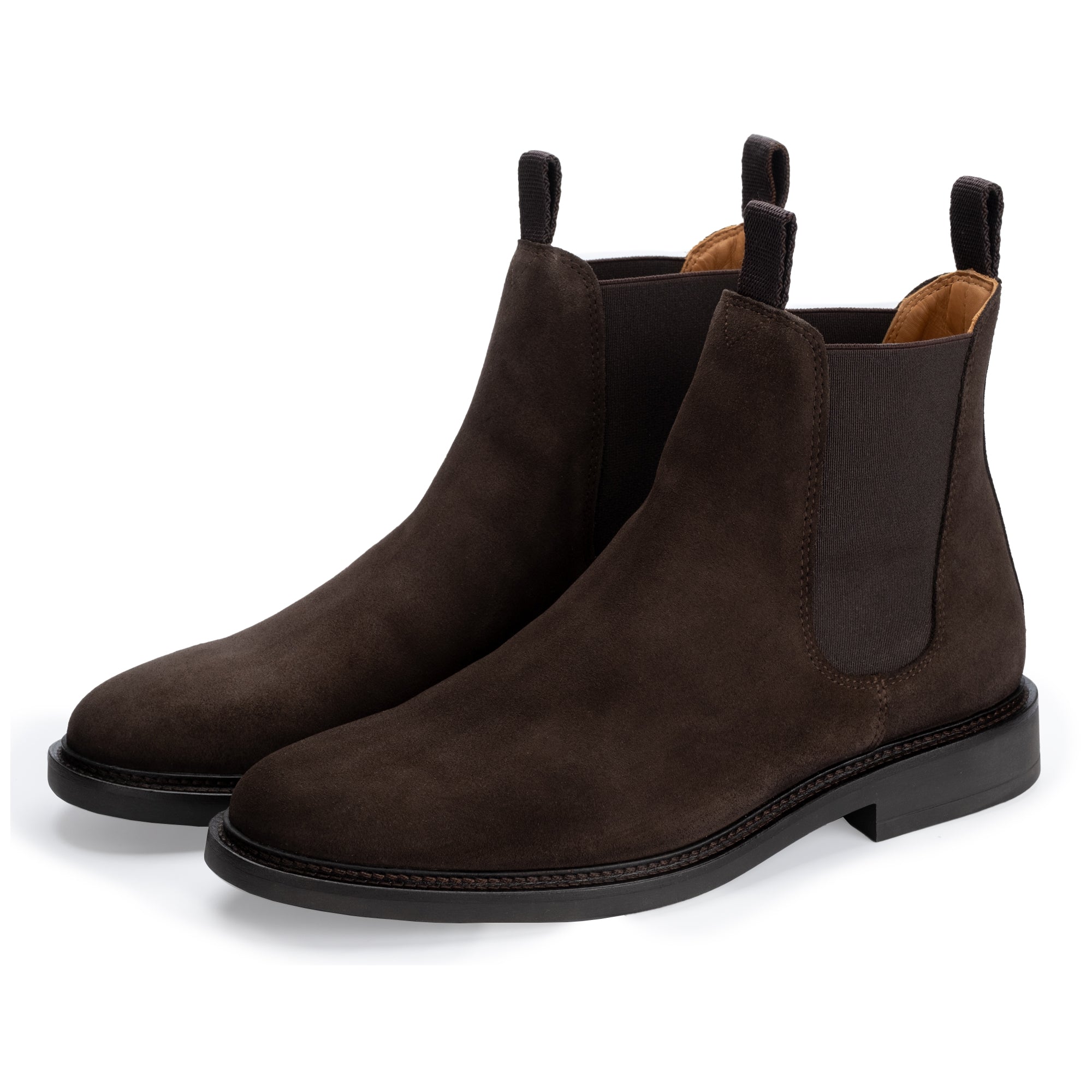
Suede is split leather (from the underside of the hide) napped to a soft, velvety finish. It's less water-resistant than smooth calf, reads as less formal, and suits smart-casual occasions. The JWS Ethan suede loafers and Wessex suede chukka are suede options for the smart-casual wardrobe.
Full-grain calfskin, properly maintained, is the only leather worth buying in a formal dress shoe.
Sole Construction and What It Means for Longevity
Sole construction determines two things: how long a shoe lasts, and whether it can be repaired rather than replaced. For a dress shoe that's worth owning properly, the sole is not an afterthought.
Leather Soles
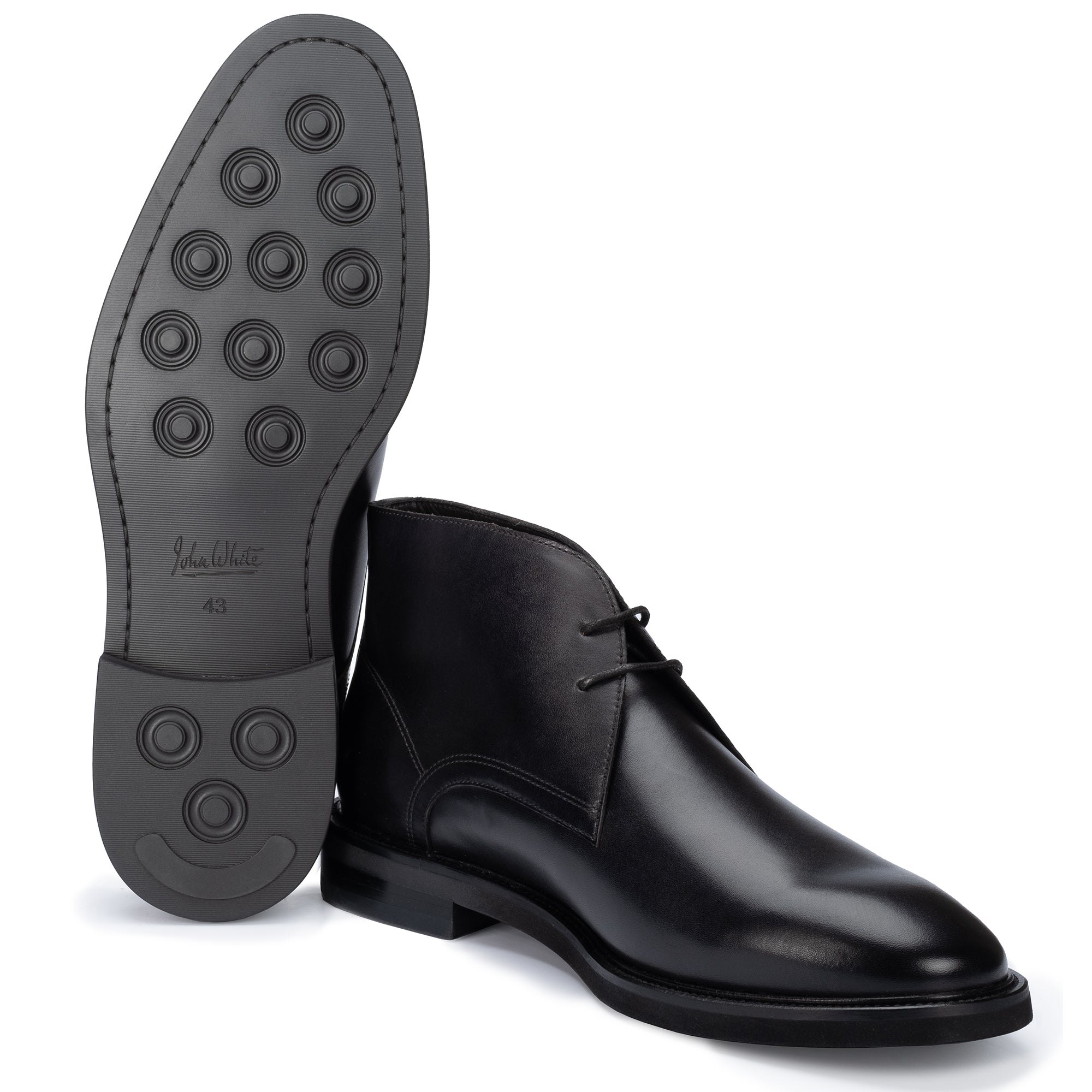
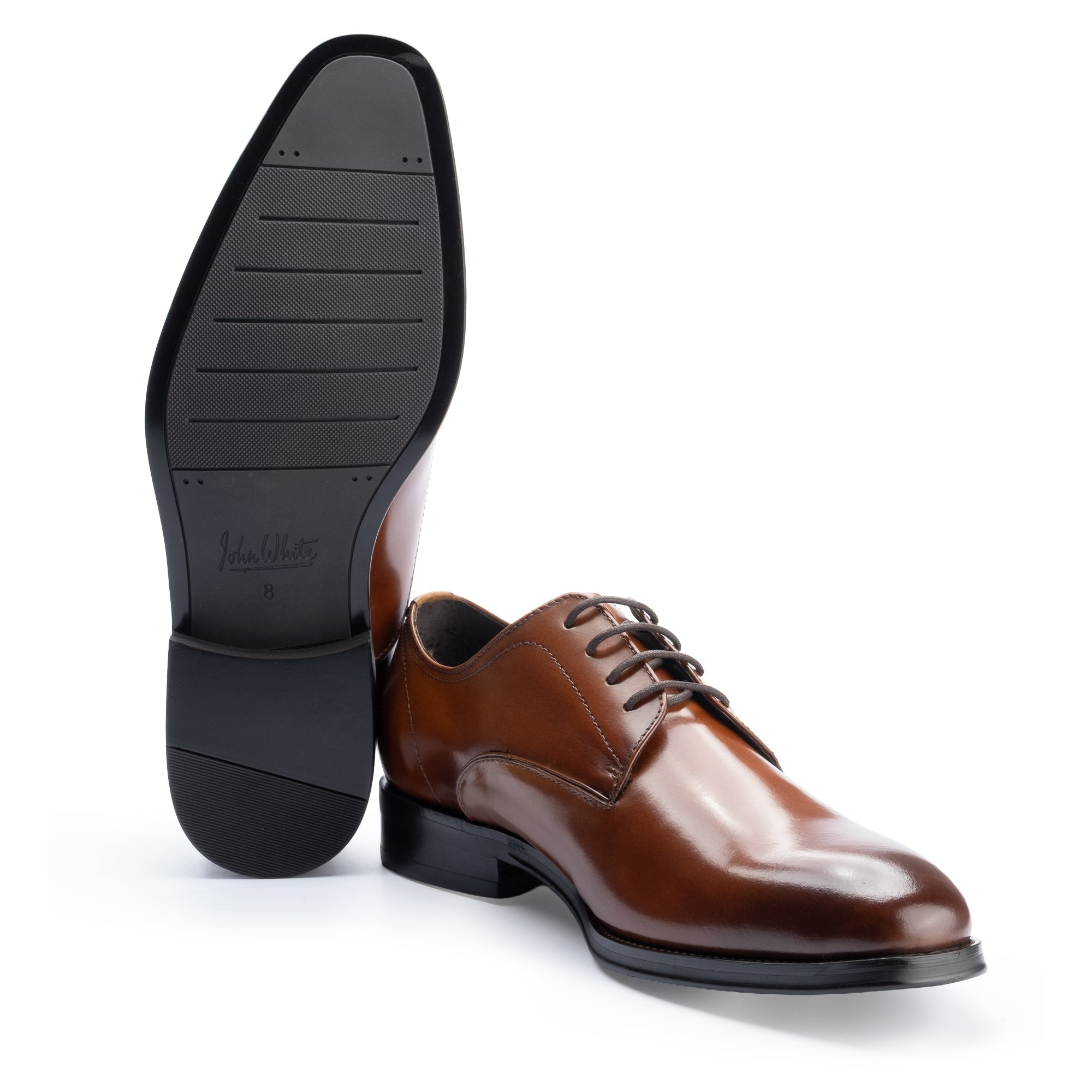
A leather sole is the traditional choice for formal dress shoes. It's thinner, lighter, produces a cleaner silhouette, and provides a characteristic sound on hard floors. It's also less water-resistant than rubber, and wears faster on abrasive urban surfaces. With a rubber toe tap, it handles most daily wear. The Society of Master Shoe Repairers notes that leather-soled shoes resoled by a competent cobbler last significantly longer than those with bonded rubber soles that can't be separated from the upper.
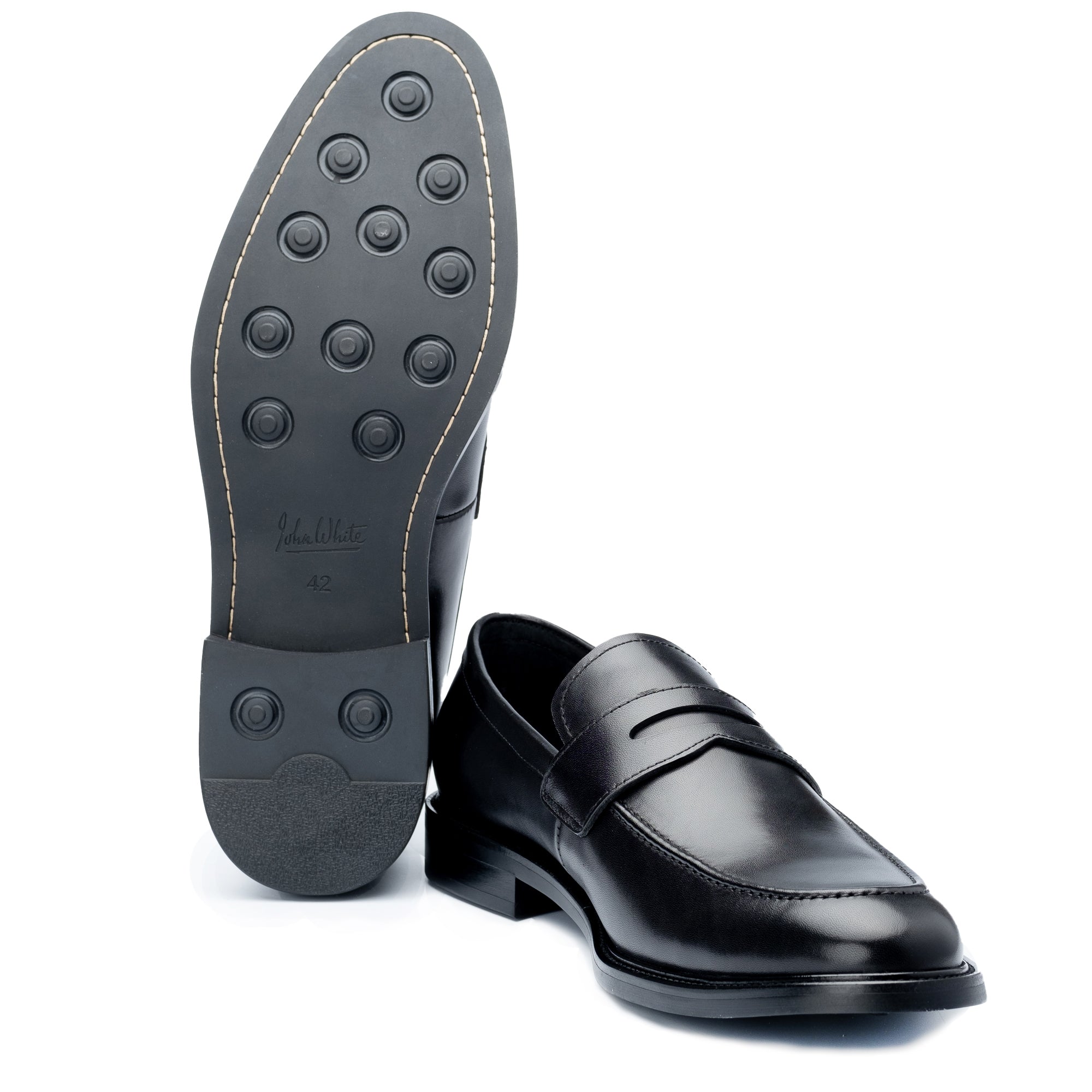
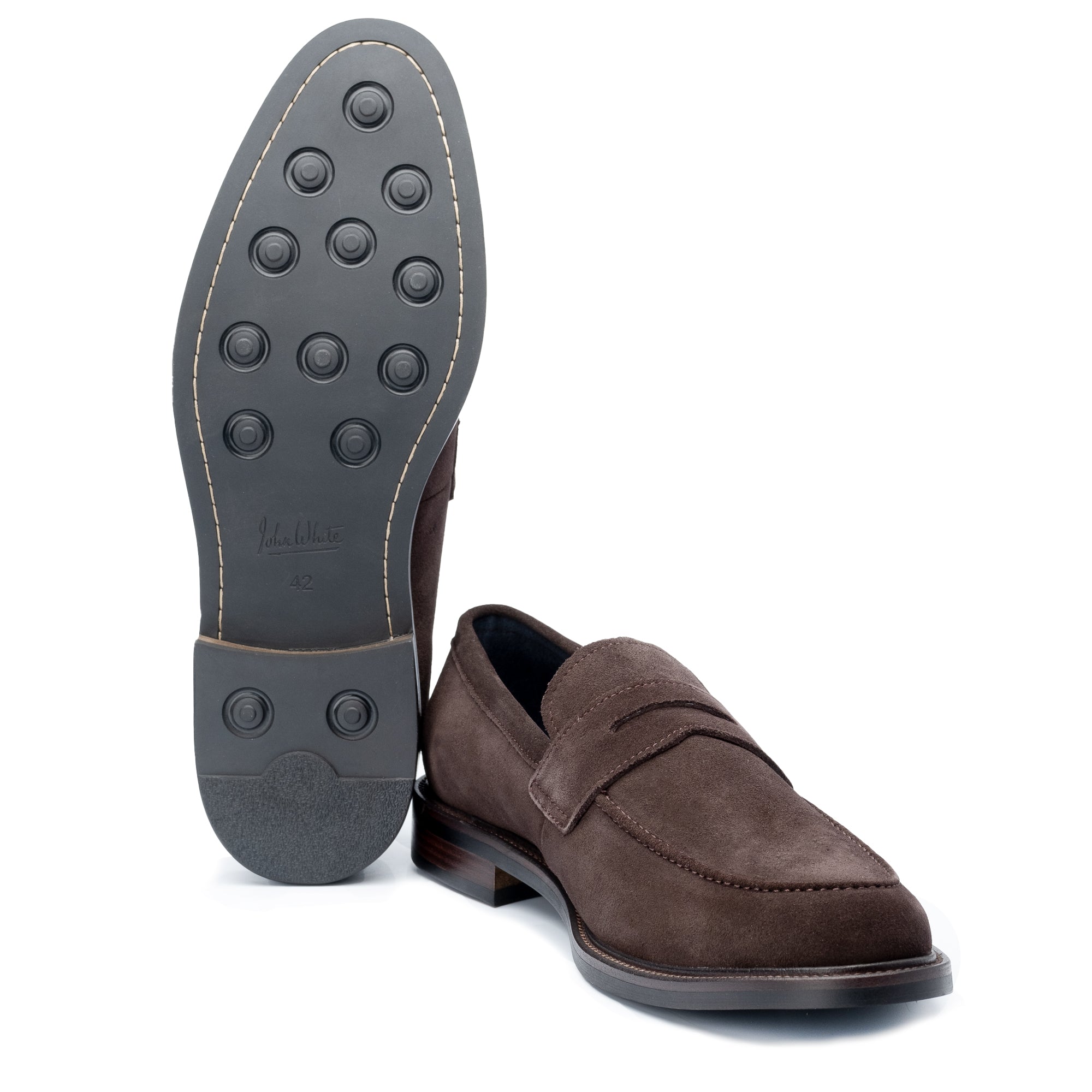
Rubber Soles (Dainite, Commando)
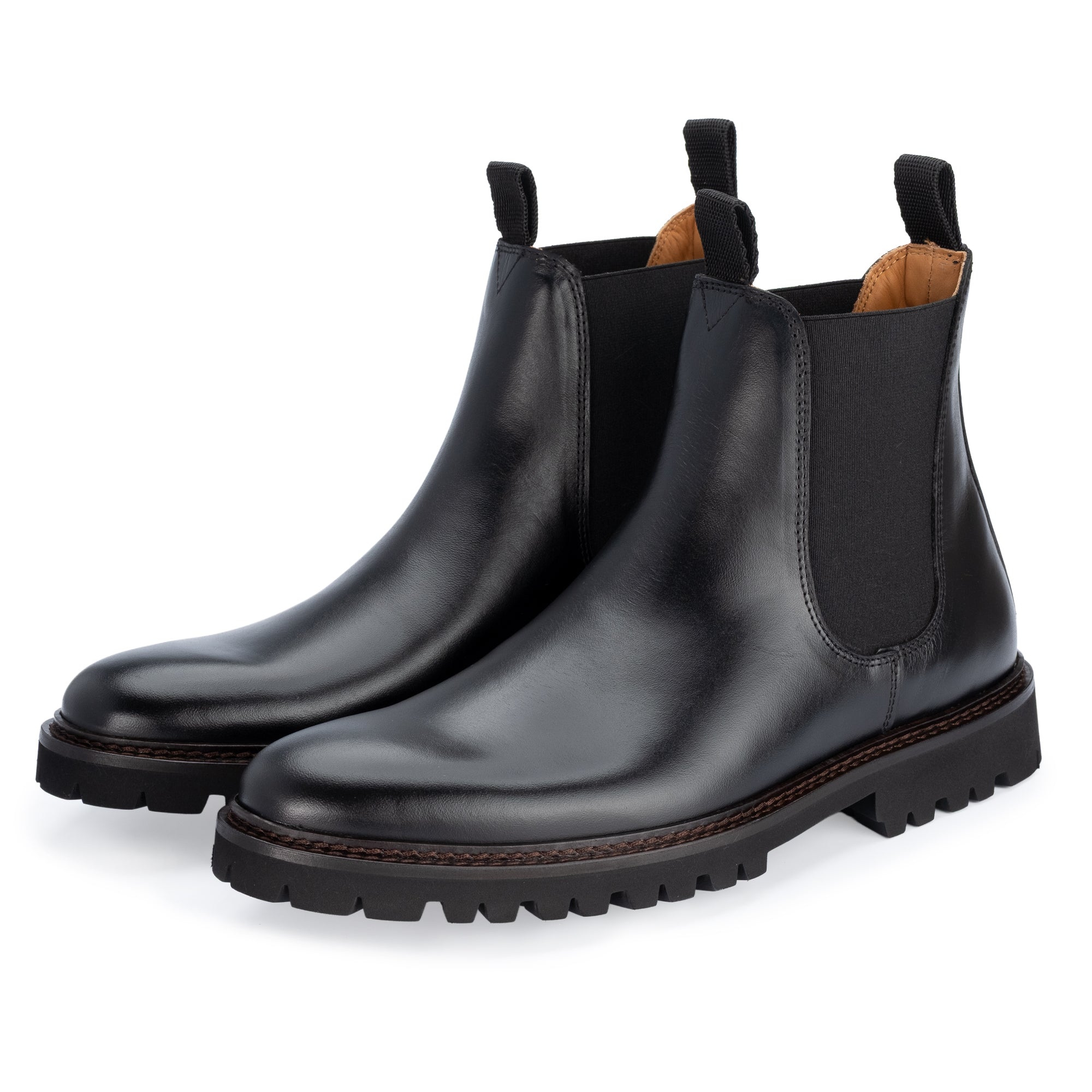
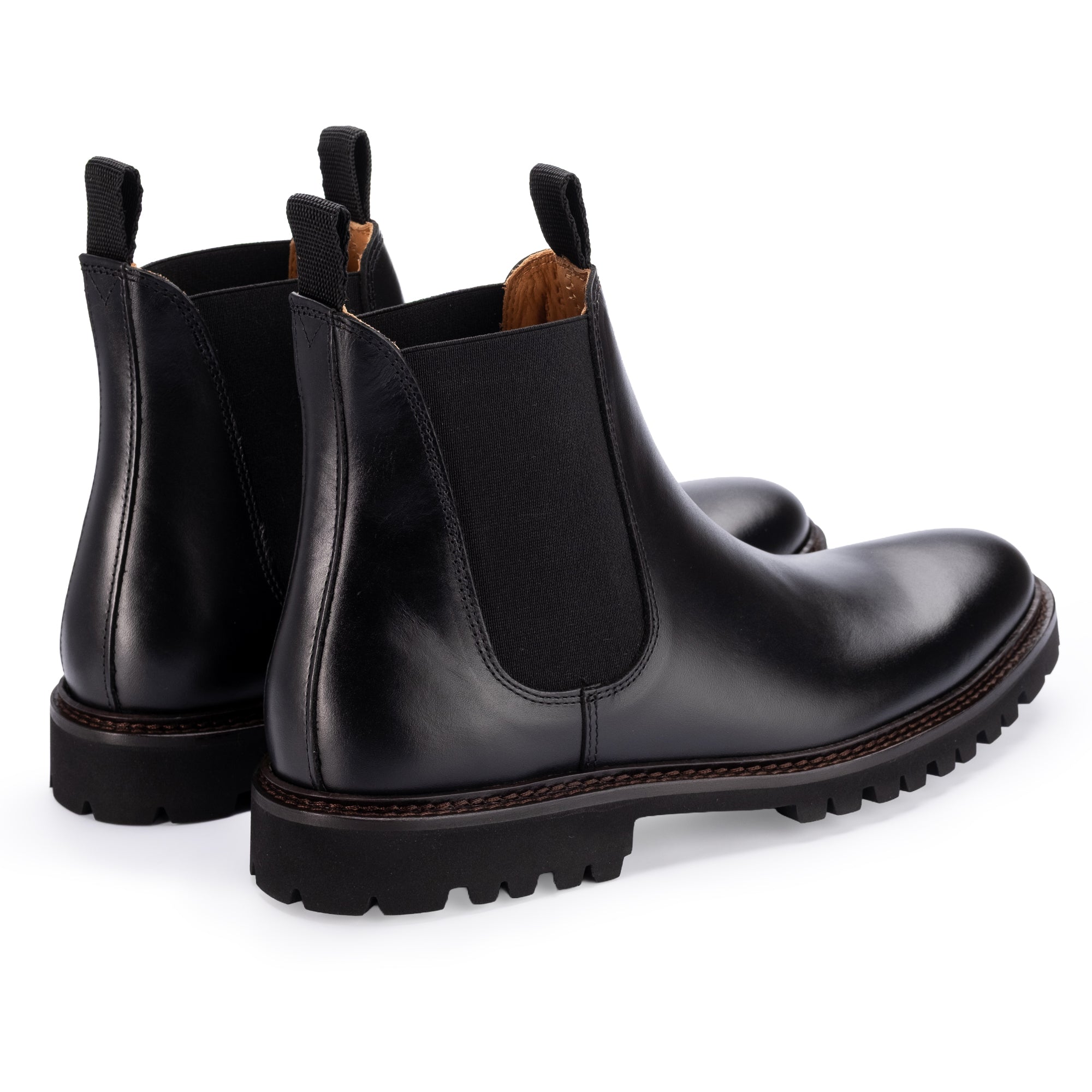
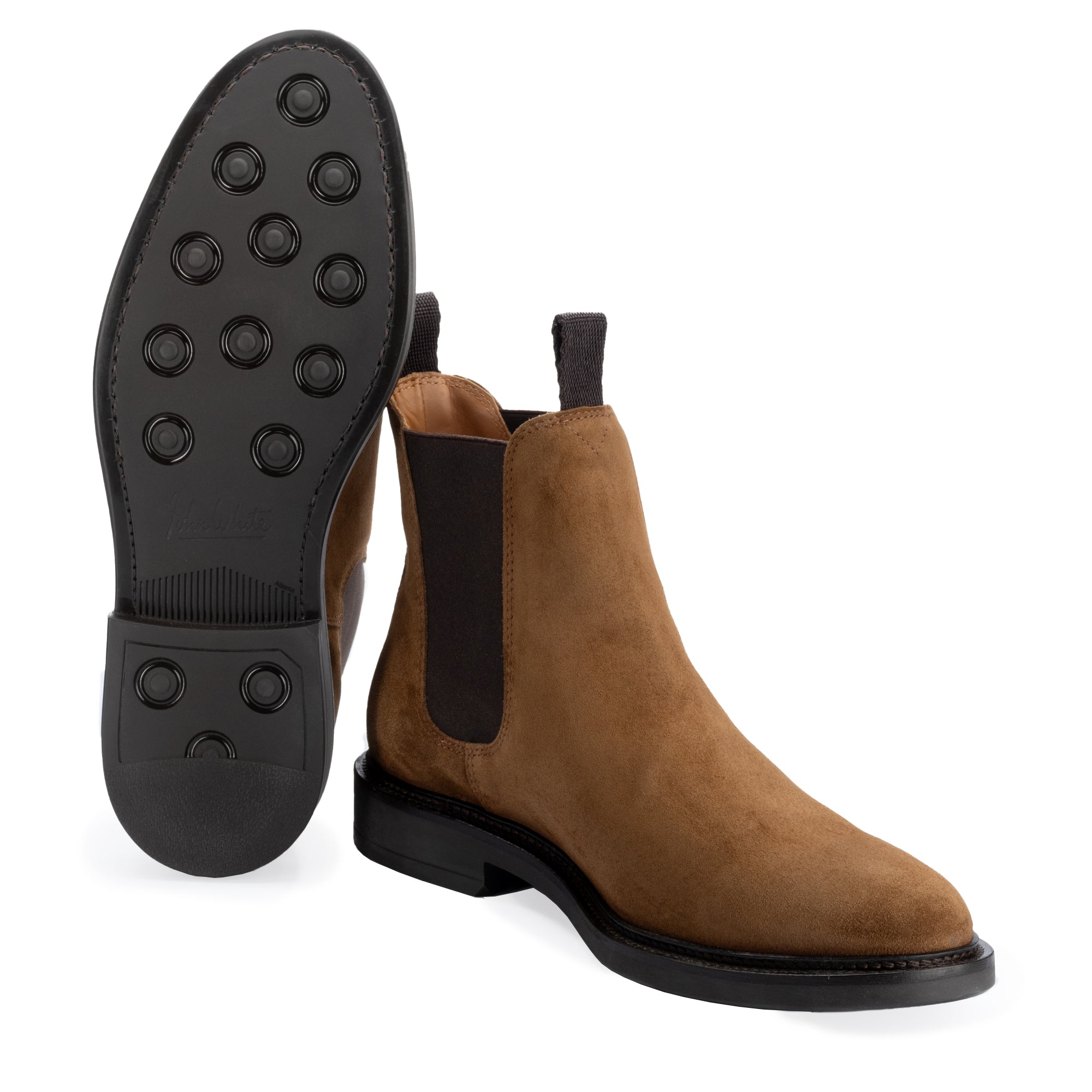
Dainite rubber (studded, dense) is the City's answer to all-weather wear — maintains a sleek profile while adding grip and water resistance. Commando is thicker, chunkier, suited to country or robust urban wear. For a full decision guide, see Selecting the Definitive Sole for the Urban Gentleman and Leather Soles vs Rubber Soles.
Choose leather soles for formal occasions; choose Dainite rubber if you're wearing dress shoes daily on London streets.
Dress Shoes for Specific Occasions
The same shoe doesn't work at every event. These are the correct choices for the occasions that trip men up most often.
Black Tie
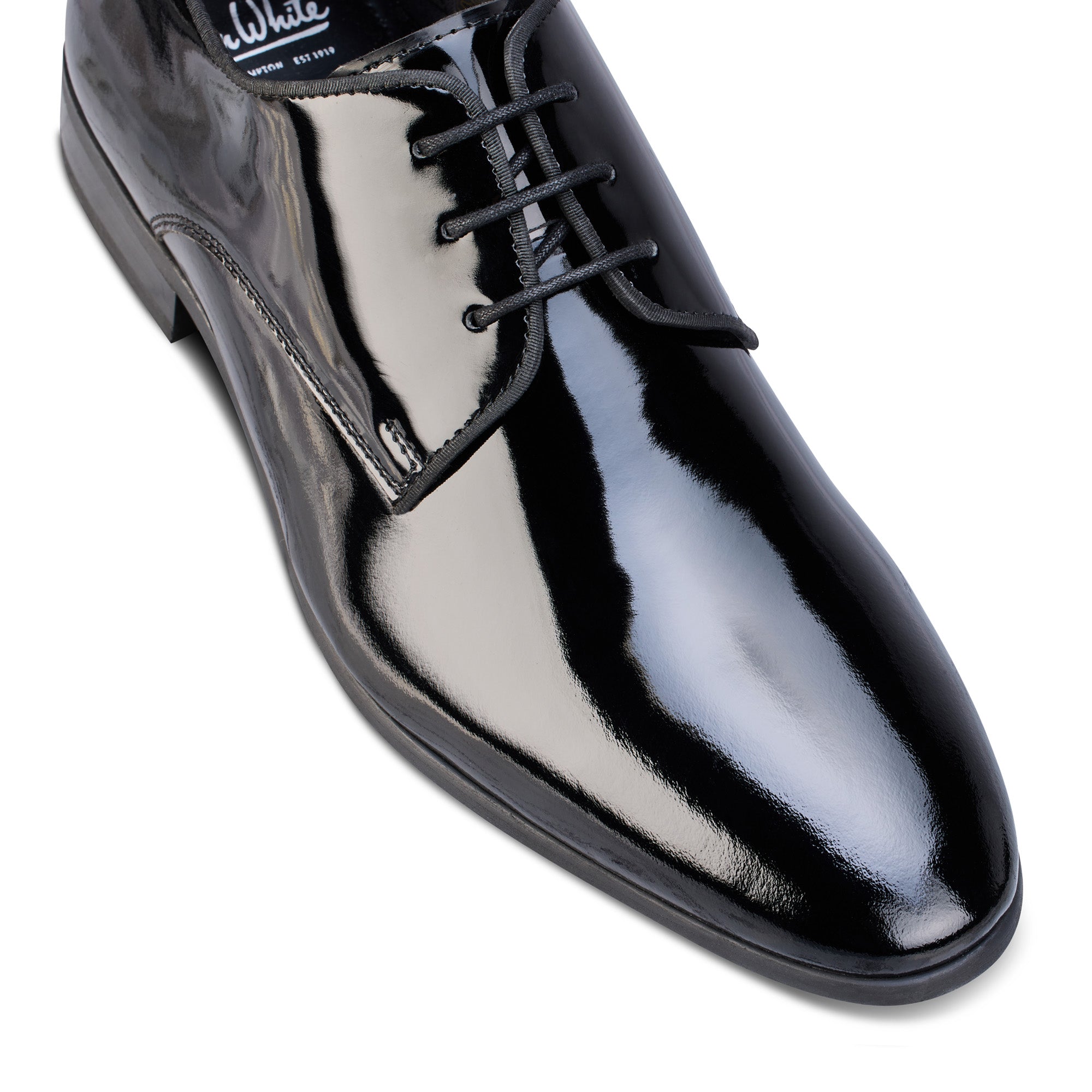
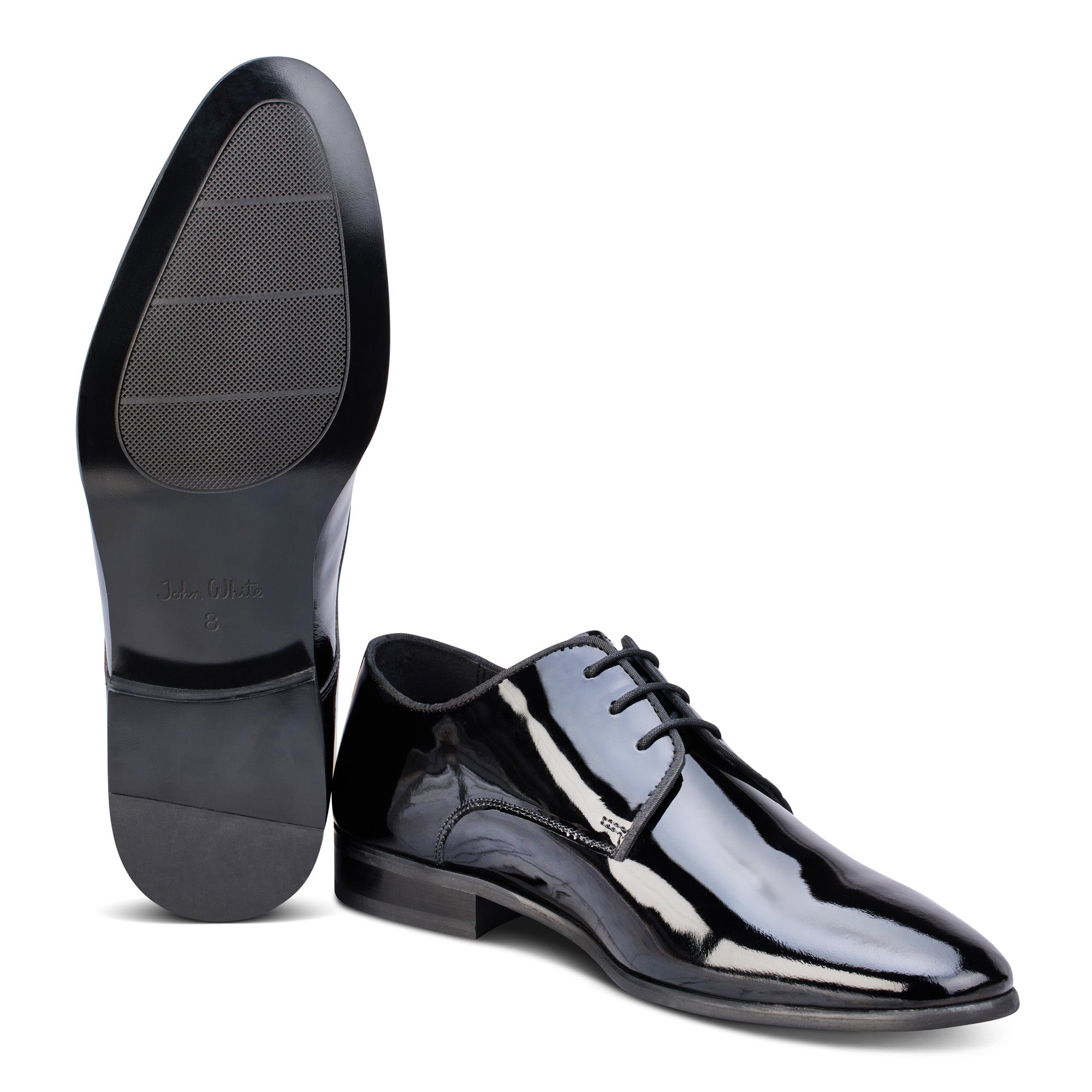
A plain-toe Oxford in polished black calf is the correct shoe for black tie — nothing else. A cap-toe is acceptable; a semi-brogue at a push. Patent leather is traditional but unnecessary unless the event is white tie or genuinely grand. See Black Tie Shoes: Plain Oxford, Patent or Polished Calf and Black Tie Wedding: The Groom's Definitive Shoe Guide.
The Races
Royal Ascot, Cheltenham Festival, and Goodwood each have their own dress-code nuances, but the safe answer across all three is a cap-toe or semi-brogue Oxford in black, tan, or brown — whichever suits your suit. See The Races Dress Code for the full breakdown by enclosure.
Weddings
The correct shoe for a wedding depends entirely on the dress code and your role. For the groom: plain Oxford at black tie, cap-toe or semi-brogue at morning coat. For a guest: see Men's Shoes for a Wedding Guest and Summer Wedding Shoes.
Graduation
Graduation is formal without being black tie — a cap-toe Derby or Oxford in black or dark brown is exactly right. See Graduation Day Shoes: What Every Man Should Wear.
Job Interview
The safest shoe for any interview is a plain Derby or cap-toe Oxford in black or dark brown. It signals that you've thought about it without drawing attention to your feet. See The Best Shoes to Wear to a Job Interview.
Match the formality of your shoes to the floor of the occasion — never to your personal preference on the day.
Getting the Fit Right
A well-made shoe in the wrong size performs worse than a cheaper shoe that fits. Dress shoe fit is specific — most men size down from their trainer size, and many carry width assumptions from mass-market footwear that simply don't apply to quality leather shoes.
- Length: There should be roughly 10–12mm of space beyond your longest toe. No more than 15mm.
- Width: The widest part of your foot should sit at the widest part of the shoe. Leather stretches minimally in width — don't buy narrow hoping it'll give.
- Heel: Heel slip of 2–3mm is normal in new leather shoes; the heel cup will tighten as the leather beds in. Consistent heel slip of 10mm+ is a sizing issue.
- Break-in: Full-grain calfskin typically requires 3–5 wears to fully mould to the foot. Wear with quality socks; use a cedar shoe tree after each wear to maintain shape.
If a shoe hurts on first wear, it's either the wrong size or the wrong last — it won't improve meaningfully with breaking in.
How to Care for Dress Shoes
The shoe-care routine for full-grain leather dress shoes is straightforward and takes five minutes per pair. The men who get twenty years from a pair of Oxfords aren't doing anything complicated — they're just doing it consistently.
After Each Wear
- Brush off surface dirt with a soft horsehair brush
- Insert cedar shoe trees immediately — they absorb moisture and maintain last shape
- Rest the shoes for at least 24 hours before wearing again
Weekly Maintenance (for regularly worn shoes)
- Apply a small amount of JW Premium Wax Polish to a cloth, work into the leather in small circles
- Leave to dry for 10–15 minutes
- Buff to a shine with a clean horsehair brush or polishing cloth
The JW Premium Wax Polish is formulated for calfskin and grain leathers — it conditions as it polishes, nourishing the leather and building patina over time. A quality wax polish from brands including Saphir, Kiwi, and the JWS own-label is the single highest-value investment in shoe care.
What Not to Do
- Don't over-polish — wax build-up clogs the leather pores and eventually cracks the surface
- Don't use cream on shoes you're about to wear in the rain — the leather can't absorb it fast enough
- Don't dry wet shoes near a radiator — heat causes leather to crack and warp
- Don't skip the shoe tree — leather without support creases permanently
Cedar shoe trees and regular wax polish are the two habits that separate shoes that last five years from shoes that last twenty.
Building a Dress Shoe Wardrobe
Most men need three pairs of dress shoes to cover every occasion they'll encounter. Everything beyond that is preference — which is where the interesting decisions begin.
The Core Three
- Black Oxford or Derby — Covers black tie, formal occasions, conservative business. The Guildhall Cap-Toe Oxford in Black or the Rudd Derby in Black are the clean starts.
- Brown Derby or Brogue — Covers business, smart-casual, most weddings. The Jermyn Derby in Tan or the Stokes Brogue in Brown or Tan do the majority of the work.
- Loafer — For smart-casual, summer suits, and when a lace-up would be over-formal. The Ethan Tumbled Grain Loafer in Navy or Brown is the Swiss Army option.
The Character Additions
- A double monk strap for a meeting or event where you want to be remembered — the Monkton in Black or Brown.
- A suede loafer for summer and coastal smart-casual — the Ethan Suede in Green, Navy, or Brown.
- A semi-brogue Oxford for when a plain Oxford is too austere — the Lucan Semi-Brogue in Black or Tan.
Browse the full men's shoes range, or filter by Oxford shoes, Derby shoes, brogue shoes, loafers, or monk strap shoes.
Three pairs covers every occasion; the rest is personality — and personality is worth investing in.
TL;DR: Men's dress shoes span Oxfords (most formal, closed lacing), Derbys (versatile, open lacing), brogues (character, semi-brogue for suits), monk straps (buckle closure, suits and smart-casual), and loafers (slip-on, modern-smart). Choose leather quality first — full-grain calfskin outperforms everything else over time. Start with black Oxford or Derby, add brown, then build from character. Maintain with cedar shoe trees and JW Premium Wax Polish.
Related Guides
- The Complete Guide to Men's Dress Shoes — our comprehensive guide
- What Shoes to Wear with a Suit
- How to Wear Oxford Shoes: Dress Up or Down
- How to Wear Brogues: A Complete Men's Style Guide
- What Shoes to Wear with Chinos
- The Essential Guide to Monk Strap Shoes
- Brogues vs Plain Derbies: Which Should Be Your First Premium Leather Shoe?
- Leather Shoe Laces: The Correct Method for Cleaning, Replacing, and Choosing the Right Weight
- Summer Wedding Guest Shoes: What to Wear with a Linen or Lightweight Suit
- What Shoes to Wear with a Grey Suit: The Complete Men's Colour Guide
- Brogues vs Plain Derbies: Which Should Be Your First Premium Leather Shoe?
- Chinos and Leather Shoes: The Complete Men's Styling Guide
- The Six Classic Men's Shoe Styles: When to Wear Each
- What to Wear with Linen Trousers: The Best Shoes for Summer Tailoring
- Graduation Day Shoes: The Complete Men's Guide for UK University Ceremonies
- What to Wear to Wimbledon: Men's Shoe Guide for Every Enclosure
- How to Wear Monk Strap Shoes: The Smart Alternative to the Oxford
- What Shoes to Wear with a Grey Suit: The Complete British Men's Guide
- Full Brogue or Semi-Brogue: How to Choose the Right Level of Detail
- Back to the Office in September: The Best Shoes to Relaunch Your Professional Wardrobe
Frequently Asked Questions
What is the difference between an Oxford and a Derby shoe?
An Oxford has a closed lacing system where the facing quarters are stitched under the vamp, creating a tighter, more formal silhouette. A Derby has an open lacing system where the quarters sit on top, producing a wider V-gap at the throat and a slightly less formal look. Both are dress shoes; the Oxford is appropriate for black tie, the Derby is not.
Can you wear brown shoes with a navy suit?
Yes — brown shoes with a navy suit is one of the strongest combinations in men's tailoring. Tan, mid-brown, and cognac all work well. Black shoes with navy are also correct but less characterful. See the full guide: How to Wear a Navy Suit.
How many pairs of dress shoes does a man need?
Three covers every occasion: one black Oxford or Derby for formal wear, one brown Derby or brogue for business and smart-casual, and one loafer for the modern smart-casual register. Beyond three, additional pairs are character choices rather than functional necessities.
How long do dress shoes last?
Full-grain calfskin dress shoes, properly maintained, last 10–20 years with regular resoling. The leather itself outlasts multiple sole replacements. The key habits are cedar shoe trees after every wear, wax polish weekly, and a minimum 24-hour rest between wears.
Are brogues appropriate for a formal occasion?
A full brogue (wingtip) is not appropriate for black tie or very formal occasions. A semi-brogue (medallion cap-toe only) can accompany a business suit and most smart occasions without difficulty. When in doubt, the rule is: less broguing means more formal. See Full Brogue vs Semi-Brogue.
What's the best shoe for a job interview?
A plain Derby or cap-toe Oxford in black or dark brown. It signals intention without drawing attention — which is exactly what most interview situations require. See The Best Shoes to Wear to a Job Interview.
What is the correct shoe for black tie?
A plain-toe Oxford in polished black calfskin is the correct shoe for black tie. A cap-toe Oxford is also acceptable. The shoe must be black, must be leather, and must not be brogued. Patent leather is traditional but not required unless the occasion is white tie or extremely grand.
How do I break in new dress shoes without damaging them?
Wear them in short stints initially — an afternoon rather than a full day. Use quality leather socks which reduce friction while the leather moulds to your foot. Insert cedar shoe trees immediately after each wear to prevent creasing while the leather is warm and pliable. Don't attempt to force the break-in with heat or water — it damages the structure.