
The Essential Guide to Monk Strap Shoes: Style & Versatility
Monk strap shoes are a premium leather dress shoe fastened with one or two buckled straps across the vamp, rather than laces or elastic gussets. They sit between the formality of an Oxford and the ease of a loafer — versatile enough for the boardroom, a wedding, and a smart dinner without asking you to change pairs.
In This Guide
Few shoes carry the same effortless authority as a well-kept pair of monks. There are no laces to loosen at the end of a long day, no gusset to stretch out of shape. Just clean leather, a polished buckle, and a silhouette that's held its own for centuries. If you haven't added a pair to your rotation yet, here's everything you need to know.
What Are Monk Strap Shoes?
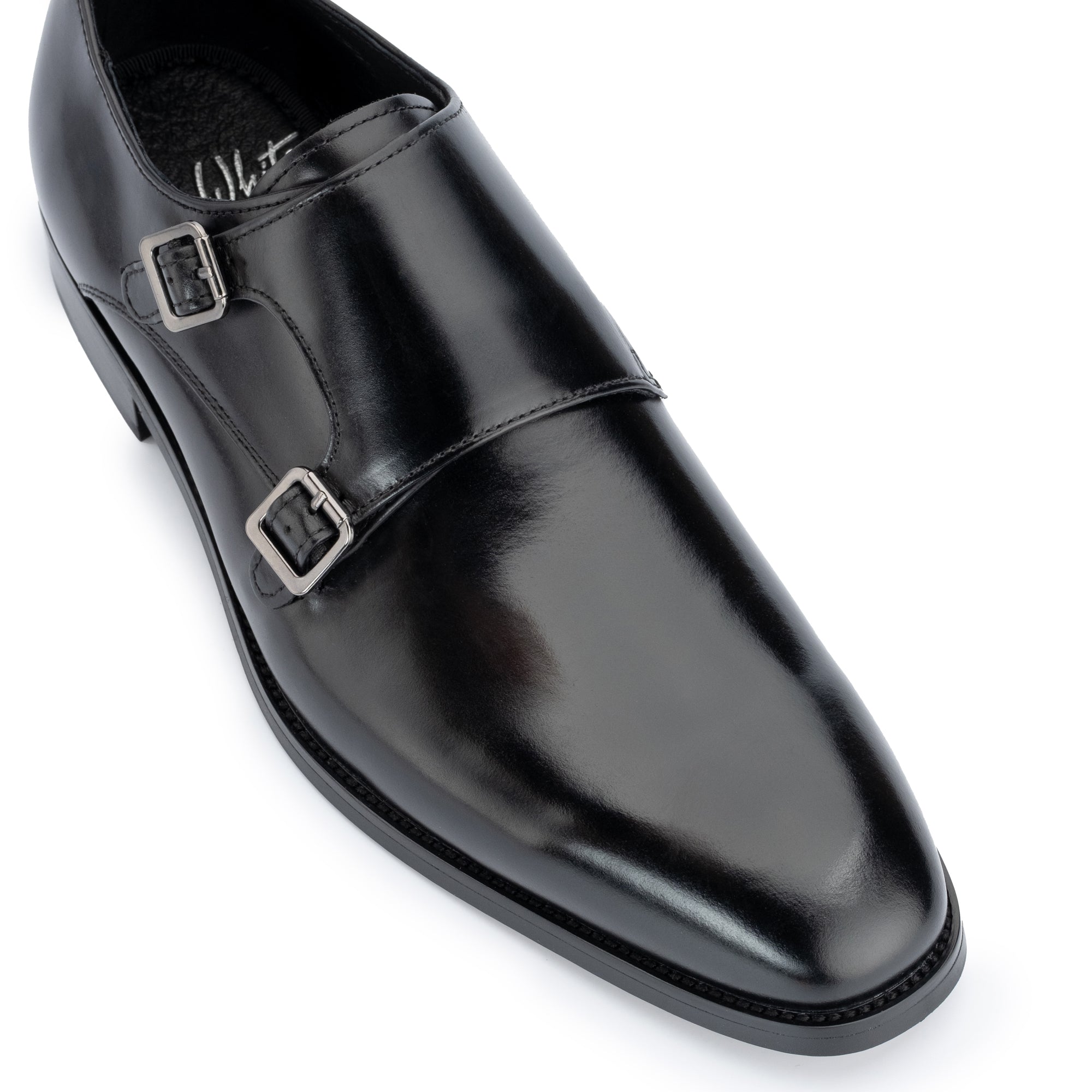
A monk strap shoe is a closed-toe leather dress shoe fastened with a broad leather strap and a metal buckle across the instep. Unlike an Oxford — which uses a closed lacing system — or a loafer, which is slip-on entirely, the monk strap occupies its own distinct category: structured, adjustable, and immediately recognisable.
According to the Northampton Museum & Art Gallery, whose collection documents the evolution of British and European footwear across six centuries, buckled strap shoes appear in European dress records from the 15th century onwards. Monks wore simple buckled sandals suited to long hours of standing; over generations the style evolved into the refined leather shoe that entered professional wardrobes across the twentieth century.
The monk strap is defined by its buckle fastening — a detail that makes it more distinctive than a plain Oxford and more structured than a loafer, giving it genuine presence without ostentation.
Single Monk or Double Monk: Which Should You Choose?
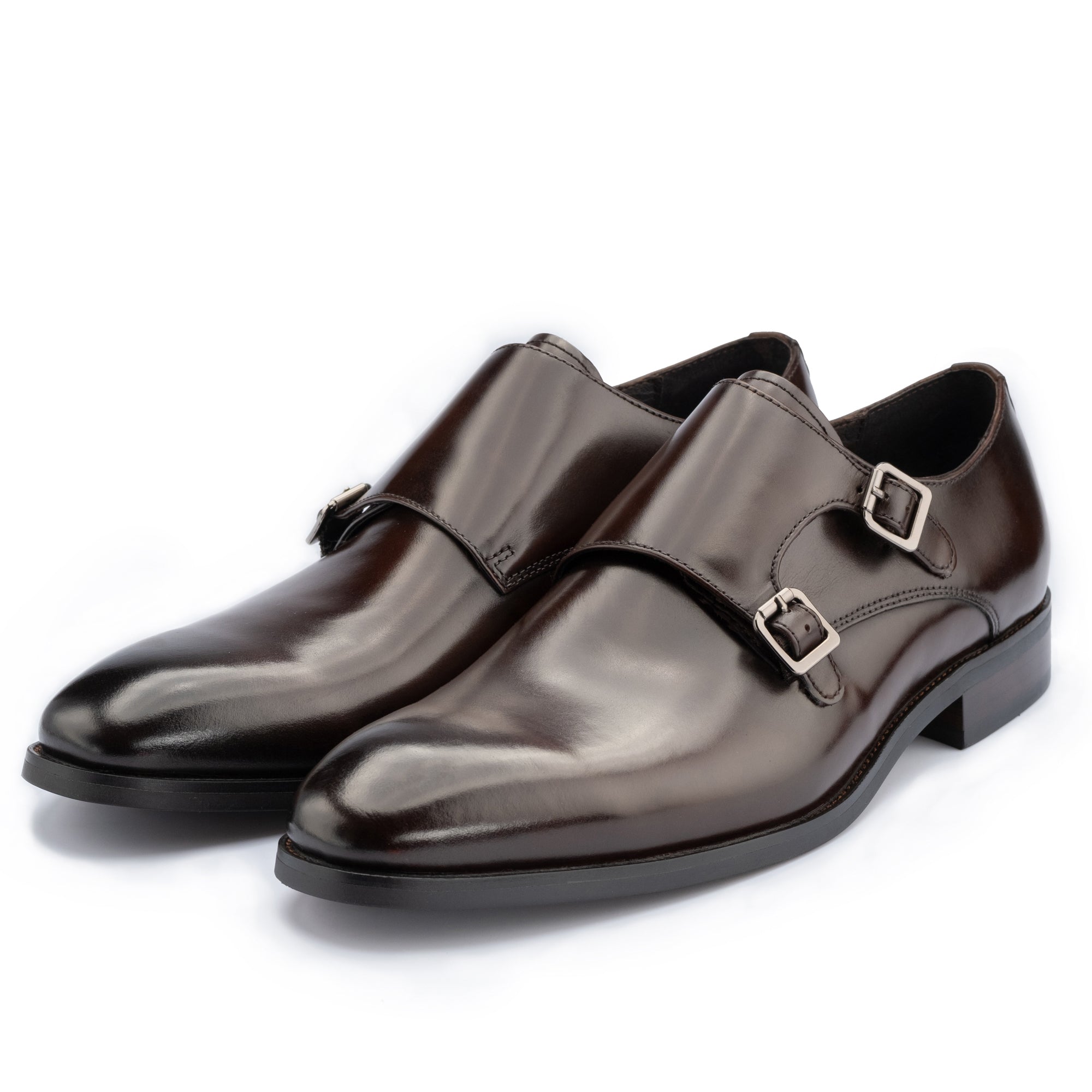
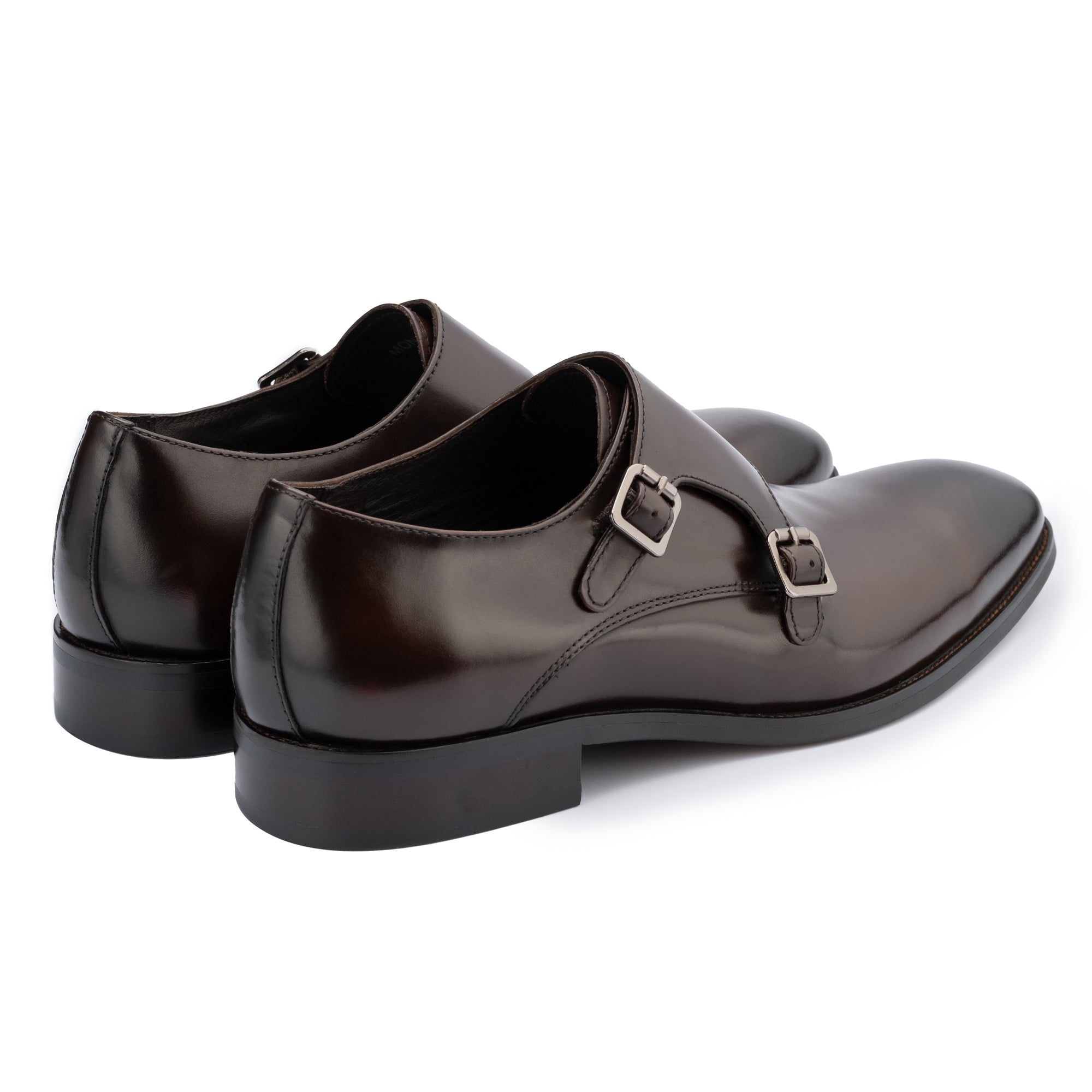
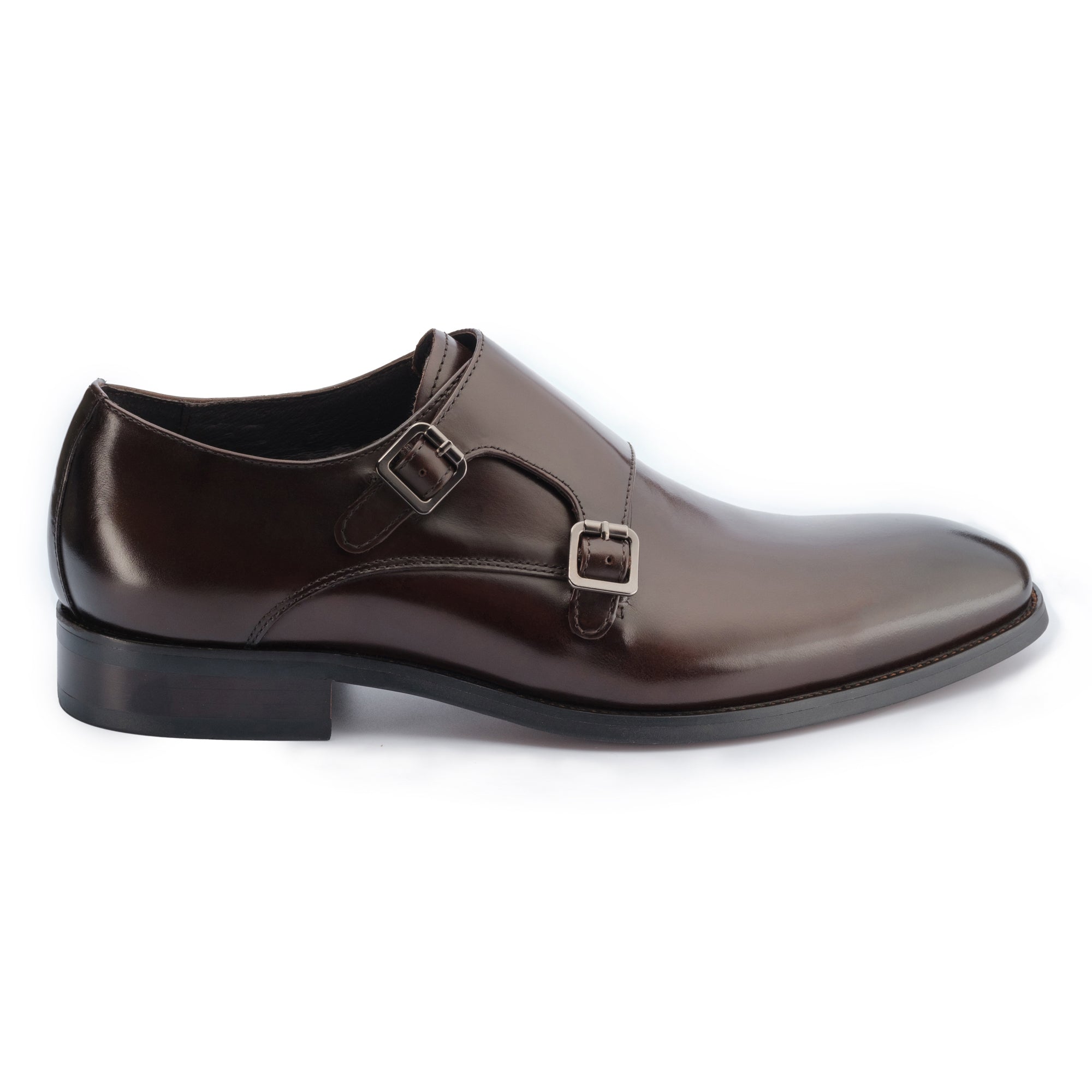
Single monk strap shoes have one strap and one buckle. Double monks have two. The difference matters beyond aesthetics.
| Feature | Single Monk | Double Monk |
|---|---|---|
| Straps | One | Two |
| Formality level | Higher — cleaner vamp | Slightly lower — more decorative |
| Best suited to | Formal business, conservative settings | Business casual, smart-casual, weddings |
| Personality | Understated, refined | Confident, considered |
| Trouser pairings | Dark suits, formal trousers | Suits, chinos, tailored dark denim |
The single monk is the more formal of the two — favoured when restraint is the point. The double monk makes a stronger visual statement without crossing into the decorative. It's equally at home across finance, law, and creative industries, precisely because it holds authority in all three.
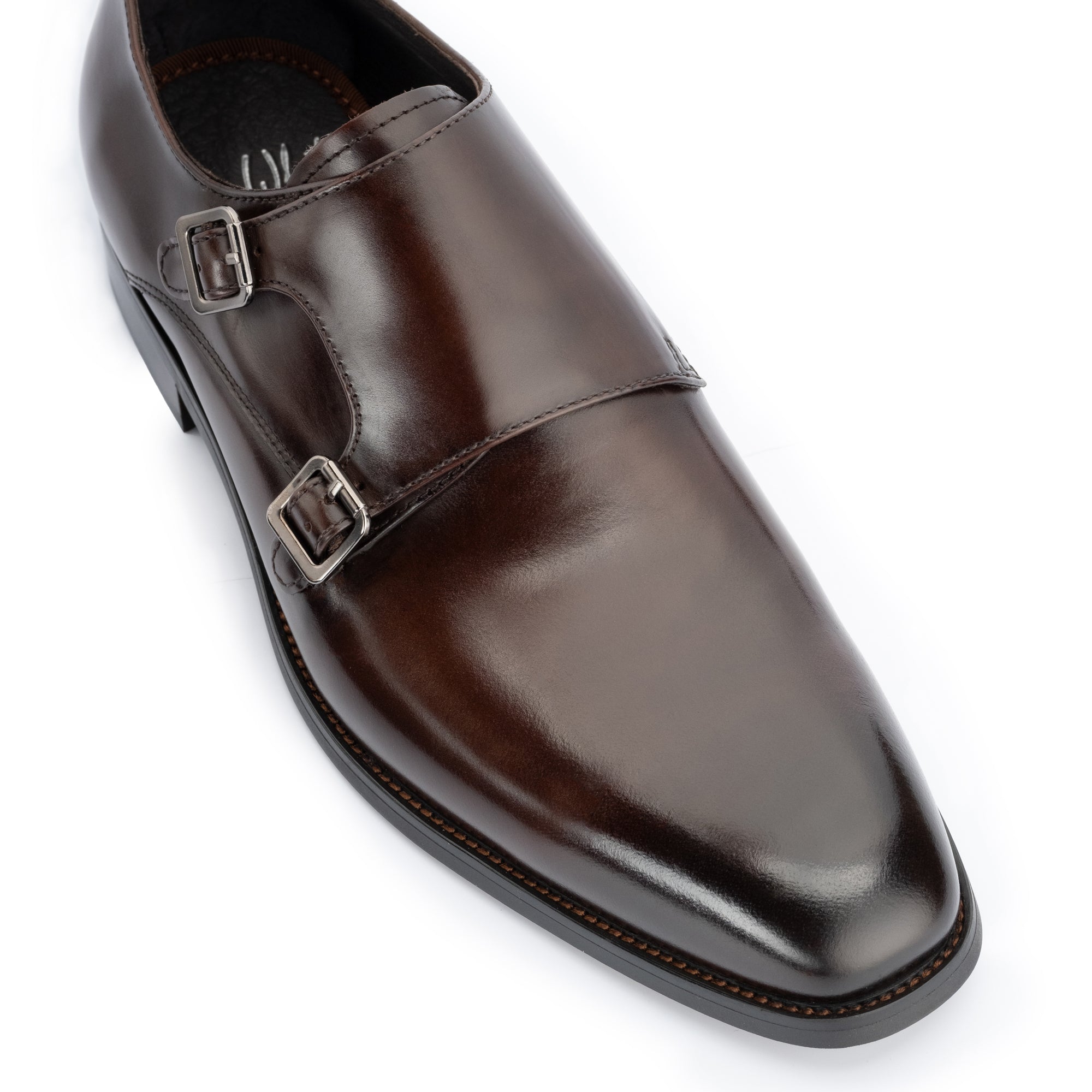
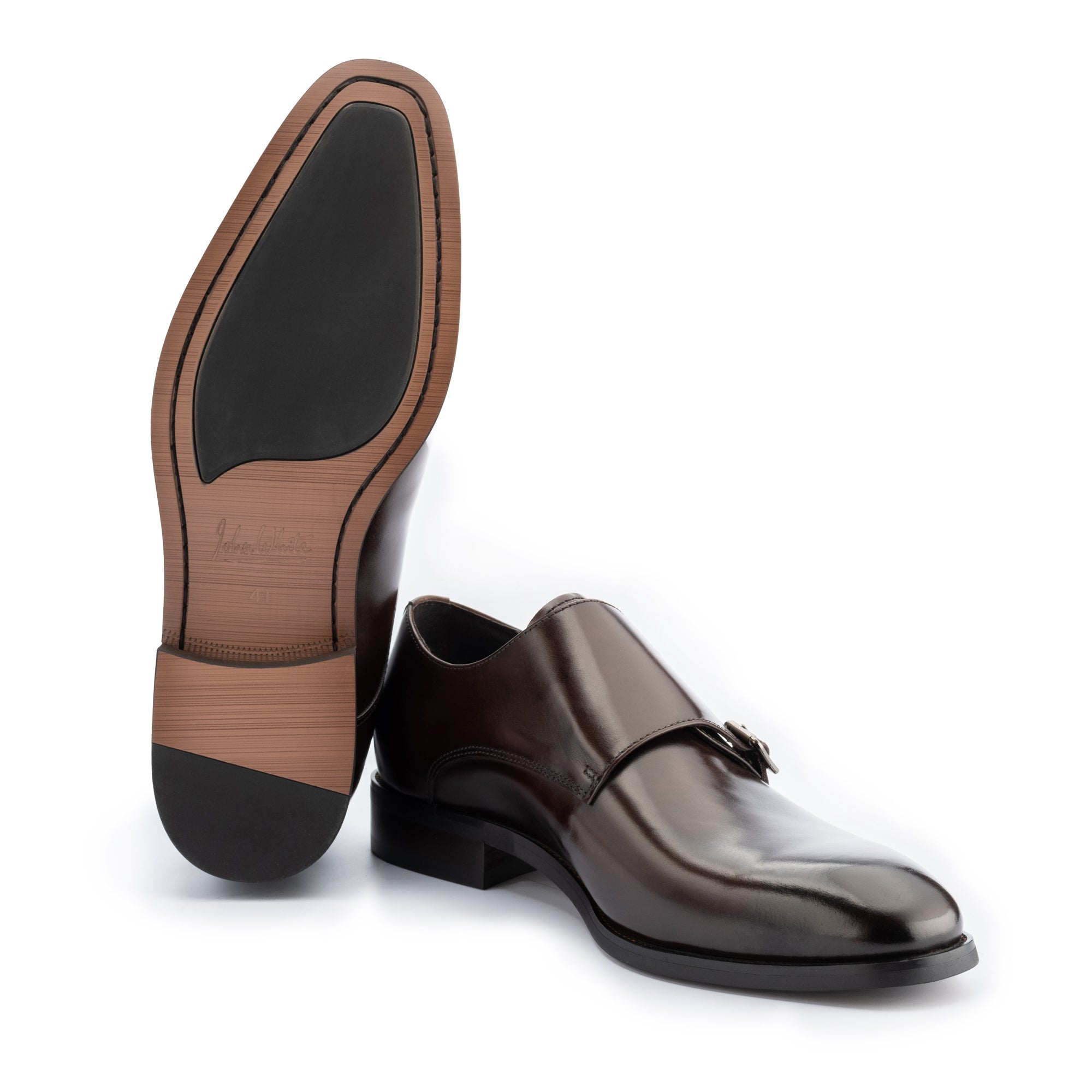
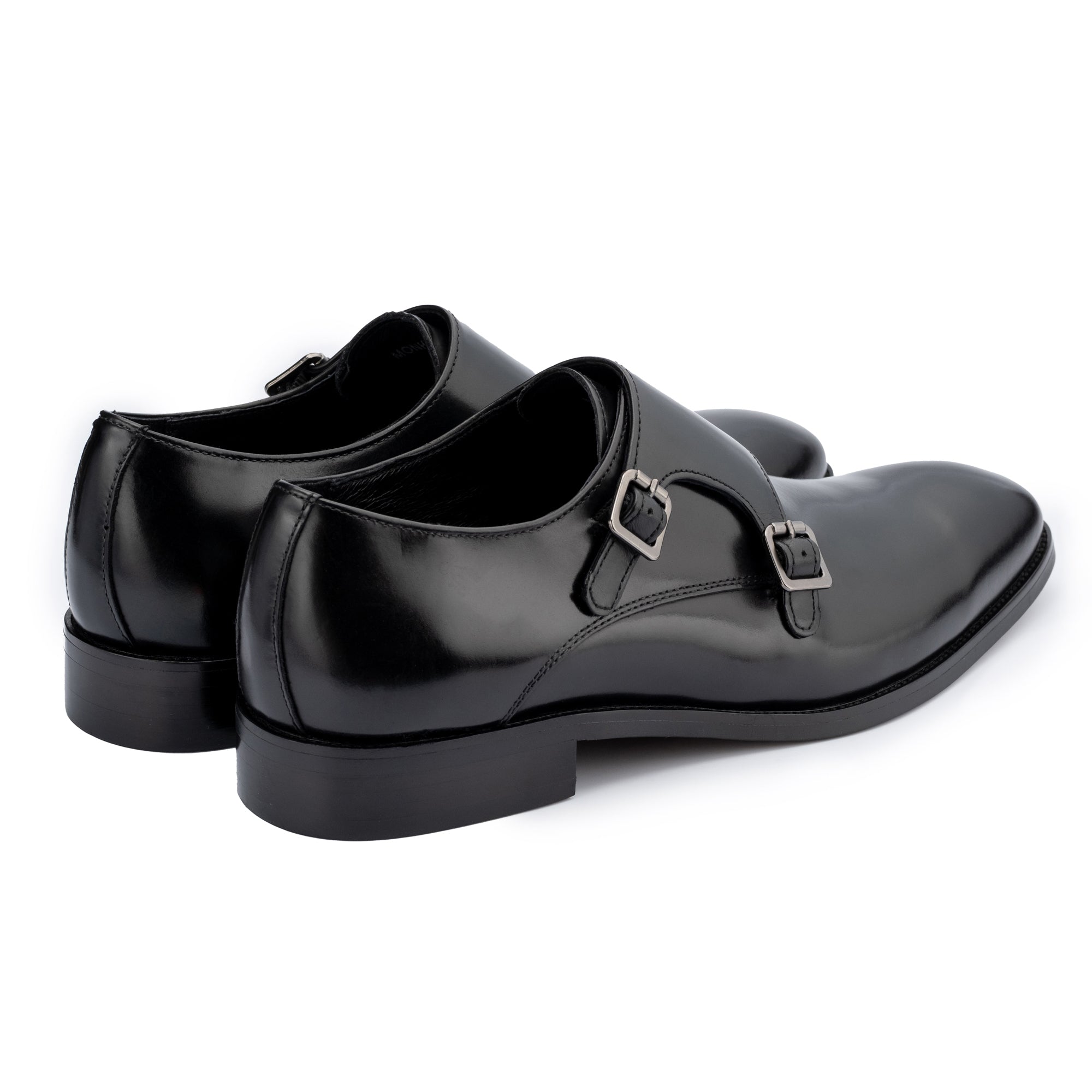
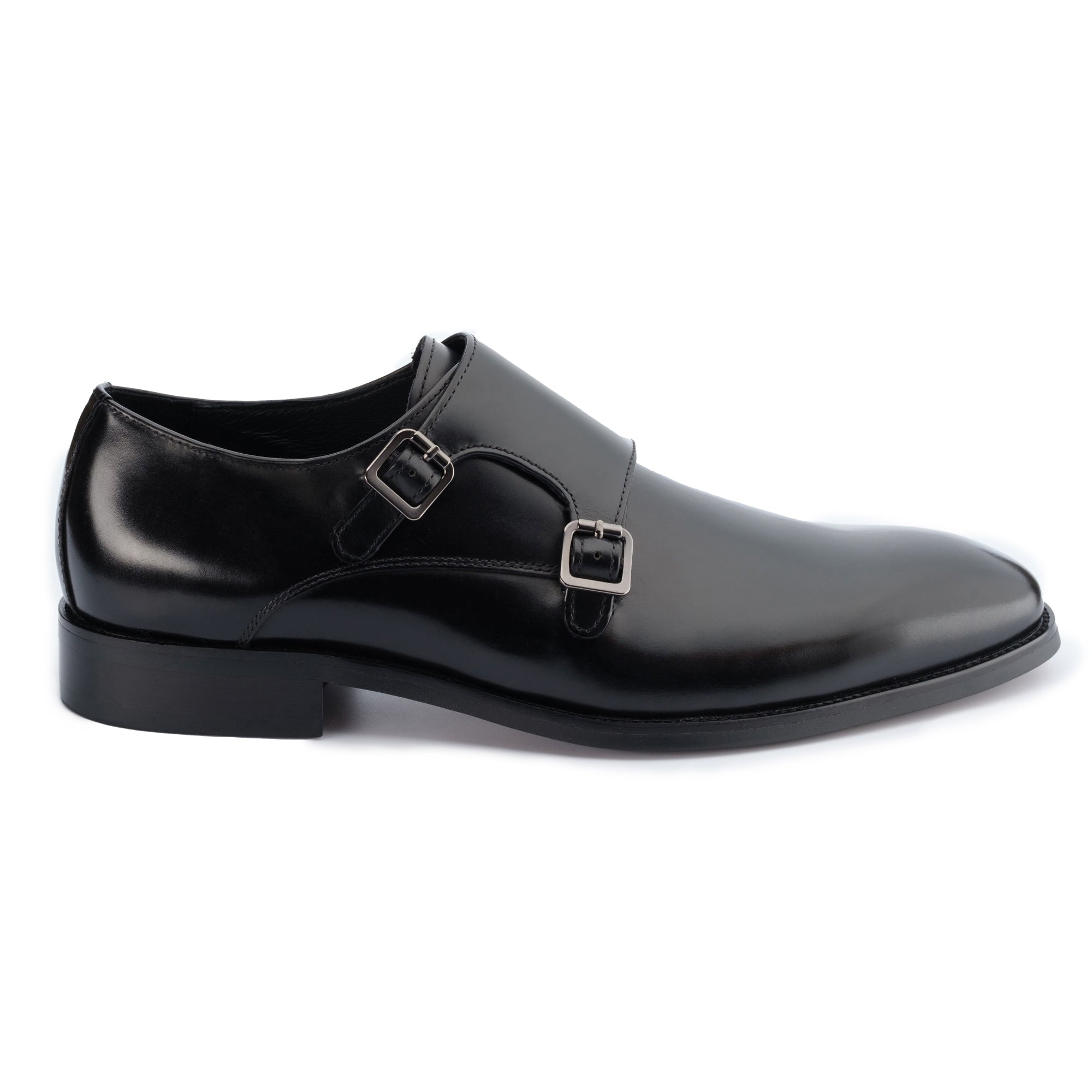
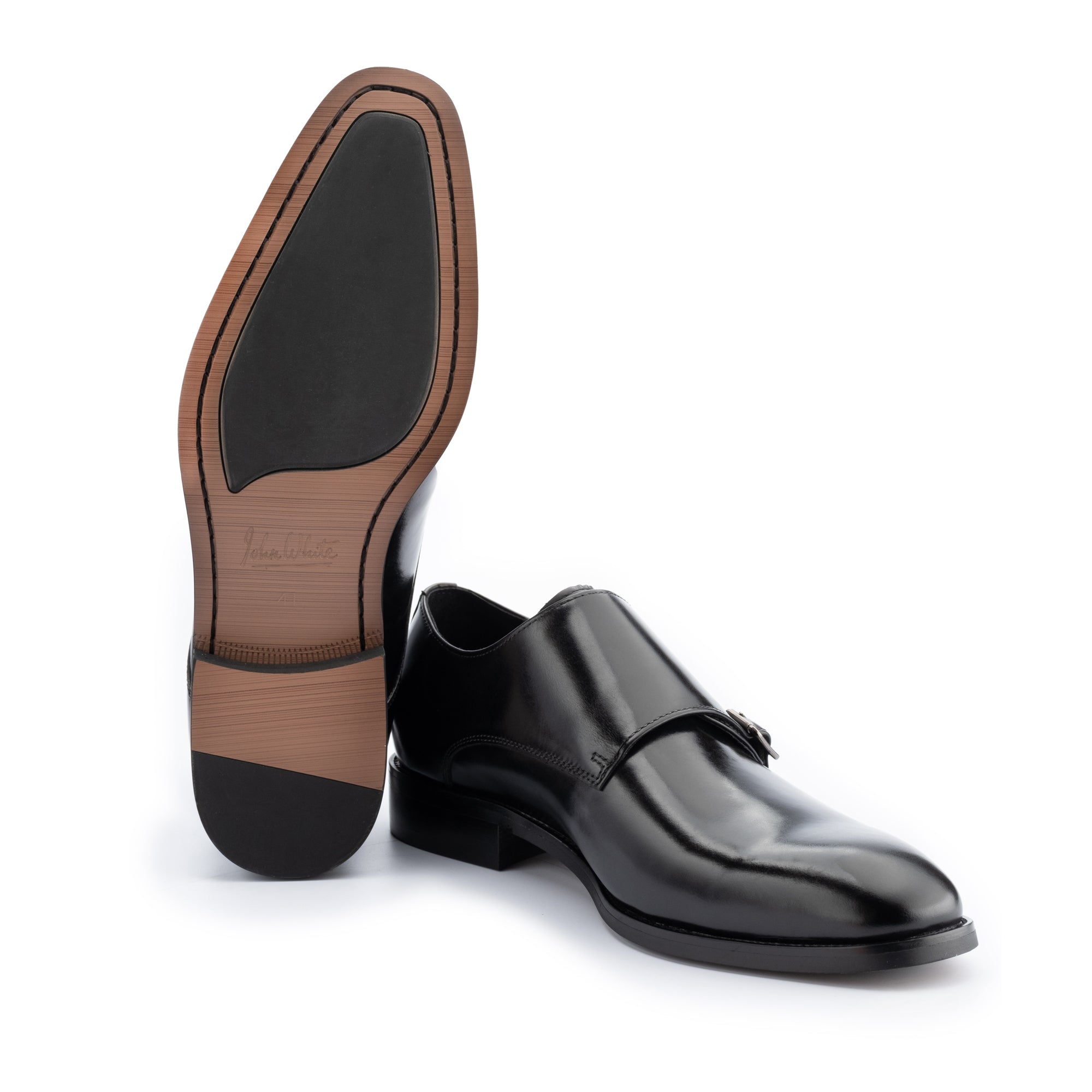
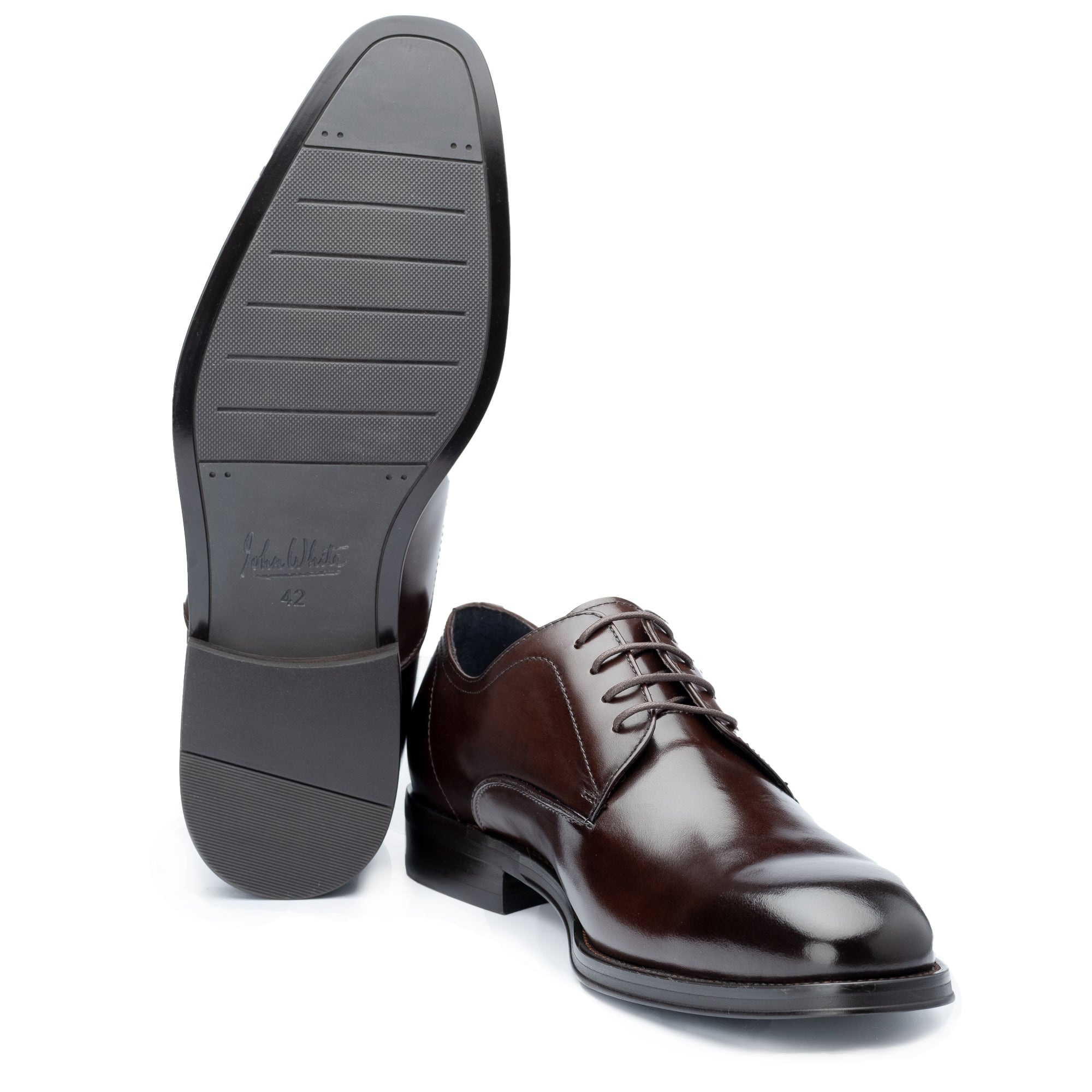
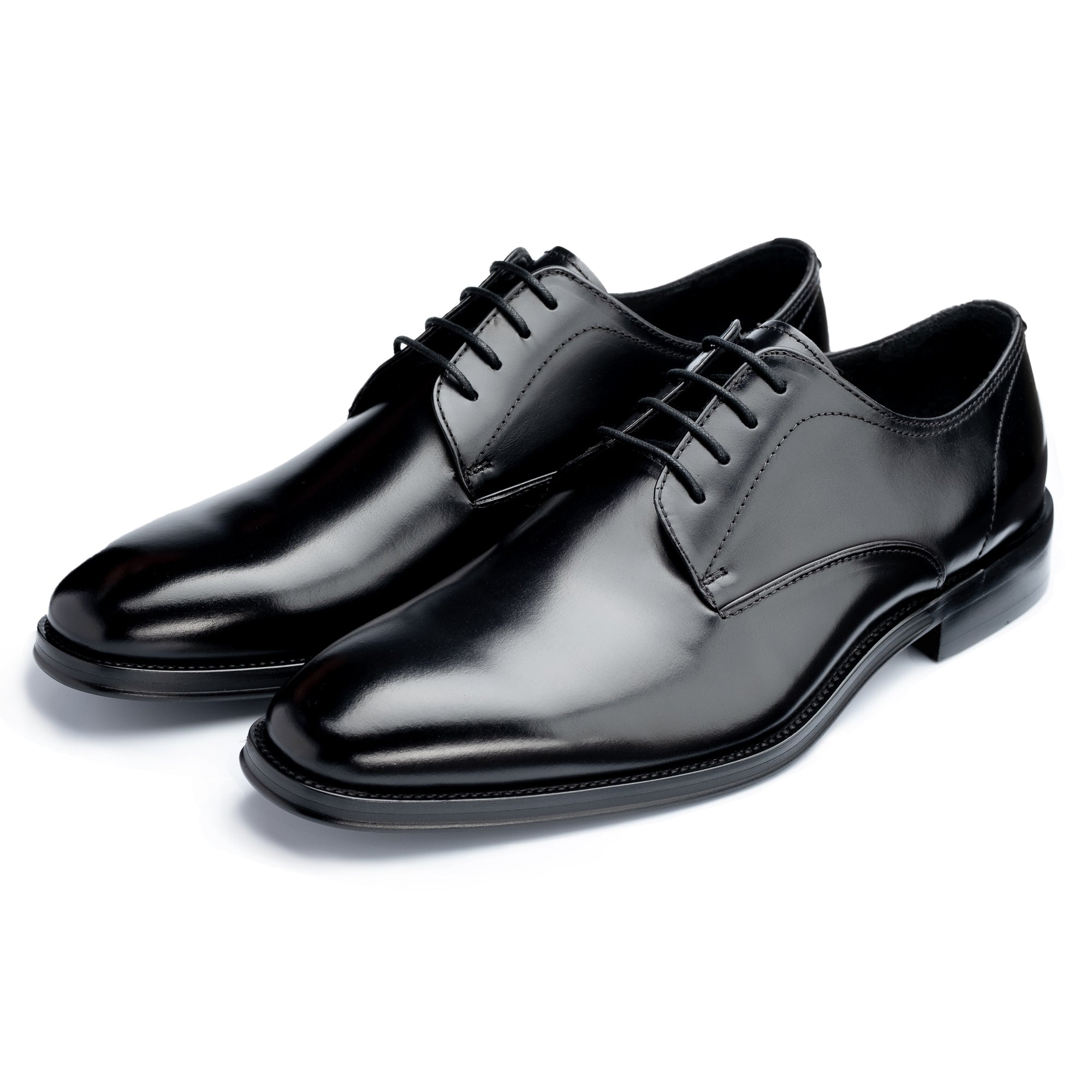
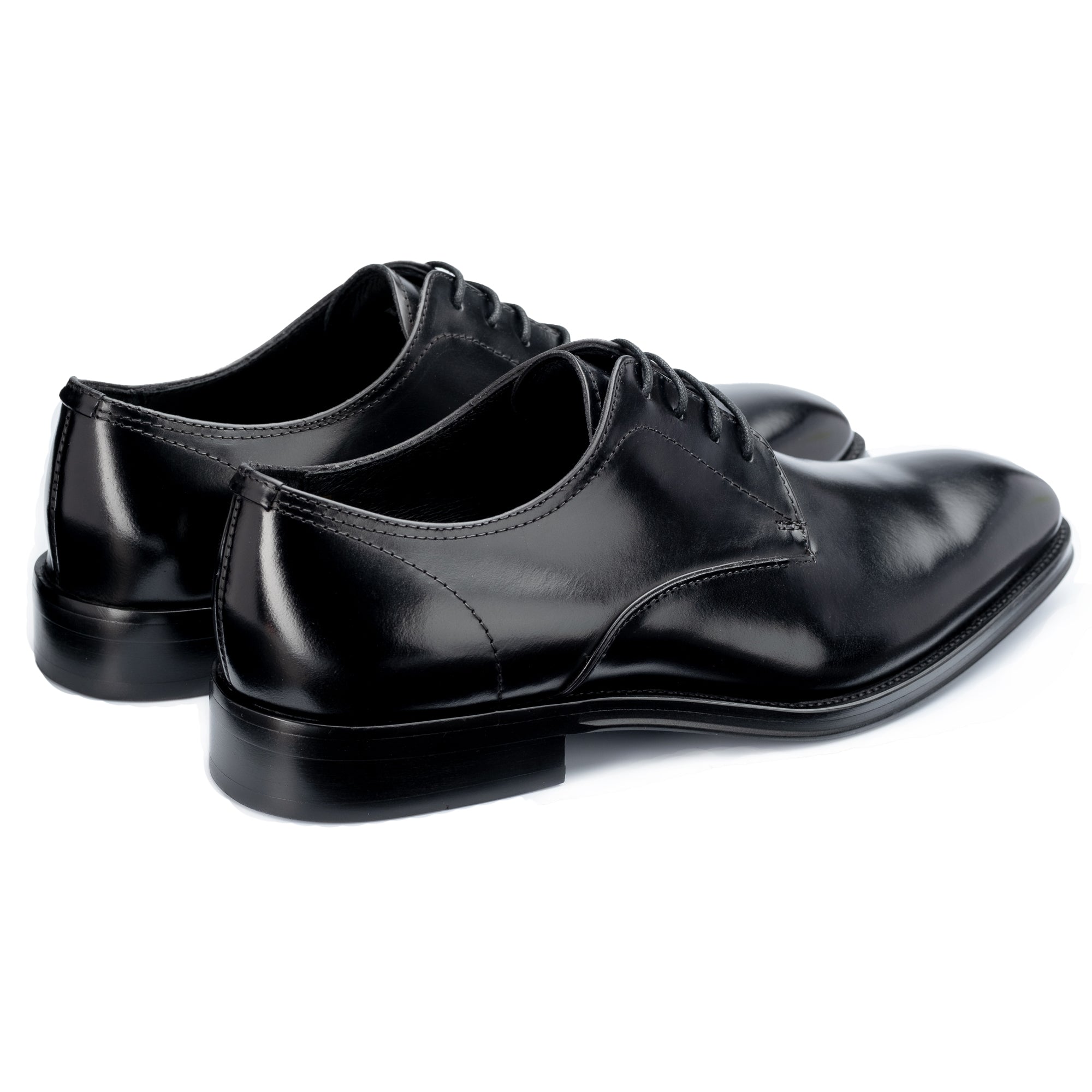
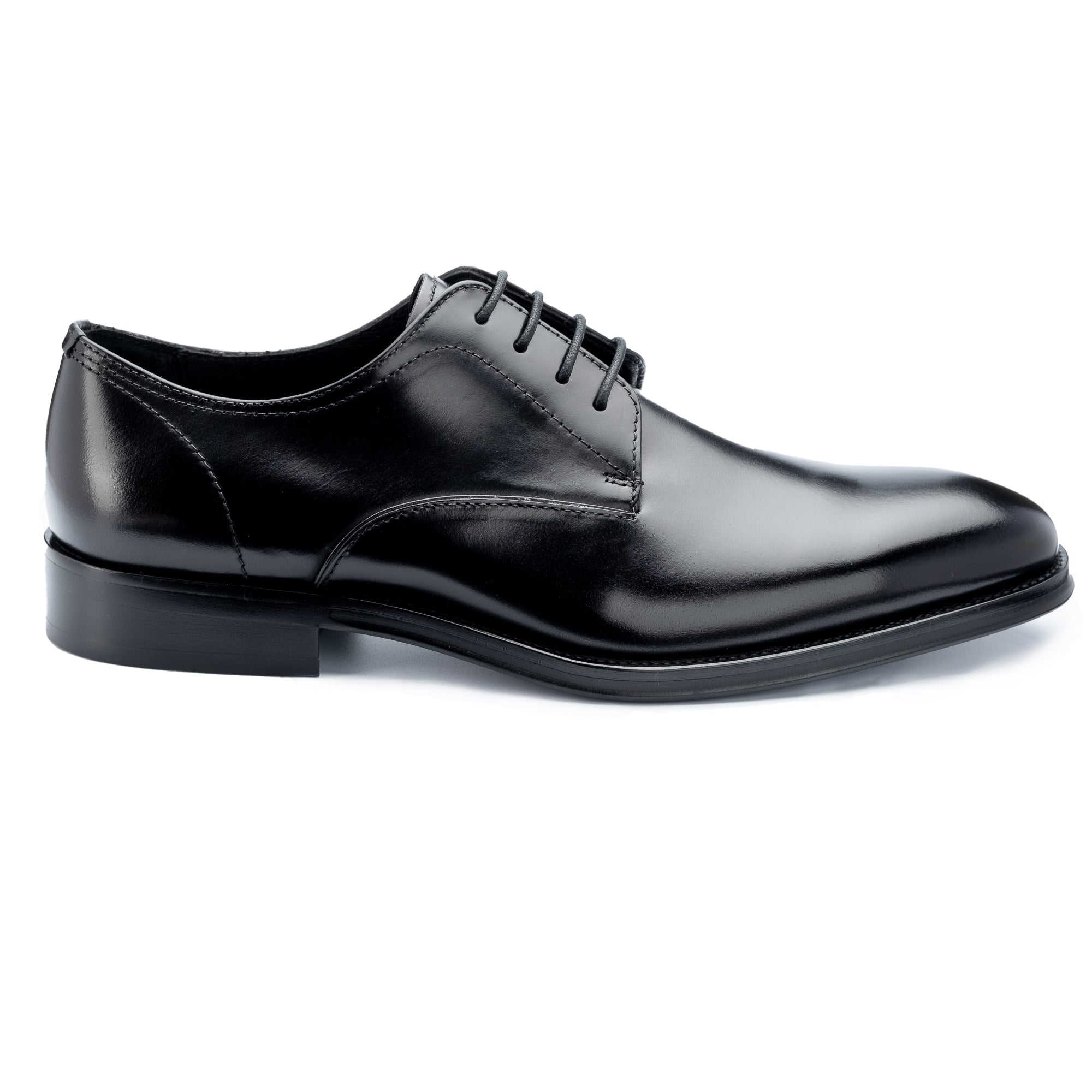
For most men, the double monk is the more practical first purchase. It handles everything from a morning meeting to a smart evening occasion without requiring a second pair. Our Monkton Double Monk Shoes, available in black and brown, are designed with exactly that range as the starting point.
If you're buying your first monk strap, the double monk in brown gives you the widest range — it's the one pair that covers formal, smart-casual, and occasion dressing without compromise.
How Formal Are Monk Strap Shoes?
Monk strap shoes sit in the middle tier of men's dress shoe formality — above loafers and most Derby shoes, broadly level with well-executed cap-toe Derbys, and typically below a plain-toe Oxford for the strictest formal occasions.
A practical breakdown by dress code:
- Black tie / white tie — Plain-toe Oxford or patent leather pump only. Monks aren't appropriate here.
- Formal business / job interviews — A black single monk in clean, polished leather is a strong choice. Our guide to what footwear says about you at a job interview covers every dress code level.
- Business casual / corporate office — Double monk in black or brown. Entirely appropriate and considerably more characterful than a plain Derby.
- Smart casual / social evenings — Brown or tan double monk with chinos or tailored trousers. Excellent.
- Weddings — A brown double monk works beautifully for morning dress and lounge suit alike. For dress code specifics, see our guide to men's shoes for a wedding guest.
Black monks read as formal; brown monks as smart-casual. Together, the two colourways cover almost every occasion a well-dressed man encounters.
What Should You Wear Monk Strap Shoes With?
The monk strap's real strength is its range. It doesn't demand a suit the way a plain Oxford does. It doesn't risk reading as too casual the way a loafer can in a conservative boardroom.
With a suit: Black monks anchor a charcoal or dark navy suit with authority. Brown monks add warmth to mid-grey or mid-brown tailoring. For every suit-and-shoe combination laid out, our complete guide to what shoes to wear with a suit covers the full palette.
With chinos or tailored trousers: Brown is the natural register. A clean trouser break and a visible double buckle reads as deliberate rather than dressed down — which is exactly the effect you want.
With dark denim: A double monk in burnished tan or dark brown, worn with straight-cut indigo jeans and a sharp blazer, is a combination that rewards the man who understands the difference between smart-casual and casual-by-accident.
For outfit ideas broken down by setting and occasion, our dedicated guide to how to wear double monk strap shoes goes into full detail.
The monk strap is one of very few dress shoes that holds its authority at a business meeting, a Saturday wedding, and a smart dinner — without changing footwear between any of them.
What Leather Works Best for Monk Strap Shoes?
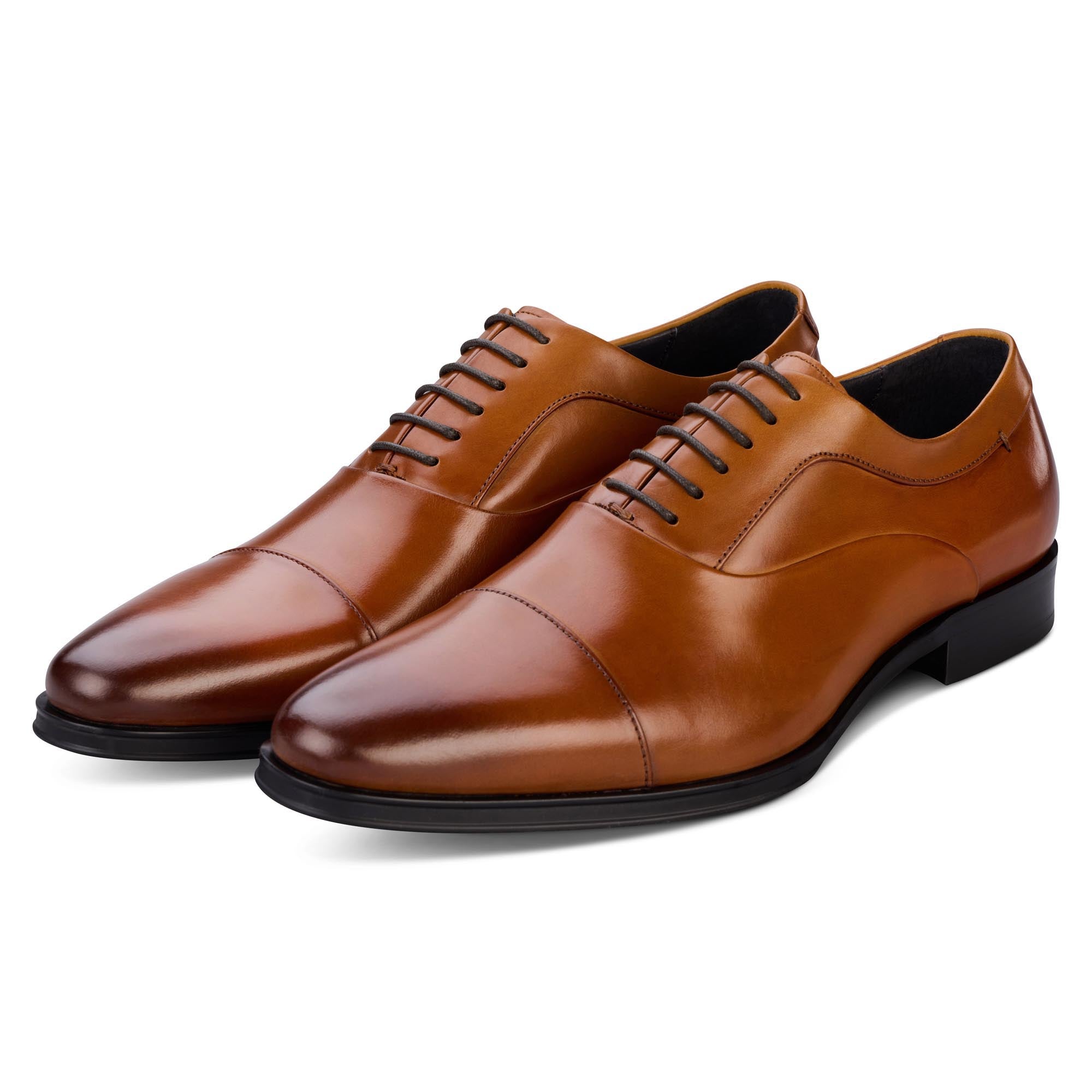
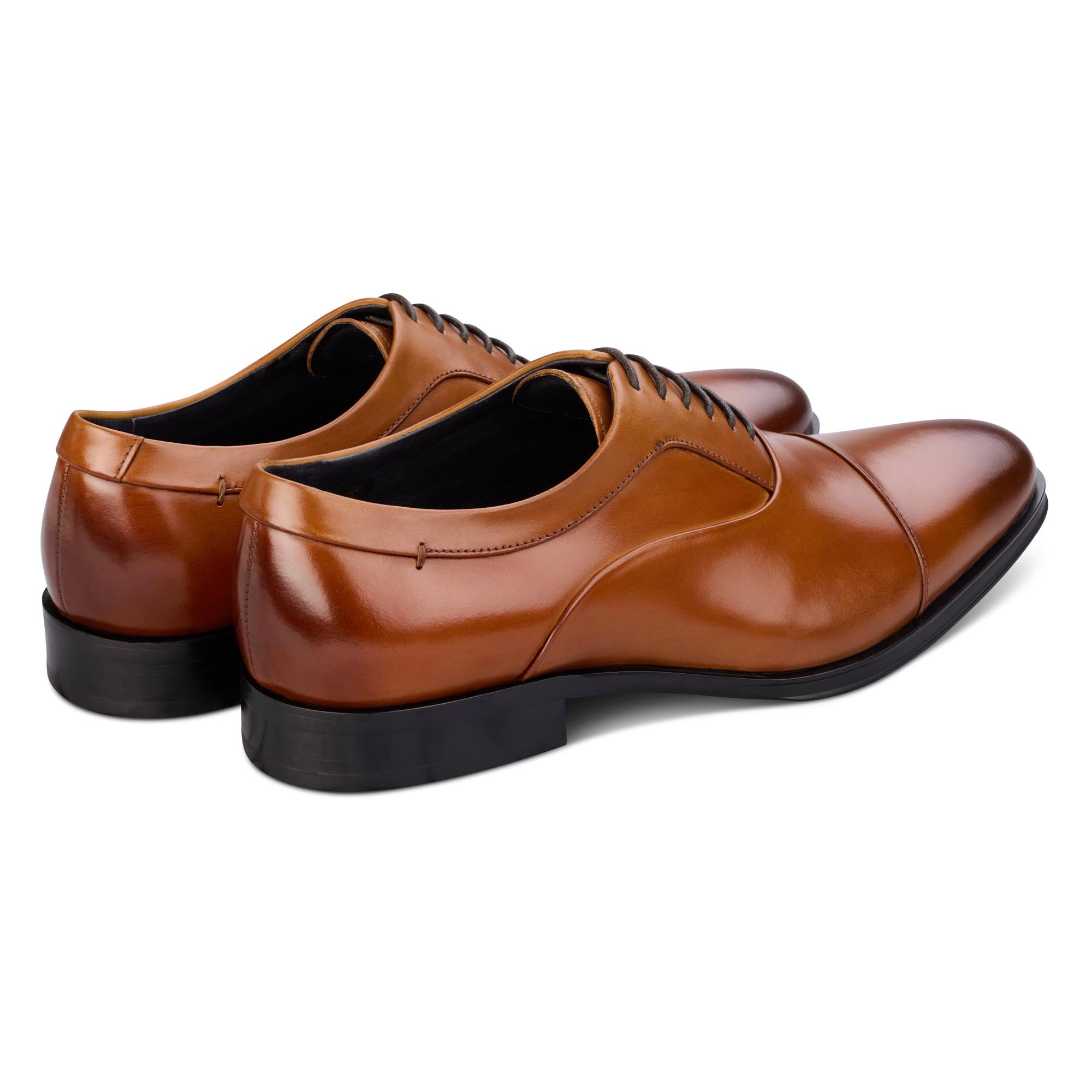
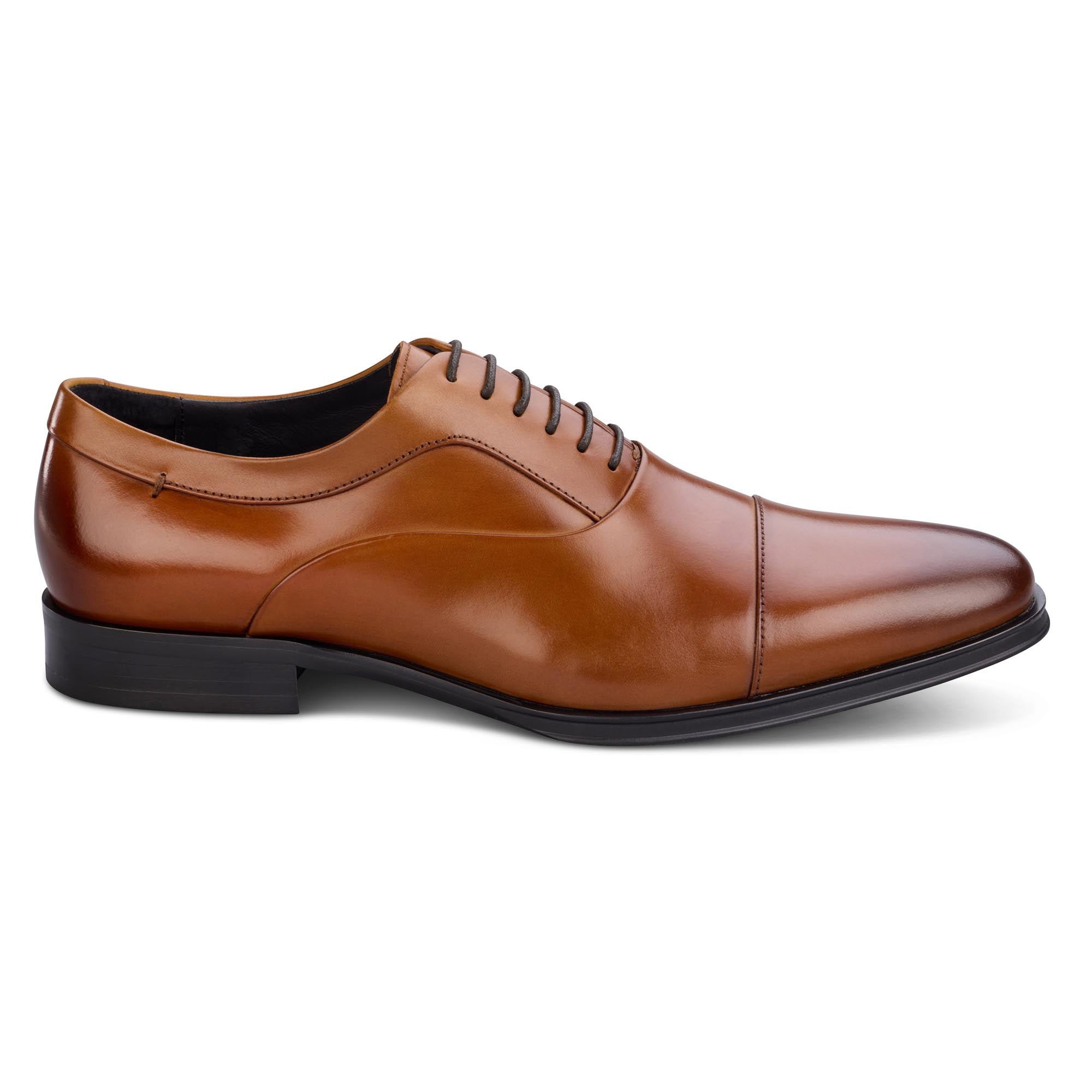
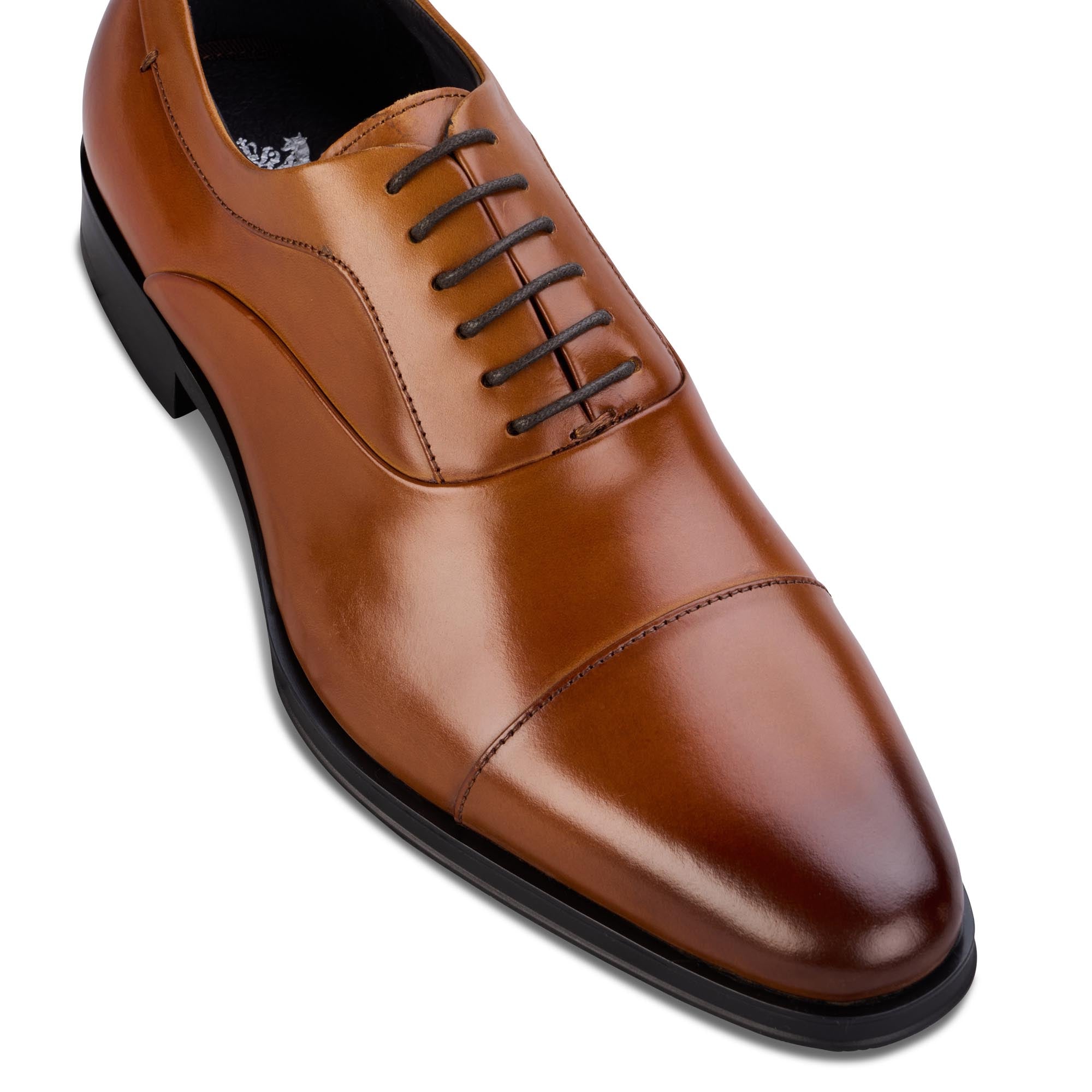
Full-grain calf leather is the traditional and most rewarding choice for monk strap shoes. The Leather Conservation Centre advises that full-grain leather — which retains the original grain surface intact — offers superior resistance to moisture penetration and surface scuffing compared to corrected-grain alternatives, and develops a more individual patina with prolonged wear.
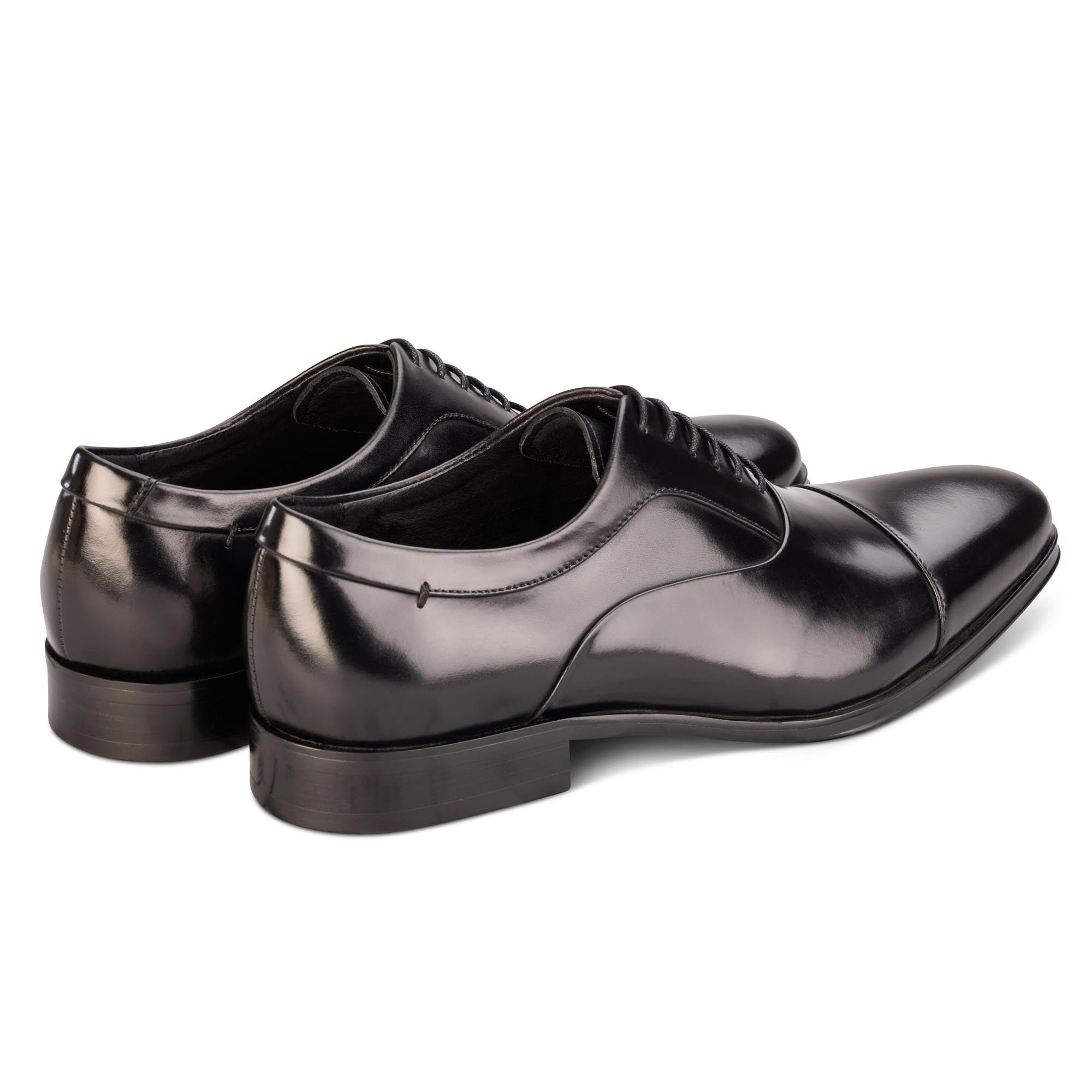
Box calf is the formal option: tight grain, high shine, controlled. Burnished leathers, where the toe is deliberately darker than the body, suit the double monk particularly well — the tonal variation draws the eye to the strap detail in entirely the right way.
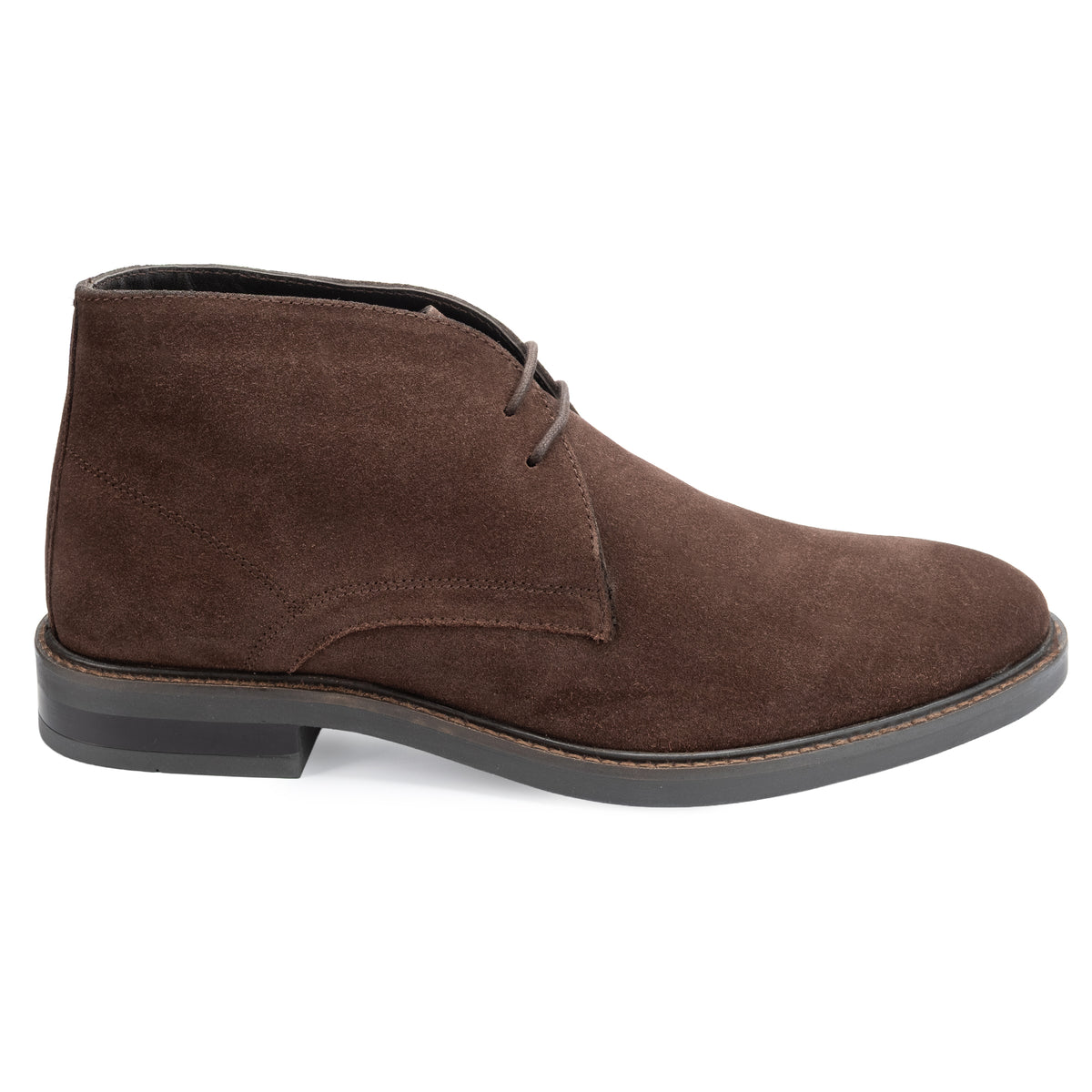
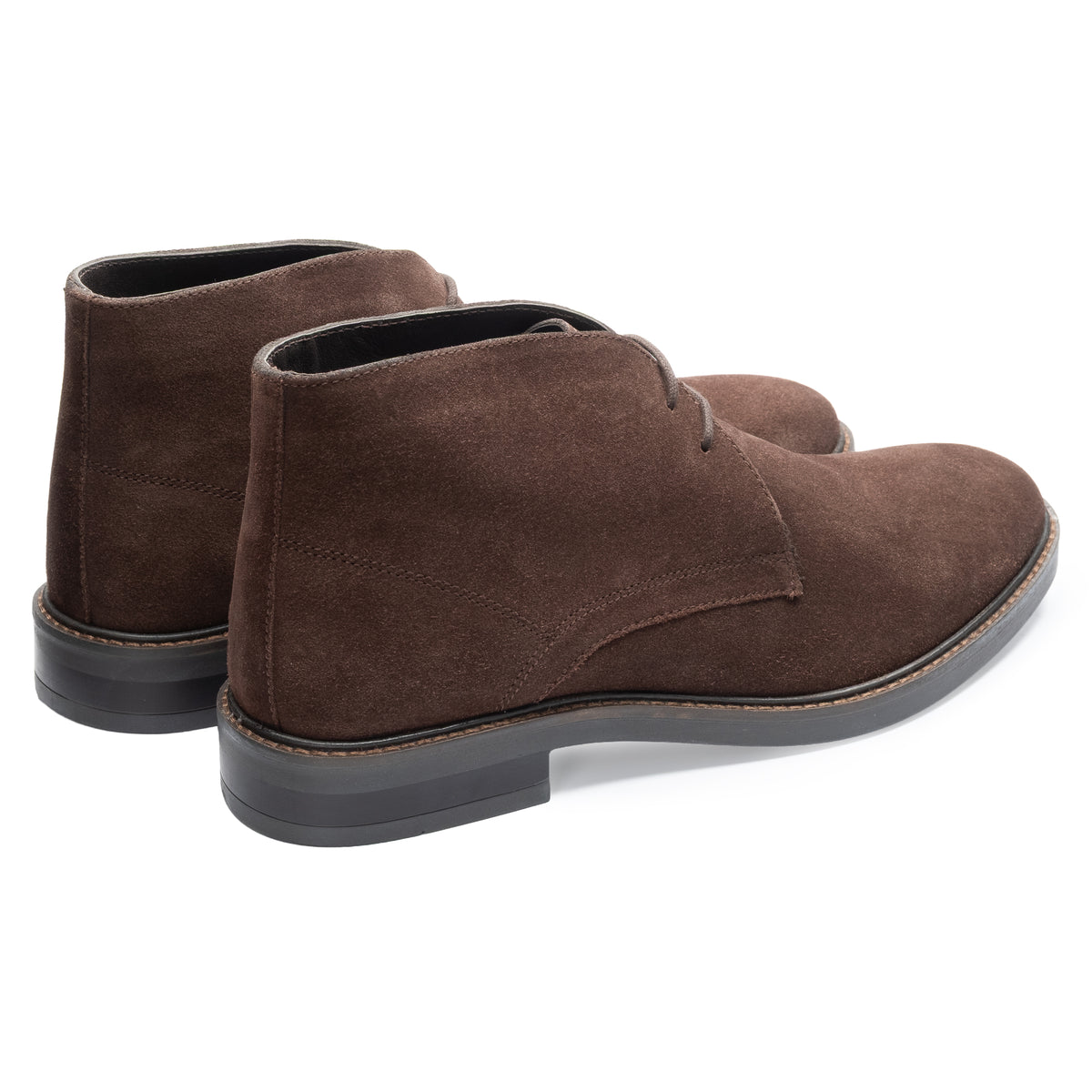
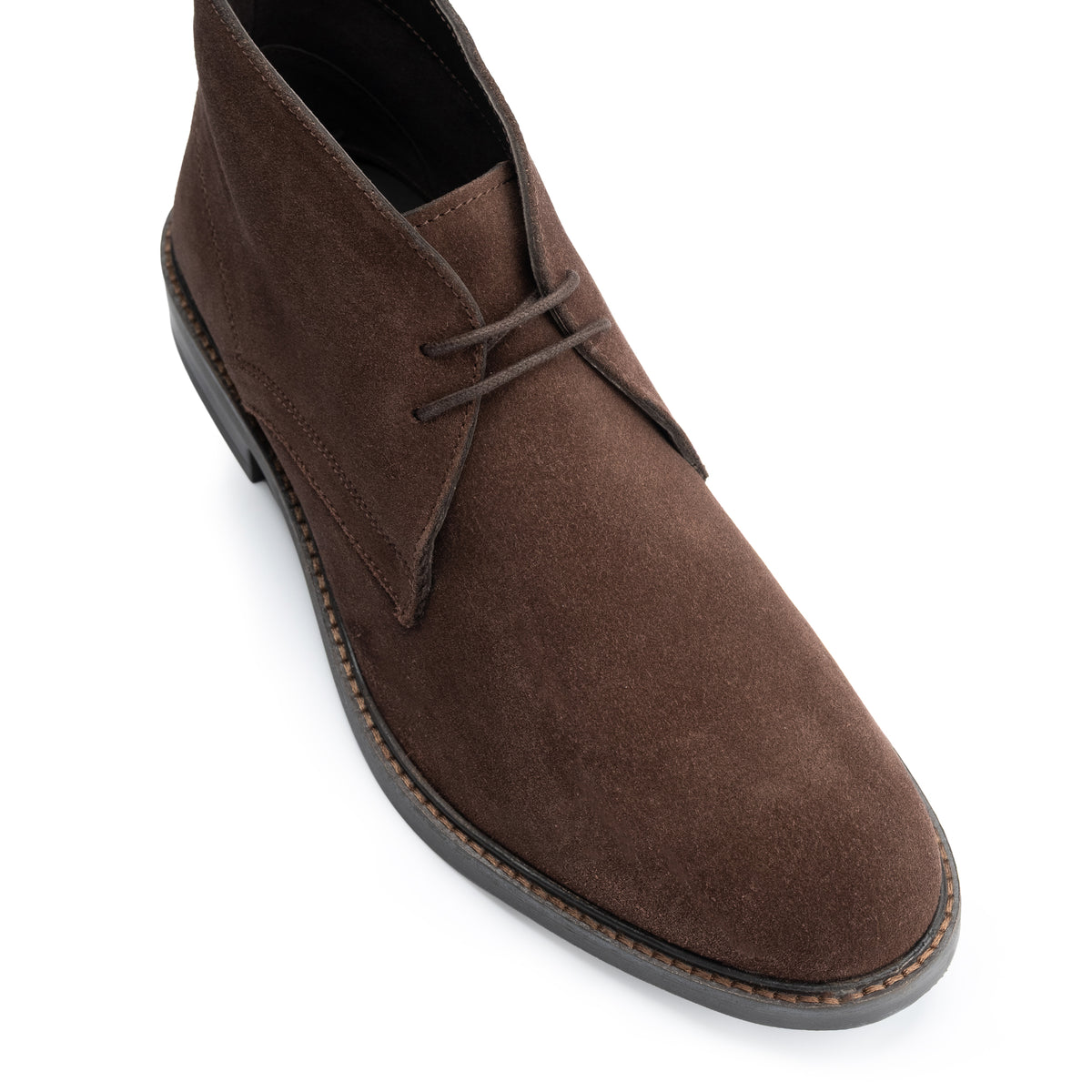
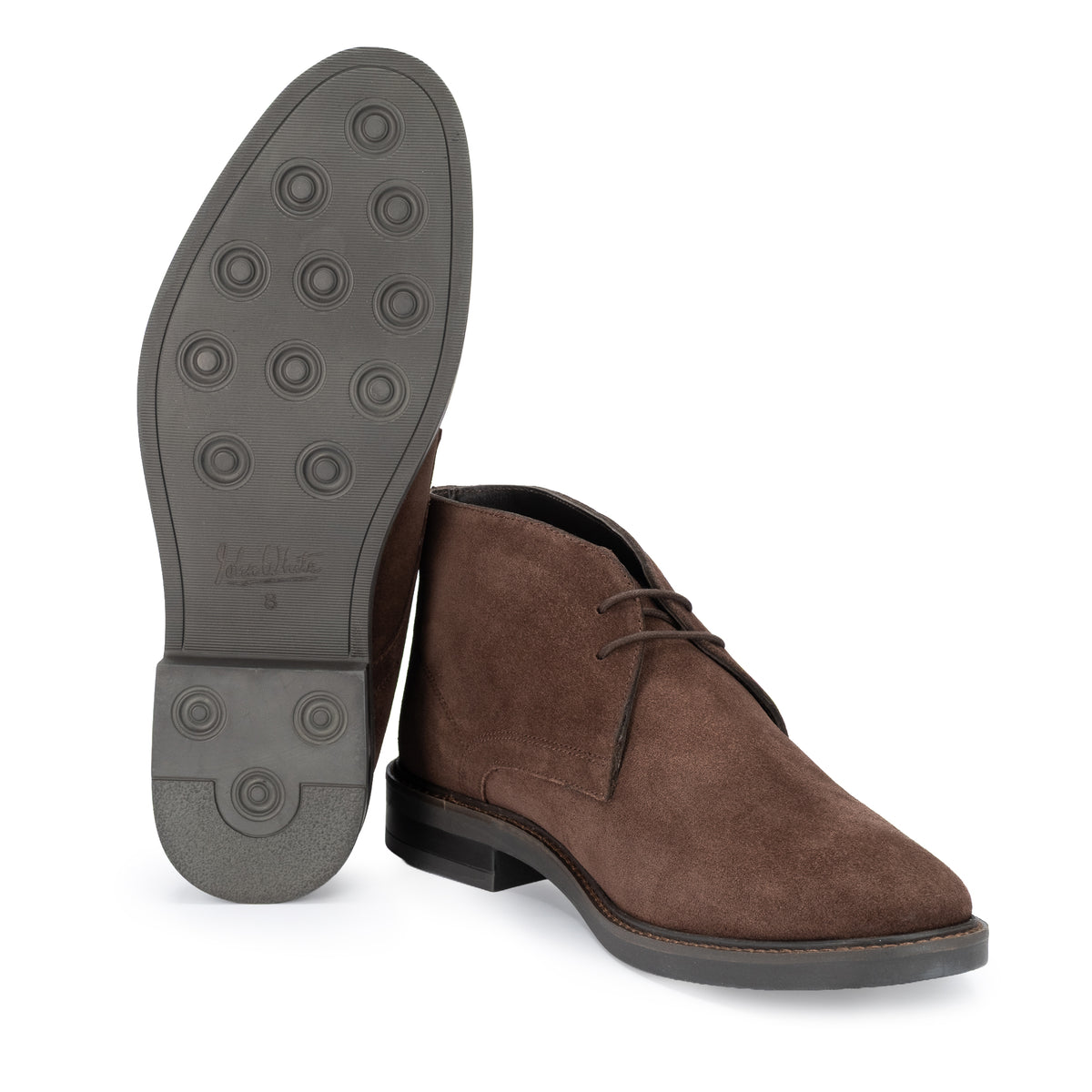
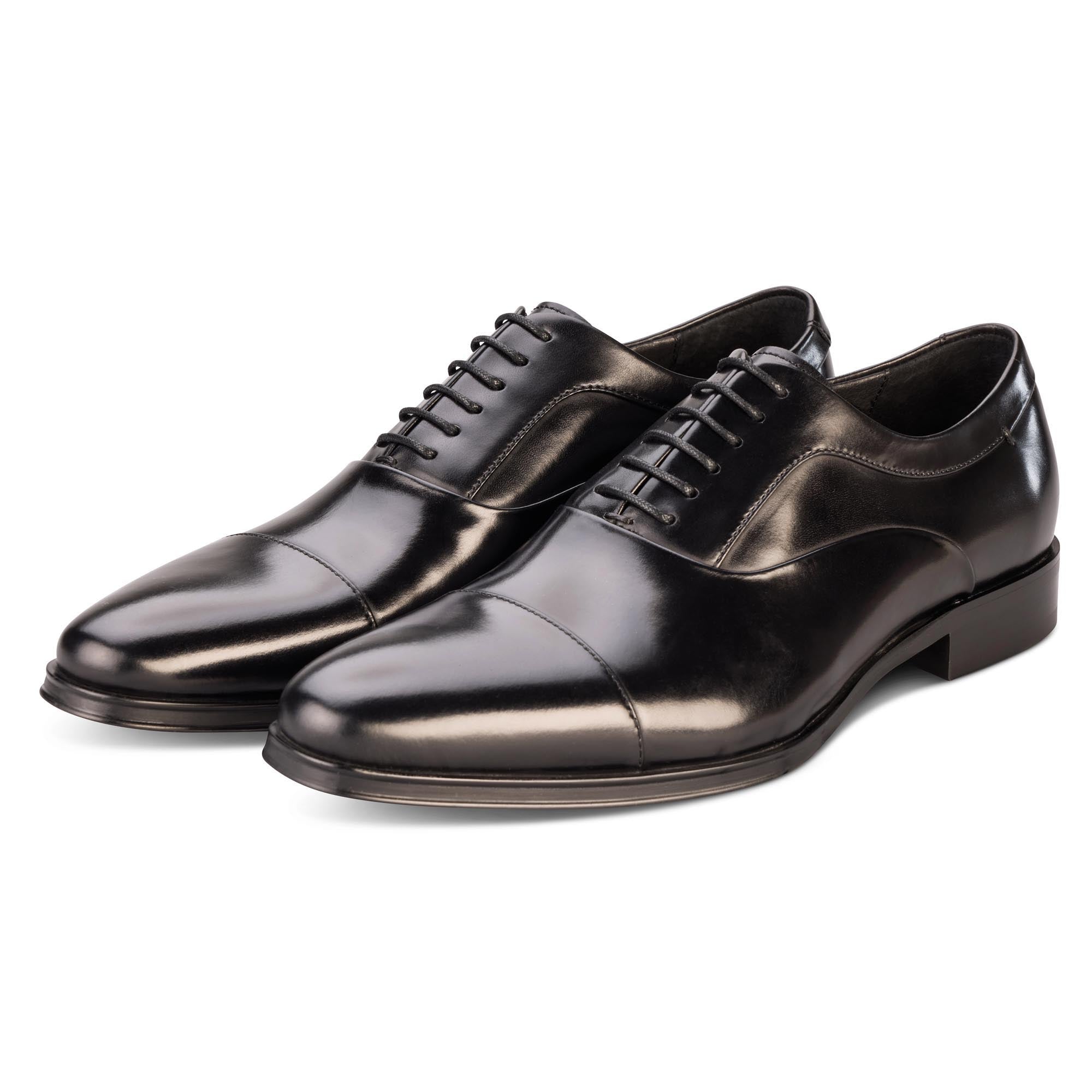
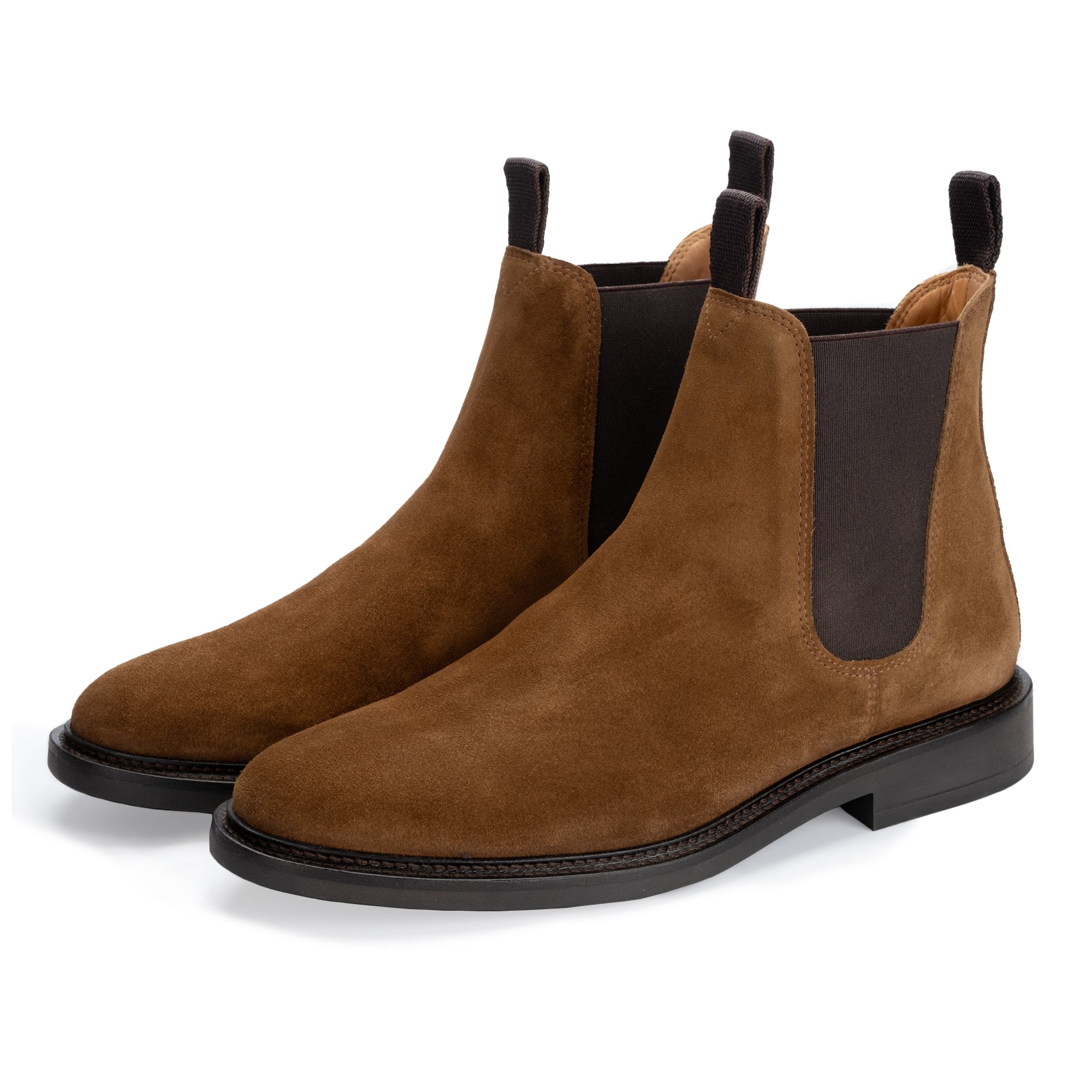
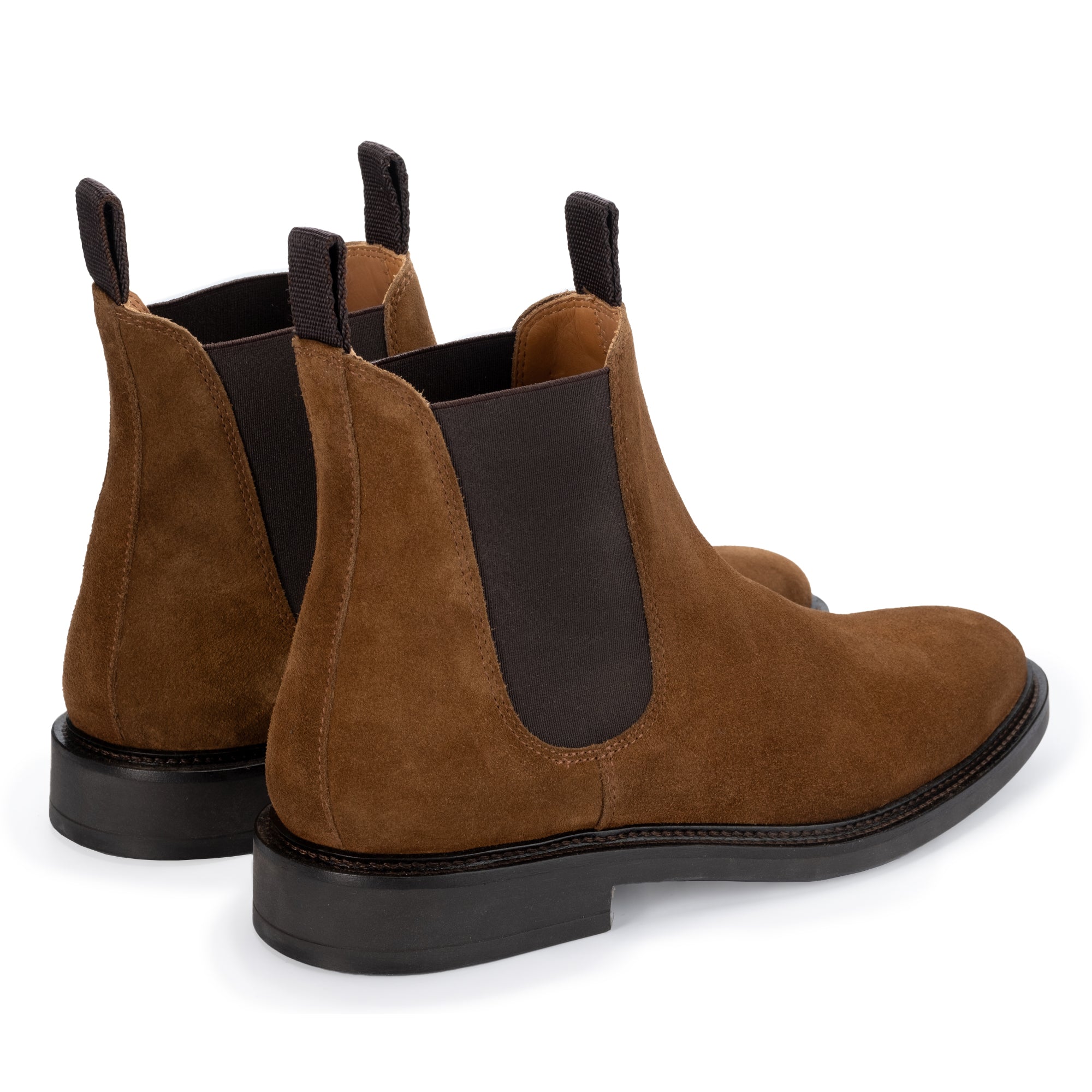
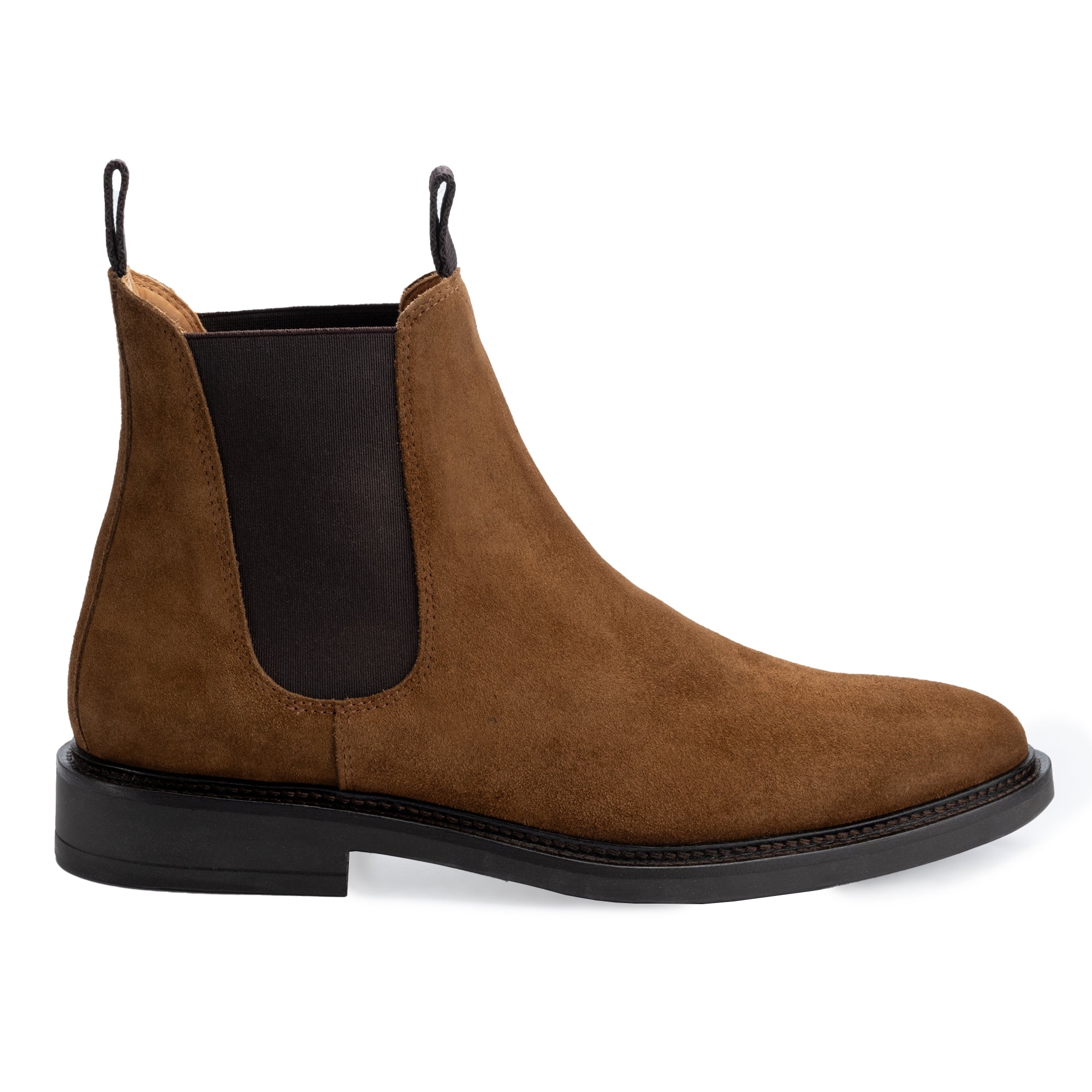
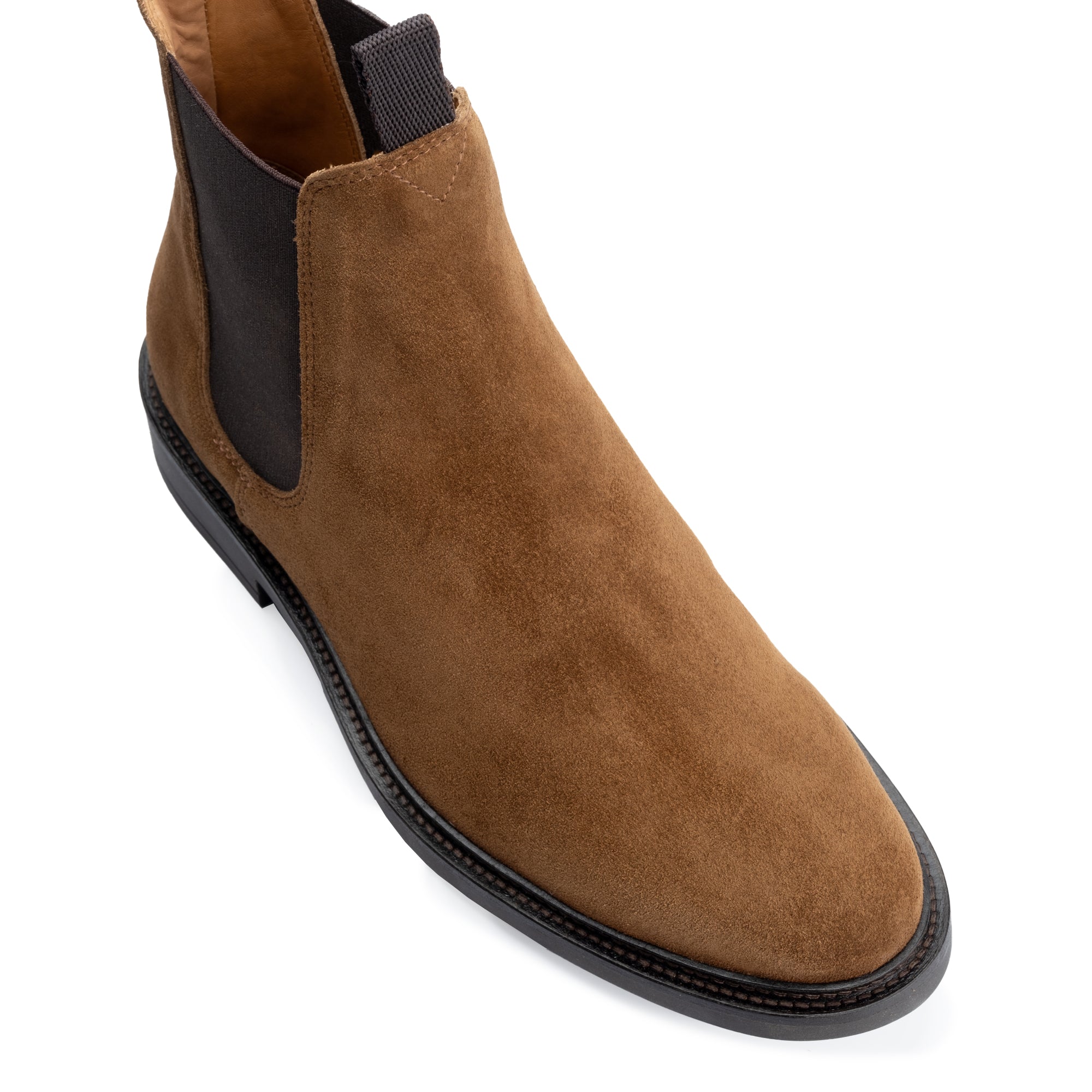
Suede monks work well for smart-casual applications but they're a narrower proposition. They don't hold polish, require dedicated suede care, and won't carry the full formality range. For a well-rounded wardrobe, start with smooth full-grain leather and build from there. For a deeper look at what separates quality from the rest, see our guide to full-grain vs corrected-grain leather.
In a monk strap, the leather is front and centre — the broad strap and buckle hardware sit in plain sight, and a premium hide repays careful maintenance in a way that corrected-grain alternatives simply don't.
How Do You Care for Monk Strap Shoes?
Monk straps follow the same maintenance principles as any quality leather dress shoe, with one specific area of attention: the strap holes, where the buckle pin sits under repeated stress.
- Brush after each wear. A soft horsehair brush removes surface dust before it works into the grain.
- Clean as needed. A damp cloth with a small amount of leather cleaner removes surface marks without saturating the hide.
- Condition every six to eight weeks. The Leather Conservation Centre recommends this frequency as the baseline for quality leather footwear — more often in winter, when central heating draws moisture from the hide and accelerates cracking.
- Polish to protect and finish. Apply a wax polish matched to the leather colour. Our Premium Wax Polish feeds the leather and builds a deeper finish with each application. Work in small circular strokes, allow to dry, then buff.
- Mind the strap holes. The punched leather around the buckle pin is a stress point. Condition this area specifically at the first sign of surface tension, and always fasten at the same hole rather than forcing the pin to a new position.
- Use shoe trees after every wear. They absorb internal moisture and hold the shoe's form — important for any structured dress shoe, and particularly so for monks, where the vamp shape defines the silhouette.
- Rotate your pairs. Leather needs at least 24 hours to breathe between wears. A single pair worn daily ages faster than two pairs worn alternately.
Heritage names including Loake, Church's, Crockett & Jones, Barker, and Grenson — alongside John White Shoes — are united on this principle: shoes cared for consistently from the first wear look more distinguished at five years than at one. The investment in maintenance pays dividends in longevity.
For the complete leather care routine, see the complete guide to leather shoe care.
Consistent conditioning, quality polish, and shoe trees after every wear will keep a monk strap looking distinguished for a decade or more — and looking better for it.
Related Guides
- The Complete Guide to Men's Dress Shoes — our comprehensive guide
- How to Wear Double Monk Strap Shoes: Outfit Ideas for Every Occasion
- What Shoes to Wear with a Suit
- Full-Grain vs Corrected-Grain Leather: How to Spot Quality in Men's Shoes
TL;DR: Monk strap shoes — fastened with one or two buckled leather straps rather than laces — are among the most versatile dress shoes available to a professional man. The double monk handles everything from business-formal to smart-casual; the single monk is the more restrained choice for strictly formal settings. Choose full-grain leather, condition every six to eight weeks, and use shoe trees after every wear. John White Shoes' Monkton Double Monk Shoes are available in black and brown — the two colourways that cover the full range of occasions.
Frequently Asked Questions
Are monk strap shoes appropriate for a job interview?
Yes, in most professional settings. A black single monk in clean, polished leather sits comfortably alongside an Oxford for formal interviews and business meetings. For the most conservative environments — traditional law or finance — a plain Oxford remains the safest choice. For the full picture, our guide to the best shoes for a job interview covers every scenario.
Single monk or double monk — which is more versatile?
For most men, the double monk. The second strap adds visual interest without significantly reducing formality, and the style handles a broader range of outfits — suits, chinos, and smart dark denim alike. The single monk is the better choice when strict formality is the priority and restraint is the brief.
Can you wear monk strap shoes without socks?
It's not recommended. The structured upper of a monk reads differently against a bare ankle than a loafer does — and the result tends to look unfinished rather than relaxed. In warmer months, a no-show cotton sock achieves the same visual effect without the discomfort of bare leather against skin.
How do you prevent the buckle pin from cracking the strap?
Always fasten at the same hole and avoid forcing the pin into a new position as the leather settles. Condition the leather around the strap holes regularly — a quality wax polish applied to that specific area keeps the leather supple and prevents the micro-cracking that becomes a larger split over time. Our Premium Wax Polish is well suited to this kind of targeted maintenance.
Browse the full men's shoes collection or explore the Monkton Double Monk Shoes in black and brown.