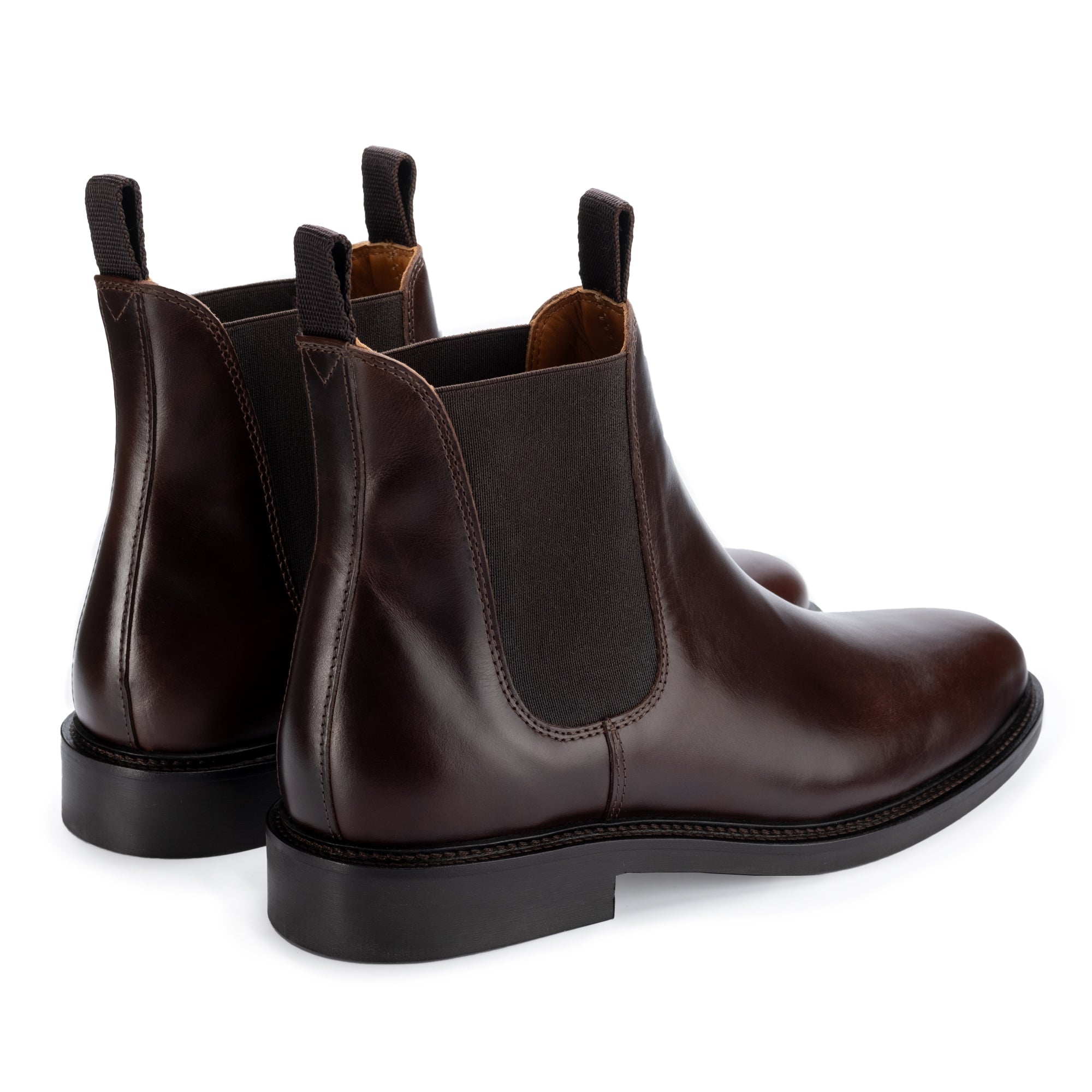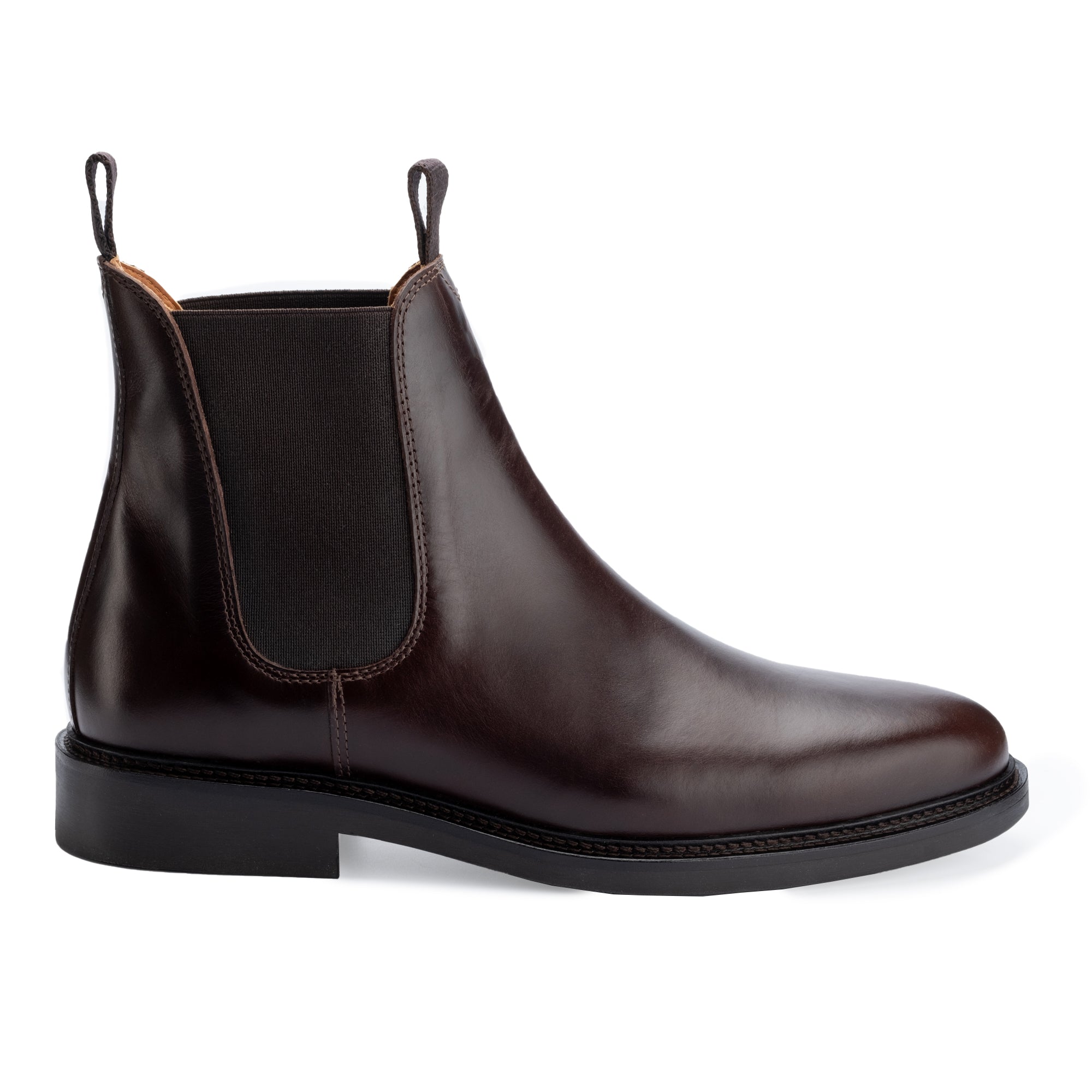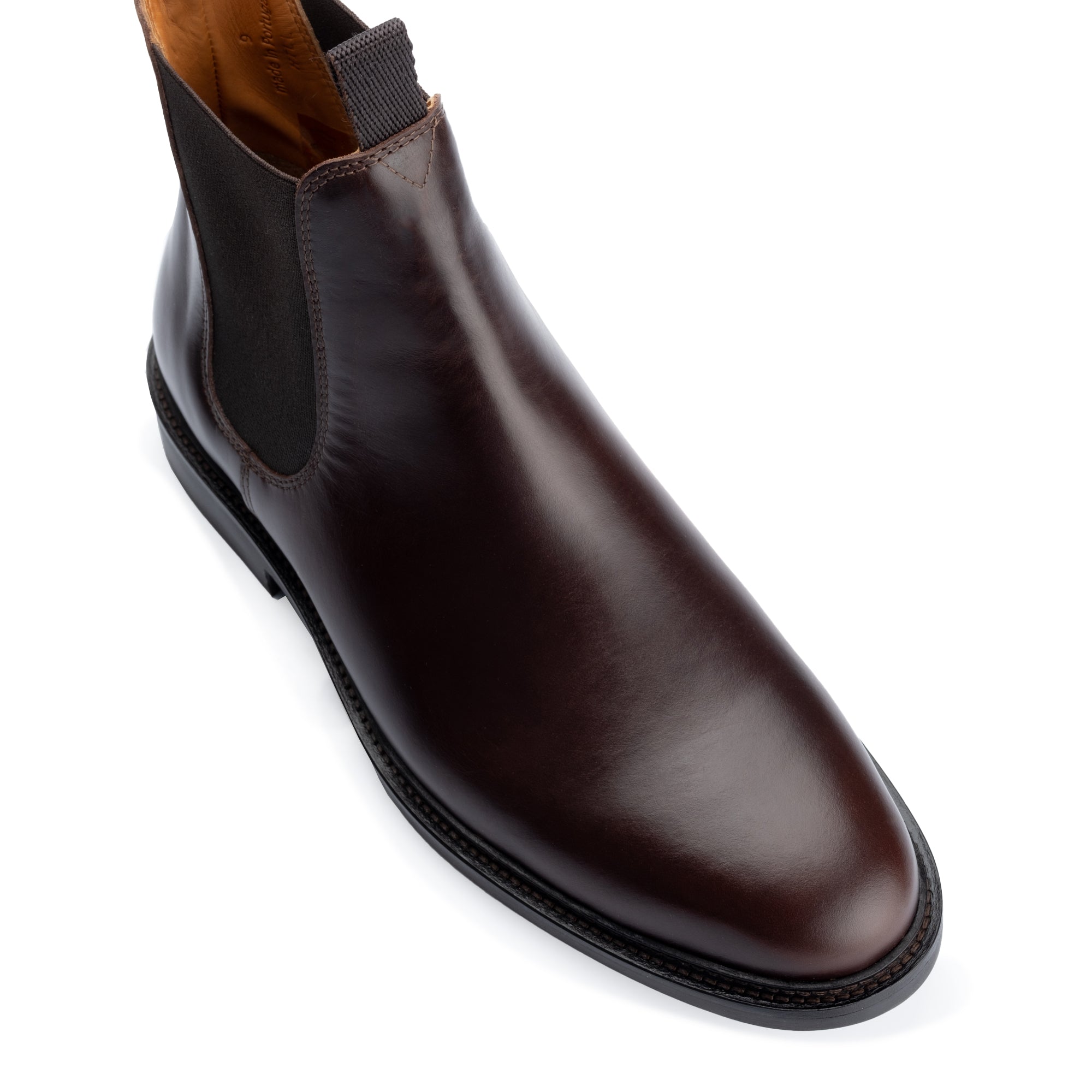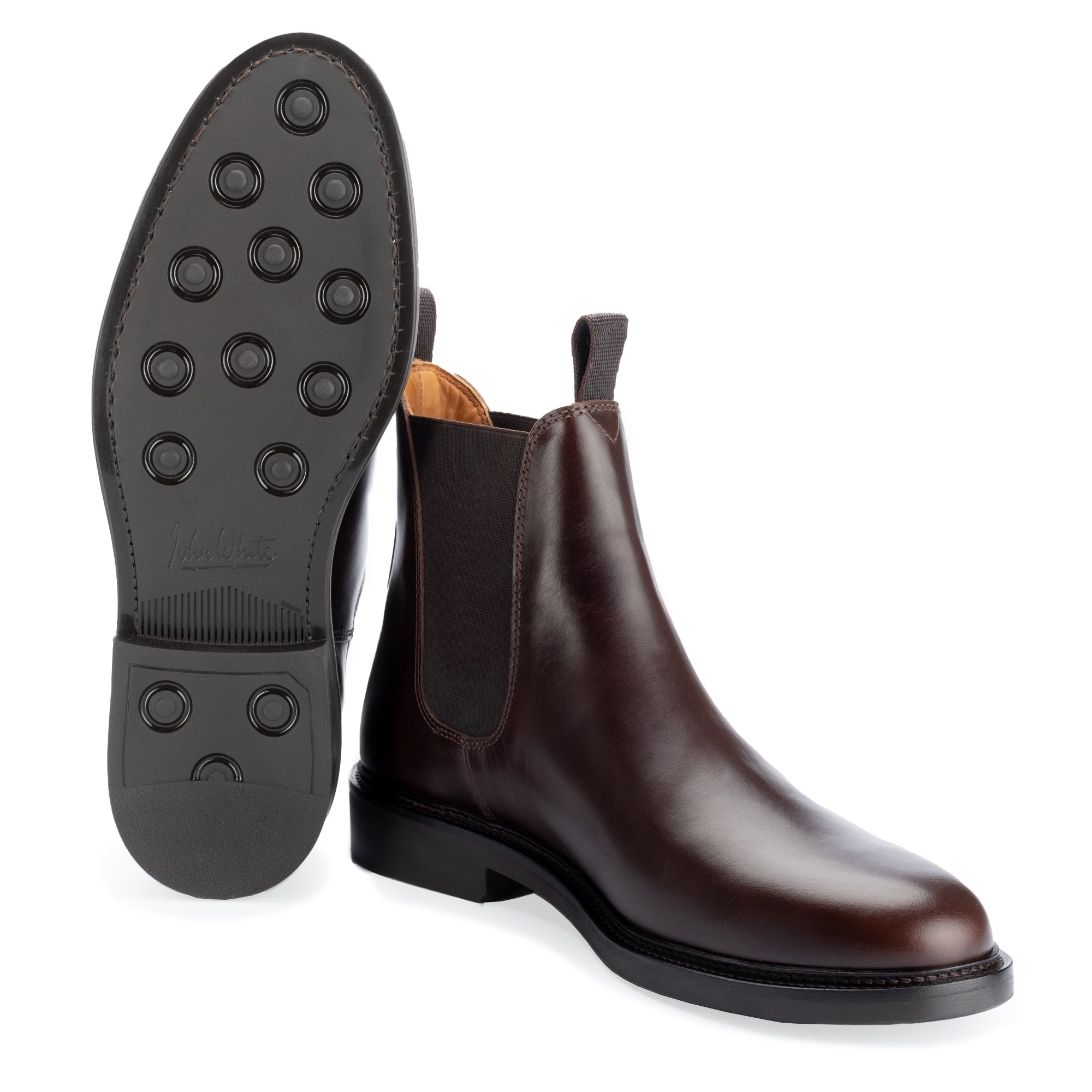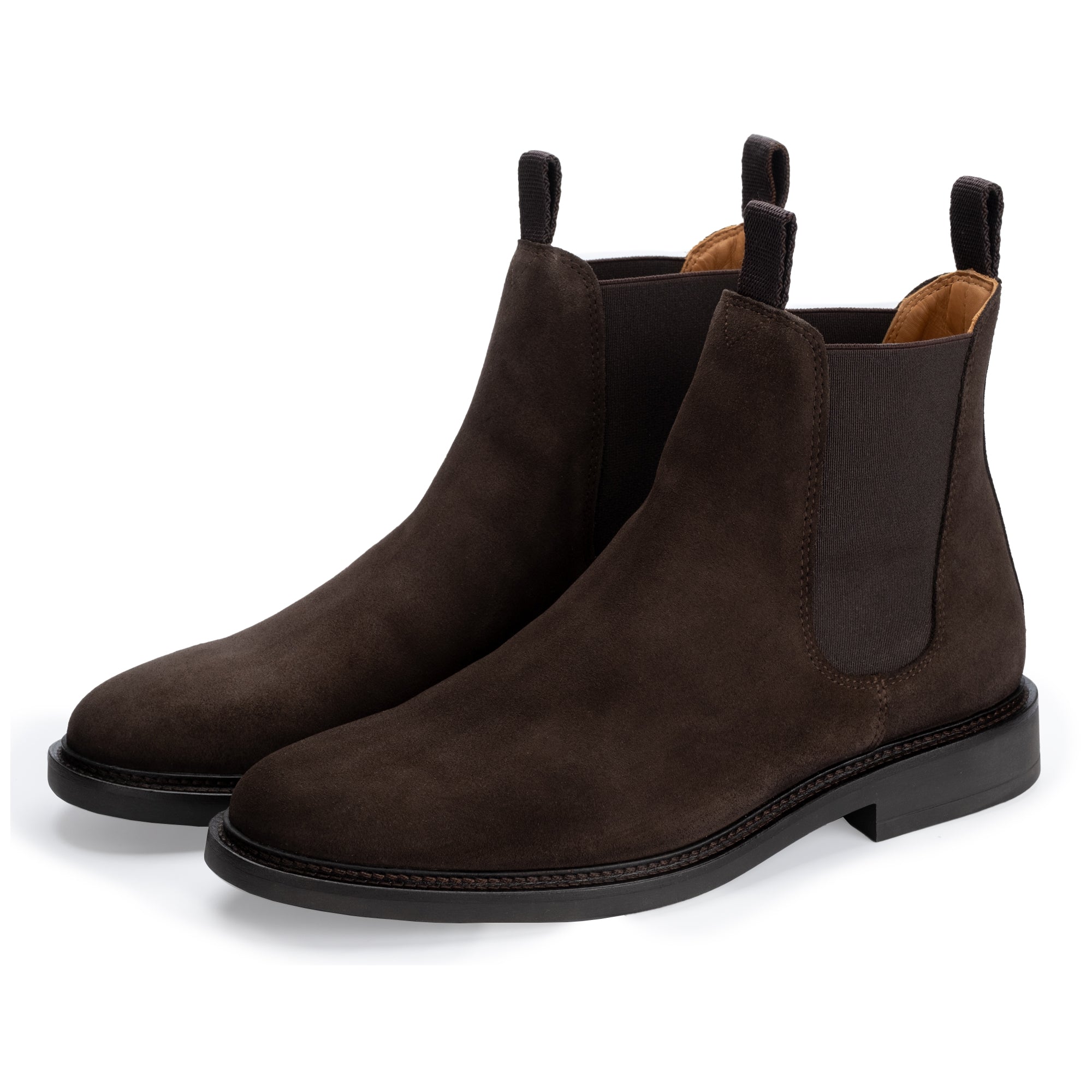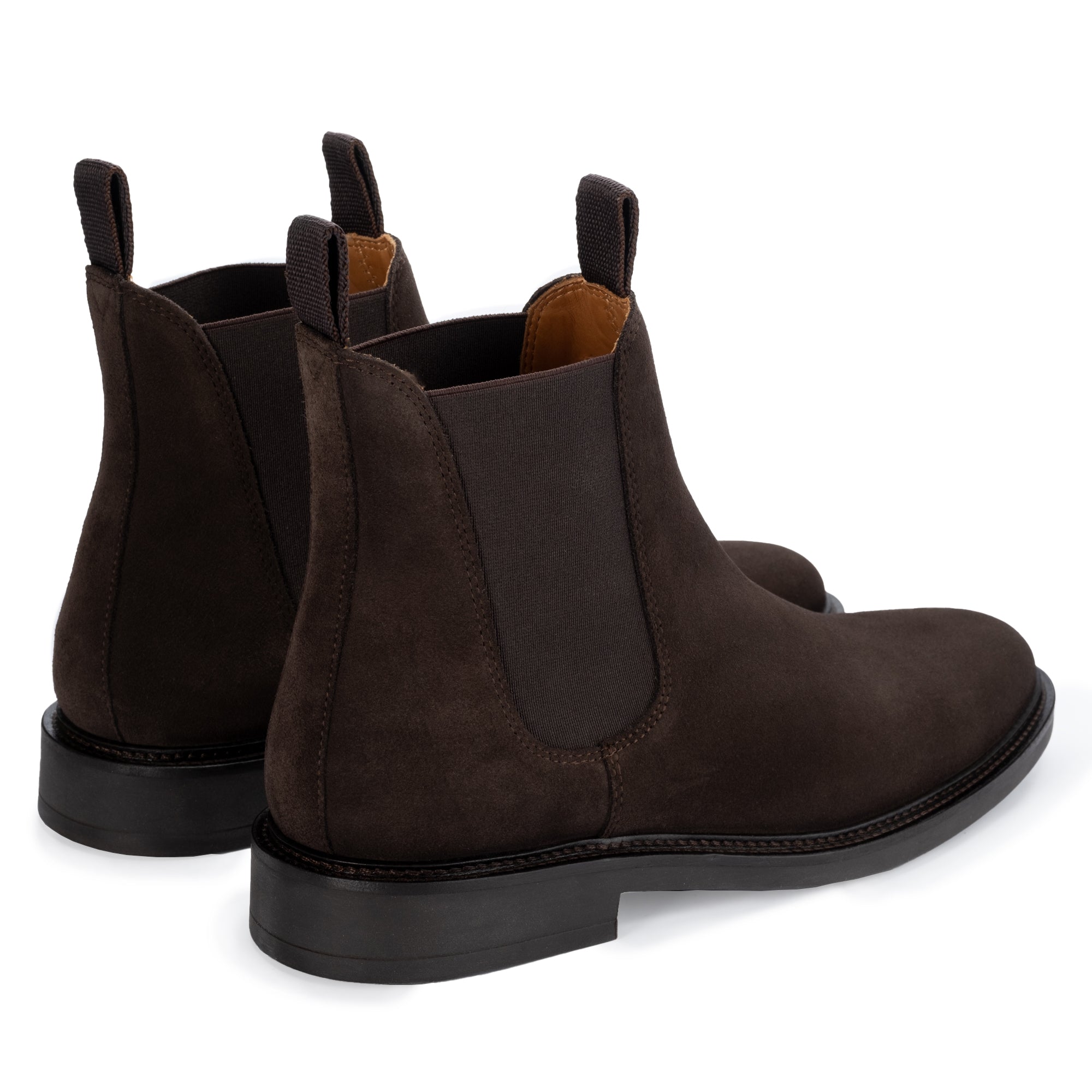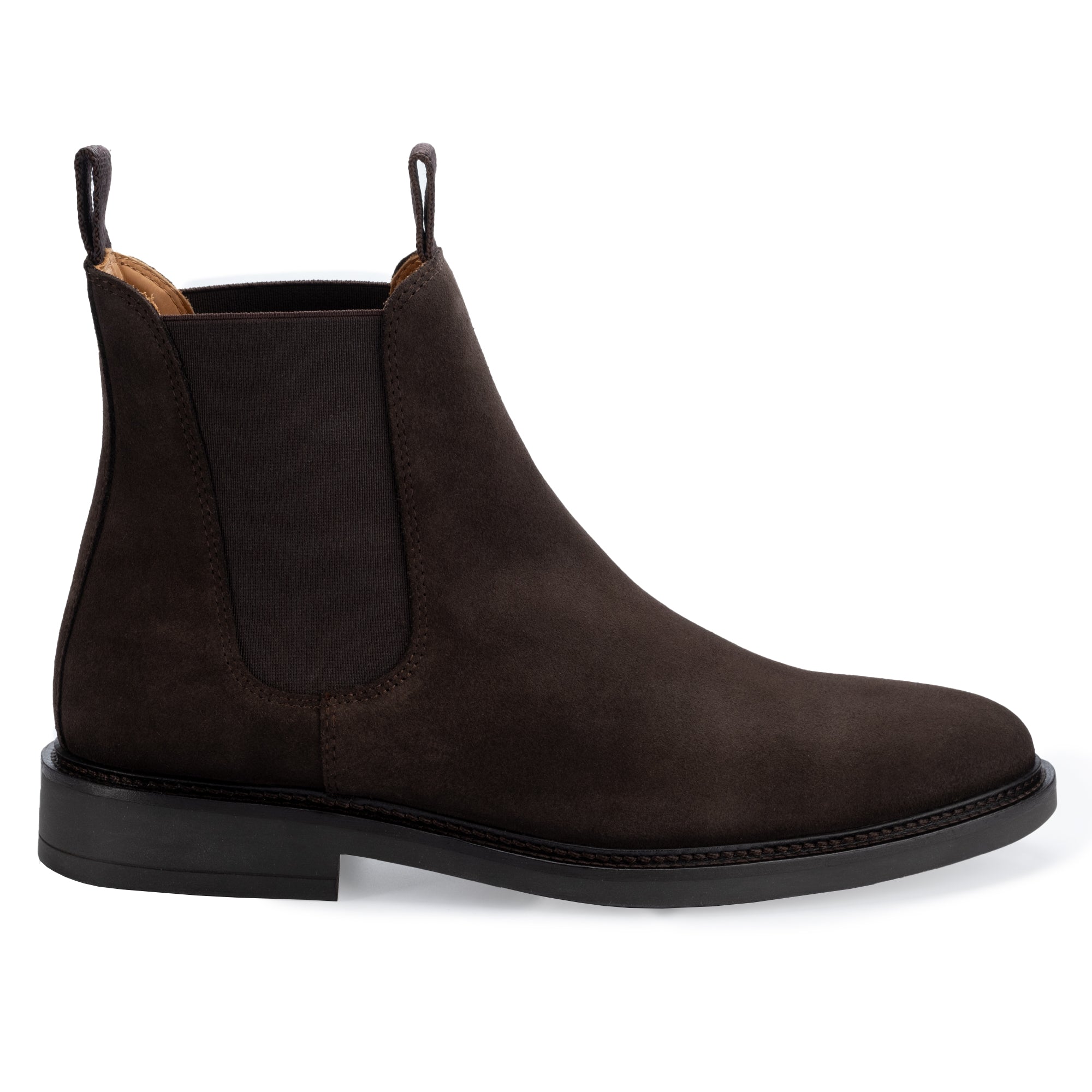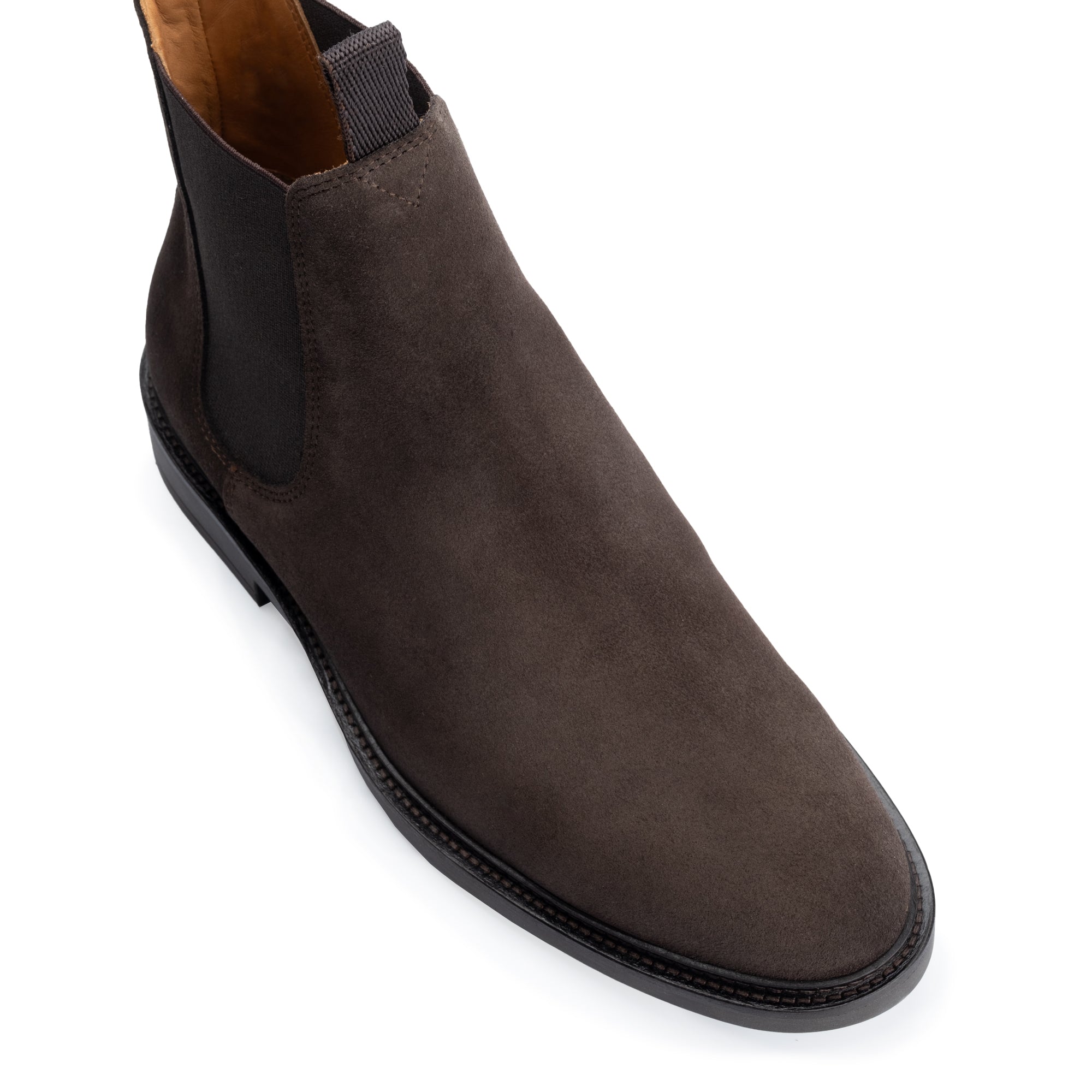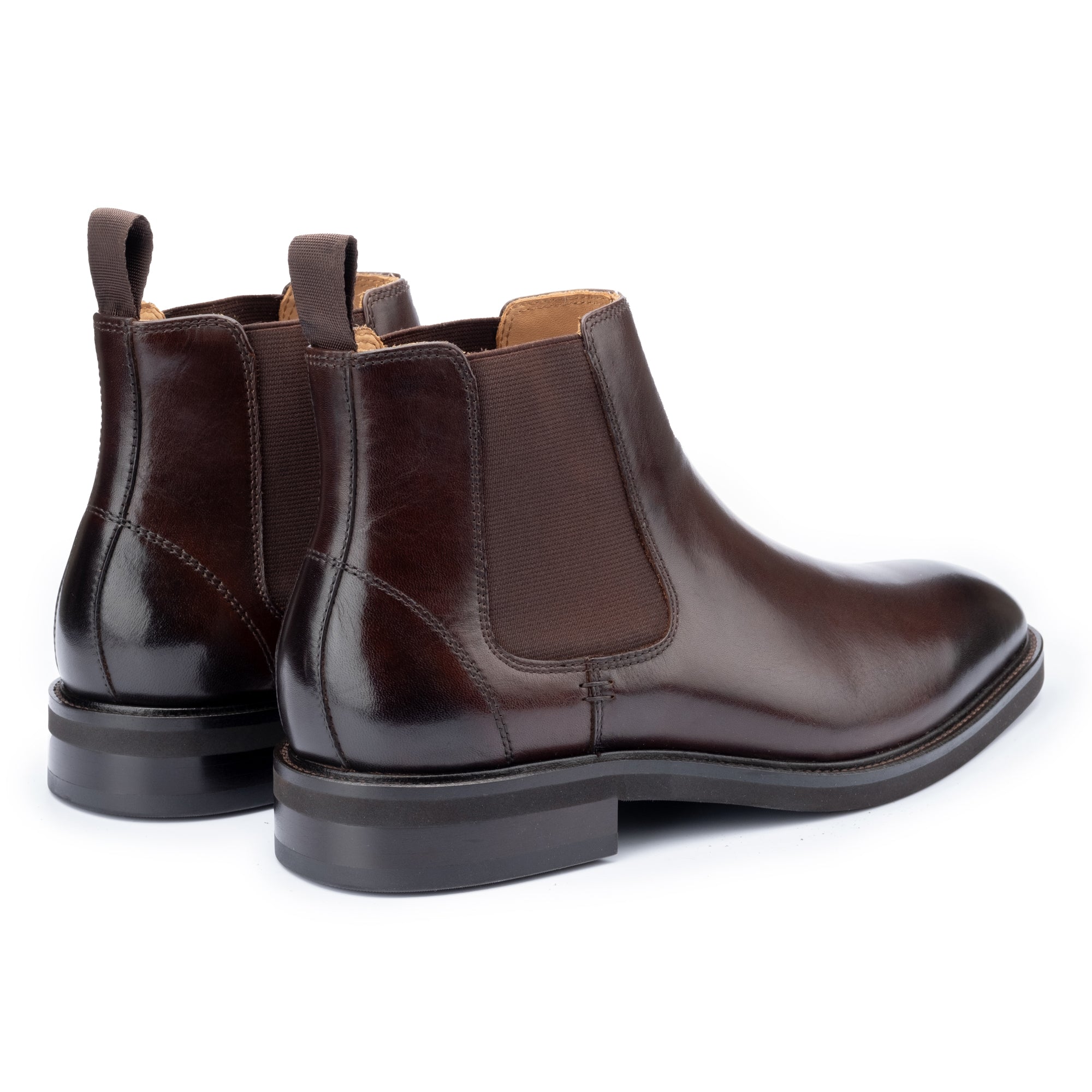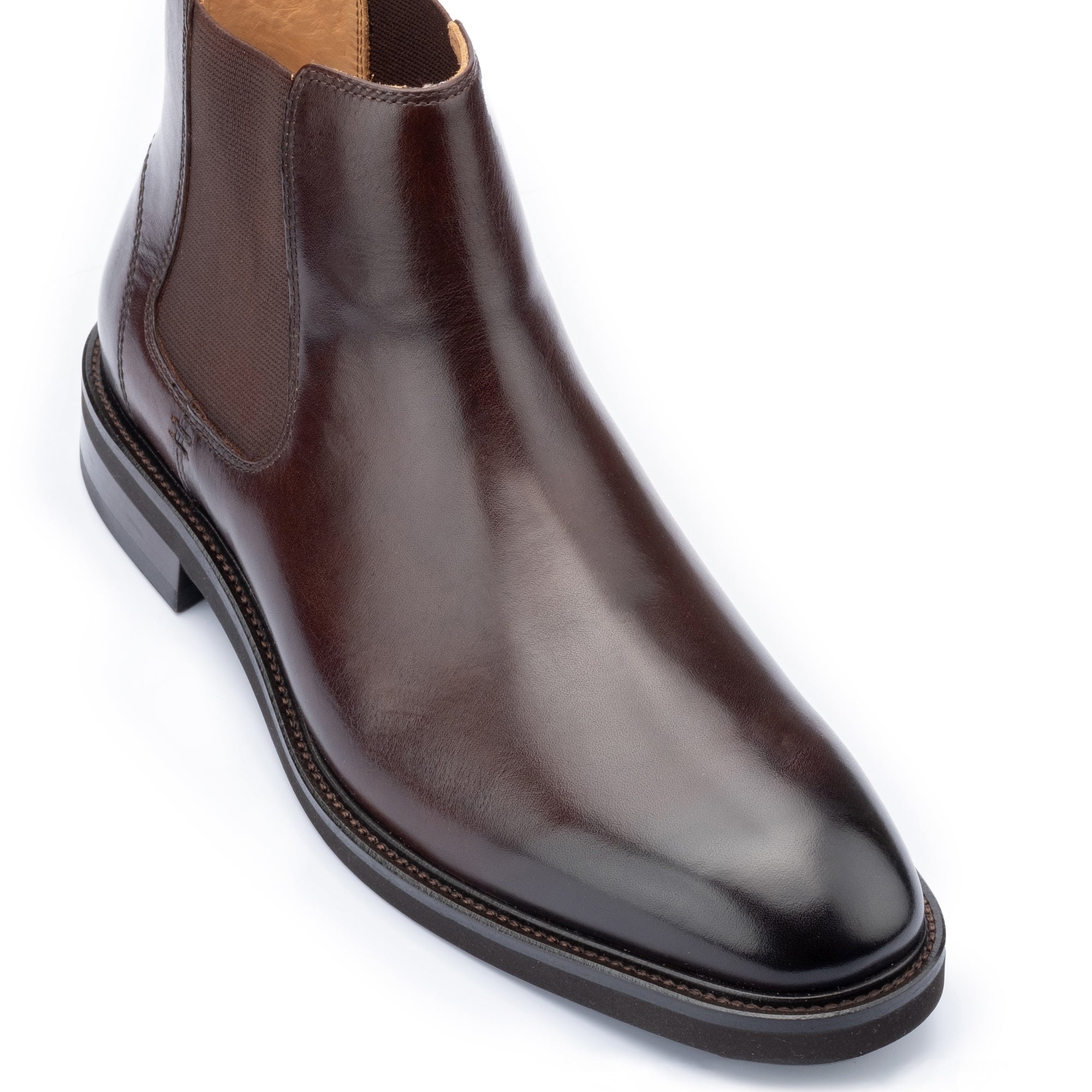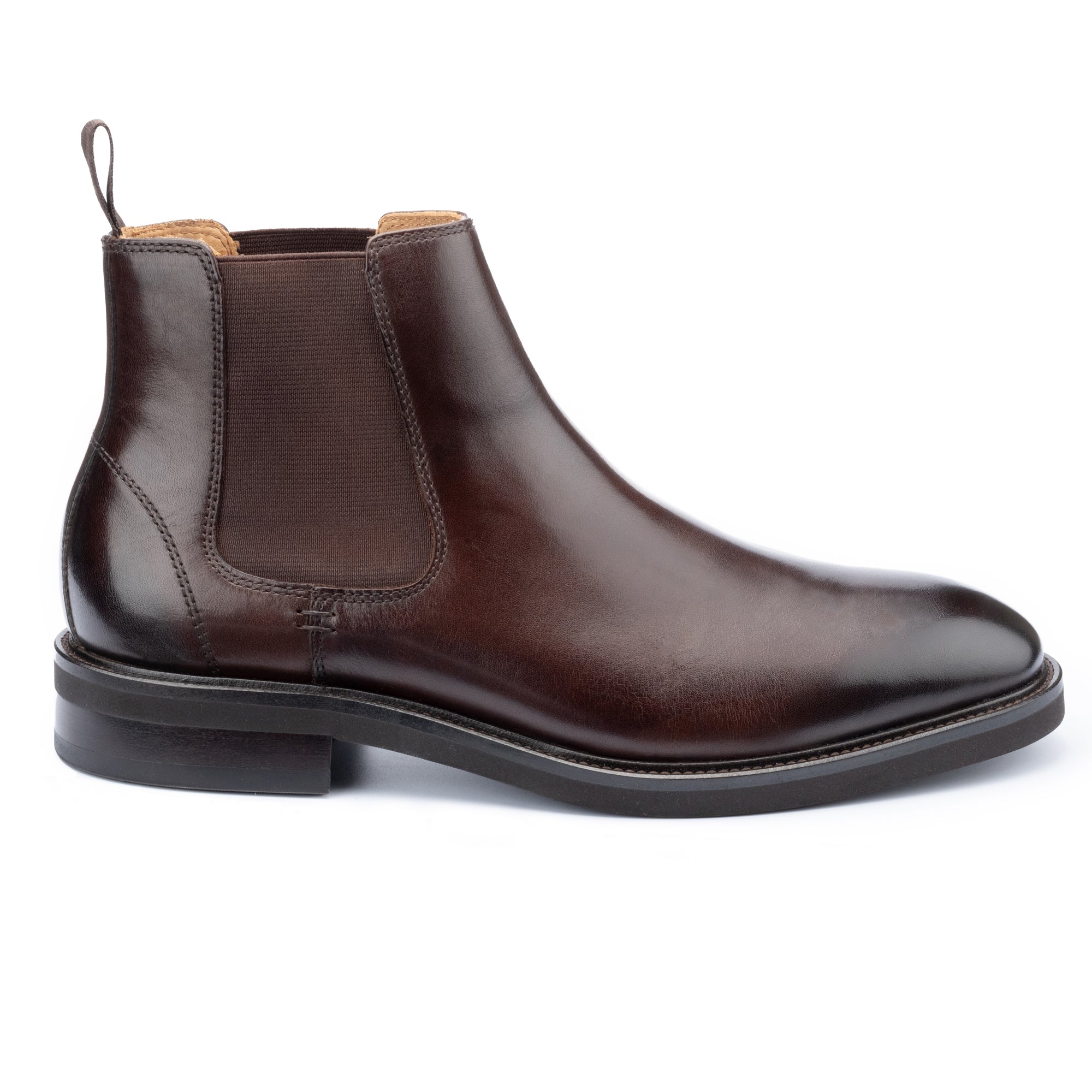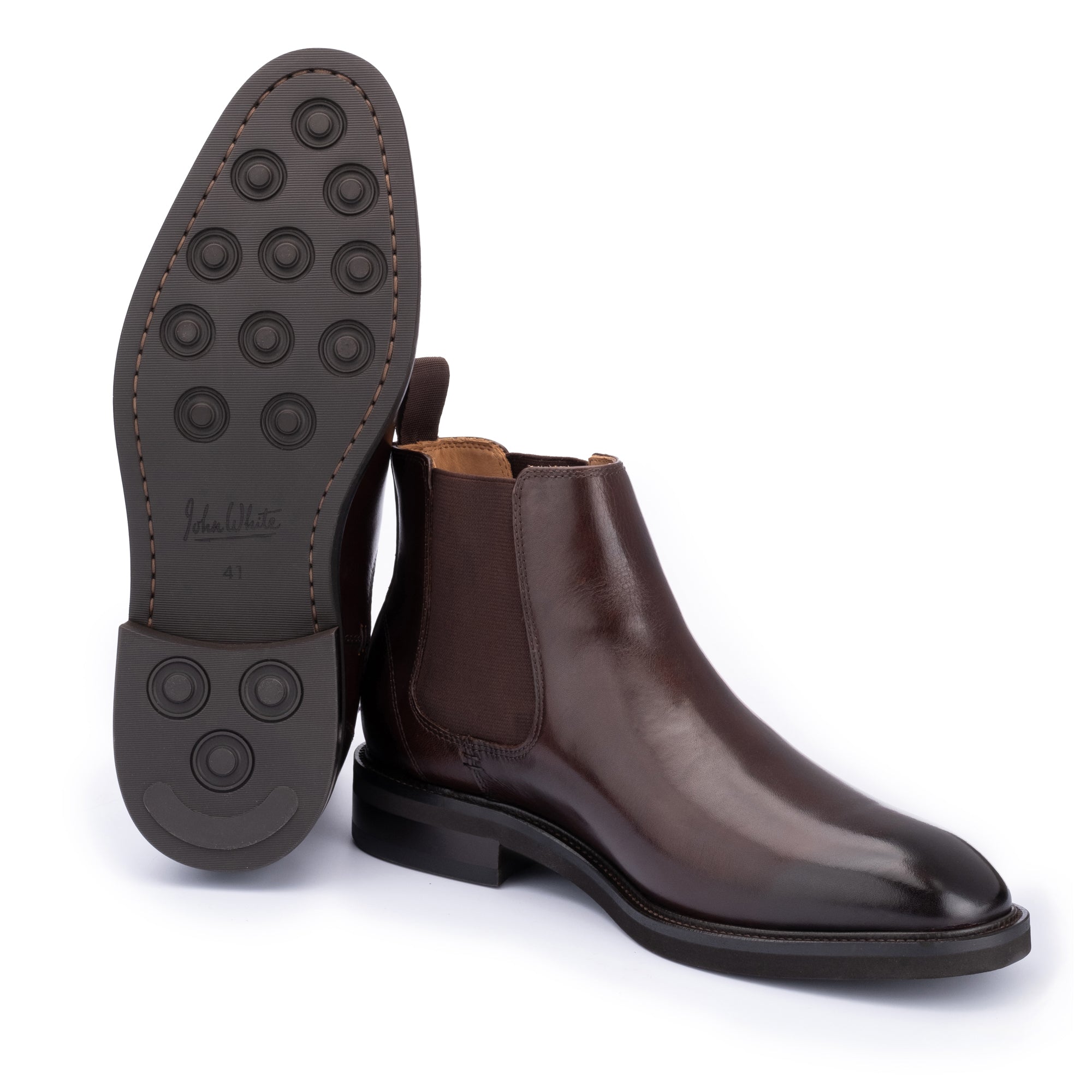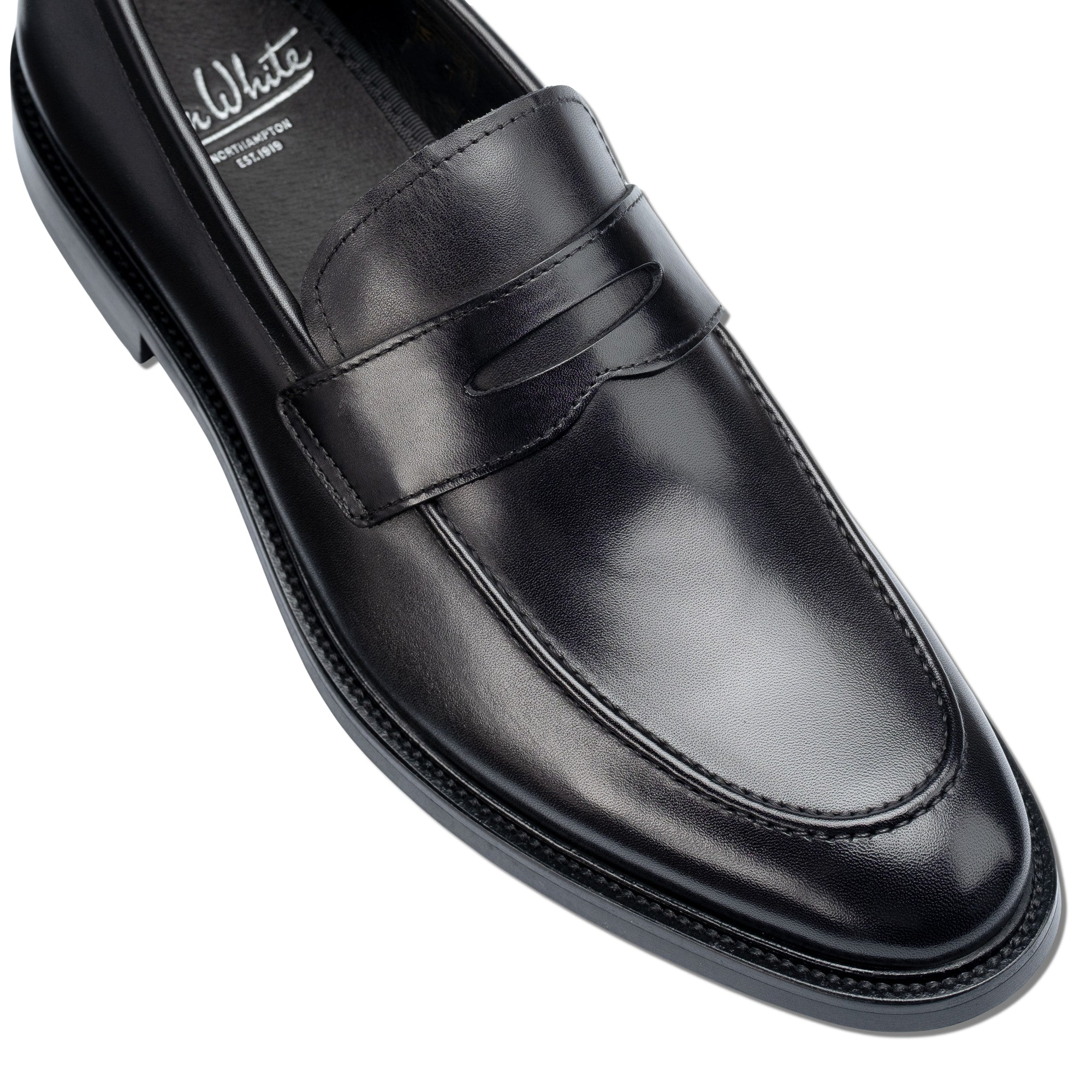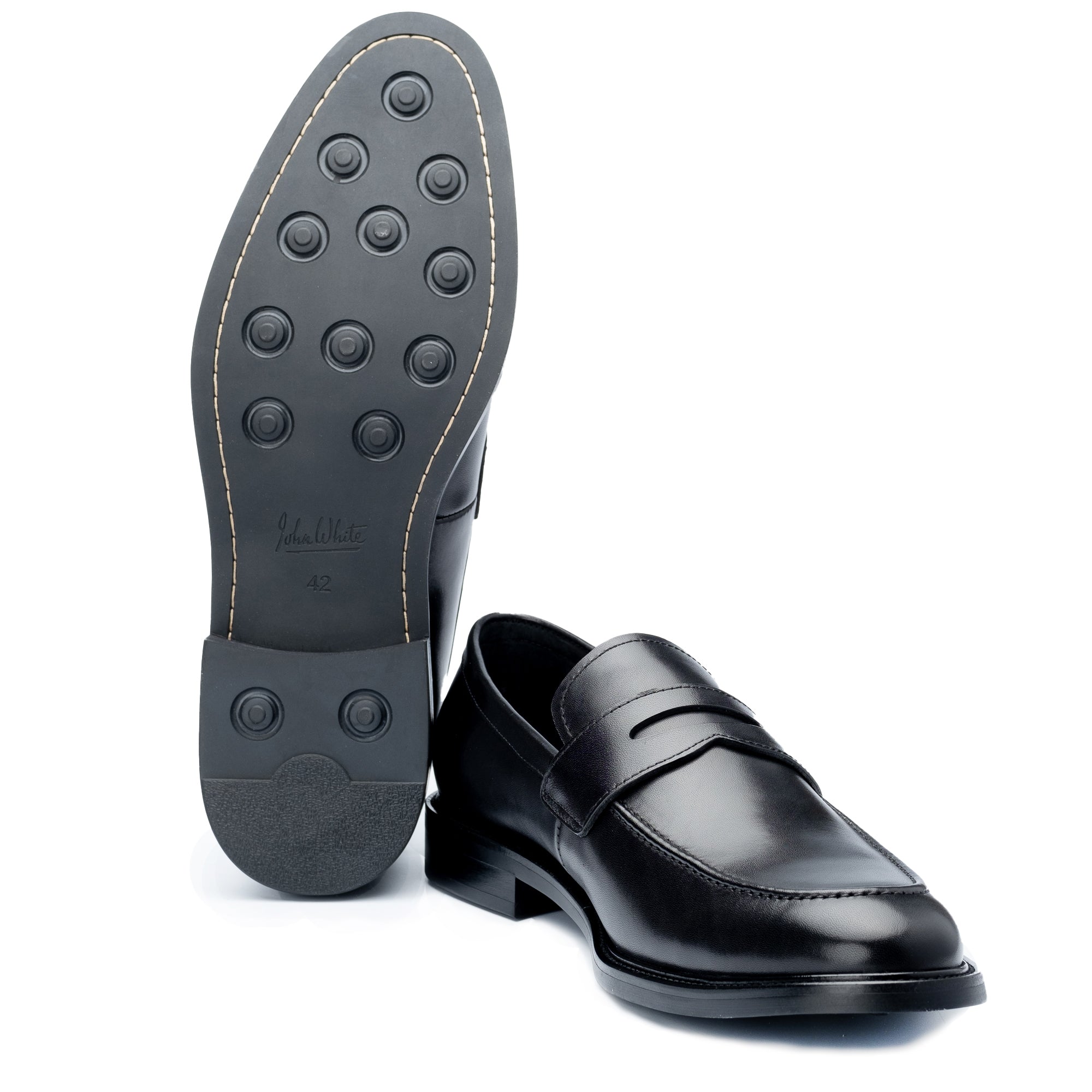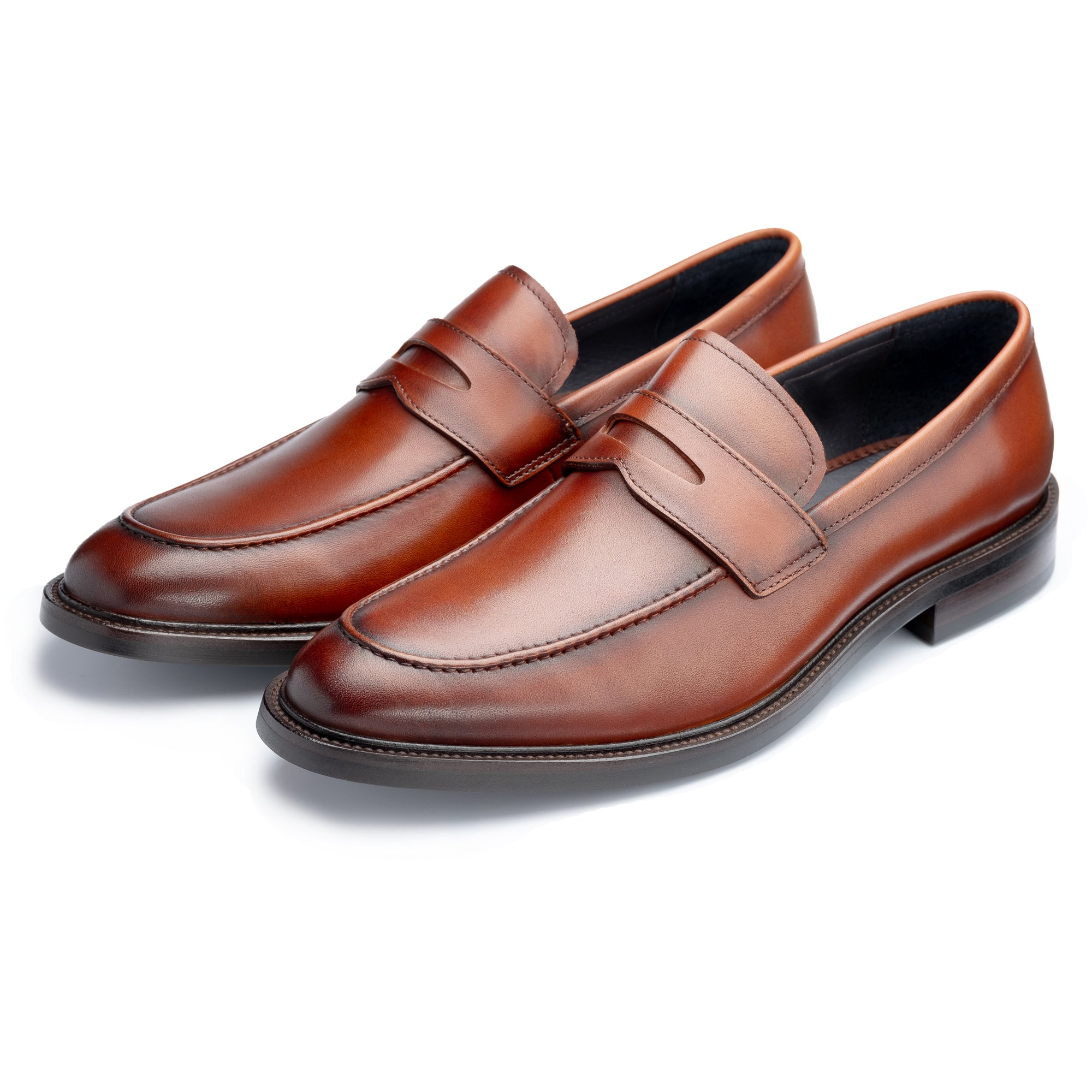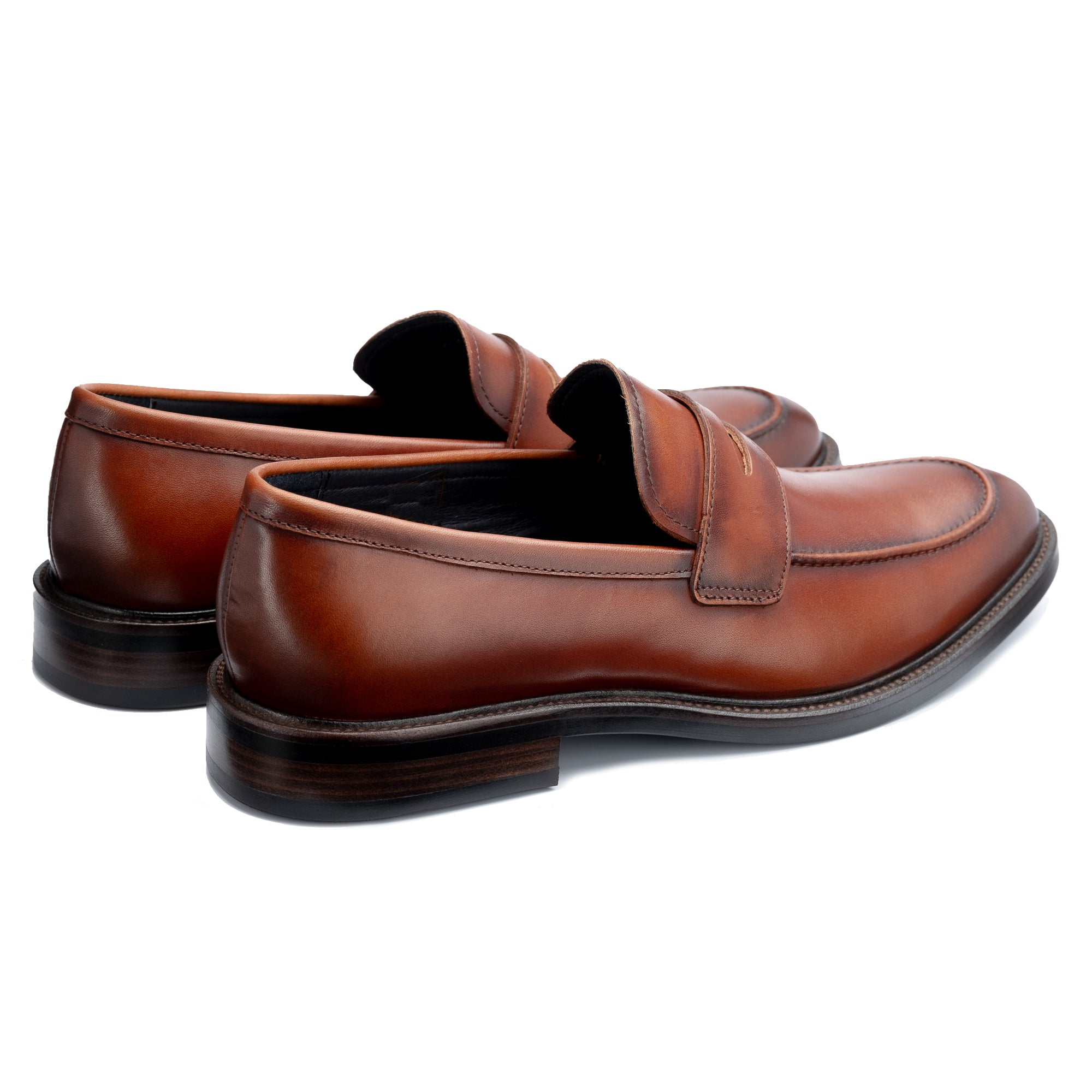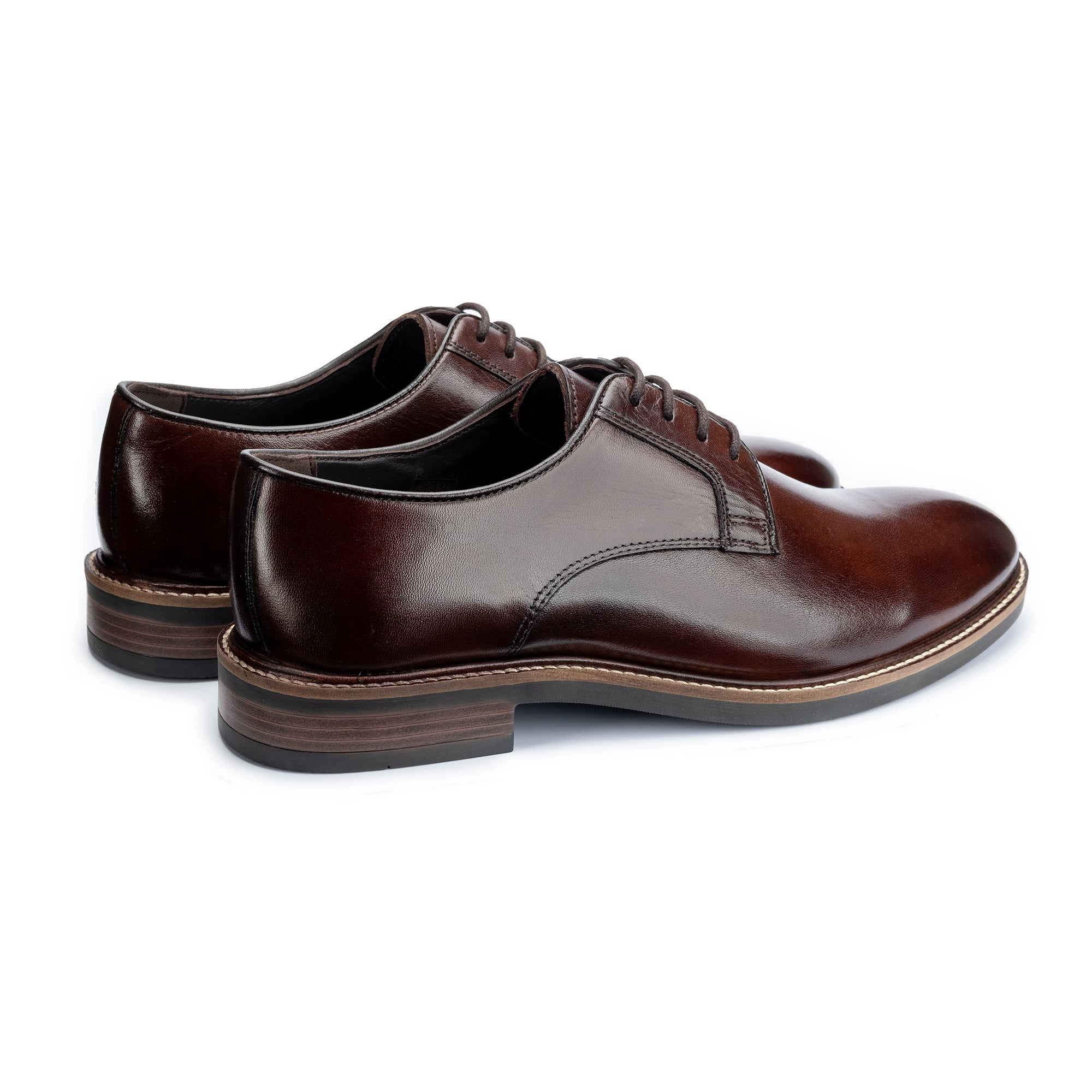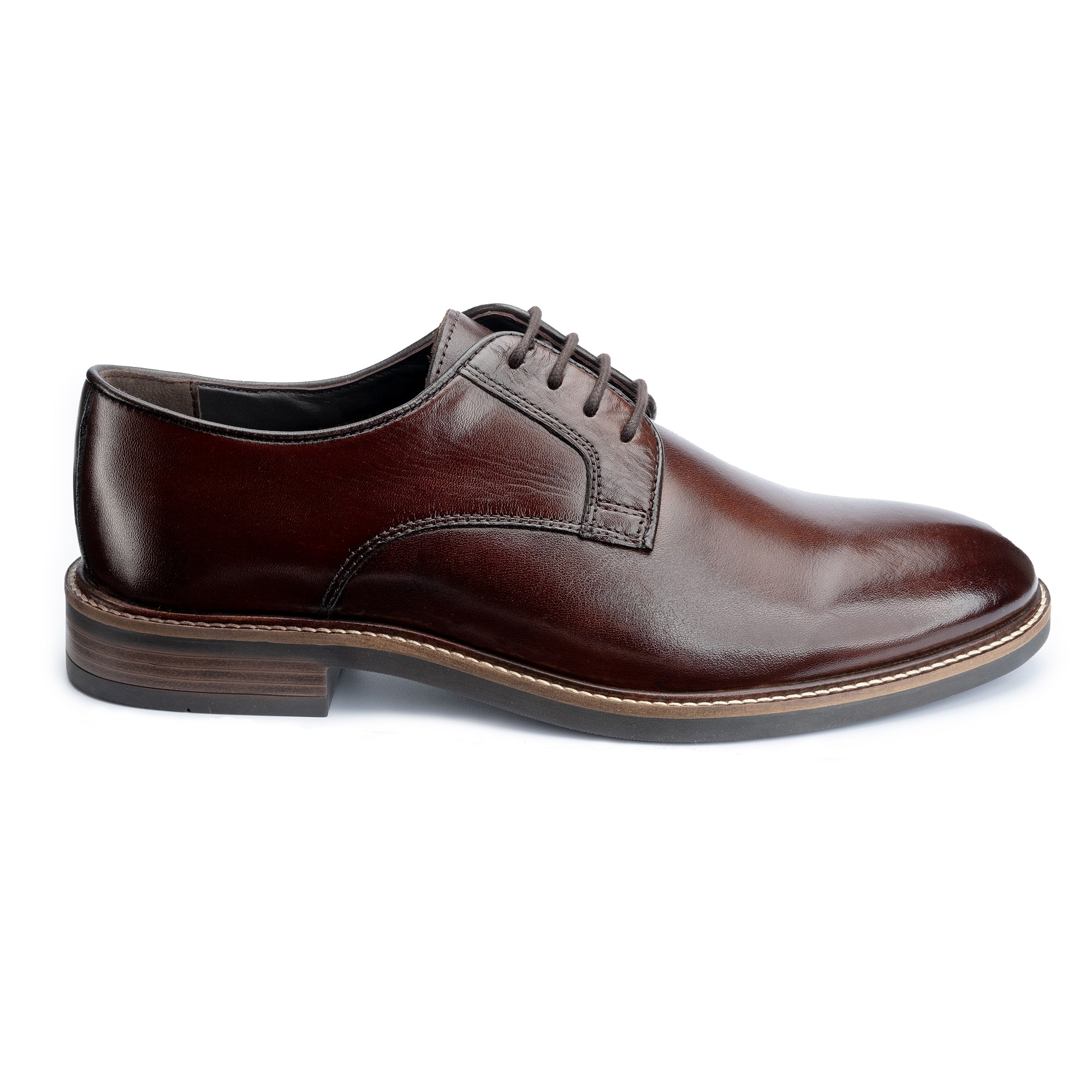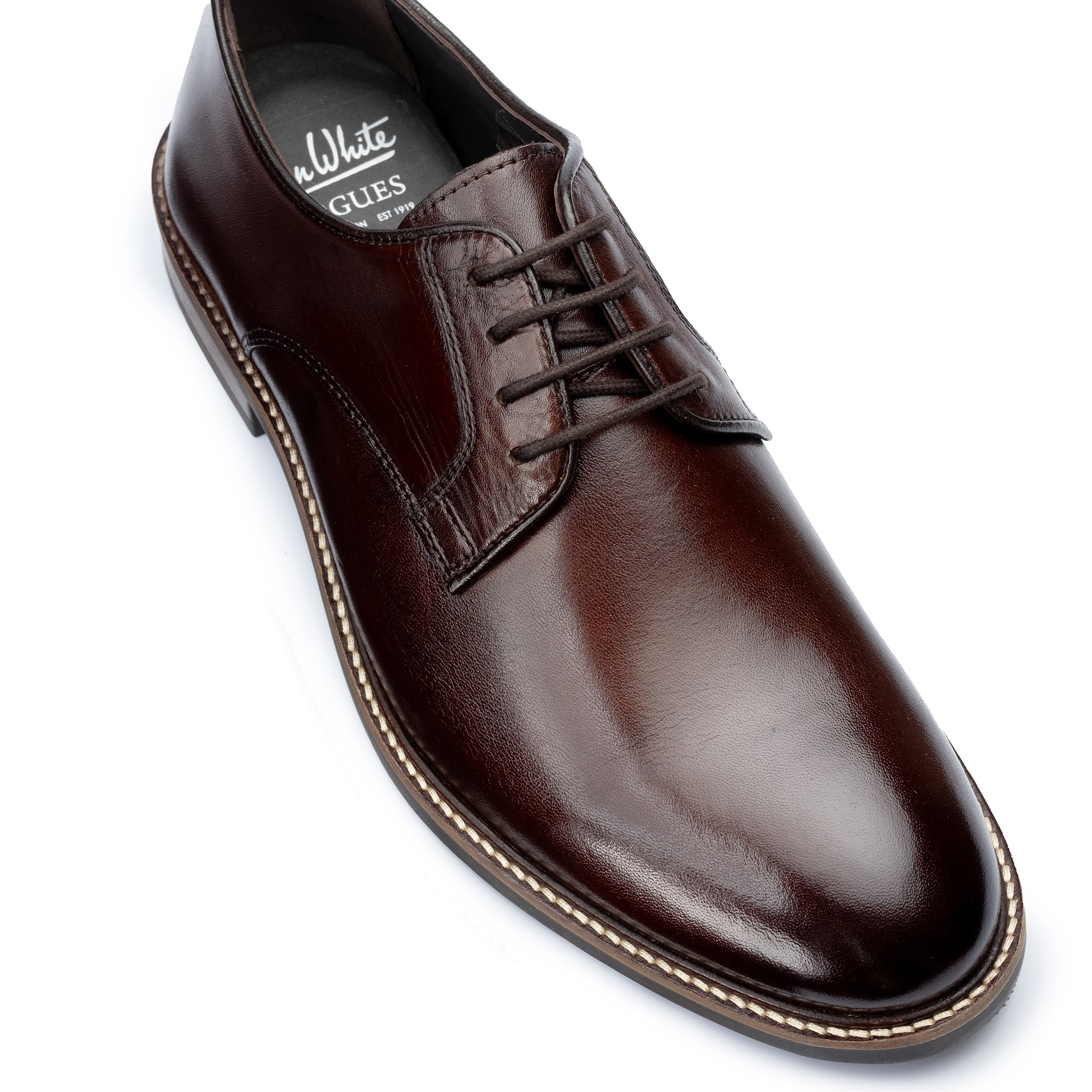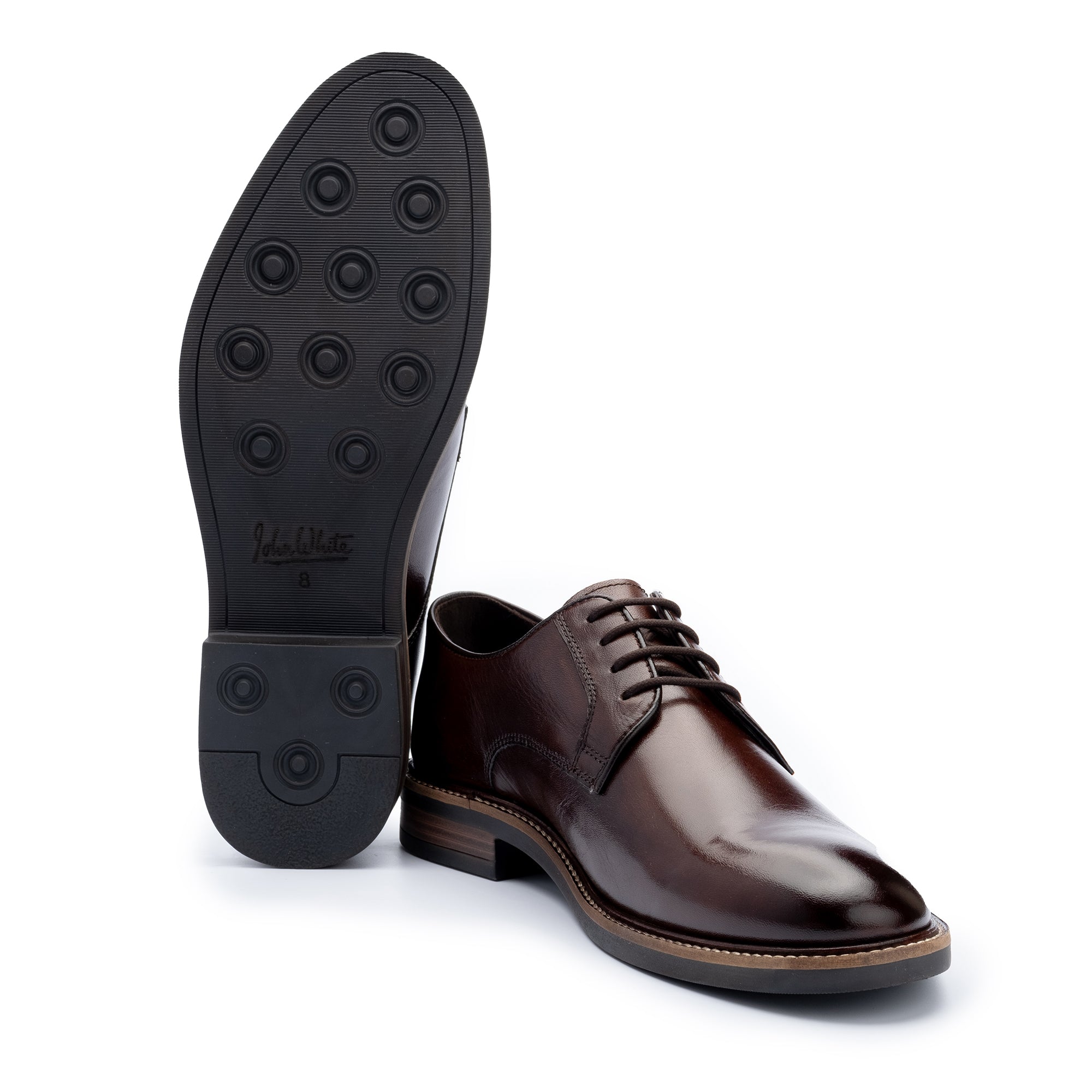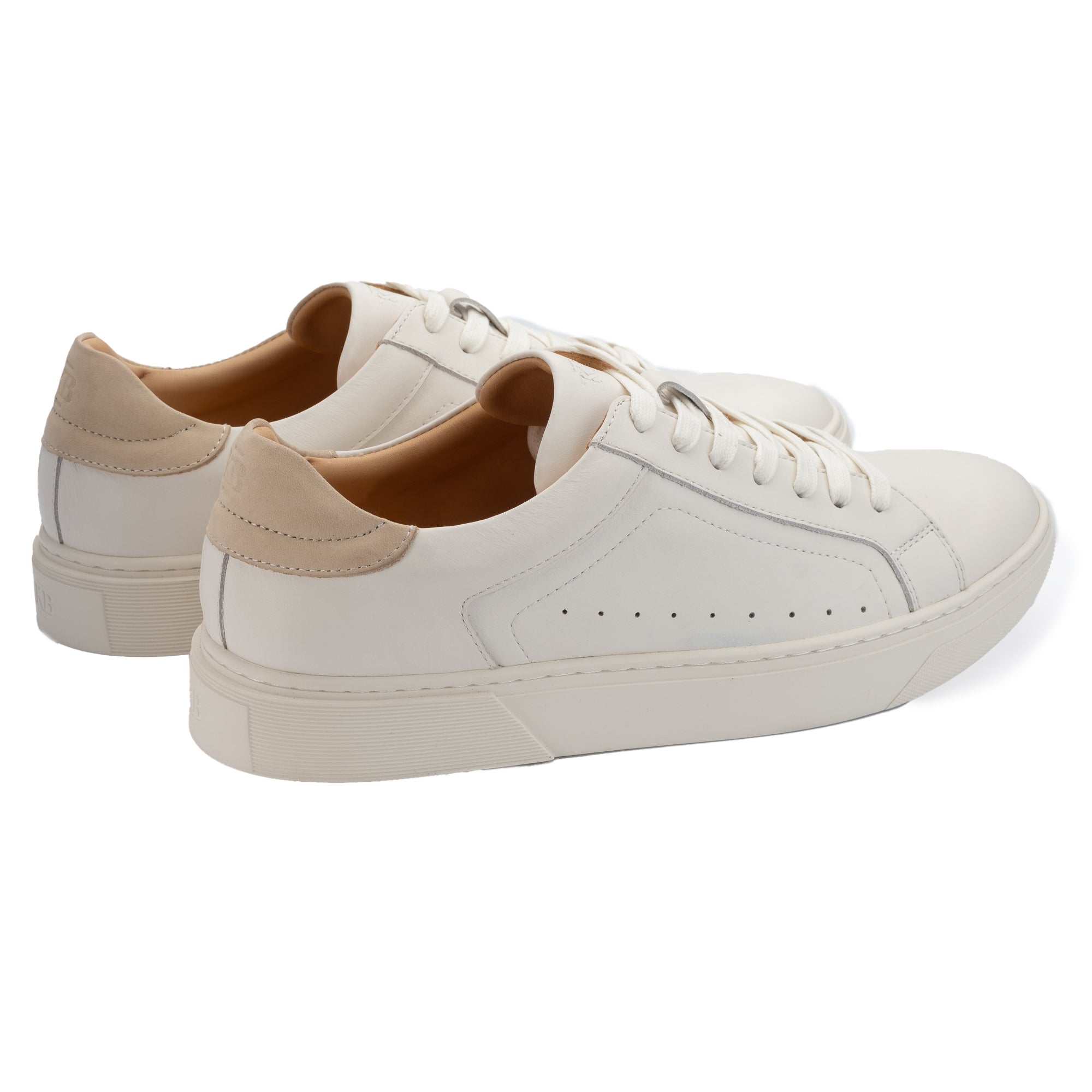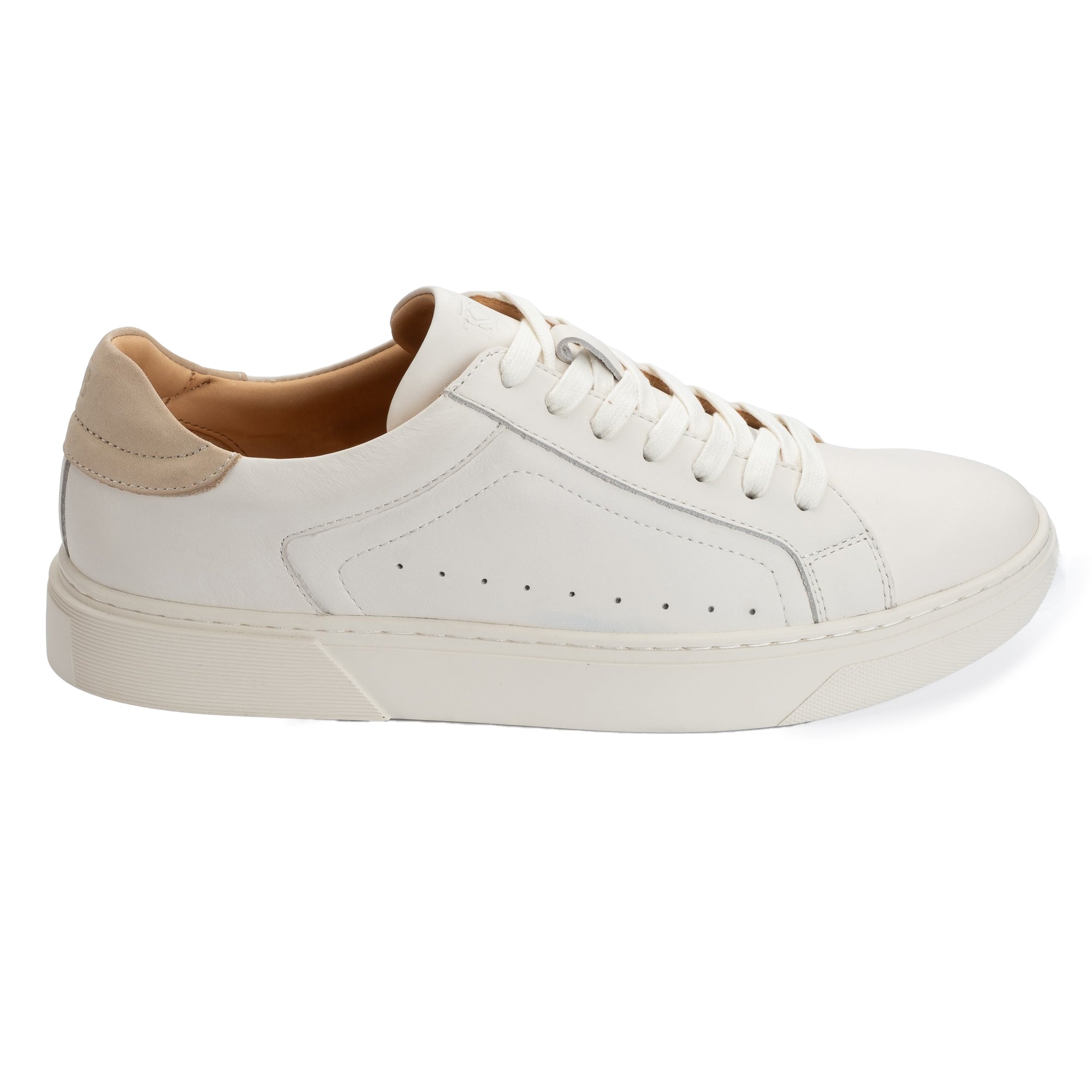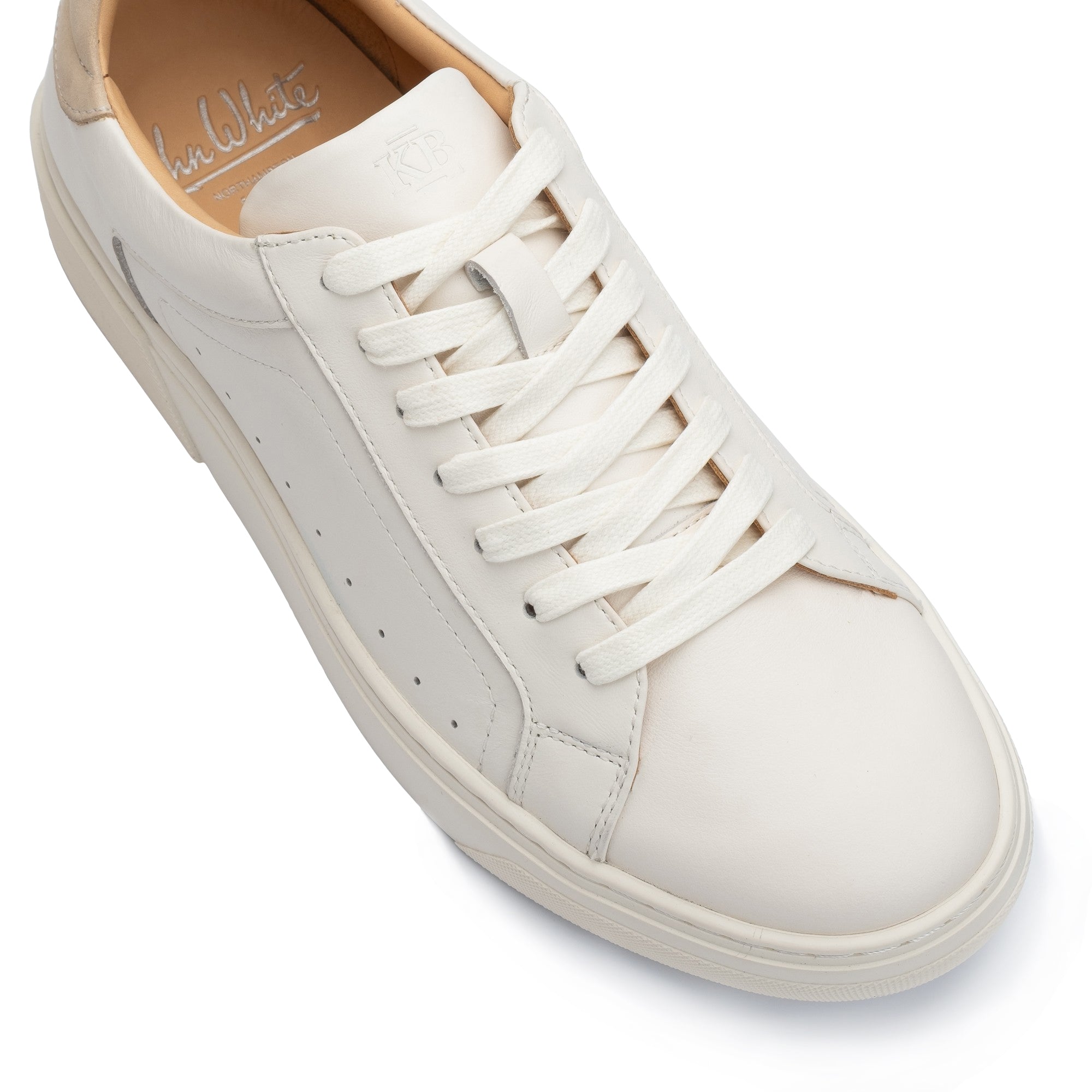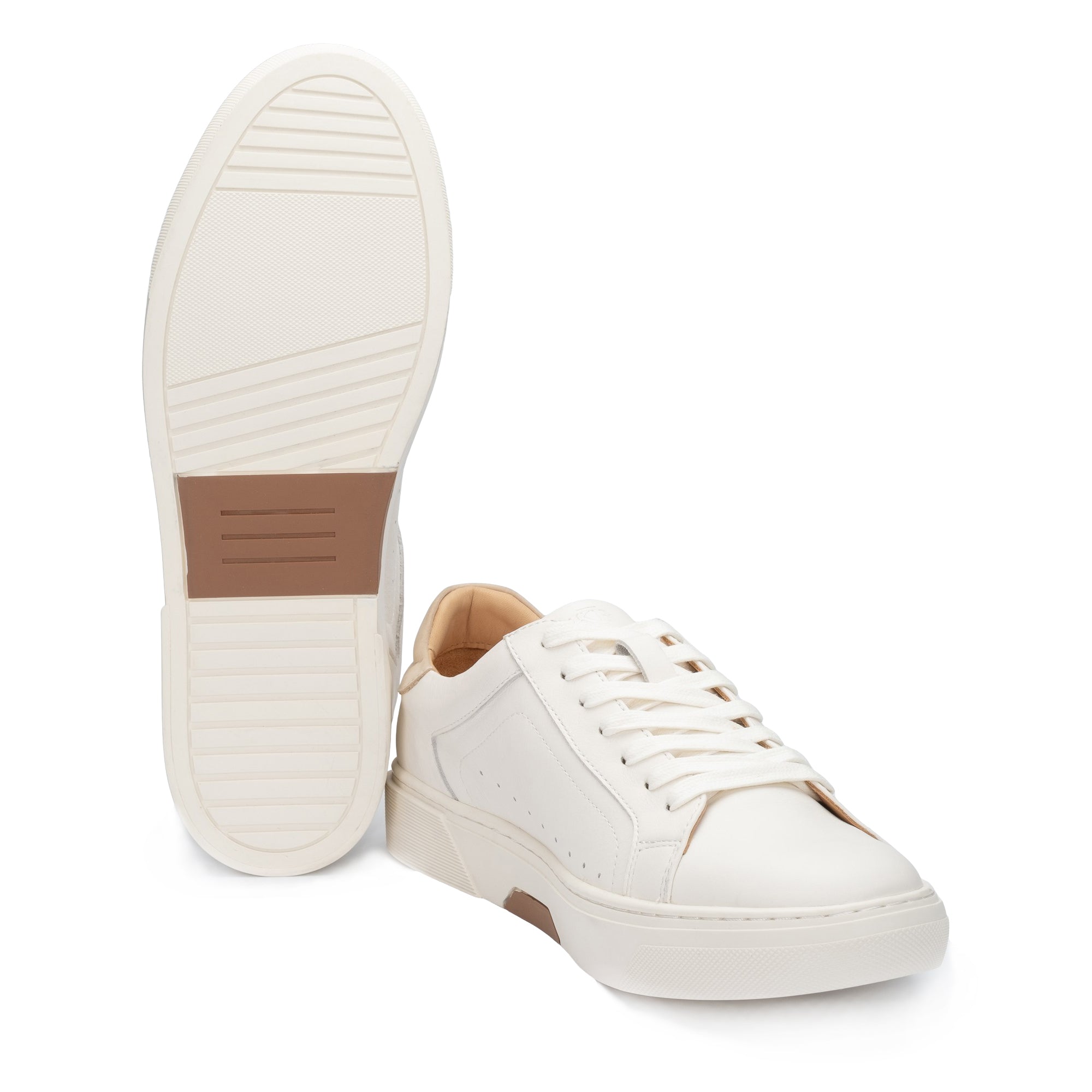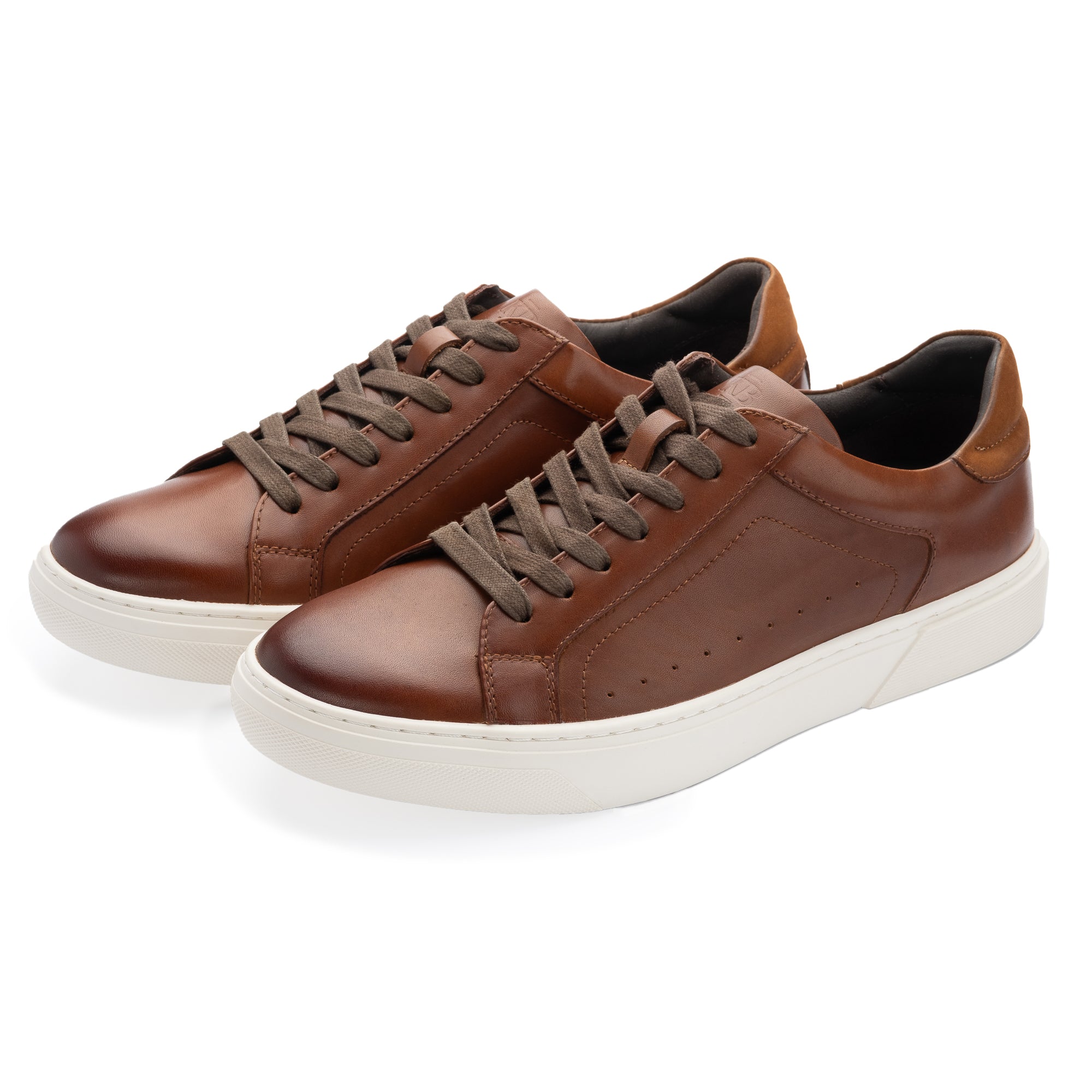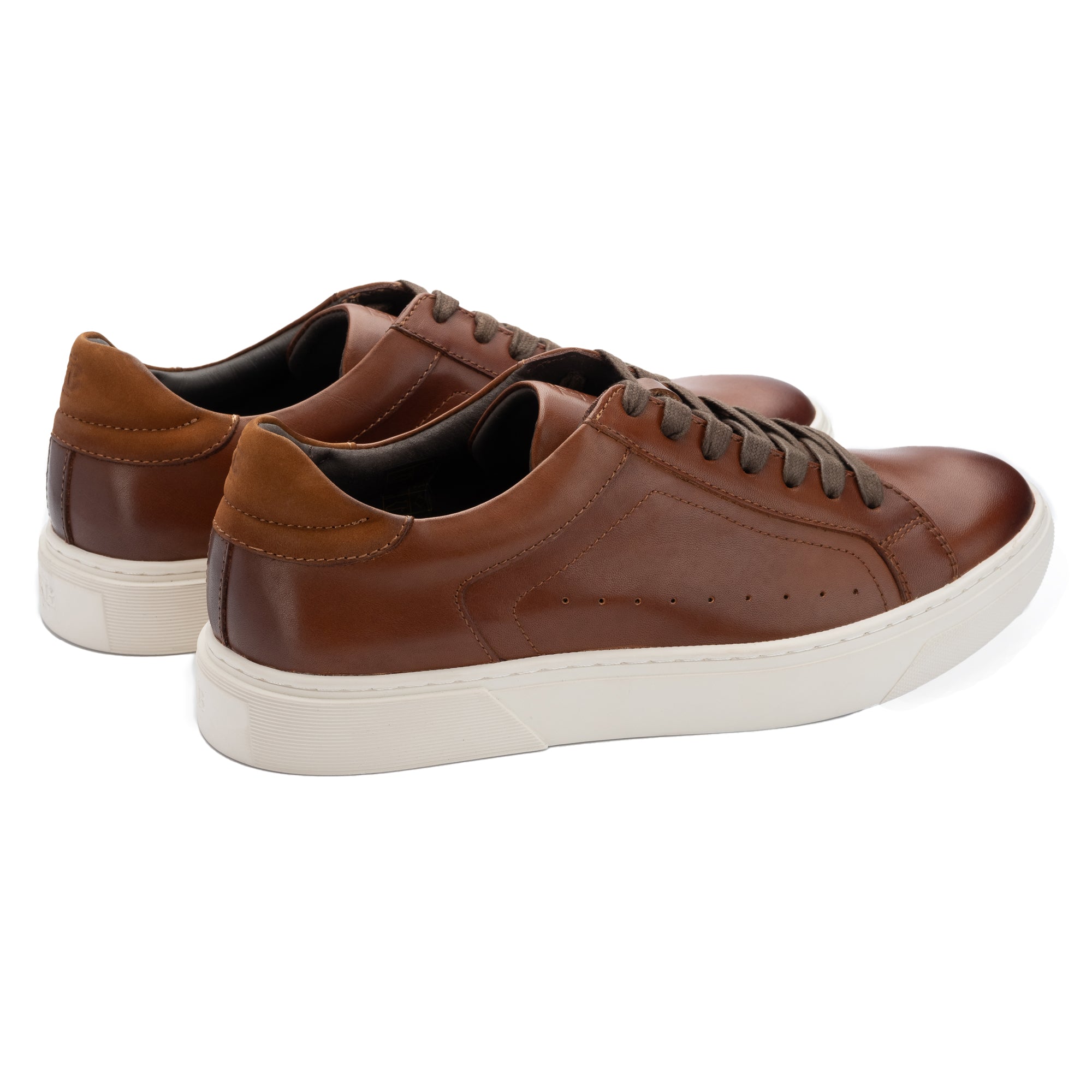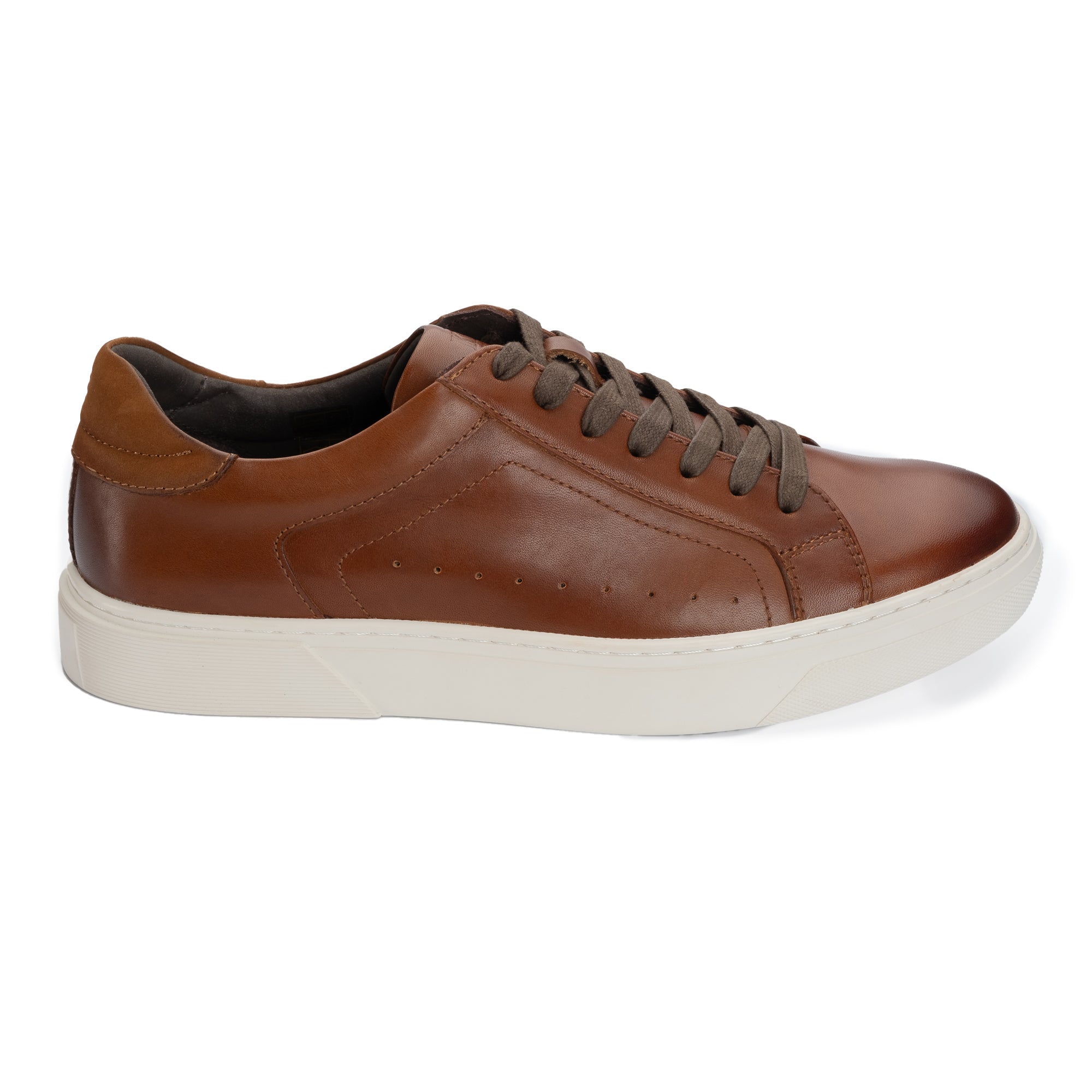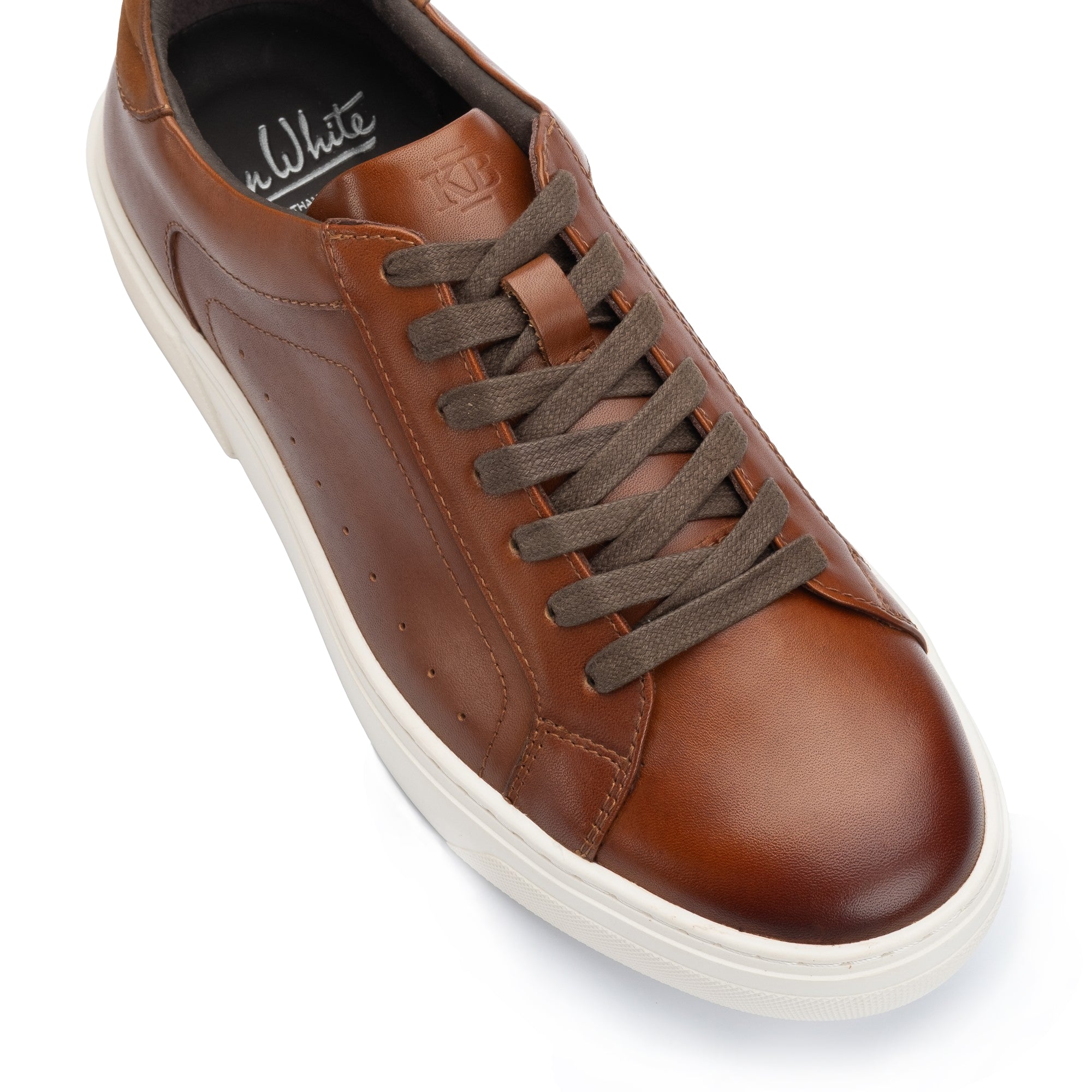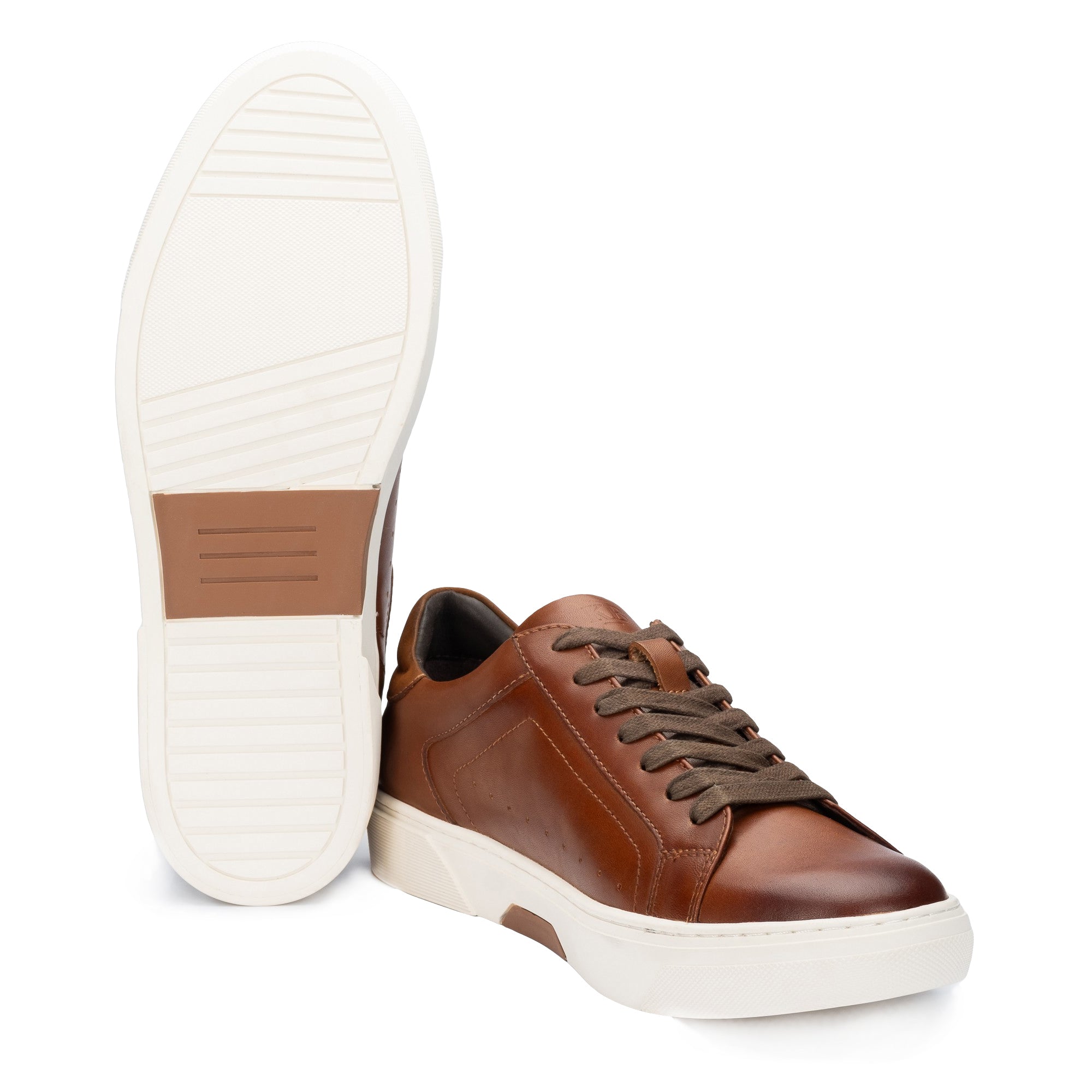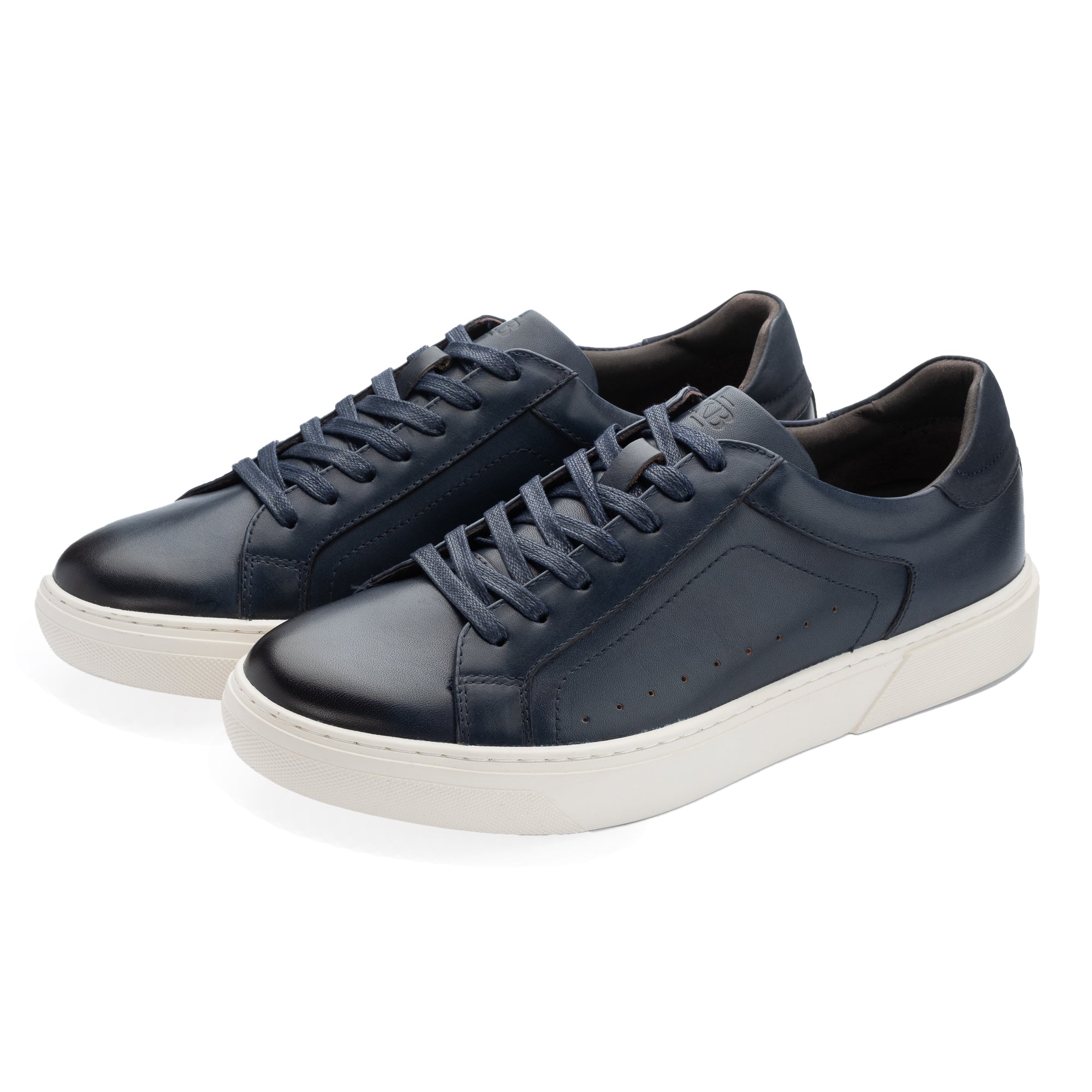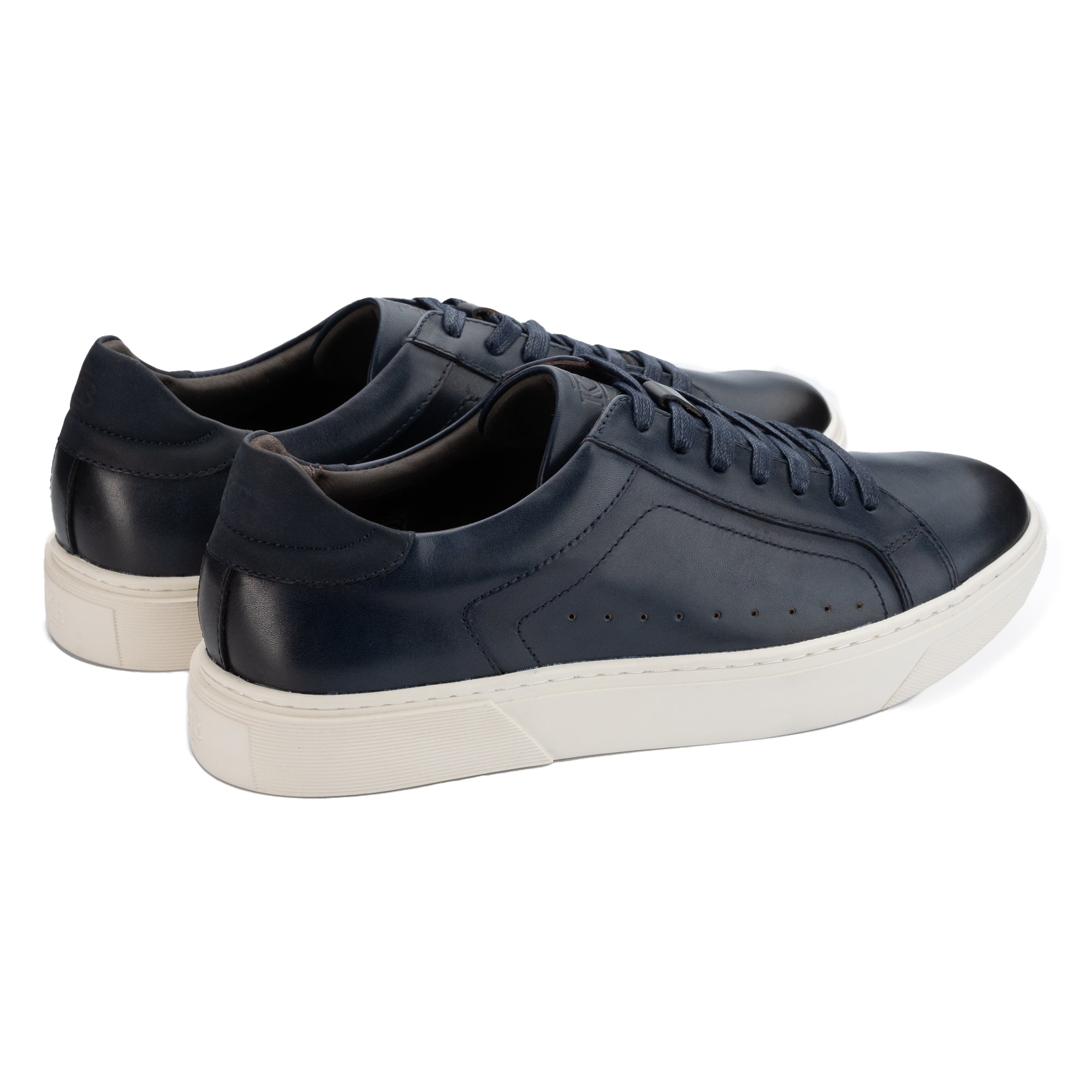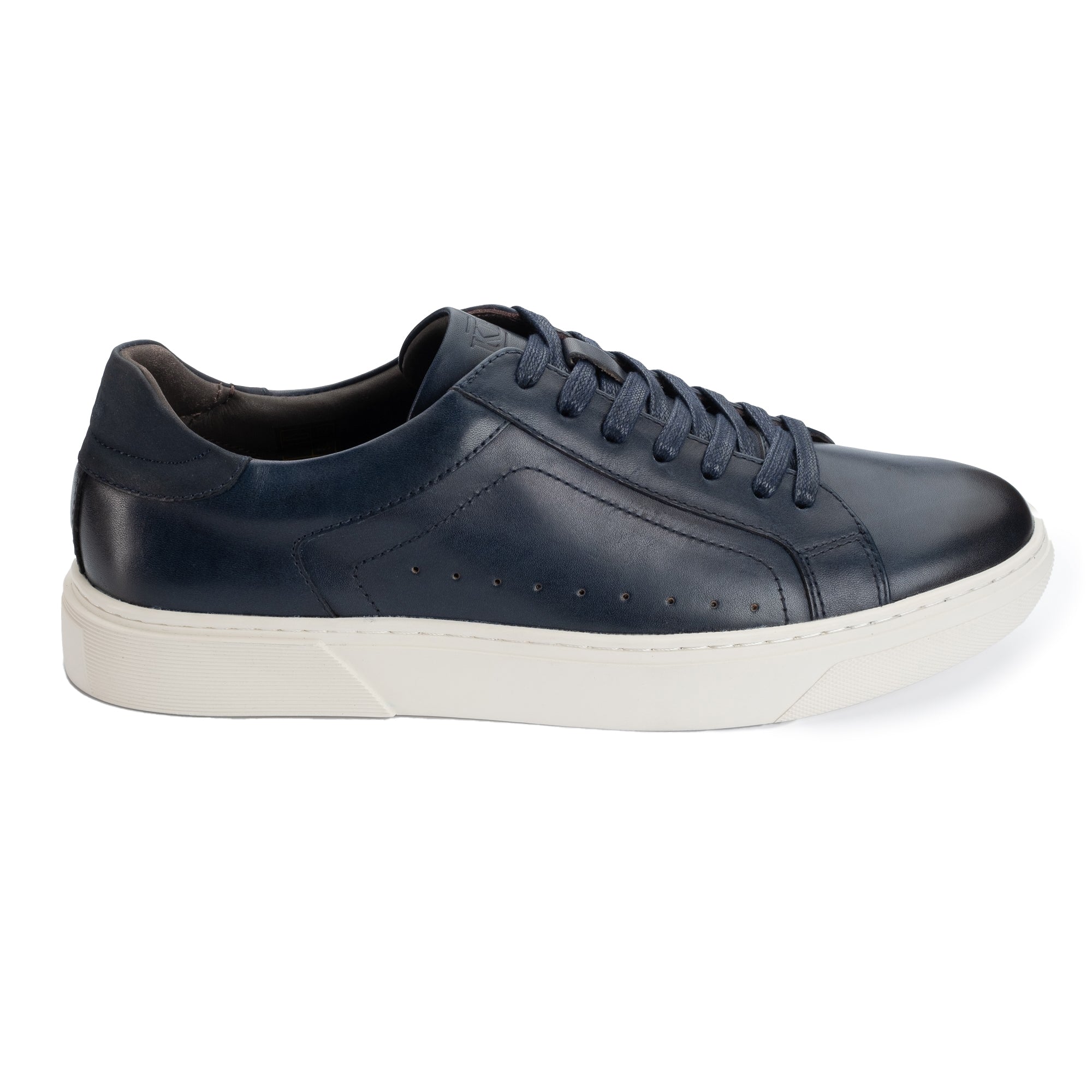

Brogues vs Plain Derbies: Which Should Be Your First Premium Leather Shoe?
For most men, a semi-brogue derby is the stronger first premium leather shoe: formal enough for business meetings and smart occasions, versatile enough for smart-casual wear, and distinguished without being restrictive. A plain derby edges ahead only when strict formality is the primary requirement. Both share the same open-lacing derby construction — the distinction lies entirely in the decorative perforations and how they affect perceived formality.
In This Guide
- What Is the Difference Between a Brogue and a Plain Derby?
- How Does Each Style Sit on the Formality Spectrum?
- Which Occasions Suit Brogues vs Plain Derbies?
- Brogues vs Plain Derbies: A Direct Comparison
- Which Colour Should You Choose for Your First Pair?
- What the British Shoemaking Tradition Tells Us About Each Style
- How to Decide: A Practical Five-Step Test
- The Verdict: Which Should Be Your First Premium Leather Shoe?
- Related Guides
- TL;DR
- Frequently Asked Questions
Two styles define the entry point to a serious leather shoe wardrobe: the brogue, with its punched perforations and serrated edges, and the plain derby, clean-lined and unadorned. Both sit on the same open-lacing platform. Both deliver the same Goodyear welted durability. The decision comes down to where you need to wear them and how much decorative detail your wardrobe demands.
This guide gives you a direct answer — and the reasoning behind it.
What Is the Difference Between a Brogue and a Plain Derby?
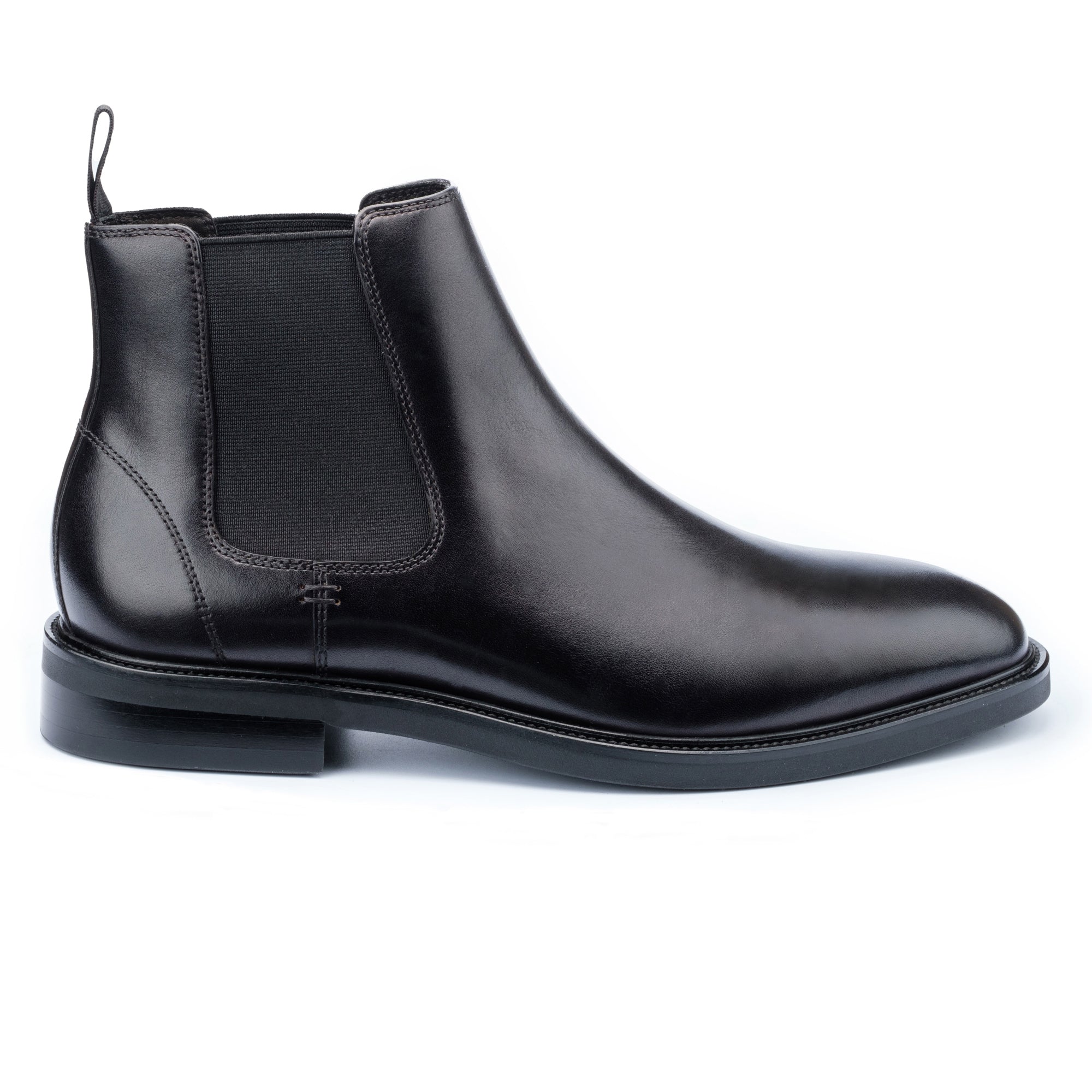
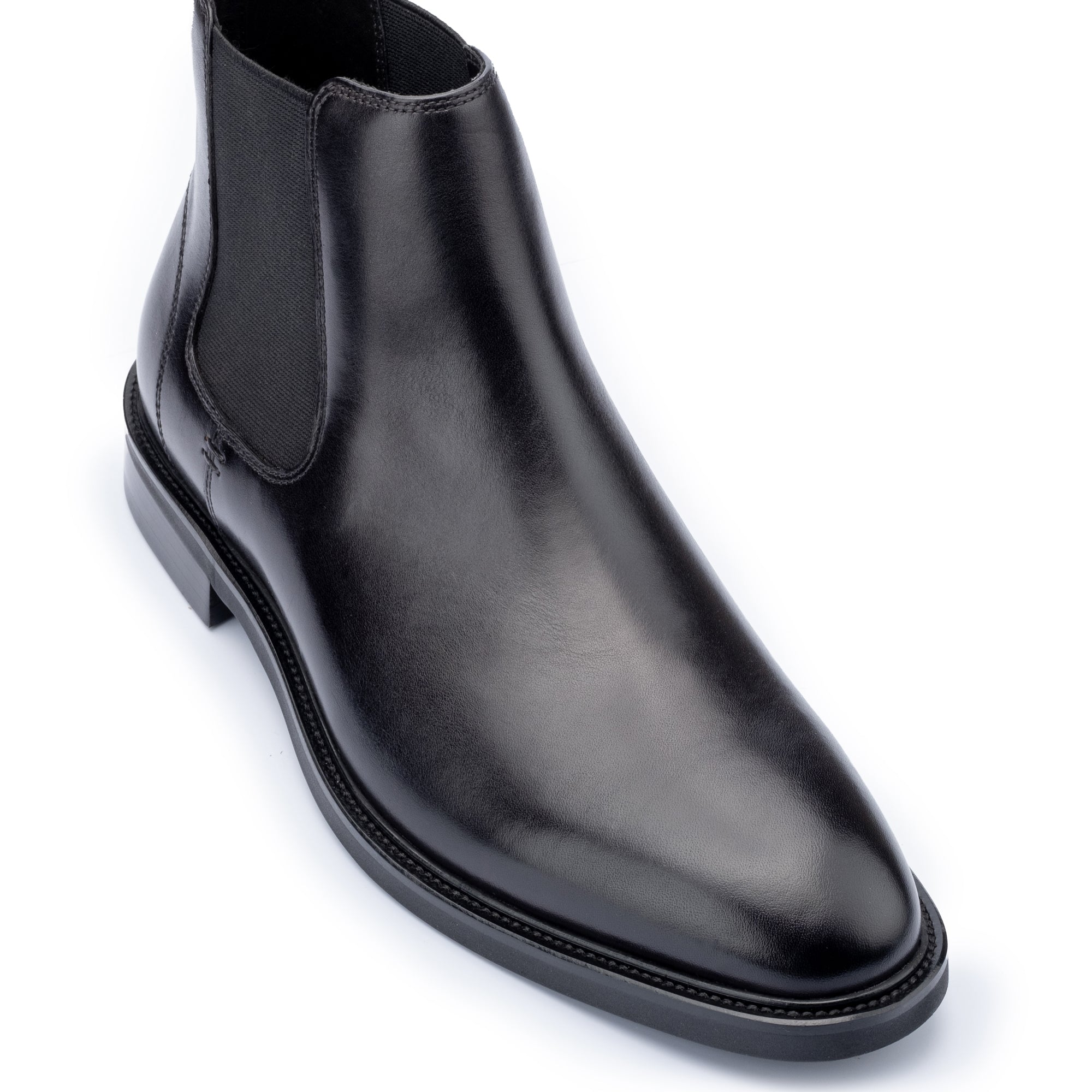
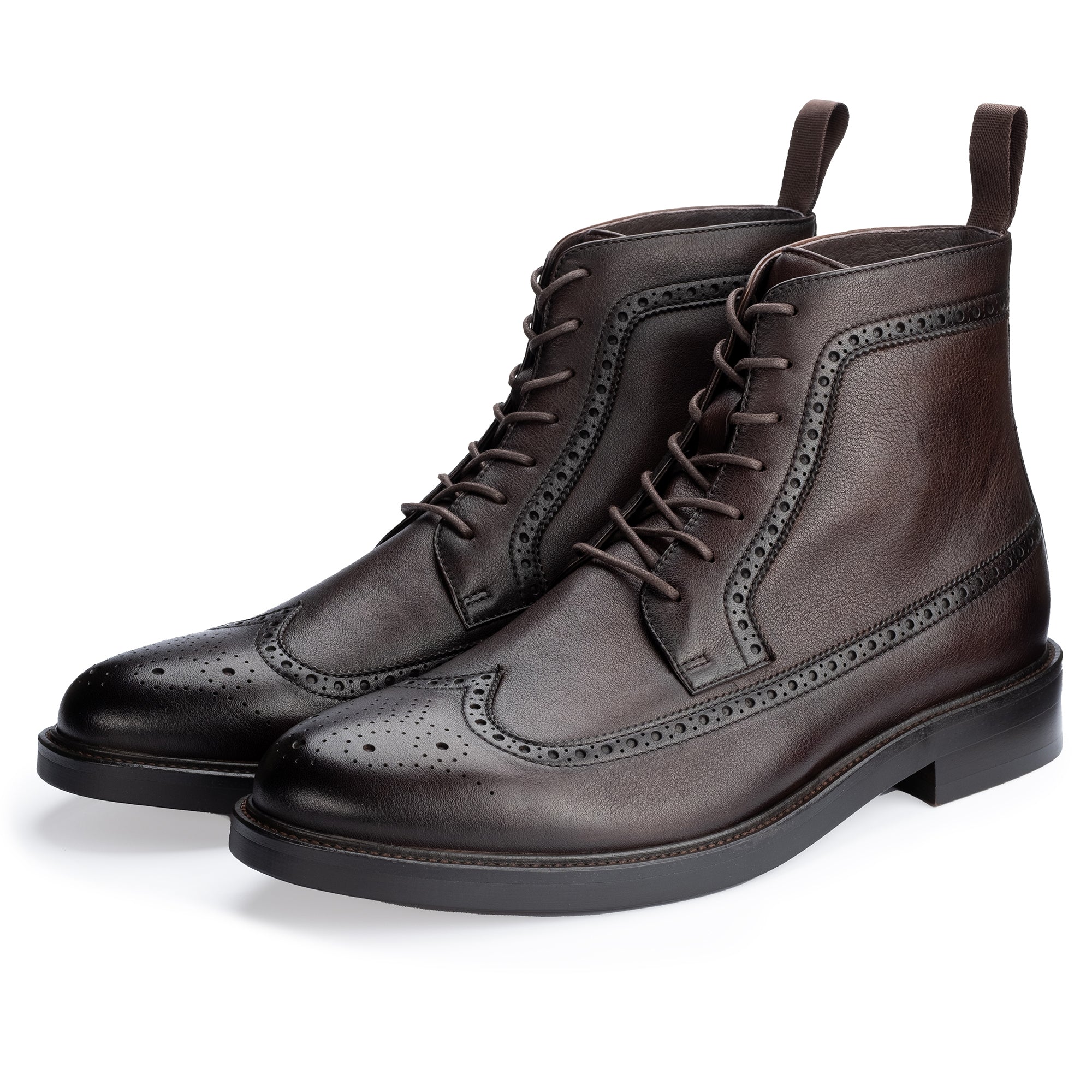
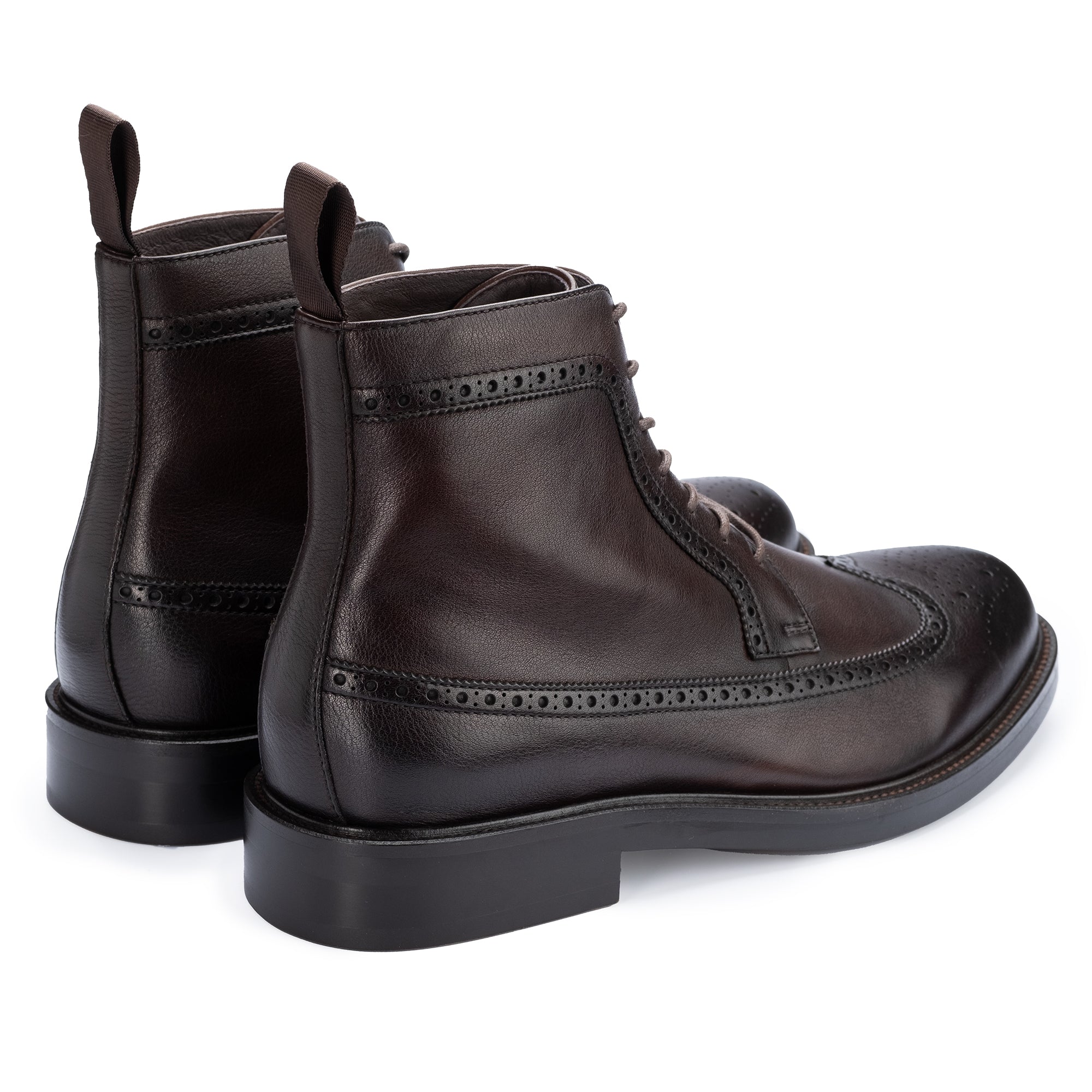
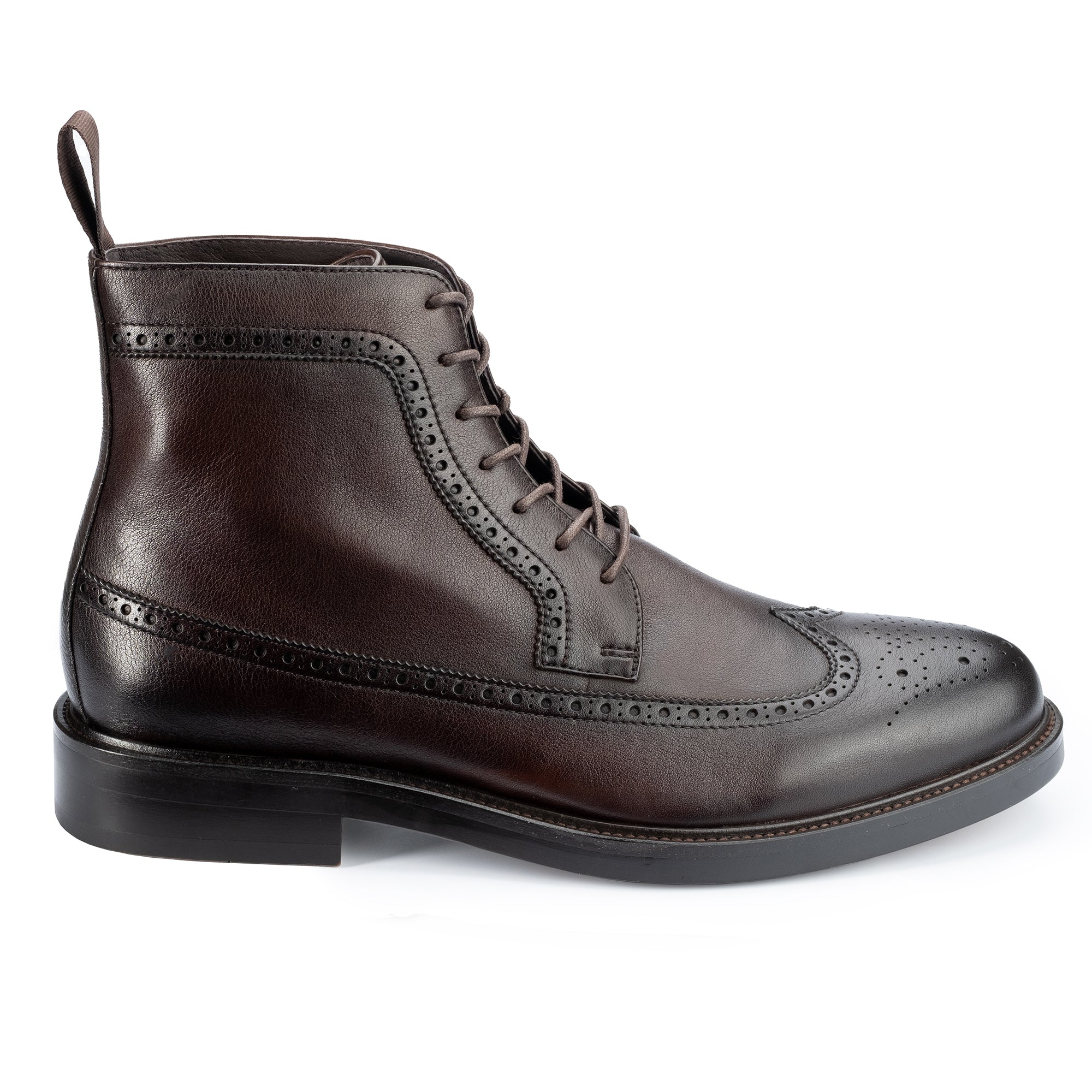
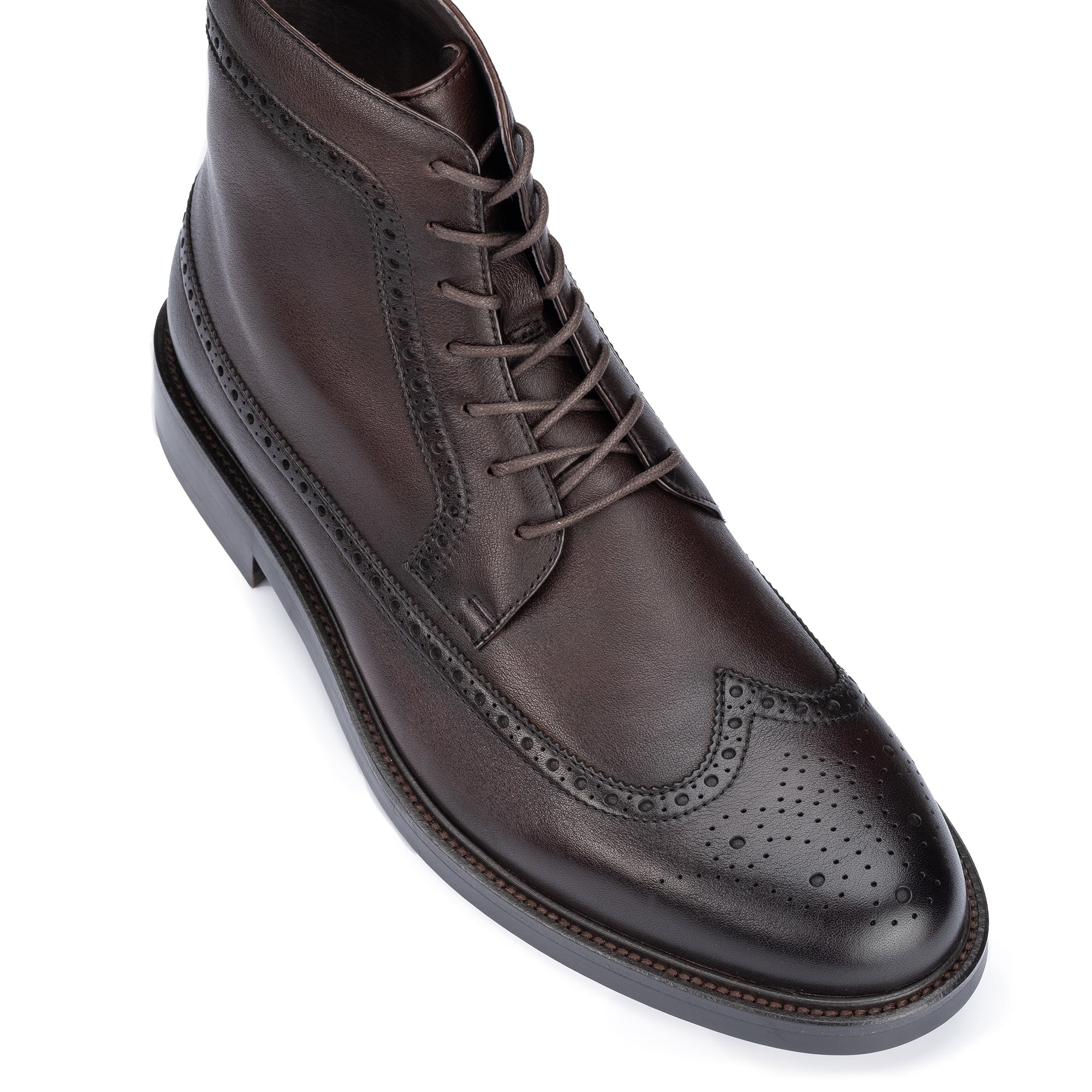
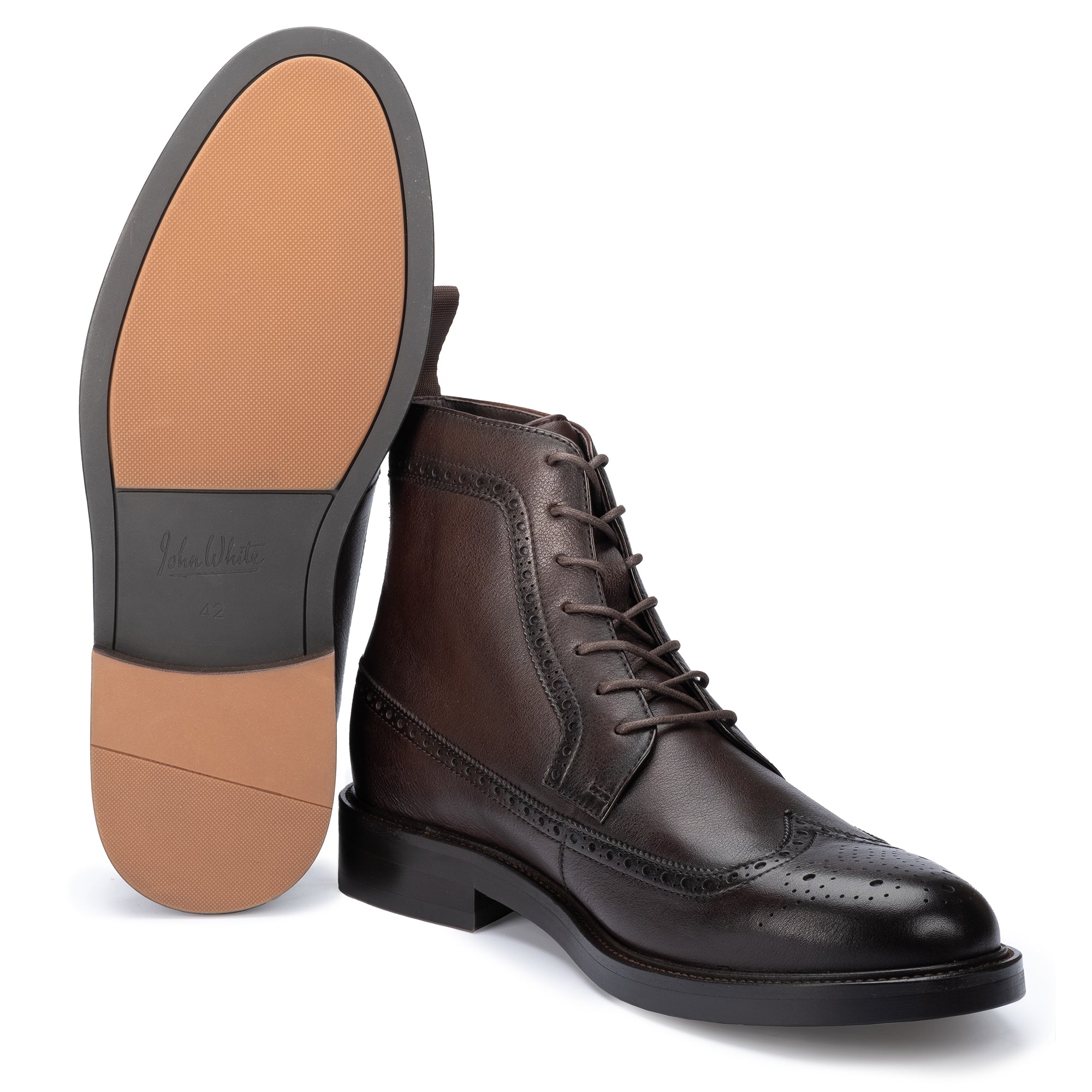
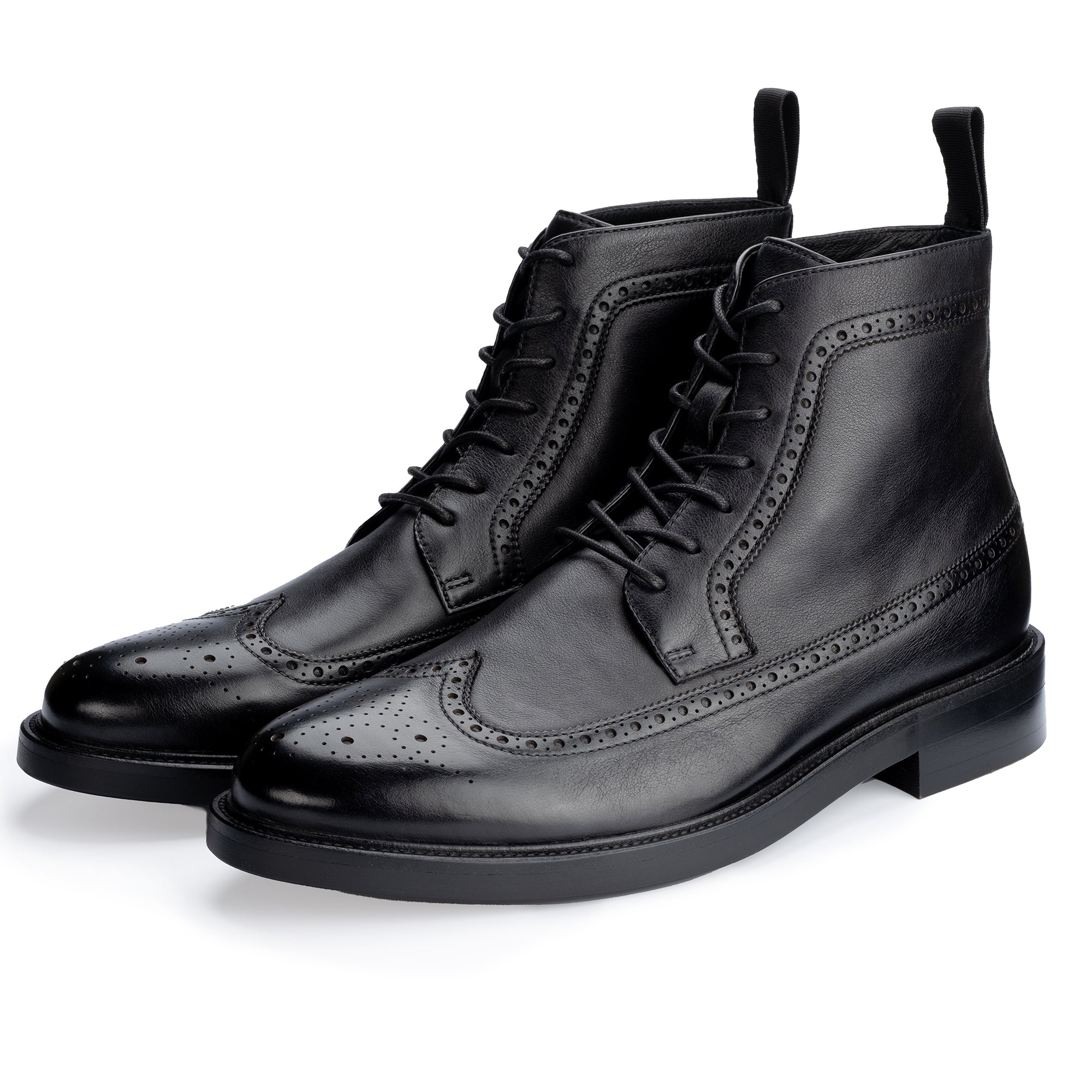
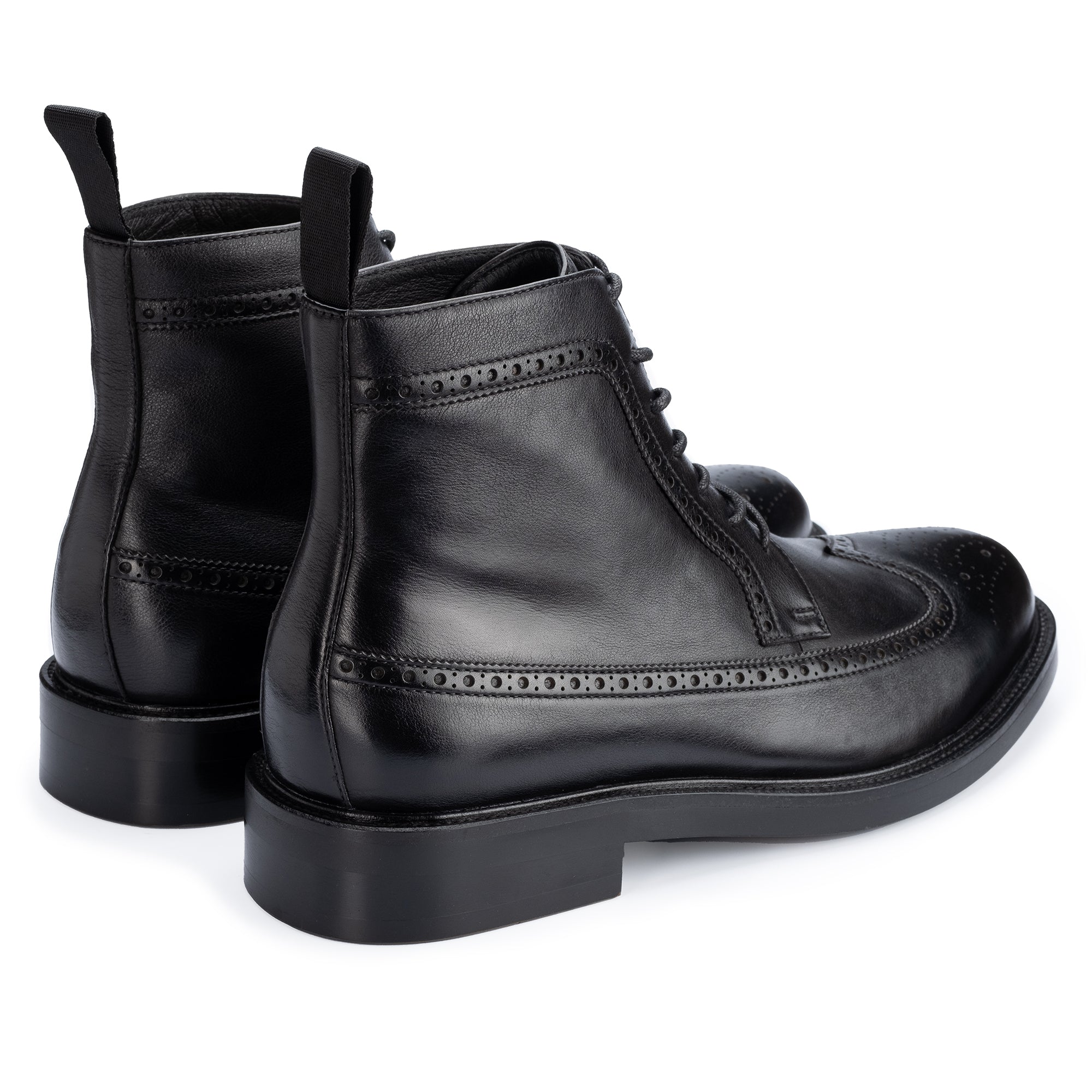
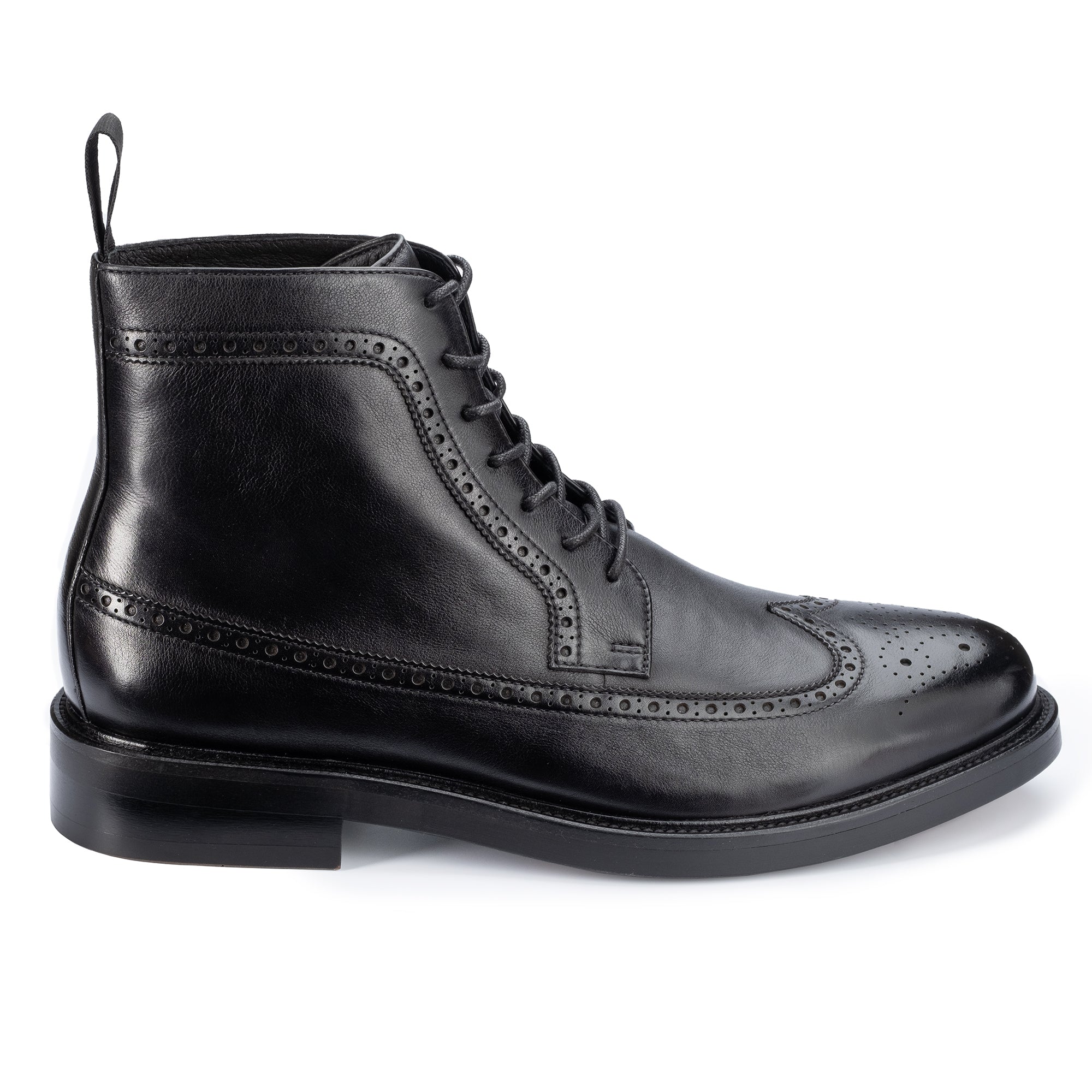
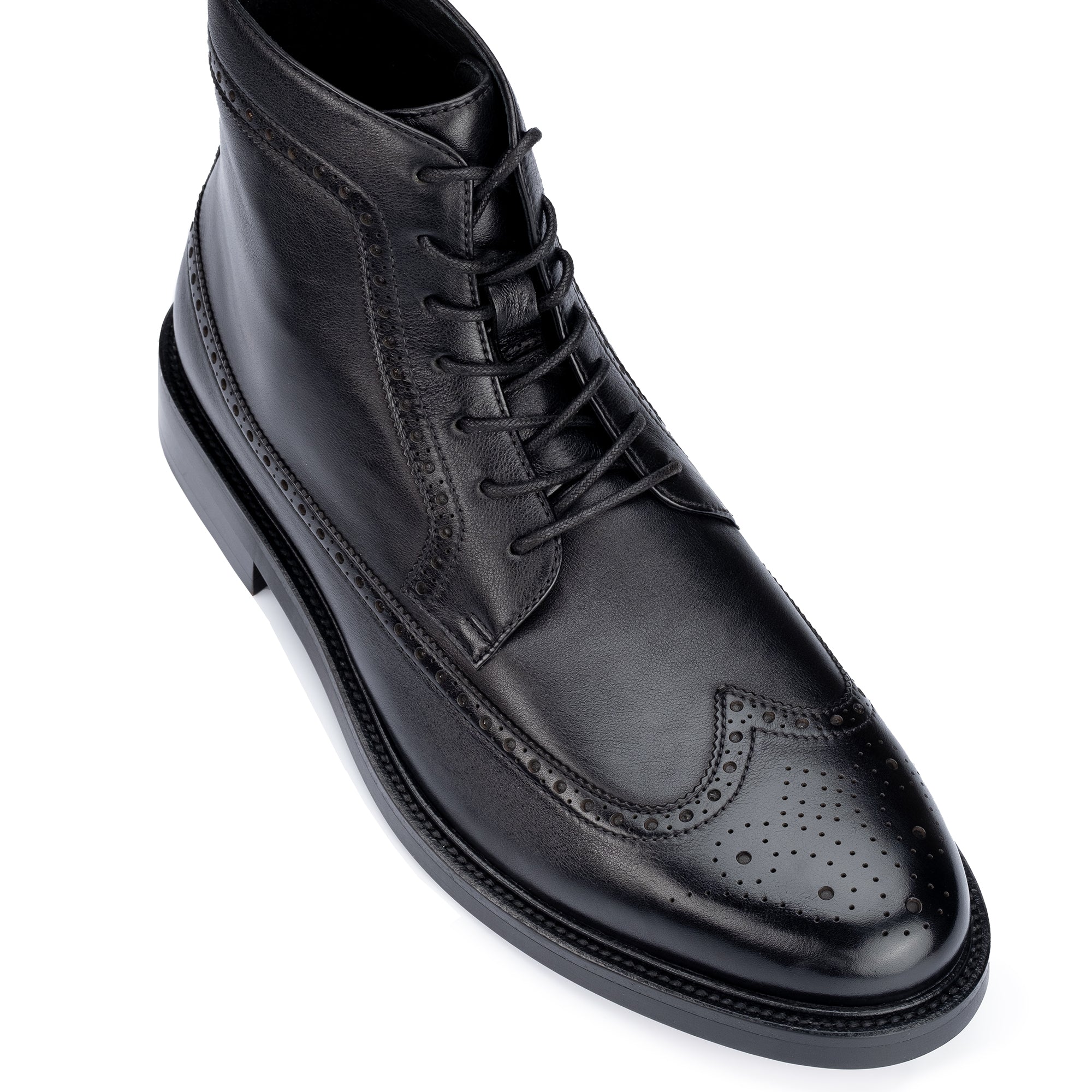
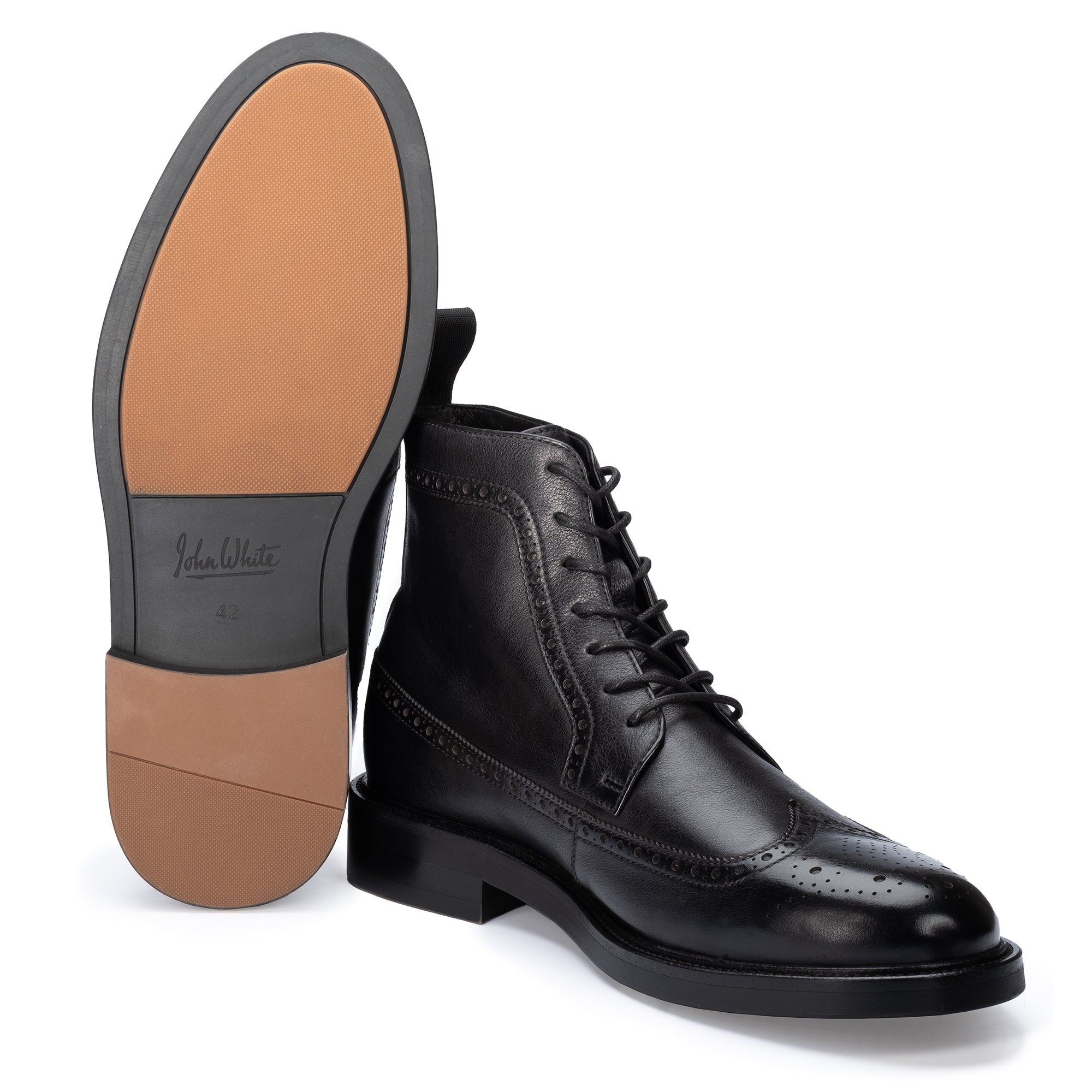
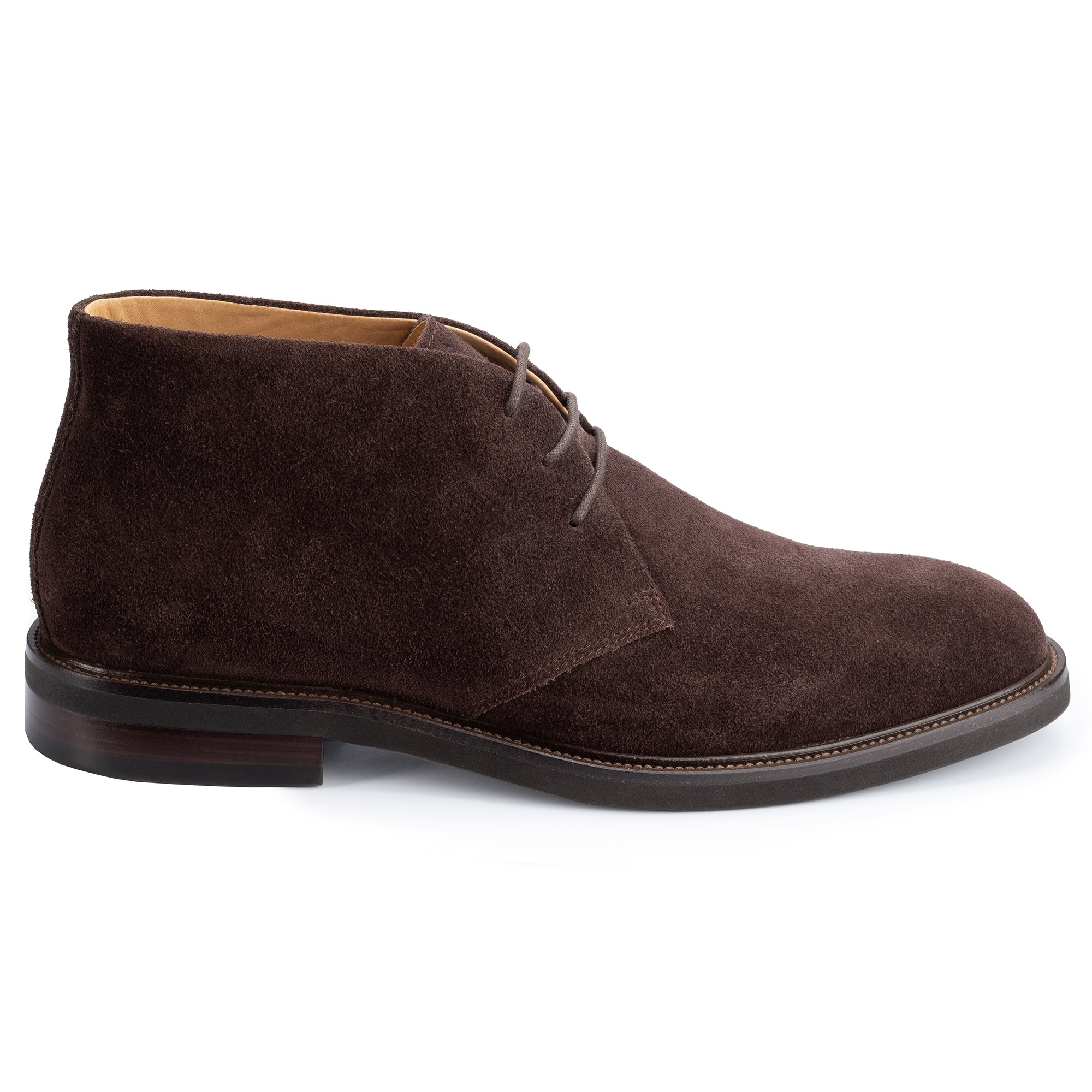
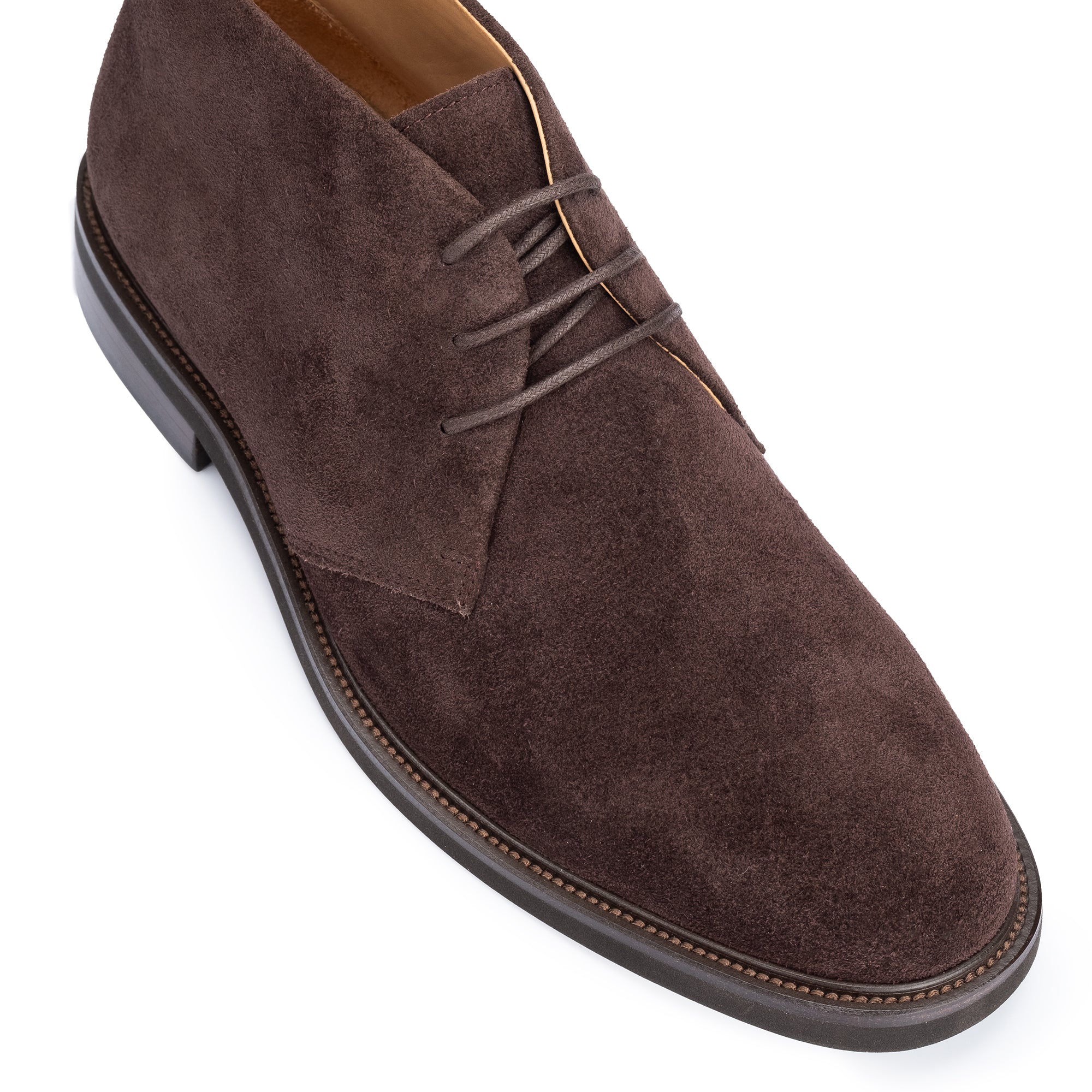
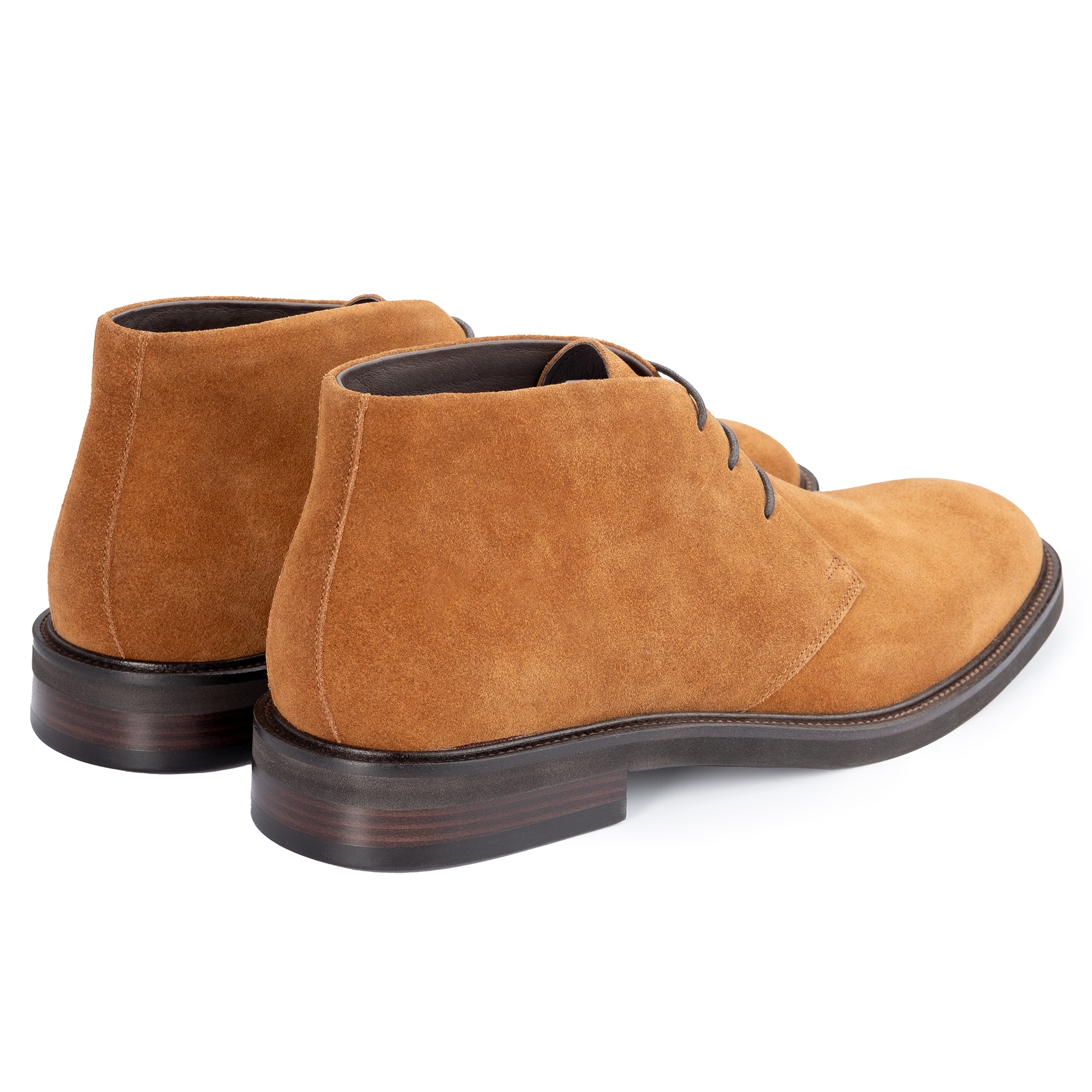
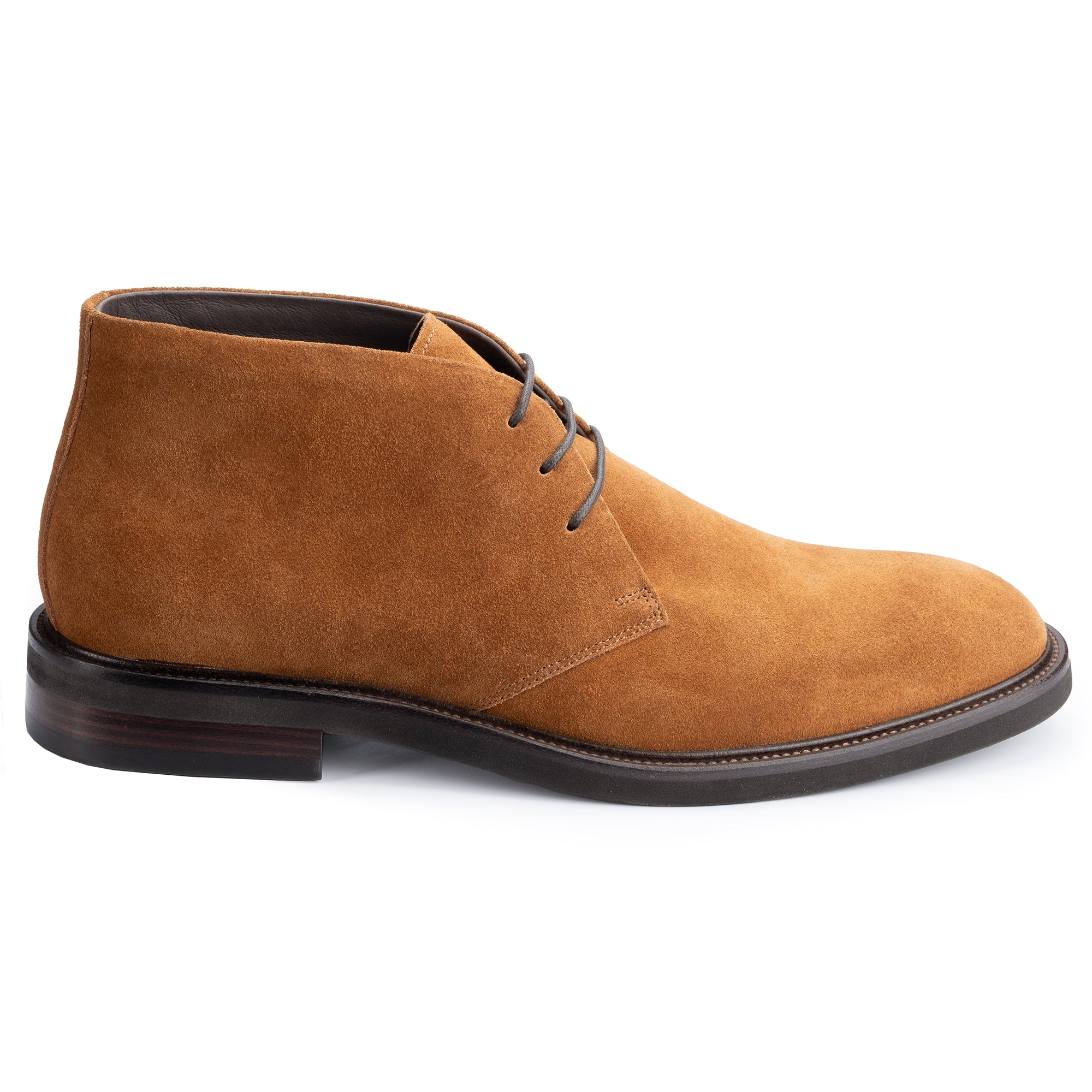
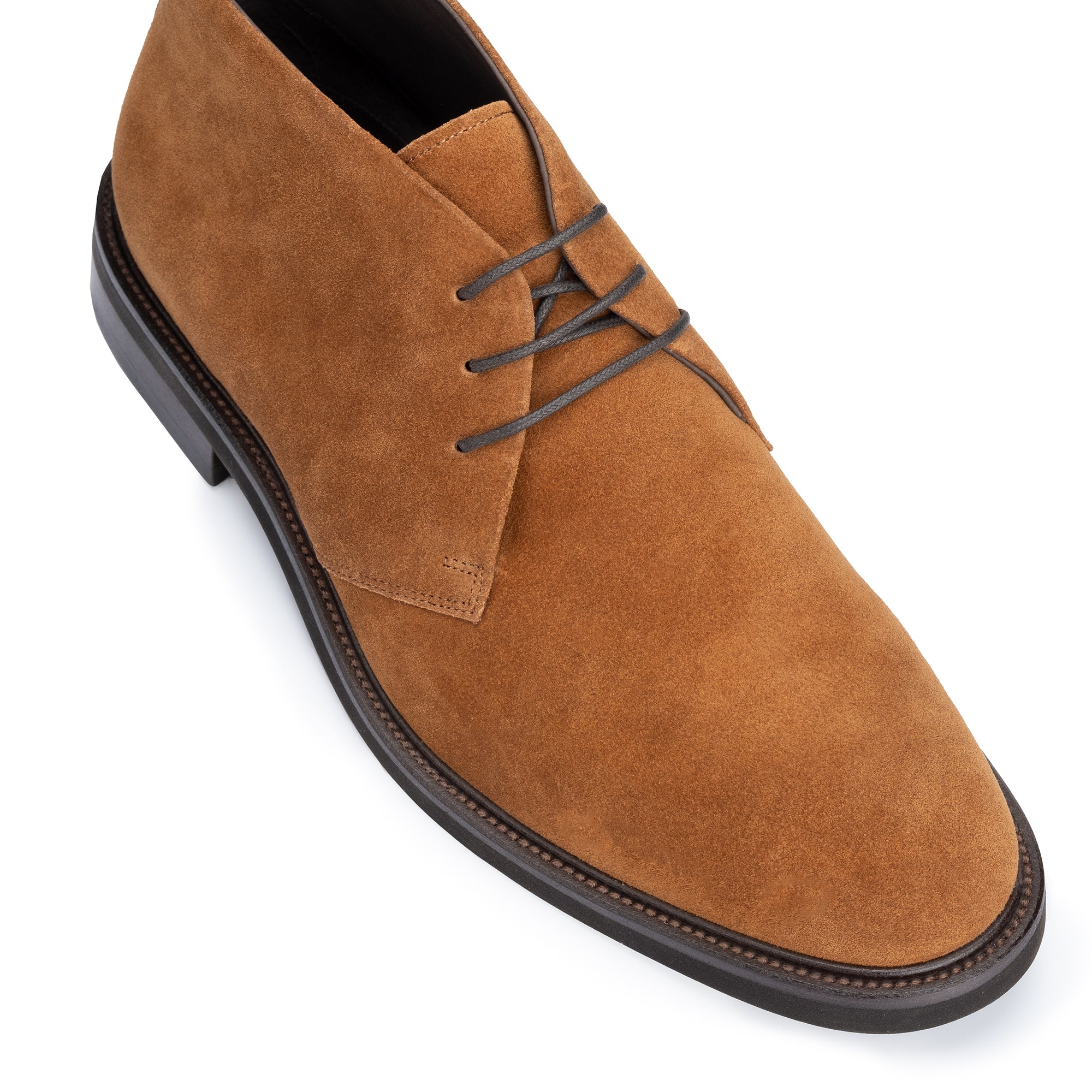
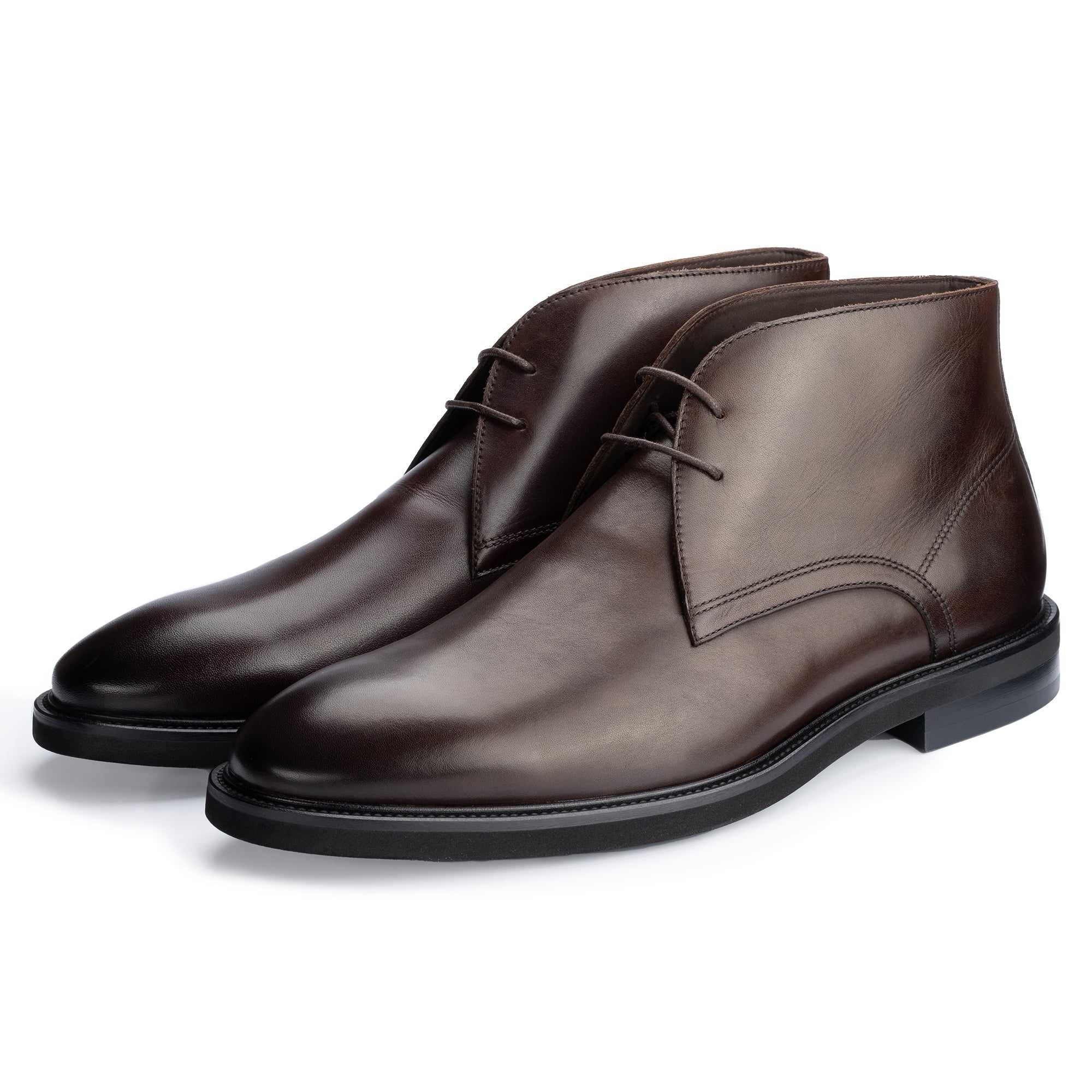
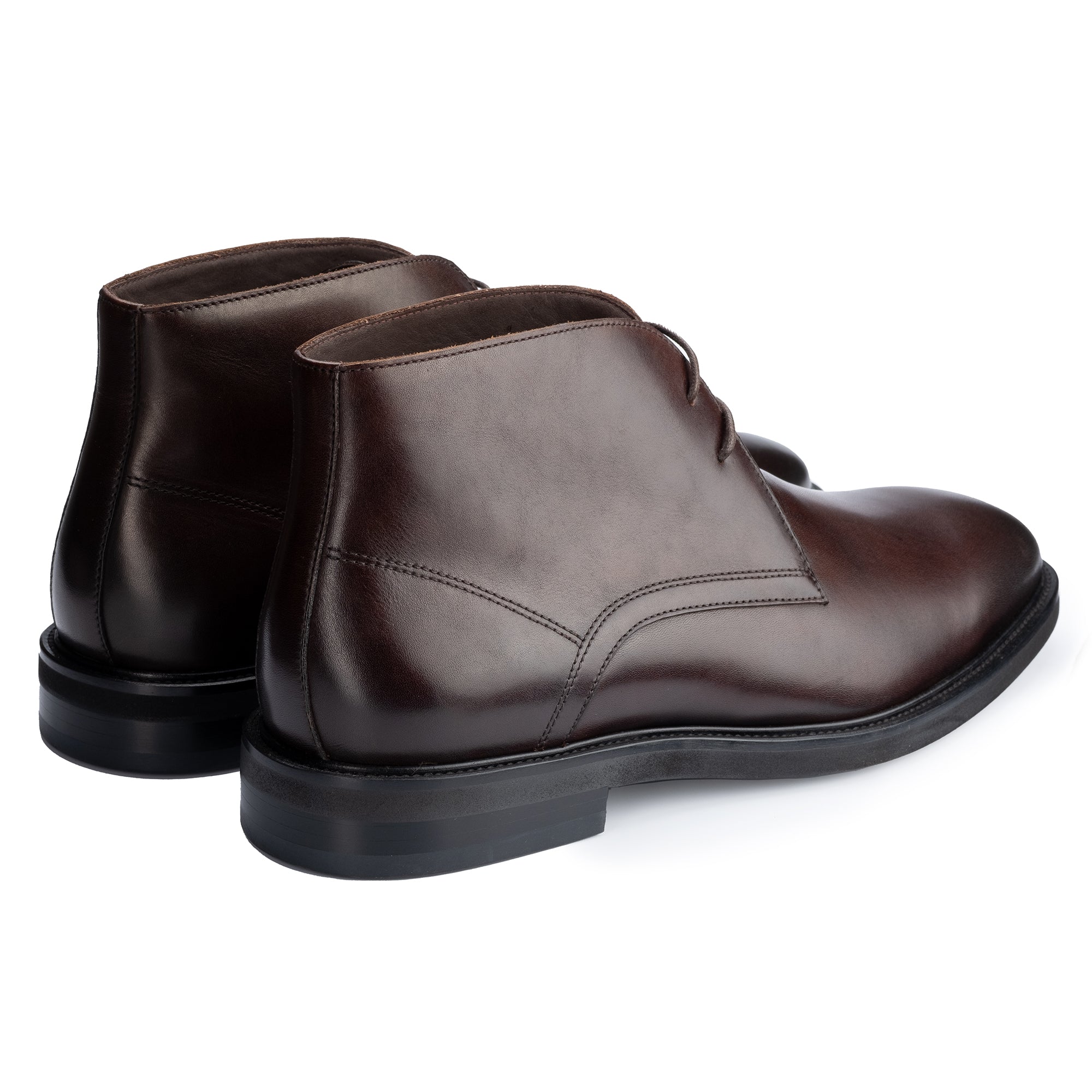
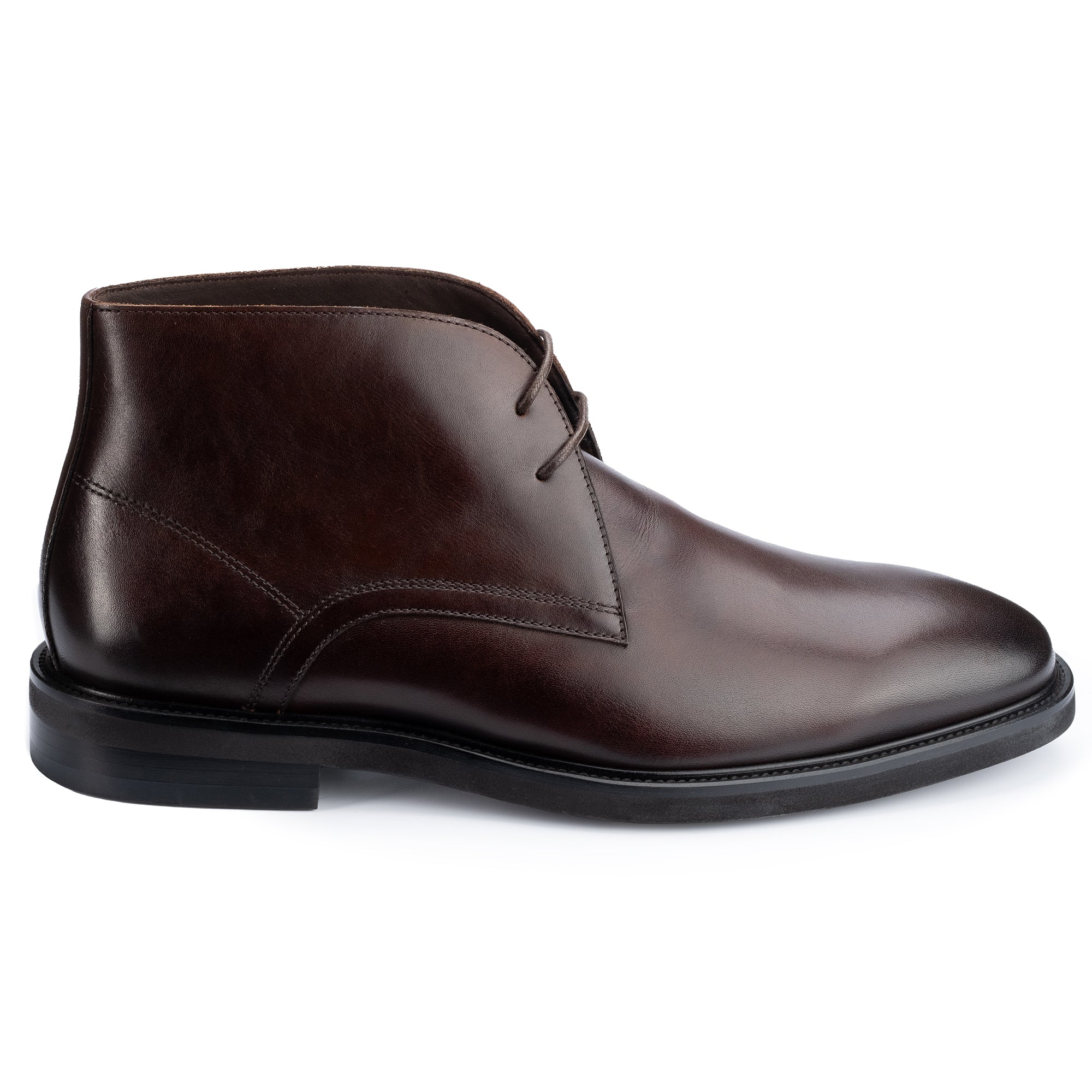
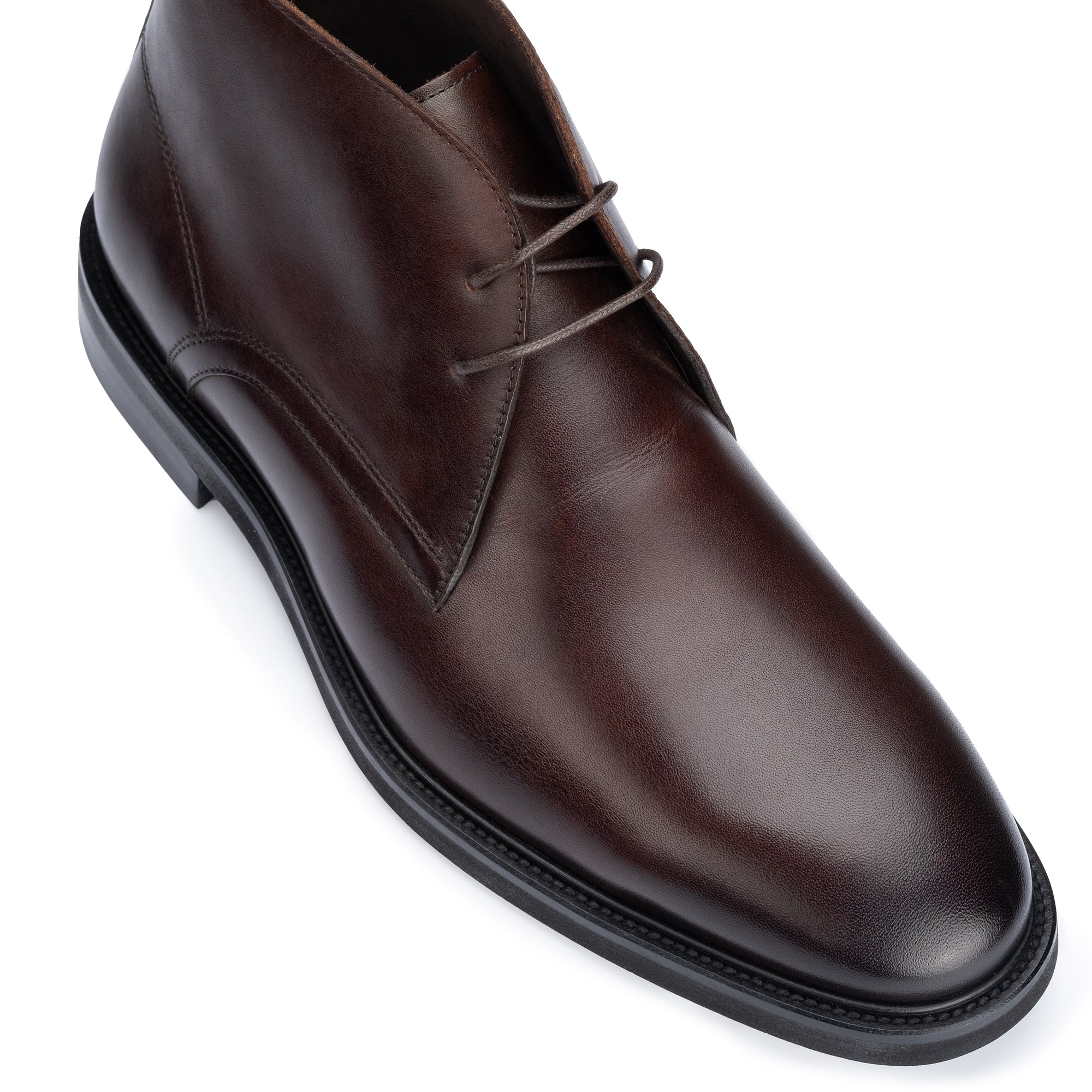
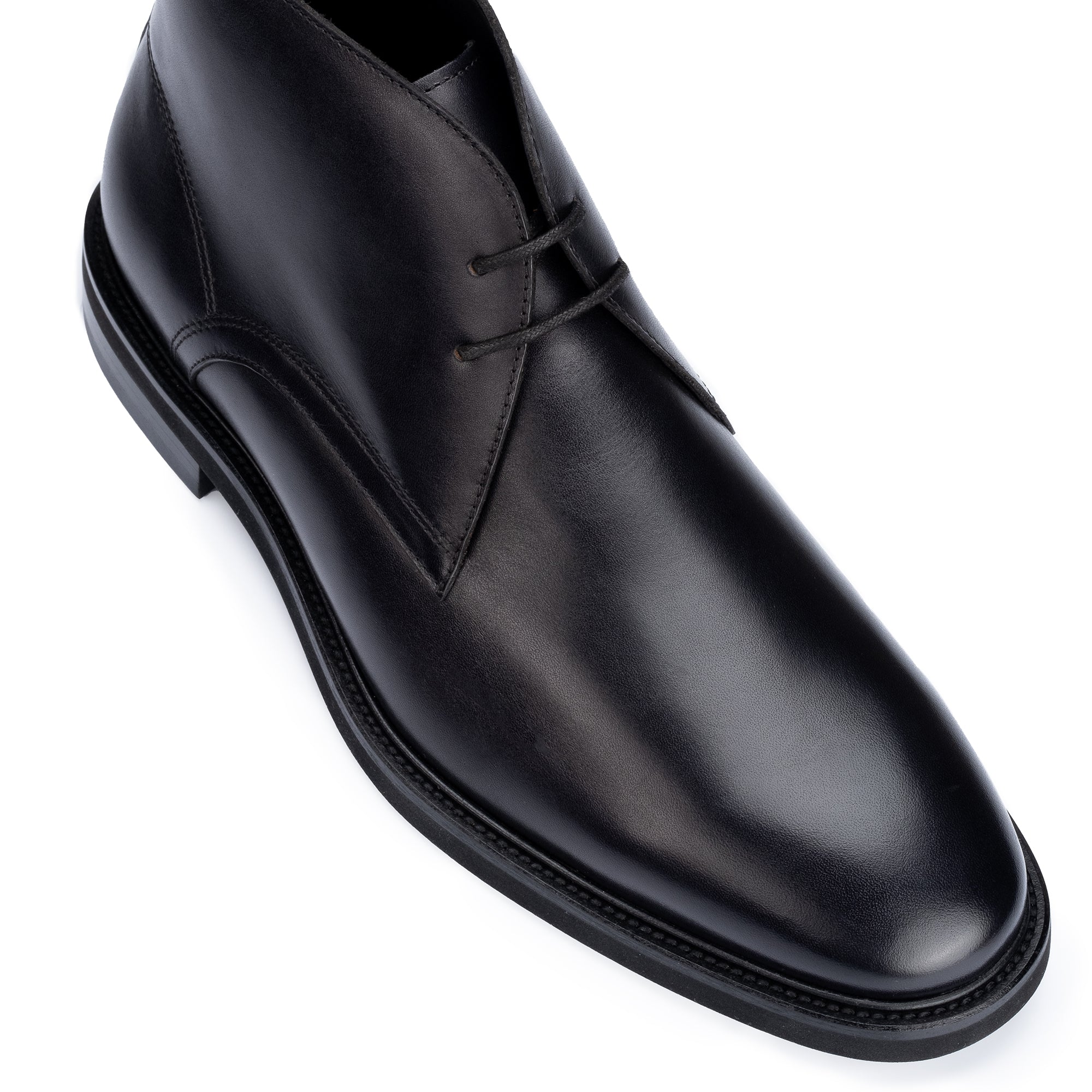
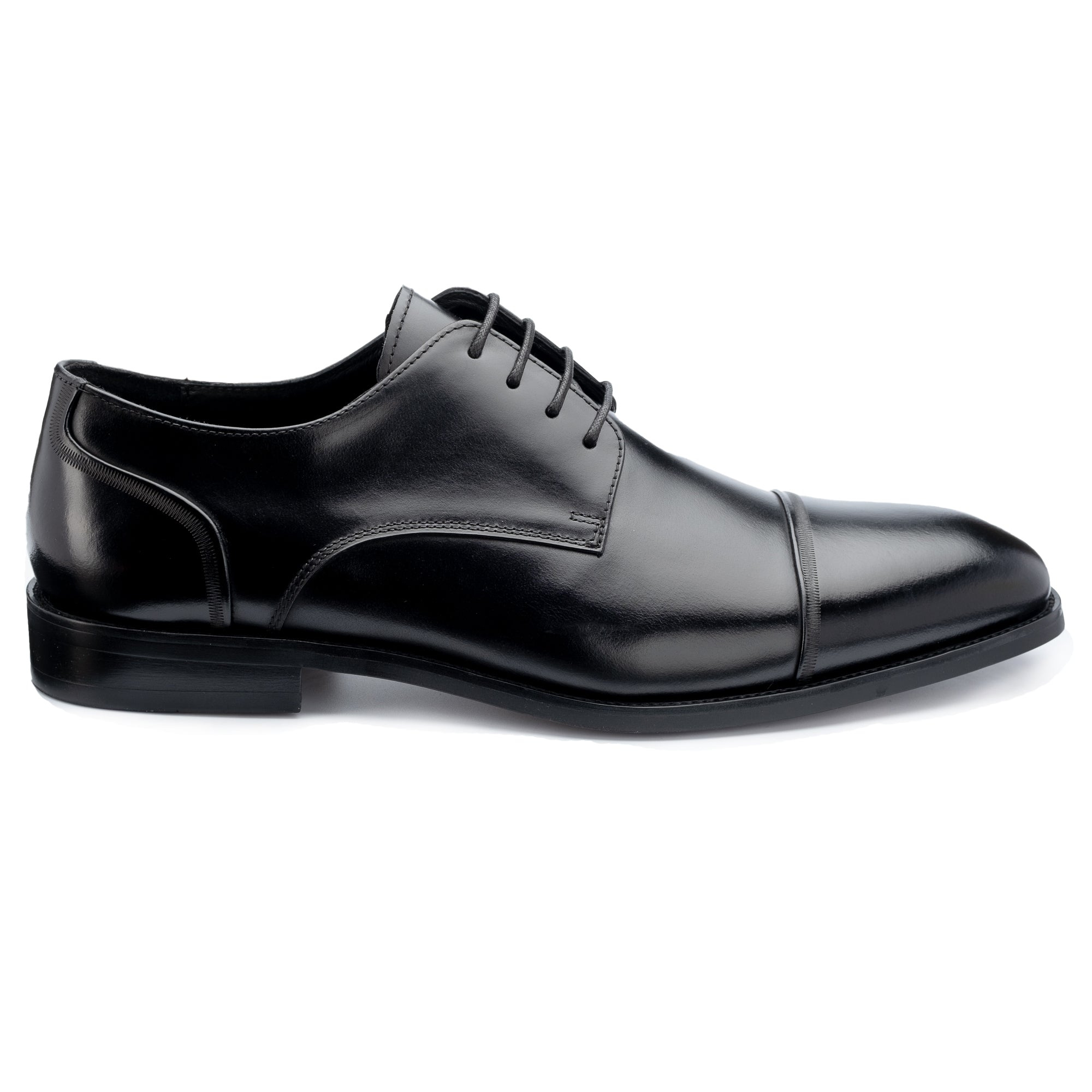
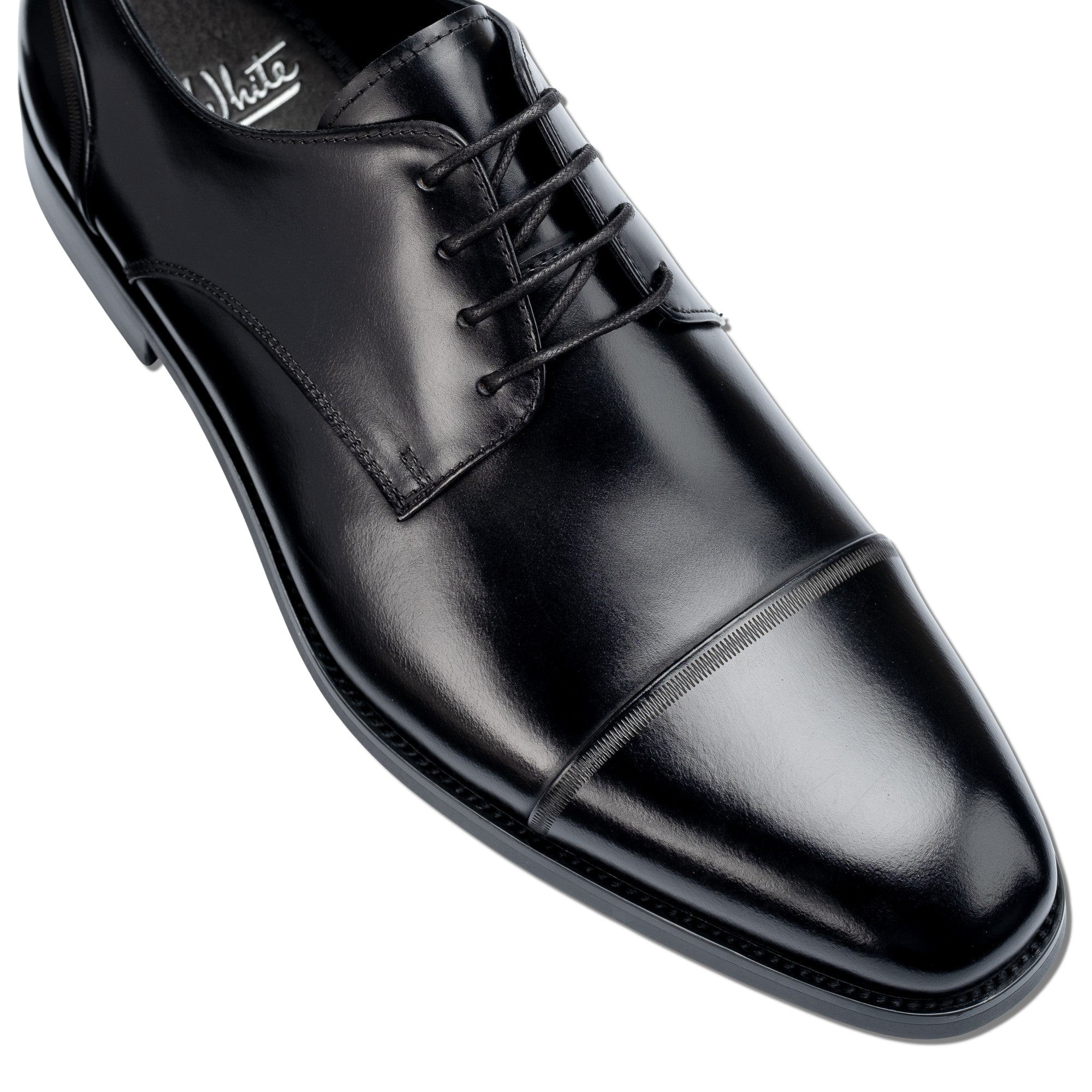
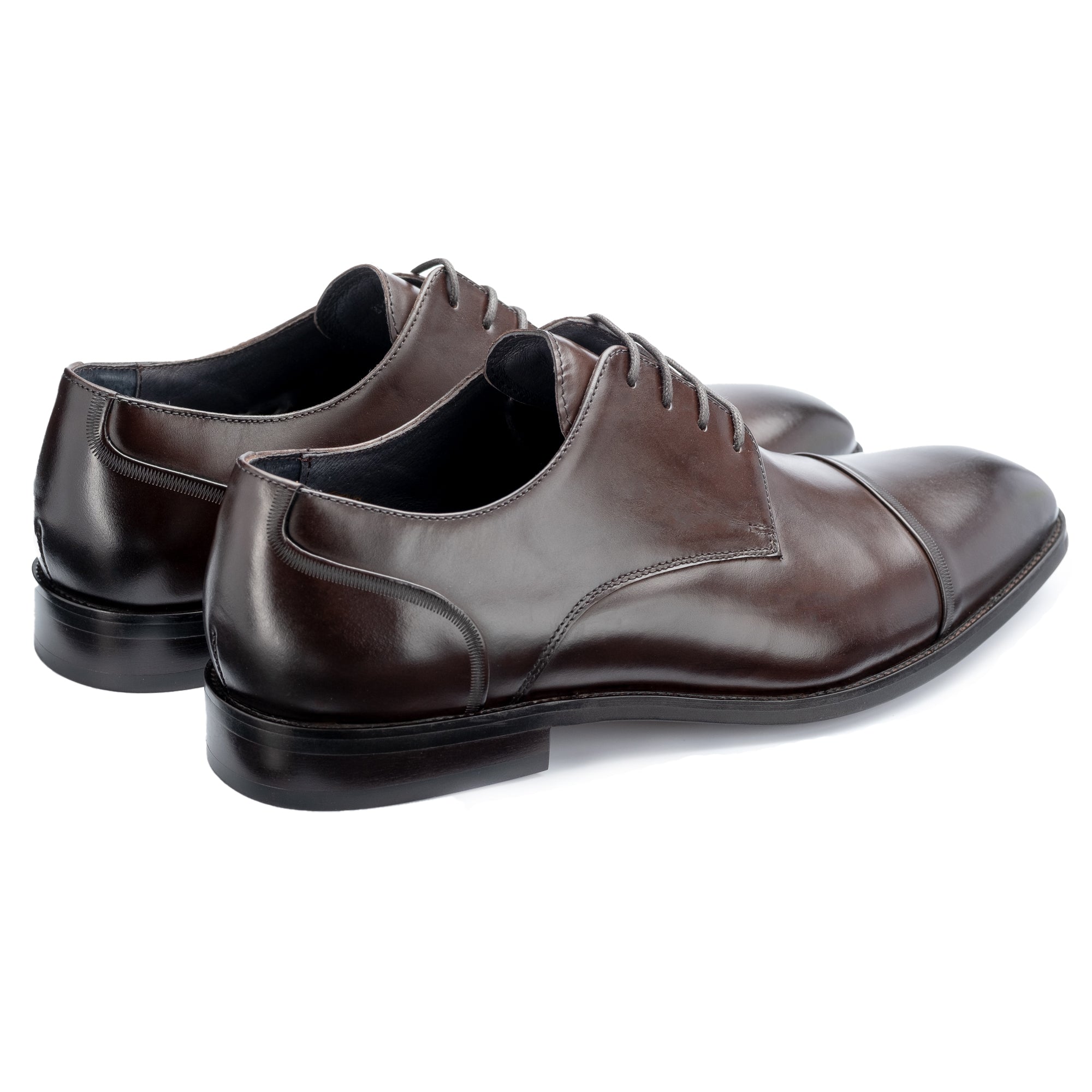
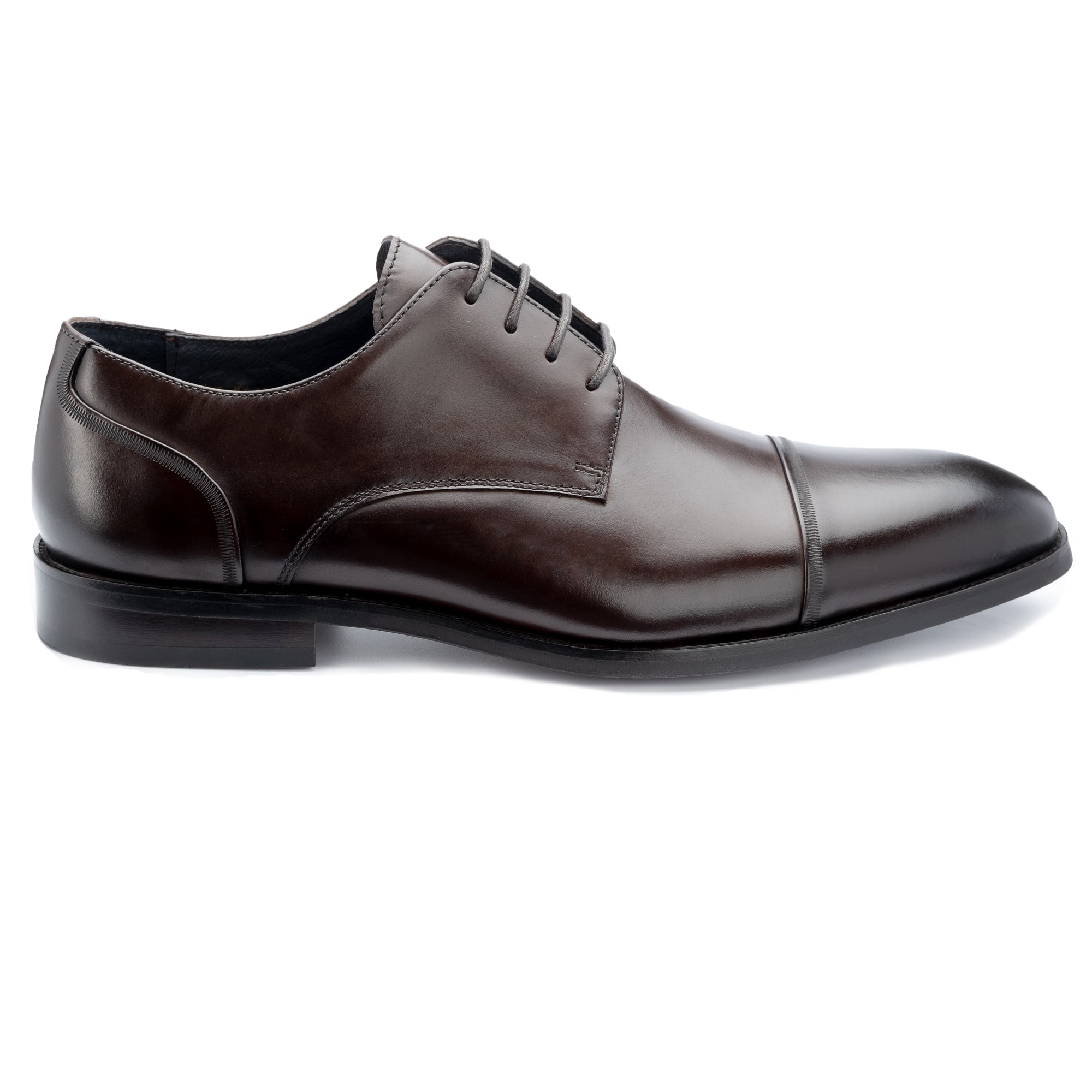
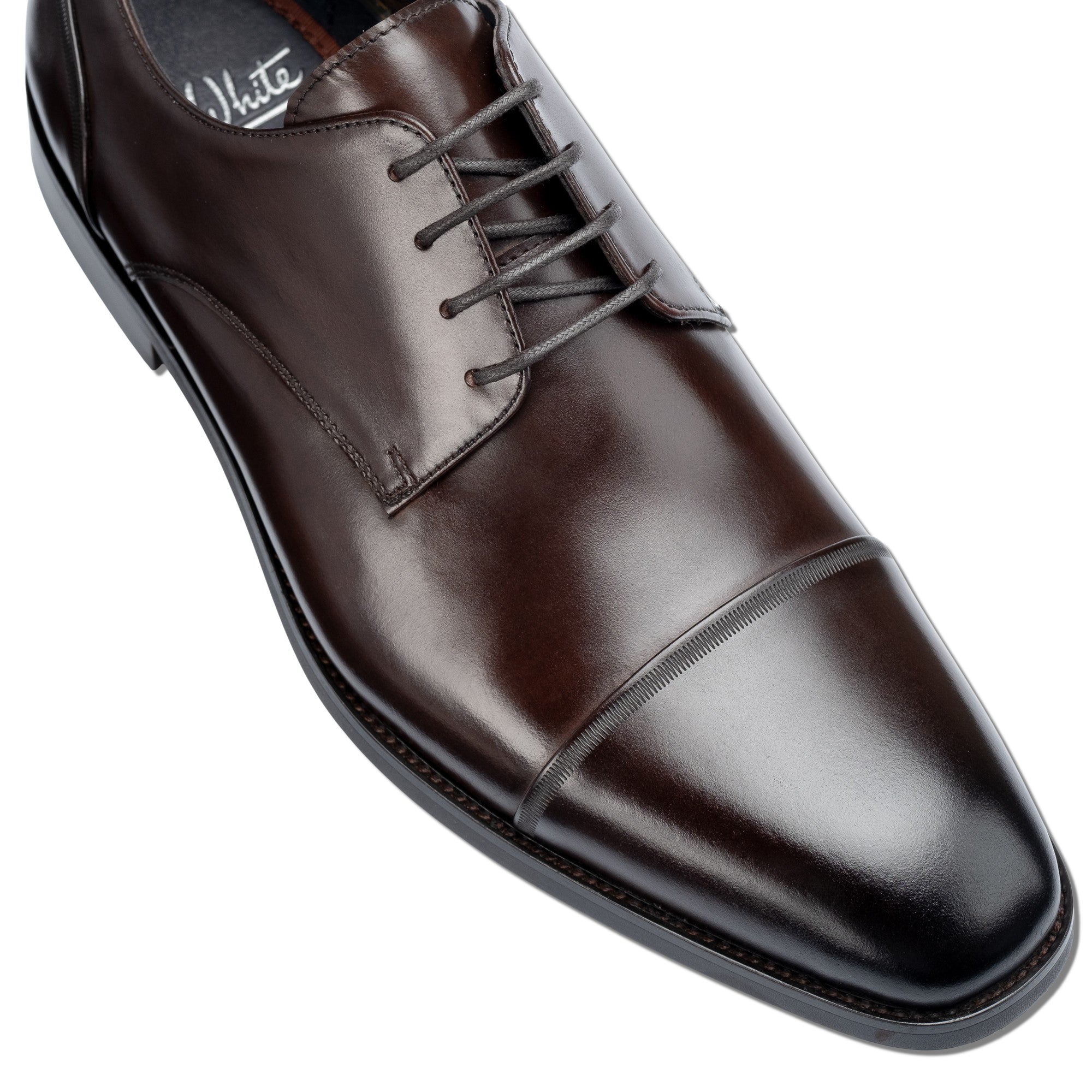
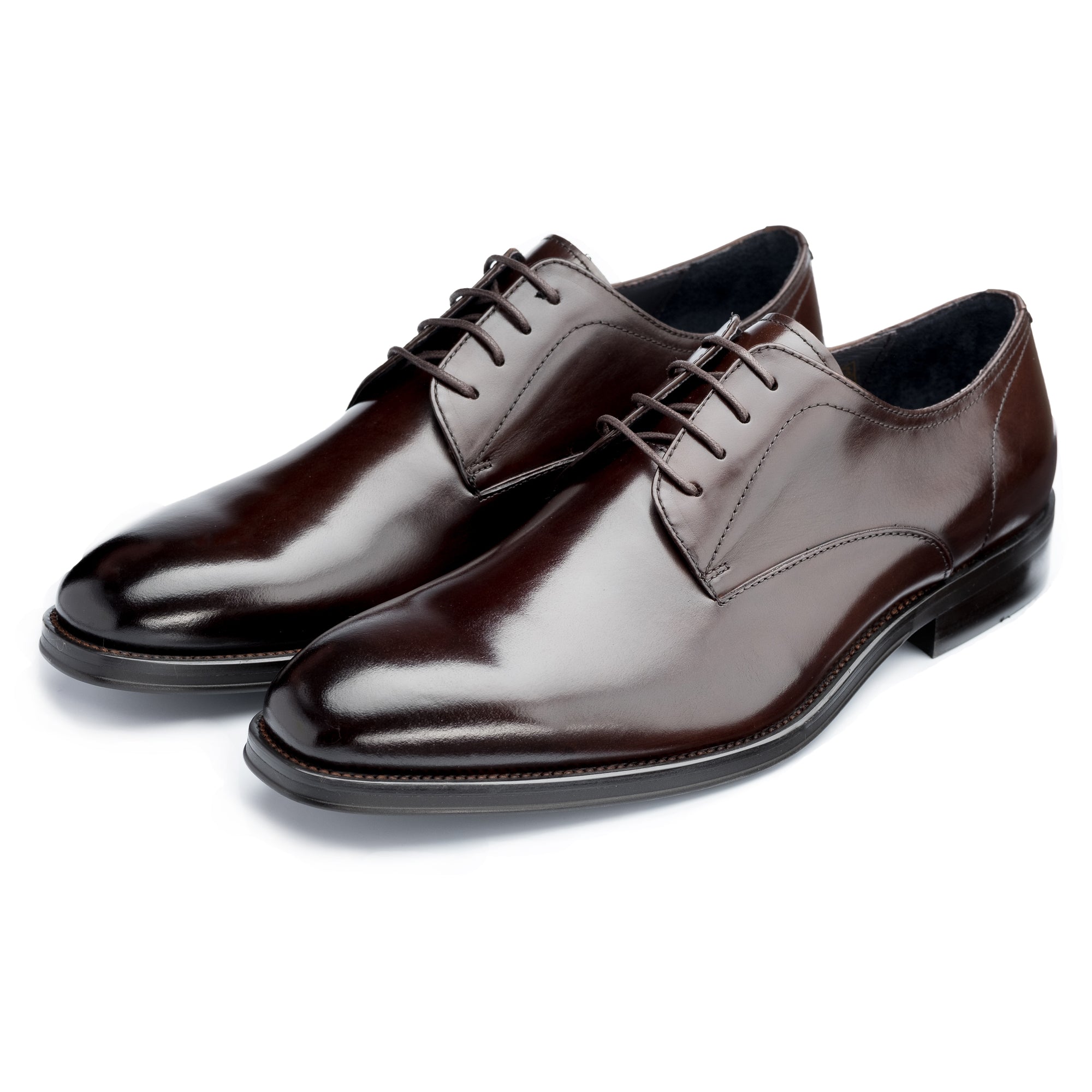
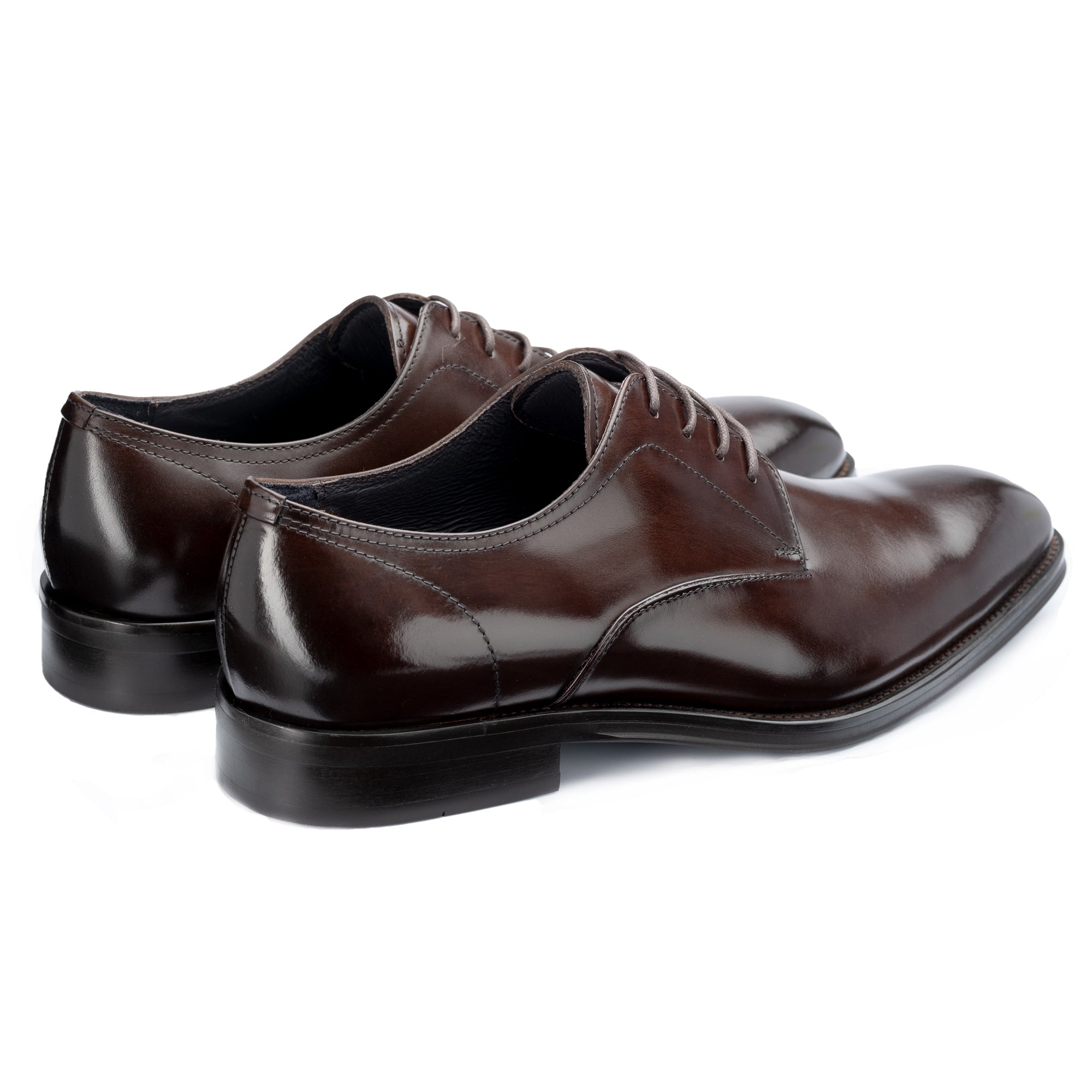
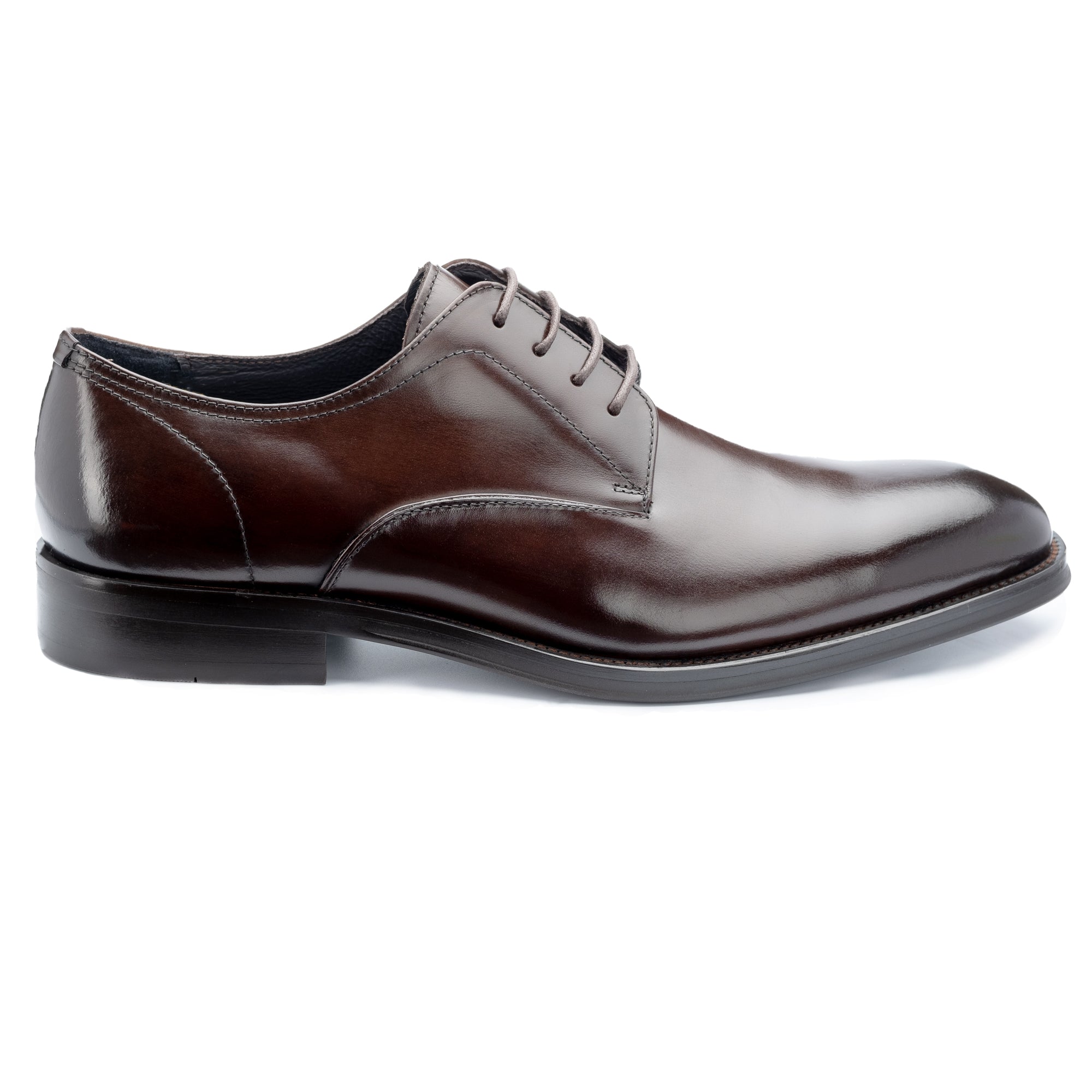
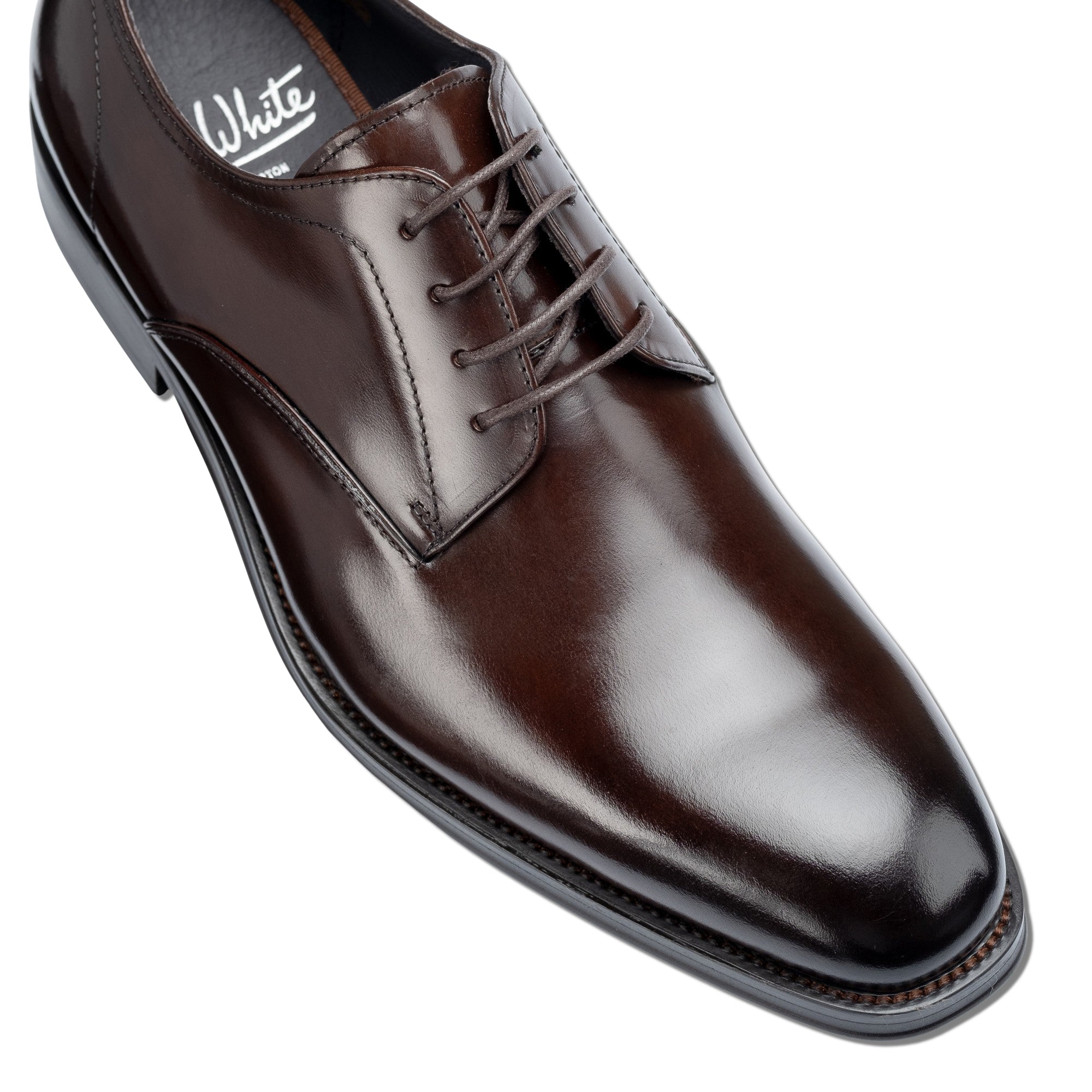
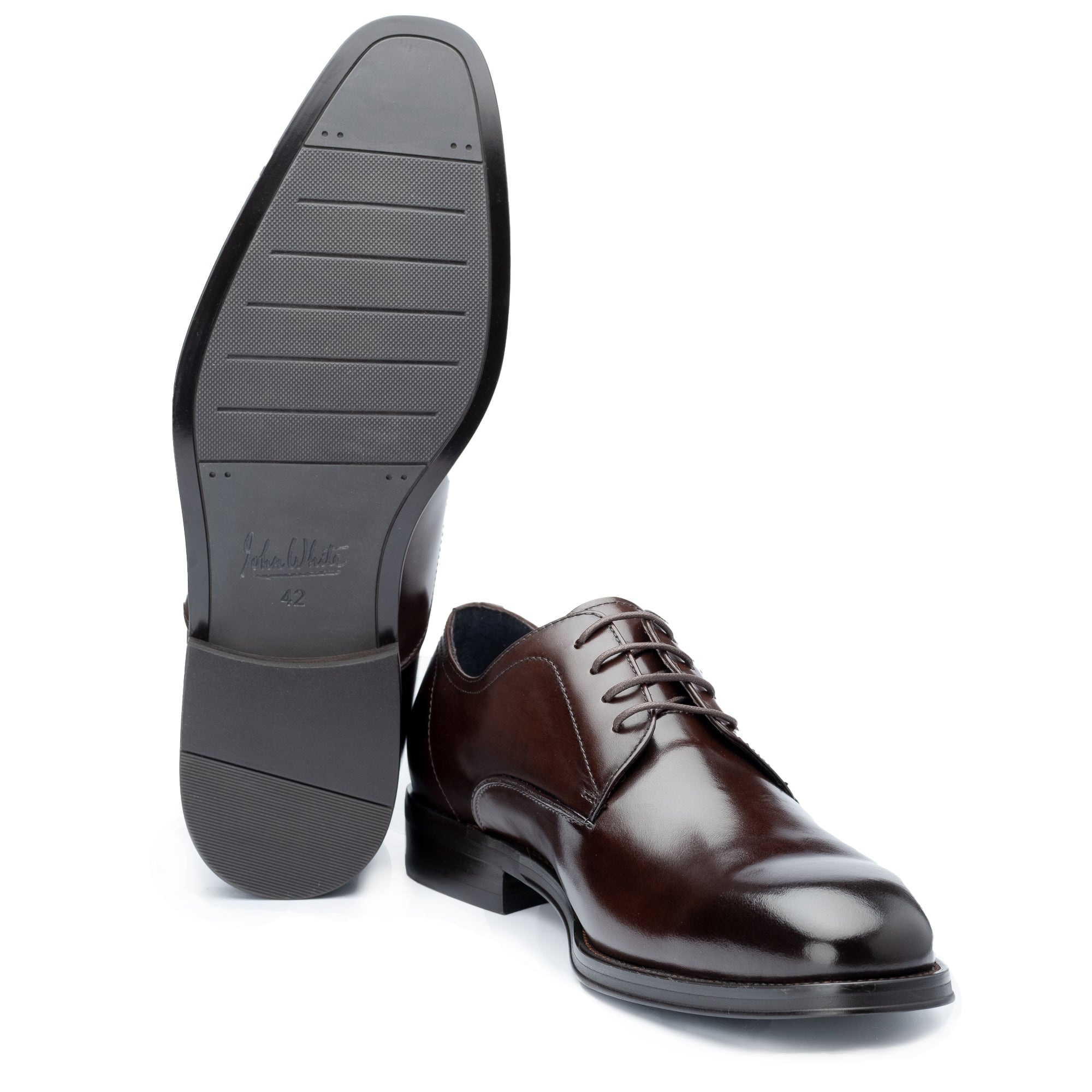
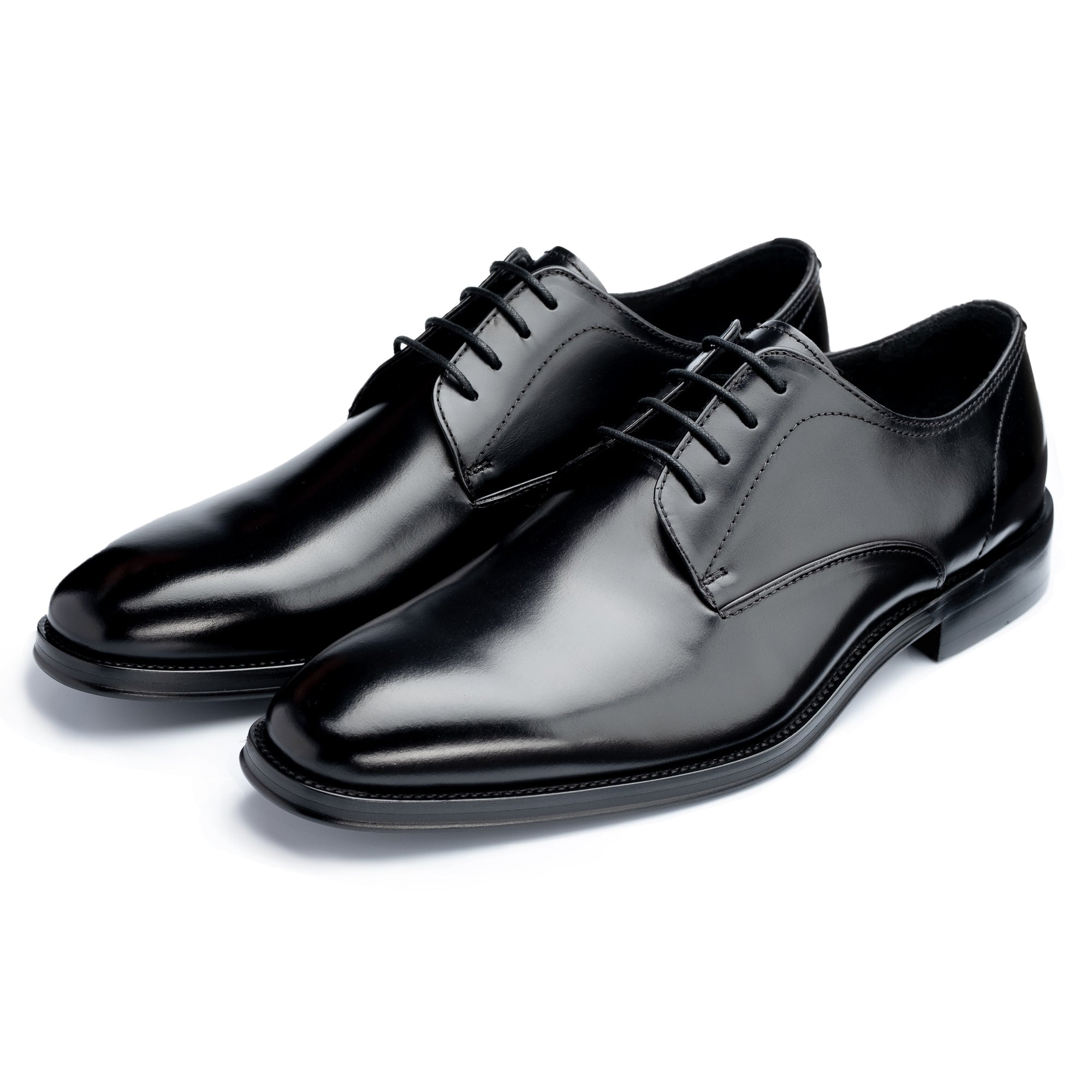
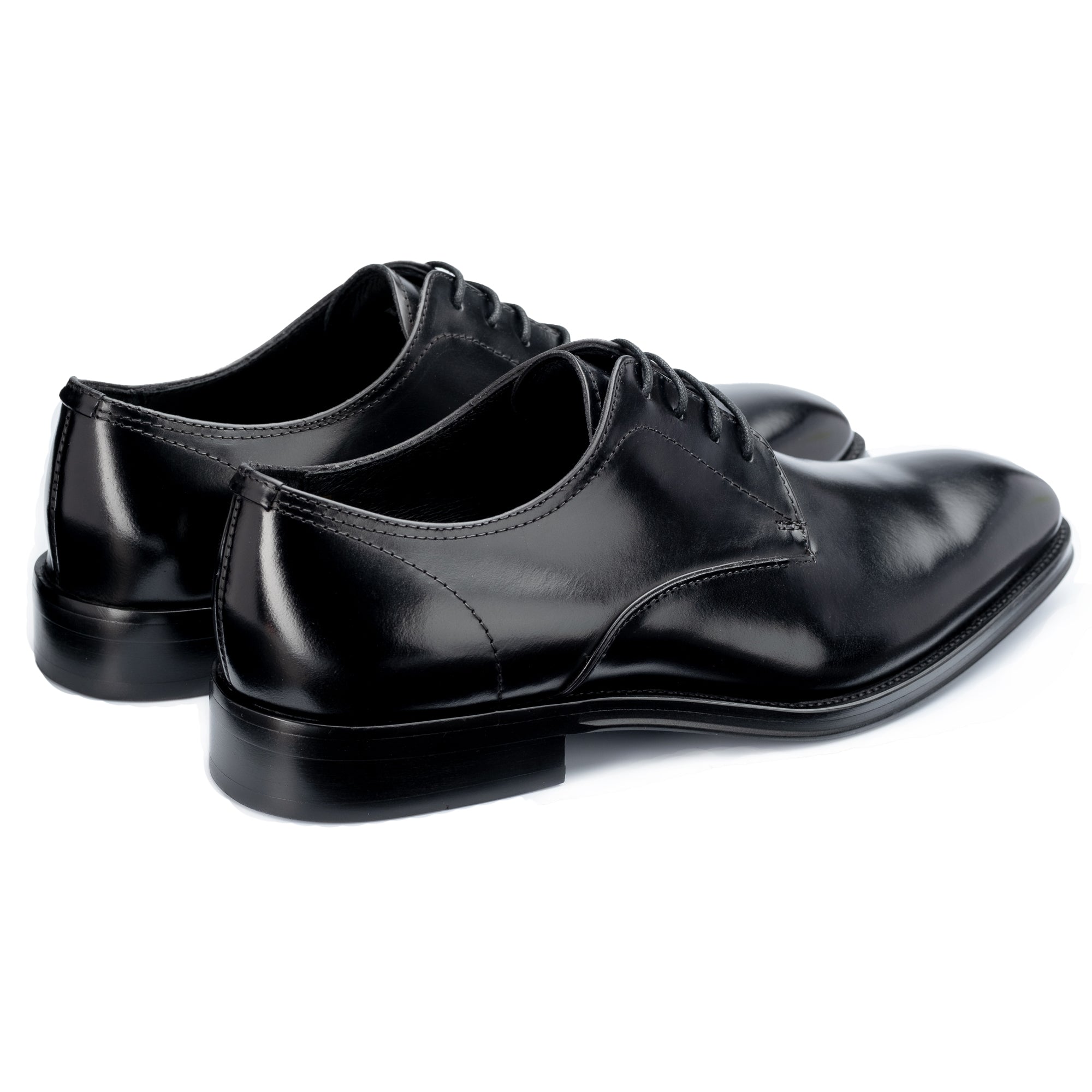
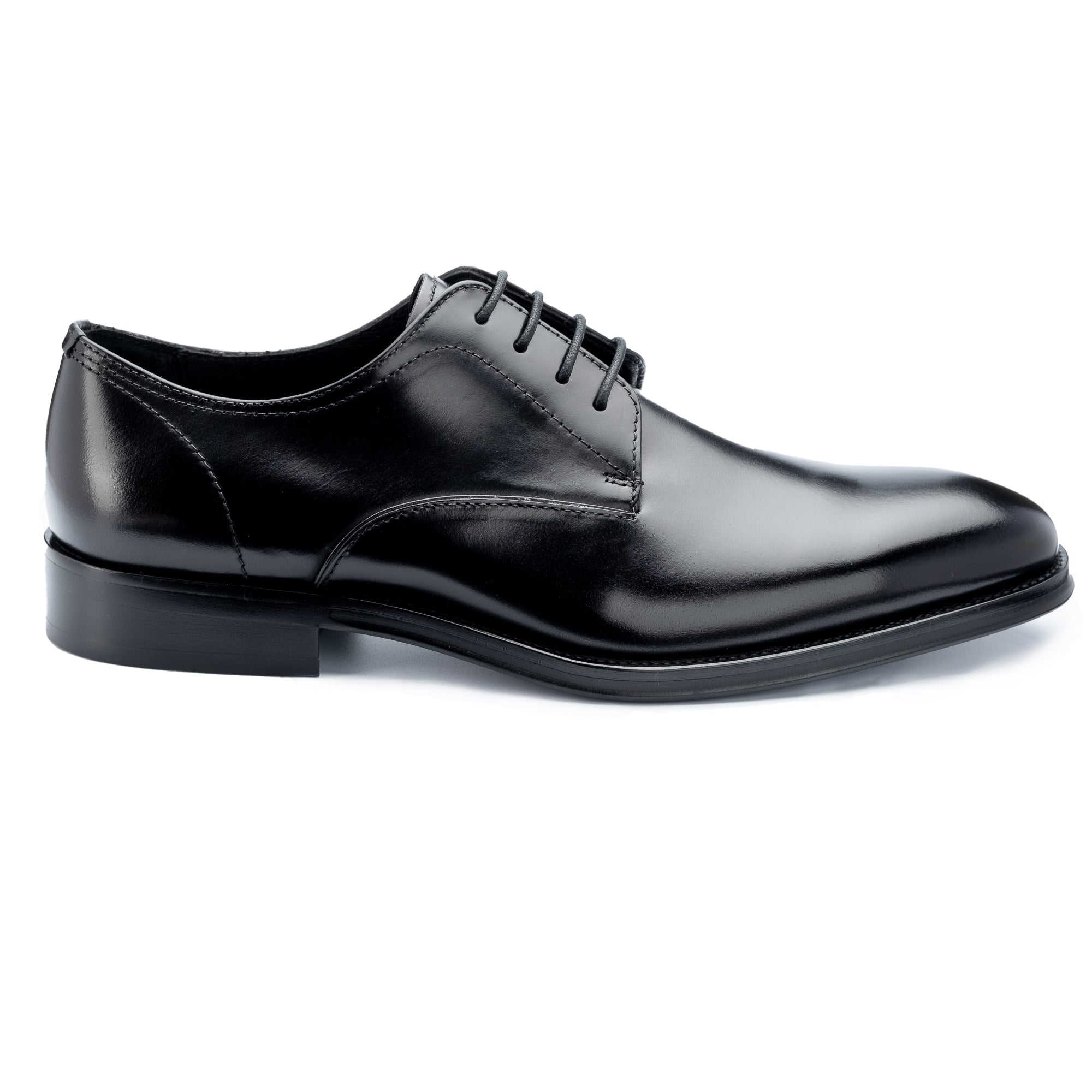
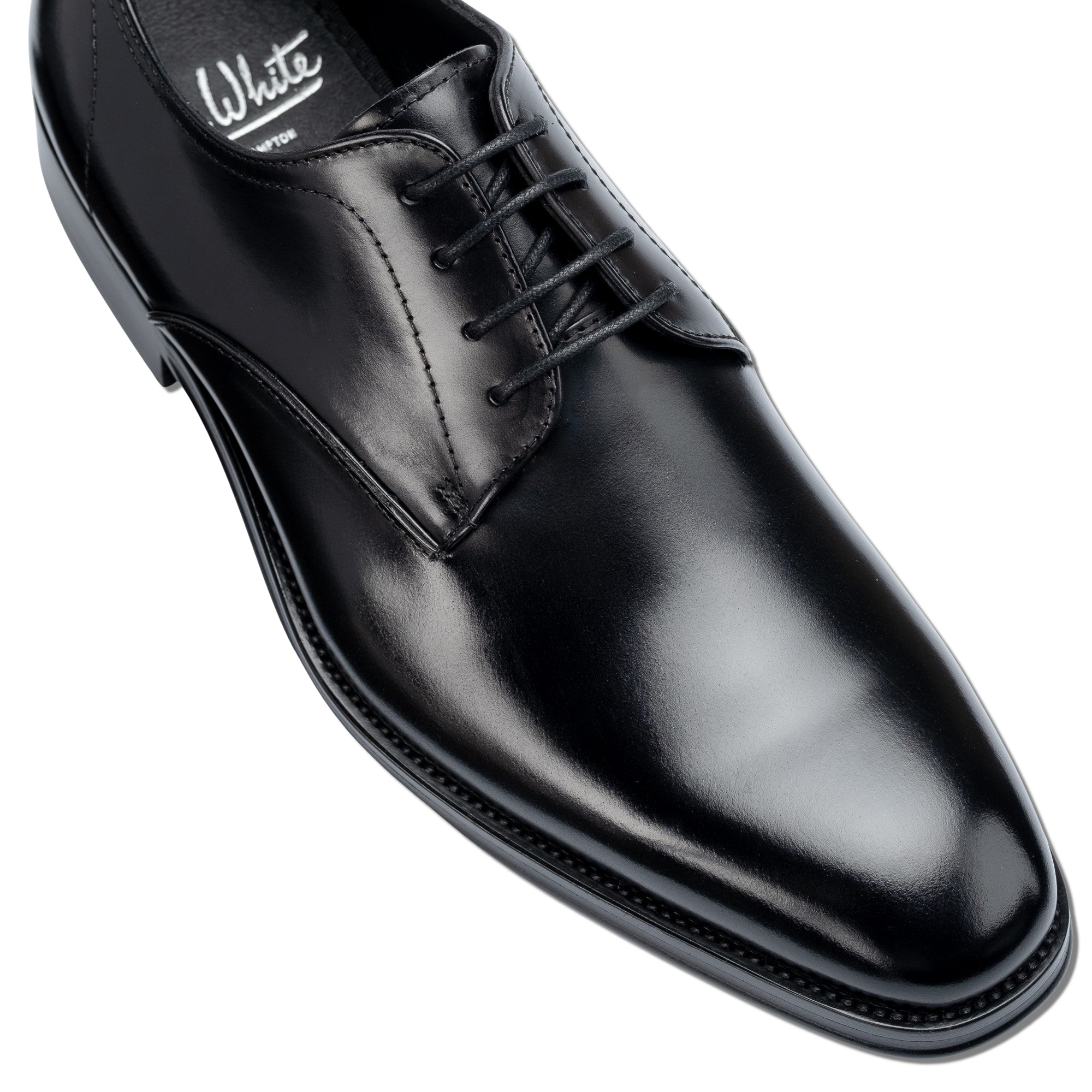
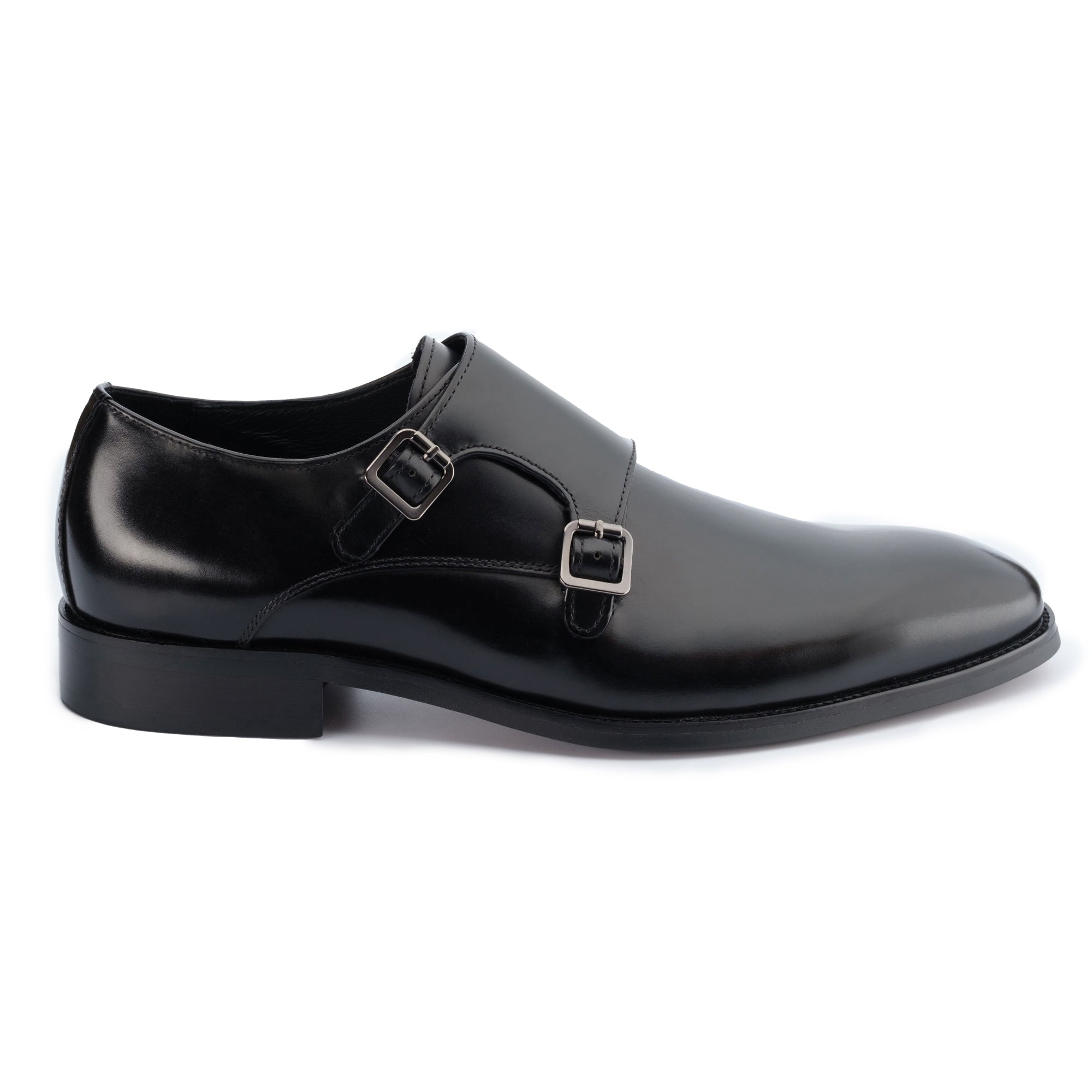
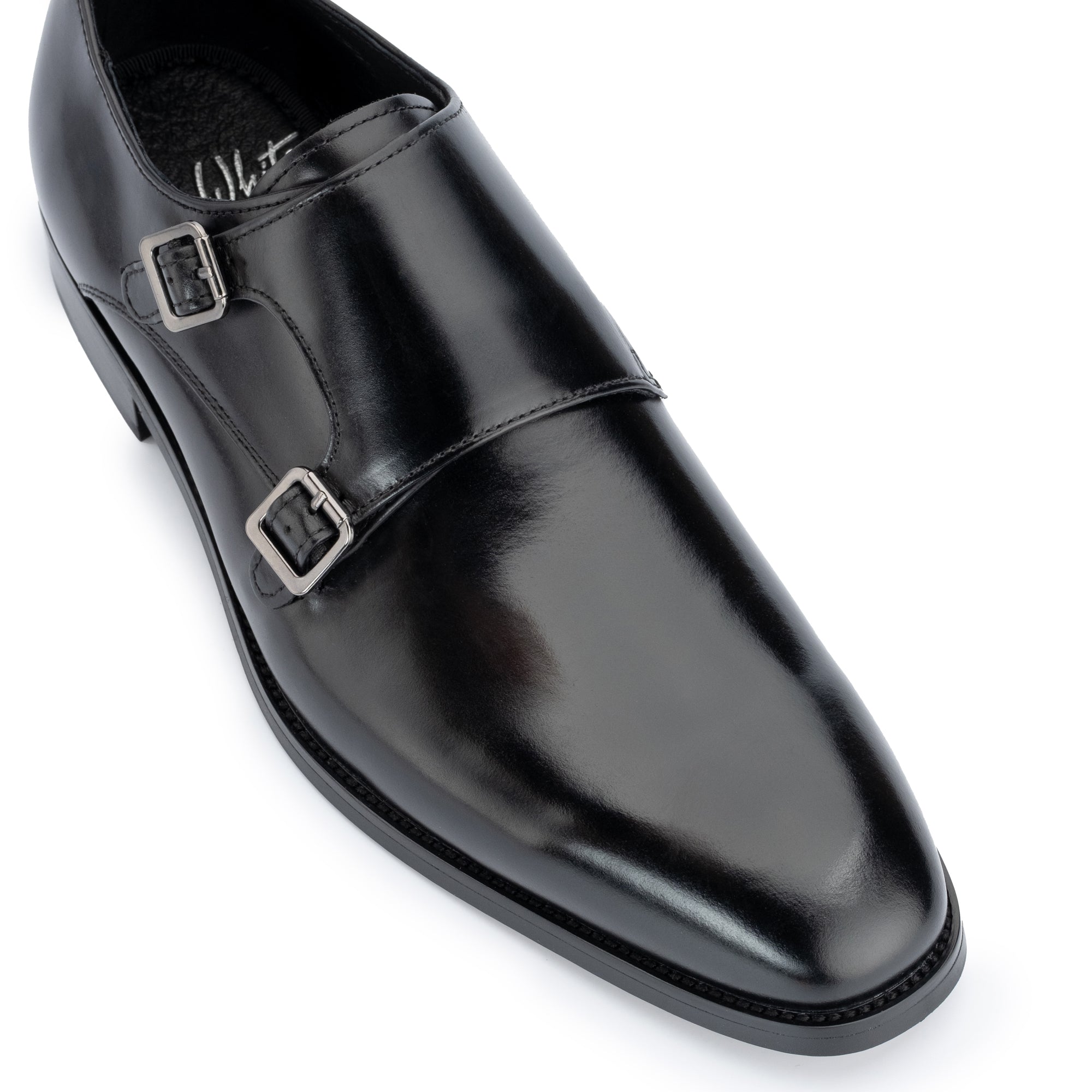
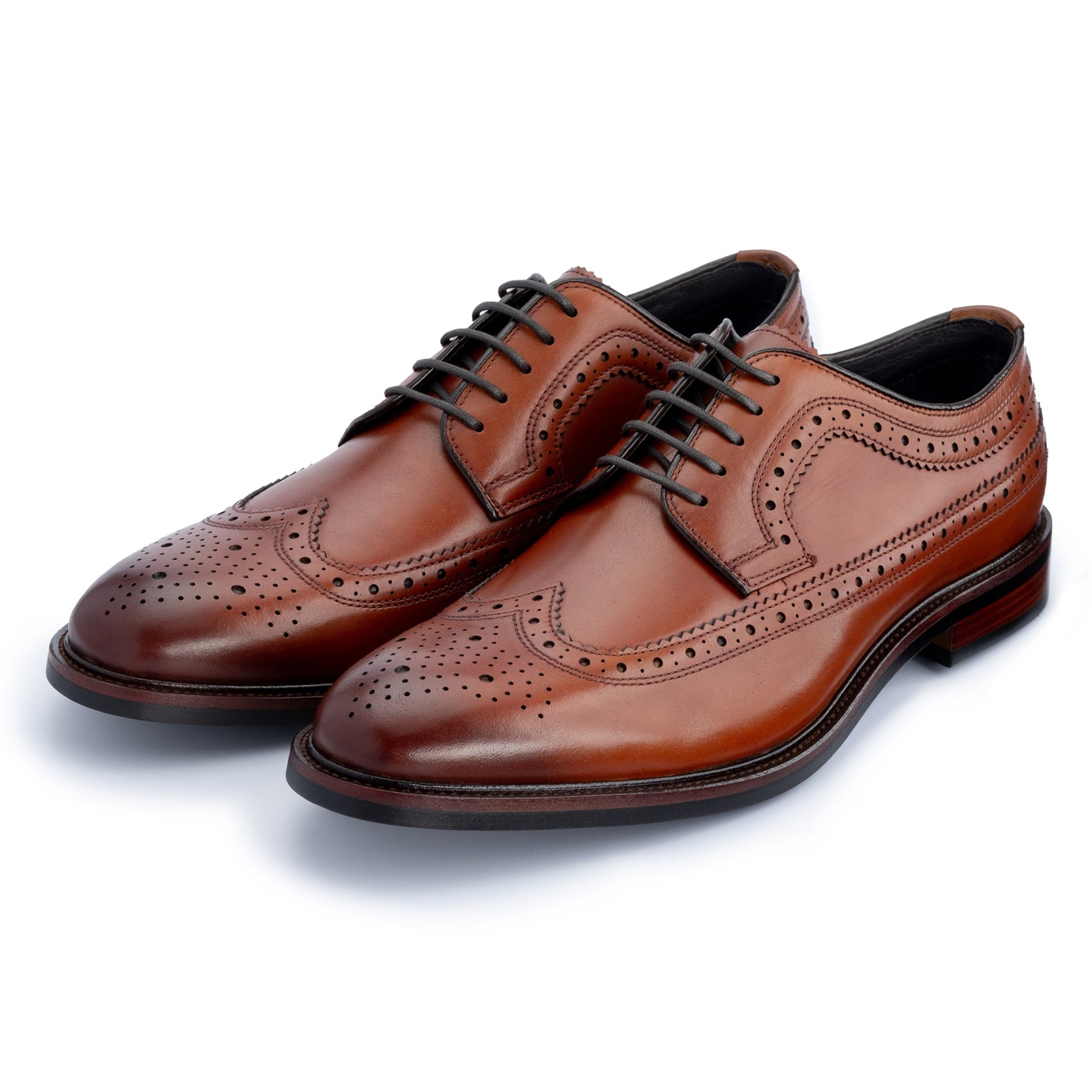
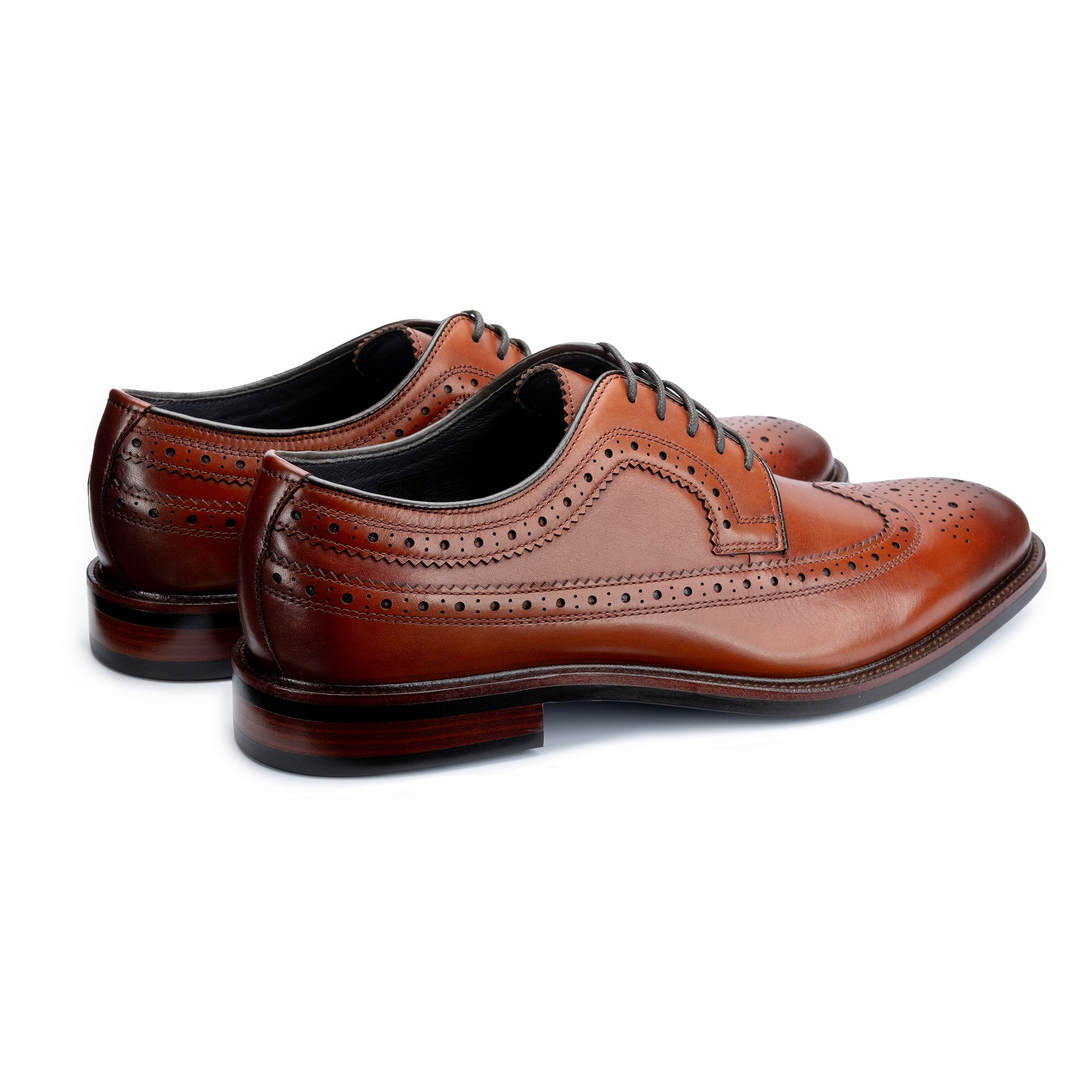
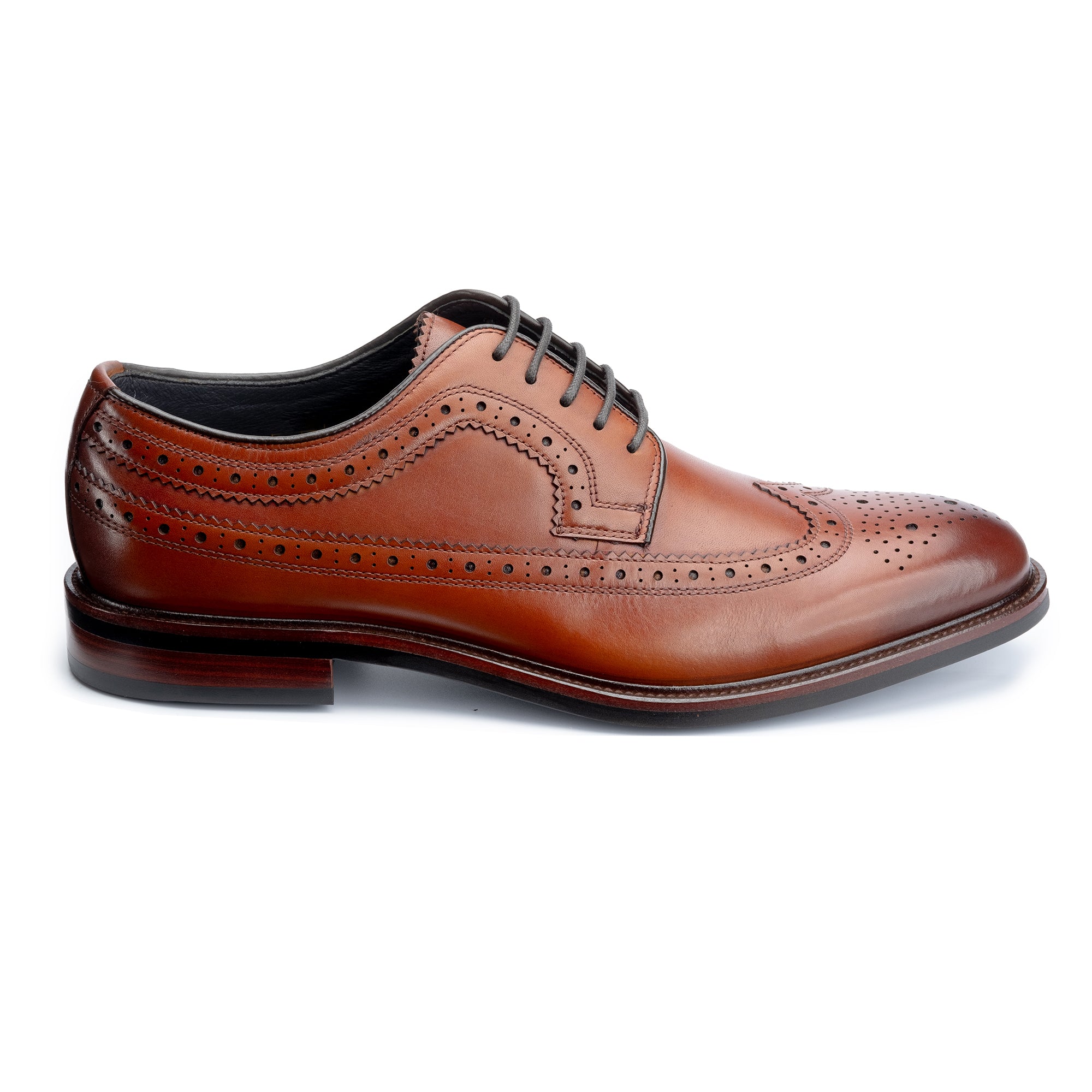
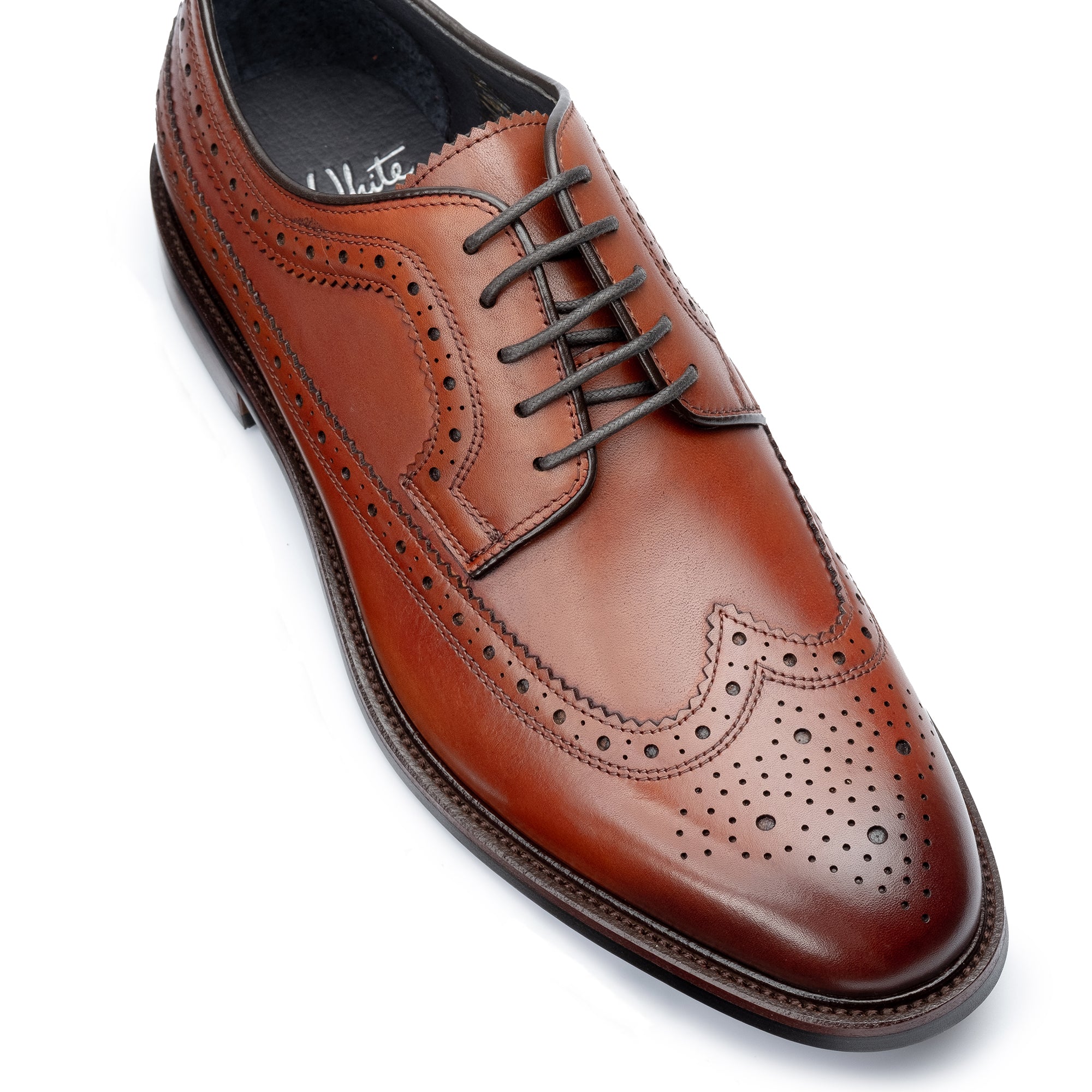
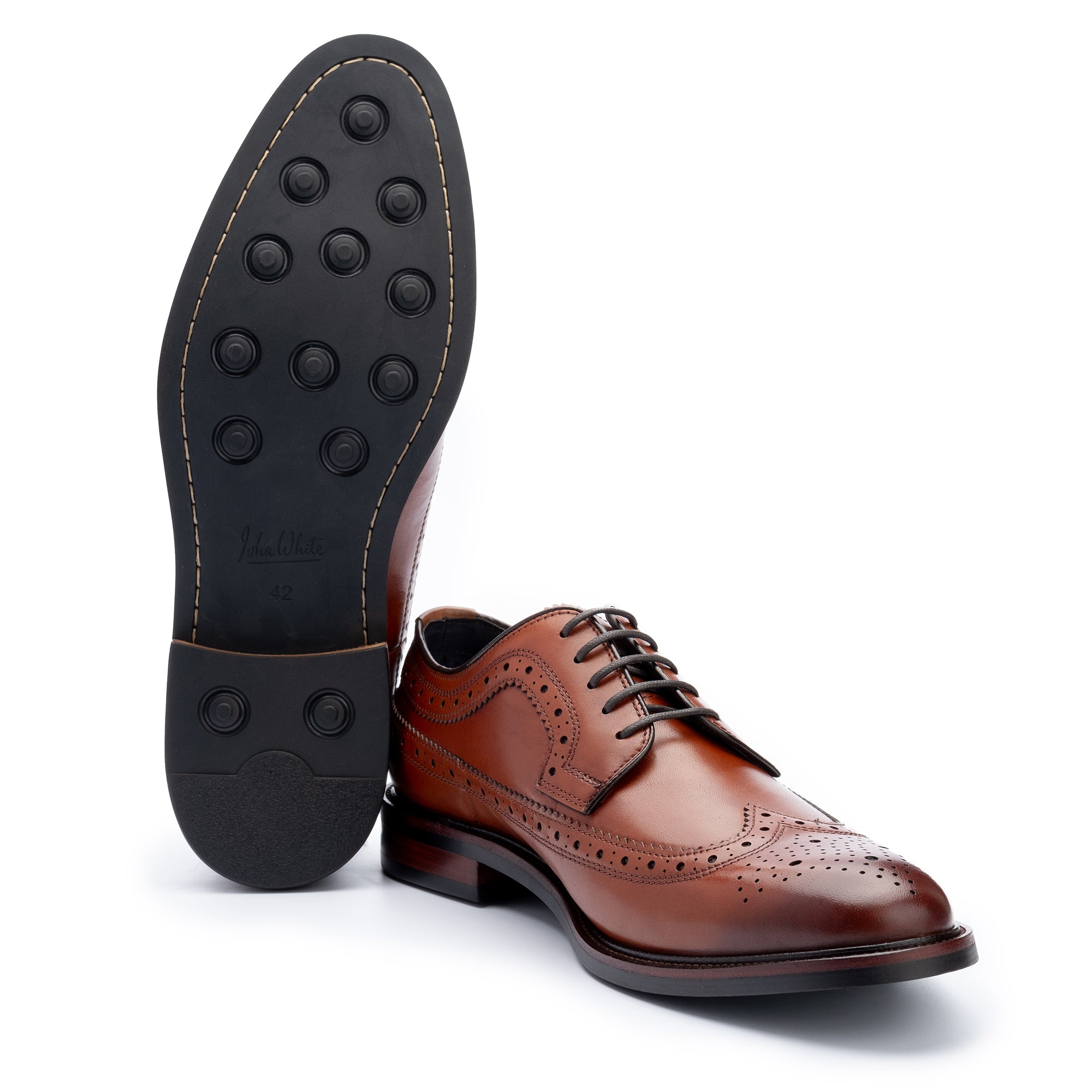
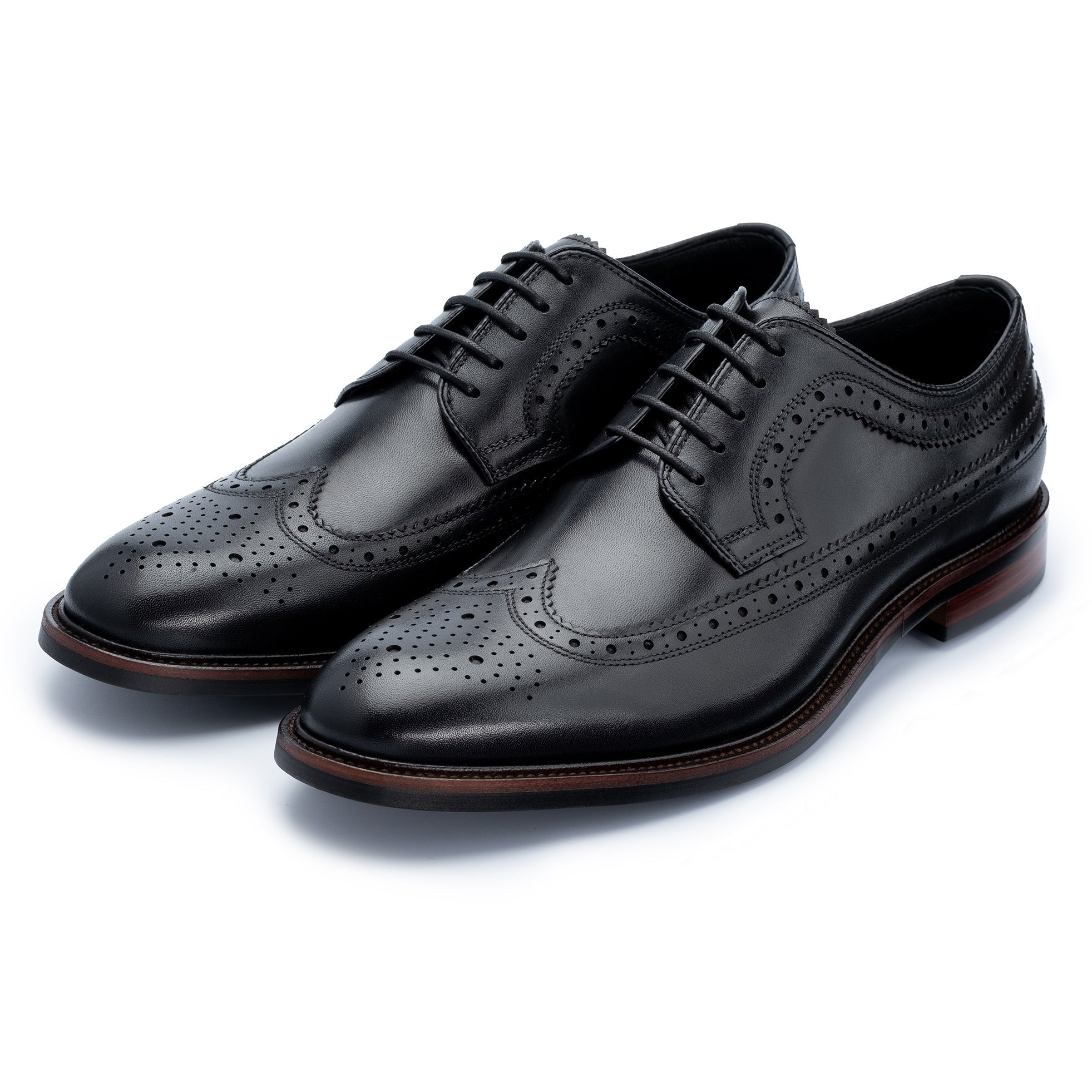
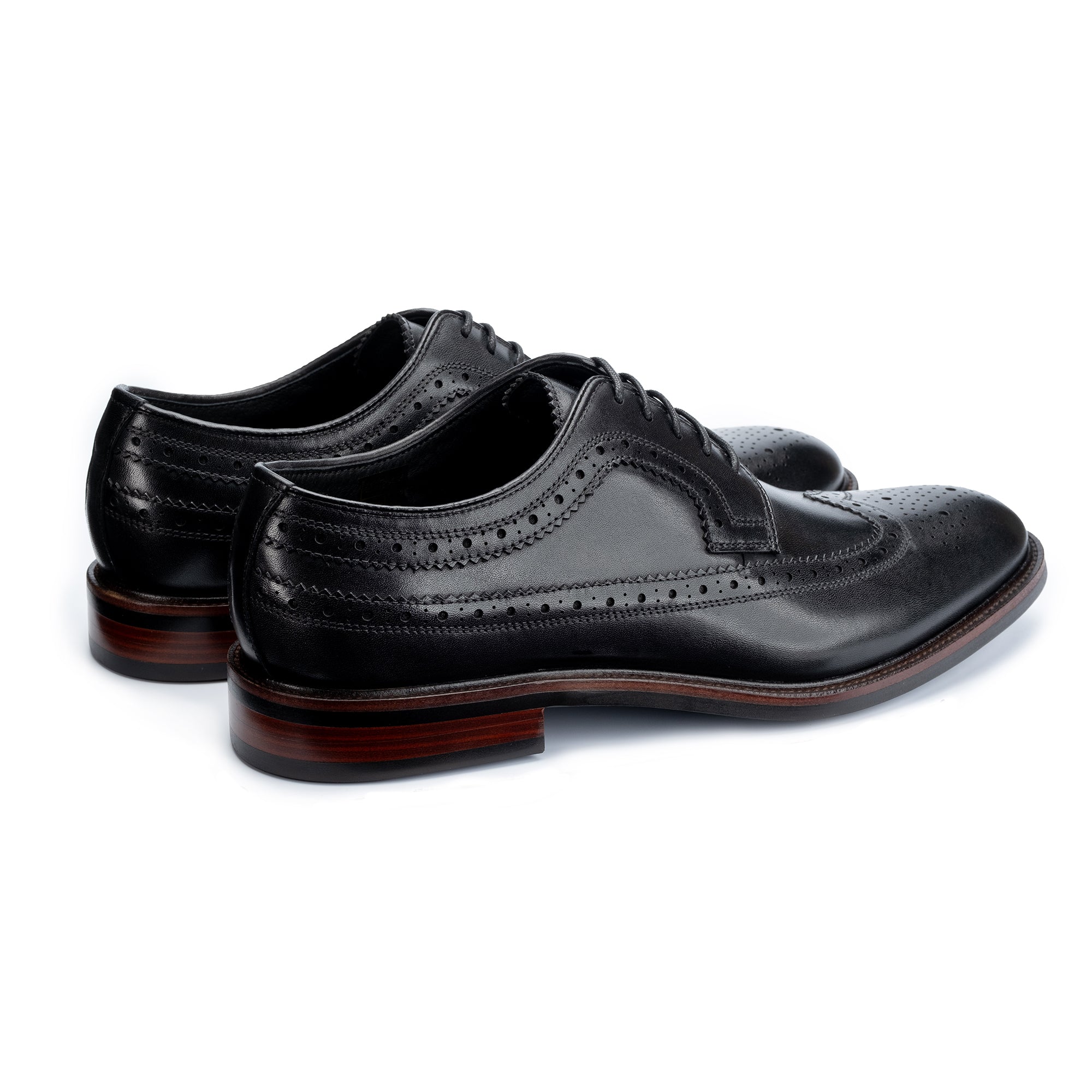
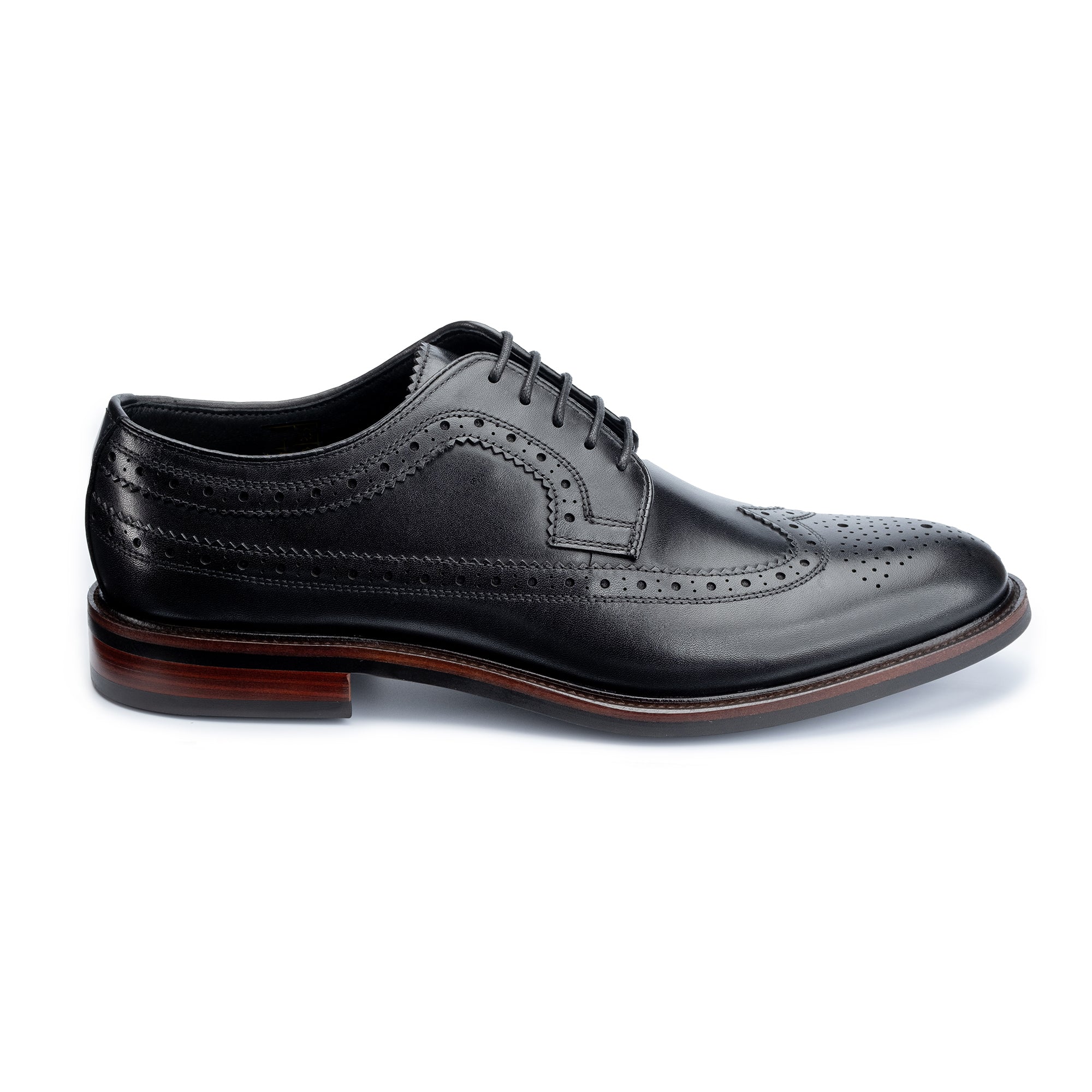
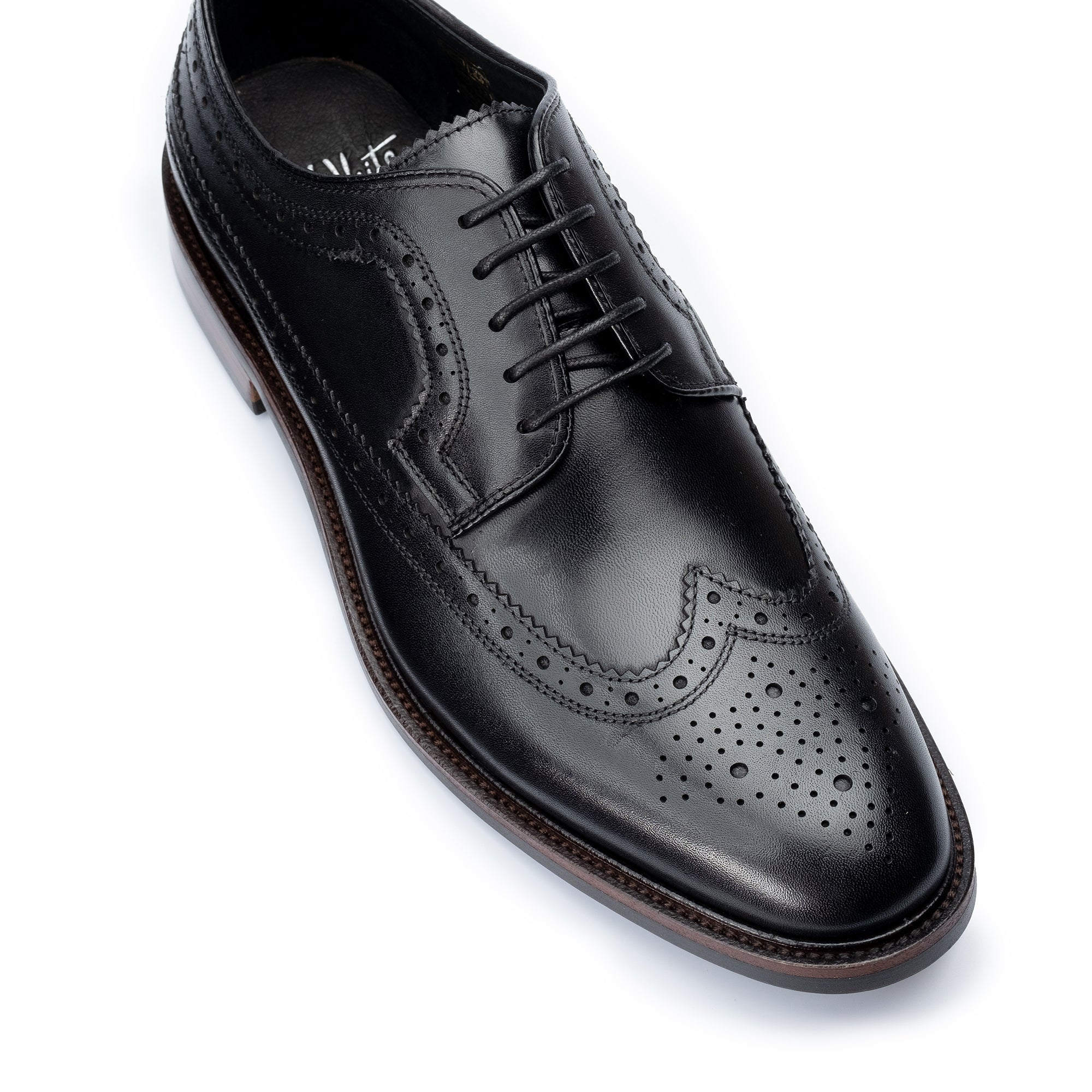
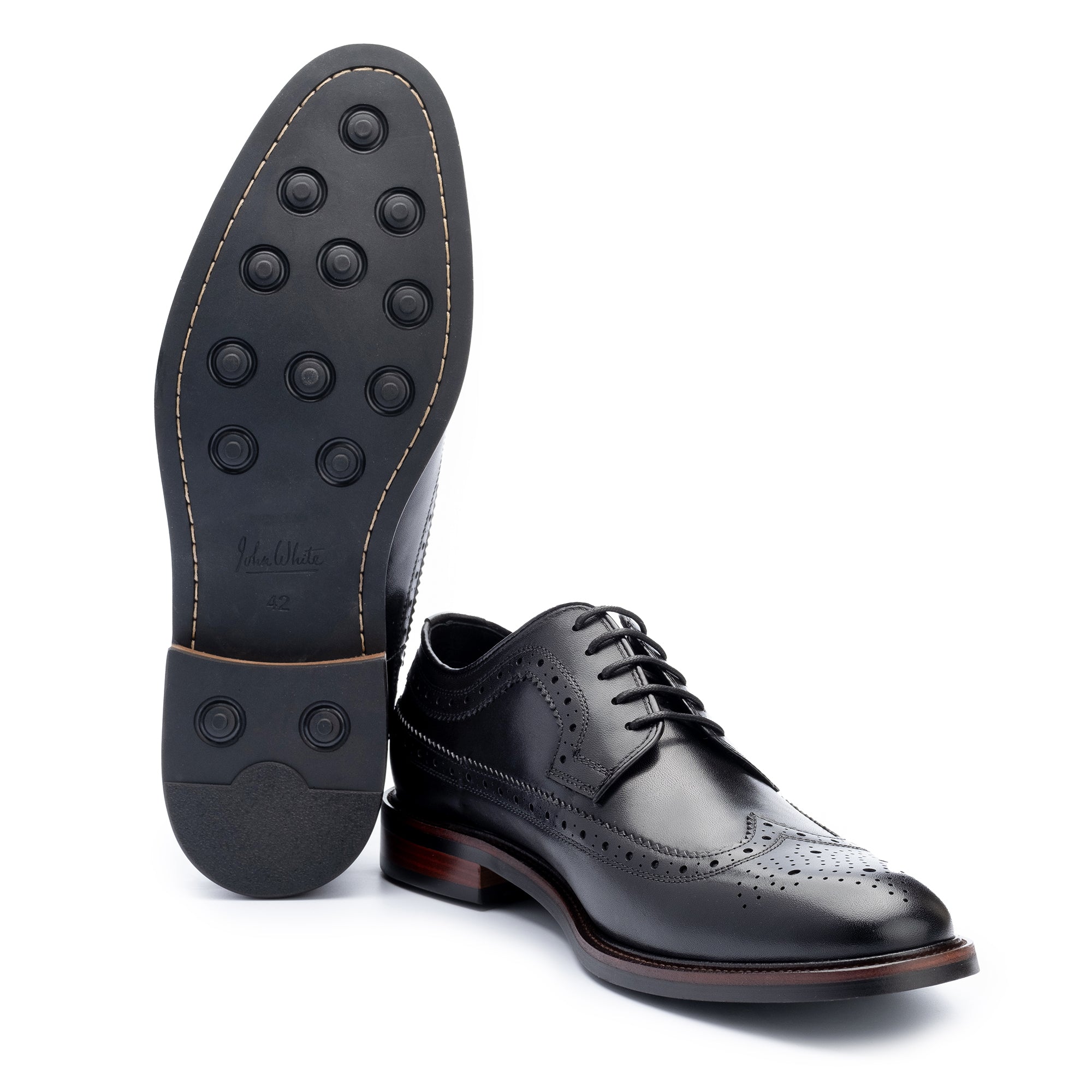
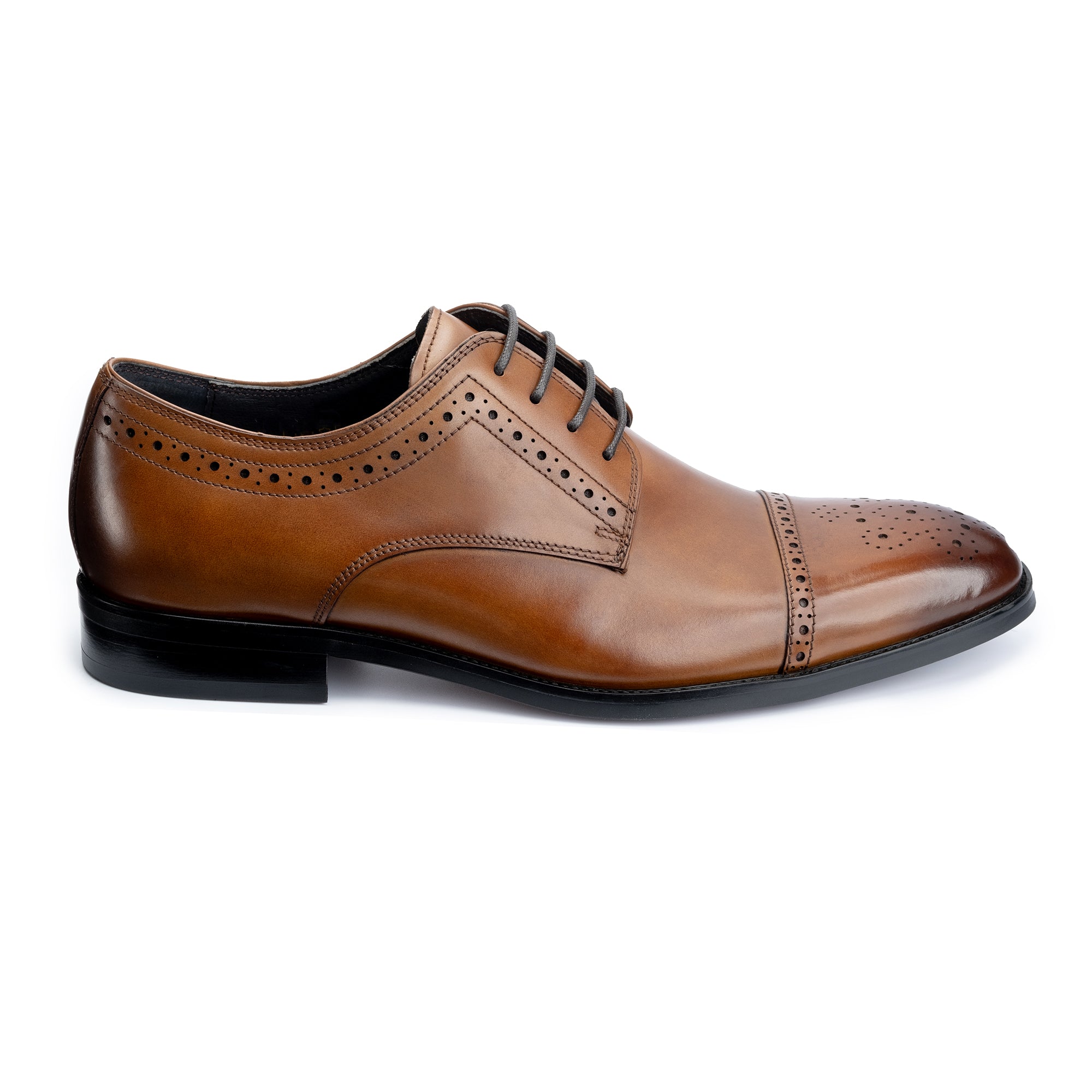
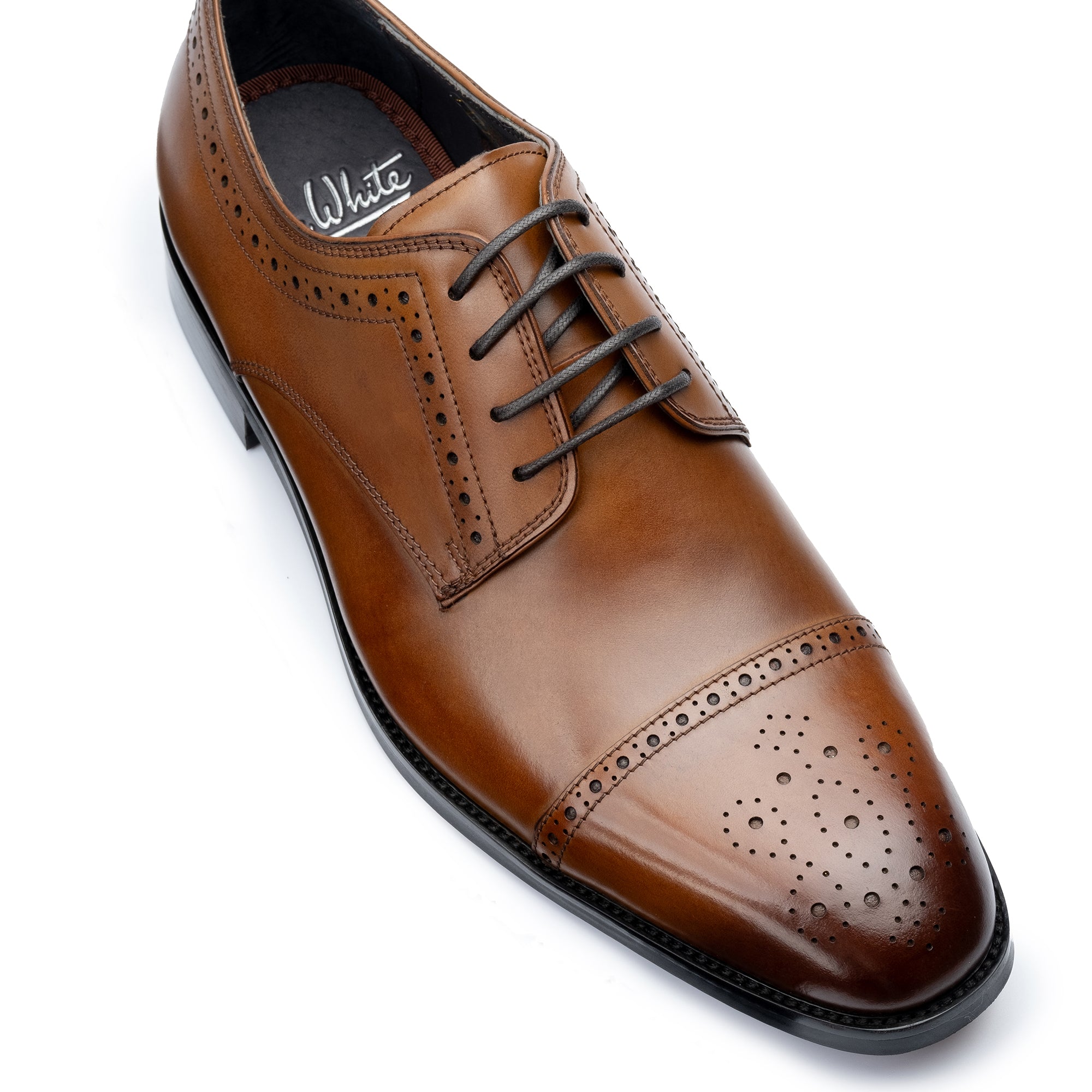
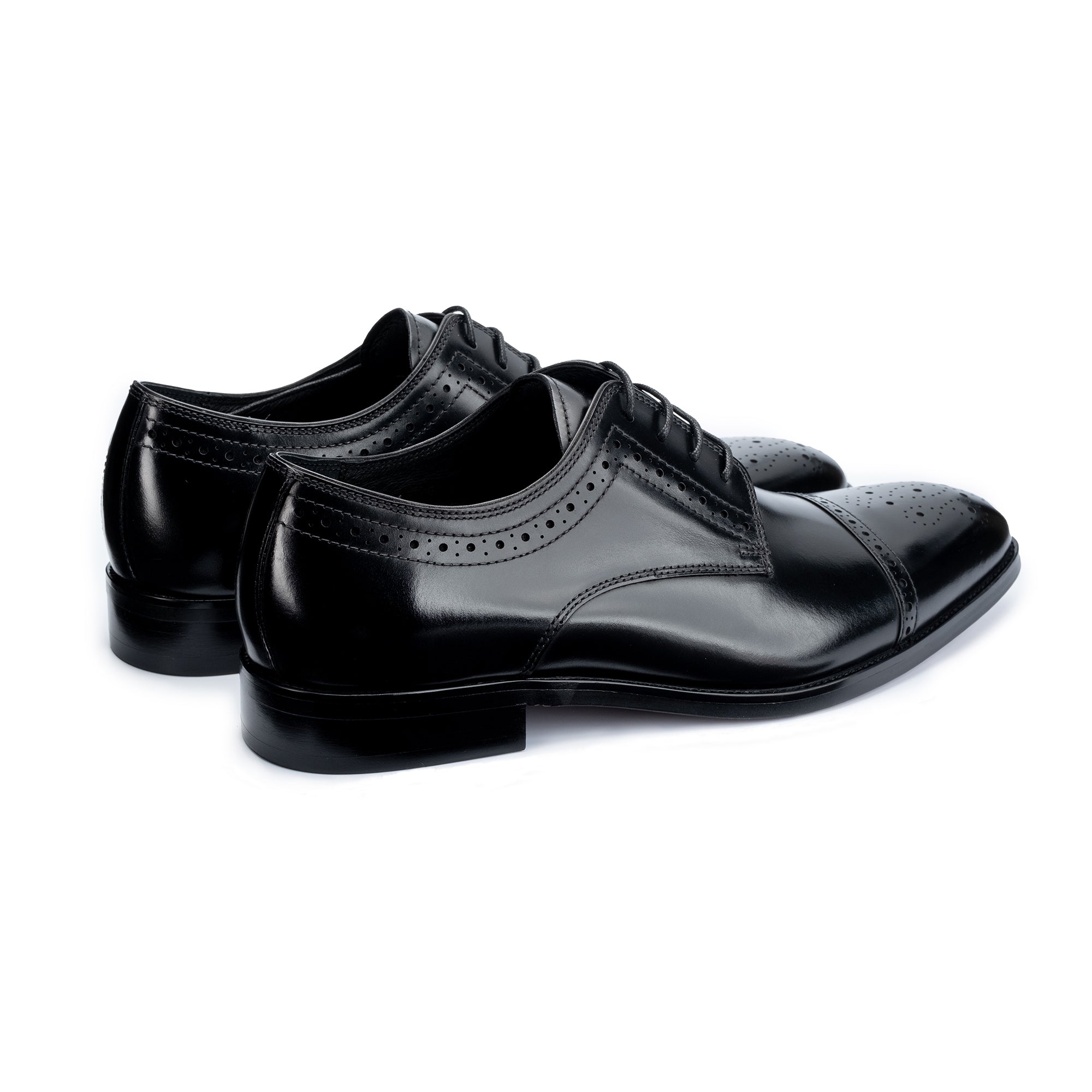
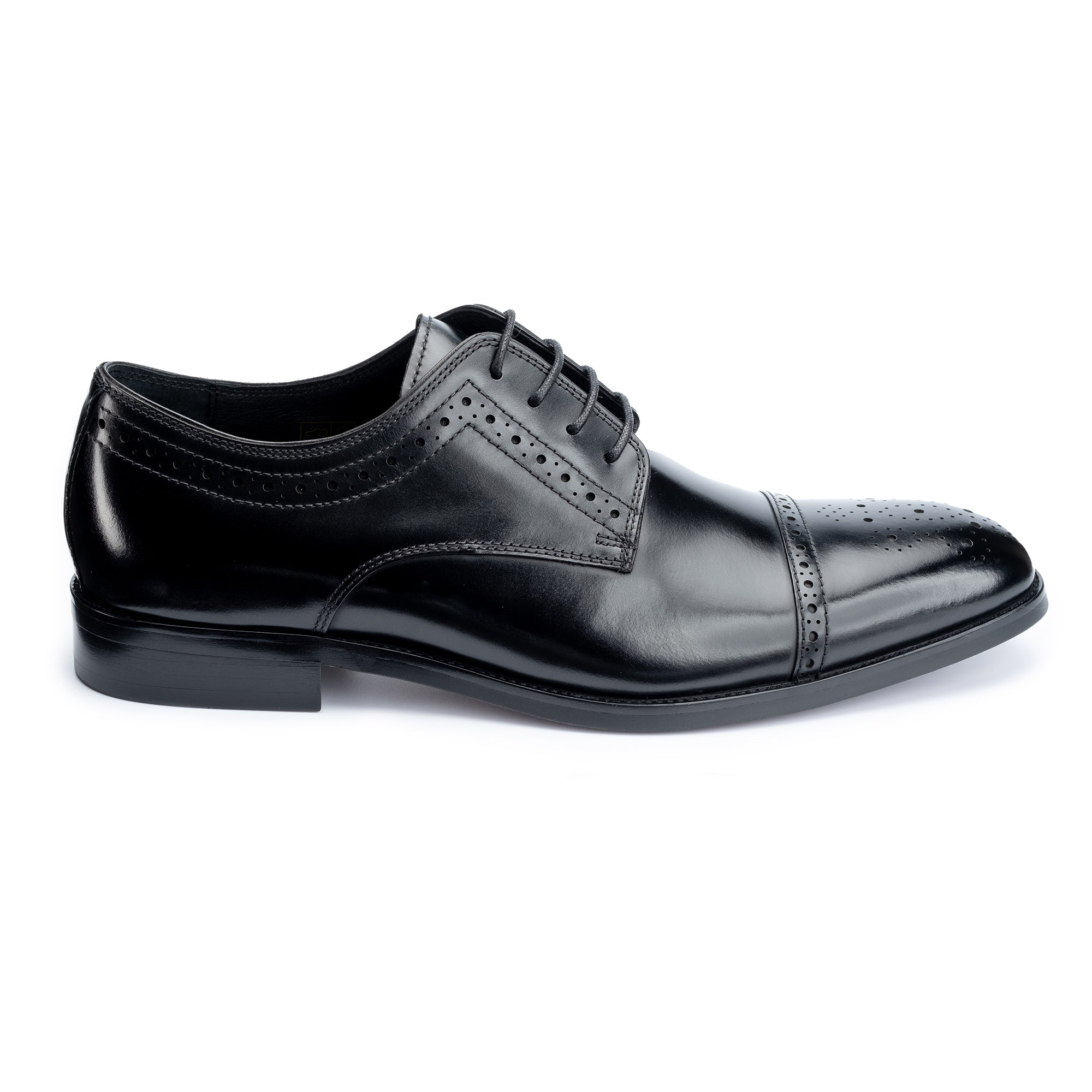
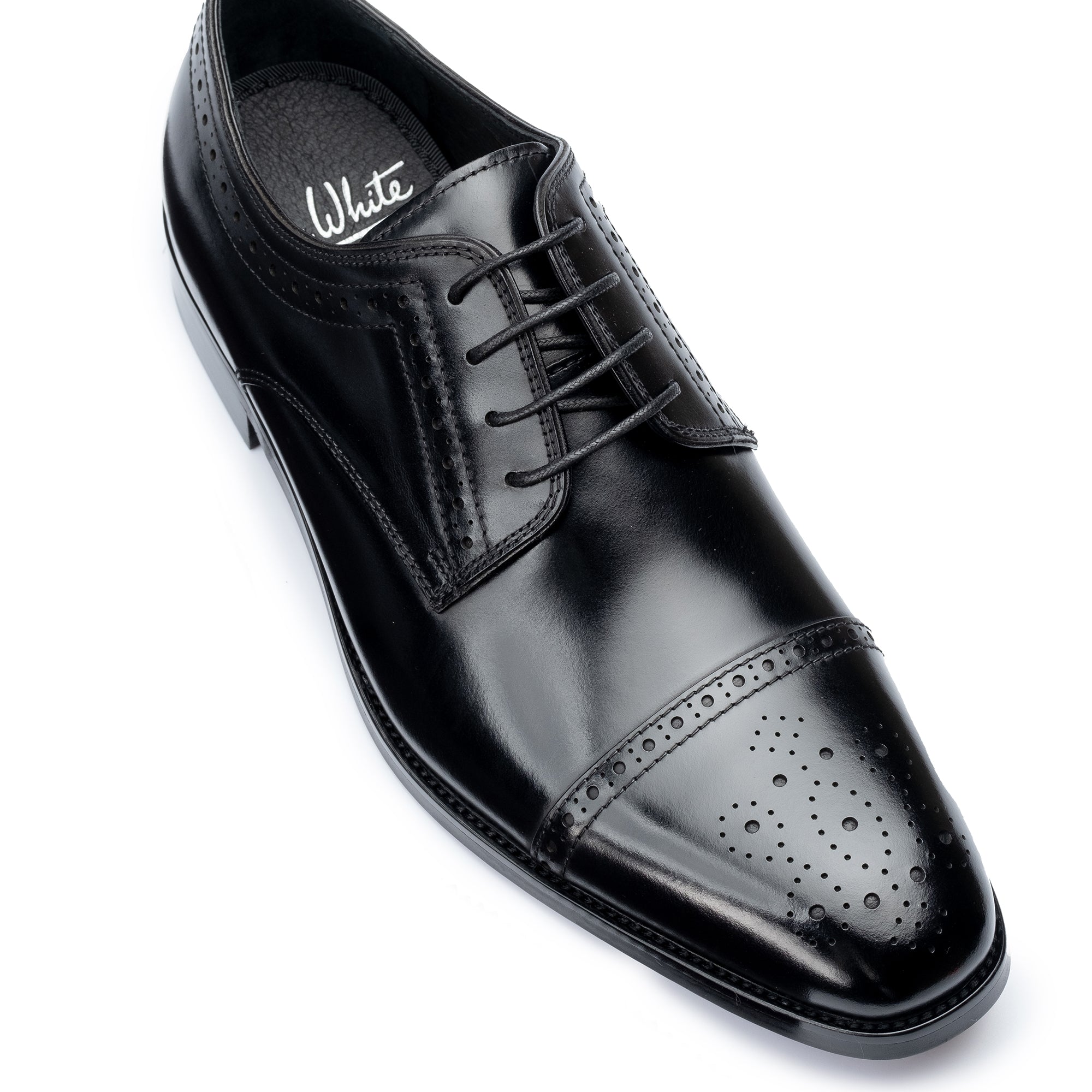
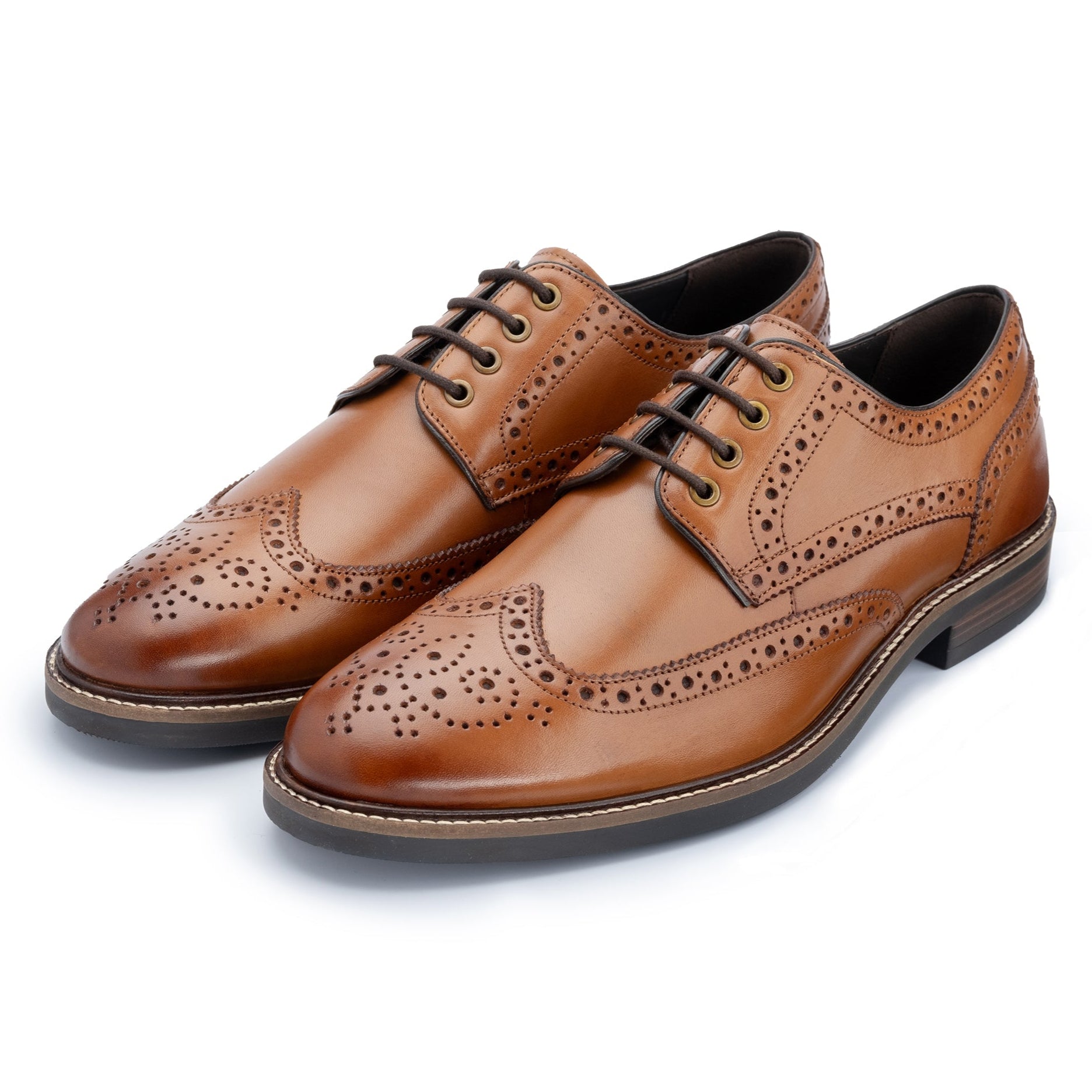
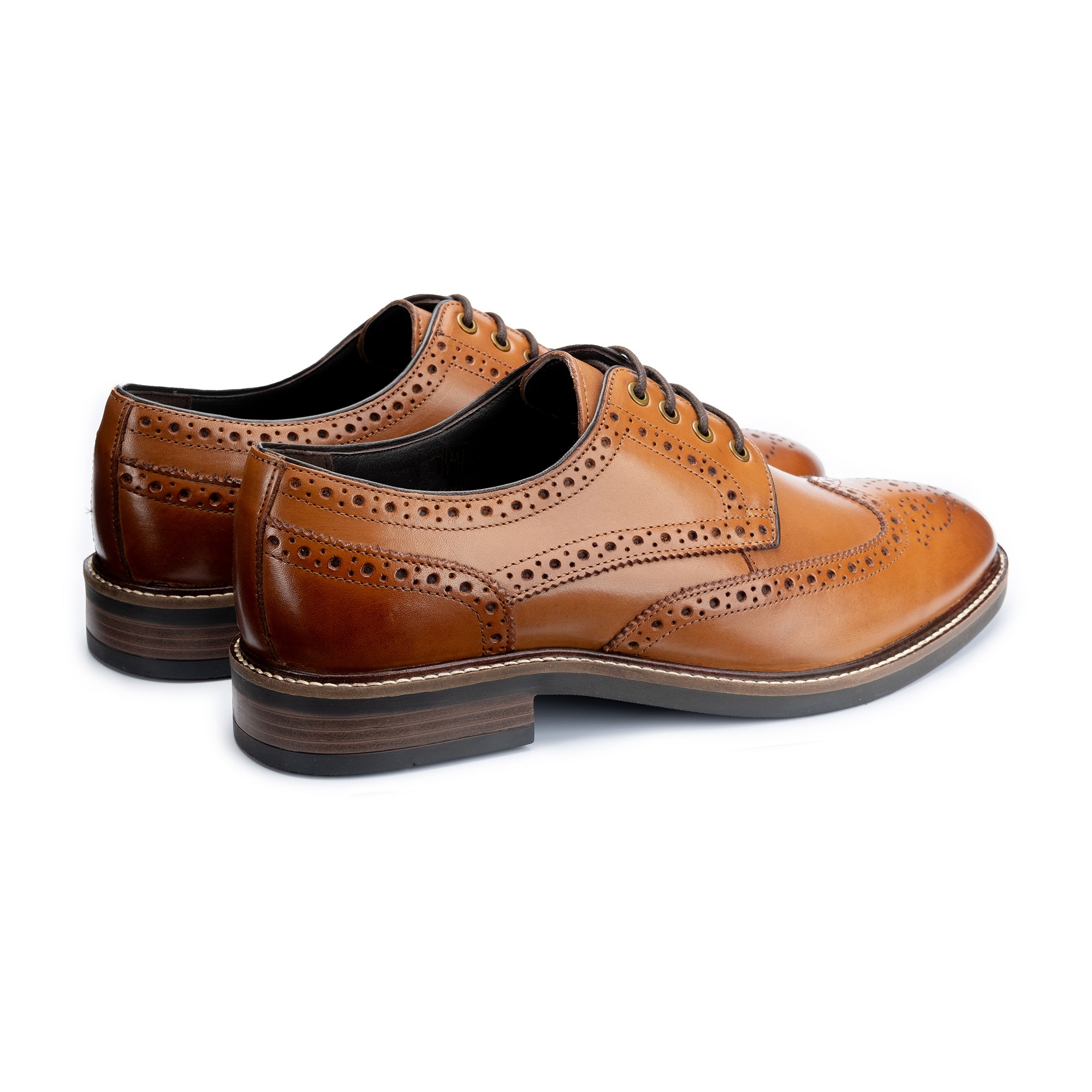
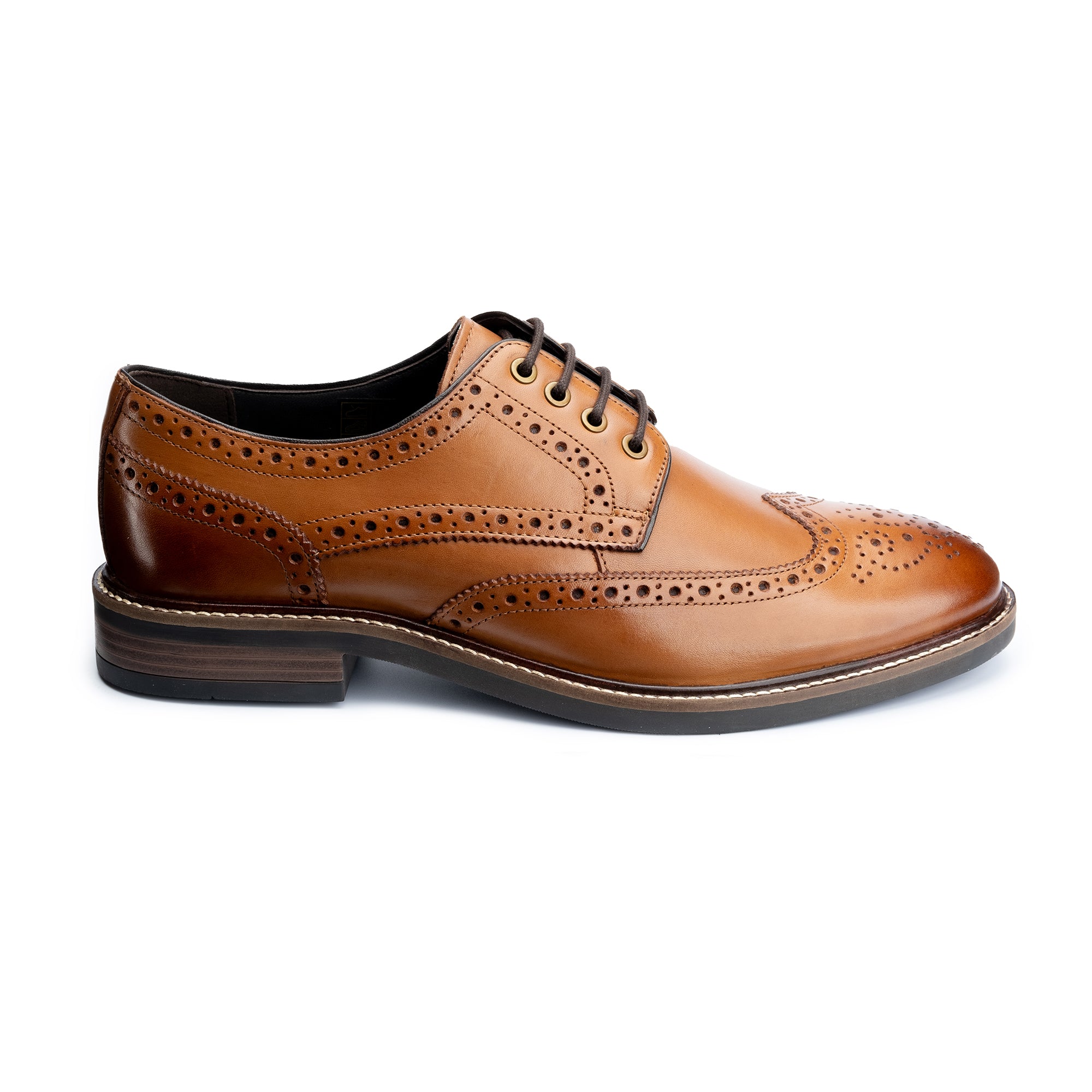
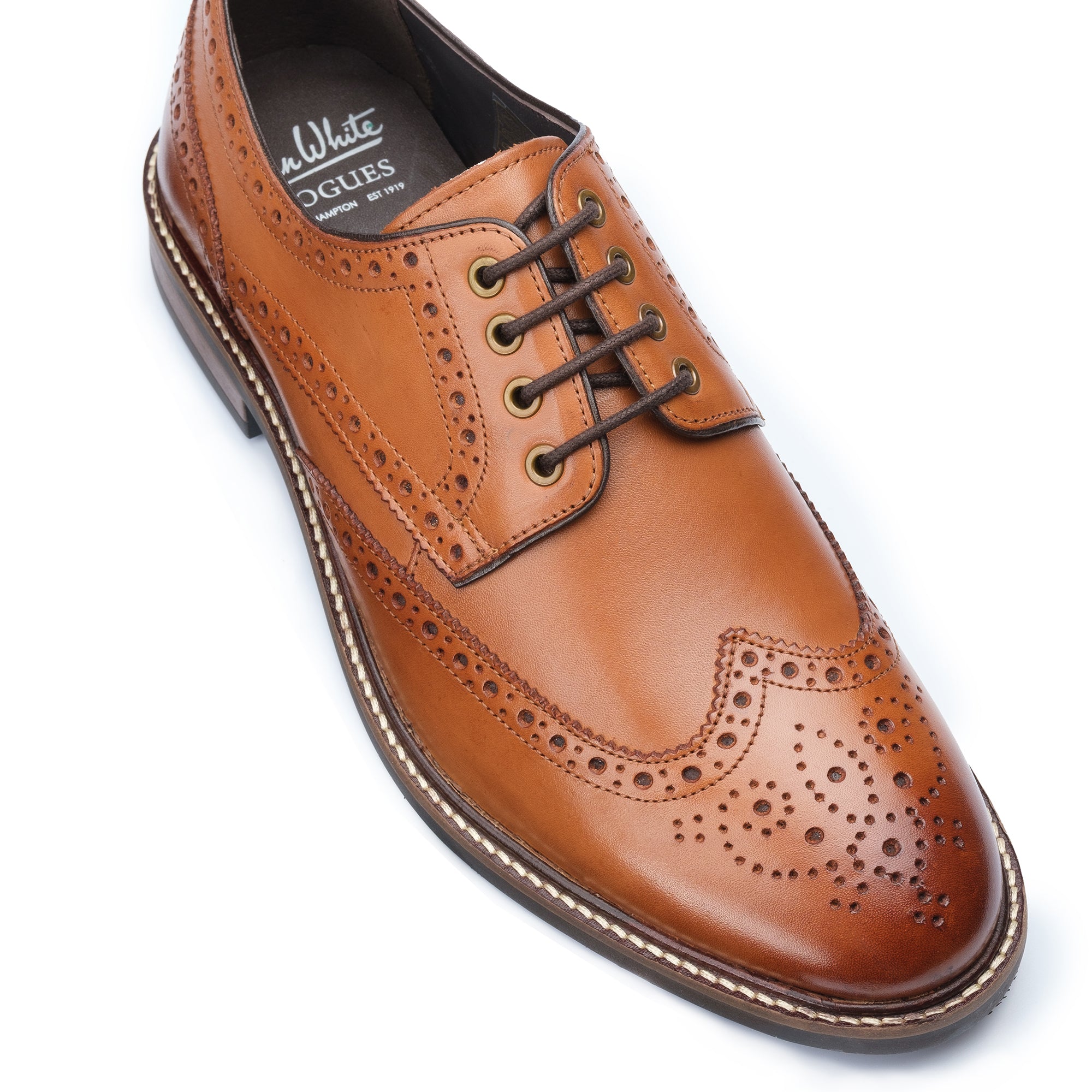
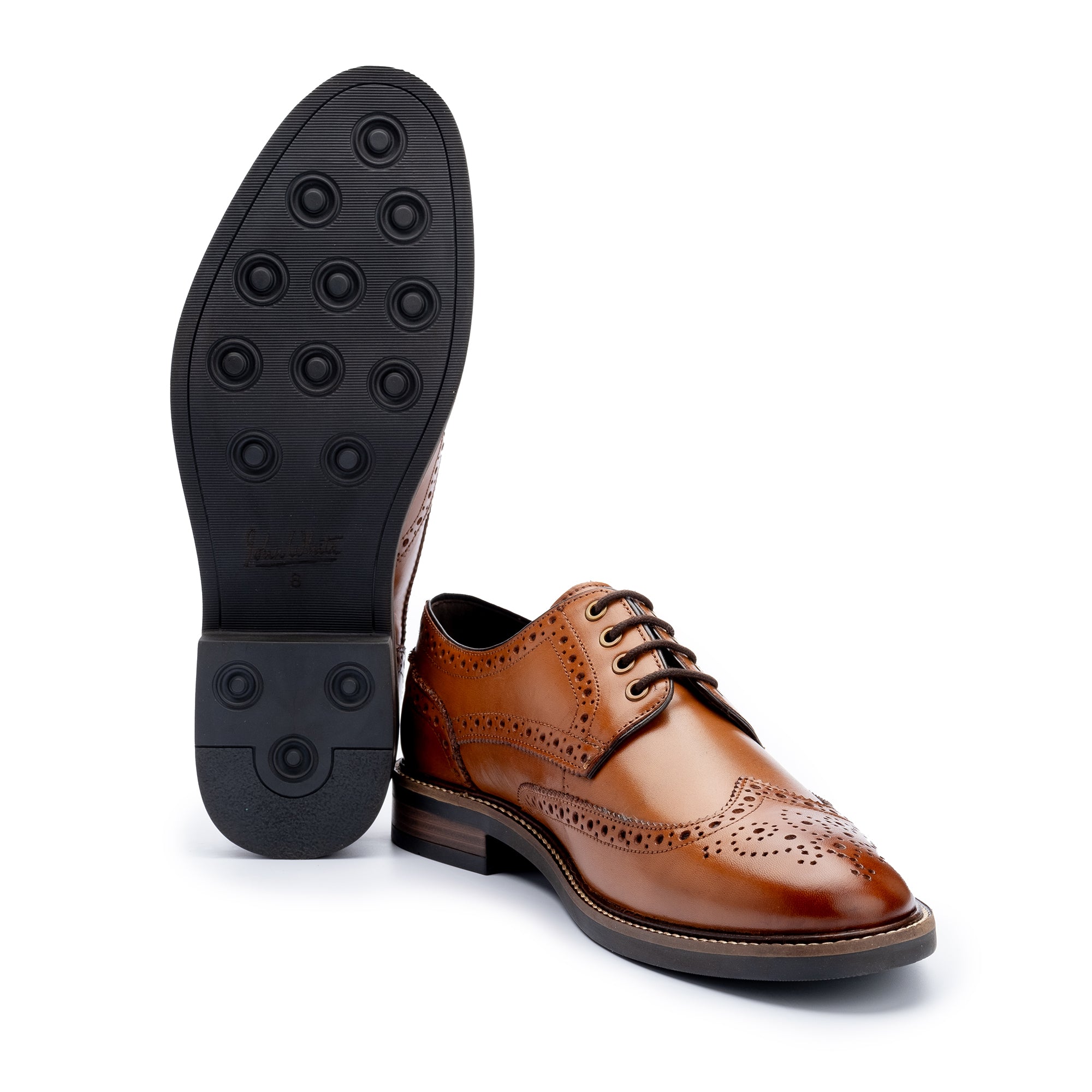
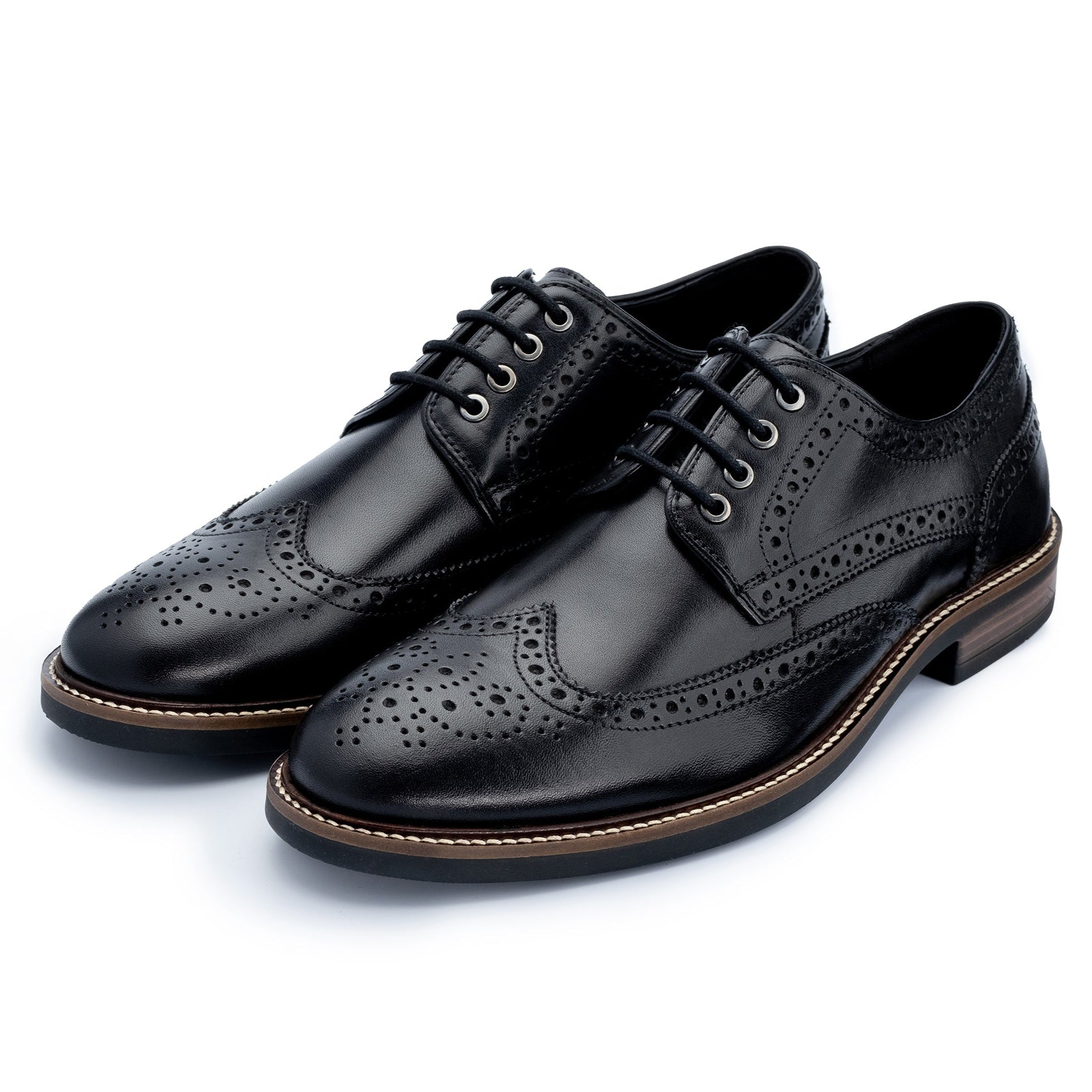
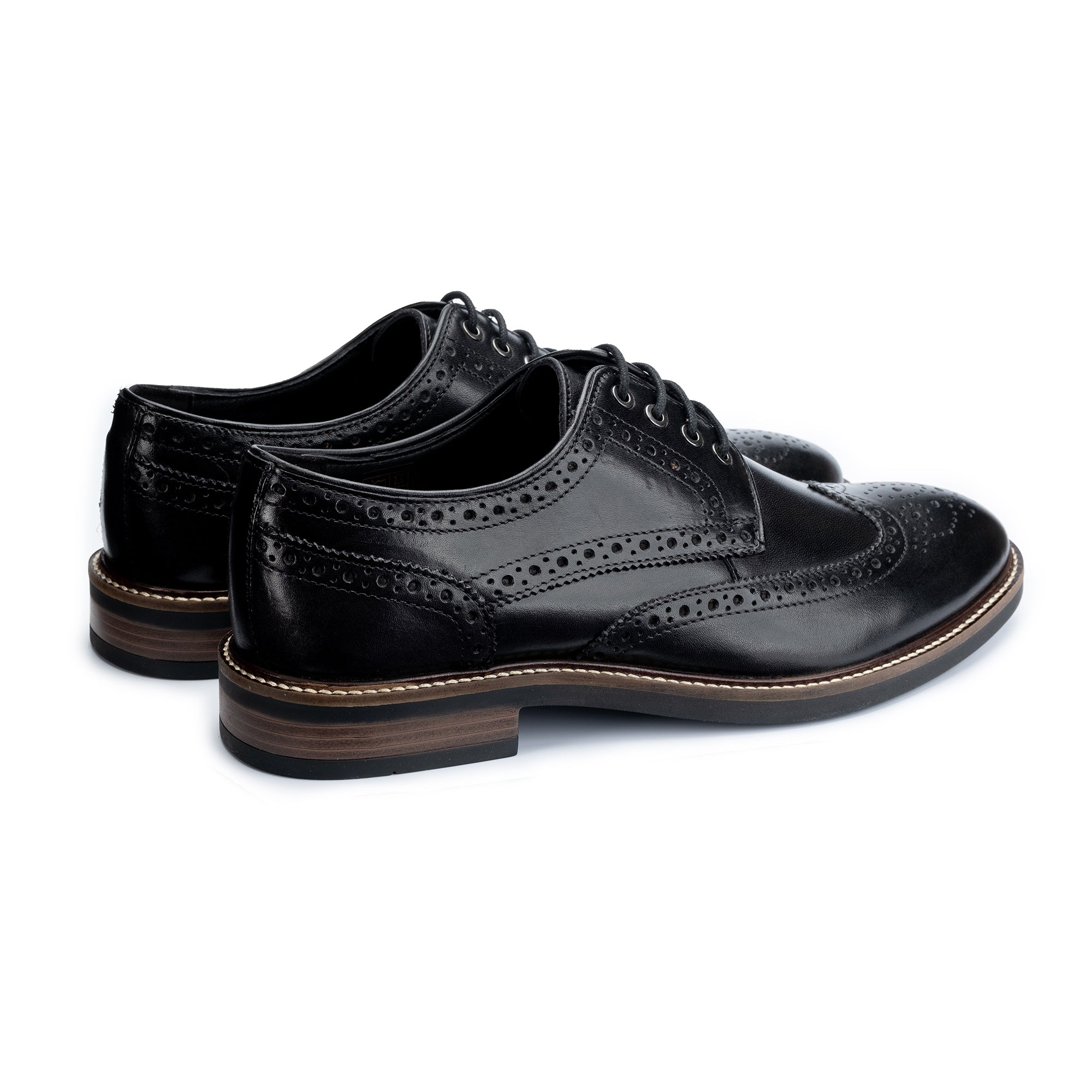
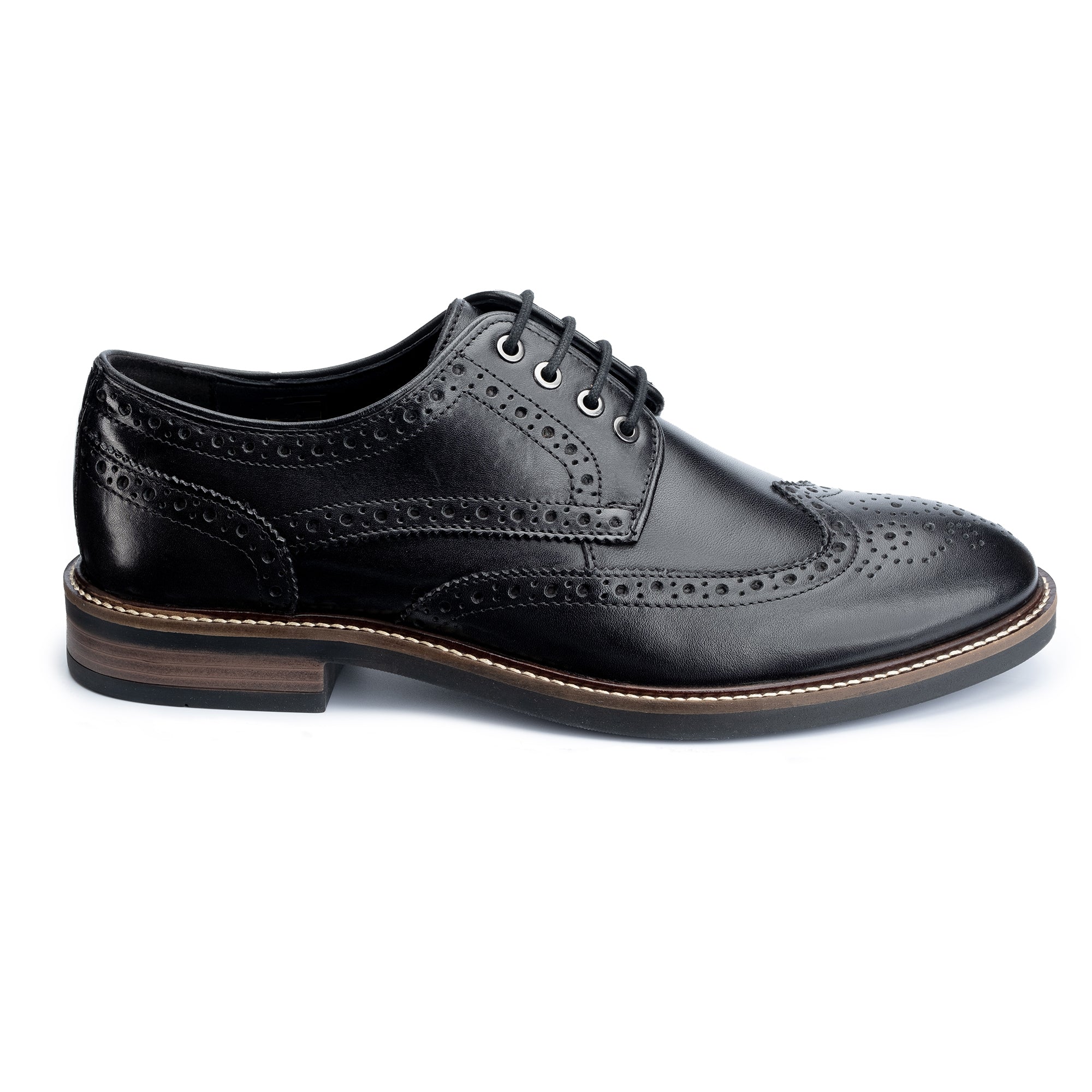
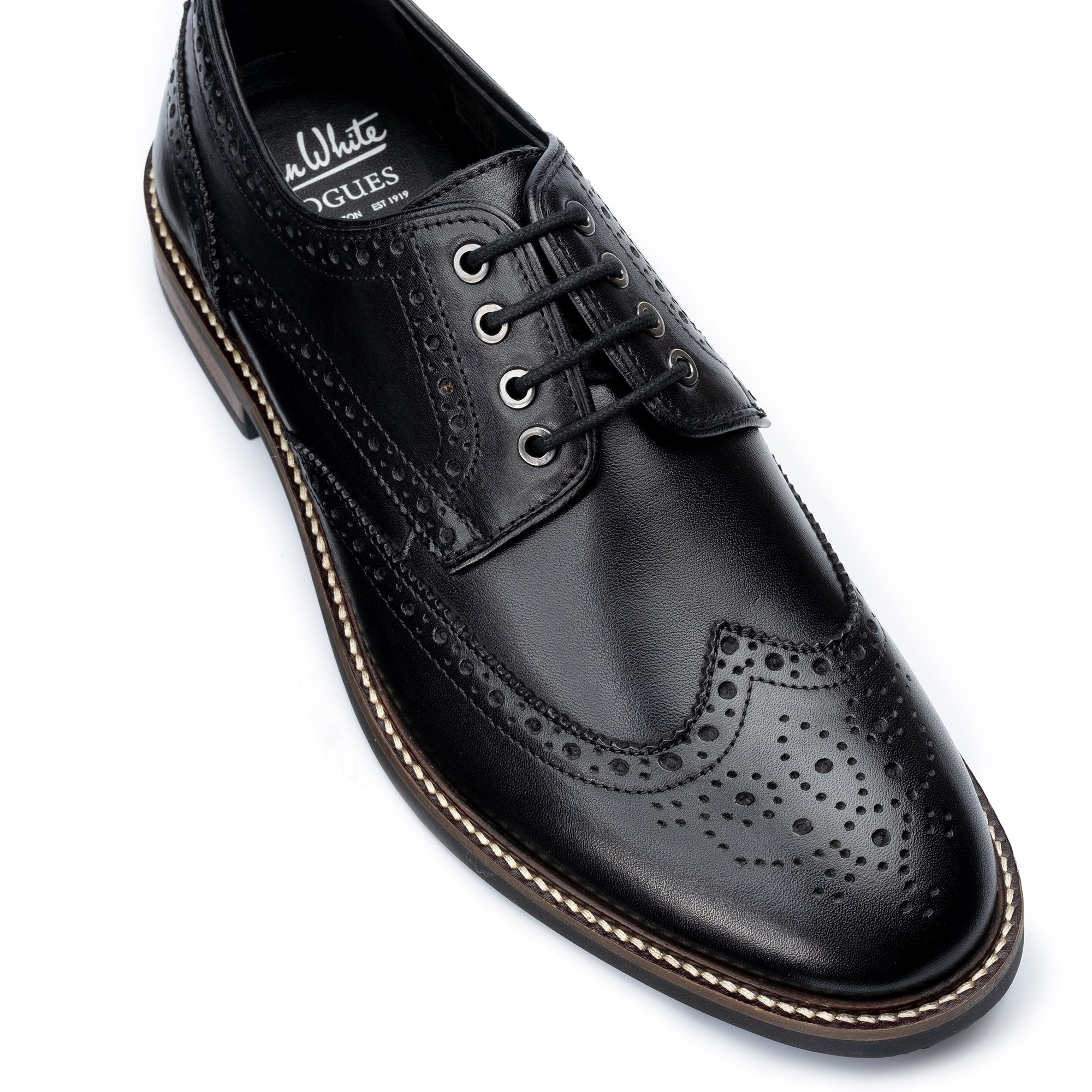
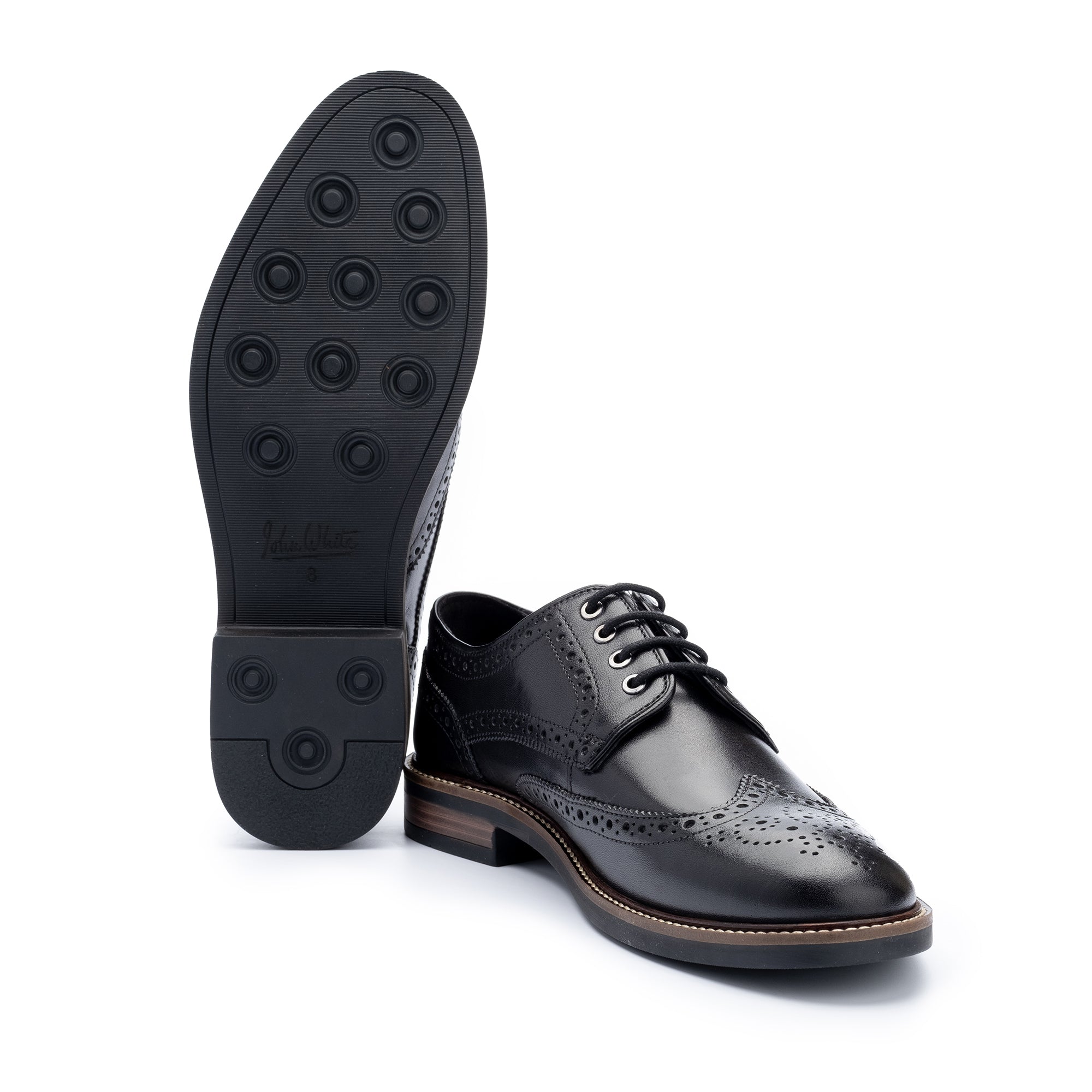
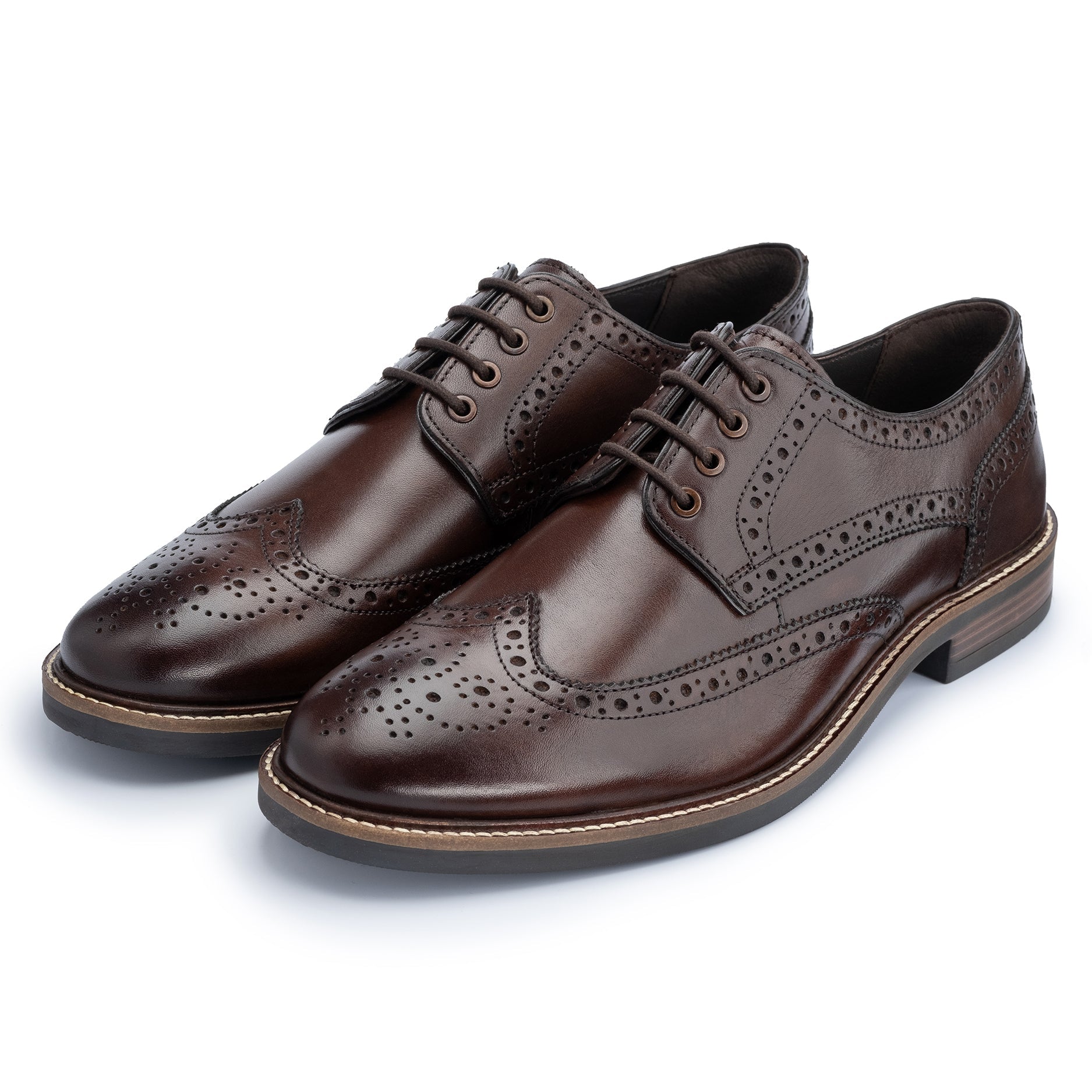
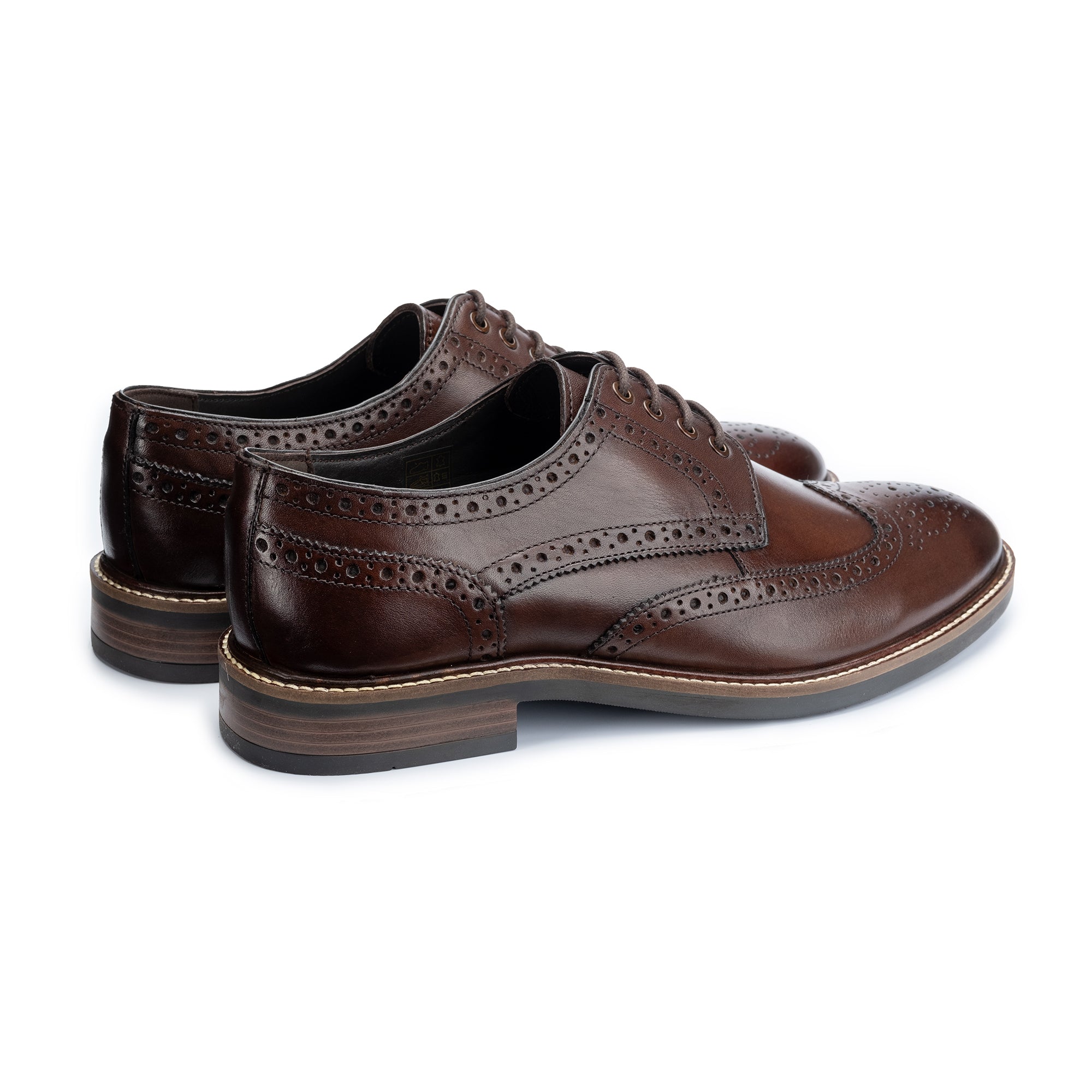
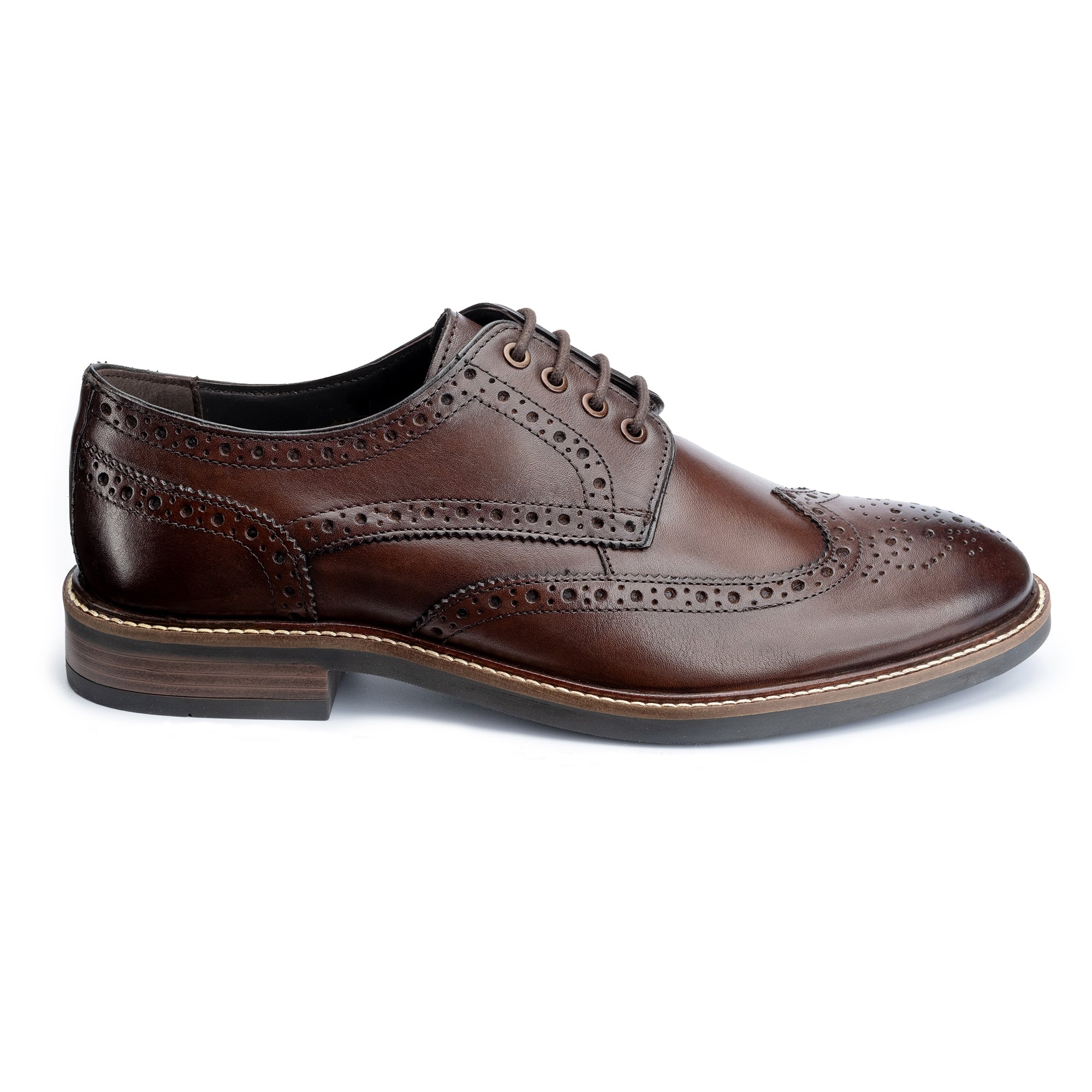
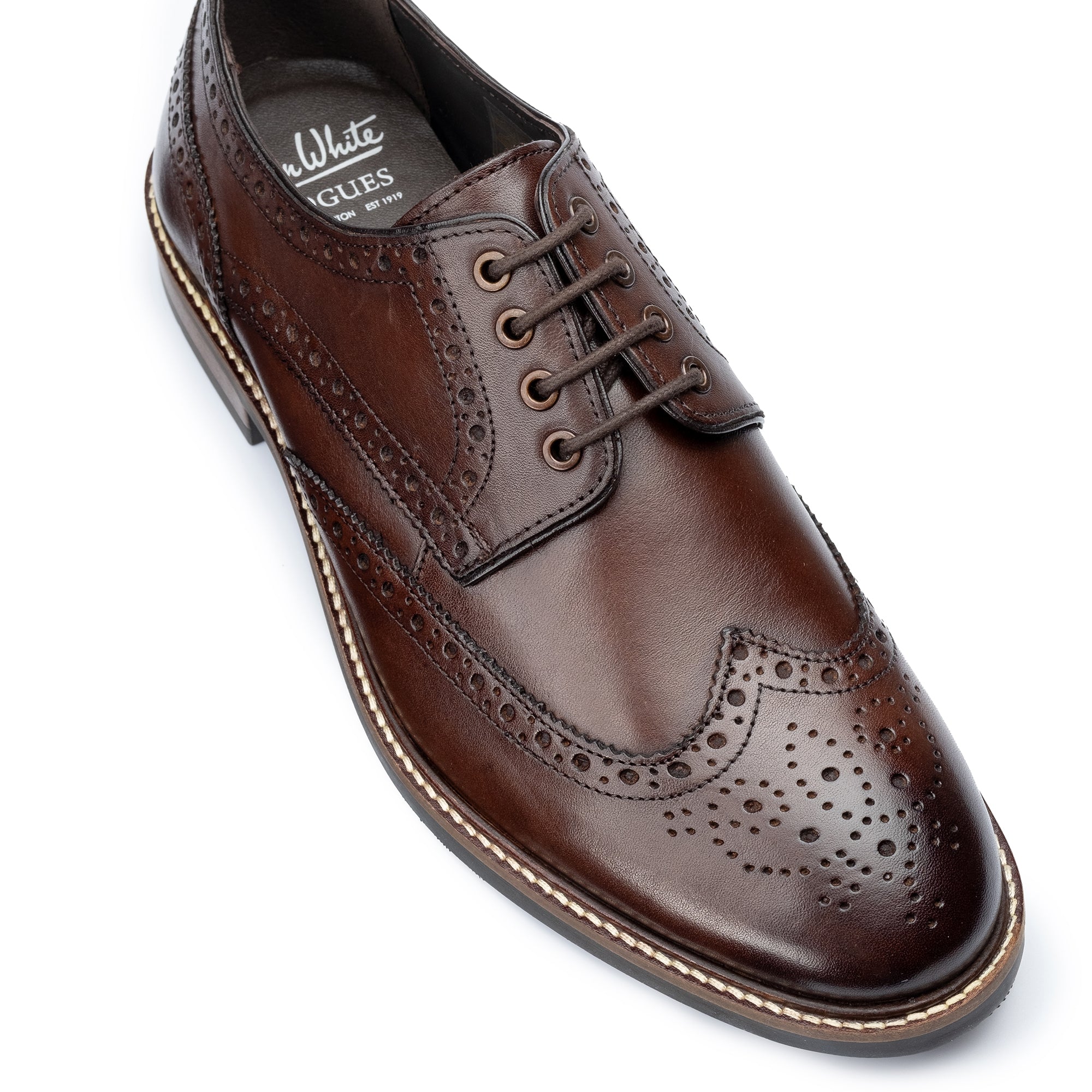
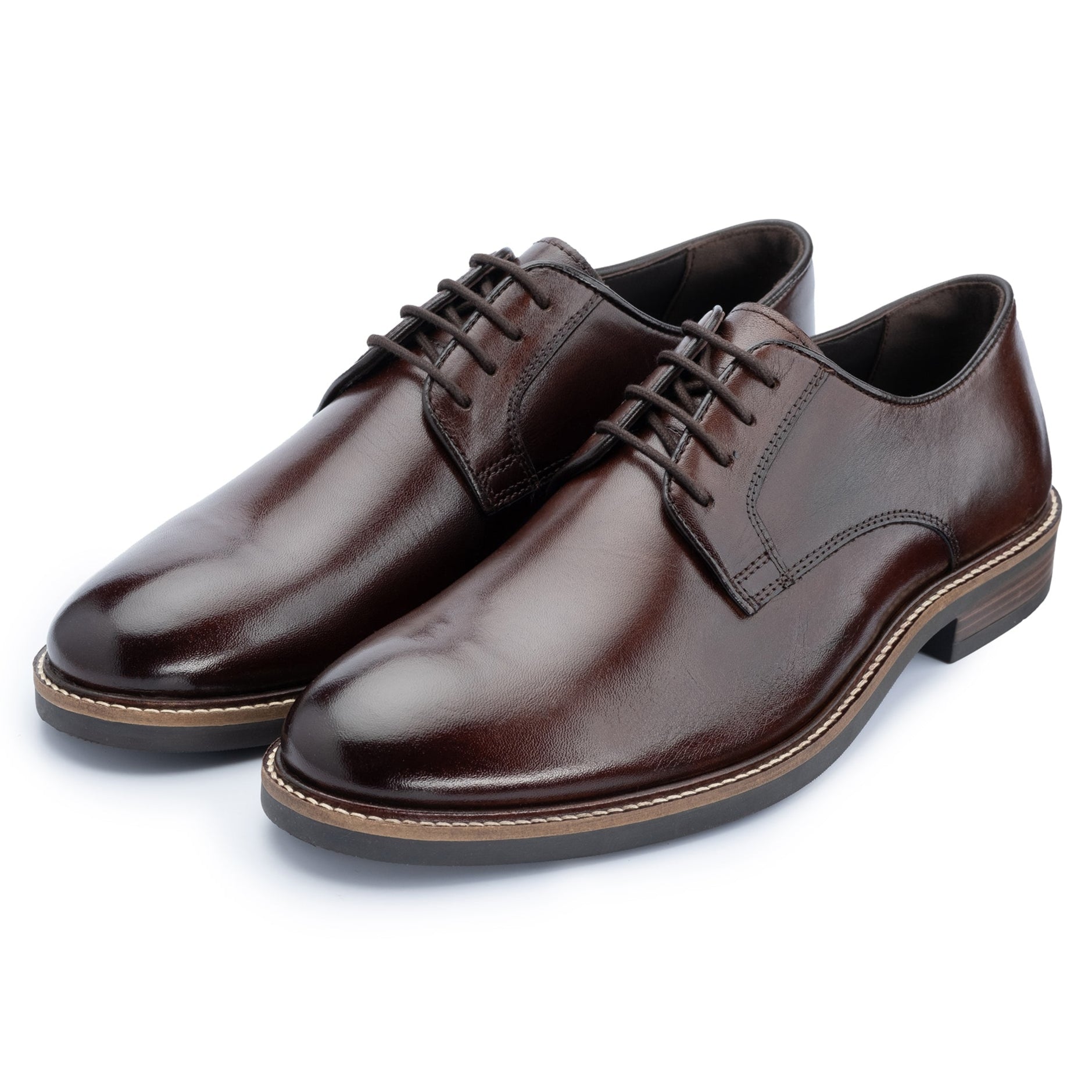
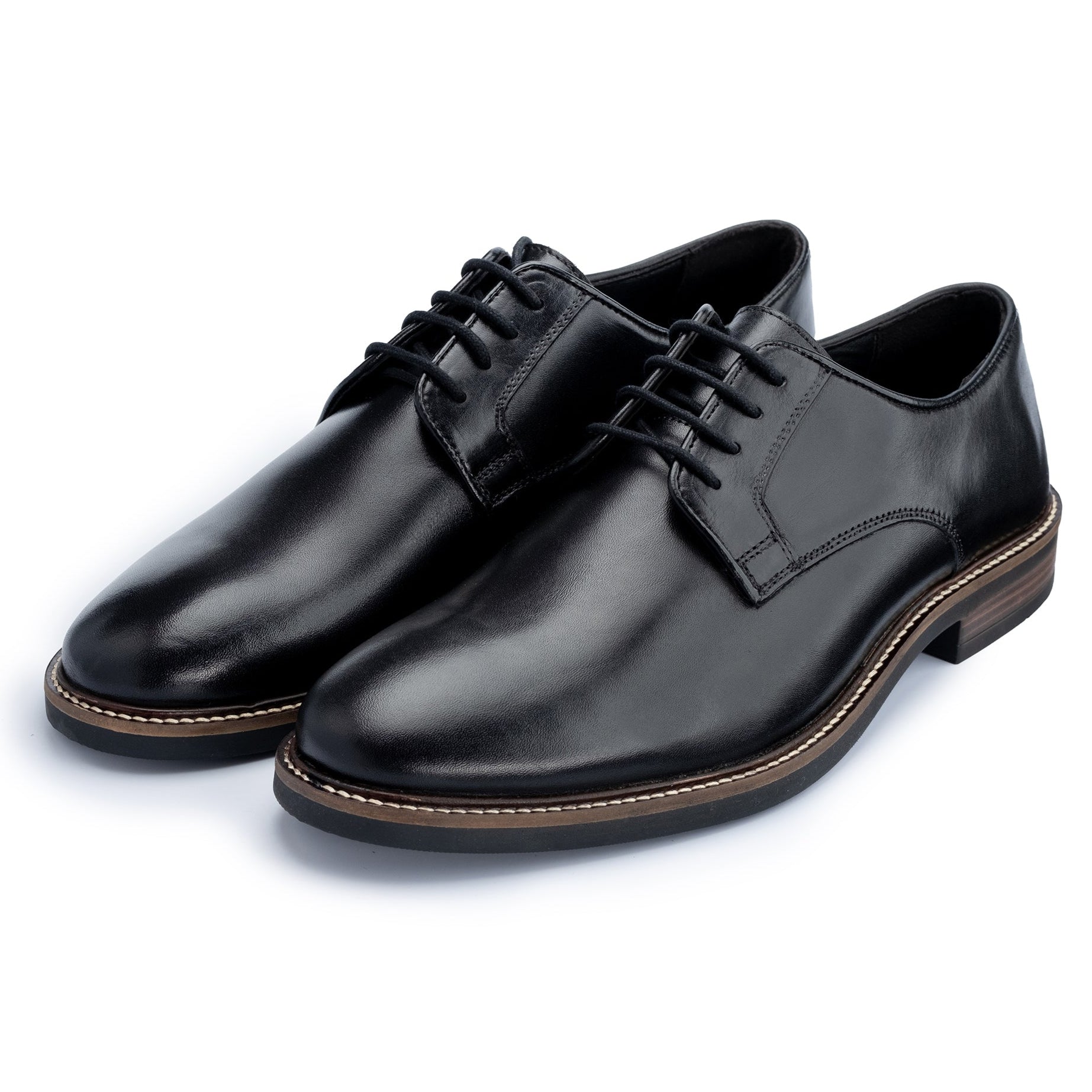
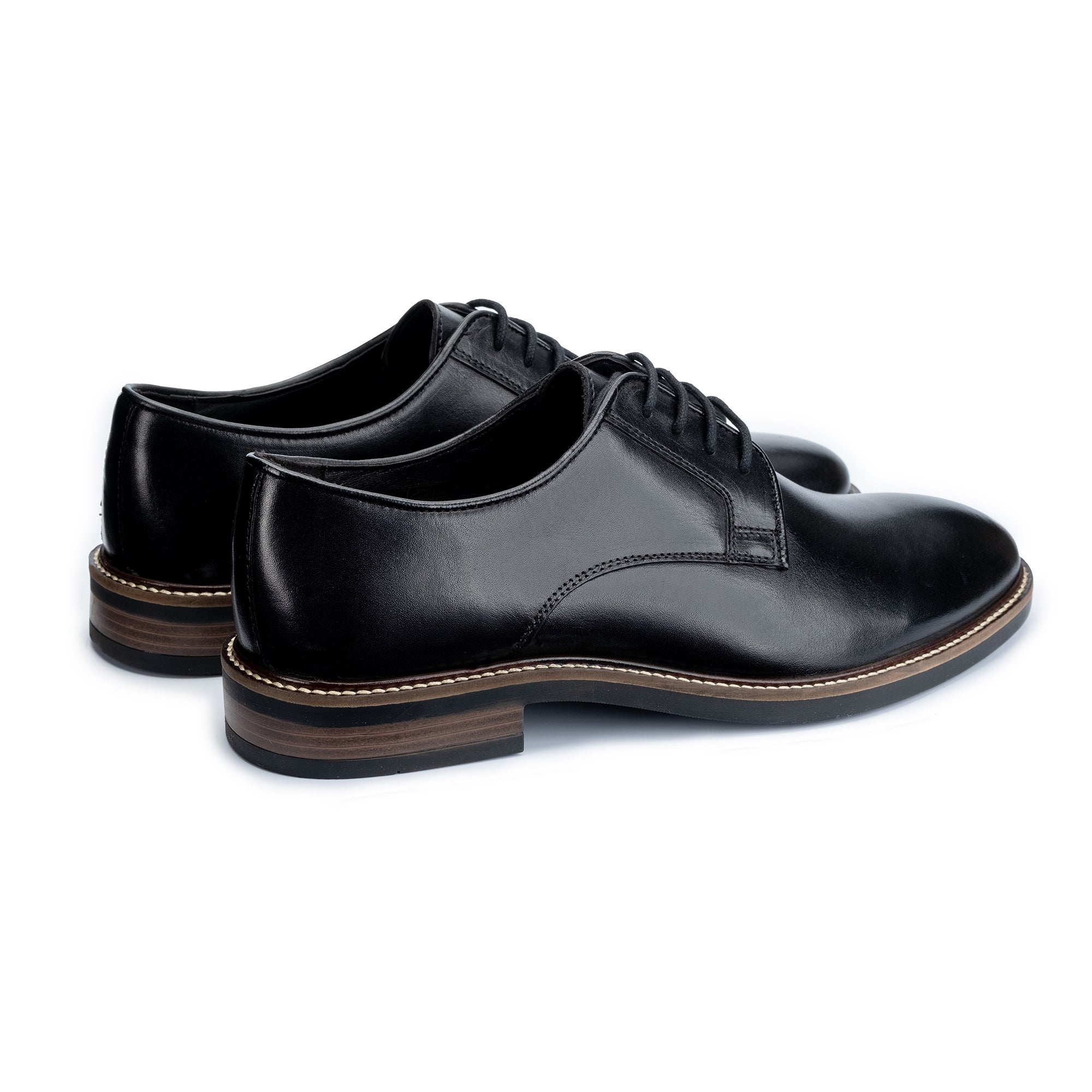
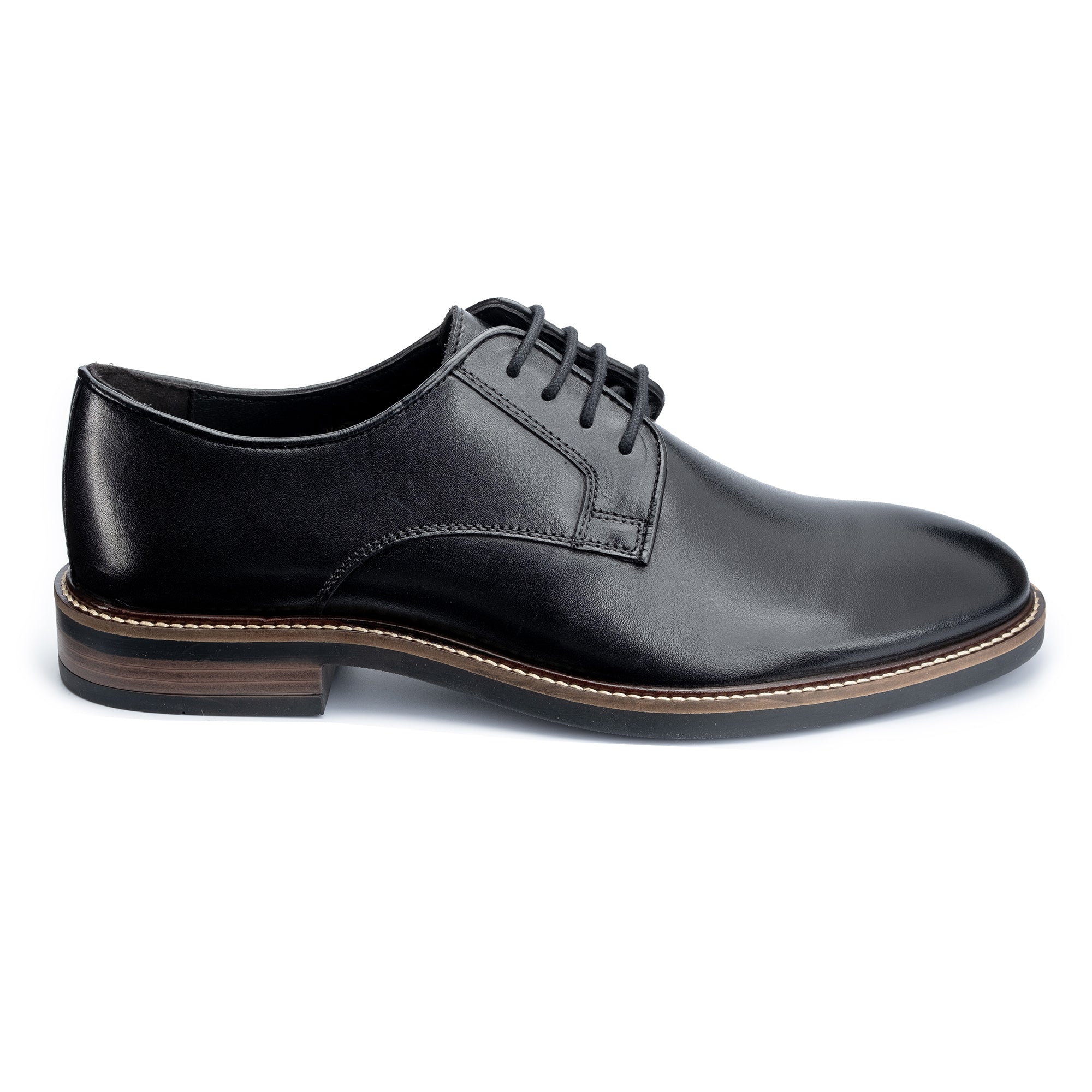
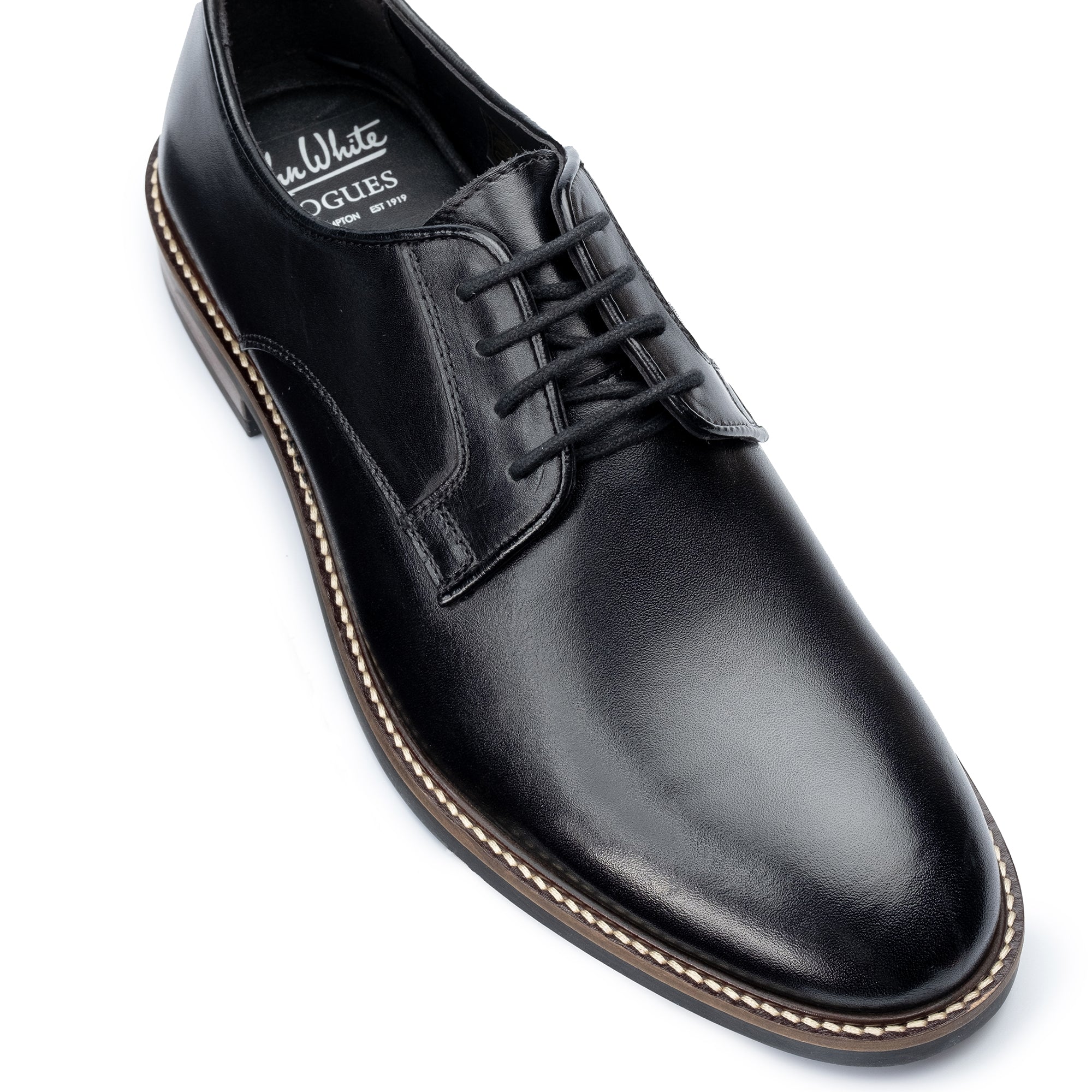
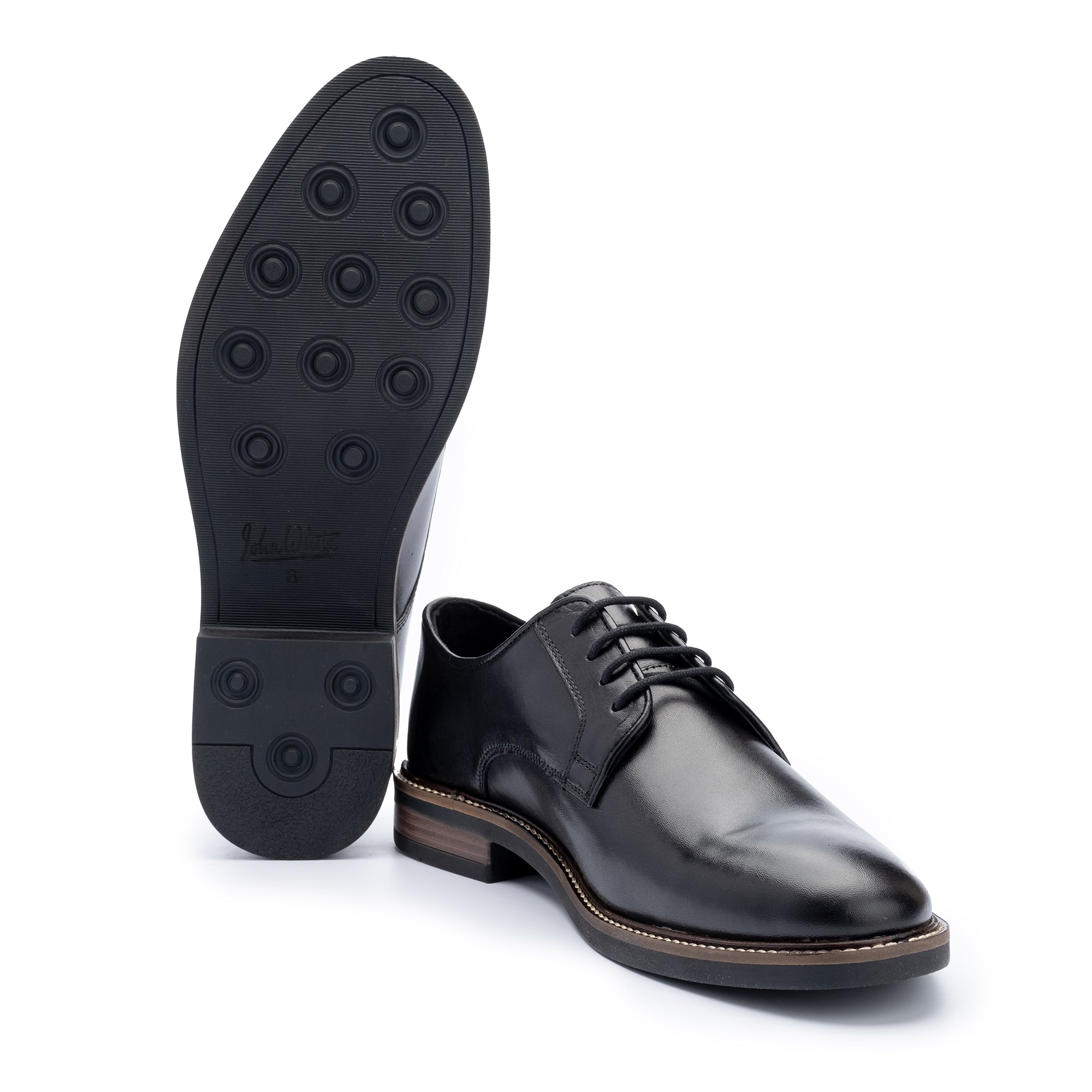
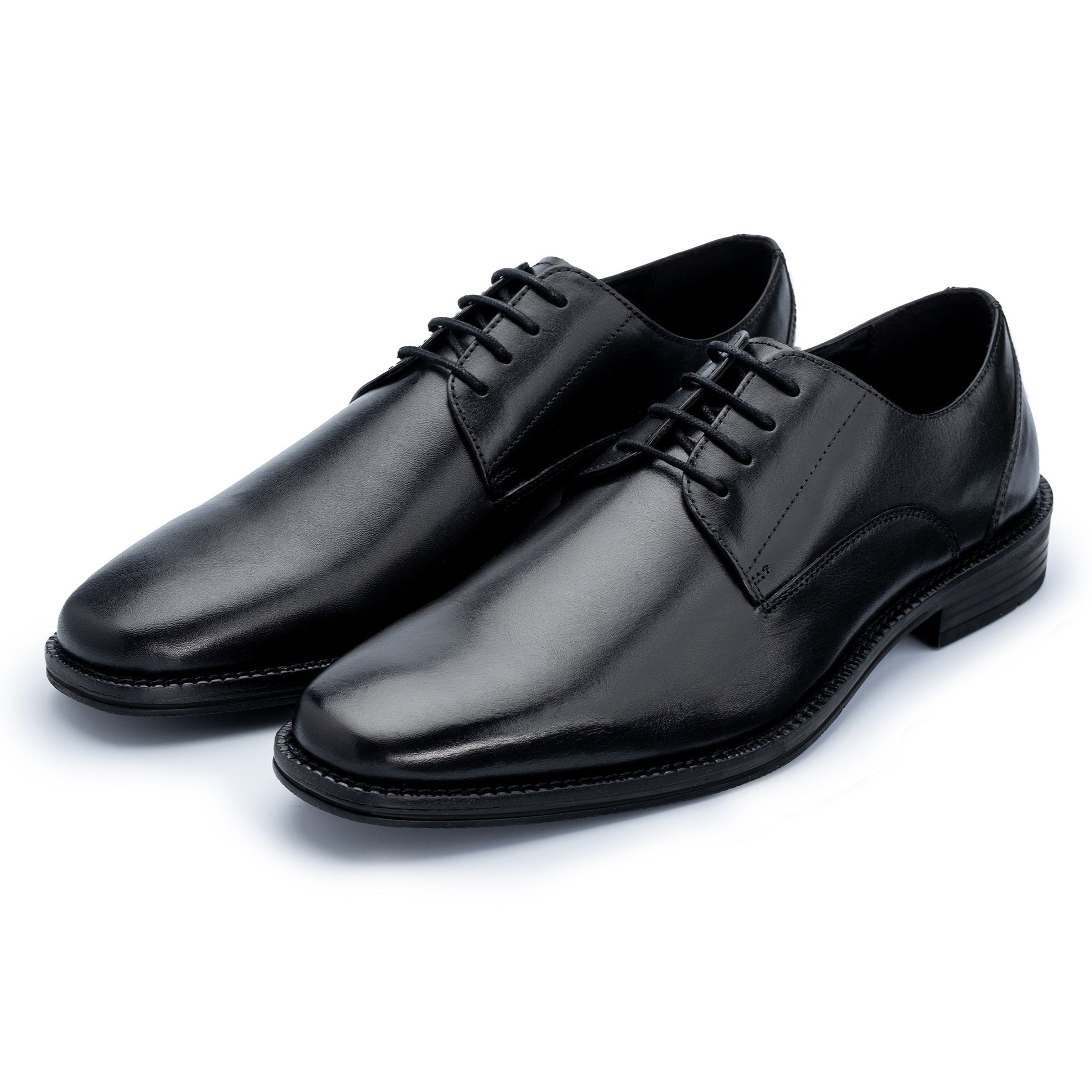
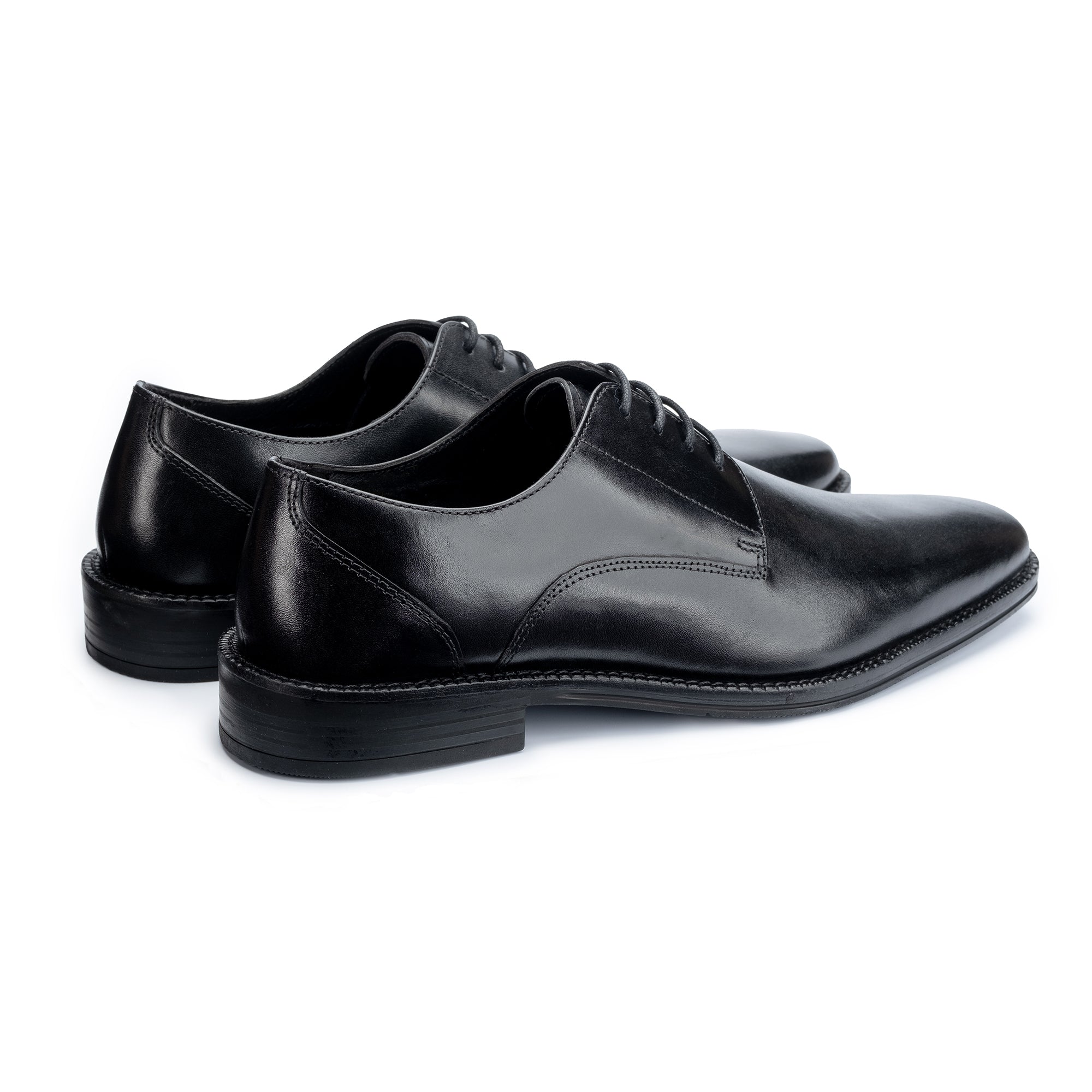
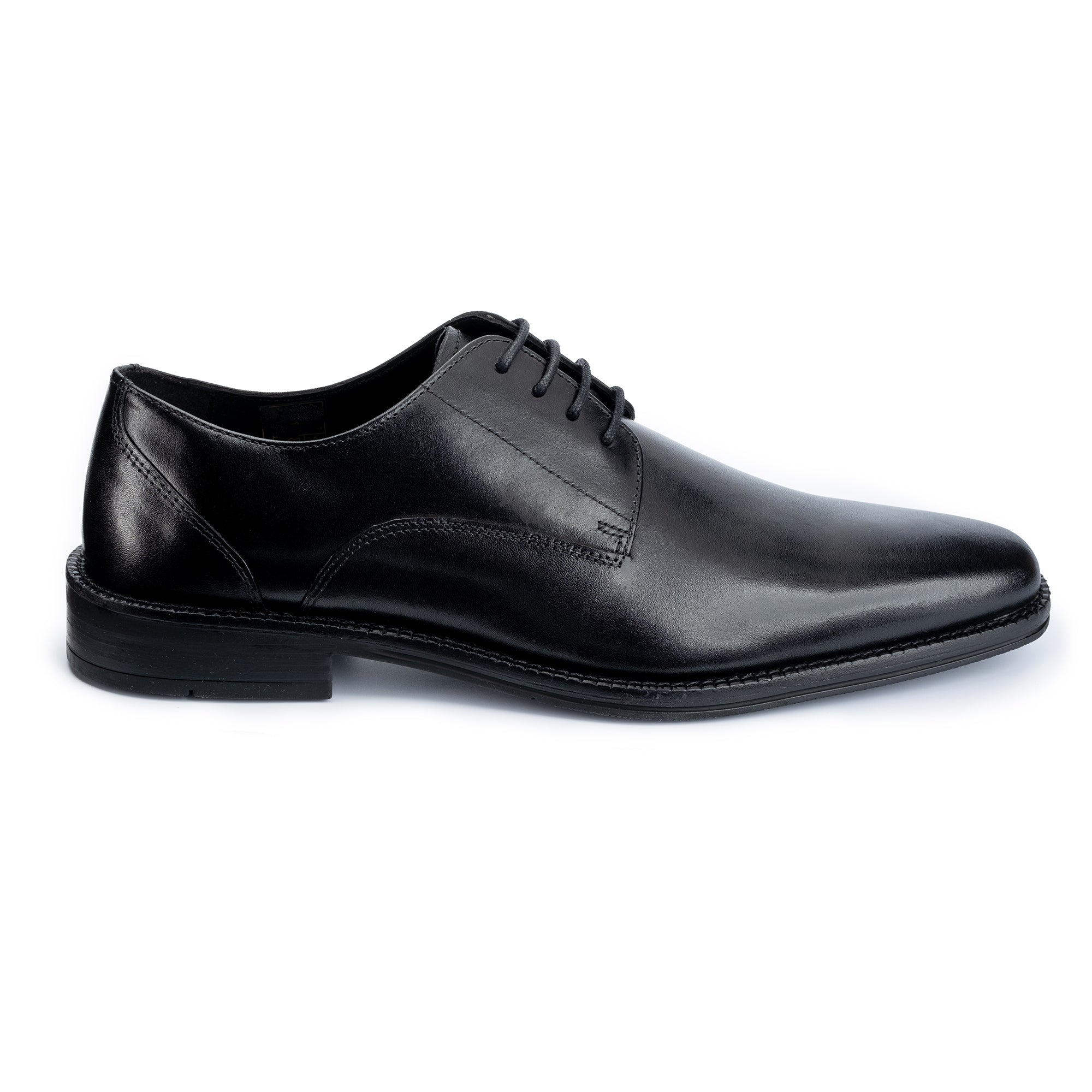
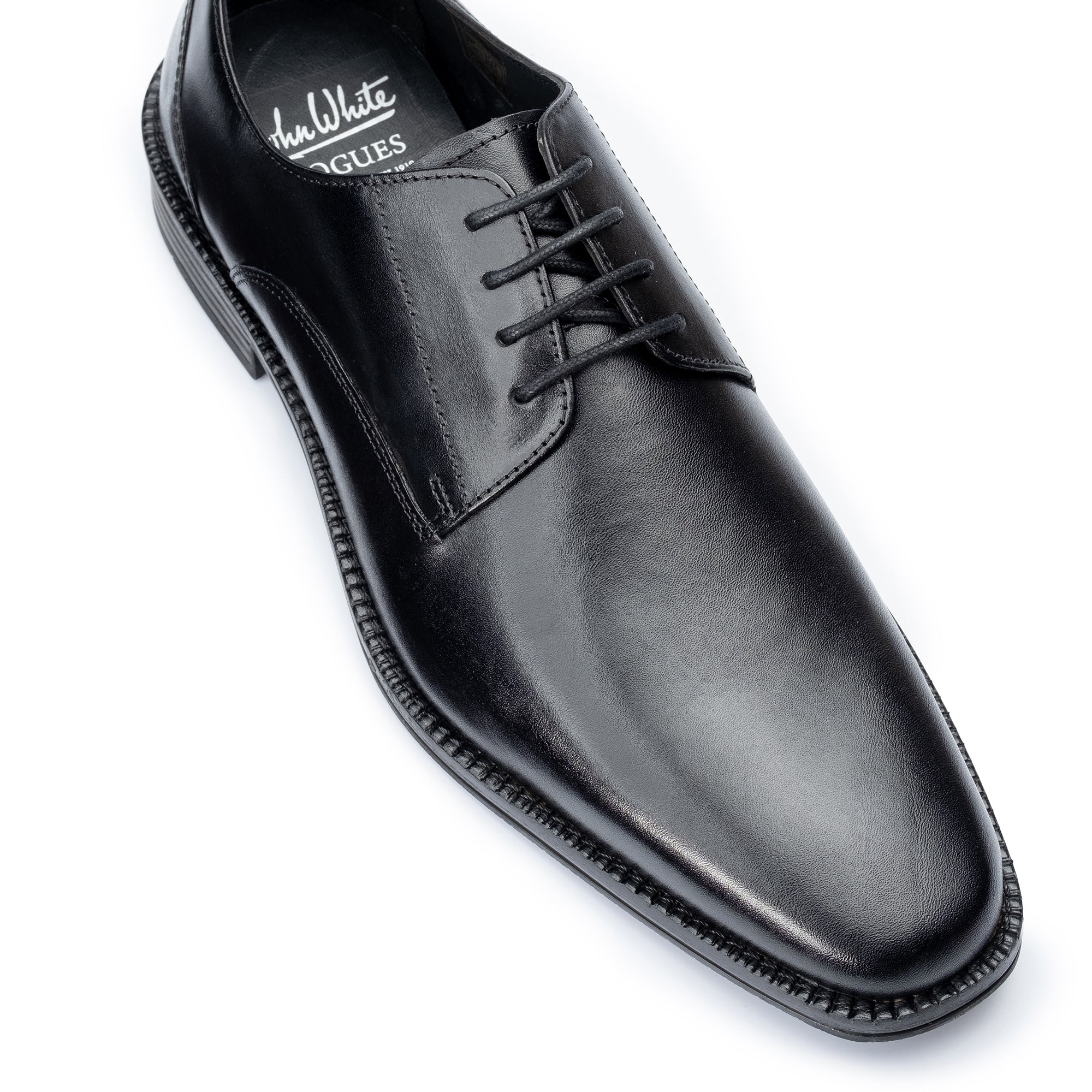
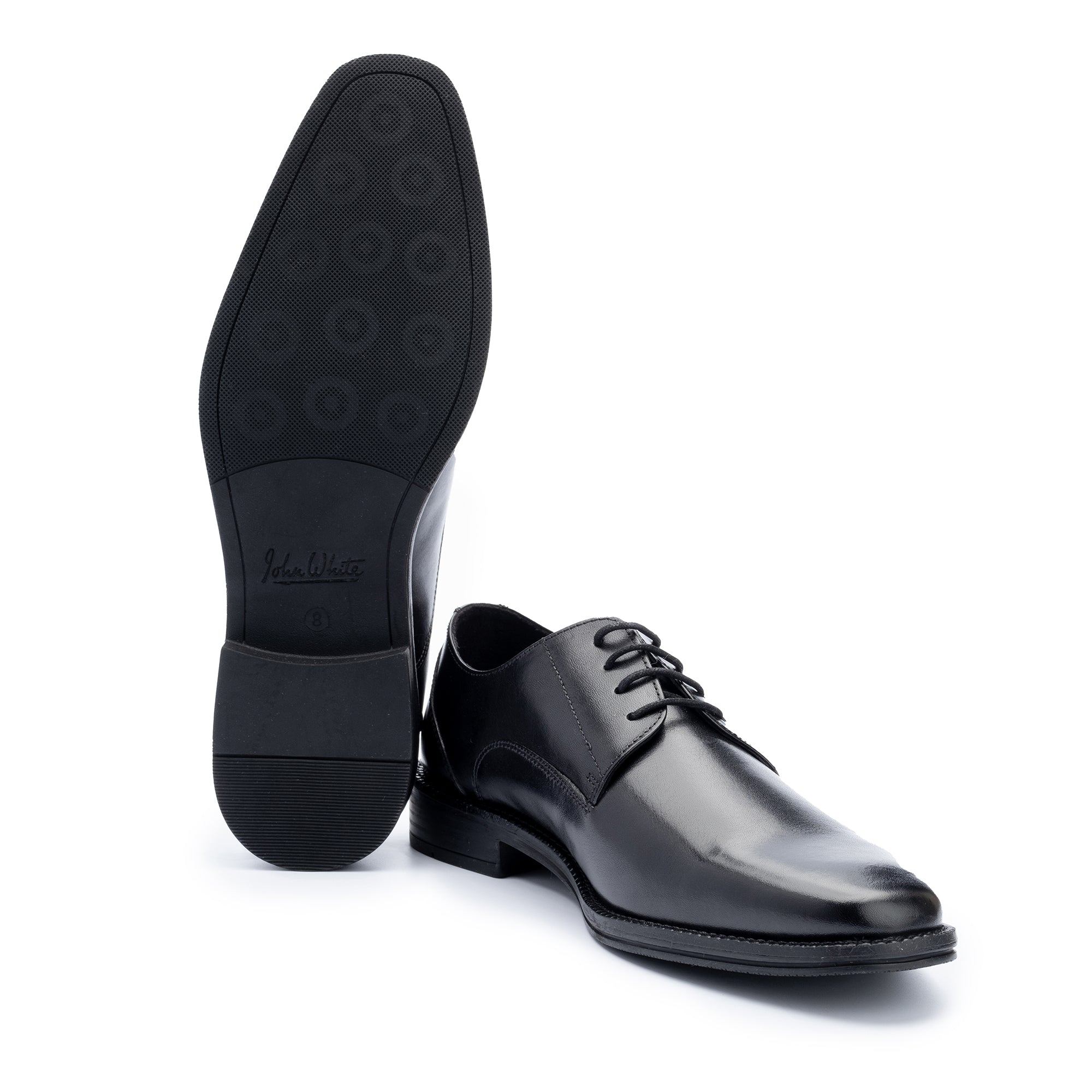
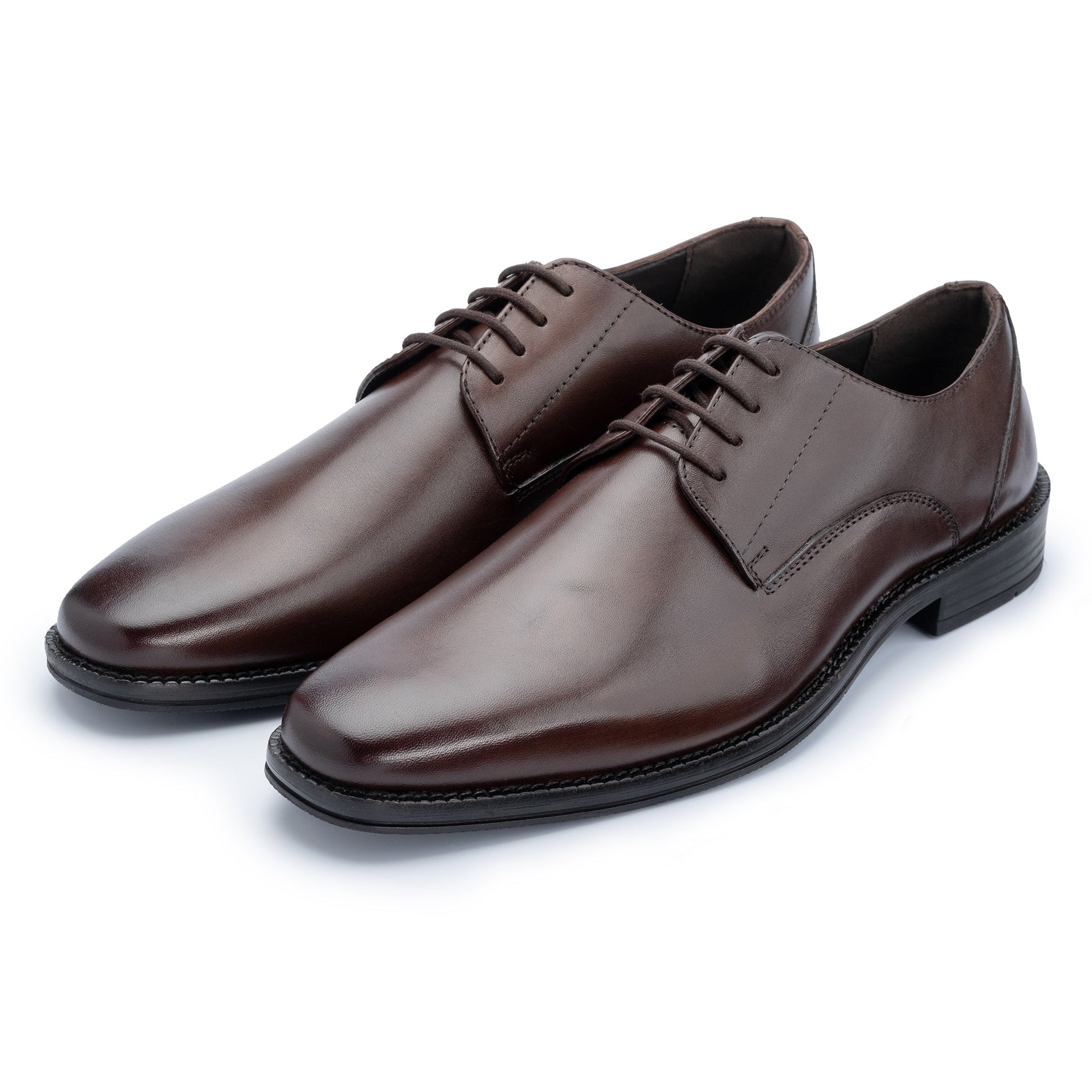
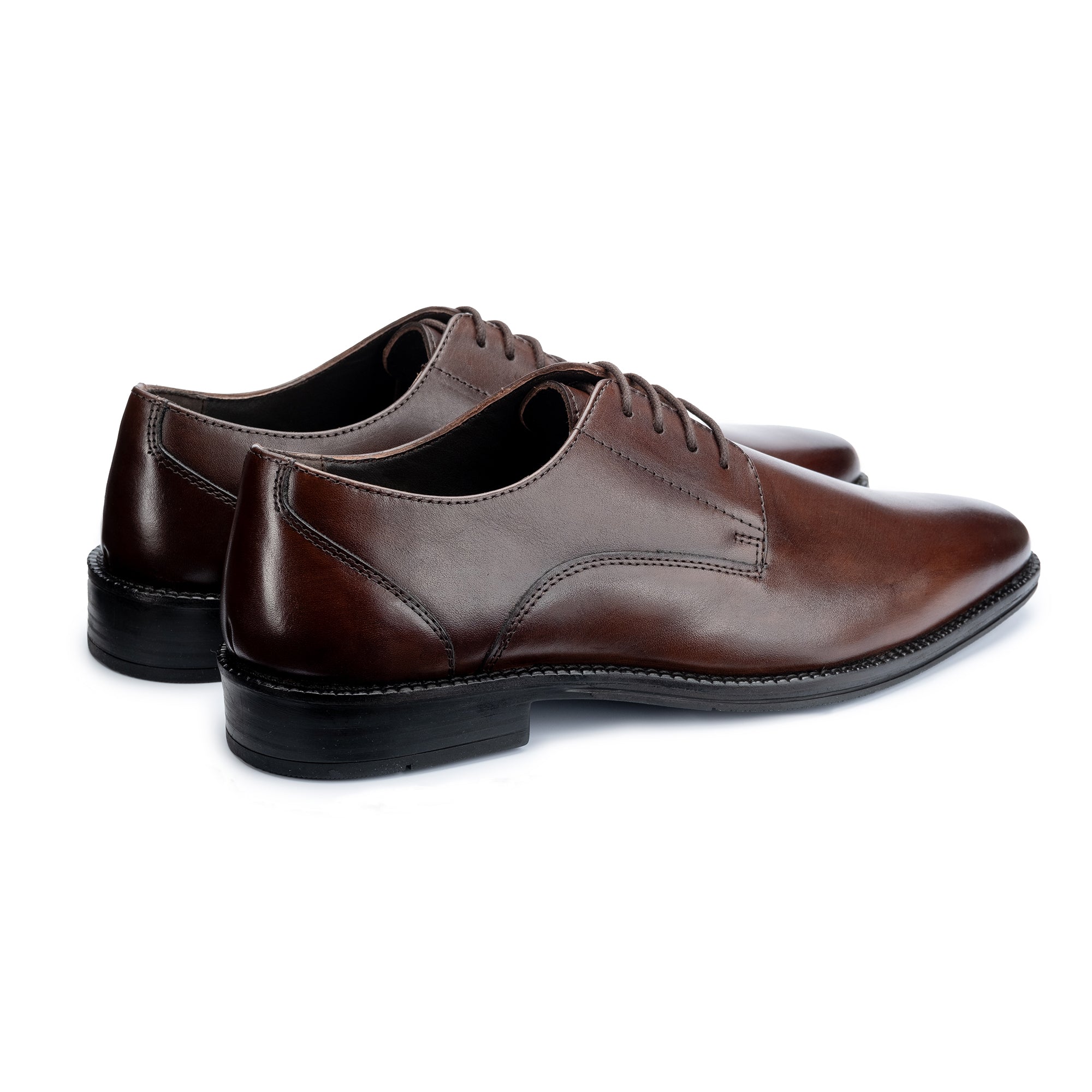
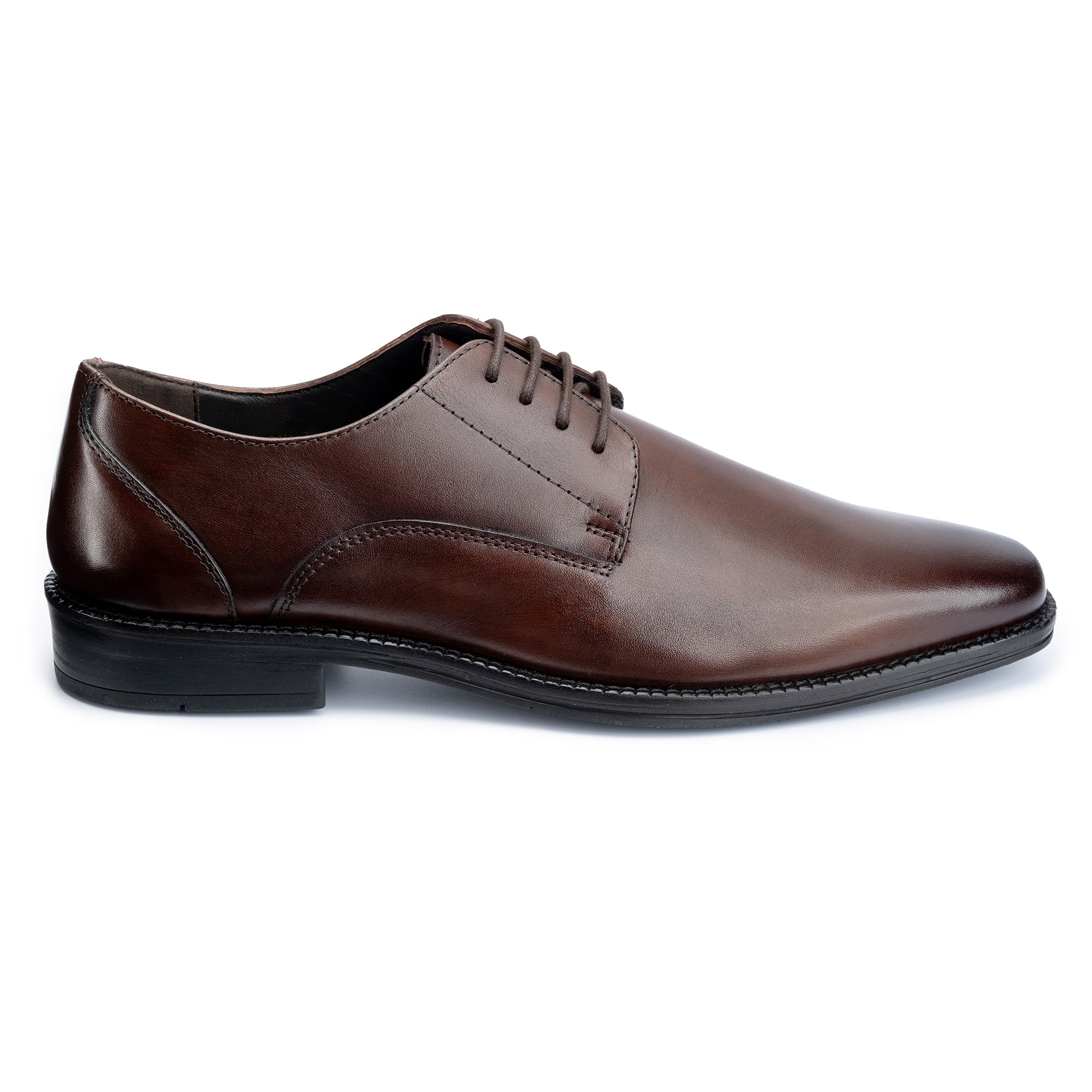
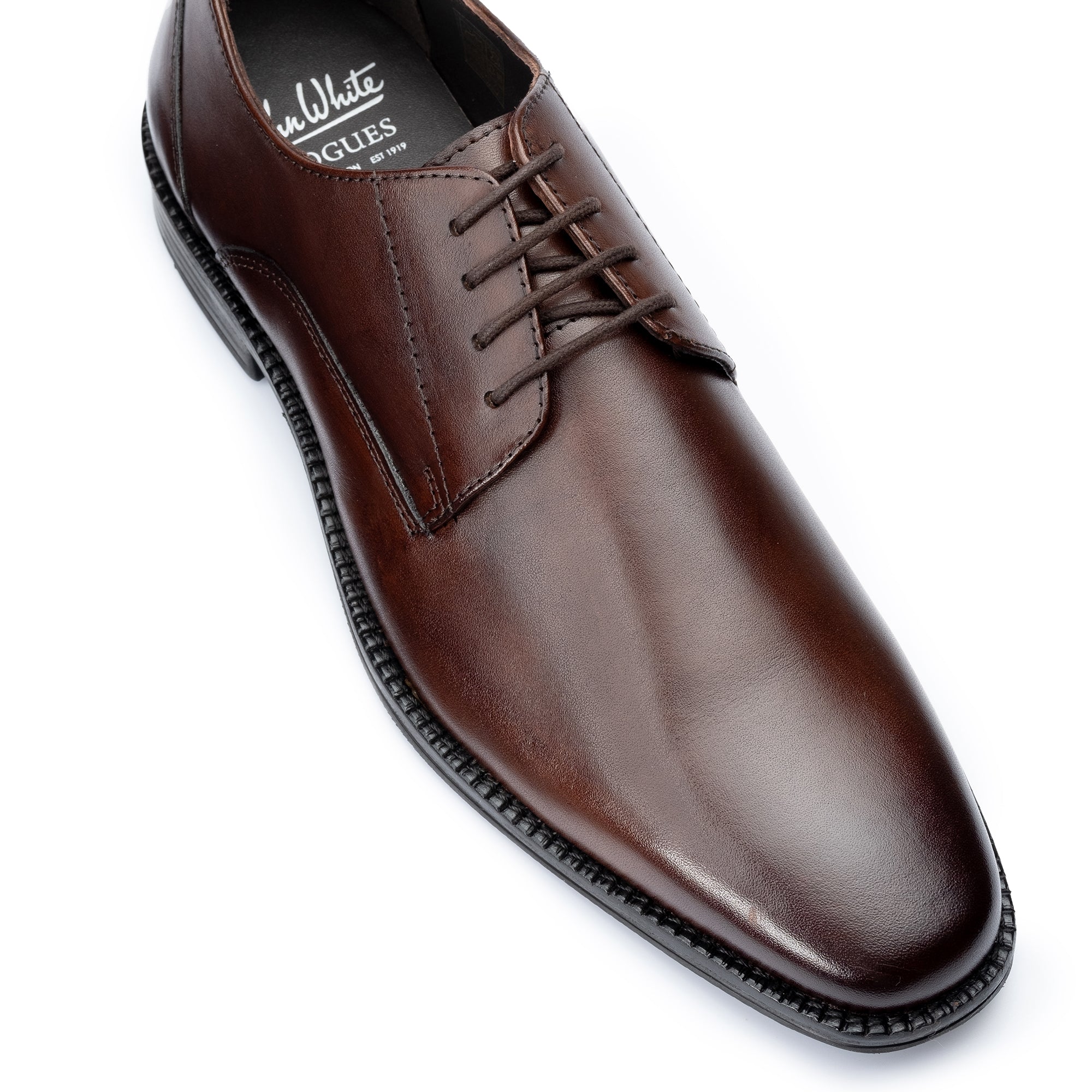
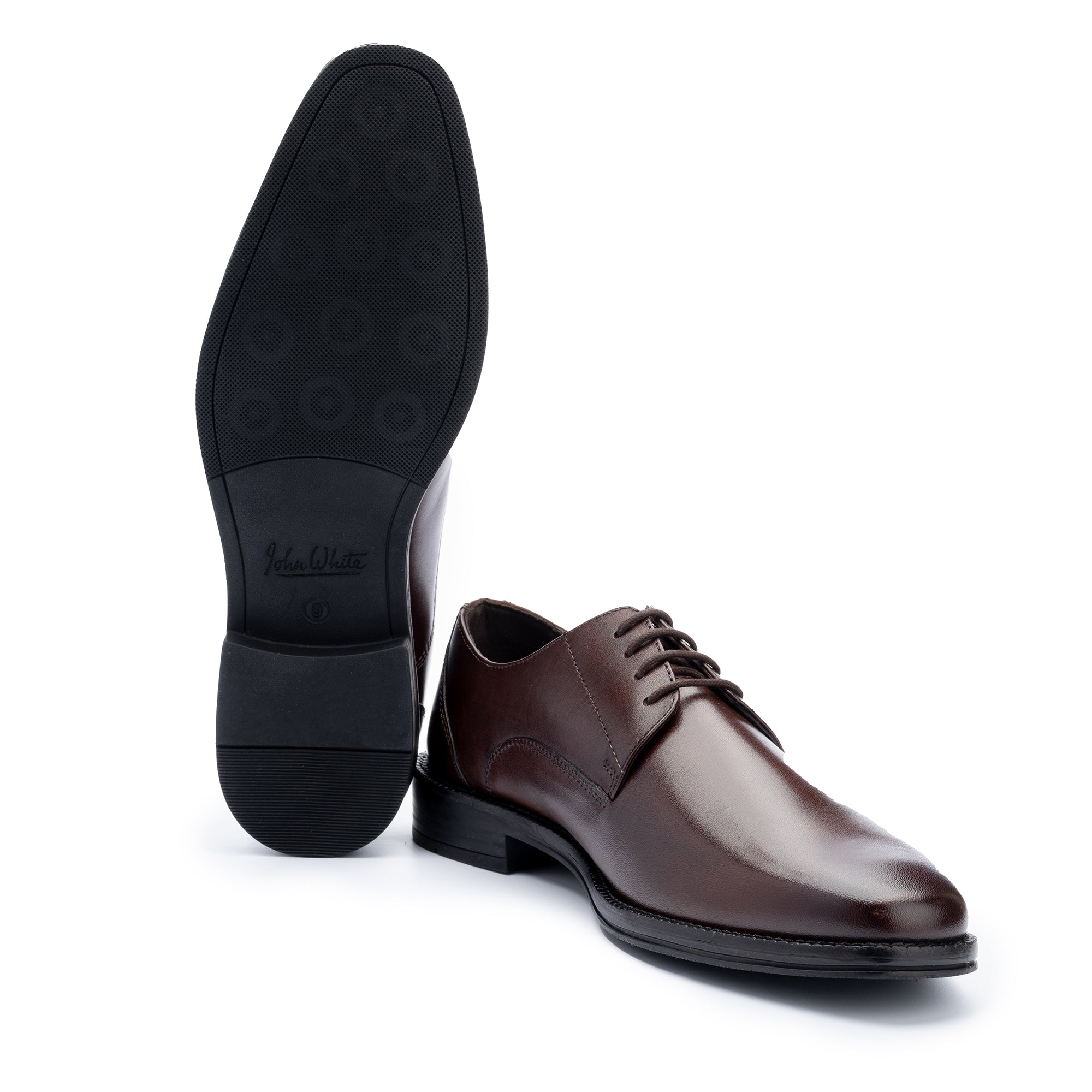
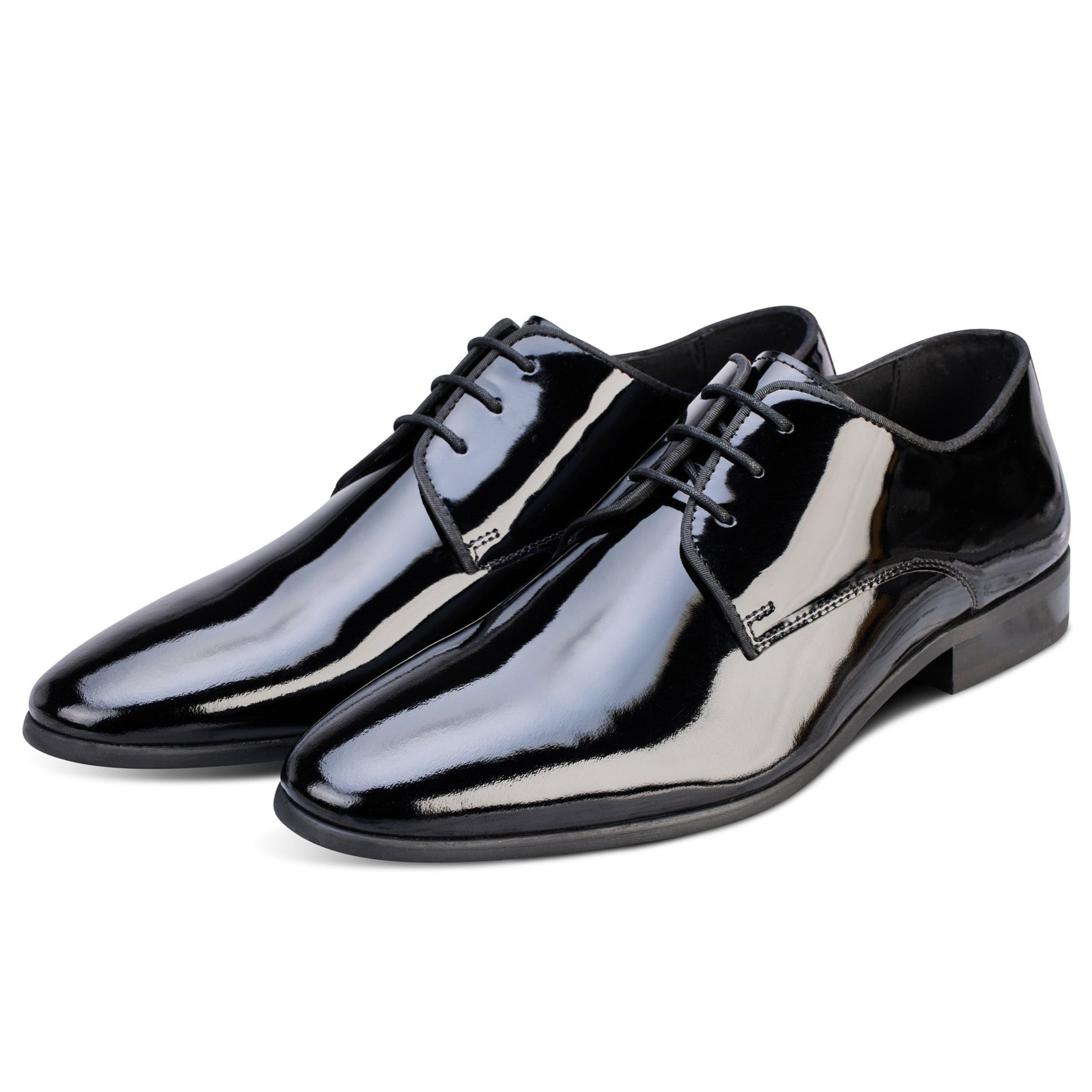
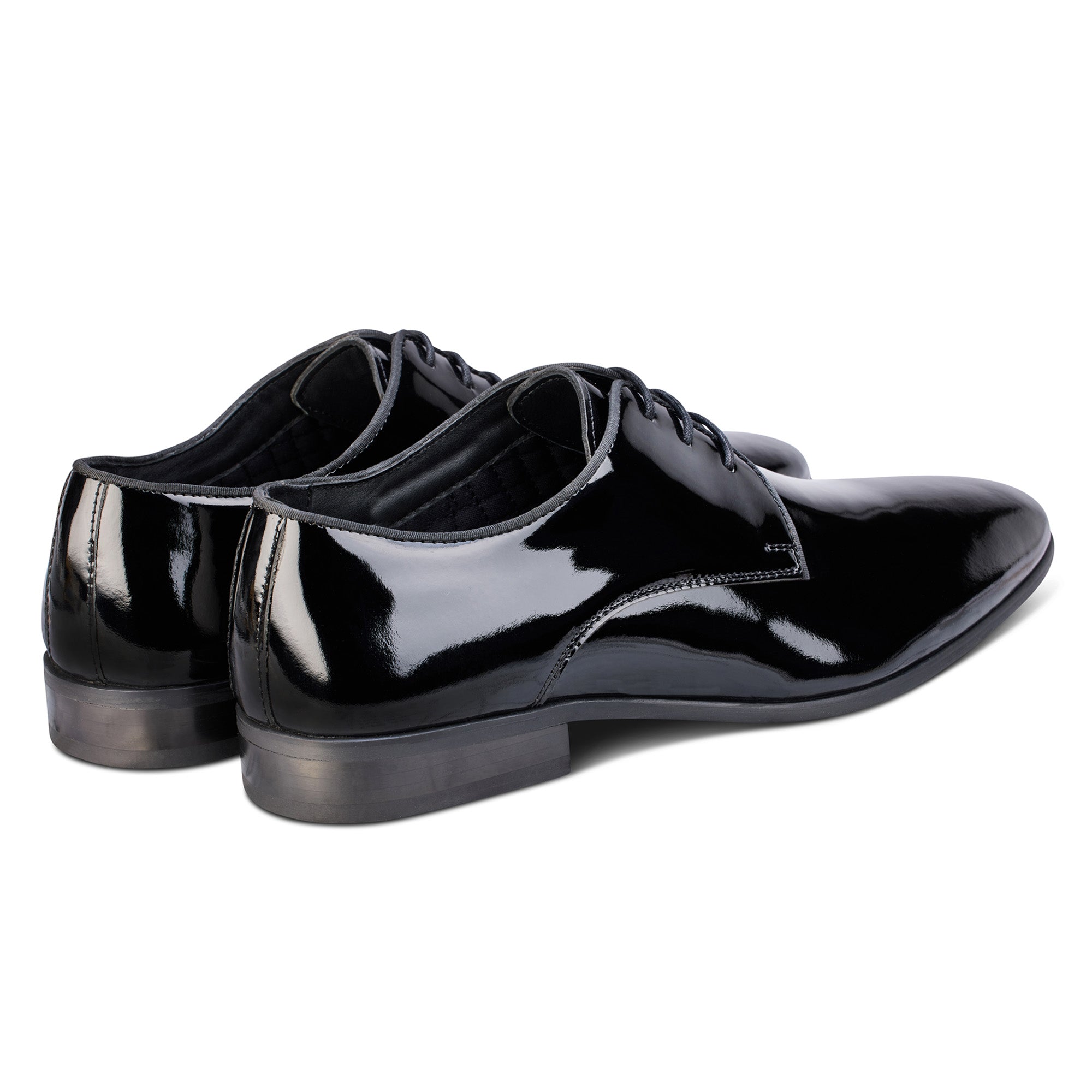
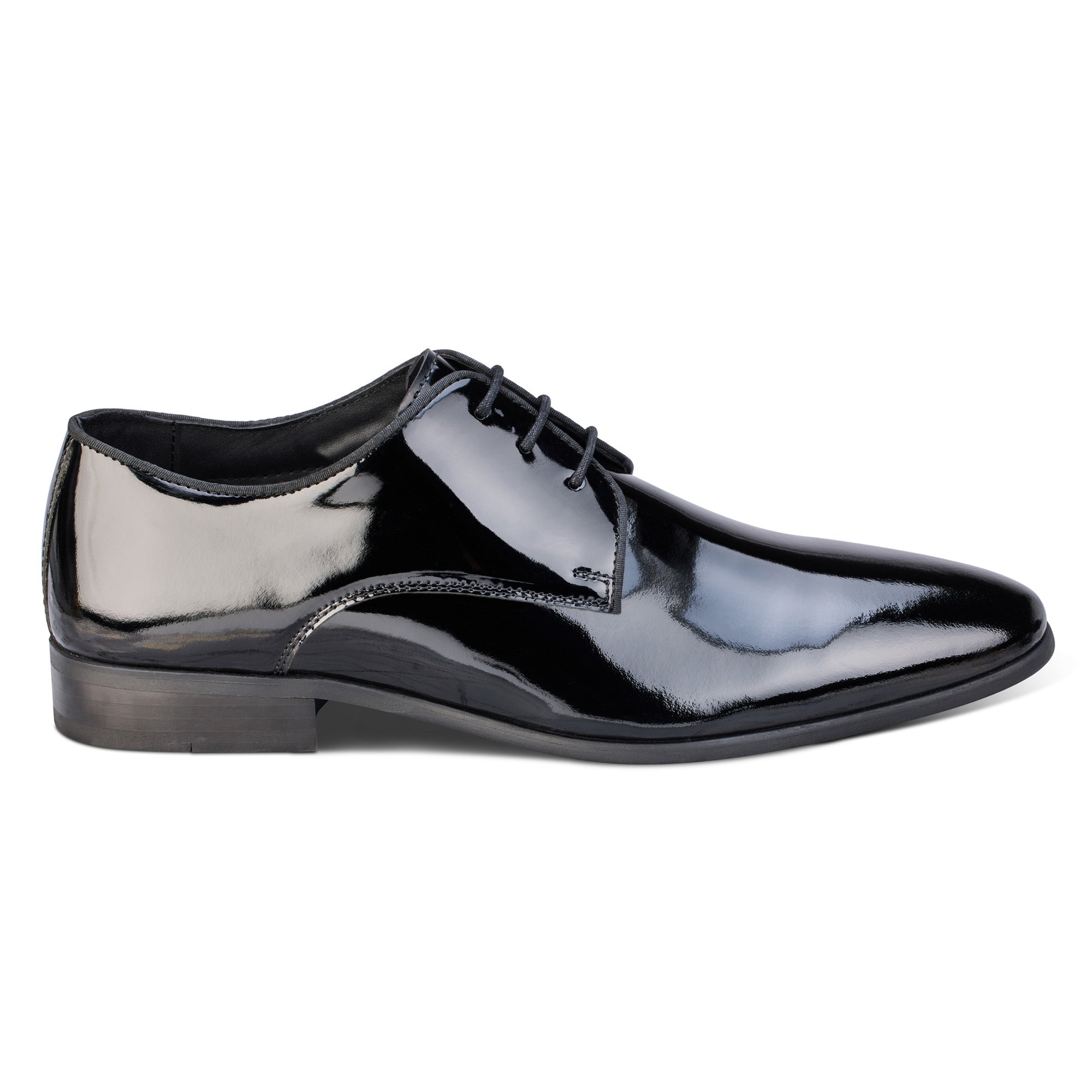
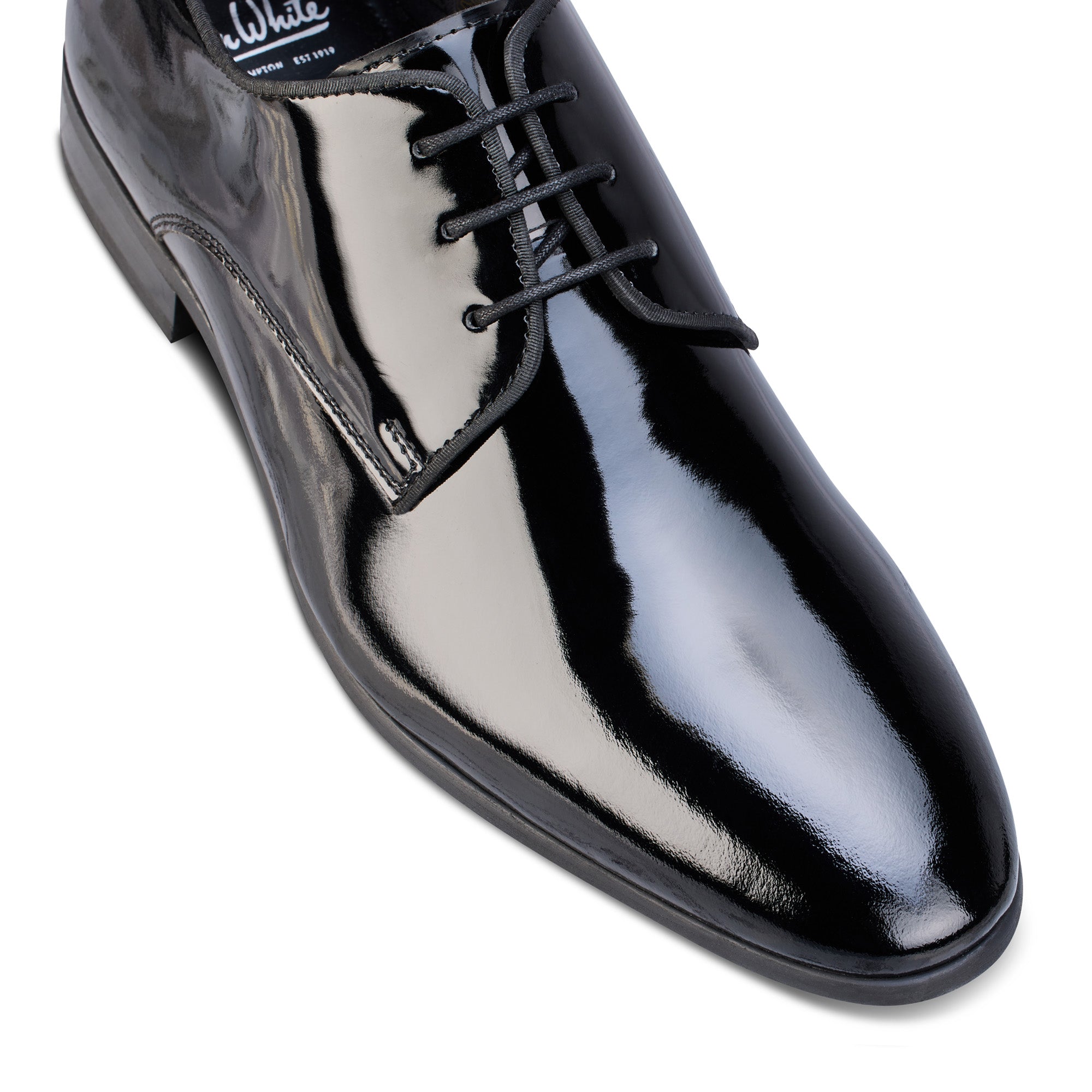
A brogue is a leather shoe defined by decorative perforations along the seams, a pinked or serrated edge, and in fuller configurations, a wingtip or medallion detailing punched across the toe. A plain derby is the same open-lacing shoe construction — quarters stitched over the vamp for a wider, more accommodating throat — without any of this ornamentation.
The derby construction (also called a Gibson in traditional shoemaking) predates the brogue's arrival in town wear by several decades. As documented by the Victoria and Albert Museum's fashion and textile collections, broguing originated in 16th-century Ireland and Scotland, where the perforations served as drainage holes for bog workers. British country gentlemen adopted the style for field sports in the late 19th century; by the 1930s it had entered the professional wardrobe entirely.
The key distinction: a brogue is a decorated derby. The construction is identical. The visual weight — and its effect on formality — is not.
A plain derby and a brogue derby are structurally the same shoe; the difference is decoration, and decoration directly affects how formally each reads.
How Does Each Style Sit on the Formality Spectrum?
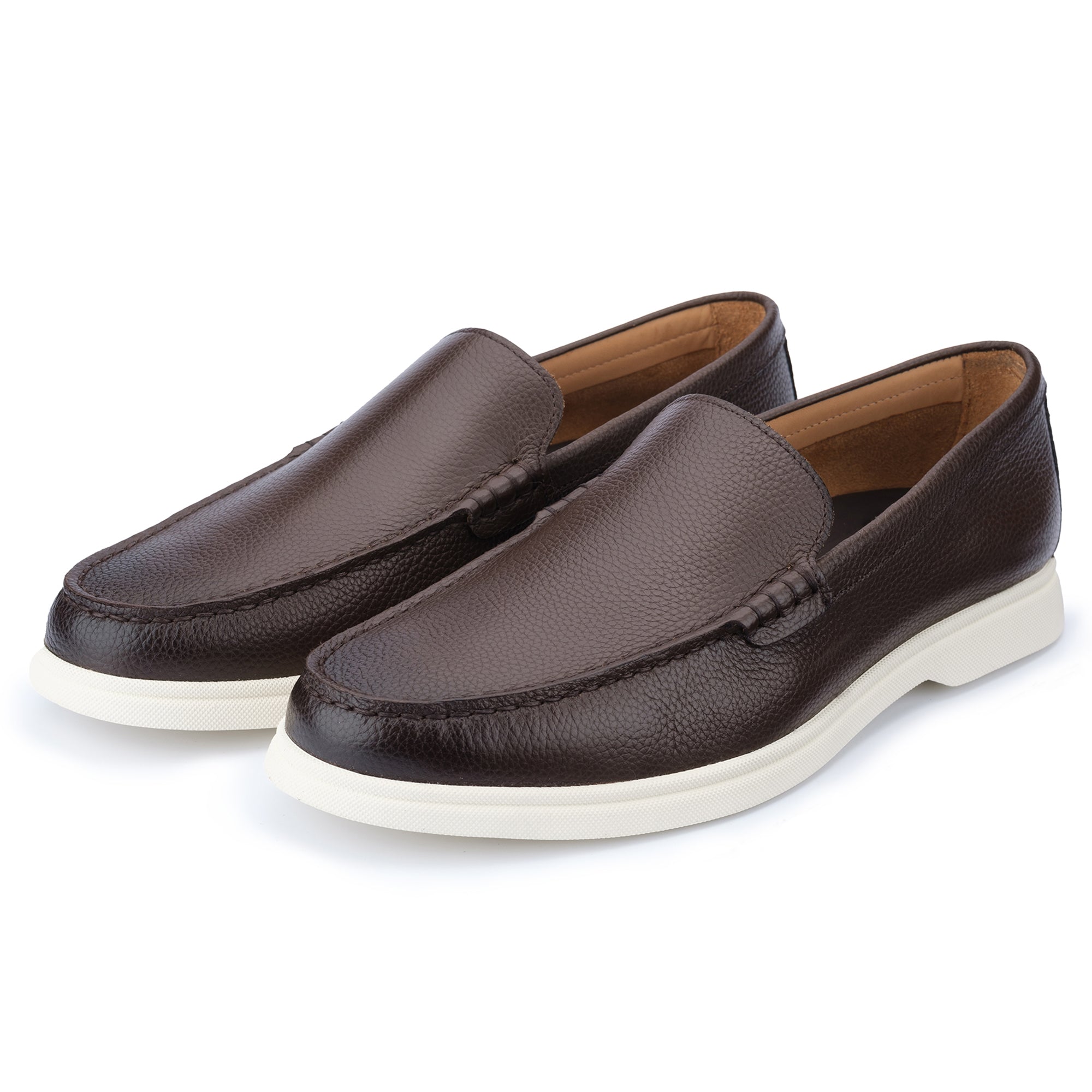
The formality spectrum for leather shoes places wholecuts and plain Oxfords at the formal end, and suede loafers at the casual end. Derbies occupy the productive middle ground — less formal than a closed-lacing Oxford, considerably more formal than a loafer or monk strap.
Within the derby family, decoration reduces formality incrementally:
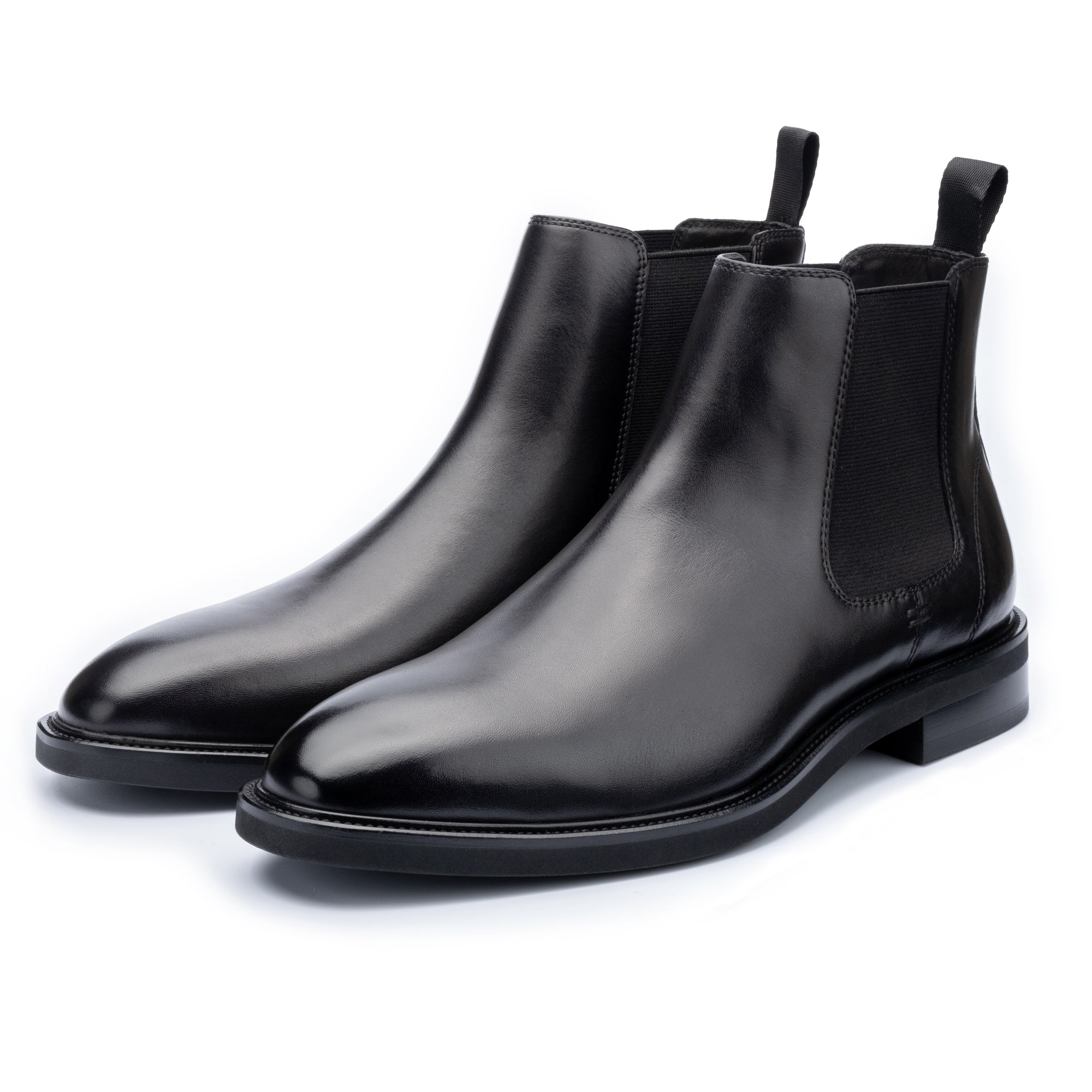
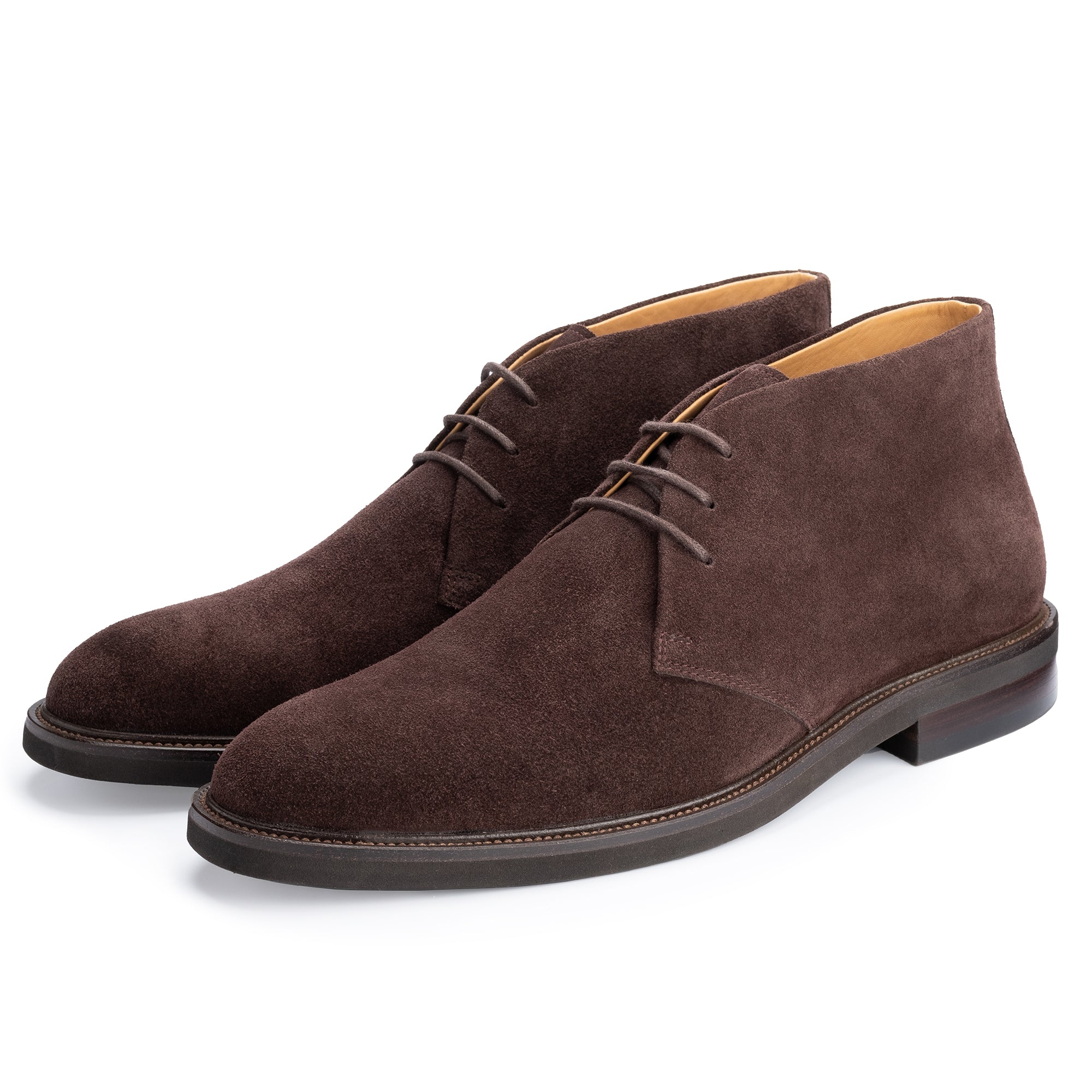
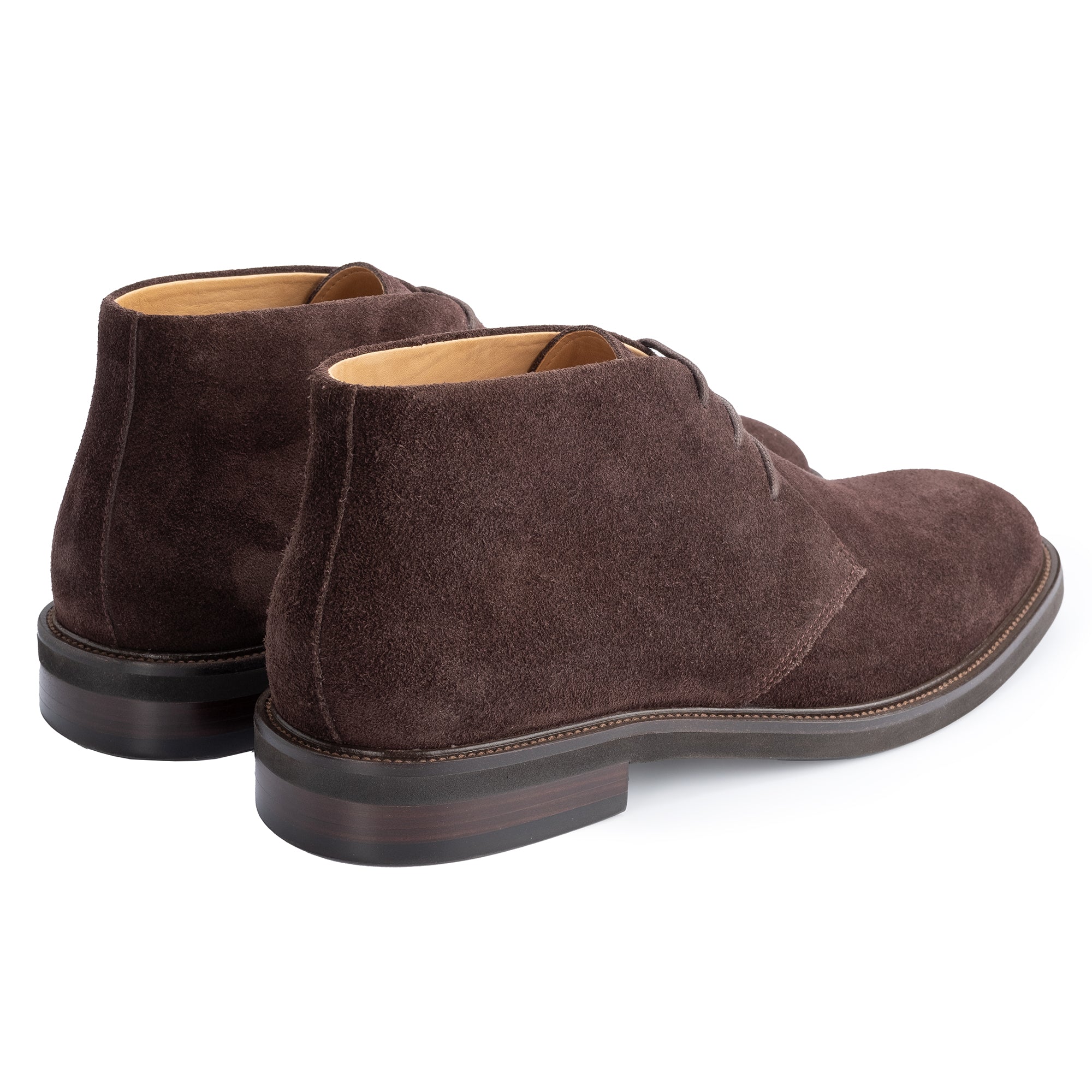
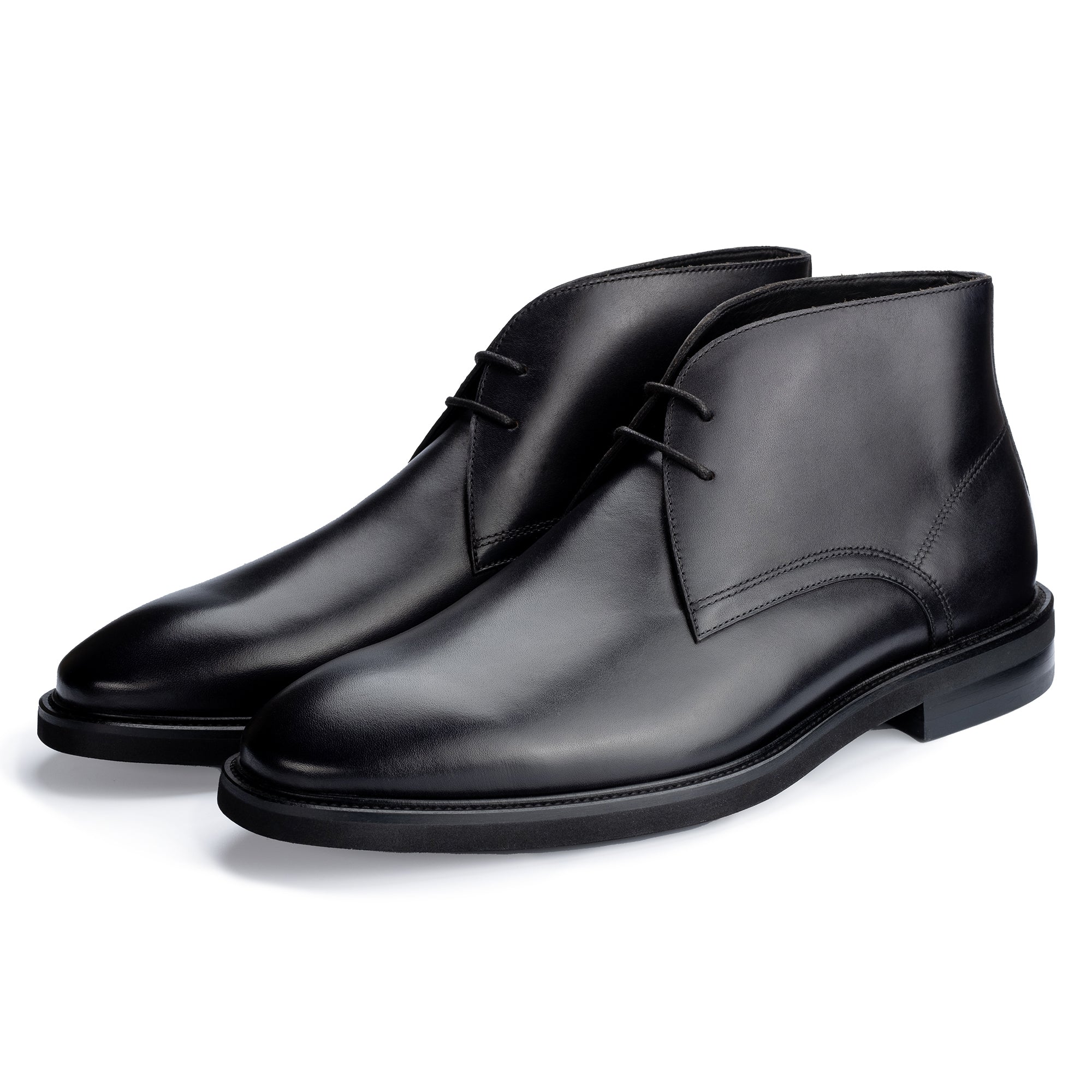
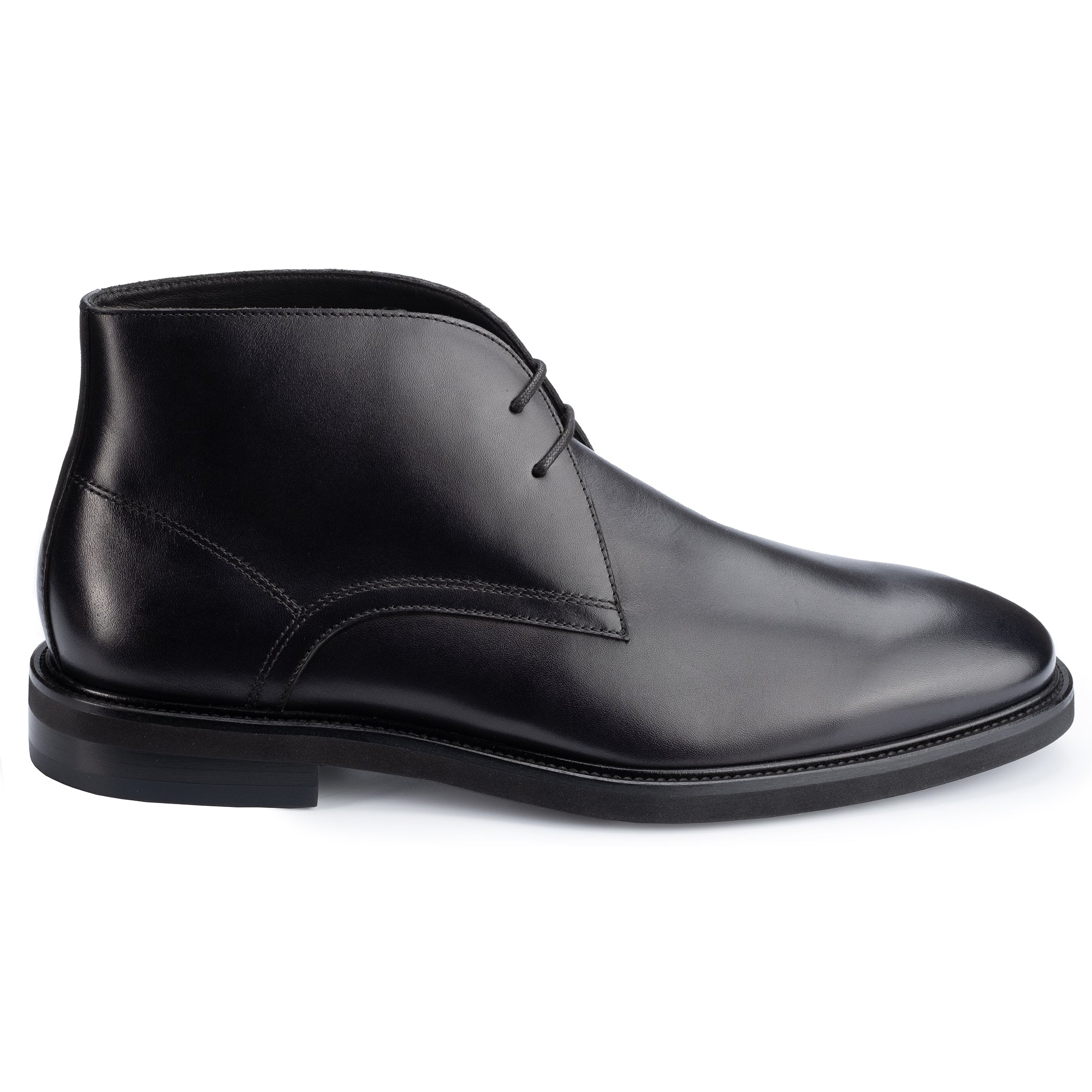
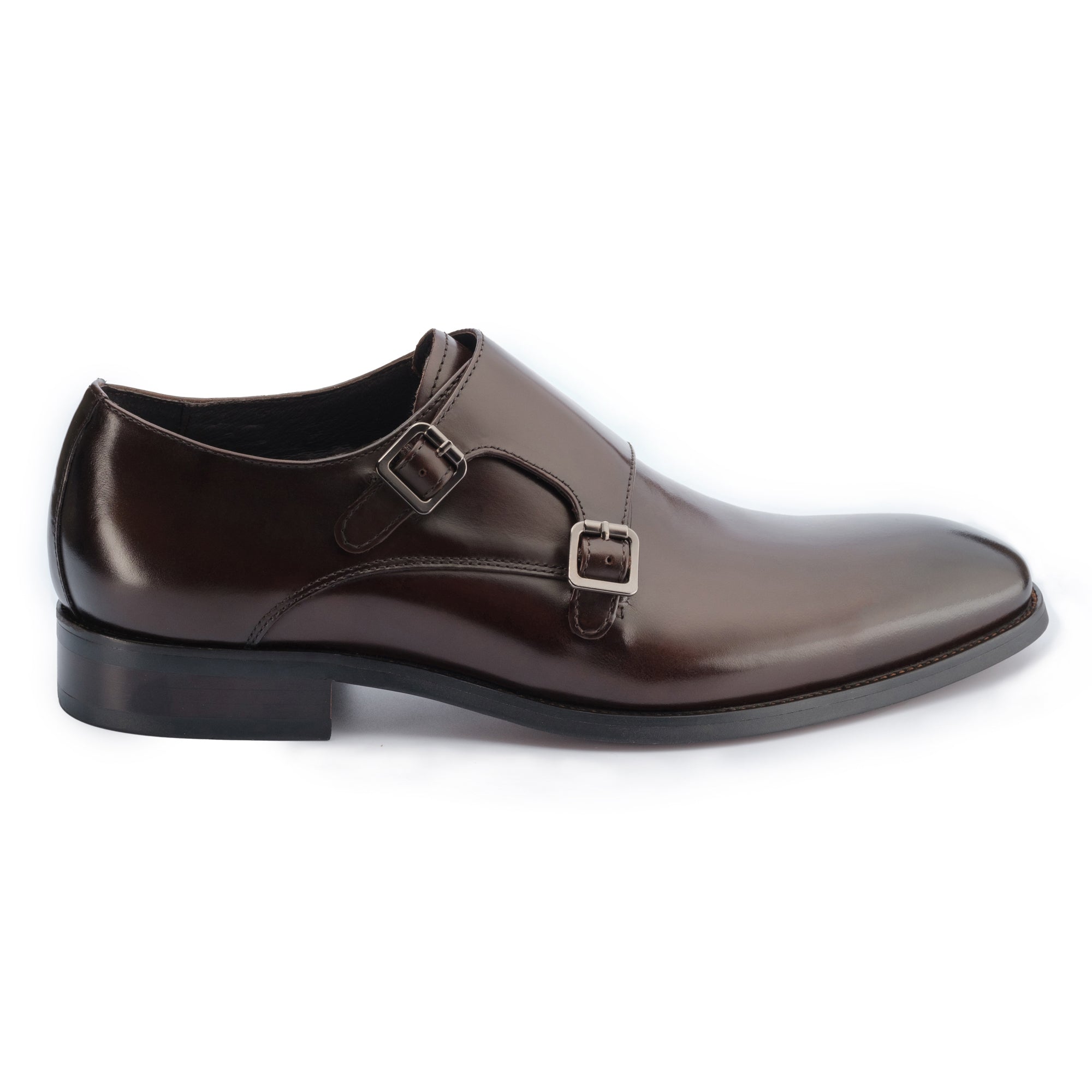
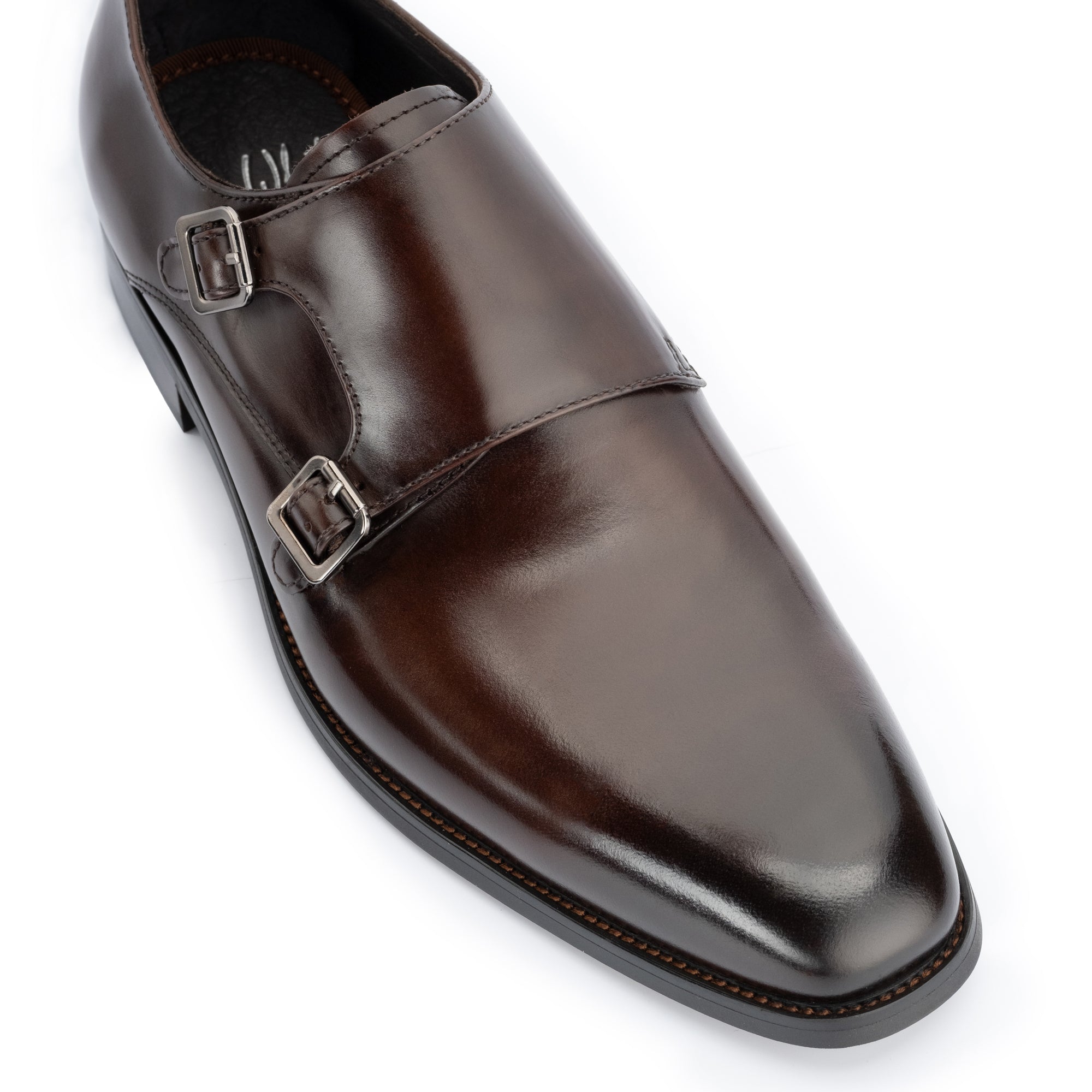
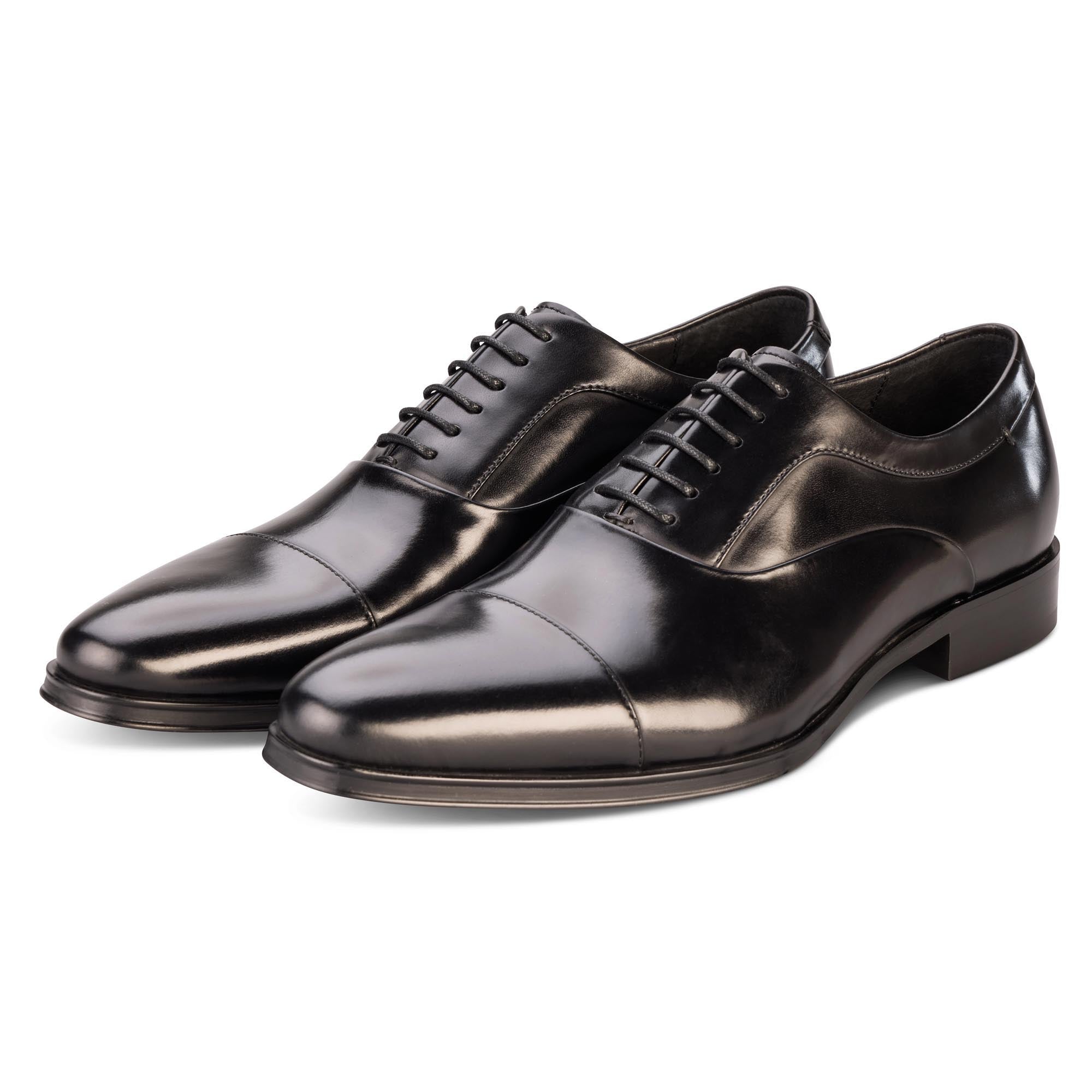
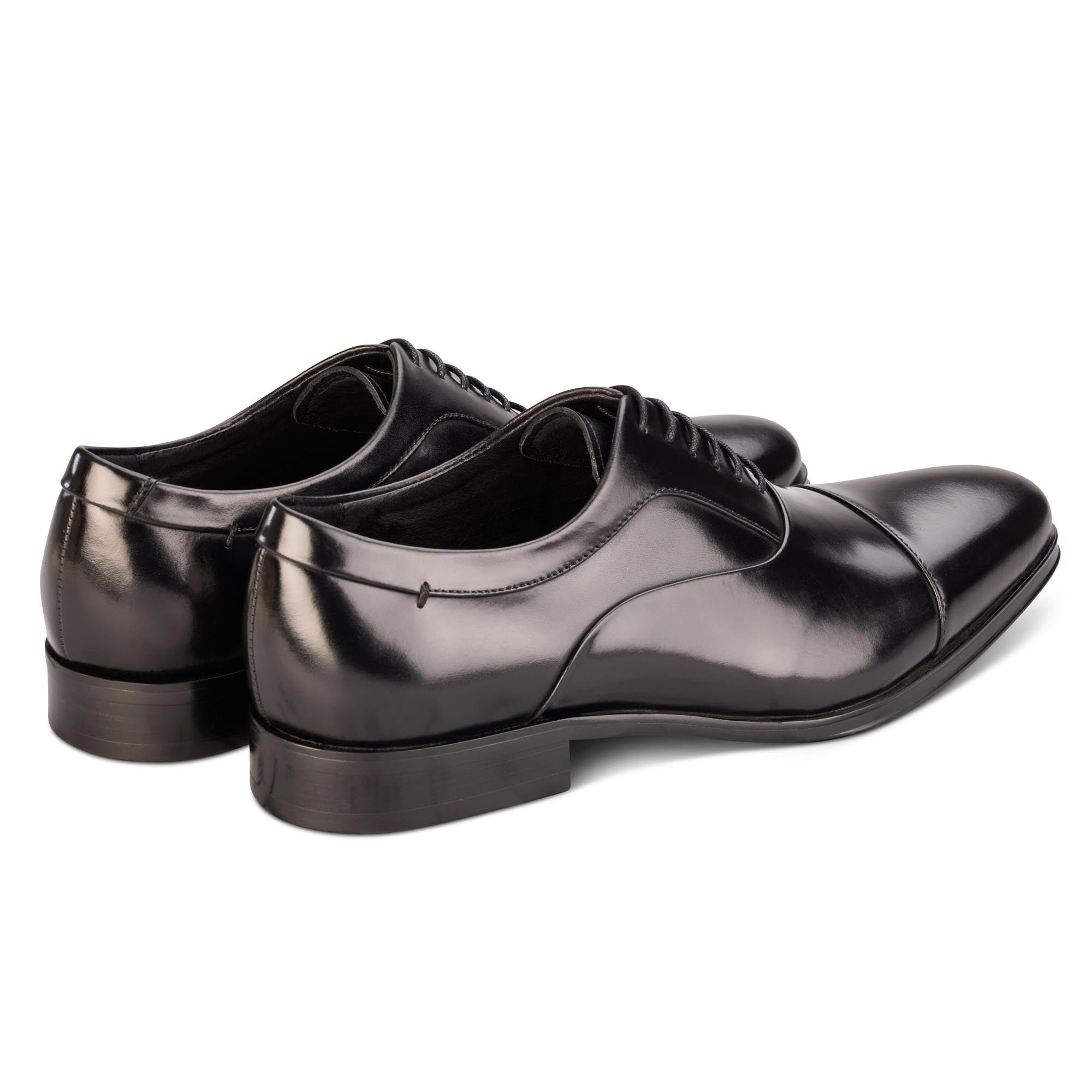
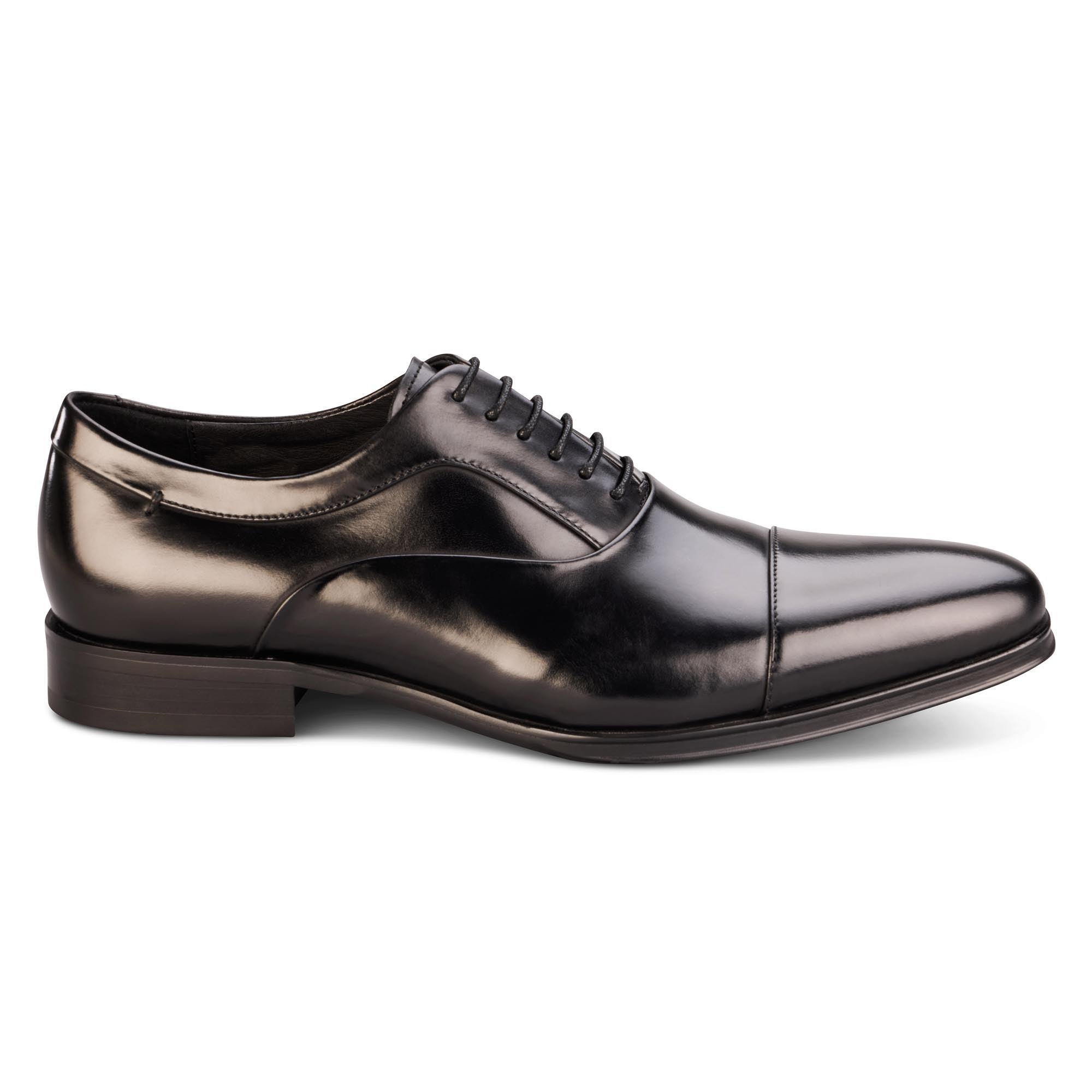
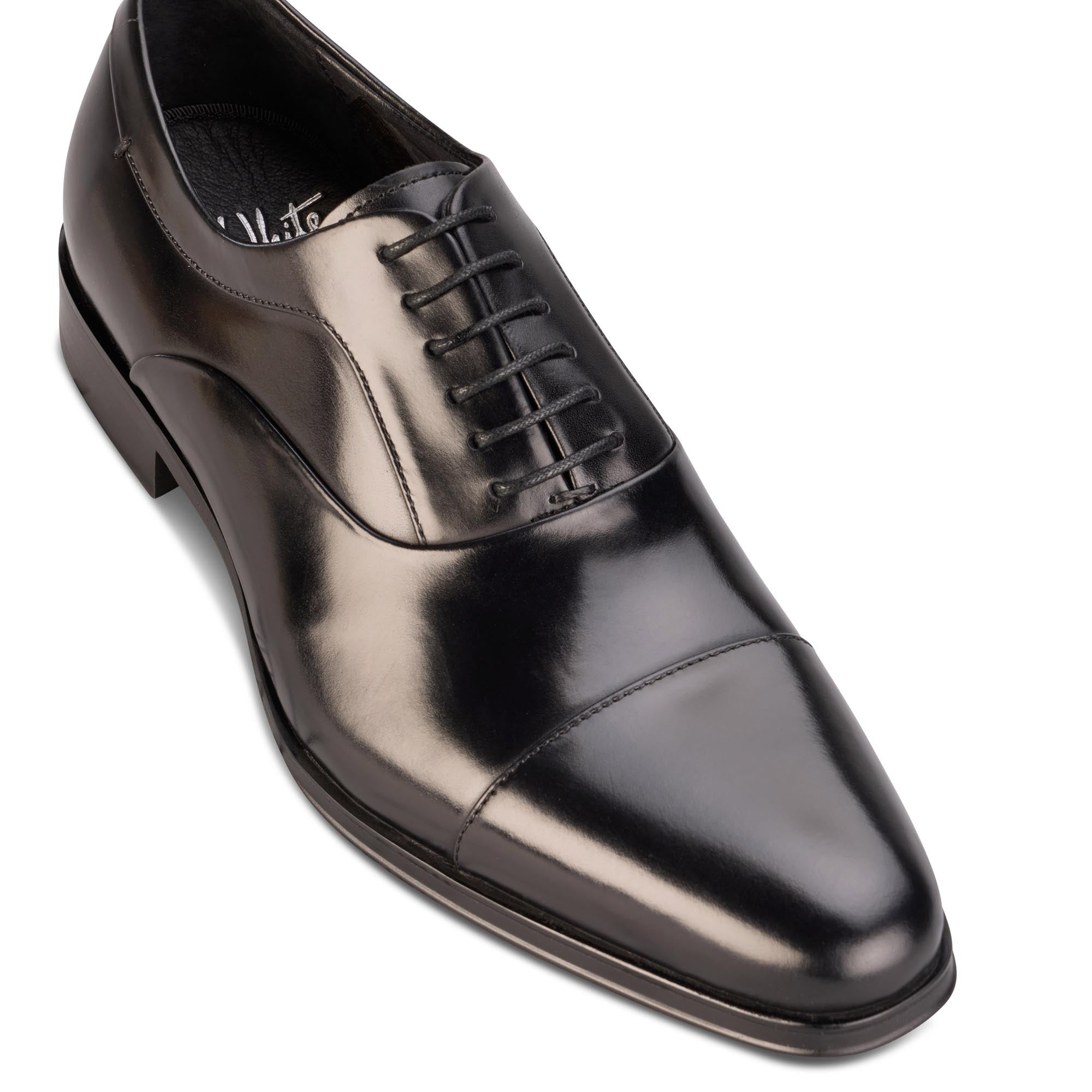
- Plain derby — highest formality. Clean and unadorned; correct for conservative professional environments, formal occasions, and black-tie-adjacent dress codes.
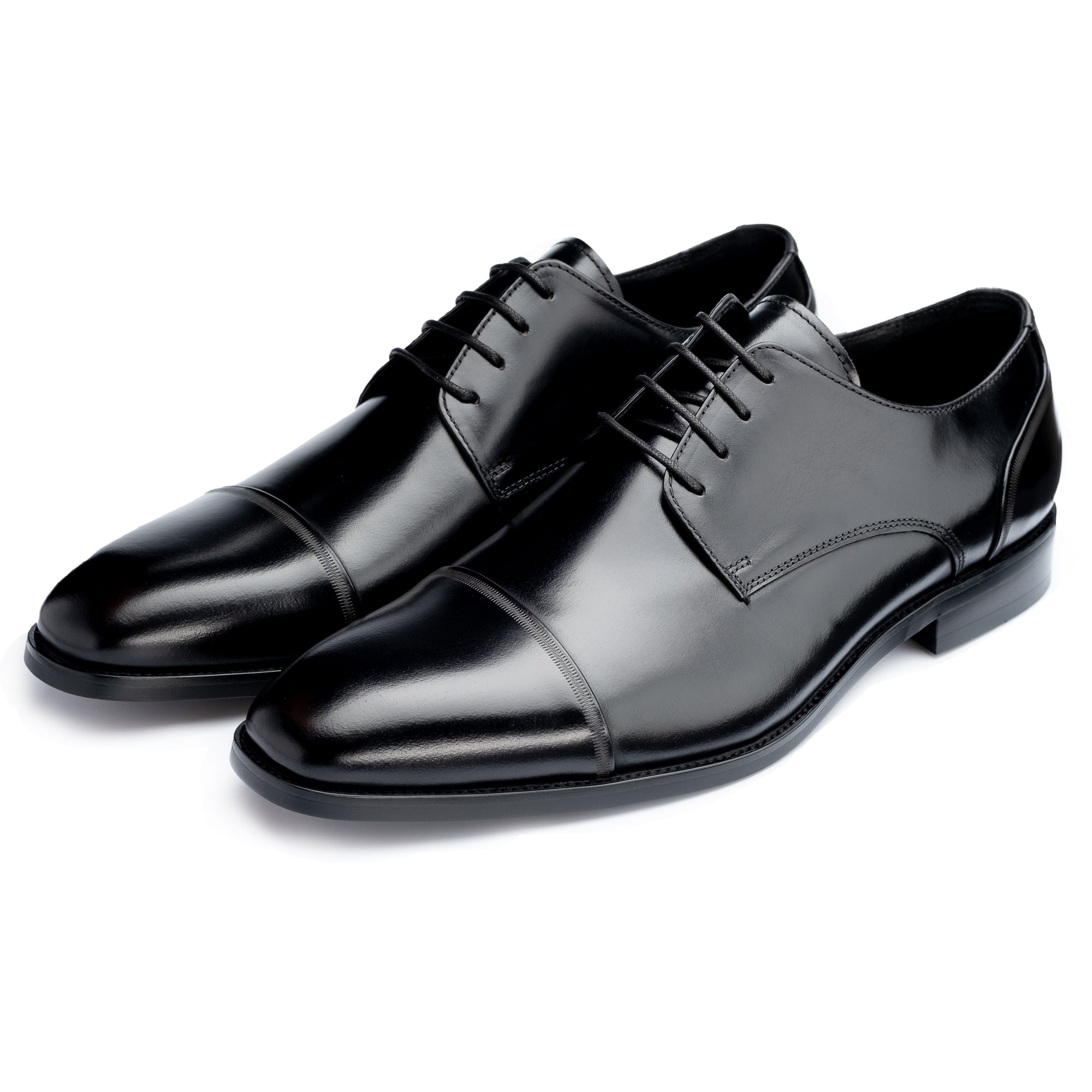
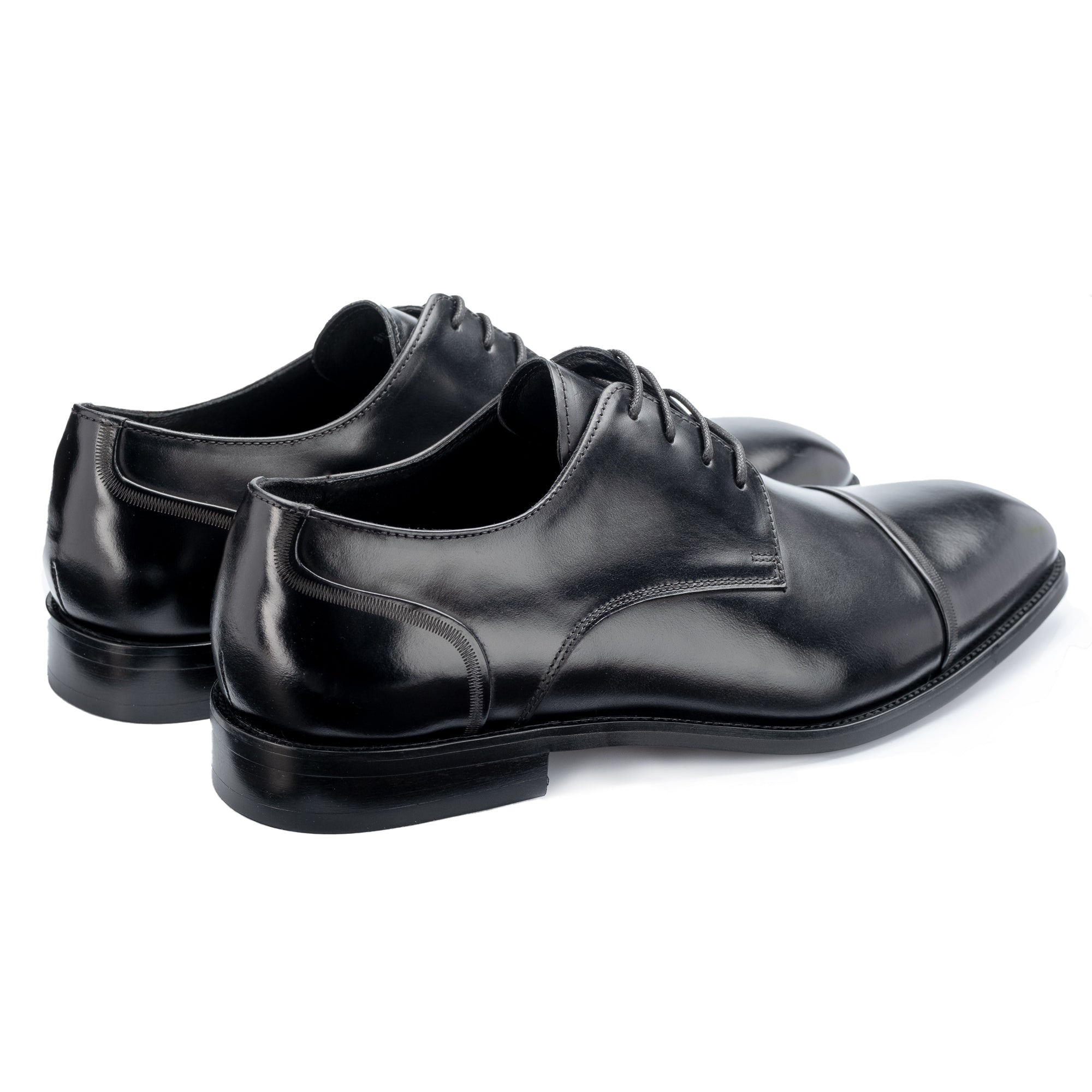
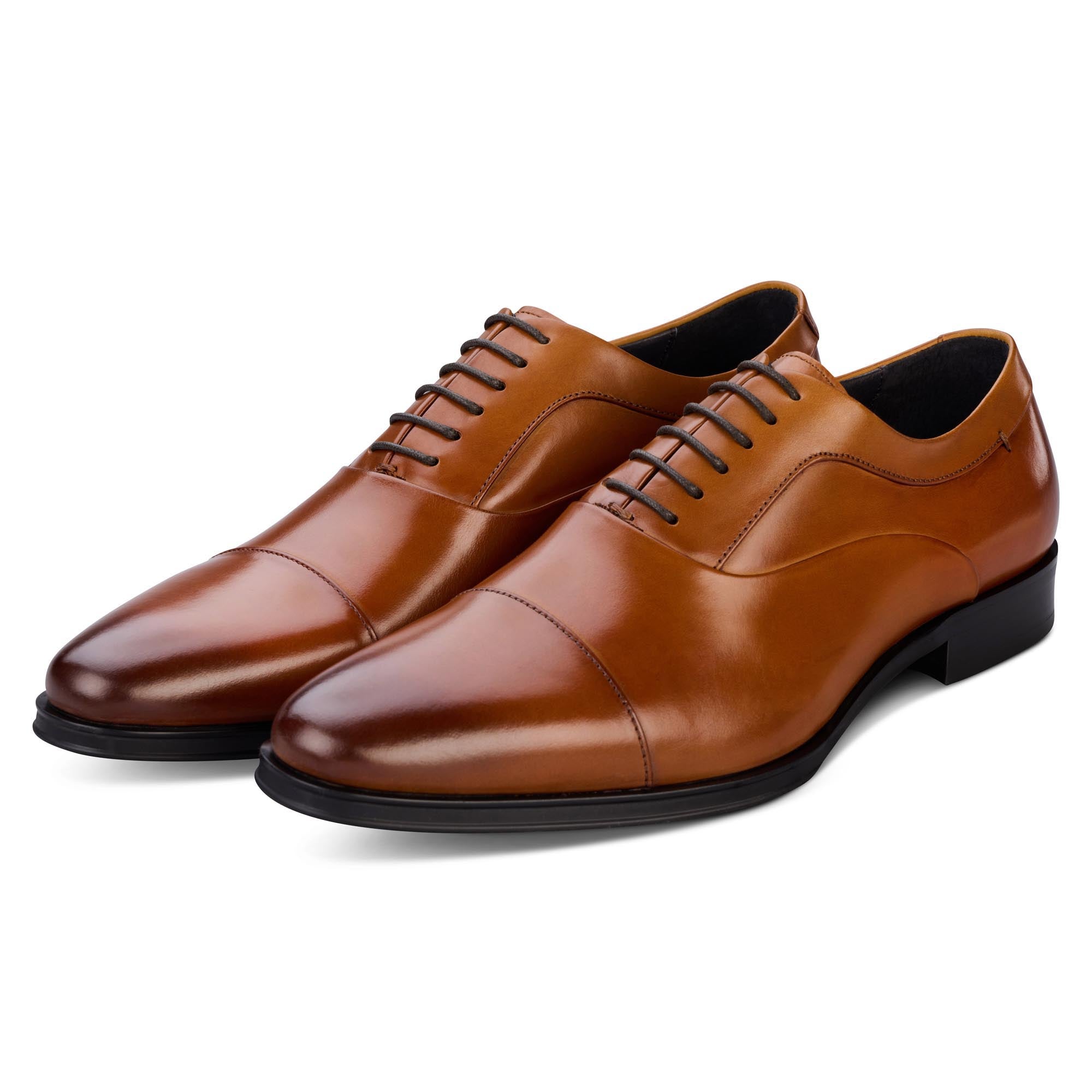
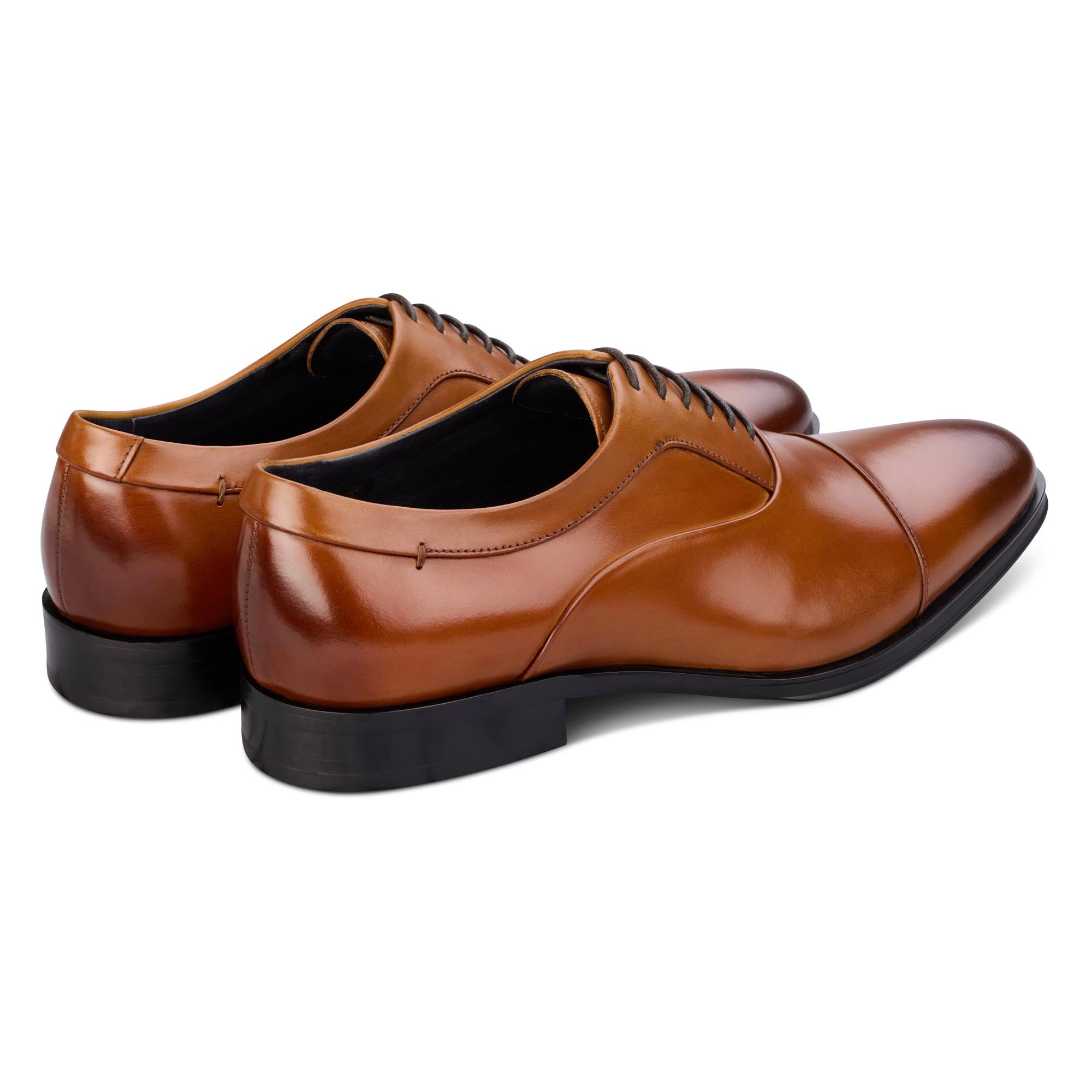
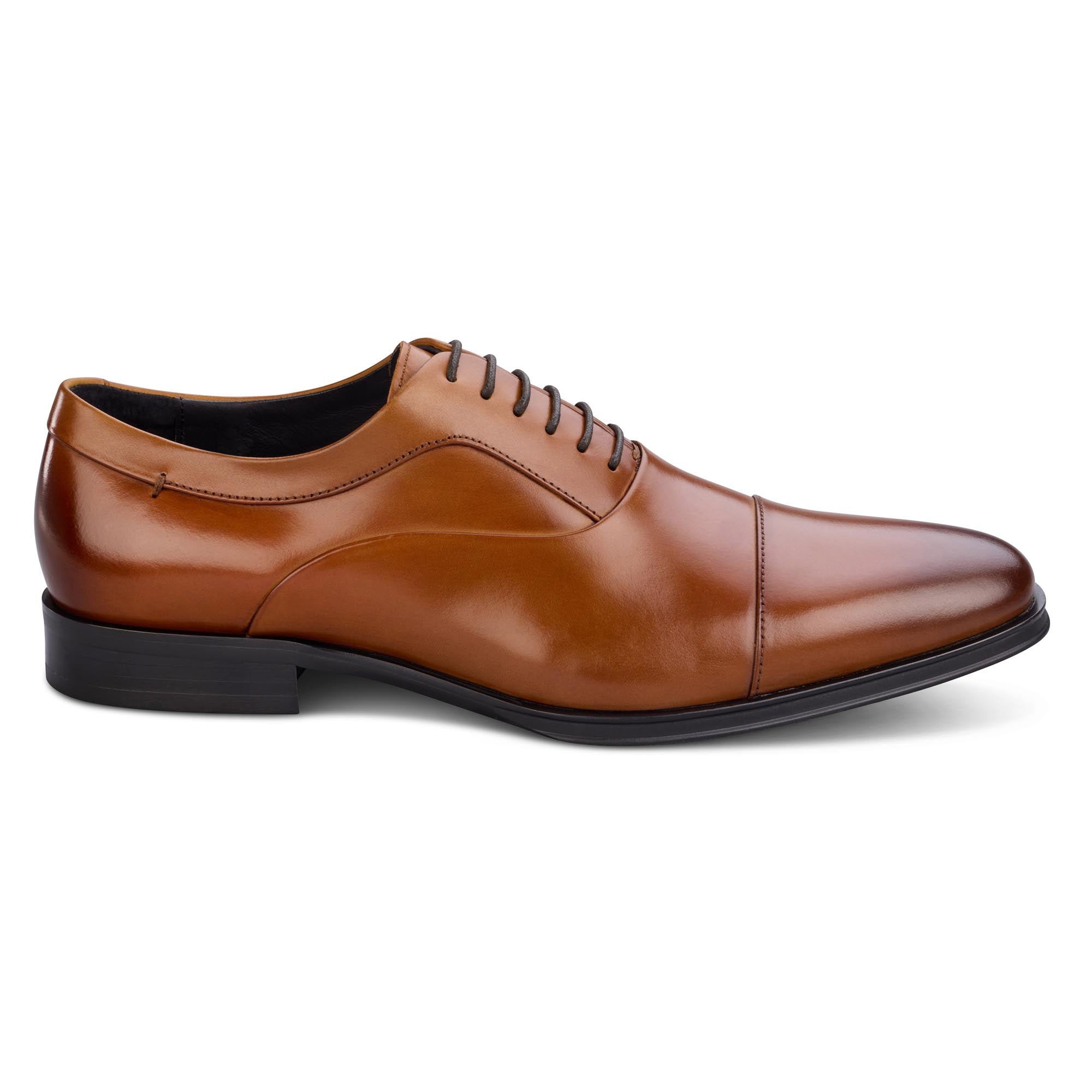
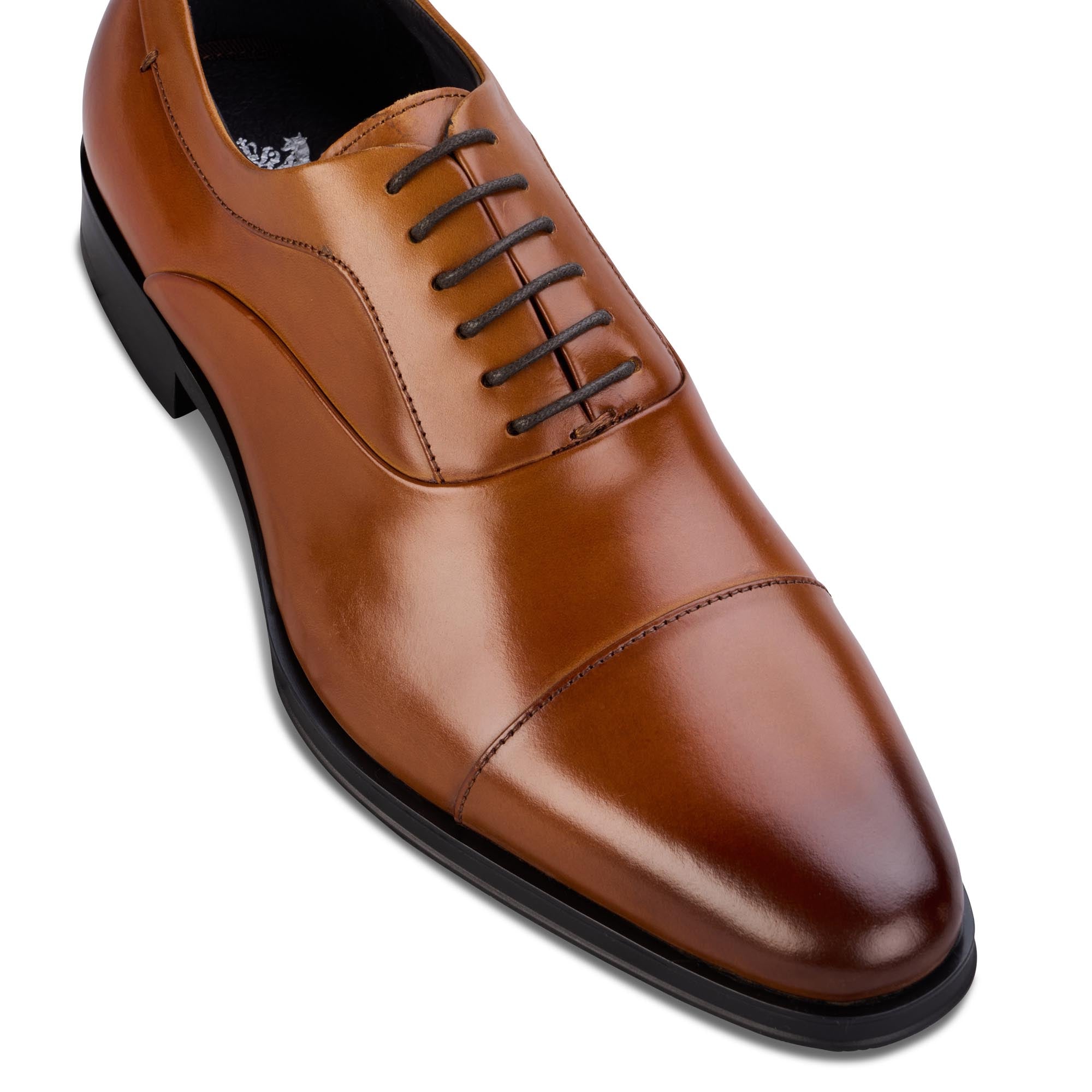
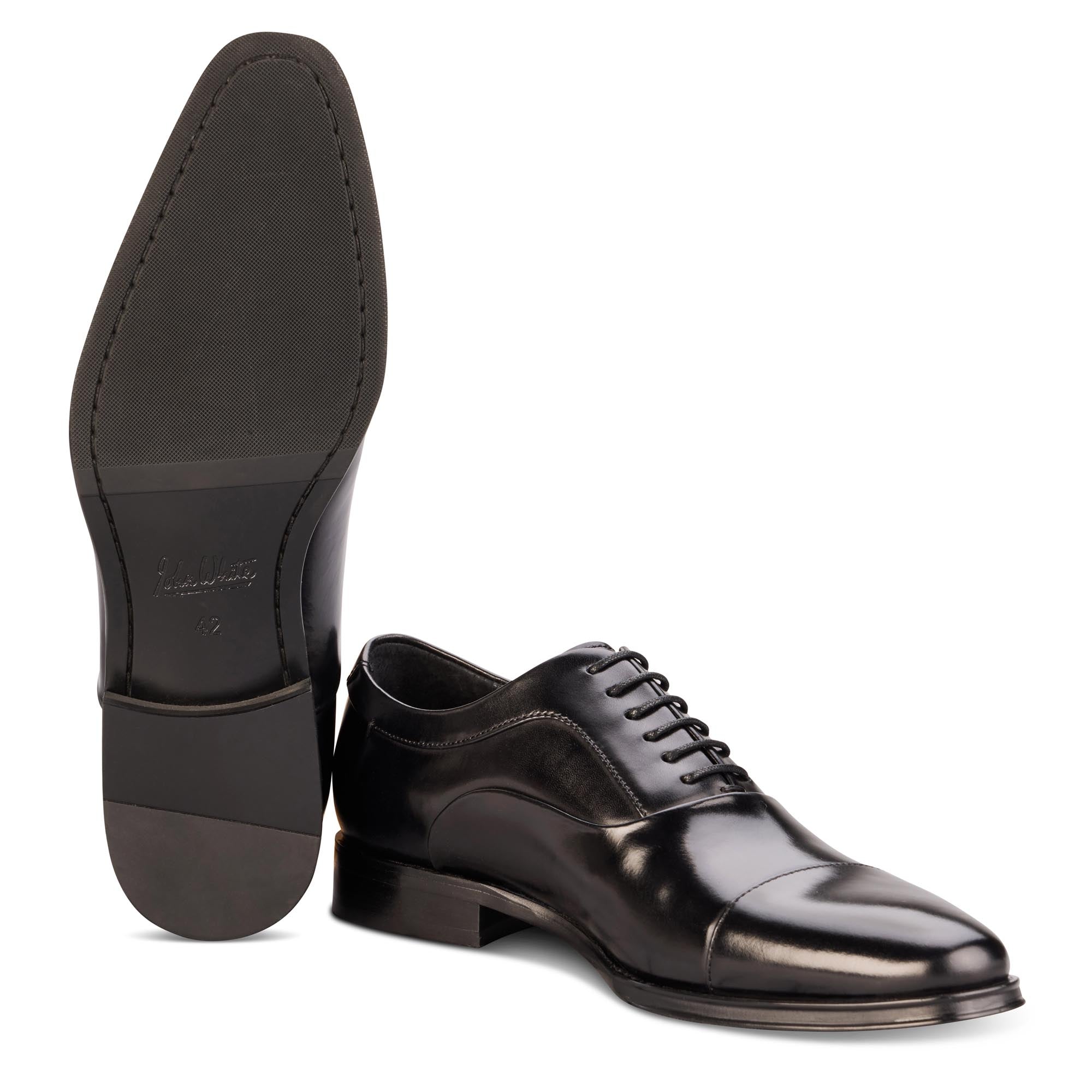
- Cap-toe derby — a single seam across the toe box. Subtle definition without decorative weight.
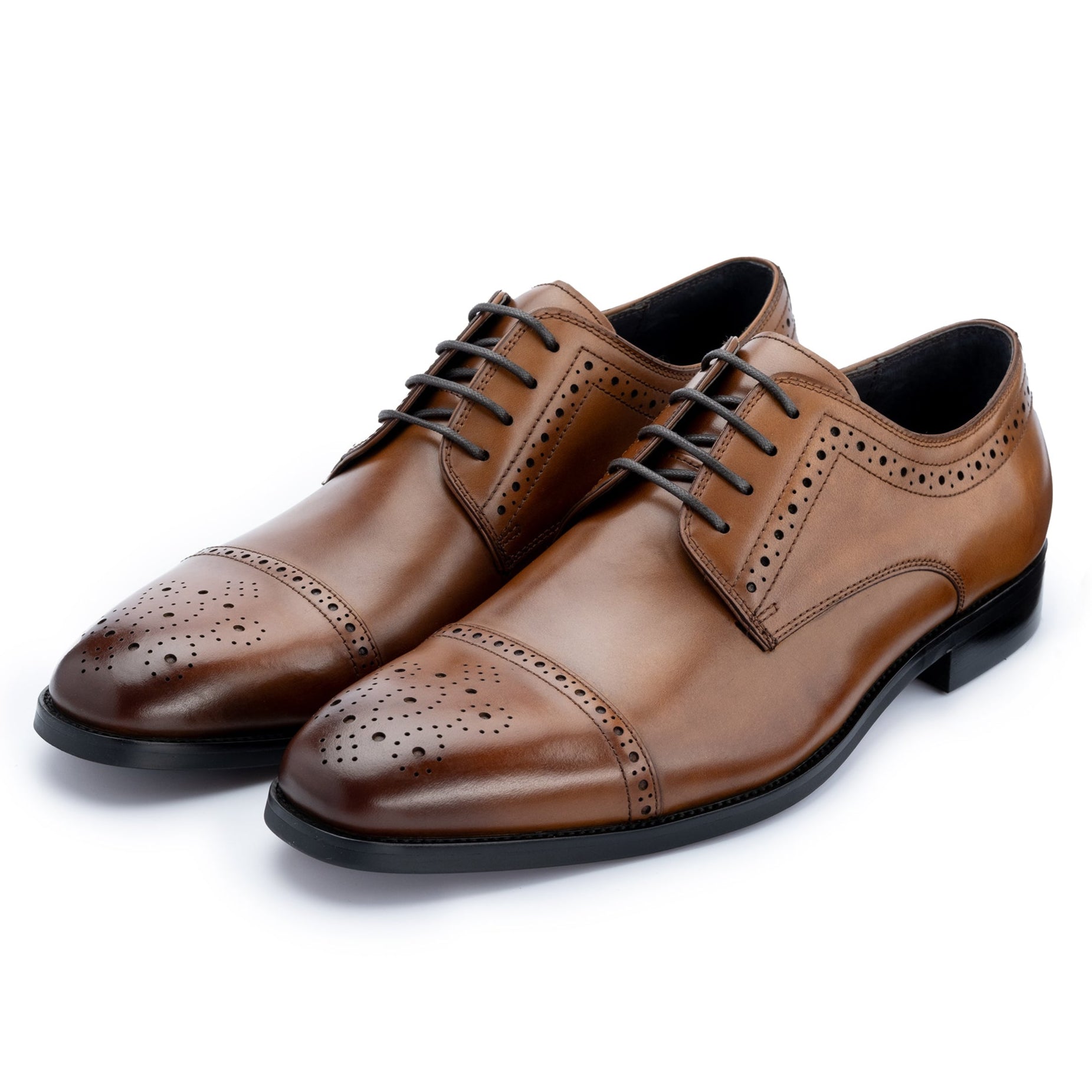
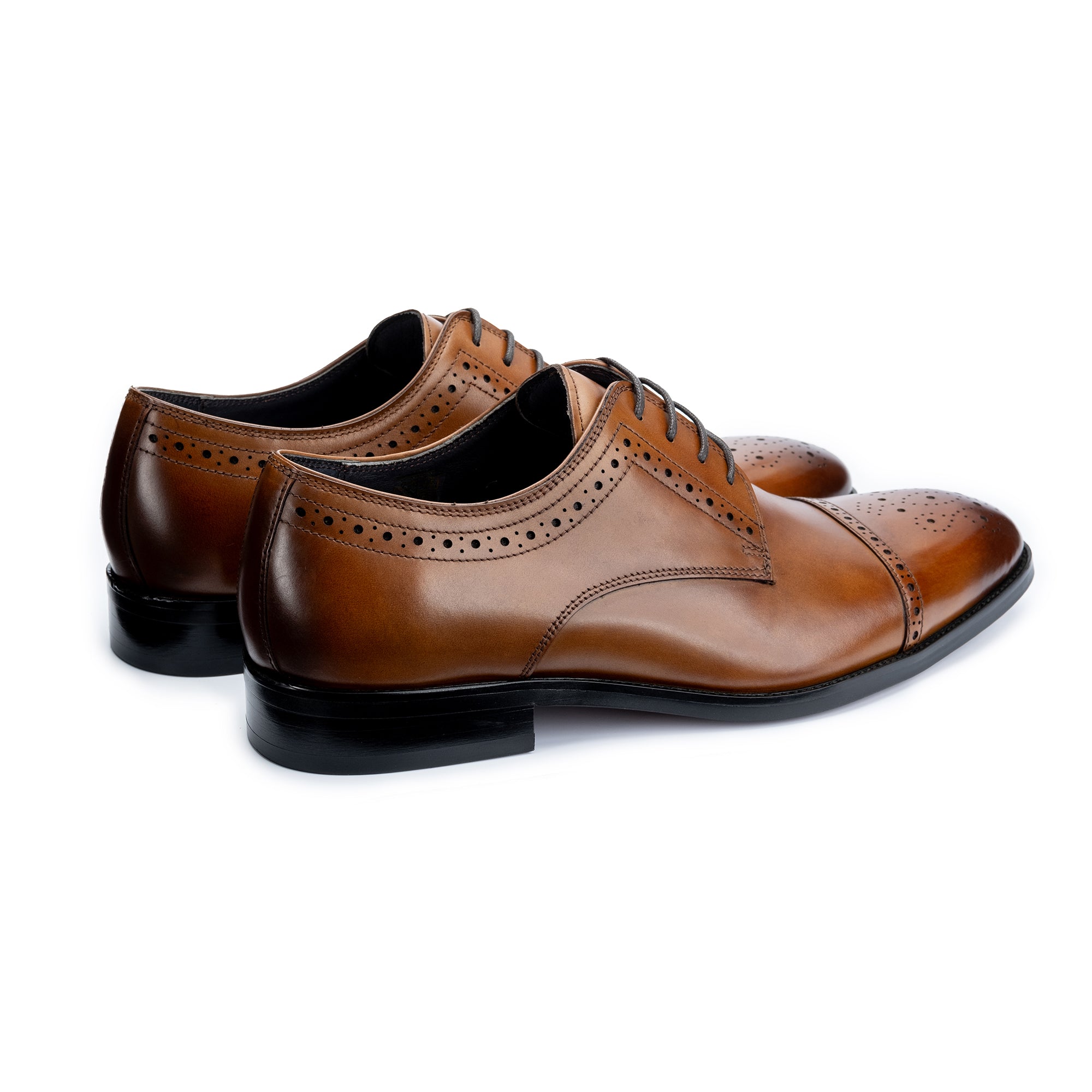
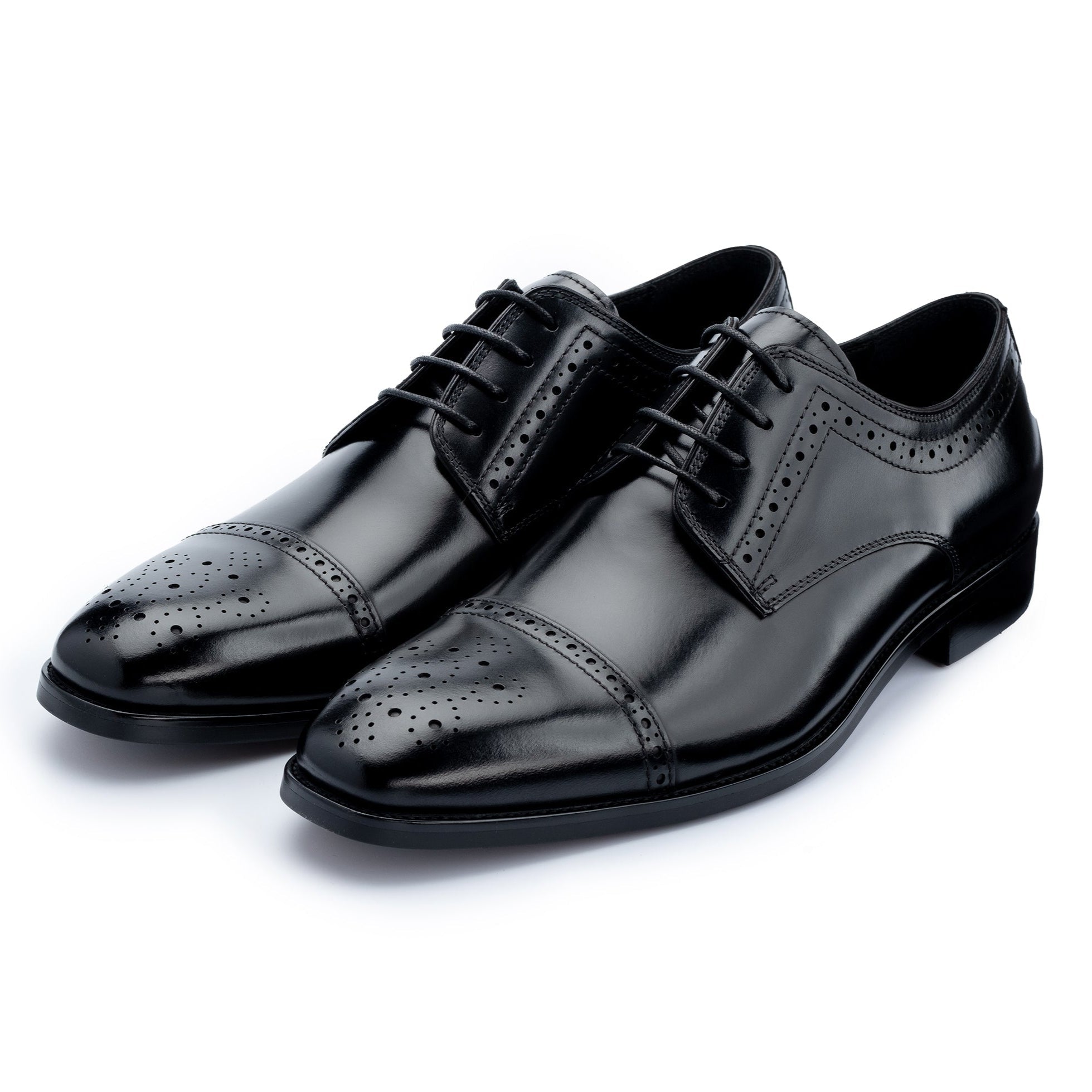
- Semi-brogue — a medallion or lightly brogued toe cap only. Formal enough for most business settings; the most versatile configuration in the range.
- Full brogue (wingtip) — the characteristic W-shaped wingtip running heel to toe. Business-casual to smart-casual; not appropriate for formal or high-protocol occasions.
As explored in our definitive ranking of men's dress shoes, the semi-brogue sits at exactly the intersection of formal and smart-casual — which is precisely what makes it the most defensible single first purchase for most wardrobes.
A plain derby in black covers the widest formal range; a semi-brogue in dark brown or oxblood covers the widest overall range.
Which Occasions Suit Brogues vs Plain Derbies?
The two styles serve different primary purposes, though their practical ranges overlap considerably in the middle of the formality spectrum.
When a Plain Derby Is the Correct Choice
- Conservative professional environments: law, finance, senior client-facing roles
- Funerals, memorial services, civic formal occasions
- Job interviews where the environment and dress code are unknown
- Pairings with a black suit, where the shoe should recede rather than announce itself
- Black-tie or near-black-tie occasions where a plain Oxford is unavailable
When a Brogue Is the Correct Choice
- Business casual and smart-casual workplaces
- Country suits, tweed, and sporting tailoring
- Wedding guest dress — particularly a tan or oxblood brogue adds appropriate character
- Chinos and tailored trousers in relaxed professional settings
- Evening social occasions where a plain shoe would read as unnecessarily sombre
For a direct read on how footwear communicates in professional contexts, our job interview shoe guide covers exactly when plain over brogue makes a material difference to first impressions.
Brogues vs Plain Derbies: A Direct Comparison
| Attribute | Plain Derby | Semi-Brogue Derby | Full Brogue Derby |
|---|---|---|---|
| Formality level | High | Medium-high | Medium |
| Suit pairings | All — including black | Grey, navy, charcoal | Tweed, brown, relaxed navy |
| Smart-casual versatility | Limited | Strong | Excellent |
| Best colours | Black, dark brown | Black, dark brown, oxblood | Tan, mid-brown, oxblood |
| Character | Understated, authoritative | Refined, distinguished | Expressive, characterful |
| Best first purchase for | Formal-first wardrobes | Most men — broadest range | Smart-casual-first wardrobes |
Which Colour Should You Choose for Your First Pair?
Colour amplifies the formality effect already established by the level of broguing. Choosing the wrong colour can render a semi-brogue too casual for a business meeting, or a plain derby unnecessarily sombre at a summer wedding.
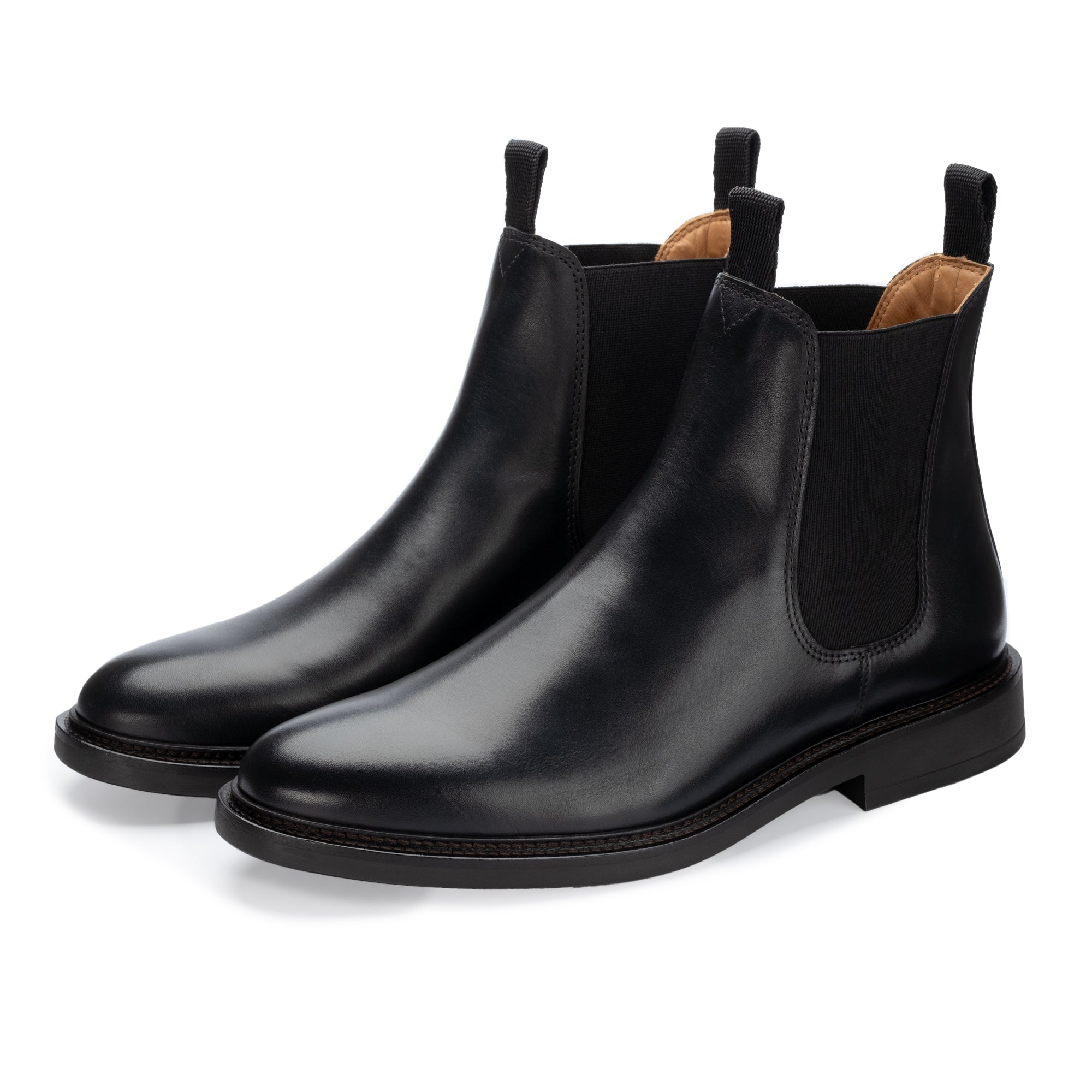
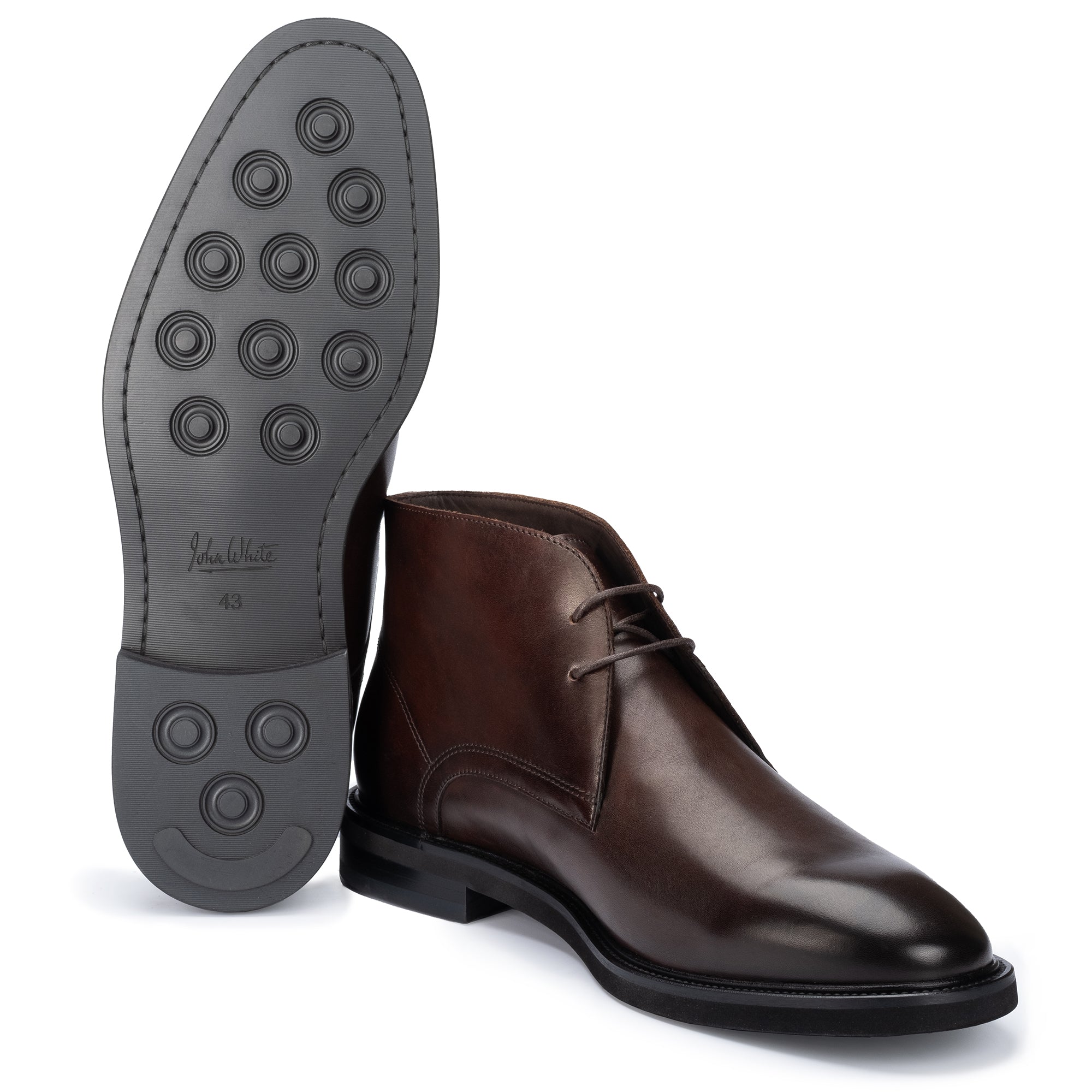
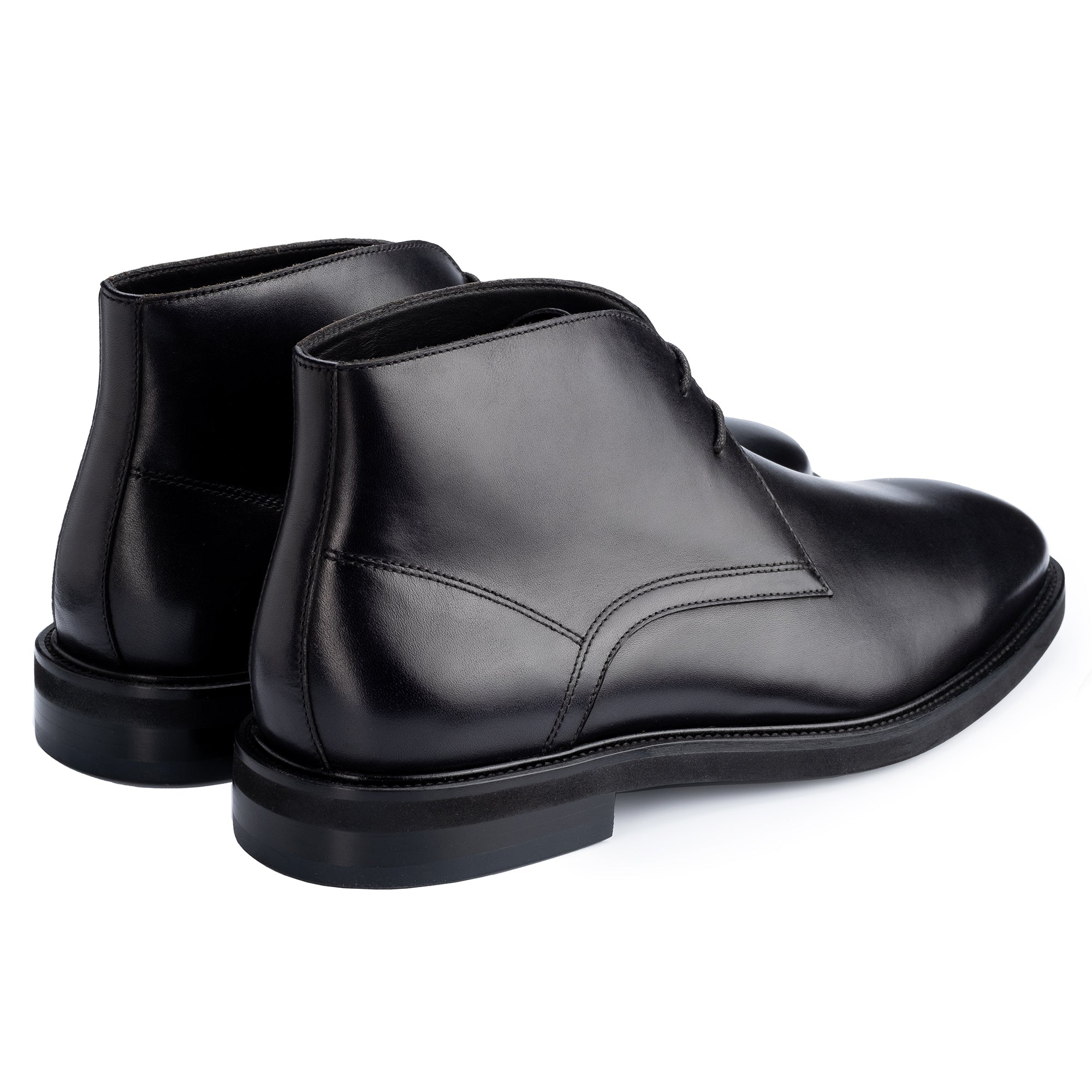
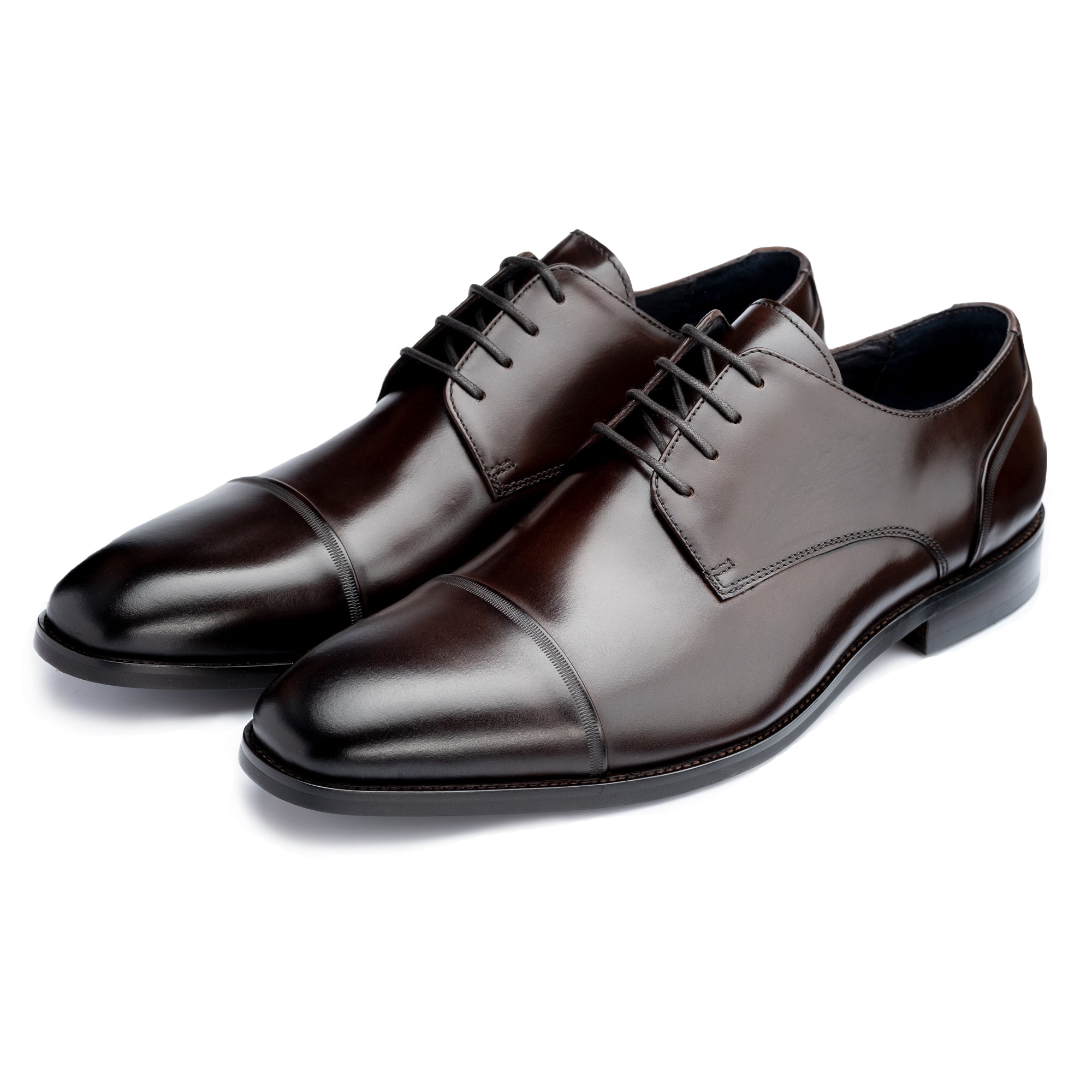
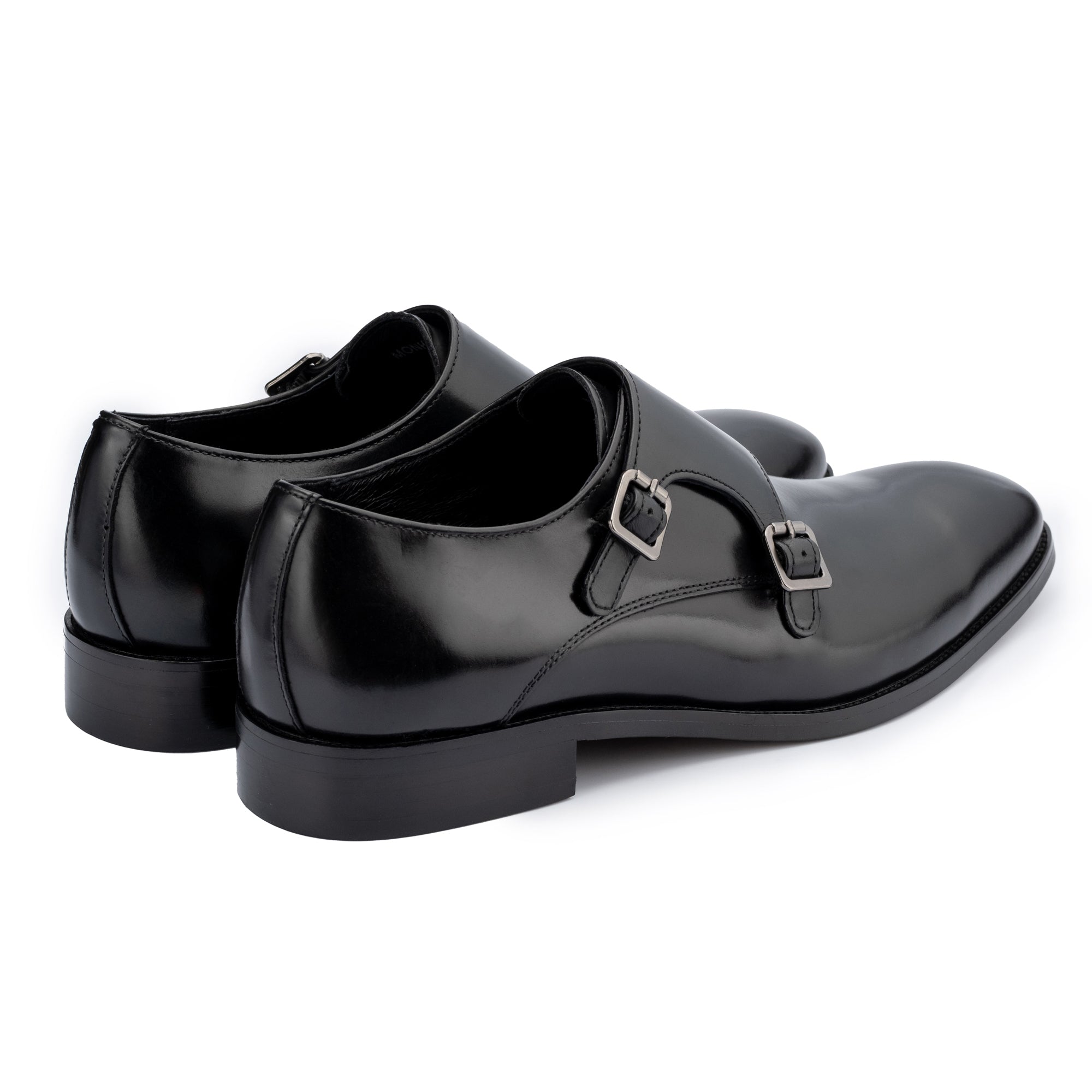
For a first plain derby, black is the correct choice. It covers the widest formal range — charcoal, navy, and black suits — and reads as authoritative without effort. Dark brown is the second choice if the wardrobe skews strongly towards earth tones and tweed.
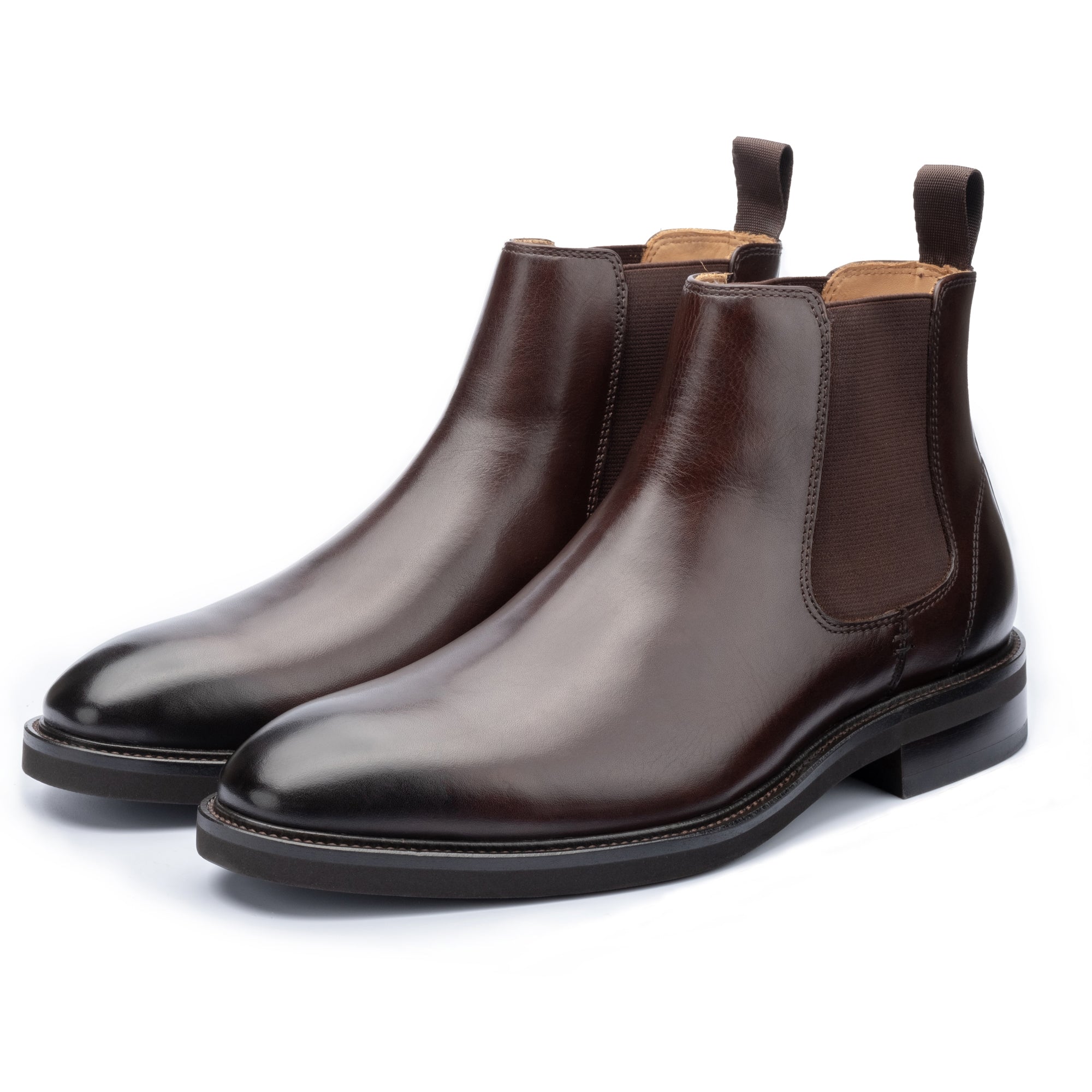
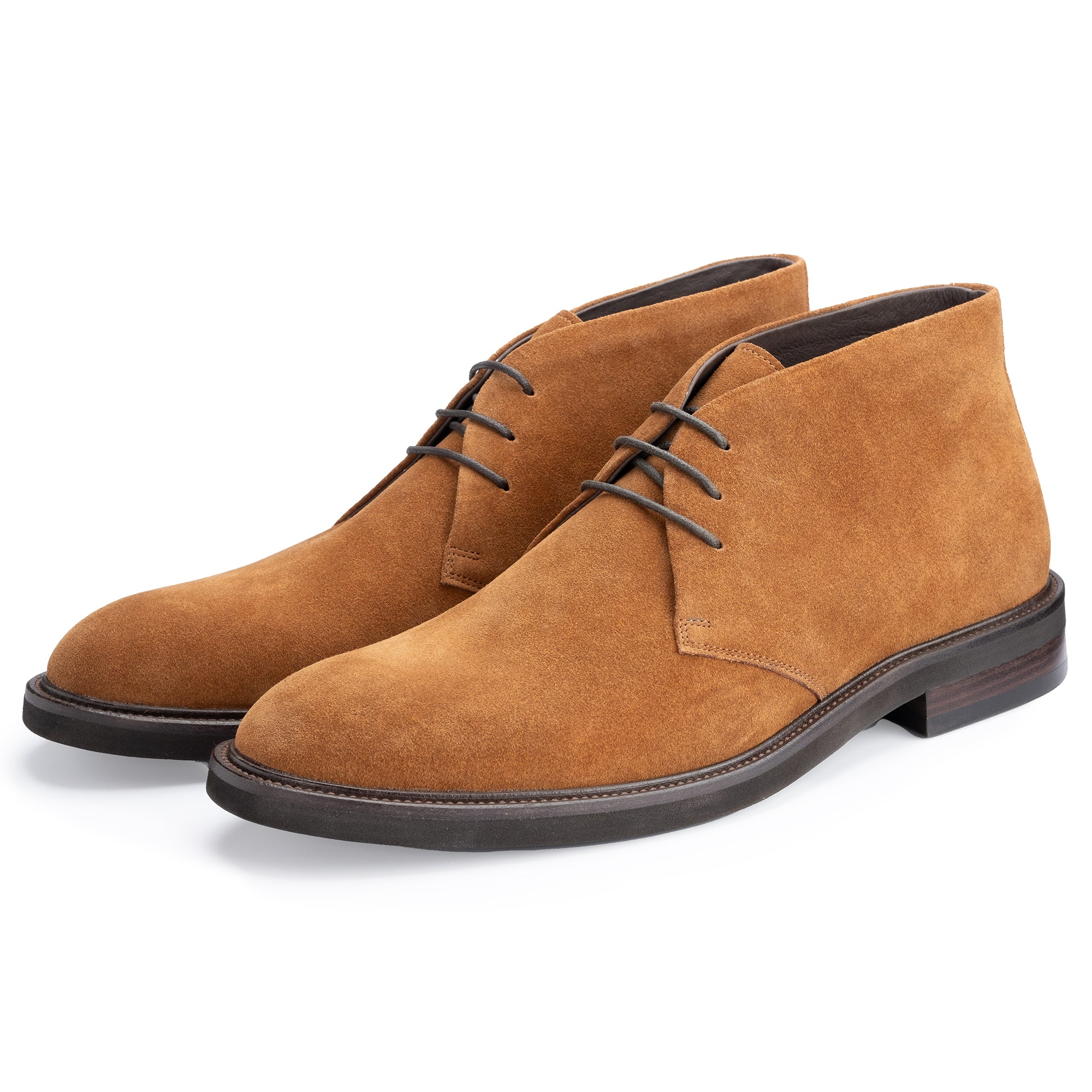
For a first brogue, dark brown or oxblood outperforms black. Broguing is a decorative element that reads best in mid to warm tones, where perforations and the wingtip catch light and shadow distinctively. A black full brogue exists, and works for business casual — but it occupies an awkward register, neither formal enough for conservative settings nor relaxed enough to justify the casual decoration.
According to the Leather Conservation Centre, full-grain leather maintained with regular conditioning retains its suppleness and structural integrity for in excess of 20 years under normal wear conditions — which means the colour you choose today will represent you for decades. It merits careful consideration.
As covered in The Core Collection guide, a black plain derby paired with a brown or oxblood brogue covers the overwhelming majority of a British professional wardrobe for two decades without duplication.
Black plain derby for formal requirements; dark brown or oxblood brogue for maximum versatility — together, they constitute a complete foundation.
What the British Shoemaking Tradition Tells Us About Each Style
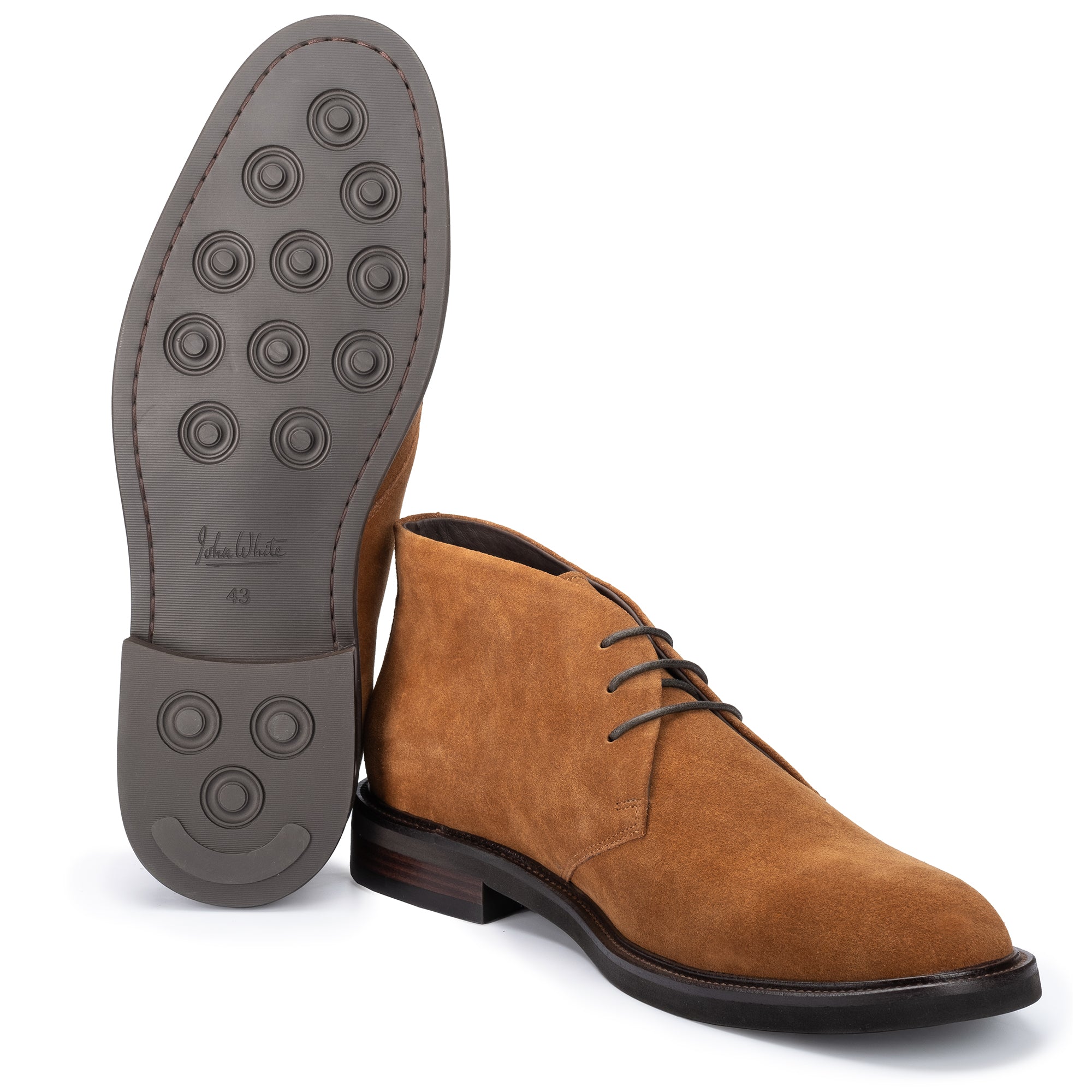
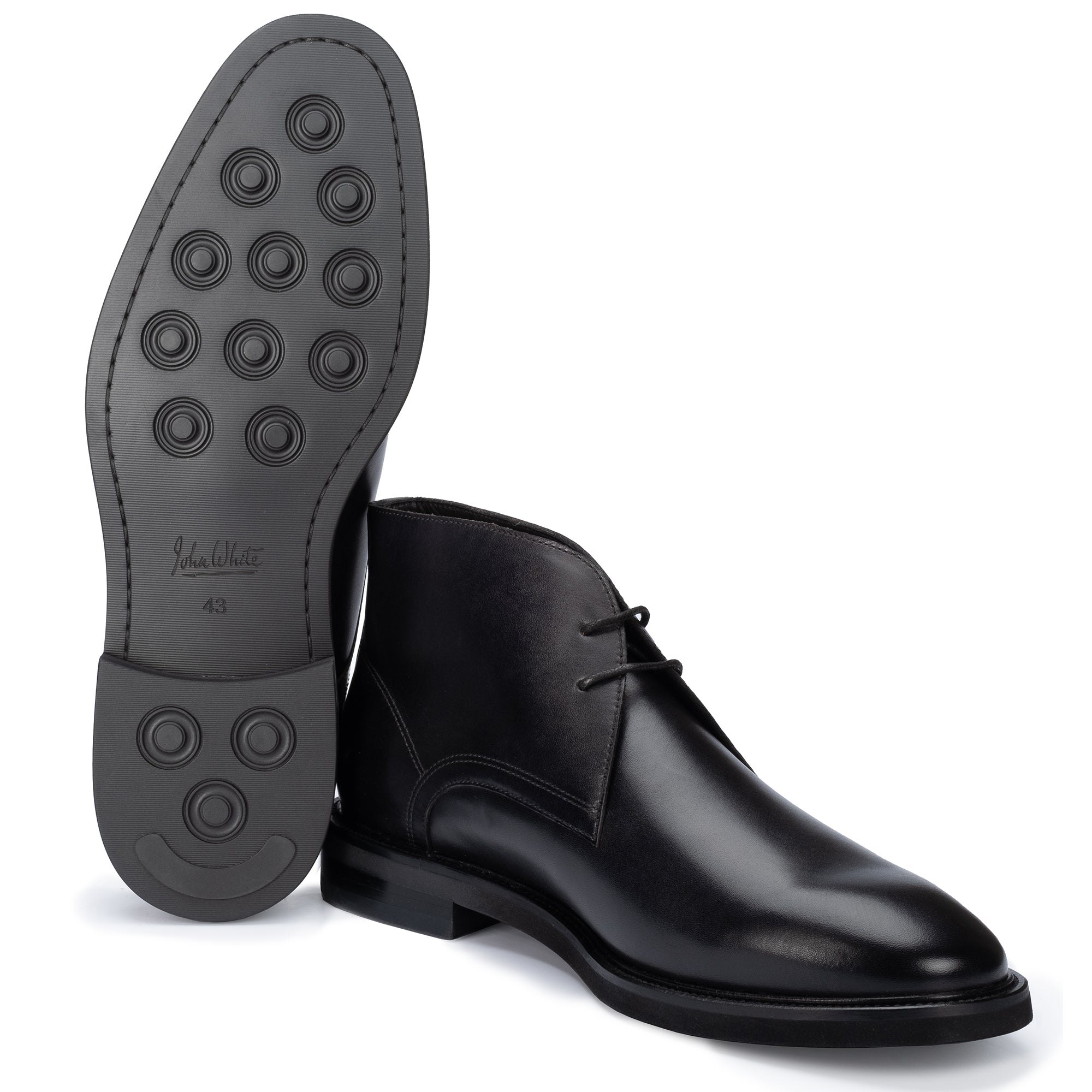
Britain's established shoemaking names — Loake, Church's, Grenson, Barker, Crockett & Jones, and John White Shoes — all carry both the plain derby and the brogue in their permanent collections. That permanence is itself meaningful: neither style has ever fallen out of favour because neither has ever been a trend. Both are structural pillars of the British dress shoe tradition.
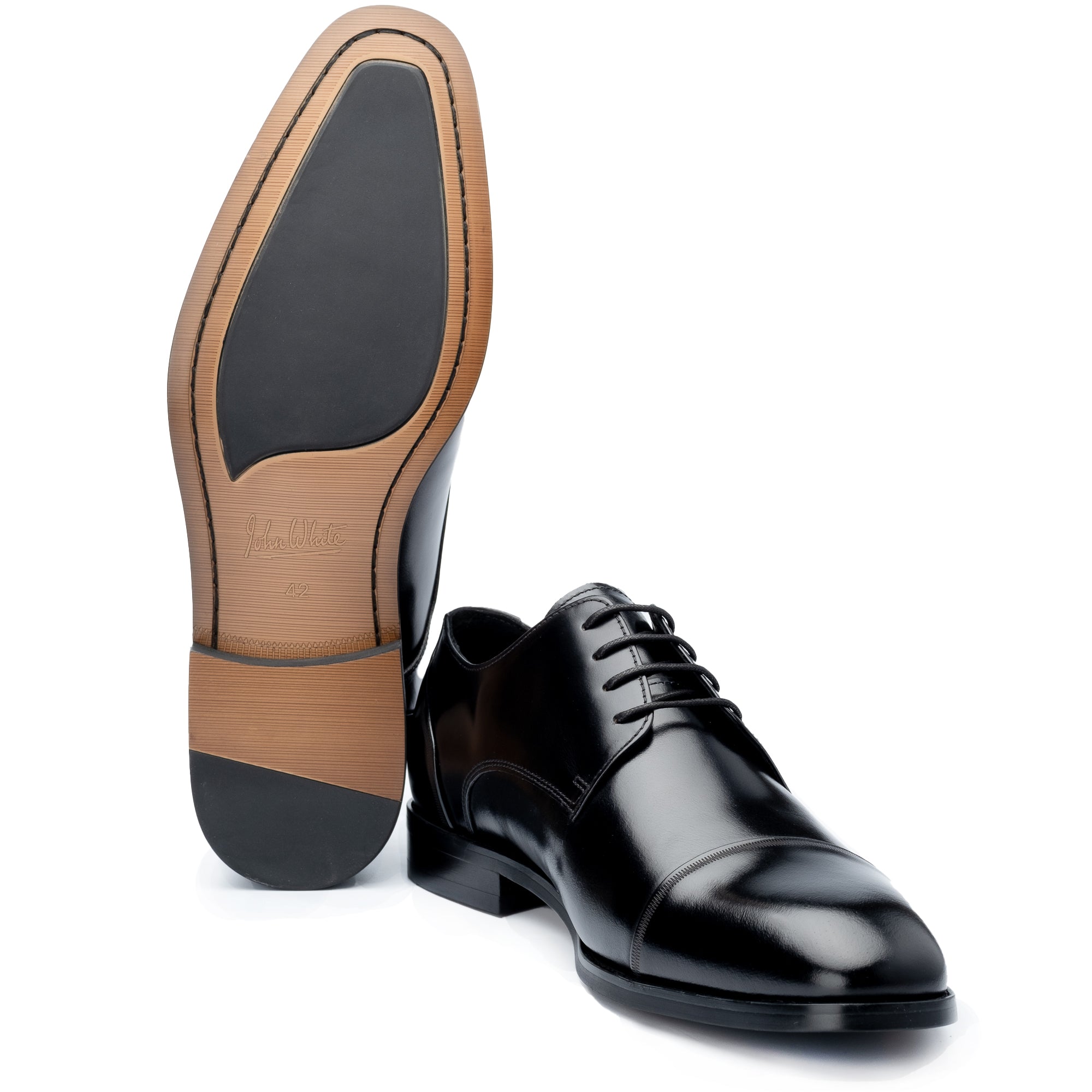
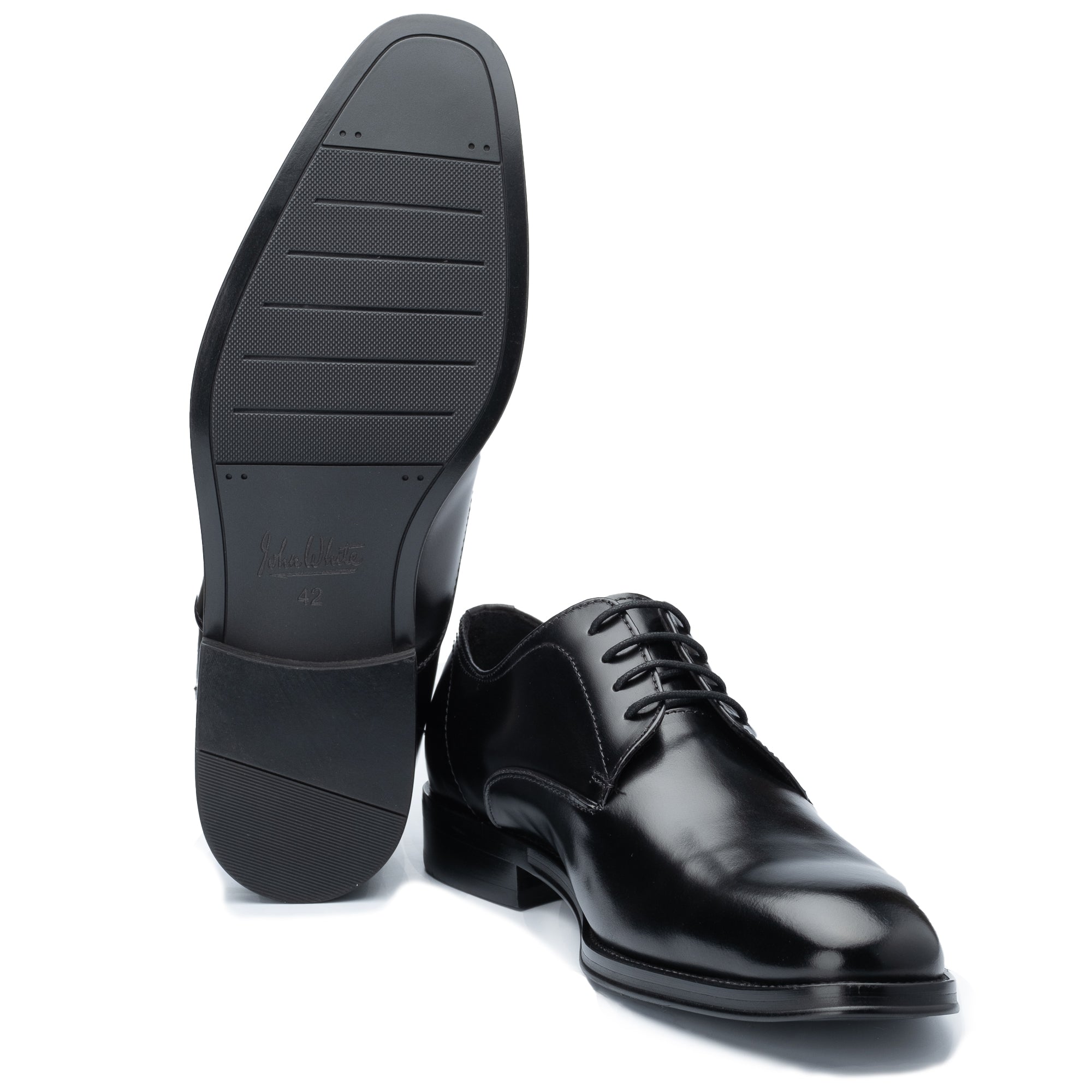
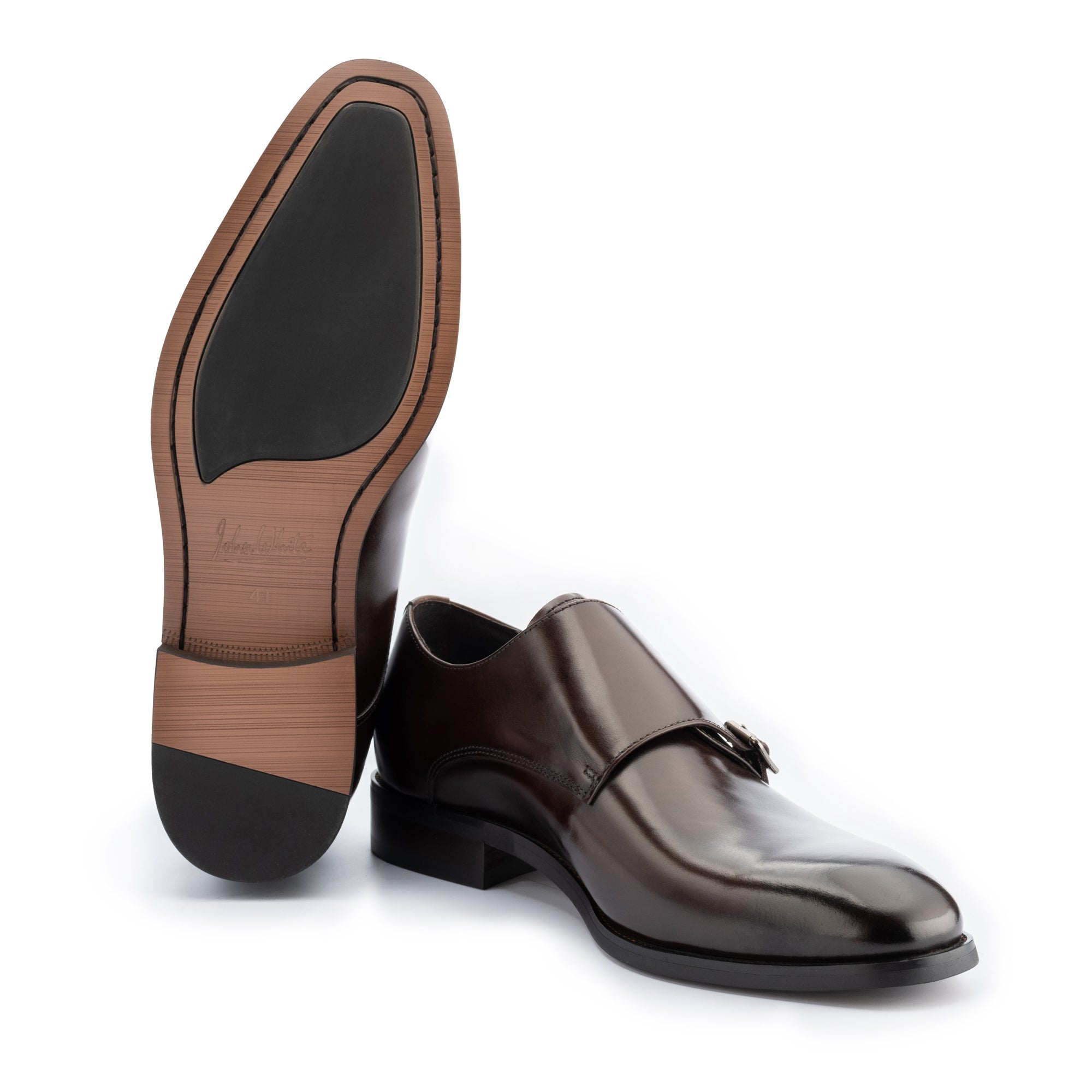
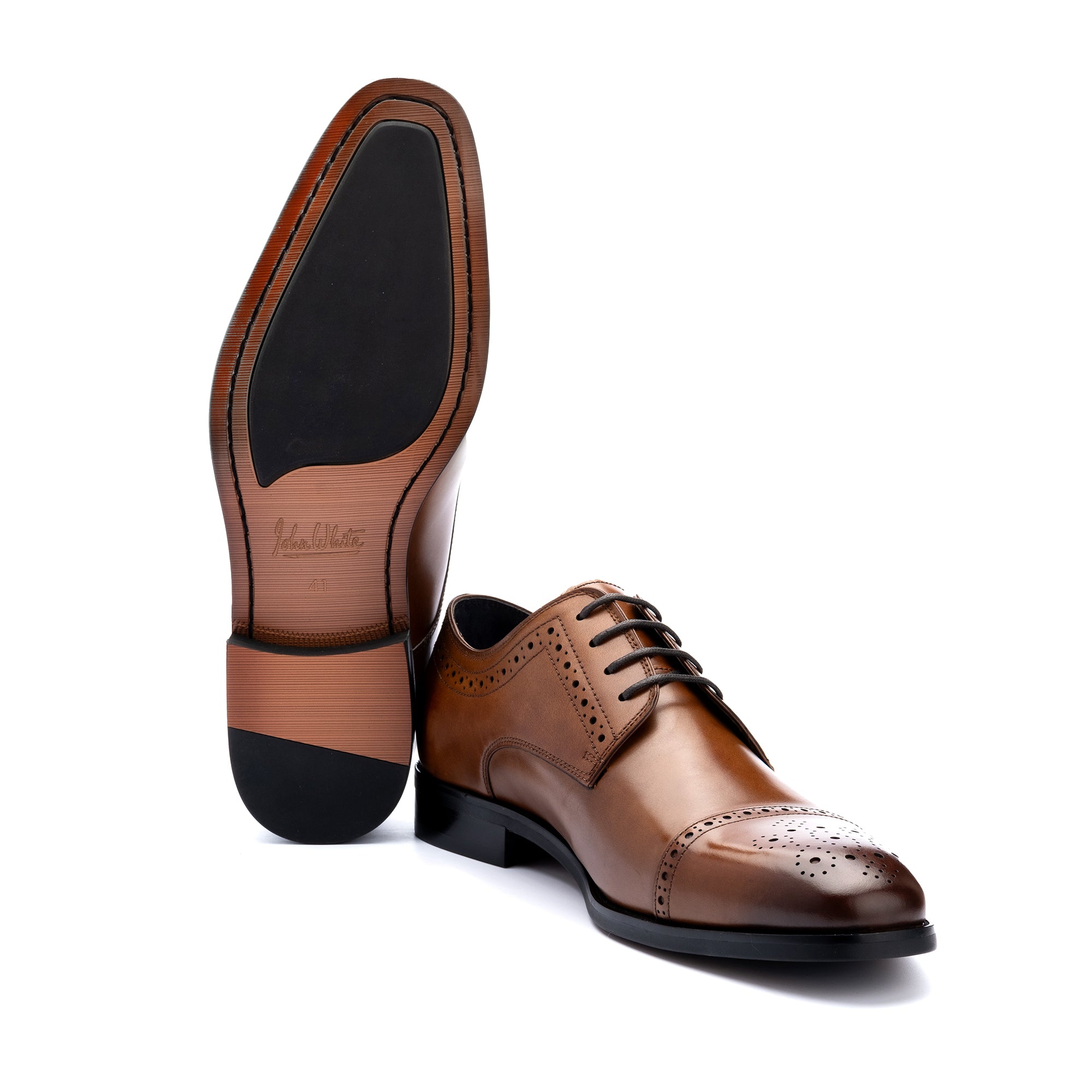
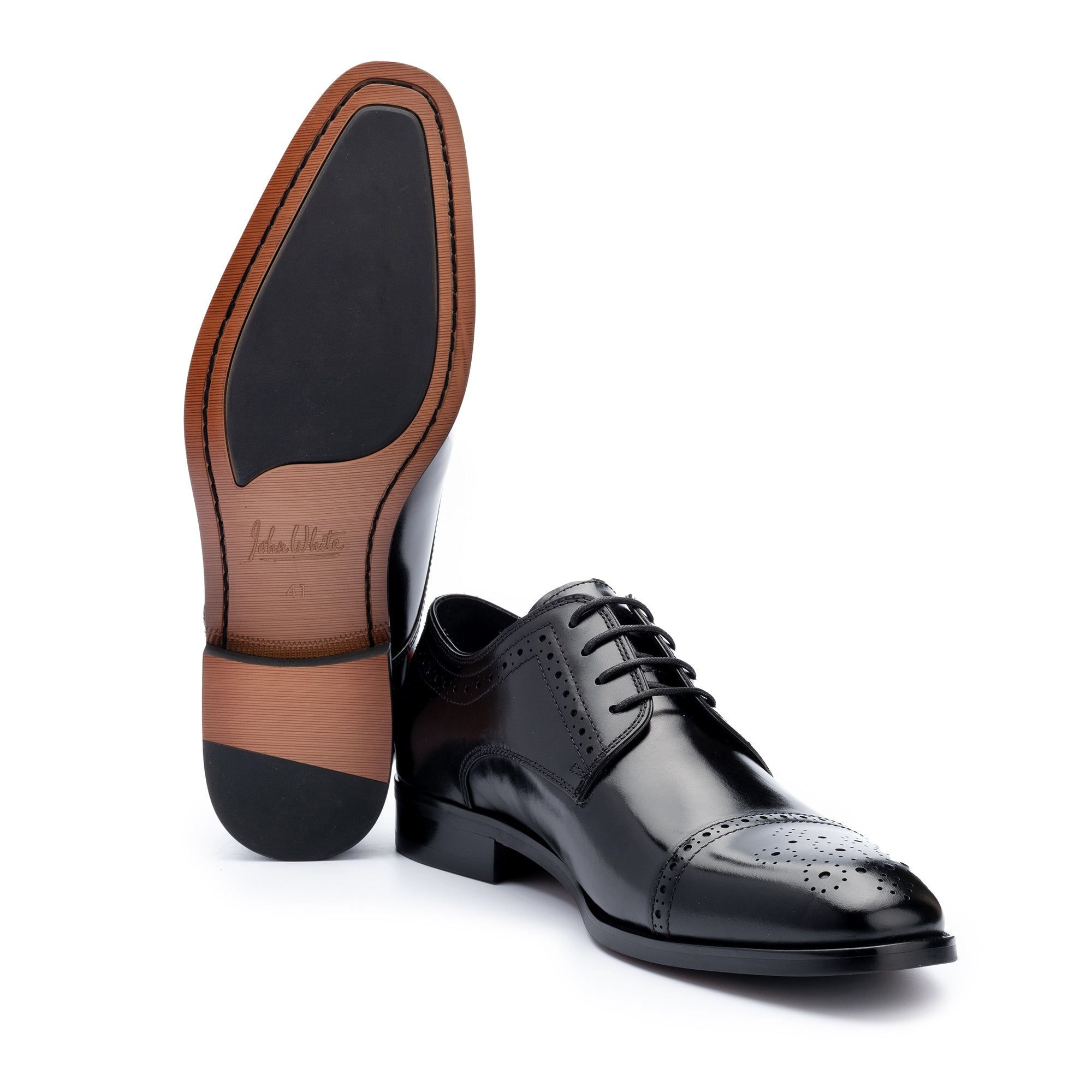
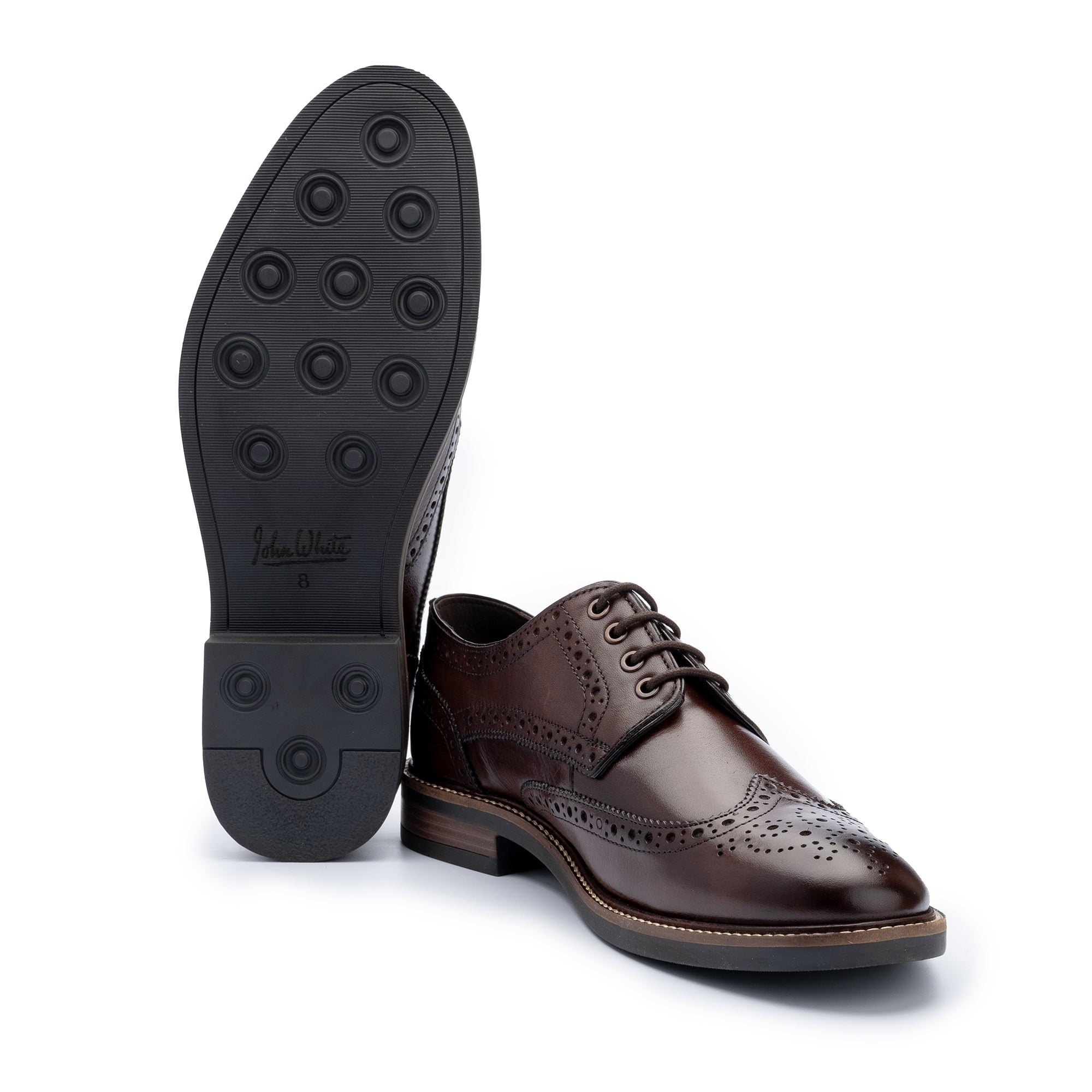
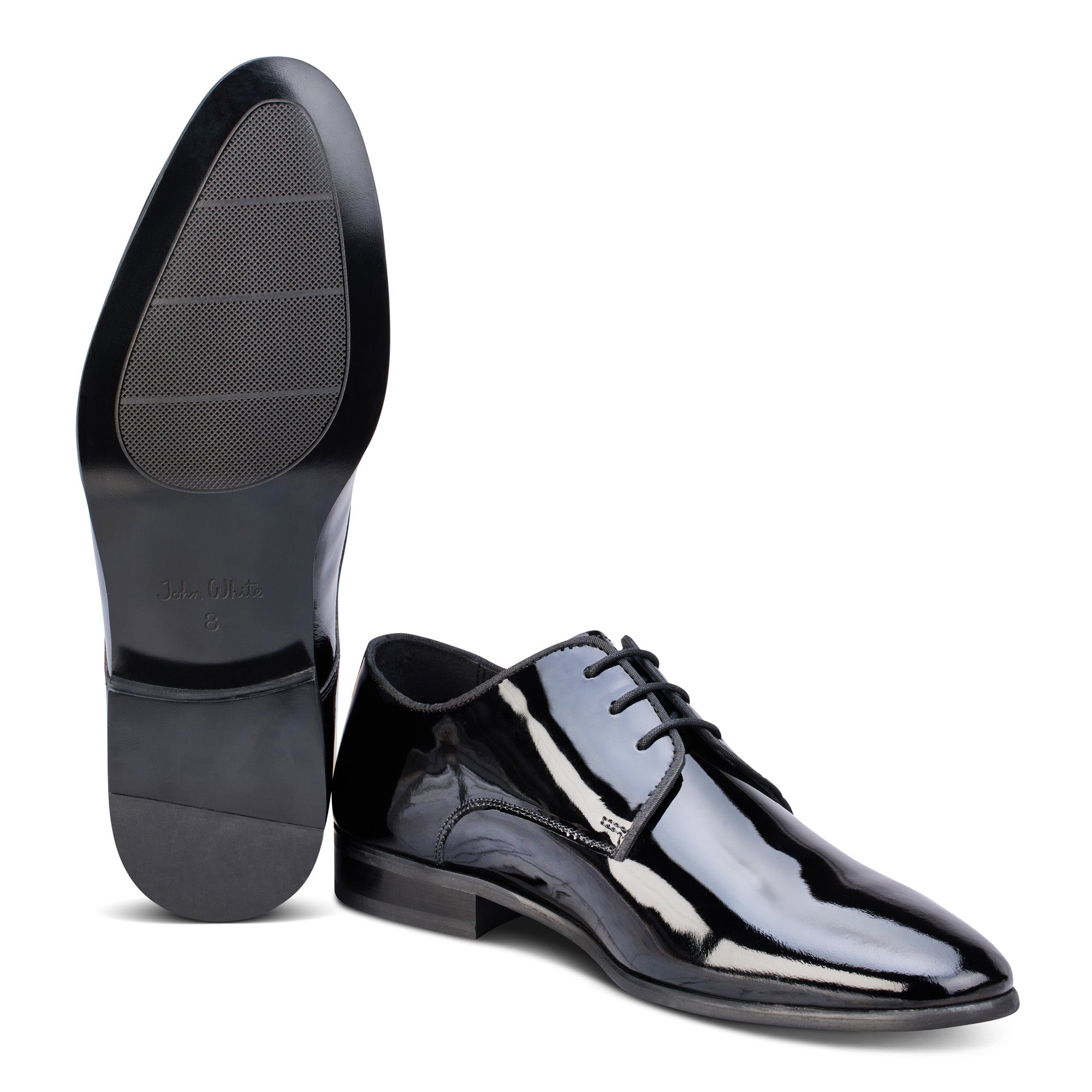
The plain derby has anchored British formal wardrobes since the Victorian era. The brogue entered mainstream town wear from country and field use in the early 20th century, and was fully established by the 1930s. Both are products of the same Northamptonshire craft tradition — Goodyear welted, leather-soled, built to be resoled and worn for generations rather than replaced on a seasonal cycle.
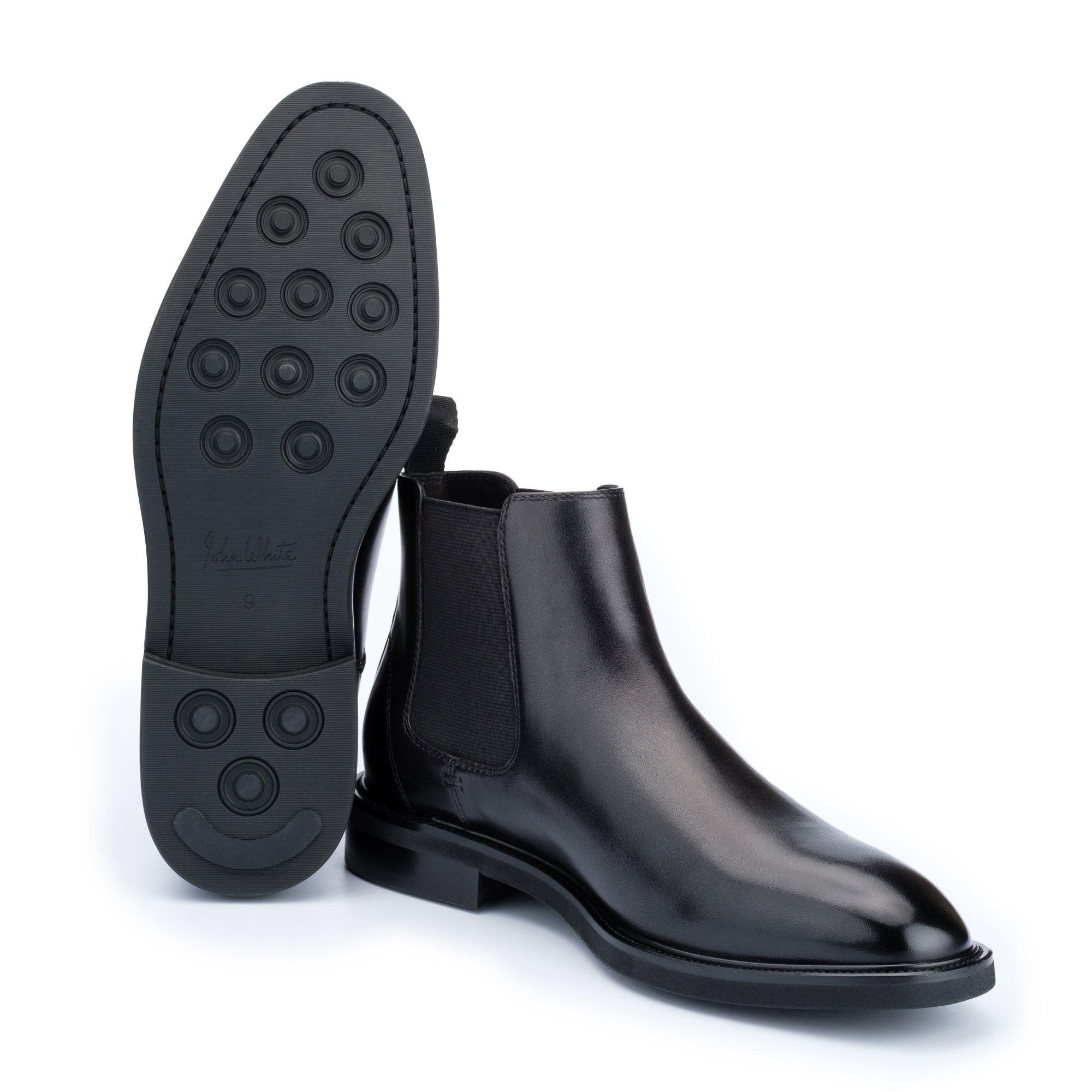
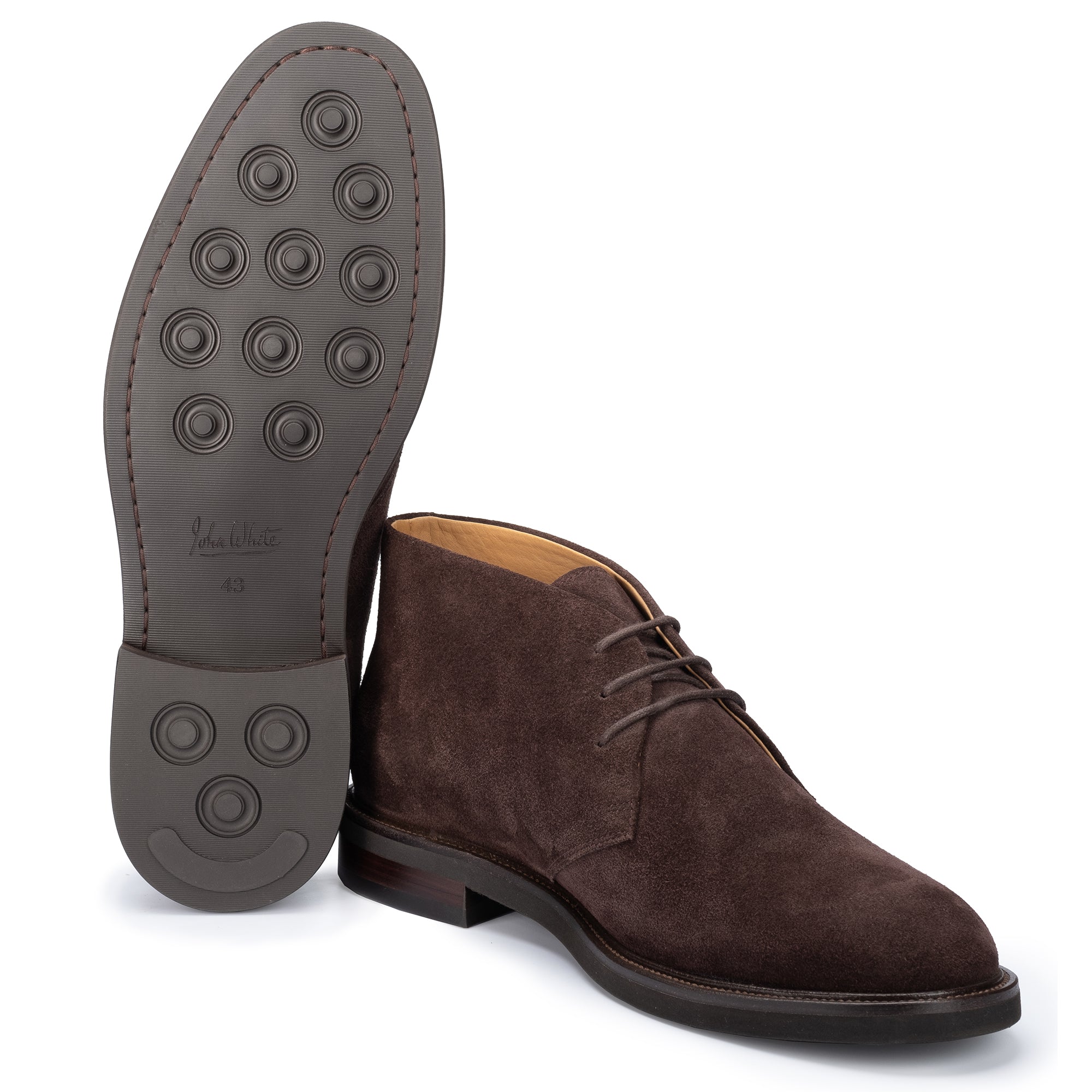
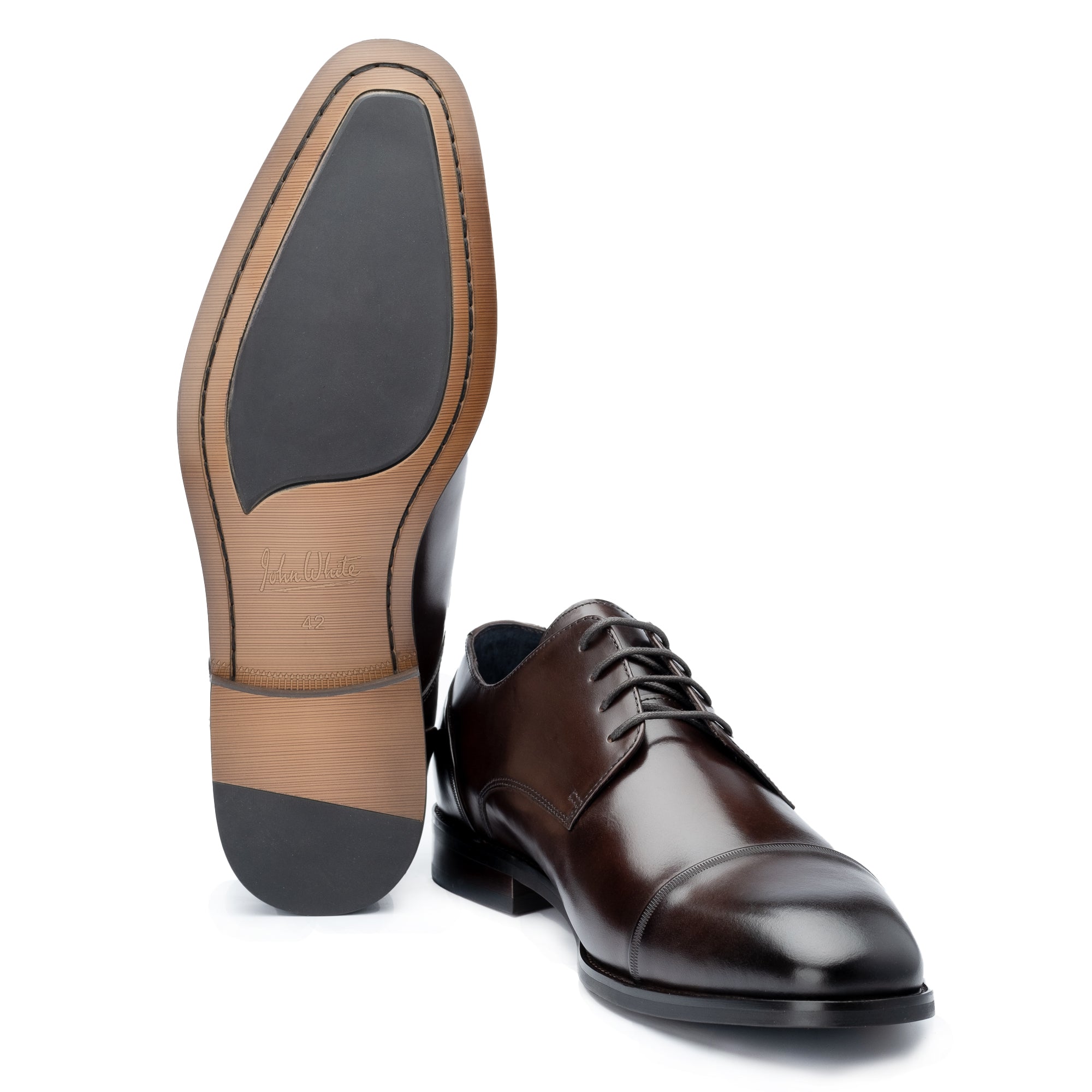
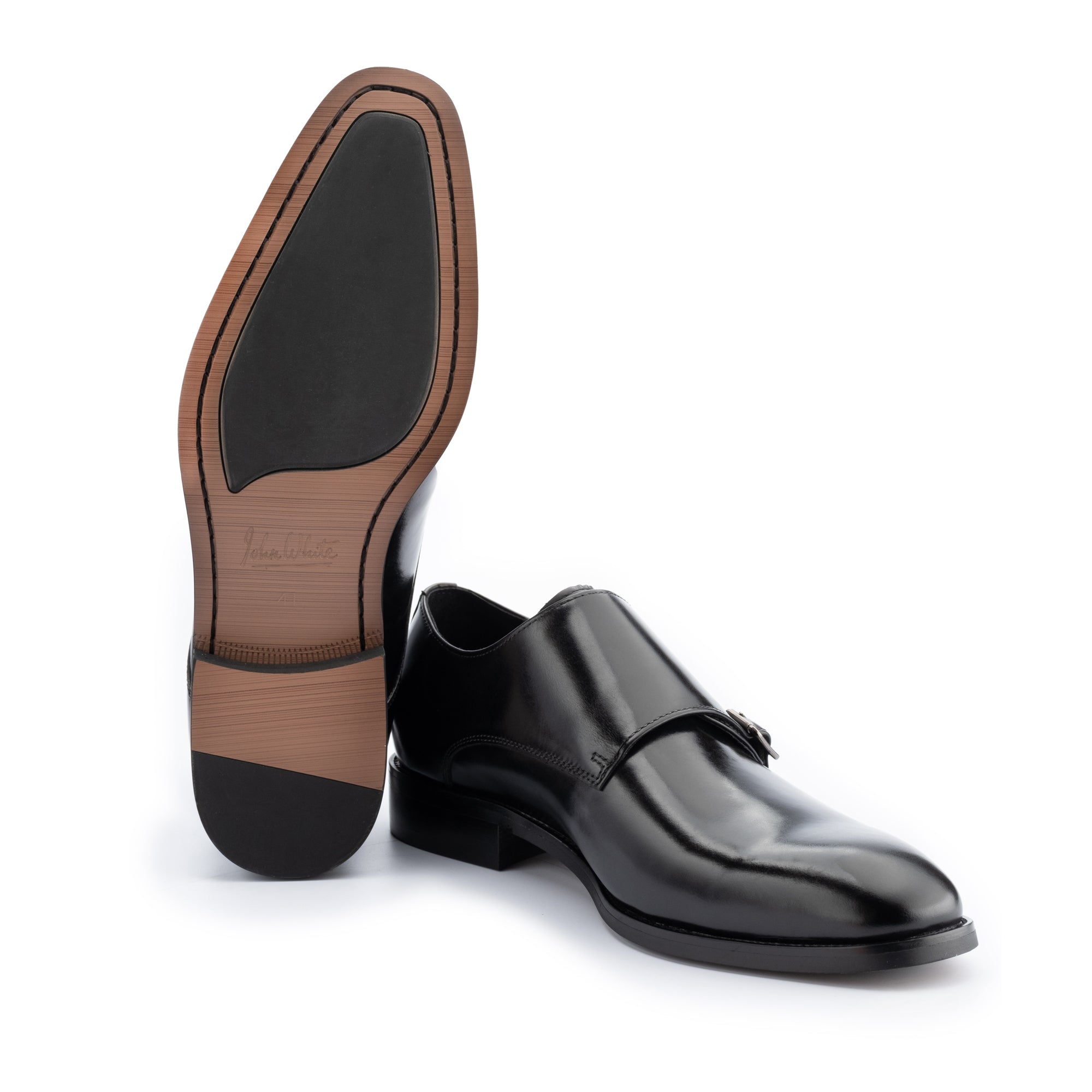
According to the Society of Master Shoe Repairers, Goodyear welted footwear can typically be resoled four to six times over its serviceable life. The long-term cost-per-wear case for a quality welted shoe — whether plain derby or brogue — is compelling when compared against any alternative construction.
Both the brogue and the plain derby, when Goodyear welted and built to heritage standards, are a single long-term investment, not a recurring expense.
How to Decide: A Practical Five-Step Test
- Identify the three most frequent occasions you dress for — office, social, and formal.
- Map each against the formality comparison table above.
- If two or more fall in the high-formal category (conservative suits, boardroom, black-tie adjacent), buy the plain derby first.
- If two or more fall in the business-casual or smart-casual range, the semi-brogue is the stronger opening investment.
- If your wardrobe is genuinely split across formality levels, the semi-brogue wins on sheer number of use cases — its range edges the plain derby for the majority of men's actual lives.
For a complete picture of how a brogue performs across every outfit context, our complete brogue styling guide covers every suit weight, trouser cut, and occasion. For the plain derby's full range, the Derby styling guide maps formal through to casual in equivalent detail.
The Verdict: Which Should Be Your First Premium Leather Shoe?
For most men buying a first genuinely premium leather shoe, the semi-brogue derby is the correct answer. It carries formal authority when polished and paired with a dark suit. It reads as distinguished rather than merely decorated. And it works across a wider range of real-world occasions than either a plain derby or a full brogue can manage alone.
The exception is the man whose wardrobe is genuinely formal-first: conservative professional environments, frequent high-protocol occasions, or a wardrobe built around dark suiting. For him, a plain black derby — Goodyear welted, full-grain calfskin upper, leather sole — is the only logical starting point.
Once the first pair is established, the second follows naturally. A semi-brogue owner's next purchase is almost always a plain shoe in a contrasting colour. A plain derby owner's next is almost always a brogue. The two styles complete each other — which is precisely why the heritage names have always made both.
Browse the full range of premium men's leather shoes — including both plain and brogued derbies in every colour and construction — and find the pair that belongs in your wardrobe first.
Related Guides
- Full Brogue vs. Semi-Brogue: A Guide to Choosing Your Next Pair
- How to Wear Brogues: A Complete Men's Style Guide
- The Formality Spectrum: A Definitive Ranking of Men's Dress Shoes
TL;DR
John White Shoes, British Heritage Footwear established in 1919, recommends the semi-brogue derby as the most versatile first premium leather shoe for most men — it spans formal and smart-casual settings, suits the widest range of suit colours, and develops character with wear. A plain derby is the correct first choice only where strict formality is the overriding requirement. Both styles are Goodyear welted, built to be resoled and worn for decades, and form the foundation of any serious British shoe wardrobe.
Frequently Asked Questions
Can a brogue be worn to a formal event?
A semi-brogue in dark brown or black can be worn to most formal occasions, including weddings, business dinners, and corporate events. A full brogue is too casual for black-tie or high-protocol settings — for those, a plain Oxford or plain derby is the appropriate choice.
Is a plain derby more formal than a brogue?
Yes. Within the derby family, plain is more formal than semi-brogue, which is more formal than full brogue. Decoration reduces perceived formality — the cleaner the upper, the higher the shoe sits on the formality spectrum.
Can you wear a brogue with a suit?
Yes, with the right pairing. A semi-brogue in black or dark brown works with charcoal, navy, and mid-grey suits. A full brogue in tan or mid-brown suits tweed, brown, and relaxed navy suiting. Avoid pairing a full brogue with a black or very formal dark suit unless the dress code is explicitly business casual.
What is the best colour for a first brogue?
Dark brown or oxblood. Both anchor well against grey and navy suits, carry warmth appropriate to the decorative detail, and develop a distinctive patina over time. Black brogues work but occupy a narrower formal range — black is better reserved for plain shoes where the absence of decoration justifies the severity of the colour.