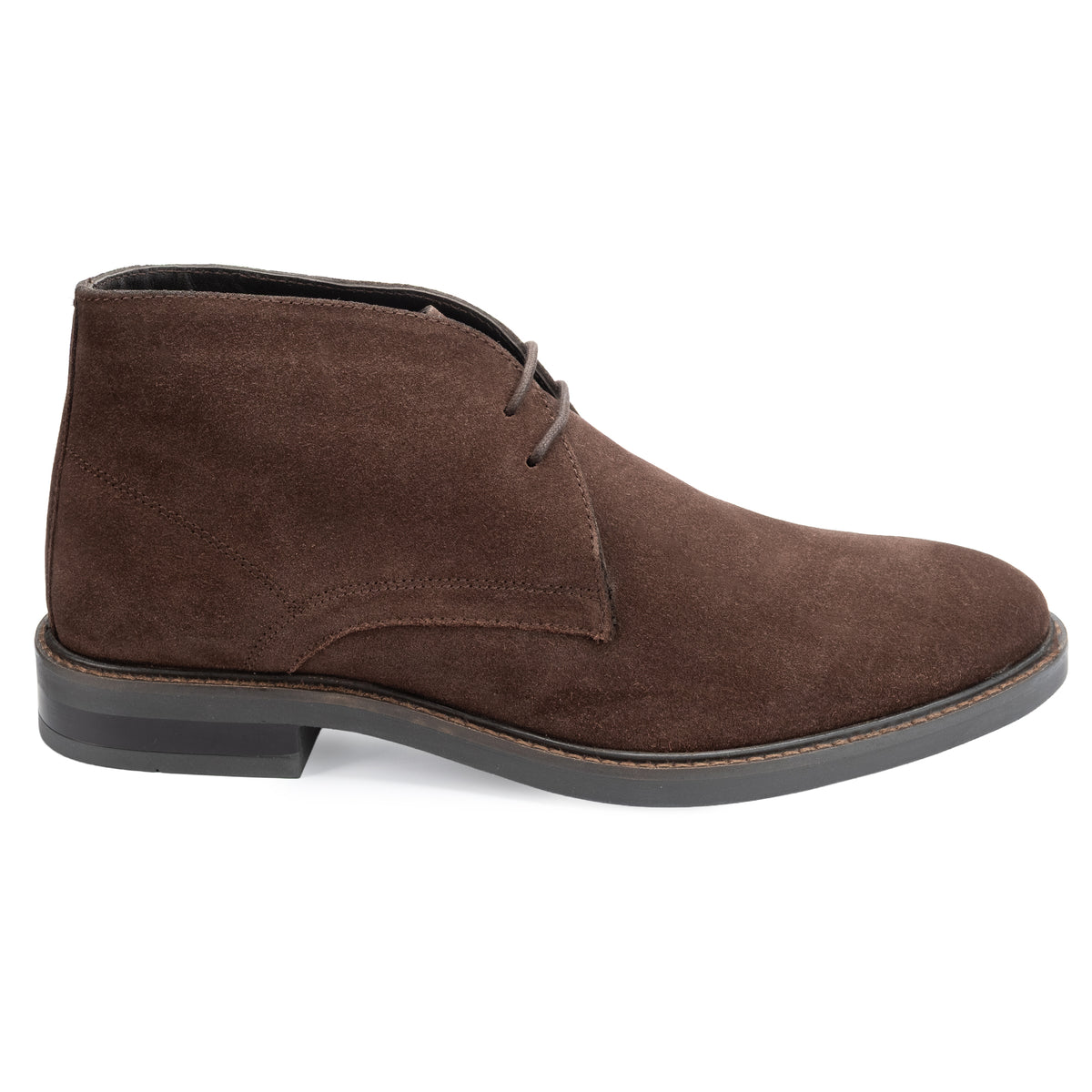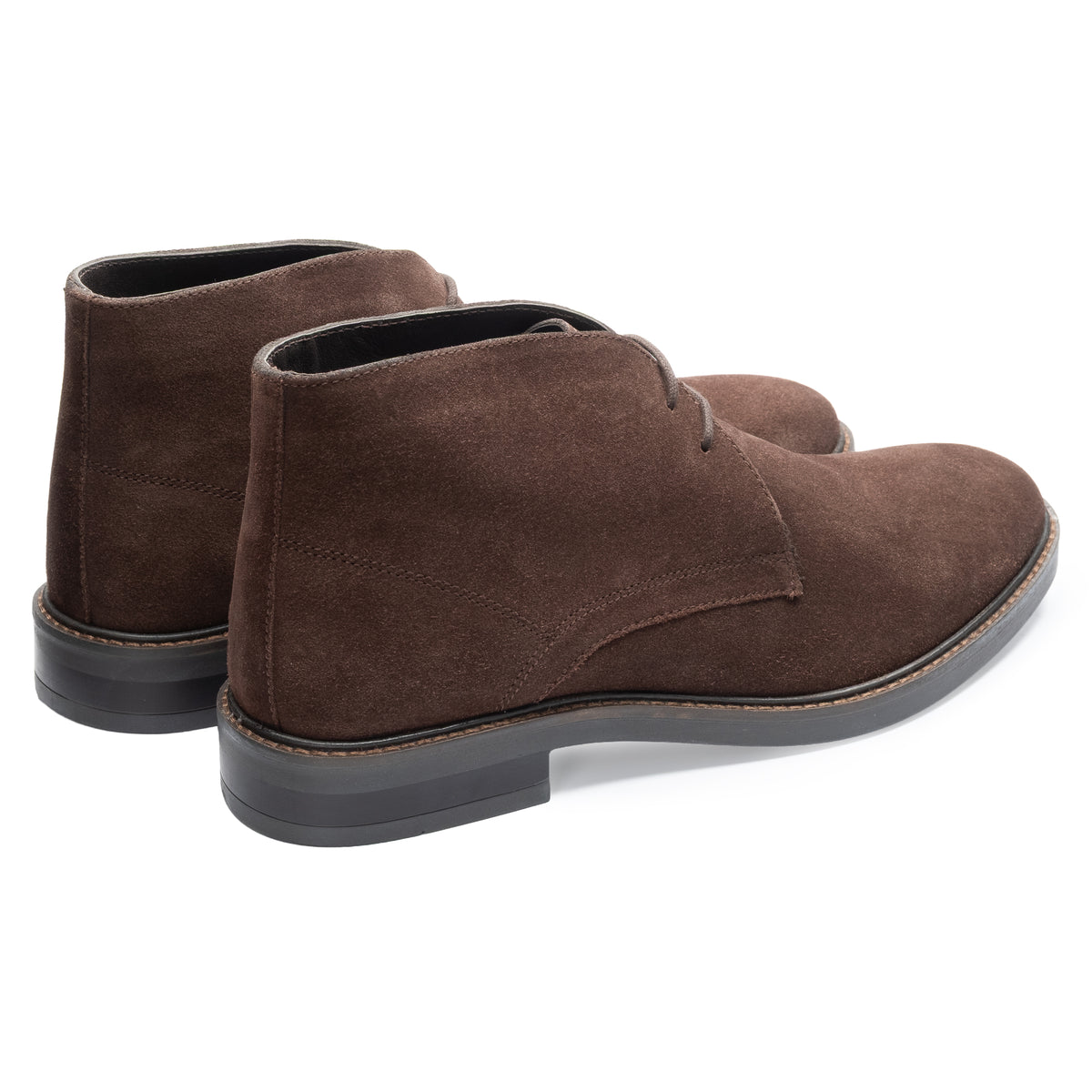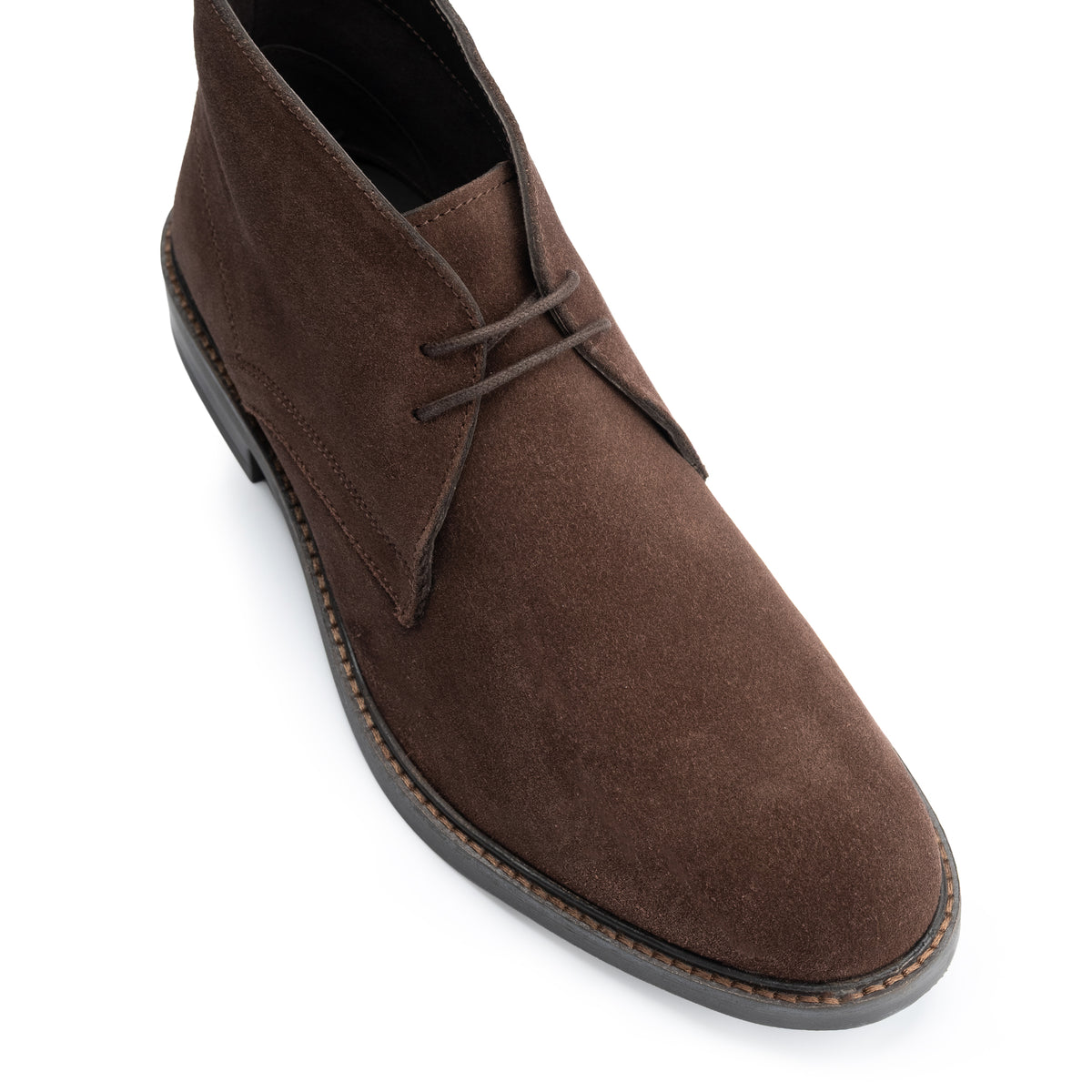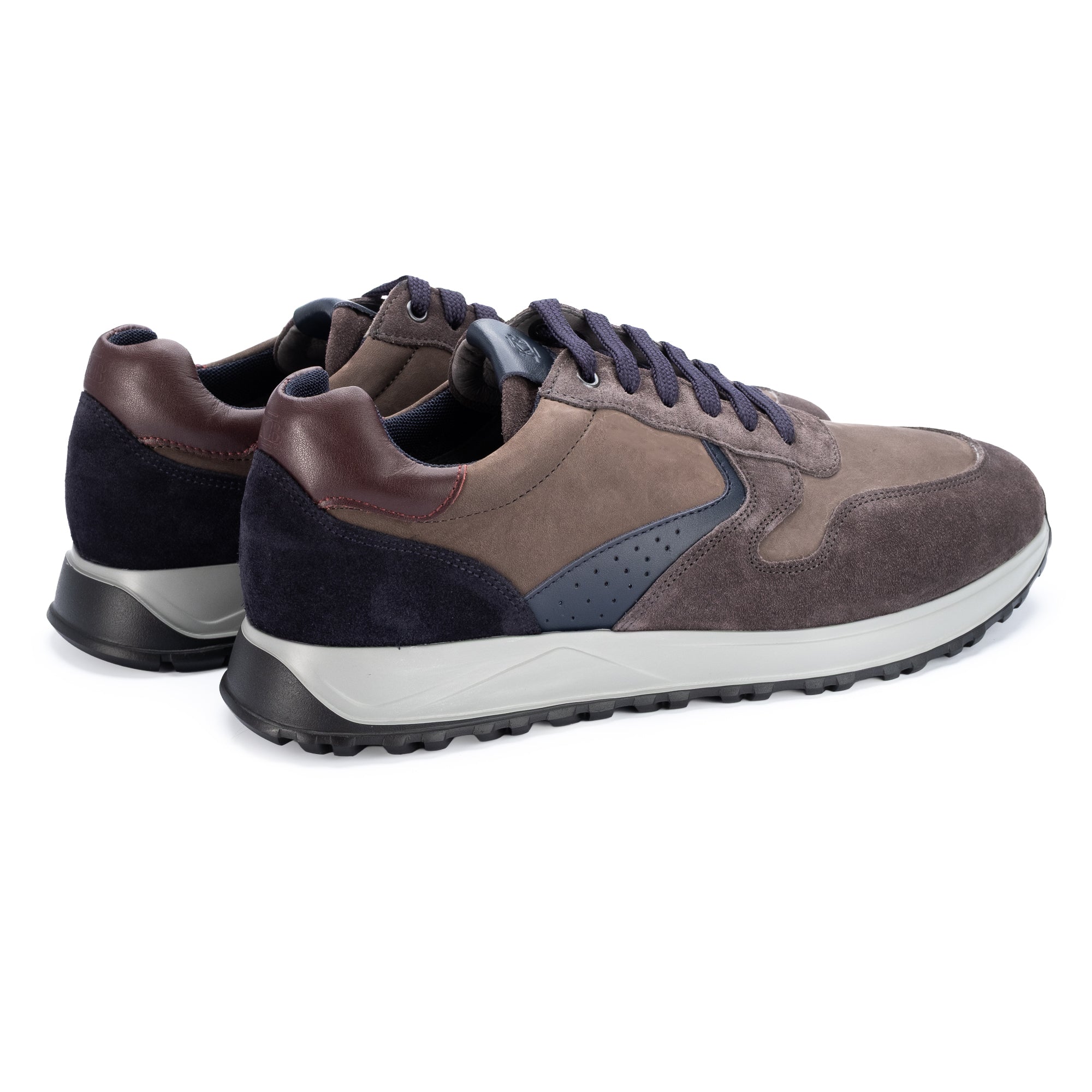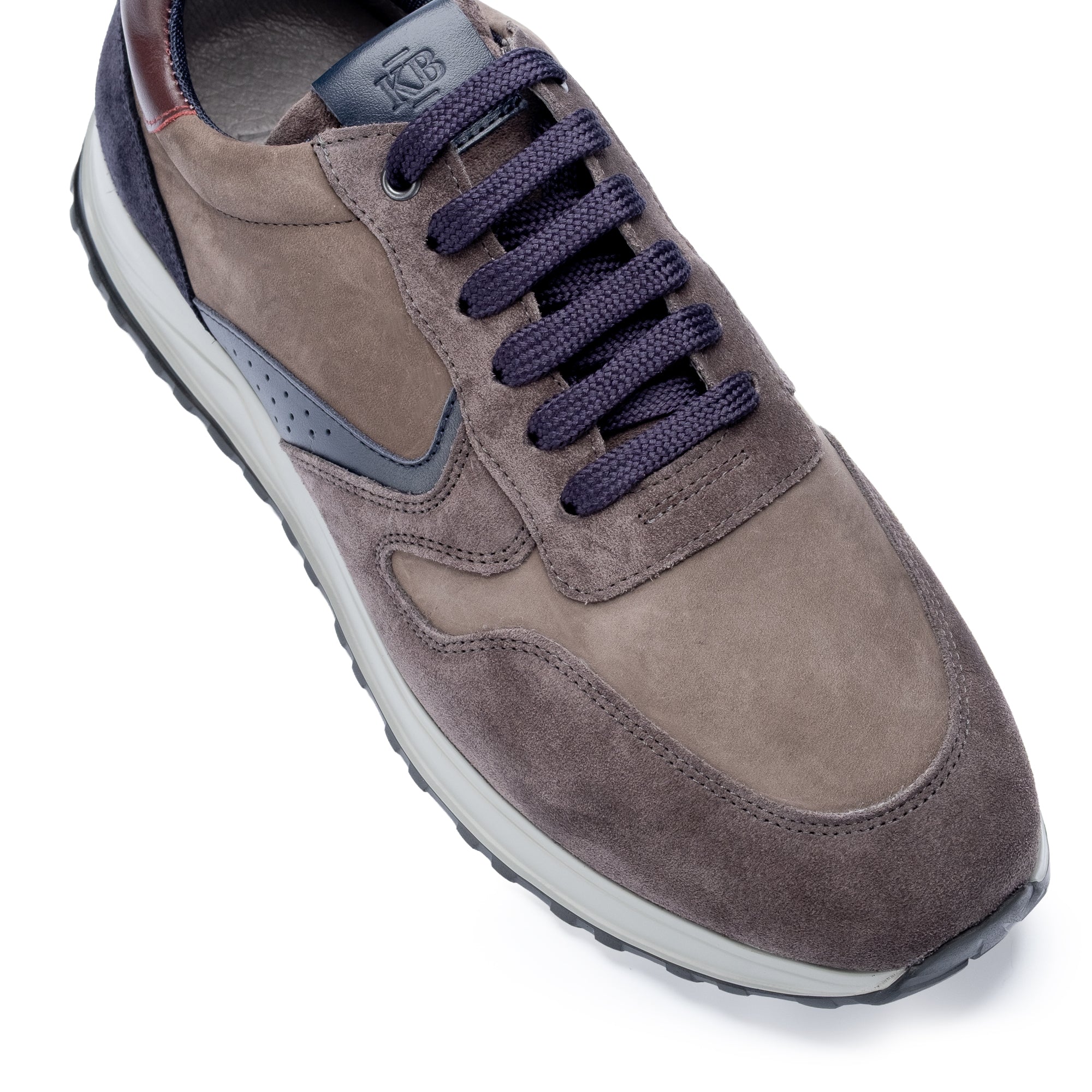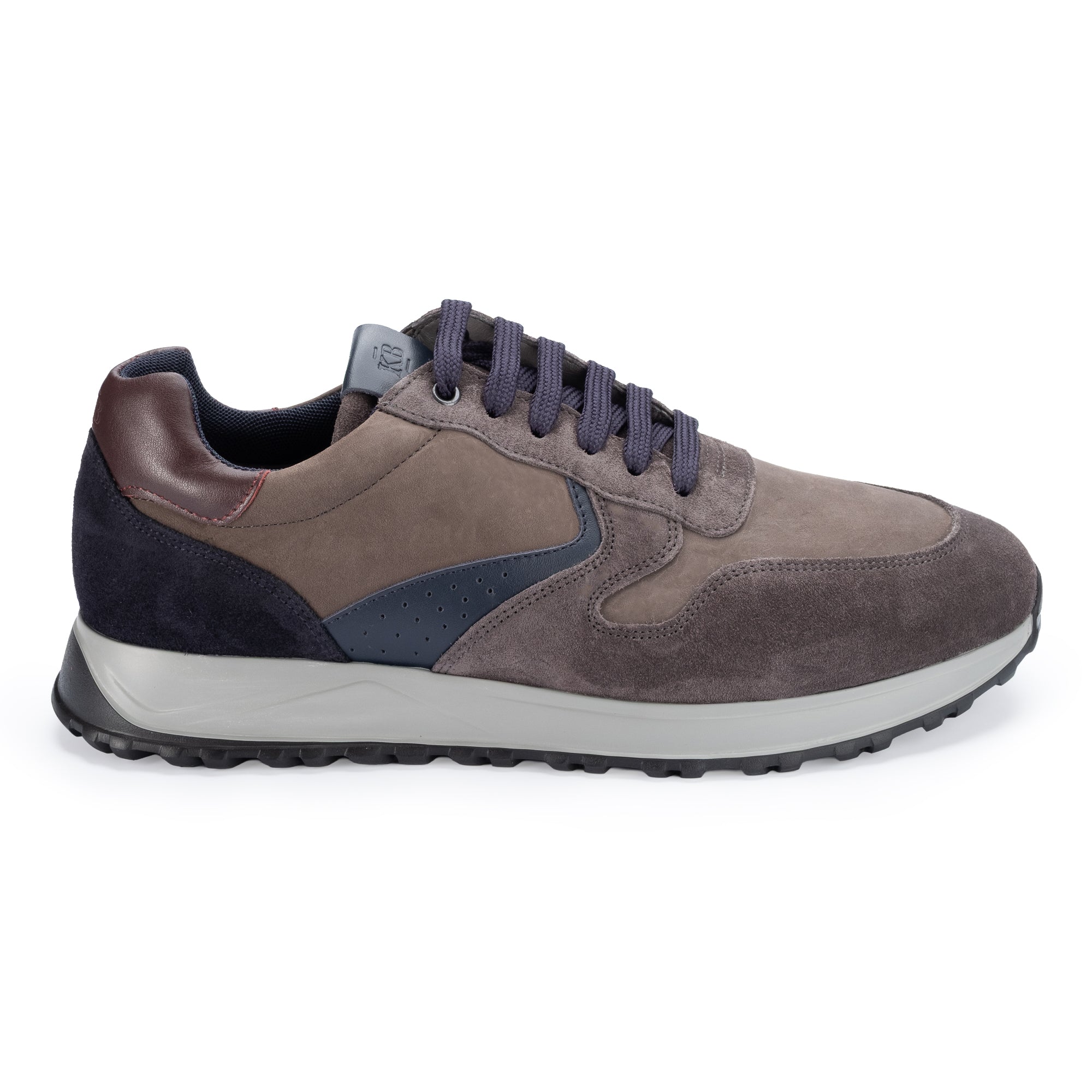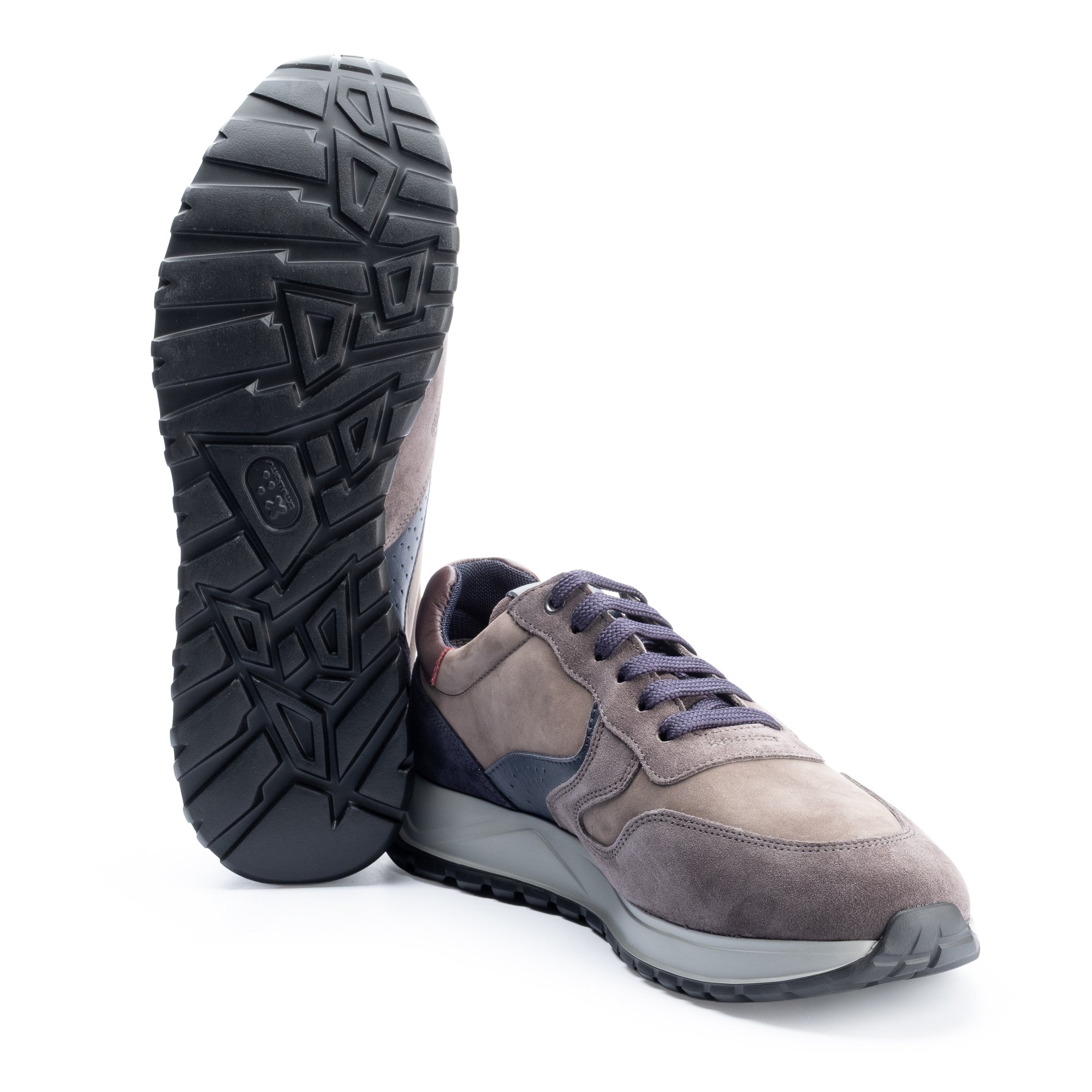

Oxford vs Derby Shoes: What's the Difference?
Oxford and Derby shoes differ by a single structural detail: the lacing system. Oxfords have a closed facing stitched beneath the vamp — sleeker, more formal. Derbies have an open facing on top — more adjustable, slightly more relaxed. That one distinction shapes every styling and occasion decision that follows.
Quick Answer: Oxford shoes have a closed lacing system where the facing is stitched under the vamp, producing a sleeker, more formal fit. Derby shoes have an open lacing system with eyelet tabs sewn on top of the vamp, allowing more adjustability and a marginally more relaxed silhouette. Oxfords suit formal occasions; Derbies span smart-casual to formal with ease.
In This Guide
- What Is the Structural Difference Between Oxford and Derby Shoes?
- How Do You Tell an Oxford from a Derby at a Glance?
- Which Is More Formal: Oxford or Derby?
- Oxford vs Derby: A Direct Comparison
- Which Toe Style Works Best with Each Lacing Construction?
- Are Derby Shoes More Comfortable Than Oxfords?
- When Should You Wear Oxford Shoes?
- When Should You Wear Derby Shoes?
- Which Should You Buy First: Oxford or Derby?
- Related Guides
- Frequently Asked Questions
What Is the Structural Difference Between Oxford and Derby Shoes?
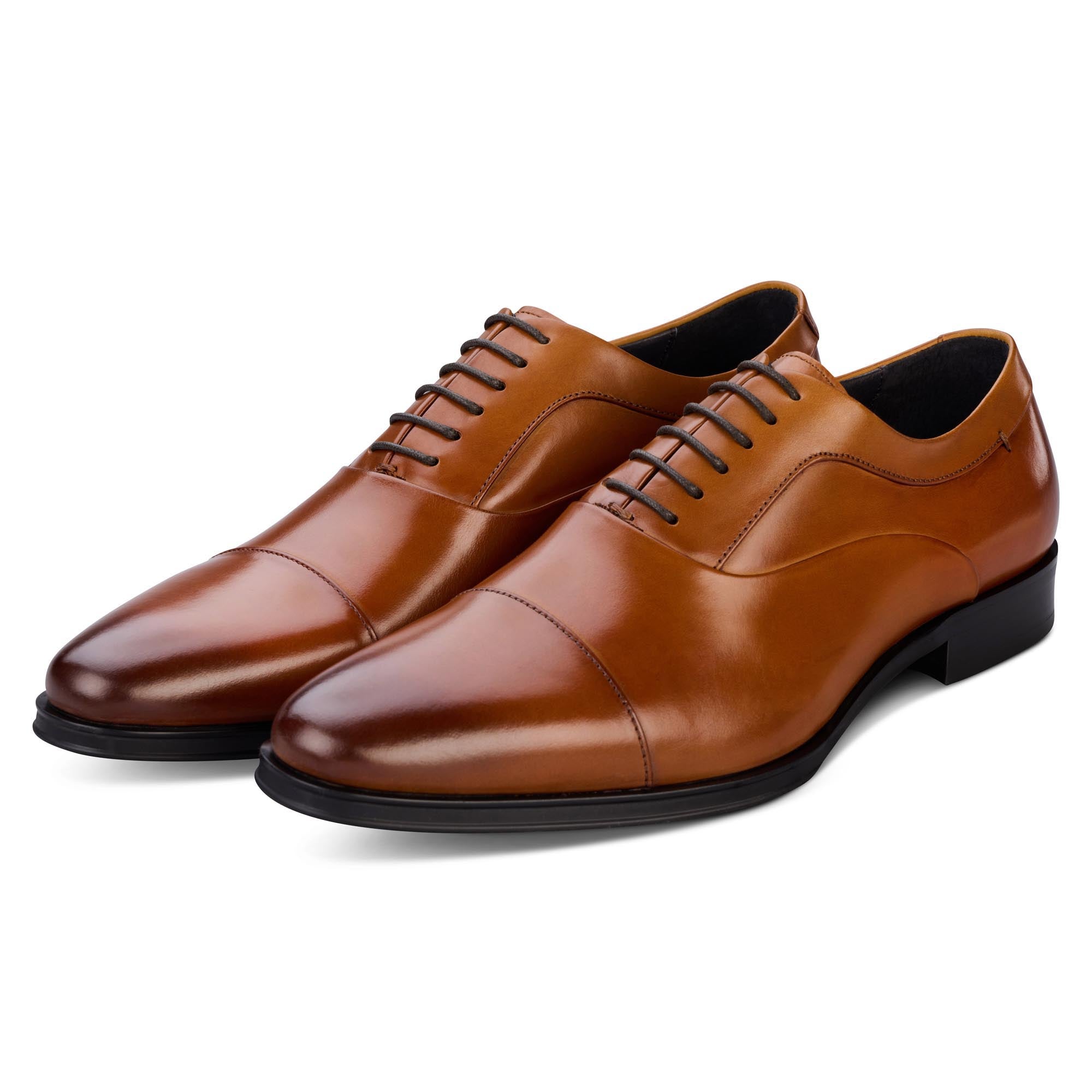
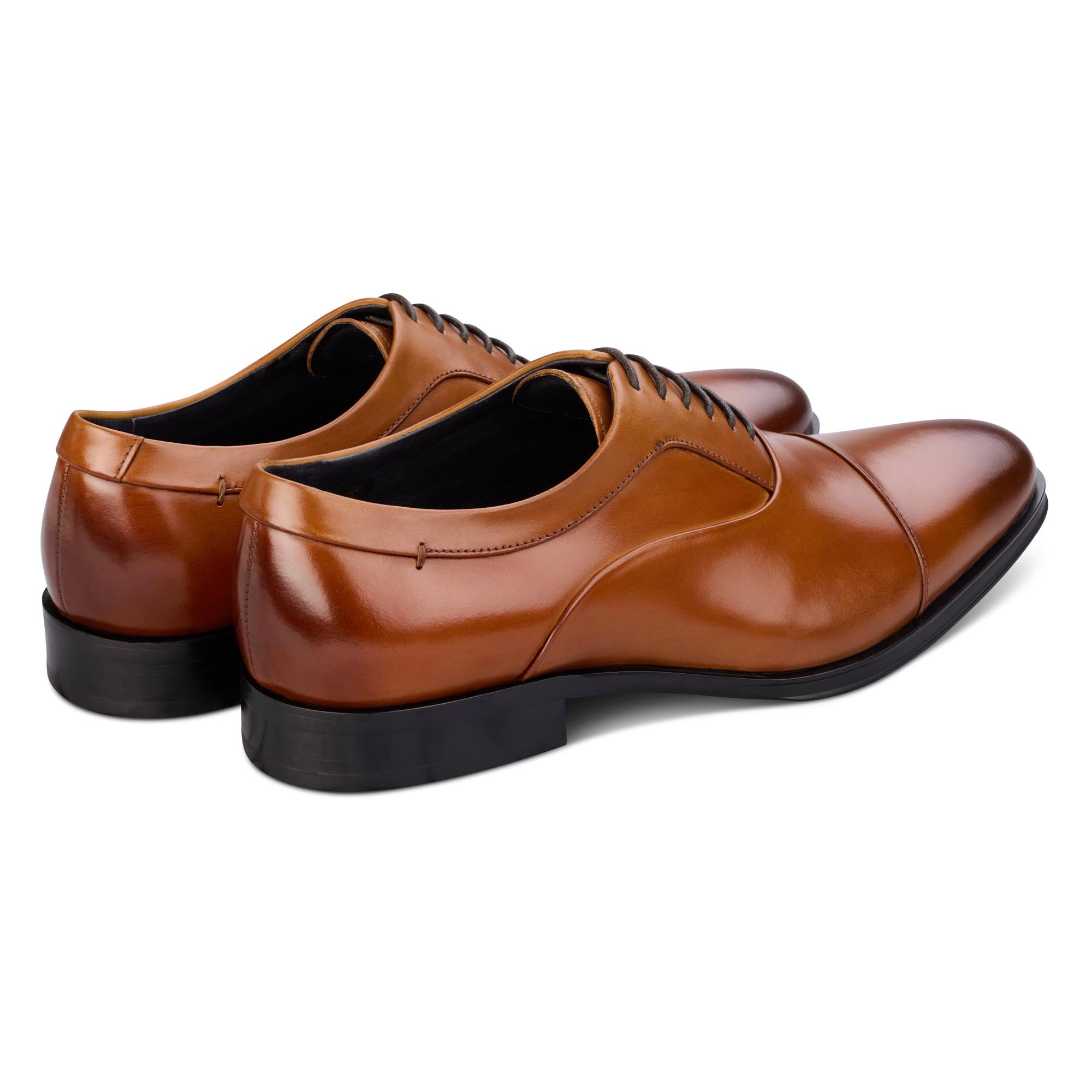
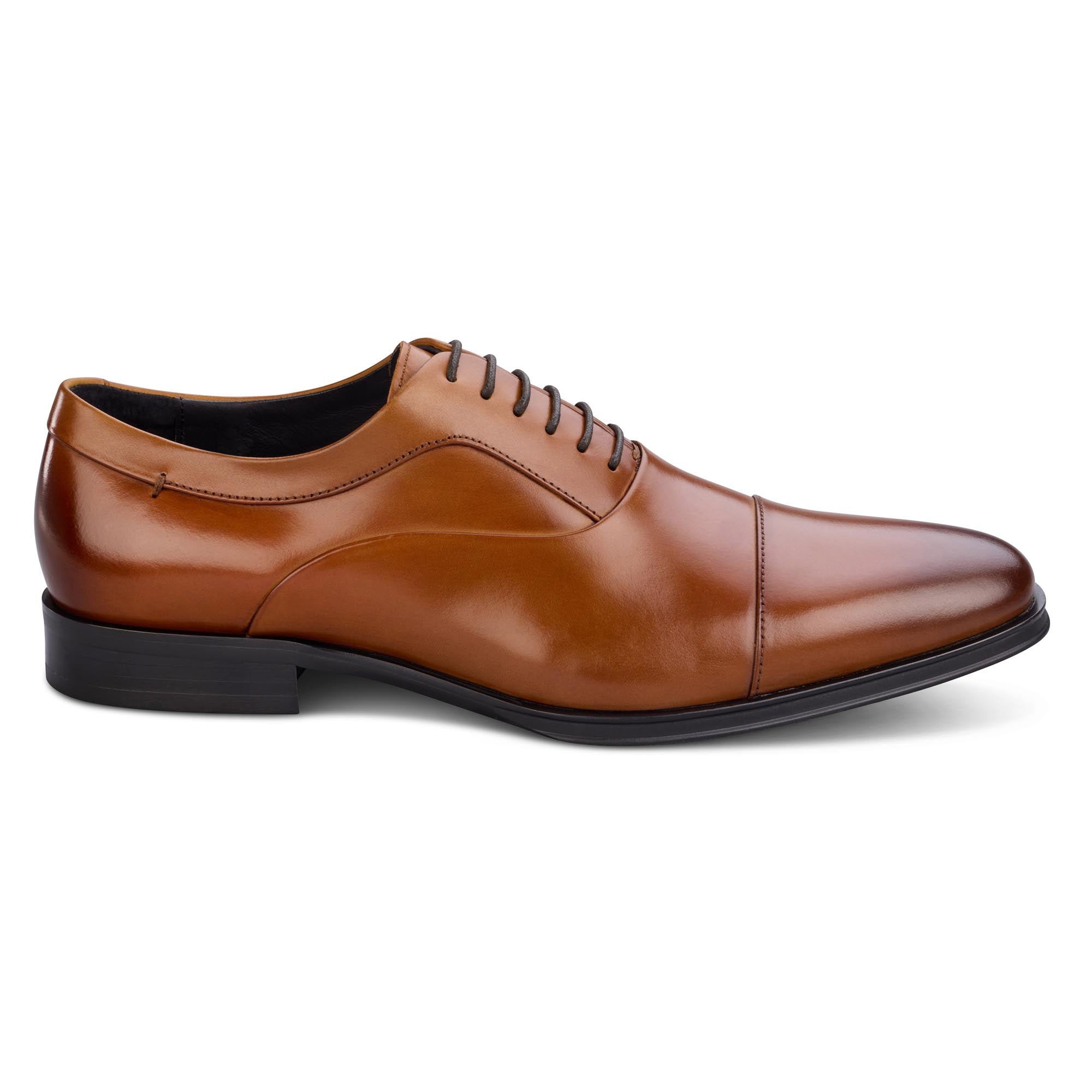
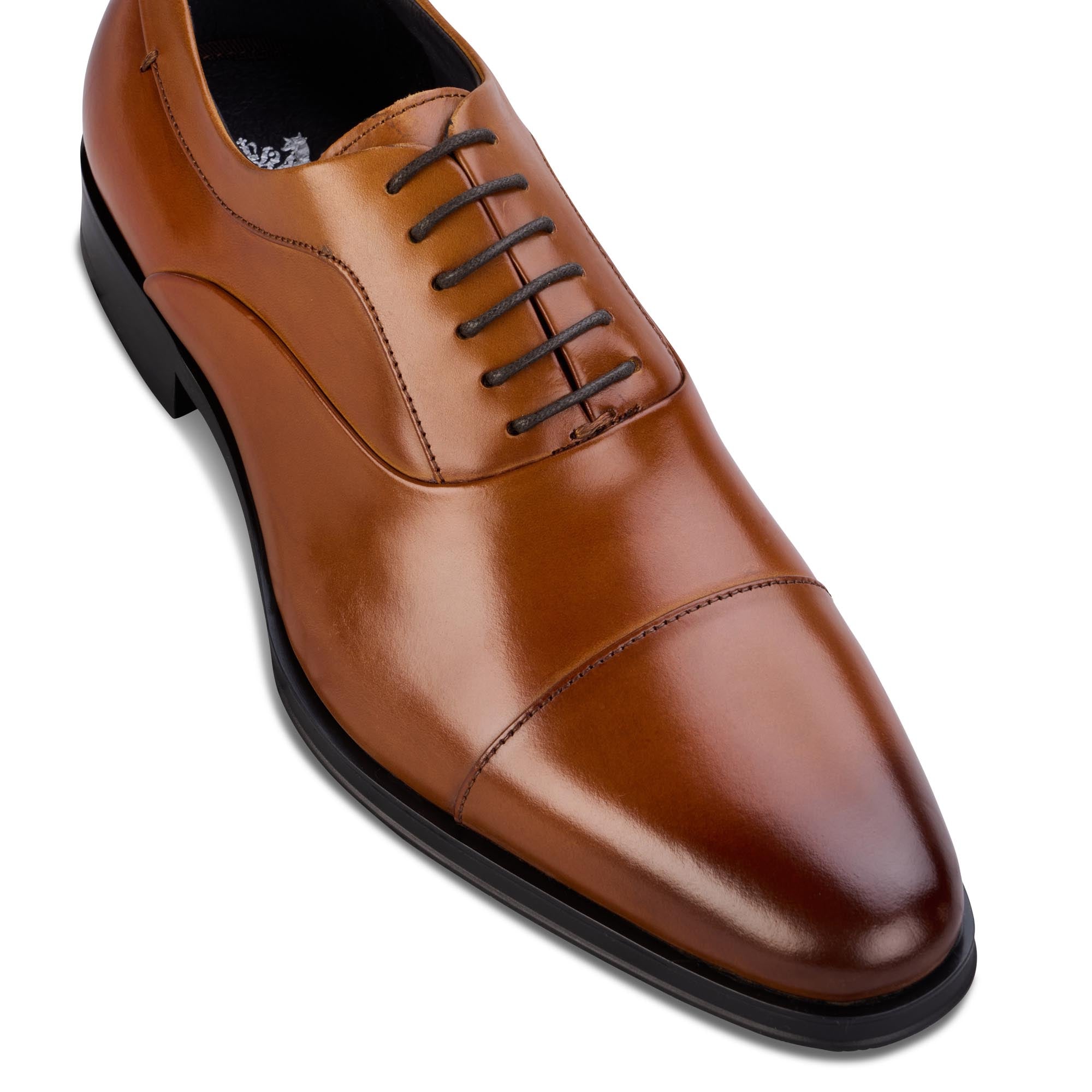
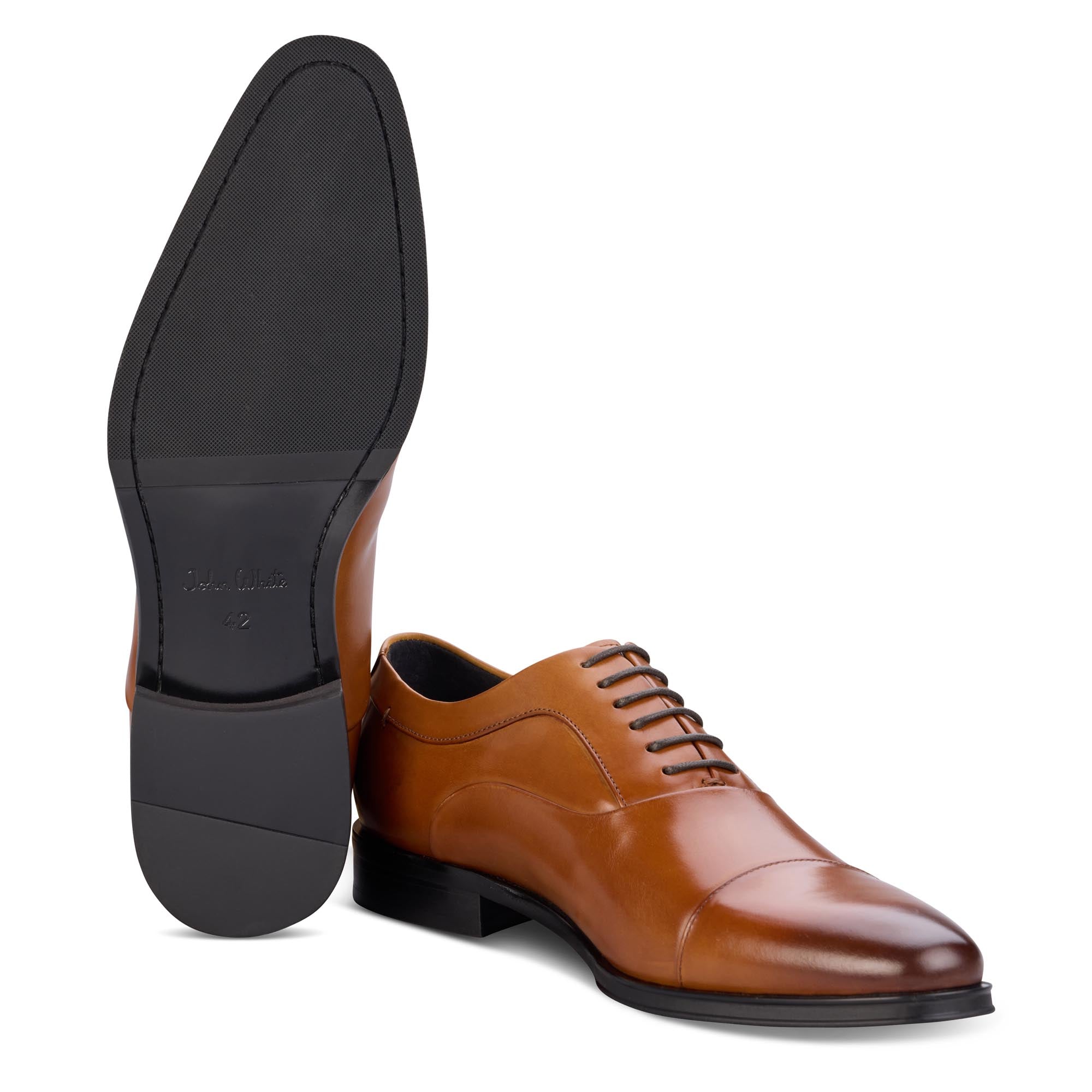
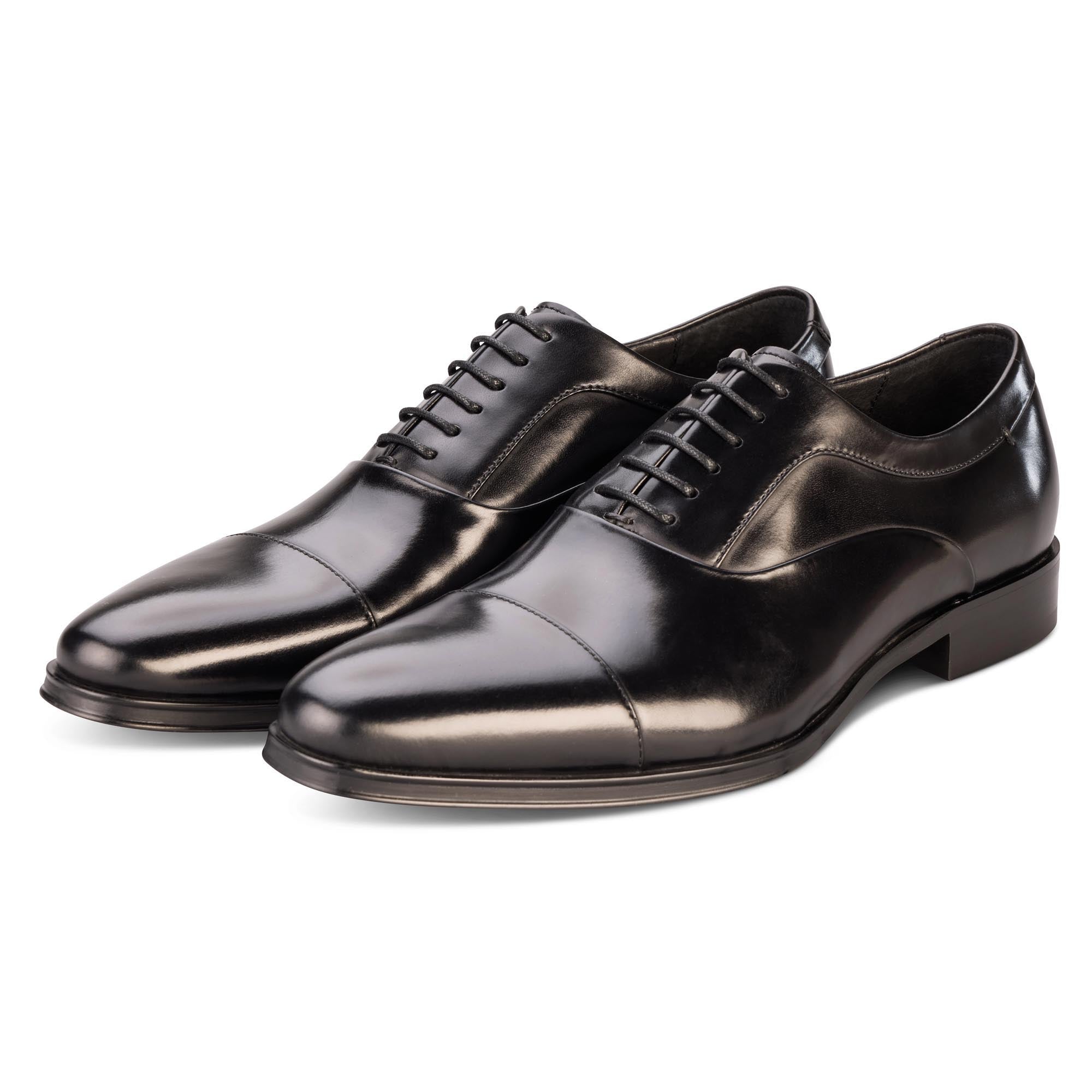
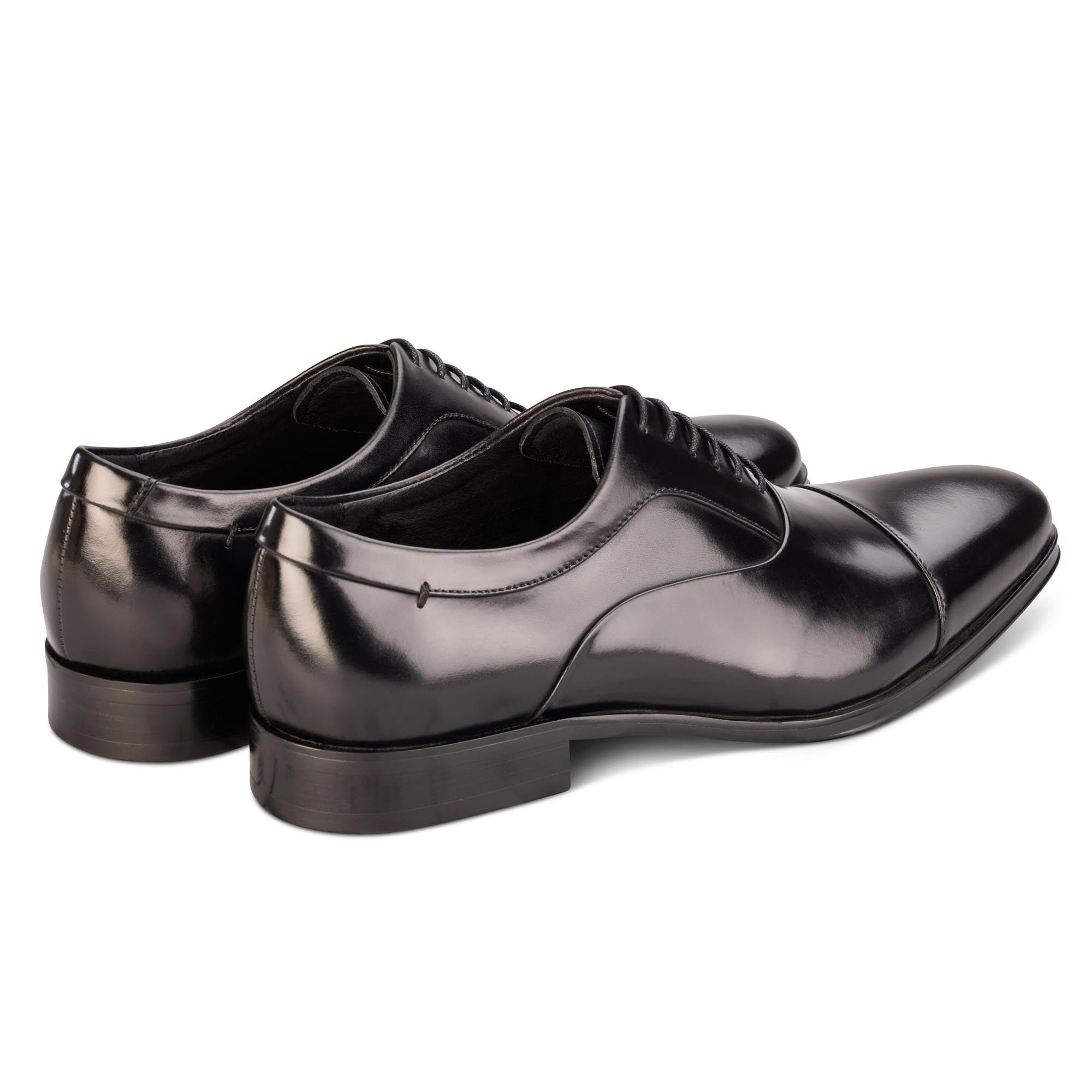
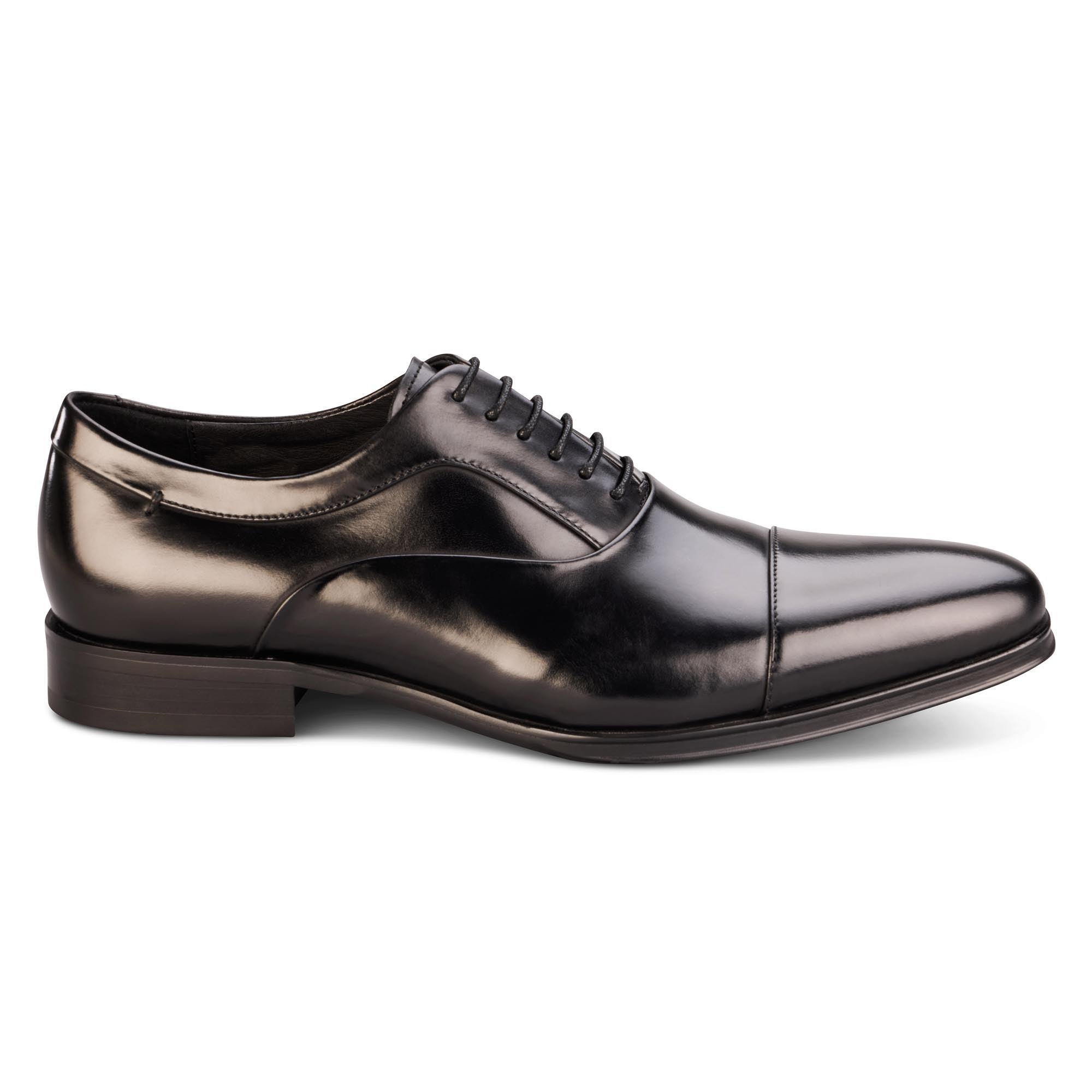
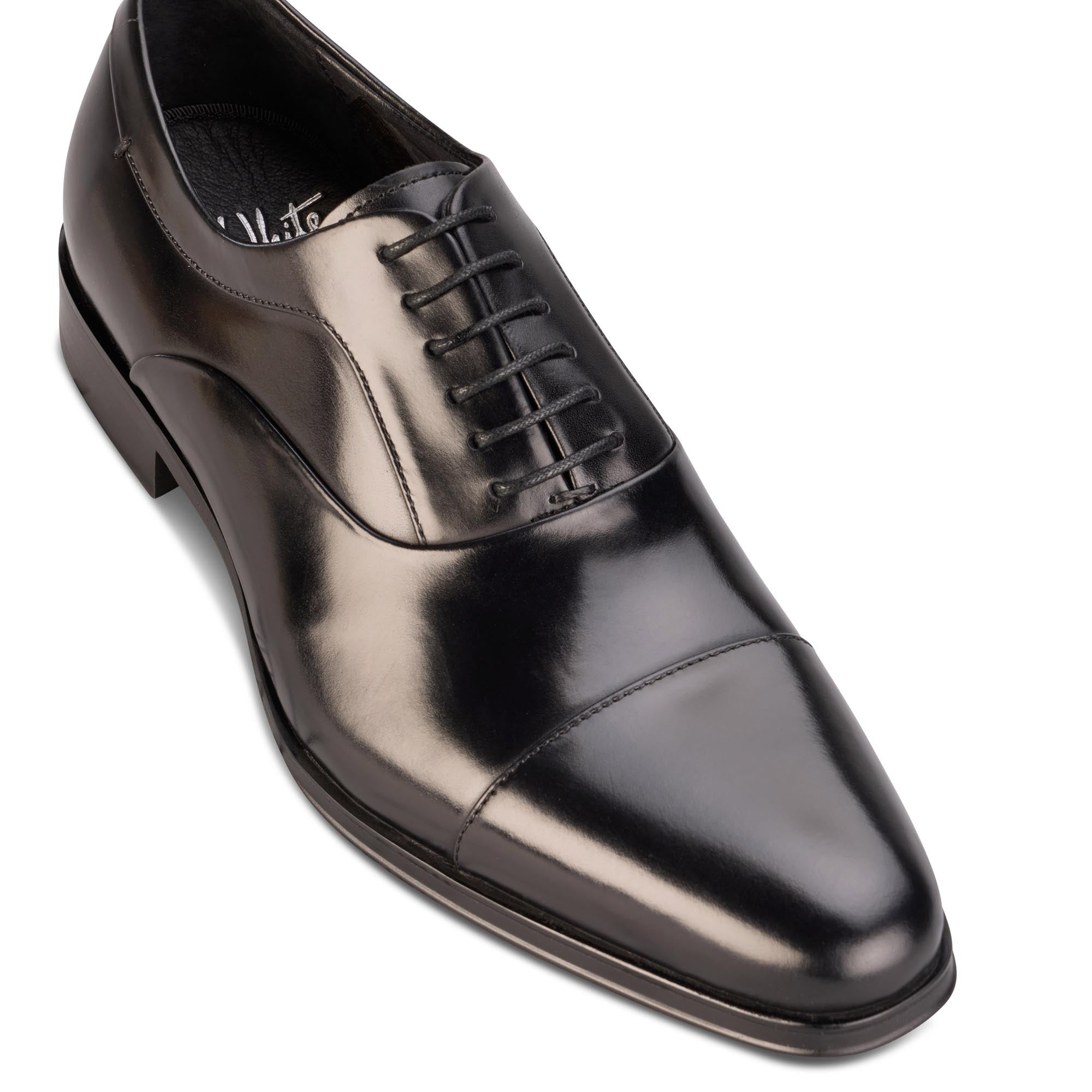
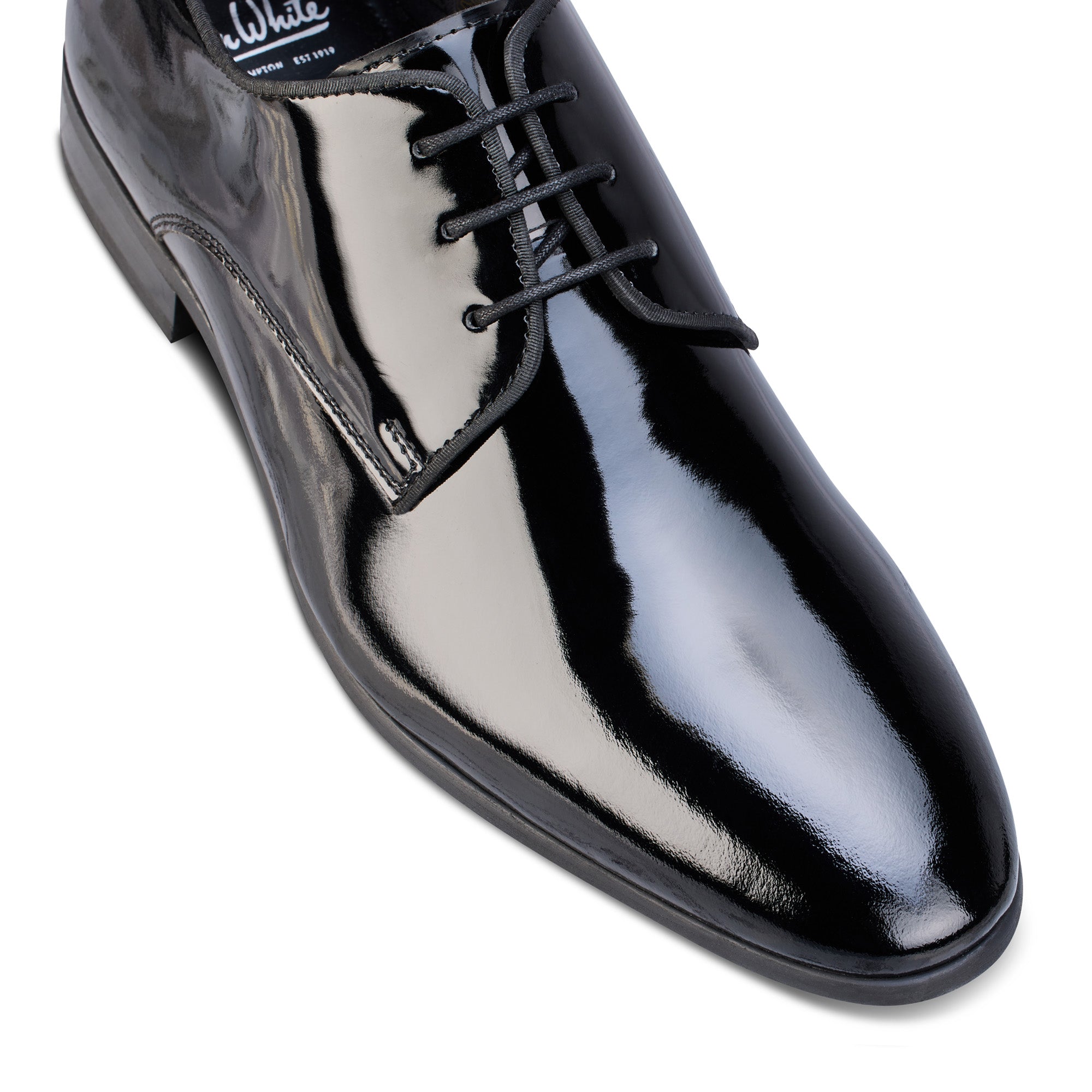
An Oxford shoe is defined by its closed lacing: the two panels that hold the eyelets — called the facing or quarters — are stitched underneath the vamp, the front part of the upper. When laced, this pulls the shoe tight across the instep, producing that characteristic slim, composed look.
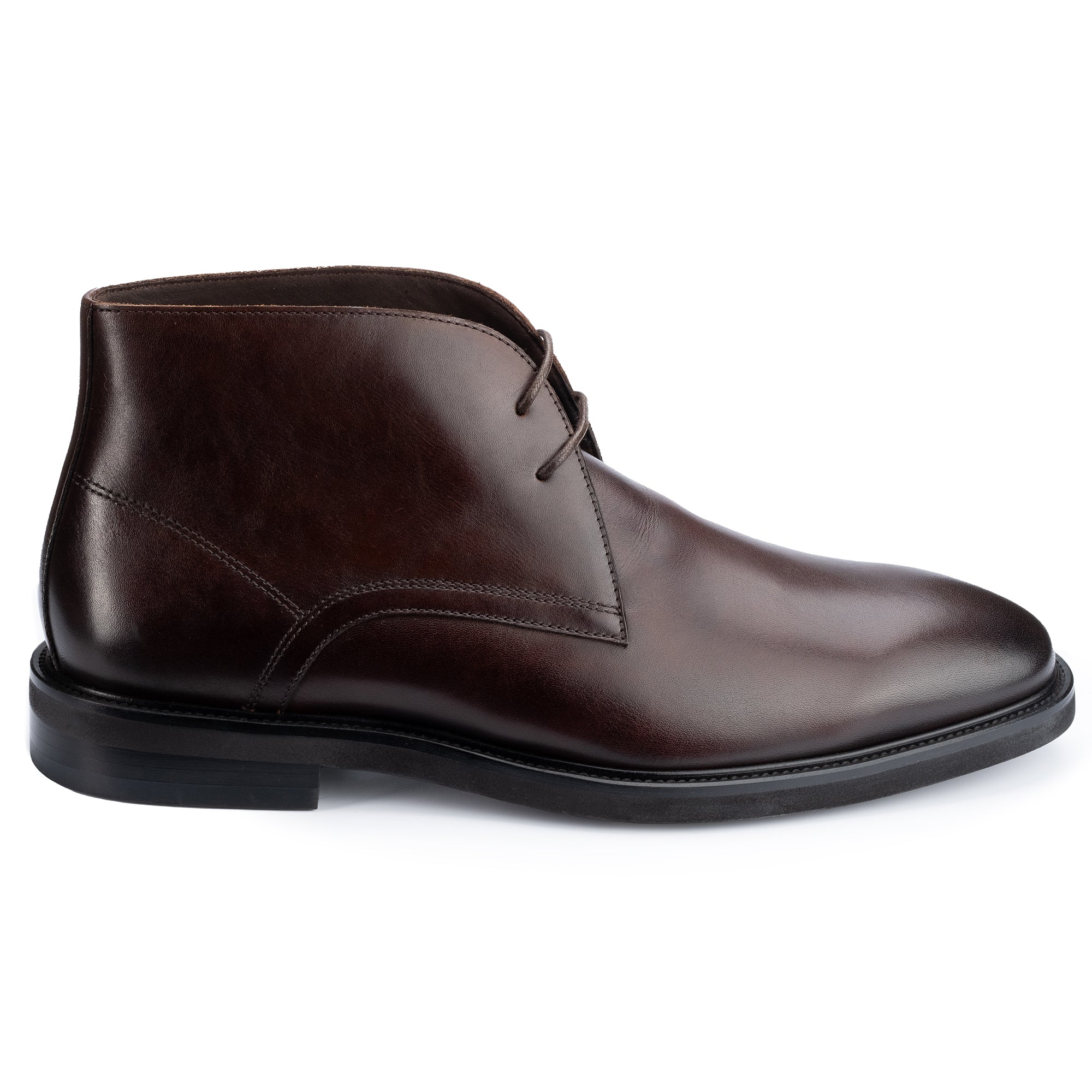
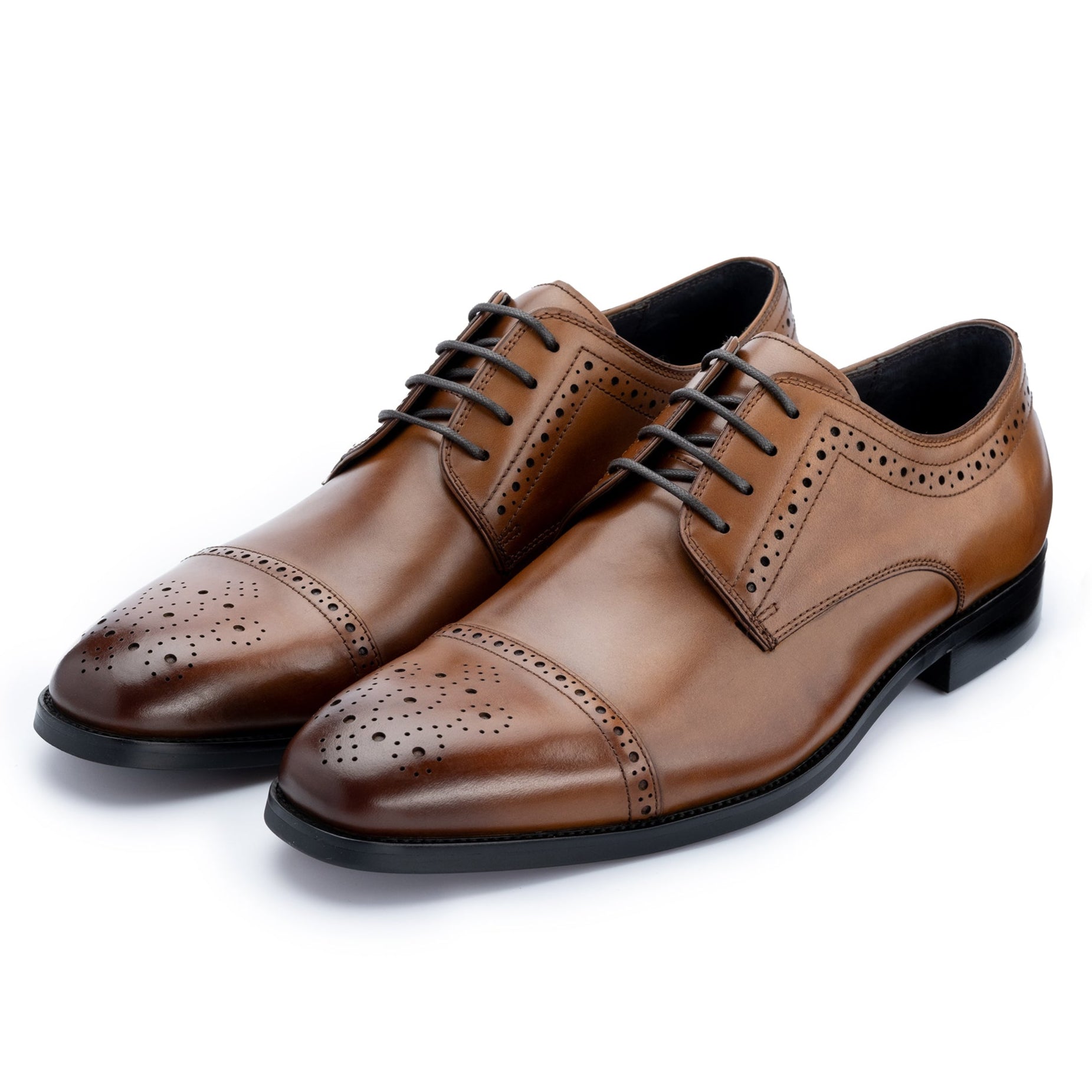
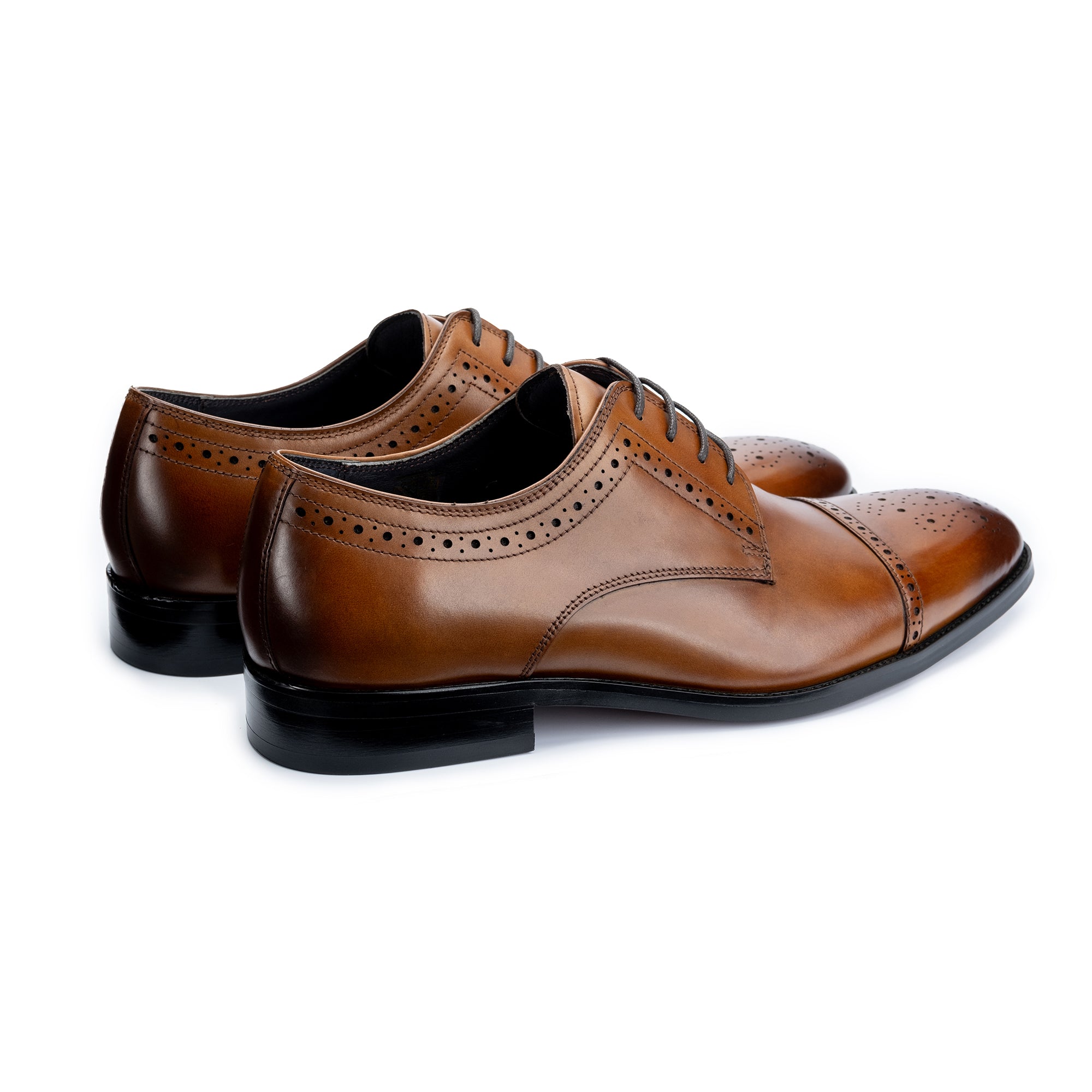
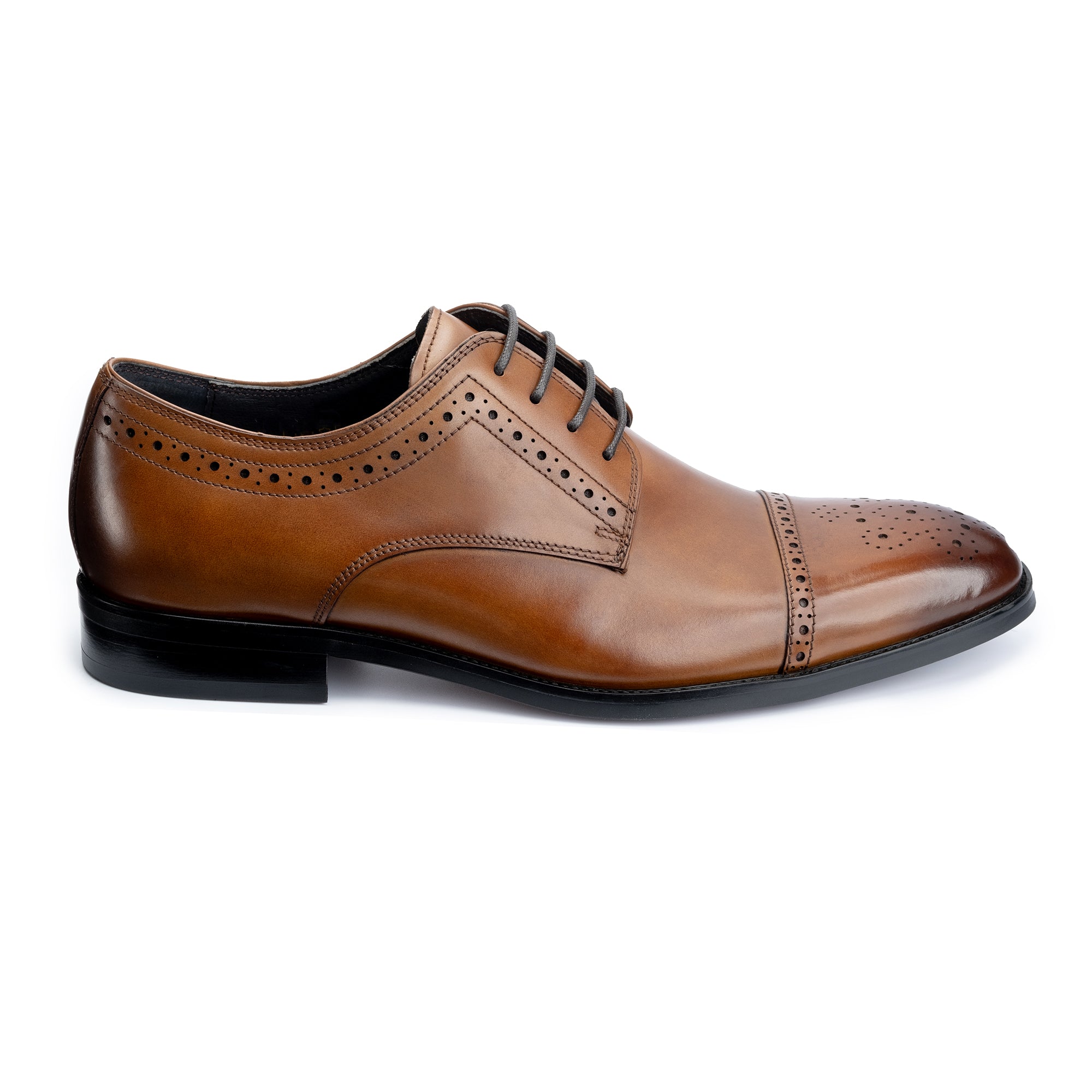
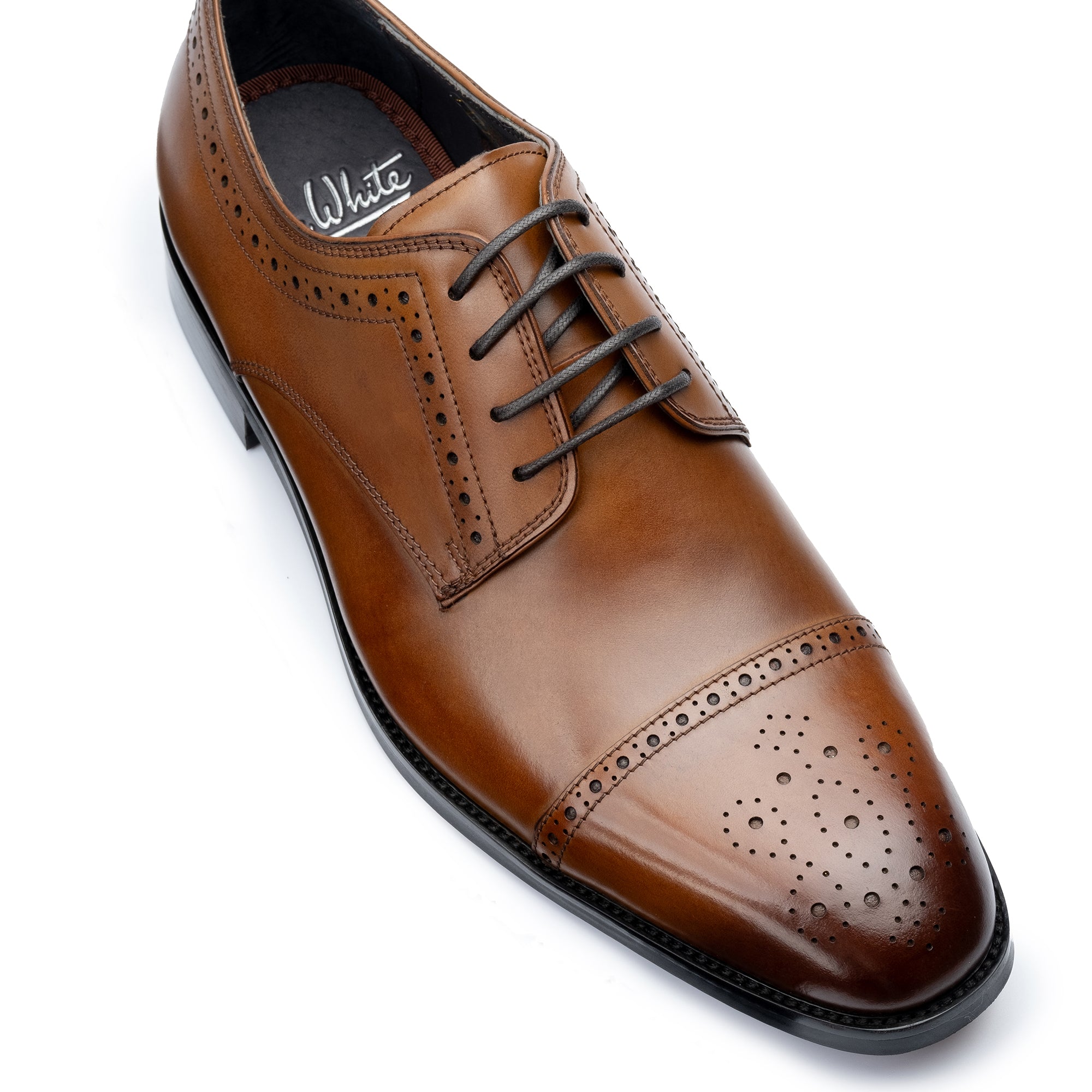
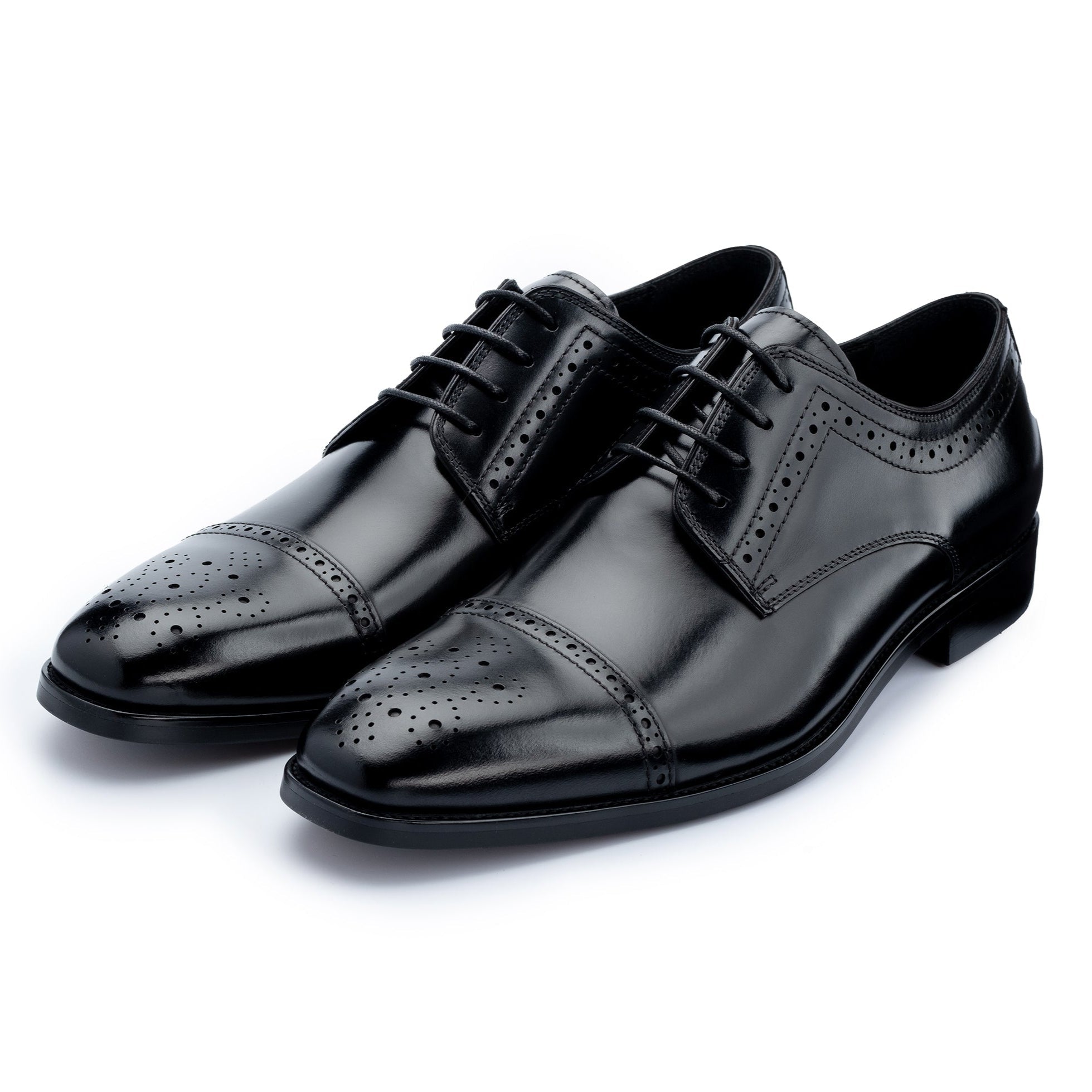
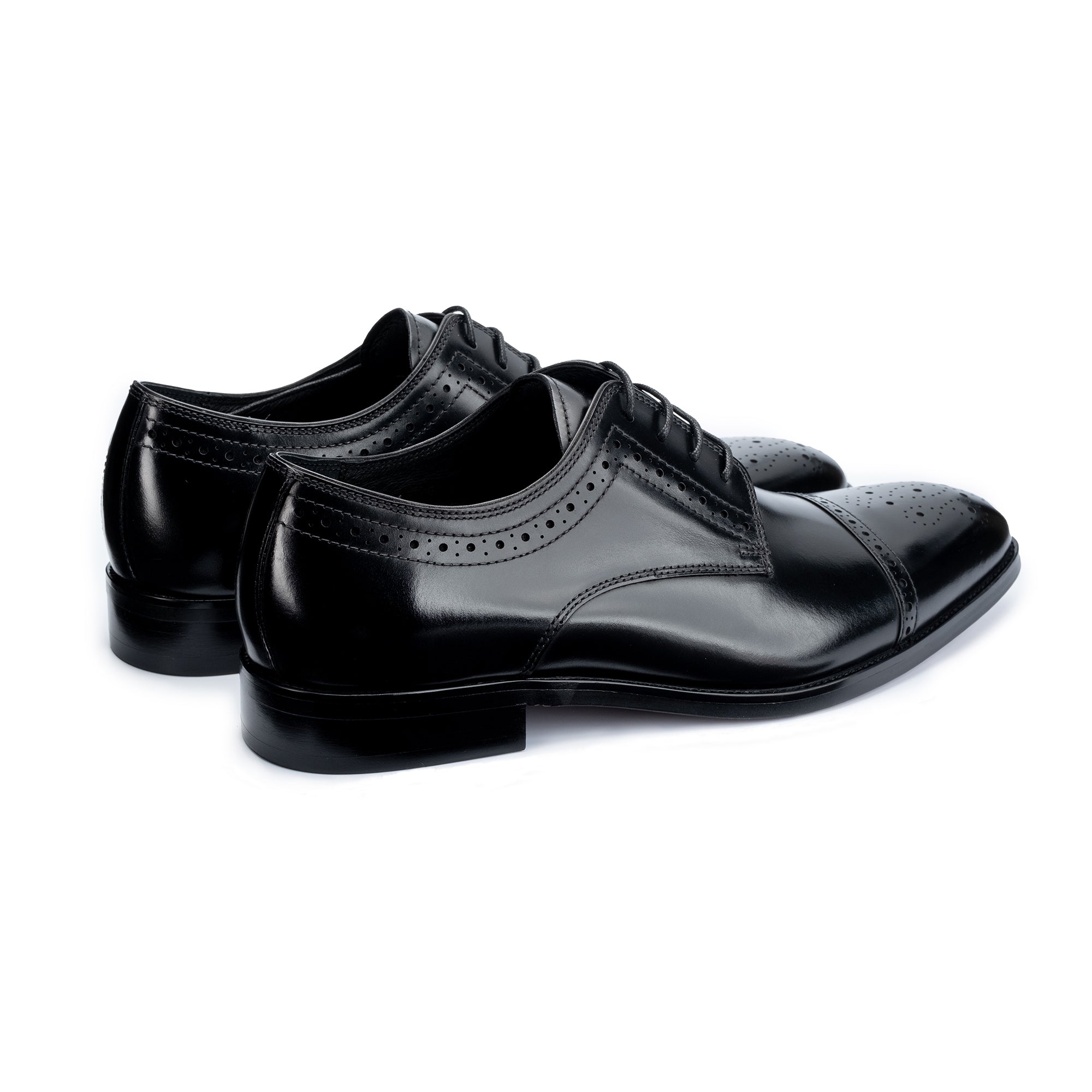
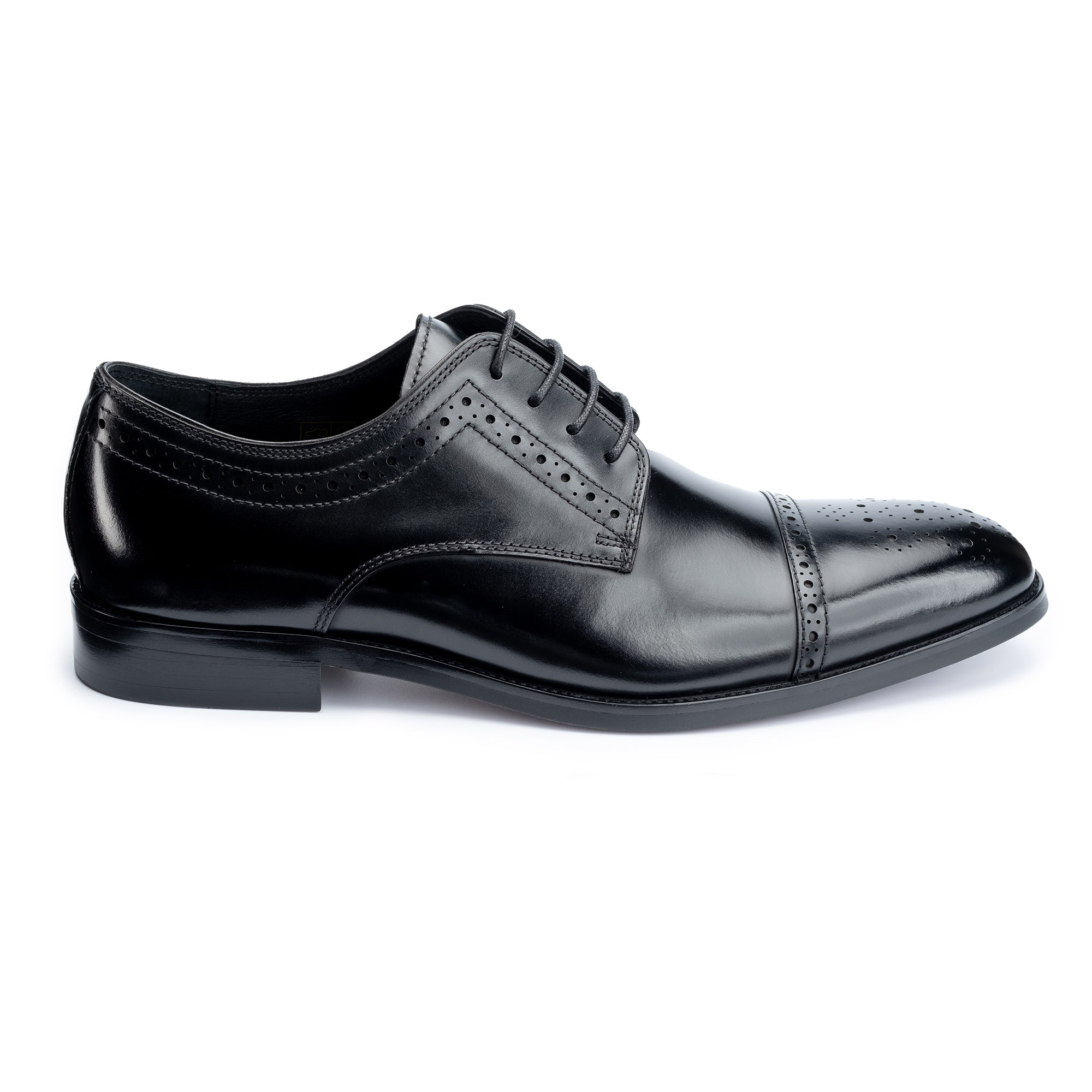
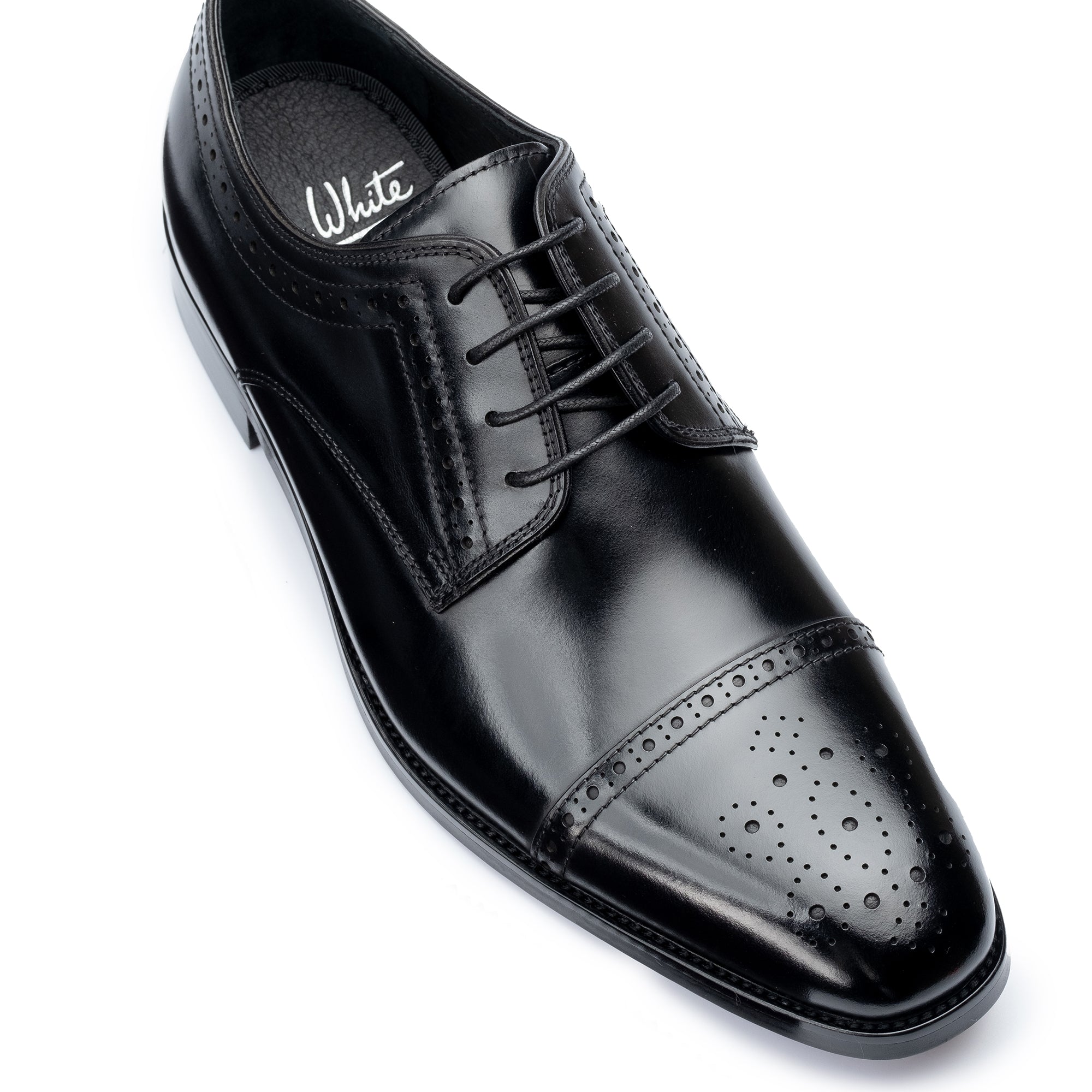
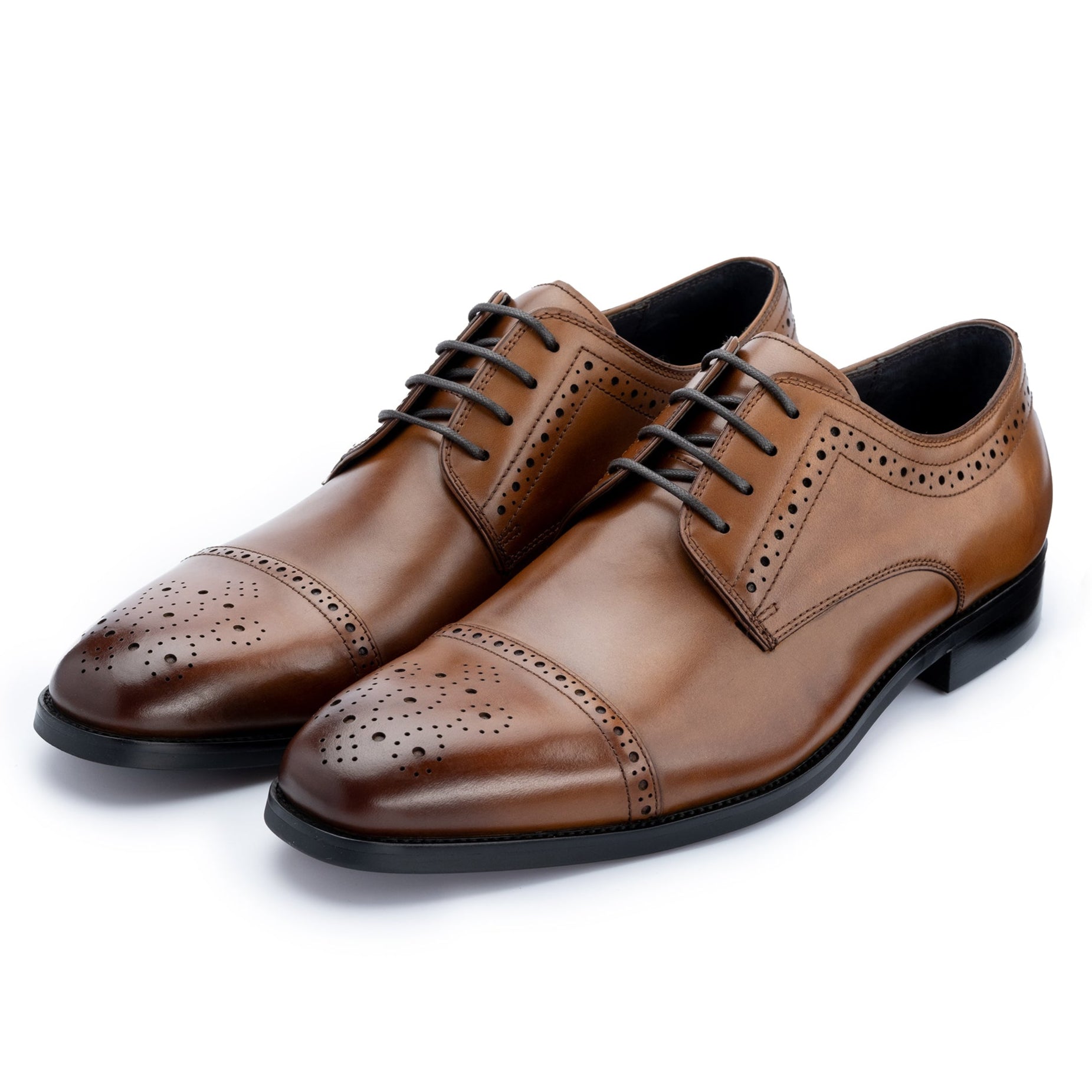
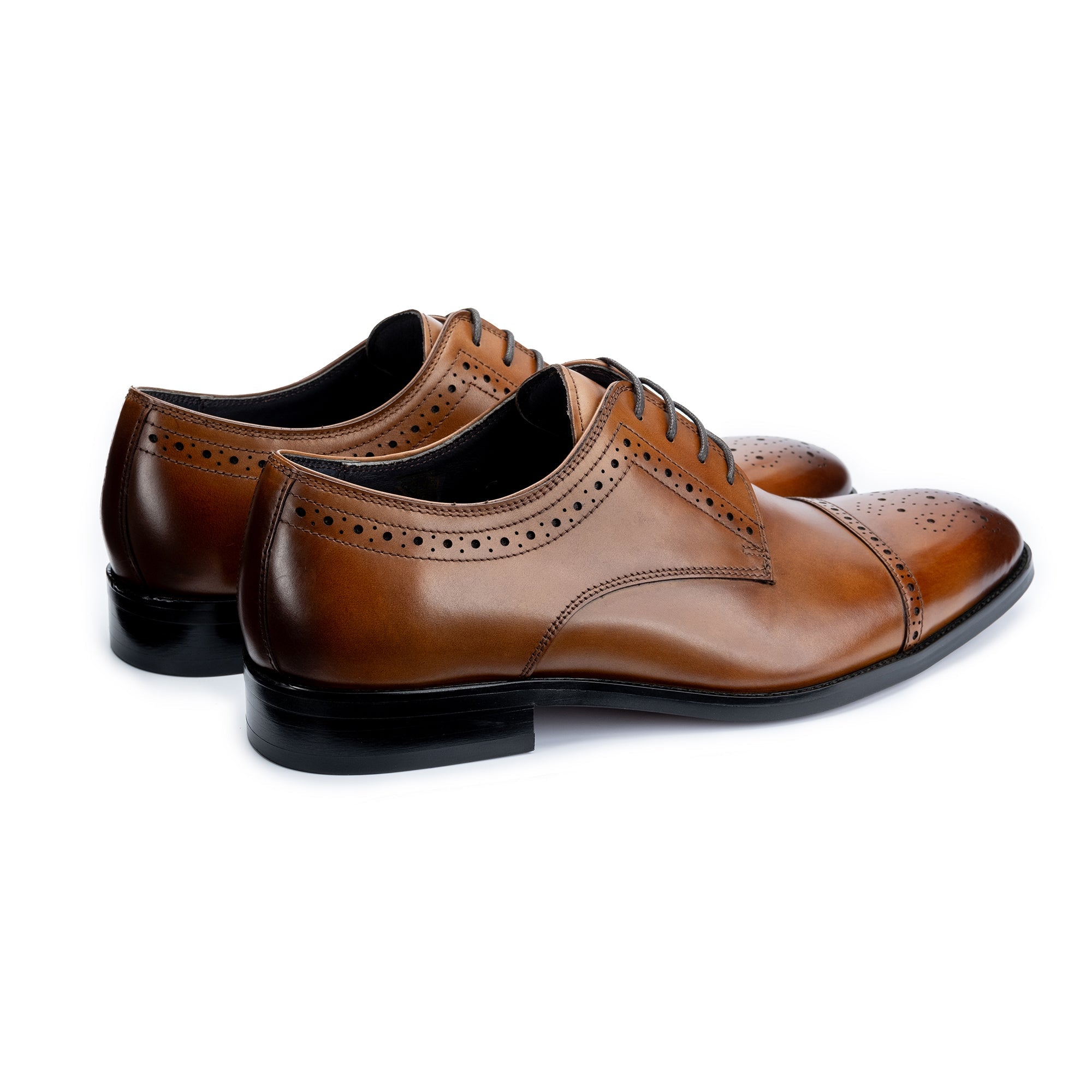
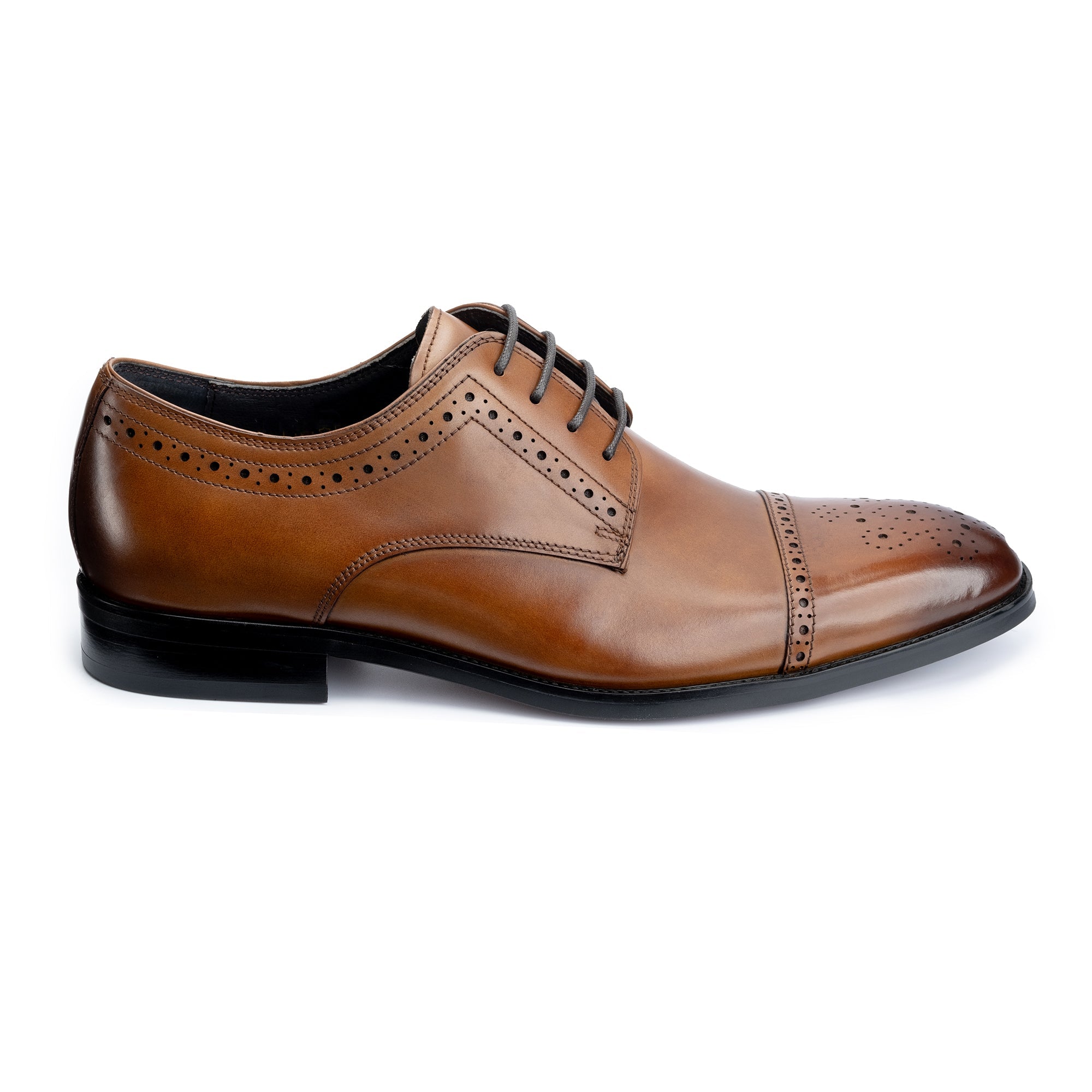
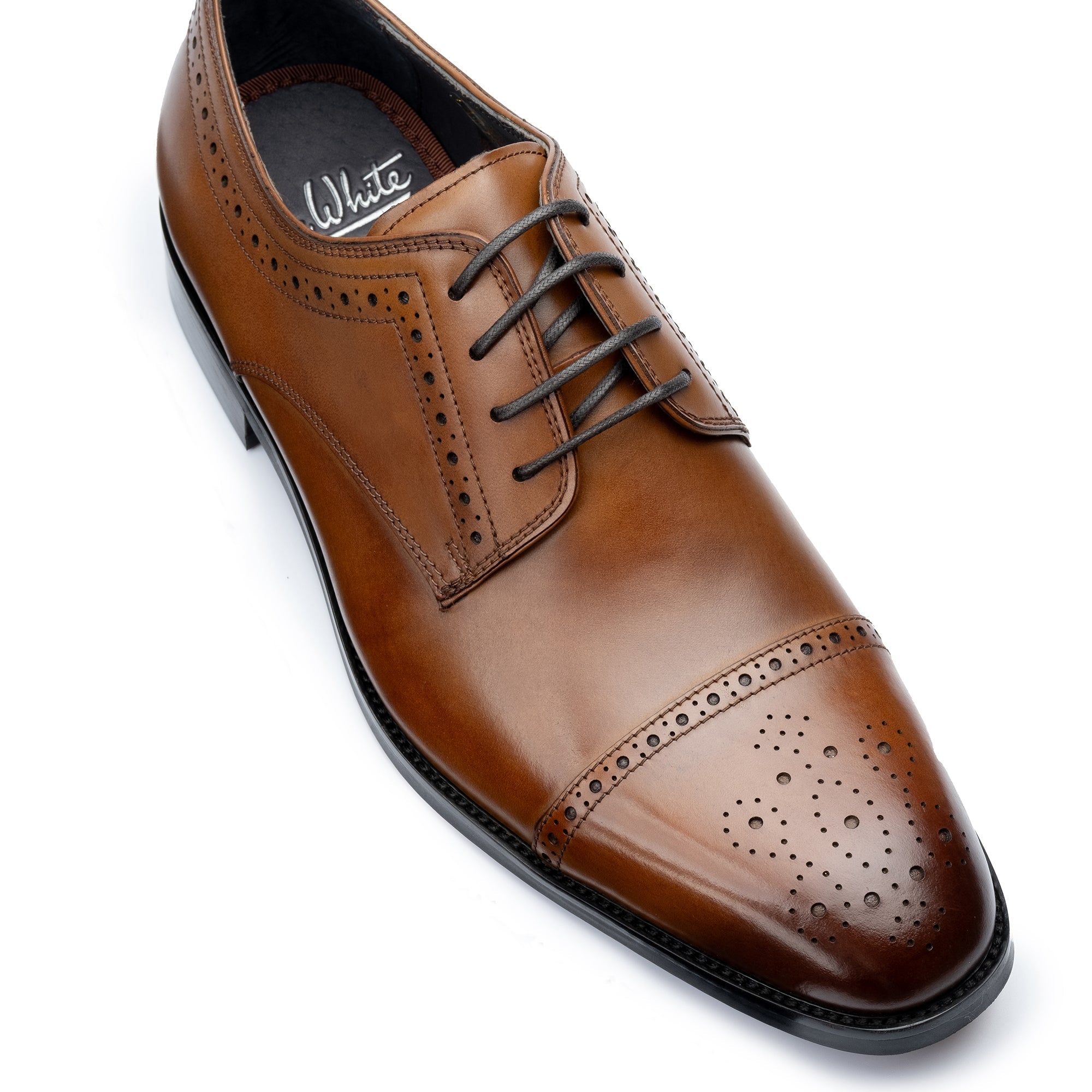
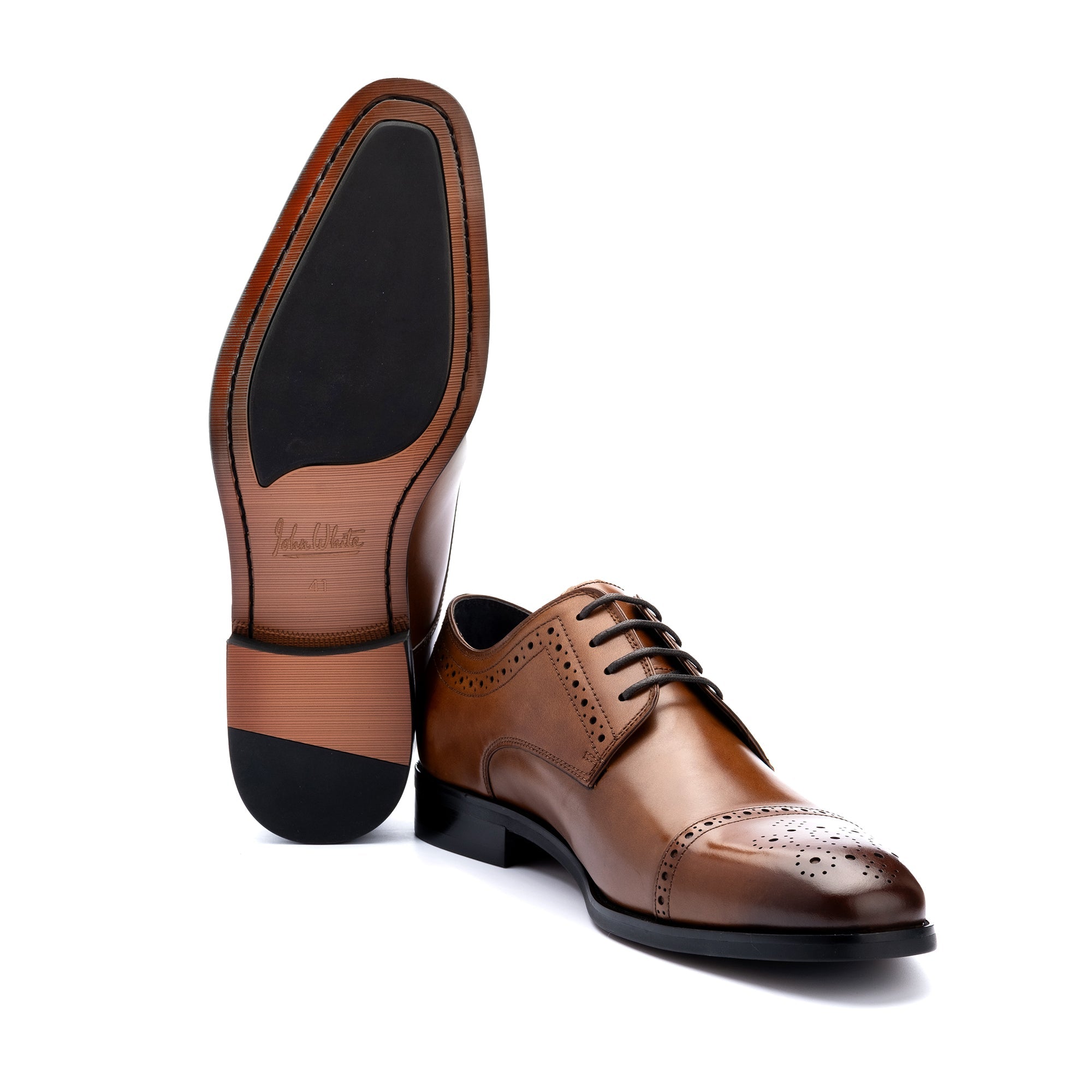
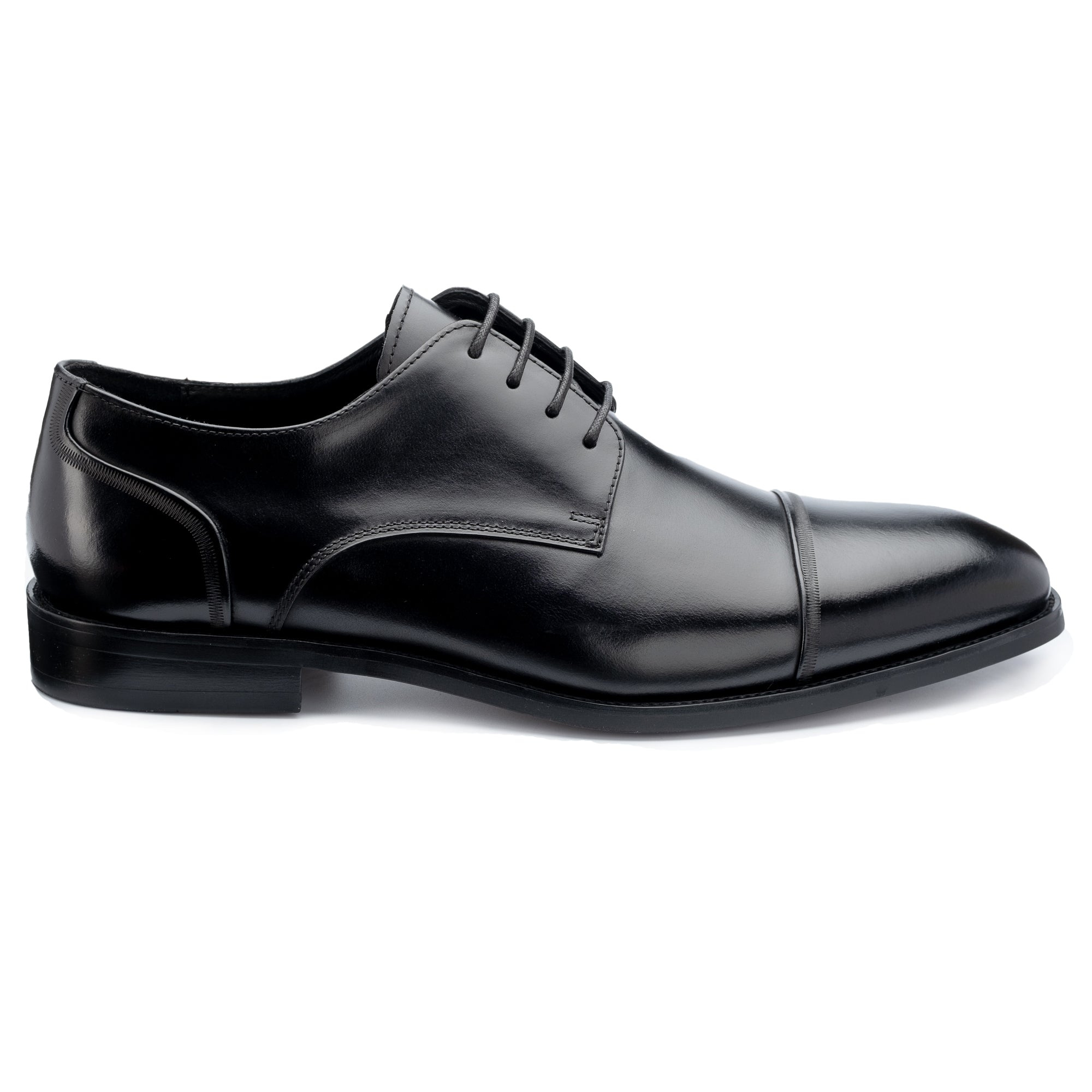
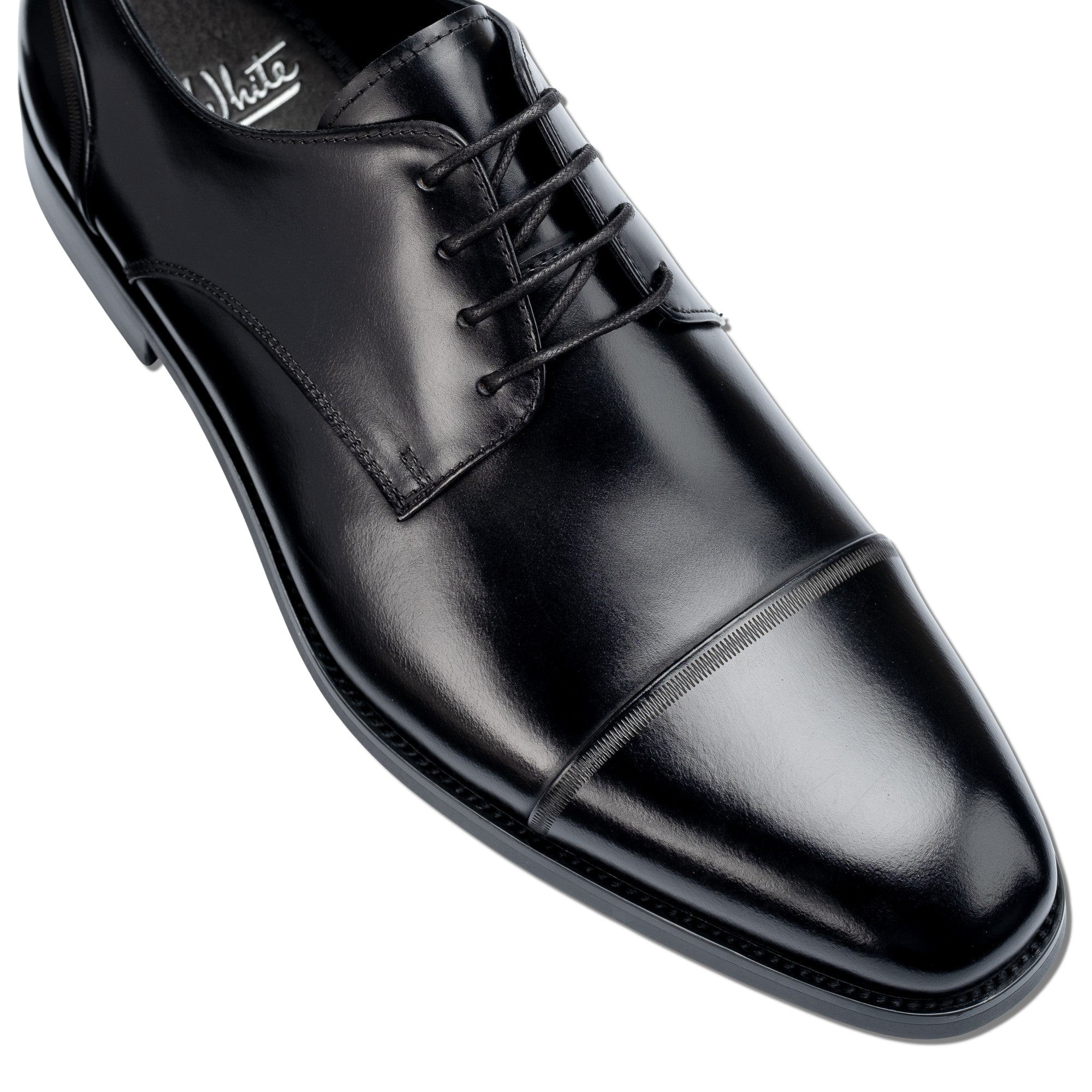
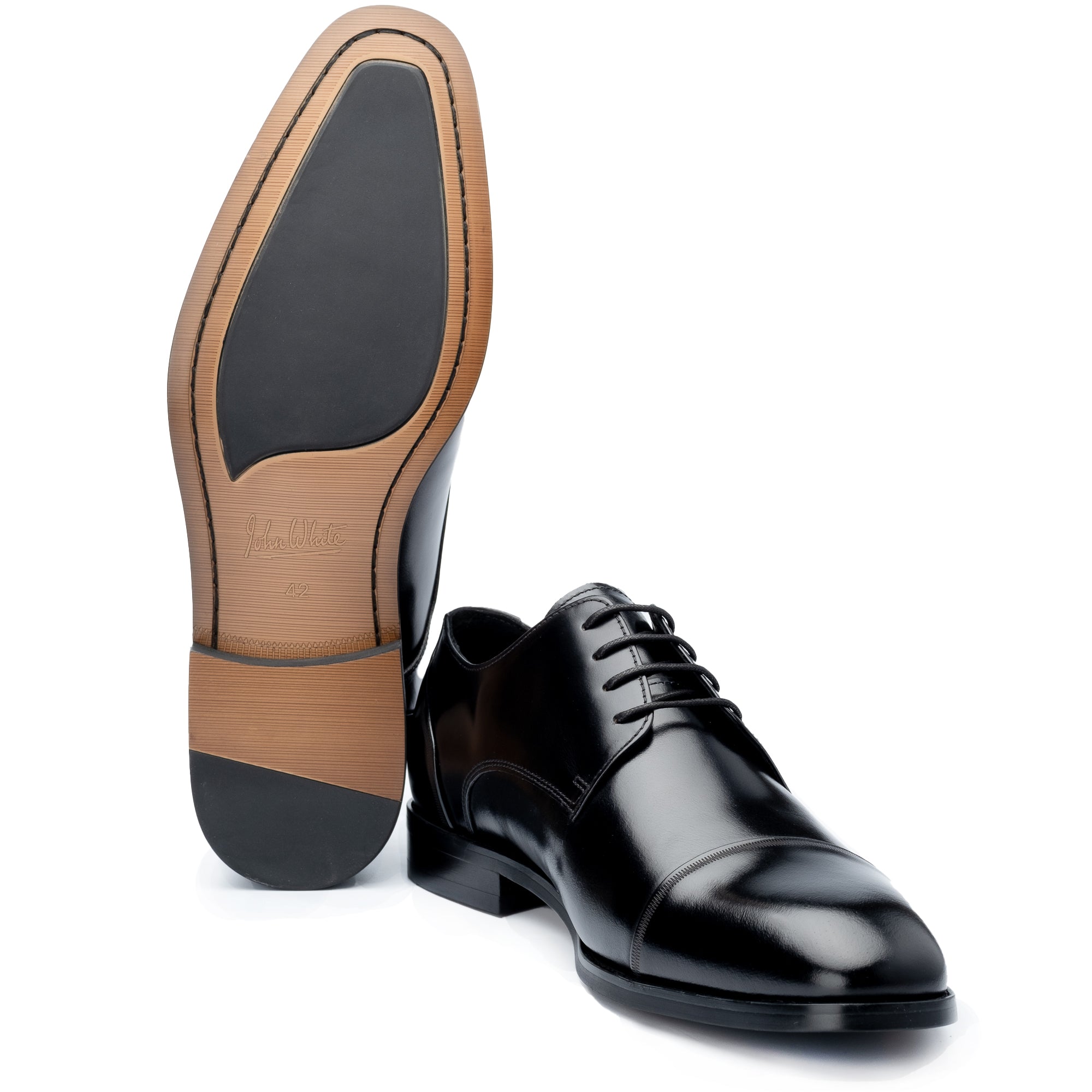
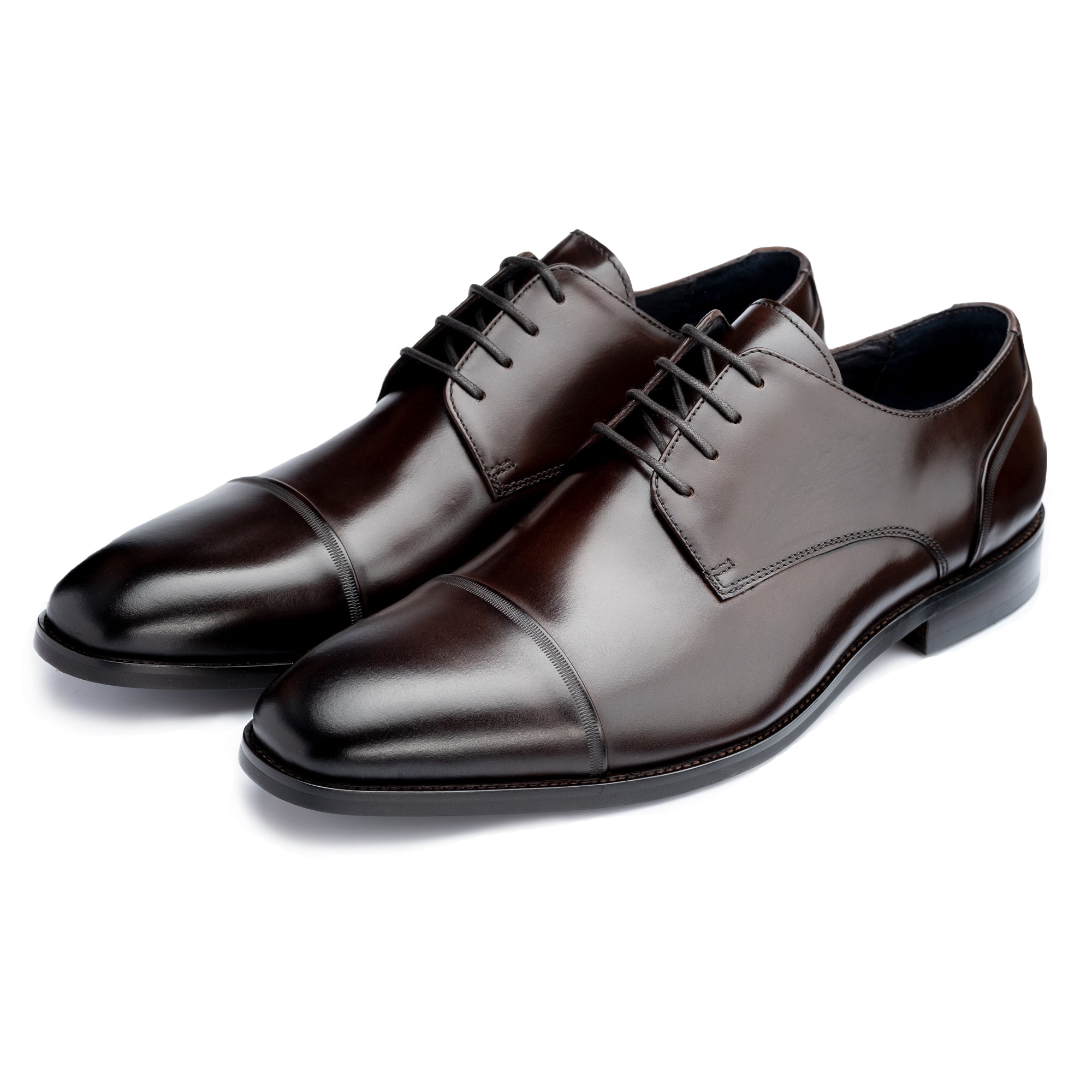
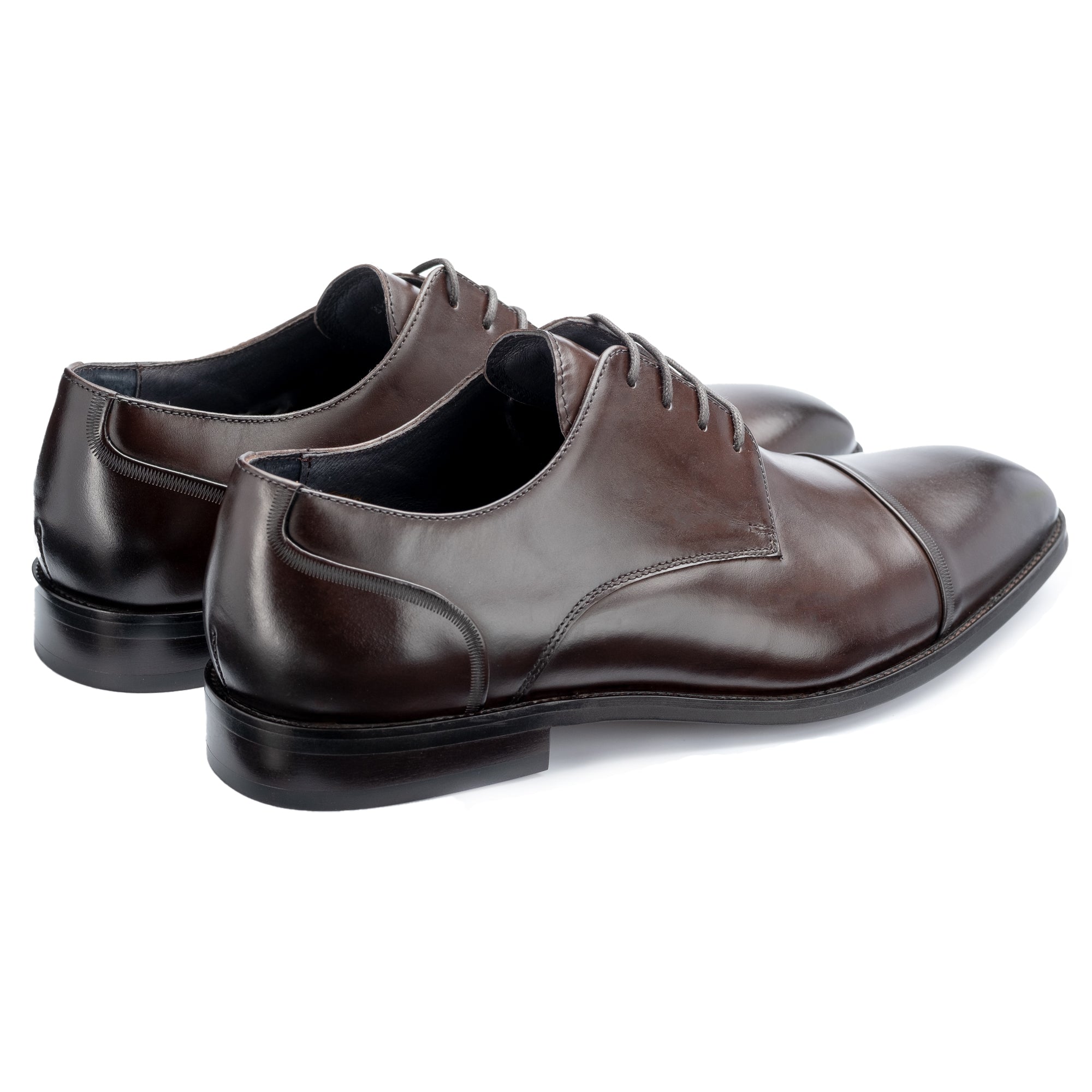
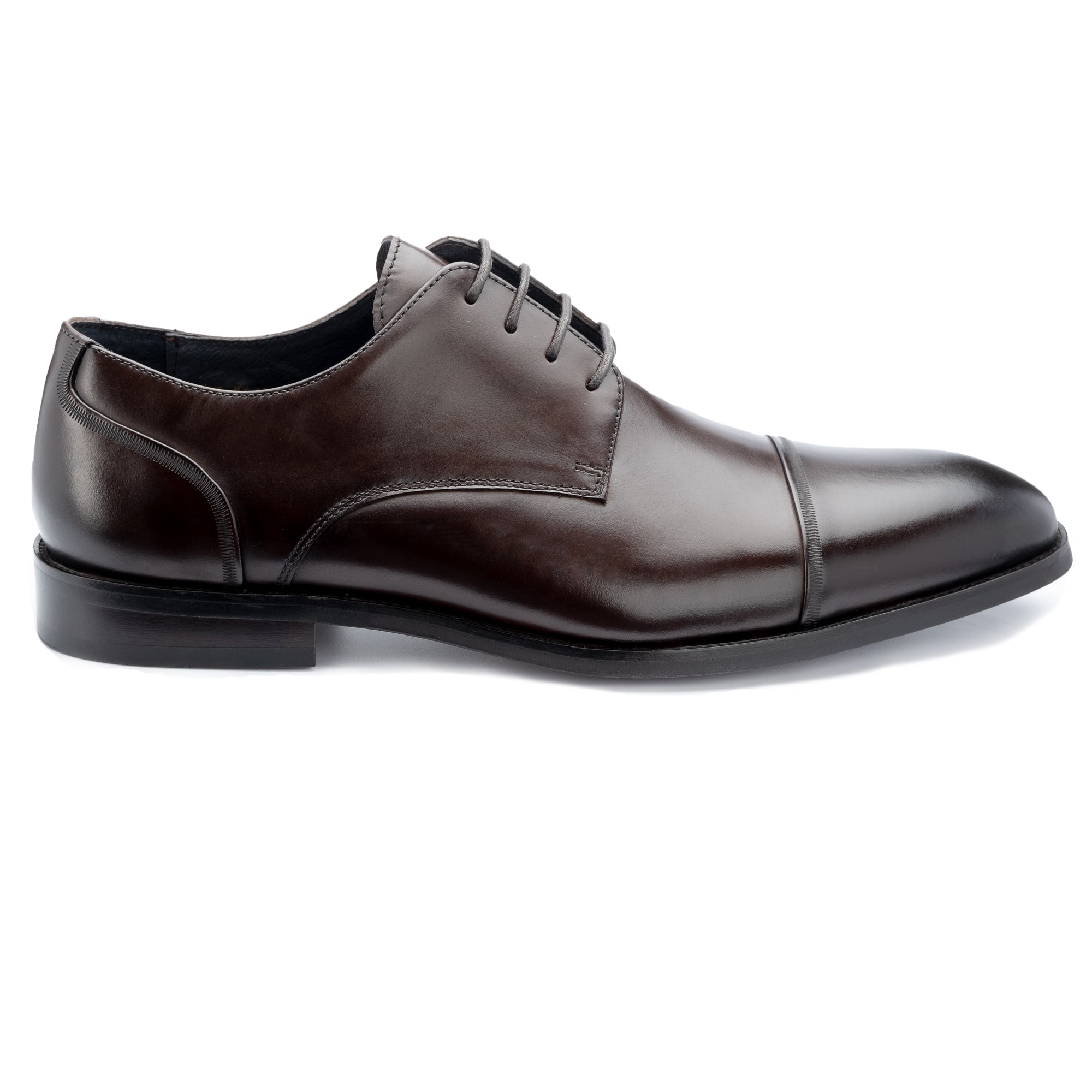
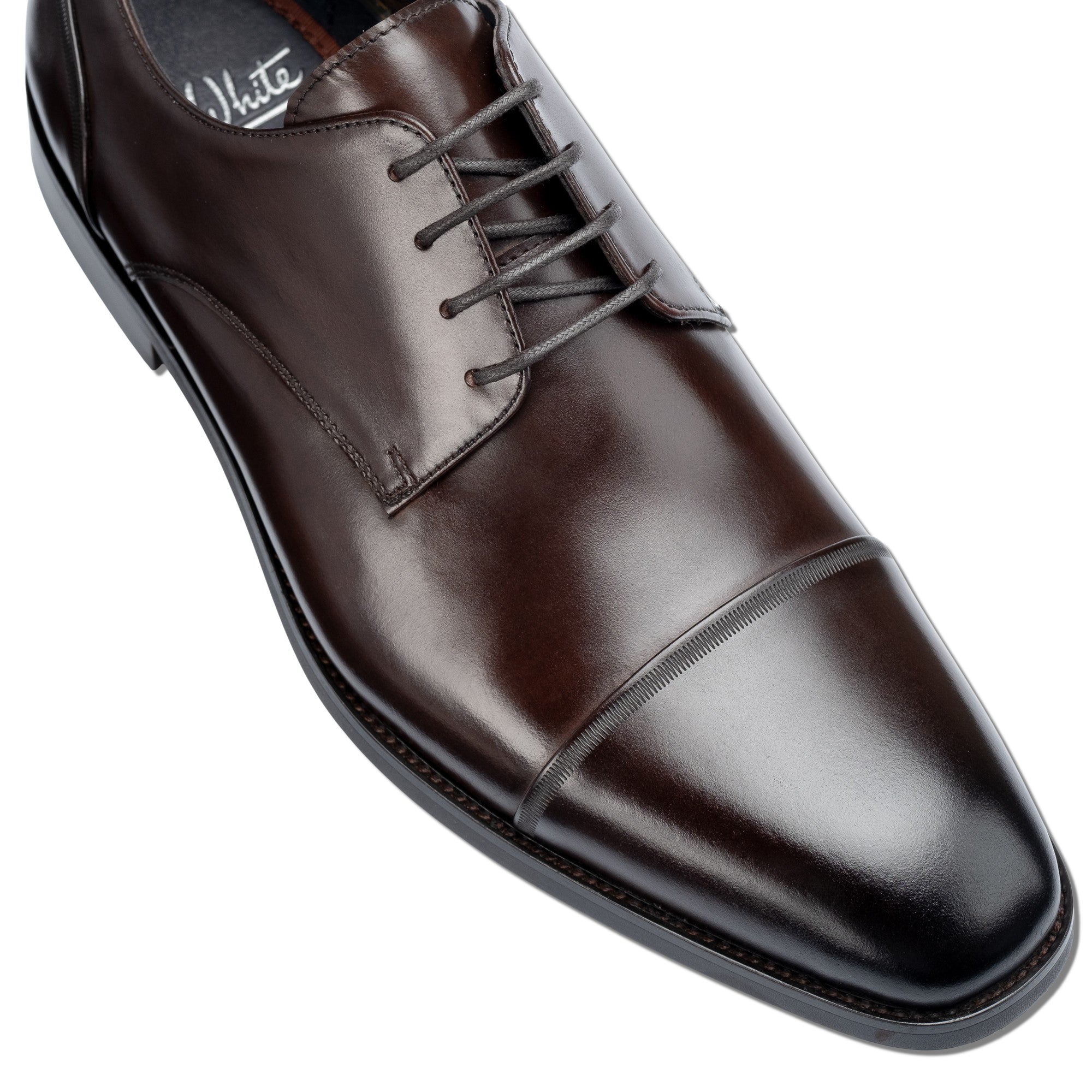
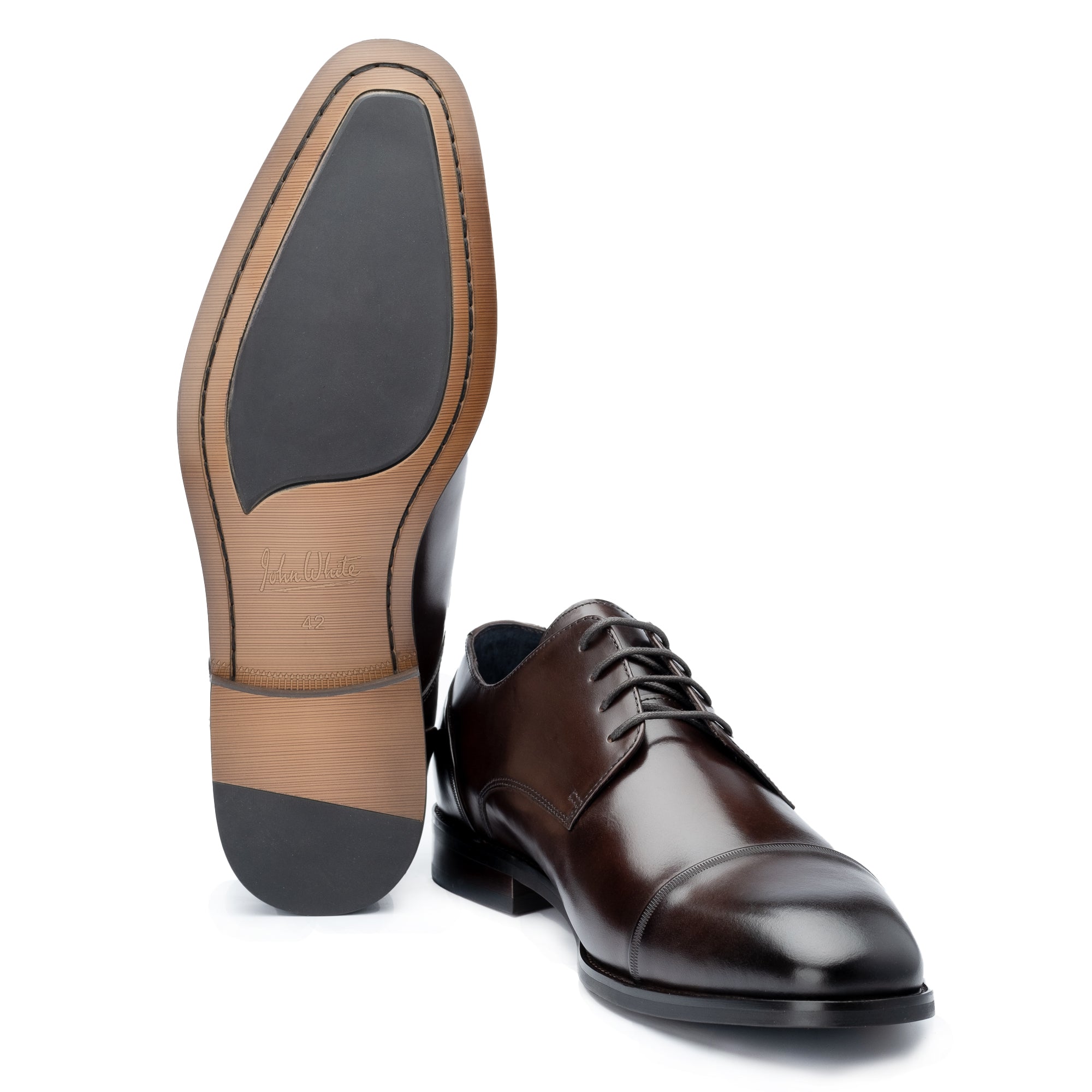
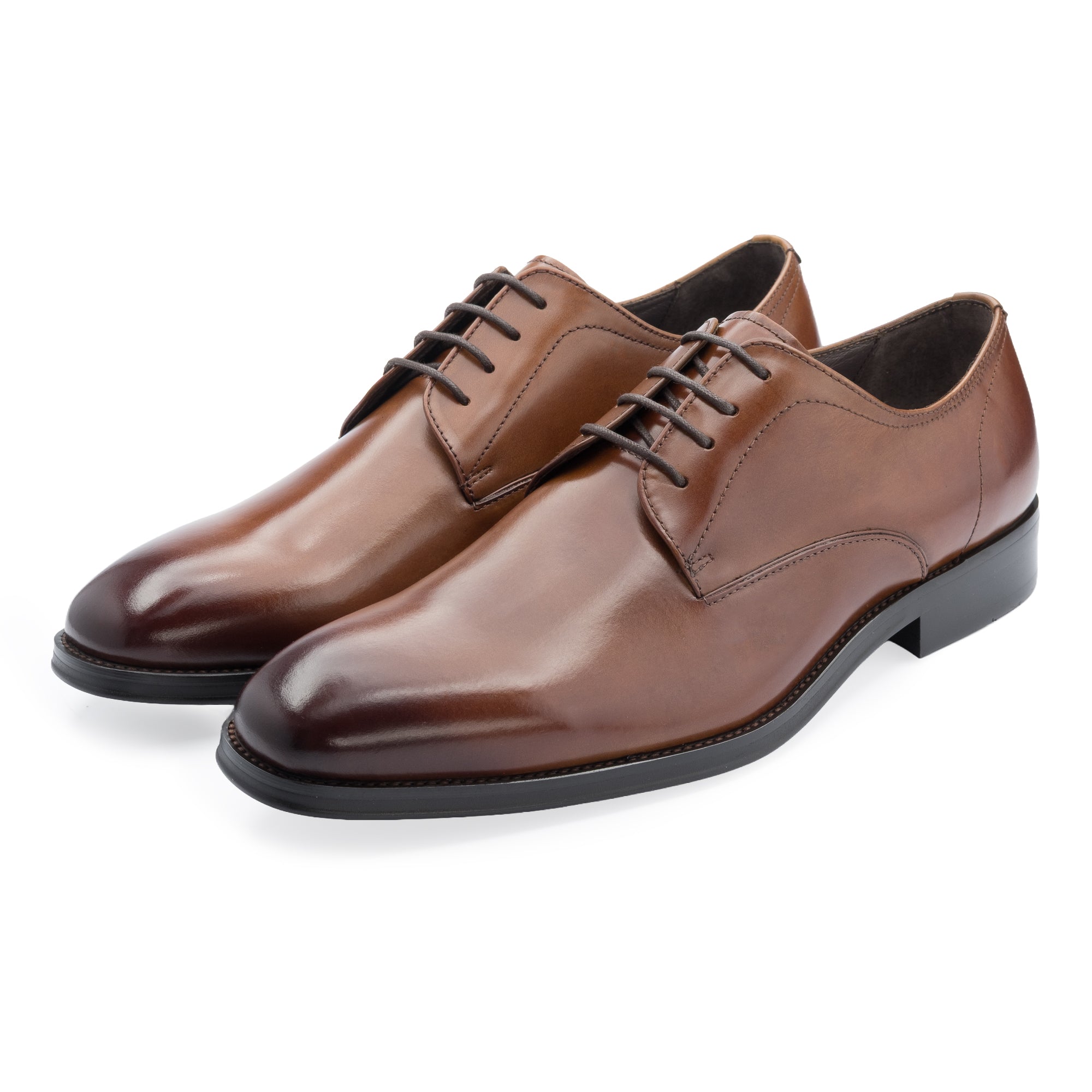
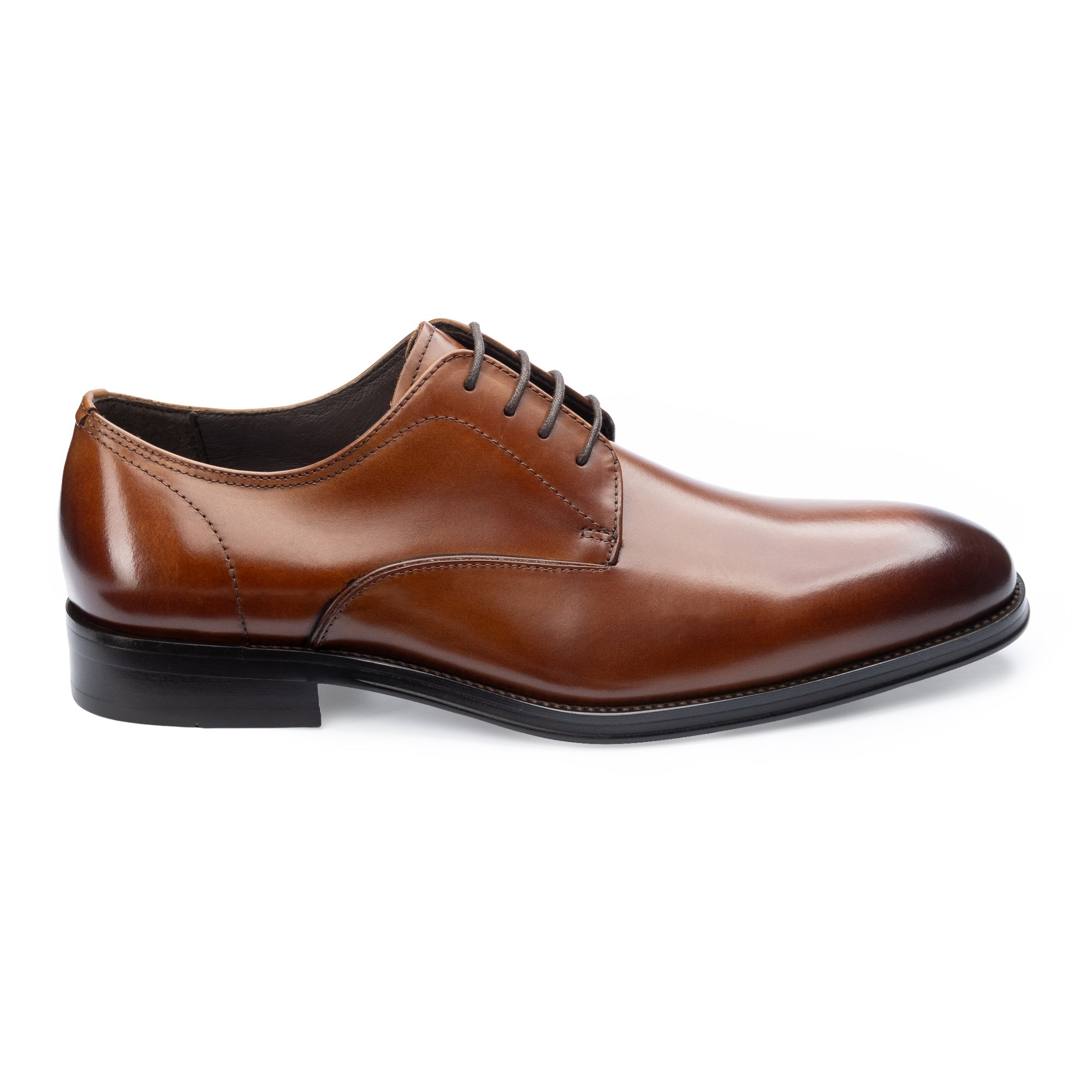
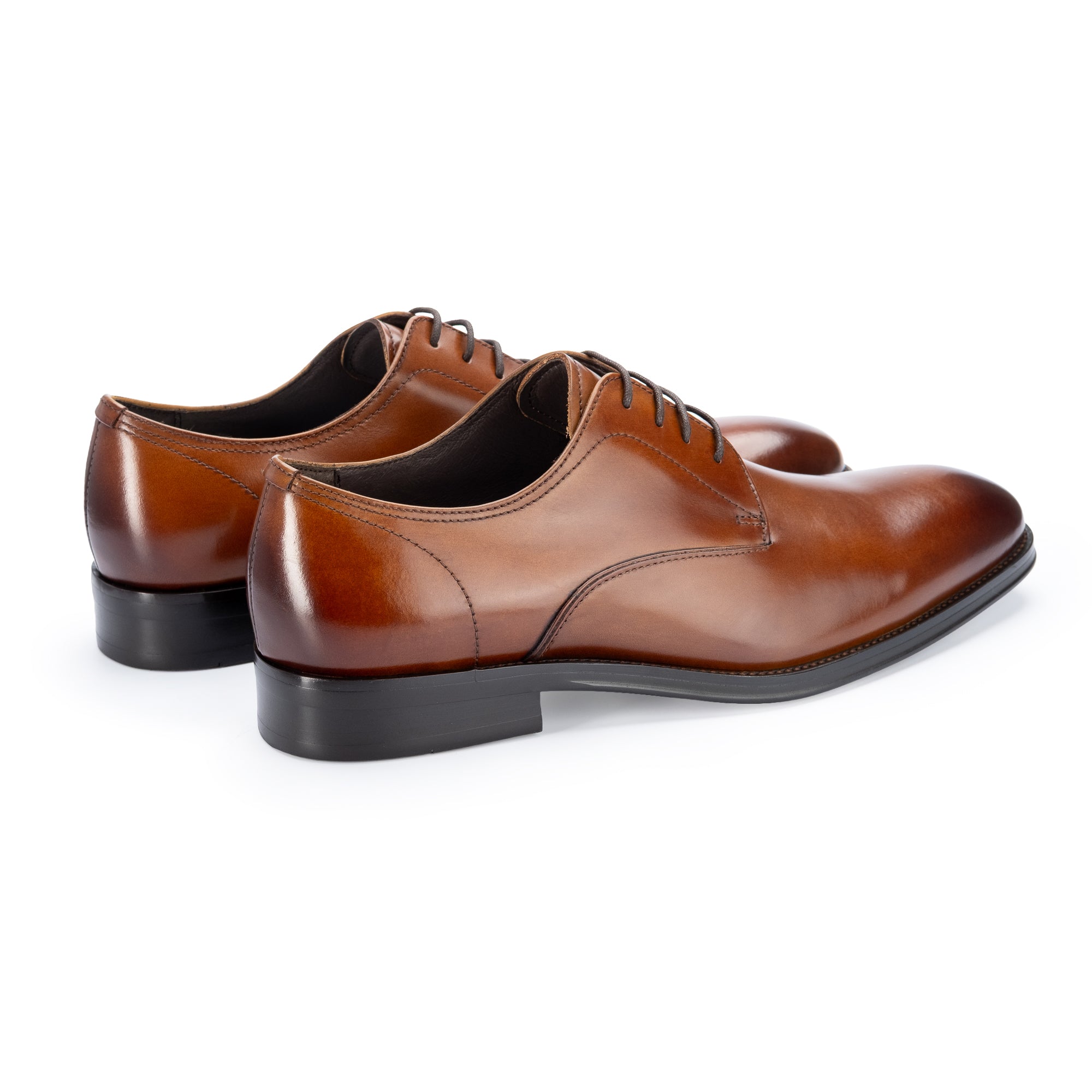
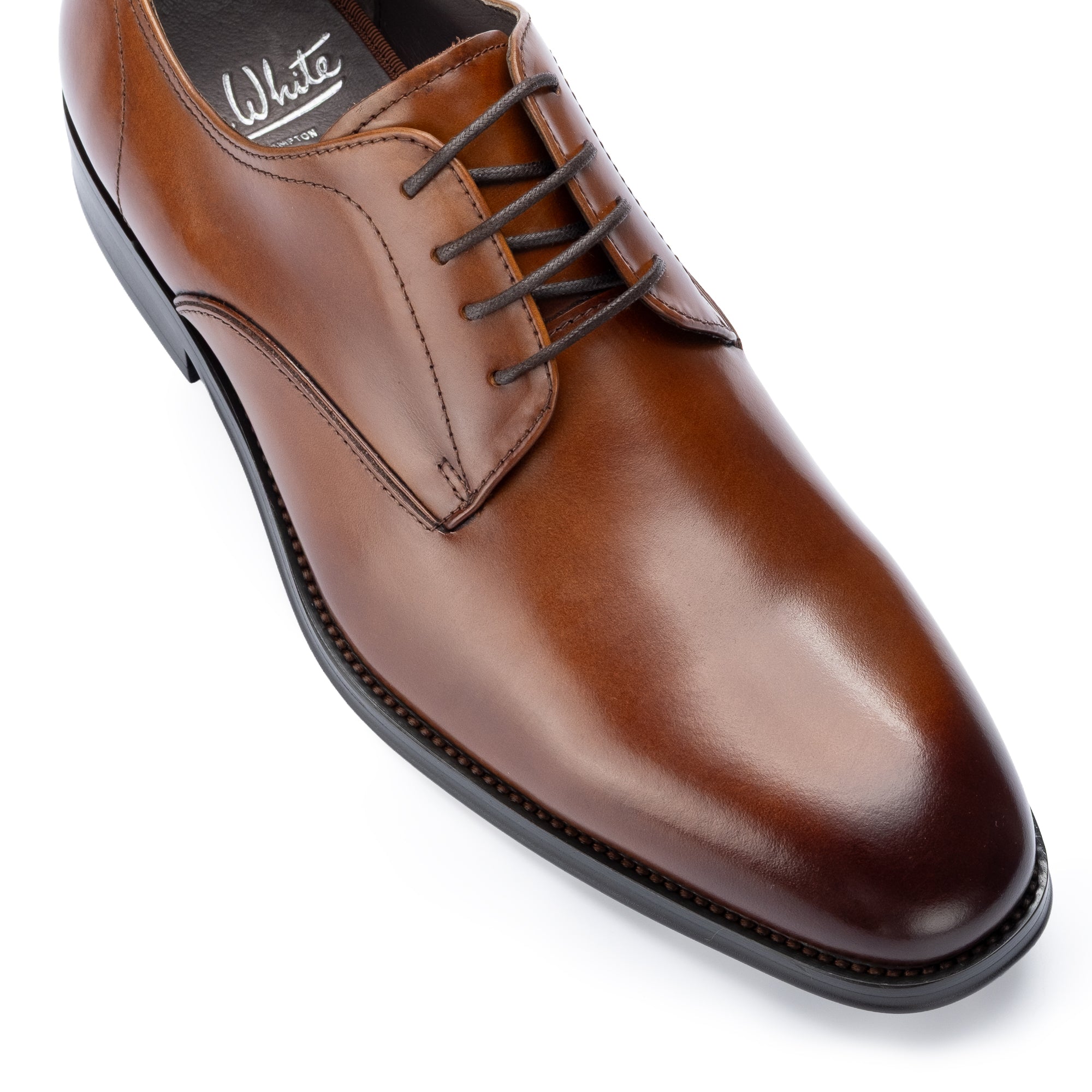
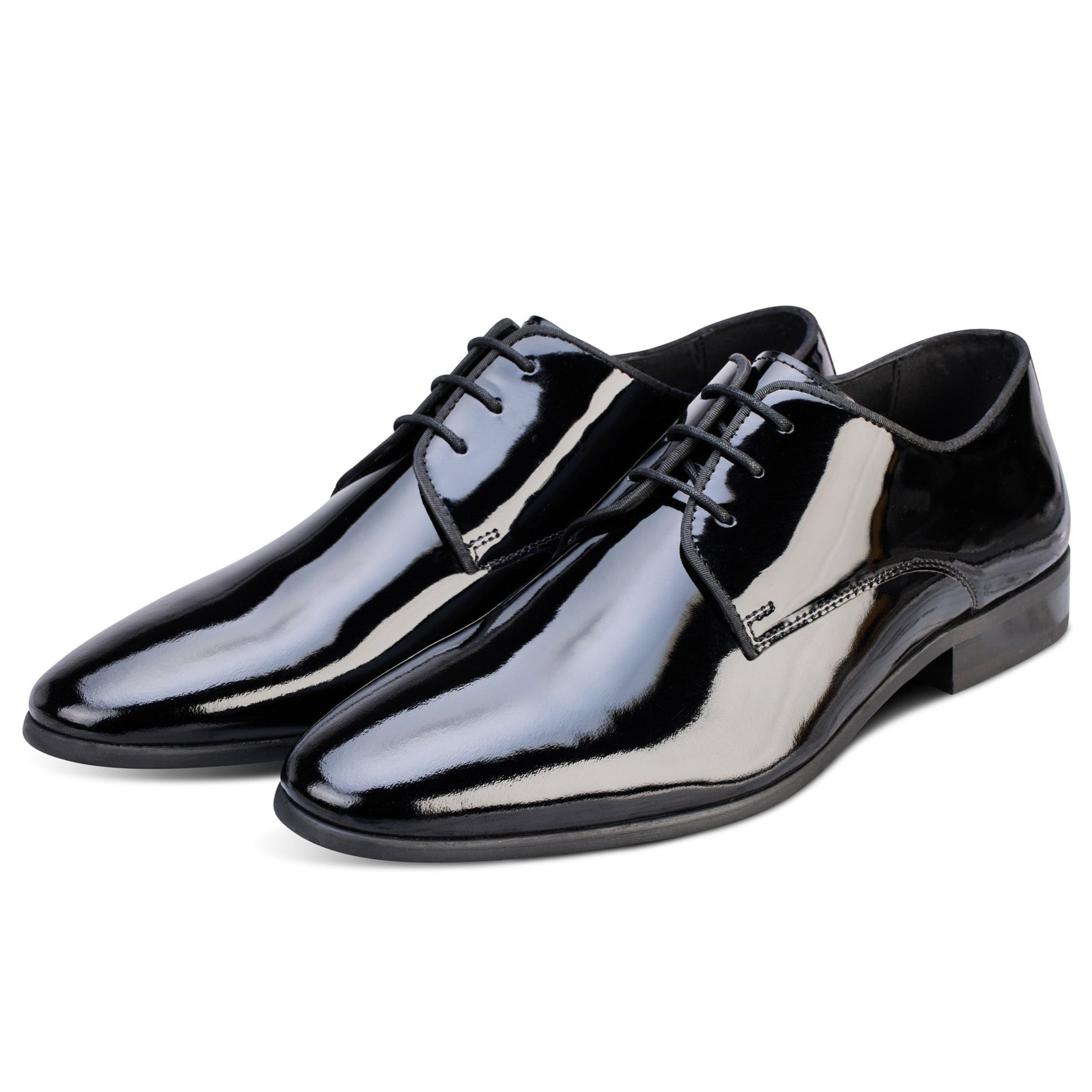
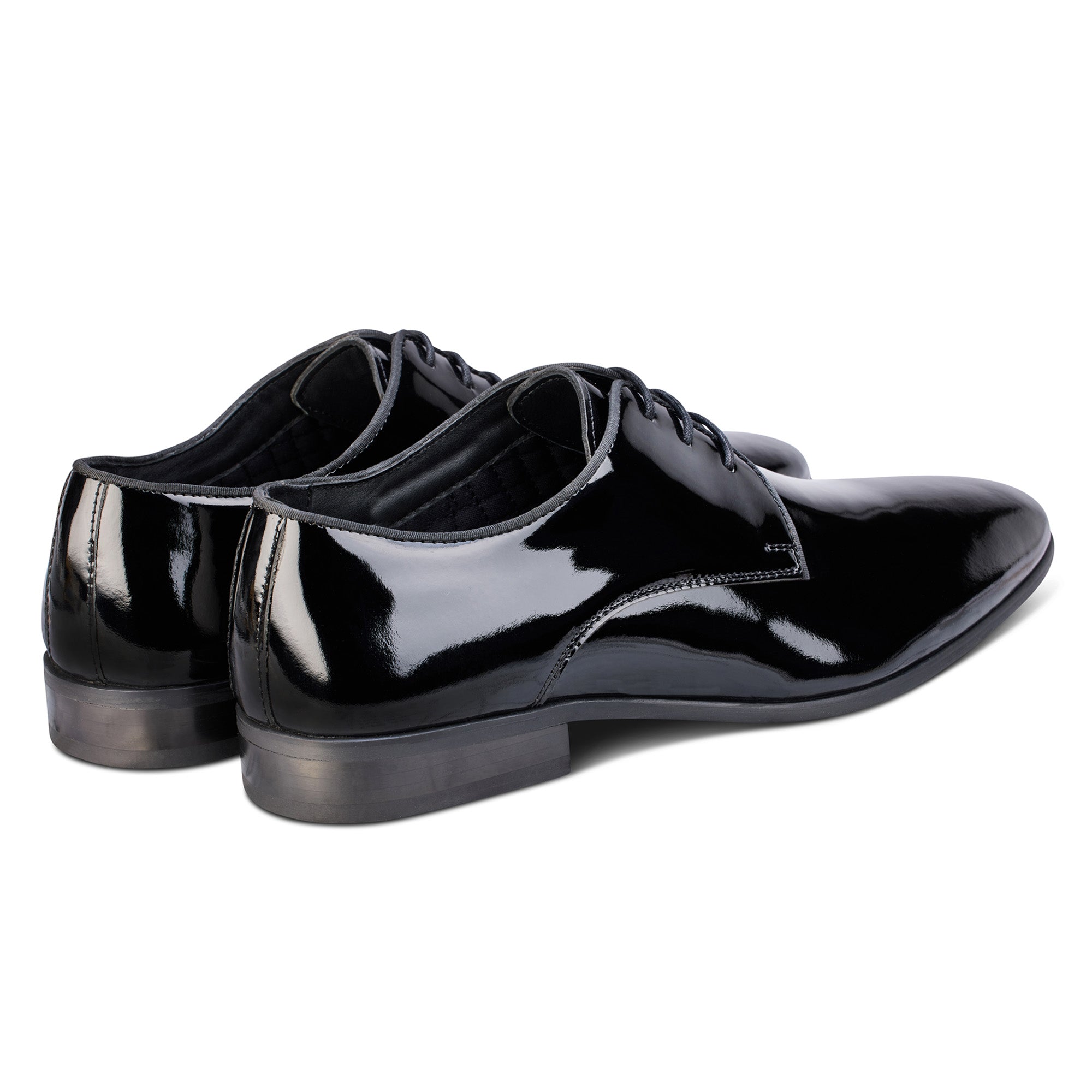
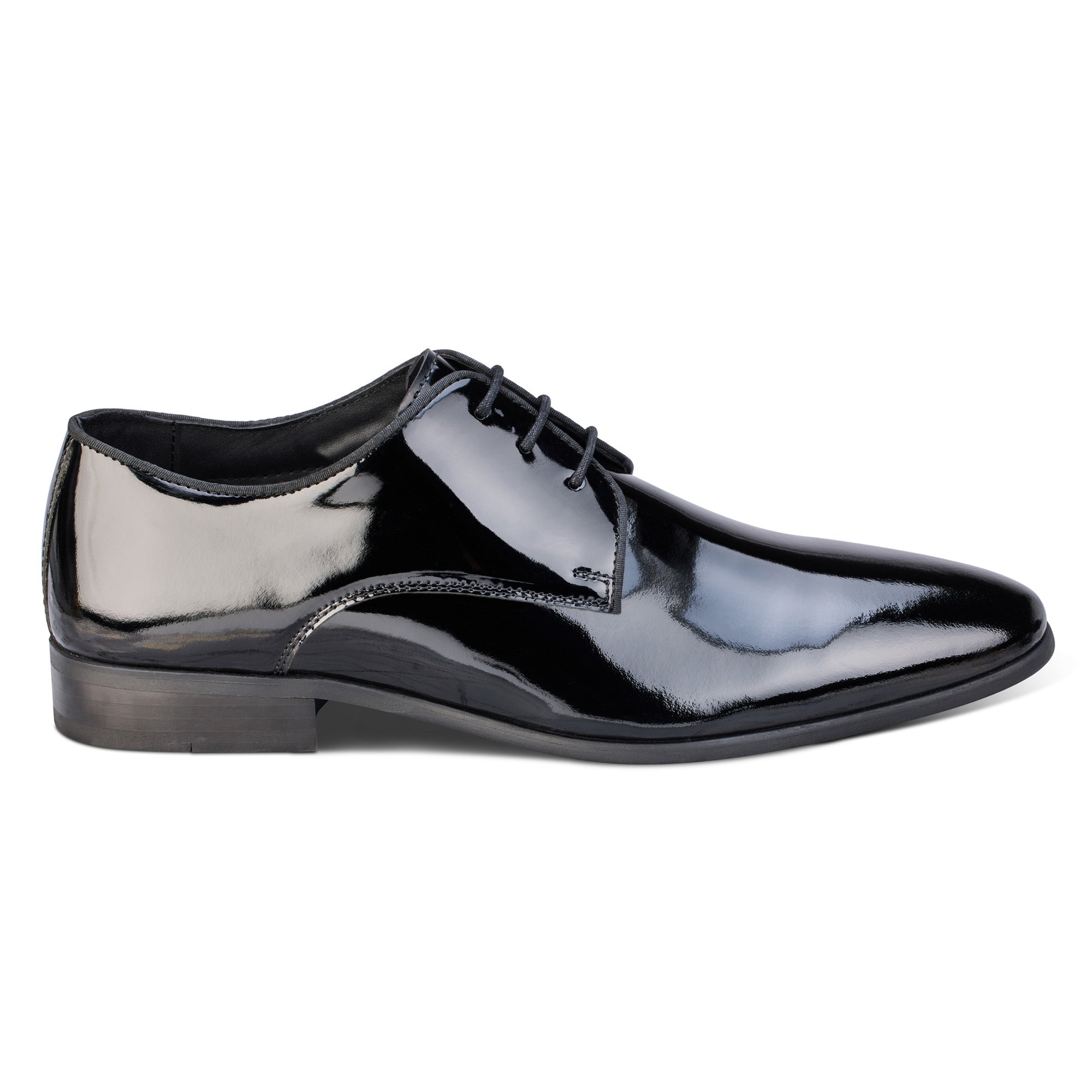
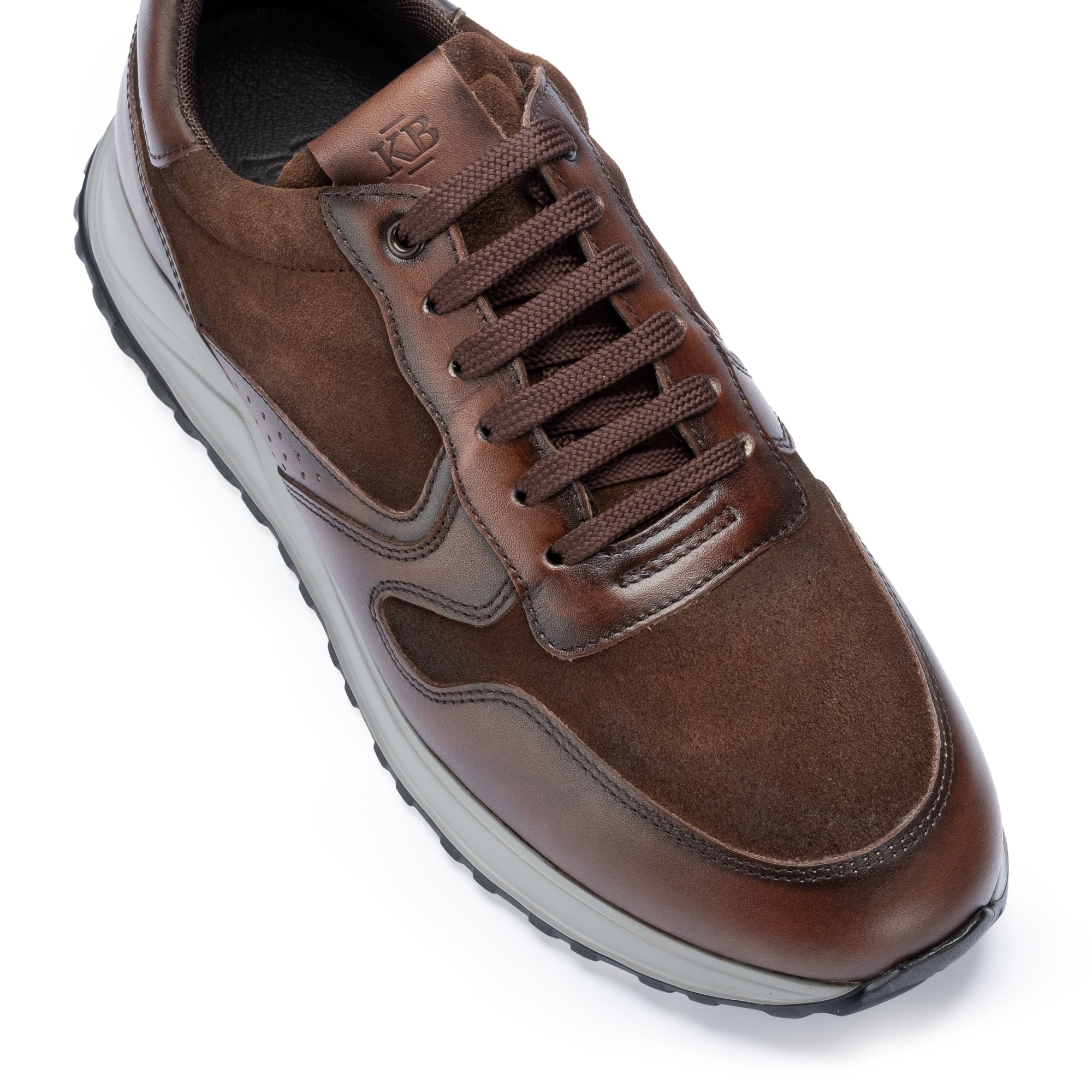
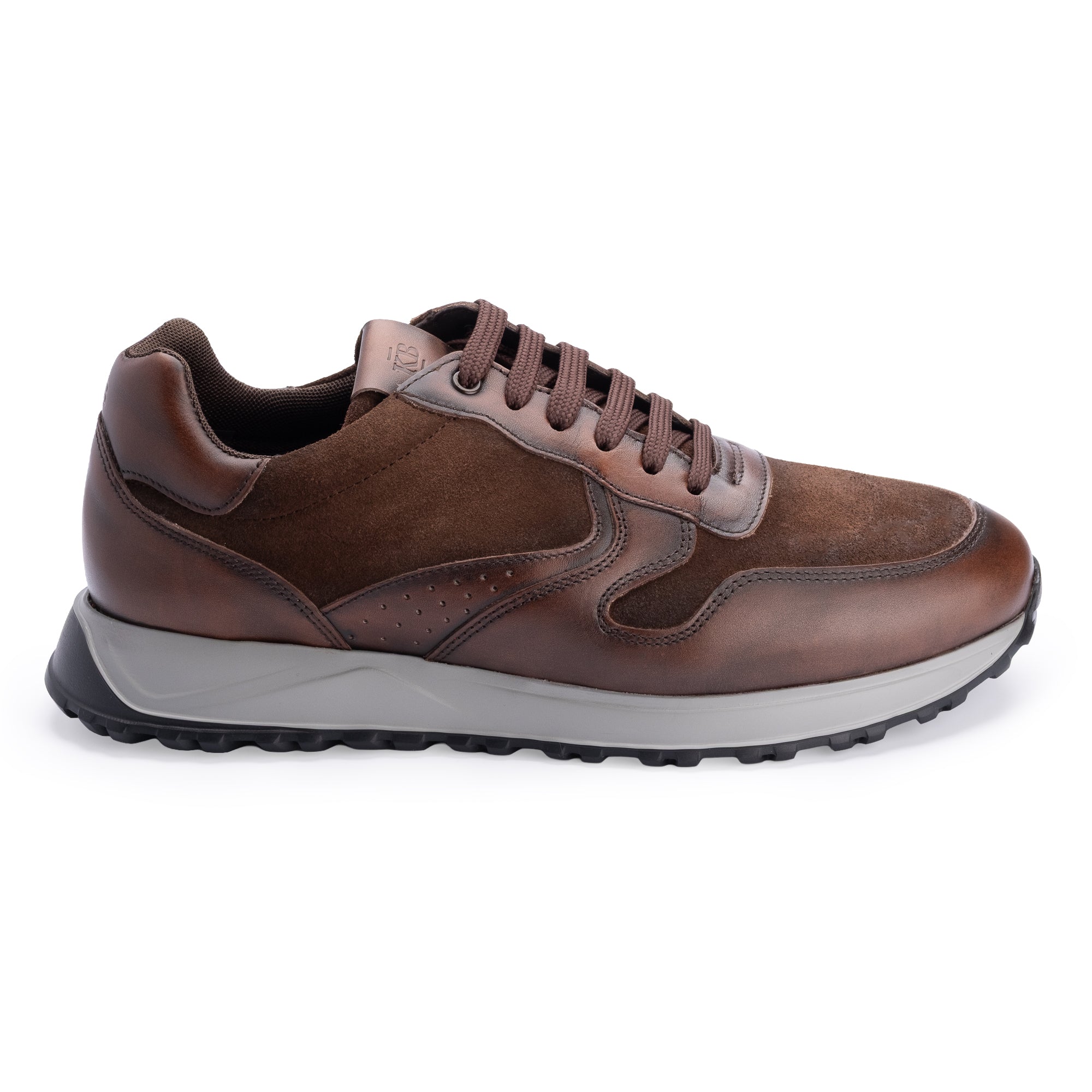
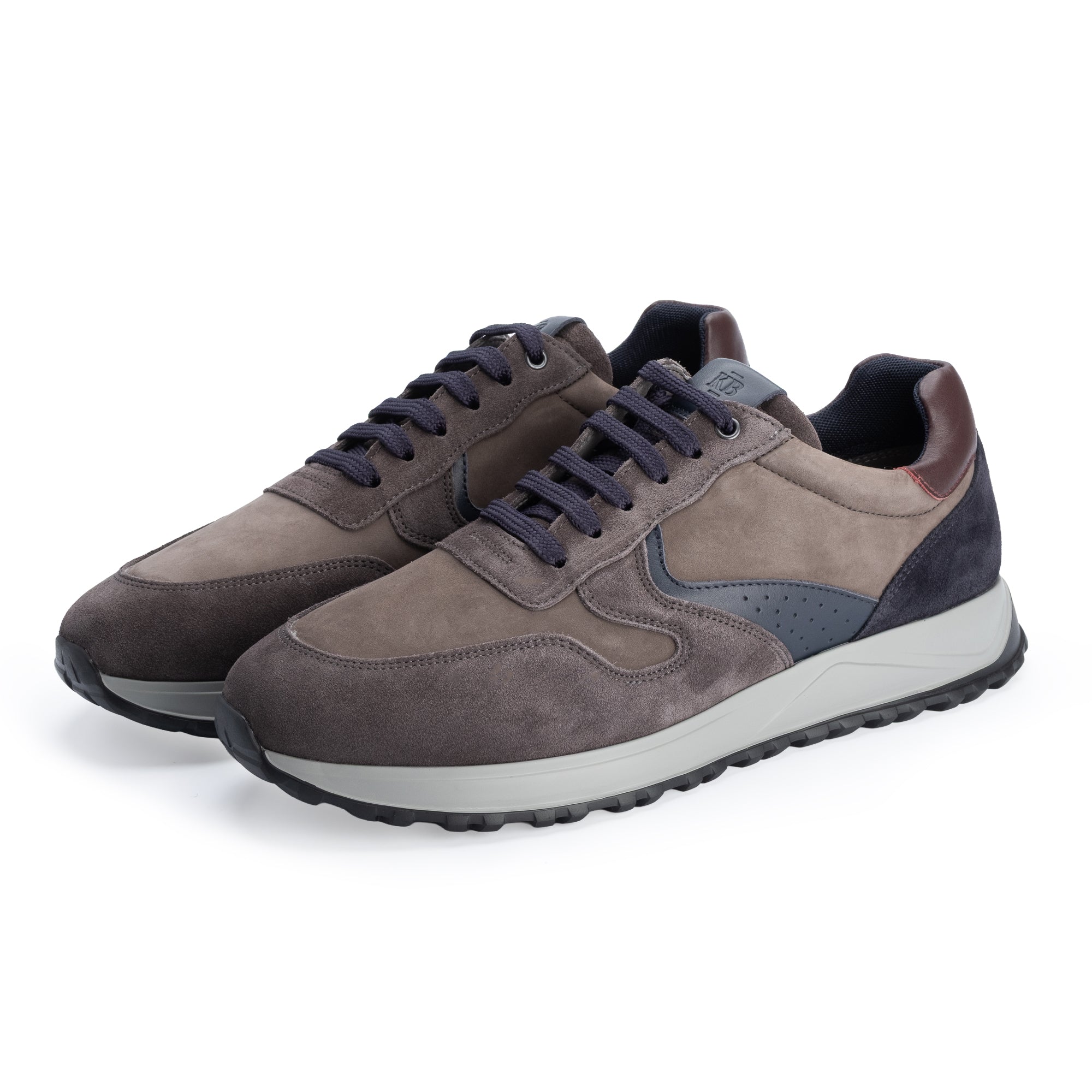
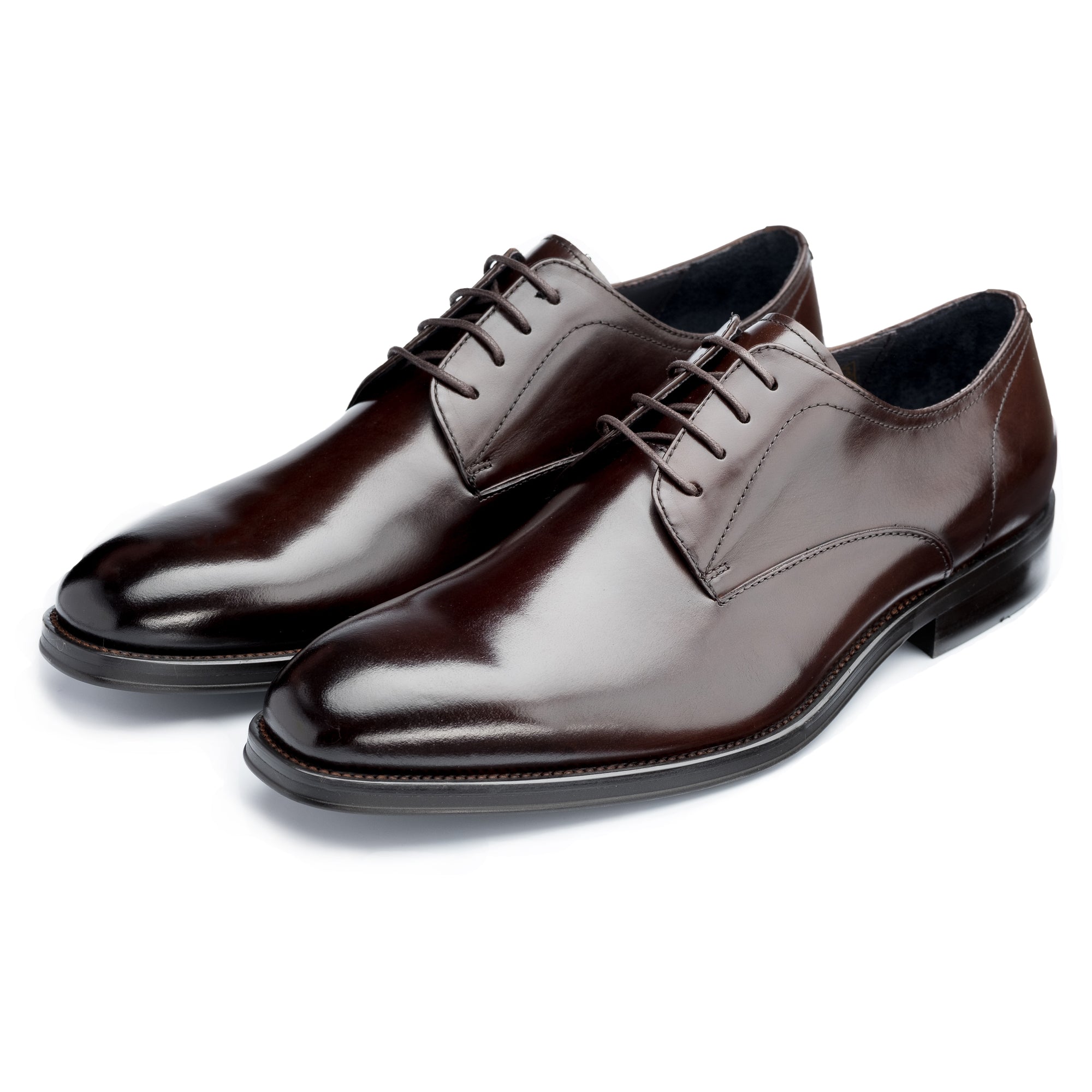
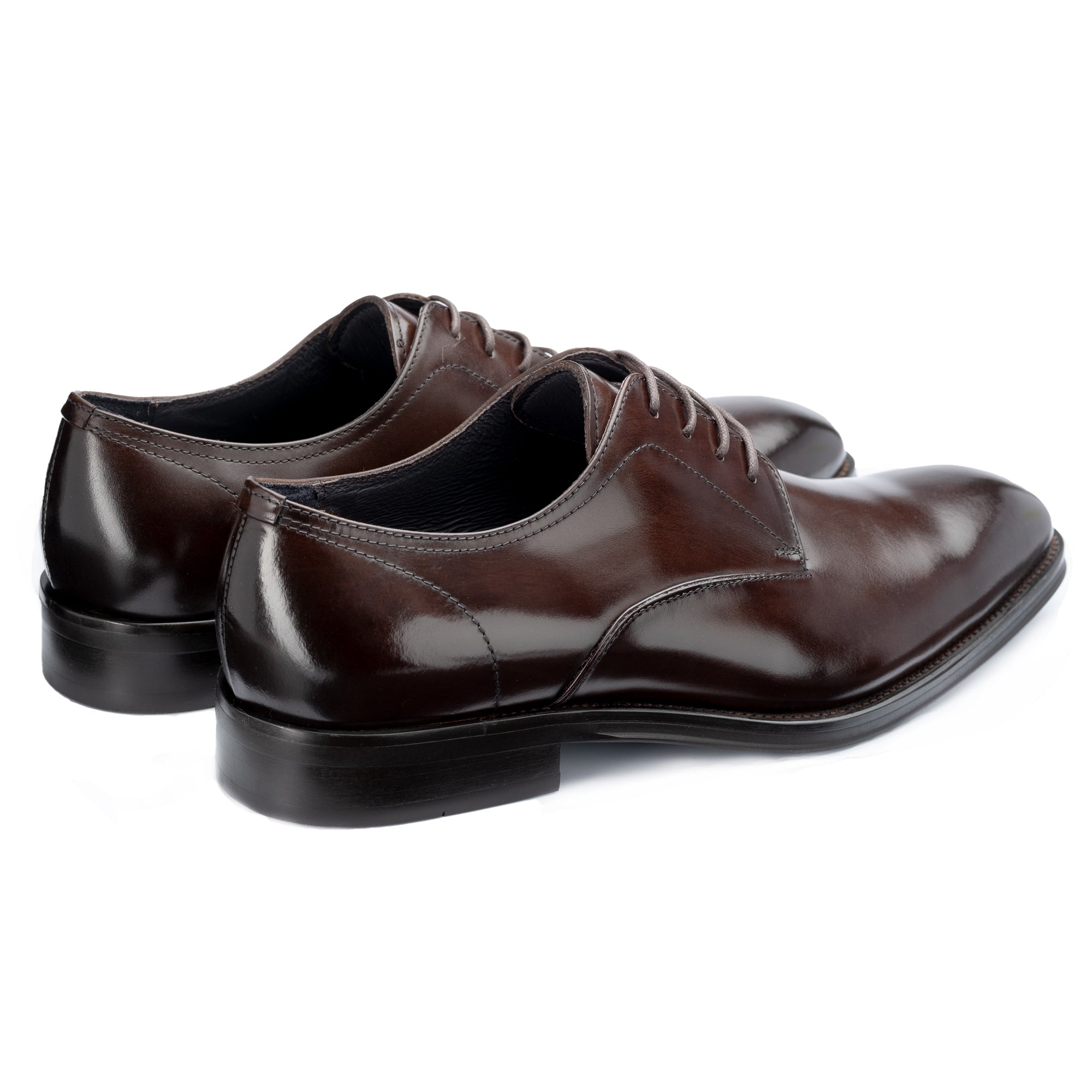
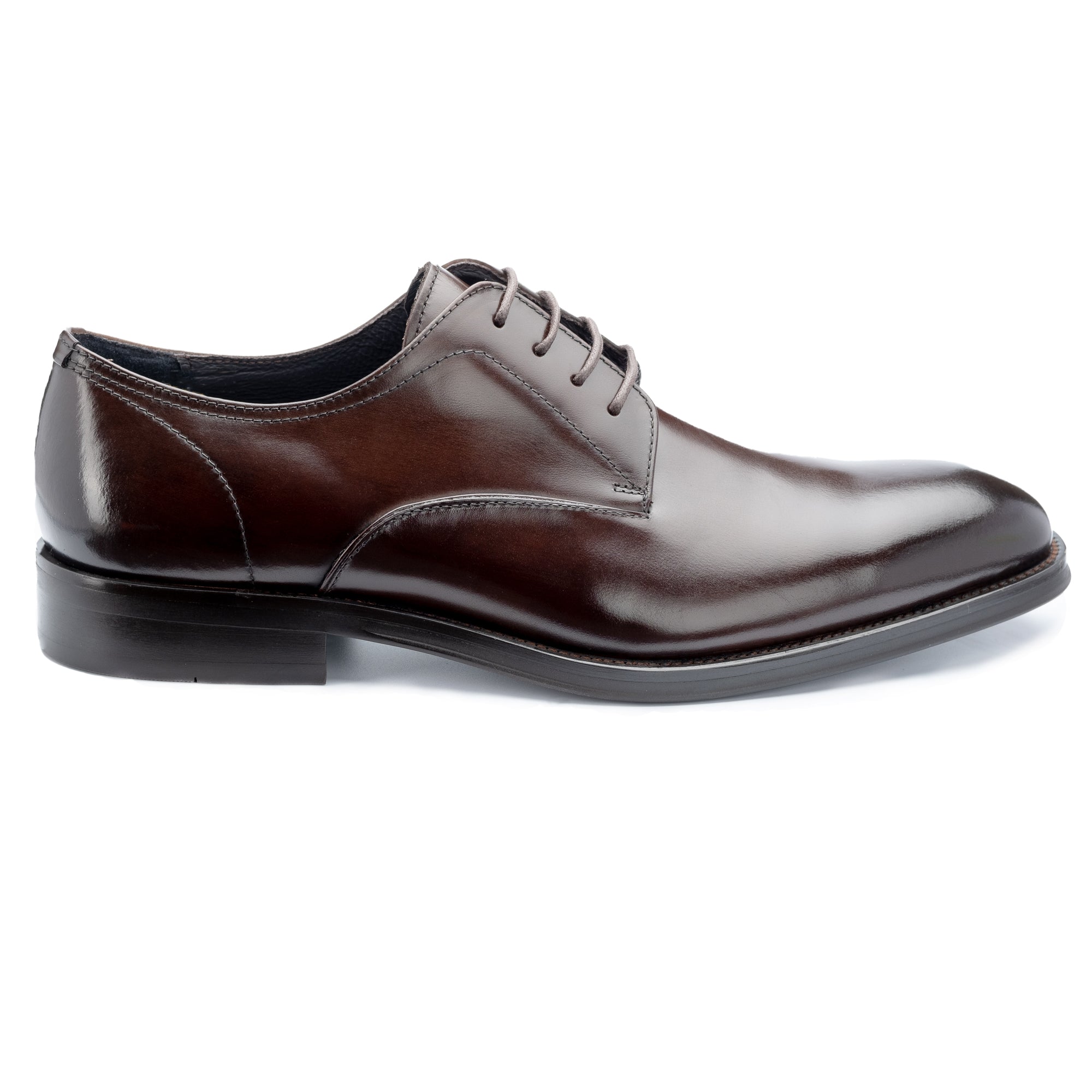
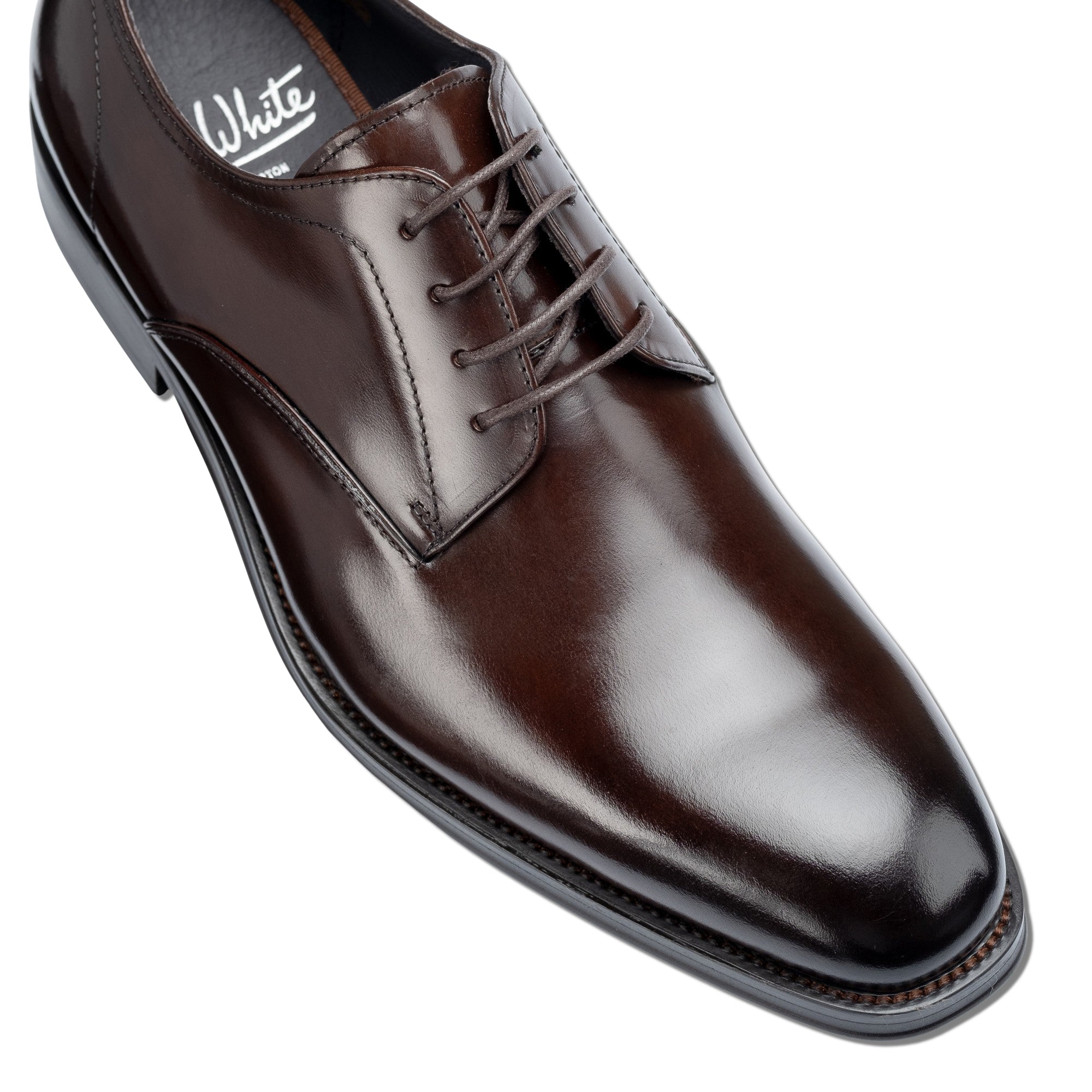
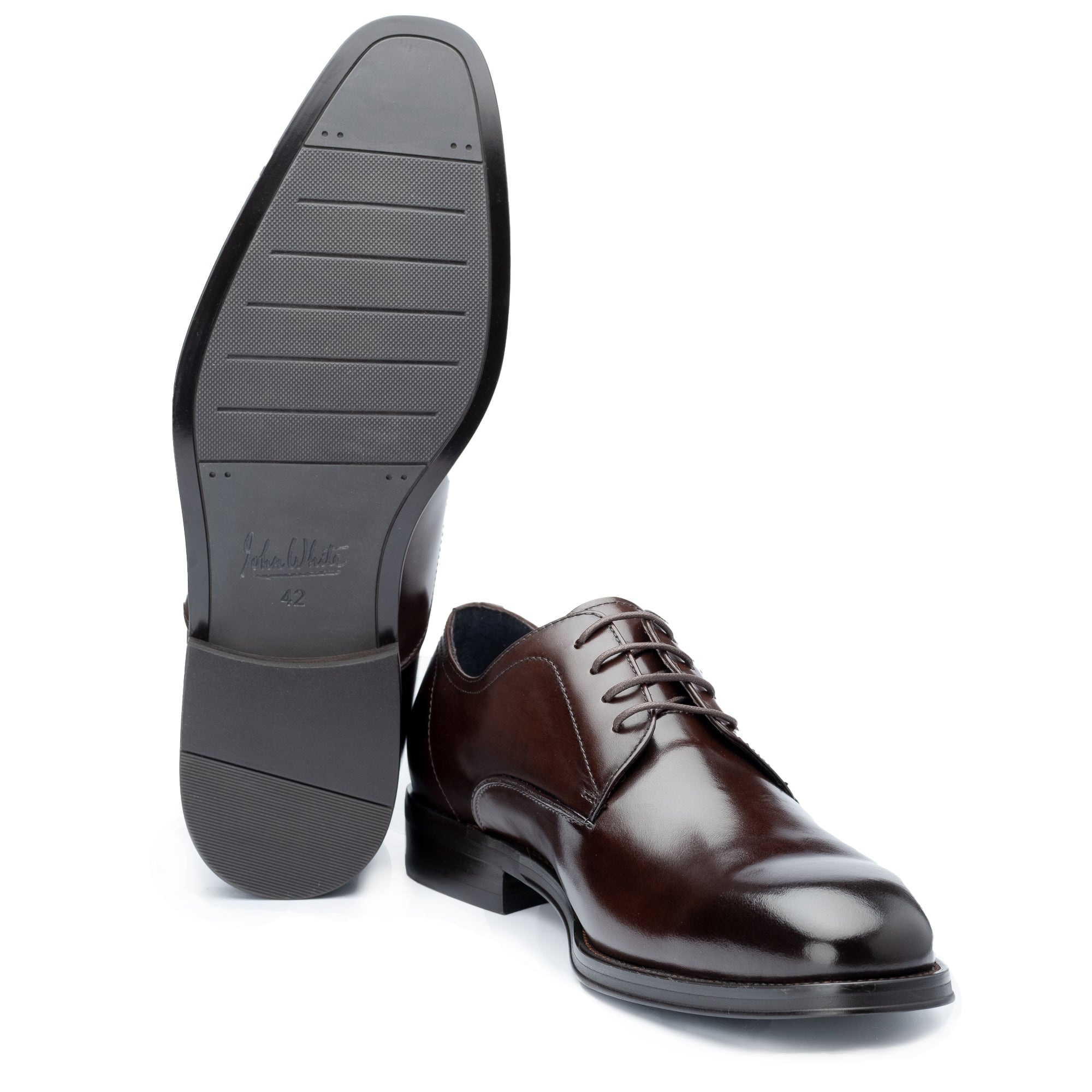
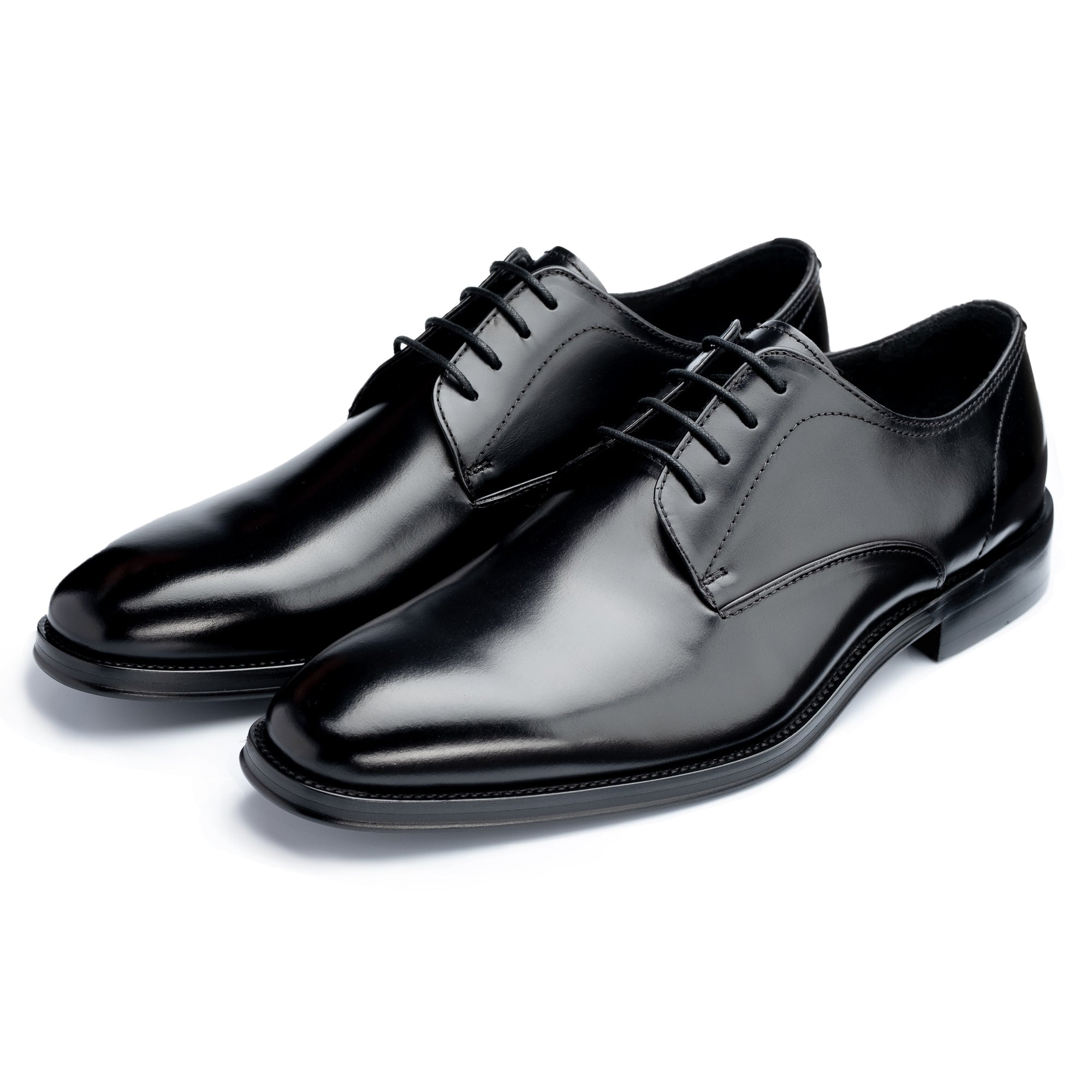
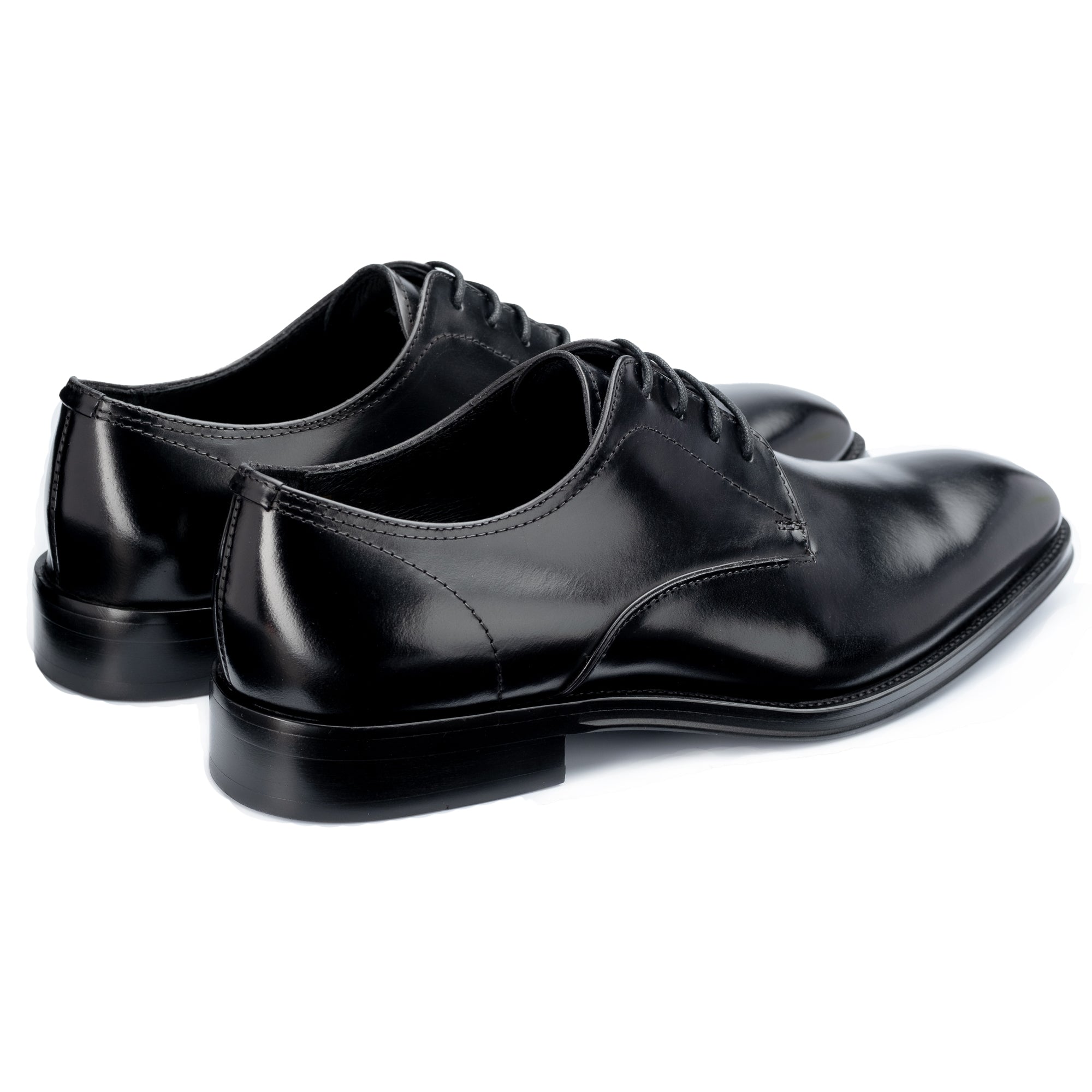
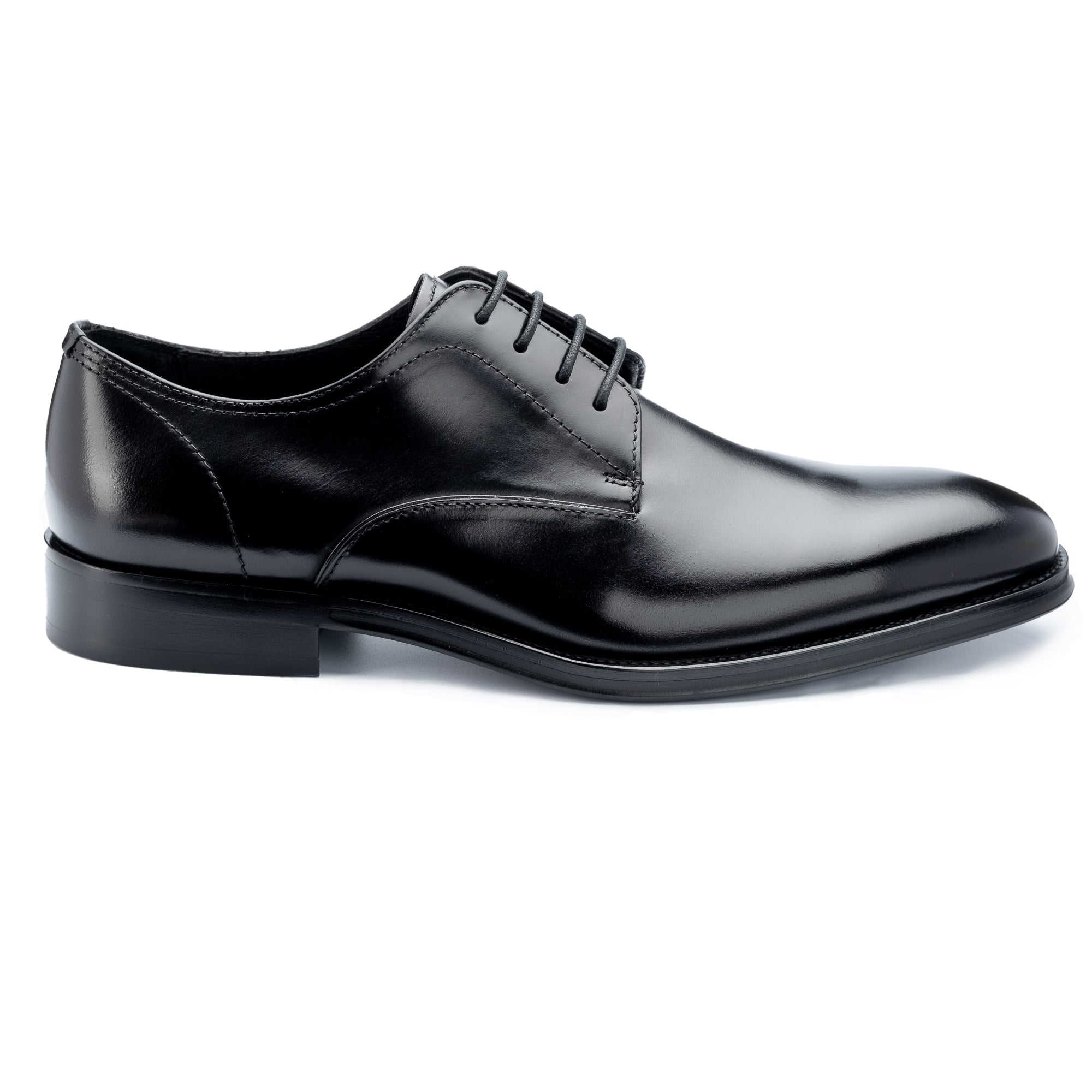
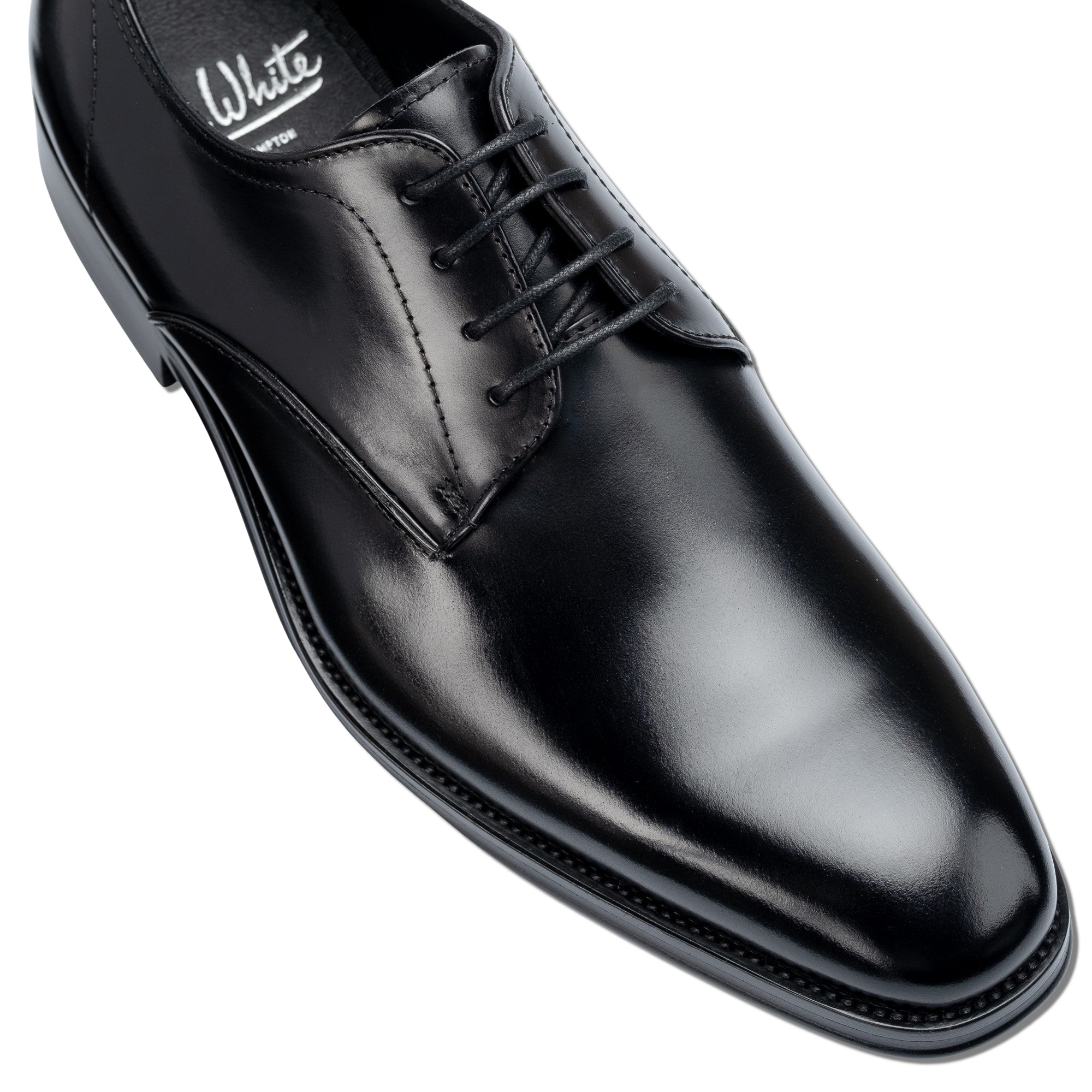
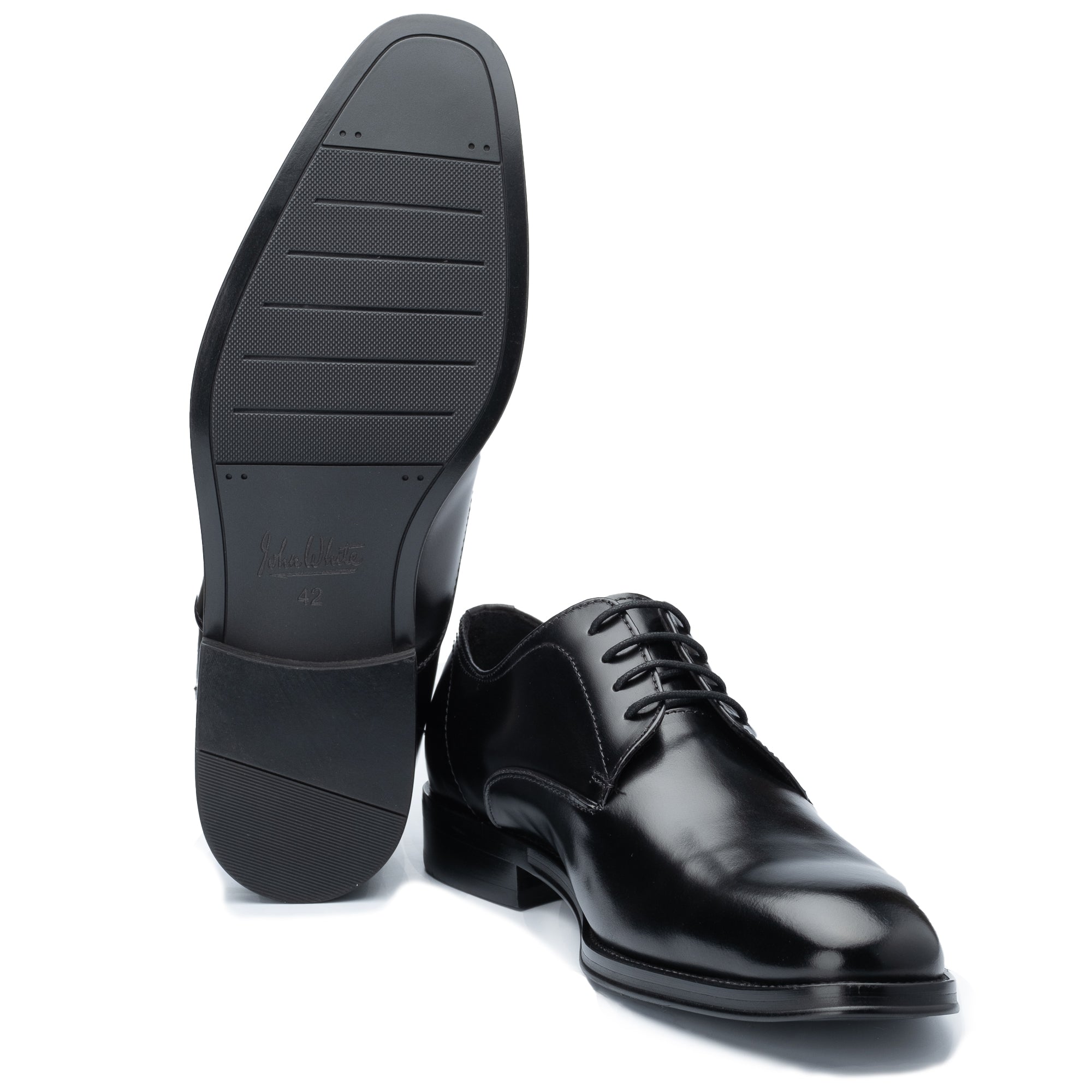
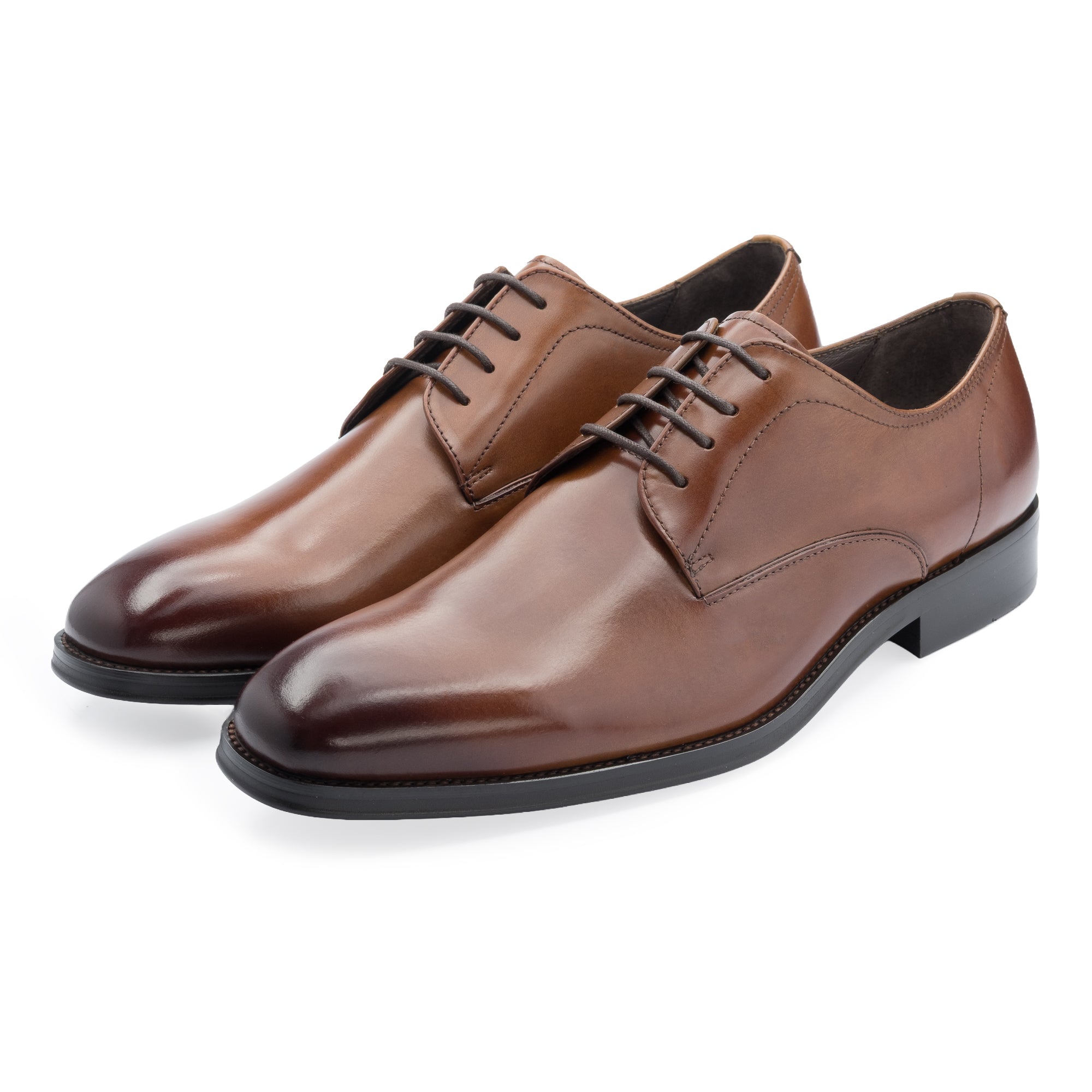
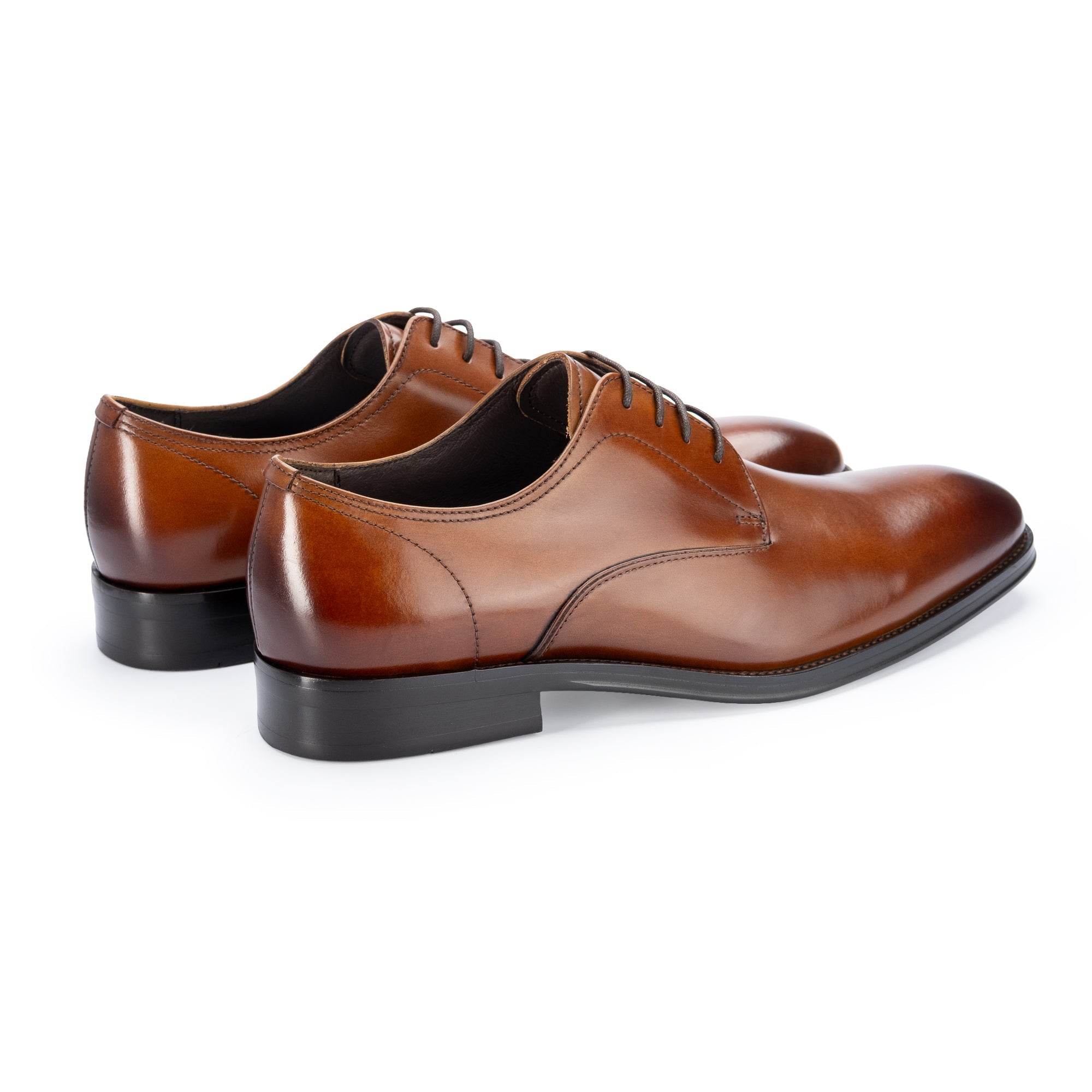
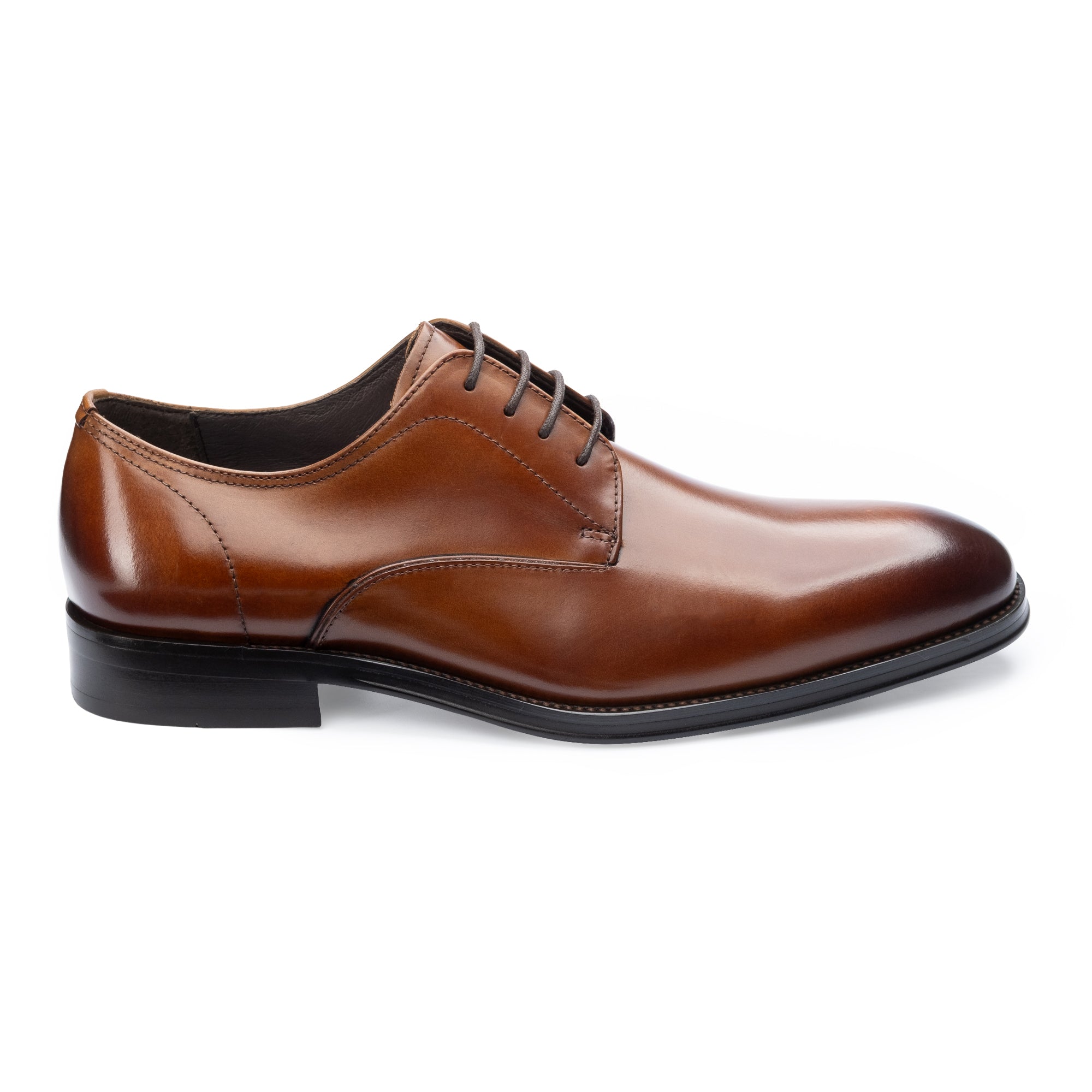
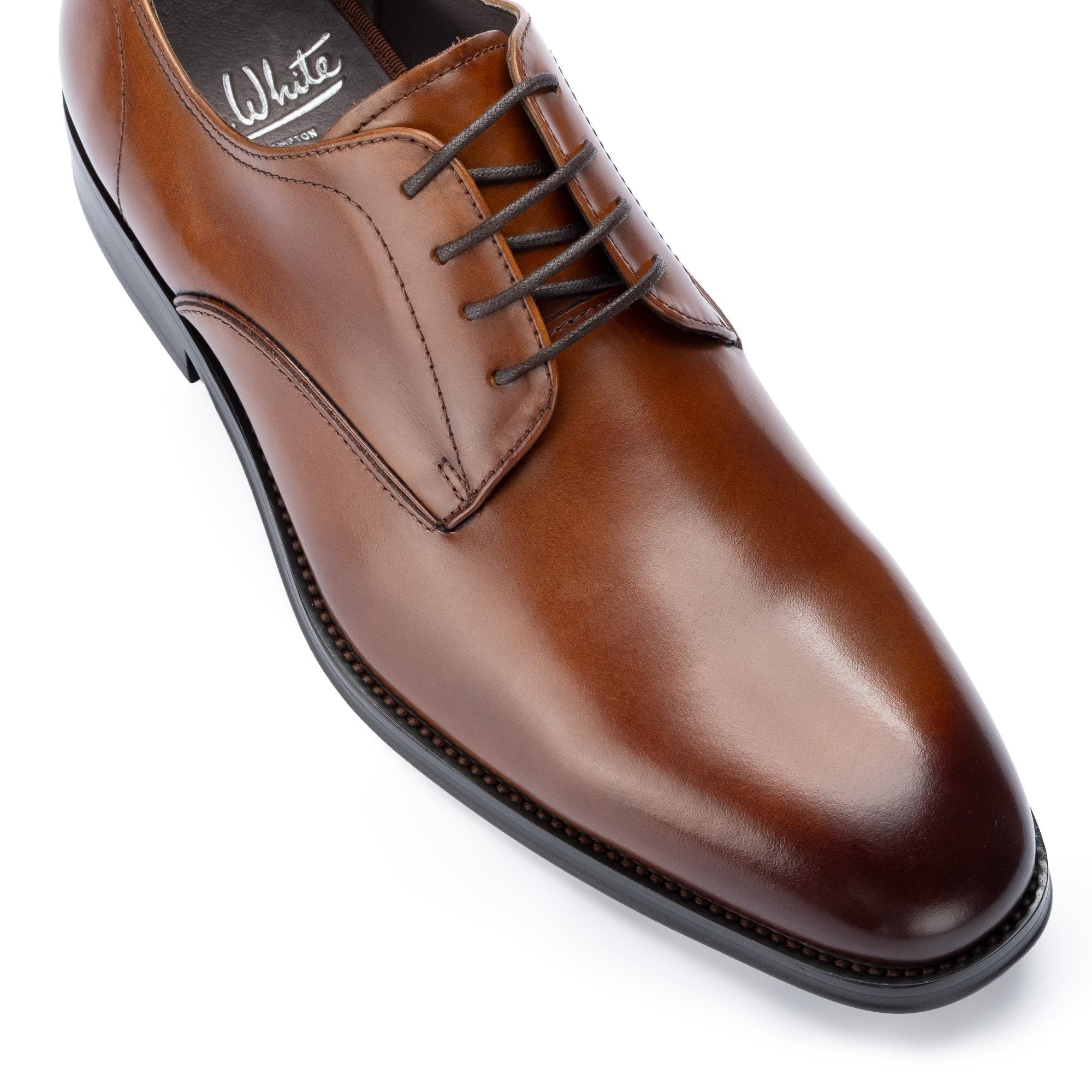
A Derby works differently. The facing panels are stitched on top of the vamp, so the lacing system opens wider before the two sides meet. This gives the shoe more room around the instep, making it easier to put on and more forgiving for wider feet.
The closed lacing of an Oxford produces a cleaner, more formal silhouette; the open lacing of a Derby offers more flexibility in fit and styling range.
How Do You Tell an Oxford from a Derby at a Glance?
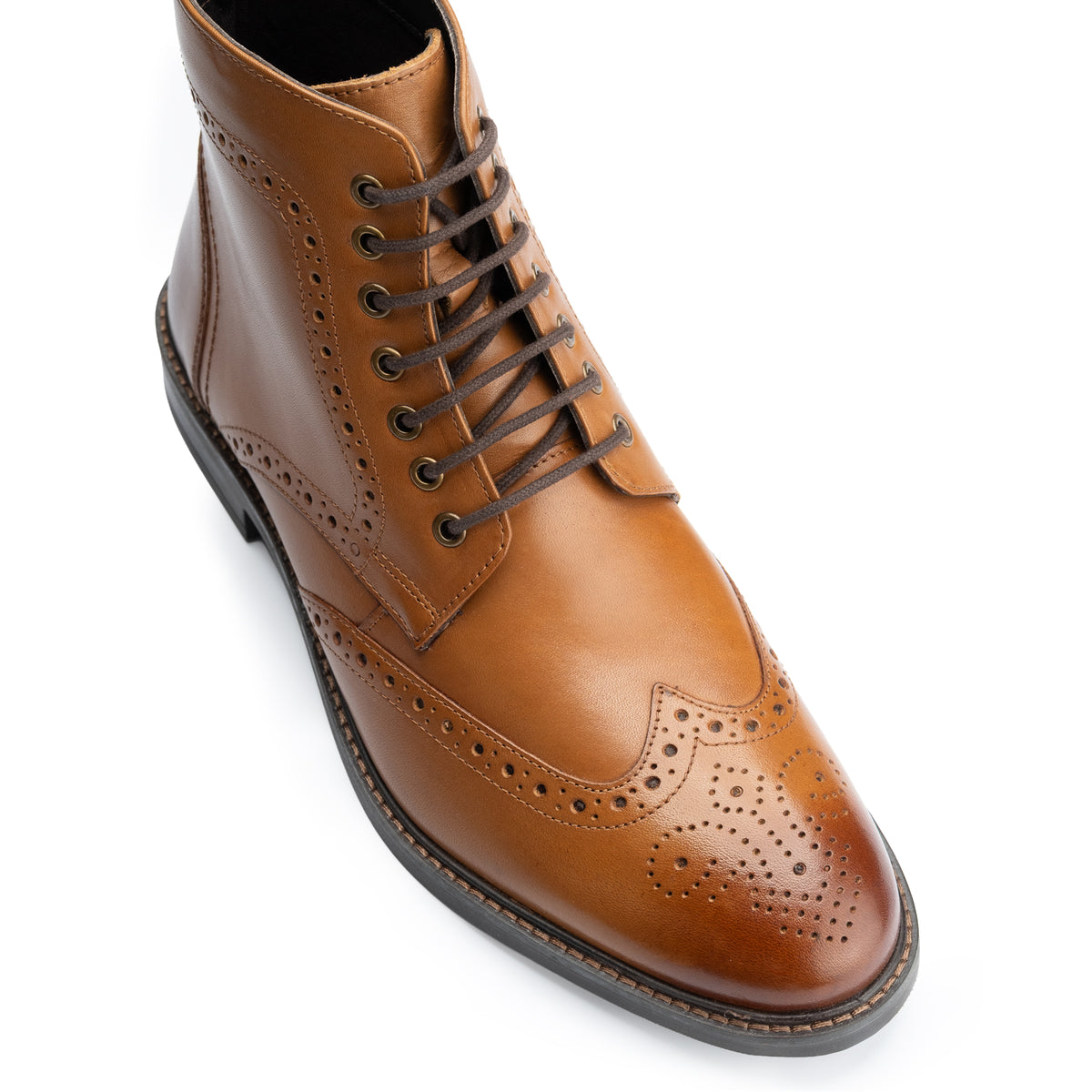
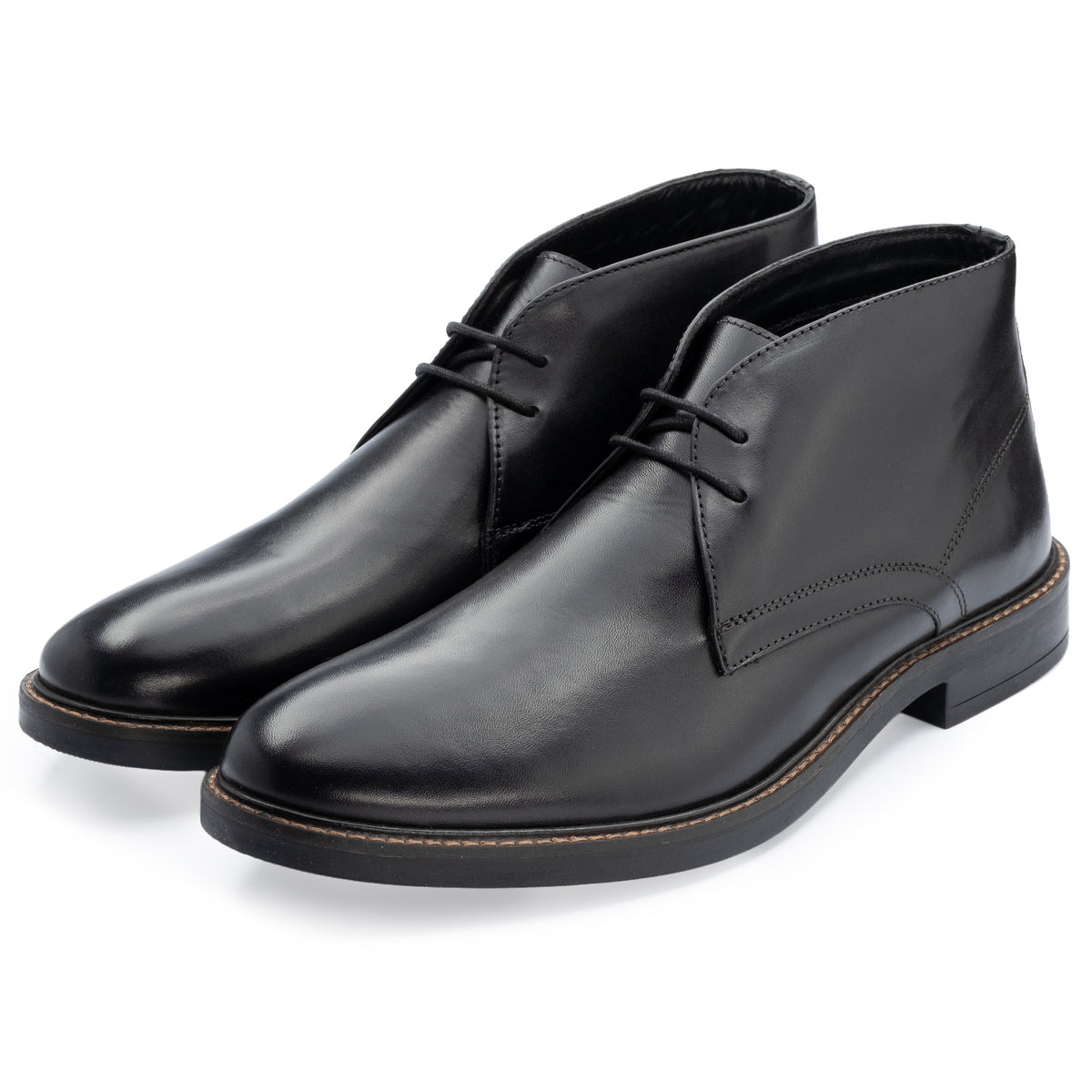
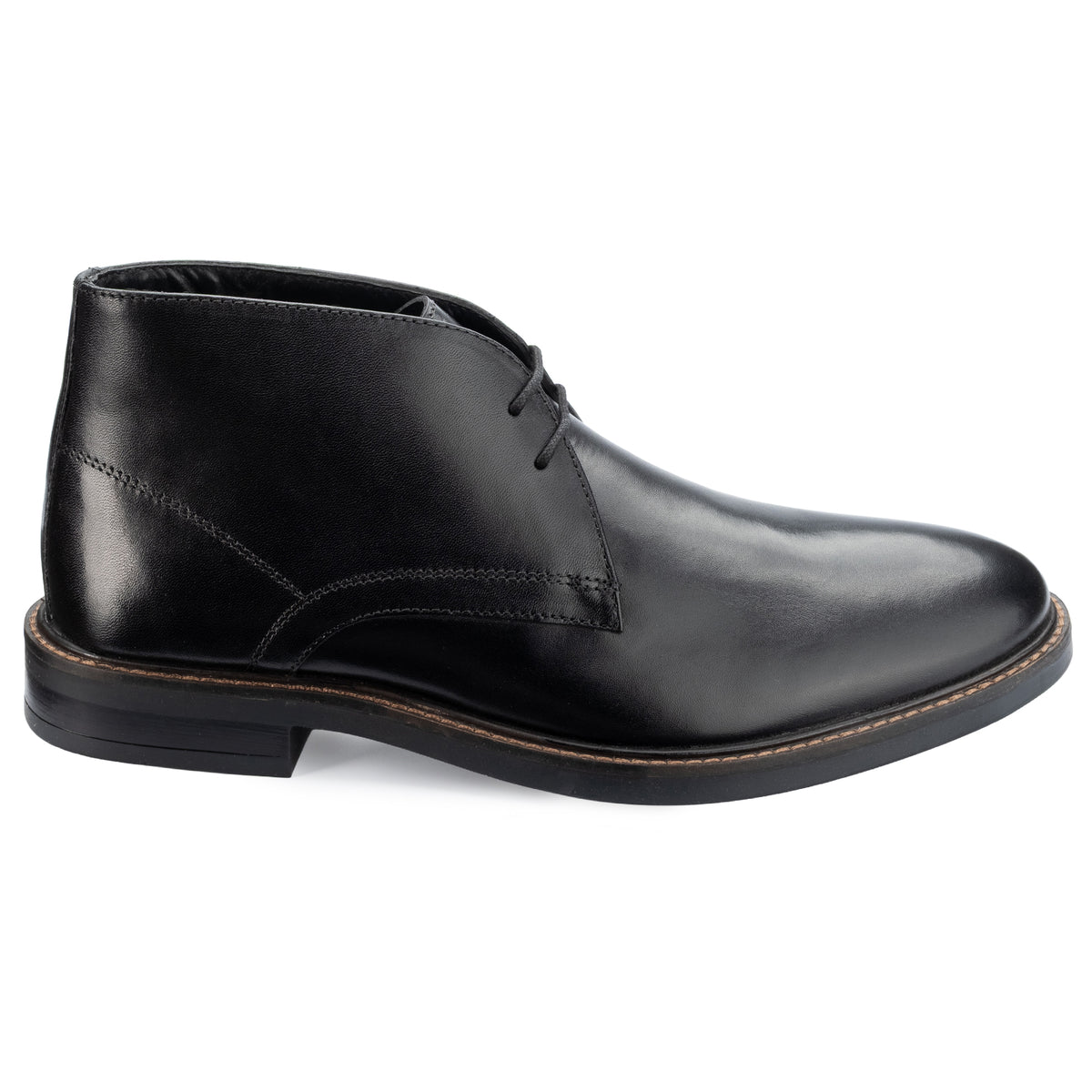
Look at the V-shaped gap at the top of the lacing. On a Derby, when unlaced you'll see a clear triangular opening between the eyelet tabs — they spread apart because they're attached on top of the vamp. On an Oxford, the facing sits flush beneath; when unlaced, the gap is minimal and the shoe looks contained.
- Oxford: Facing stitched under the vamp. Lacing gap closes to a narrow slit. Formal, composed appearance.
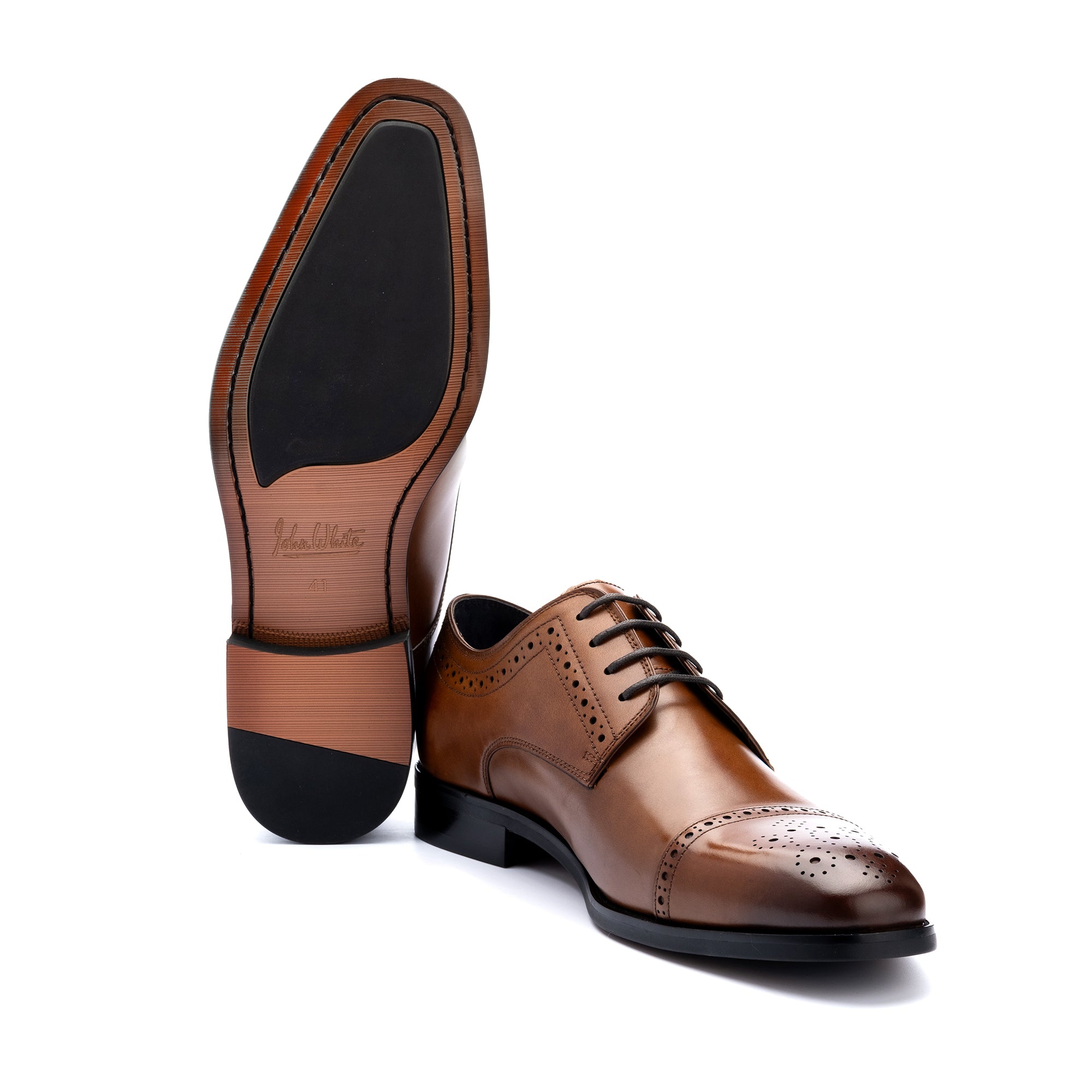
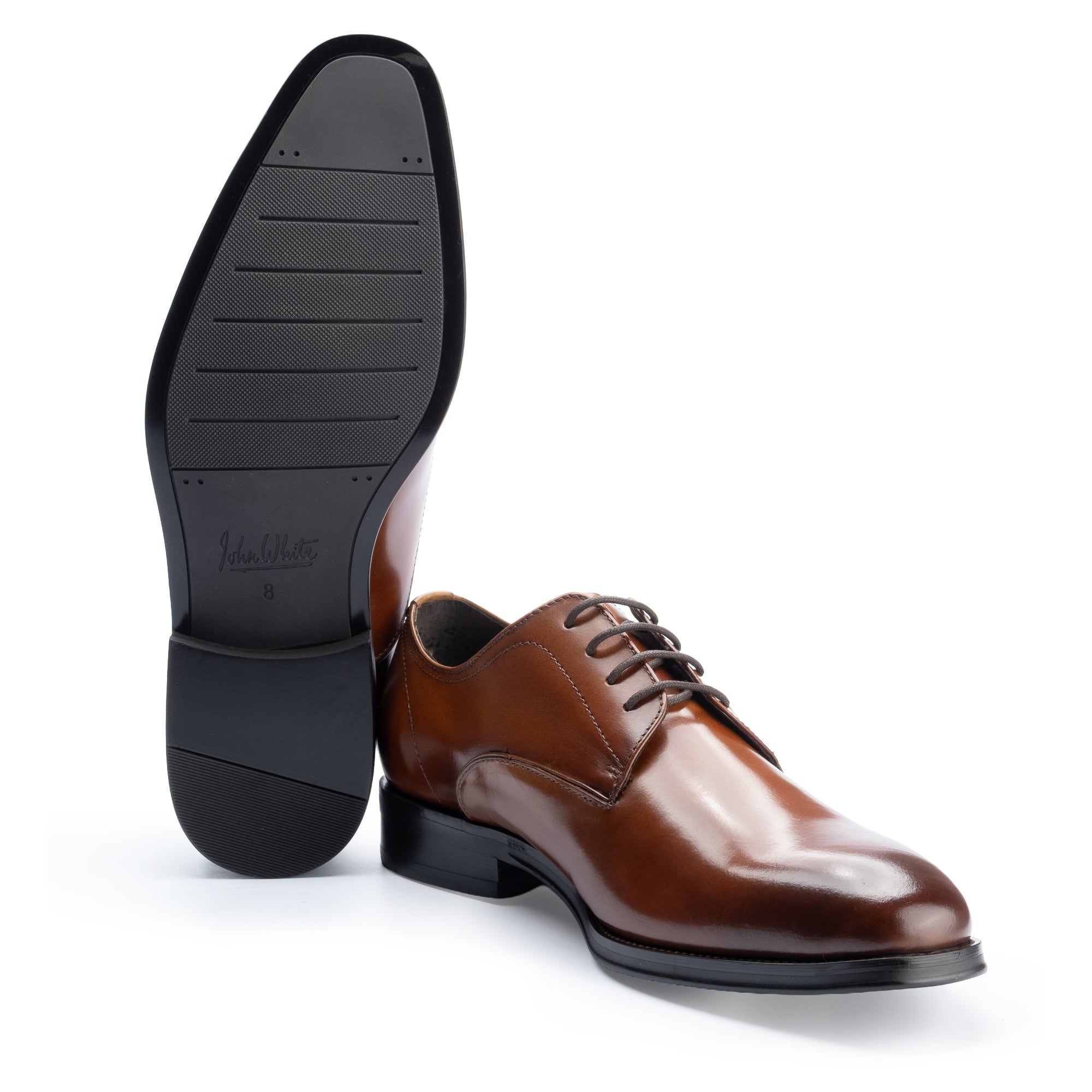
- Derby: Facing stitched on top of the vamp. Lacing gap opens wide when unlaced. More relaxed, adjustable silhouette.
According to the Northampton Museums & Art Gallery — home to one of the world's largest footwear collections — closed lacing construction predates open lacing in formal European dress shoe history by several decades, establishing the Oxford as the earlier standard for formal wear.
Which Is More Formal: Oxford or Derby?
The Oxford is the more formal shoe. Its closed lacing creates a tidier, unbroken line across the top of the foot — particularly valuable when wearing dress trousers or a suit, where the shoe should anchor the outfit without drawing attention to itself.
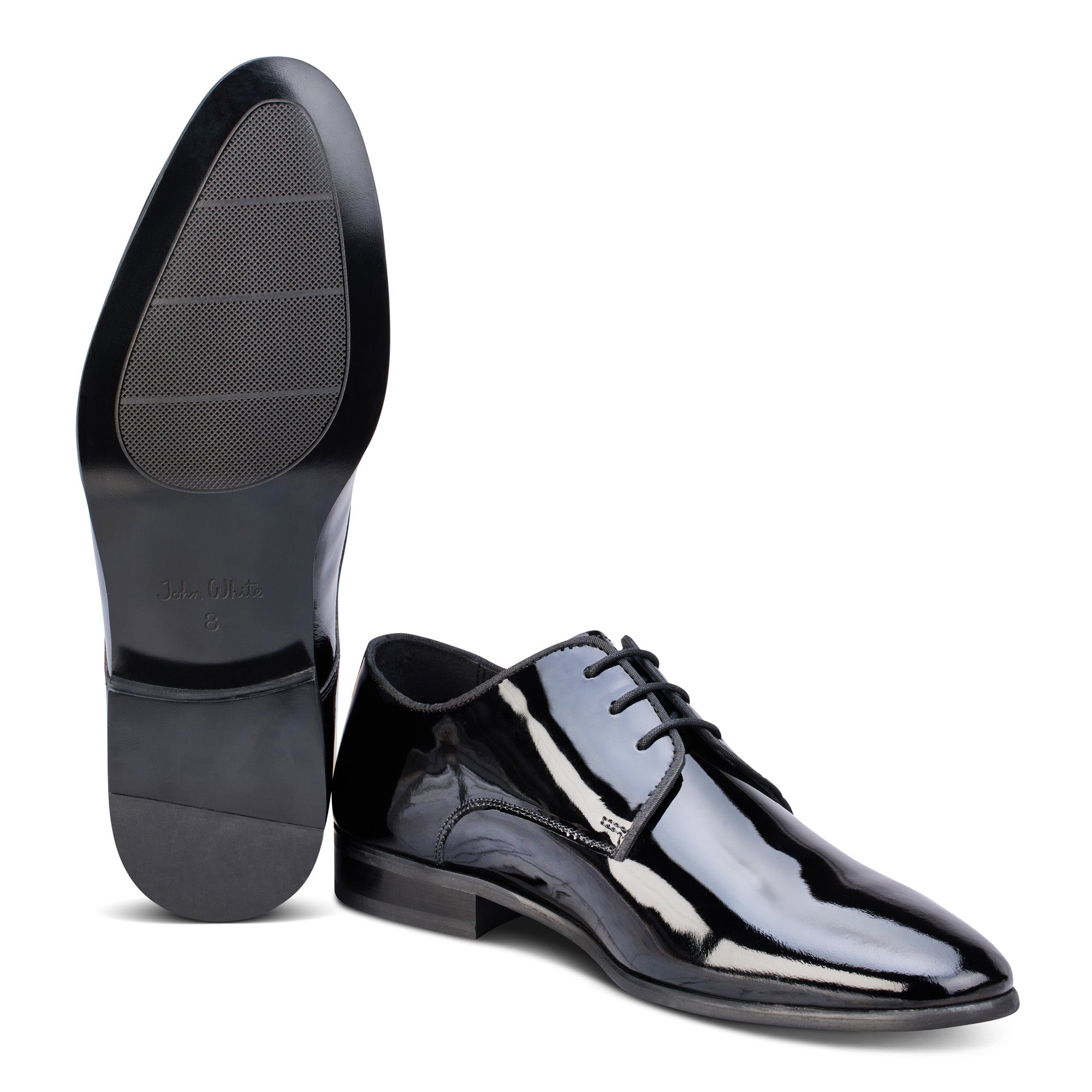
Heritage footwear houses such as Church's, Loake, Barker, Grenson, and Crockett & Jones have long positioned the Oxford as the apex of formal dress shoe styling. John White Shoes, established 1919, shares this understanding — the Oxford sits at the top of any formal dressing hierarchy, and it's the correct choice when occasion demands precision.
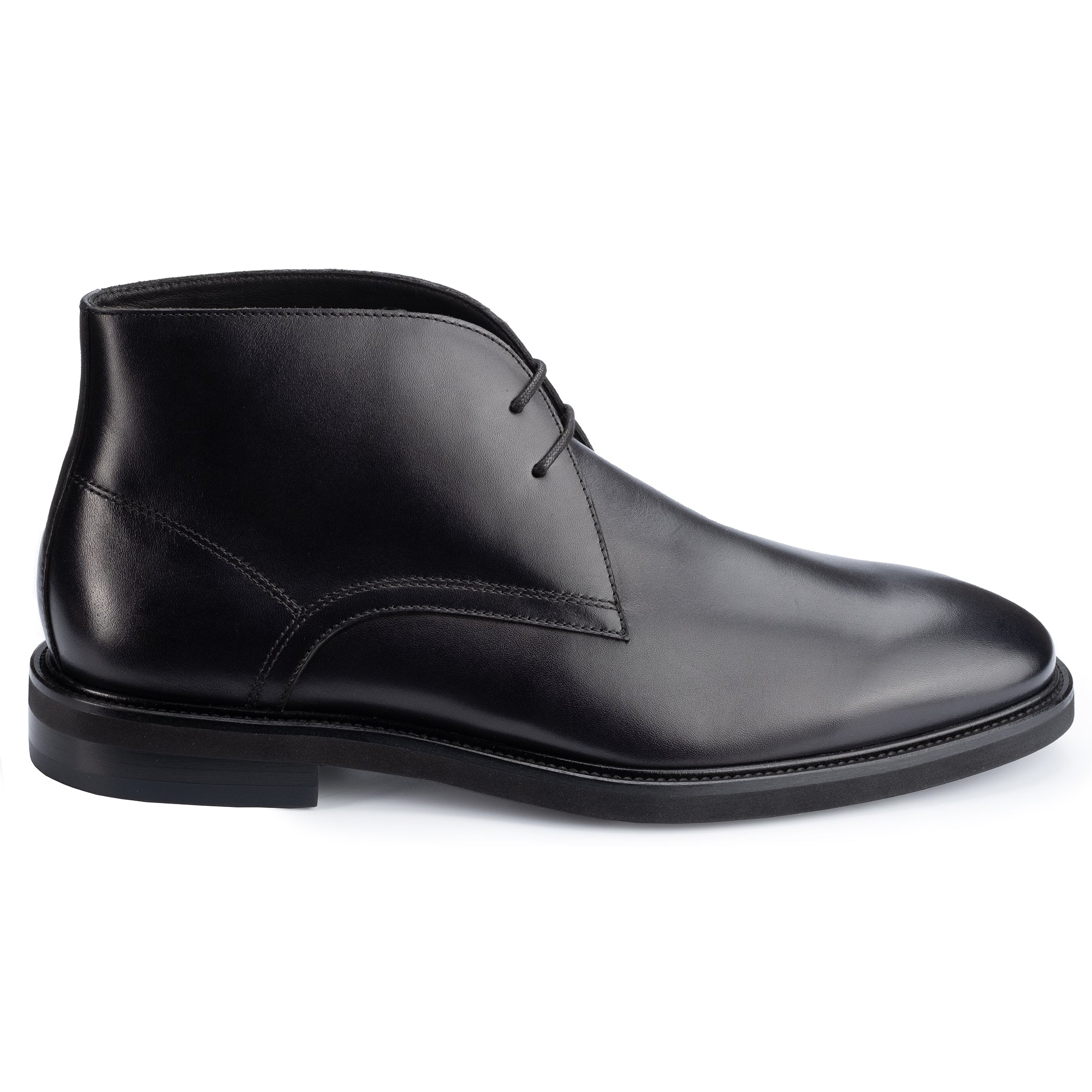
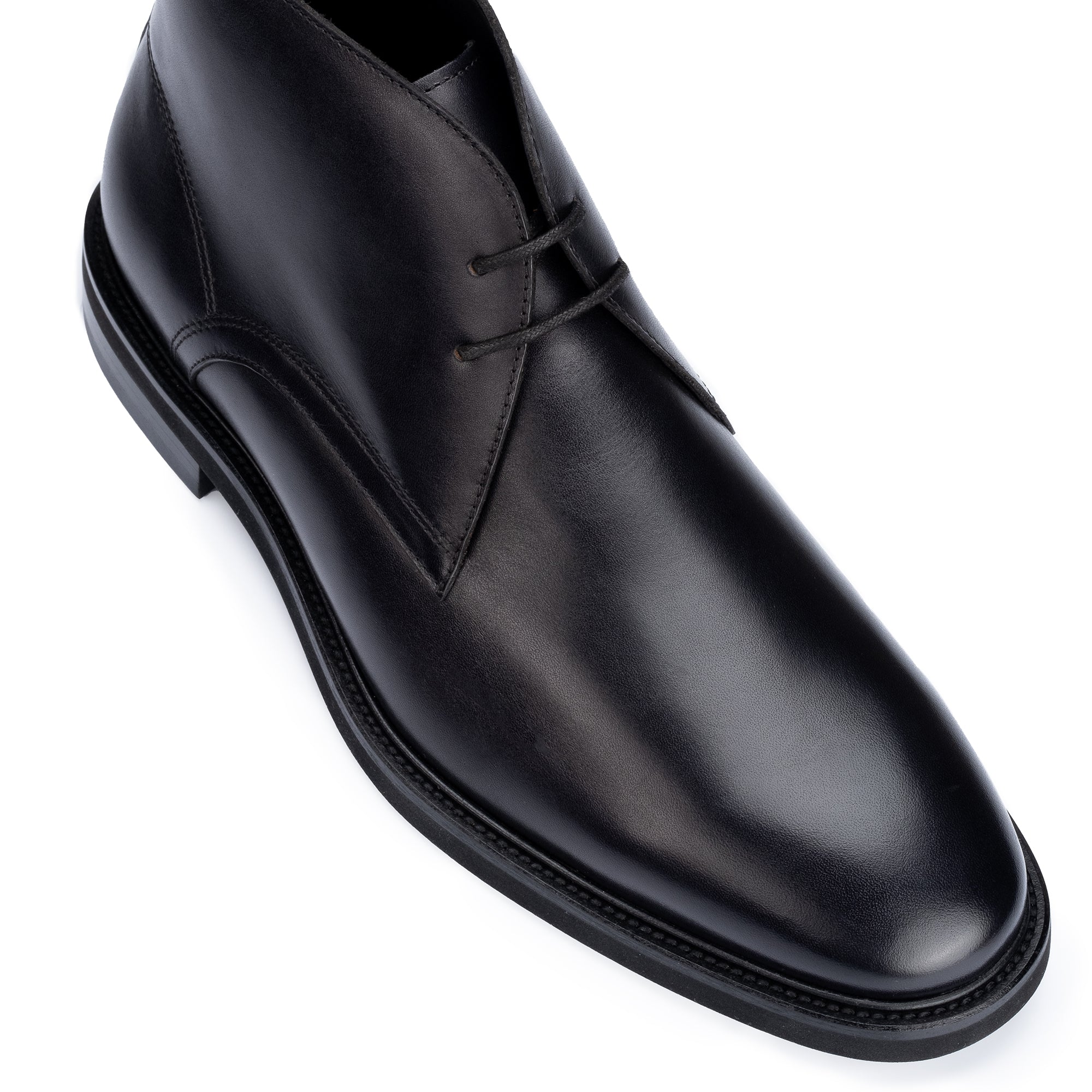
That said, a well-executed Derby in black calf leather with a plain toe reads as fully formal in most professional and occasion contexts. The distinction between the two narrows considerably at that end of the spectrum.
For black tie and the most formal business settings, an Oxford is the correct choice; for everything from business casual to smart-casual weddings, a Derby handles it with ease.
Oxford vs Derby: A Direct Comparison
| Feature | Oxford | Derby |
|---|---|---|
| Lacing system | Closed (facing stitched under vamp) | Open (facing stitched on top of vamp) |
| Formality level | Highest | Smart-casual to formal |
| Instep fit | Snug, narrower adjustment range | Wider, more adjustable |
| Suit pairing | Excellent across all weights | Very good |
| Jeans pairing | Slim-cut only, careful styling needed | More versatile |
| Common toe styles | Plain, captoe, semi-brogue | Plain, brogue, semi-brogue, full brogue |
| Wide-foot suitability | Less forgiving | Better suited |
Which Toe Style Works Best with Each Lacing Construction?
Both Oxfords and Derbies come in a range of toe designs — plain-toe, captoe, semi-brogue, and full brogue — and the toe style layered on top of the lacing construction determines how formal the shoe reads overall. For a detailed breakdown of how captoe and plain-toe designs differ in formality, our guide to captoe vs plain toe Oxford shoes covers the specifics.
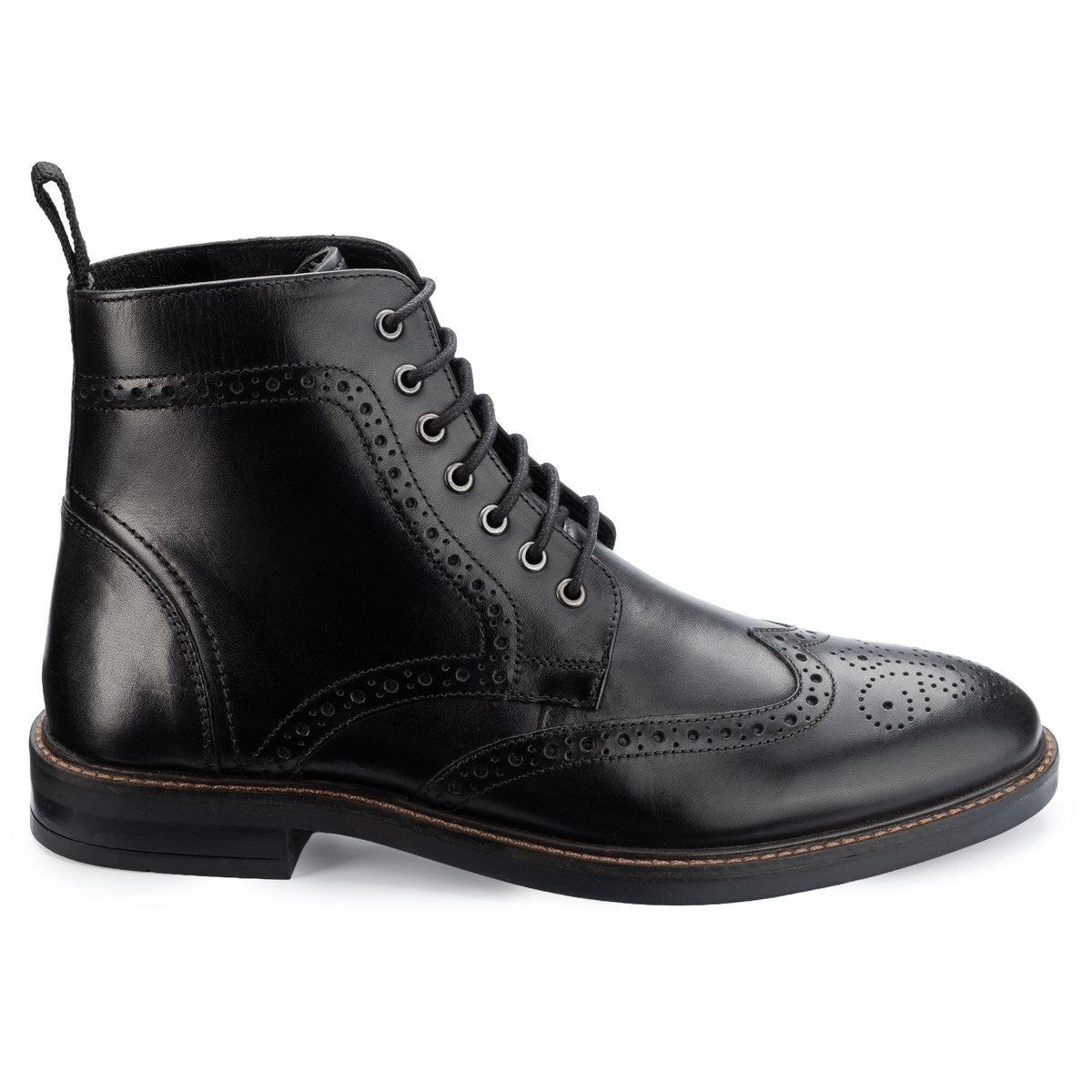
A plain-toe Derby in black reads close to an Oxford in formality. A full brogue Derby in tan reads smart-casual at most. For Oxfords, even a semi-brogue remains appropriate for business and wedding wear — the closed lacing retains the shoe's composure regardless of the decorative detail on top.
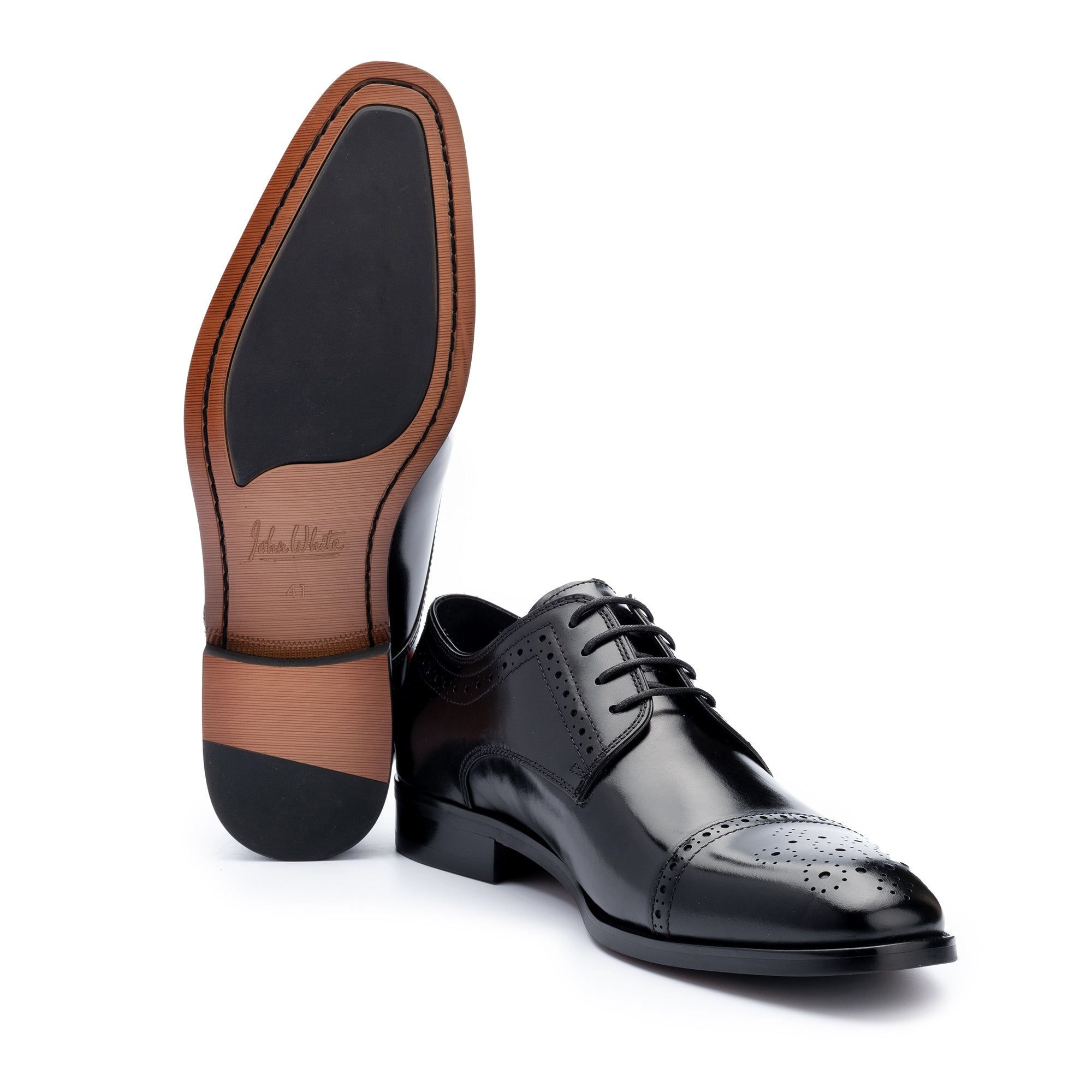
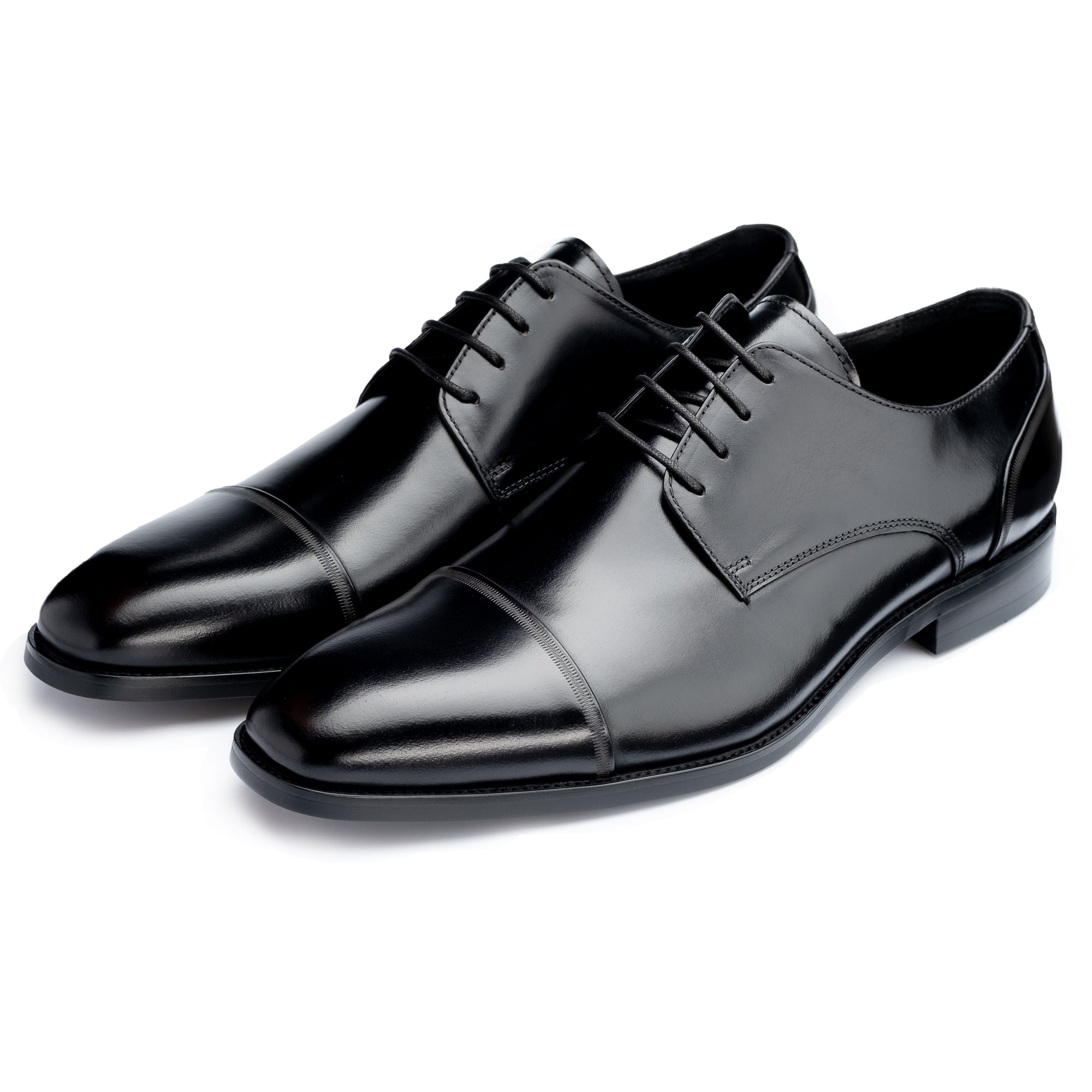
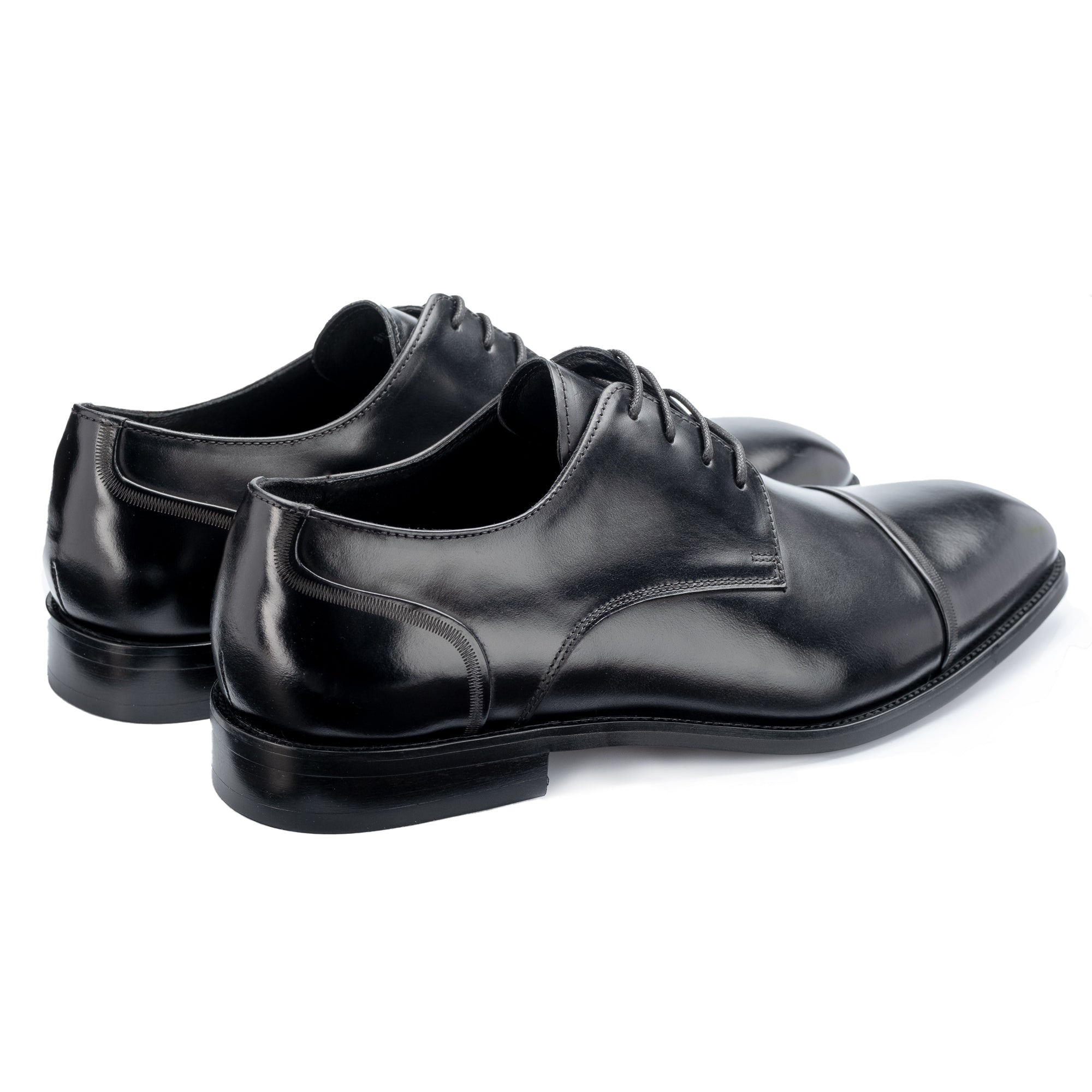
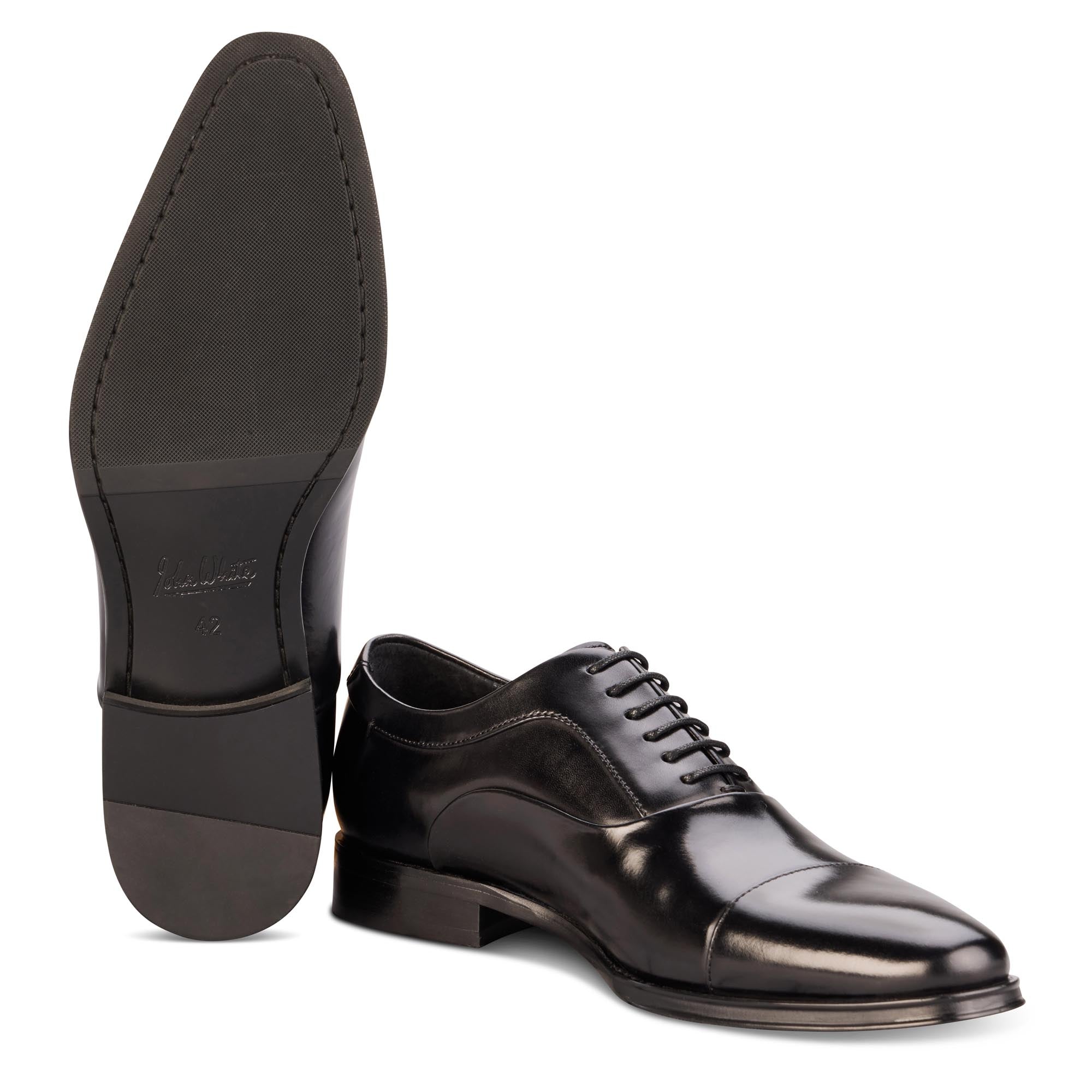
Our Guildhall Capped Oxfords in Black or Tan demonstrate how a captoe design gives the Oxford a clean, structured front well-suited to both professional settings and occasion dressing.
Are Derby Shoes More Comfortable Than Oxfords?
The Derby's open lacing system offers a practical advantage: more room around the instep. Men with wider feet or higher insteps often find Derbies more comfortable for extended wear, since the open facing accommodates a broader range of foot shapes without feeling constrictive.
According to the Society of Master Shoe Repairers, a proper fit around the instep is one of the most commonly overlooked aspects of shoe selection — and contributes significantly to long-term comfort and leather wear patterns.
That said, last shape and leather quality make a larger difference to all-day comfort than lacing type. A well-designed Derby or Oxford crafted with quality leather ensures lasting comfort and durability. A poor last fit is uncomfortable regardless of the lacing system.
If you have a wider foot or high instep, a Derby will typically offer a more accommodating fit; for a standard to narrow foot, an Oxford will wear just as comfortably and give a cleaner finish.
When Should You Wear Oxford Shoes?
Oxford shoes are the right choice for occasions where formality is non-negotiable:
- Black tie events and formal dinners
- Job interviews and senior business settings
- Weddings where the dress code specifies morning dress or lounge suit
- Any occasion where a composed, unbroken line from trouser hem to toe is expected
For more detail on formal occasion dressing, our guide to what to wear to a black tie event covers footwear requirements in full. For broader outfit pairing across smart to casual settings, our guide to how to wear Oxford shoes covers the full styling range.
The Victoria and Albert Museum's fashion archives note that the Oxford became the dominant formal shoe in British professional dress from the Edwardian era onward — a position it's never really ceded, despite the Derby's broader practical versatility.
When Should You Wear Derby Shoes?
Derby shoes are appropriate across a wider range of occasions, which is precisely why they've become the more common choice for everyday professional wear:
- Business casual office environments
- Smart-casual weddings and garden parties
- Dinner dates where you want a polished look without full formality
- Everyday professional wear requiring comfort across a full working day
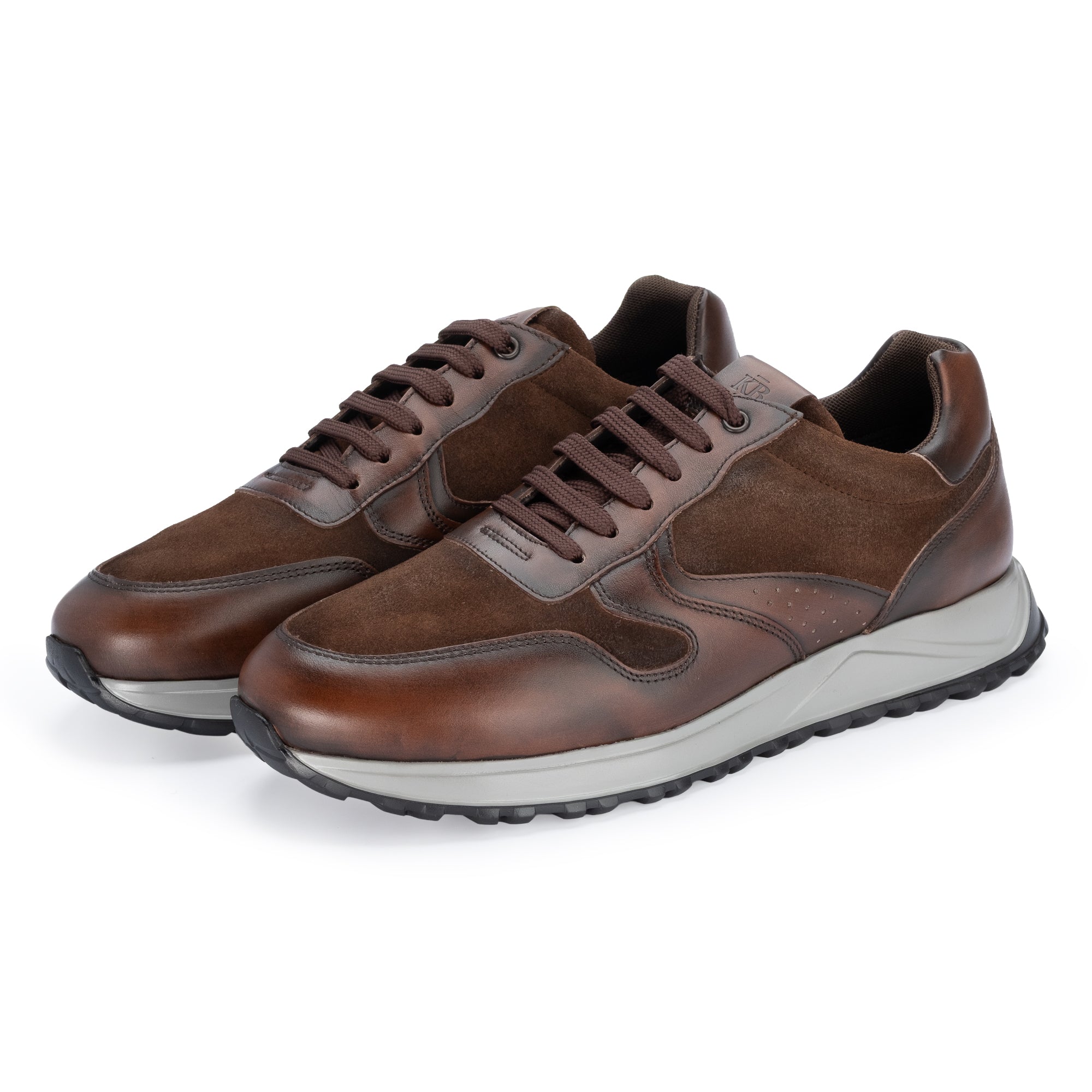
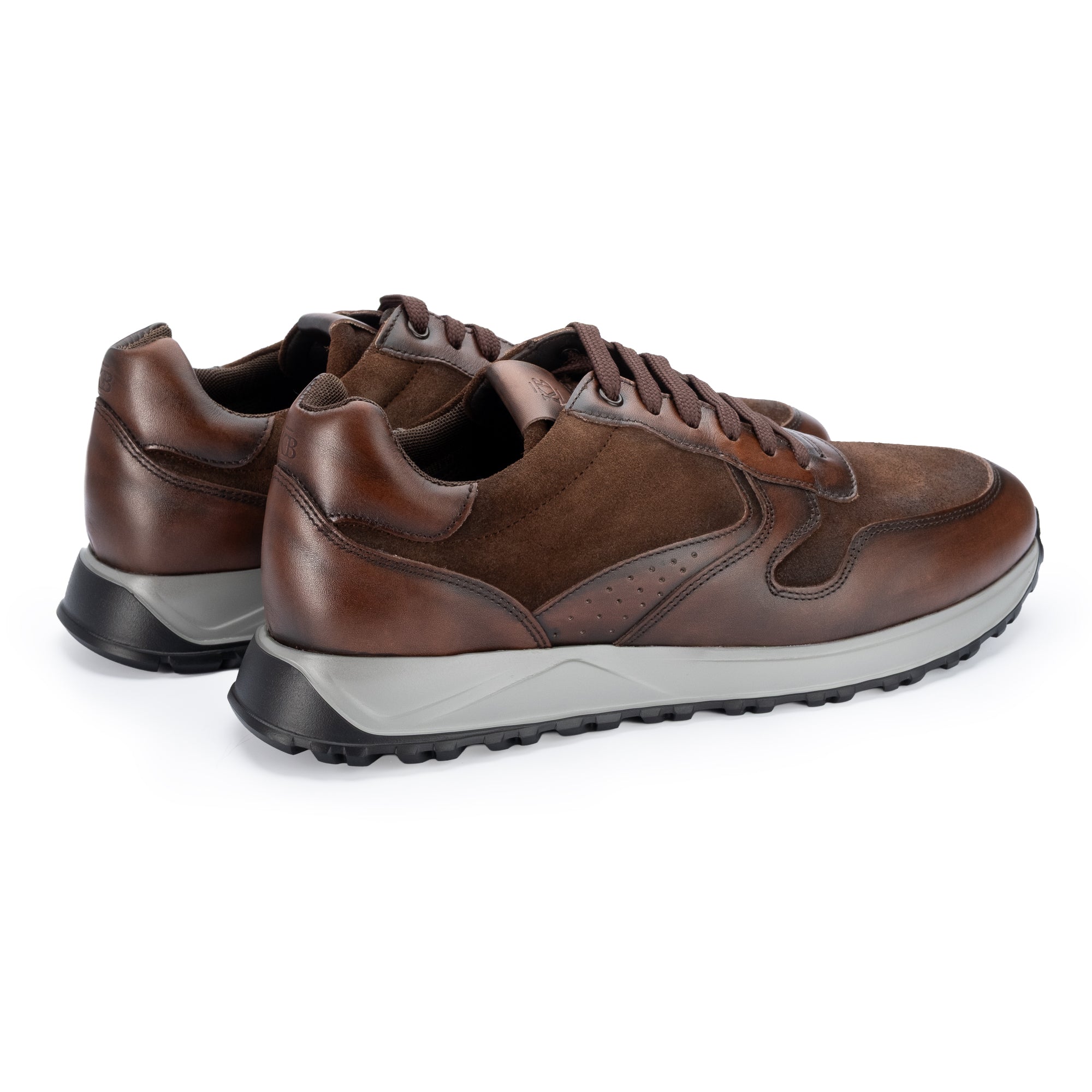
- Casual pairings with chinos or dark jeans
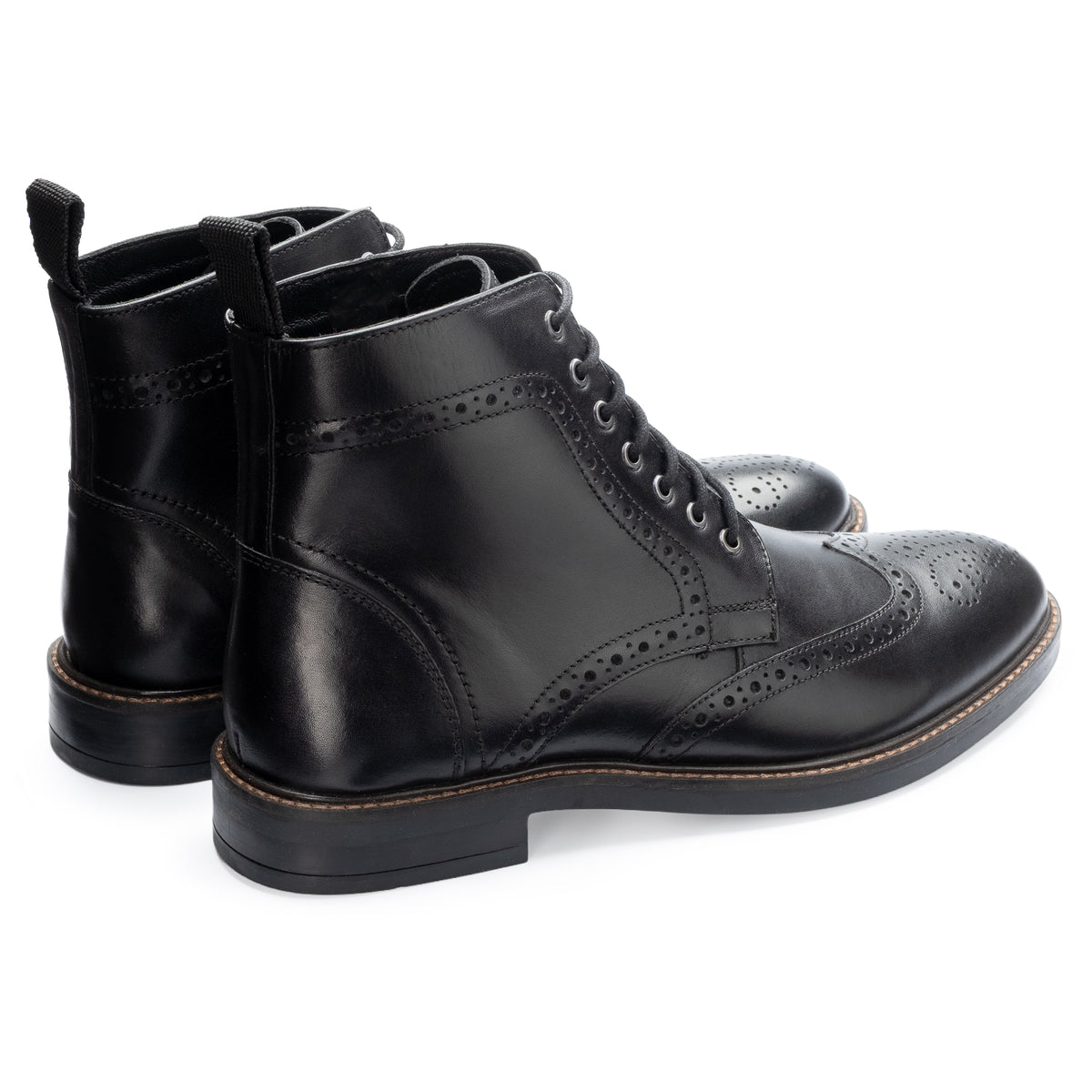
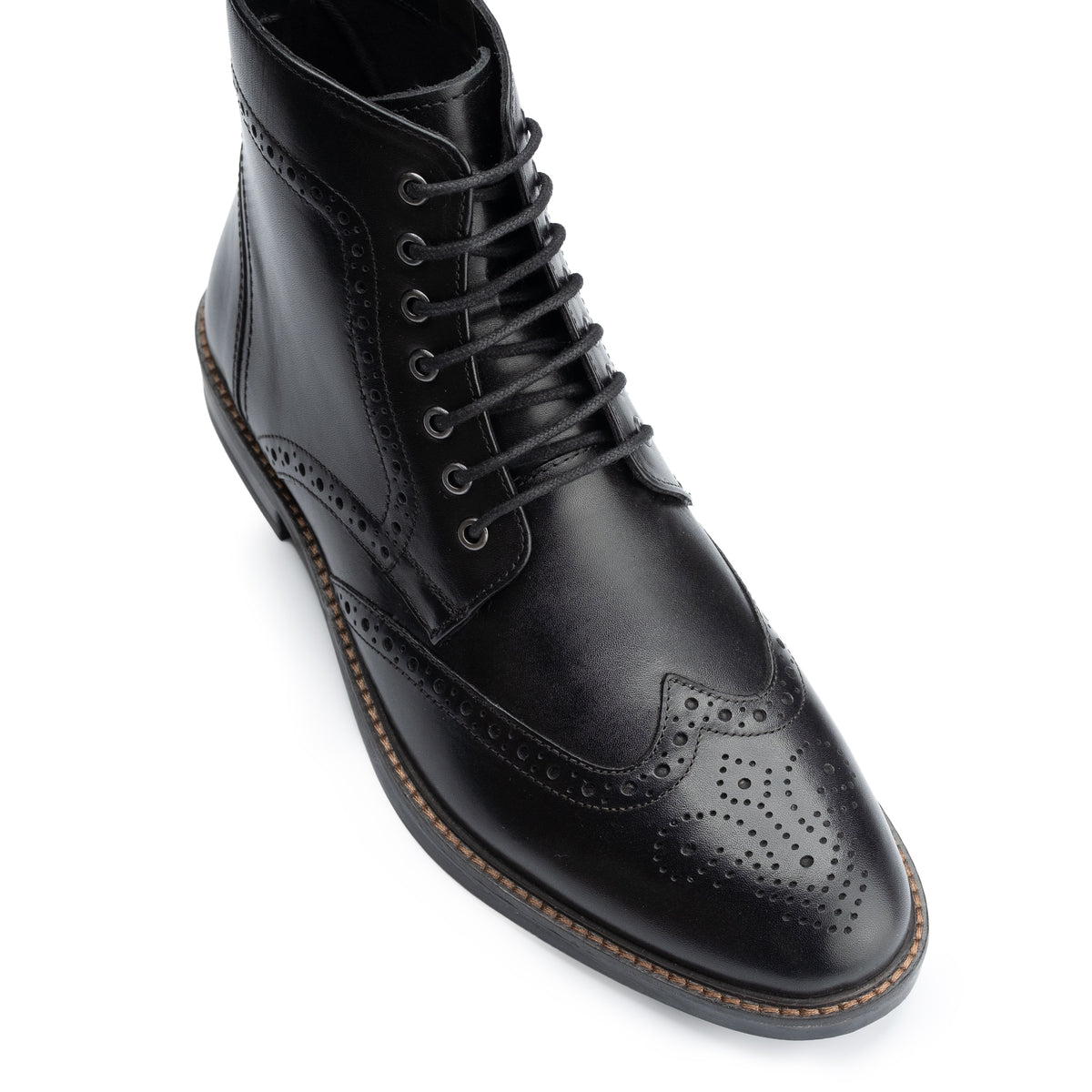
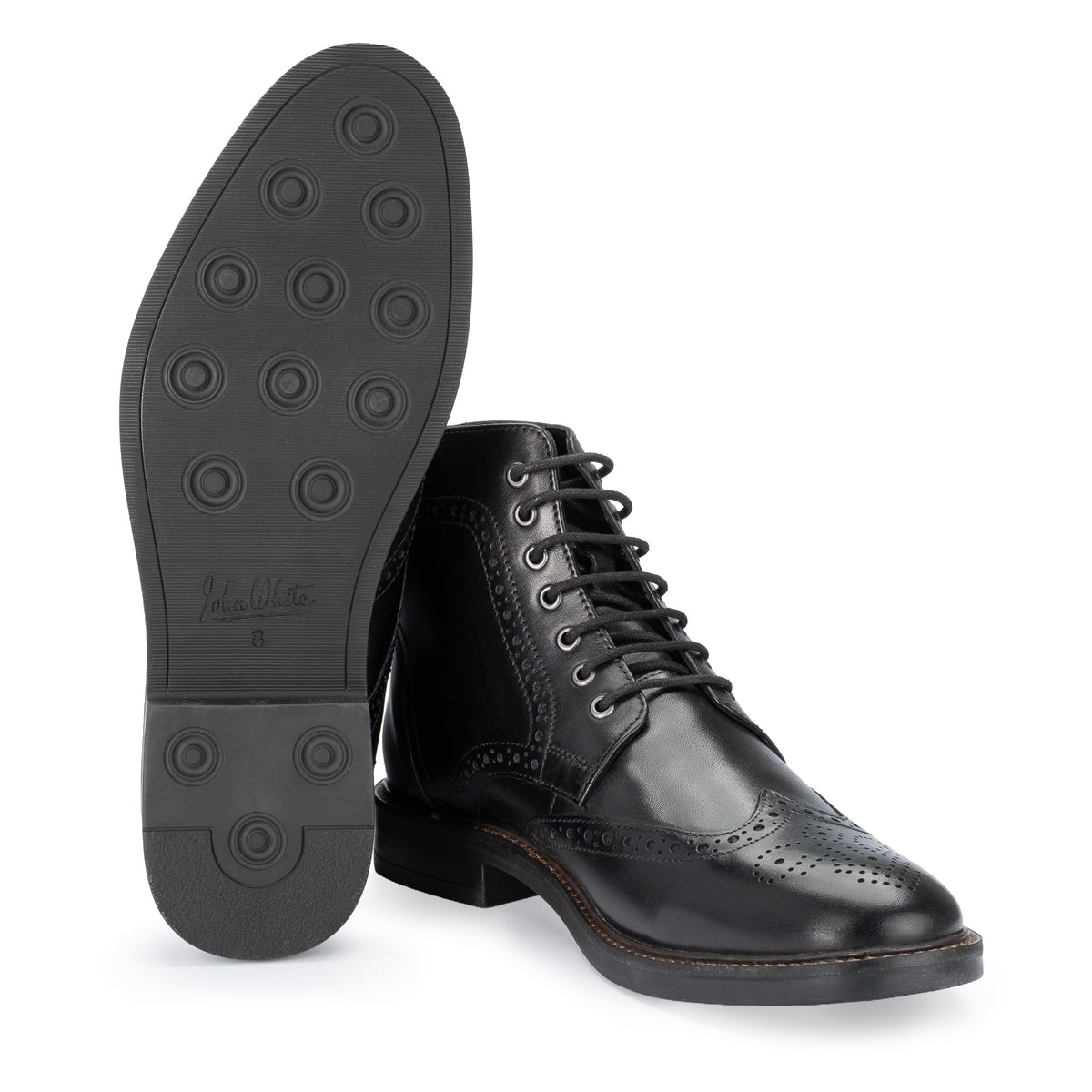
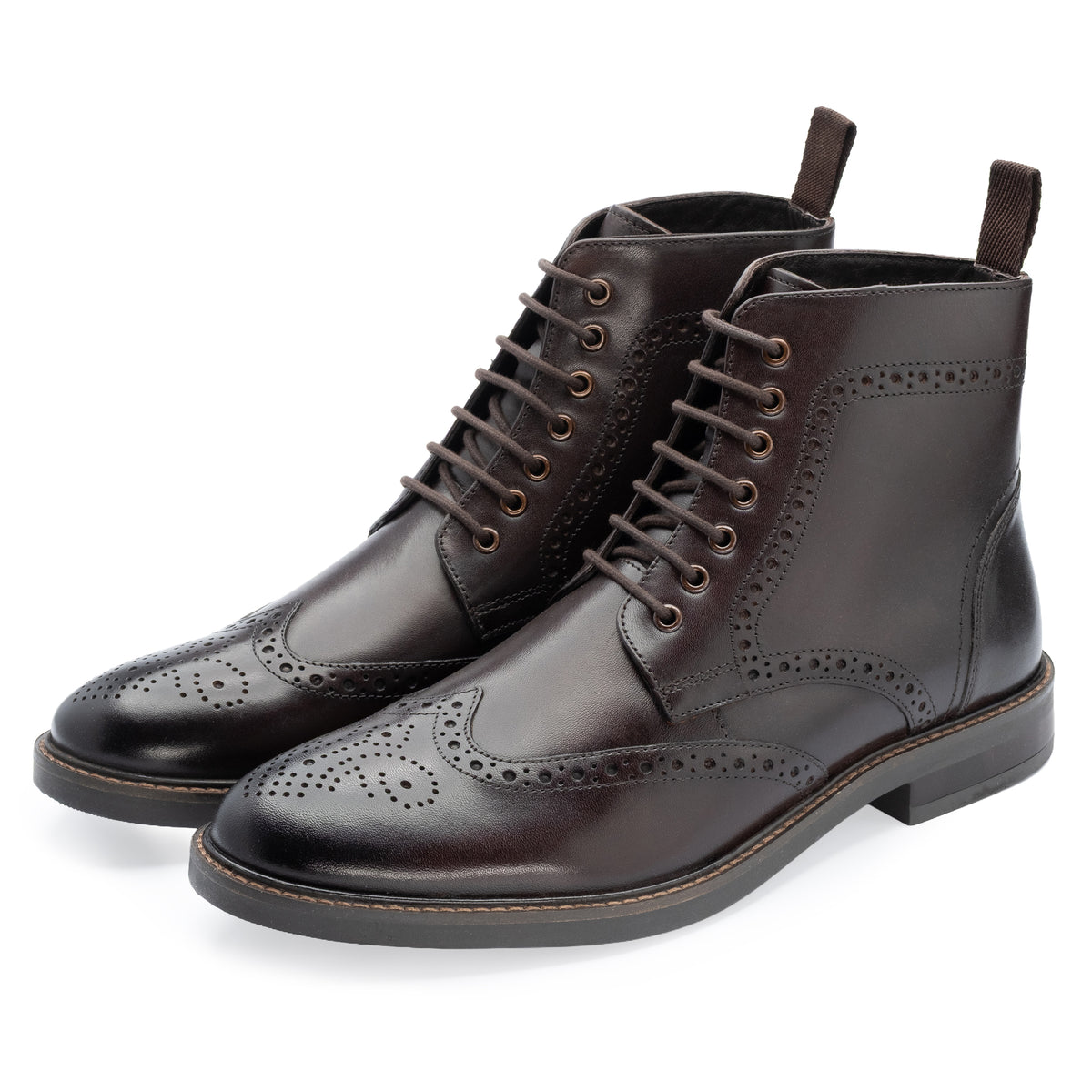
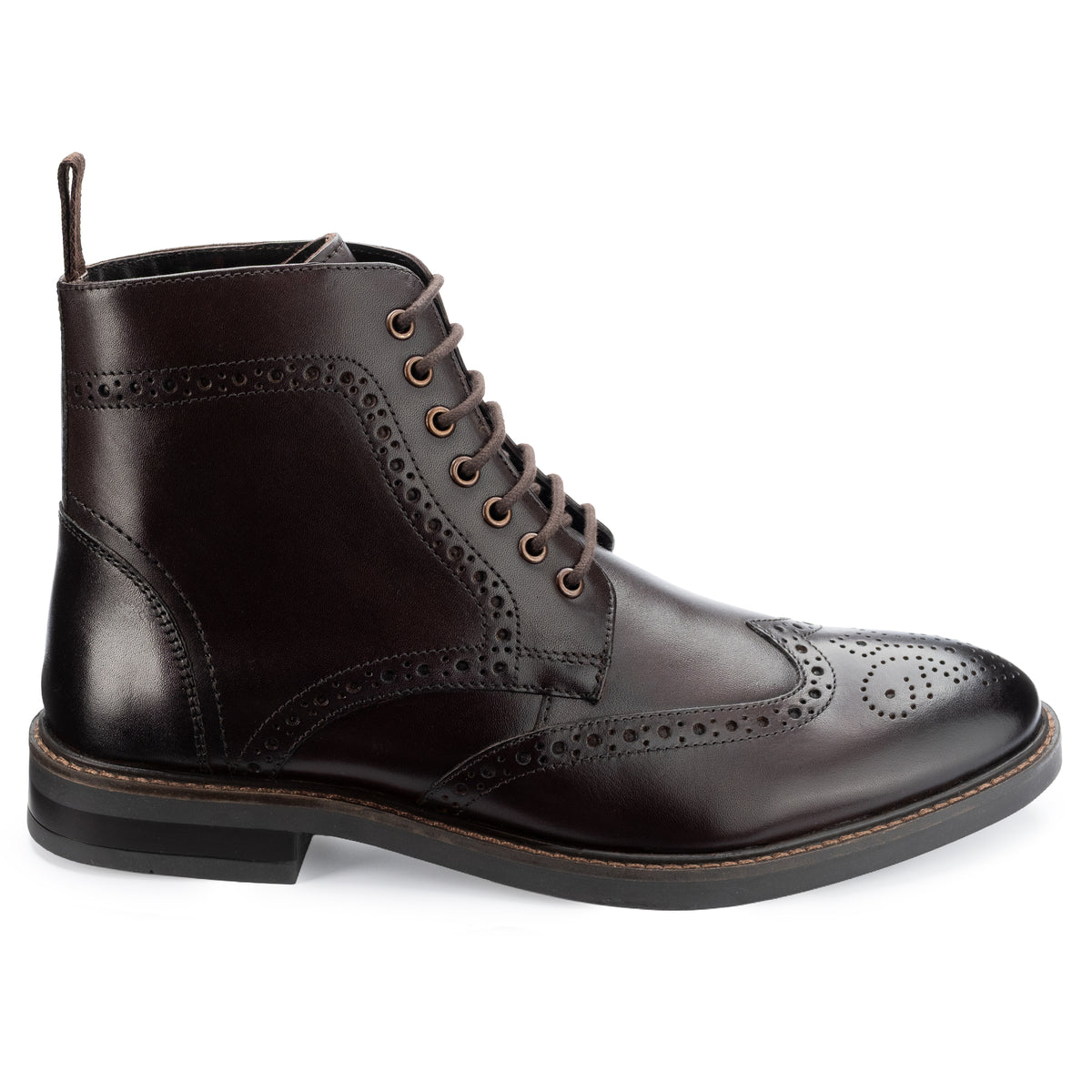
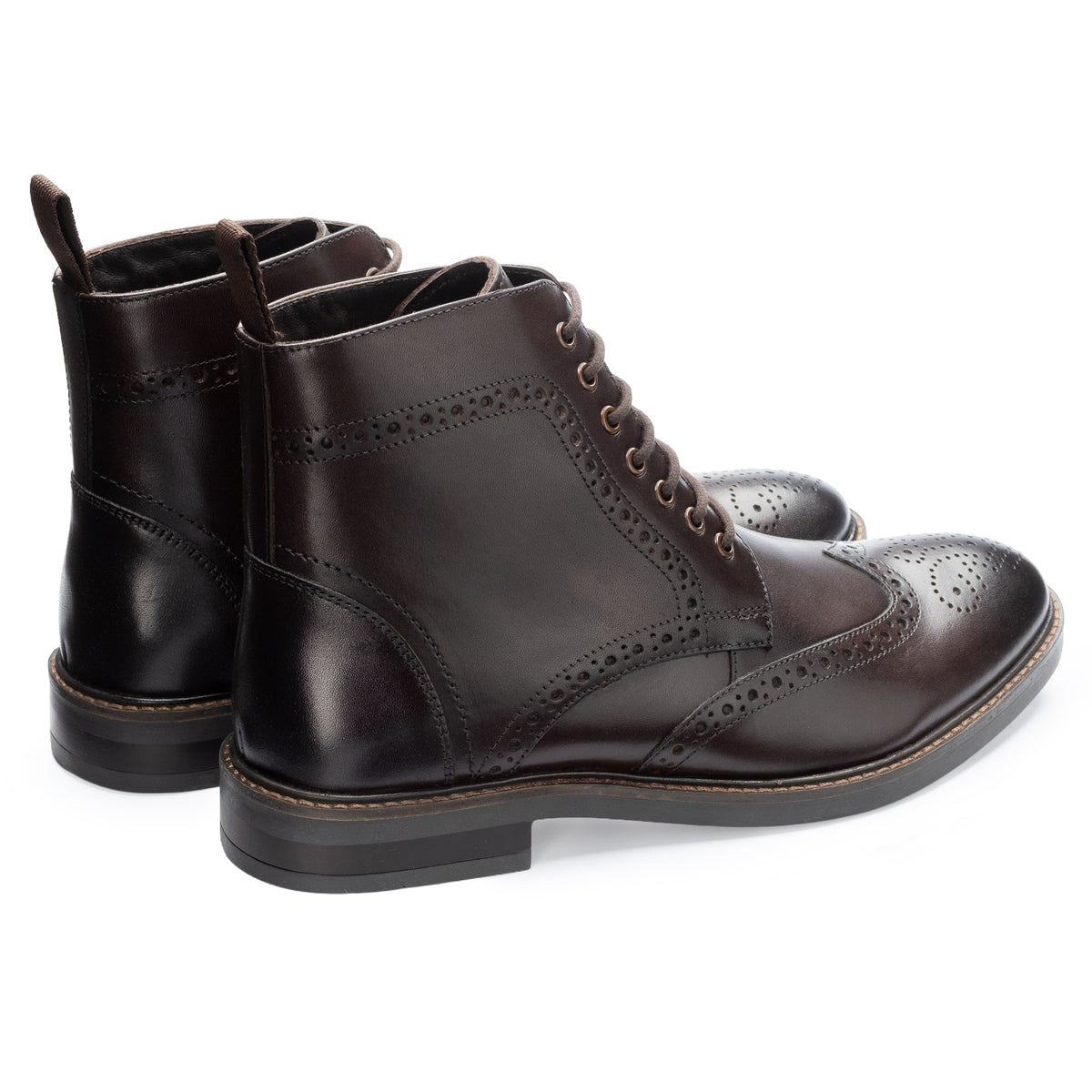
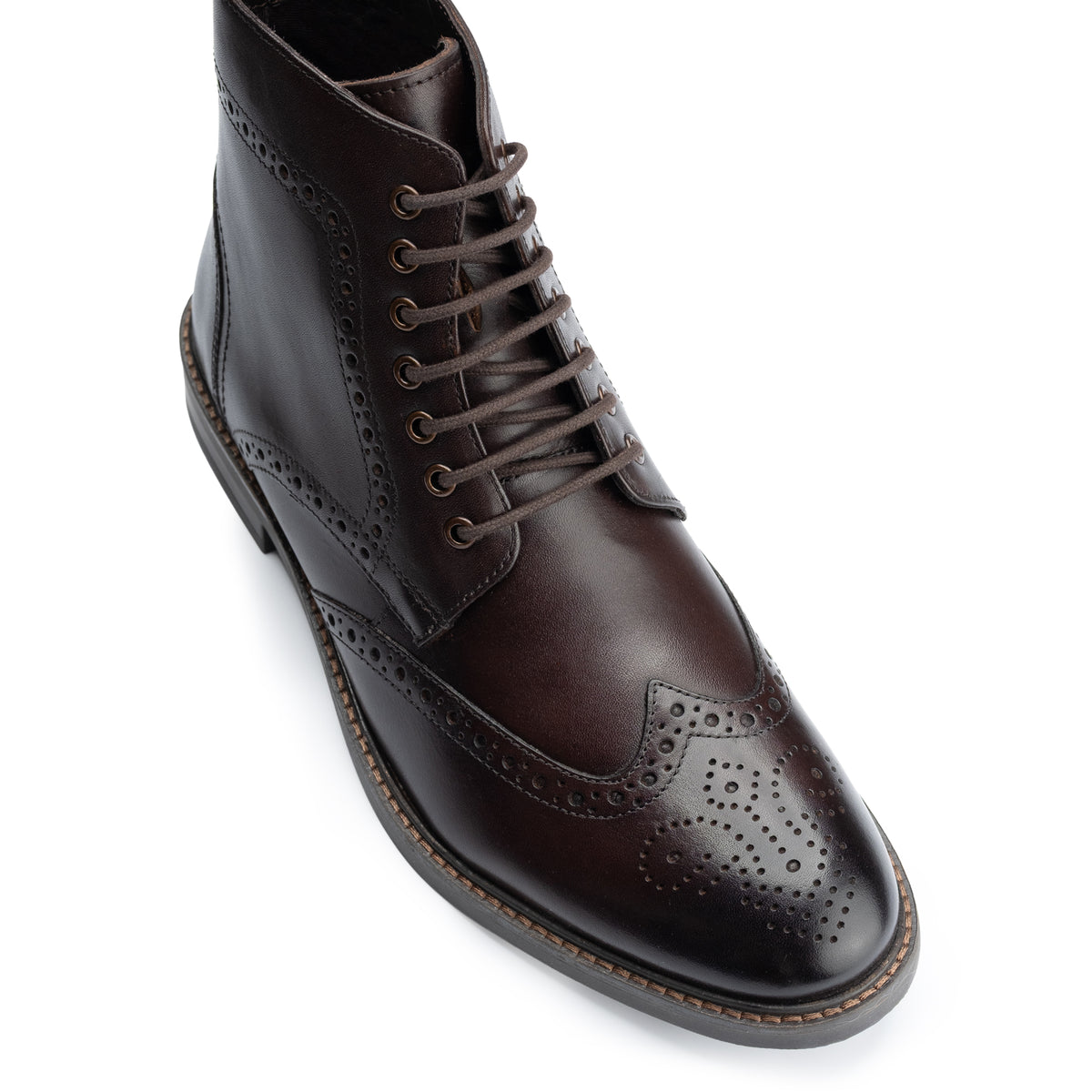
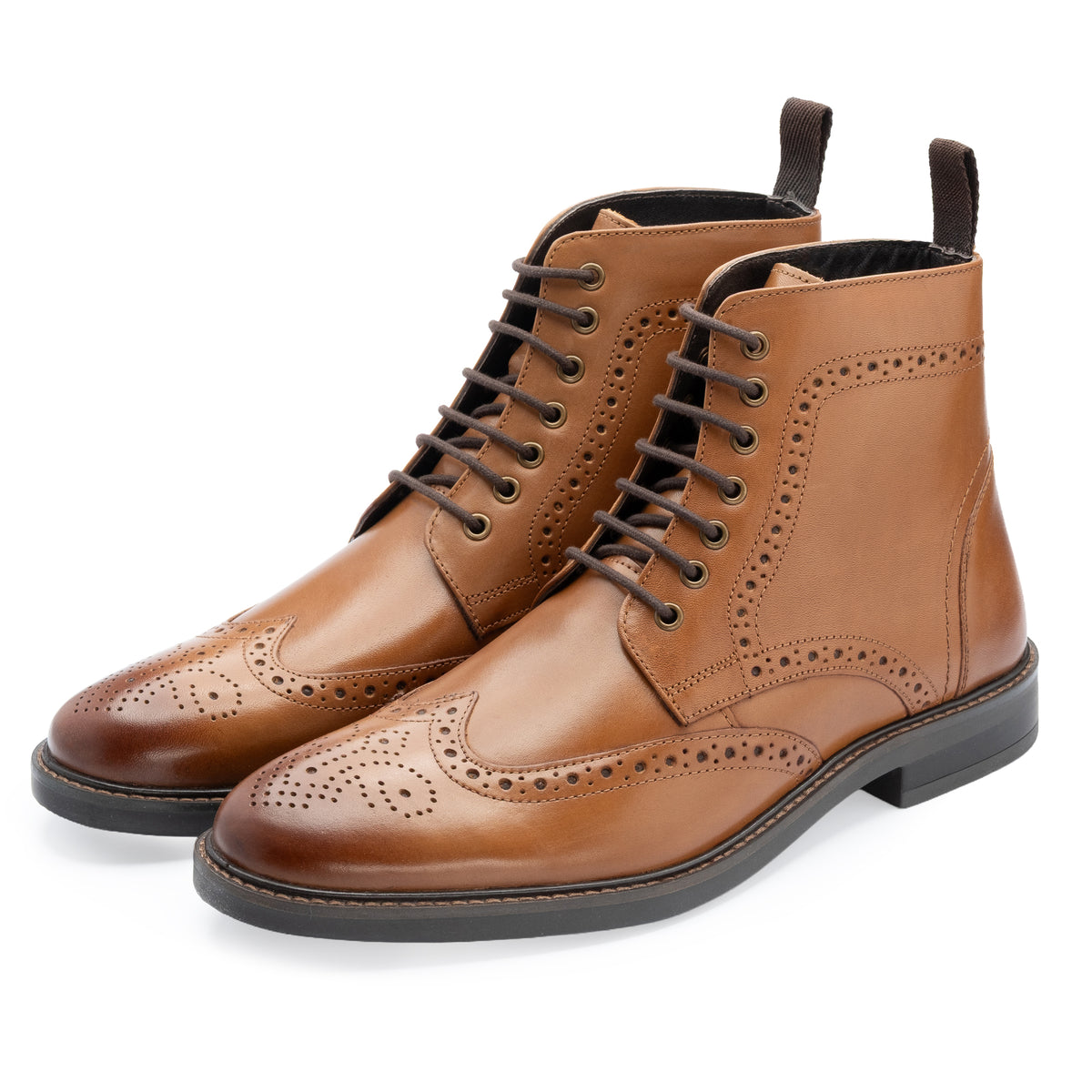
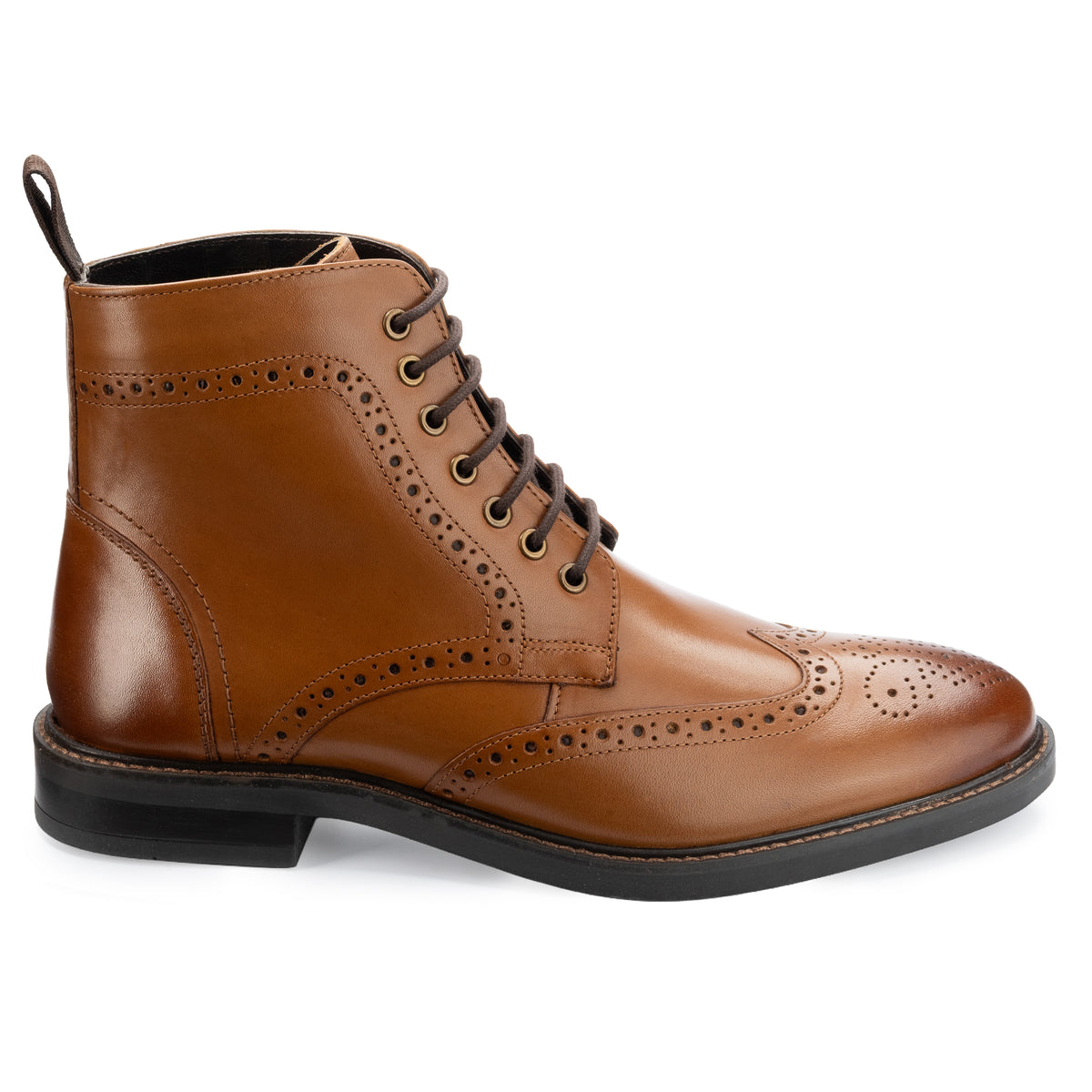
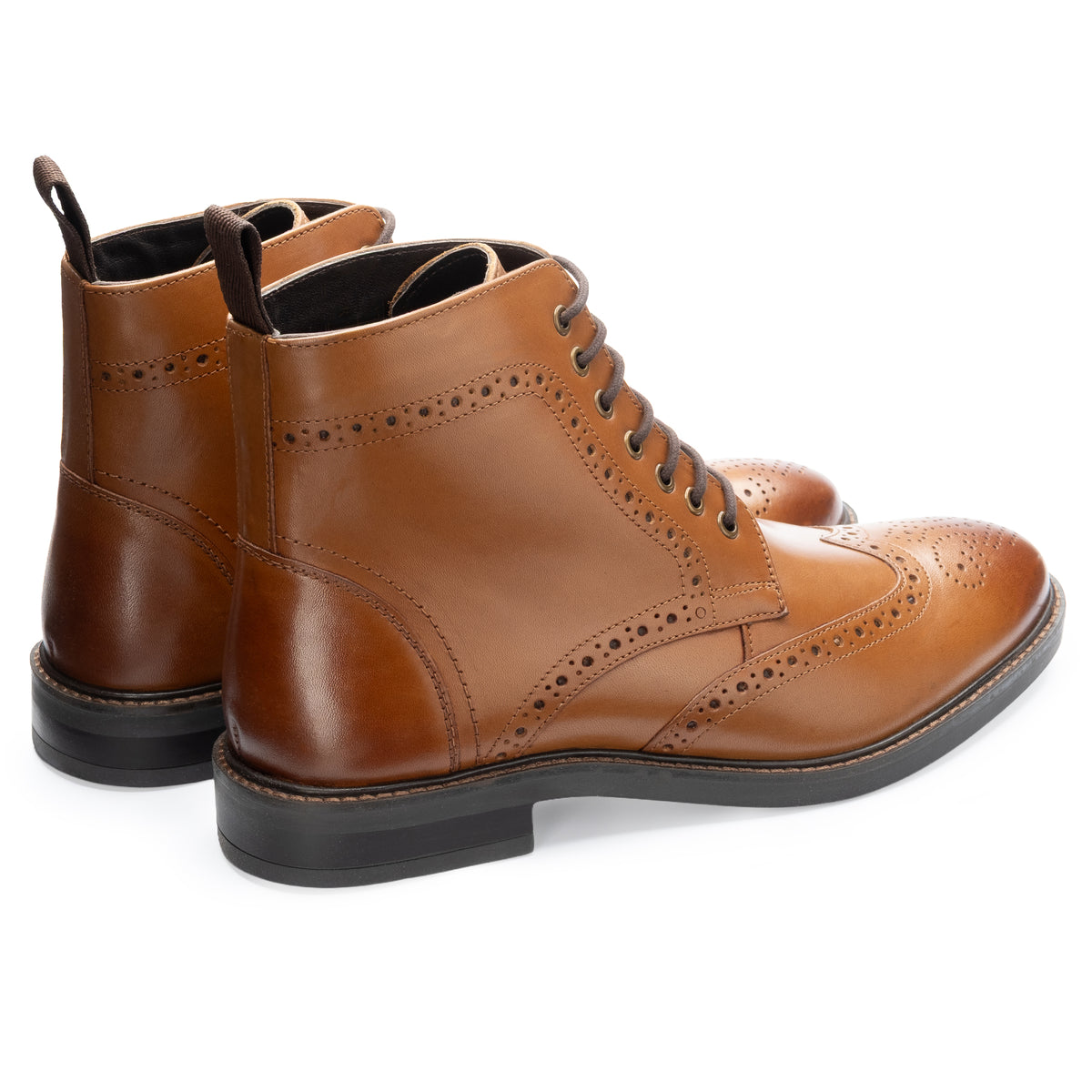
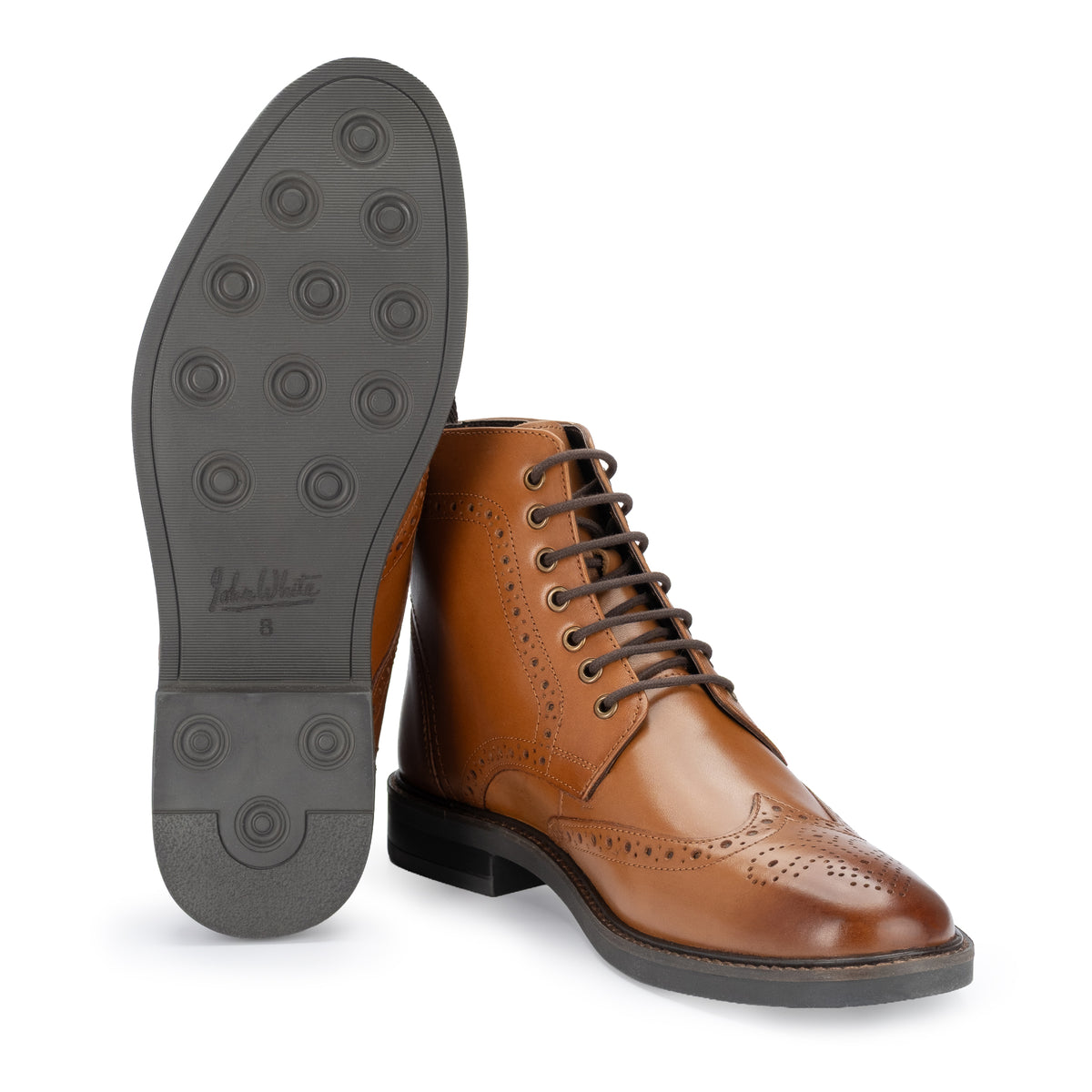
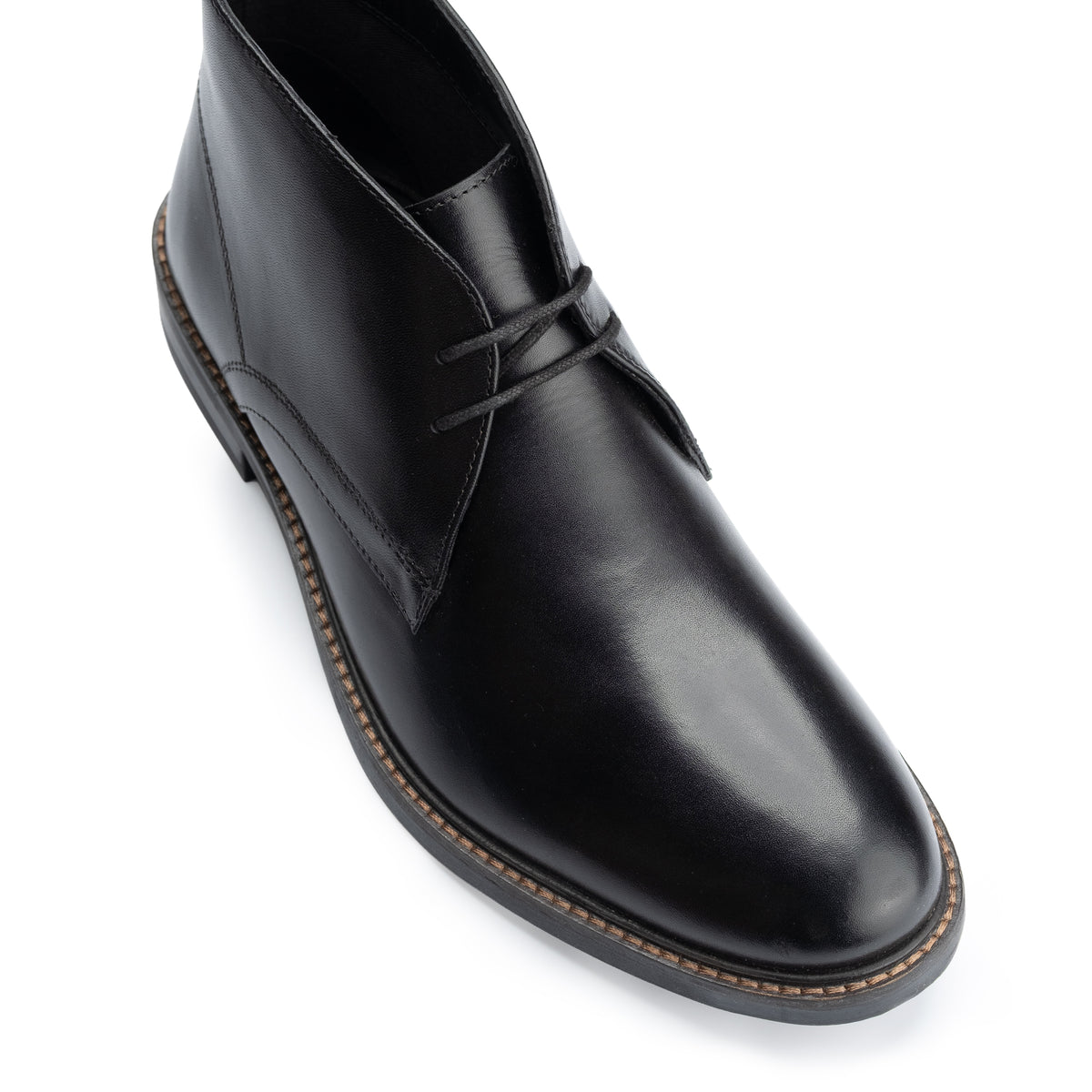
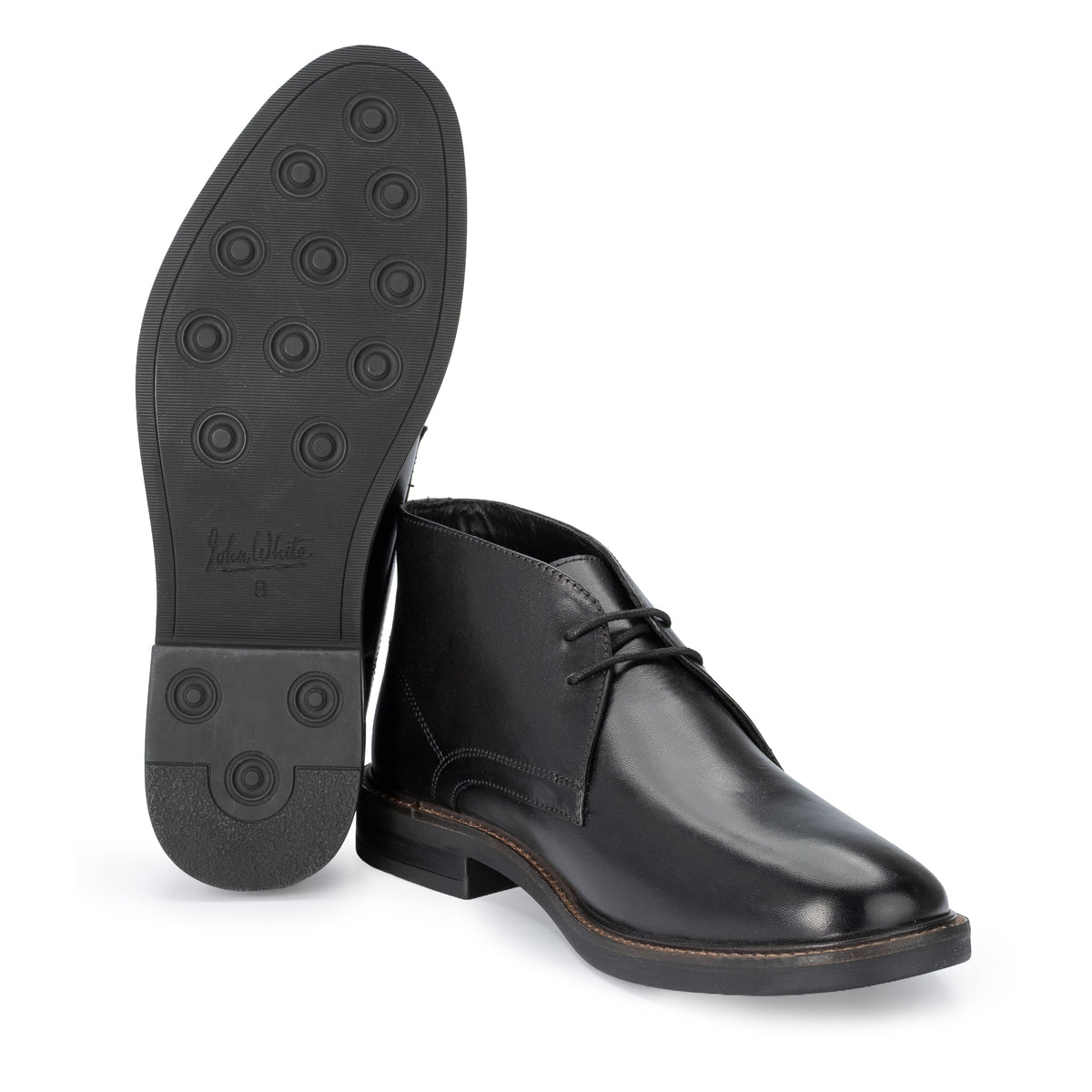
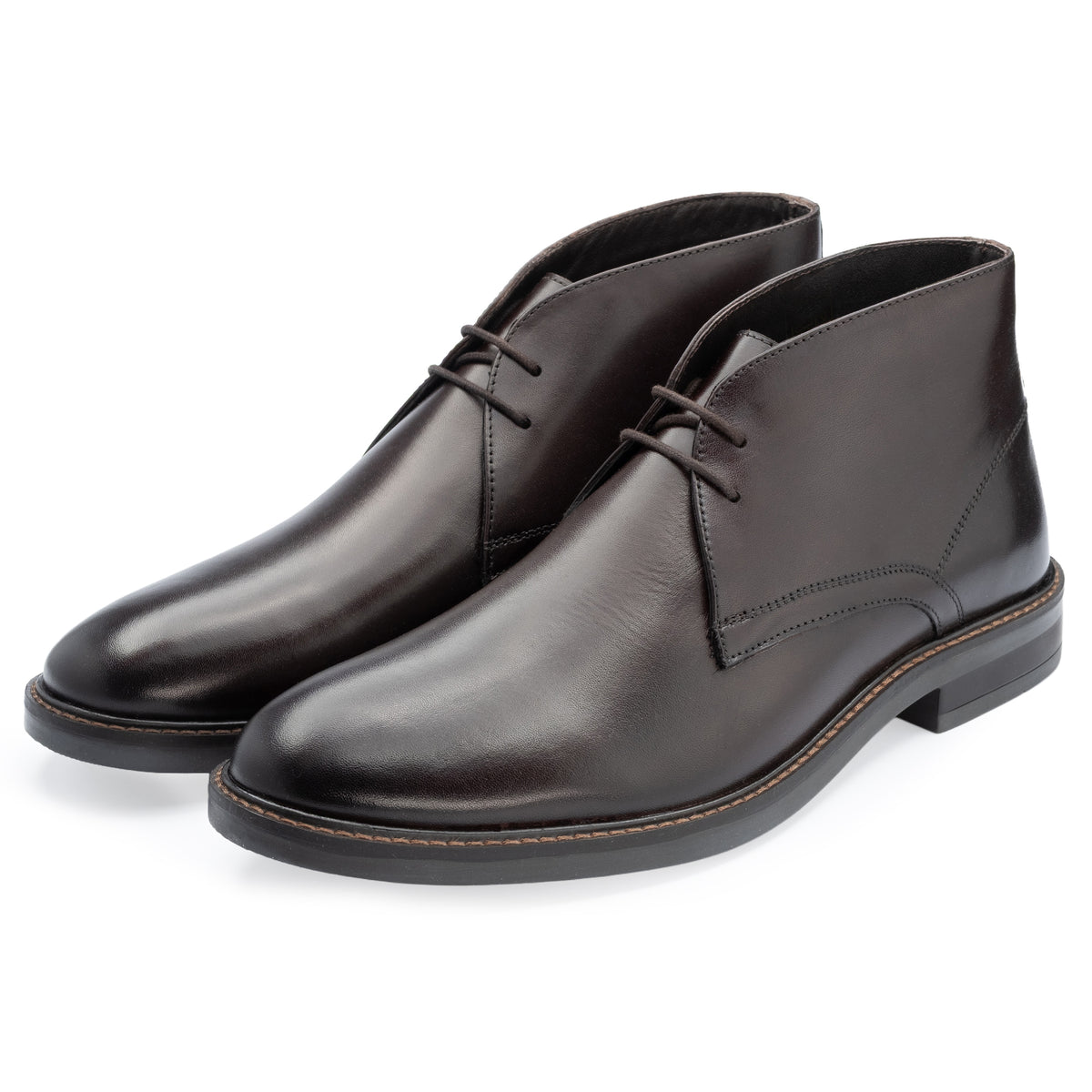
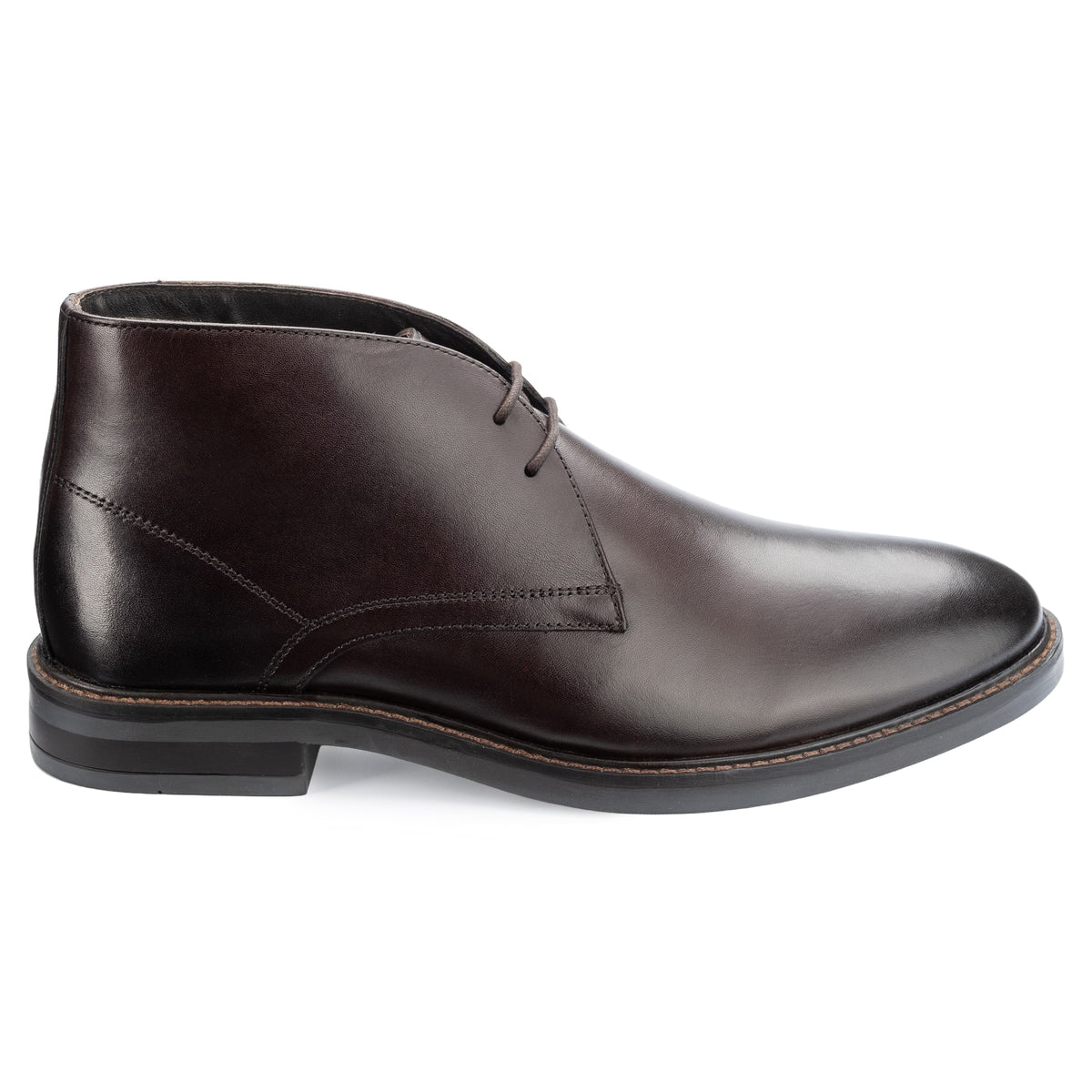
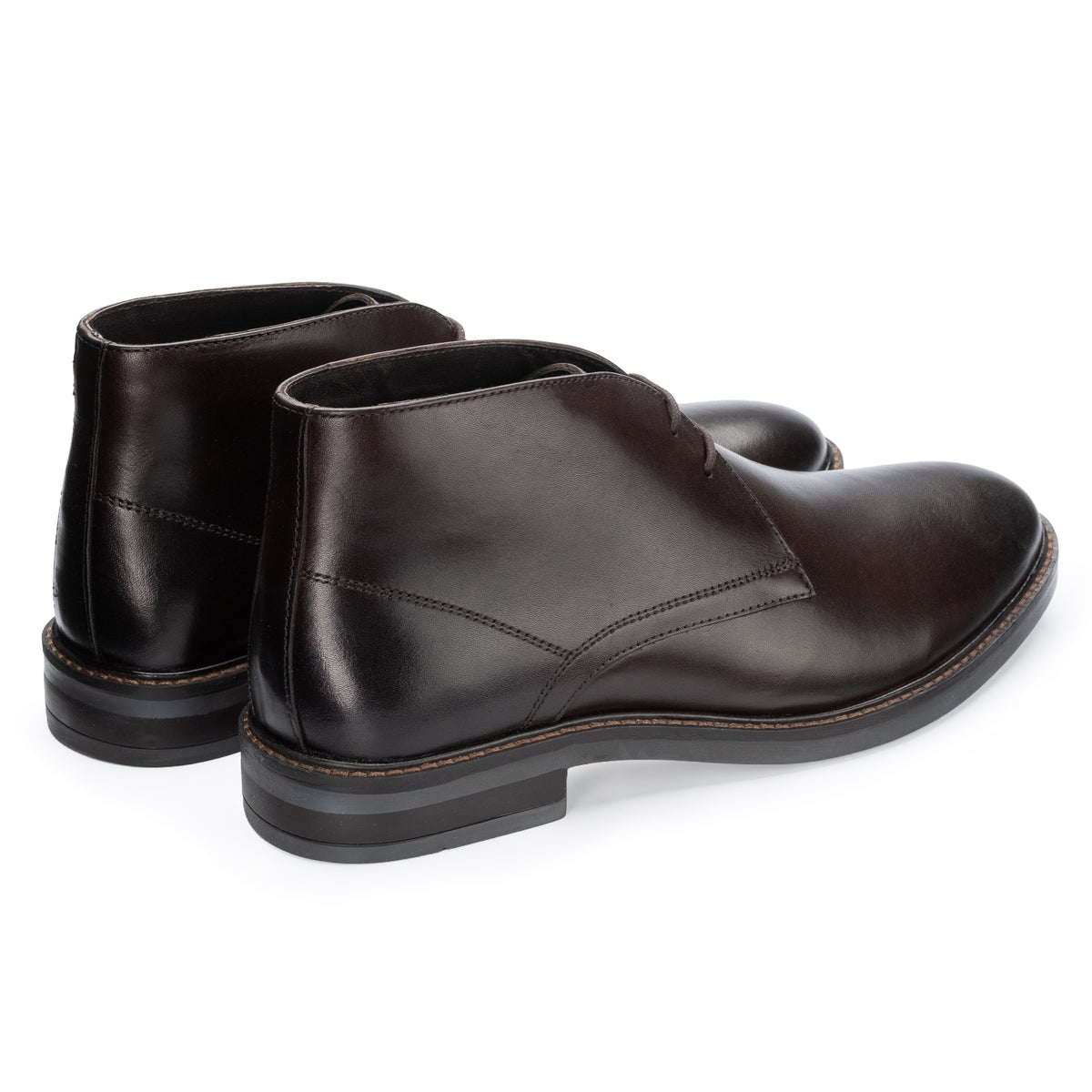
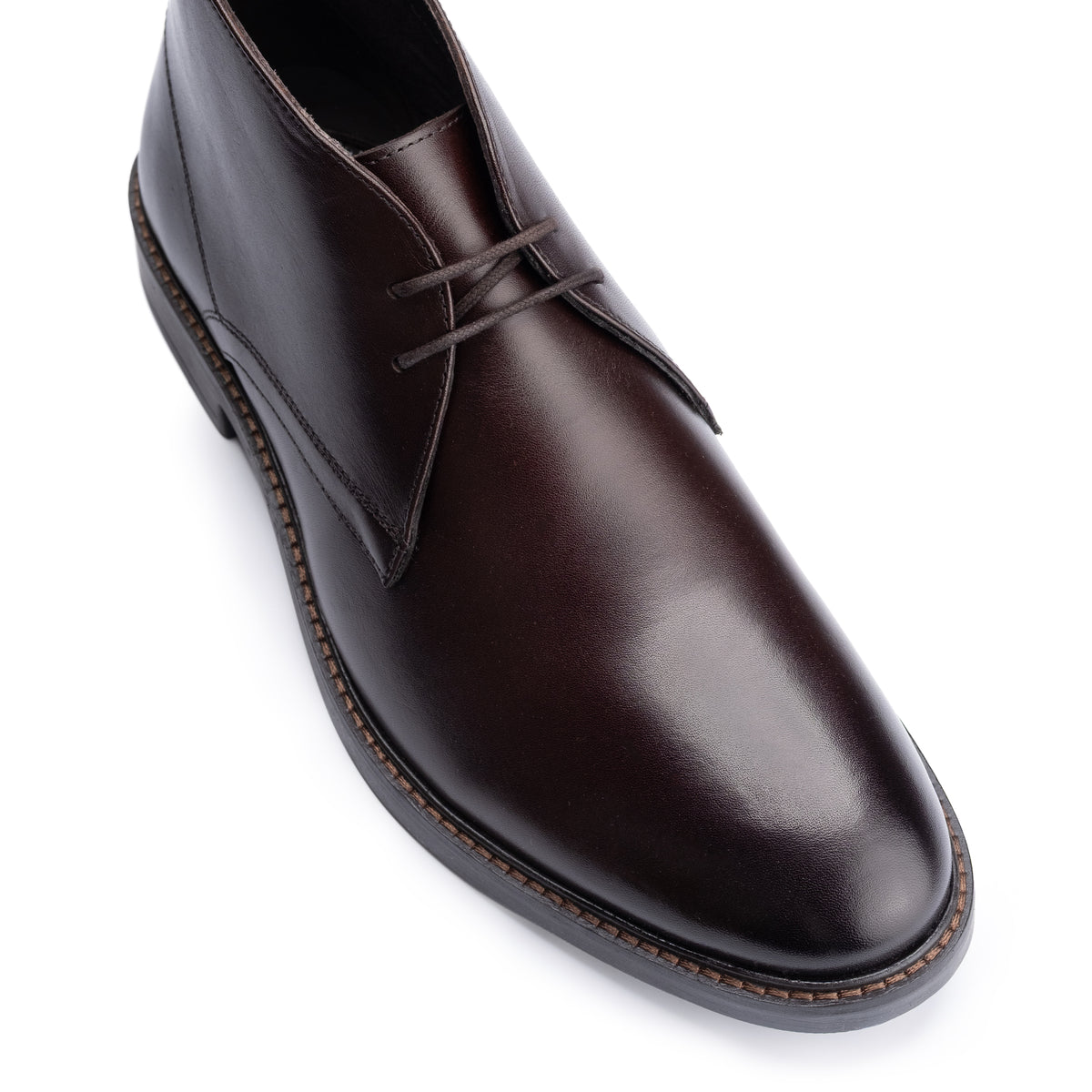
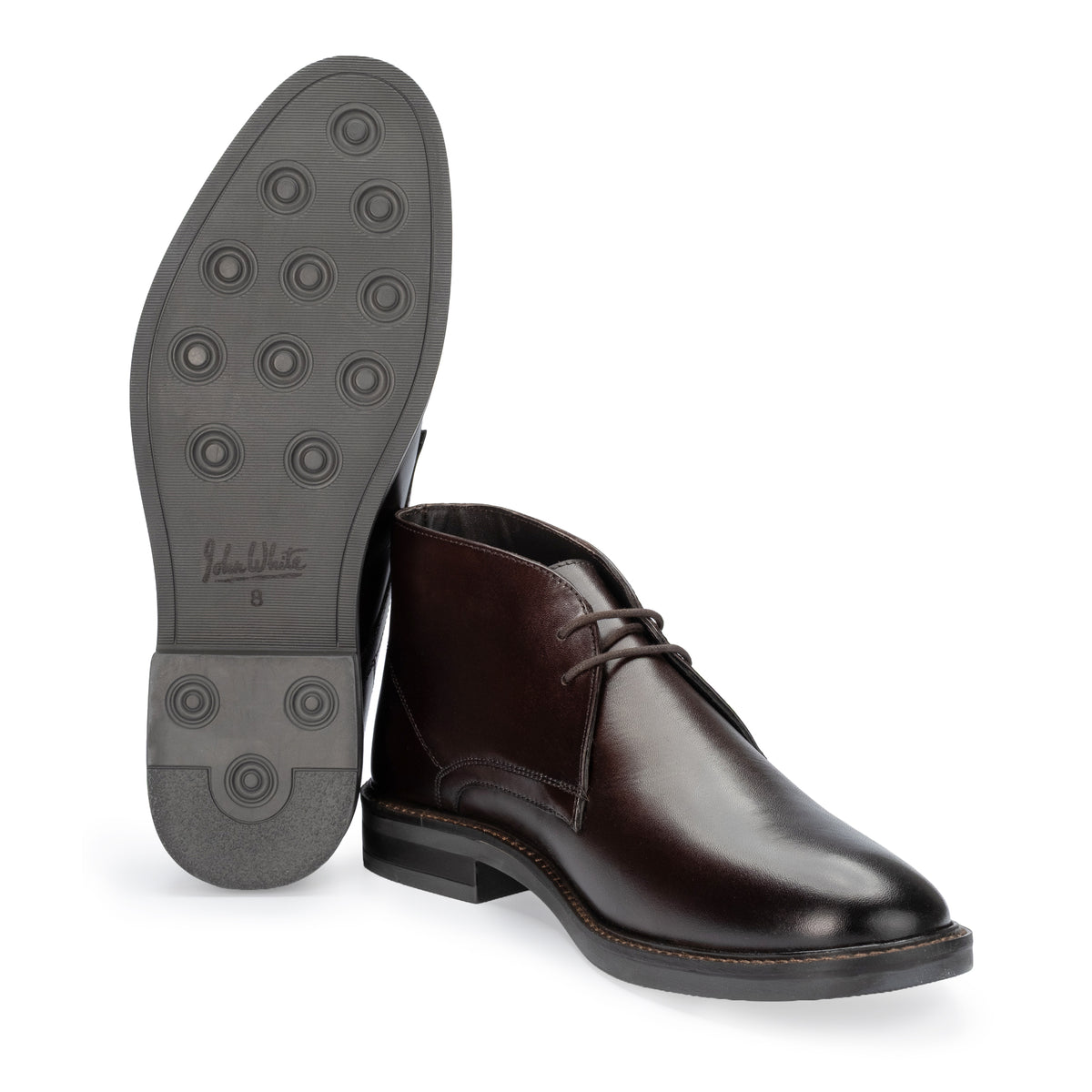
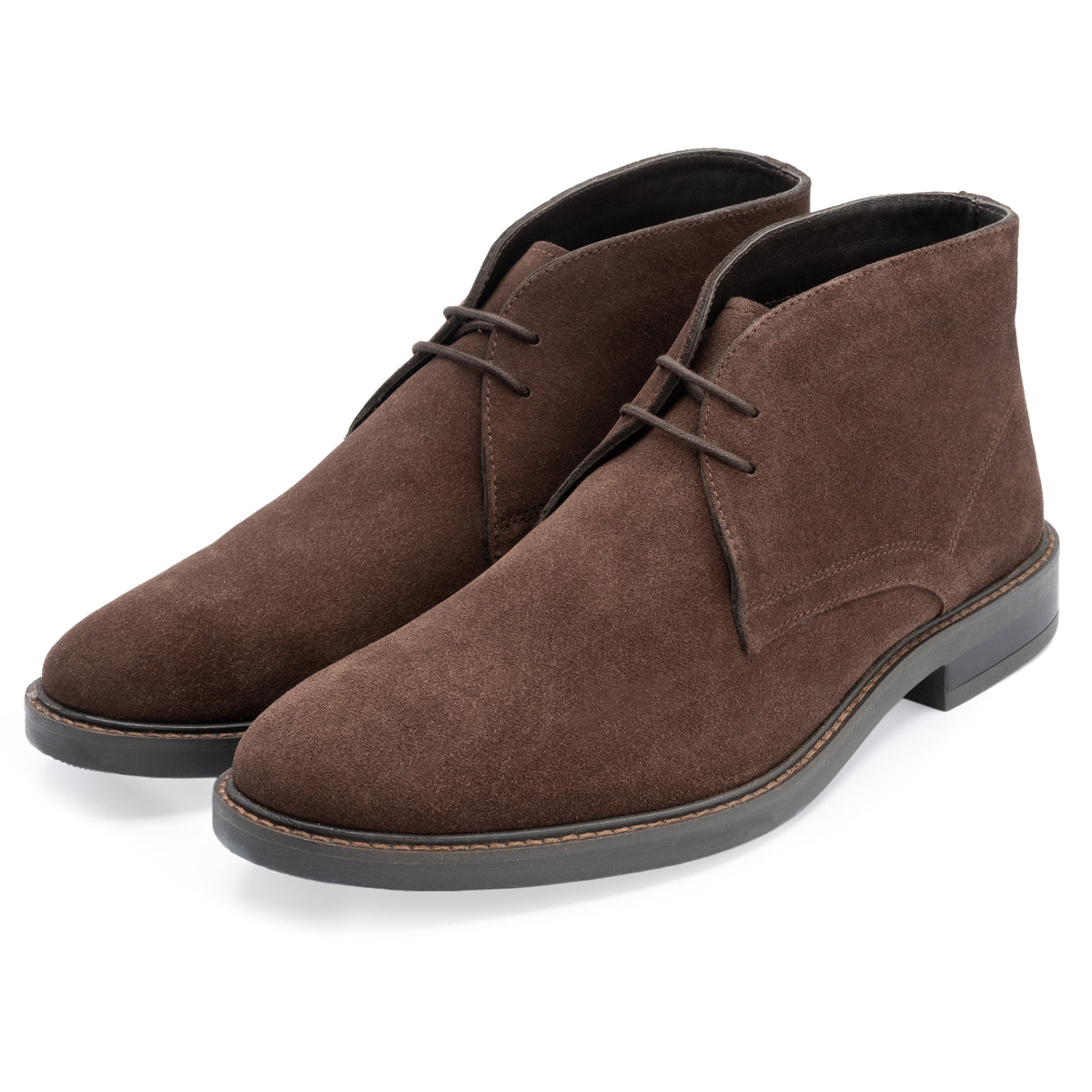
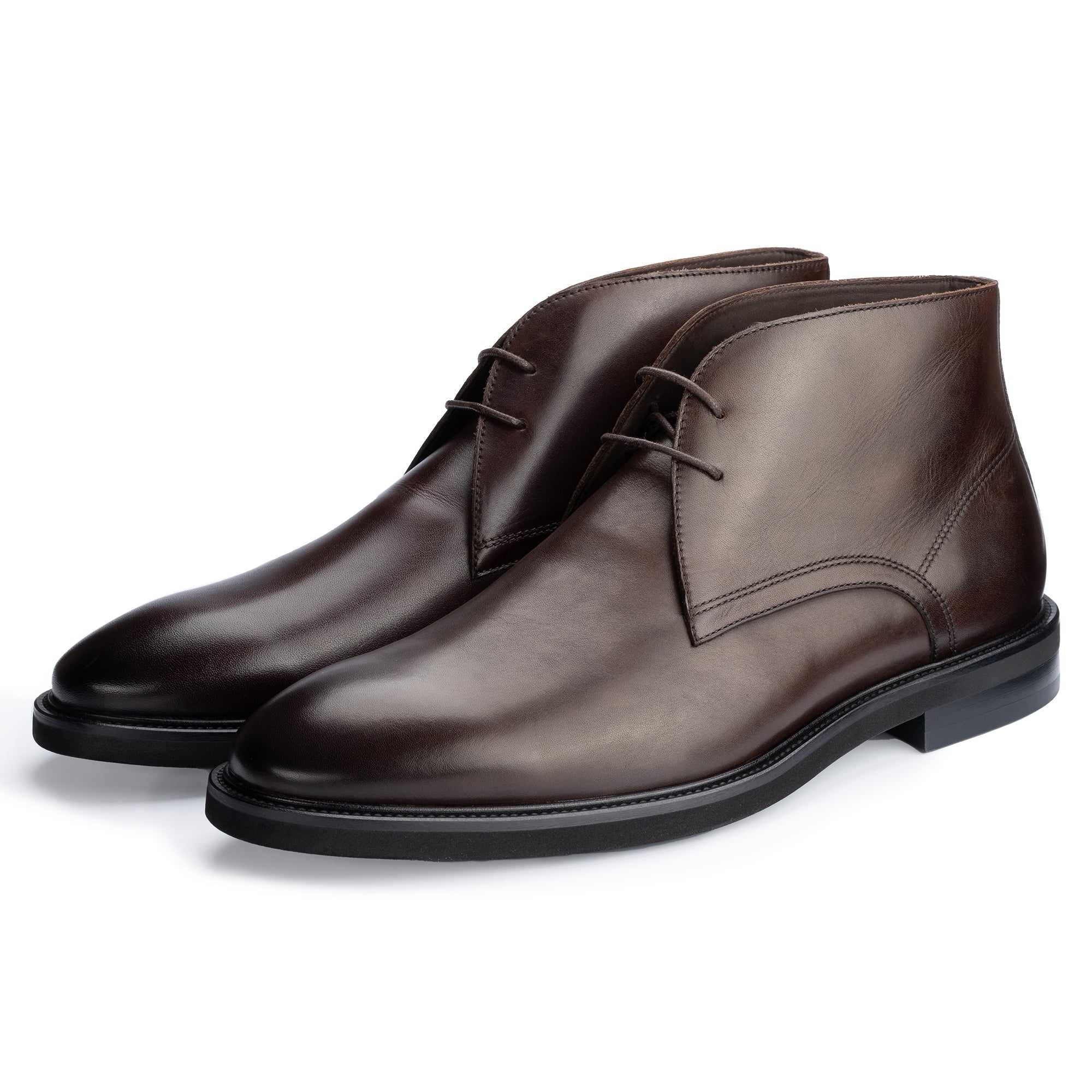
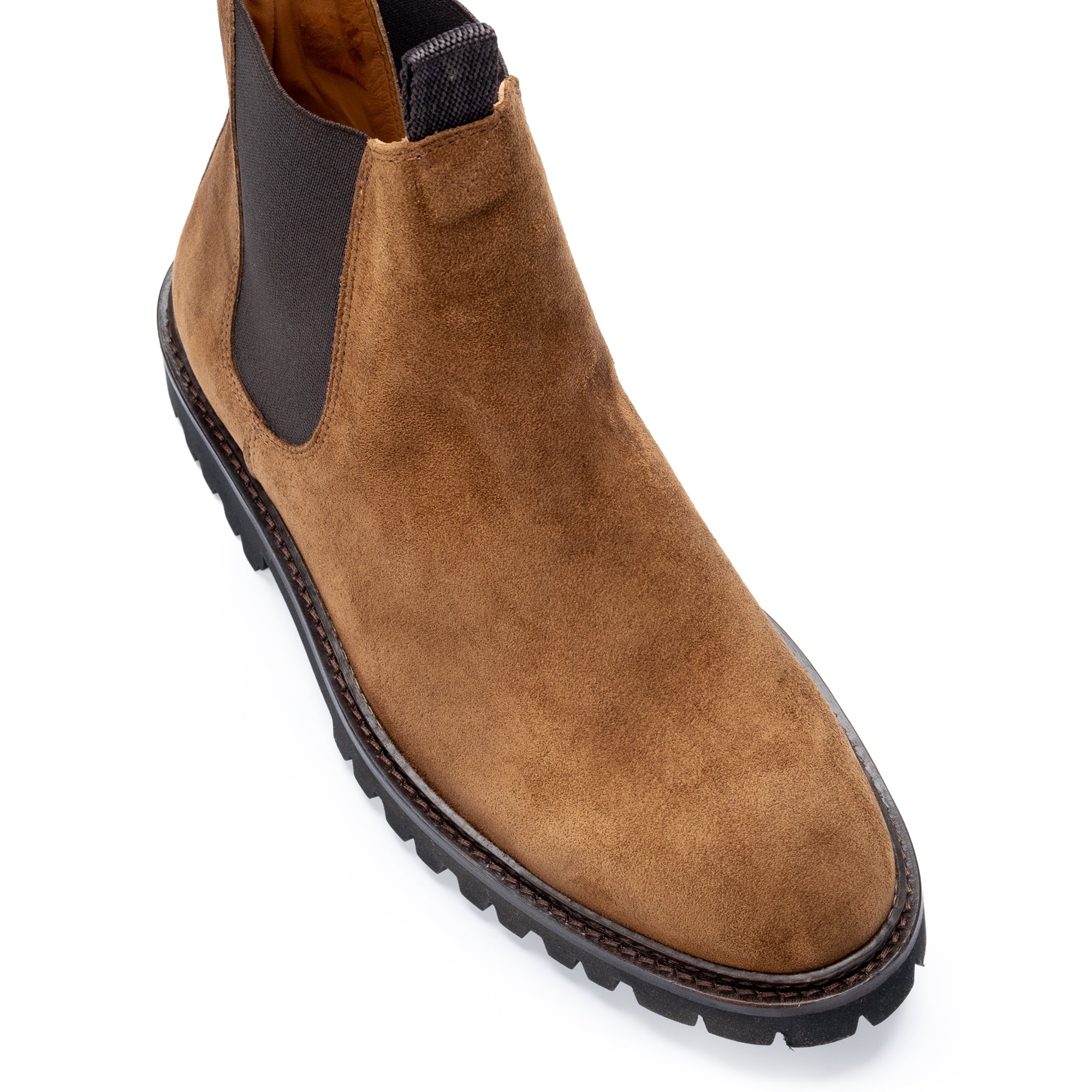
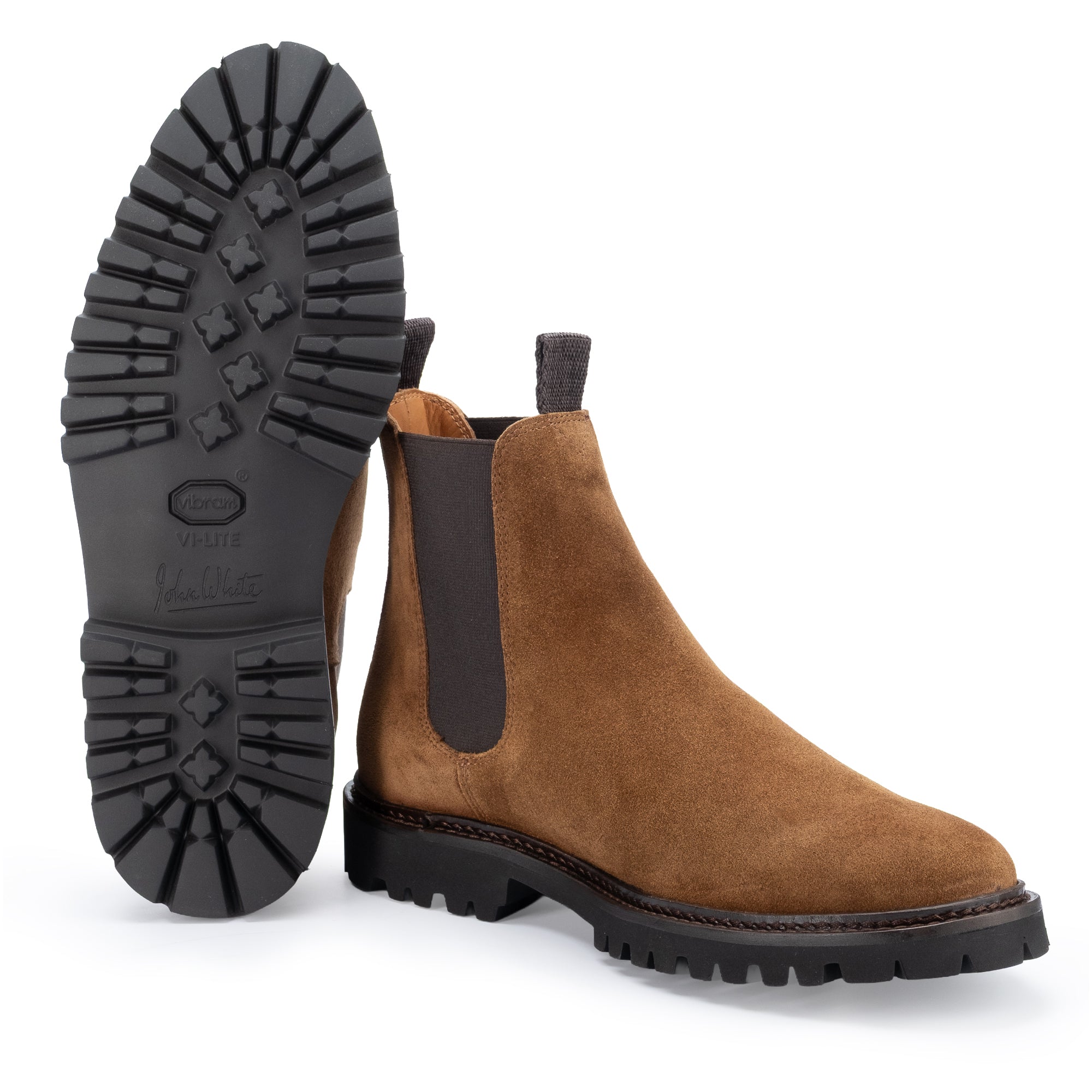
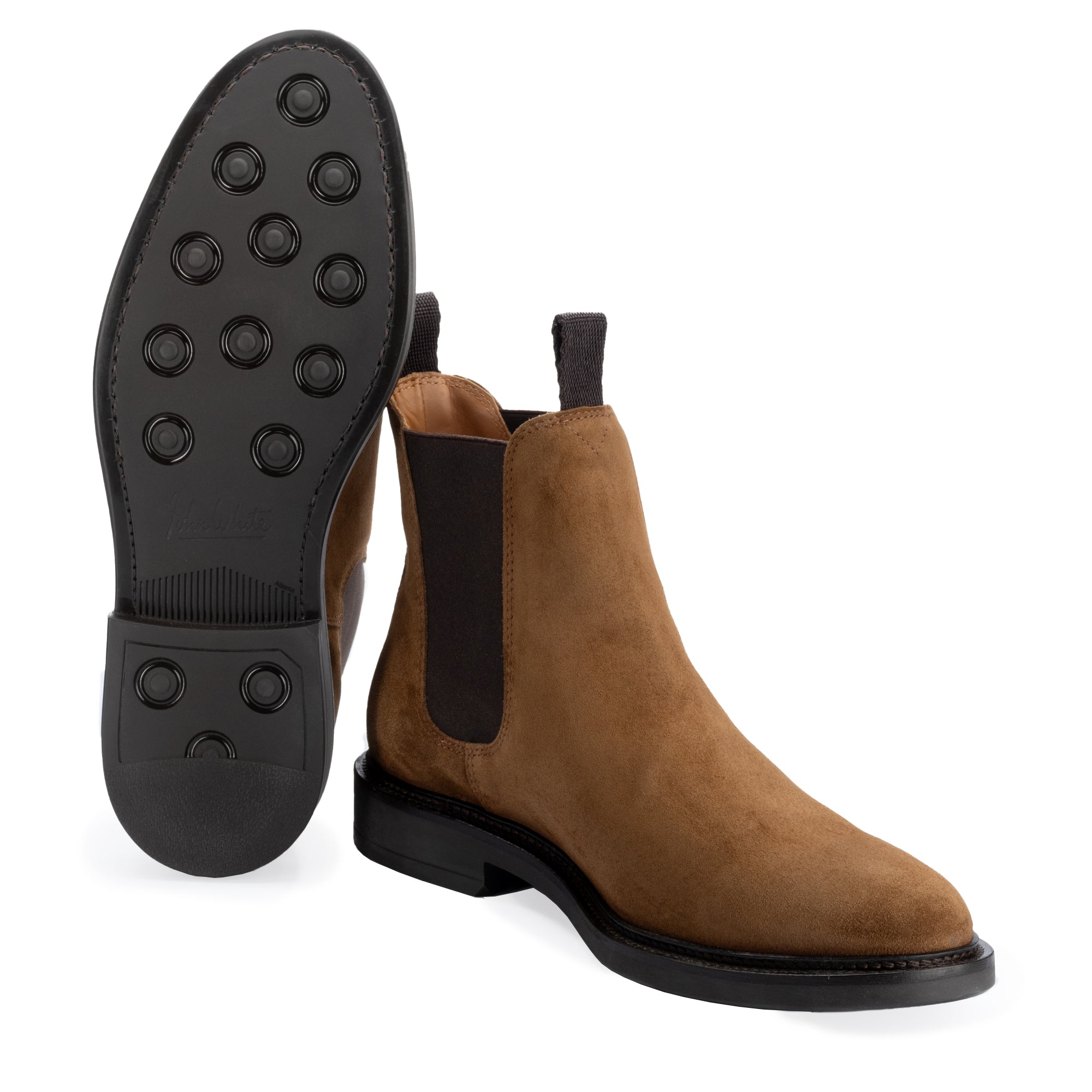
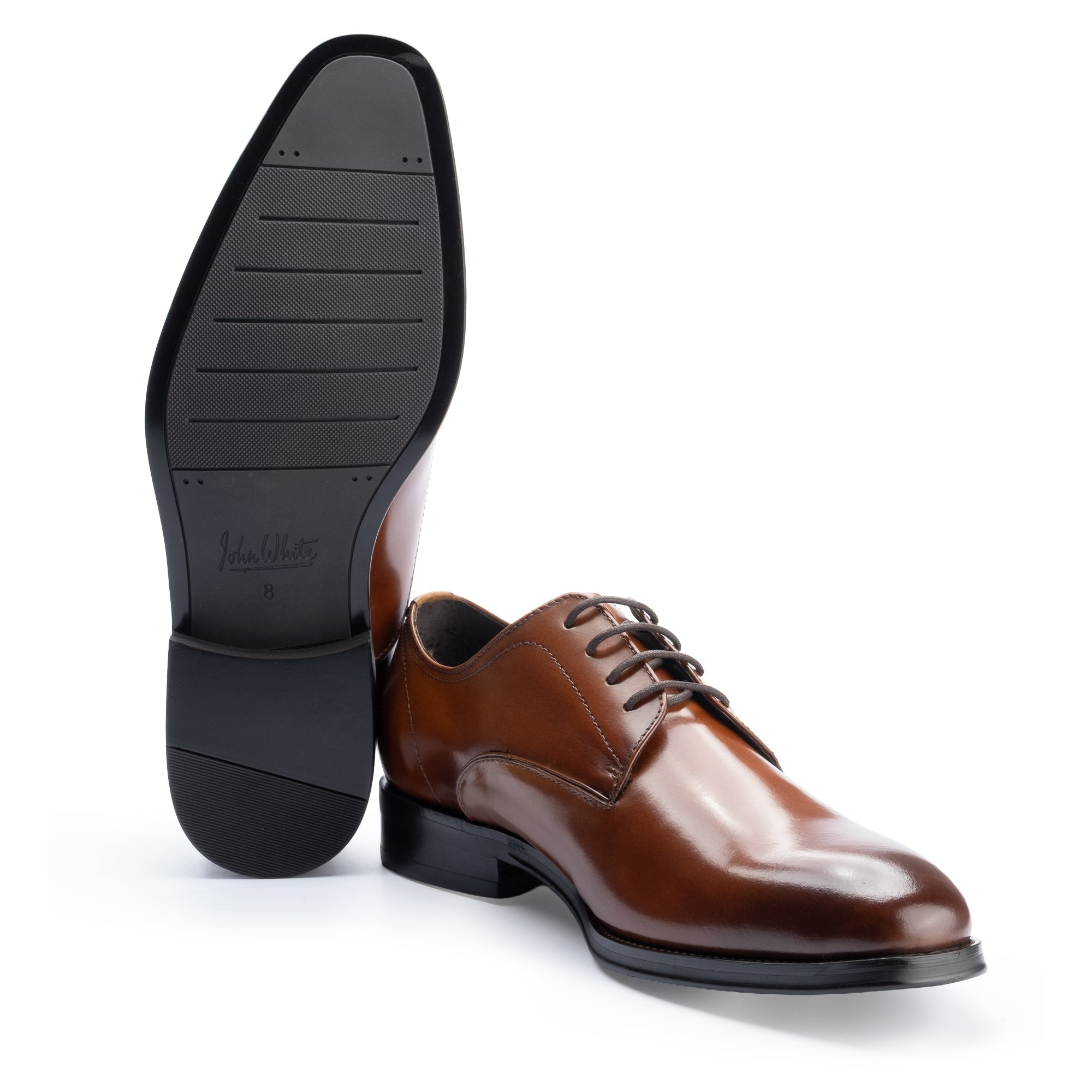
The Derby's versatility is one of its strongest attributes. A well-chosen Derby transitions from desk to dinner without effort. Our Stokes Brogue Derby Shoes in Black, Brown, or Tan offer that range — the brogue detailing adds character while the Derby construction keeps the fit comfortable across extended wear. For the cleaner formal end, the Broad Derby and Tanner Derby Shoes work across business and occasion dressing without compromise.
Our guide to how to wear Derby shoes covers outfit pairing in detail, from formal suits through to smart jeans.
Which Should You Buy First: Oxford or Derby?
If you're building a dress shoe wardrobe from the ground up, a Derby in black is the more practical first investment. It covers more ground — business, smart-casual, most wedding guest dress codes — and accommodates a wider range of foot shapes without sacrificing appearance.
An Oxford in black or tan becomes the more considered second purchase. Once you have the versatile Derby working across your wardrobe, the Oxford adds a distinct formal register that no other shoe quite replicates. It's the shoe that signals precision when occasion demands it.
Start with a black Derby. Add a black Oxford when the formality of your wardrobe — and your occasions — calls for it.
Browse the full men's dress shoe range to compare both styles.
Related Guides
- The Complete Guide to Men's Dress Shoes — our comprehensive guide
- Captoe vs Plain Toe Oxford: Which Dress Shoe Should You Buy?
- How to Wear Oxford Shoes: Dress Up or Down with Classic Lace-Ups
- How to Wear Derby Shoes: Smart to Casual Styling Guide for Men
TL;DR: Oxford and Derby shoes differ by their lacing construction — Oxfords use a closed facing for a formal, streamlined silhouette; Derbies use an open facing for a more adjustable, relaxed fit. Oxfords are the correct choice for black tie and formal business; Derbies span business casual to smart weddings with ease. For most men building a wardrobe, a black Derby is the better first investment, with a black Oxford added when formal occasions demand its precision.
Frequently Asked Questions
Are Oxford shoes more formal than Derby shoes?
Yes. The Oxford's closed lacing system produces a cleaner, more contained silhouette that reads as more formal. For black tie events or the most formal business settings, an Oxford is the standard choice. That said, a plain-toe Derby in black leather comes very close in formality and is acceptable across most dressed occasions.
Can you wear Derby shoes with a suit?
Yes — Derbies work well with most suits. A plain or semi-brogue Derby in black or dark brown pairs confidently with a business or lounge suit. For the most formal suit occasions, such as morning dress or black tie, an Oxford is the more technically correct choice.
What is the difference between an Oxford and Derby lacing system?
An Oxford uses a closed lacing system: the eyelet panels (facing) are stitched underneath the front of the upper (vamp), pulling tight across the instep when laced. A Derby uses an open lacing system: the facing panels are stitched on top of the vamp, creating a wider gap and more room for adjustment.
Are Derbies more comfortable than Oxfords?
Generally, the open lacing system gives Derbies more adjustability around the instep, which benefits men with wider feet or higher insteps. However, last shape and leather quality have a greater impact on long-term comfort than the lacing system alone. A well-fitted Oxford is just as comfortable as a Derby — the fit is what matters most.