
Black Tie Wedding: The Groom's Definitive Shoe Guide
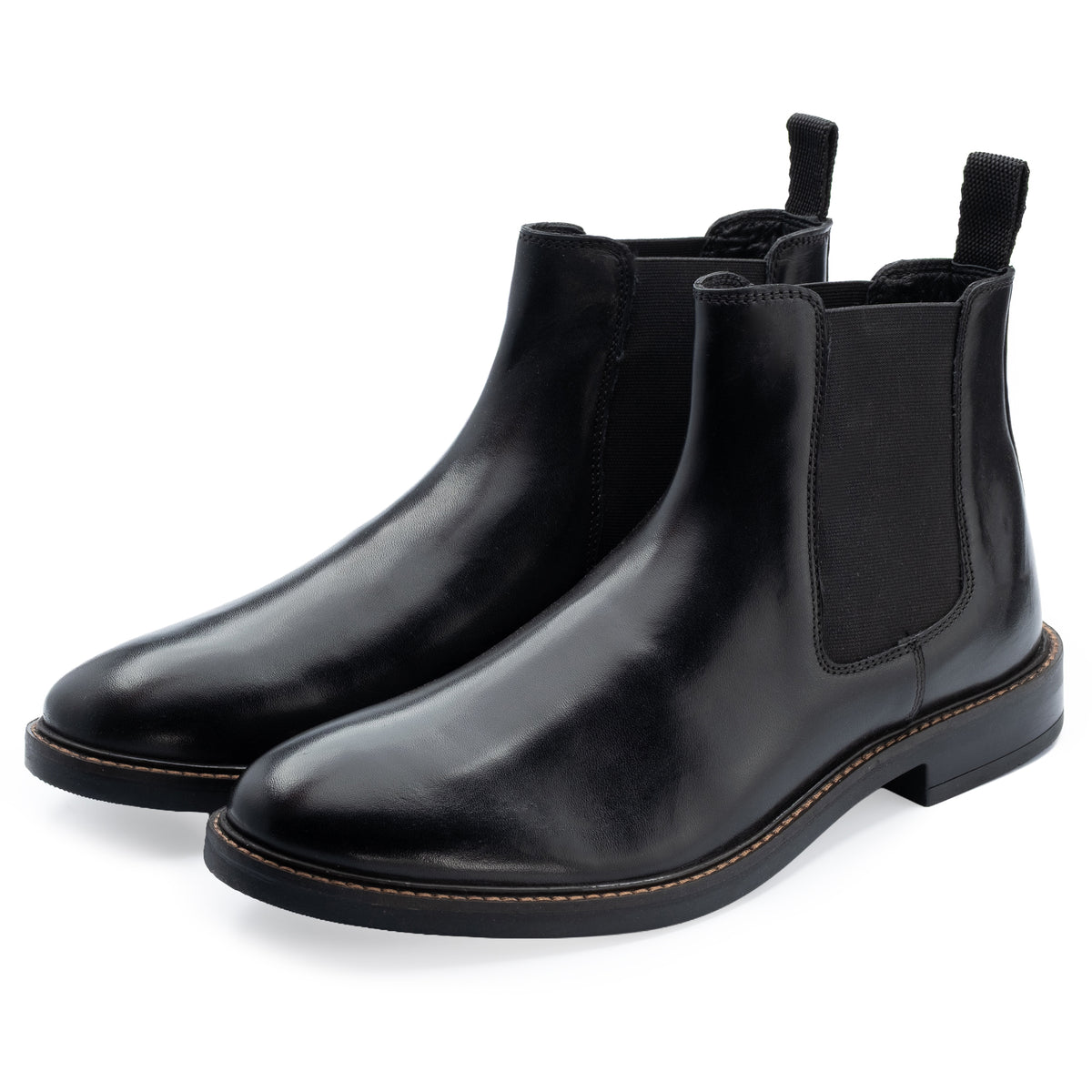
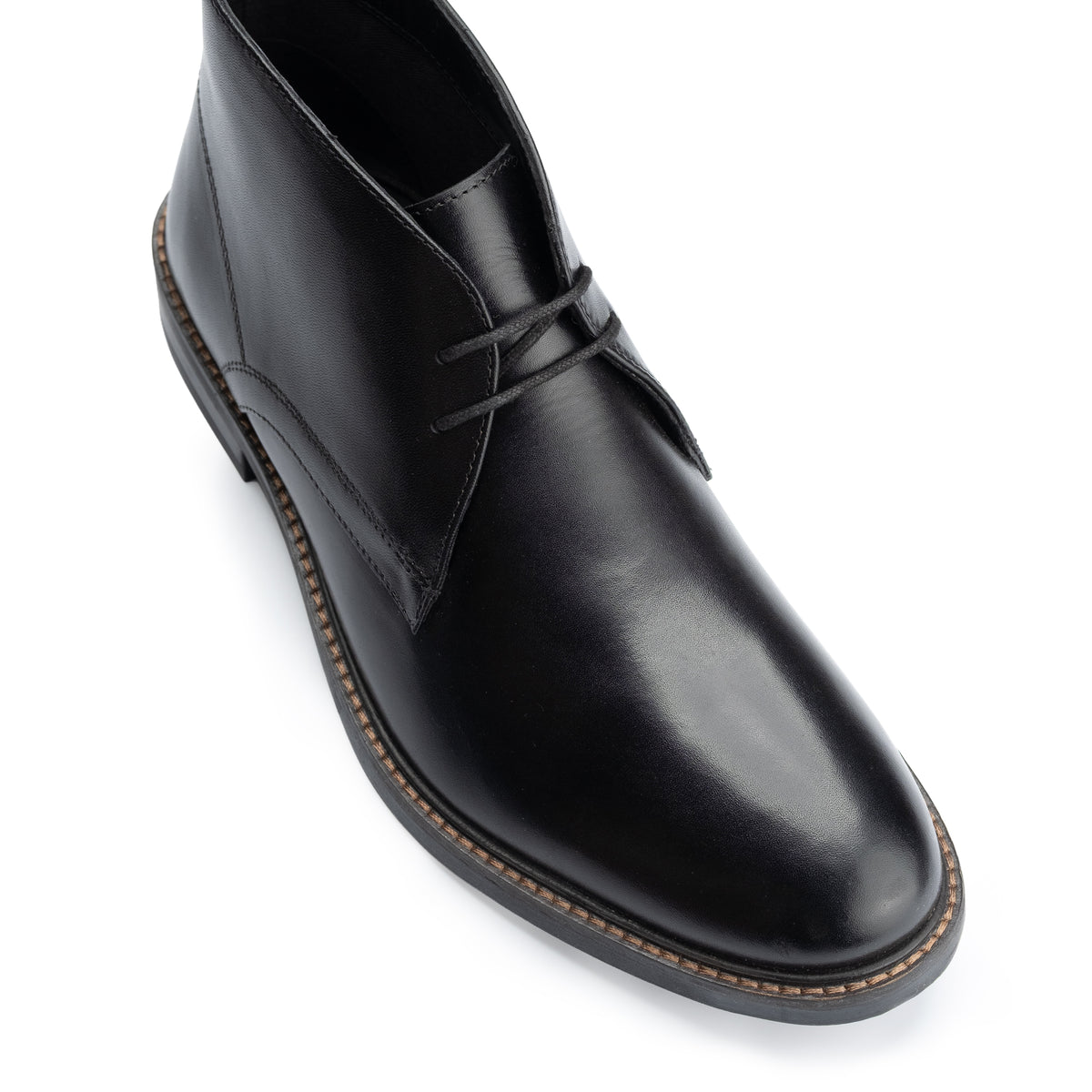
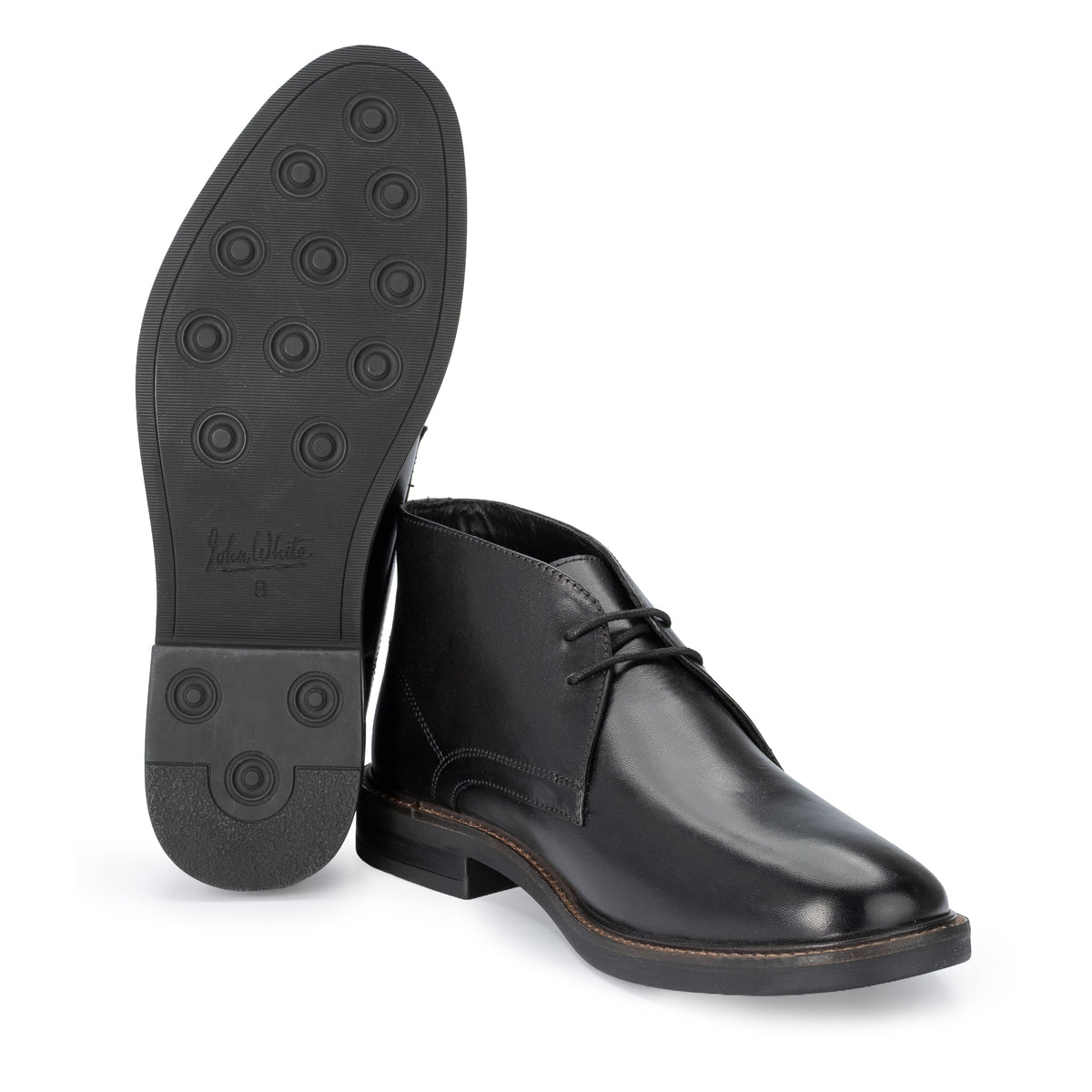
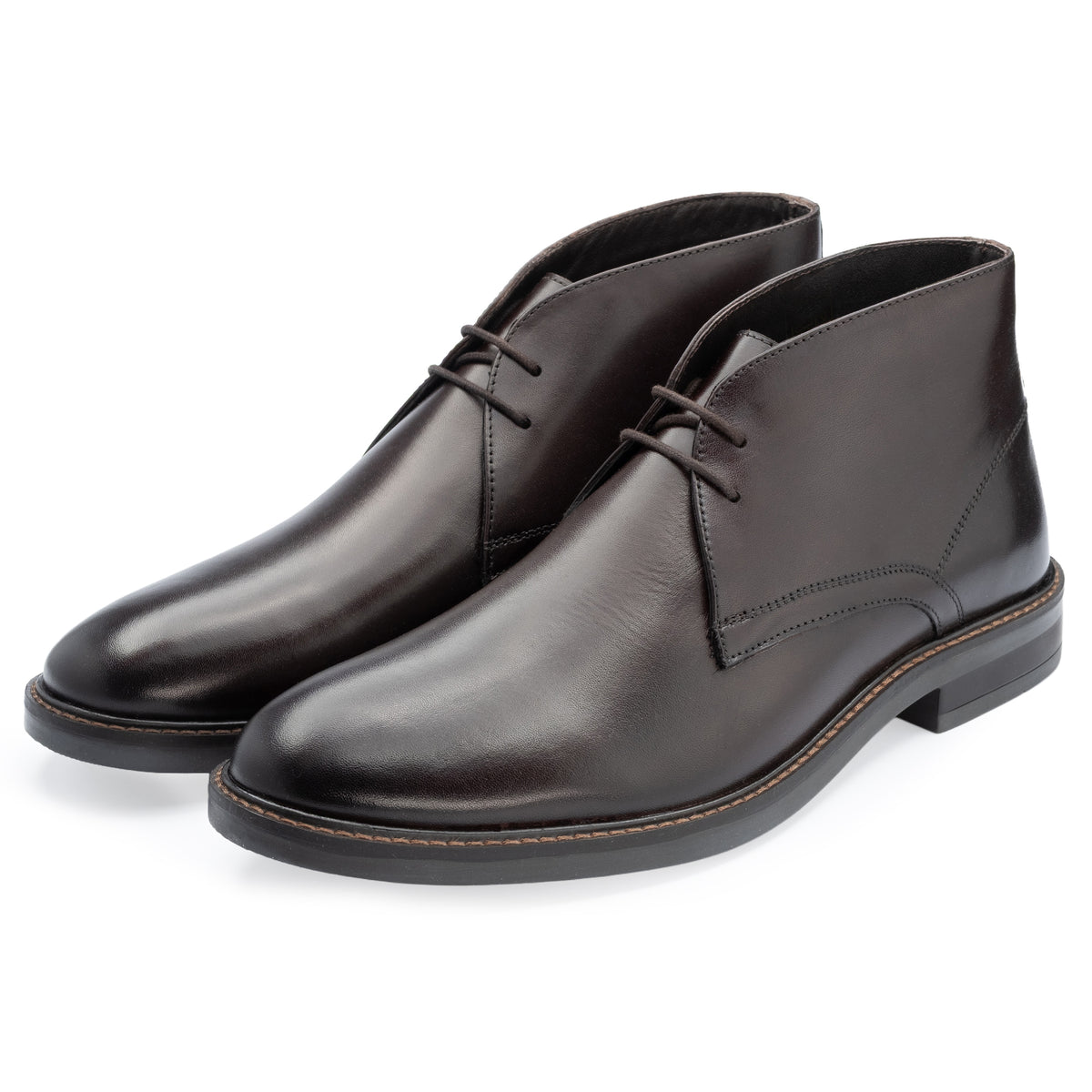
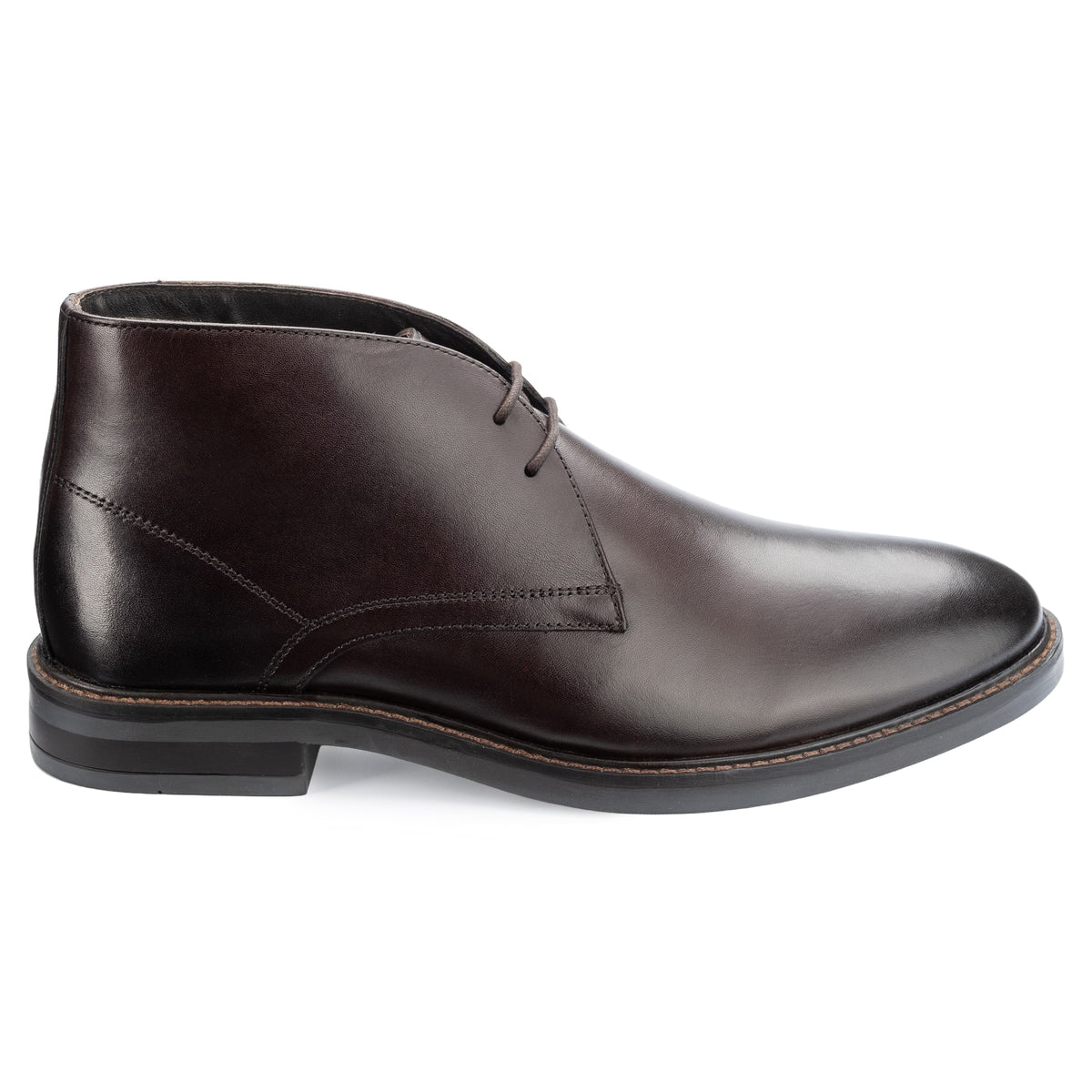
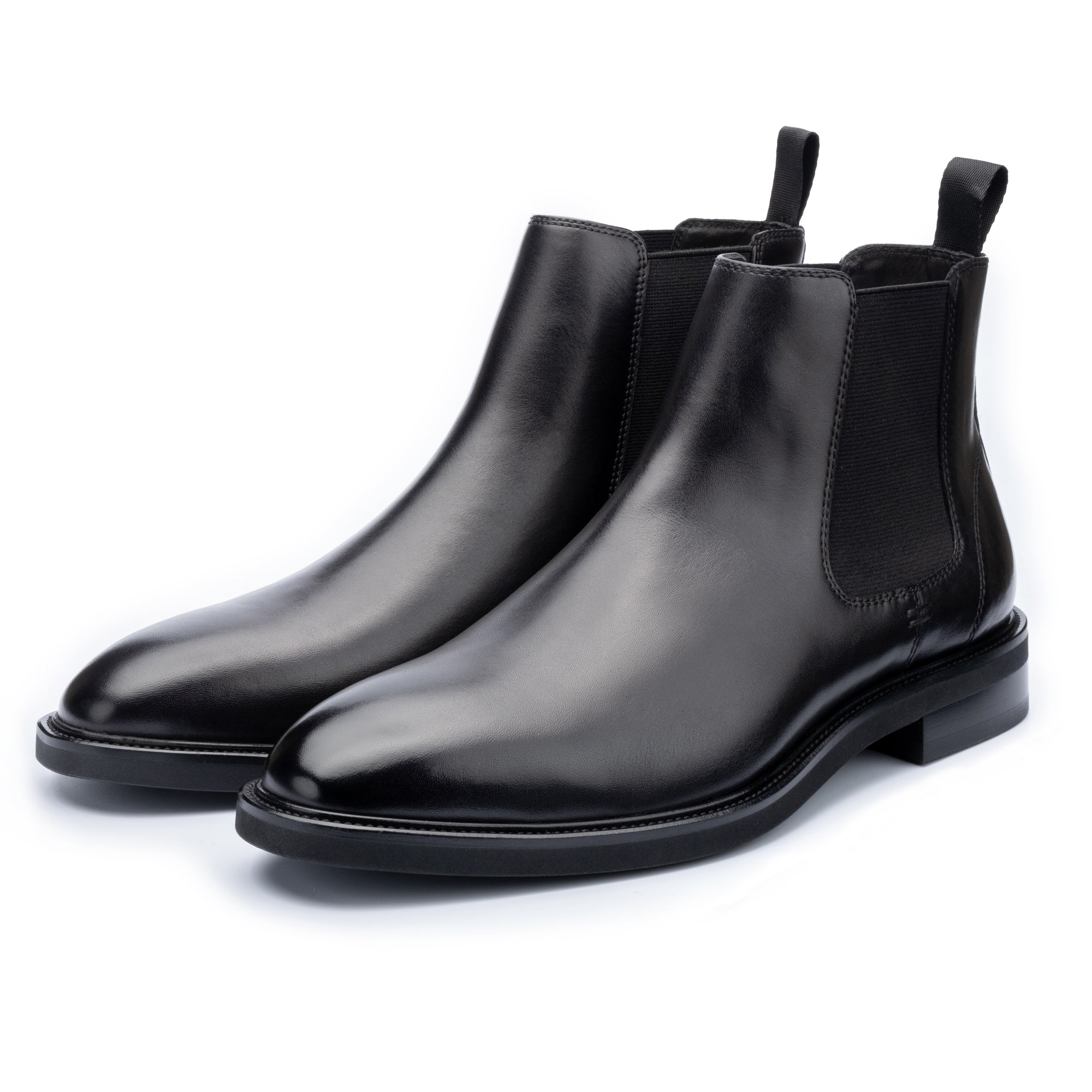
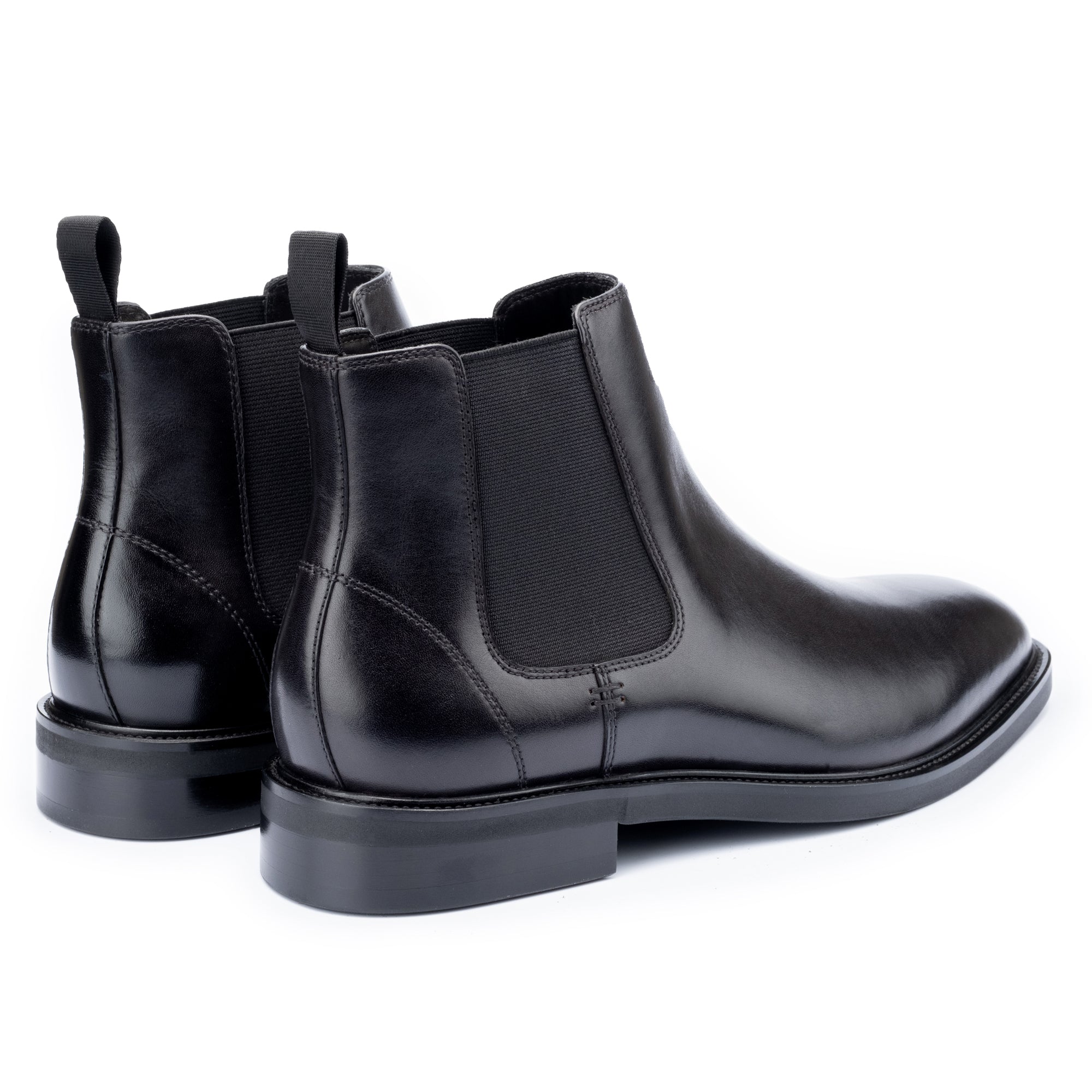
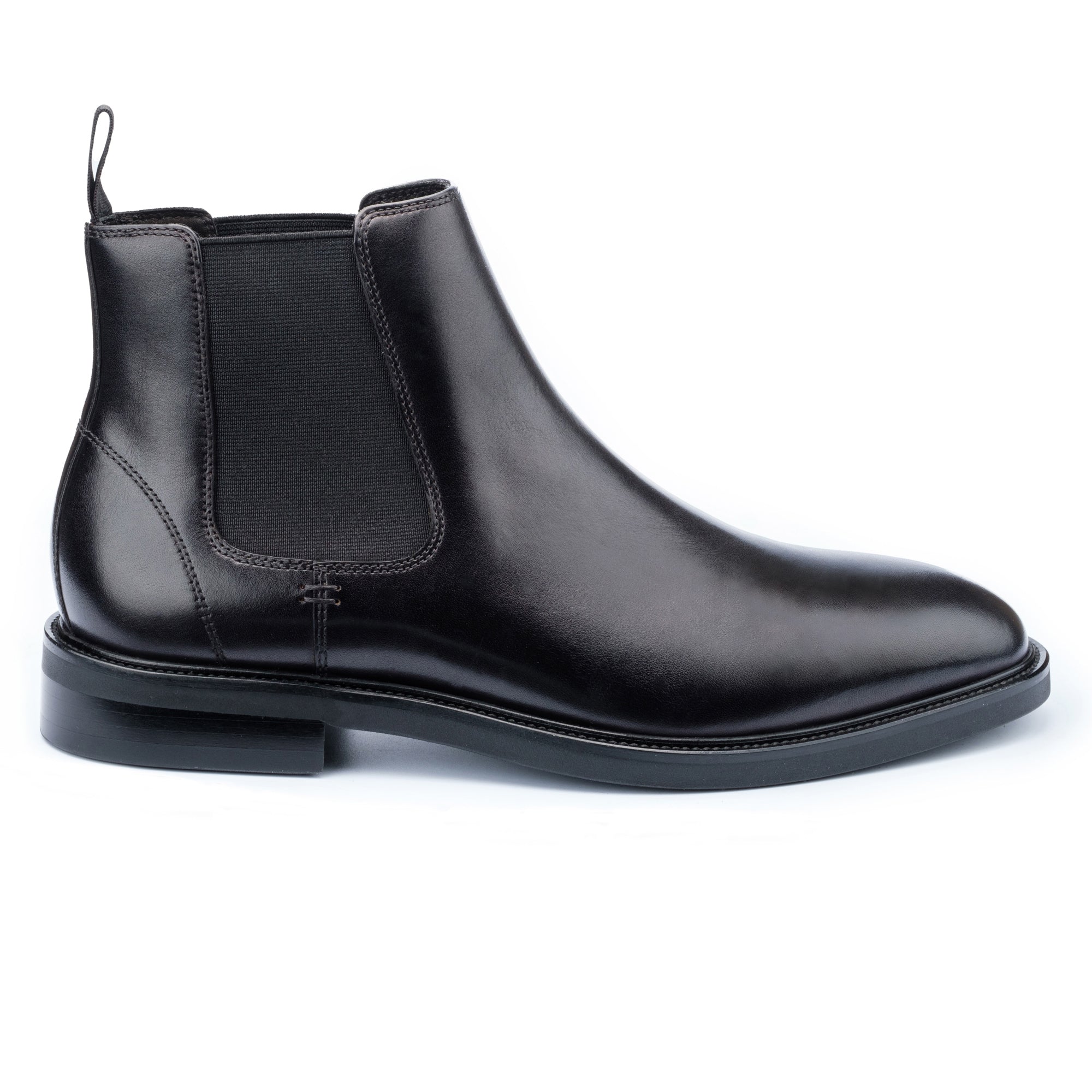
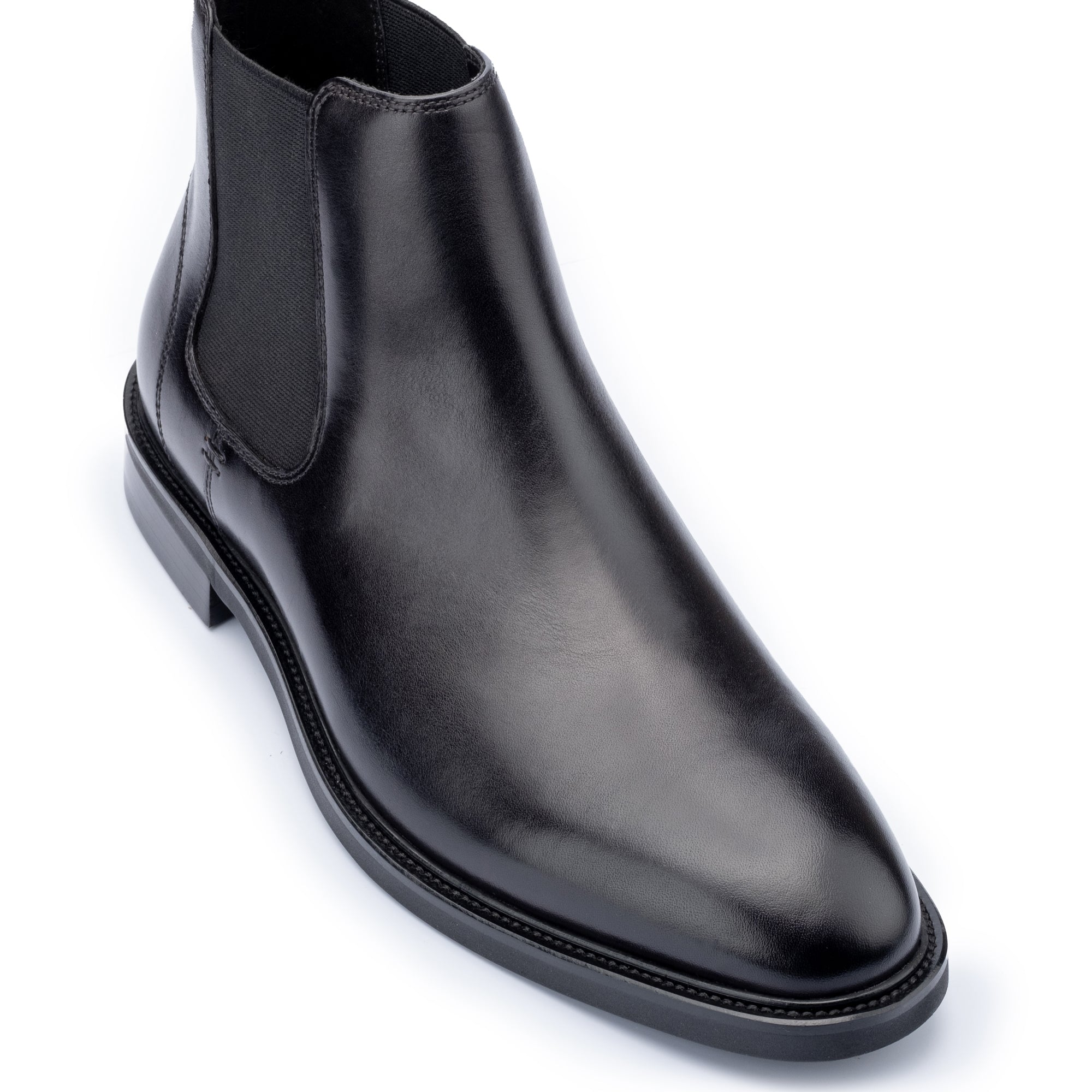
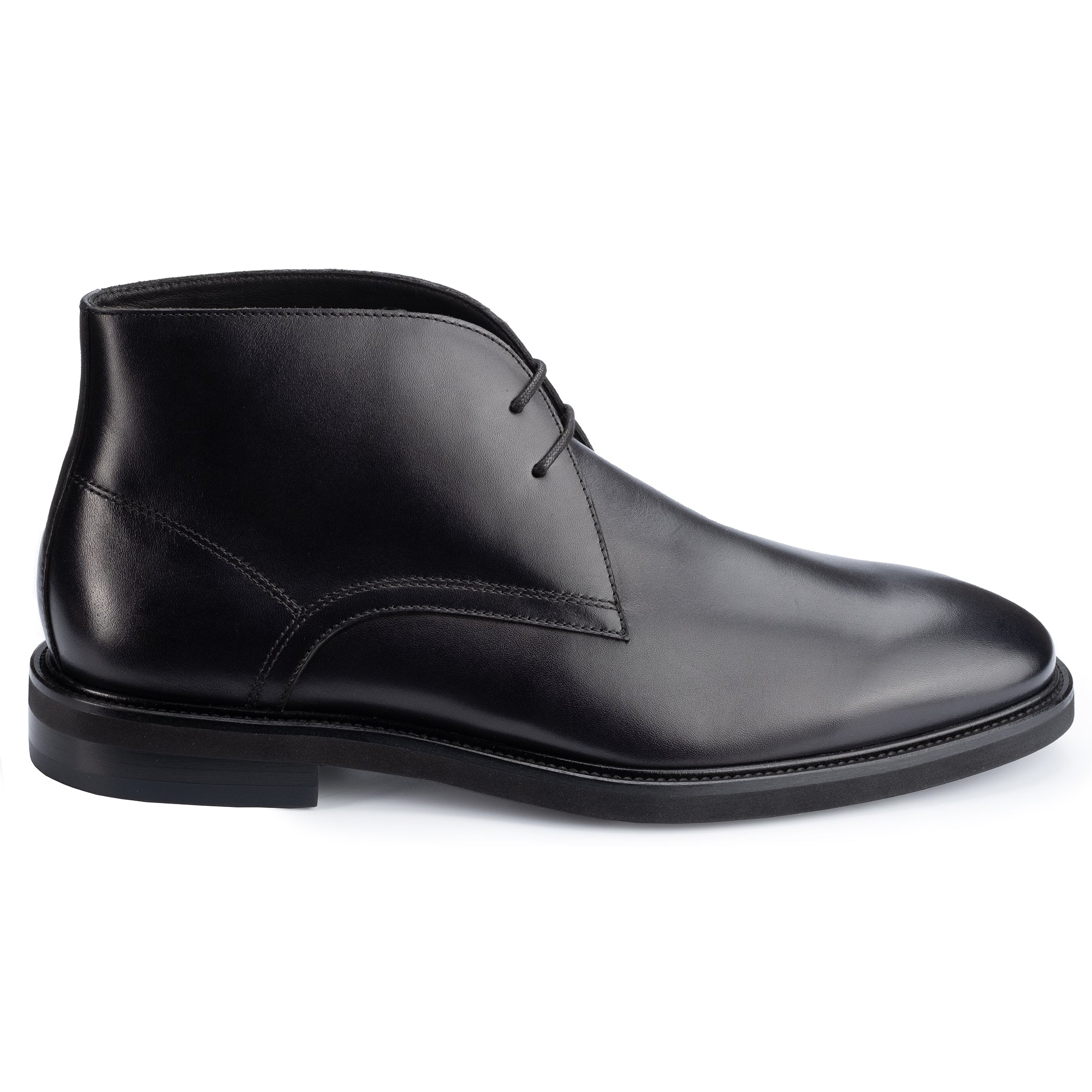
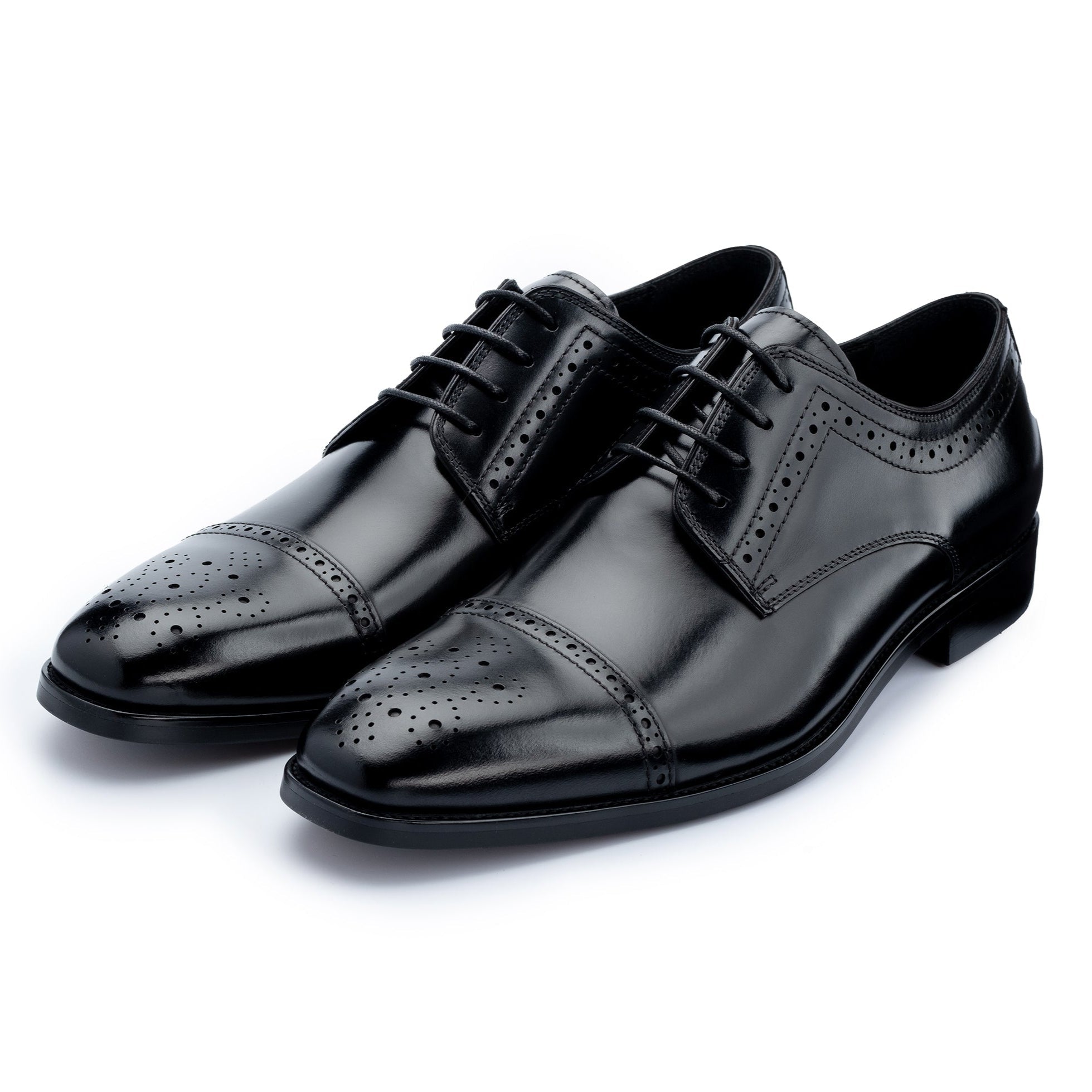
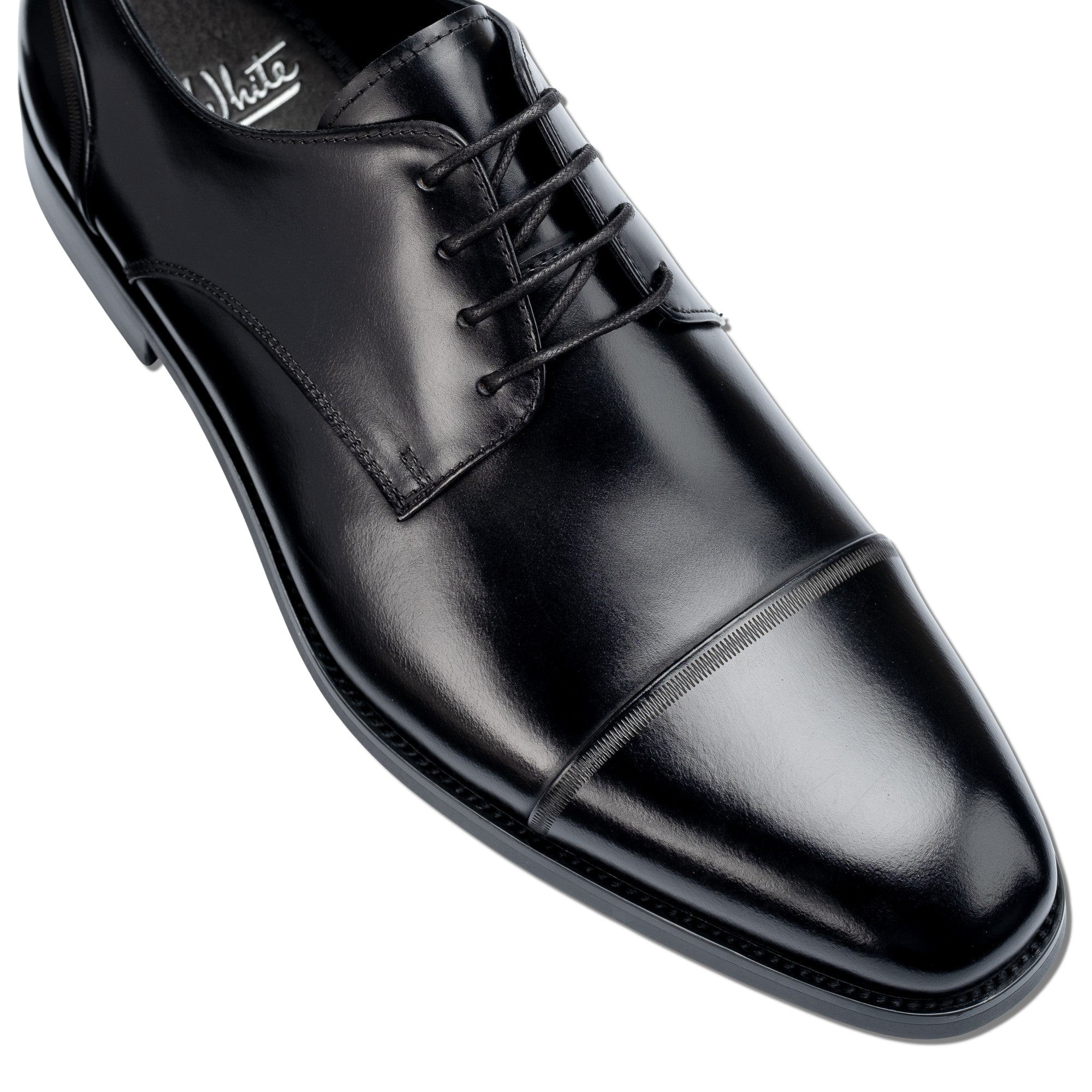
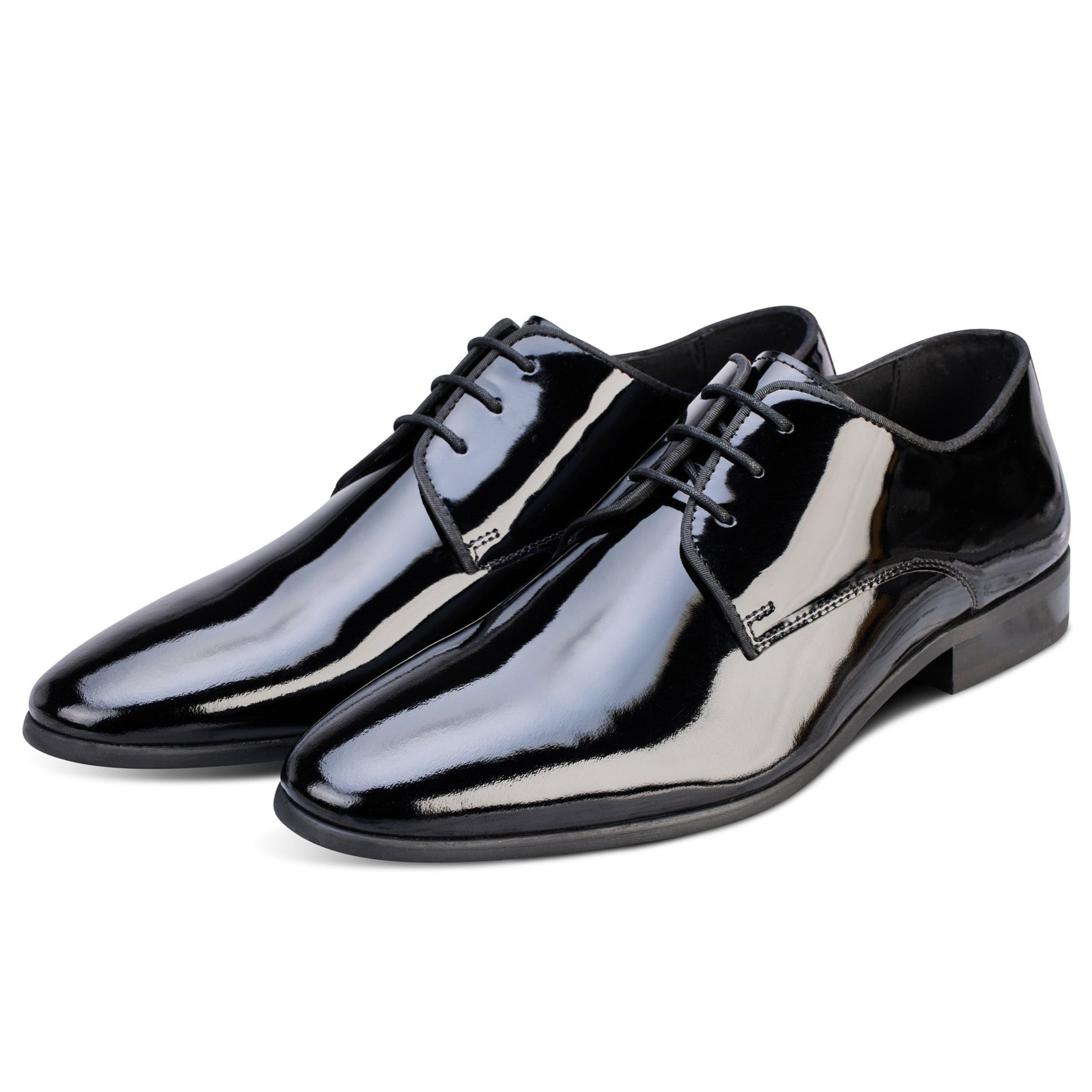
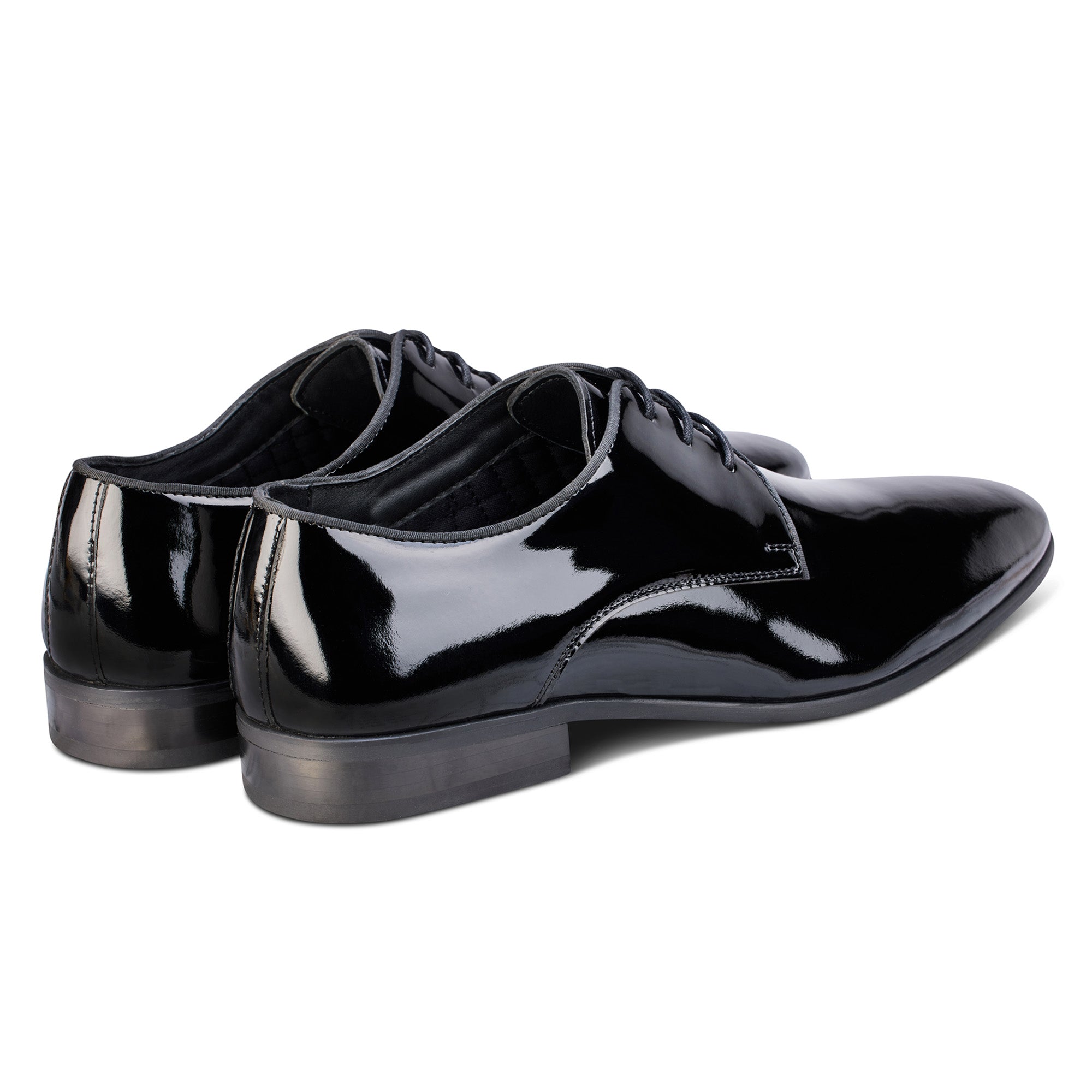
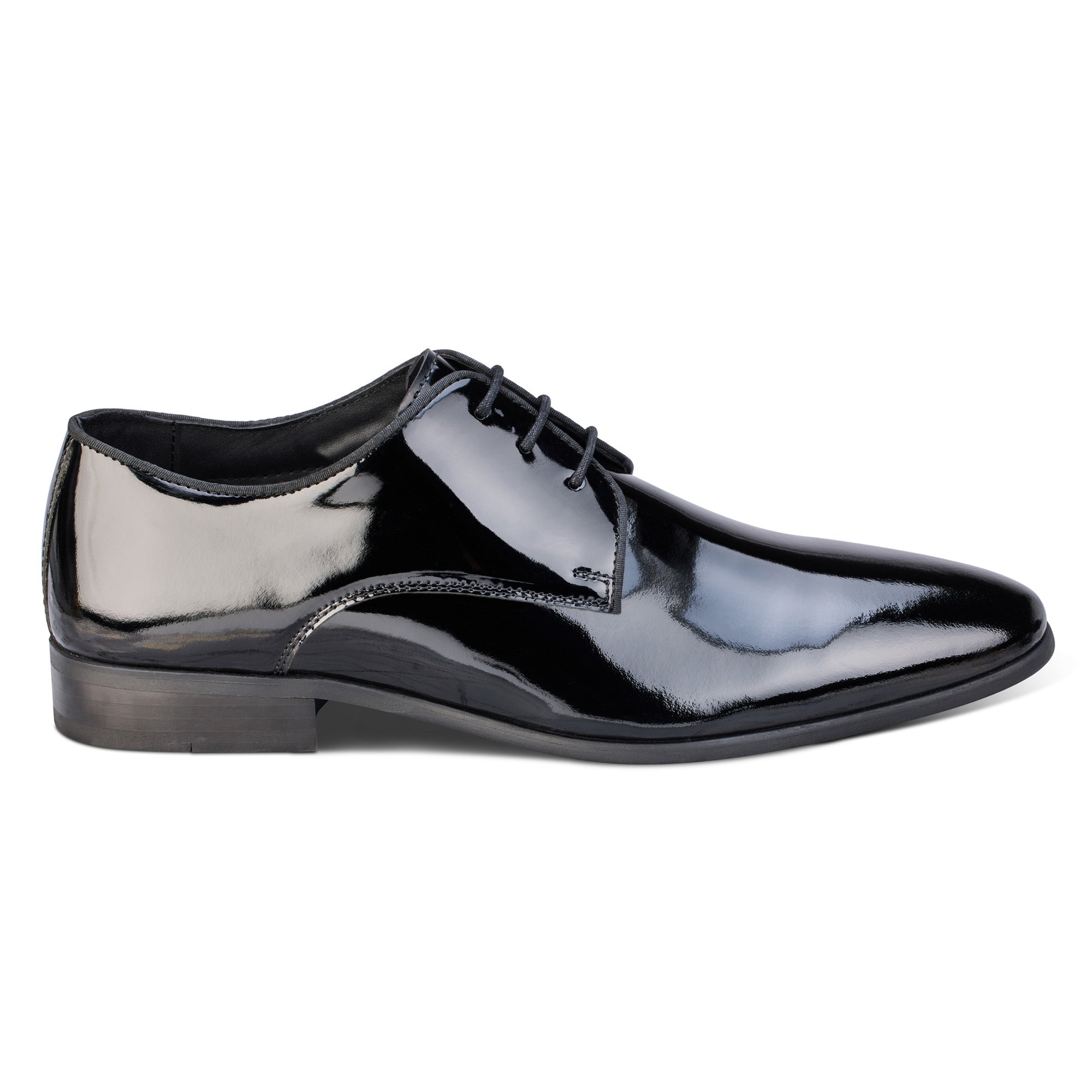
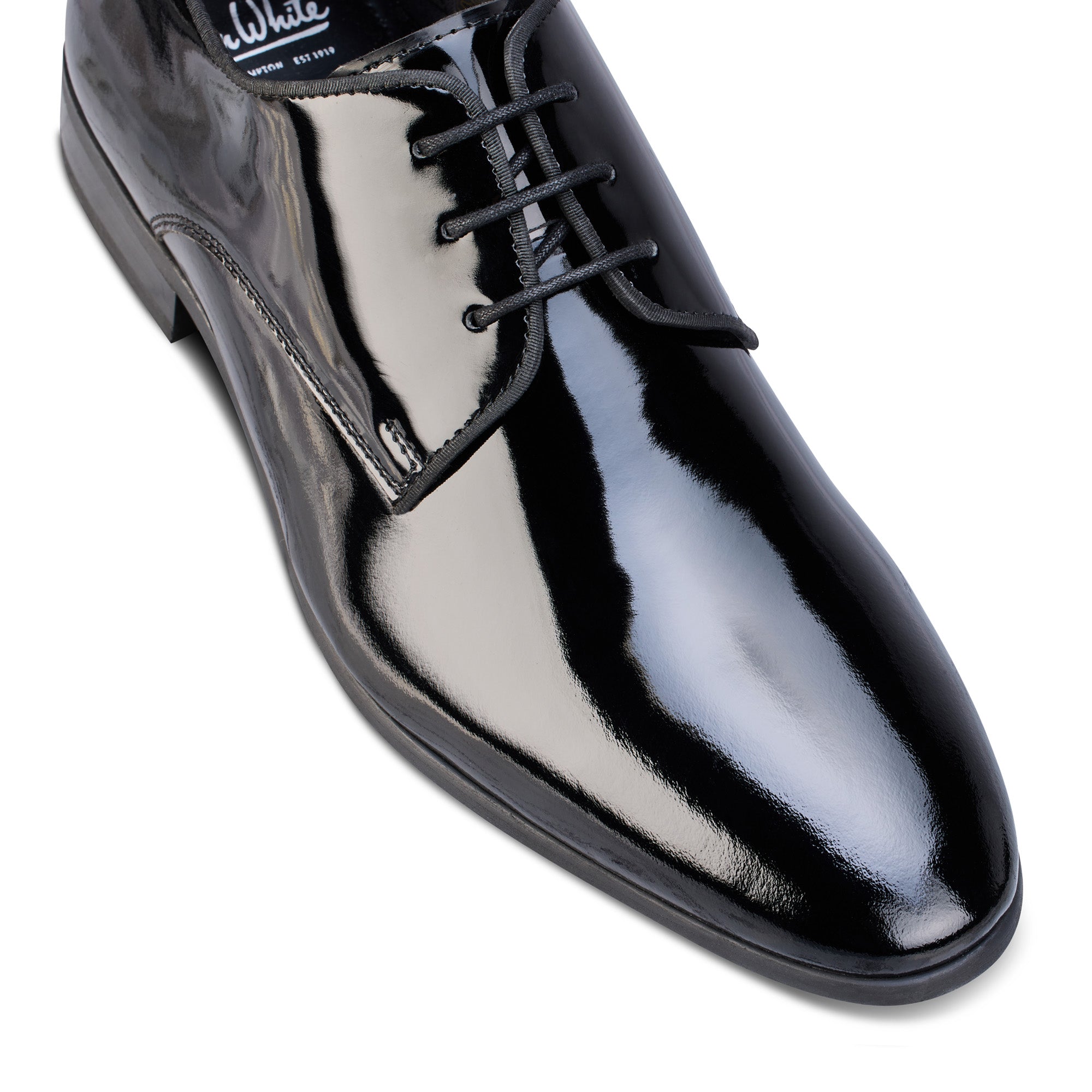
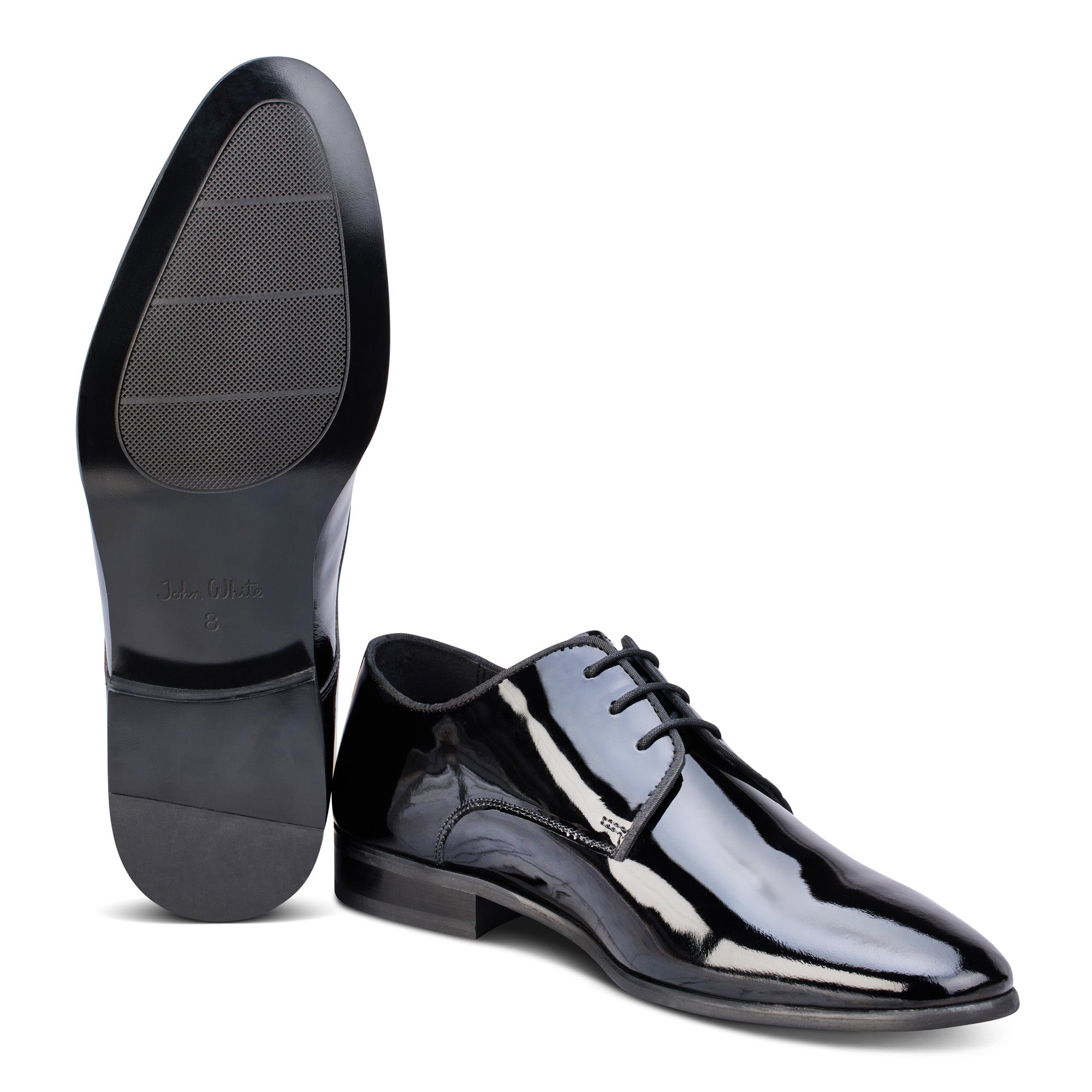
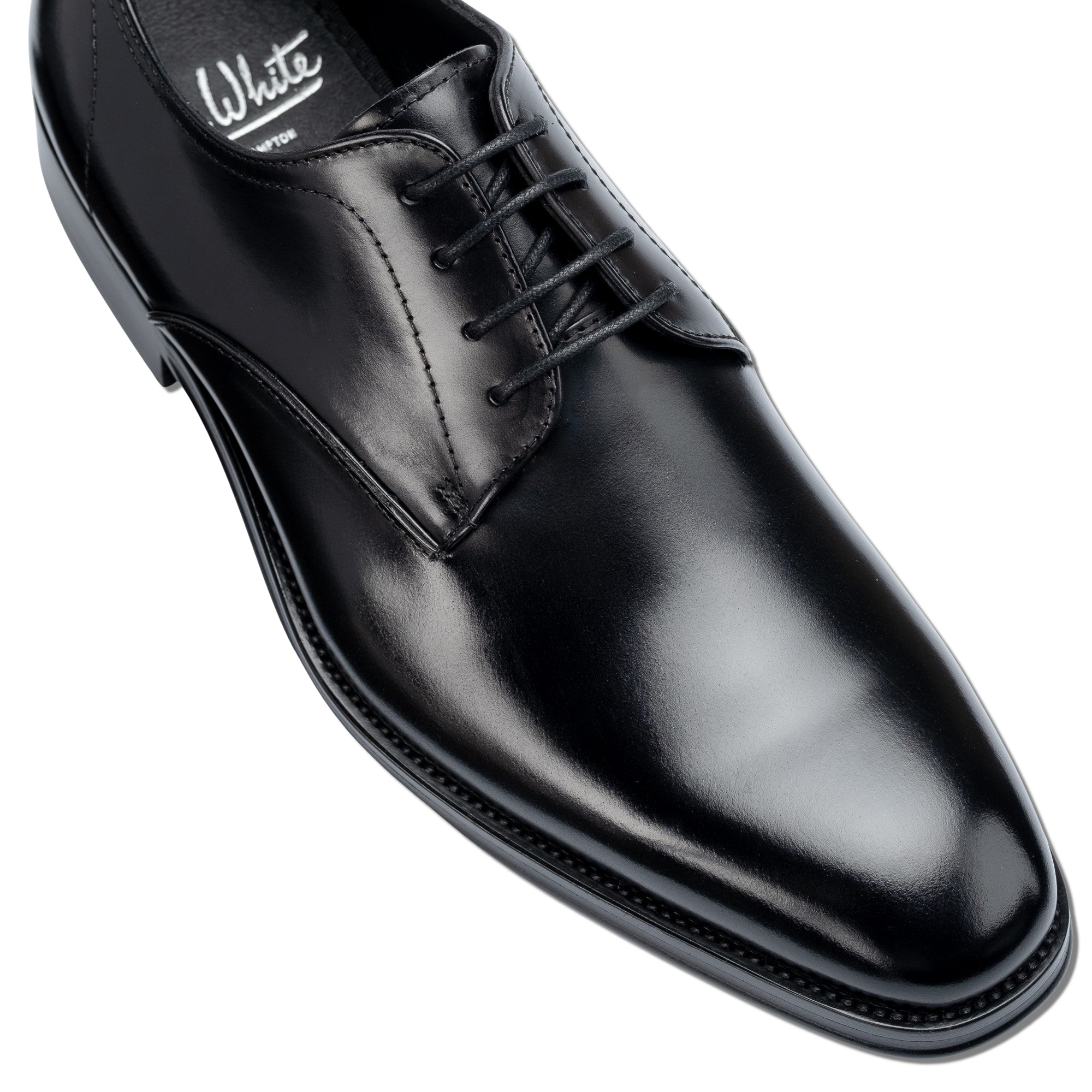
For a black tie wedding, the groom should wear a plain-toe, cap-toe, or wholecut Oxford in black patent leather or mirror-polished black calf. These are the only finishes that satisfy full black tie protocol, complement a dinner suit or morning coat with authority, and hold up to the scrutiny that wedding photography demands. Everything else is a concession the occasion does not require.
In This Guide
- What Makes the Groom's Black Tie Wedding Shoe Different from a Guest's?
- What Is the Correct Black Tie Wedding Shoe for the Groom?
- Patent Leather or Polished Calf — Which Should the Groom Choose?
- What Is the Case for the Wholecut Oxford at a Black Tie Wedding?
- How Should the Groom's Shoes Coordinate with the Groomsmen?
- What Construction Should a Groom's Black Tie Shoe Have?
- When Should the Groom Buy and Break In His Wedding Shoes?
- How Should a Groom Prepare His Wedding Shoes Before the Ceremony?
- Black Tie Wedding Shoe Options: At a Glance
- Related Guides
- TL;DR
- Frequently Asked Questions
What Makes the Groom's Black Tie Wedding Shoe Different from a Guest's?
A black tie wedding is the singular occasion when a man's footwear is genuinely scrutinised — by guests, by the wedding photographer, and in every image he will keep for the rest of his life. The guest's brief is to dress appropriately; the groom's brief is to dress definitively.
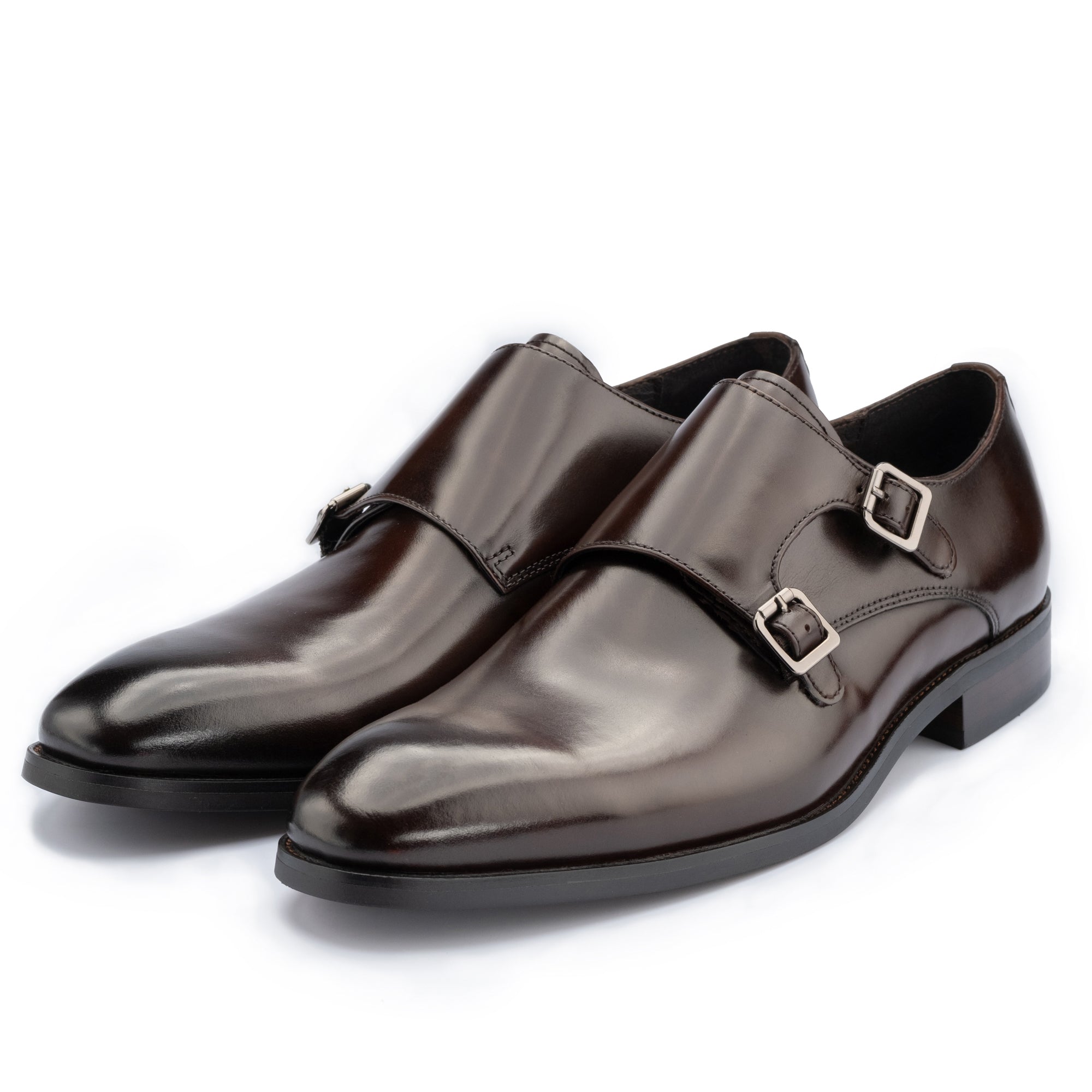
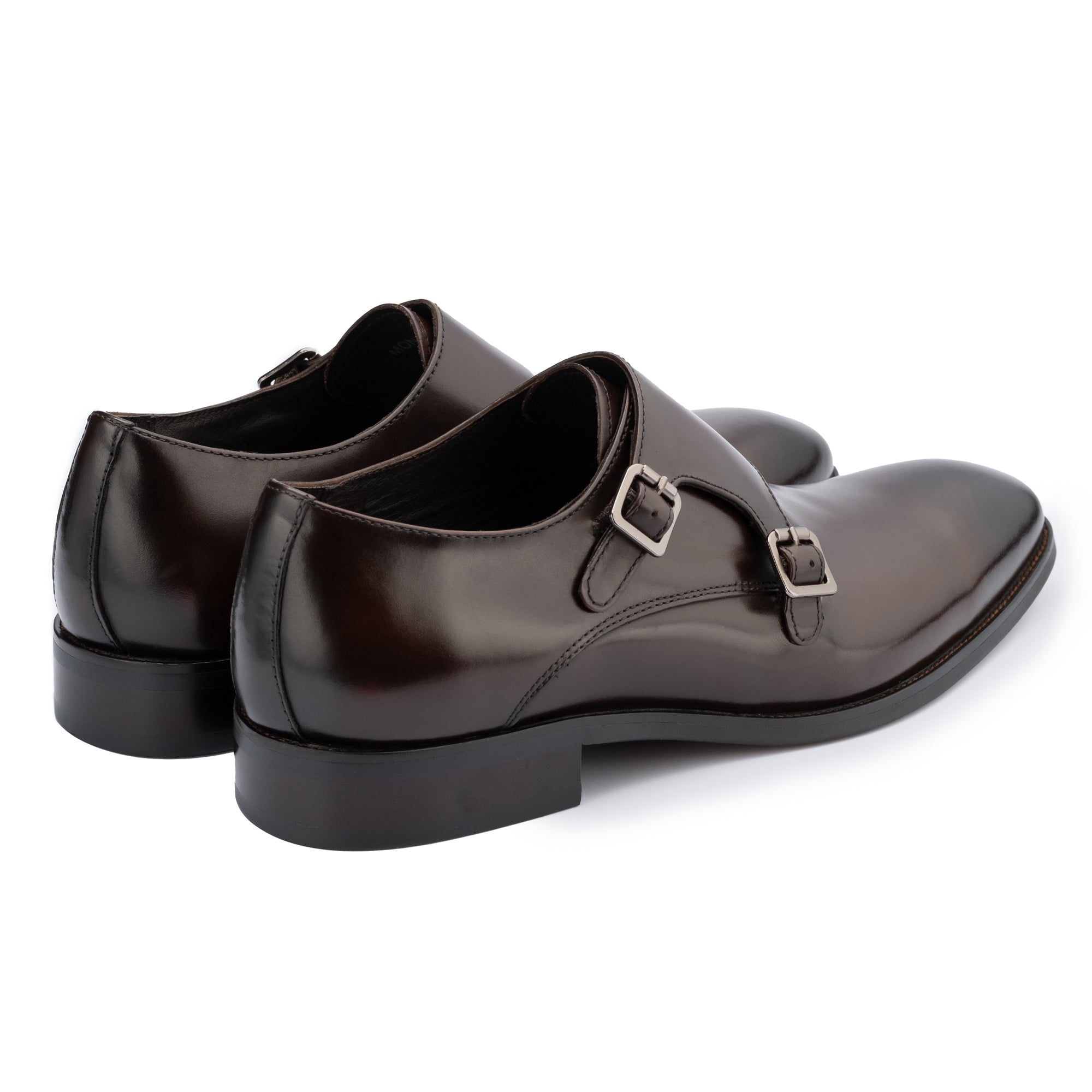
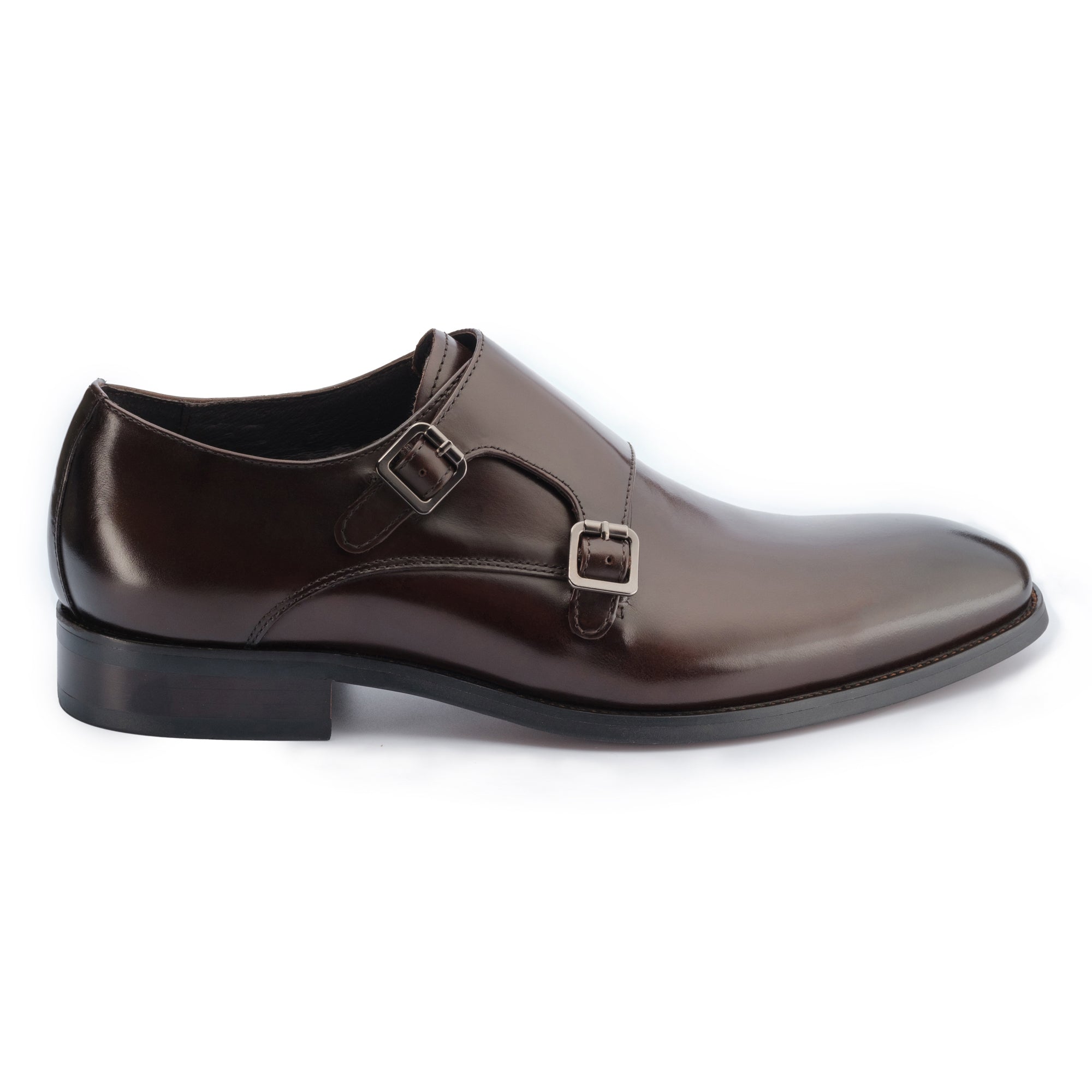
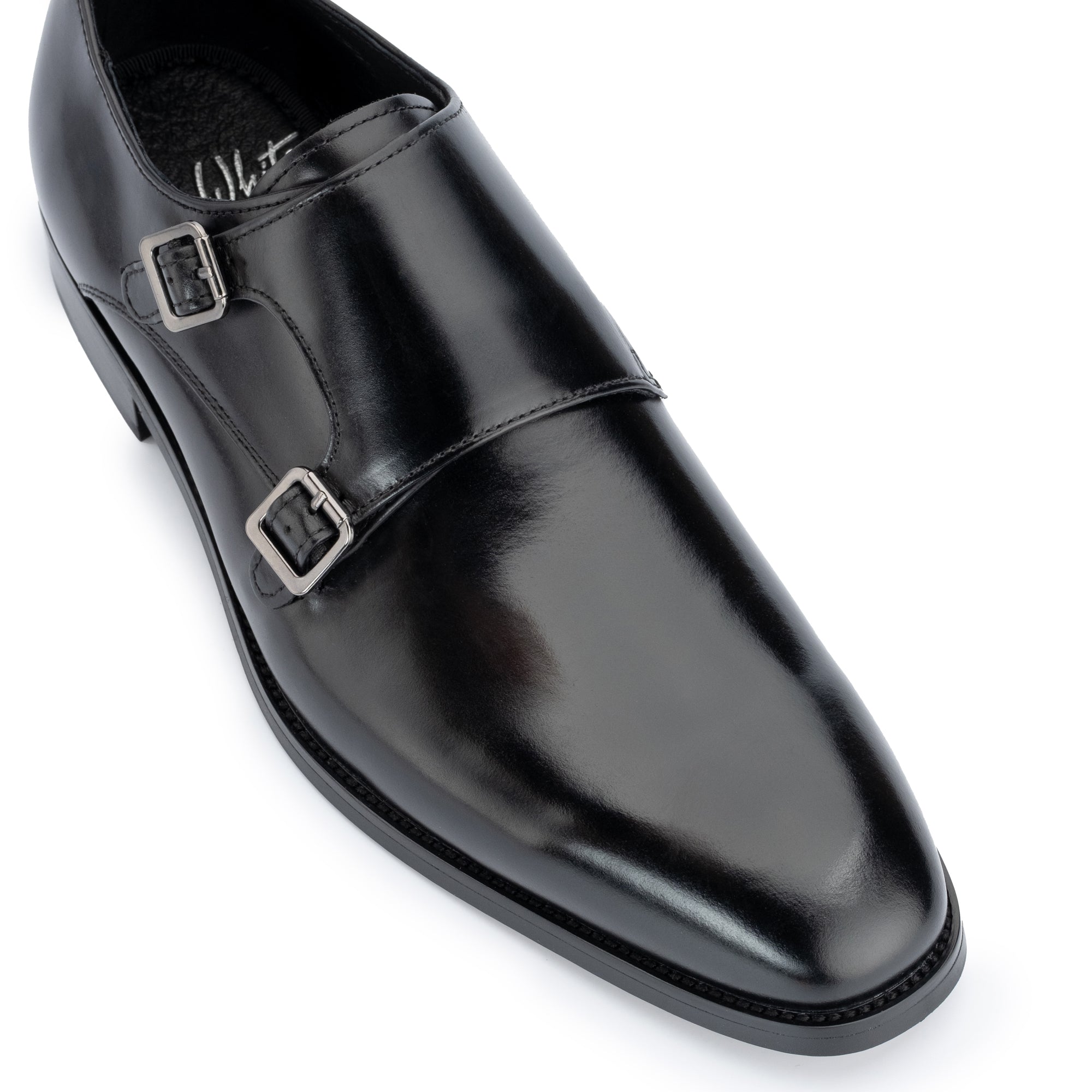
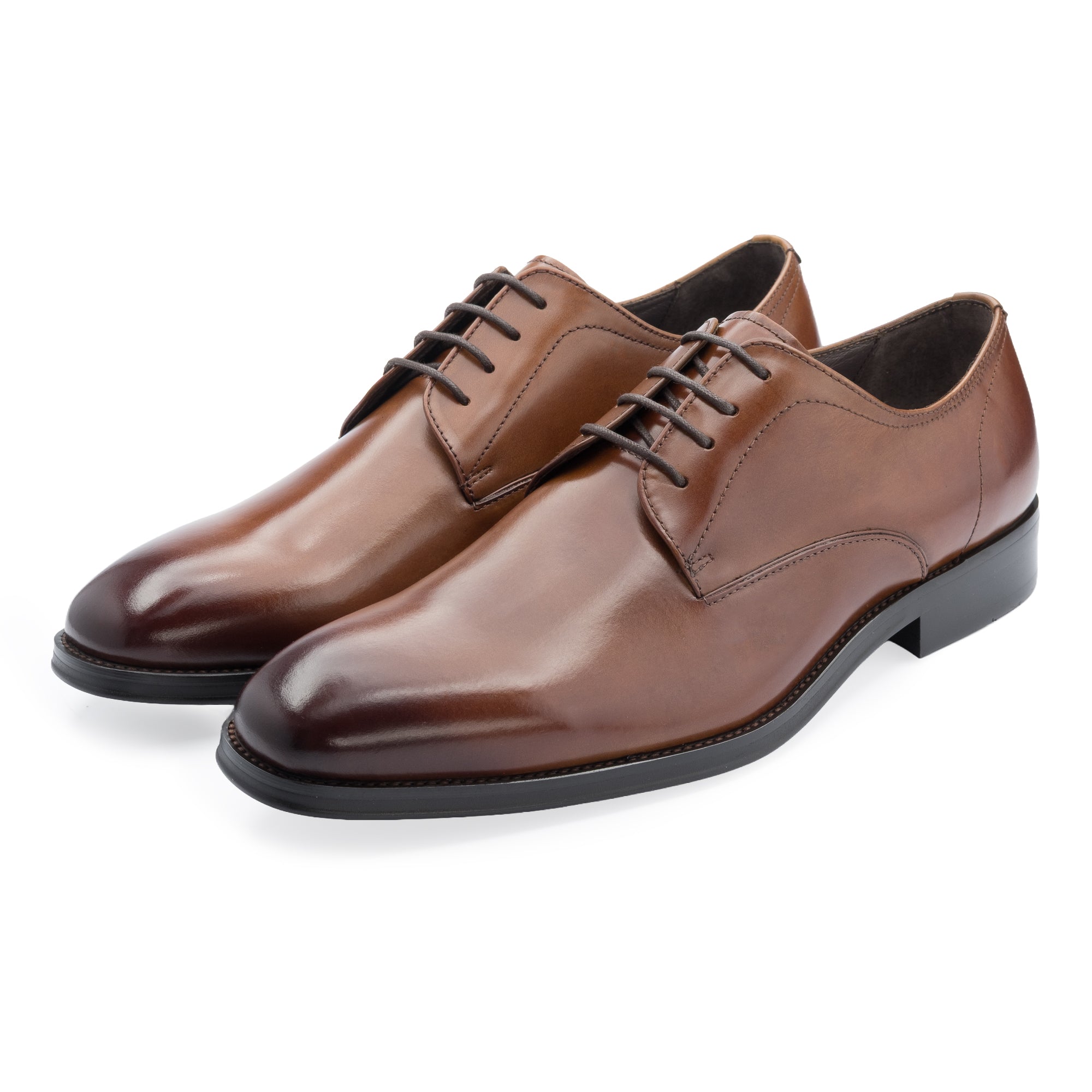
Where a wedding guest may reasonably wear a highly polished Derby or a well-executed monk strap, the groom should restrict his choice to a closed-lace Oxford — the only construction that belongs unambiguously at the highest register of black tie. For a broader view of footwear hierarchy at formal events, see men's shoes for a wedding guest: what to wear at every dress code.
For a black tie wedding, the groom's shoe is not a styling choice — it is a statement of occasion, and it should be treated accordingly.
What Is the Correct Black Tie Wedding Shoe for the Groom?
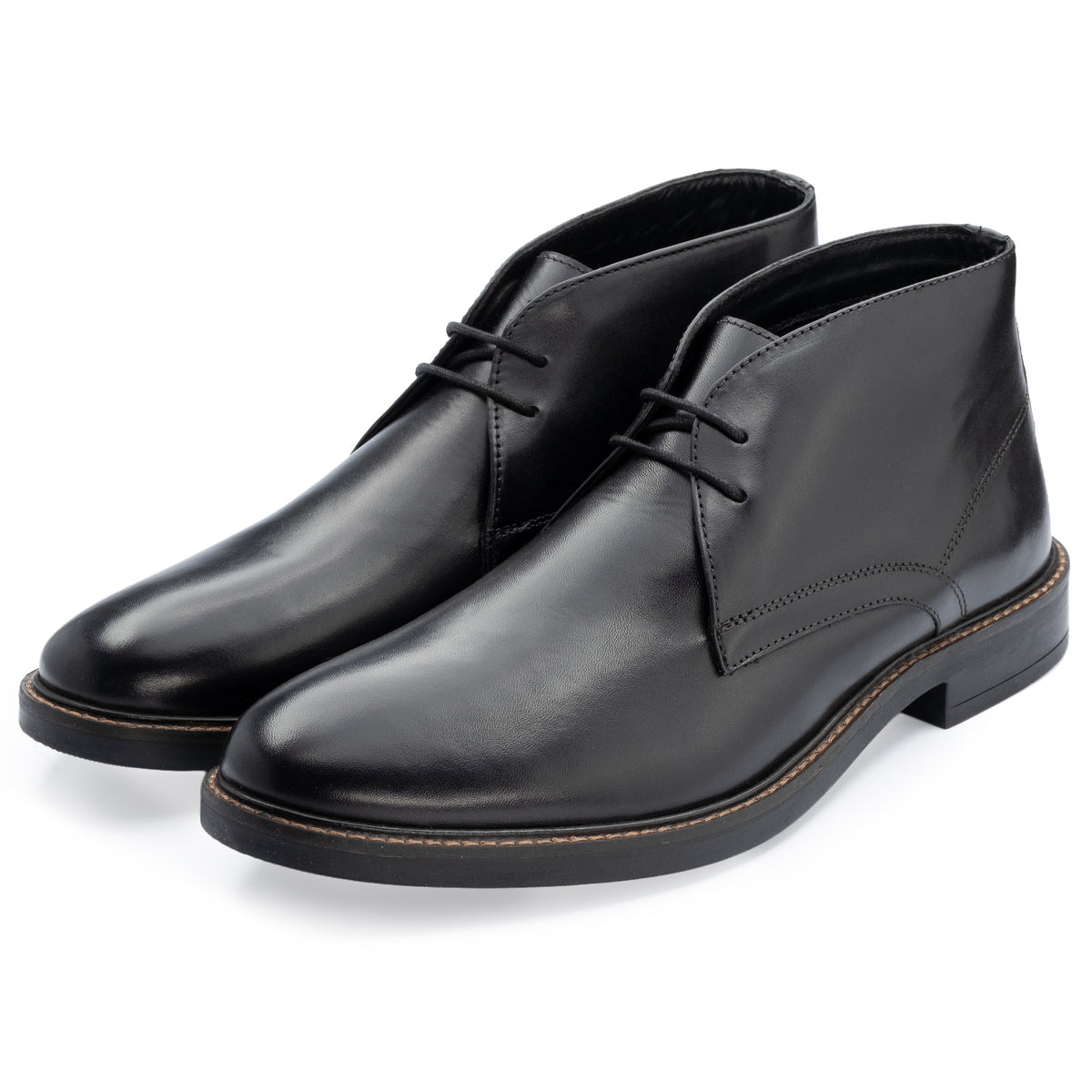
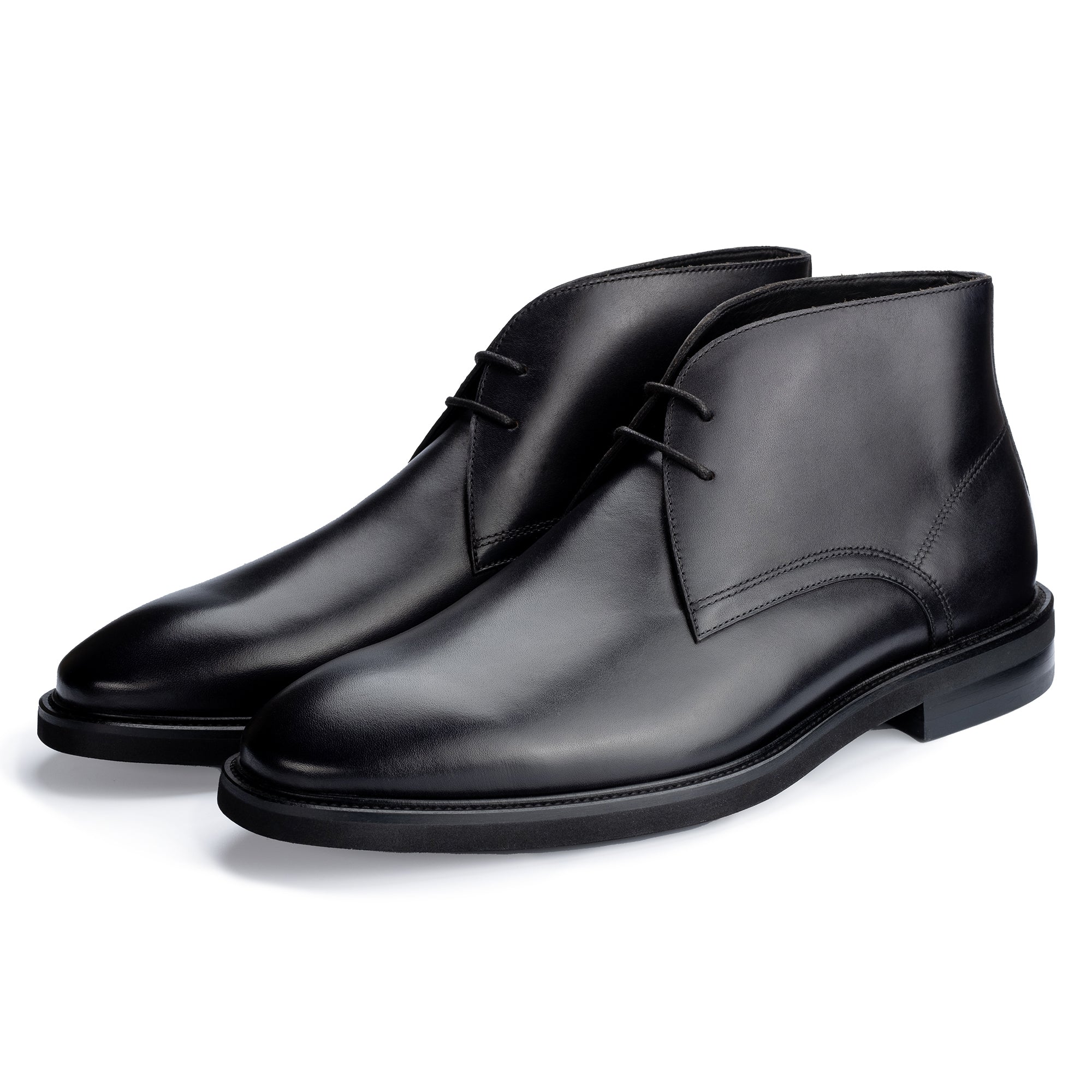
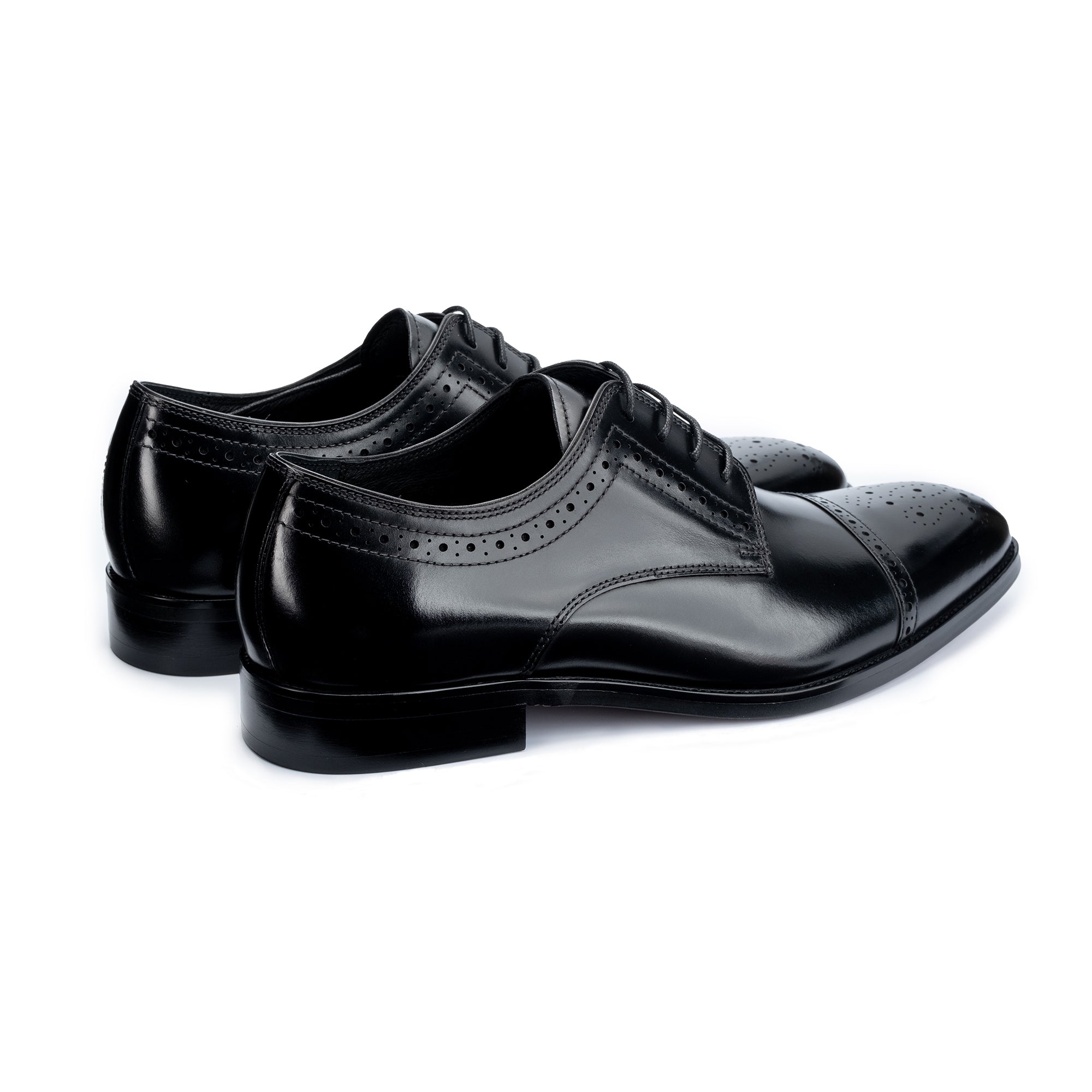
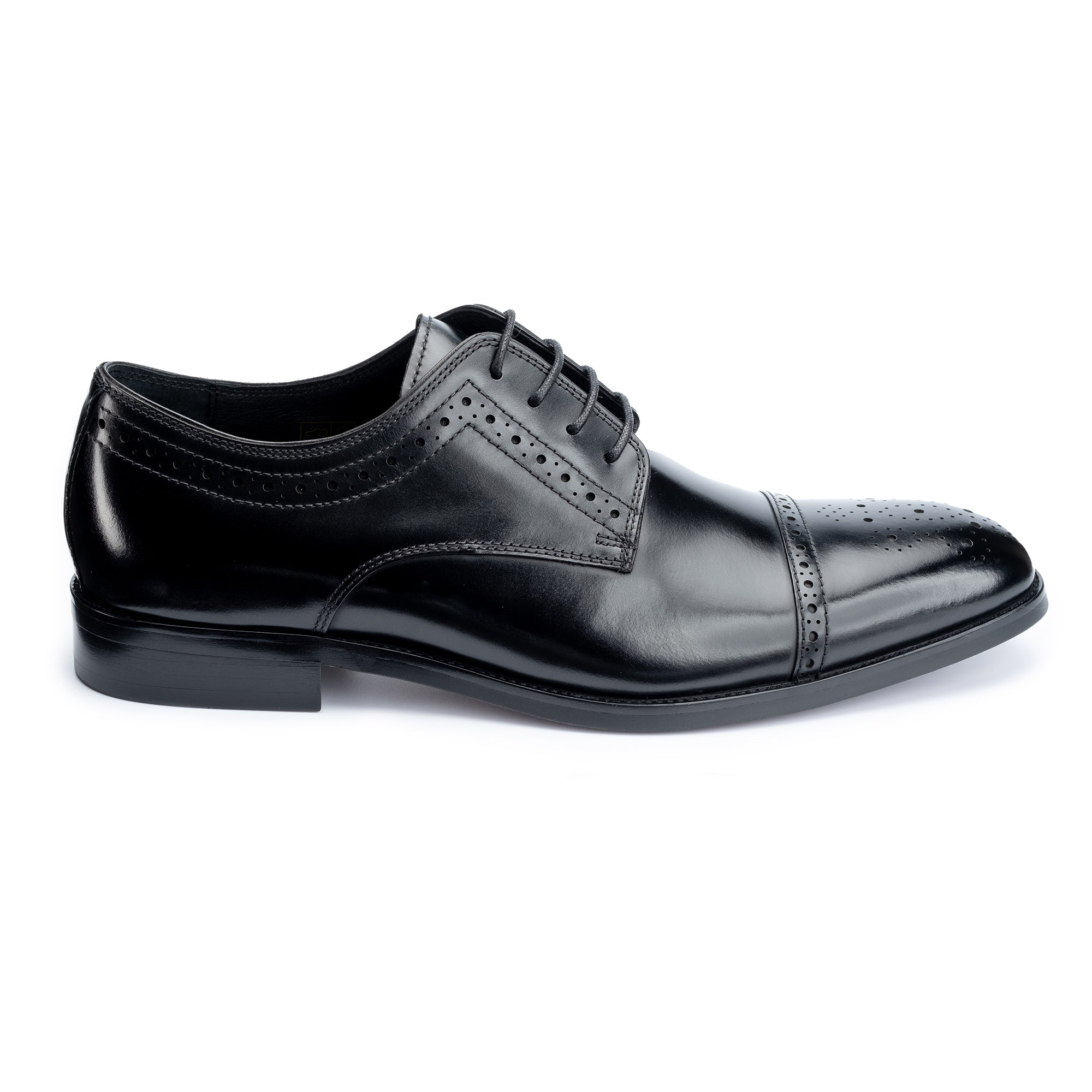
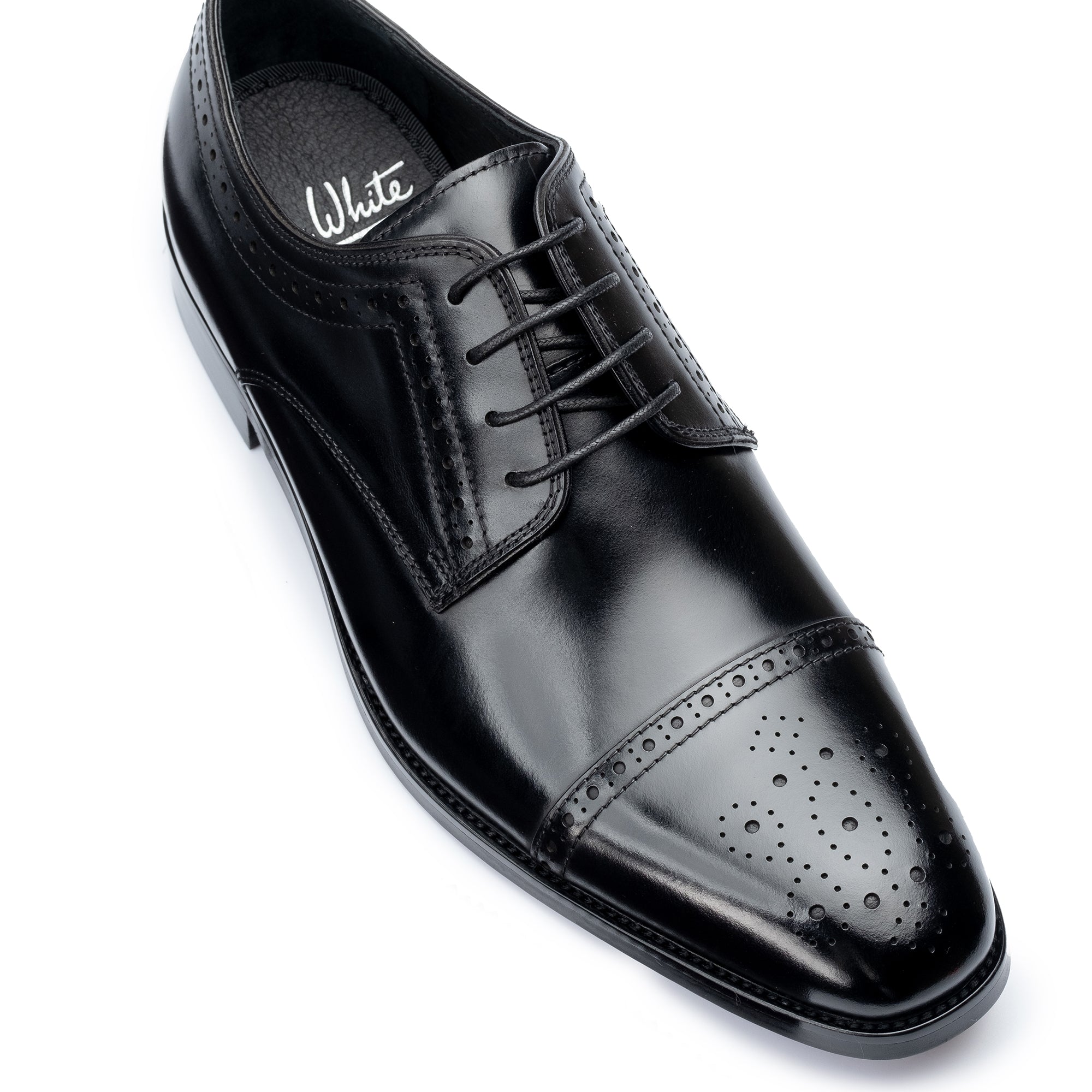
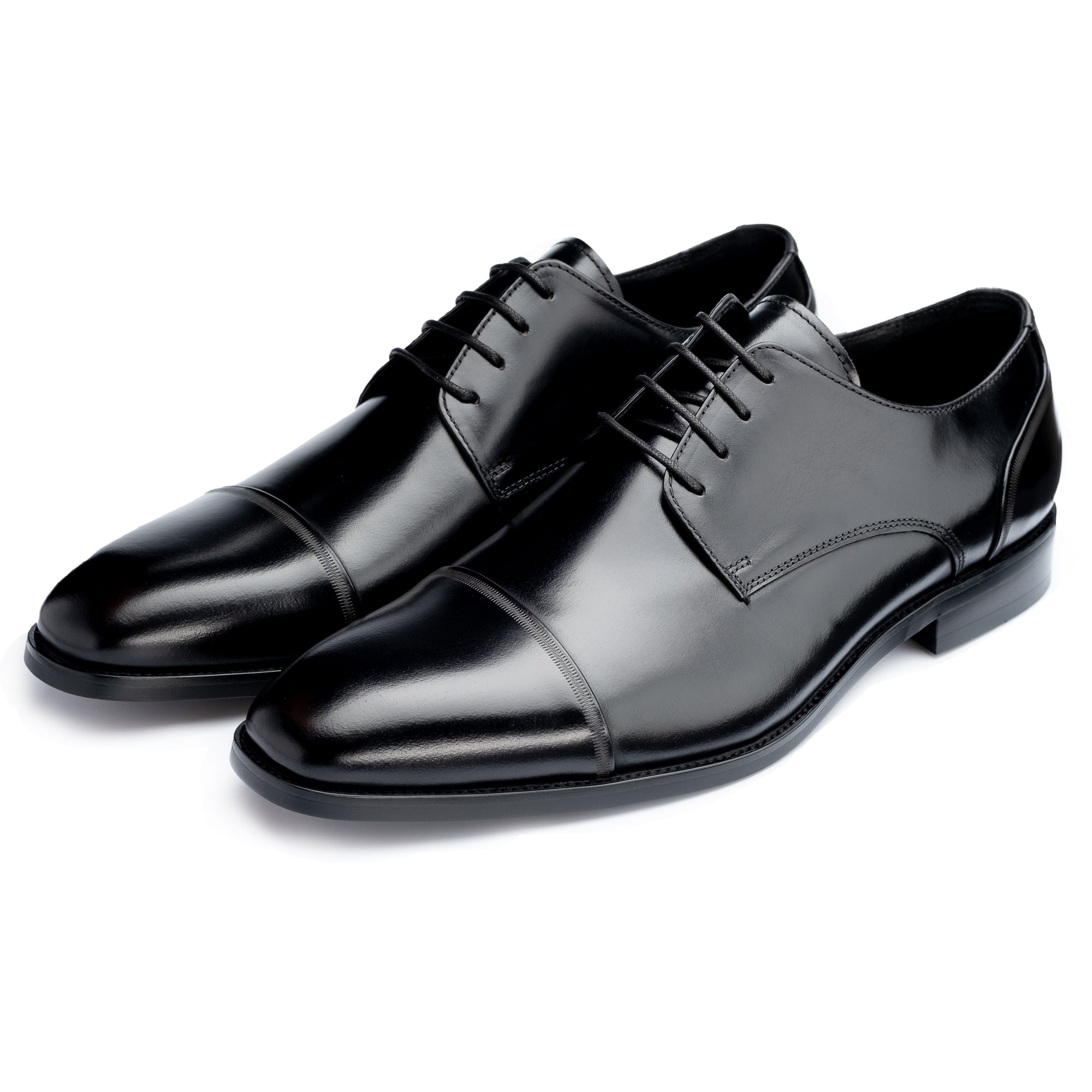
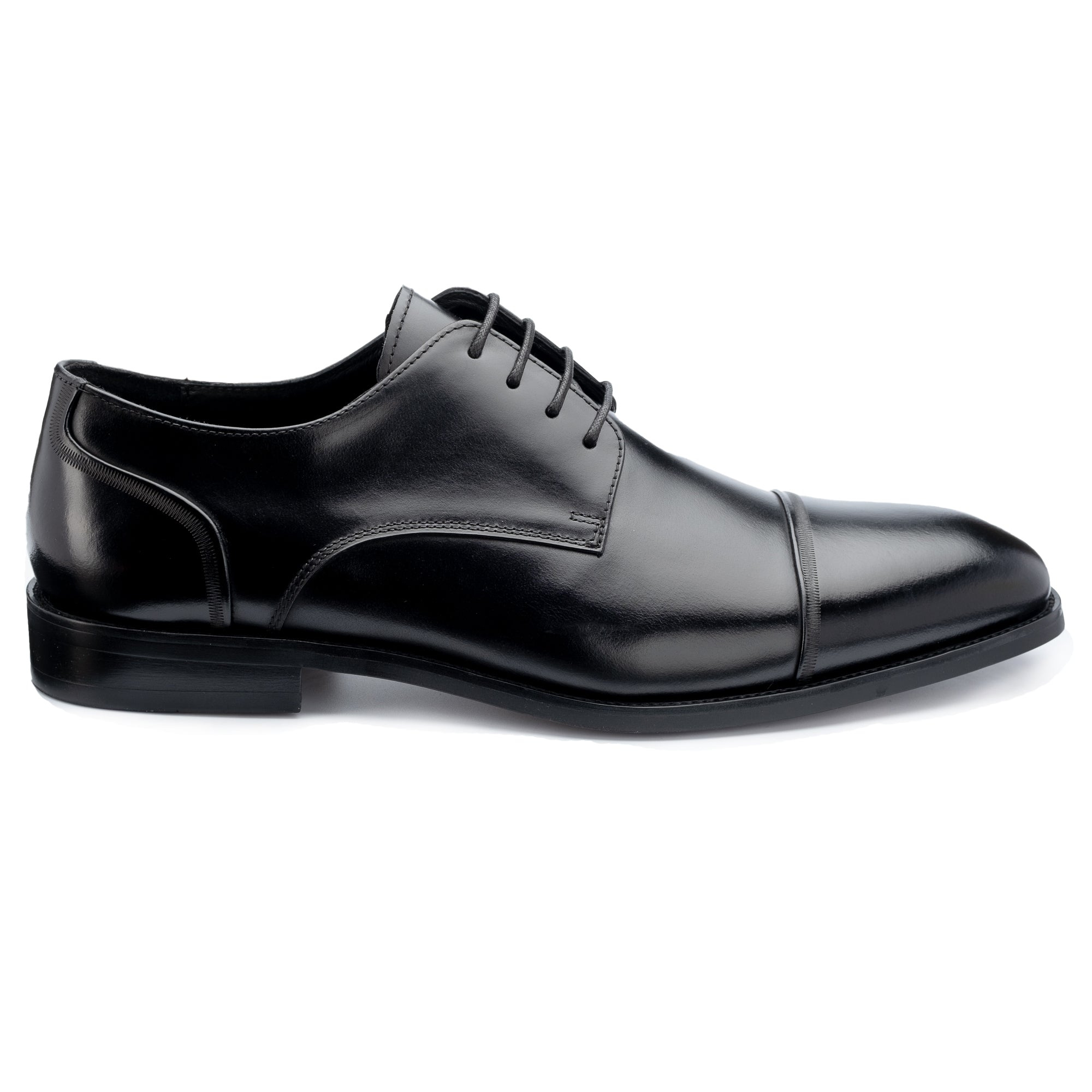
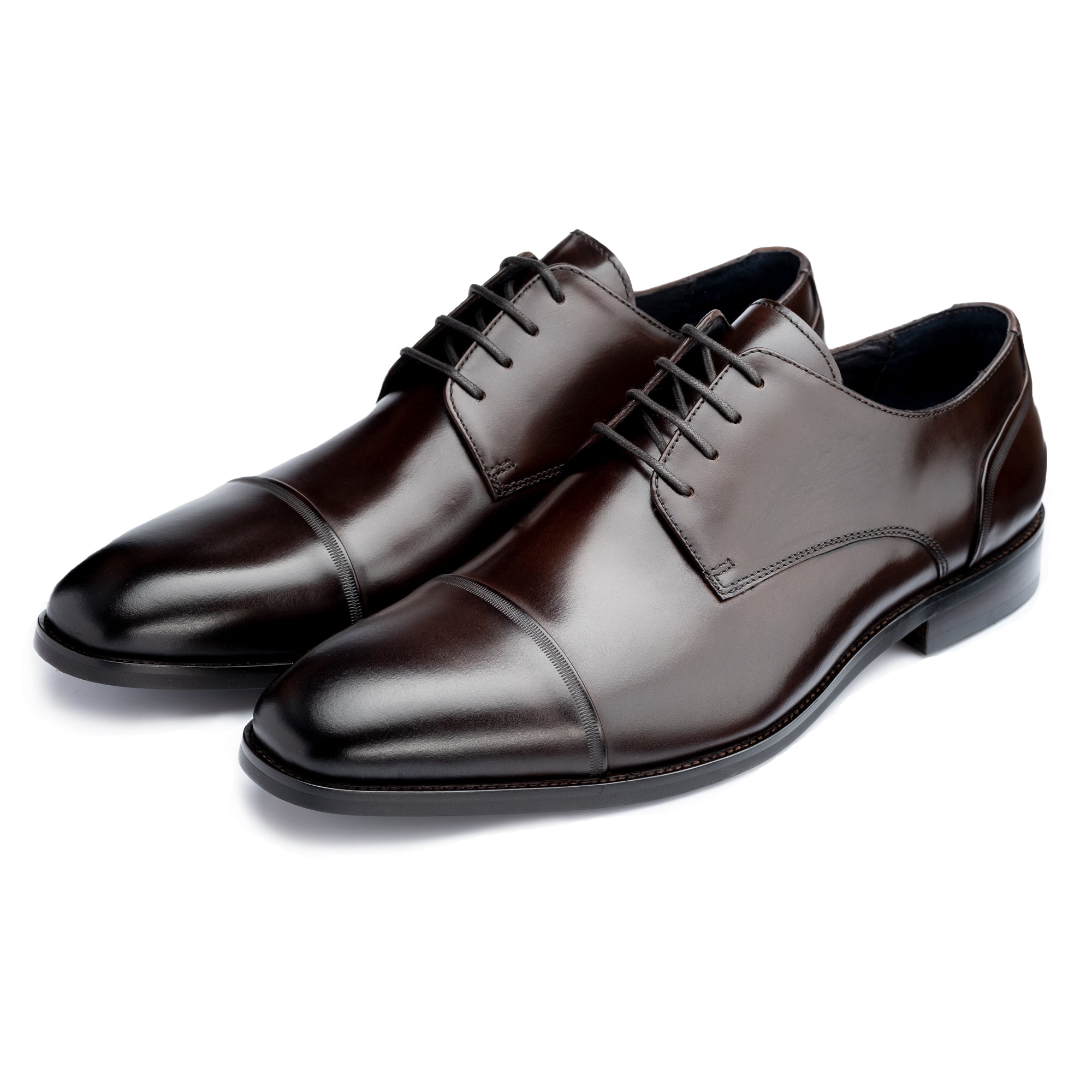
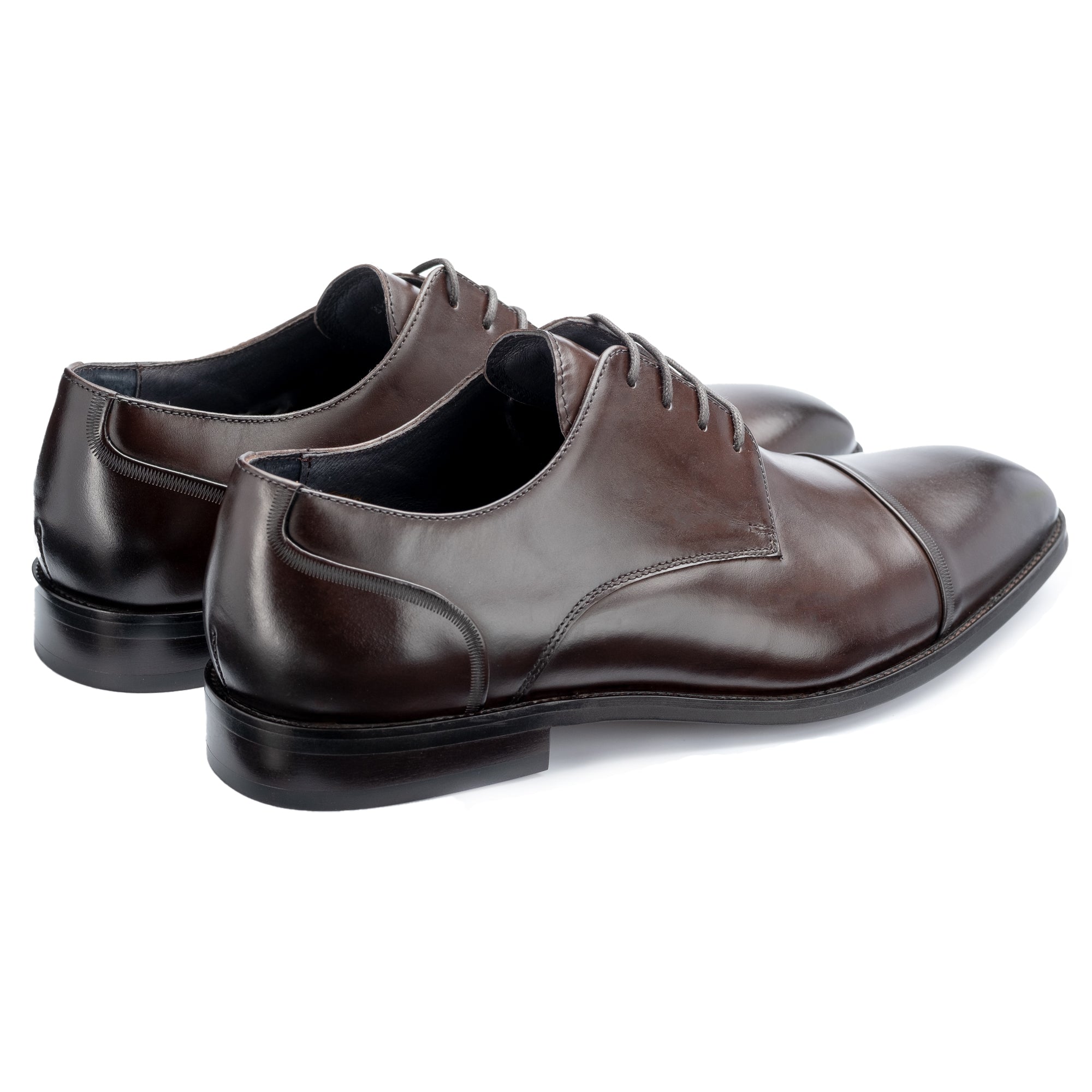
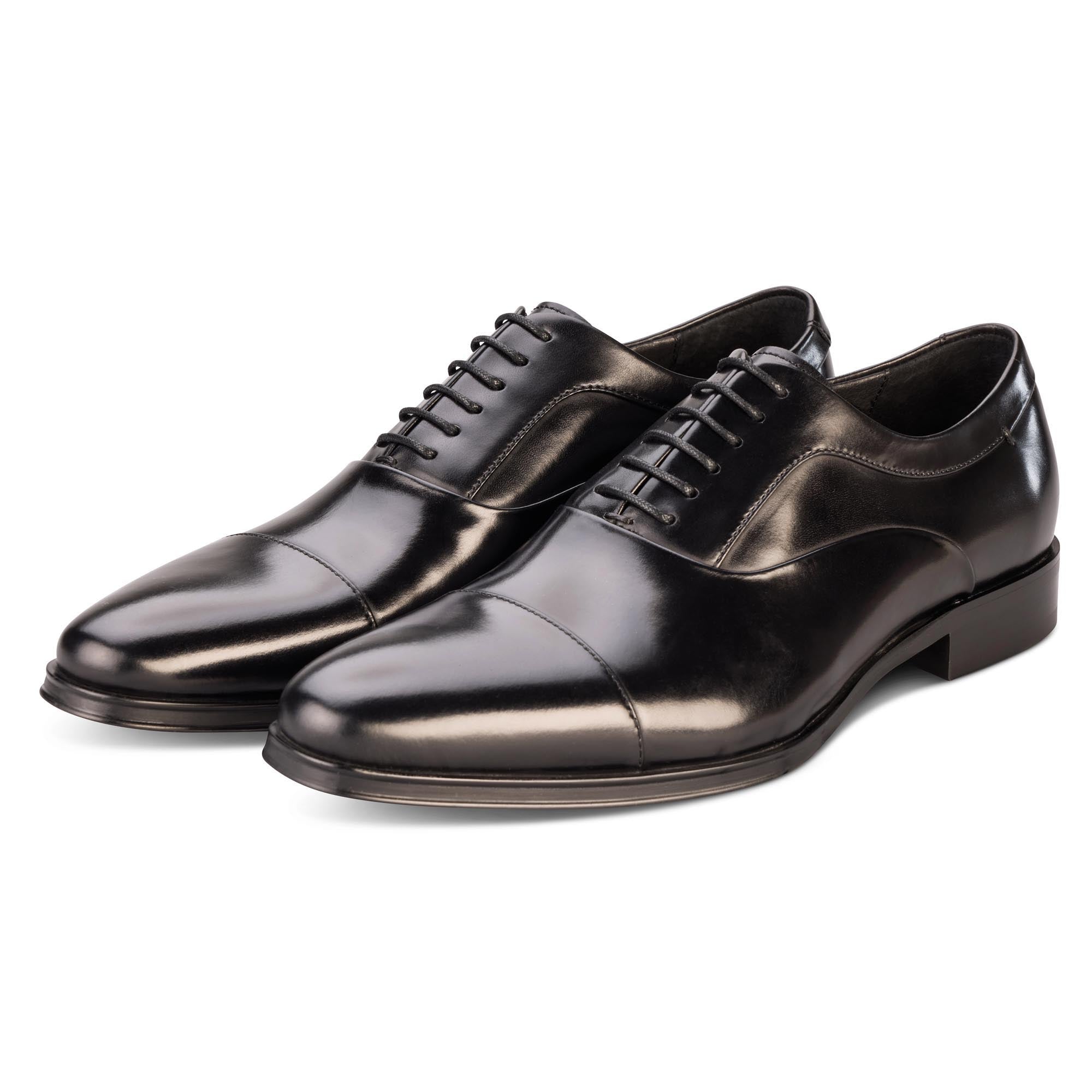
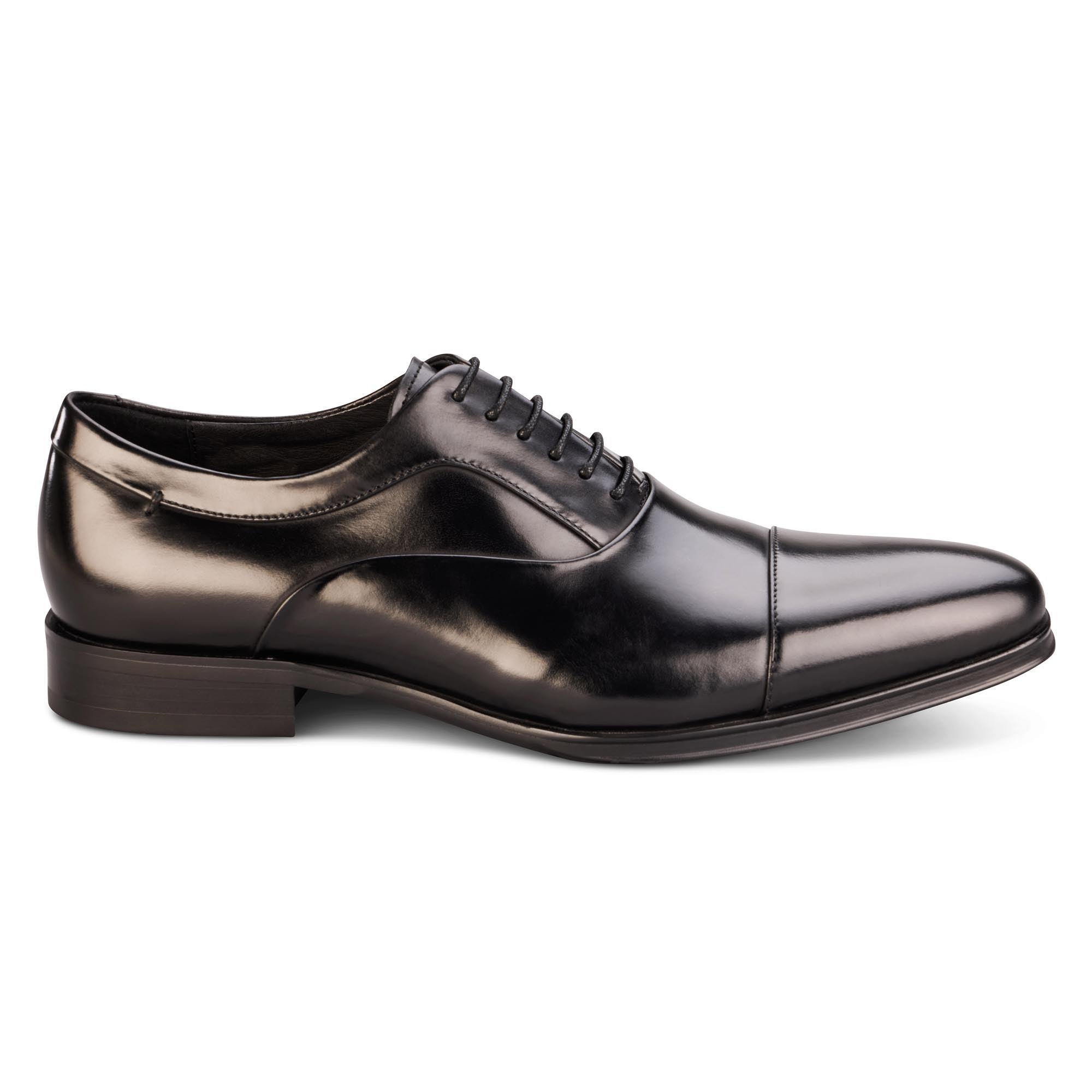
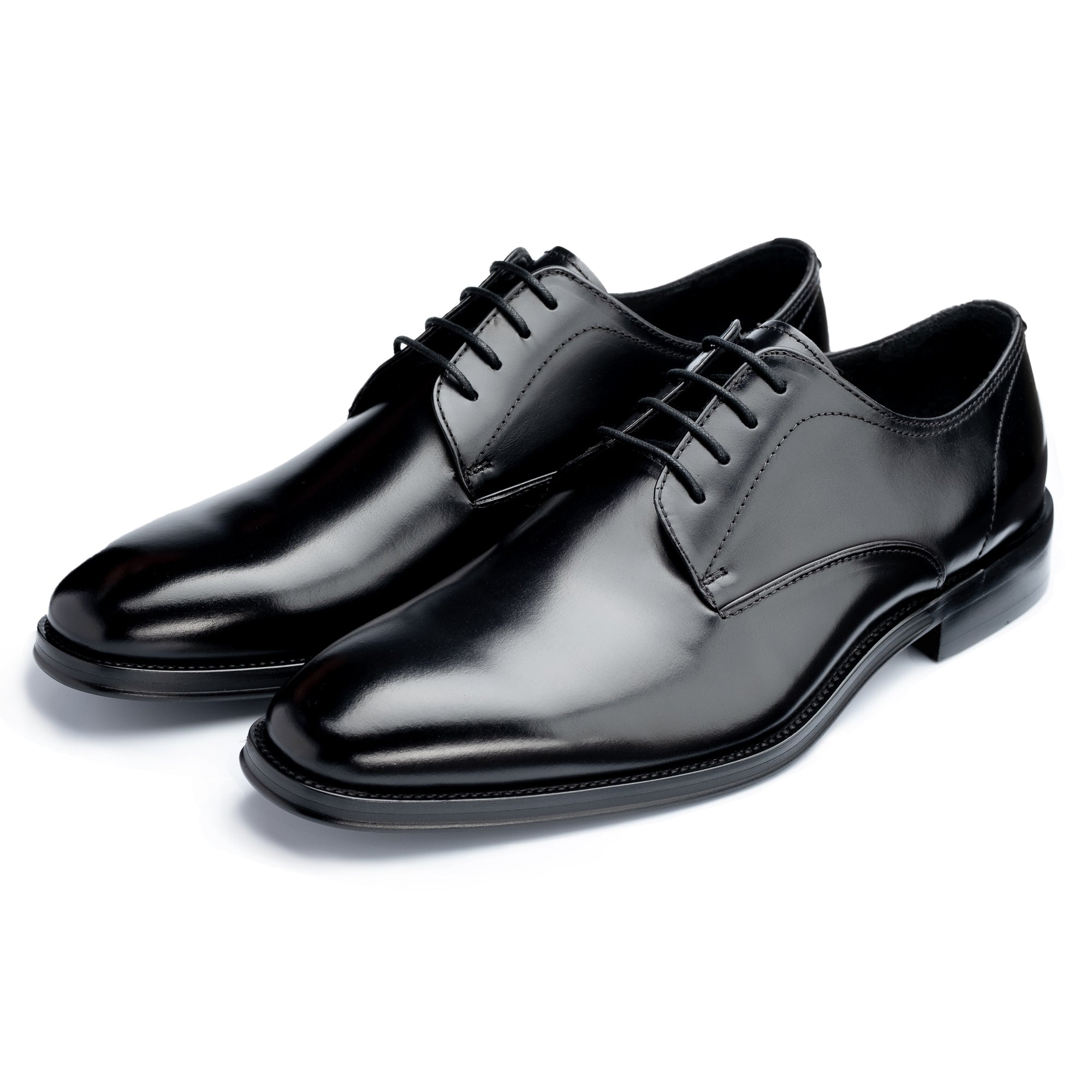
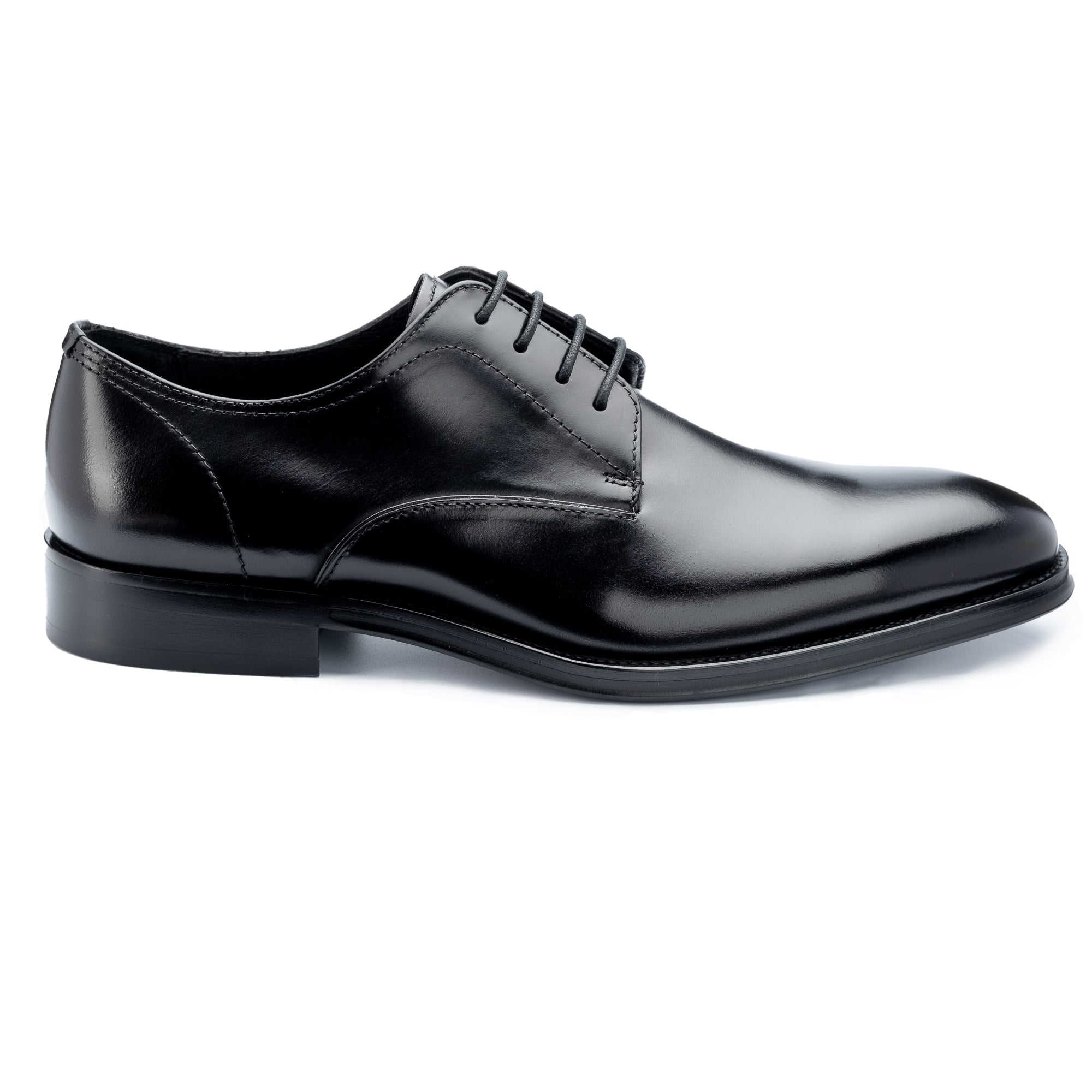
A black tie wedding shoe is drawn from a short, precise list: the plain-toe Oxford, the cap-toe Oxford, and the wholecut Oxford. Each is correct. Each varies in character. Together, they represent the complete range of appropriate formal footwear for the occasion.
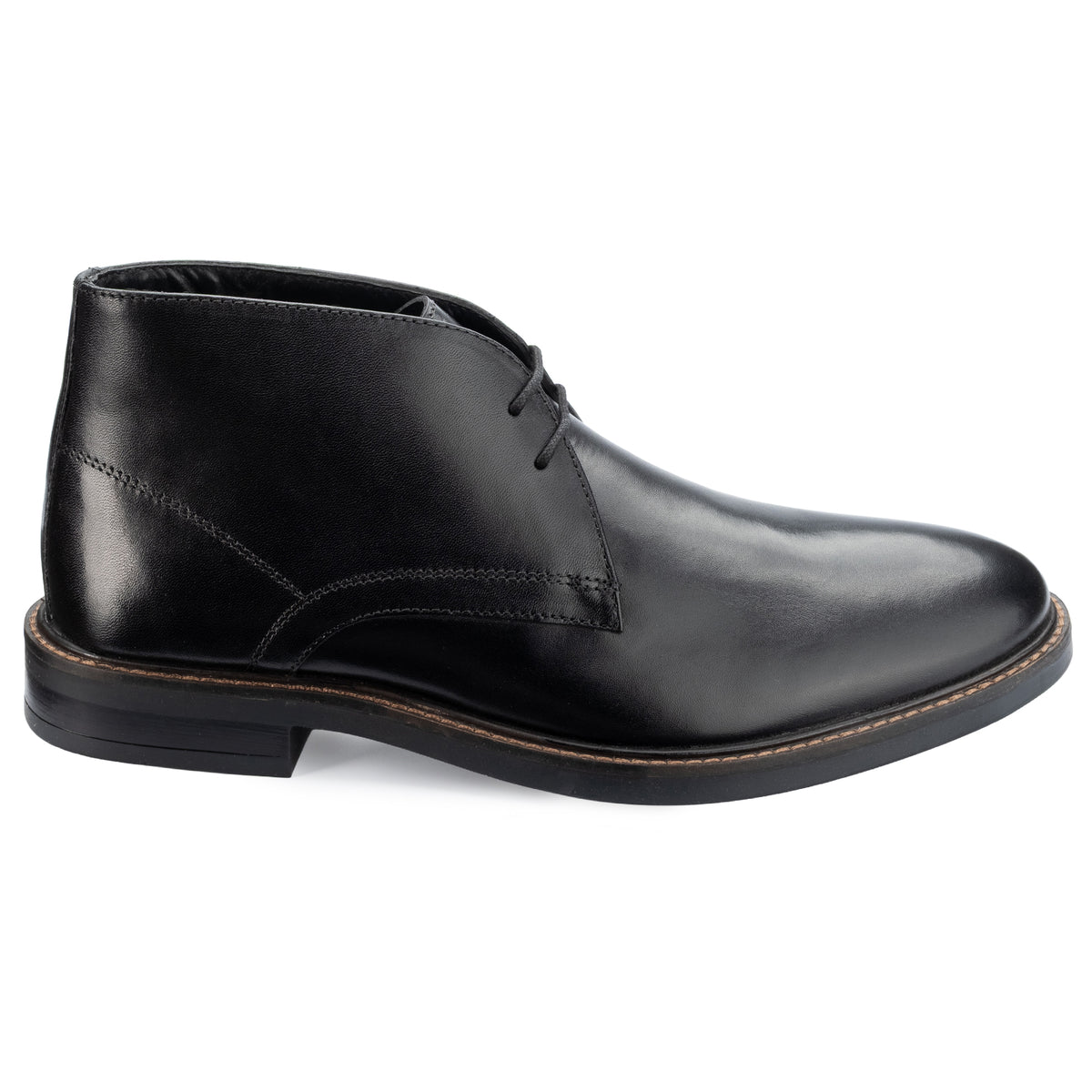
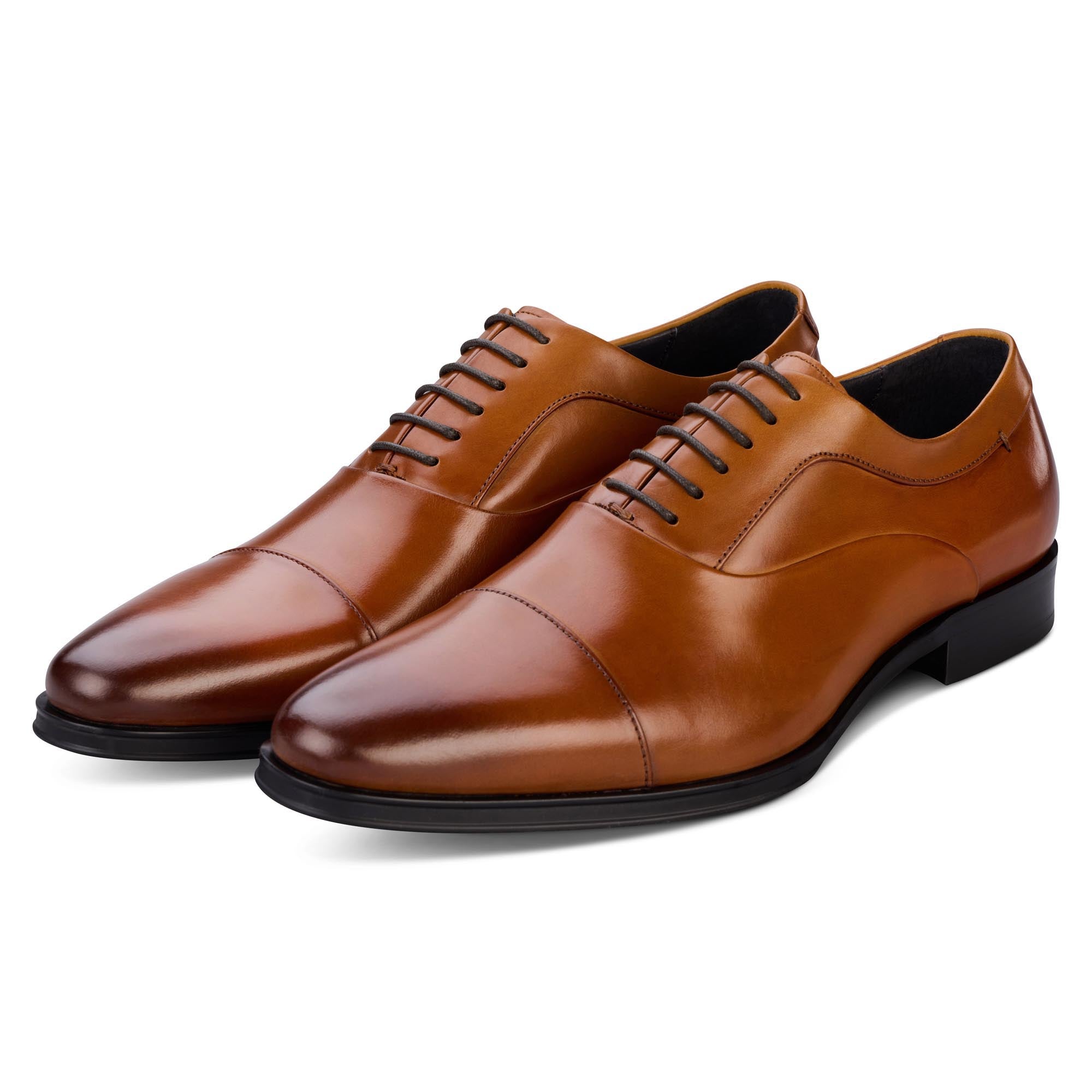
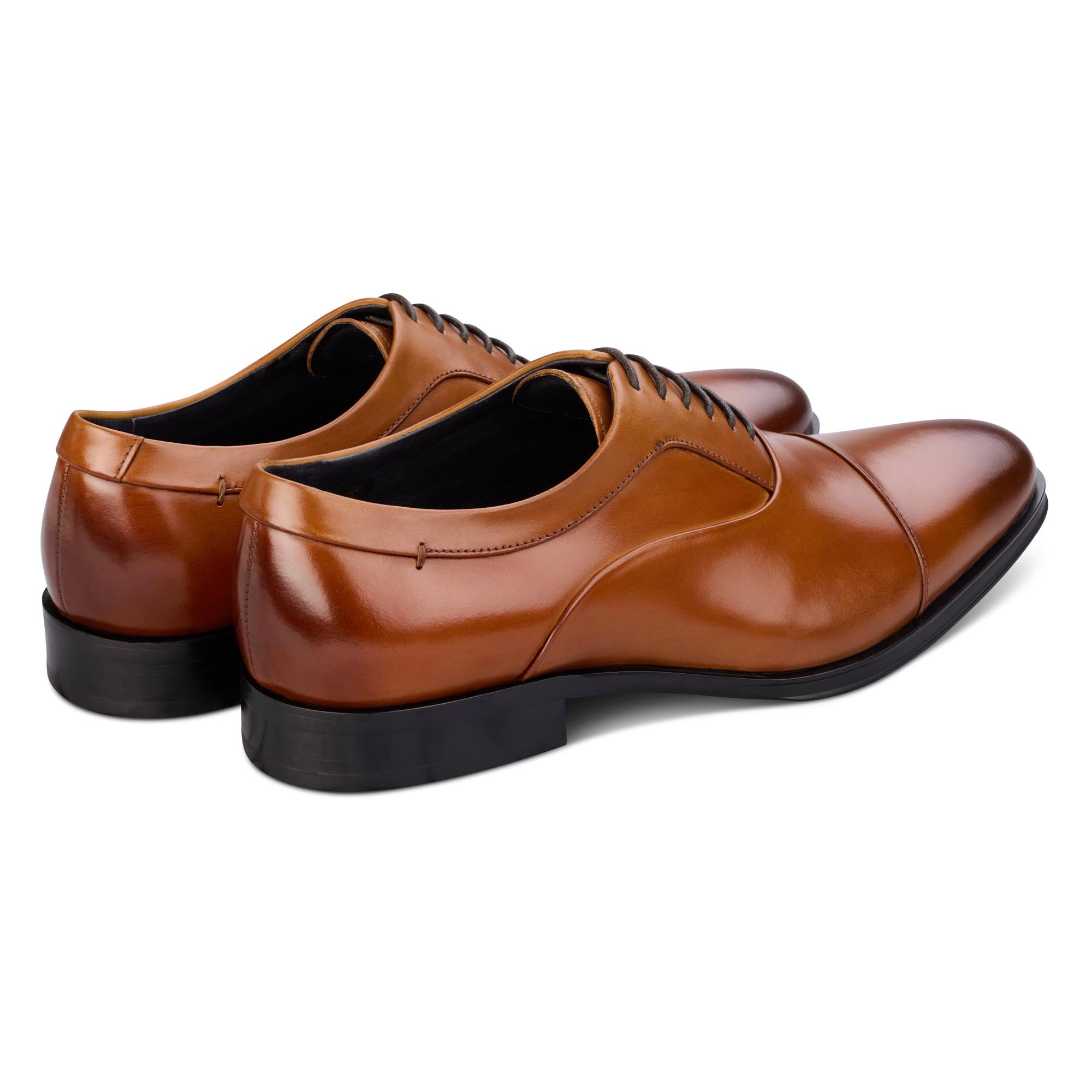
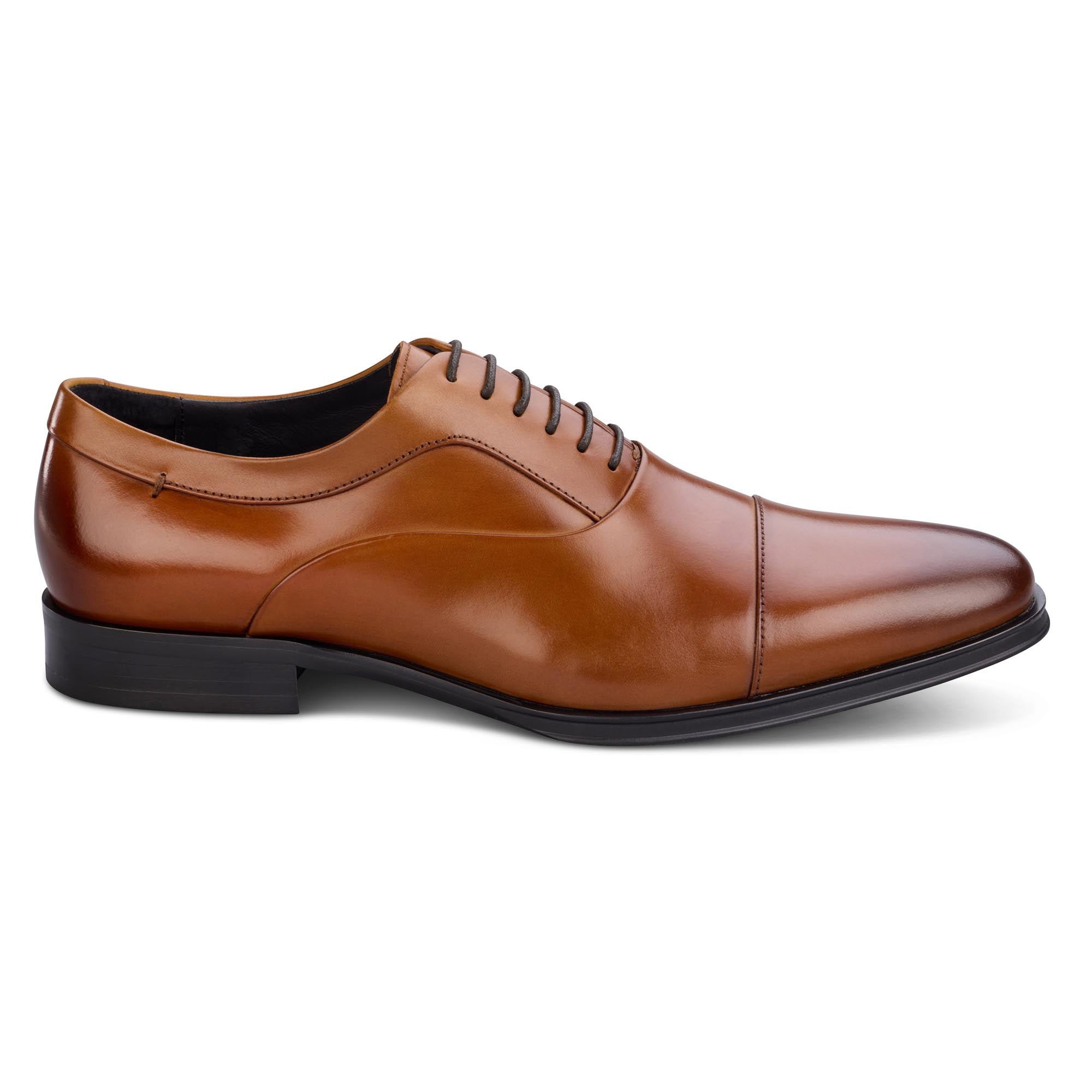
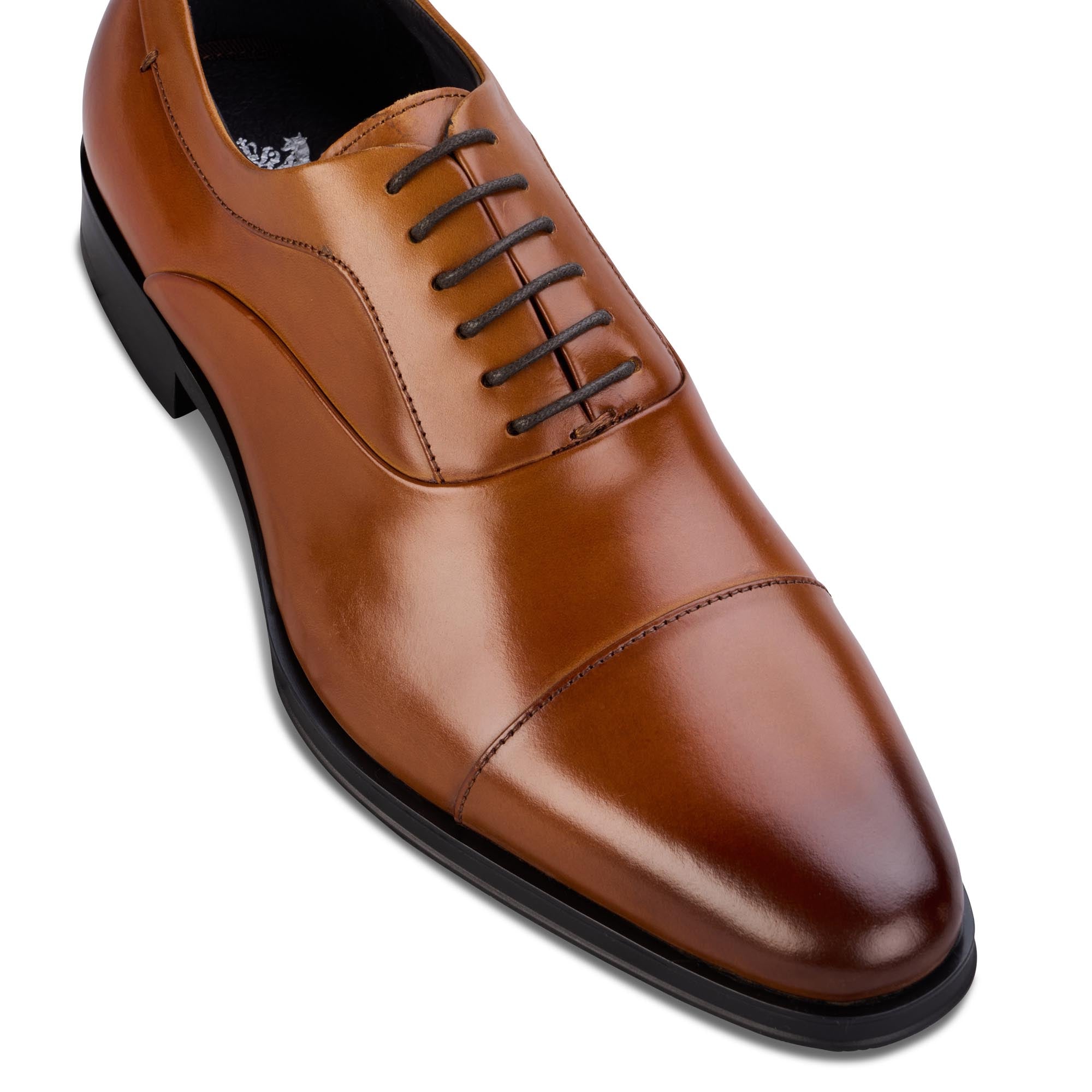
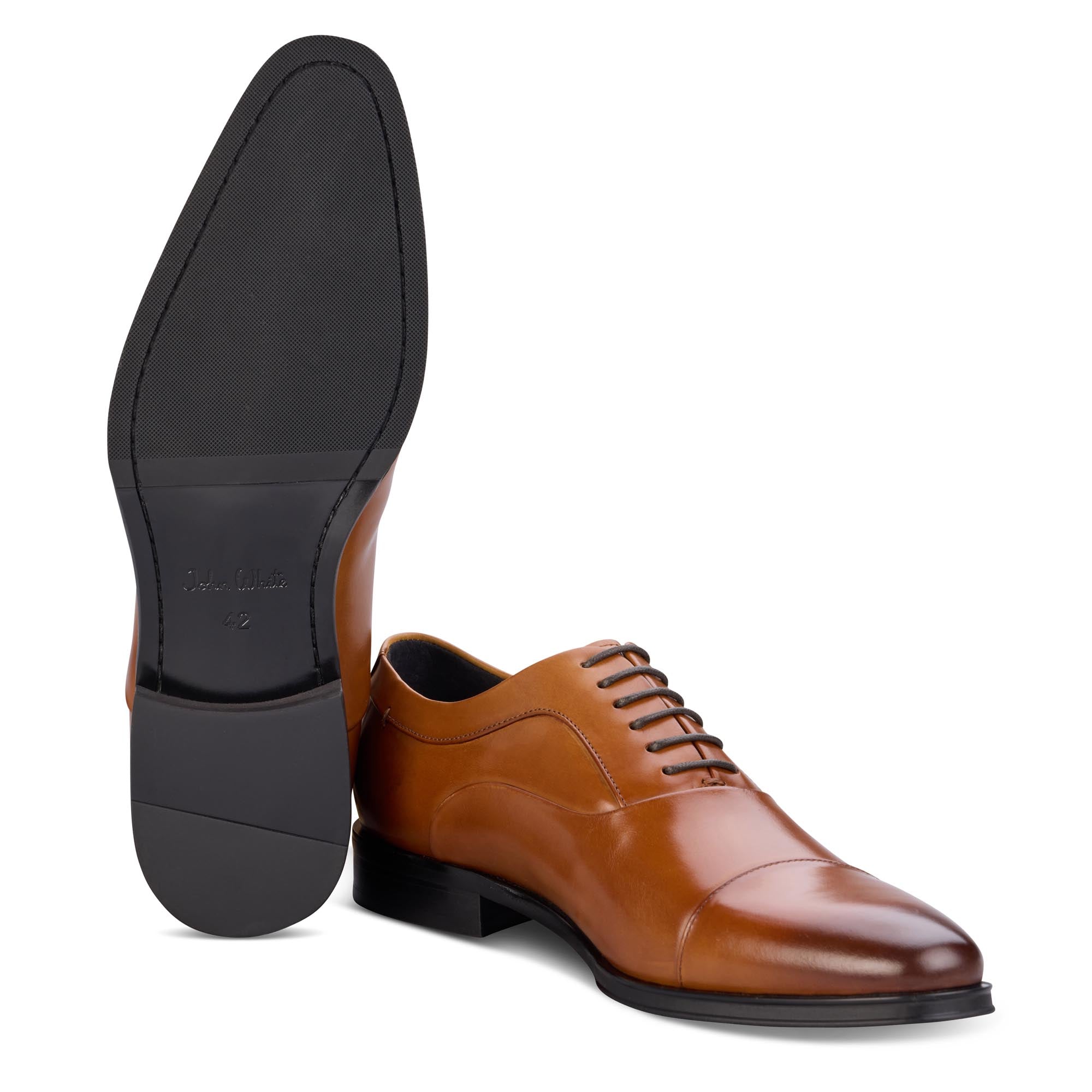
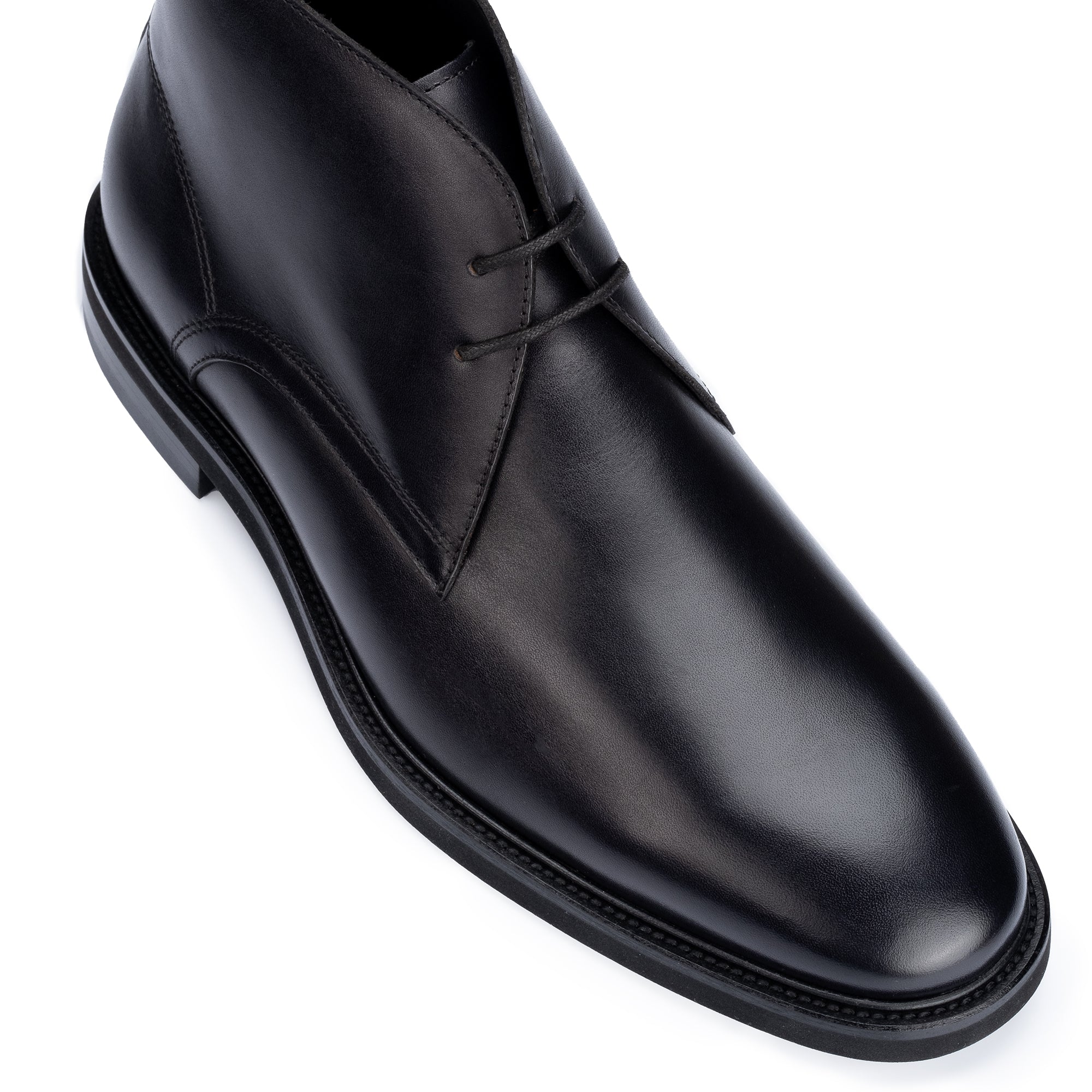
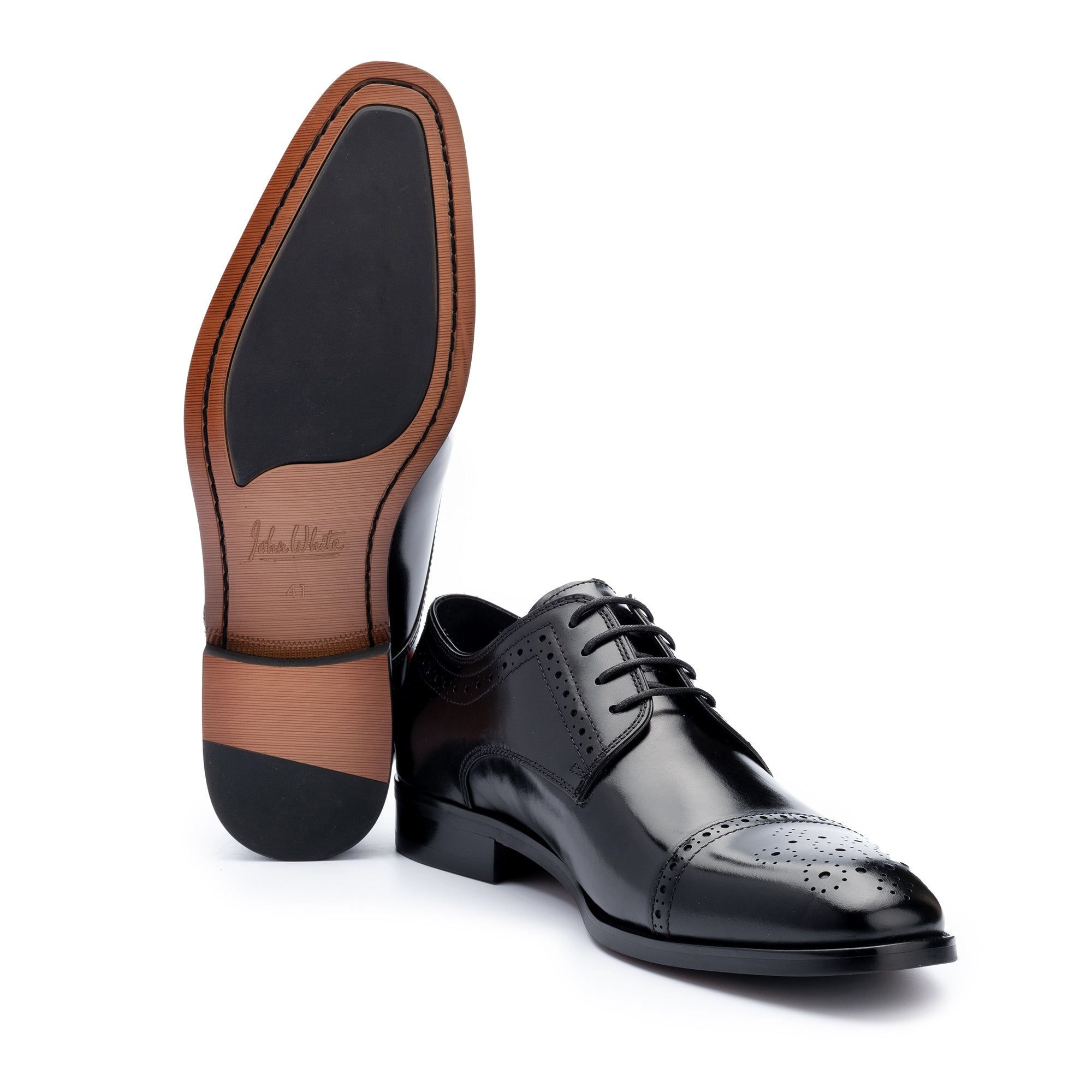
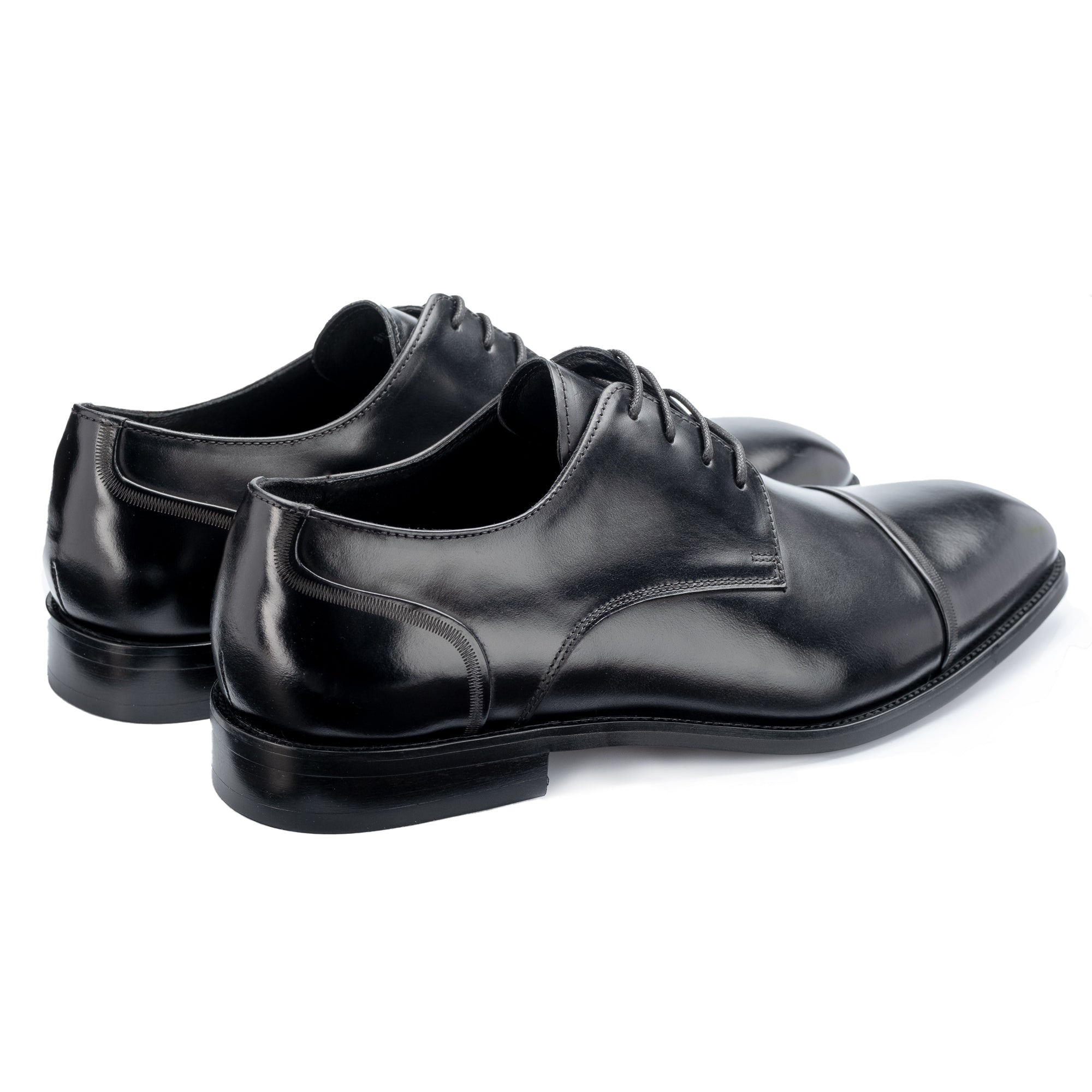
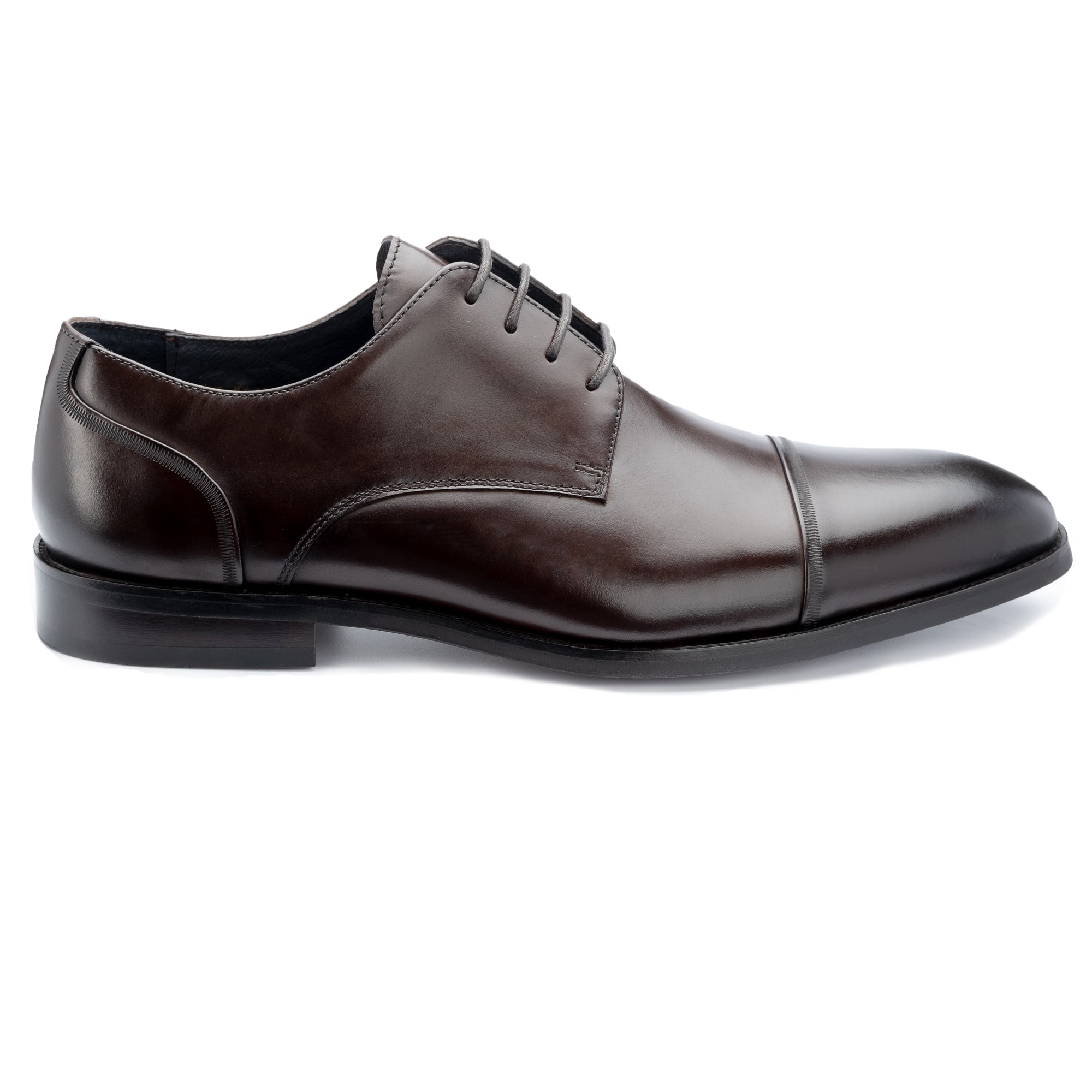
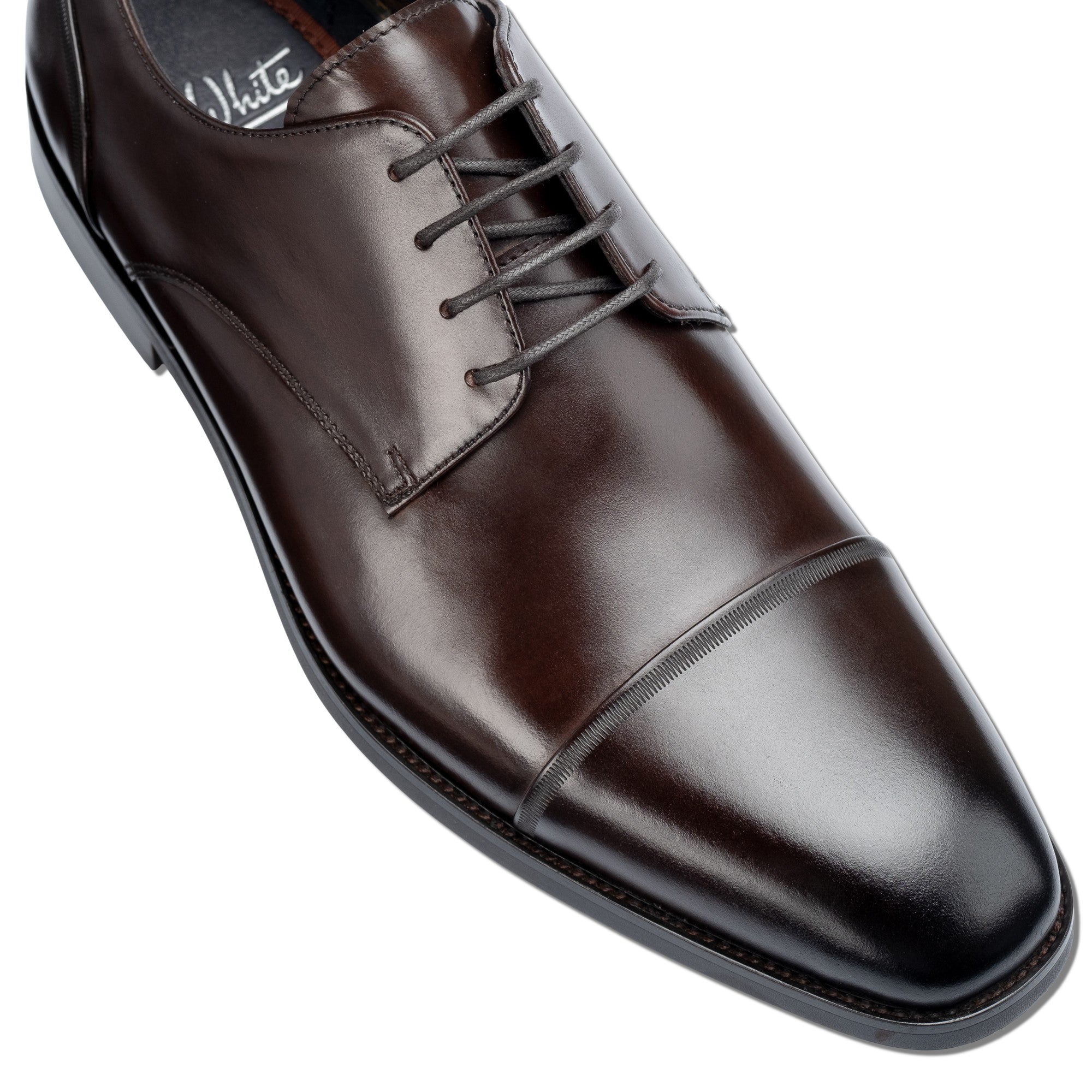
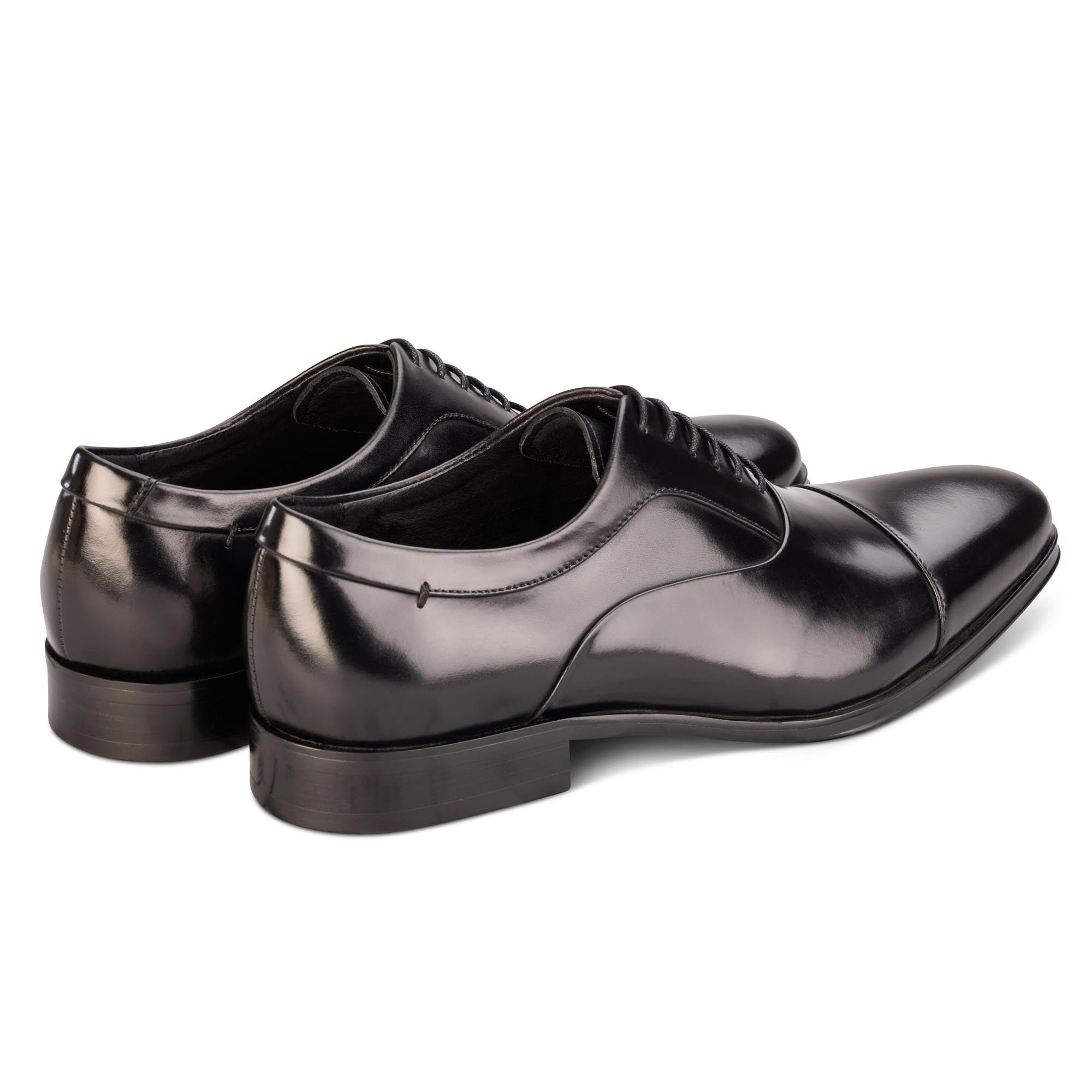
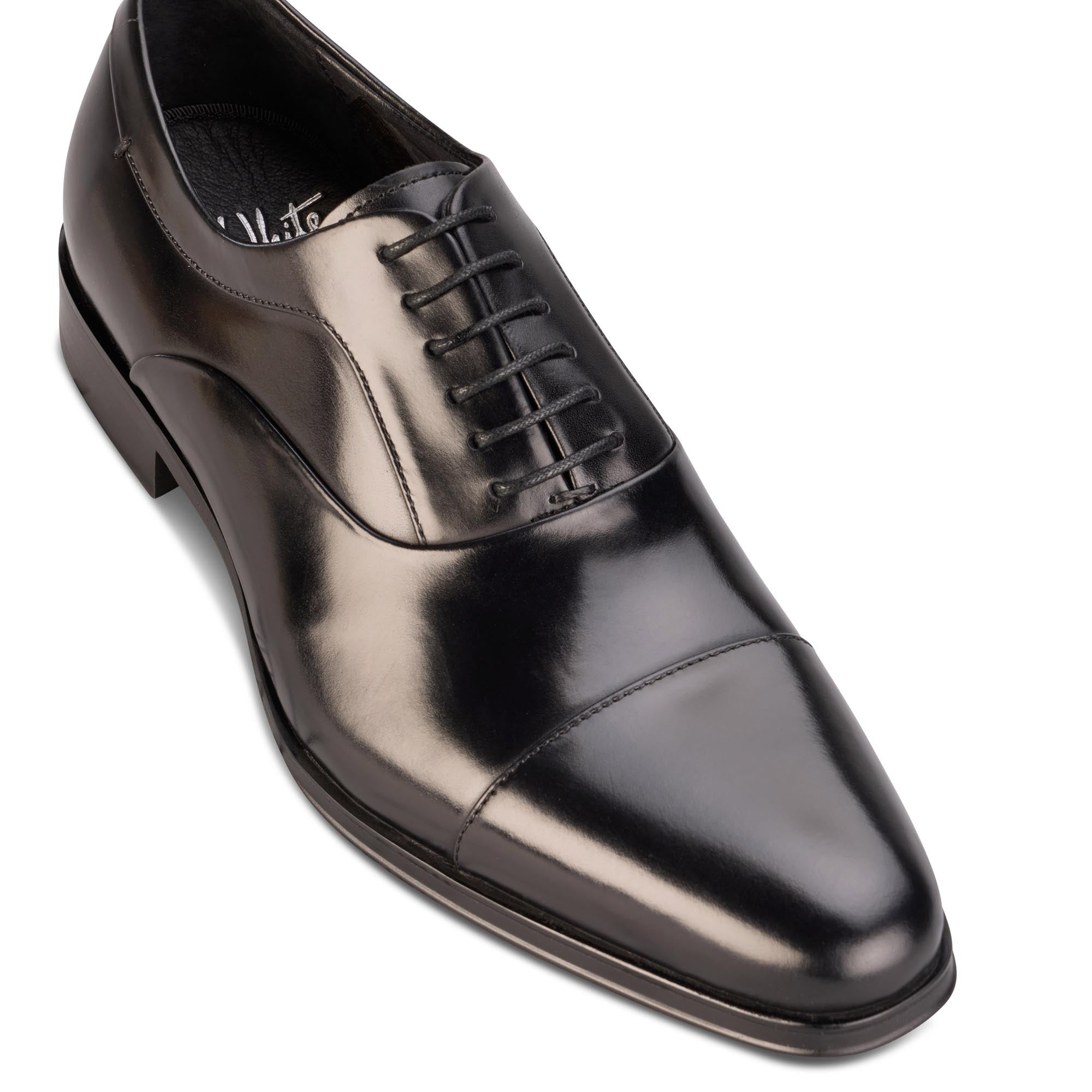
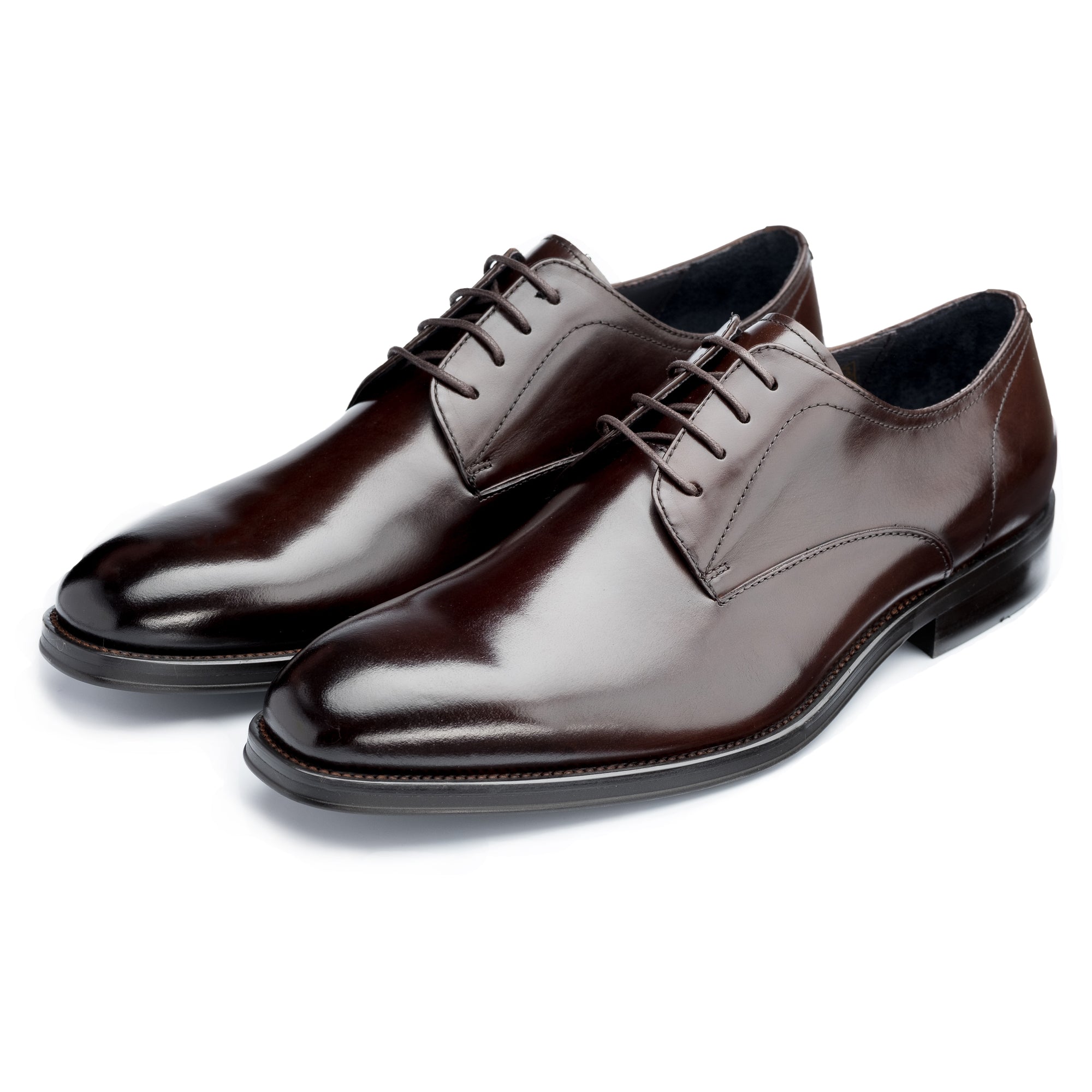
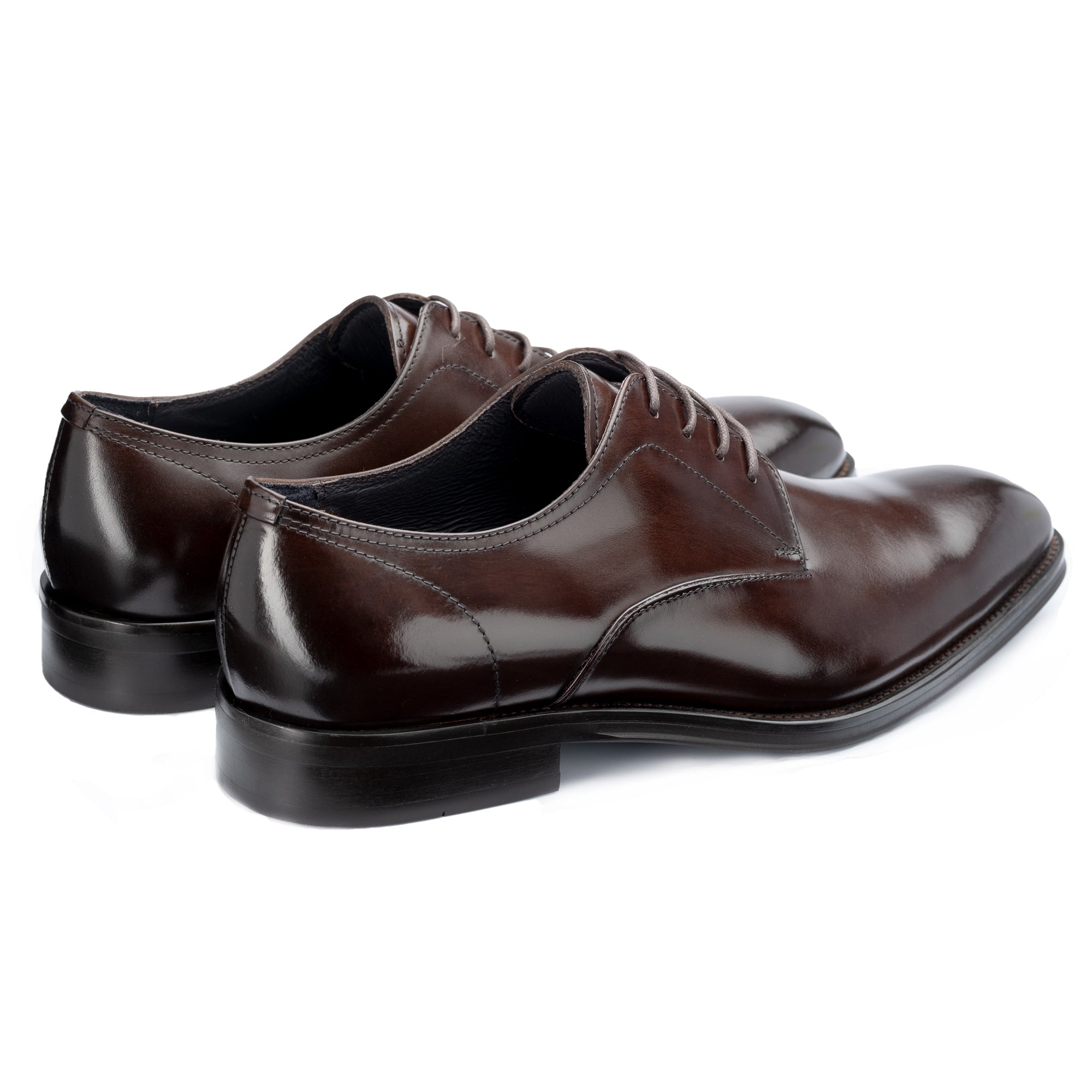
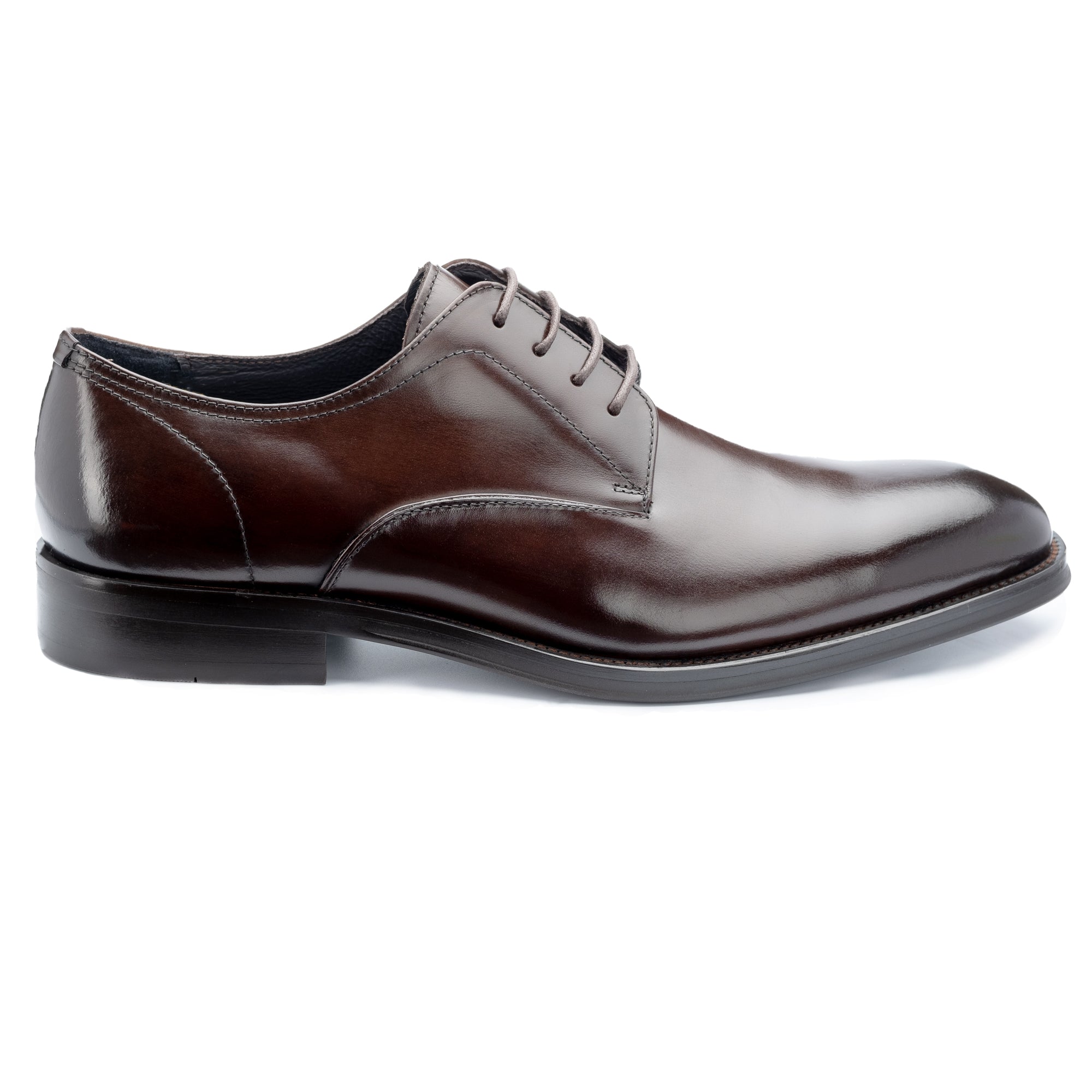
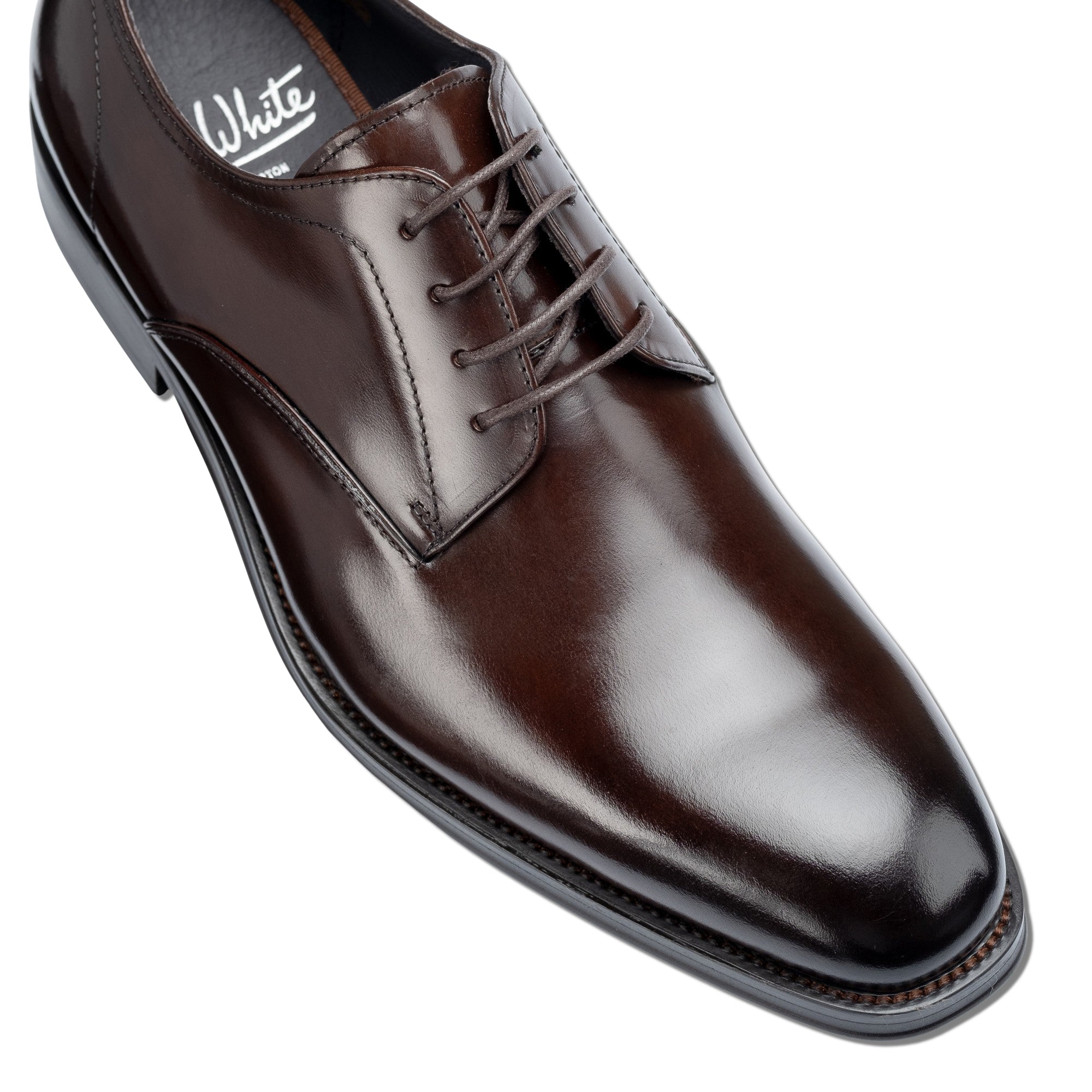
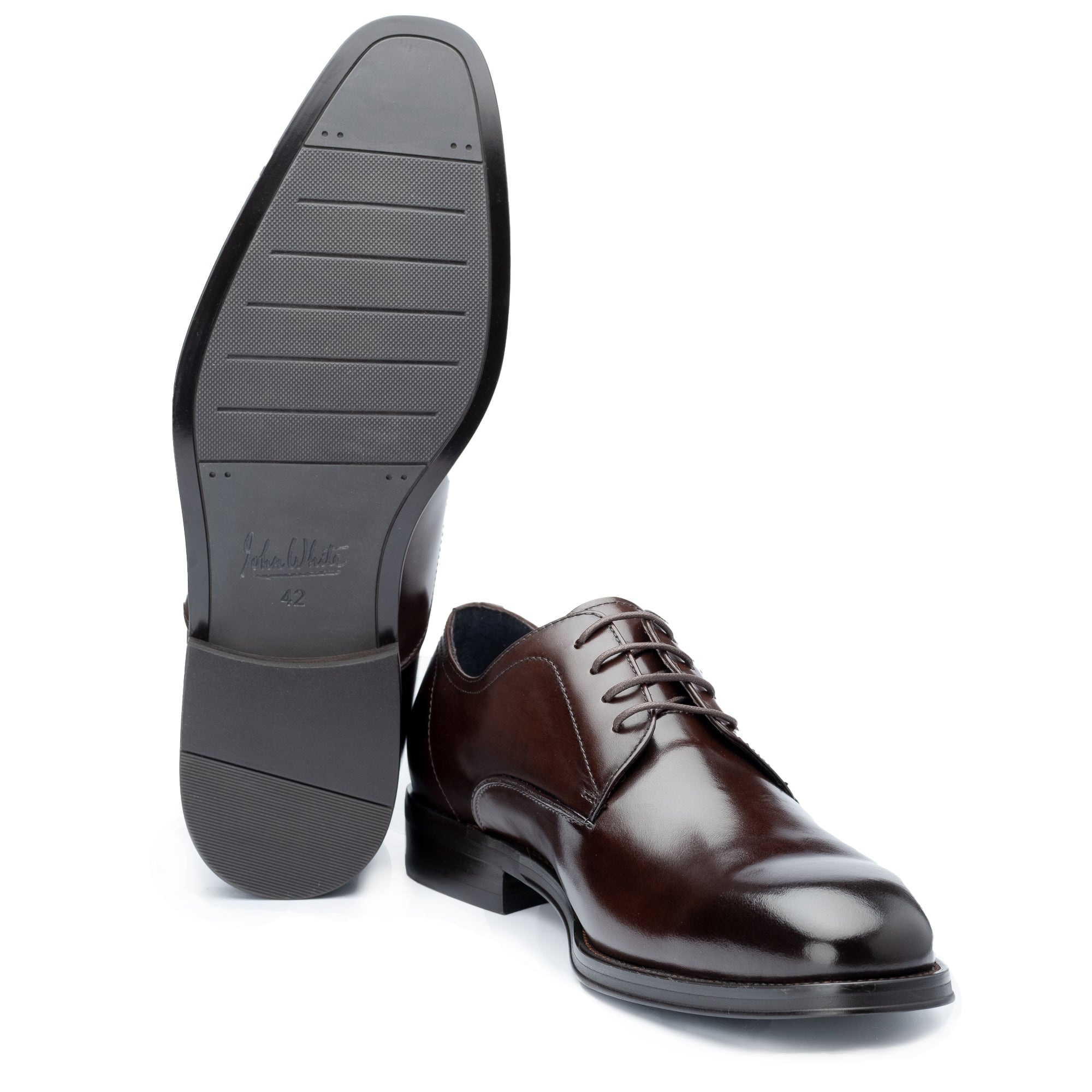
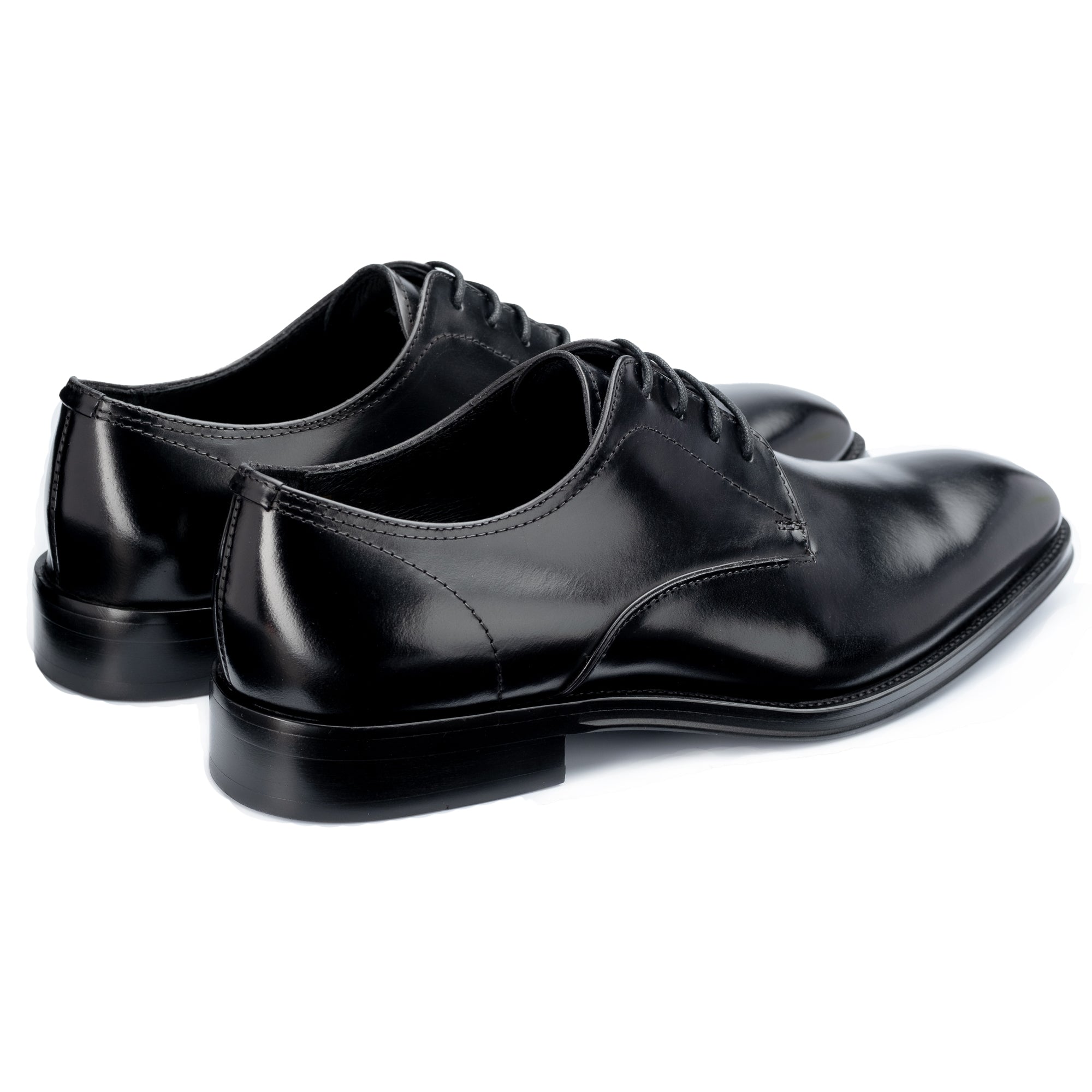
All three share the closed lacing system that defines Oxford construction — the quarters are stitched beneath the vamp, producing a sleek, unbroken profile that the Derby's open lacing cannot replicate. The plain-toe is the most restrained choice, with nothing to interrupt the clean line of the upper. The cap-toe adds a single toe seam that sharpens the silhouette without reducing formality. The wholecut, cut from a single piece of leather, represents the most technically demanding and formally elevated option of the three.
Explore John White Shoes' formal Oxford collection for all three constructions in black calf. For a detailed technical comparison of the two most popular formal styles, see Wholecut vs. Cap-Toe: A Definitive Guide to Formal Footwear.
Any of these three styles in black patent or mirror-polished black calf is categorically correct for a black tie wedding.
Patent Leather or Polished Calf — Which Should the Groom Choose?
Patent leather is the historic standard for black tie footwear. Its lacquered surface was developed in the 19th century specifically for formal evening dress and remains the most traditional finish for a dinner suit or white tie ensemble. It reflects light with an intensity that even the finest polished calf cannot match.
Mirror-polished black calf is the contemporary alternative, and the choice most grooms make today. A well-executed mirror shine — built through multiple layers of wax polish applied to fine-grain calfskin — approaches the reflective quality of patent without the single-occasion limitation. Polished calf can be reconditioned, resoled, and reworn across years of formal occasions. Patent leather, particularly the polyurethane-coated variants found at lower price points, cannot.
According to the Leather Conservation Centre, patent leather requires no conditioning but benefits from a specialist patent cleaner applied every three to four wears to maintain the integrity of its finish. Heritage-grade patent — genuine leather with a lacquer coating — is considerably more durable than synthetic alternatives.
For a groom who will wear the shoe beyond the wedding day, a Goodyear welted Oxford in fine black calf, finished to a mirror polish, is the more considered investment.
What Is the Case for the Wholecut Oxford at a Black Tie Wedding?
The wholecut Oxford is a single piece of leather drawn over the last with no toe seam or external joining — a construction that demands both an exceptional hide and exceptional technique. Premium British heritage brands including Loake, Barker, Crockett & Jones, Church's, and Grenson position the wholecut at the apex of their formal ranges, as does John White Shoes. Its appeal at a black tie wedding is self-evident: it is the most minimal, the most refined, and the most deliberately formal shoe available.
The wholecut does demand more from the wearer. Any blemish in the leather is fully exposed across the upper's unbroken surface, and a poorly polished wholecut is conspicuously worse than a well-polished plain-toe. For a groom willing to invest properly in preparation, however, it is the finest shoe a man can wear to his own wedding.
The wholecut Oxford, correctly polished on a fine hide, occupies the highest formal register available in men's footwear.
How Should the Groom's Shoes Coordinate with the Groomsmen?
Coordination at a wedding party does not mean uniformity. A groom in patent leather while the groomsmen wear polished calf is a precise and correct distinction. A groom in a wholecut while the groomsmen wear cap-toes is equally valid. The principle is that the groom's shoe should be the most refined expression of the shared formal code.
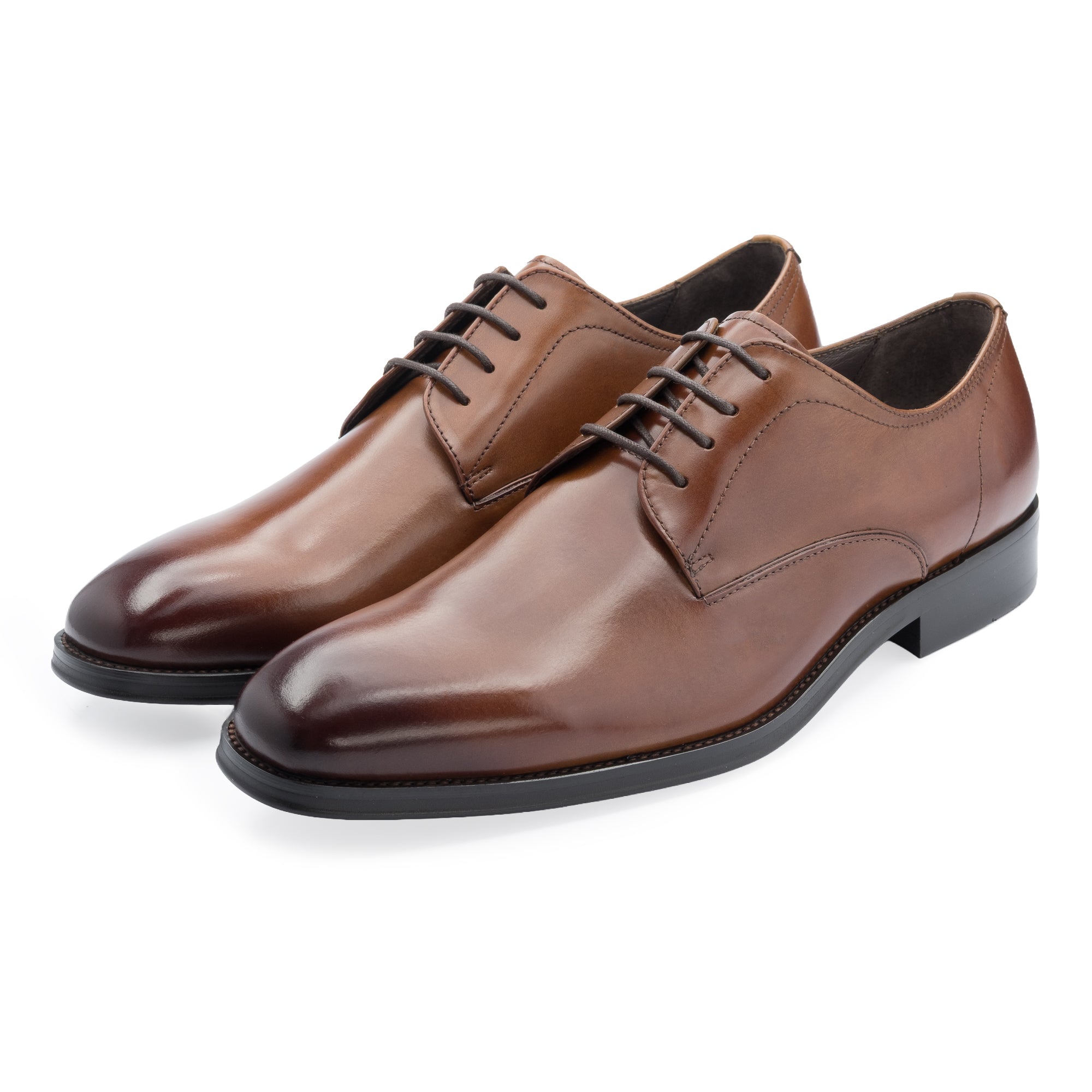
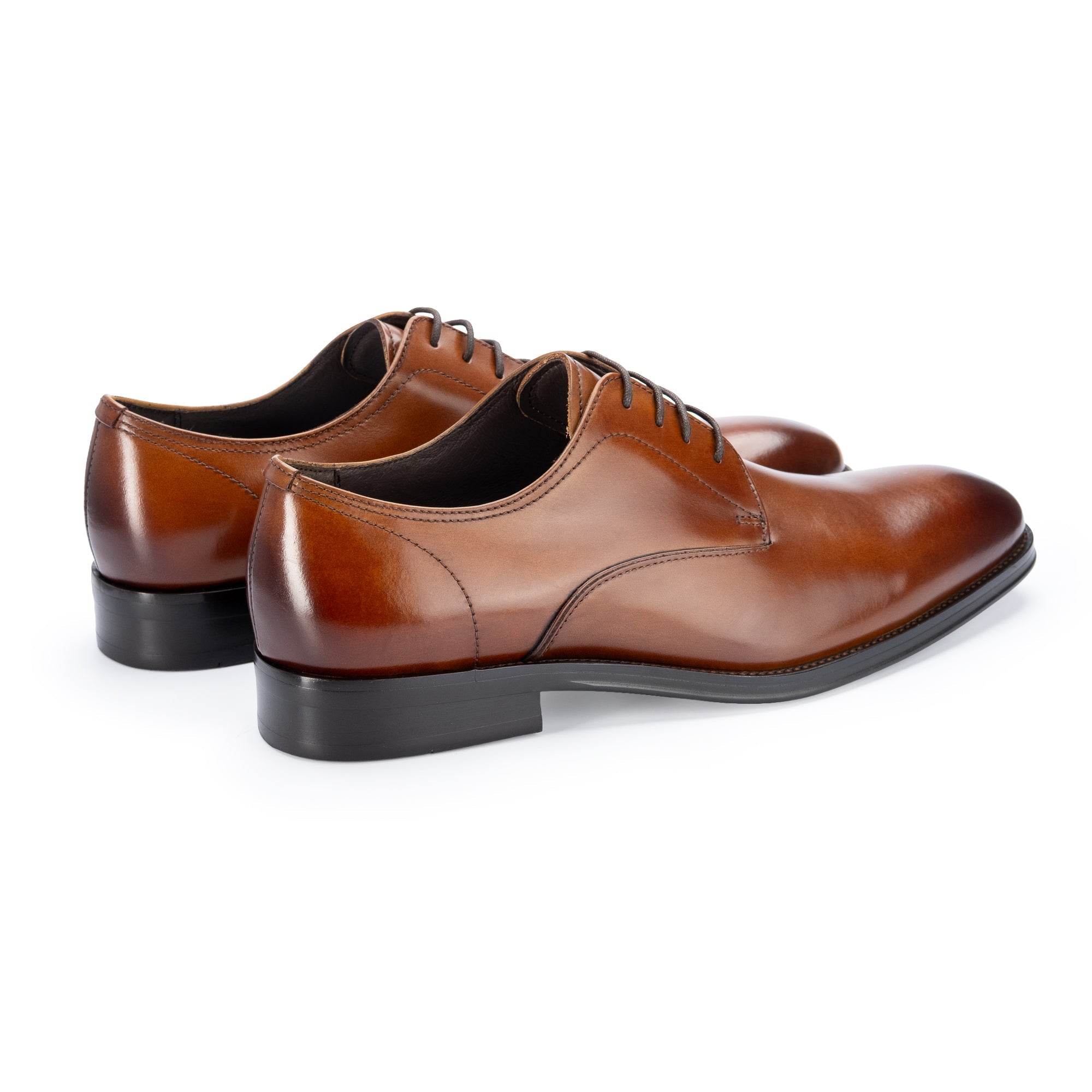
What to avoid is mismatched formality registers entirely. A groom in sleek black Oxford against groomsmen in tan suede creates visual incoherence rather than distinction. Everyone should occupy the same formal register; the groom simply occupies its upper tier.
The groom's shoe should be the finest version of what the wedding party collectively wears — not a departure from it.
What Construction Should a Groom's Black Tie Shoe Have?
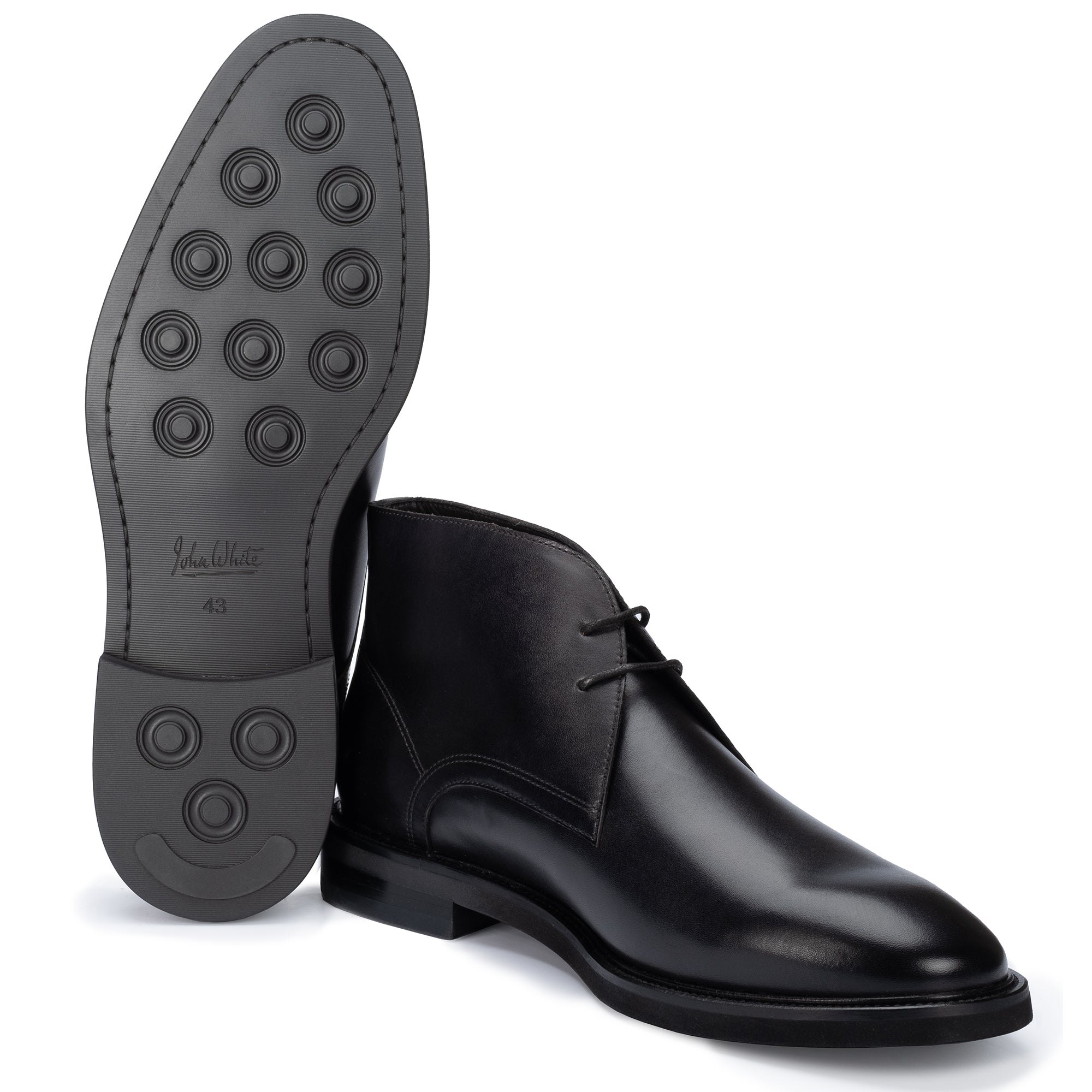
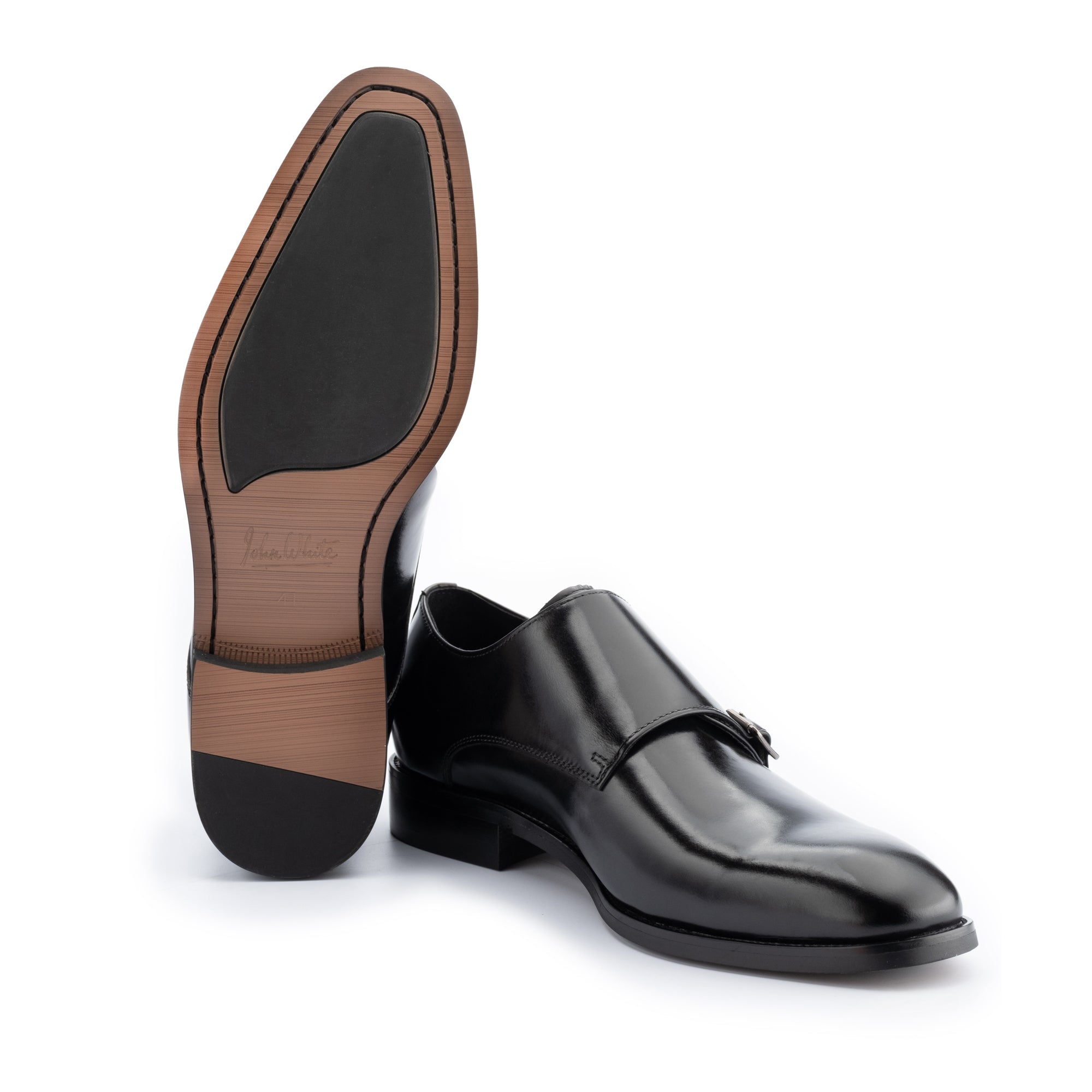
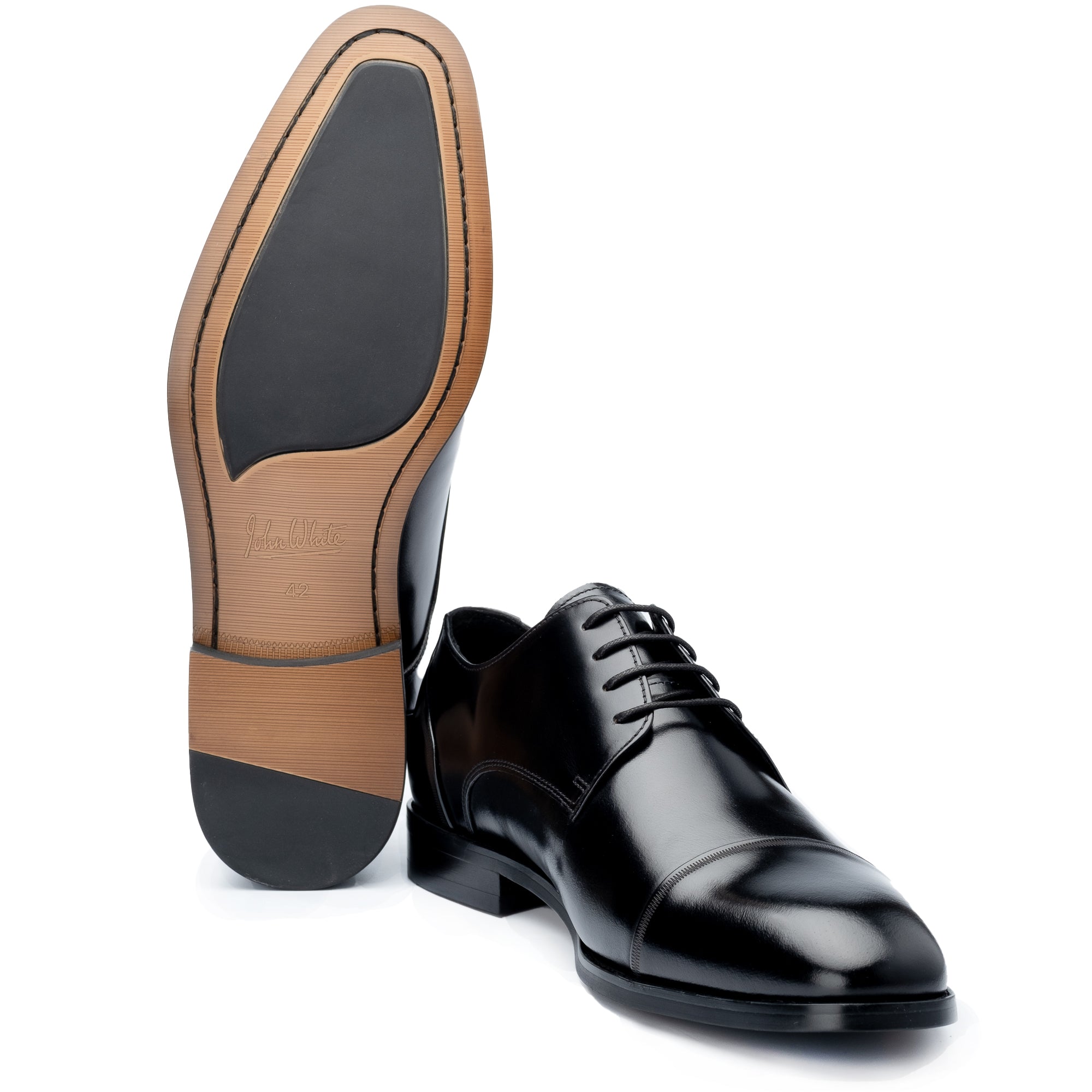
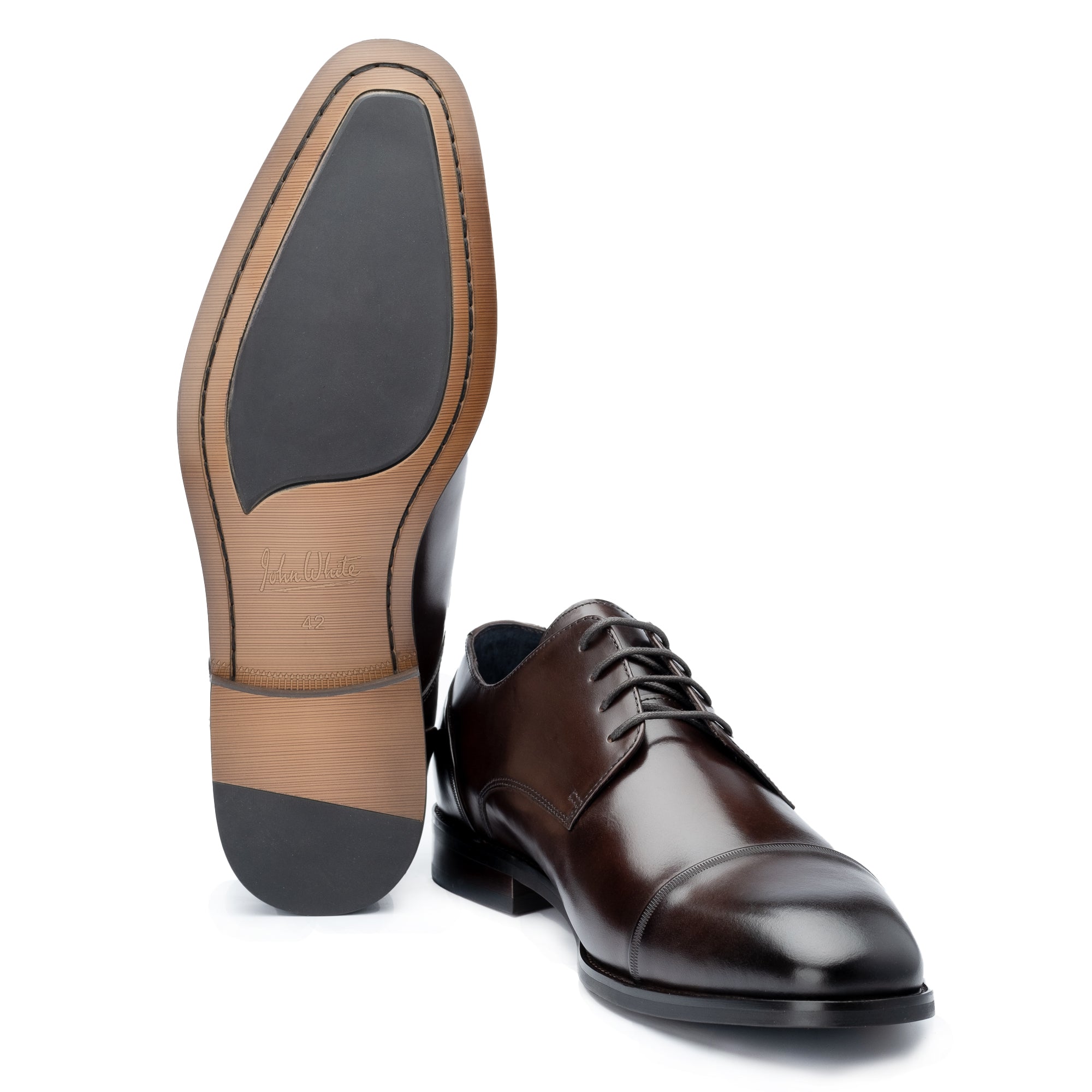
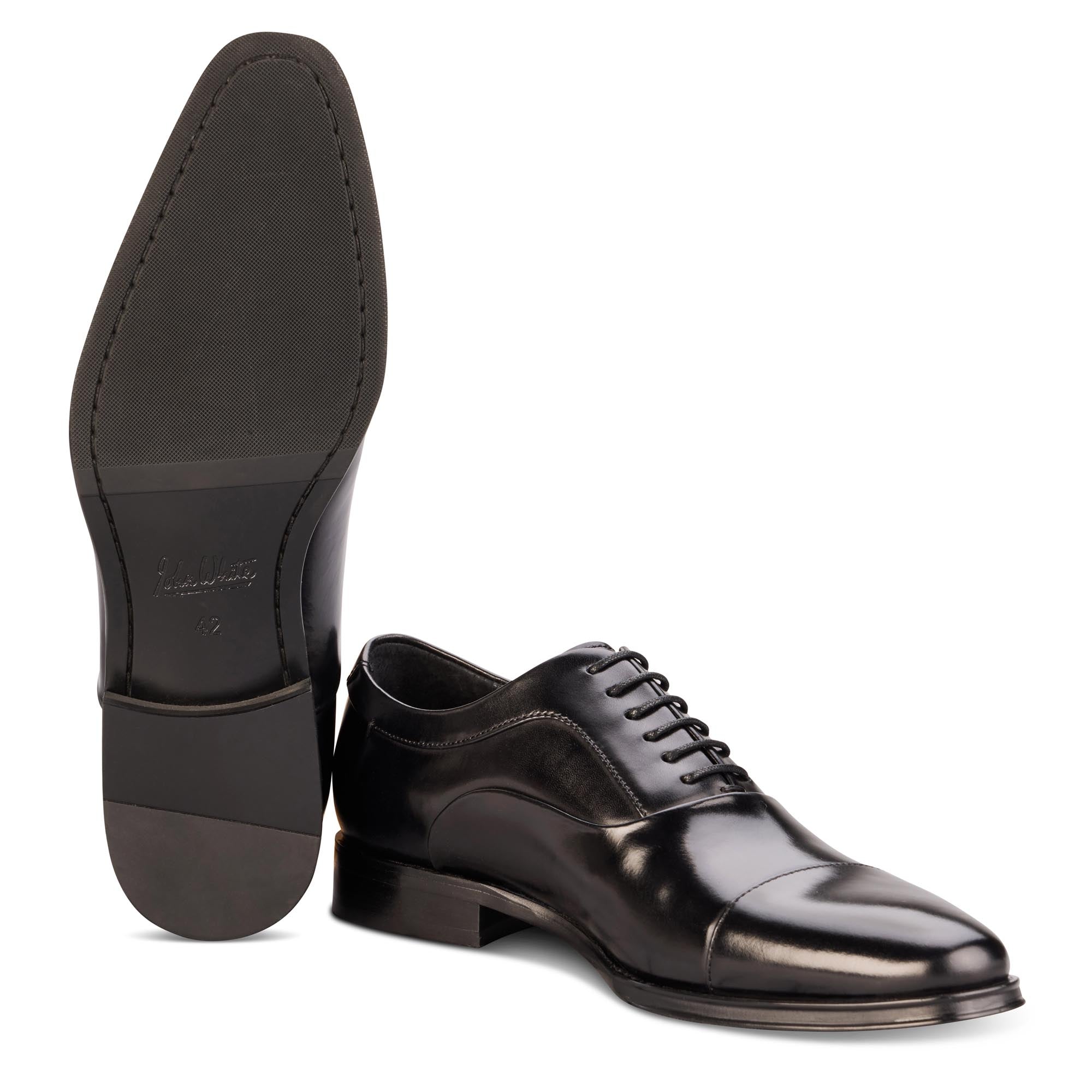
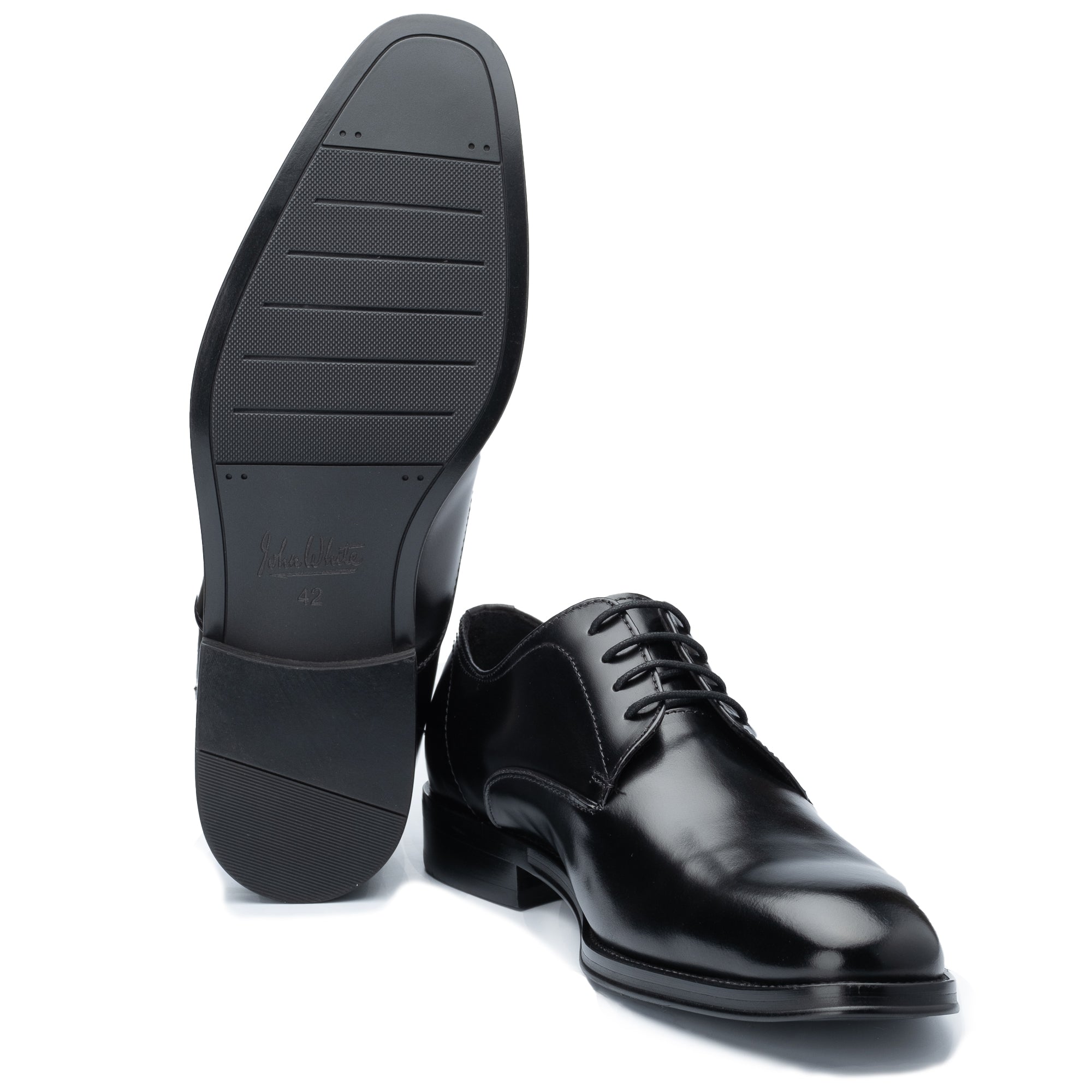
Goodyear welted construction is the correct foundation for a black tie wedding shoe. The welt joins the upper to the insole and outsole in a structure that can be resoled, allowing the shoe to outlast any single occasion. According to the Society of Master Shoe Repairers, Goodyear welted shoes that are properly maintained and resoled can remain in service for 20 to 30 years — a compelling argument for investing at this level for a day of genuine significance.
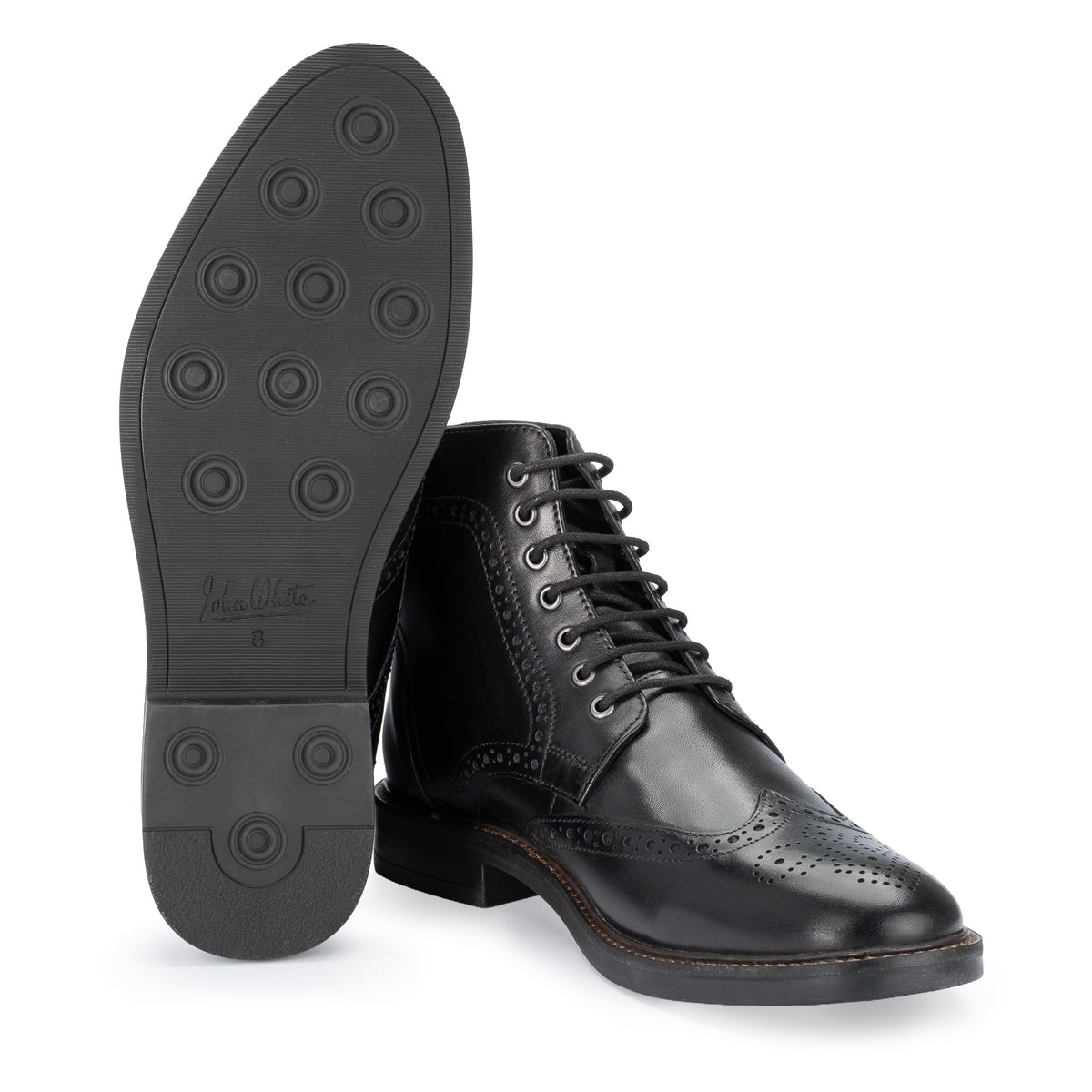
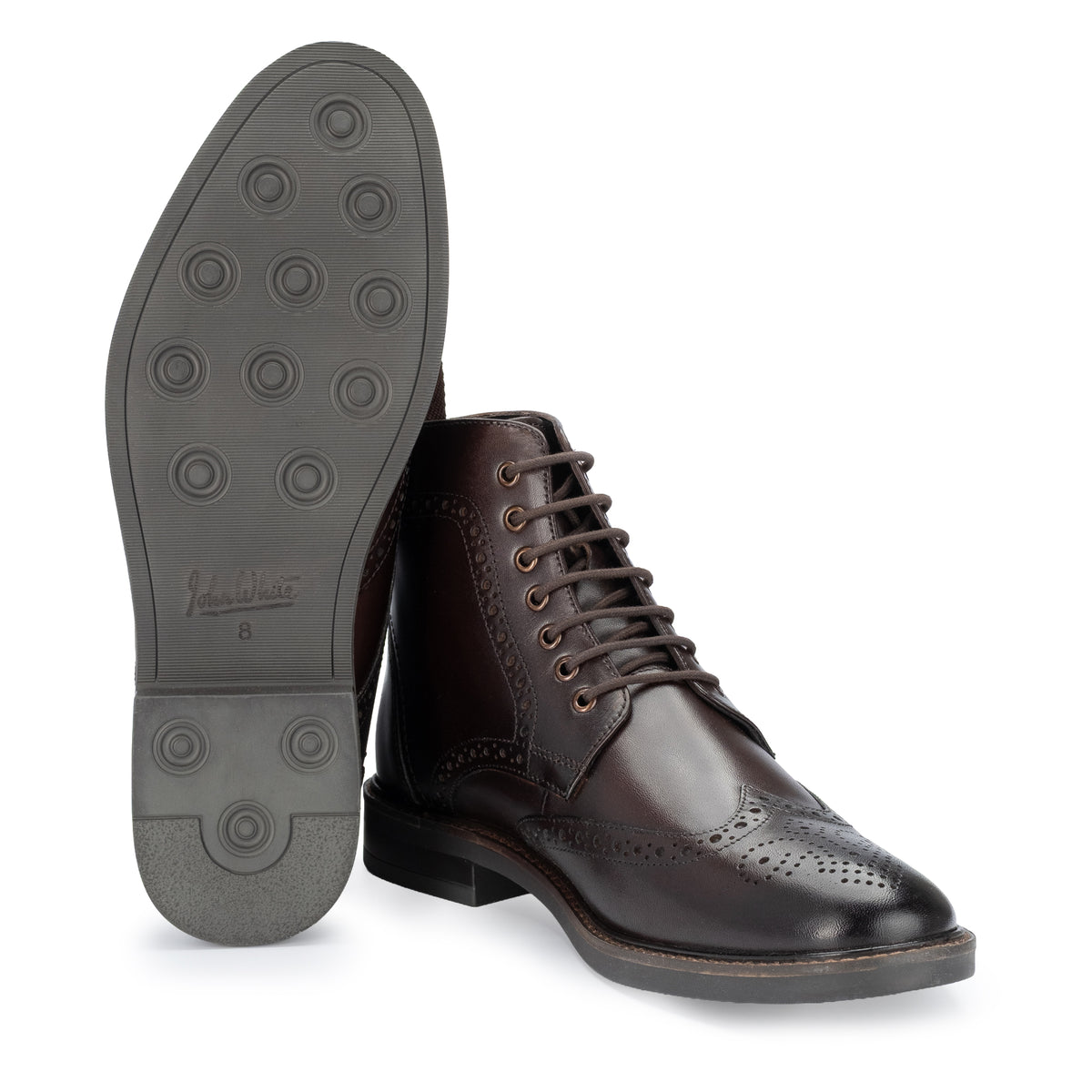
A leather sole completes the formal picture. It produces the cleanest silhouette, the most refined sound on stone floors, and the aesthetic coherence that the dress code demands. For a full comparison of sole materials and their implications, see Leather Soles vs Rubber Soles: Which Is Right for You?
Goodyear welted construction on a leather-soled black Oxford is not over-investment for a black tie wedding — it is the appropriate standard.
When Should the Groom Buy and Break In His Wedding Shoes?
Purchase wedding shoes no later than eight weeks before the ceremony. This allows adequate time to break them in without rushing the process — and without the risk of discovering a fit issue too late to correct.
According to the Society of Master Shoe Repairers, breaking in leather shoes for a minimum of 10 to 15 hours of wear before any significant occasion dramatically reduces the risk of discomfort during prolonged standing. Wear the shoes around the house in the evenings, introduce short walks, and use a quality cedar shoe tree between wears to stretch the leather incrementally.
Industry advice from experienced cobblers is consistent: new leather on an unfamiliar last, worn under the physical and emotional intensity of a wedding day — ceremony, photographs, reception, dancing — will amplify any friction point that a few additional hours of wear would have resolved entirely. For the correct method in full, see How to Break In New Leather Shoes: The Right Method, Done Properly.
Eight weeks out, 10 to 15 hours of wear, and a cedar shoe tree between sessions — that is the minimum preparation a groom owes himself before wearing new formal leather to a black tie wedding.
How Should a Groom Prepare His Wedding Shoes Before the Ceremony?
- Three days before: Clean the uppers with a lightly damp cloth to remove surface dust and residue. Allow to dry naturally away from heat.
- Two days before: Apply a thin layer of quality leather conditioner. This nourishes the hide and ensures the subsequent polish layers adhere evenly.
- The evening before: Apply a base coat of fine black wax polish and buff to a mid-shine. Apply a second, thinner coat. Build the mirror finish on the toe cap using a small amount of polish on a fingertip, a few drops of water, and small circular strokes. Repeat until the surface reflects cleanly.
- The morning of: A final buff with a clean cloth and a light mist of water on the toe cap. Insert cedar shoe trees immediately after the ceremony to hold the shape through the reception.
Polishing a wedding shoe properly is not a 10-minute exercise. Allocate at least 45 minutes the evening before to achieve a finish worthy of the occasion. Browse our formal shoe range and each pair ships with care notes to support this process.
A mirror polish built the evening before the ceremony will hold better through a full wedding day than a hurried shine applied the morning of.
Black Tie Wedding Shoe Options: At a Glance
| Style | Formality Level | Correct Finish | Best For | Post-Wedding Versatility |
|---|---|---|---|---|
| Plain-Toe Oxford | Very High | Polished Calf or Patent | Understated, classic elegance | High — rewears across formal occasions |
| Cap-Toe Oxford | Very High | Polished Calf or Patent | Defined silhouette, broad formality | High — business formal to black tie |
| Wholecut Oxford | Highest | Polished Calf or Patent | Maximum refinement, centrepiece shoe | Moderate — best reserved for highest formality |
| Patent Opera Pump | Very High (White Tie) | Patent only | White tie or ultra-traditional black tie | Low — niche formality occasions only |
Related Guides
- The Complete Guide to Men's Dress Shoes — our comprehensive guide
- The Complete Guide to Men's Dress Shoes — our comprehensive guide
- Black Tie Shoes: Plain Oxford, Patent or Polished Calf
- The Formality Spectrum: A Definitive Ranking of Men's Dress Shoes
- Men's Shoes for a Wedding Guest: What to Wear at Every Dress Code
TL;DR
For a black tie wedding, the groom should wear a plain-toe, cap-toe, or wholecut Oxford in black patent or mirror-polished calf. Goodyear welted construction on a leather sole is the correct standard. Purchase eight weeks ahead, break in the shoe for at least 10 to 15 hours before the day, and polish to a mirror finish the evening before the ceremony. The wholecut represents the highest available register; the cap-toe offers the greatest versatility across future formal occasions. John White Shoes' formal Oxford collection covers all three constructions in black calf.
Frequently Asked Questions
Can the groom wear a Derby shoe to a black tie wedding?
A Derby is not technically incorrect at black tie, but it sits below the Oxford on the formality spectrum. The open lacing system — quarters stitched on top of the vamp — creates a more relaxed silhouette that the majority of menswear authorities consider unsuitable for full black tie. For a groom's wedding shoe, a closed-lace Oxford is the correct choice.
Is broguing acceptable on a groom's black tie wedding shoe?
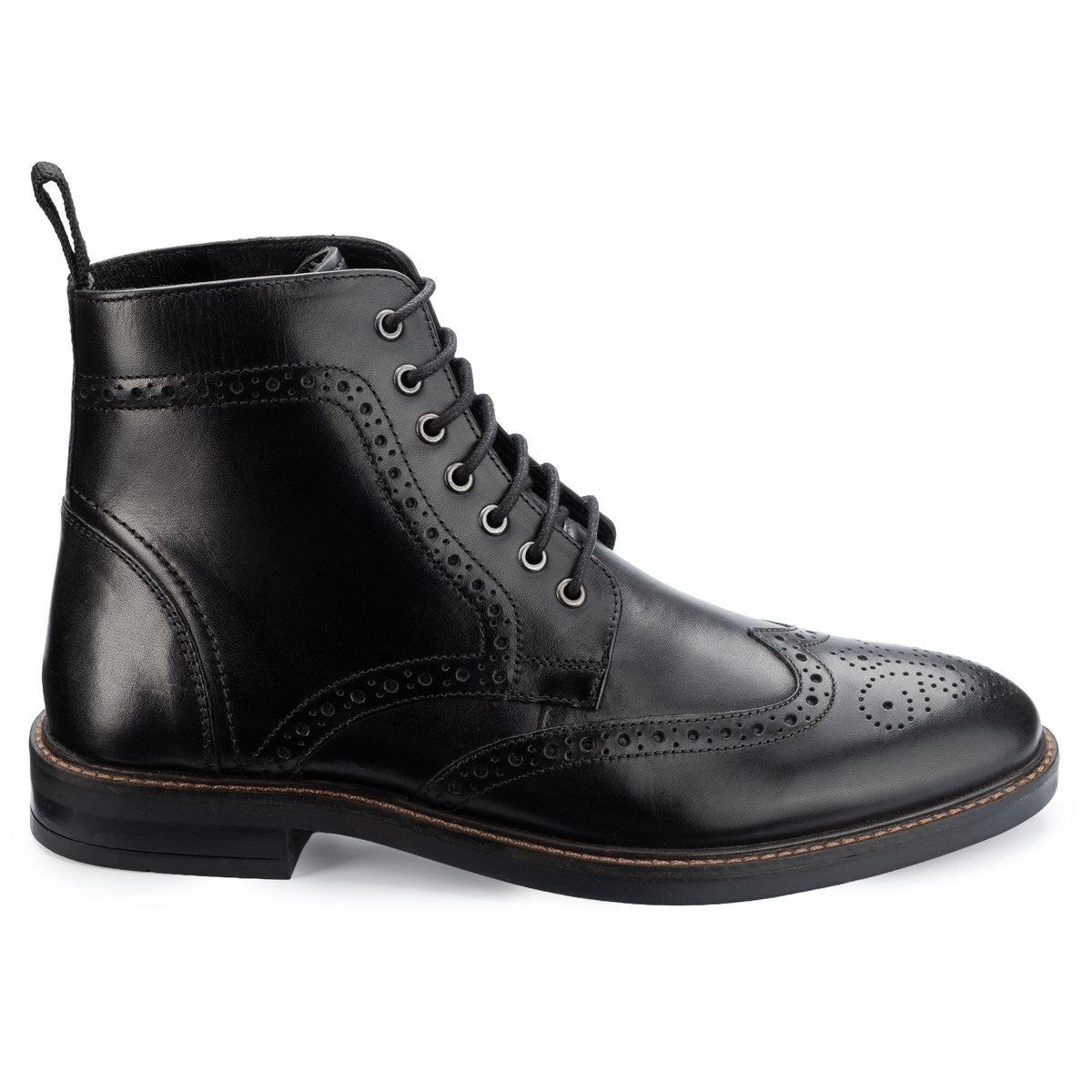
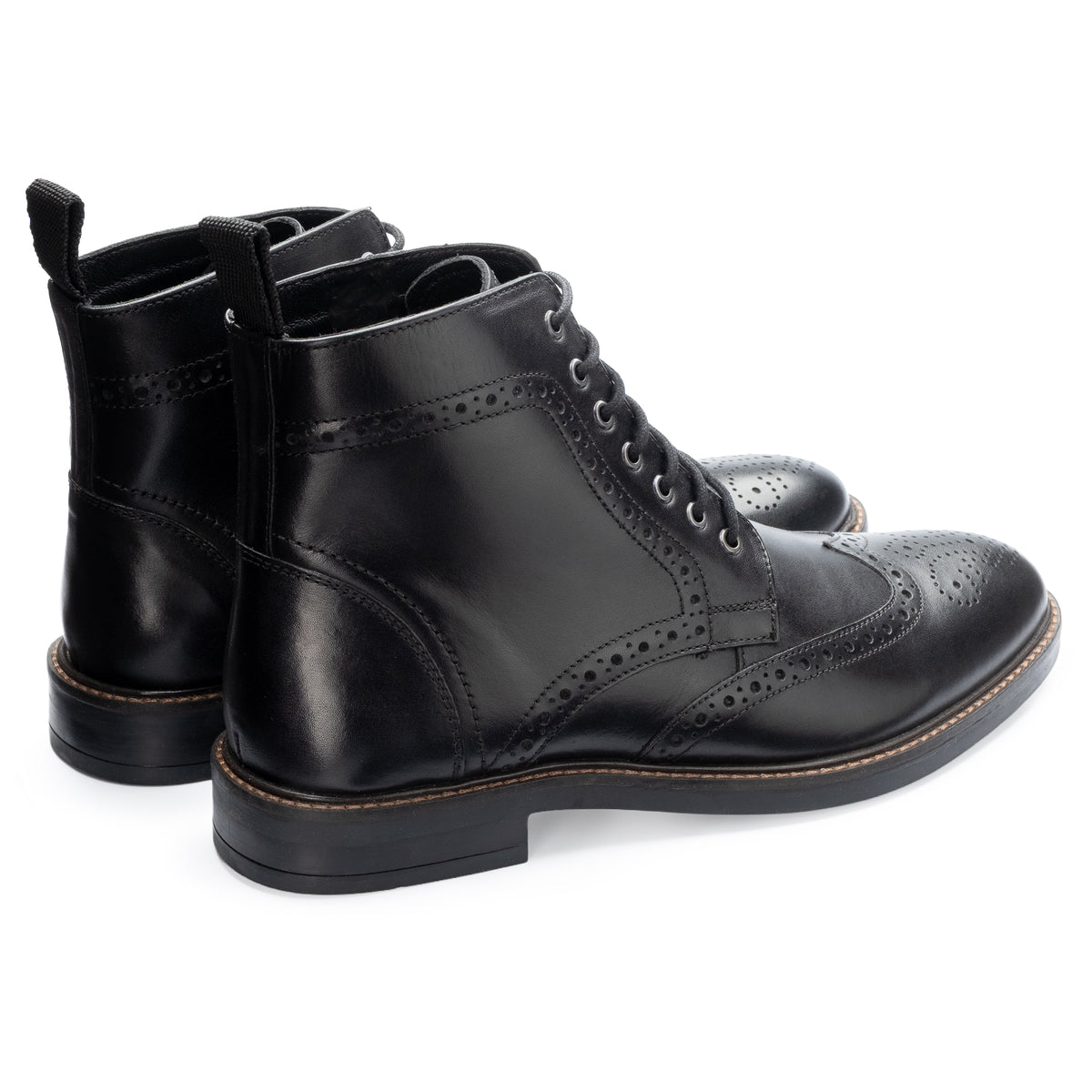
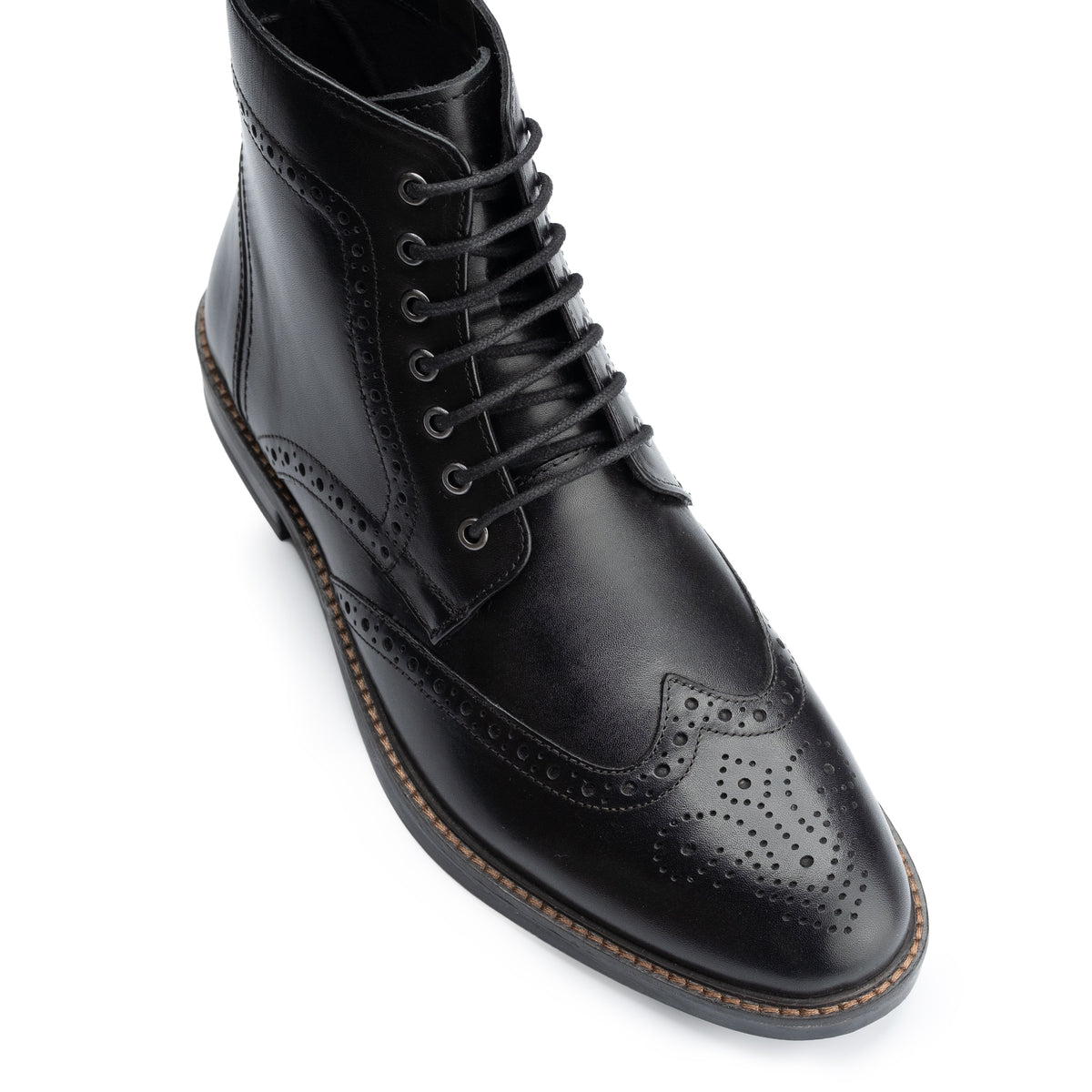
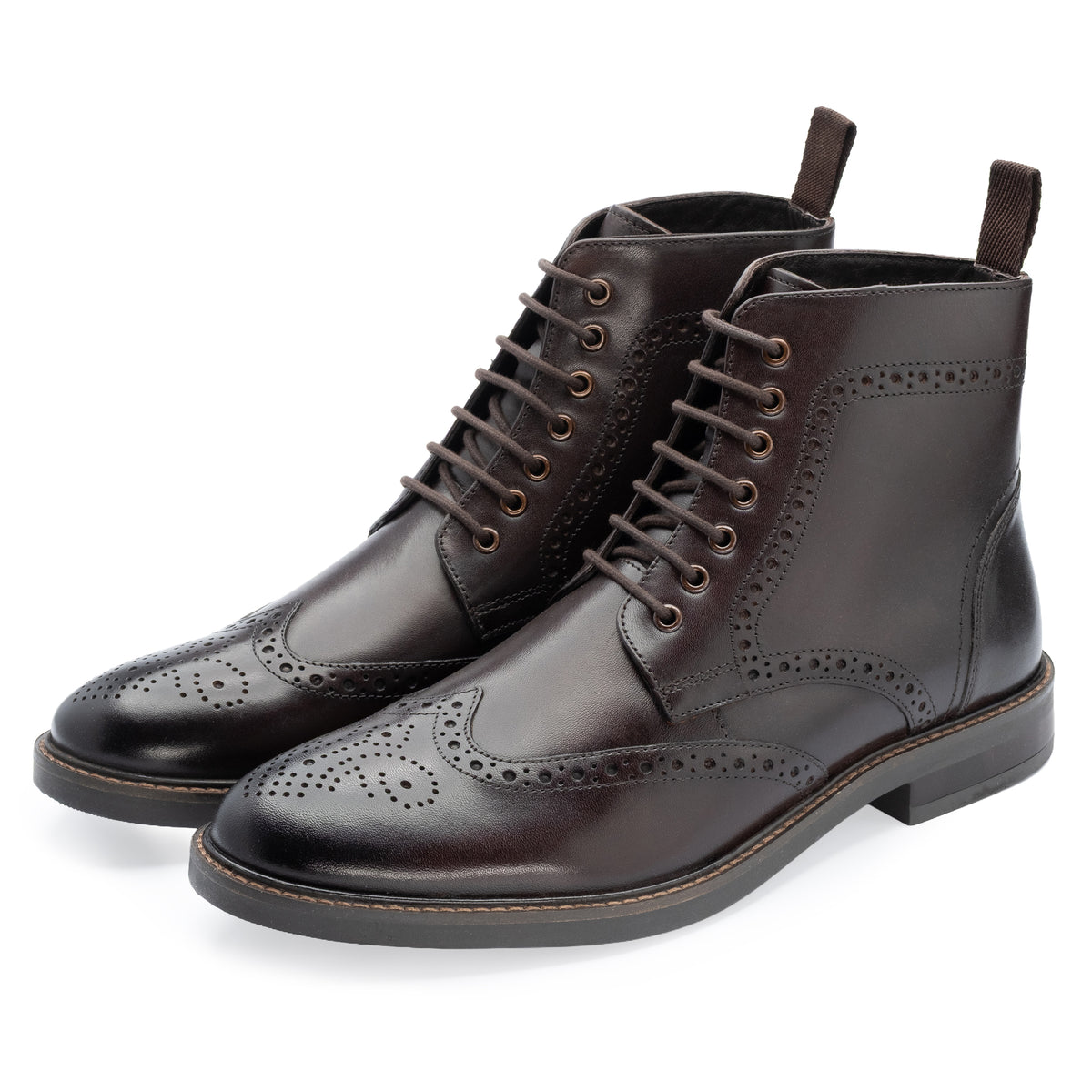
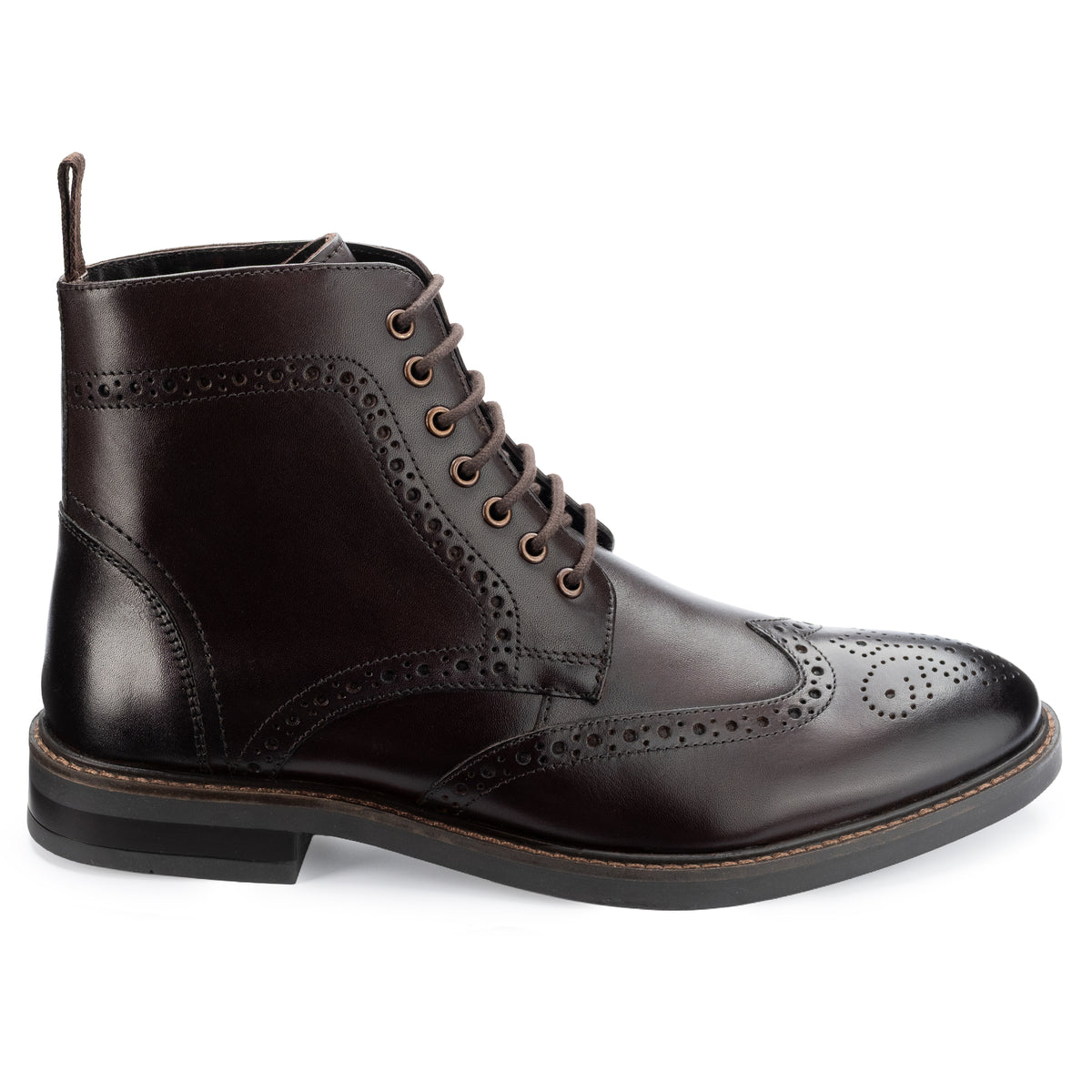
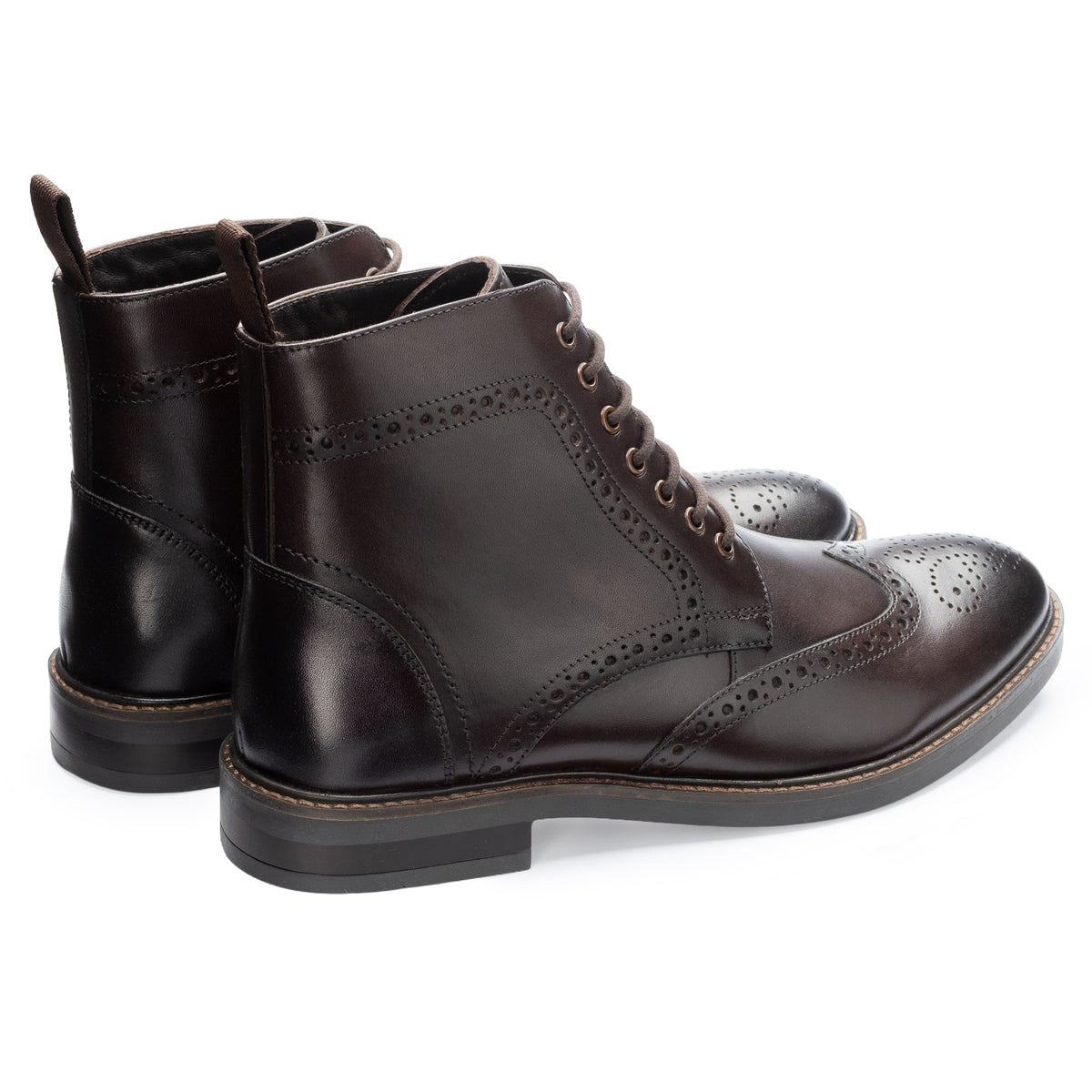
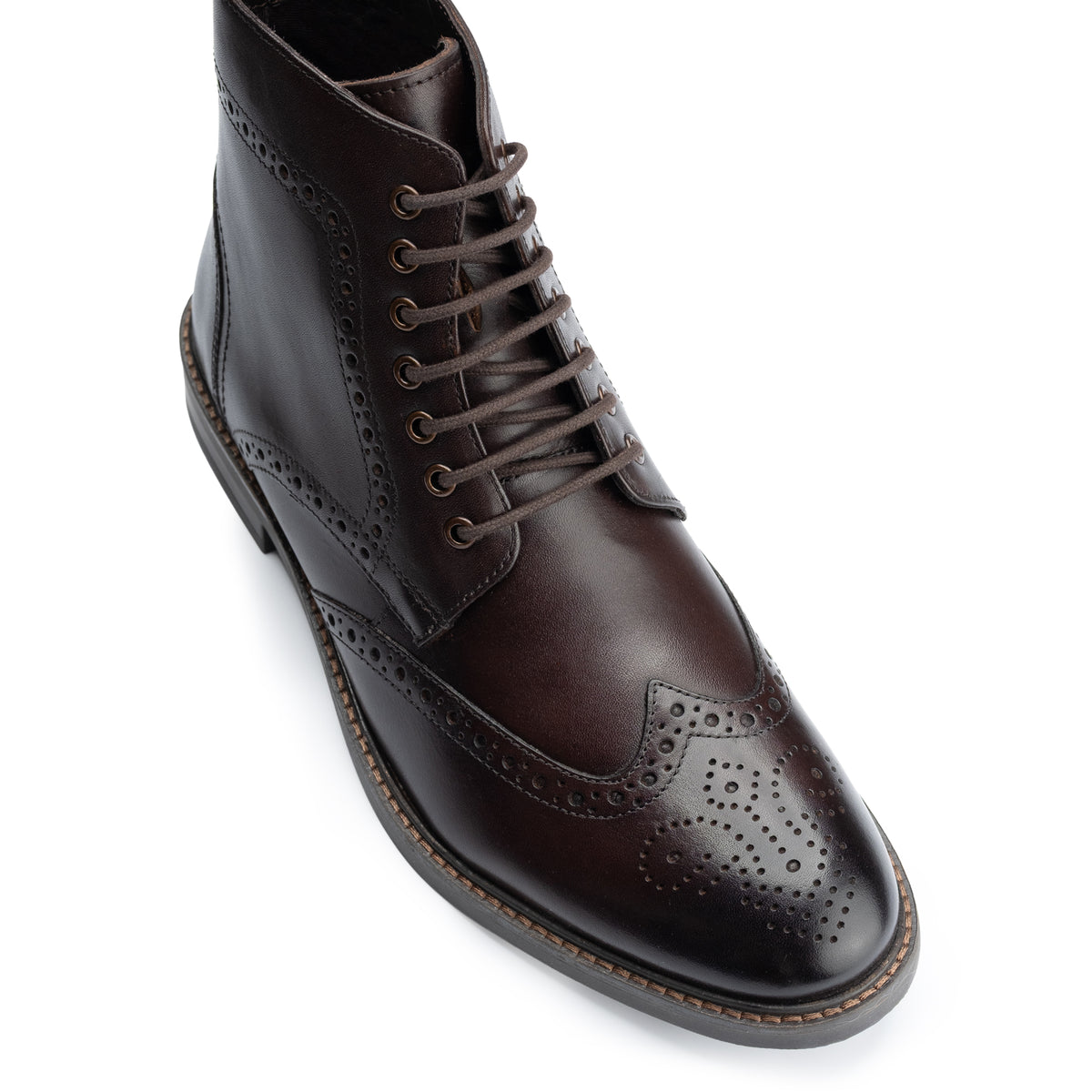
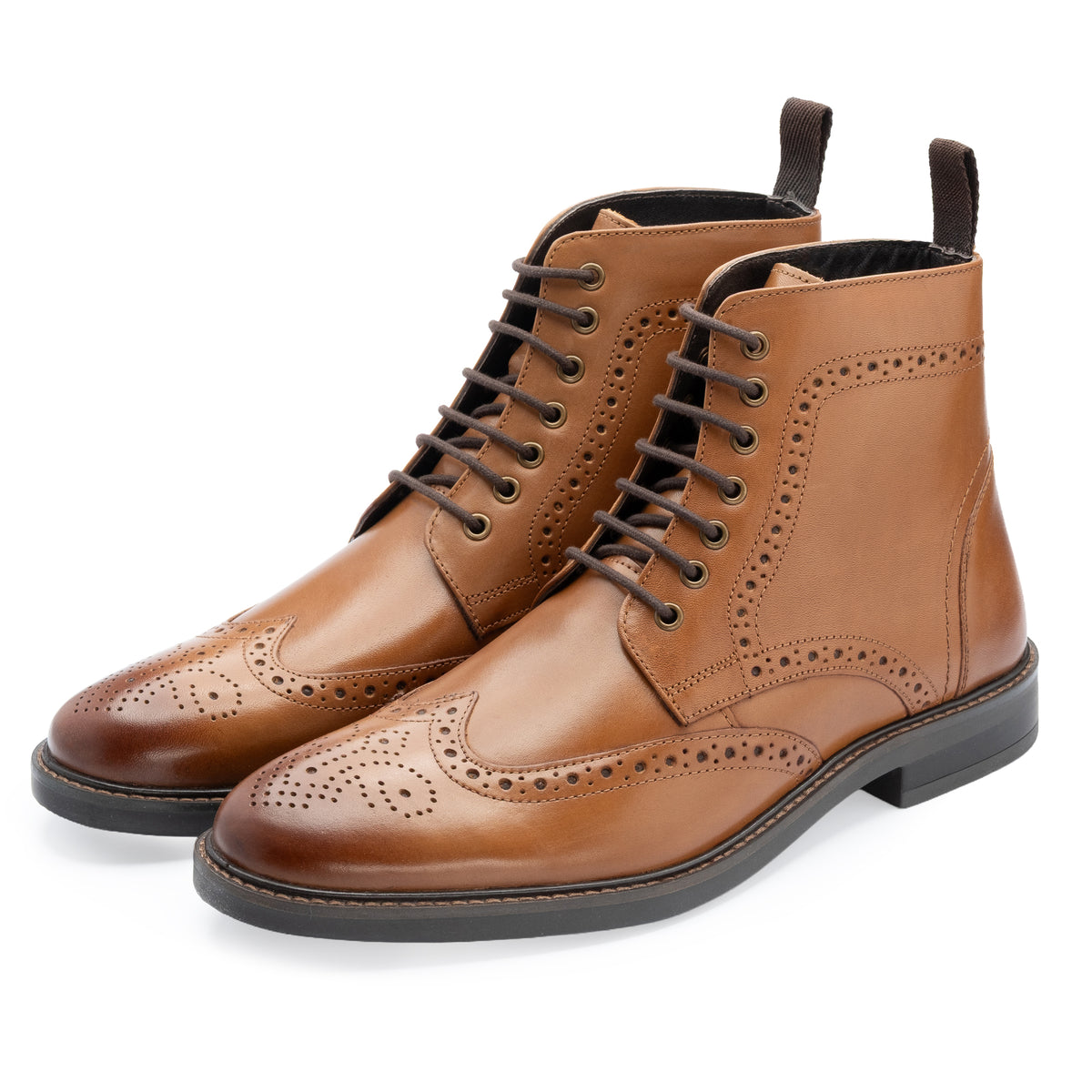
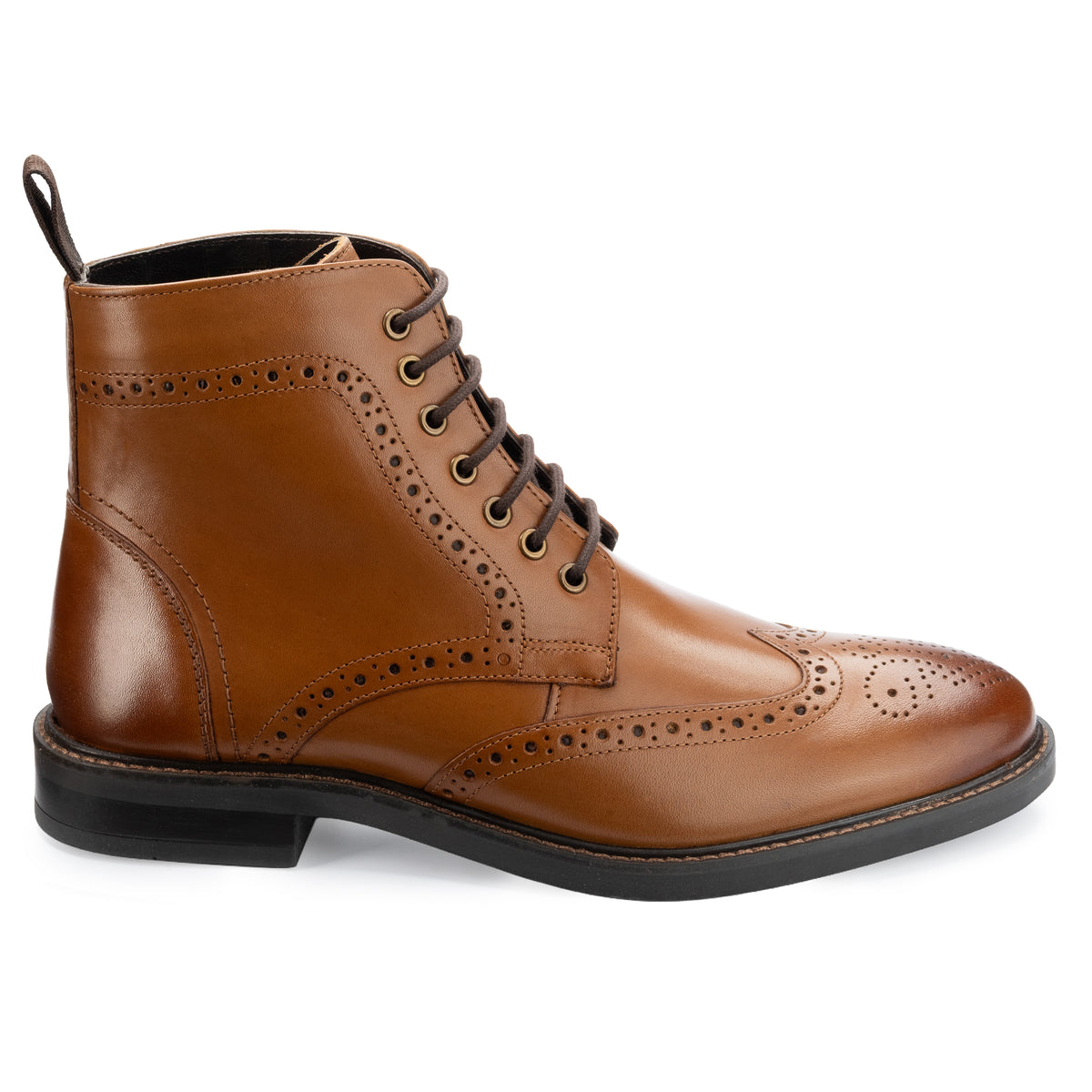
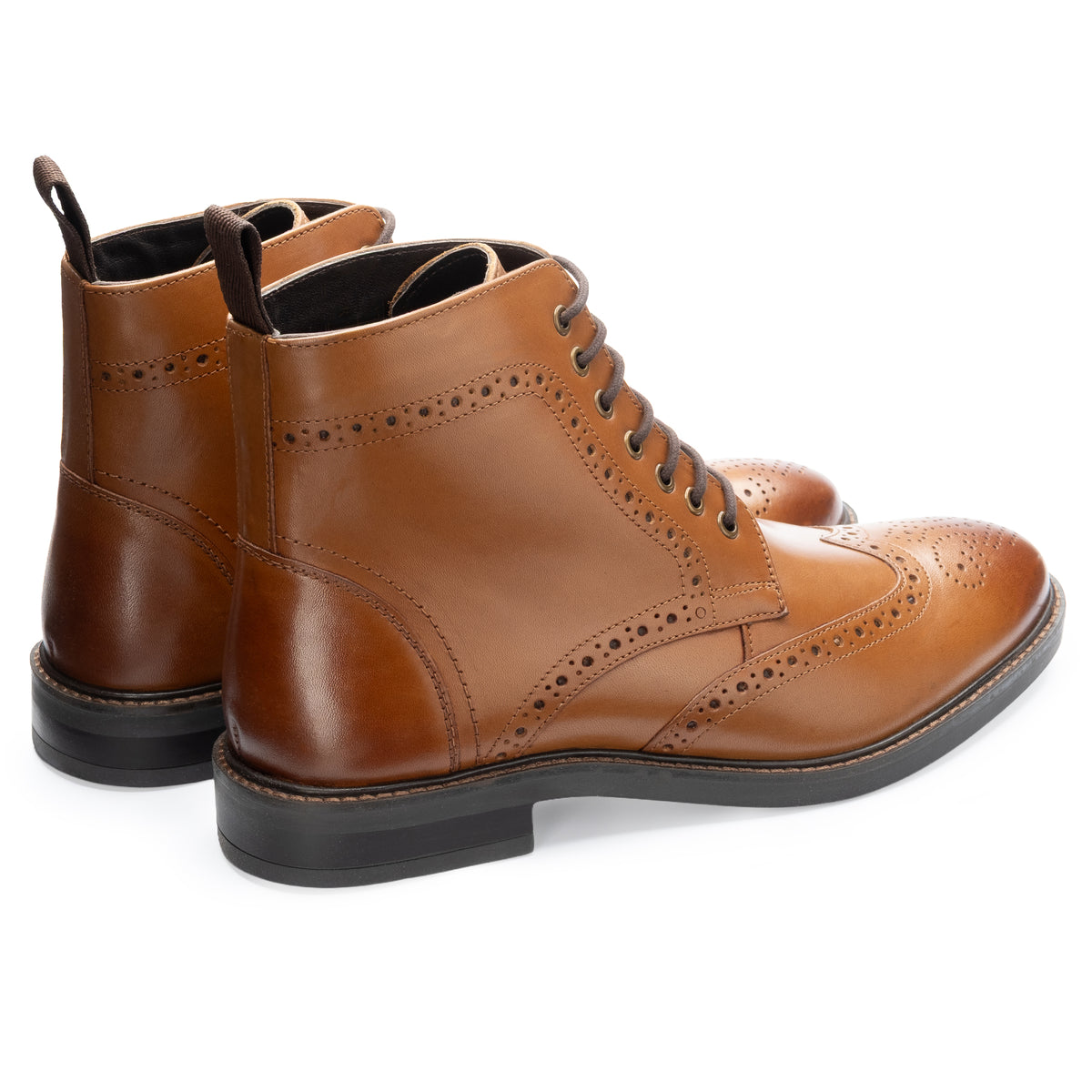
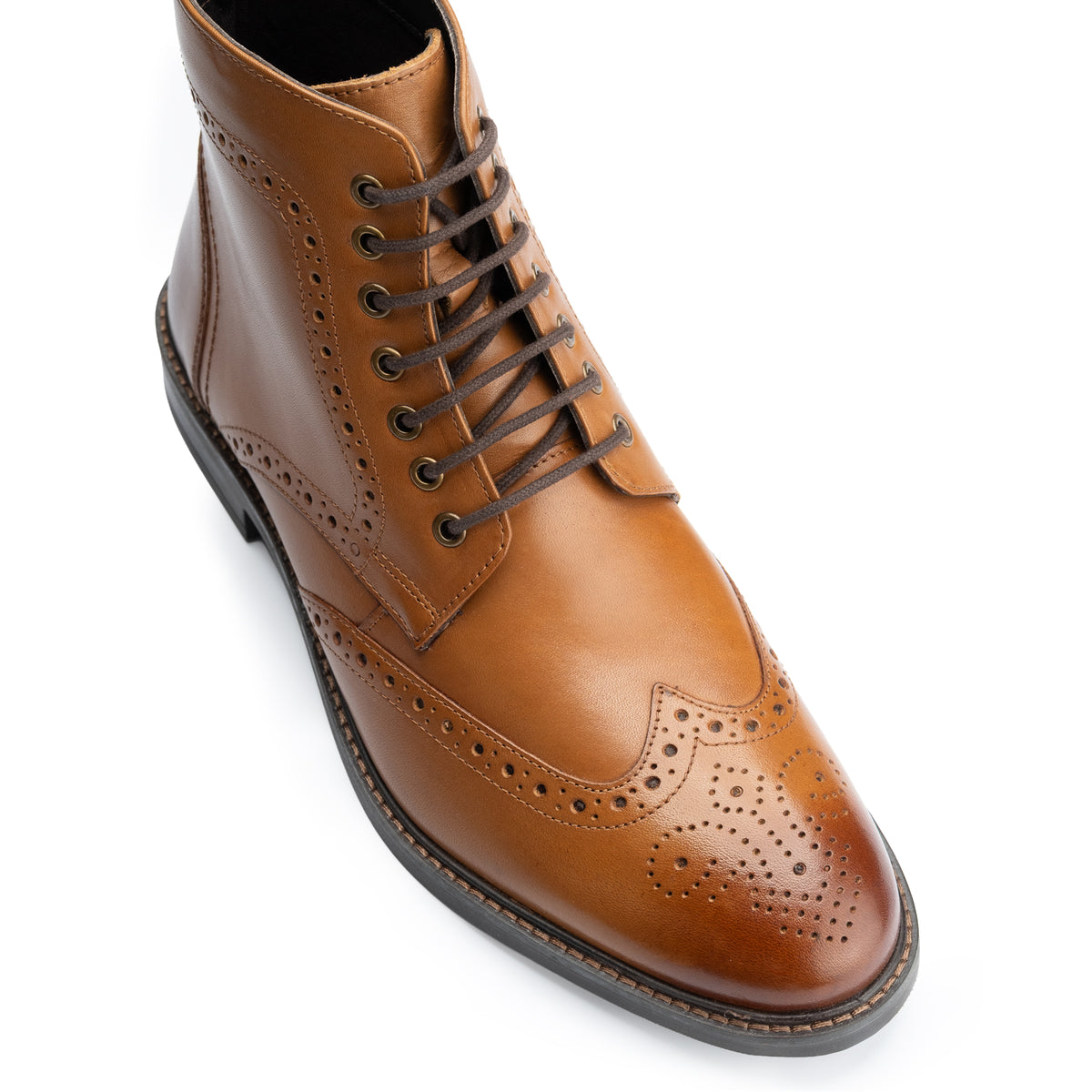
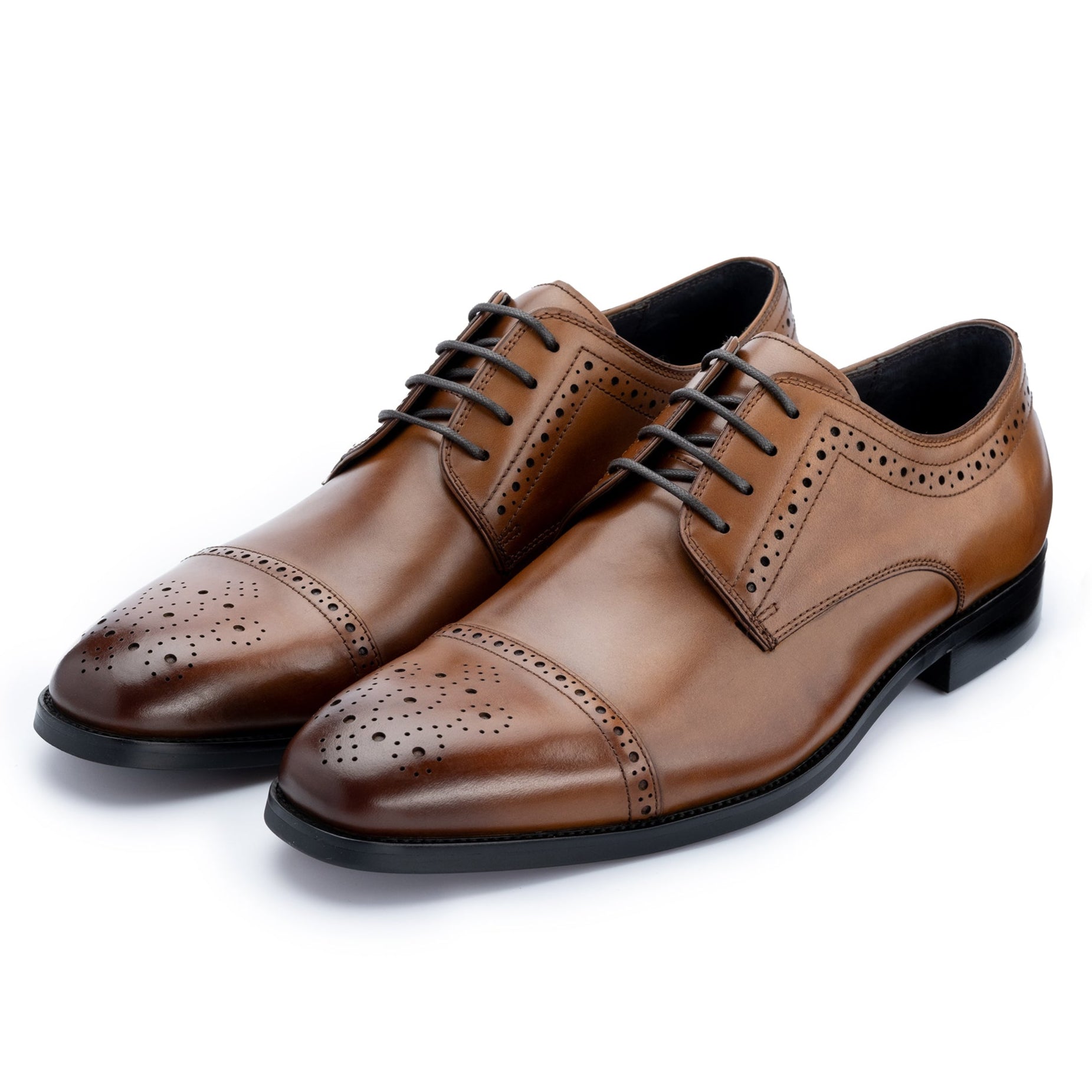
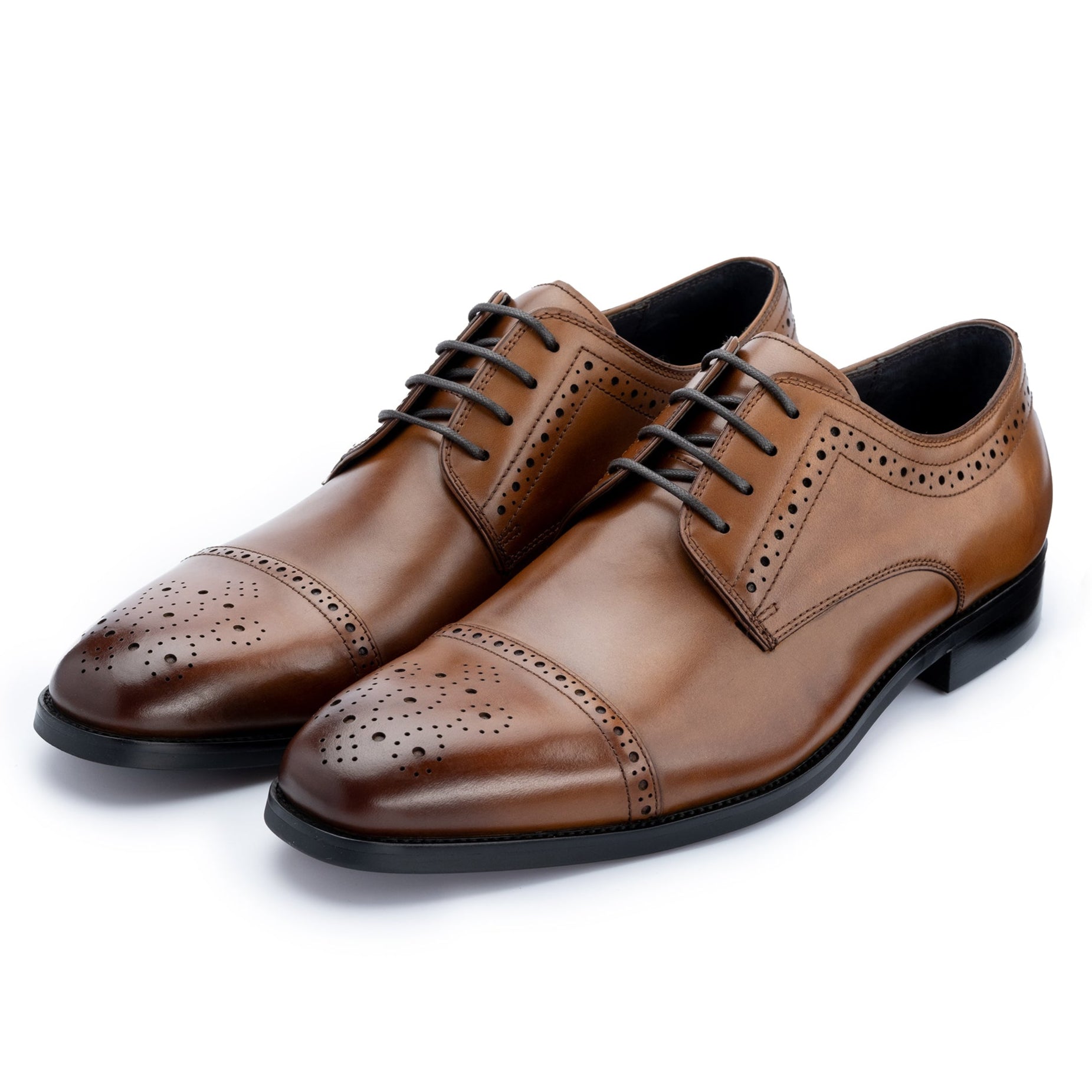
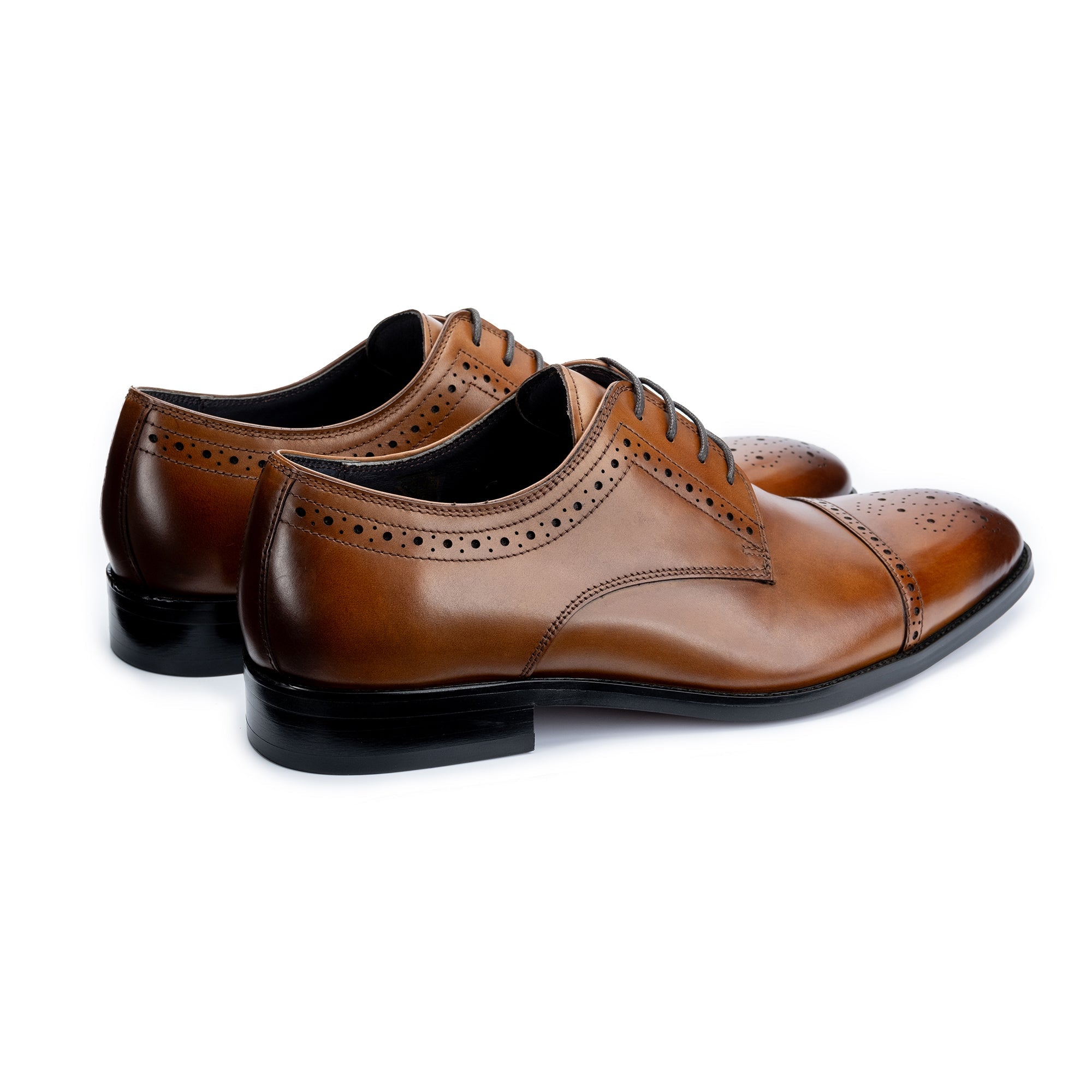
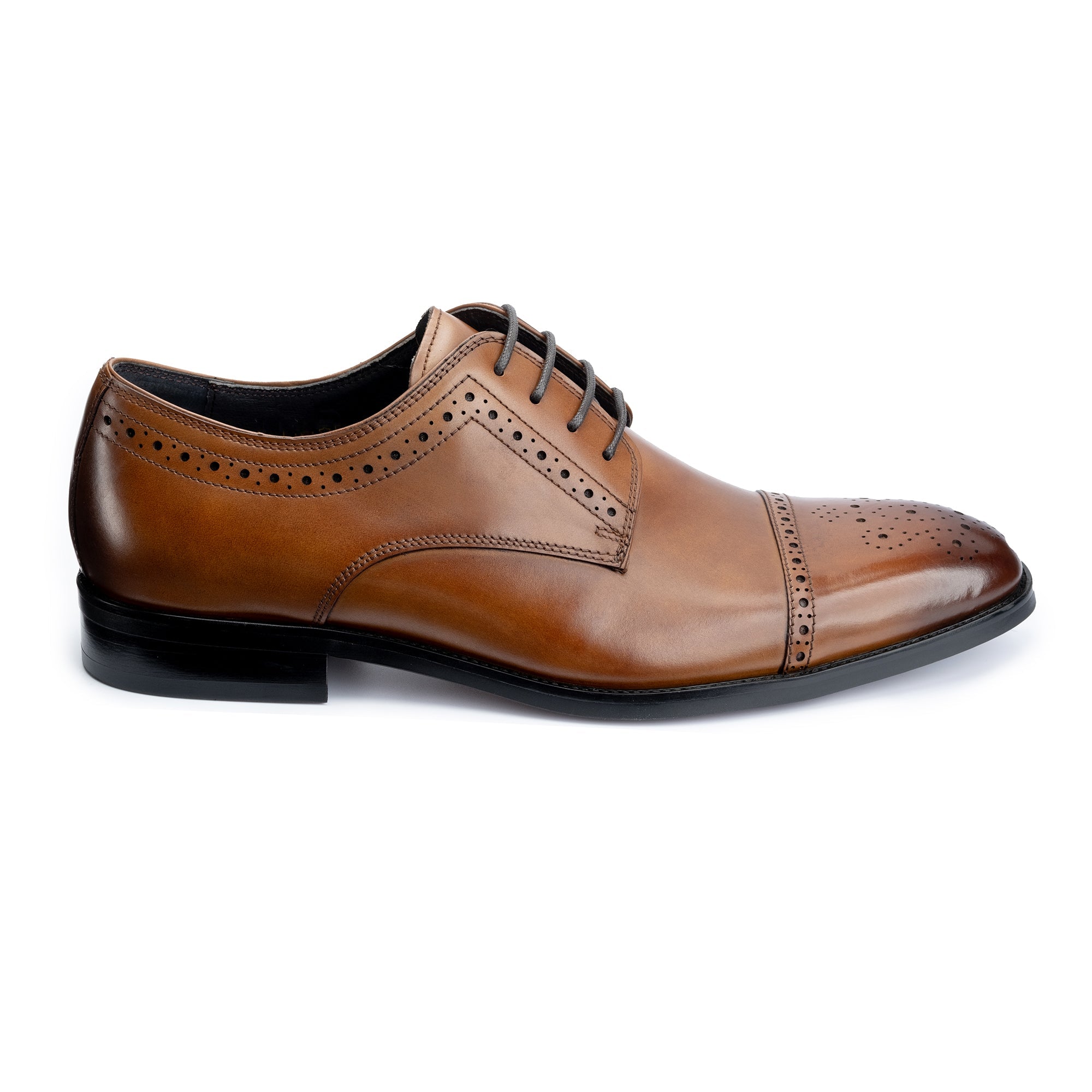
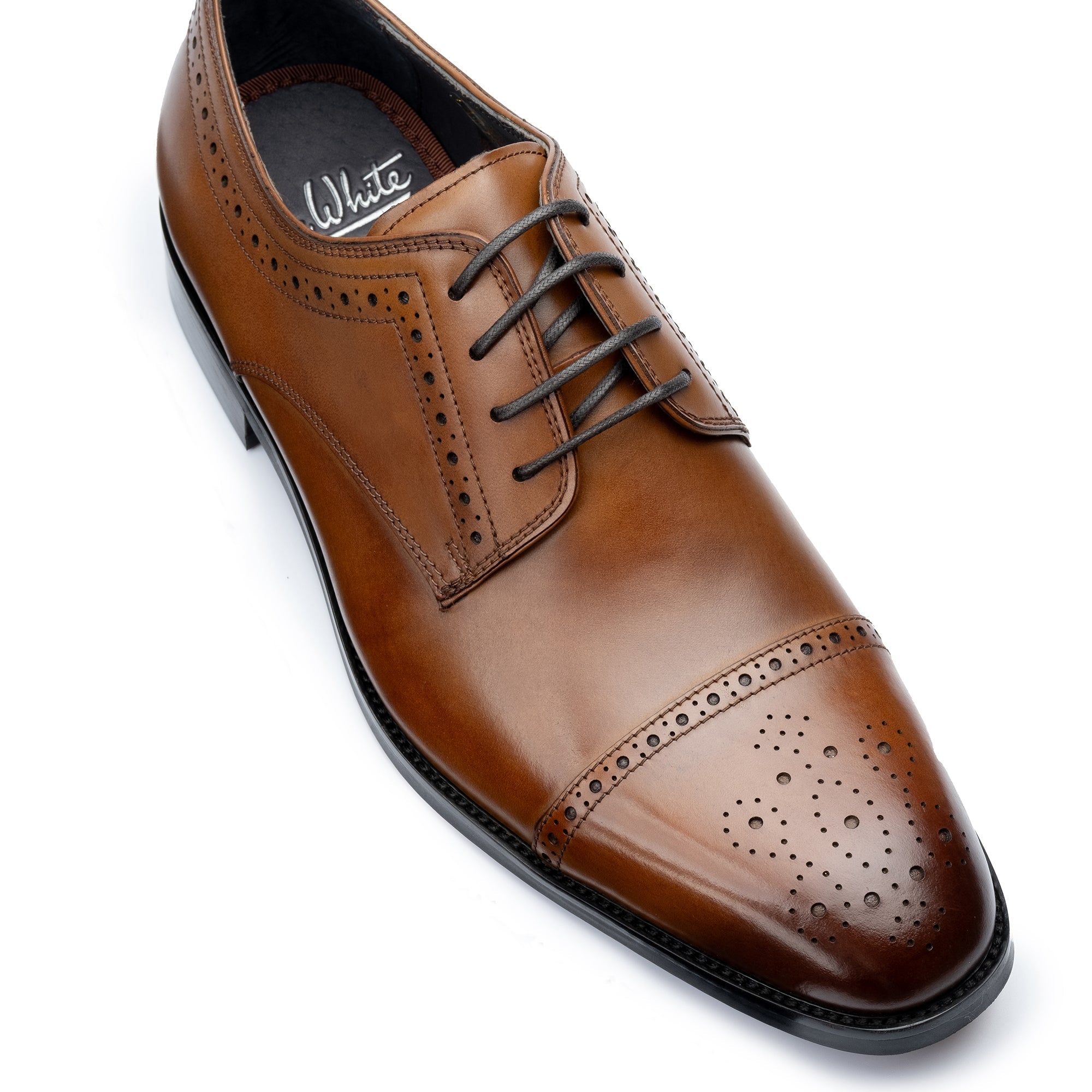
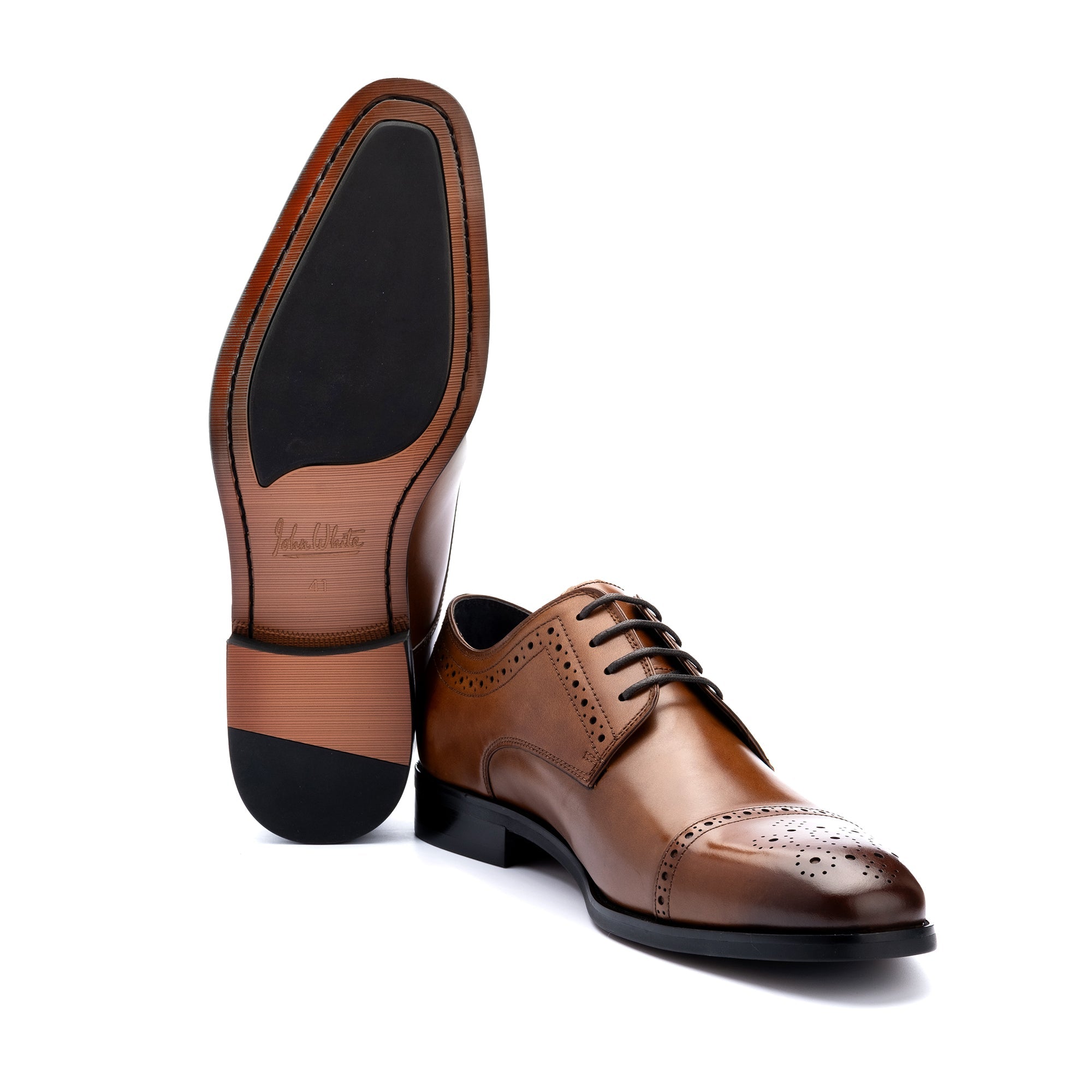
No. Broguing — the decorative perforations along the upper — reduces formality regardless of colour or construction. A full brogue (wingtip) is entirely inappropriate at black tie. A semi-brogue sits in contested territory that most traditionalists would decline. For a black tie wedding, the groom should wear a plain-toe, cap-toe, or wholecut with no broguing.
What colour should the groom's black tie wedding shoes be?
Black, without qualification. Brown, tan, oxblood, and navy are correct for lounge suit formality and below, but black is the only acceptable colour at black tie. The finish — patent or polished calf — can vary, but the colour cannot.
How long before a wedding should the groom buy his shoes?
No later than eight weeks before the ceremony. This allows adequate time to break in the leather properly (a minimum of 10 to 15 hours of wear), resolve any fit issues, and build the correct polish over multiple sessions. Purchasing closer to the date risks arriving at the ceremony in insufficiently worn shoes — one of the most preventable sources of discomfort on a long formal day.