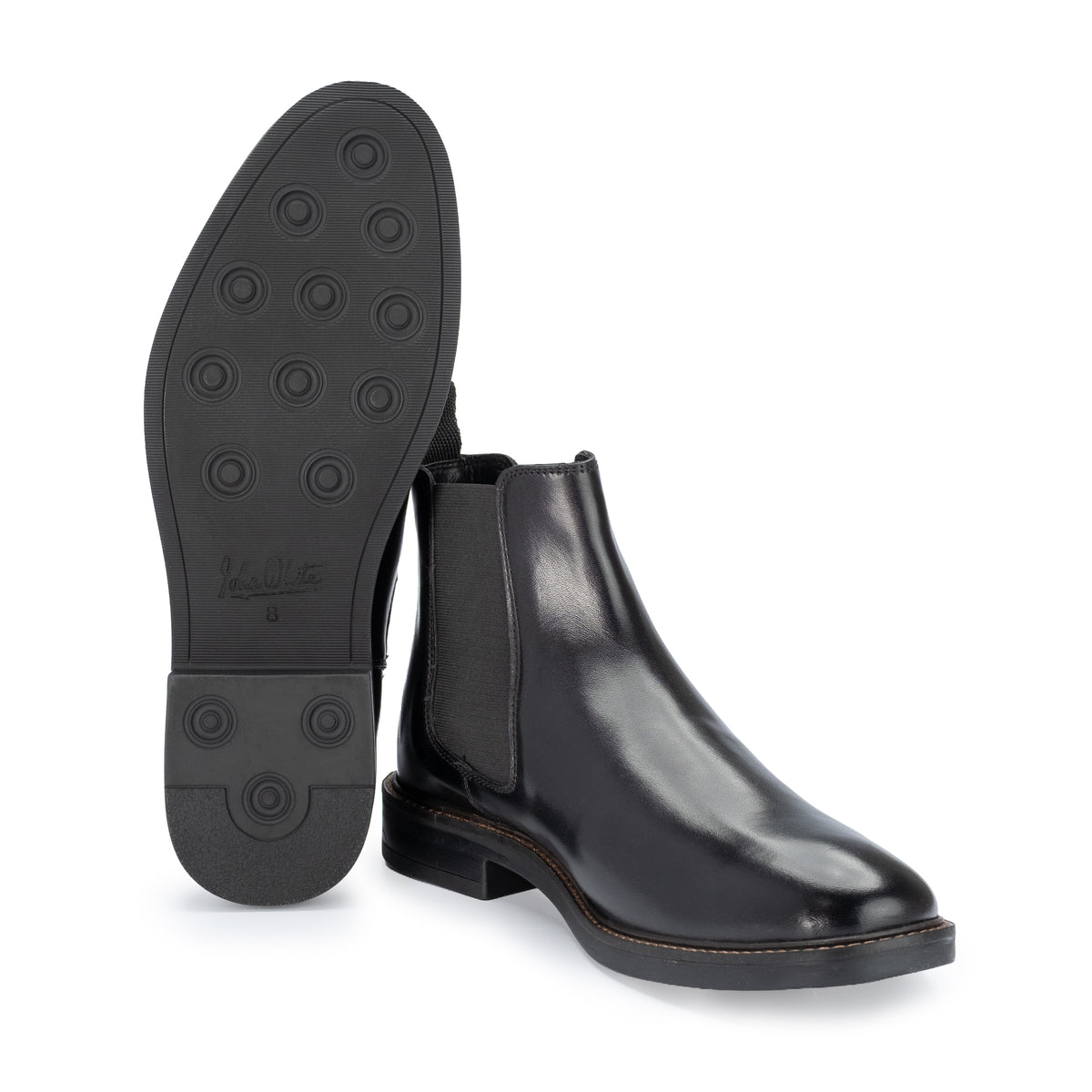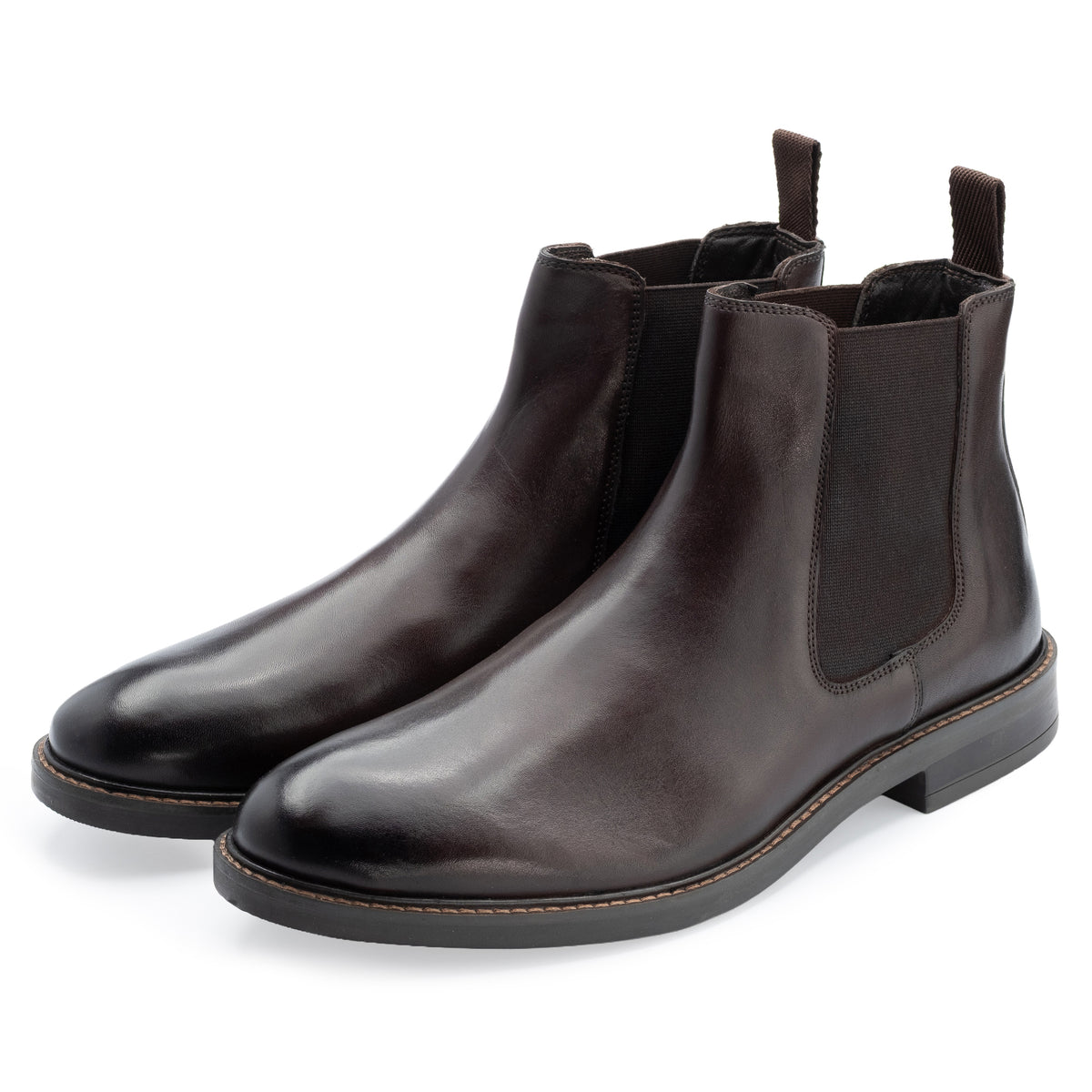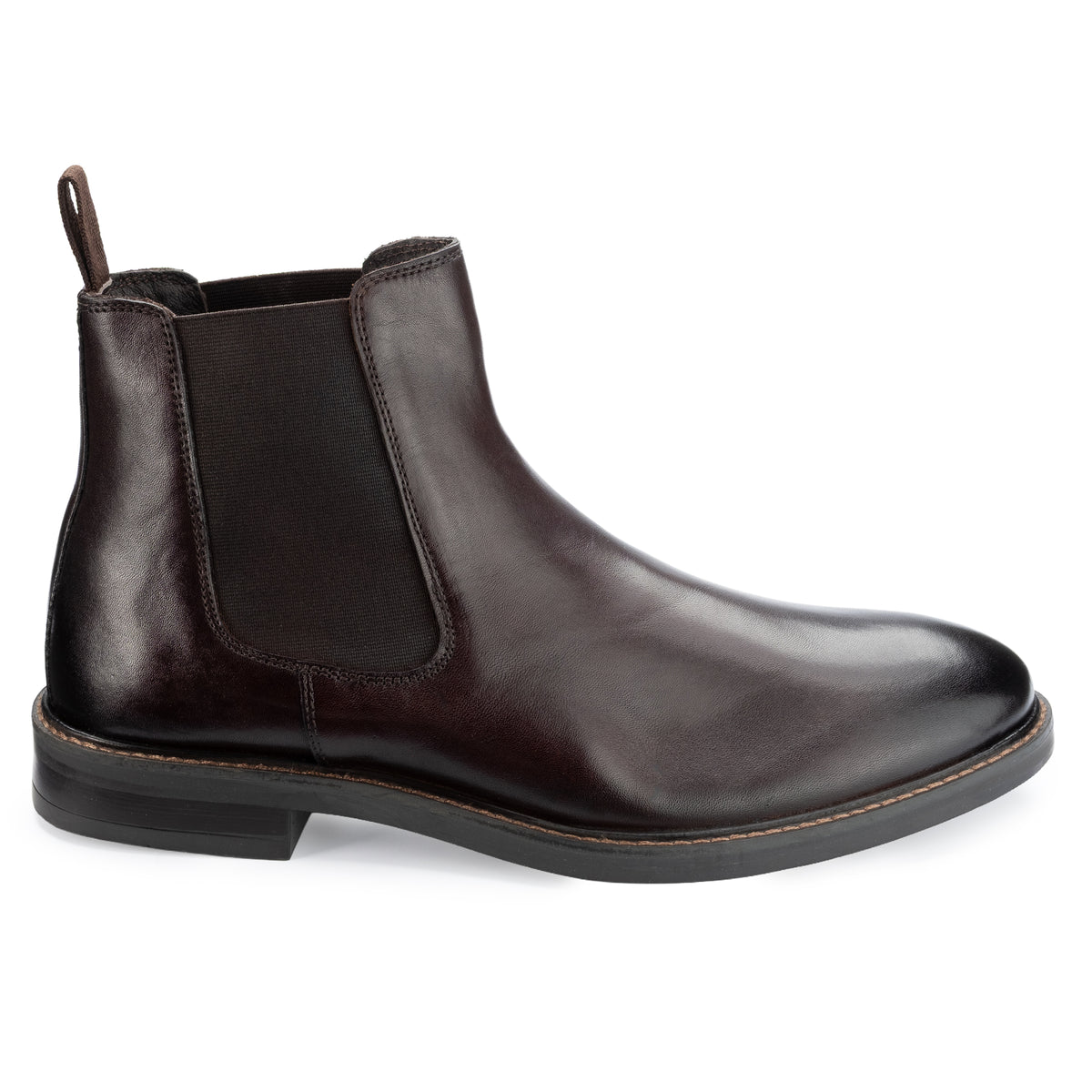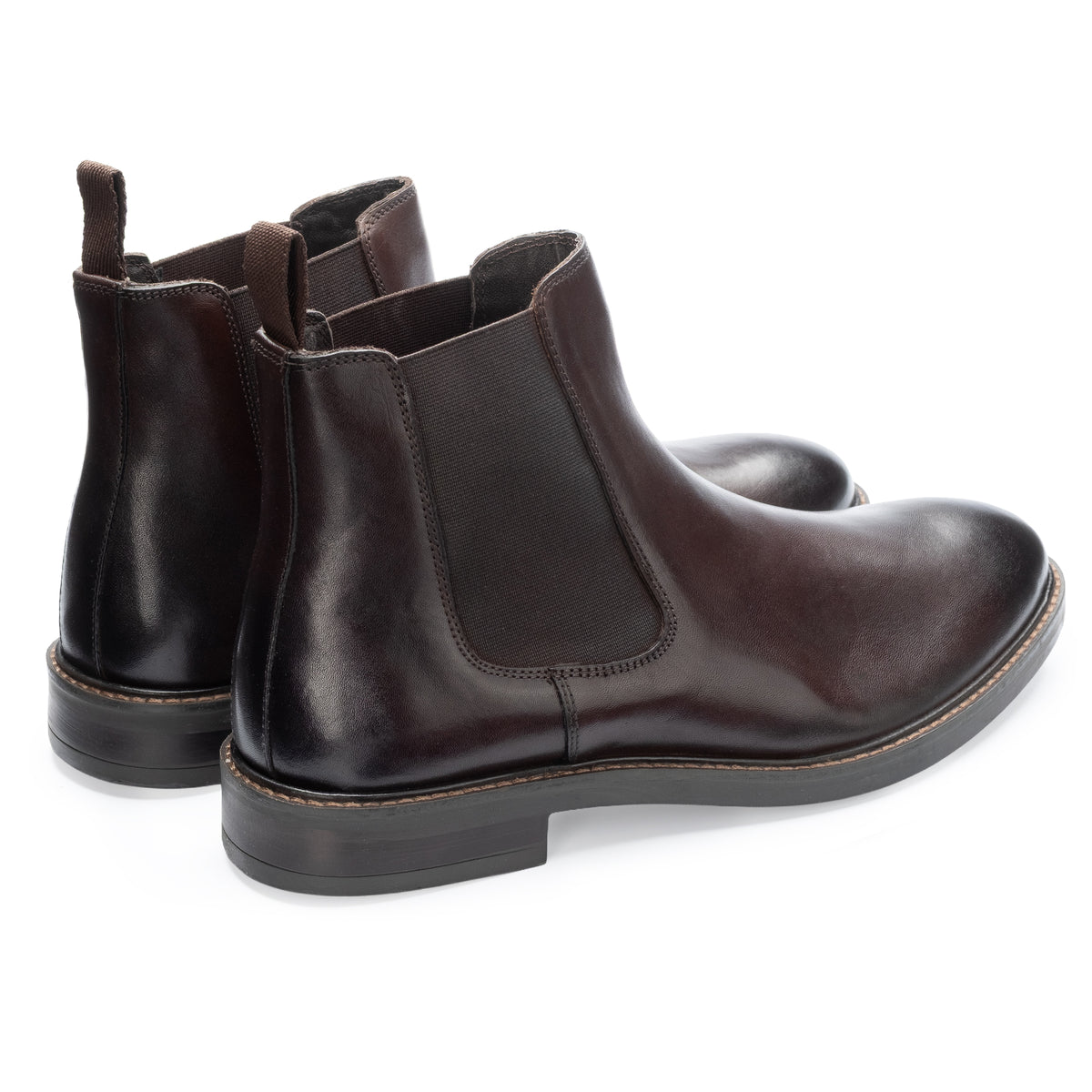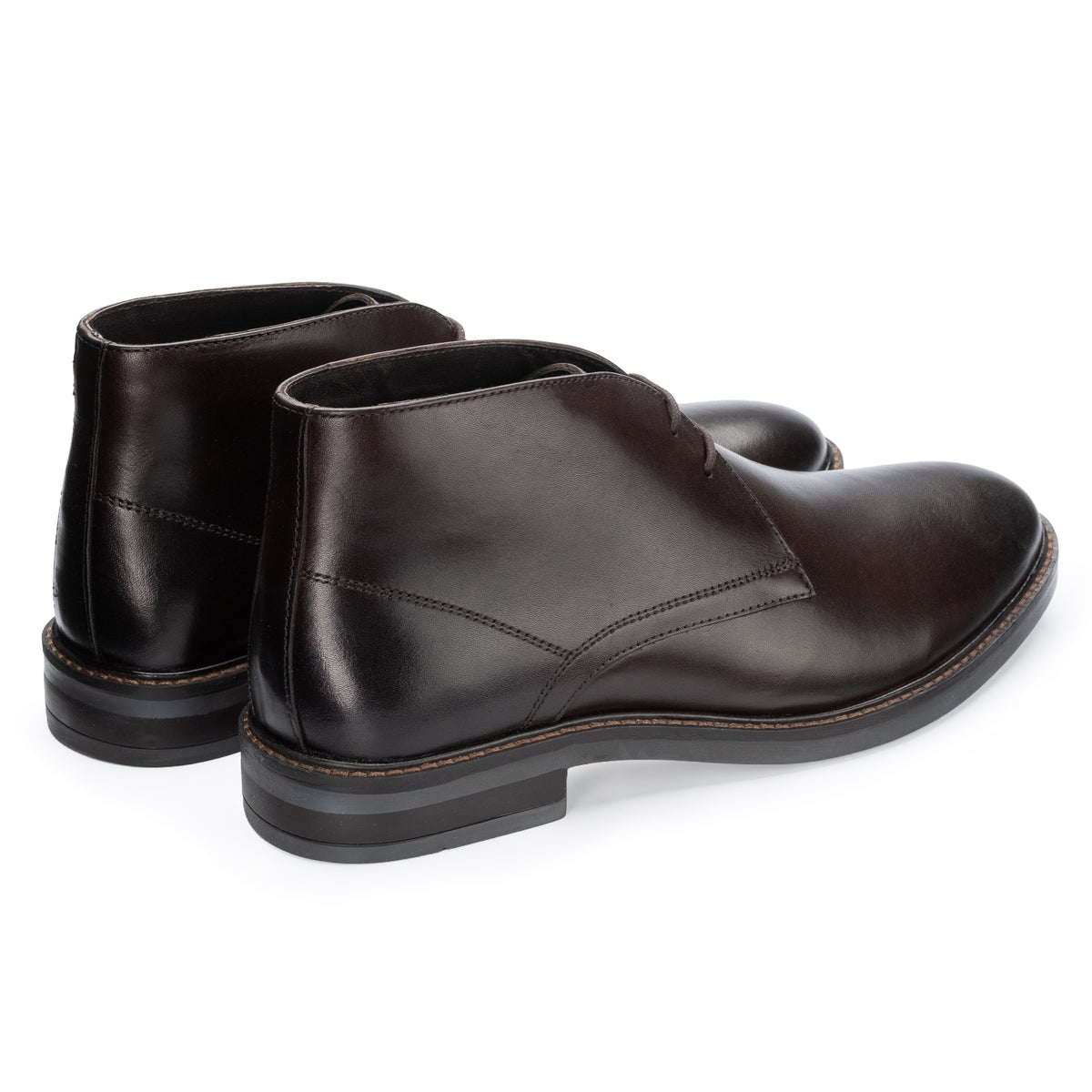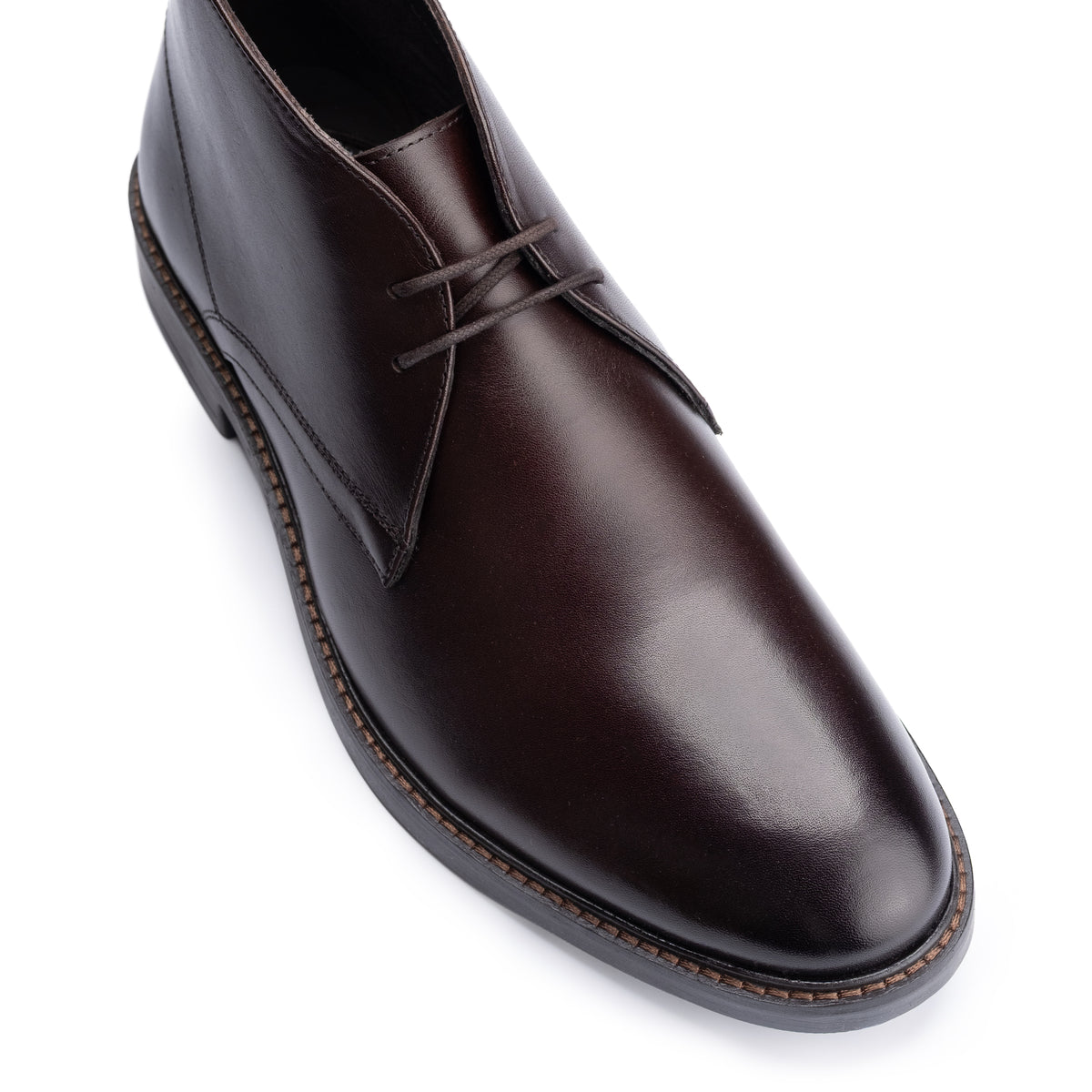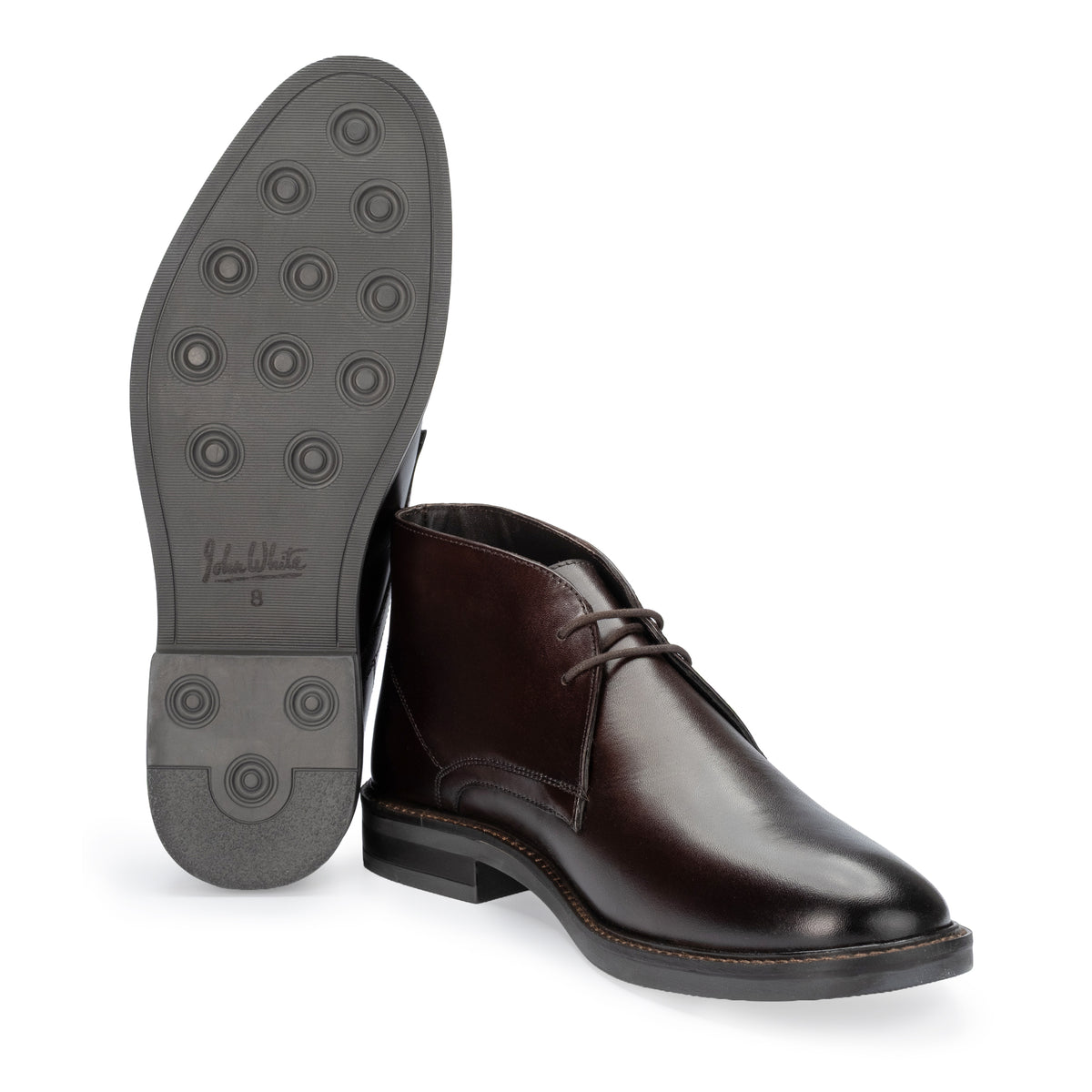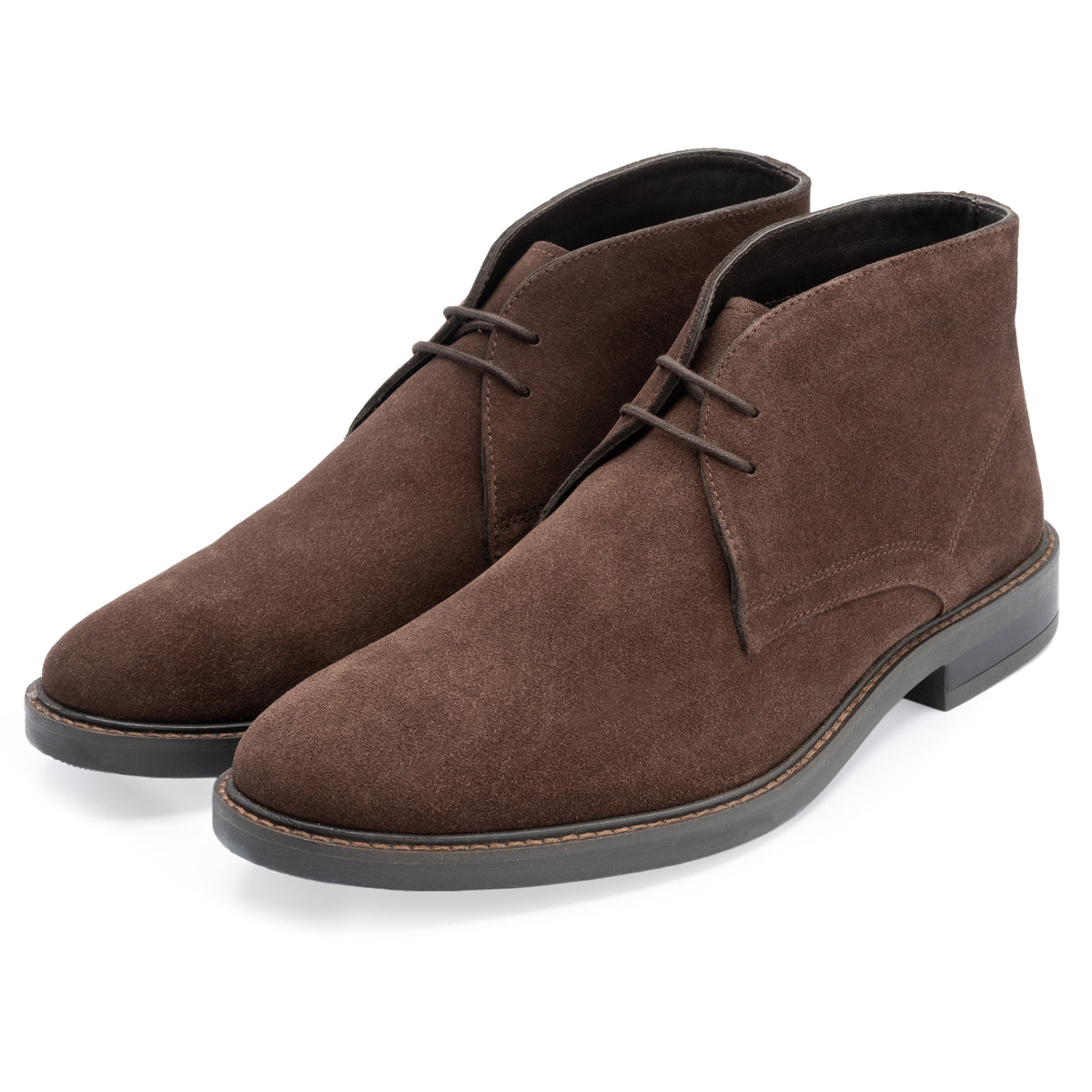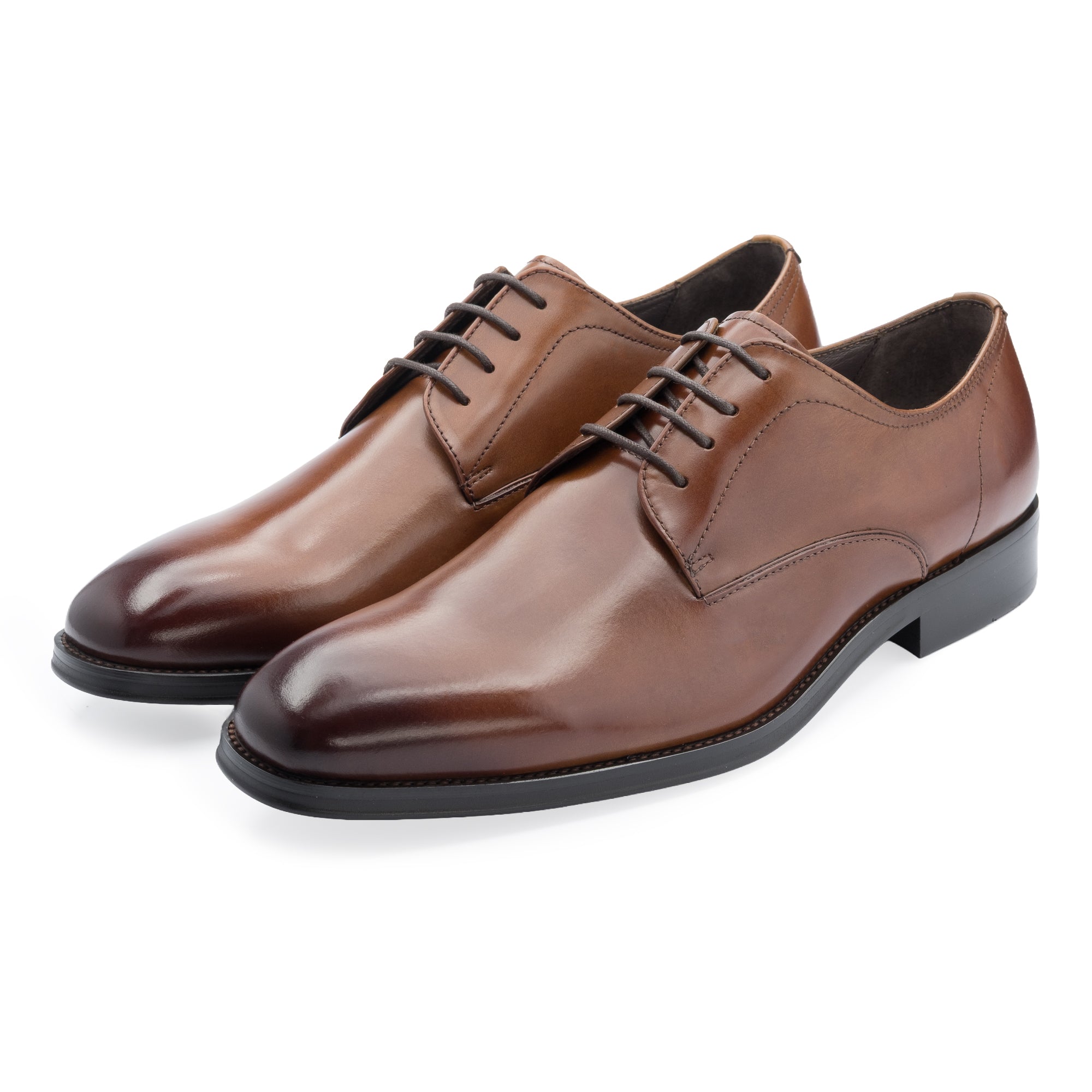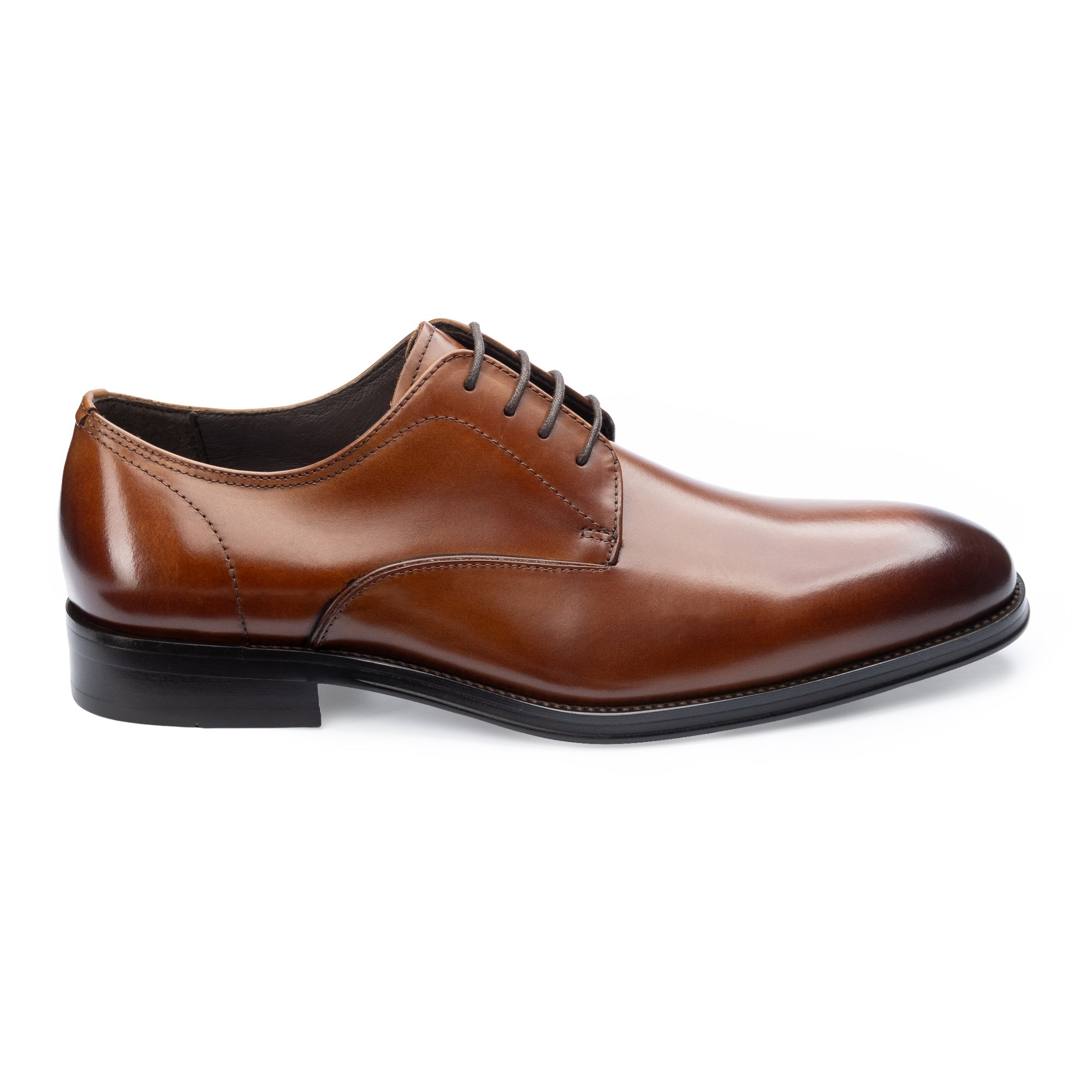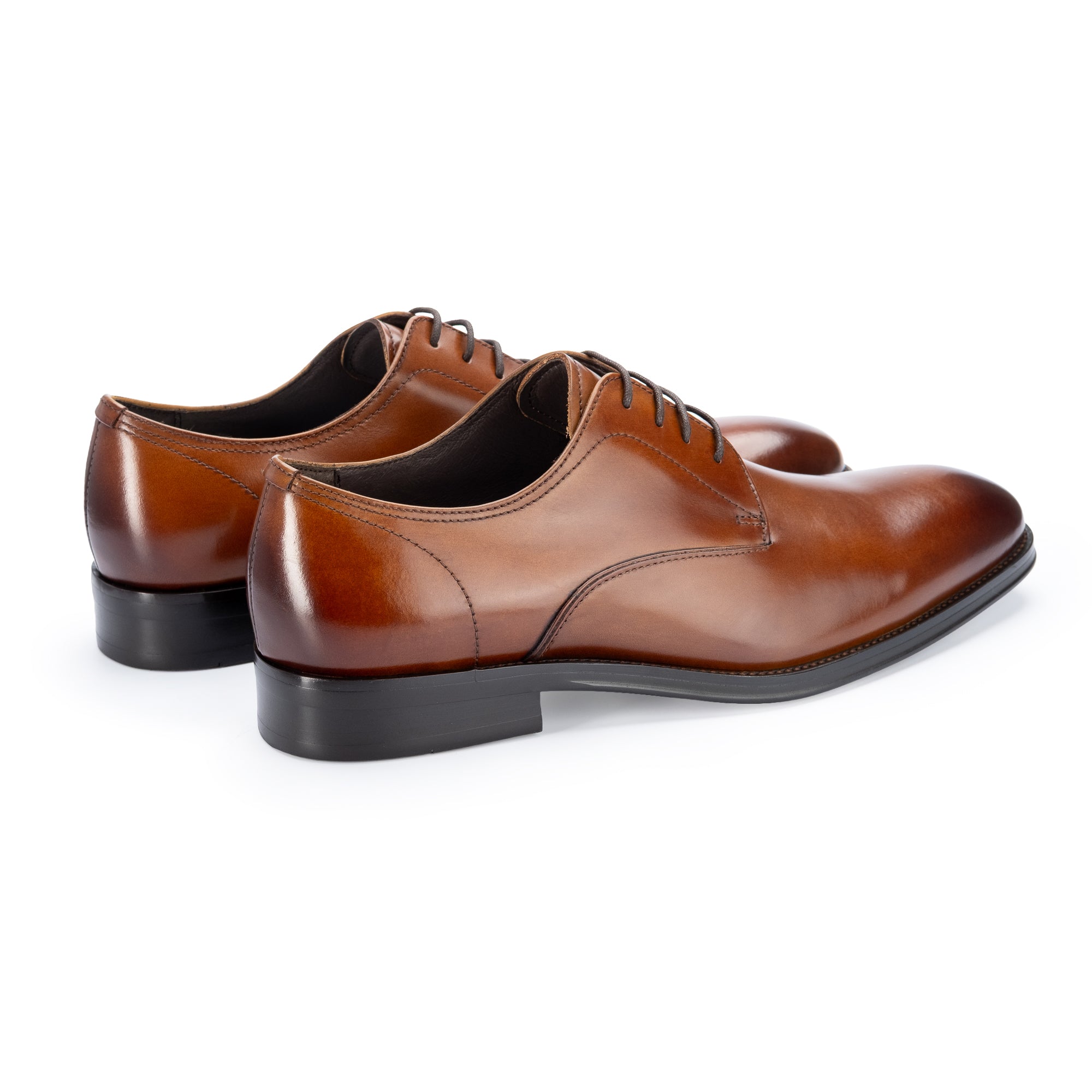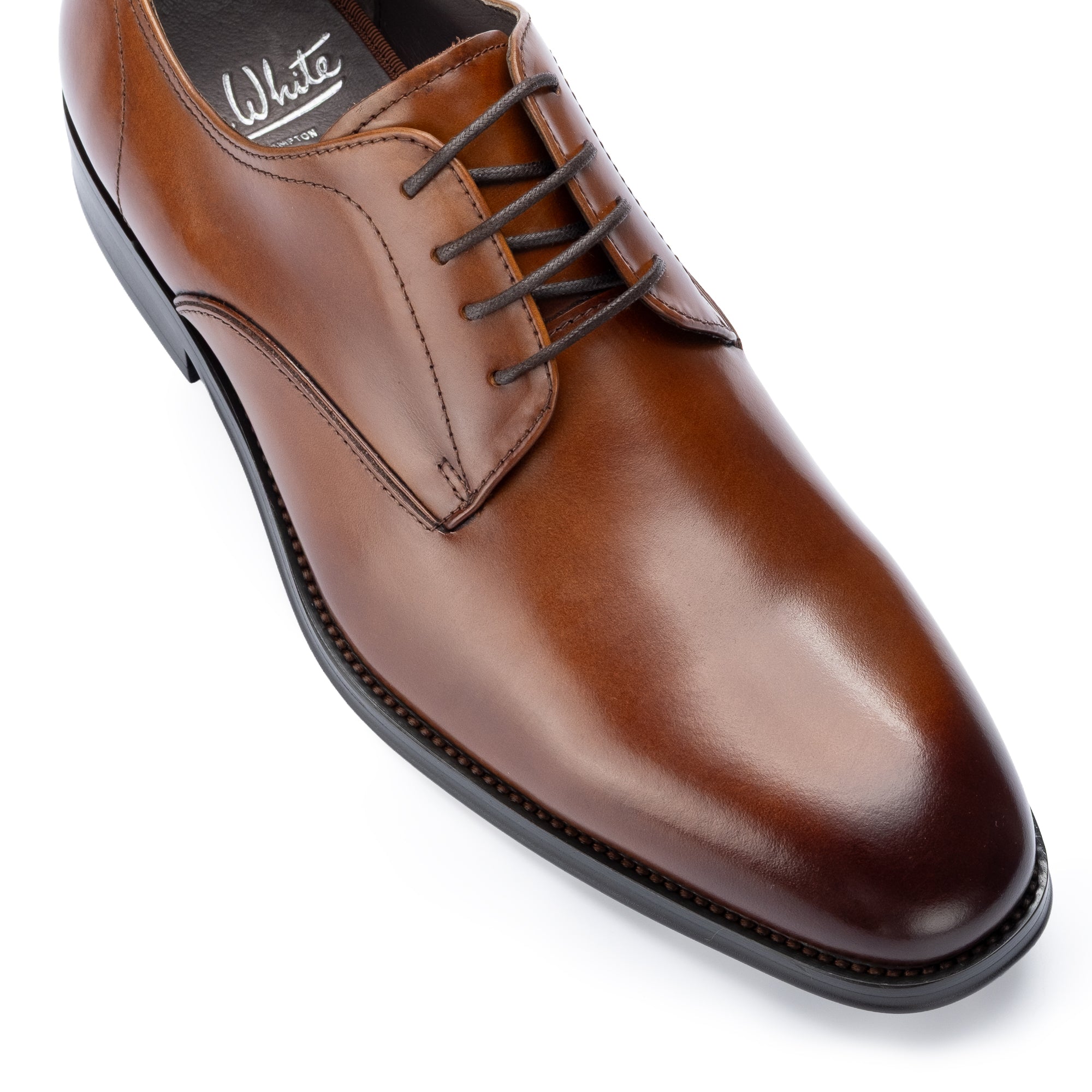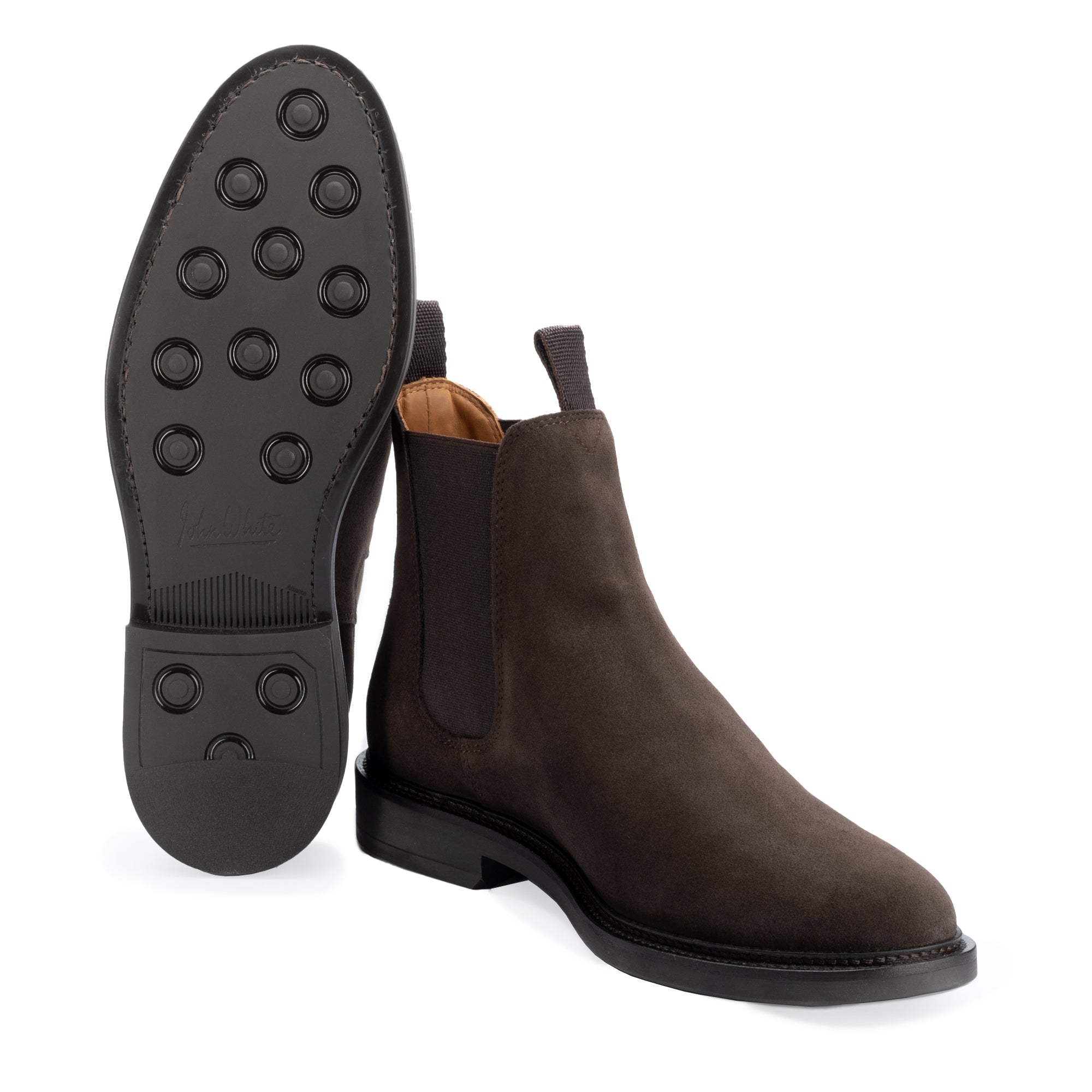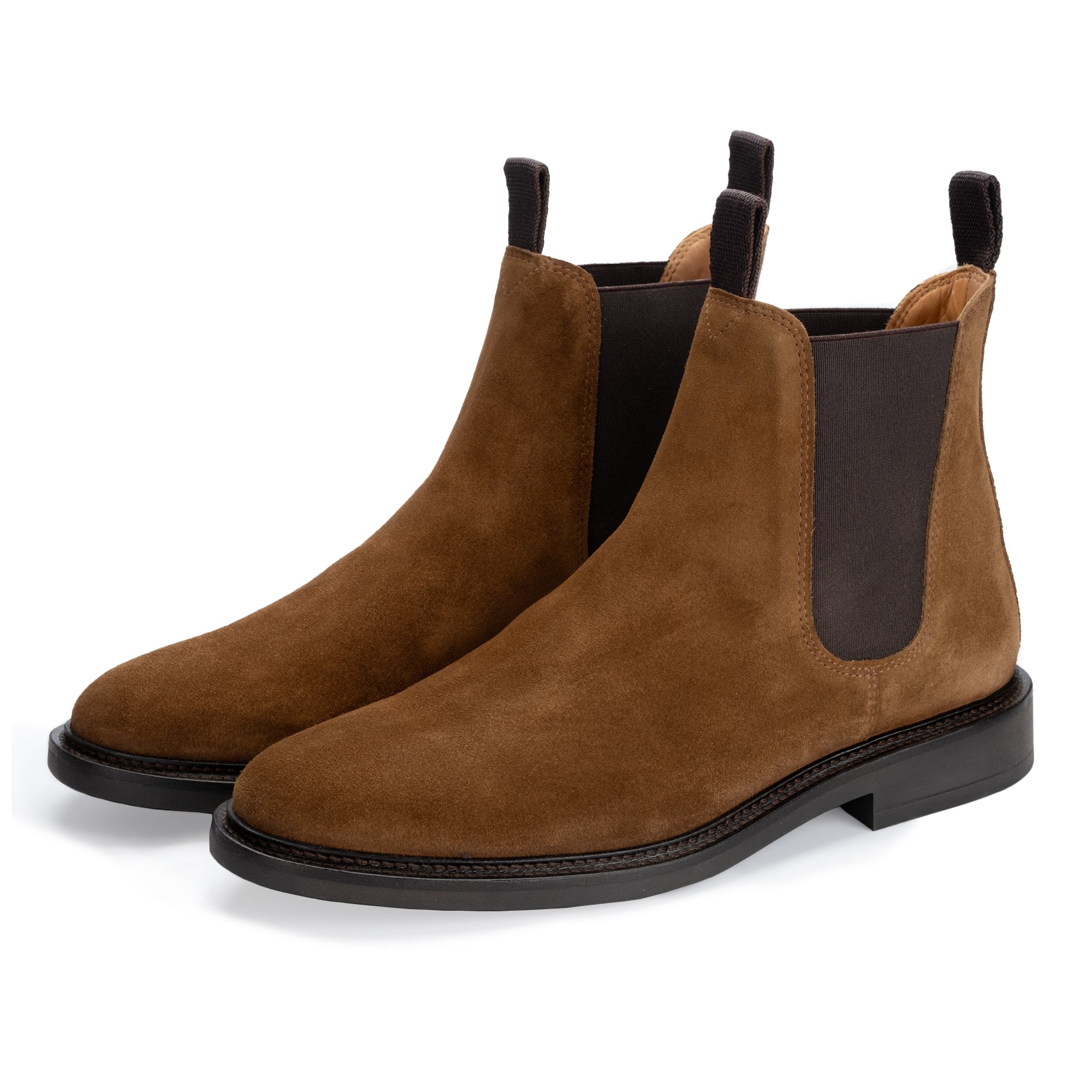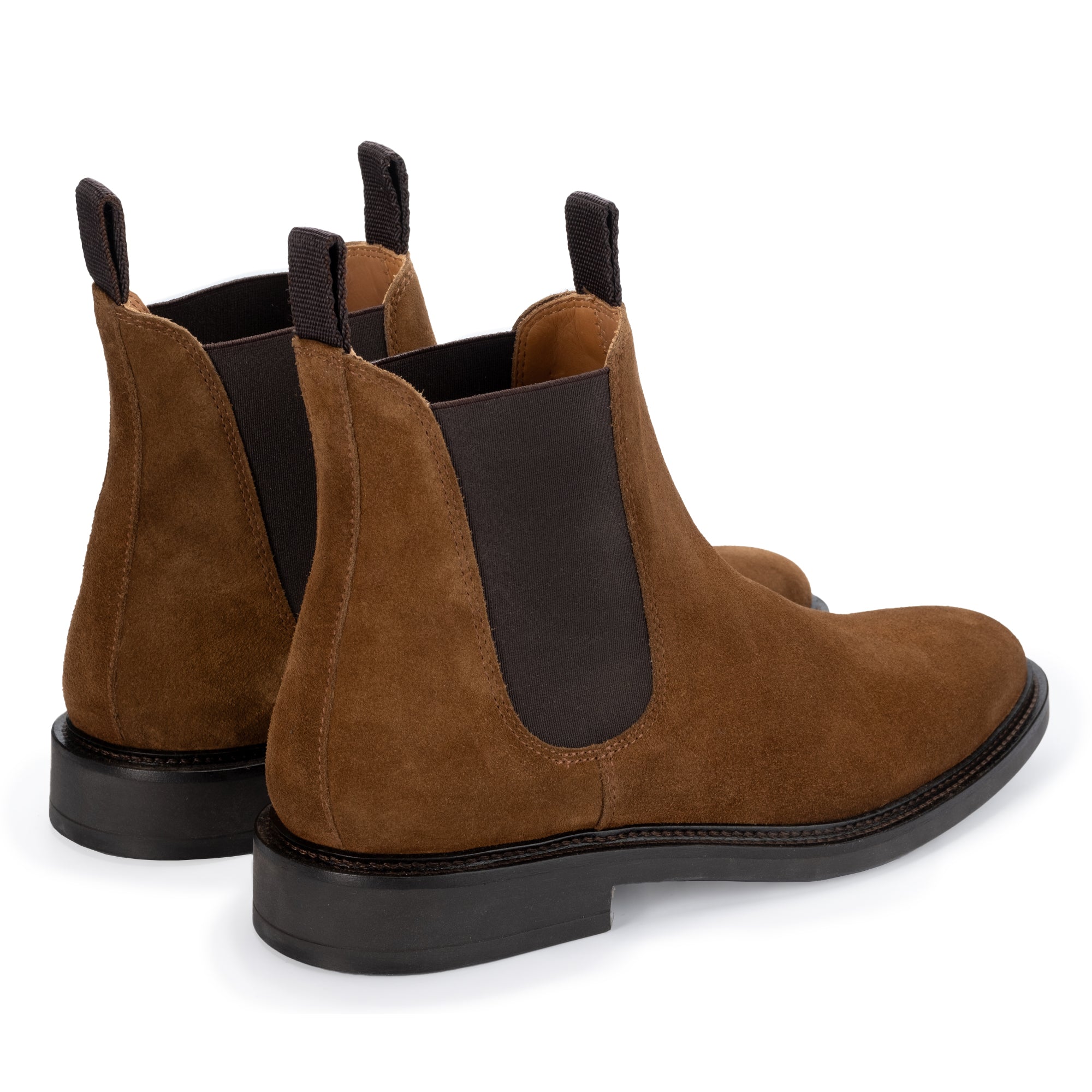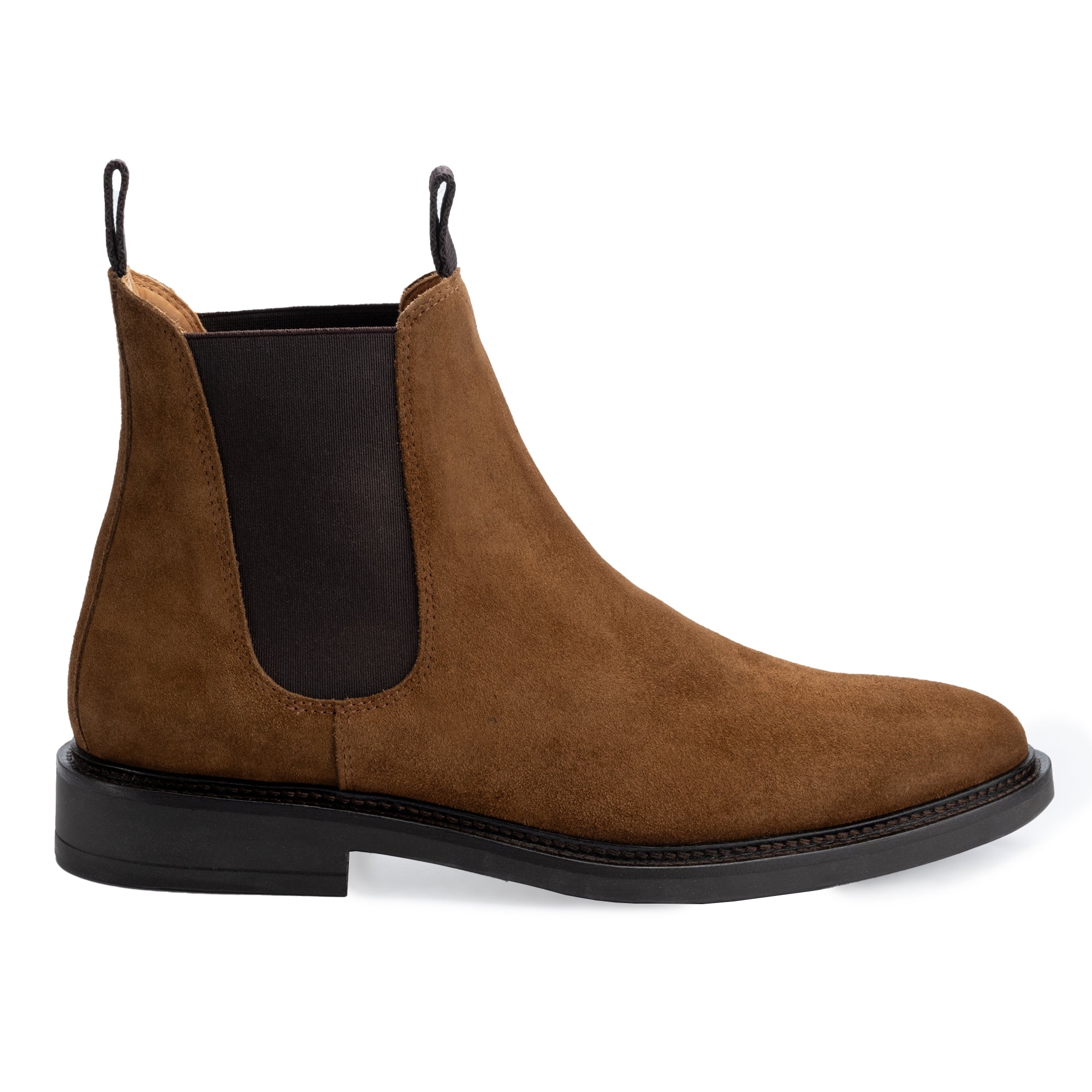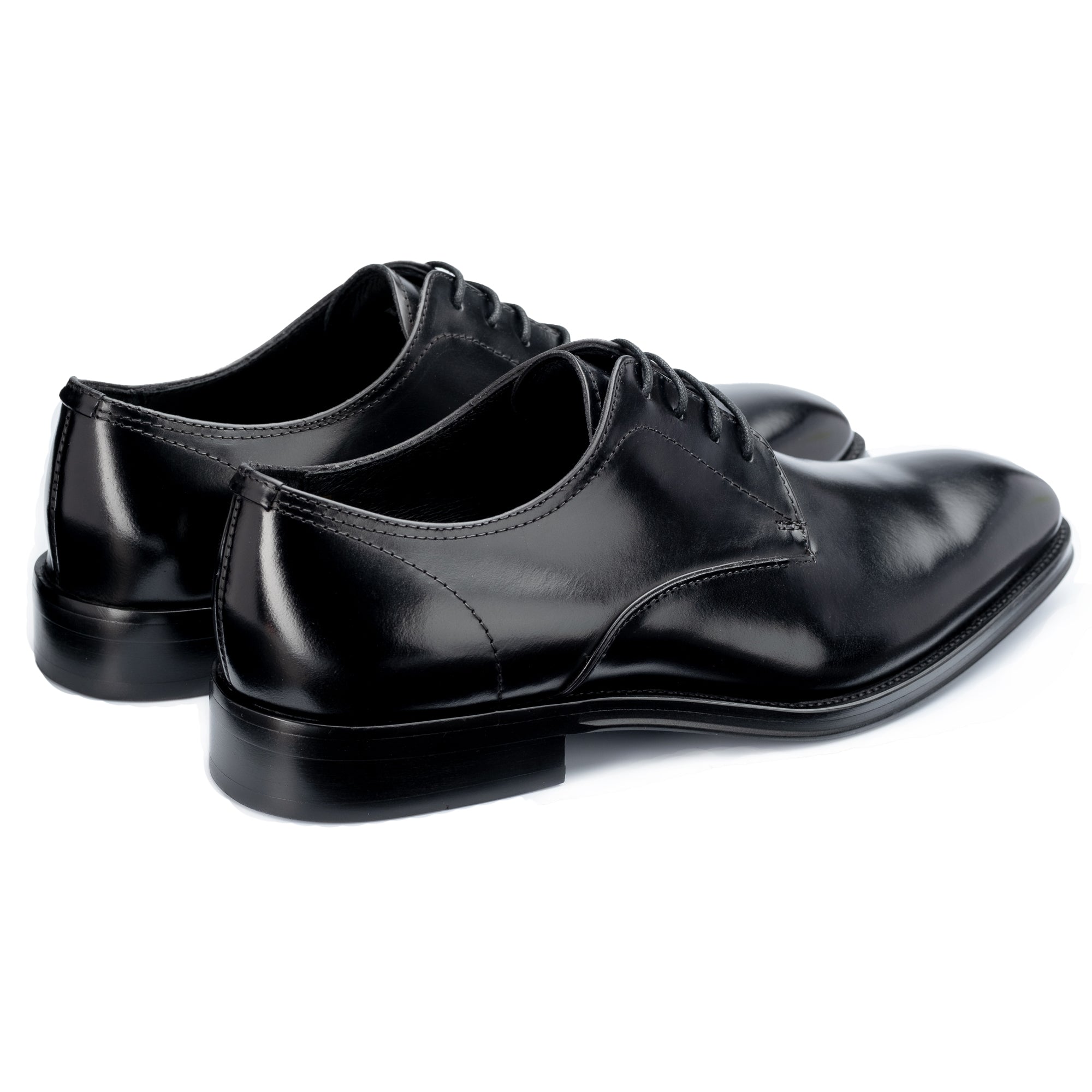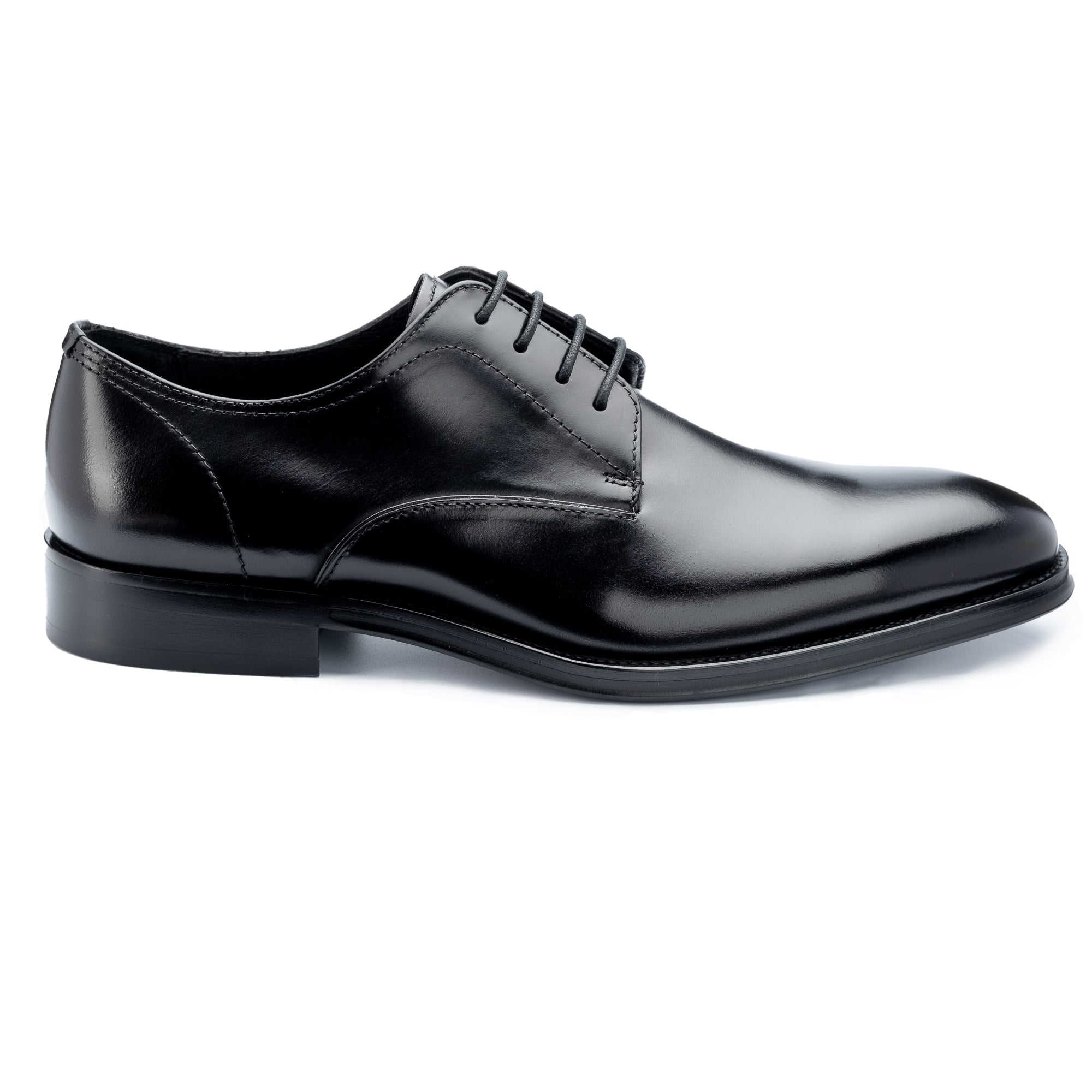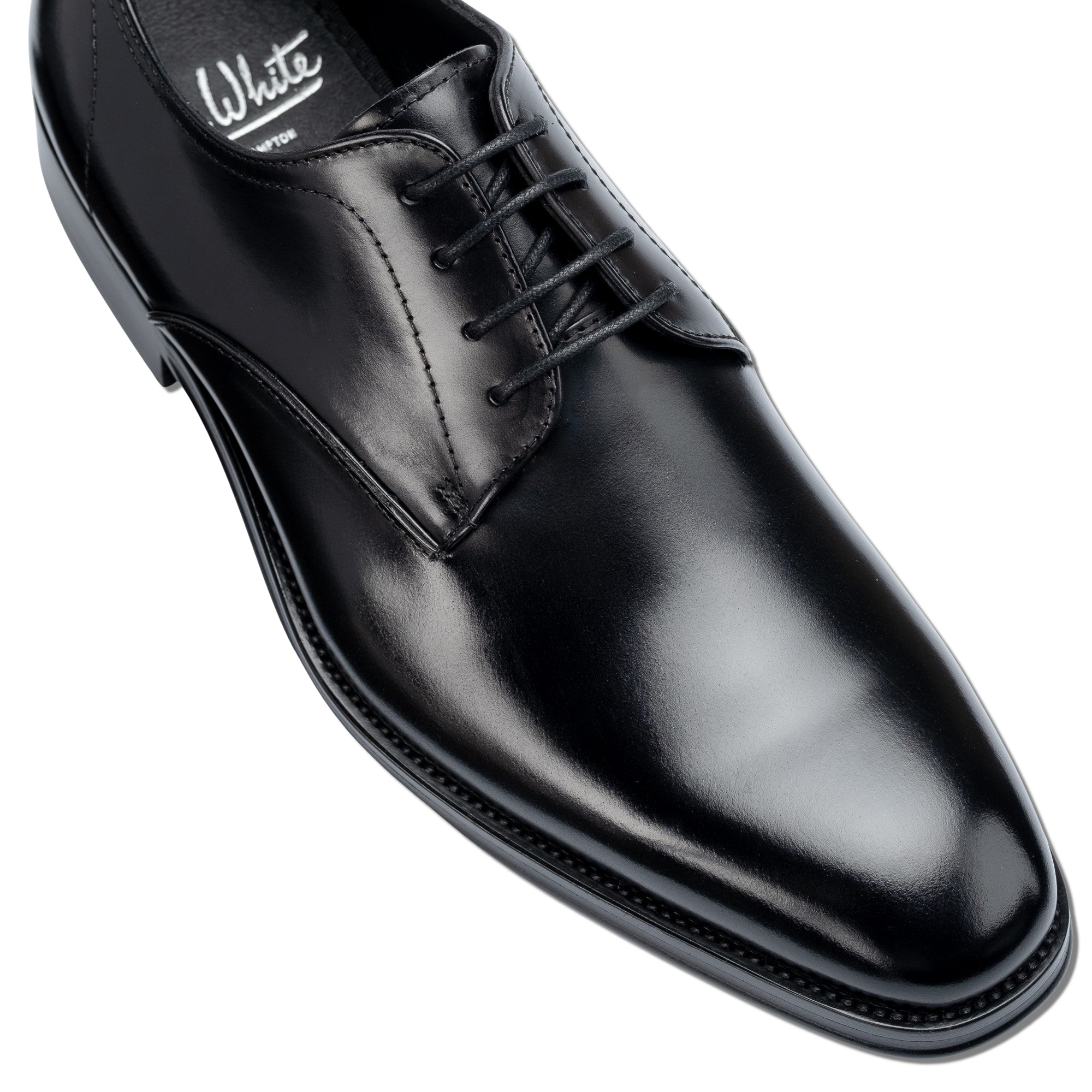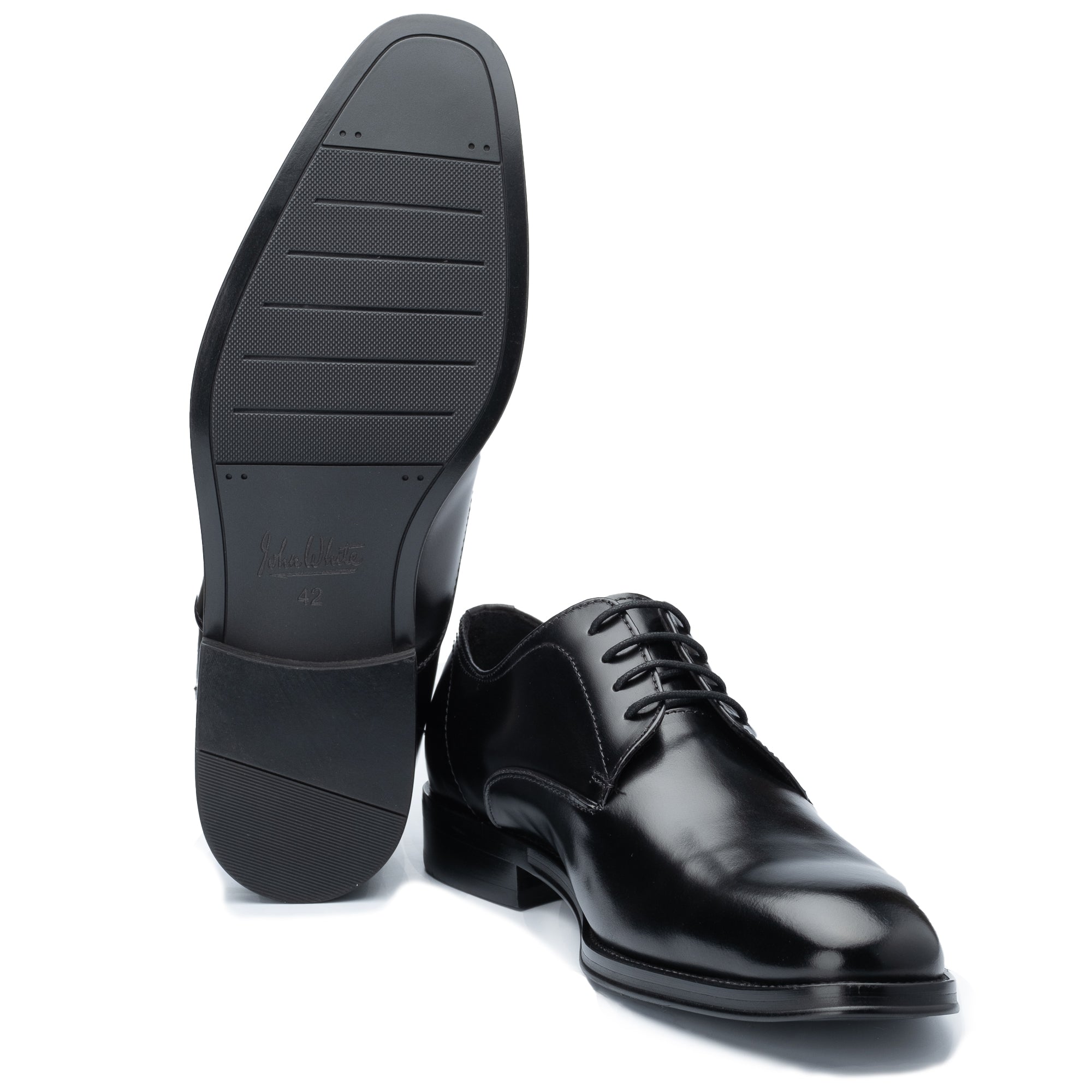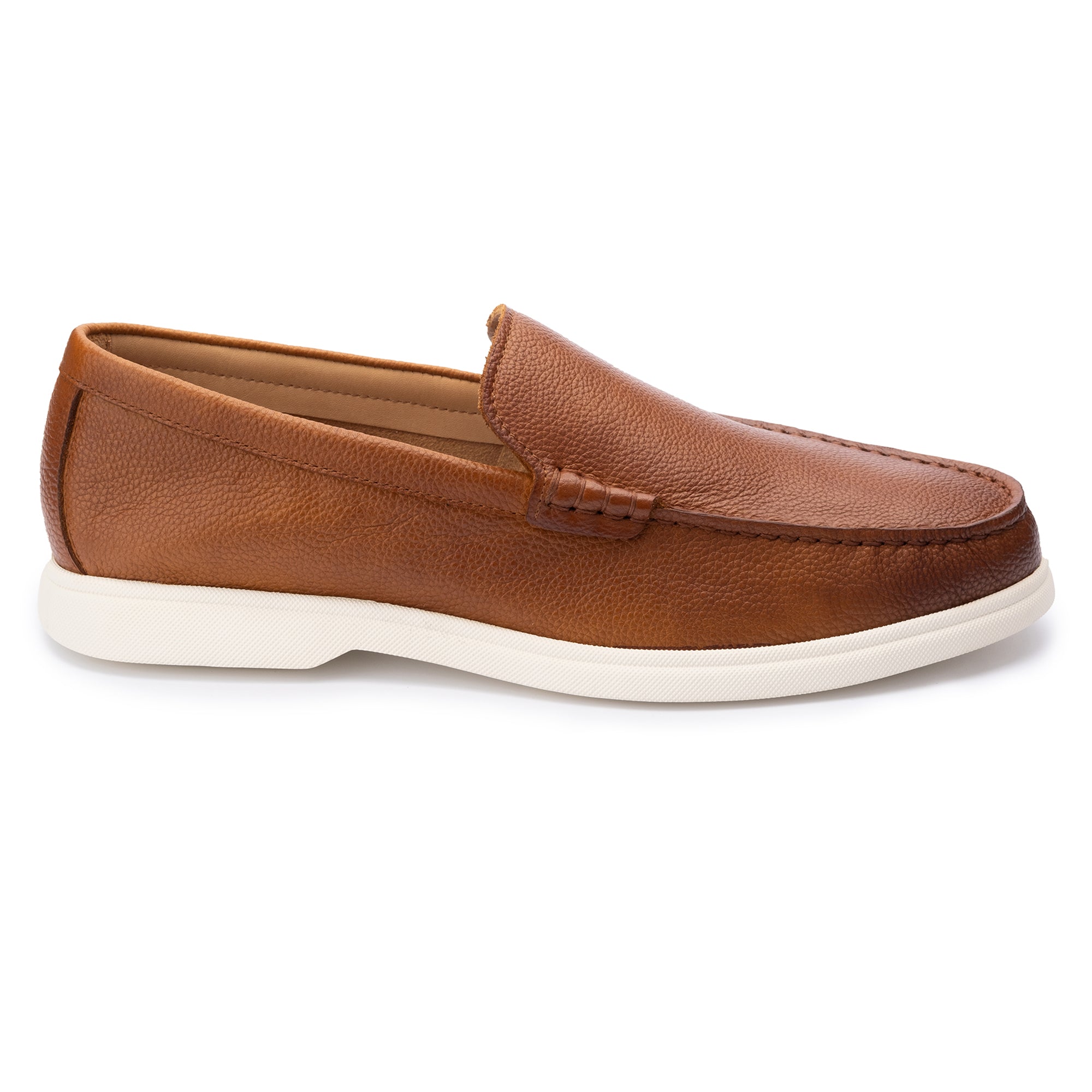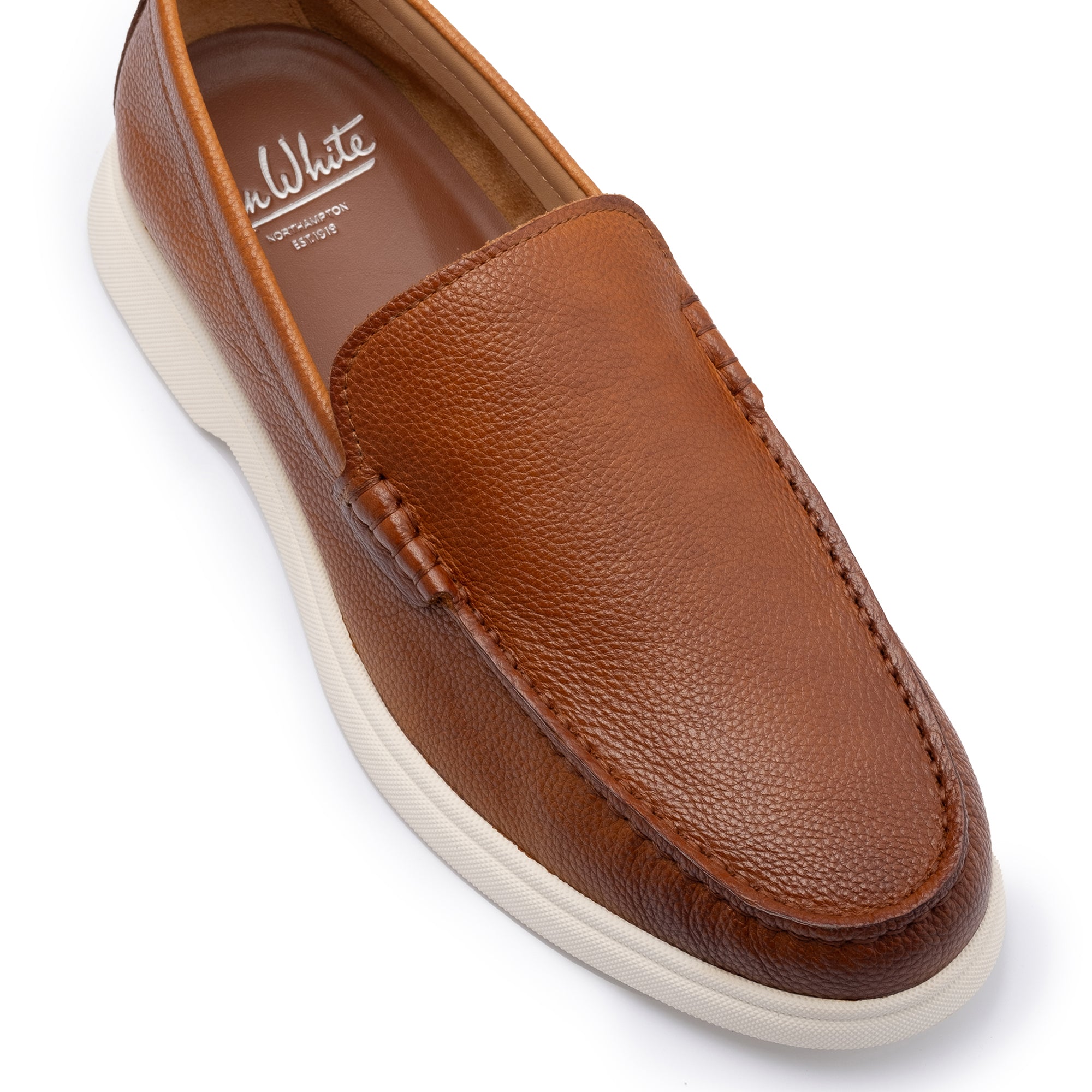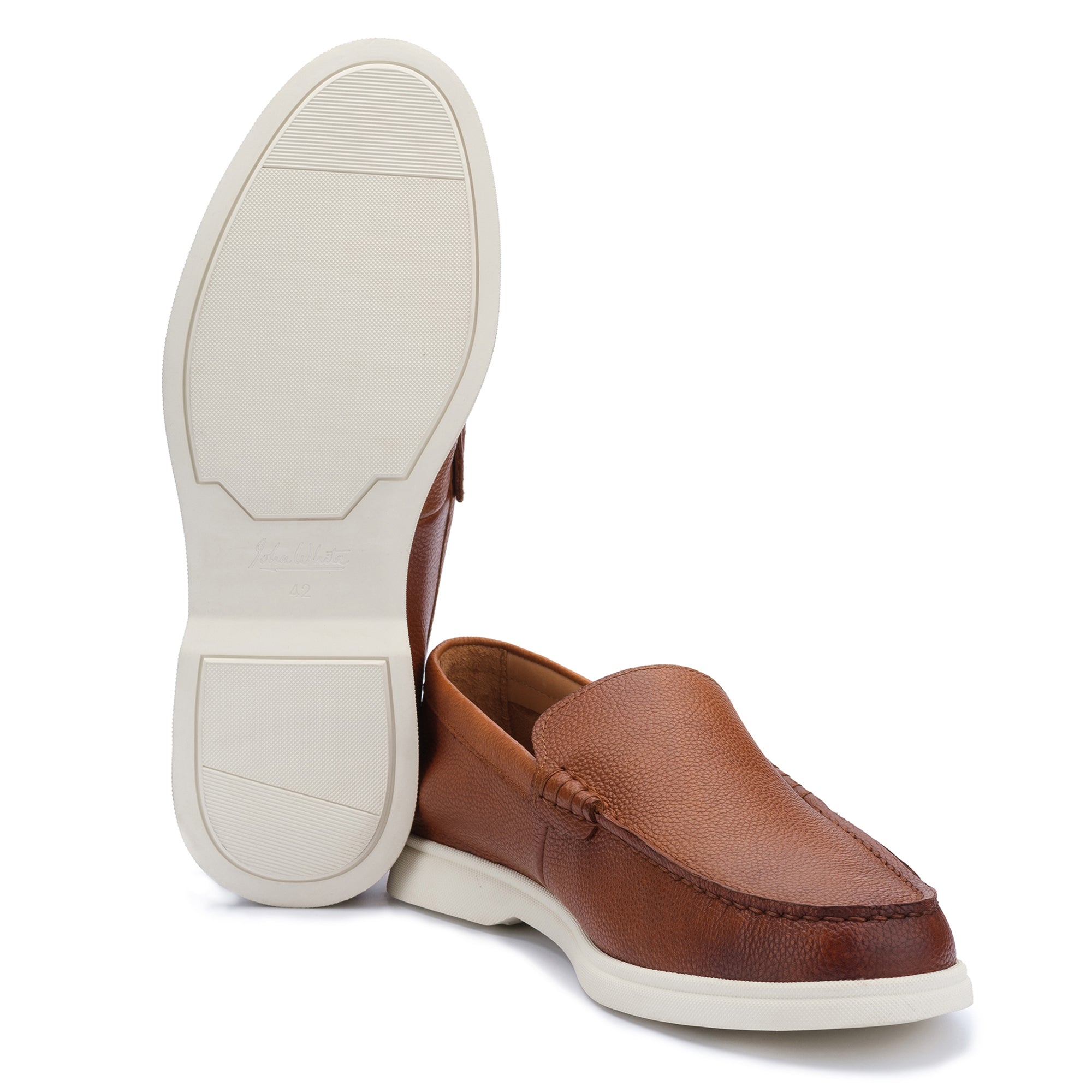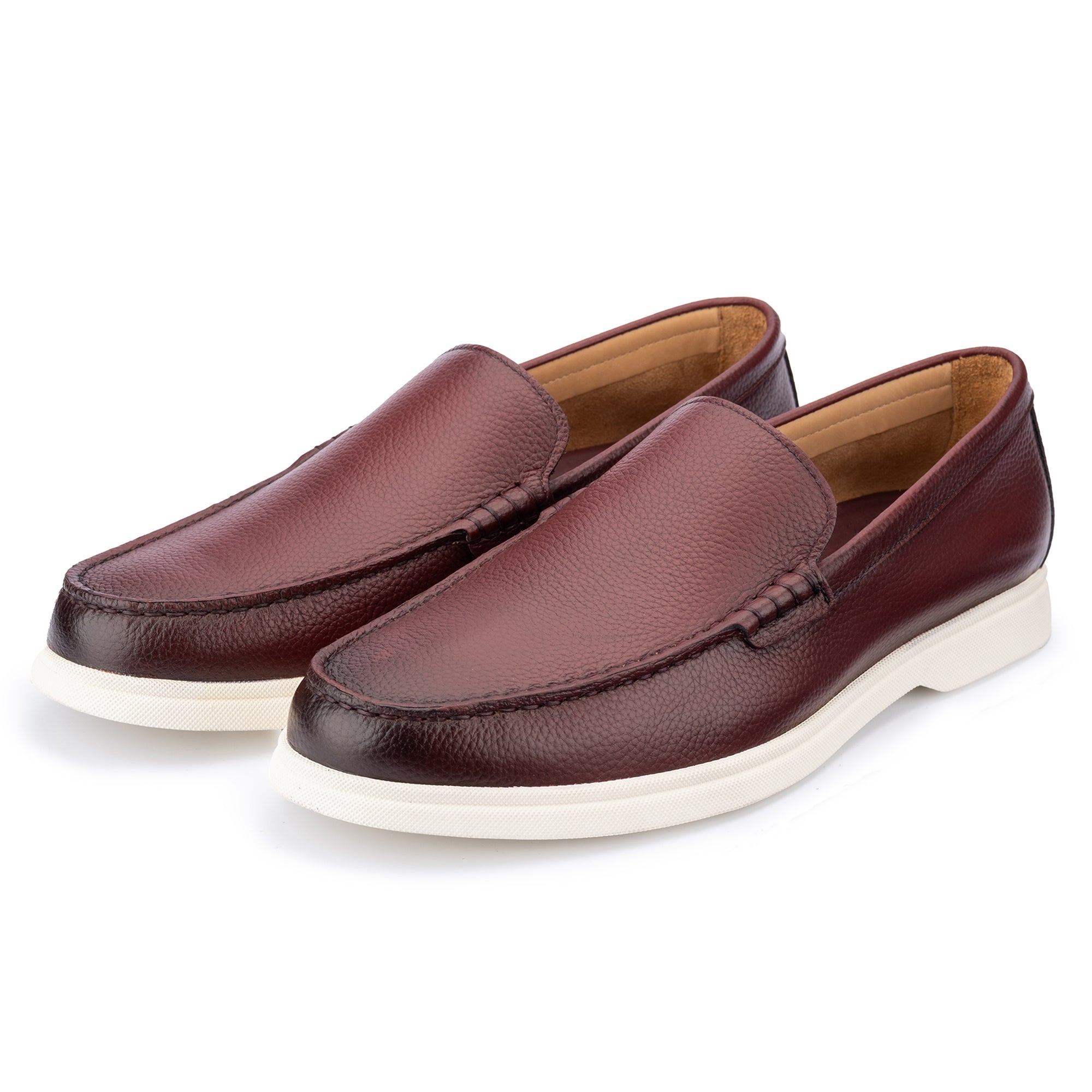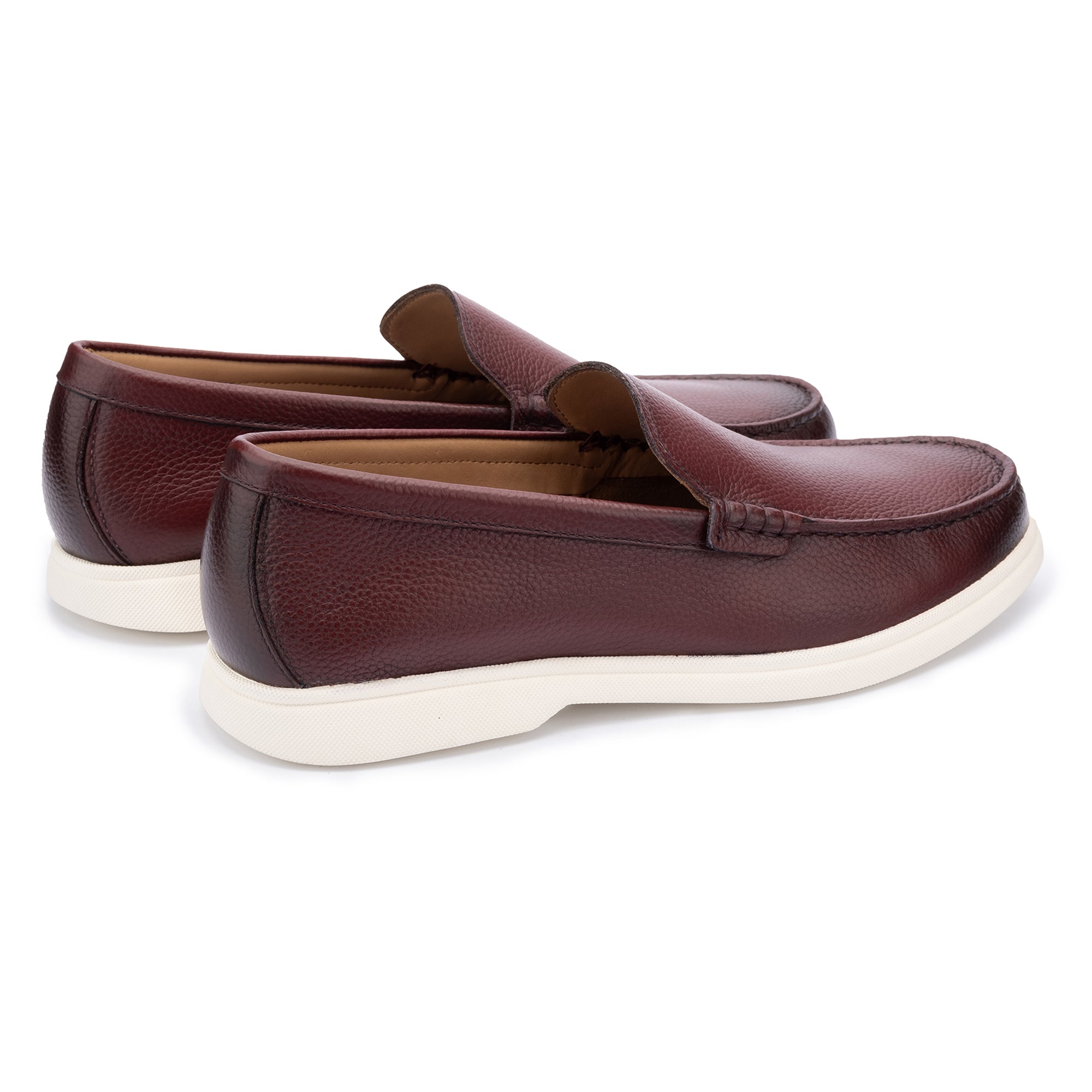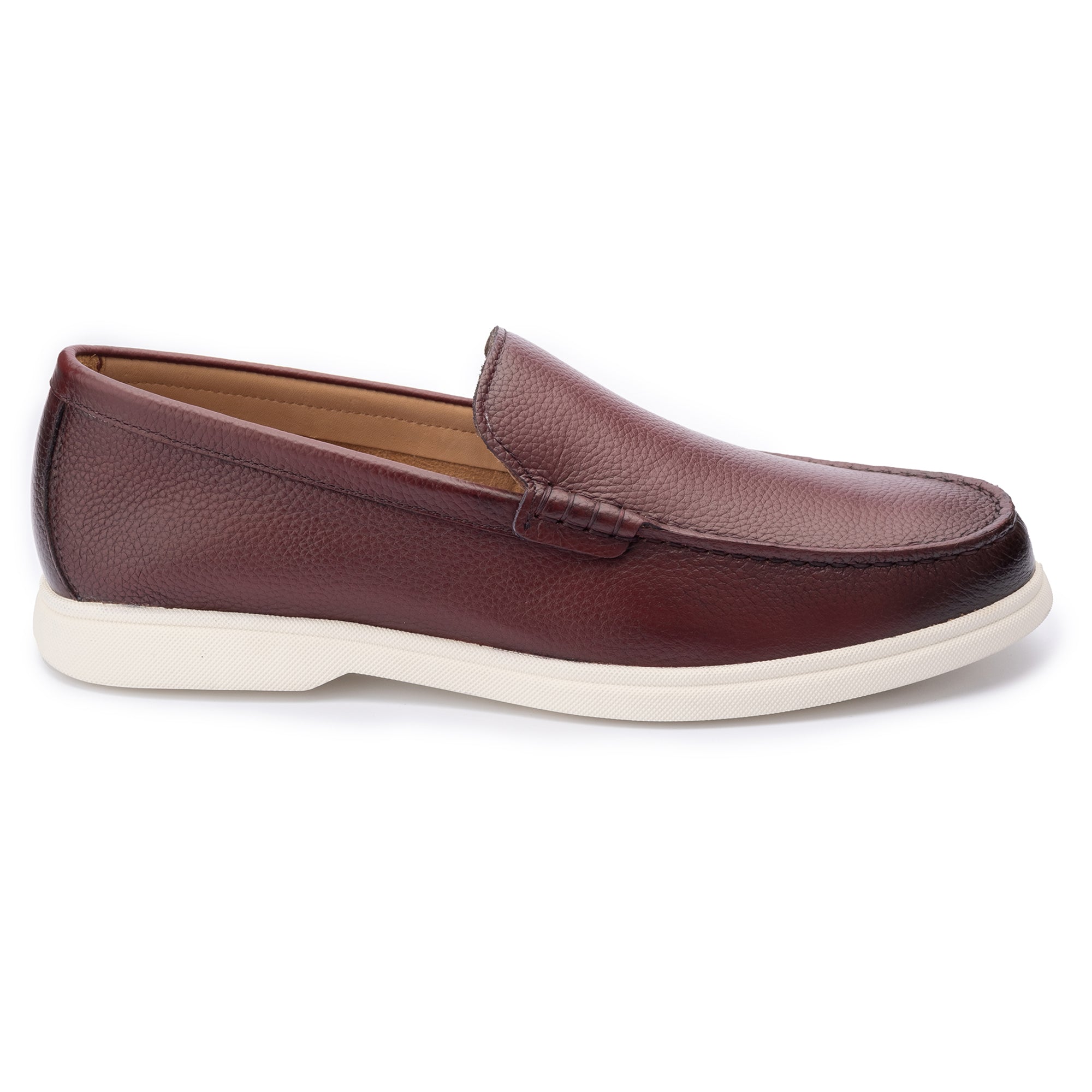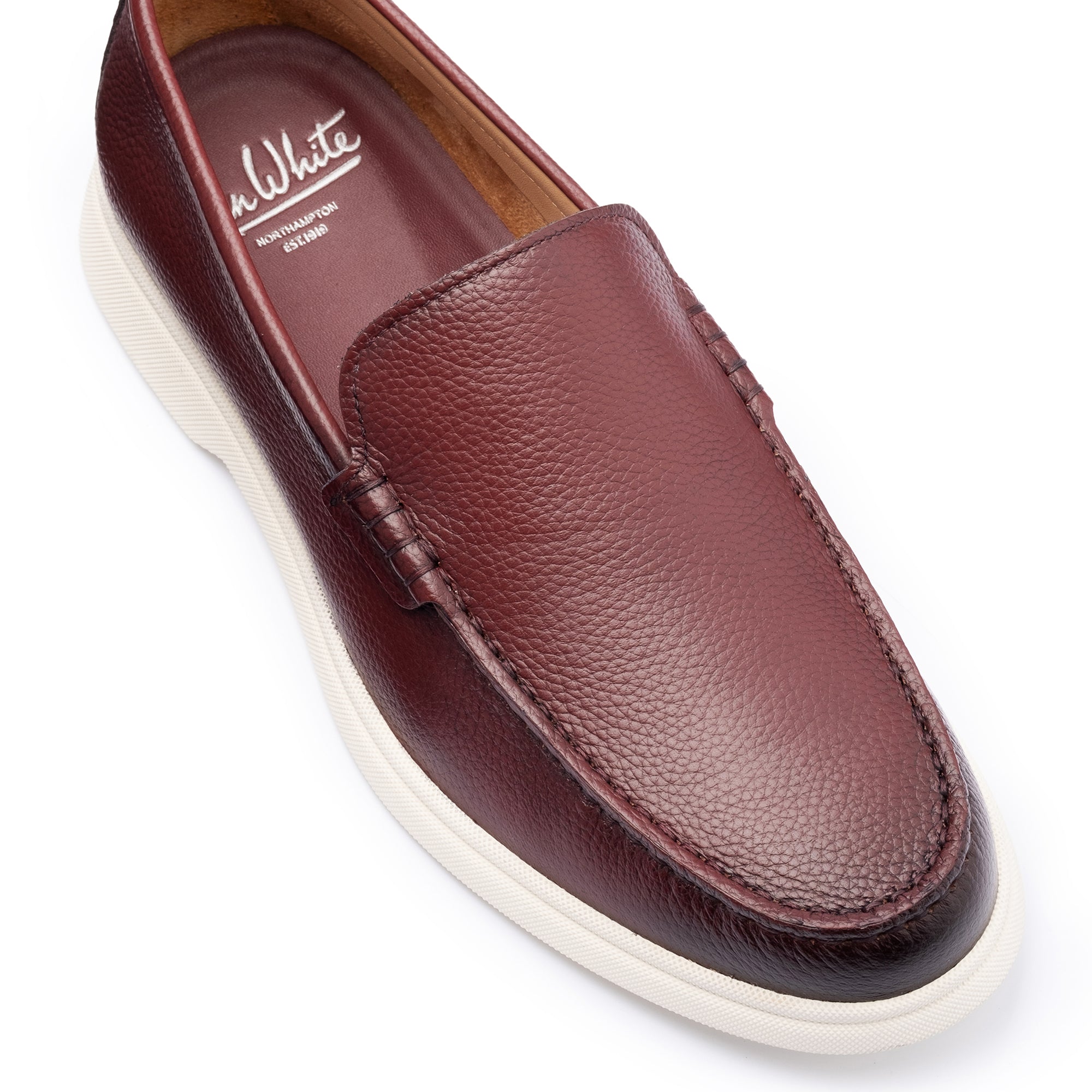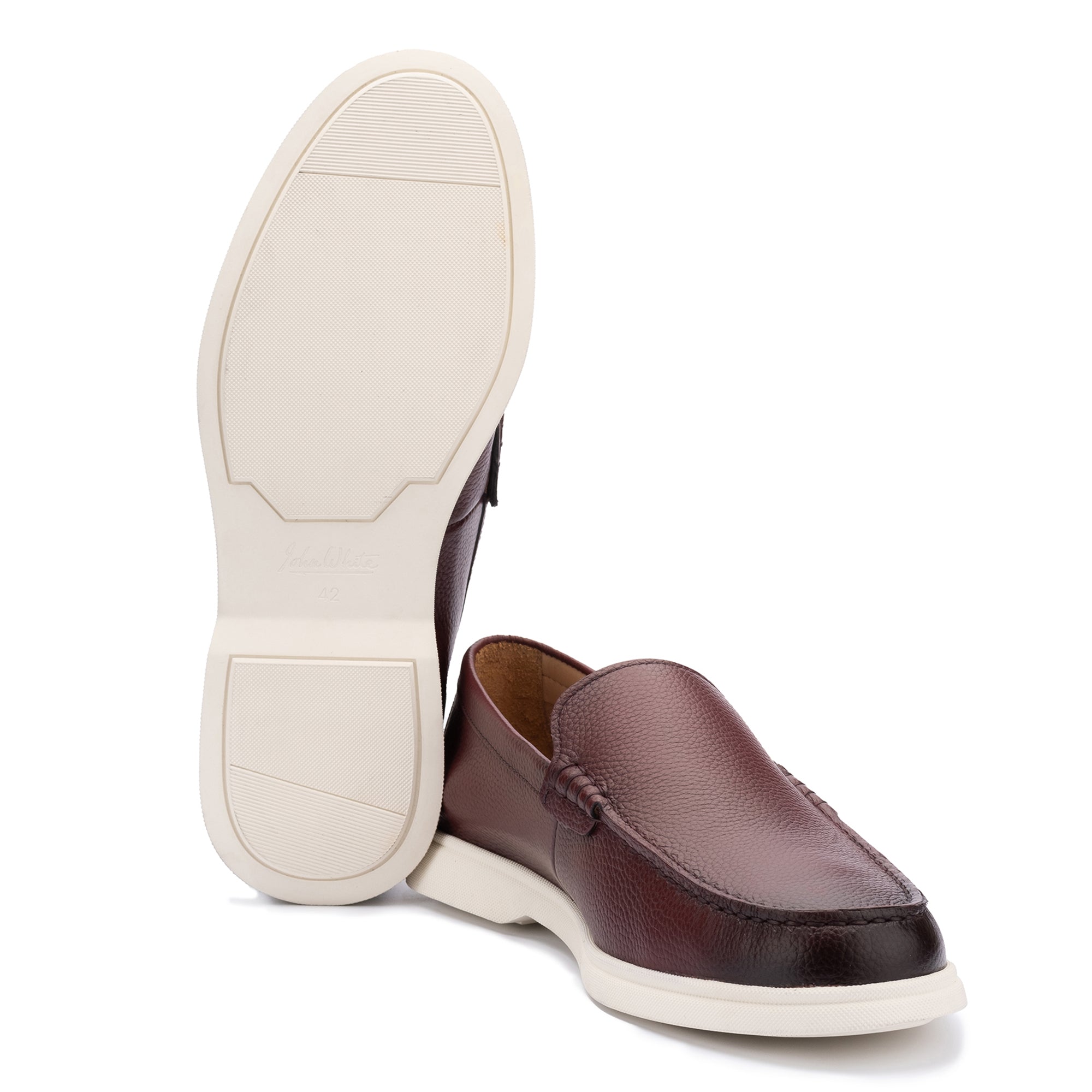

How to Wear Brogues: A Complete Men's Style Guide
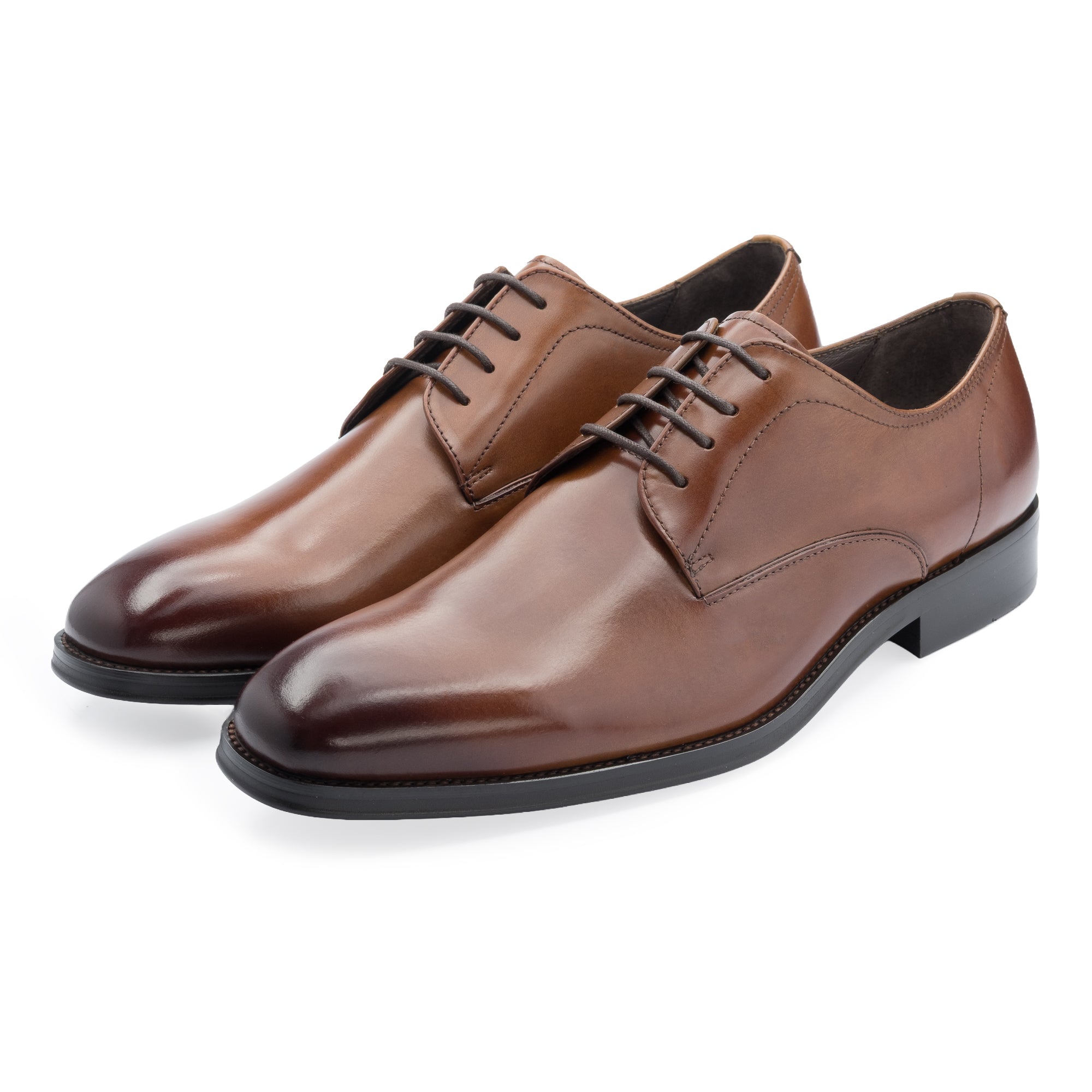
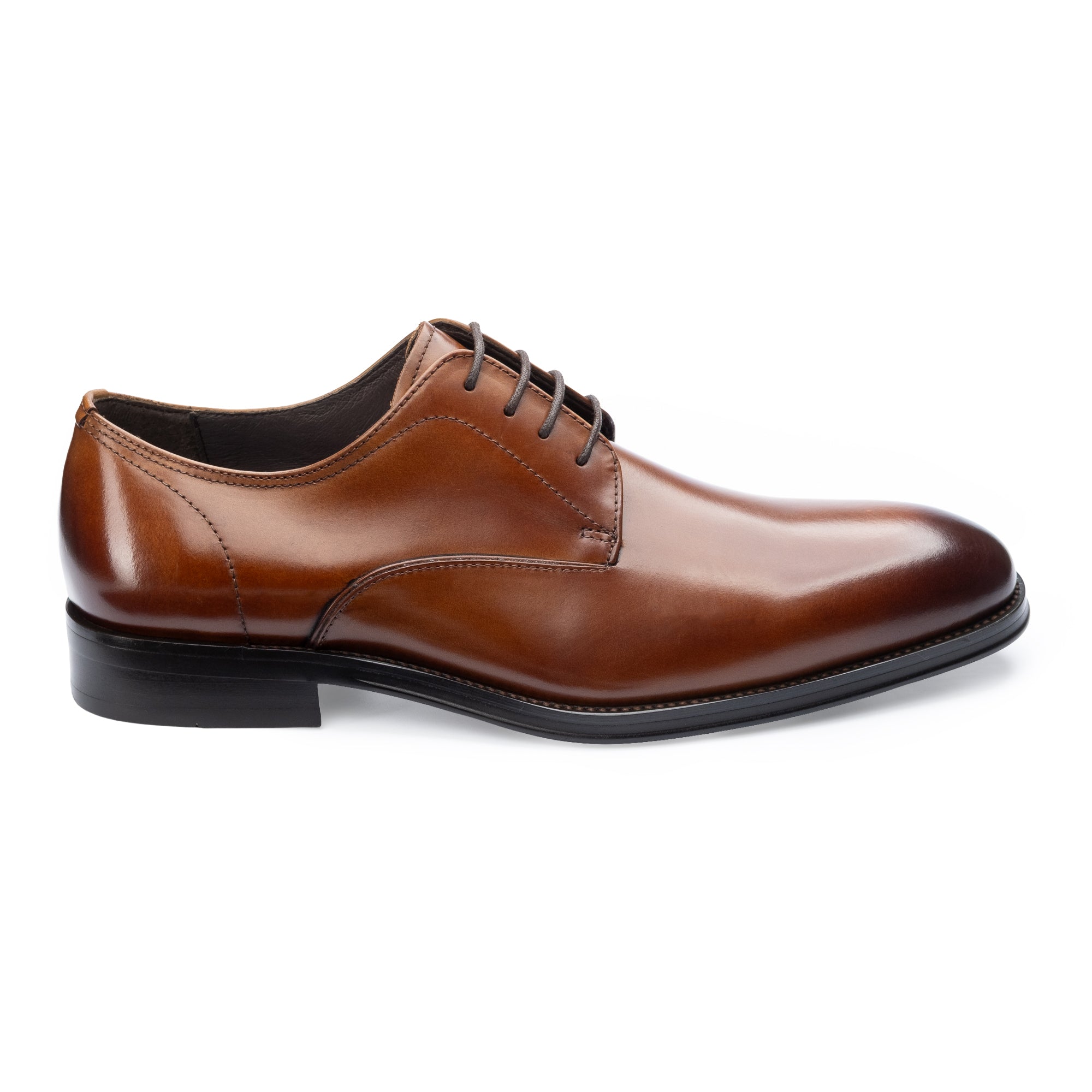
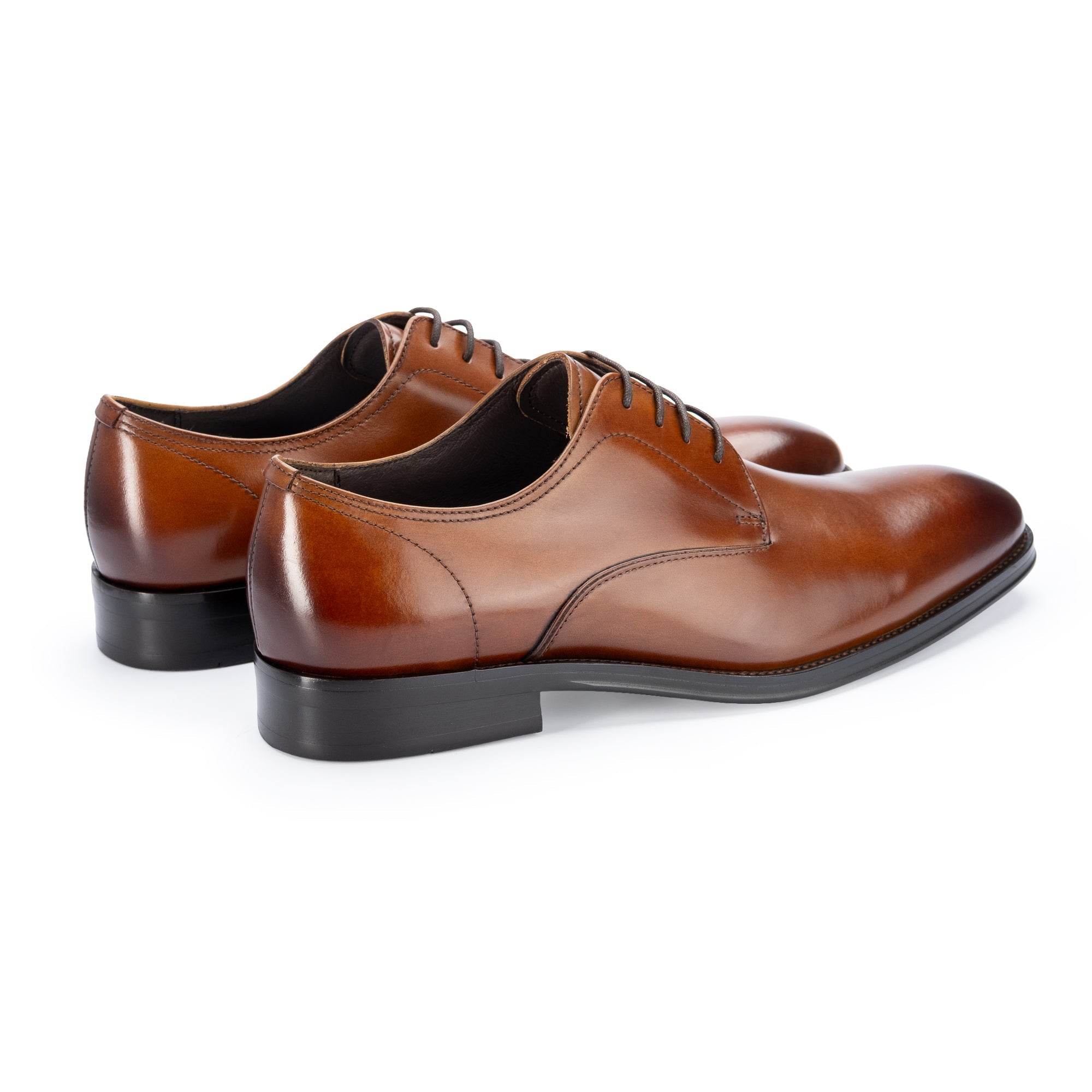
Brogues are among the most versatile shoes in men's footwear. Defined by their decorative perforations and serrated edges, they work across smart casual, business, and even semi-formal settings. The key is matching the brogue style — full, semi, or quarter — to the formality of the occasion and dressing accordingly.
Browse the JWS brogue collection — full brogues, semi-brogues, and brogue boots in leather and suede, from business casual to country weekends — or read on for the complete guide.
Related Guides
- The Complete Guide to Men's Dress Shoes — our comprehensive guide
- Oxford vs Derby Shoes: Key Differences Explained
- The Formality Spectrum: A Definitive Ranking of Men's Dress Shoes
- What Shoes to Wear with a Suit
- What Shoes to Wear with Chinos: A Men's Complete Style Guide
- The Best Shoes to Wear with Jeans: A Complete Men's Guide
- What to Wear to Wimbledon: Men's Shoe Guide for Every Enclosure
- Chinos and Leather Shoes: The Complete Men's Styling Guide
What Are Brogues?
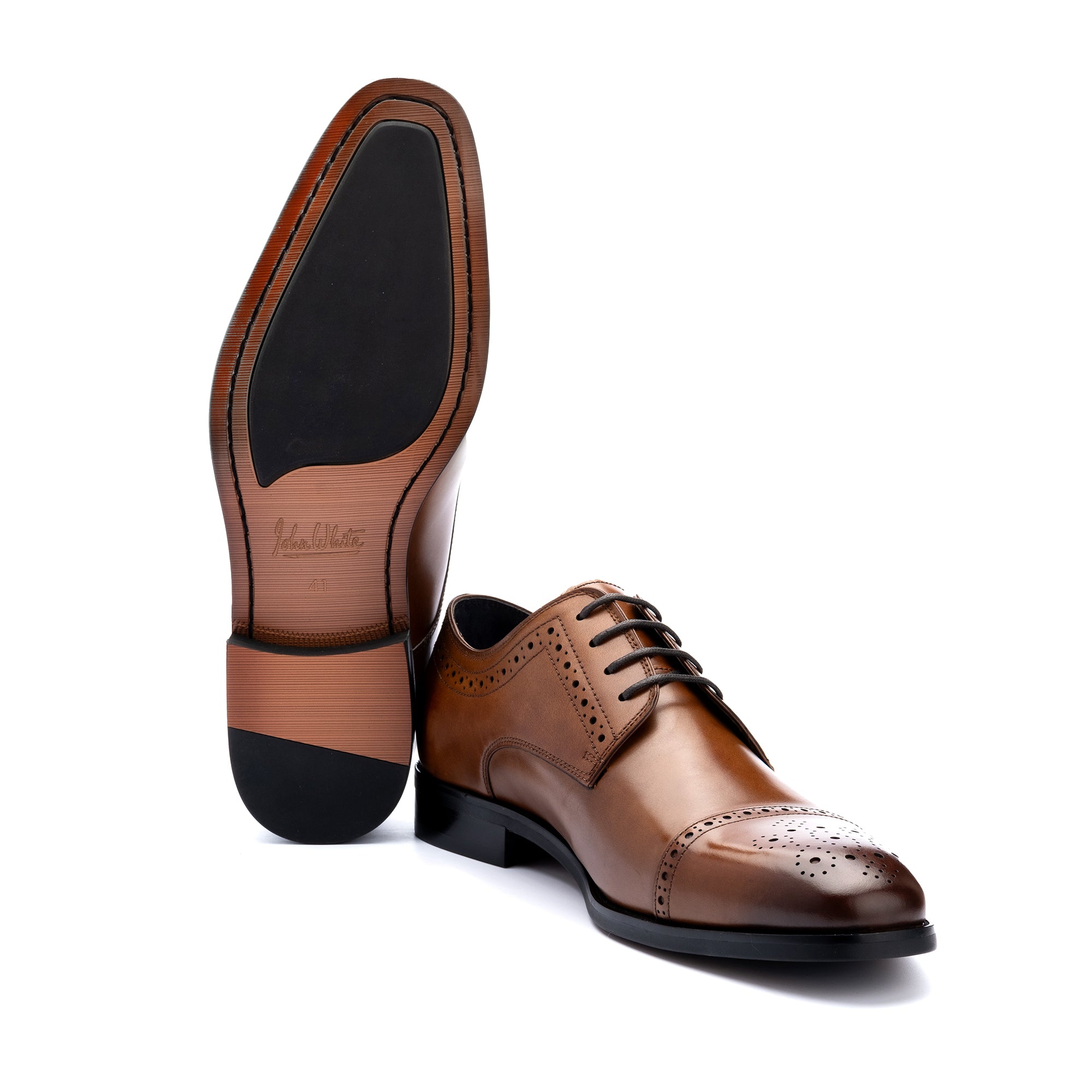
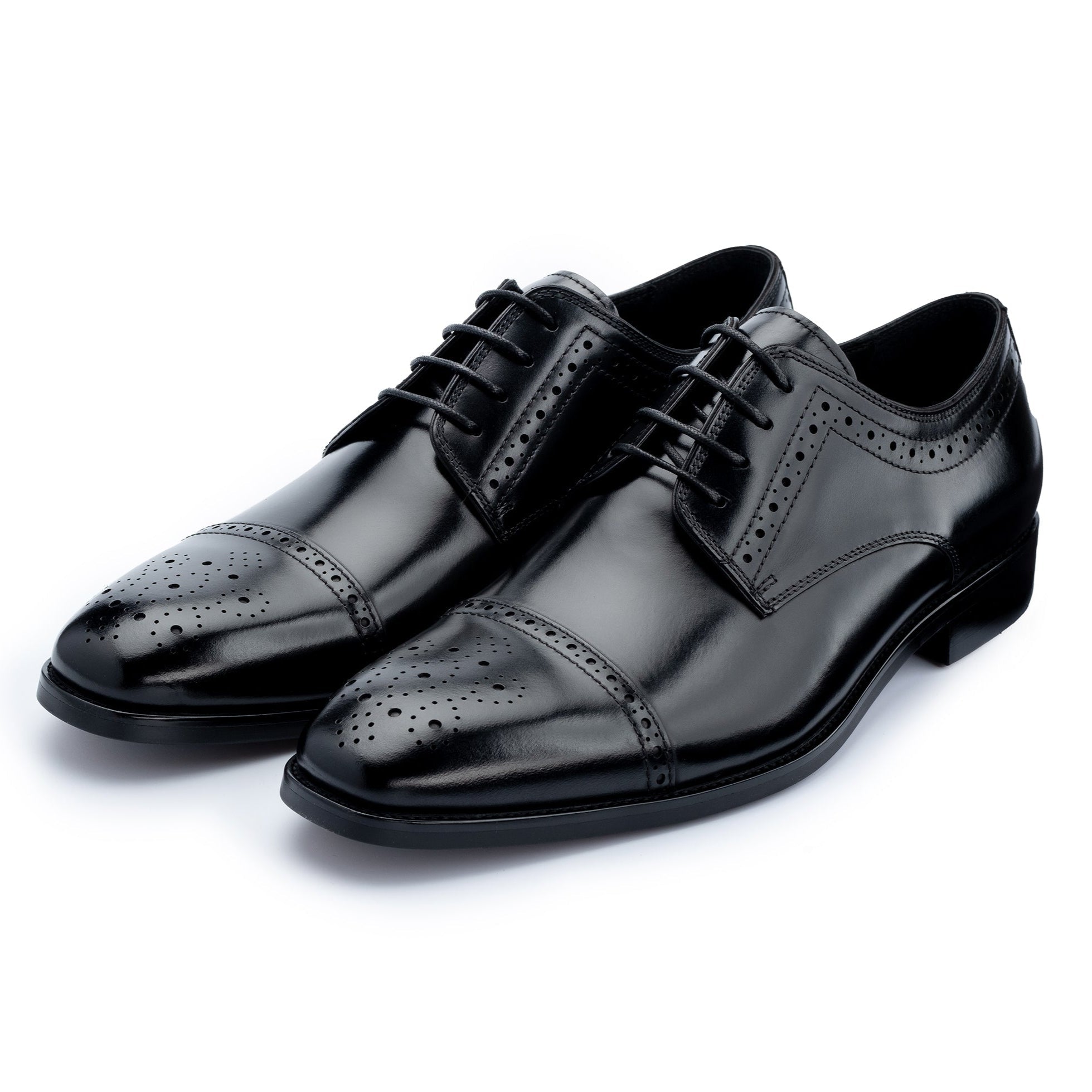
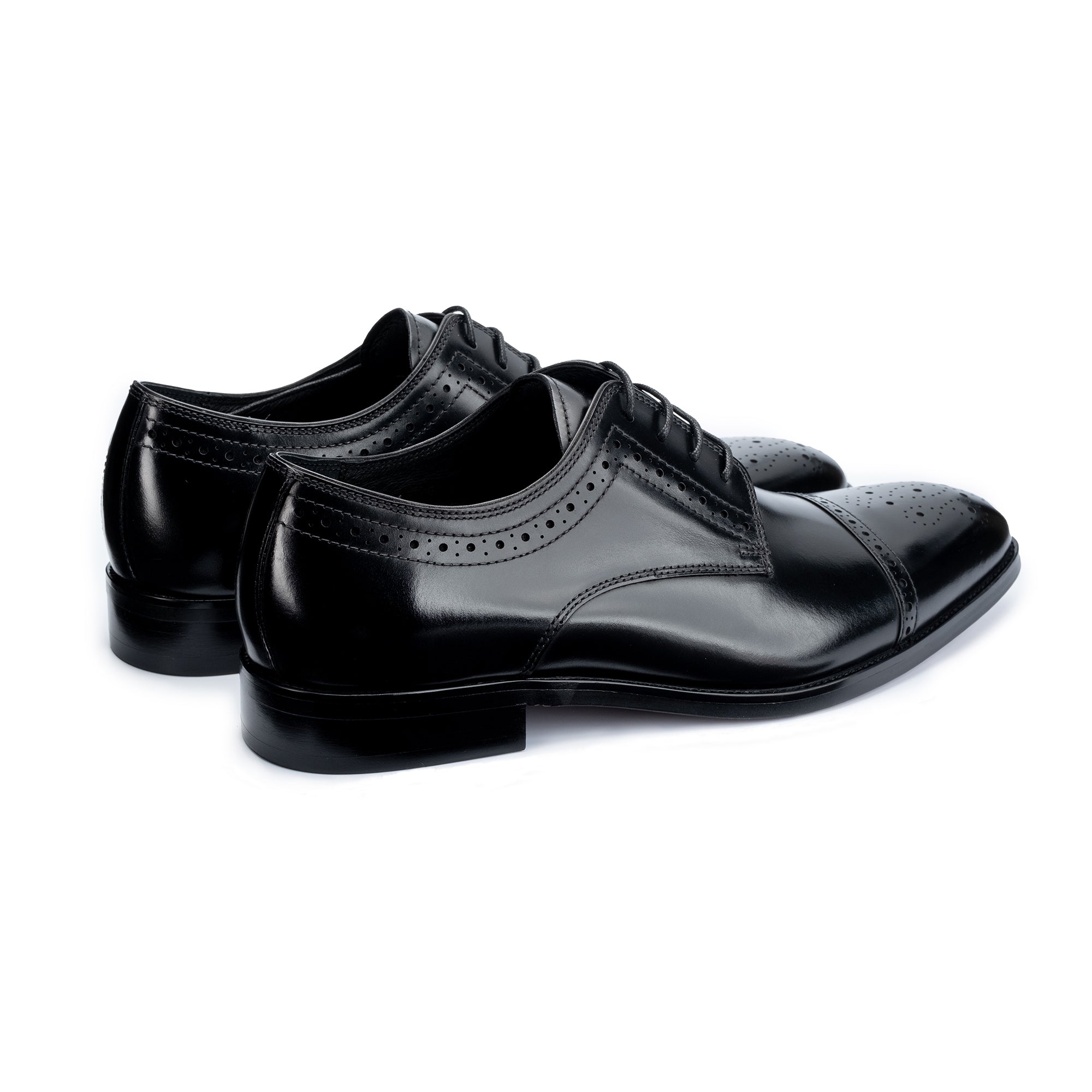
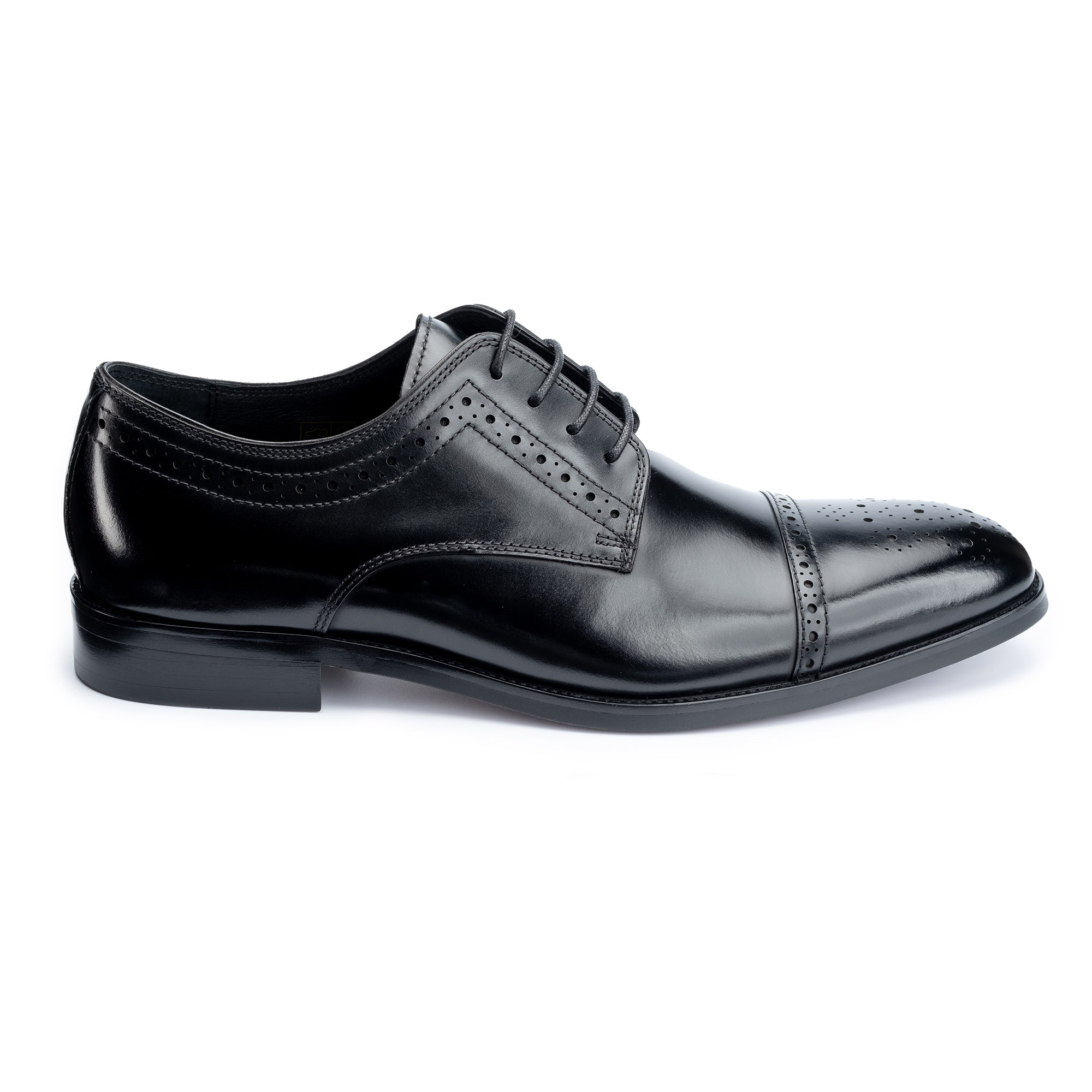
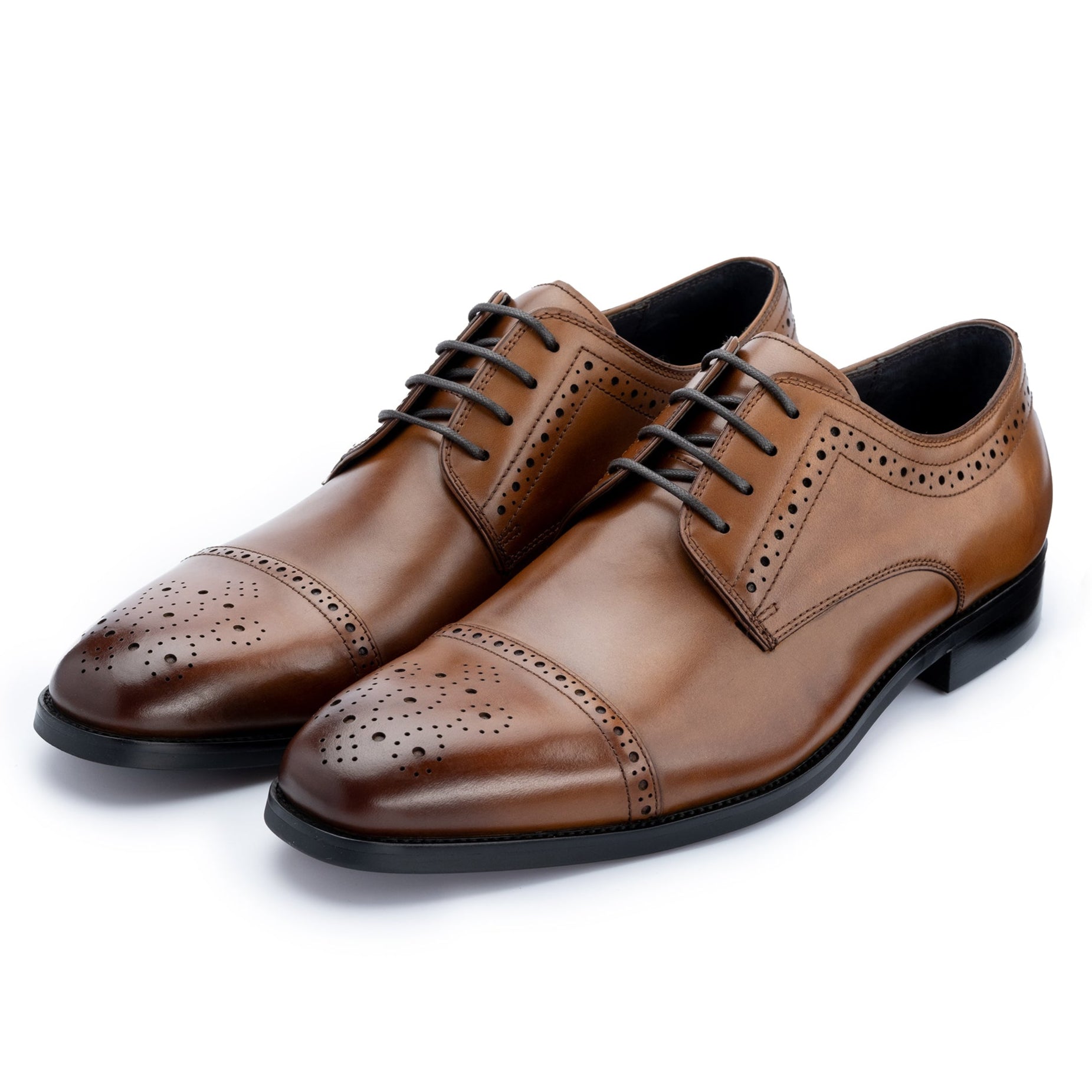
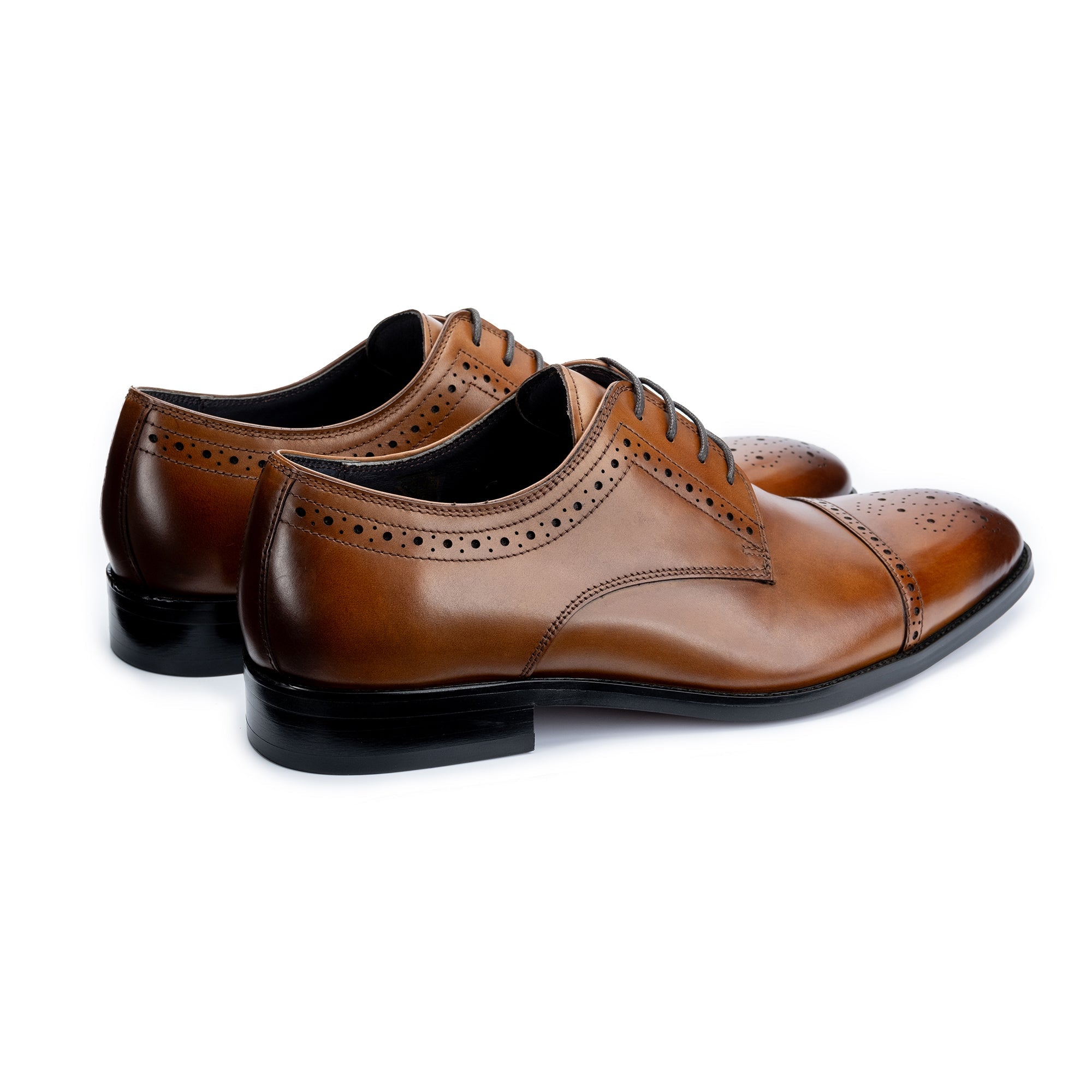
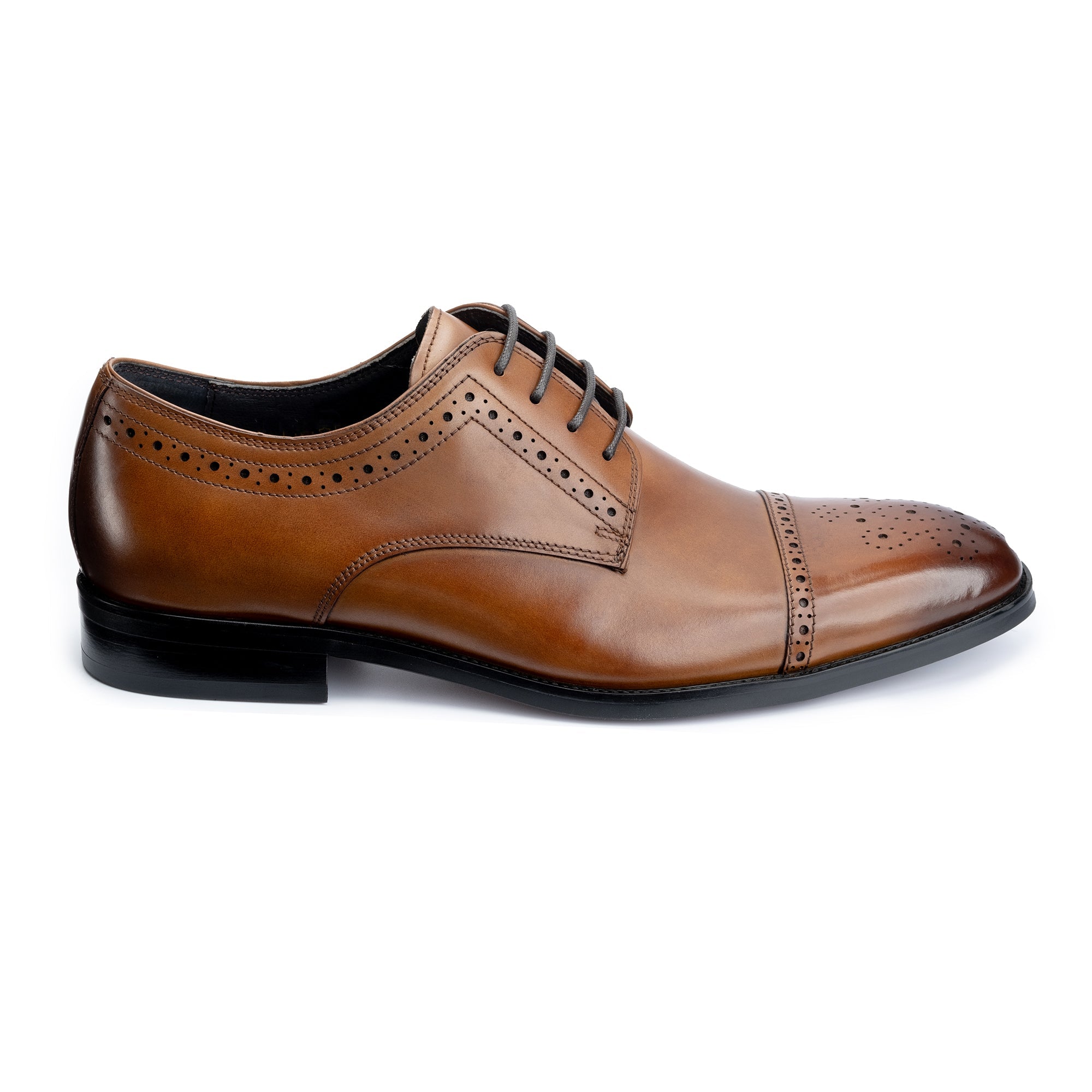
Brogues are leather shoes distinguished by their decorative perforations, known as broguing, along the edges of the leather panels. Originally designed as outdoor footwear in Ireland and Scotland — the holes allowed water to drain when crossing boggy terrain — they evolved over the 20th century into a cornerstone of British men's dress.
Today, brogues range from the highly decorative full brogue (the wingtip) to the subtle quarter brogue, making them suitable for everything from country weekends to city boardrooms. Knowing the difference between the three main styles is the foundation of wearing them well.
What Are the Different Types of Brogues?
Full Brogue (Wingtip)
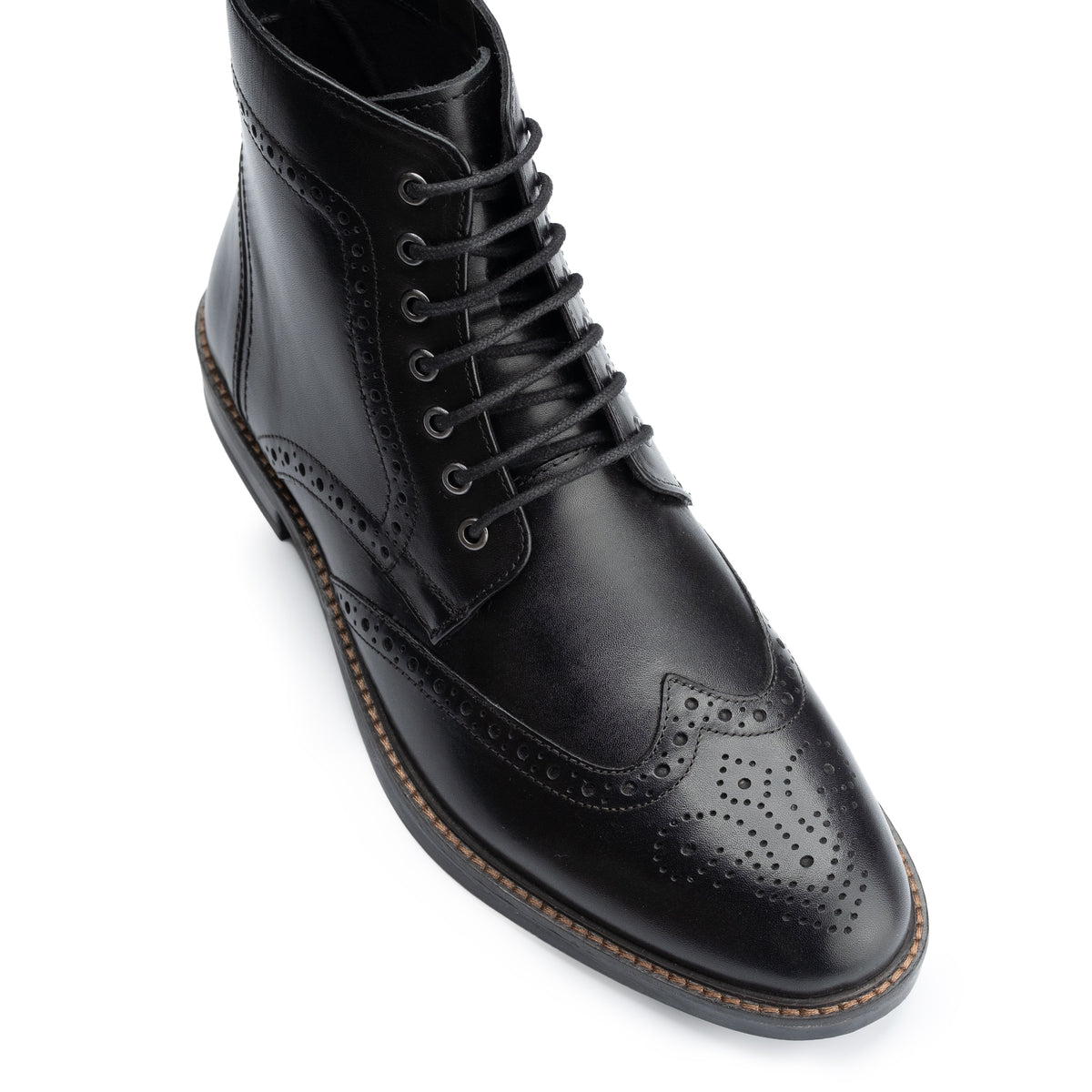
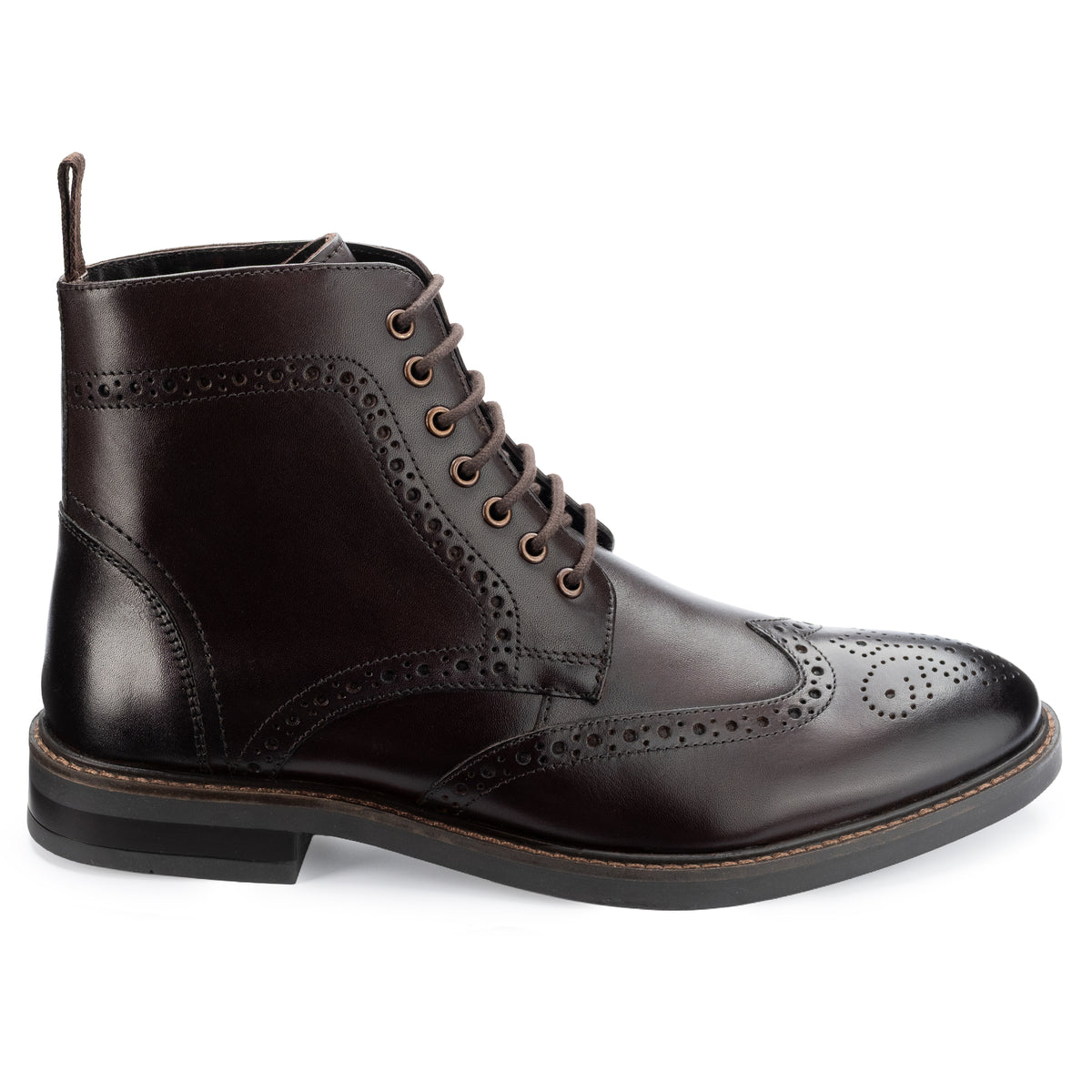
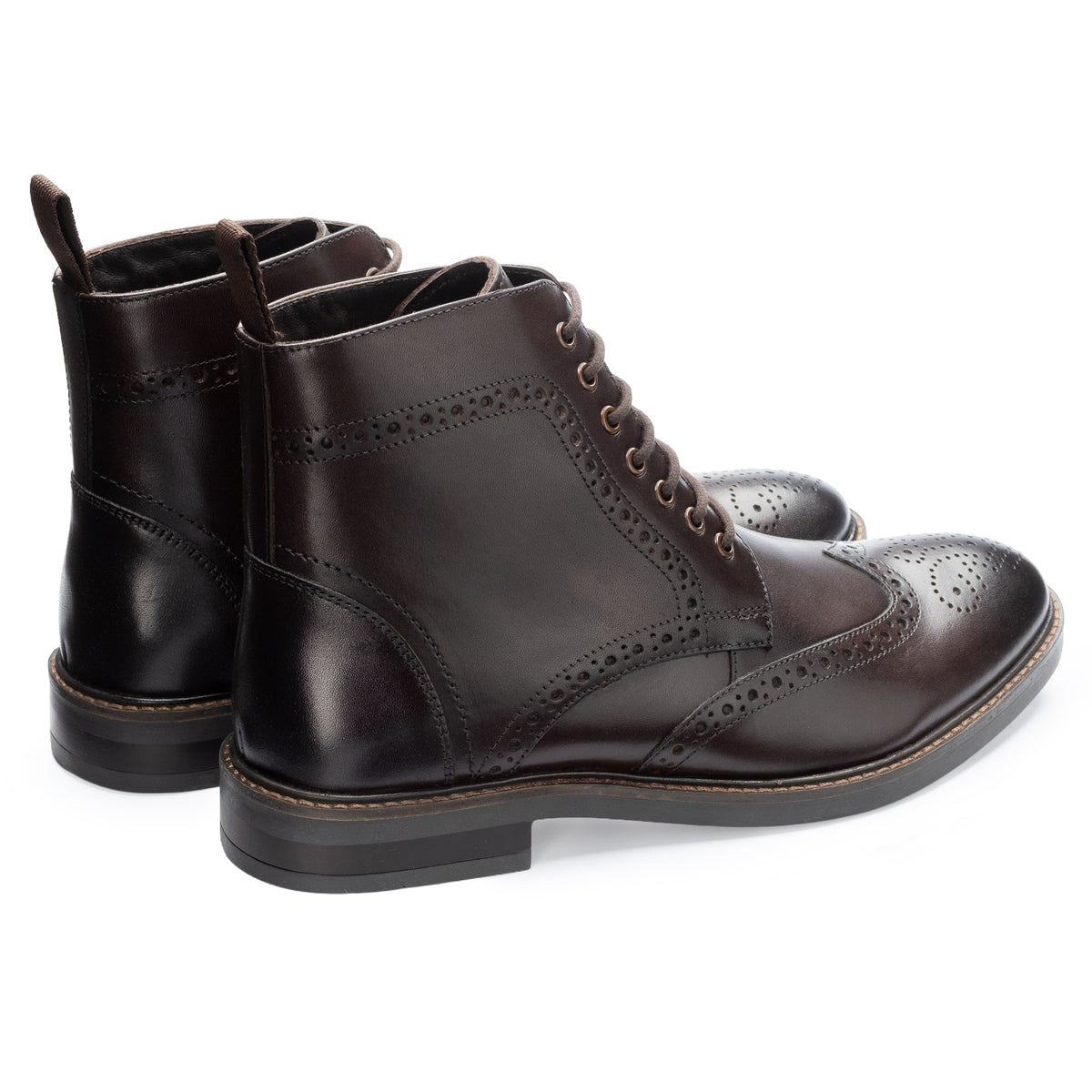
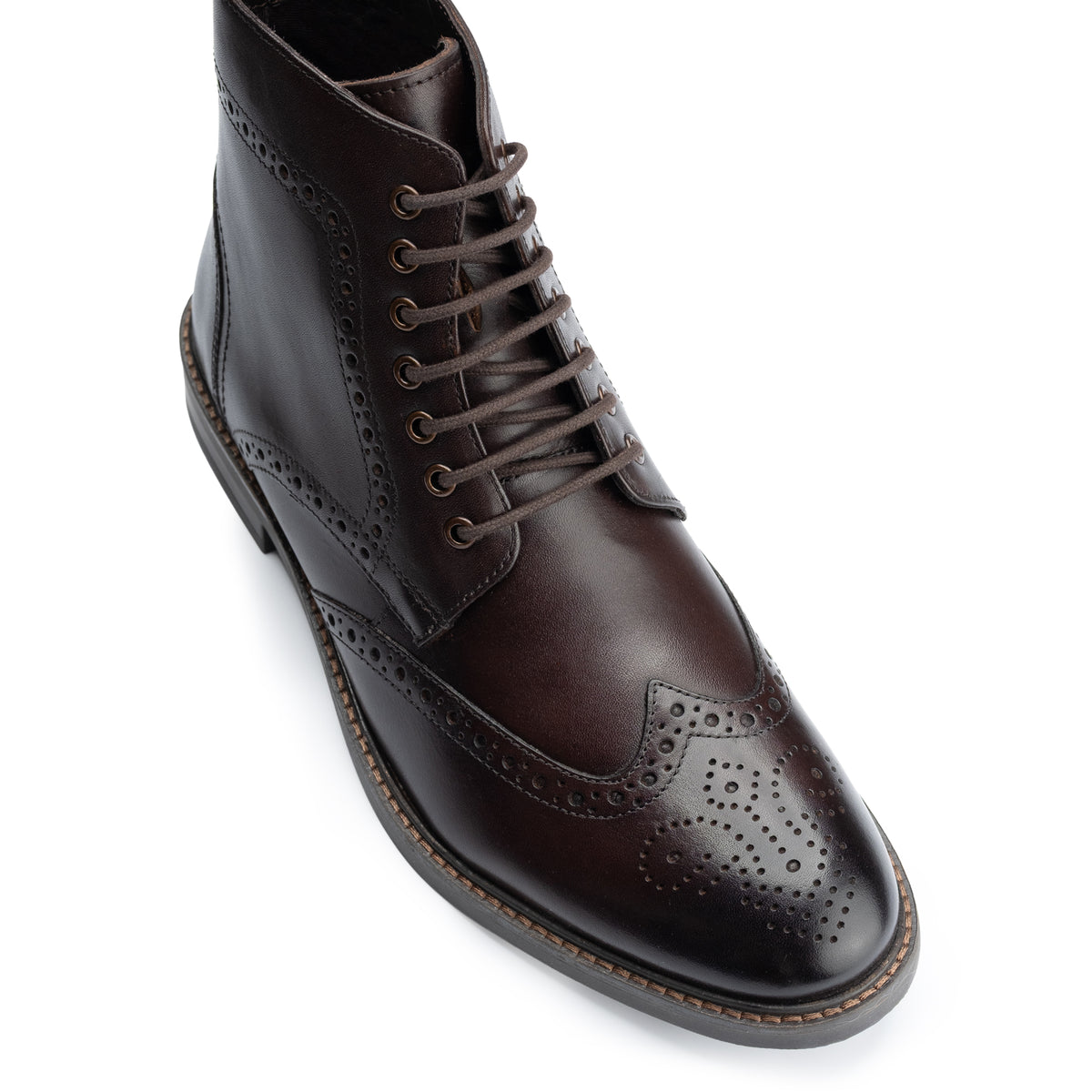
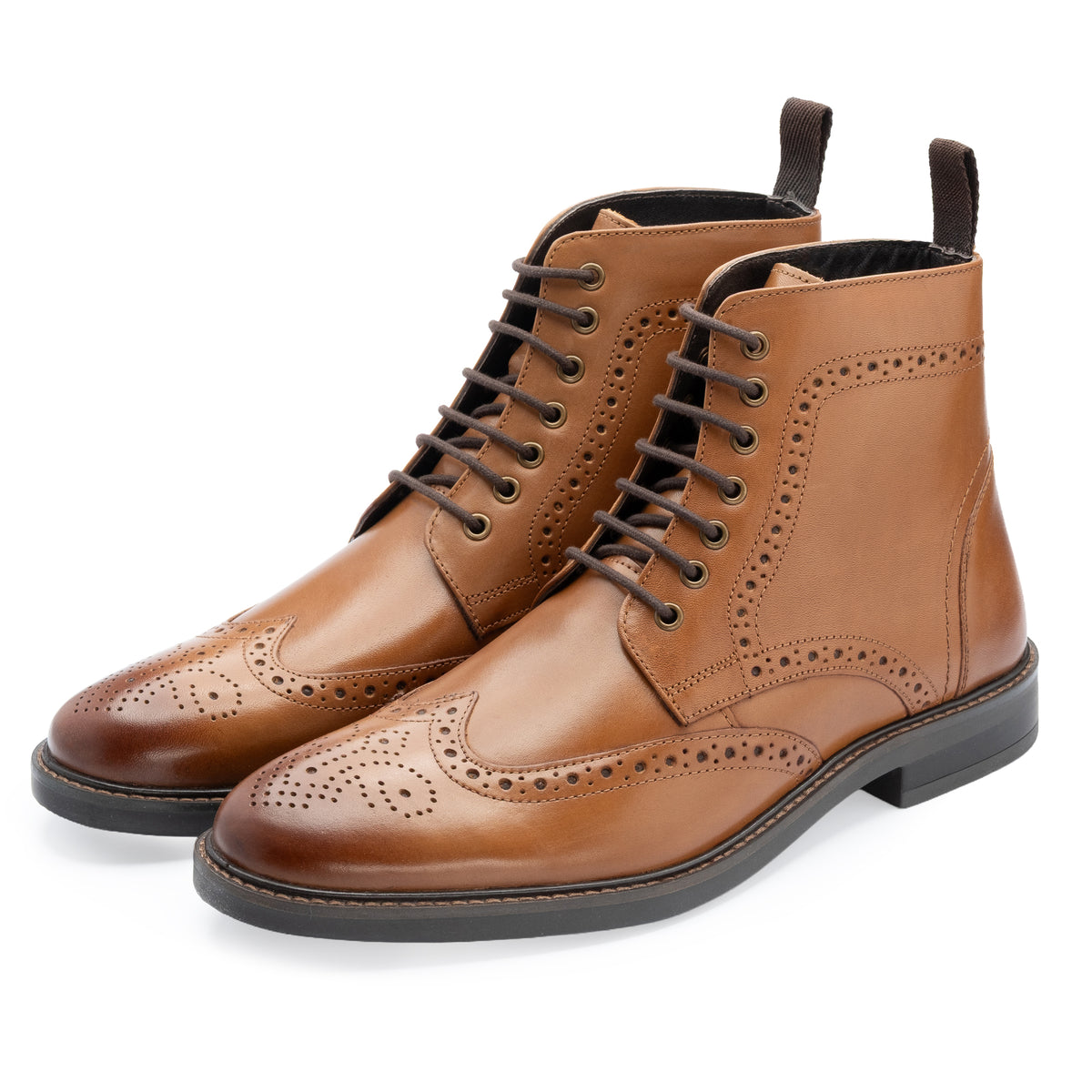
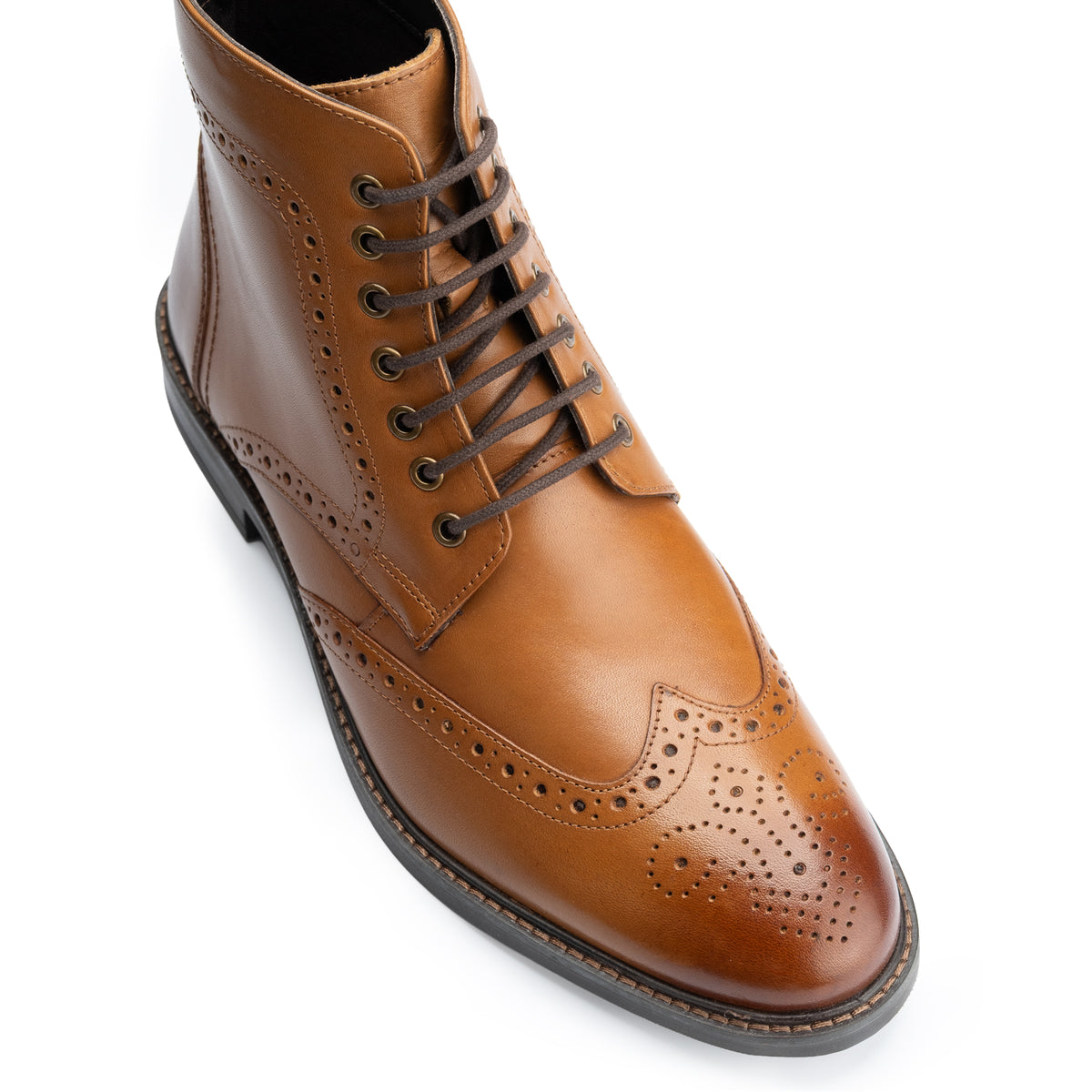
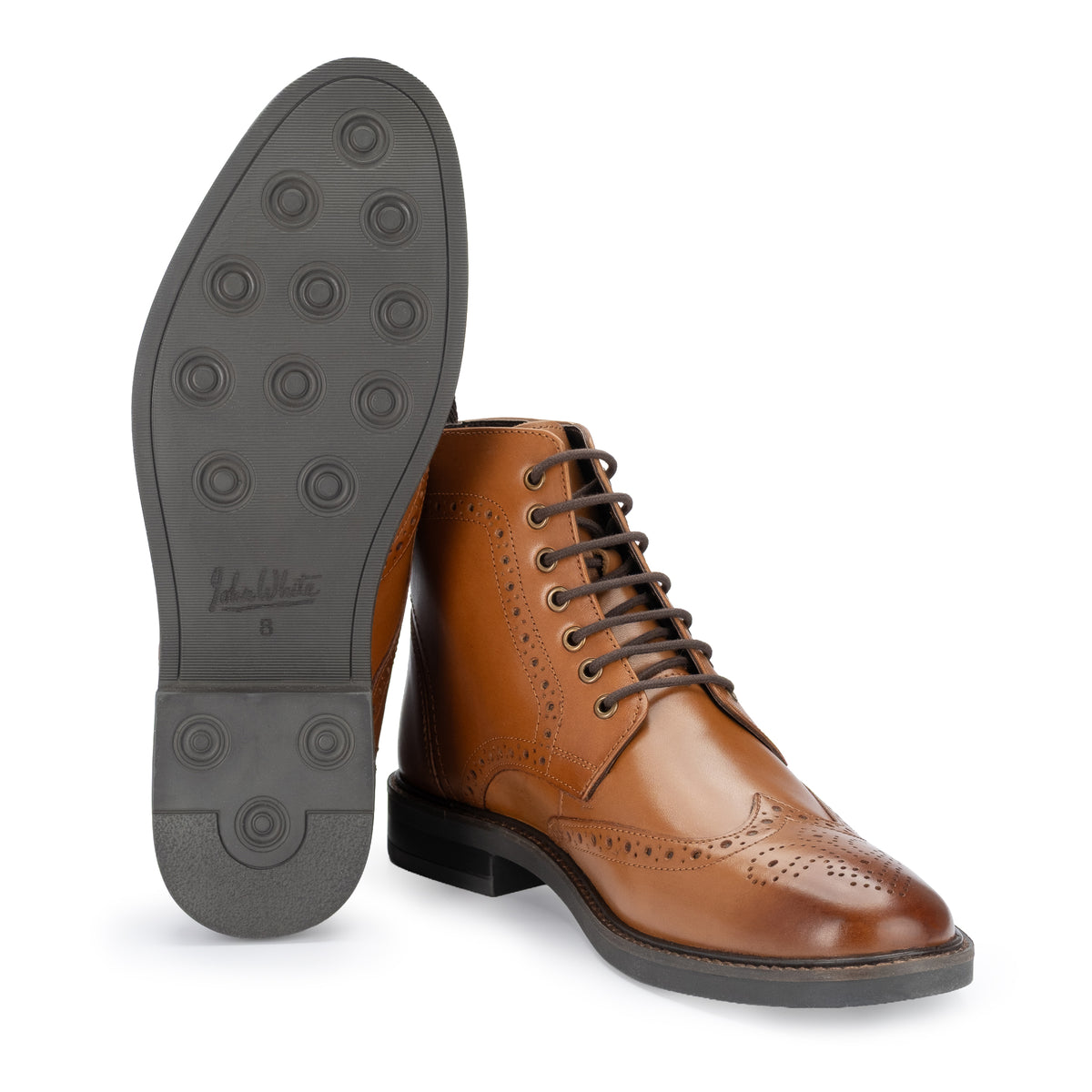
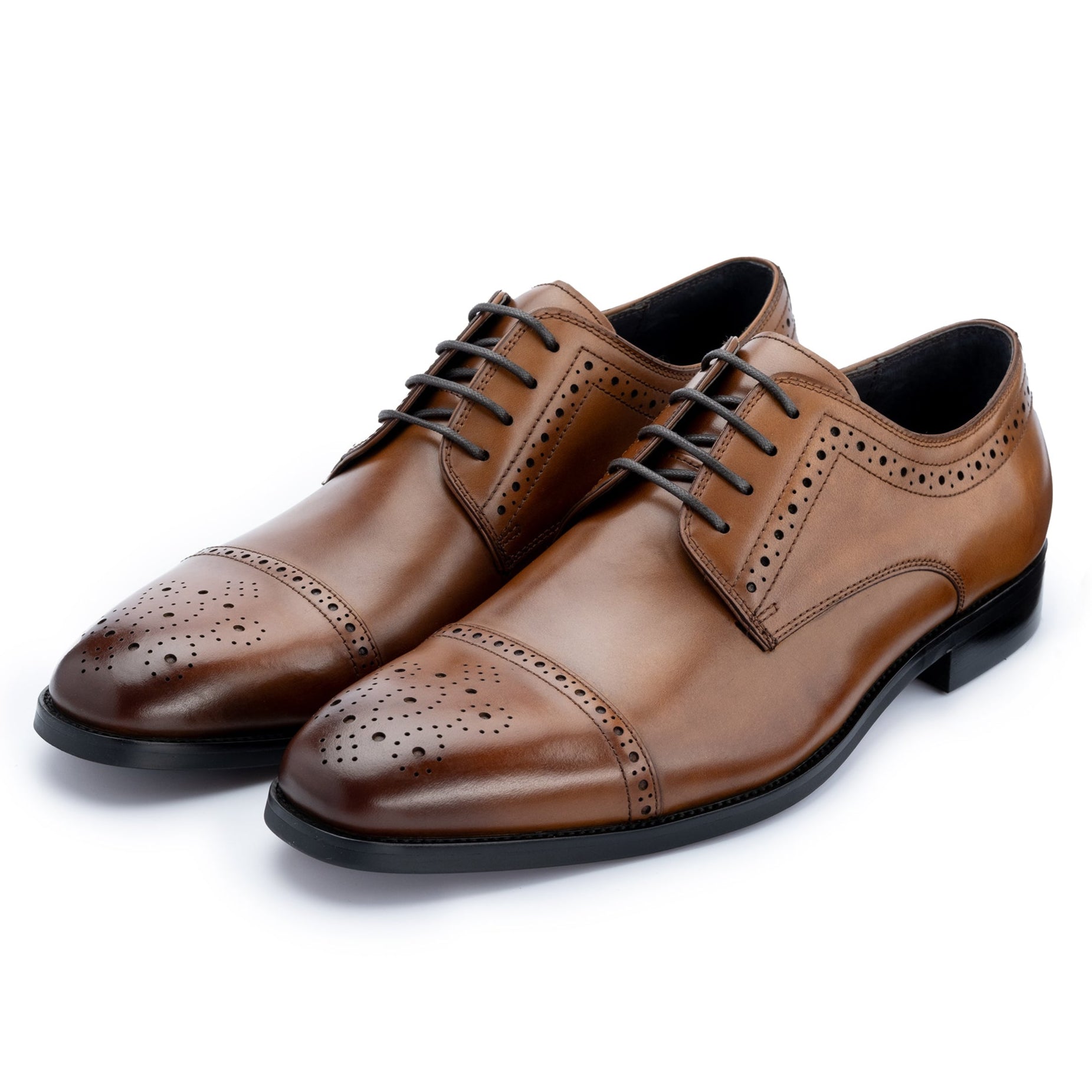
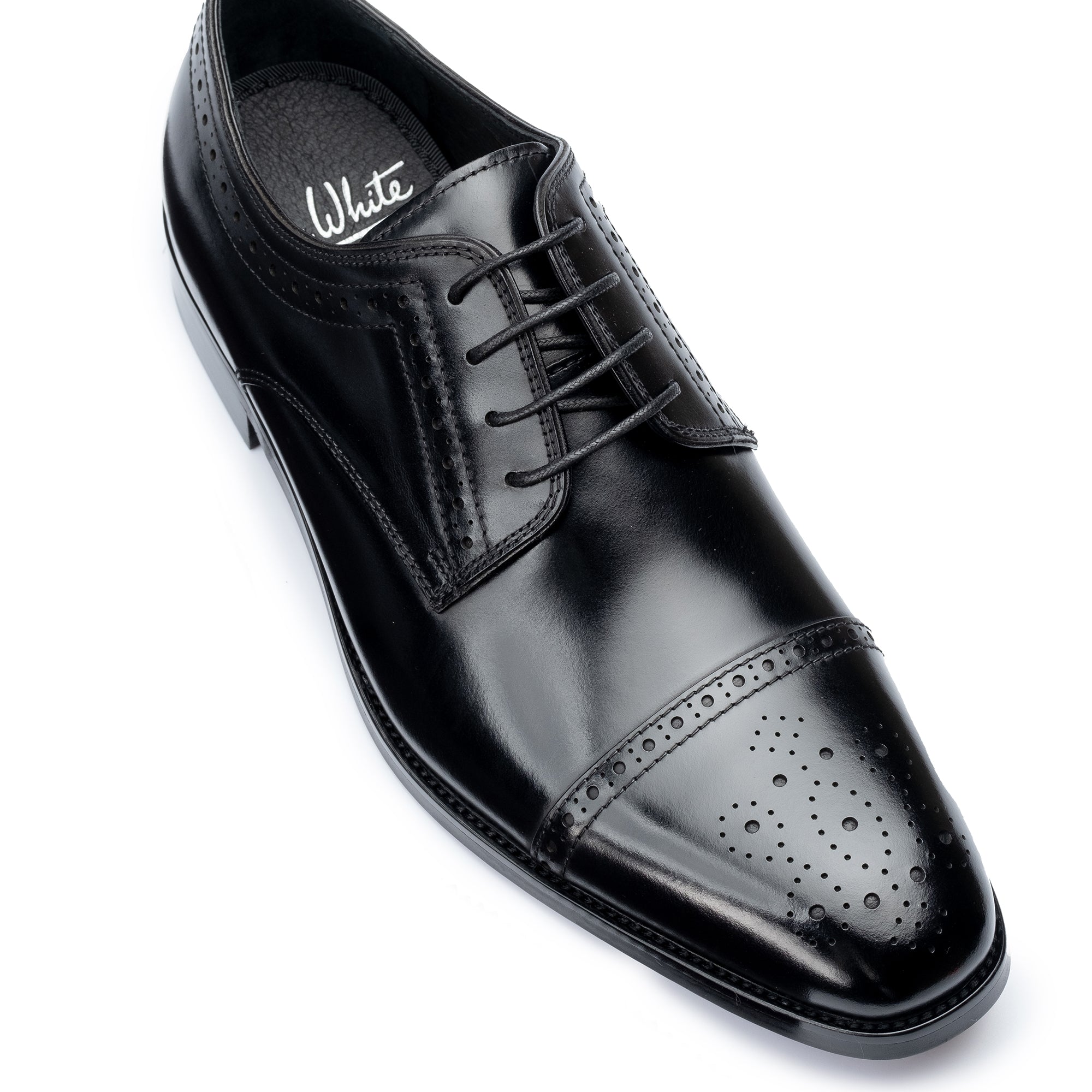
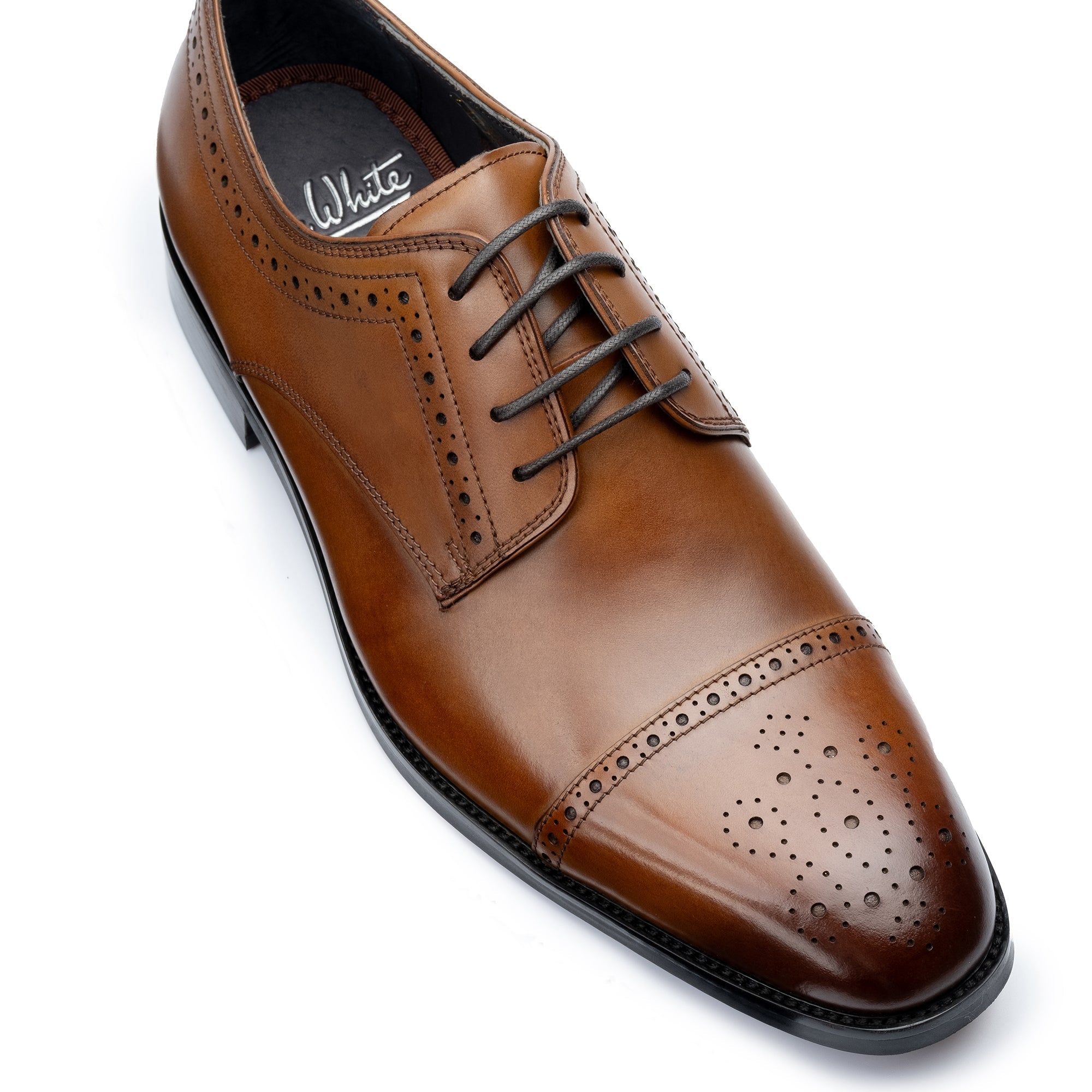
The most decorated style. A full brogue features a W-shaped toe cap — the "wing" — with broguing running along its entire edge, plus a medallion punched into the toe. It is the most casual of the three styles and the one with the most character.
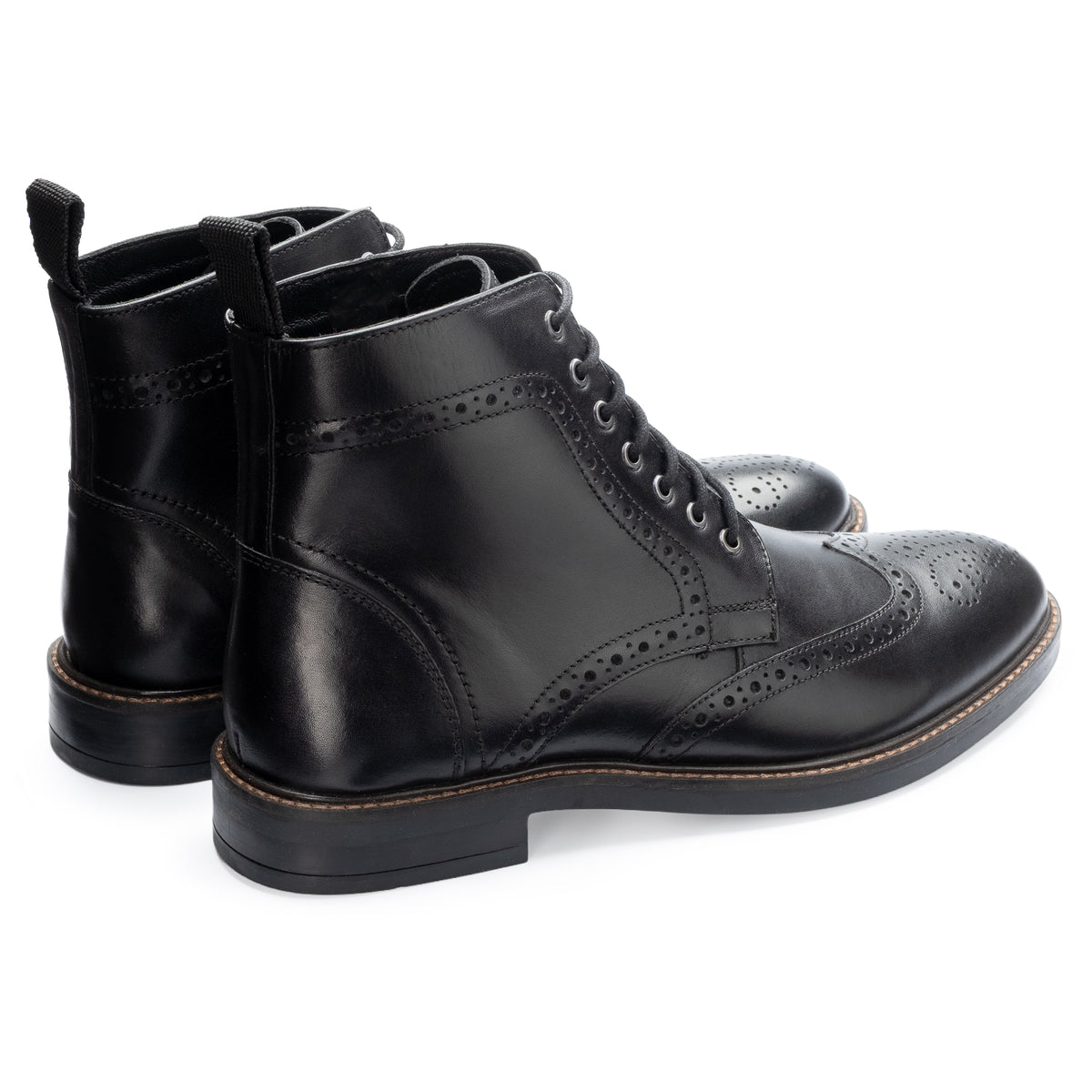
Full brogues are best worn with tweed, chinos, or dark jeans. They are less appropriate for formal business suits, where the heavy decoration undercuts the suit's authority. The Stokes Brogue Derby and Hogarth Brogue are full-brogue styles available in tan, brown, and black — the tan and brown colourways being the most natural fit for country and smart-casual wear.
Semi Brogue
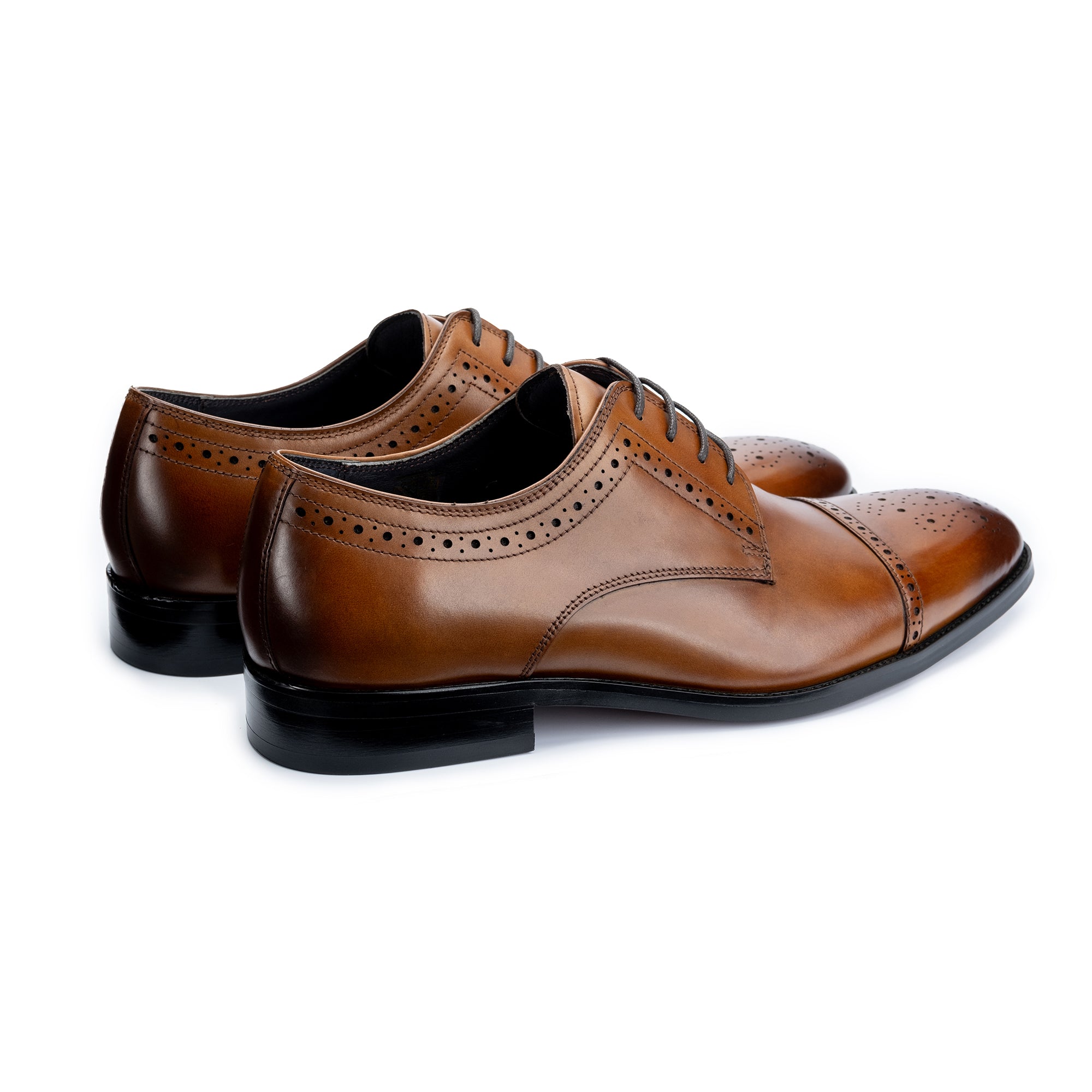
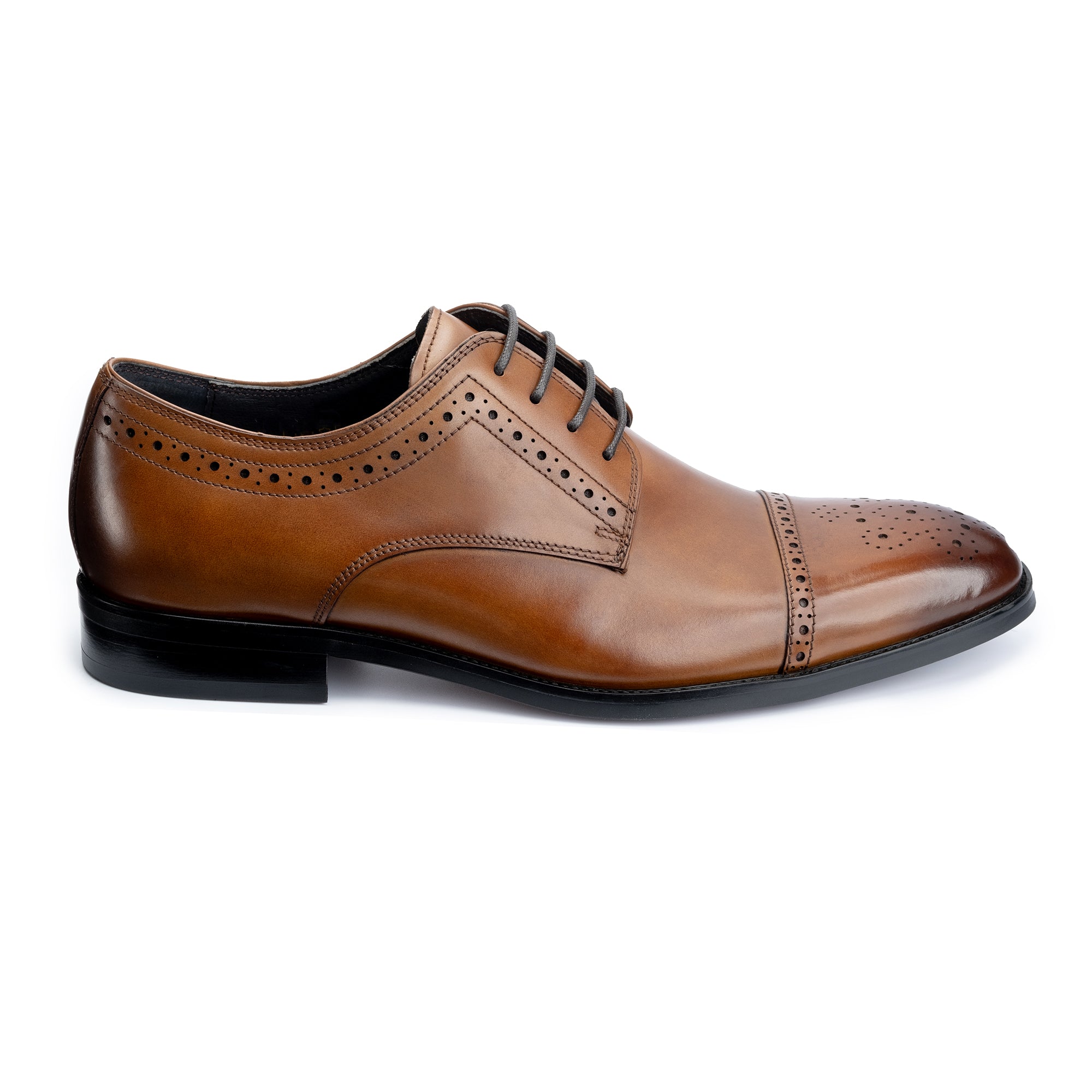
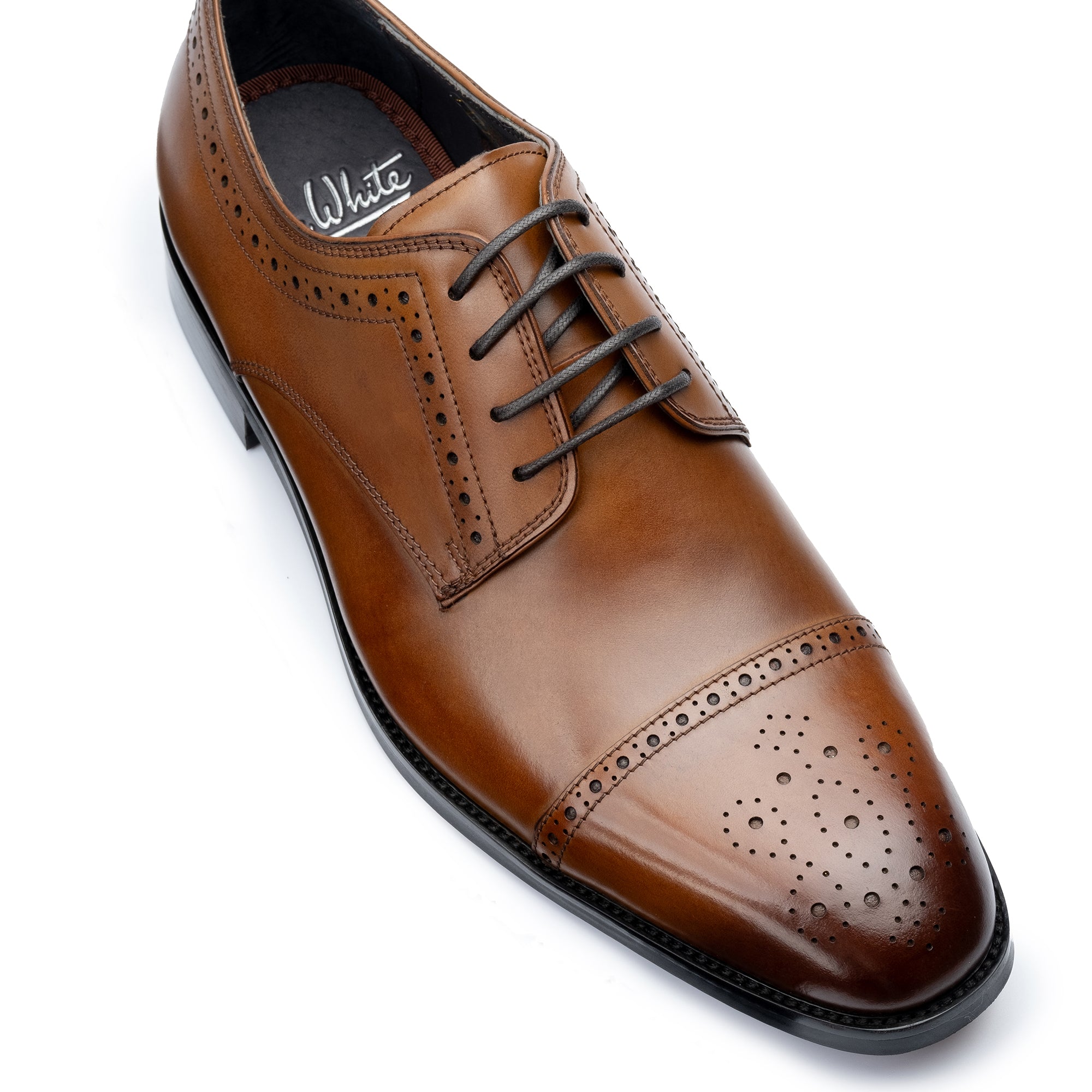
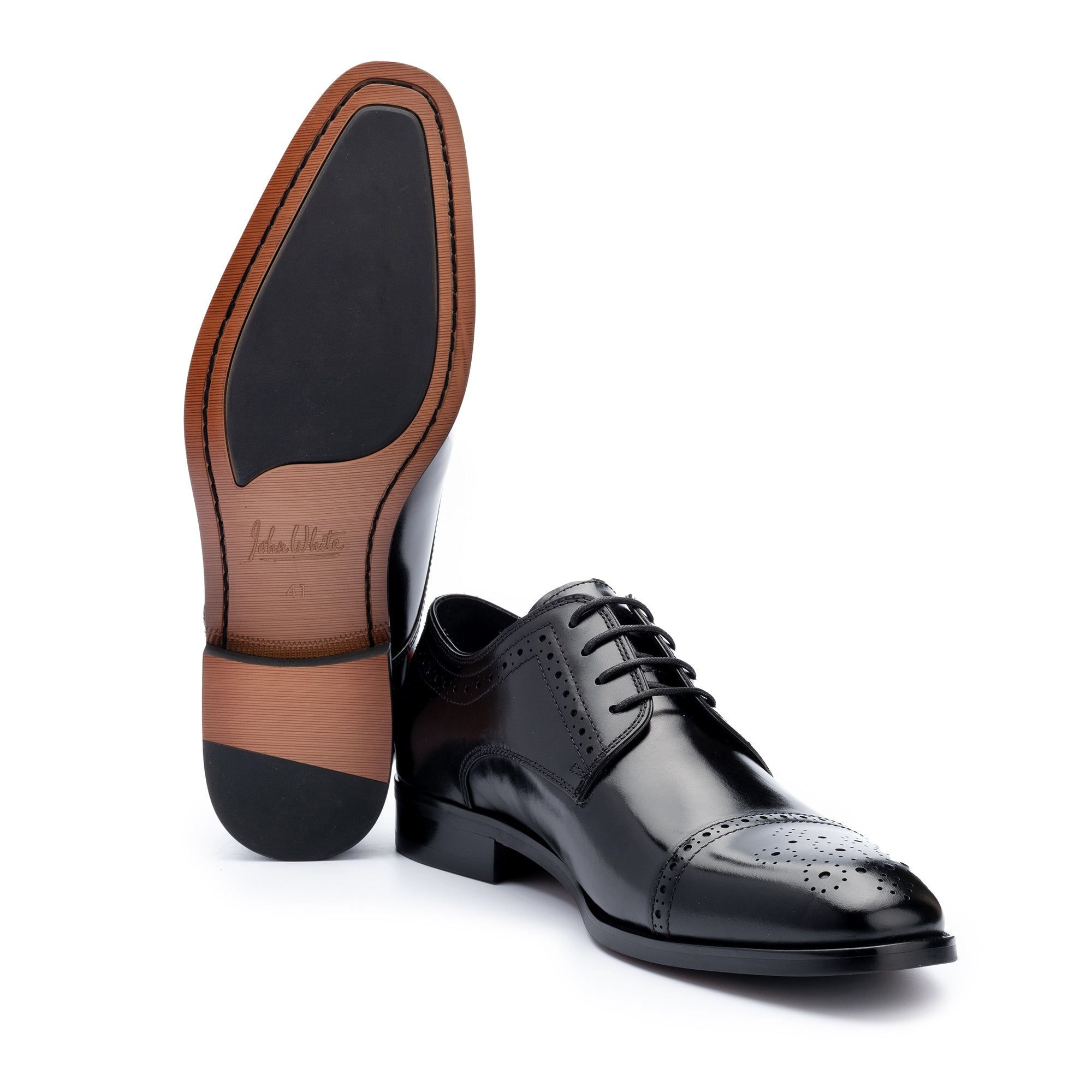
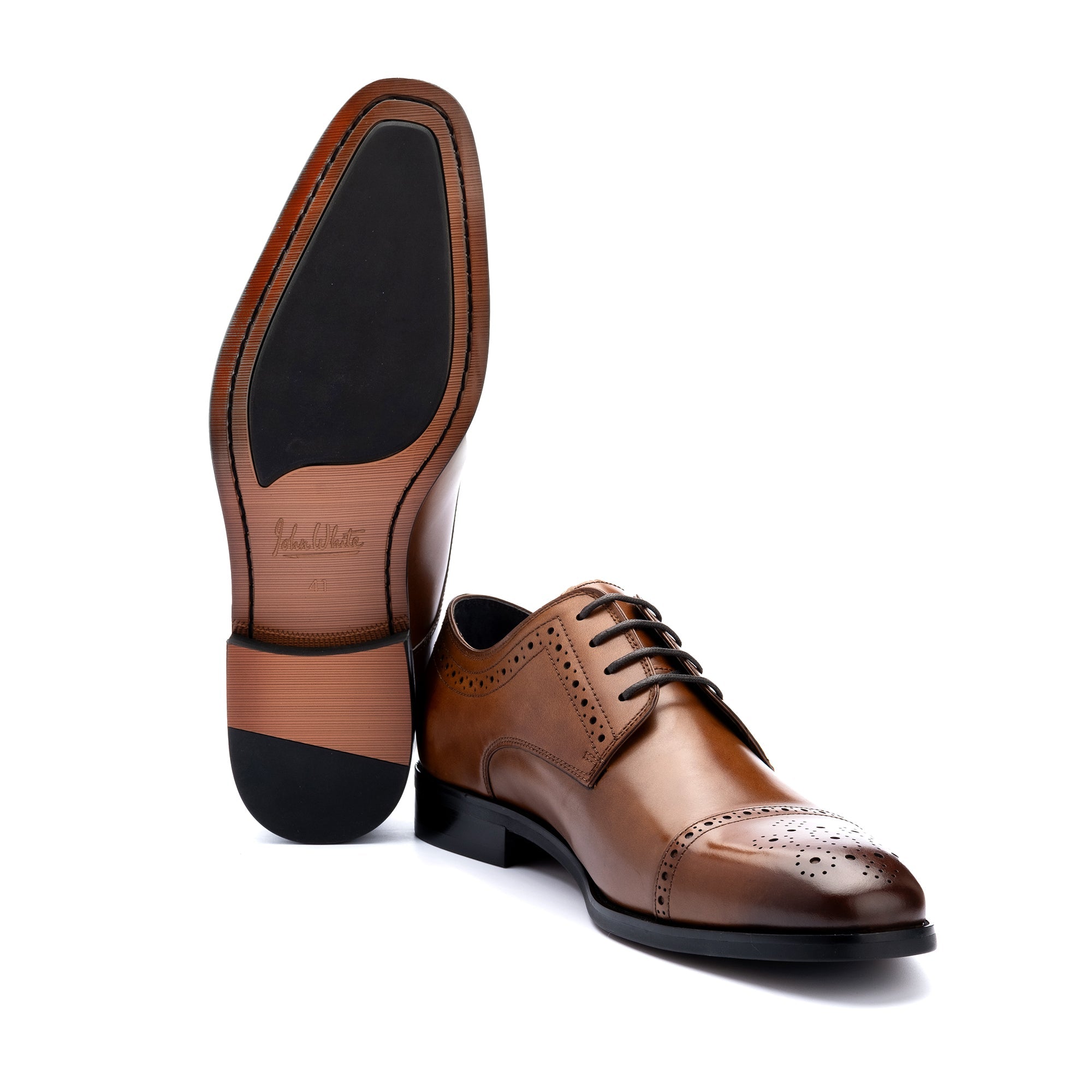
A straight cap toe with broguing on the seam and a medallion on the toe. The semi brogue sits between full and quarter brogue in terms of formality. It works well with business casual and suits in mid-to-dark tones — a more disciplined look without abandoning character entirely. The Lucan Semi-Brogue in black or tan is a clean, versatile choice at this register.
Quarter Brogue
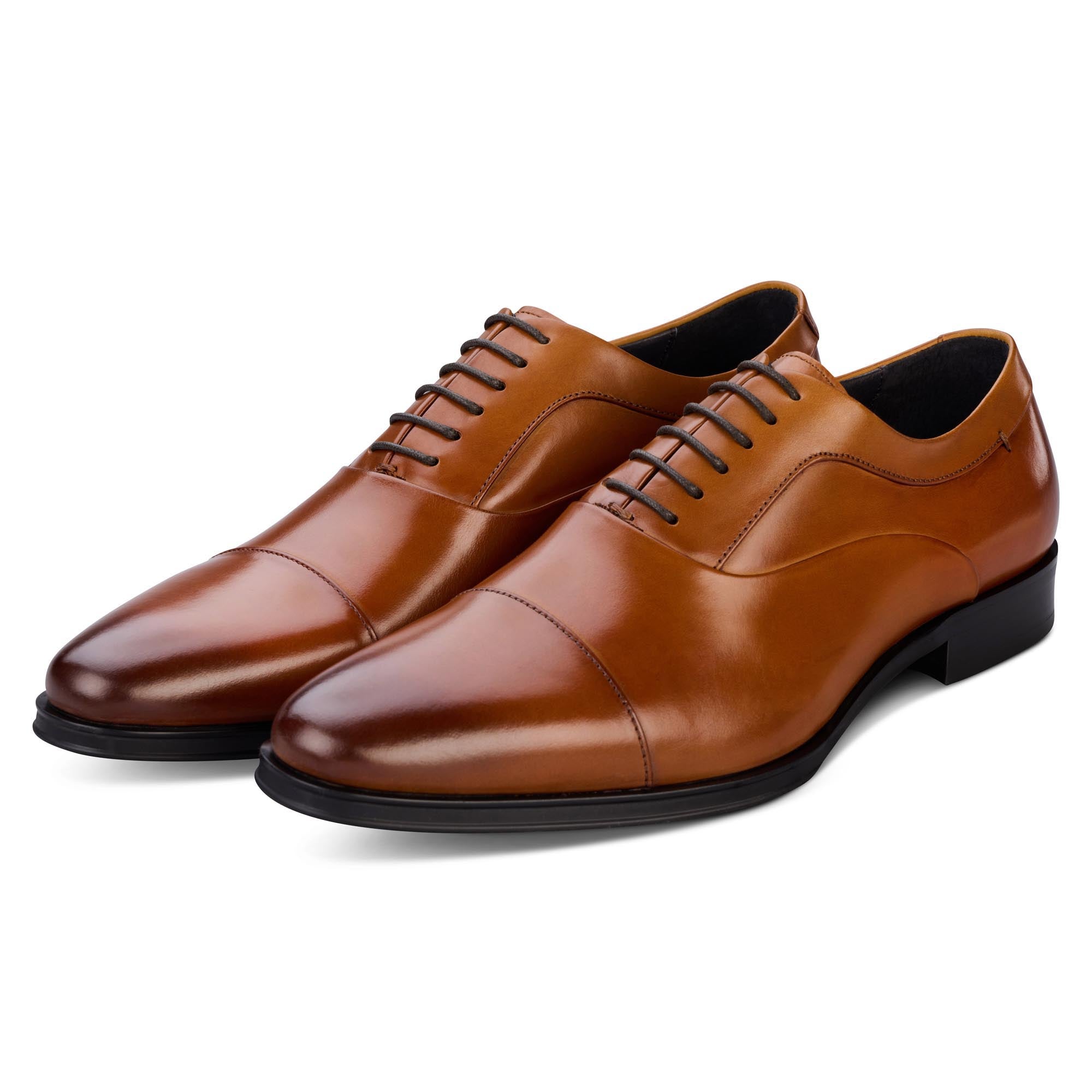
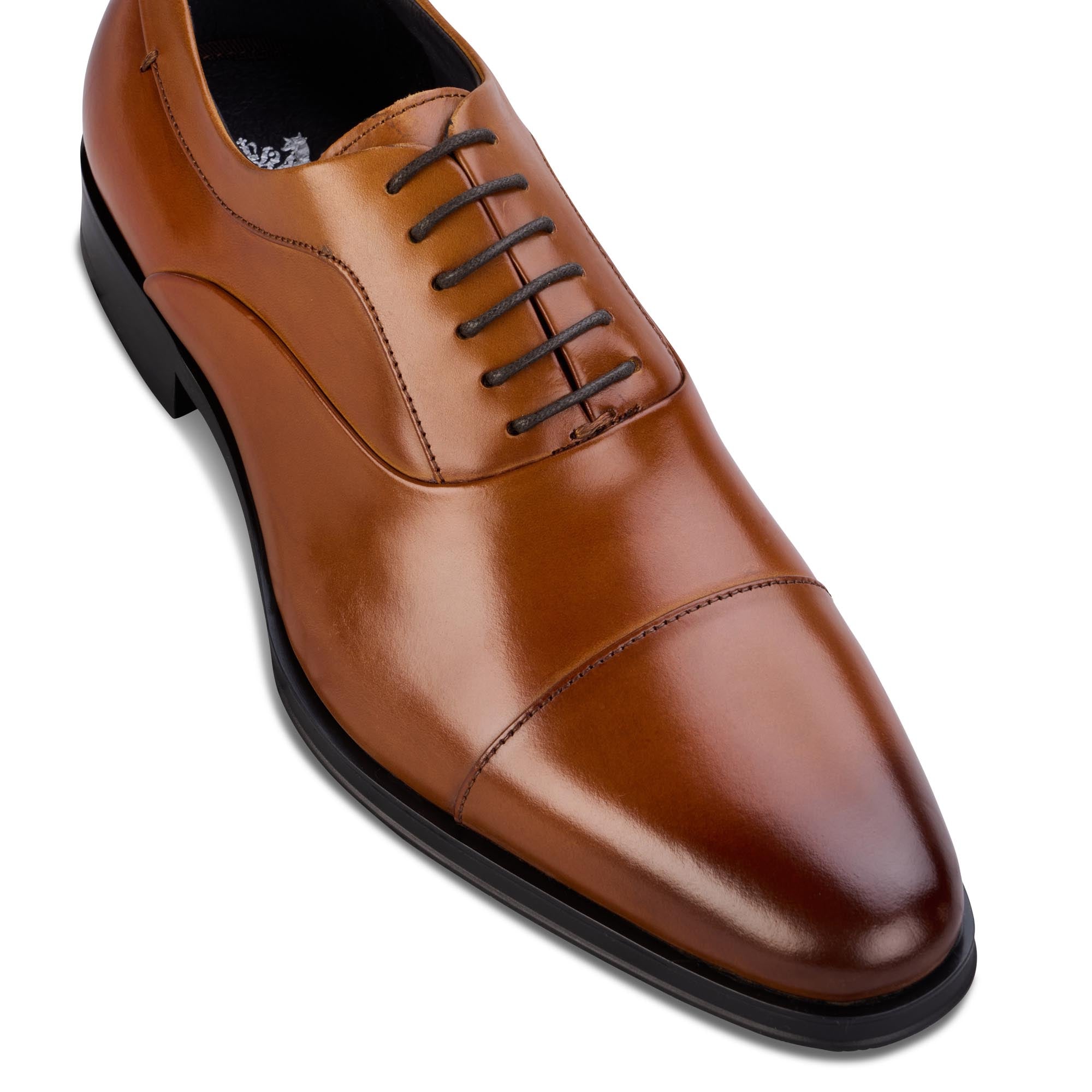
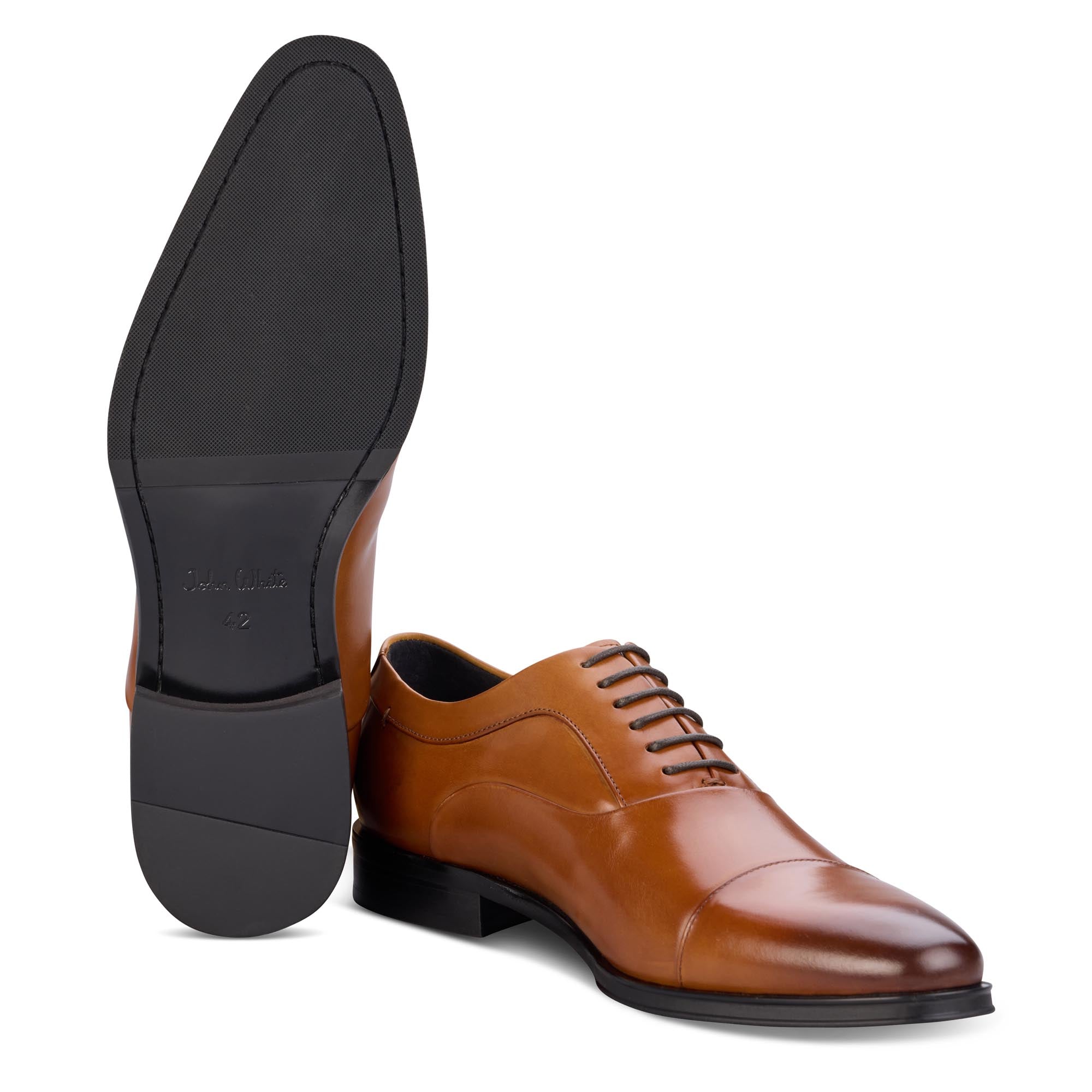
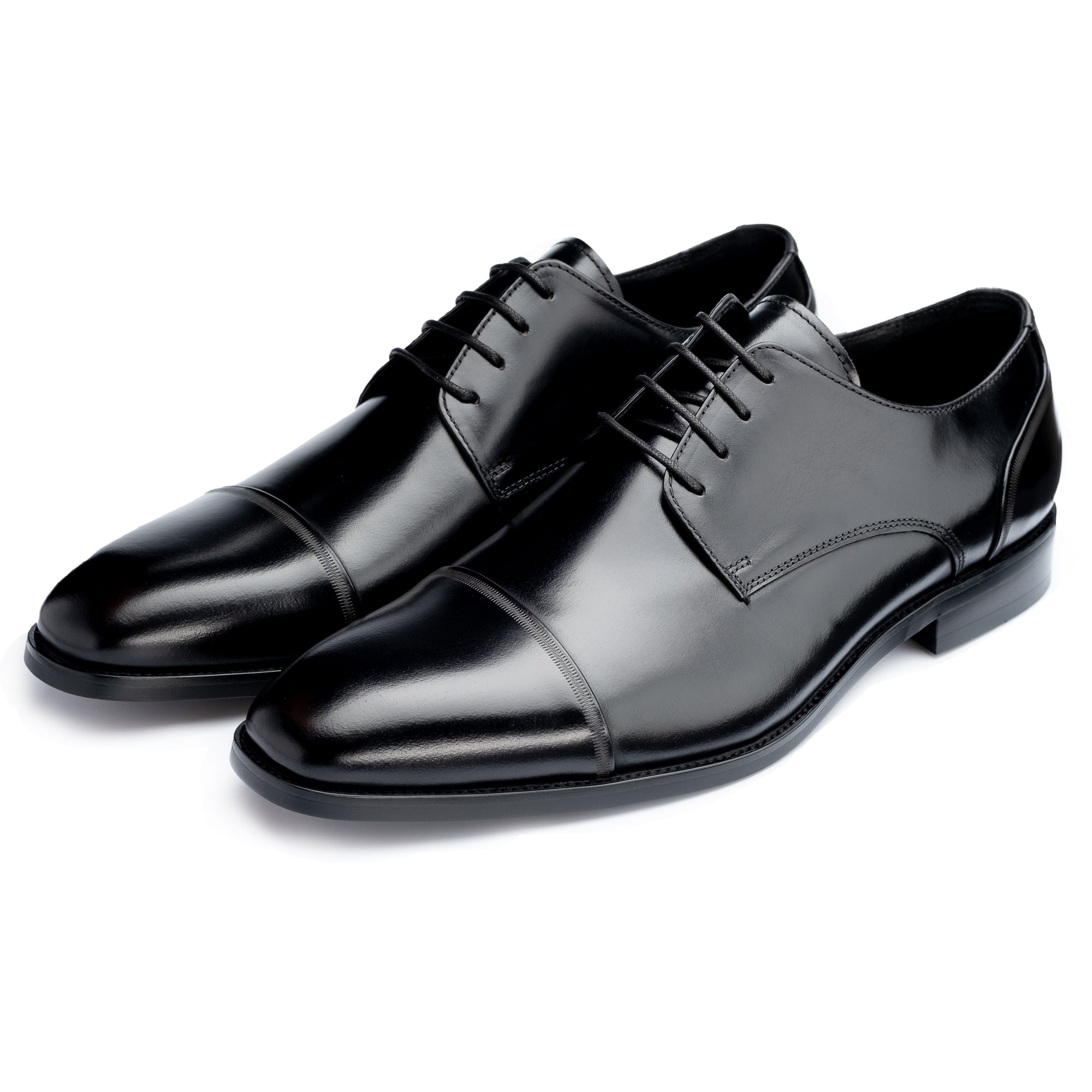
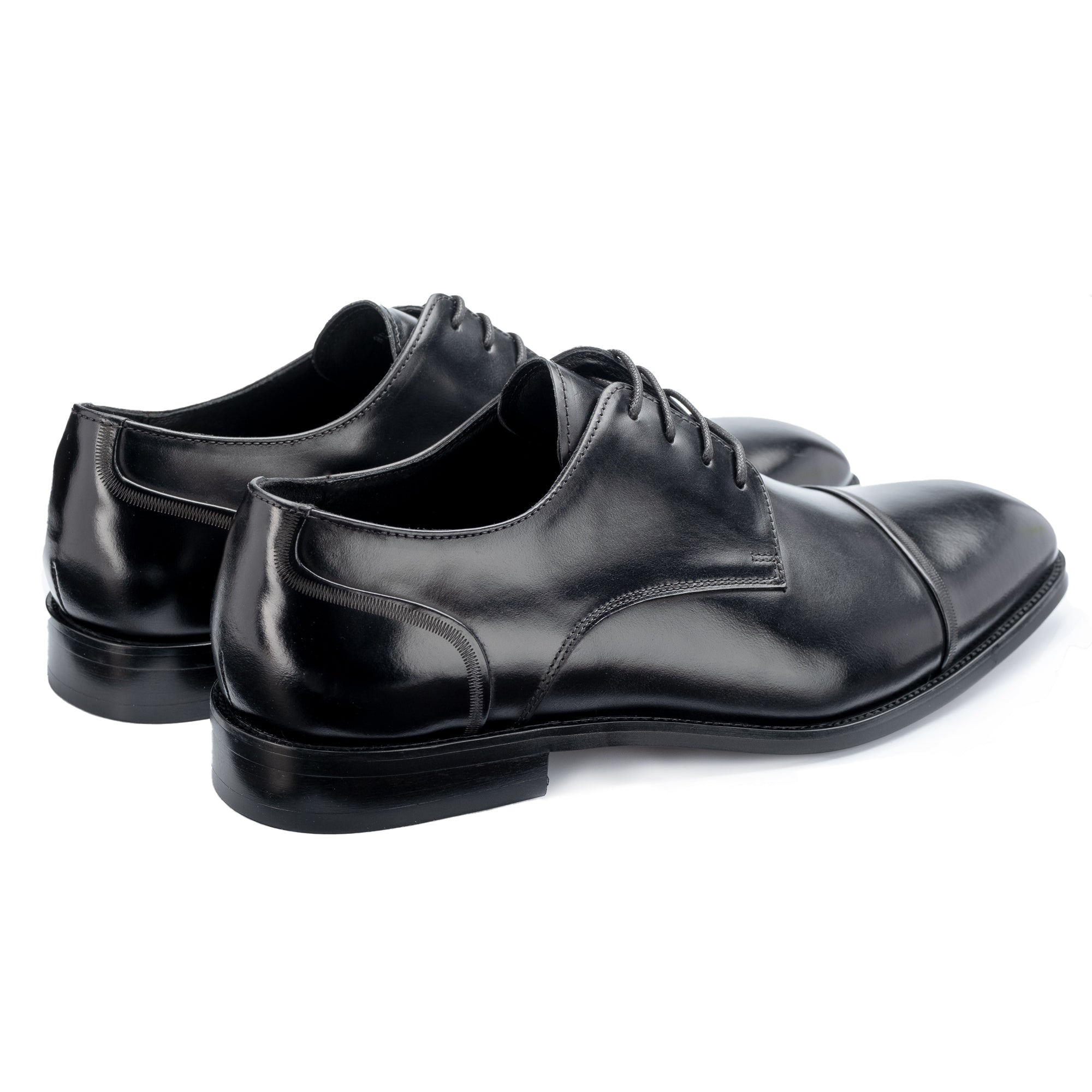
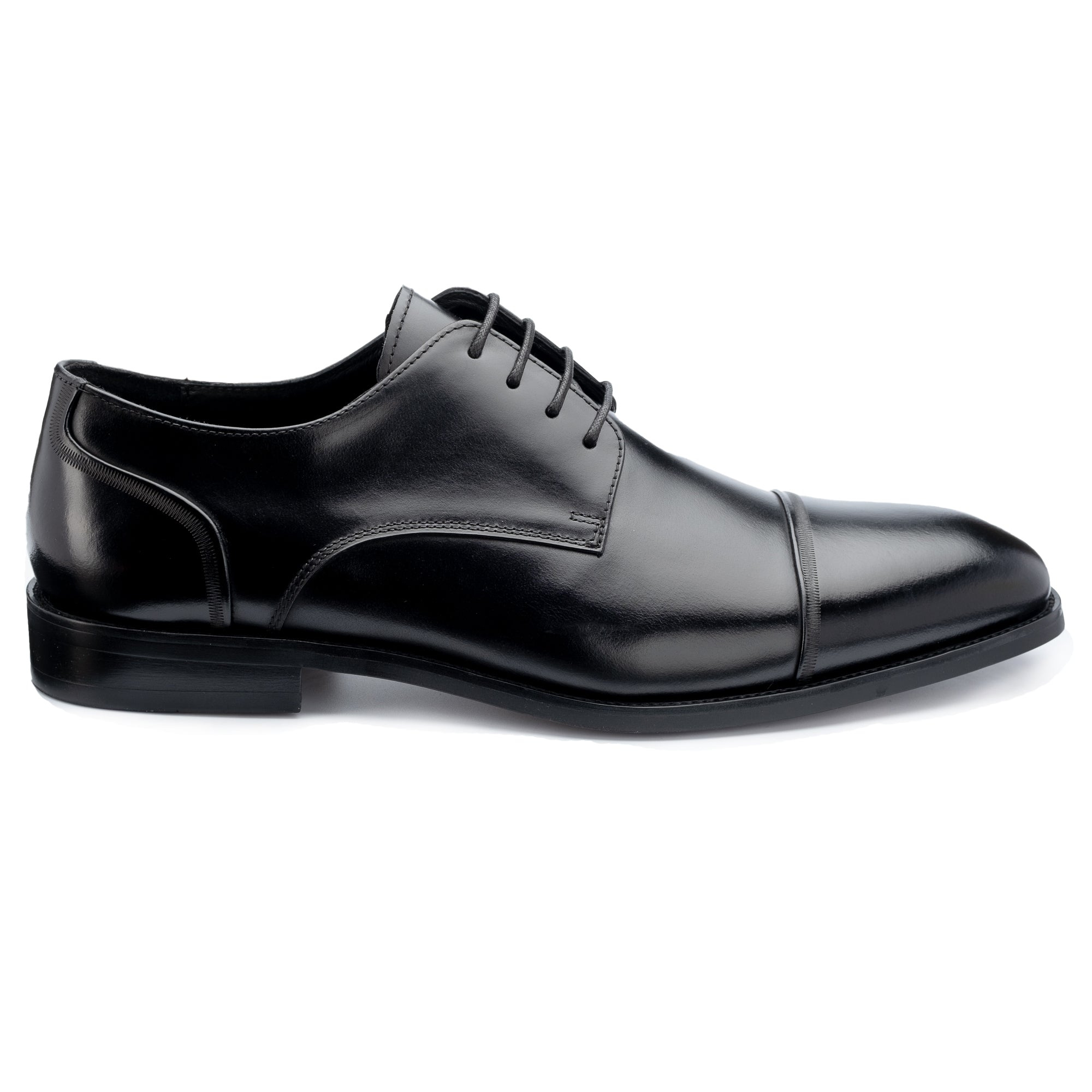
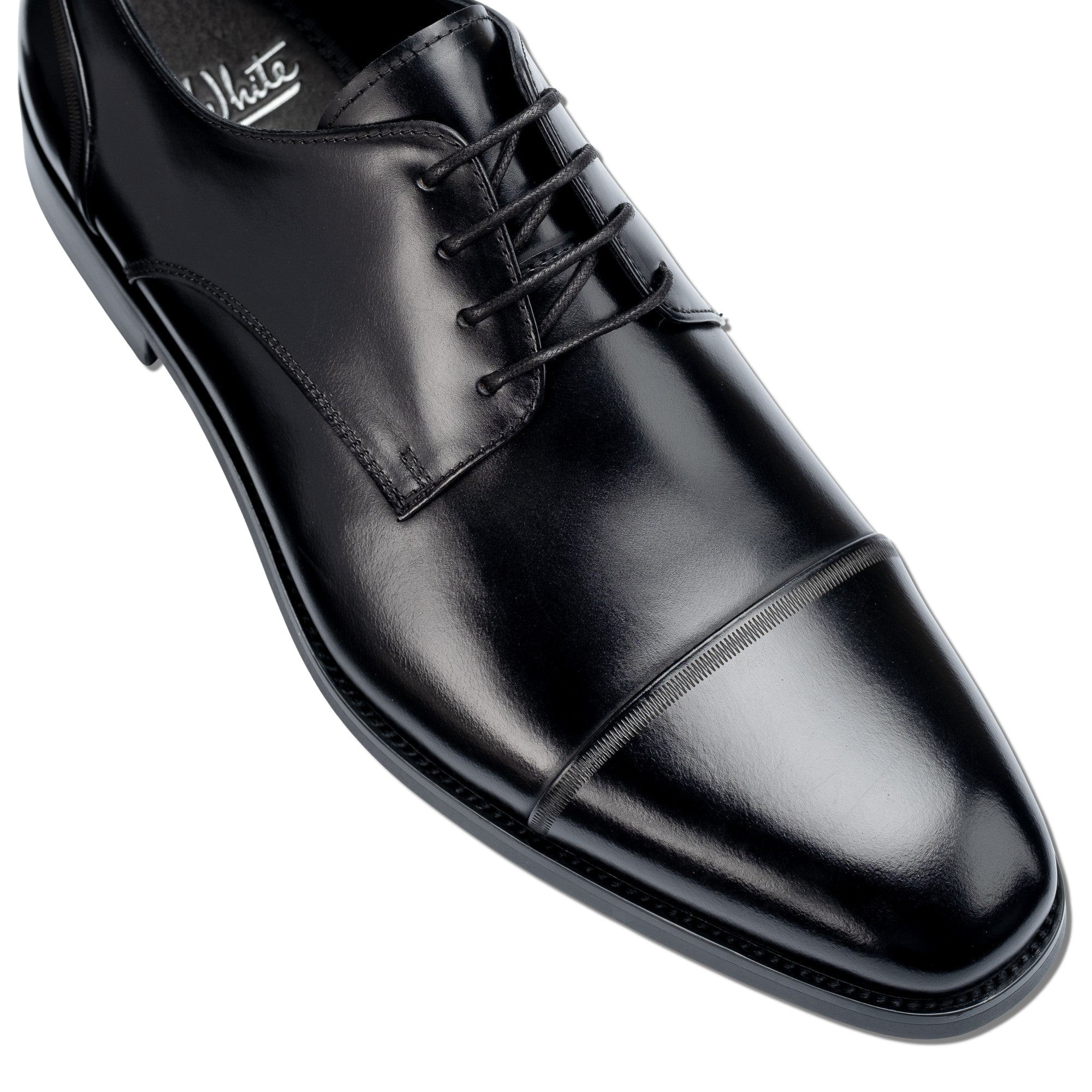
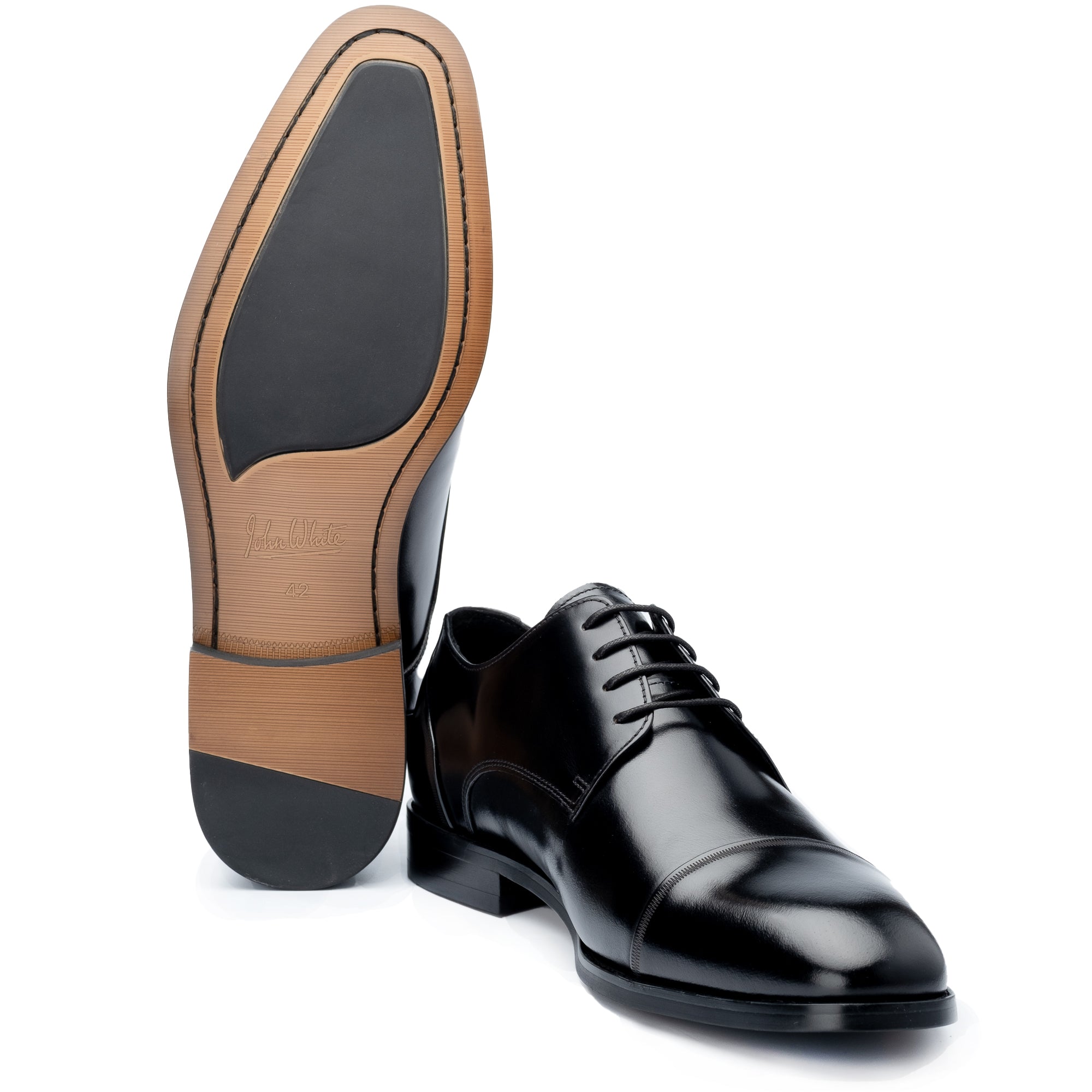
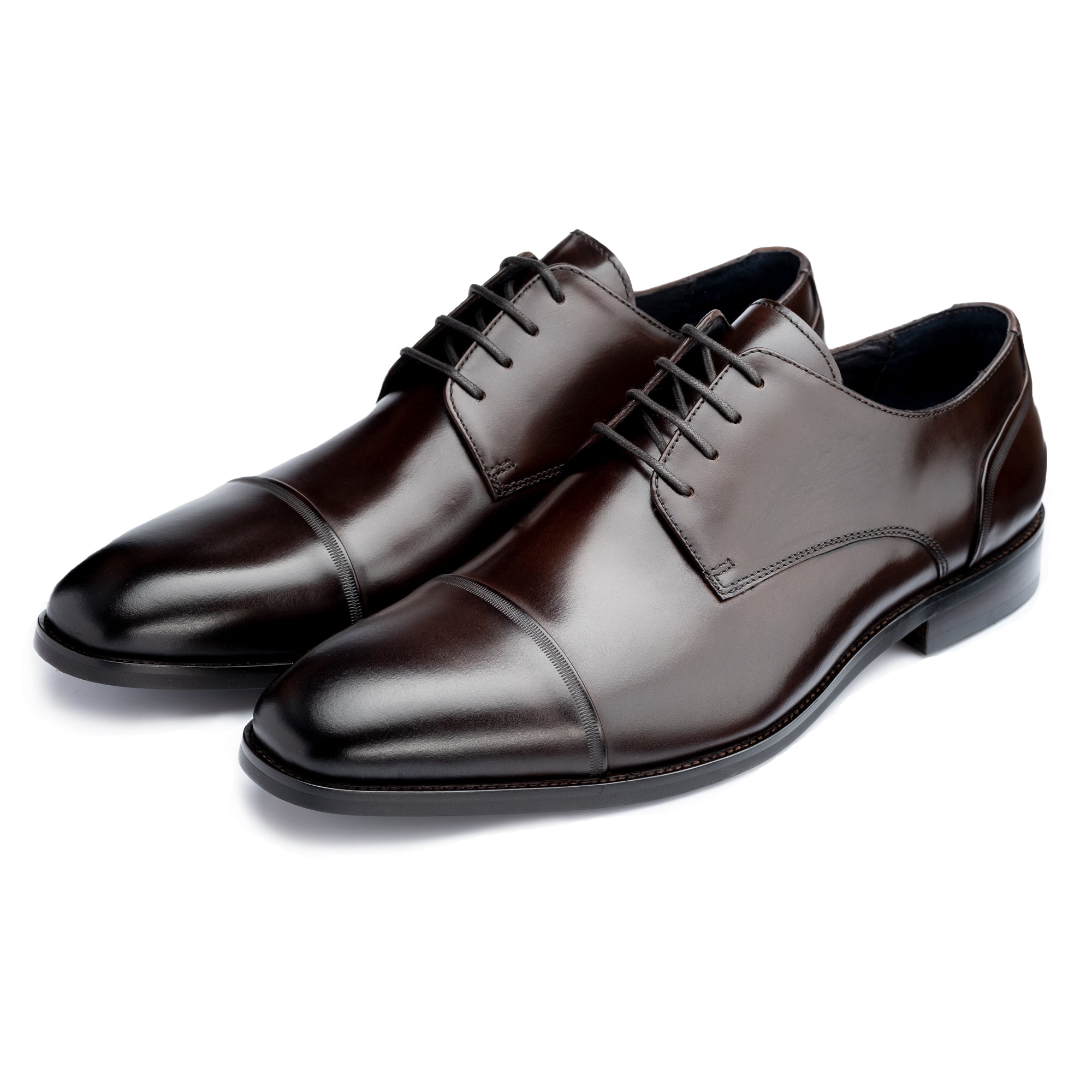
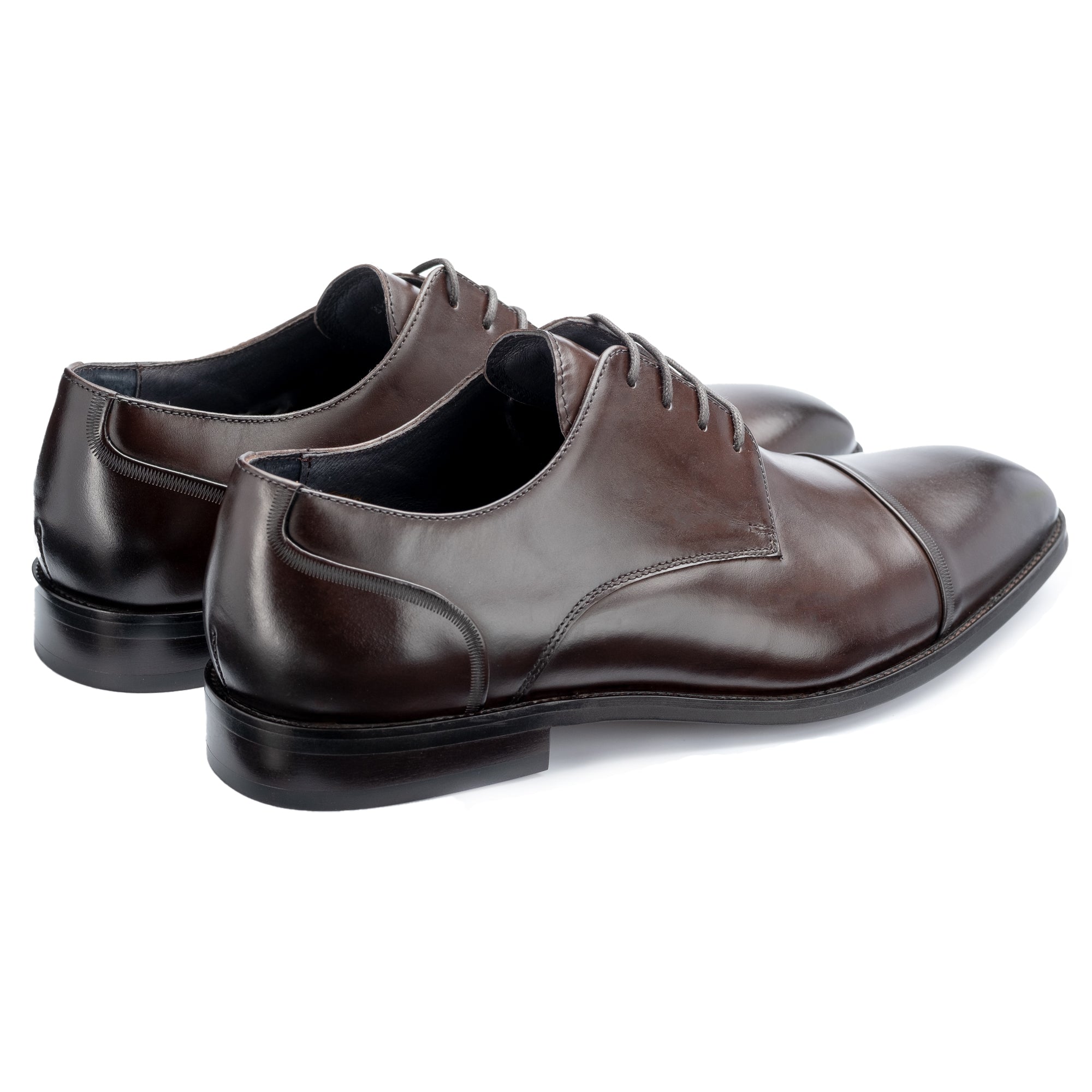
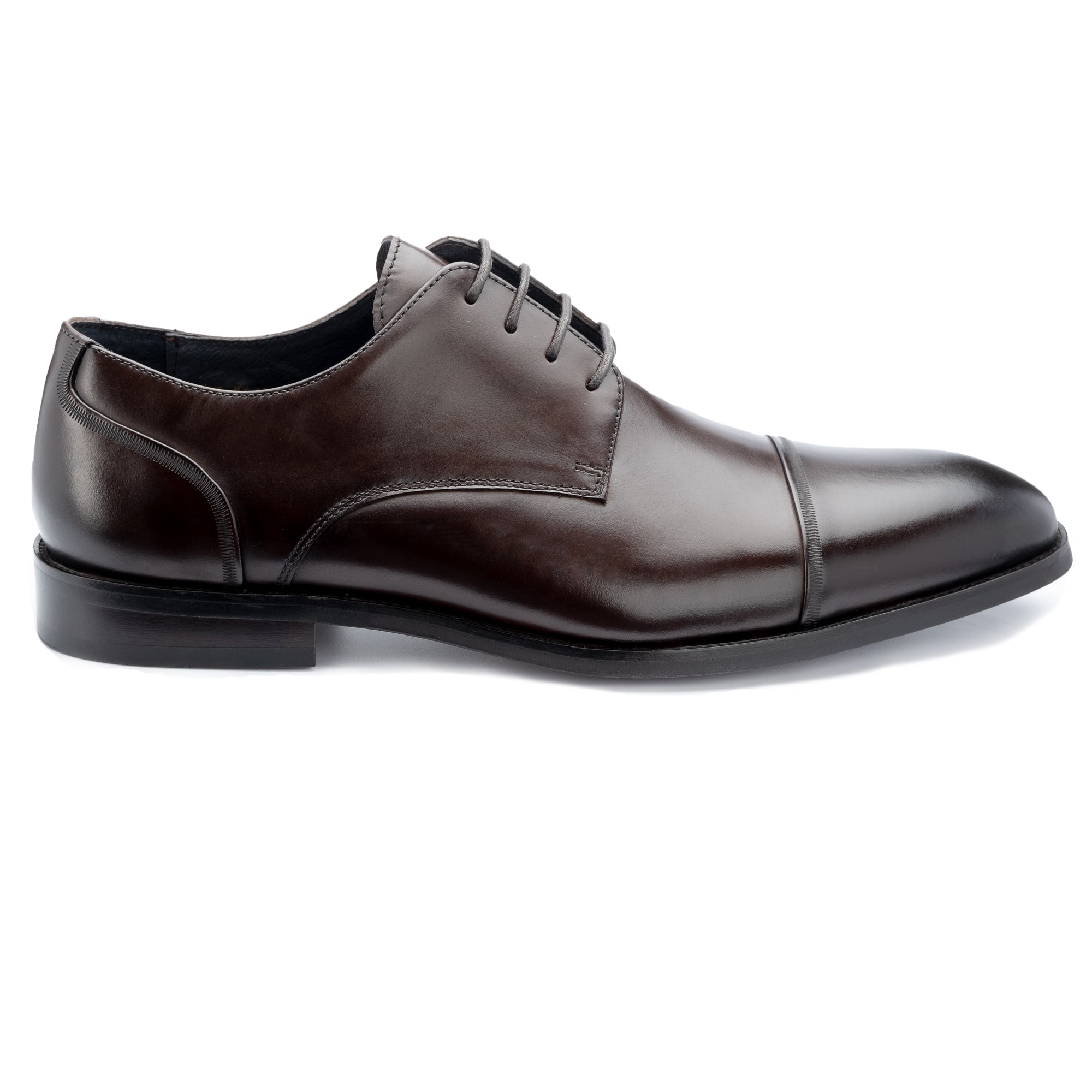
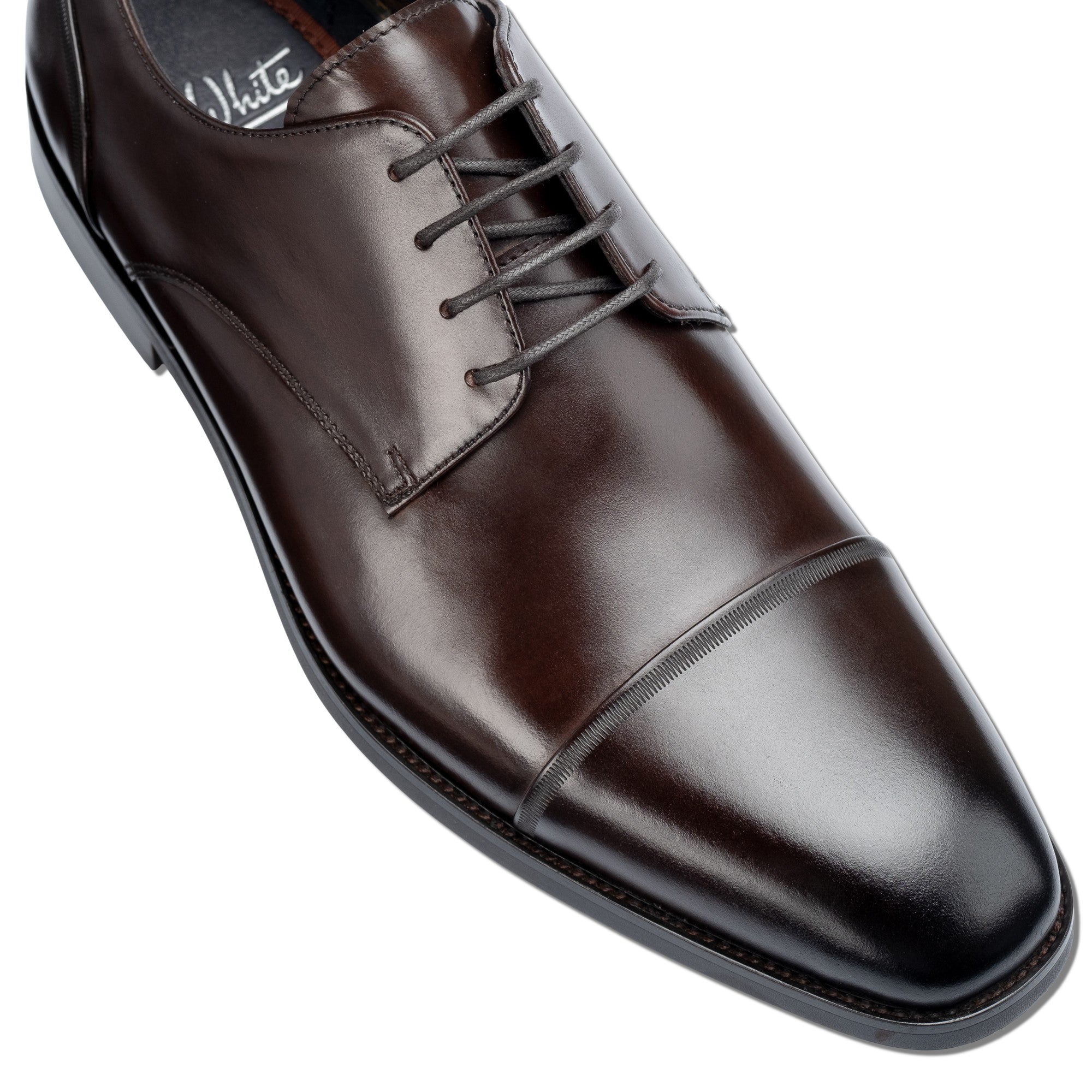
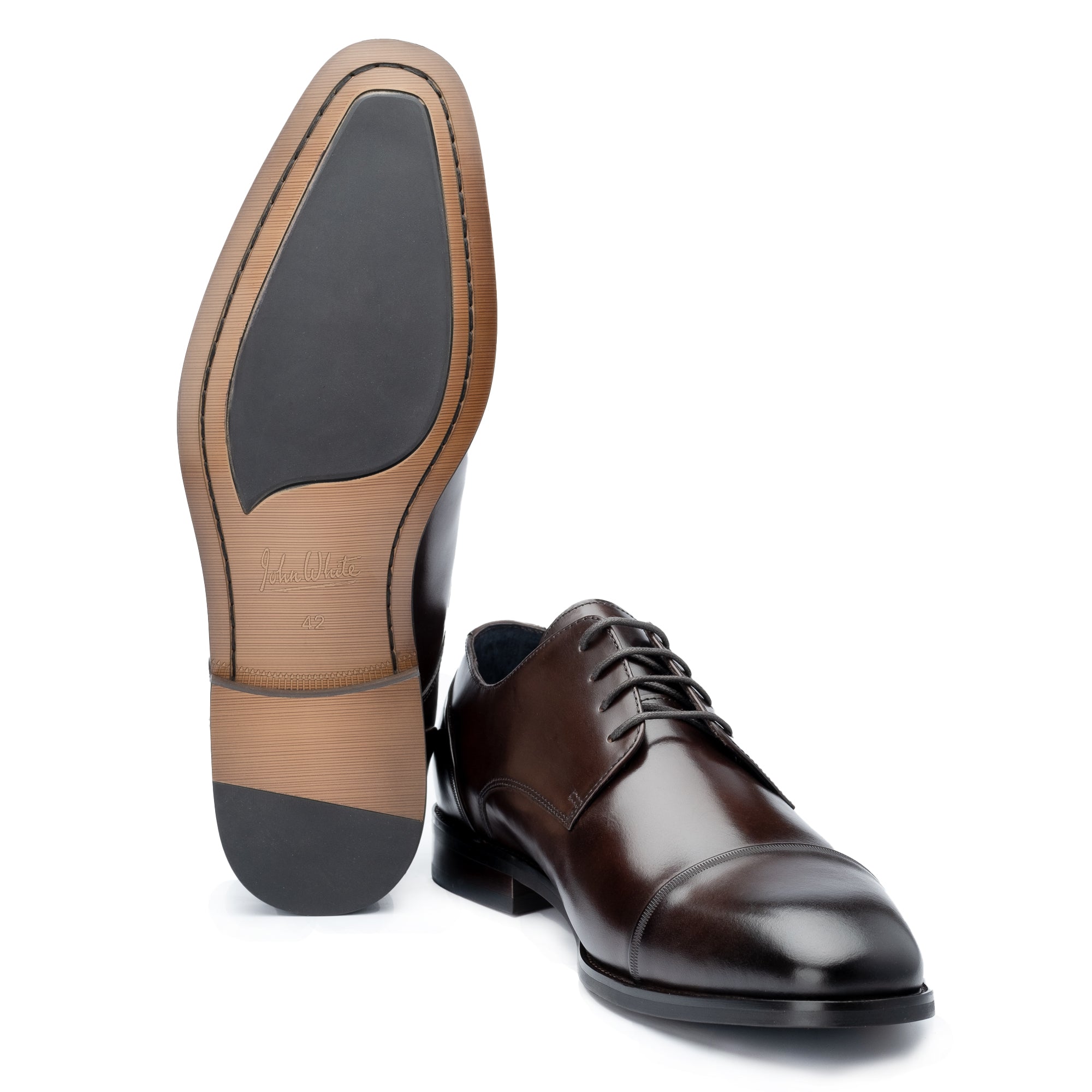
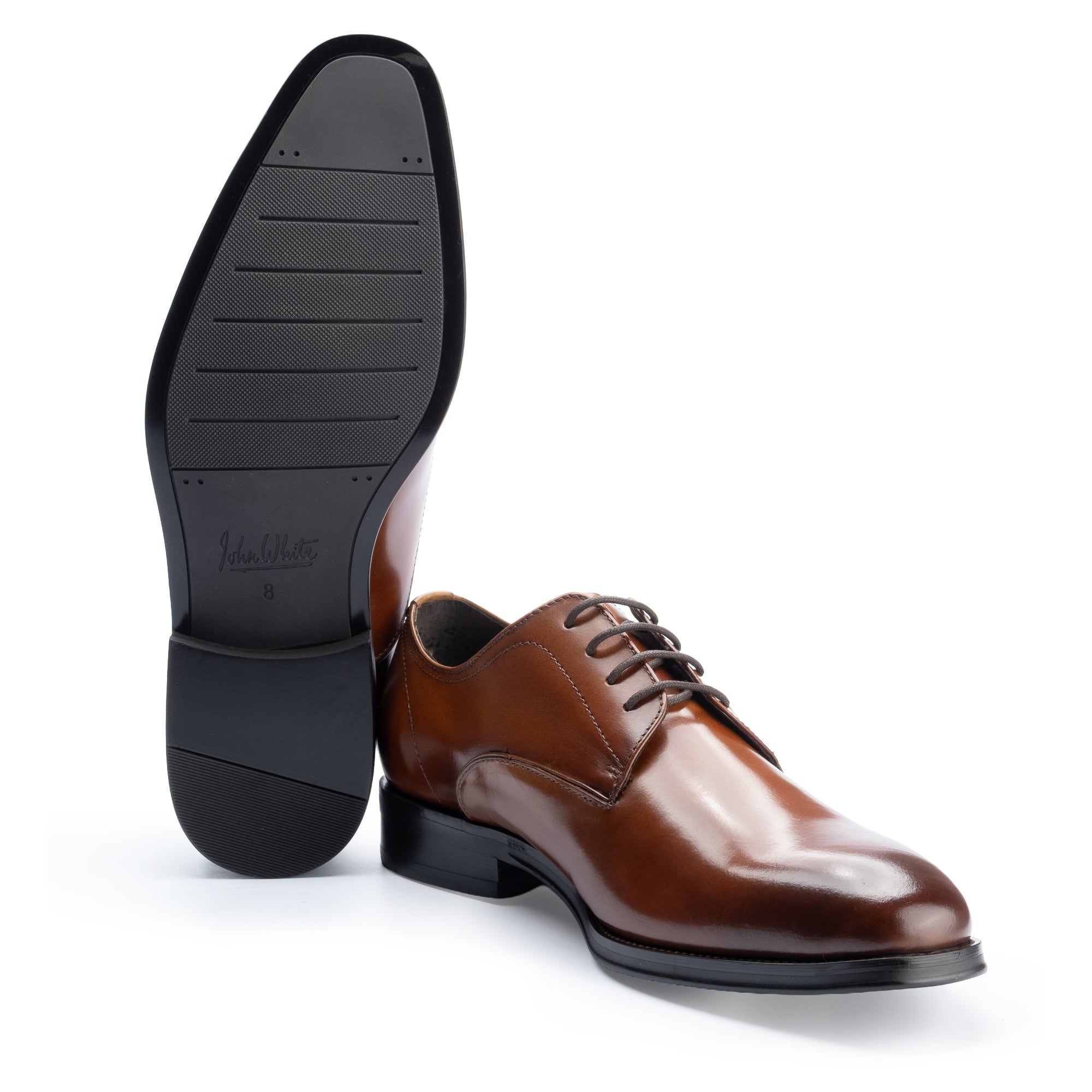
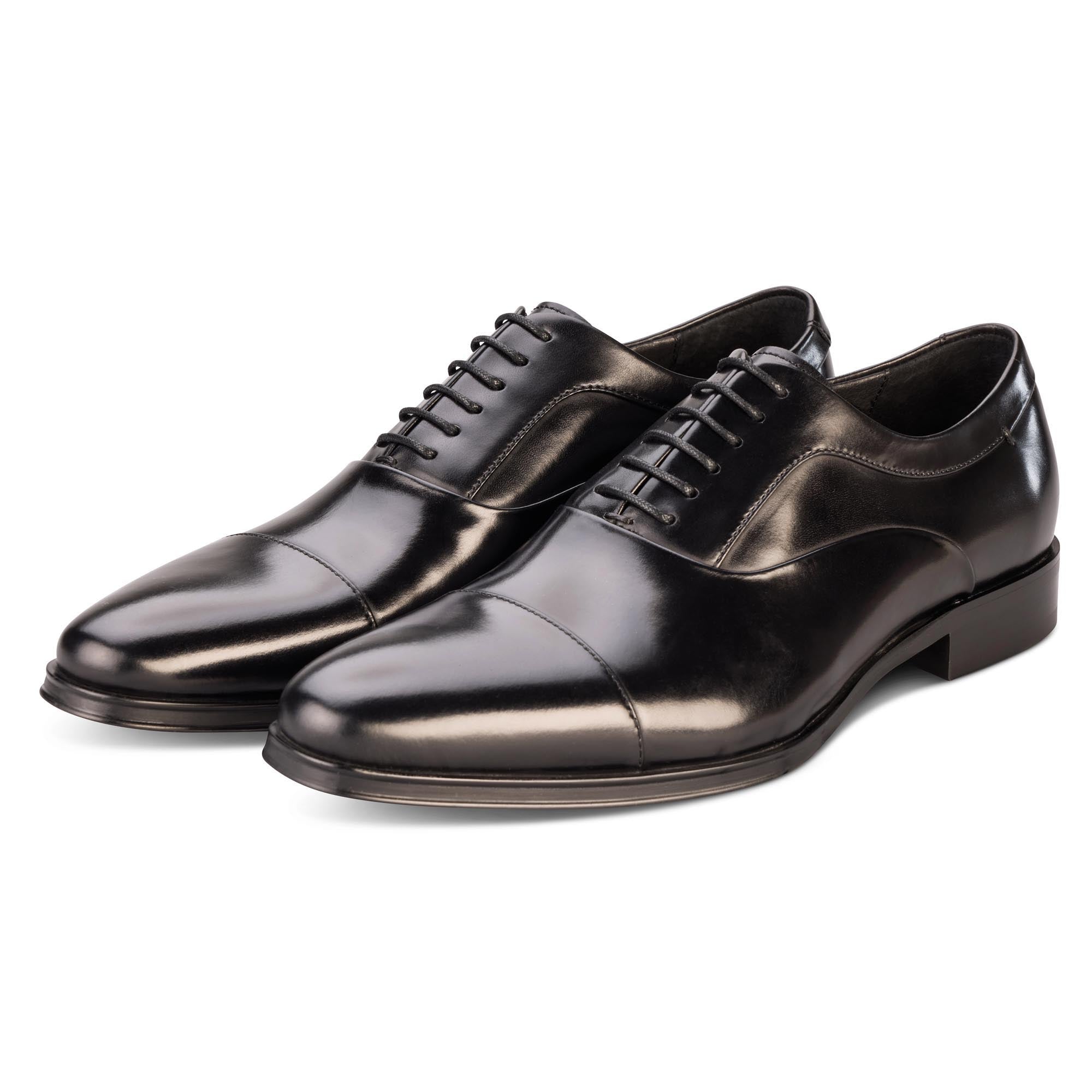
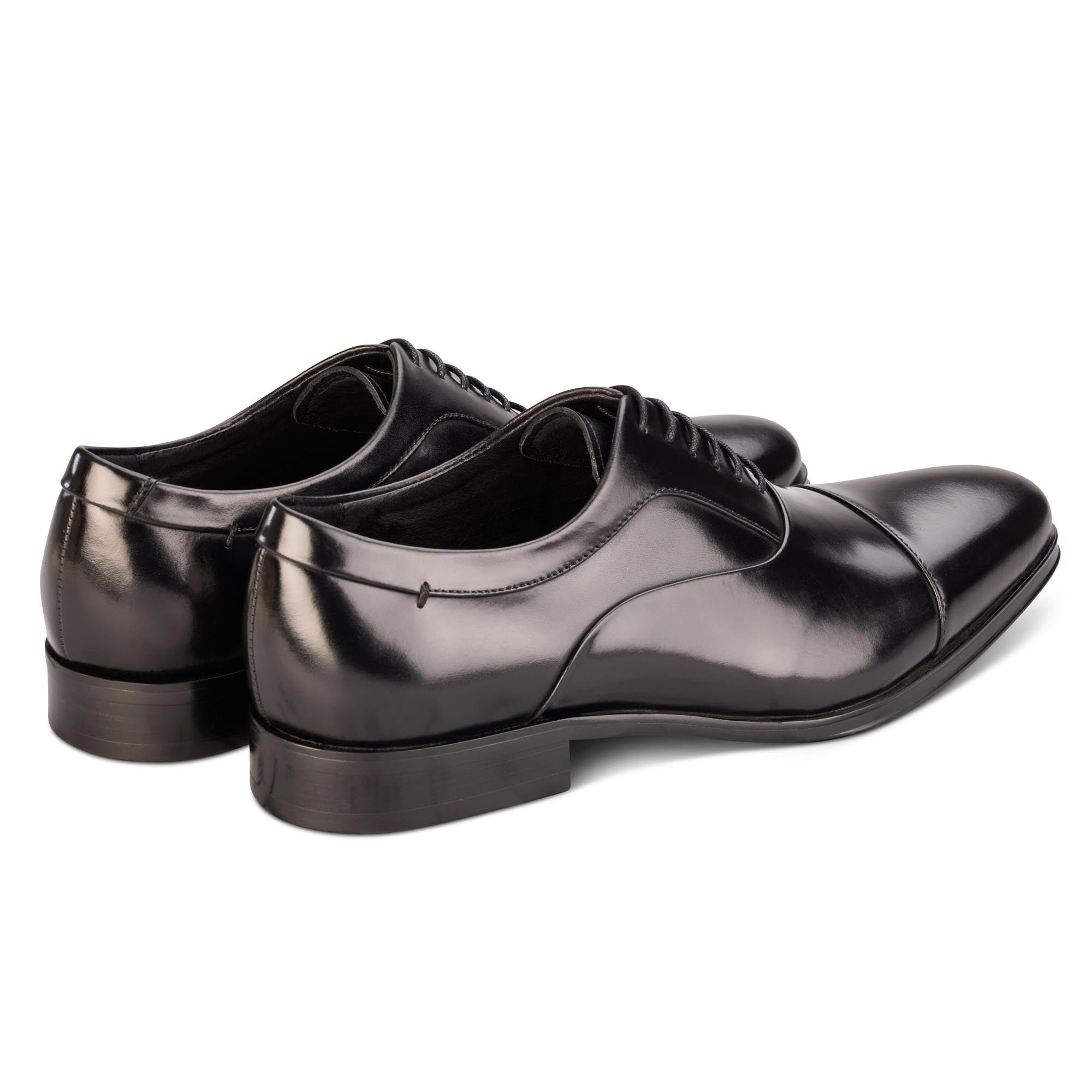
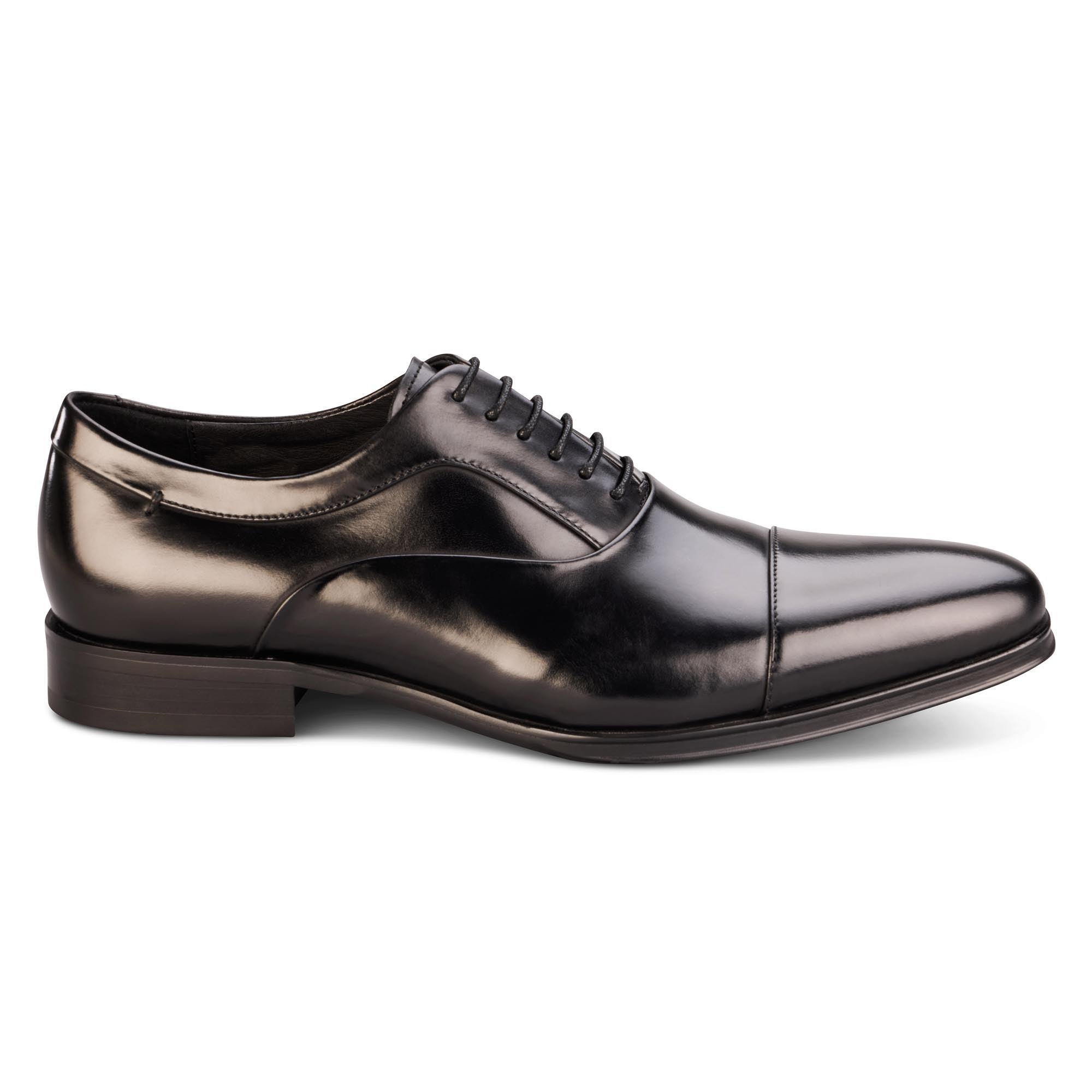
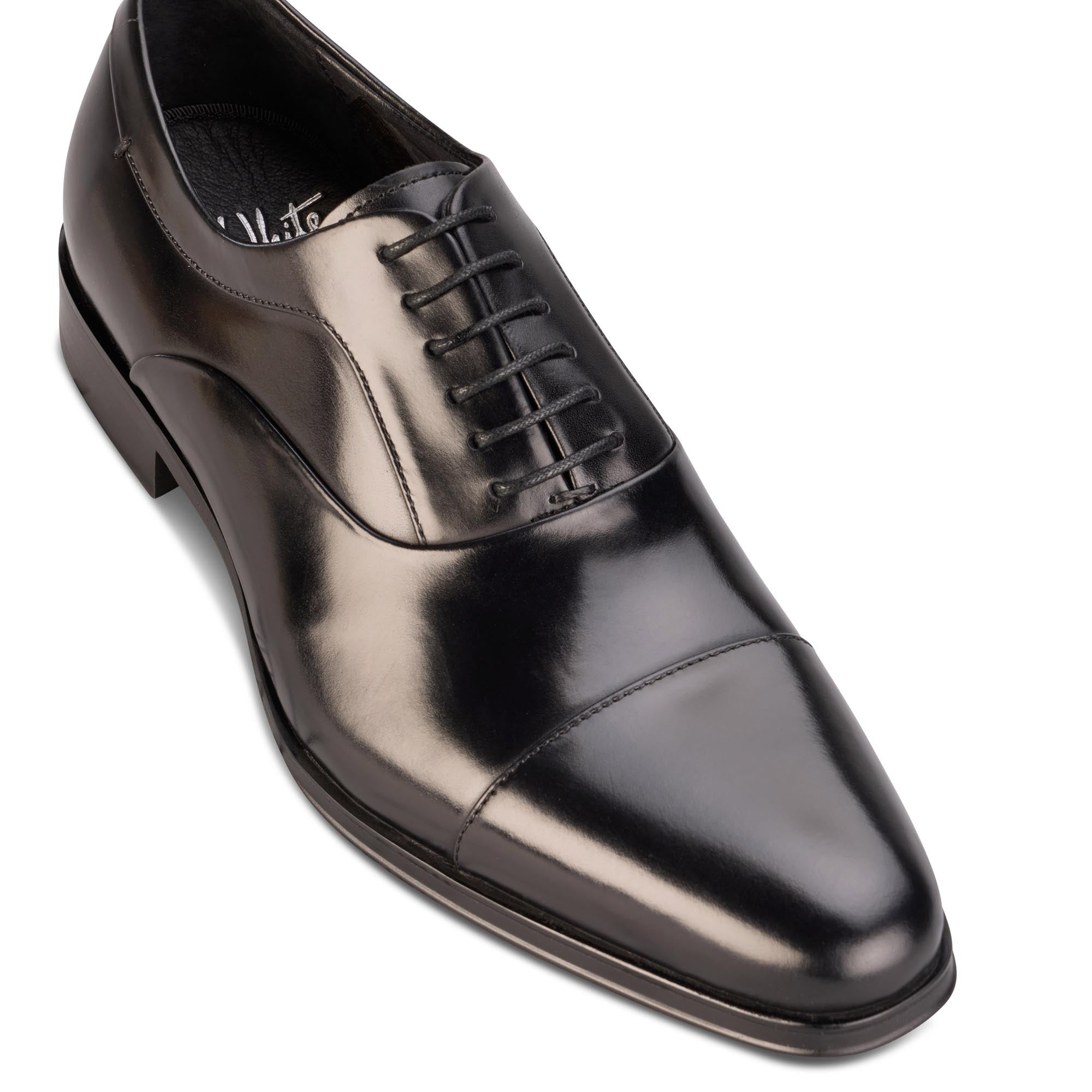
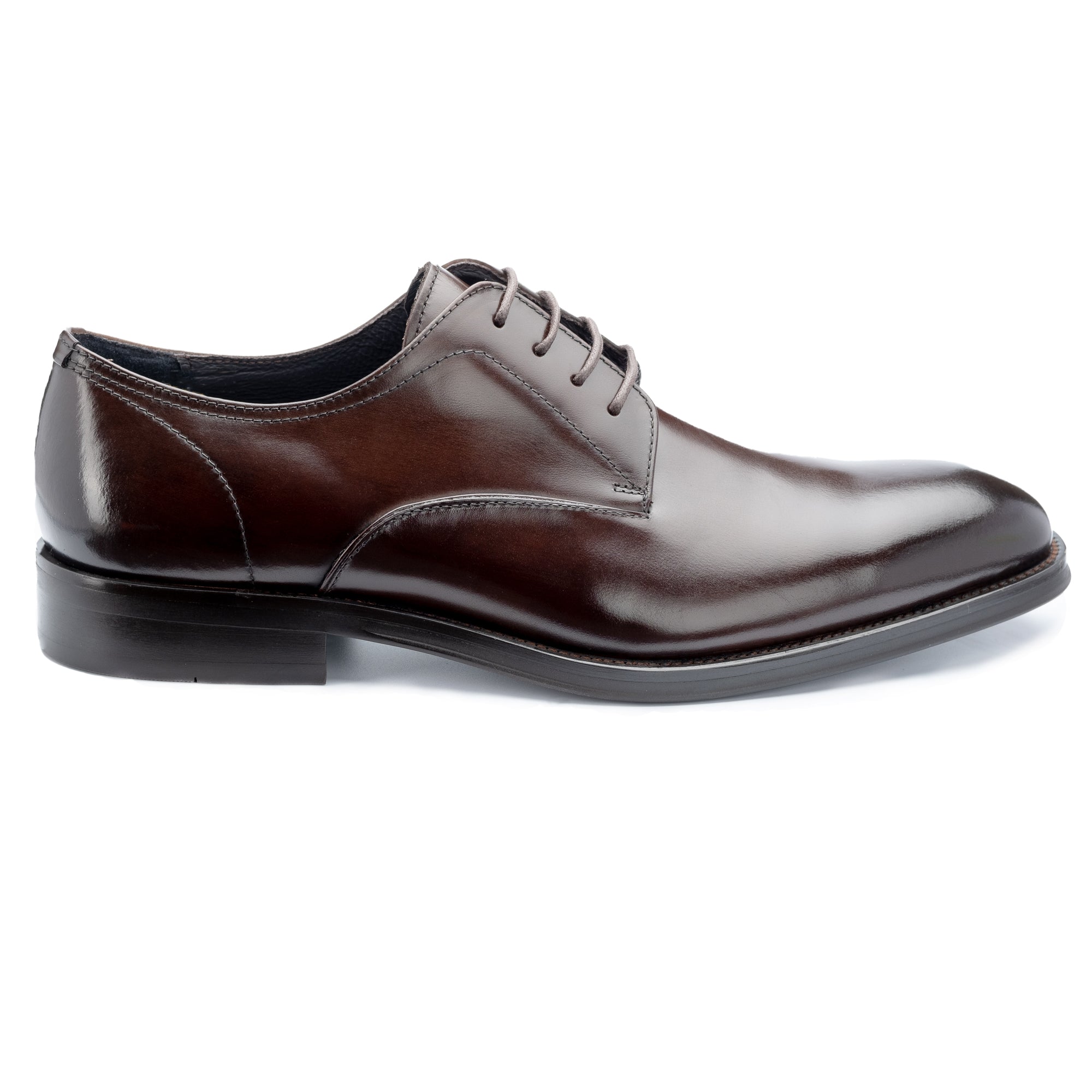
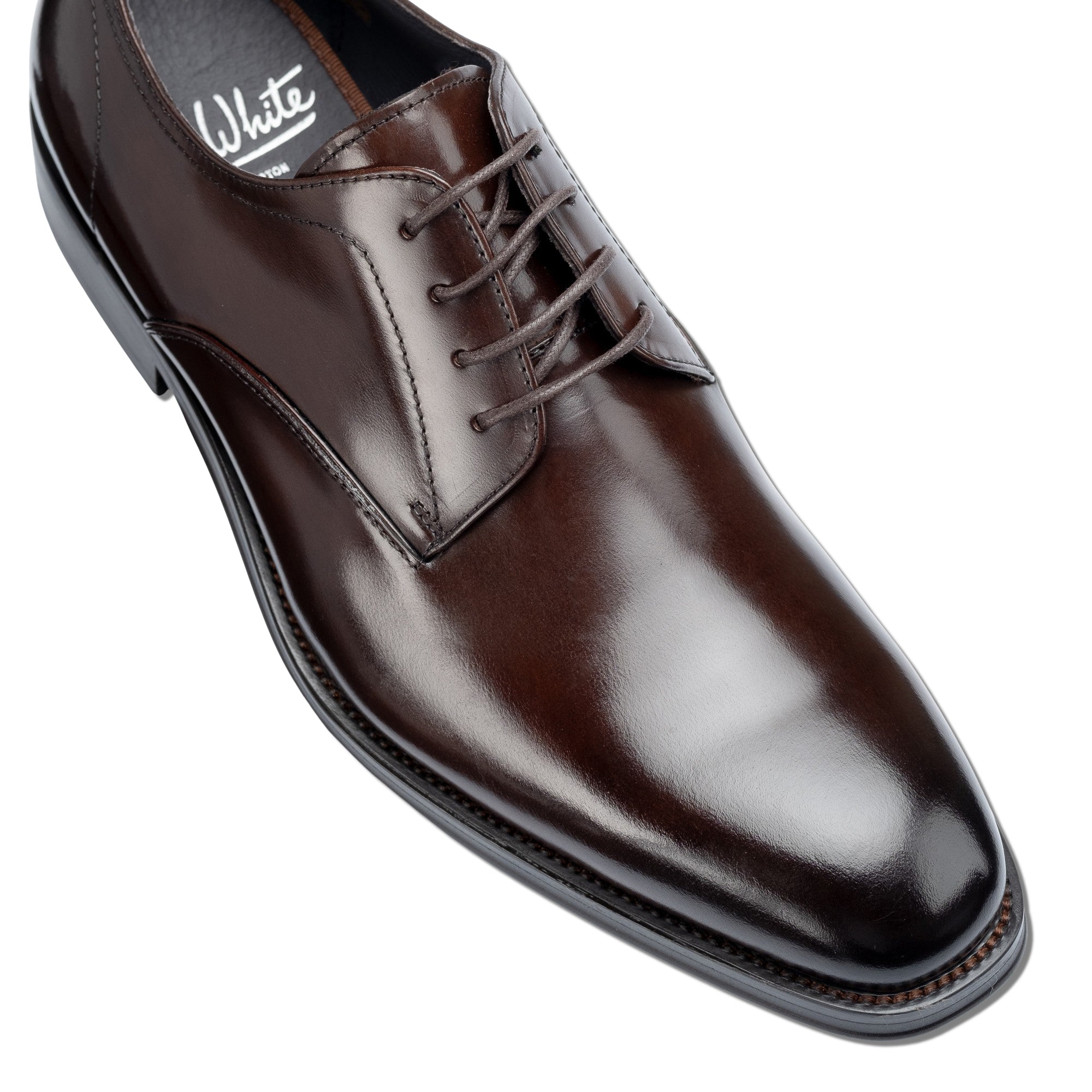
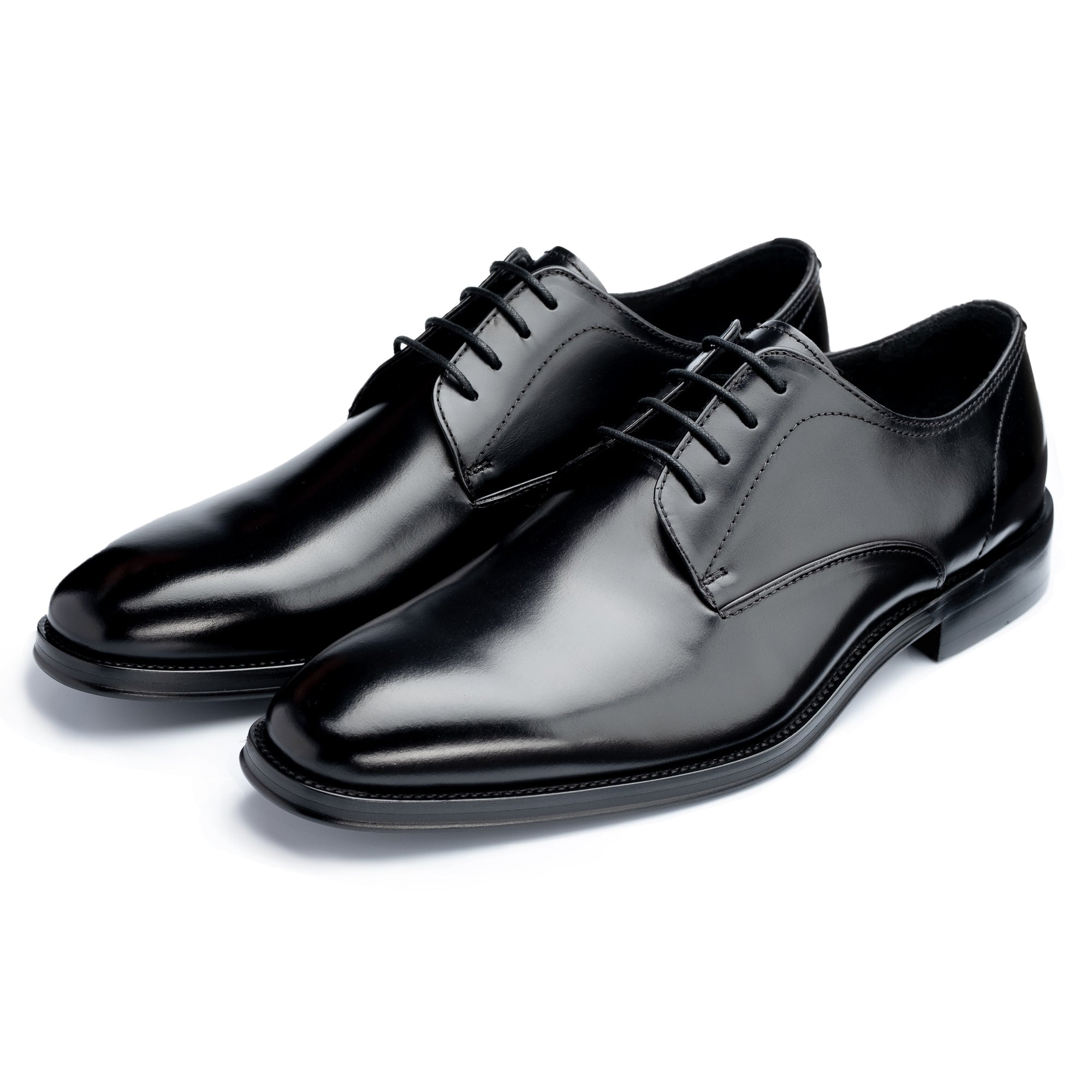
The most formal option. A straight cap toe with minimal broguing on the seam only — no medallion, no wing. It reads as a dress shoe with a quiet decorative detail and can be worn with a business suit without looking mismatched.
John White Shoes' brogue range — including the Hogarth, Stokes, Falcon, and Lucan — spans classic wingtip and semi-brogue styles, each designed with over a century of heritage expertise and offering lasting quality.
What Can You Wear Brogues With?
Can You Wear Brogues with a Suit?
Yes — with the right combination. A dark suit in navy, charcoal, or dark grey pairs well with a semi or quarter brogue in black or dark brown. Avoid full brogues with a formal business suit; save the wingtip for smarter-casual occasions.
- Navy suit — tan, mid-brown, or burgundy semi brogue
- Charcoal suit — black or dark brown semi or quarter brogue
- Grey suit — brown or burgundy brogue in any style
- Tweed or herringbone — full brogue in tan or chestnut; the classic British pairing
For broader guidance on pairing shoes with formal dress, see our full guide to what shoes to wear with a suit.
How Do You Wear Brogues with Chinos?
Chinos and brogues are a natural pairing. The relaxed structure of chino cloth suits the decorative detail of a full brogue particularly well. Keep the fit slim or straight — nothing too wide or too loose.
- Stone or camel chinos with tan or mid-brown brogues
- Navy chinos with burgundy or dark brown brogues
- Olive chinos with tan, brown, or suede brogues
A single roll at the hem sharpens the look considerably, particularly in spring and summer. Opt for no-show socks or go sockless when the weather allows — the brogue silhouette handles exposed ankle well.
Can You Wear Brogues with Jeans?
Yes — provided the jeans earn it. Slim or straight-leg dark denim is the right base. Light-wash or heavily distressed jeans undermine the brogue's inherent smartness; the combination ends up looking accidental rather than considered.
- Dark indigo jeans with tan or chestnut full brogue
- Slim black jeans with black or oxblood semi brogue
Cropped or turned-up jeans with a brogue is a strong look for autumn and spring — it draws attention to the shoe without overdressing the rest of the outfit.
Are Brogues Smart Enough for a Wedding or Formal Occasion?
A semi or quarter brogue in black or dark brown is appropriate for most weddings and smart occasions. Full brogues work particularly well at country house weddings paired with a lounge suit or morning coat — the rural setting plays to the style's origins.
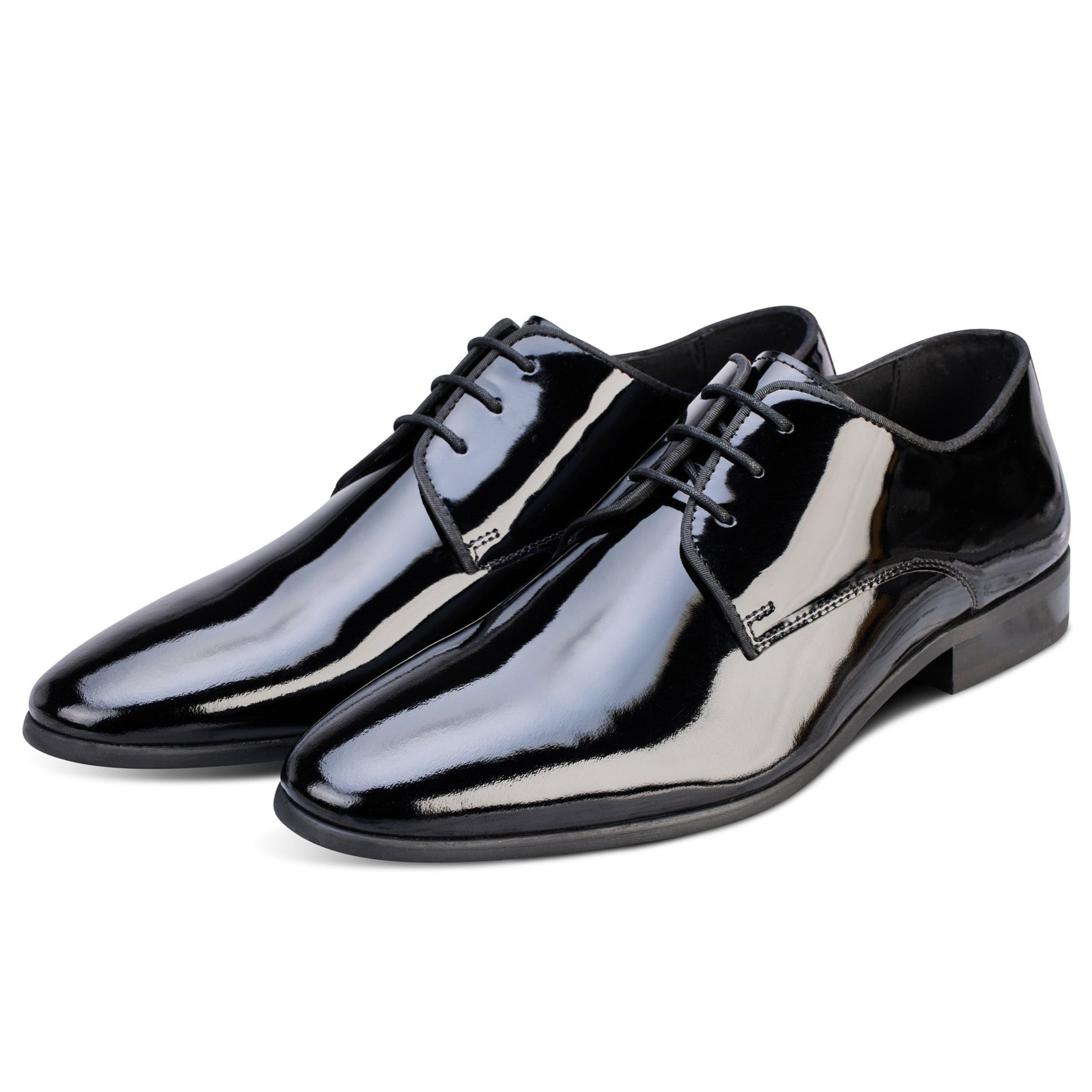
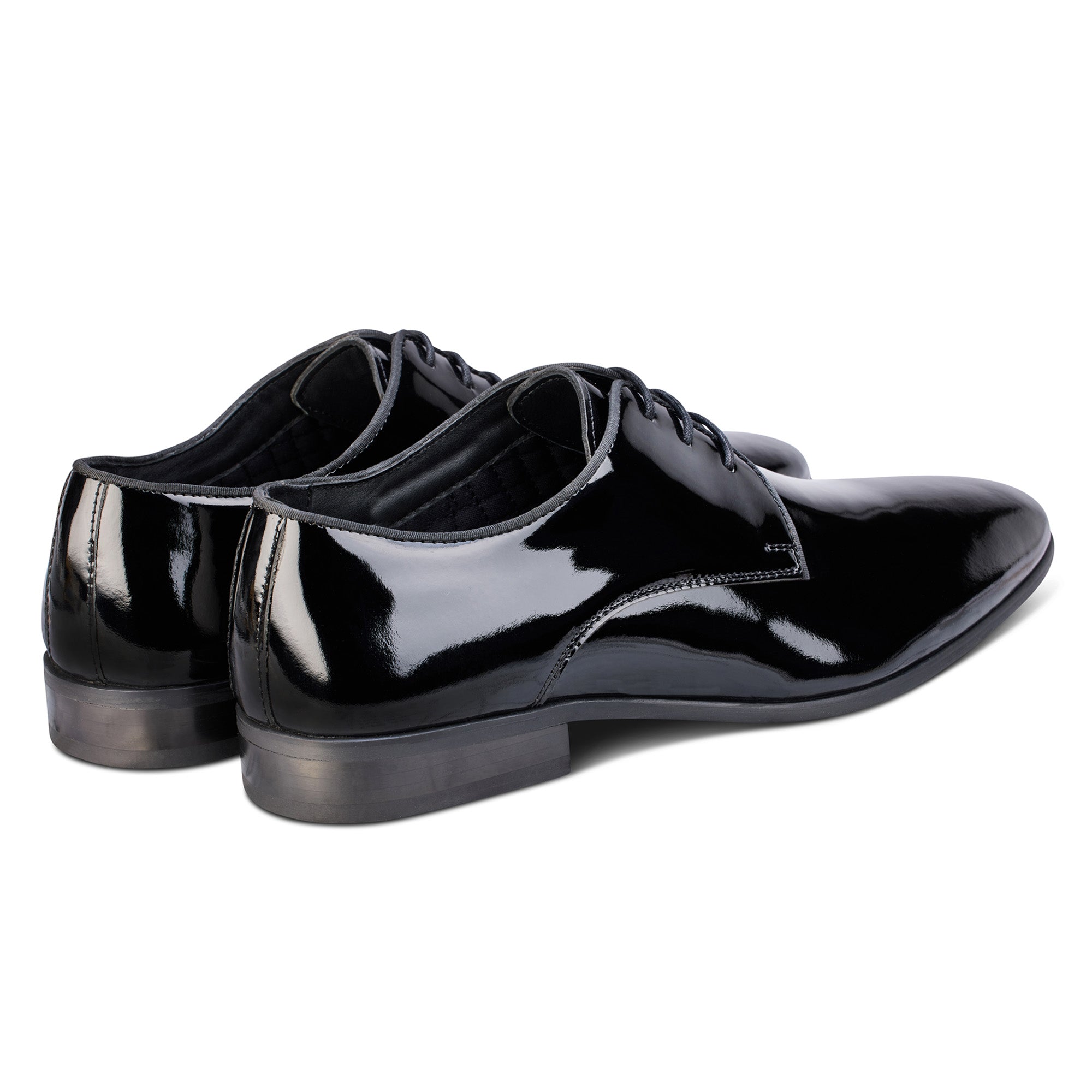
Avoid brogues entirely with black tie. The decorative perforations sit at odds with the clean severity that black tie demands; a plain Oxford is the correct choice for formal evening dress.
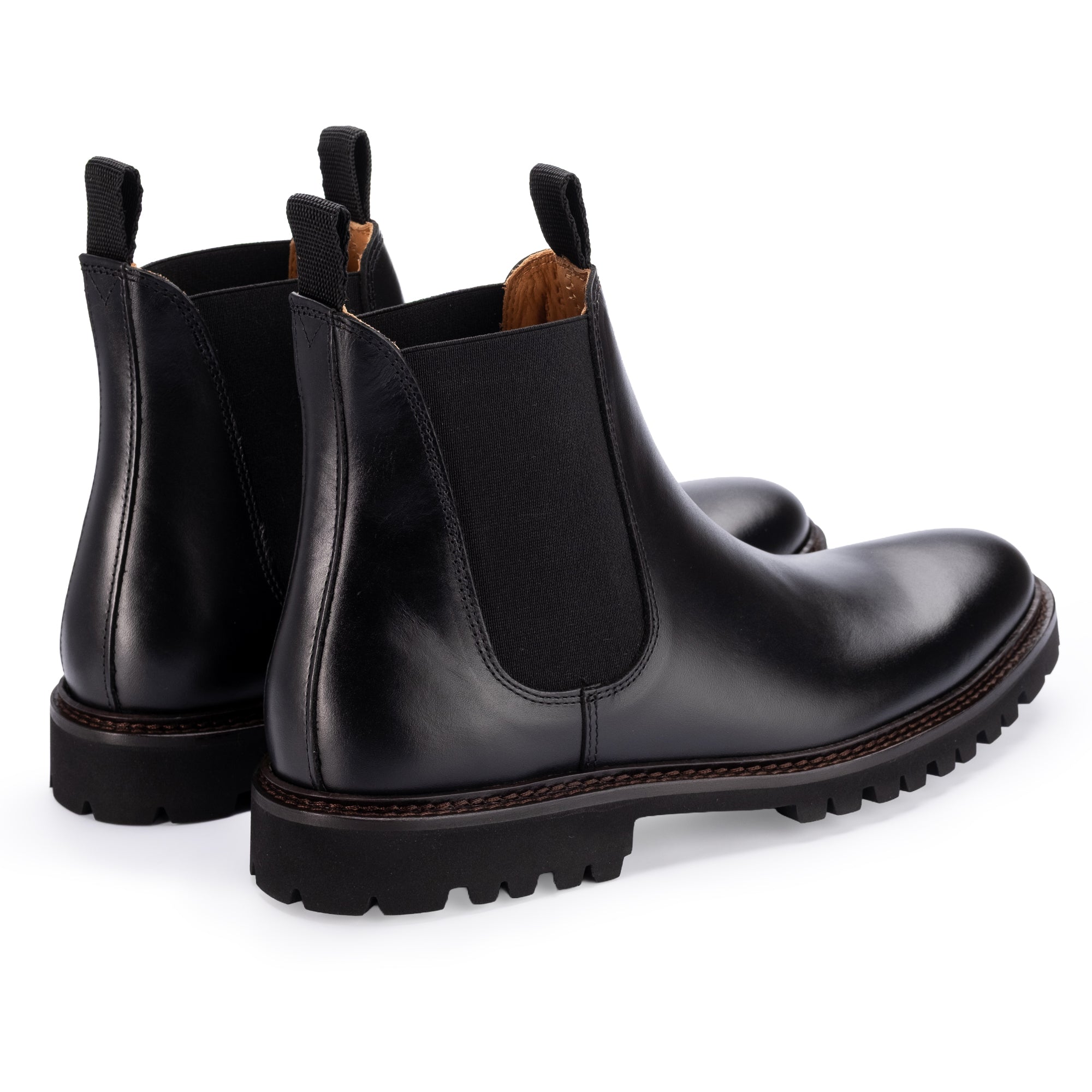
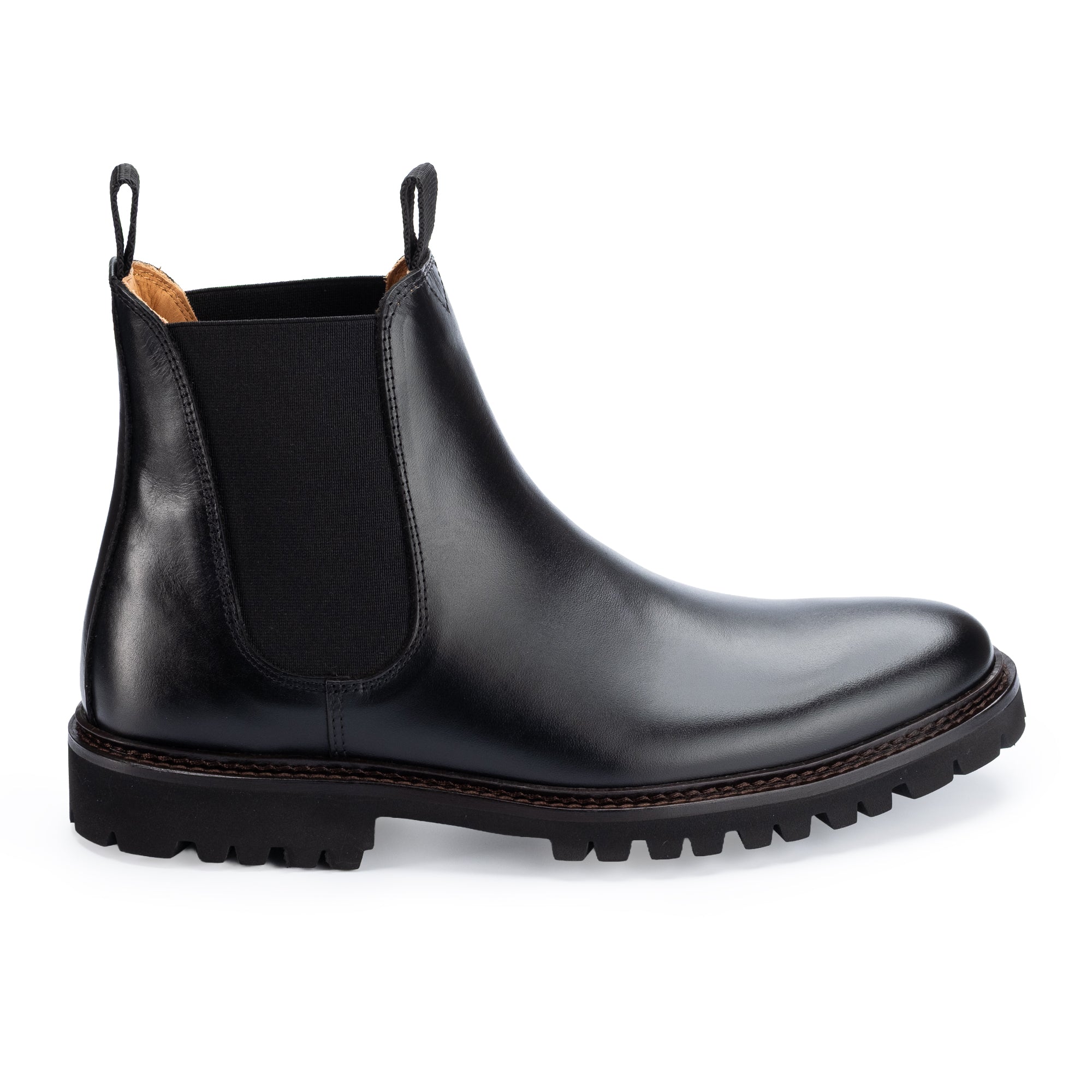
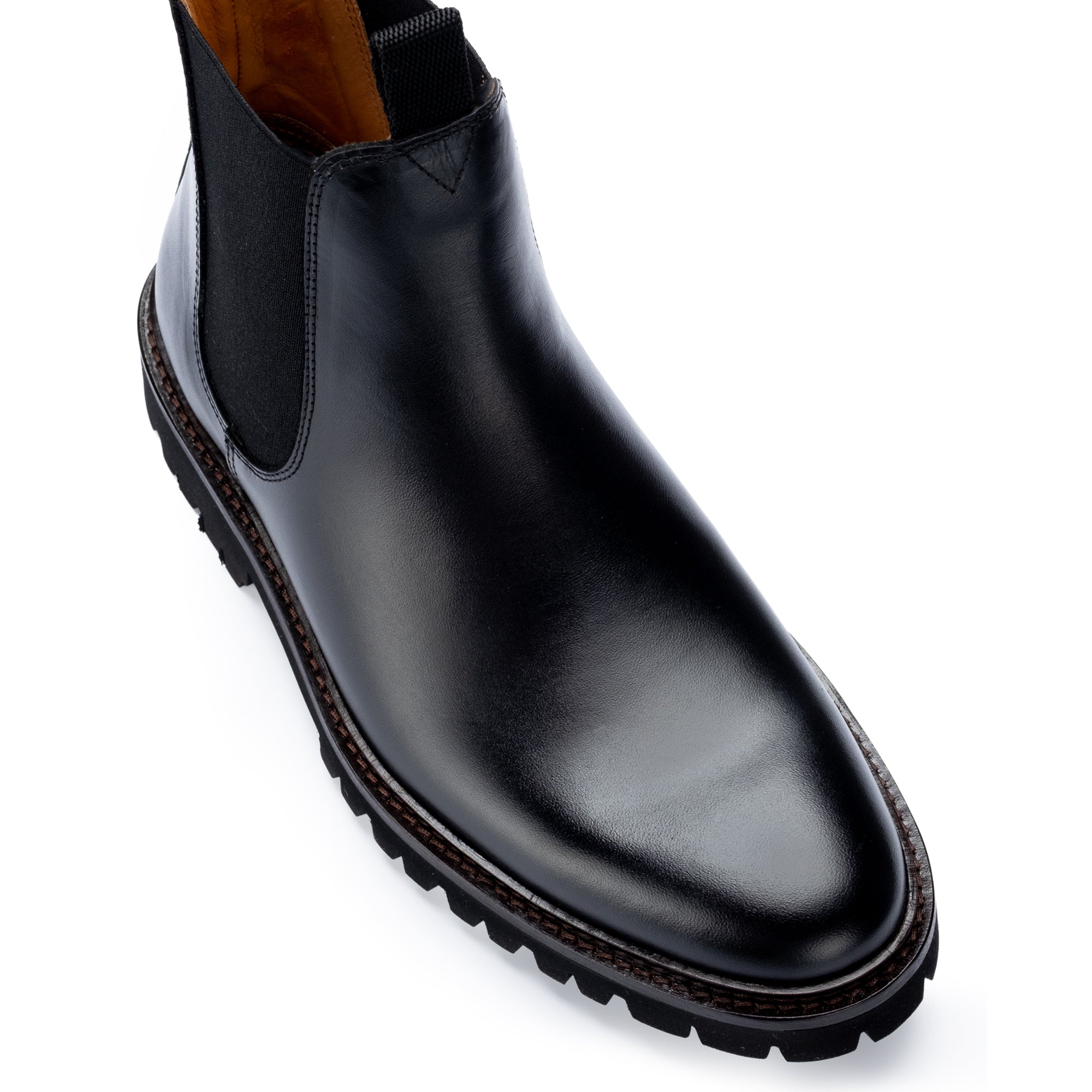
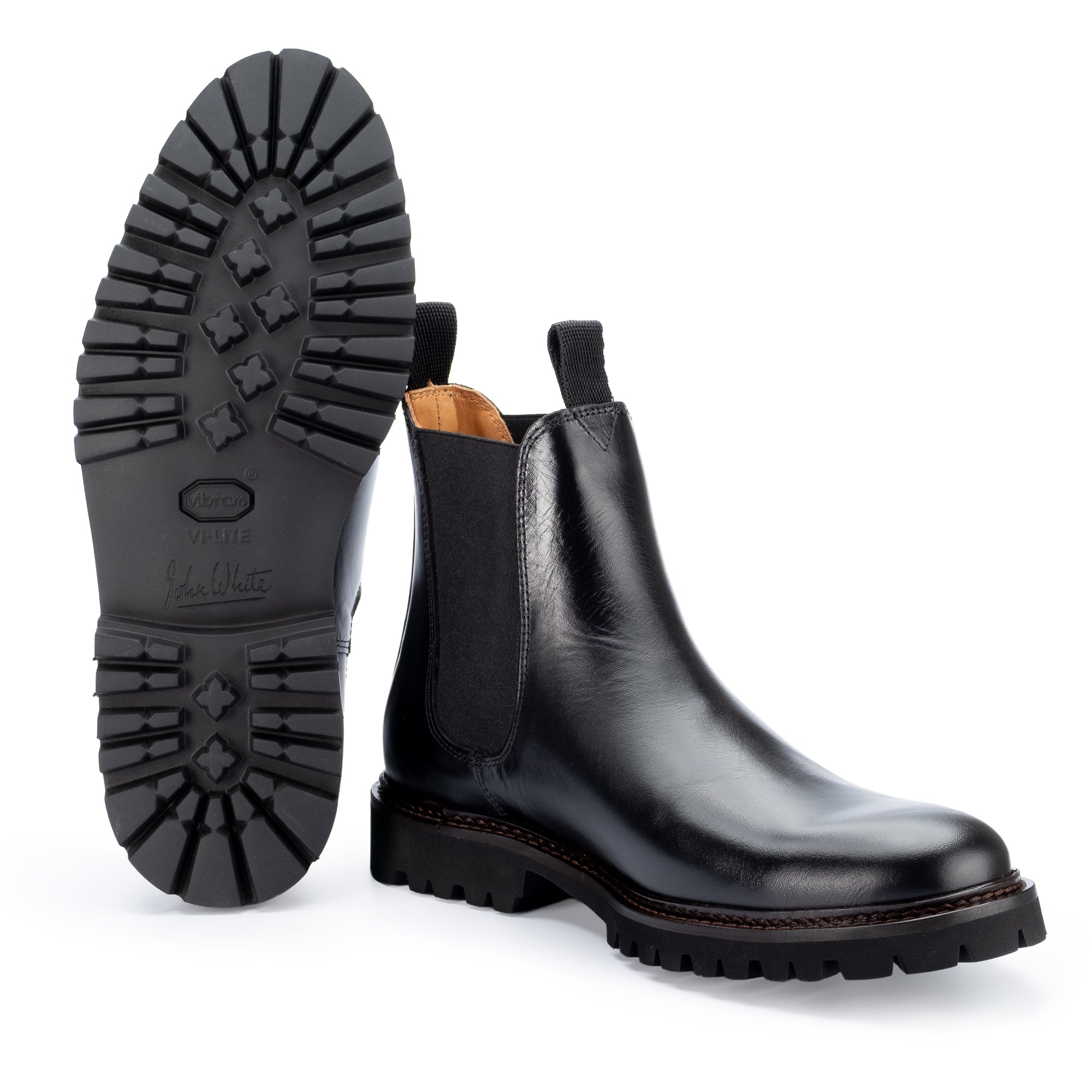
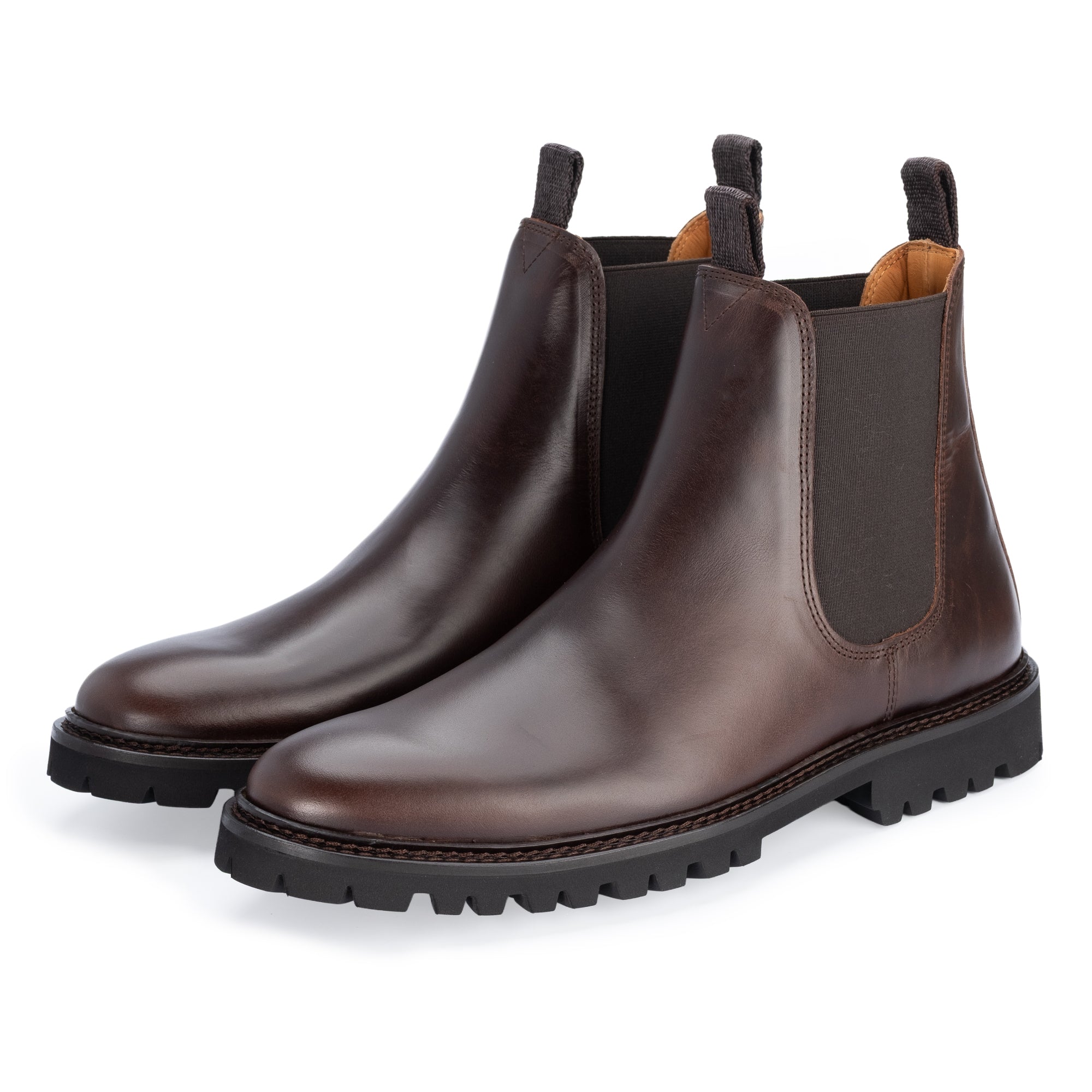
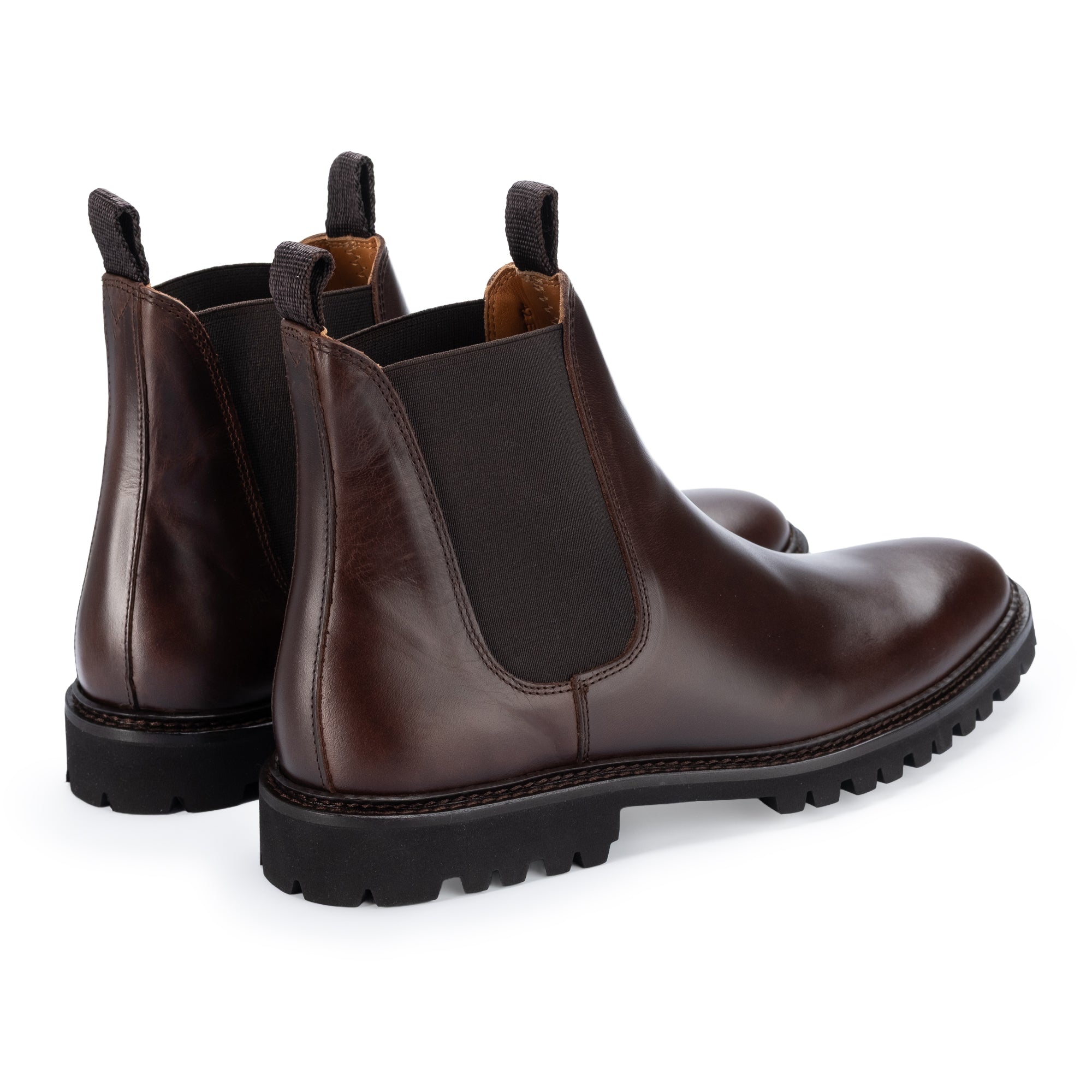
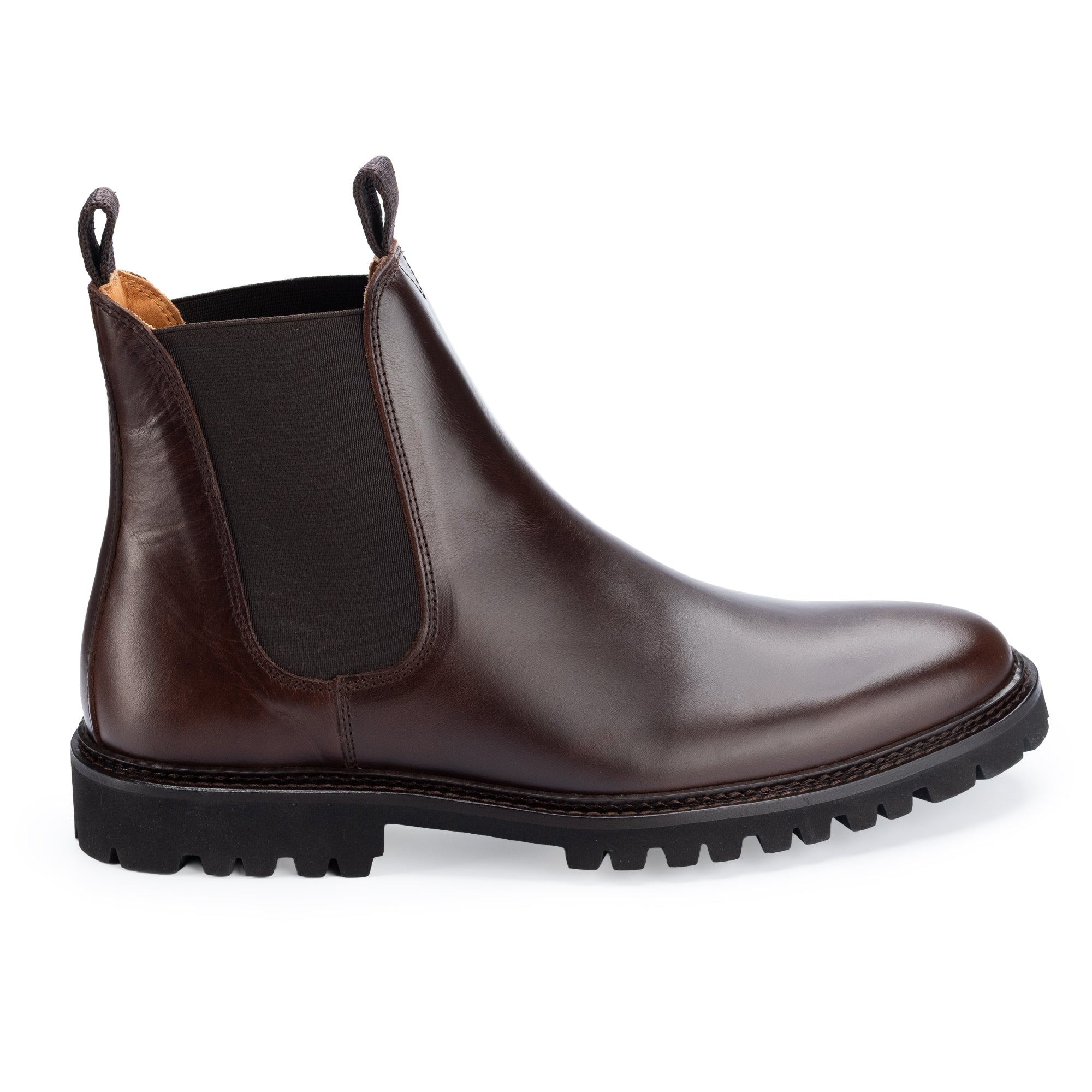
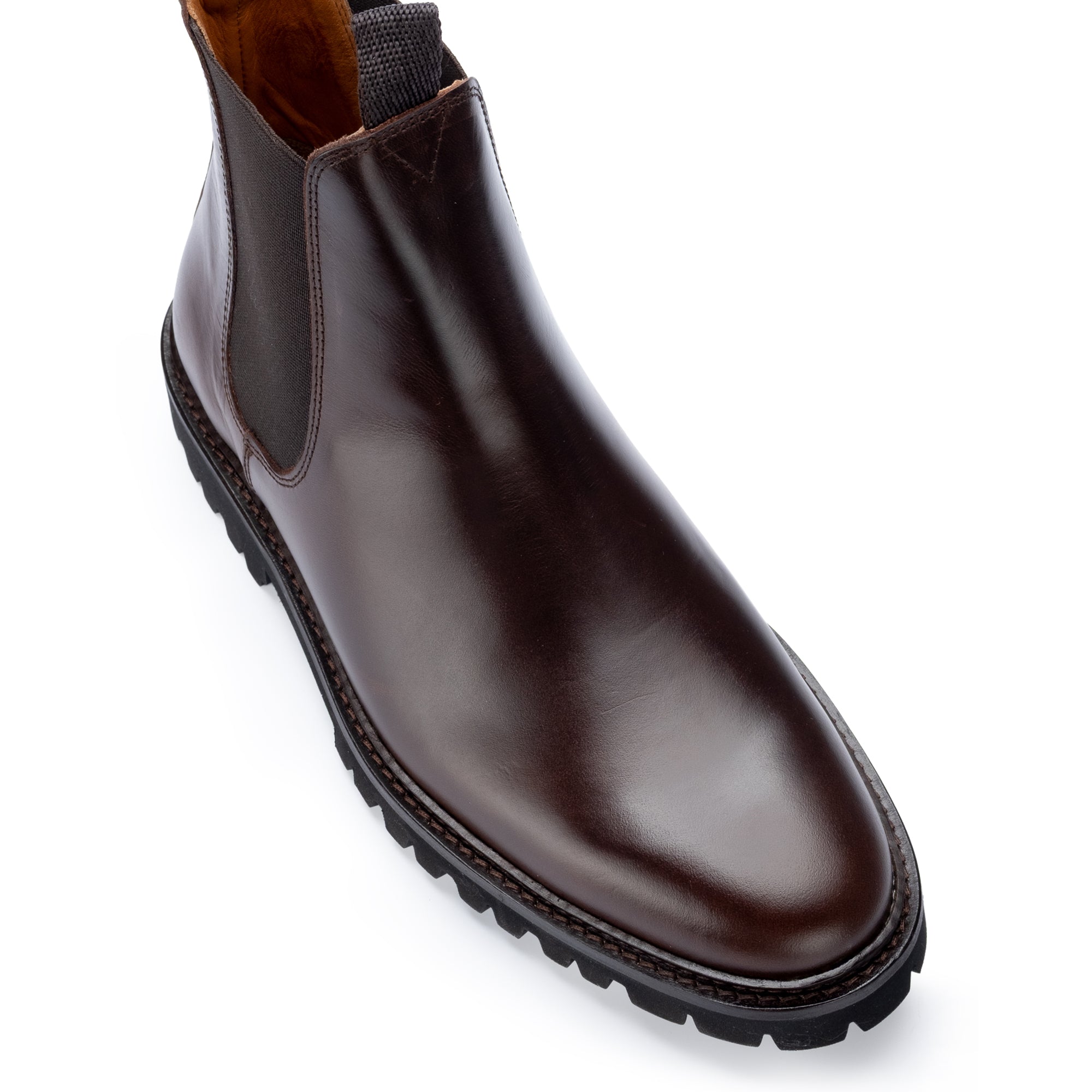
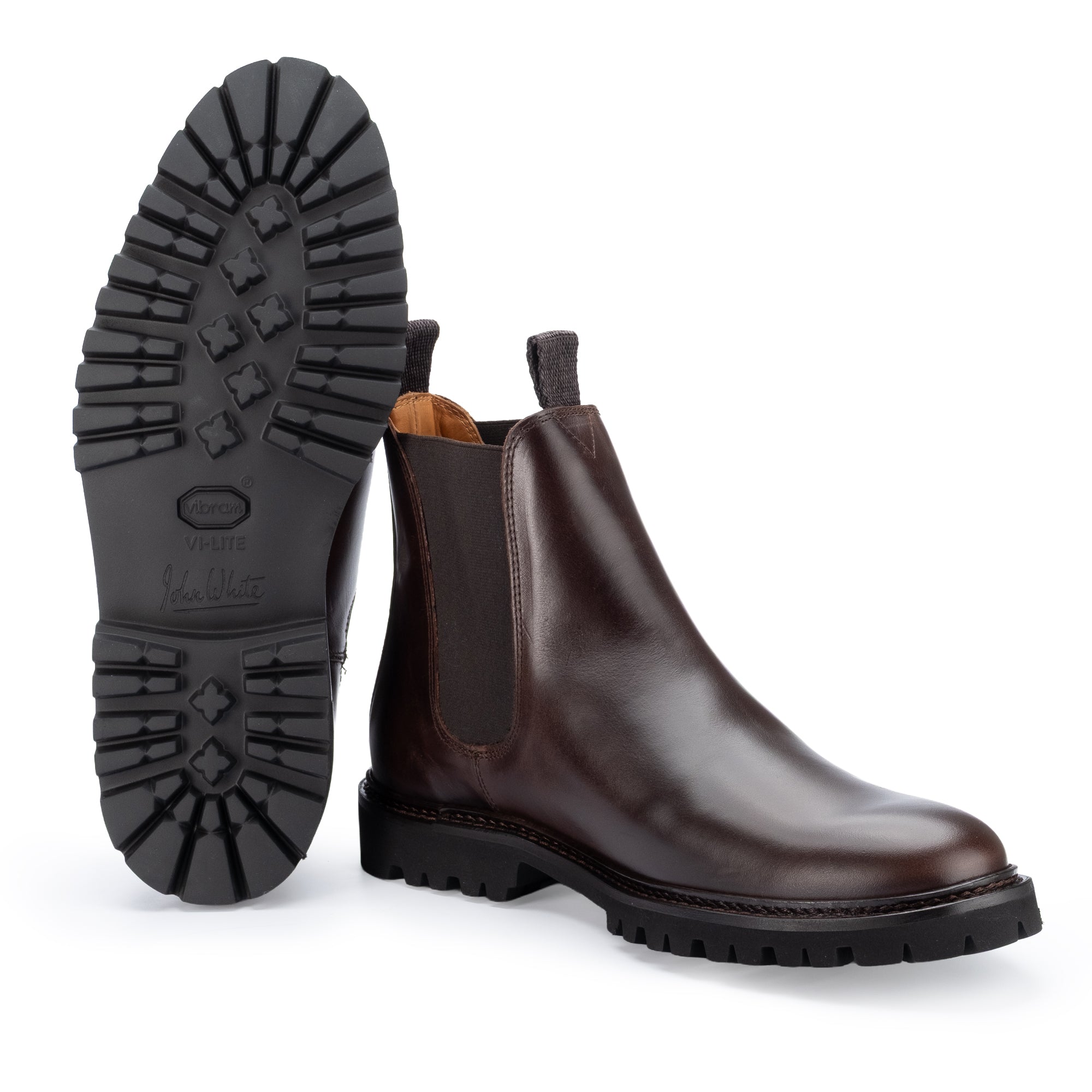
Brogues as Boots: The Falcon Brogue Boot
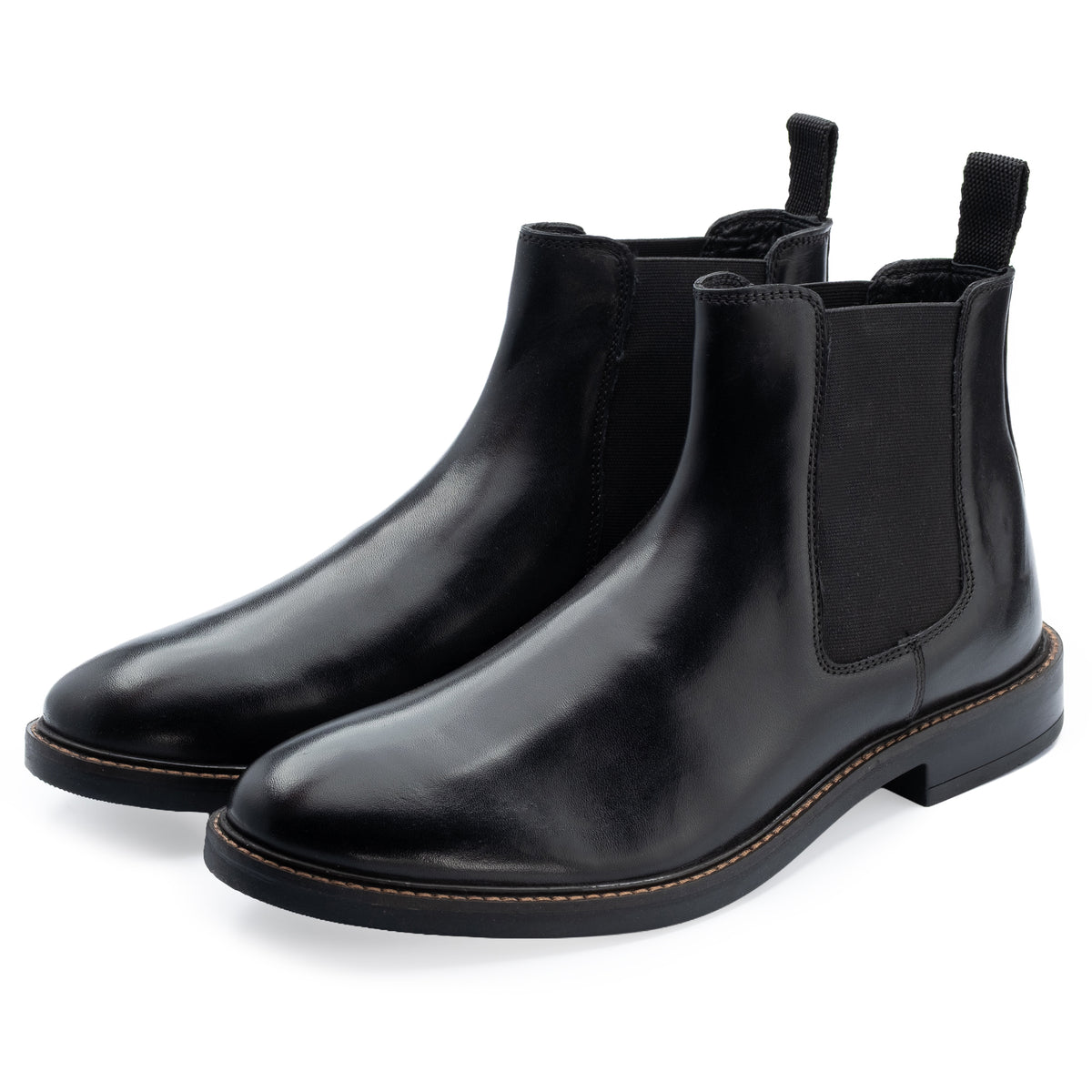
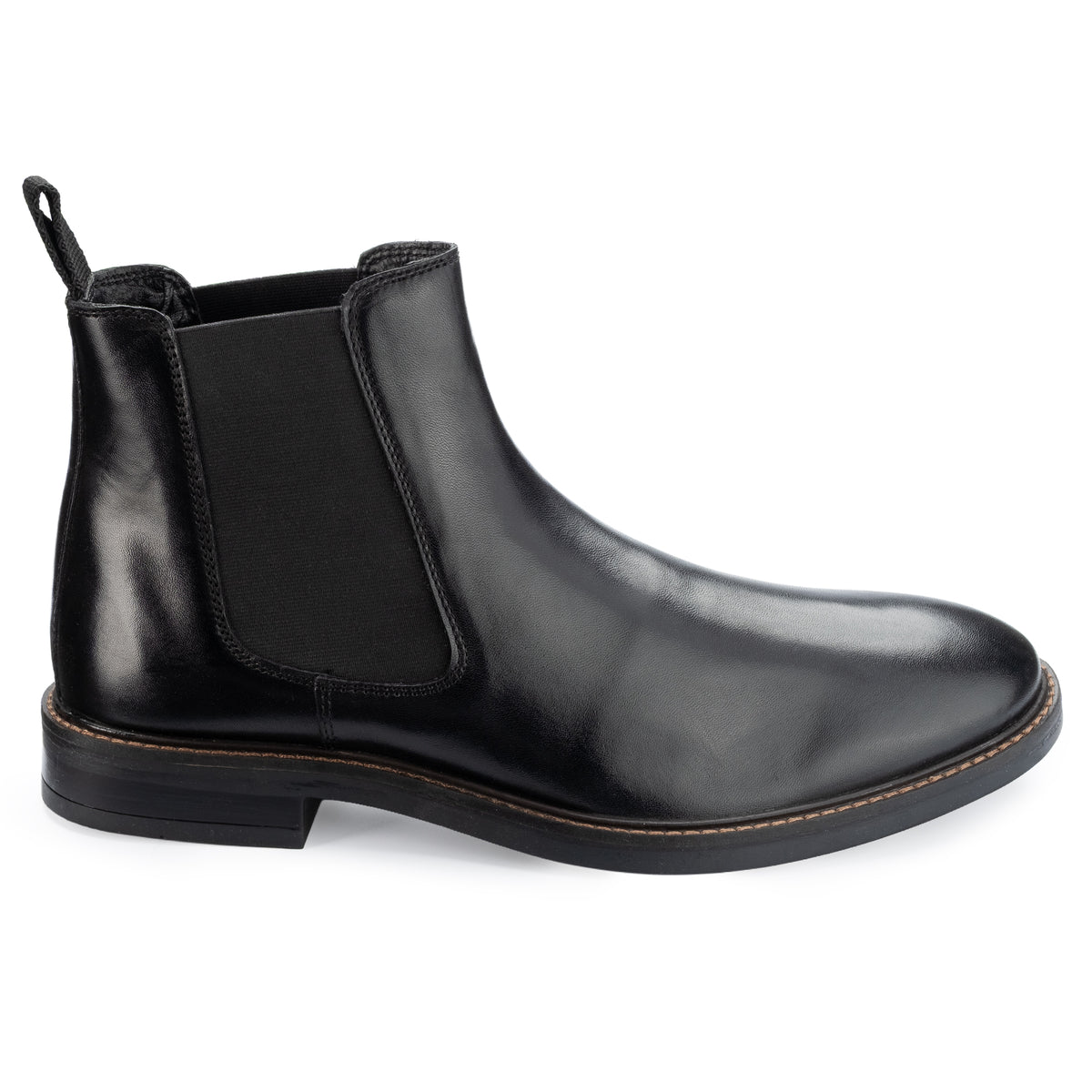
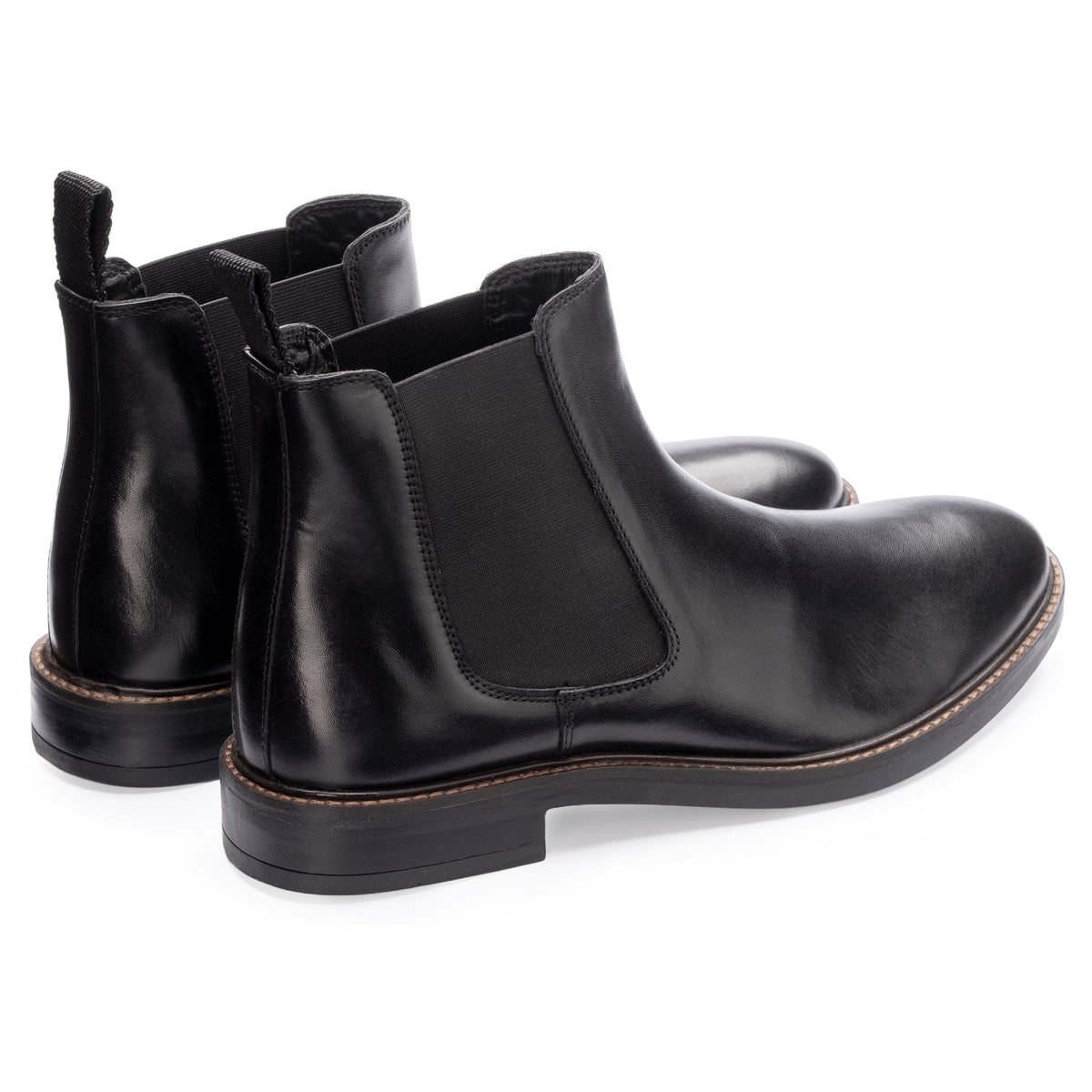
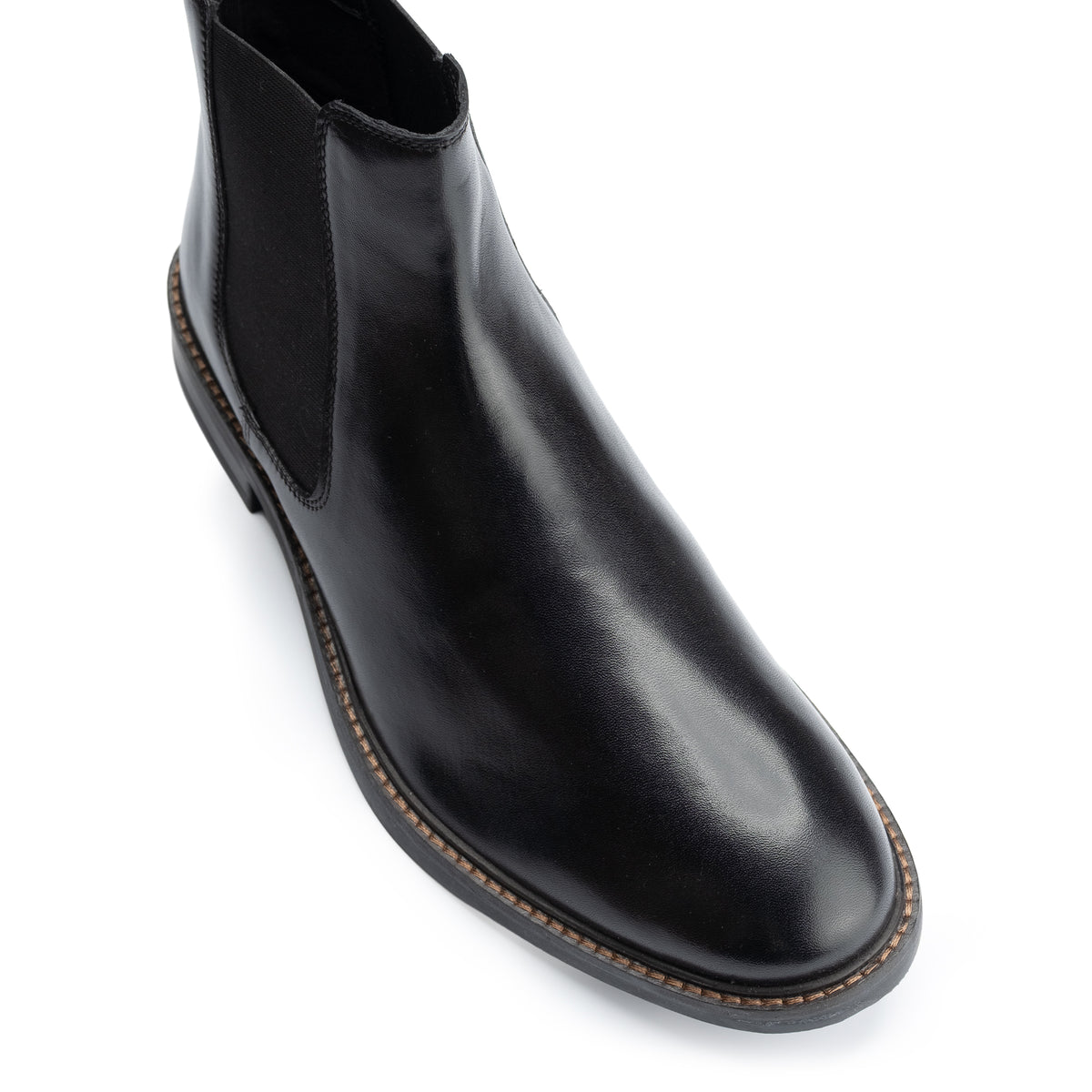
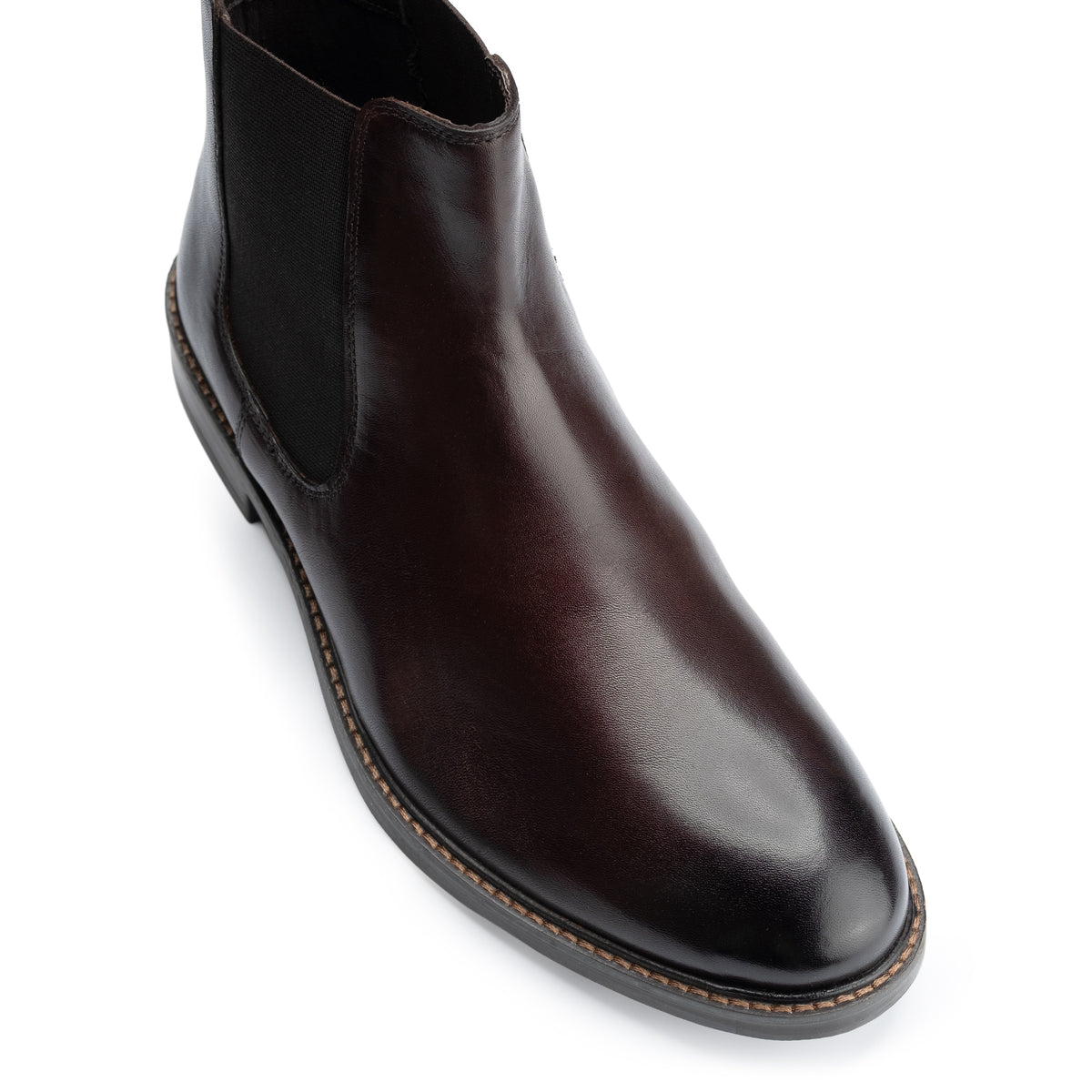
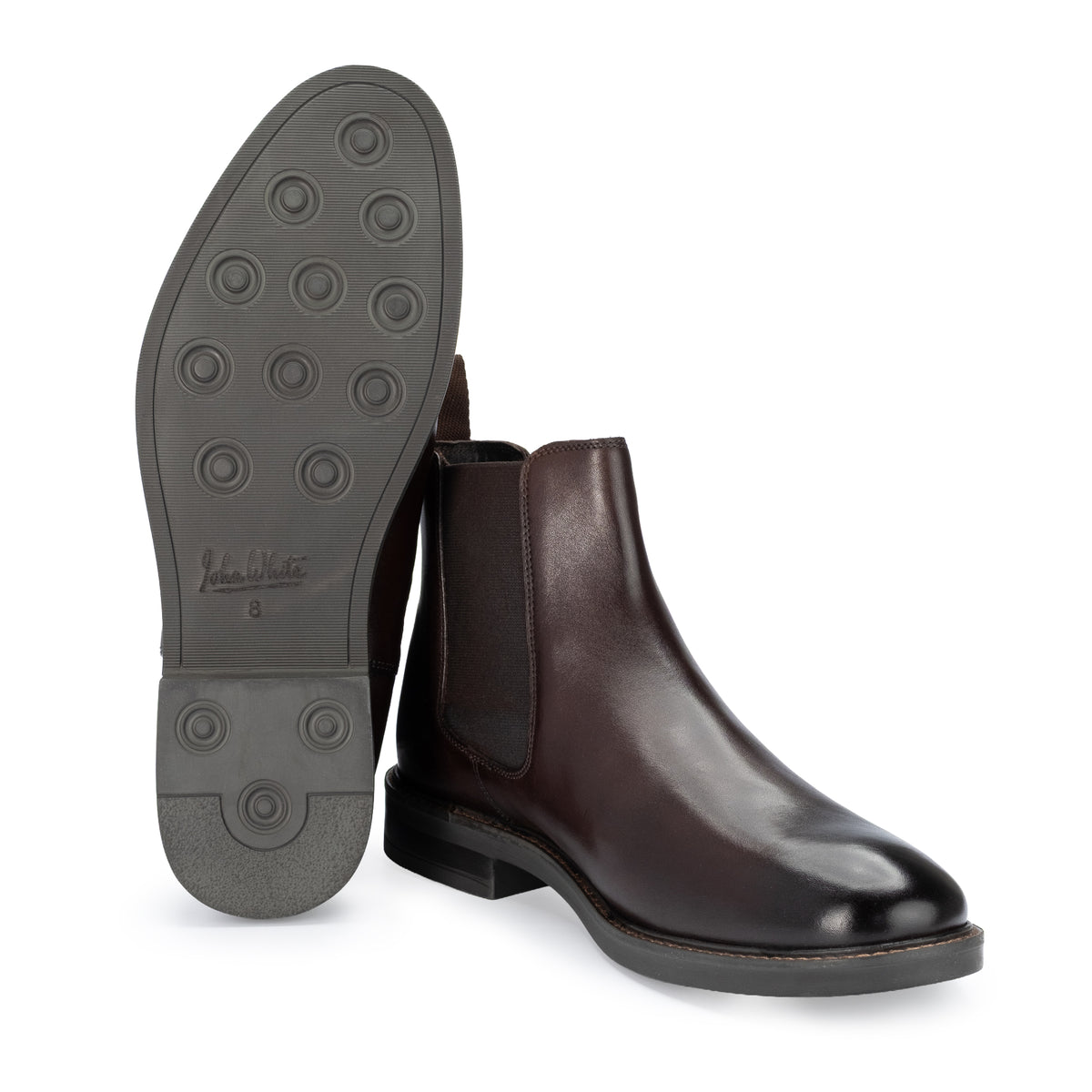
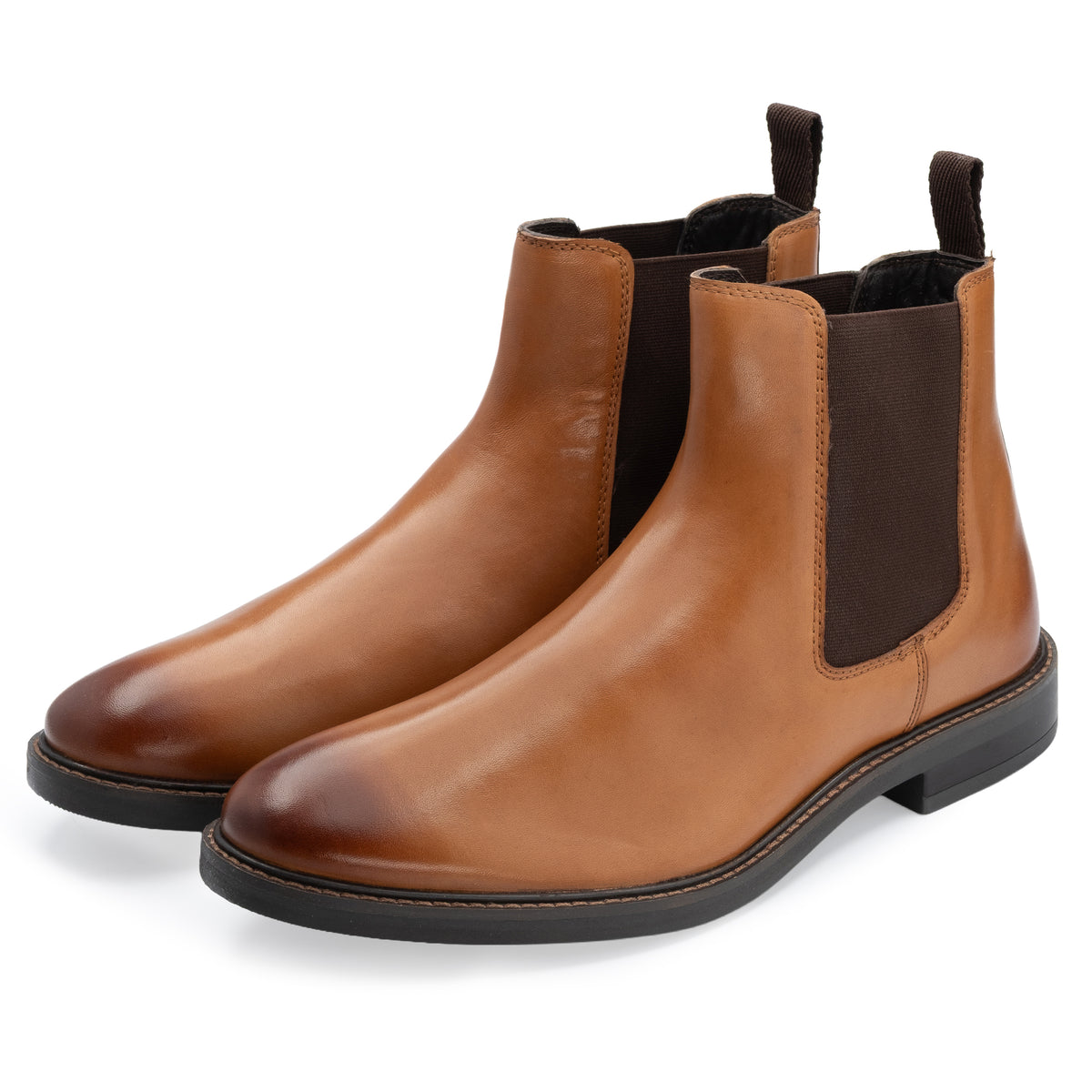
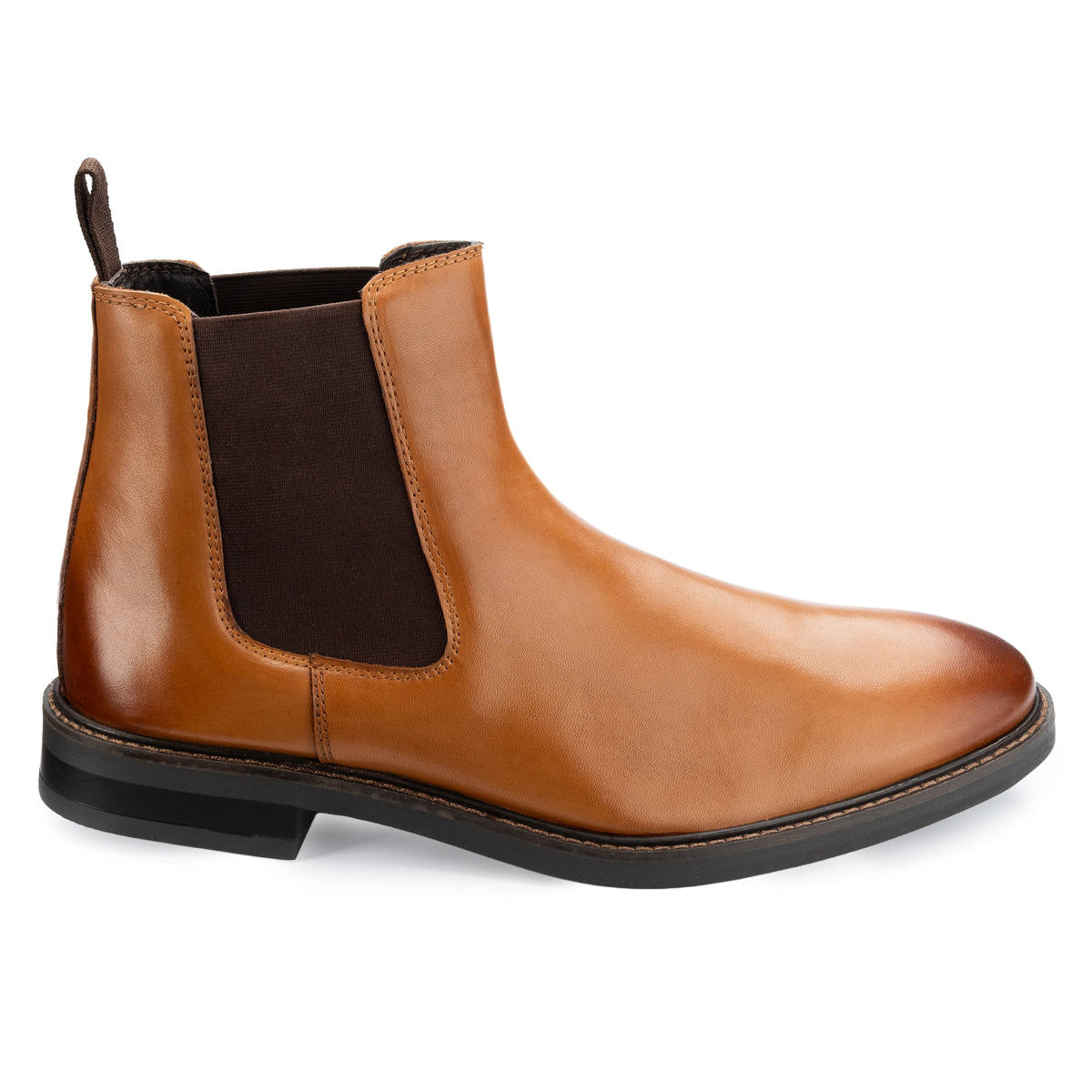
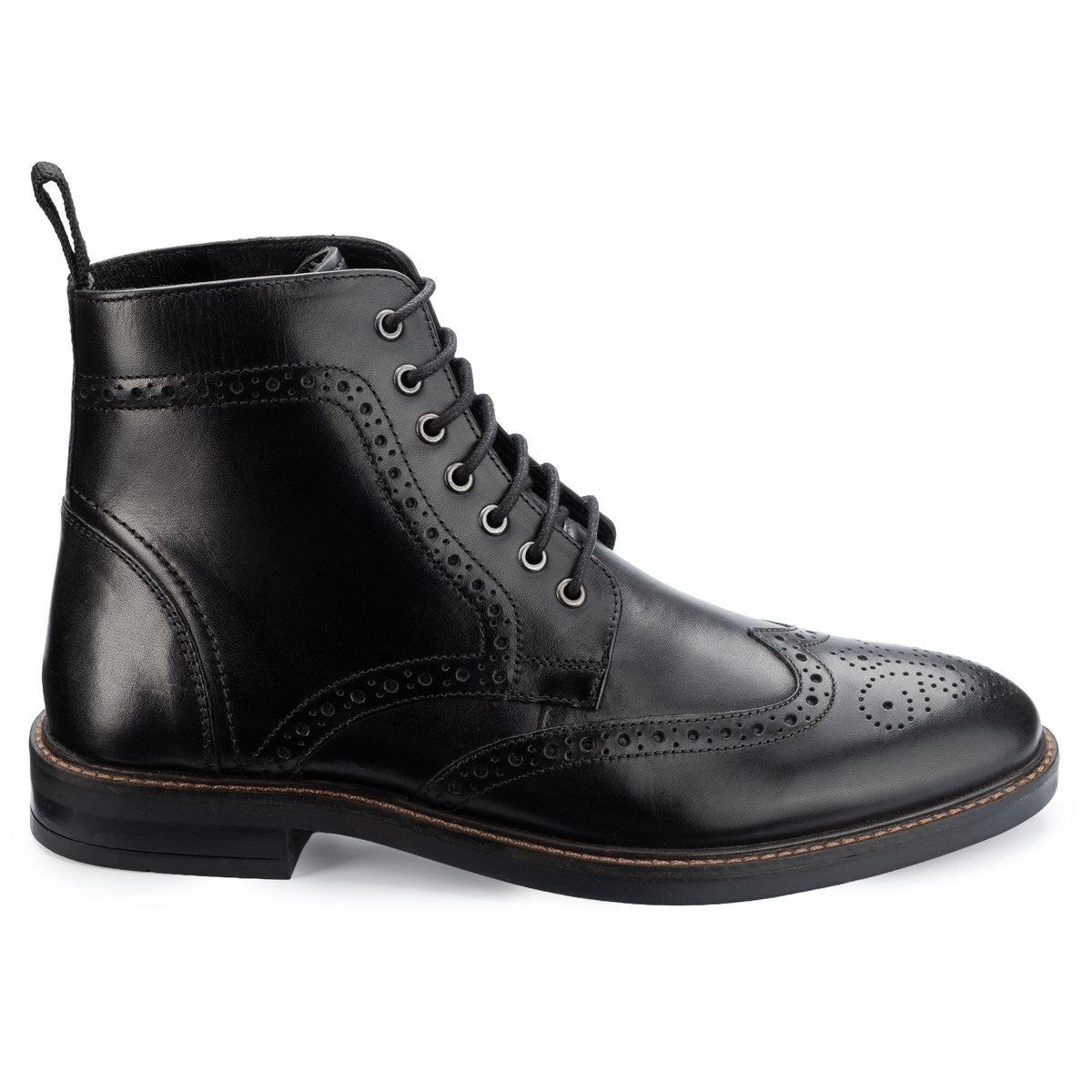
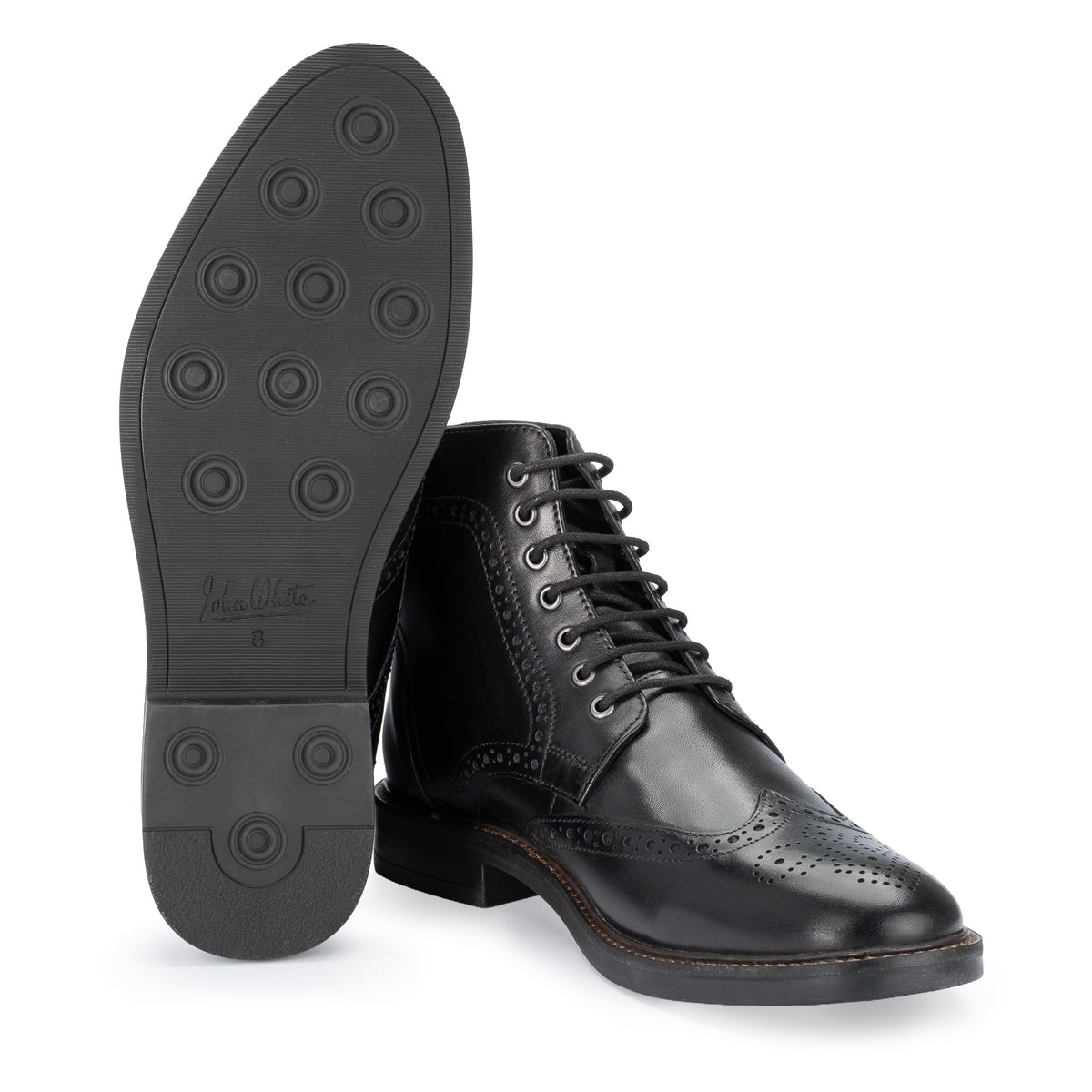
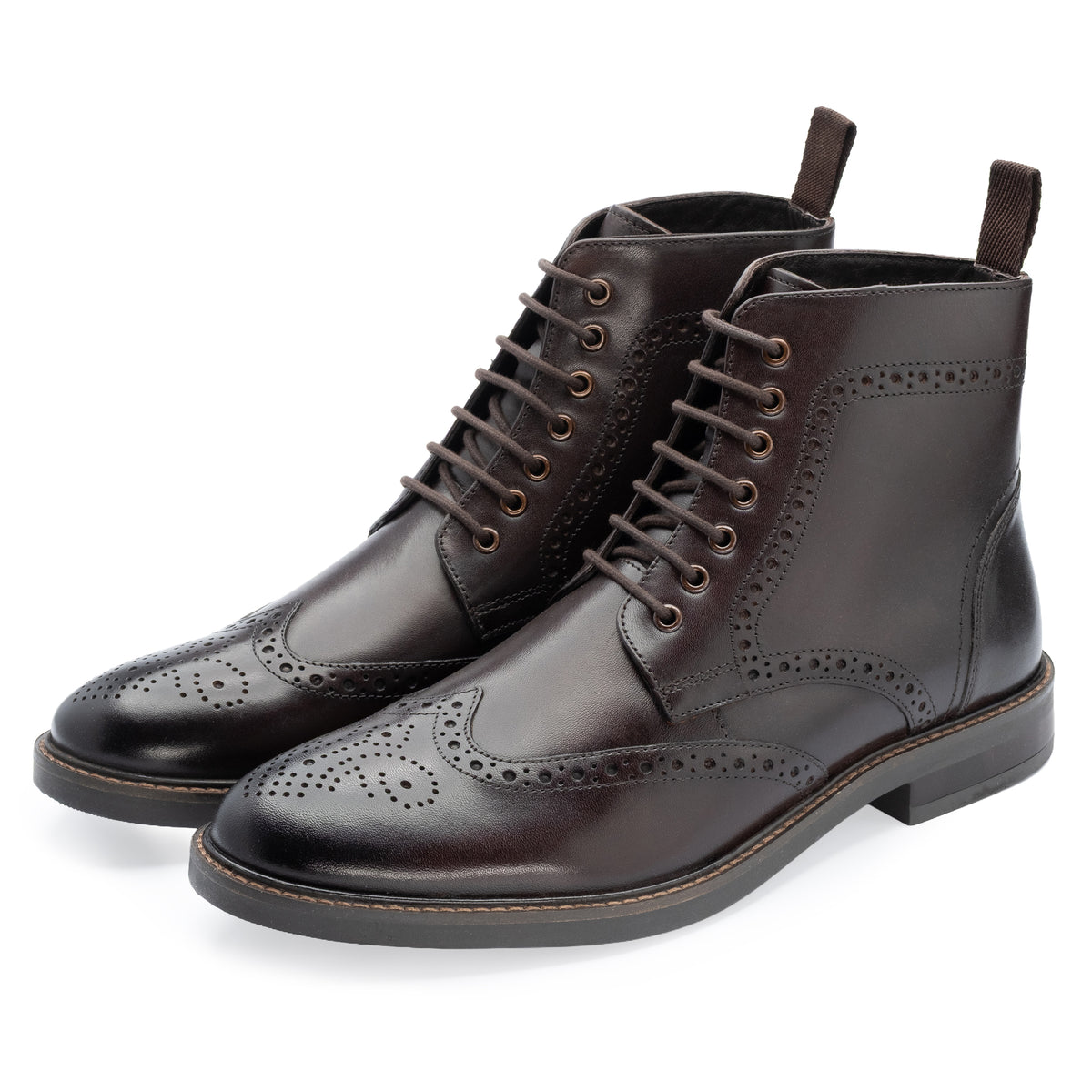
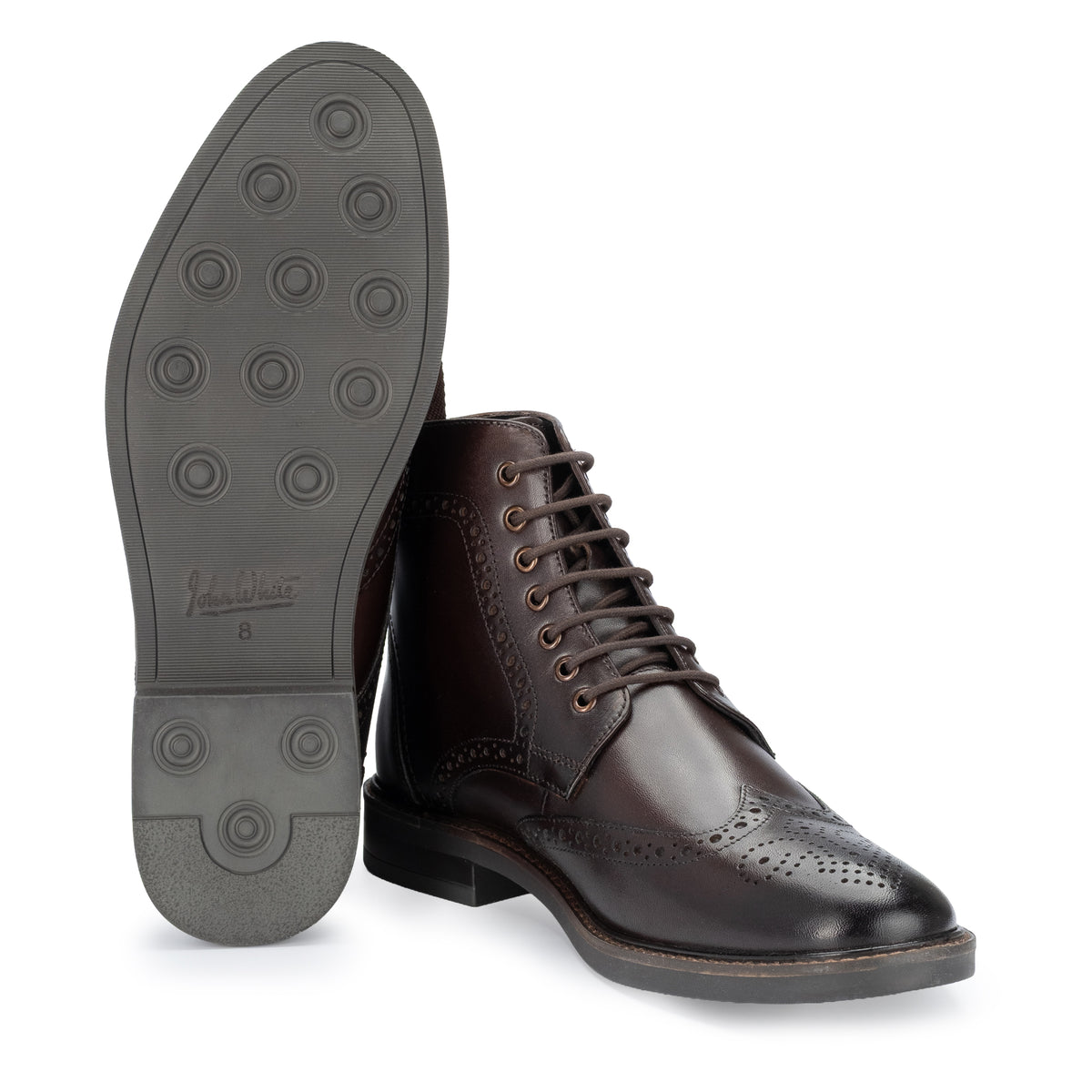
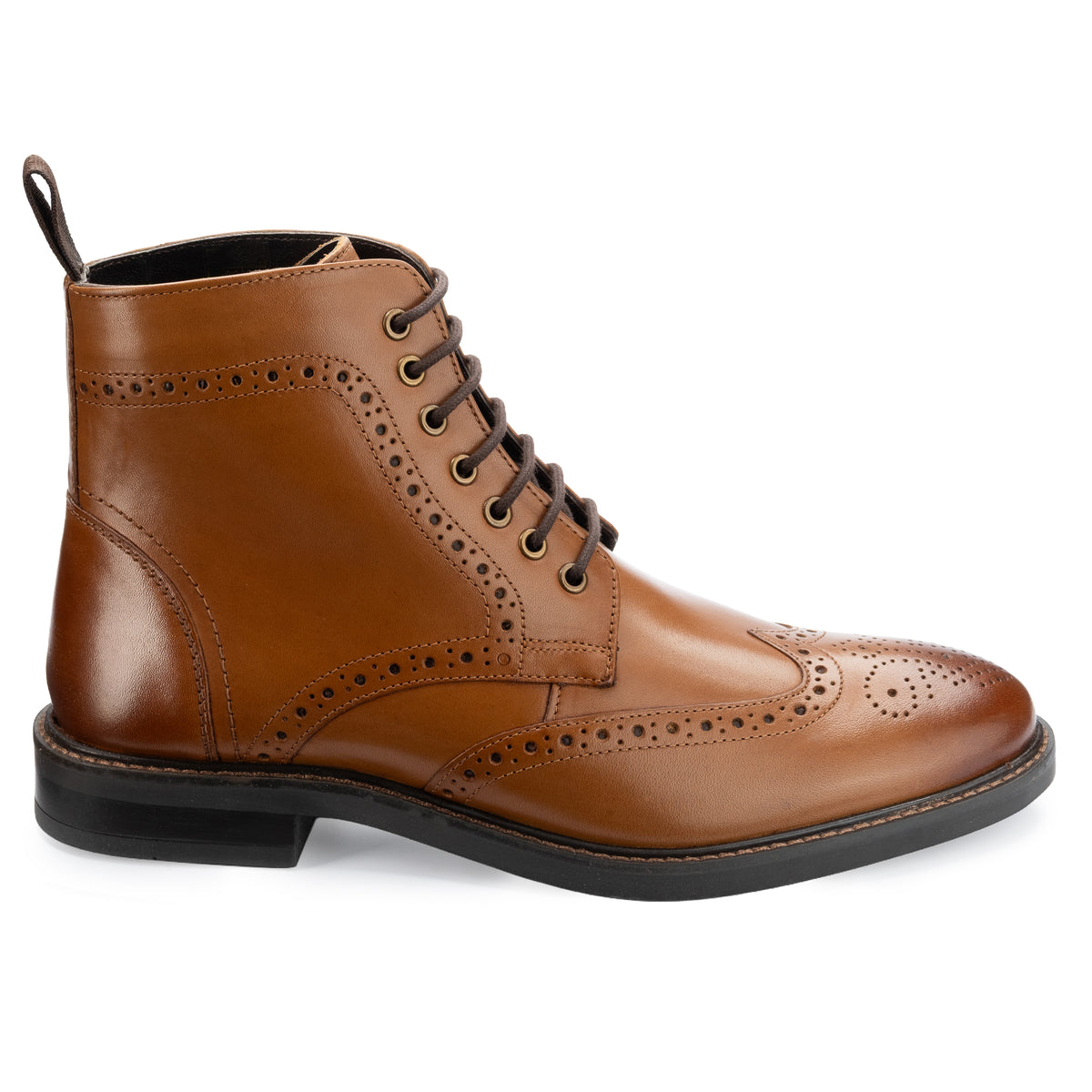
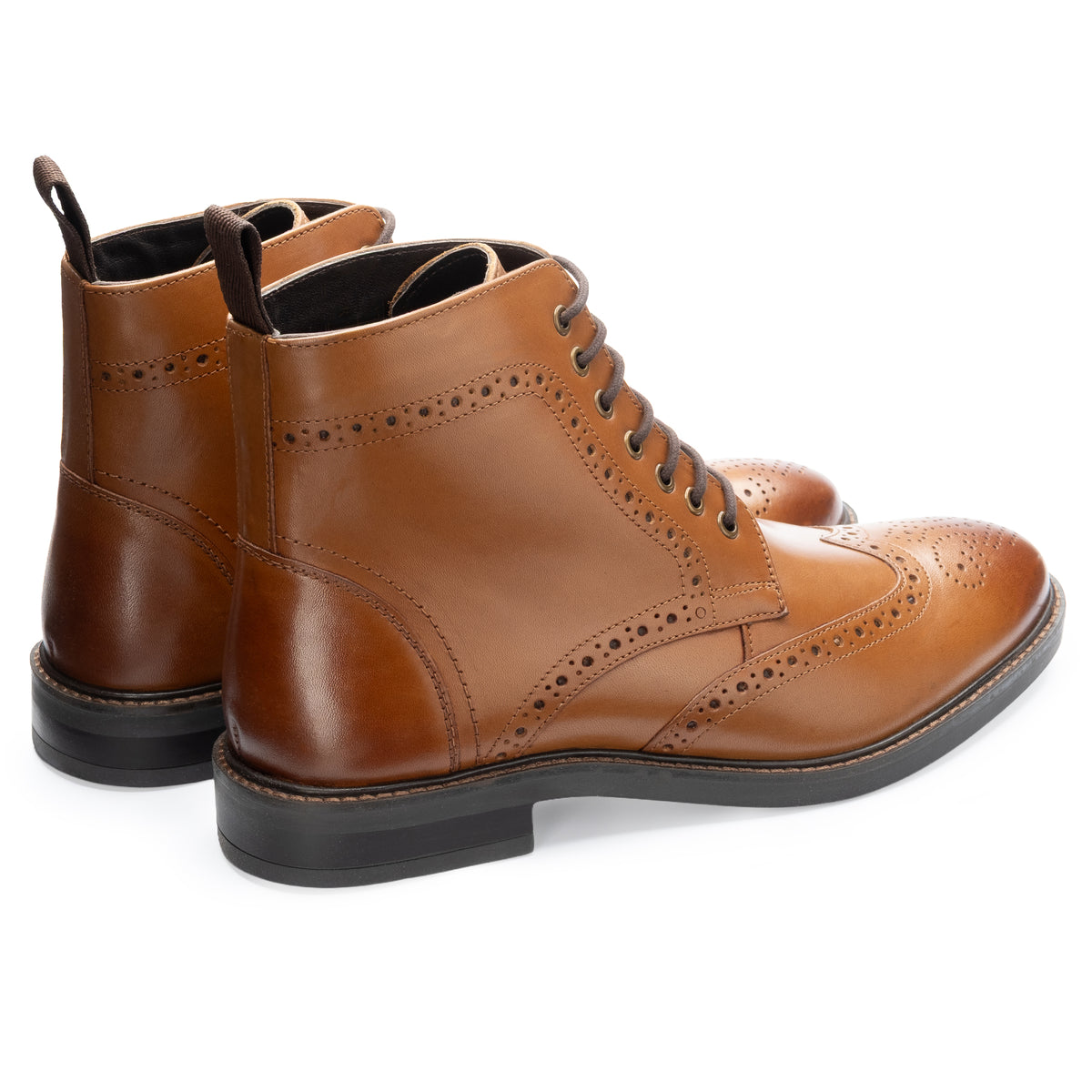
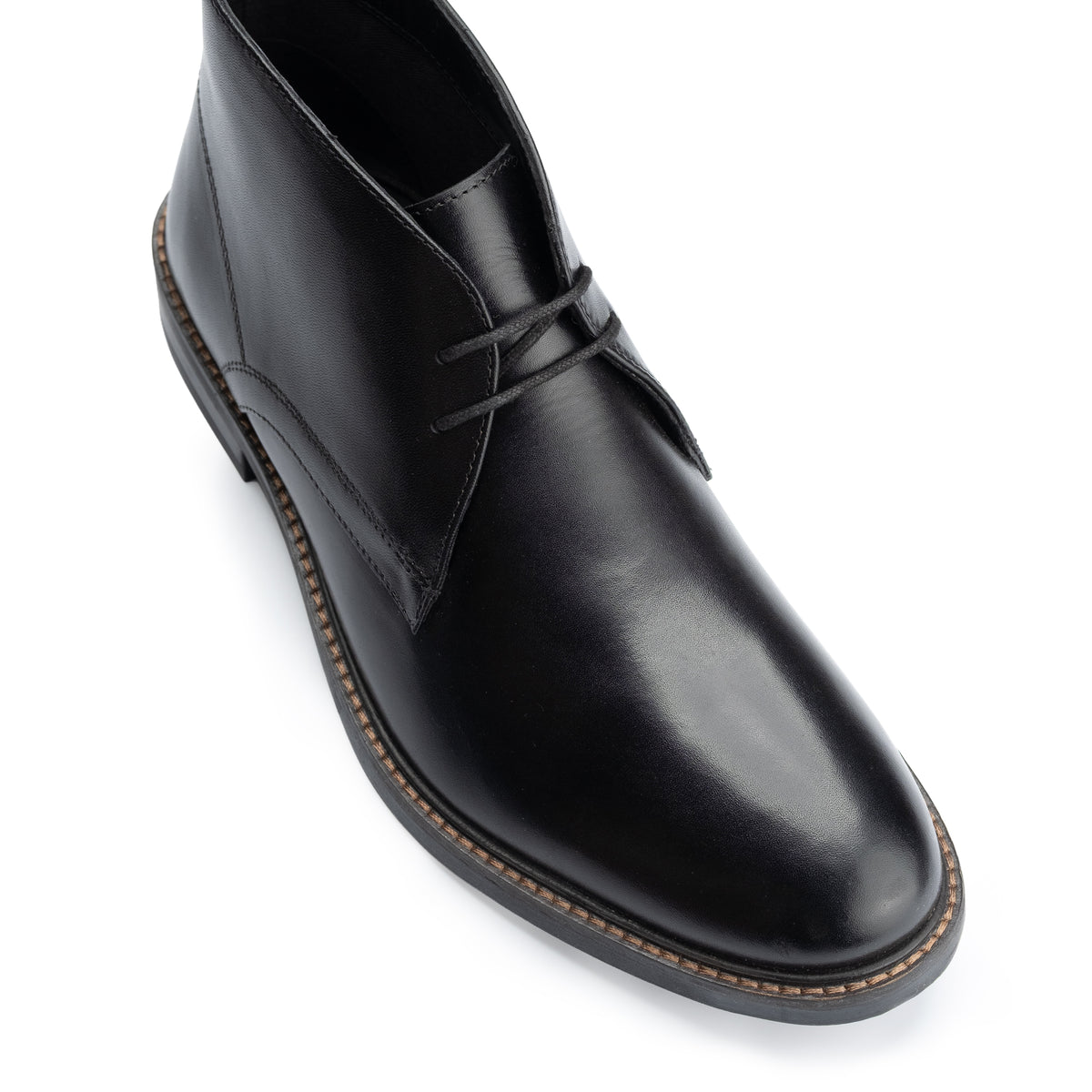
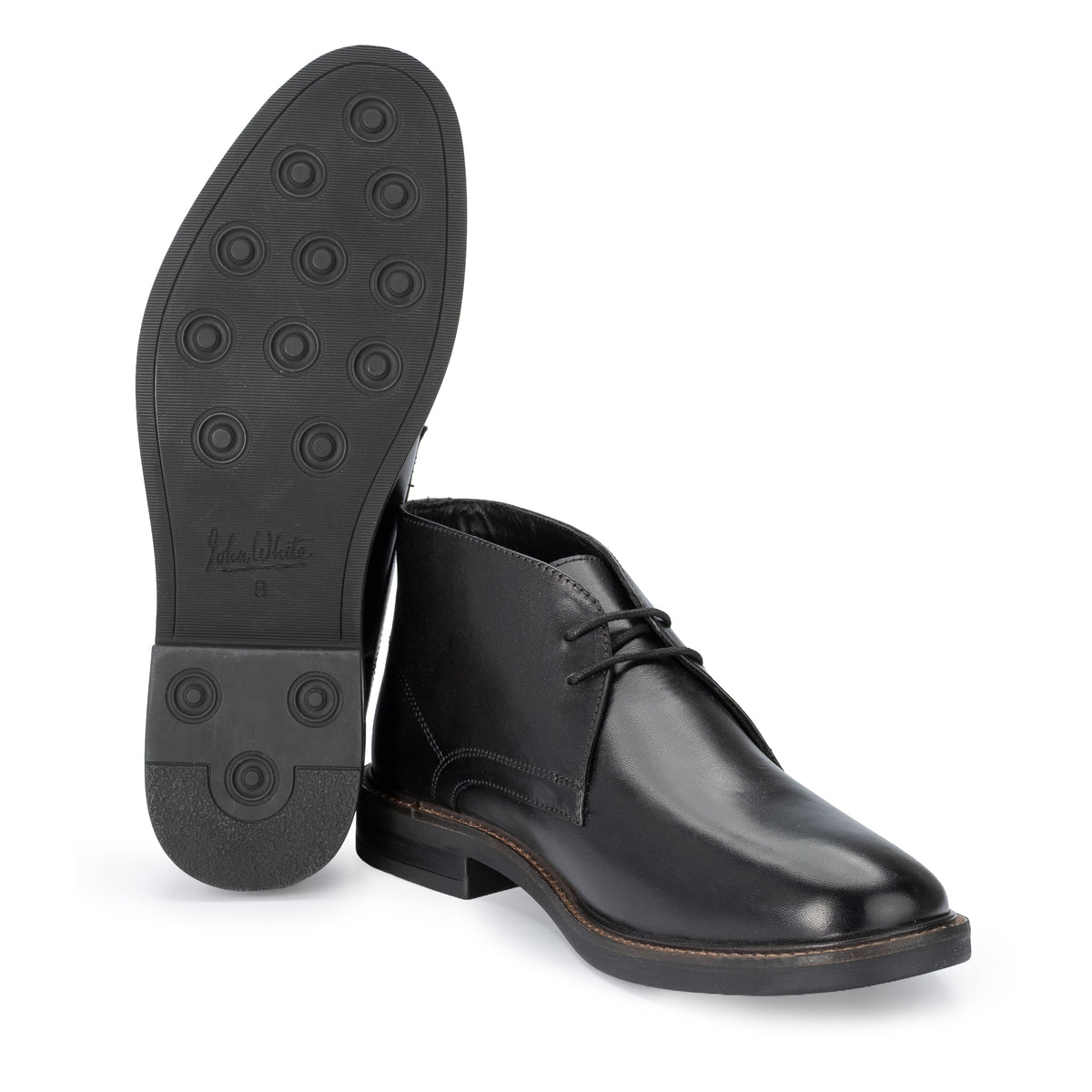
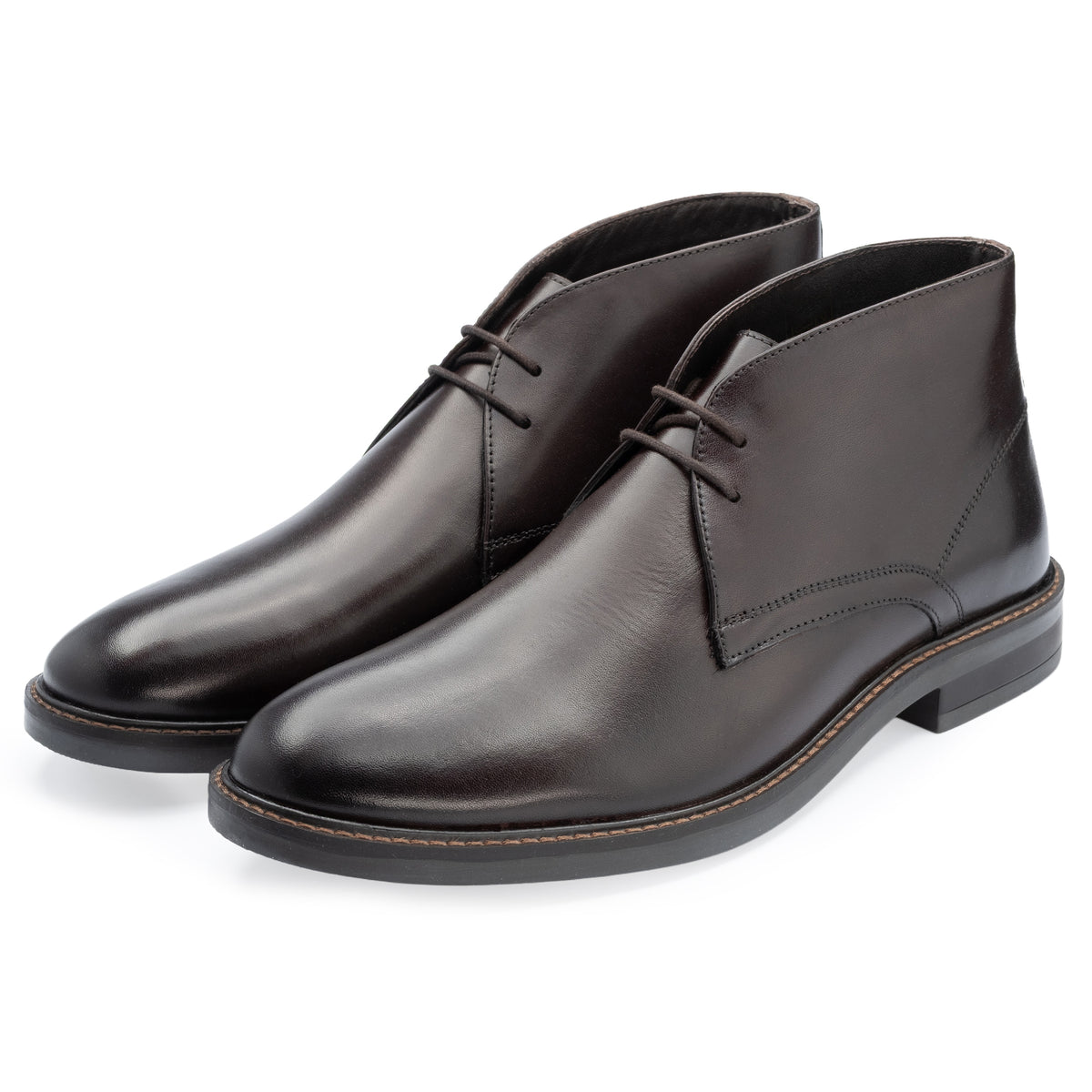
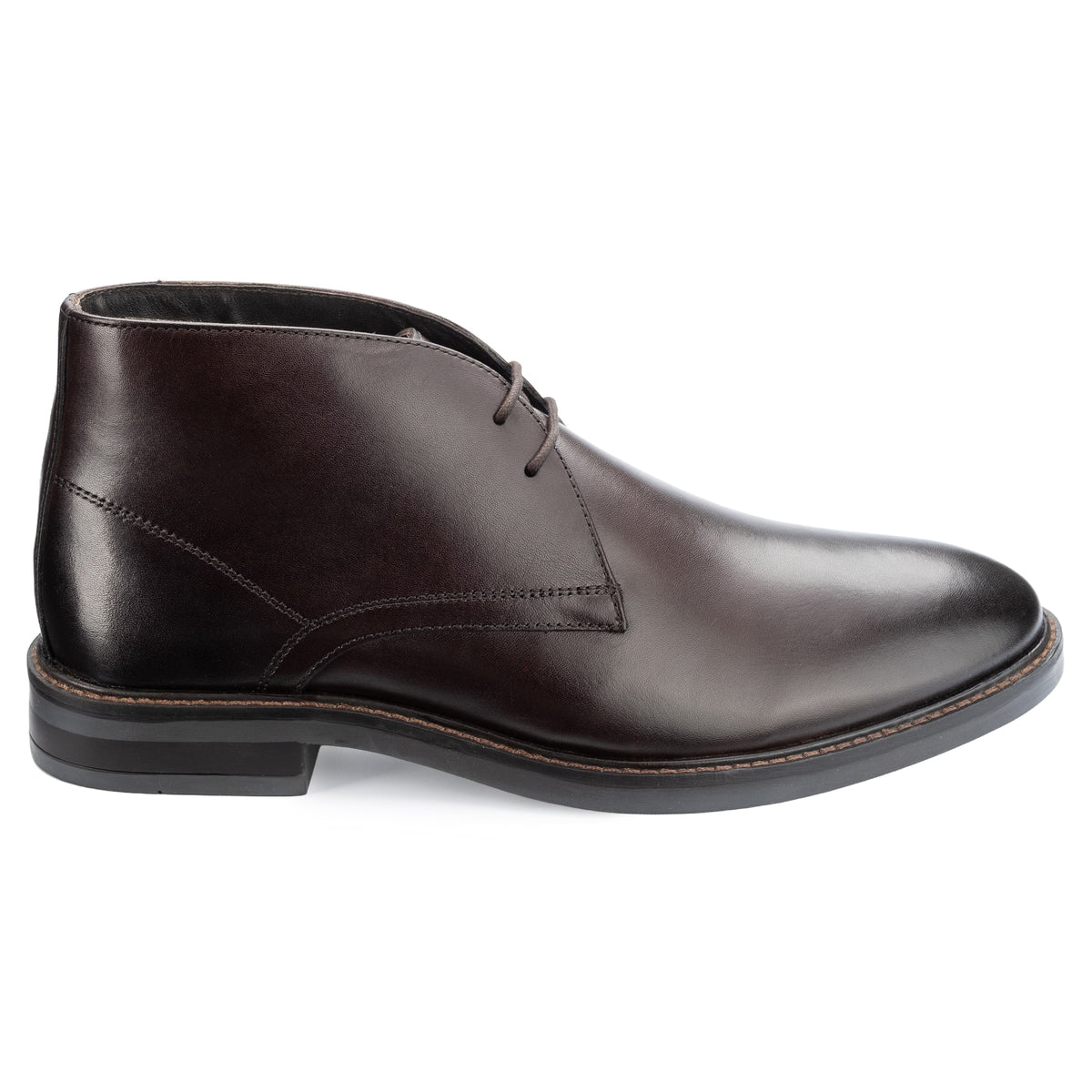
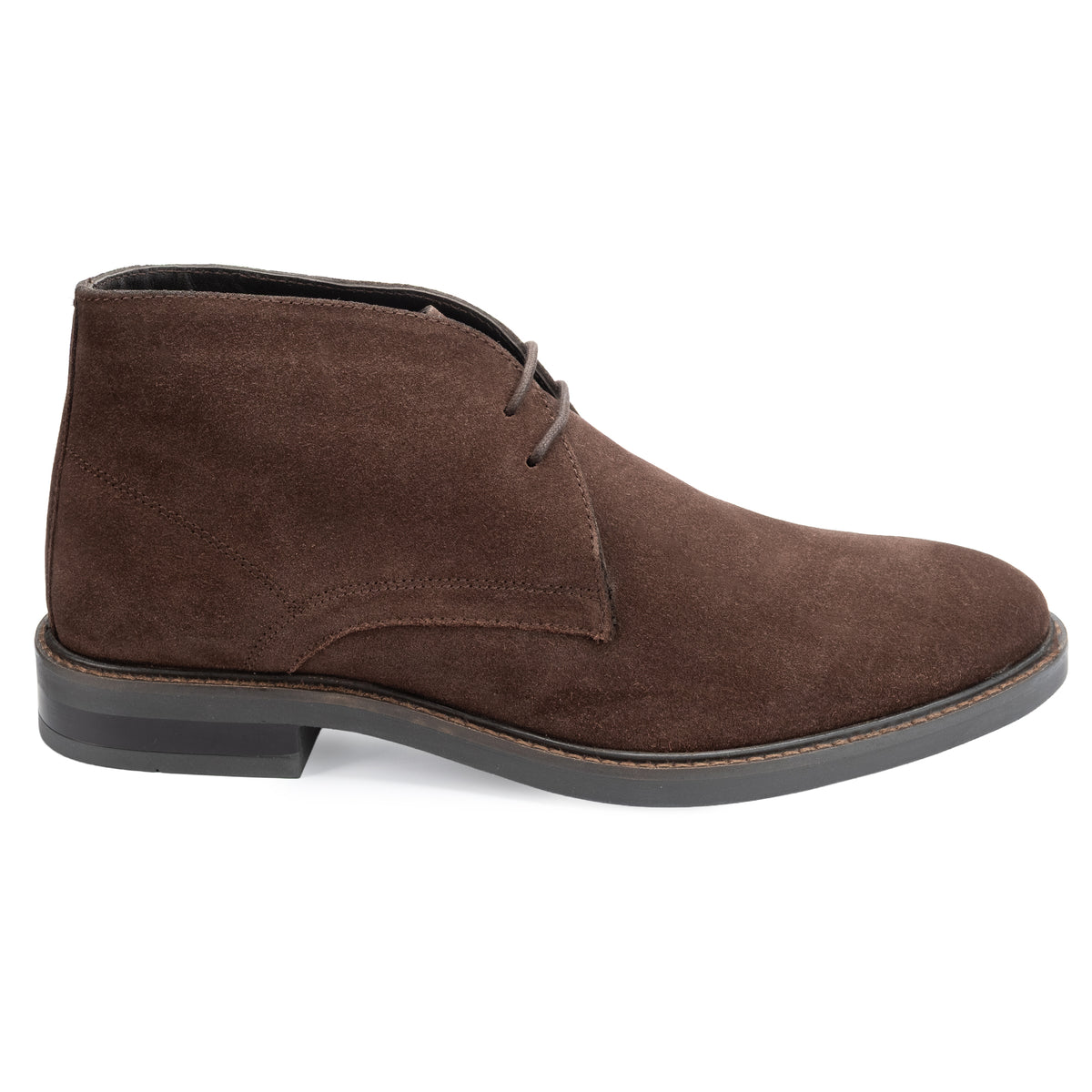
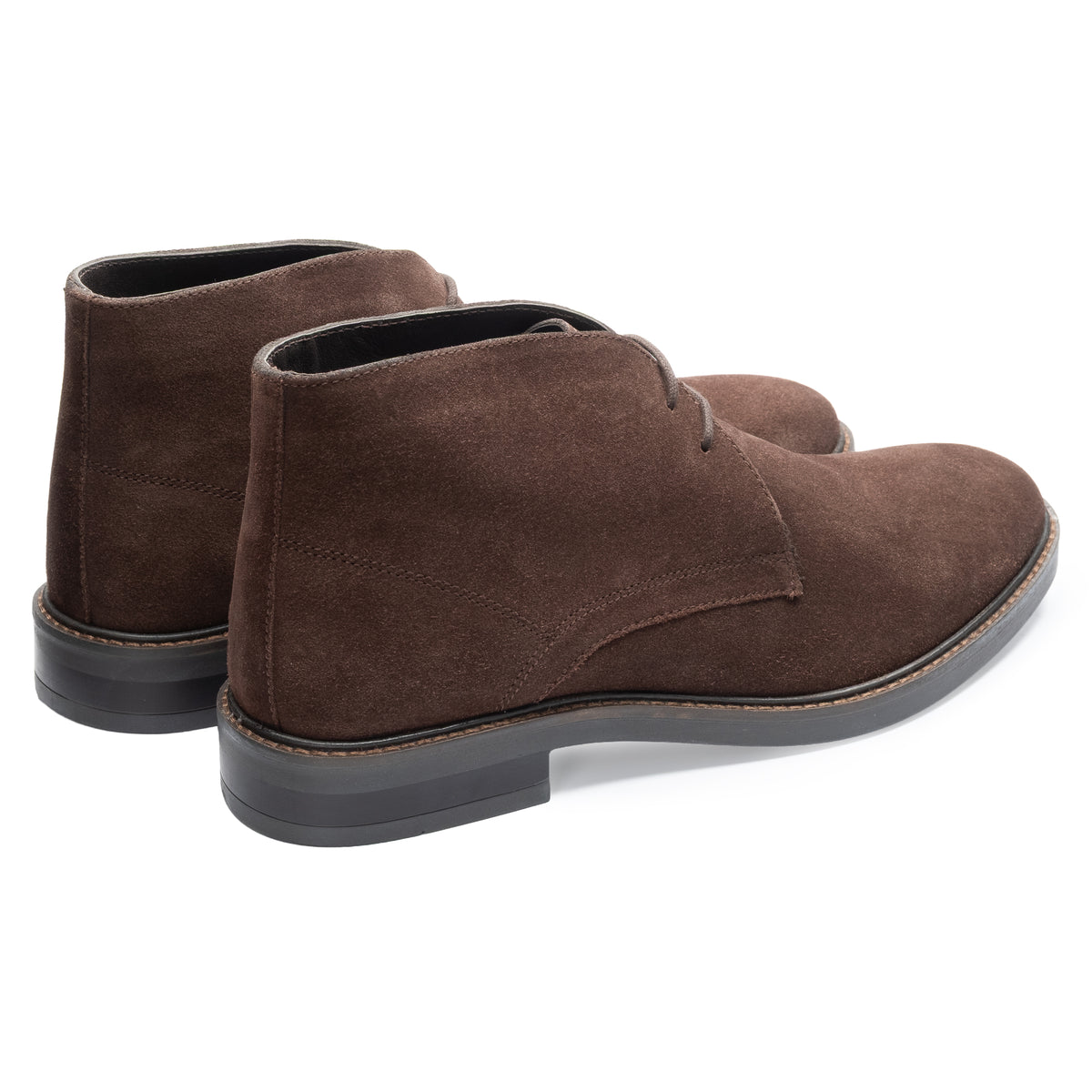
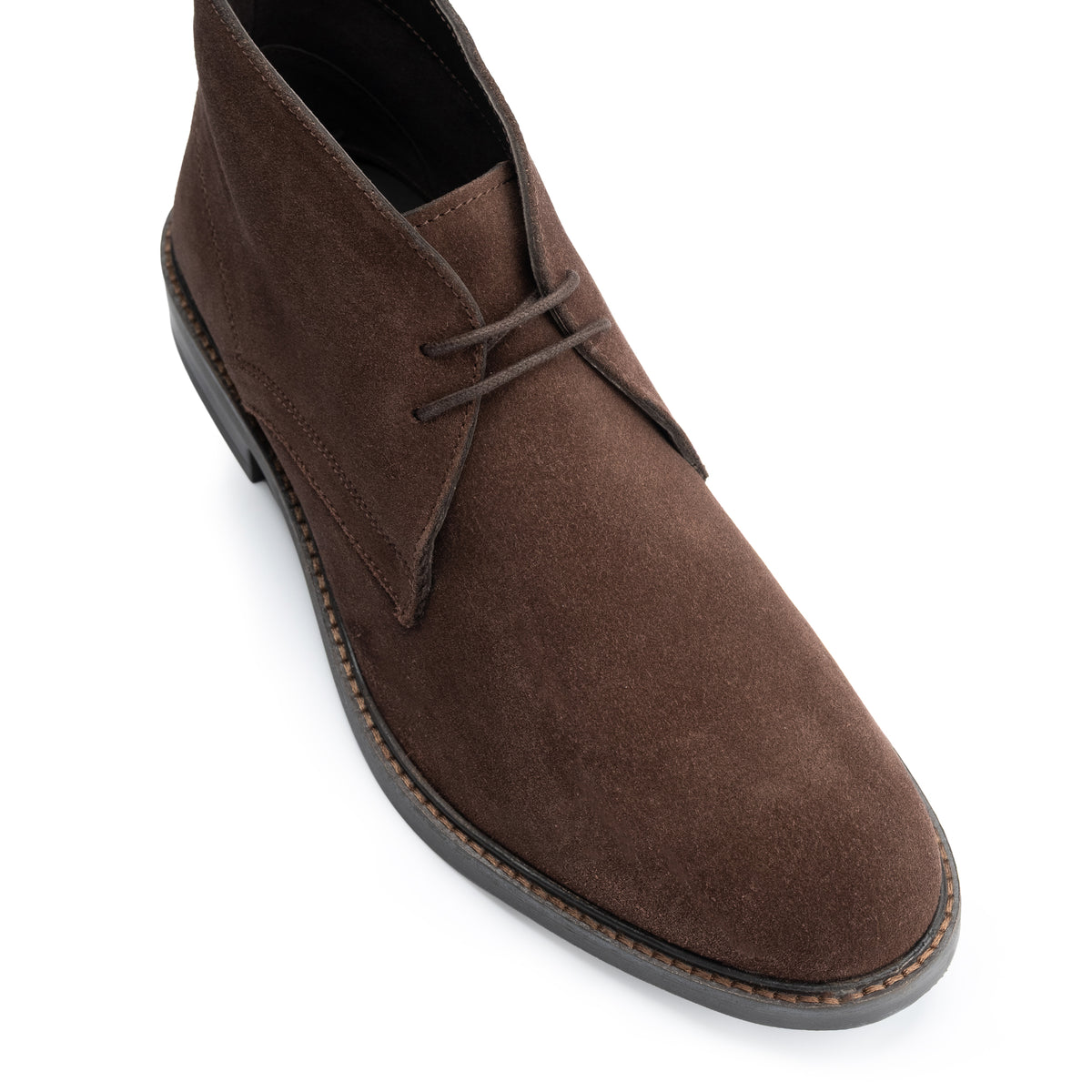
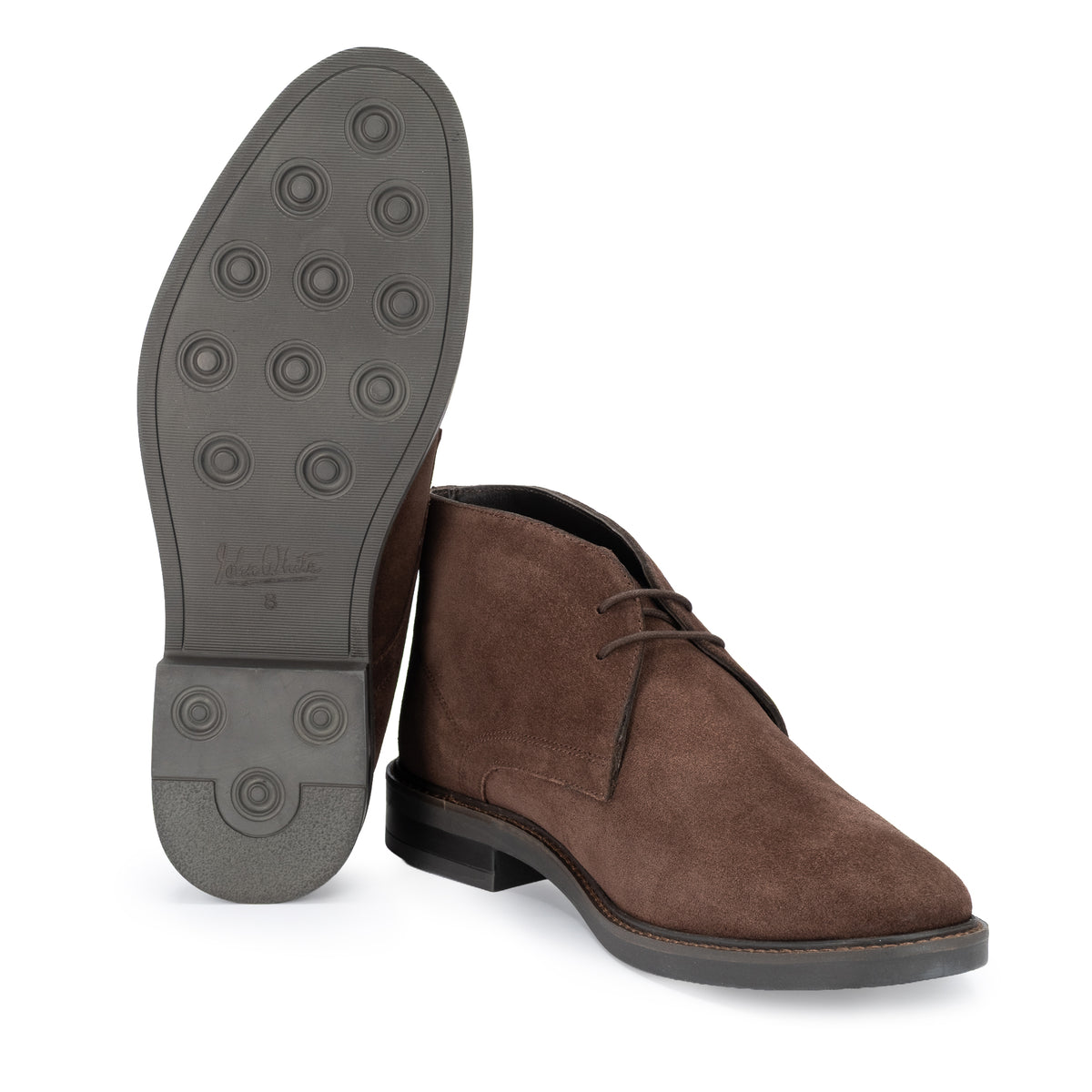
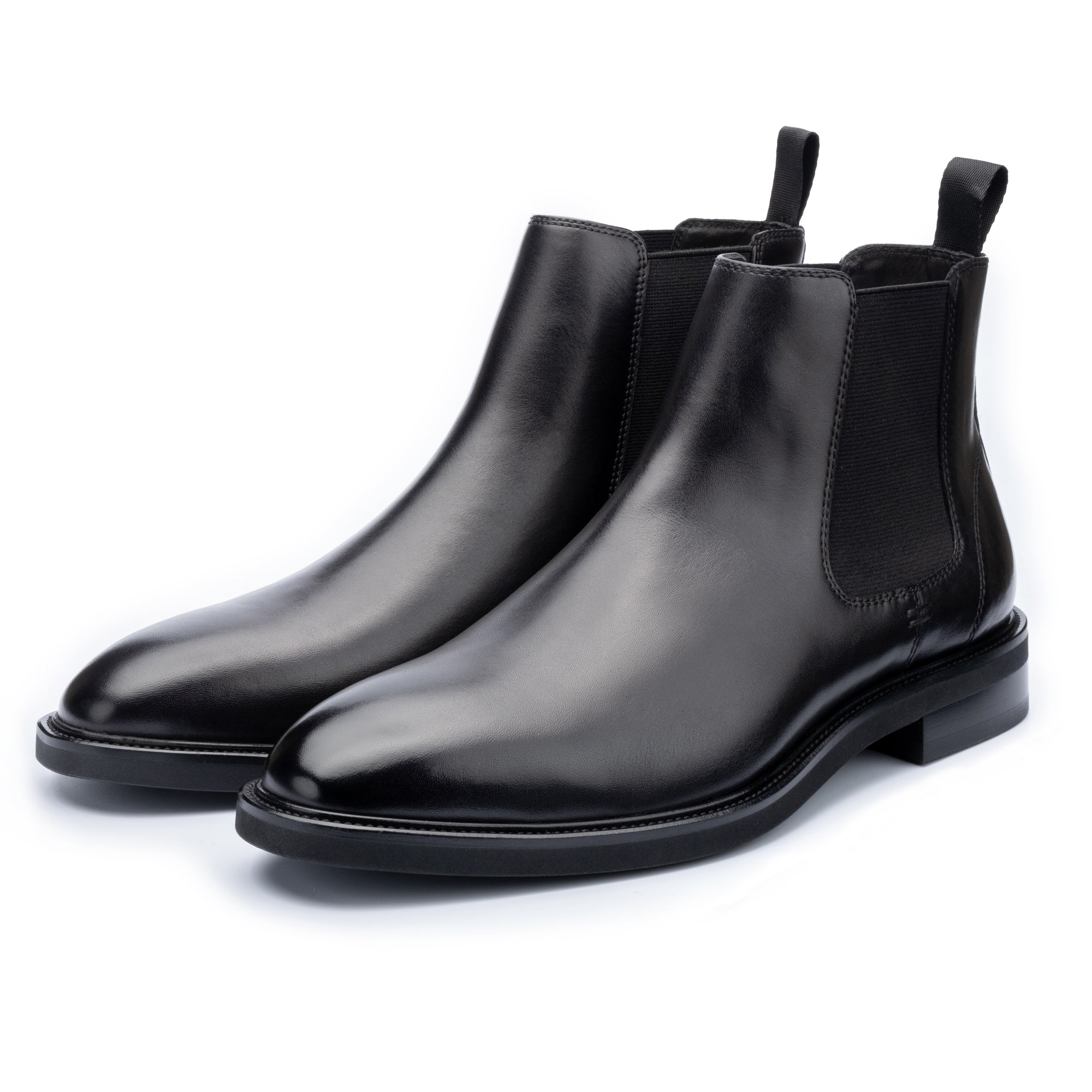
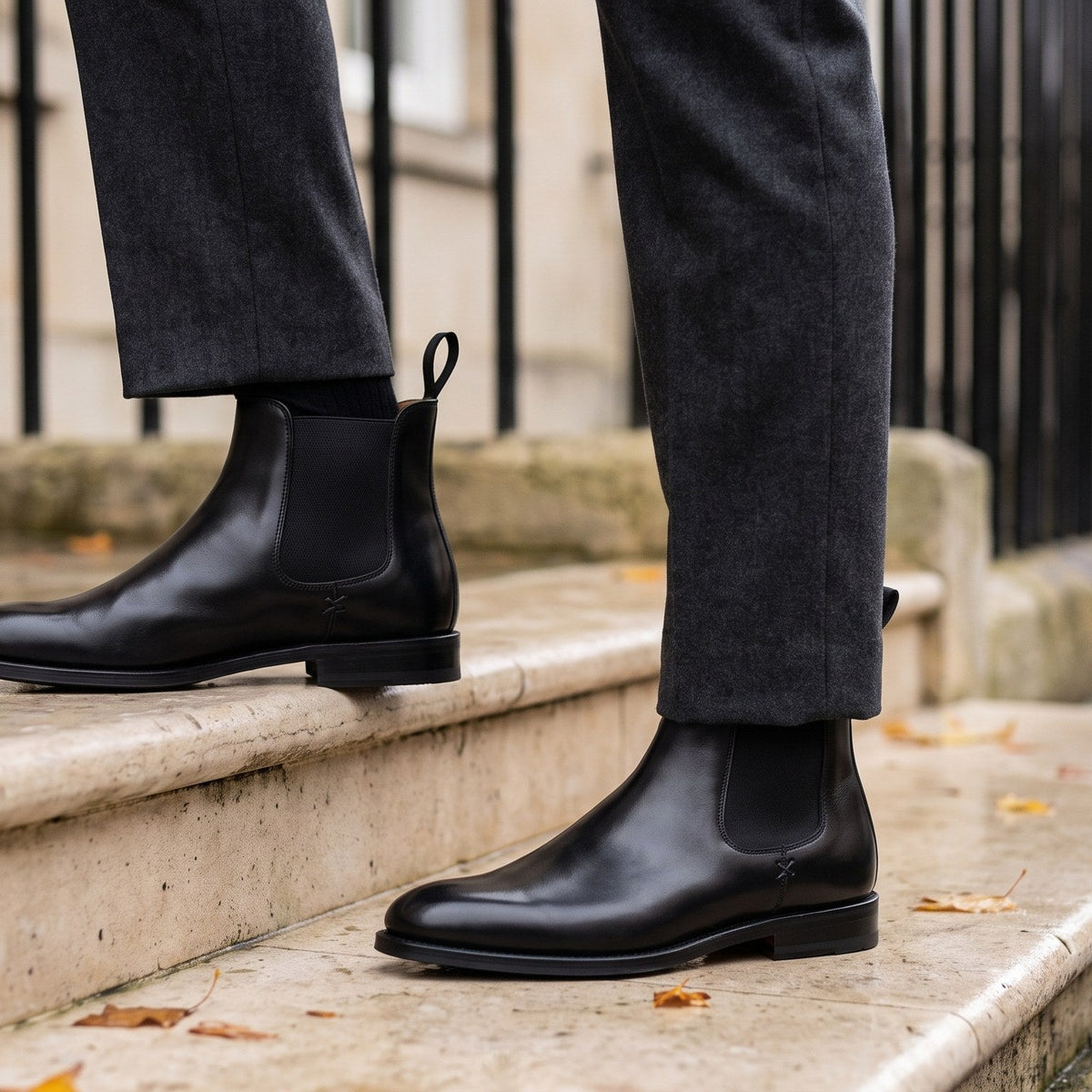
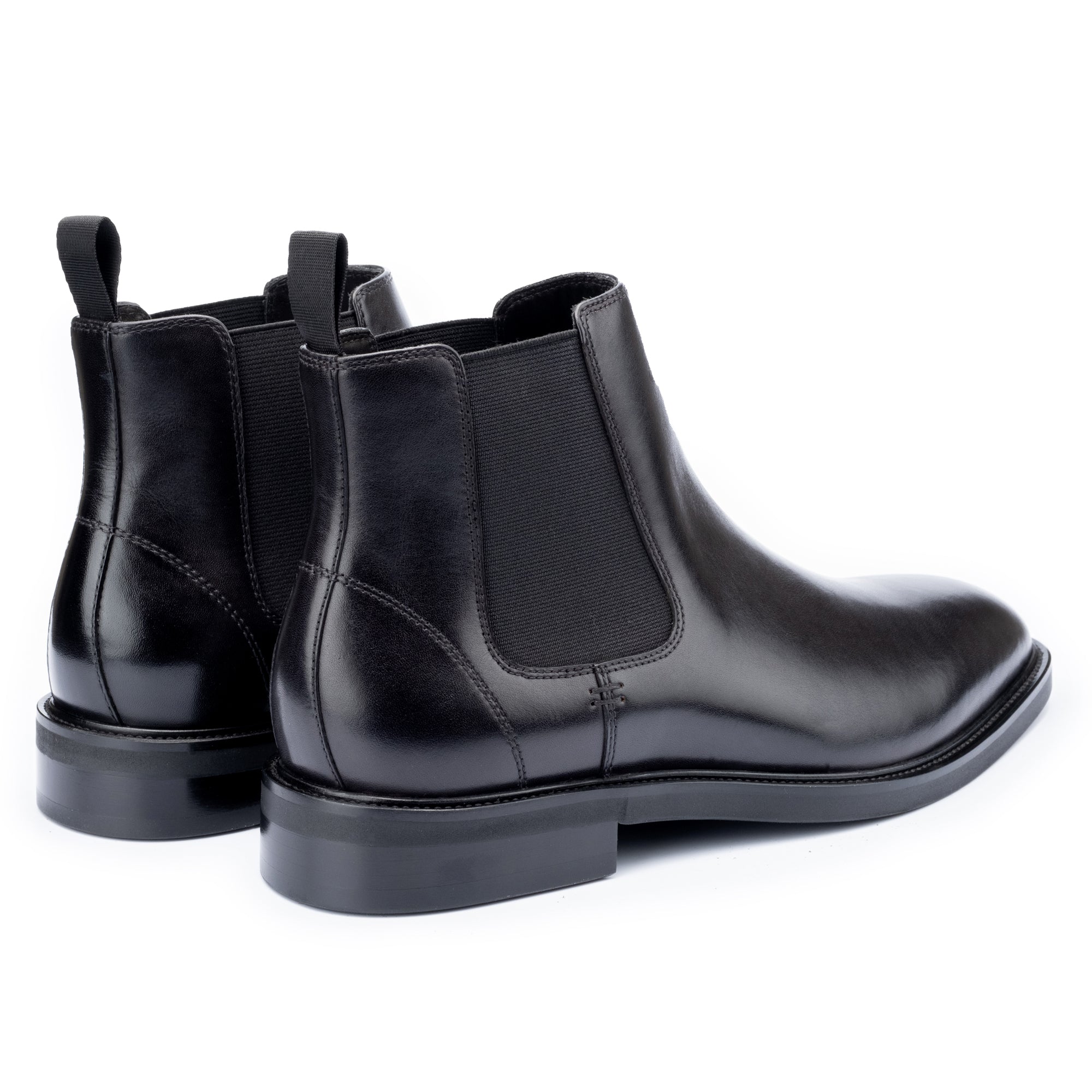
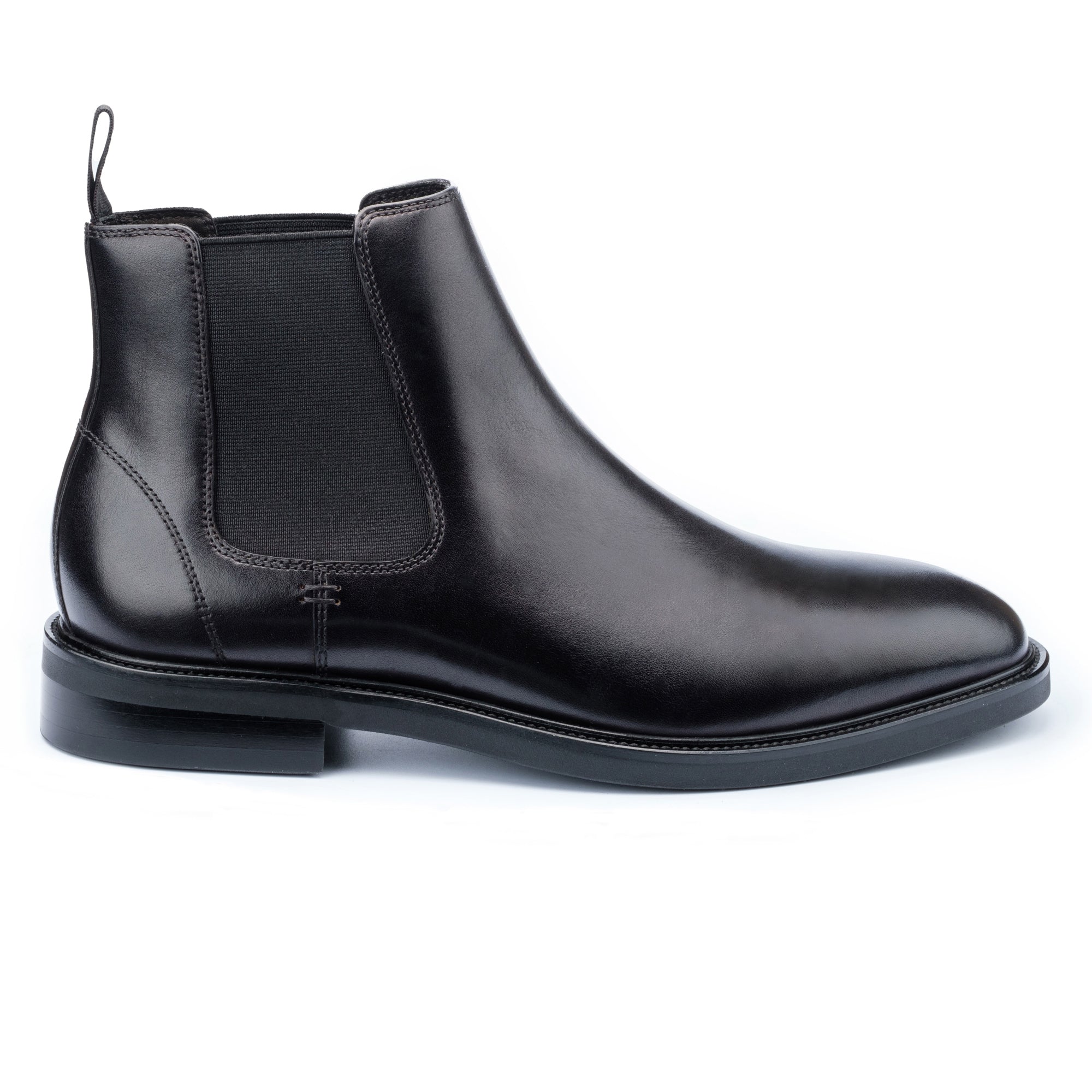
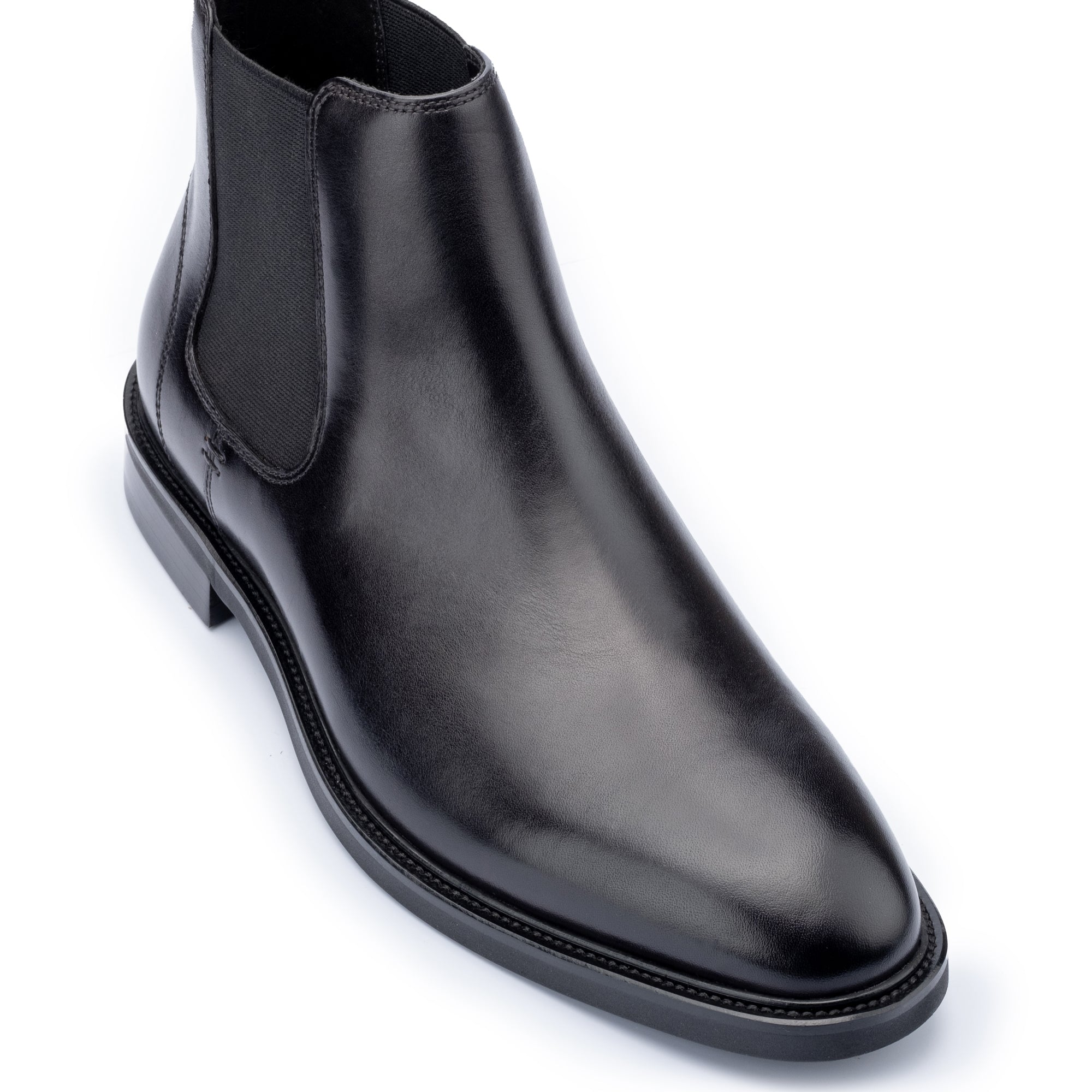
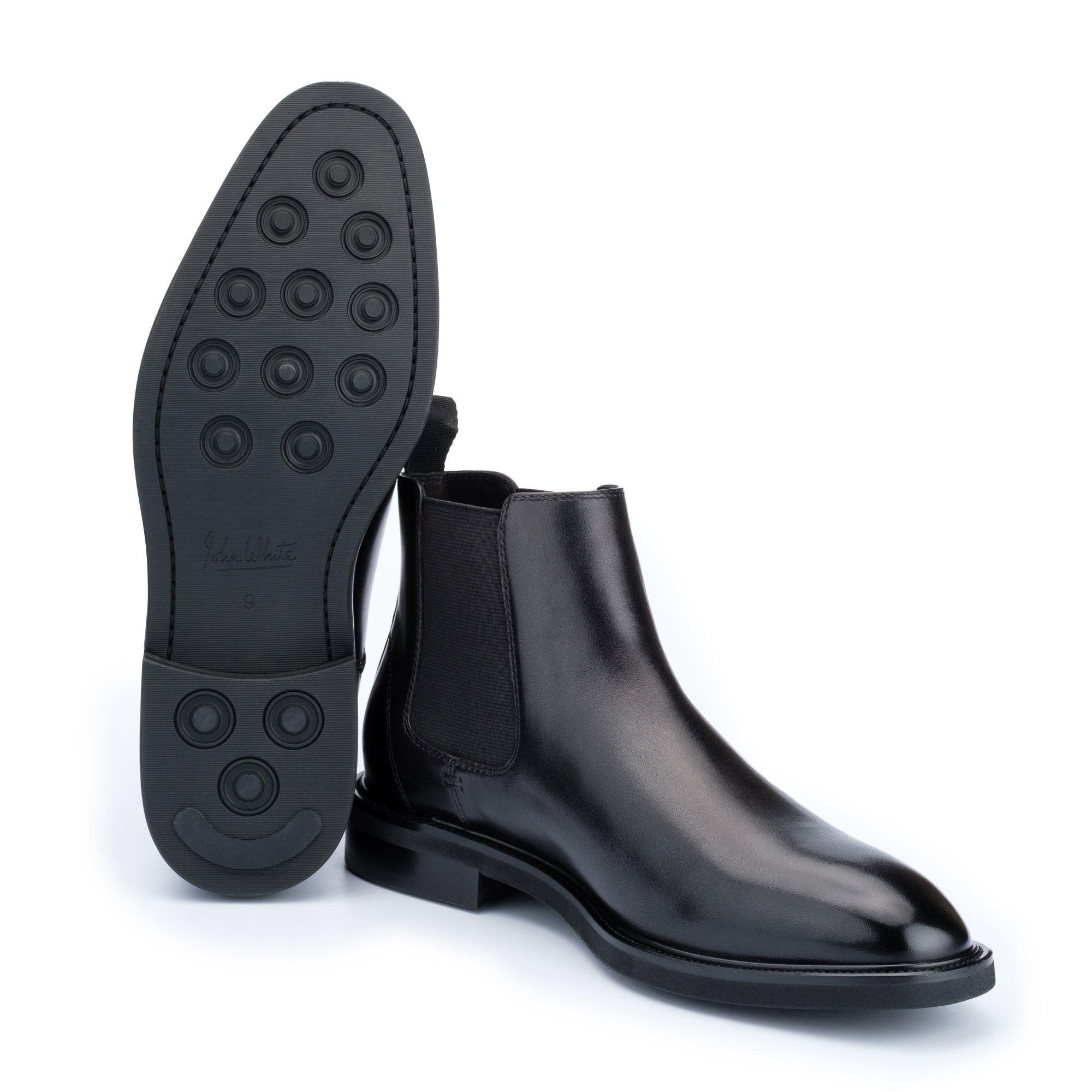
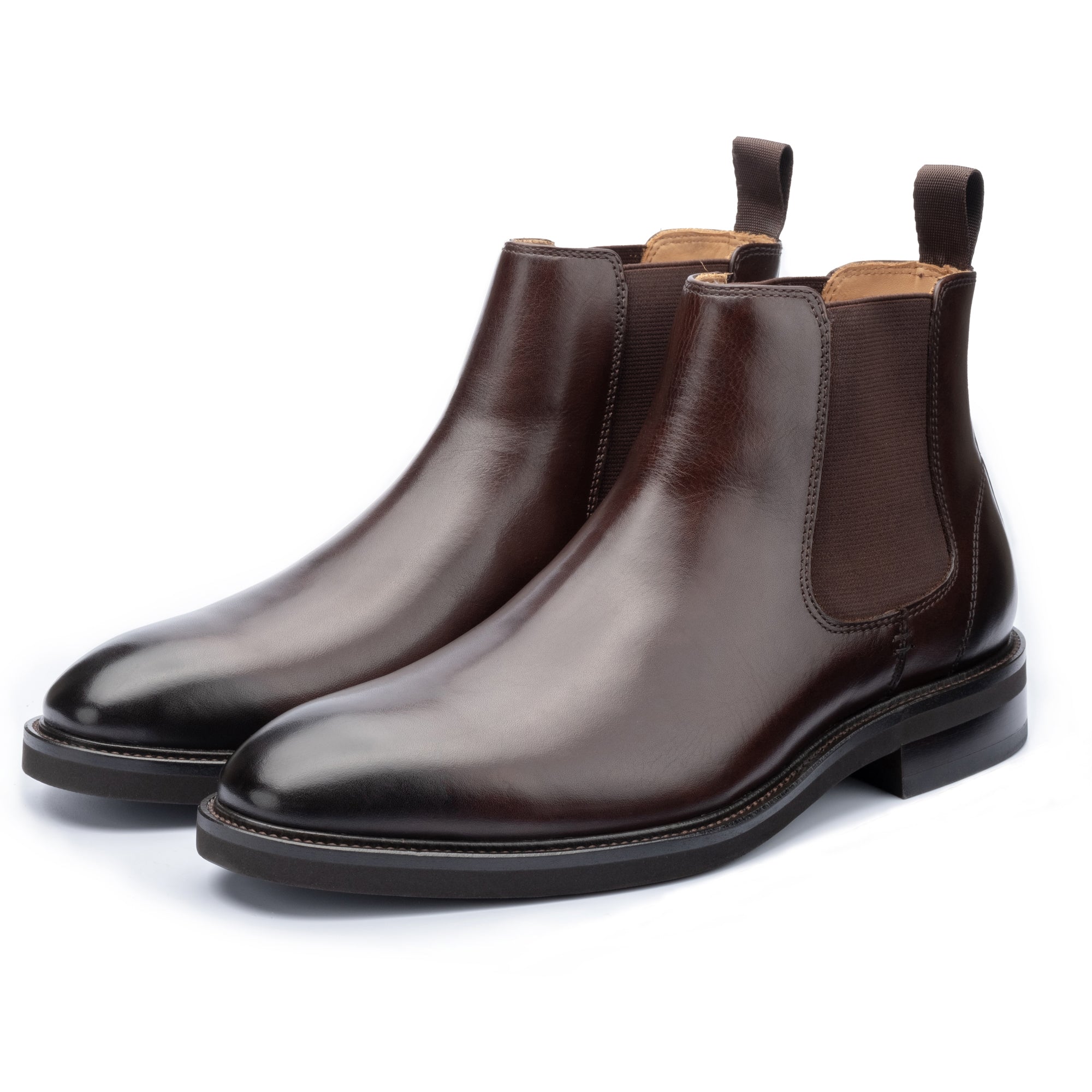
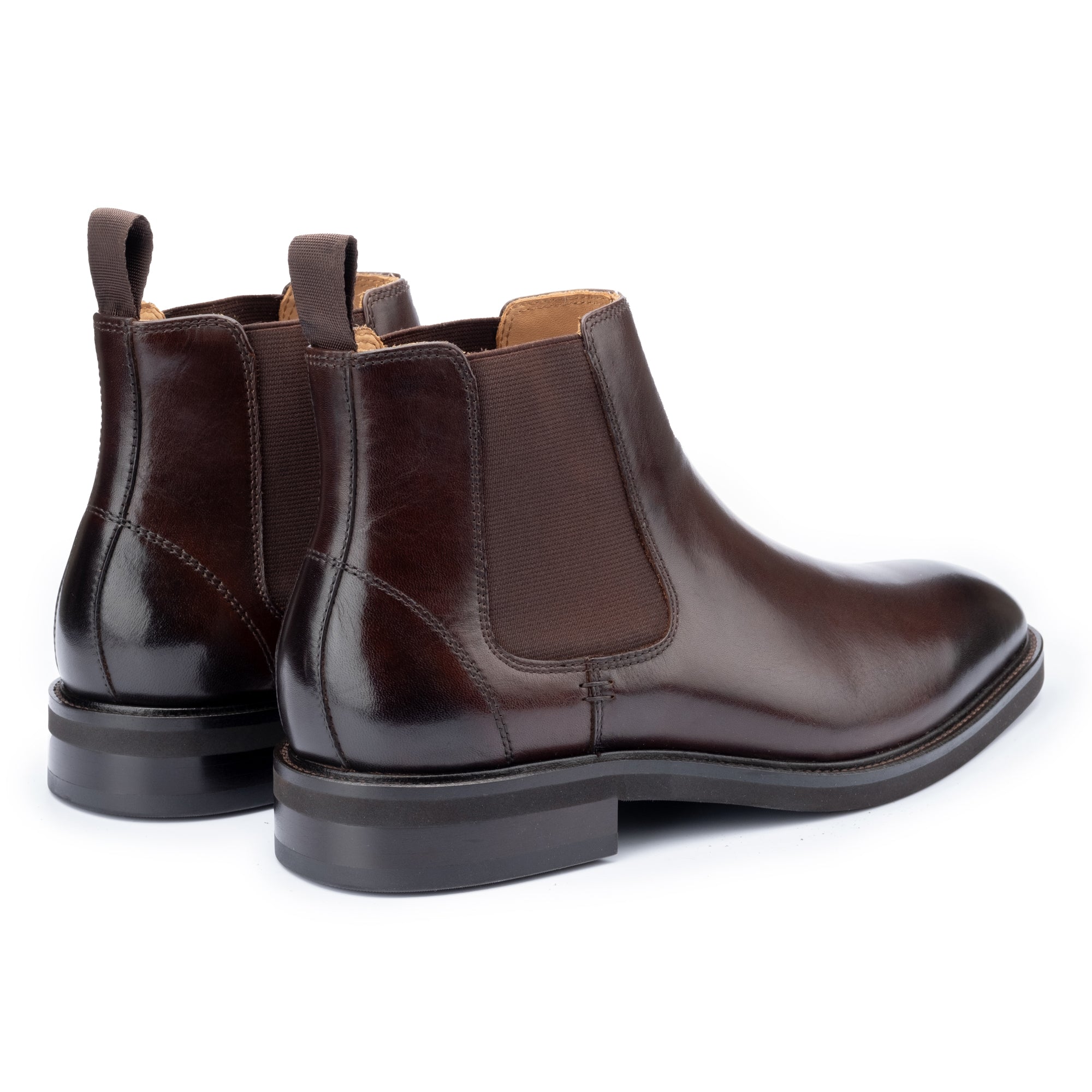
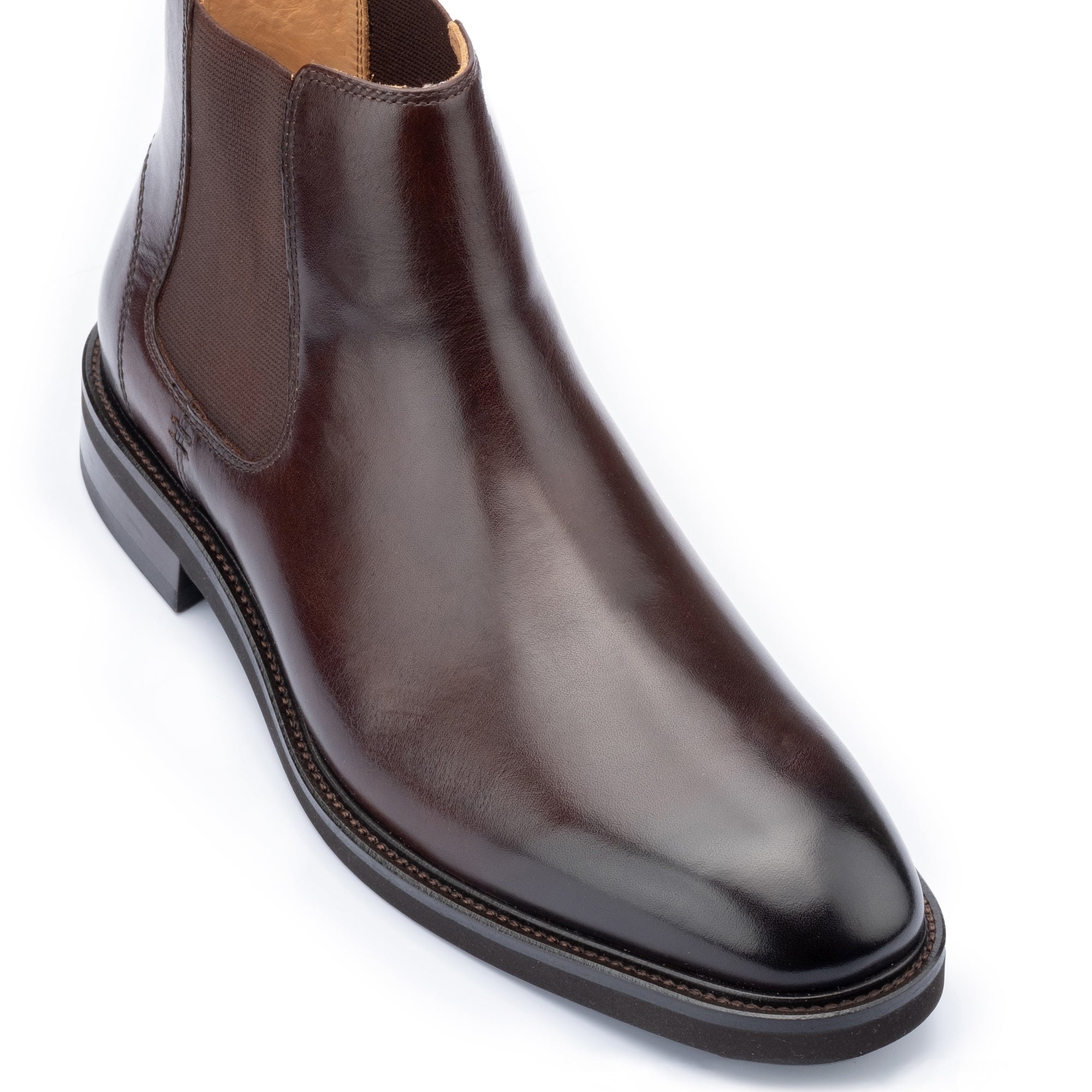
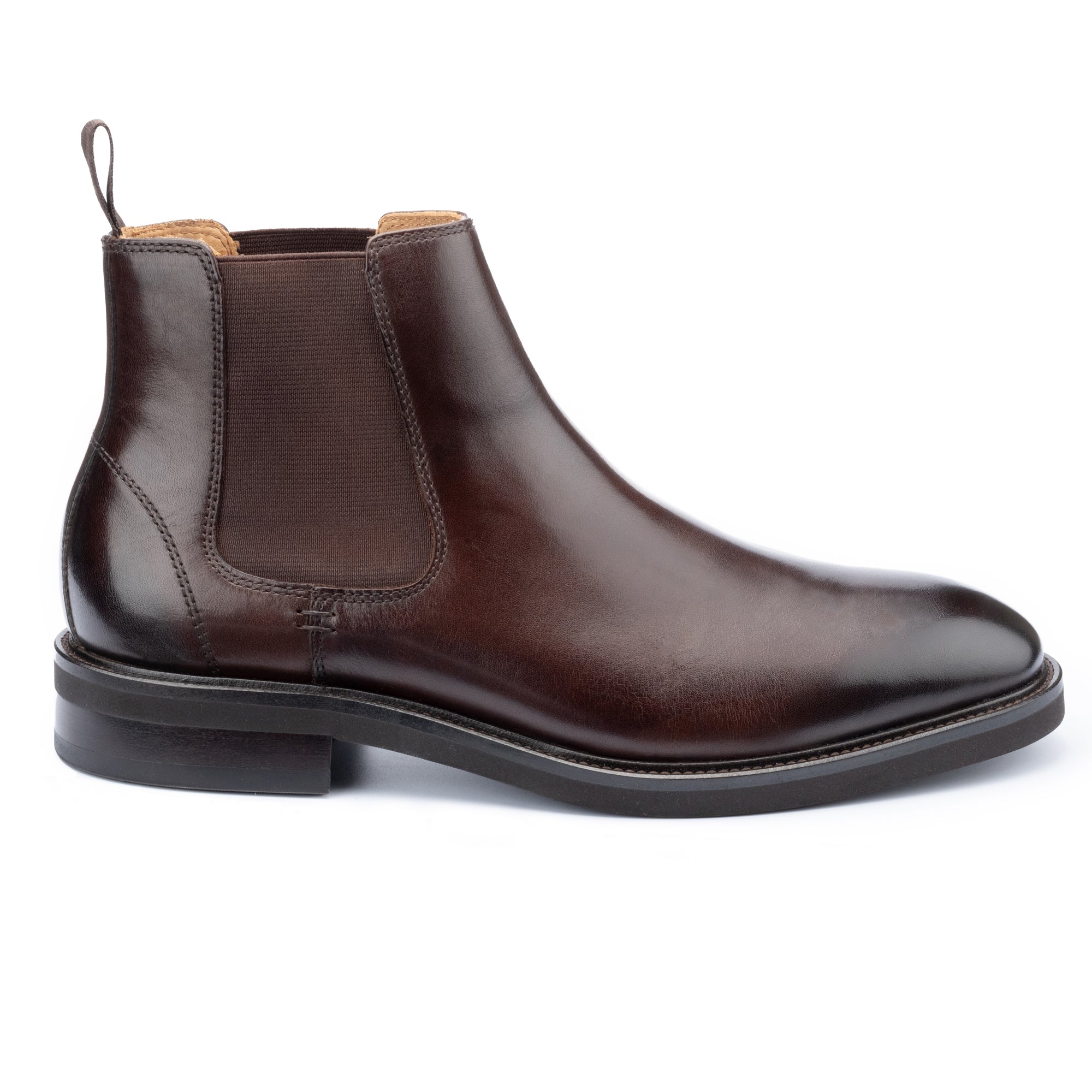
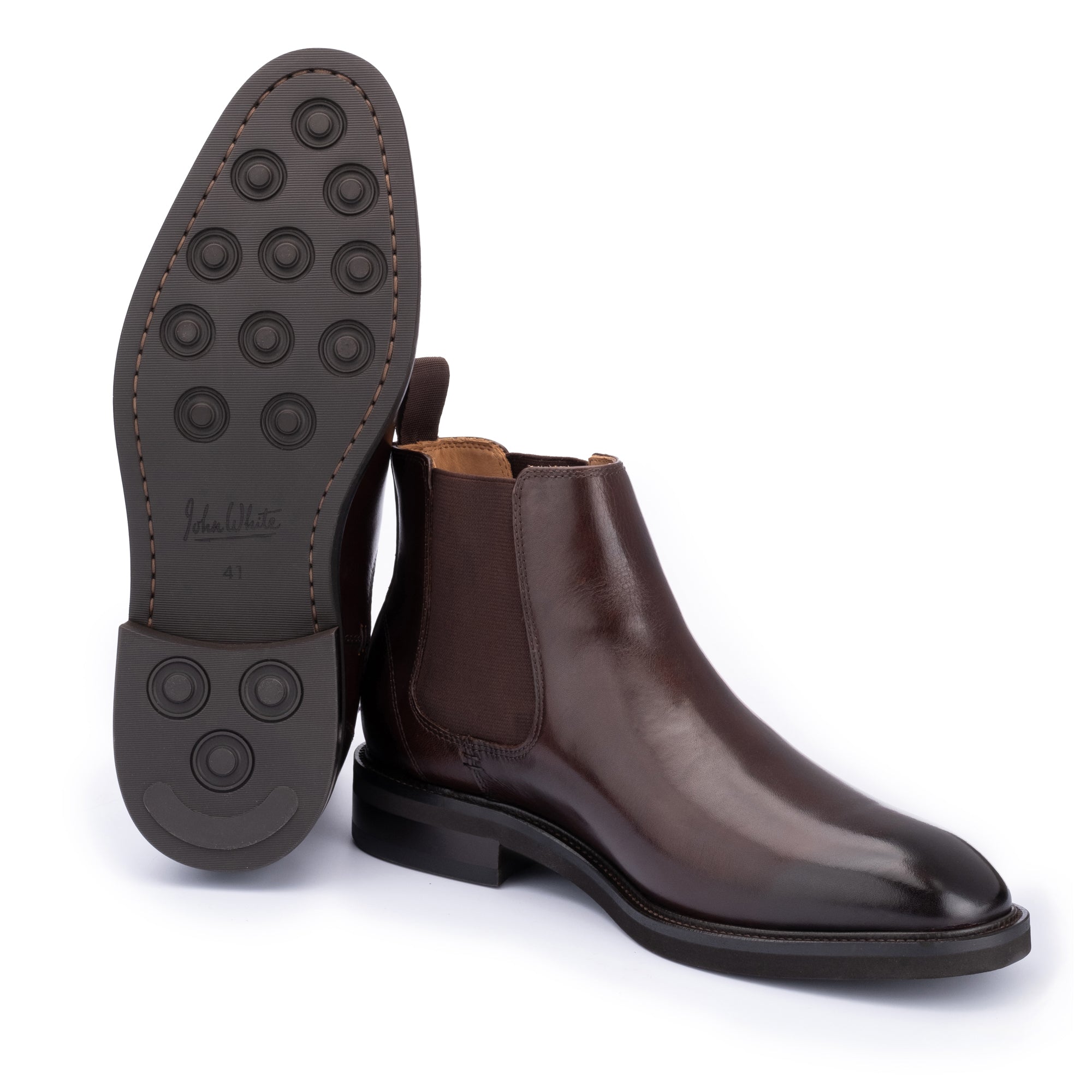
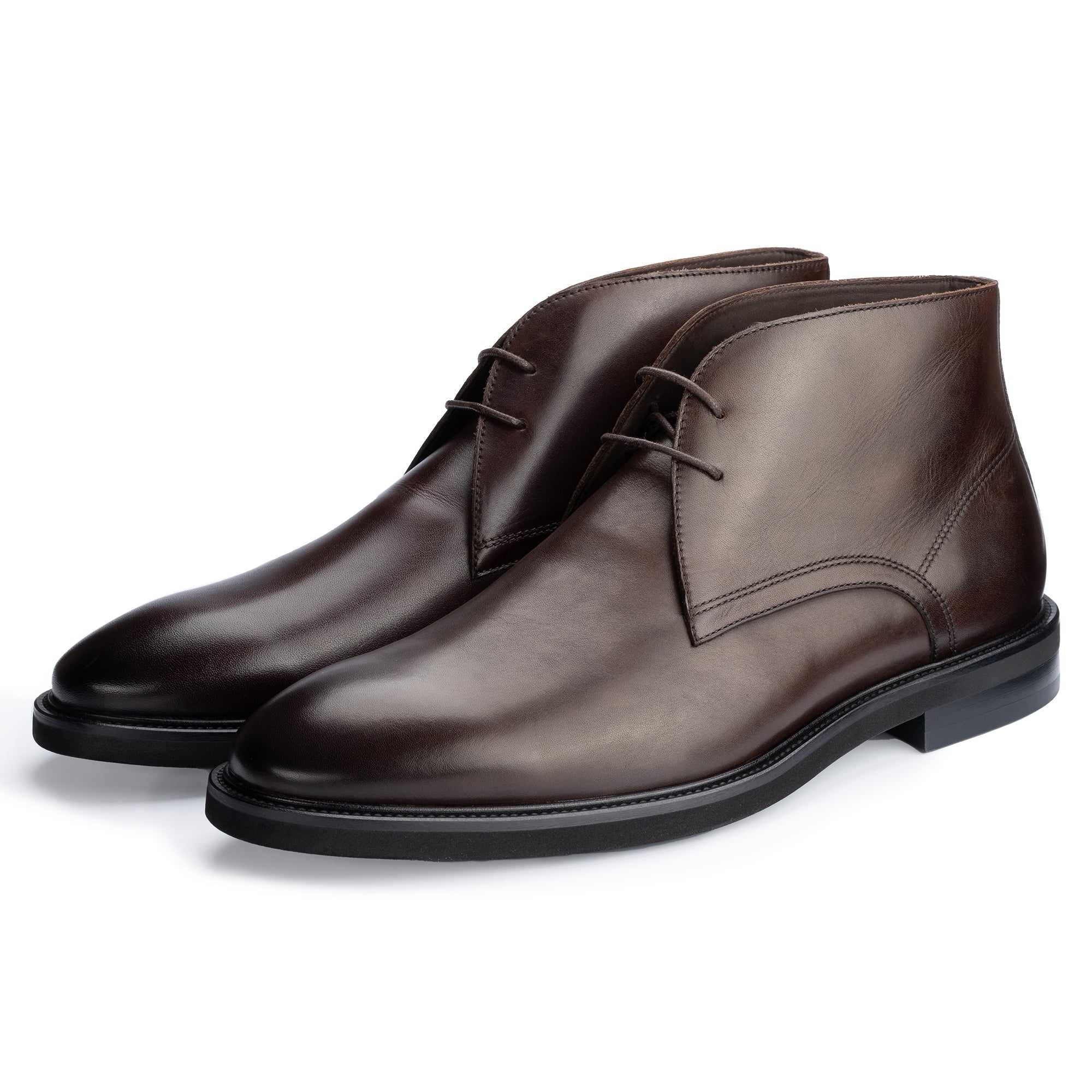
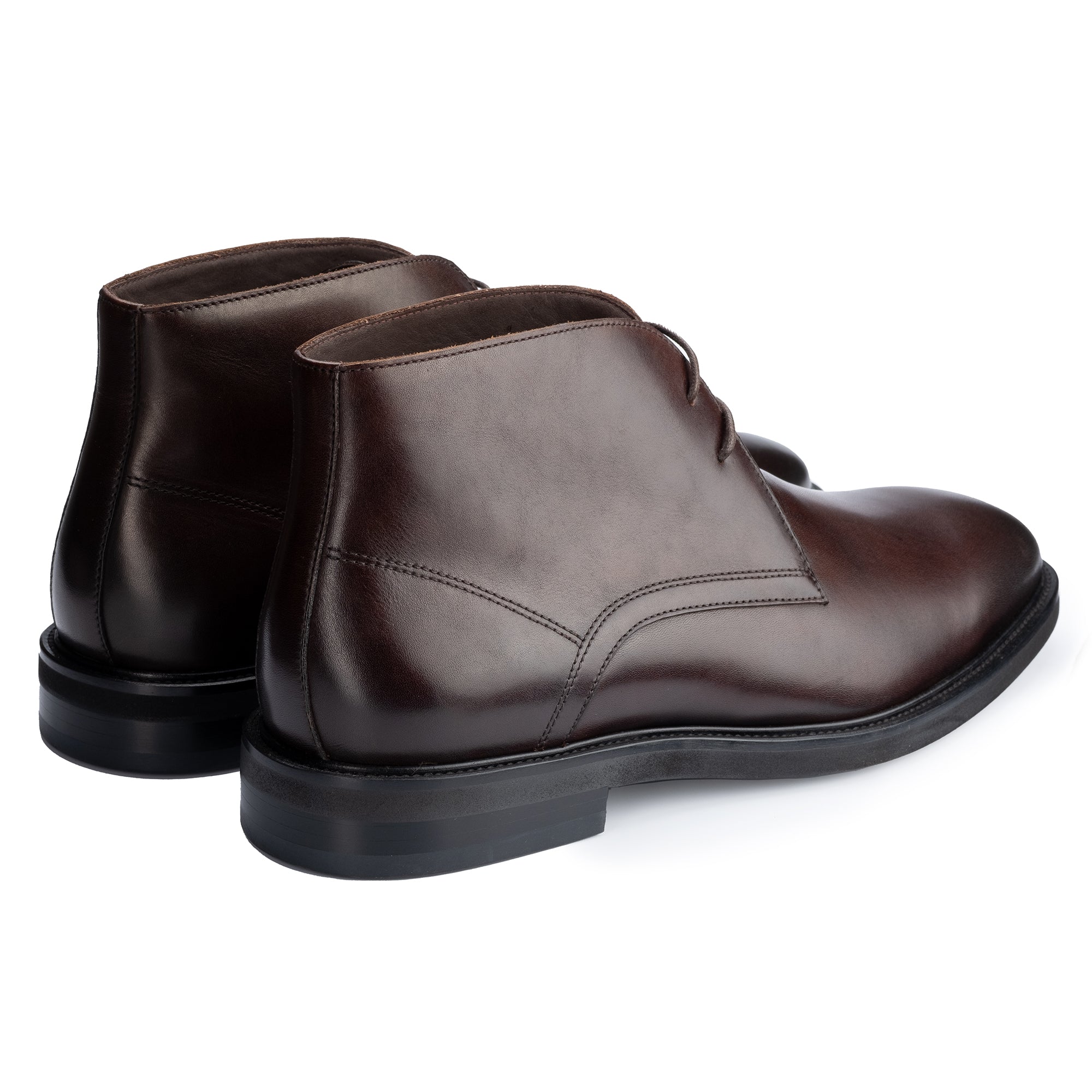
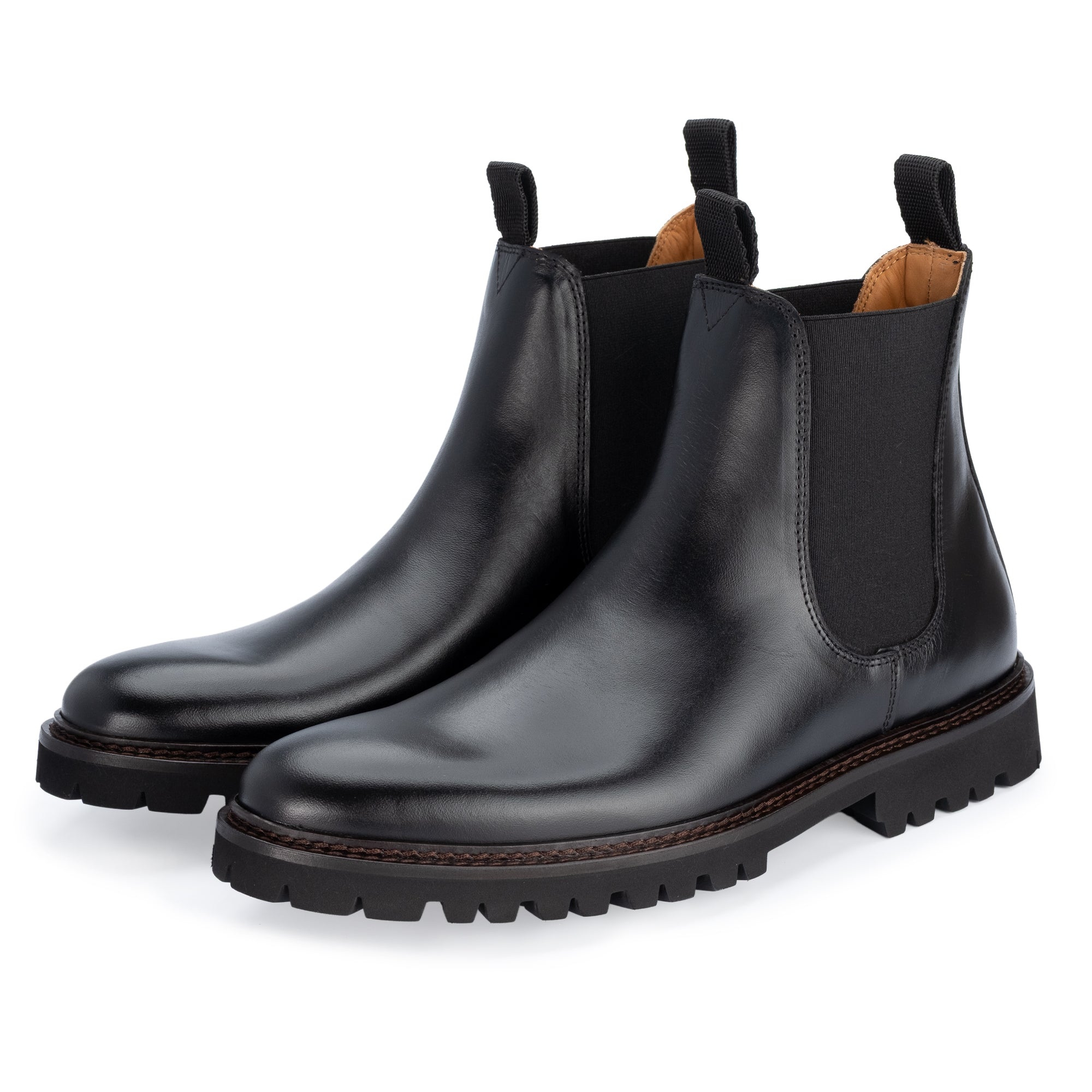
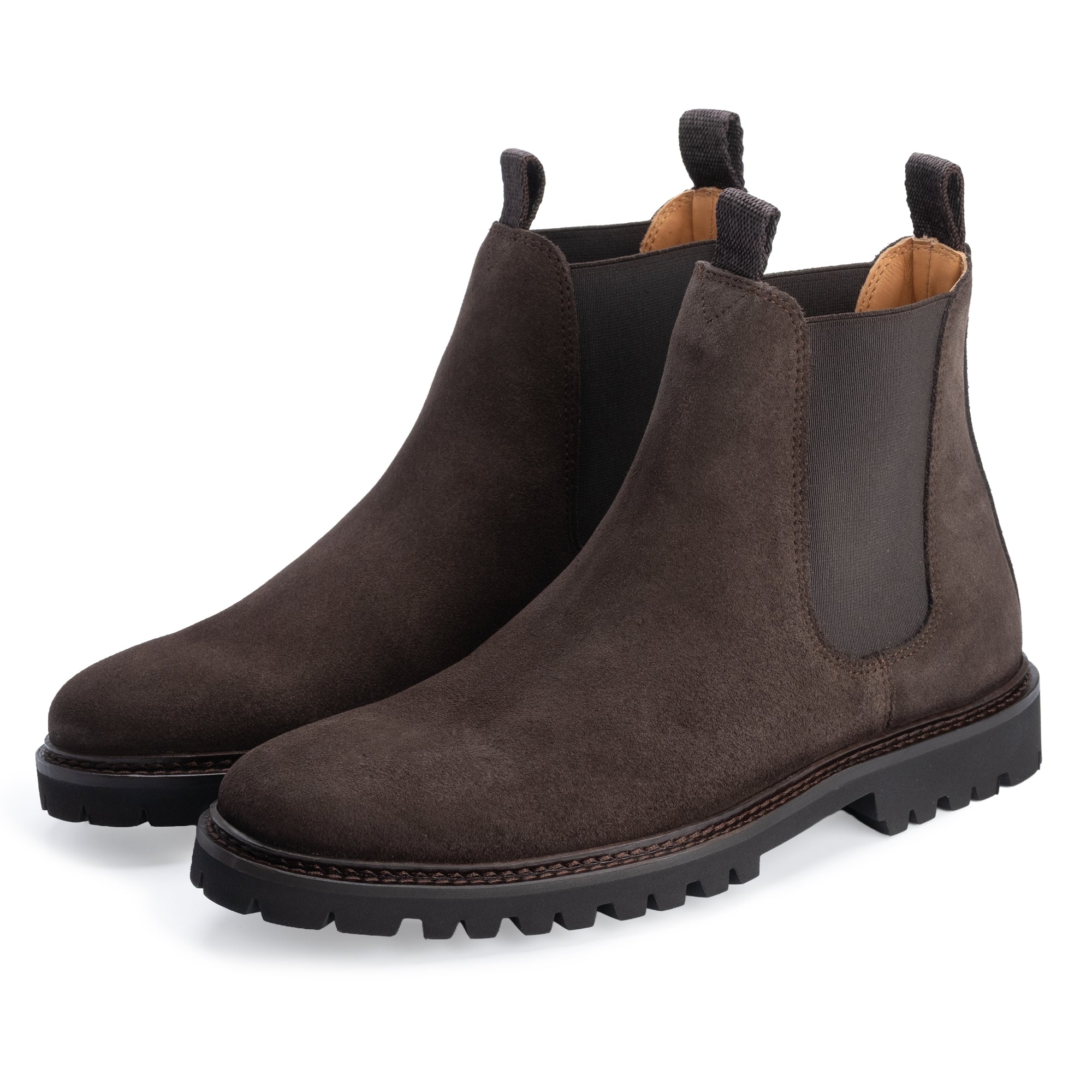
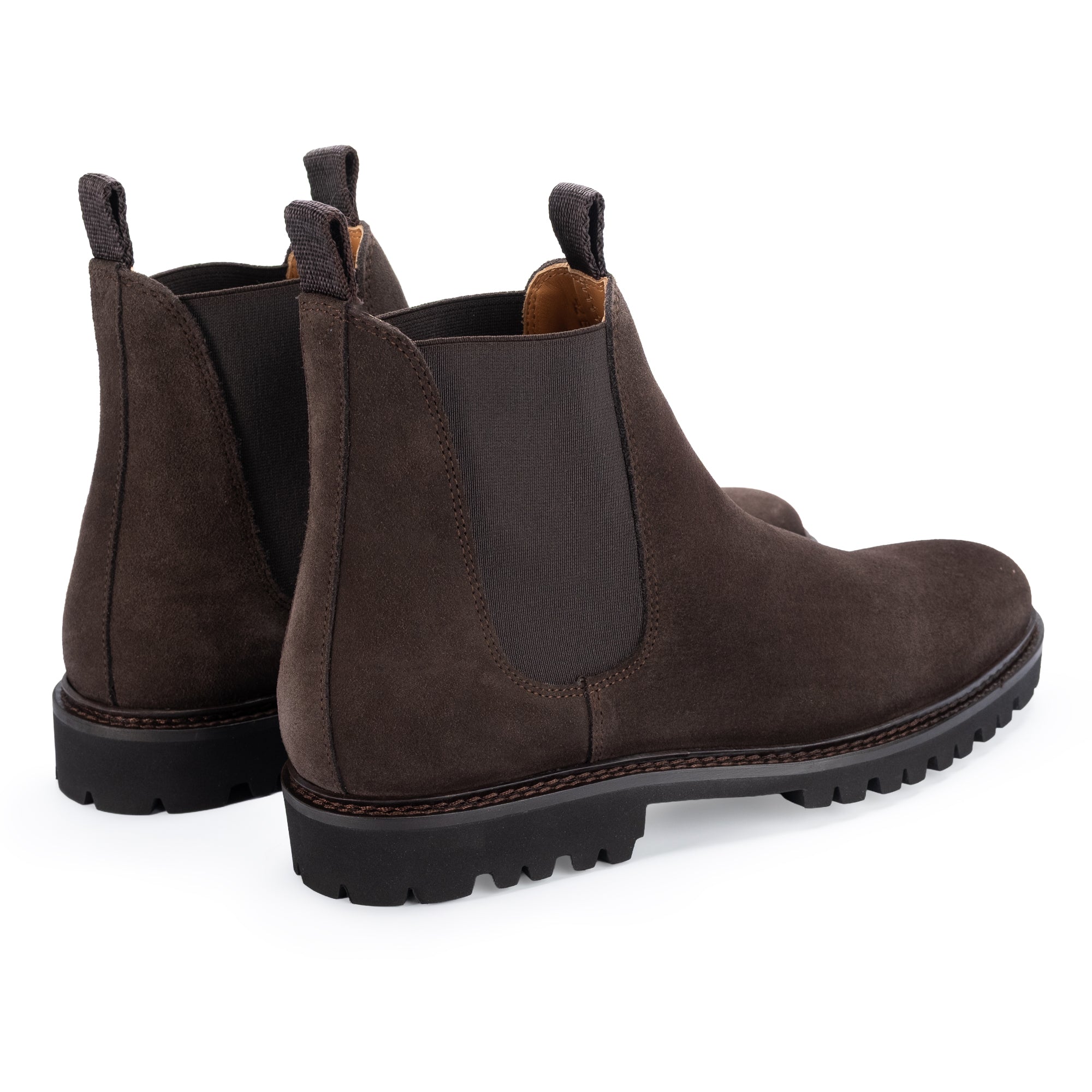
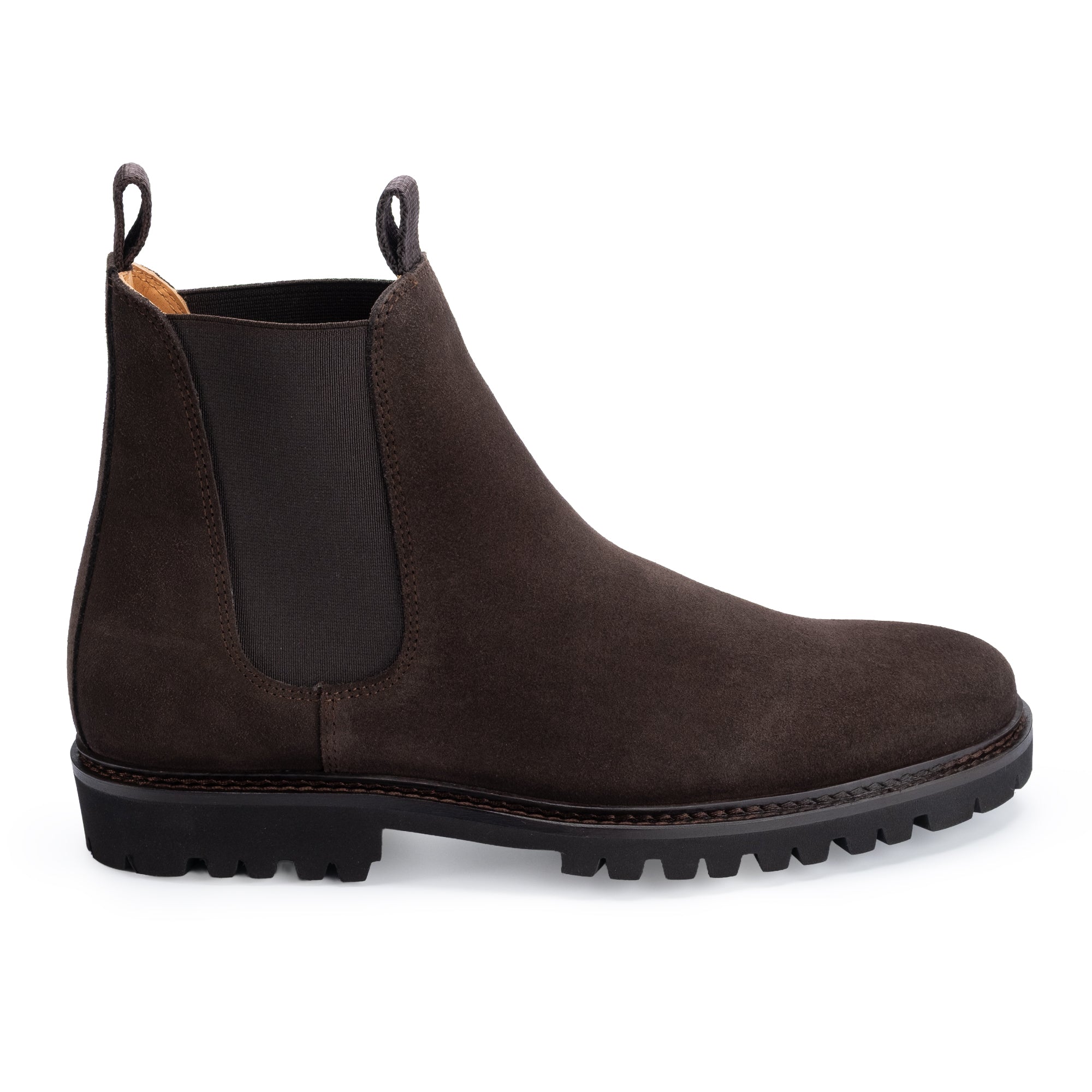
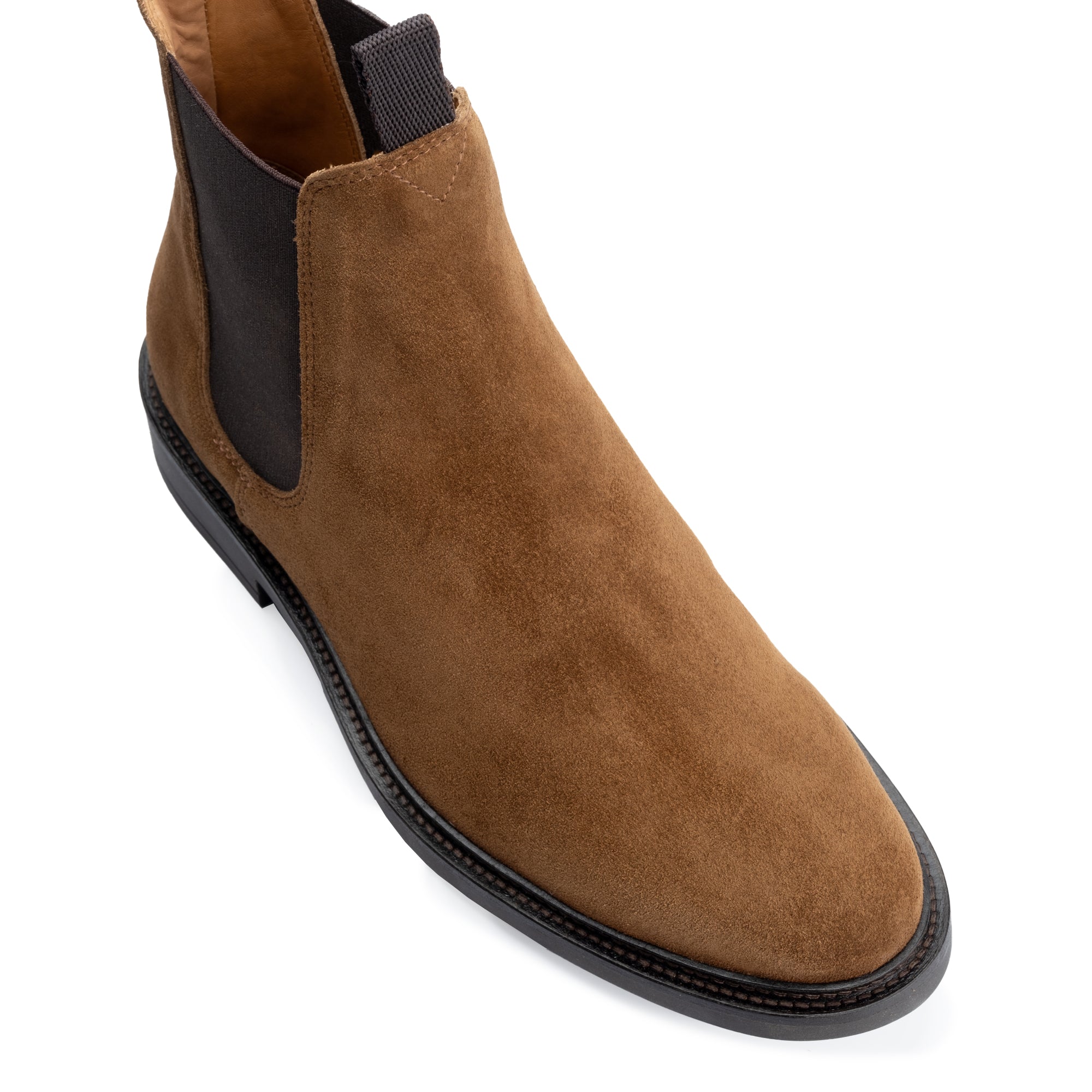
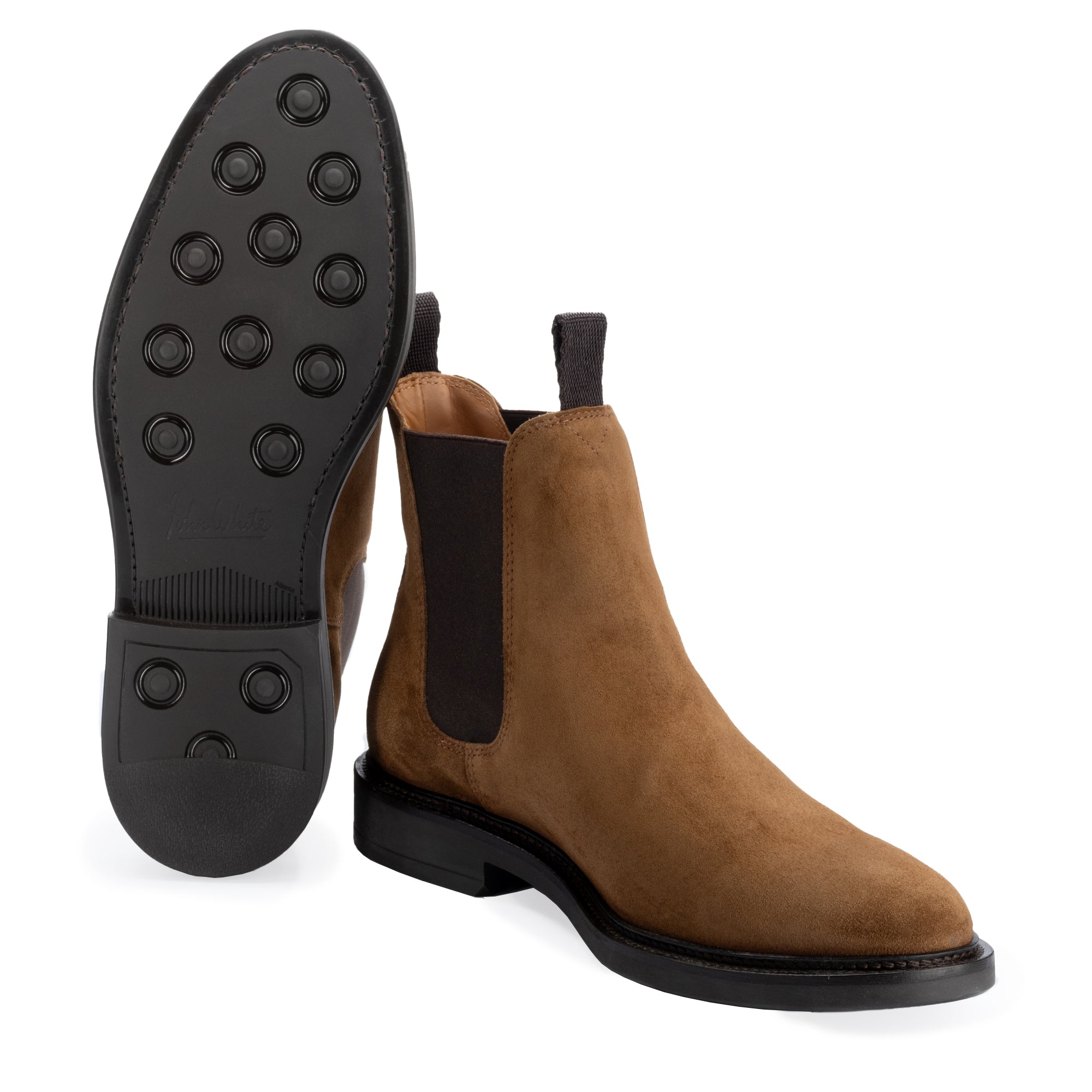
The brogue pattern translates naturally to boot form. The Falcon Brogue Boot in black or brown brings the decorative character of a full brogue to a longer shaft — suited to autumn and winter, and a particularly strong pairing with tweed trousers or heavier denim. It occupies the same smart-casual register as a full brogue Derby, with the added practicality of ankle coverage.
Which Colour Brogue Should You Buy First?
If you are adding your first brogue to the wardrobe, choose tan or mid-brown. It is the most versatile colourway — compatible with navy, grey, olive, and beige across both smart and casual contexts.
| Colour | Best With | Formality |
|---|---|---|
| Tan / mid-brown | Navy, grey, olive, camel | Smart casual to business |
| Dark brown / chestnut | Charcoal, mid-grey, navy | Business to semi-formal |
| Burgundy / oxblood | Navy, charcoal, grey | Business to formal |
| Black | Charcoal, navy, black | Business formal |
| Tan suede | Chinos, jeans, casual trousers | Smart casual and weekend |
How Should You Care for Brogues?
Brogues require the same care as any quality leather shoe — but the perforations demand extra attention. Dirt and wax accumulate in the broguing if you aren't methodical about clearing them.
- Brush first. Remove surface dirt with a horsehair brush before applying any product. Work the brush tip into the perforations to dislodge trapped grit.
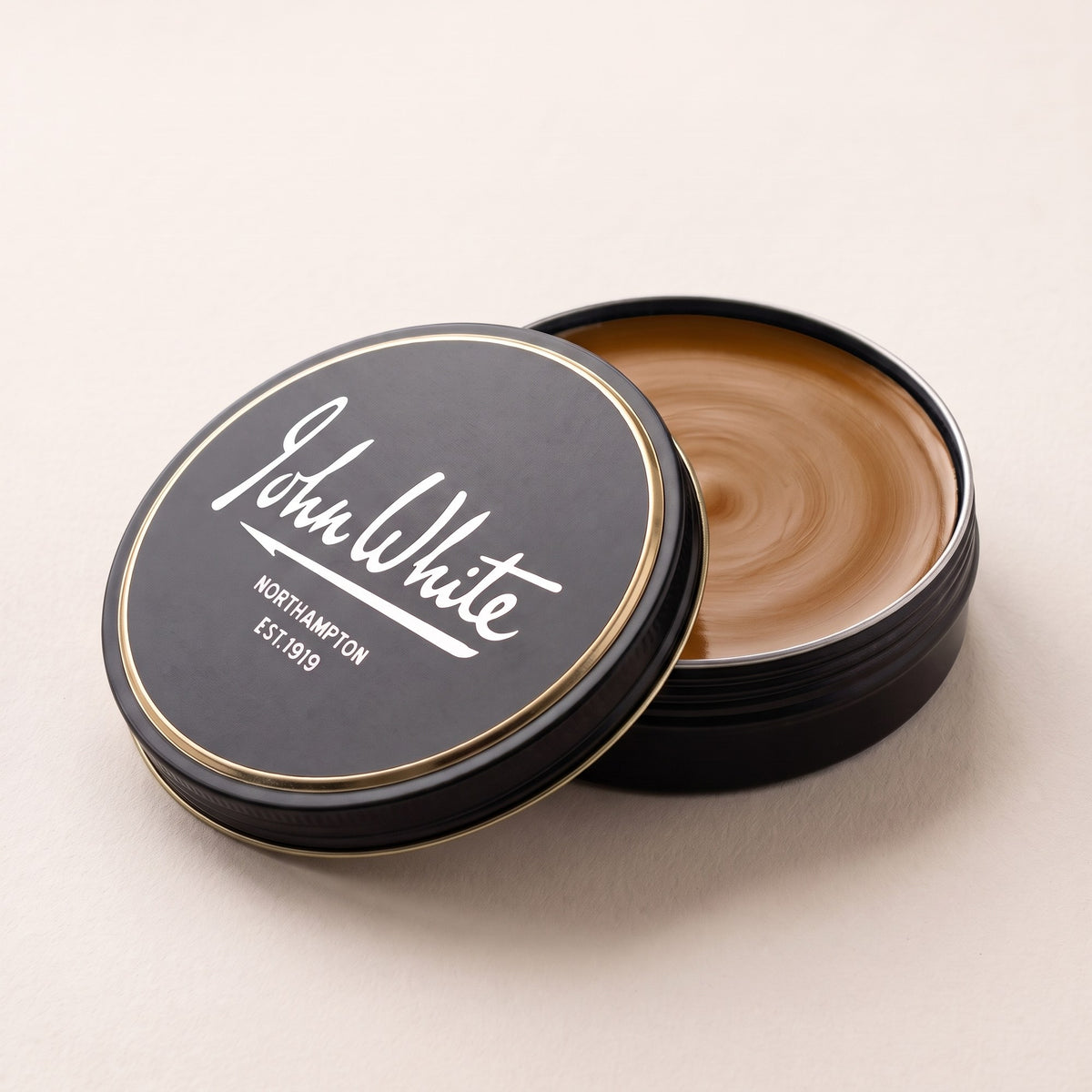
- Apply wax polish. Use a wax polish matched to the leather's colour. JW Premium Wax Polish conditions and protects the leather while building a deep, lasting shine — and its controlled consistency makes it easier to apply sparingly around the broguing.
- Work the perforations. Use a cotton cloth or soft brush to work polish into and immediately out of the holes before it dries and sets.
- Buff to finish. A clean polishing brush or cloth brings up the shine across the entire shoe.
- Insert shoe trees. Cedar shoe trees drawn in after each wear extract moisture, maintain shape, and significantly extend the life of the leather.
According to footwear conservation experts, allowing at least 24 hours between wears gives the leather time to recover and breathe. Rotating two pairs more than doubles the lifespan of each. For a full breakdown of care and conditioning, see our guide to mastering leather shoe care.
Are Brogues Still in Style?
Brogues have been a fixture of British men's dress since the early 20th century. They are not a trend — they are a foundation piece. The silhouette and detailing have changed little in a hundred years, which is precisely why they remain relevant across generations.
The current direction in menswear — suits worn without ties, chinos replacing formal trousers, jackets paired with trainers — plays to the brogue's natural strengths. It is a shoe designed for the space between formal and casual, which is where most men now spend most of their time. That is not a coincidence.
Explore the full John White Shoes brogue shoes collection, or the wider men's shoe collection or browse the sale to find the right brogue for your wardrobe.
Frequently Asked Questions About Brogues
What is the difference between a full brogue and a semi brogue?
A full brogue (wingtip) has a W-shaped toe cap with broguing running the entire length of its edge, plus a medallion. A semi brogue has a straight cap toe with broguing only on the seam and a medallion. The semi brogue is more formal and versatile; the full brogue is more decorative and suited to smart casual and country occasions.
Can you wear brown brogues with a navy suit?
Yes. Brown brogues — particularly tan, mid-brown, or burgundy — are an excellent pairing with navy. For business settings, choose a semi brogue in dark brown or burgundy. A full brogue in tan works well with a casual navy suit or blazer at a wedding or smart social event.
Are brogues appropriate for the office?
A semi or quarter brogue in black or dark brown is entirely appropriate for most office environments, including business formal. Full brogues suit business casual settings where the additional decoration is an asset. Avoid heavy full brogues in environments where plain Oxfords or Derbys are the established norm.
How do I stop polish building up in the perforations of my brogues?
Apply polish sparingly and work it into — and immediately out of — the perforations before it dries. JW Premium Wax Polish has a controlled consistency that makes this easier to manage than heavier cream polishes. Finish with a soft brush swept across the broguing to clear any remaining residue after buffing.
Last updated: June 2026