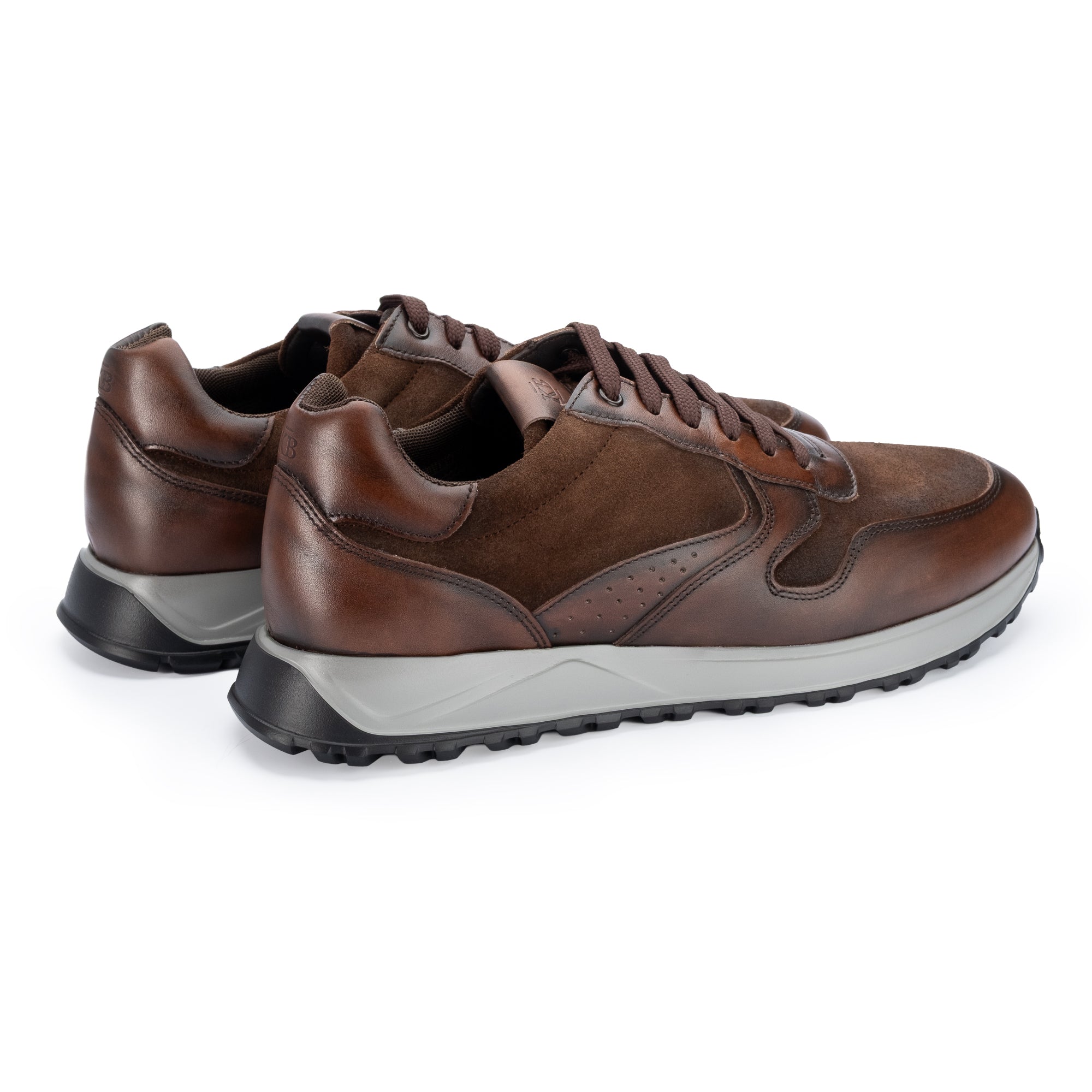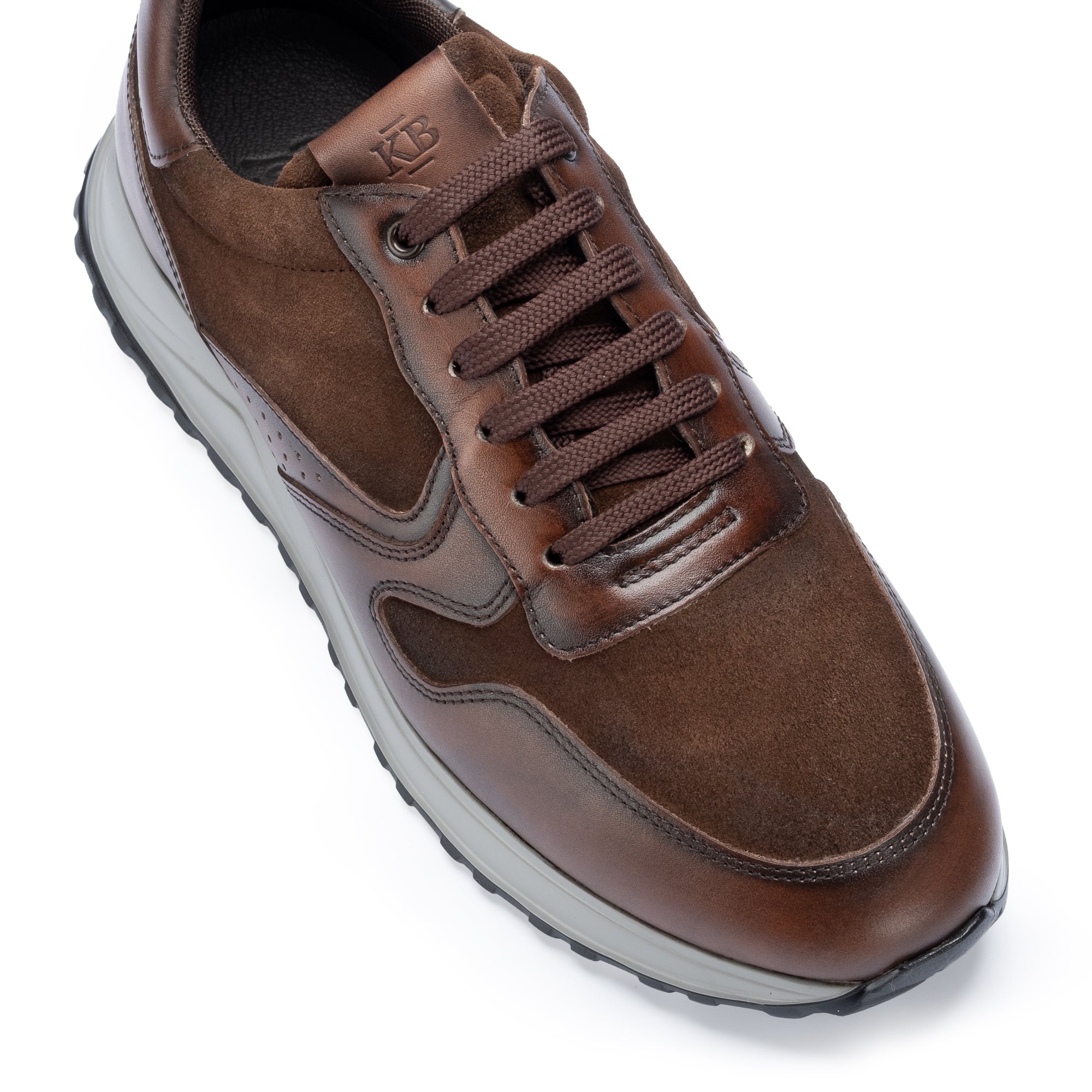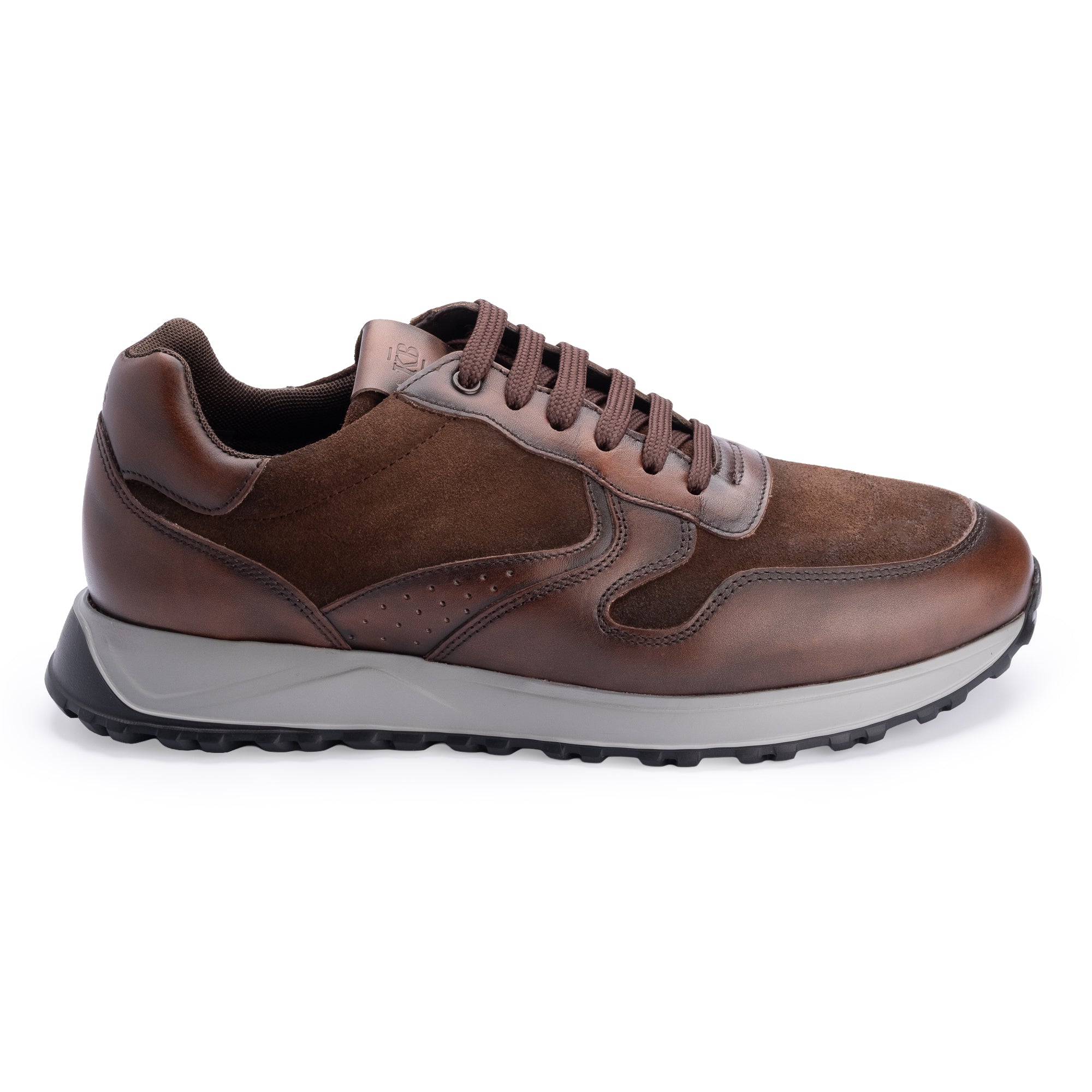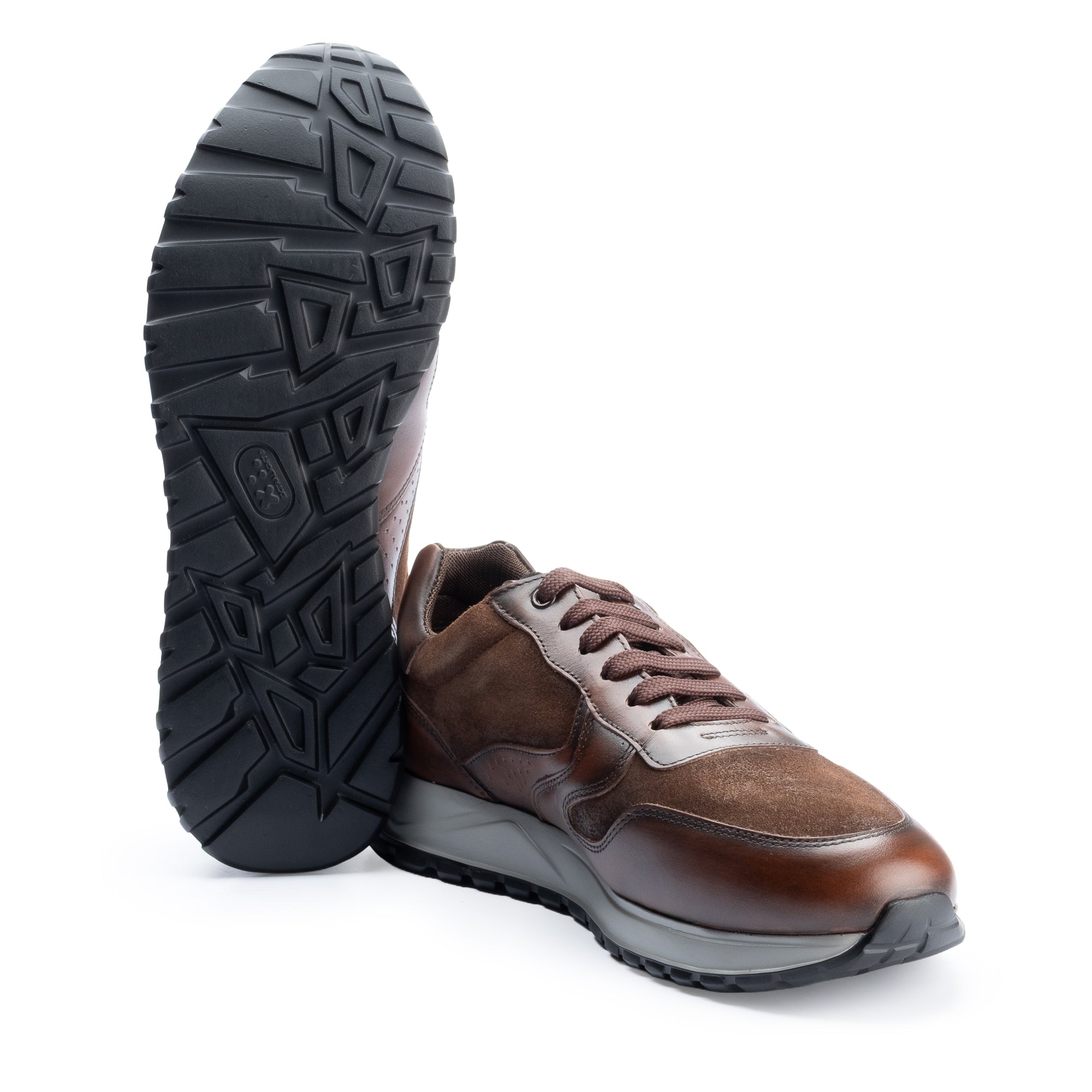

Brush, Buff, Polish: The Correct Weekly Routine for Leather Shoes
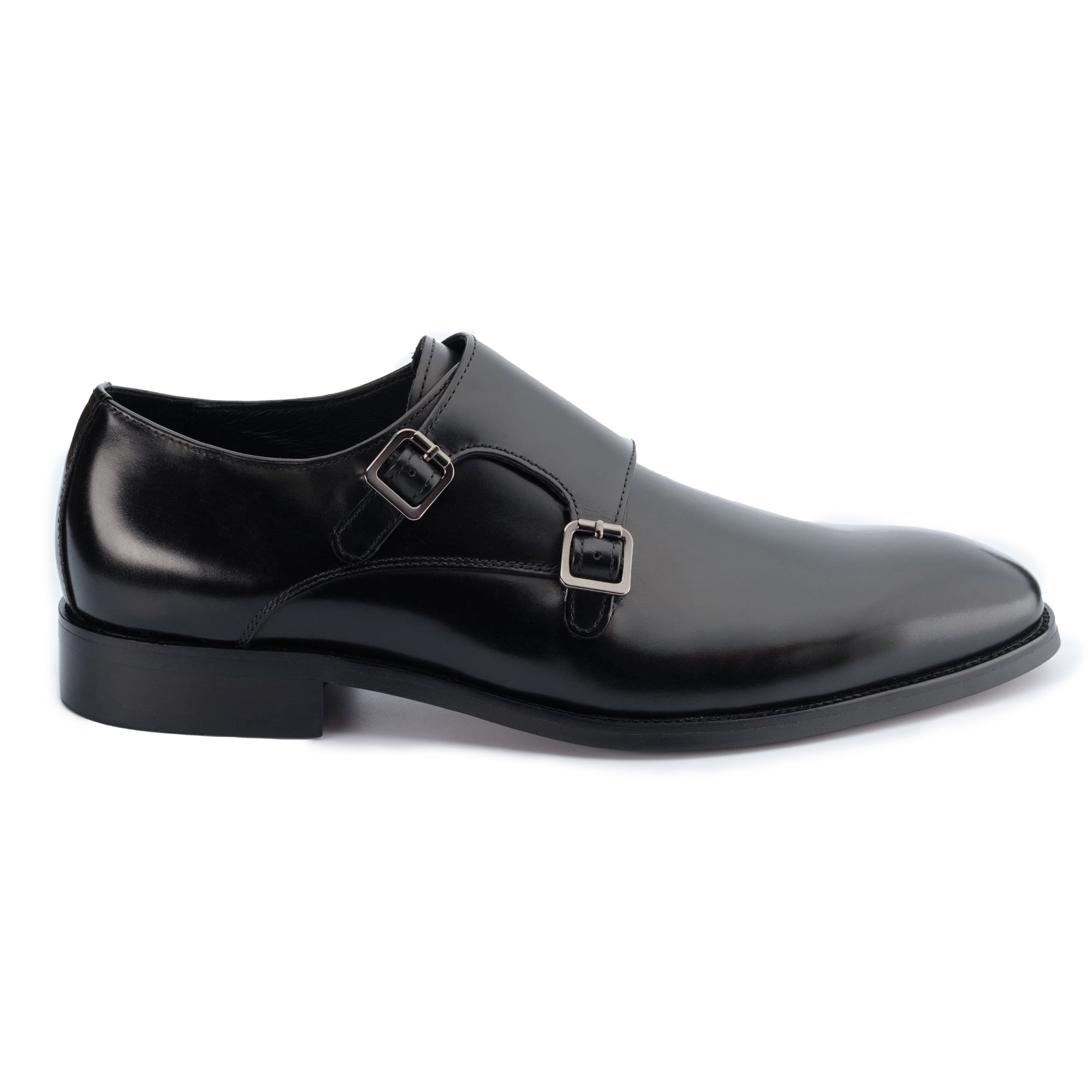
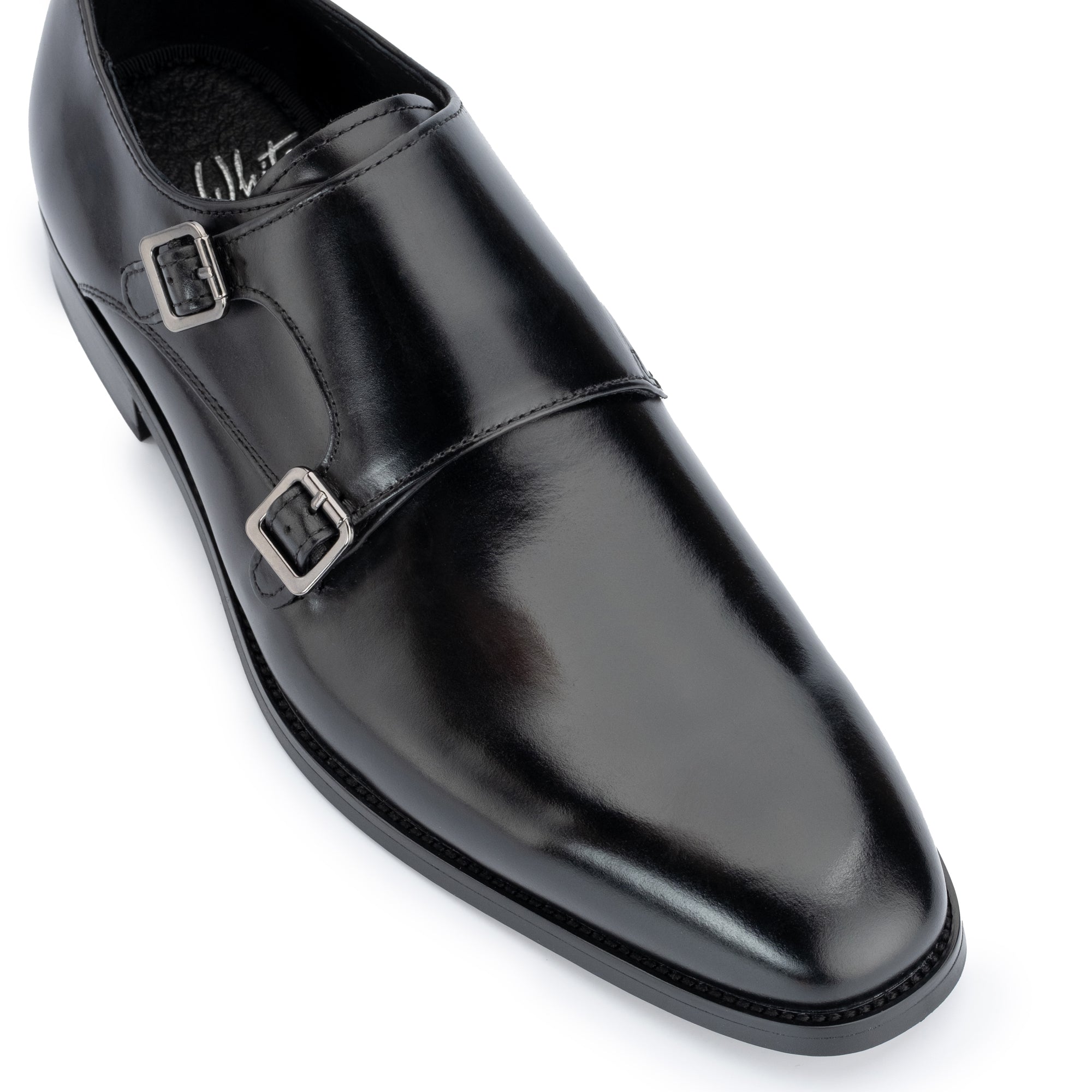
The correct weekly routine for leather shoes is: remove surface dirt with a horsehair brush, work a thin coat of wax polish into the upper using circular motions, allow two to three minutes to dry, then buff to a shine with a clean brush or cloth. Done properly, this takes ten minutes and prevents the cracking, grain breakdown, and dullness that shortens a leather shoe's life prematurely.
In This Guide
- What Does a Weekly Polish Routine Actually Do for Leather?
- What Do You Need Before You Start?
- How Should You Brush Leather Shoes Correctly?
- How and When Should You Apply Polish?
- How Should You Buff Leather Shoes to a Shine?
- How Often Should You Polish Different Leather Types?
- Does Polish Replace Conditioning, or Is It a Separate Step?
- Related Guides
- Frequently Asked Questions
Most leather shoes don't fail because of wear. They fail because of neglect. Street dirt, moisture, and dried salt don't simply rest on the surface — they draw out the leather's natural oils, dry the grain from within, and start a cracking process that is irreversible once it sets in. A consistent weekly routine stops that before it starts. It costs nothing except ten minutes and the right products.
What Does a Weekly Polish Routine Actually Do for Leather?
A polish routine is a maintenance process that removes surface contamination, replenishes protective wax, and — when combined with a conditioner — replaces the natural oils the leather loses through wear and exposure. It is not cosmetic. It is structural.
Regular cleaning and conditioning helps leather retain its fibre structure. As their guidance notes: "once leather has dried out beyond a certain point, the fibre structure breaks down permanently — oils and waxes can delay the process, but they cannot reverse it." The implication is straightforward: prevention is the only effective strategy.
Consistent basic care, brushing, polishing, and using shoe trees, extends the working life of a leather shoe. For a quality pair worn regularly, that represents a substantial return on a ten-minute weekly habit.
Regular polishing isn't about appearance alone — it's the primary mechanism by which leather remains structurally sound over years of daily wear.What Do You Need Before You Start?
Your kit should be simple, clean, and kept together so that using it isn't an event. You don't need an elaborate collection — but the products you use should be formulated for leather footwear specifically.
- A horsehair brush — for removing loose dirt and surface dust. Keep separate brushes for different shoe colours; residue from a black shoe will transfer to a tan one.
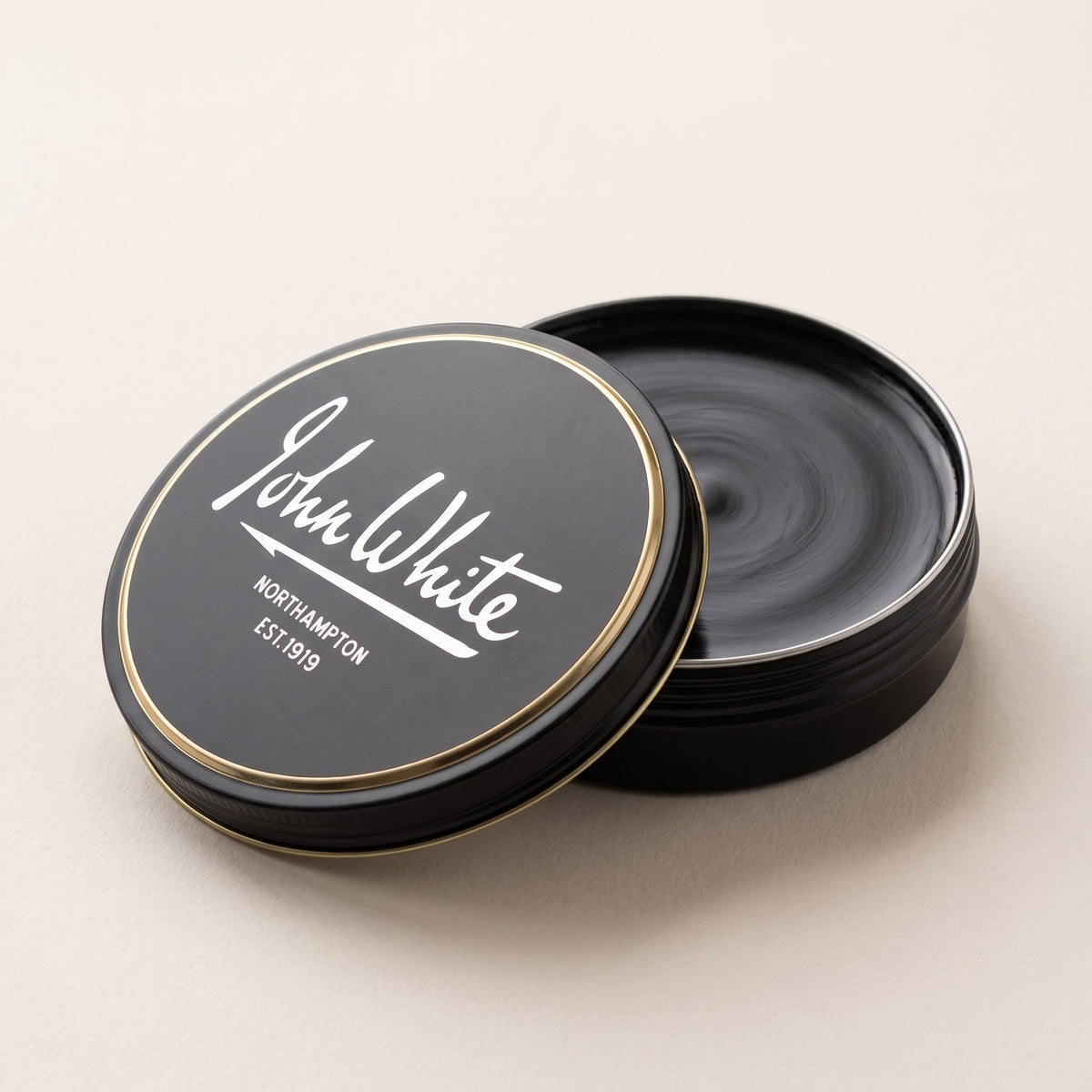
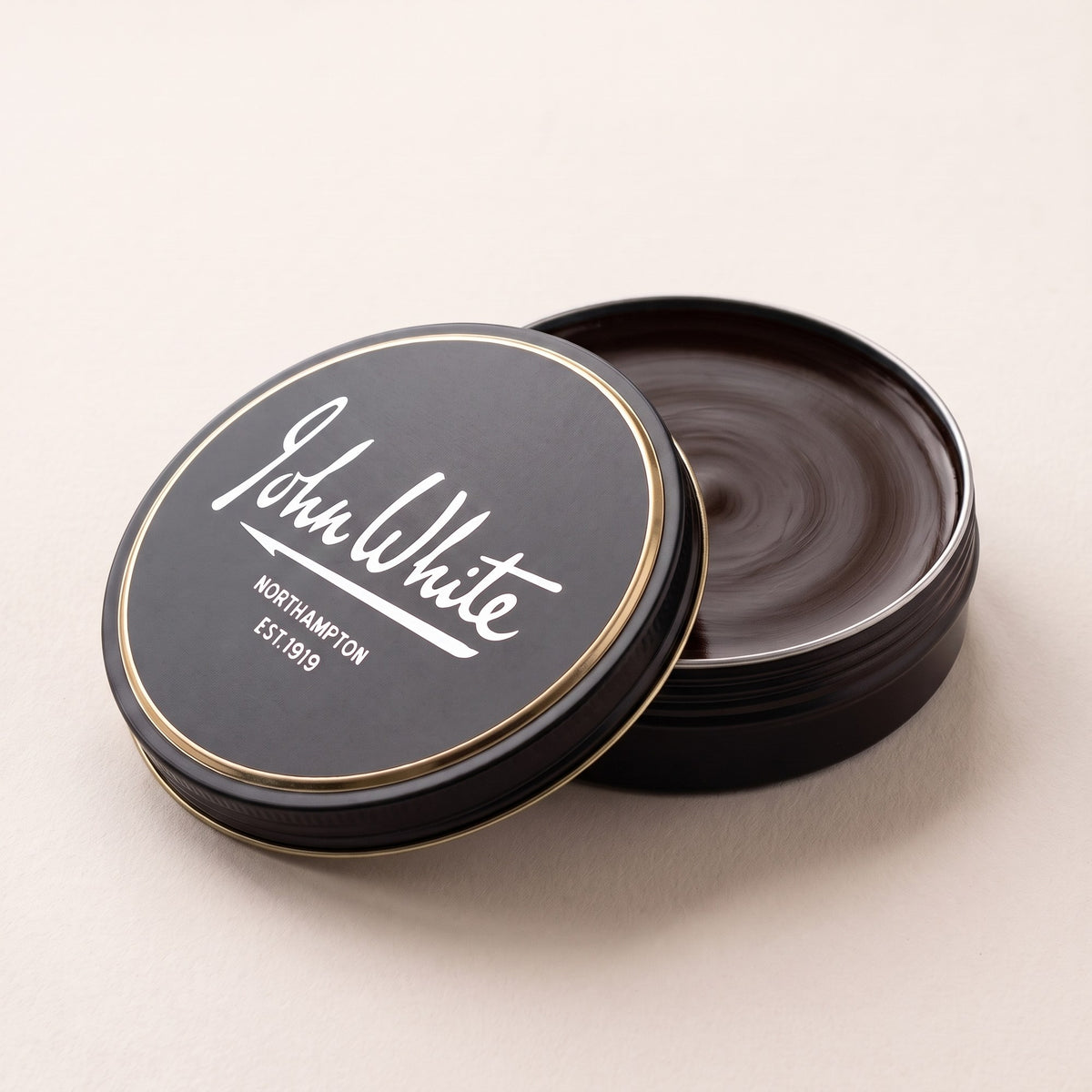
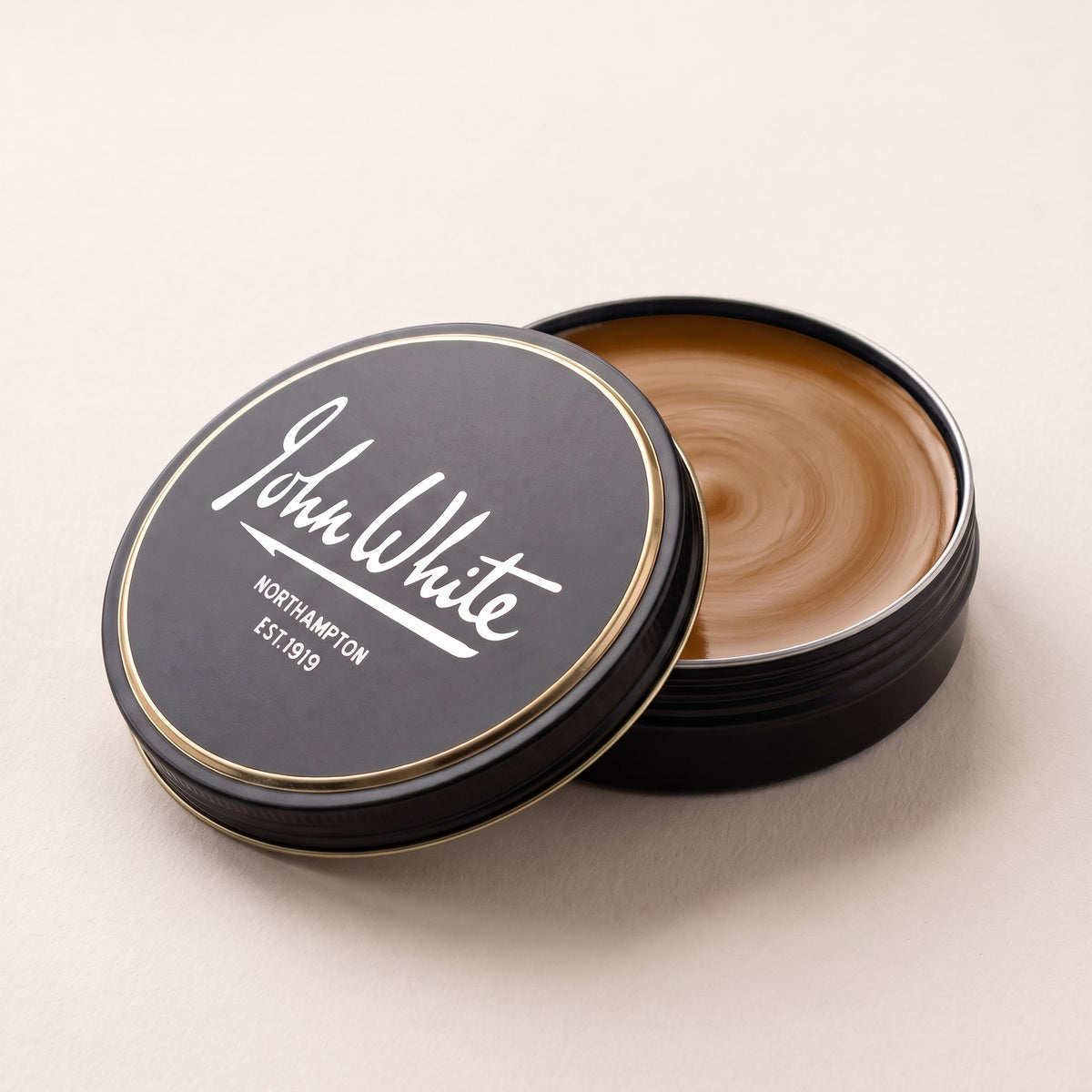
- A wax polish — colour-matched to the shoe, or neutral for lighter shades. Our Premium Wax Polish is designed for smooth leather and covers the full range.
- An applicator cloth or dauber — a small, soft cotton cloth or purpose-made sponge for working polish evenly into the upper.
- A buffing brush or shine cloth — a second, clean horsehair brush or lint-free cotton cloth for the final finish.
- Cedar shoe trees — not part of the polishing kit itself, but essential for filling the creases caused by wear and giving you a stable surface to work on.
Avoid improvised products. Household oils, washing-up liquid, and petroleum-based products interfere with the leather's surface chemistry in ways that aren't immediately visible but accumulate with every application.
The right kit is inexpensive and lasts for years; using the wrong products damages the leather even when the technique is correct.How Should You Brush Leather Shoes Correctly?
Brushing is the most underestimated step in the routine. It is not a quick flick across the vamp — it is a systematic clean of every surface before anything else goes on the leather.
- Insert shoe trees first. This fills the creases formed during wear and gives you a taut, even surface to work across.
- Remove the laces. The area beneath the tongue and around the eyelets collects dirt that's easy to miss when laces are in place.
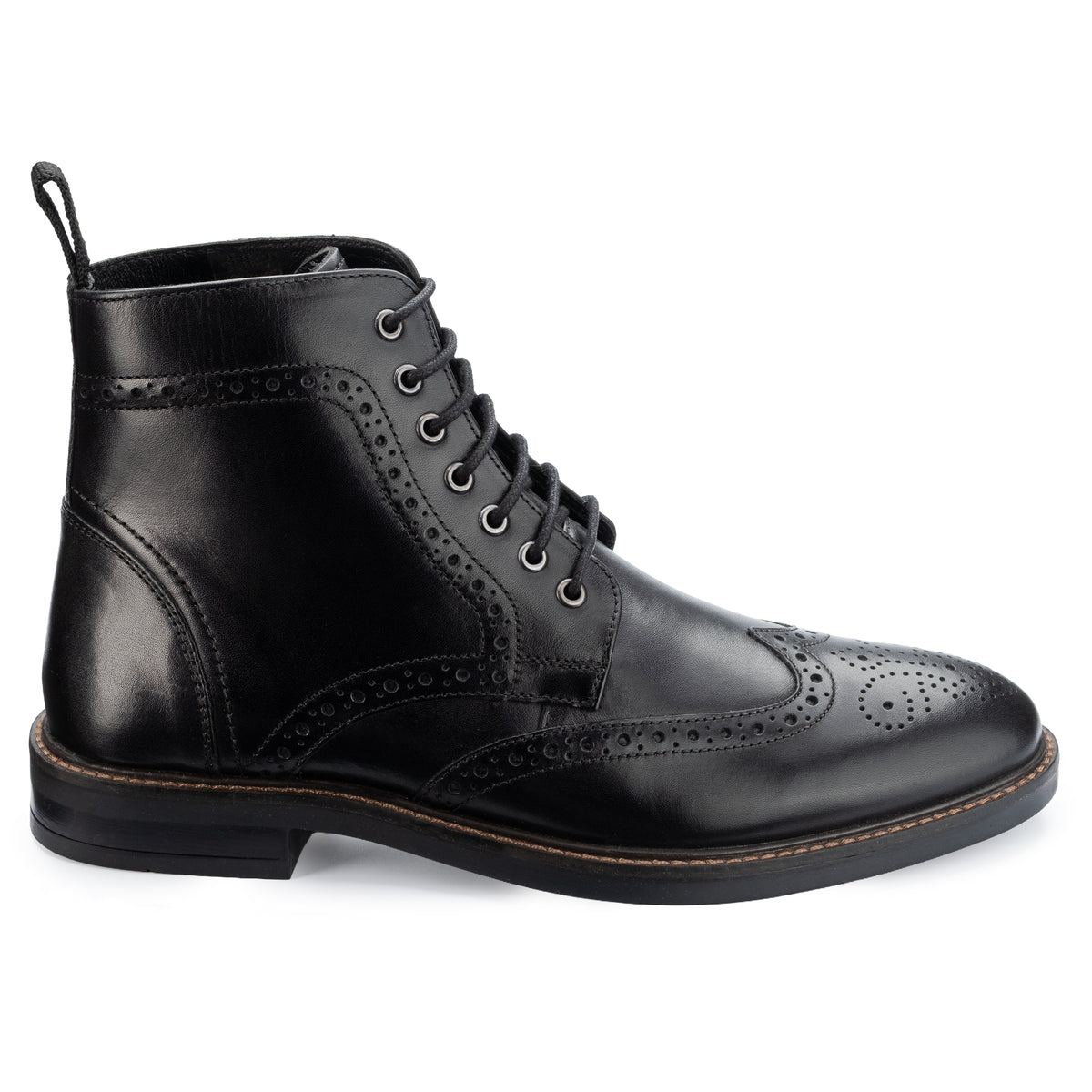
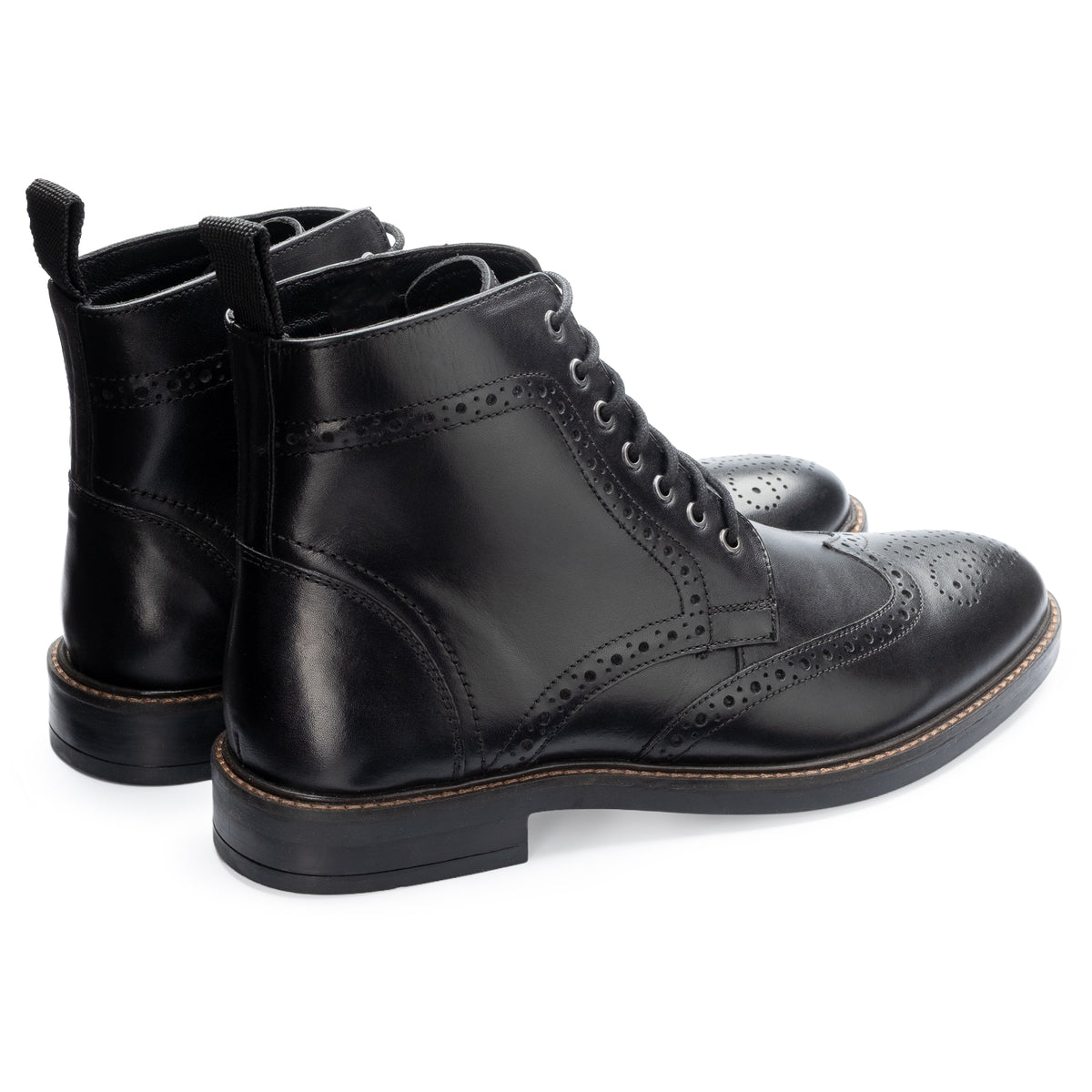
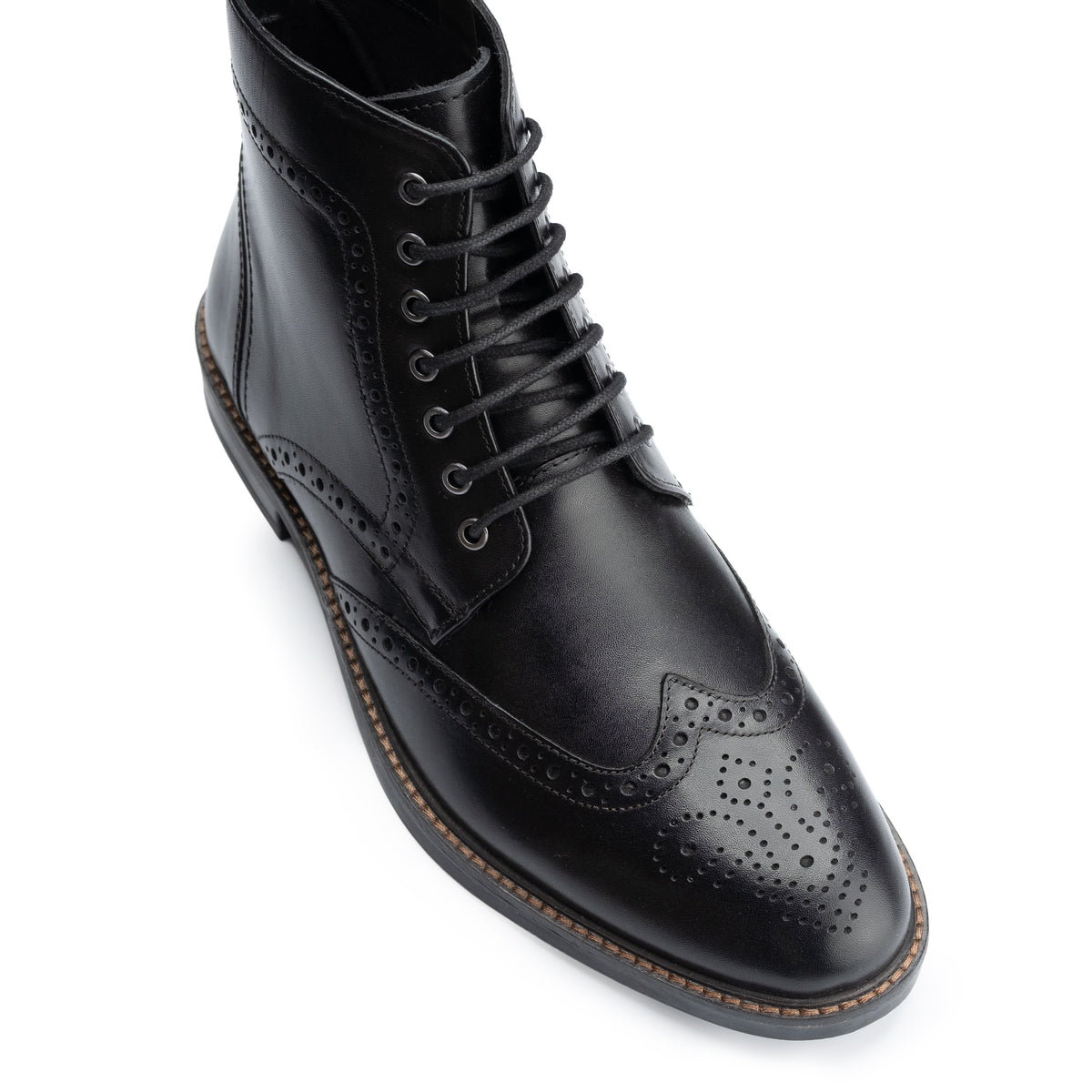
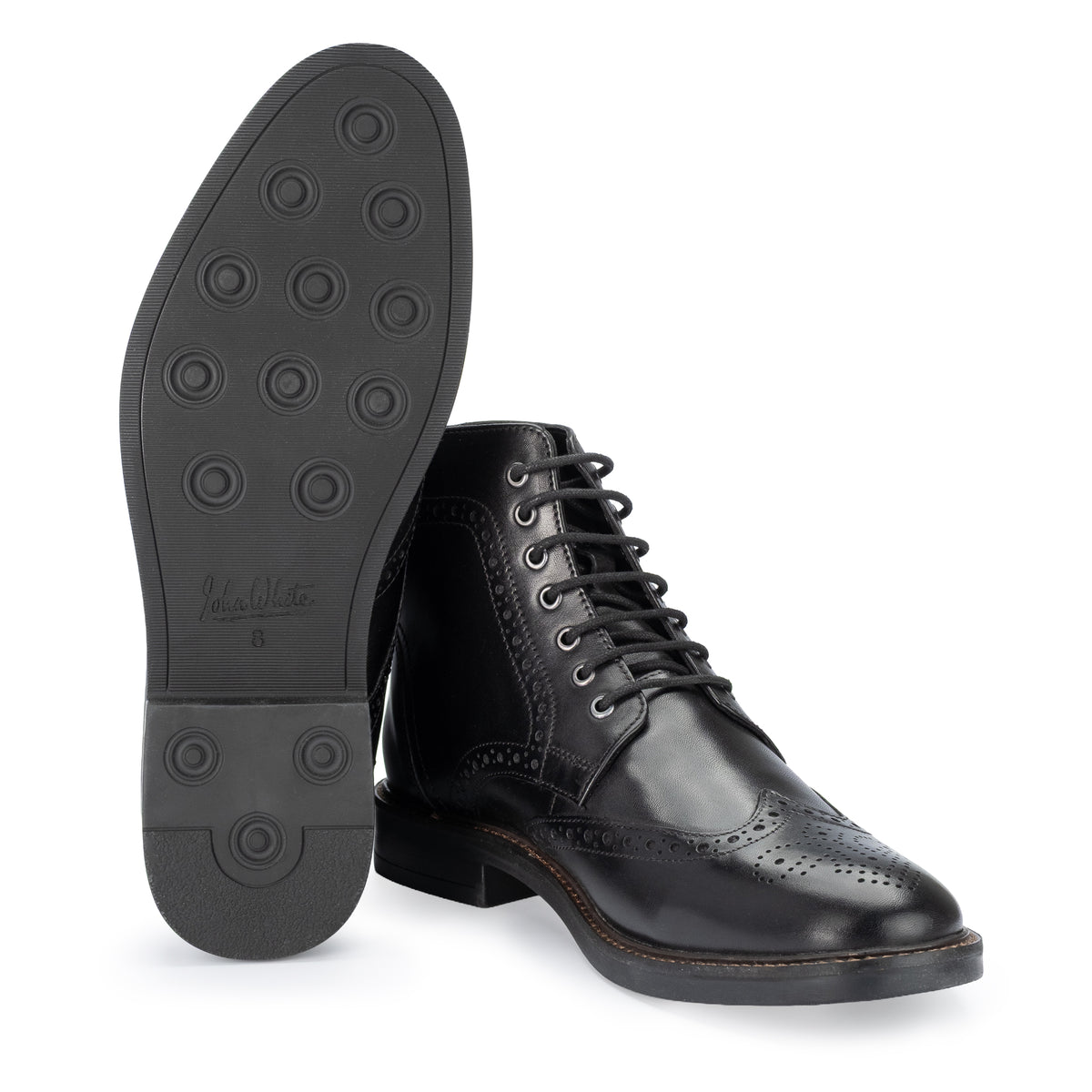
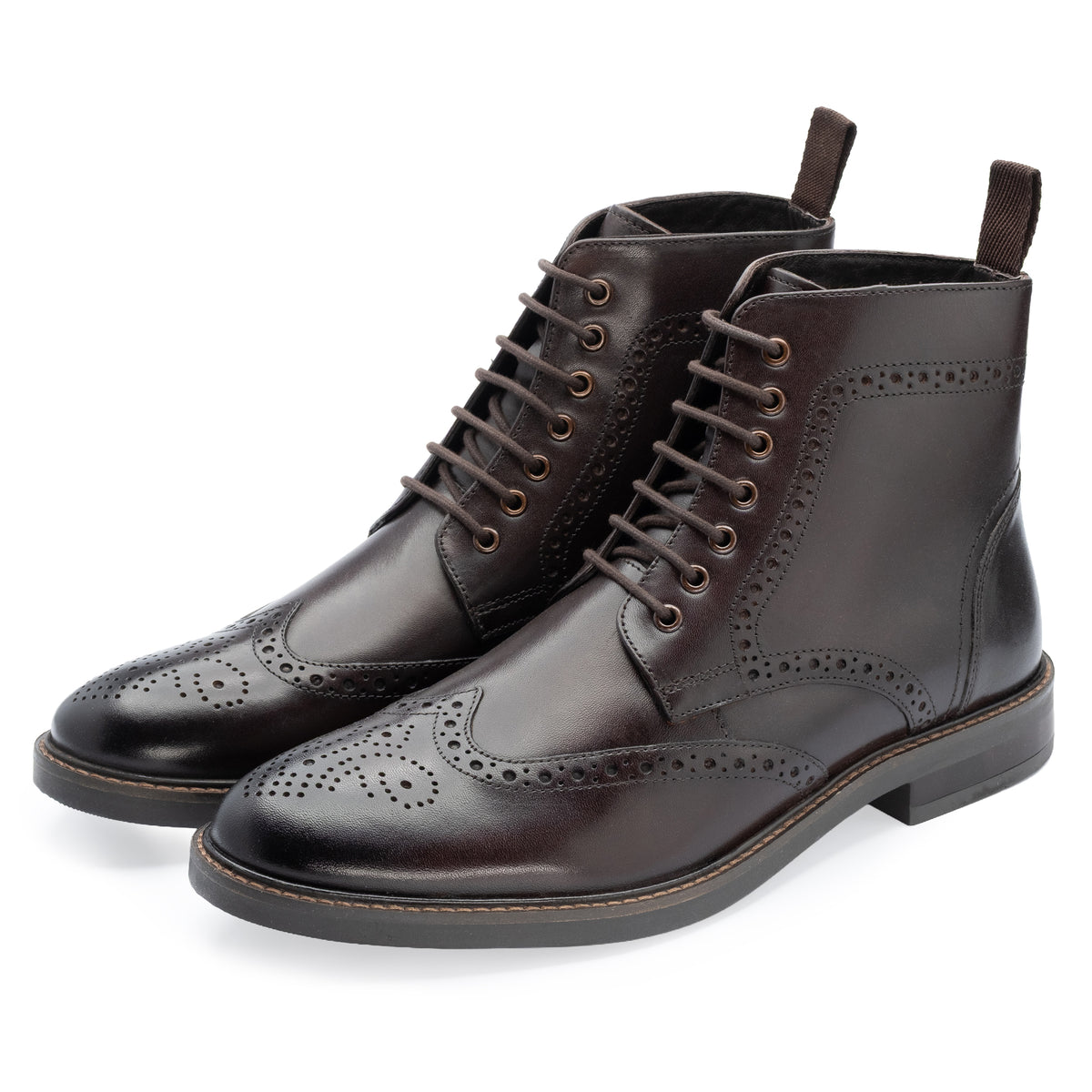
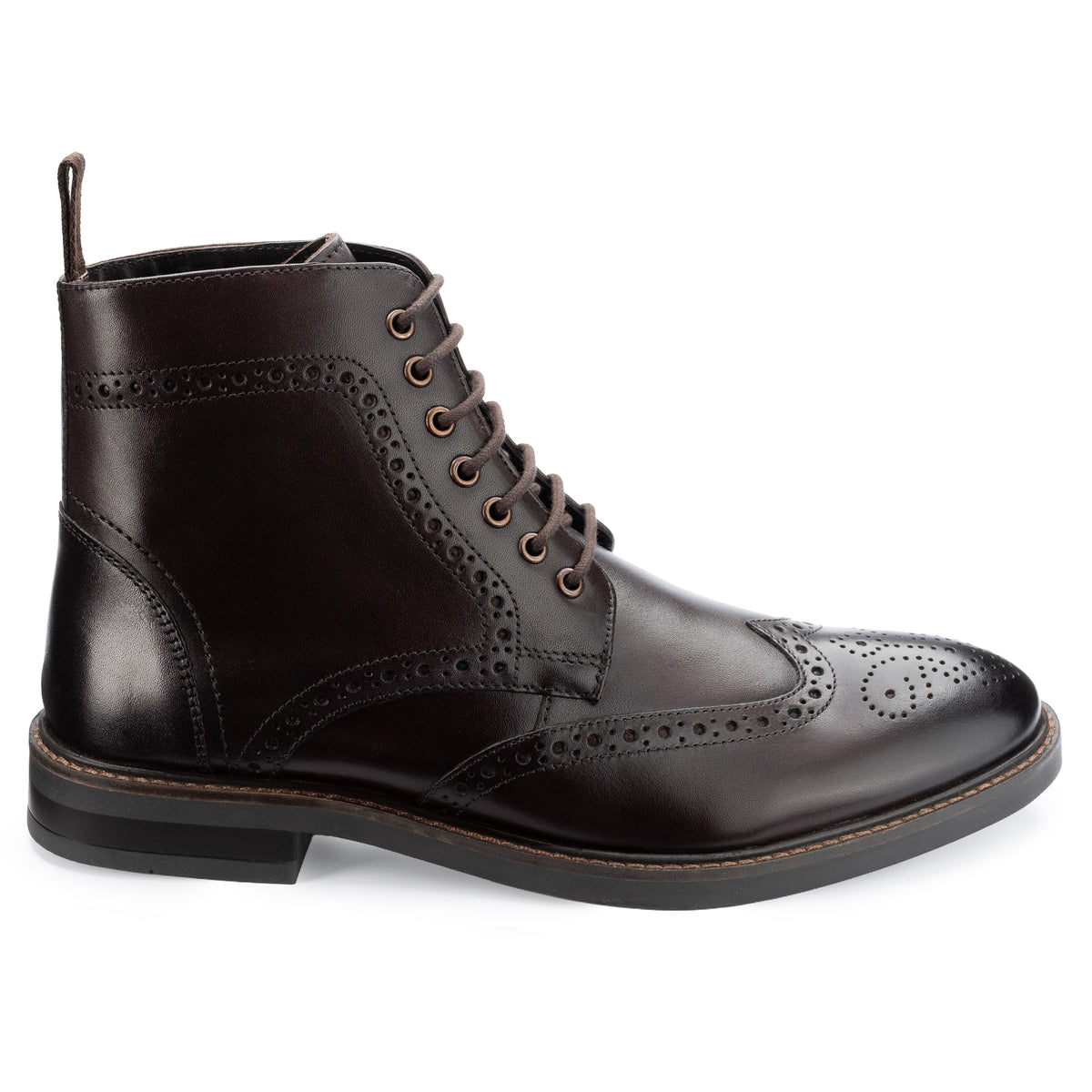
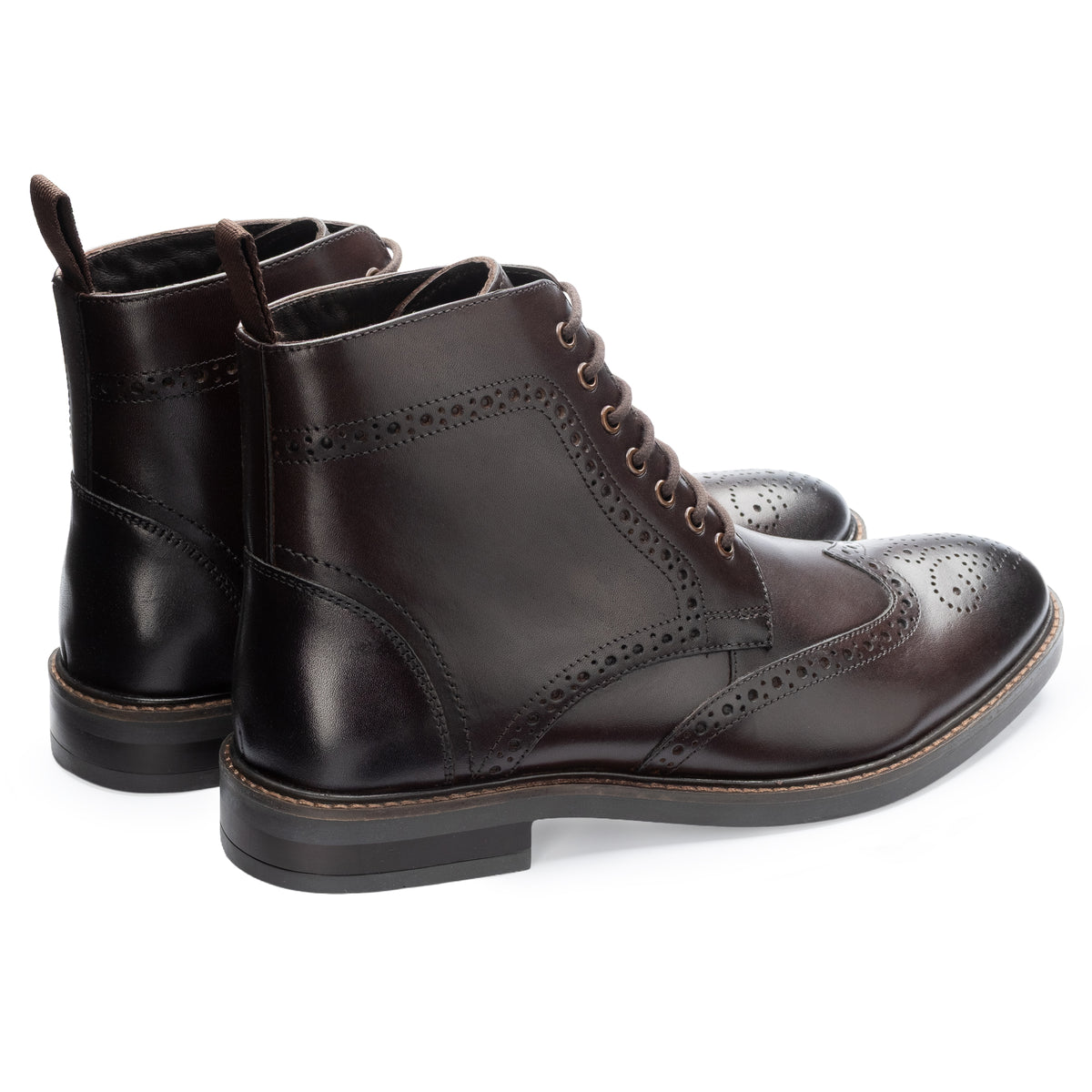
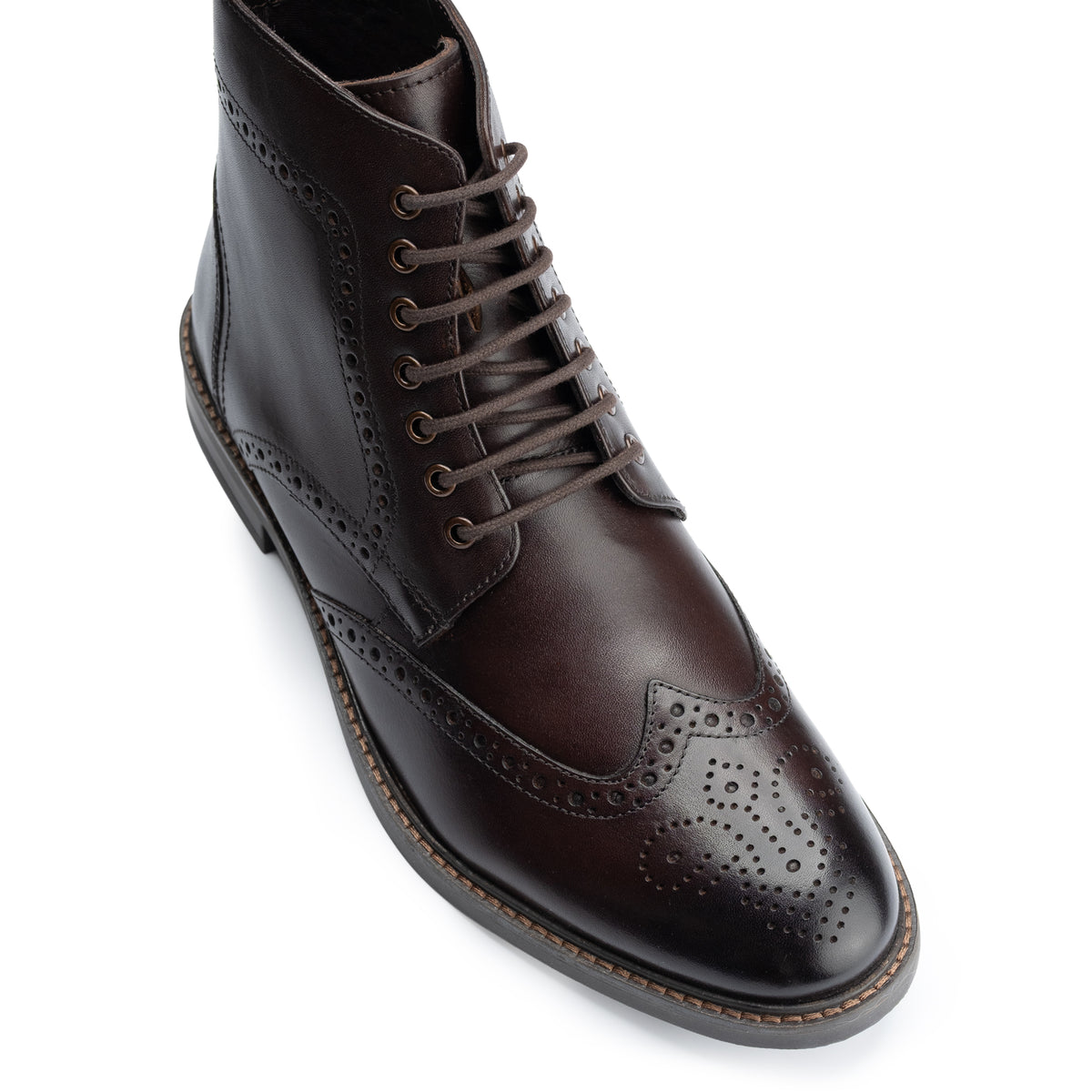
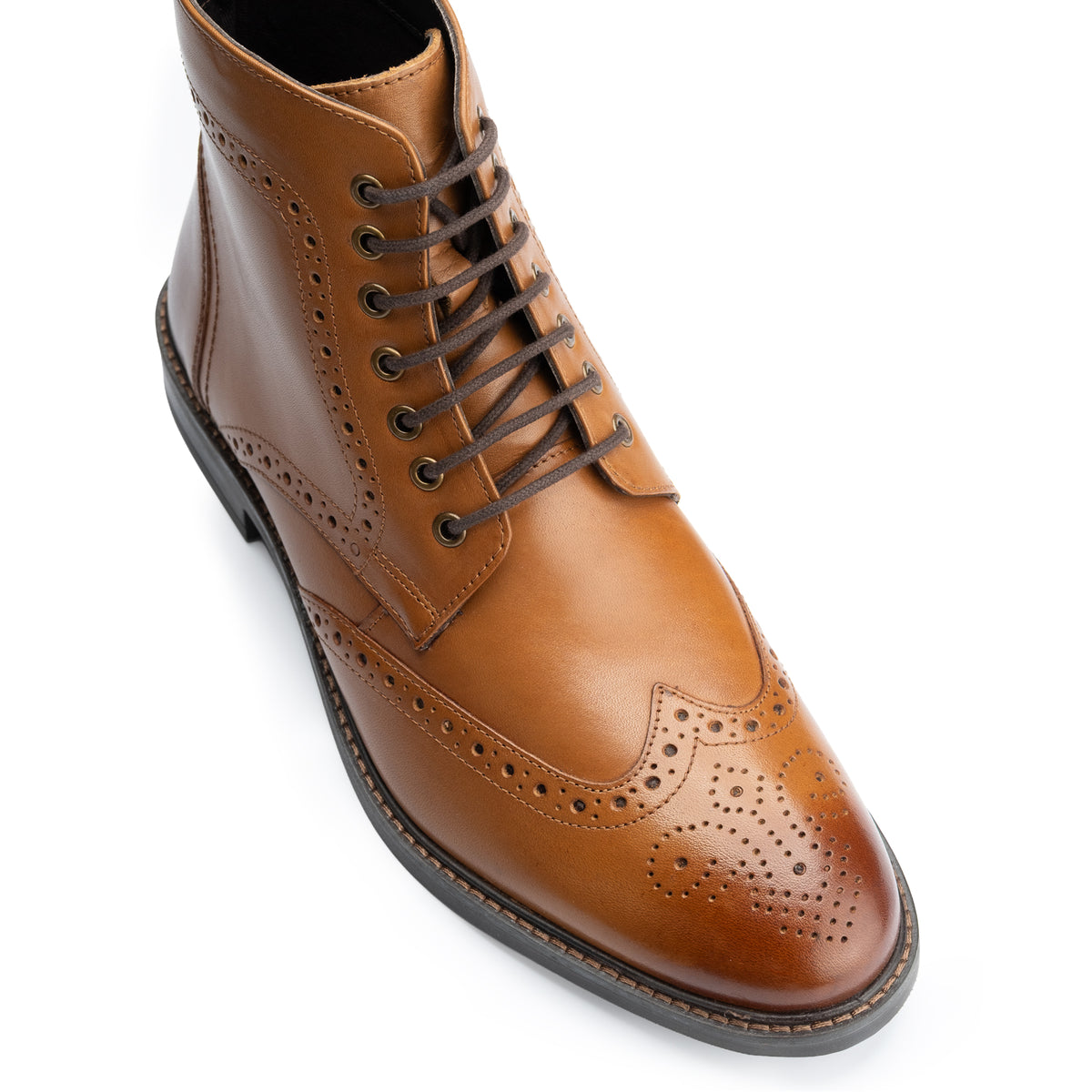
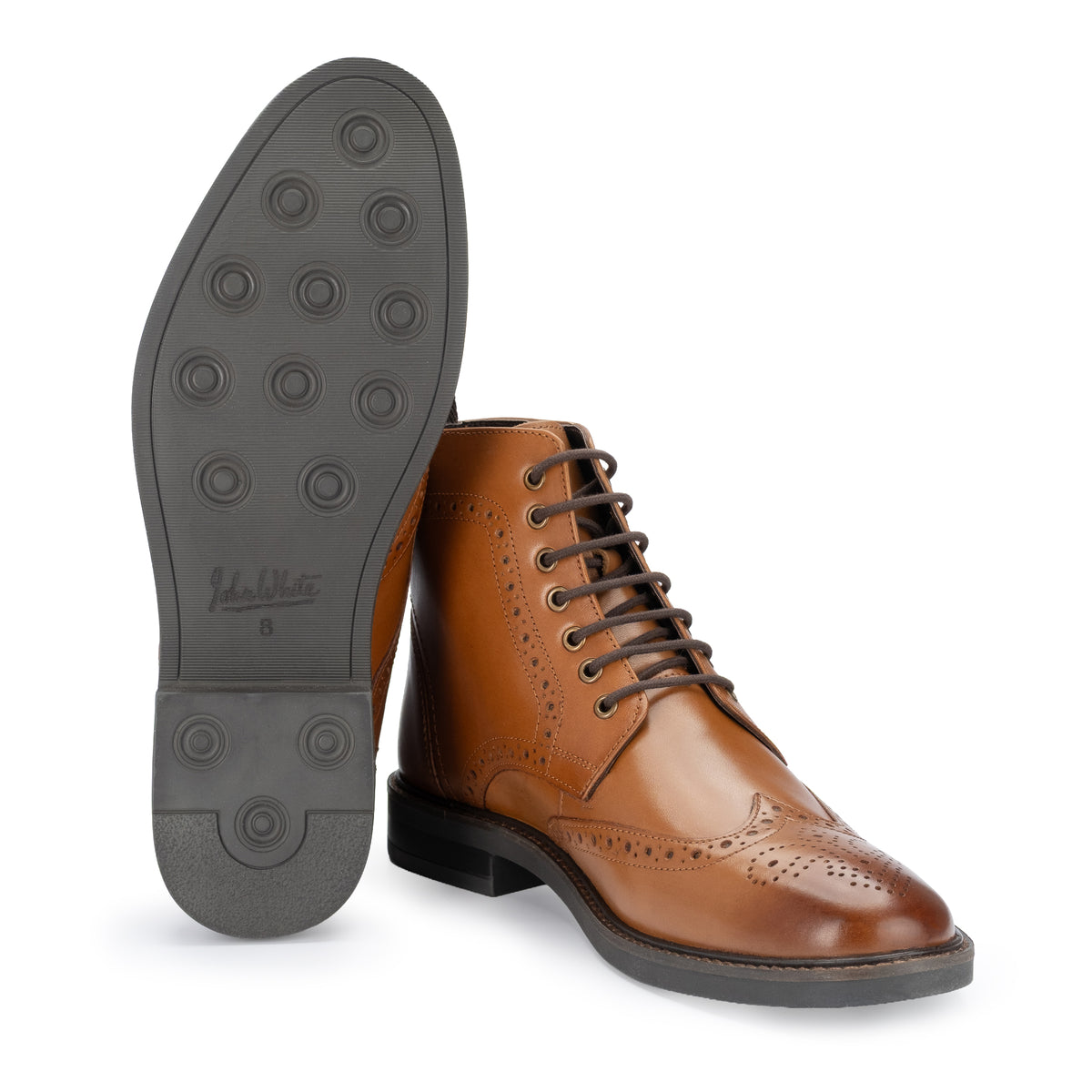
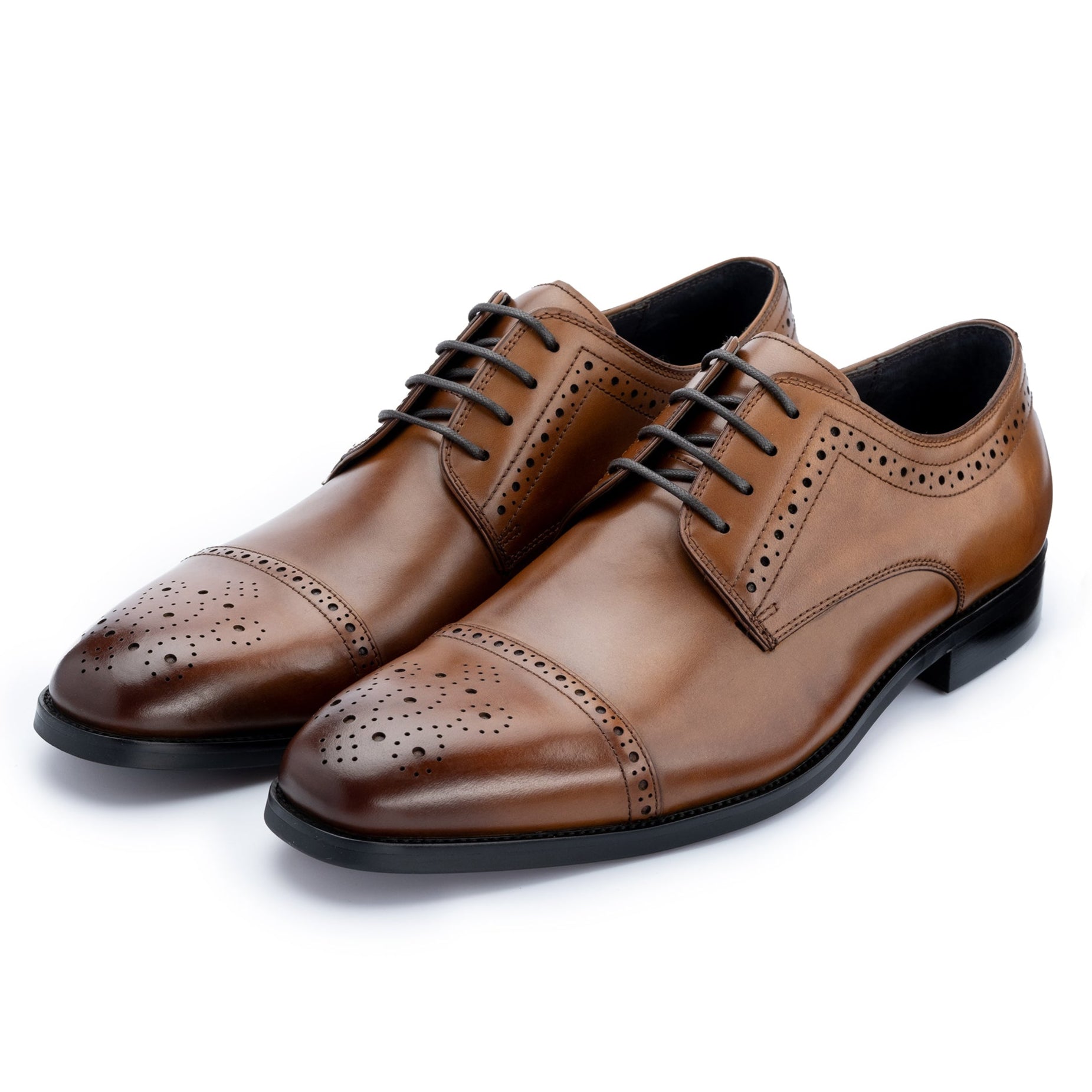
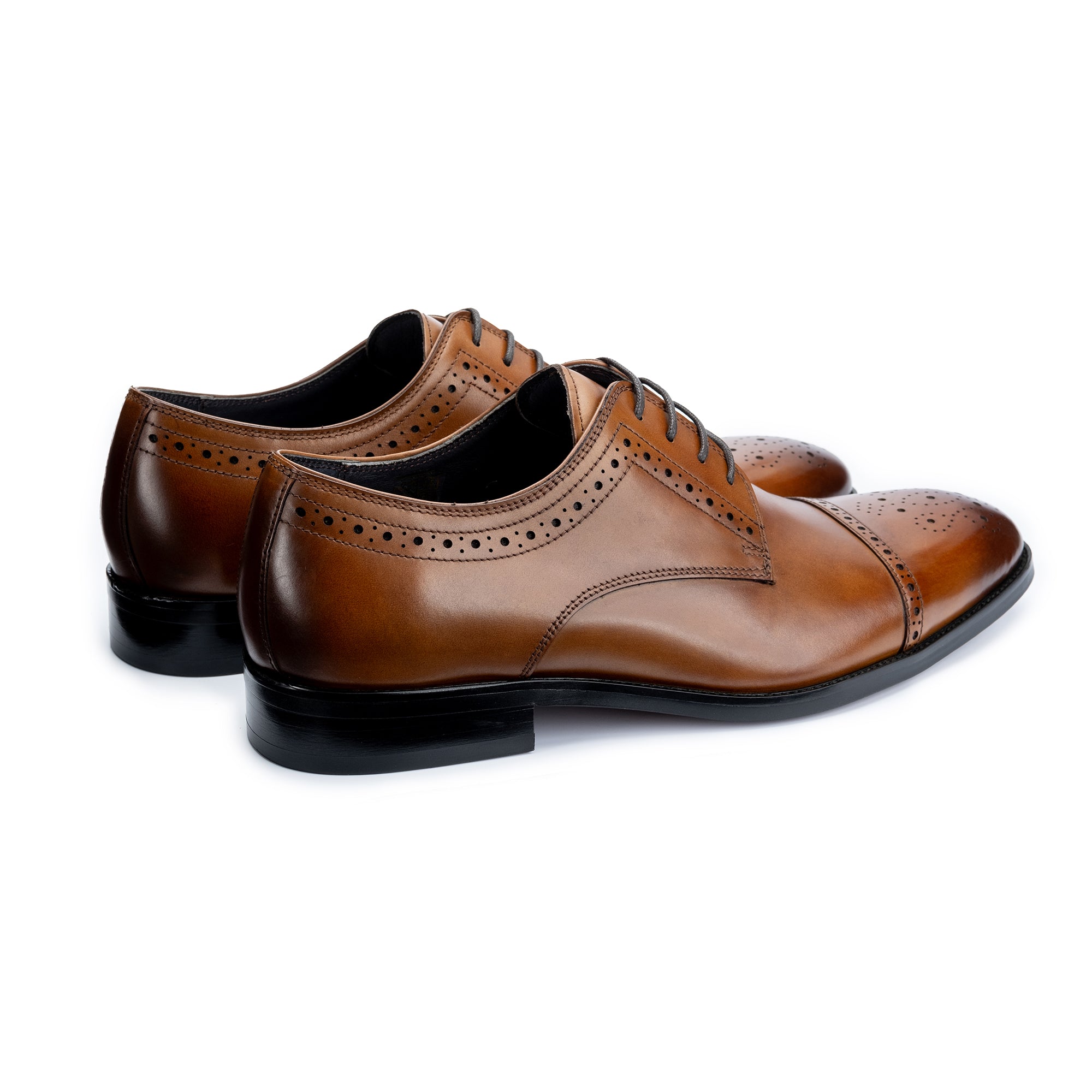
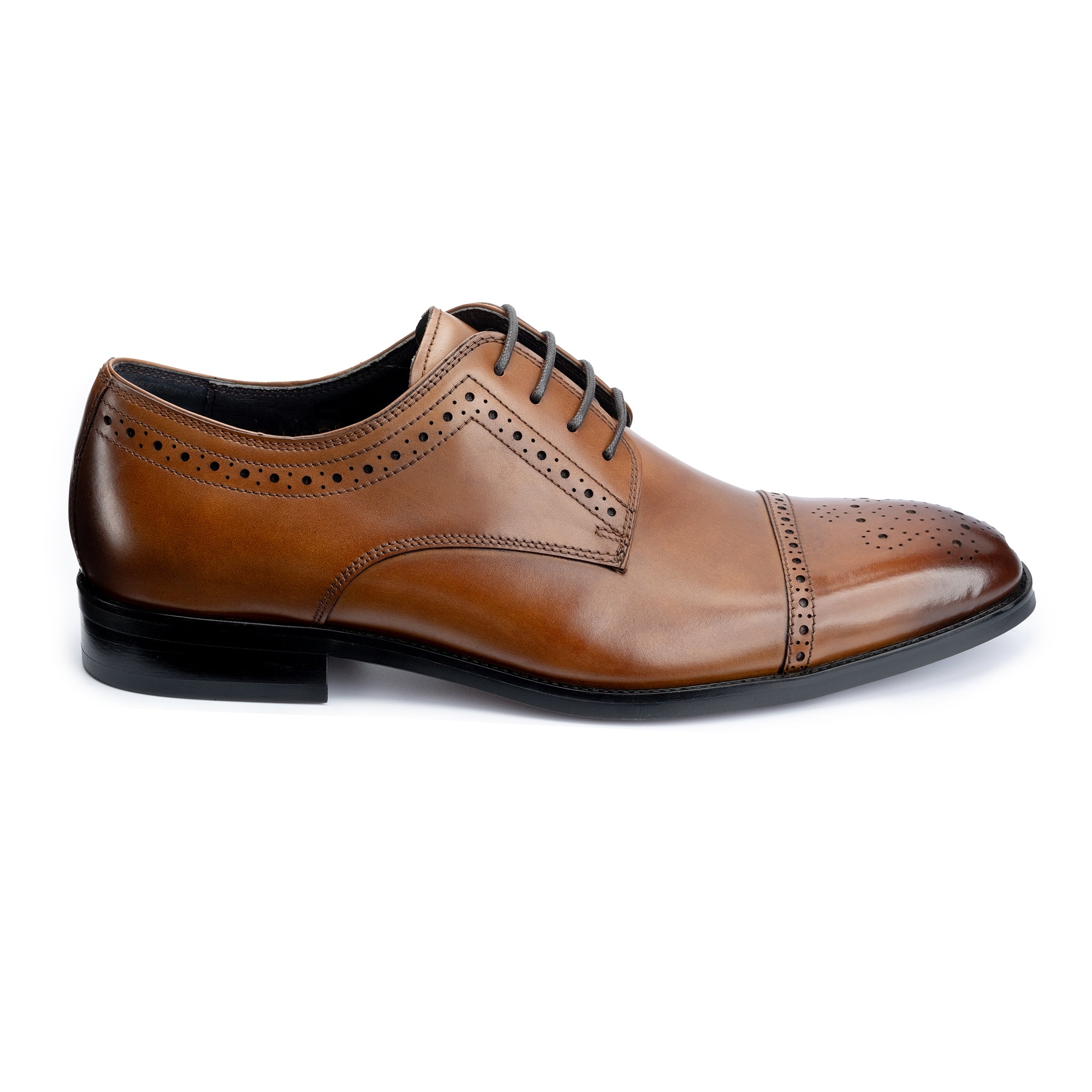
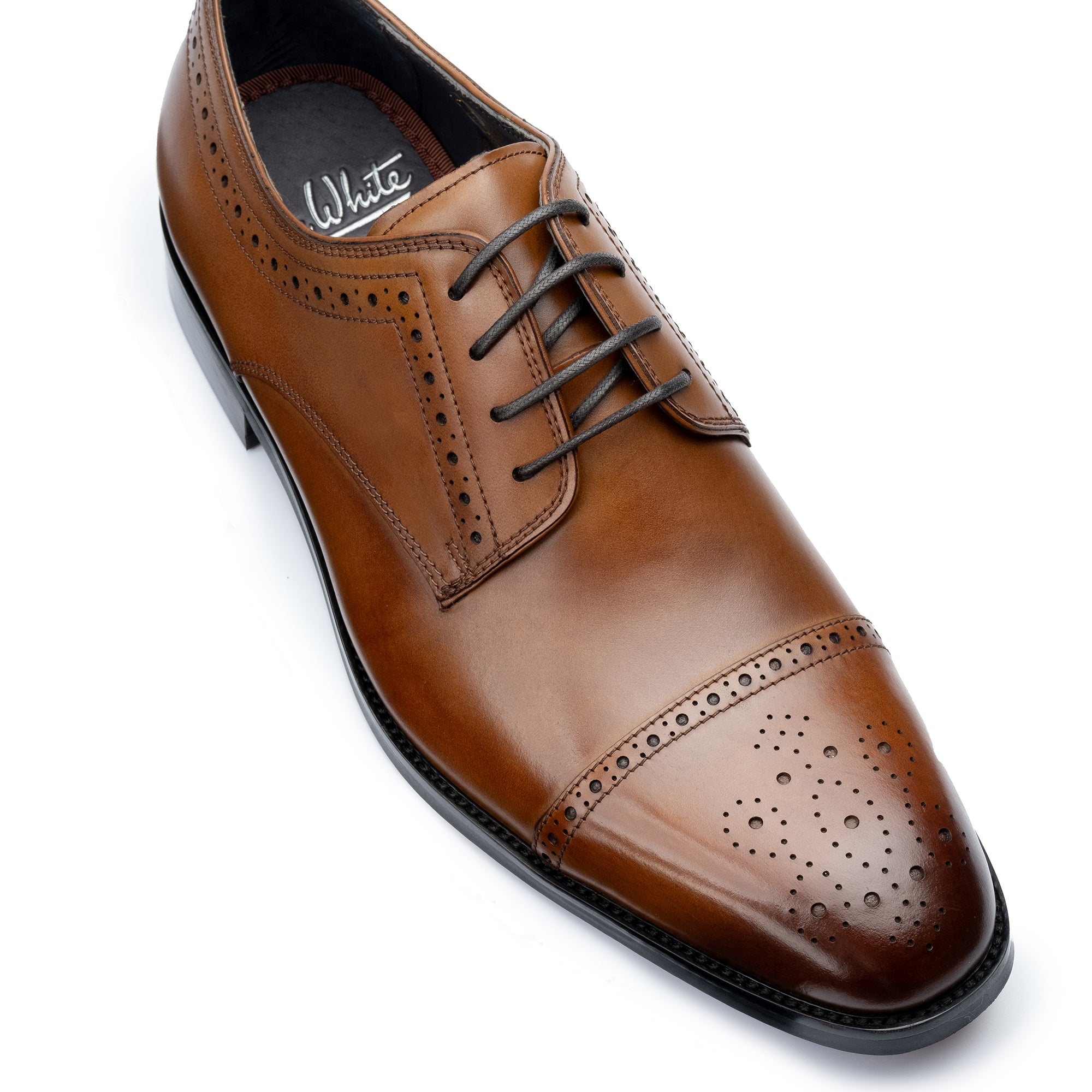
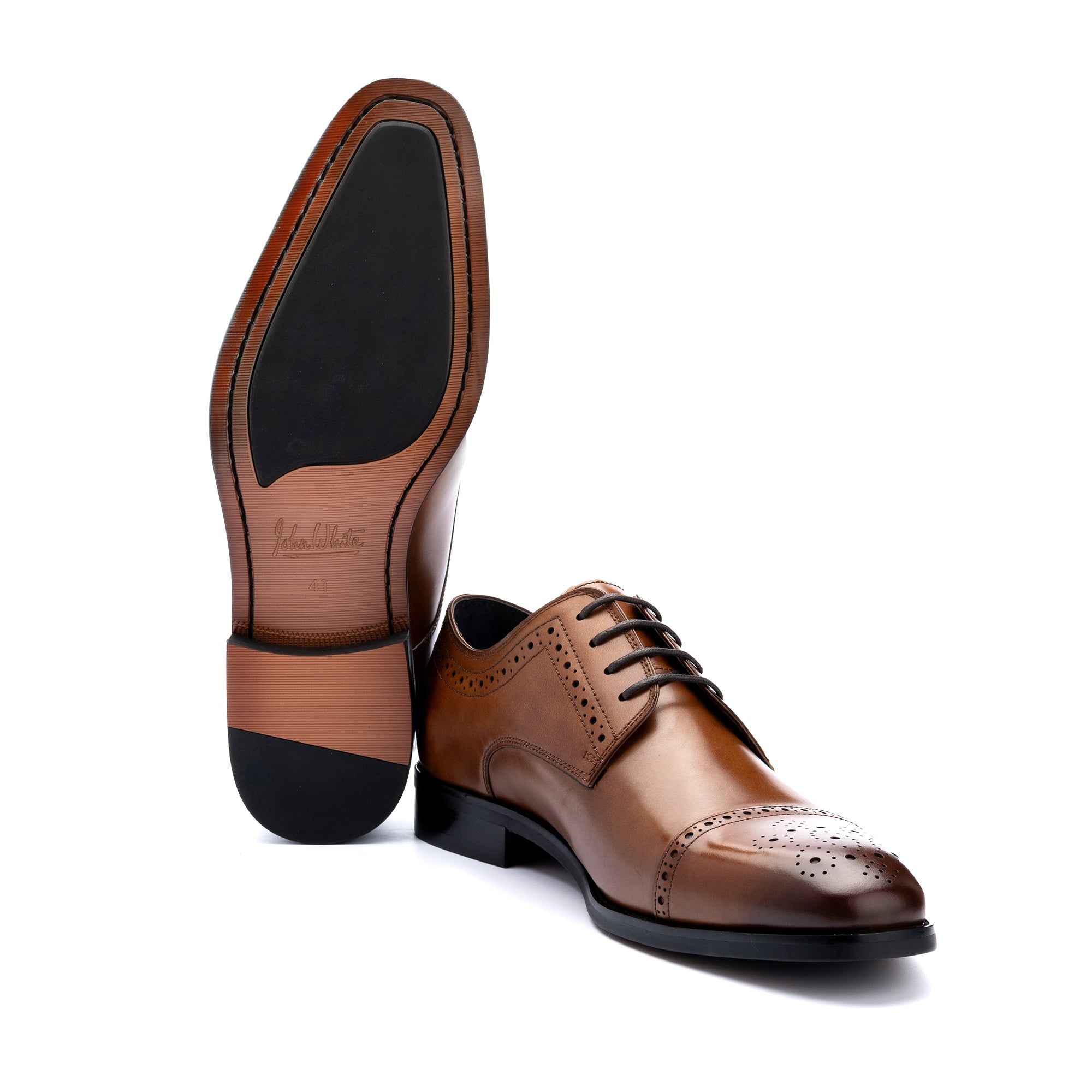
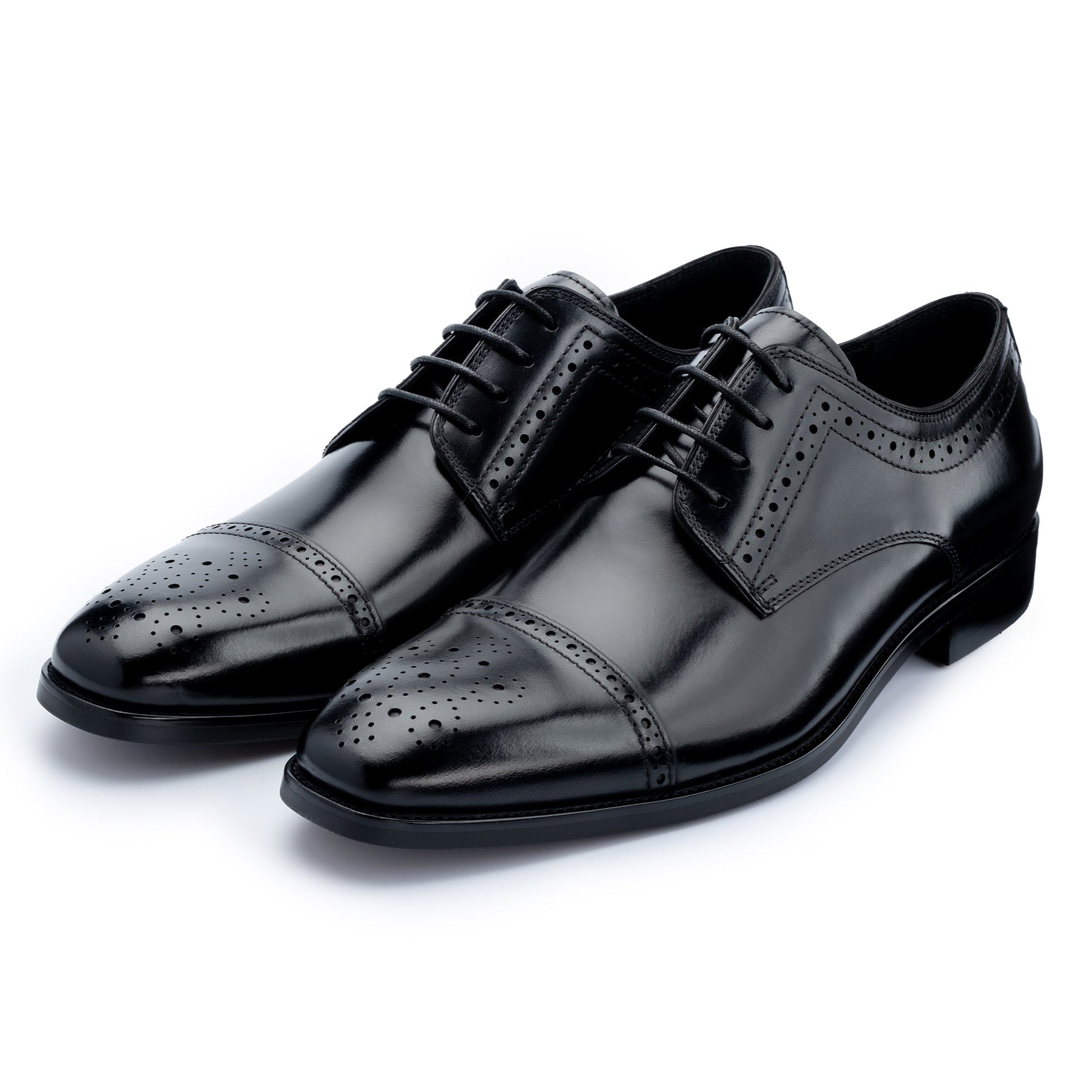
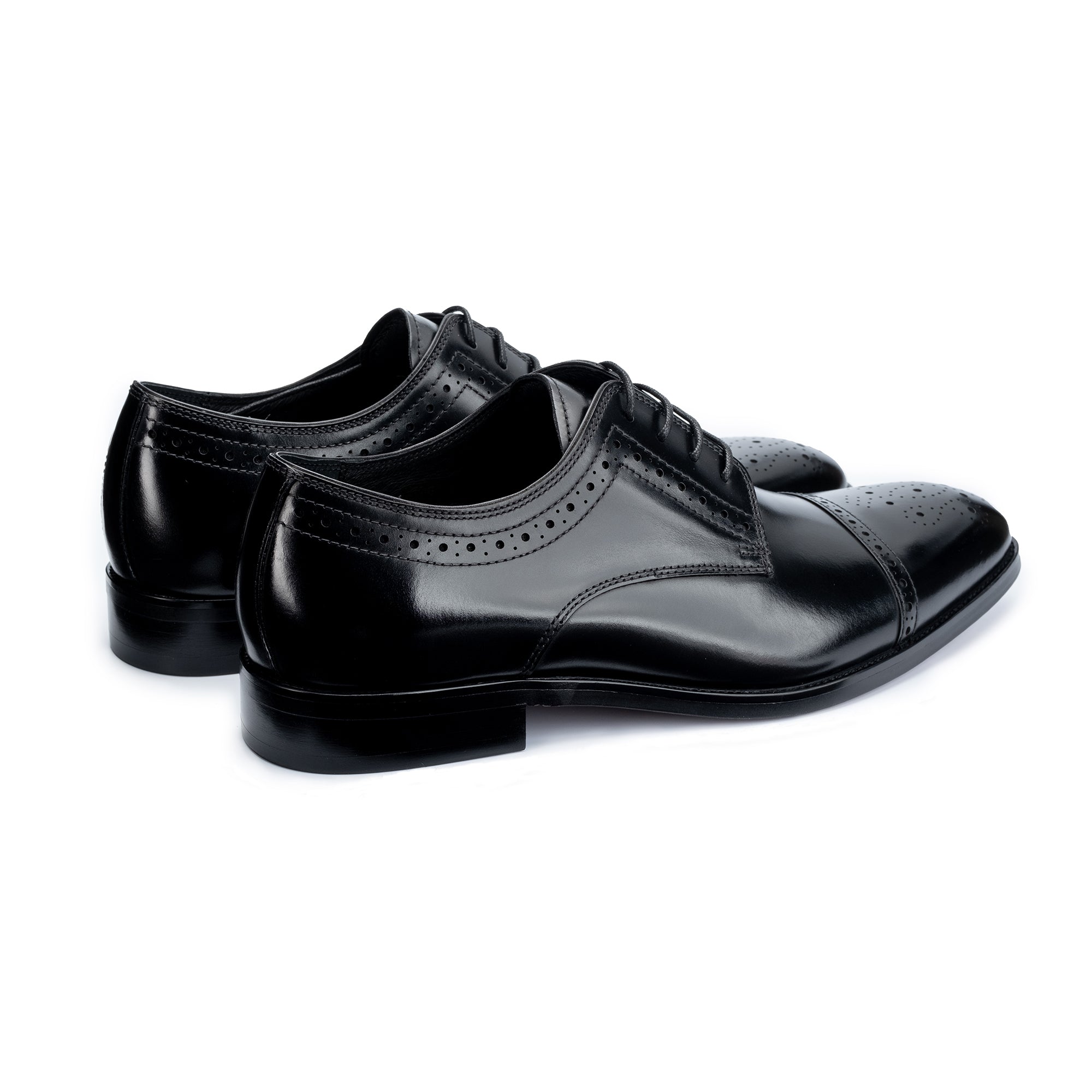
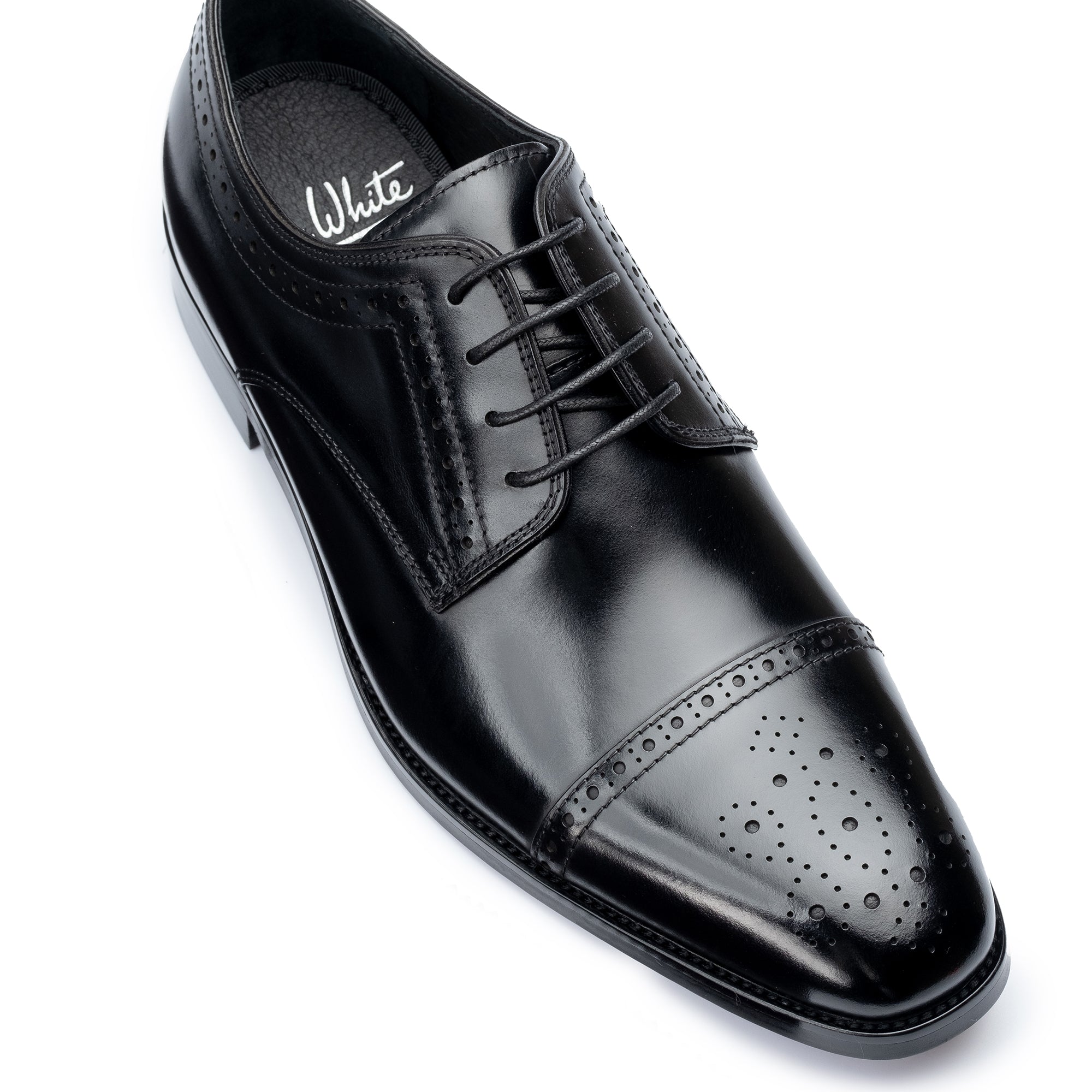
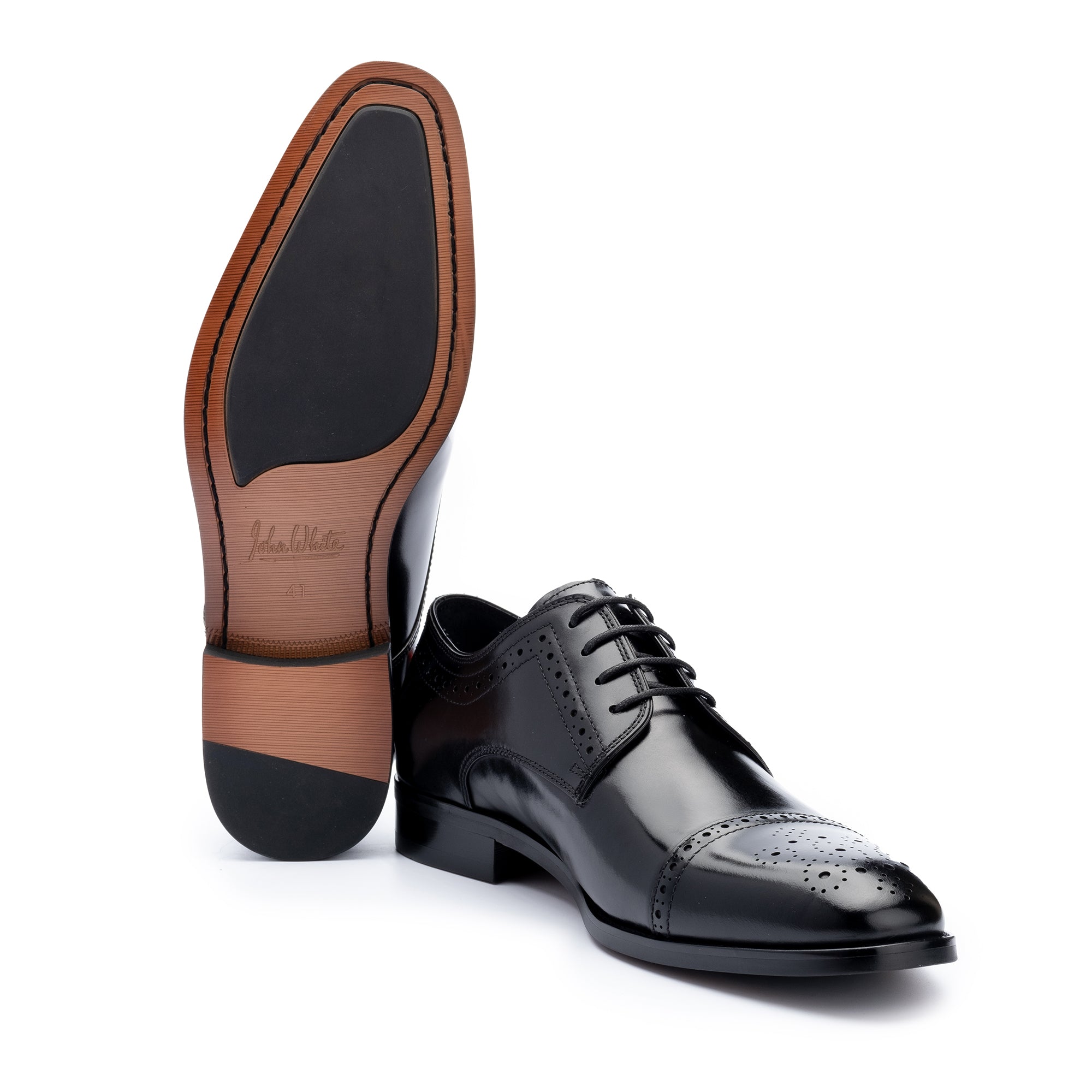
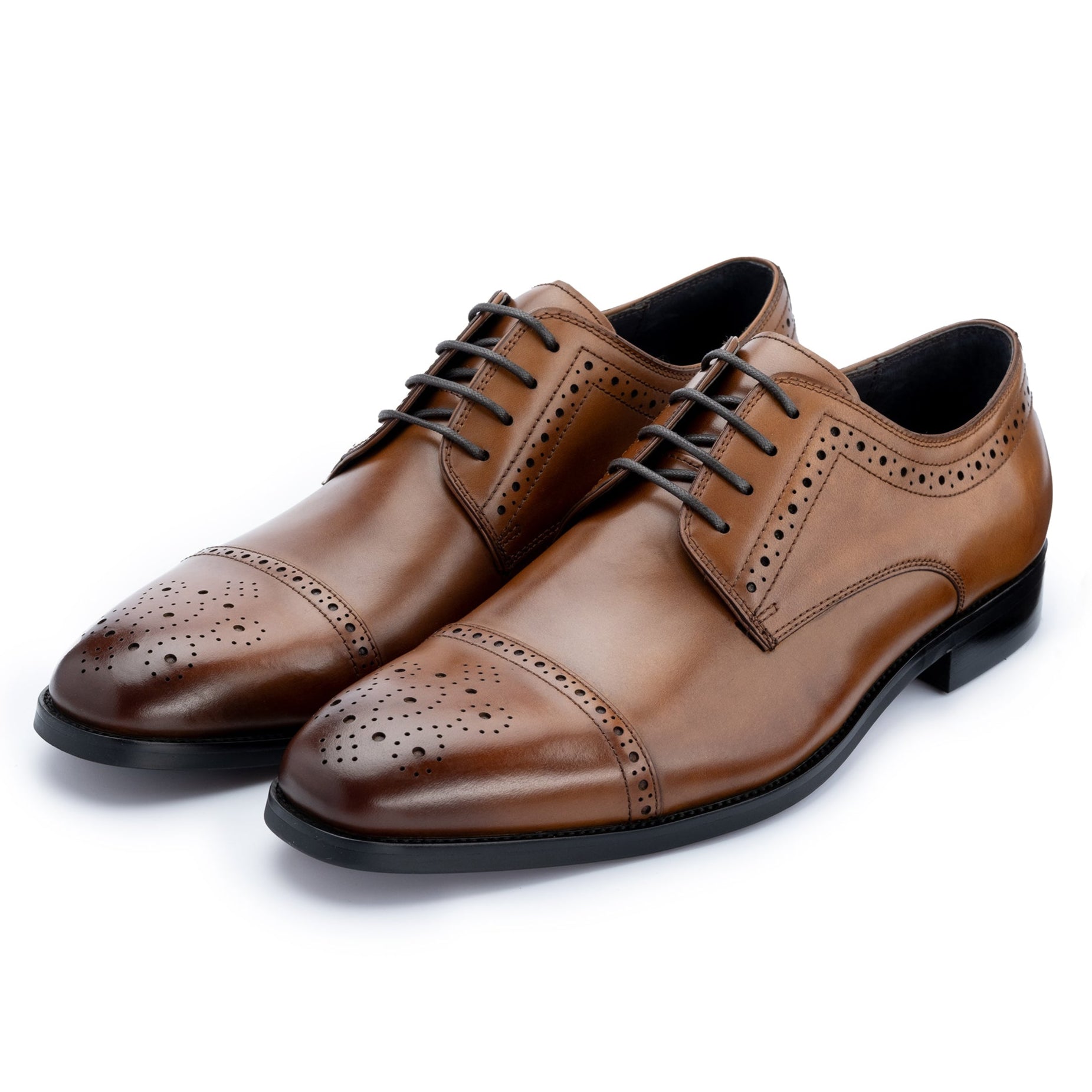
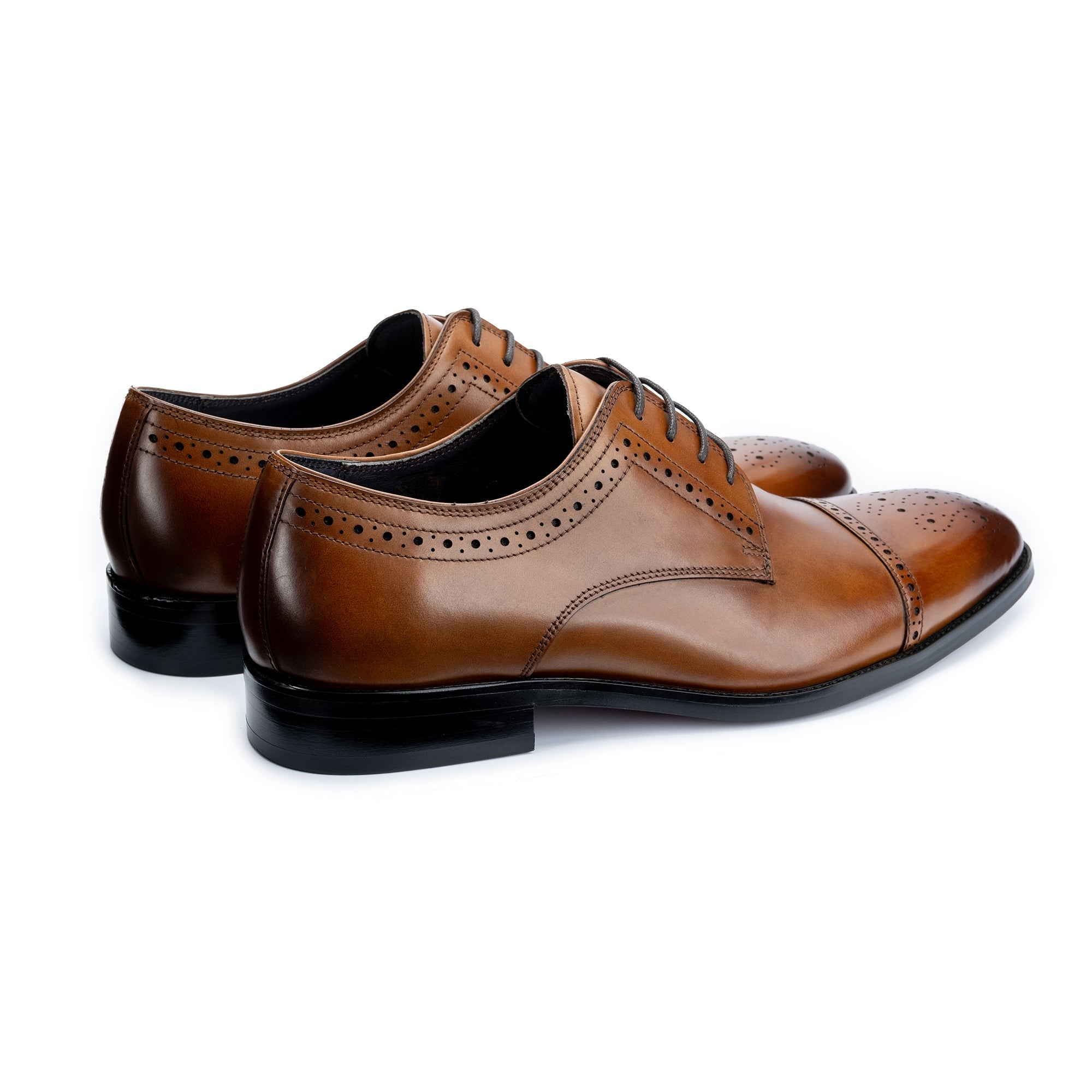
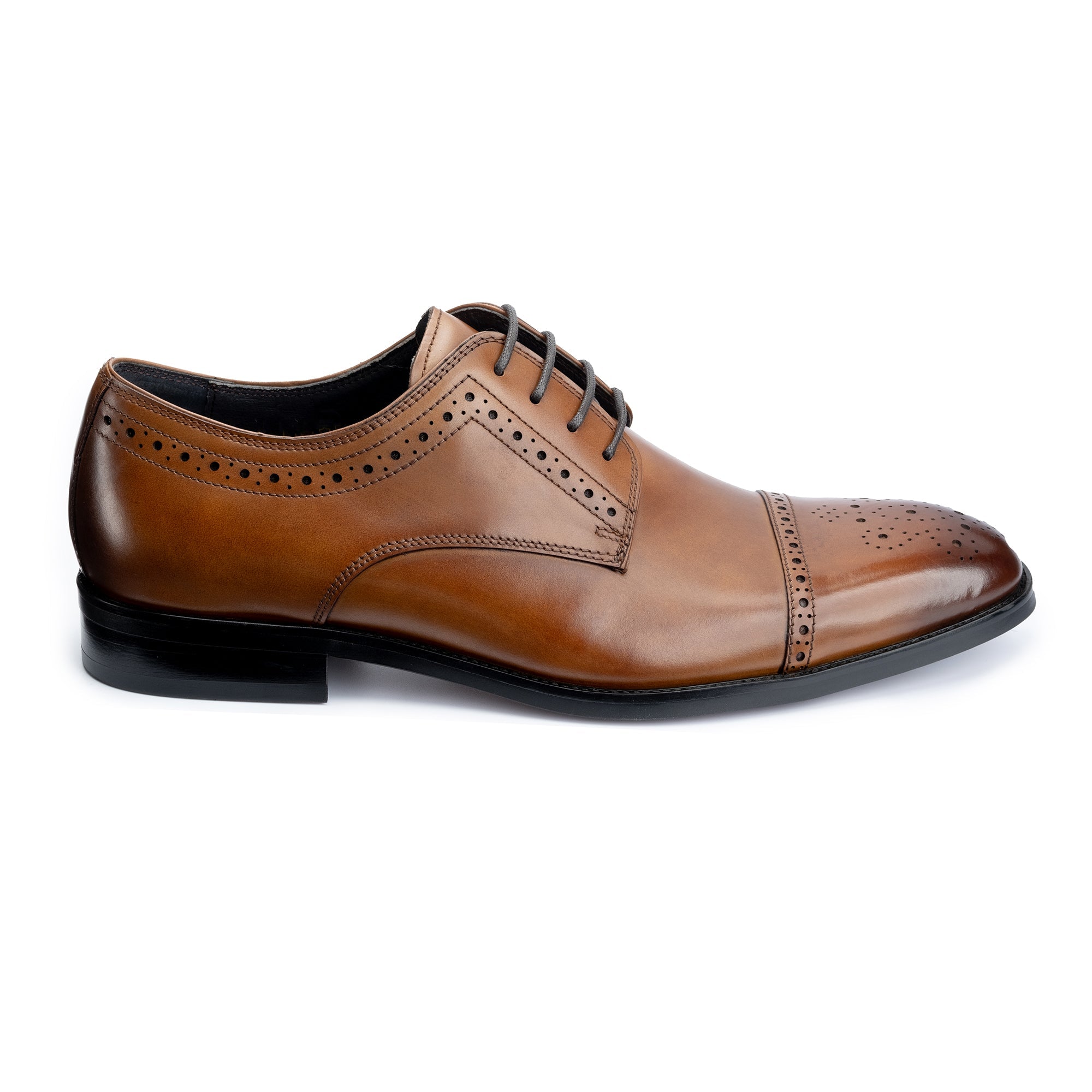
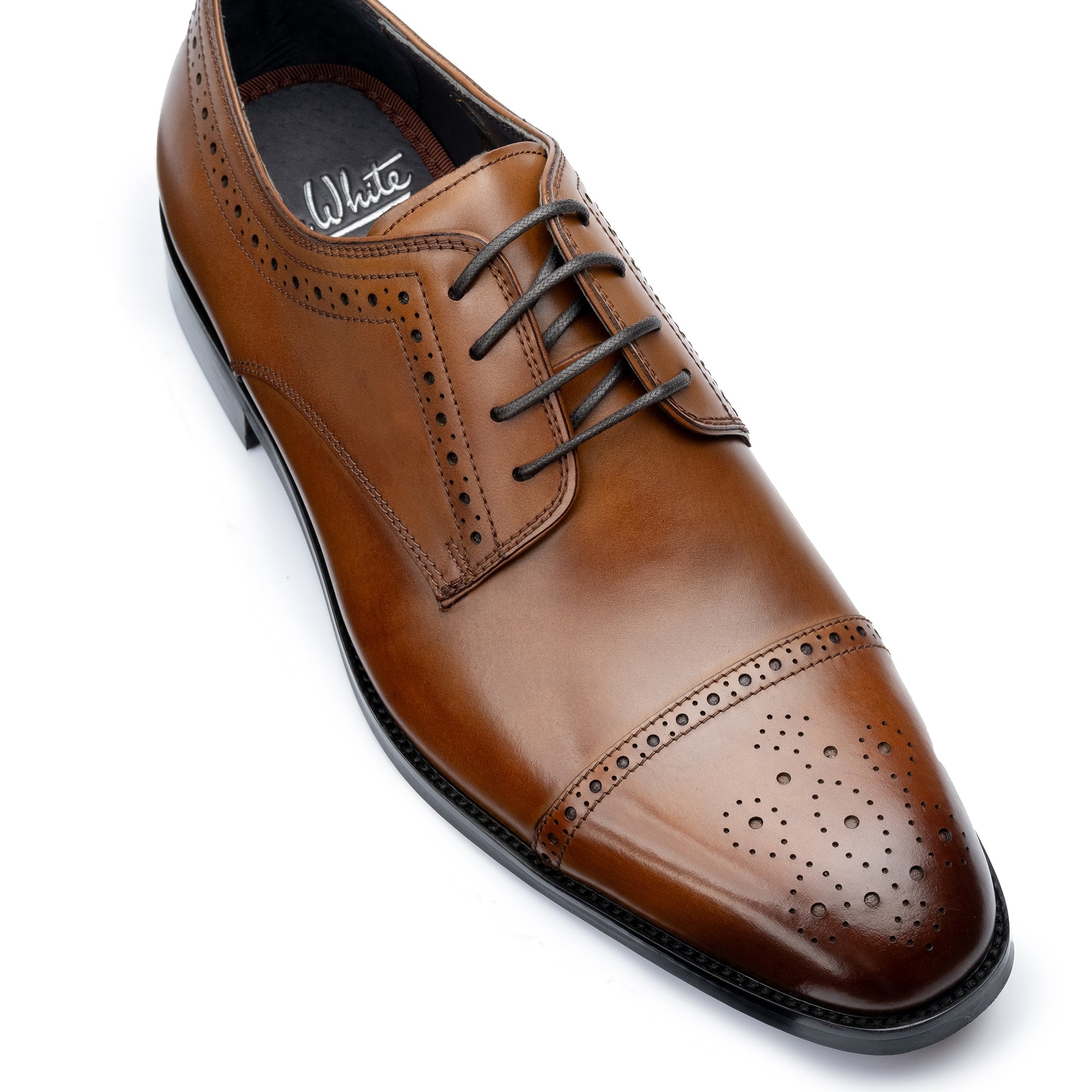
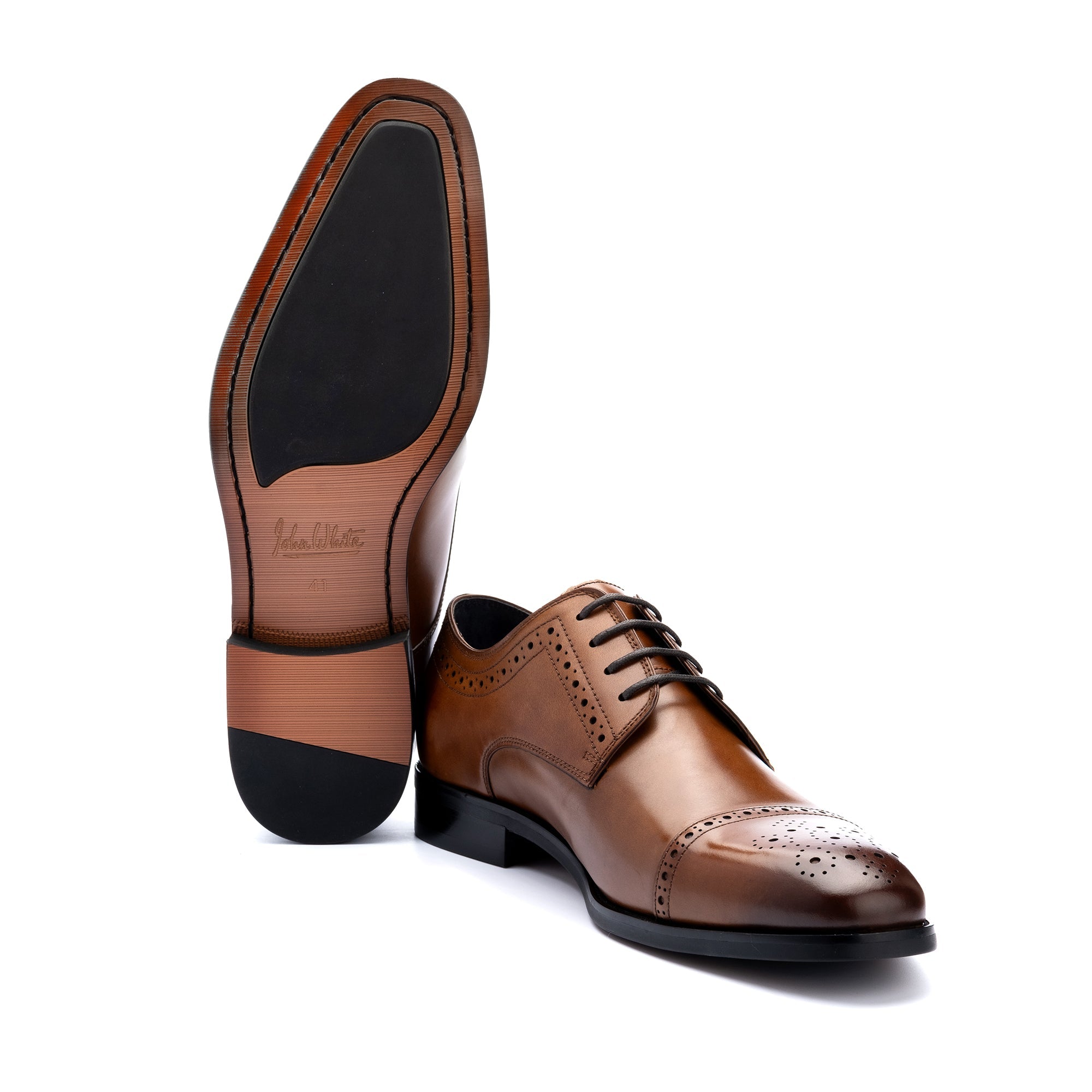
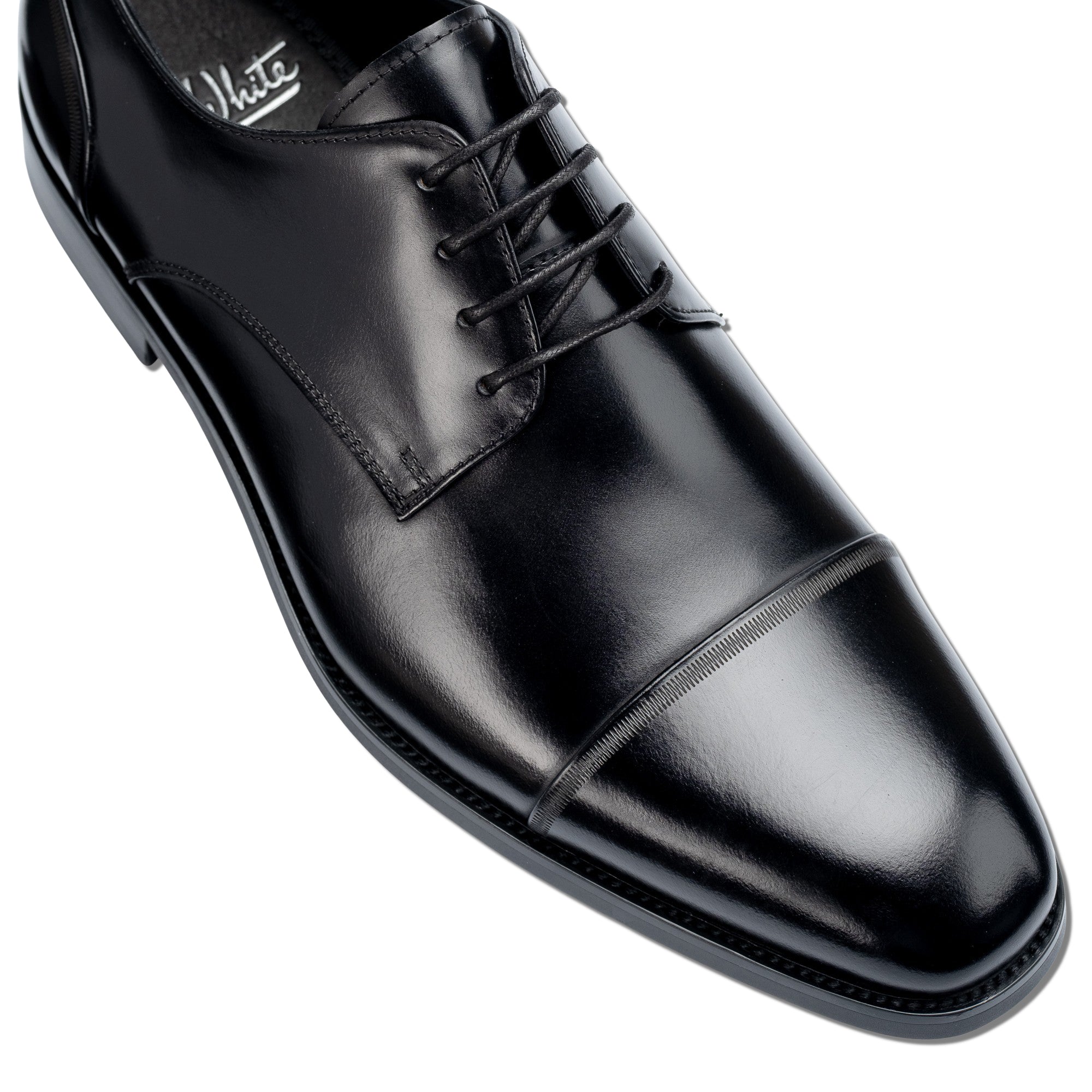
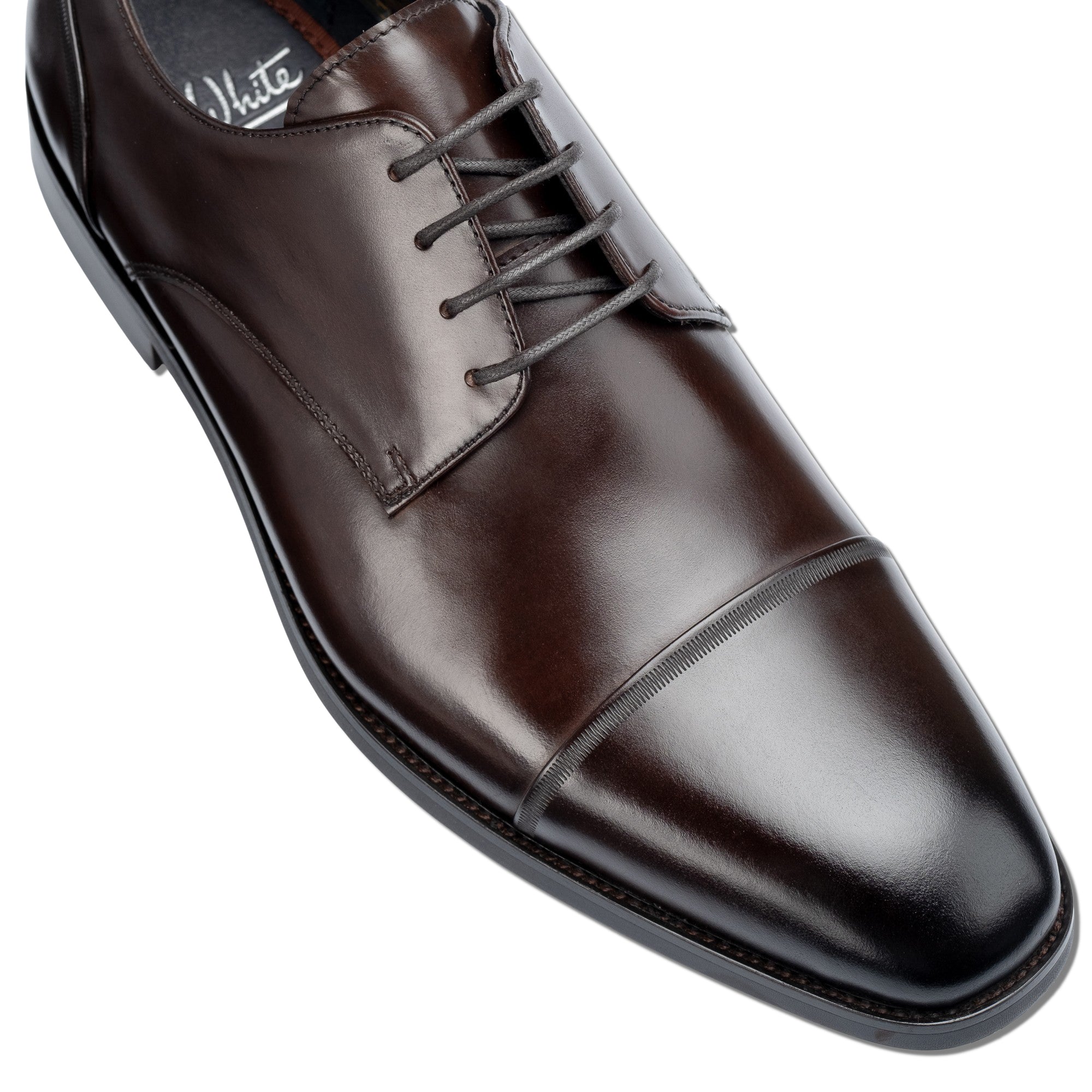
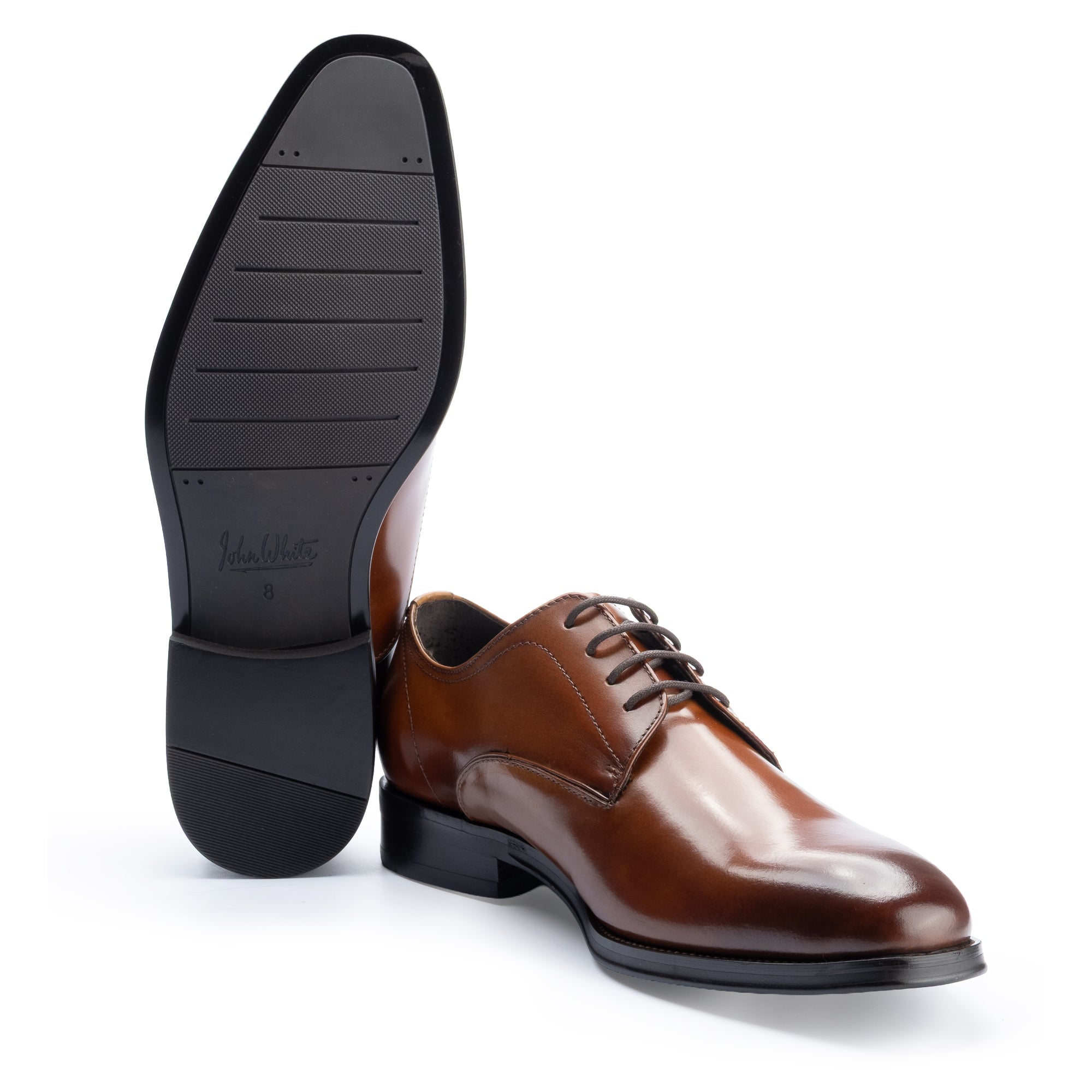
- Start at the toe and work towards the heel in short, firm strokes. Use the edge of the brush to reach into broguing perforations on styles such as the Stokes Brogue Derby and along the join between upper and sole.
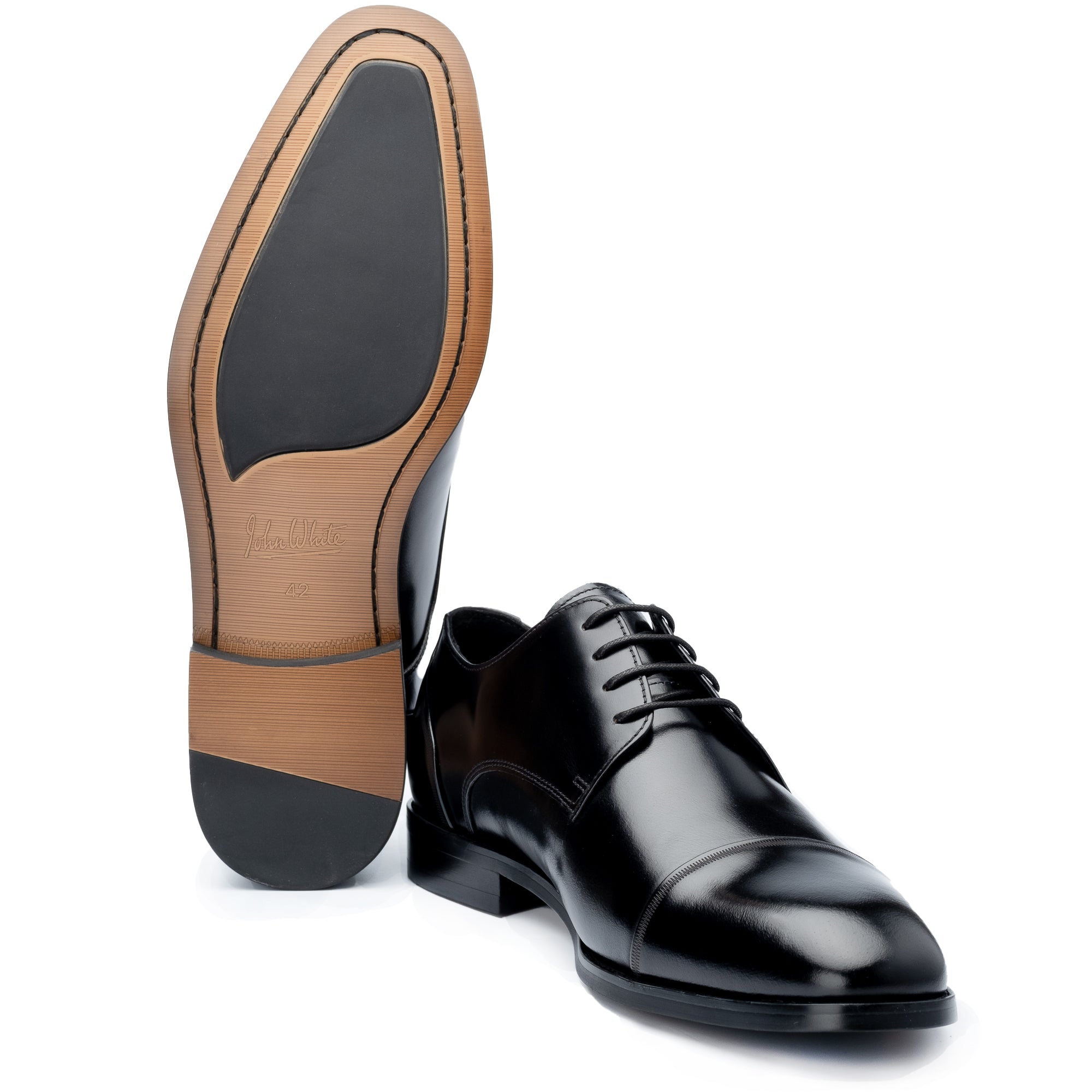
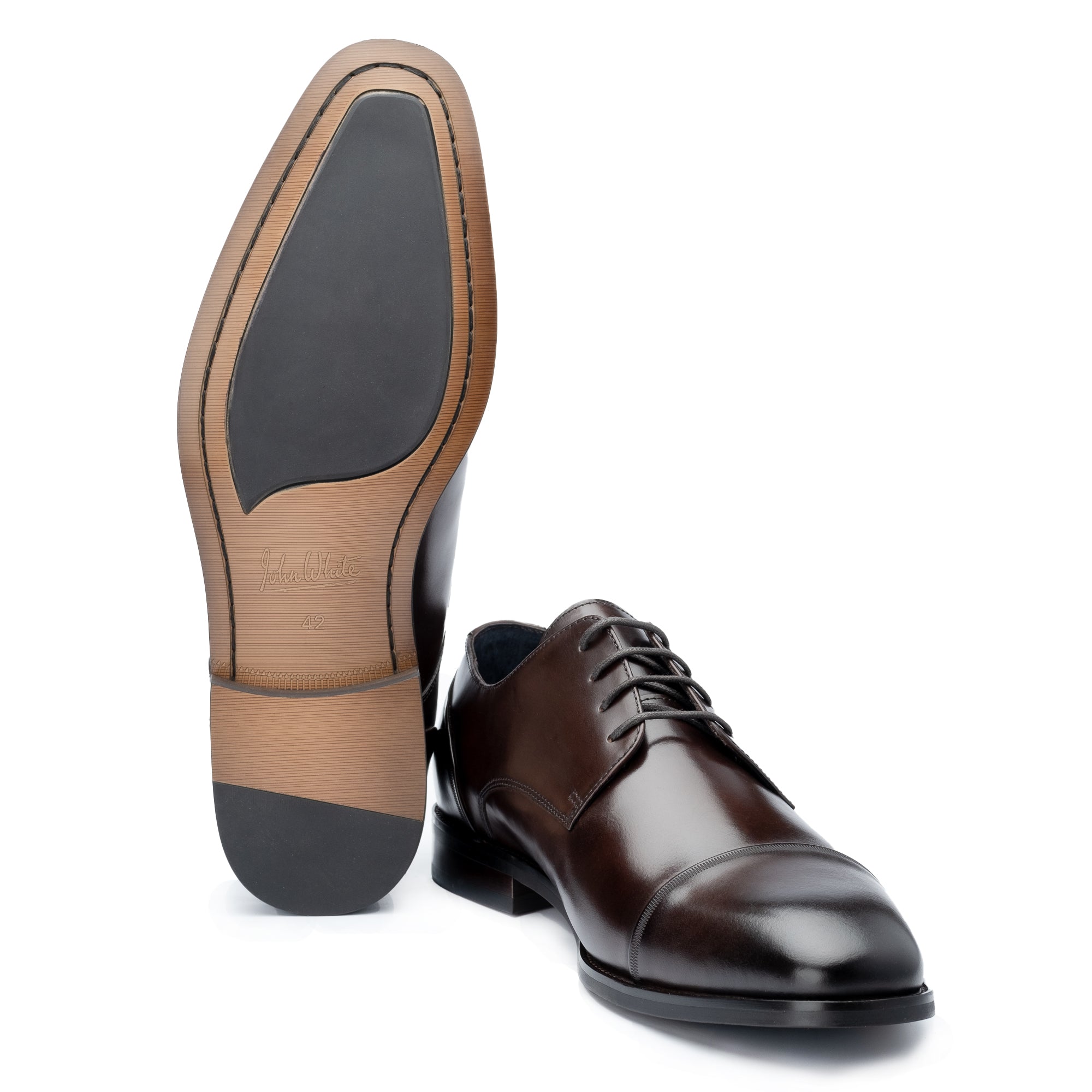
- Pay attention to the base of the upper — the strip where the leather meets the sole — where compacted grime lodges after a day's wear.
- Finish with longer, sweeping strokes across the full upper to lift the final dust layer.
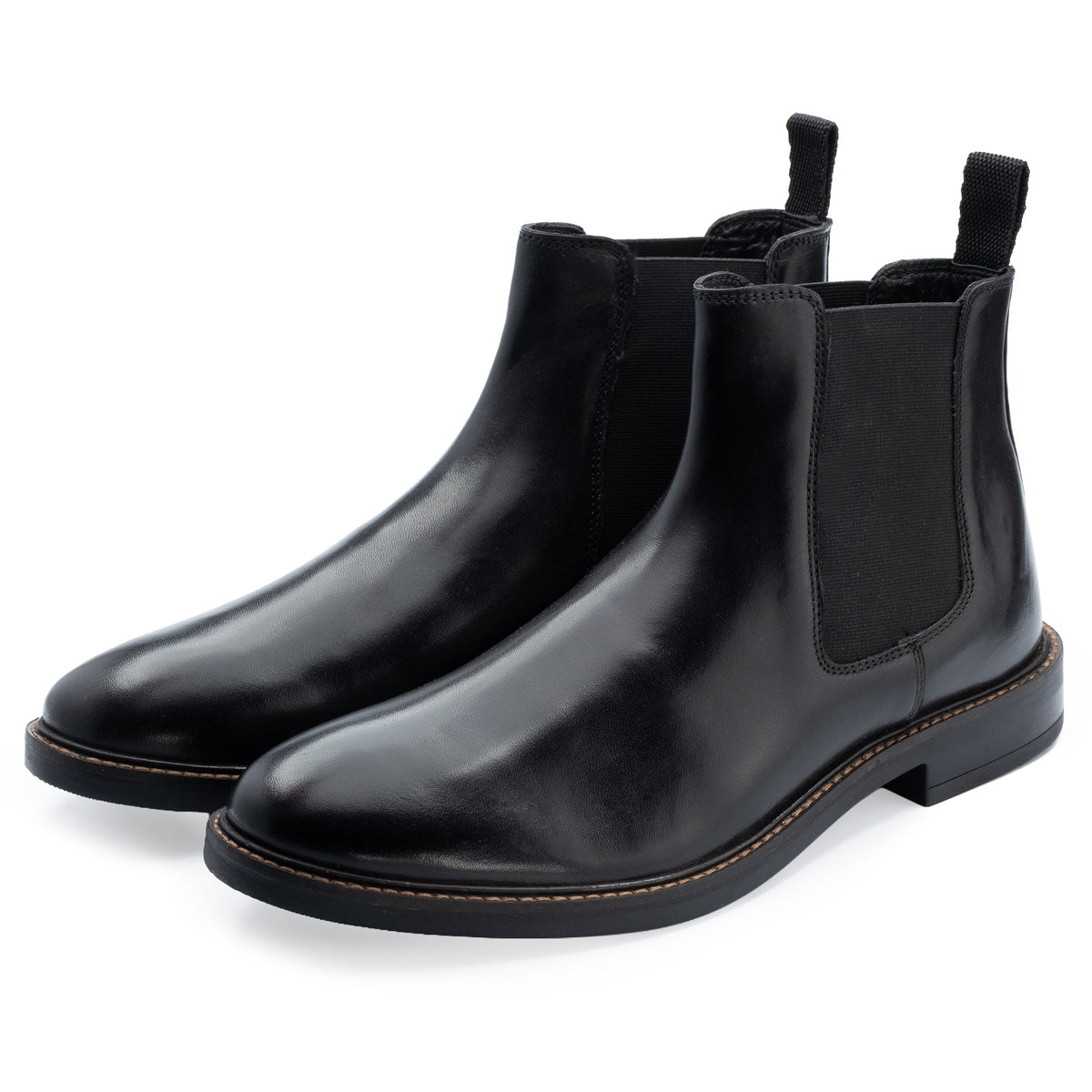
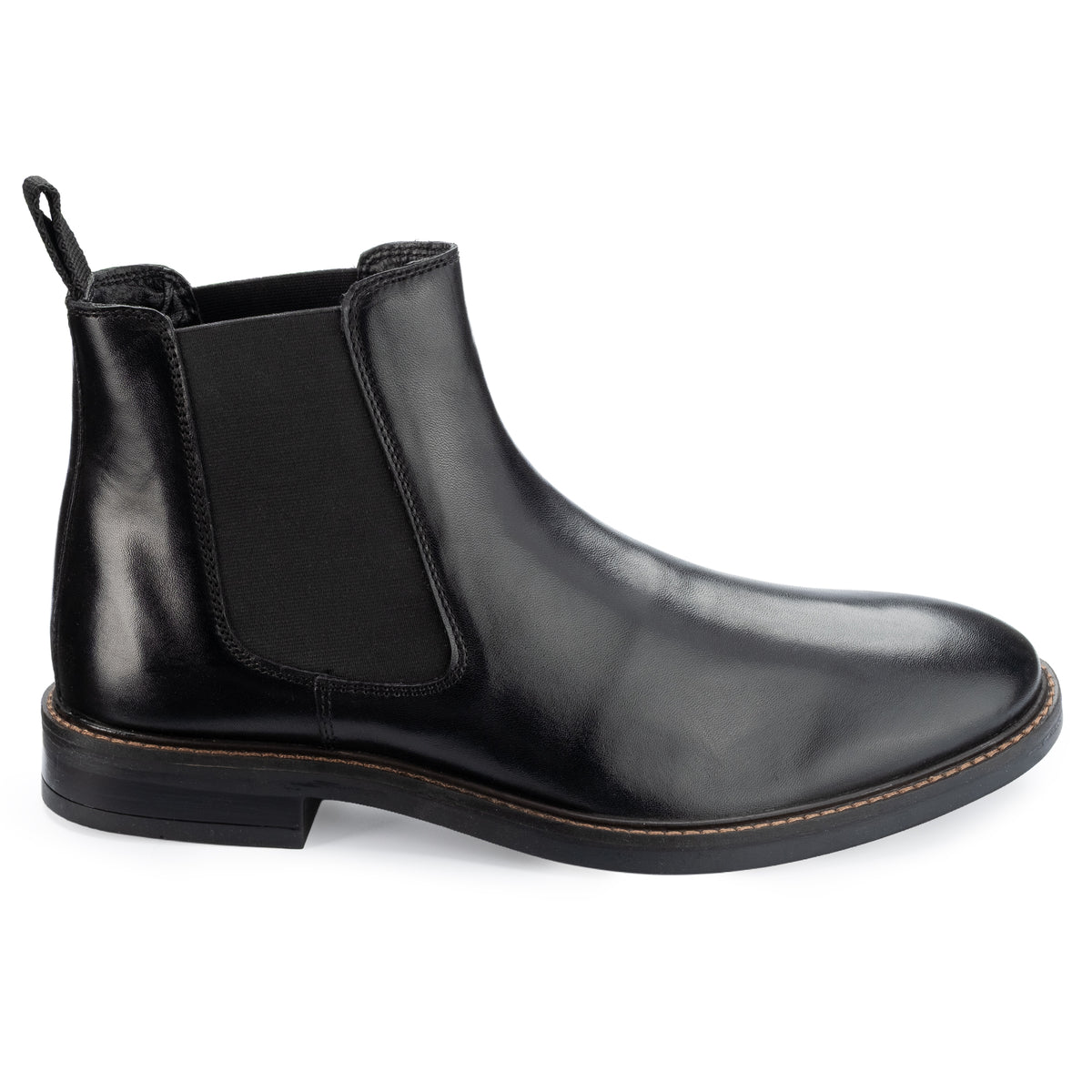
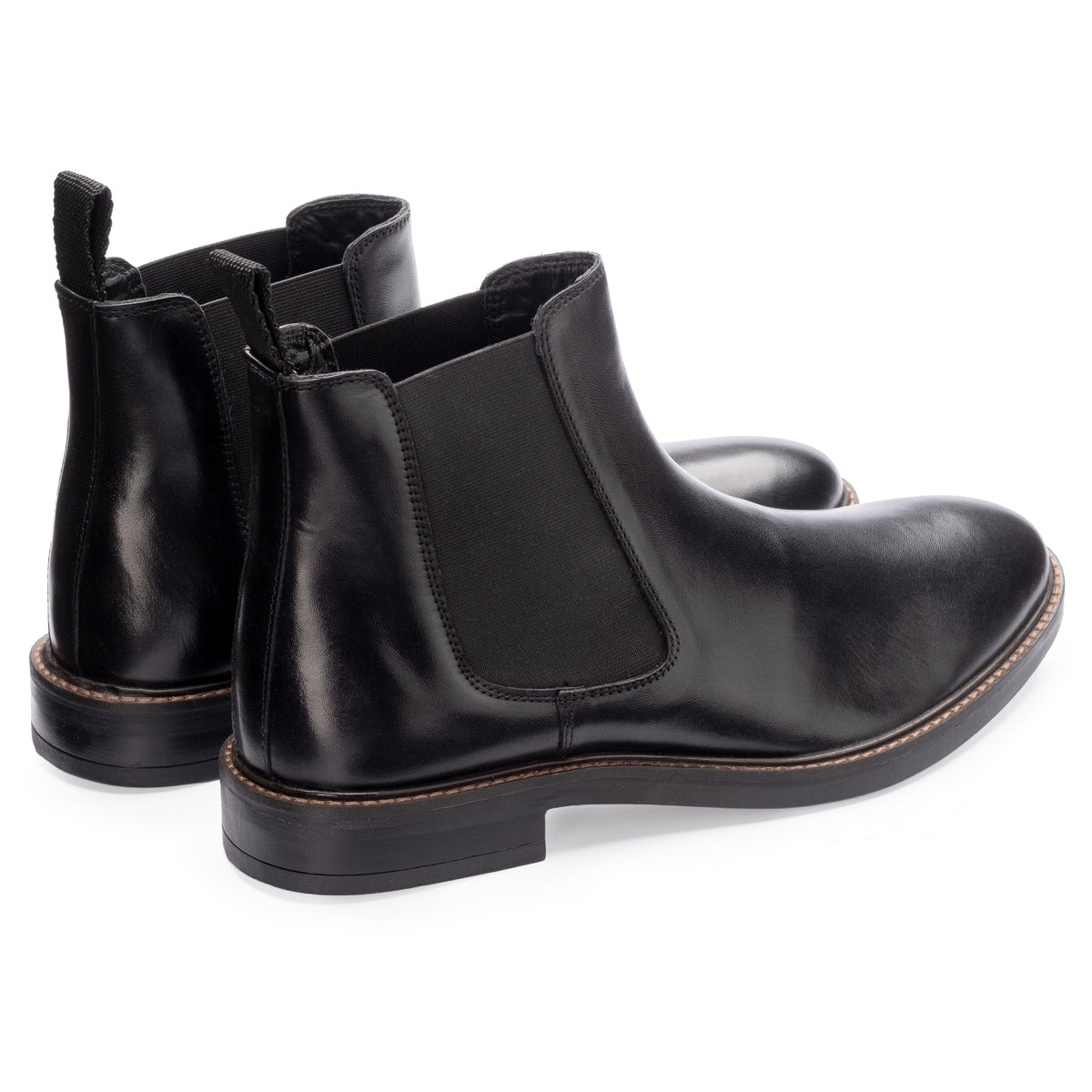
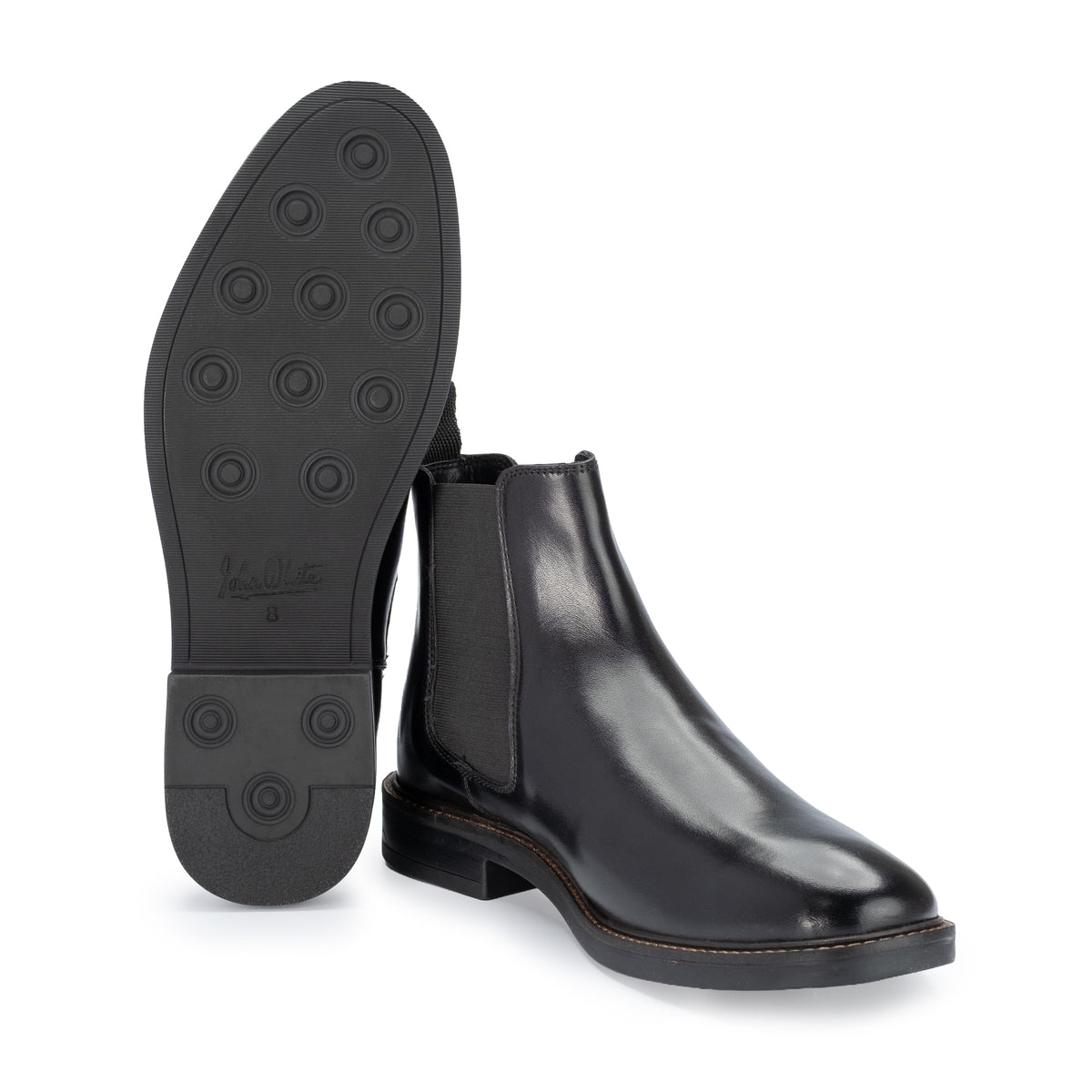
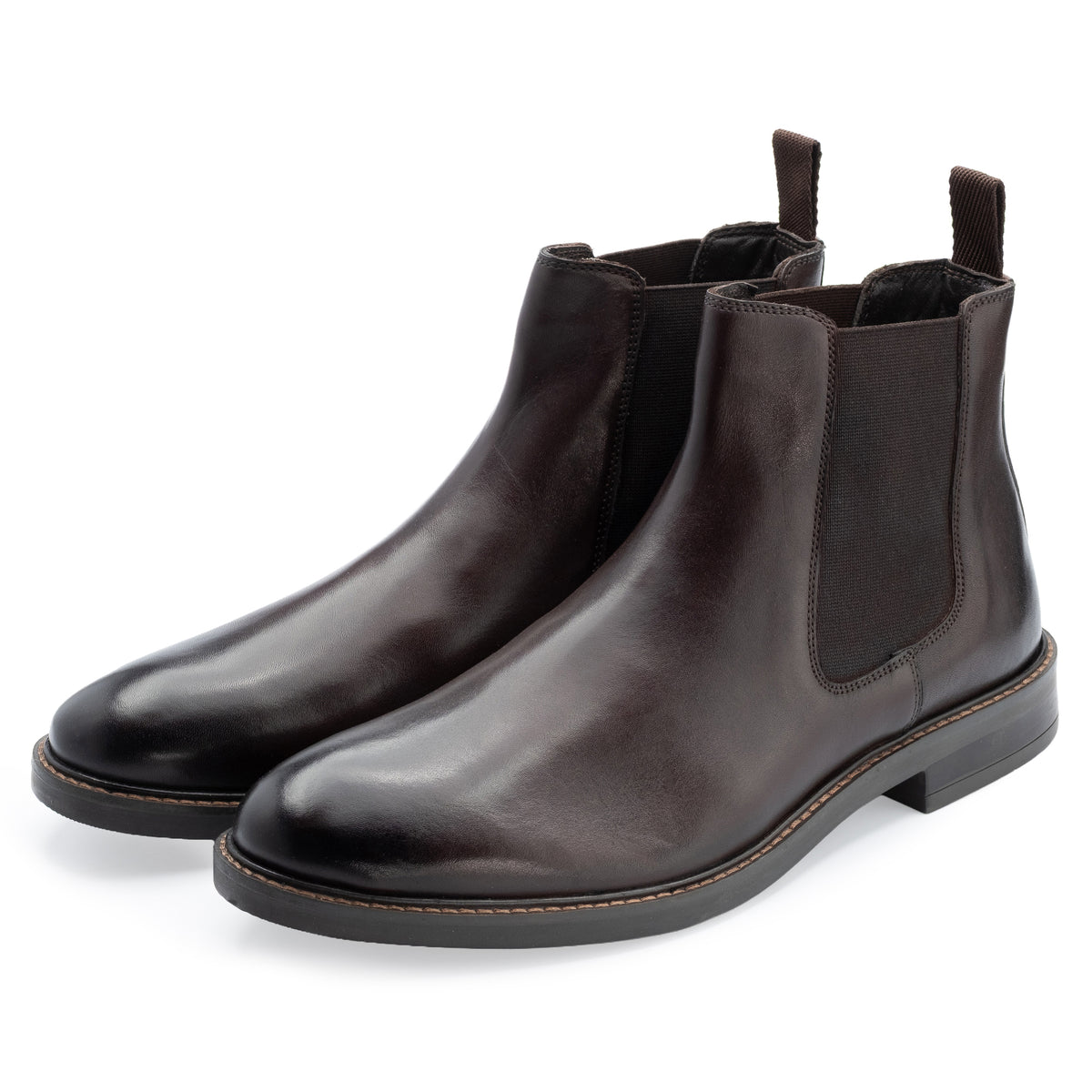
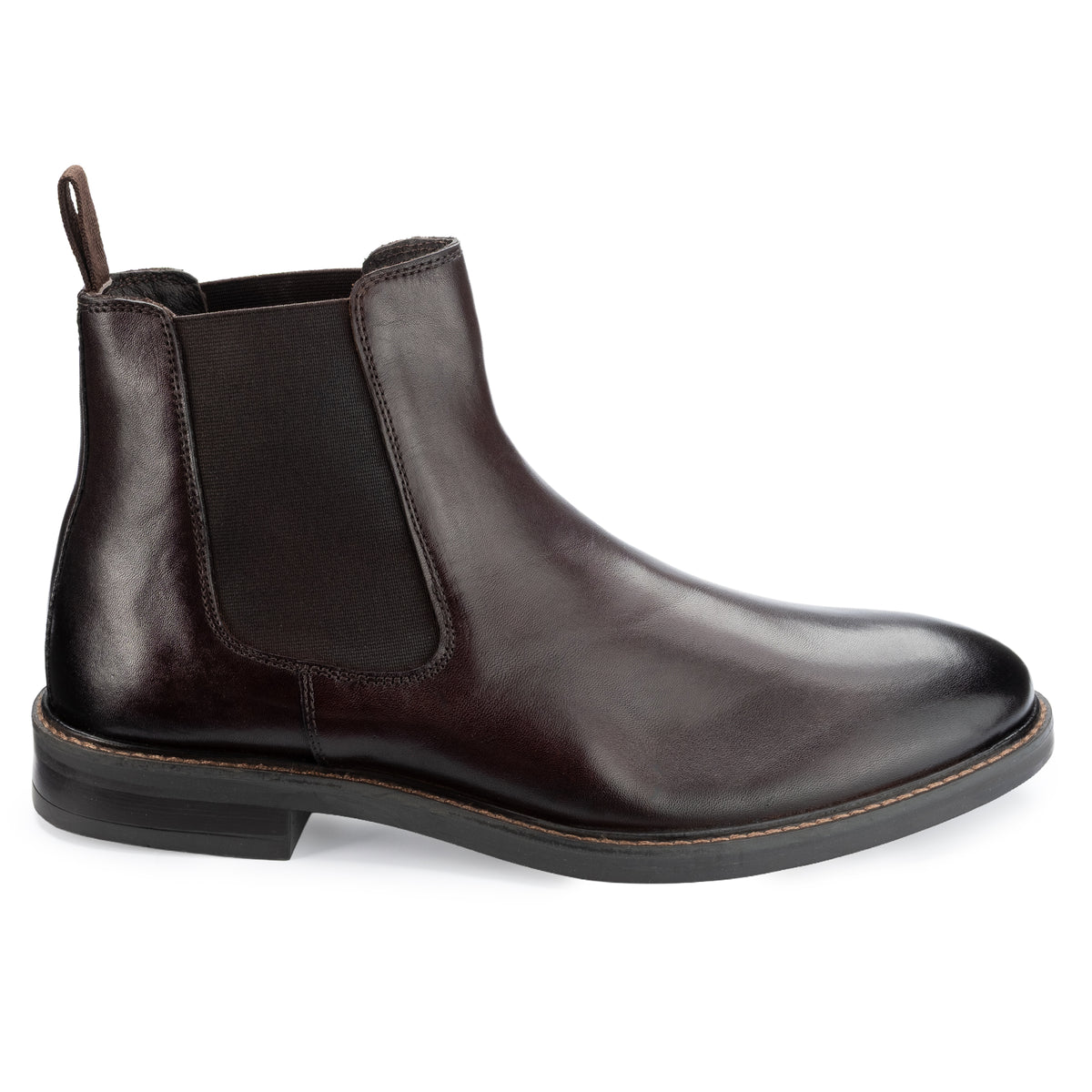
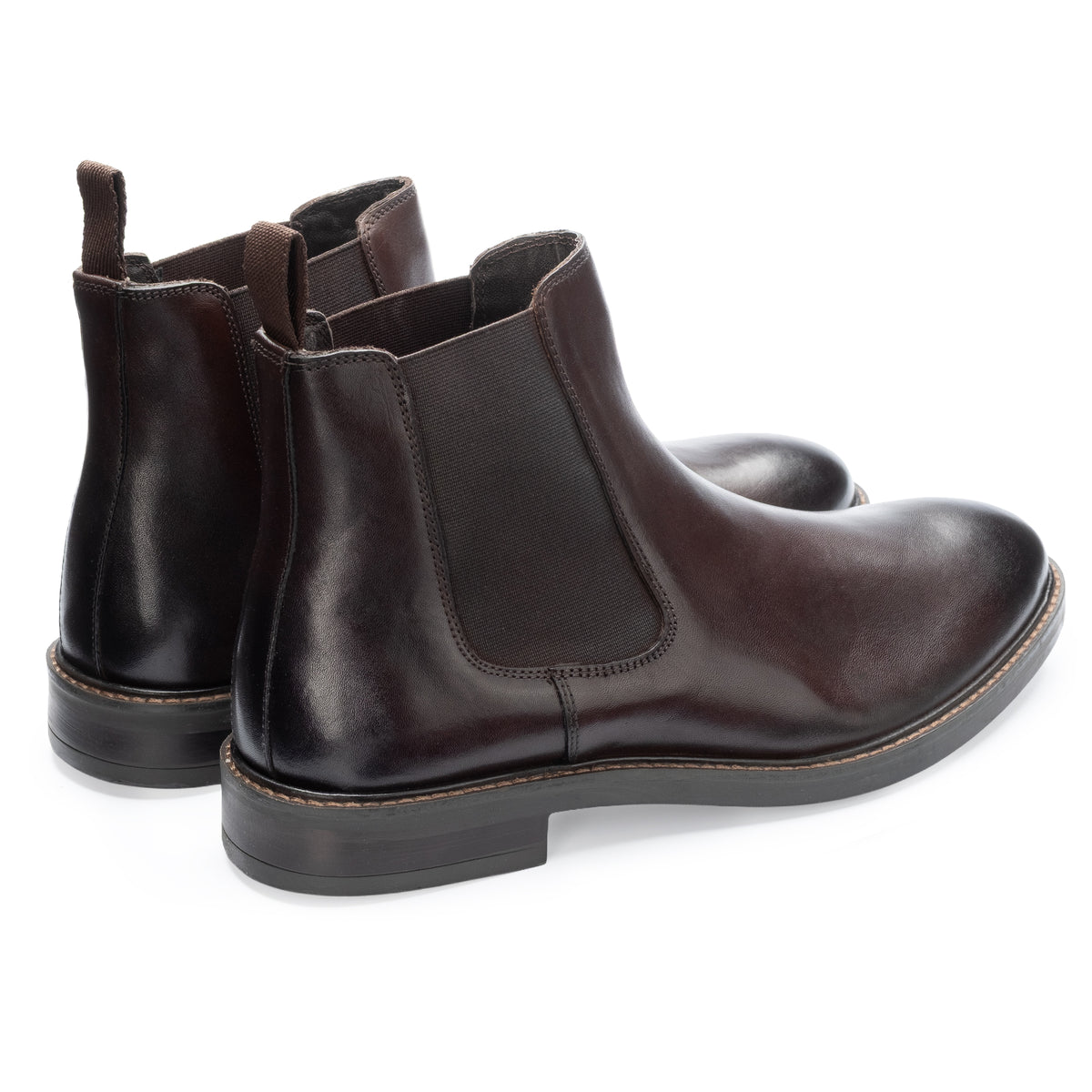
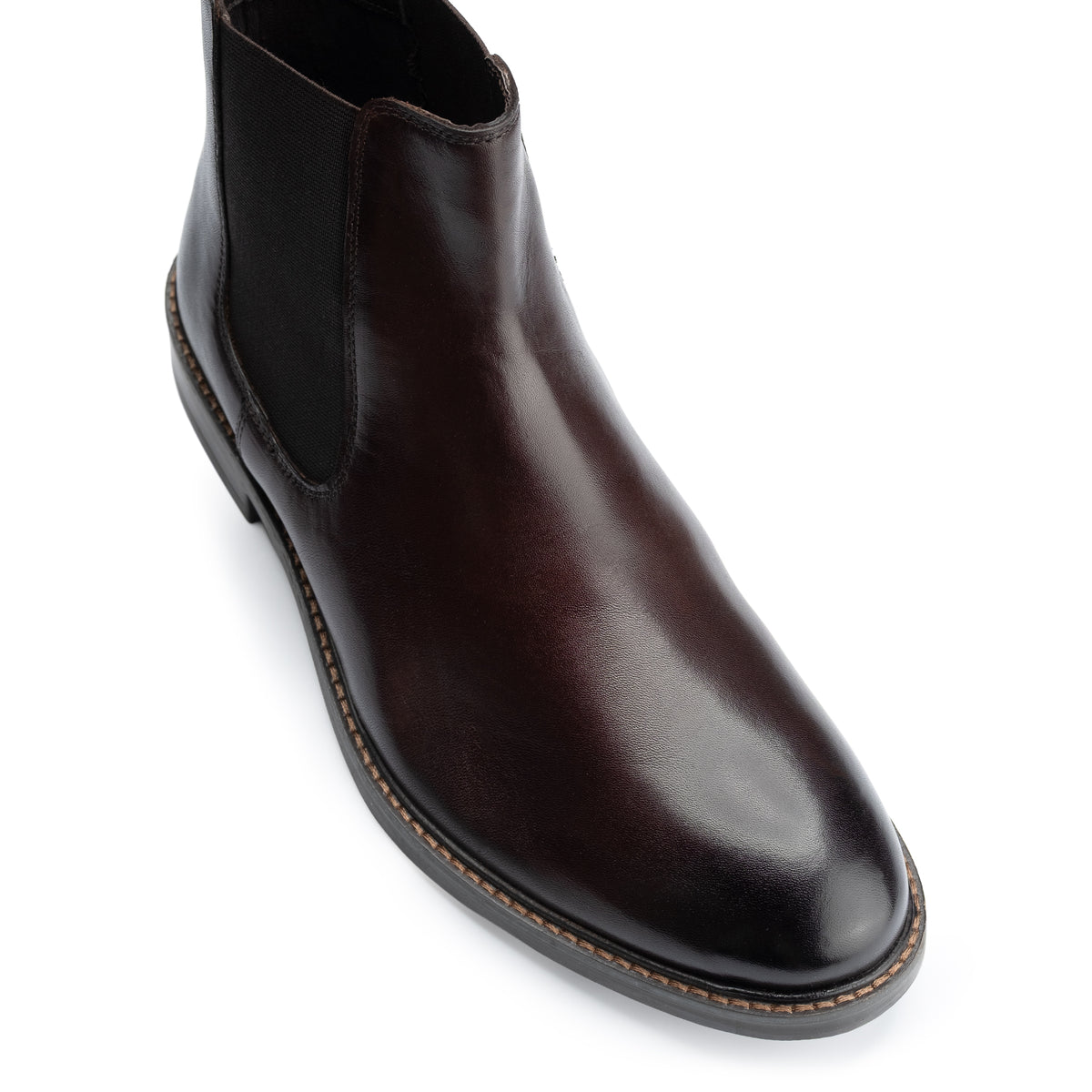
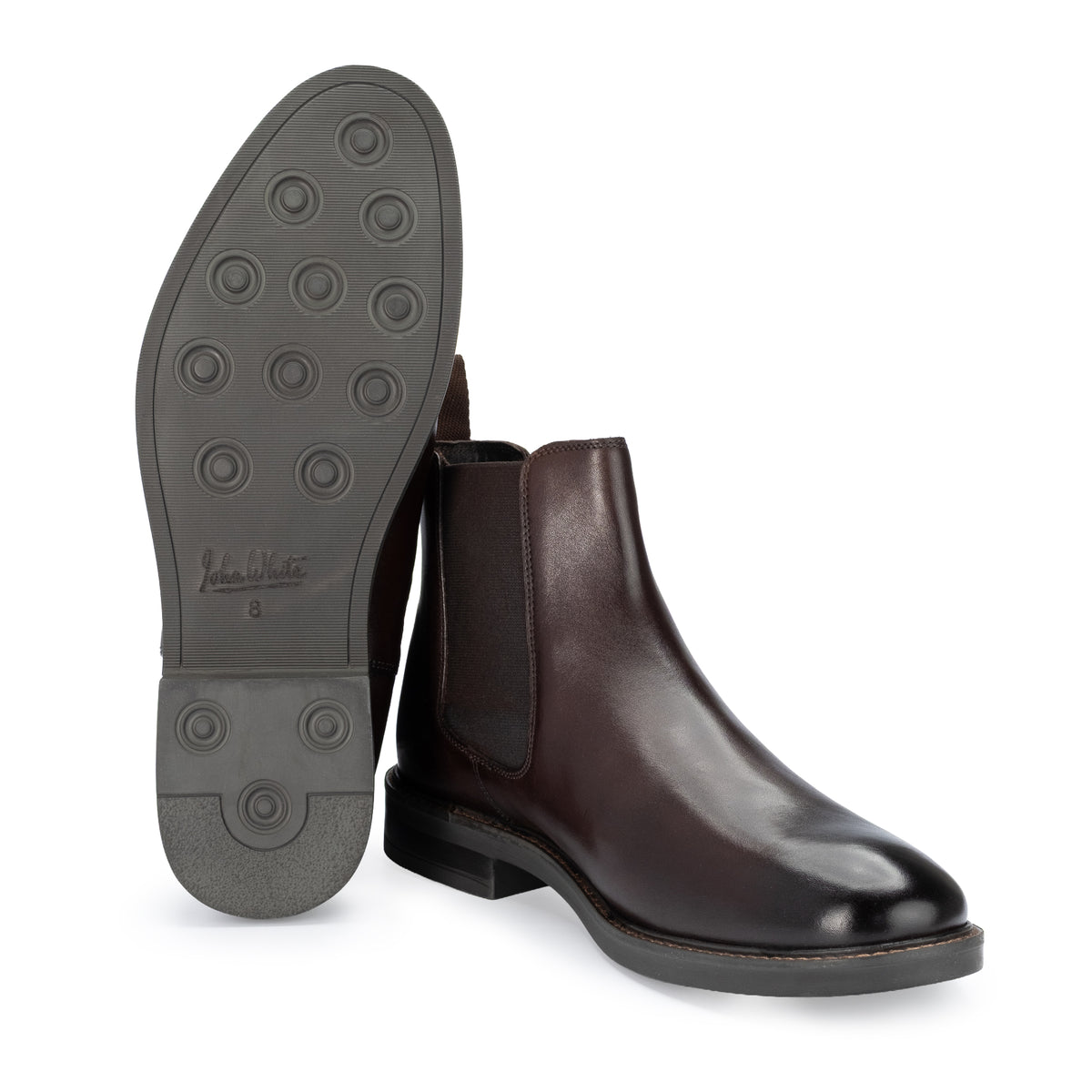
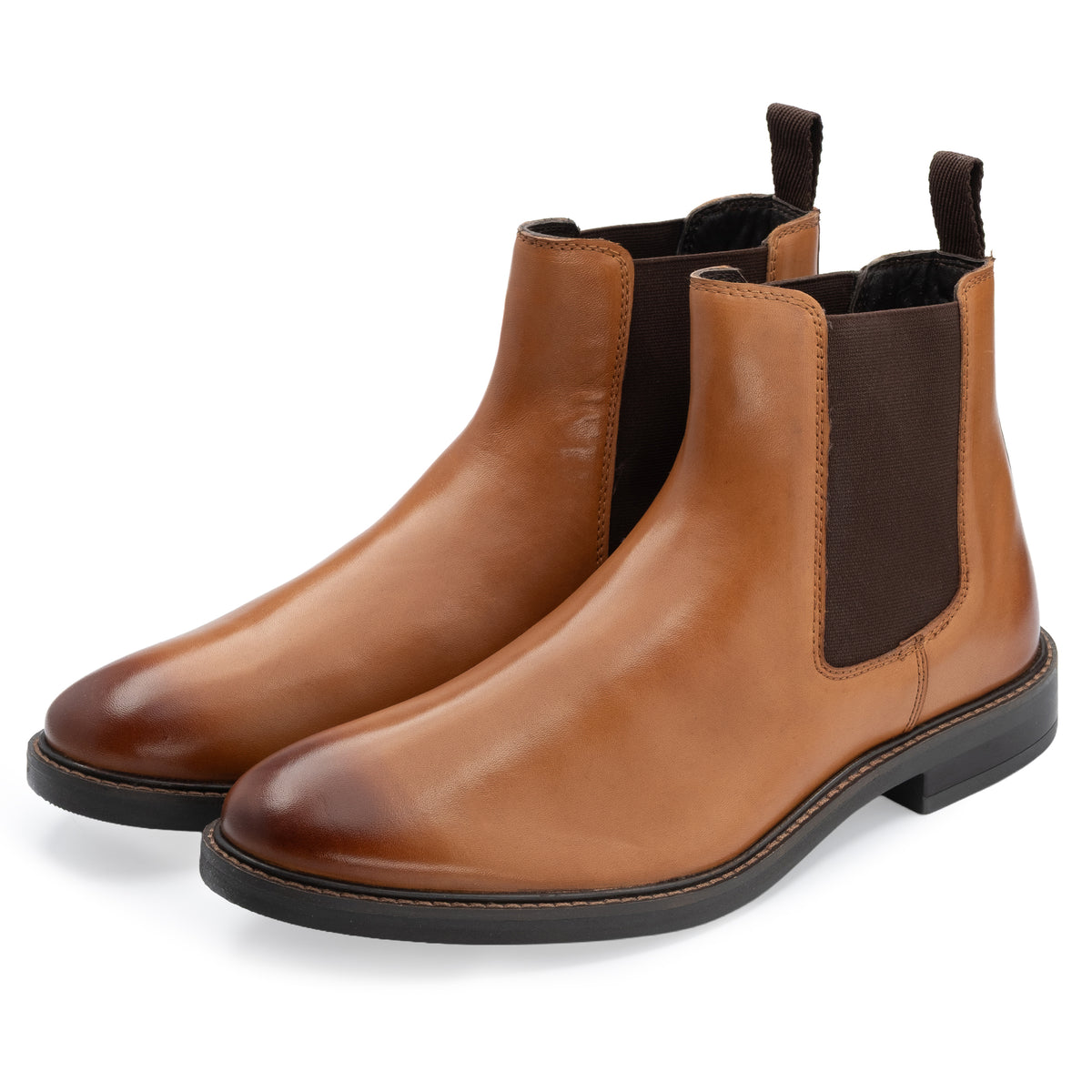
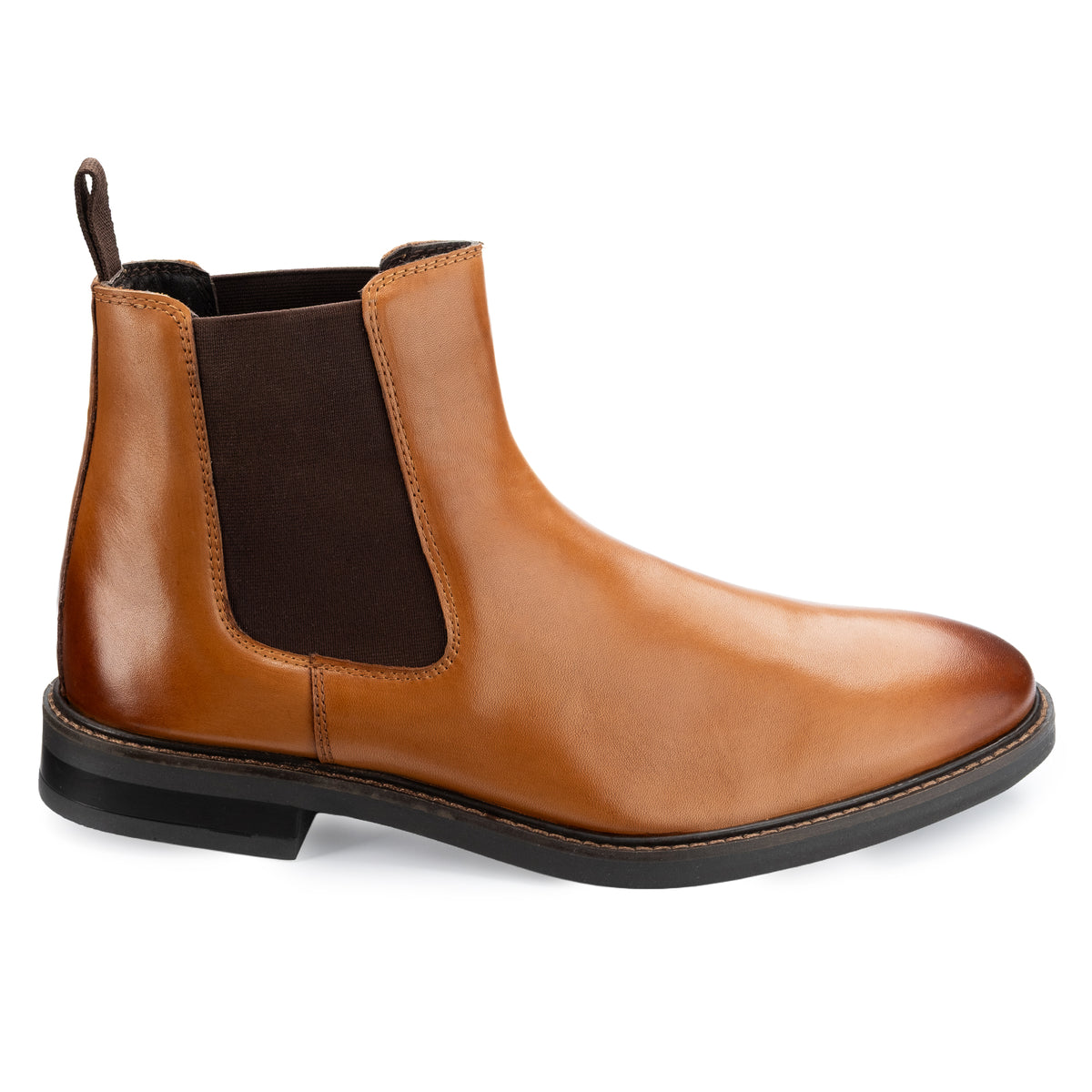
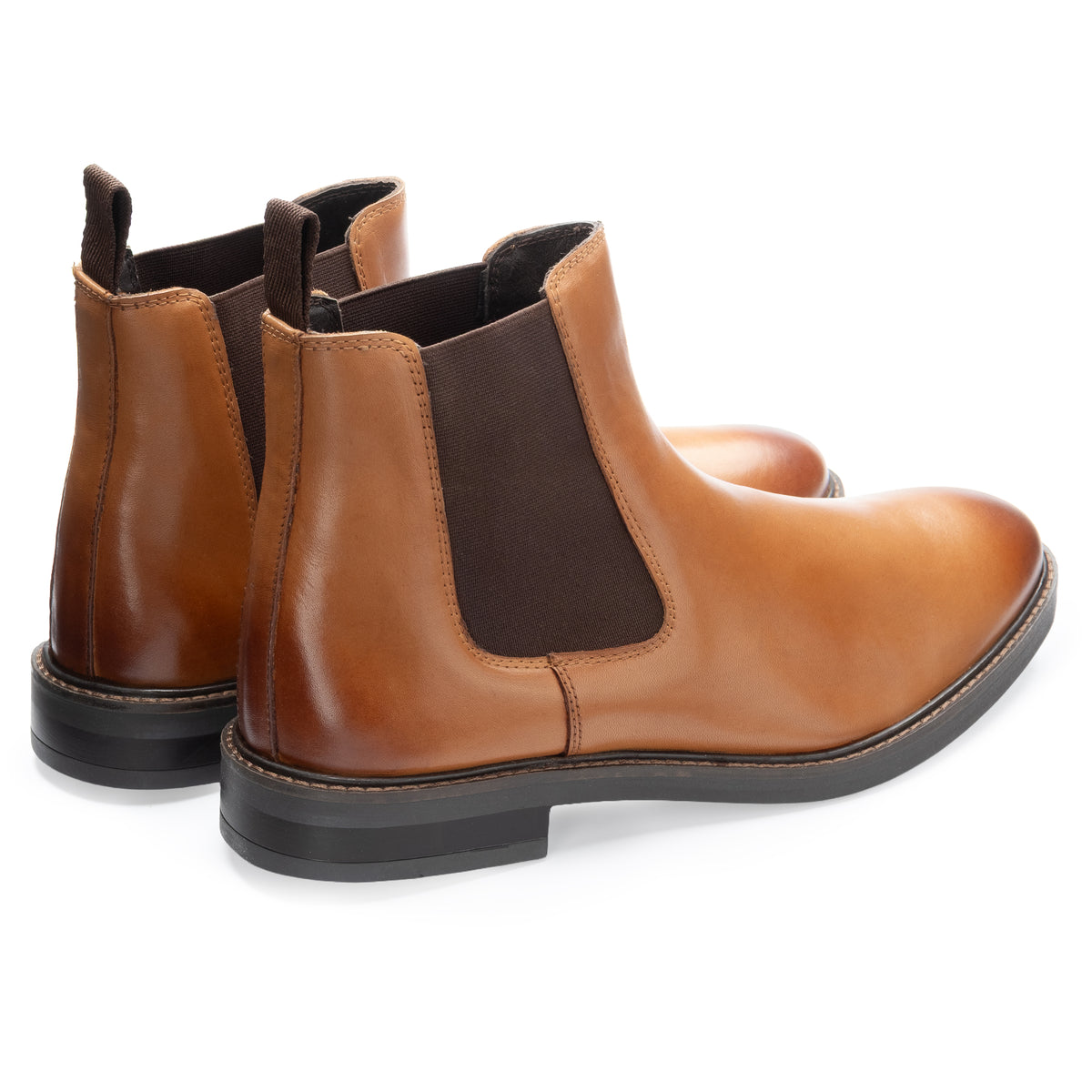
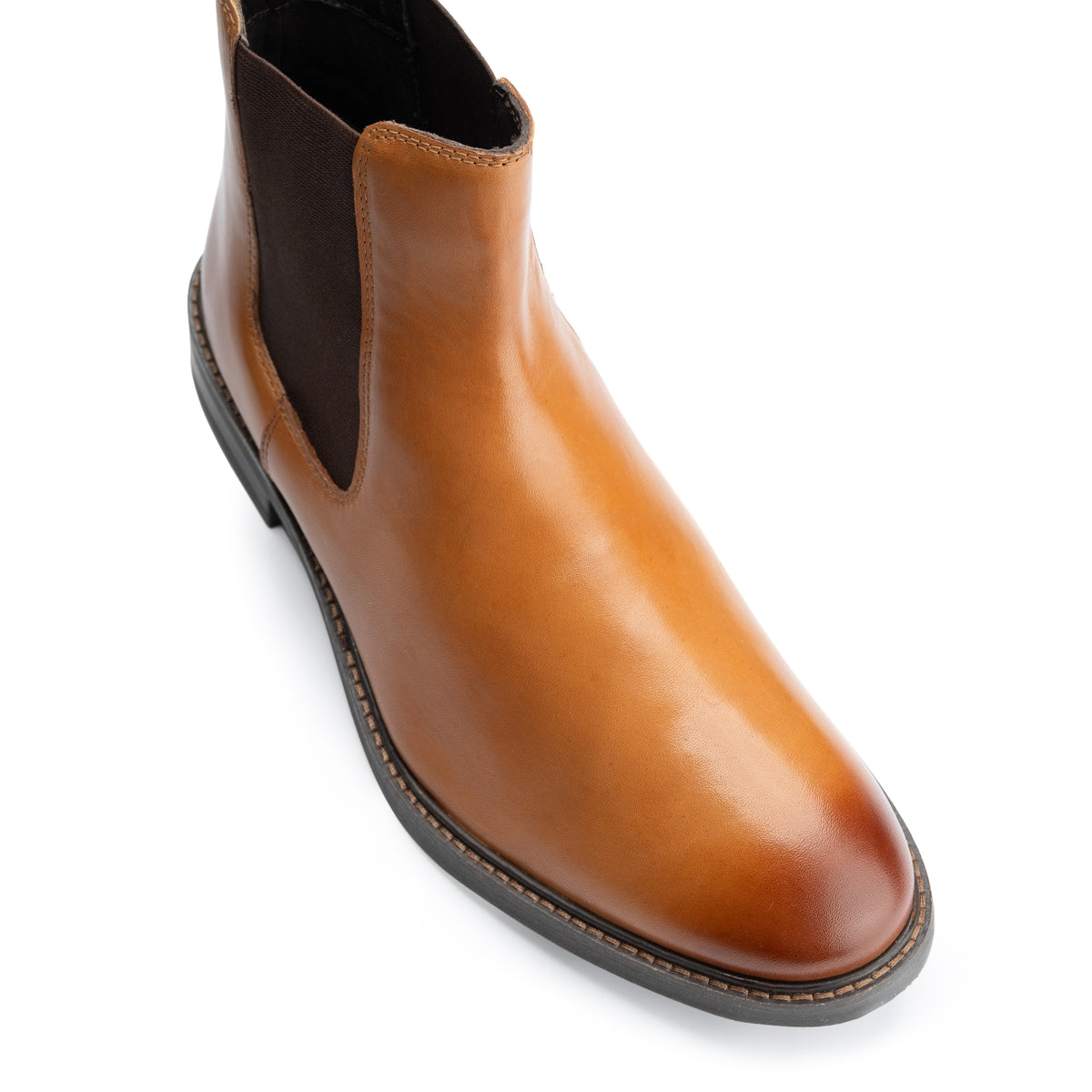
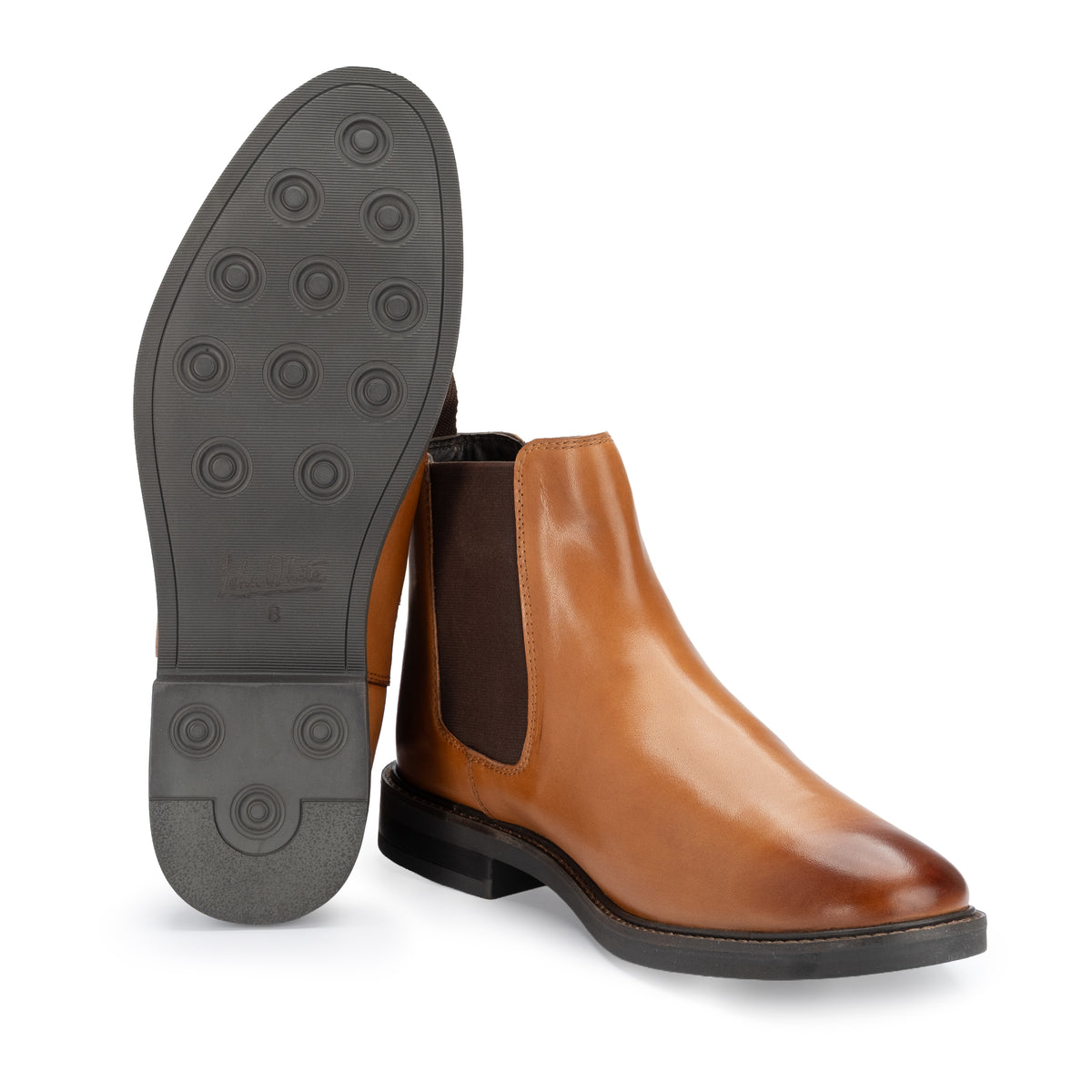
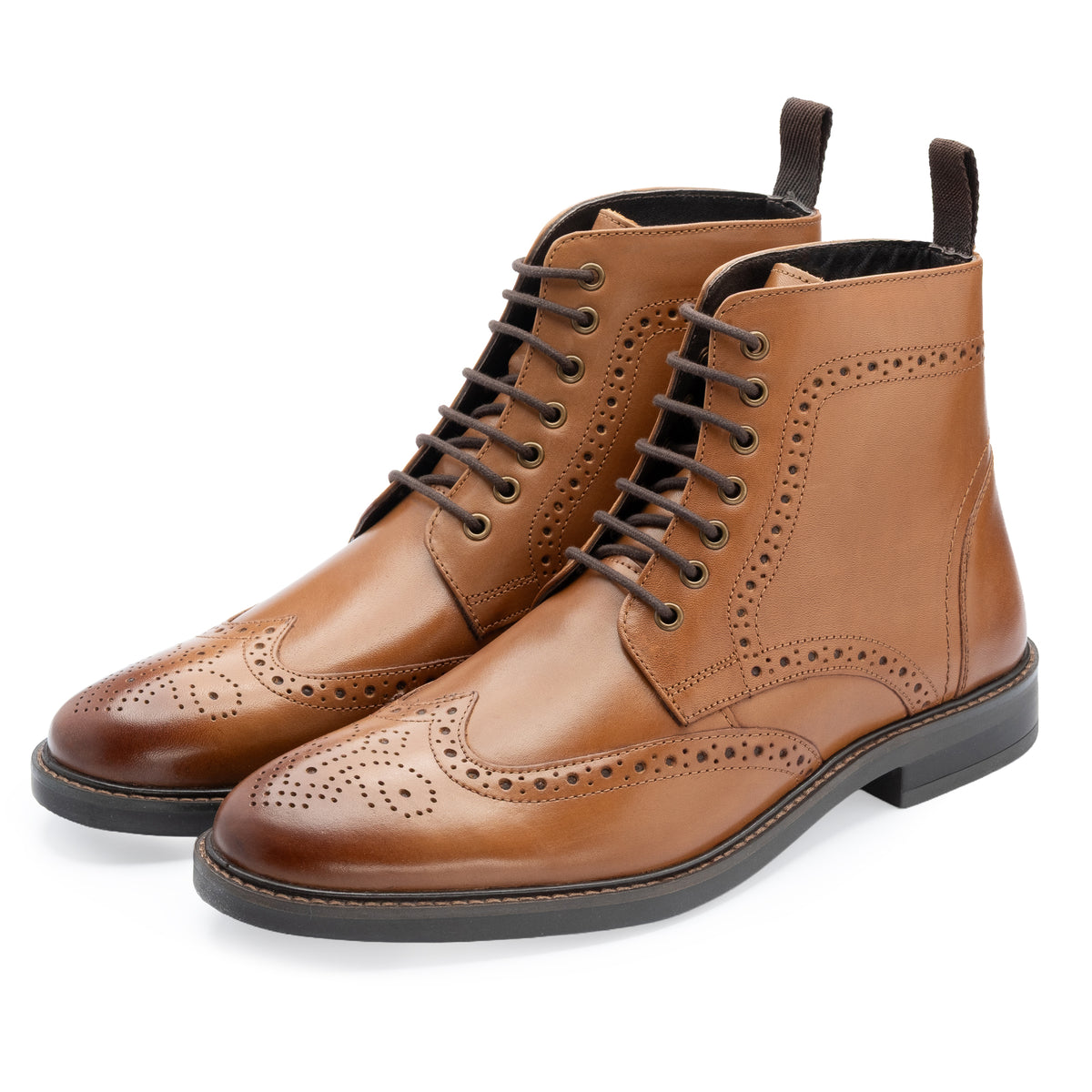
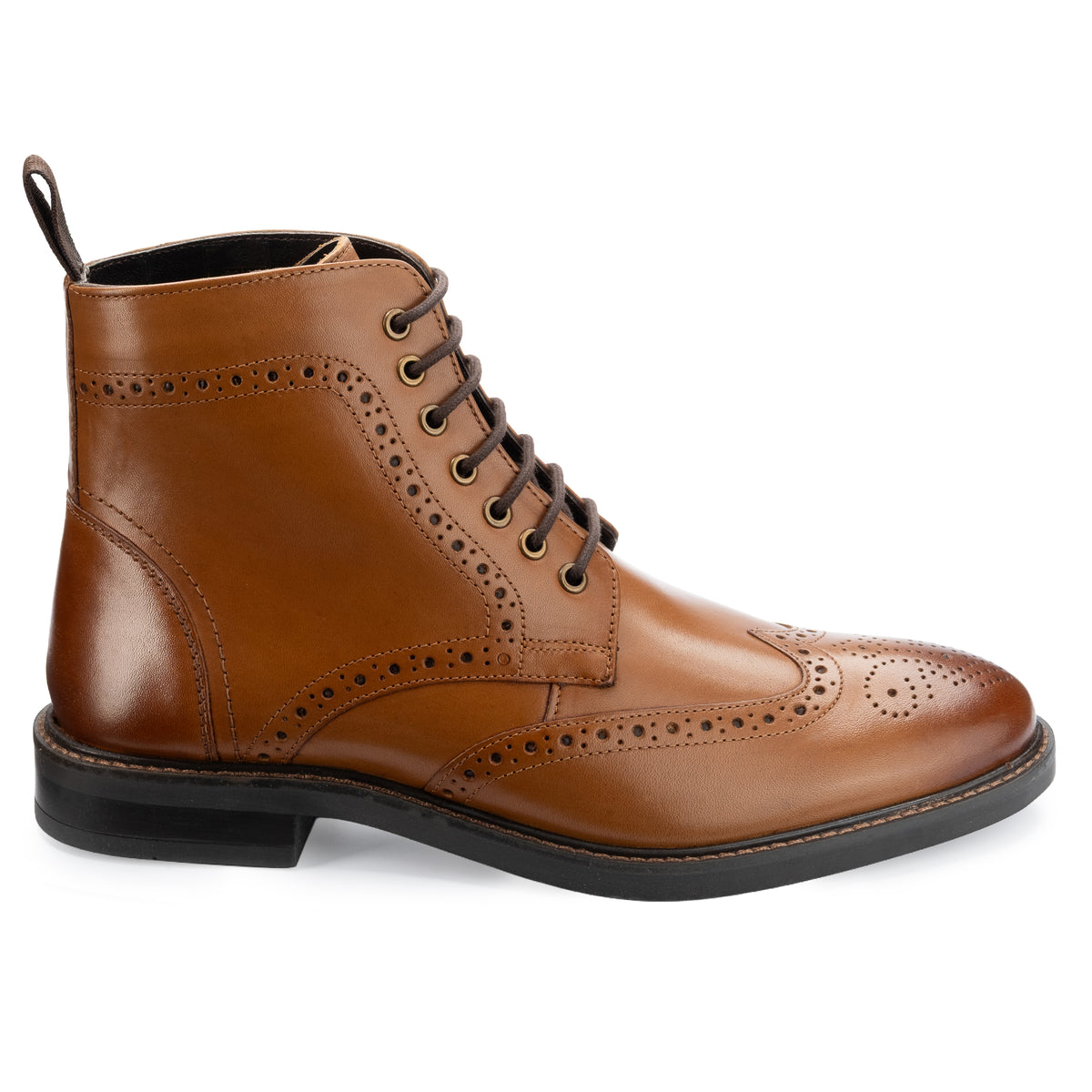
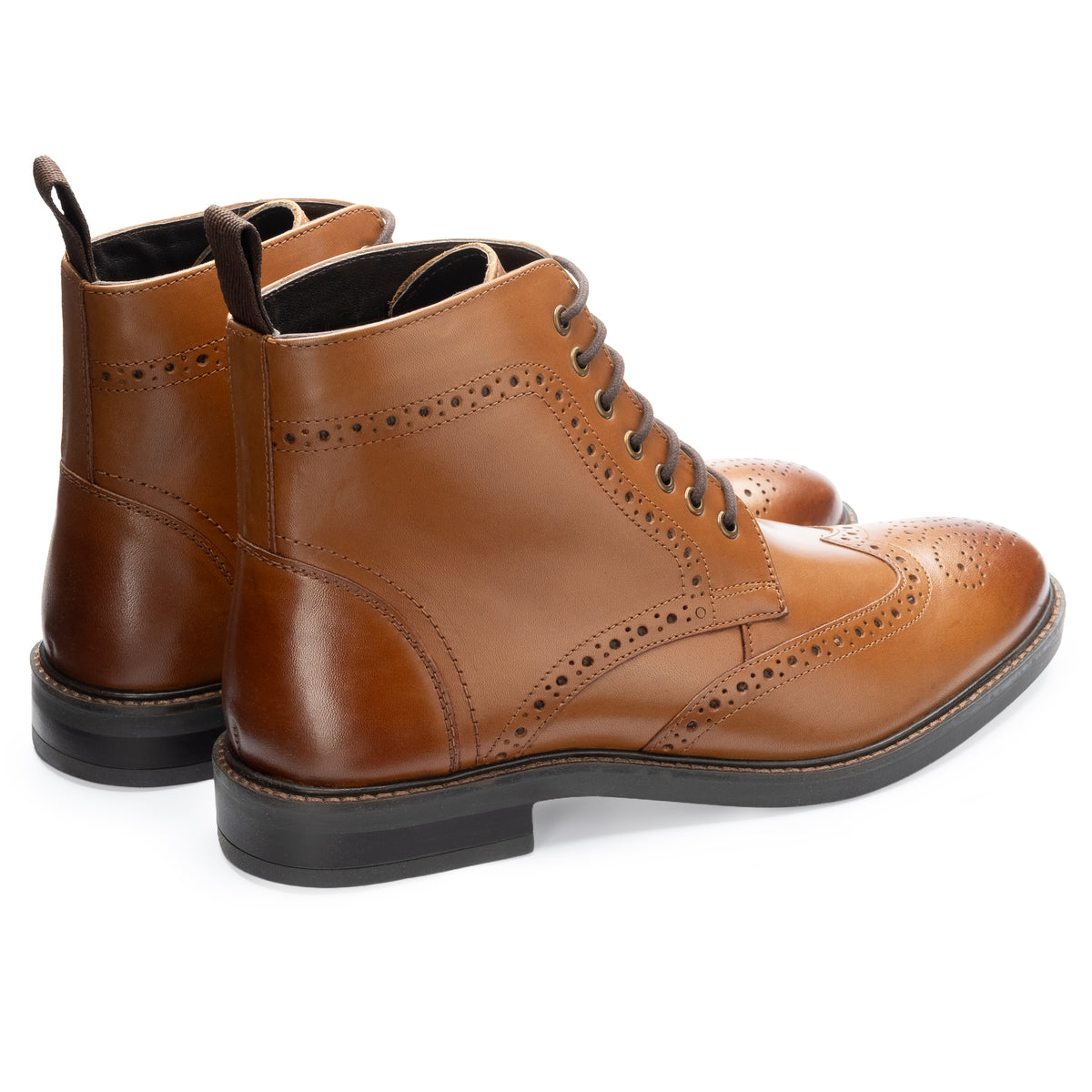
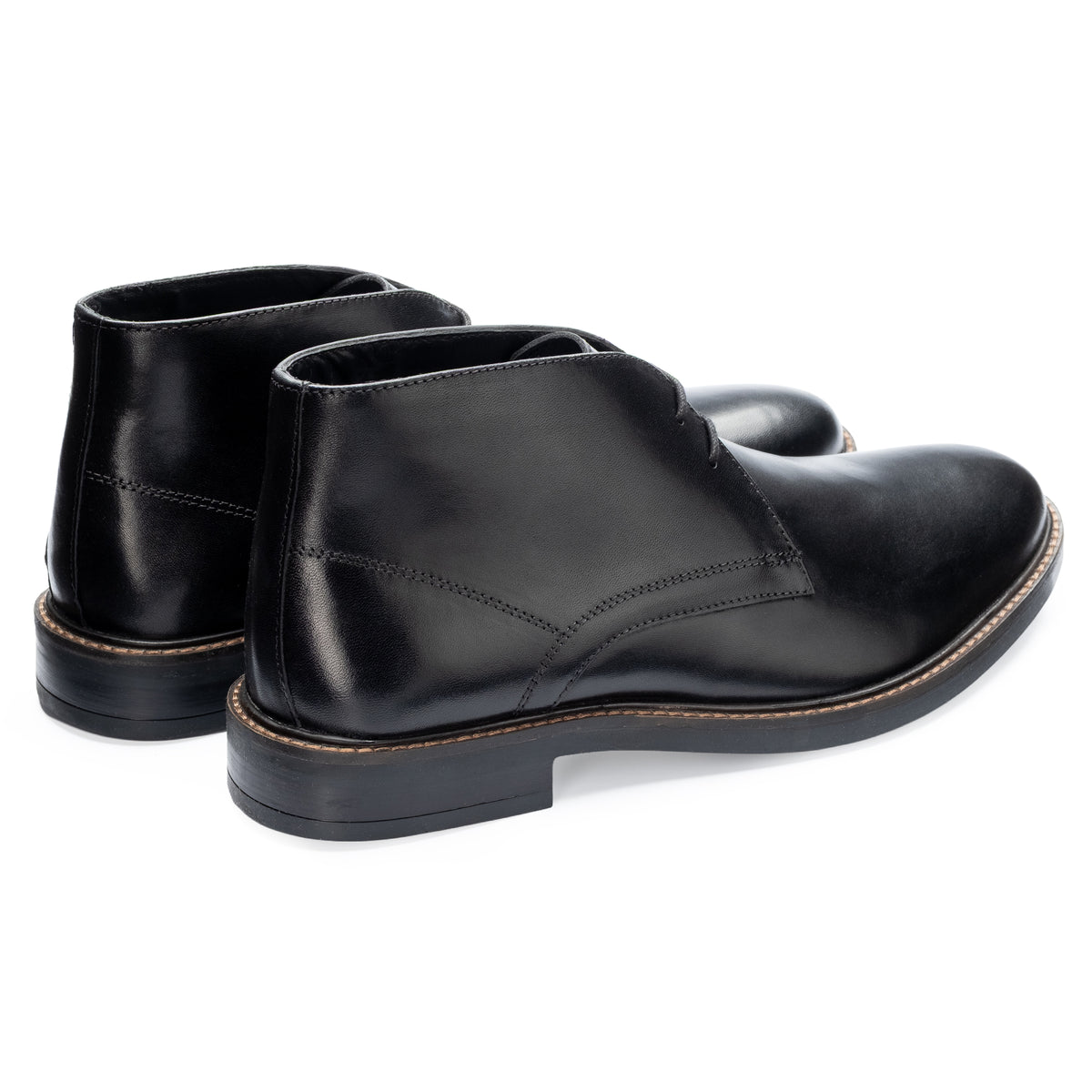
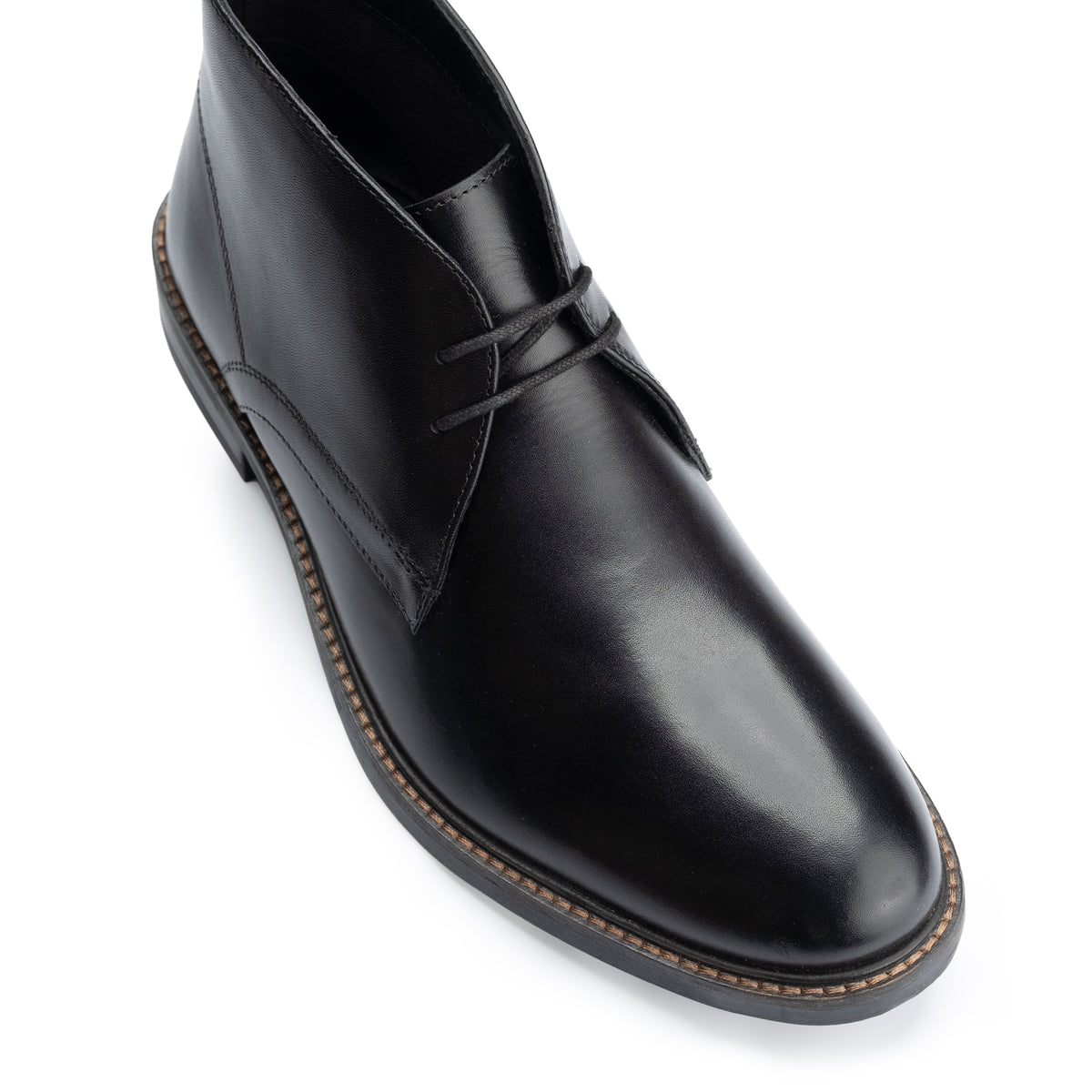
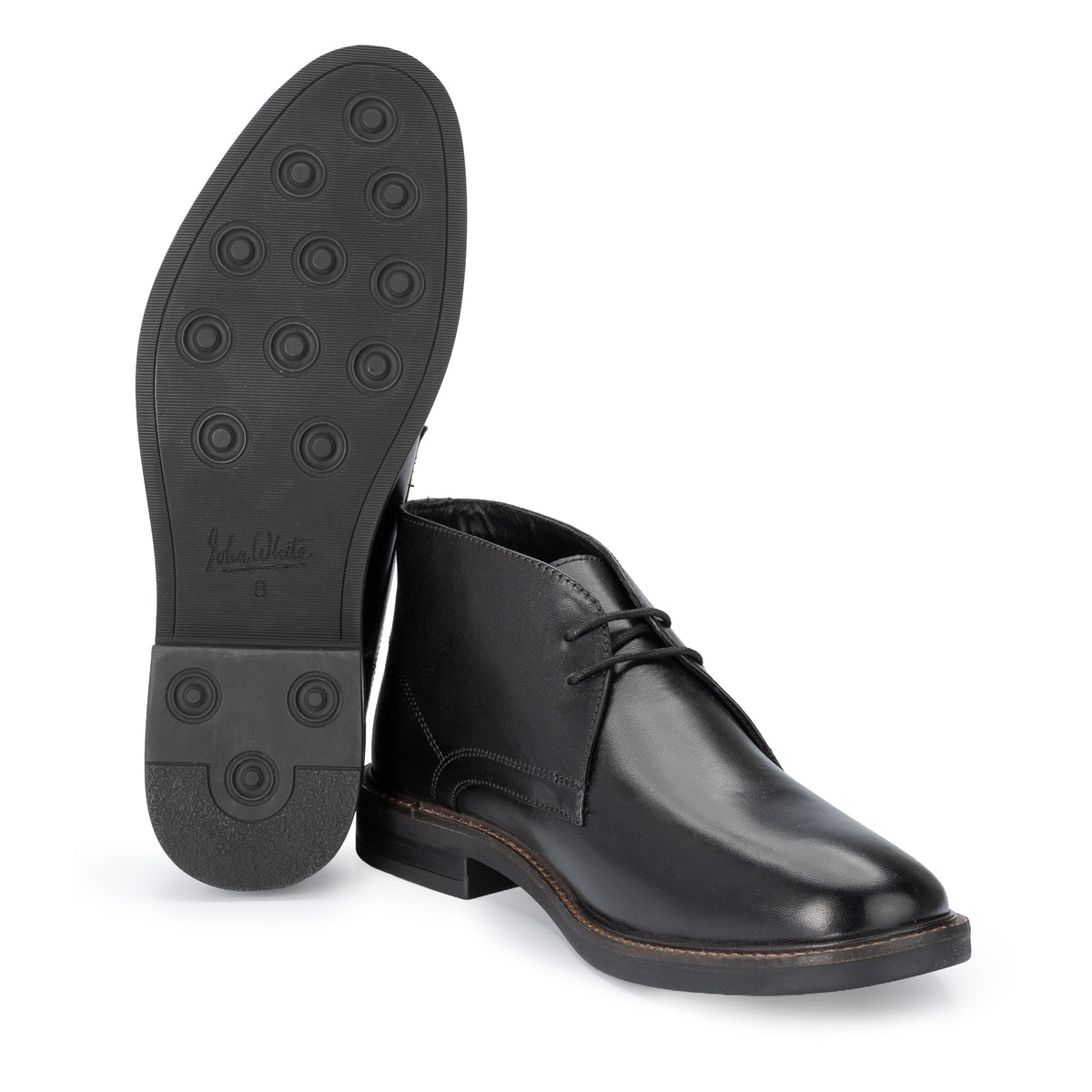
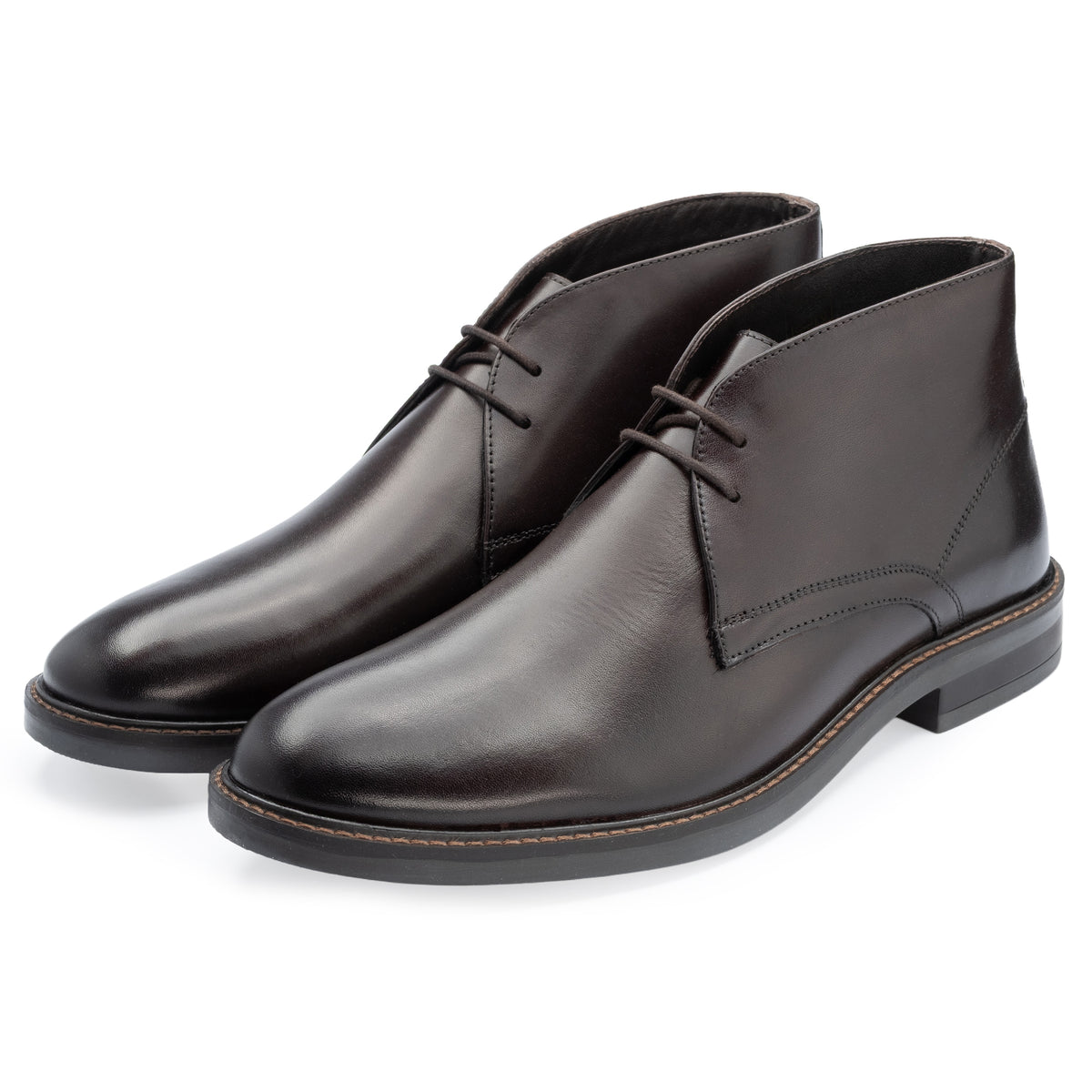
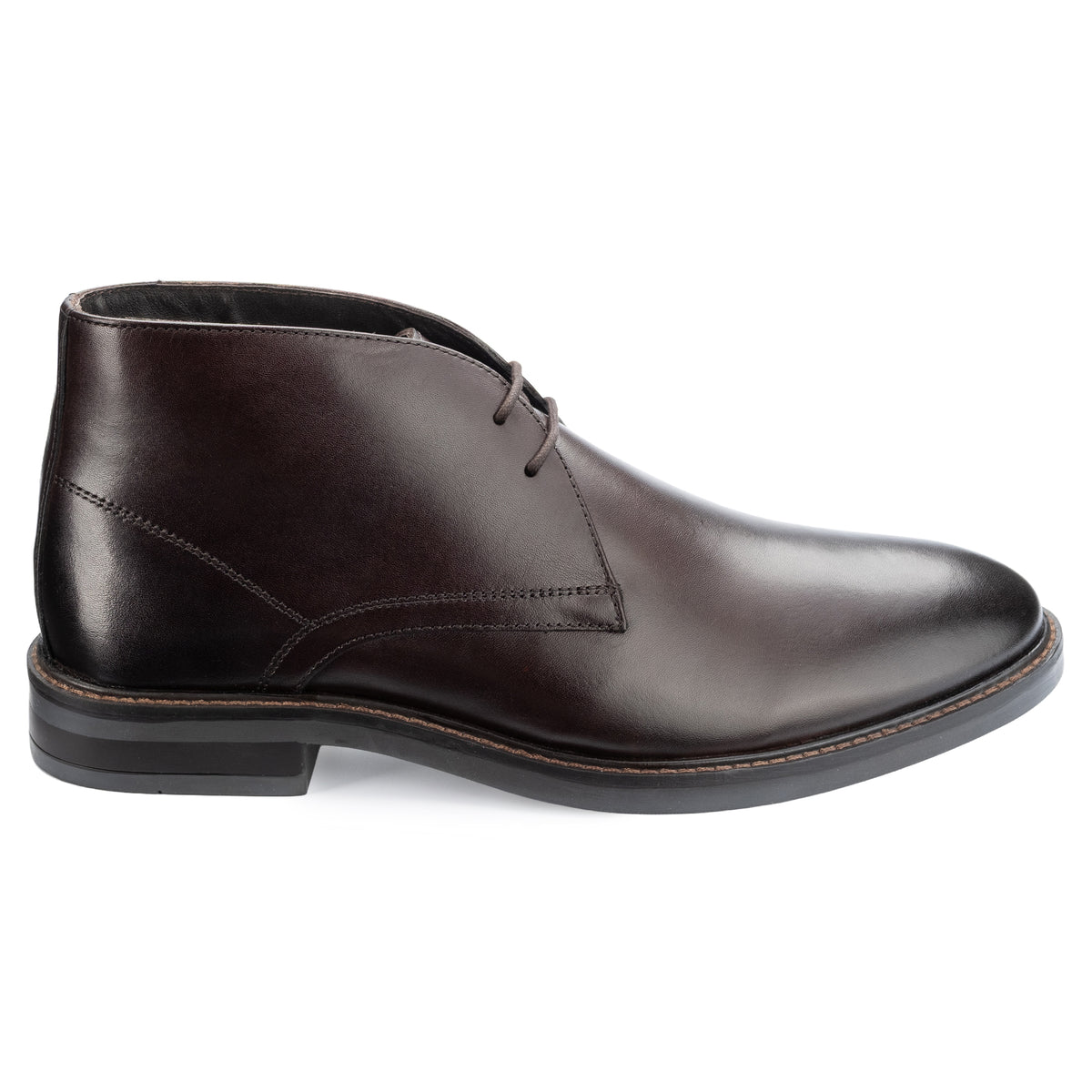
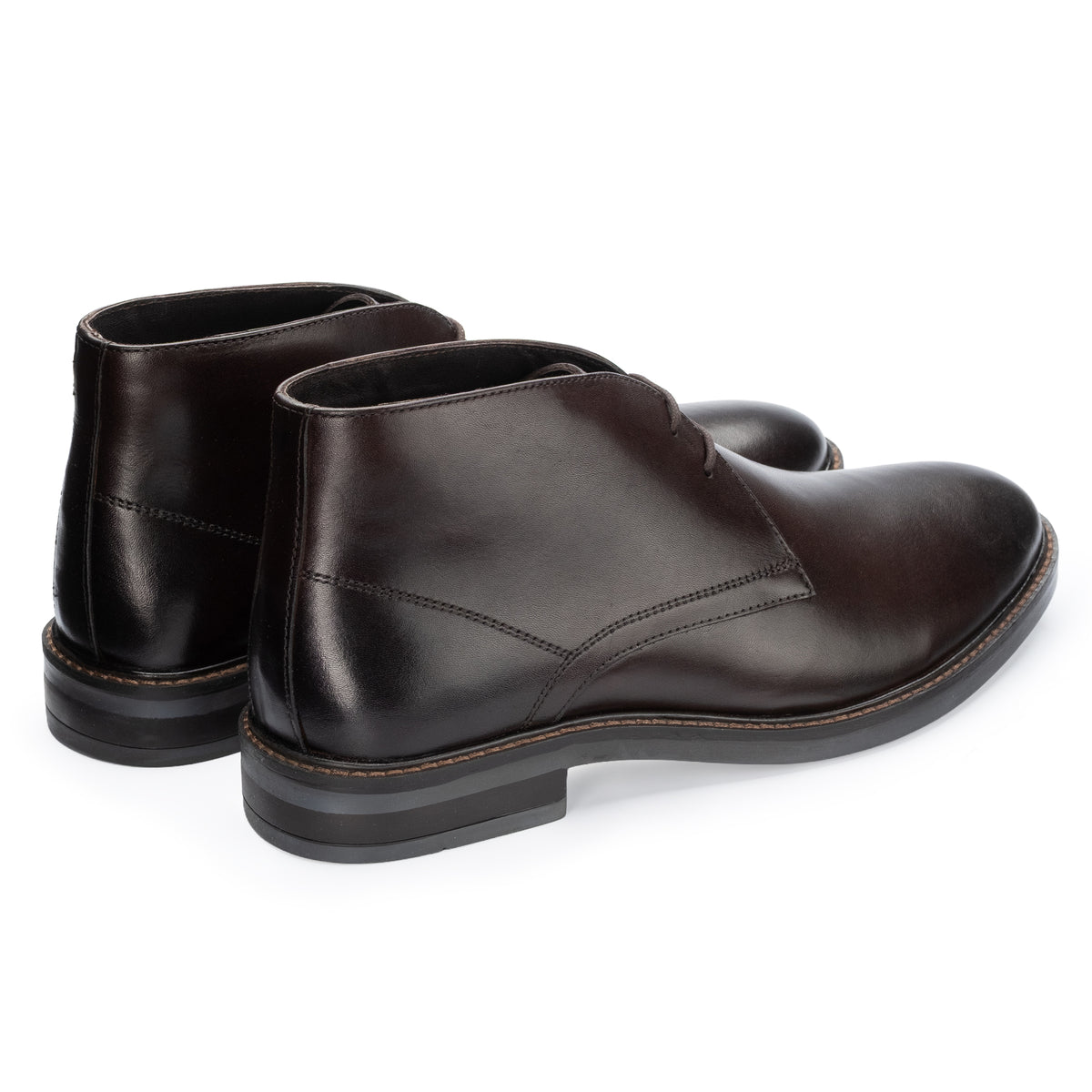
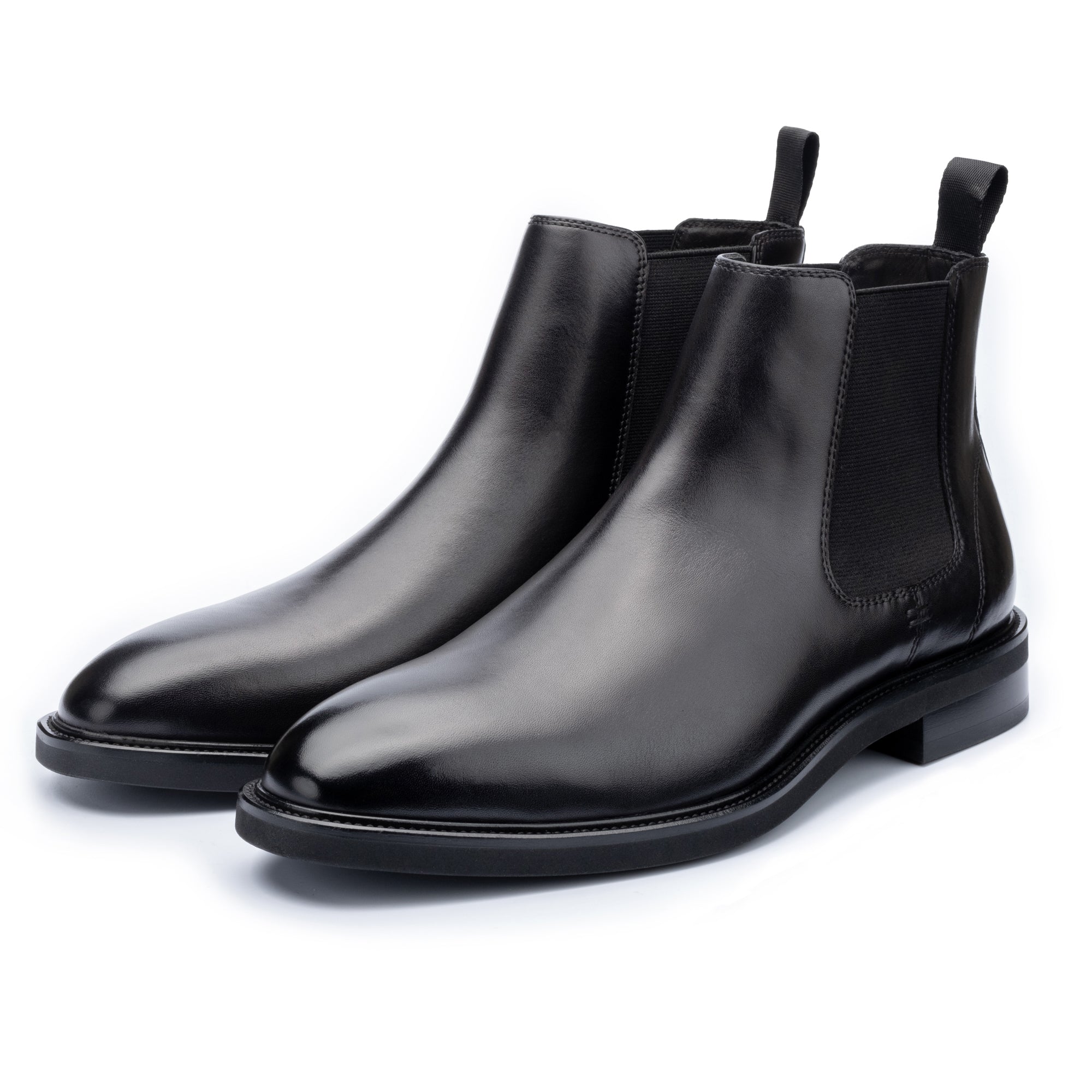
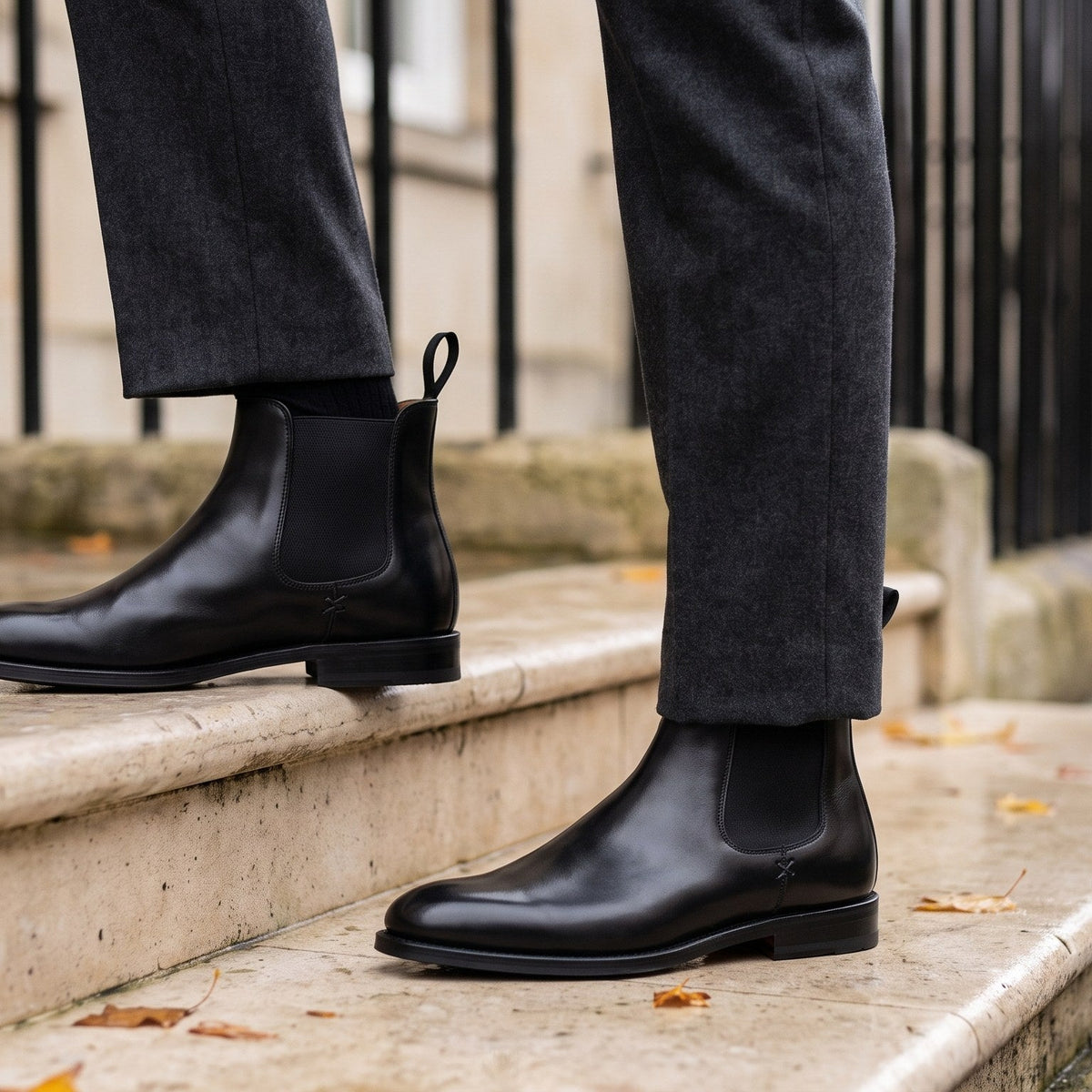
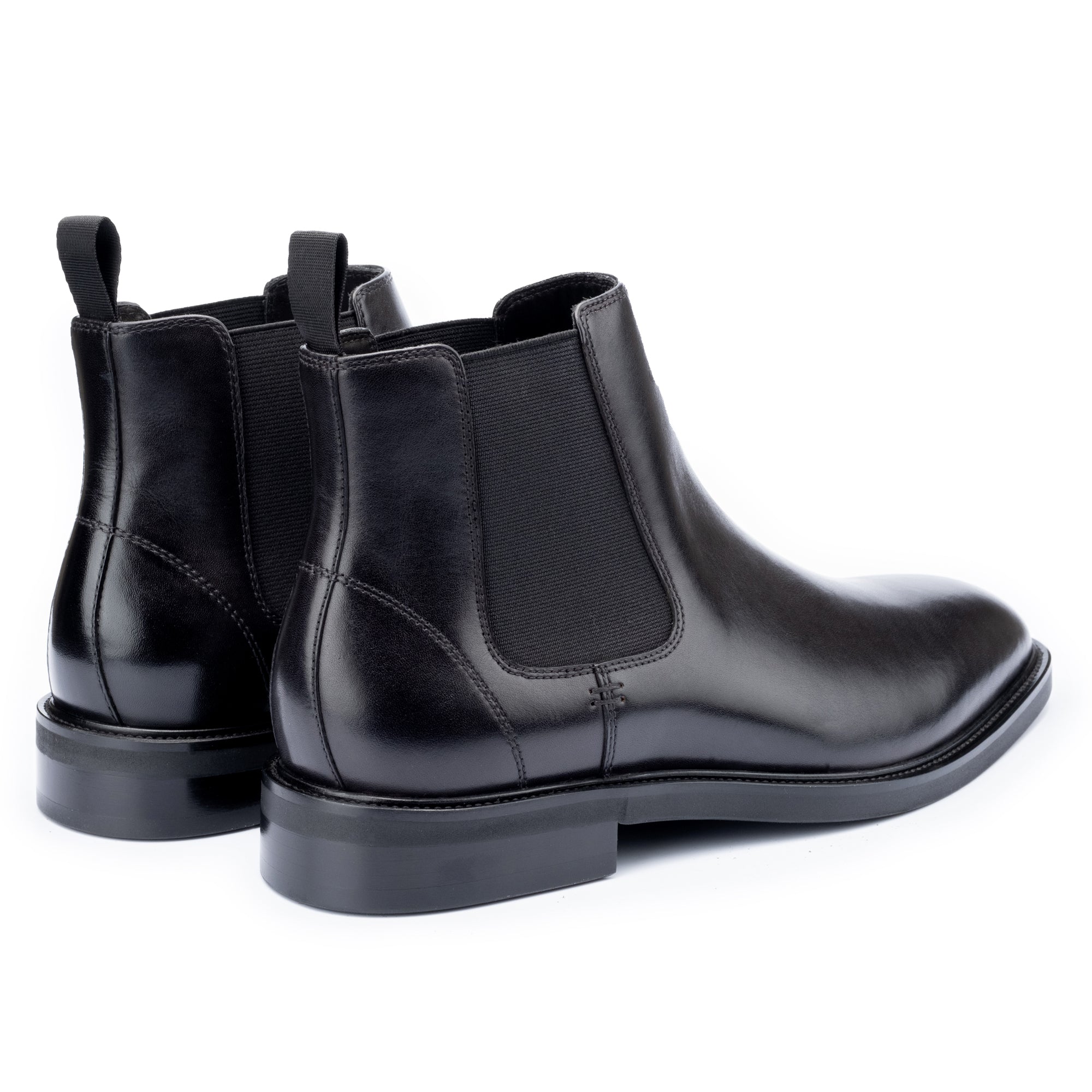
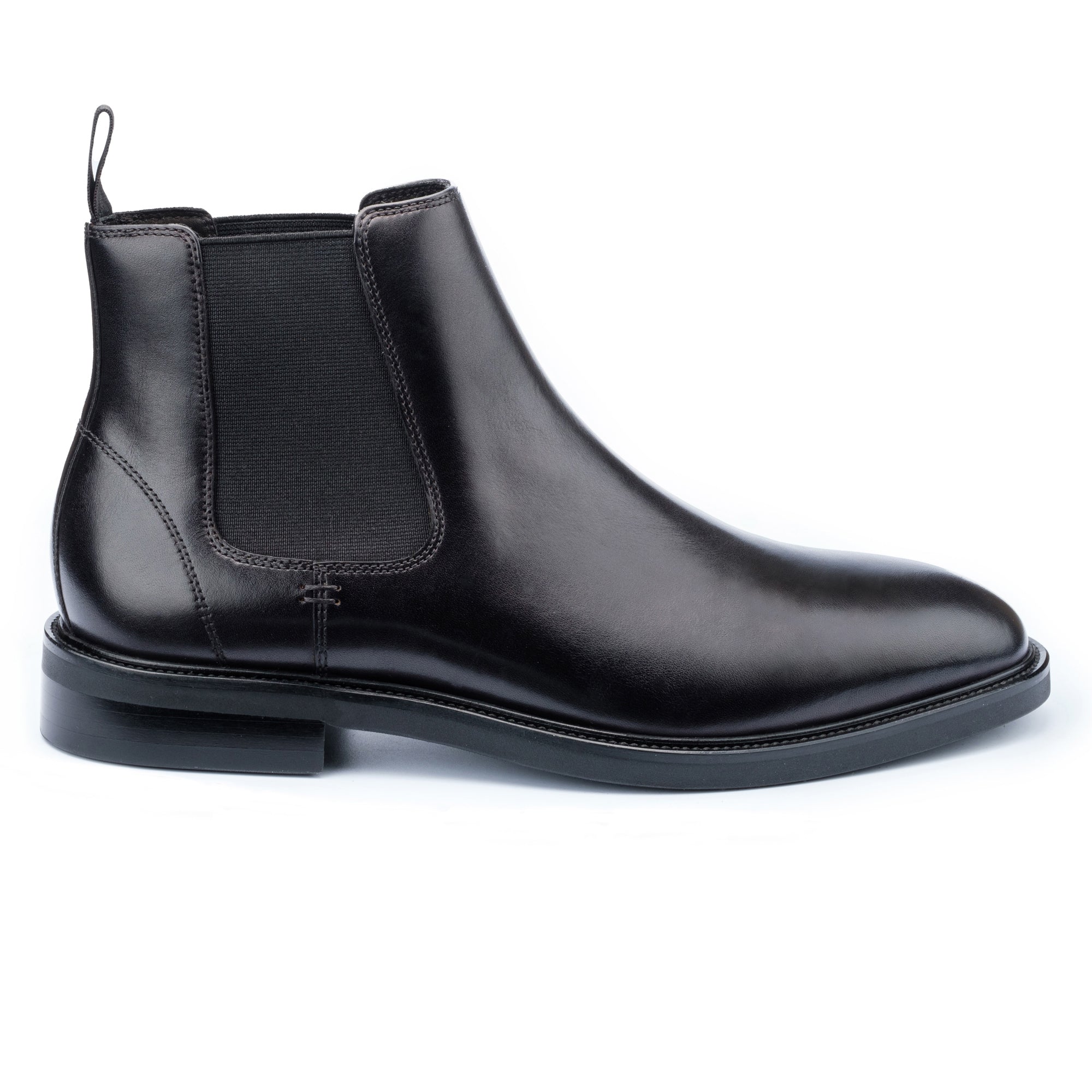
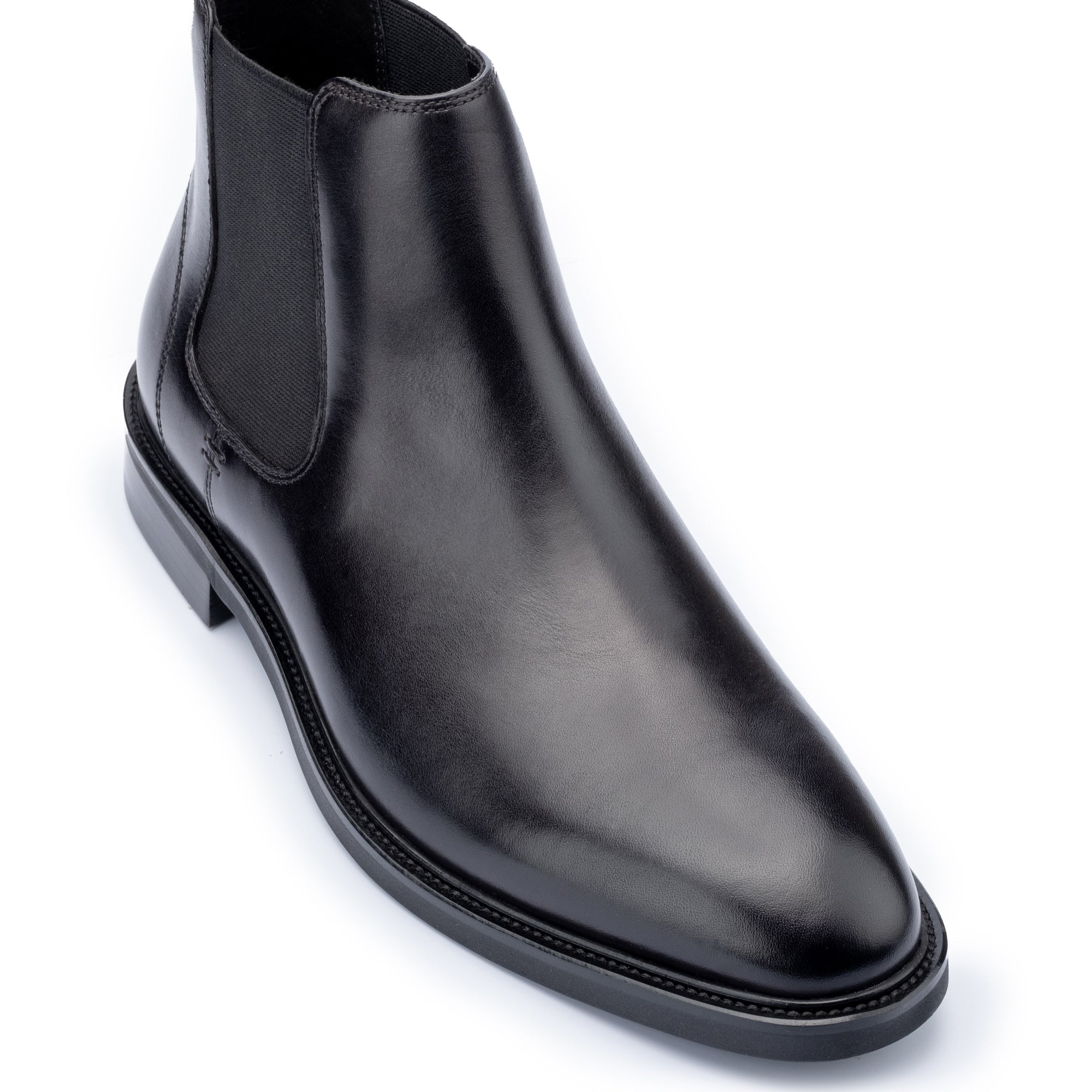
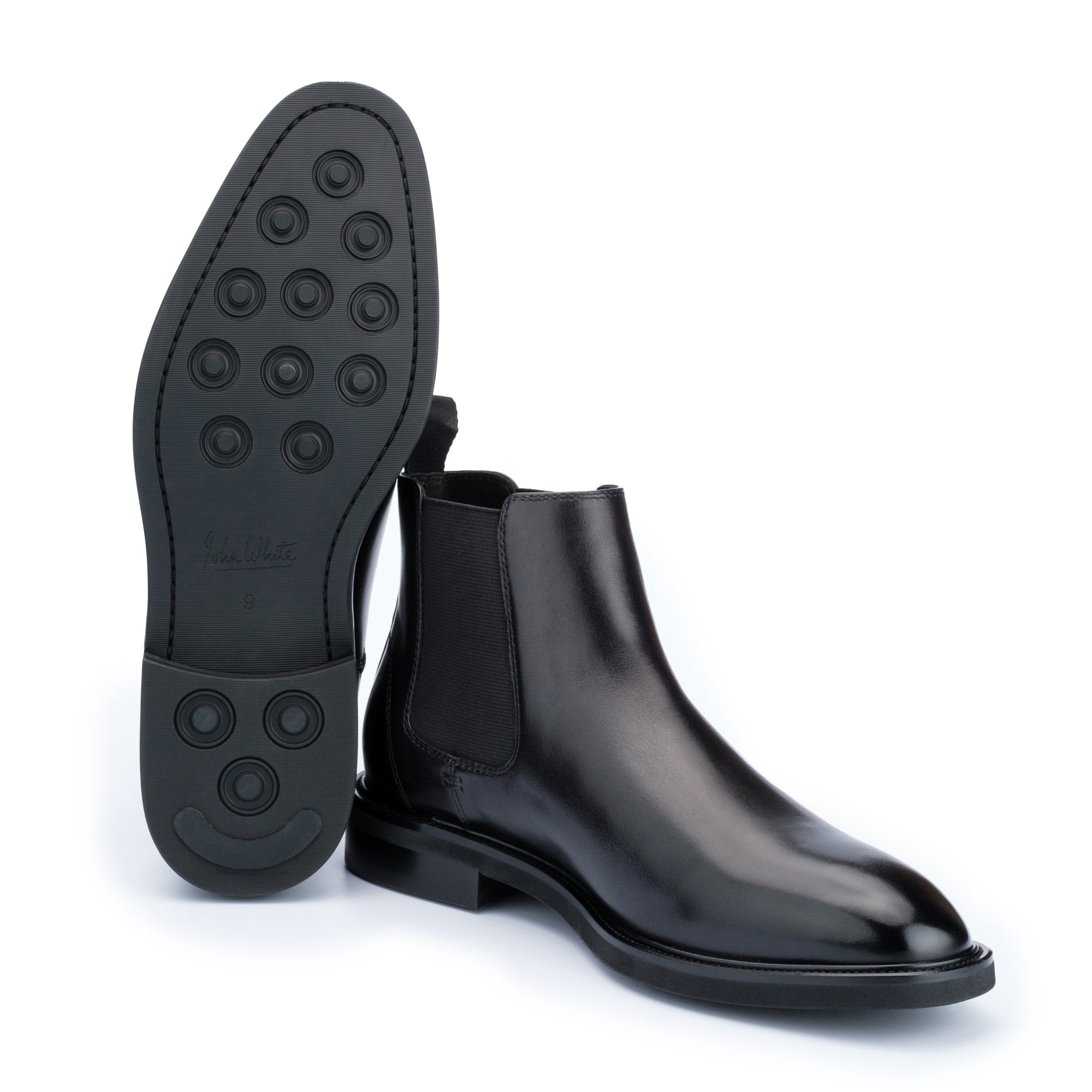
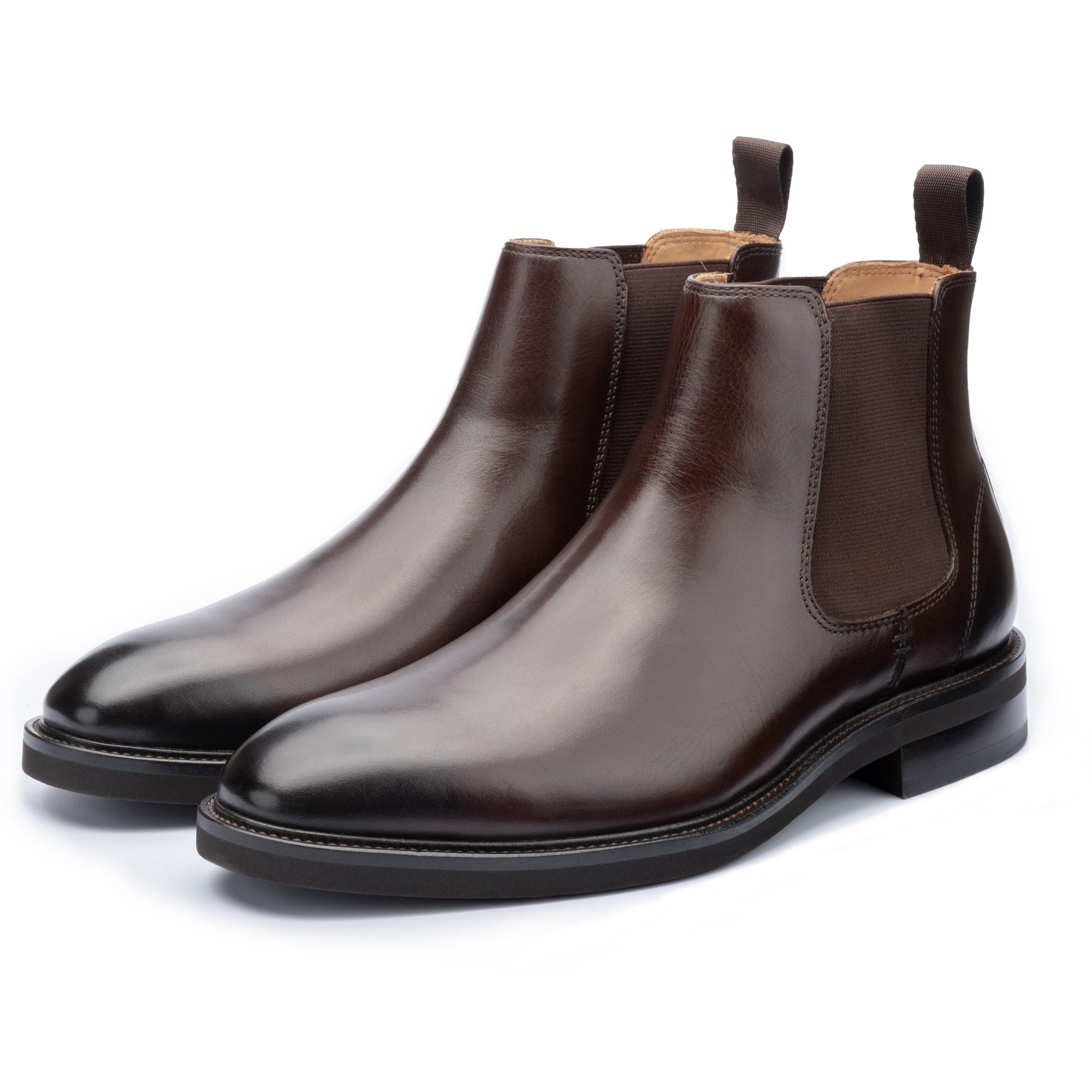
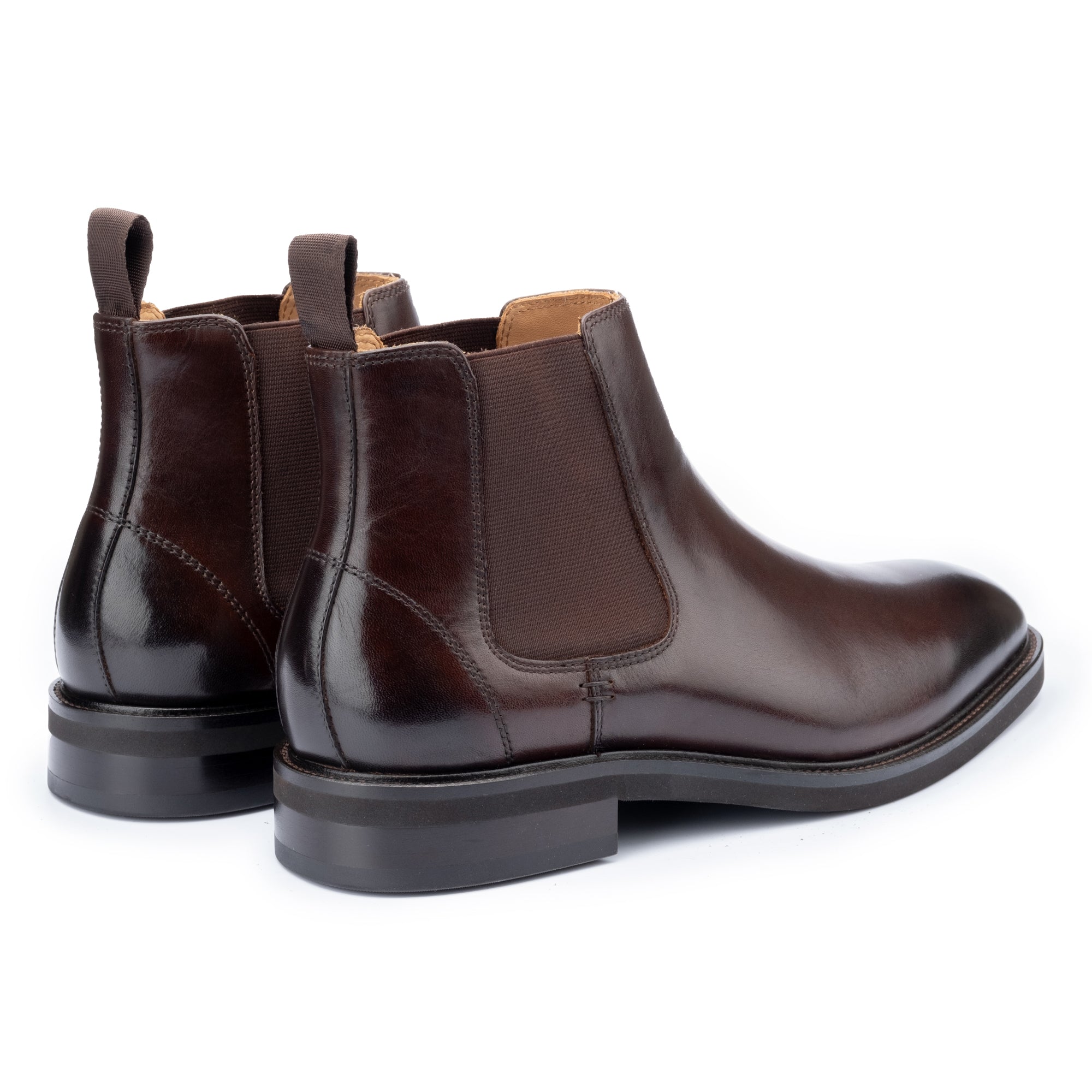
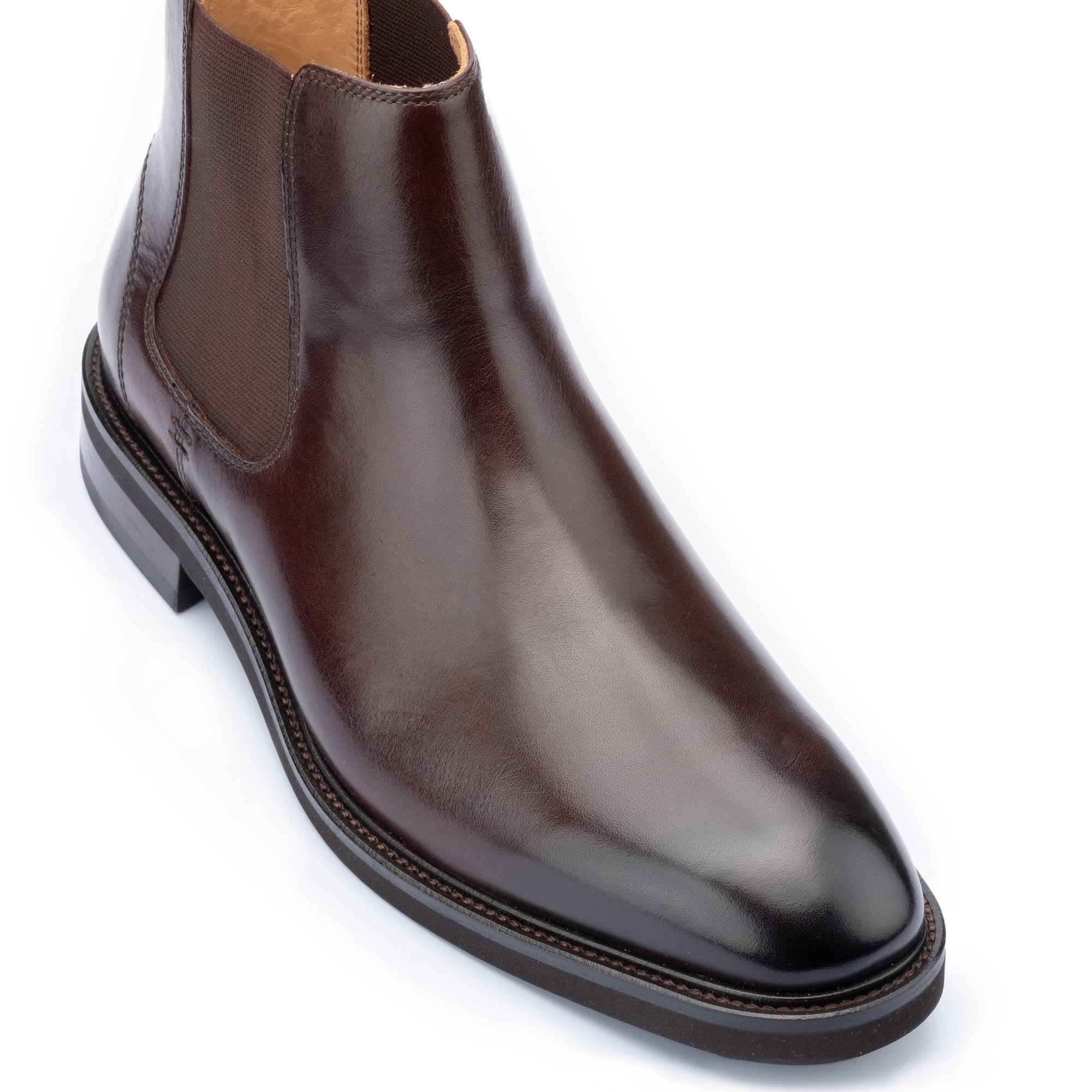
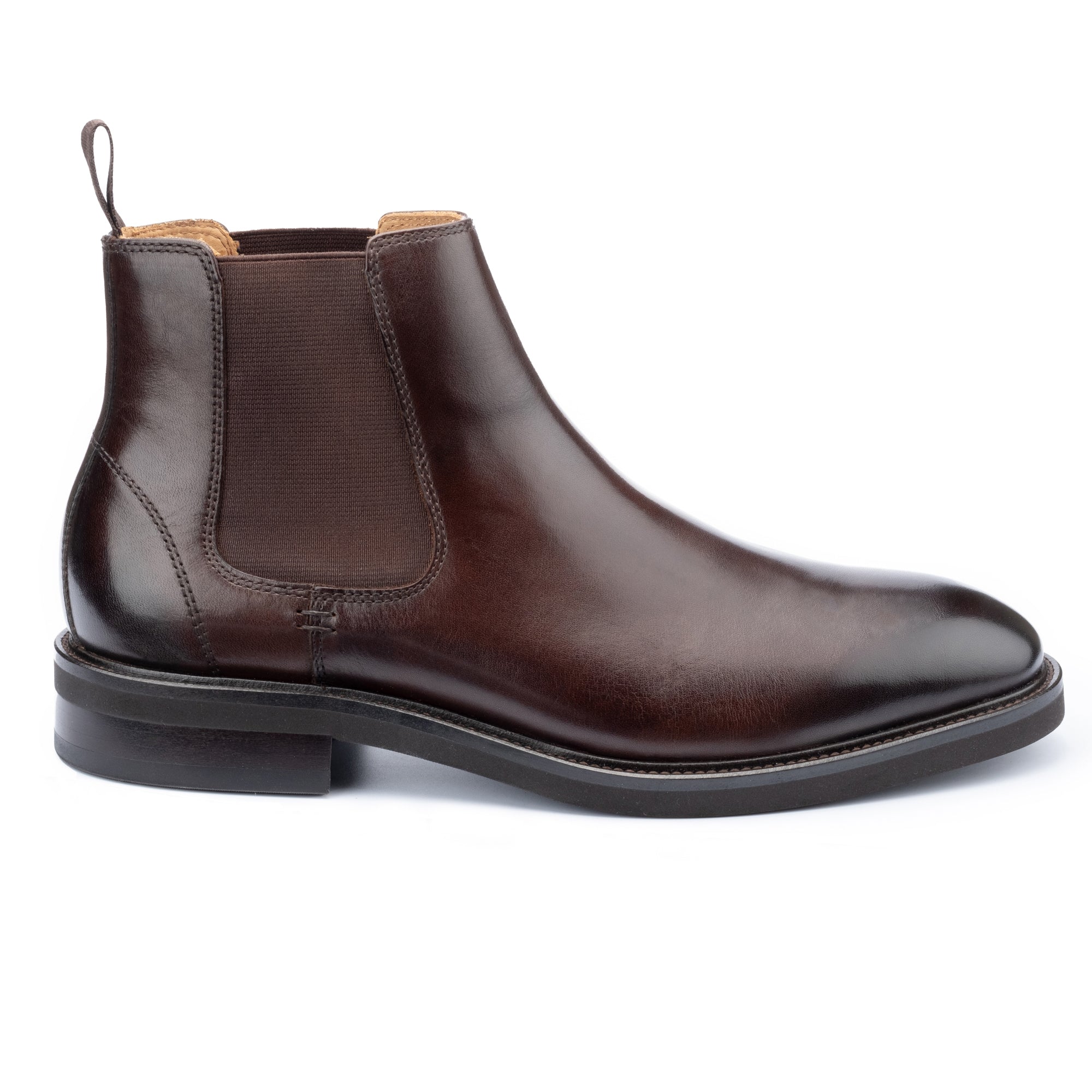
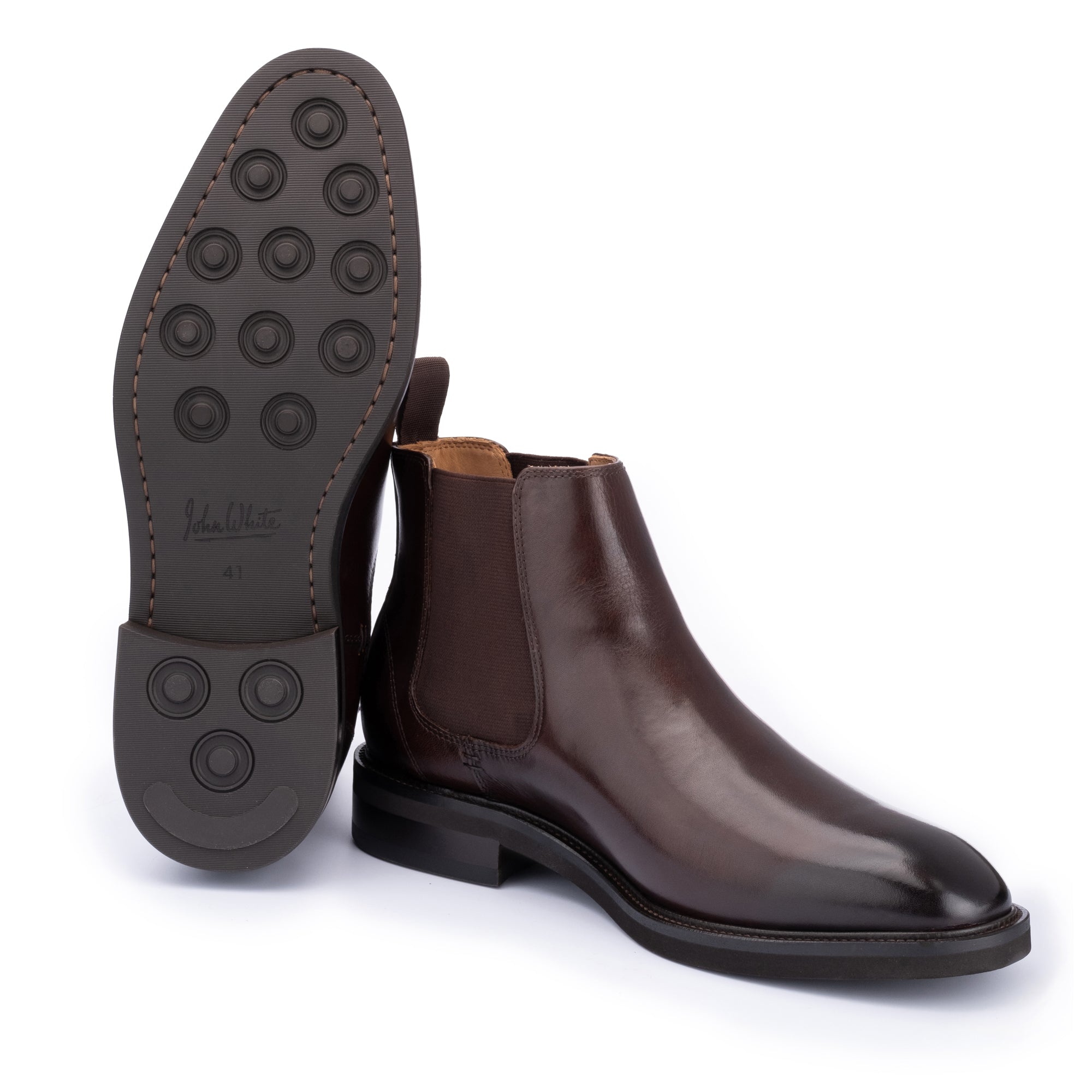
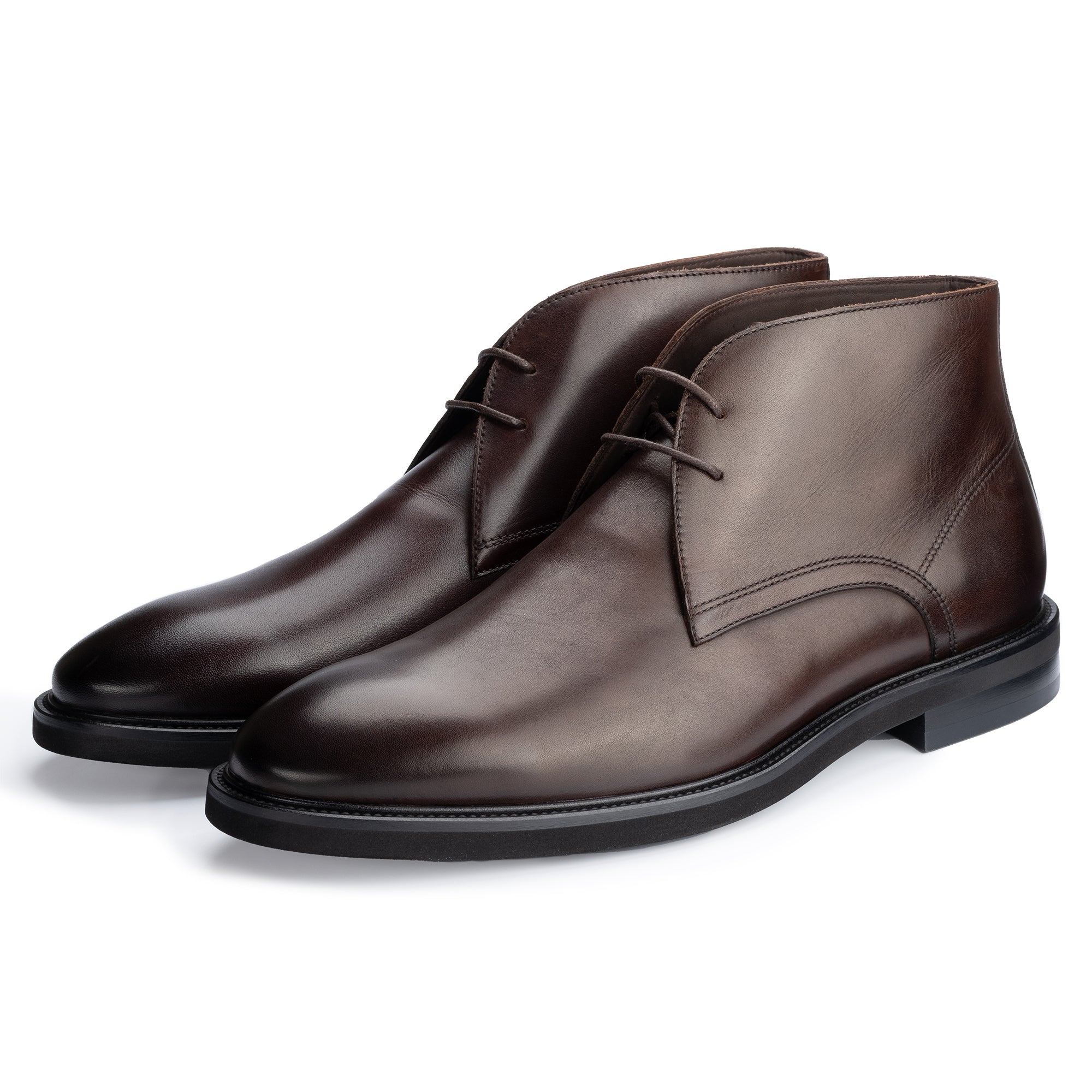
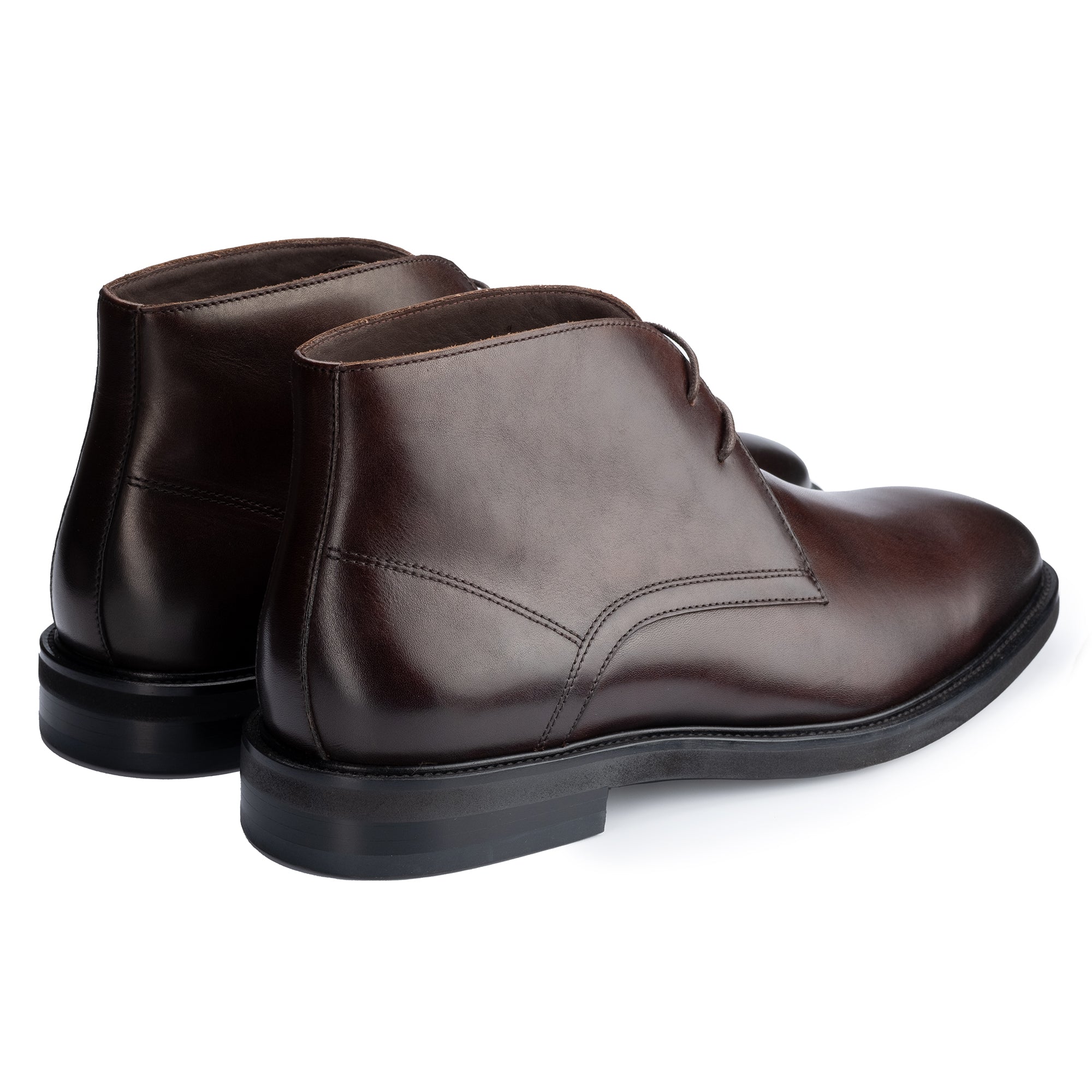
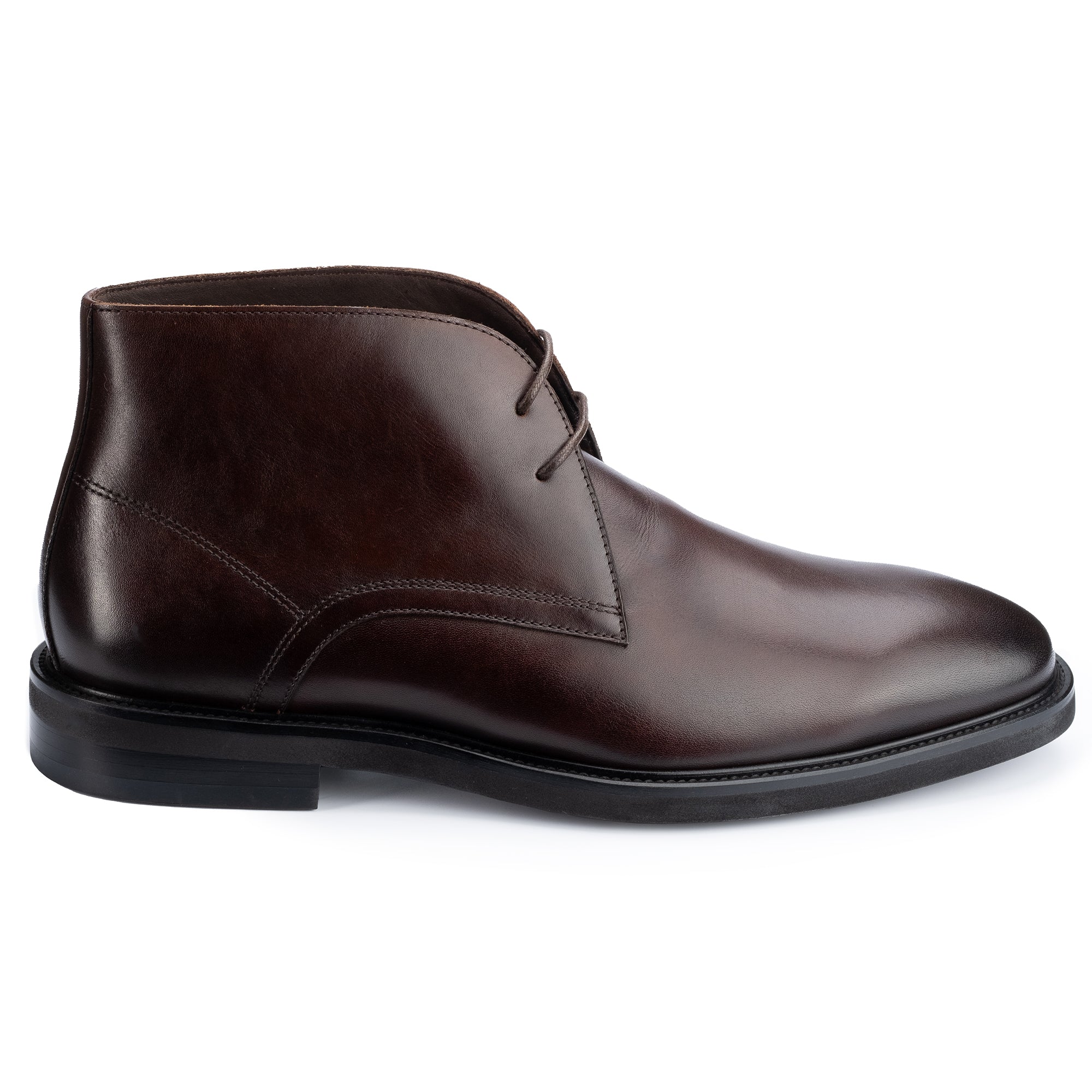
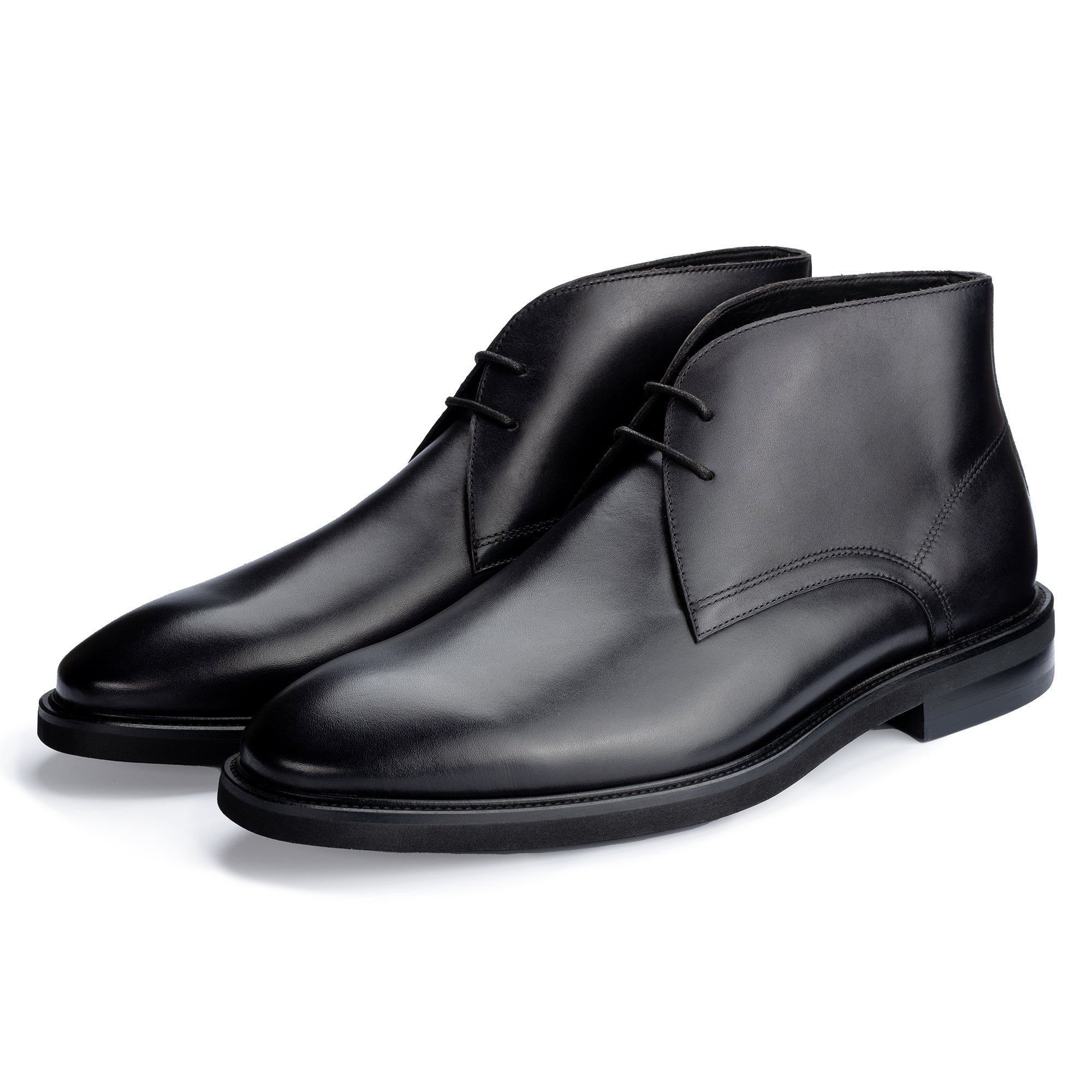
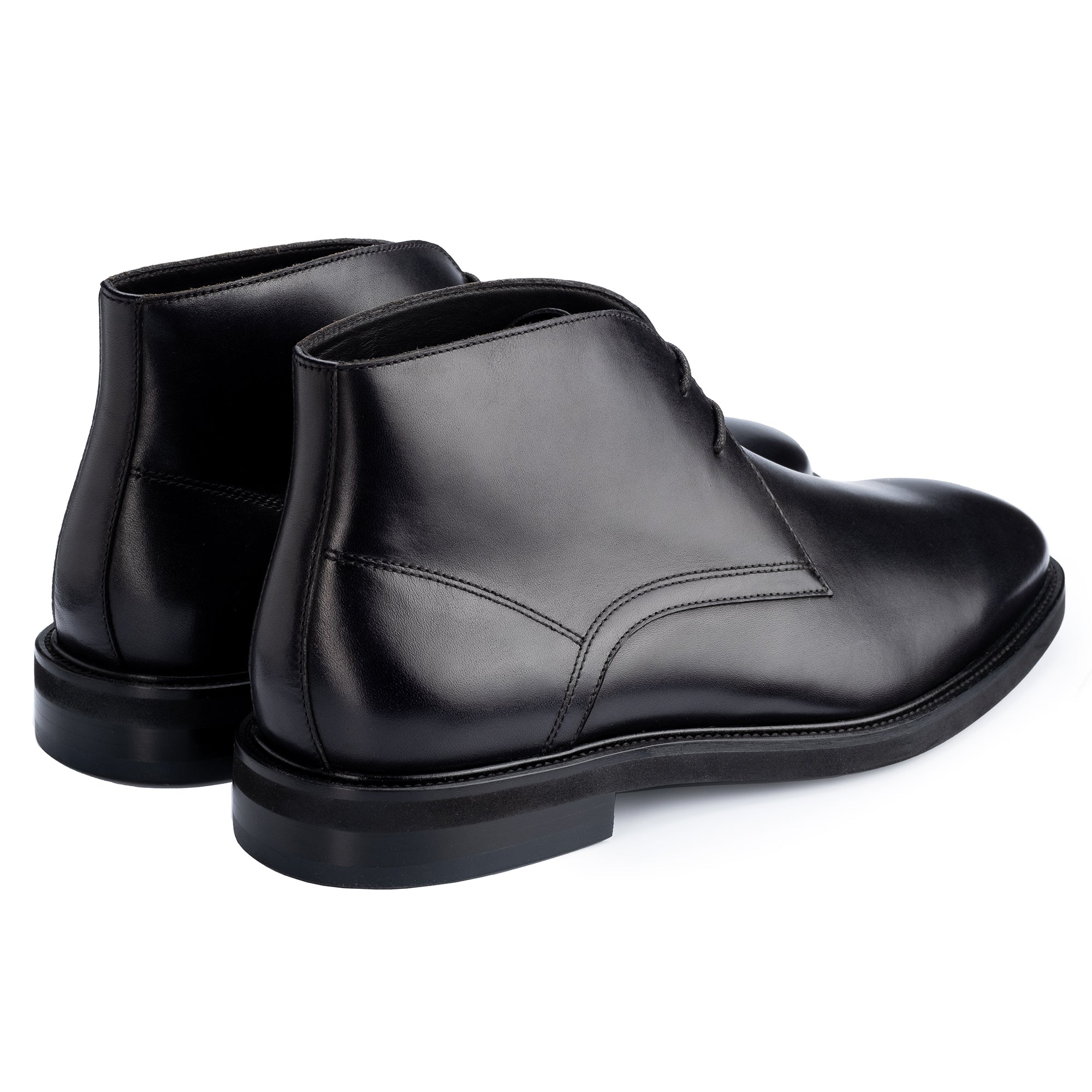
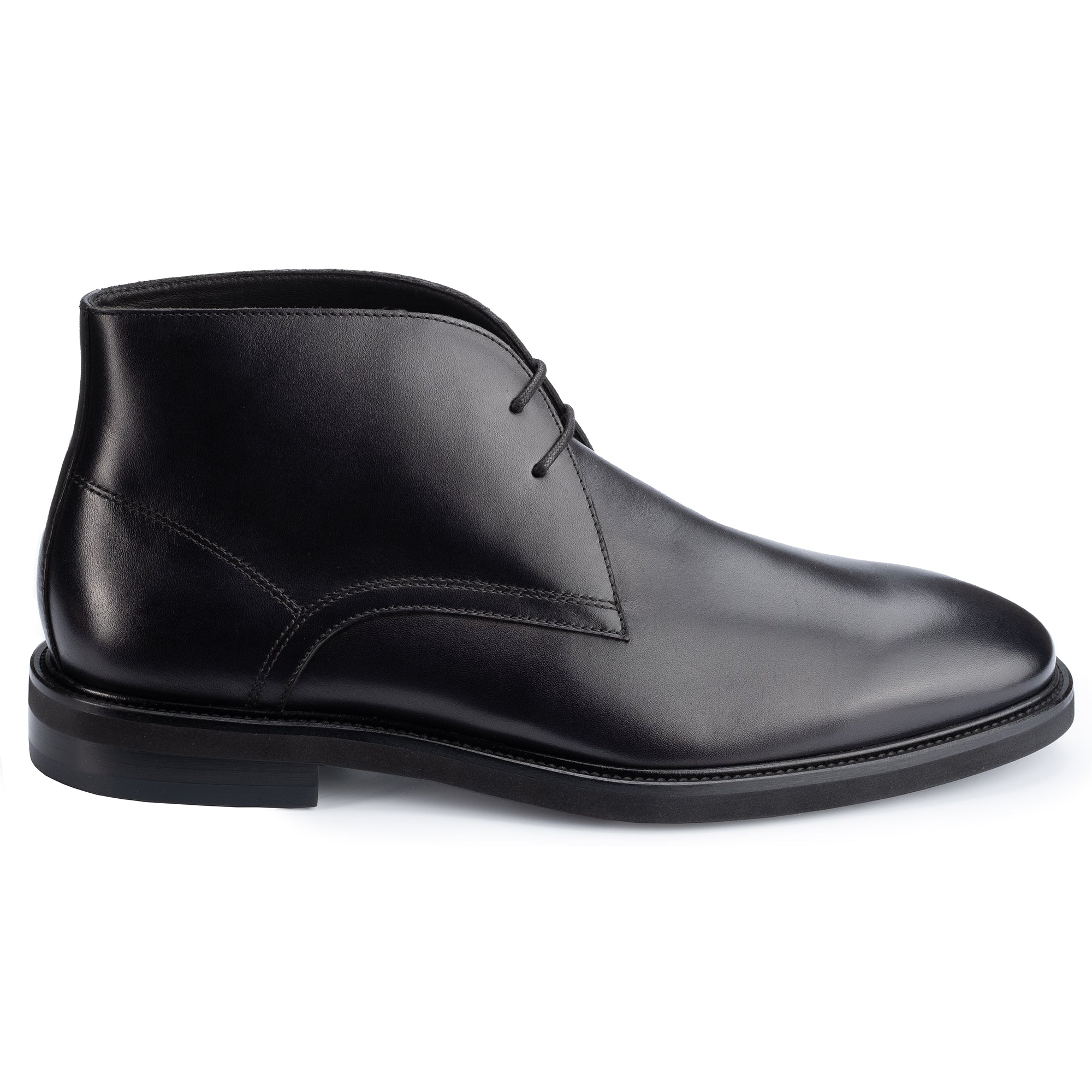
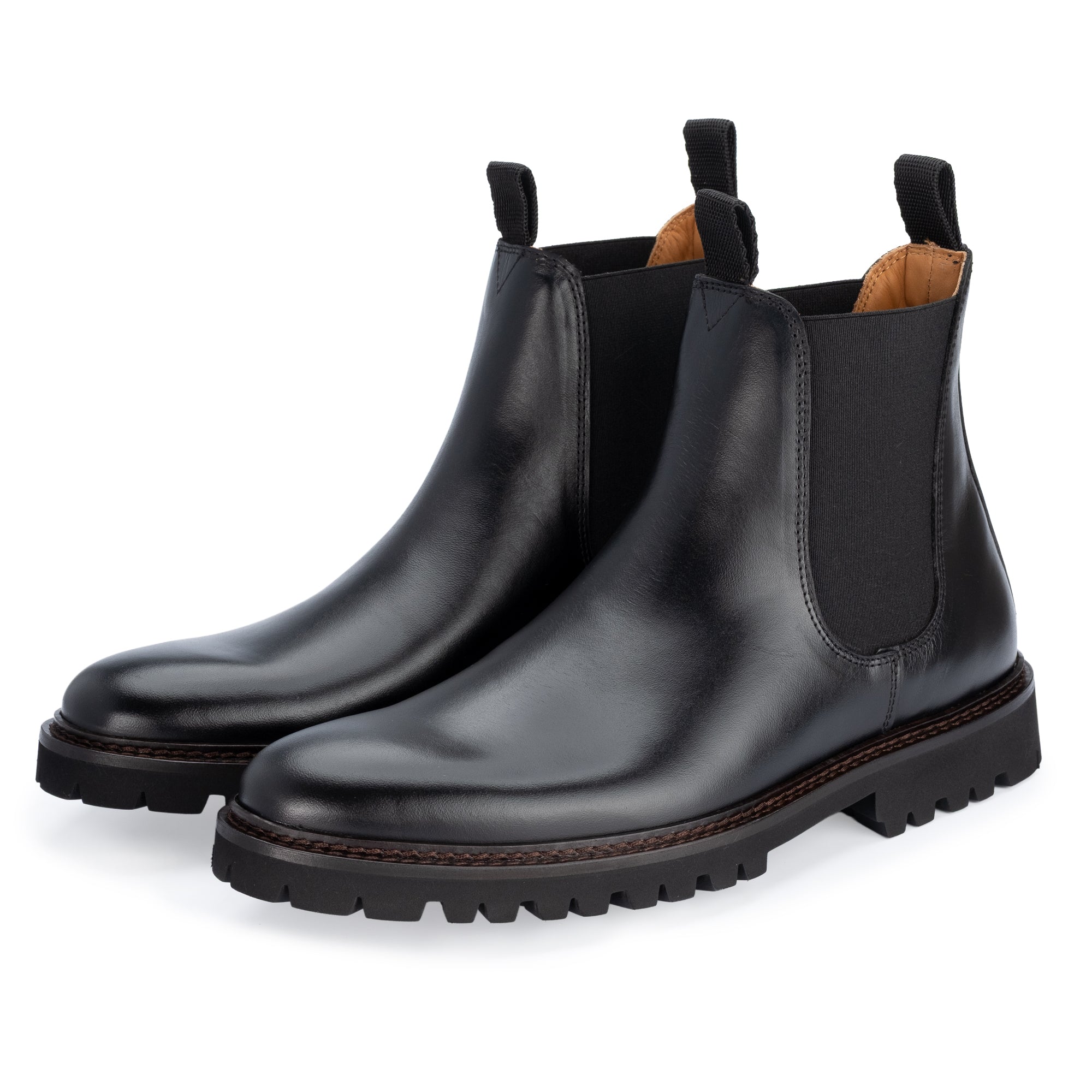
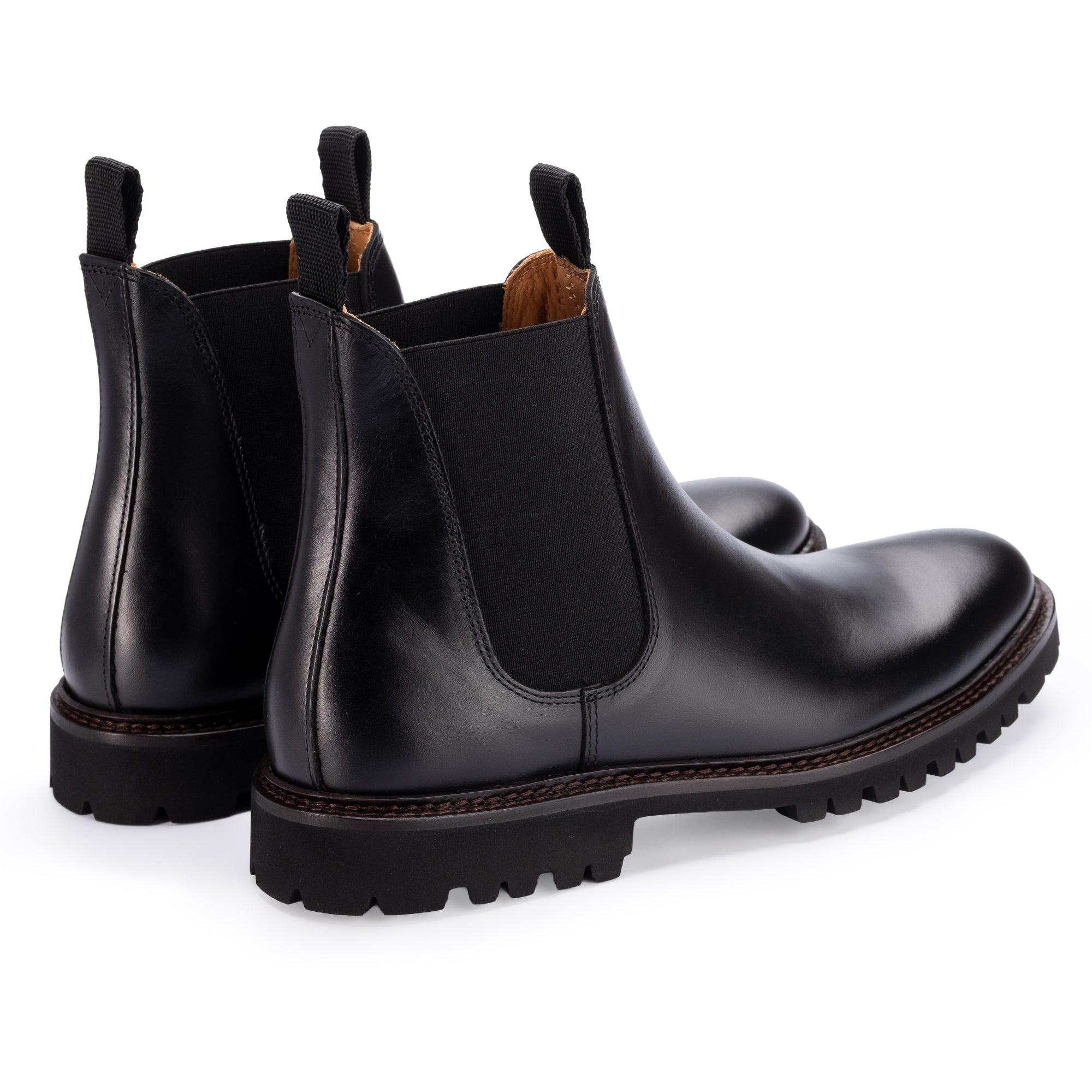
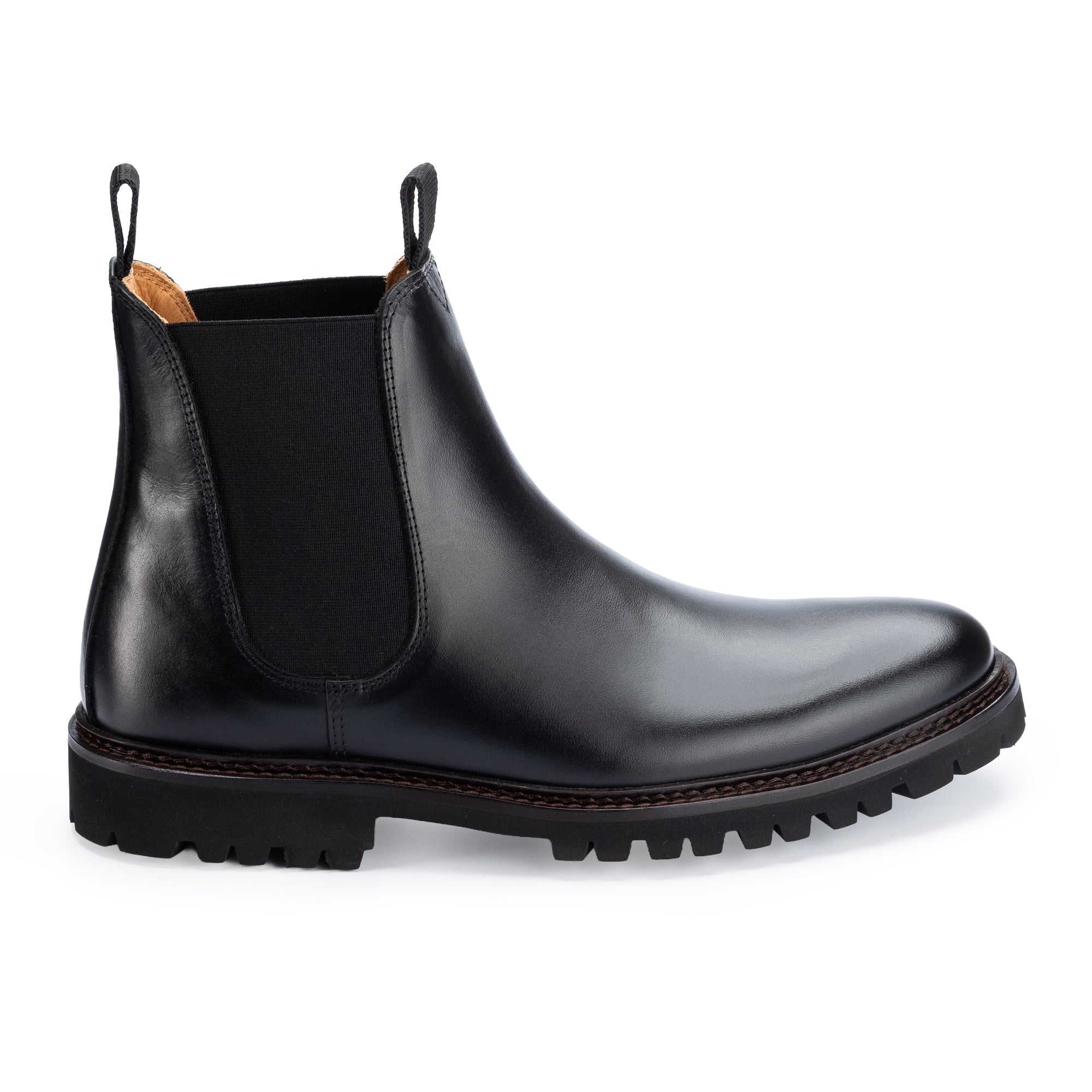
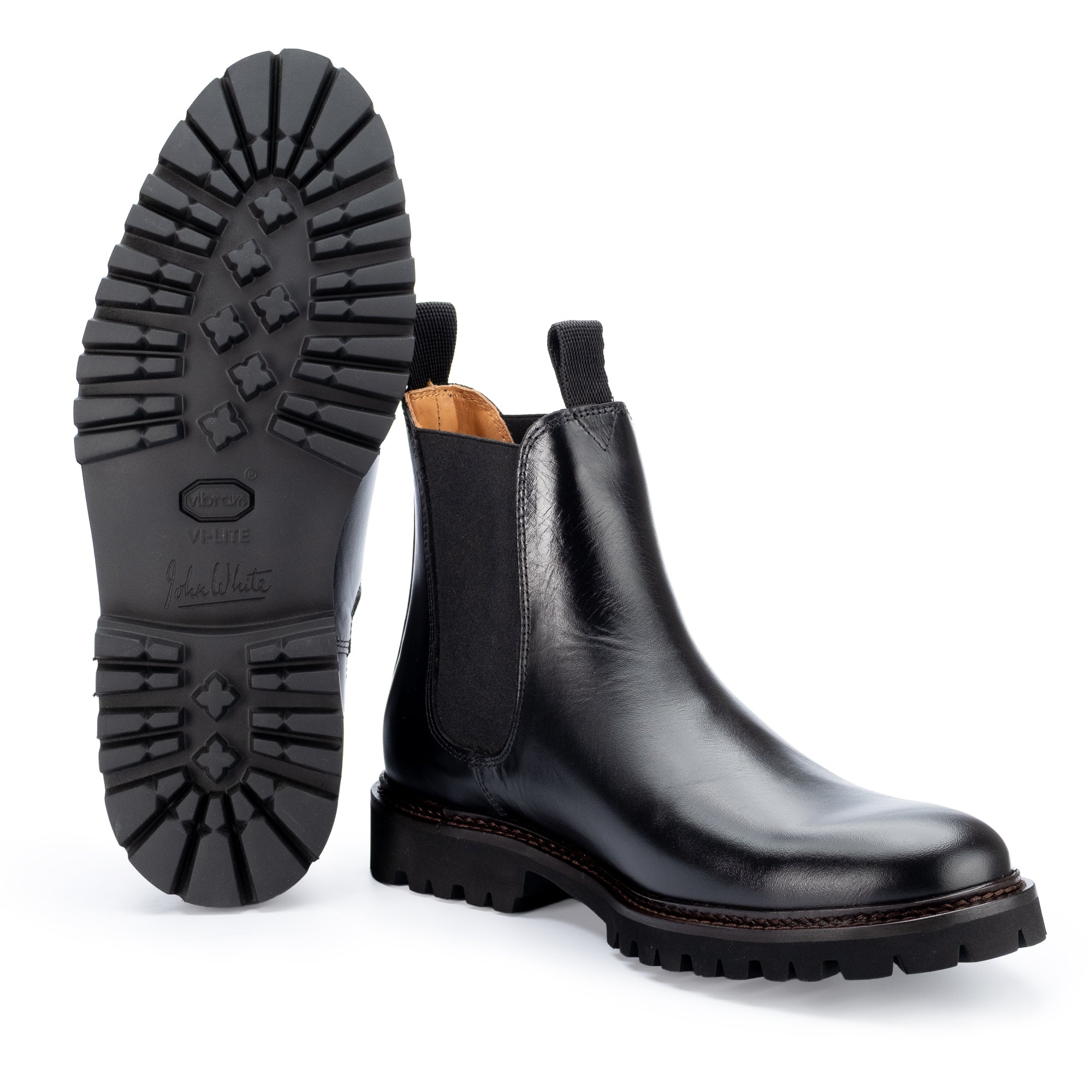
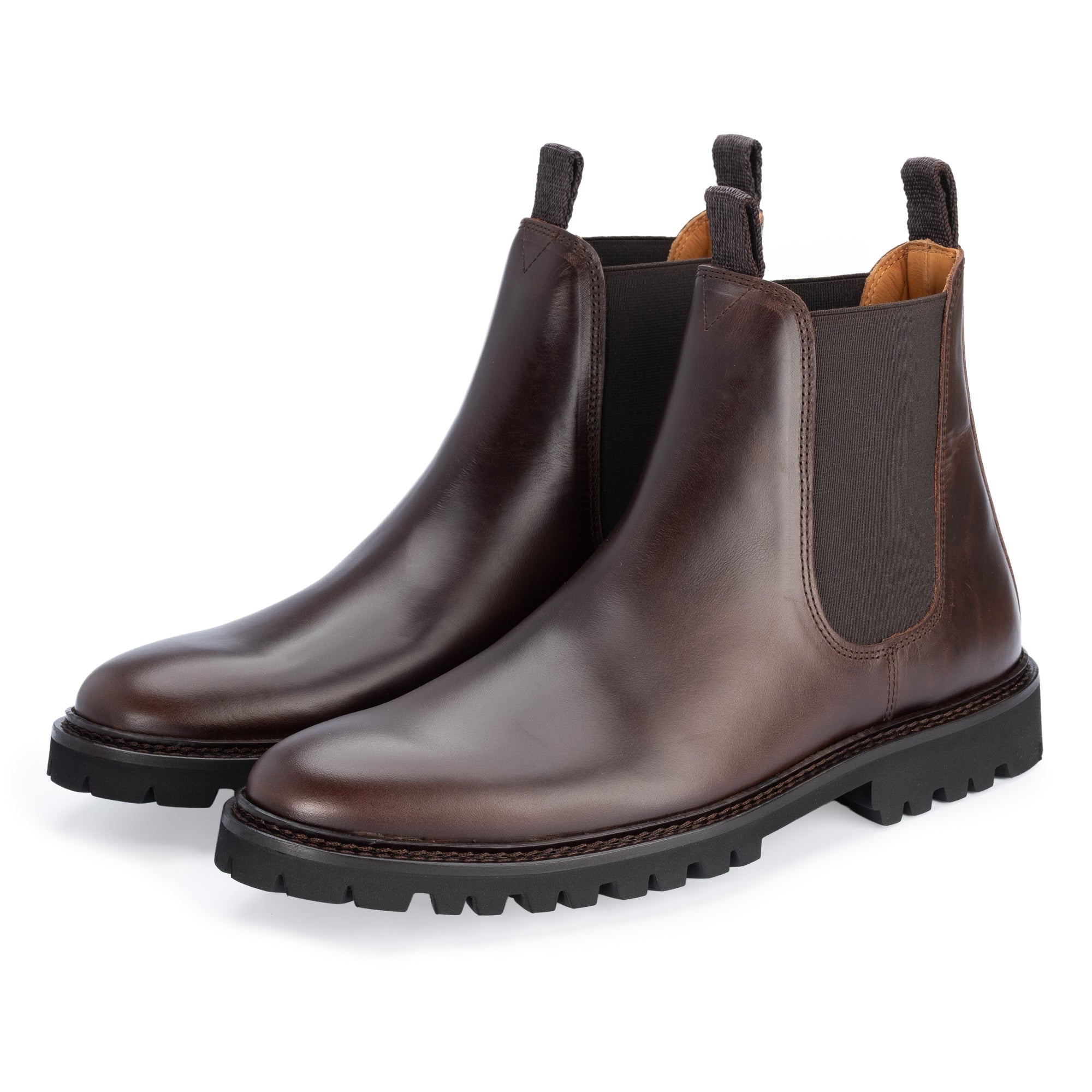
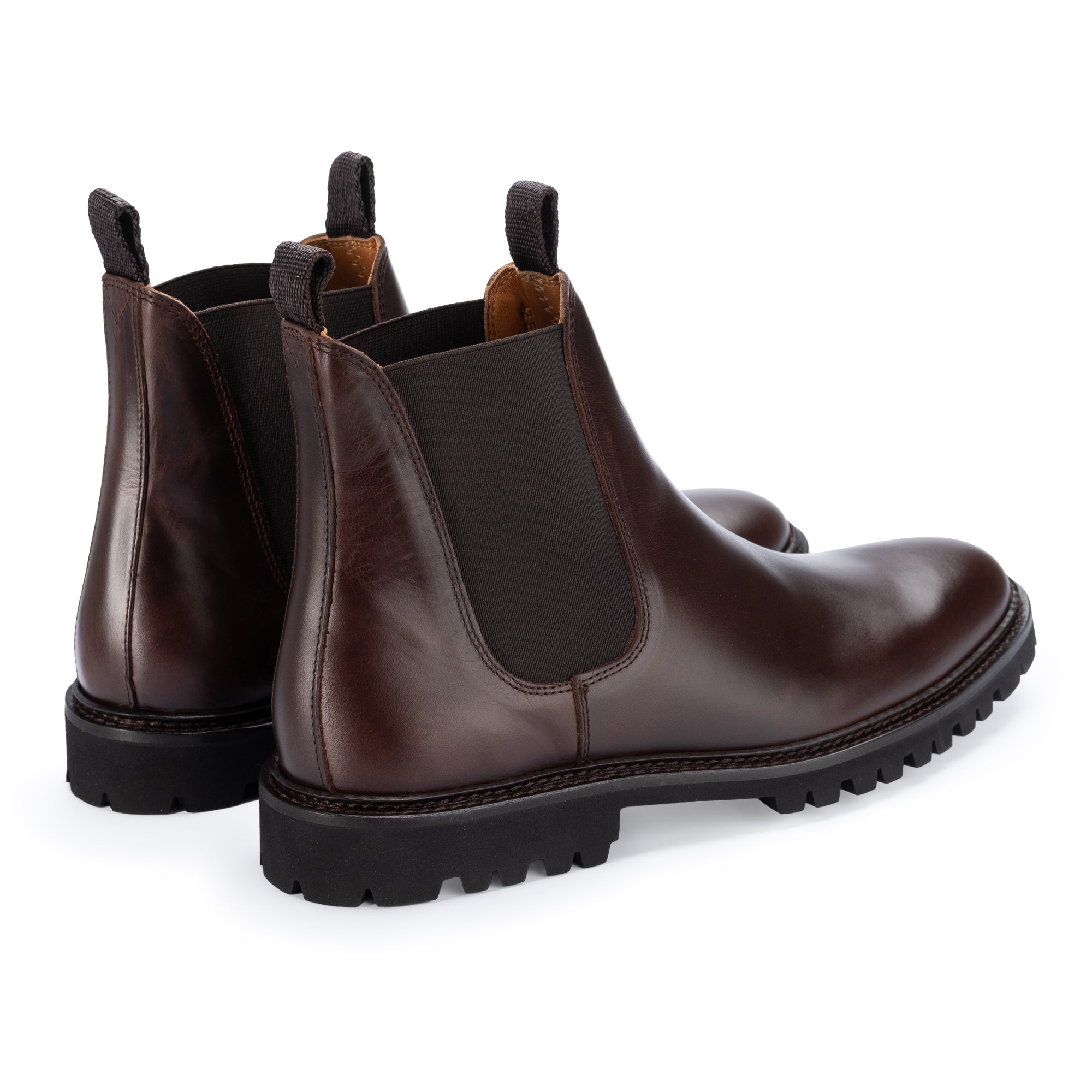
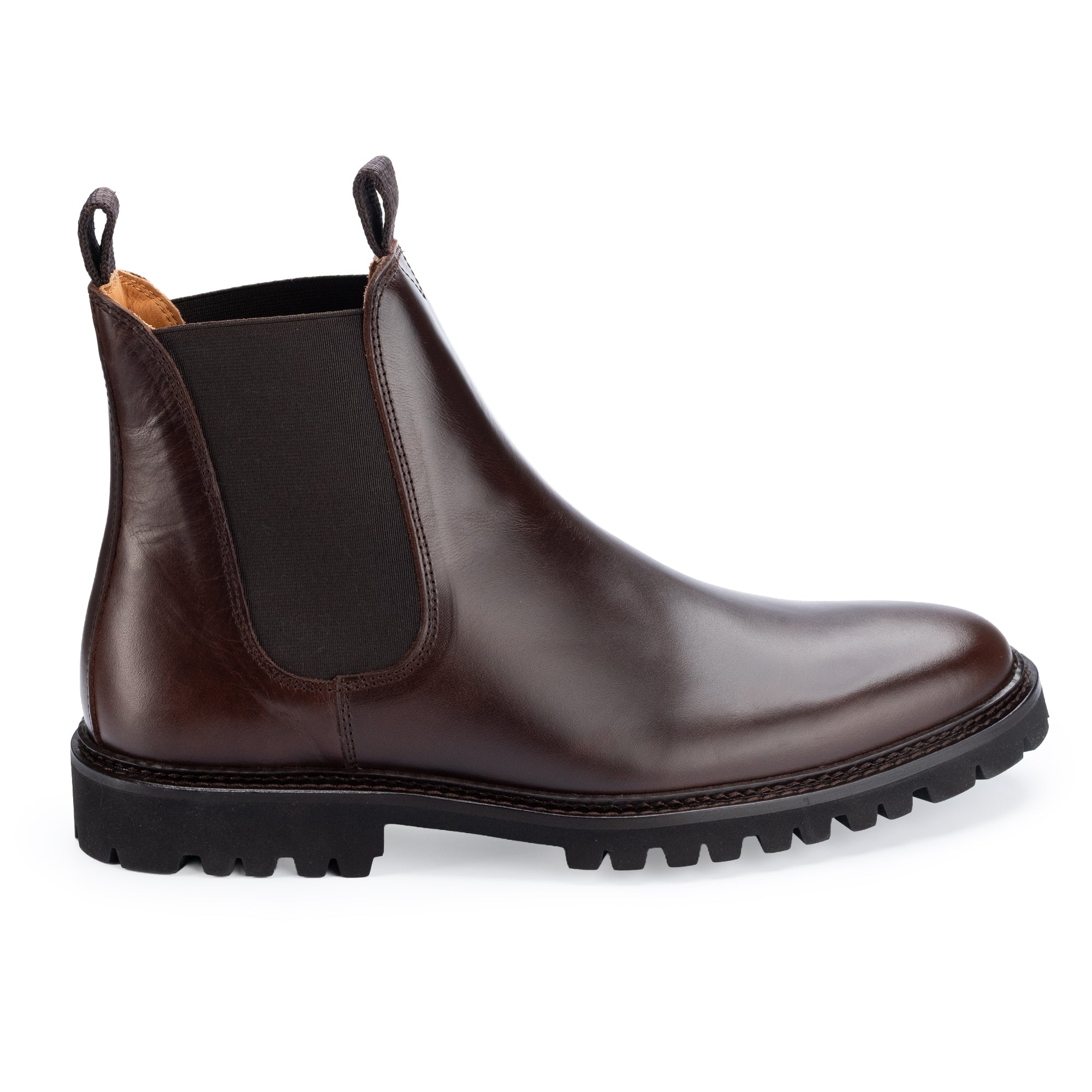
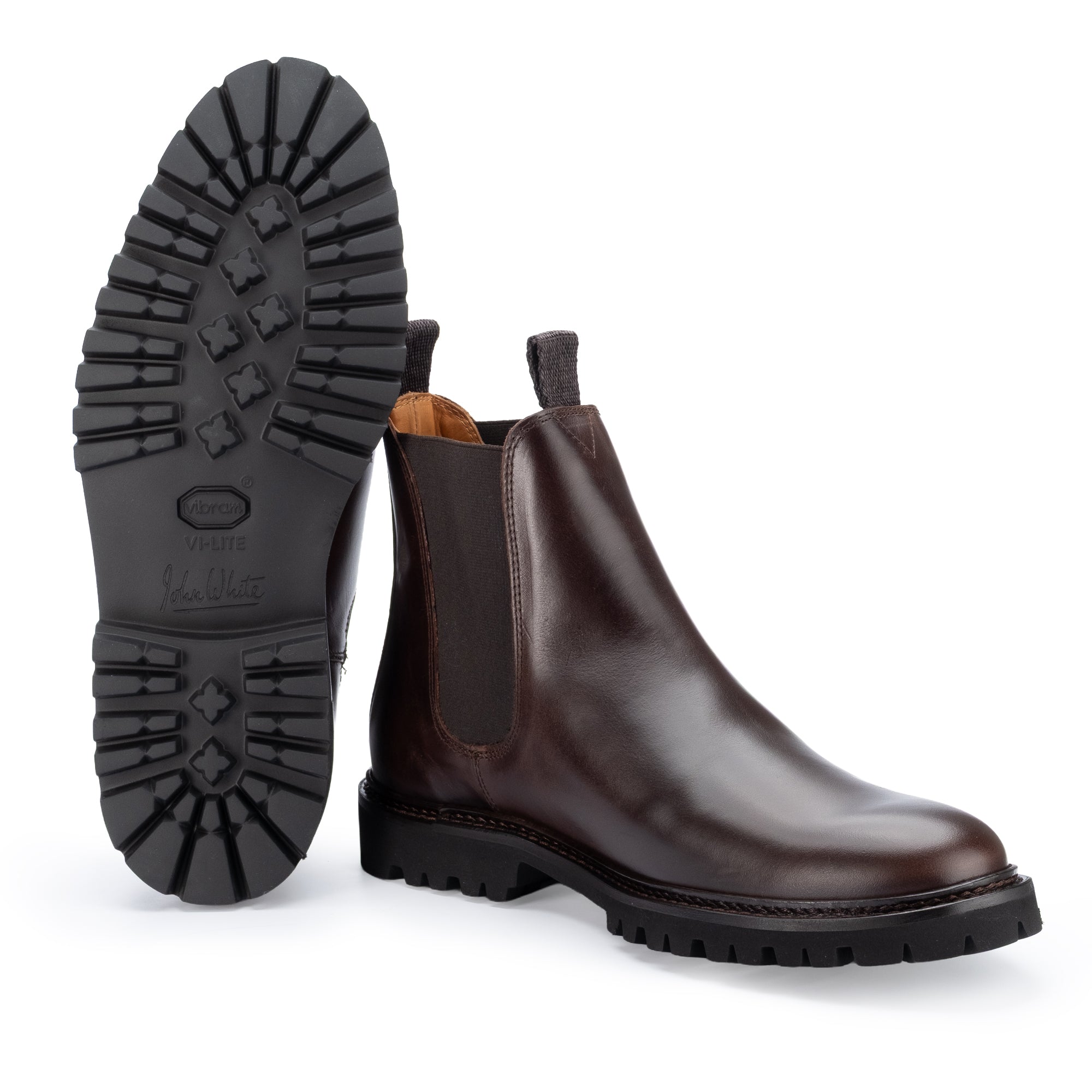
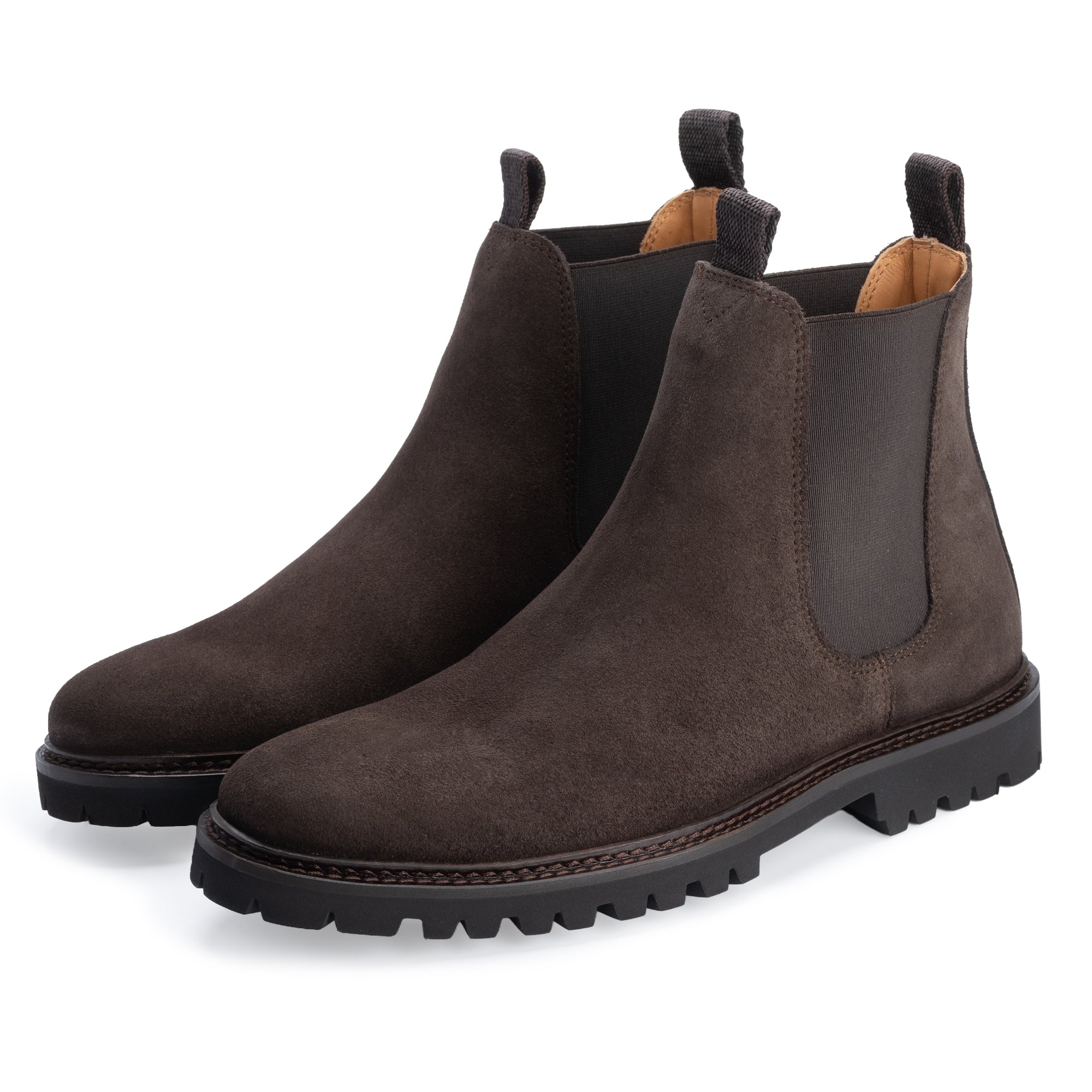
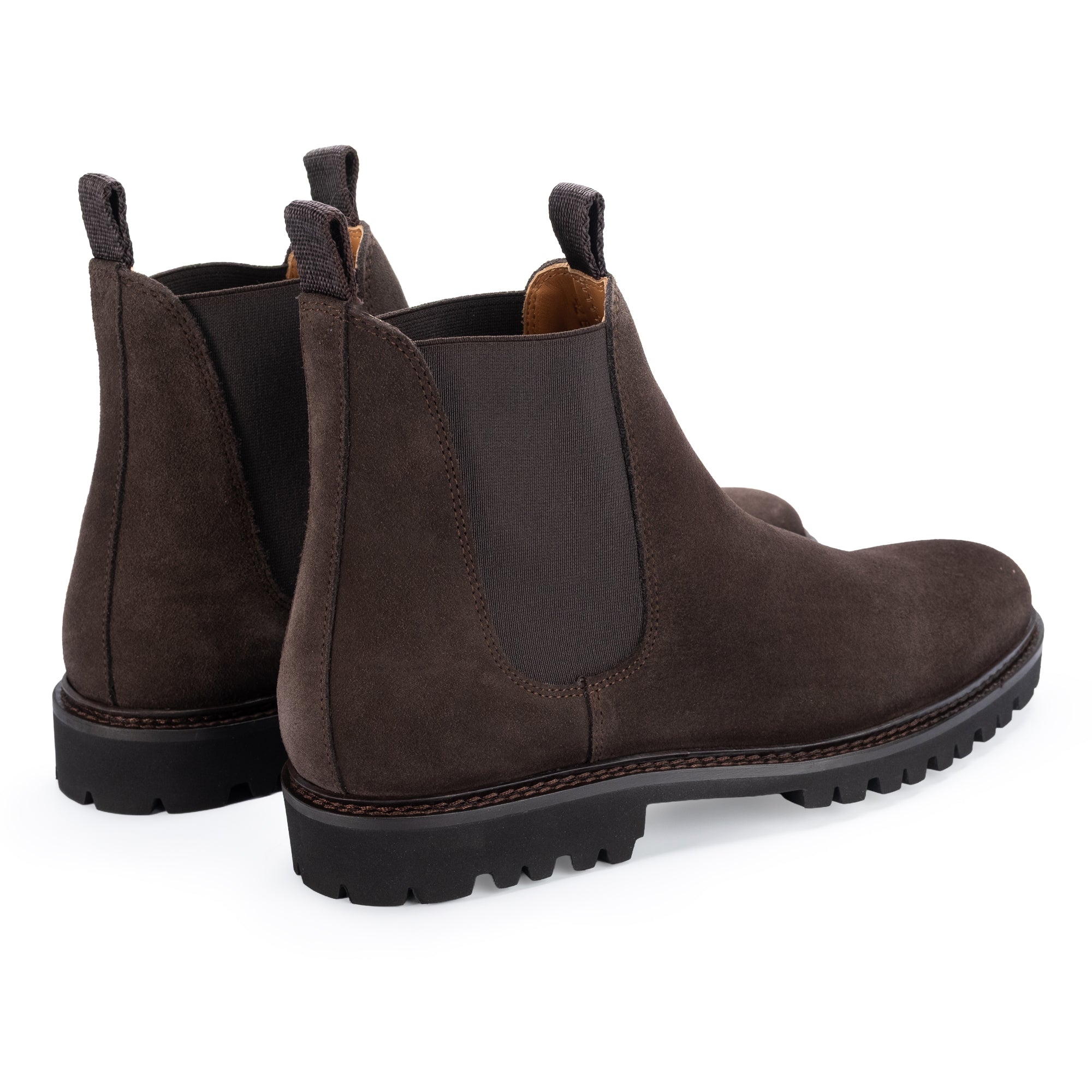
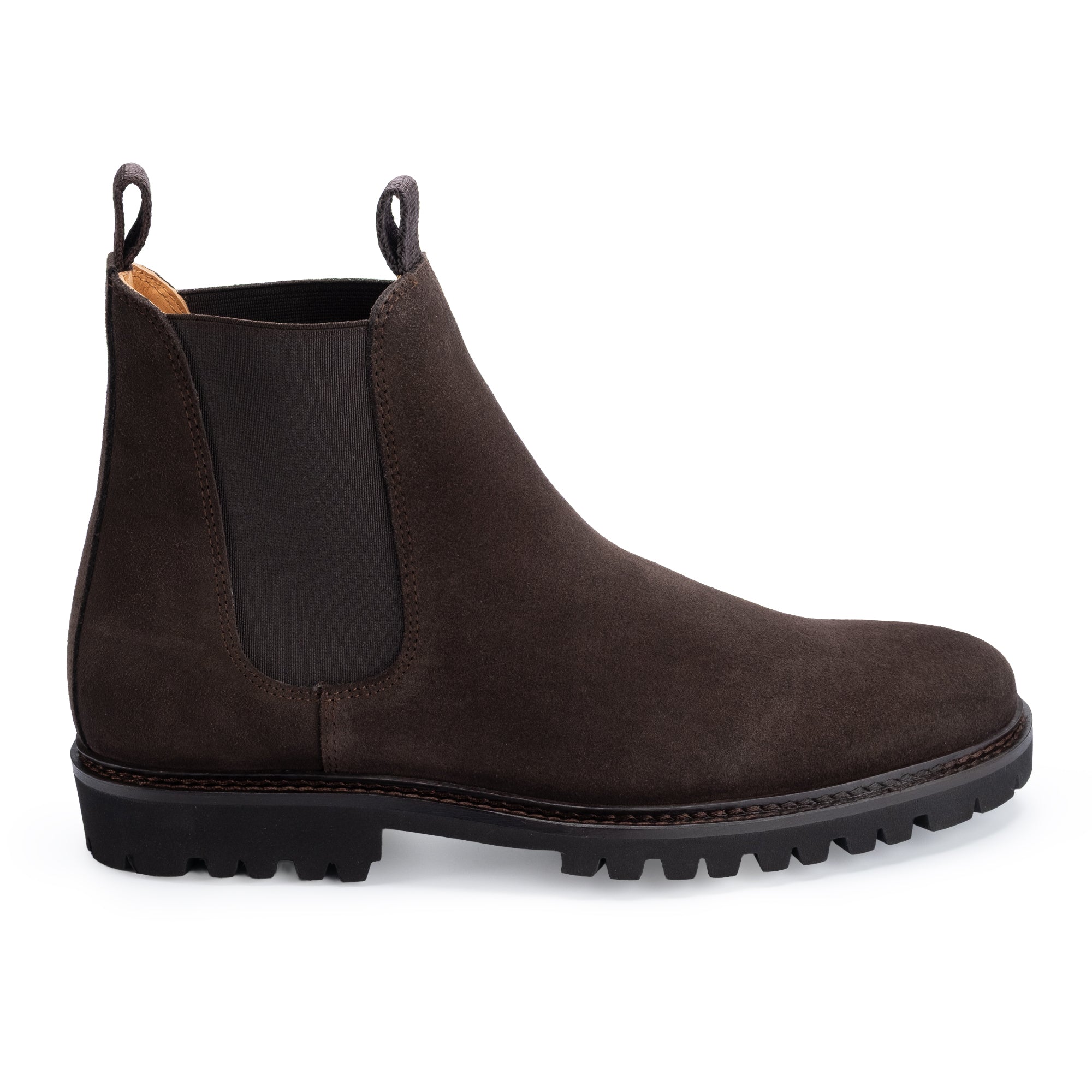
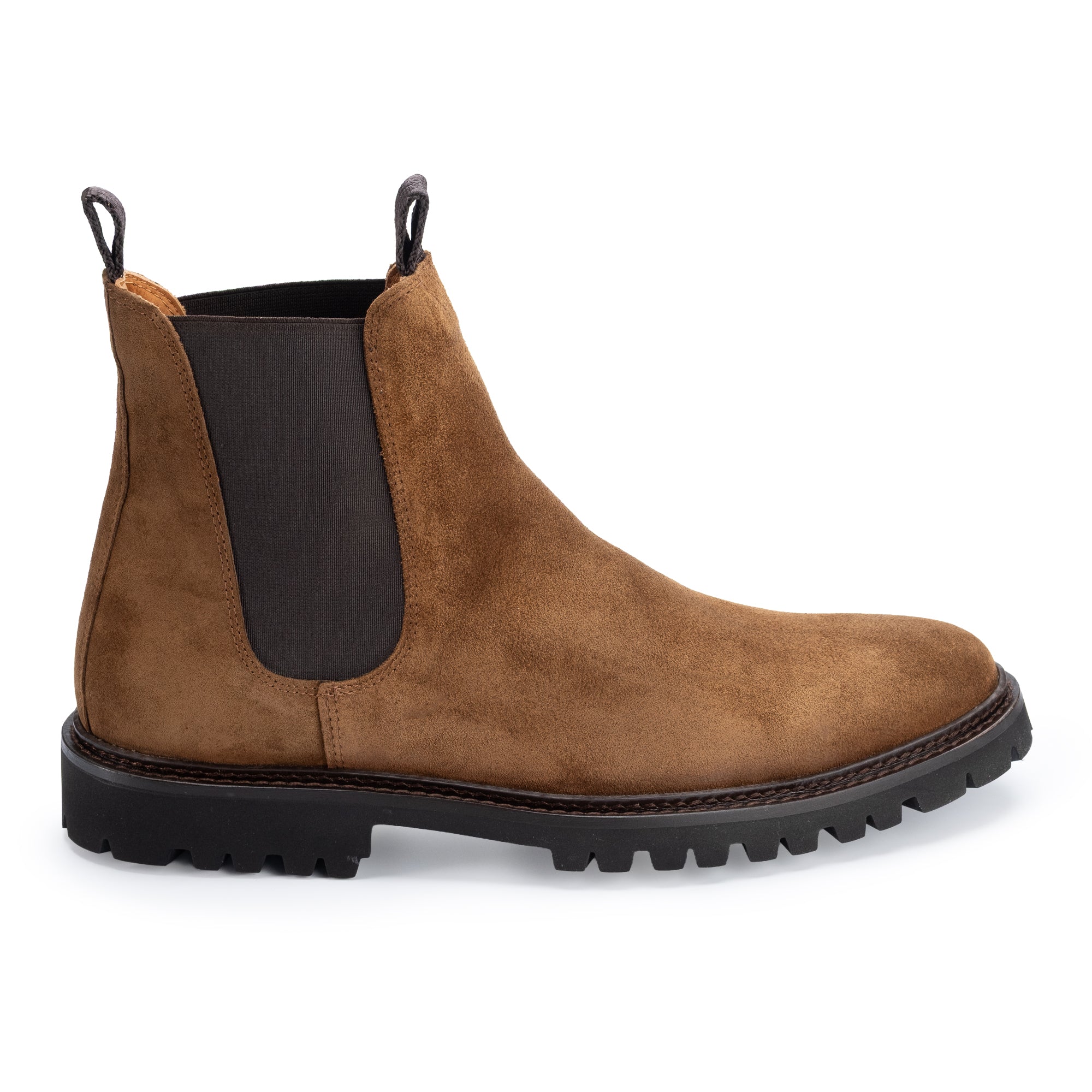
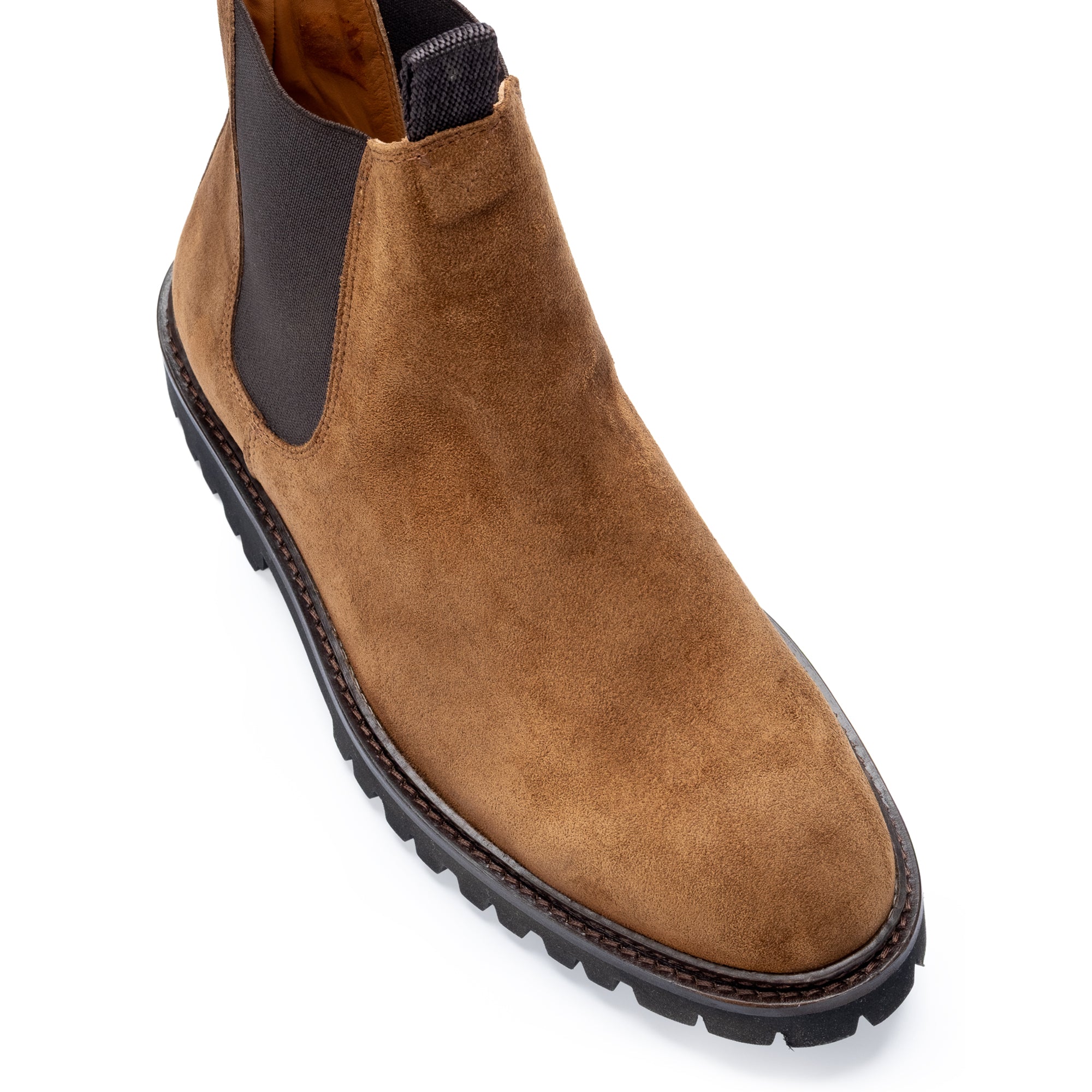
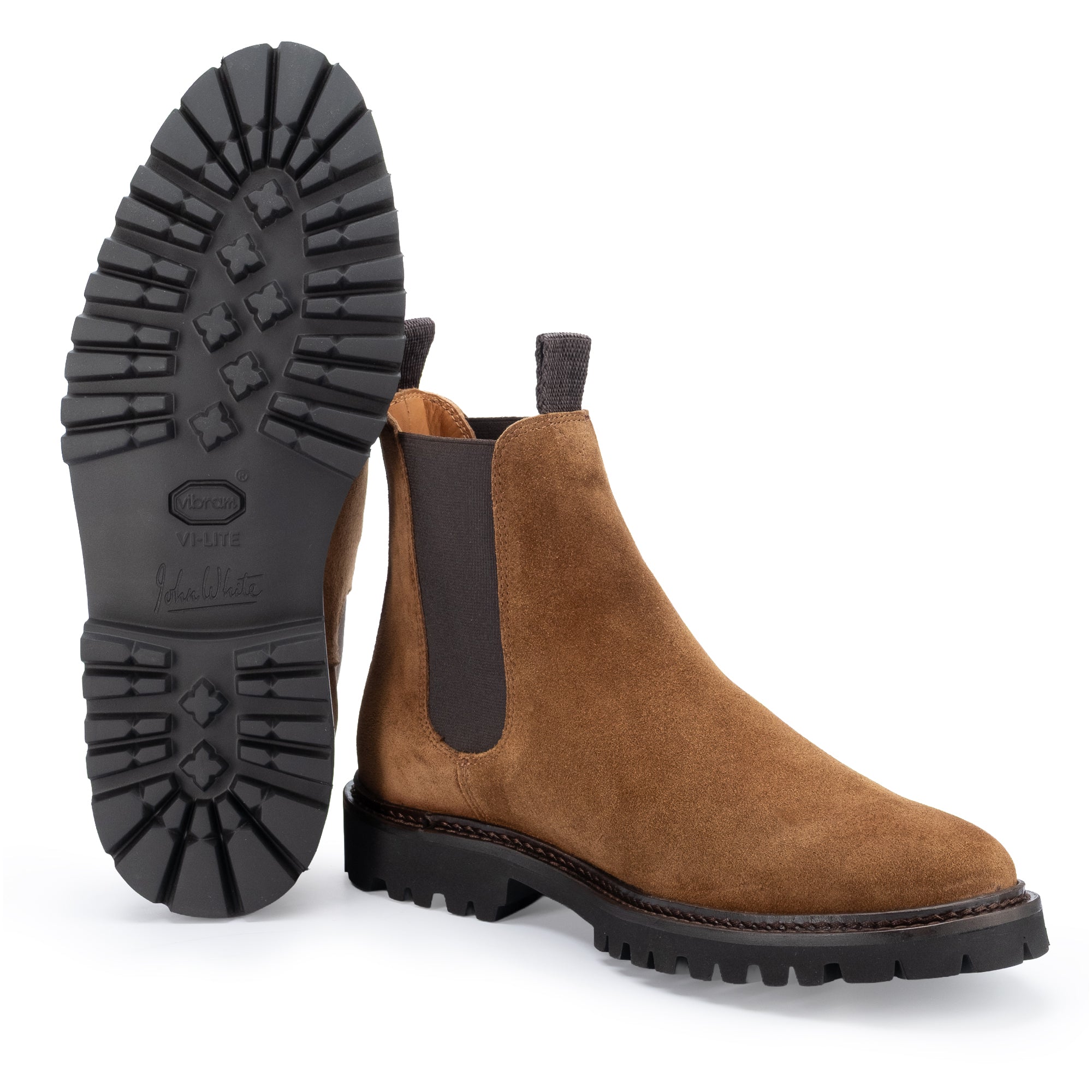
For boots — a Chelsea boot or the Aviemore Brogue Boot — work up the shaft in sections. The rear seam between calf and vamp collects more dirt than any other part of the boot and is frequently skipped.
Applying polish over trapped dirt seals contamination into the grain; a thorough brush is a prerequisite, not an optional warm-up.How and When Should You Apply Polish?
Polish application is where most mistakes are made, and almost all of them involve using too much product too frequently.
- Start with a small amount — roughly matchhead-sized per shoe. This is sufficient for a weekly maintenance coat on a leather already in reasonable condition.
- Apply in small circular motions, working the polish into the grain rather than spreading it across the surface. Work systematically from toe to heel.
- Cover the full upper — the heel counter, the sides, and beneath the lace line — not just the toe cap and centre vamp.
- Allow two to three minutes to dry. In cold or damp conditions, allow slightly longer. The wax should feel dry to a light touch before you begin buffing.
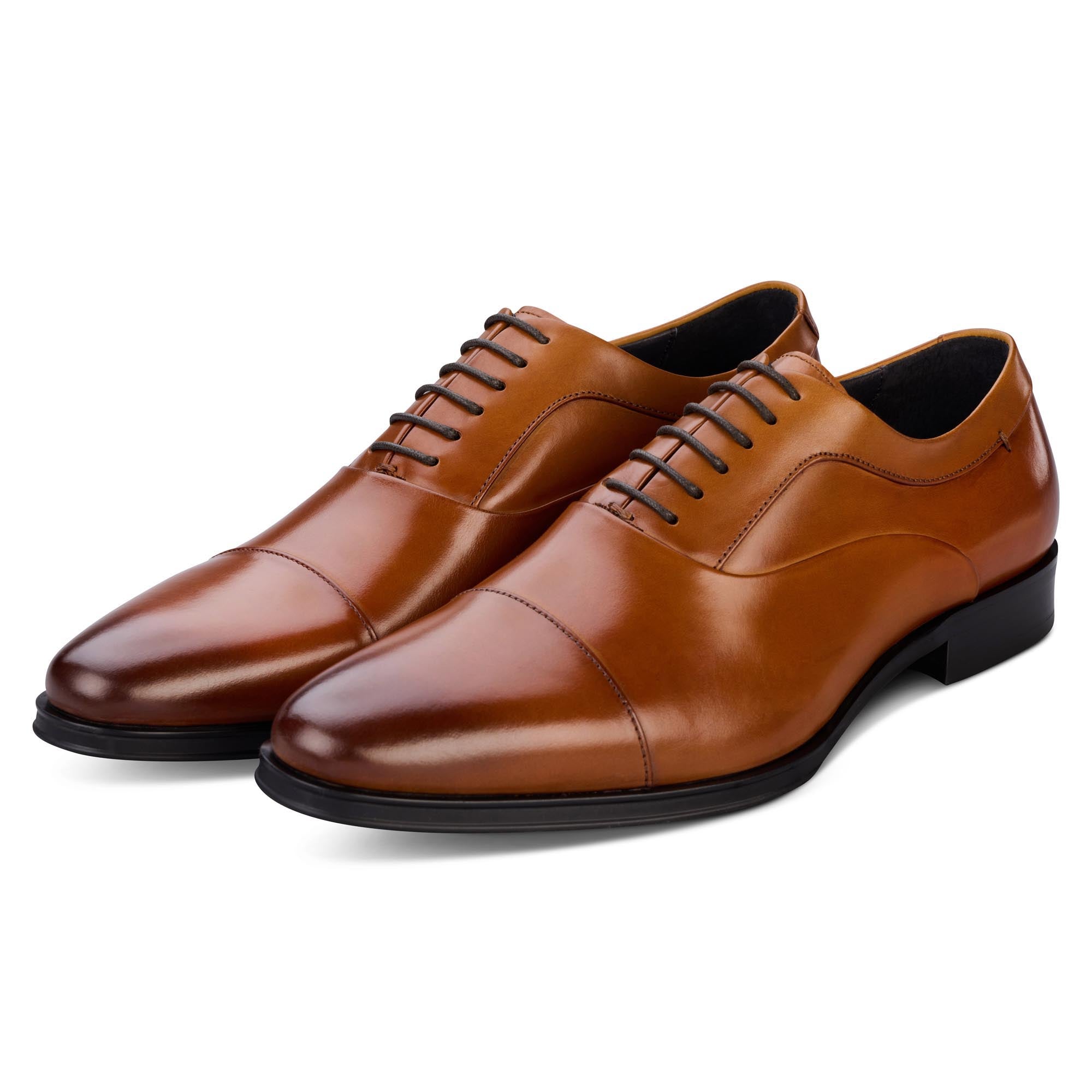
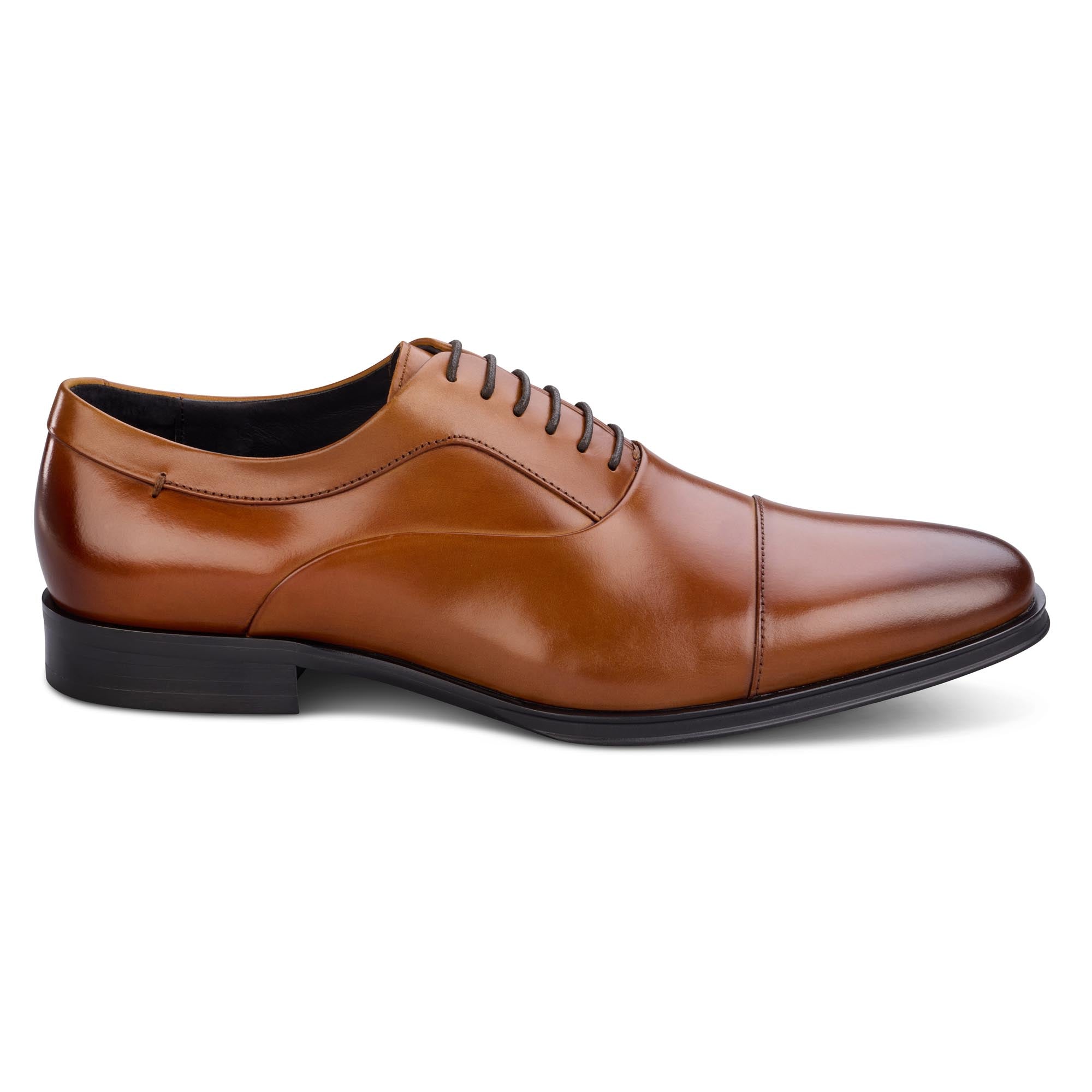
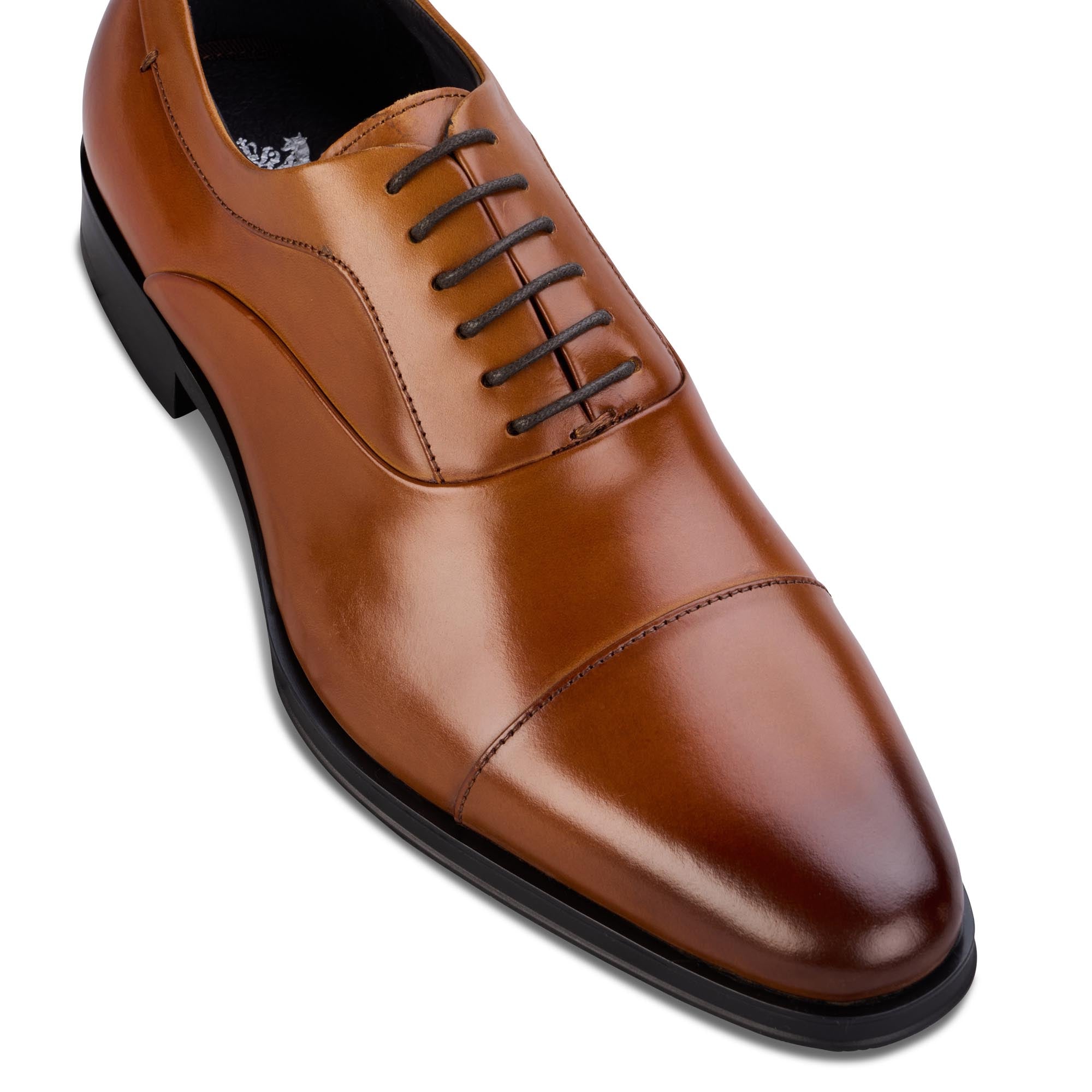
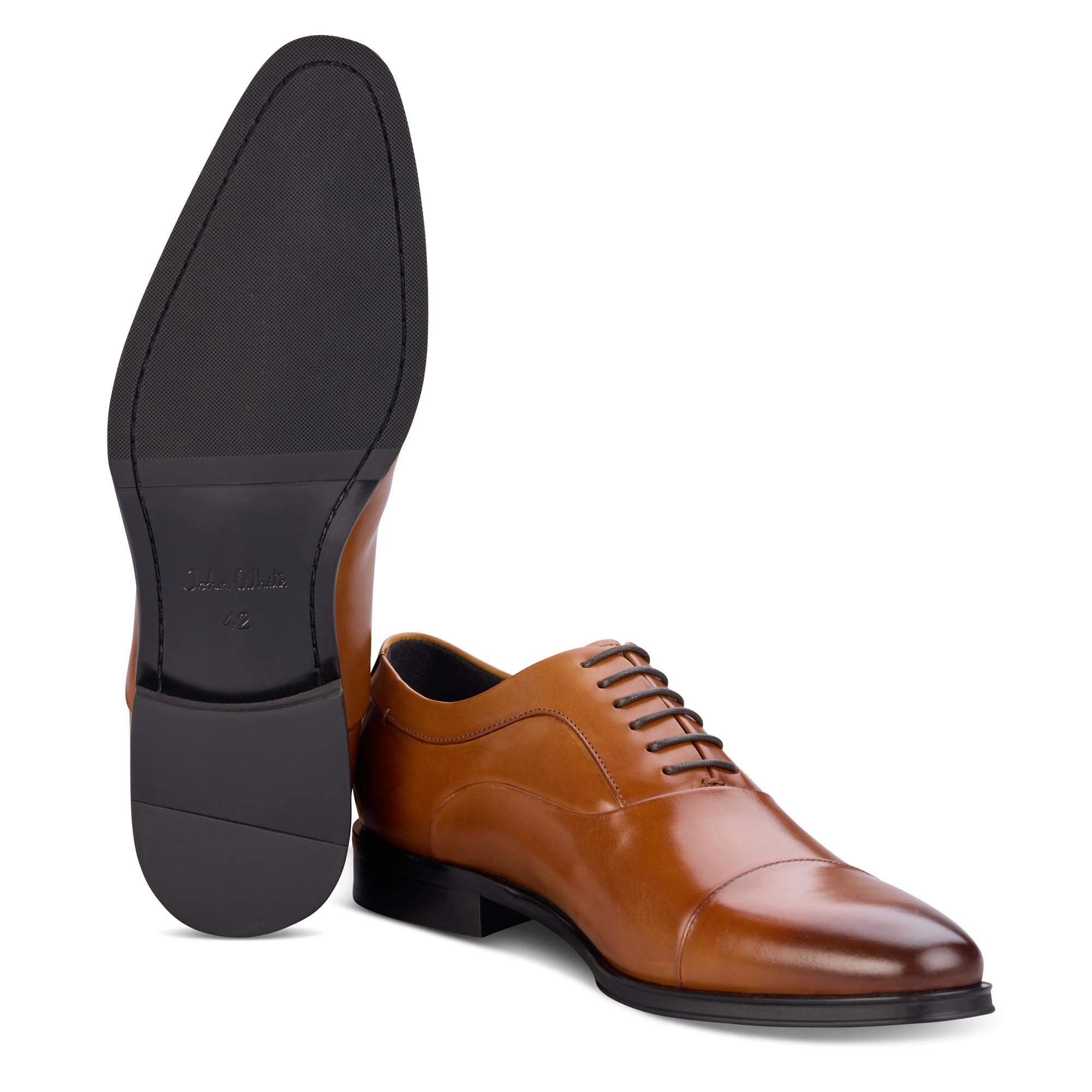
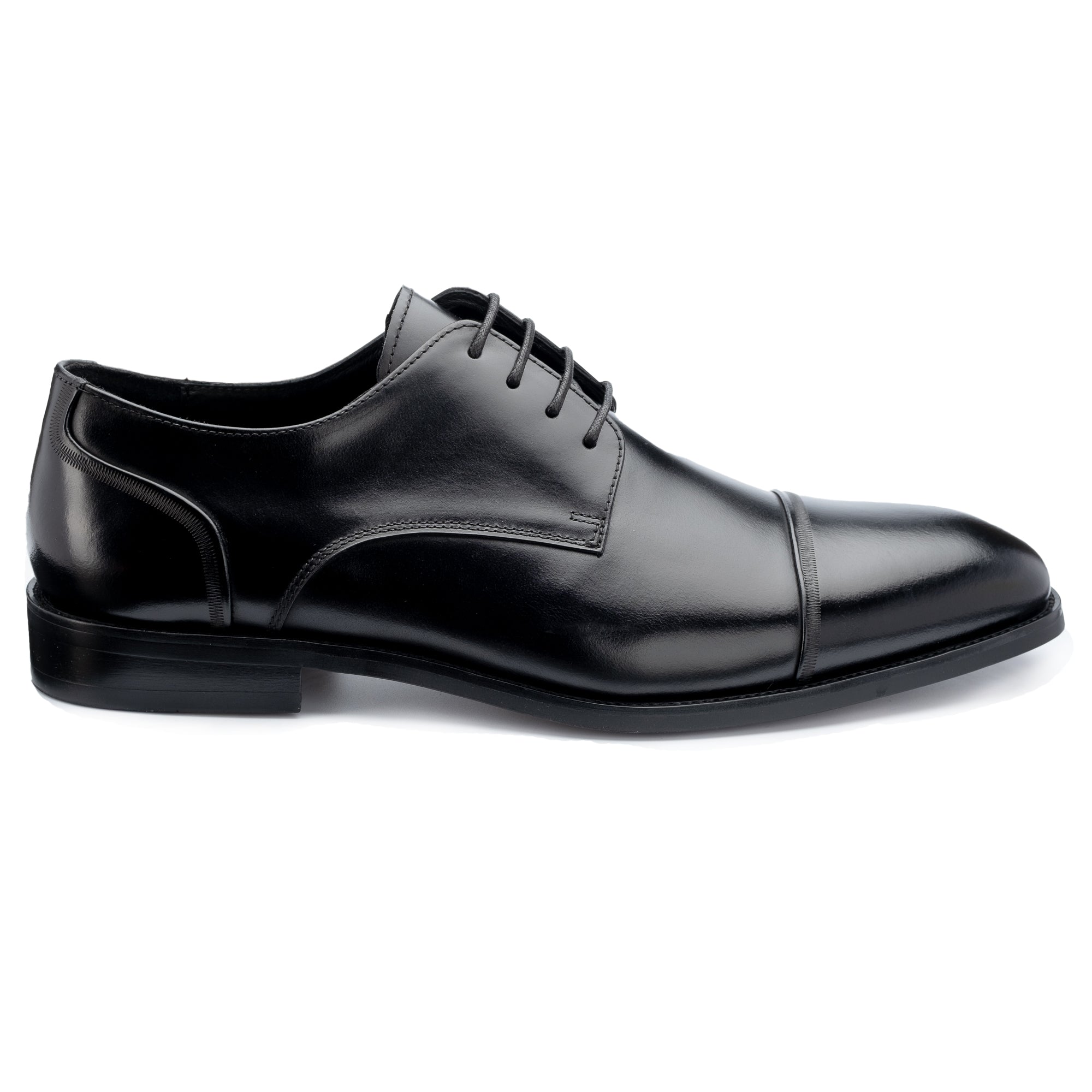
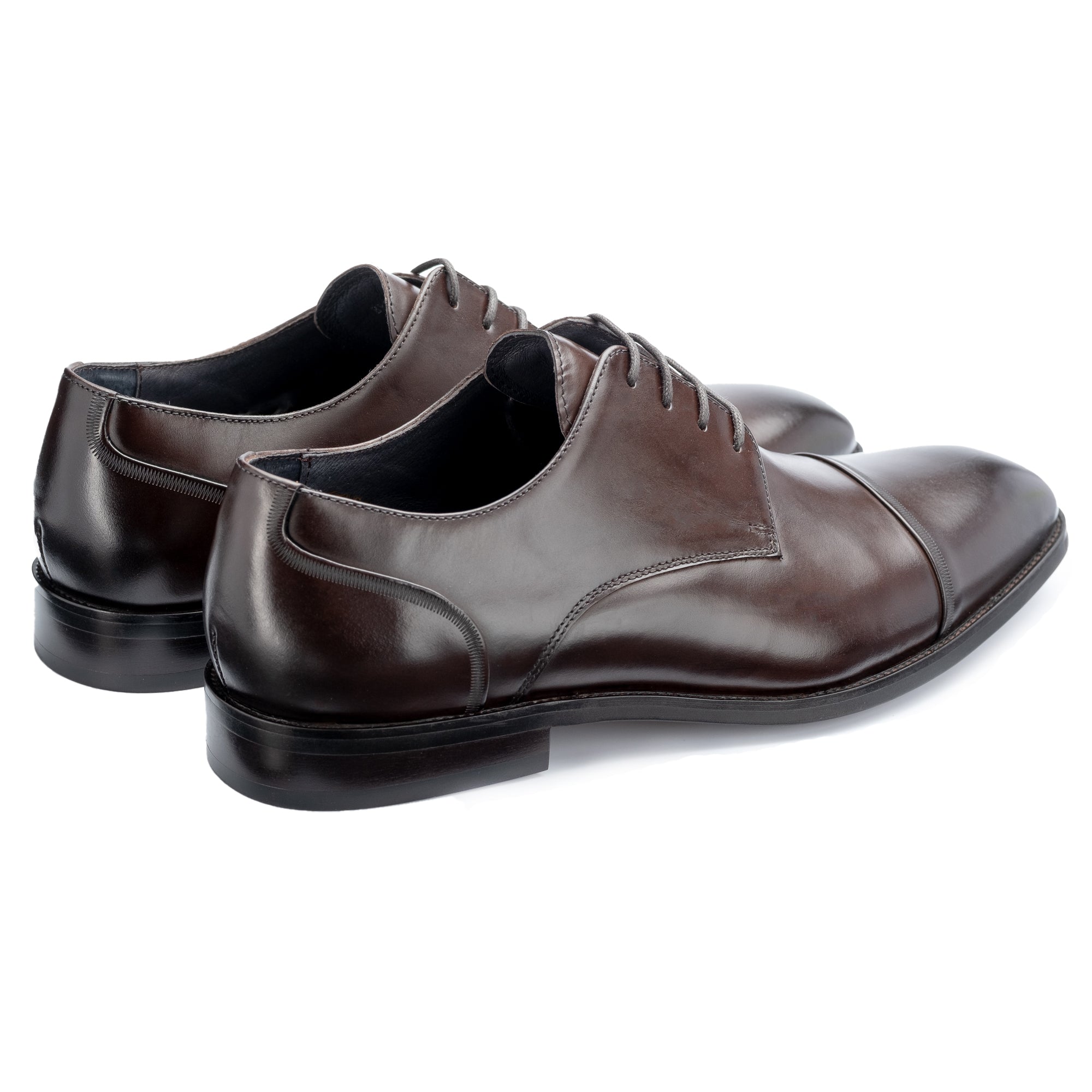
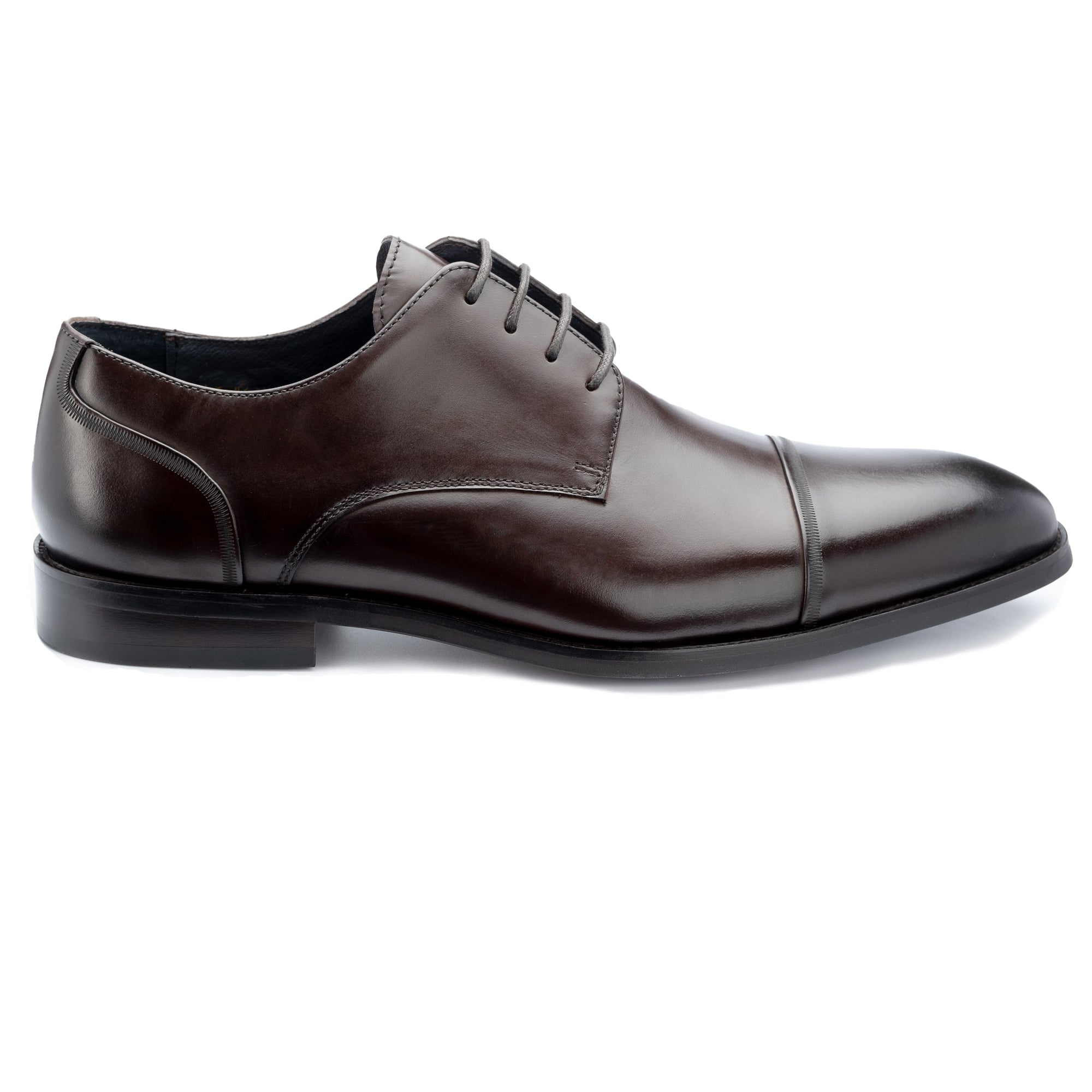
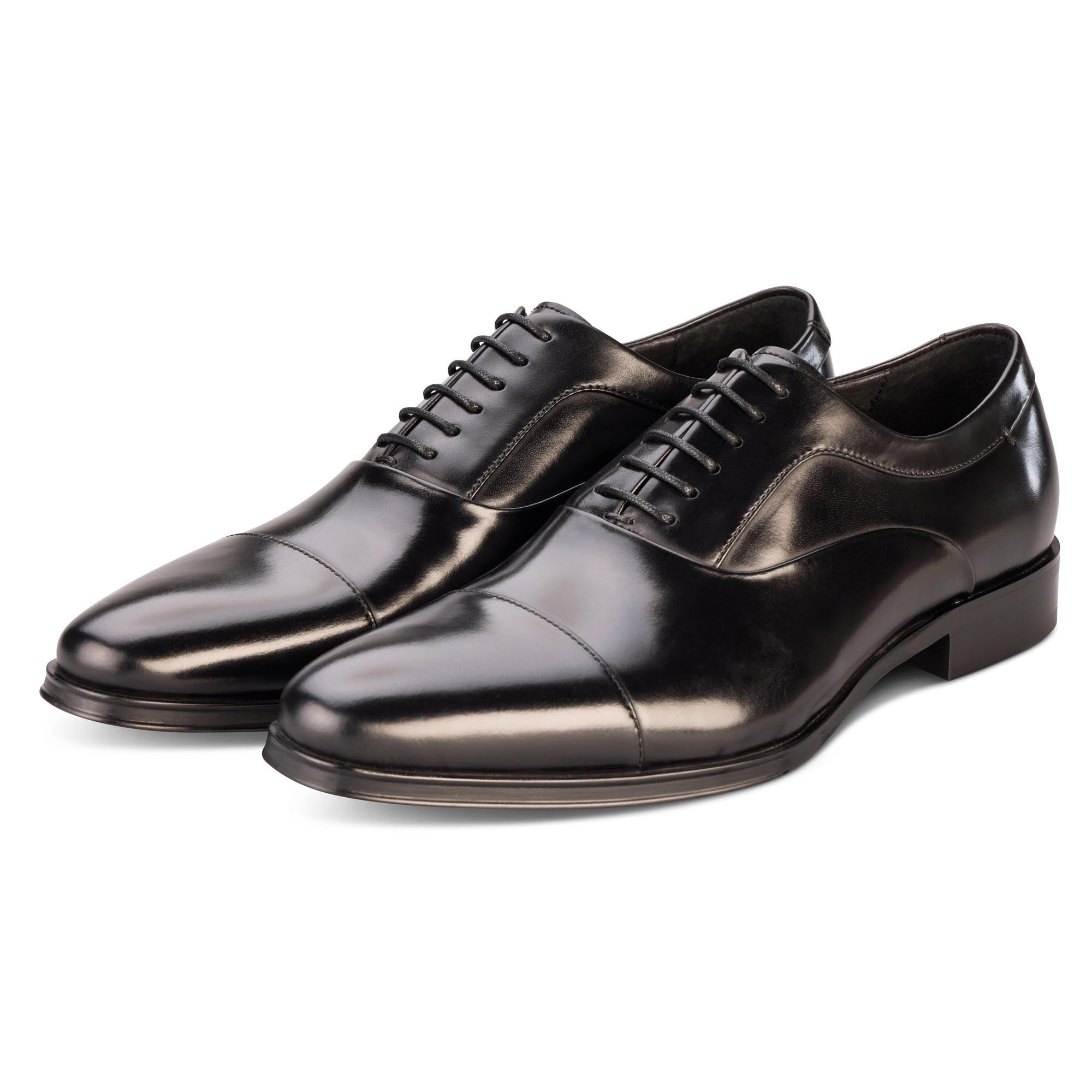
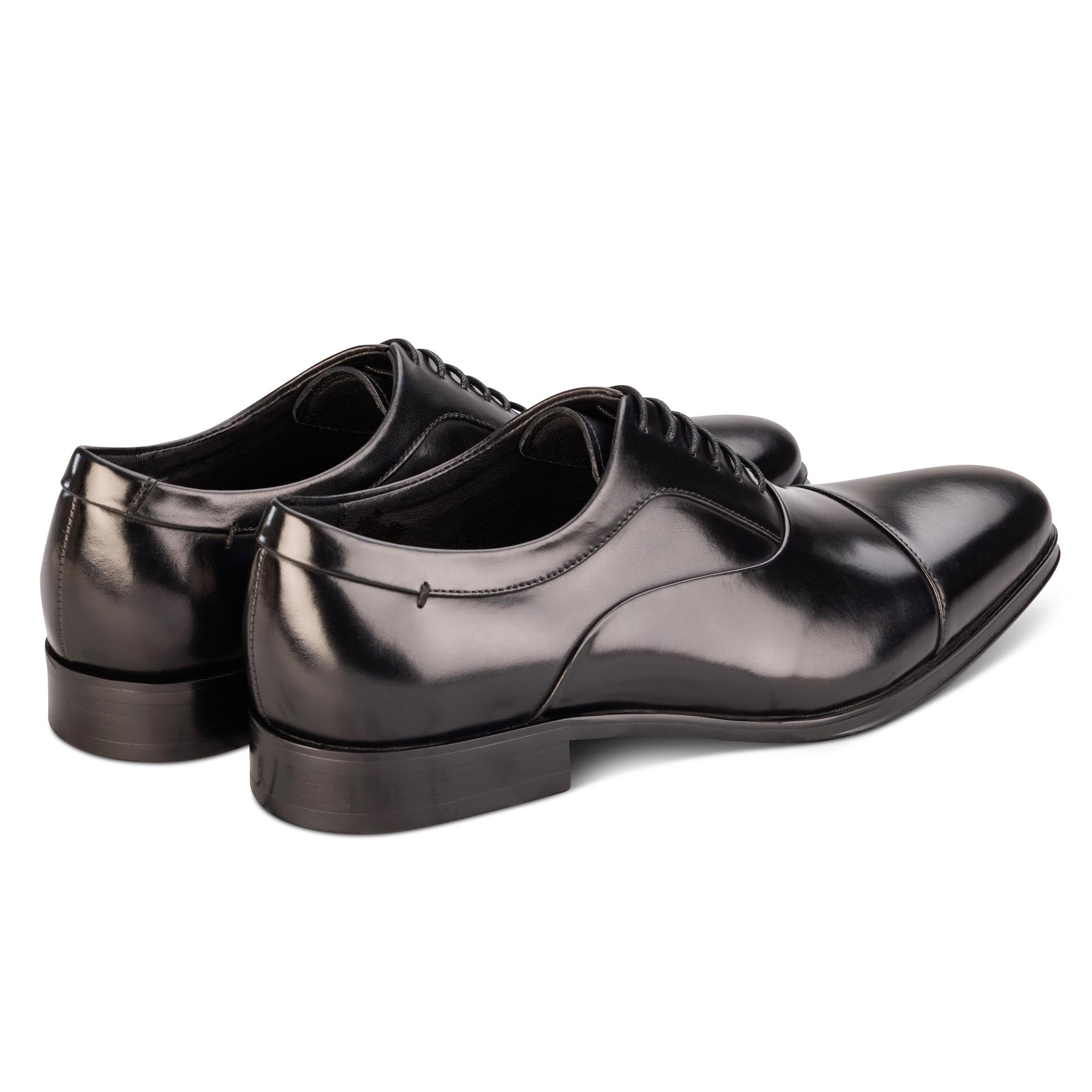
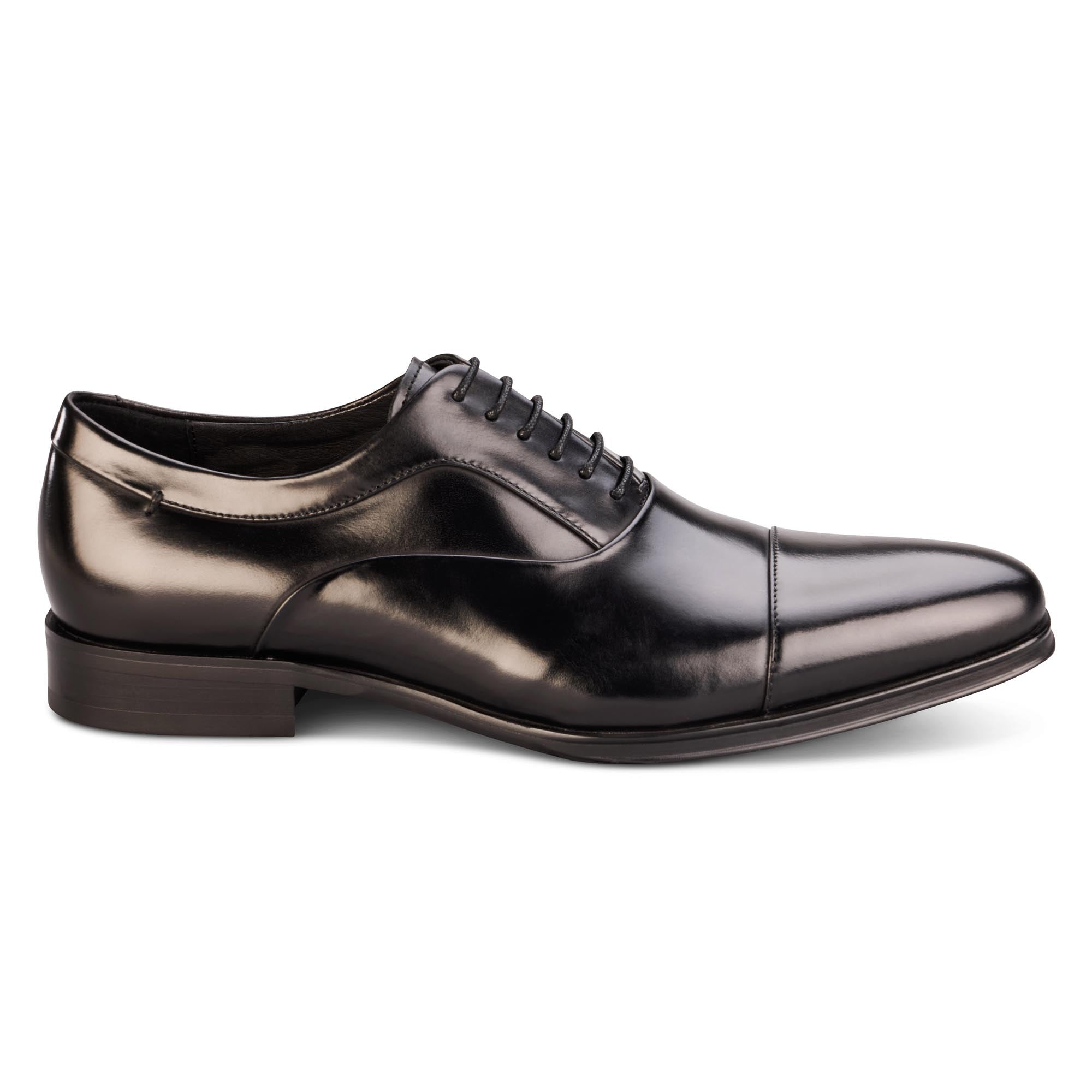
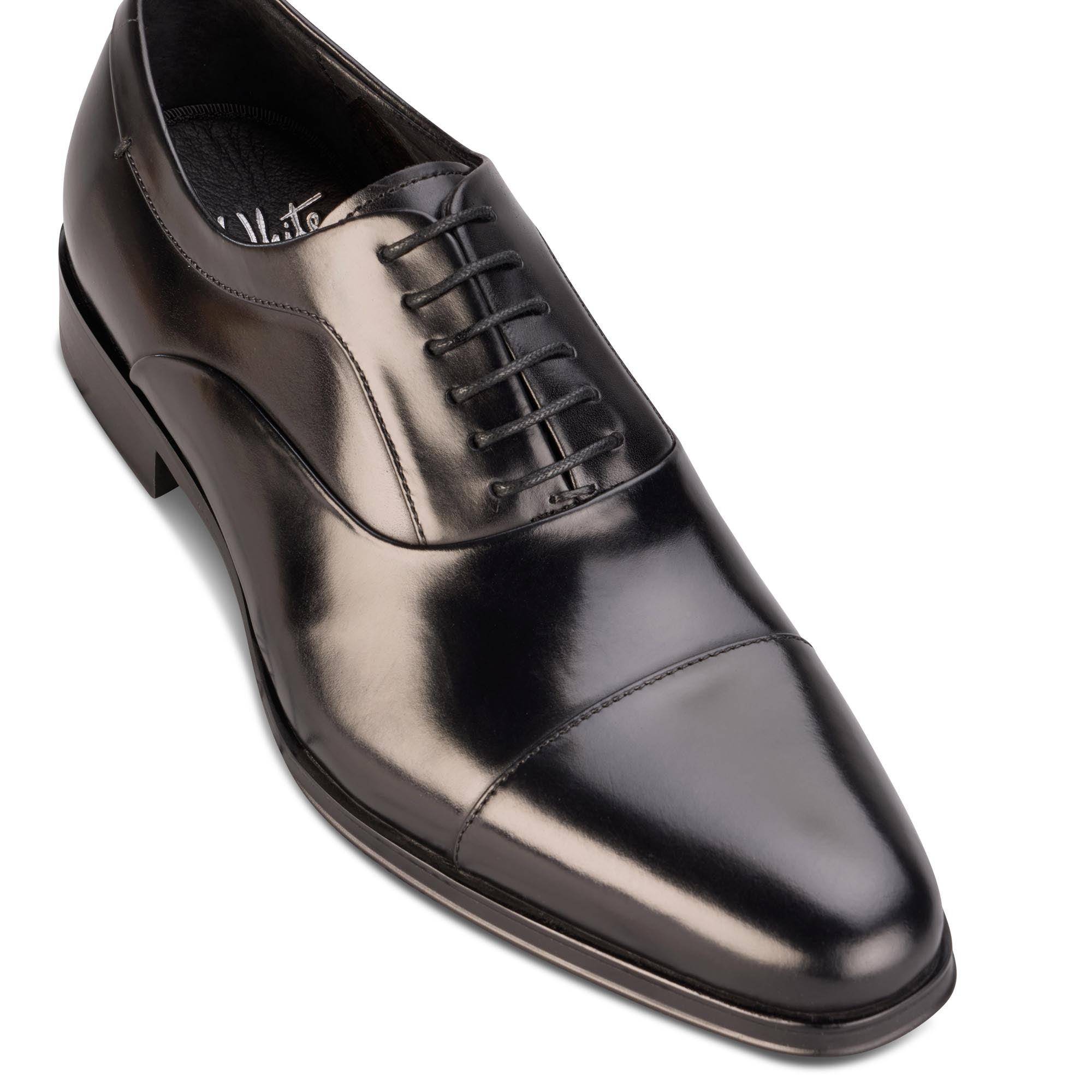
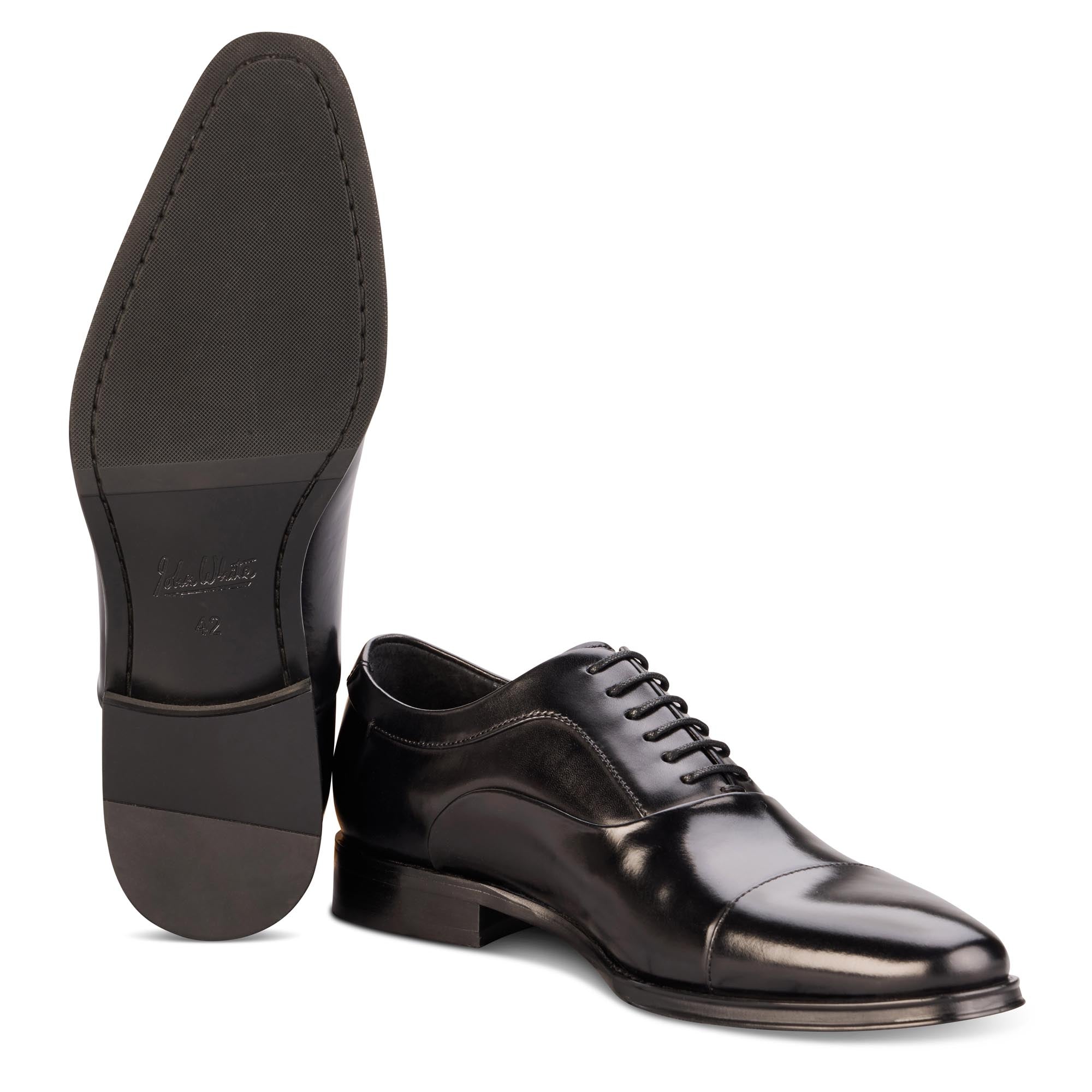
- For extra depth on the toe and heel caps only, apply a second thin coat once the first is fully buffed. This is the basis of a hand-polished "boned" finish and suits formal shoes such as the Guildhall Capped Oxfords.
Colour choice matters as much as technique. As we cover in our guide to leather shoe polish colours, a polish significantly darker than the shoe will permanently deepen the shade — a result that cannot be undone. When uncertain, use a neutral wax. It protects and adds shine without altering the leather's colour.
Apply less polish than you think necessary and buff more than you think is needed — that's the professional formula, and it produces a better result than building up product.How Should You Buff Leather Shoes to a Shine?
Buffing drives wax into the leather surface rather than leaving it sitting on top. Done correctly, it's what separates a clean, lasting shine from a dull, waxy film.
Using a clean horsehair brush or lint-free cloth, work in small, rapid circular motions with moderate pressure. The friction generates gentle heat, which softens the wax and bonds it to the grain. Build pressure gradually rather than starting hard — you're working the wax in, not abrading the surface.
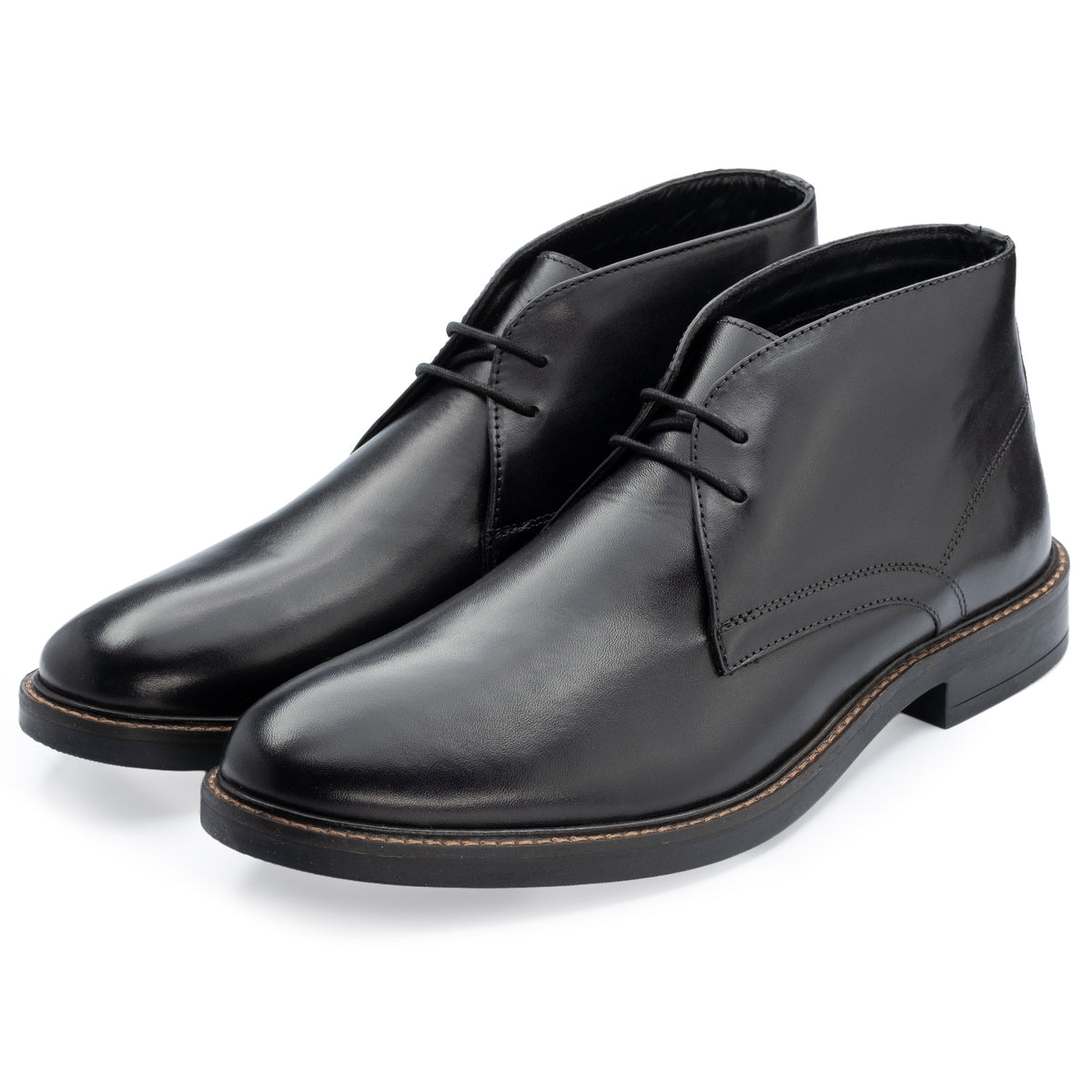
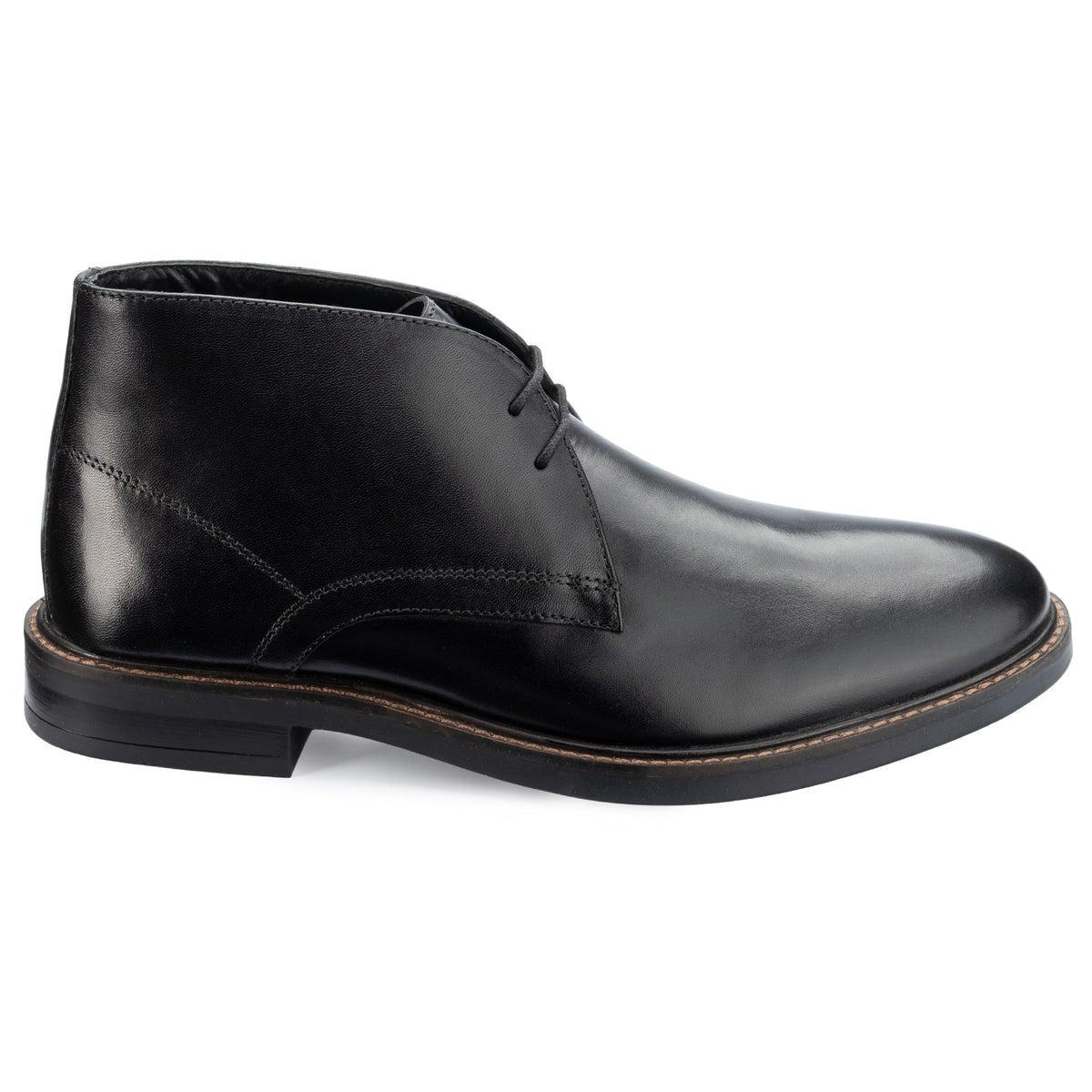
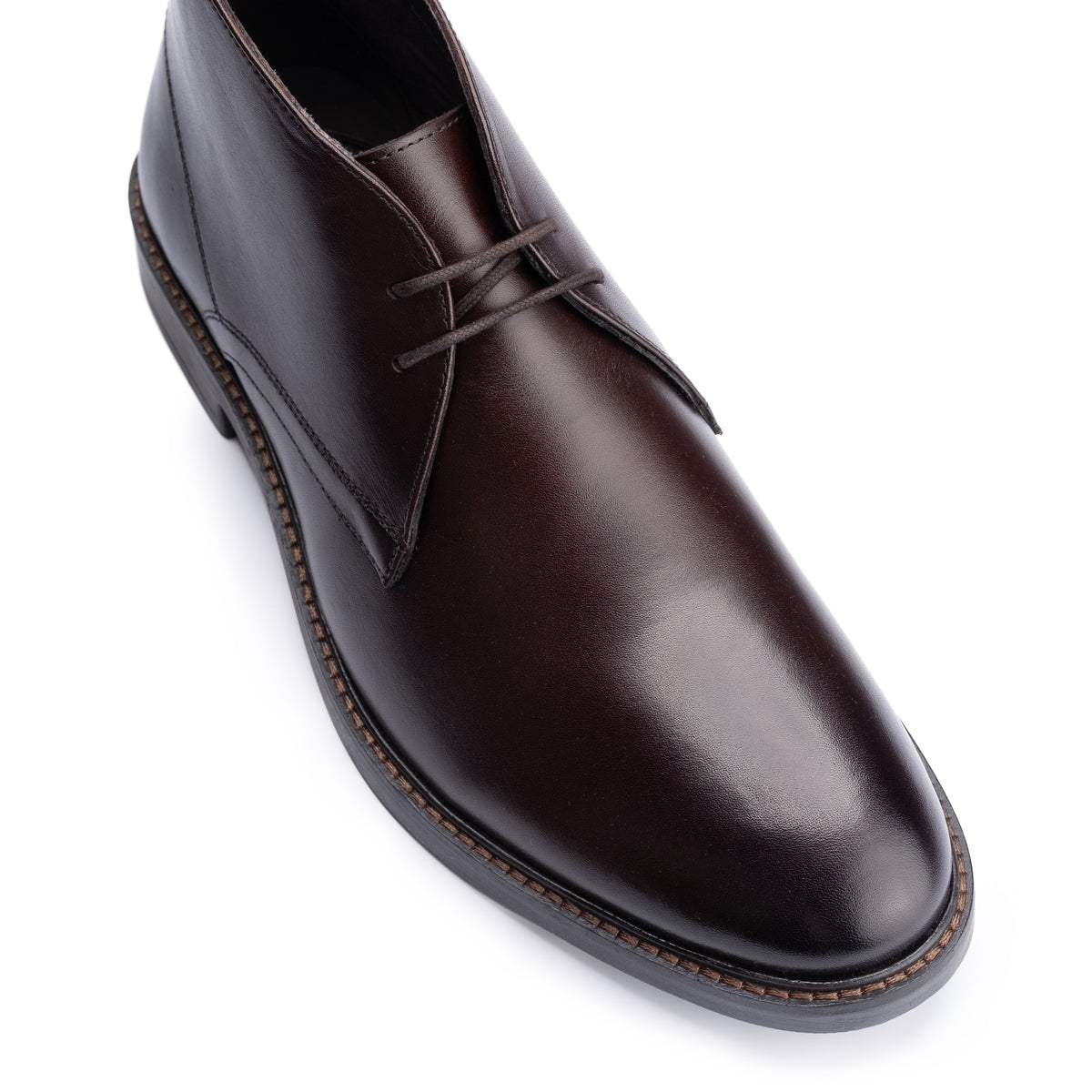
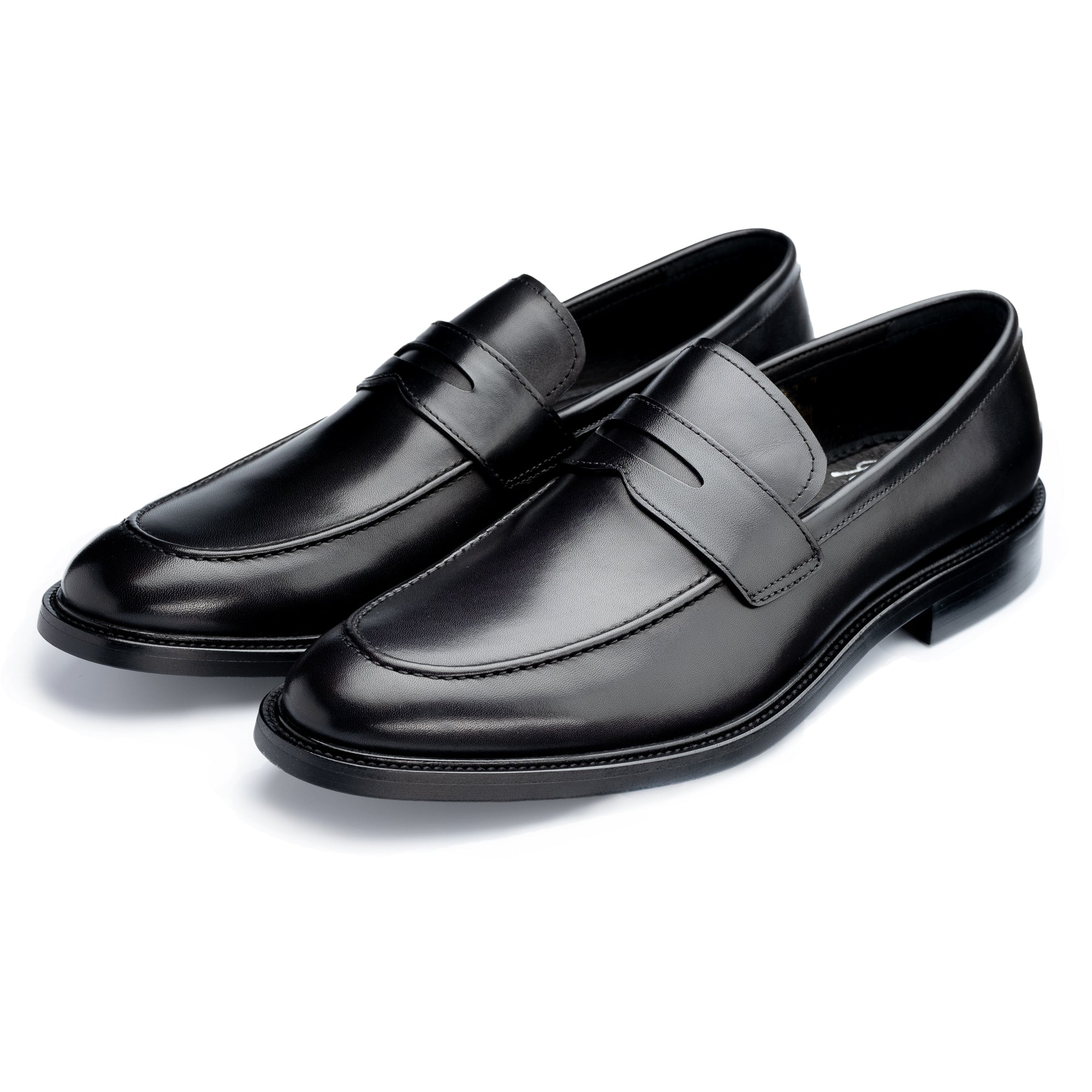
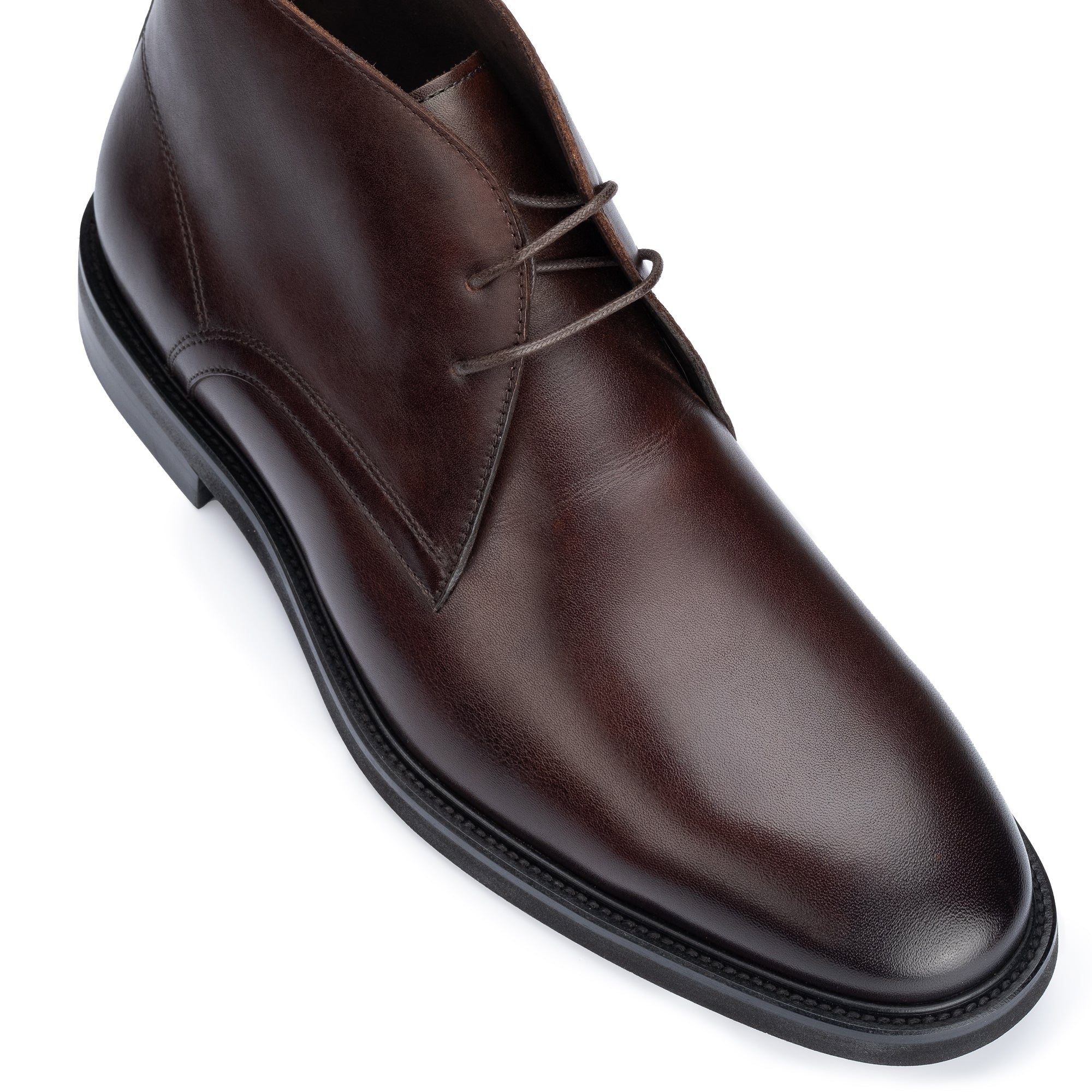
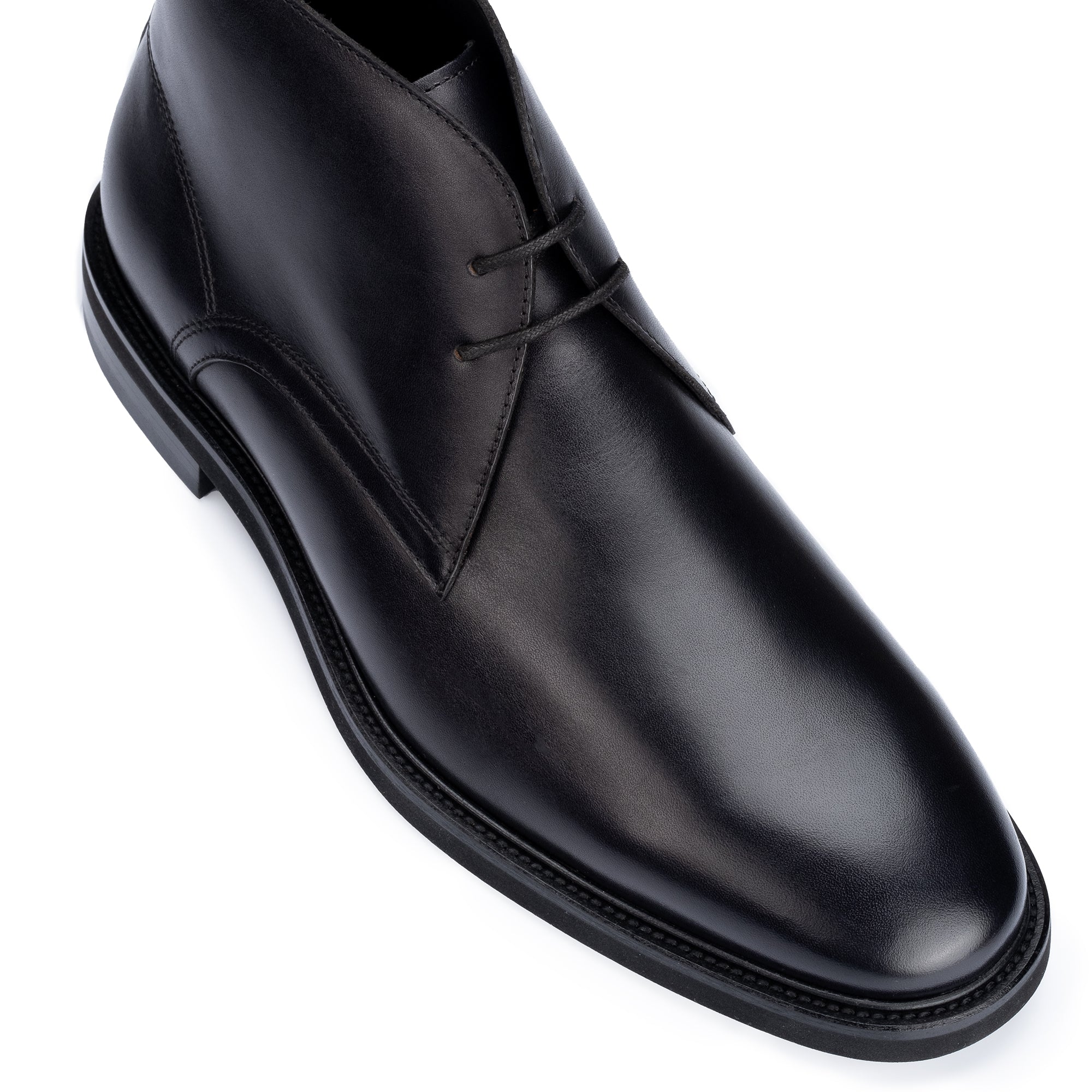
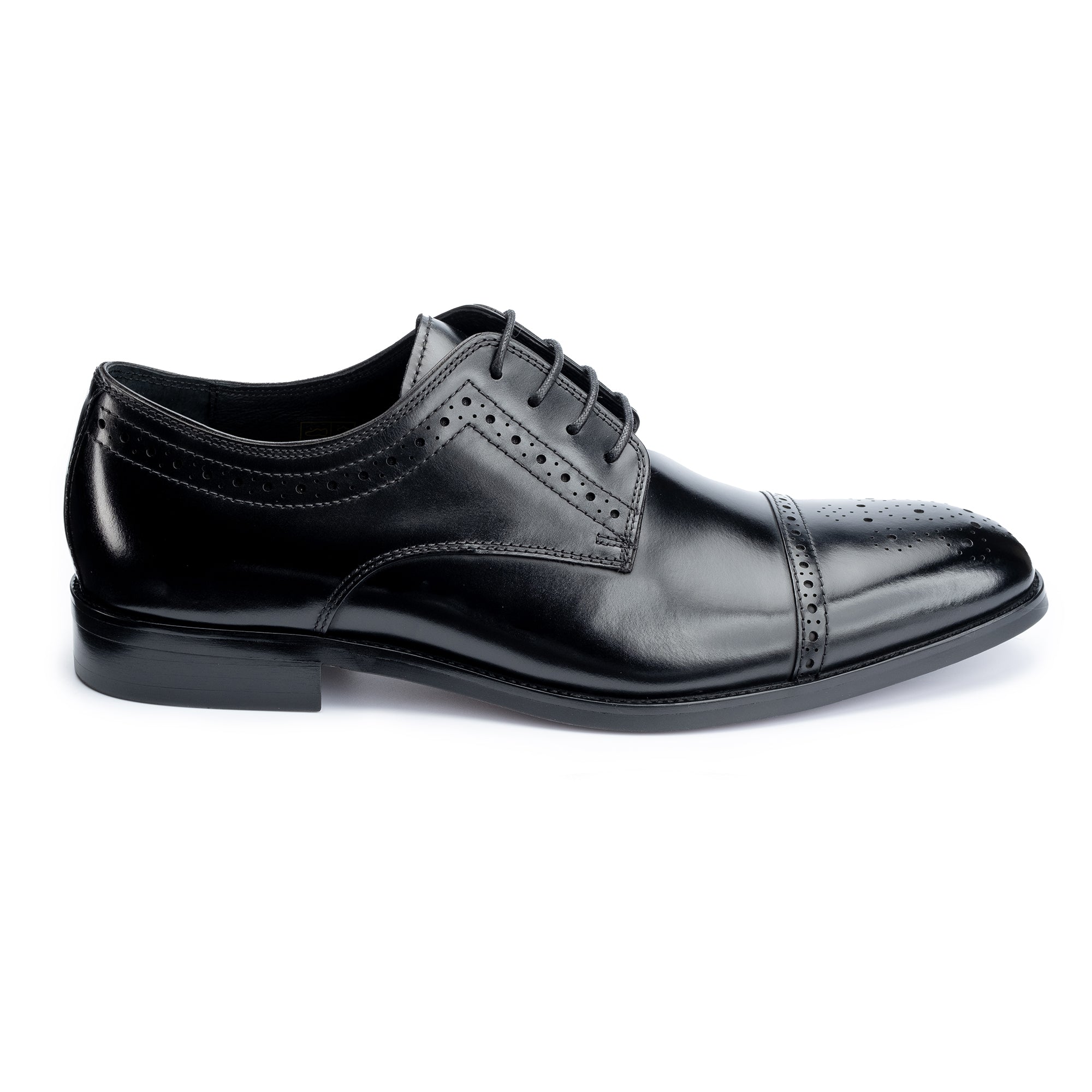
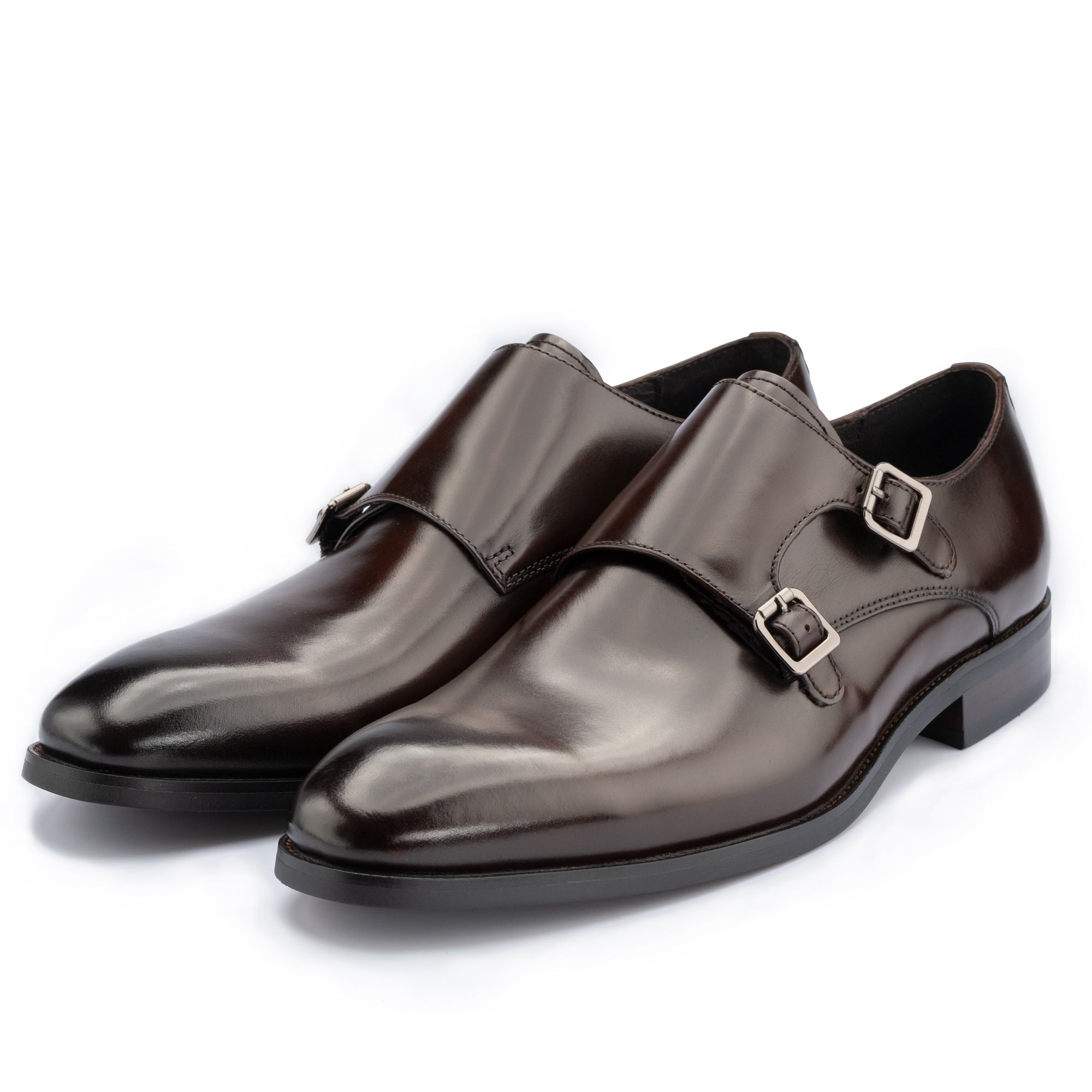
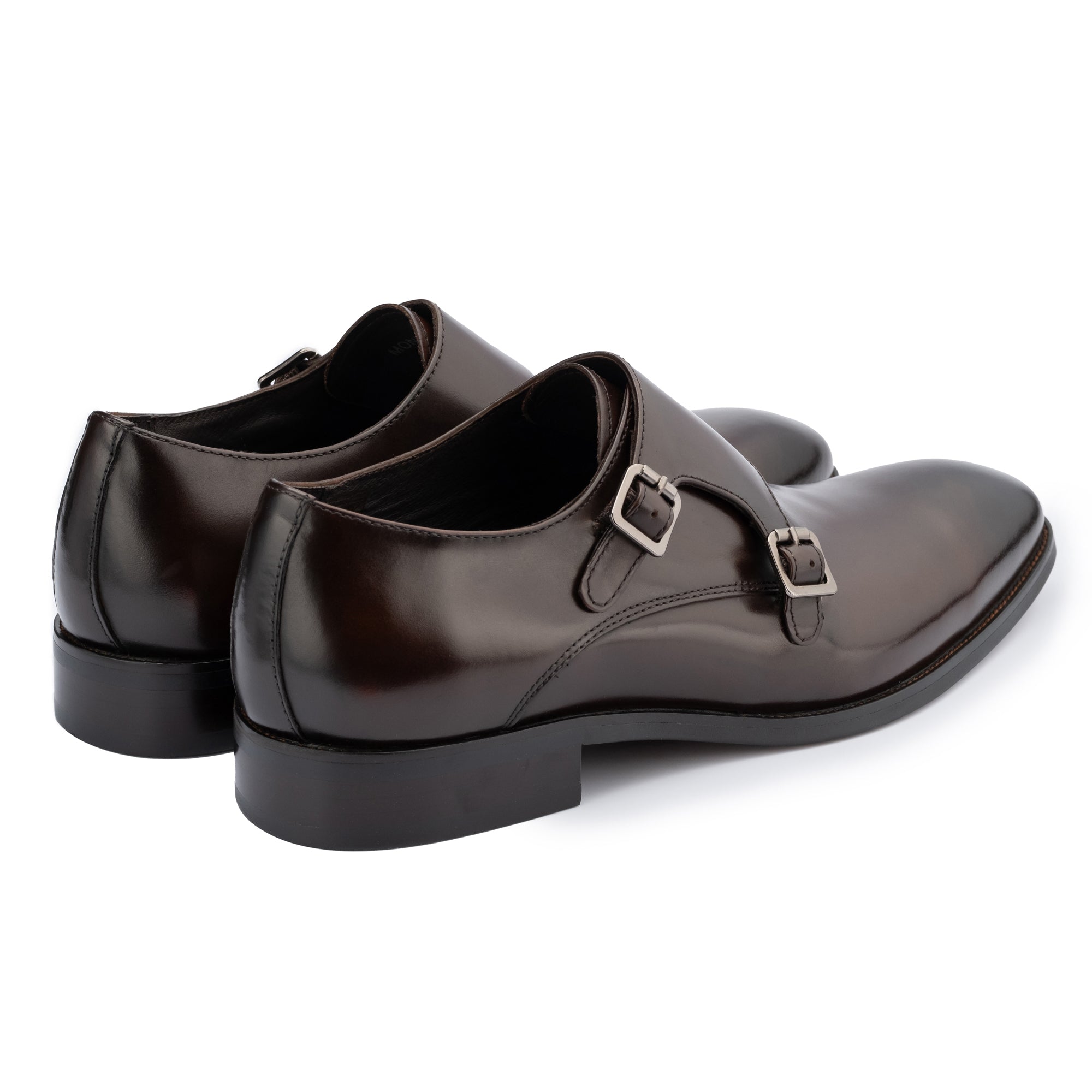
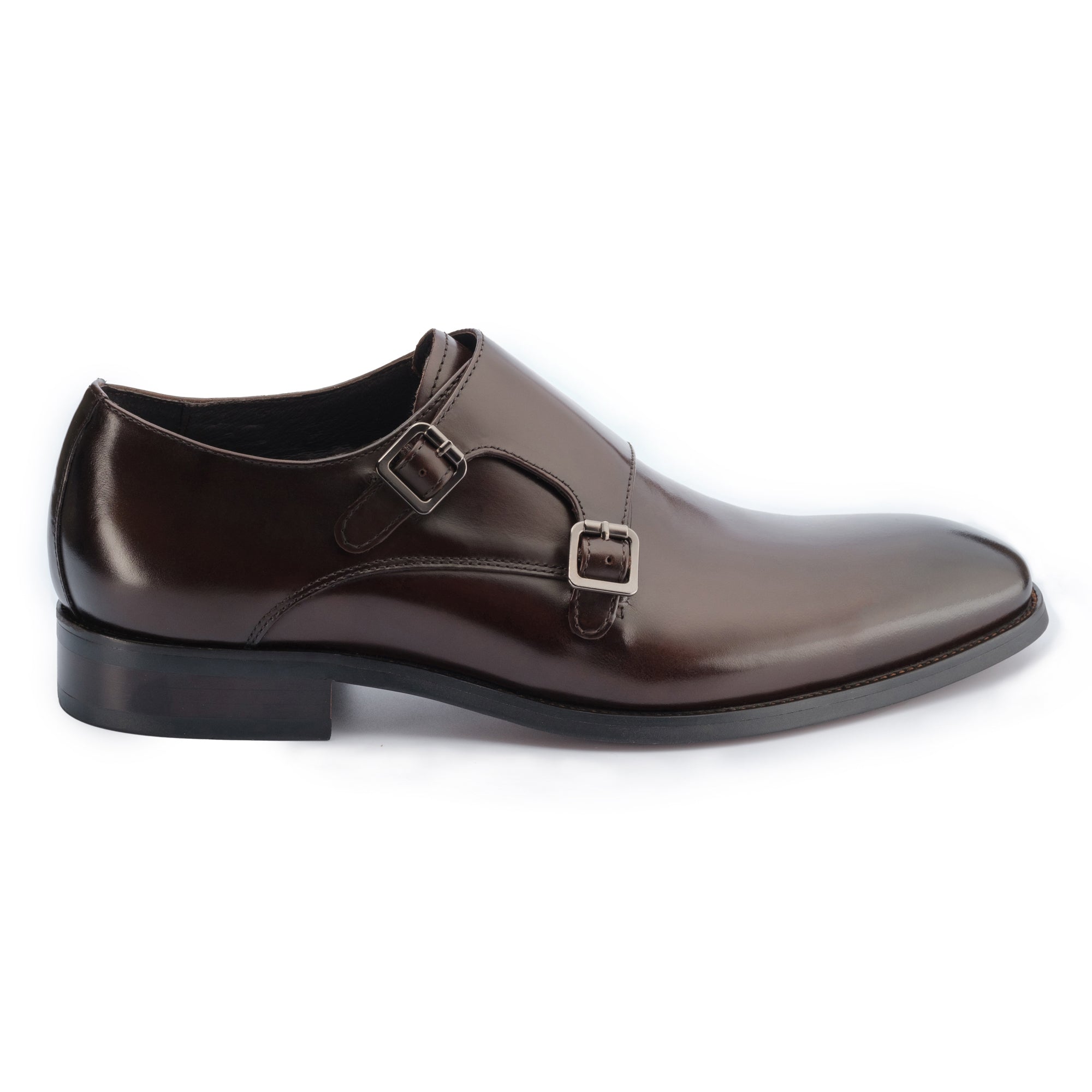
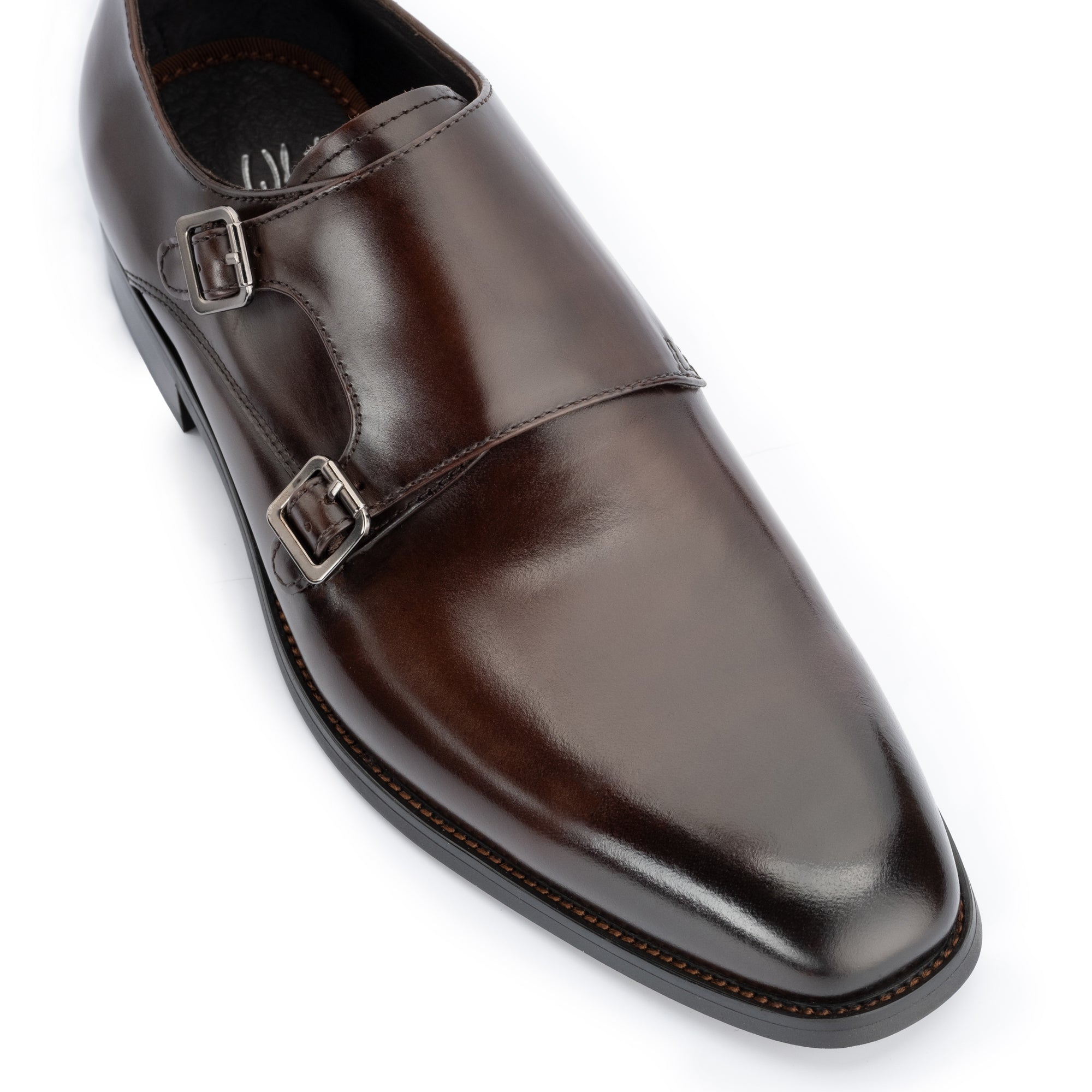
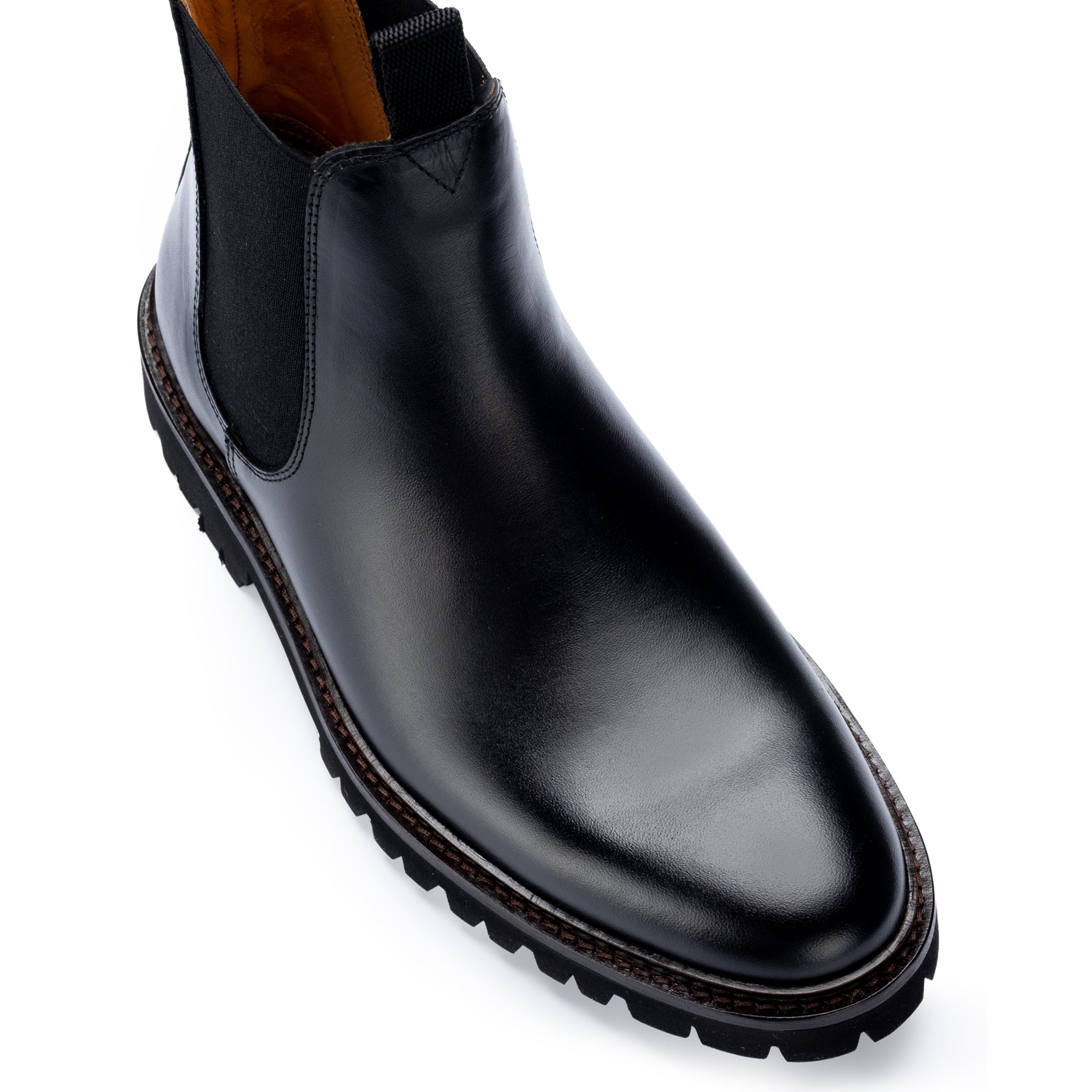
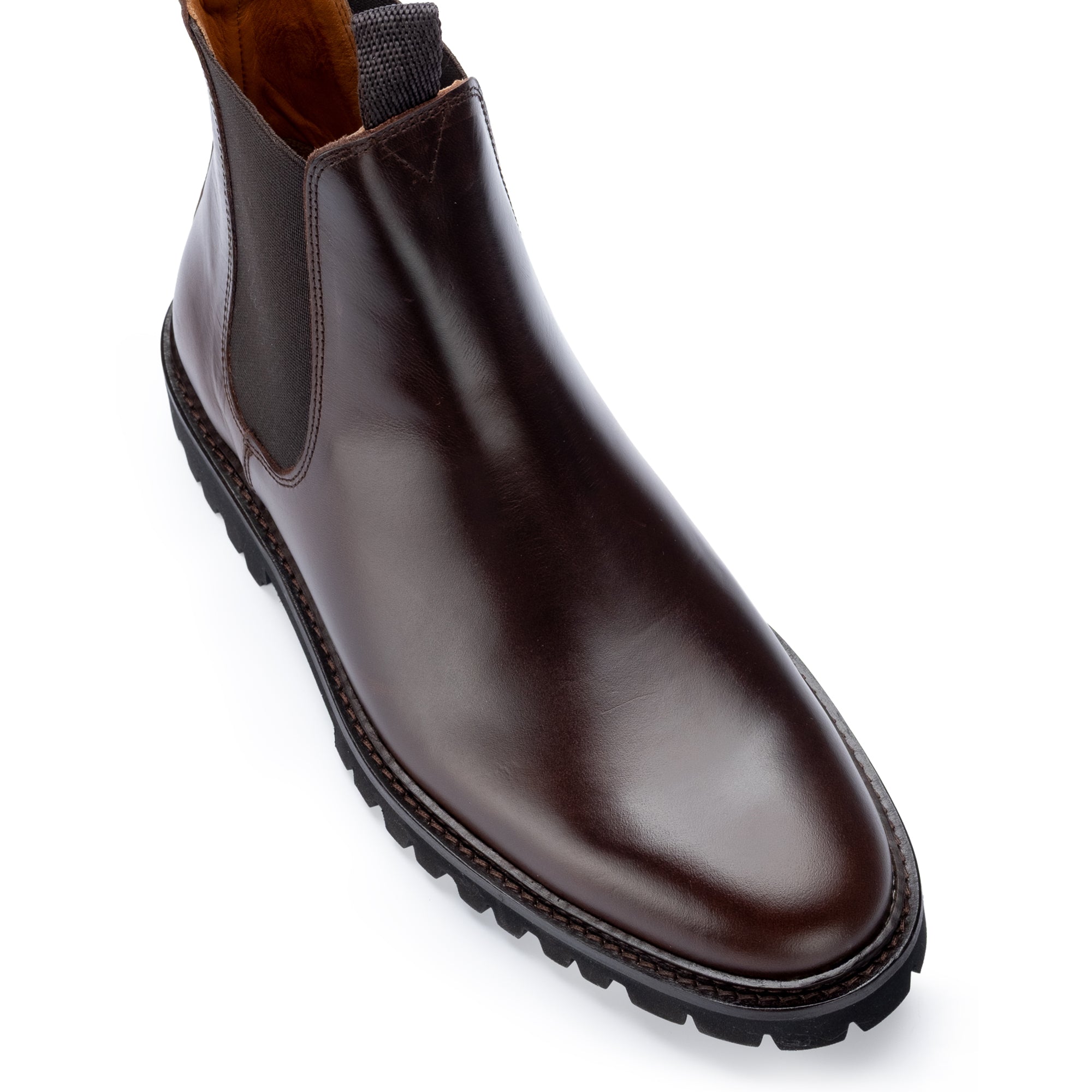
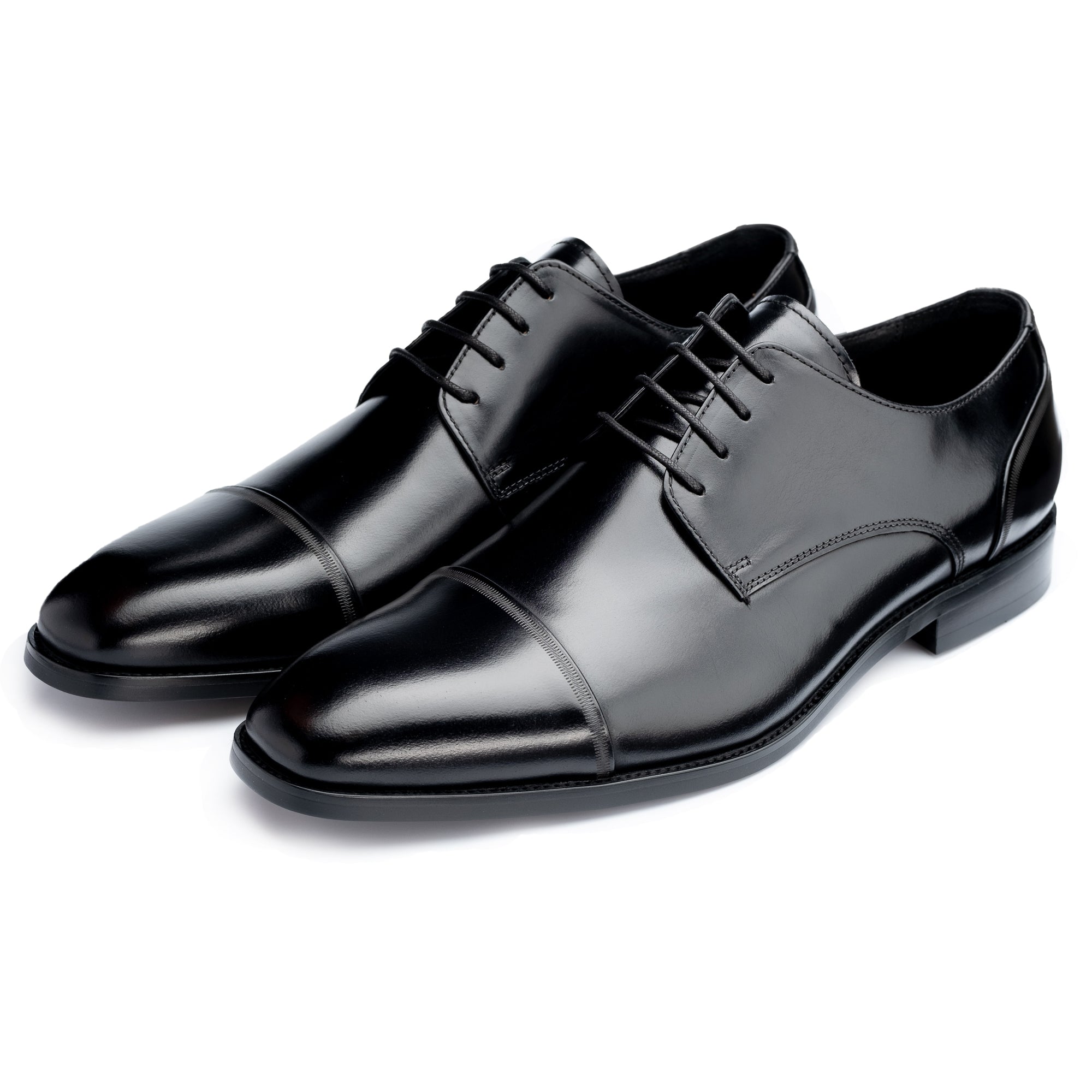
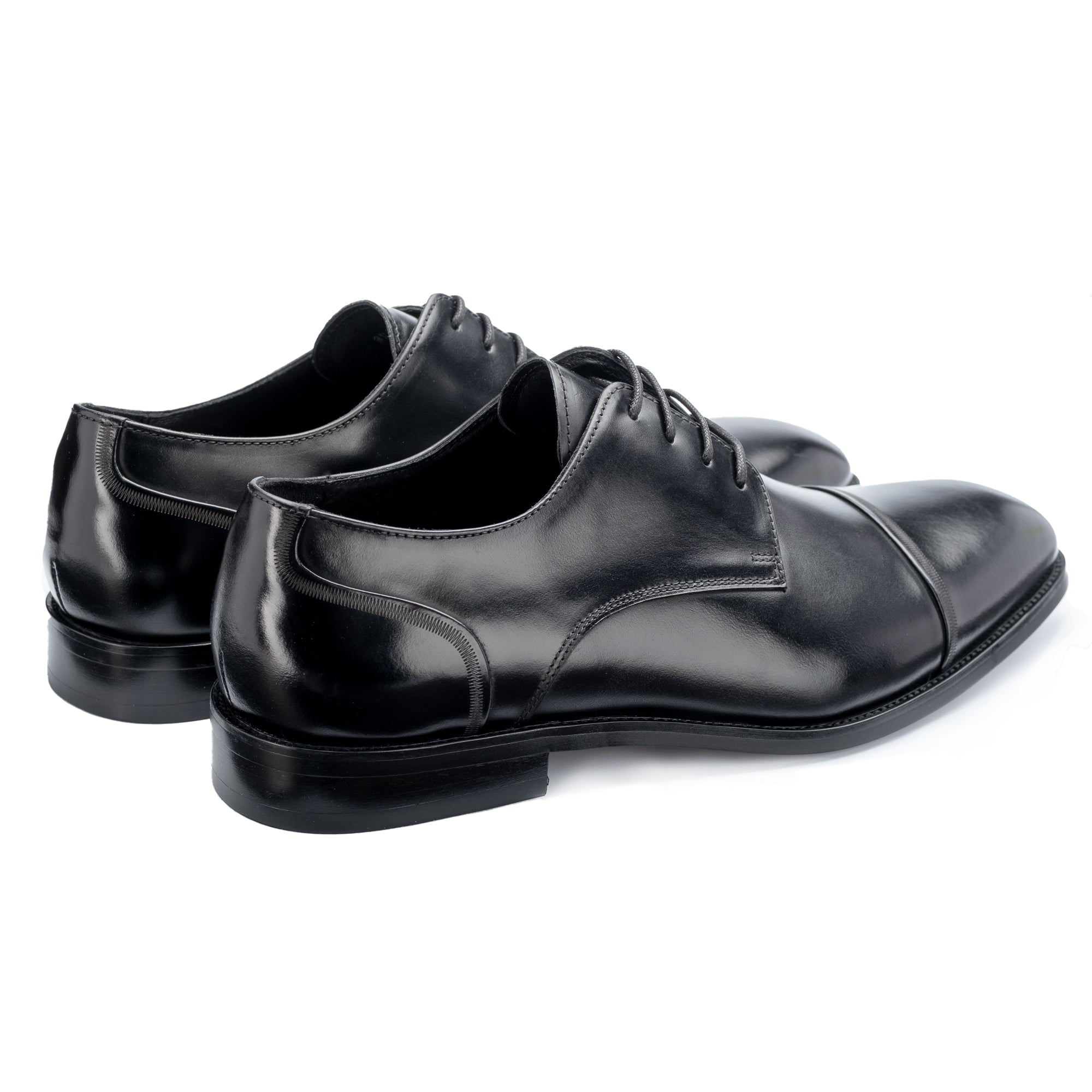
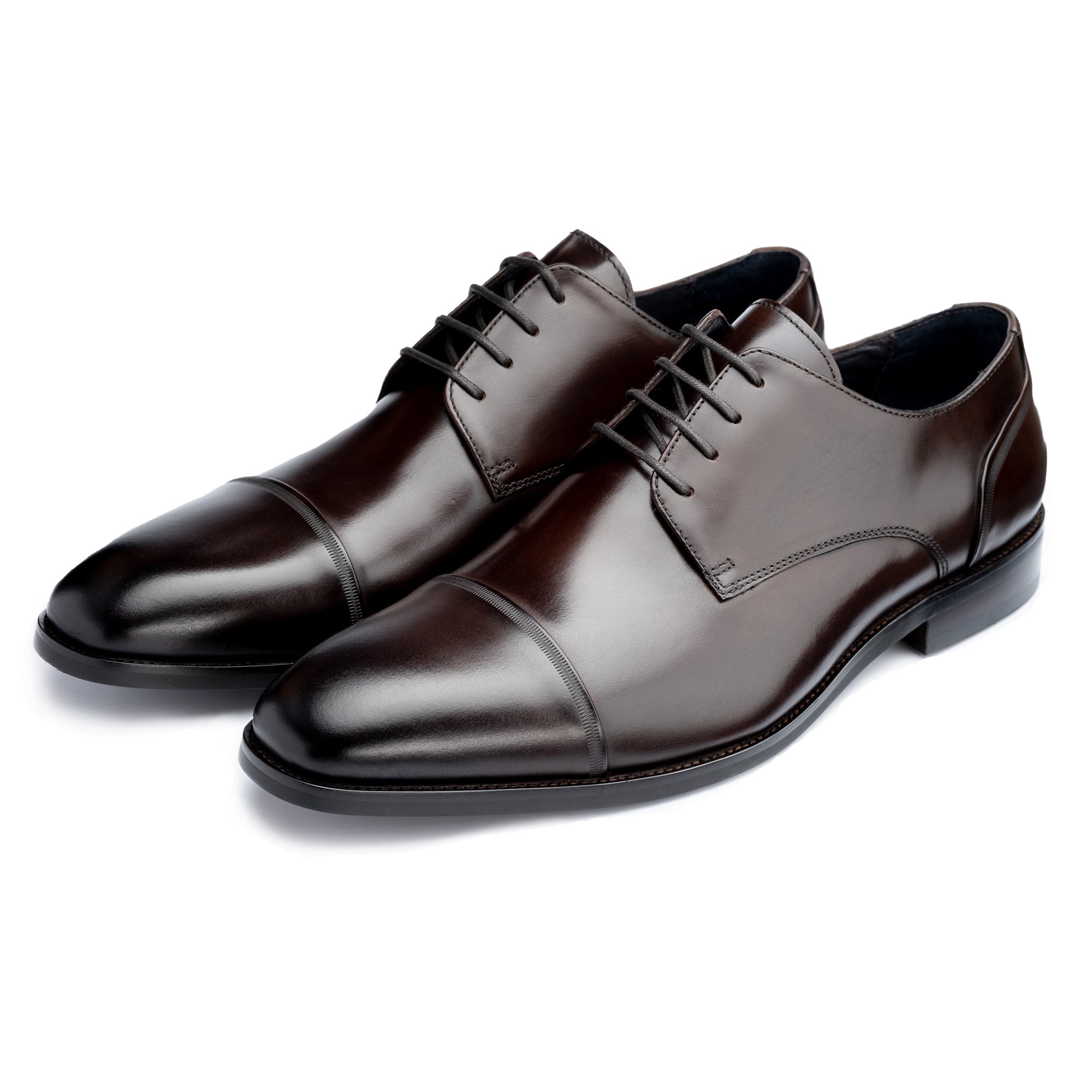
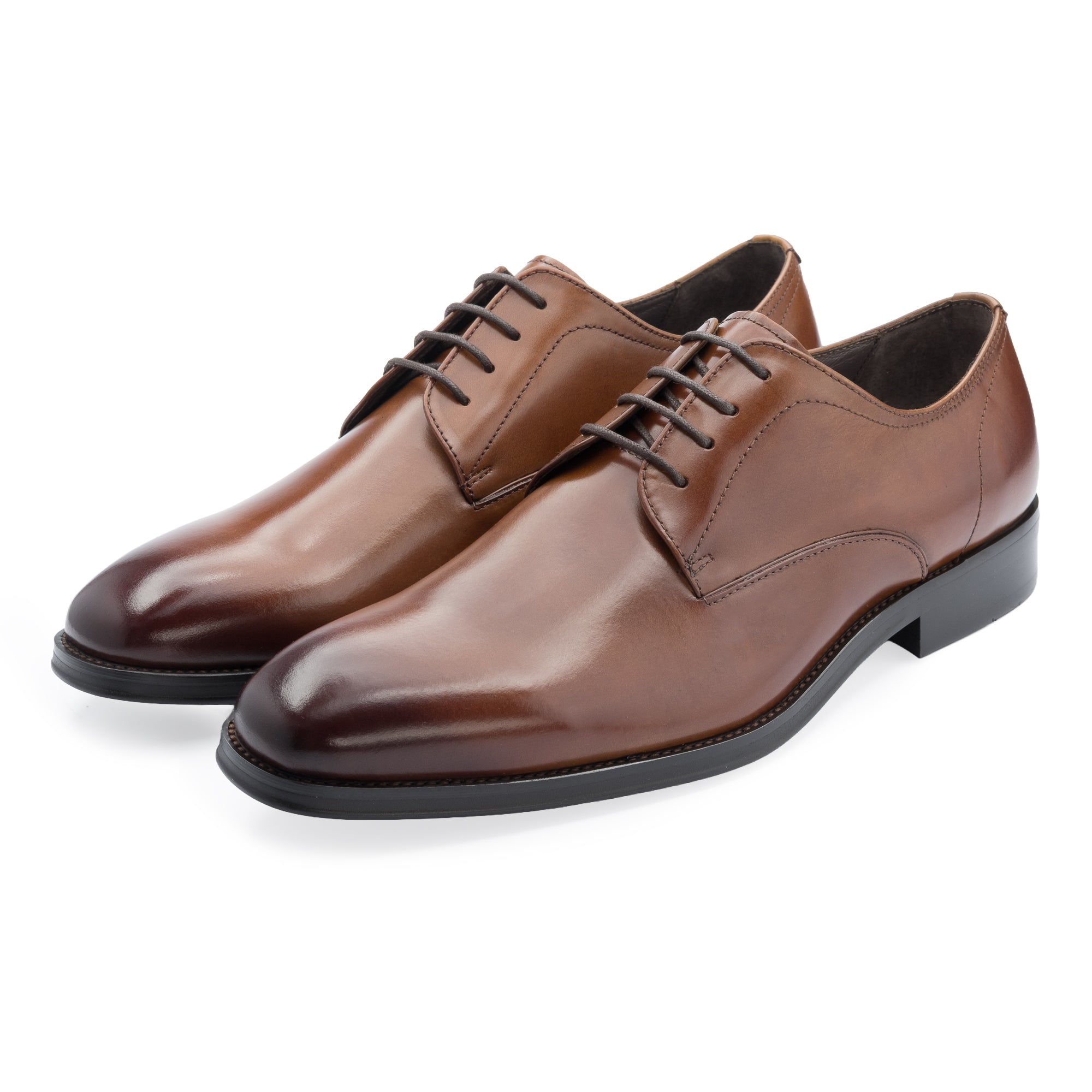
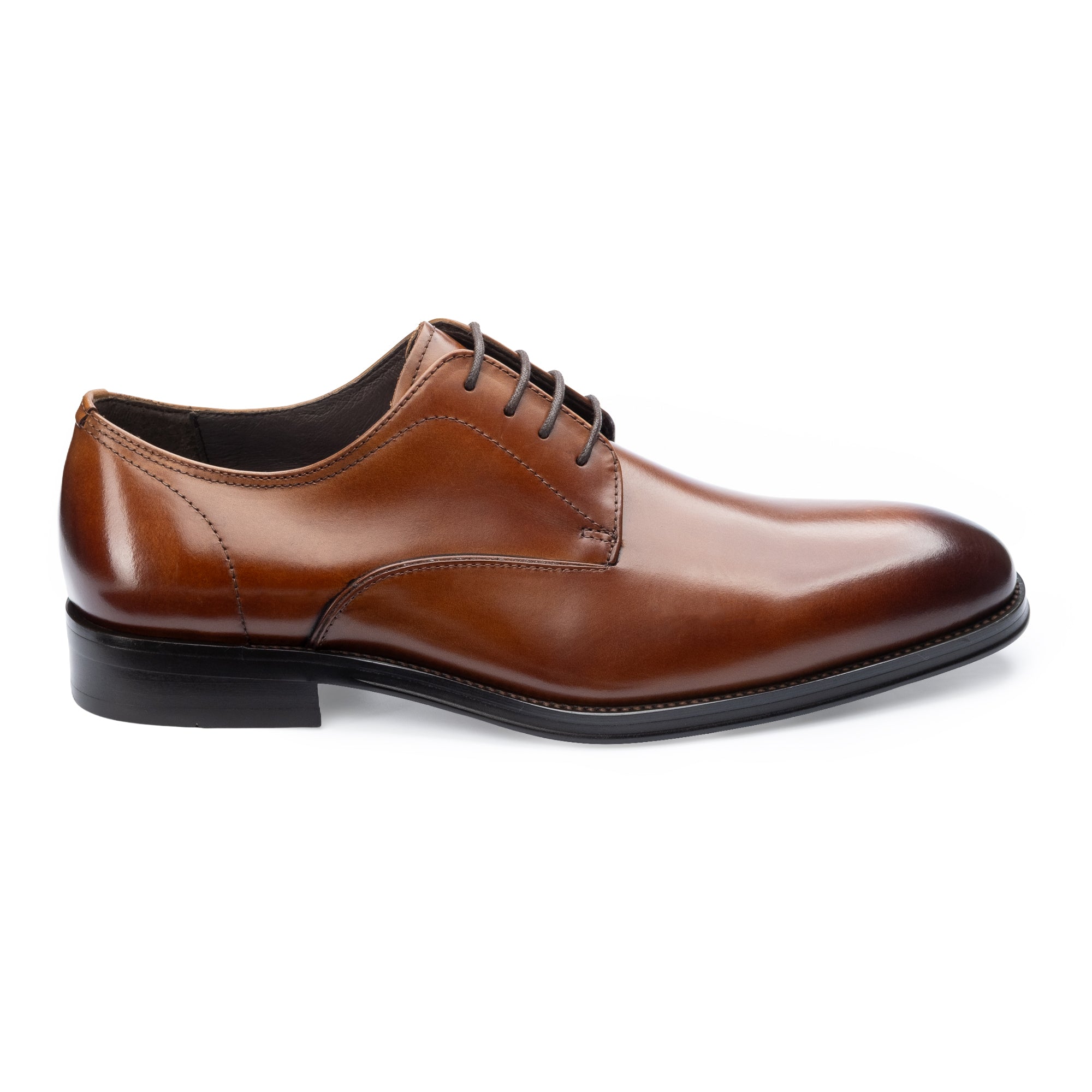
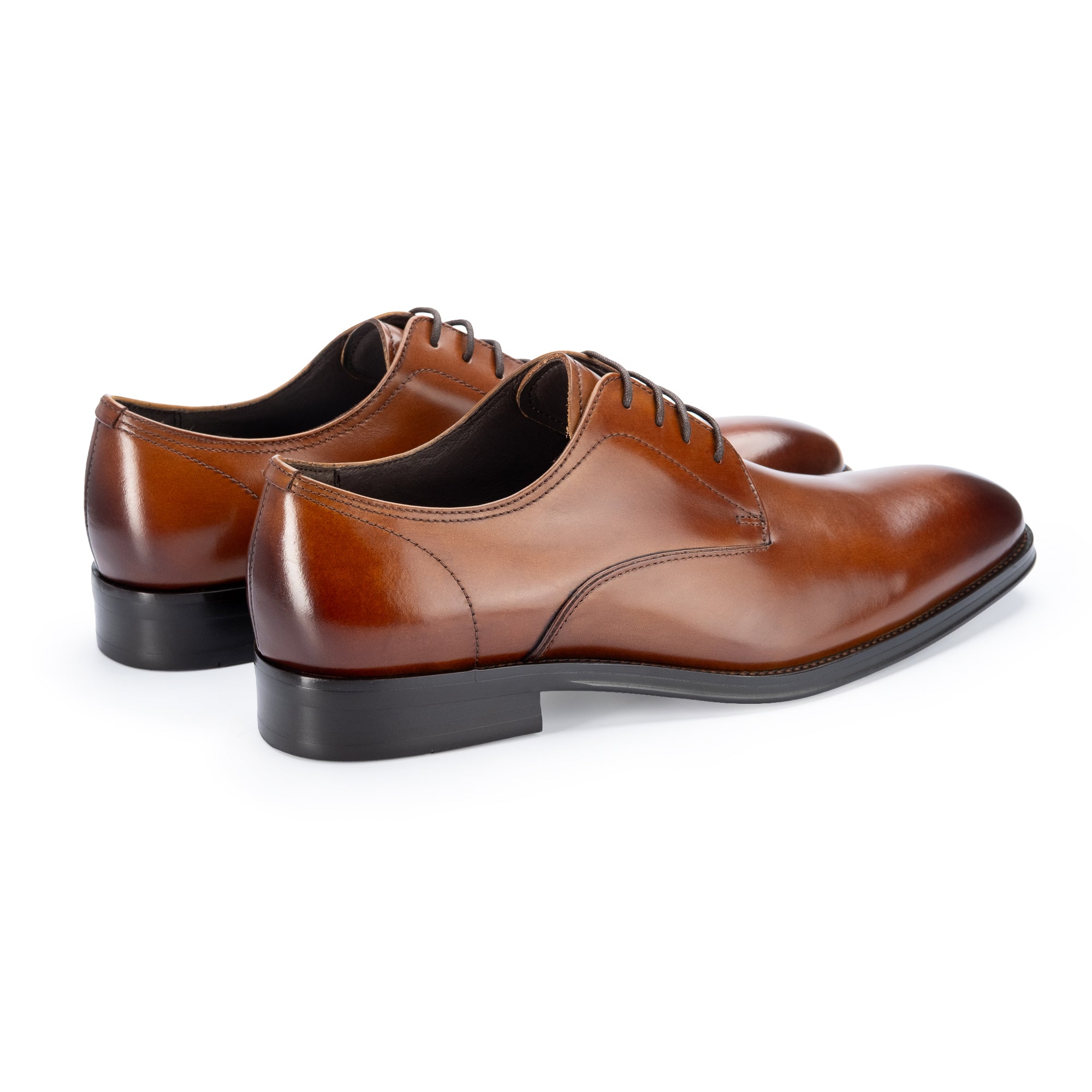
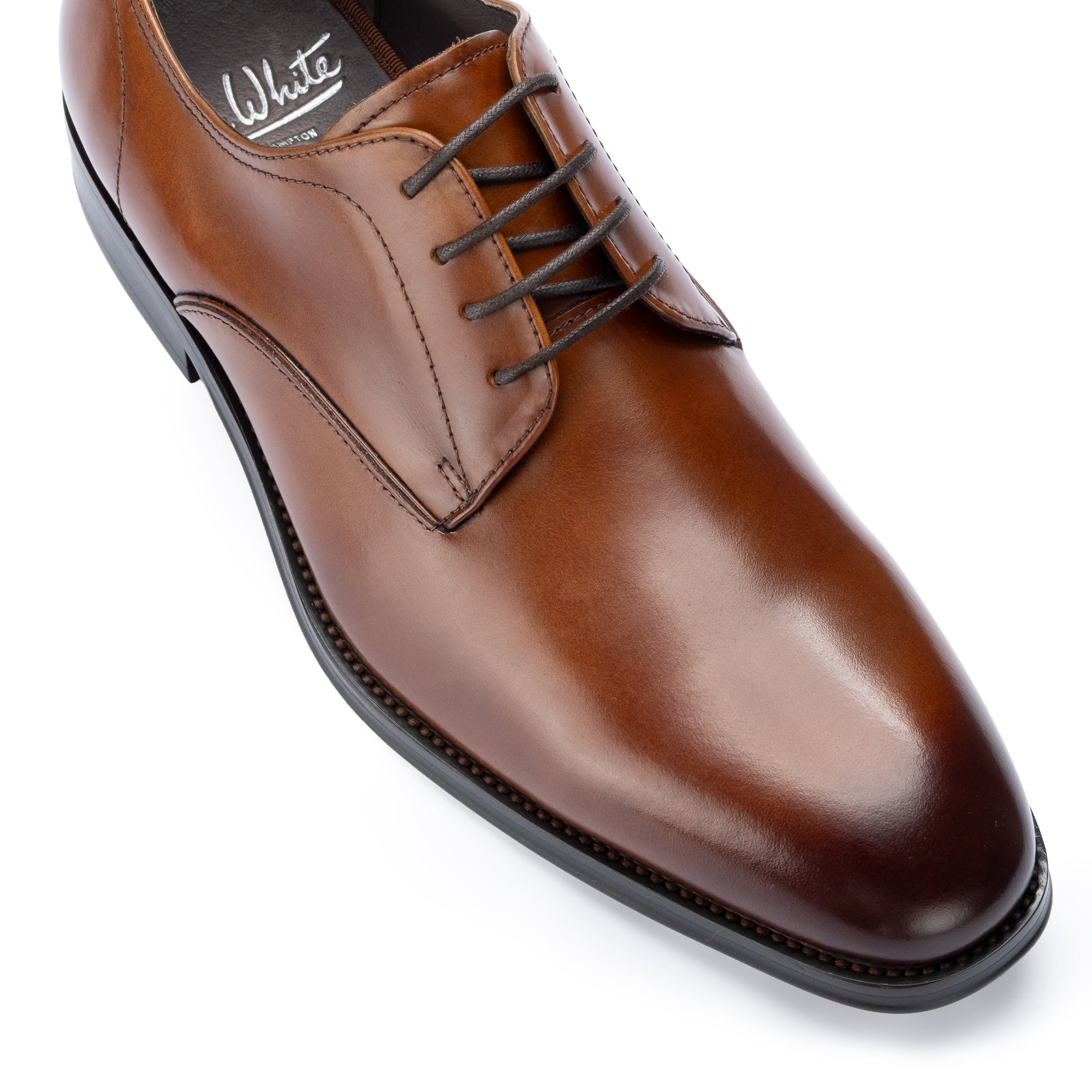
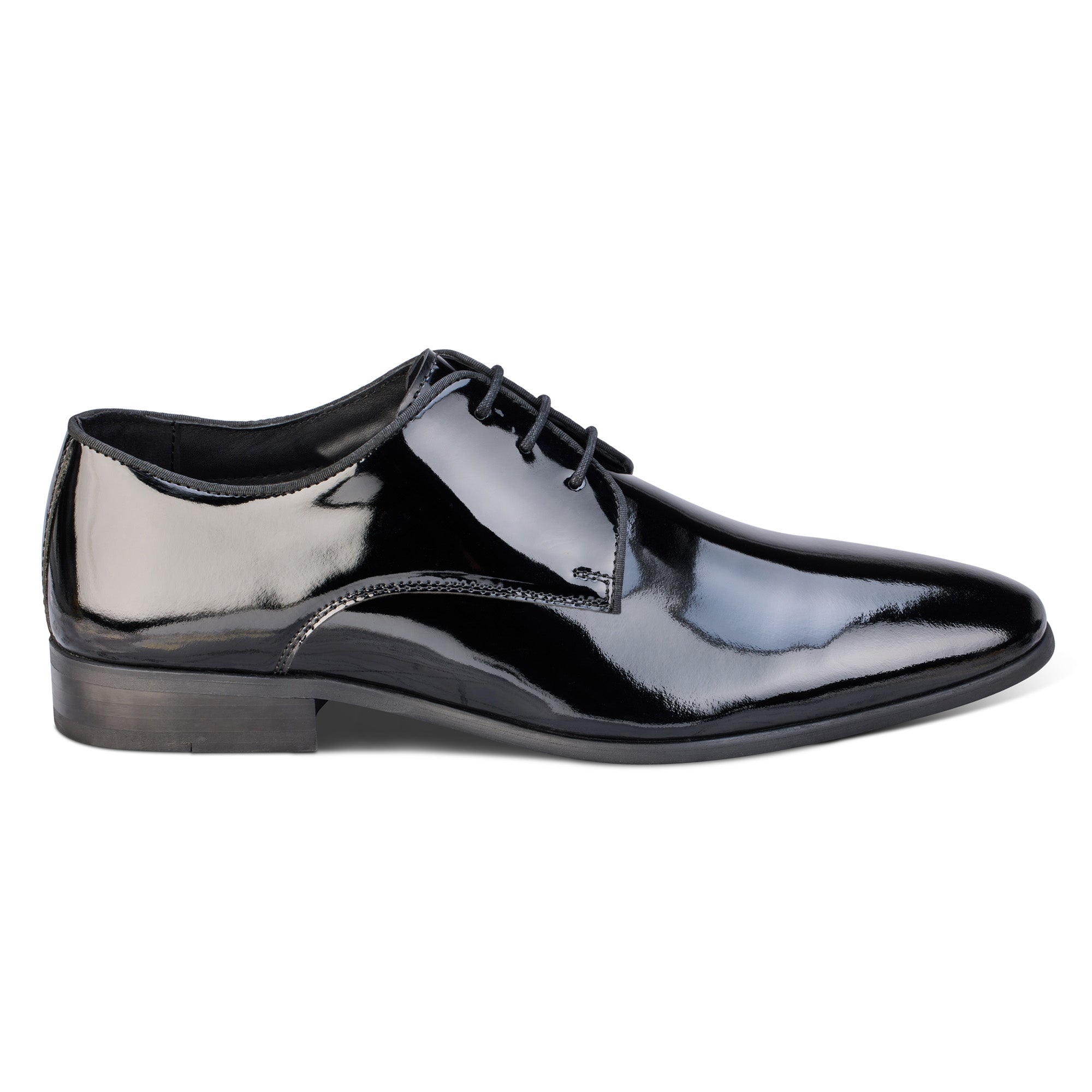
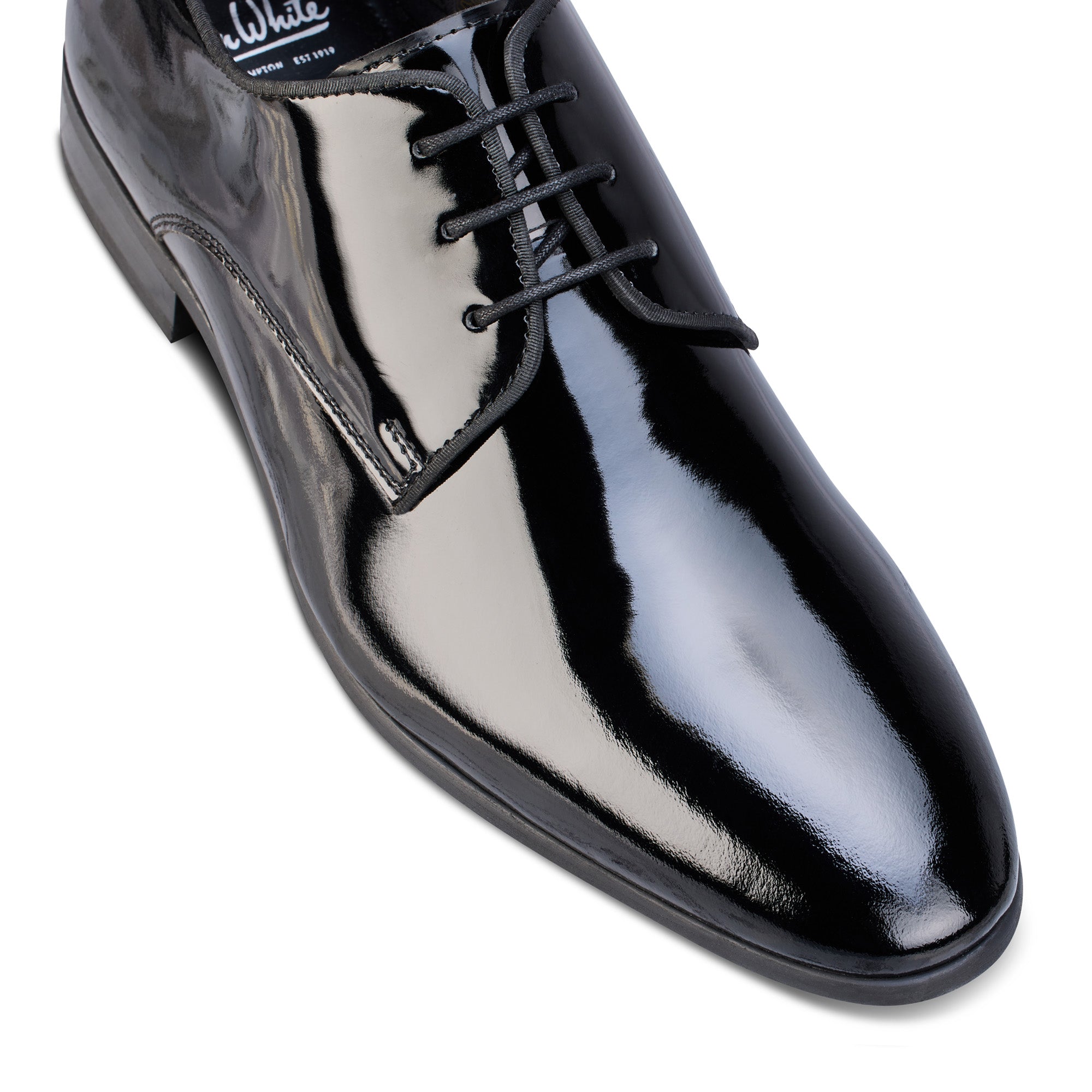
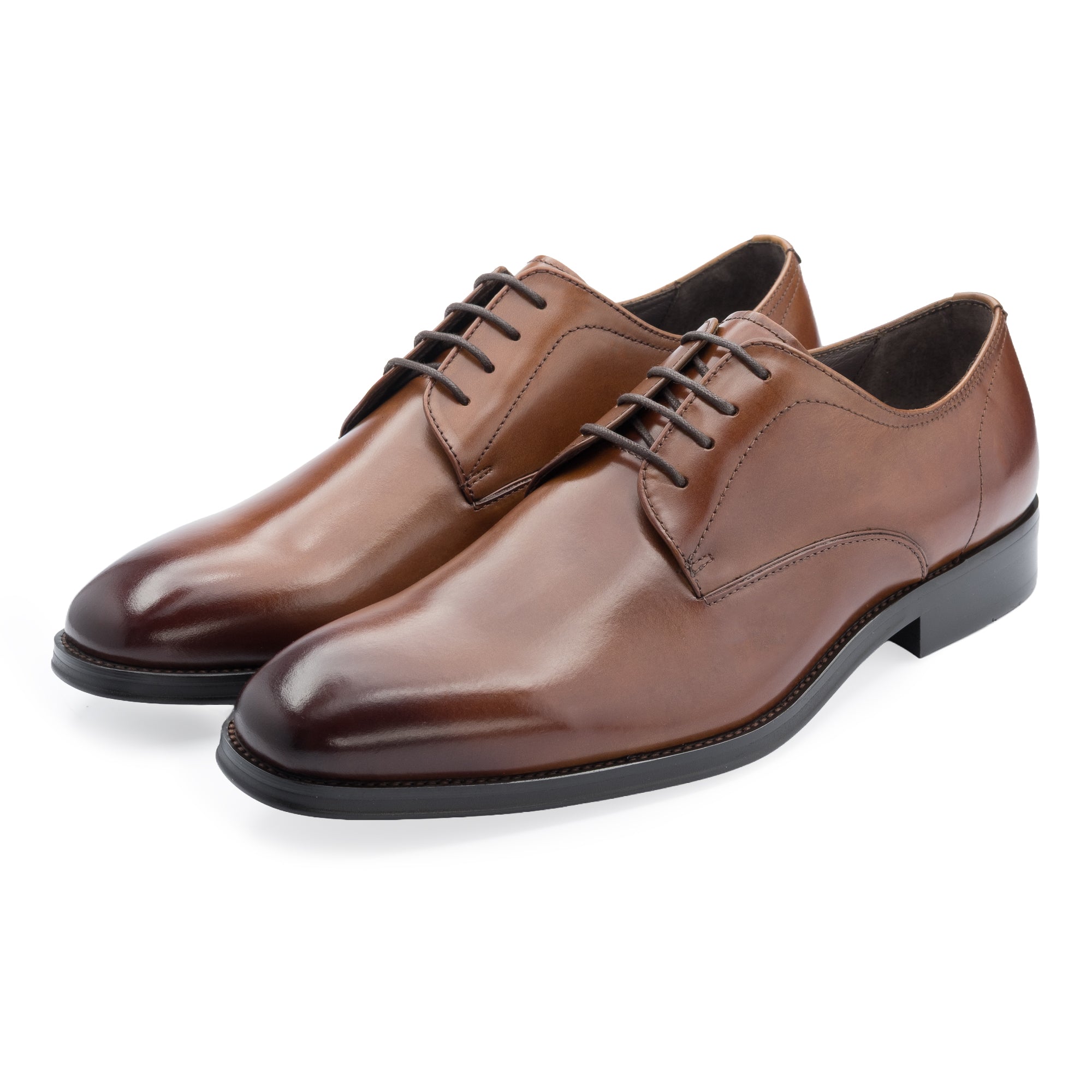
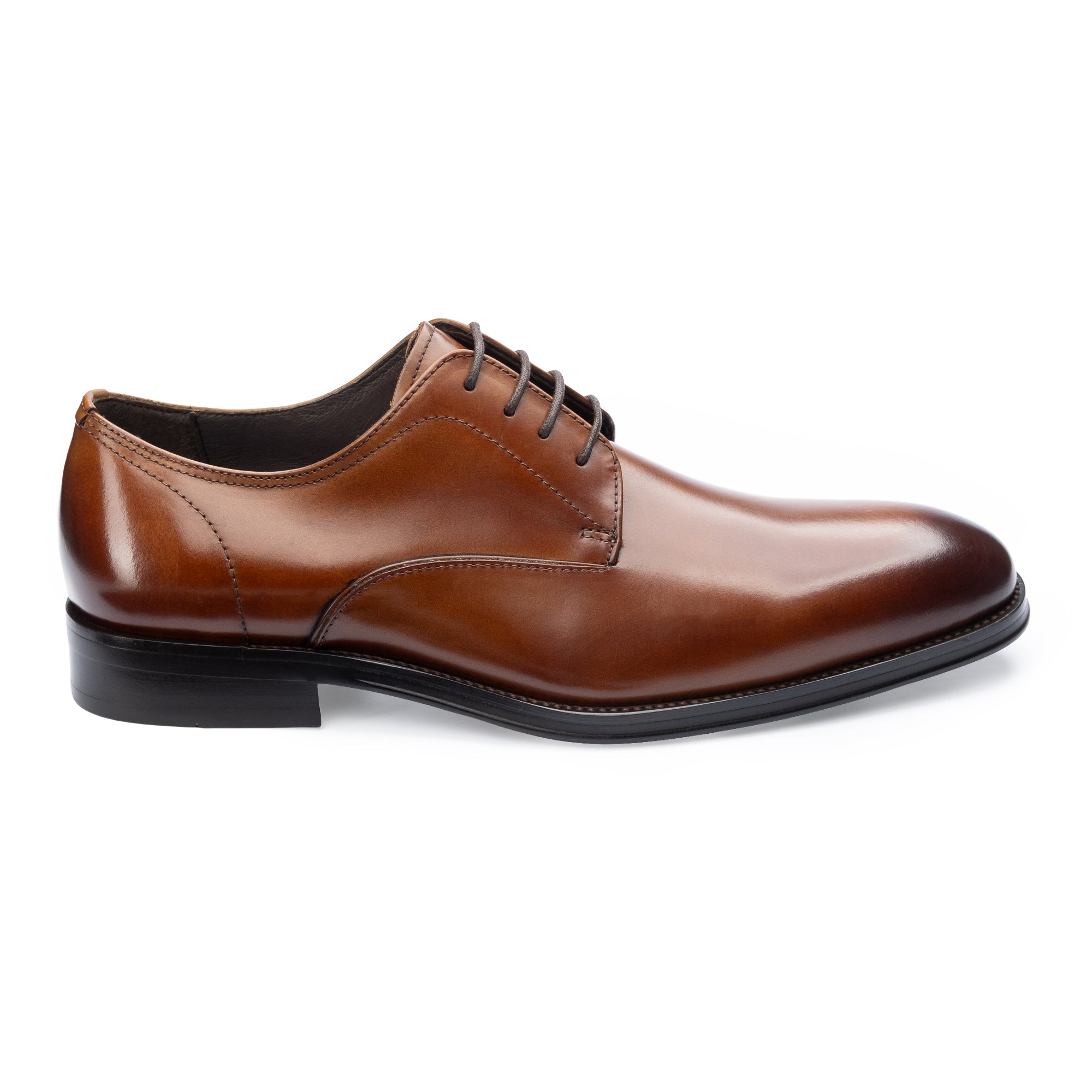
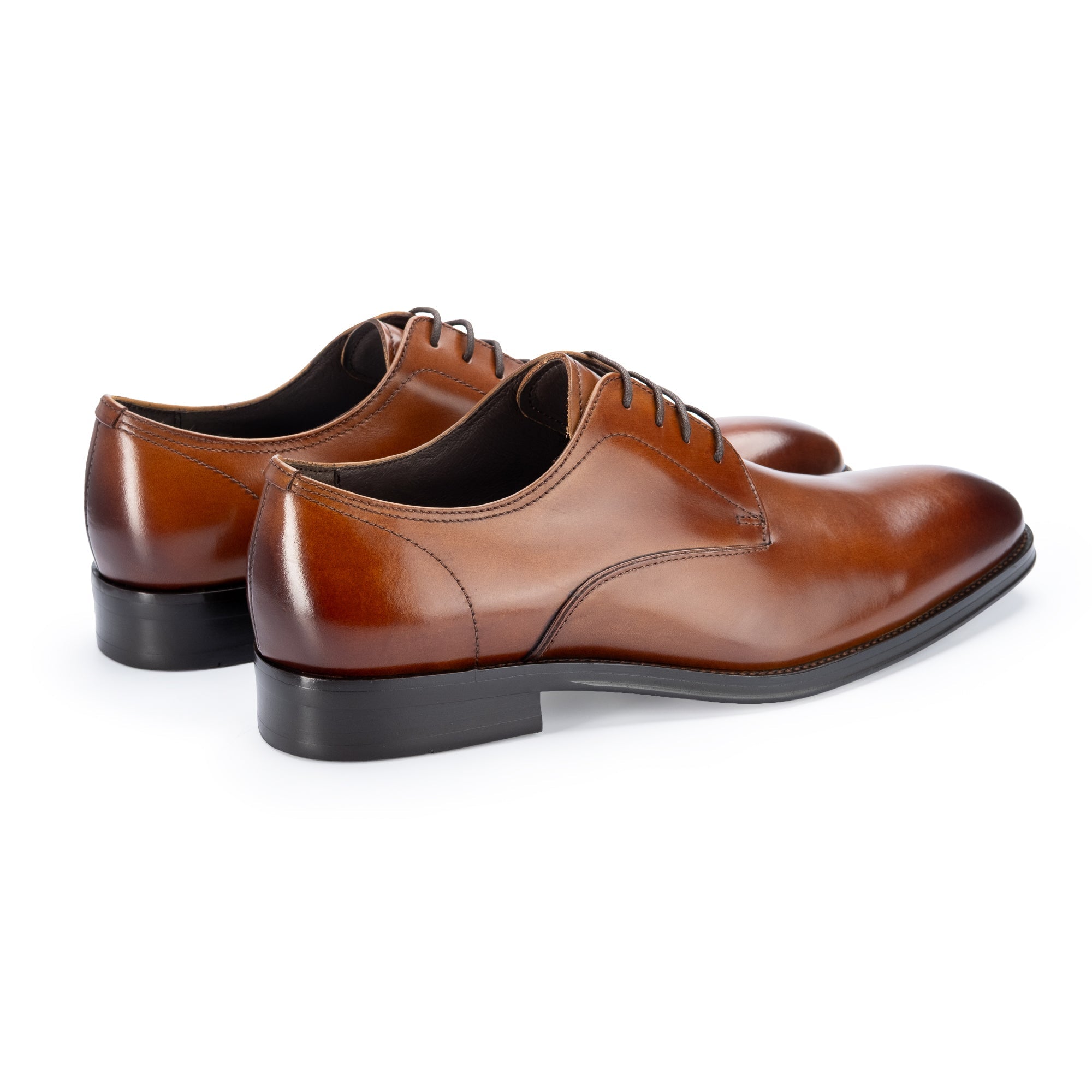
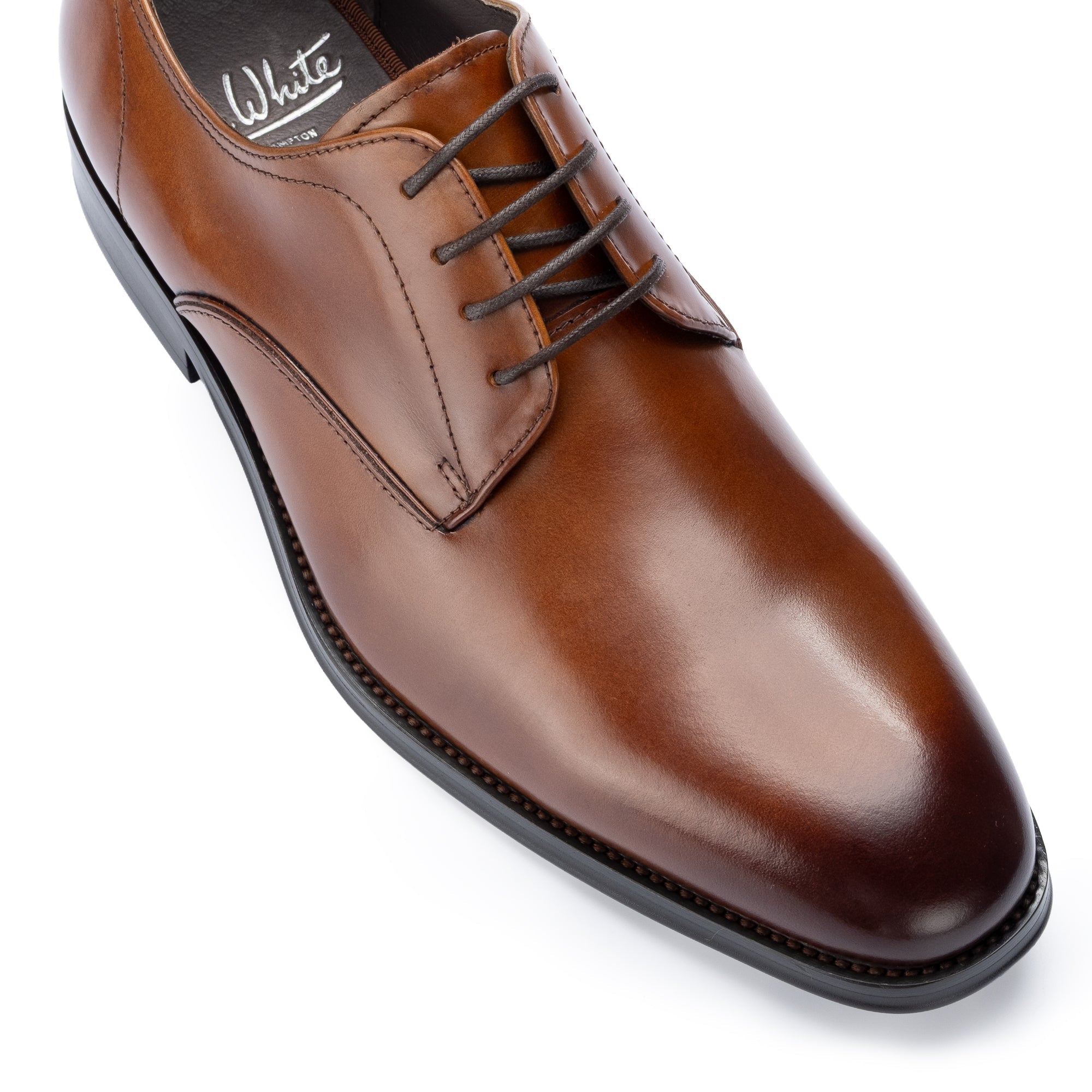
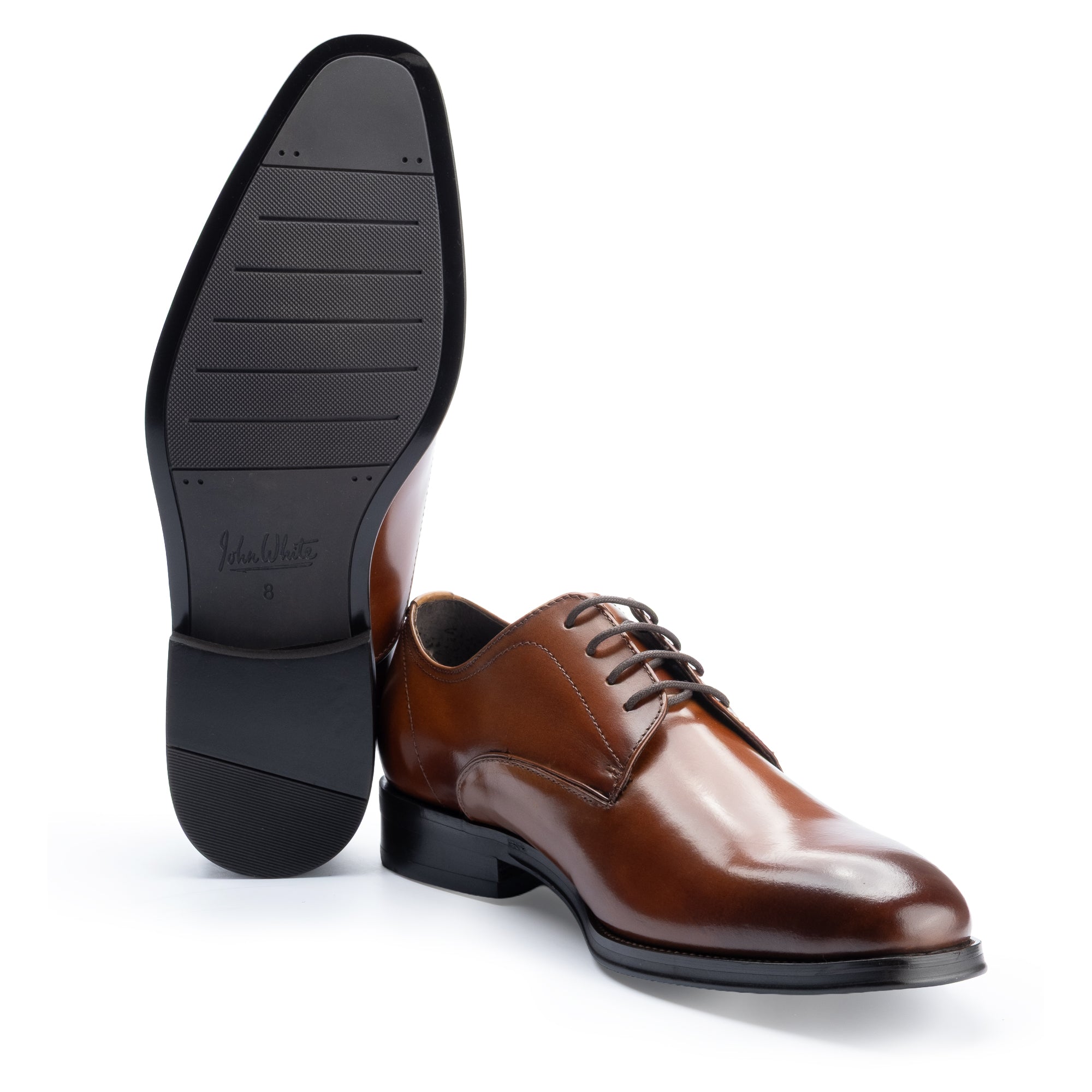
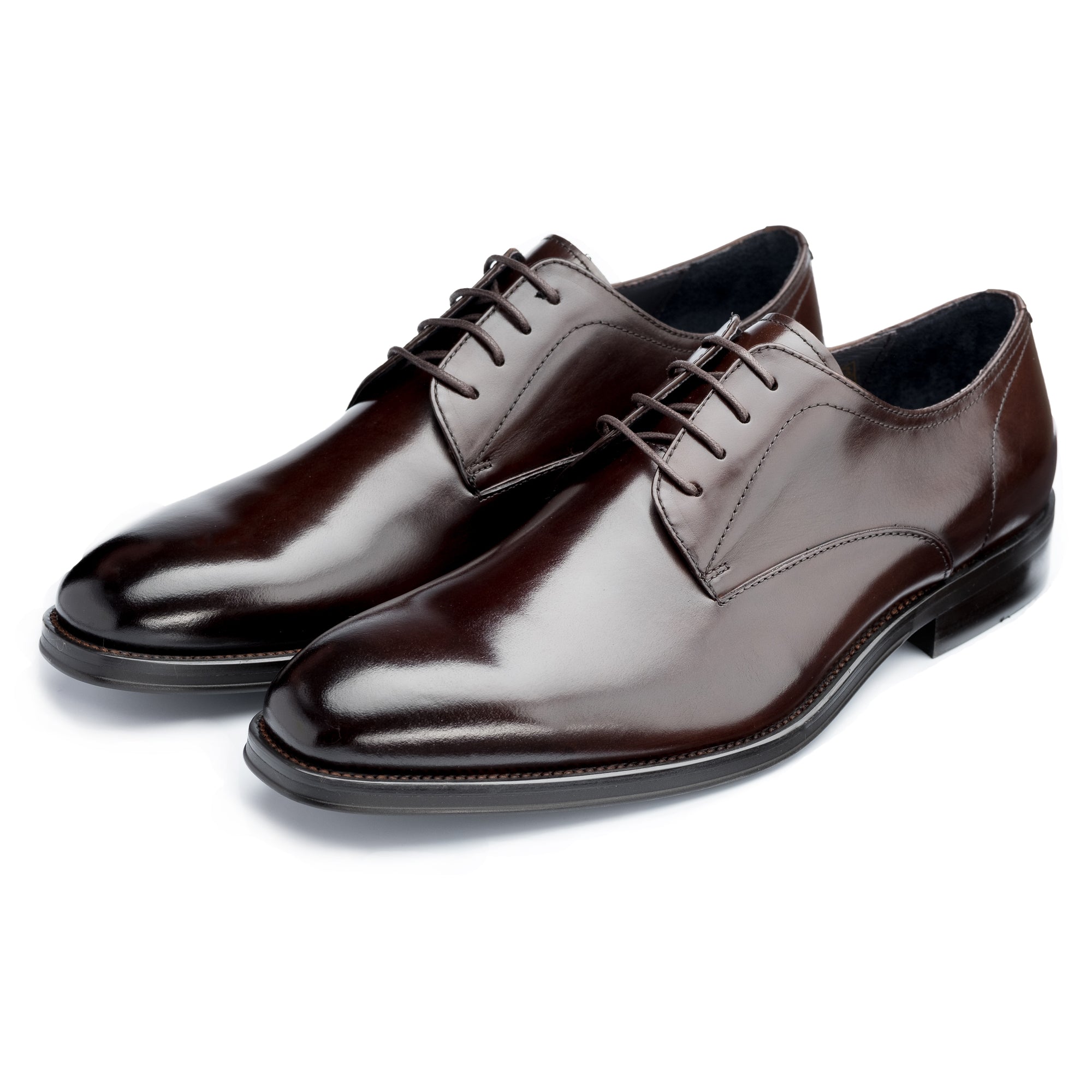
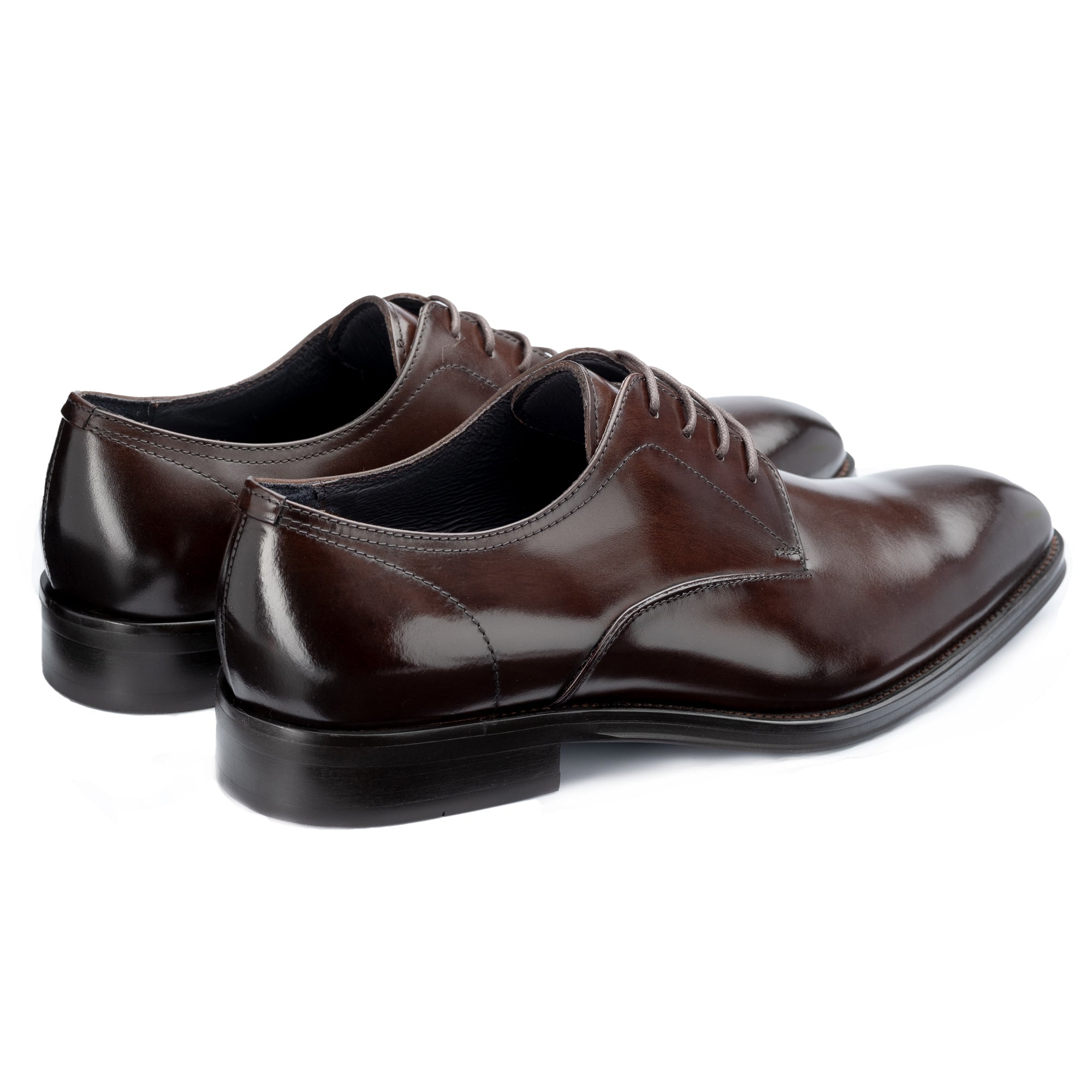
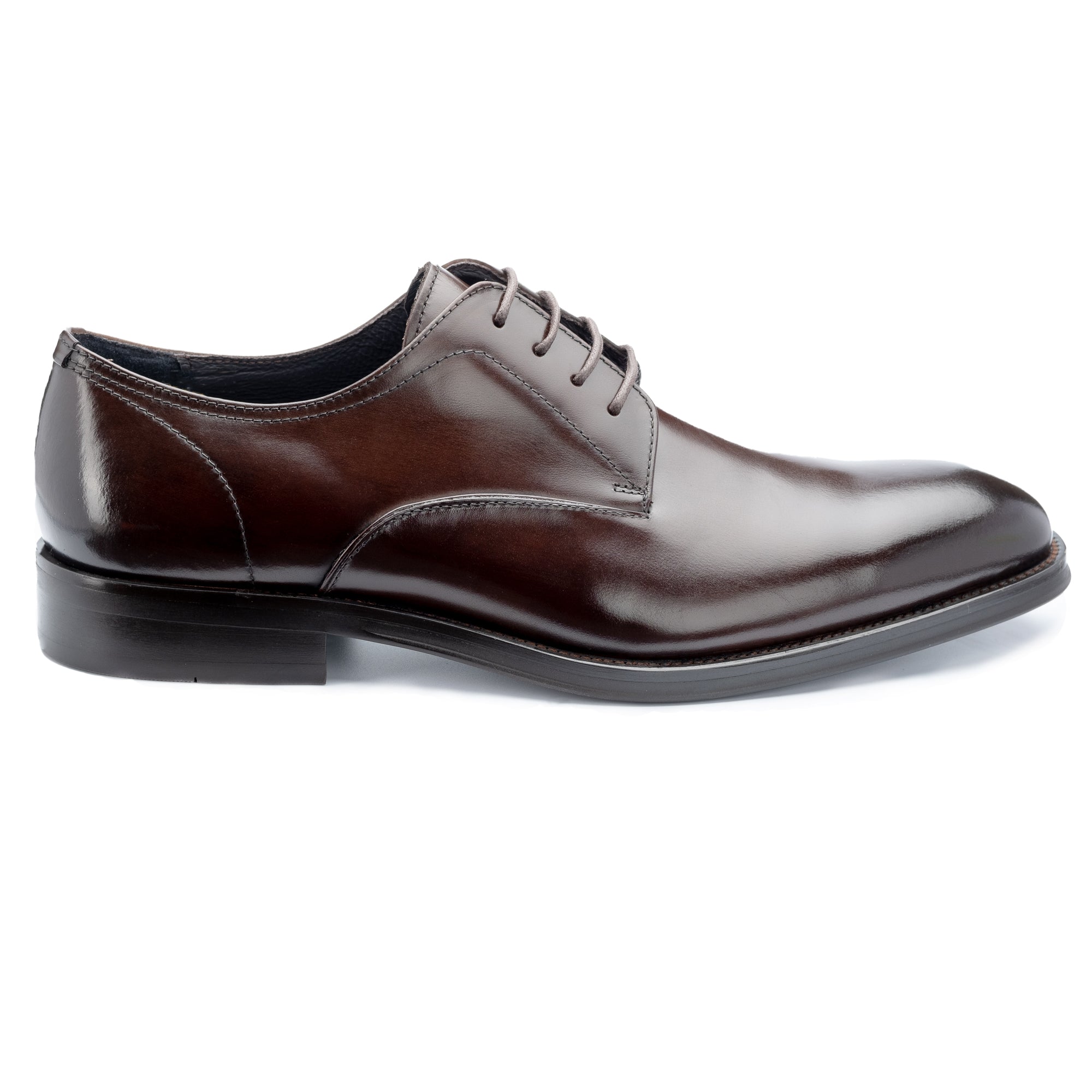
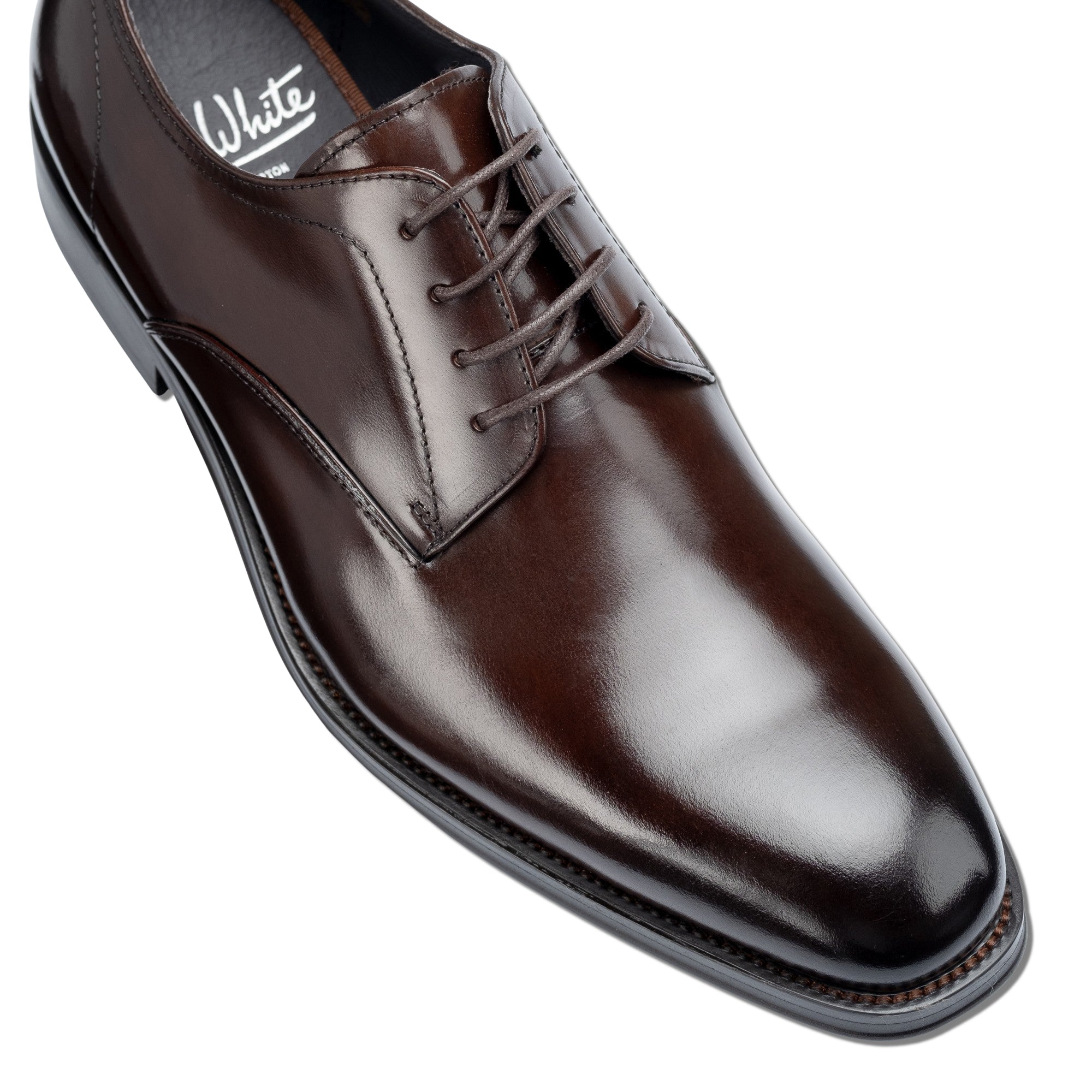
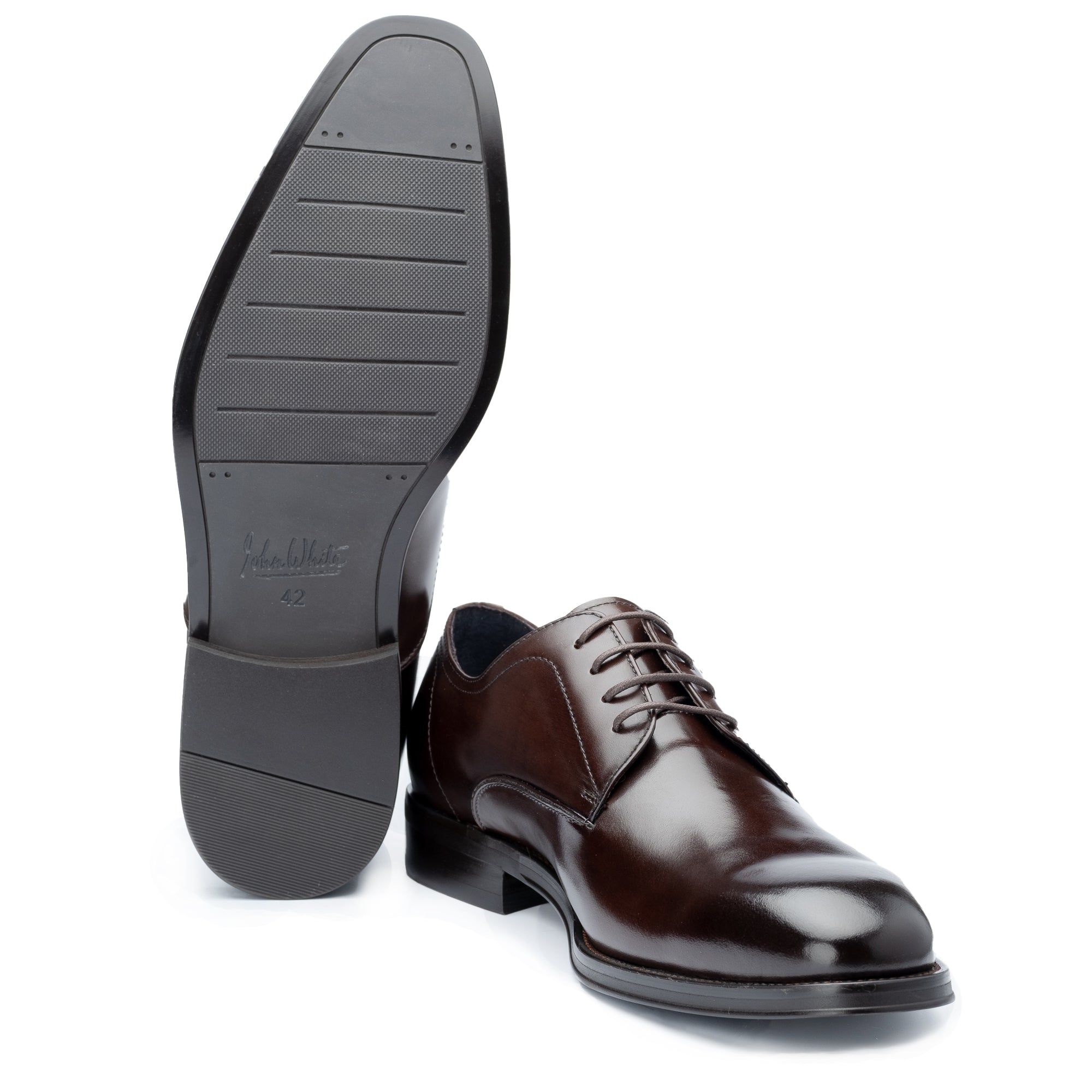
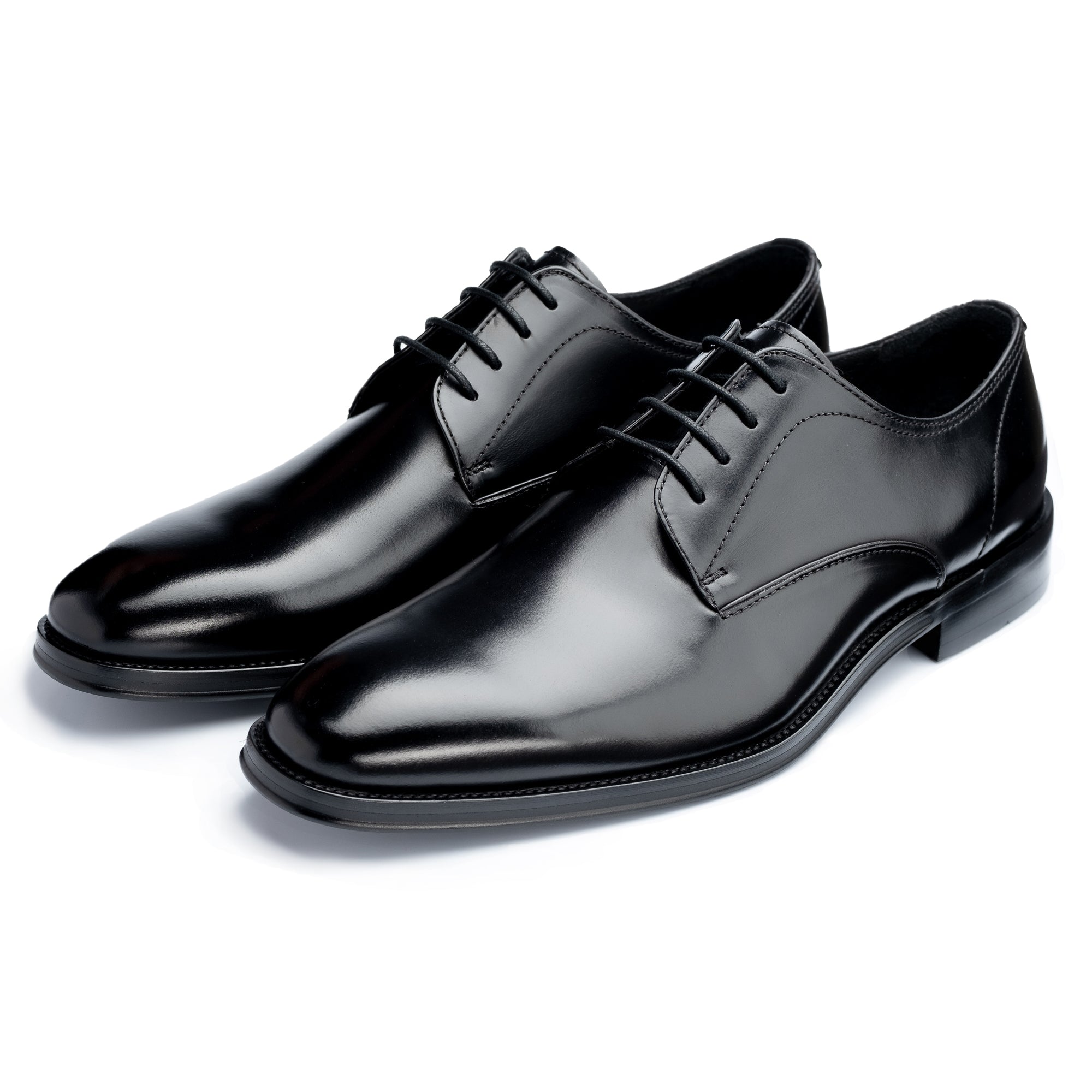
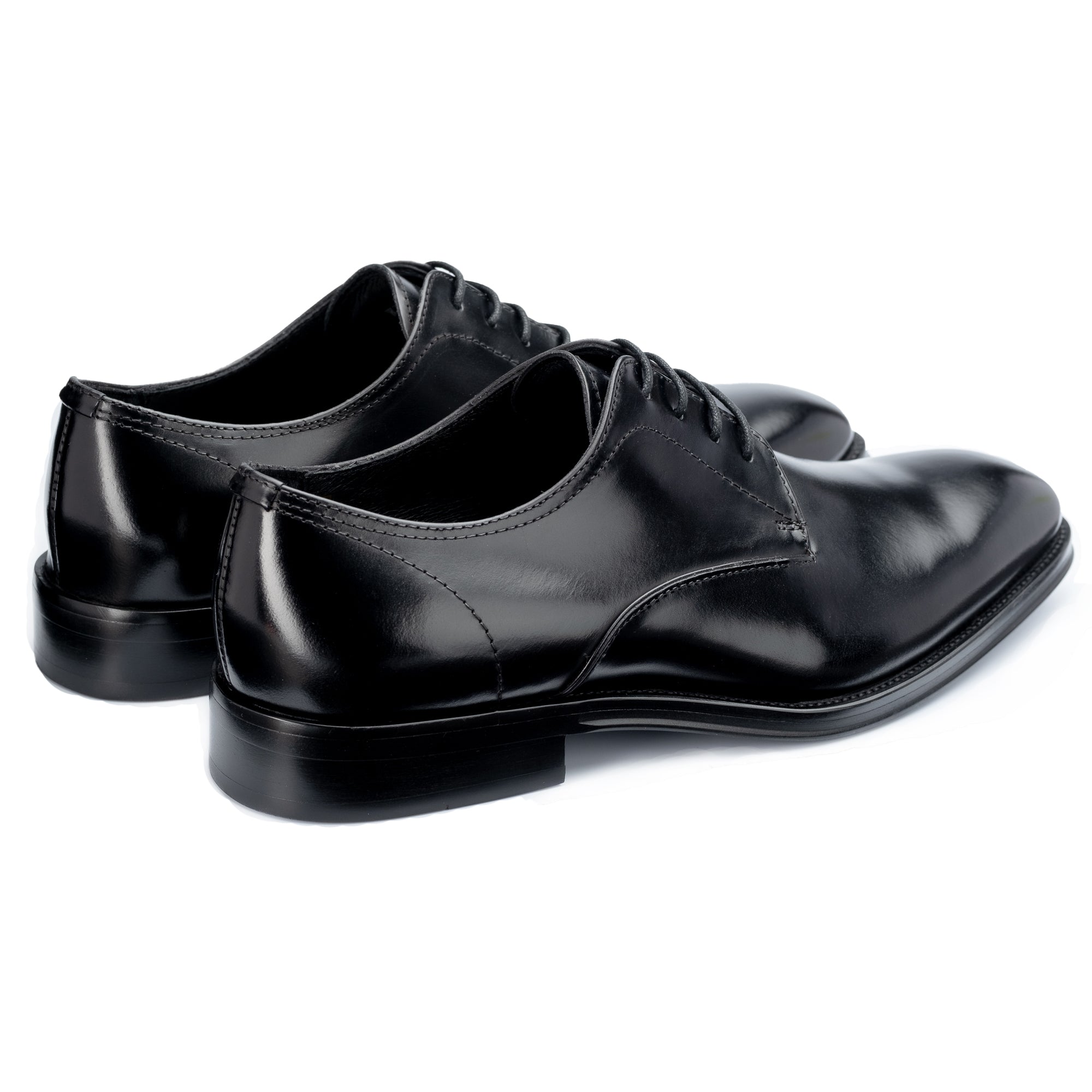
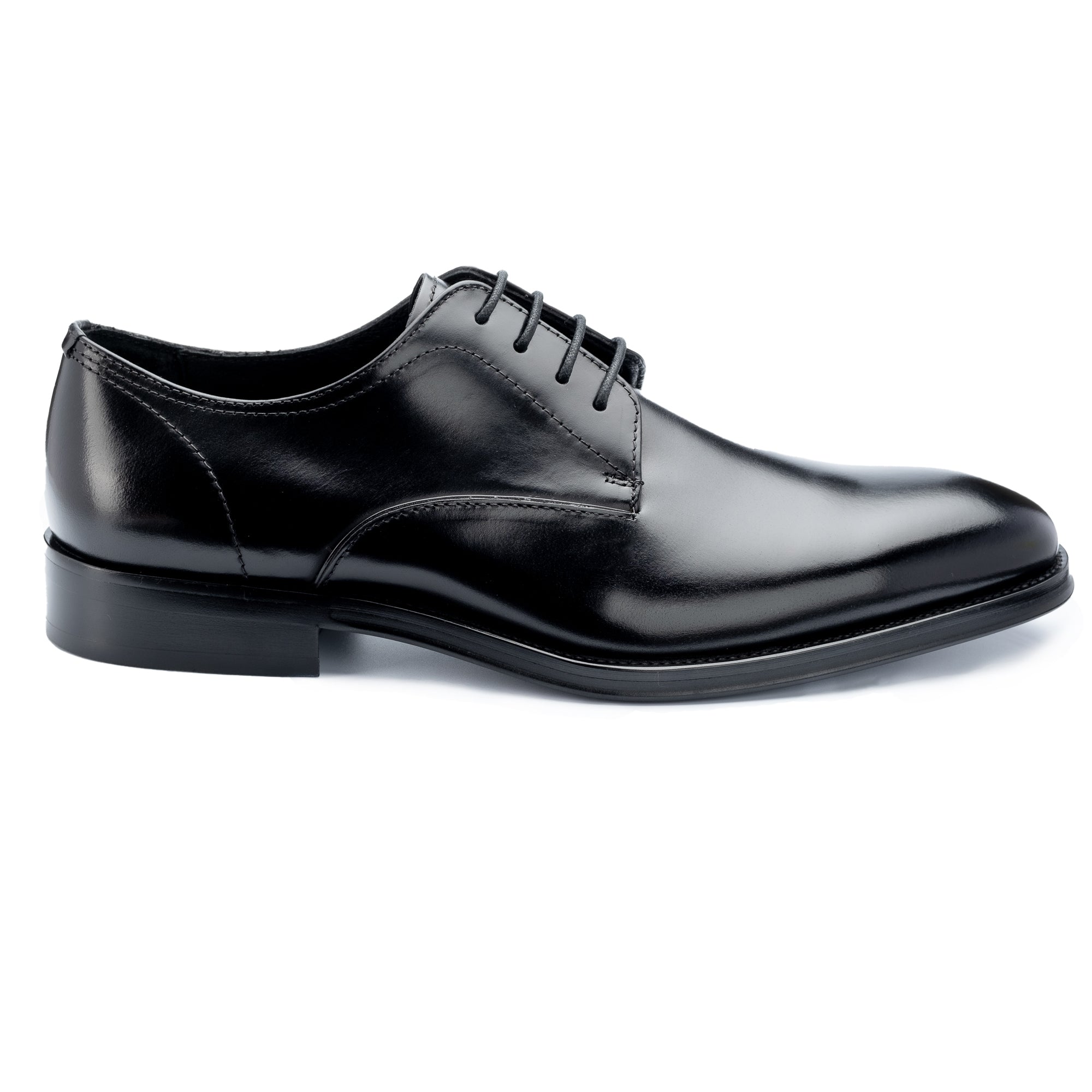
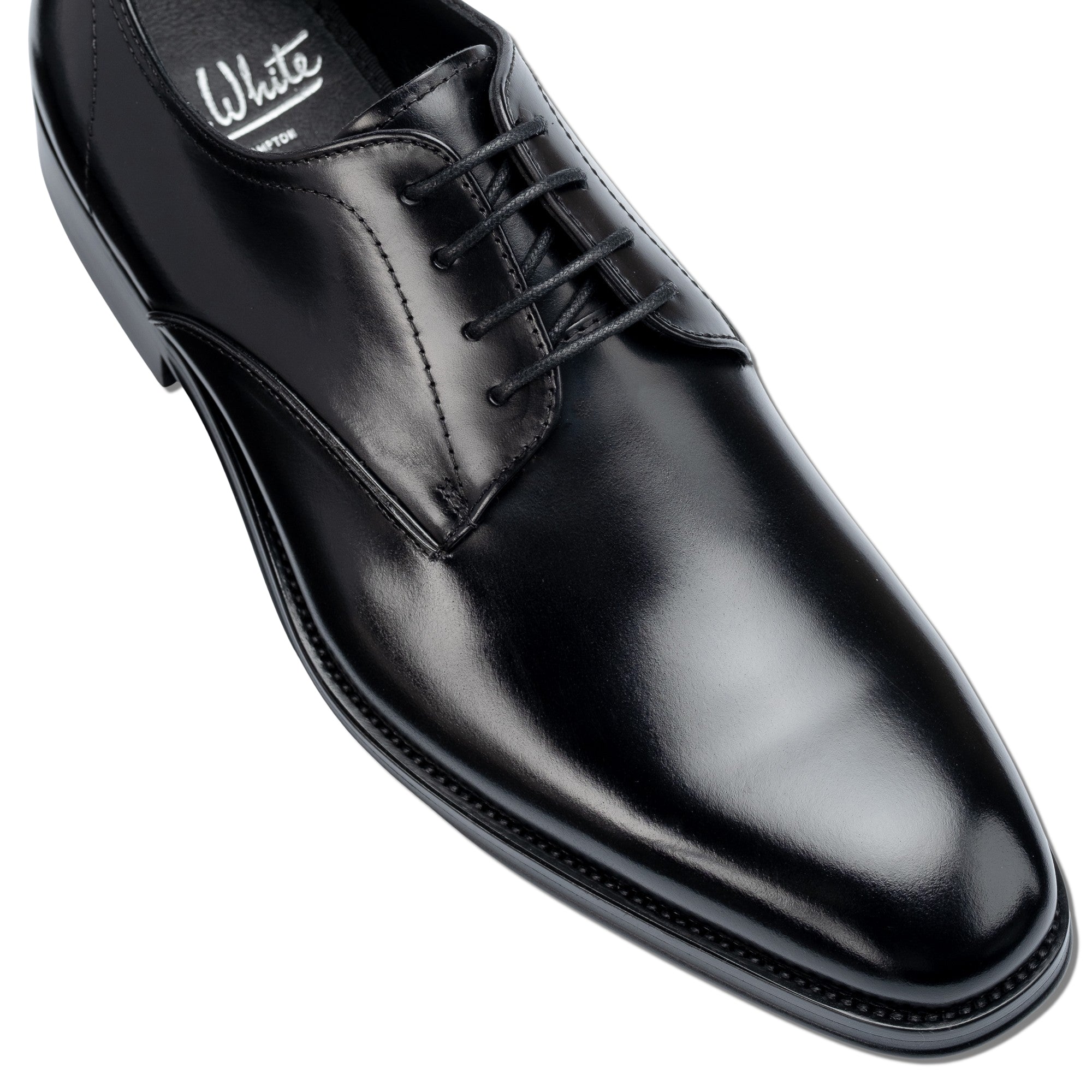
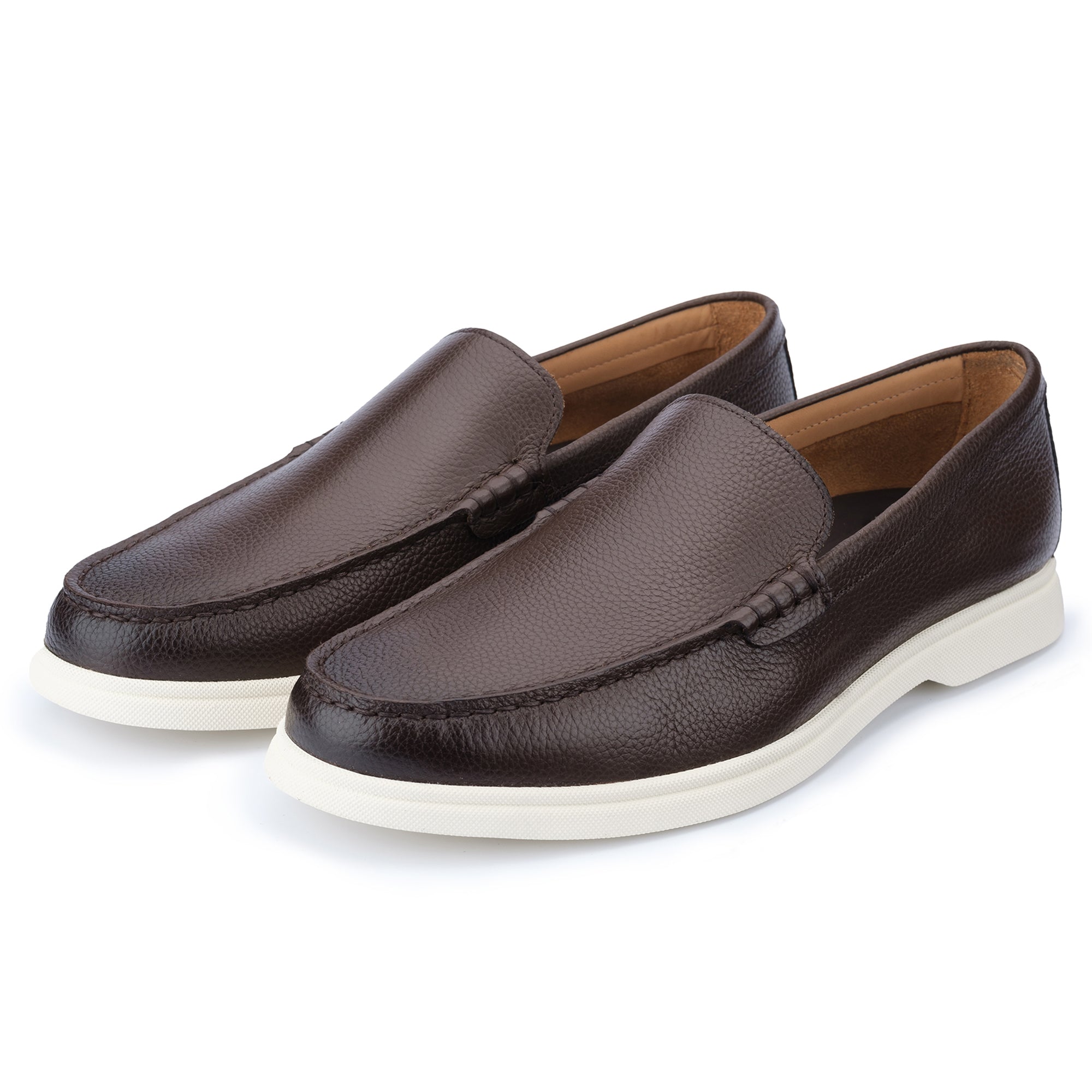
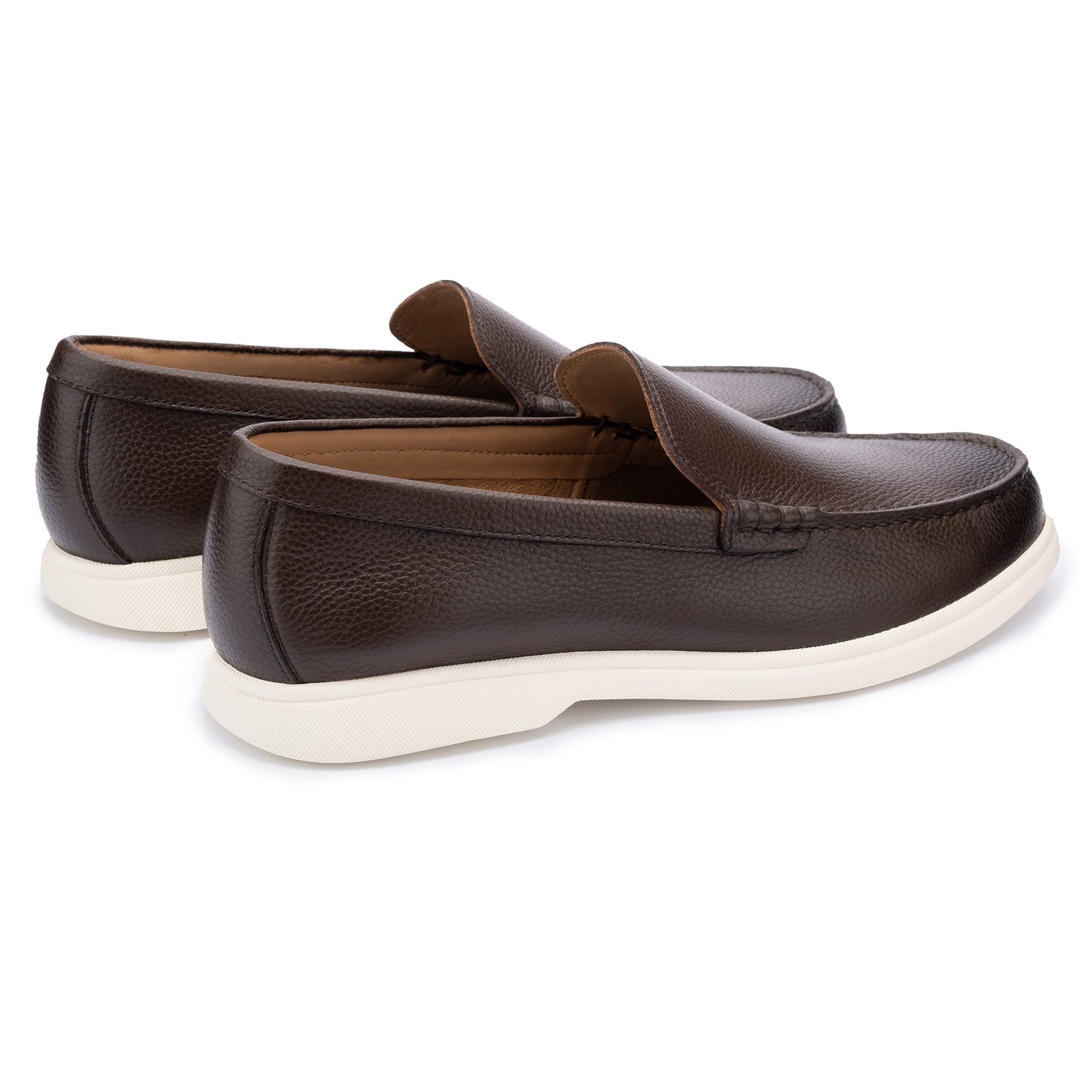
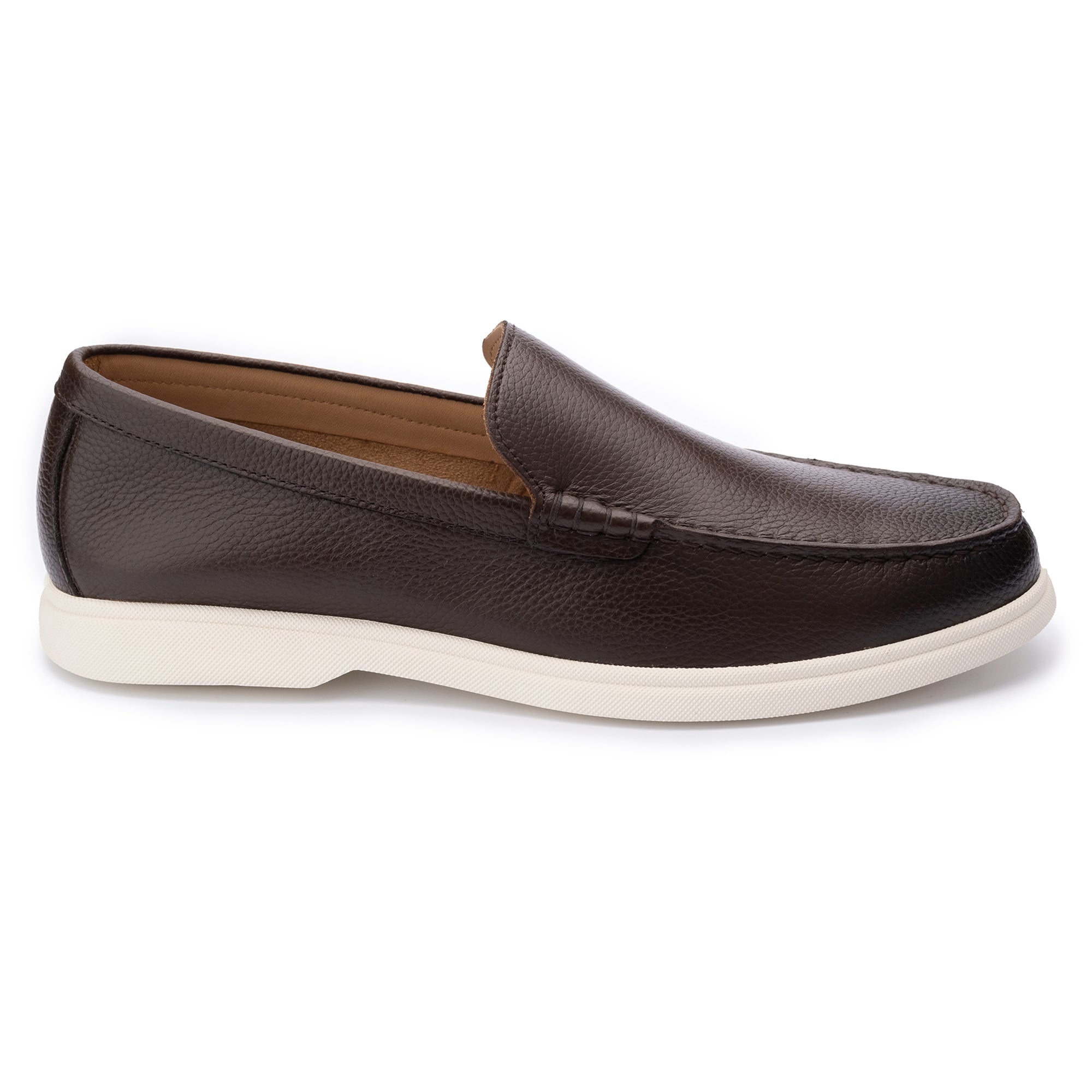
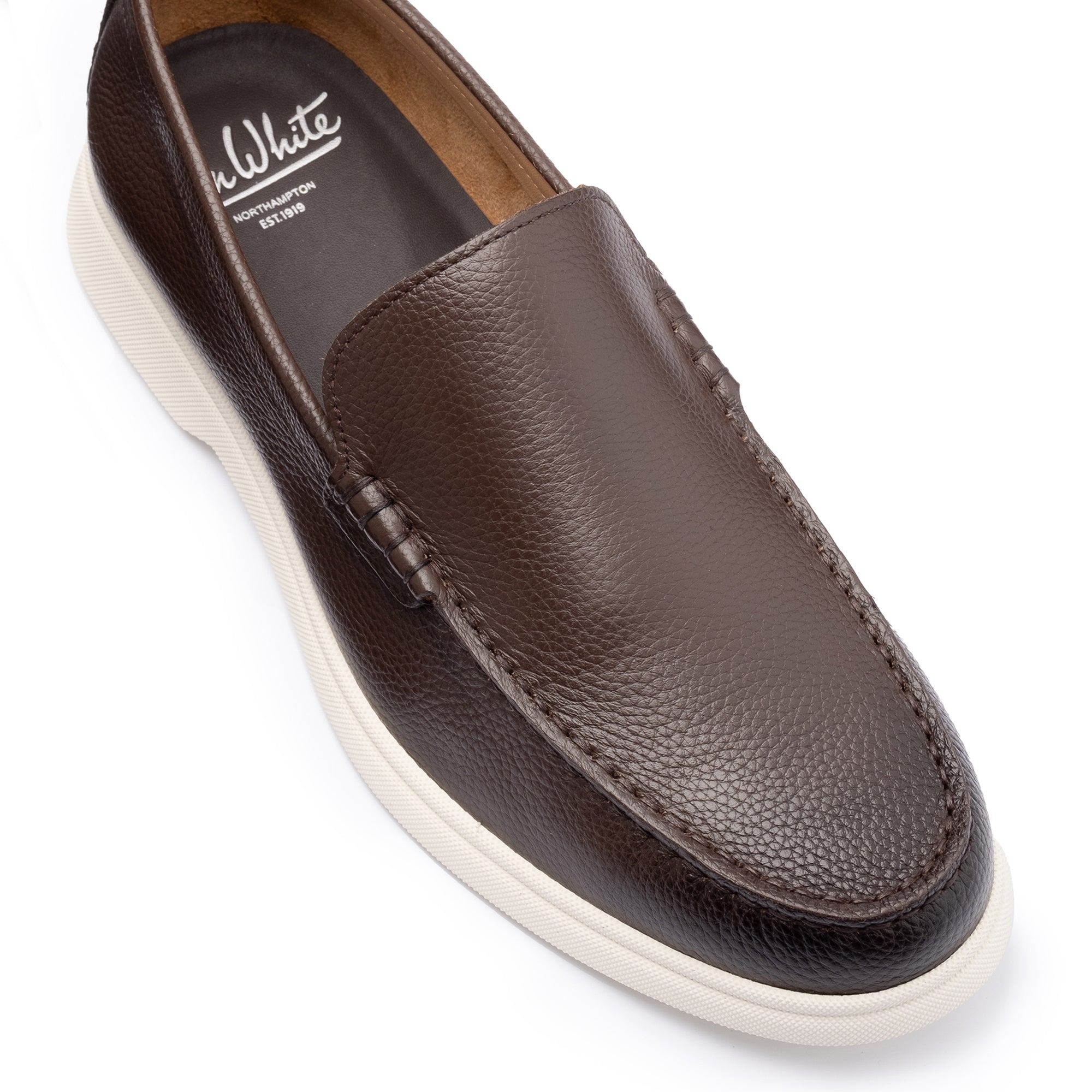
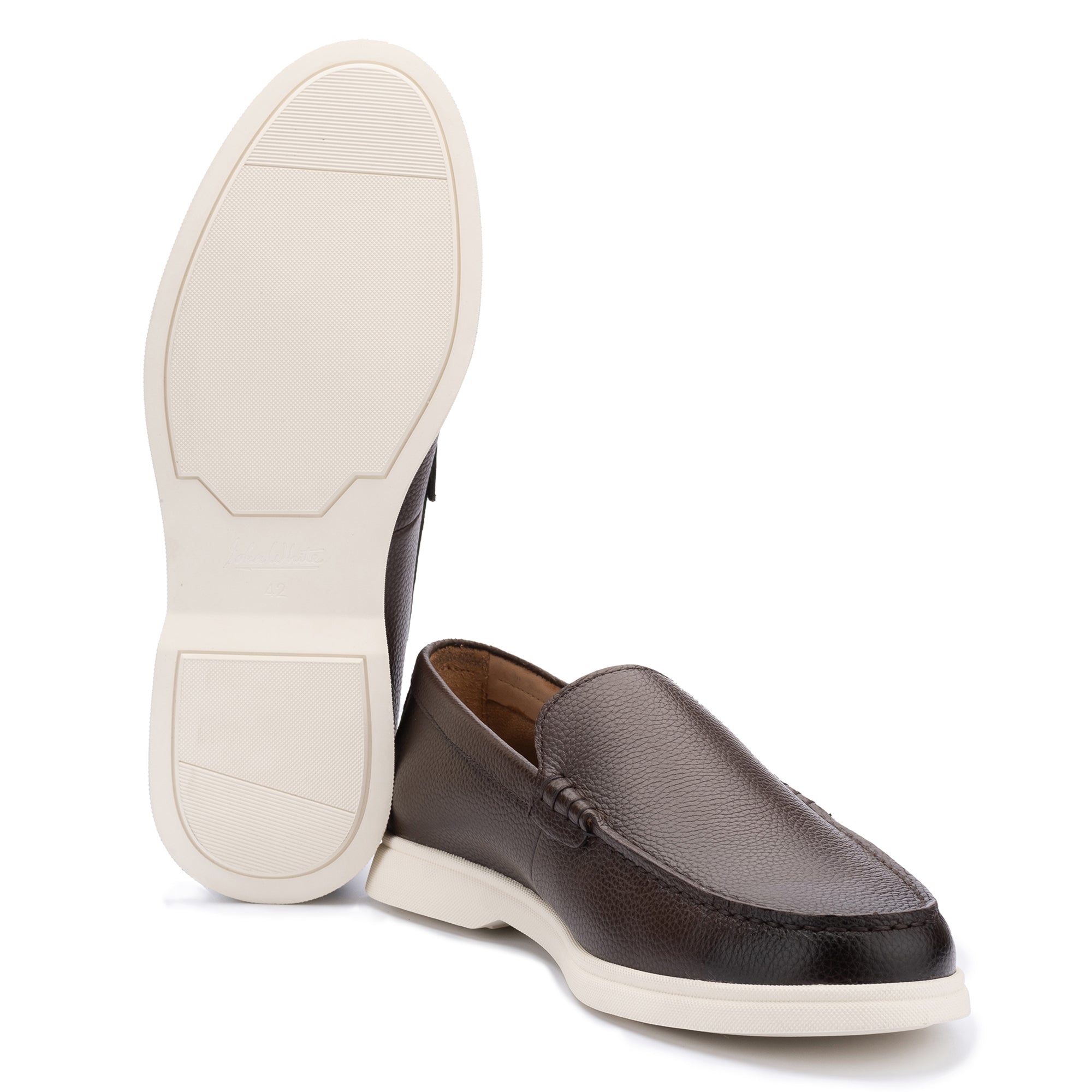
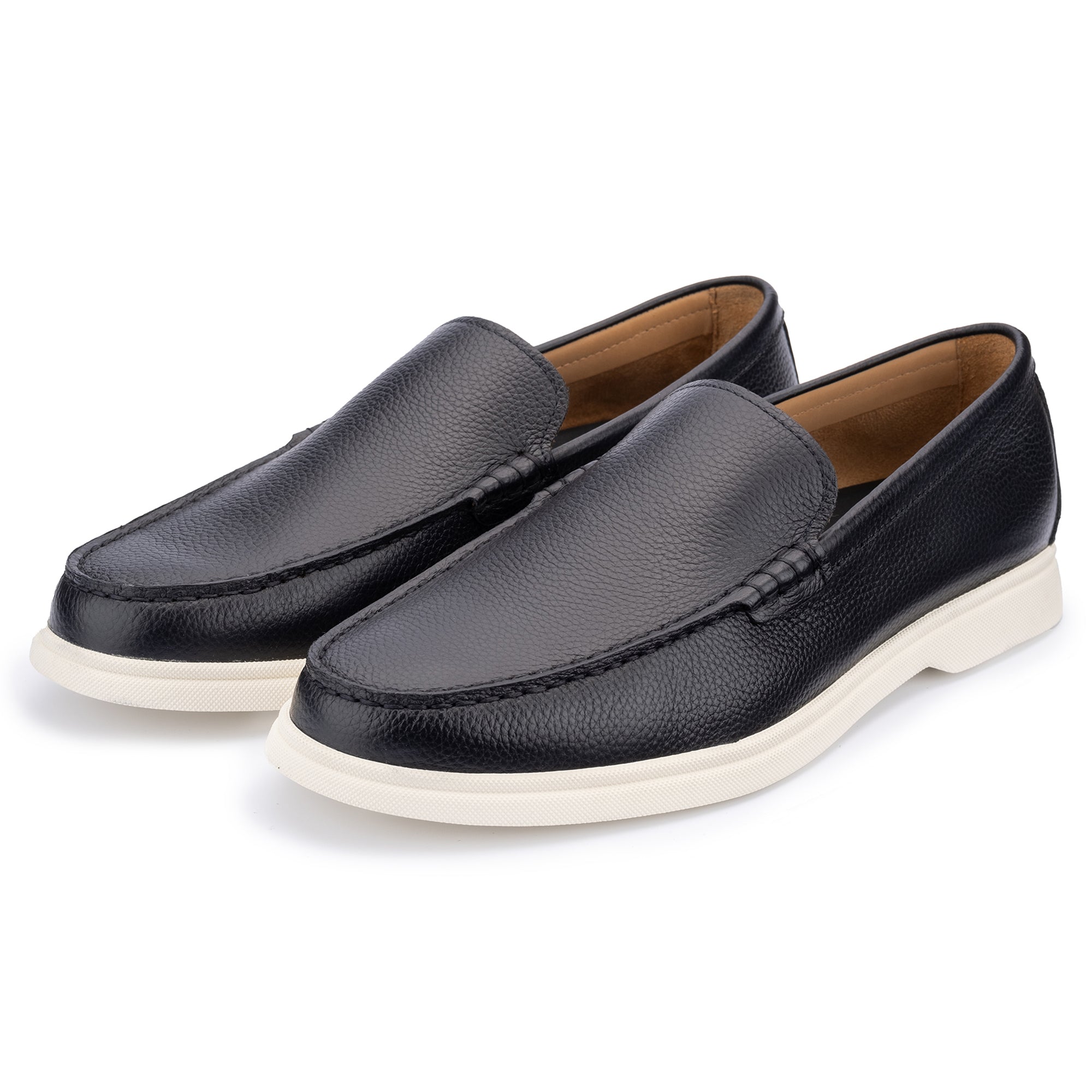
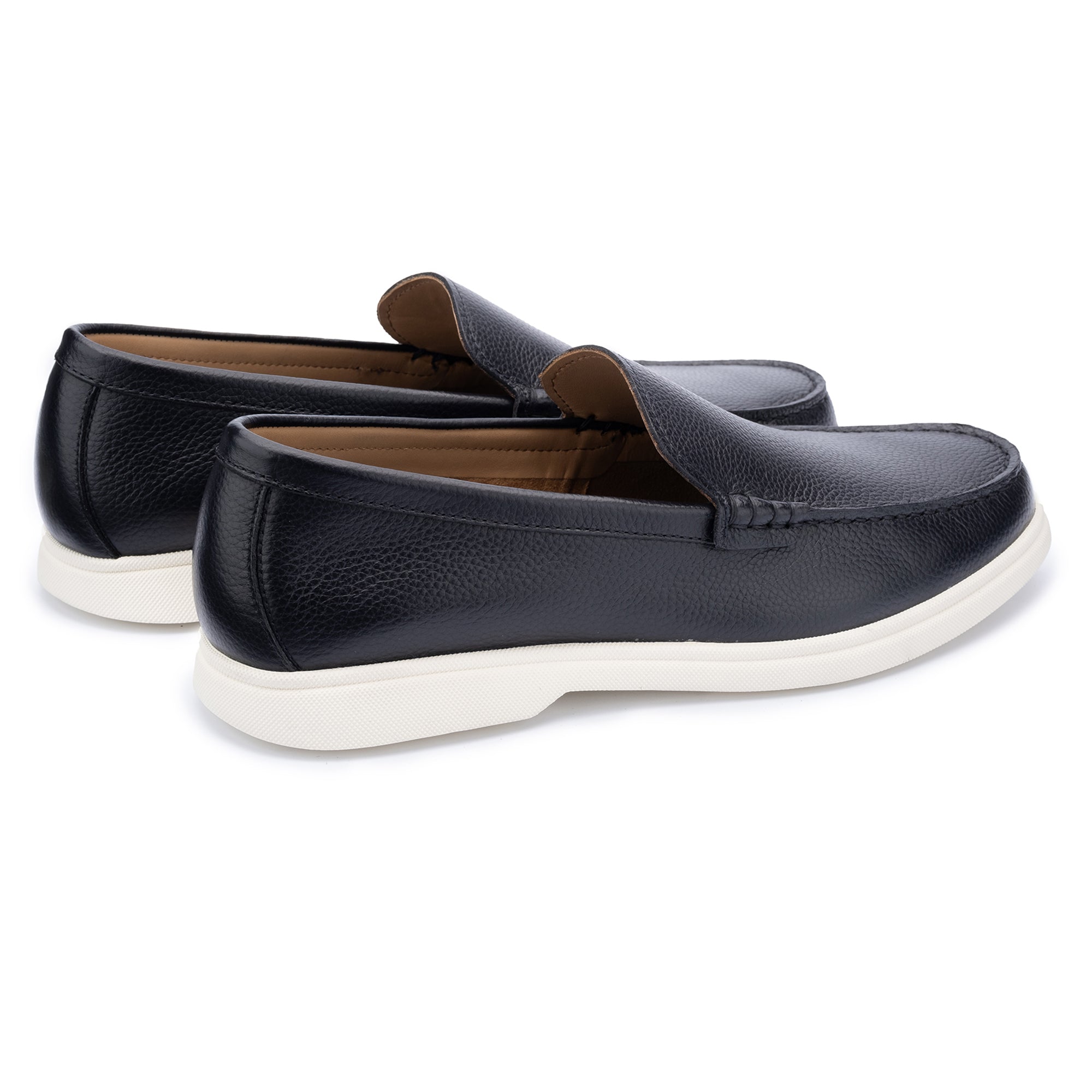
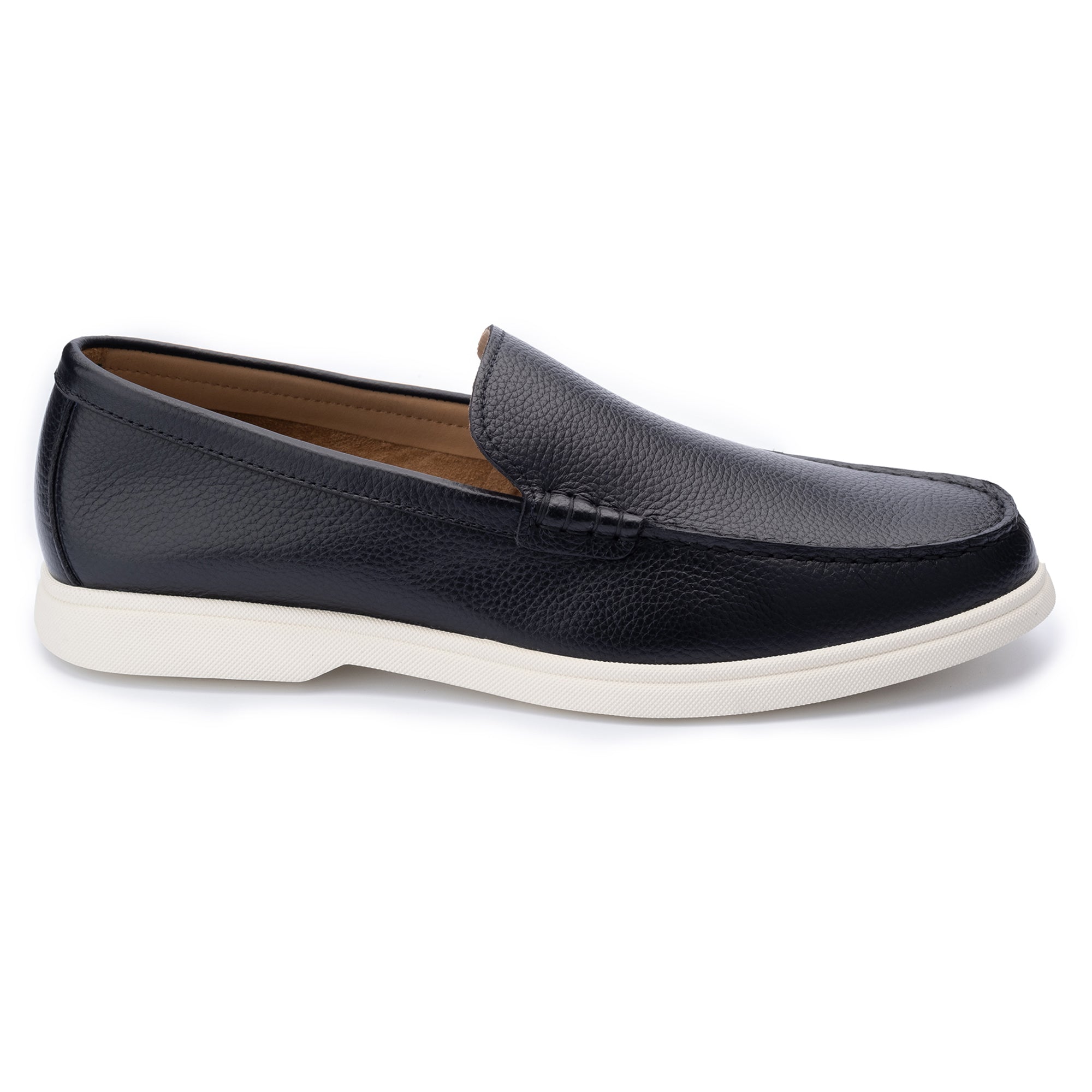
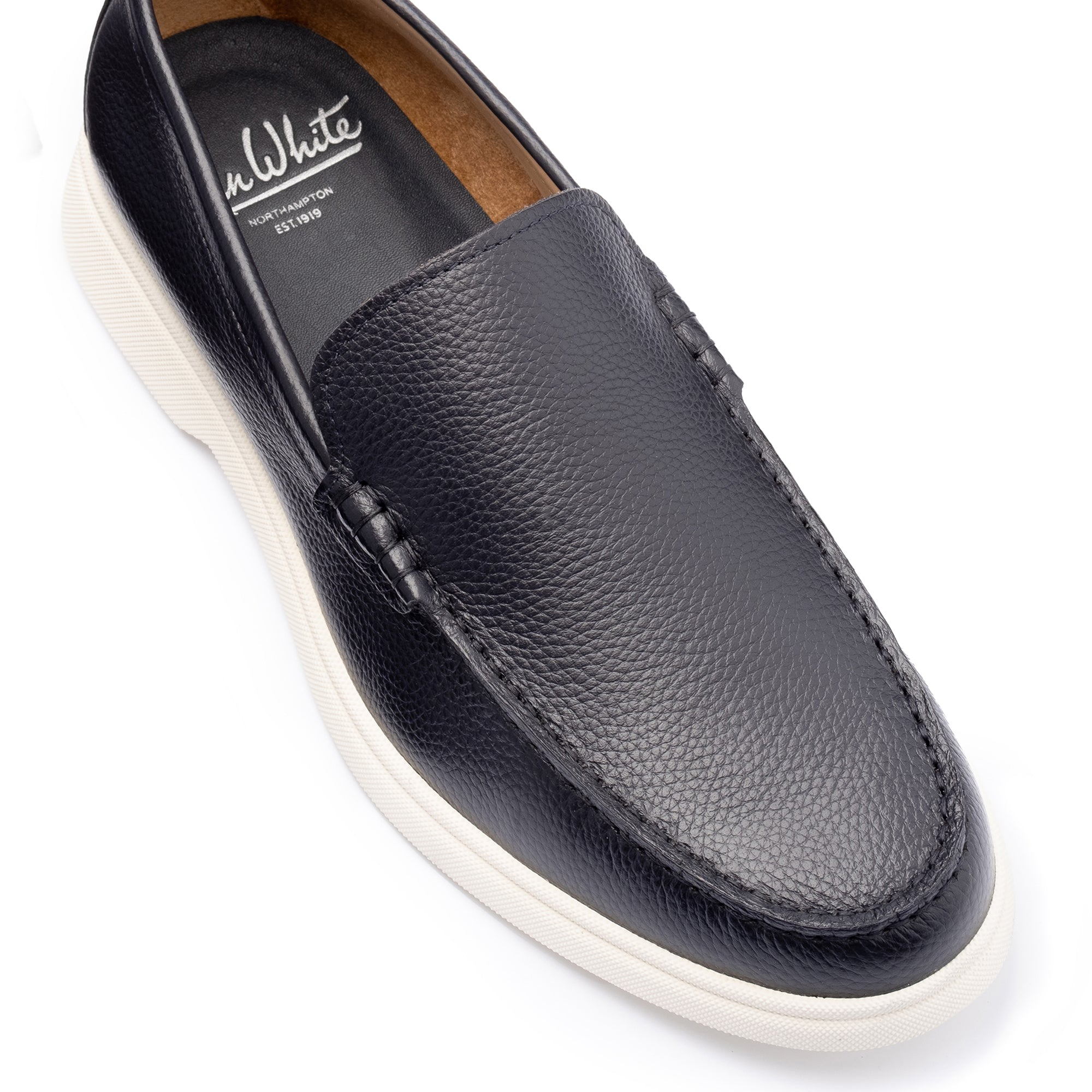
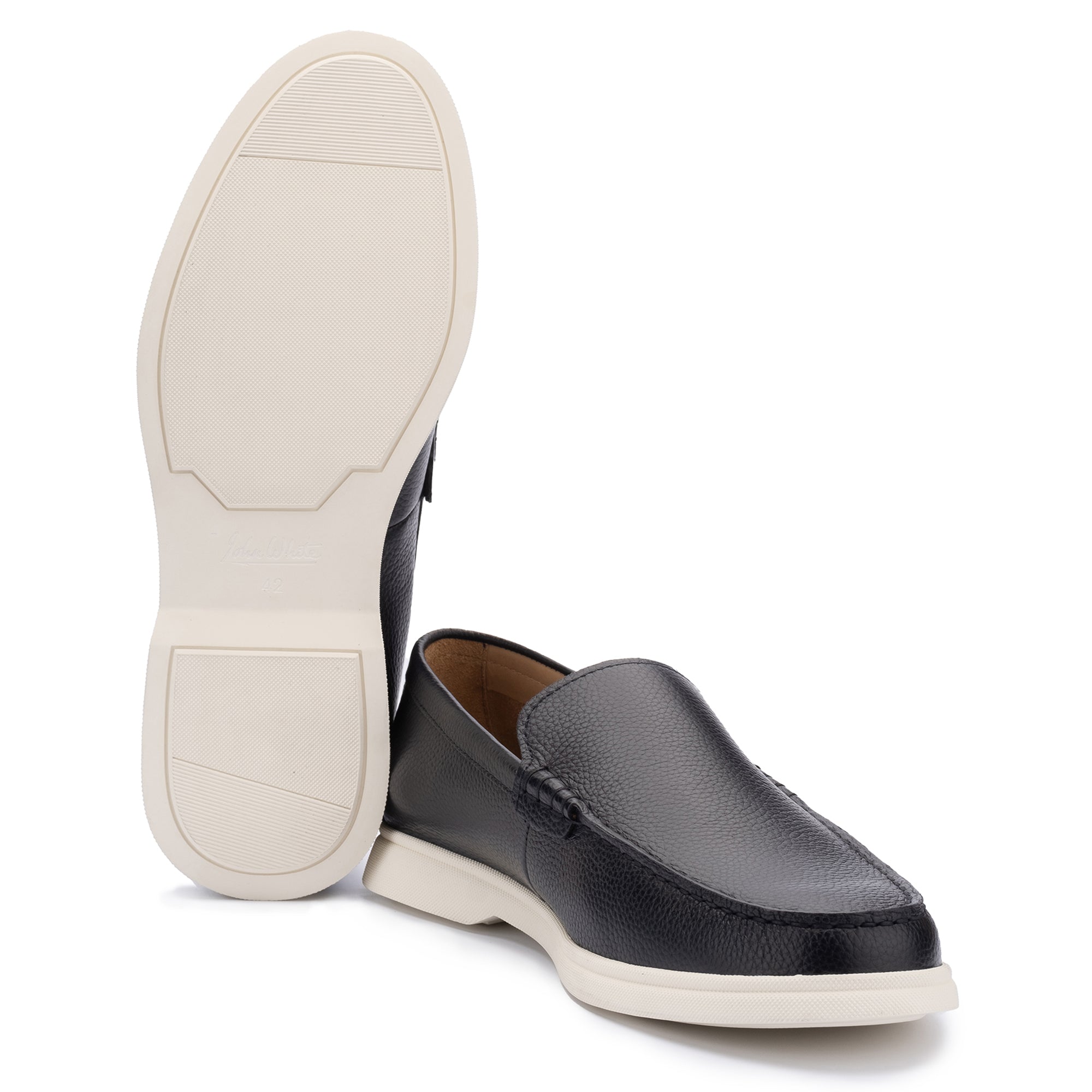
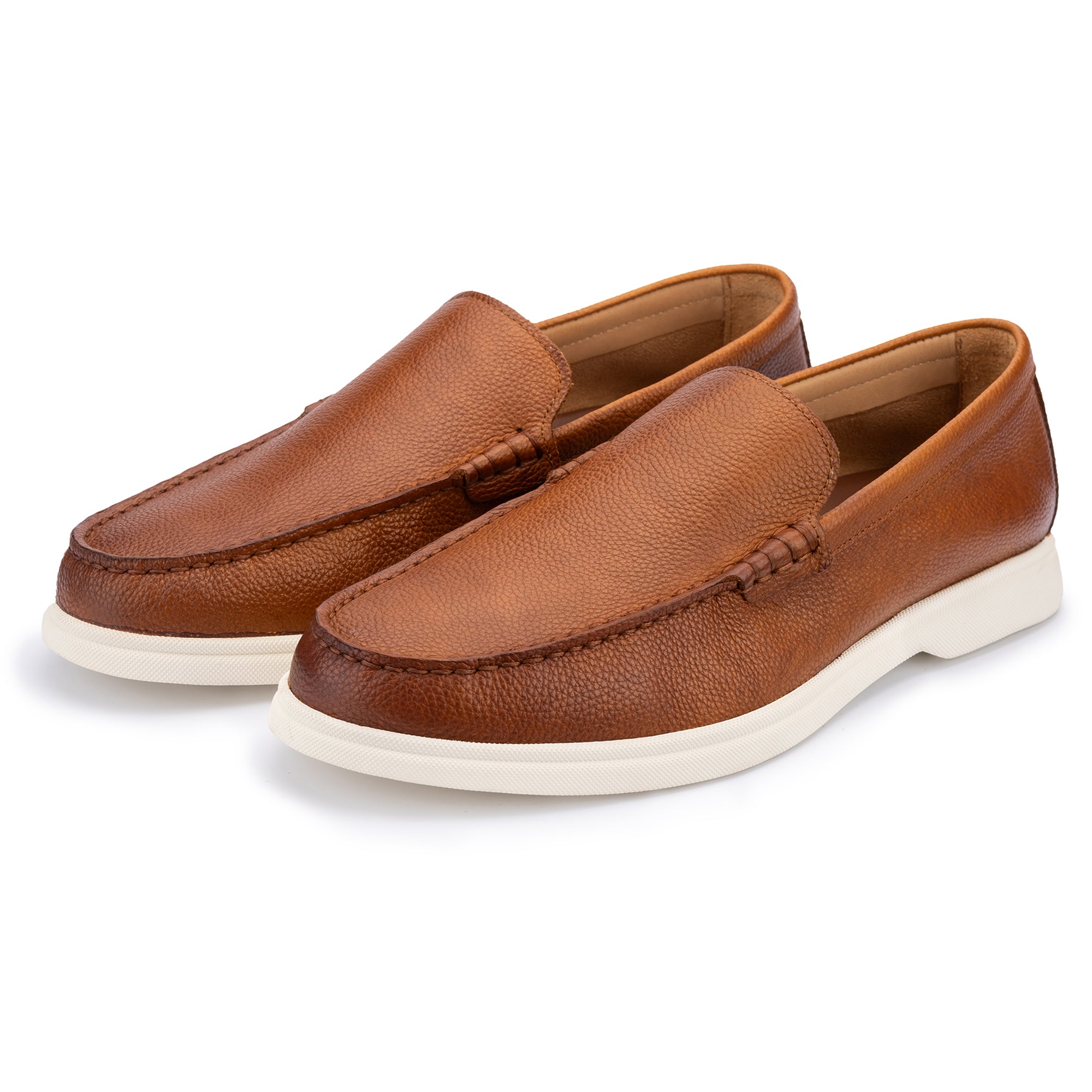
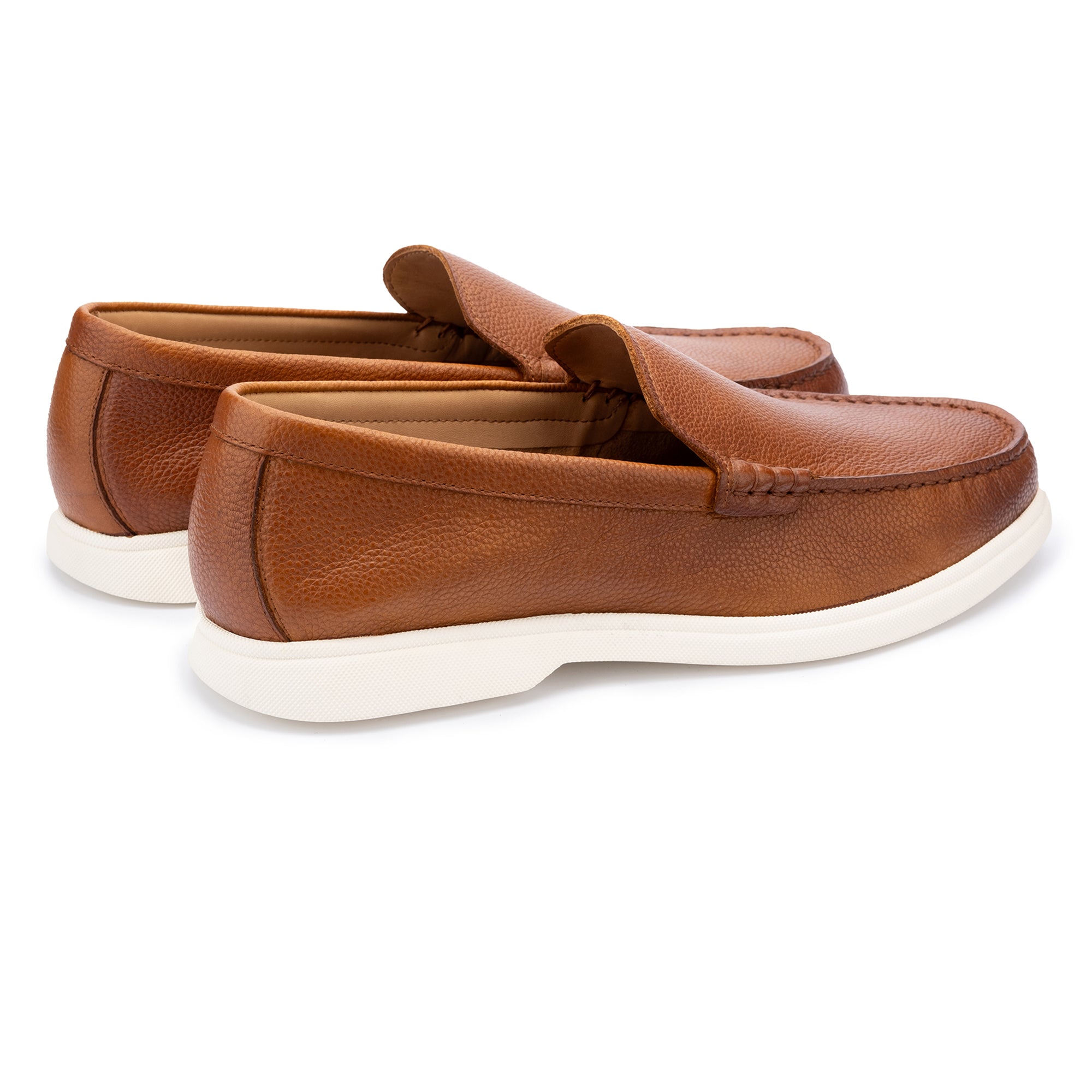
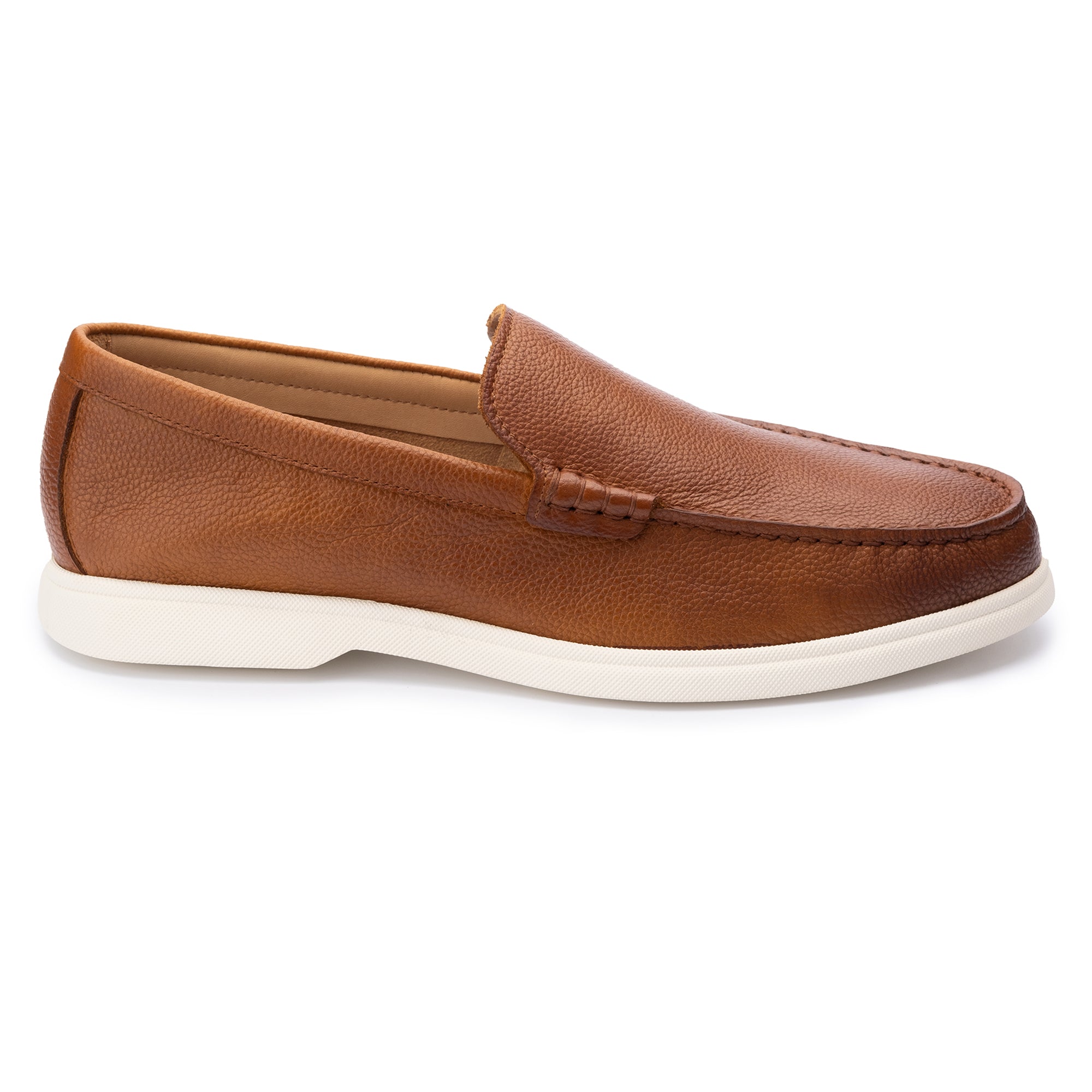
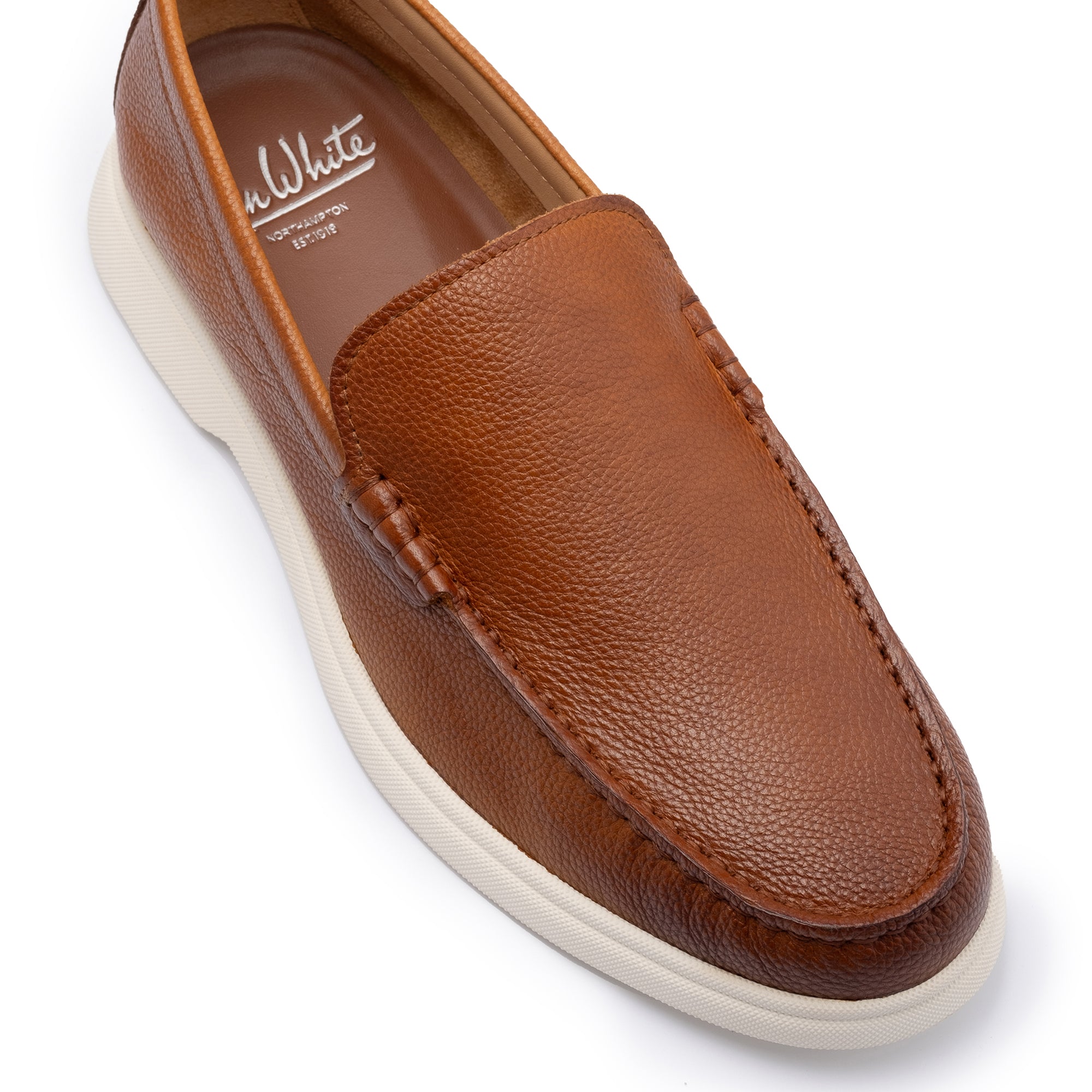
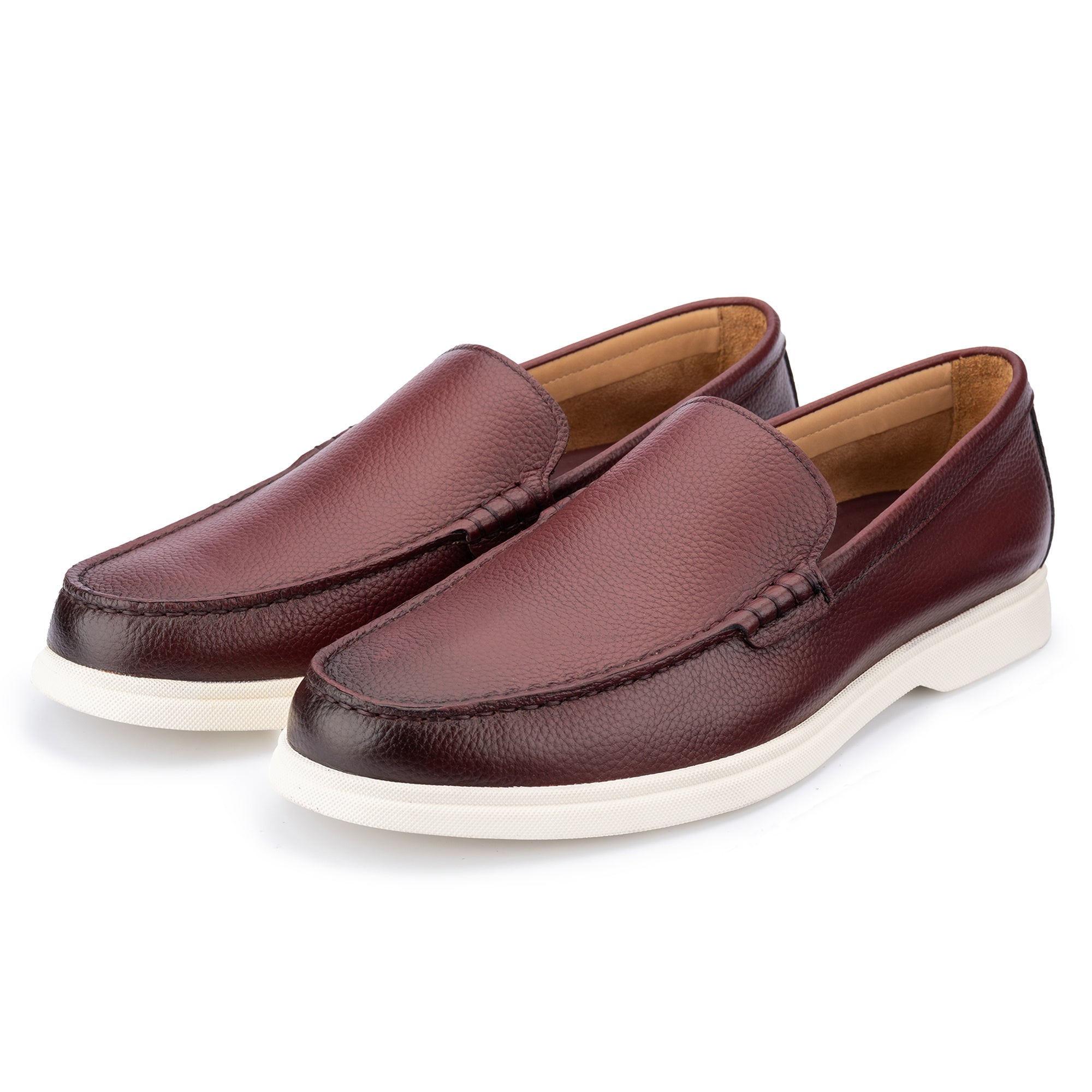
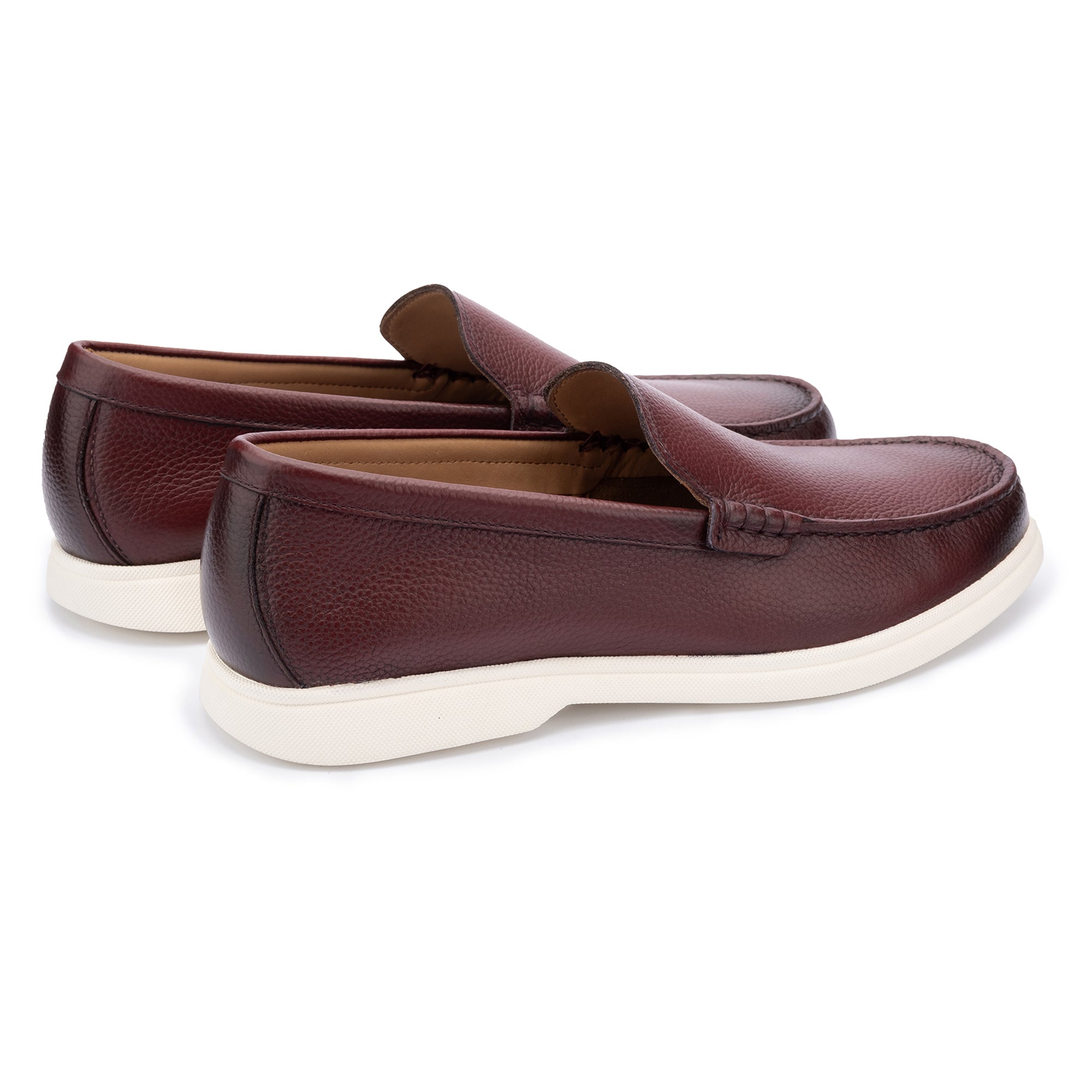
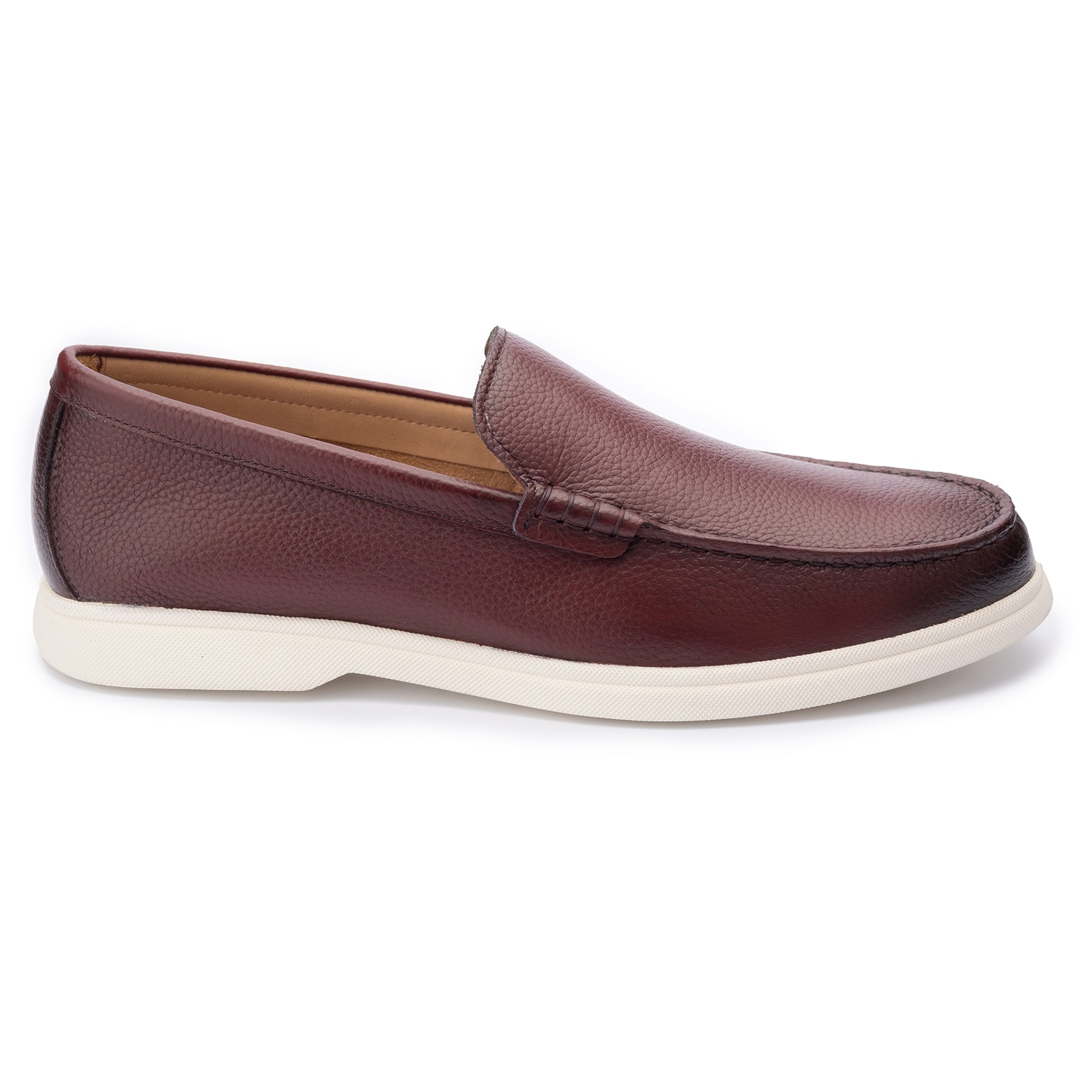
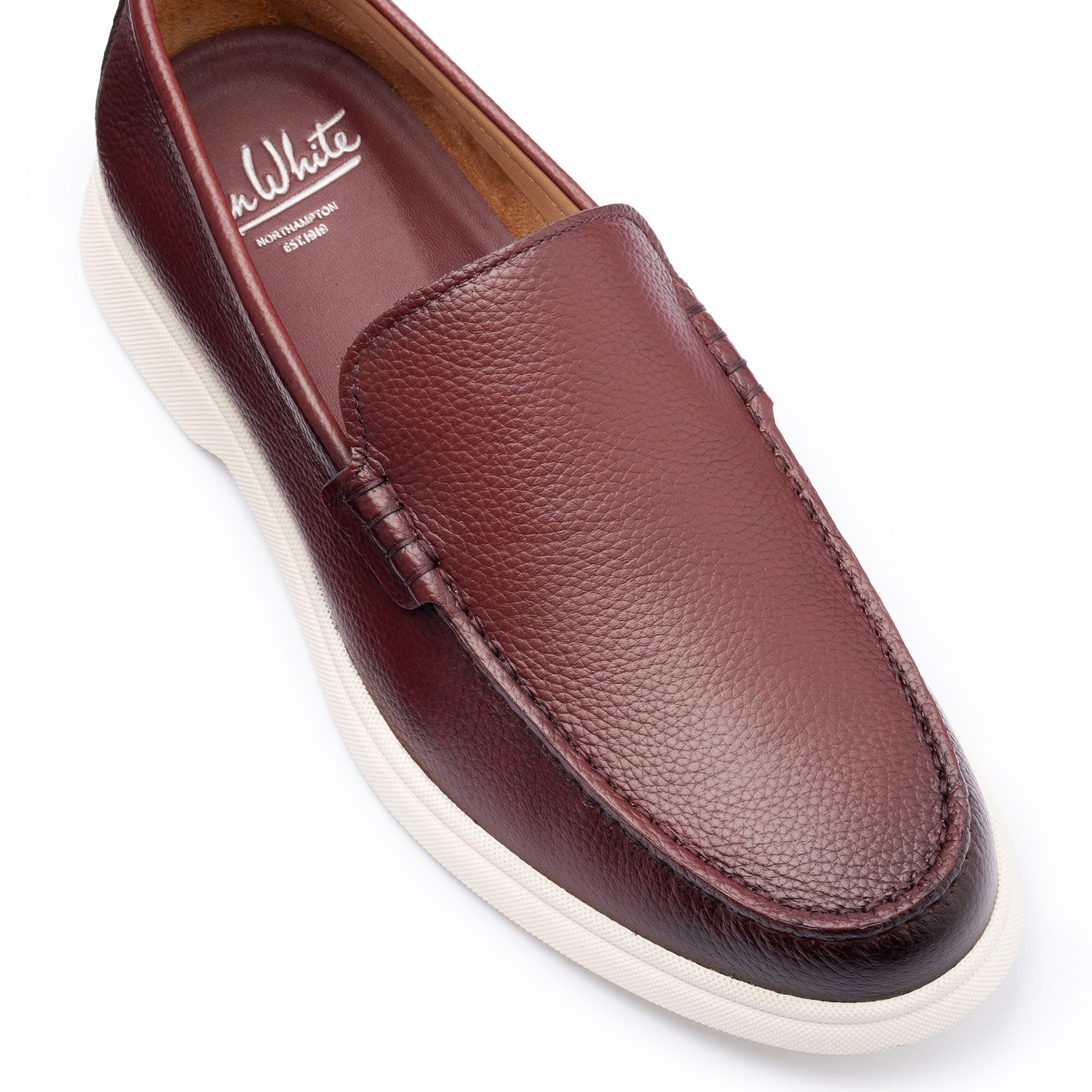
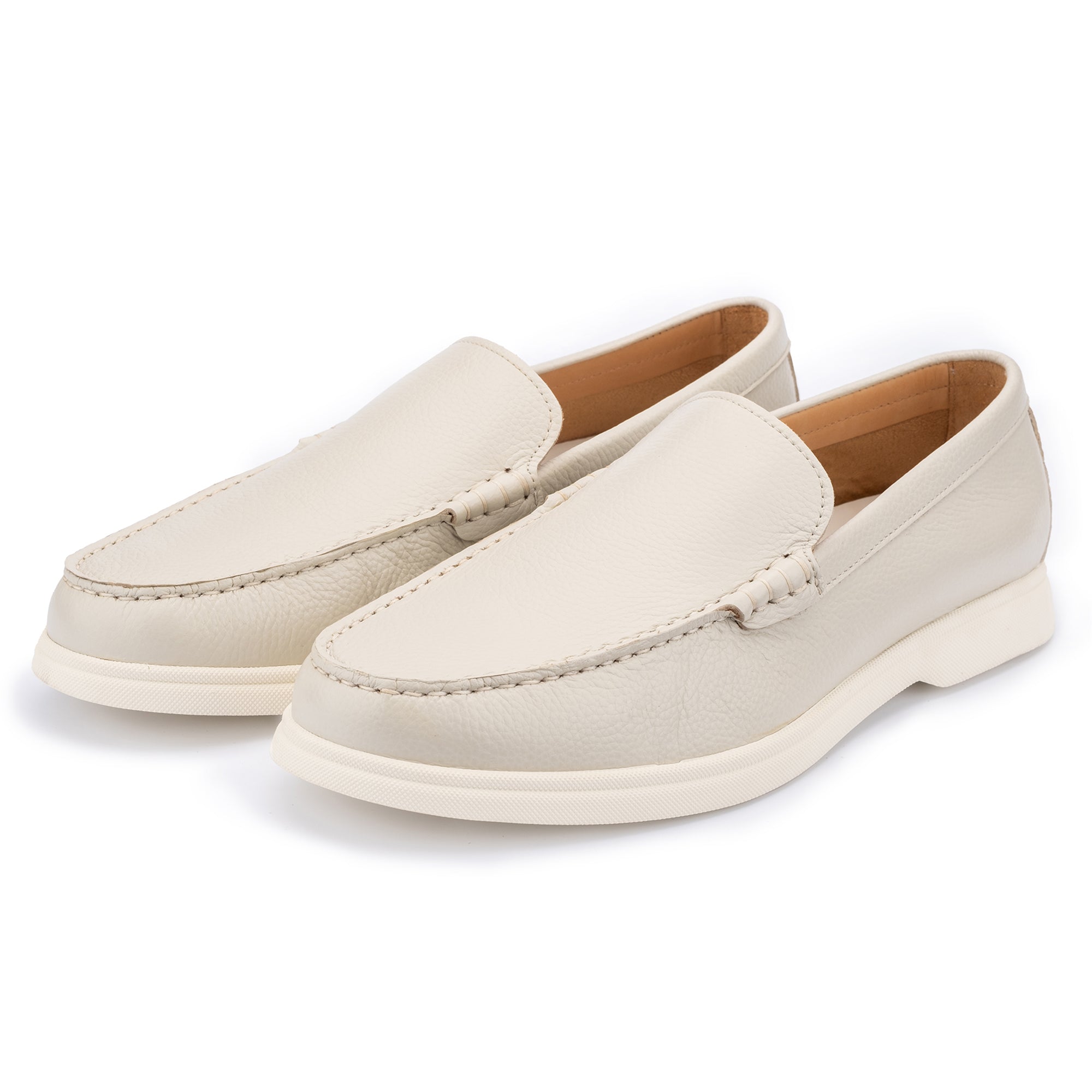
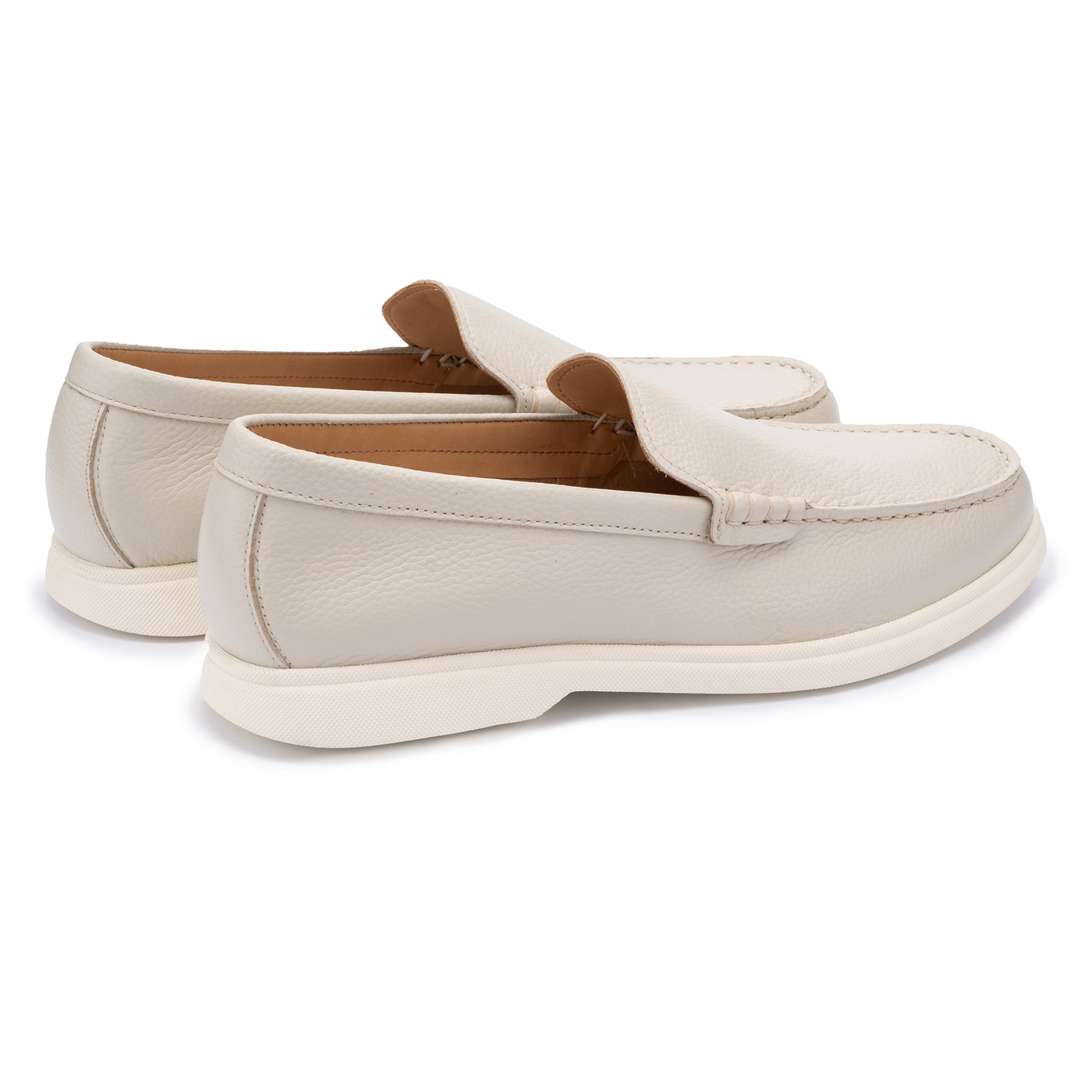
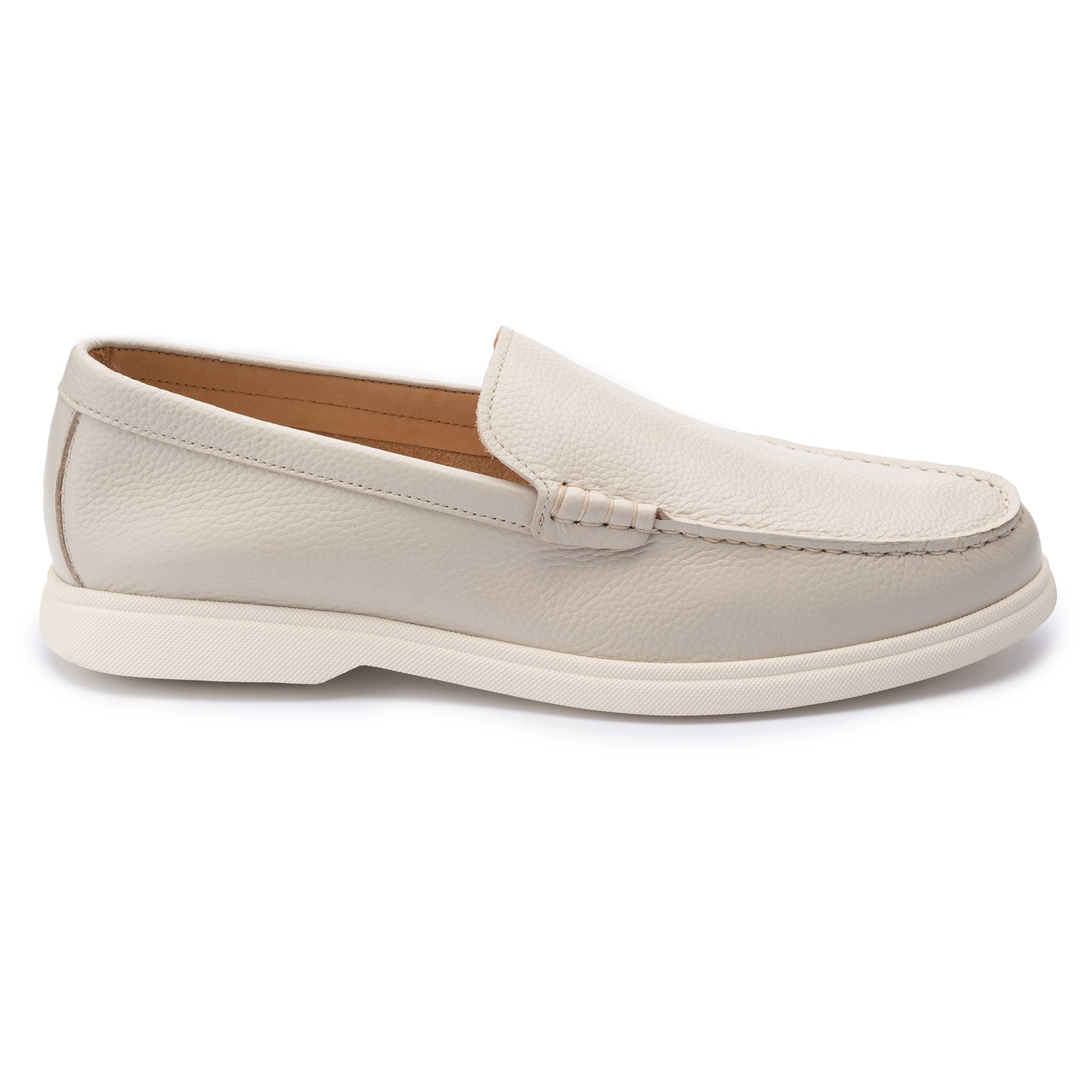
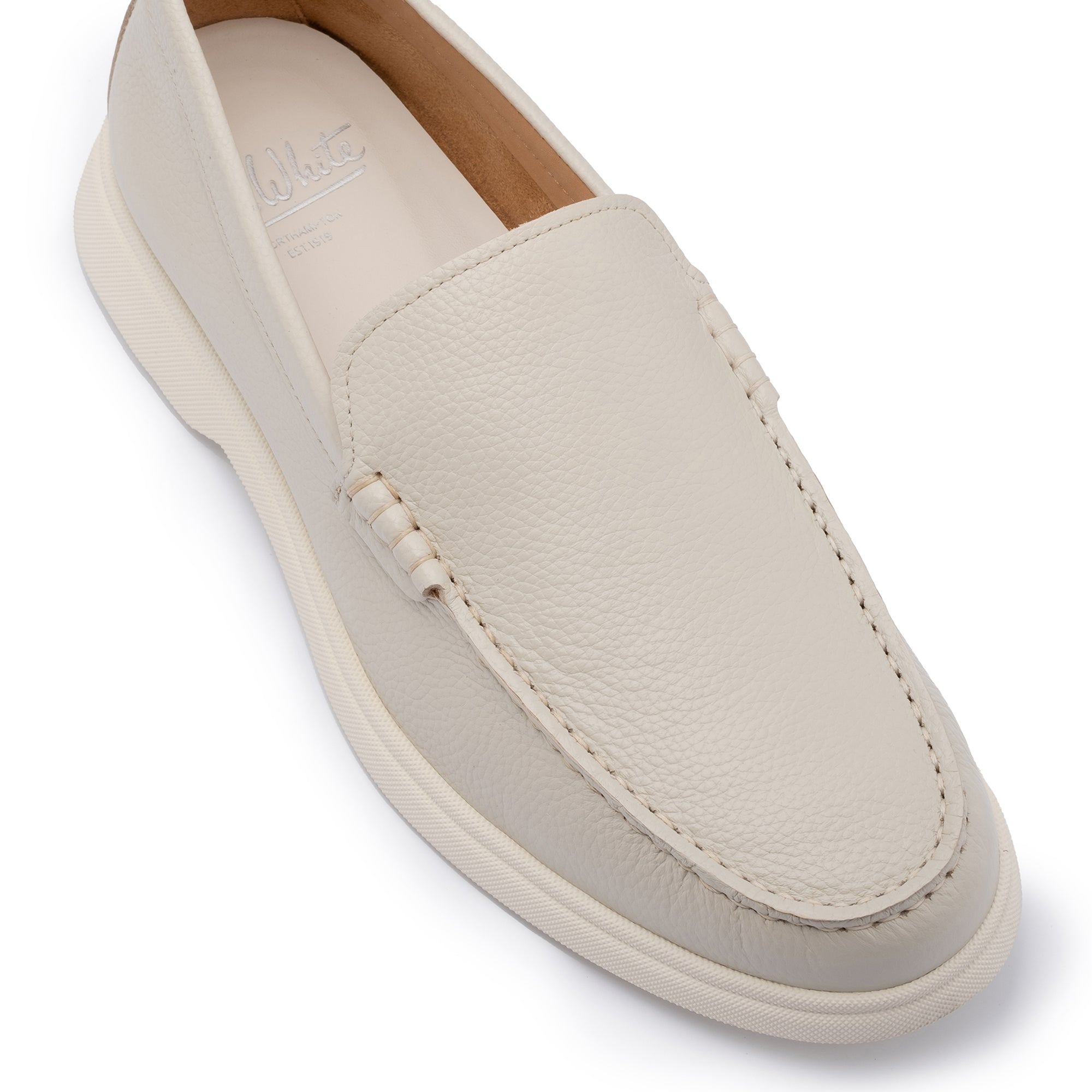
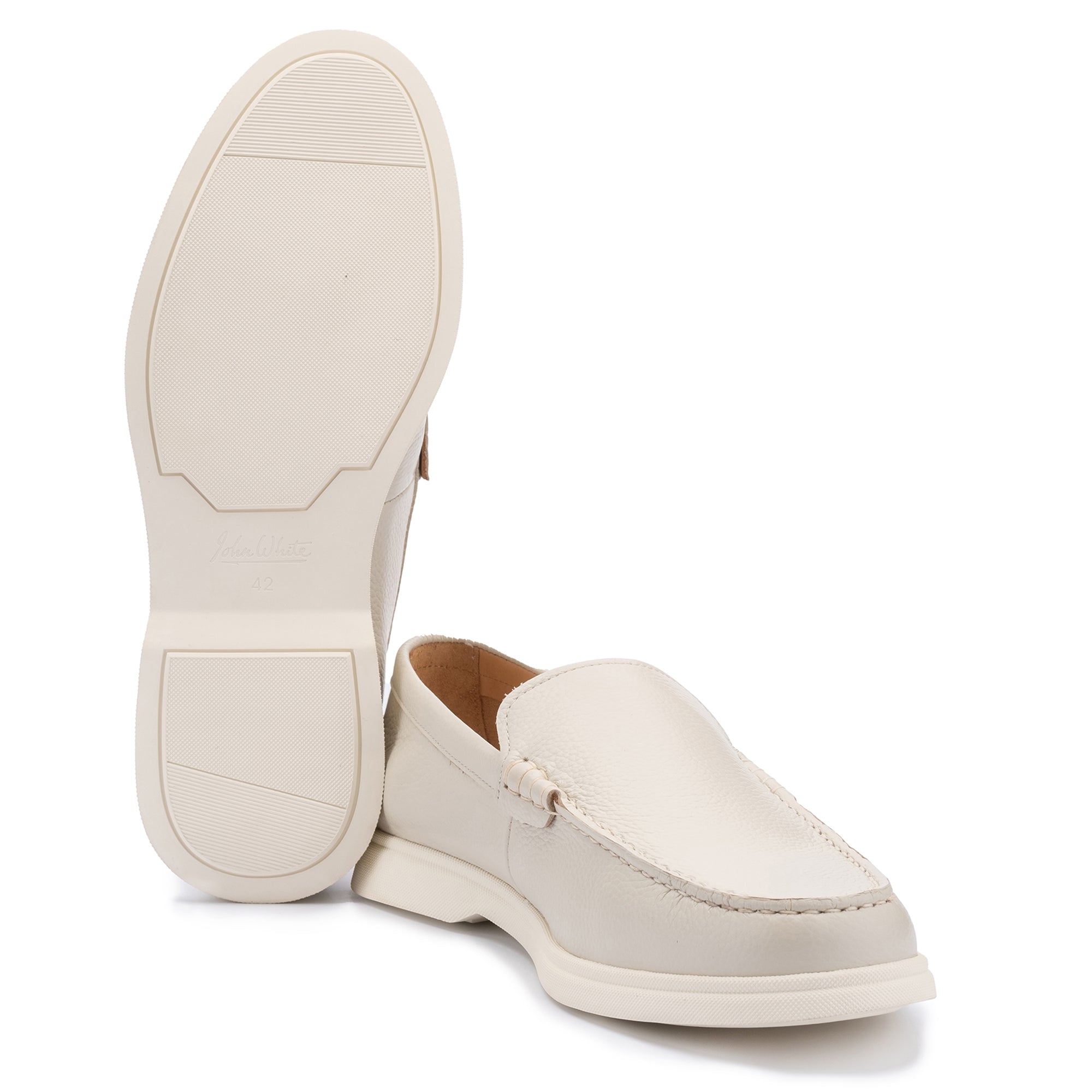
Switch to long, straight strokes for the final pass. This aligns the wax film and produces an even sheen across the full upper. On smooth calf leather — a Broad Derby or Wilms Derby in black or brown — the result should be a clean, uniform shine. On a tumbled grain upper, the textured surface produces a lower, more matte finish. That is correct for the material, not a failure of the technique.
Buffing is not simply rubbing — it is the step at which polish becomes part of the leather surface rather than a coating on top of it.How Often Should You Polish Different Leather Types?
| Leather Type | Brush | Full Polish | Notes |
|---|---|---|---|
| Smooth calf | After every wear | Every 1–2 weeks | Most responsive to wax polish; highest shine potential |
| Grain / tumbled leather | After every wear | Every 2 weeks | Cream polish penetrates the texture more effectively than hard wax for conditioning |
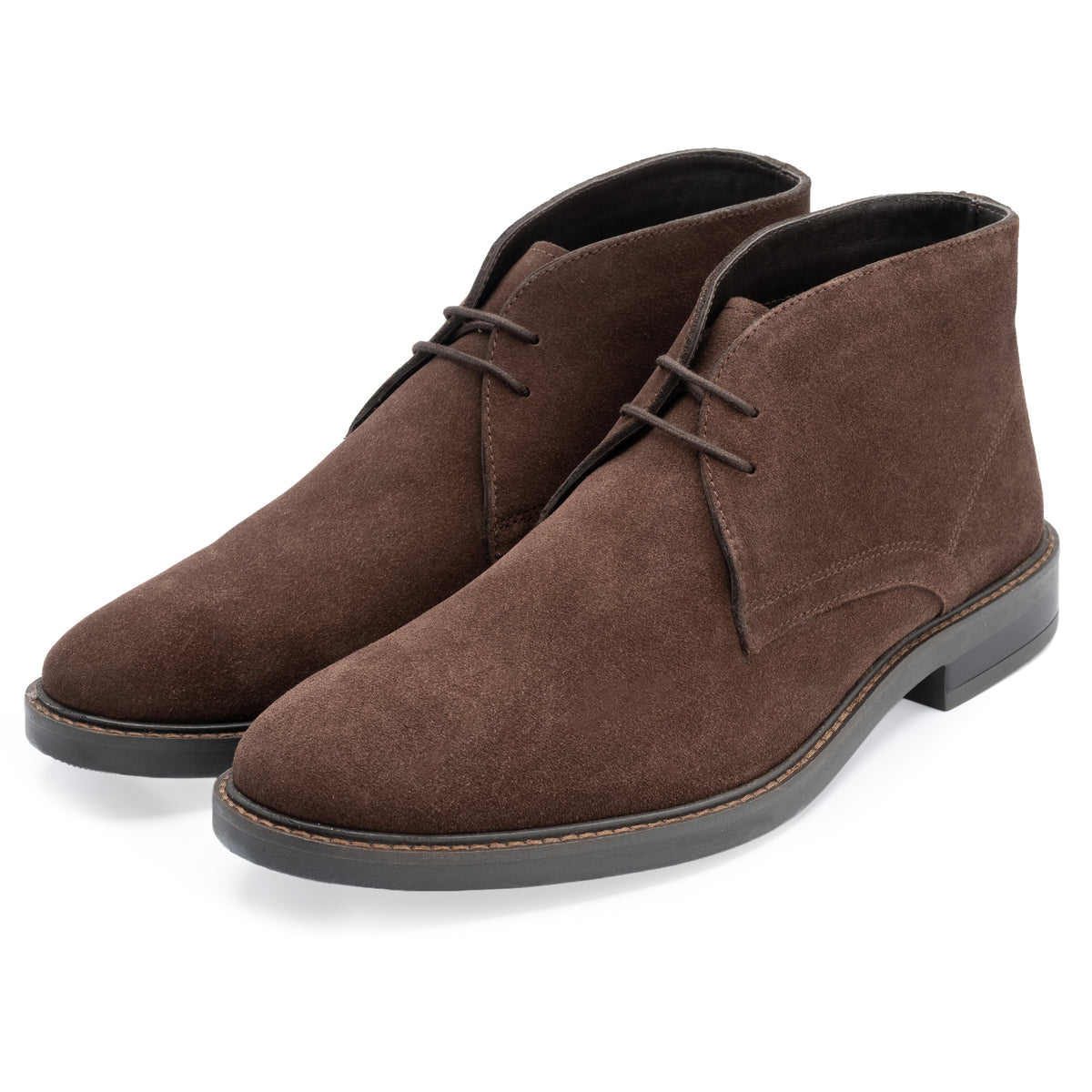
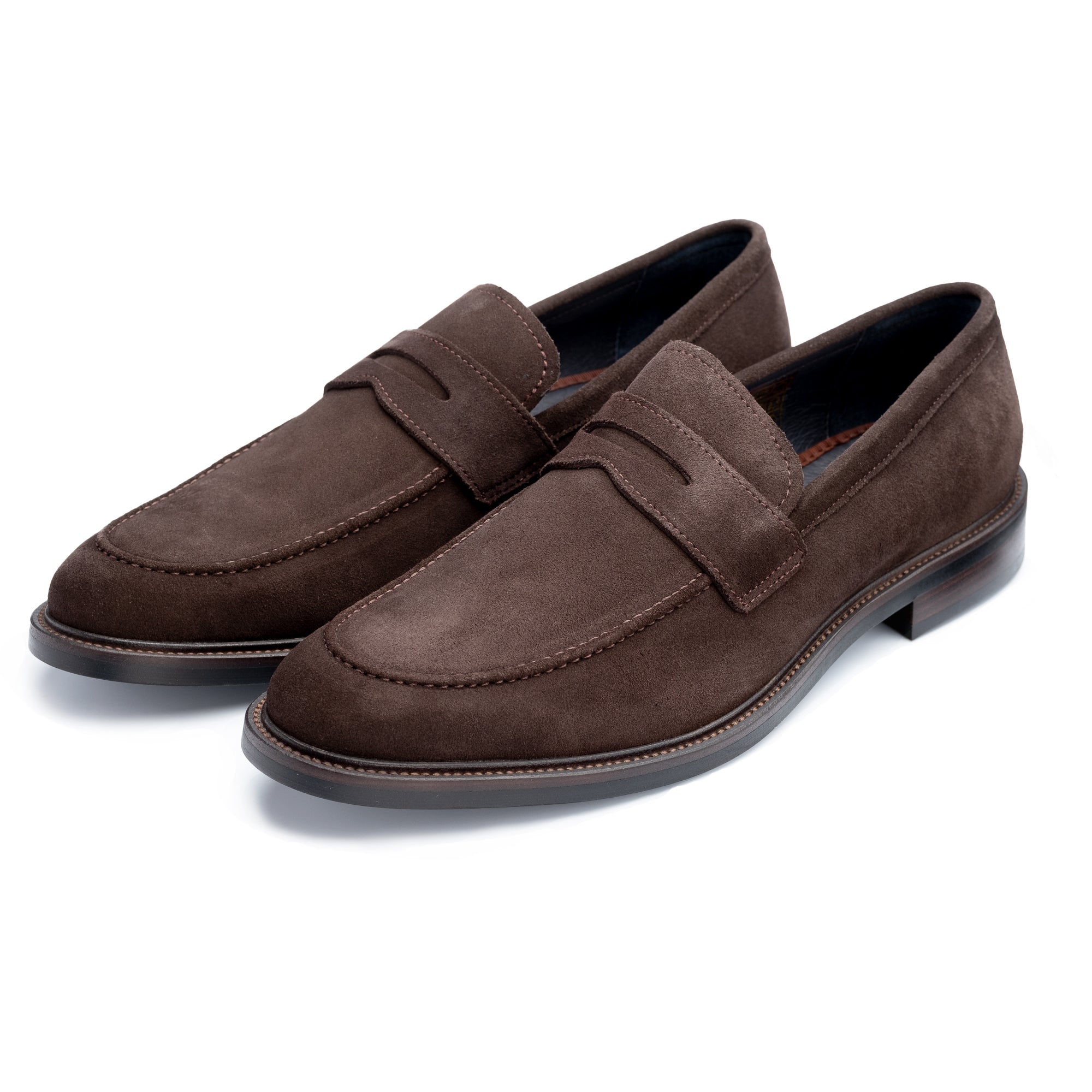
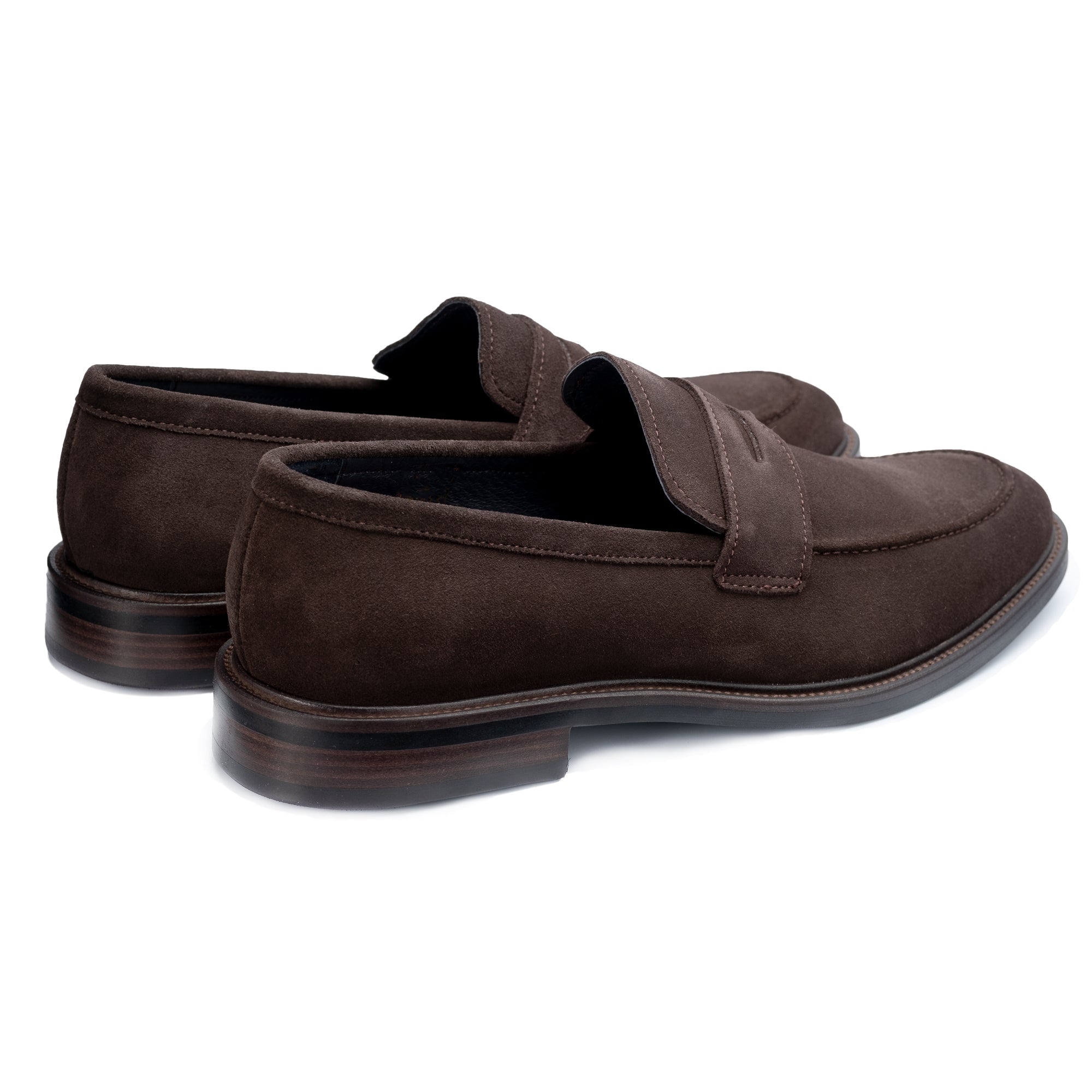
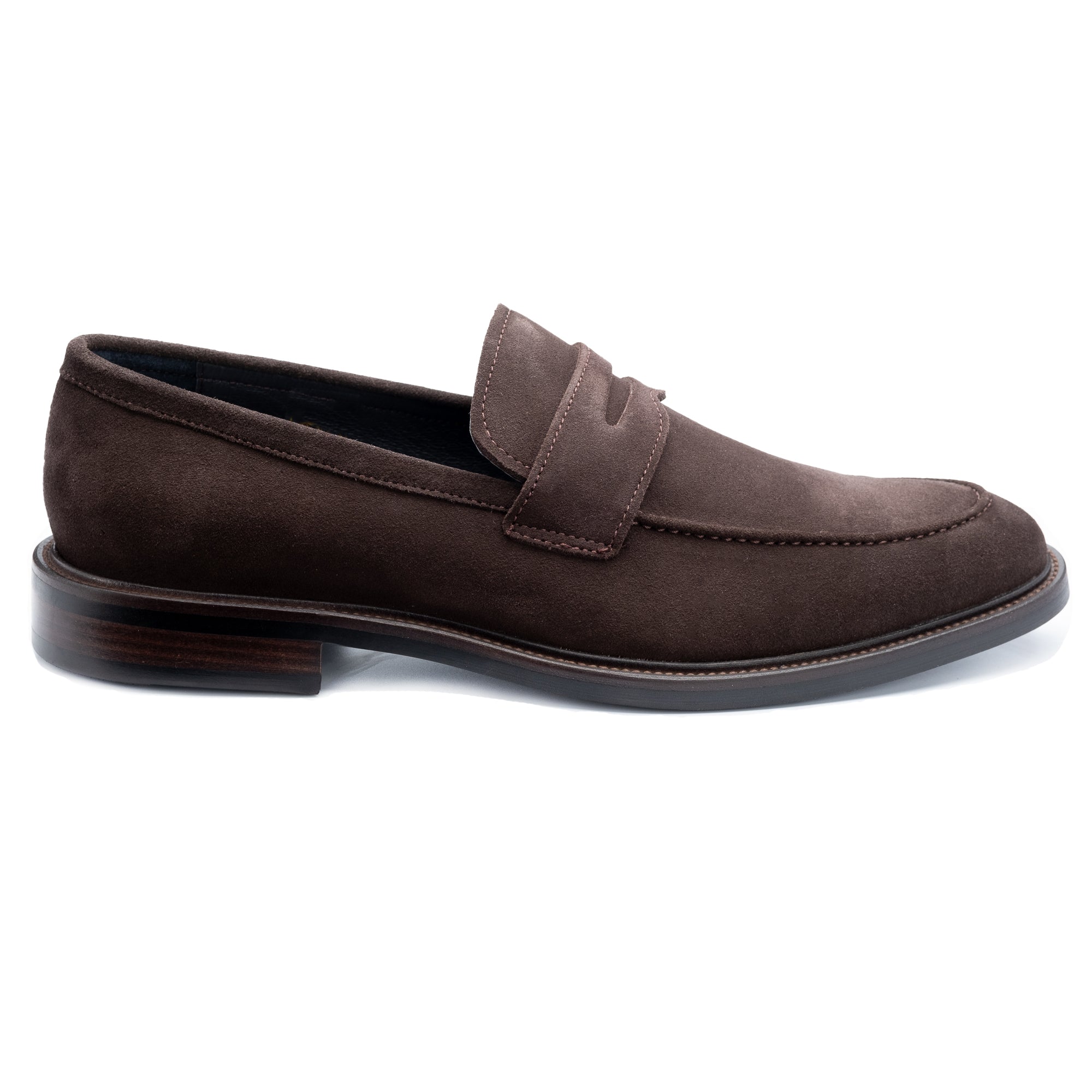
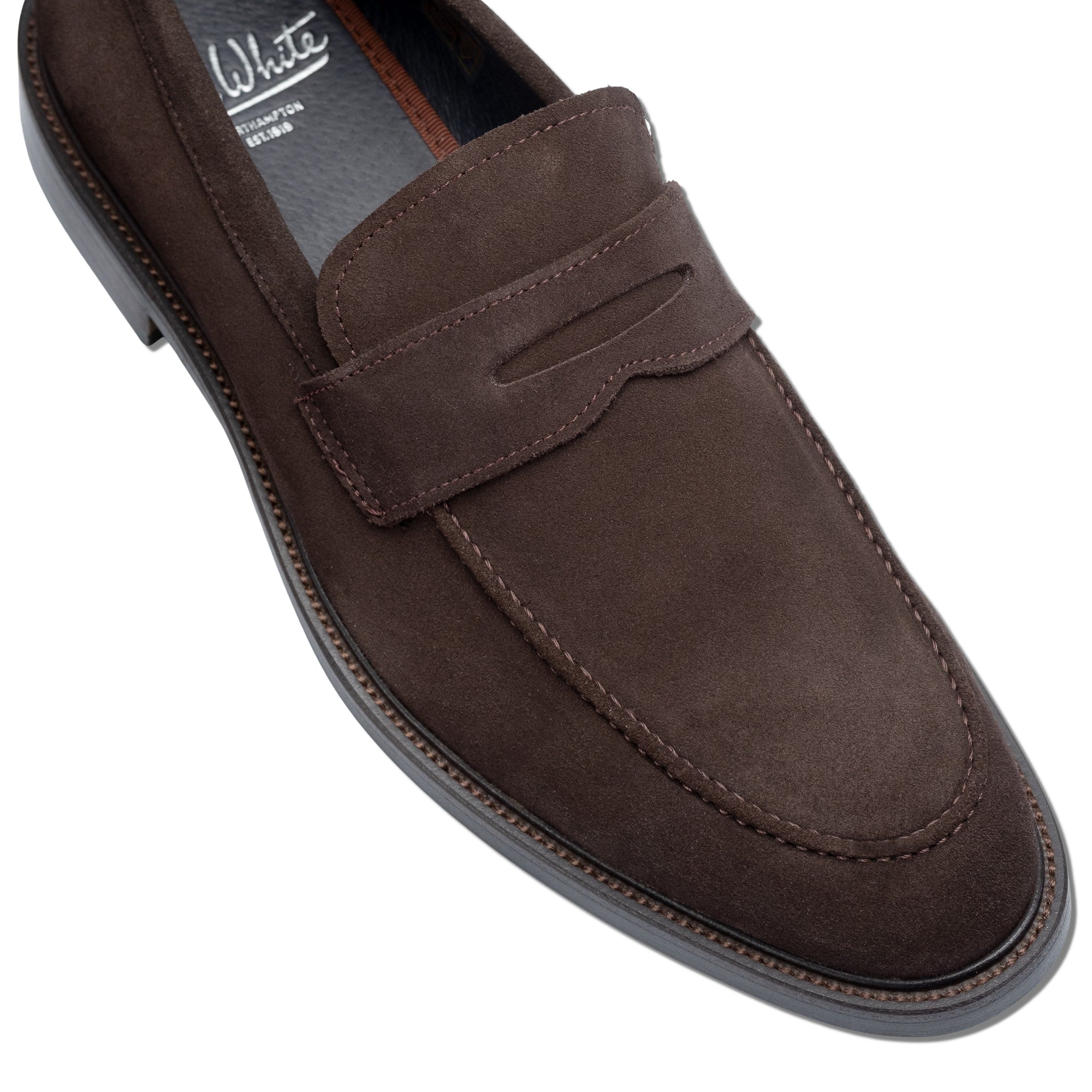
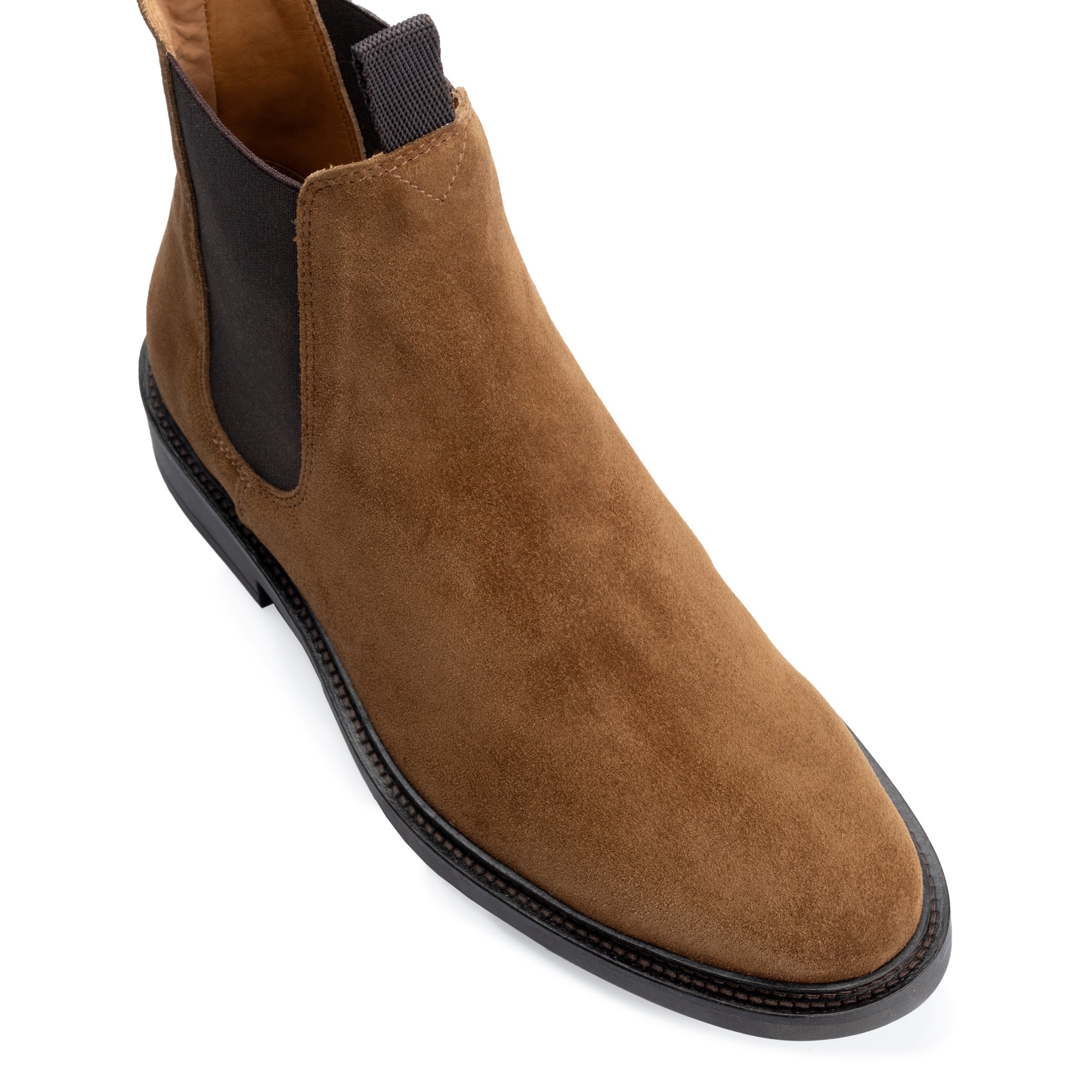
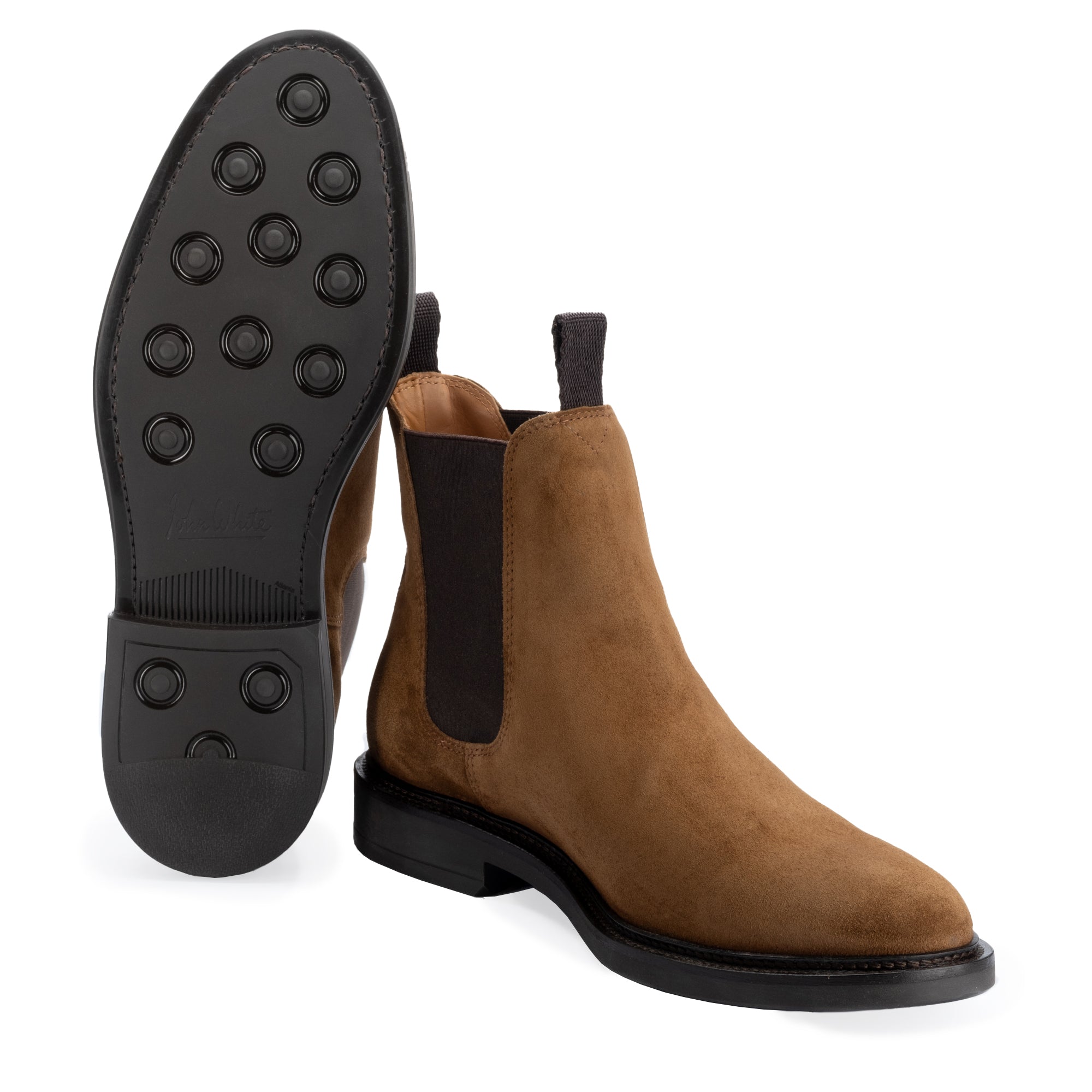
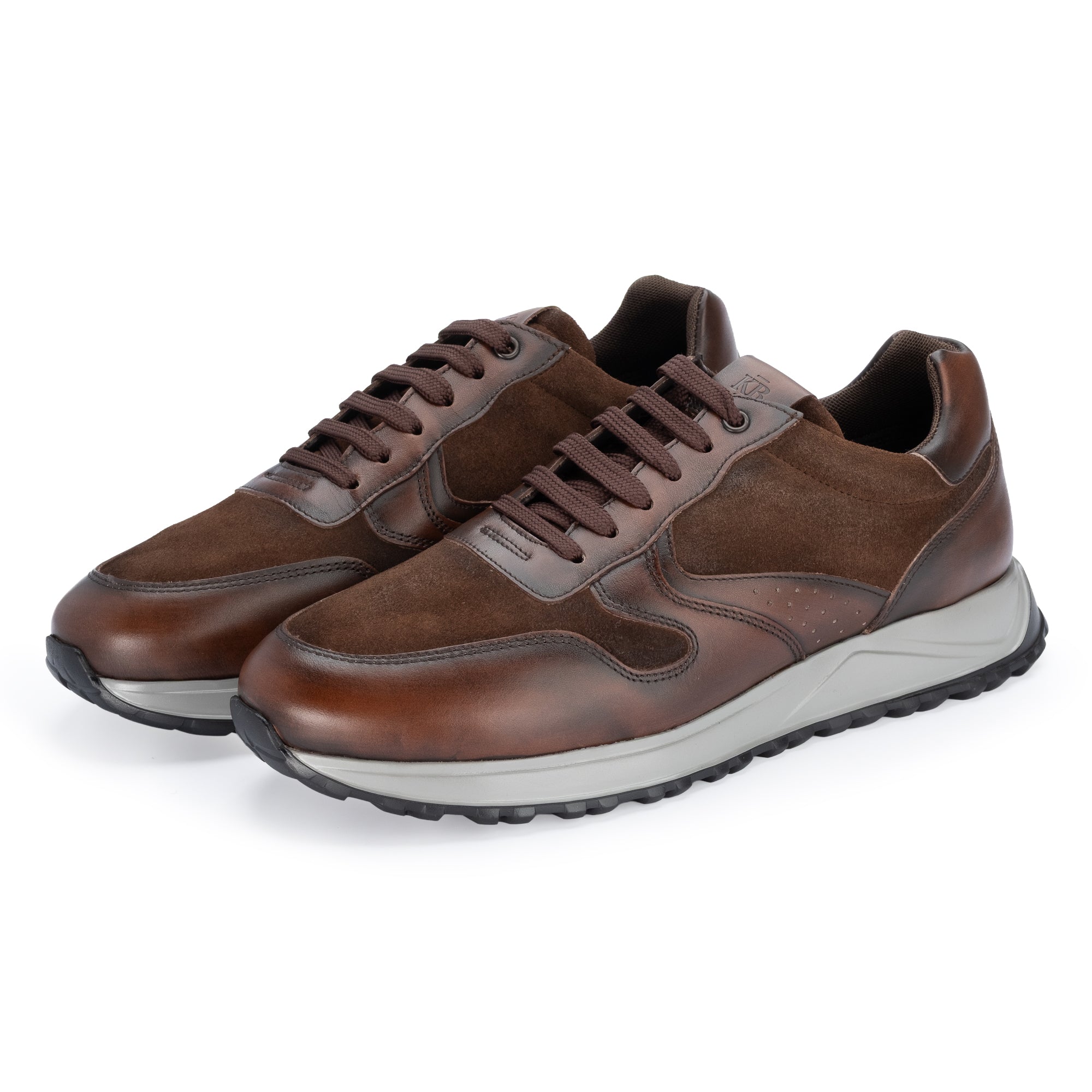
| Suede | After every wear (suede brush only) | N/A — use suede renovator spray | Wax polish mats the nap permanently; never use it on suede |
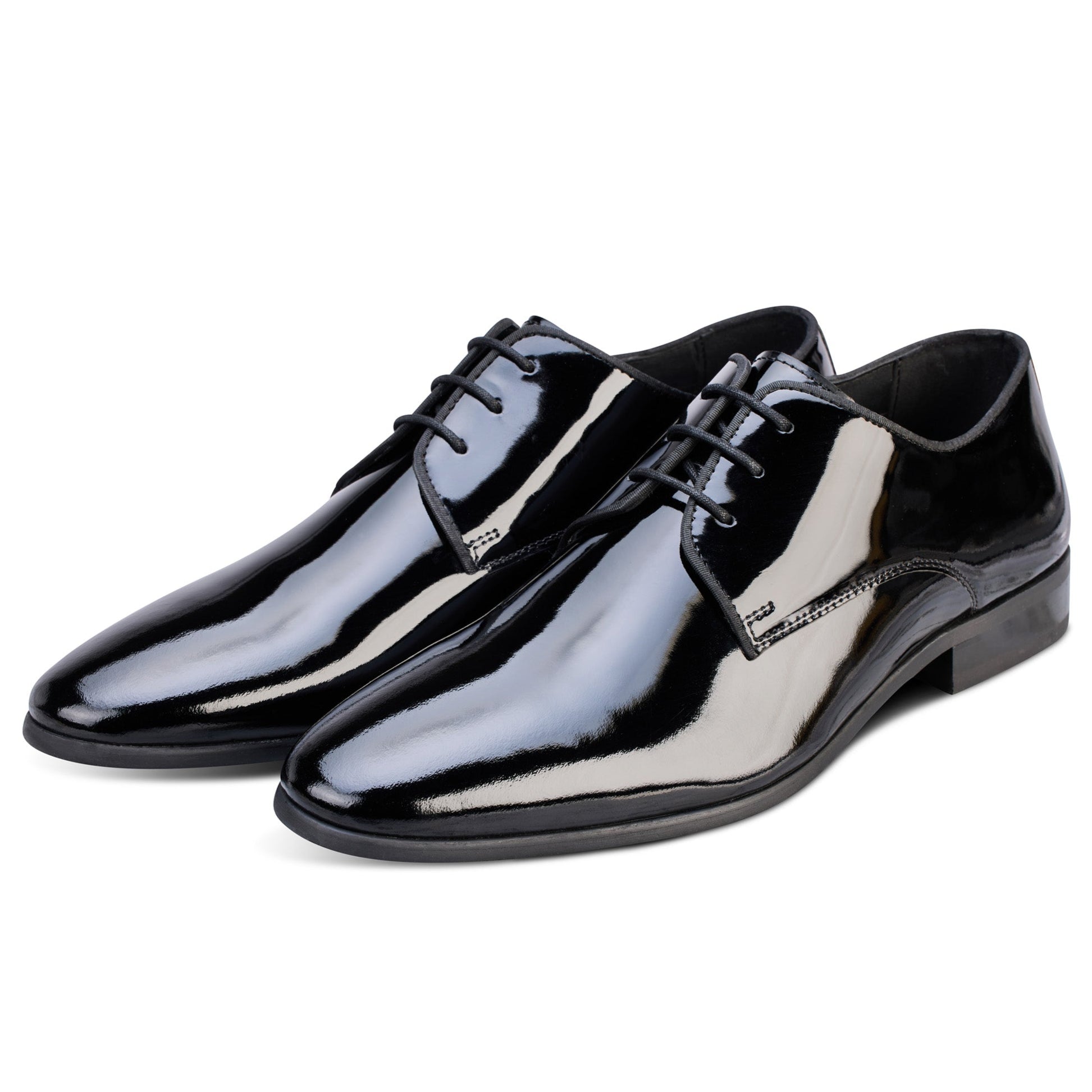
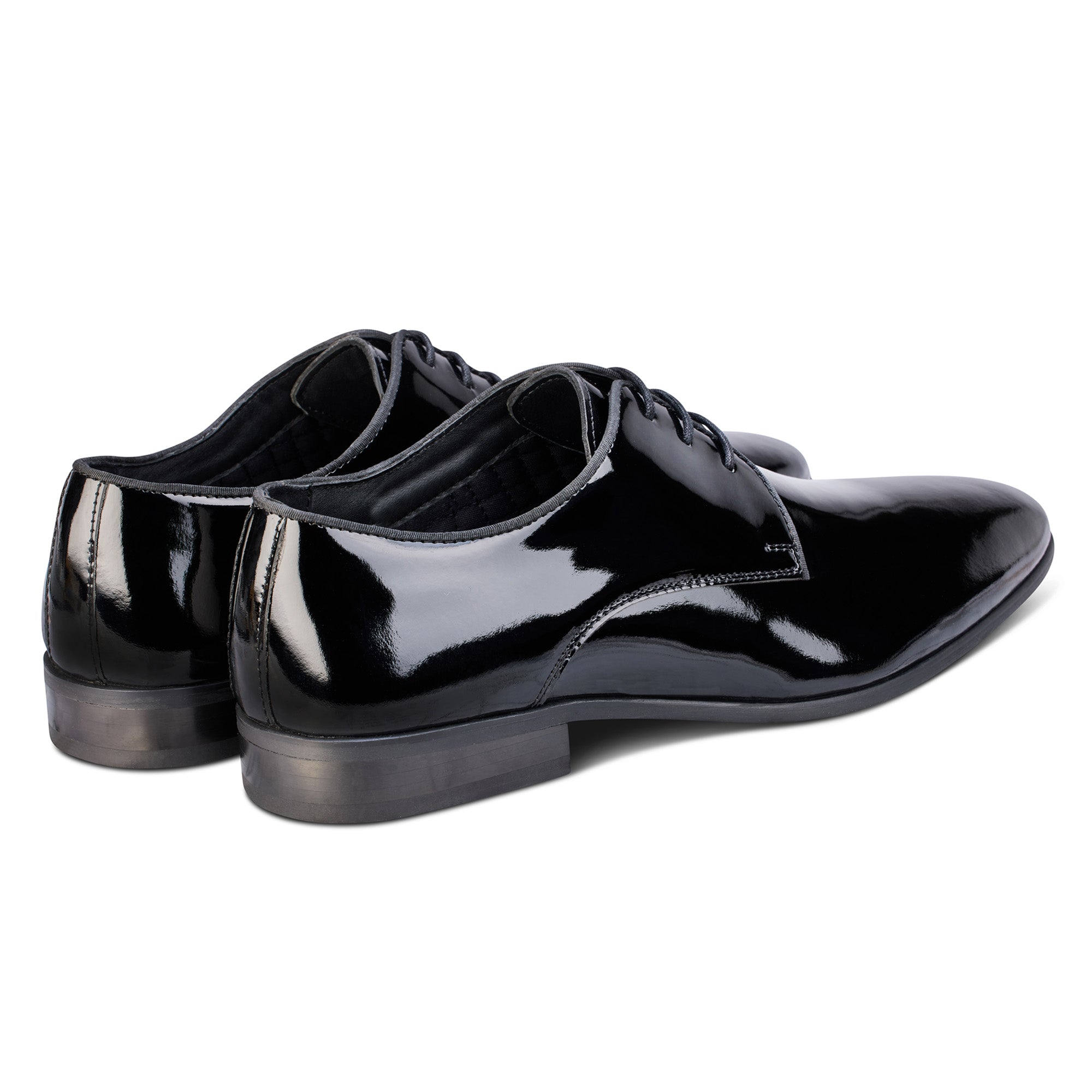
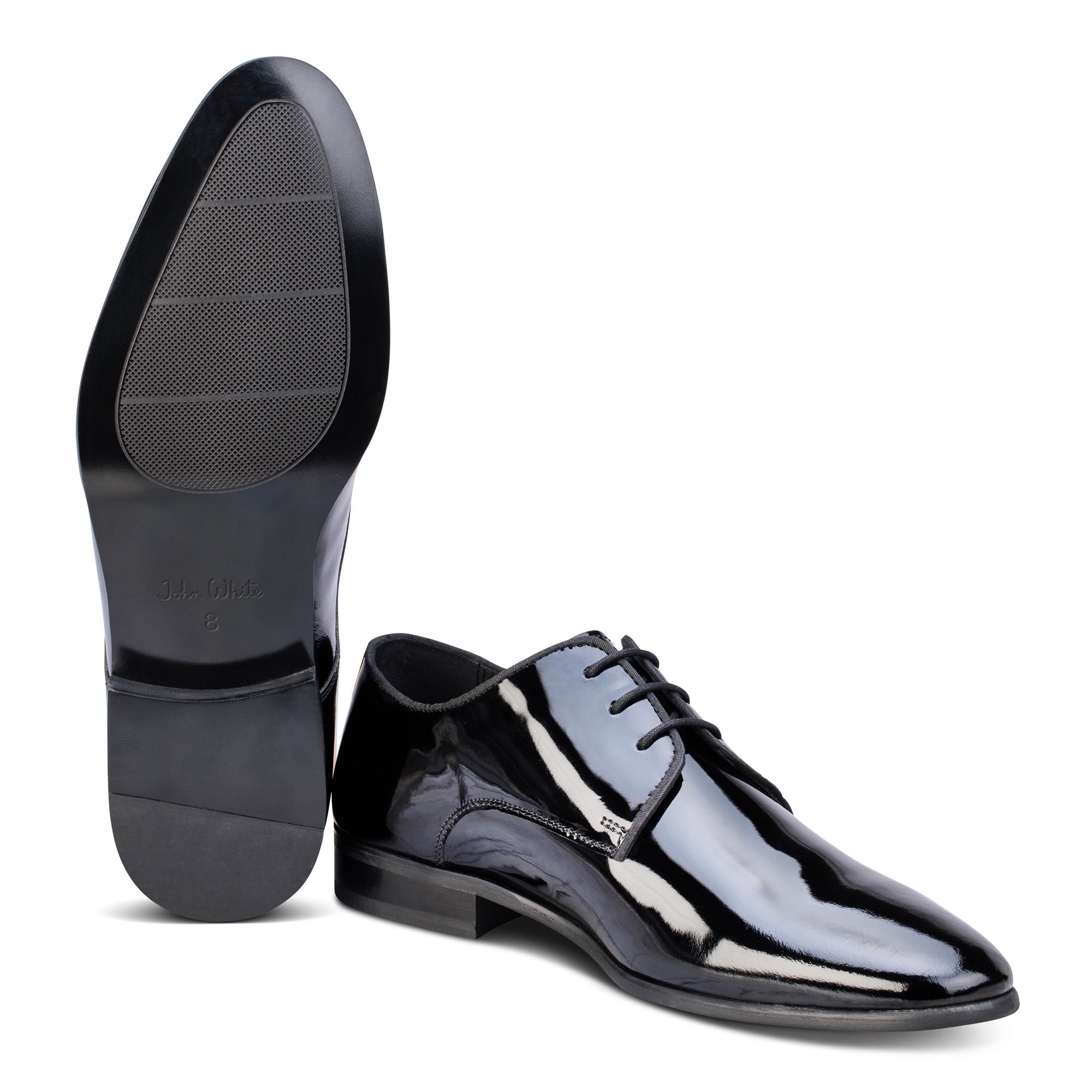
| Patent leather | Wipe with slightly damp cloth | Patent-specific cleaner only | Standard wax polish clouds the lacquered finish irreversibly |
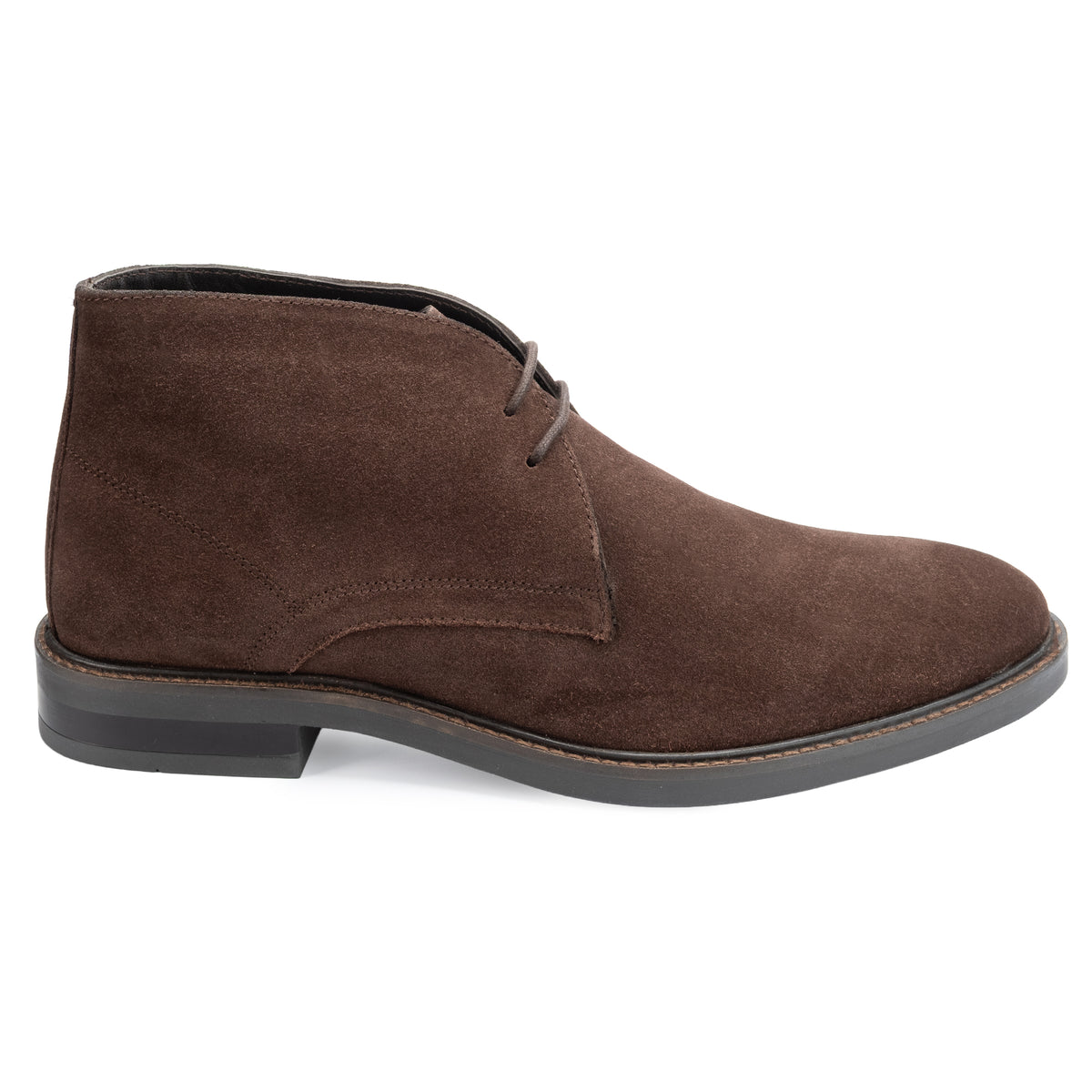
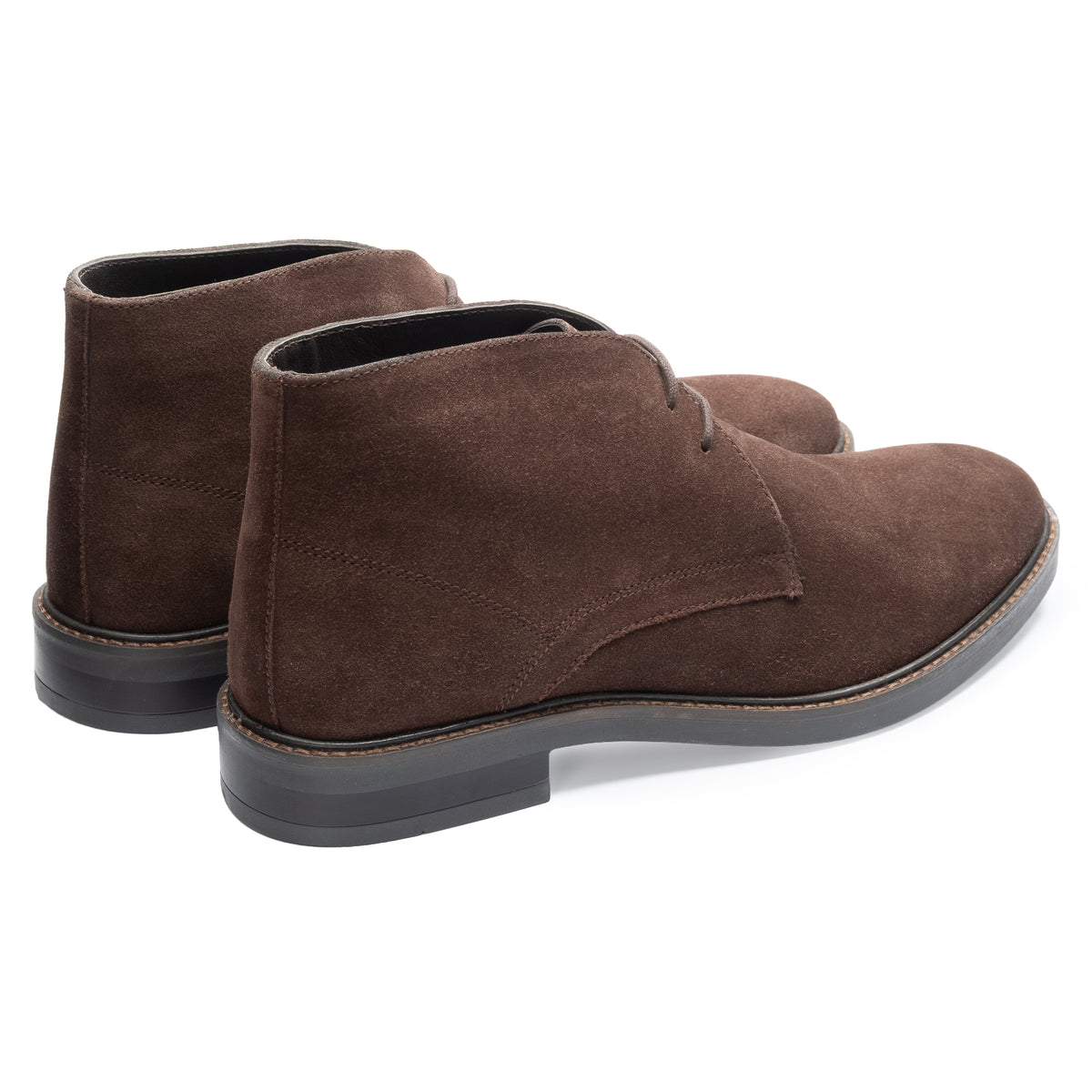
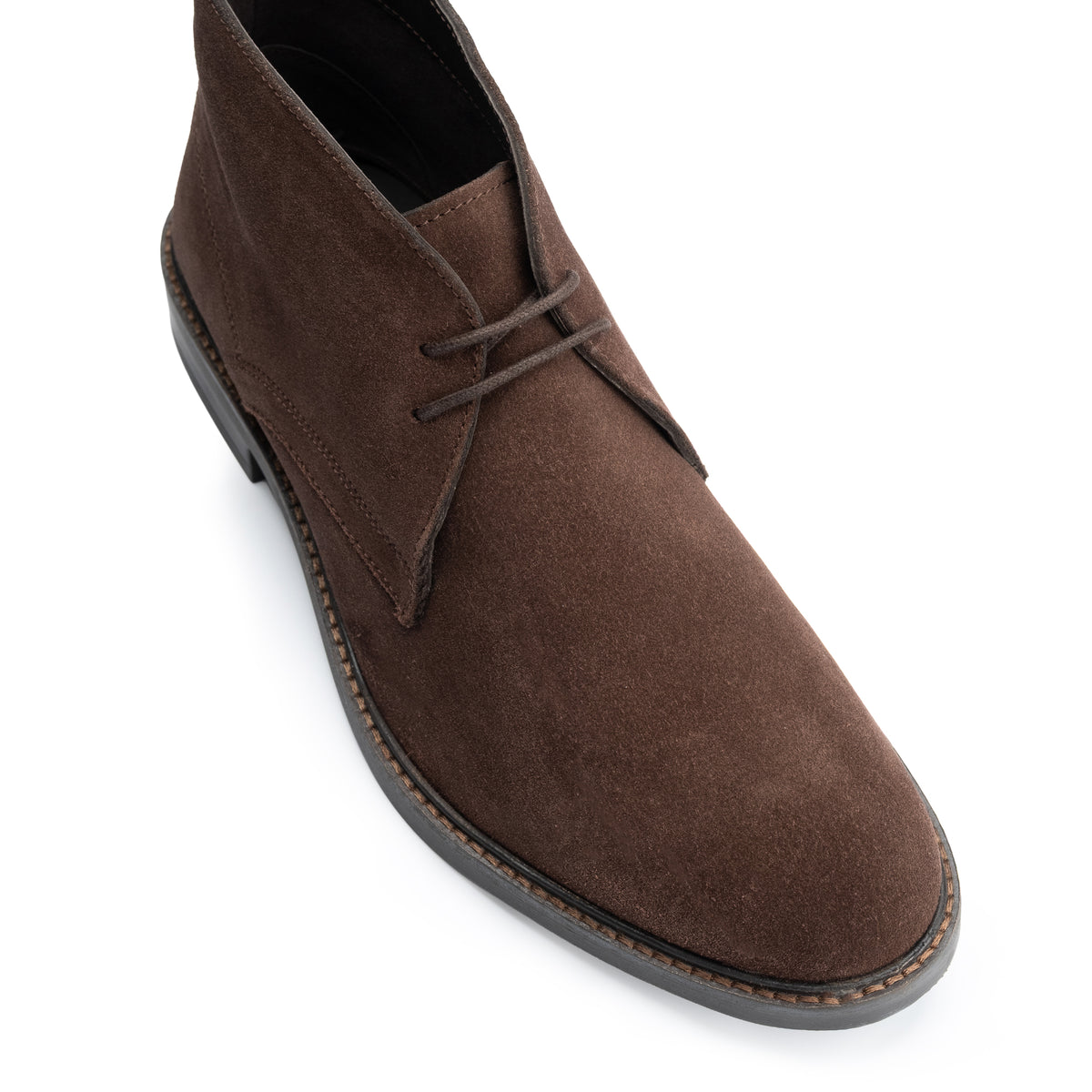
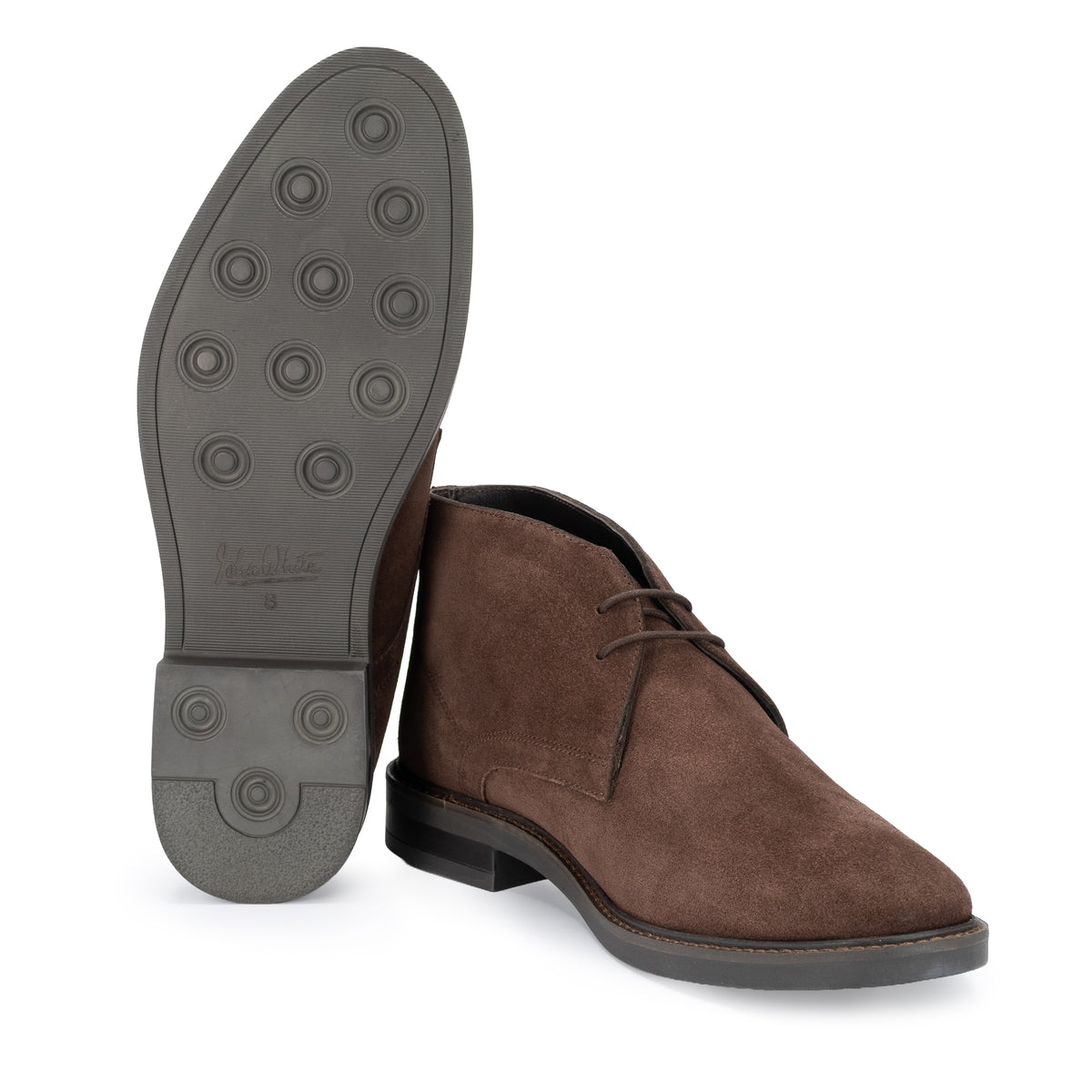
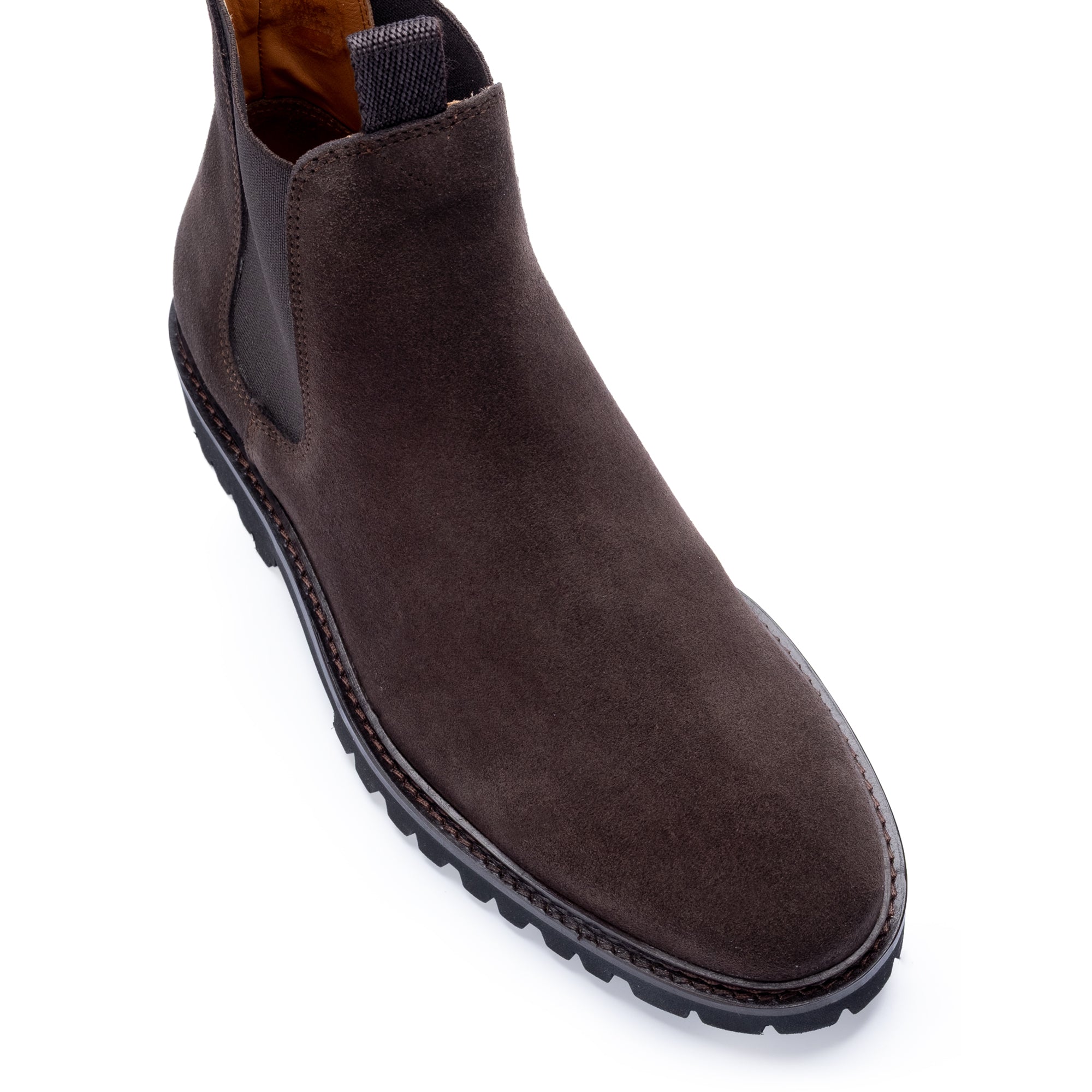
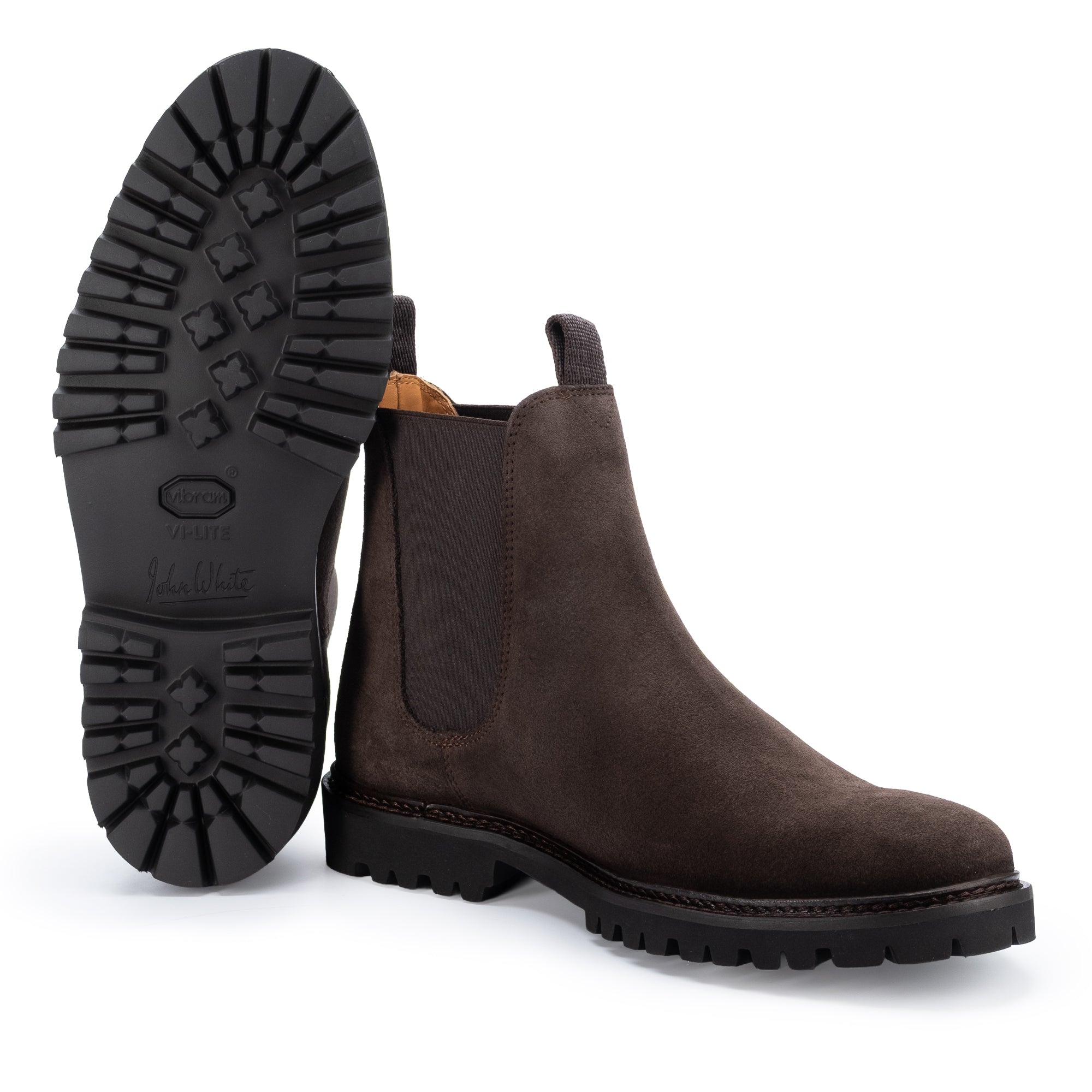
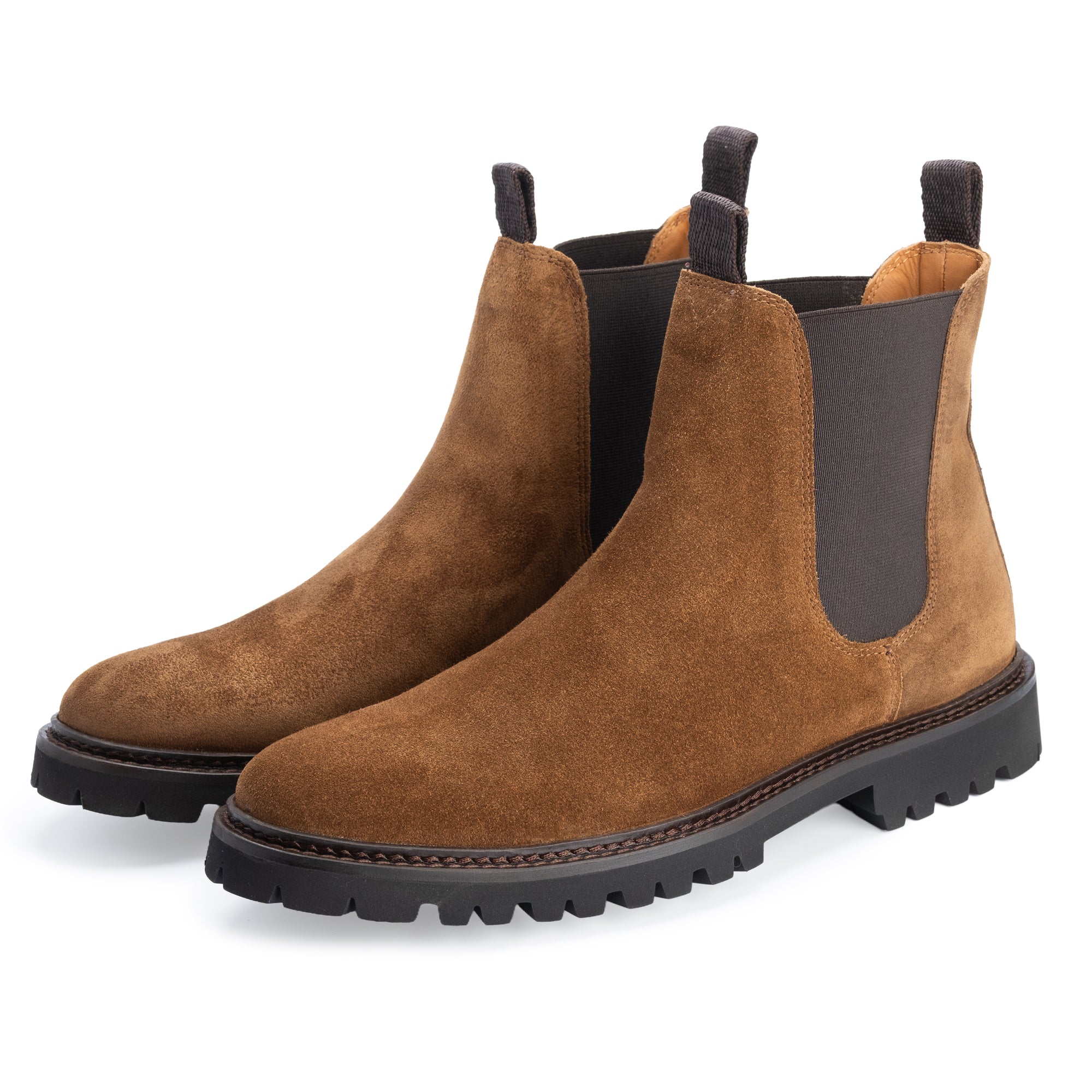
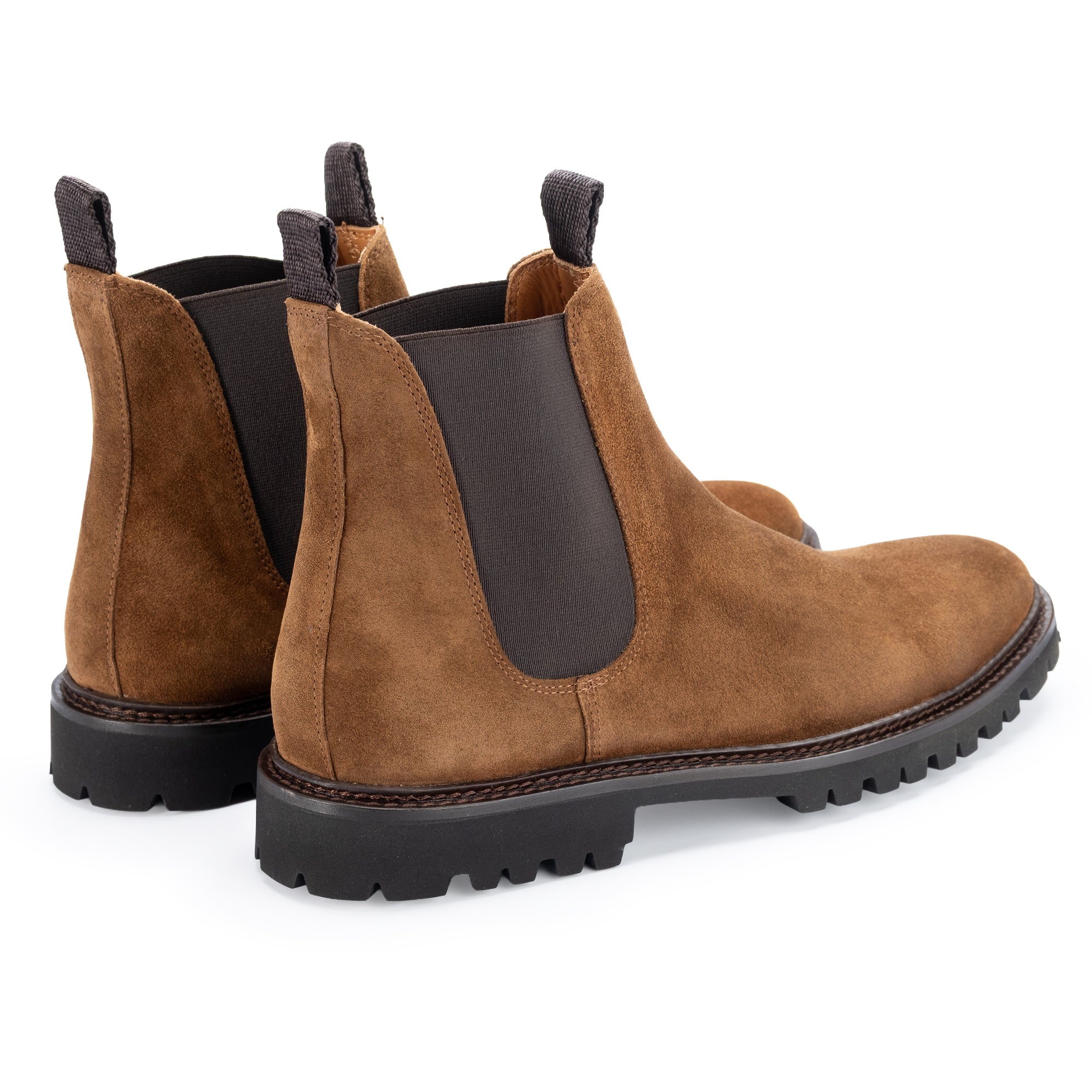
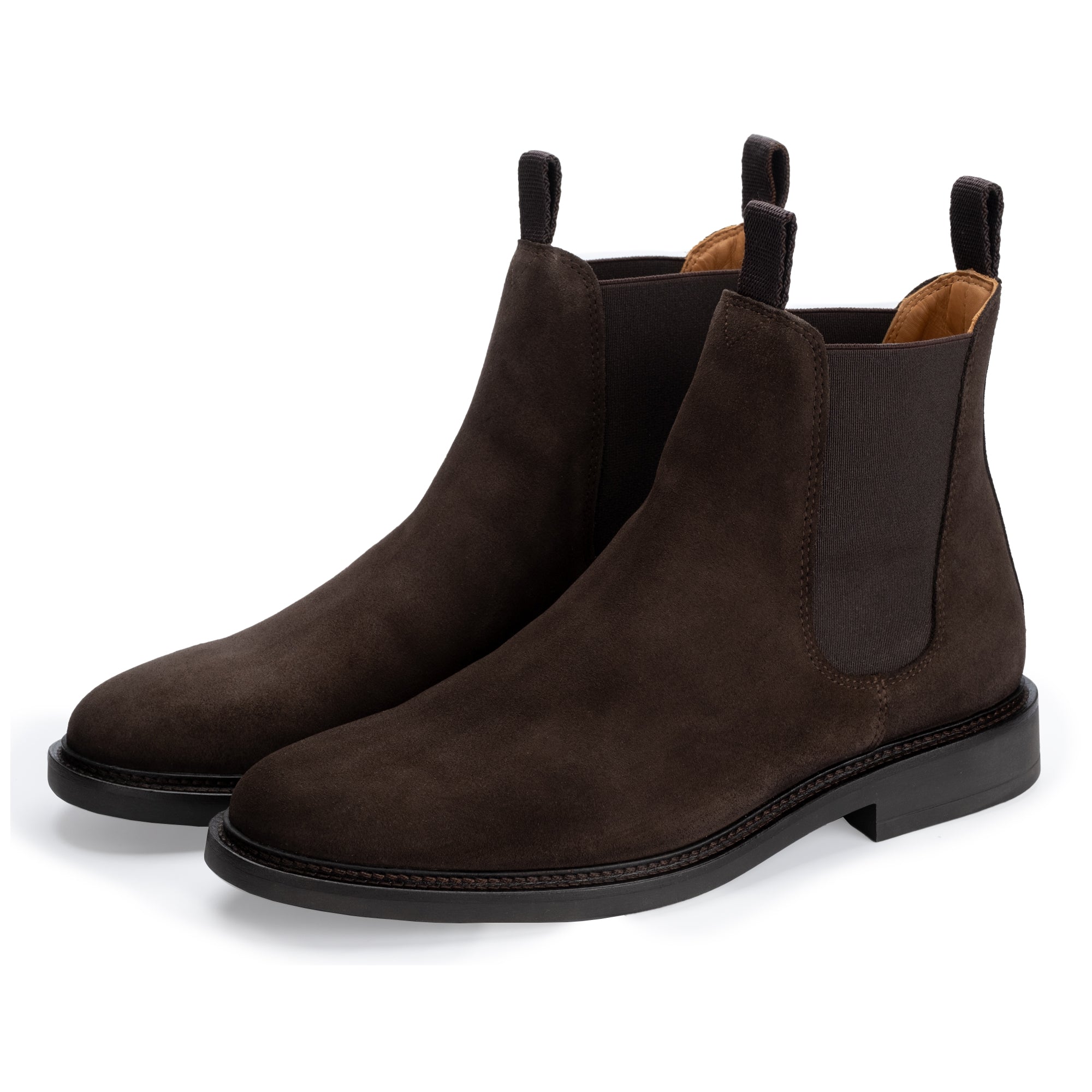
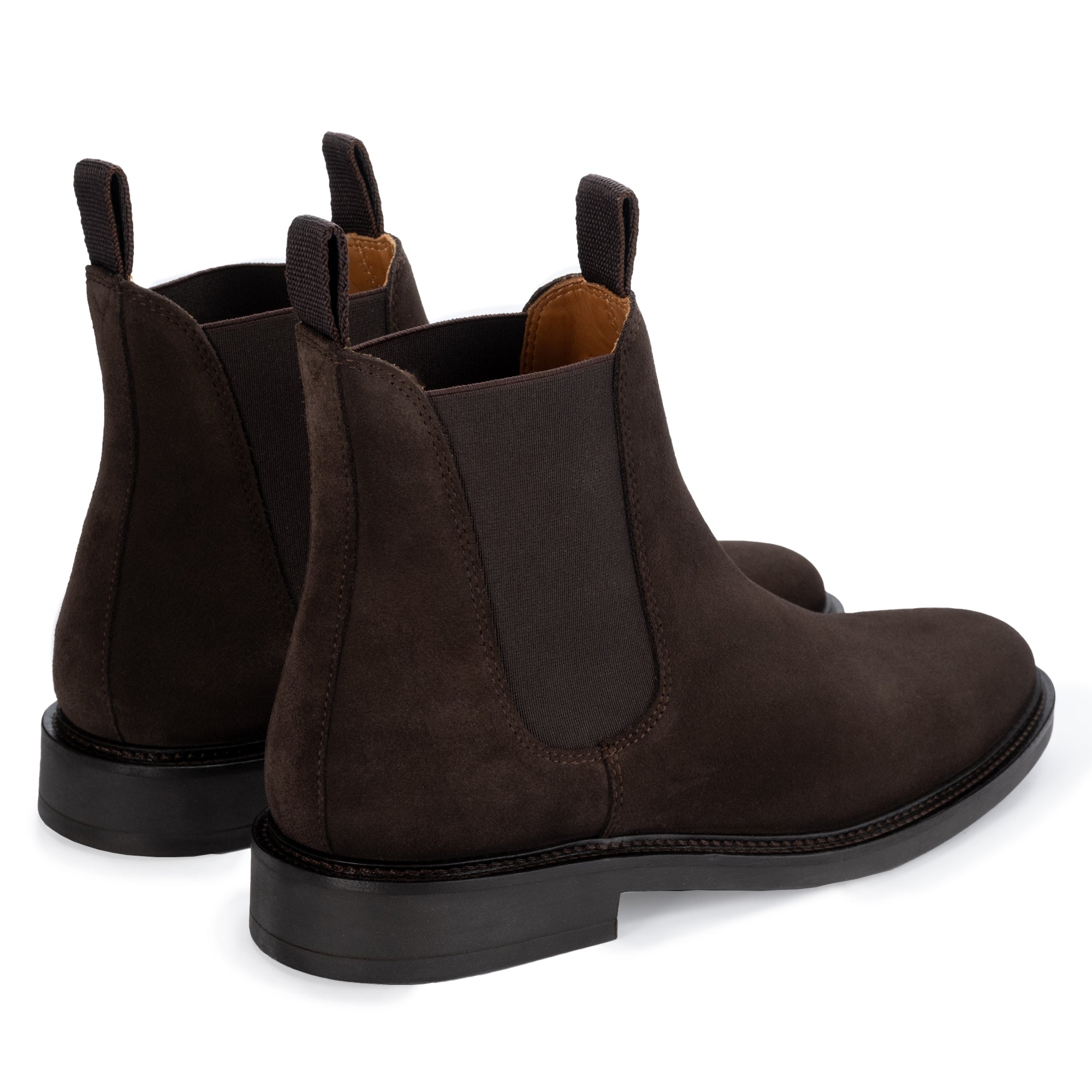
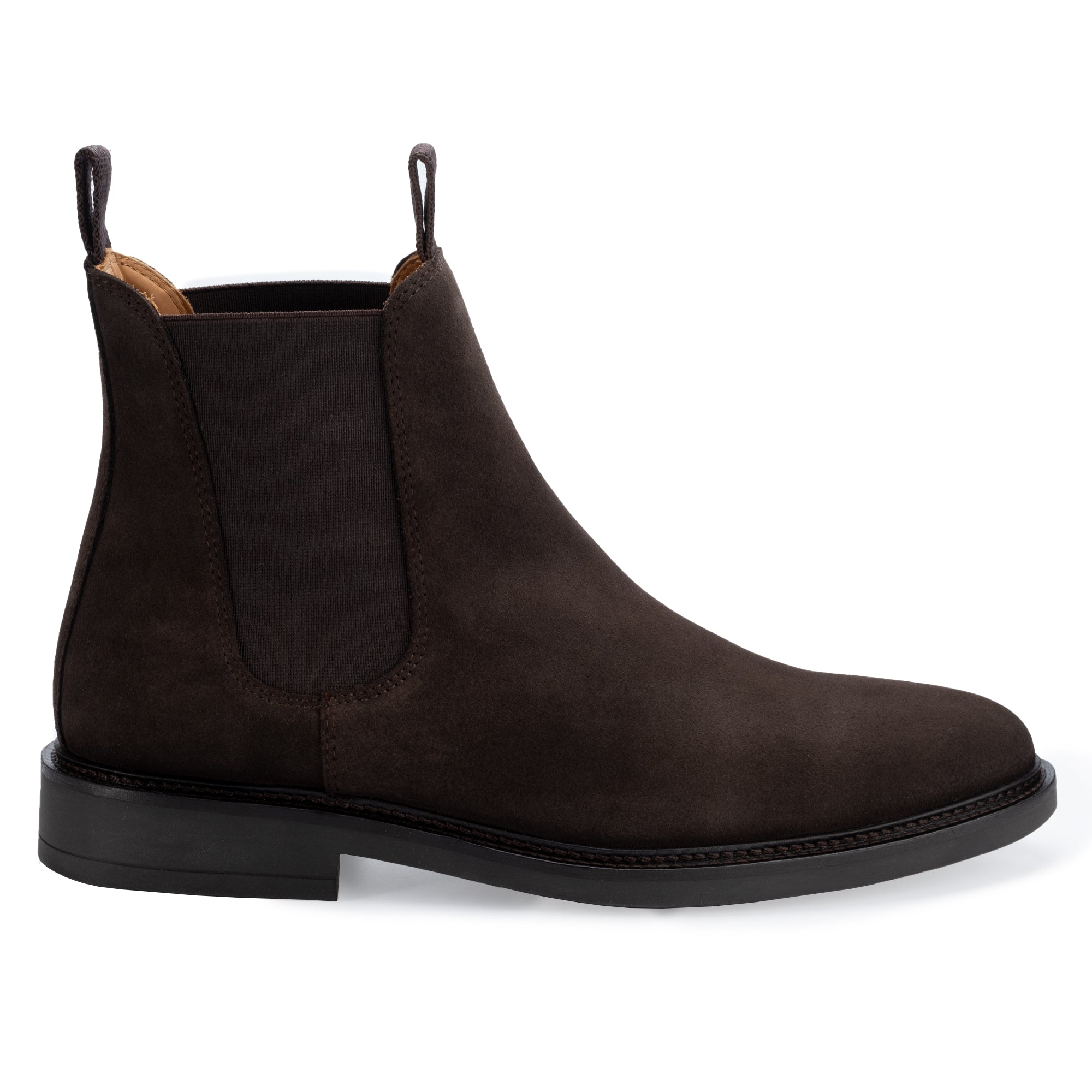
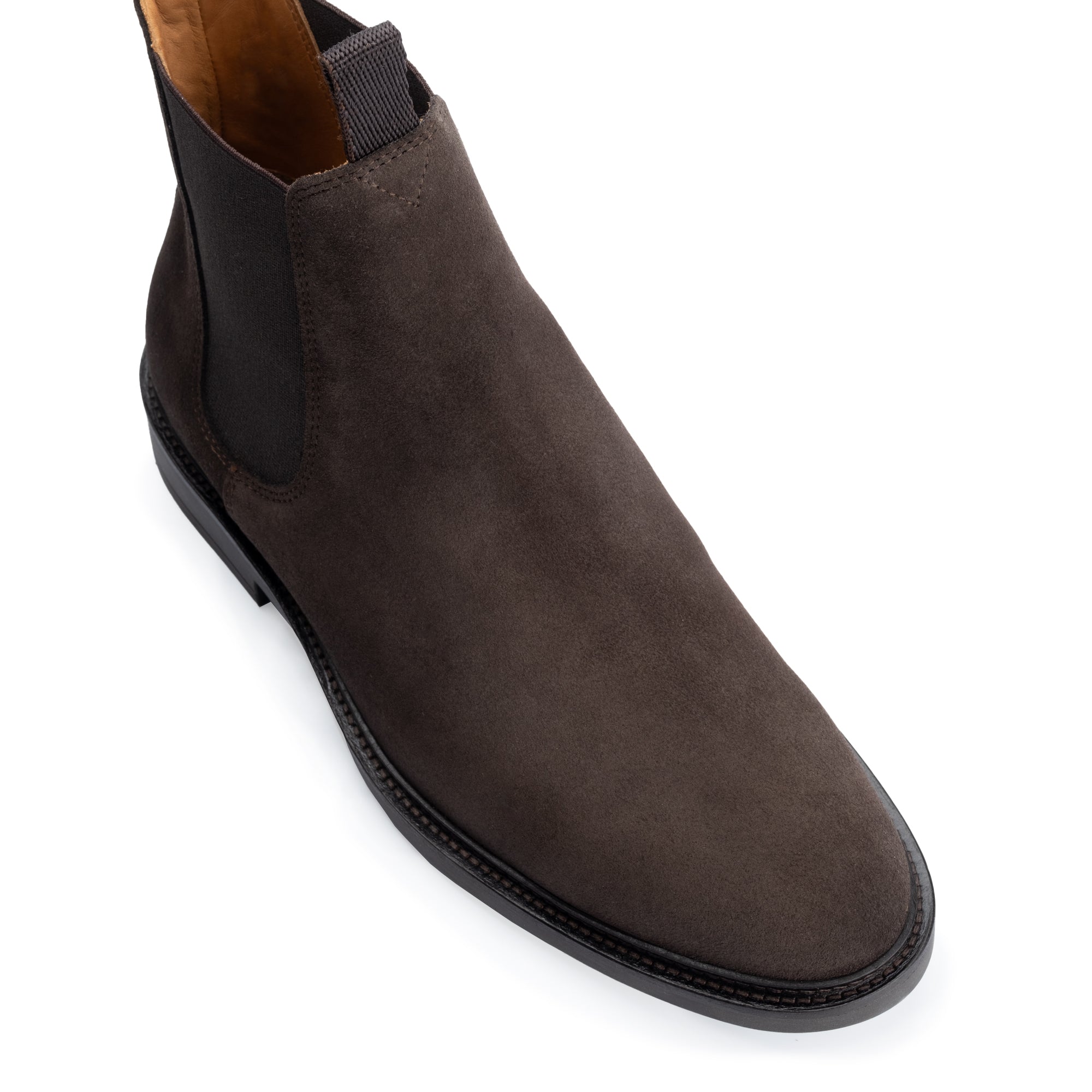
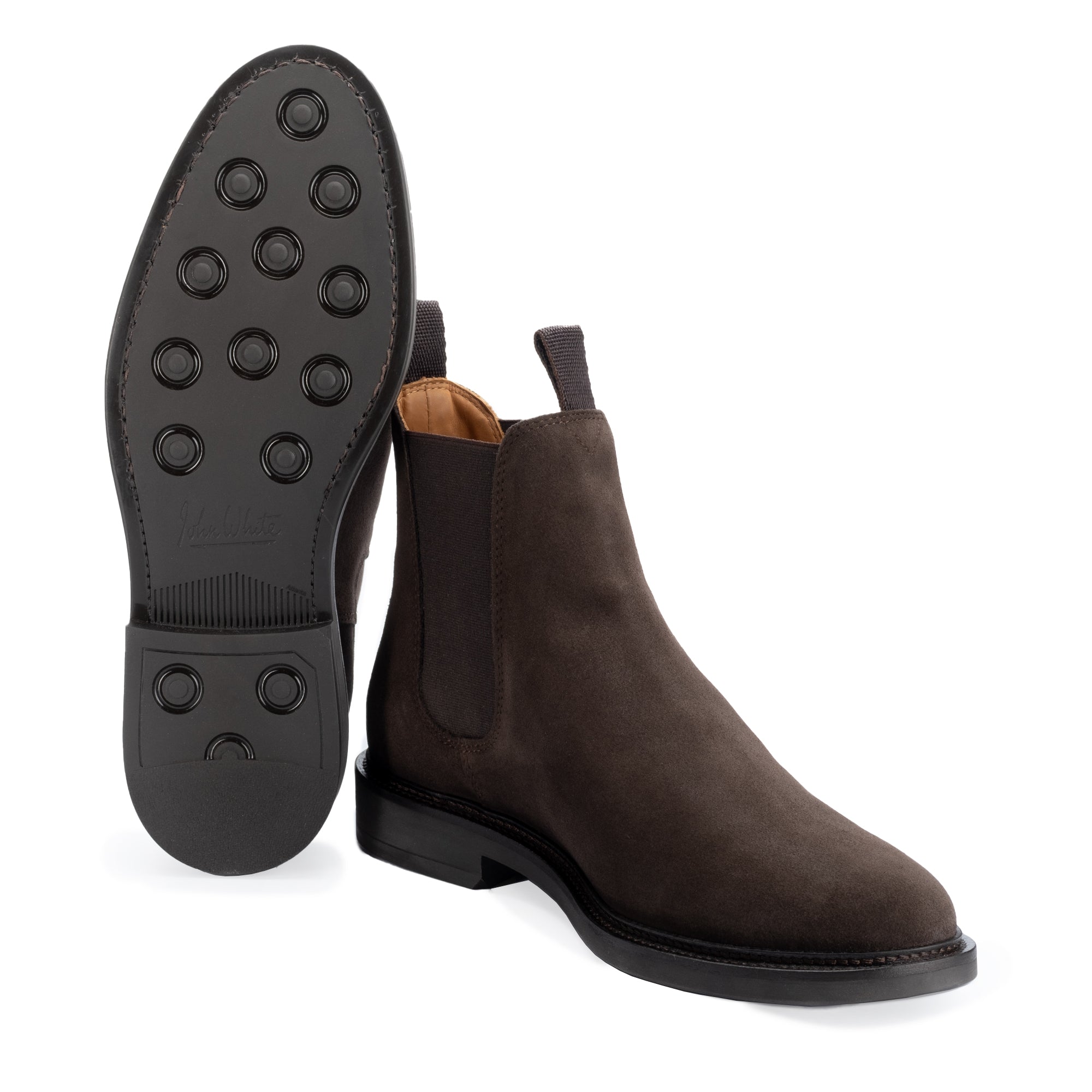
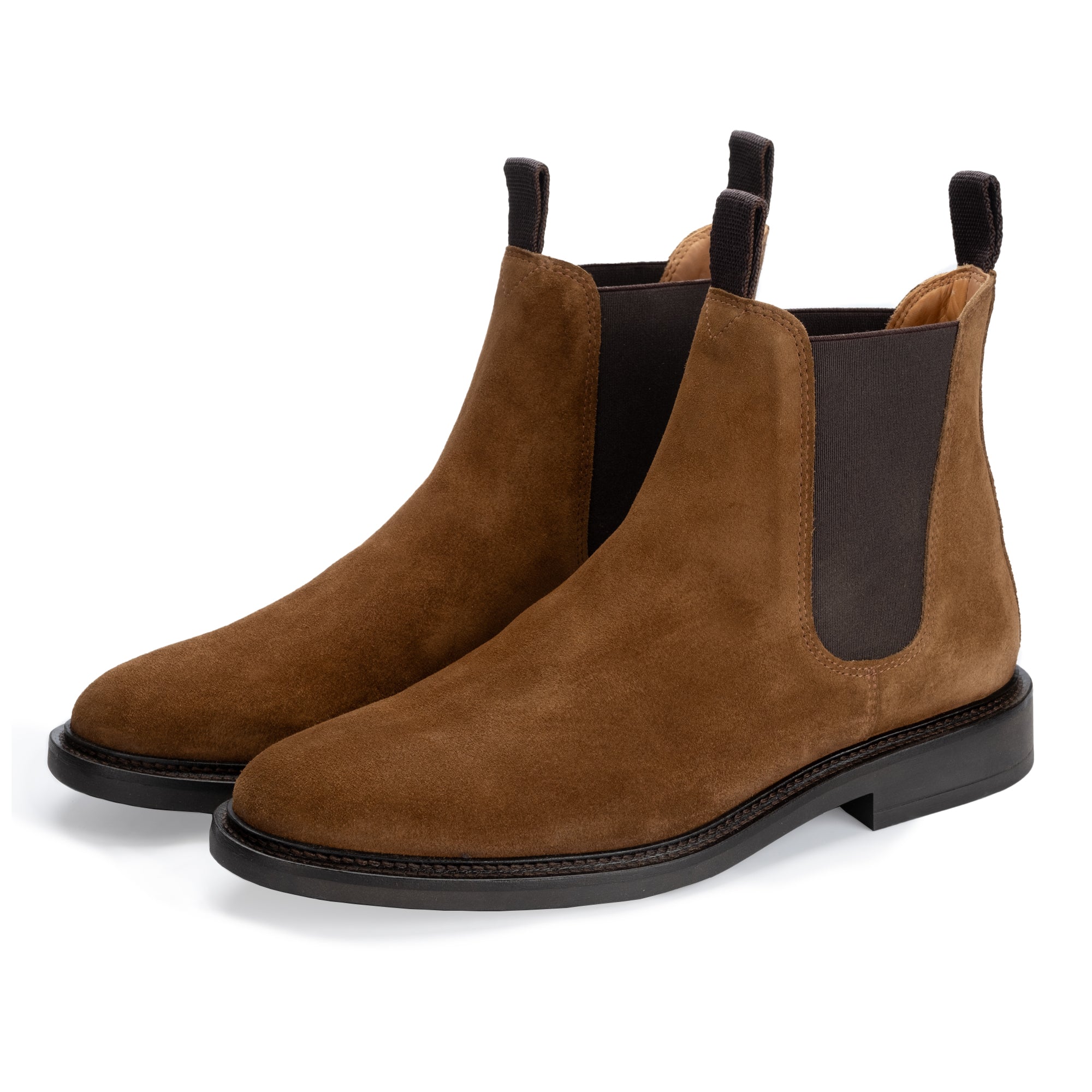
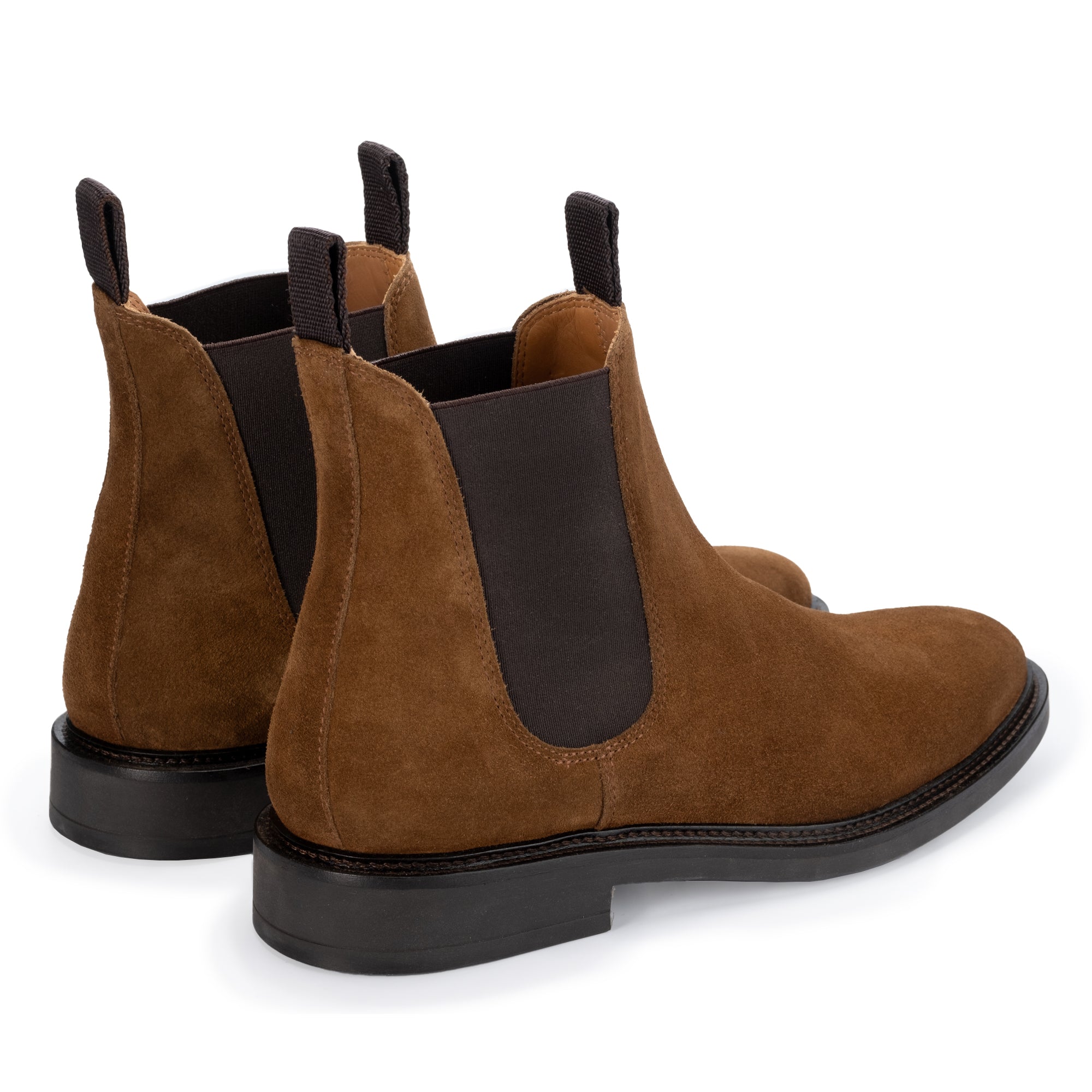
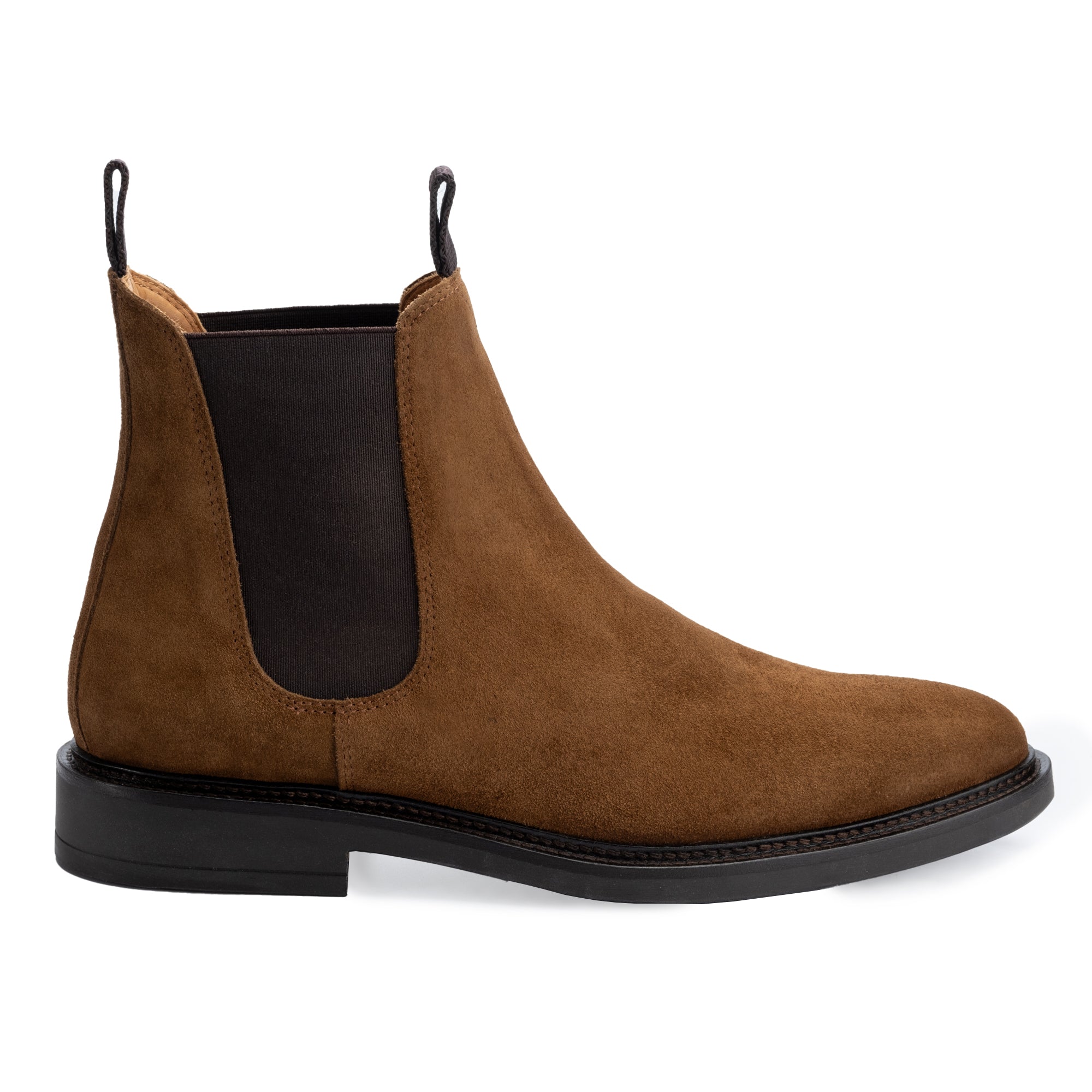
For suede styles — including the Byrne Chelsea Suede Boot and the Swale Chukka Suede Boot — the approach is entirely different from smooth leather. Our guide to caring for suede shoes covers the correct method in full.
Does Polish Replace Conditioning, or Is It a Separate Step?
Polish and conditioner are not interchangeable products and don't perform the same function. Conditioner replaces the natural oils the leather loses through wear and evaporation; polish adds a protective wax layer and produces the shine. You need both — applied in the right sequence.
We'd condition leather footwear every six to eight weeks under regular wear conditions. Apply conditioner, allow it to absorb fully, then polish over the top. Polishing over dry, unconditioned leather protects the surface but does nothing for the structure beneath. For a detailed breakdown of when to use each product, our leather conditioner vs shoe polish guide covers both roles in full.
Quality leather demands consistent attention regardless of the brand on the insole.
Polish protects the surface; conditioner preserves the structure. Neither replaces the other, and skipping either shortens the shoe's useful life.Related Guides
- The Complete Guide to Leather Shoe Care — the full seasonal framework for maintaining leather footwear year-round
- Leather Shoe Polish Colours Explained: Matching, Neutral, and When to Use Each — how to choose the right polish shade for every leather colour and finish
- Leather Conditioner vs Shoe Polish: What to Use, When, and Why It Matters — a definitive breakdown of two products that are frequently confused
TL;DR: The correct weekly routine for leather shoes is to brush out surface dirt with a horsehair brush, apply a thin coat of wax polish using circular motions and allow it to dry, then buff to a shine with a clean cloth or brush. Conditioning should be done separately every six to eight weeks. Applied consistently, this ten-minute routine extends the working life of leather shoes by several years — and the technique is the same whether you're maintaining a dress shoe or a leather boot.
Frequently Asked Questions
How often should you polish leather shoes?
Smooth calf leather should be polished every one to two weeks under regular wear. Grain leather can go up to two weeks between full polish sessions. The clearest signal is the leather itself: if the surface looks dry, dull, or tight rather than naturally matte, it needs attention. A quick brush after every wear keeps the surface clean between full polish sessions.
Can you over-polish leather shoes?
Yes. Applying too much product, or polishing too frequently without stripping old build-up, creates a thick wax film that blocks the leather's ability to breathe. This traps moisture beneath the surface and causes the polish to crack along the creases. A thin coat every one to two weeks is correct. If you see white residue or a chalky film appearing in the creases, clean the shoe with a leather cleaner to remove the build-up before polishing again.
What's the difference between wax polish and cream polish for leather shoes?
Wax polish produces a harder, brighter shine and a stronger water-resistant surface layer. Cream polish is softer, penetrates more deeply, and conditions better — particularly useful on textured grain leathers. Many routines use cream as the conditioning base and wax as the topcoat on smooth calf where a high shine is the aim. For everyday maintenance on a standard dress shoe, a good wax polish applied thinly is sufficient on its own.
Should you polish new leather shoes before wearing them for the first time?
Yes. New leather benefits from a conditioning coat and a light application of polish before the first wear. This seals the surface before it encounters moisture, scuffs, and street contamination, and ensures the shoe has a protective layer from day one. It takes ten minutes and significantly improves long-term condition. The complete leather shoe care guide covers first-wear preparation alongside the full ongoing routine.
Browse the men's leather shoes collection and the men's boots range — all designed in Northamptonshire and made abroad by specialist shoemakers to our specification.