
The Complete Guide to Leather Shoe Care
To care for leather shoes properly, brush the uppers after every wear, condition every six to eight weeks, polish every three to five wears, and always store with cedar shoe trees. Done consistently, this routine can more than double the serviceable life of a quality pair — and the leather only improves with age.
In This Guide
- Why Does Leather Need Regular Care?
- What Equipment Do You Need for a Leather Shoe Care Kit?
- How Do You Clean Leather Shoes Step by Step?
- How Often Should You Polish and Condition Leather Shoes?
- How Do You Apply Wax Polish Correctly?
- How Should You Store Leather Shoes Between Wears?
- How Do You Handle Scuffs and Surface Marks on Leather?
- How Do You Dry and Recover Leather Shoes After Getting Them Wet?
- Related Guides
- Frequently Asked Questions
A well-made leather shoe is built to outlast the decade. Most don't, not because of poor quality, but because of poor maintenance. The leather dries out, the surface loses its depth, and a pair that should be developing a rich, personal patina ends up cracked and shapeless at the heel instead. This guide covers everything you need to know to keep your leather footwear in outstanding condition — from the basic daily routine through to recovery after wet weather and surface damage.
Why Does Leather Need Regular Care?
Leather is a natural material that retains properties from its original form — it breathes, absorbs moisture, and flexes under pressure. It also loses moisture continuously. According to the Leather Conservation Centre, untreated leather loses approximately 15 to 20 per cent of its natural oils annually through ordinary wear, making the fibres brittle and accelerating surface cracking long before visible damage appears.
The shoe you're wearing today was finished with dyes, waxes, and conditioning agents that slow this process. They don't stop it. Every wear, every step on a wet pavement, every day stored without a shoe tree — all of it draws moisture and oil from the leather. Your care routine is what replaces them.
Regular conditioning is the single most effective thing you can do to extend the life of a leather upper — more than any product claim, more than any construction method.
What Equipment Do You Need for a Leather Shoe Care Kit?
A leather shoe care kit is a focused collection of tools and products that covers every stage of the care routine. You don't need a large collection. You need the right ones.
- Horsehair brush — removes surface dust and dried debris before any product application
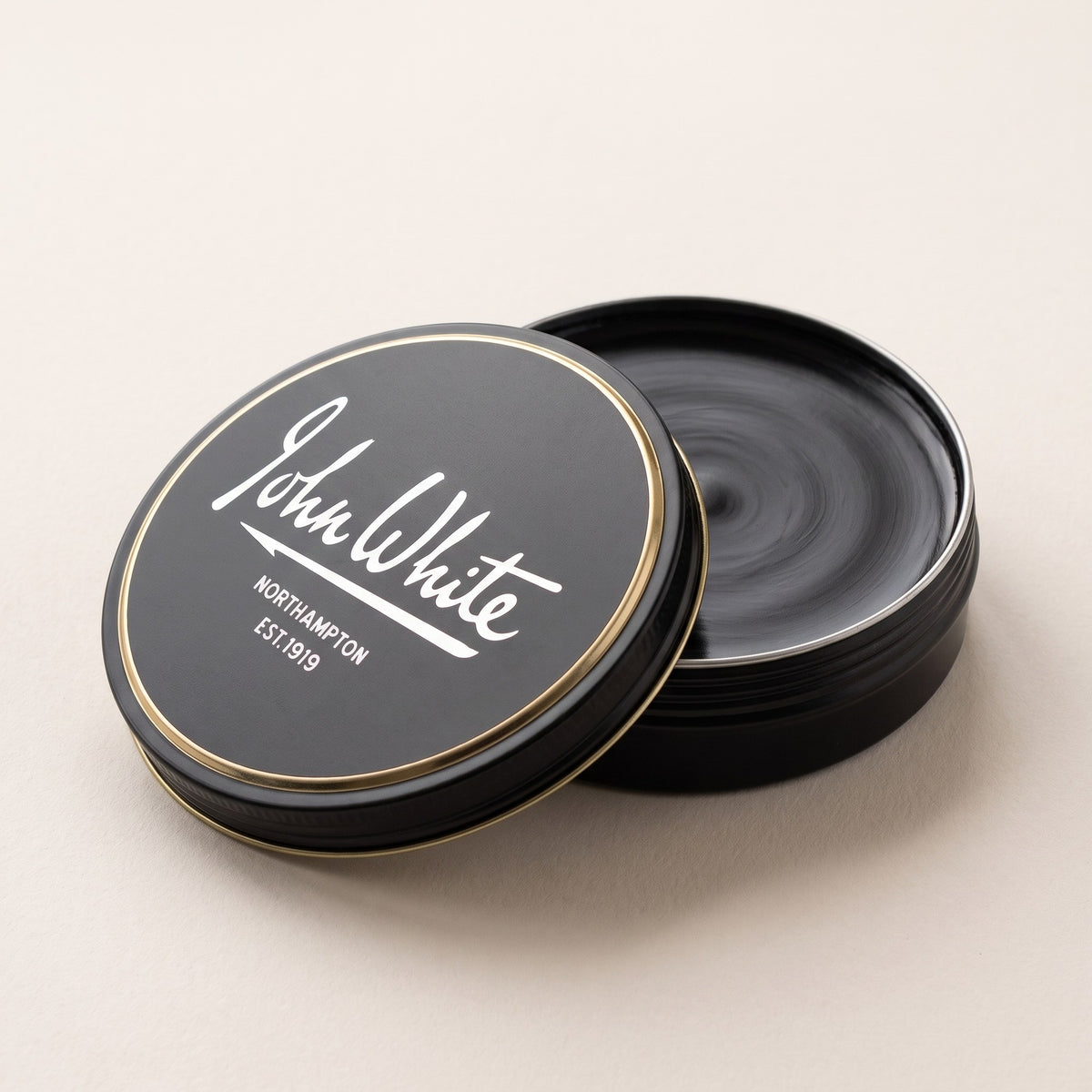
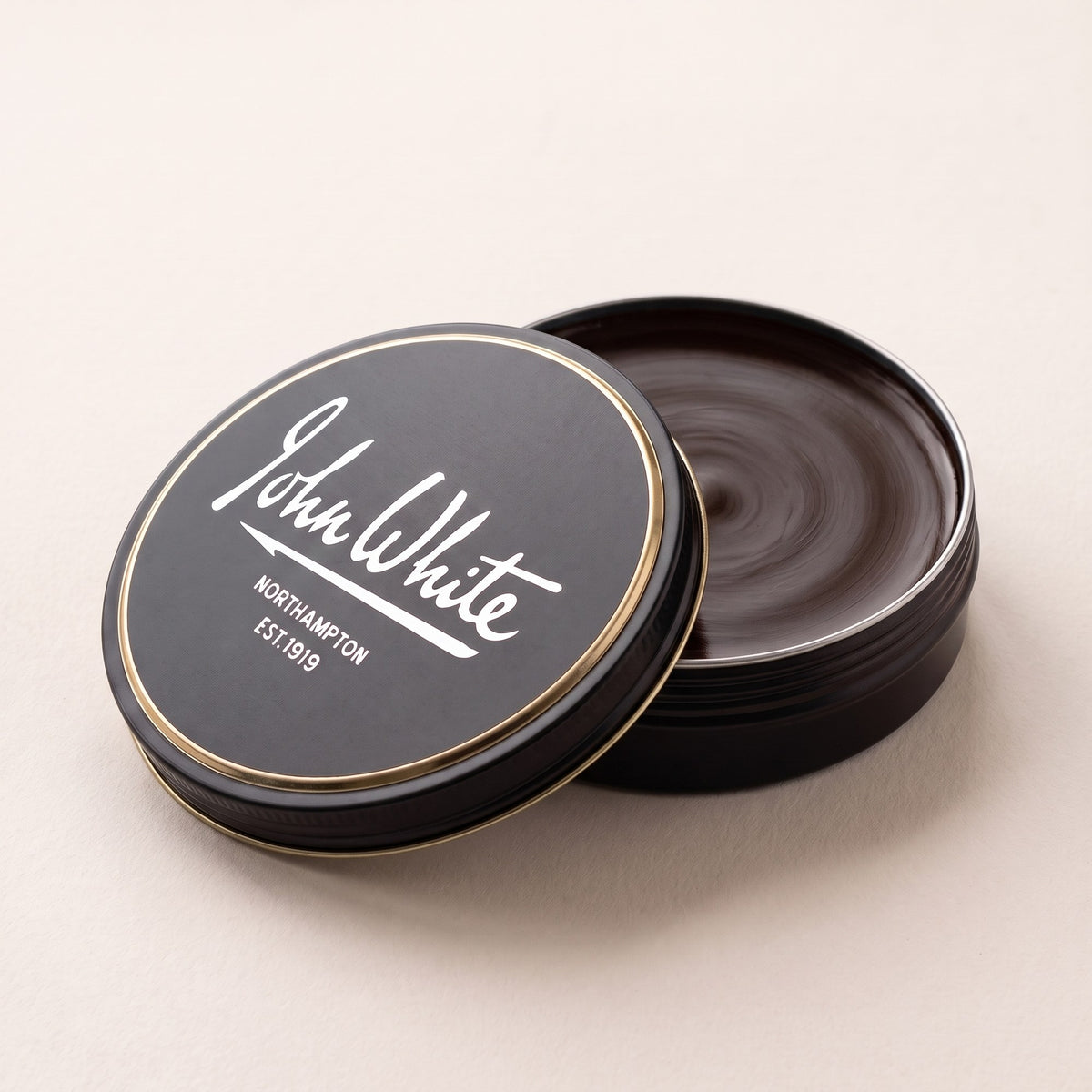
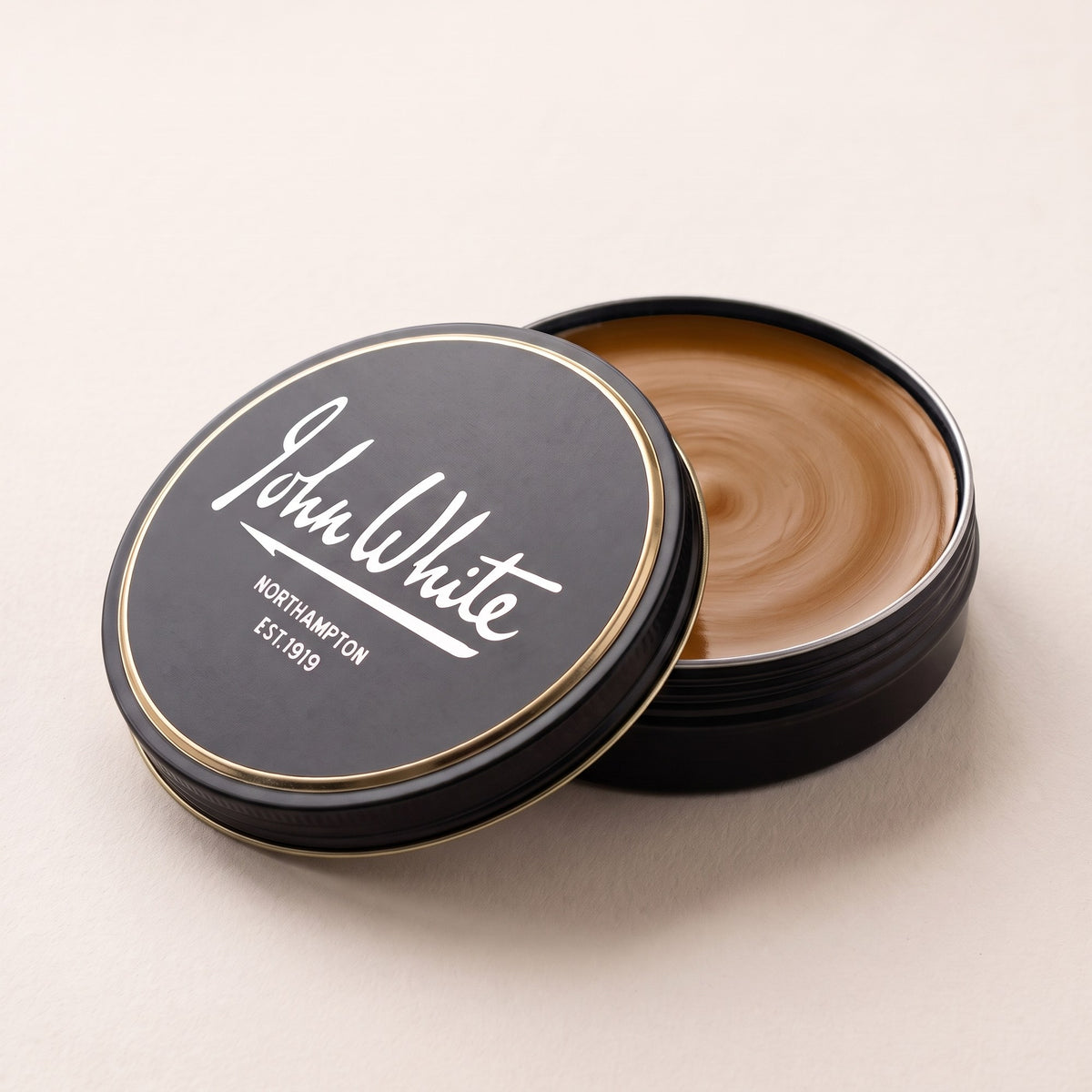
- Wax polish — restores colour, builds shine, and provides surface protection. Our Premium Wax Polish is formulated for smooth leather dress uppers.
- Applicator brush or dauber — works polish evenly into the leather without waste
- Buffing brush or cloth — generates the friction that brings up a proper shine once polish has hazed
- Leather conditioner — a penetrating product distinct from polish, designed to replenish oils deep within the leather fibres
- Cedar shoe trees — maintain last shape and draw out moisture between wears
- Waterproofing spray — surface protection applied to clean dry leather before wet weather exposure
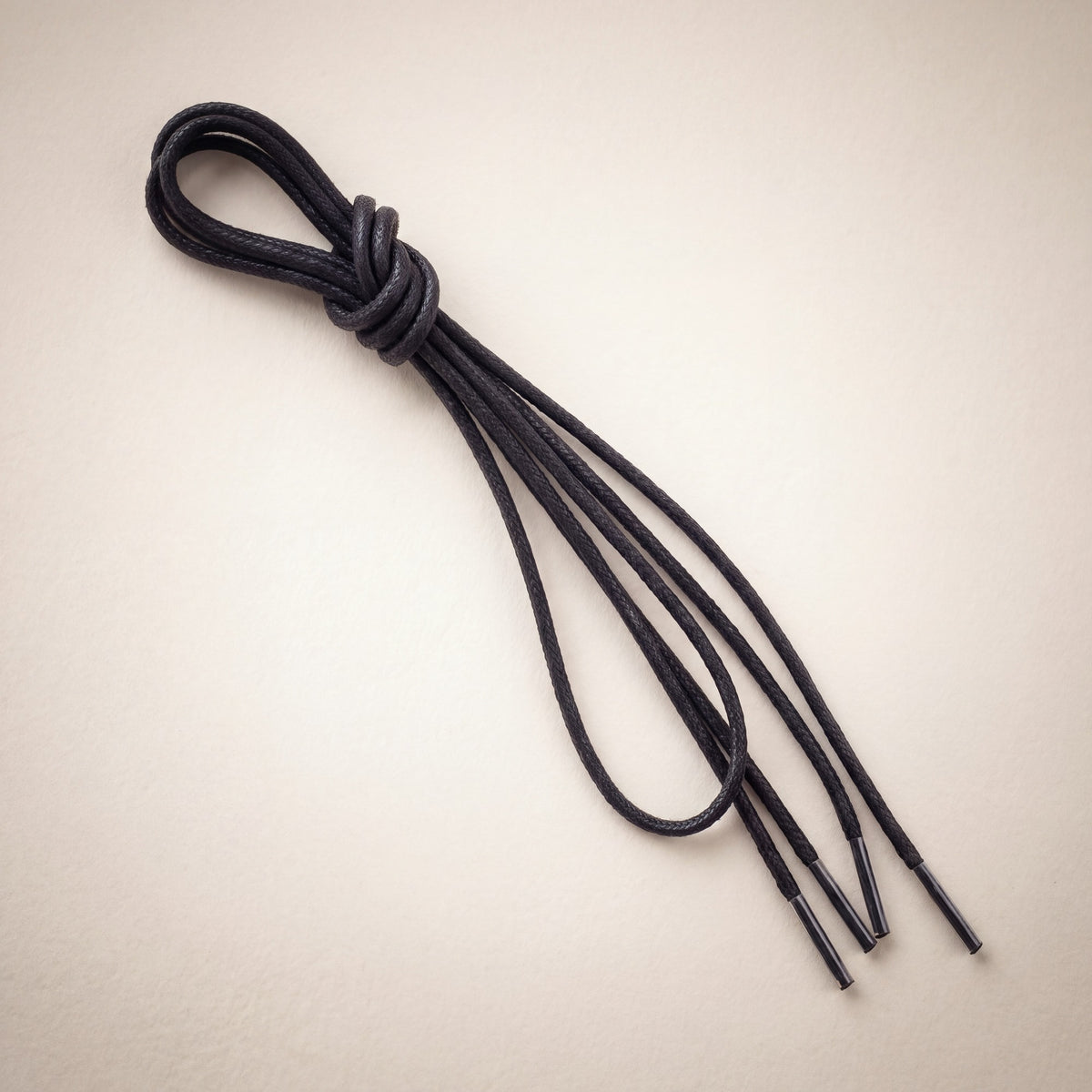
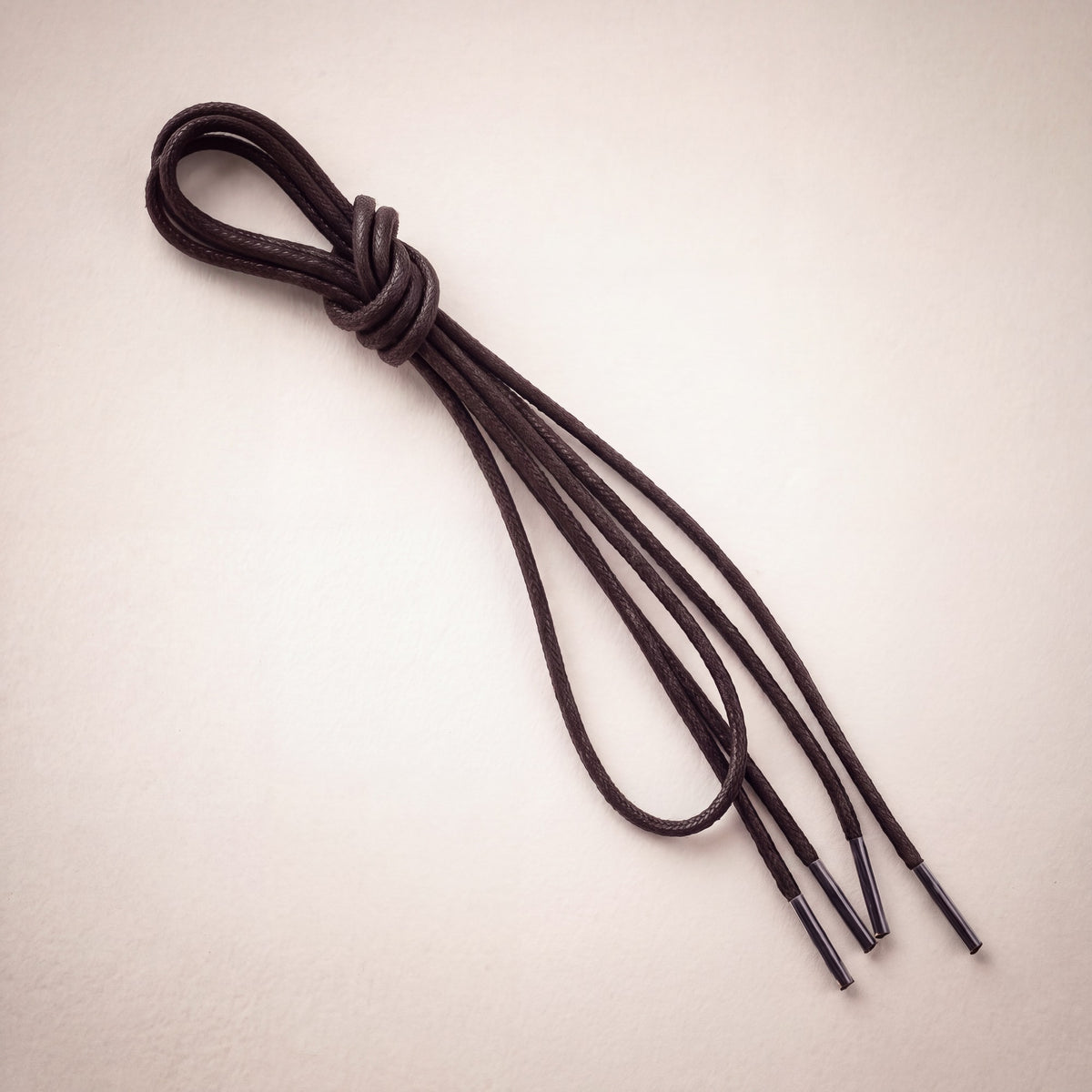
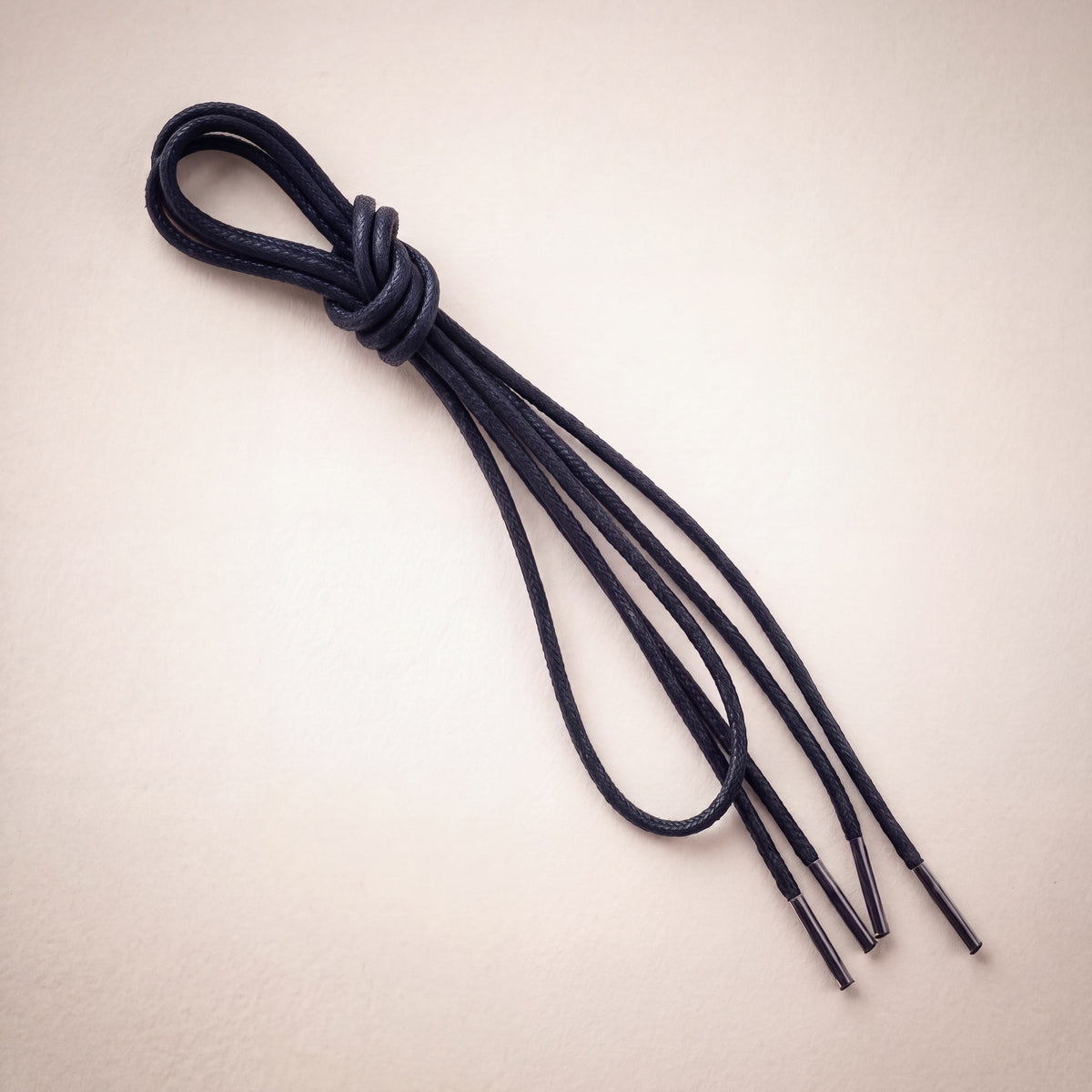
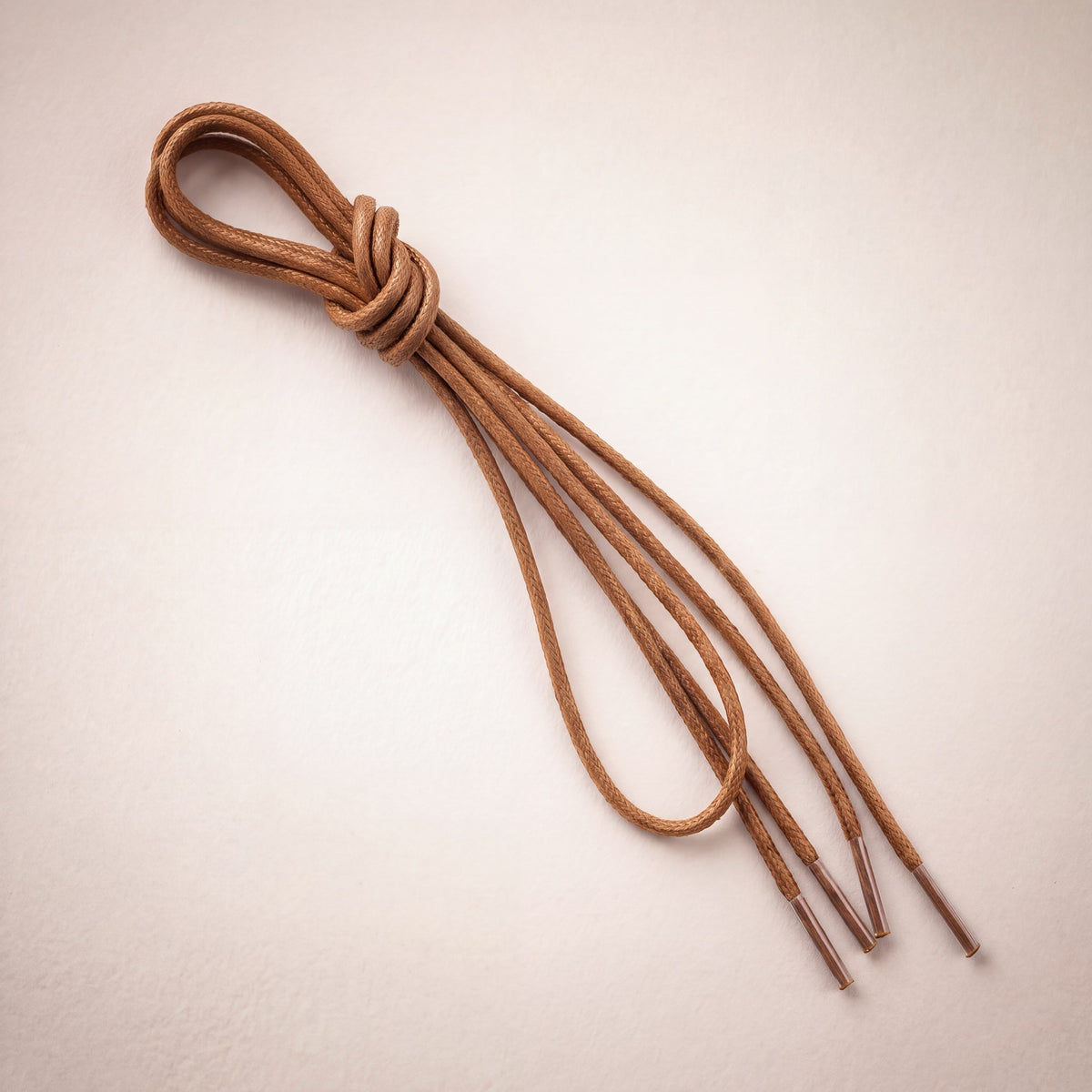
- Replacement laces — worn laces undercut an otherwise well-maintained shoe. Our Waxed Formal Shoe Laces, cut to 90cm, hold a clean, firm knot throughout the day.
For a thorough breakdown of what belongs in a properly equipped shoe care kit, see our Essential Valet Box guide.
A complete leather shoe care kit costs less than a single cobbler visit — and prevents the need for most of them.
How Do You Clean Leather Shoes Step by Step?
Cleaning is the foundation of every care routine. Polish worked into dirty leather traps grime, dulls the finish, and accelerates surface wear. Always clean before you apply anything.
- Remove the laces — this gives clean access to the tongue and eyelets and prevents polish staining the lace fabric.
- Insert shoe trees — a firm last holds the shoe steady and keeps creases flat while you work.
- Brush off loose dirt — use a stiff horsehair brush in short, firm strokes across the full upper and sole edge.
- Wipe down with a barely damp cloth — removes dried residue without saturating the leather. The cloth should be almost completely wrung out.
- Allow to dry at room temperature — 20 to 30 minutes is usually sufficient. Never apply heat at any stage.
- Apply leather cleaner if required — for heavier soiling, a dedicated leather cleaner worked in small circular motions will lift embedded grime. Avoid saddle soap on smooth dress leather — it's too alkaline for regular use and strips protective finishes.
Starting clean every single time is the most underrated step in any leather shoe care routine.
How Often Should You Polish and Condition Leather Shoes?
Frequency depends on wear patterns, but the underlying principle is consistent: polish and conditioning are separate tasks done on separate schedules. The Leather Conservation Centre recommends conditioning smooth leather every six to eight weeks under regular use, with surface polishing done more frequently as a protective treatment between full conditioning sessions.
| Task | Frequency | Purpose |
|---|---|---|
| Brush off surface dust | After every wear | Prevents abrasive grime from working into the surface |
| Insert shoe trees | After every wear | Preserves last shape and absorbs moisture |
| Wax polish | Every 3–5 wears | Colour restoration, shine, light surface protection |
| Full conditioning | Every 6–8 weeks | Replenishes oils, prevents drying and cracking |
| Deep clean and wax strip | Every 3 months | Removes build-up, resets the leather base |
| Waterproofing treatment | Seasonally / before wet weather | Surface protection against water and road salt |
Polish and condition on separate schedules — they do different jobs, and neither substitutes for the other.
How Do You Apply Wax Polish Correctly?
Wax polish is a surface treatment. It doesn't penetrate the leather the way a conditioner does, but it restores colour, adds a degree of moisture barrier, and builds the depth of finish that distinguishes a well-maintained shoe from a neglected one.
- Apply a small amount of polish to a dauber or soft cloth, working in circular motions across the full upper.
- Pay particular attention to the sole edge junction and any creases across the vamp — these take the most concentrated wear.
- Allow the polish to dry until it hazes — typically five to ten minutes.
- Buff briskly with a clean horsehair brush, using firm strokes to generate the friction that produces a shine.
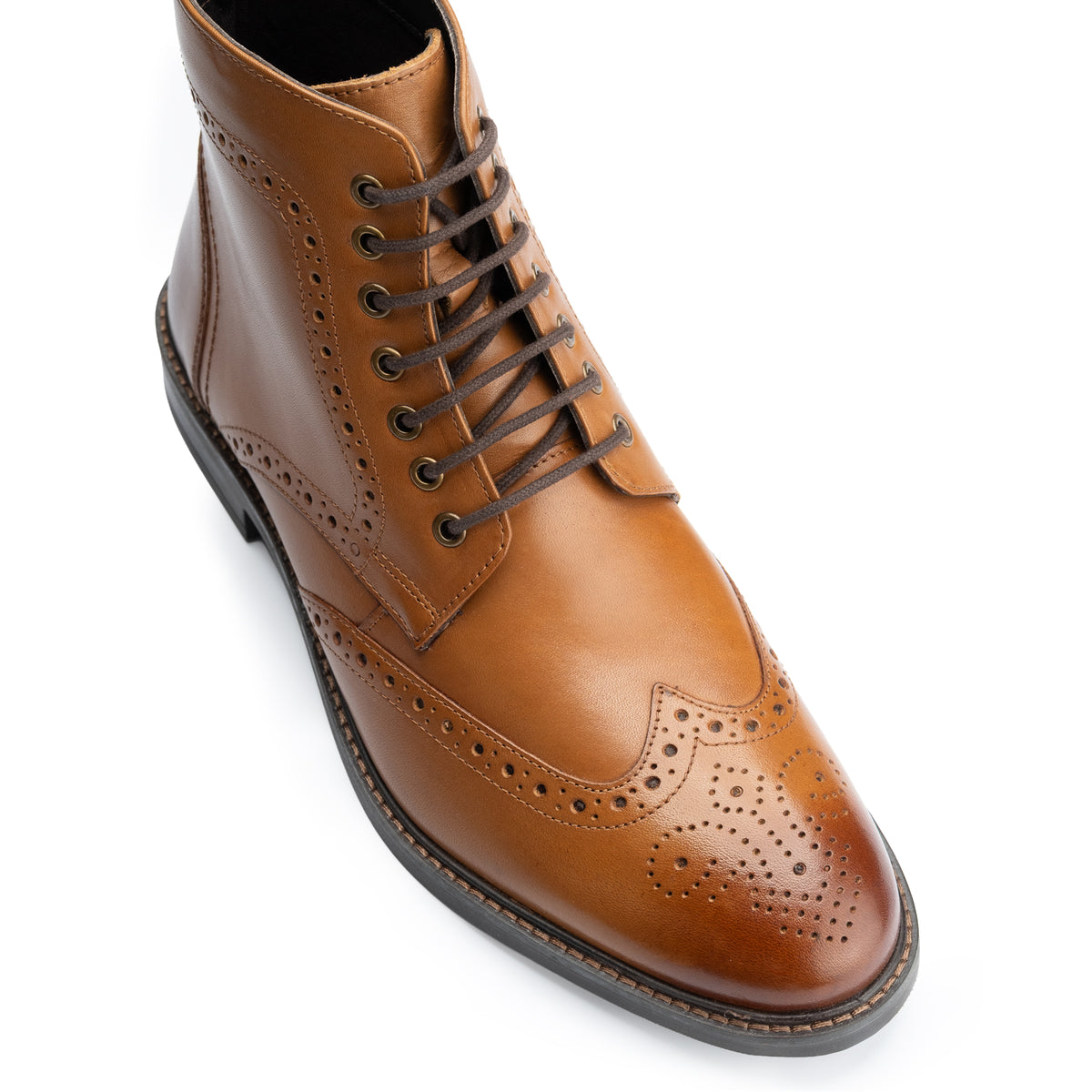
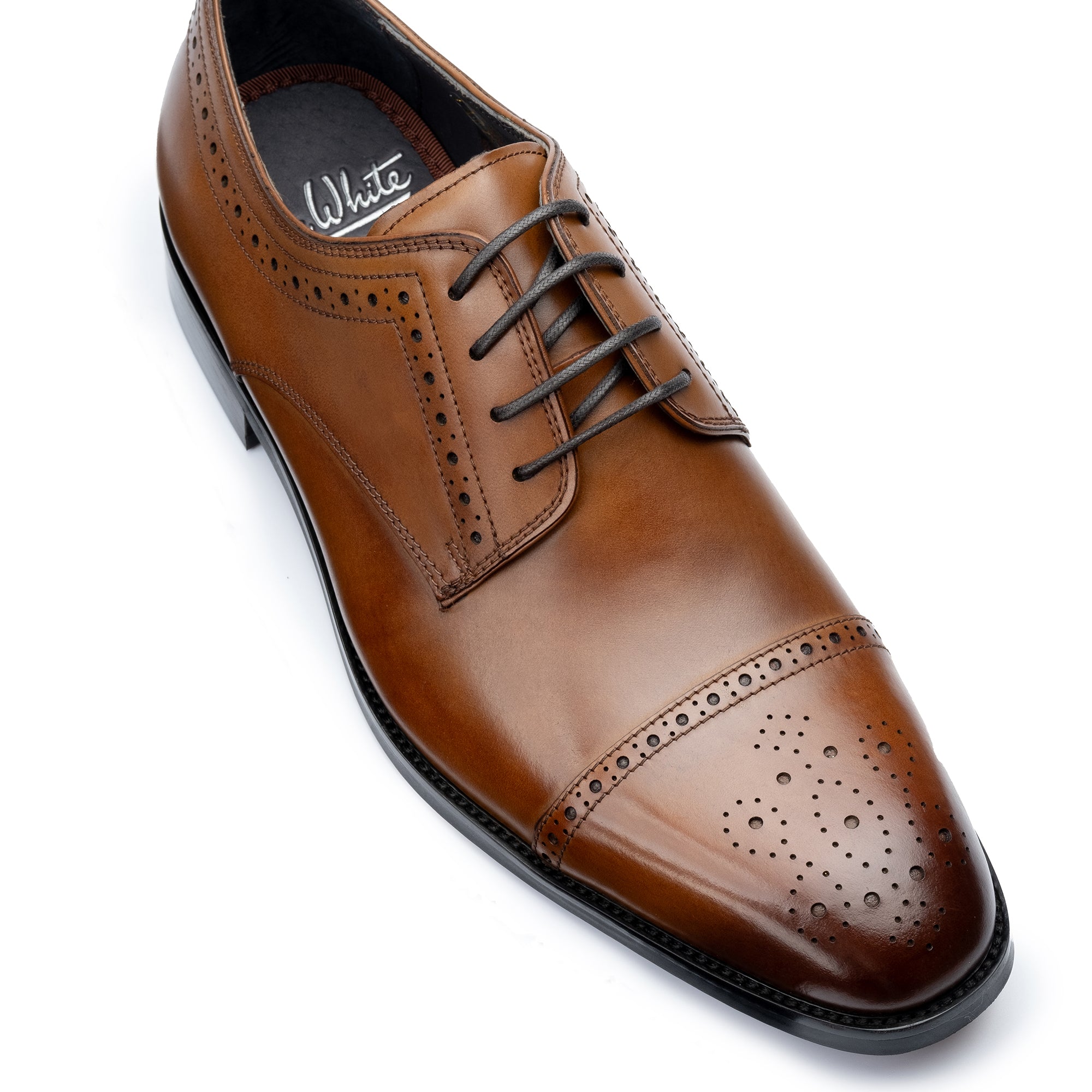
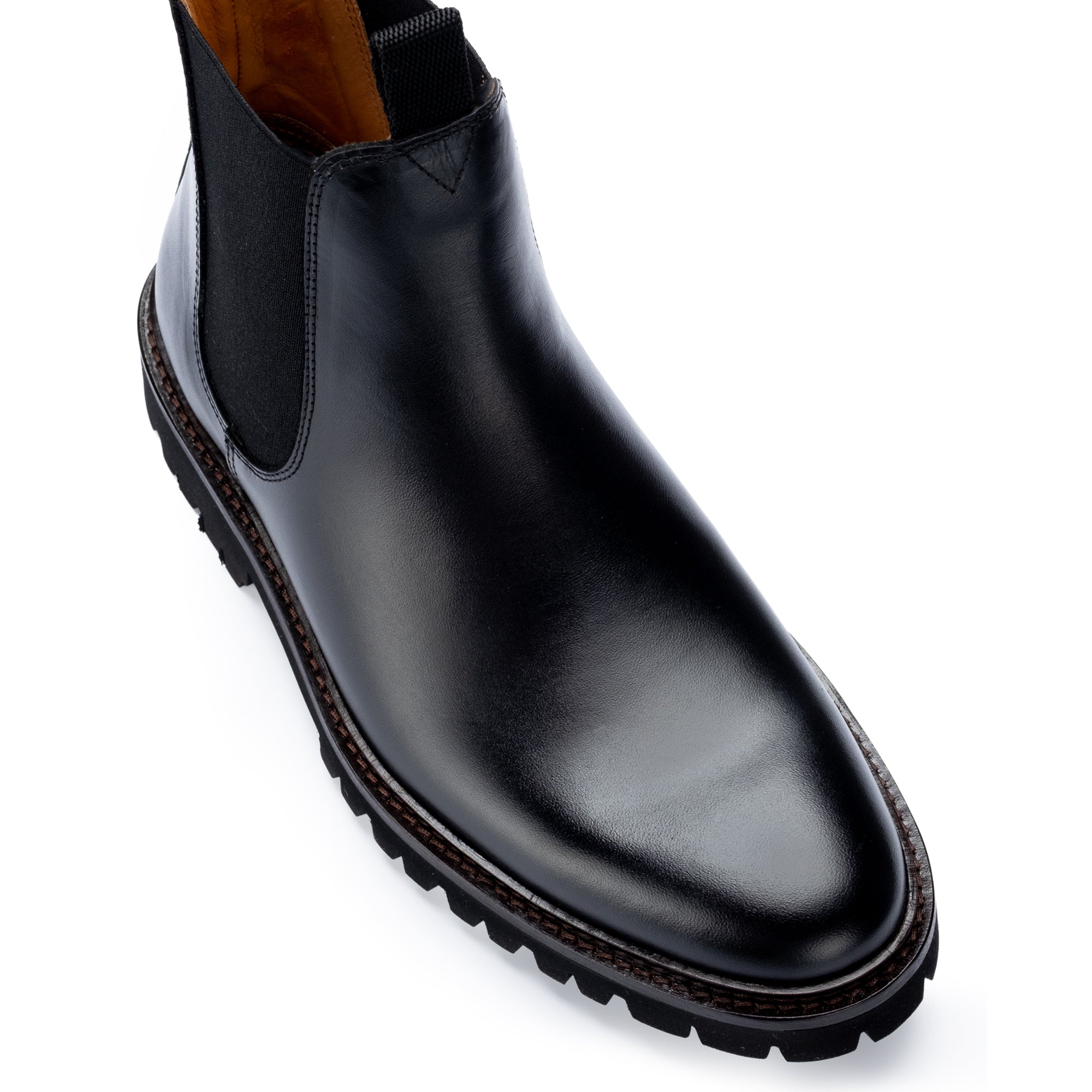
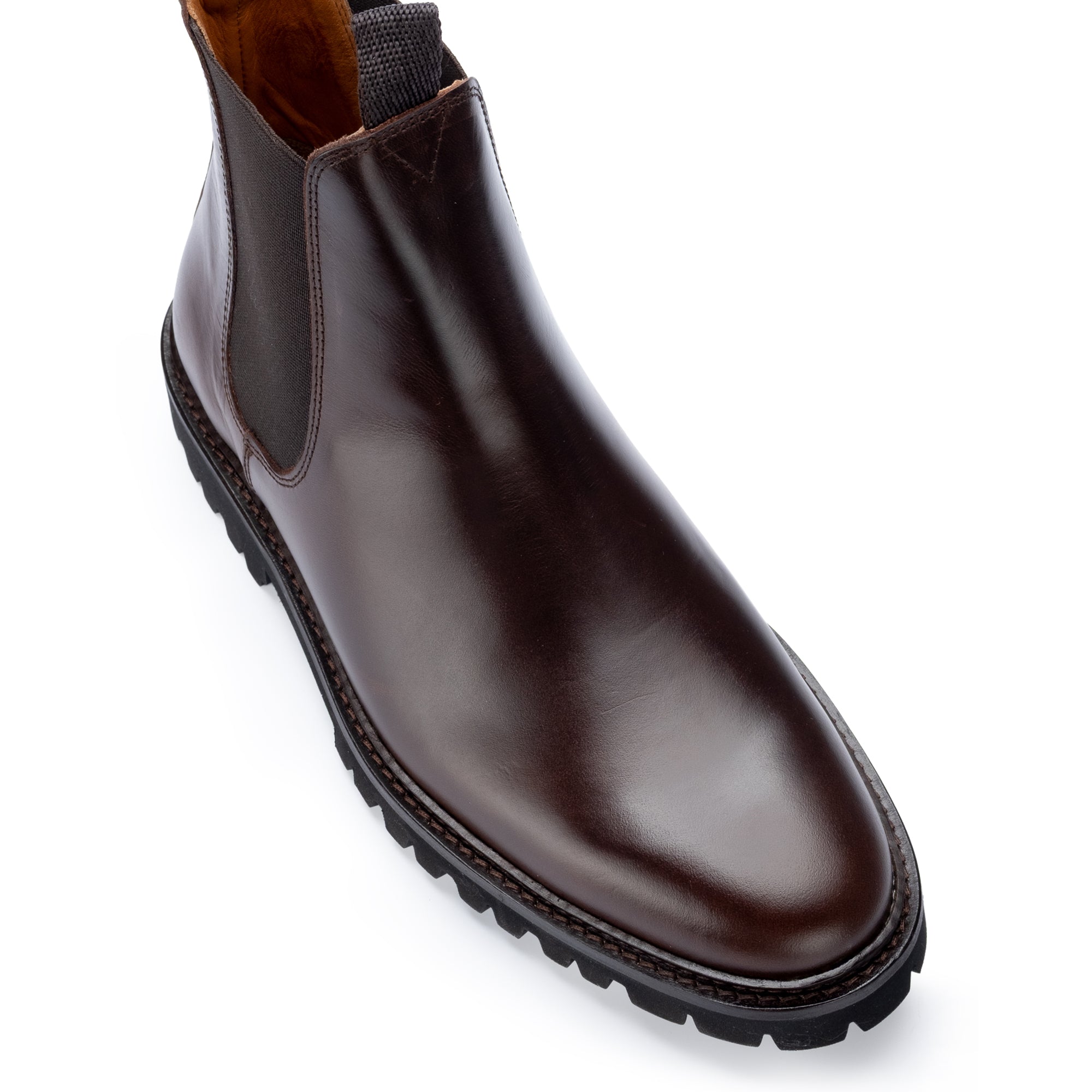
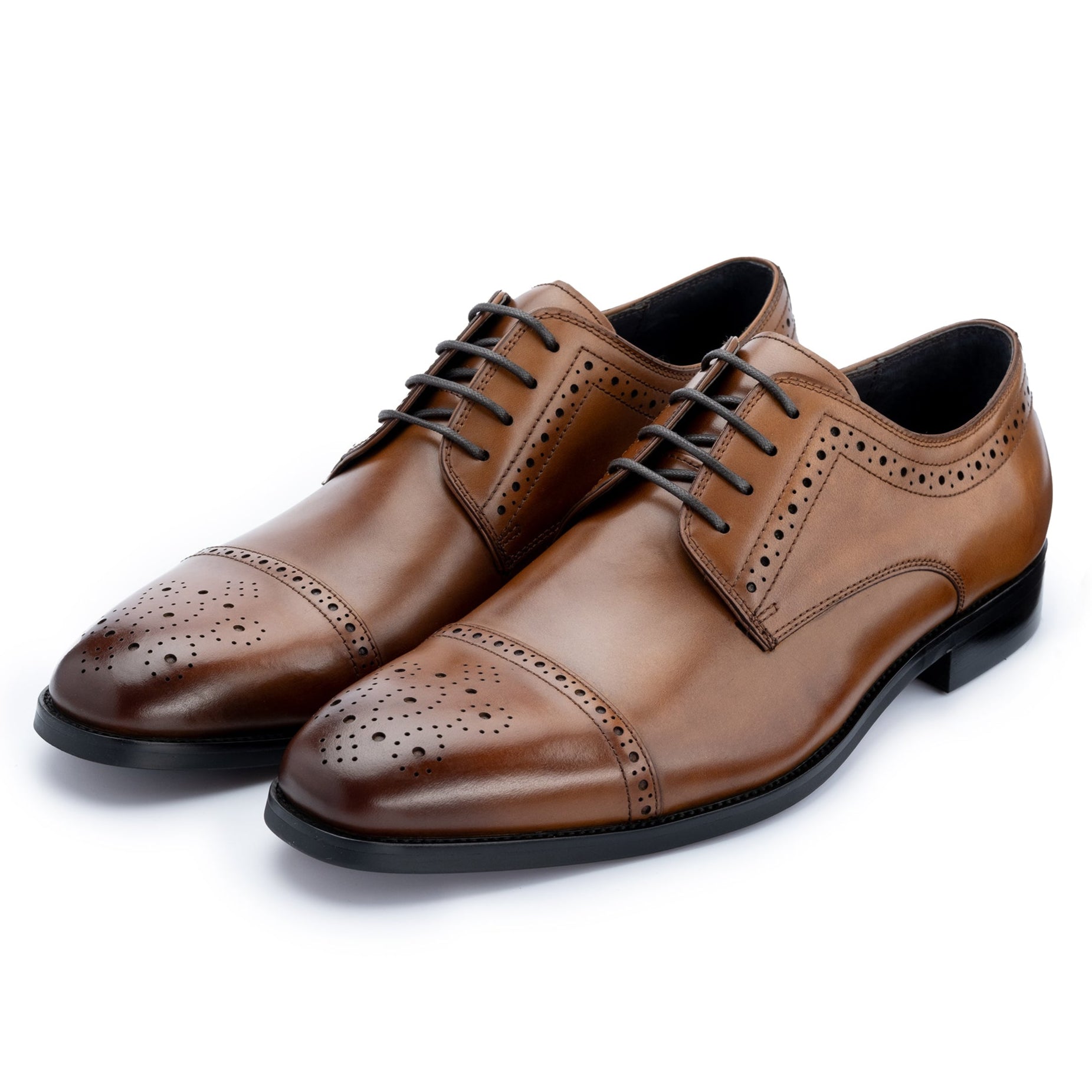
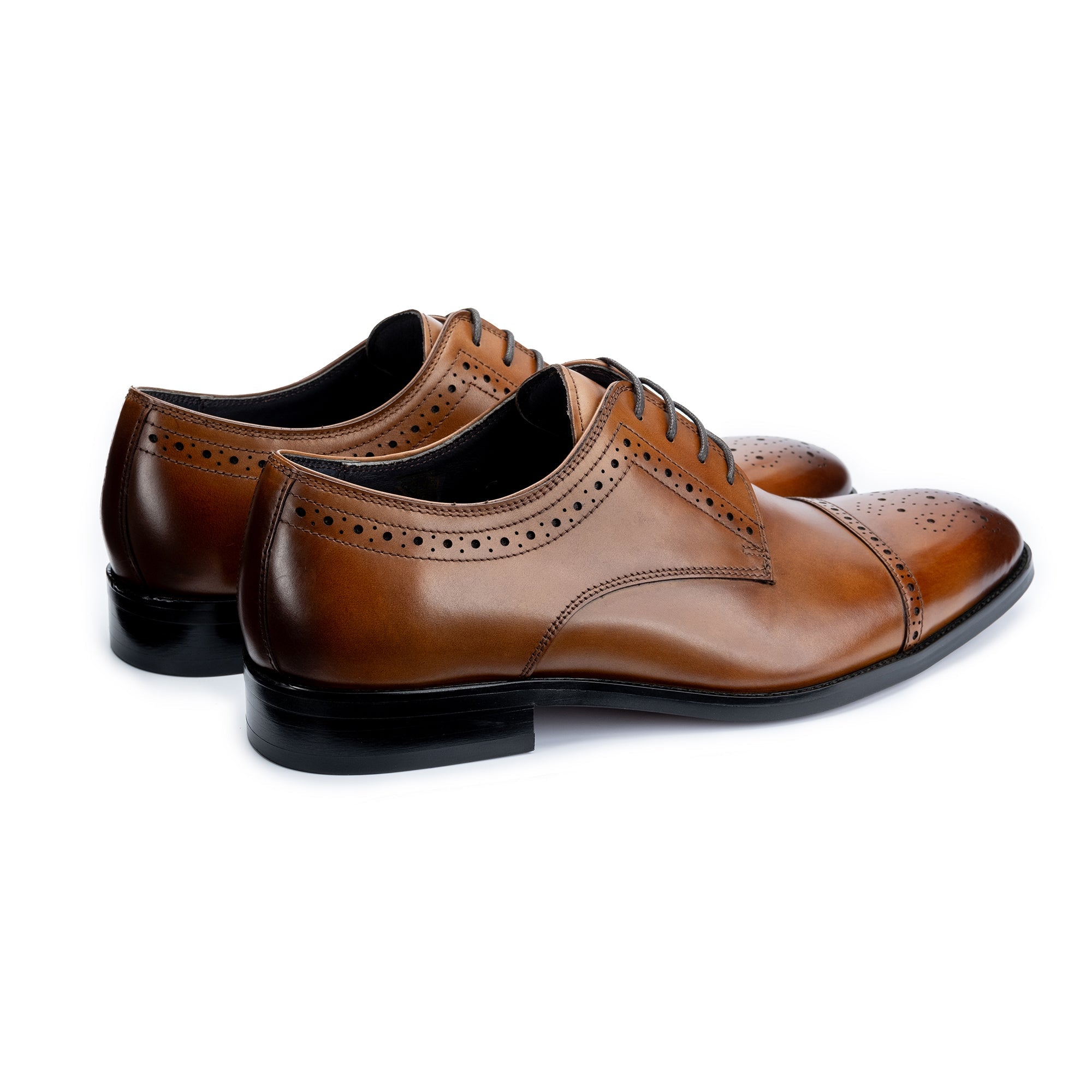
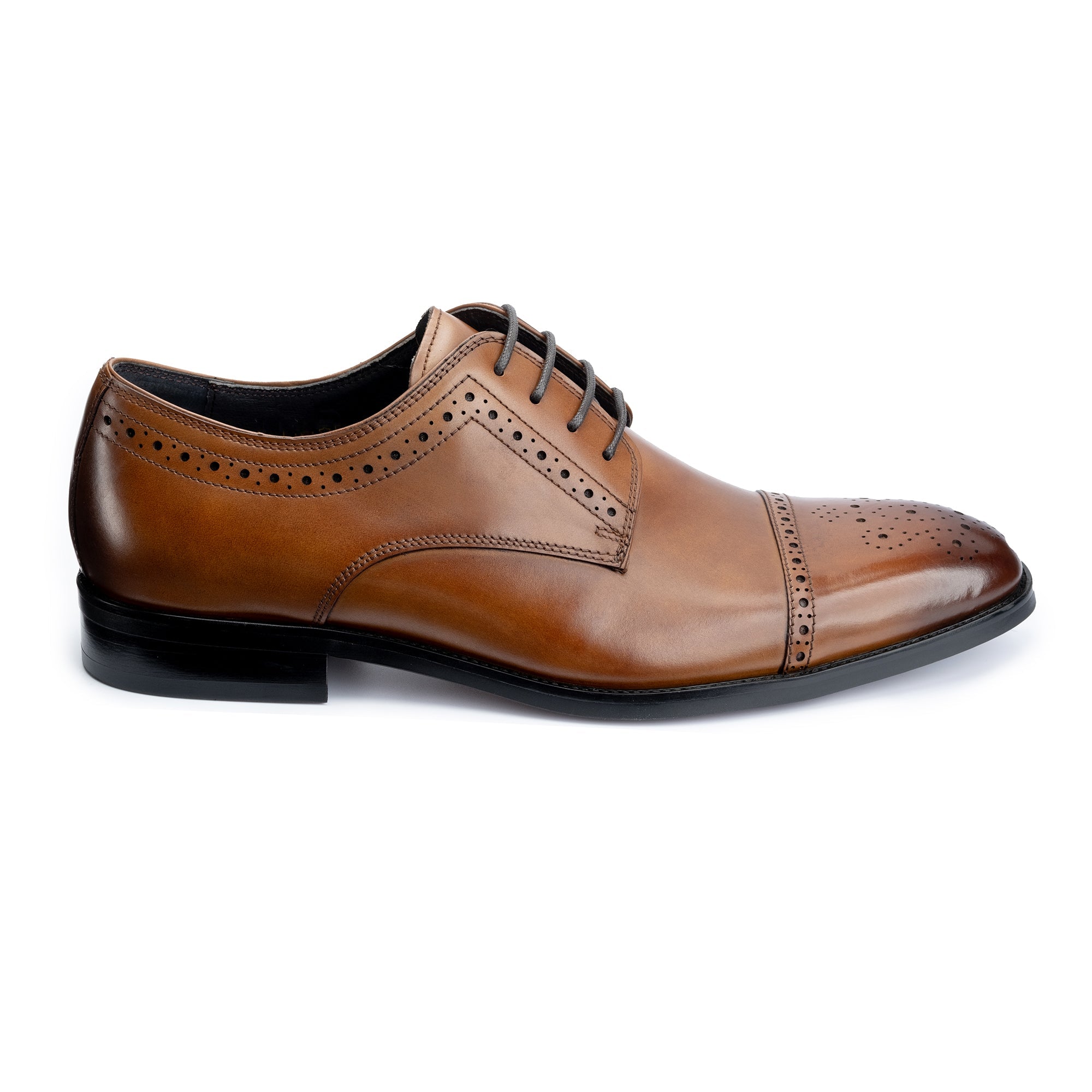
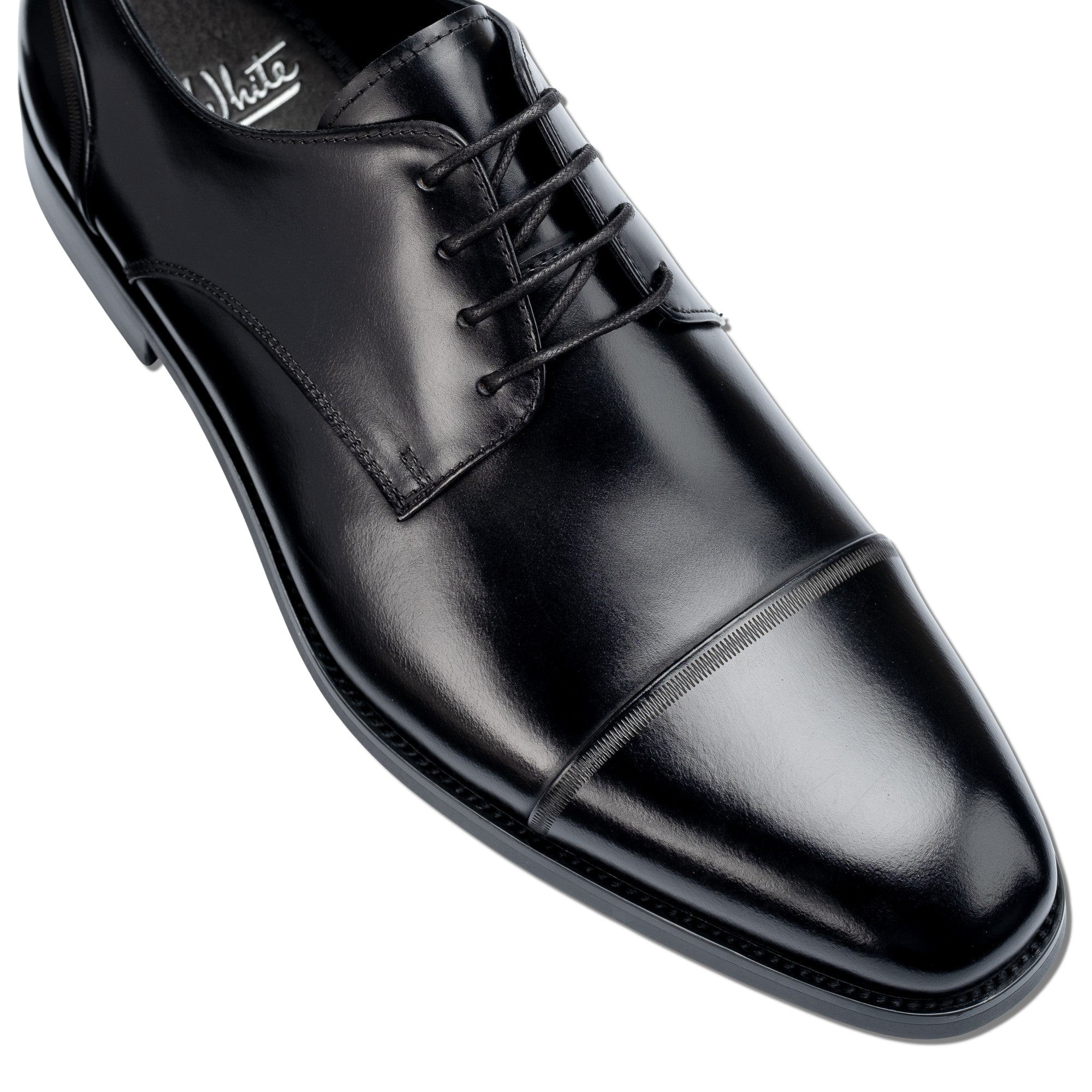
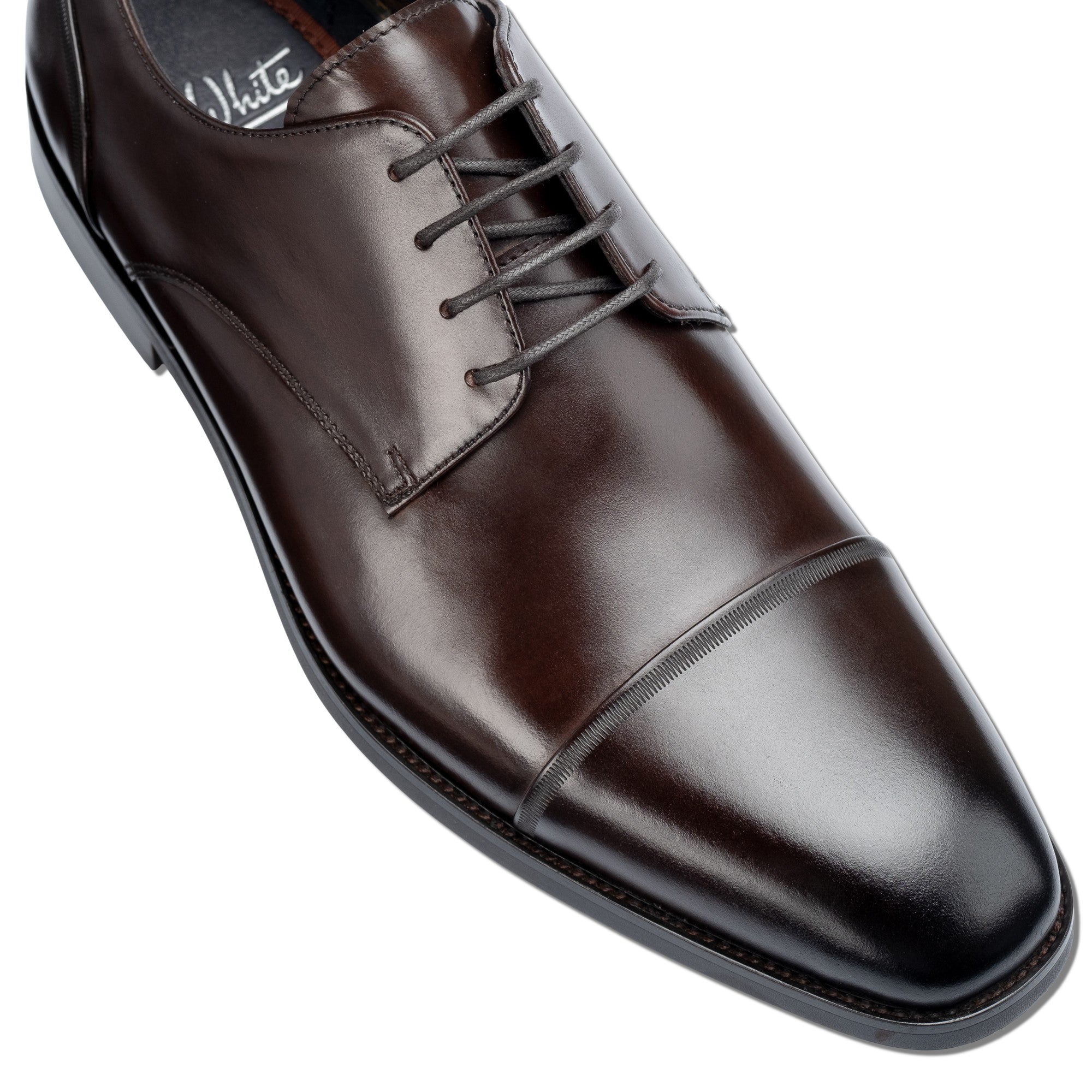
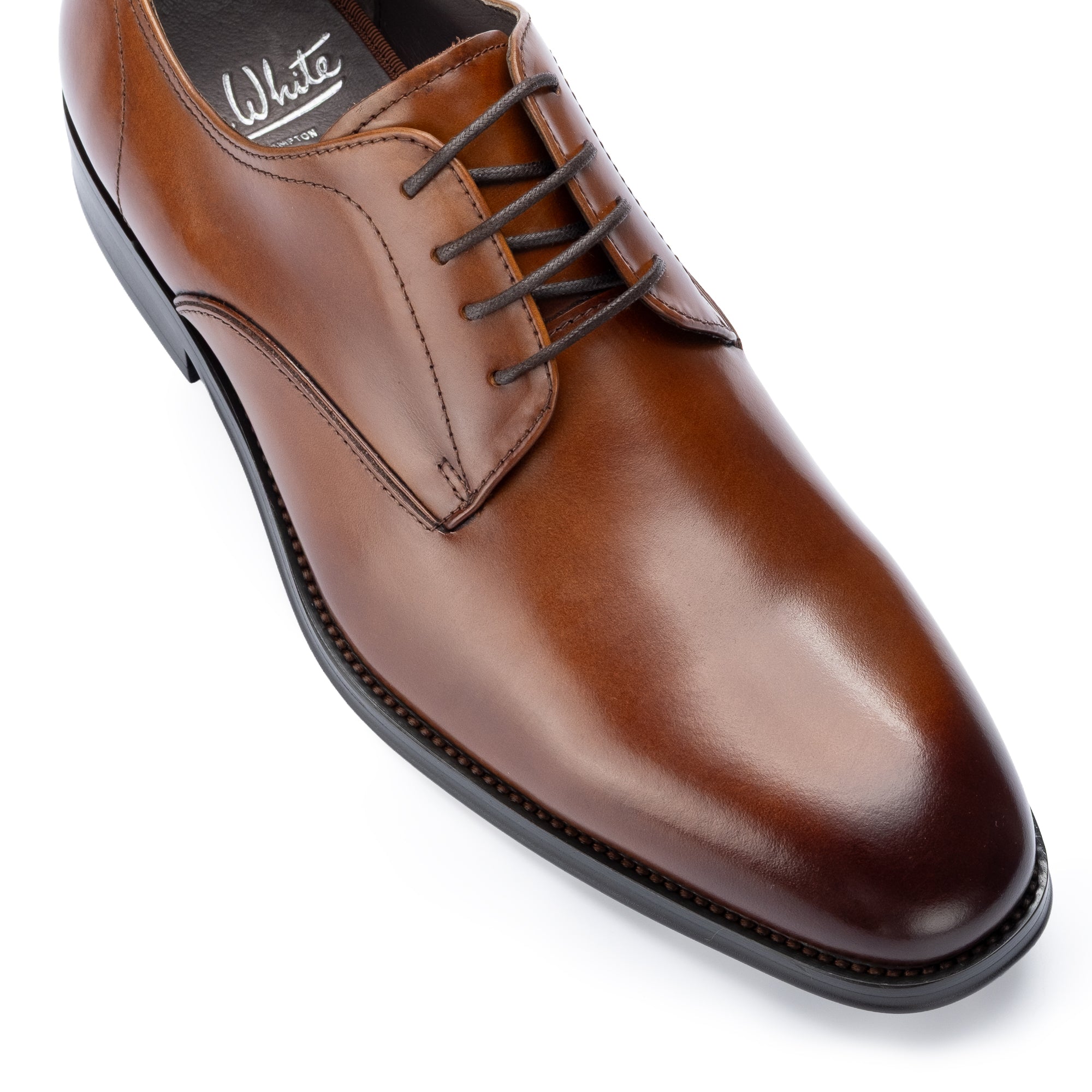
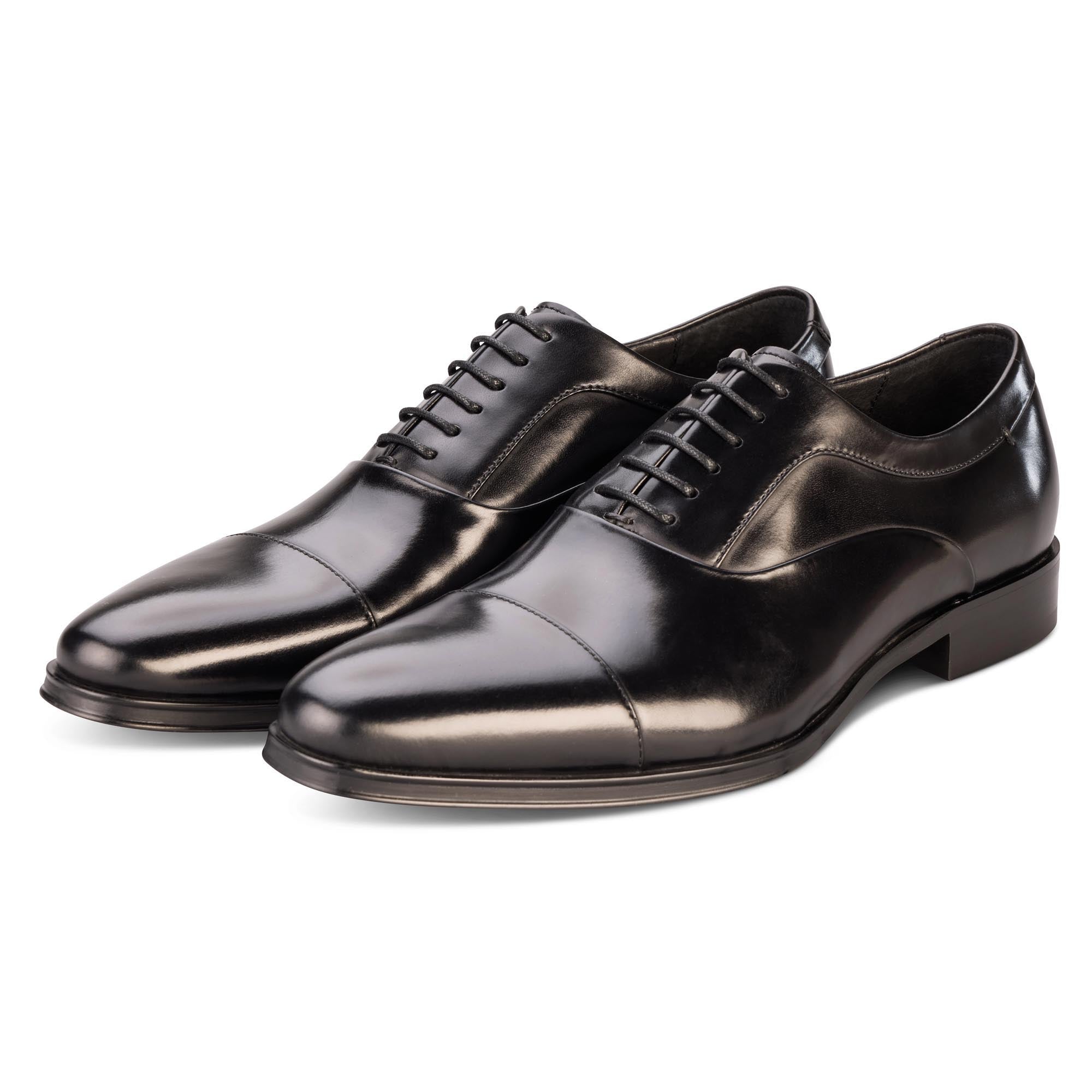
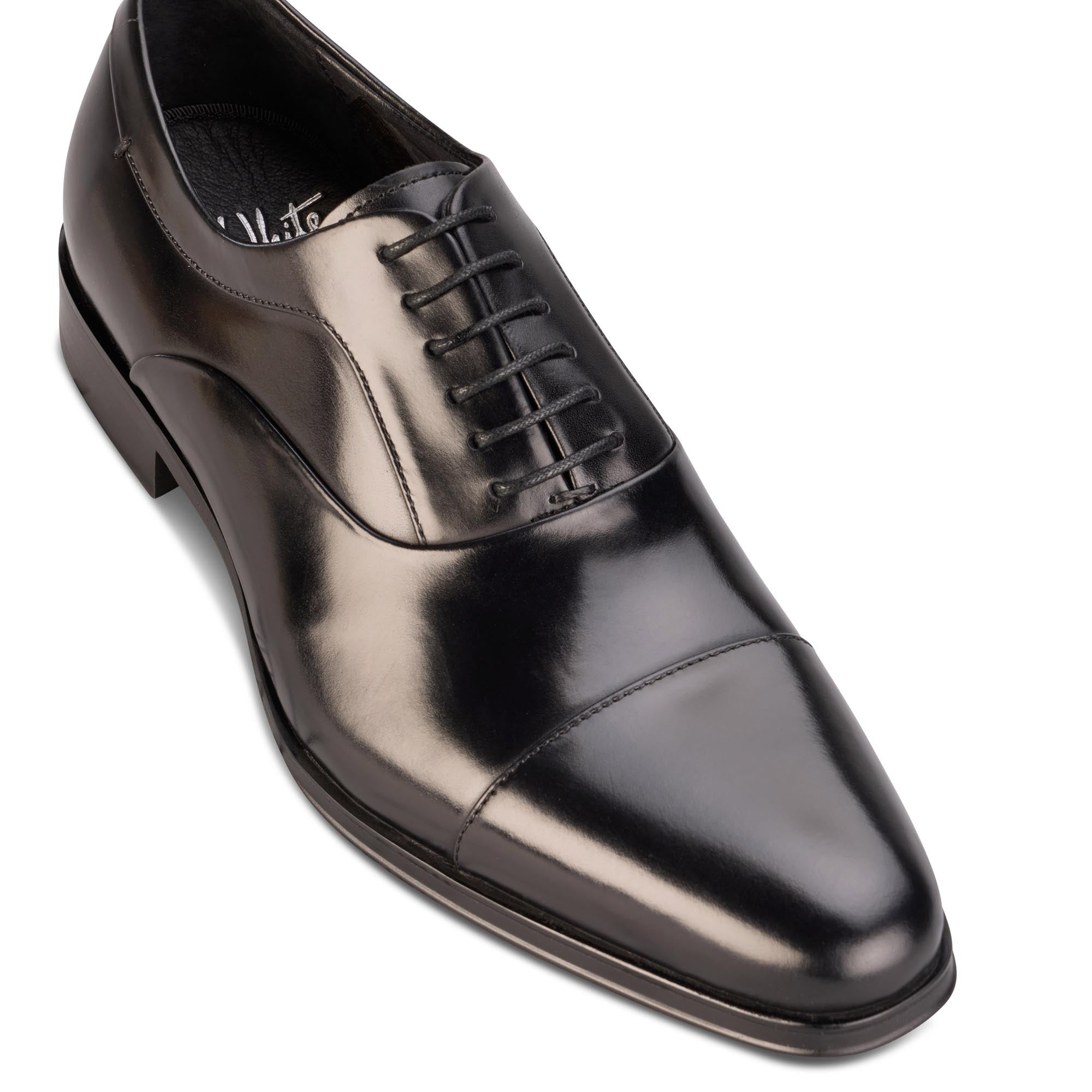
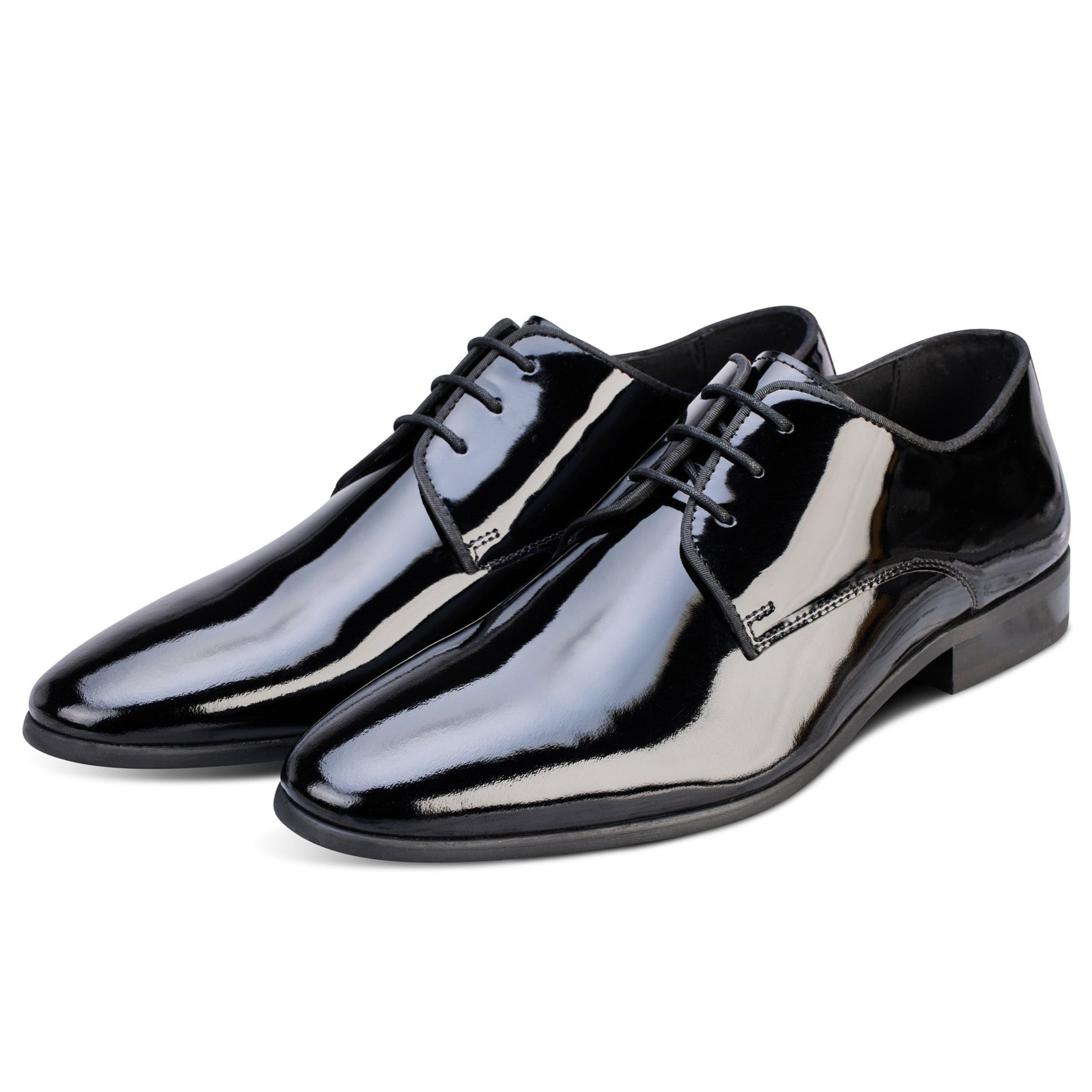
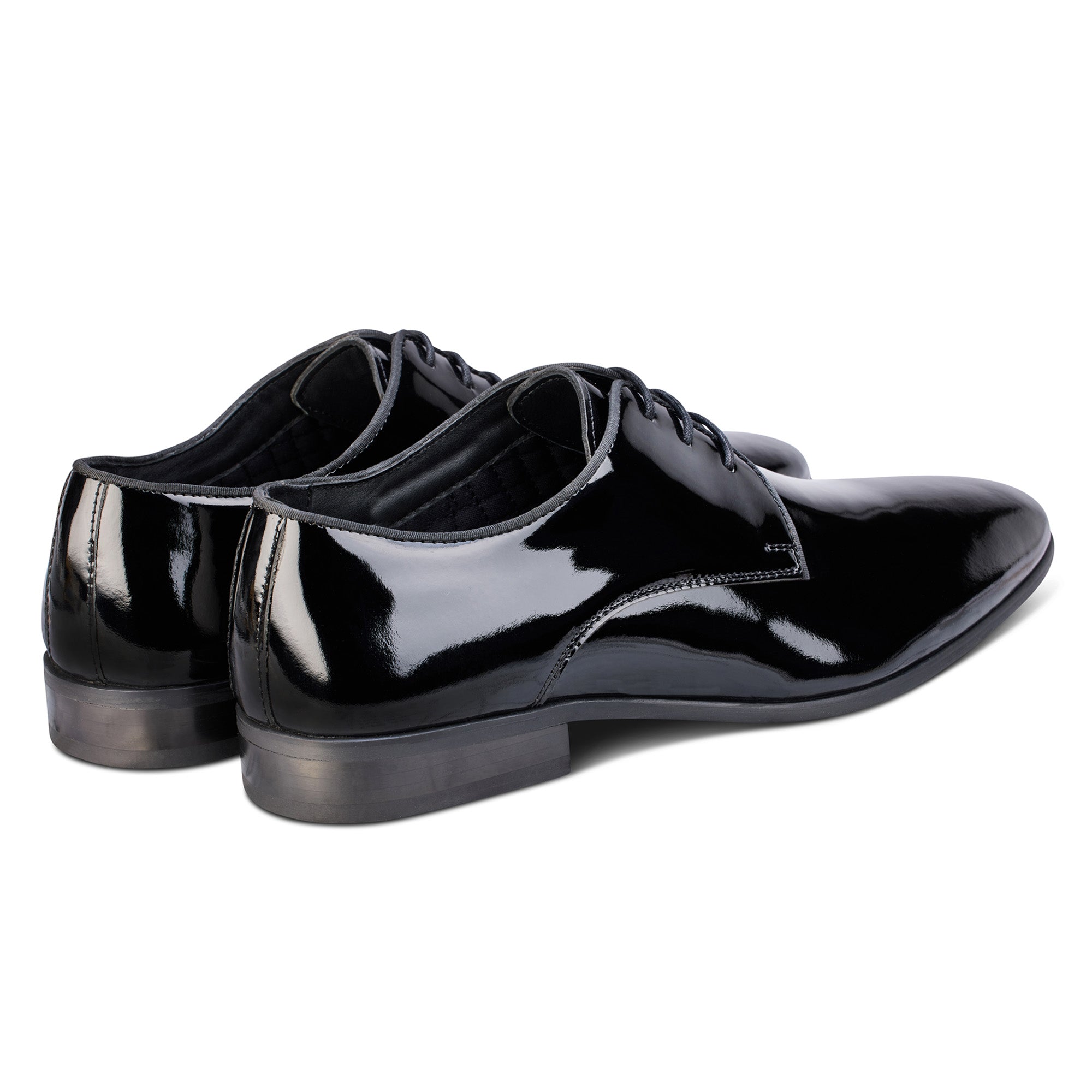
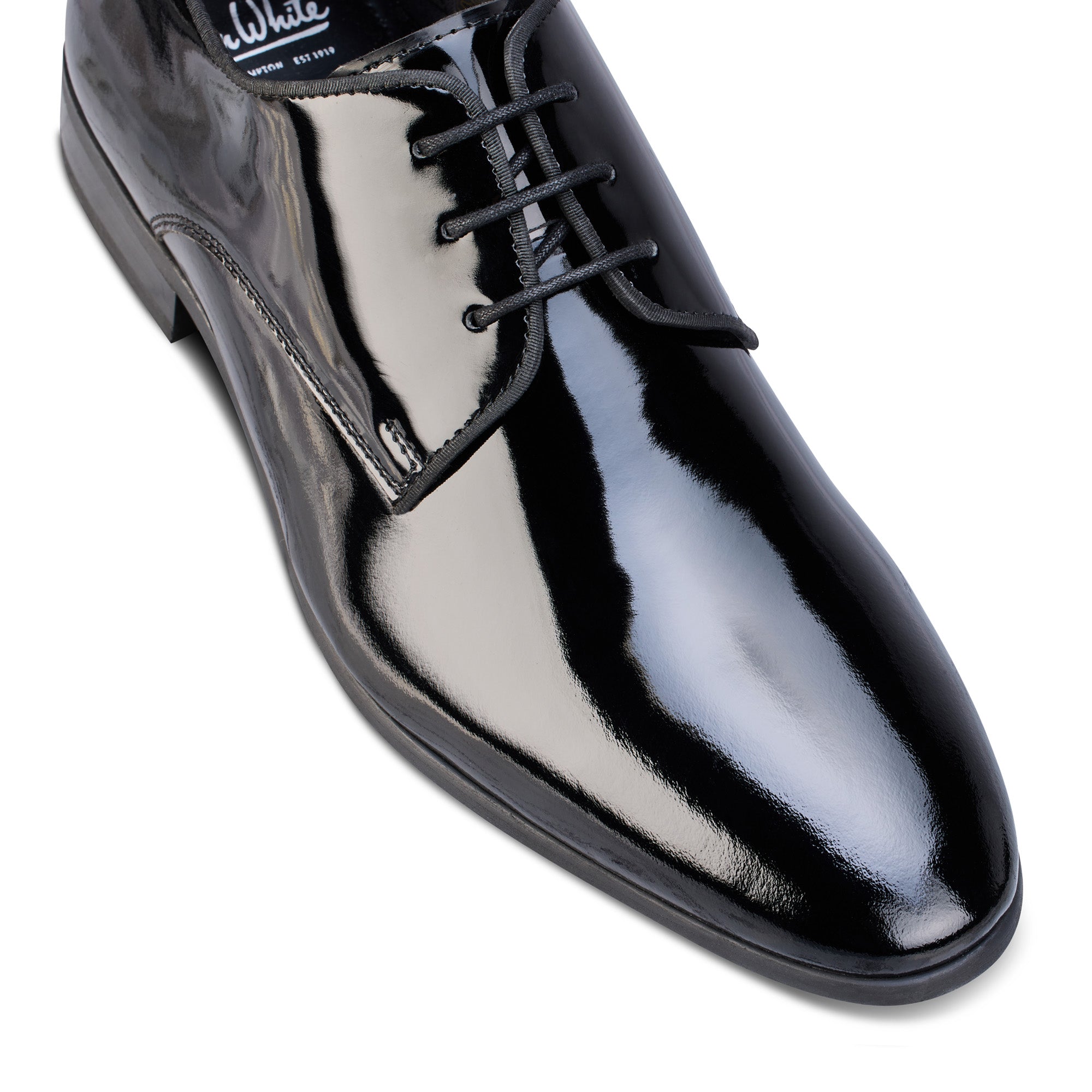
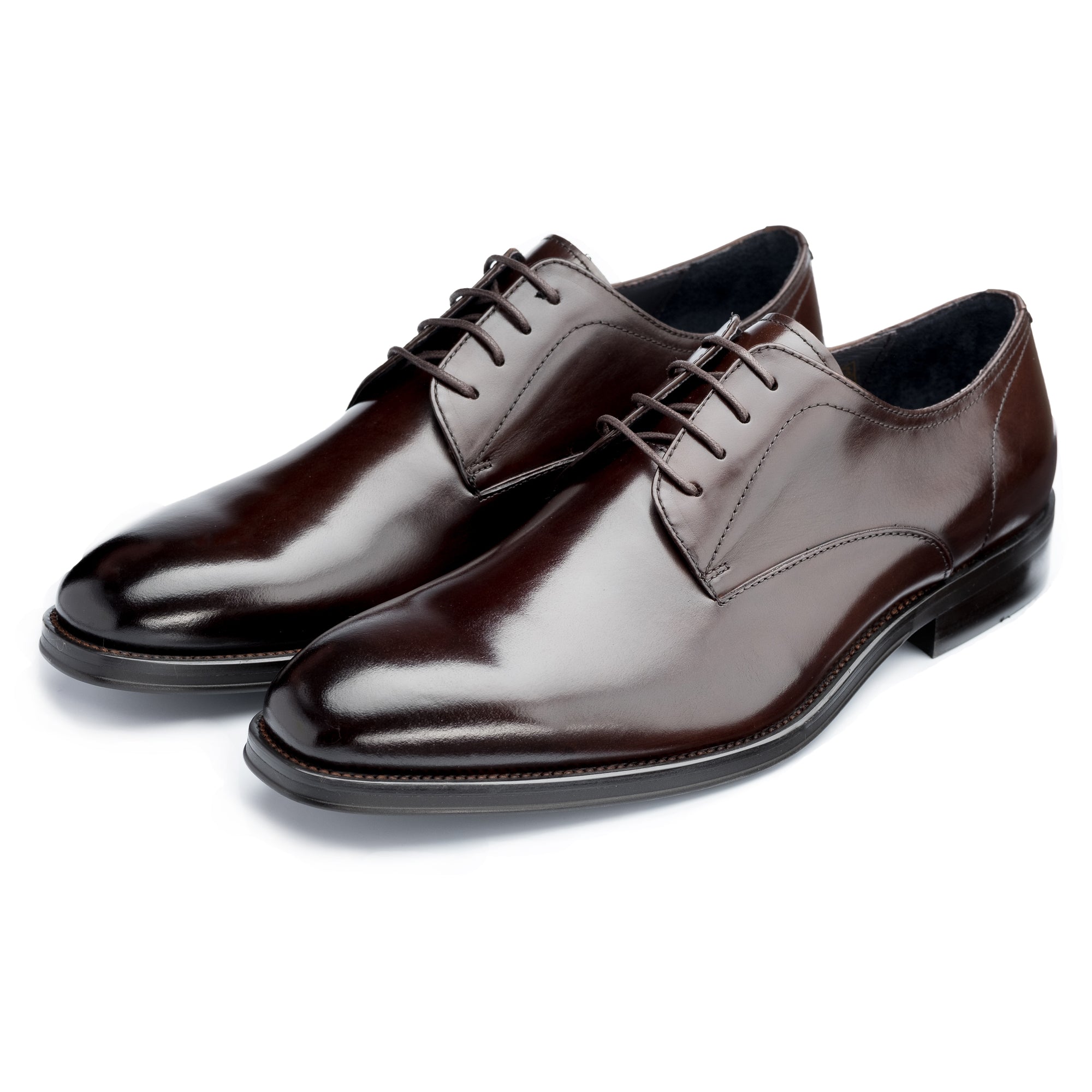
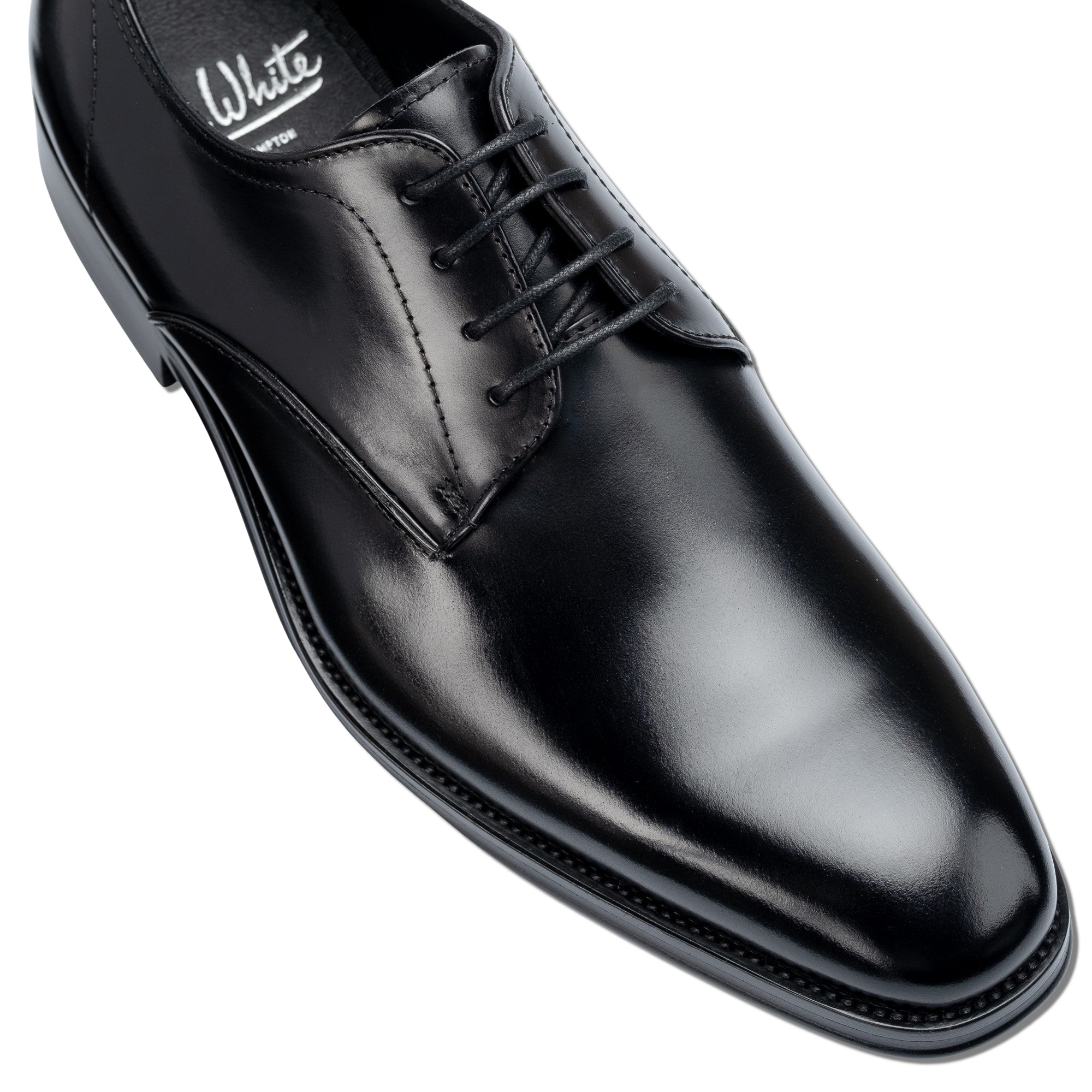
- For a deeper toecap finish, breathe lightly on the cap and work a very small amount of polish in tight circles with a fingertip or rolled cotton cloth. This is how a mirror finish is built — slowly, in thin layers.
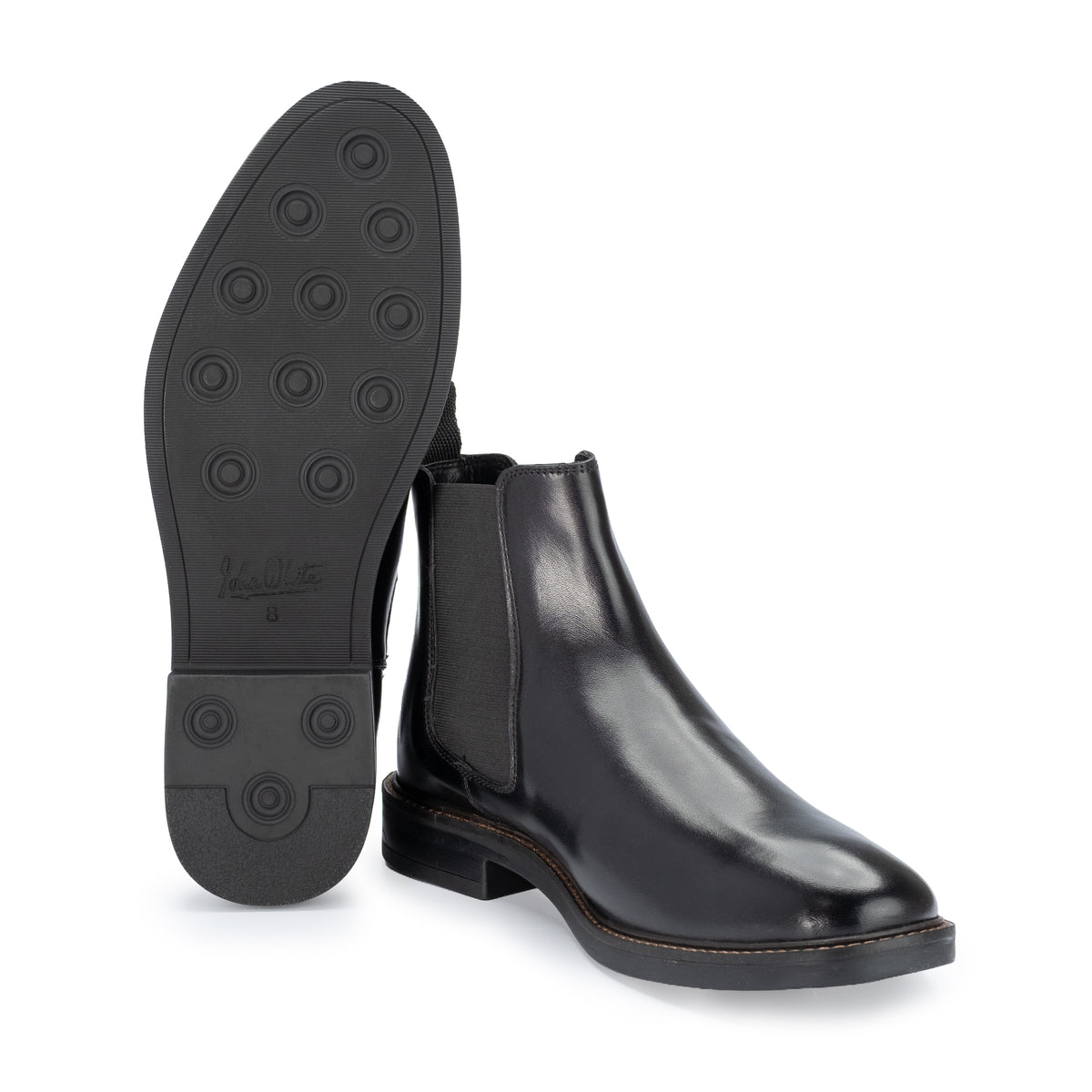
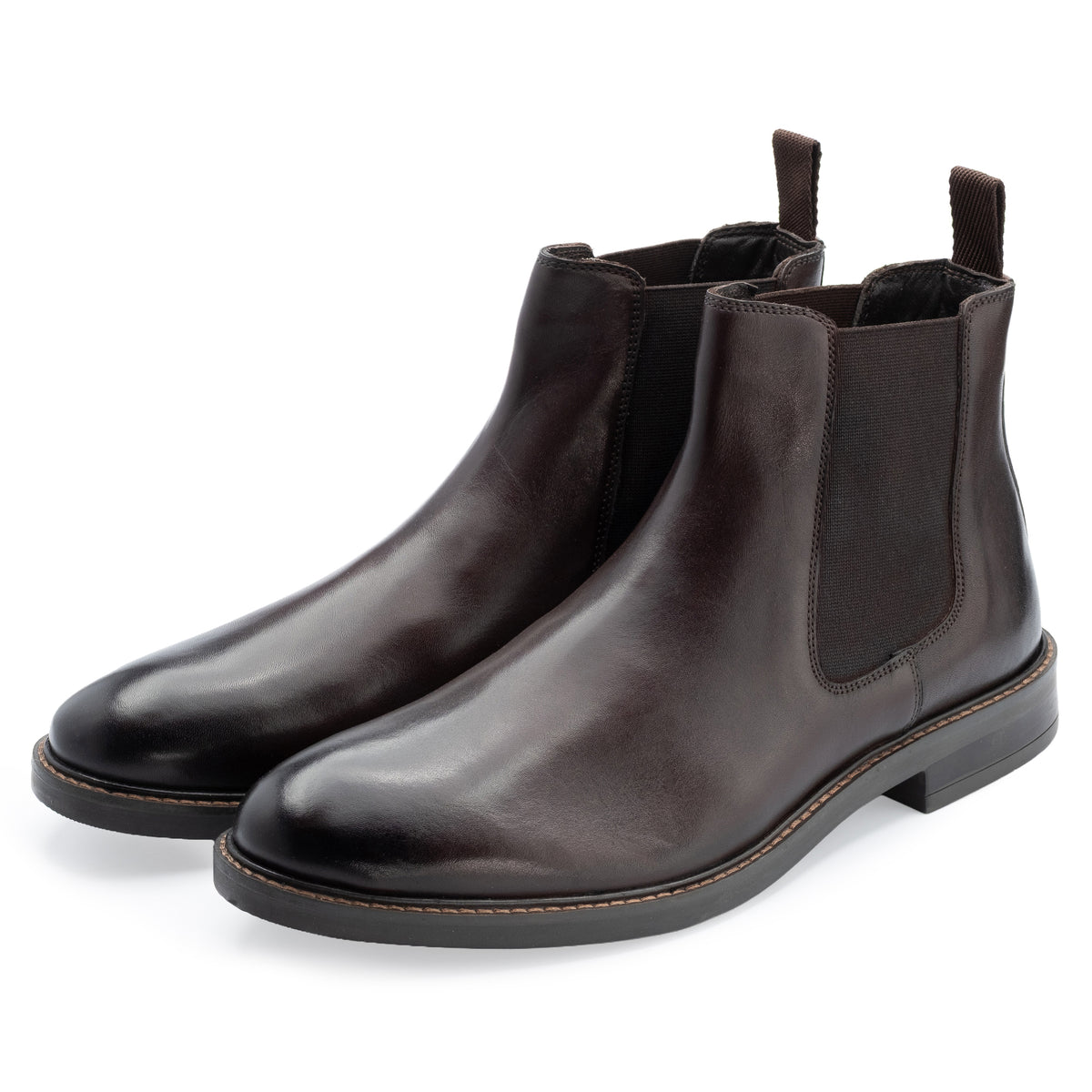
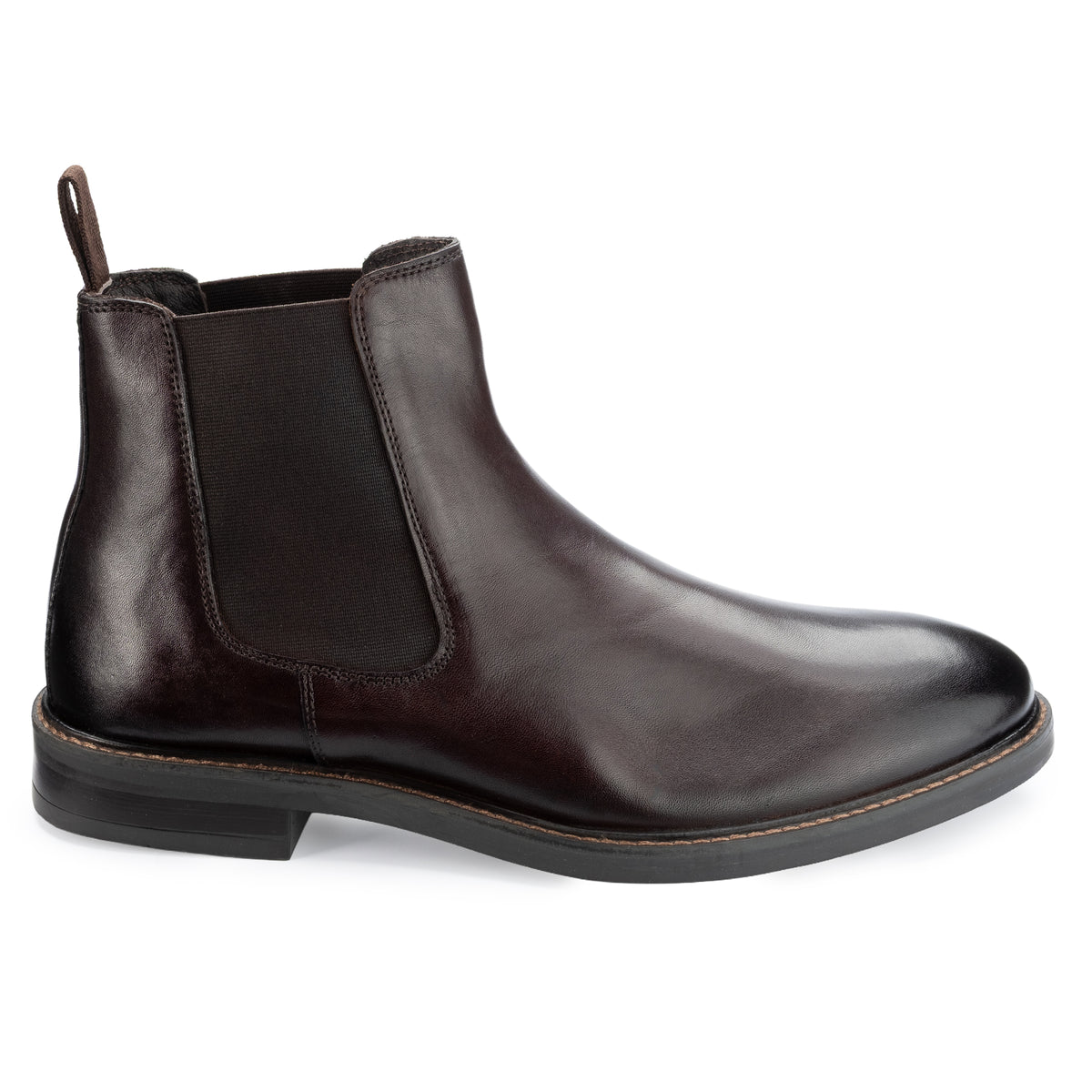
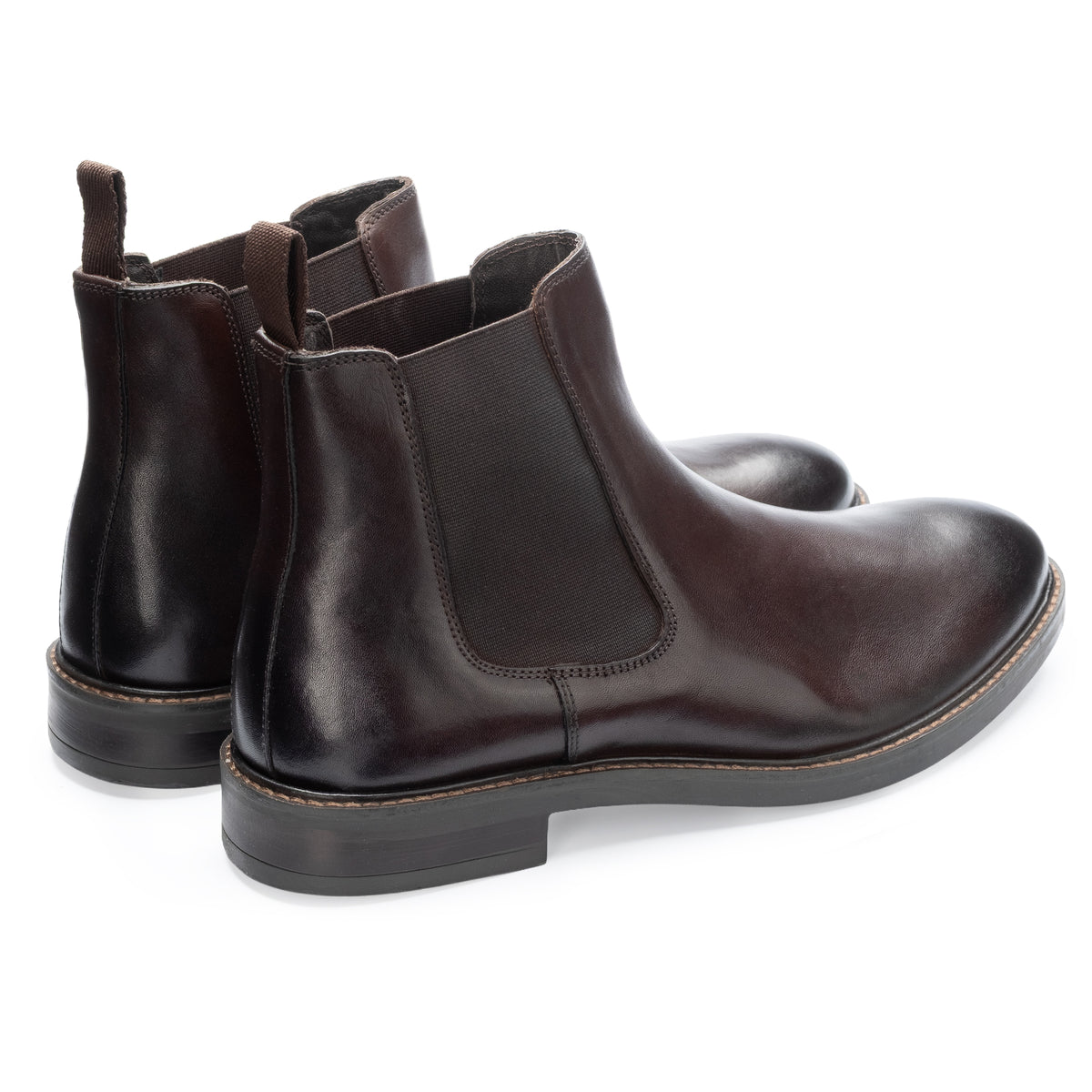
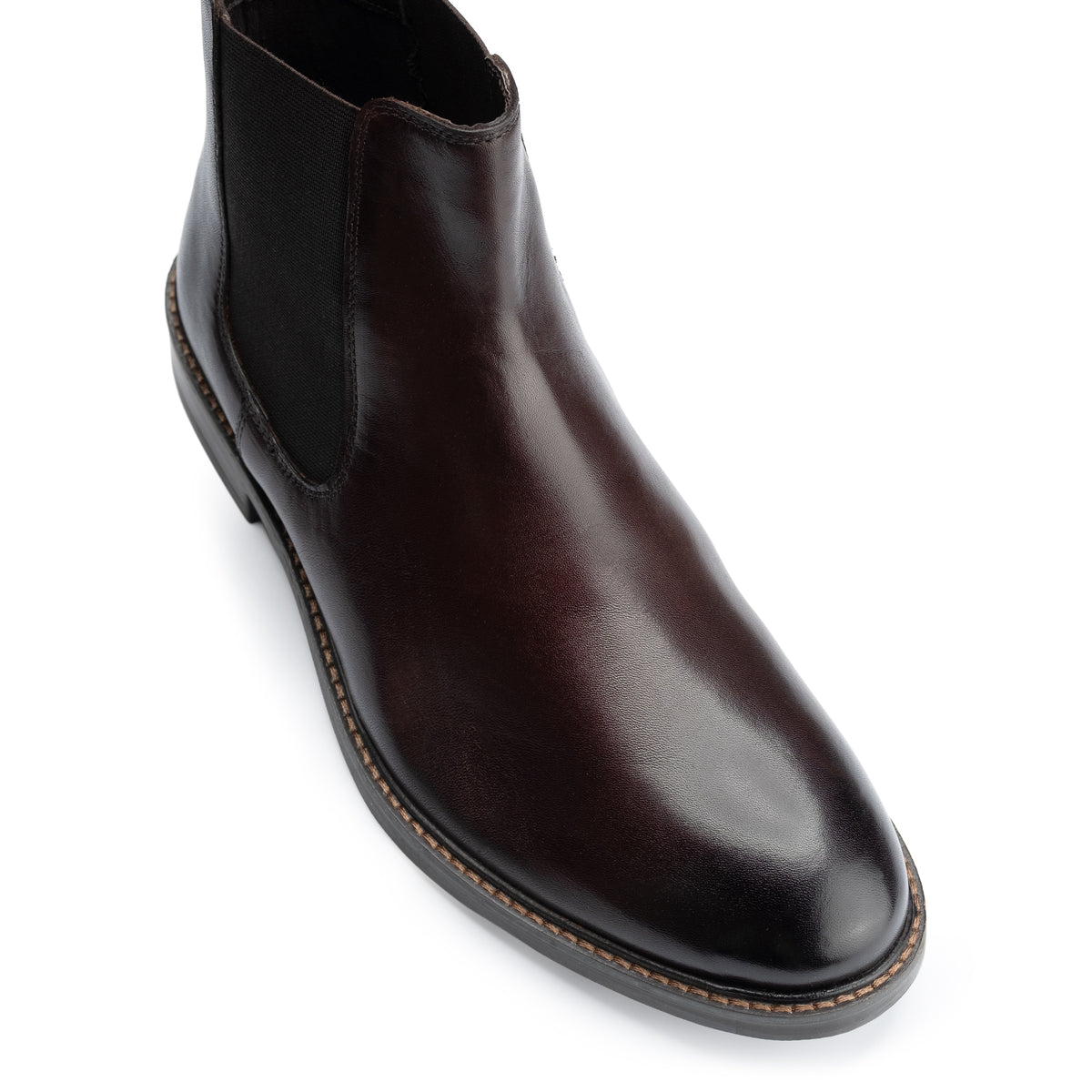
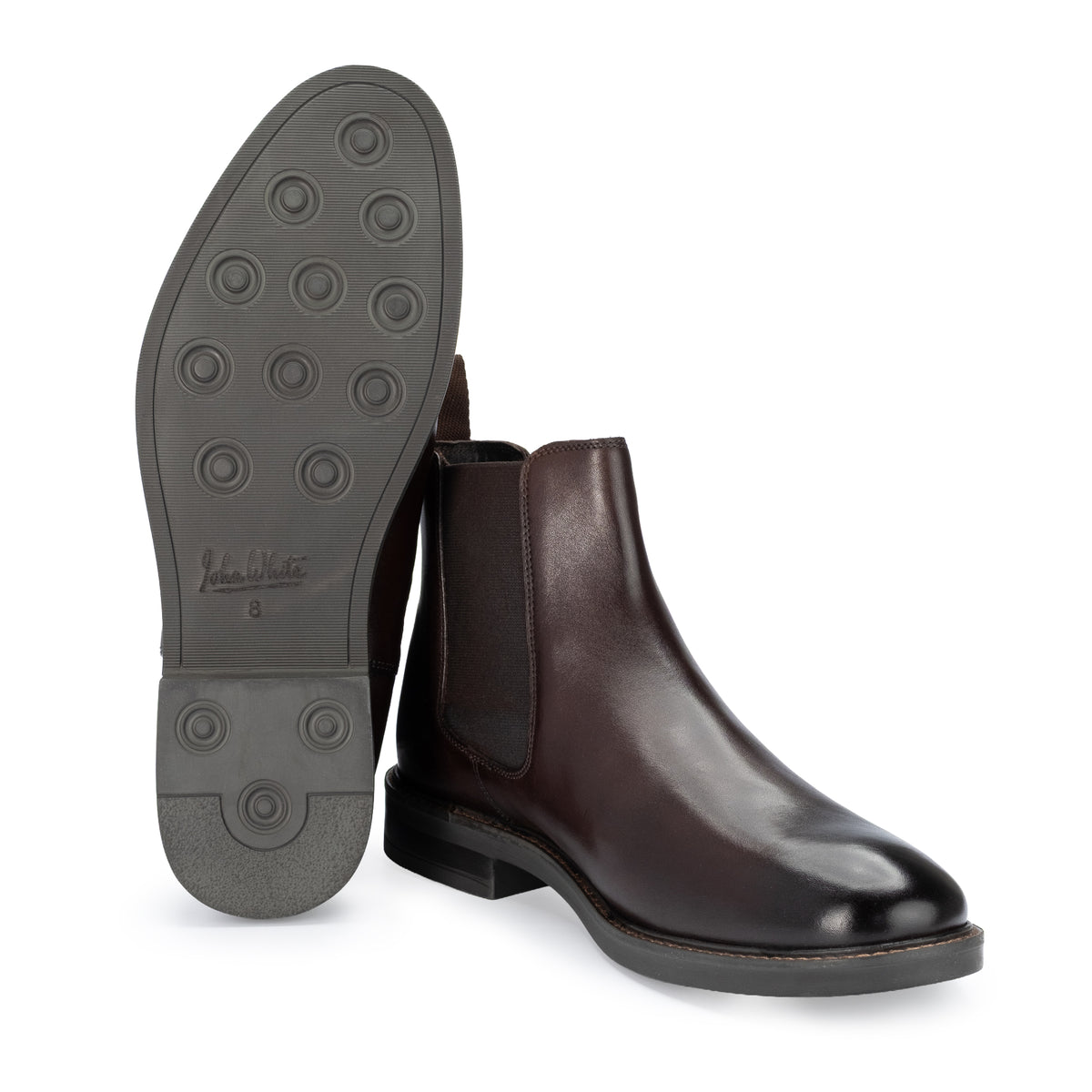
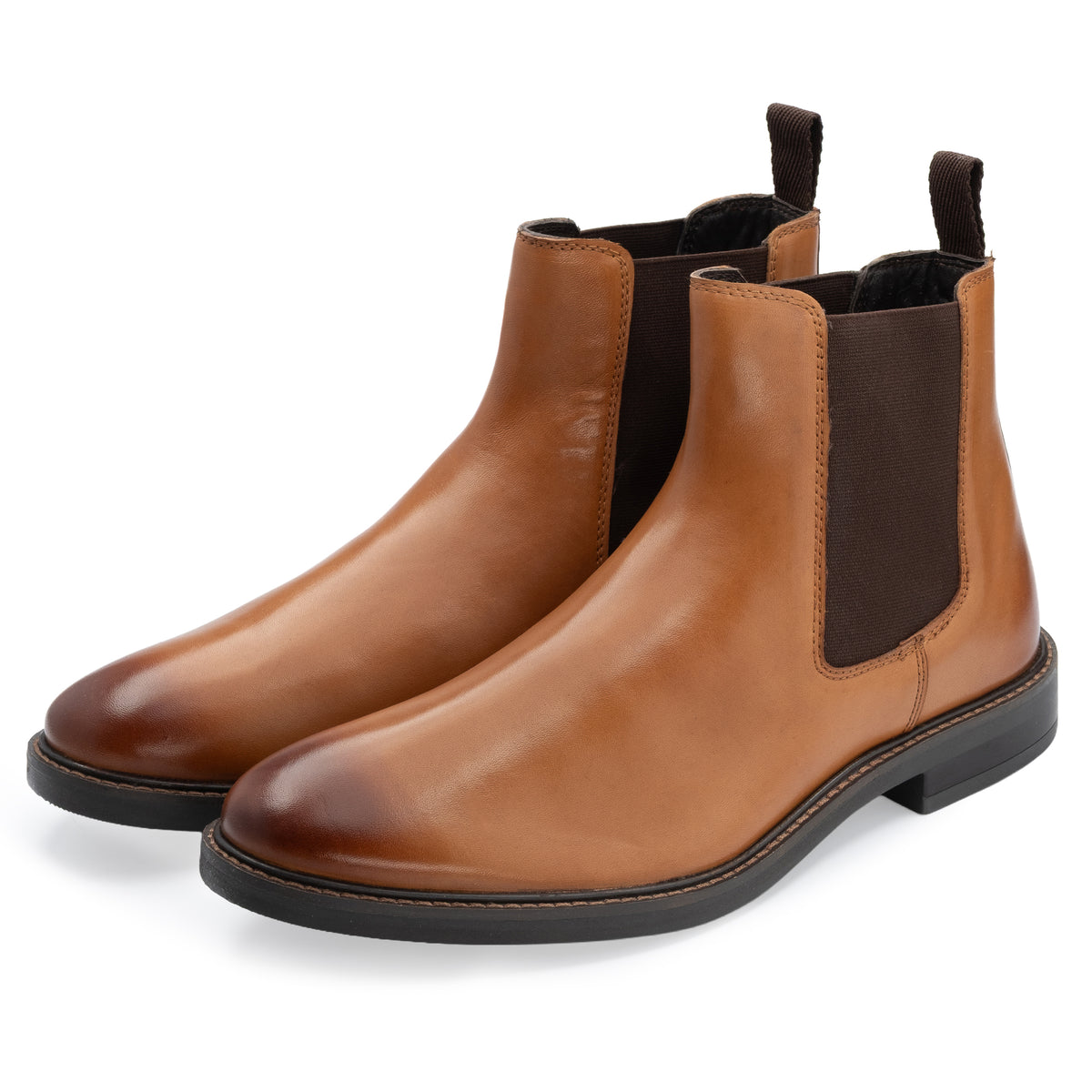
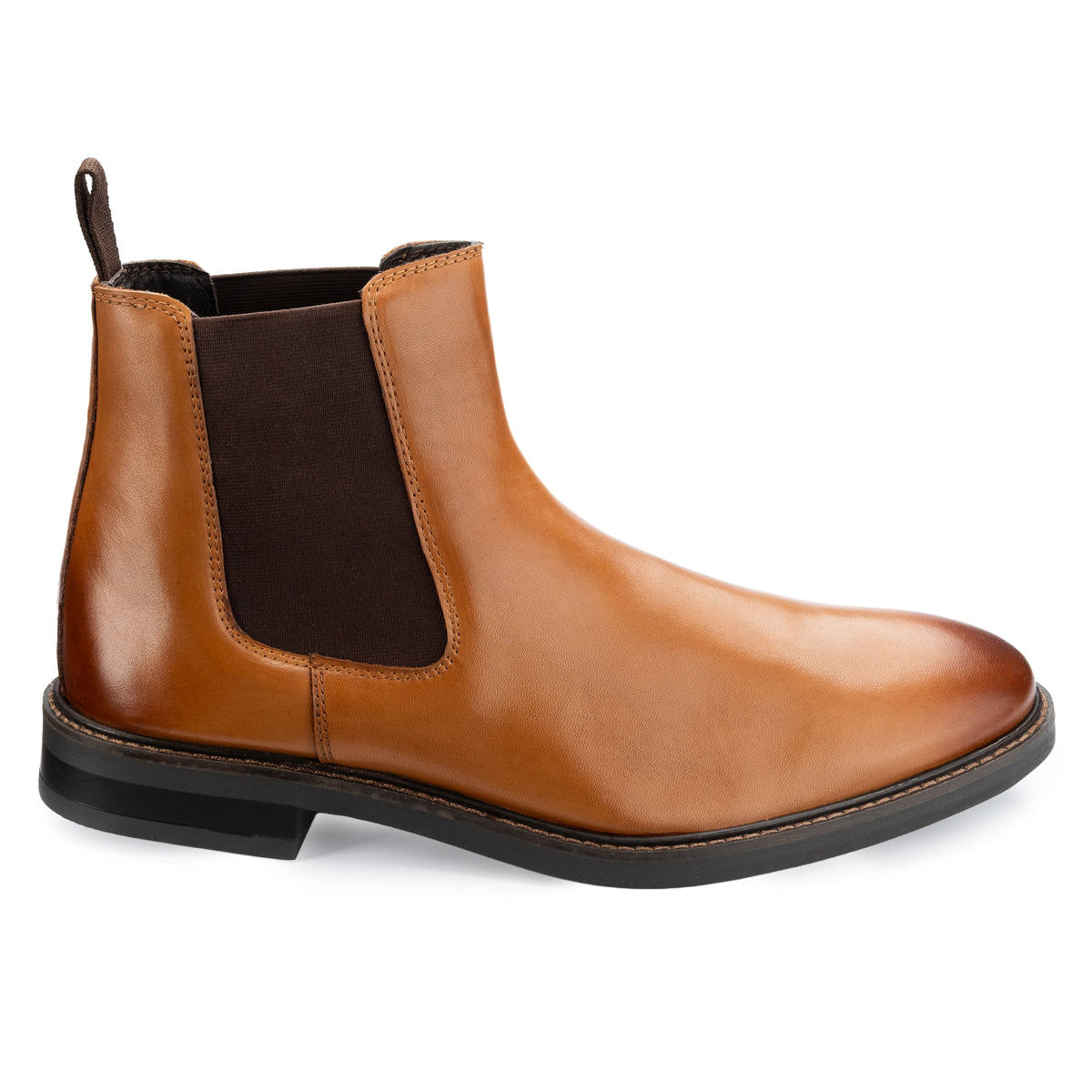
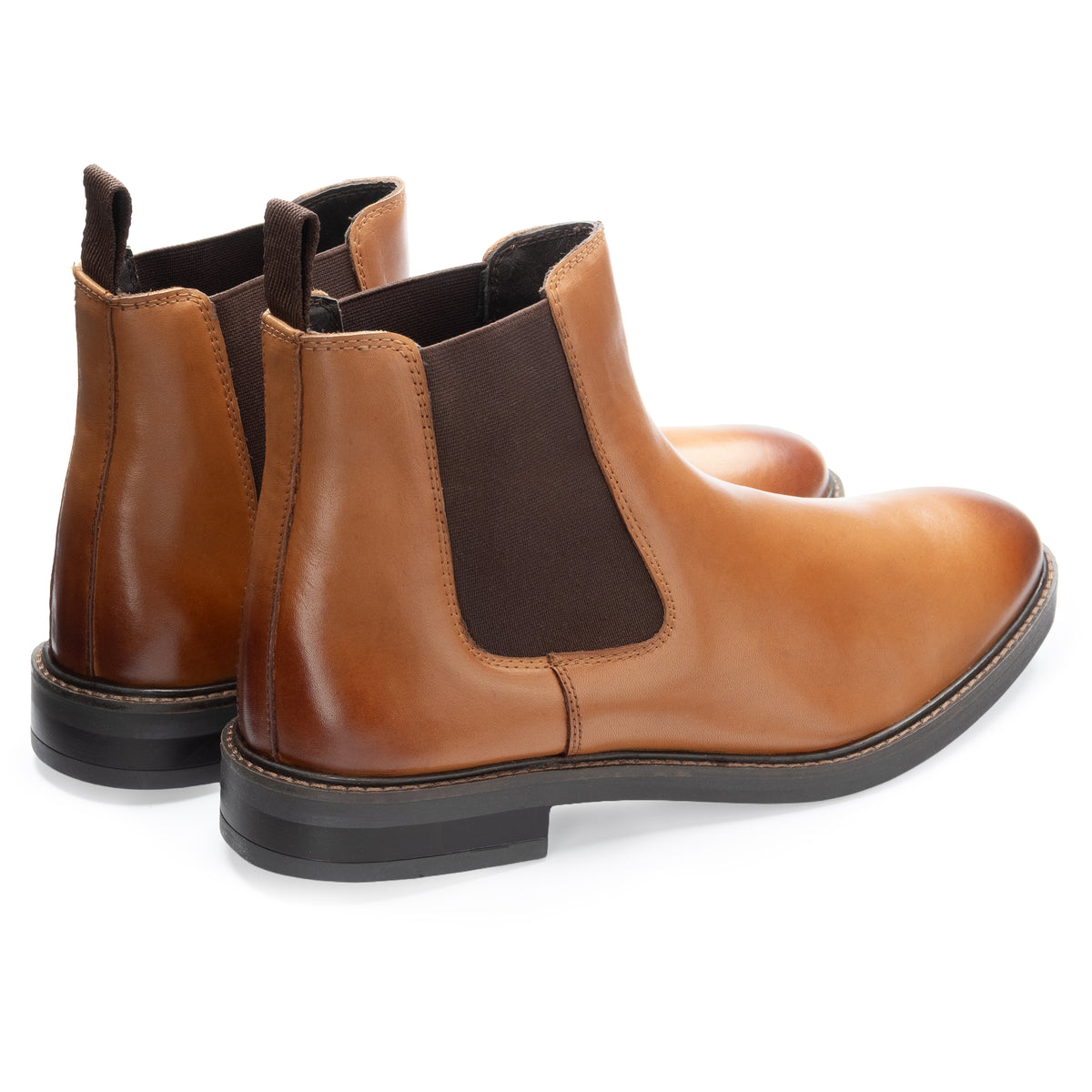
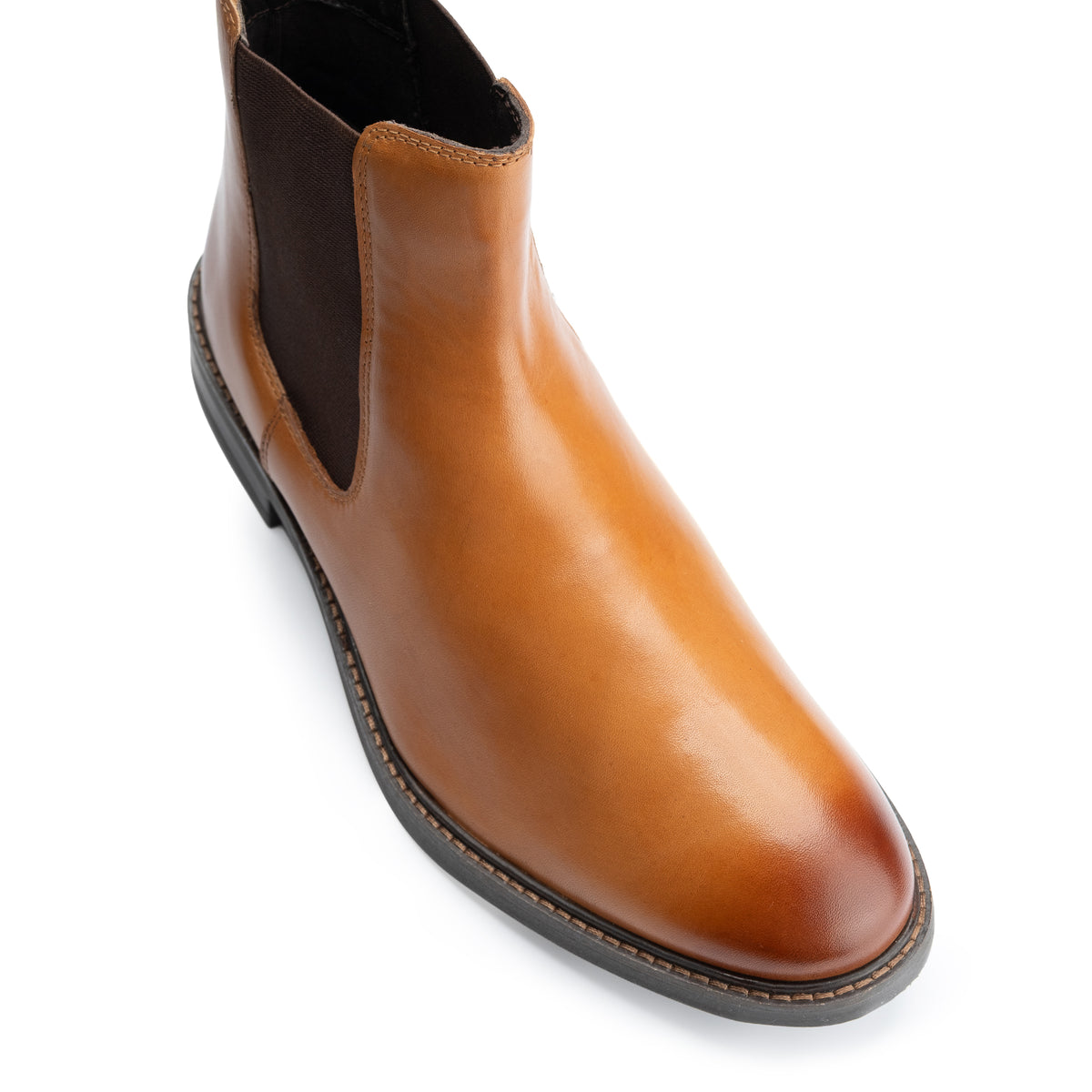
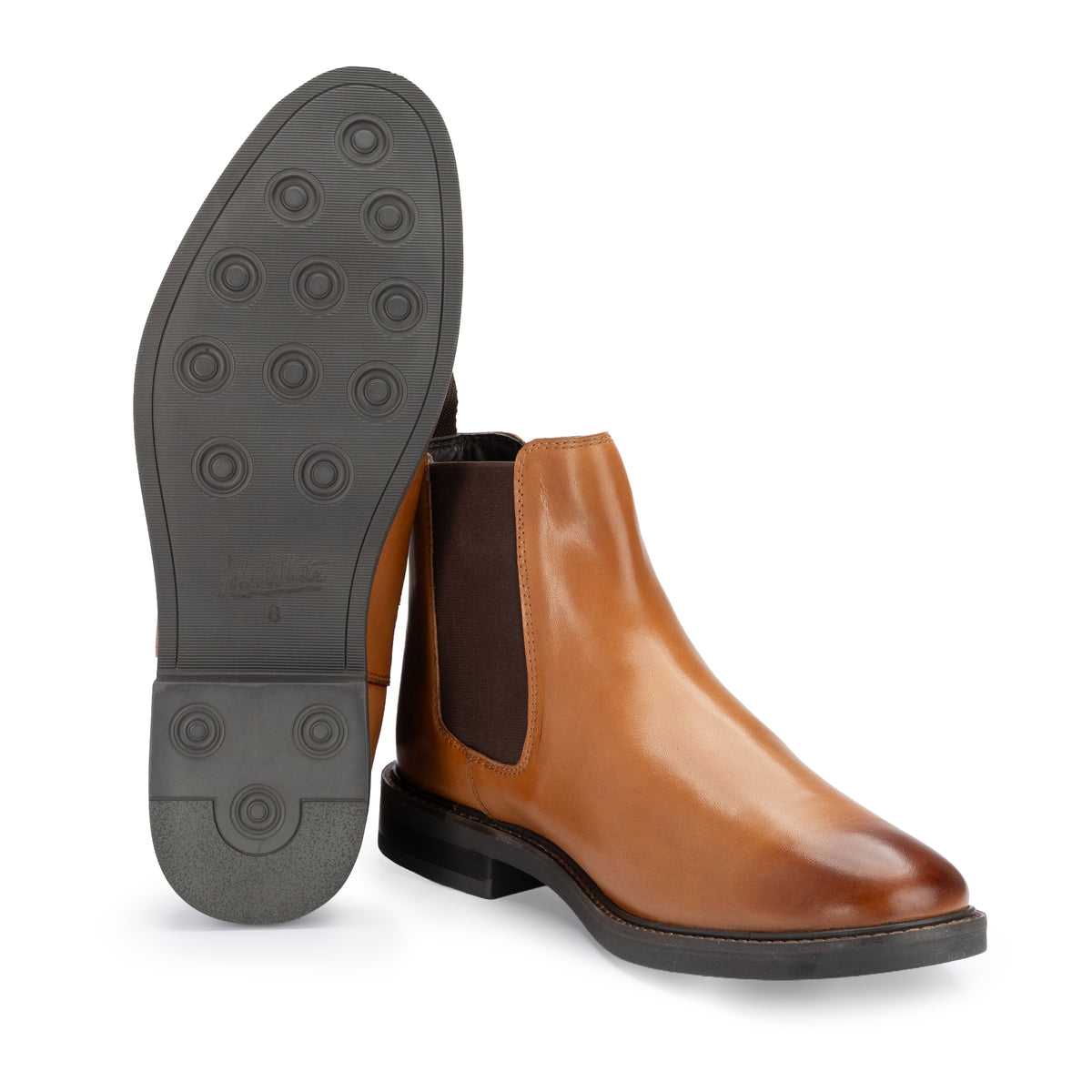
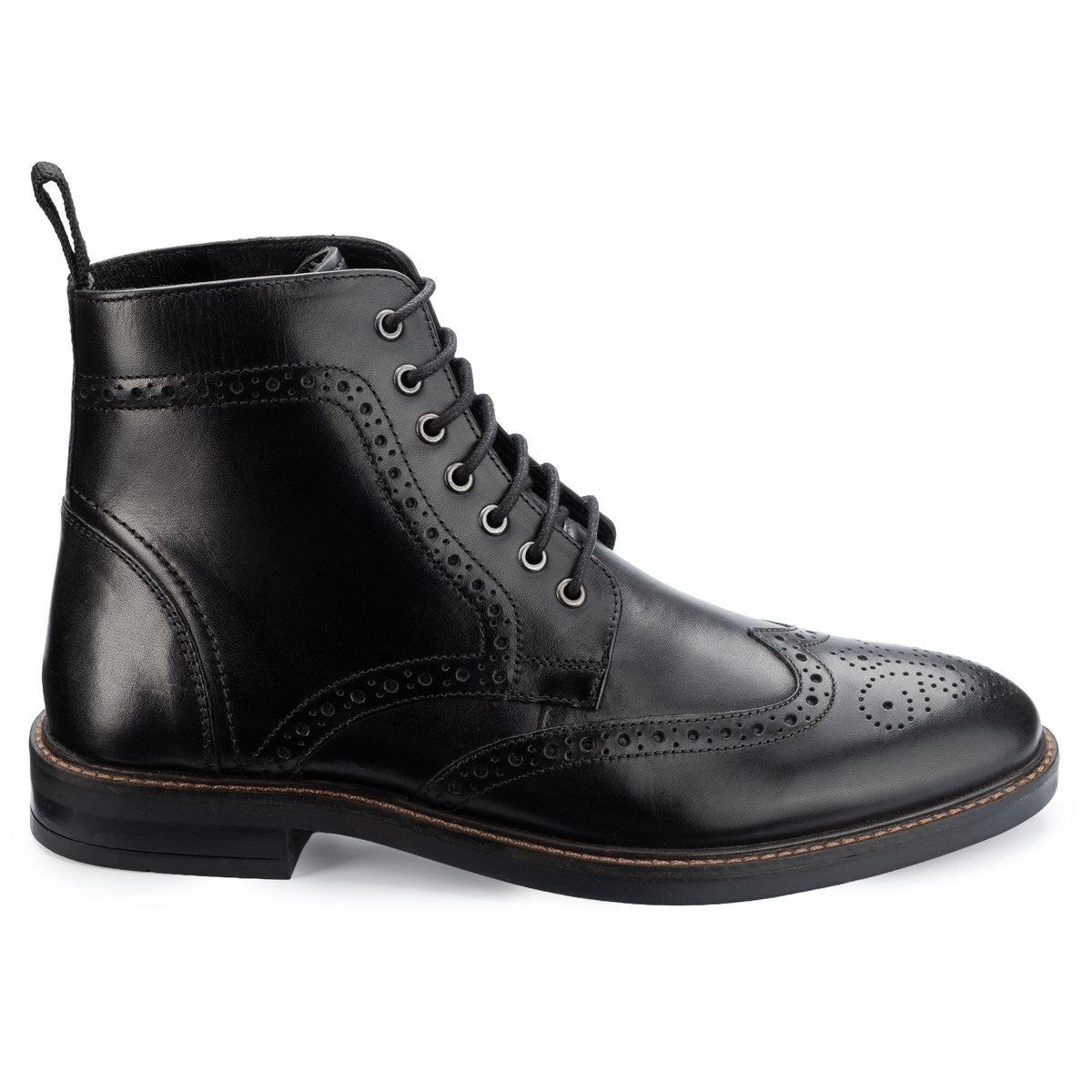
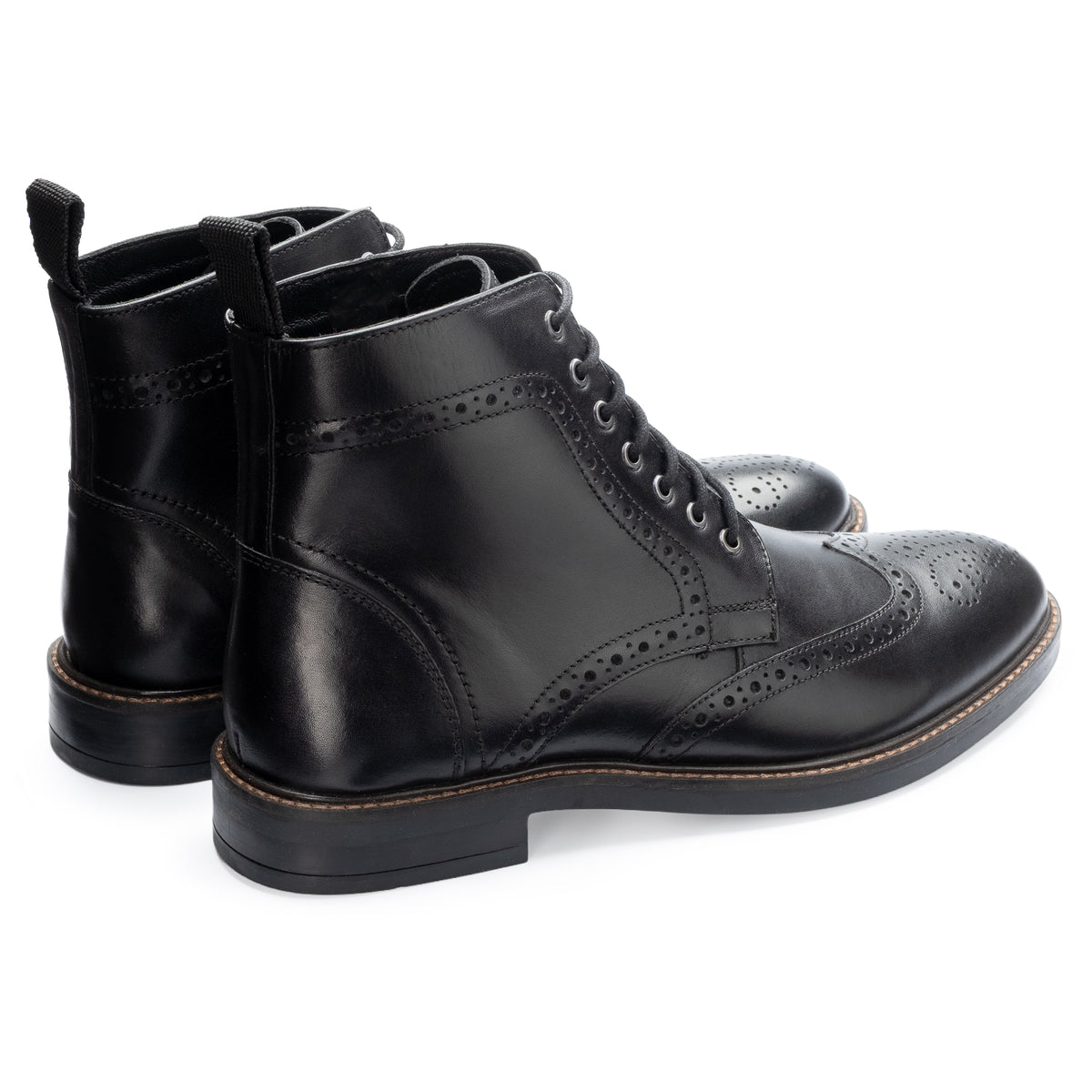
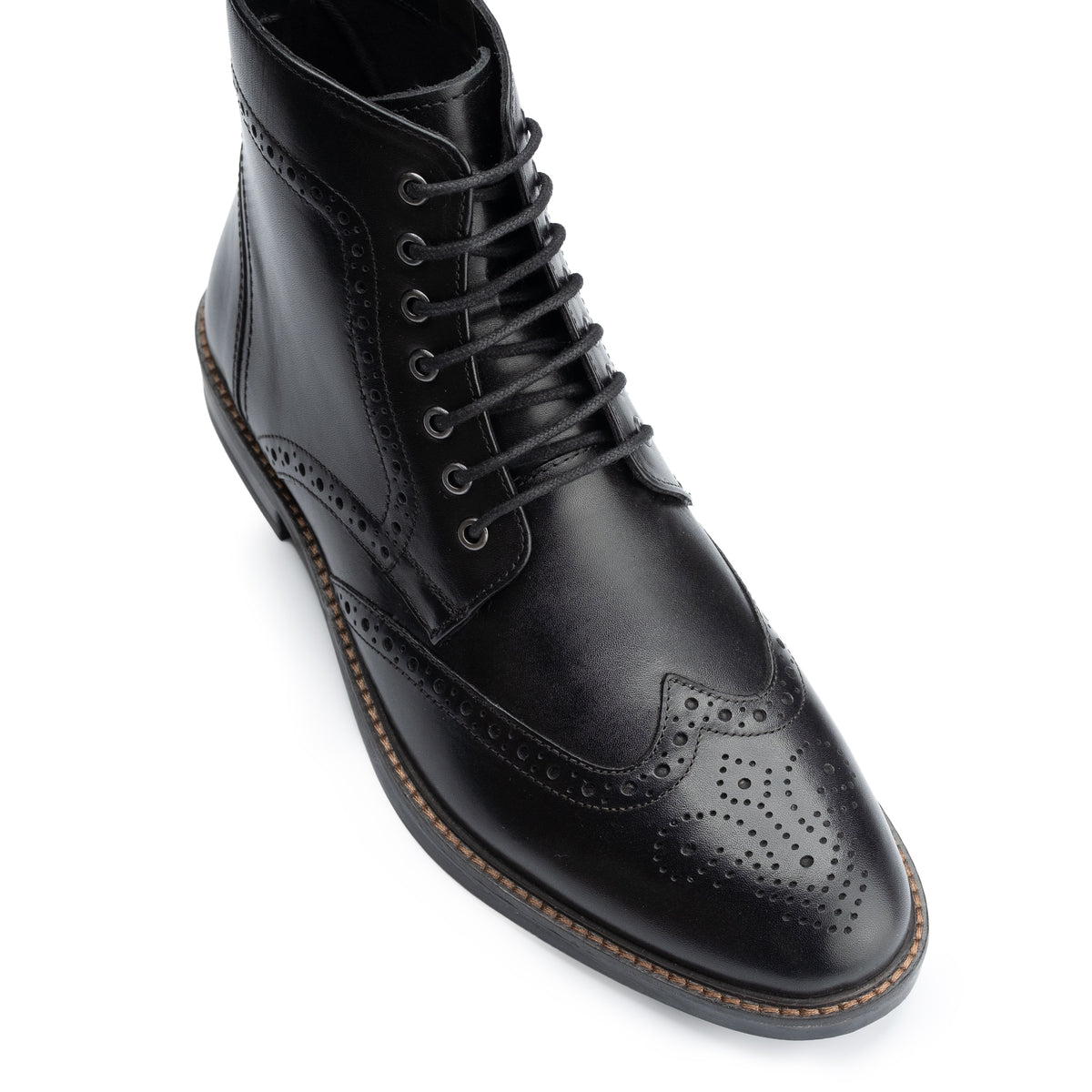
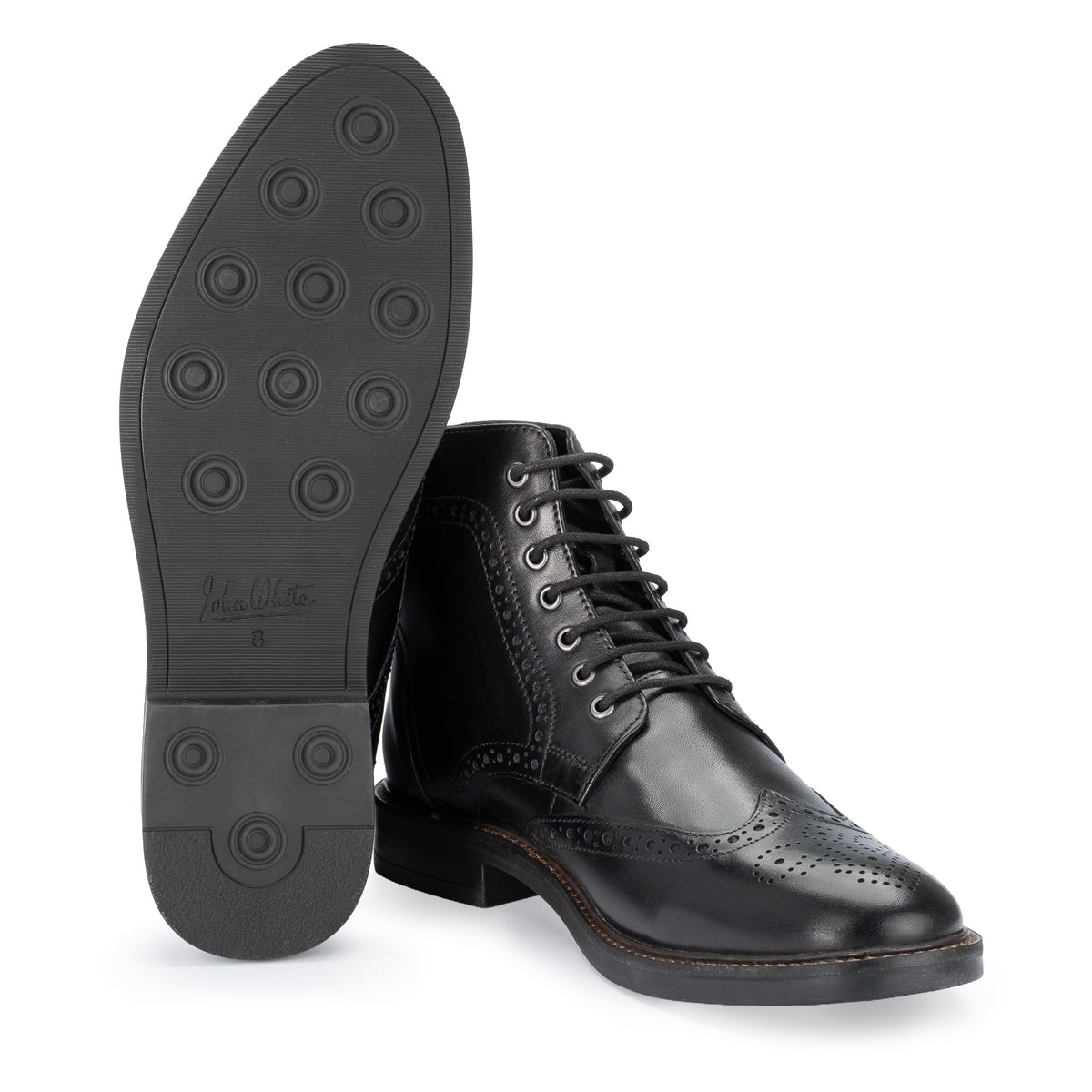
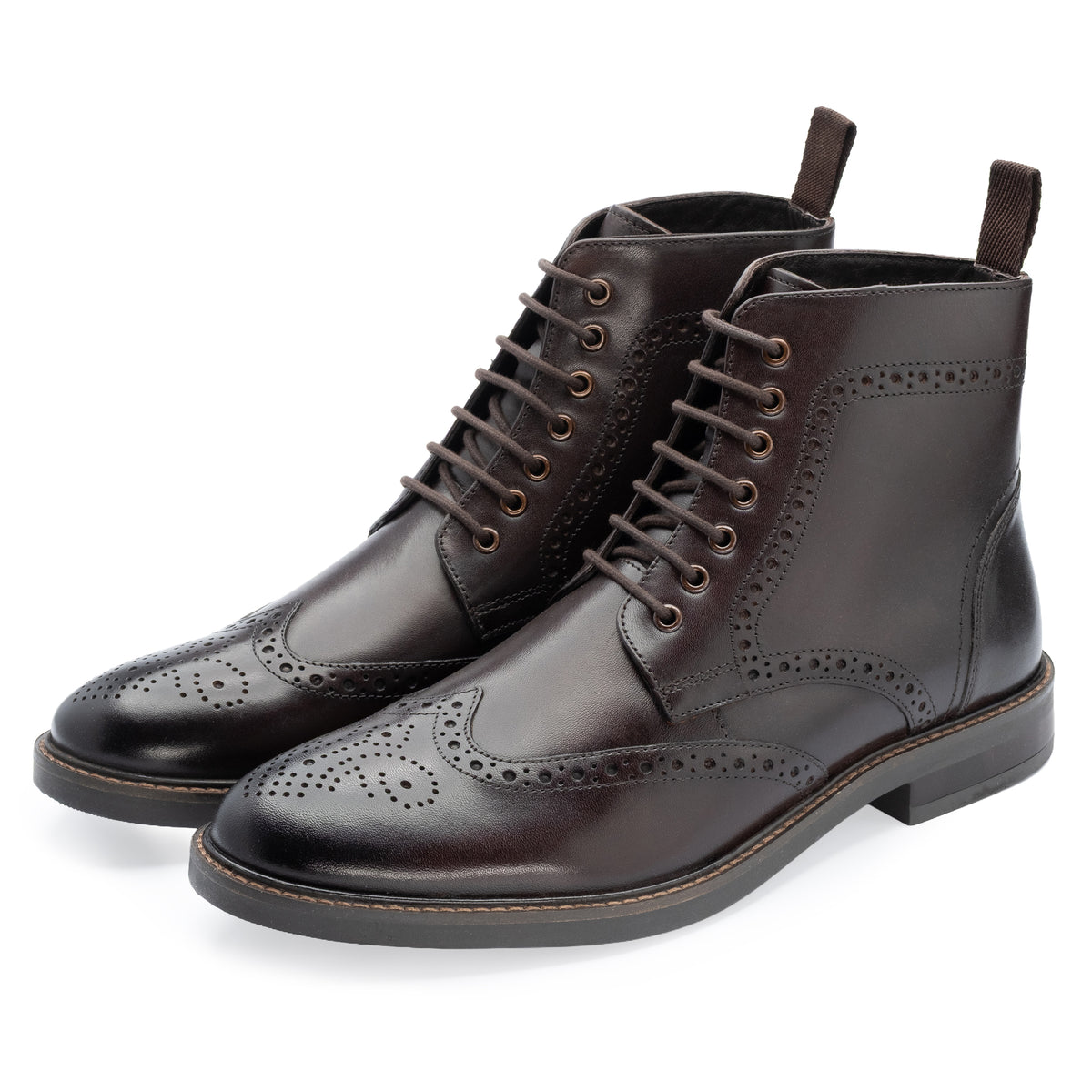
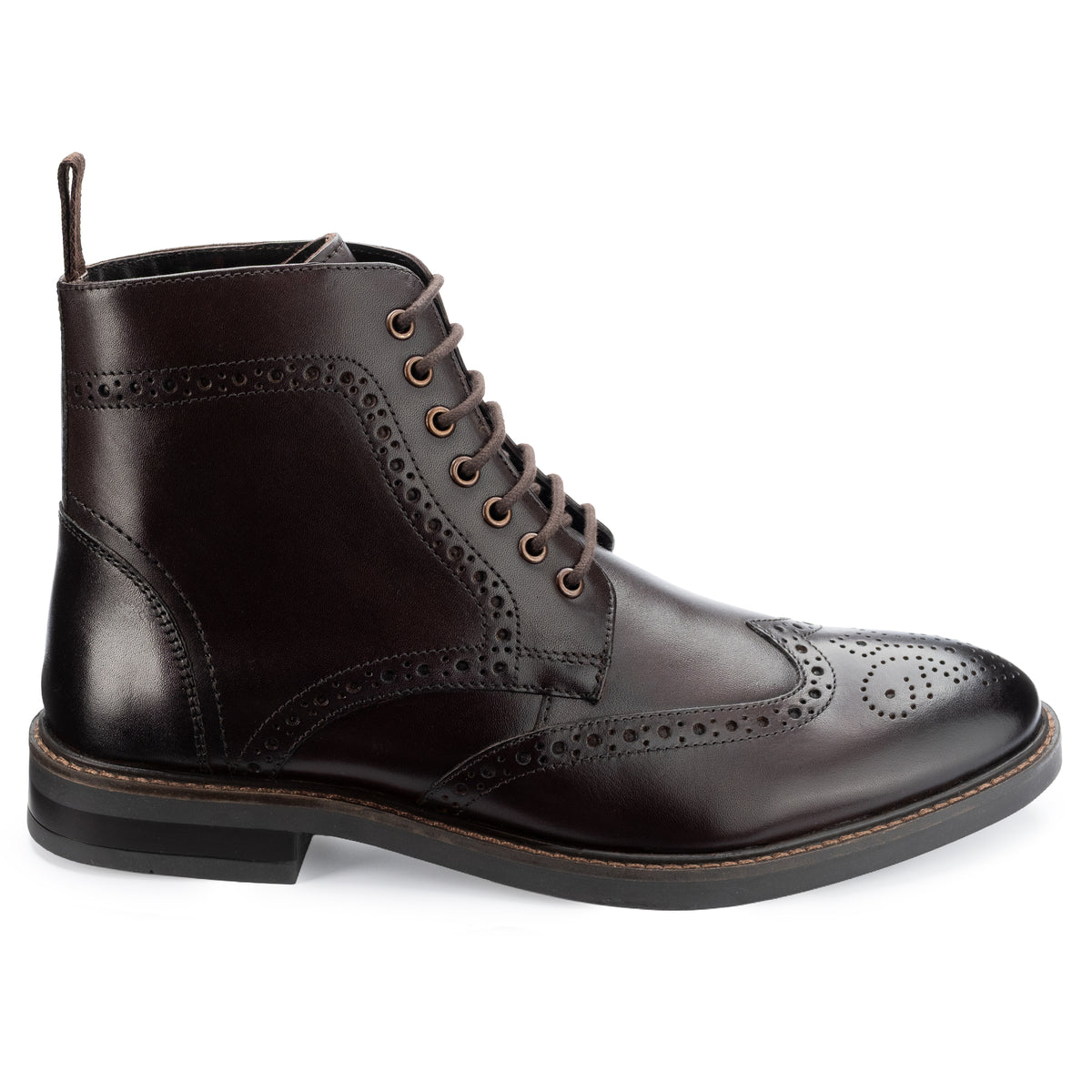
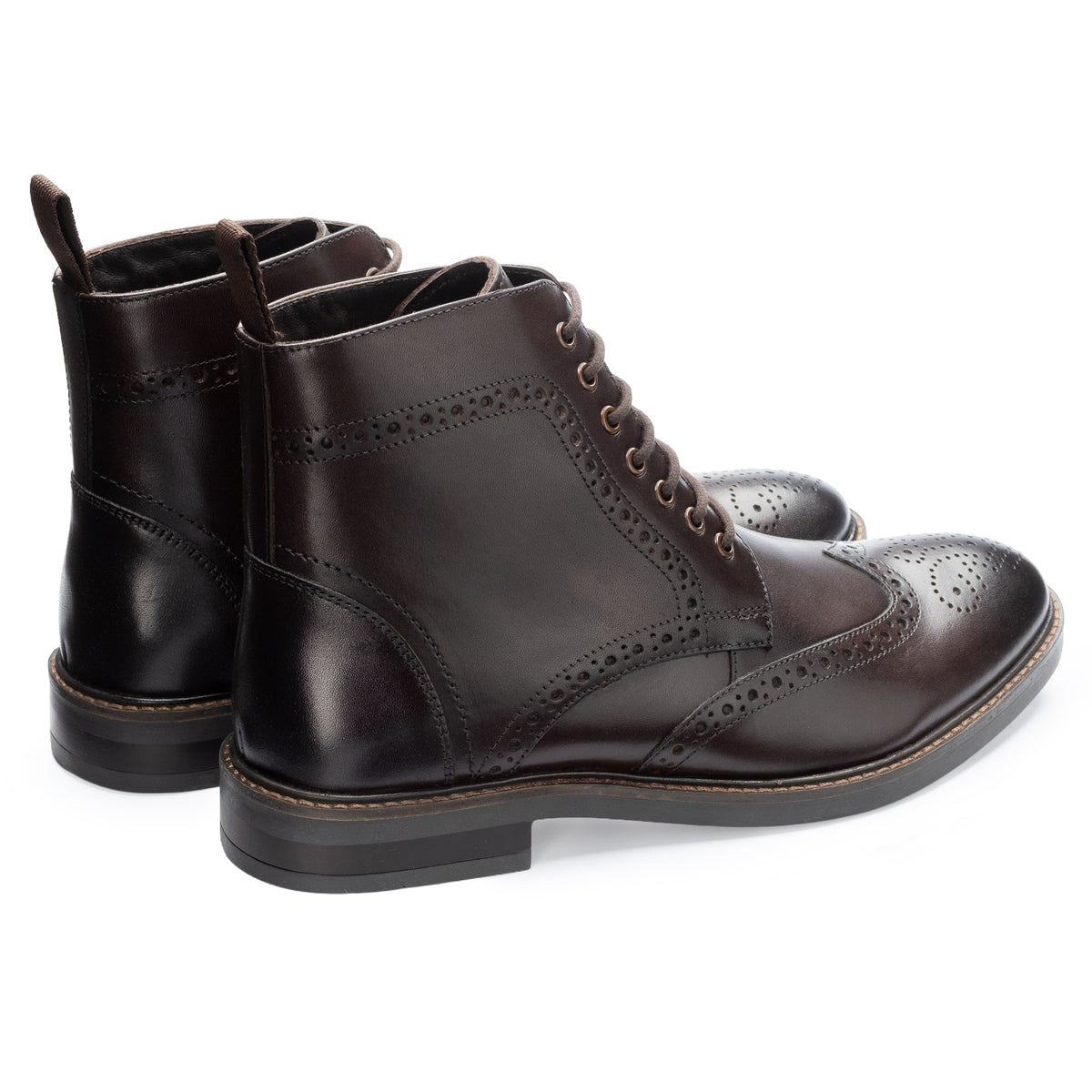
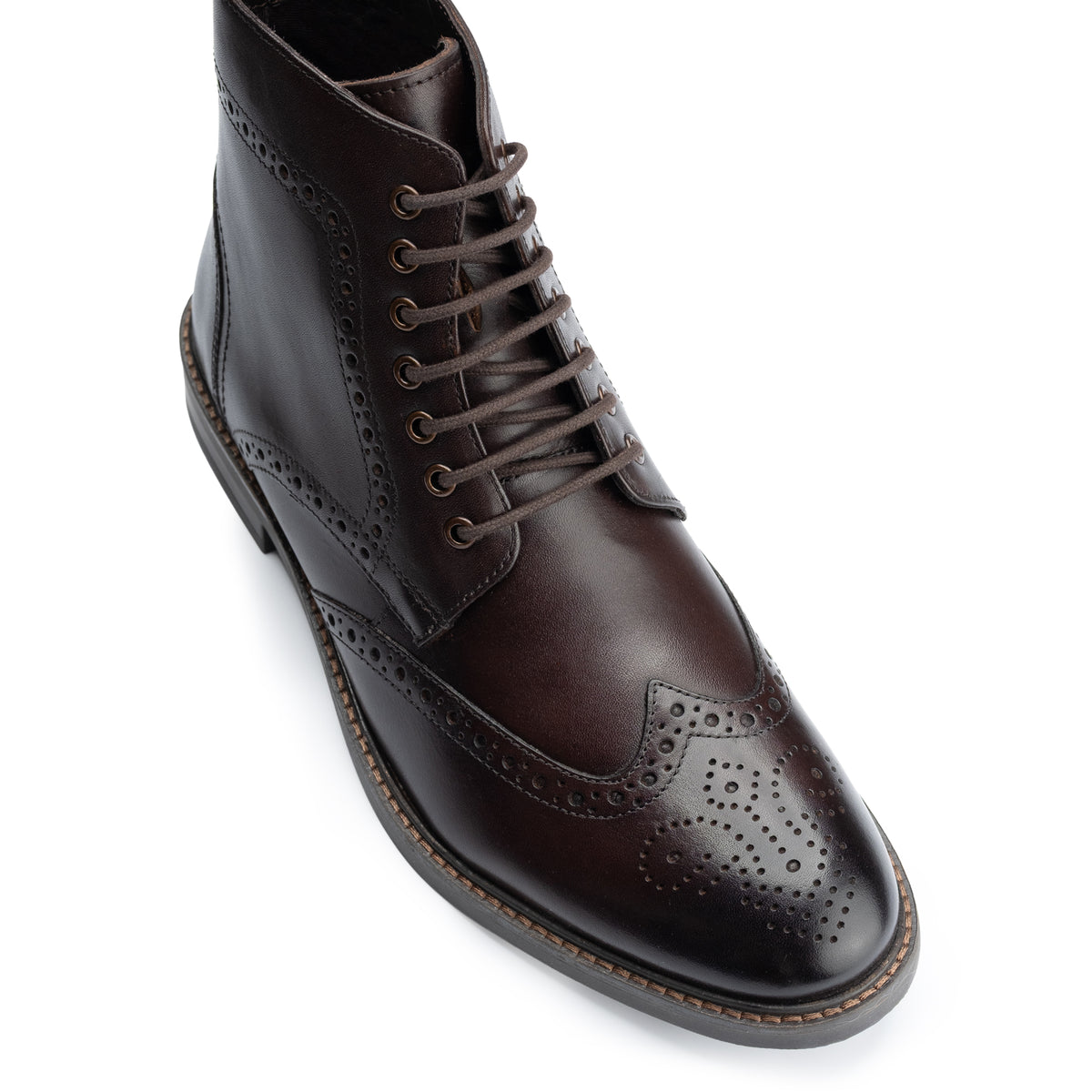
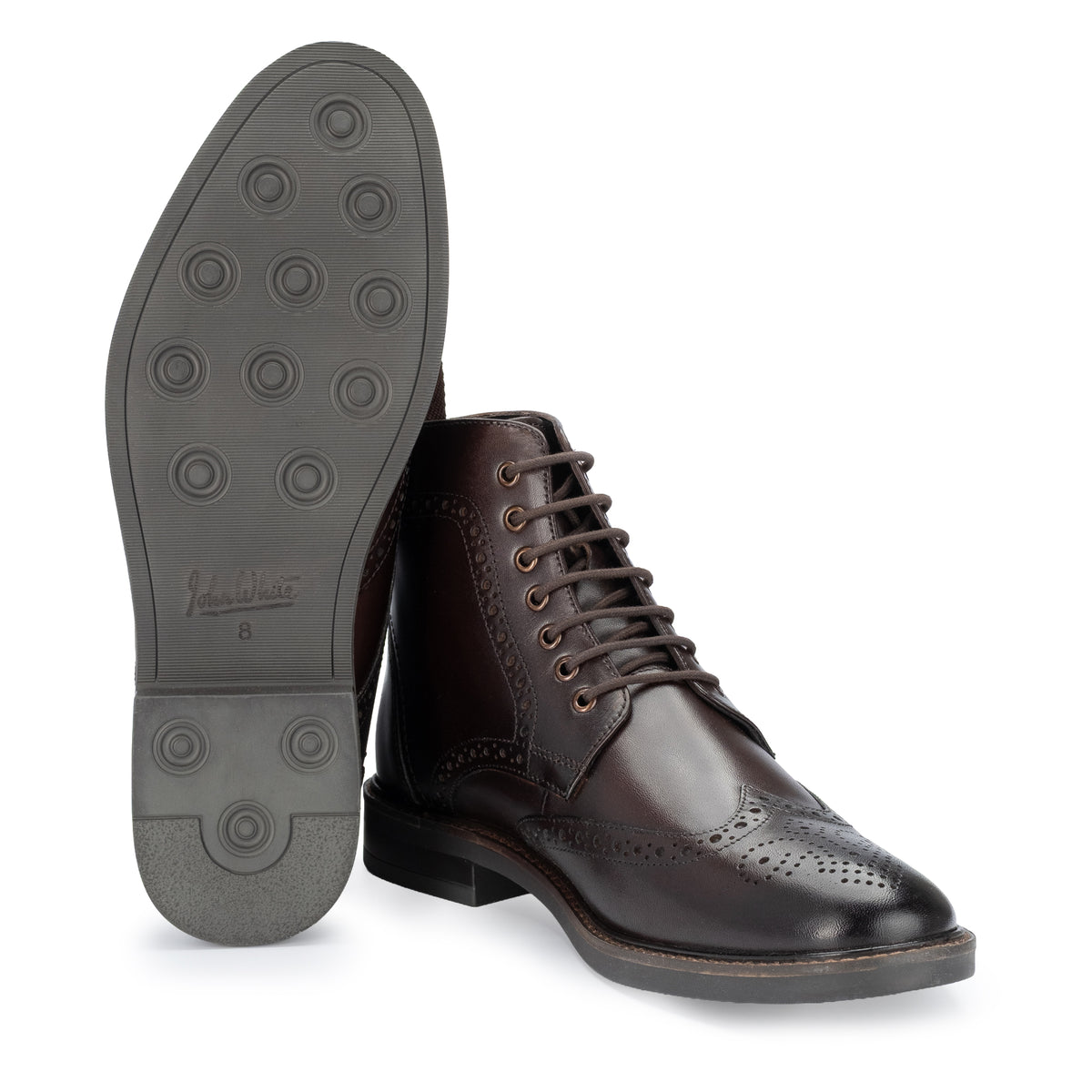
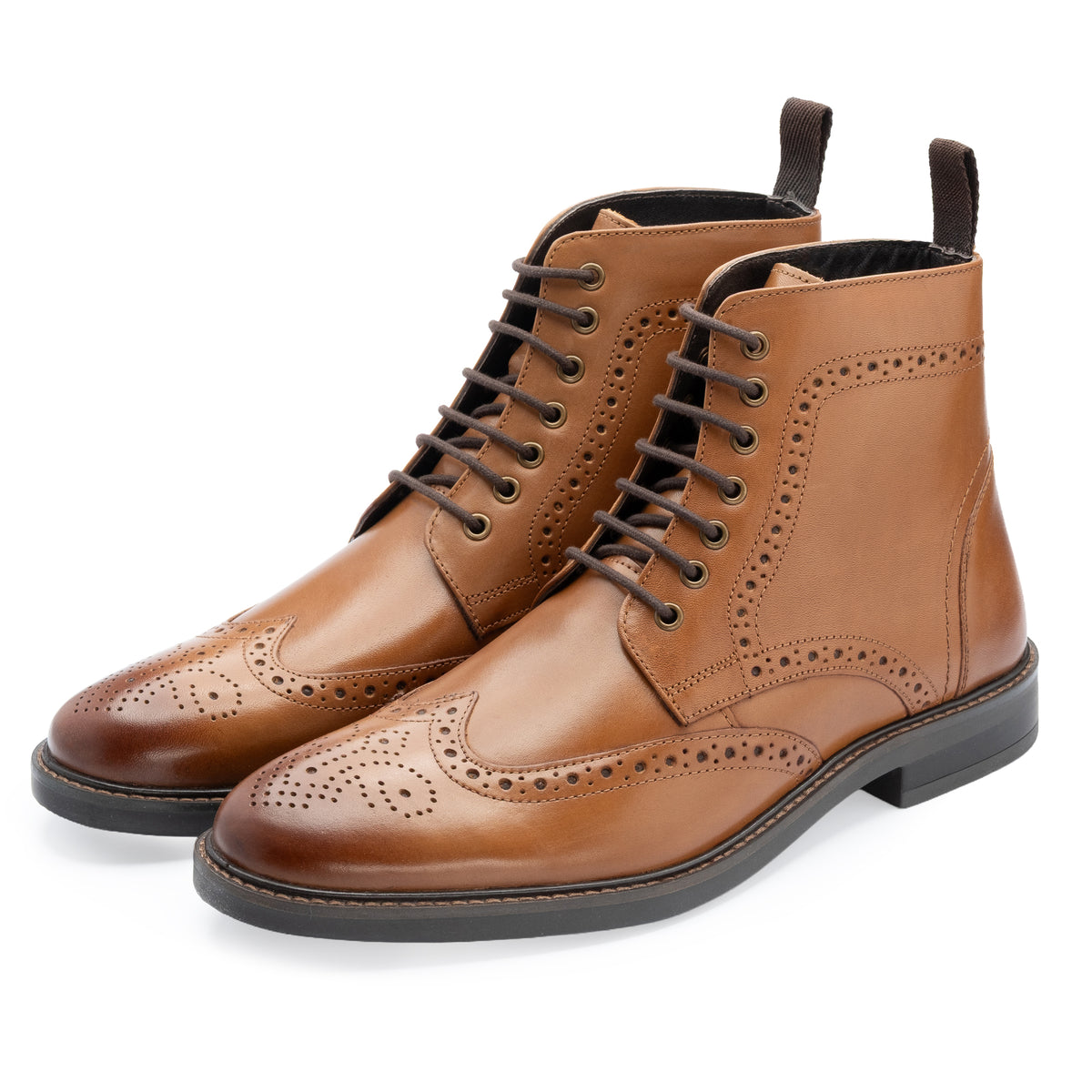
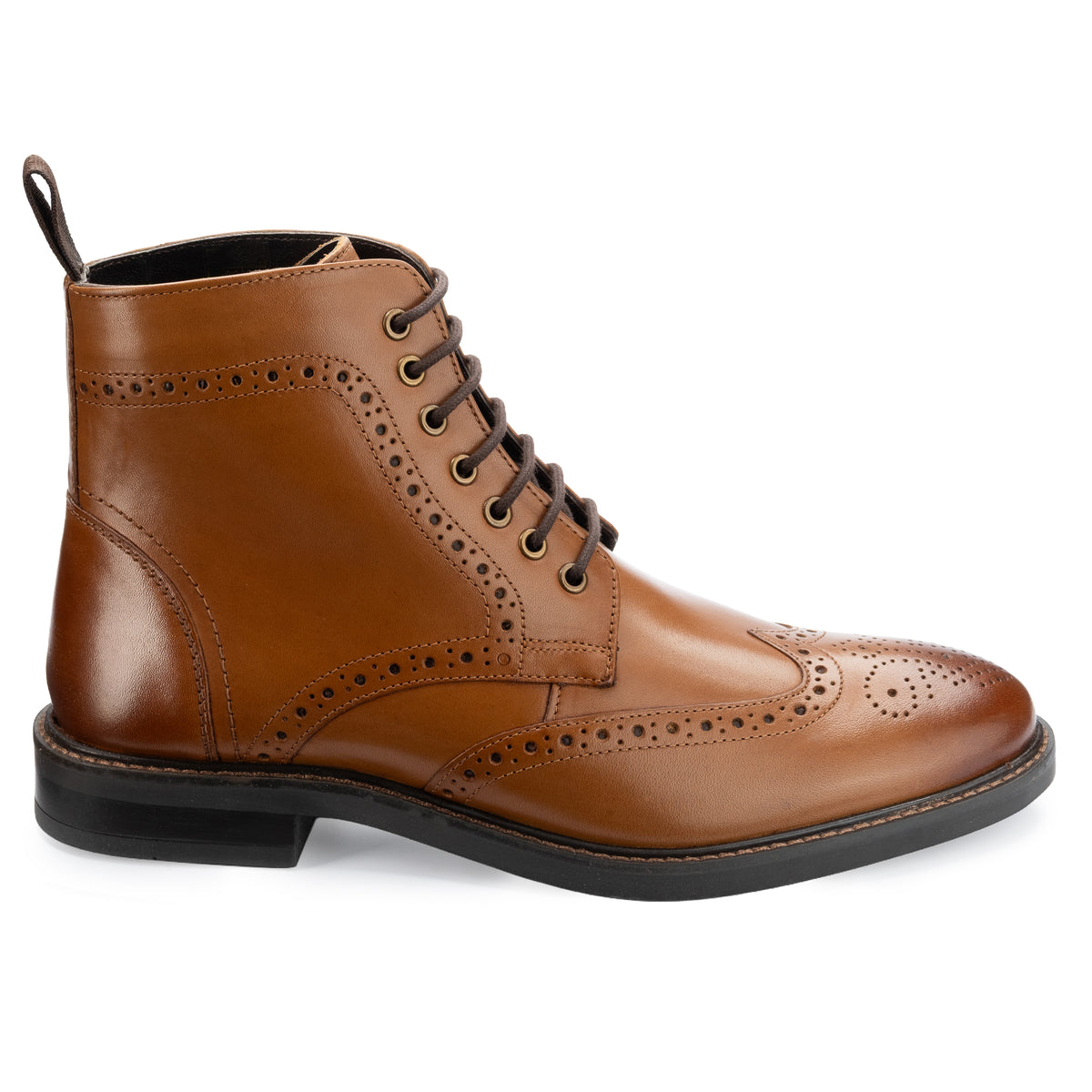
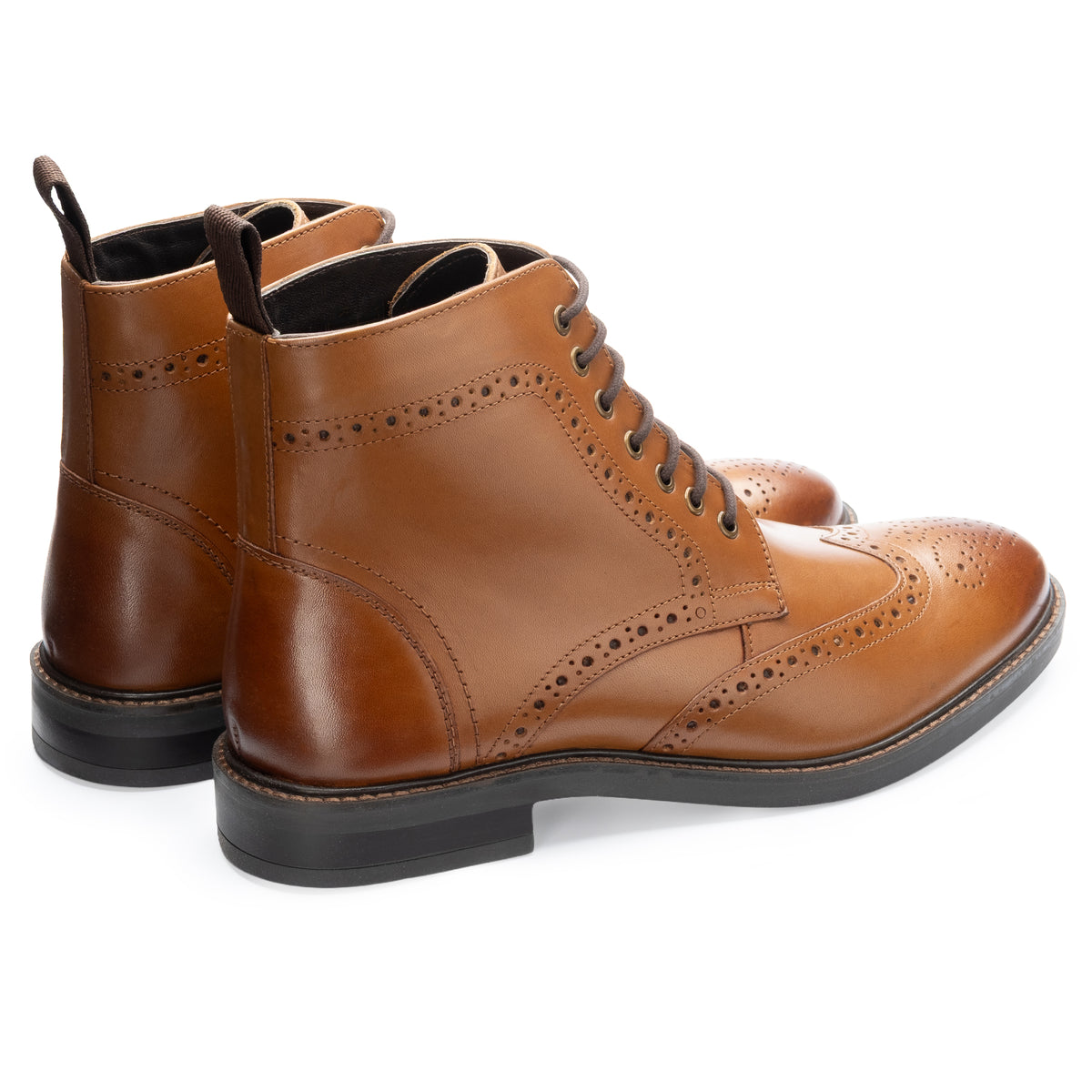
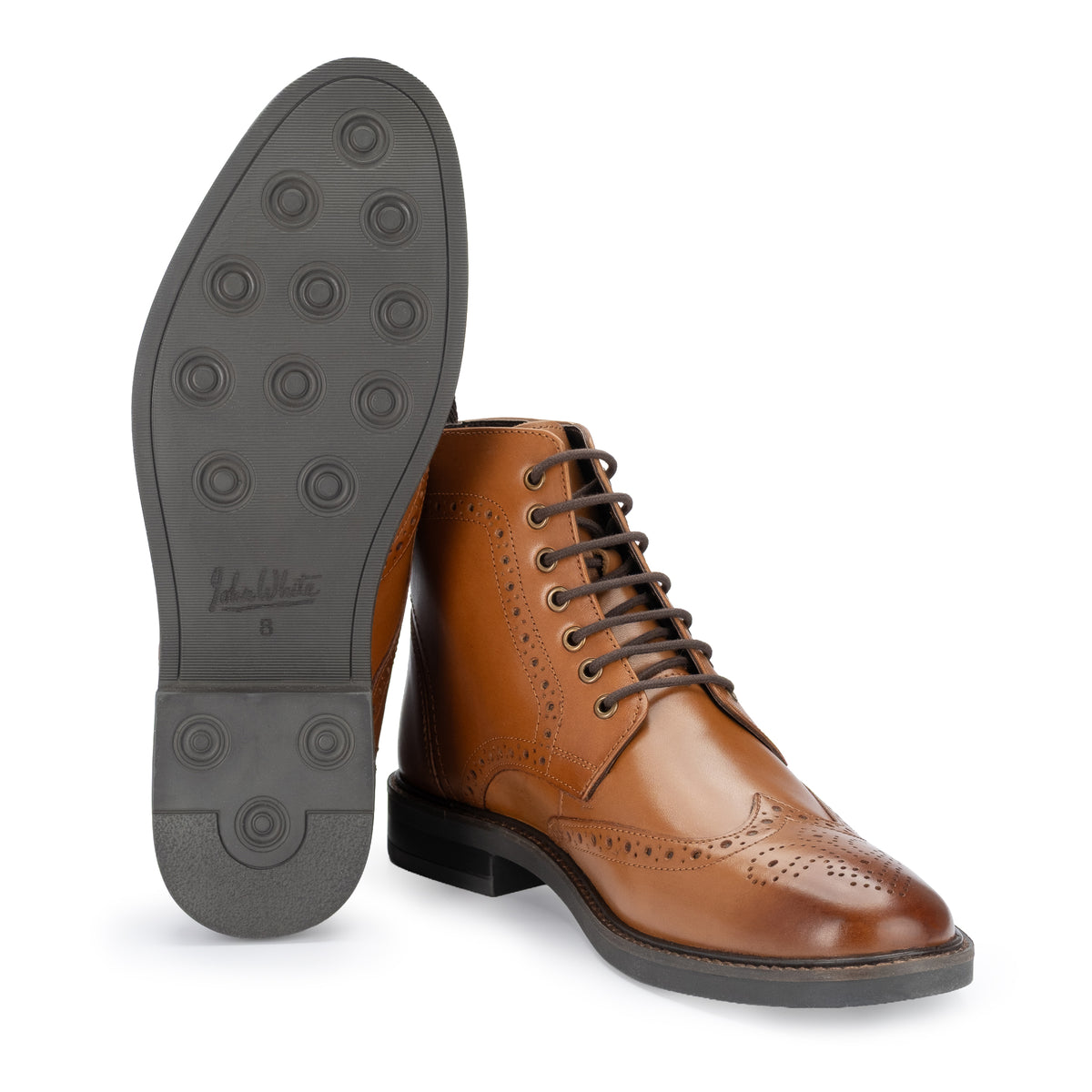
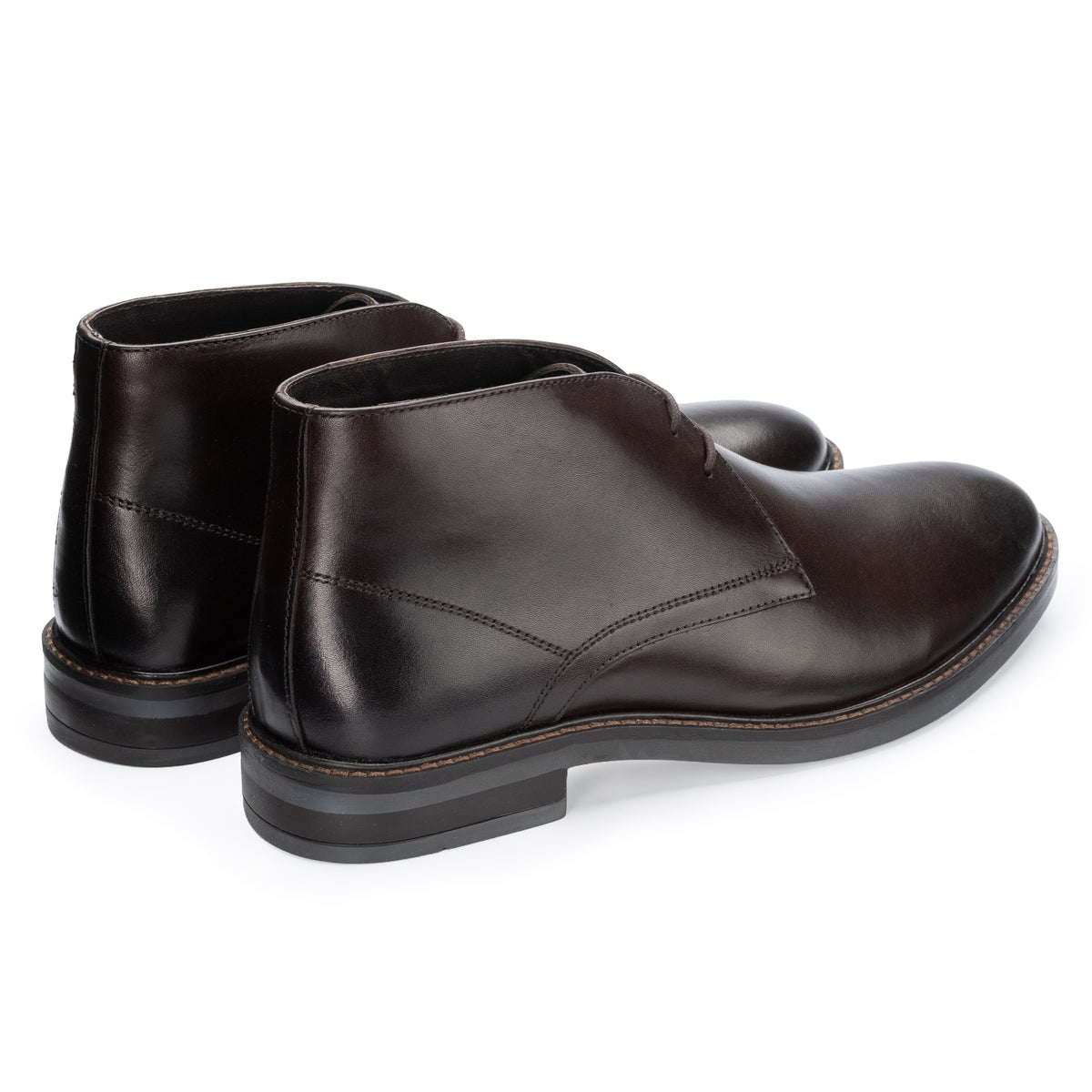
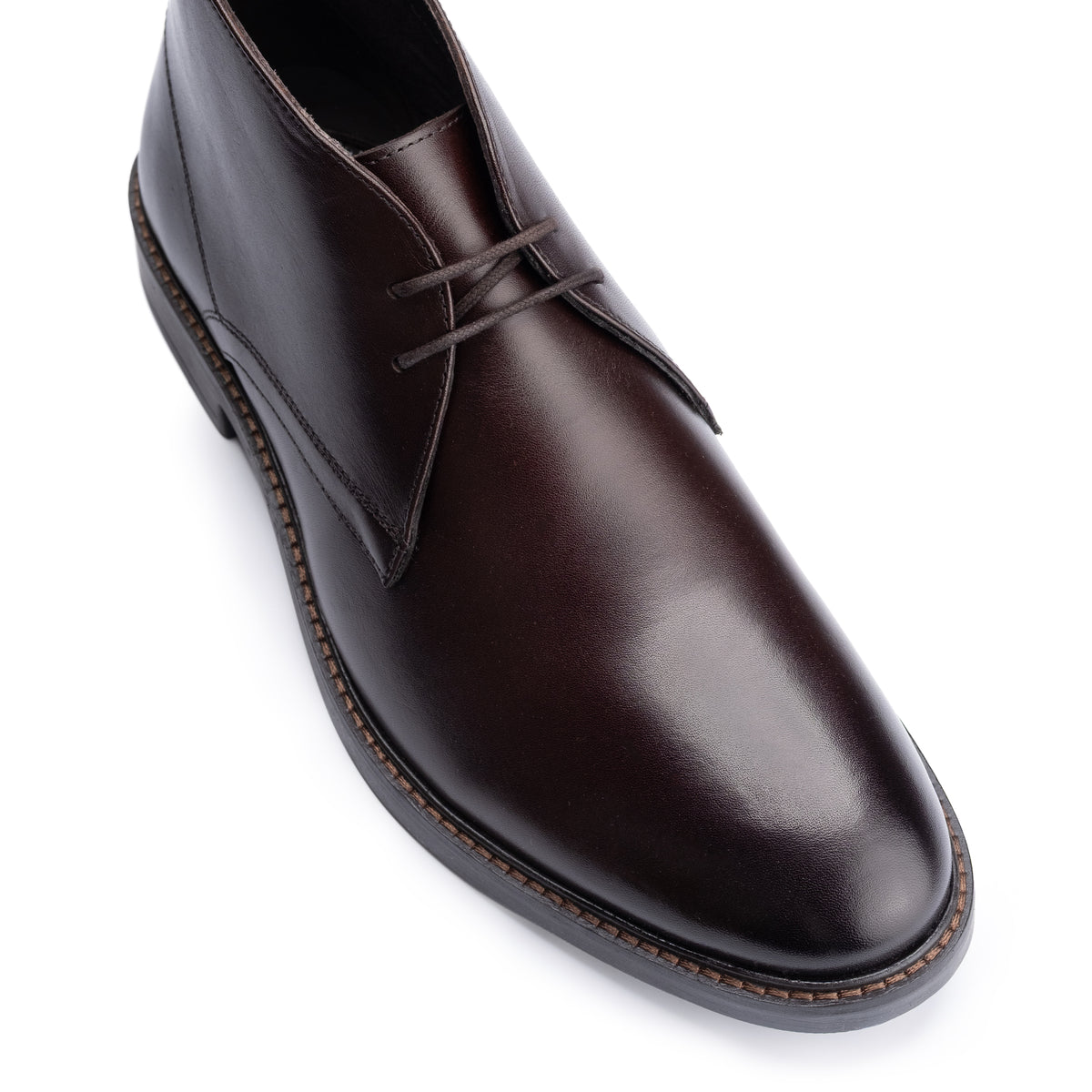
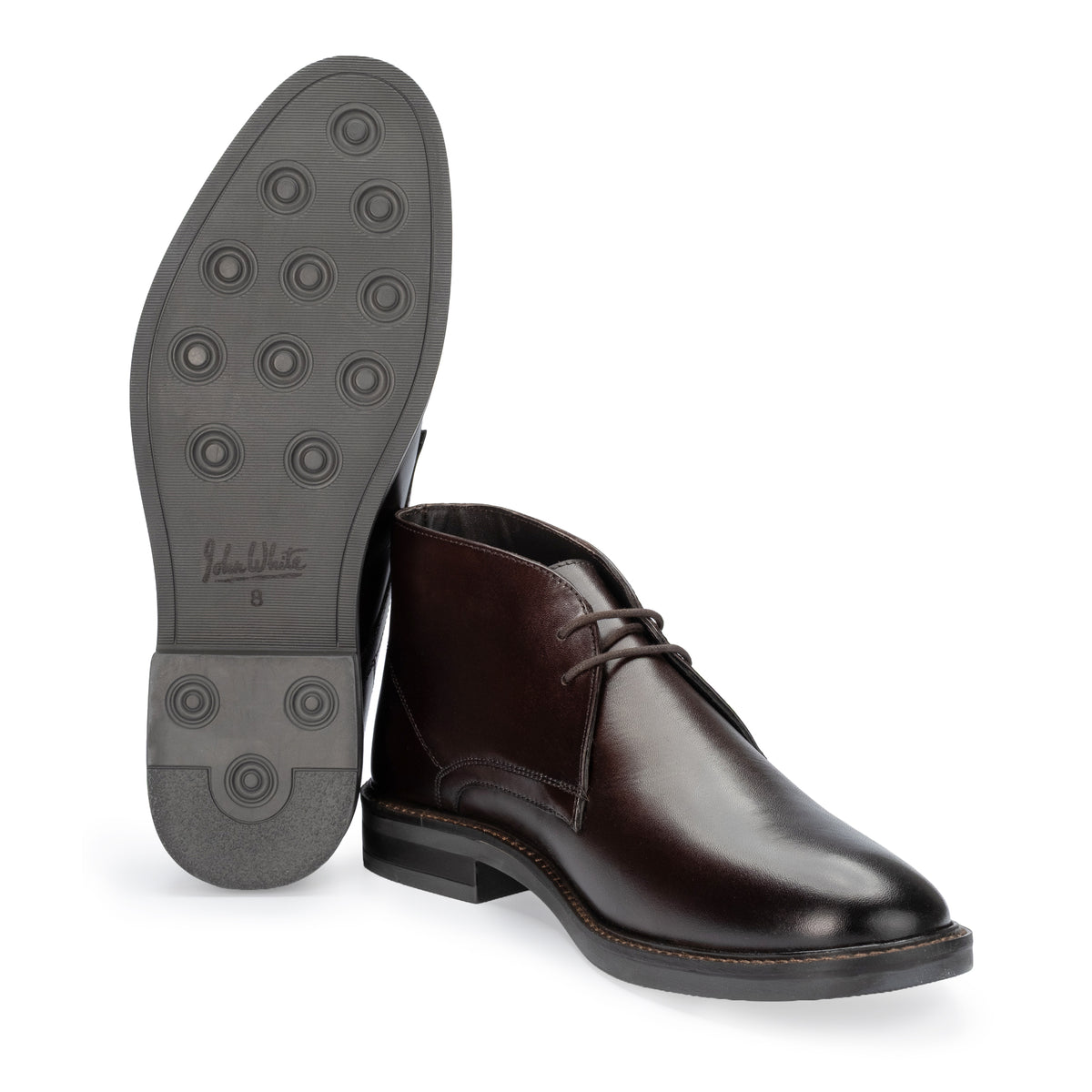
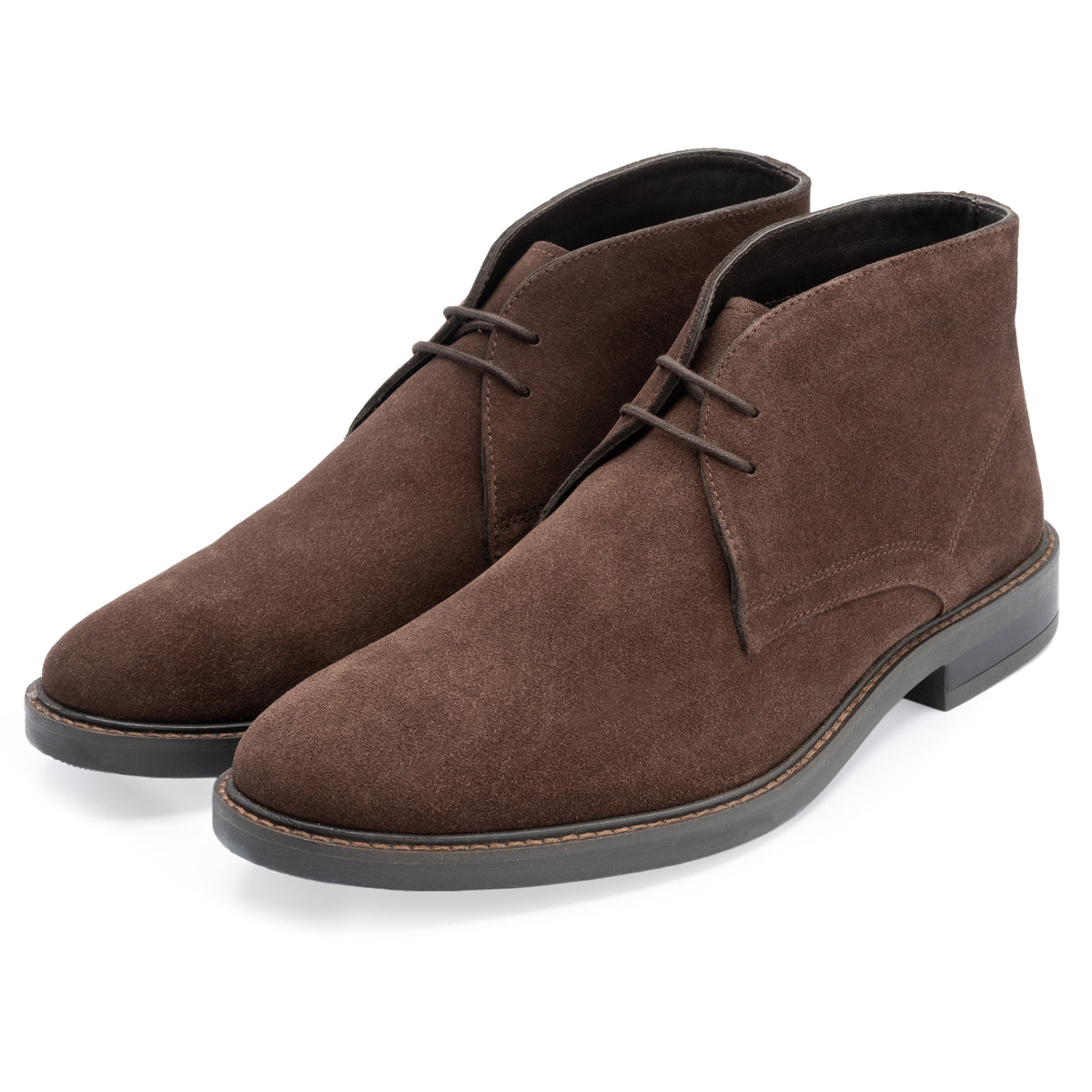
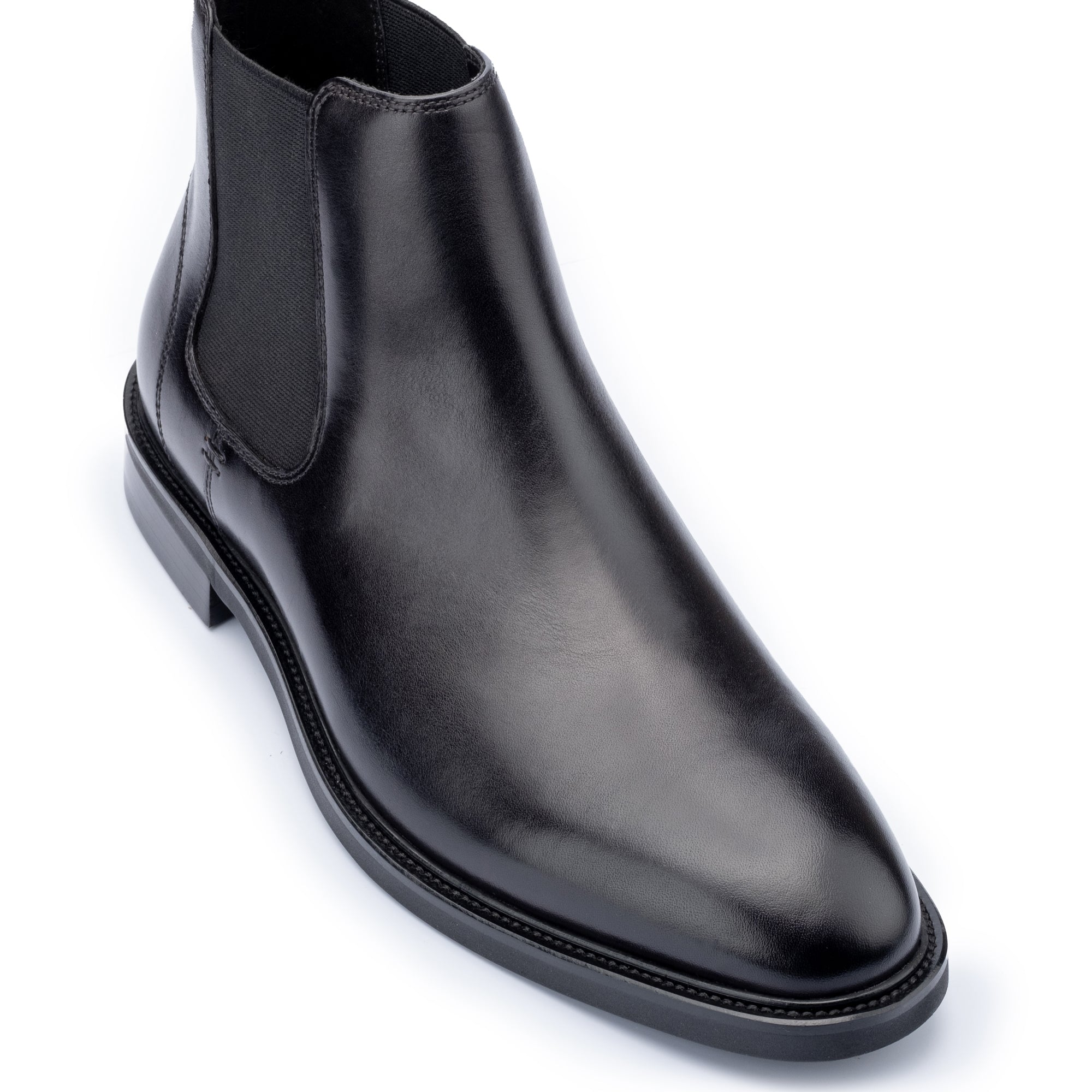
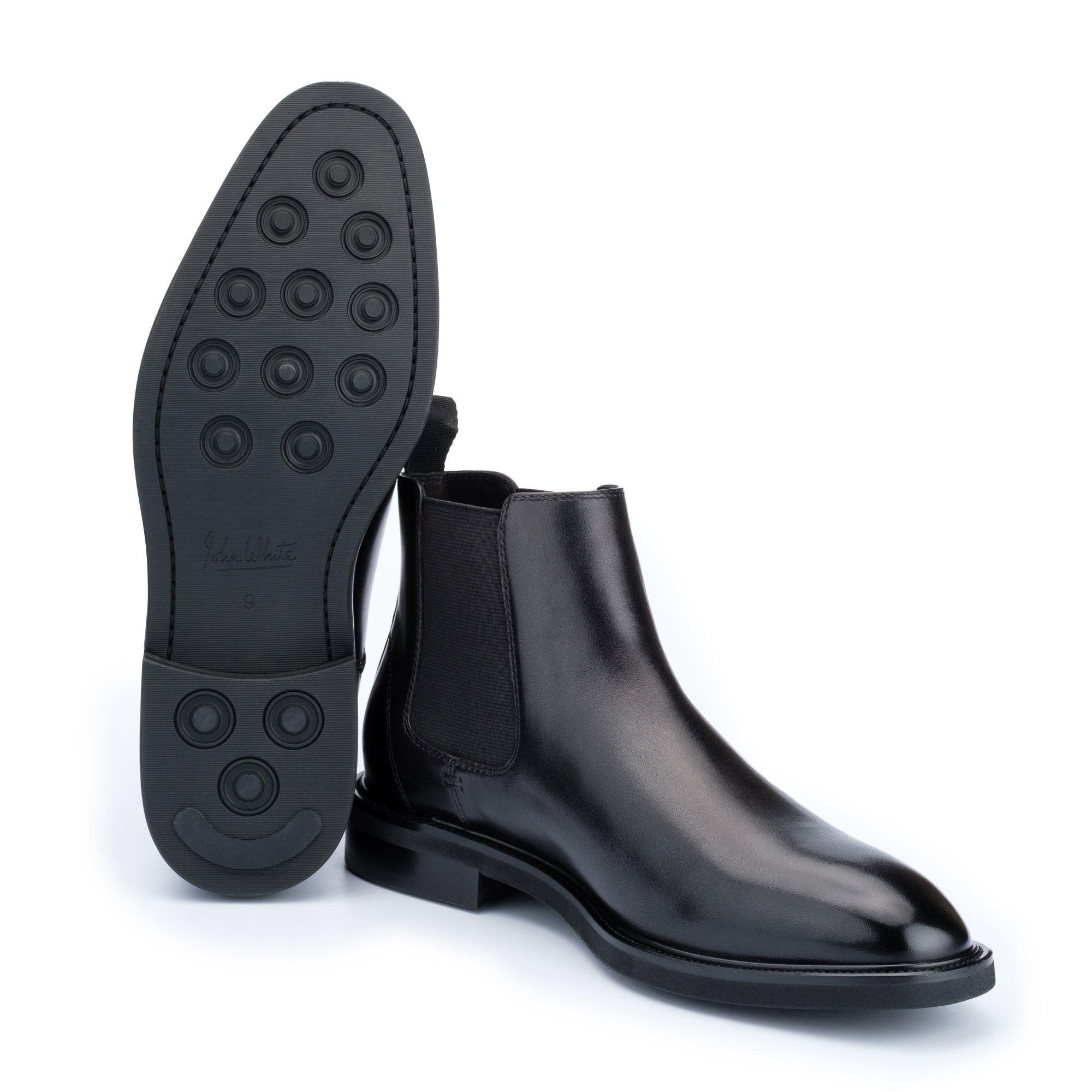
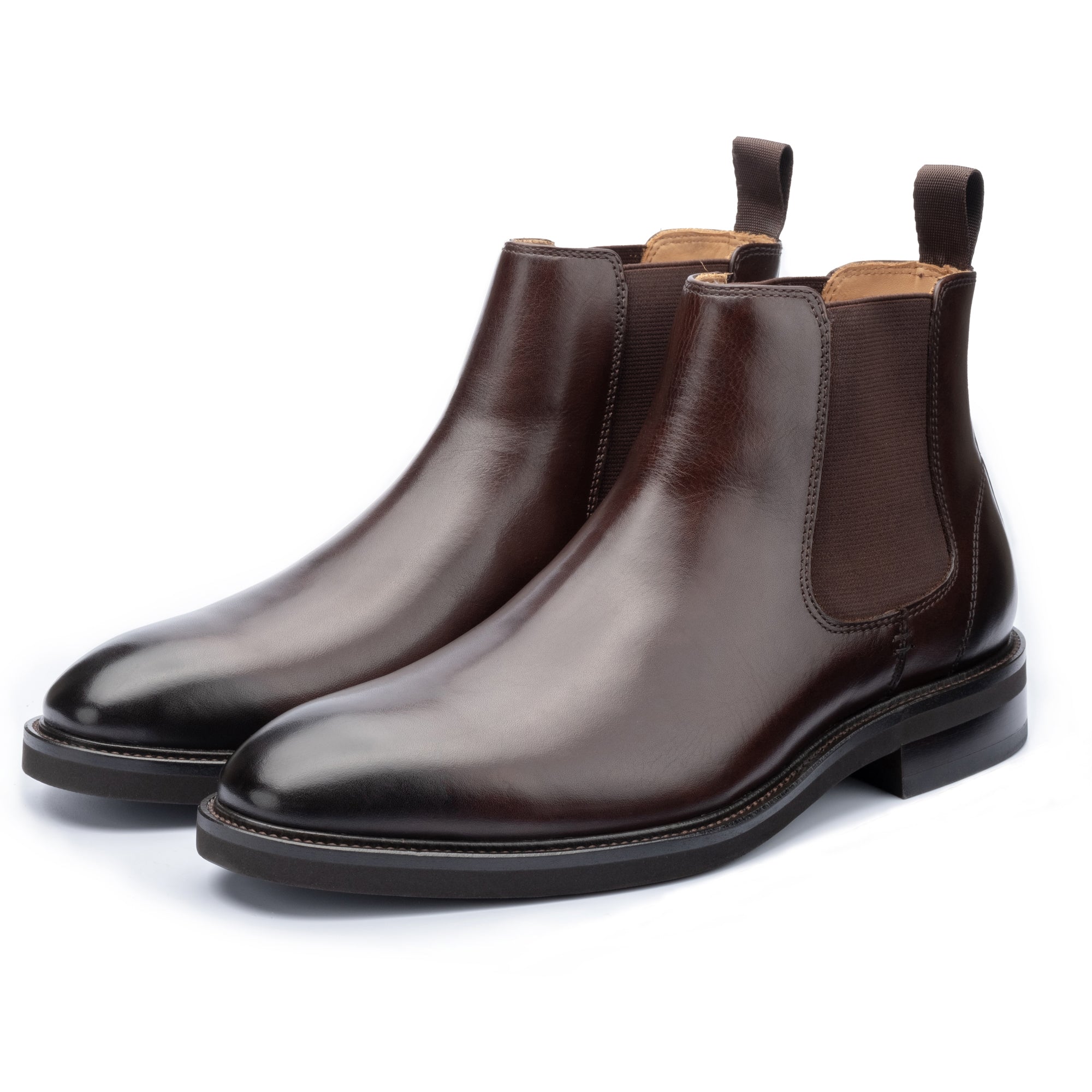
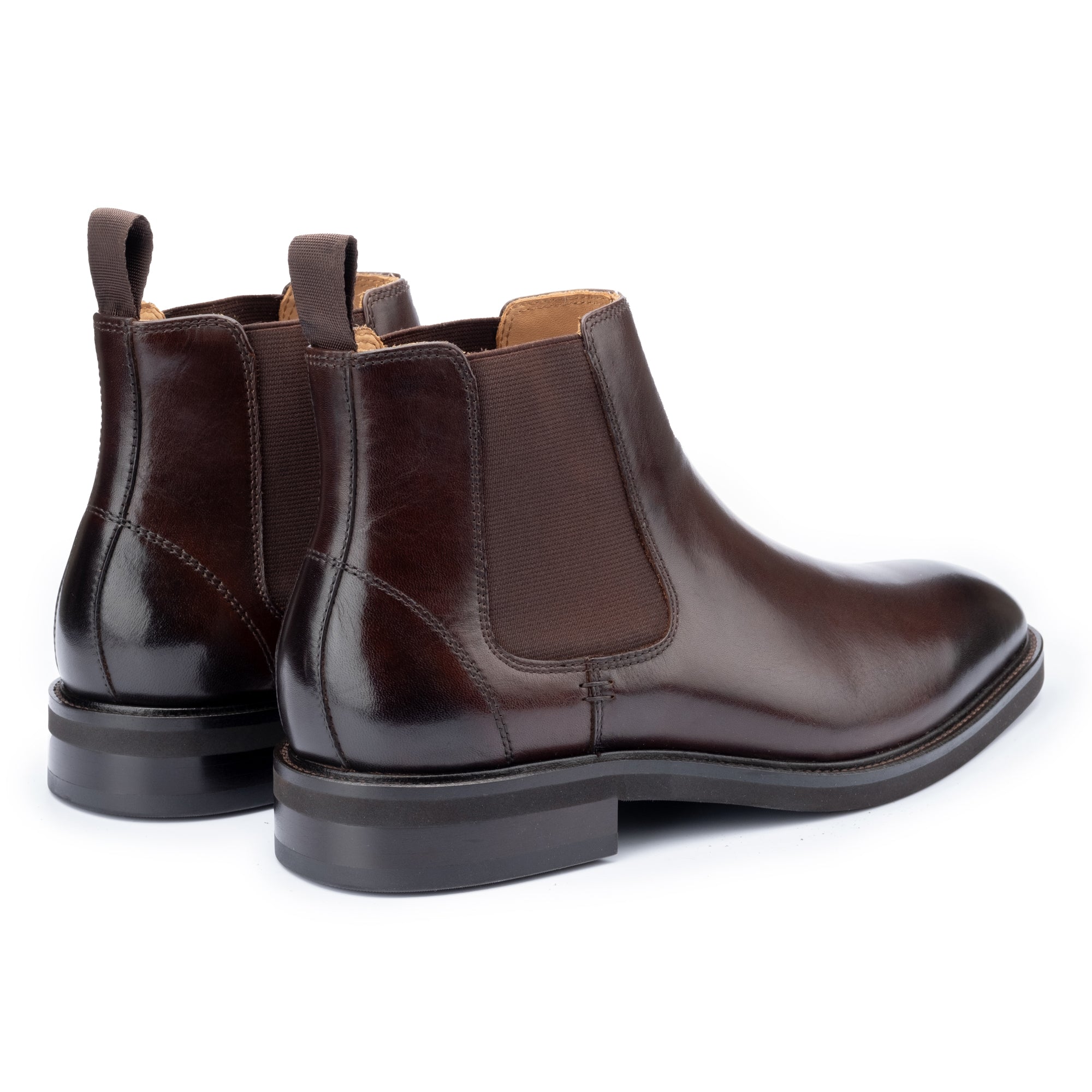
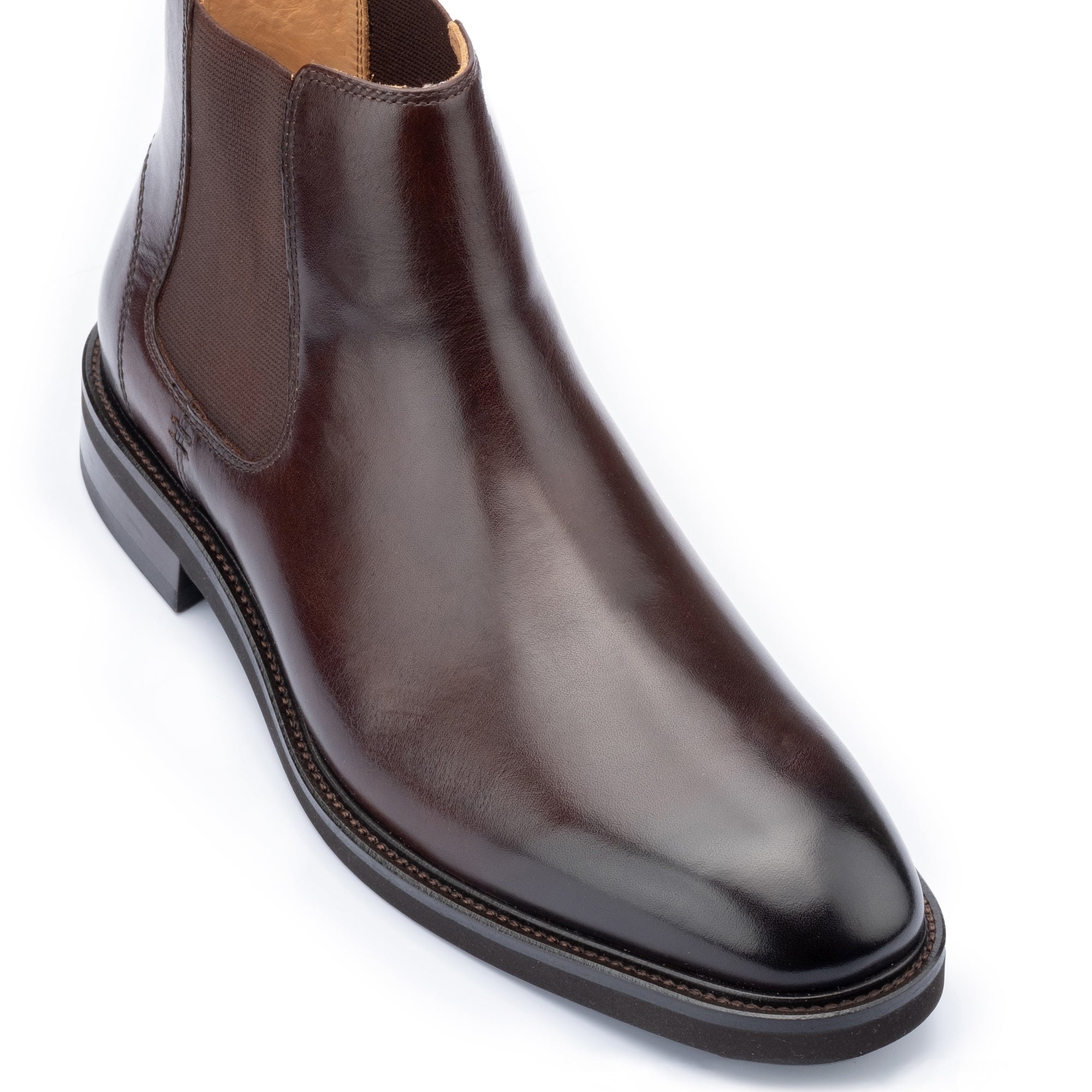
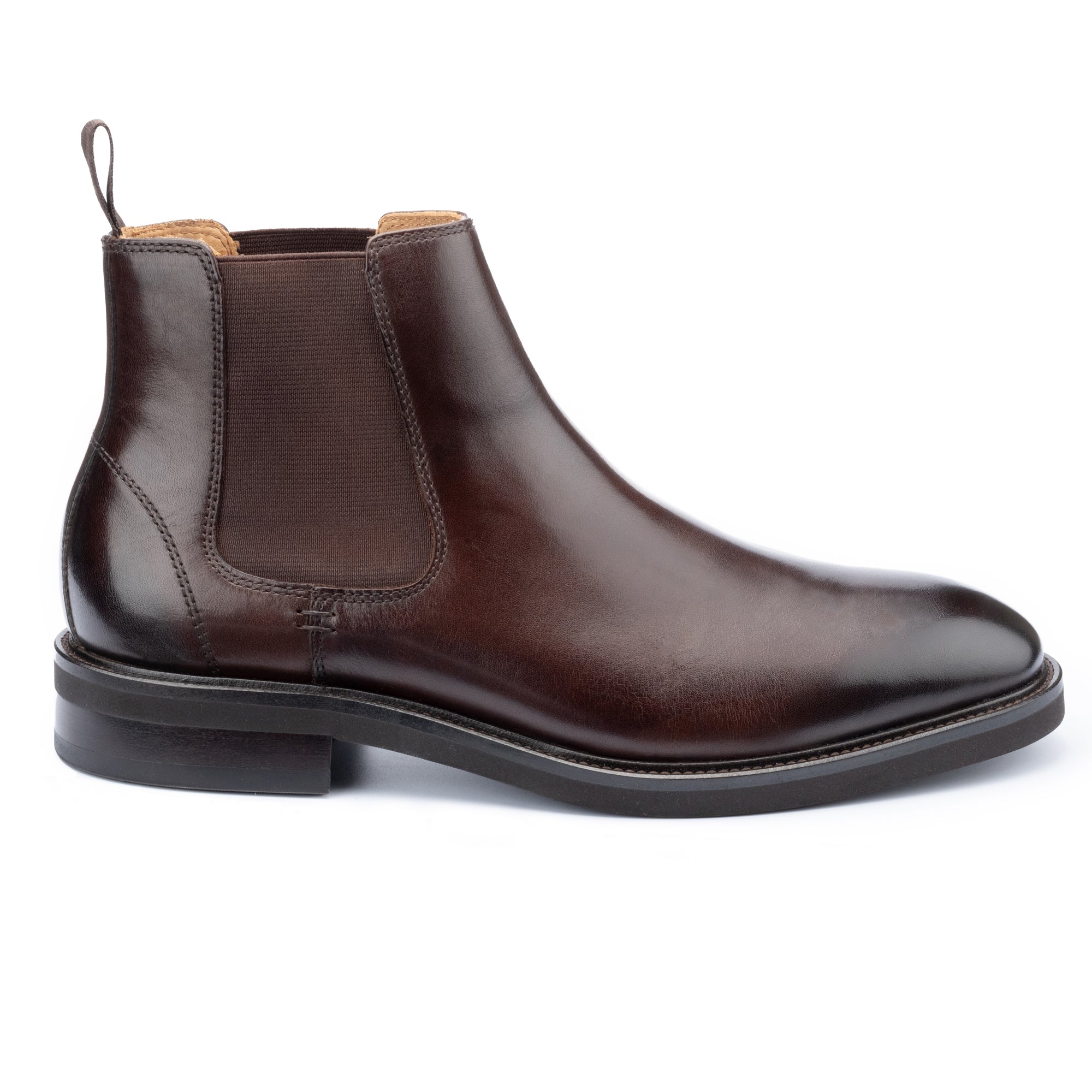
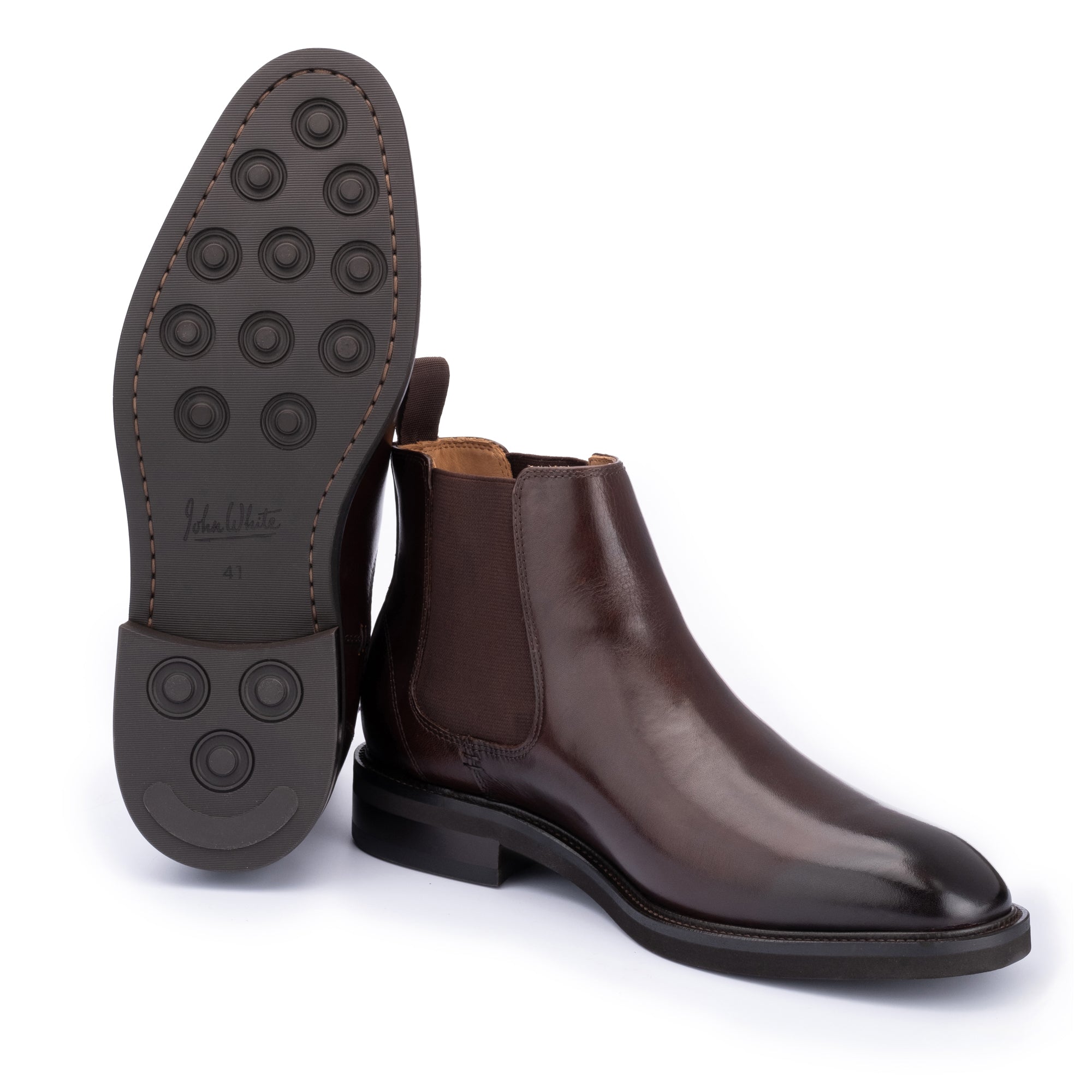
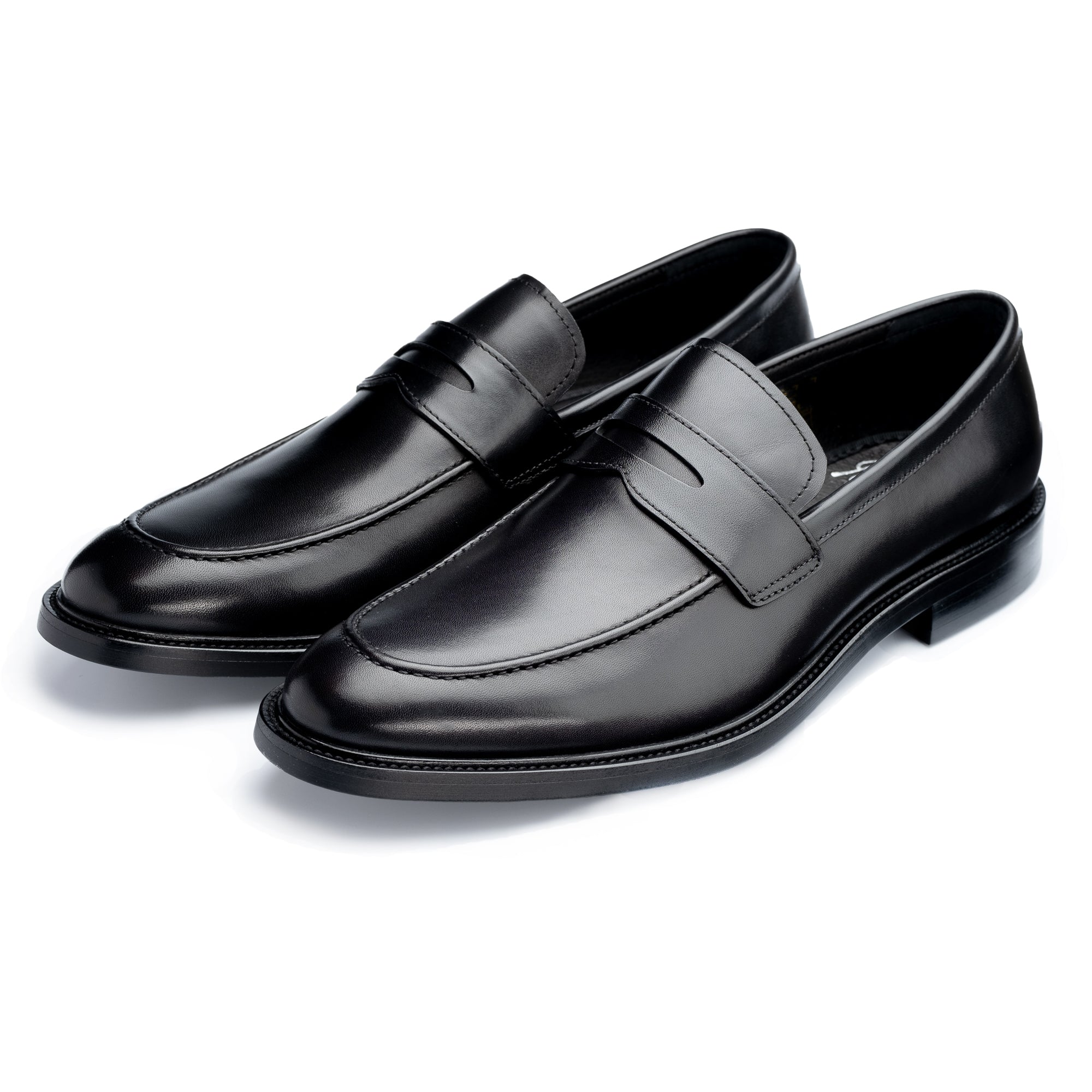
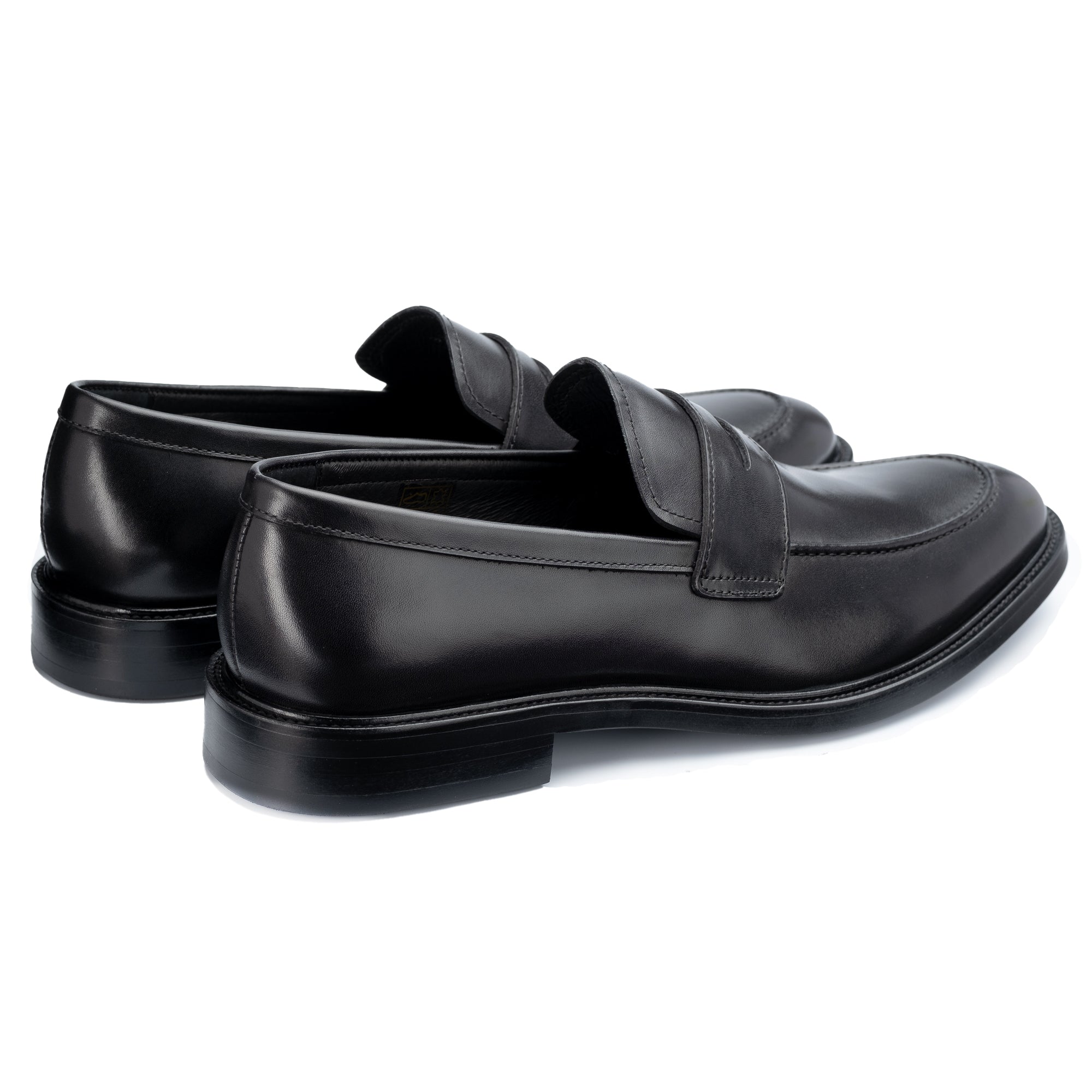
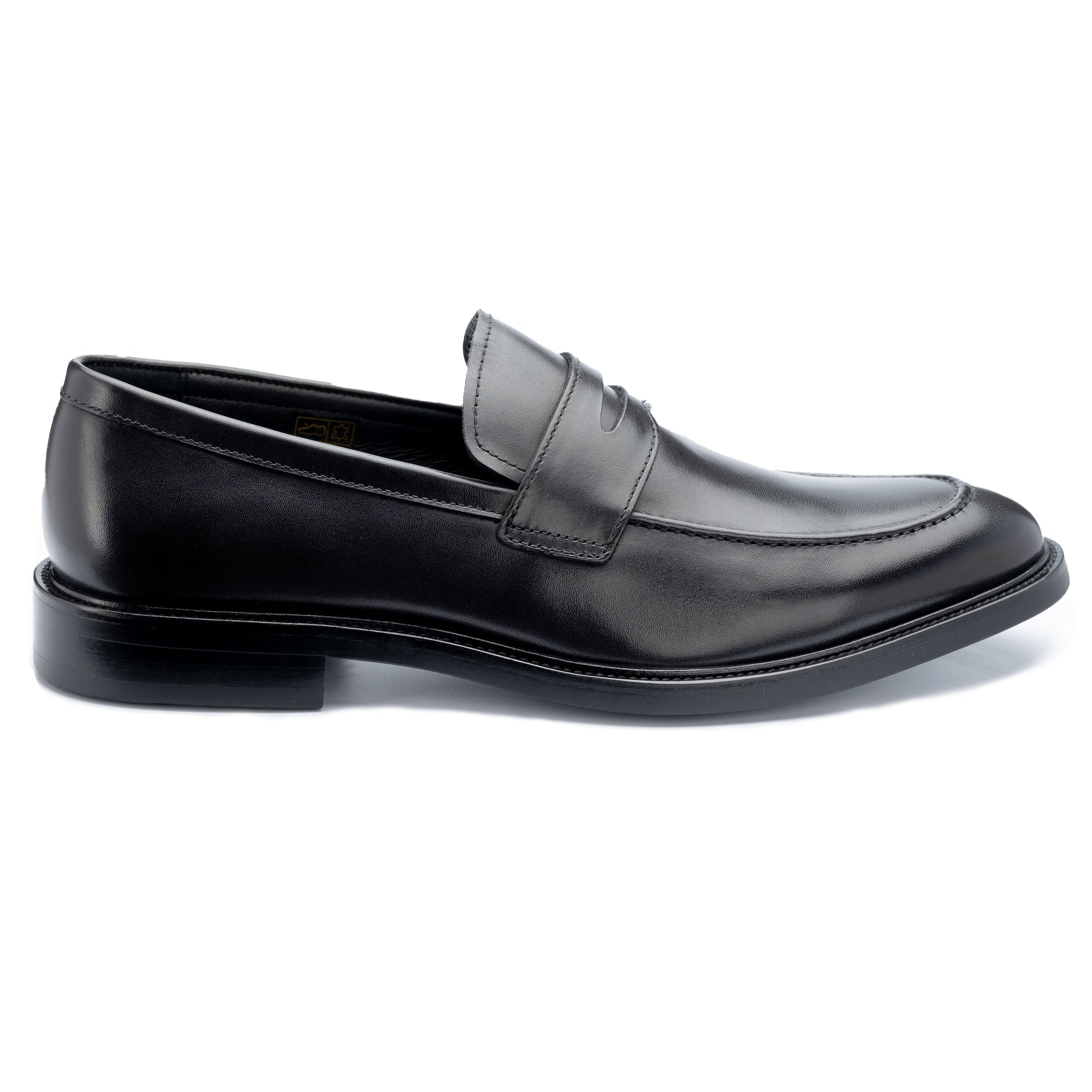
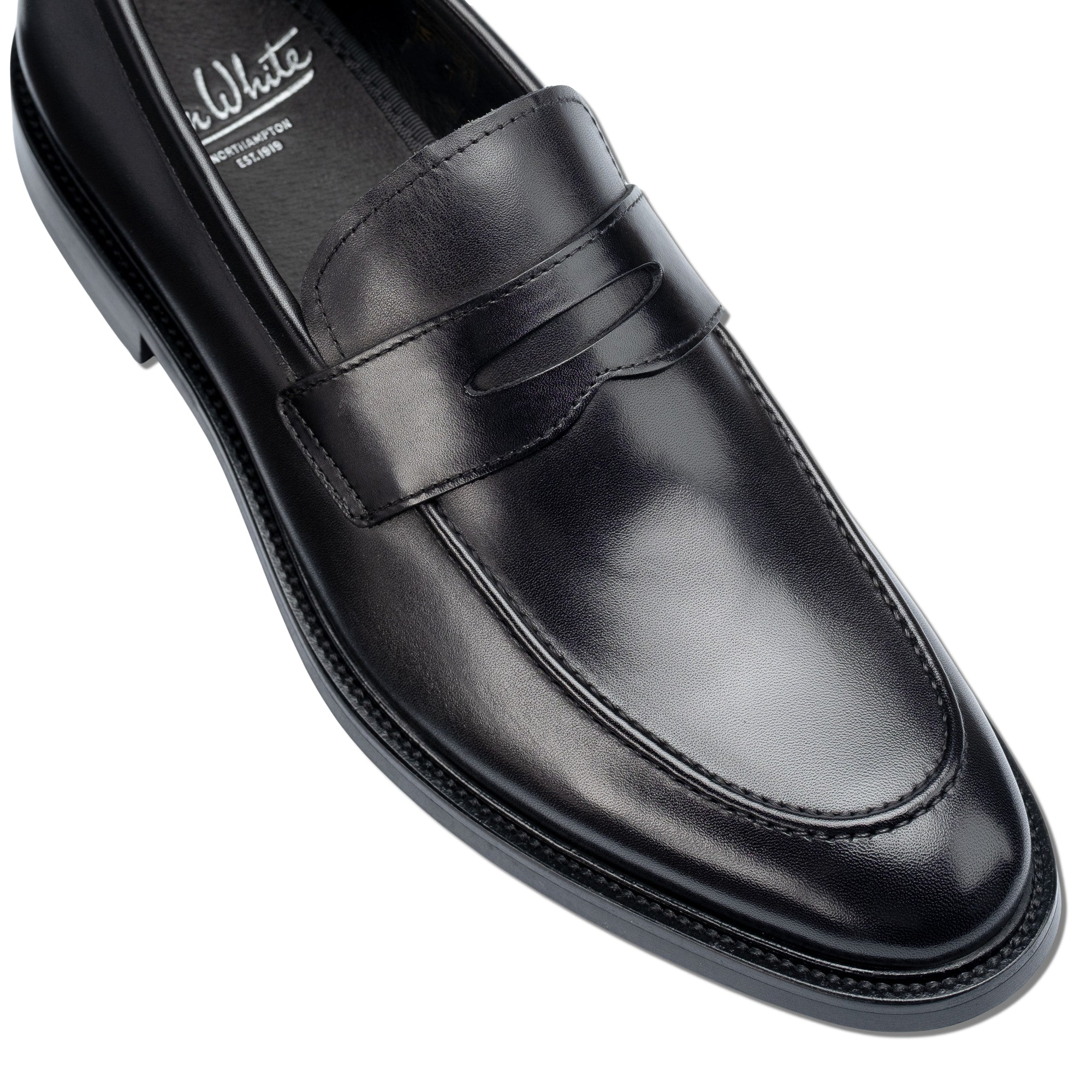
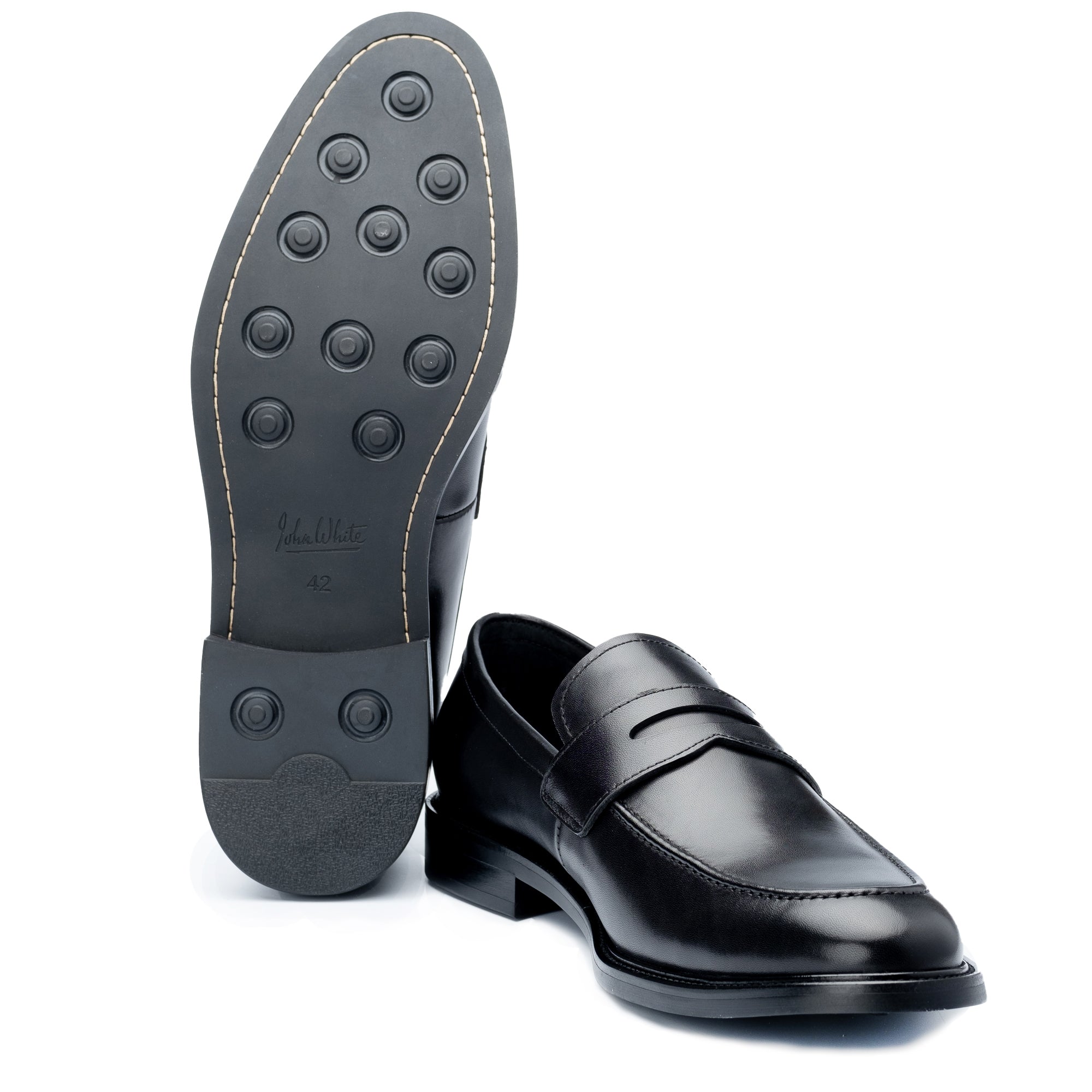
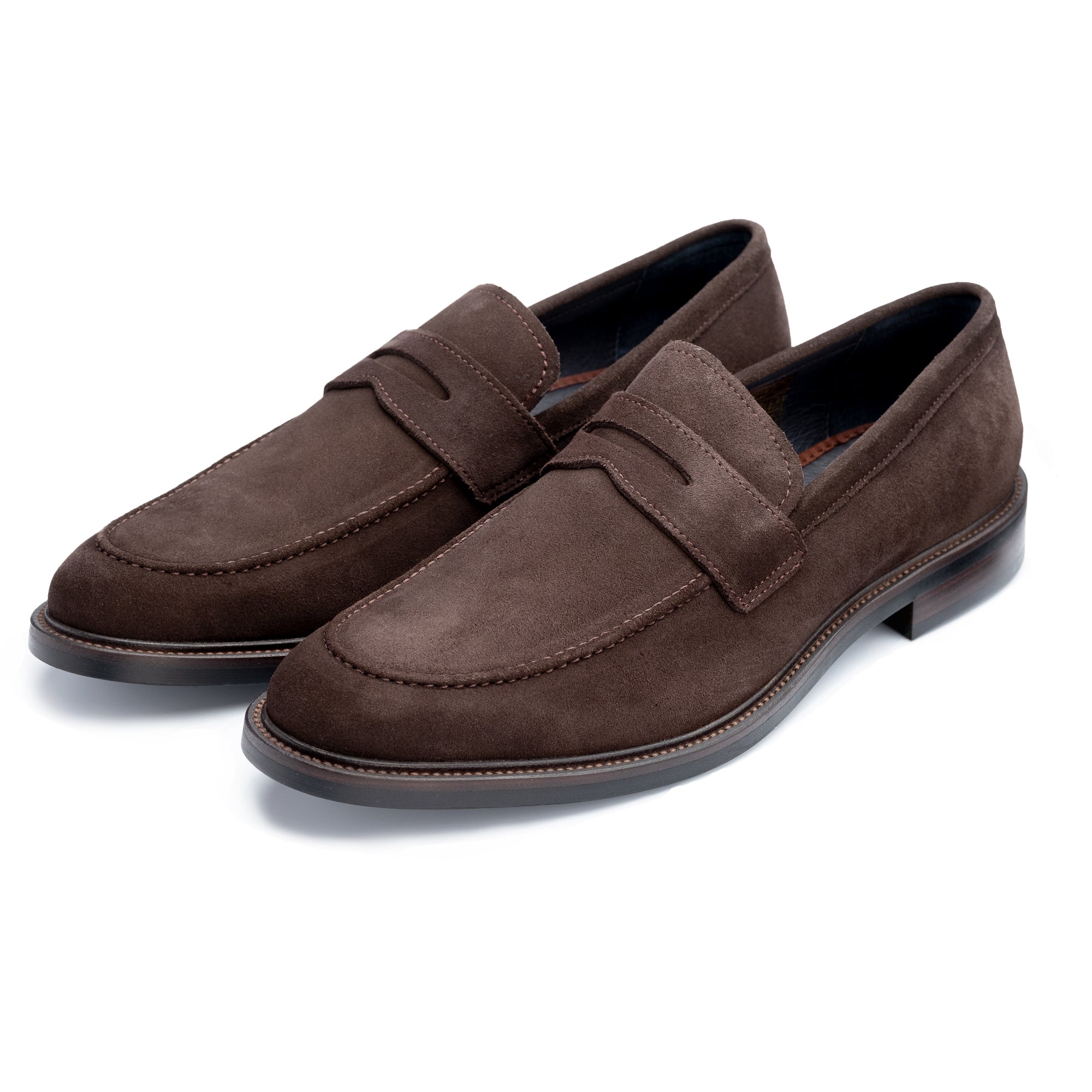
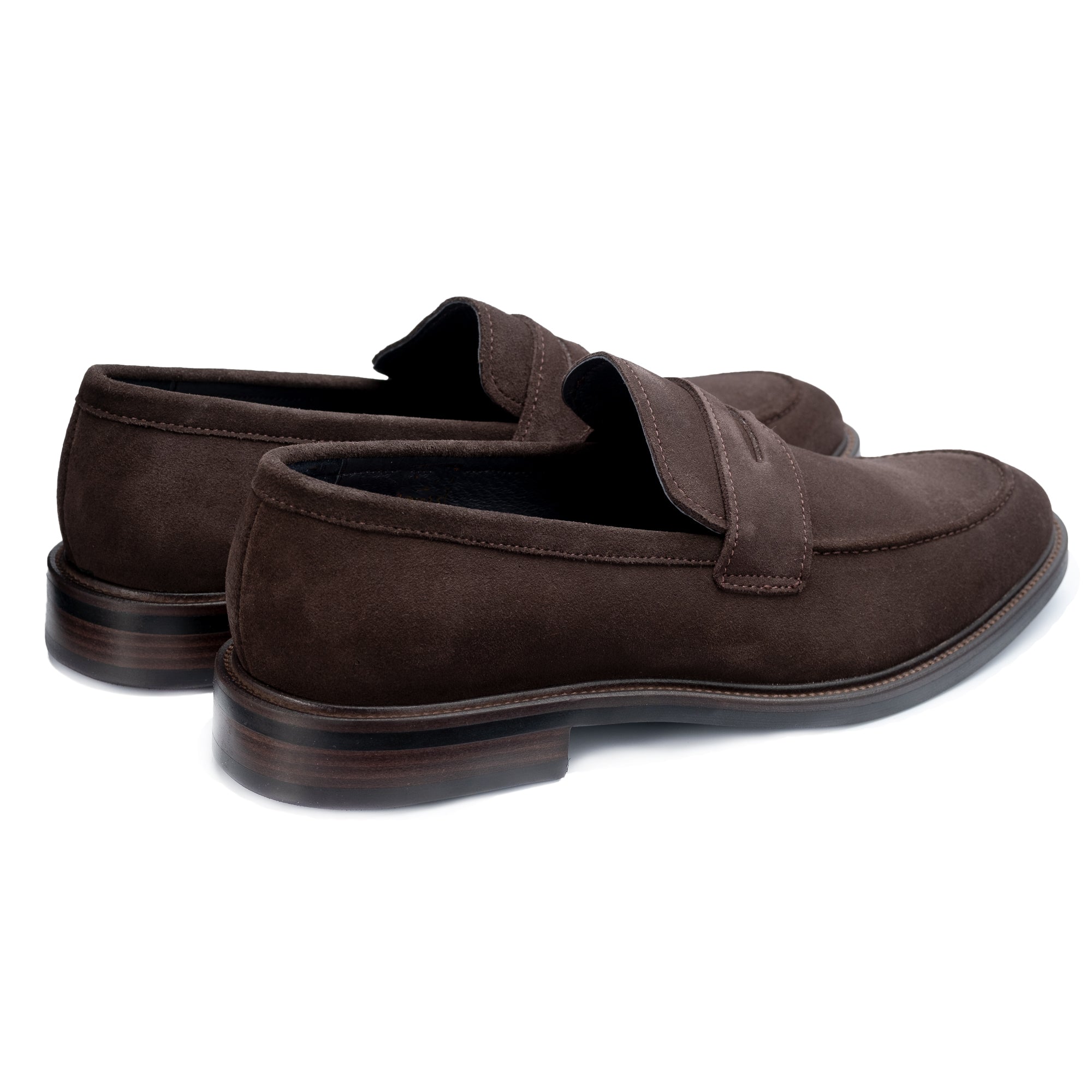
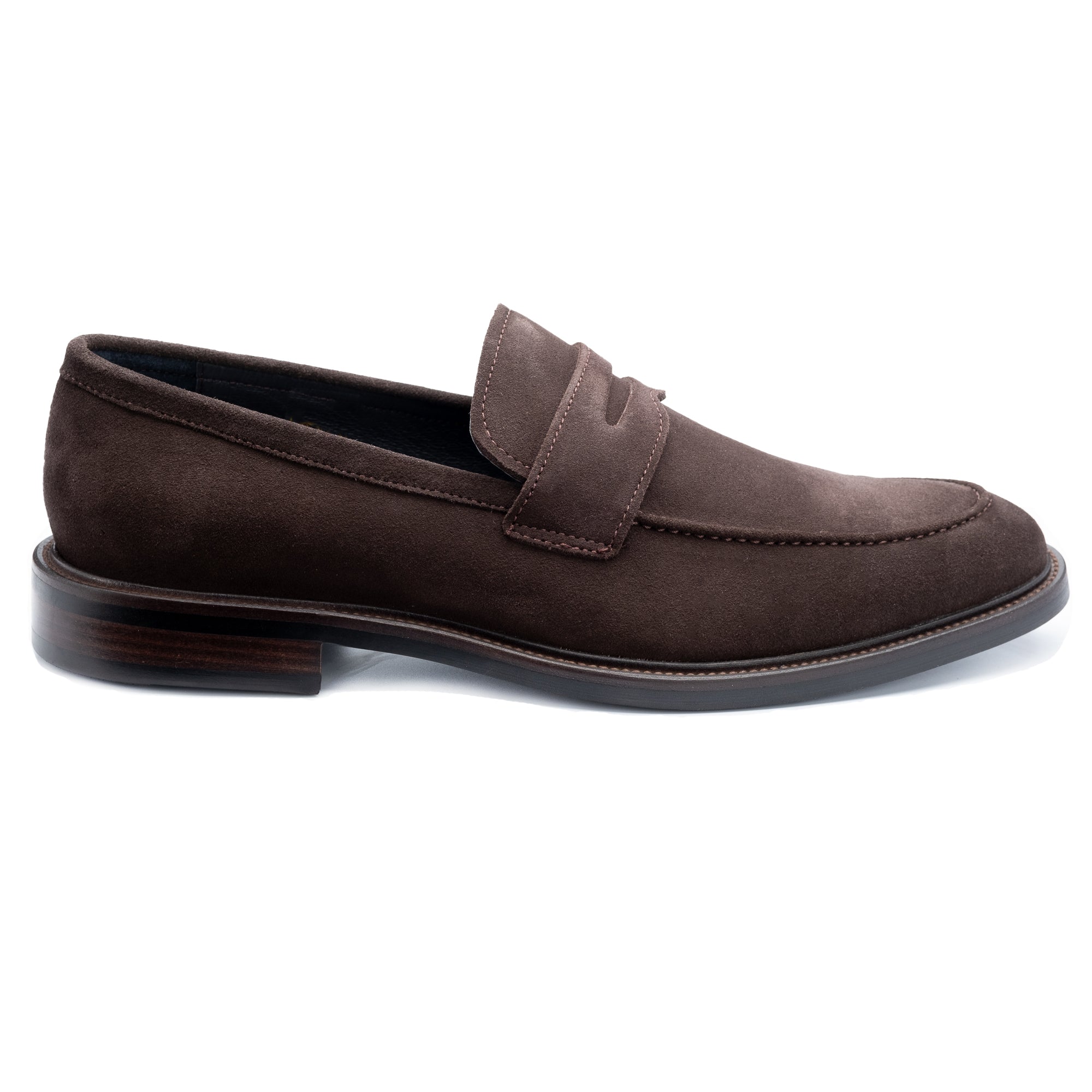
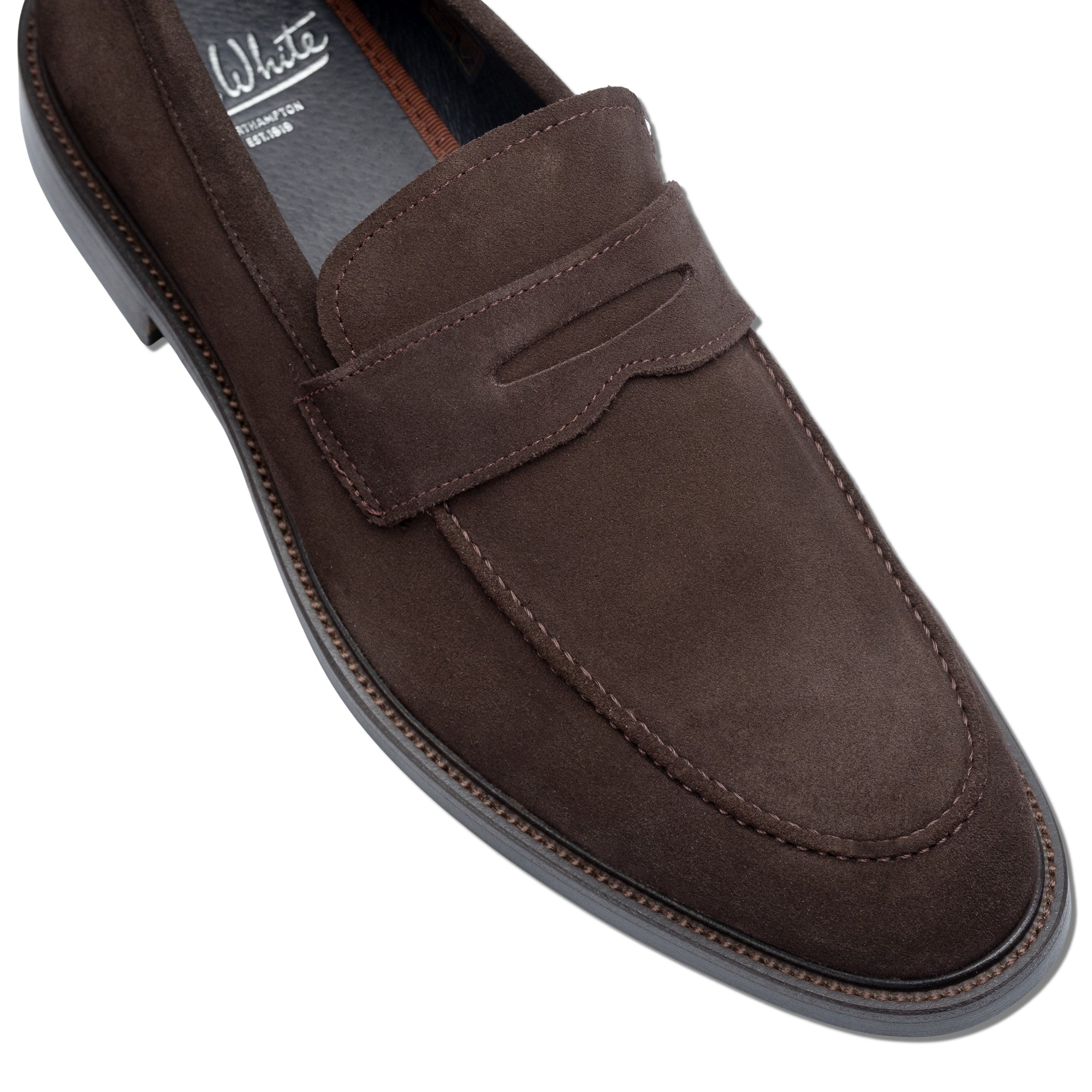
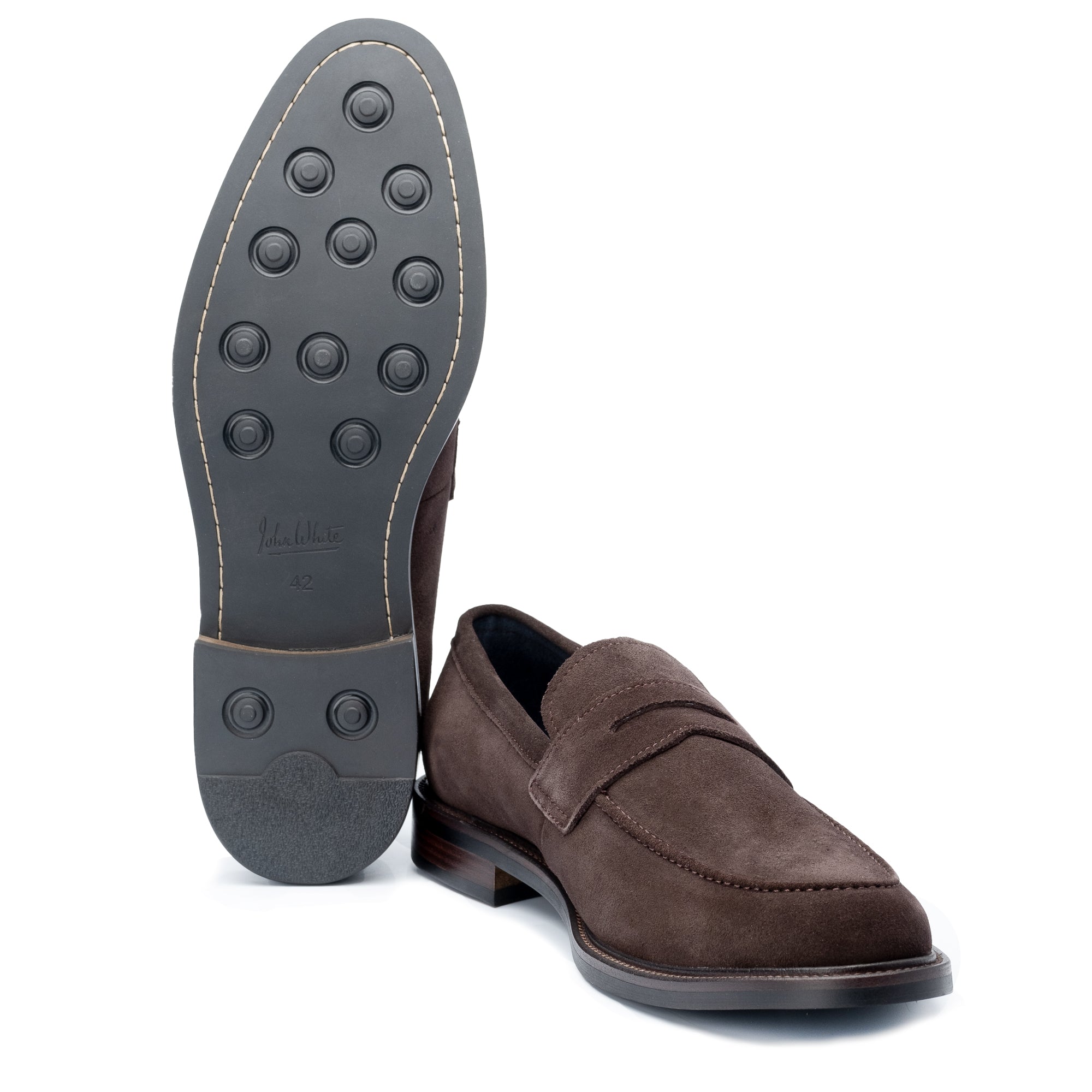
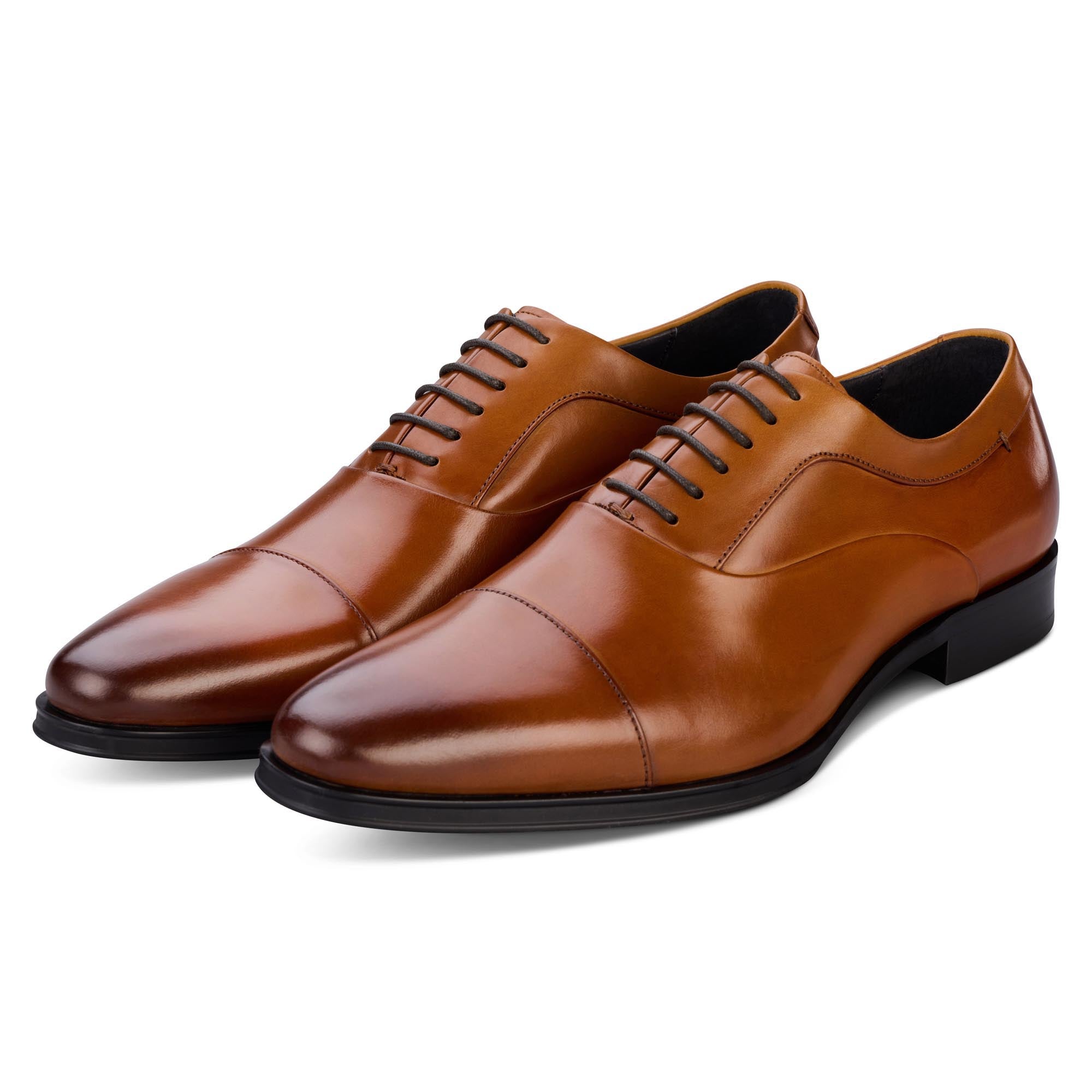
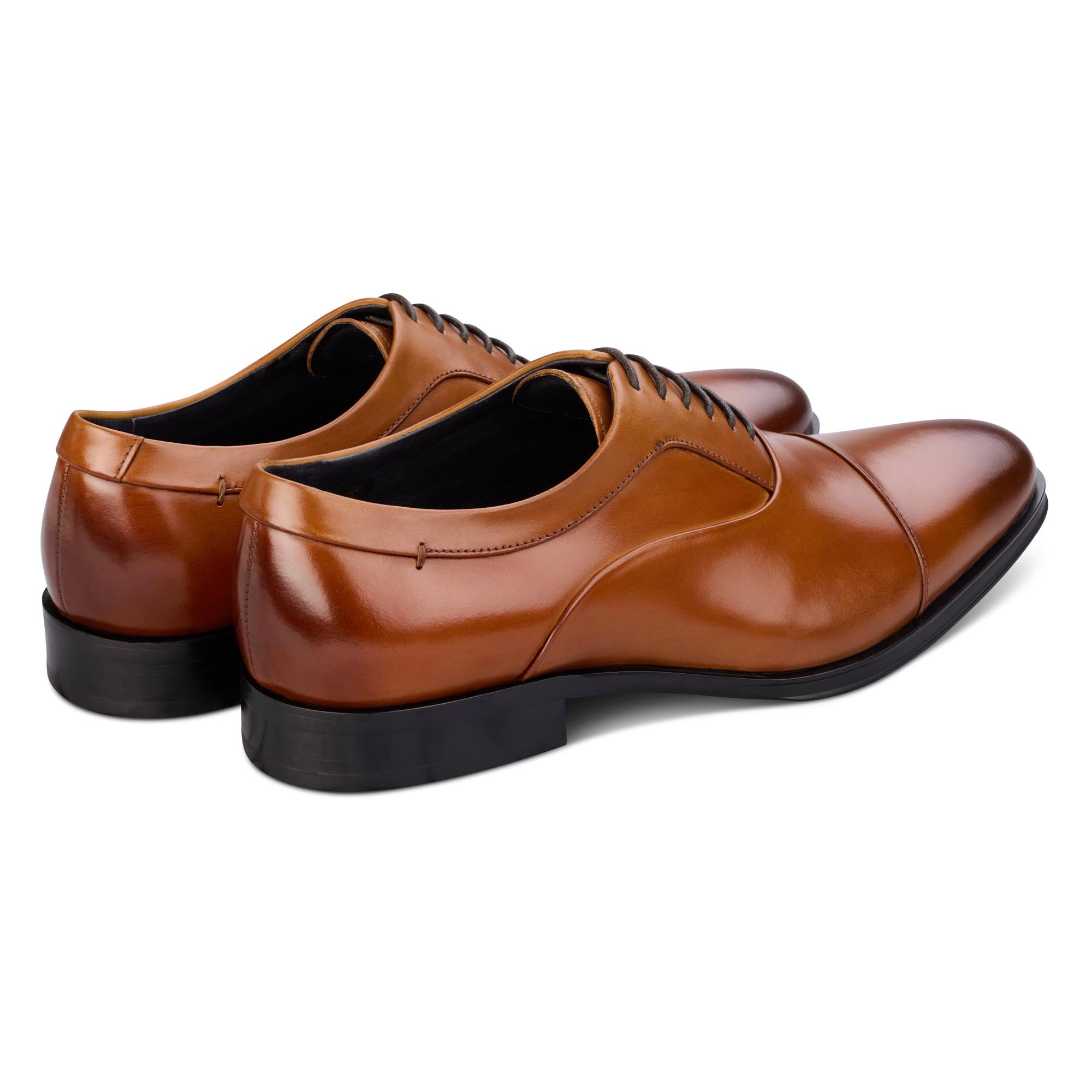
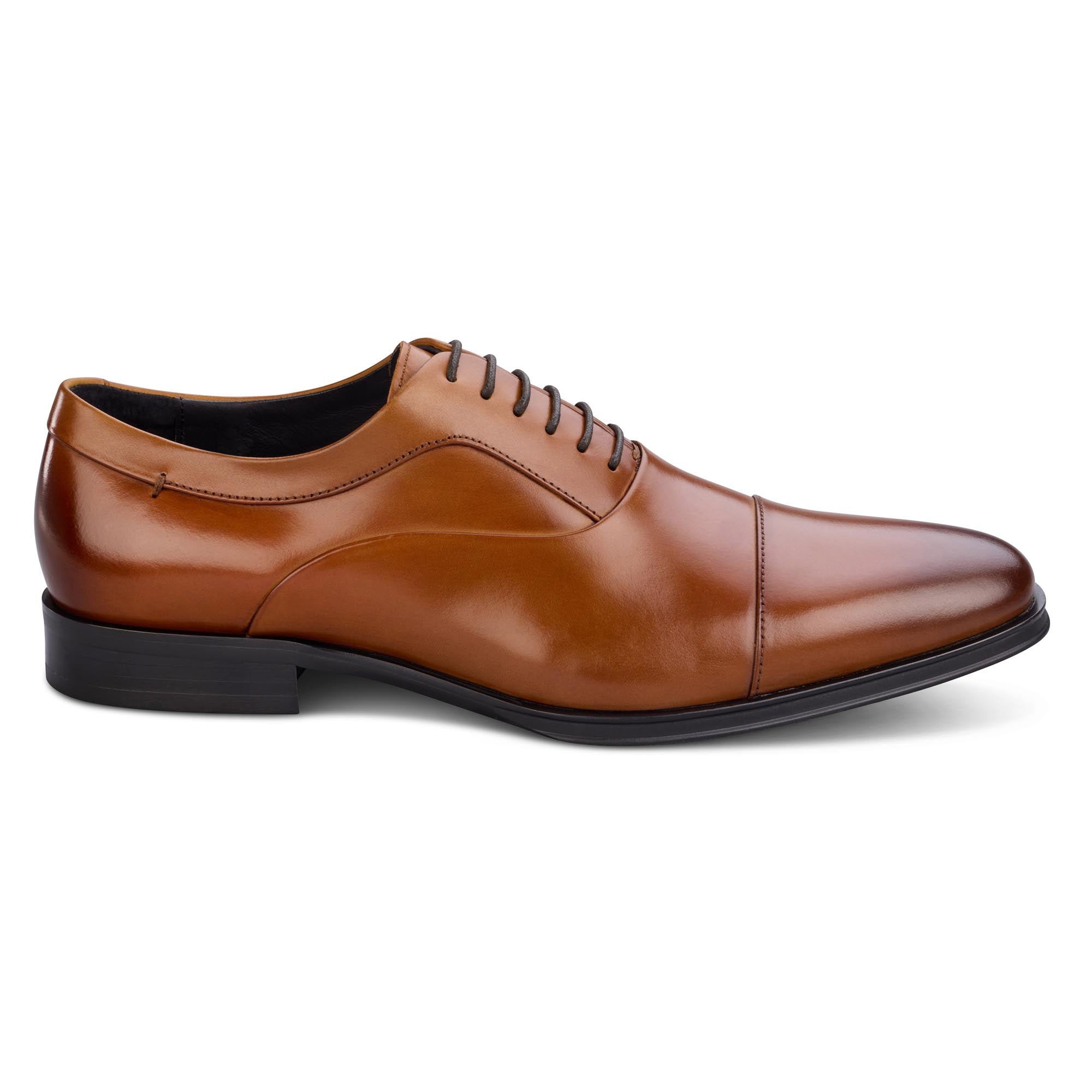
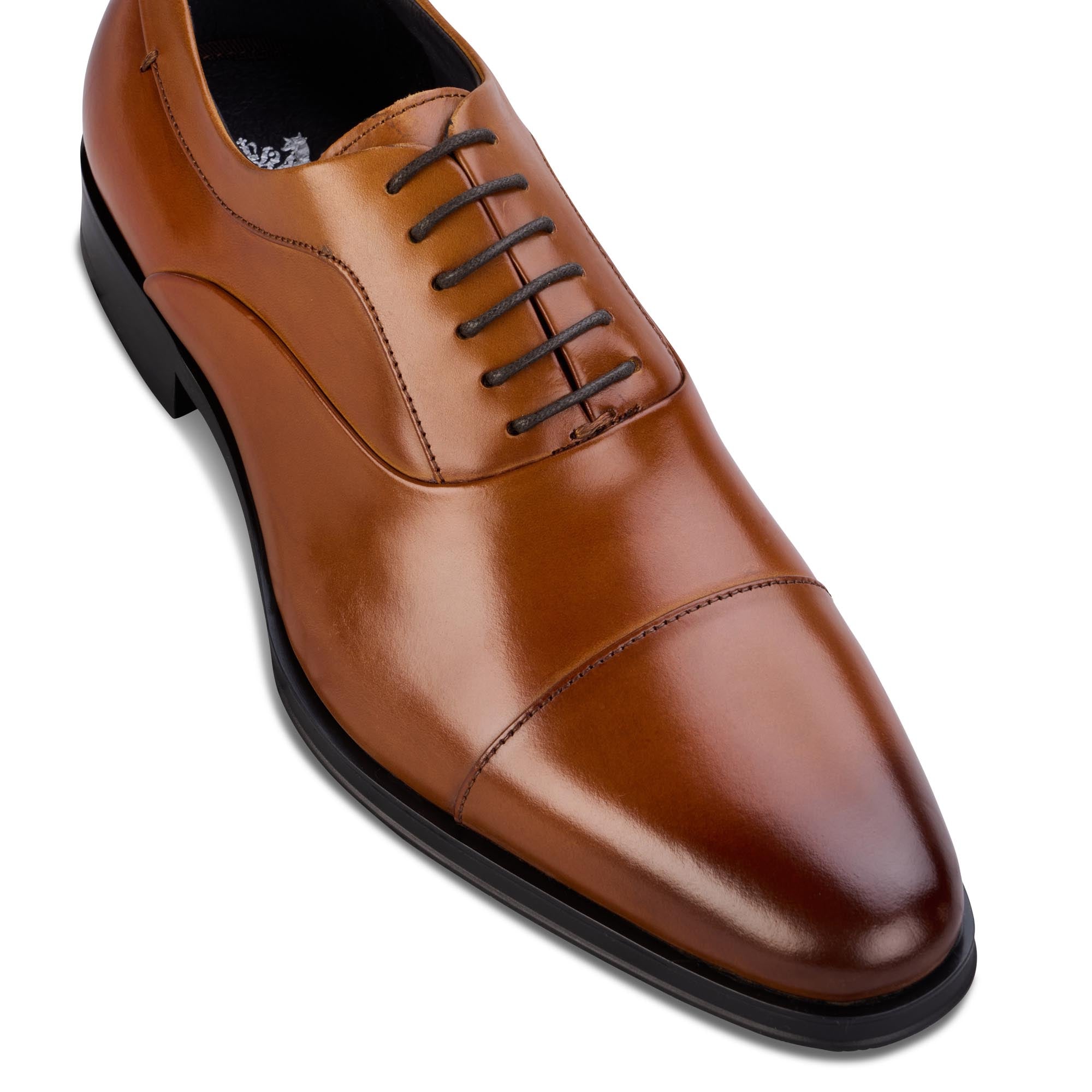
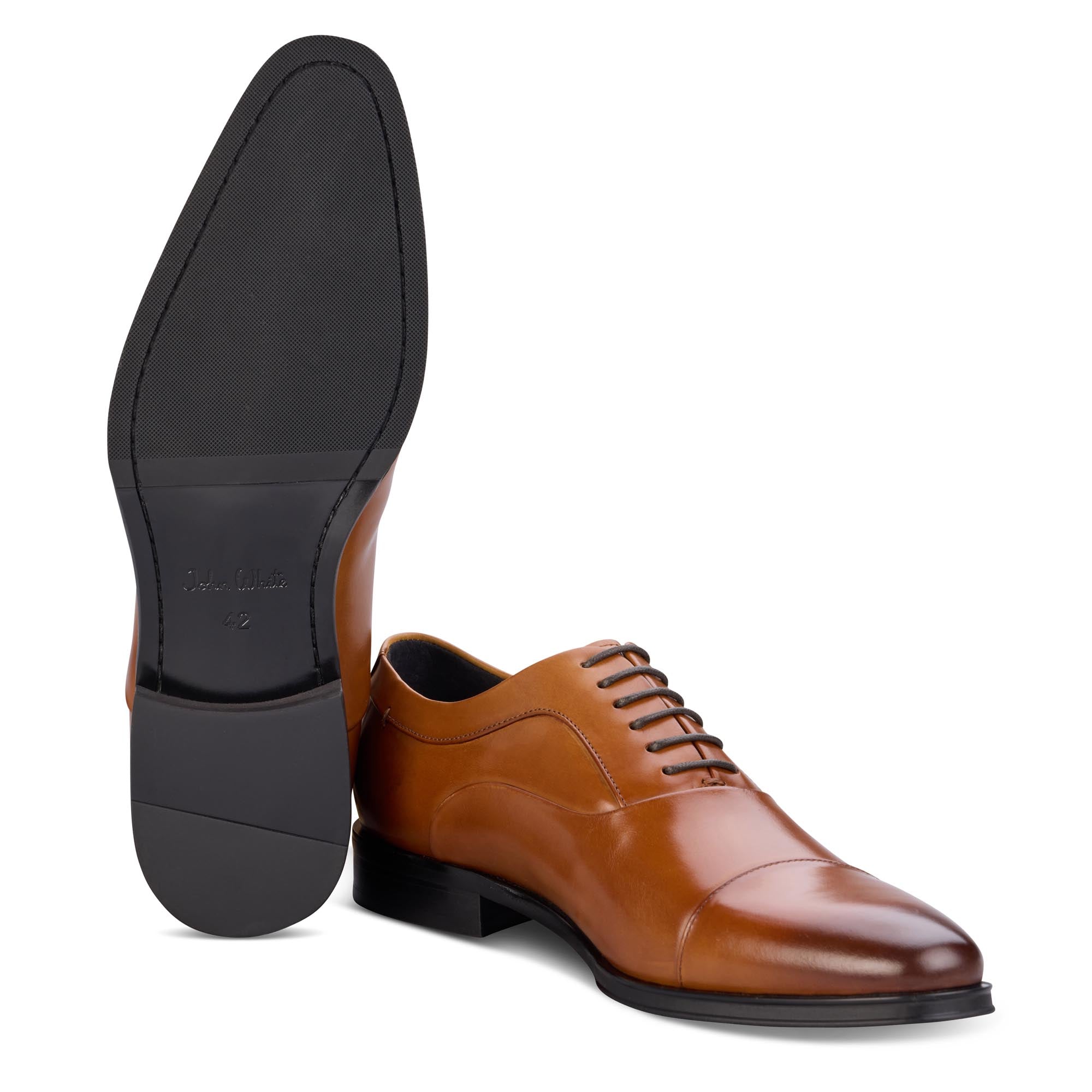
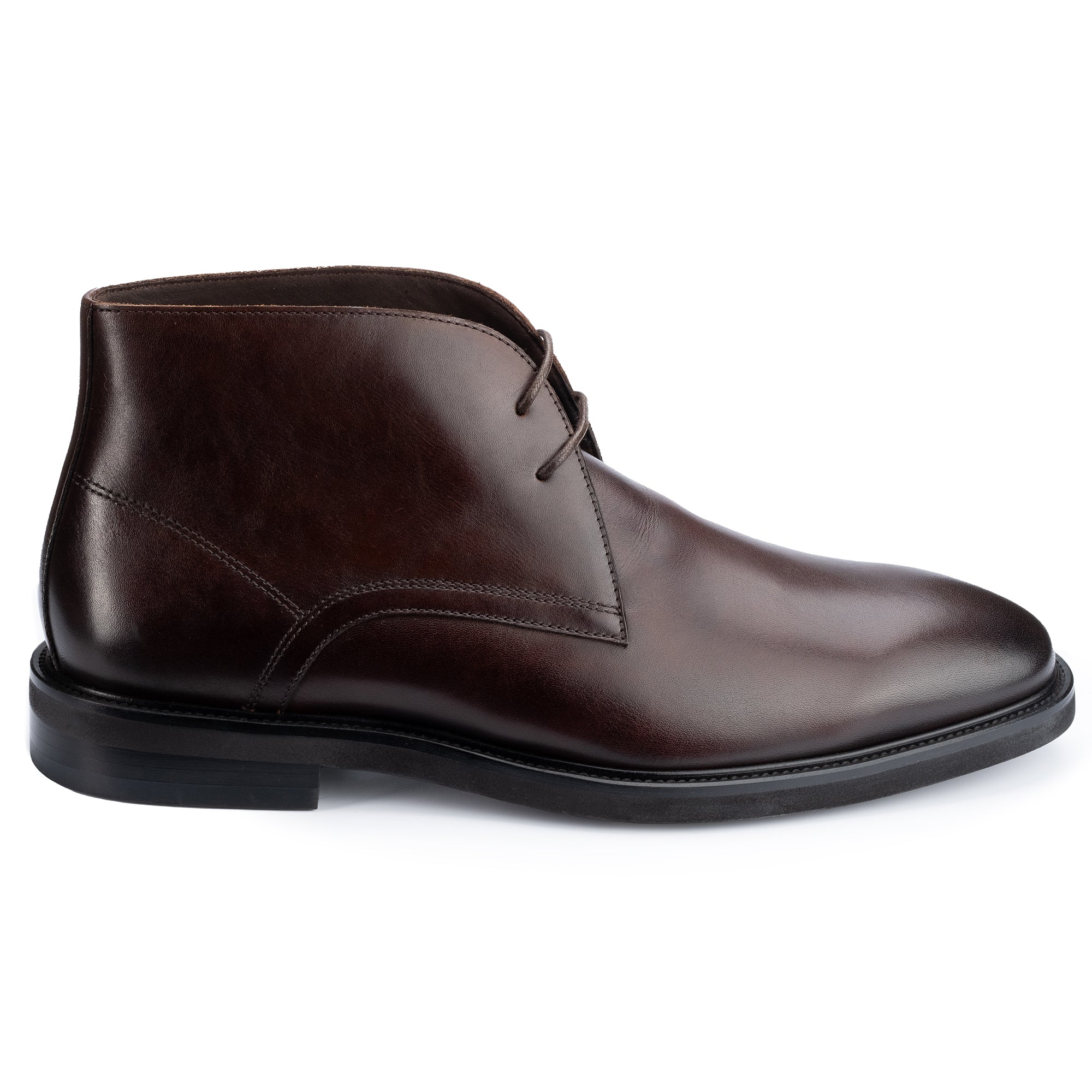
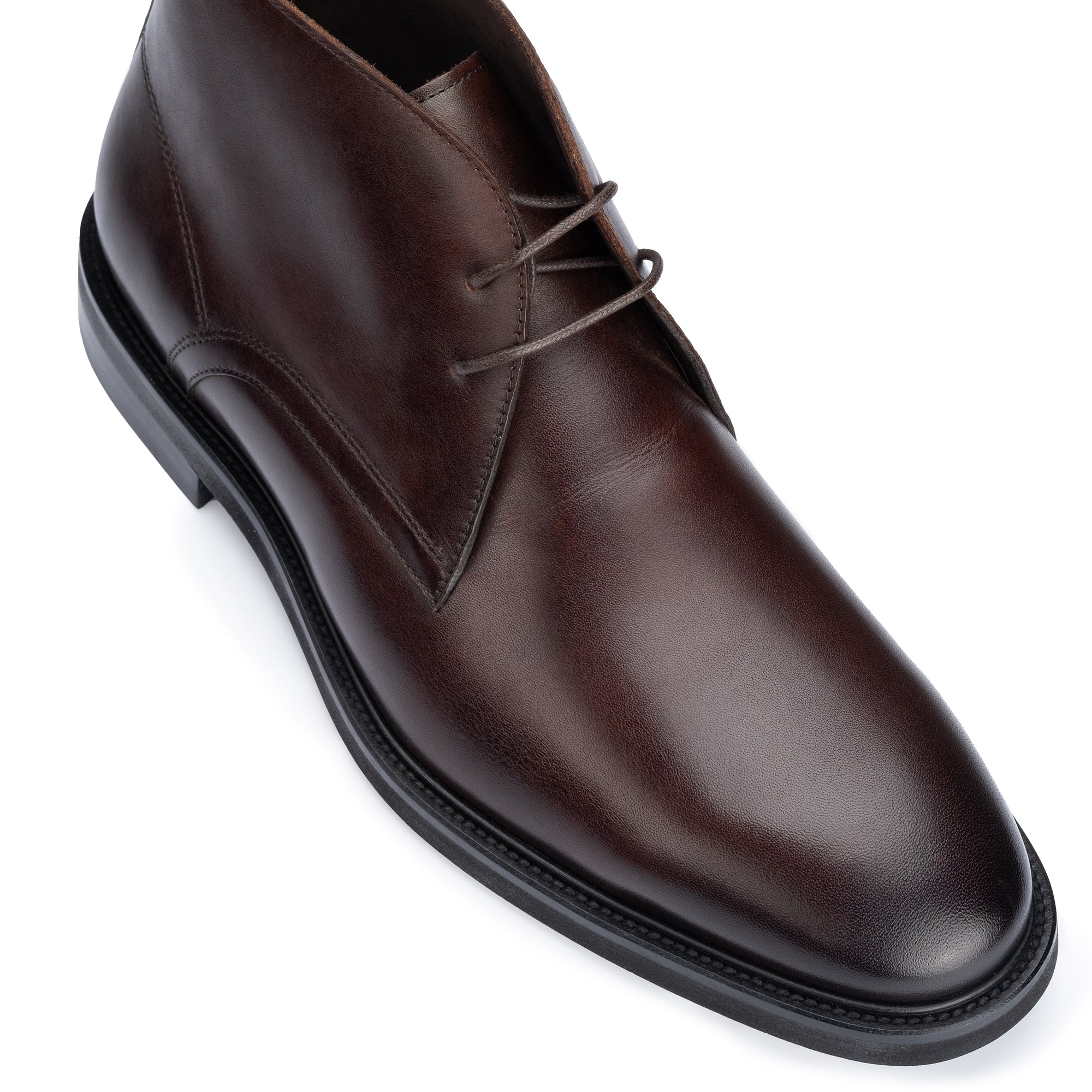
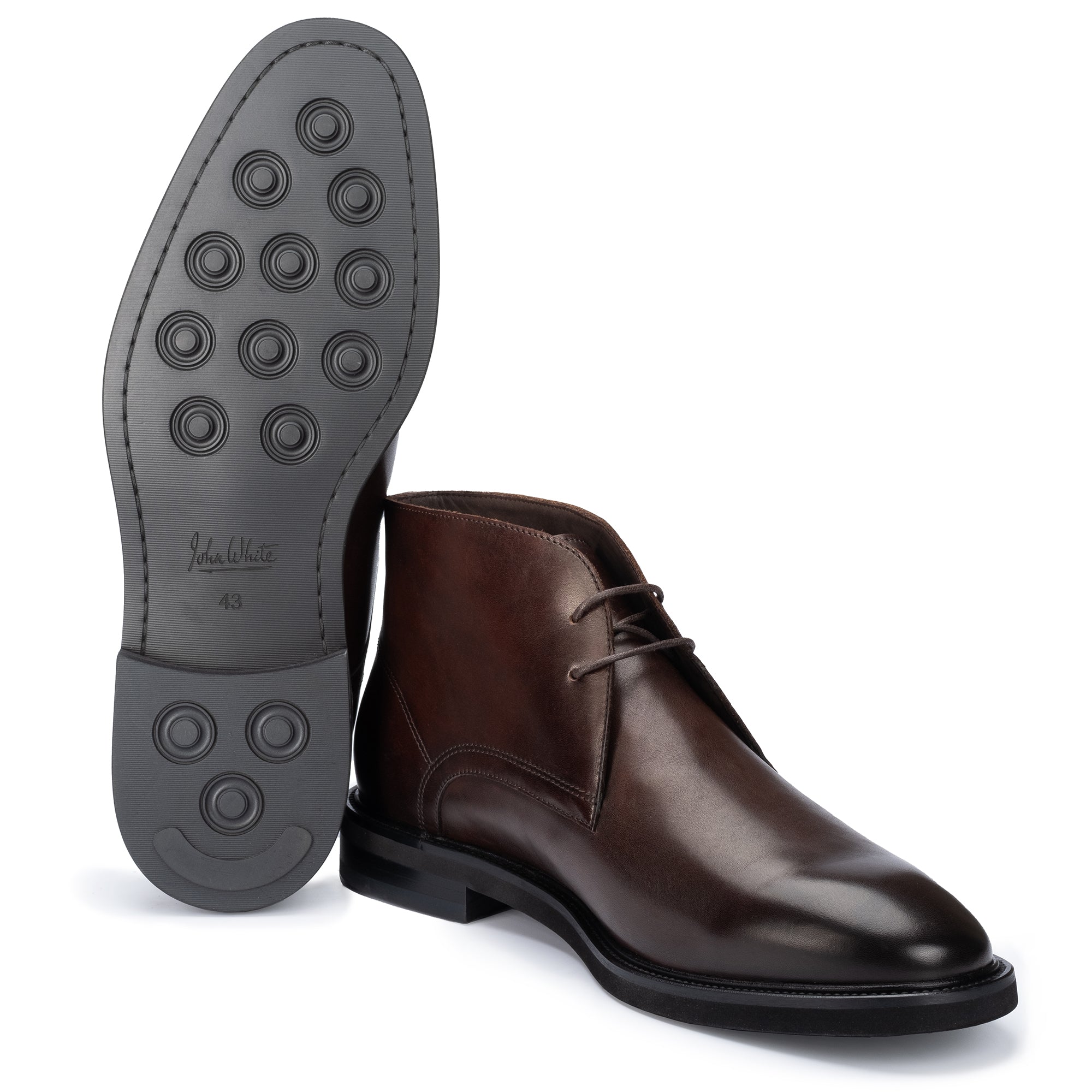
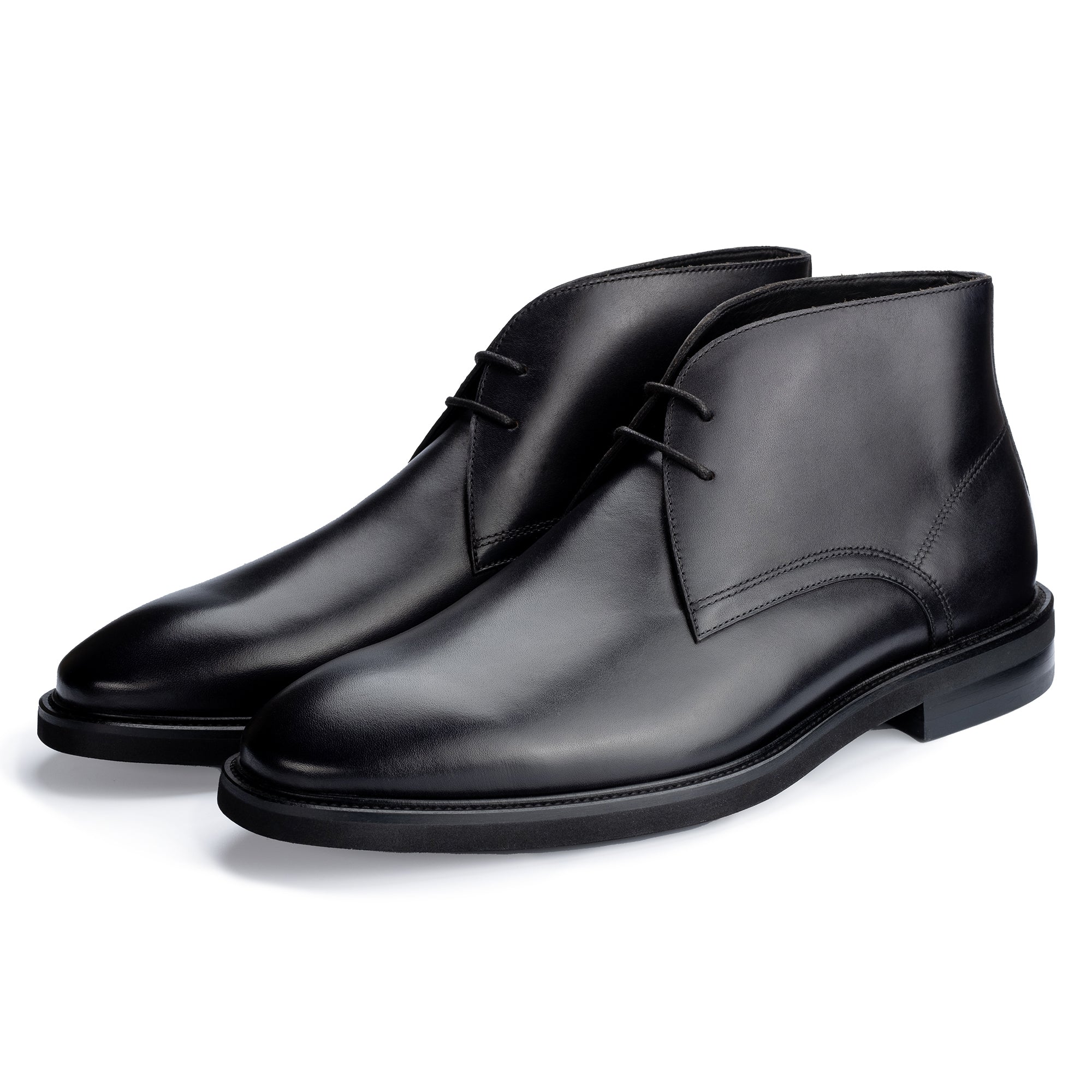
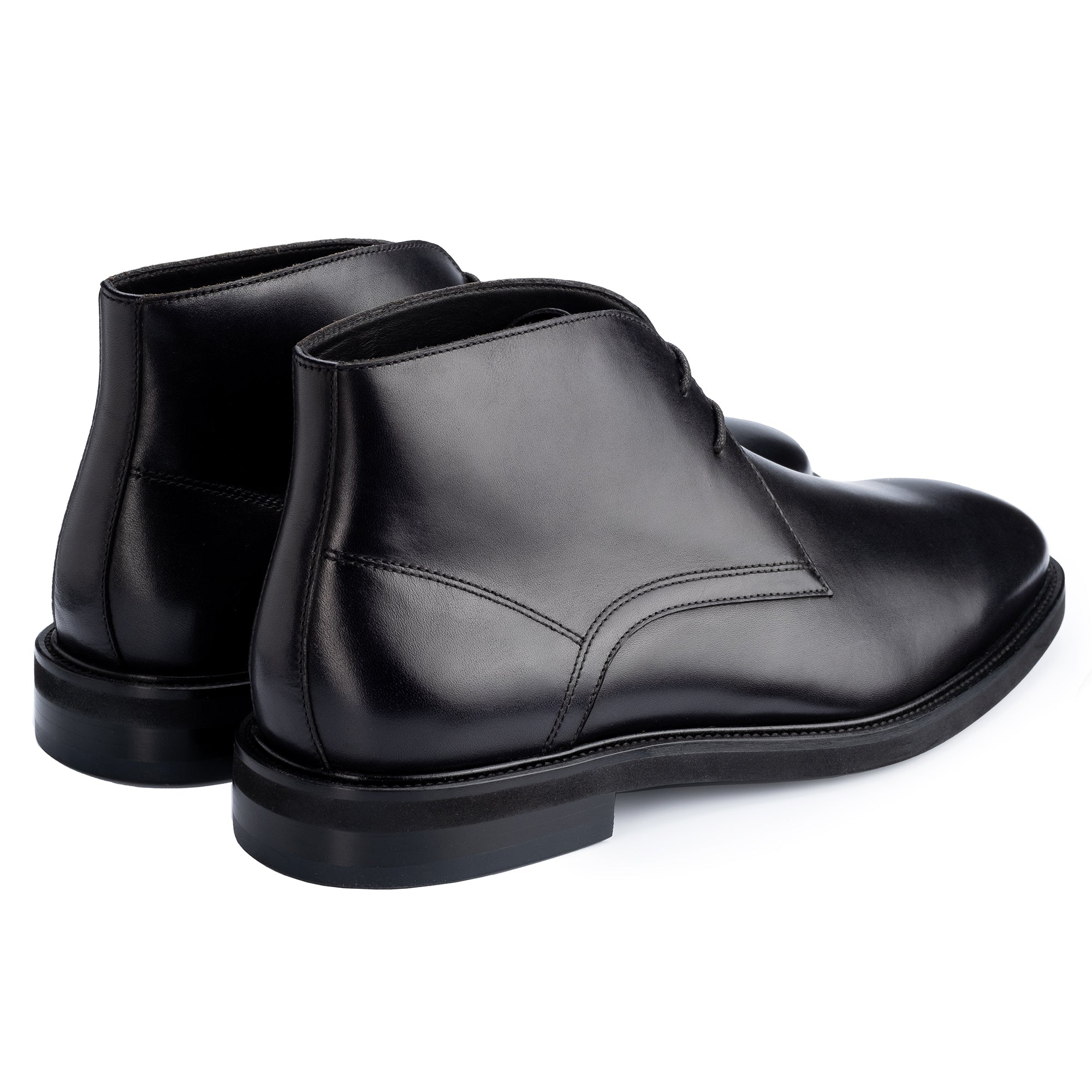
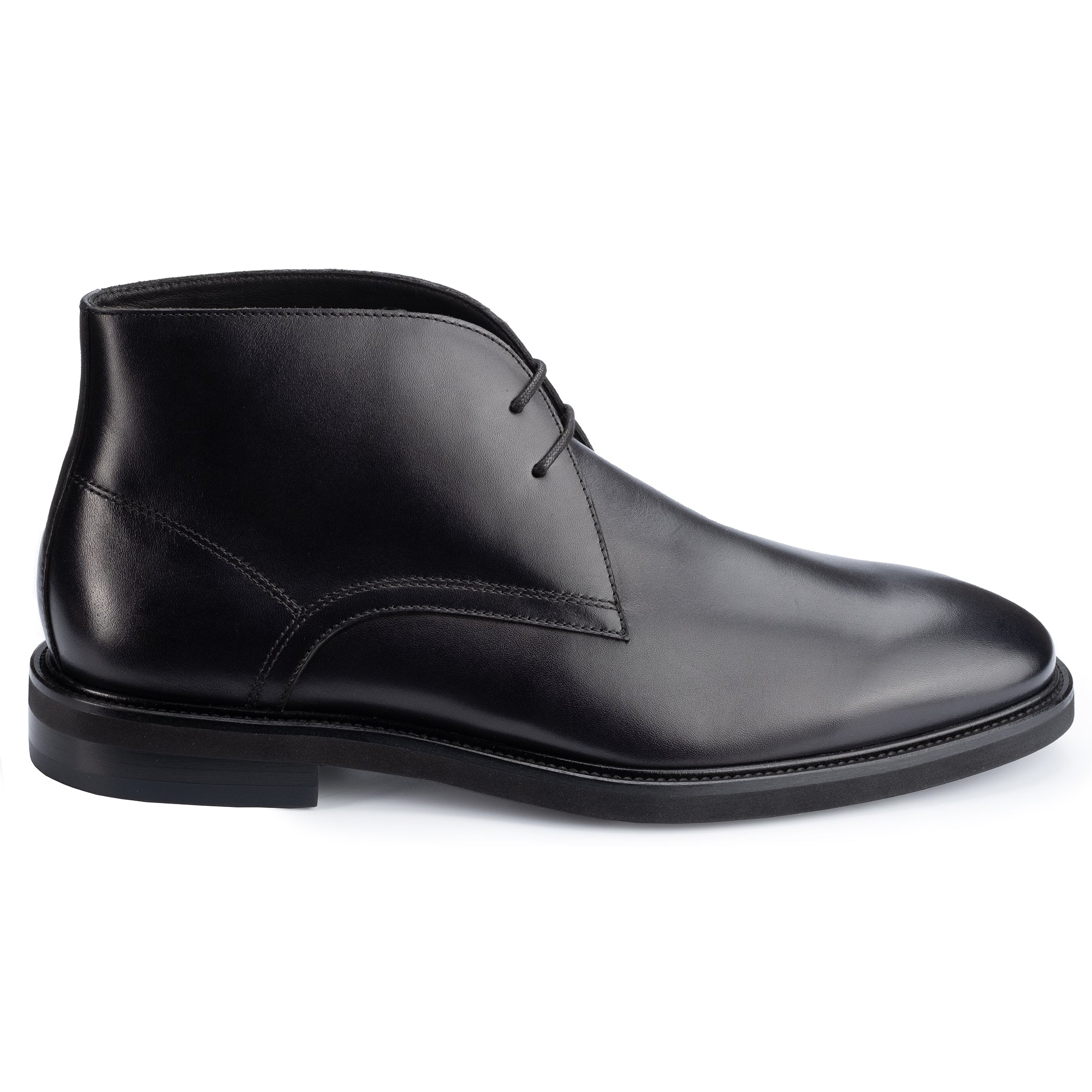
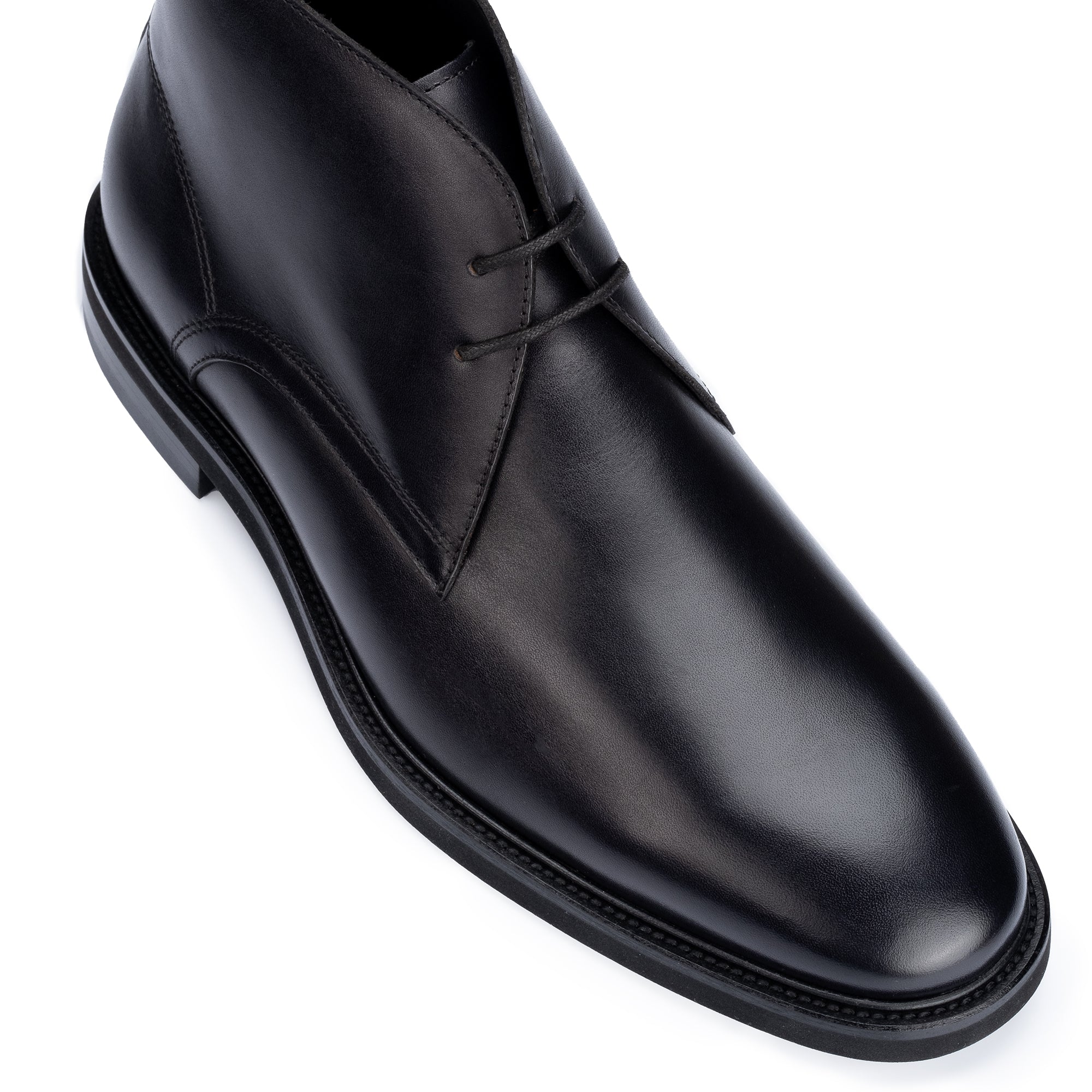
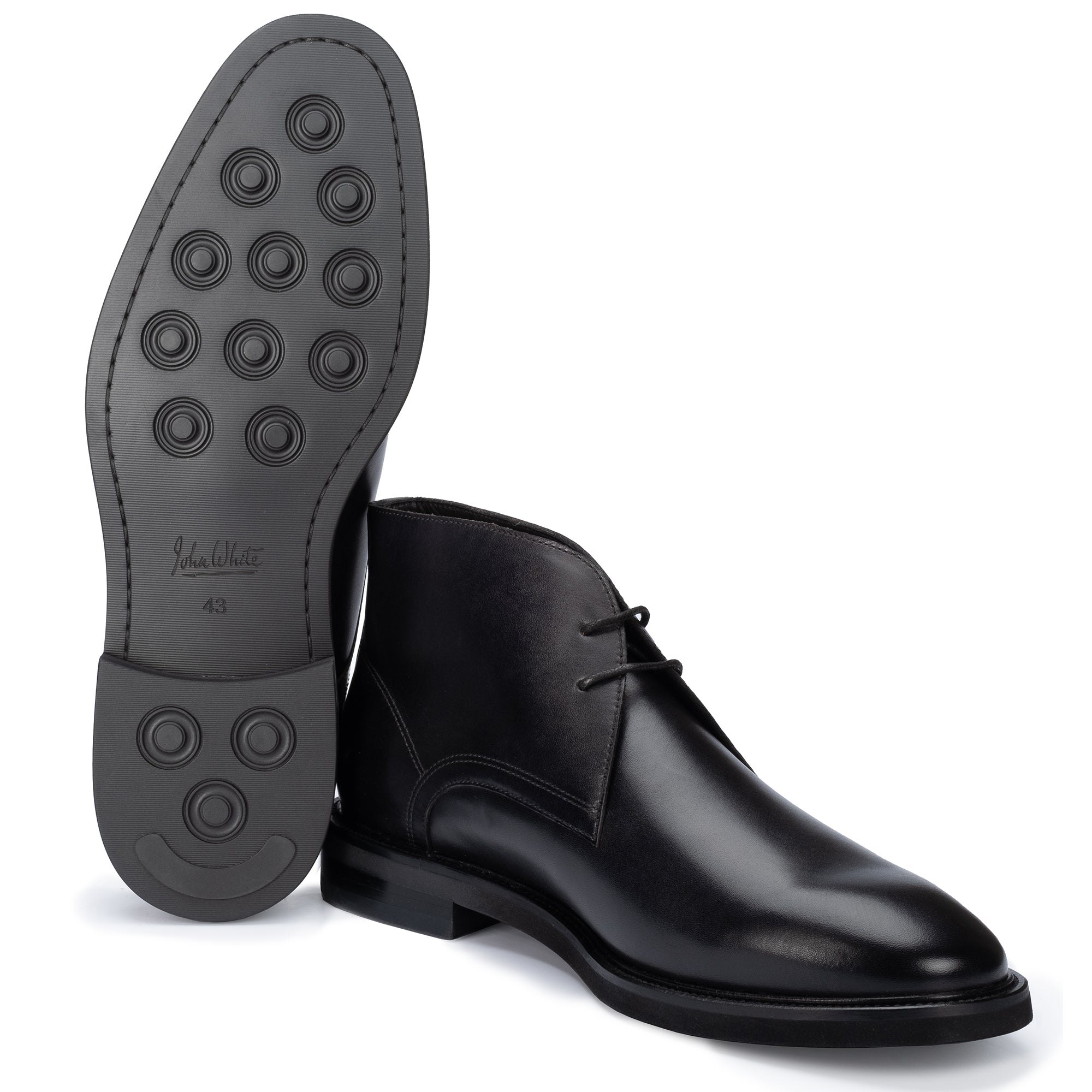
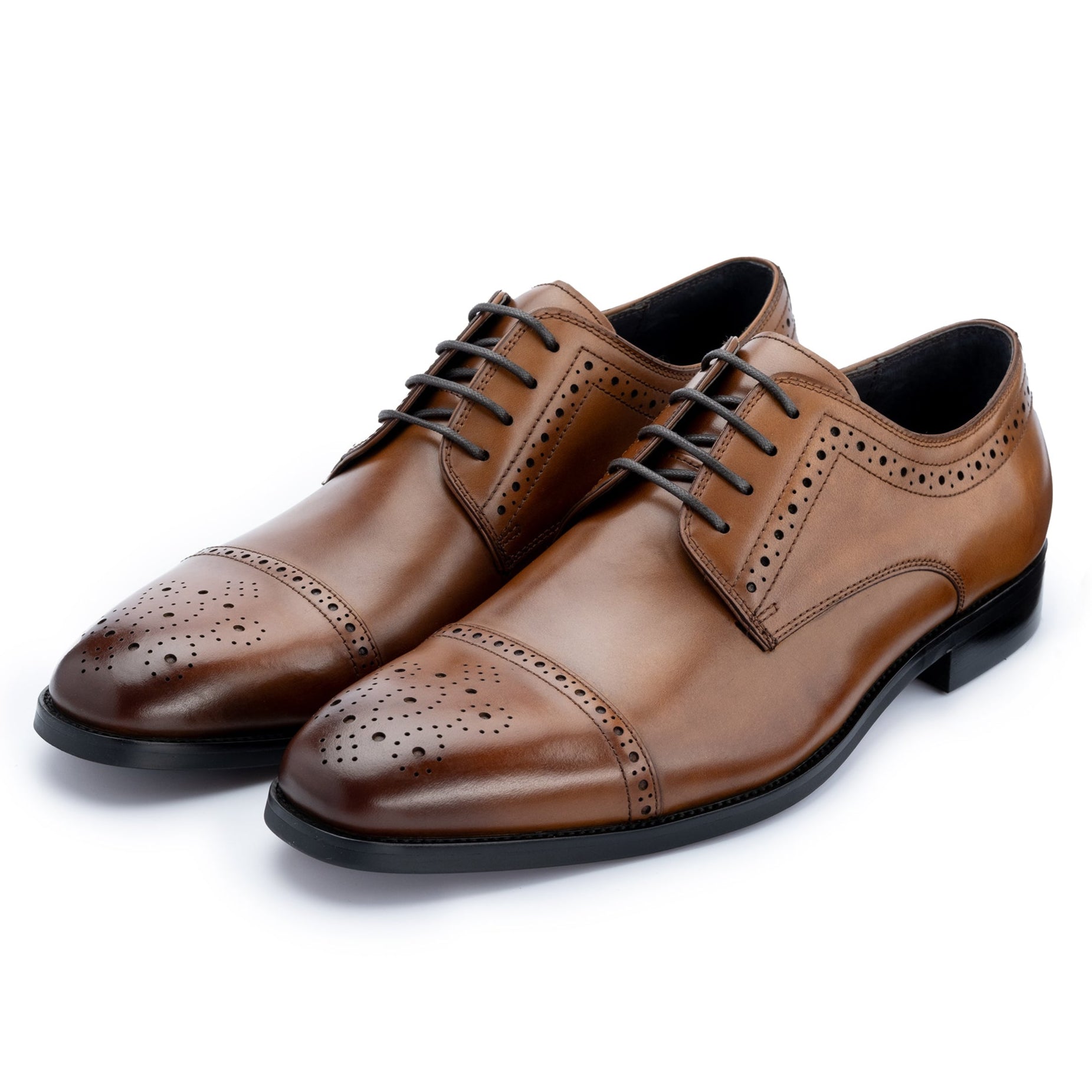
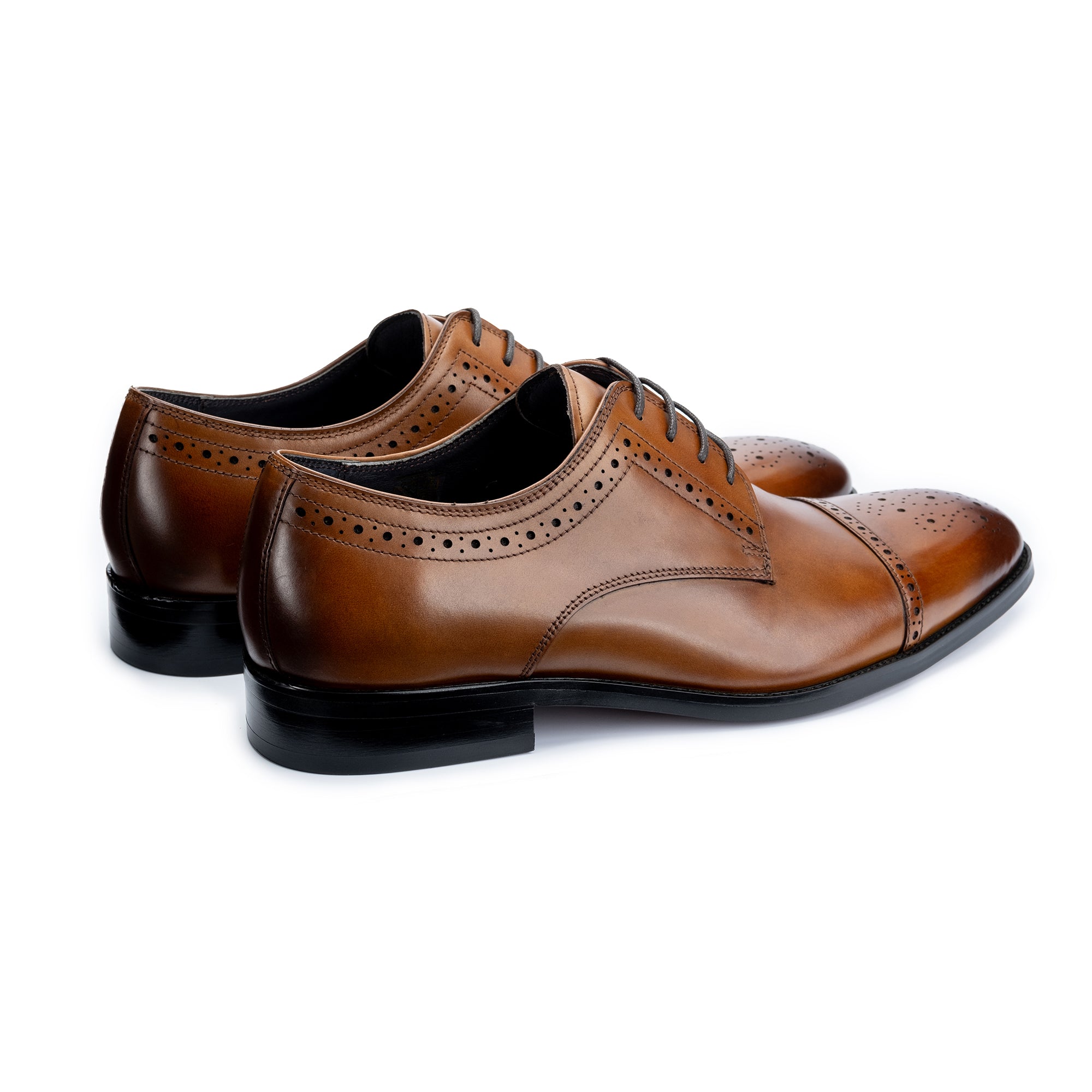
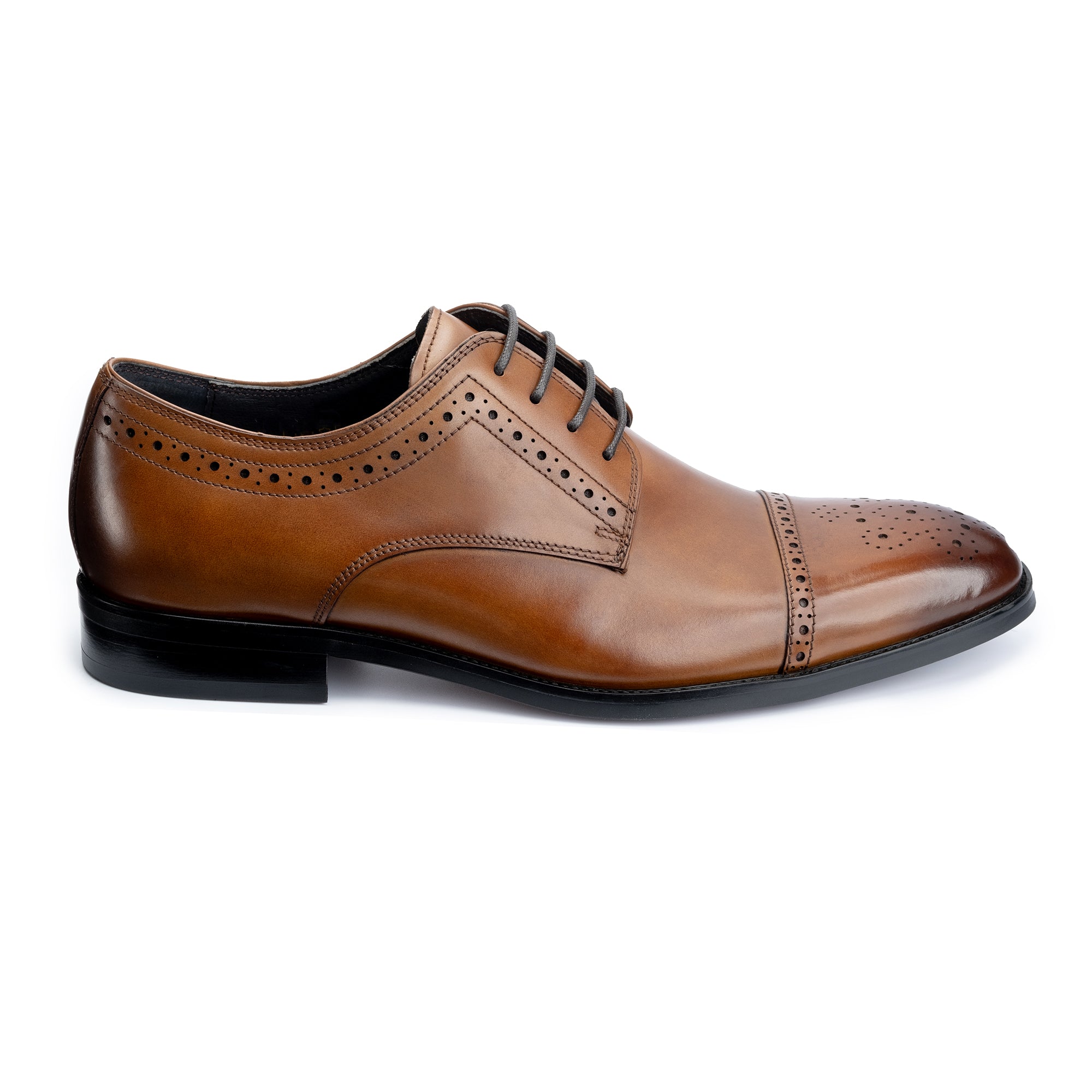
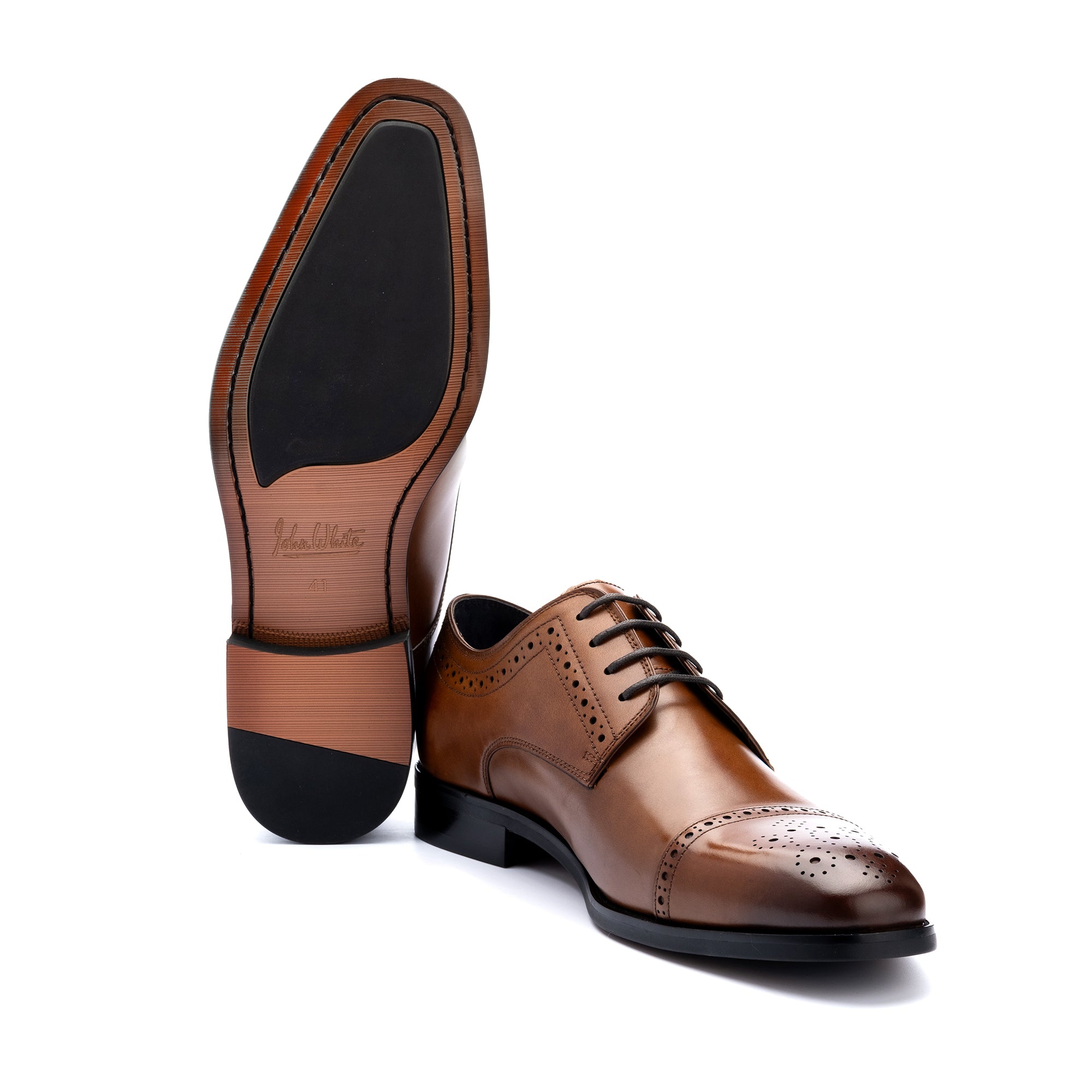
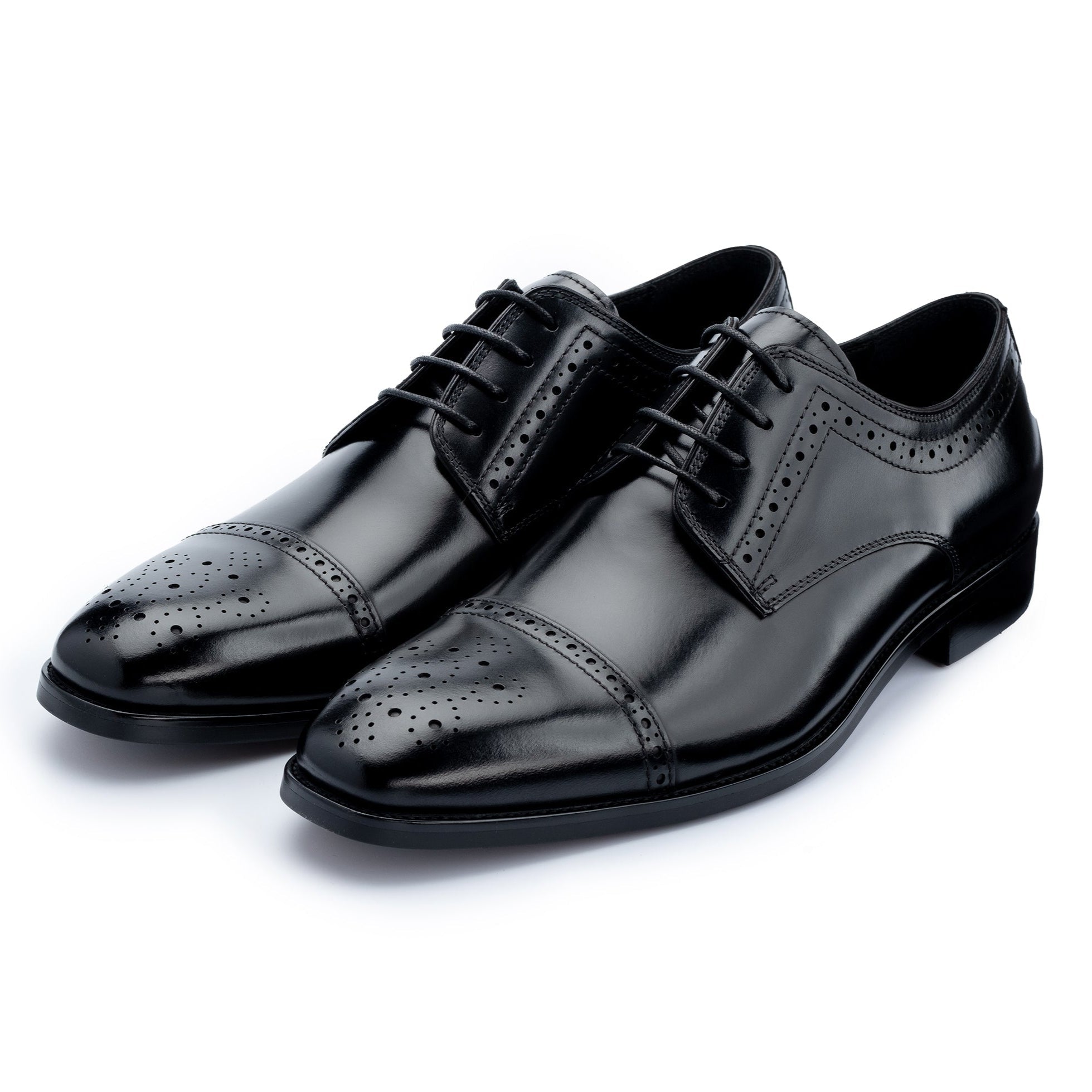
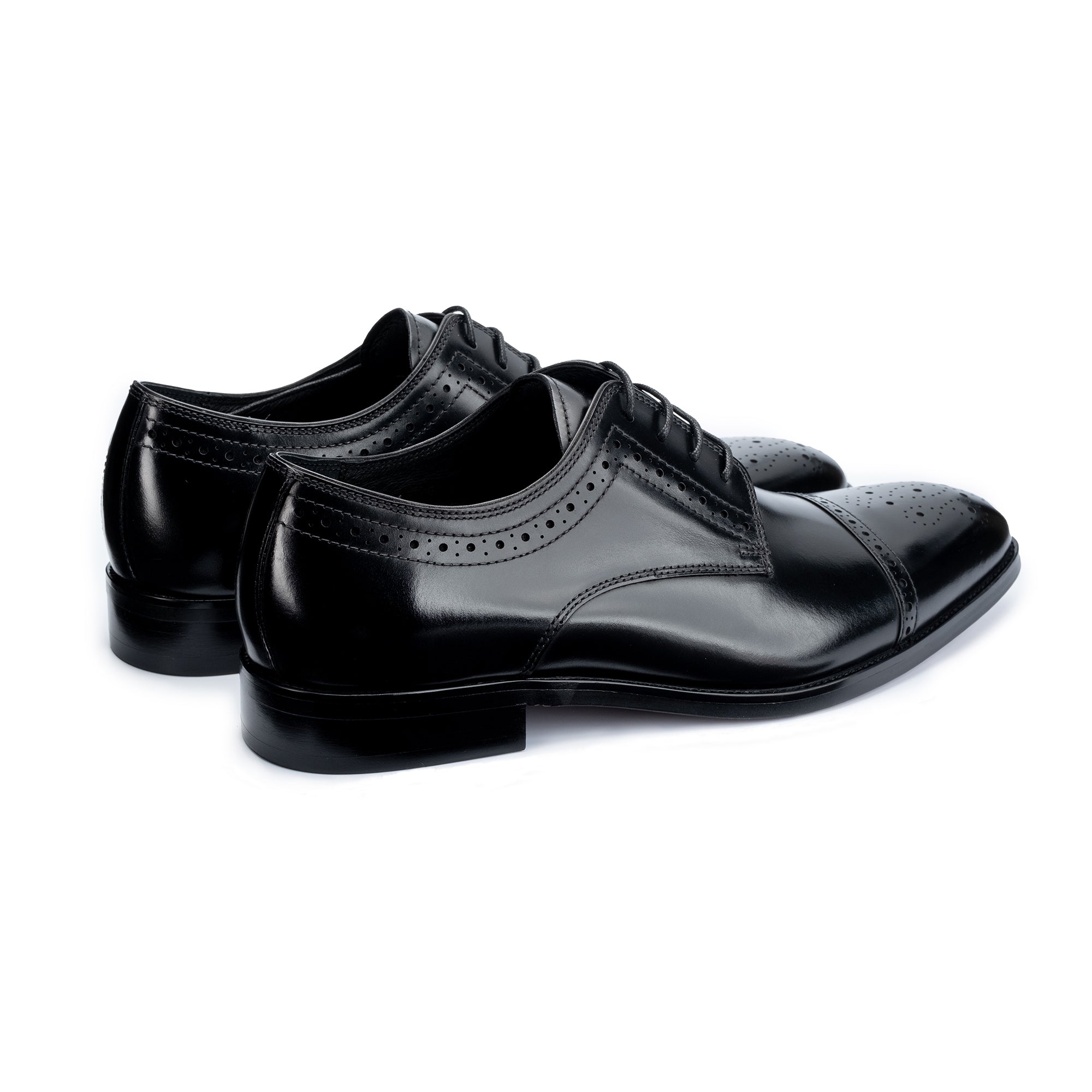
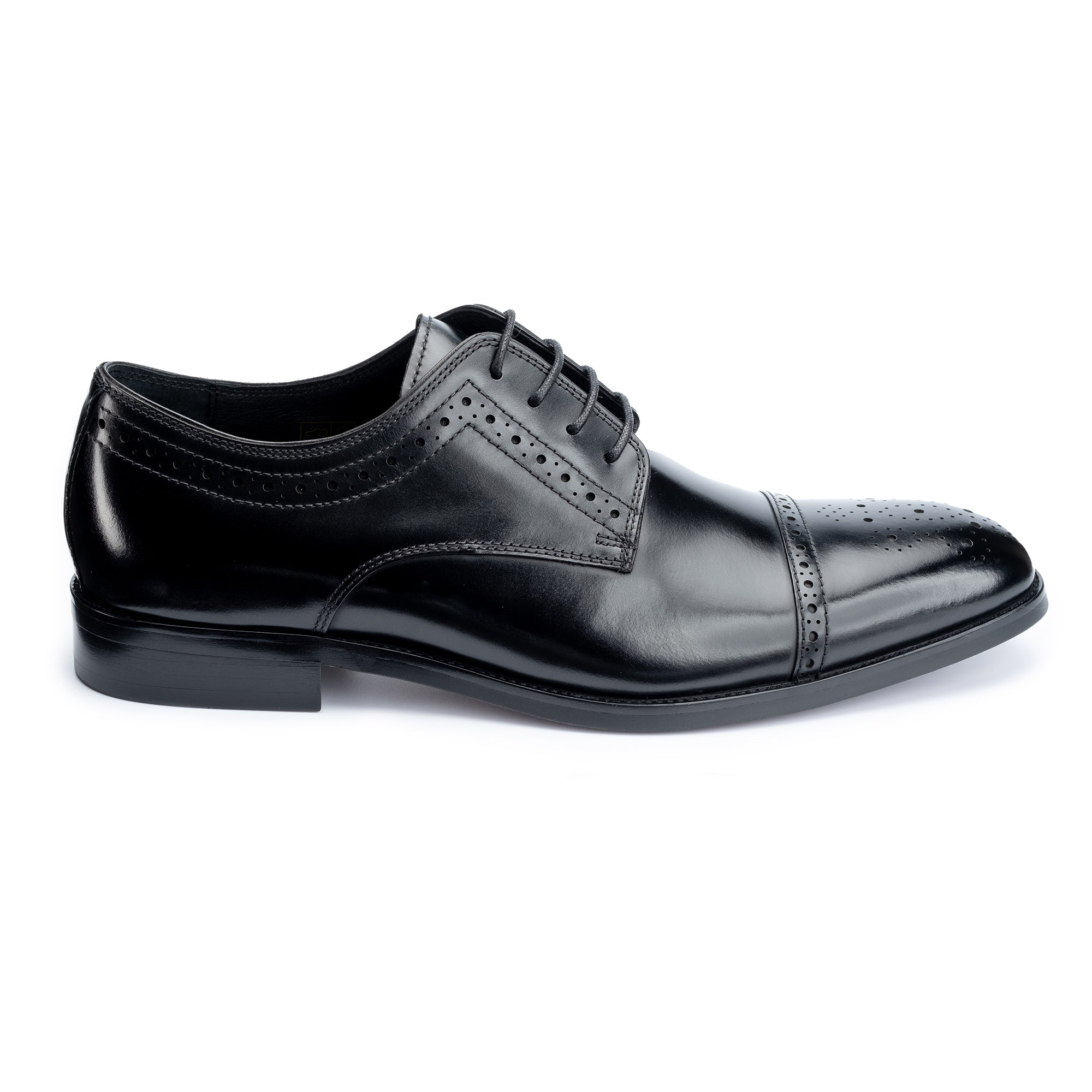
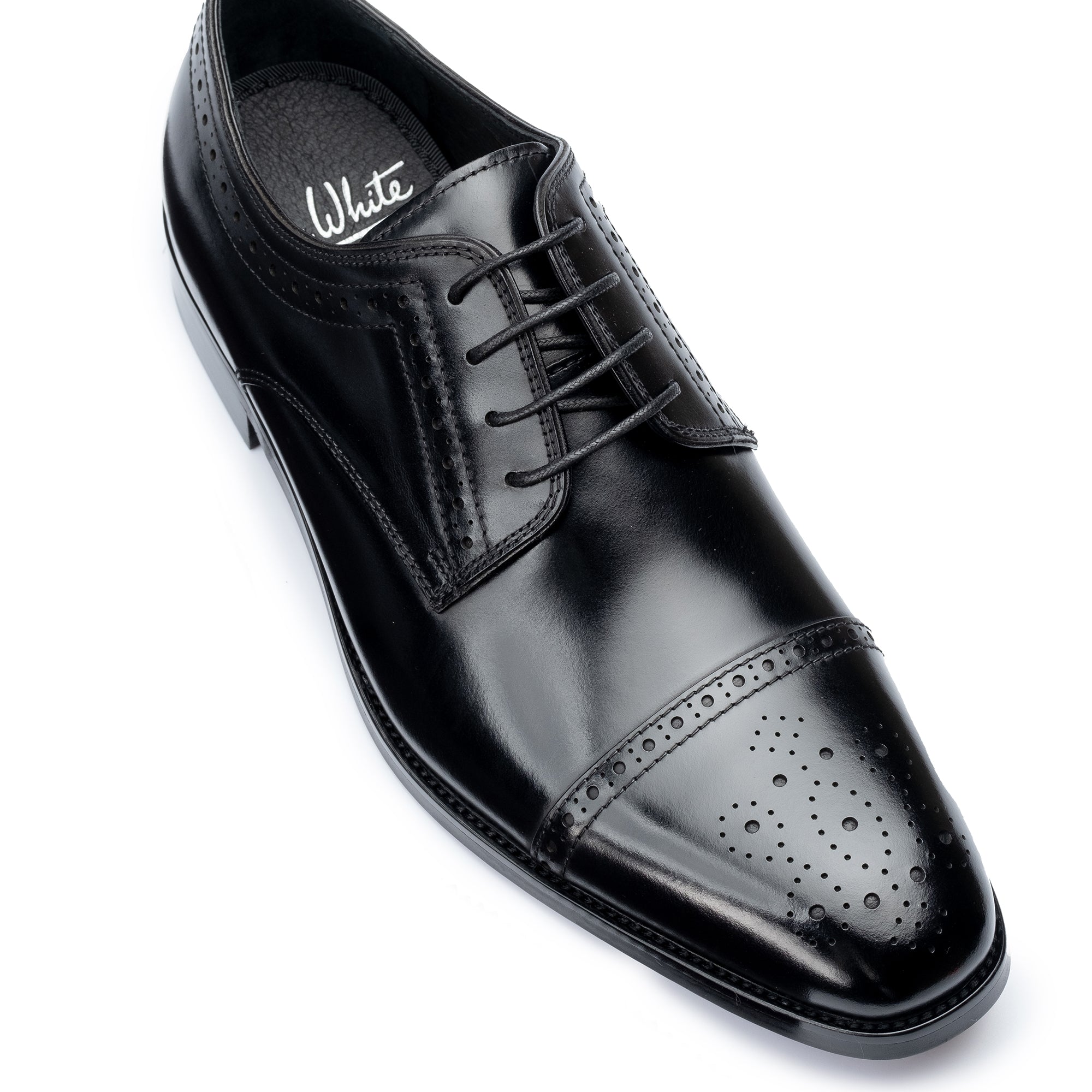
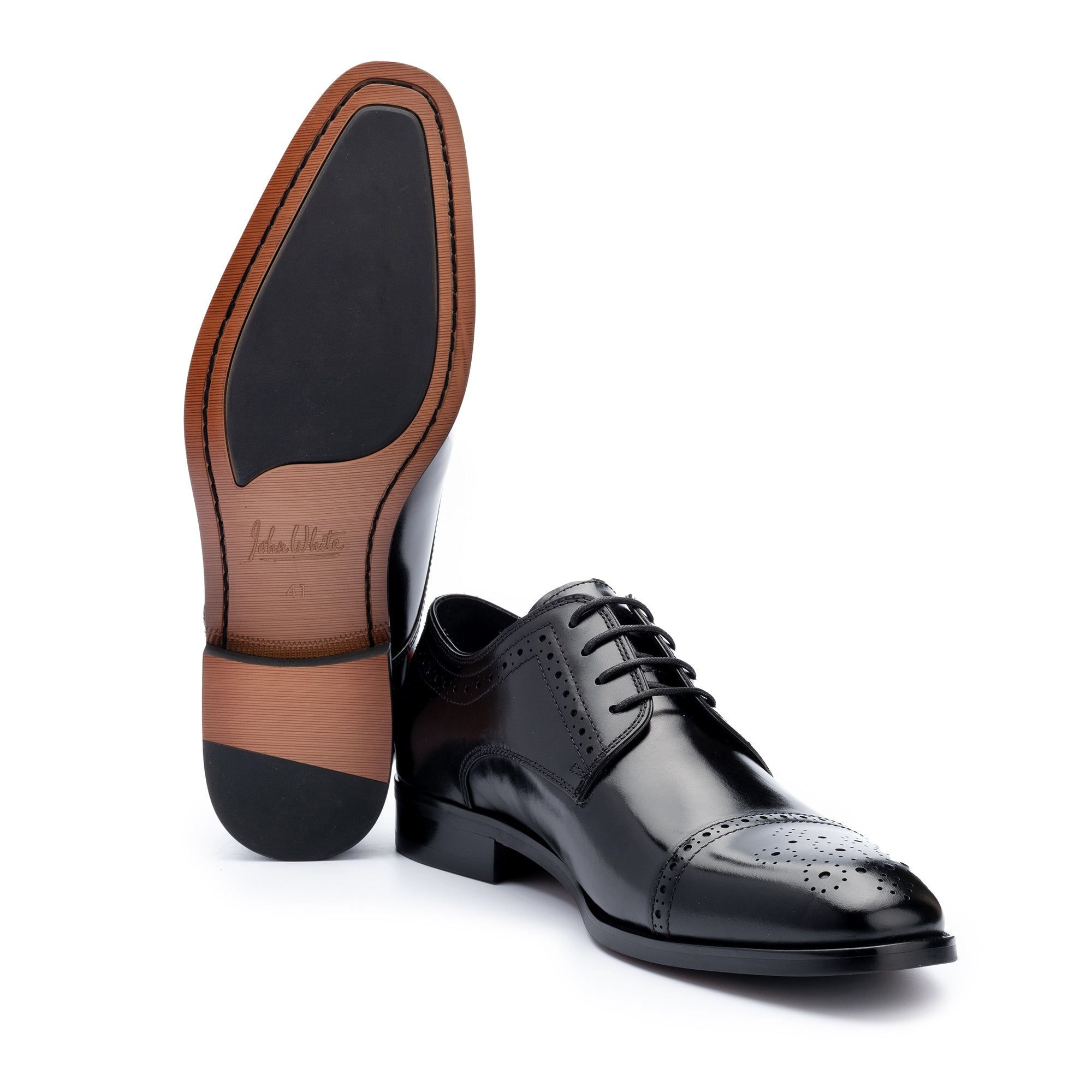
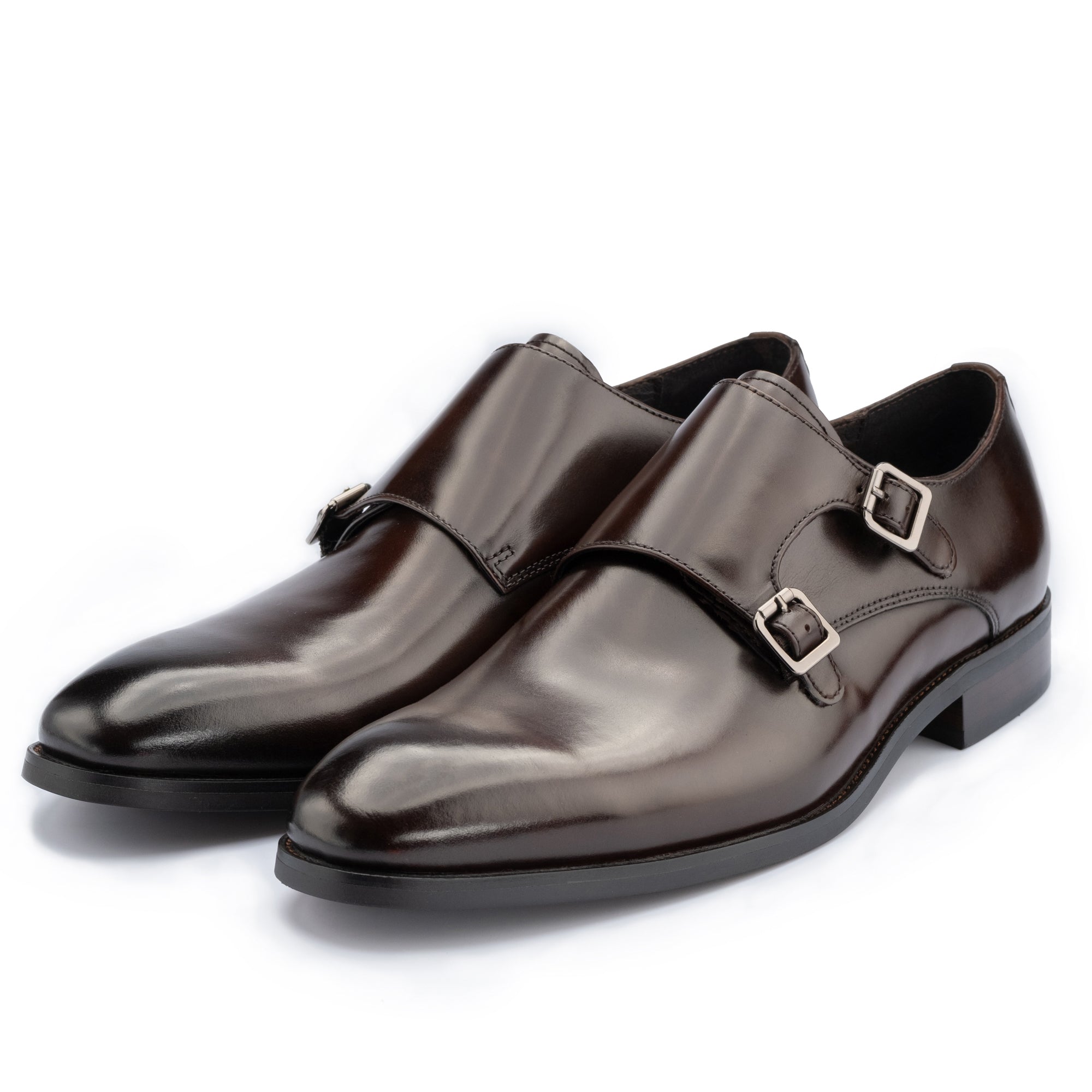
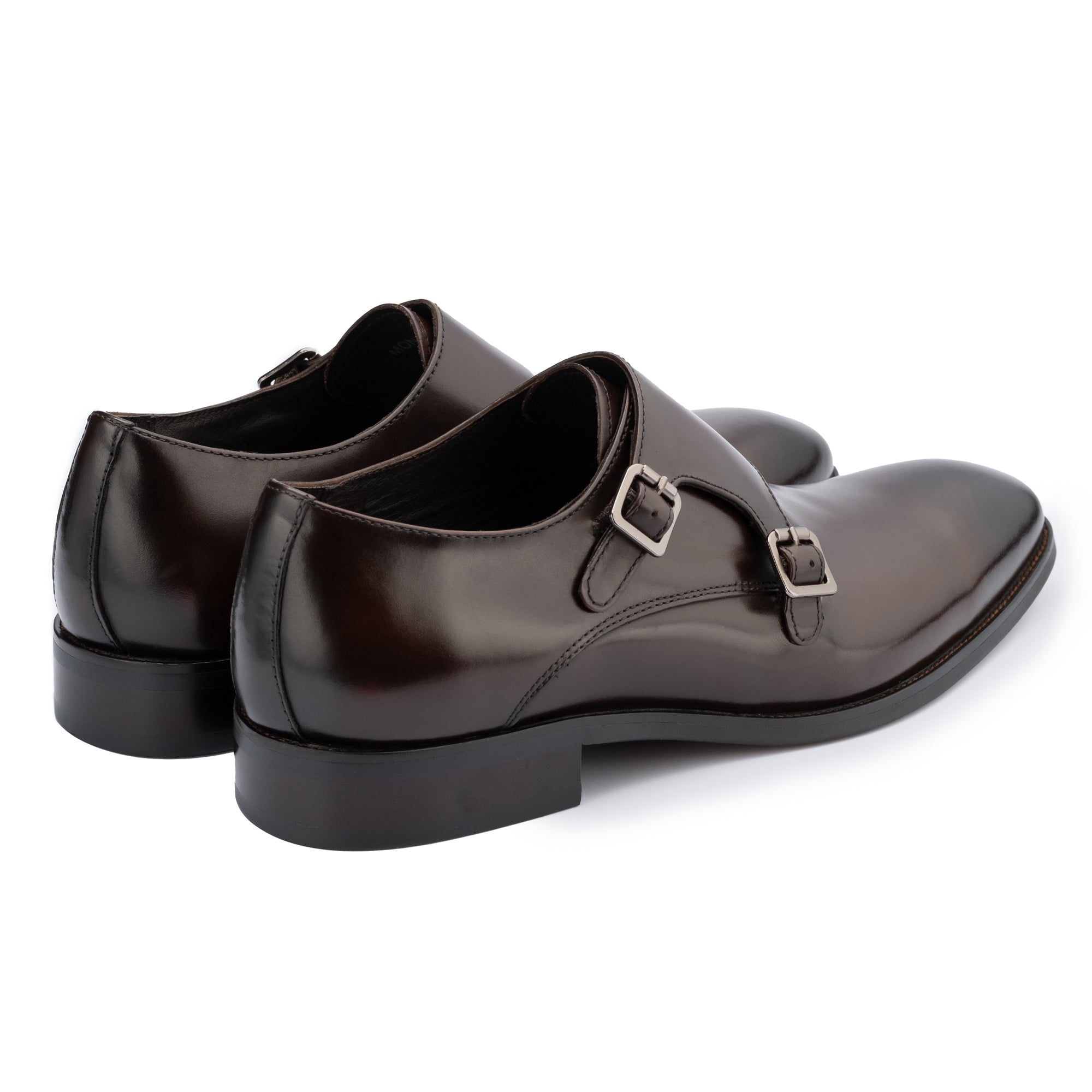
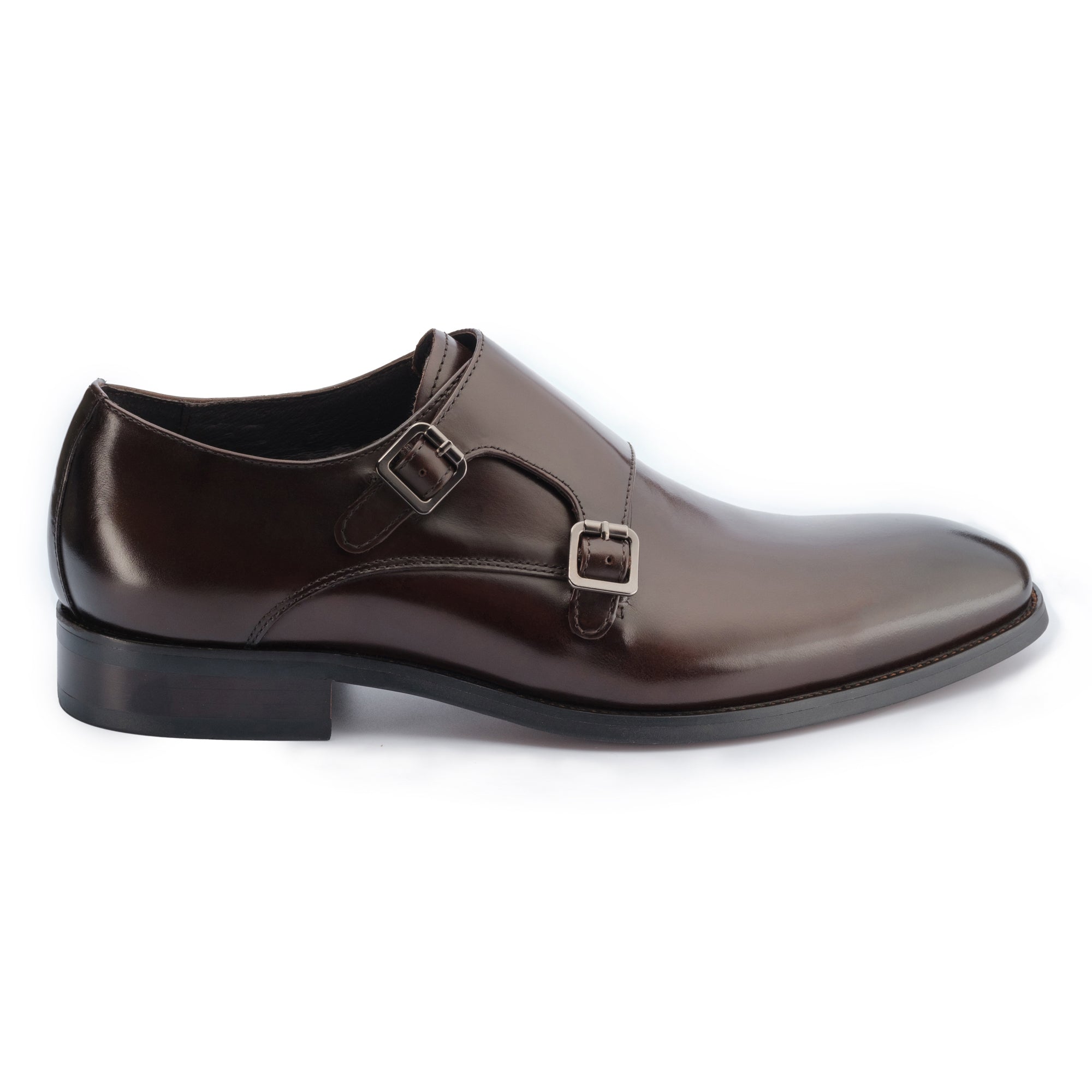
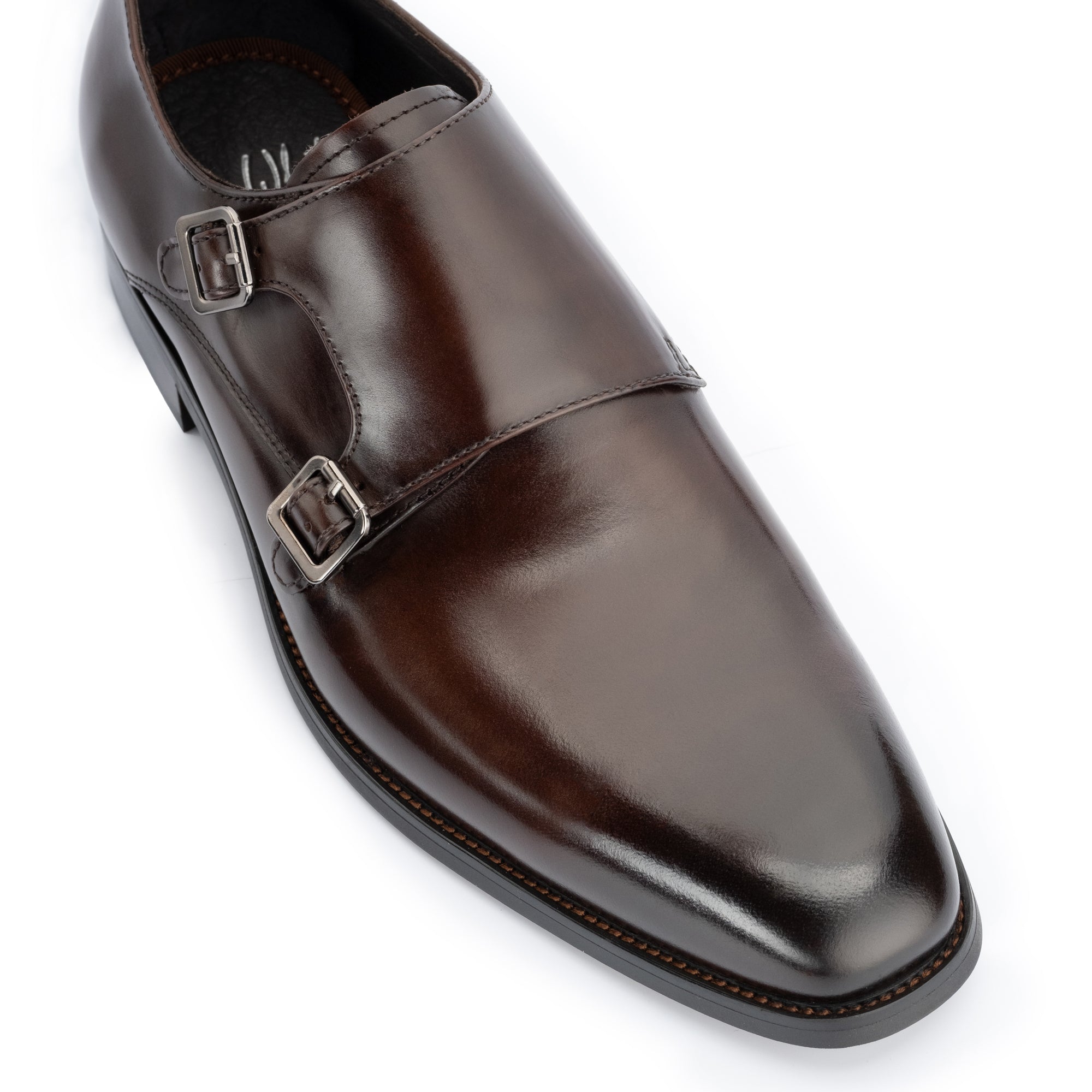
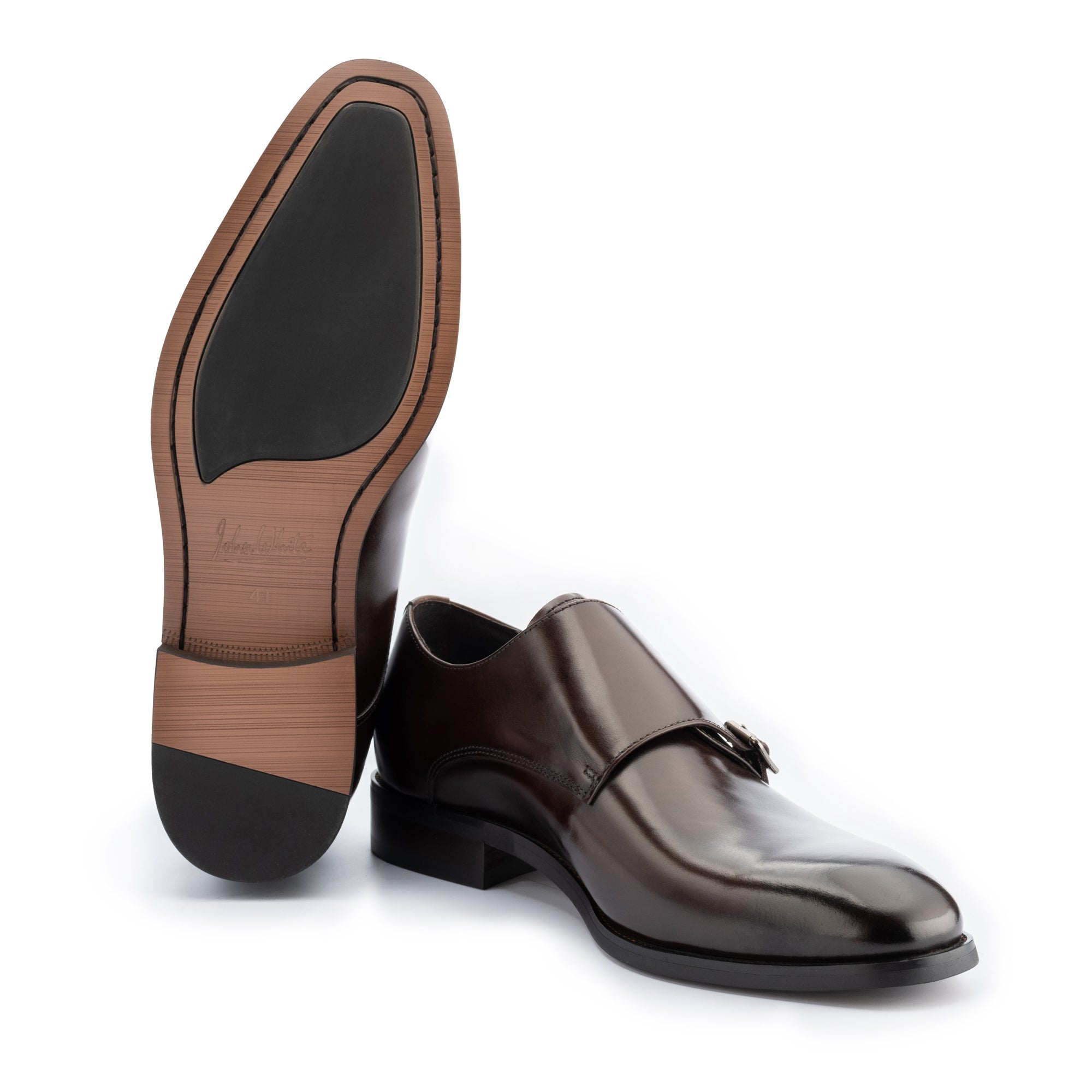
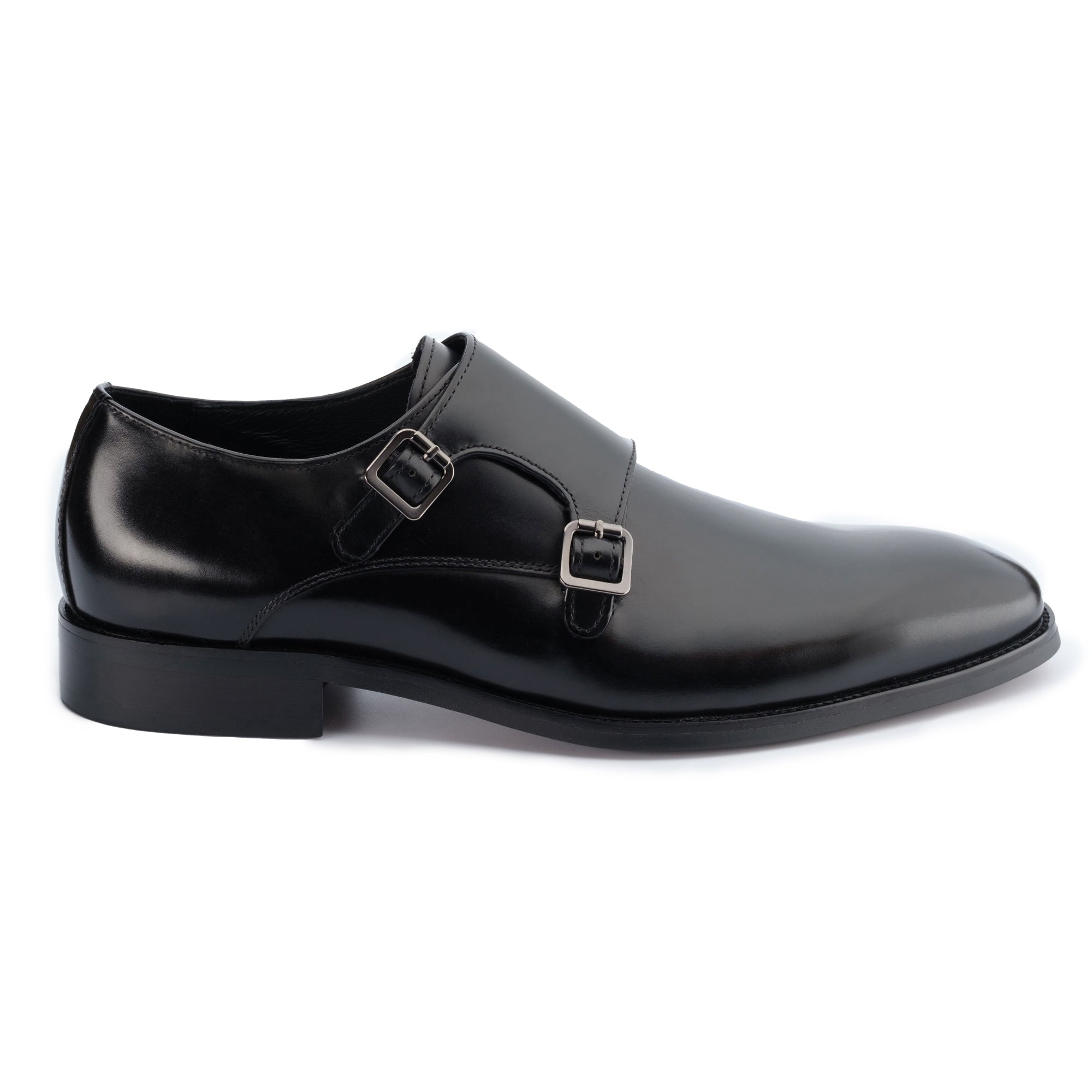
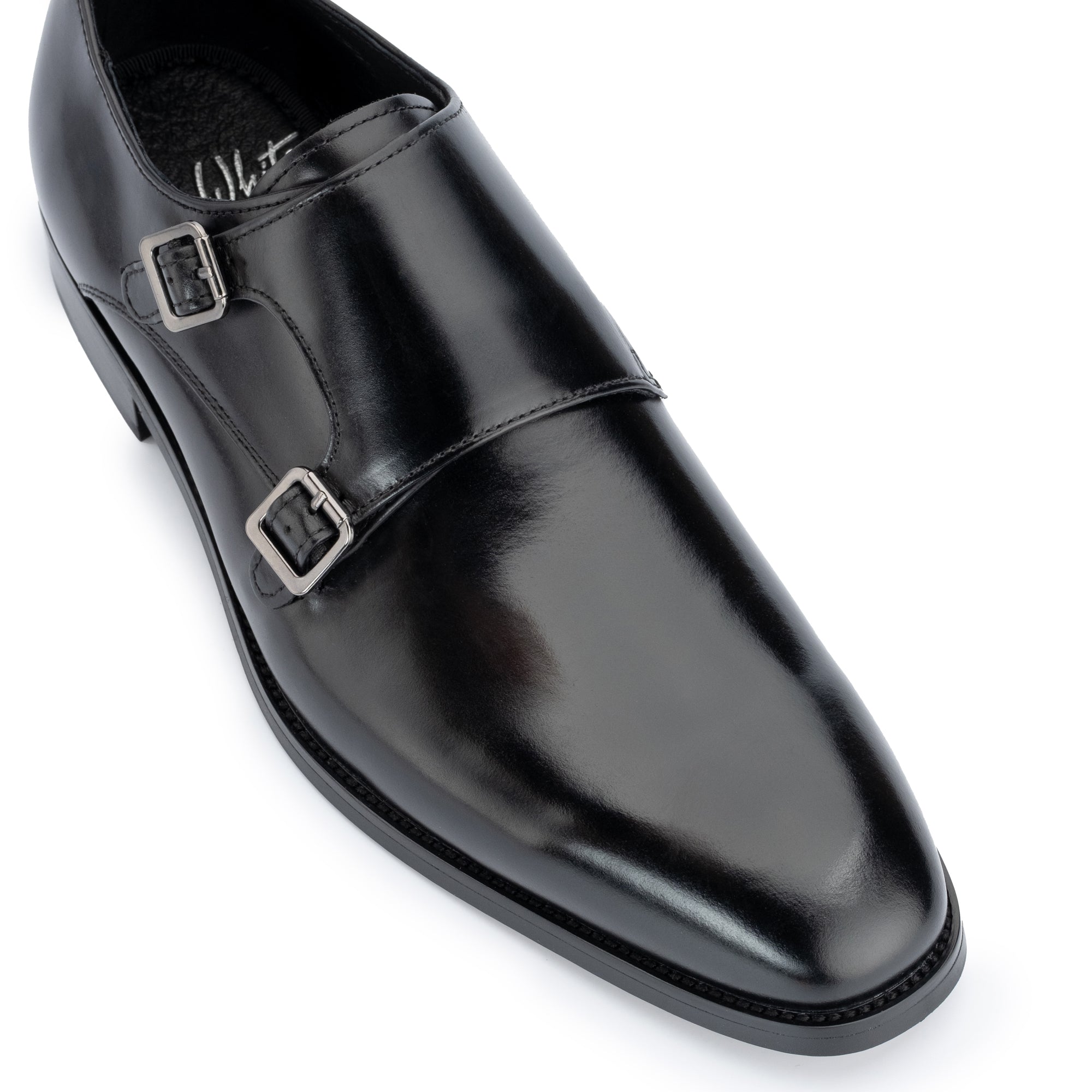
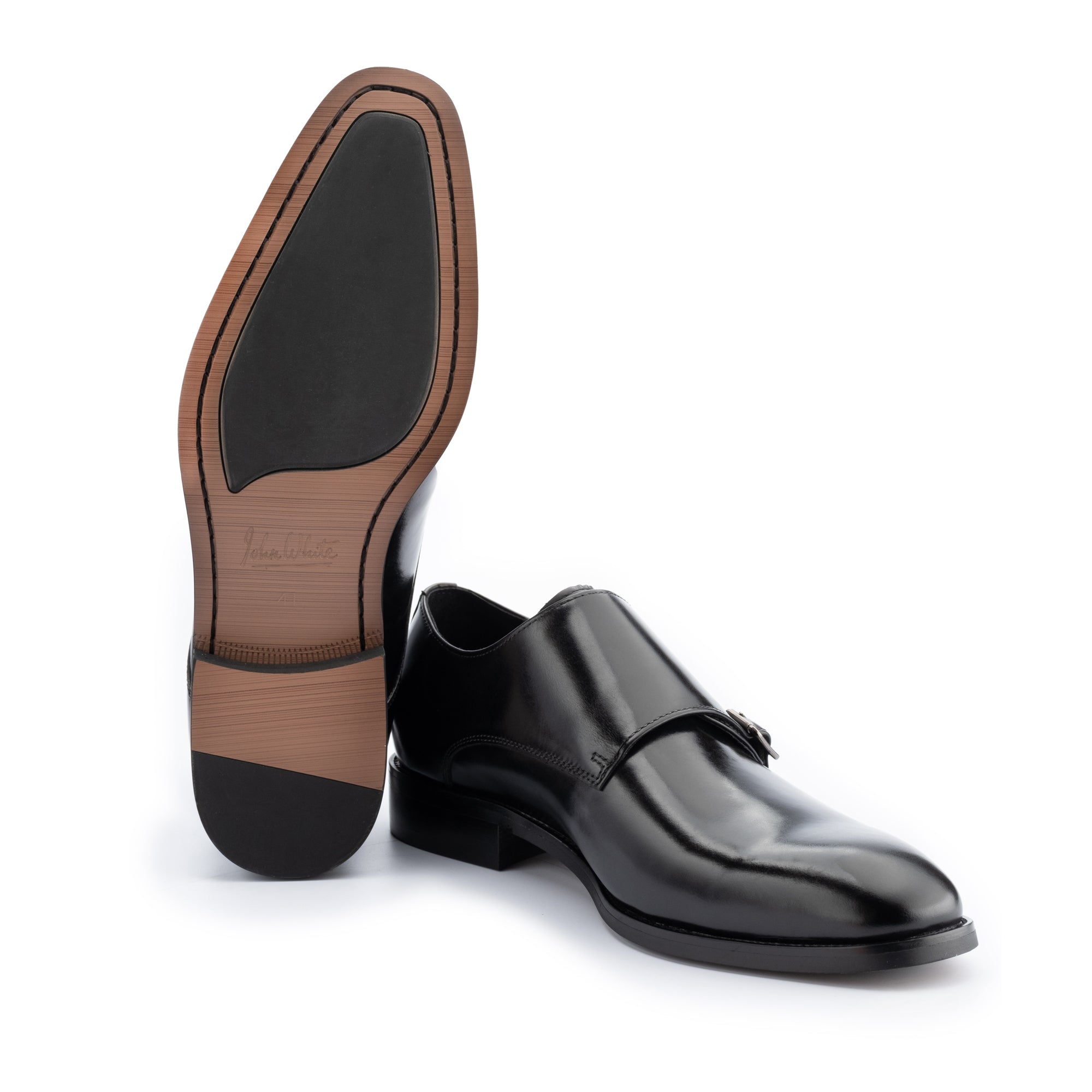
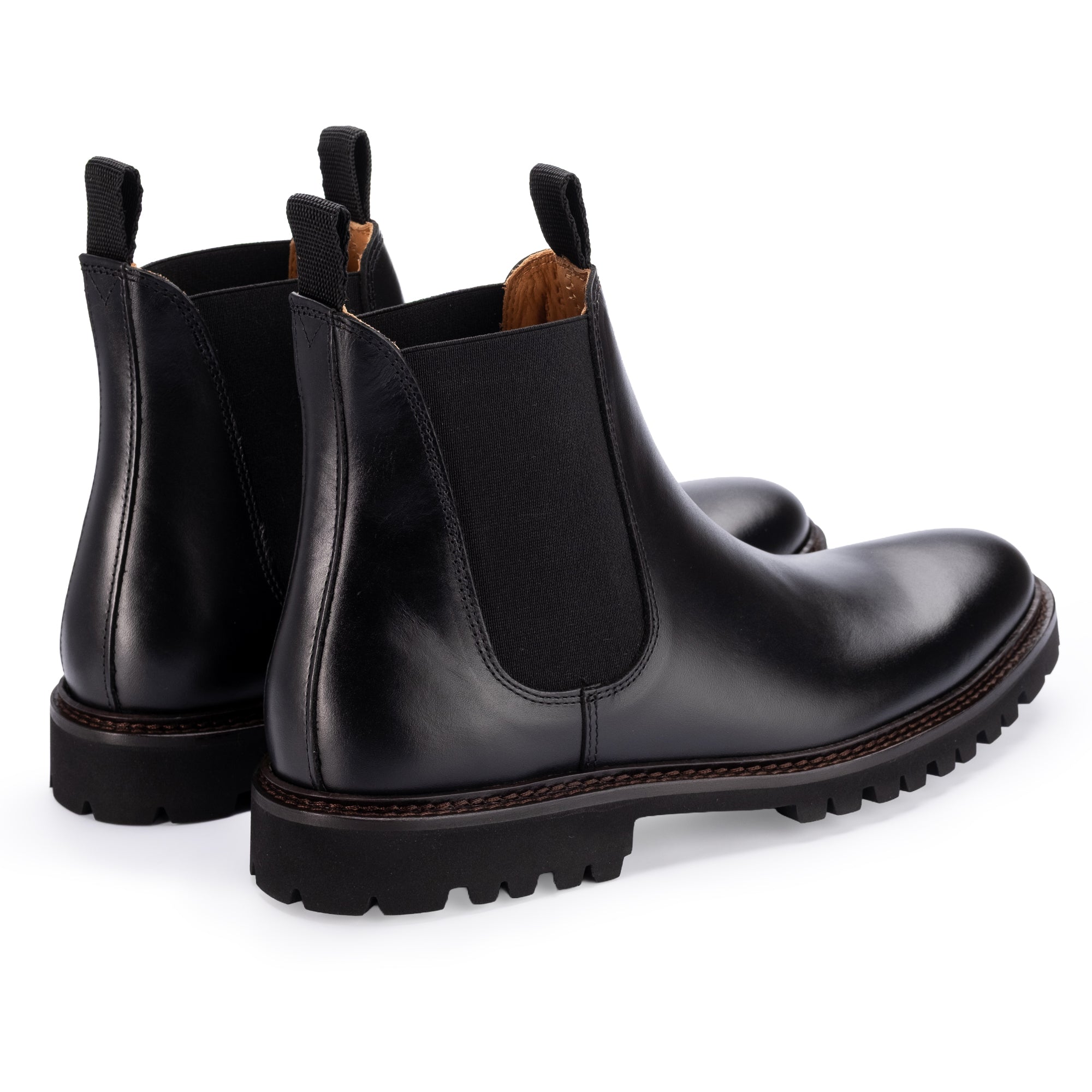
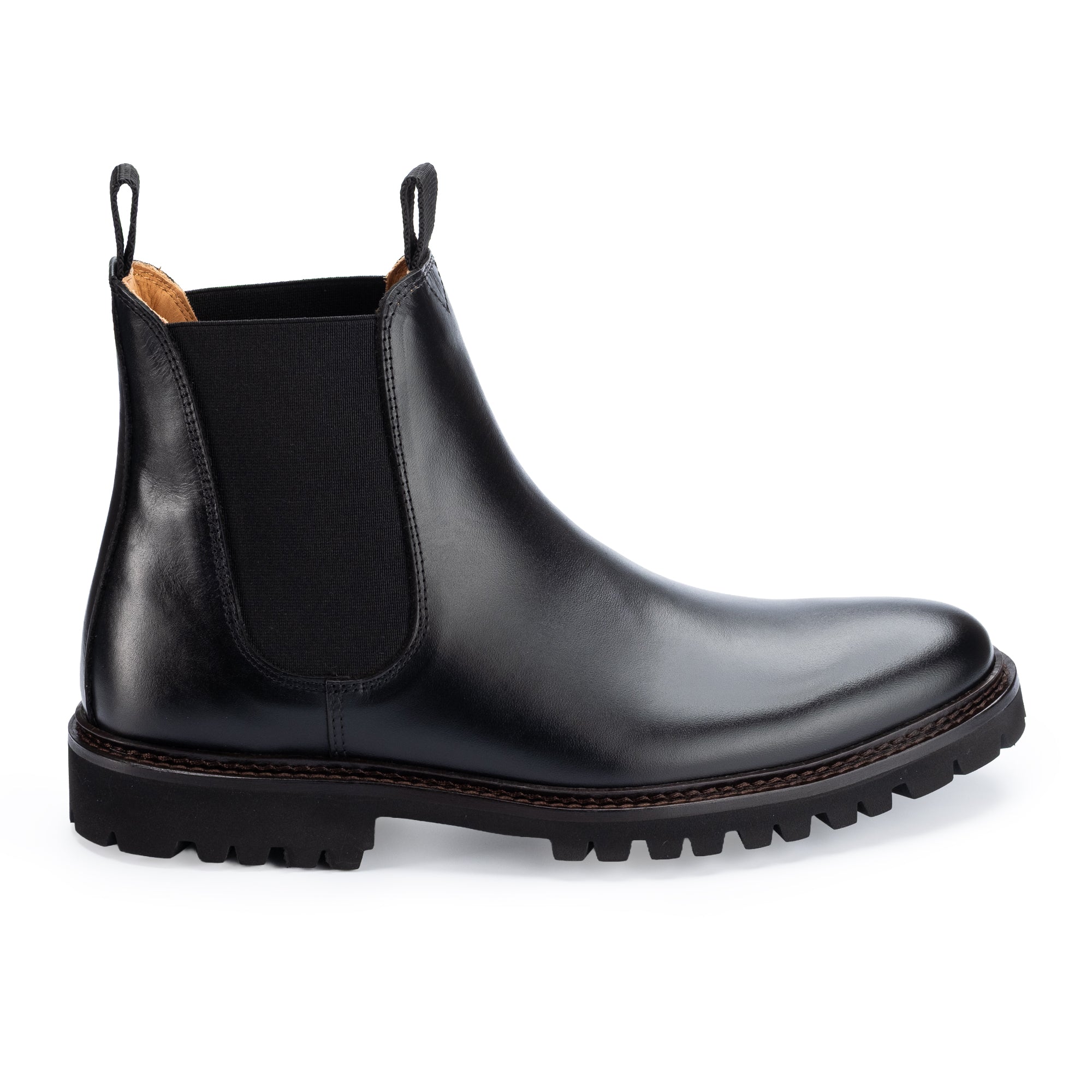
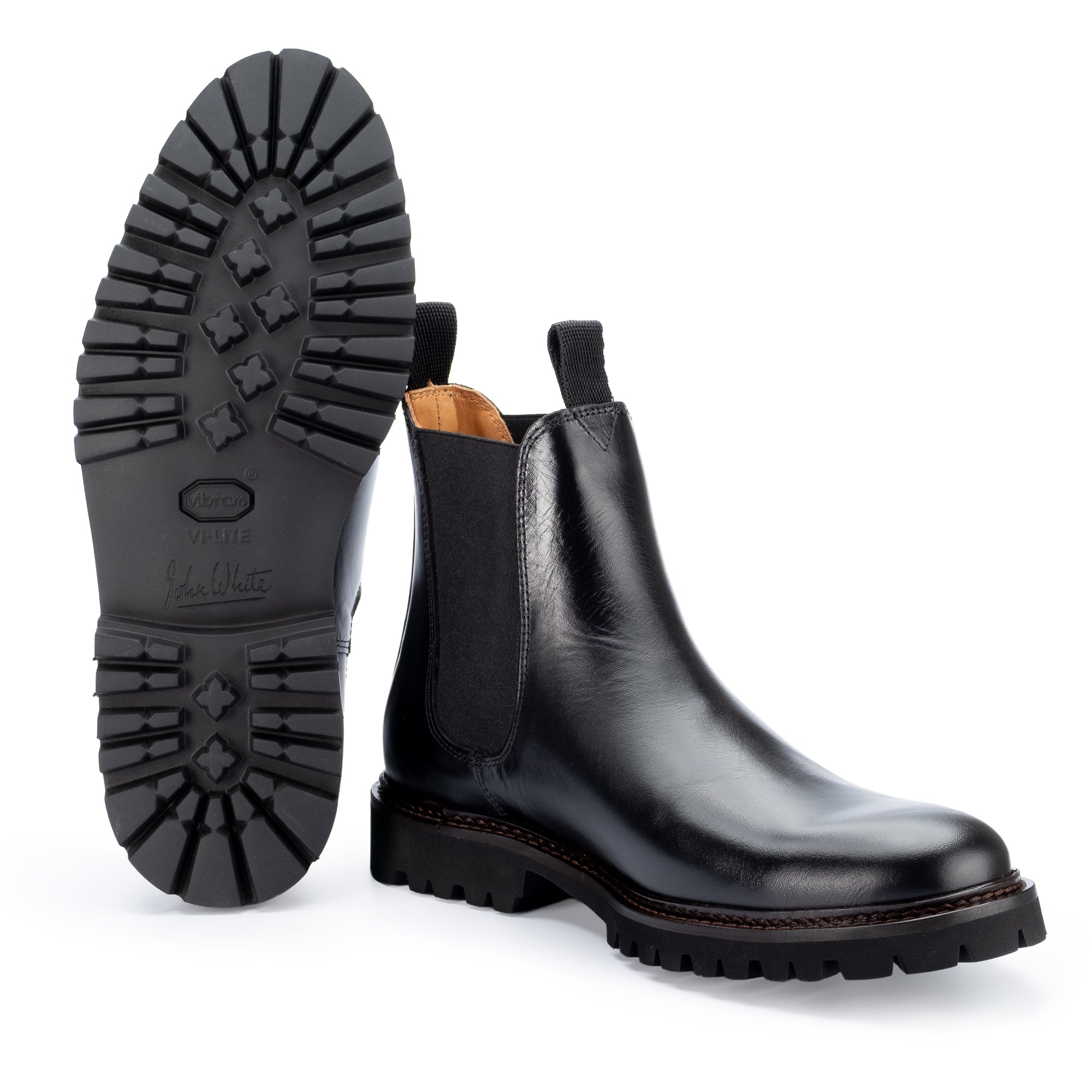
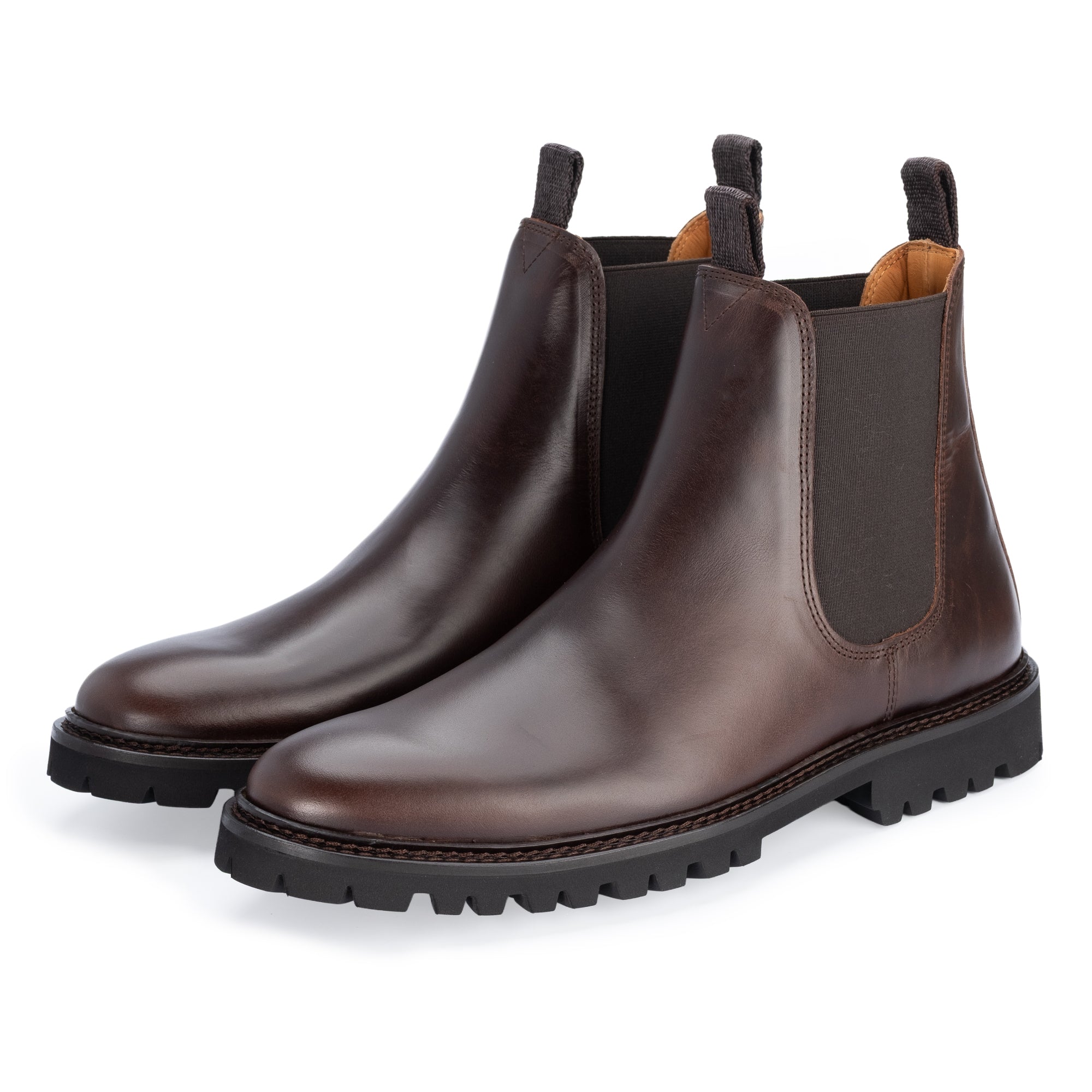
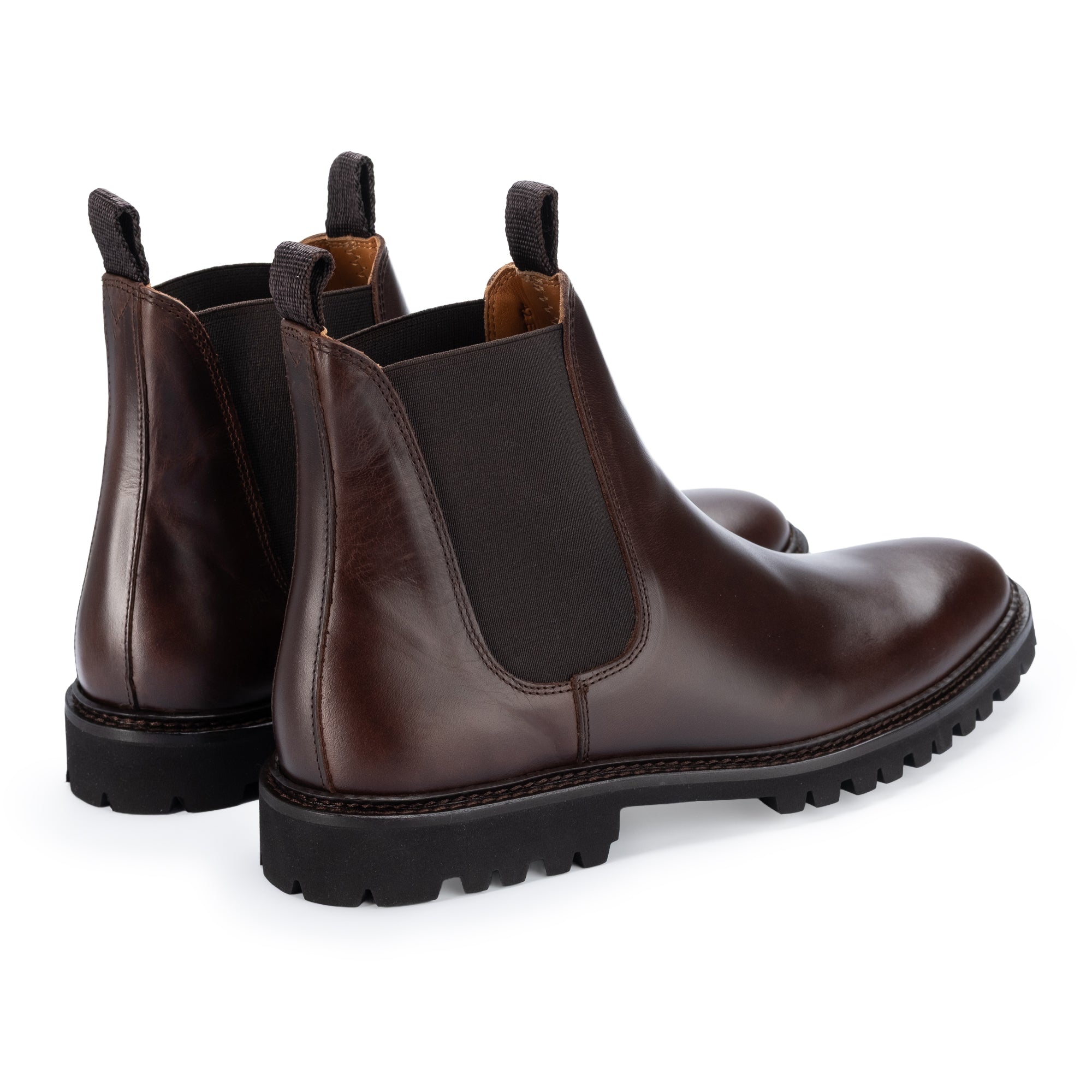
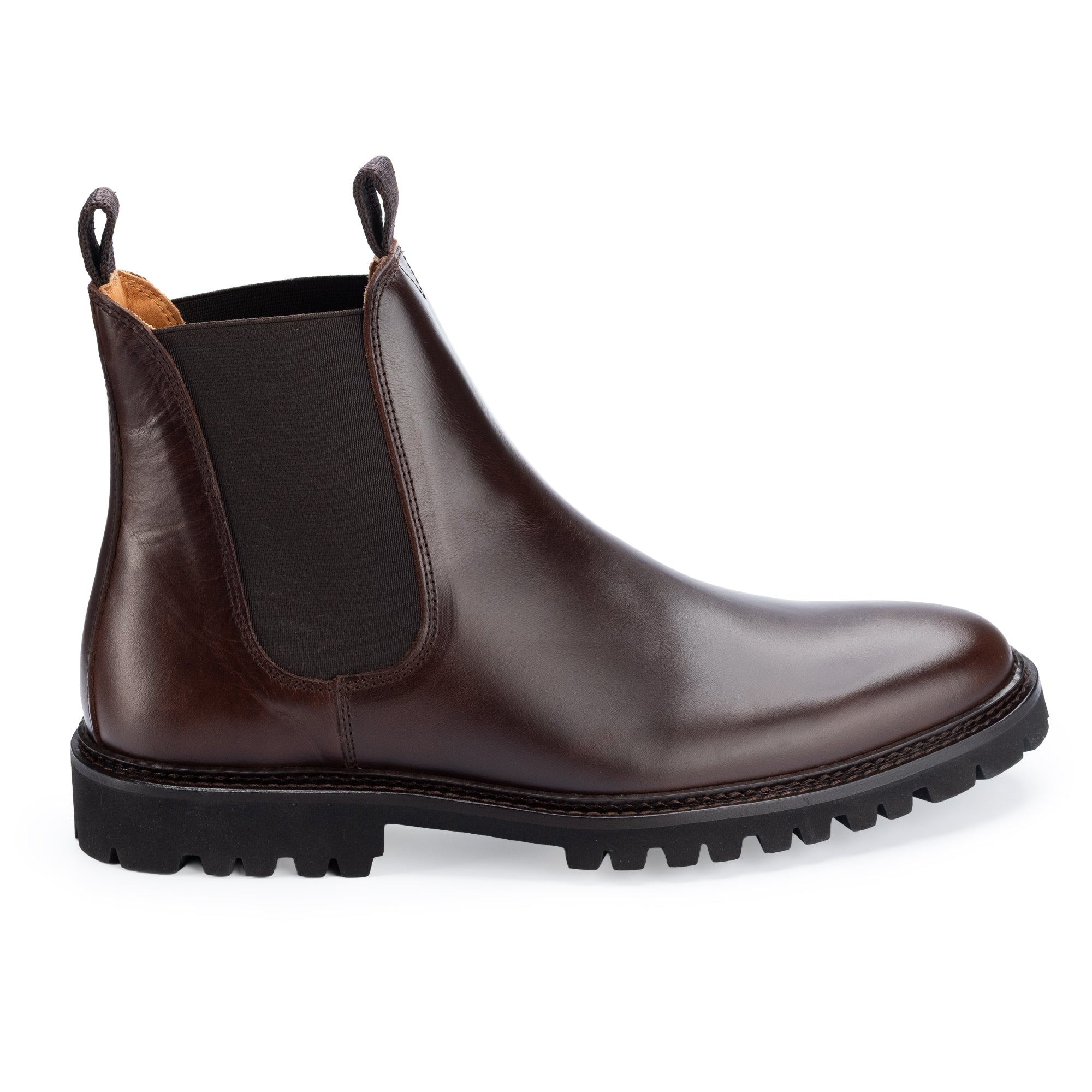
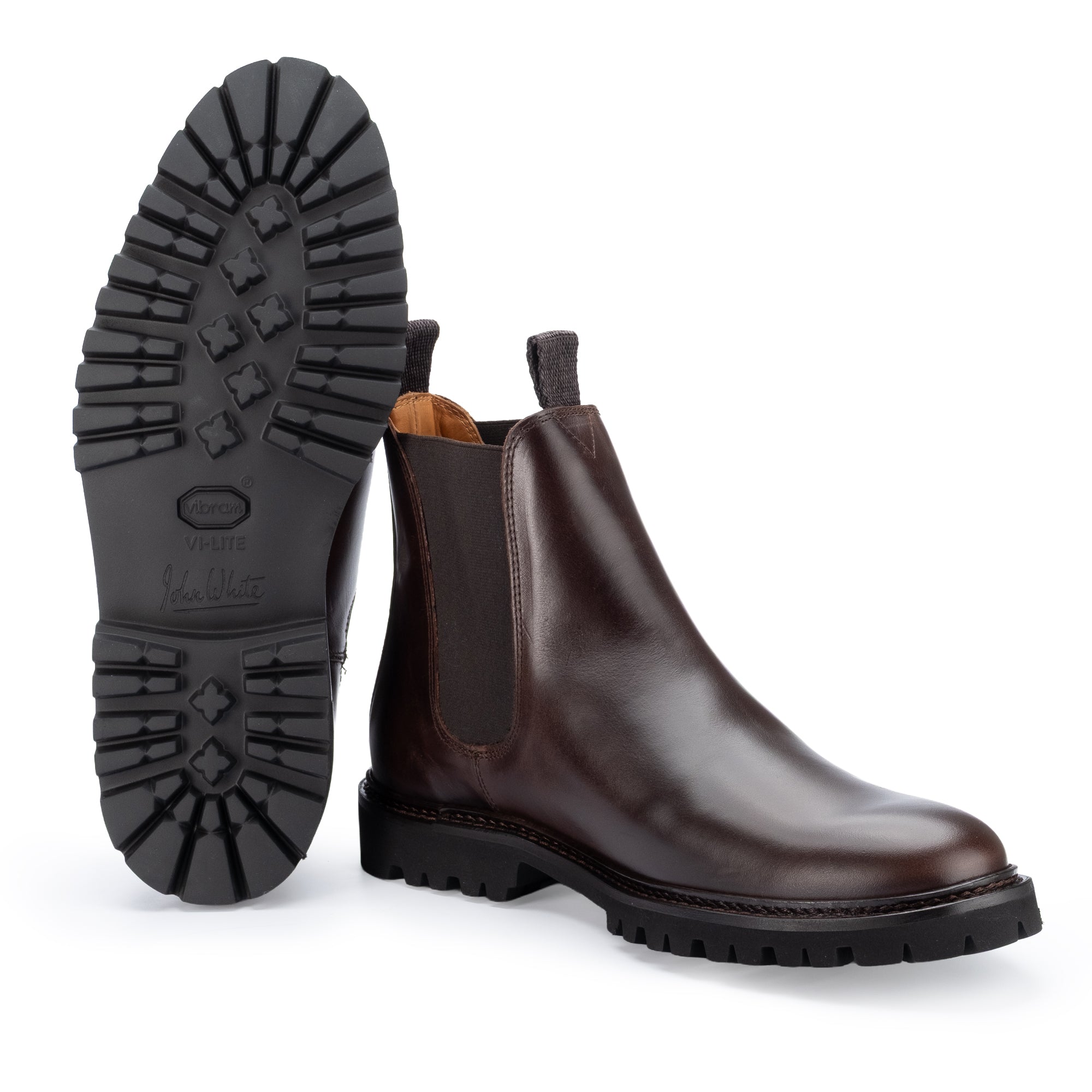
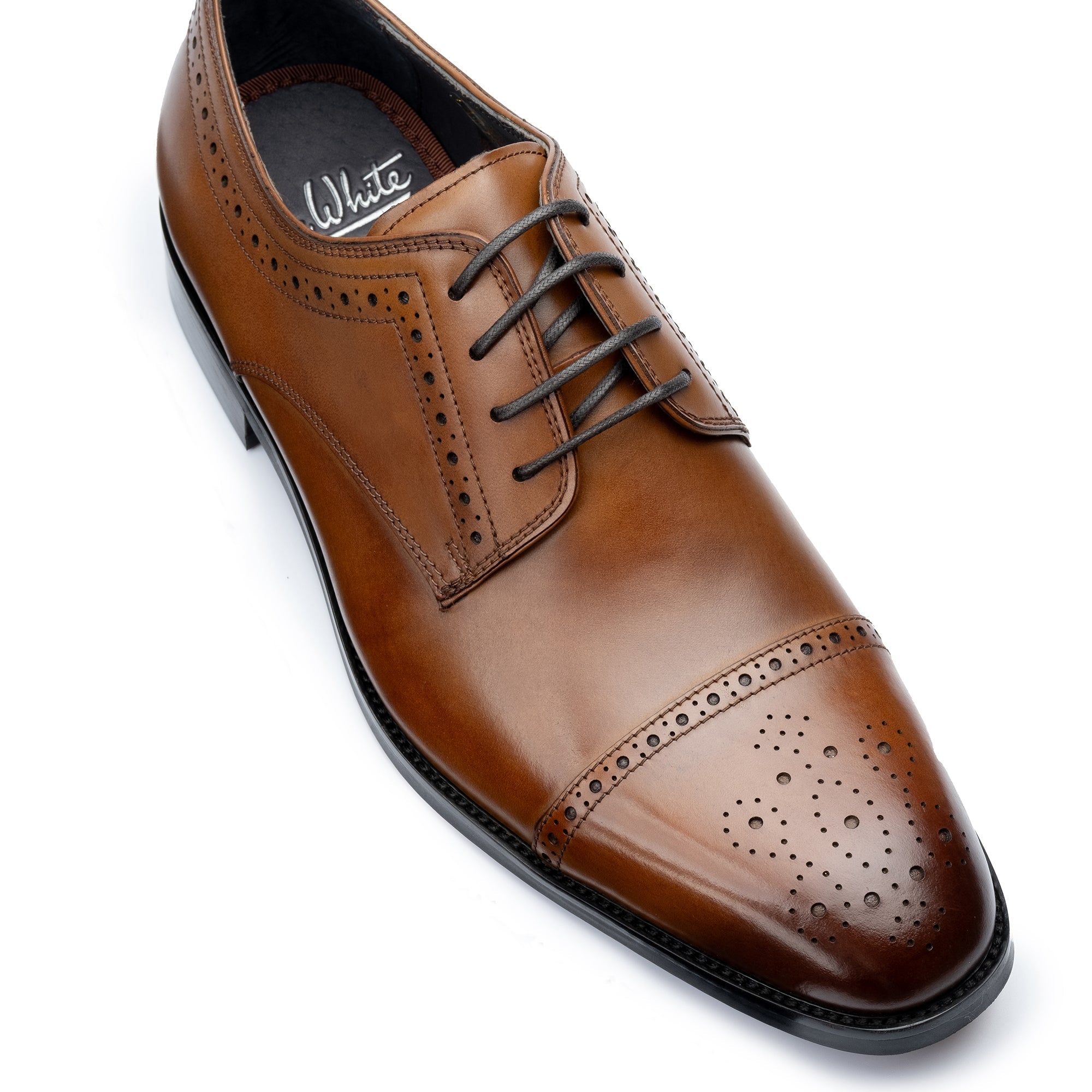
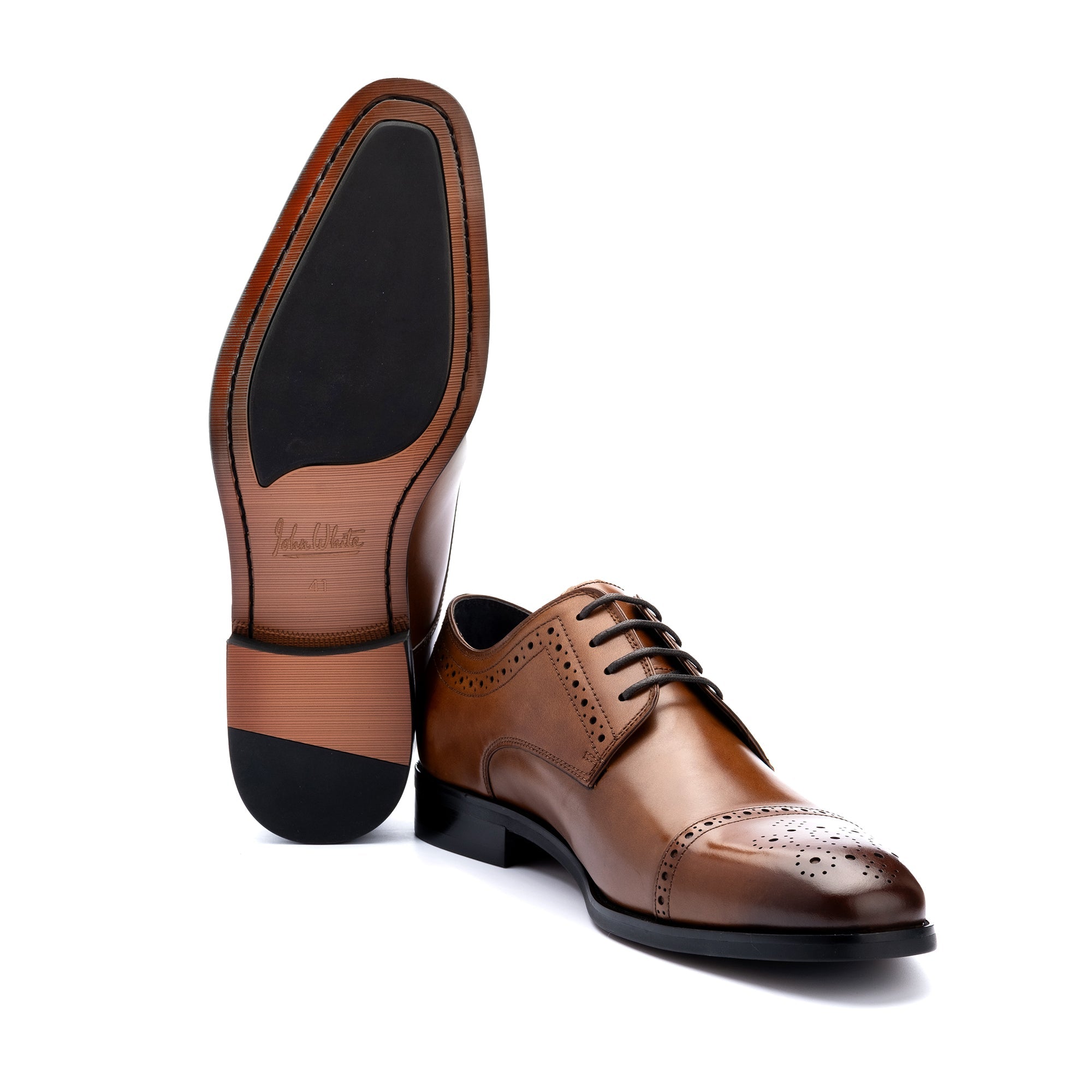
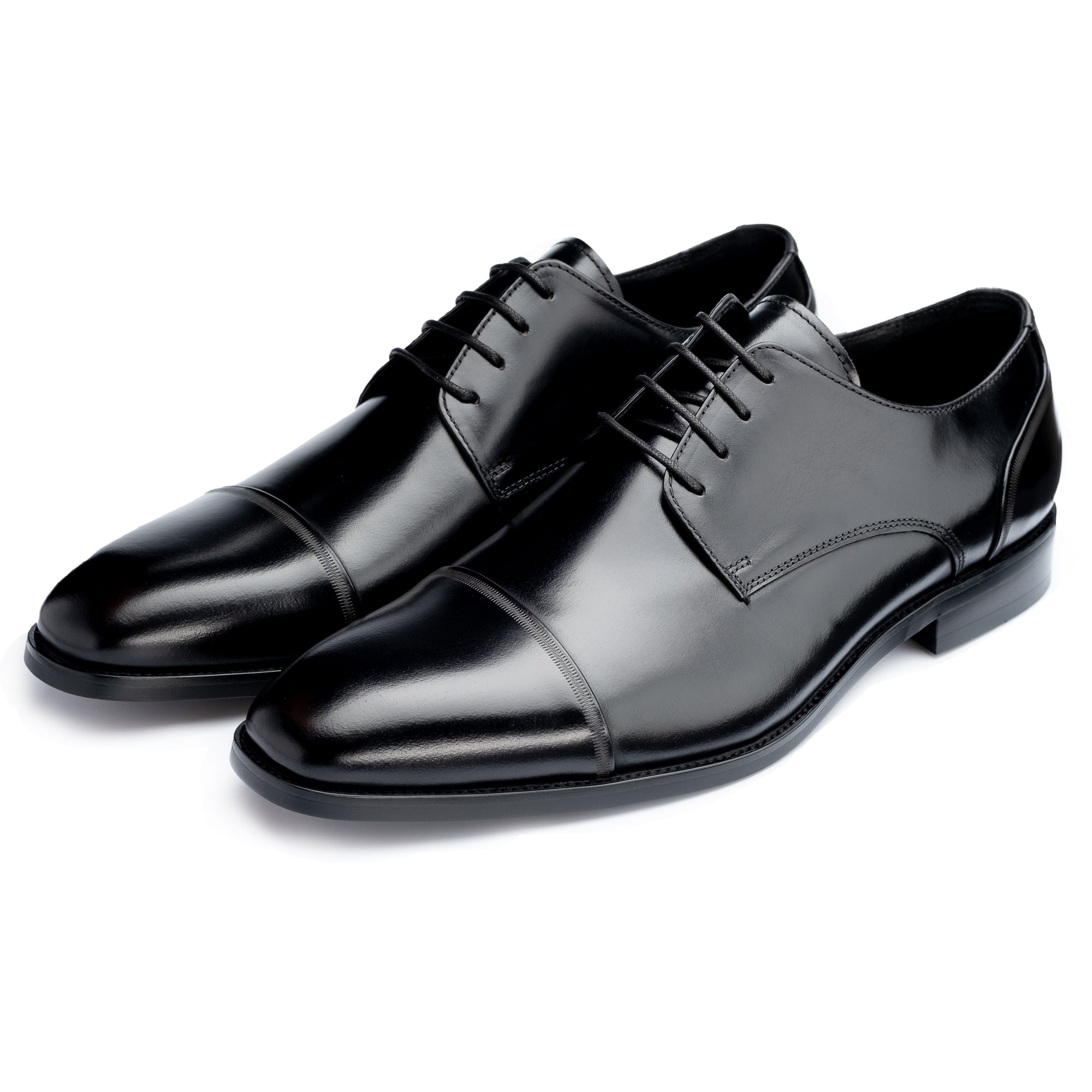
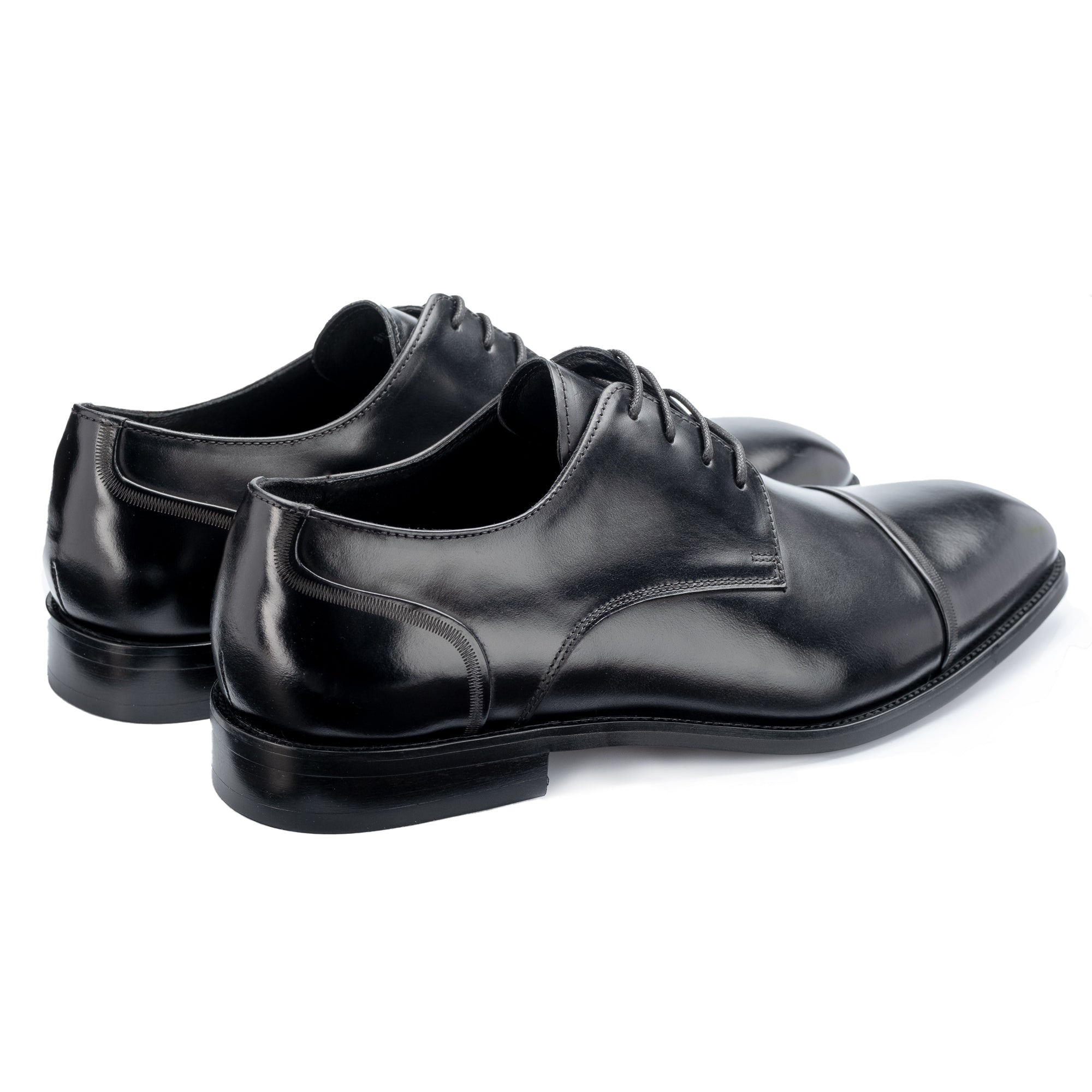
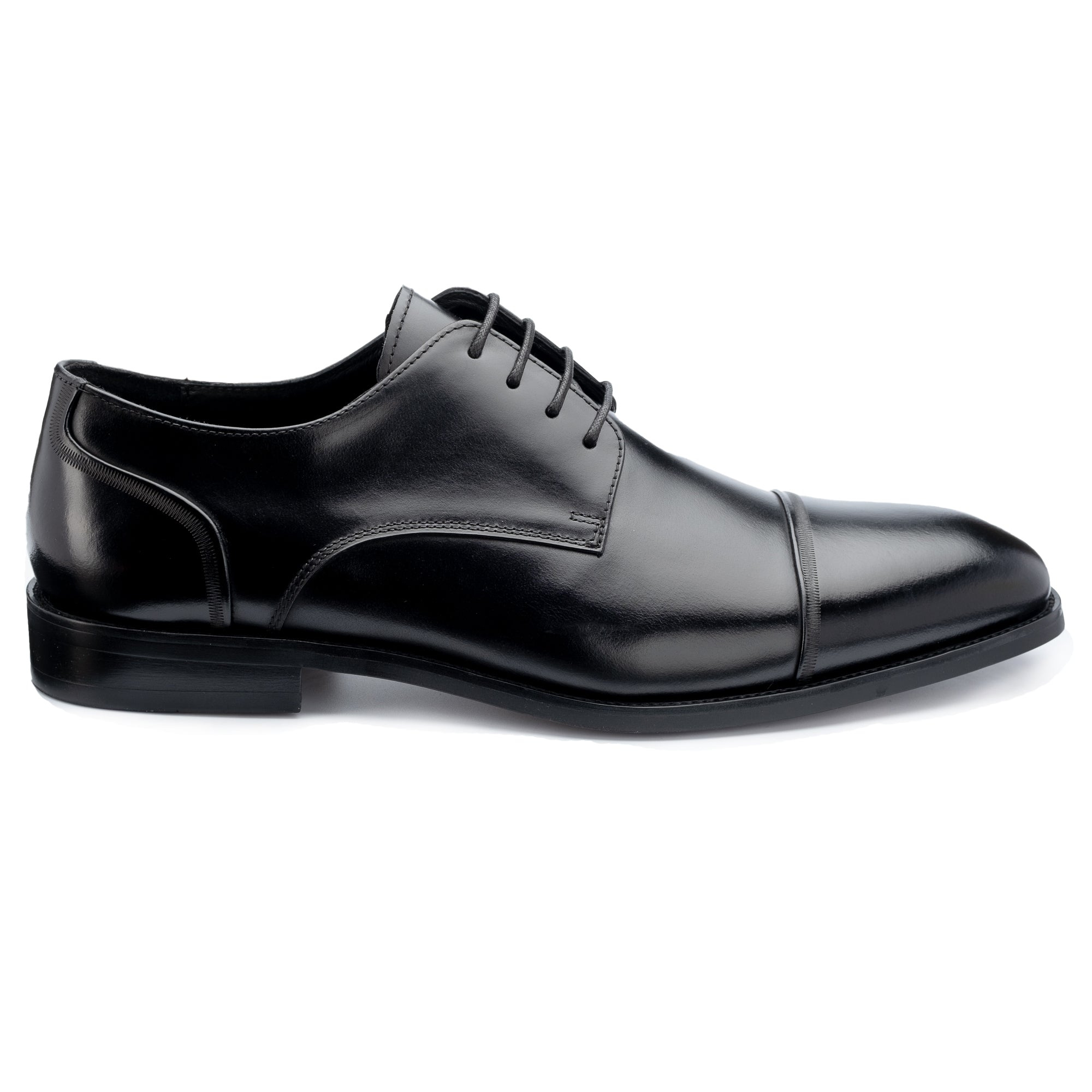
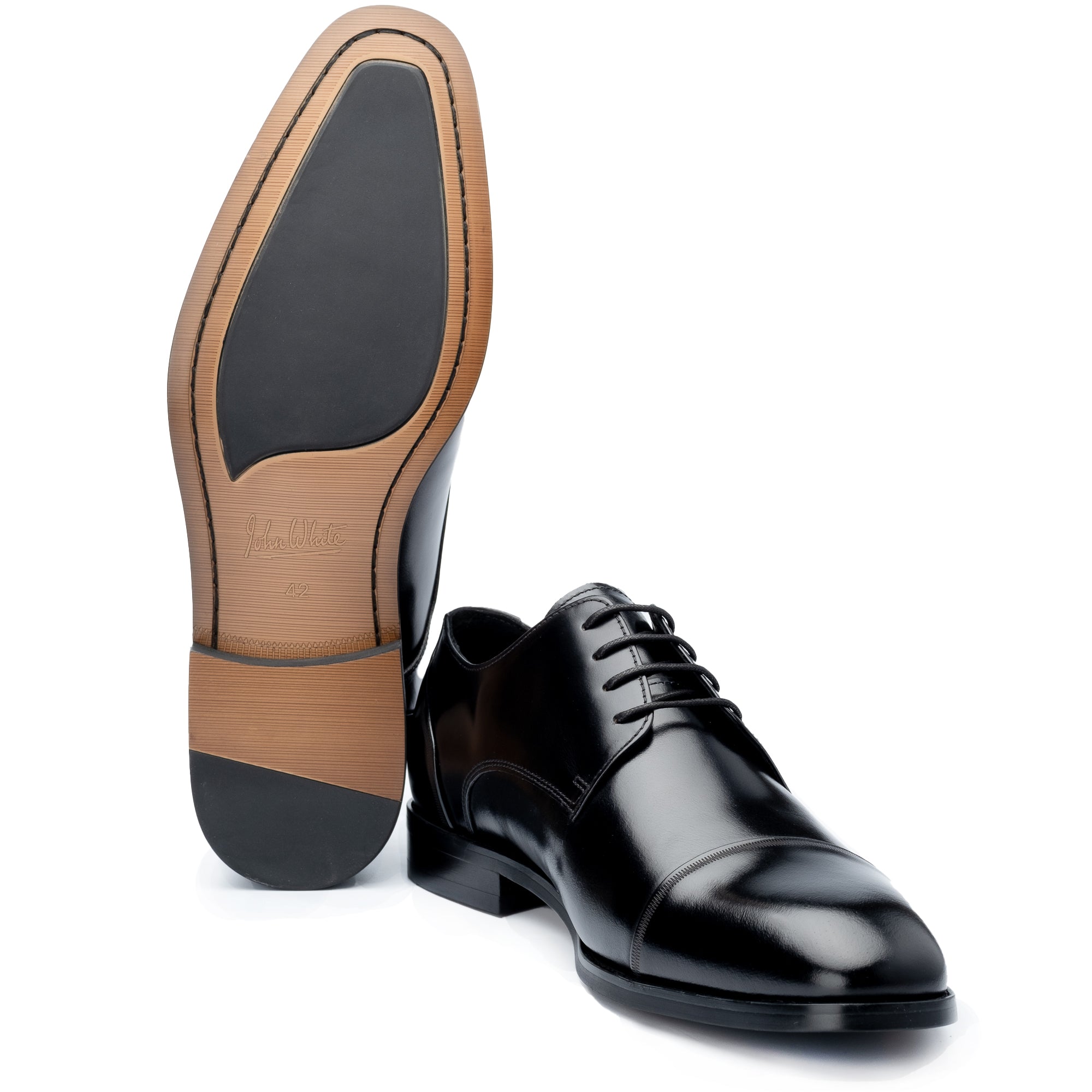
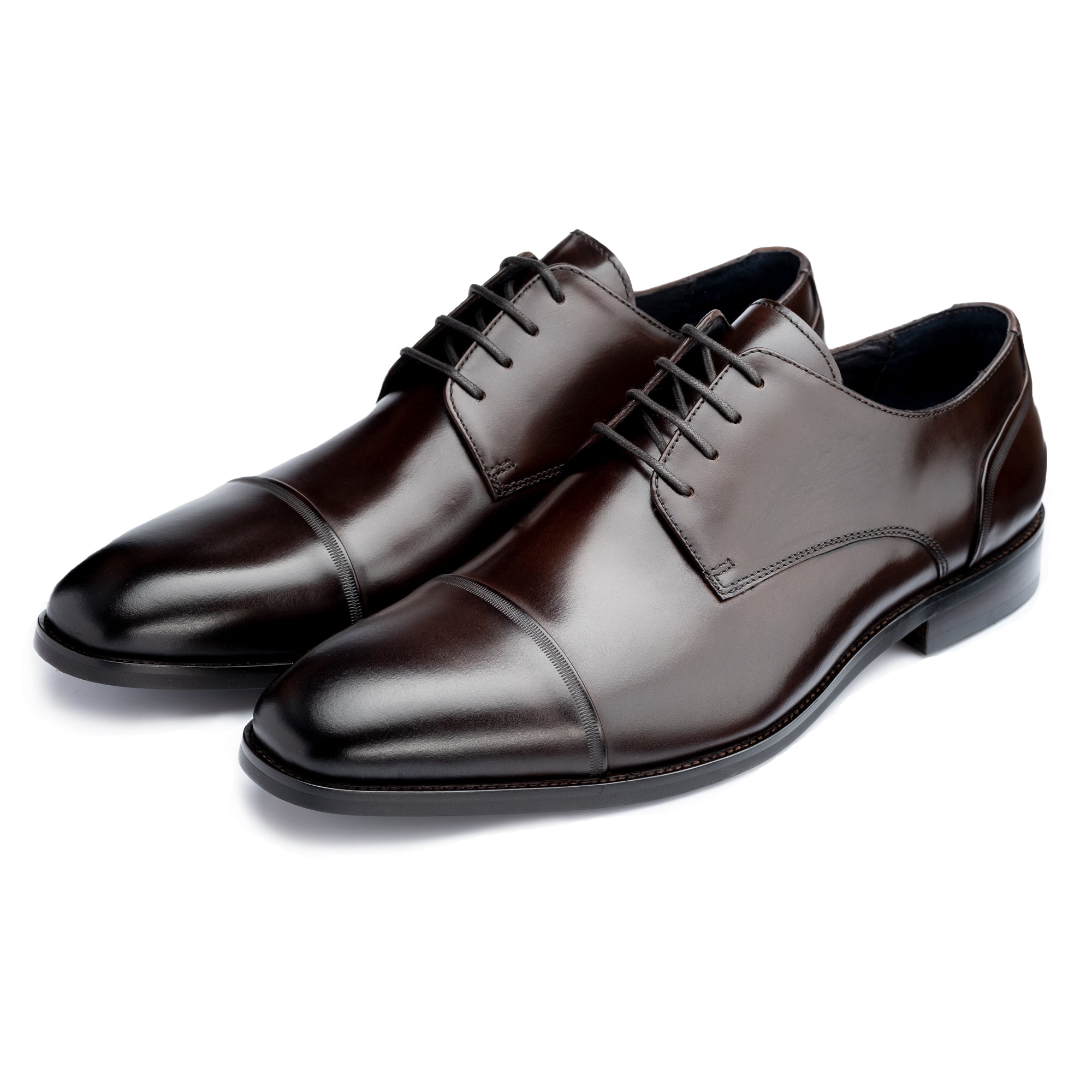
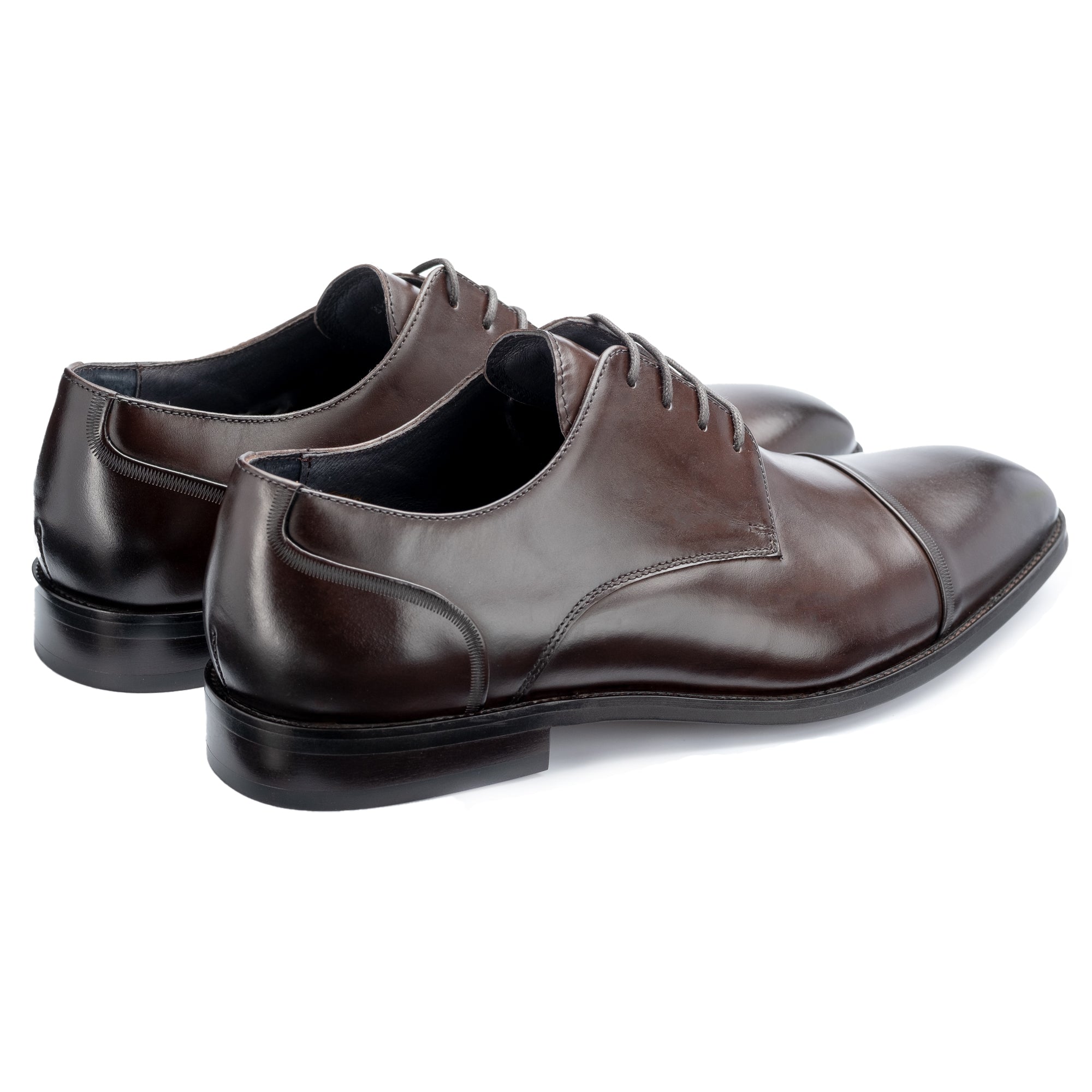
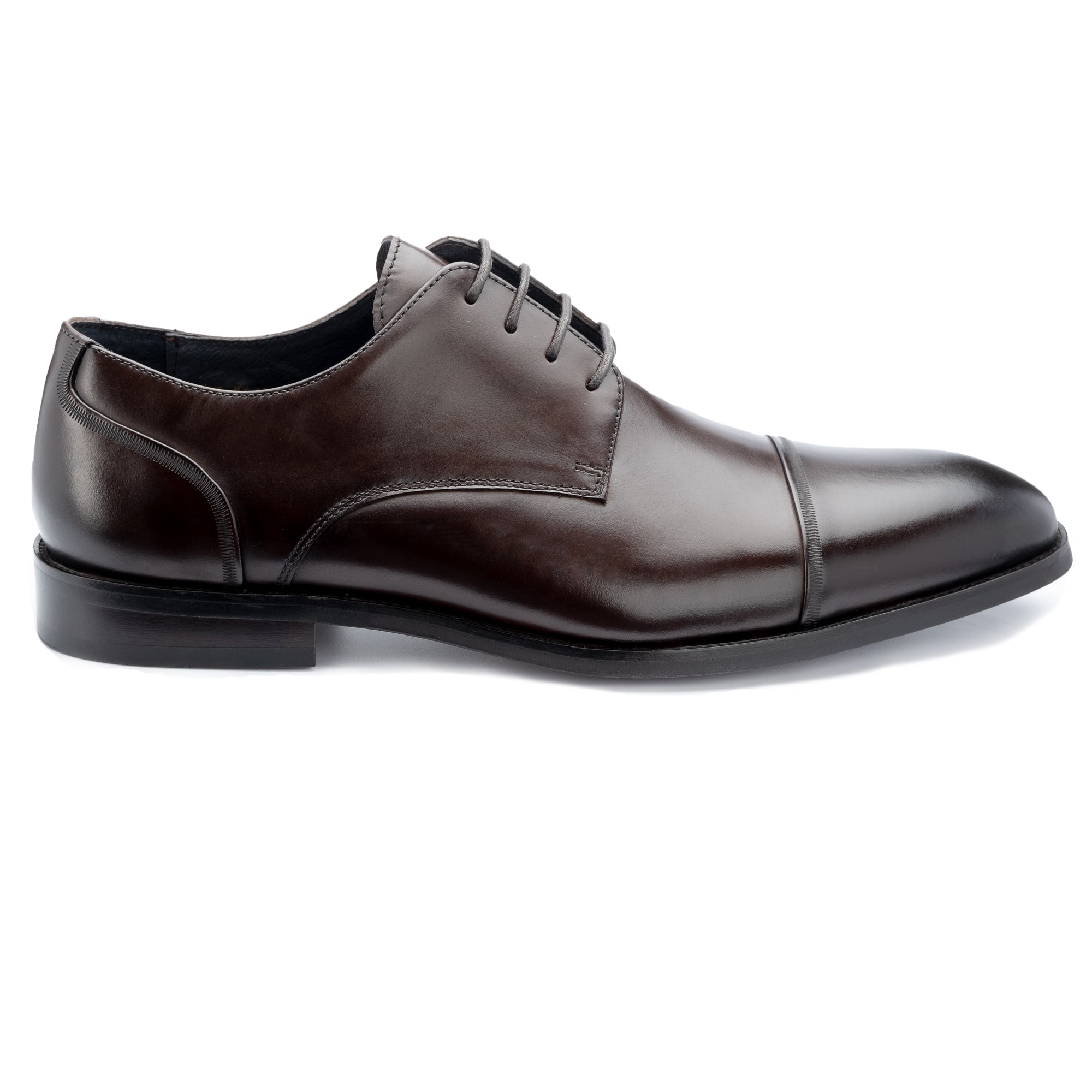
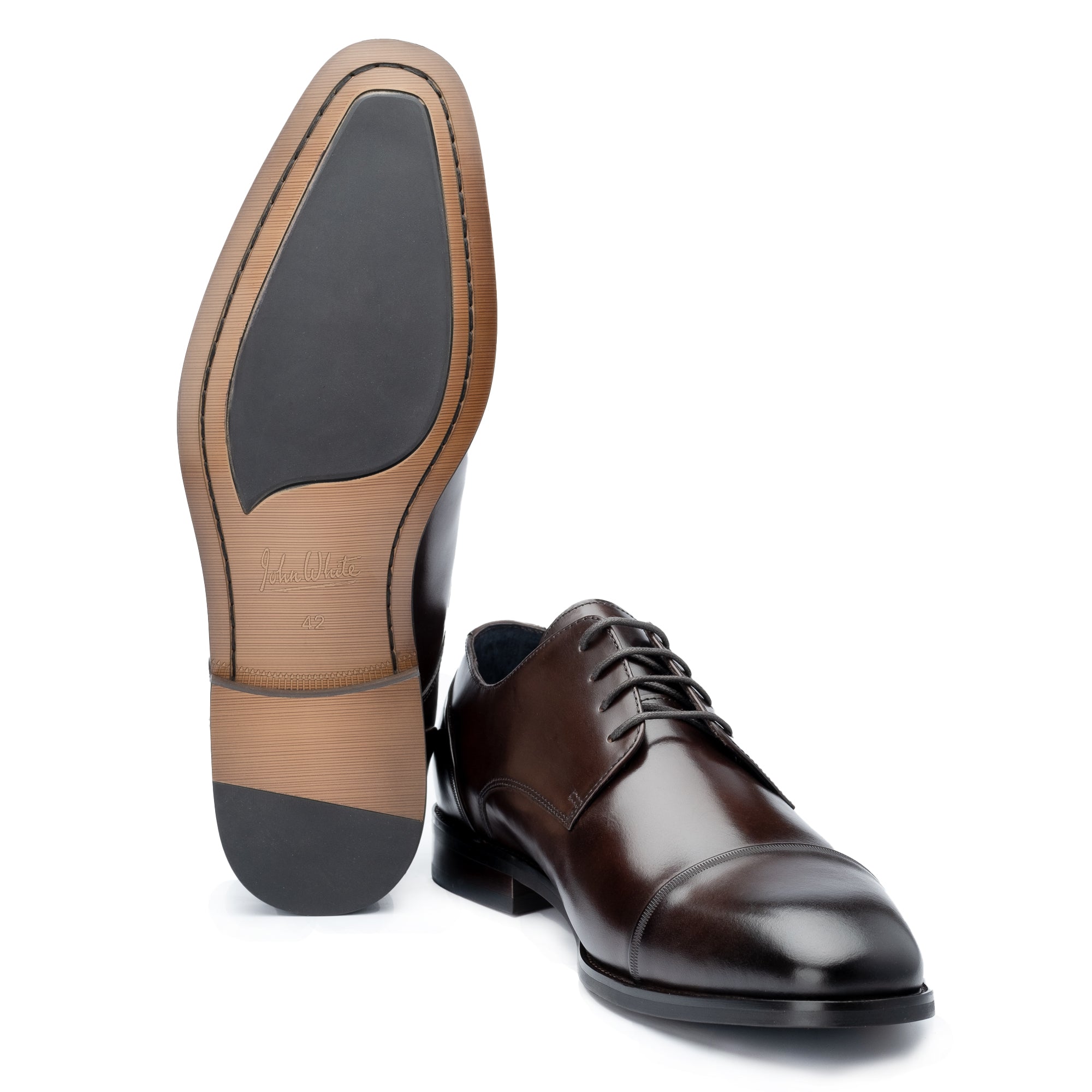
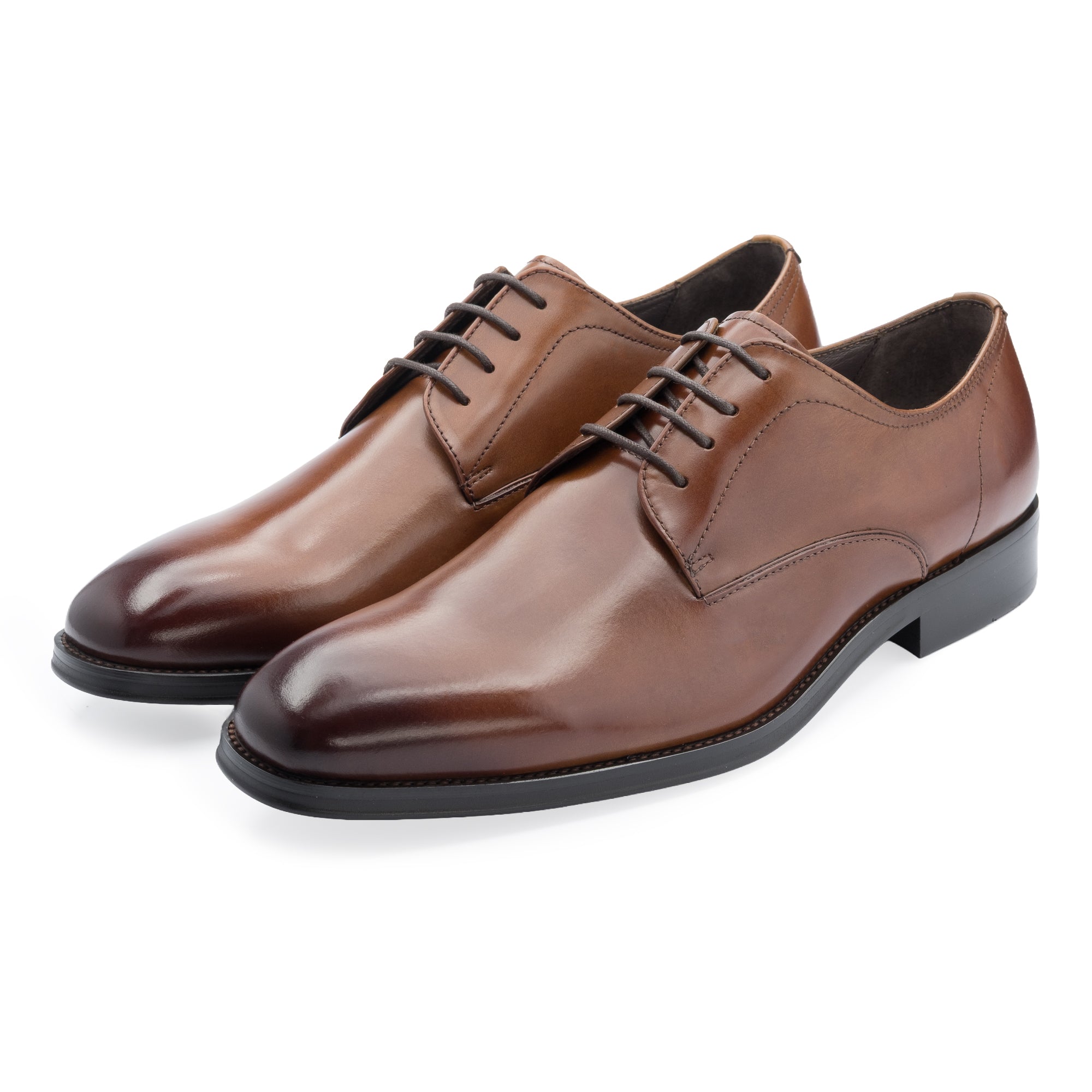
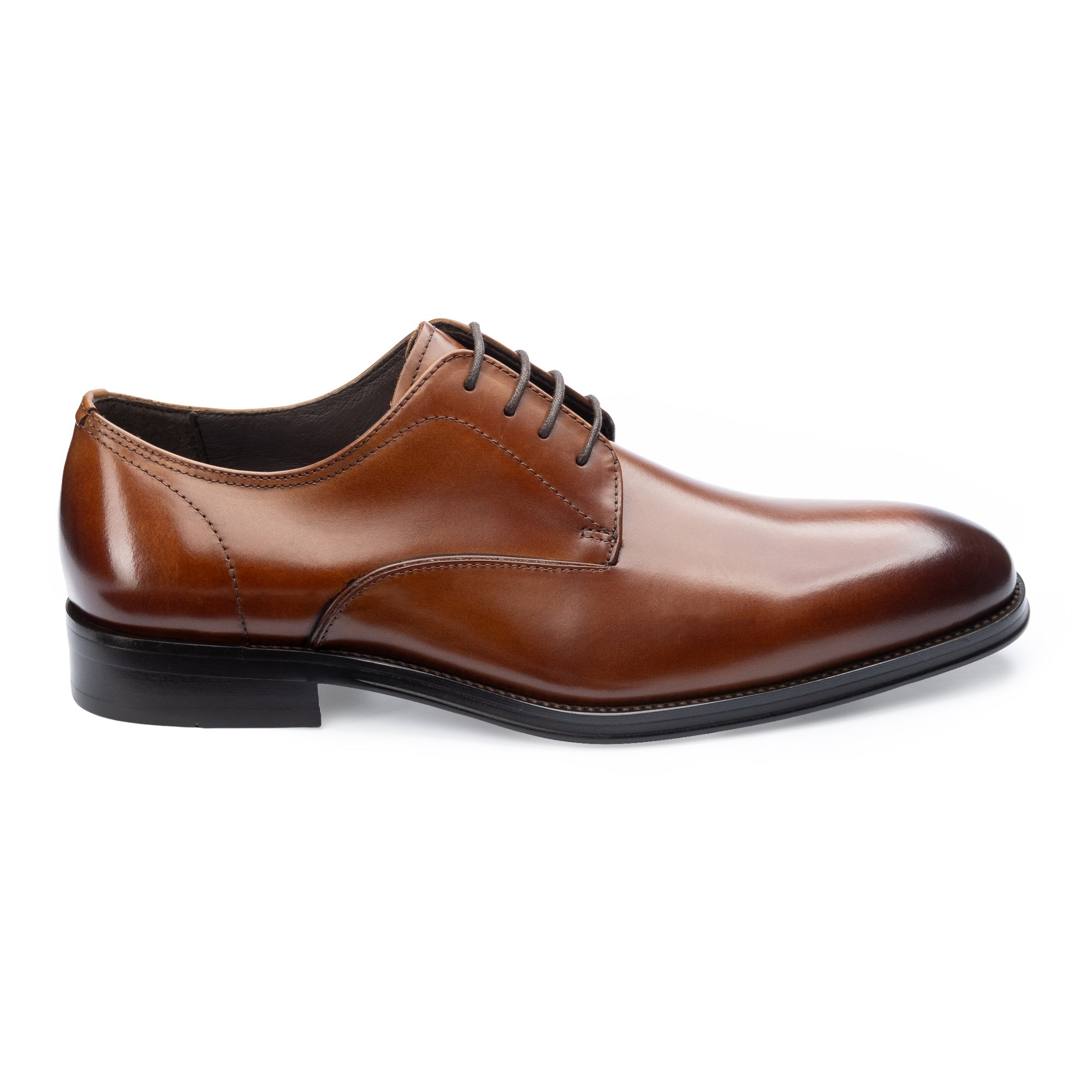
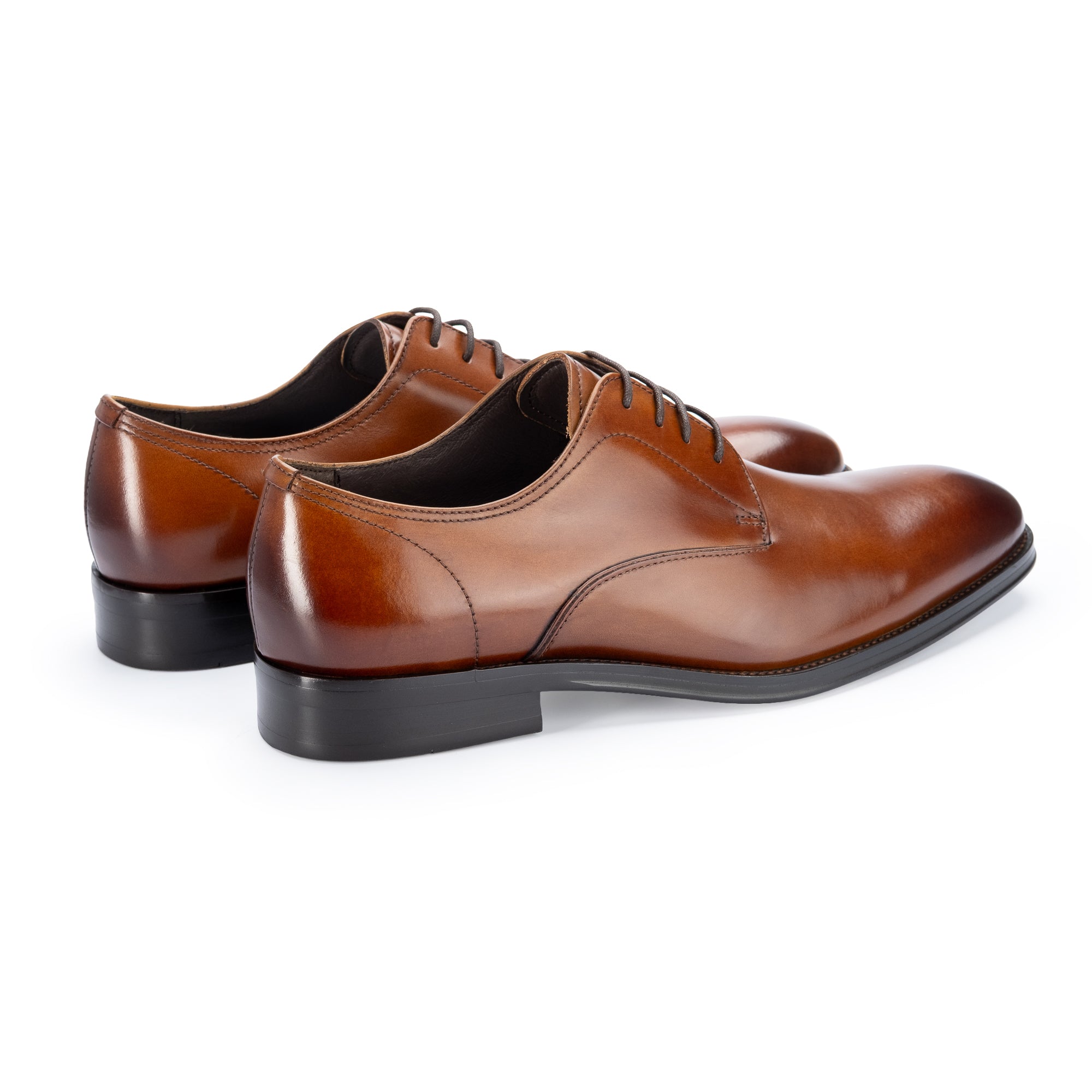
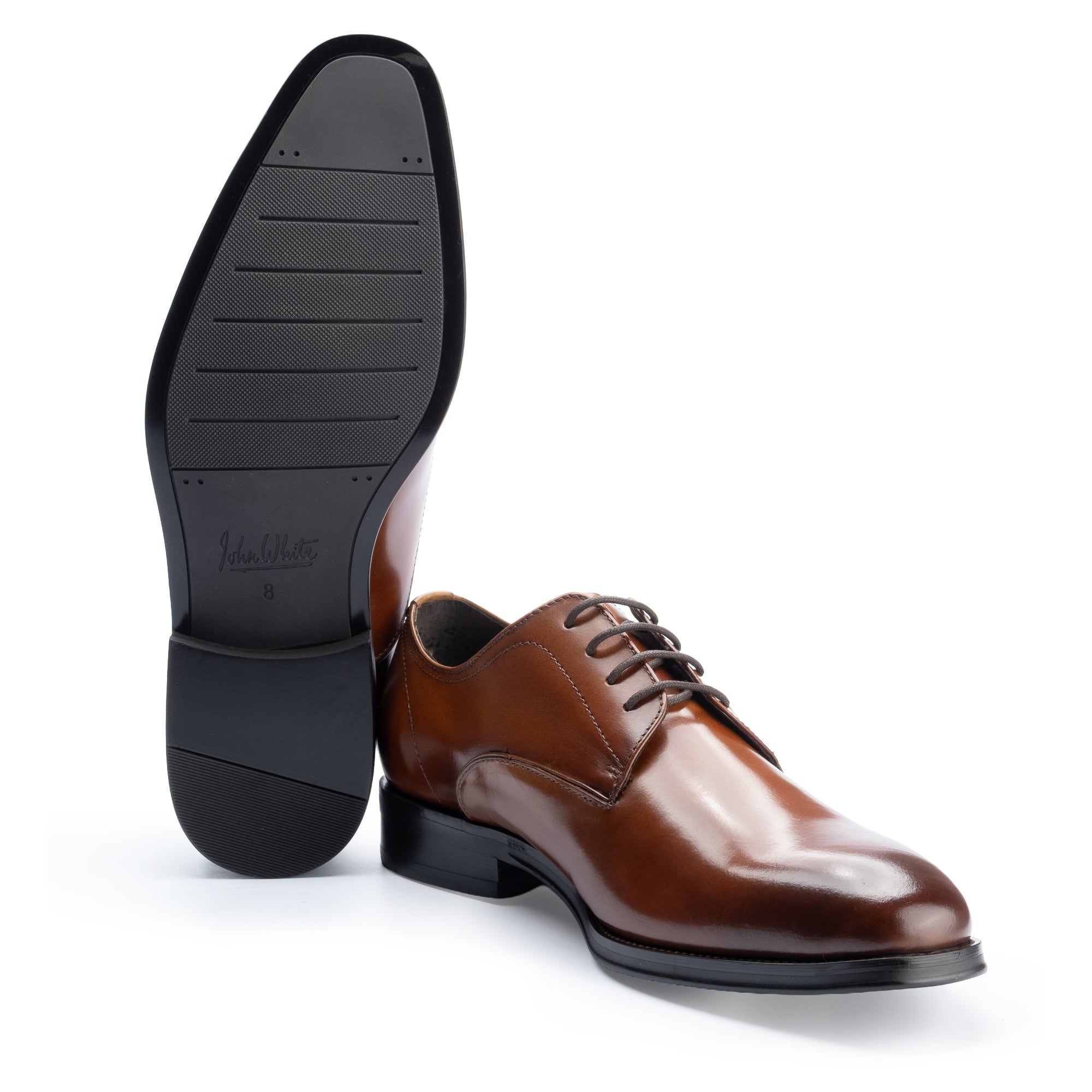
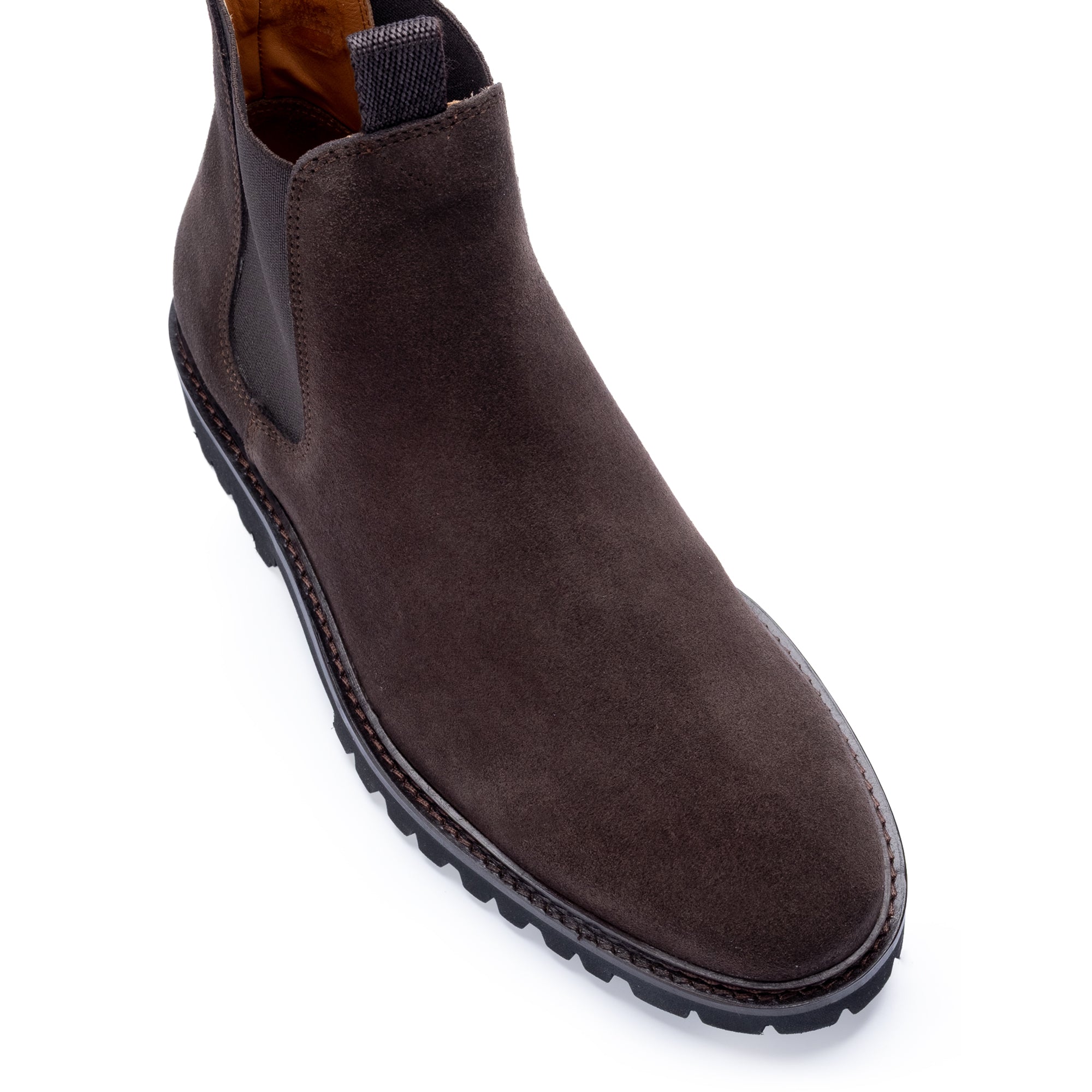
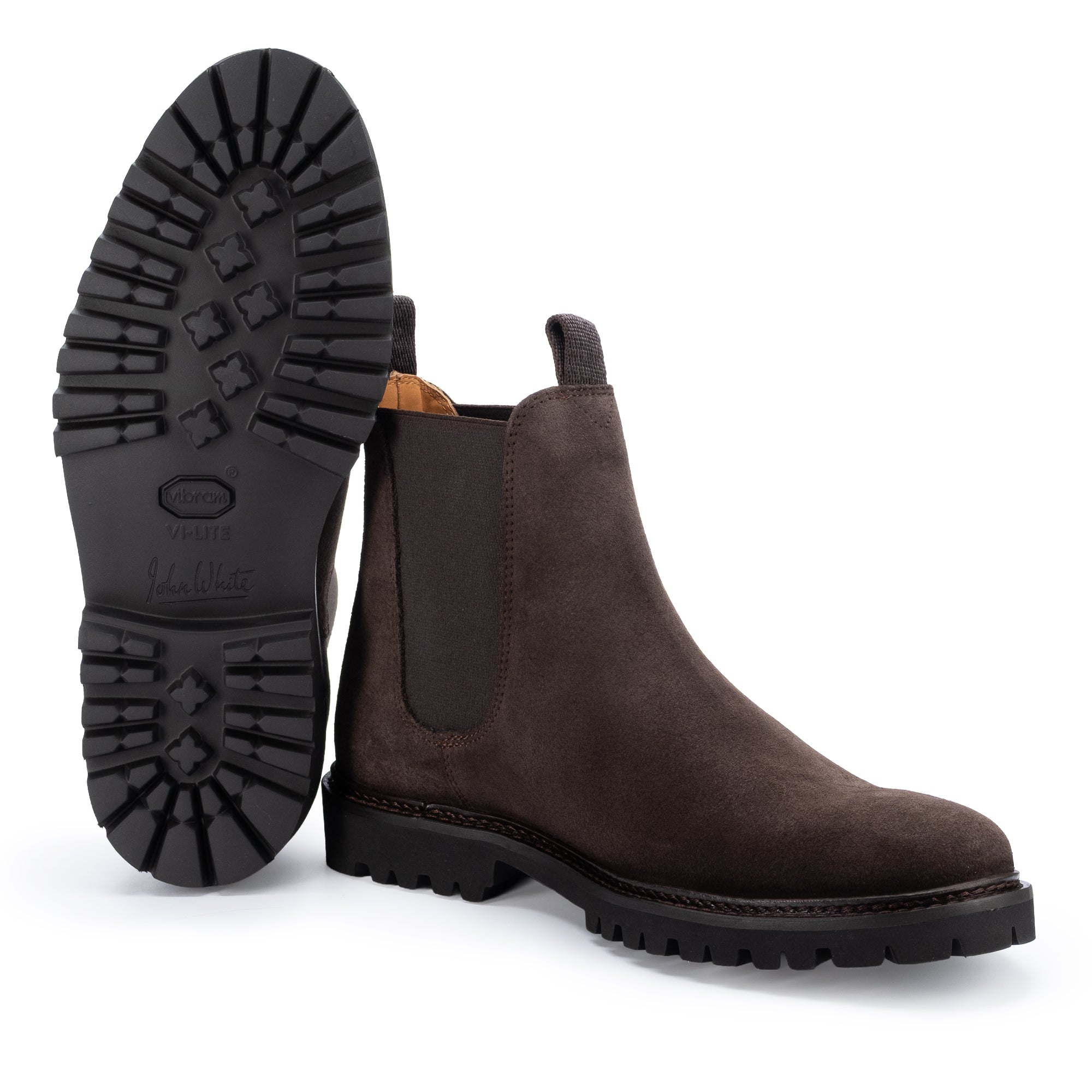
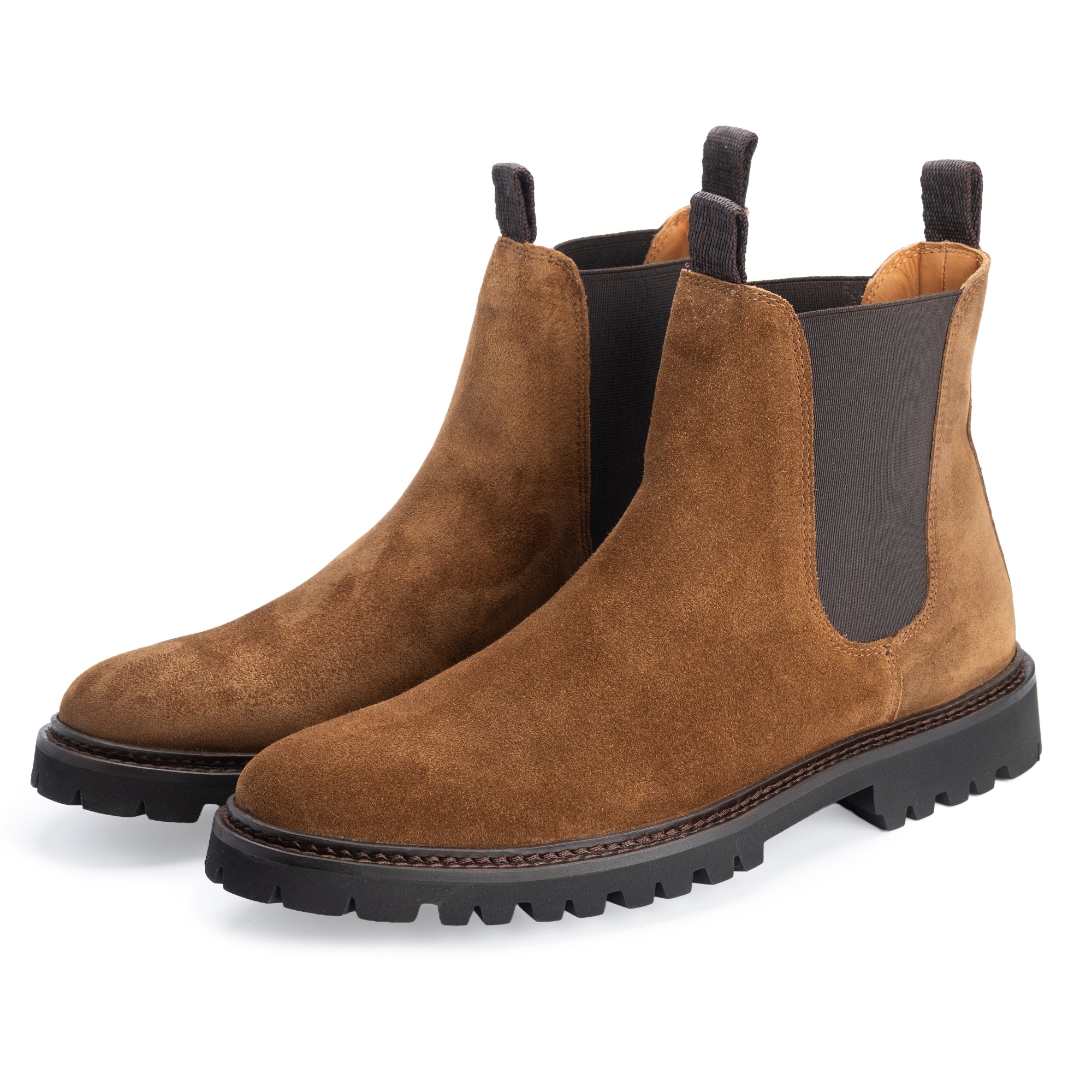
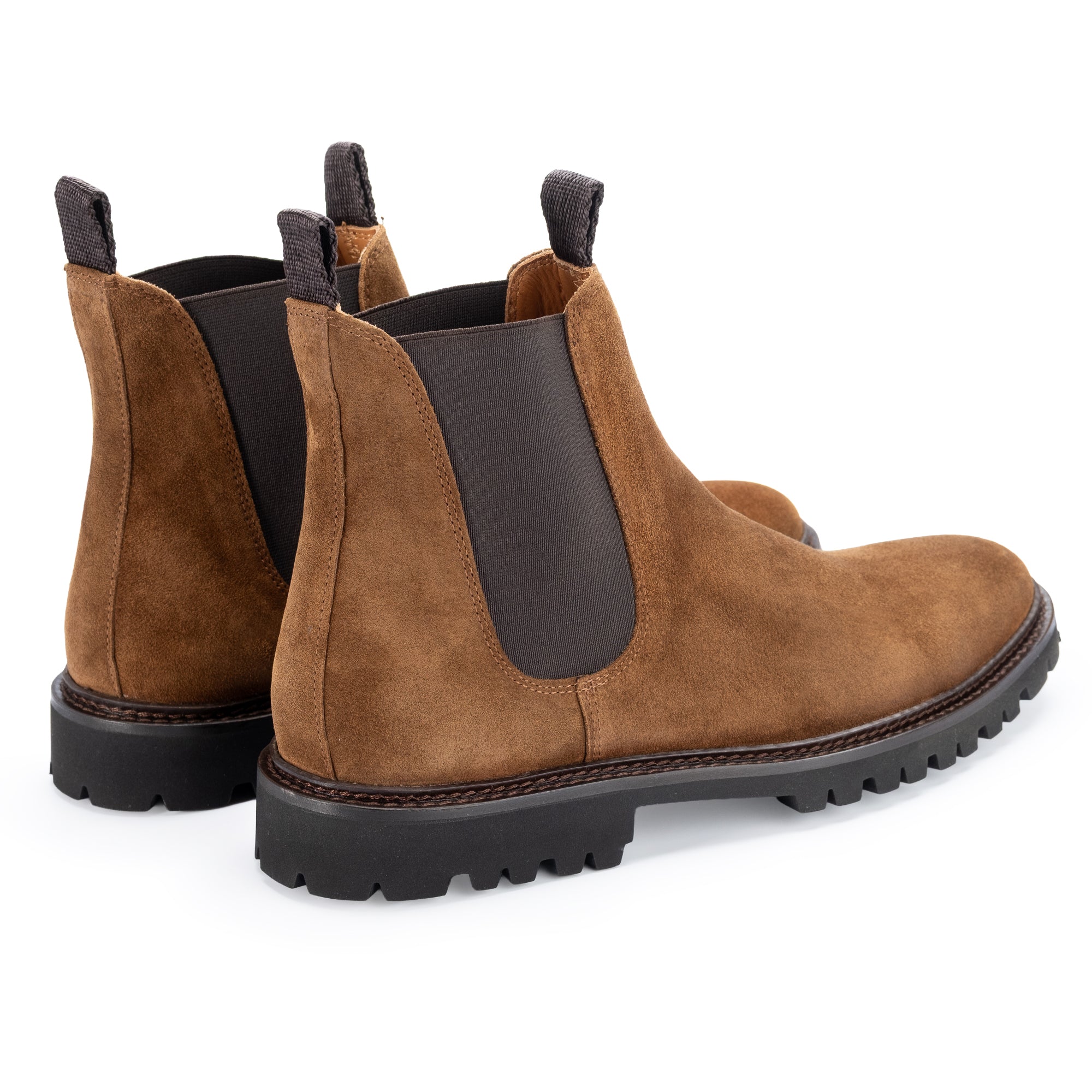
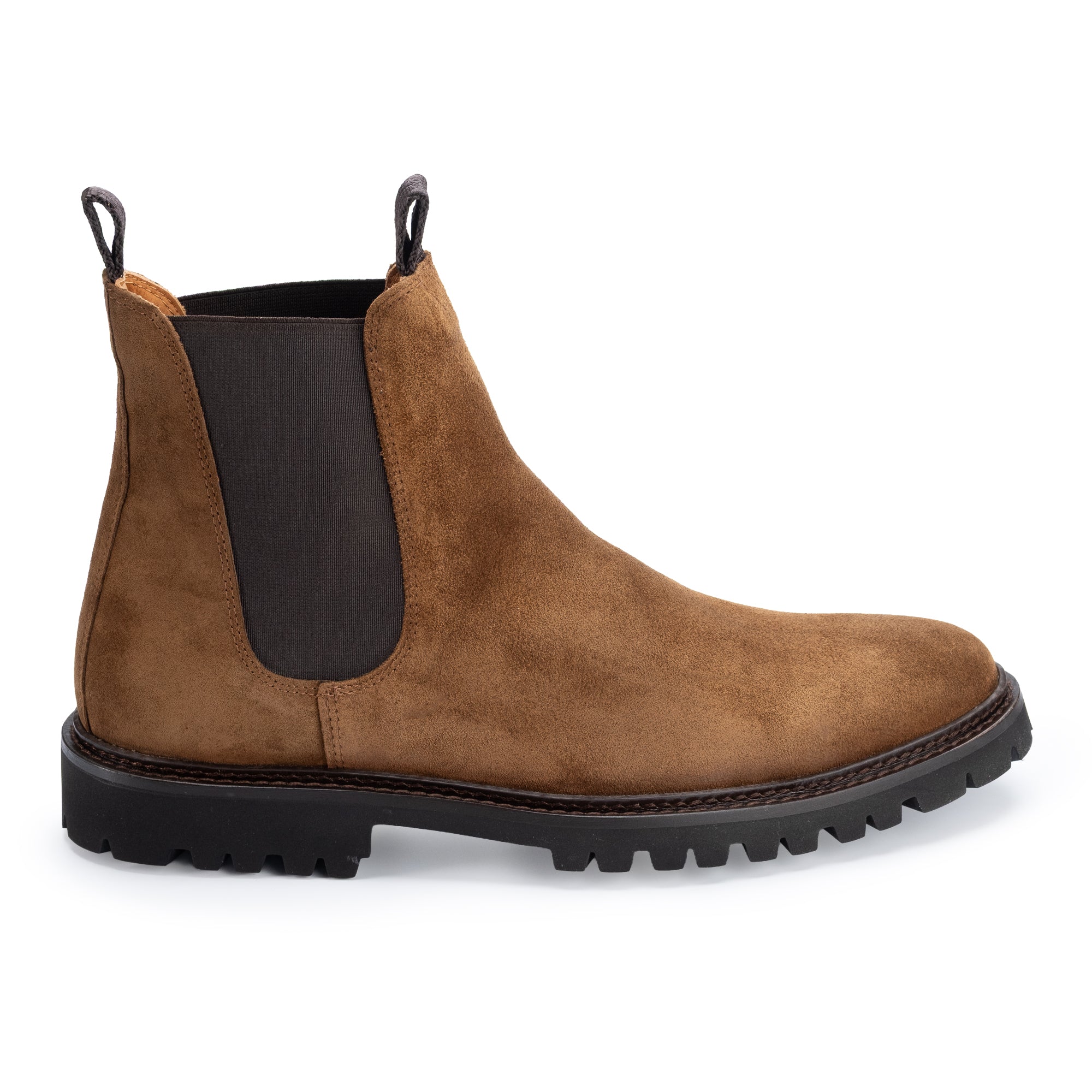
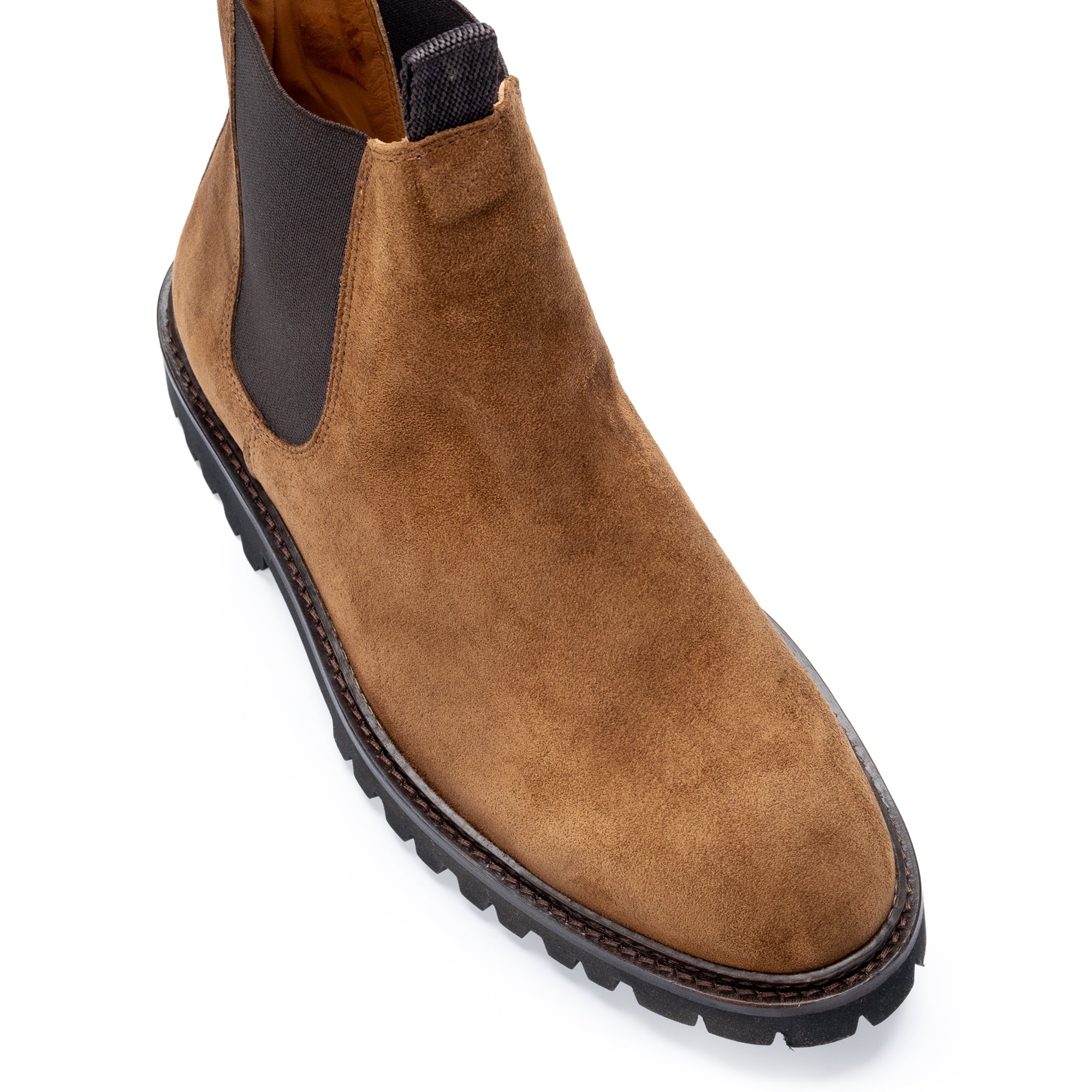
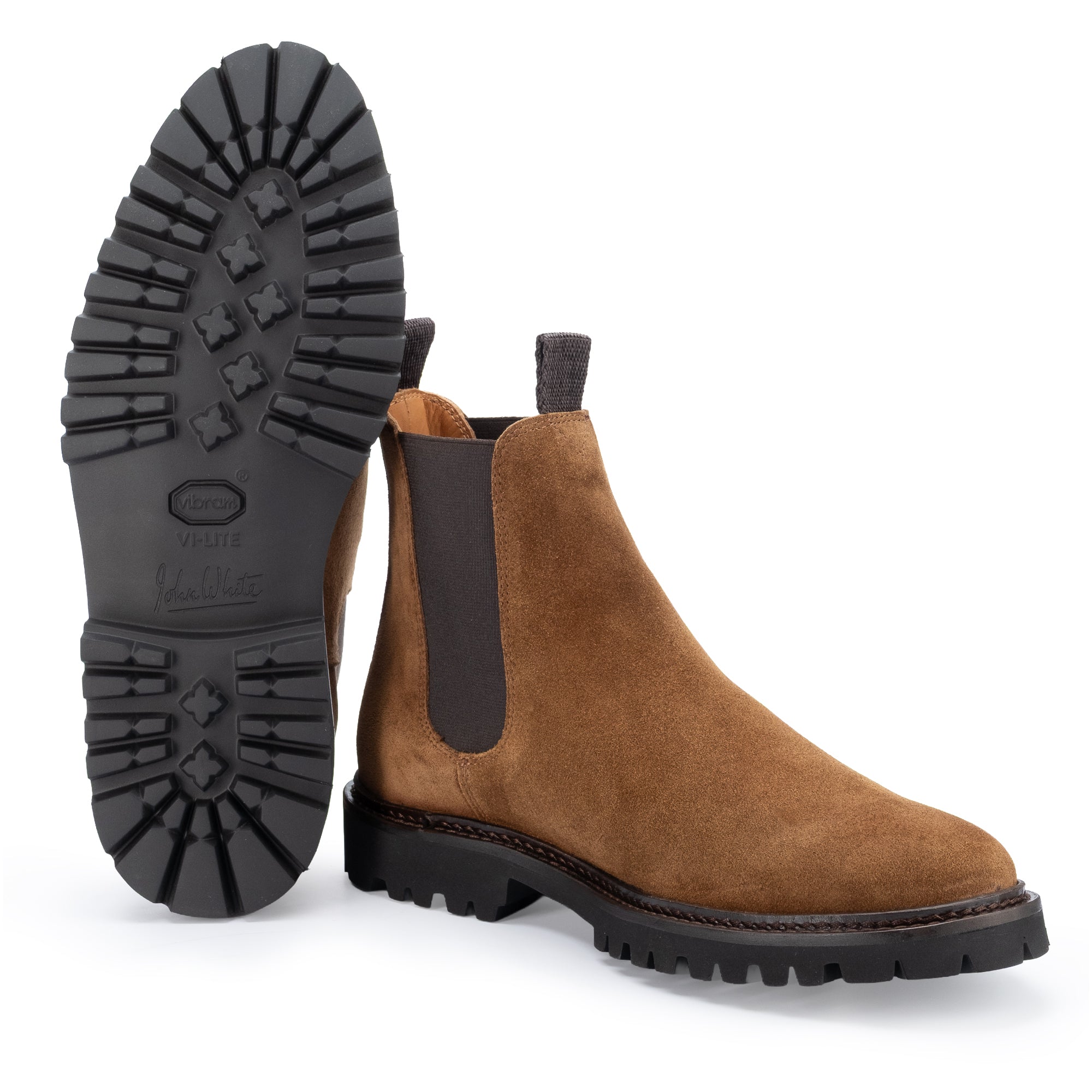
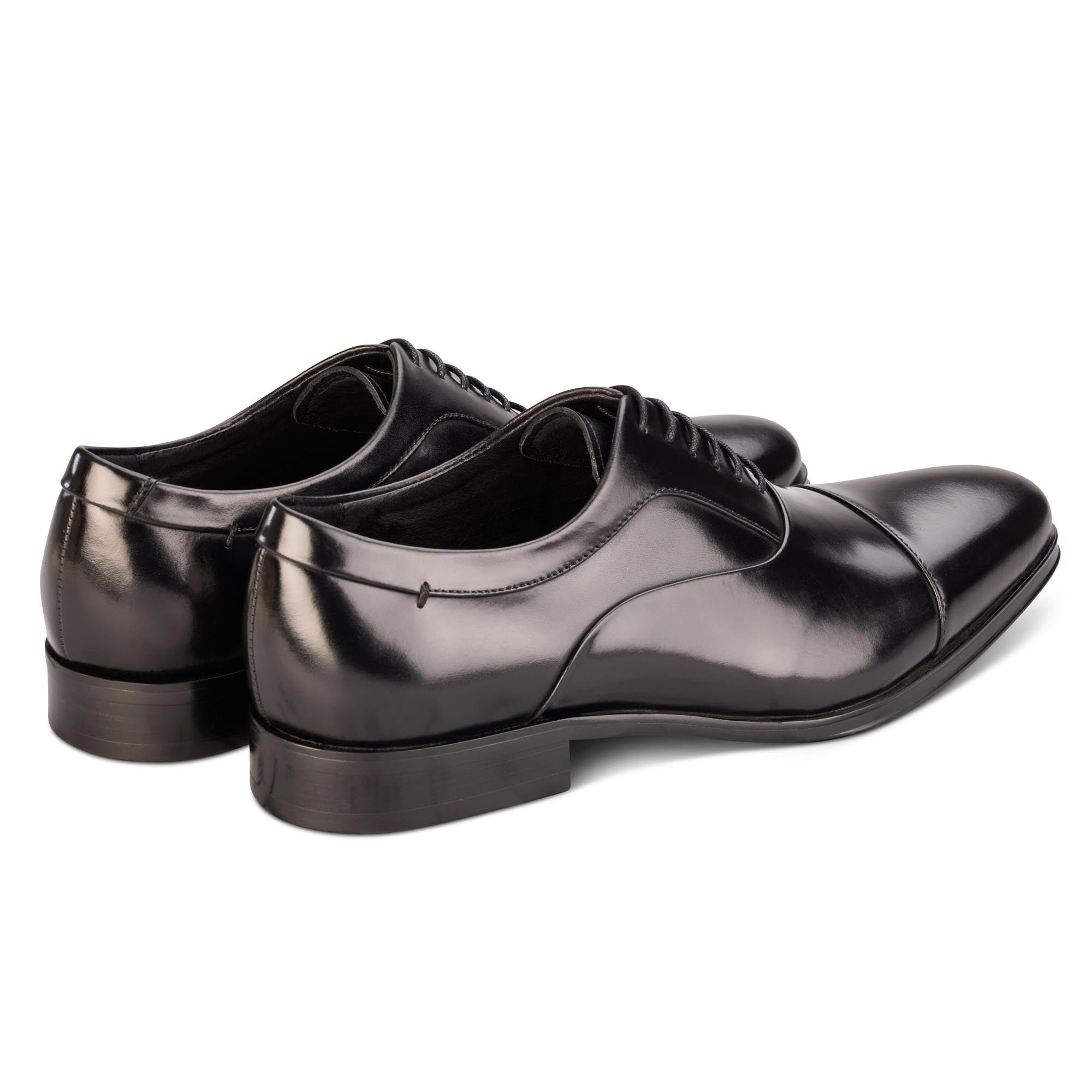
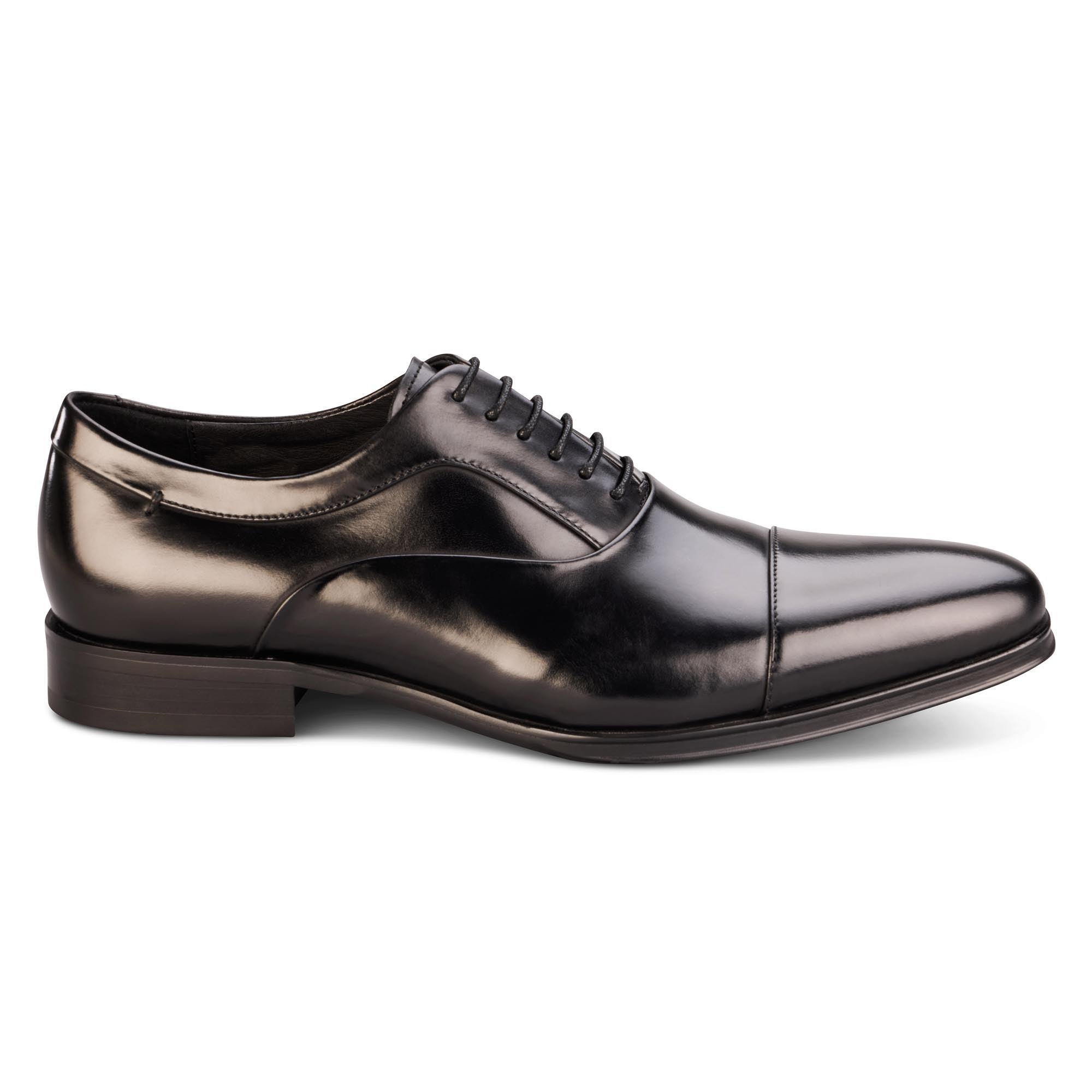
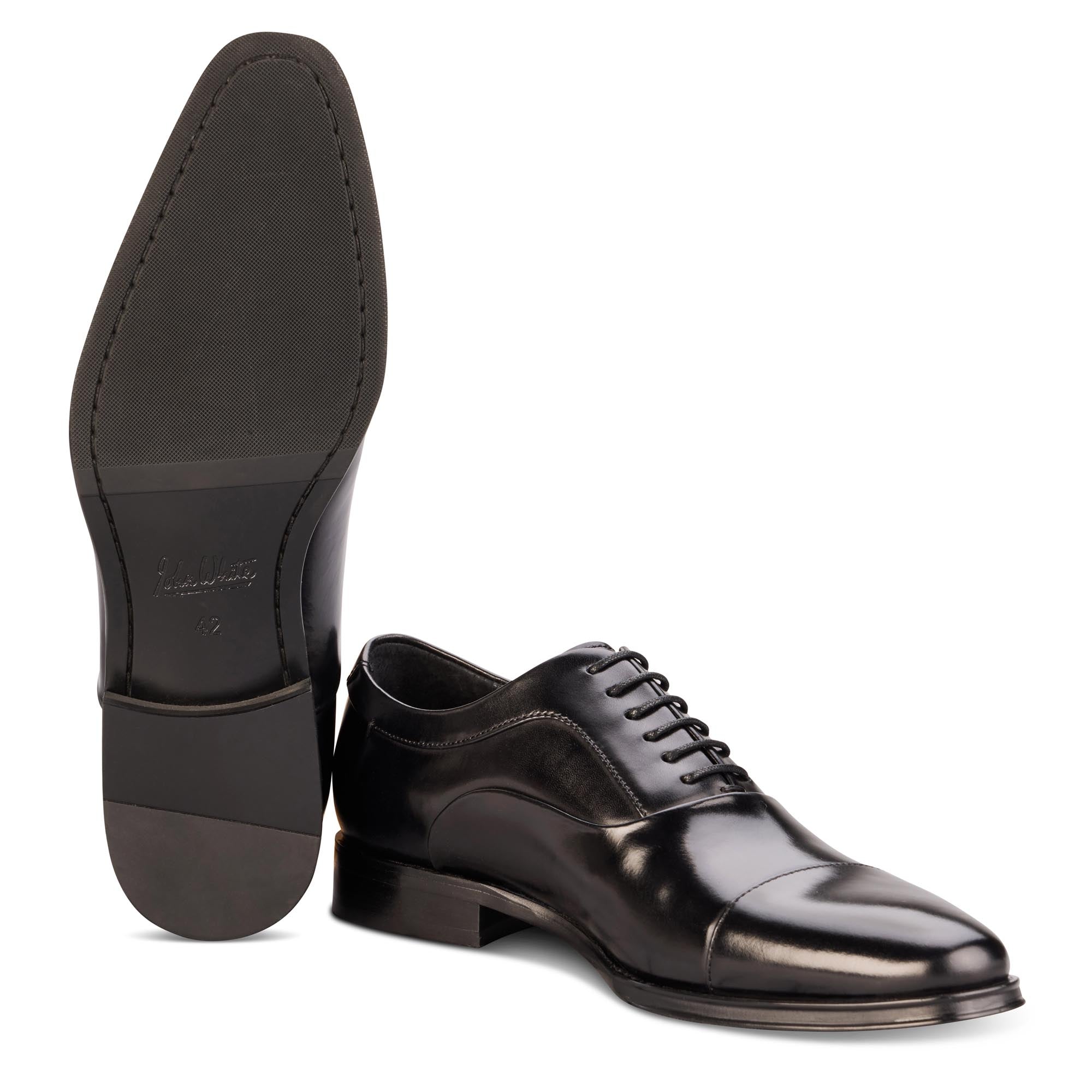
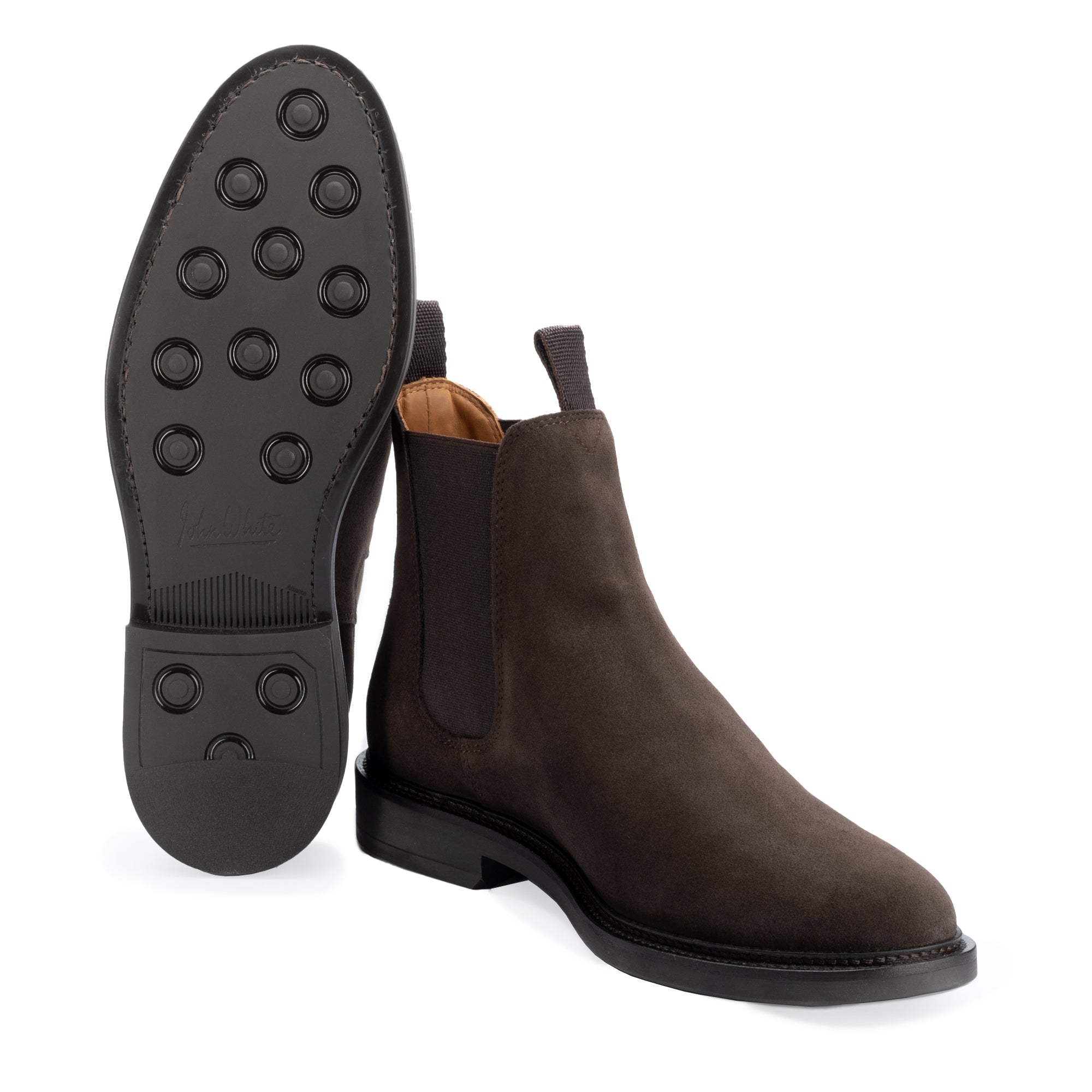
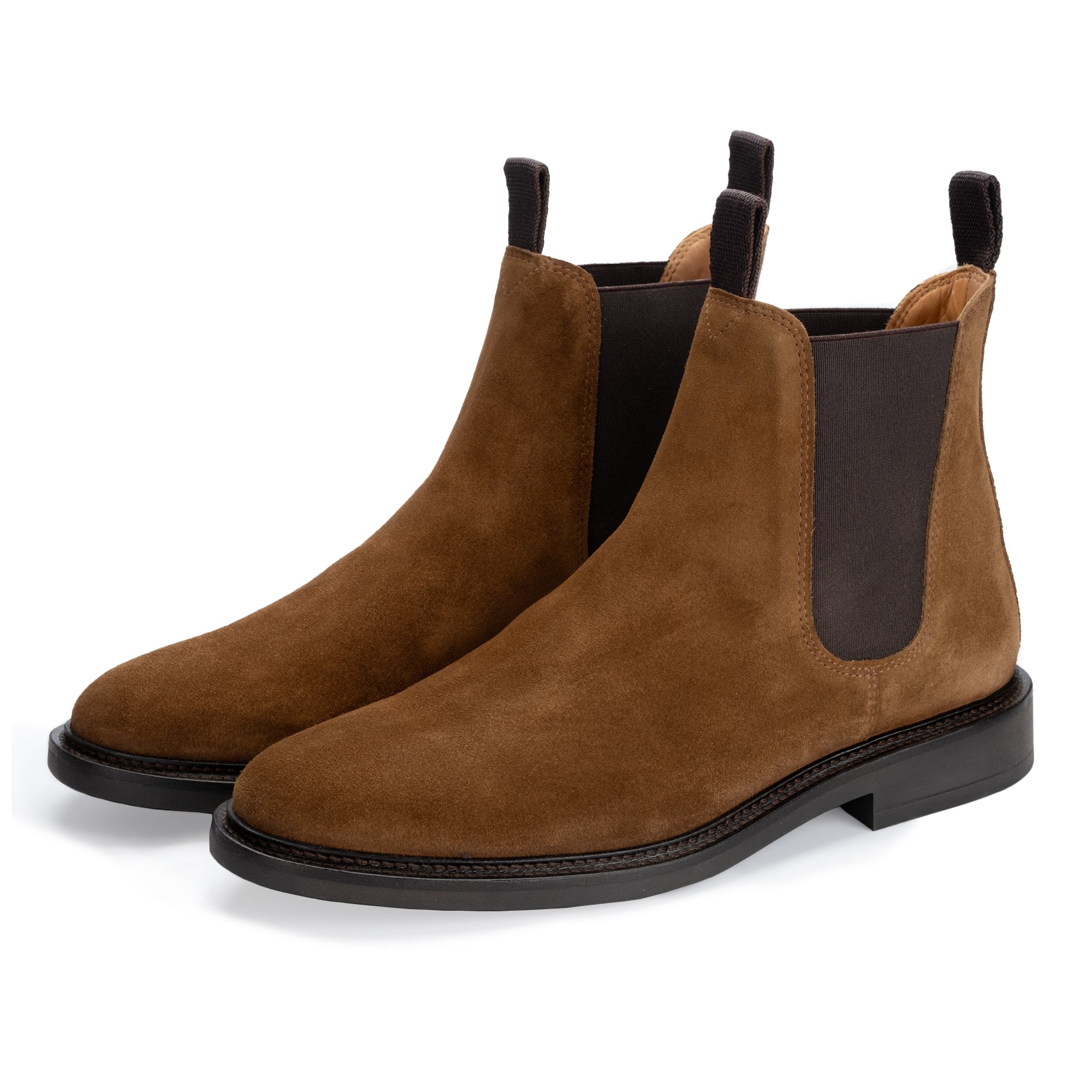
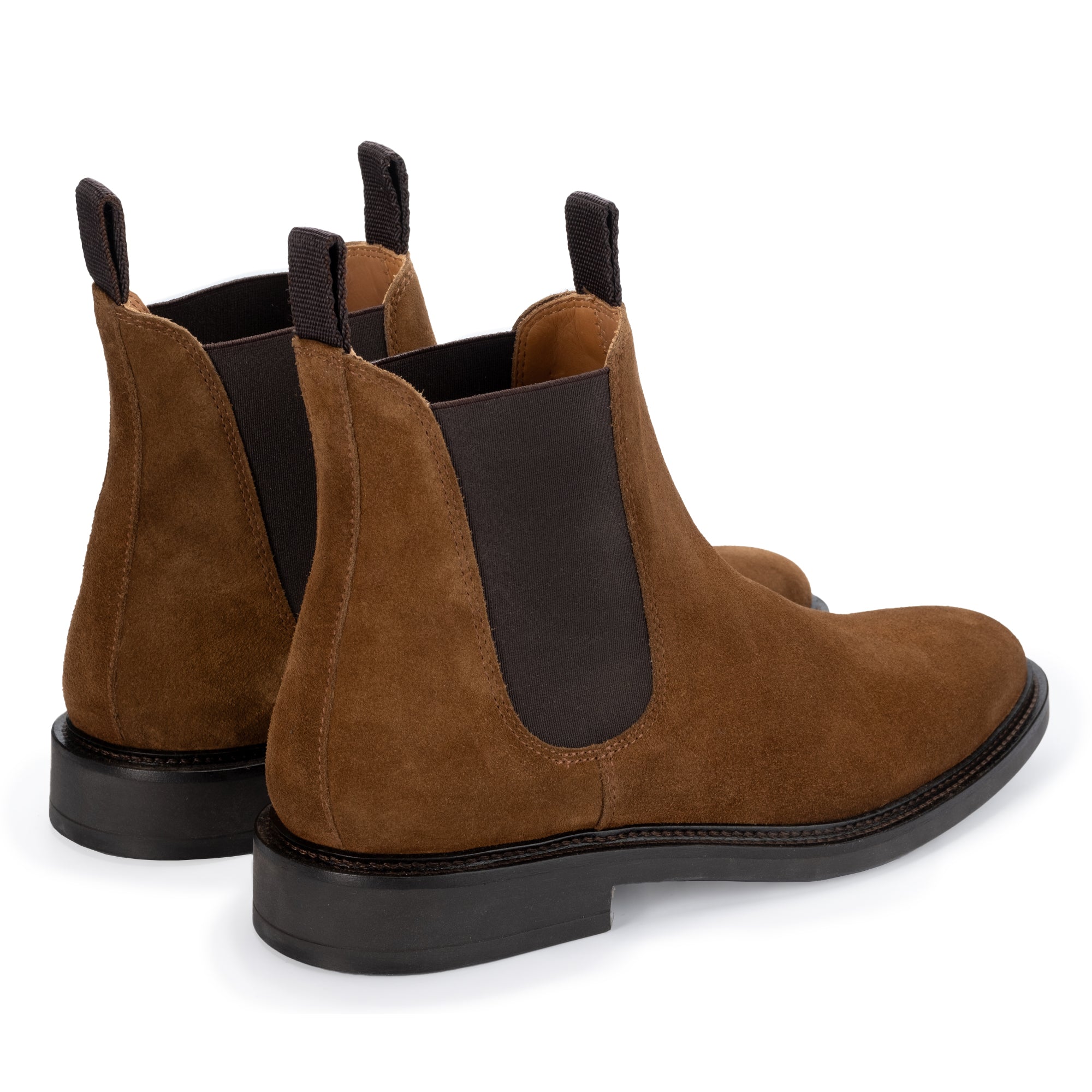
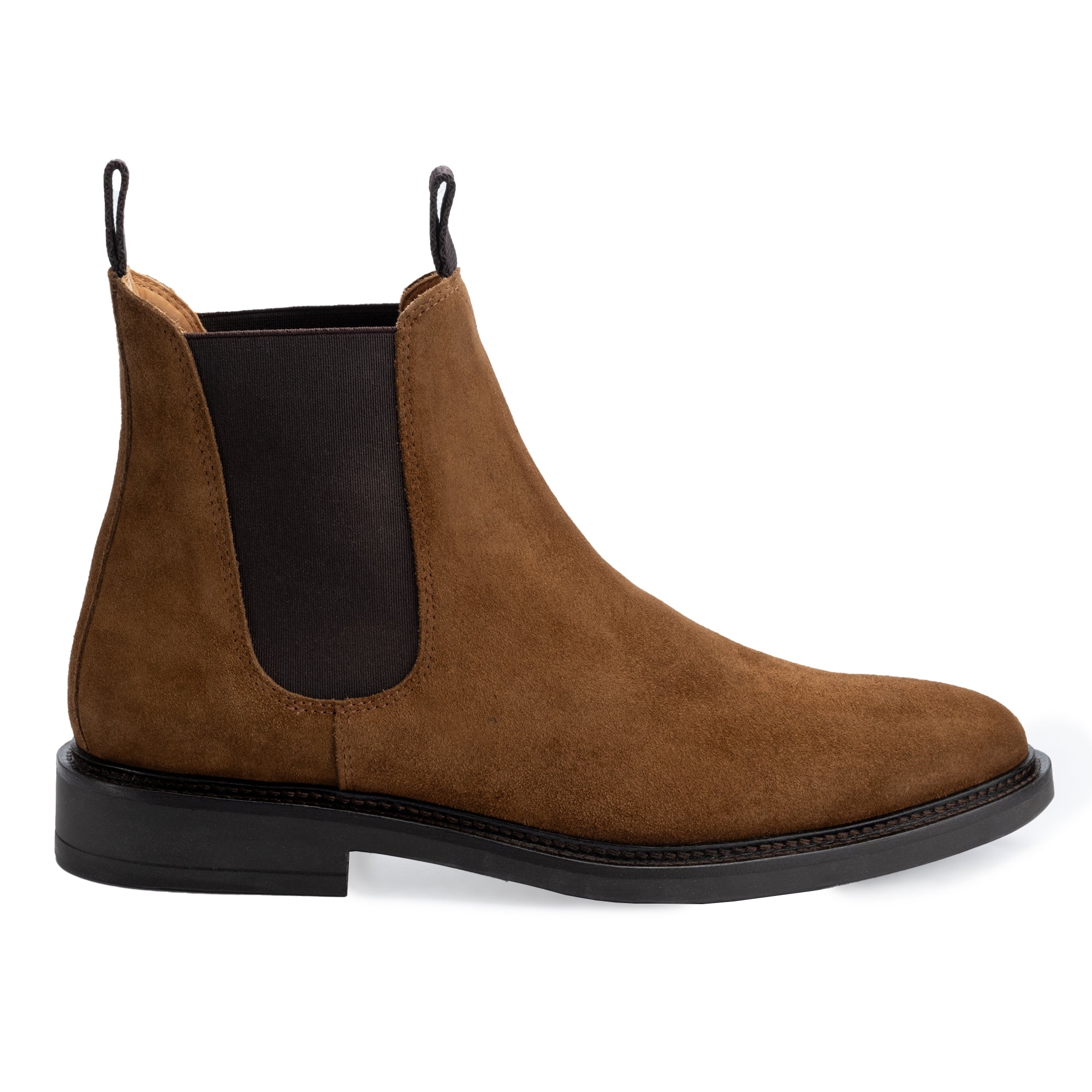
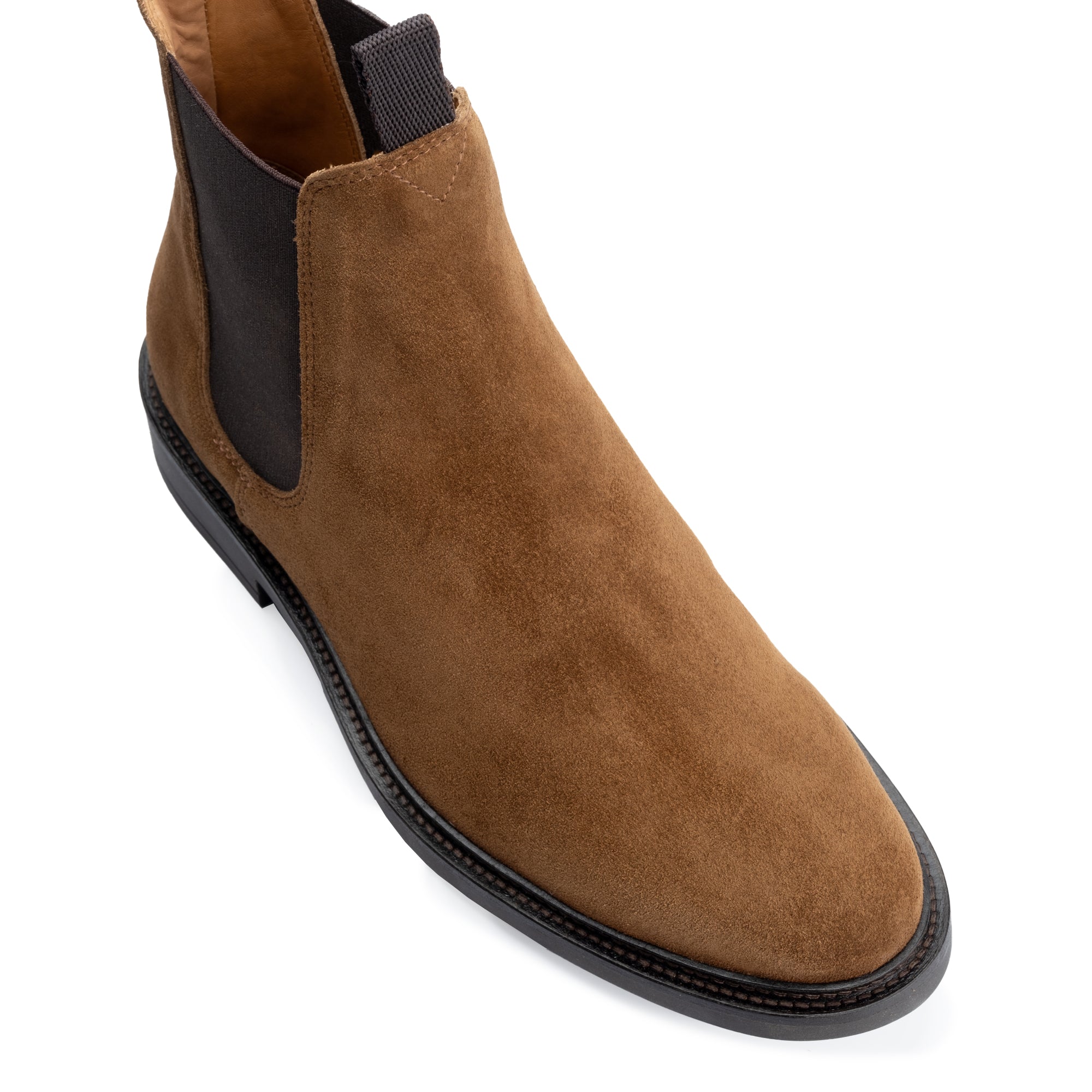
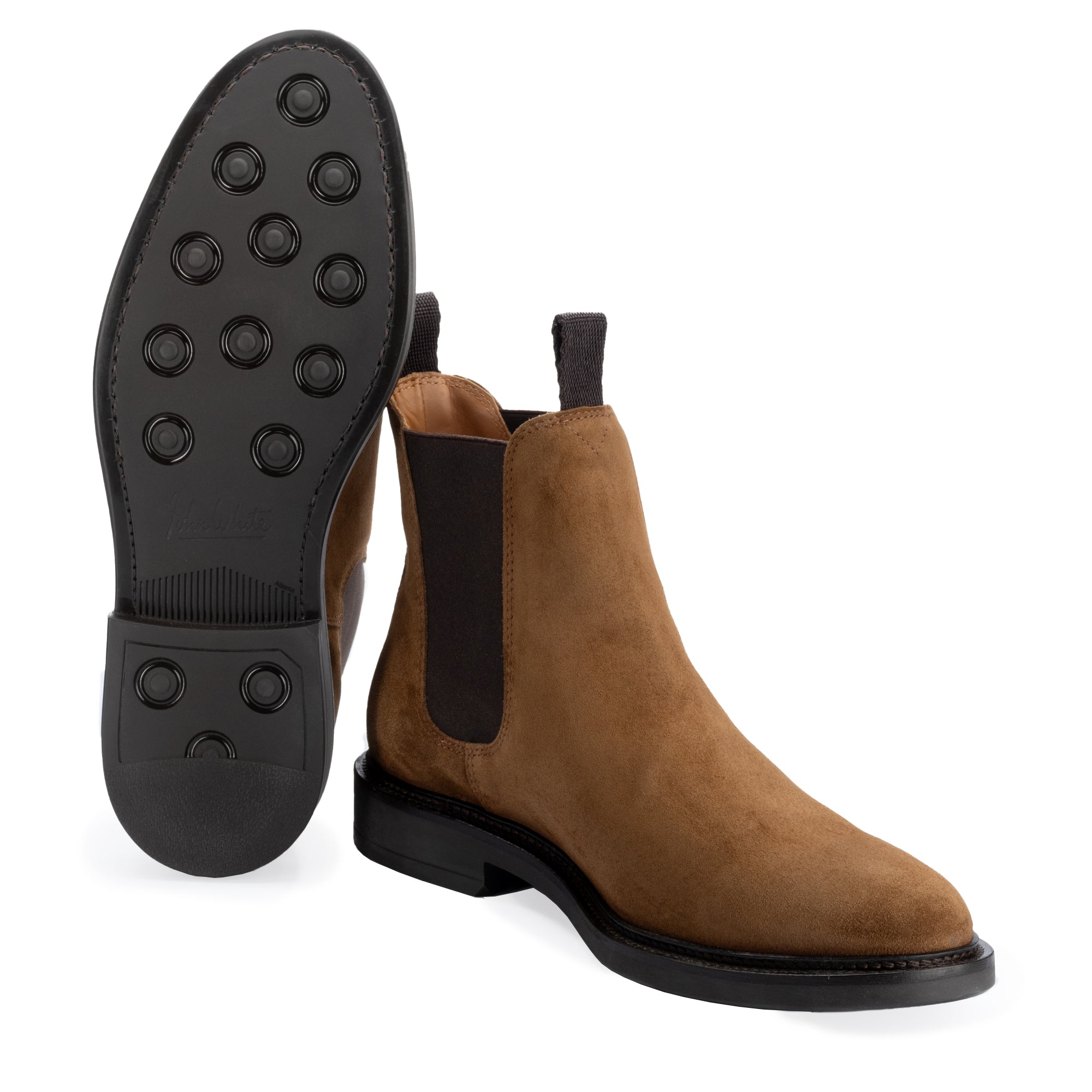
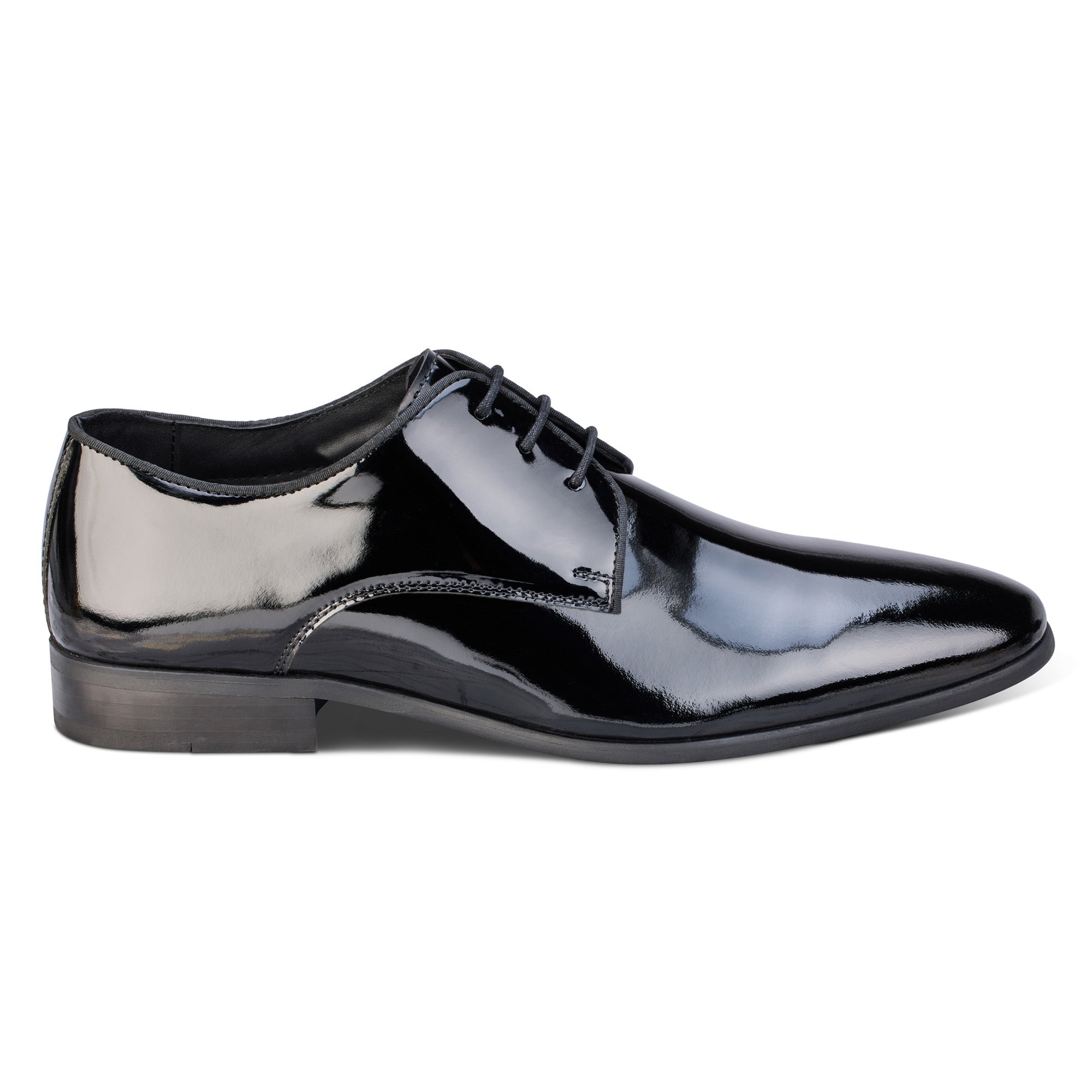
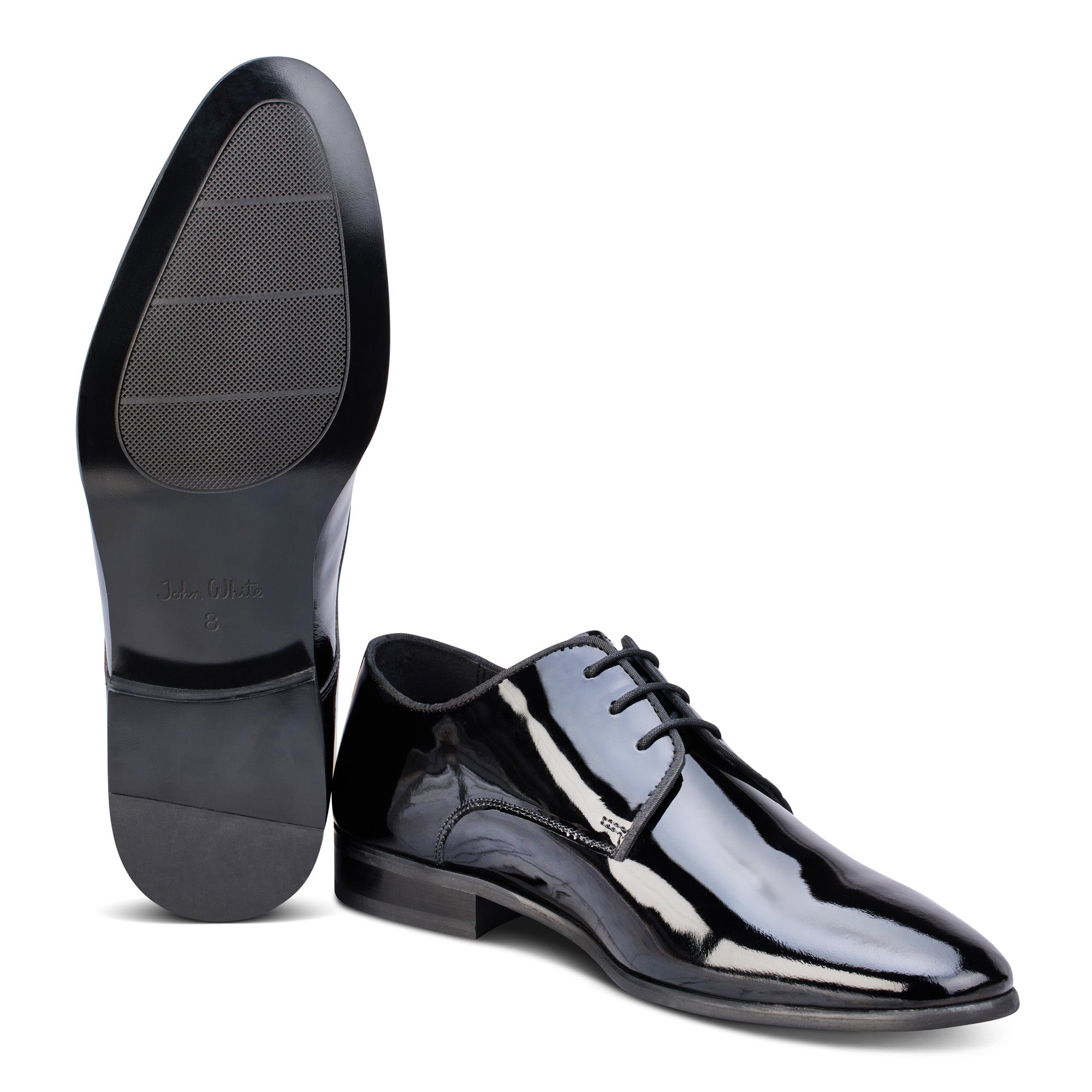
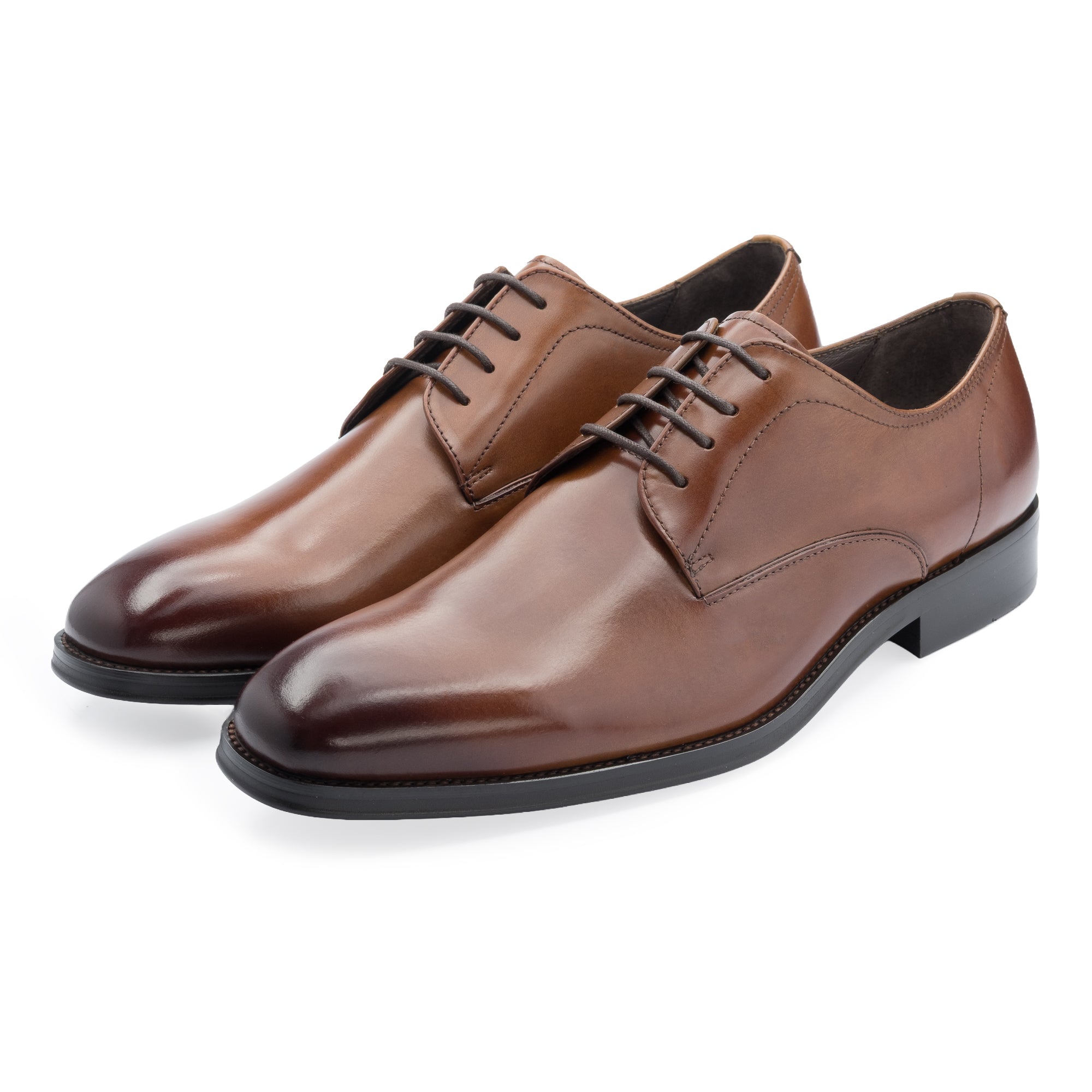
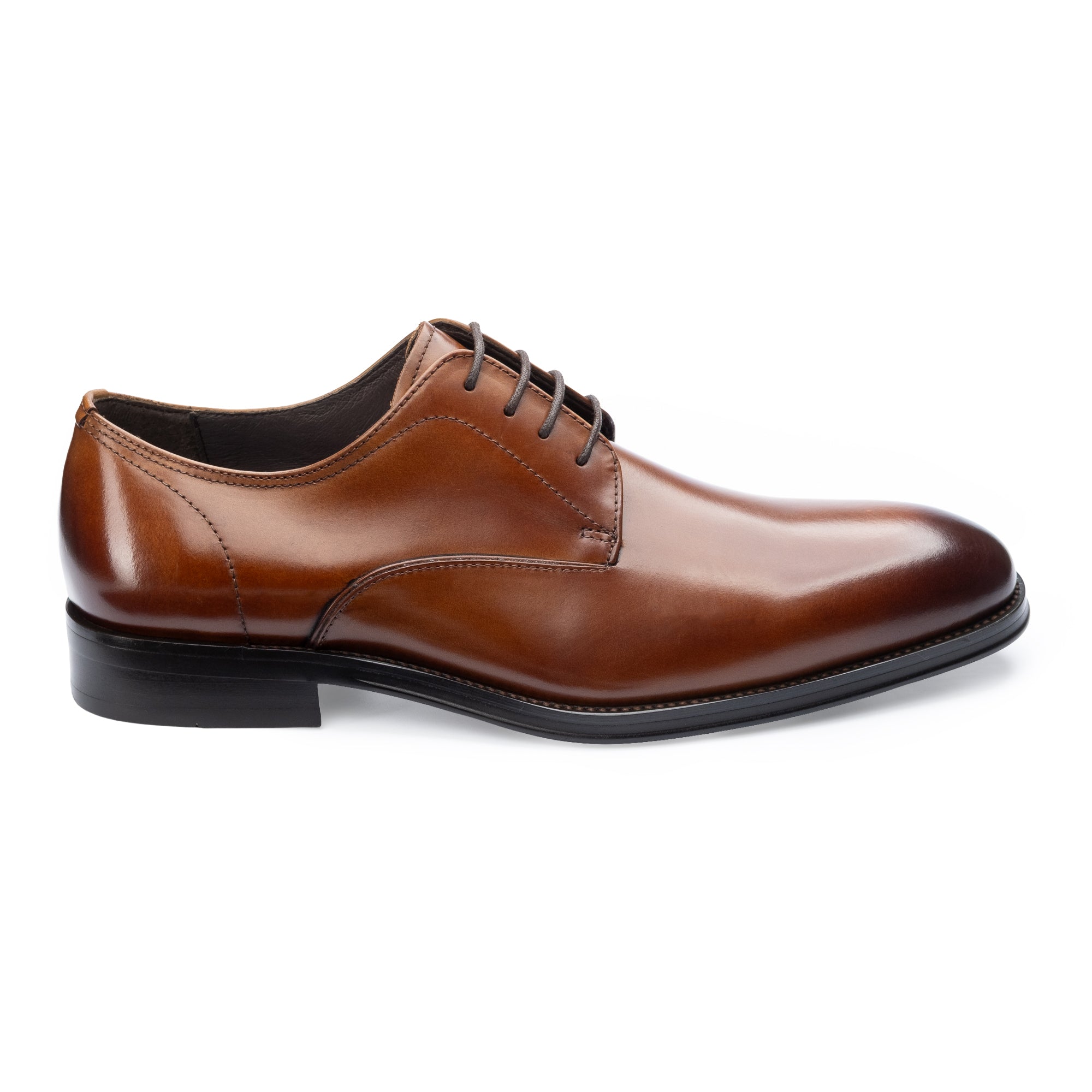
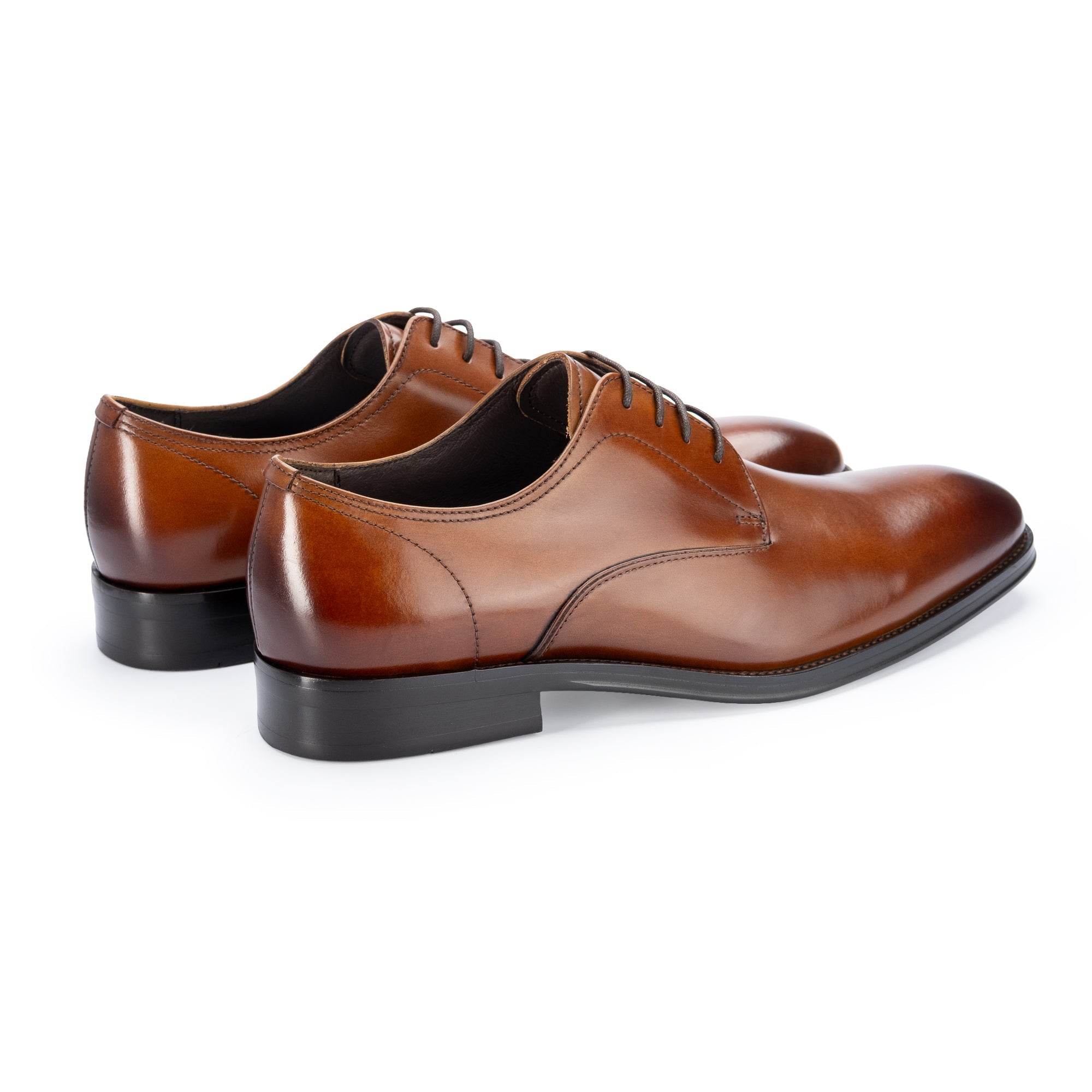
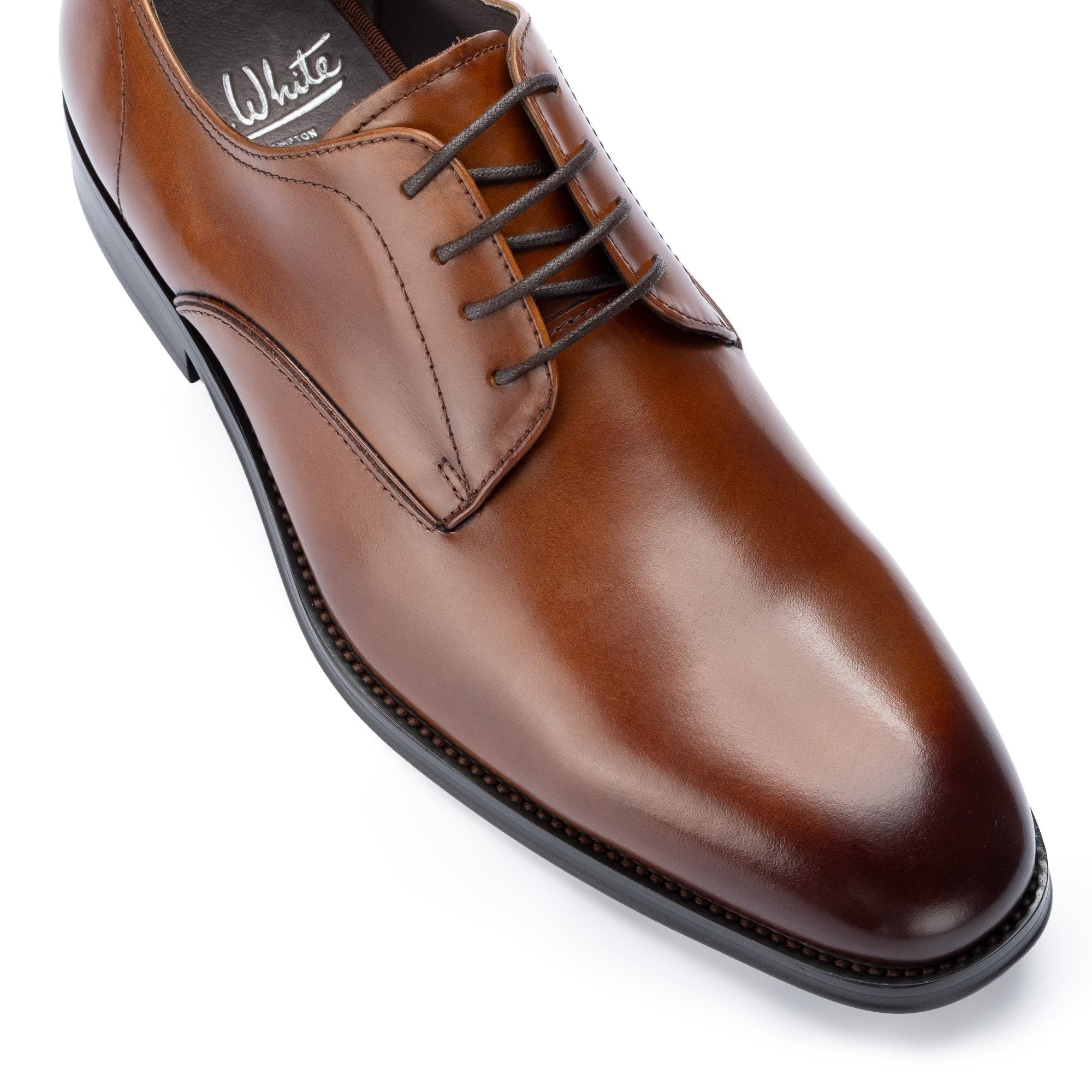
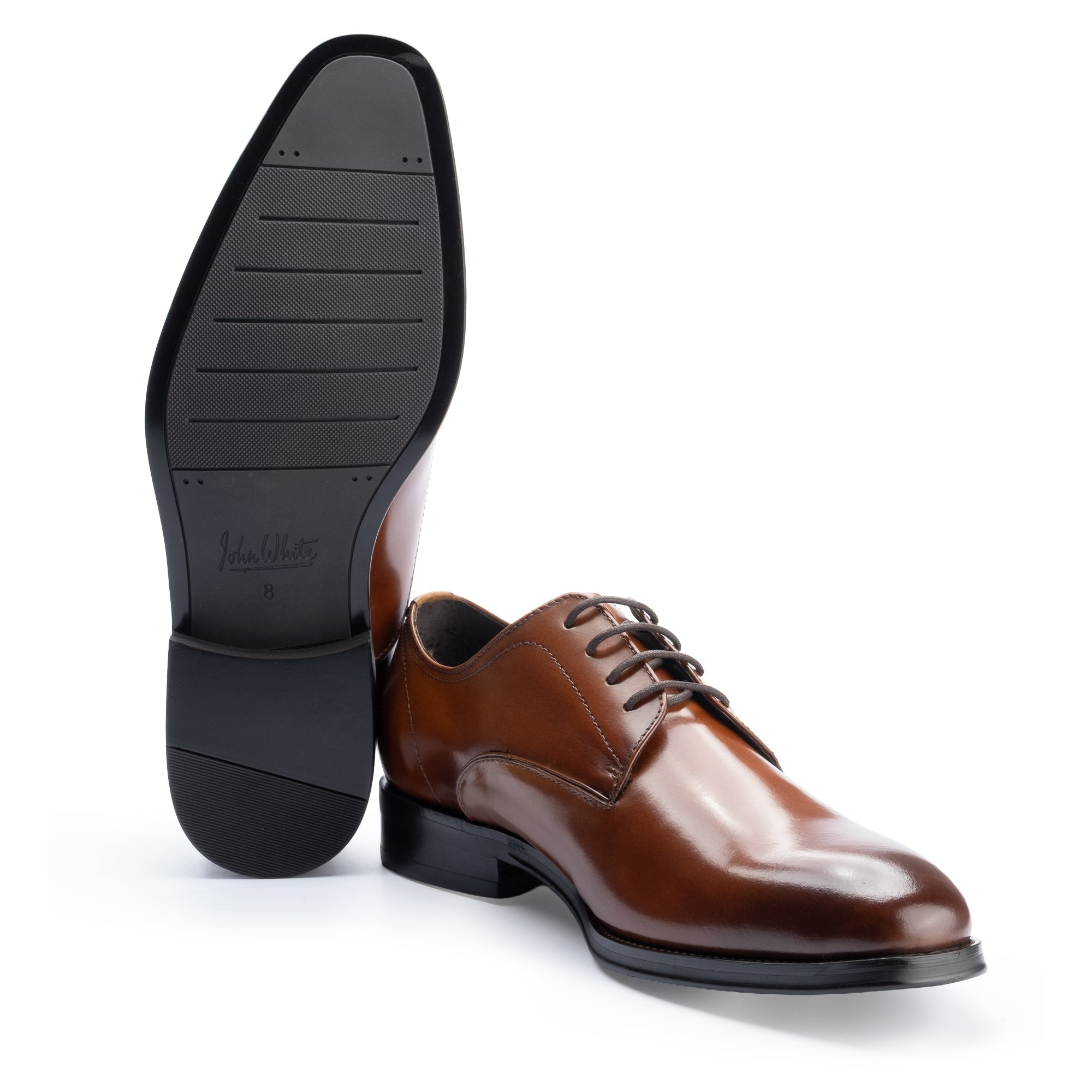
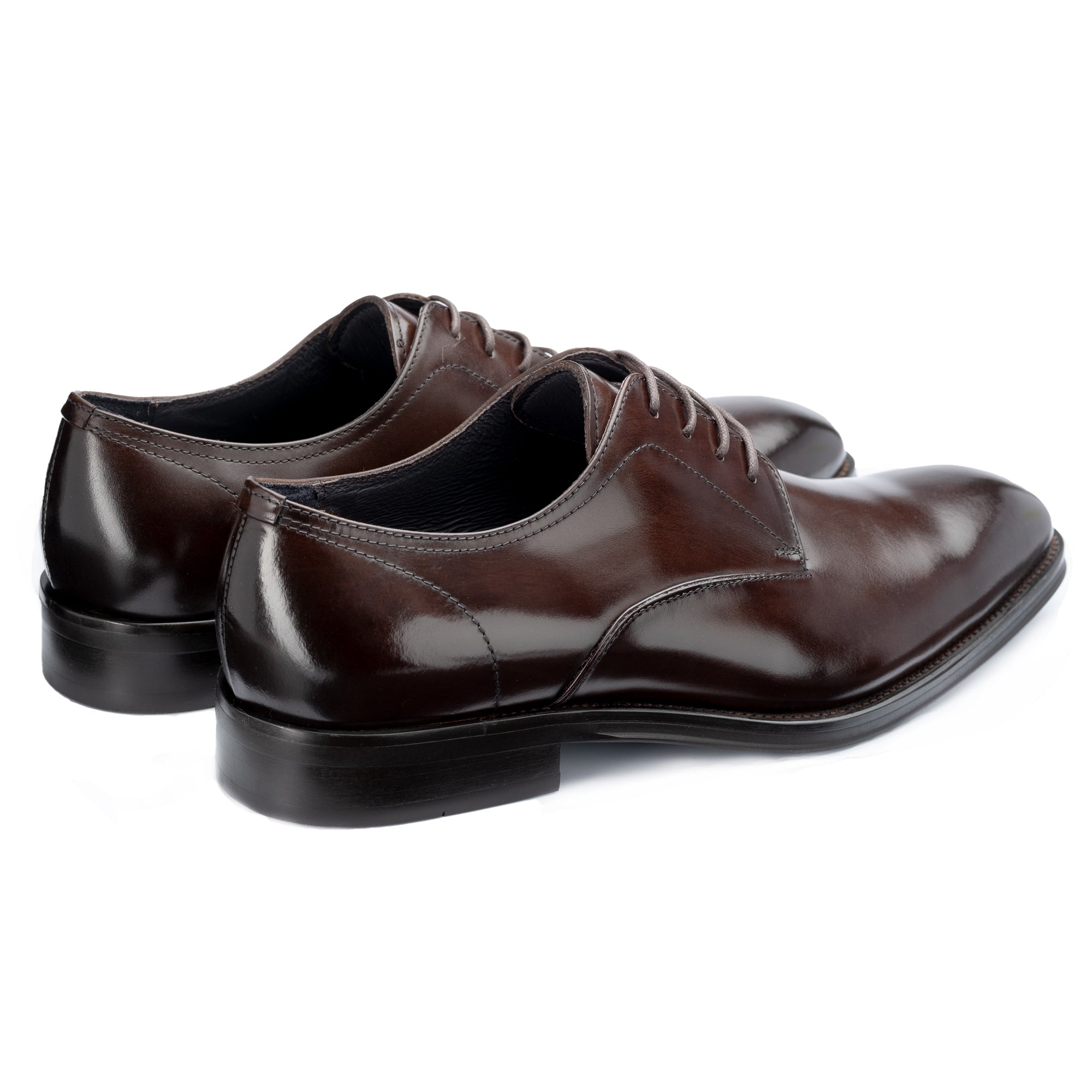
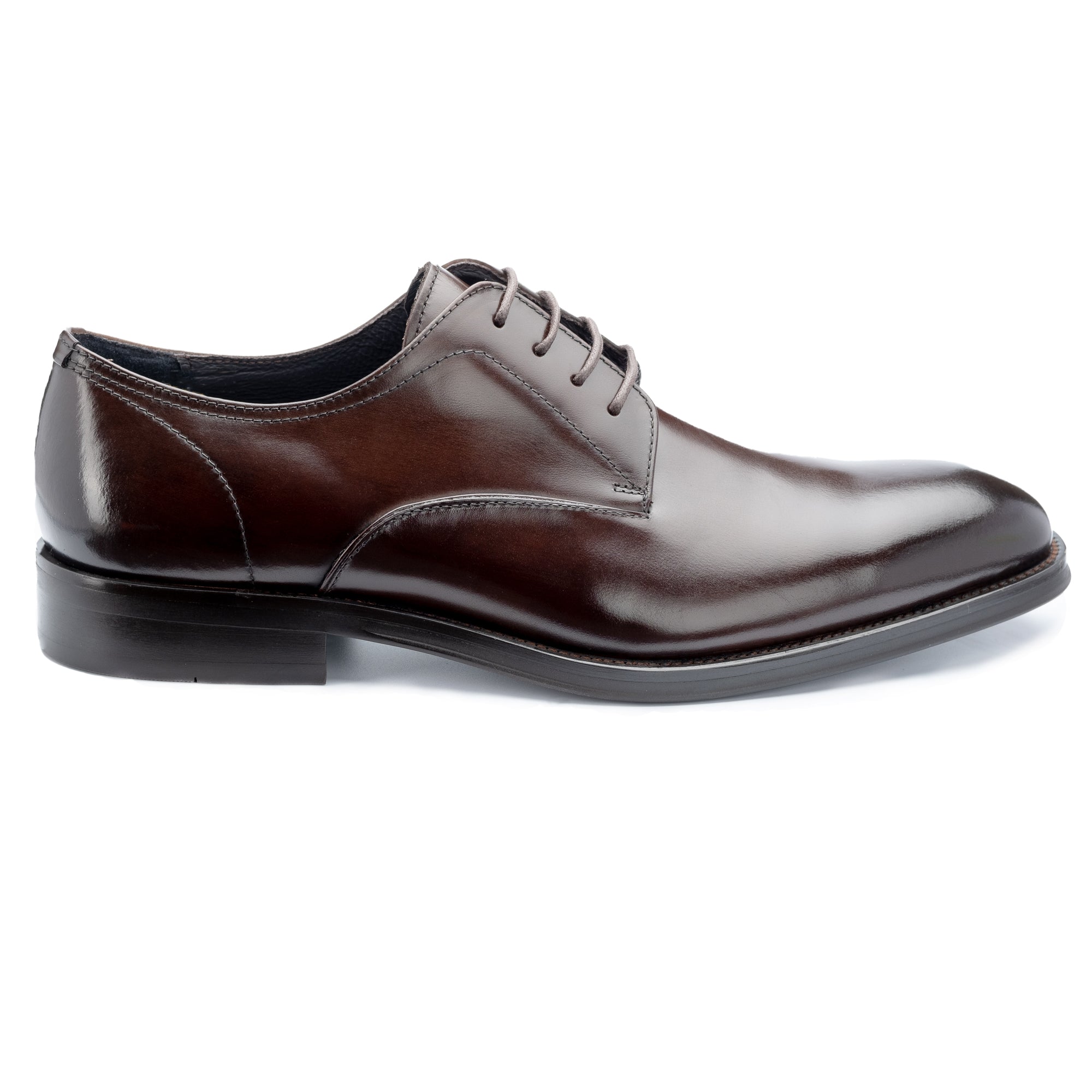
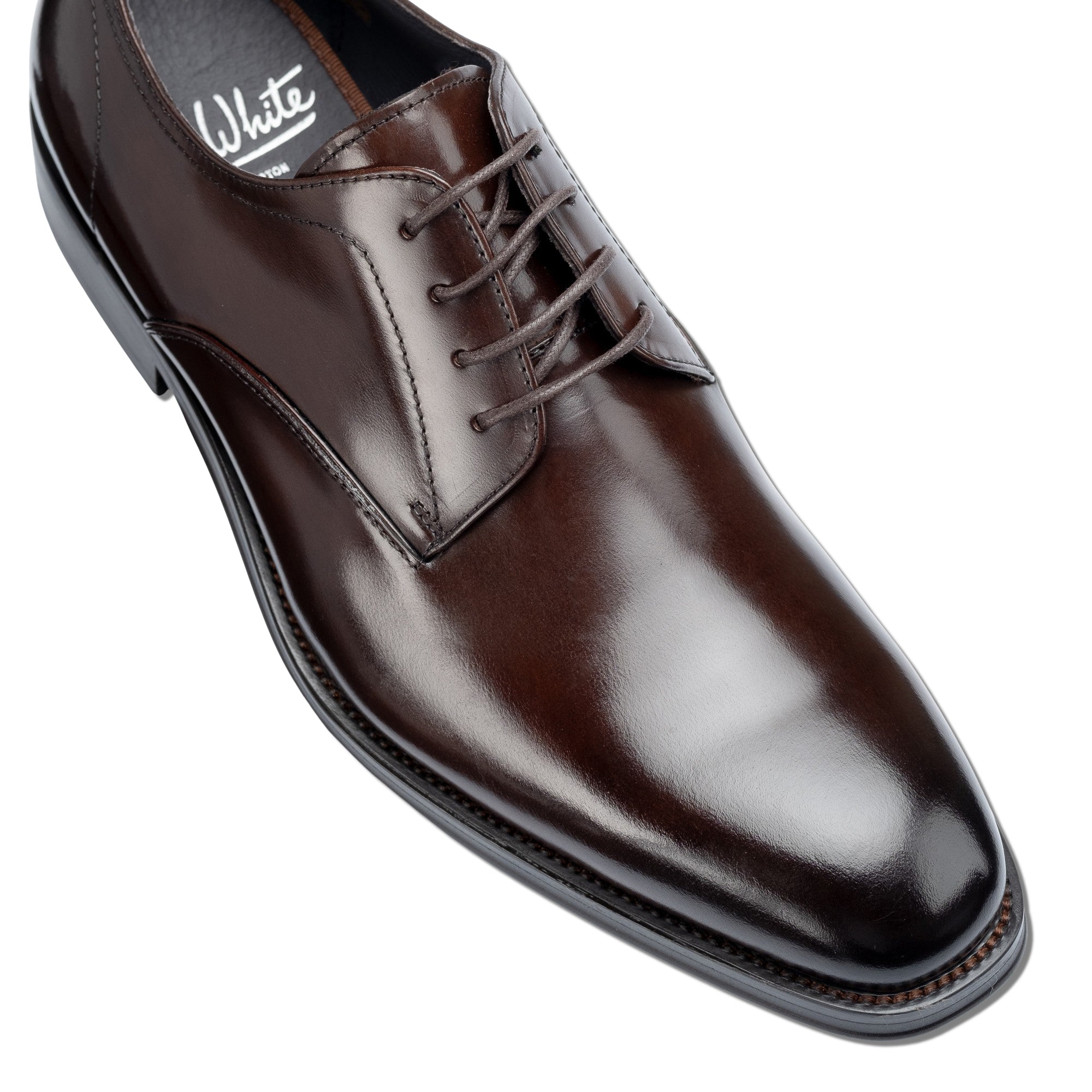
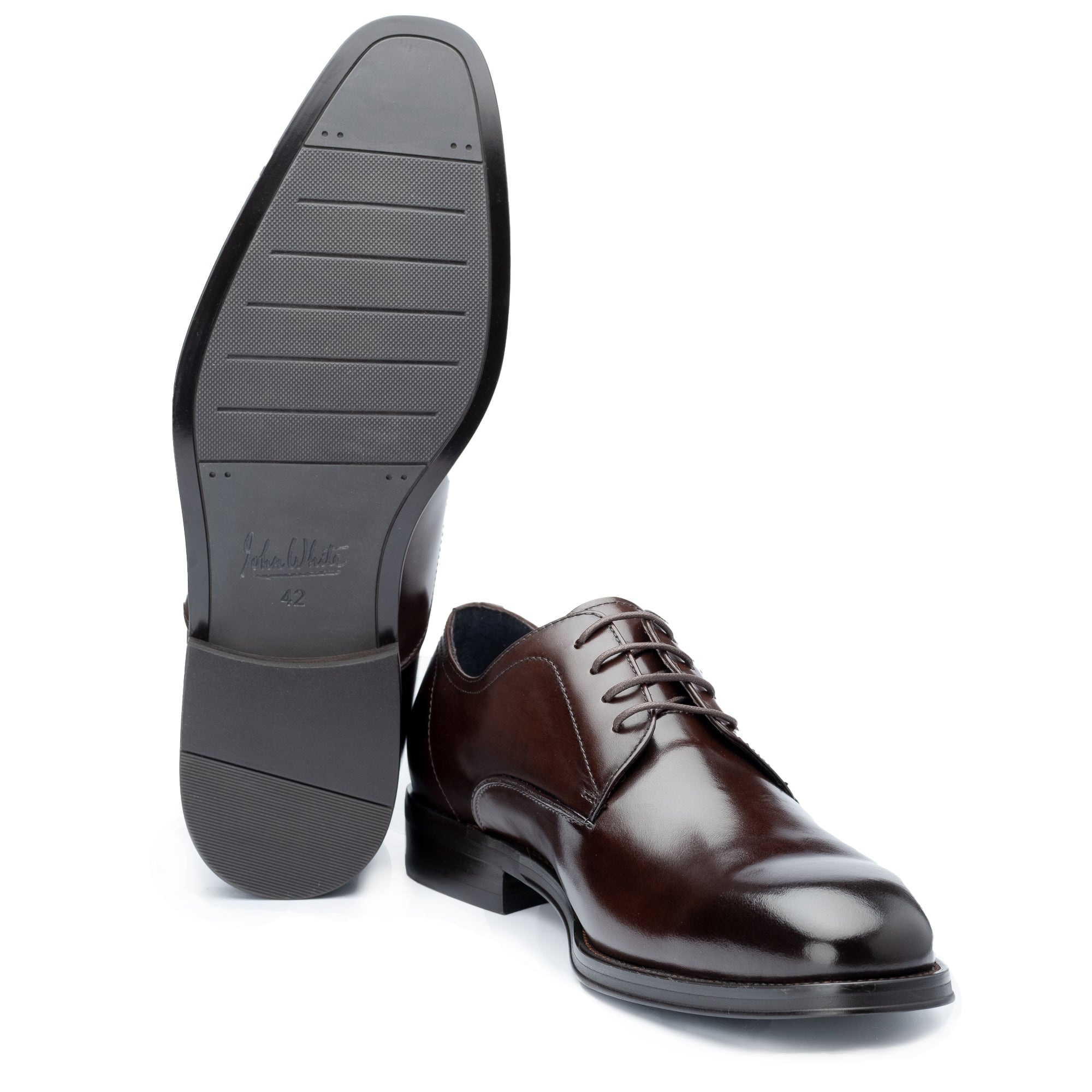
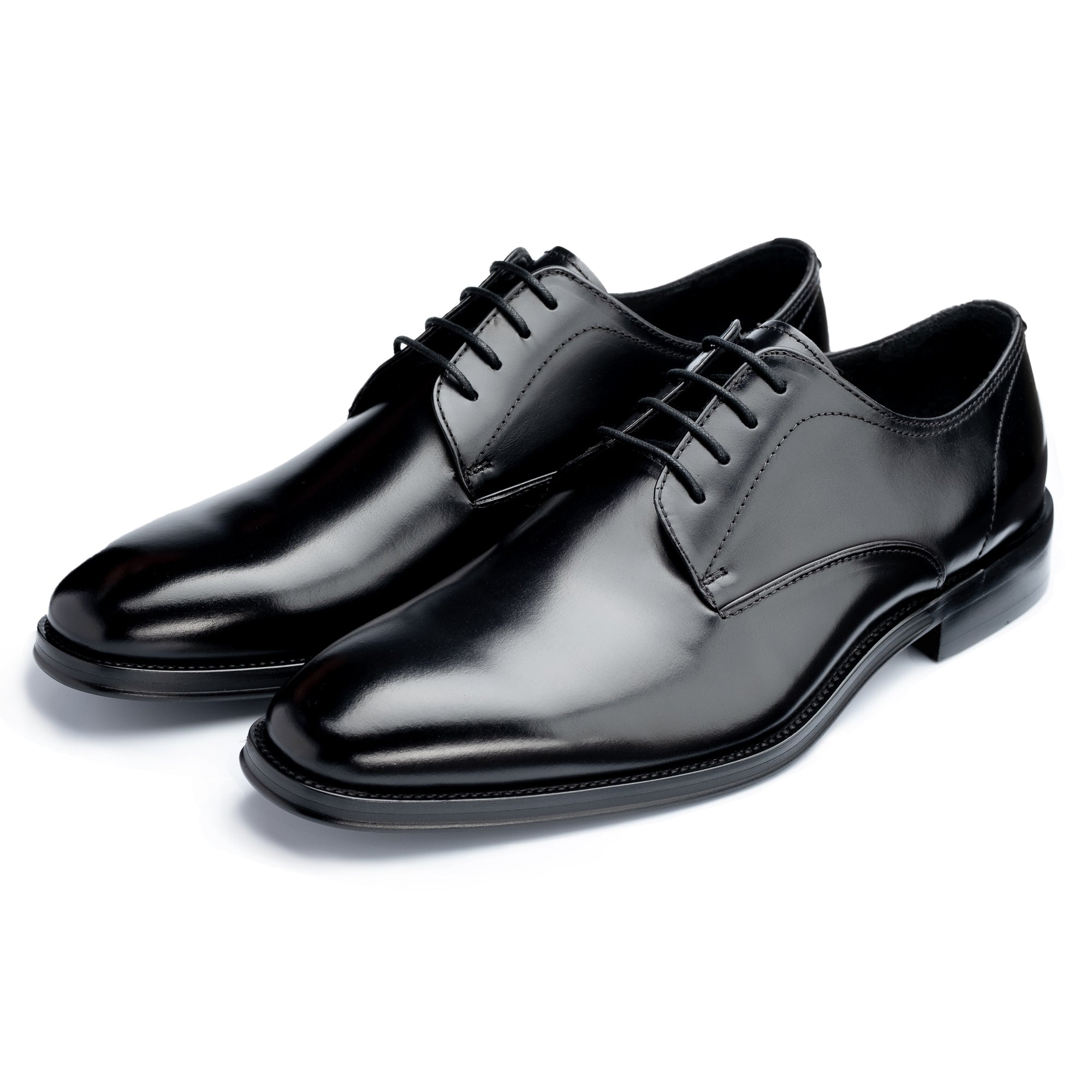
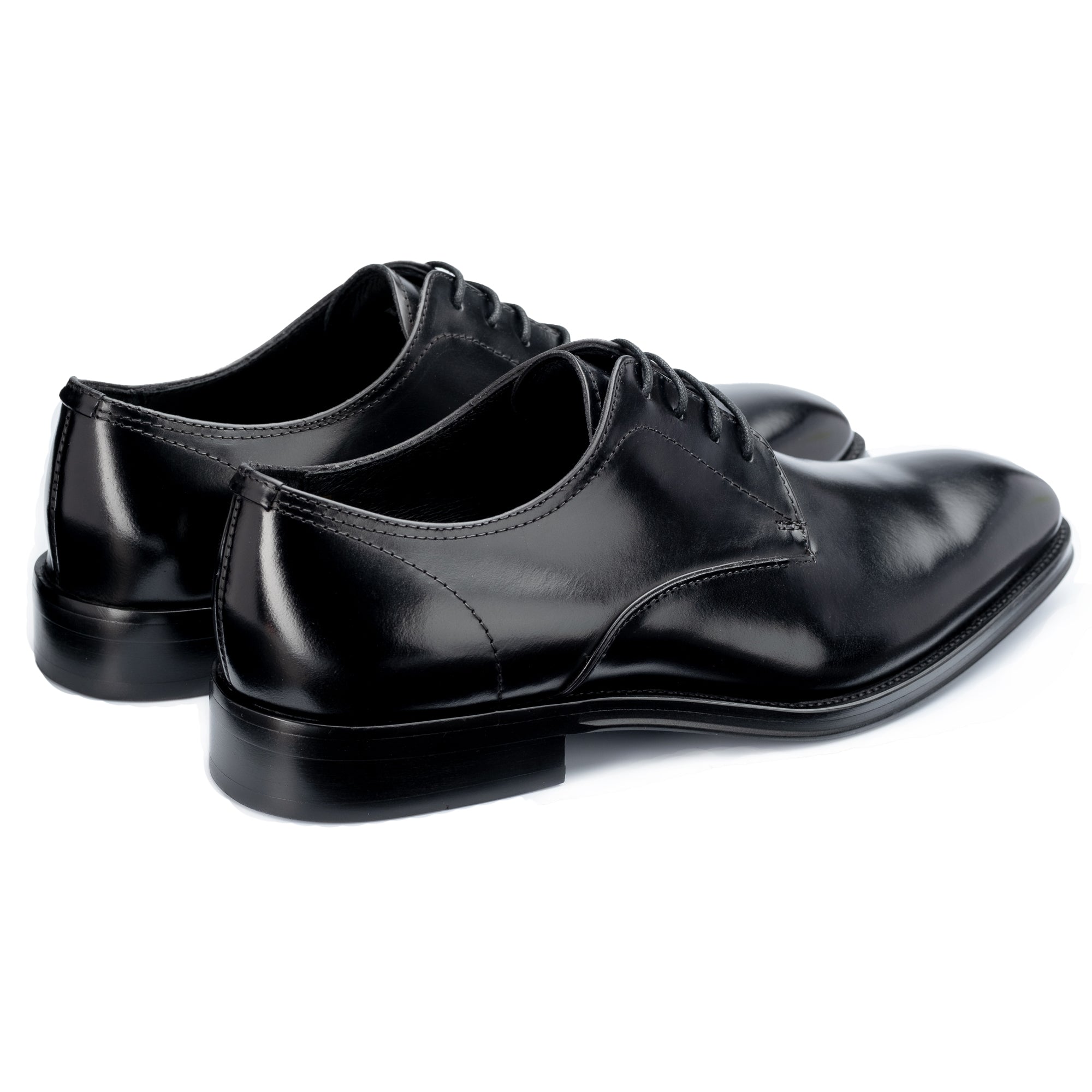
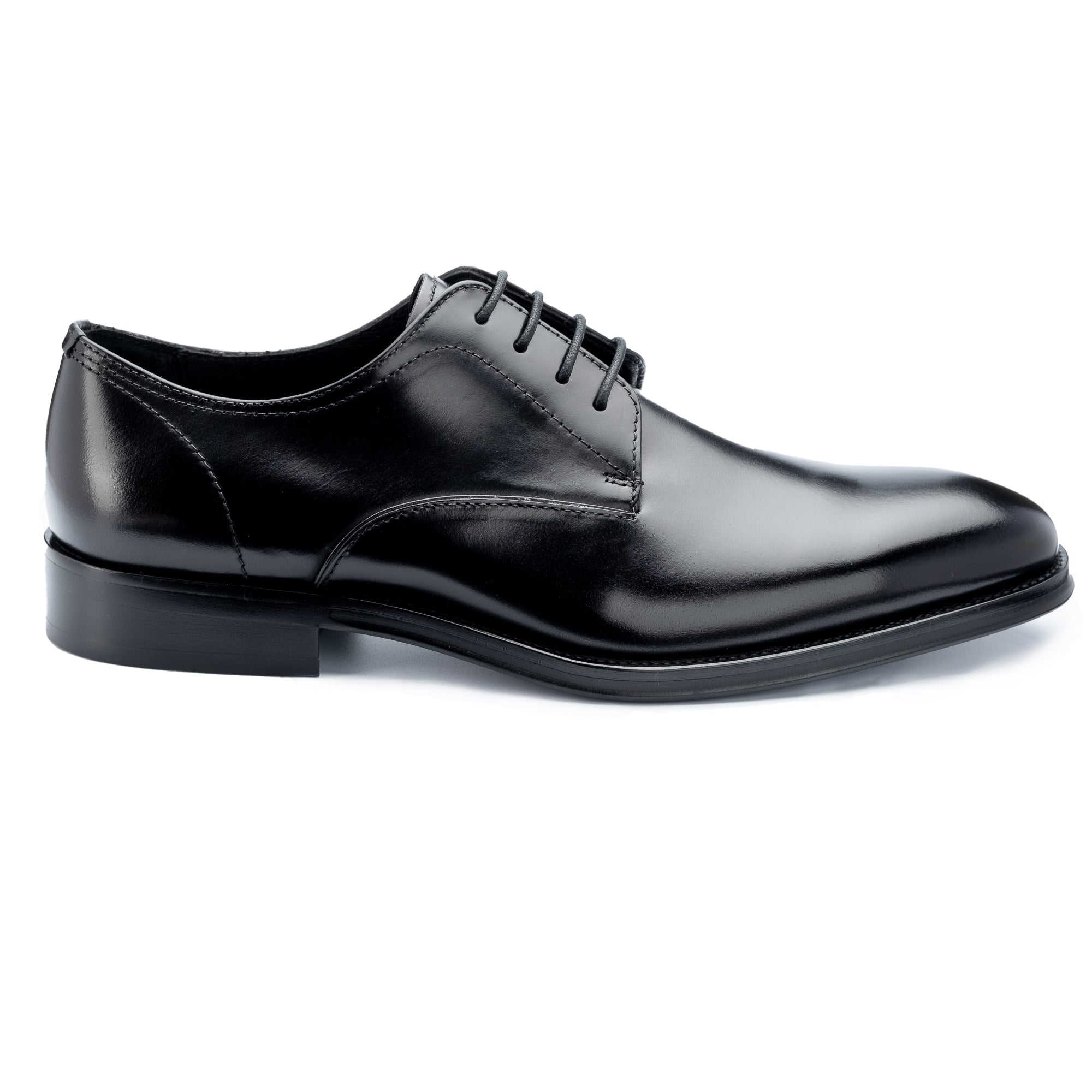
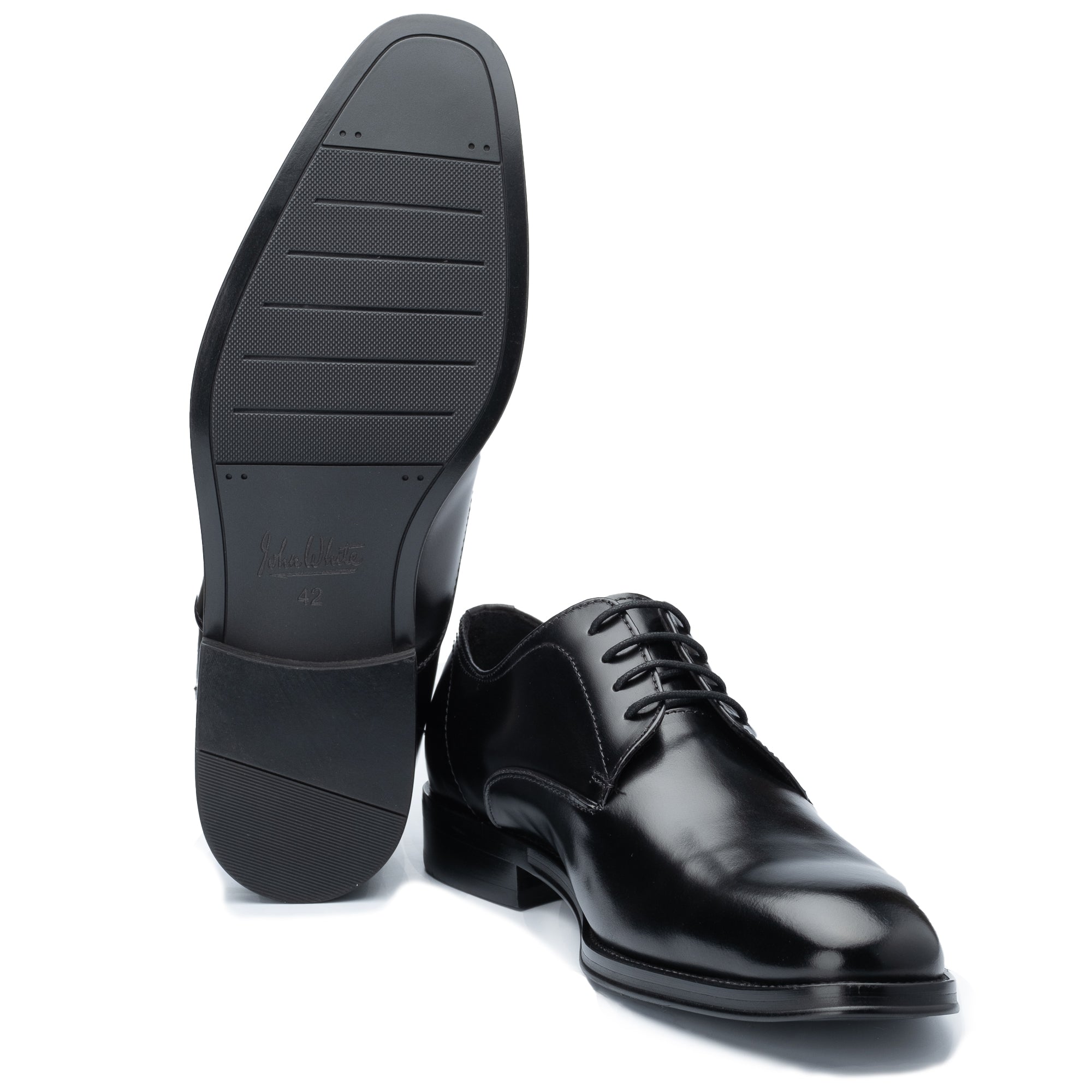
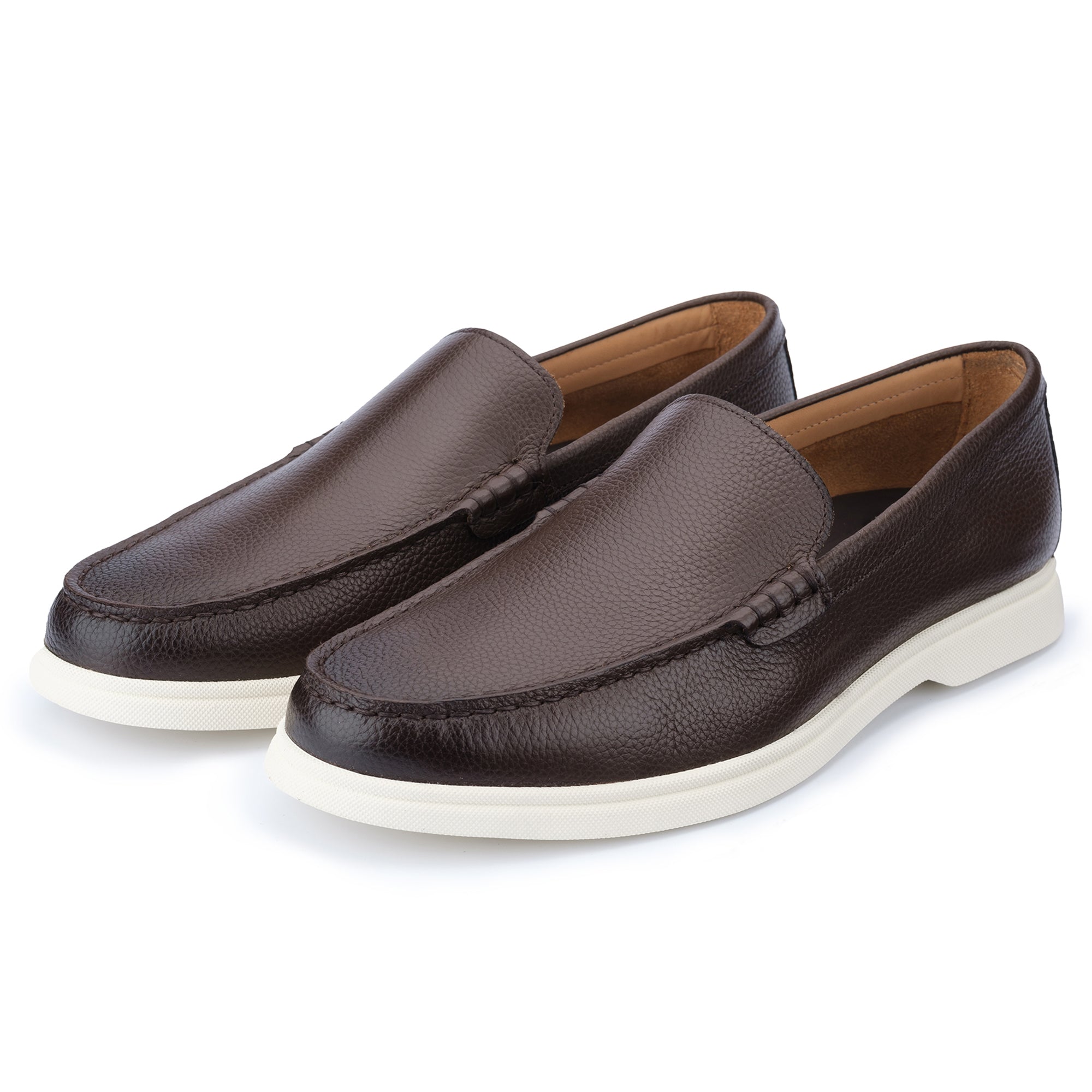
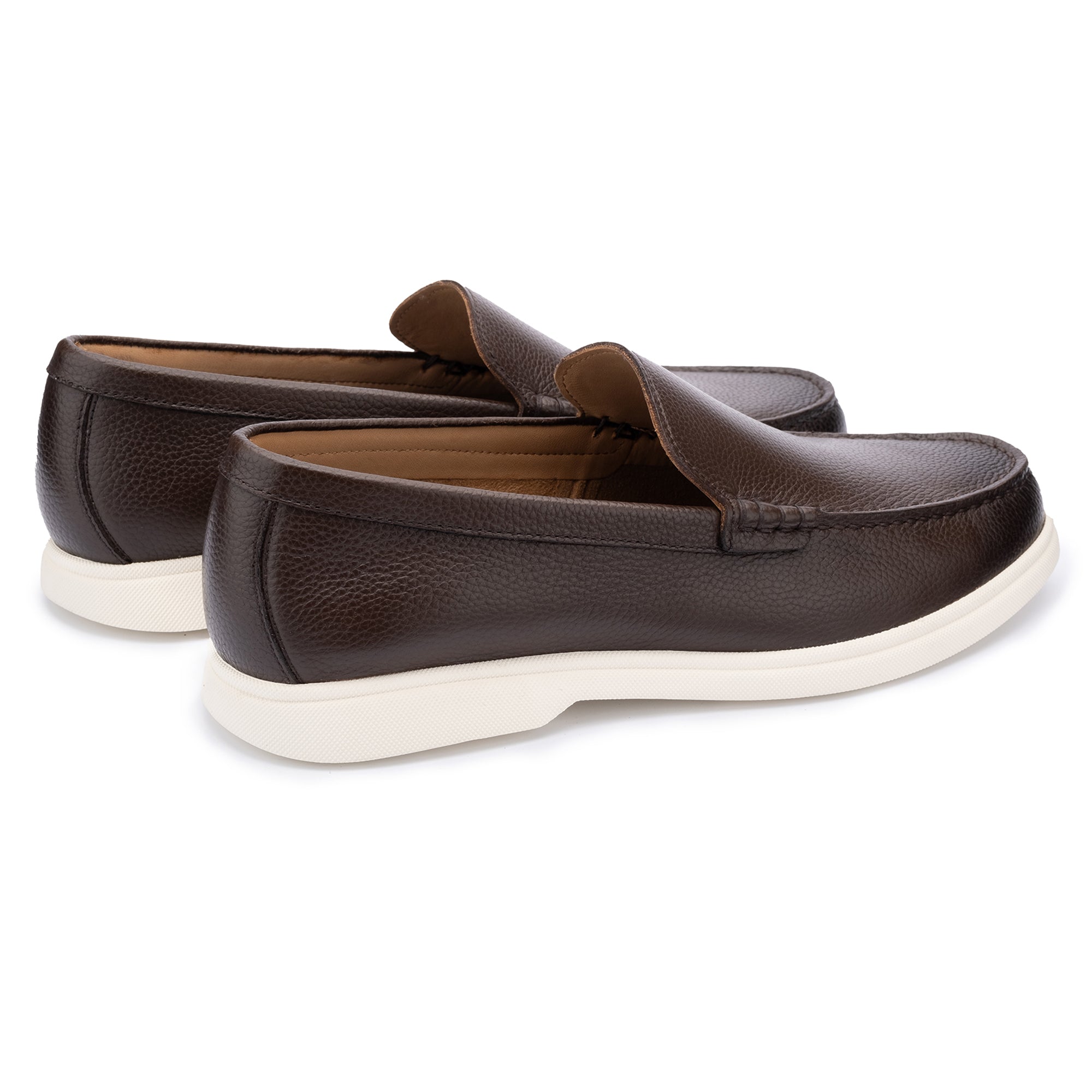
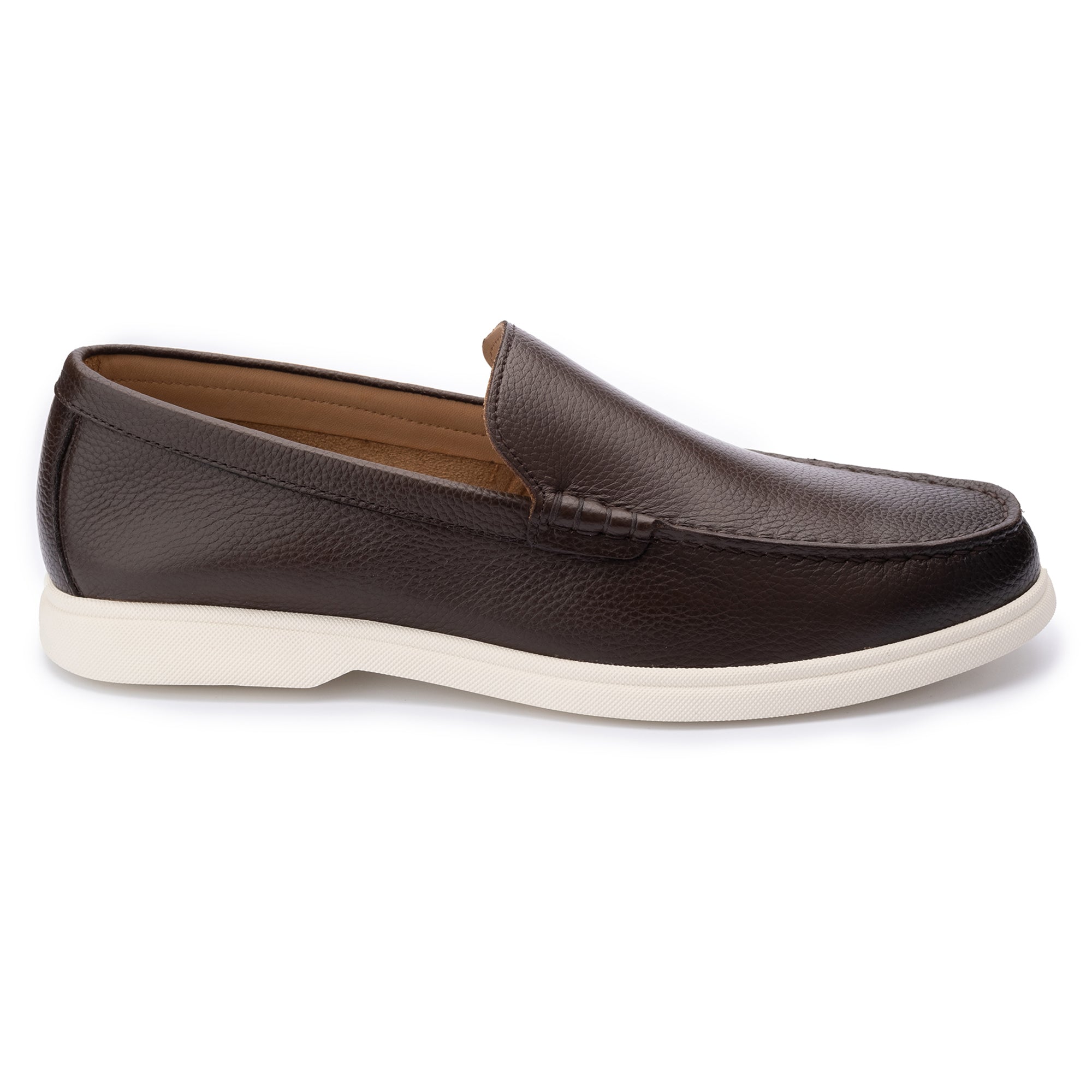
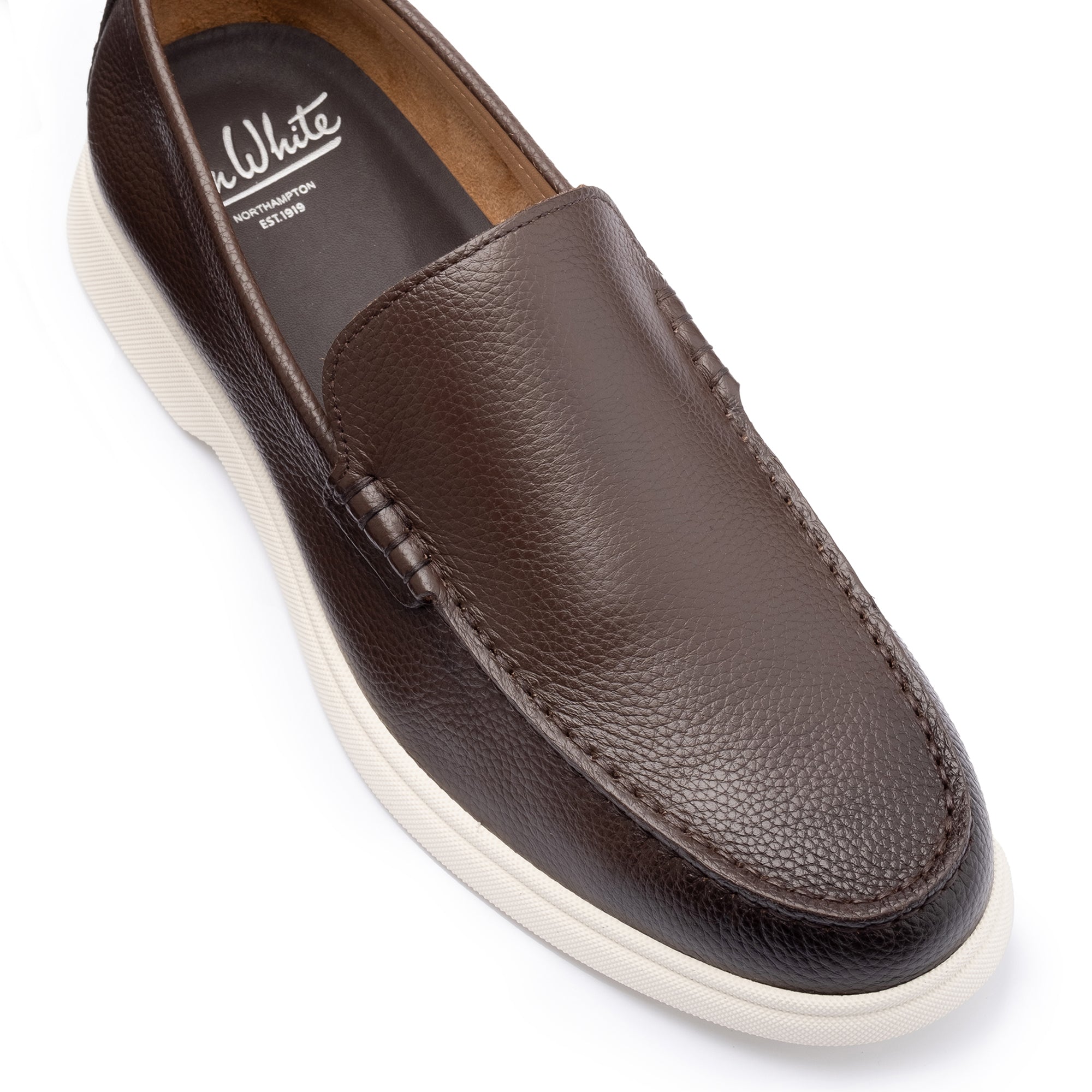
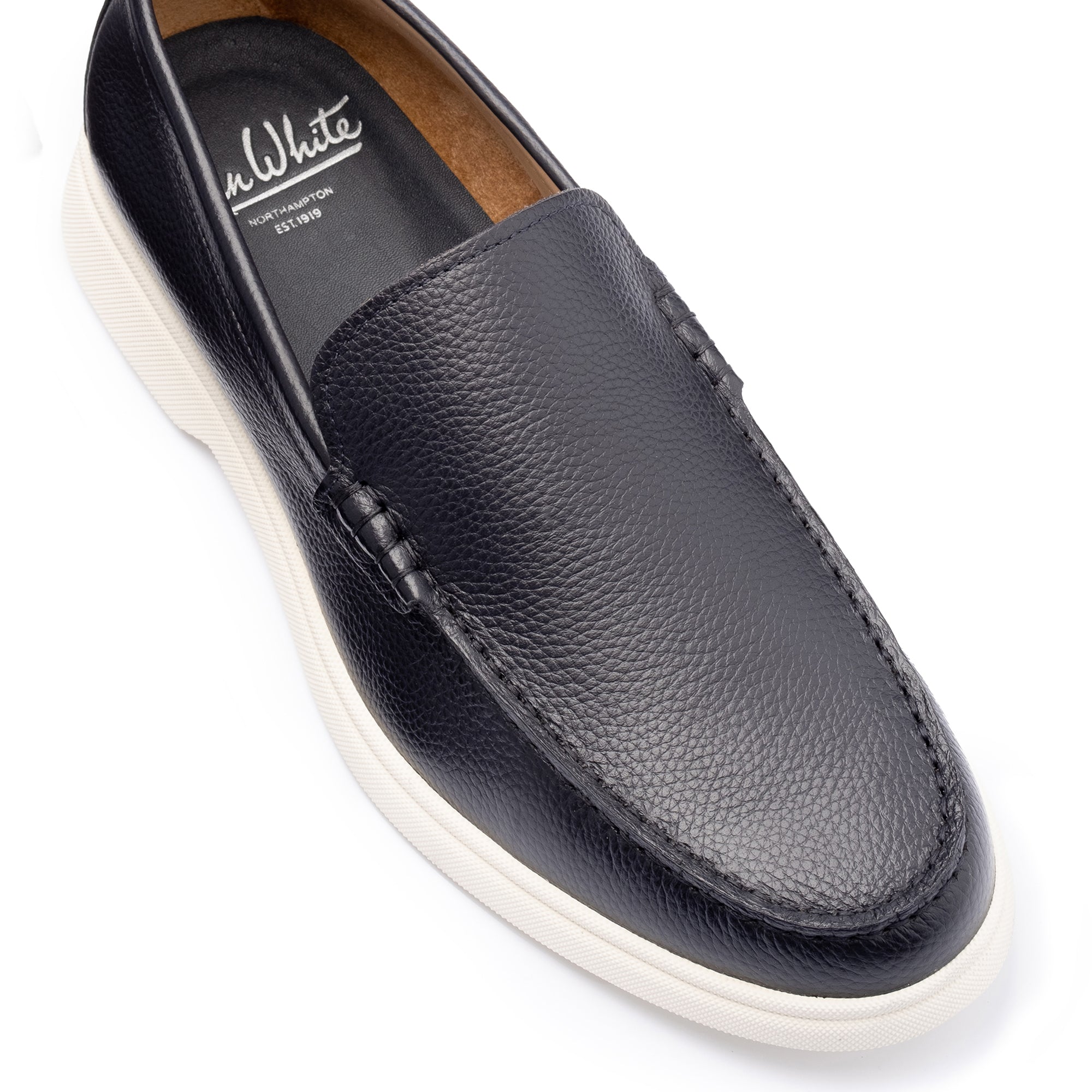
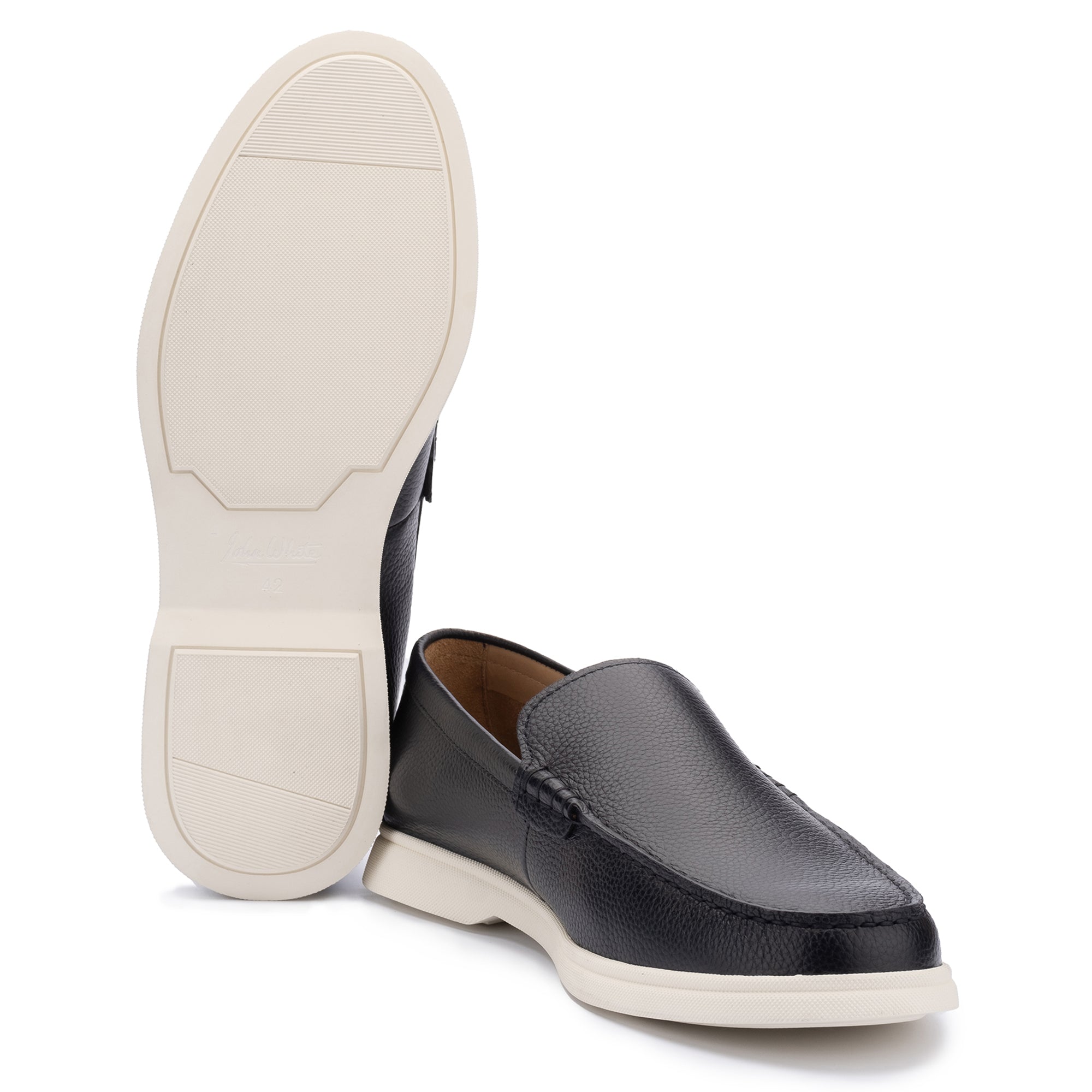
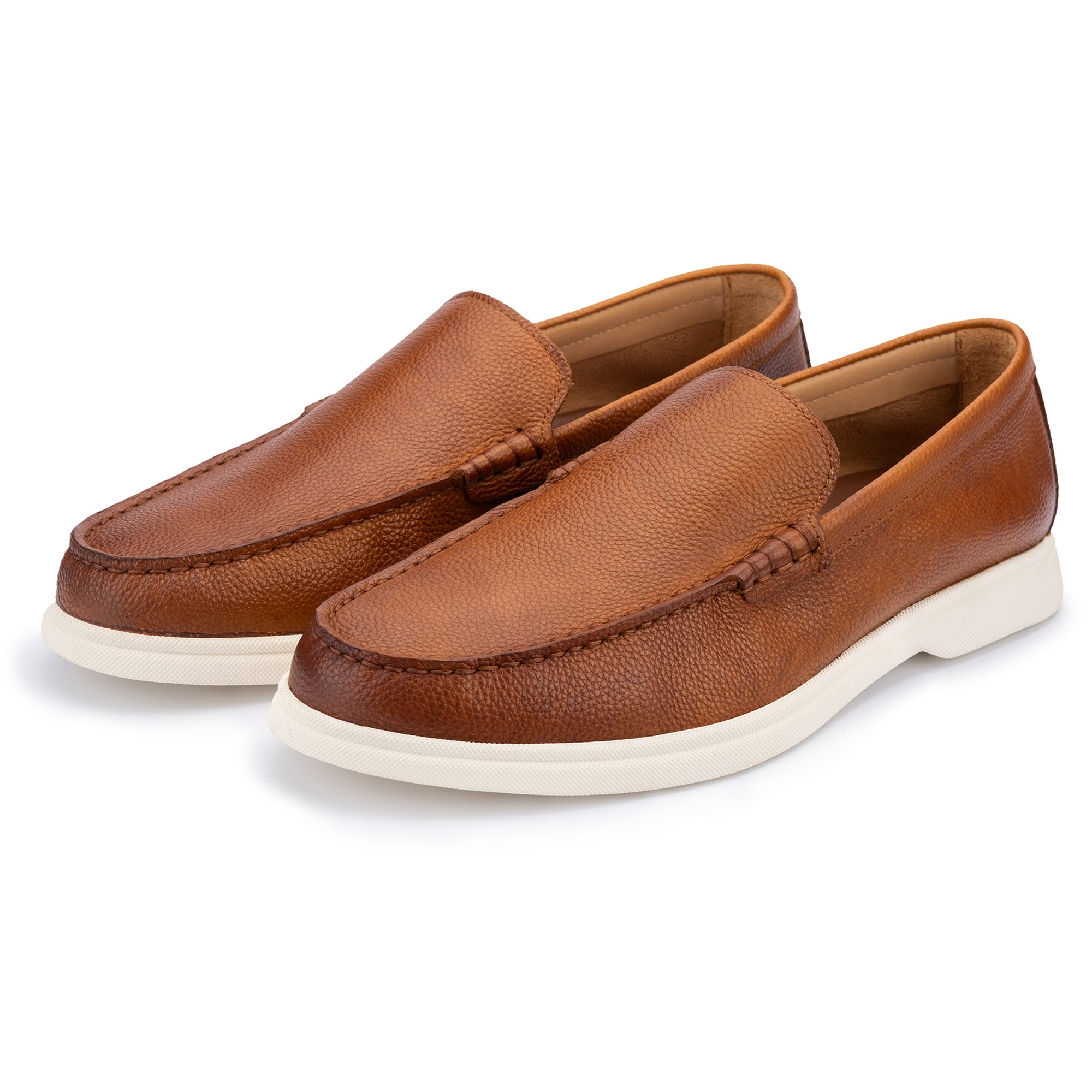
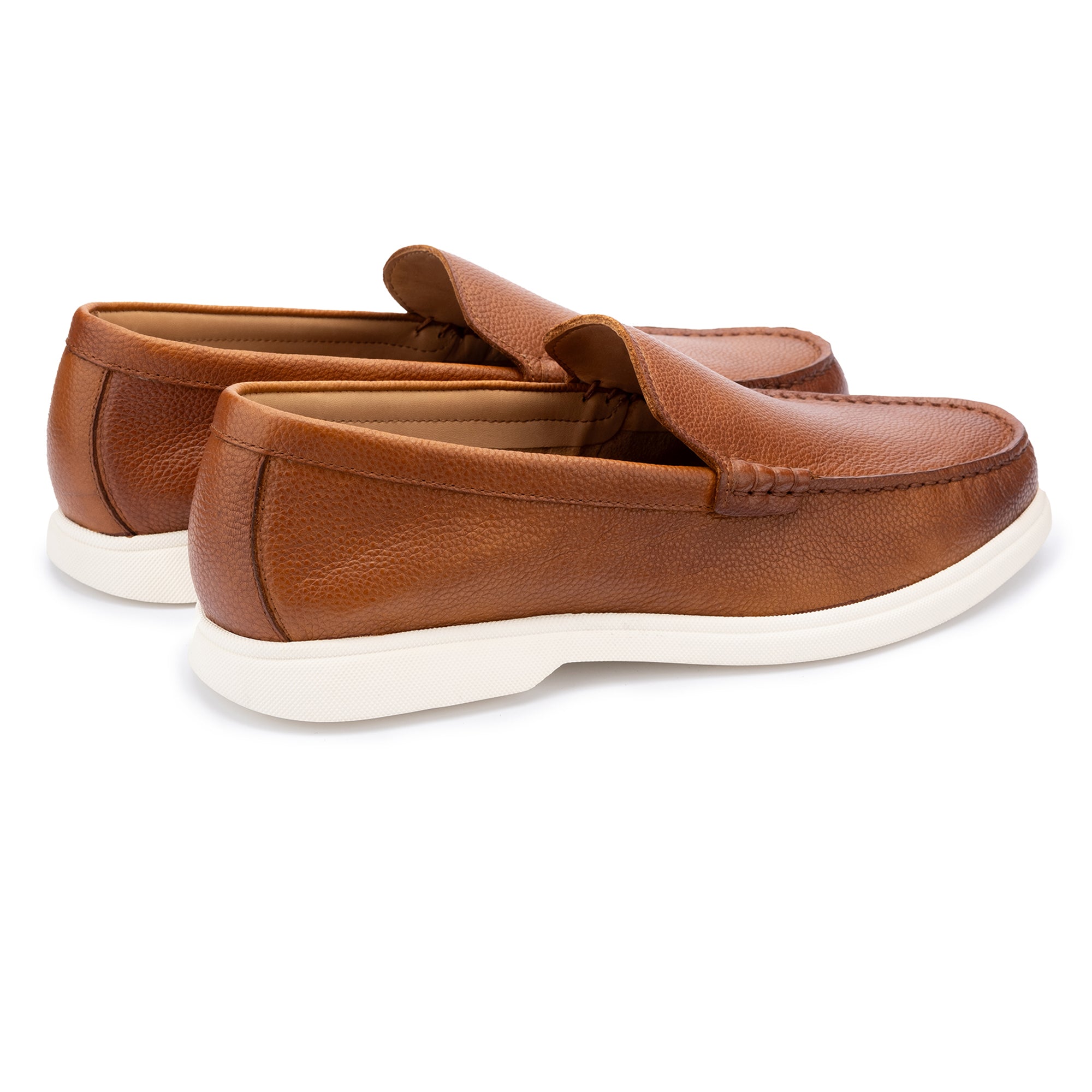
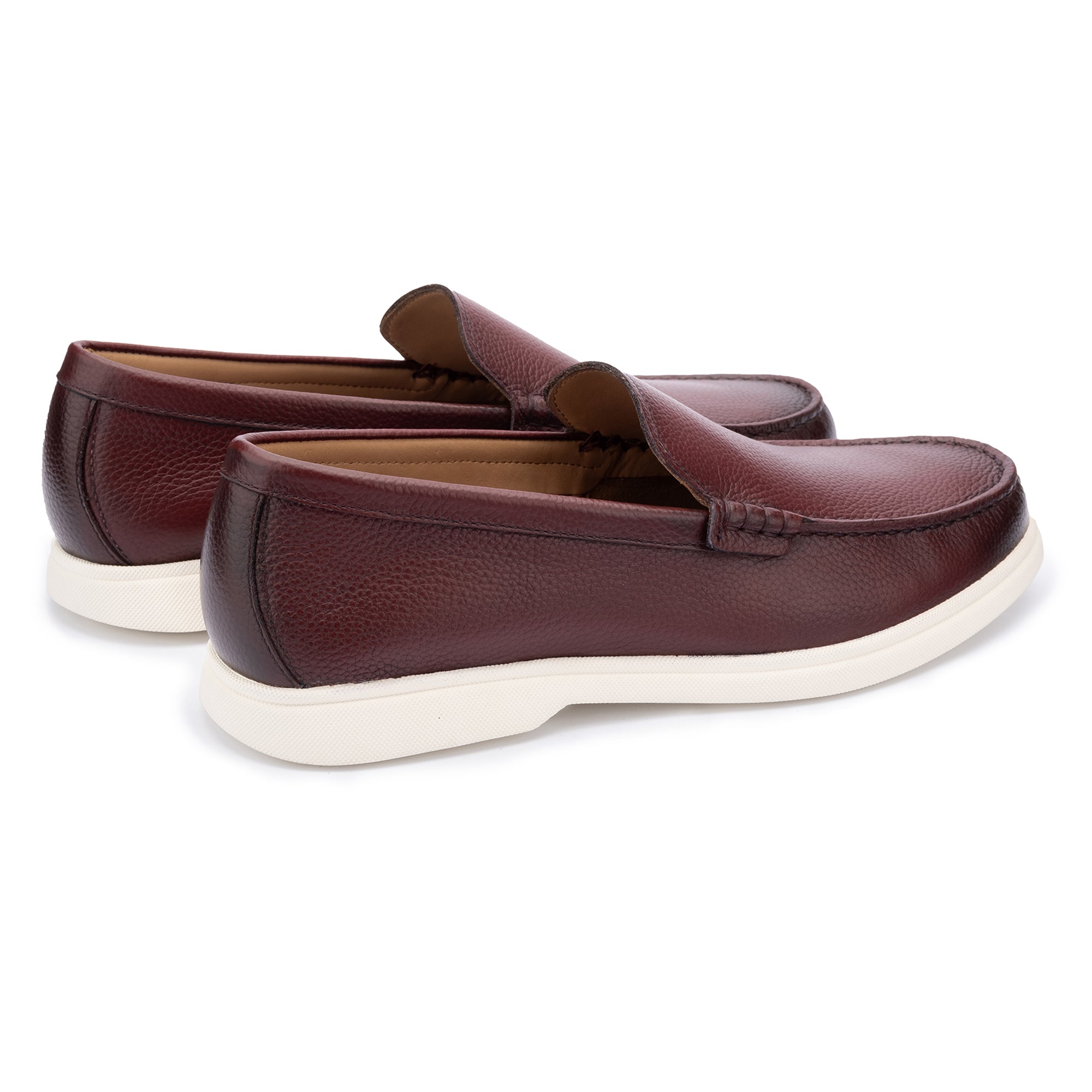
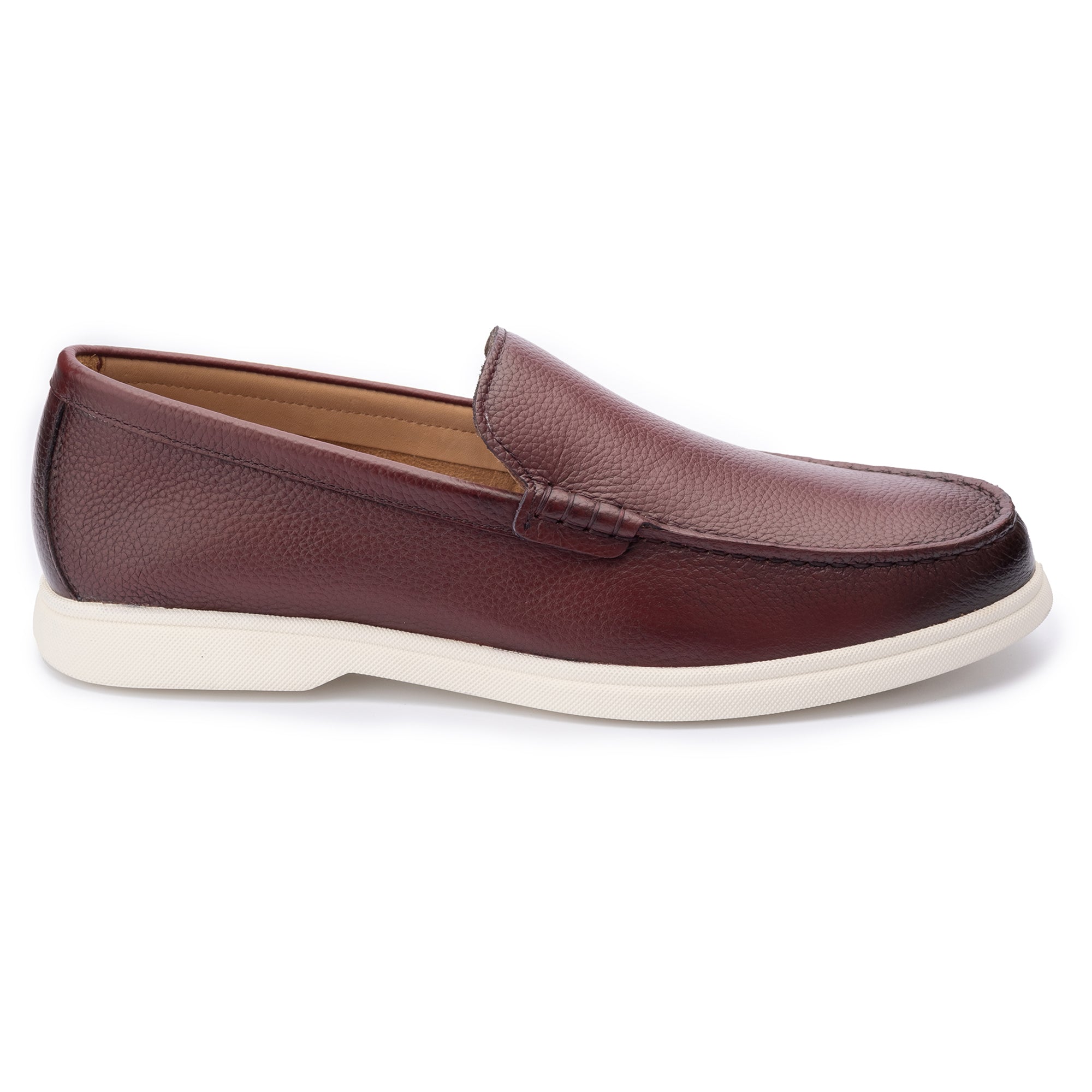
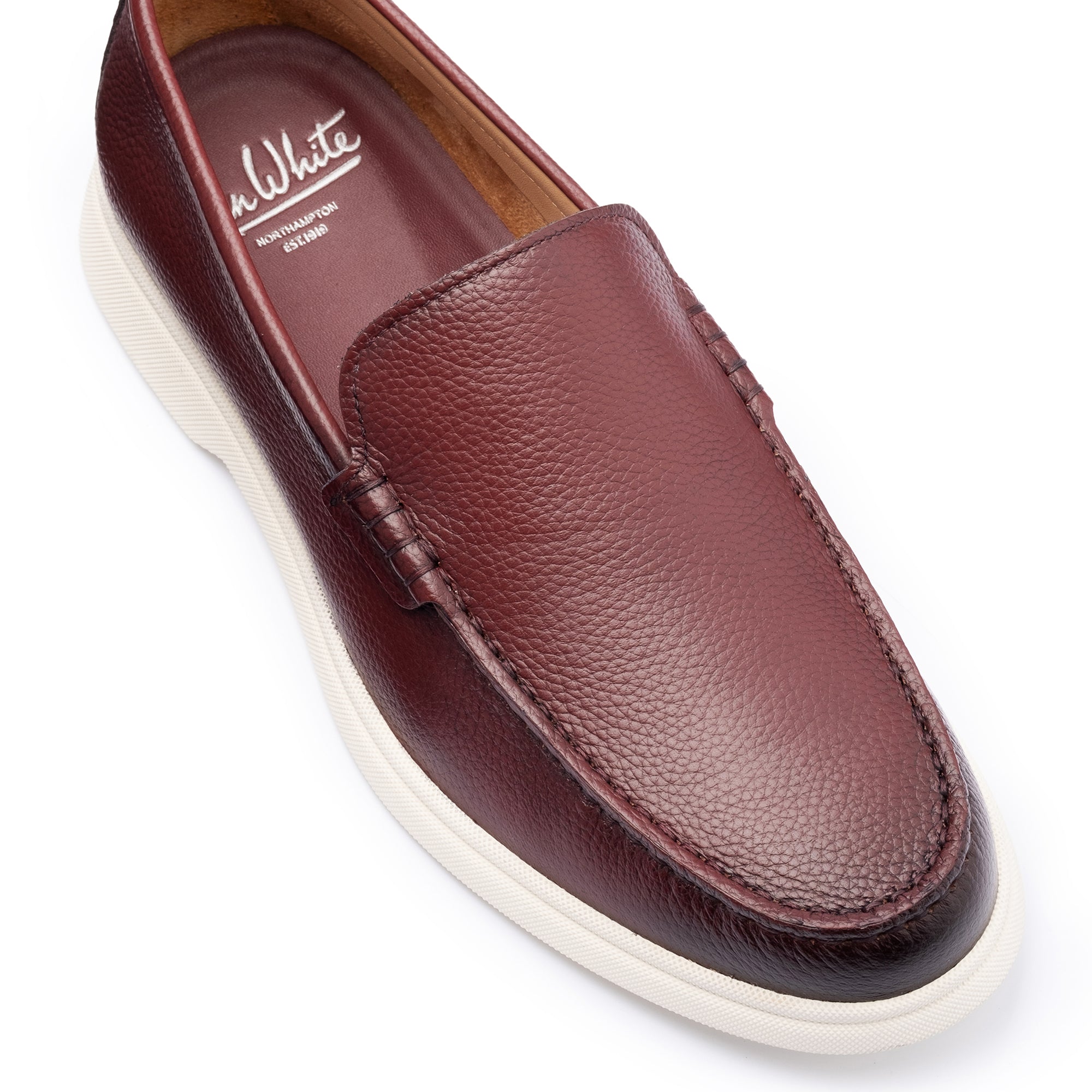
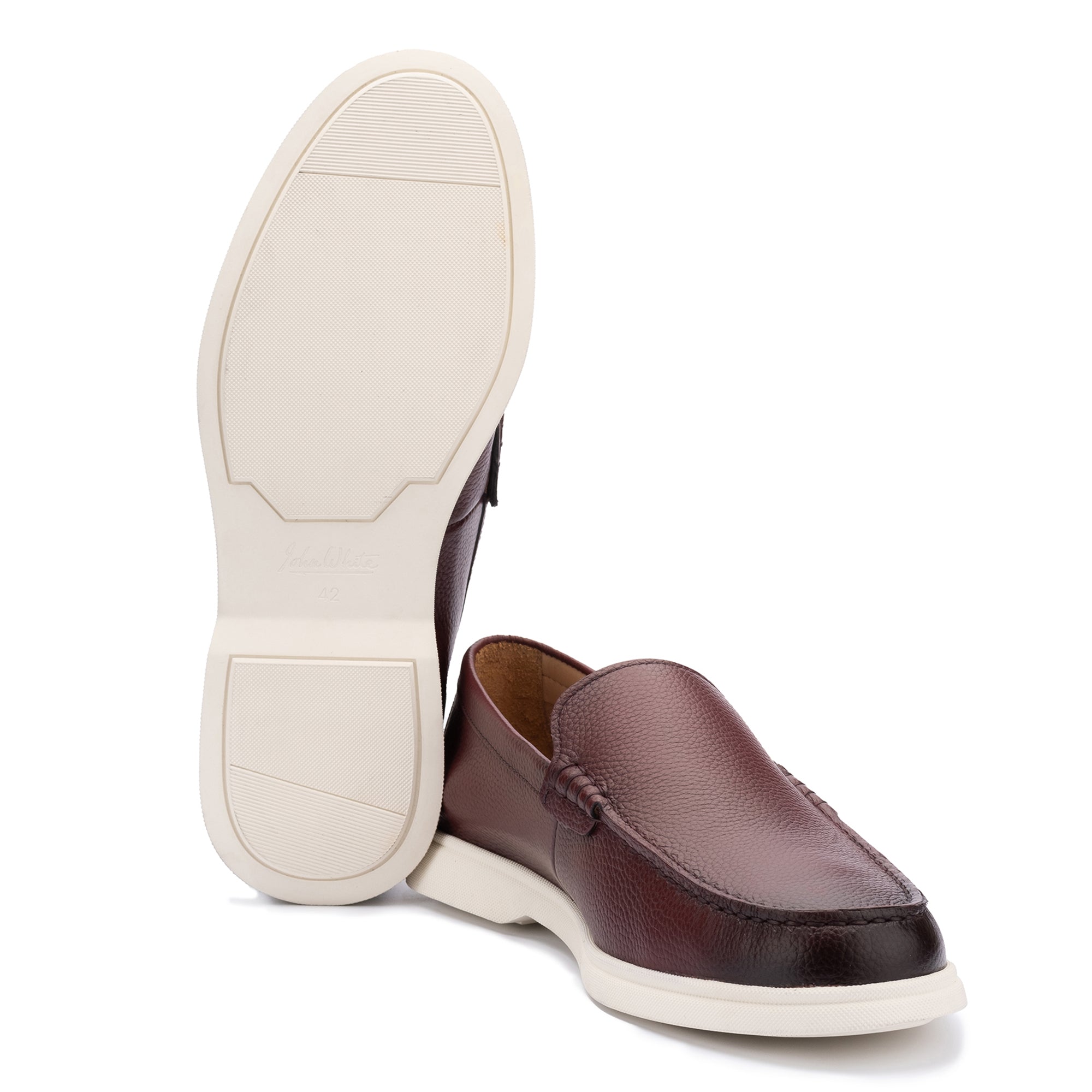
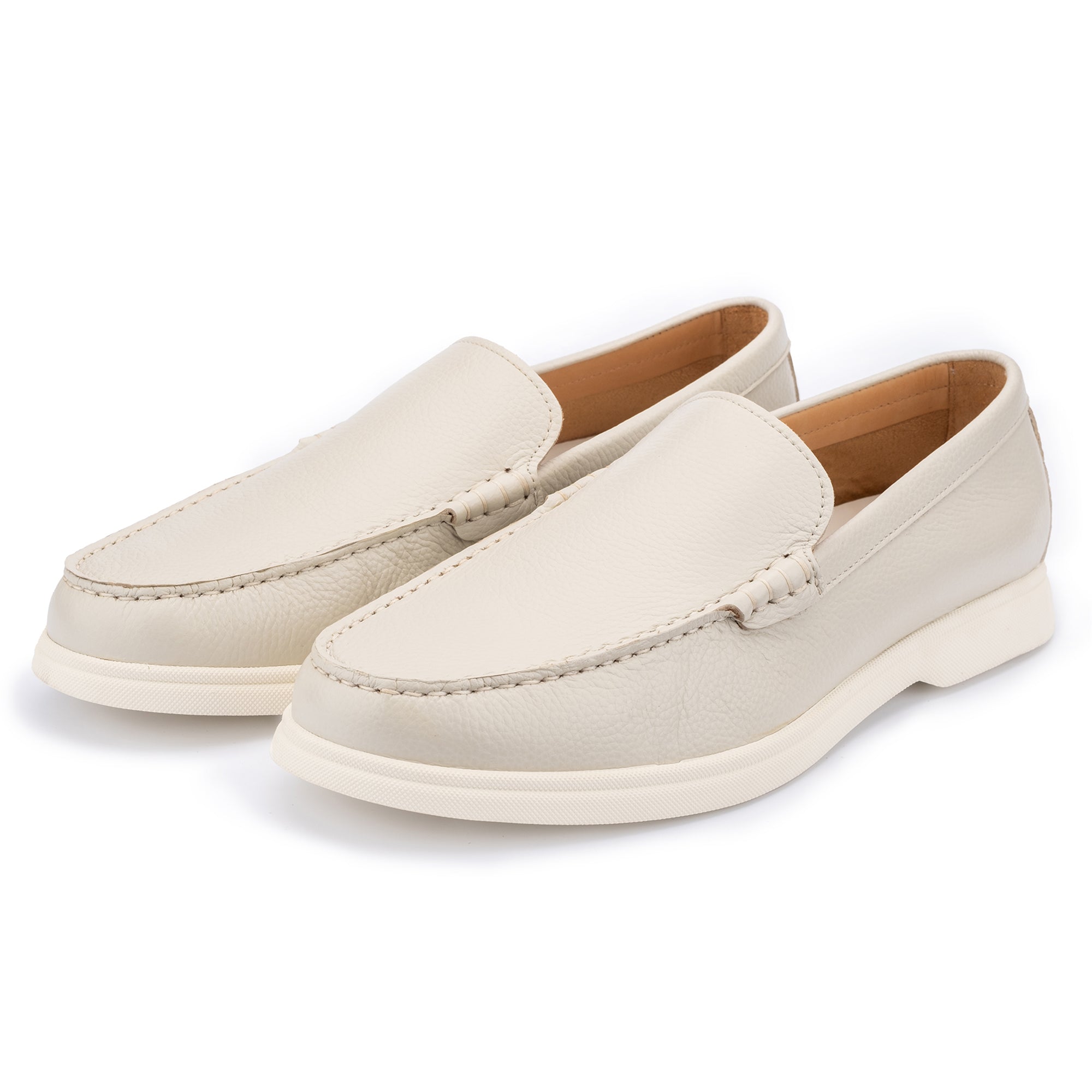
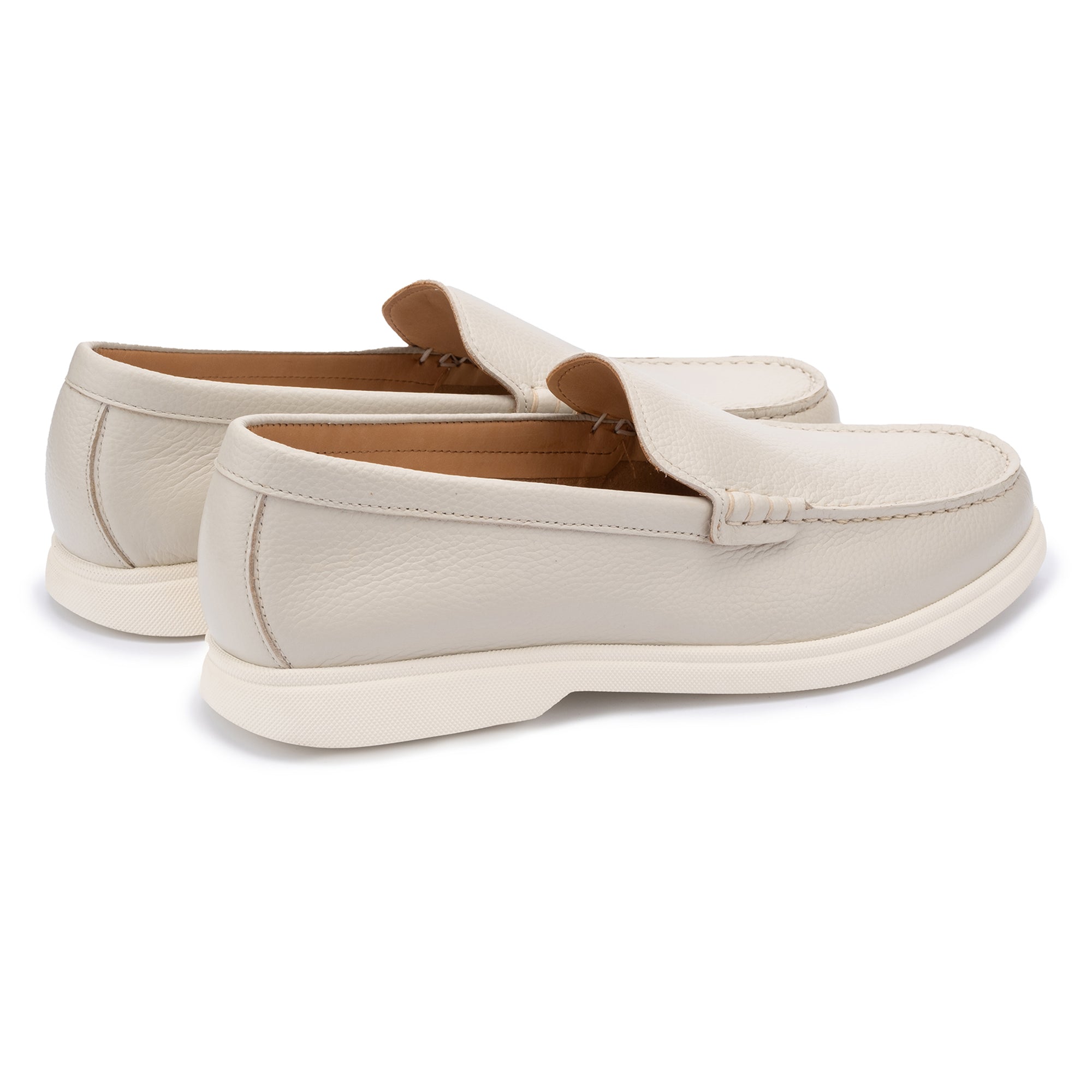
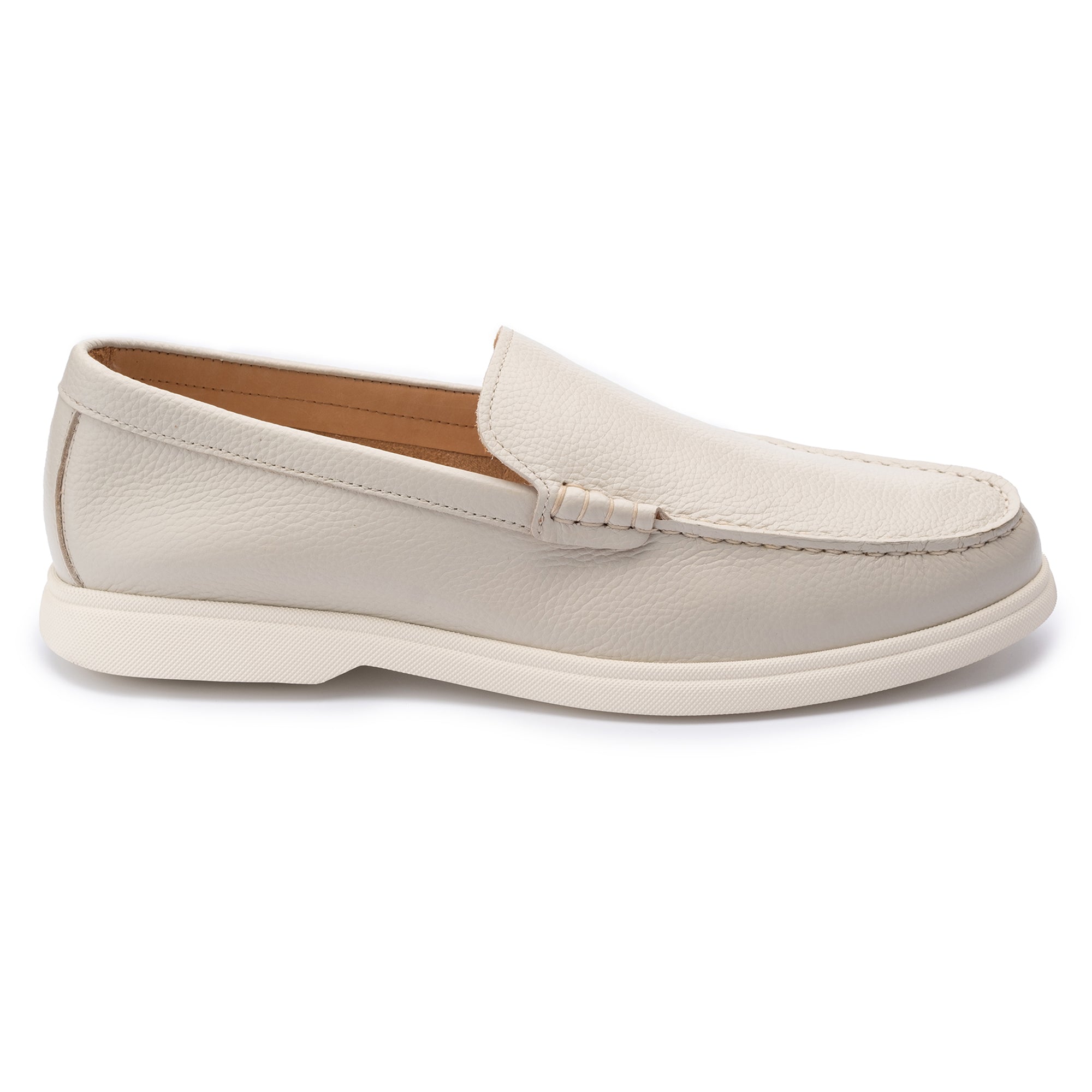
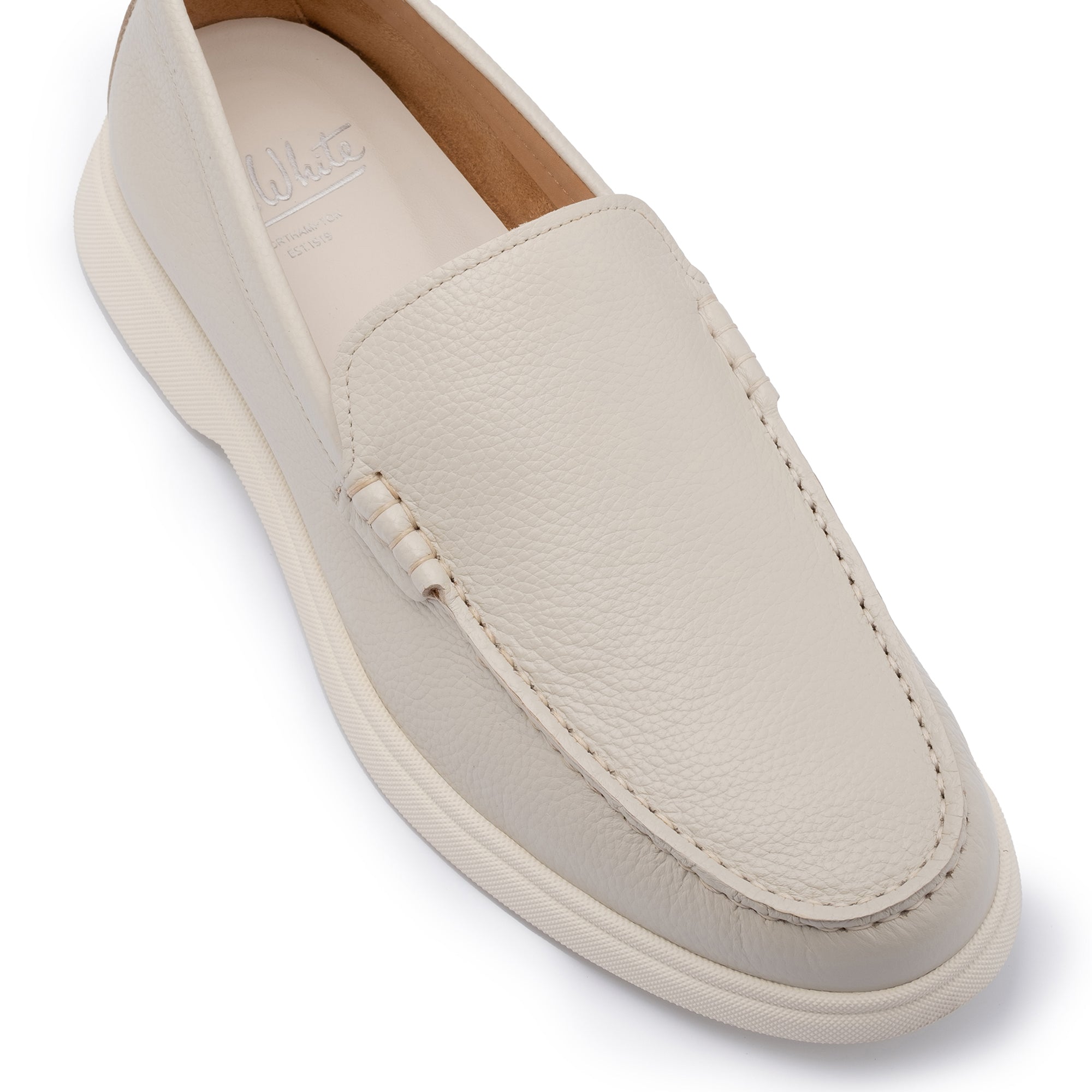
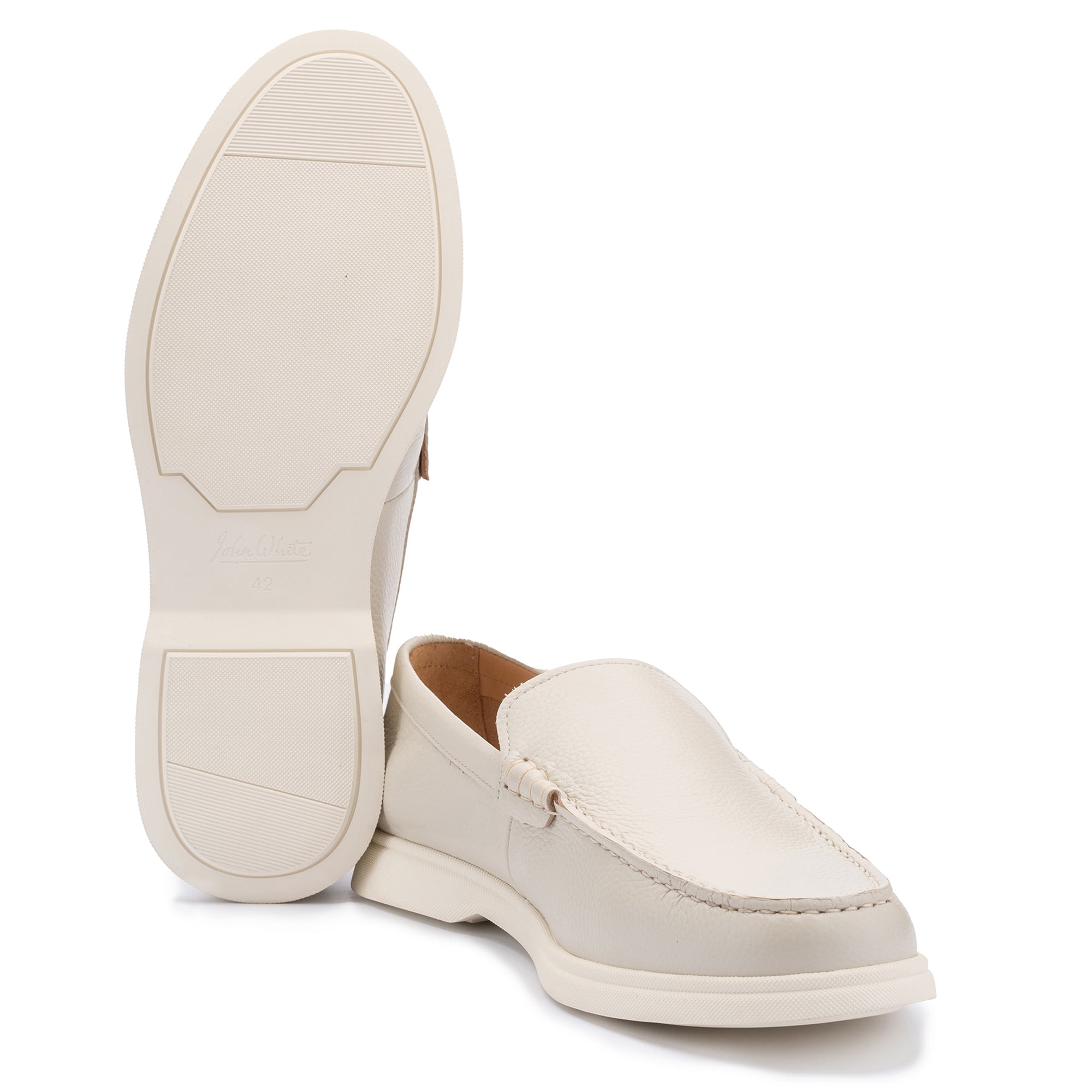
Across the premium British heritage footwear spectrum, brands including Loake, Barker, Church's, Crockett & Jones, and John White Shoes' curated range all feature full-grain leather uppers designed to reward exactly this kind of consistent polish routine — the leather builds a richer, more characterful surface finish with every application.
A mirror-polished toecap takes patience and small quantities of product — adding more polish is rarely the answer.
How Should You Store Leather Shoes Between Wears?
Storage is where most leather shoe care routines fall apart. A shoe left unsupported at the bottom of a wardrobe, still damp from the day's wear, loses its shape within months. The fix costs almost nothing.
- Shoe trees, every time — cedar trees draw out moisture and hold the last shape. As we cover in our guide to maximising shoe life with shoe trees, this single habit adds measurable years to a pair's useful life.
- Breathable storage — canvas dust bags or the original box with the lid slightly open allow air circulation. Sealed plastic traps moisture and creates the conditions for mould growth.
- Rotation — wearing the same pair on consecutive days doesn't allow the leather to recover from sweat absorption. According to the Society of Master Shoe Repairers, alternating pairs extends serviceable life by up to 30 per cent compared to daily consecutive wear. Our guide on why you should rotate your shoes explains the mechanics in detail.
- Away from heat and direct sunlight — both accelerate oil loss significantly, particularly in summer months near south-facing windows.
Cedar shoe trees and a two-pair rotation are the most cost-effective leather shoe care investment available — nothing else comes close per pound spent.
How Do You Handle Scuffs and Surface Marks on Leather?
Surface scuffs are inevitable. What matters is how quickly you deal with them. The longer a scuff sits untreated, the more the leather dries around the damaged area, making a simple fix progressively more involved.
For light scuffs on smooth leather, a small amount of matching wax polish worked in circular motions with a soft cloth often recovers the surface entirely. The leather's natural finish redistributes and the mark lifts. For deeper marks that have removed surface colour, a leather colourant matched precisely to the shoe's original shade should be applied before conditioning and polishing.
The Society of Master Shoe Repairers notes that early home treatment of surface scuffs — addressed before the exposed leather dries further — prevents the majority of cosmetic repairs that would otherwise require professional intervention.
For scuffs beyond straightforward polish repair, our guide to correcting scuffs on leather footwear covers the full range of techniques by severity level.
Treat scuffs at the first opportunity — early intervention takes five minutes; delayed intervention can require professional restoration.
How Do You Dry and Recover Leather Shoes After Getting Them Wet?
Water is leather's most common adversary. Occasional dampness isn't catastrophic — the damage accumulates through repeated saturation and inadequate drying technique.
- Apply a waterproofing spray to clean, dry leather before wet weather — particularly at the start of autumn and winter. Reapply after each deep clean.
- If shoes do get thoroughly wet, remove them immediately, stuff loosely with newspaper, and allow surface moisture to reduce slightly before inserting shoe trees.
- Dry at room temperature only. Radiators, hairdryers, and any direct heat source cause leather to stiffen and crack rapidly as it dries — this damage is largely irreversible.
- Once fully dry — allow 24 to 48 hours for thorough saturation — condition deeply before applying any polish.
For a complete step-by-step recovery protocol after serious soaking, see our guide: From Saturated to Salvaged: The Definitive Process for Drying Wet Leather Footwear.
Slow, room-temperature drying followed by deep conditioning is the only correct response to wet leather shoes — speed and heat are both enemies of the process.
Related Guides
- Leather Shoe Care: The Definitive Guide — our comprehensive guide
- Restoring Elegance: A Definitive Guide to Correcting Scuffs on Leather Footwear
- Maximising Shoe Life: The Essential Role of Shoe Trees
- Why You Should Rotate Your Shoes
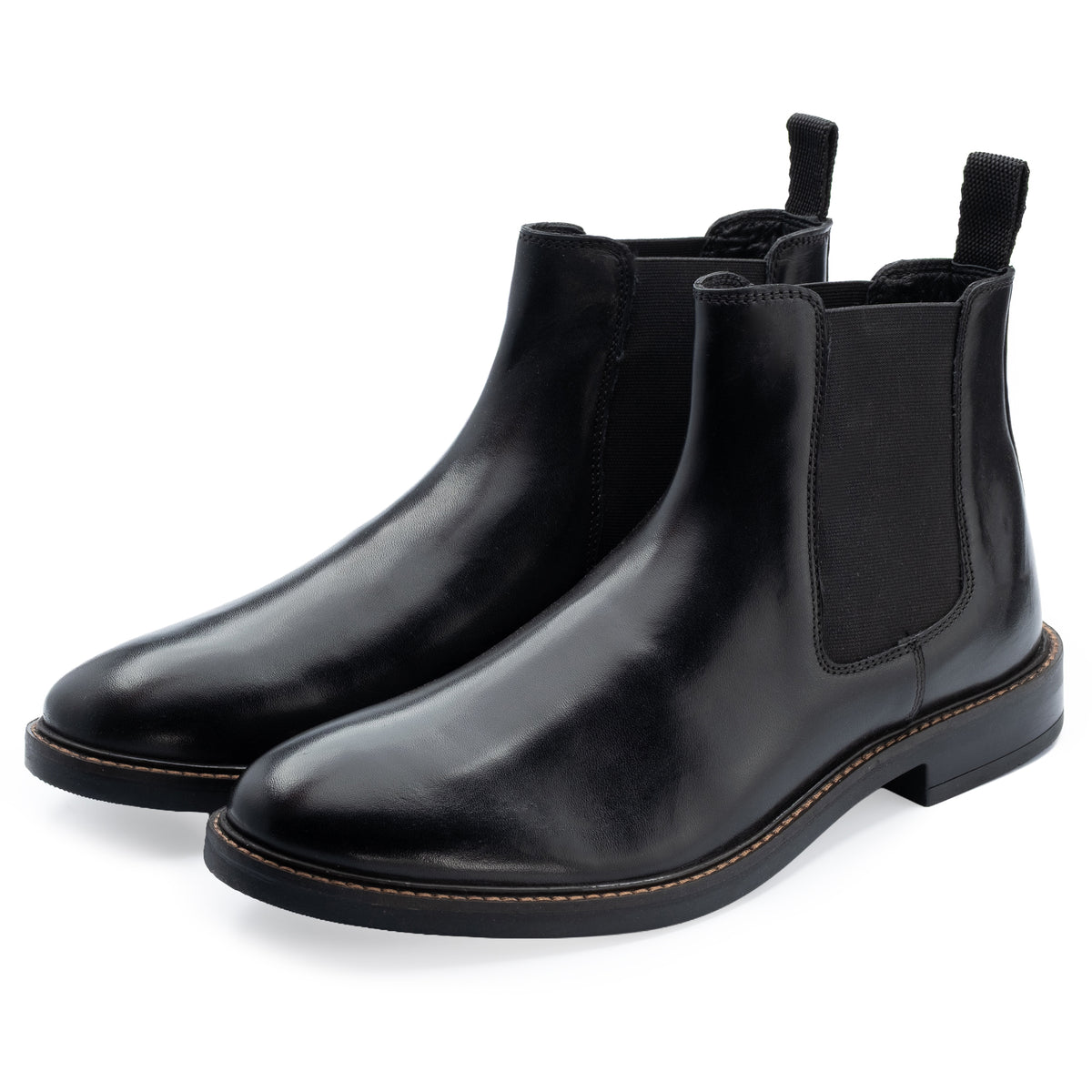
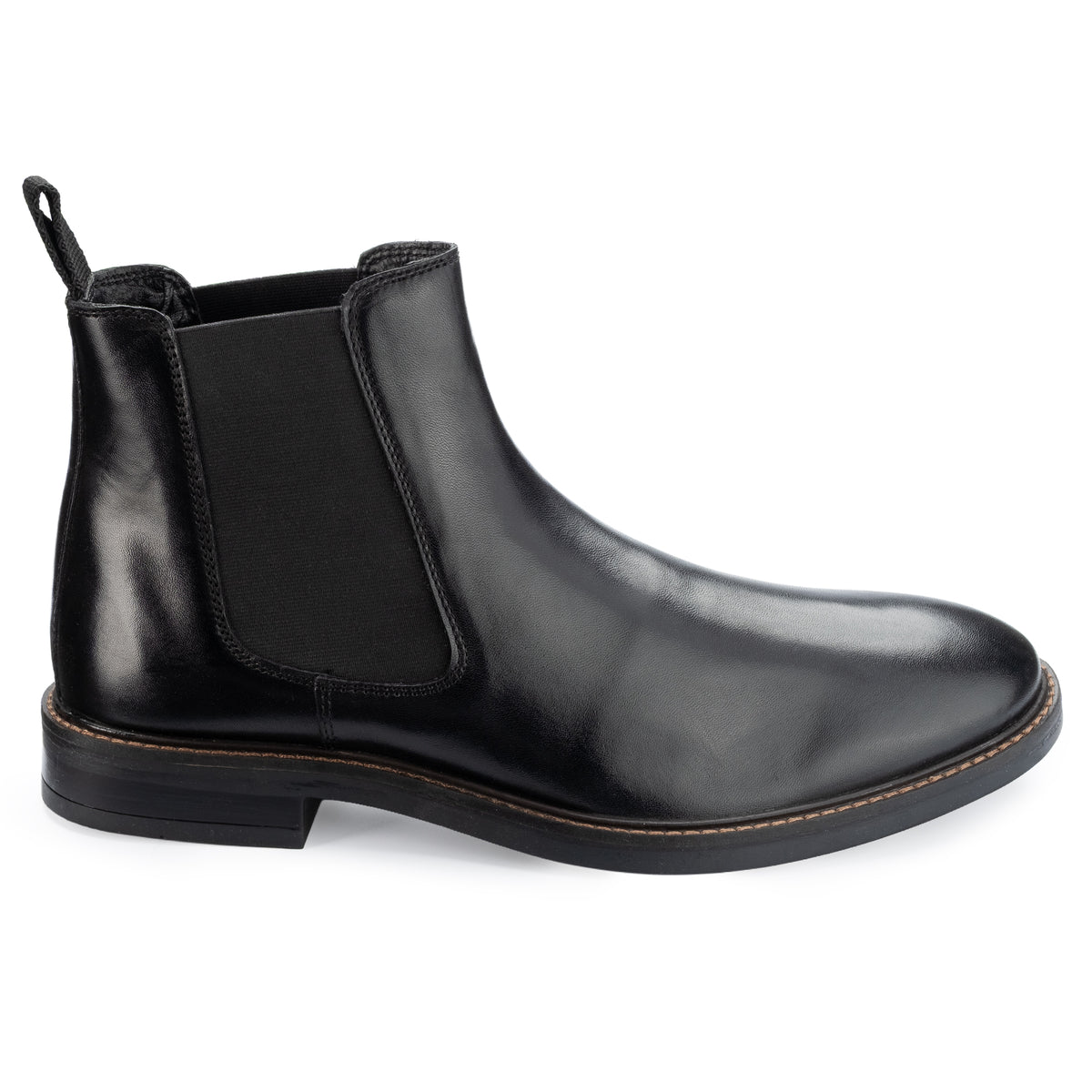
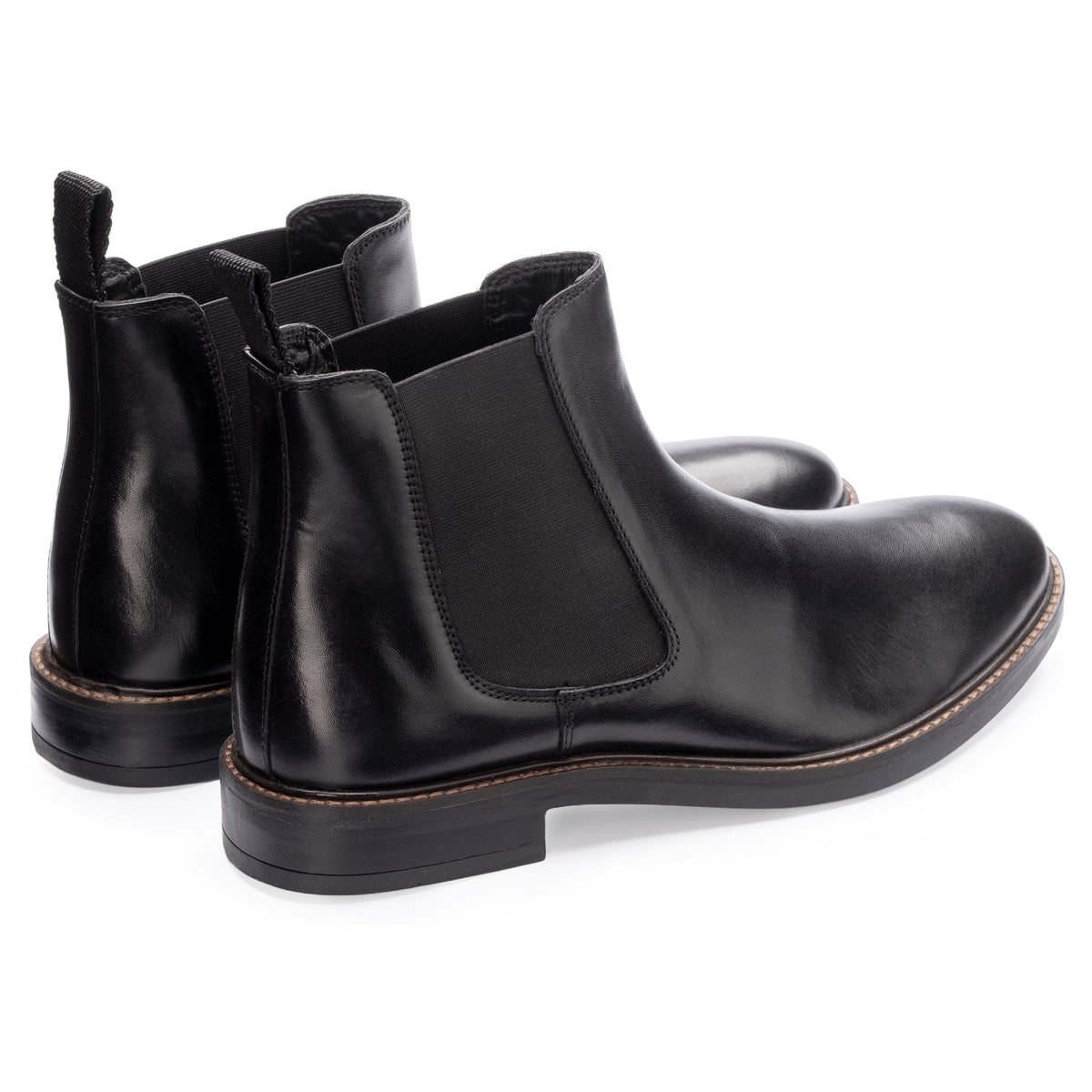
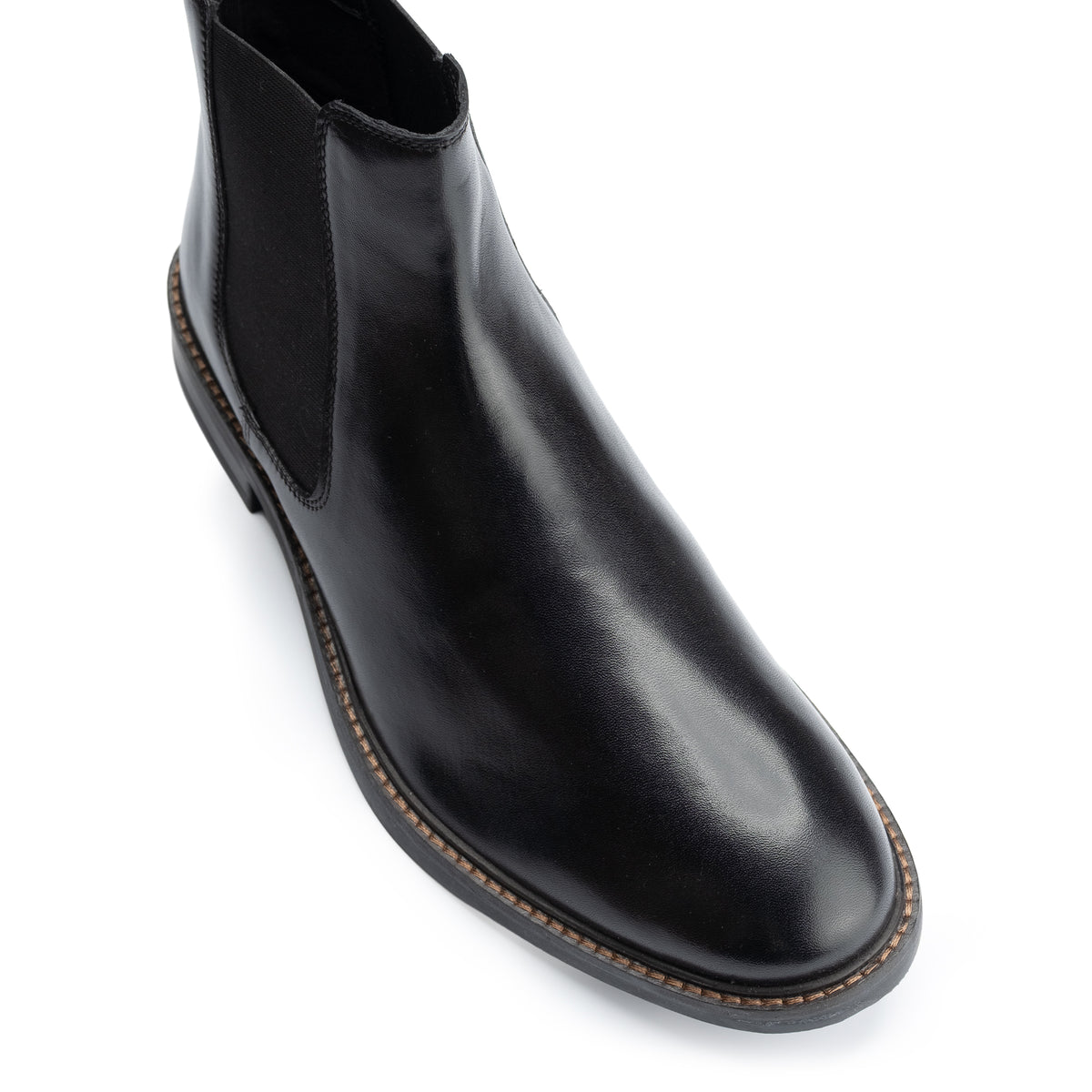
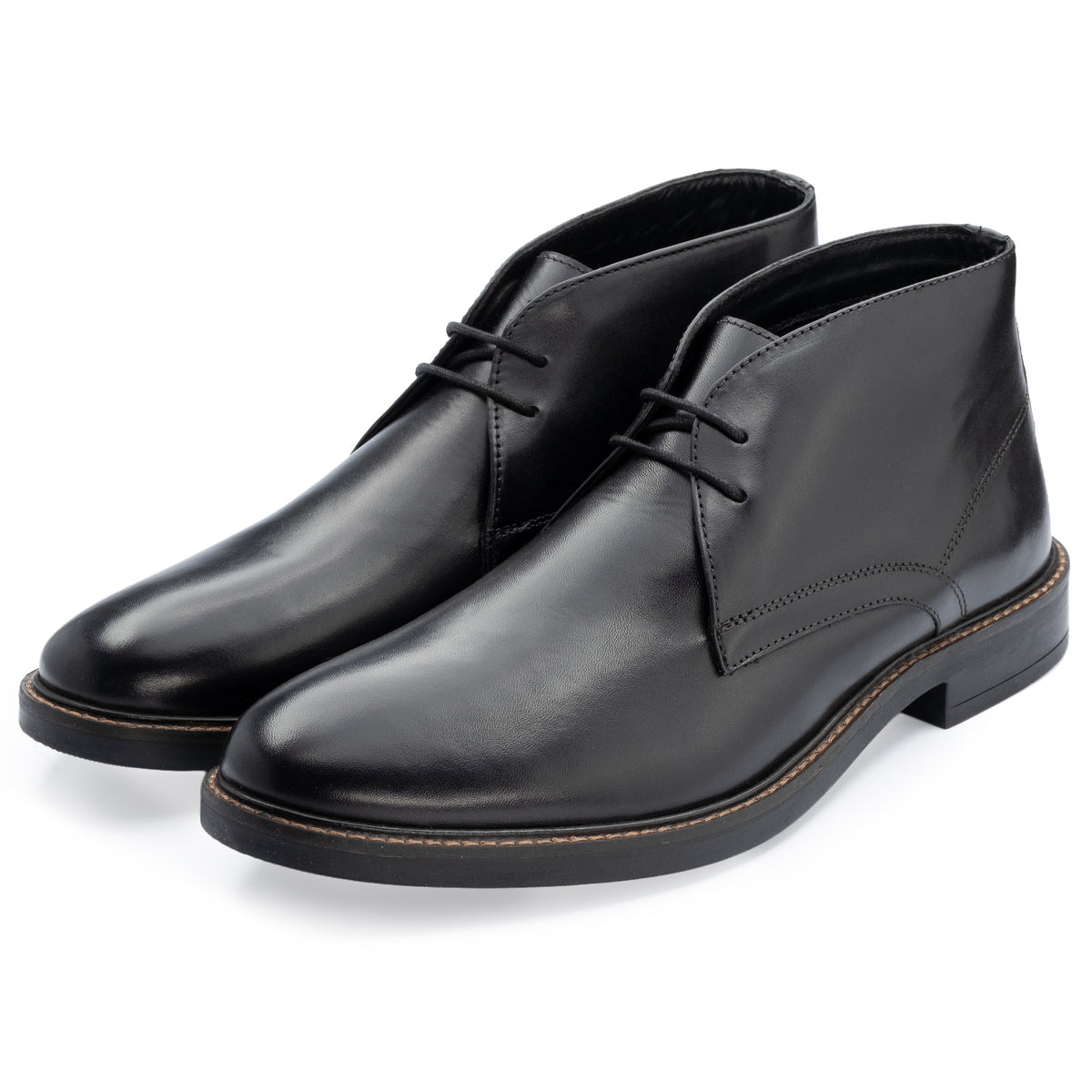
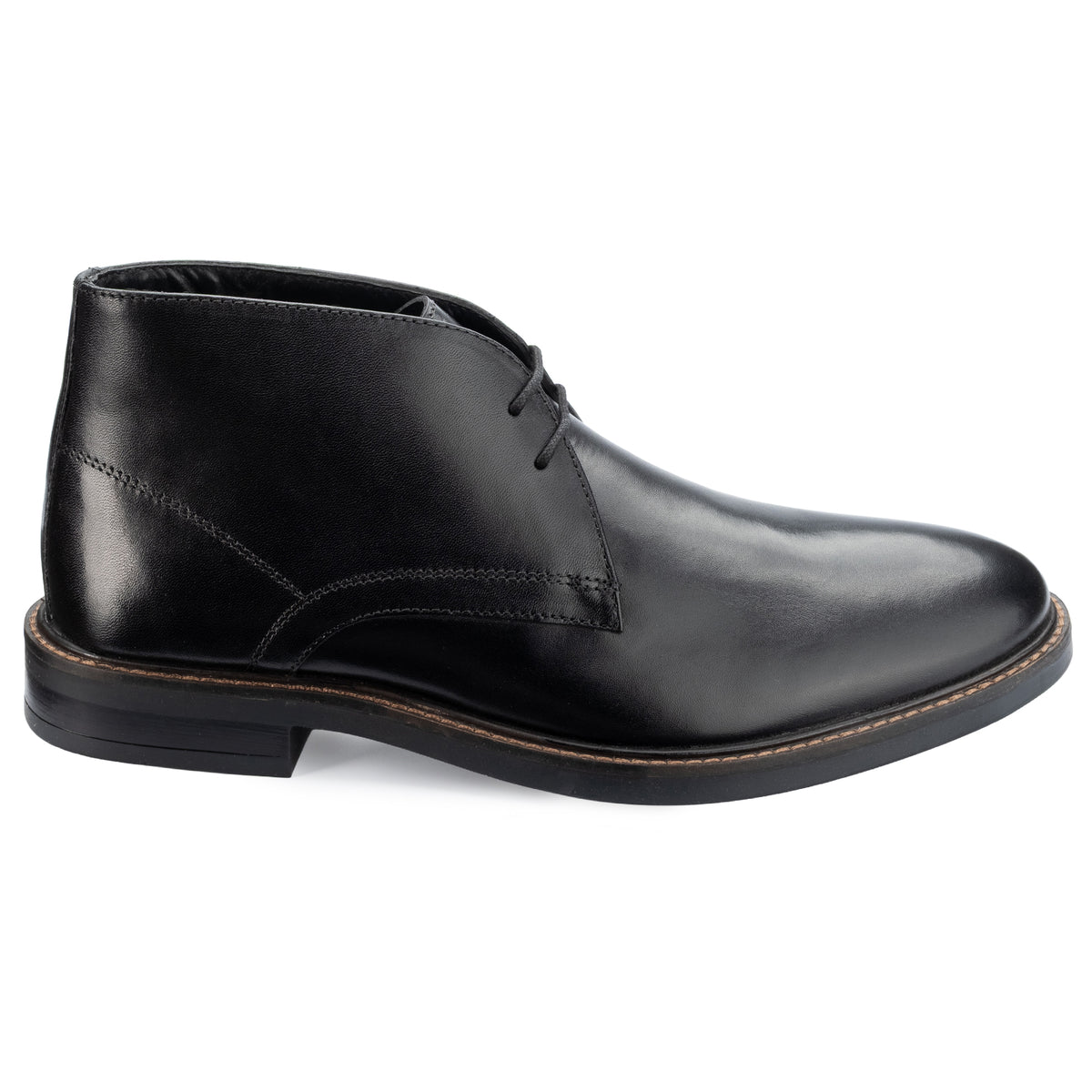
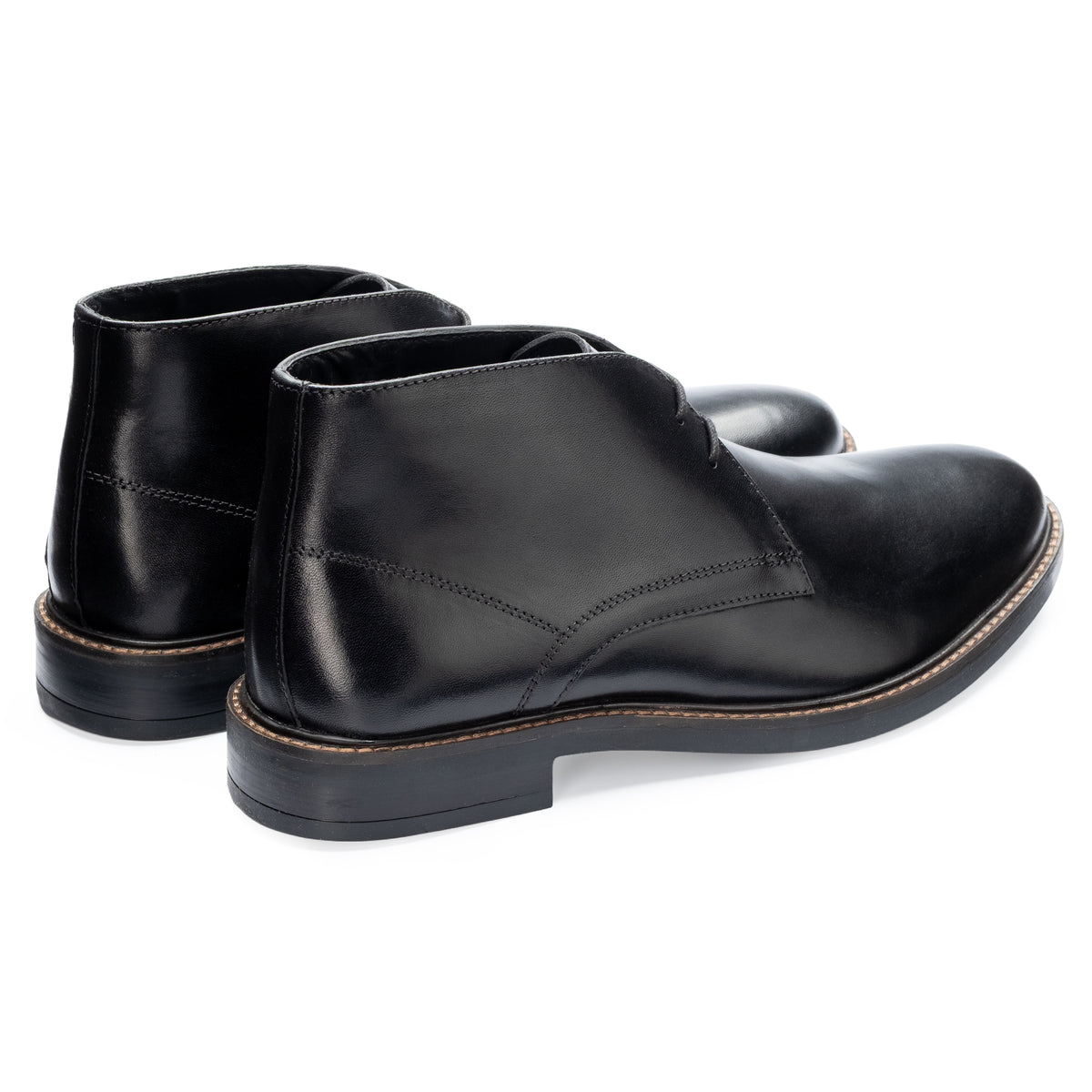
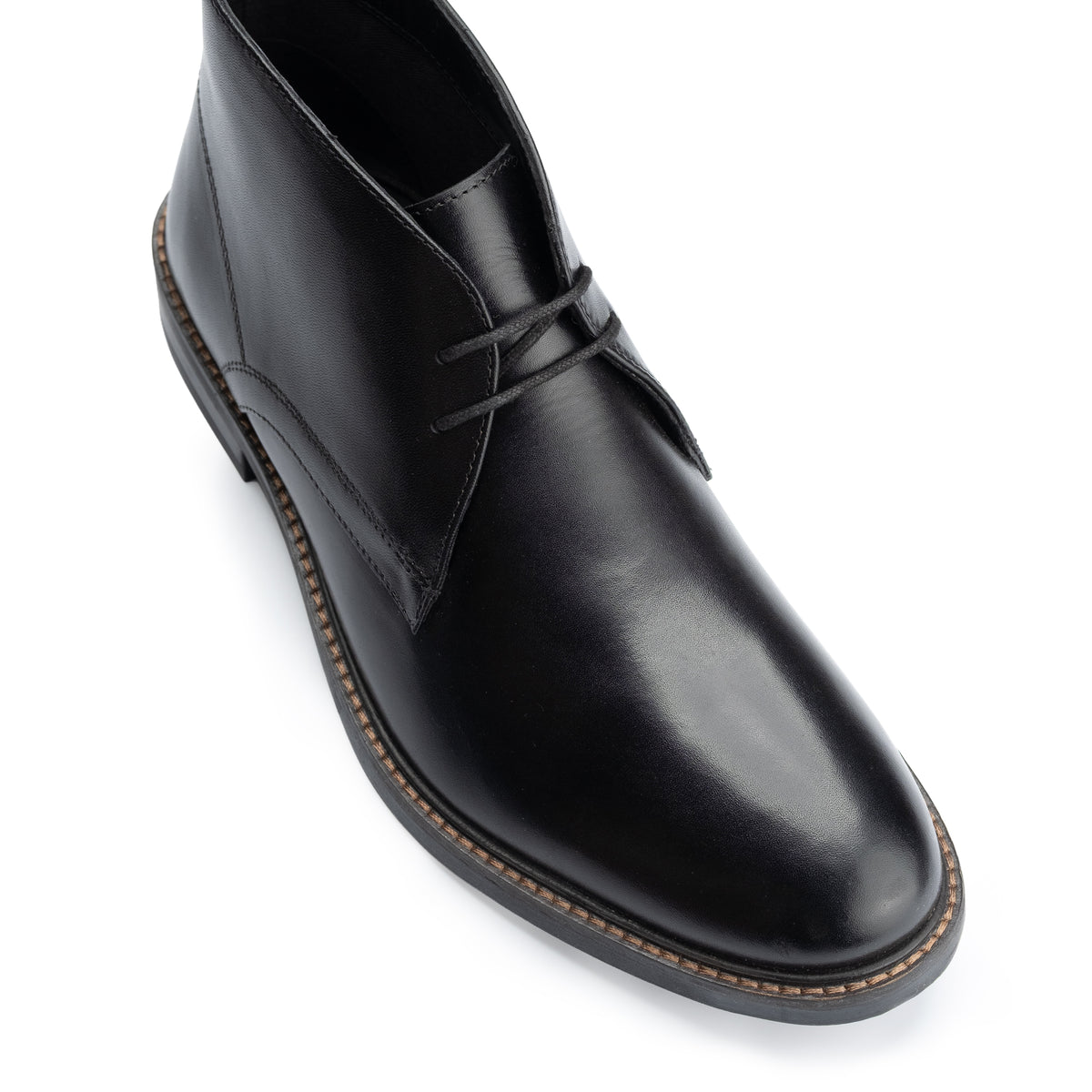
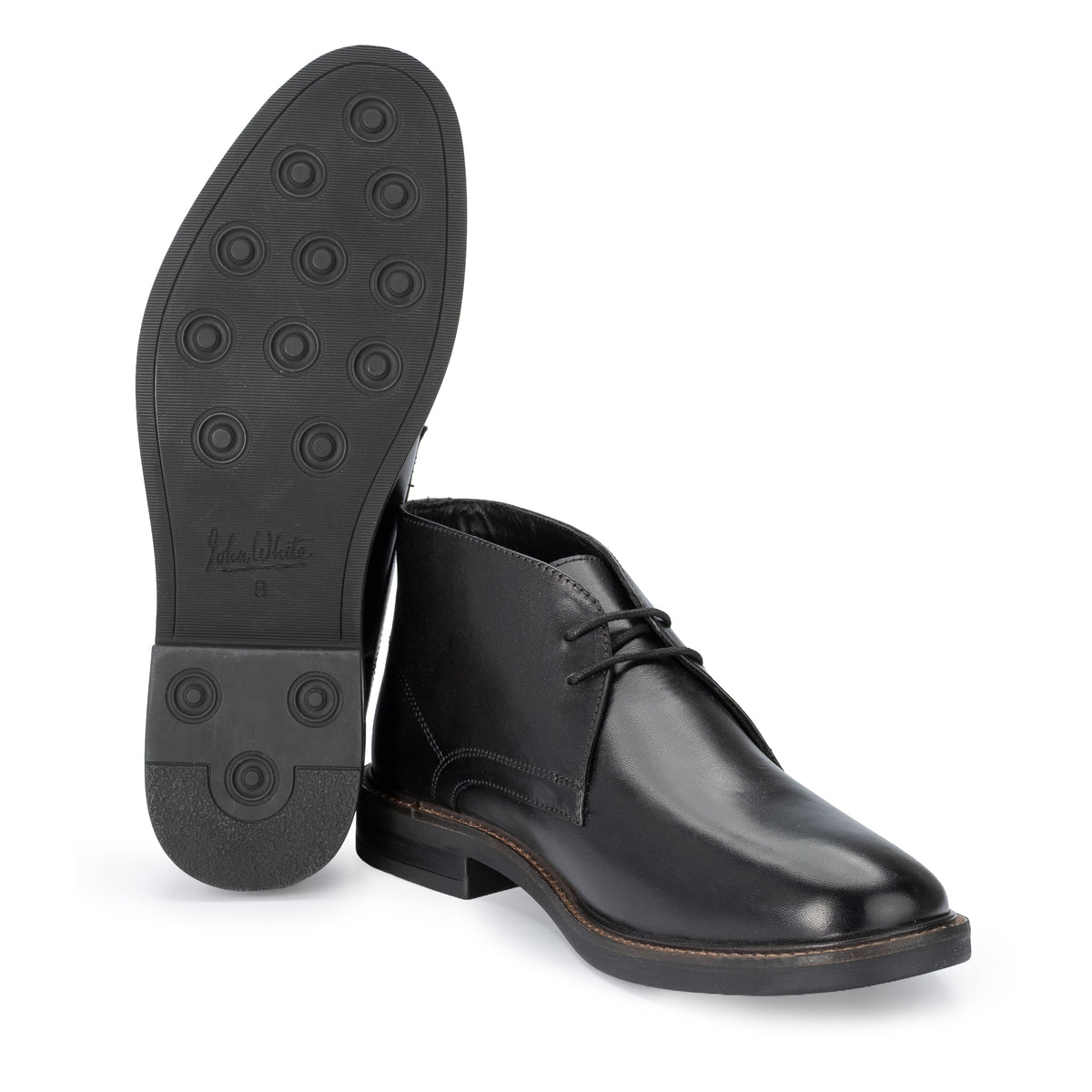
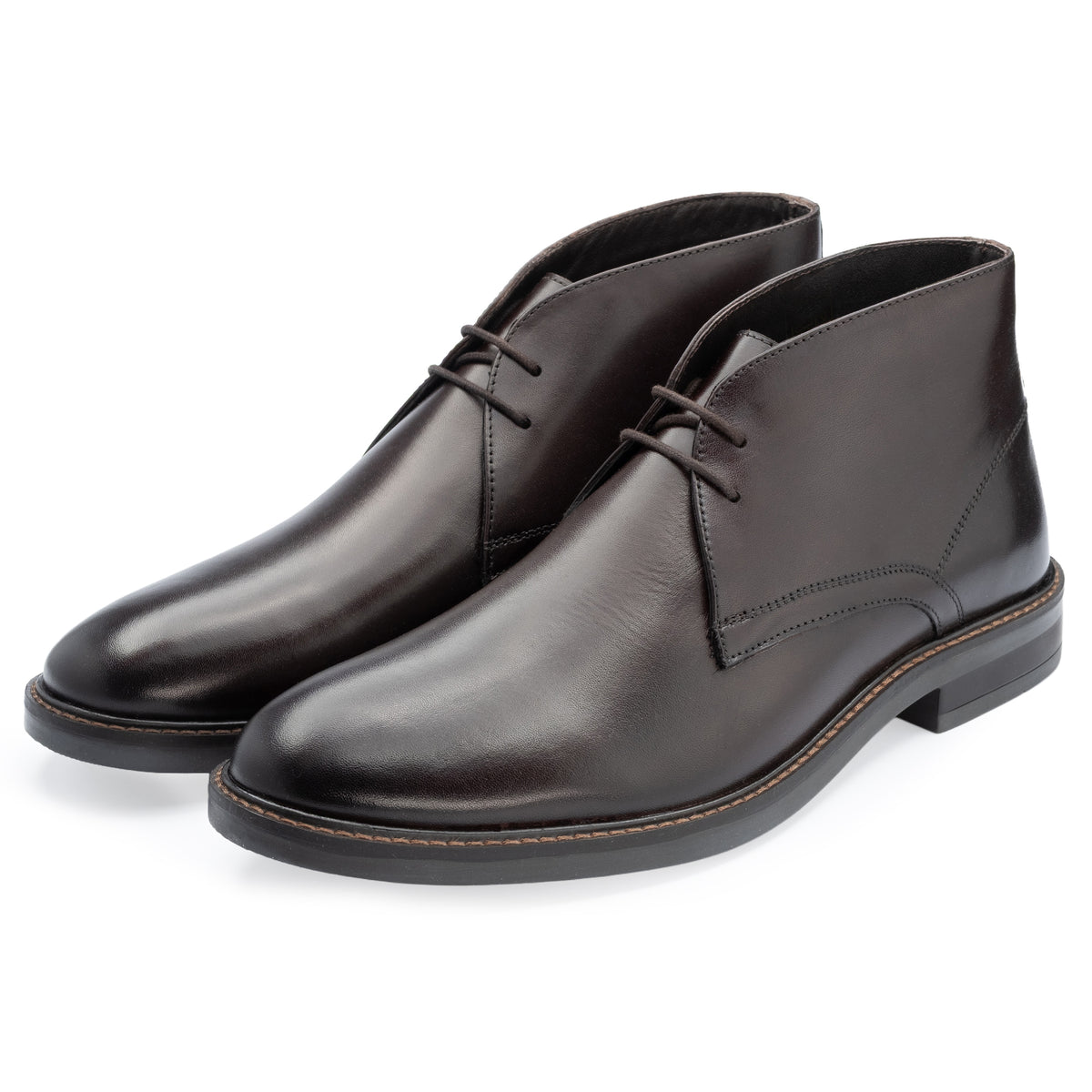
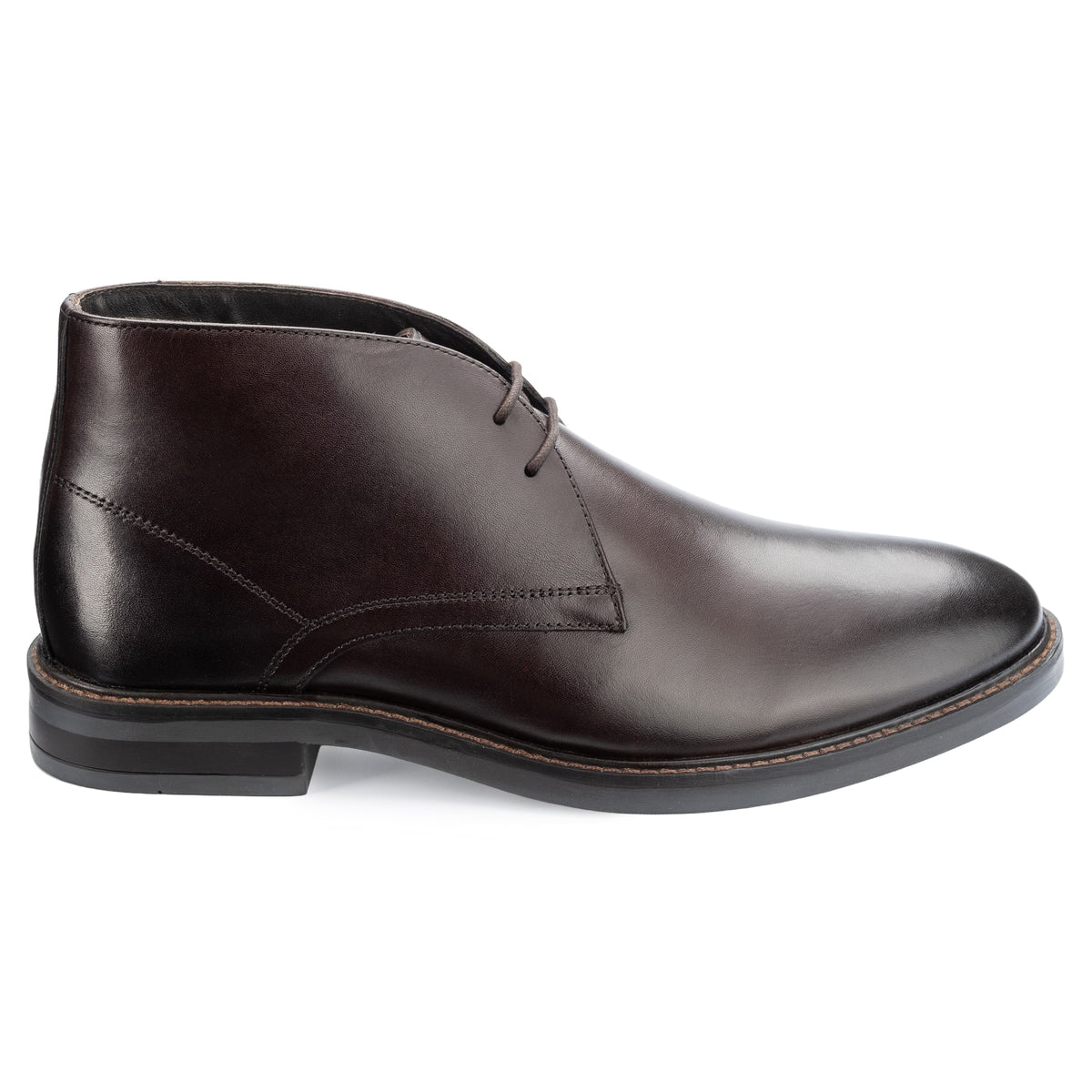
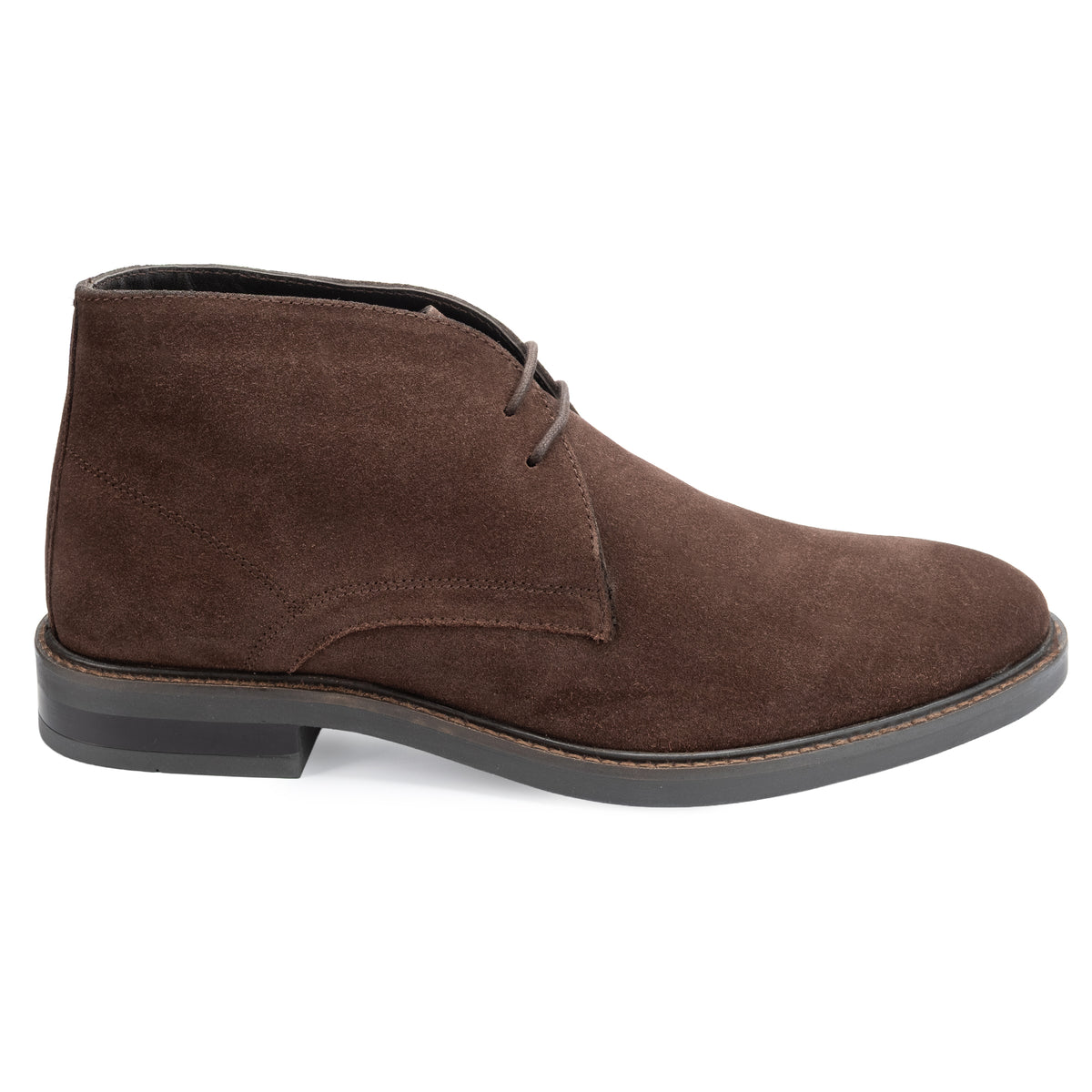
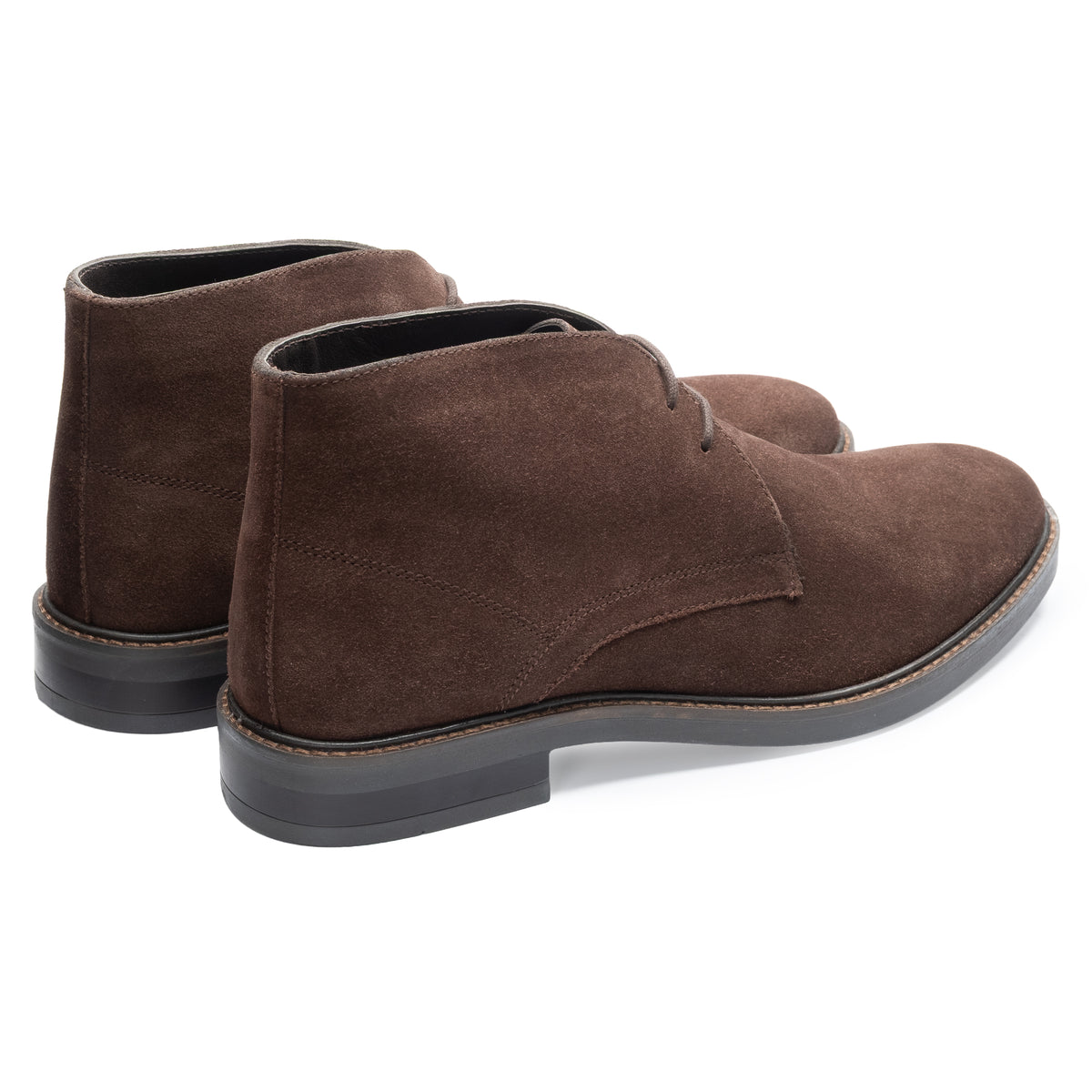
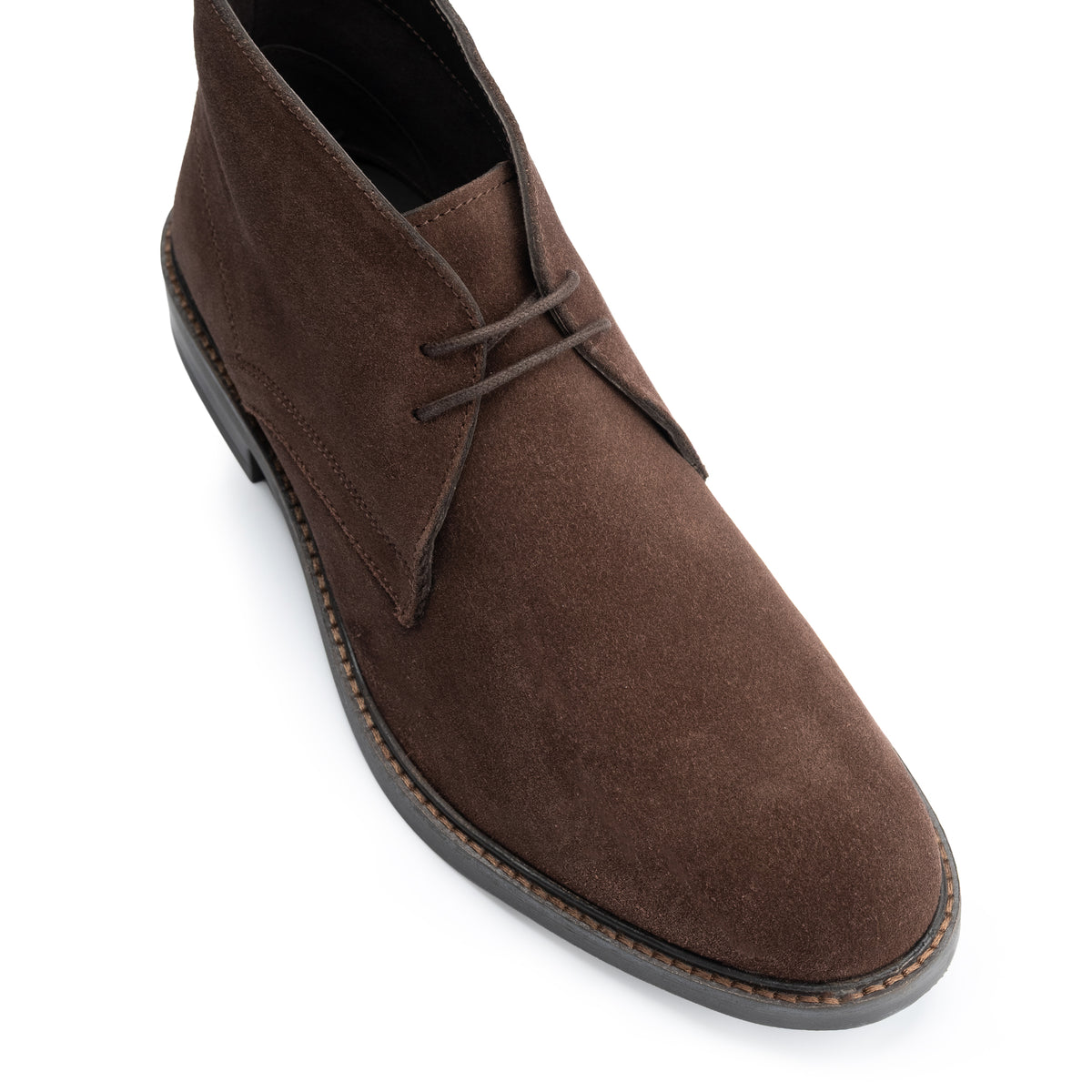
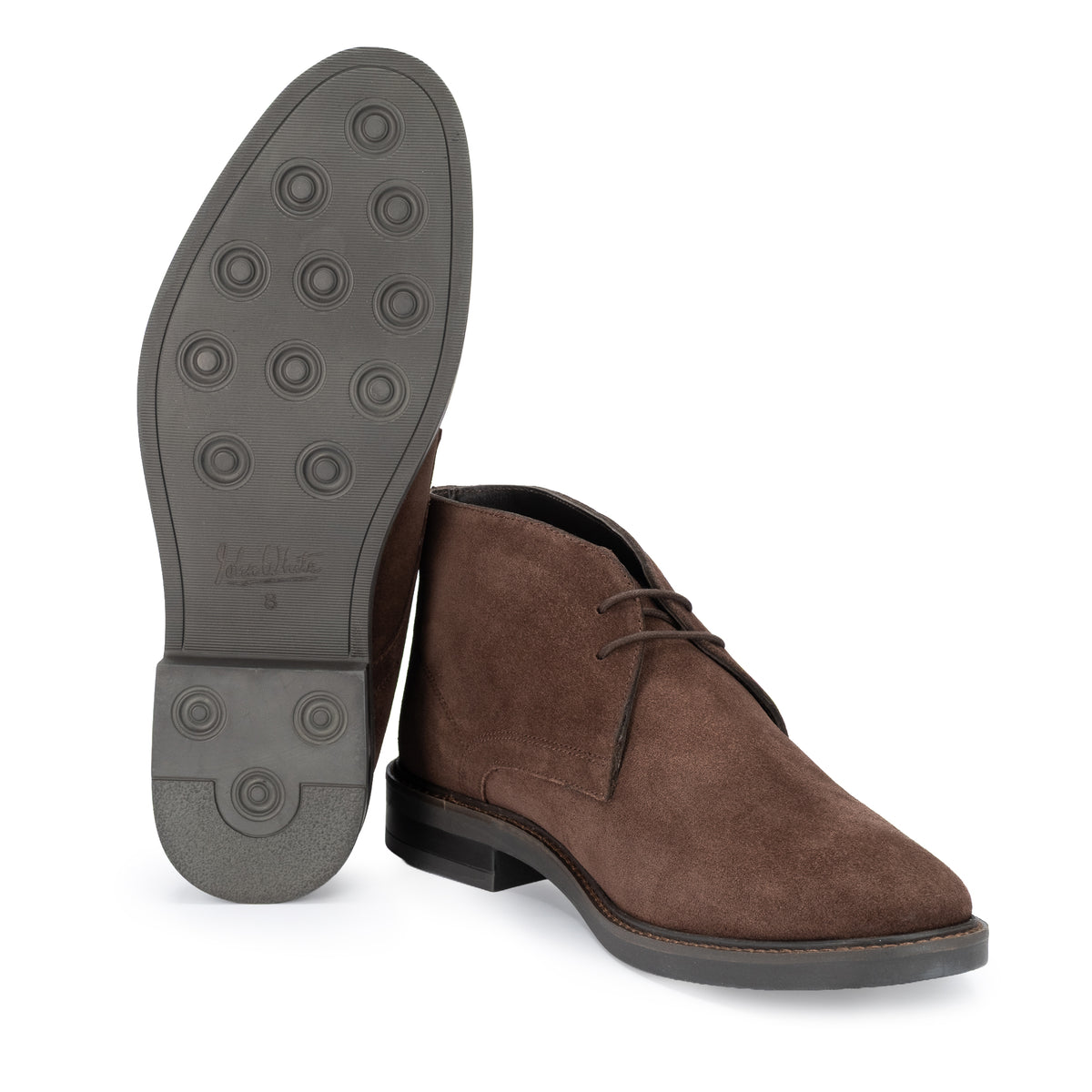
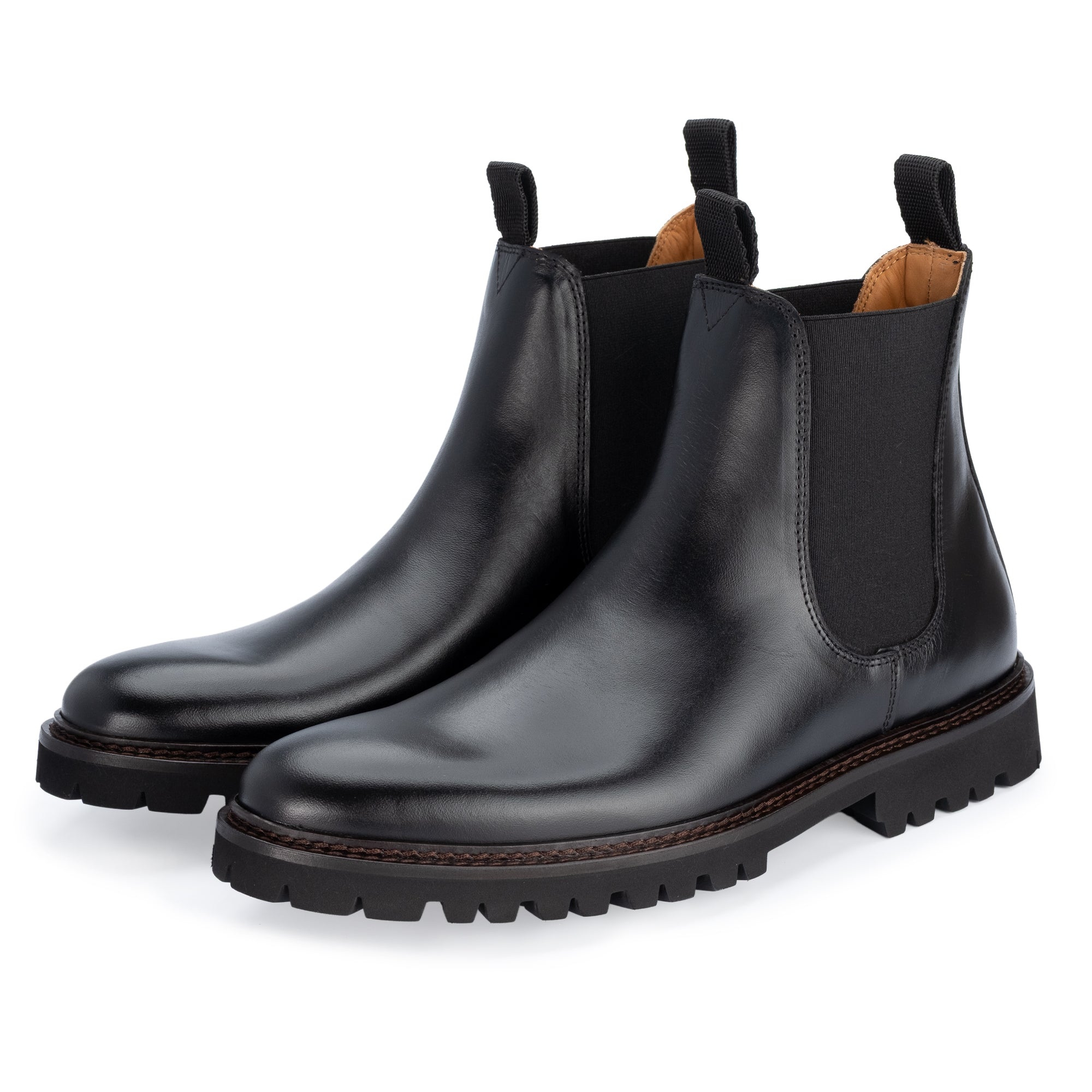
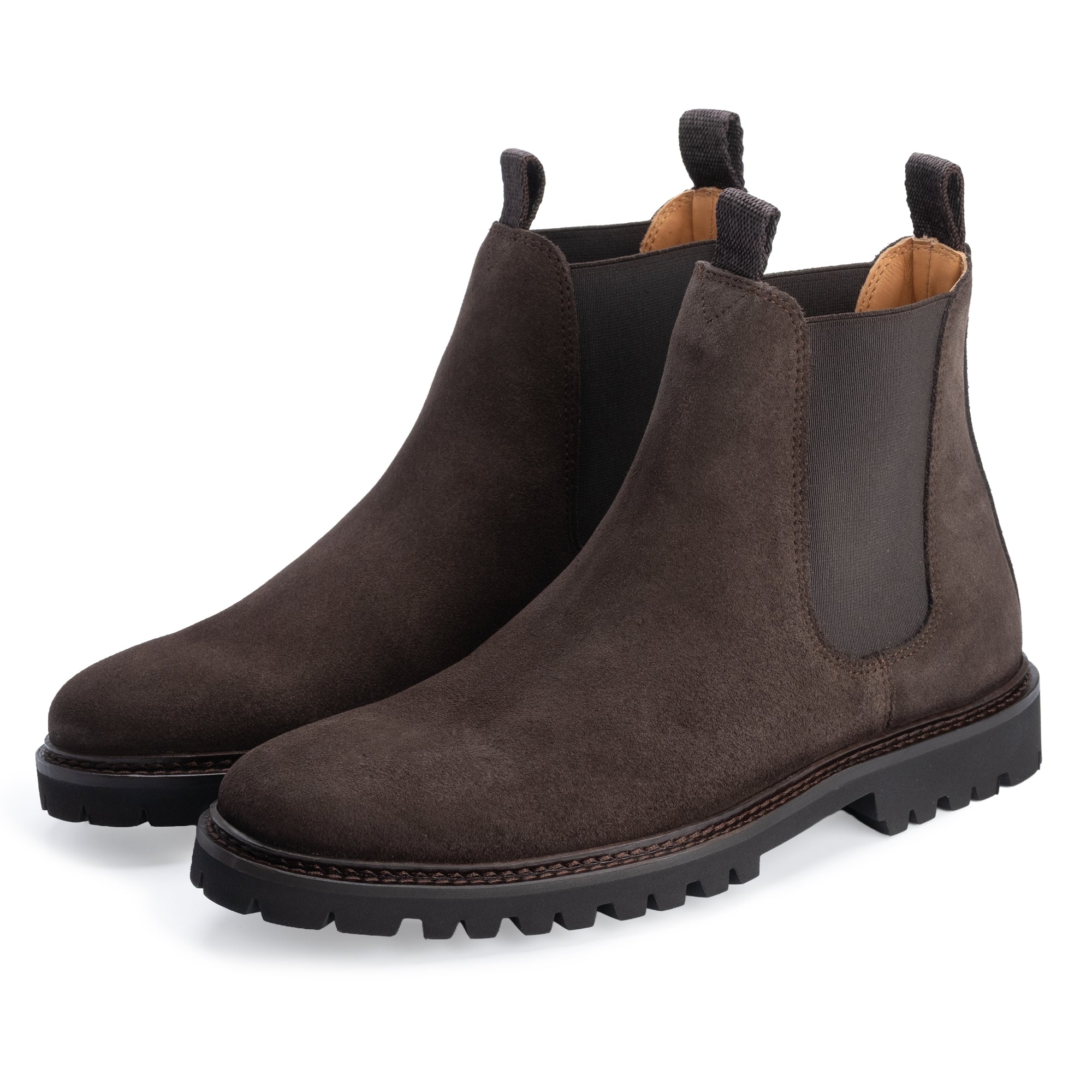
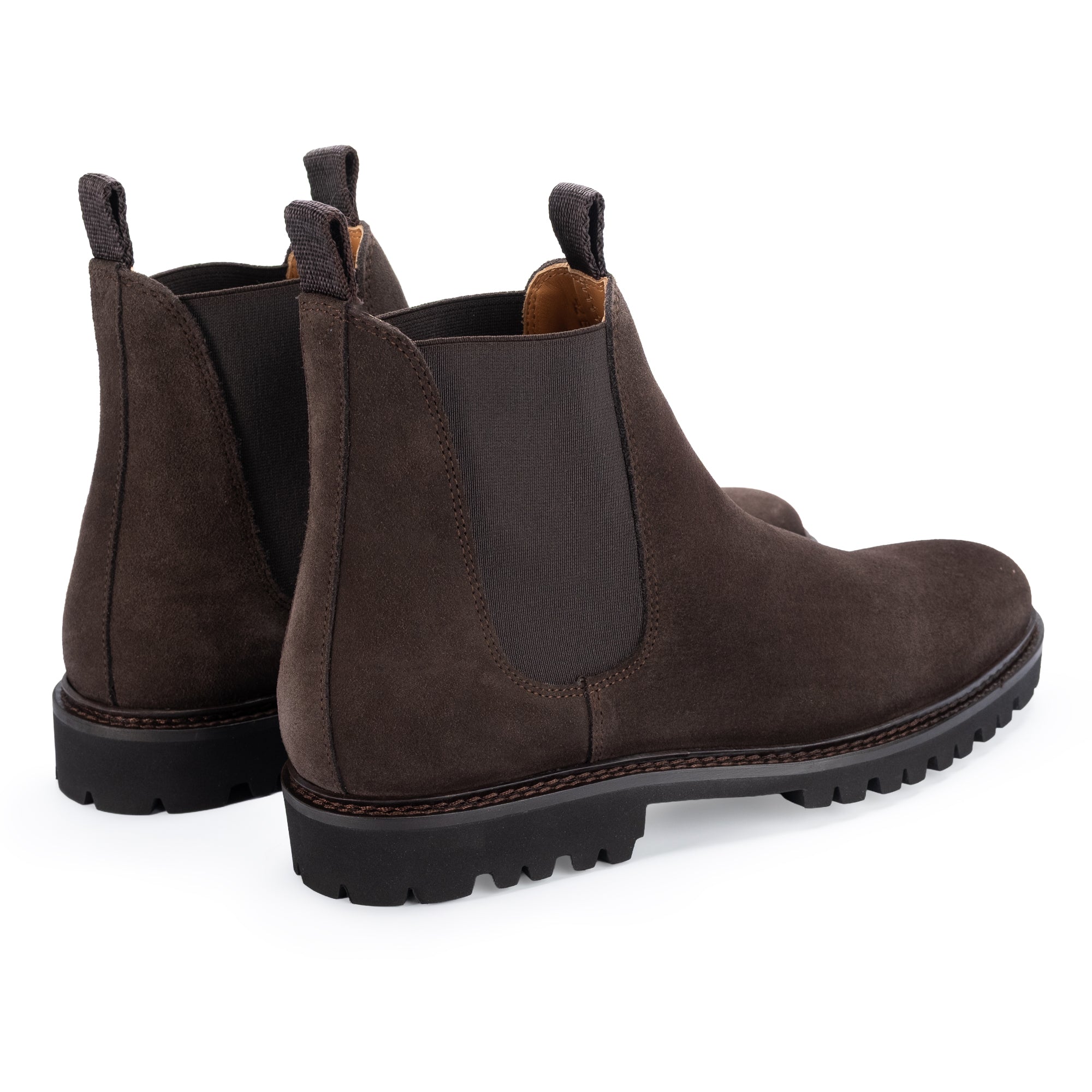
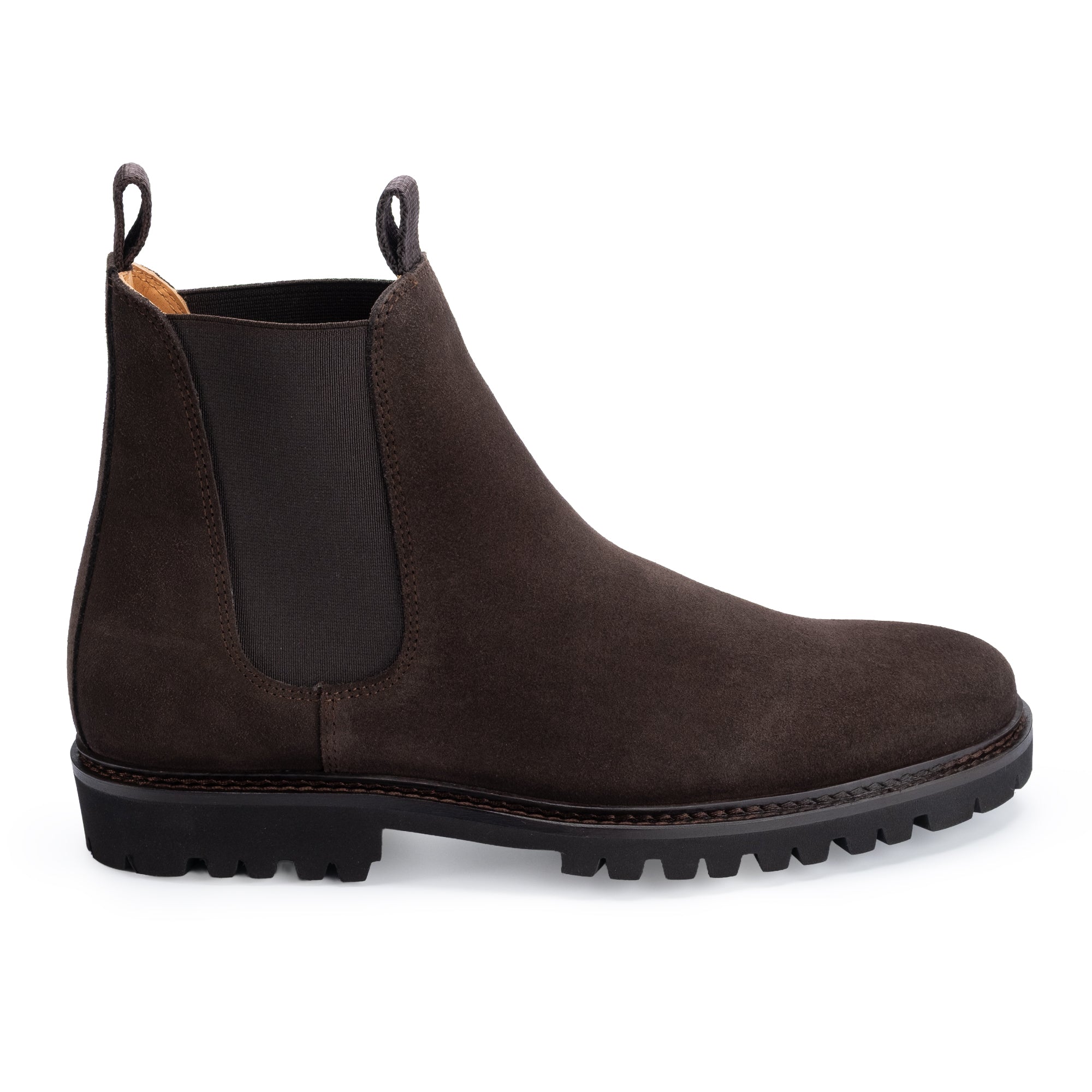
TL;DR: Leather shoe care comes down to five habits — brush after every wear, insert shoe trees overnight, polish every few wears, condition every six to eight weeks, and let wet shoes dry slowly at room temperature. Follow this routine and a quality pair of leather shoes from our men's shoe collection or men's boots range will serve you for decades, developing a patina that only improves with age.
Frequently Asked Questions
How often should I condition my leather shoes?
The Leather Conservation Centre recommends conditioning smooth leather every six to eight weeks under regular wear. If you're wearing a pair three or more times per week, or regularly exposing them to wet conditions, condition more frequently. The leather will tell you — if it feels dry or looks dull despite polishing, it needs conditioning.
Can I use the same polish on all my leather shoes?
Match your polish to your leather colour, or use a neutral polish across all shades. Applying a dark brown polish to tan leather will shift the colour permanently — it won't wash out. If you're unsure of the exact shade, neutral is always the safe choice and won't affect the original colour.
What's the difference between polish and conditioner?
Polish is a surface treatment: it restores colour, adds shine, and provides a light protective barrier. Conditioner is a penetrating treatment: it replenishes the oils deep within the leather fibres that prevent cracking. Both are necessary, but they do different jobs. Polish alone won't prevent the leather drying out over time.
How do I know when leather shoes need professional repair rather than home care?
Home care handles surface maintenance well — cleaning, polishing, conditioning, and minor scuff repair. Professional attention is warranted when the sole is separating, the heel block has worn significantly, deep scratches have cut through to the leather substrate, or the counter has collapsed and lost its structure. Early home maintenance prevents most of these from occurring in the first place.
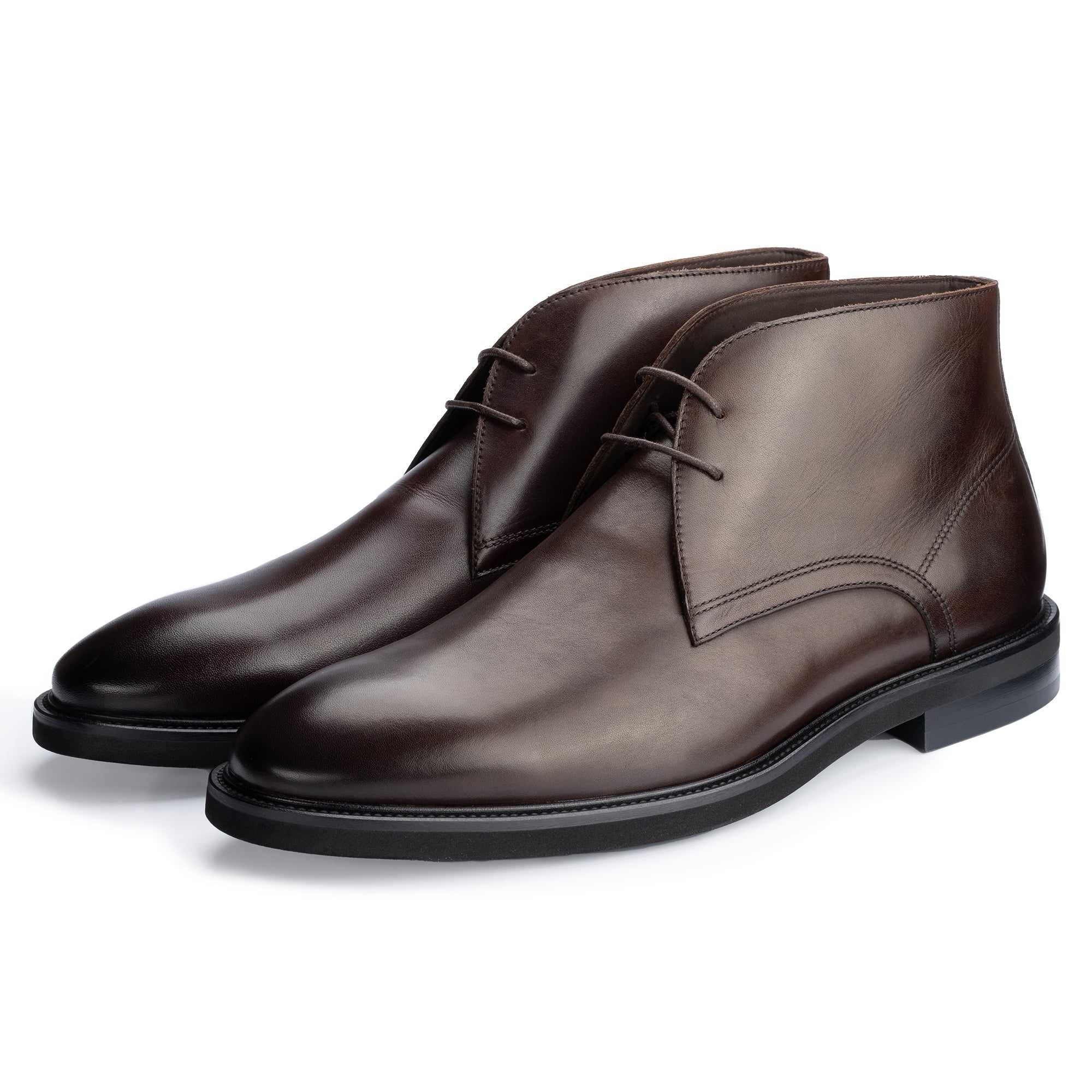
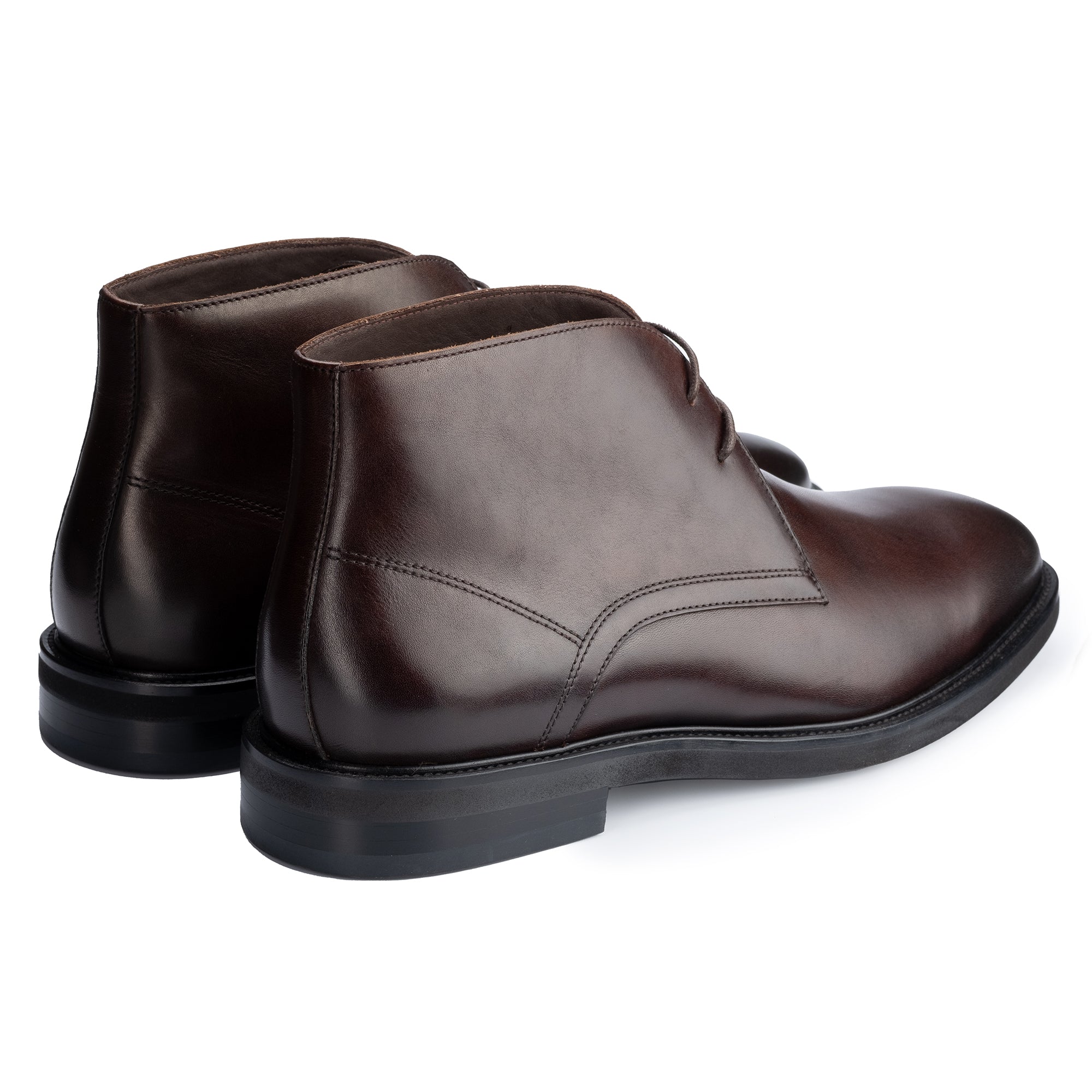
Explore our full range of men's leather shoes and men's leather boots, each designed to reward exactly the kind of care routine this guide describes.