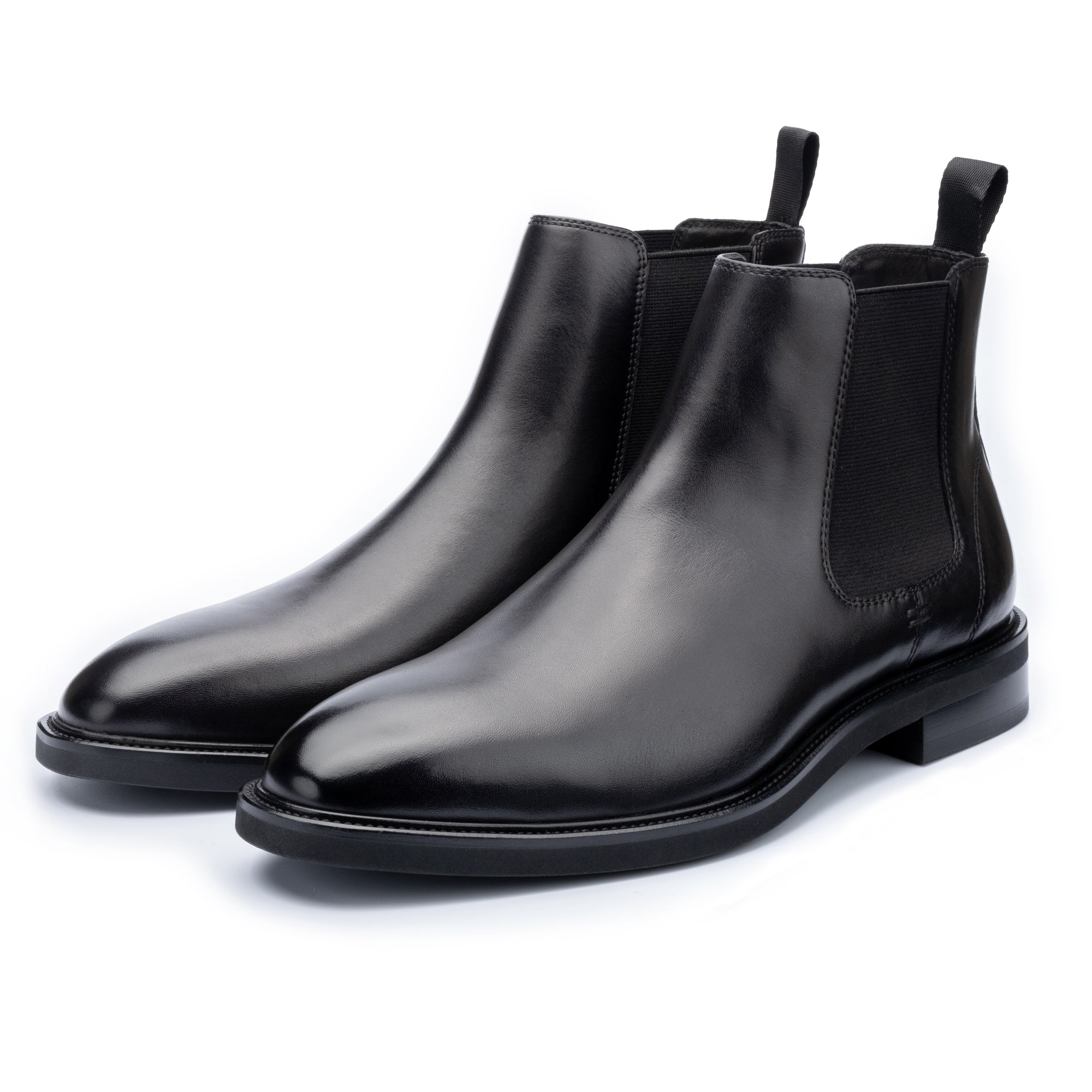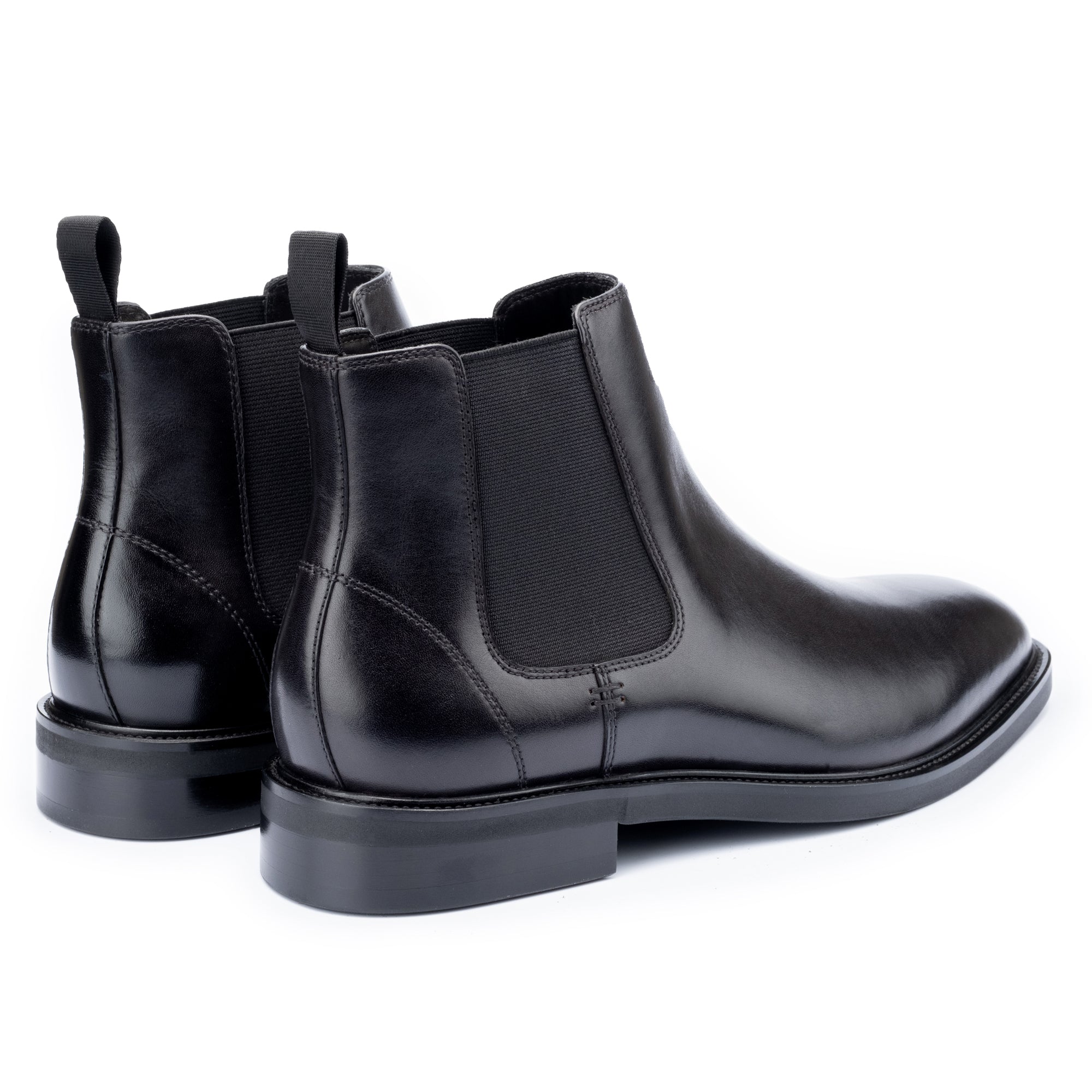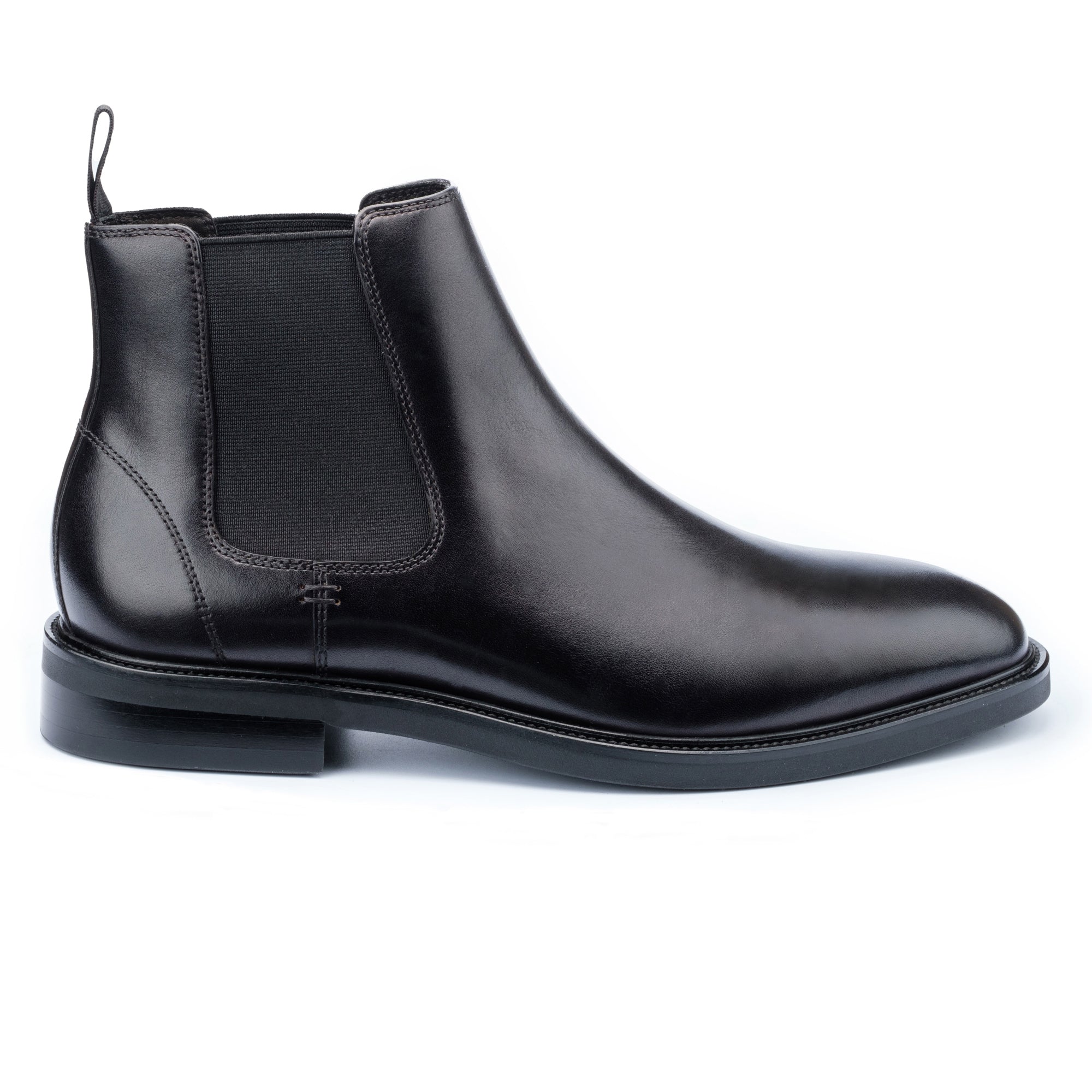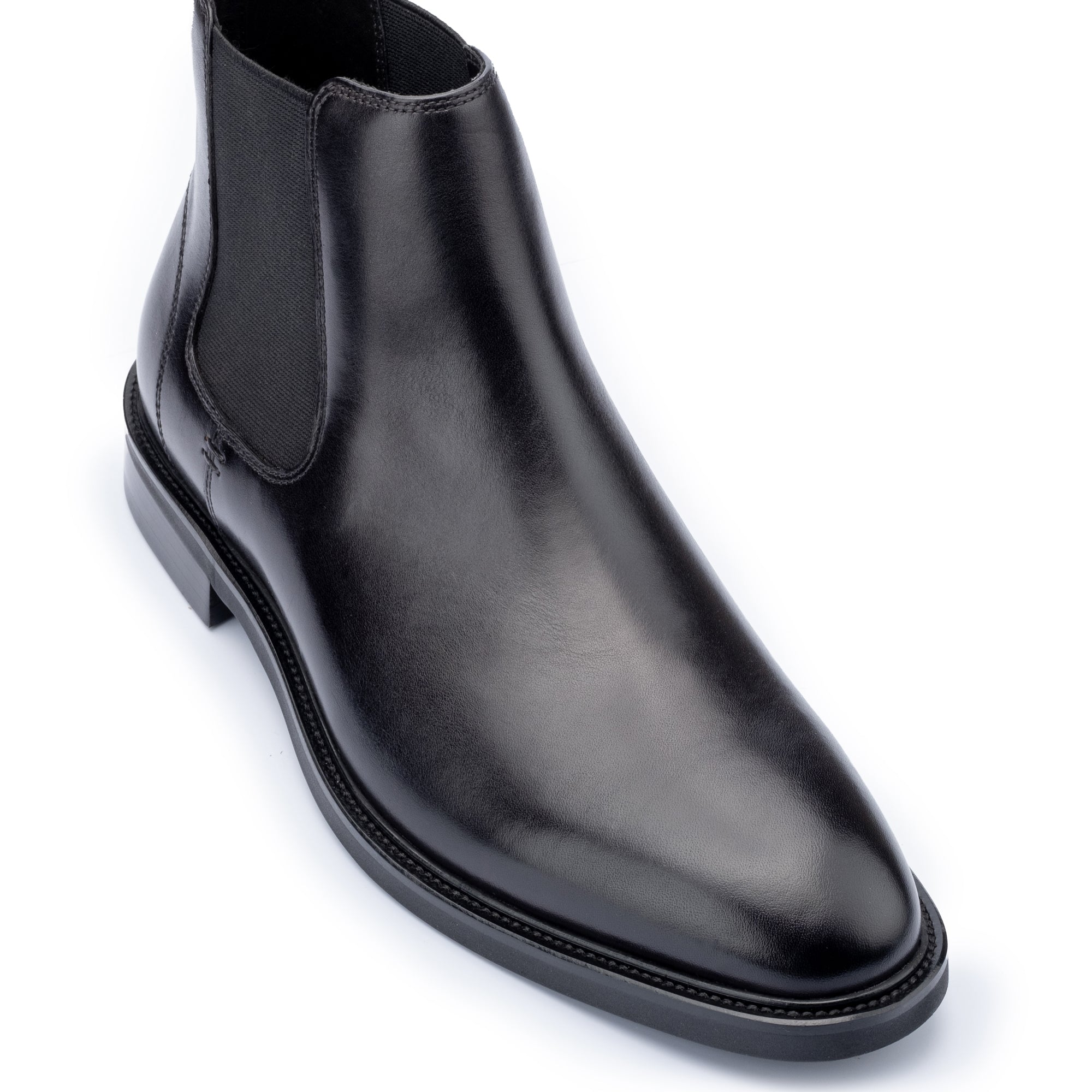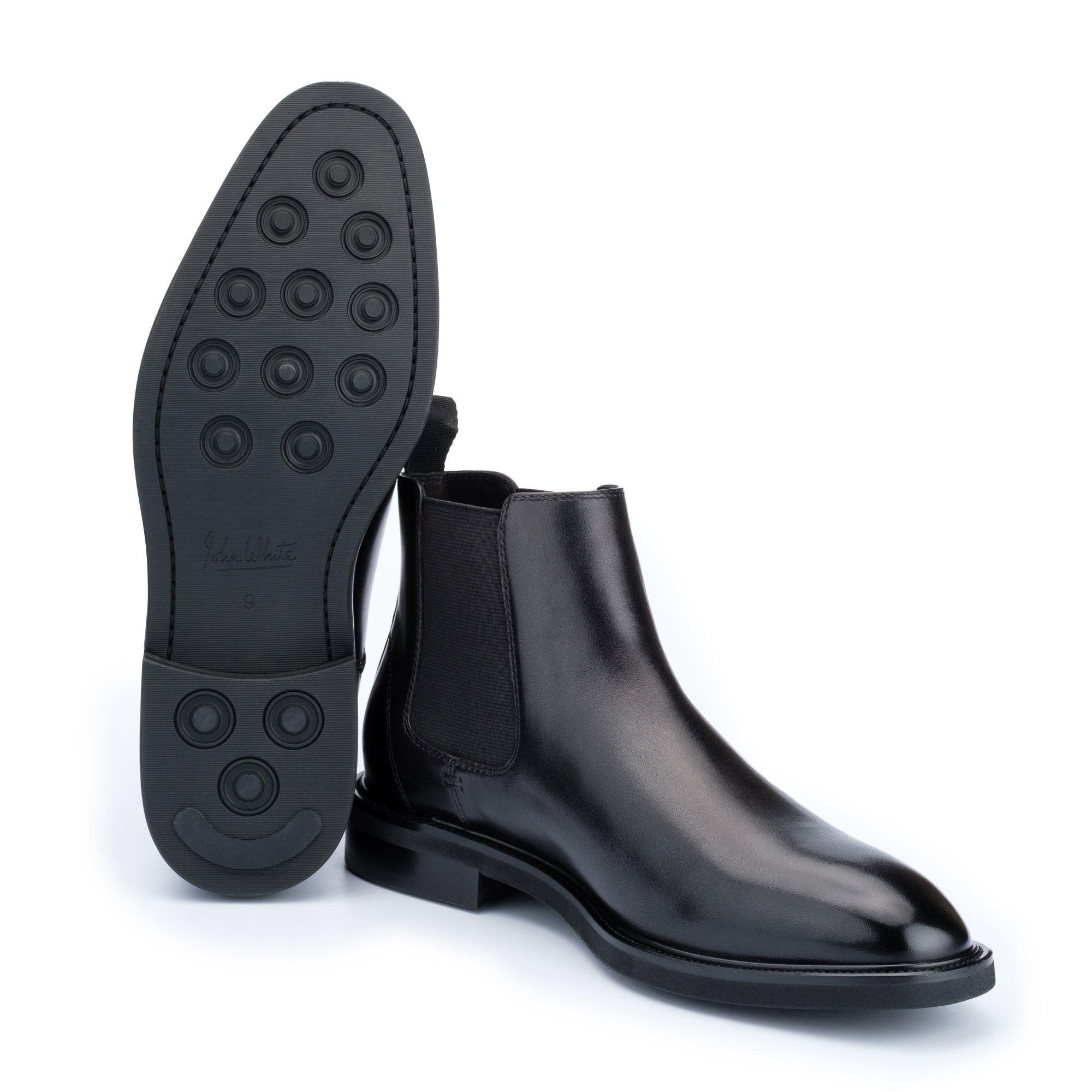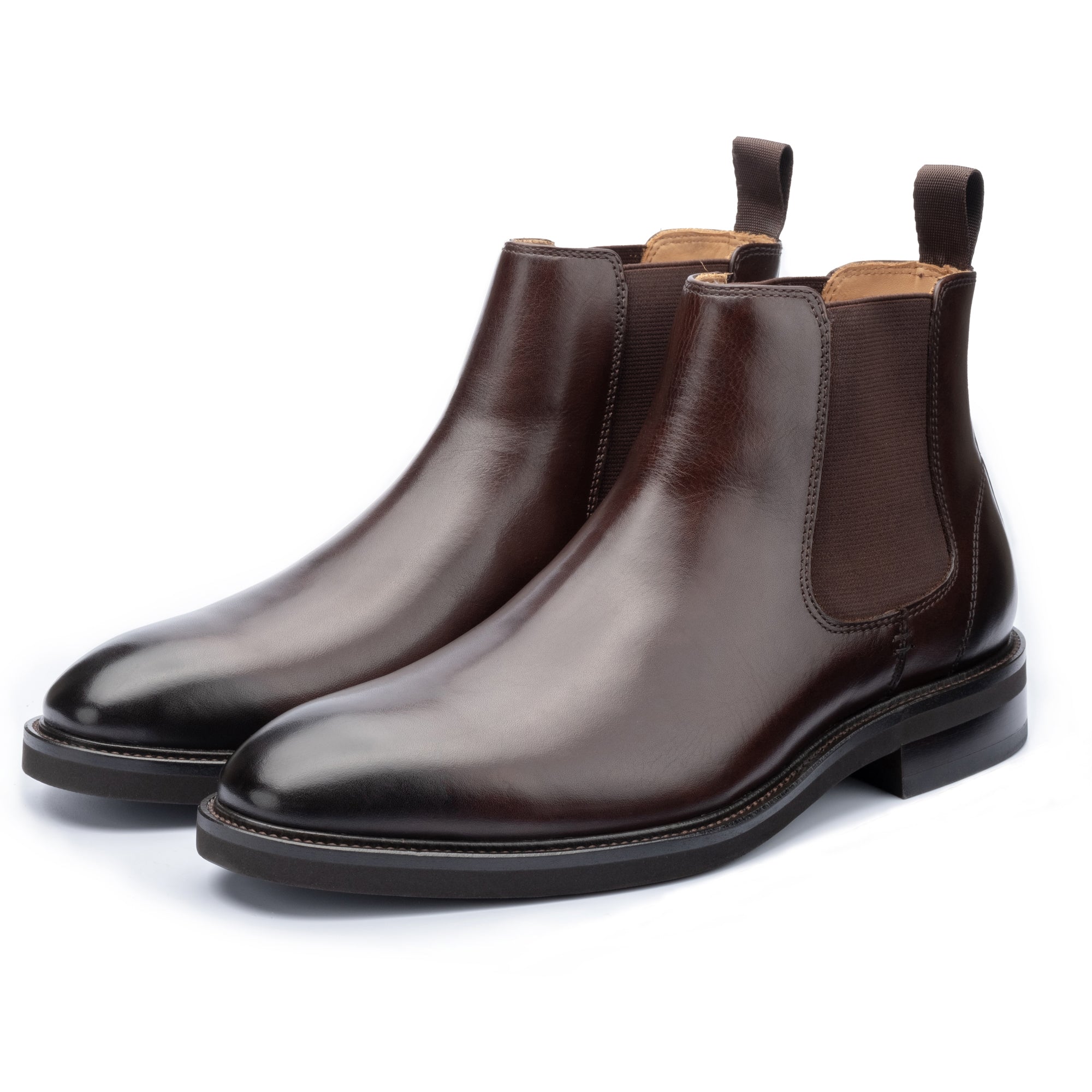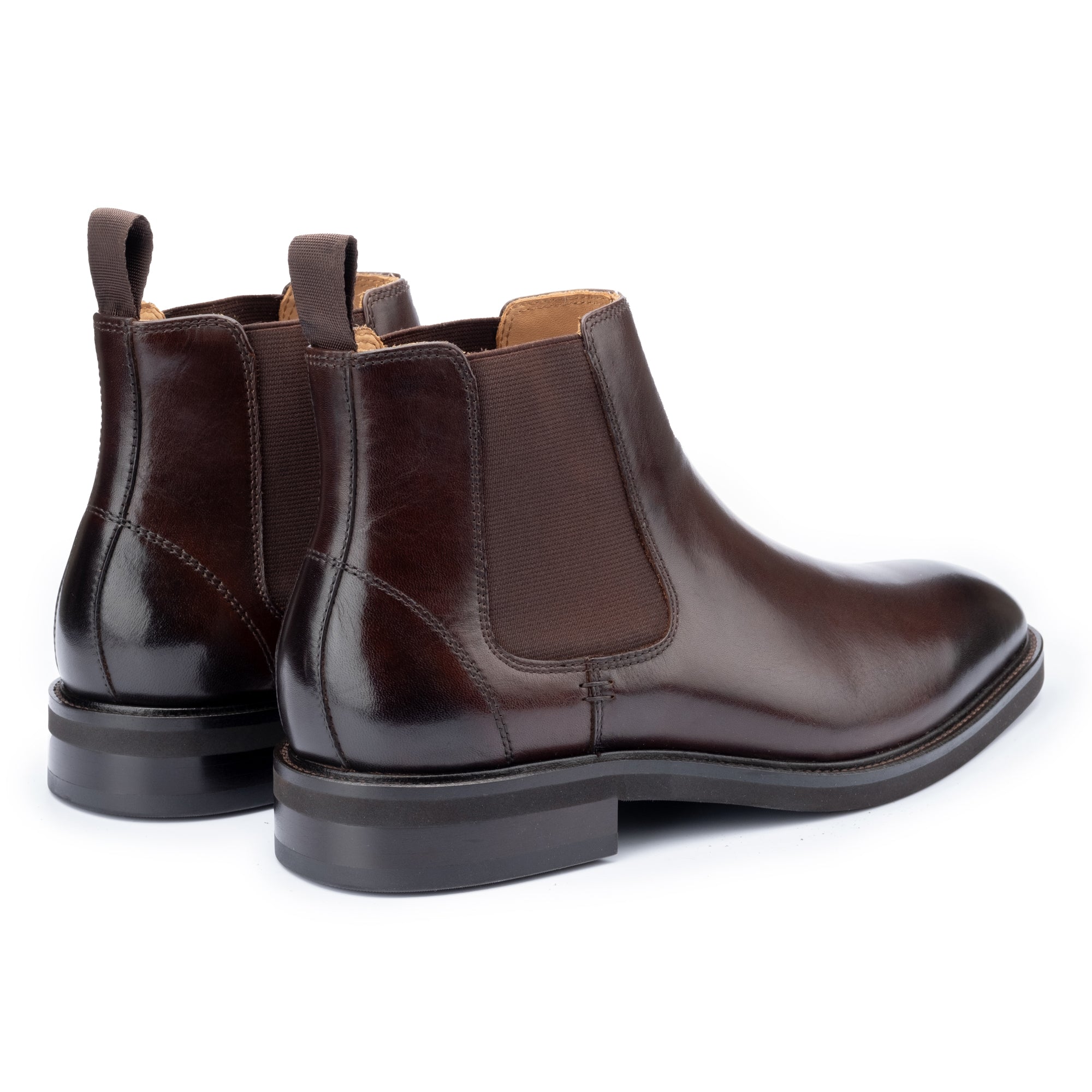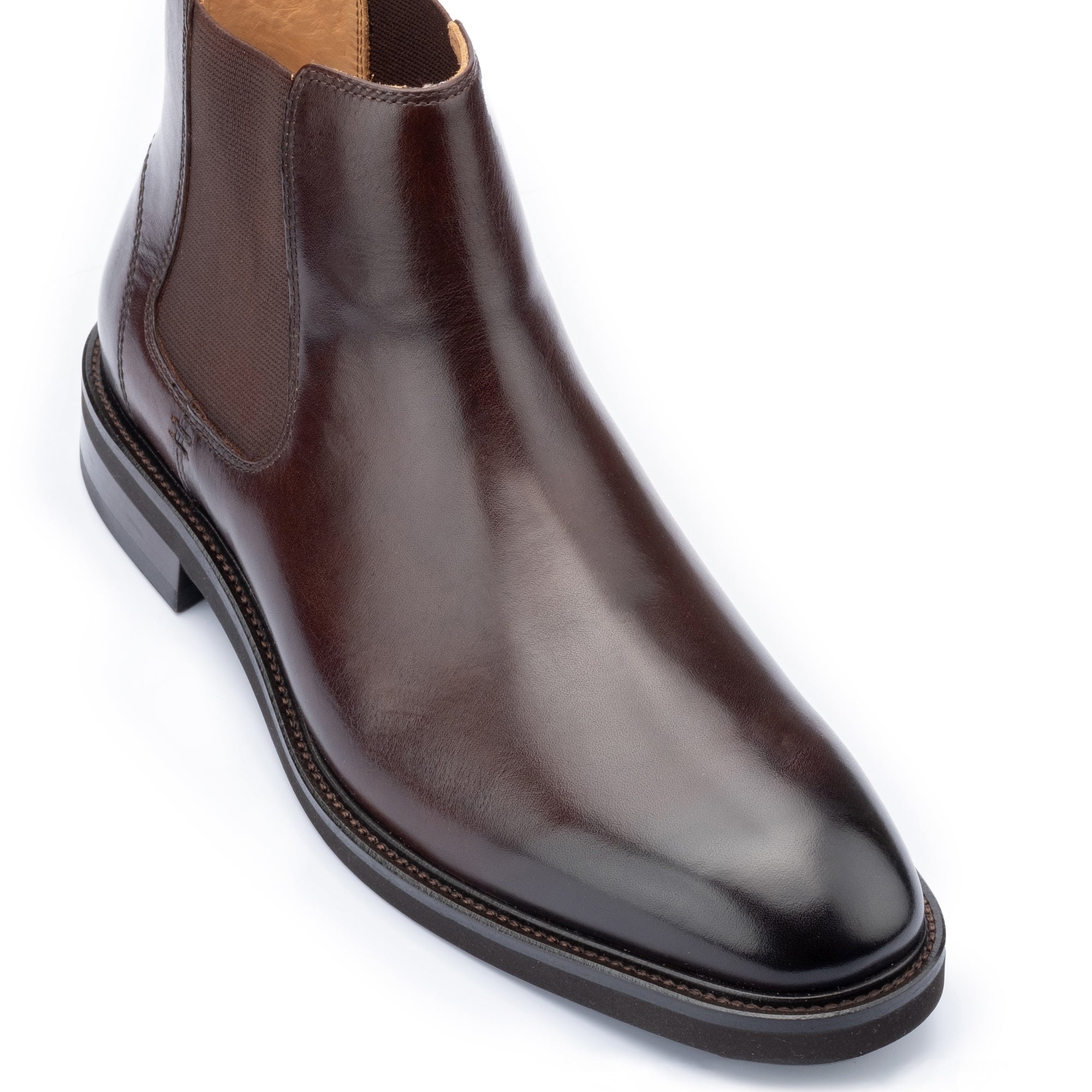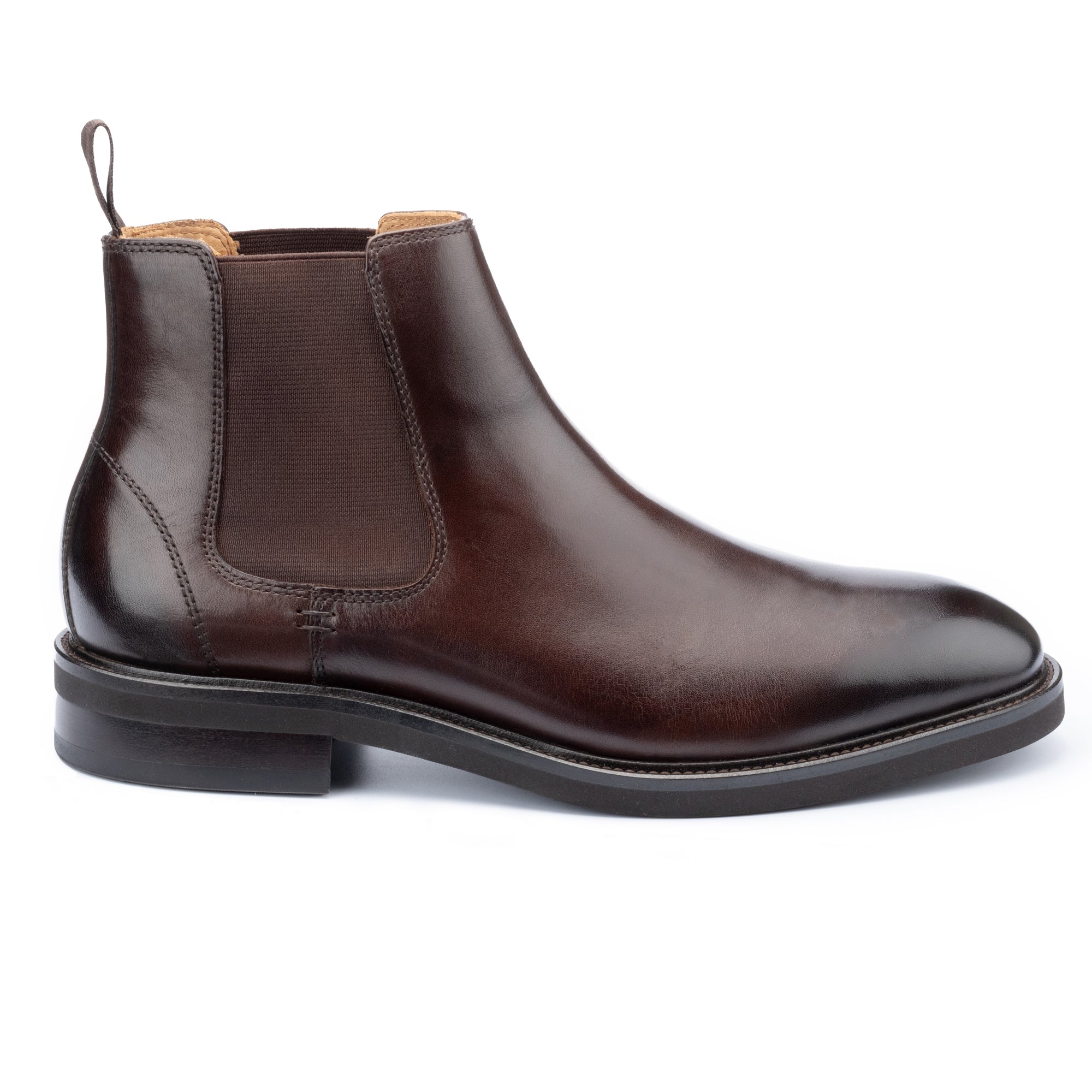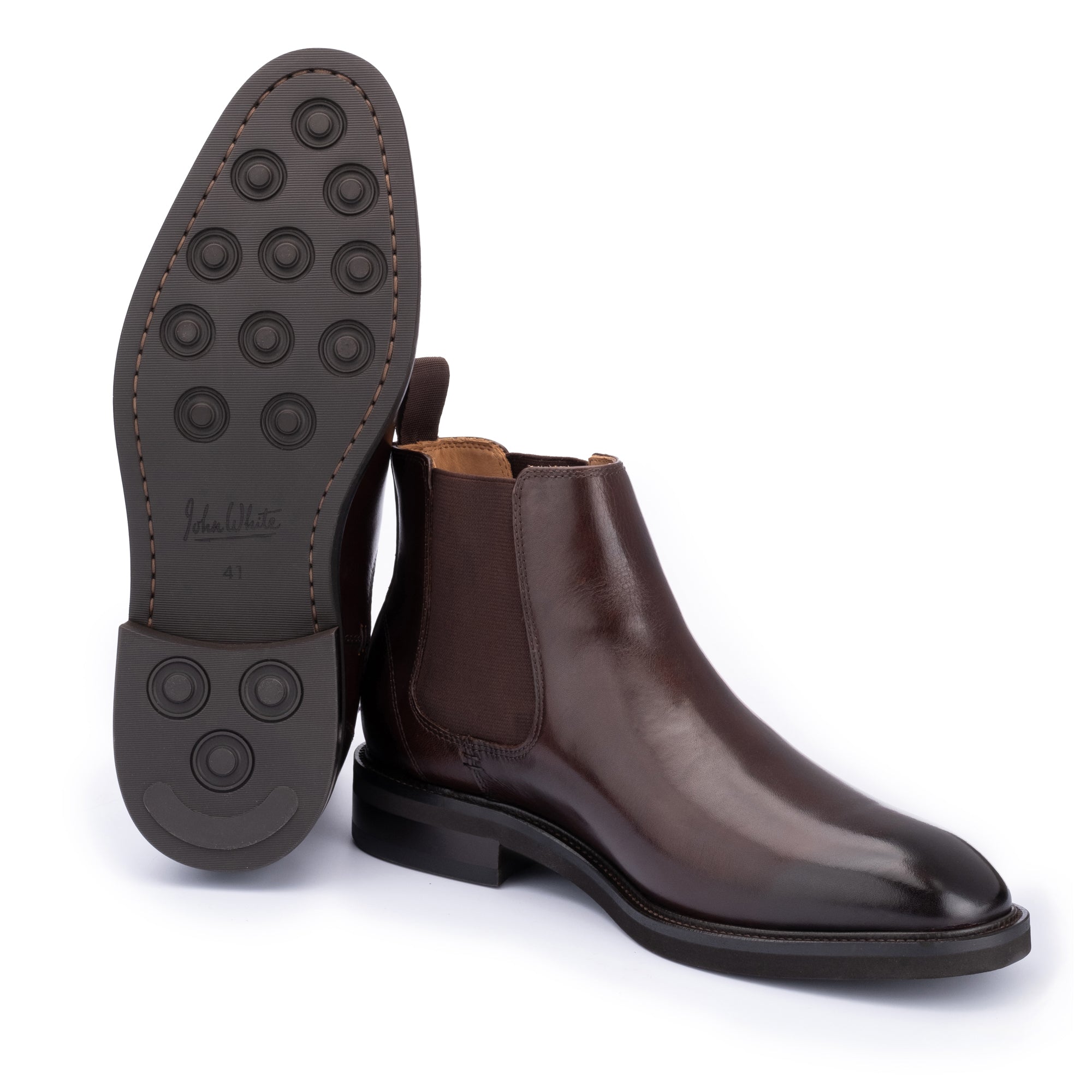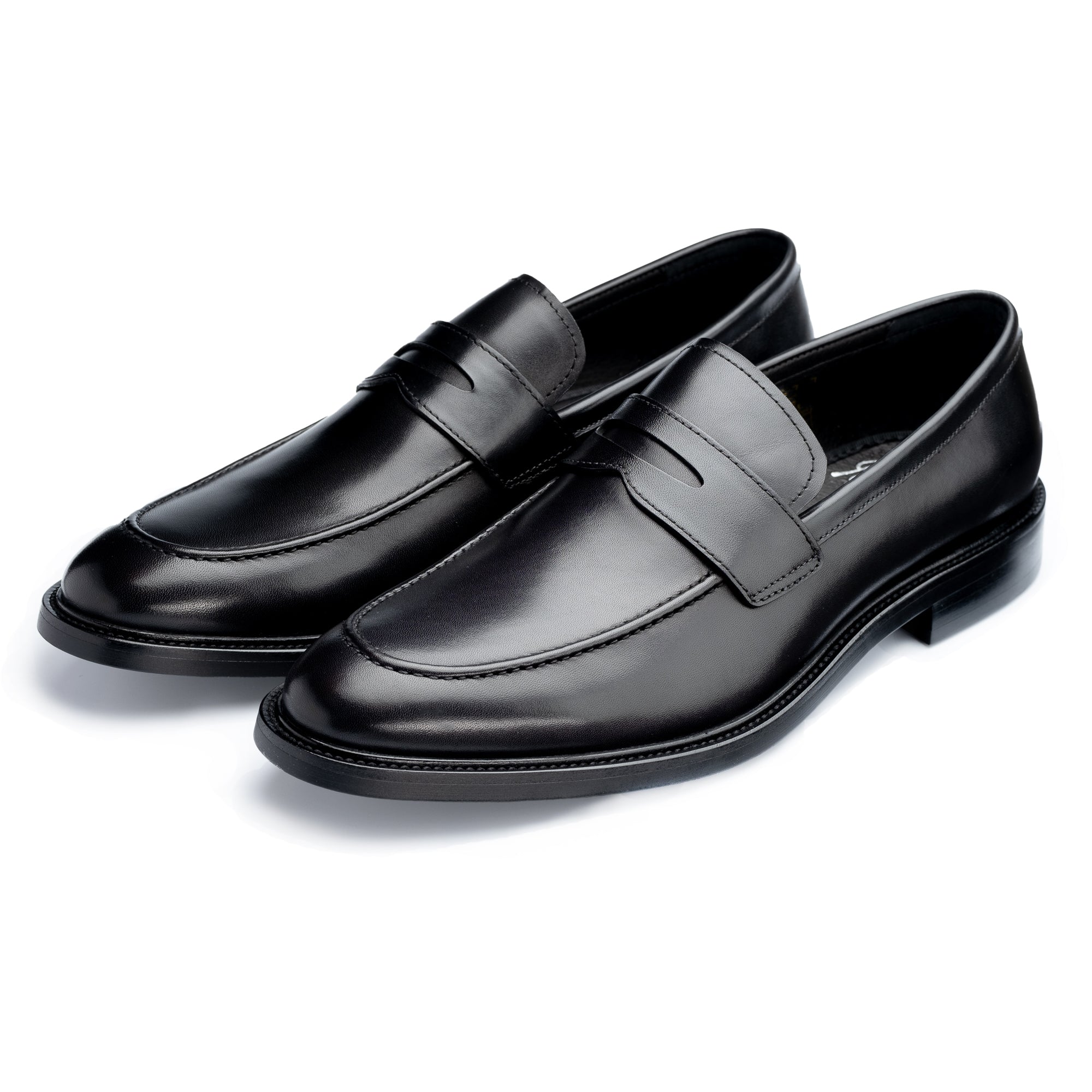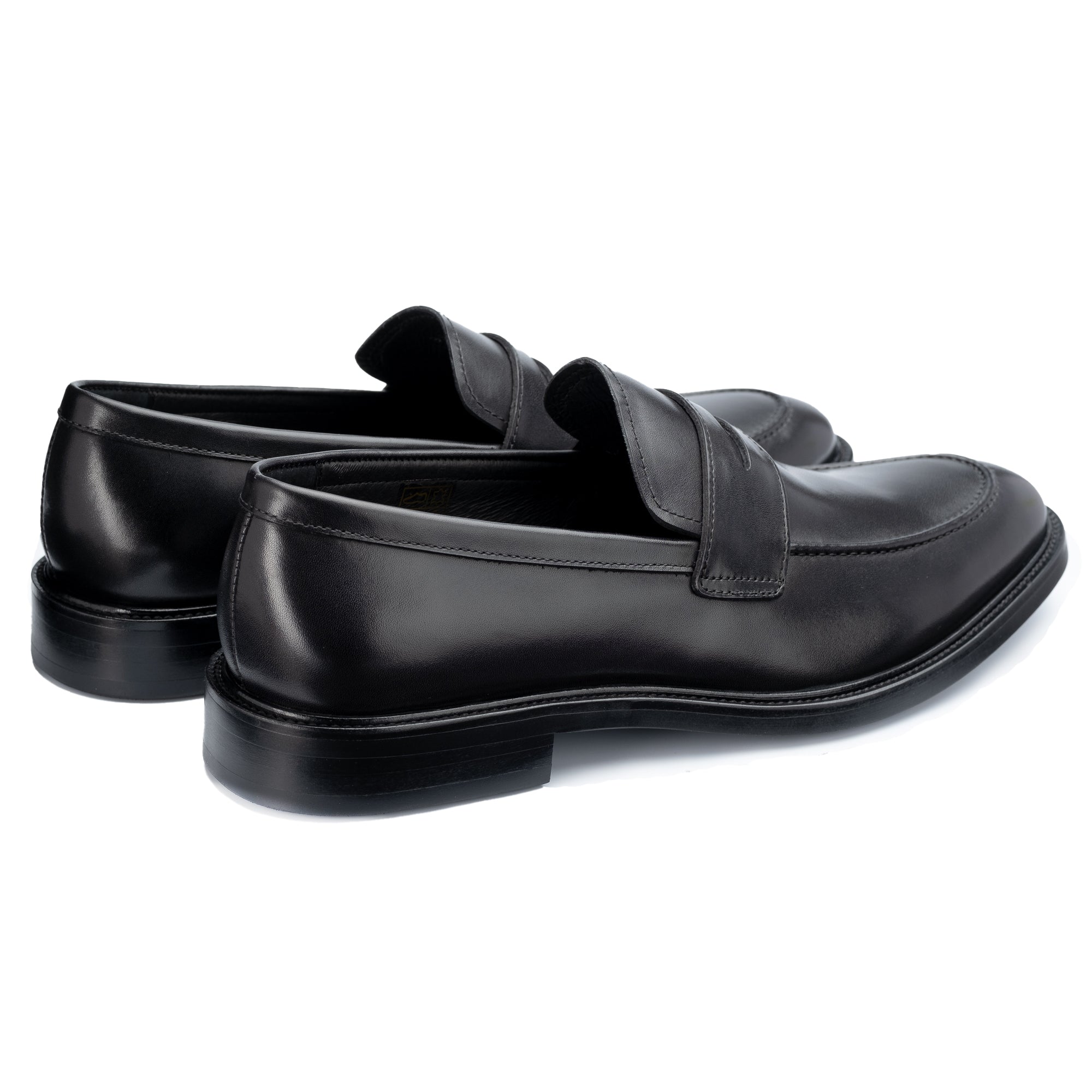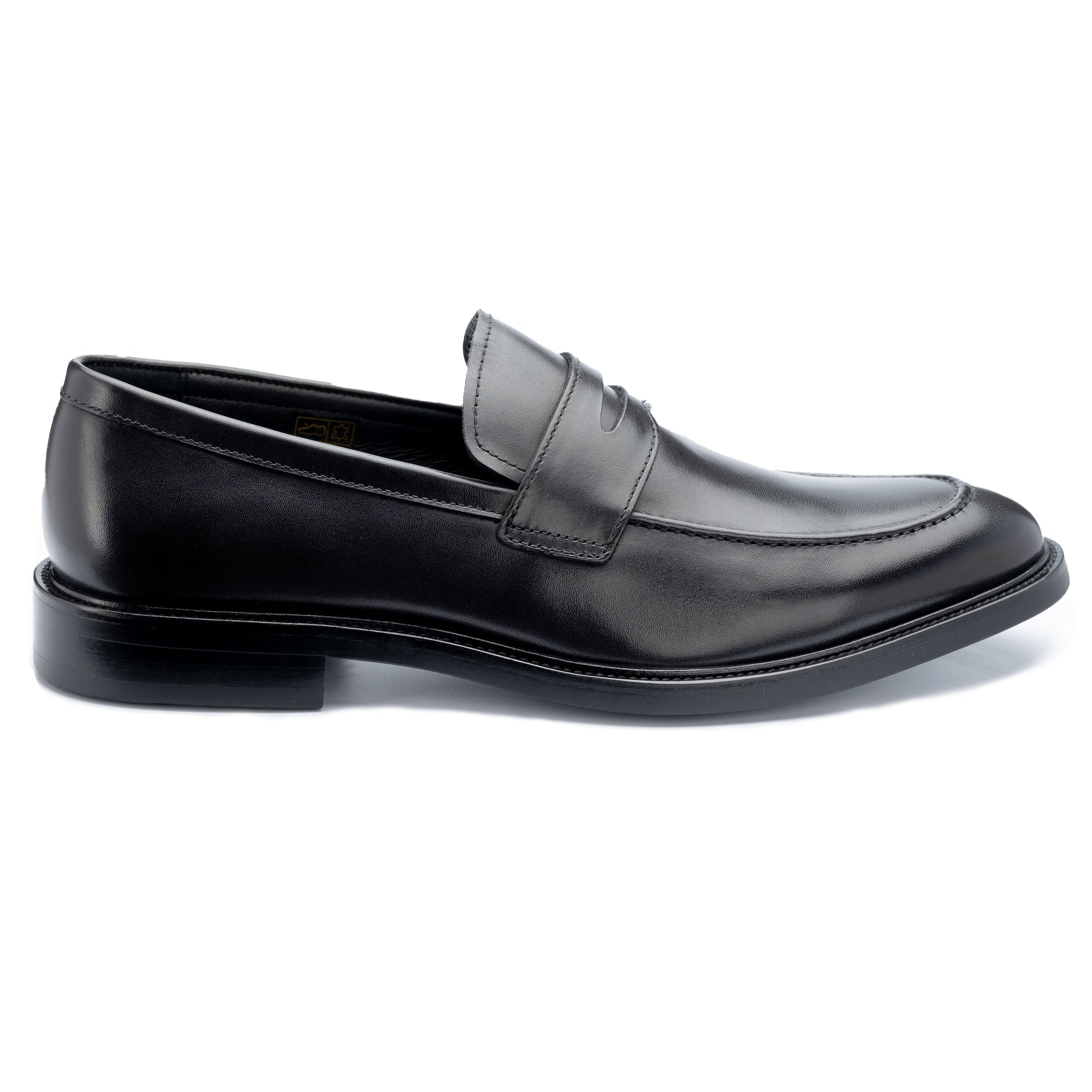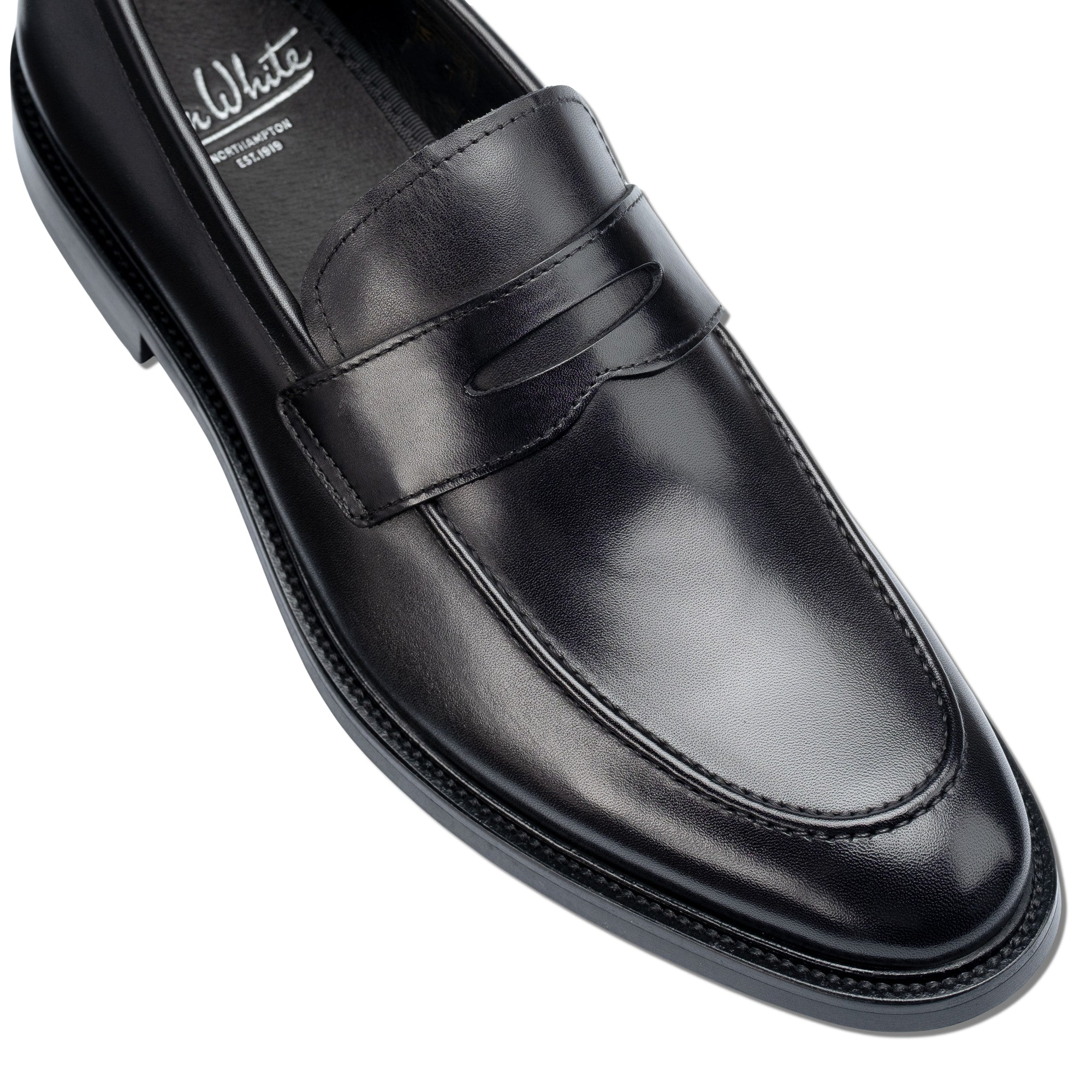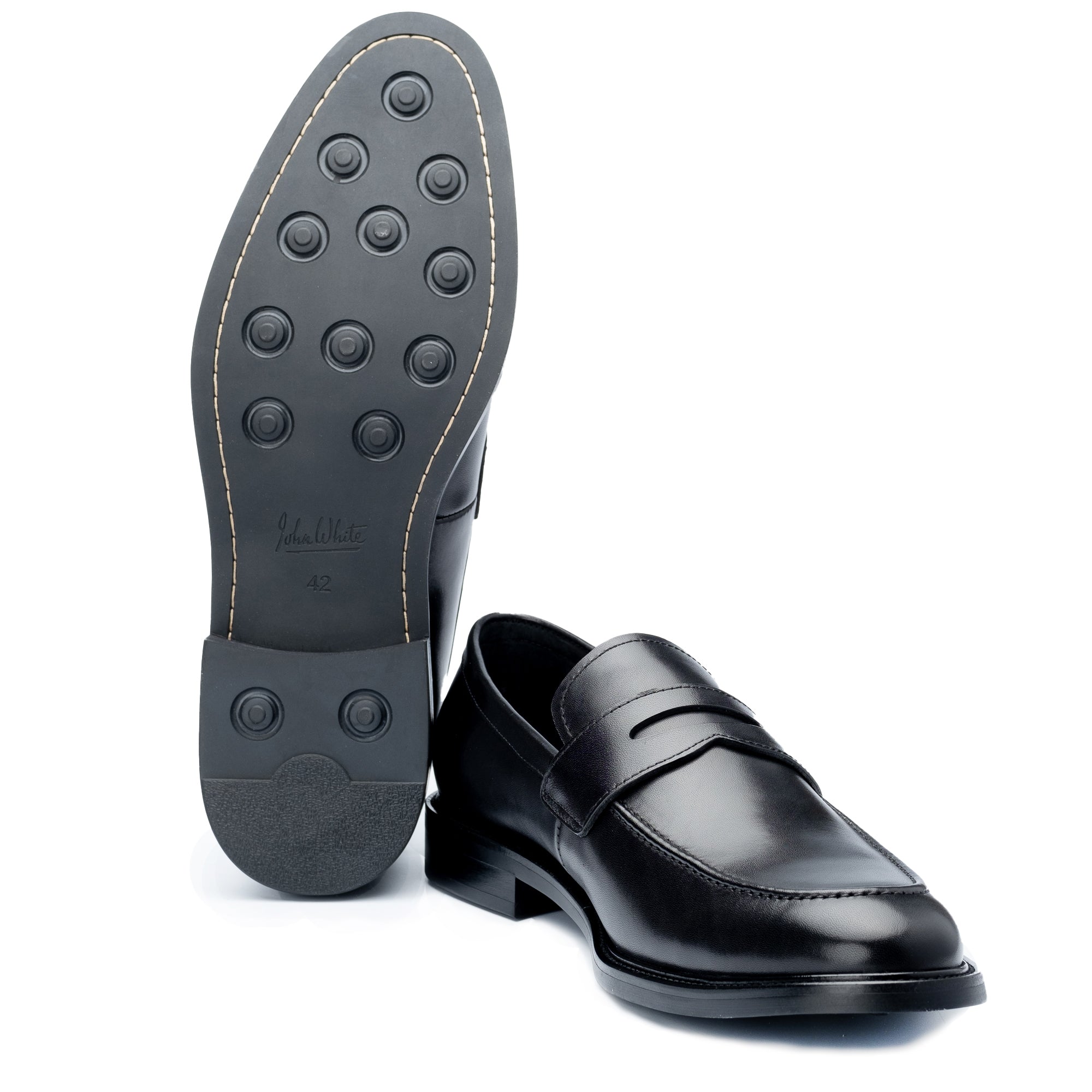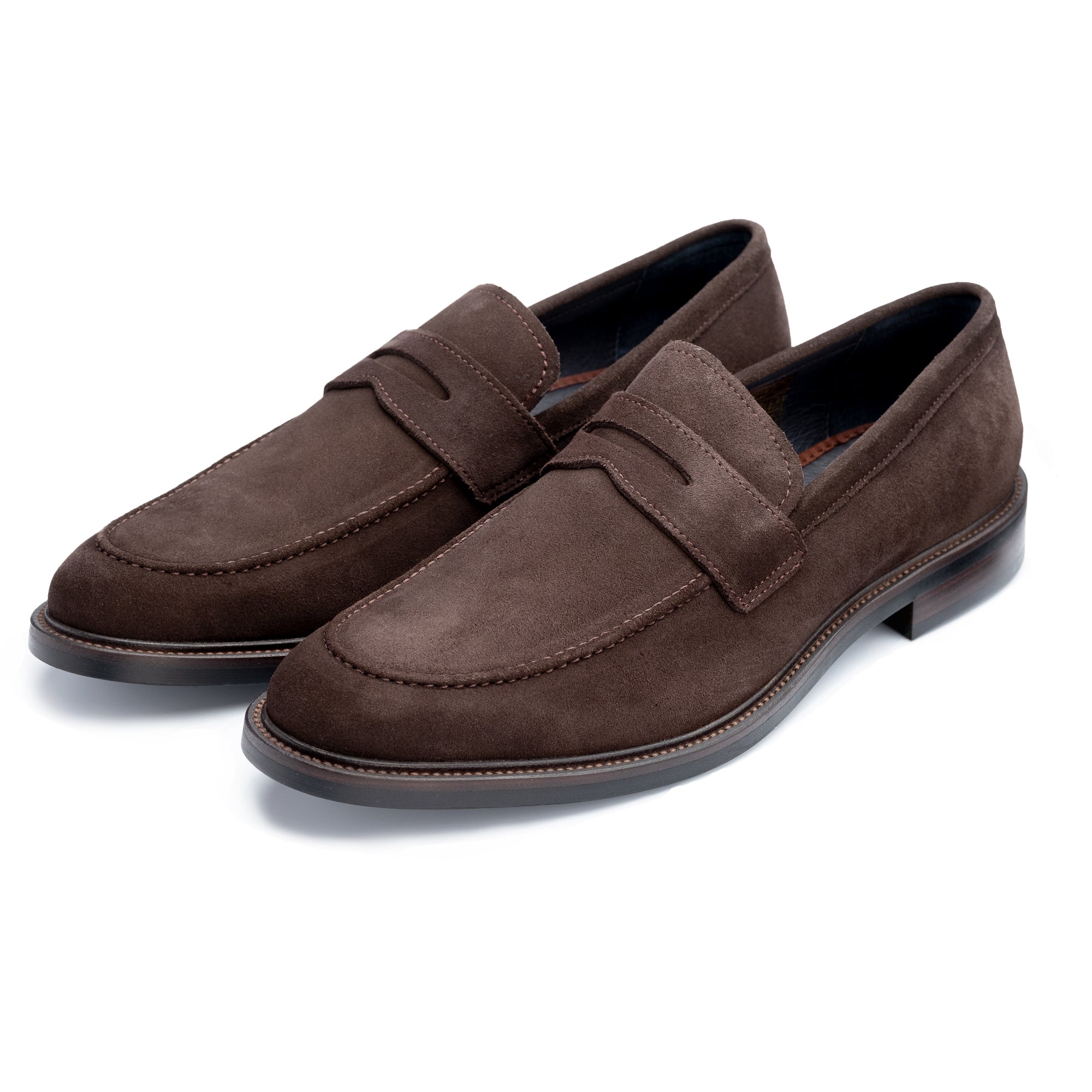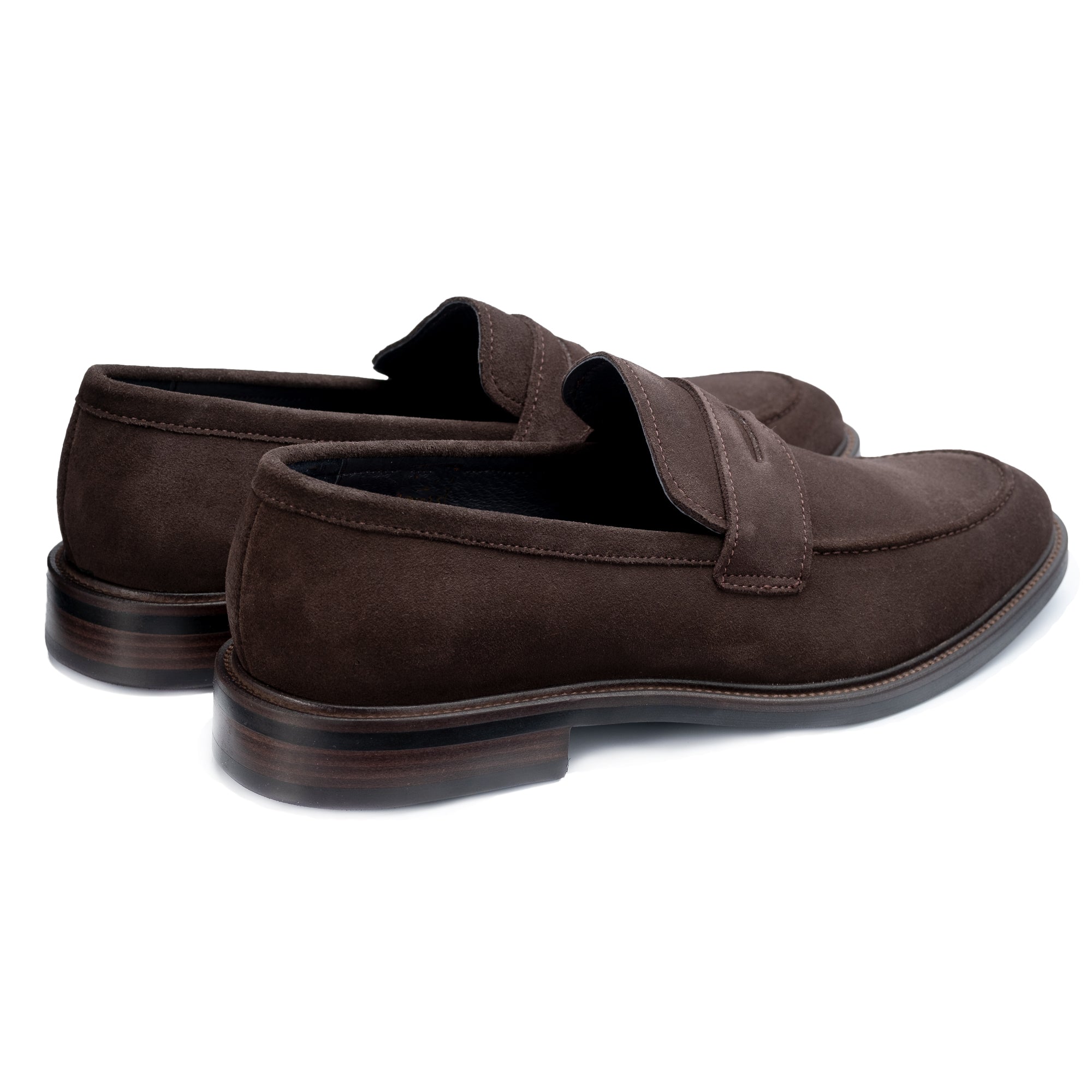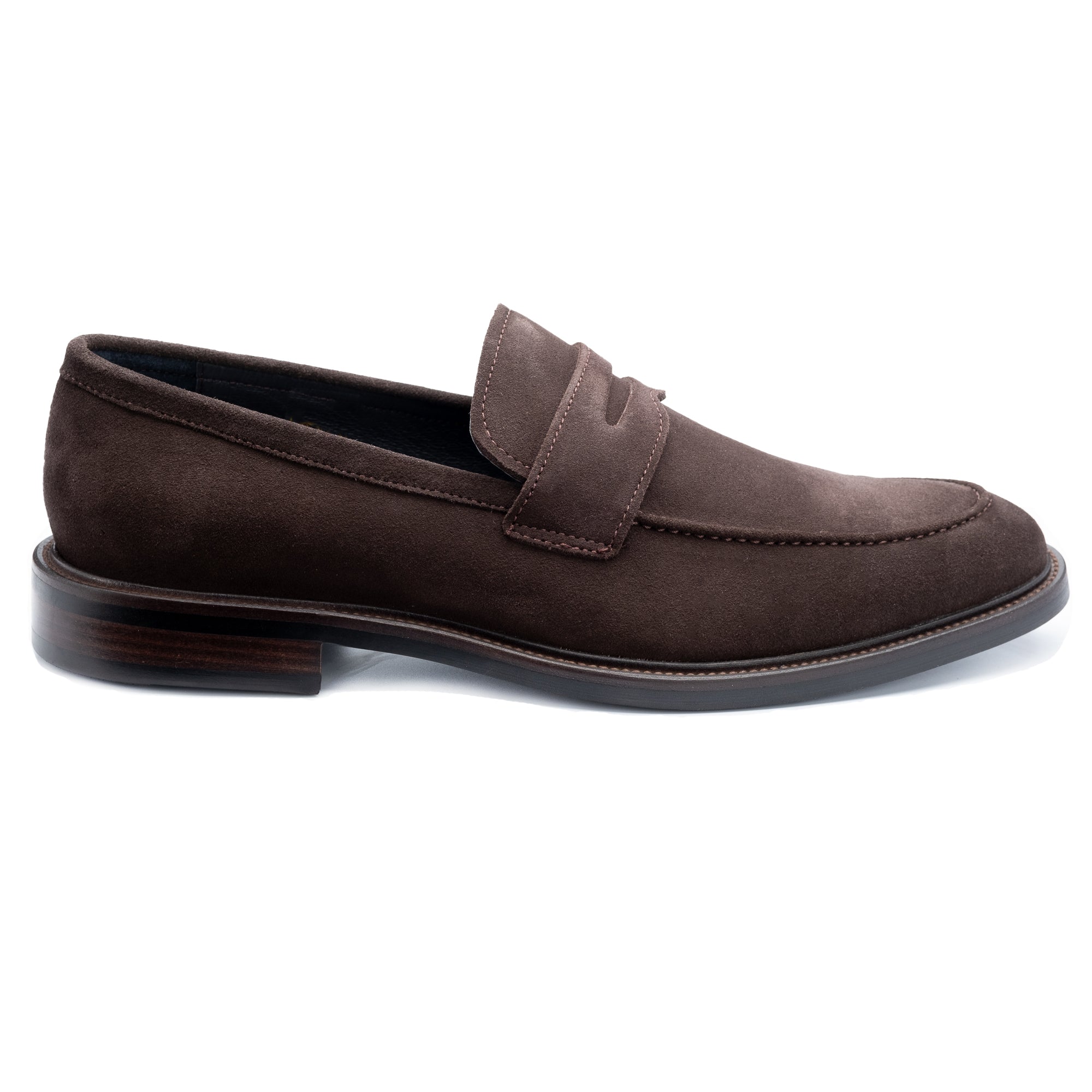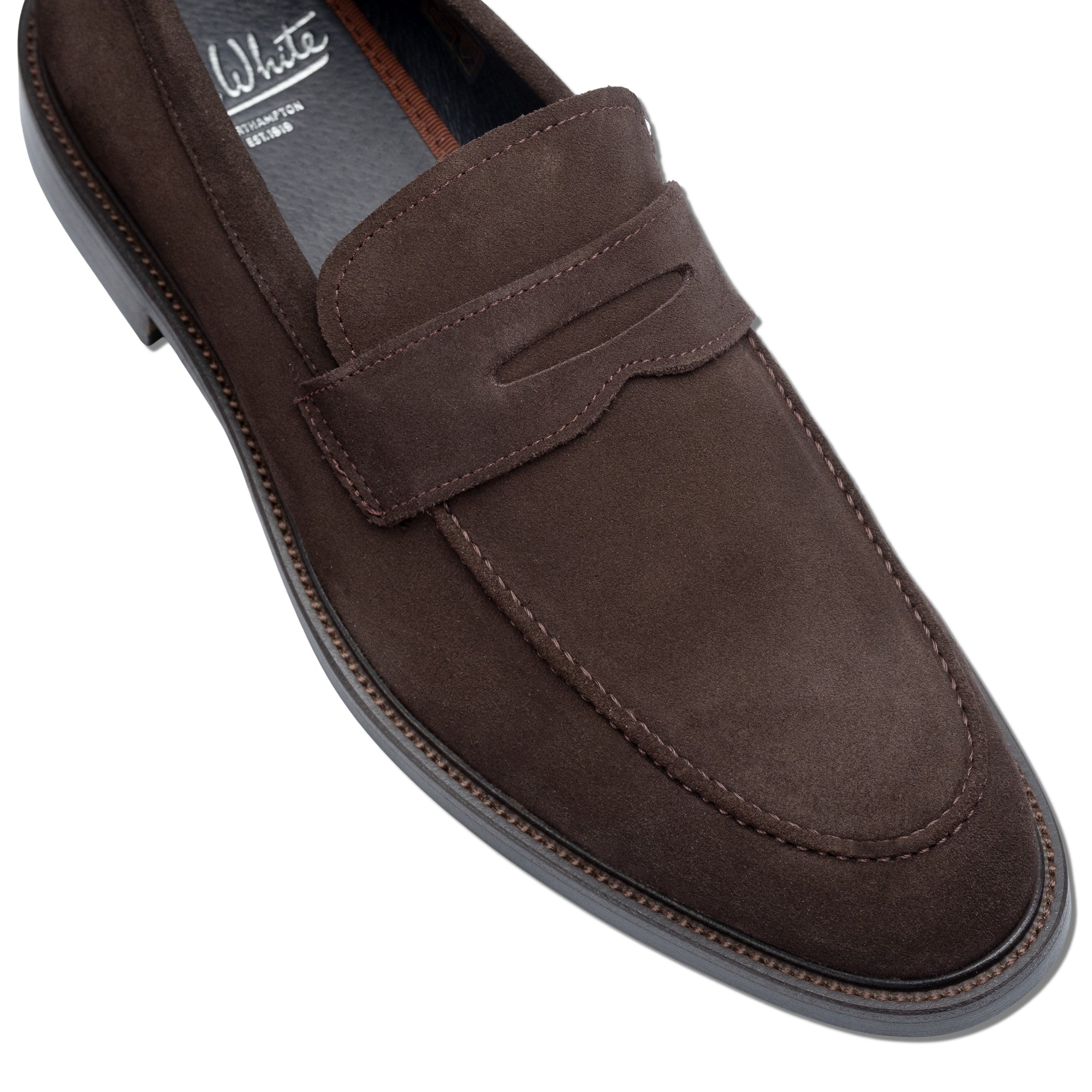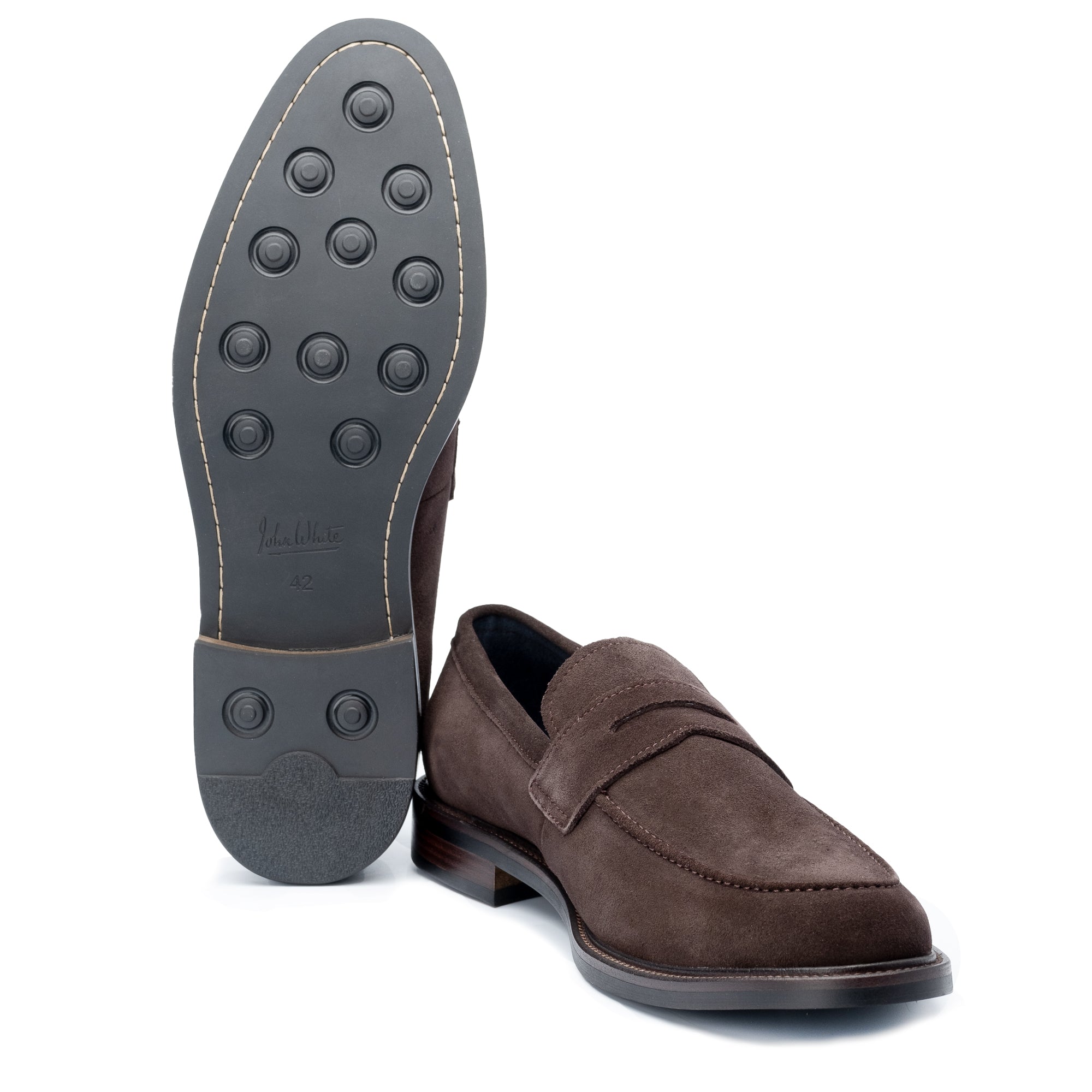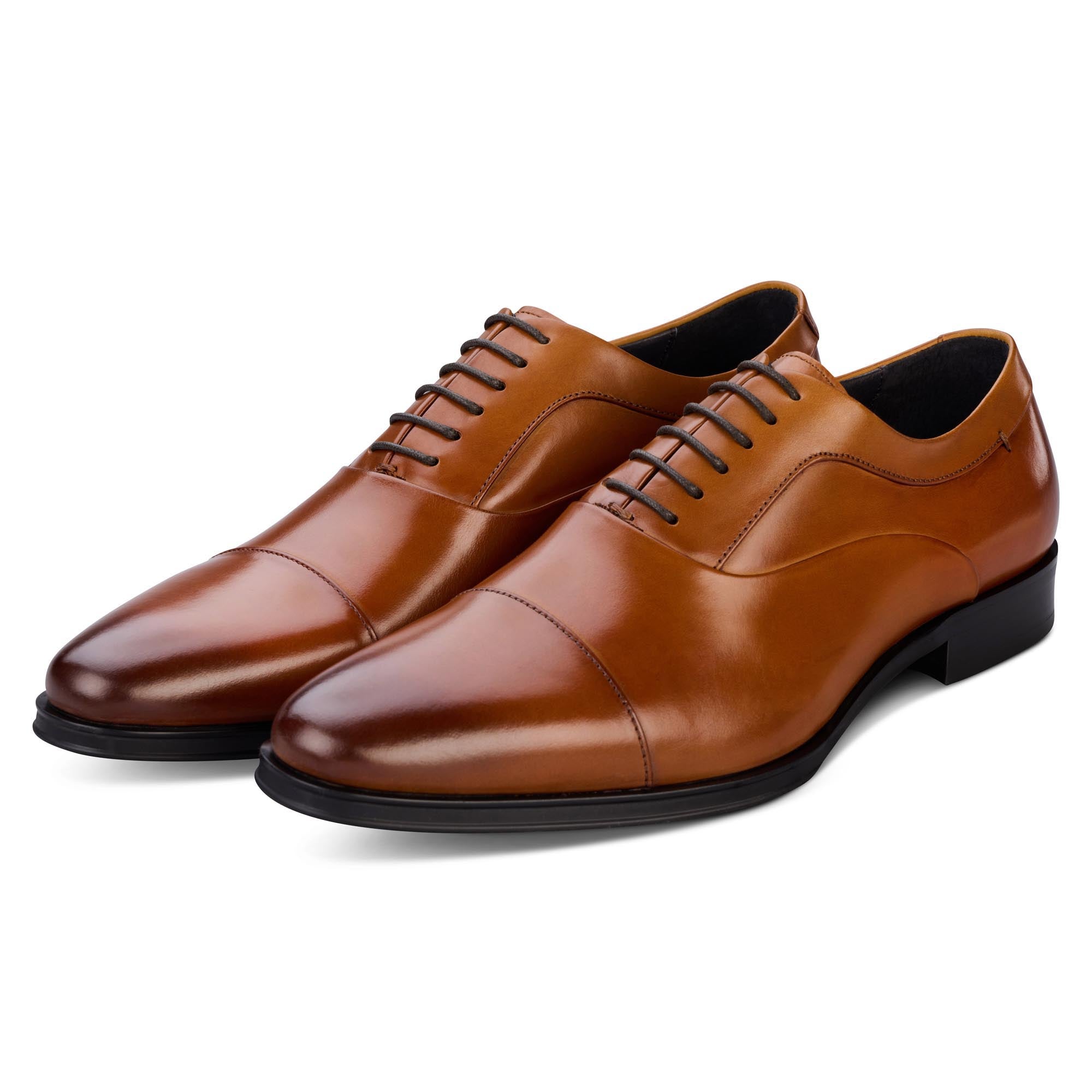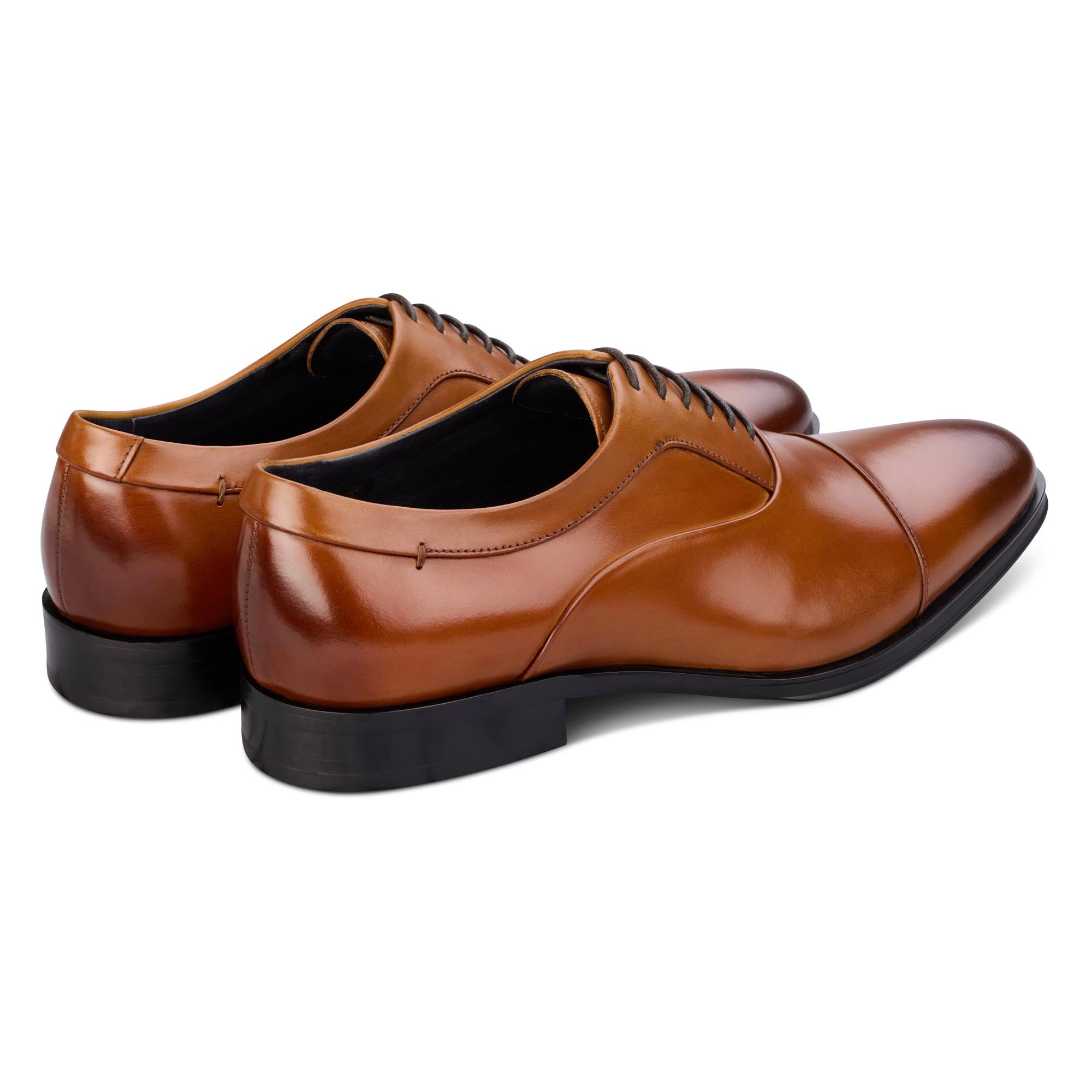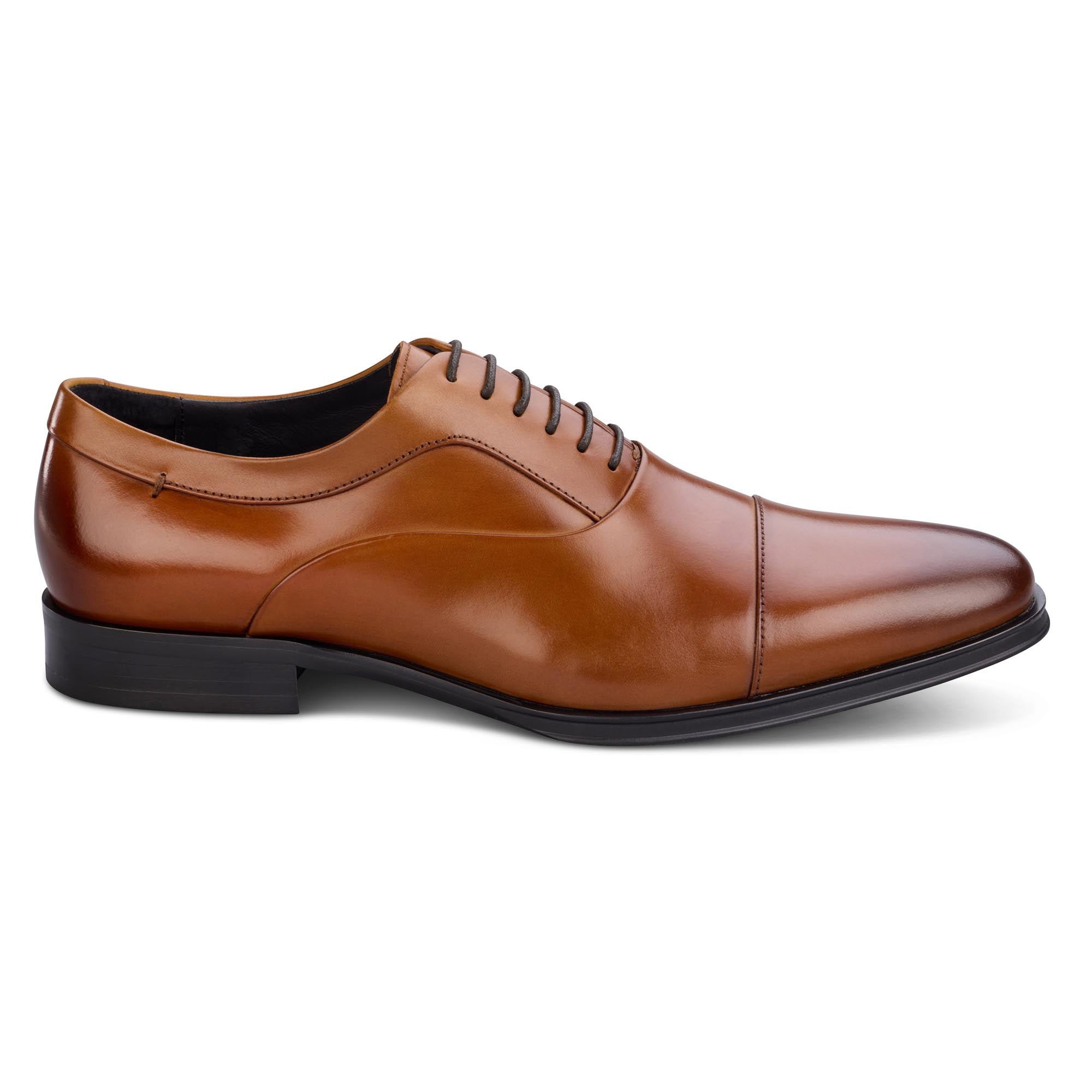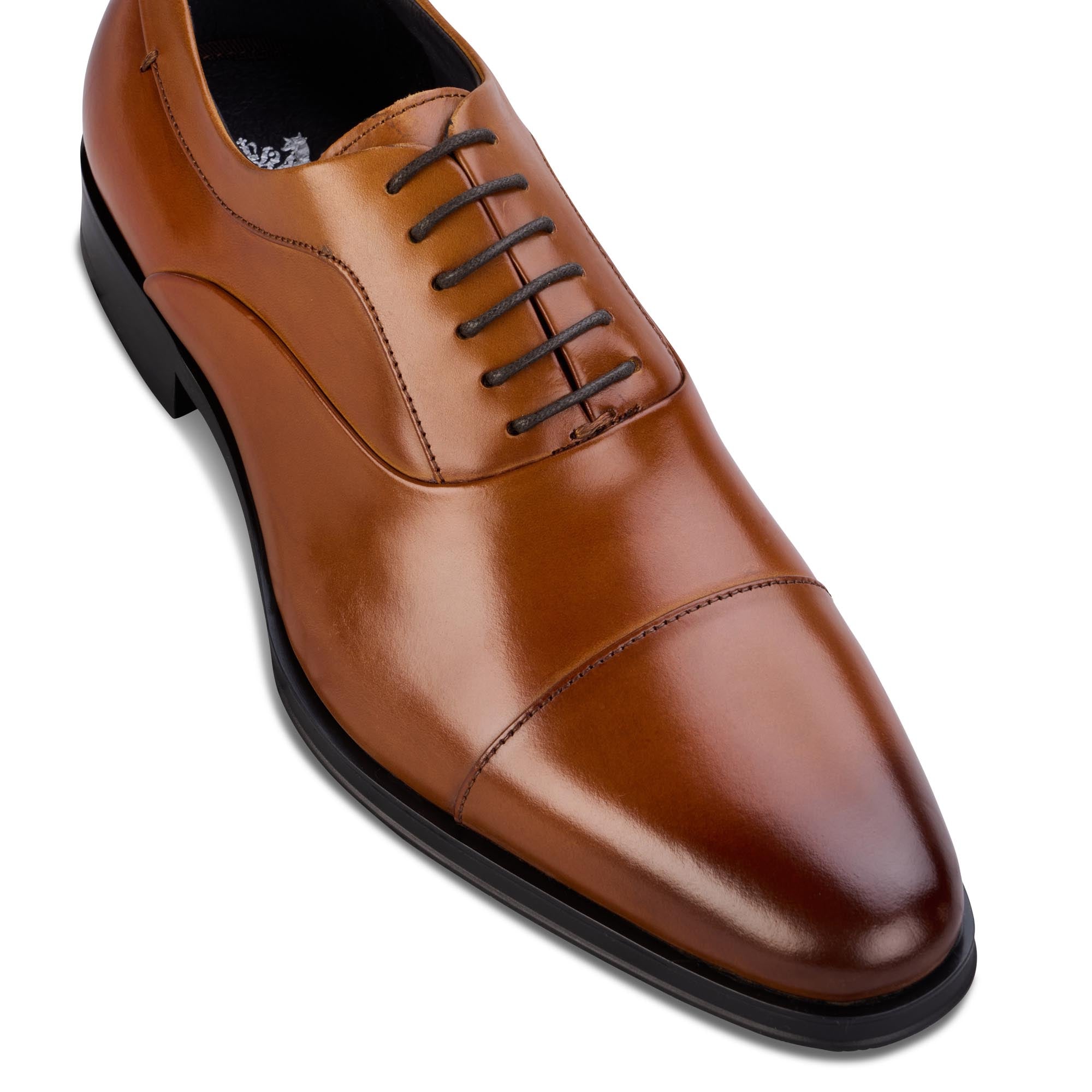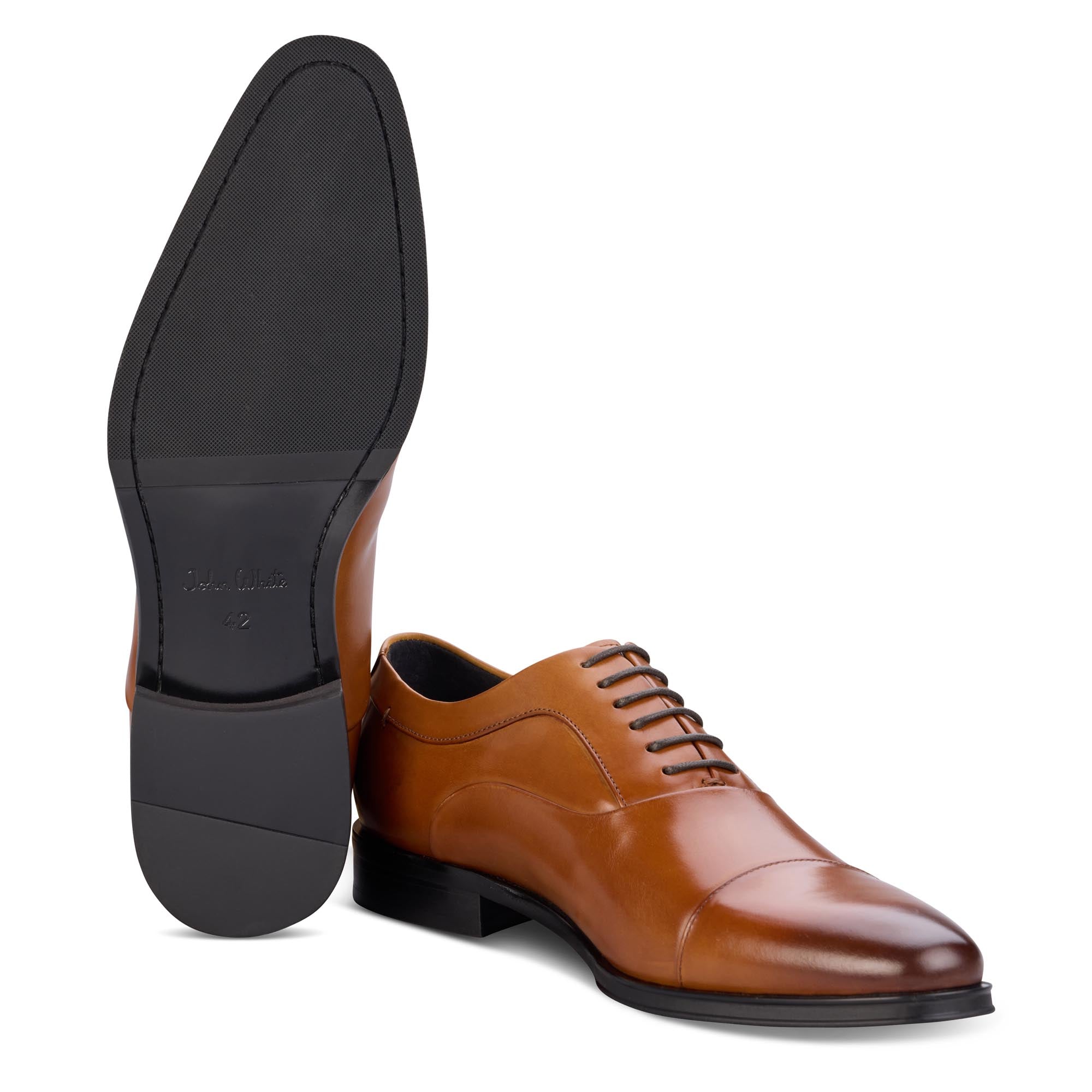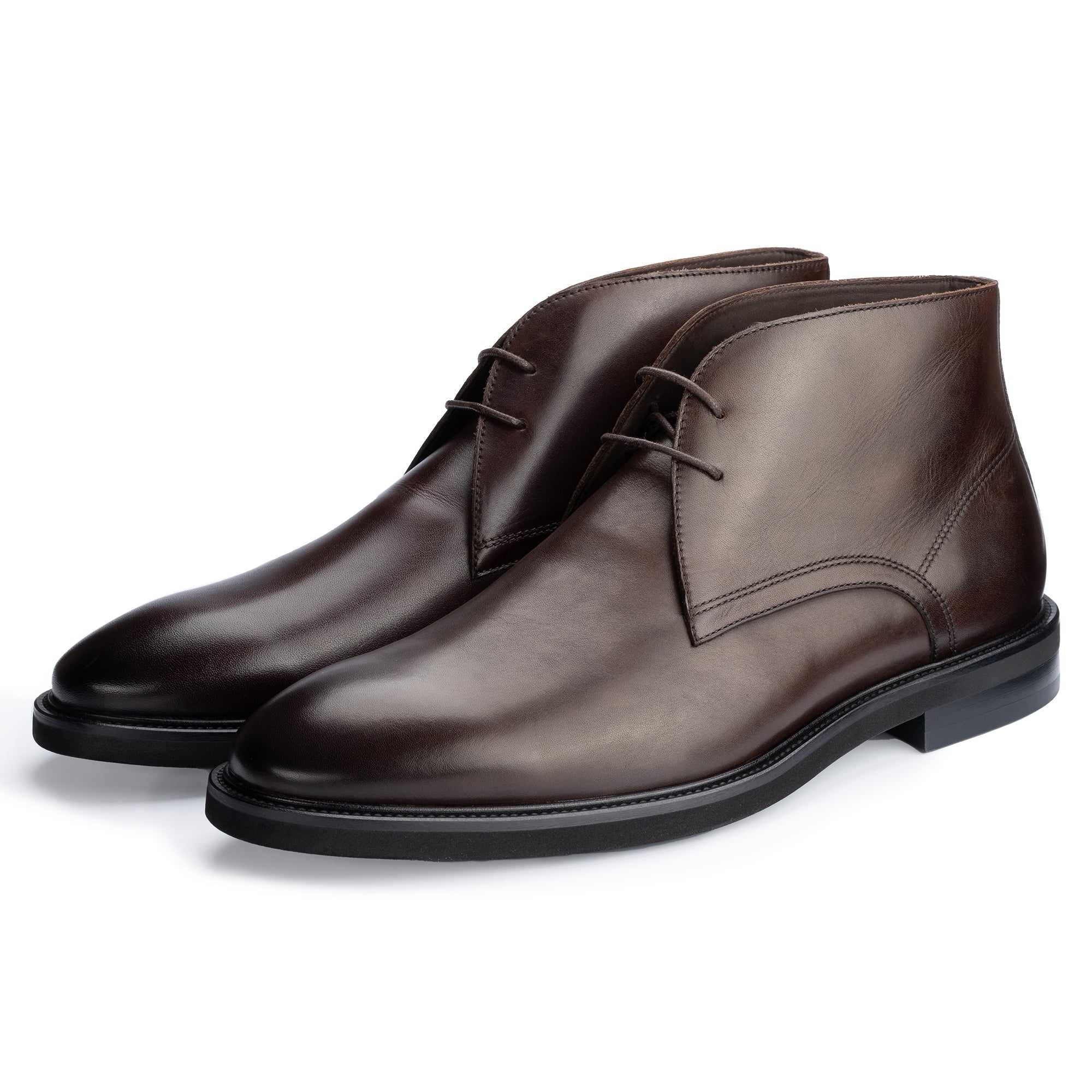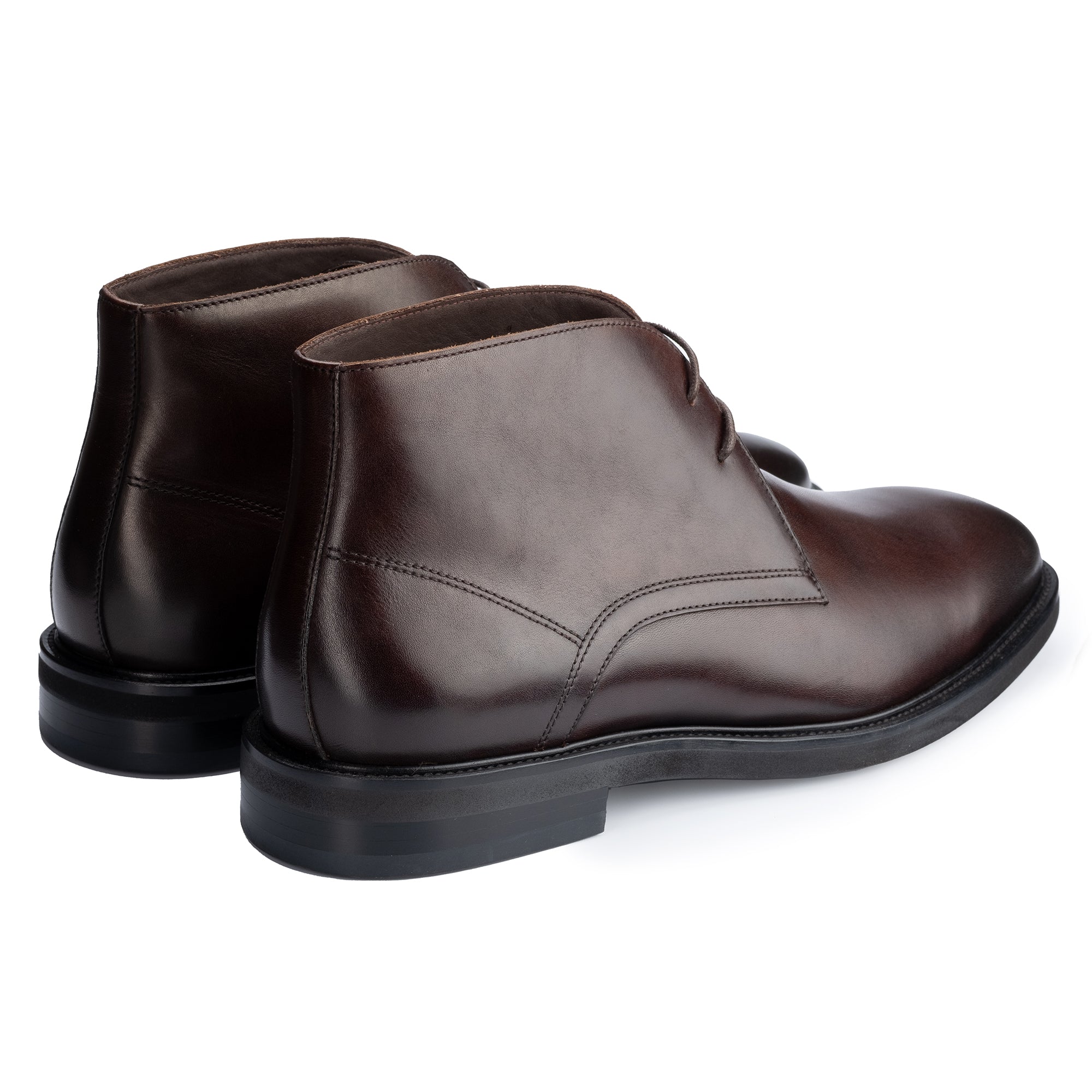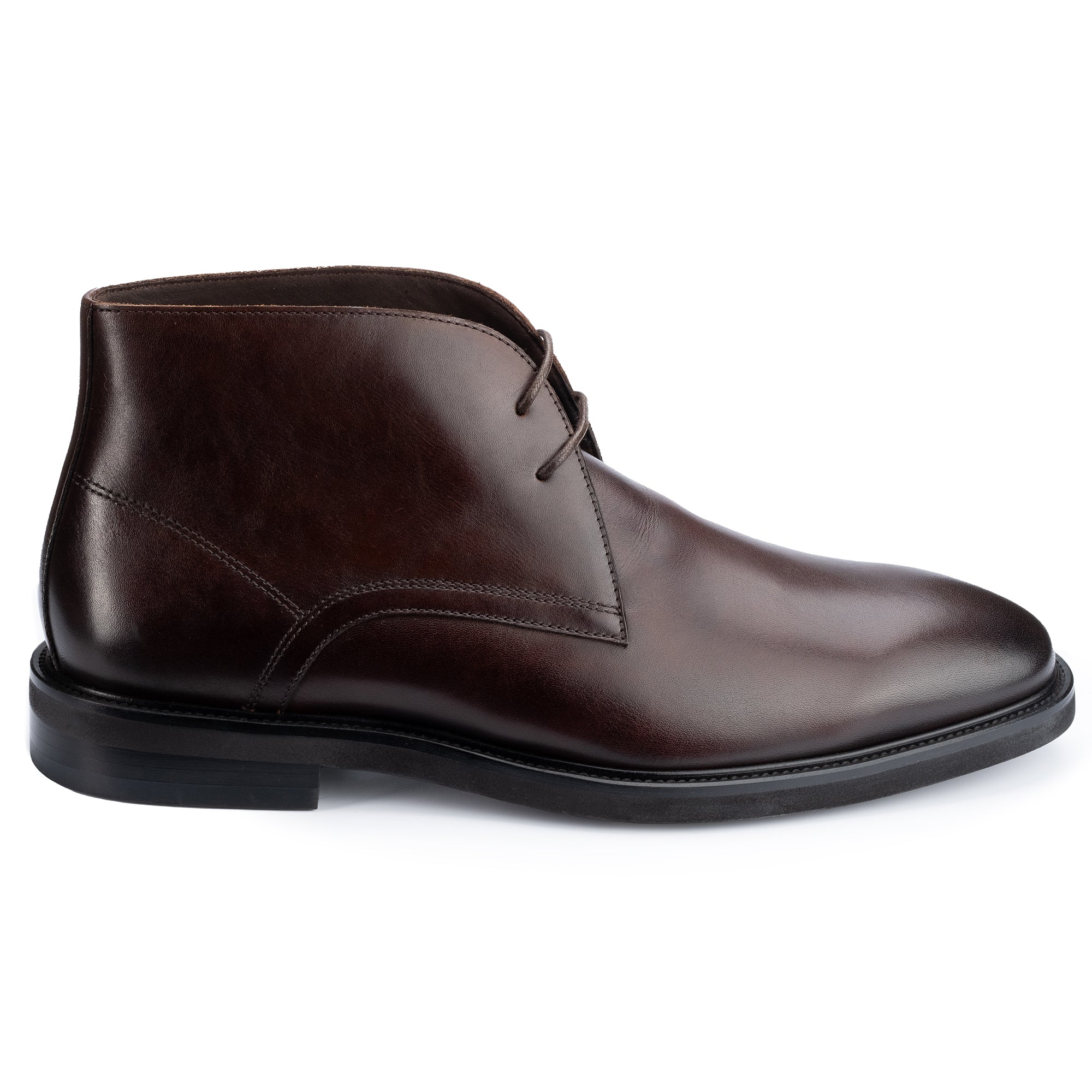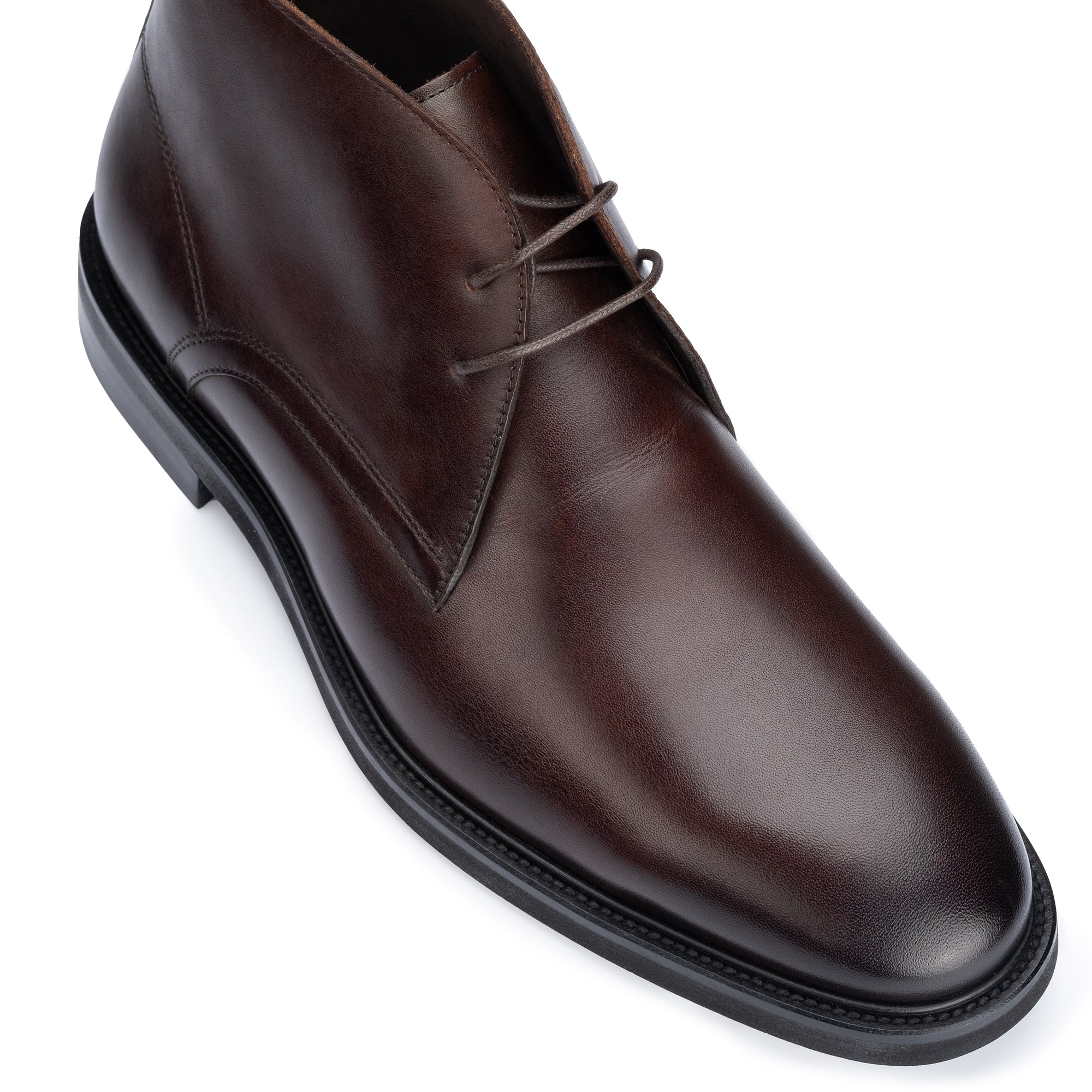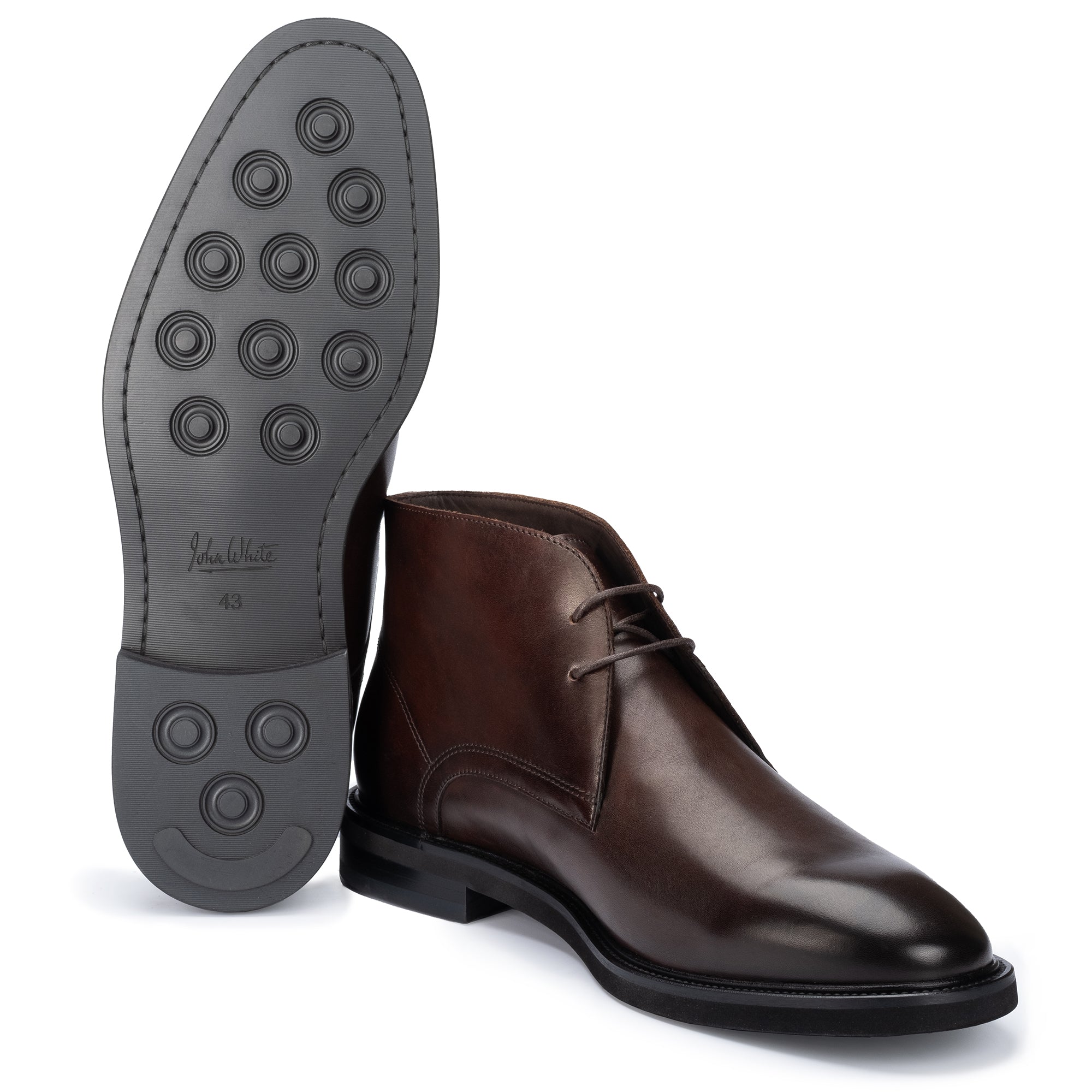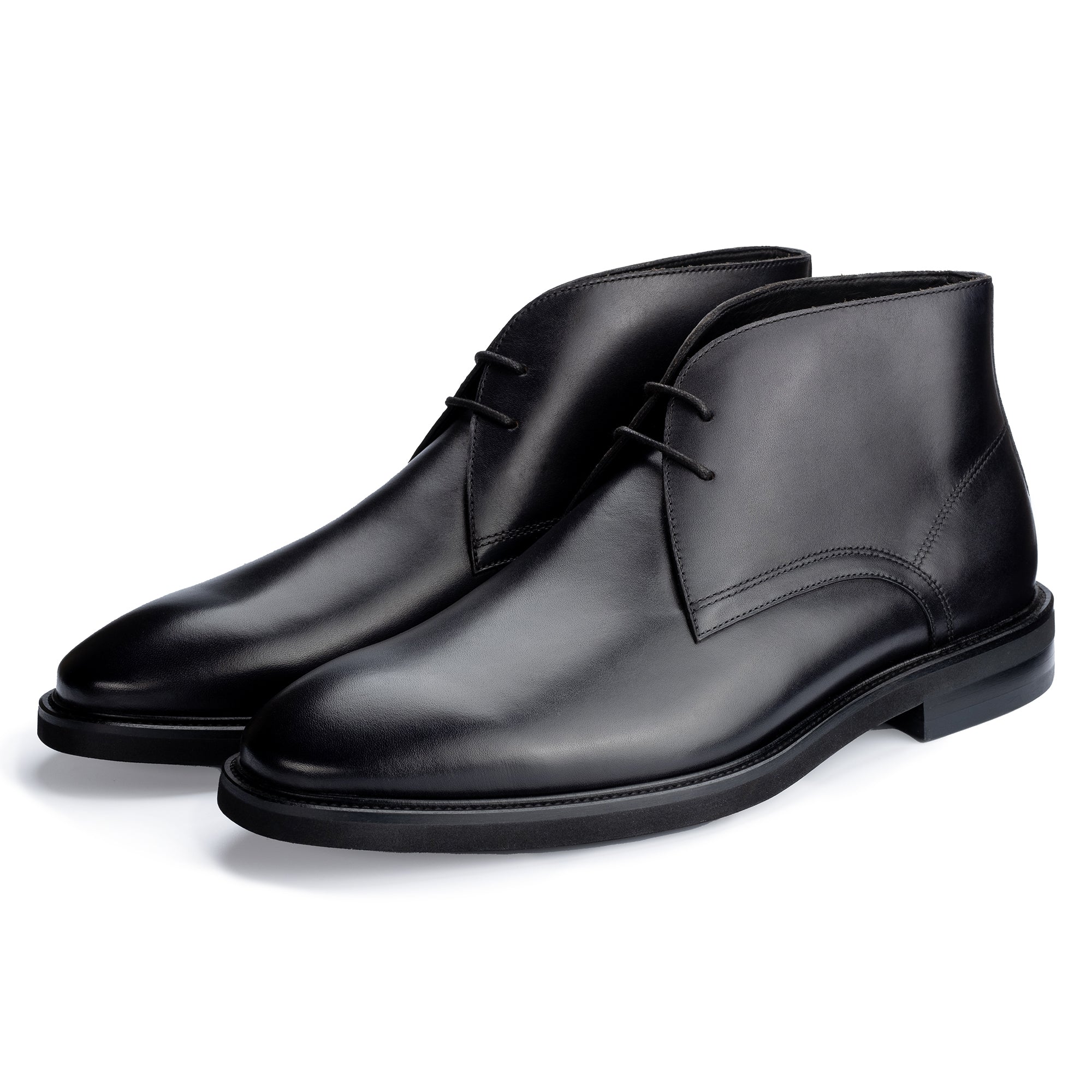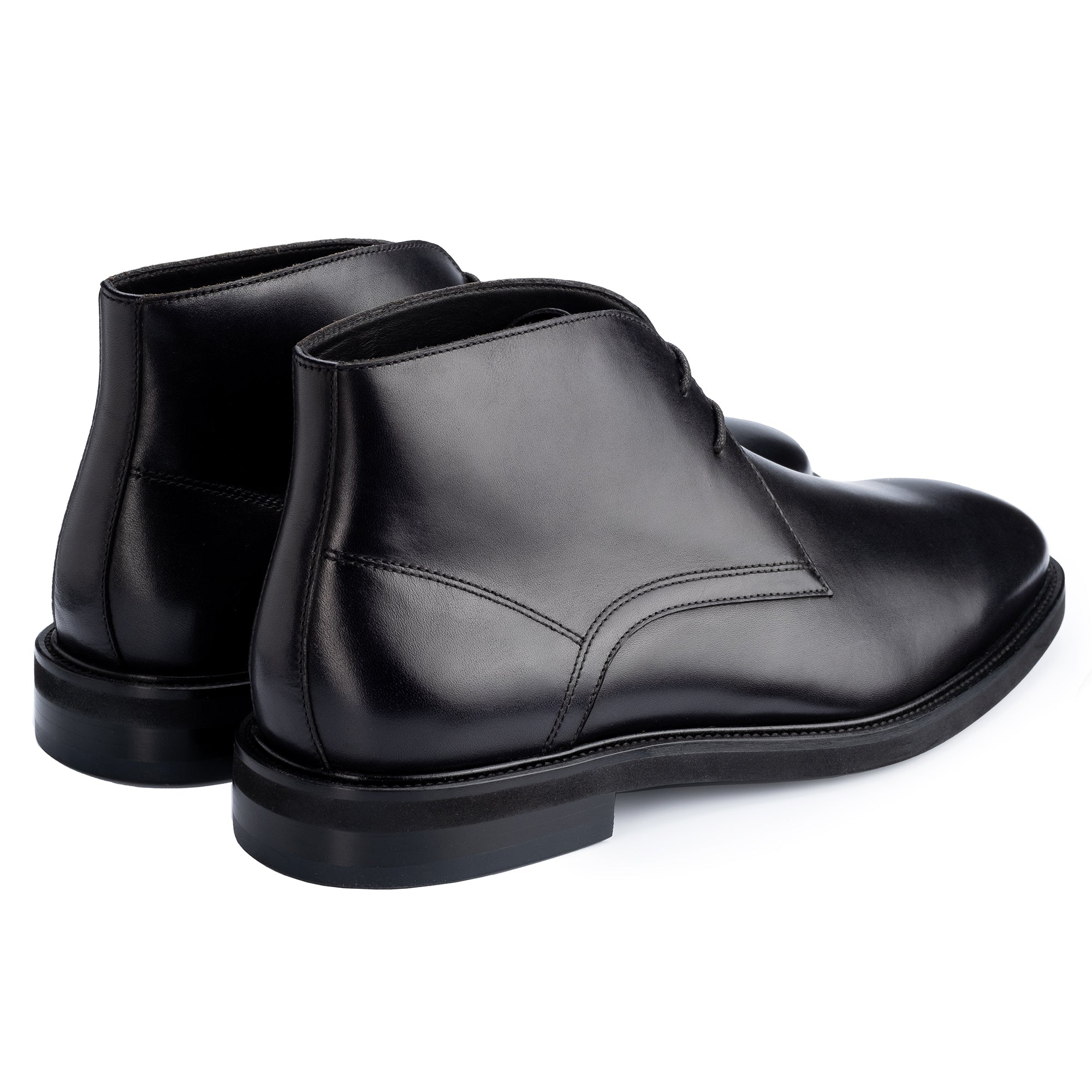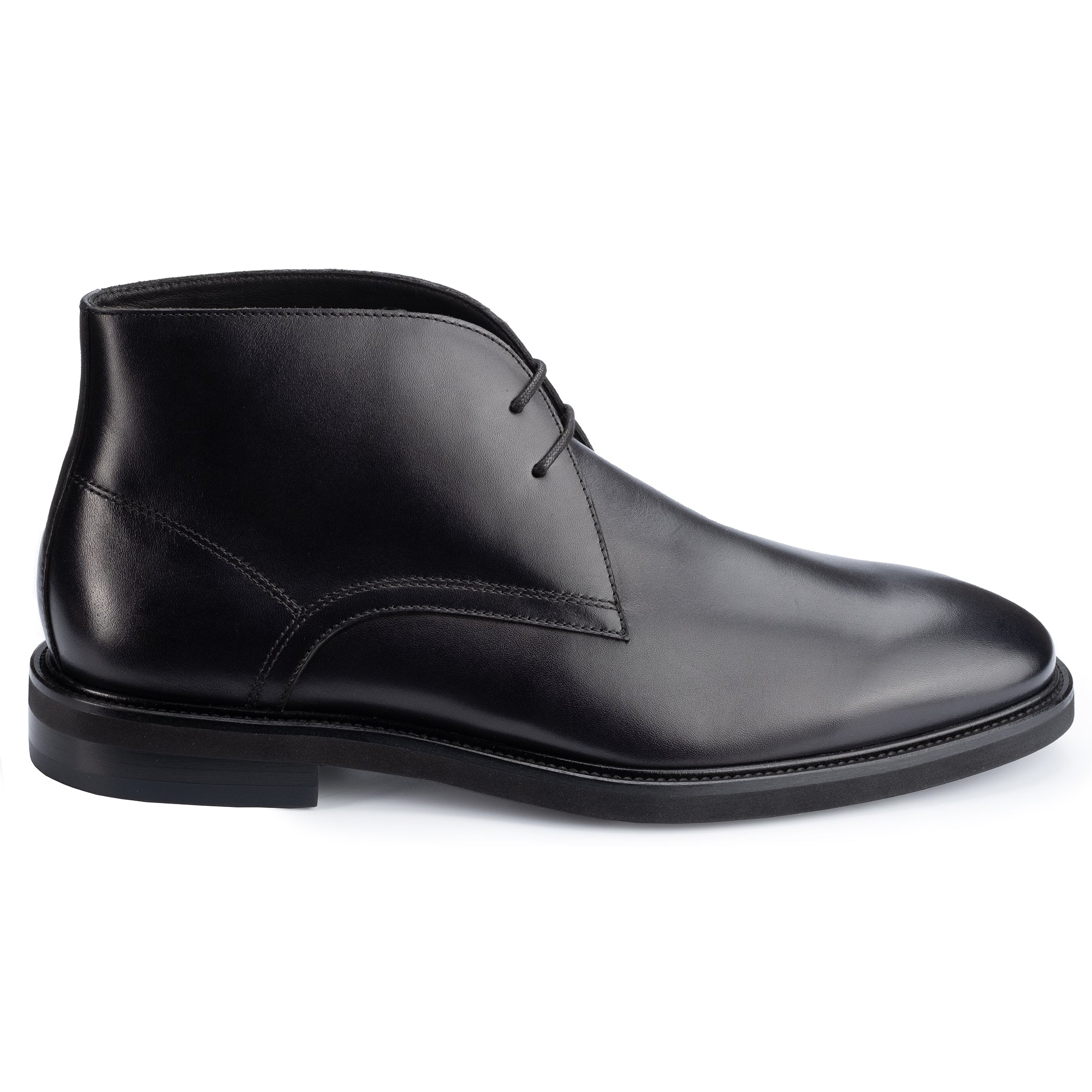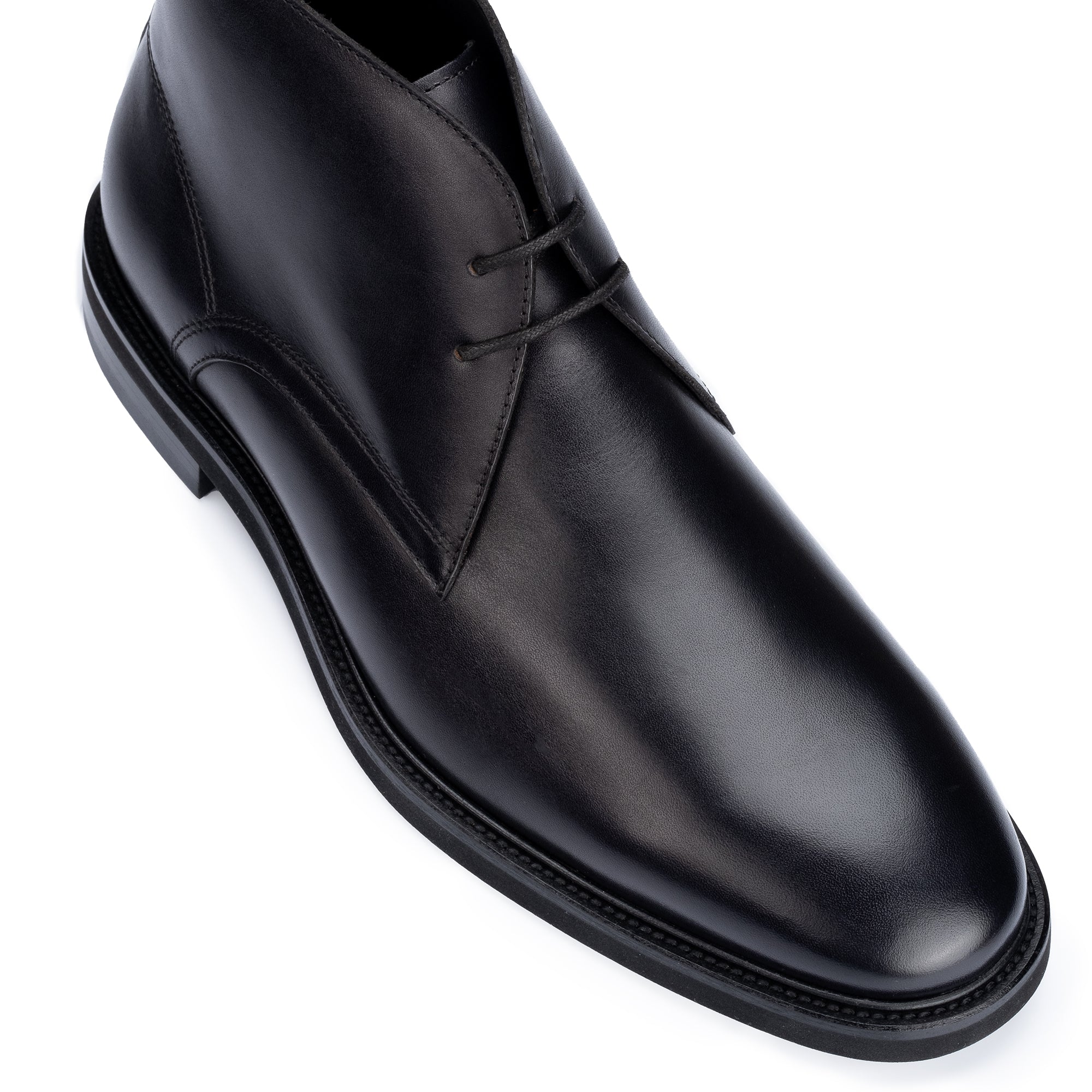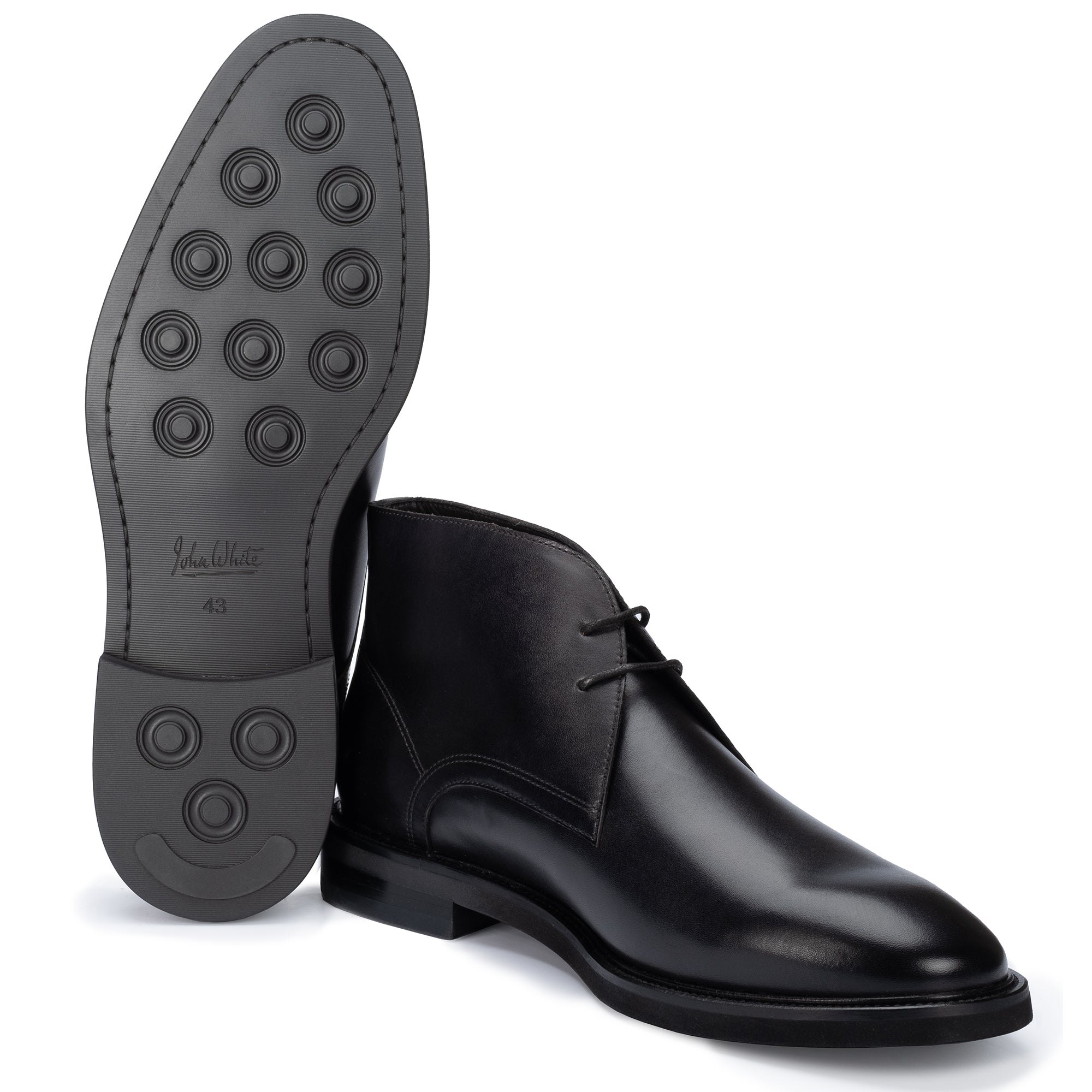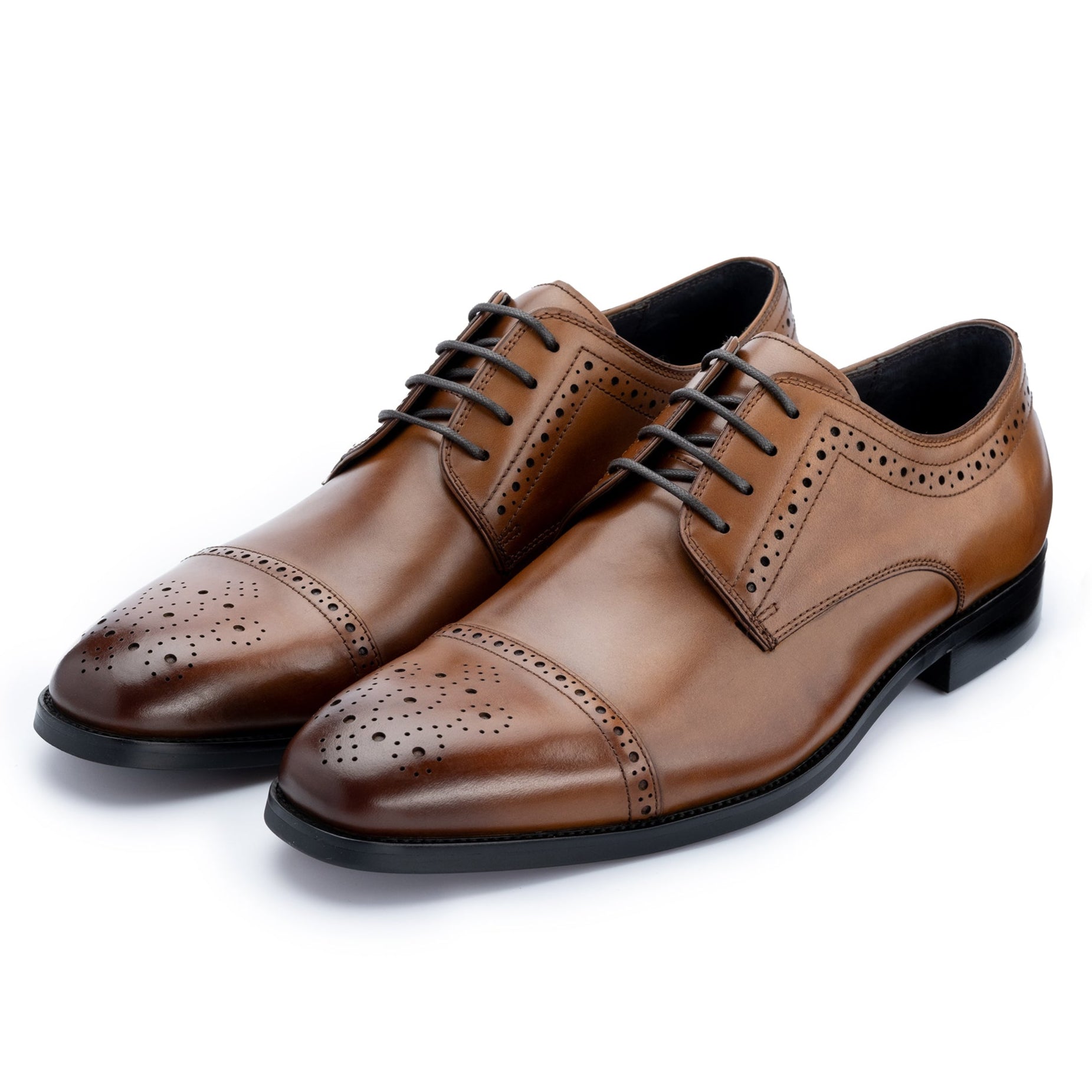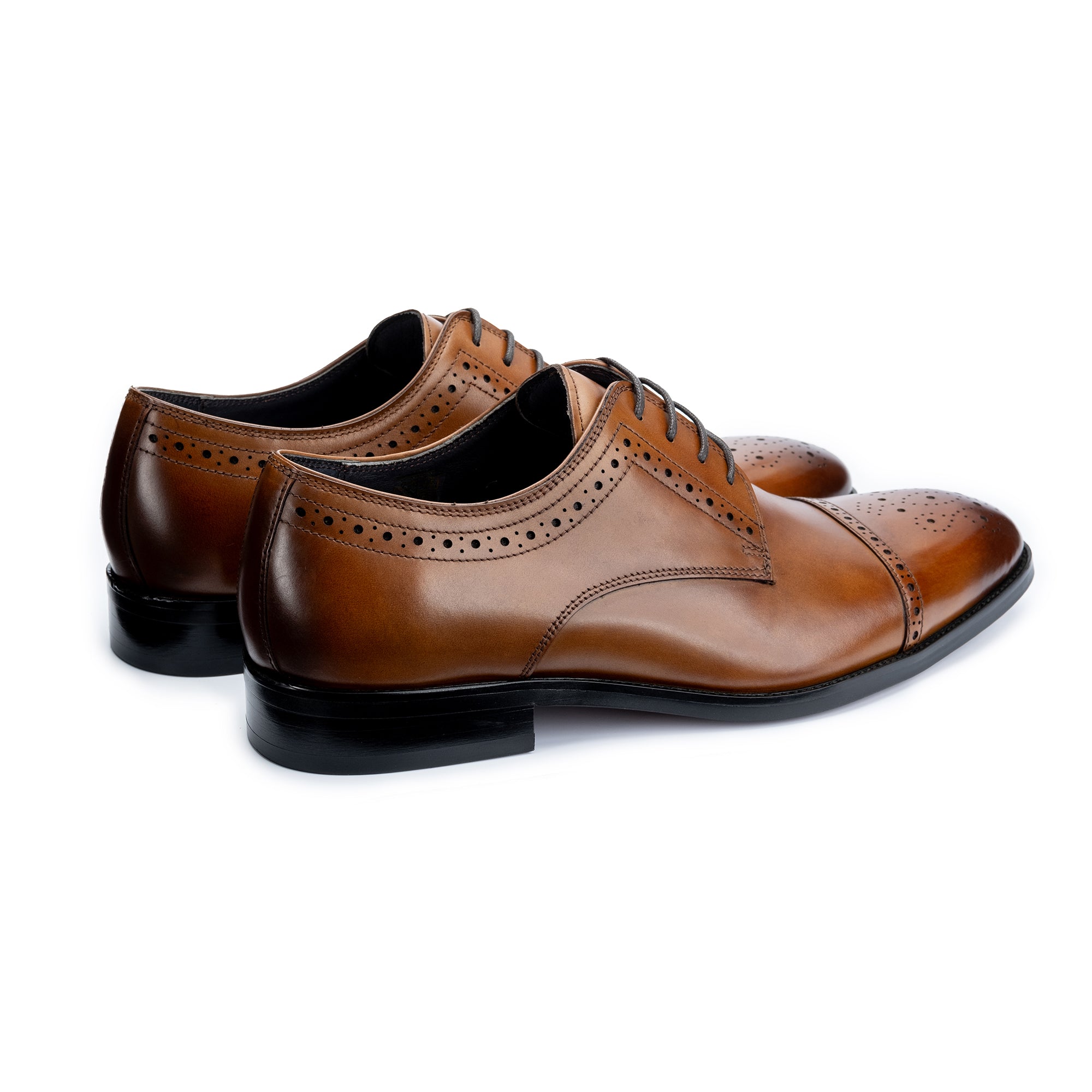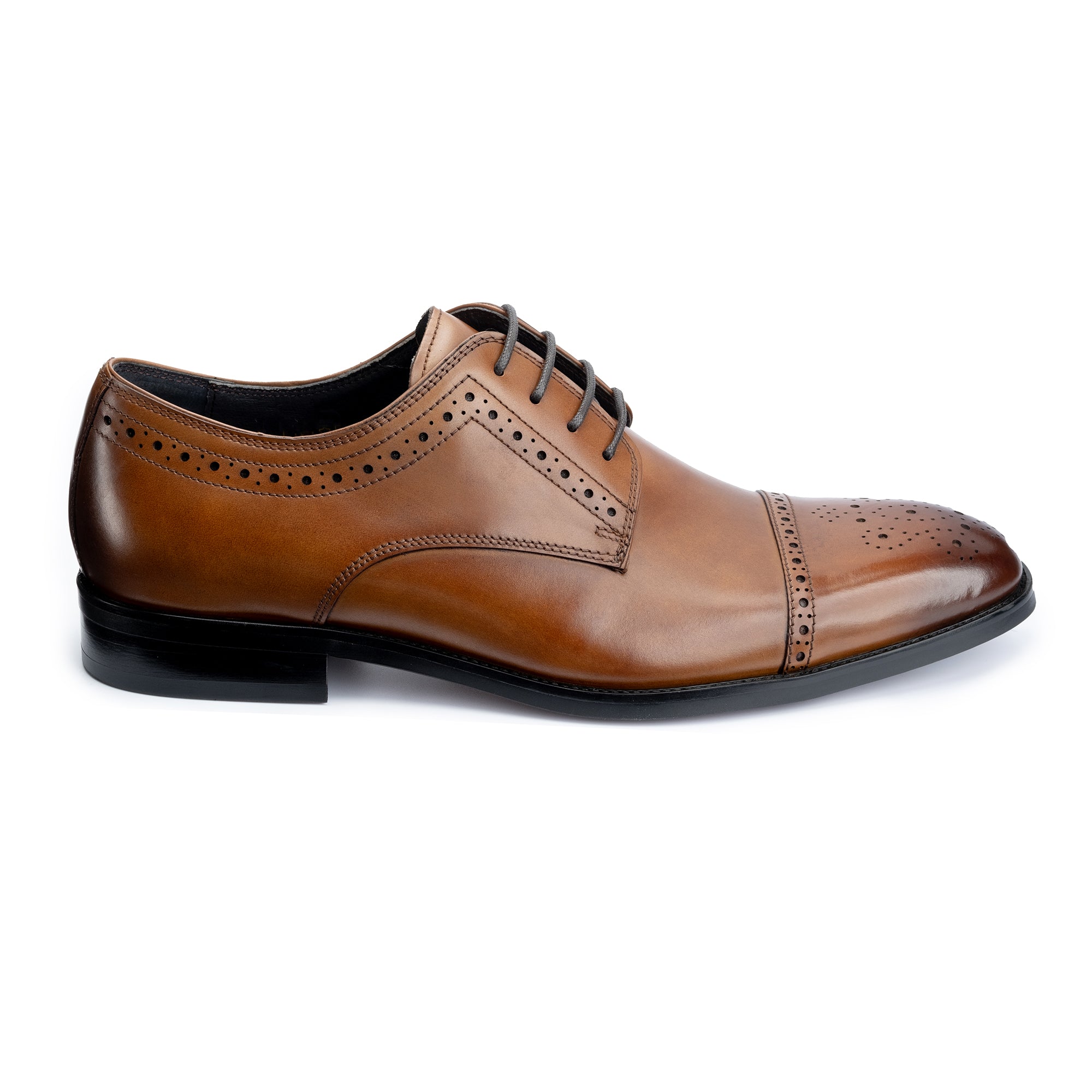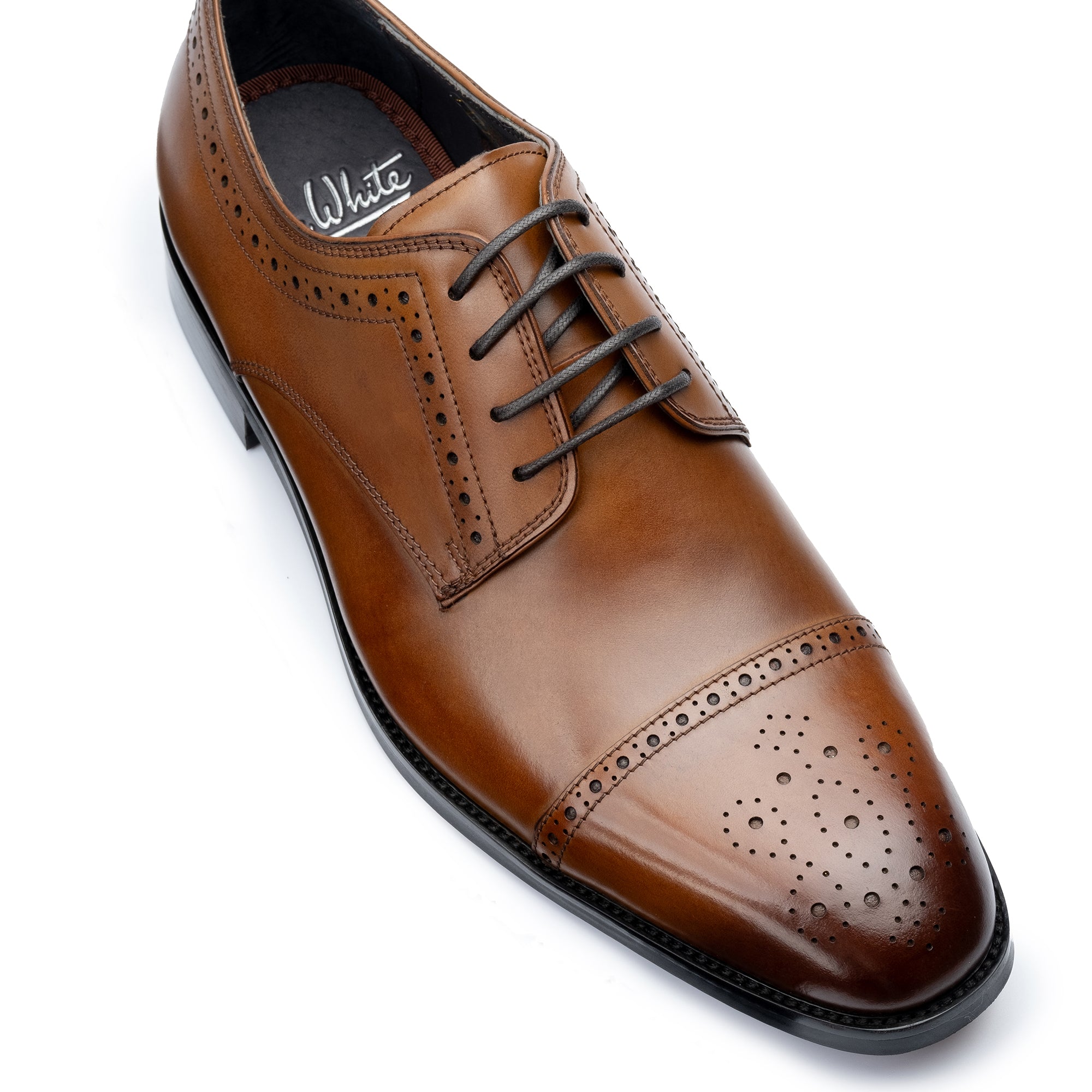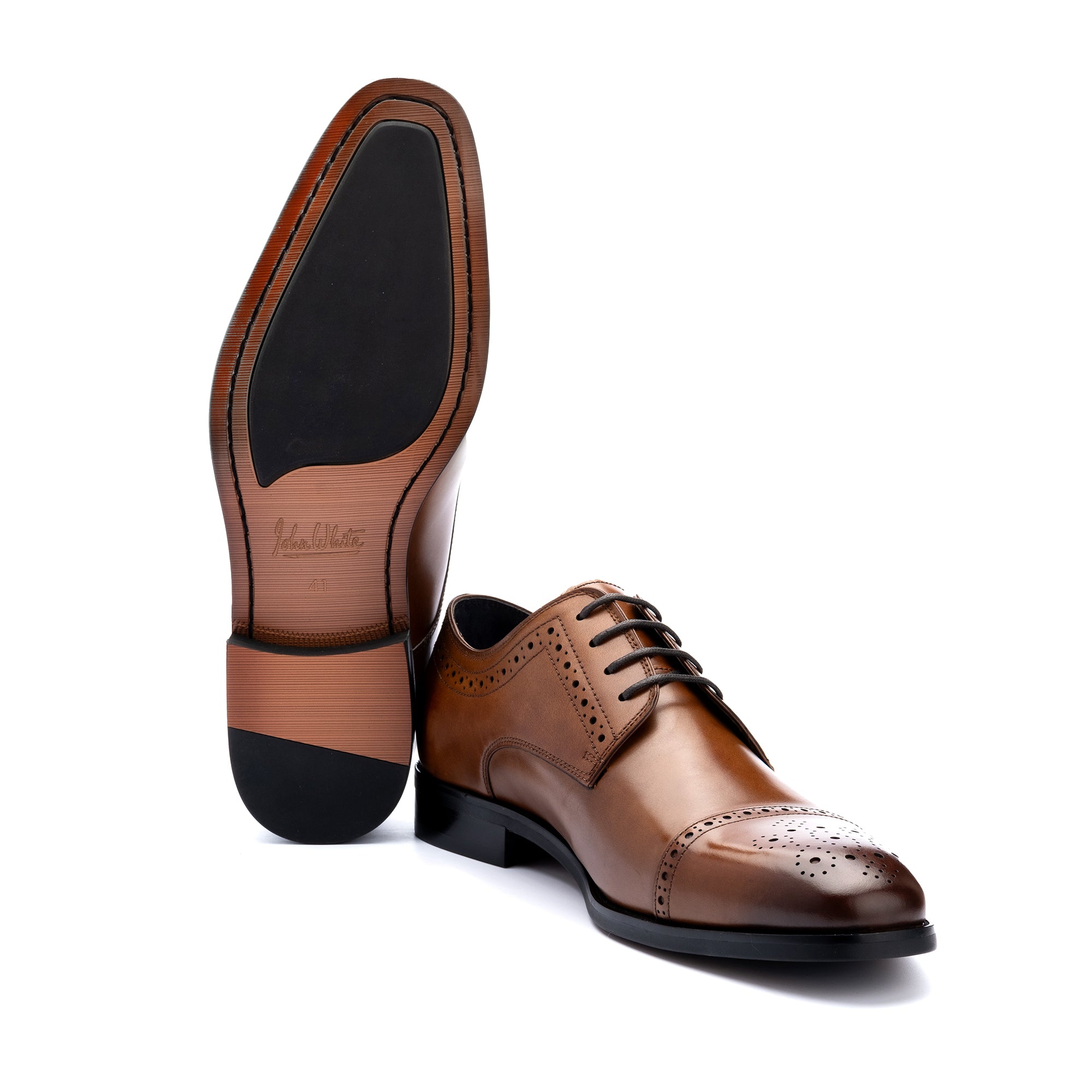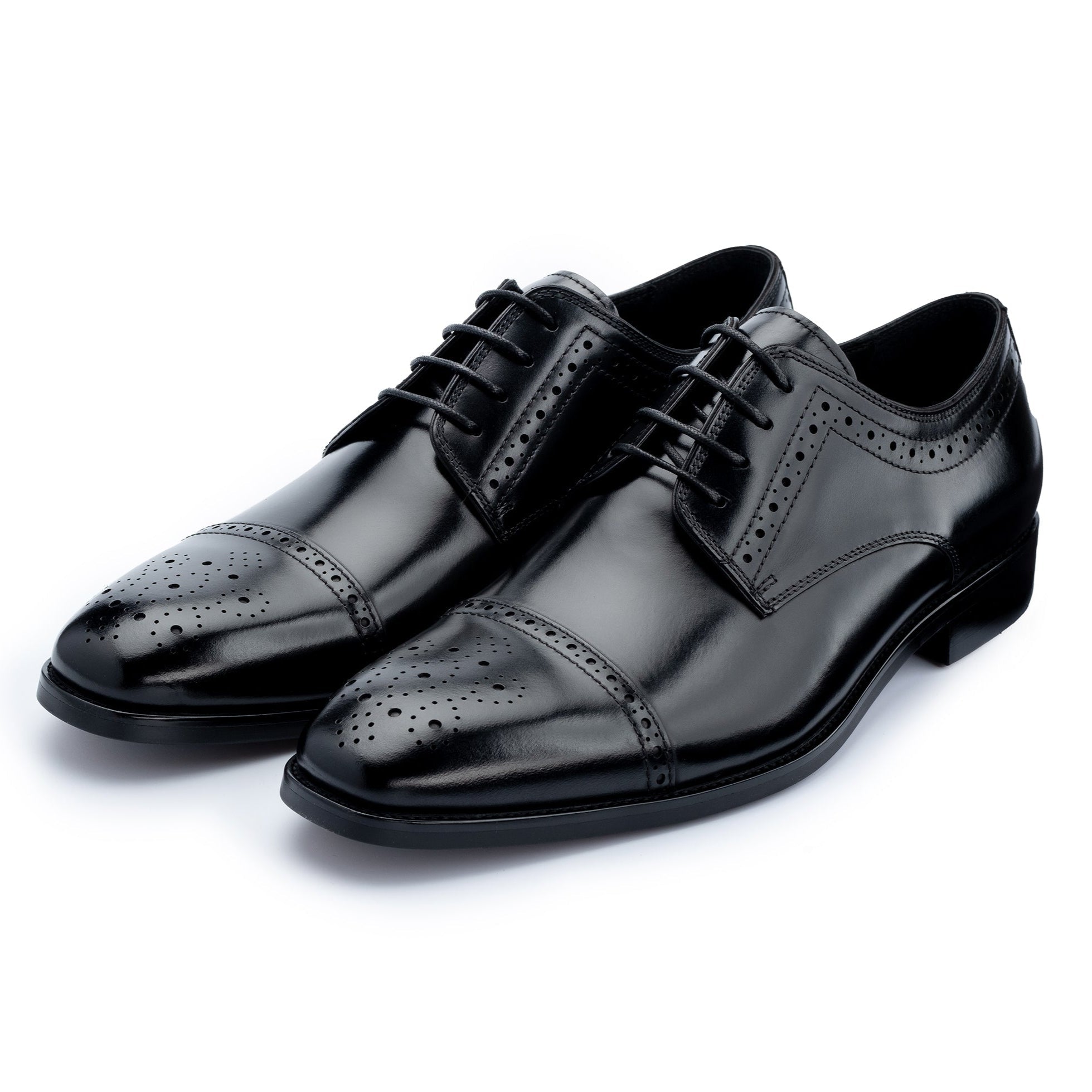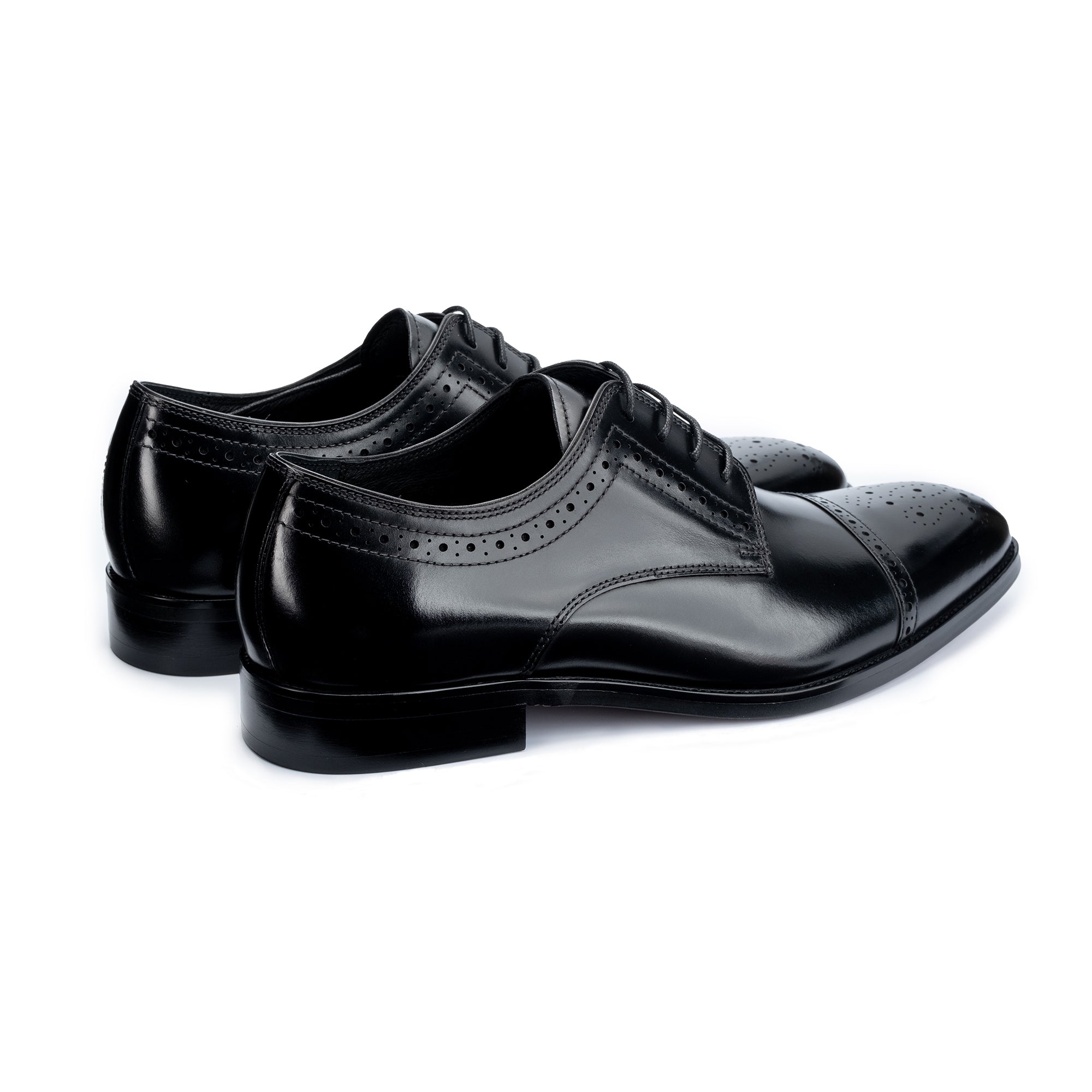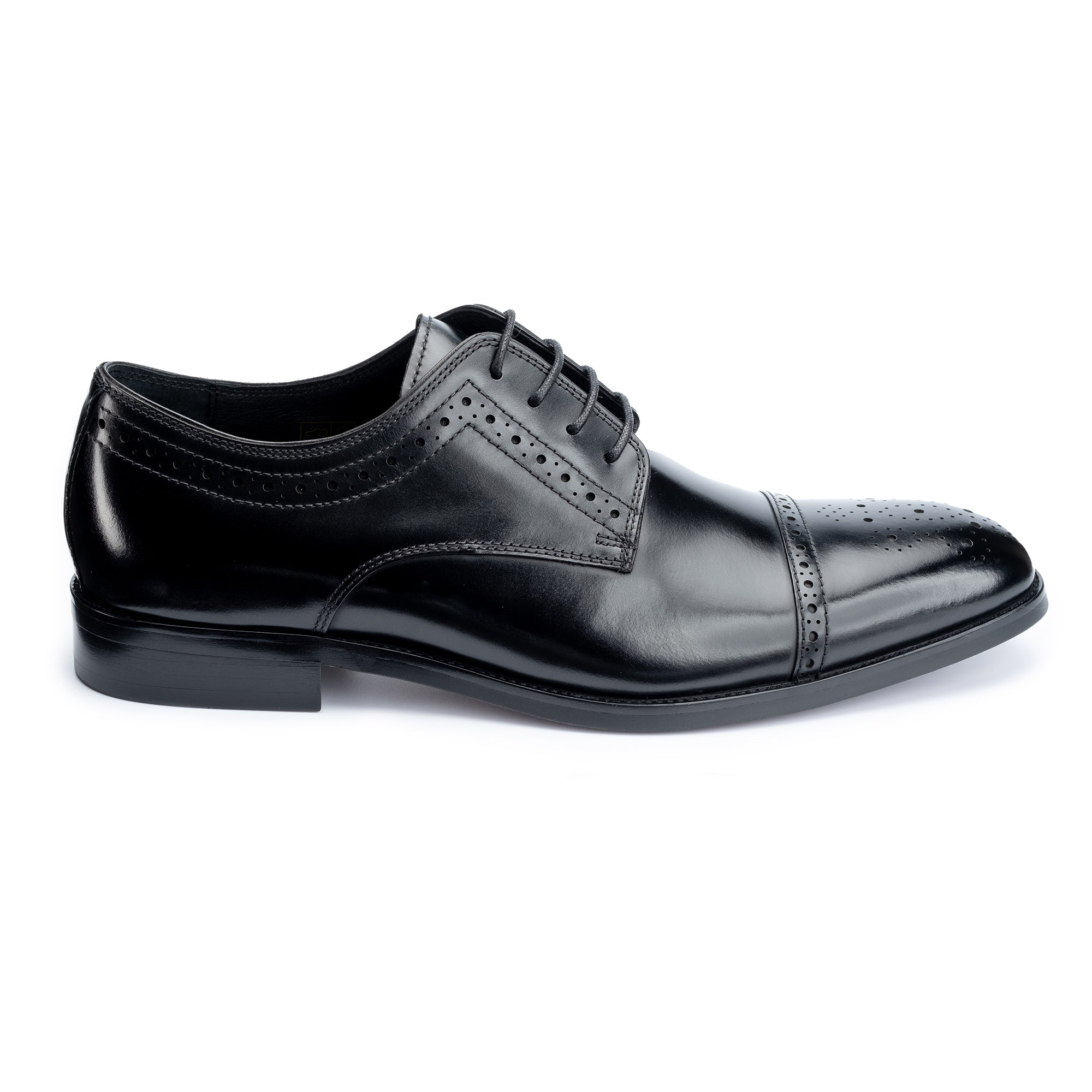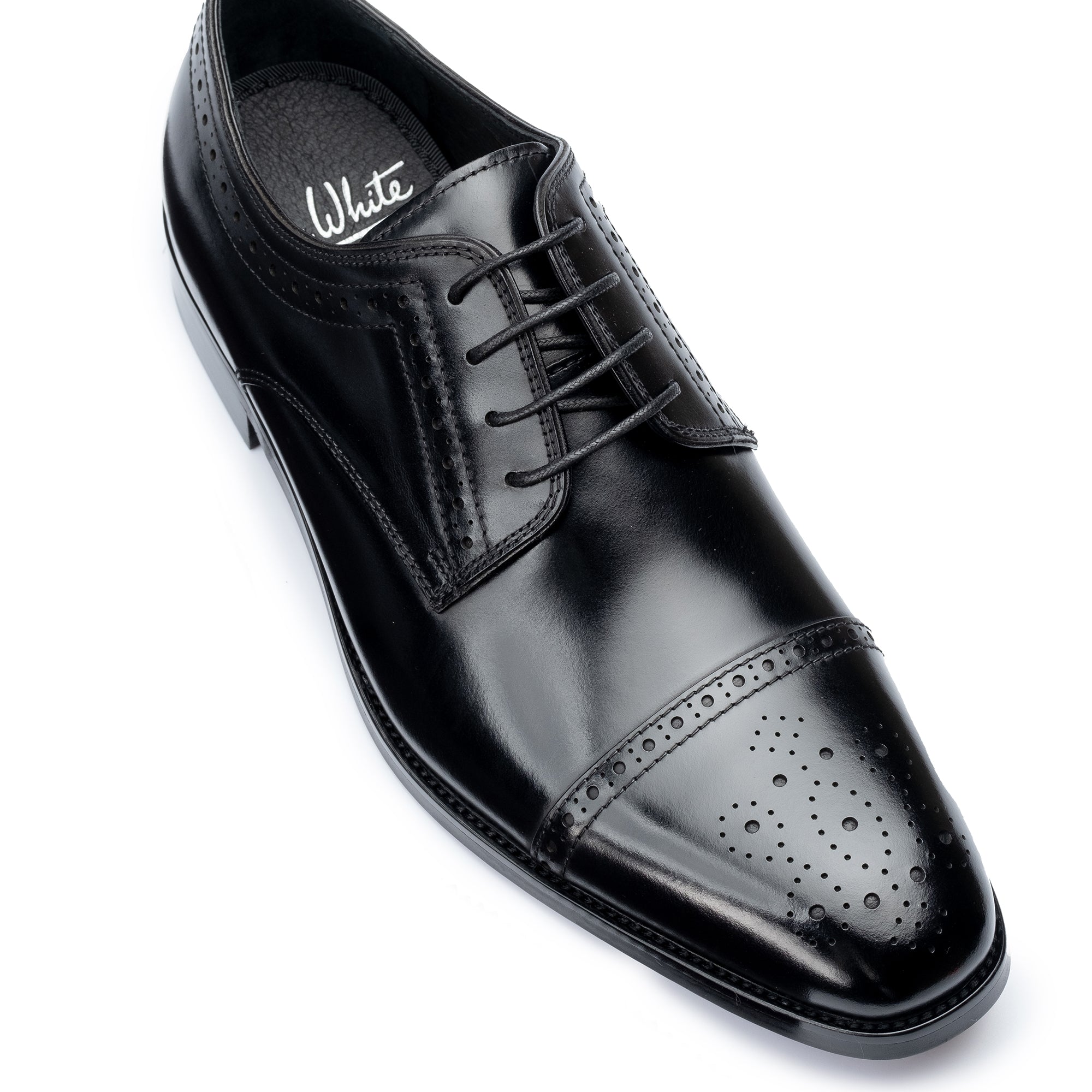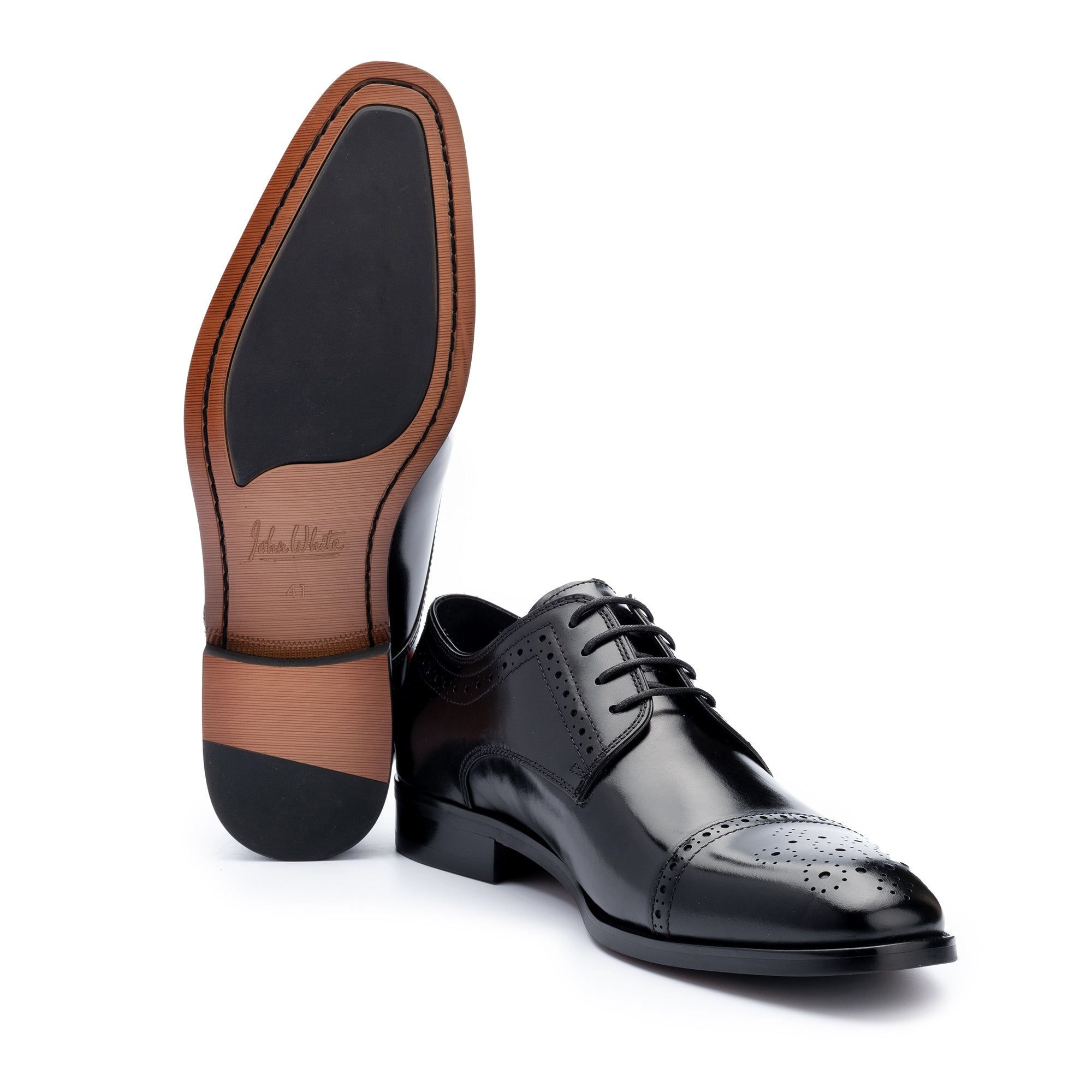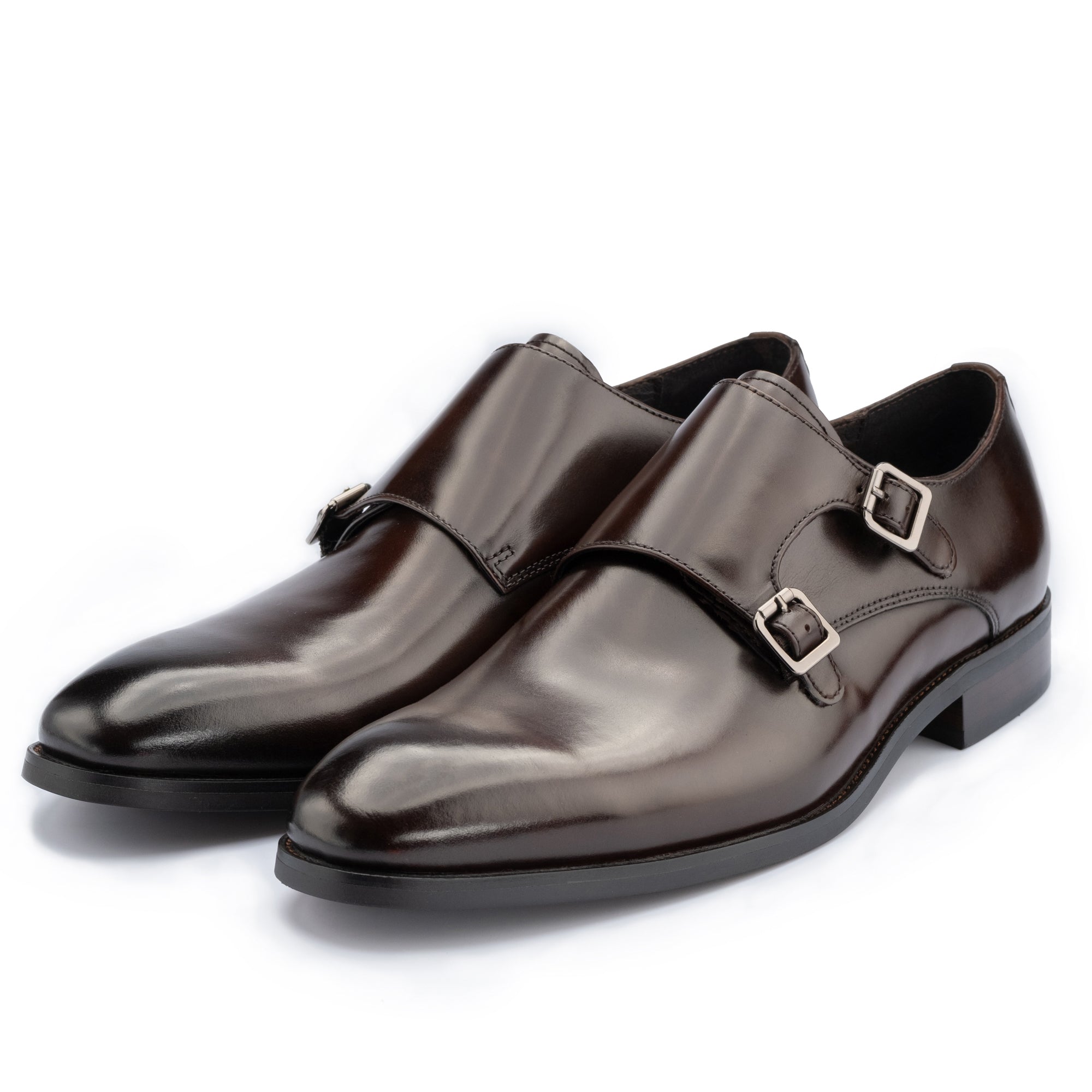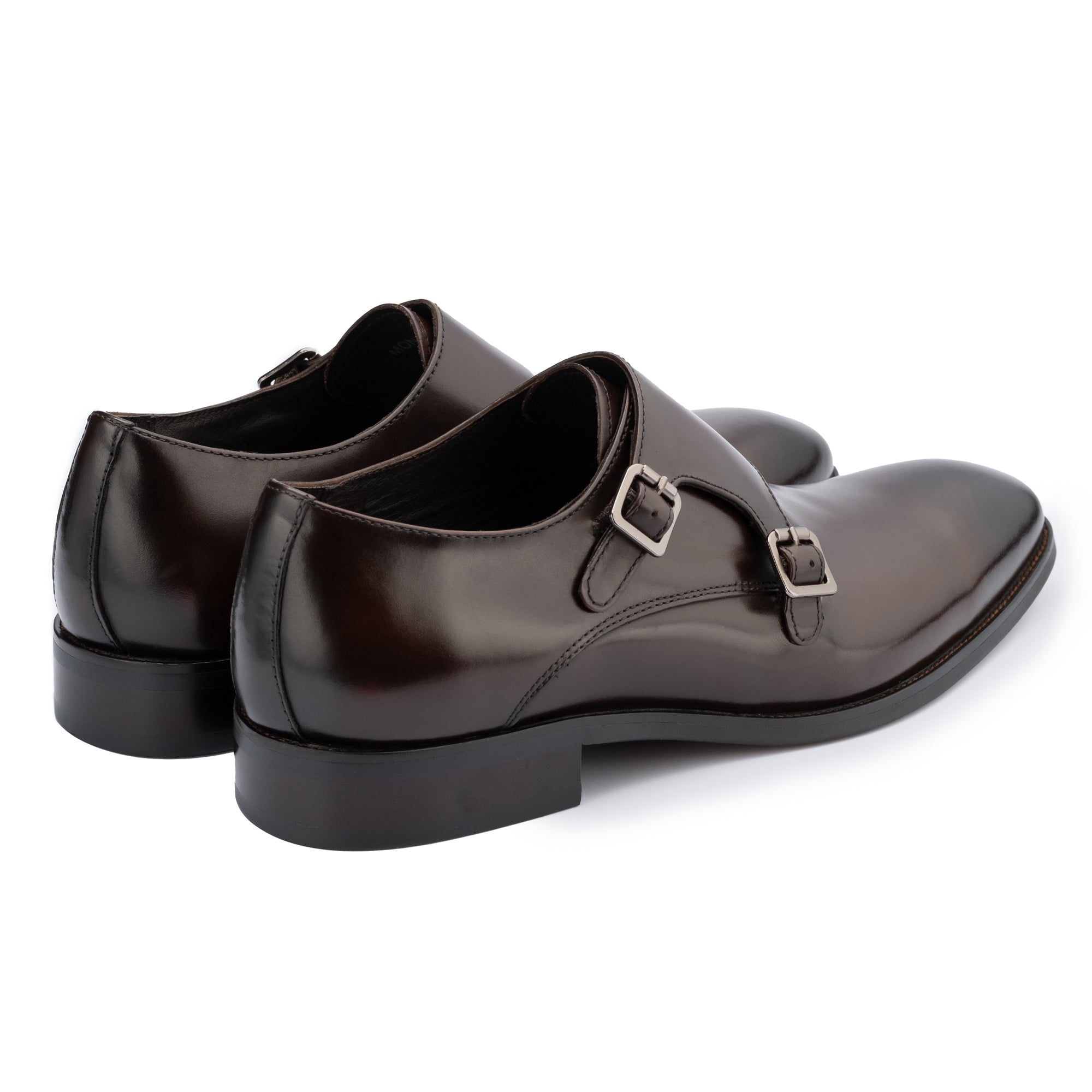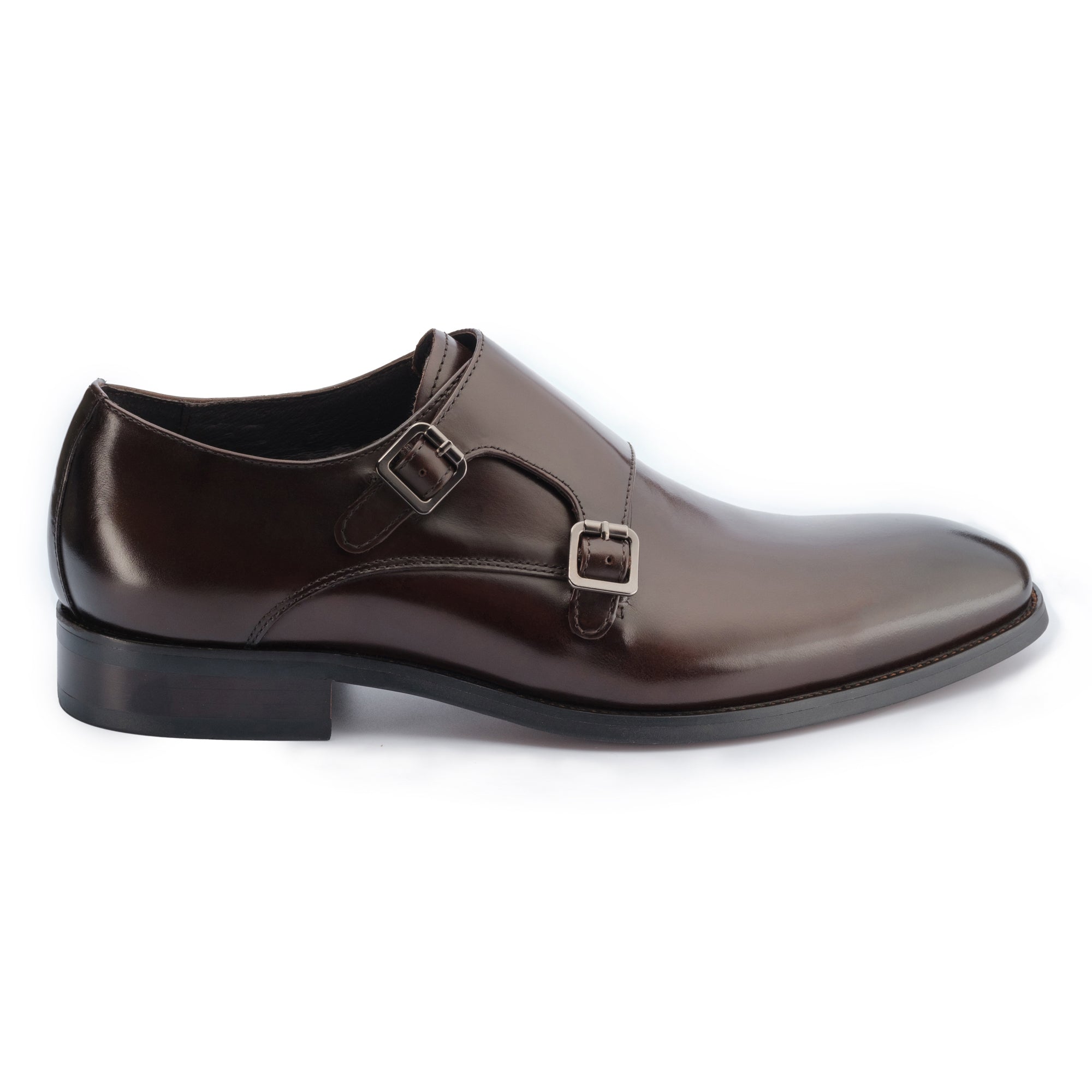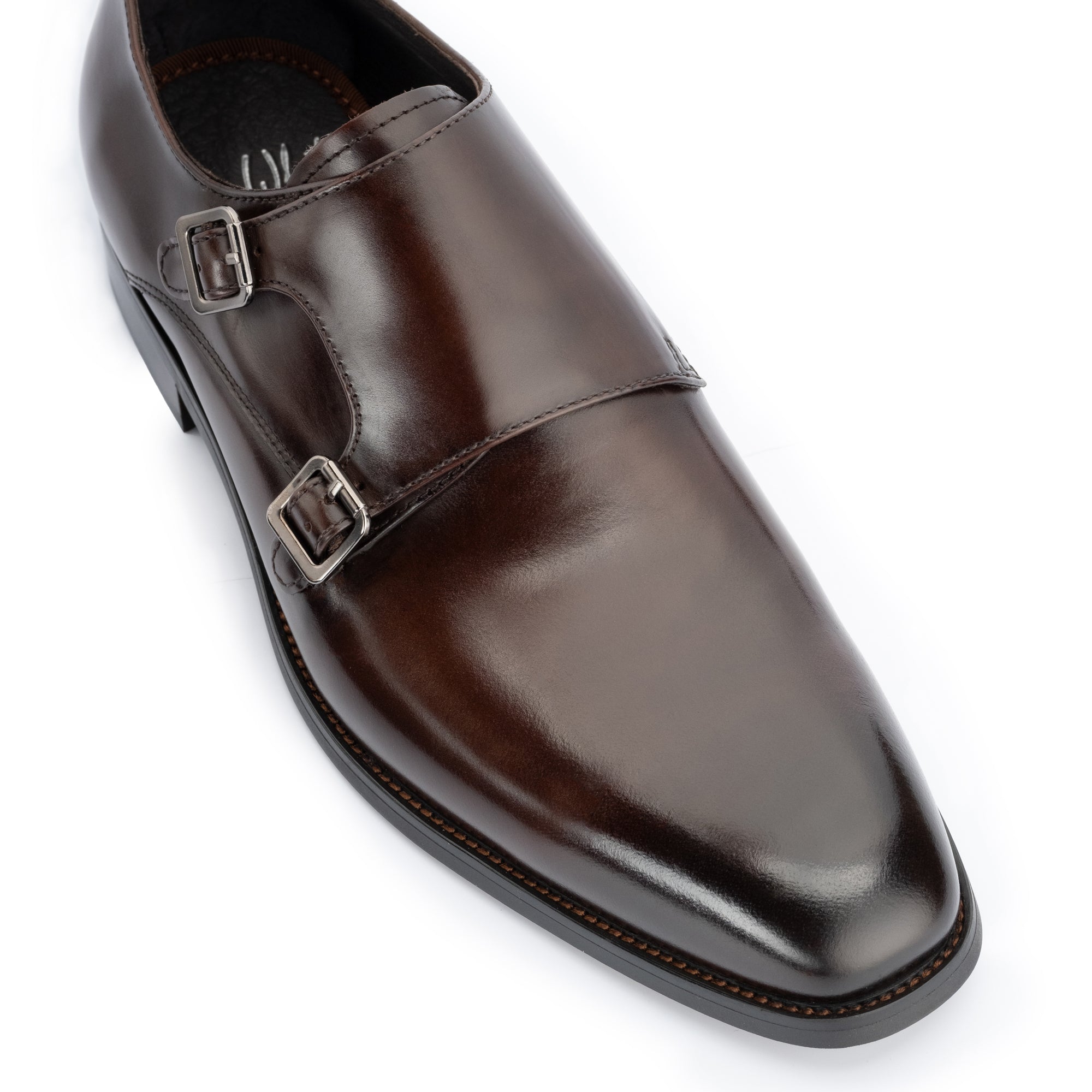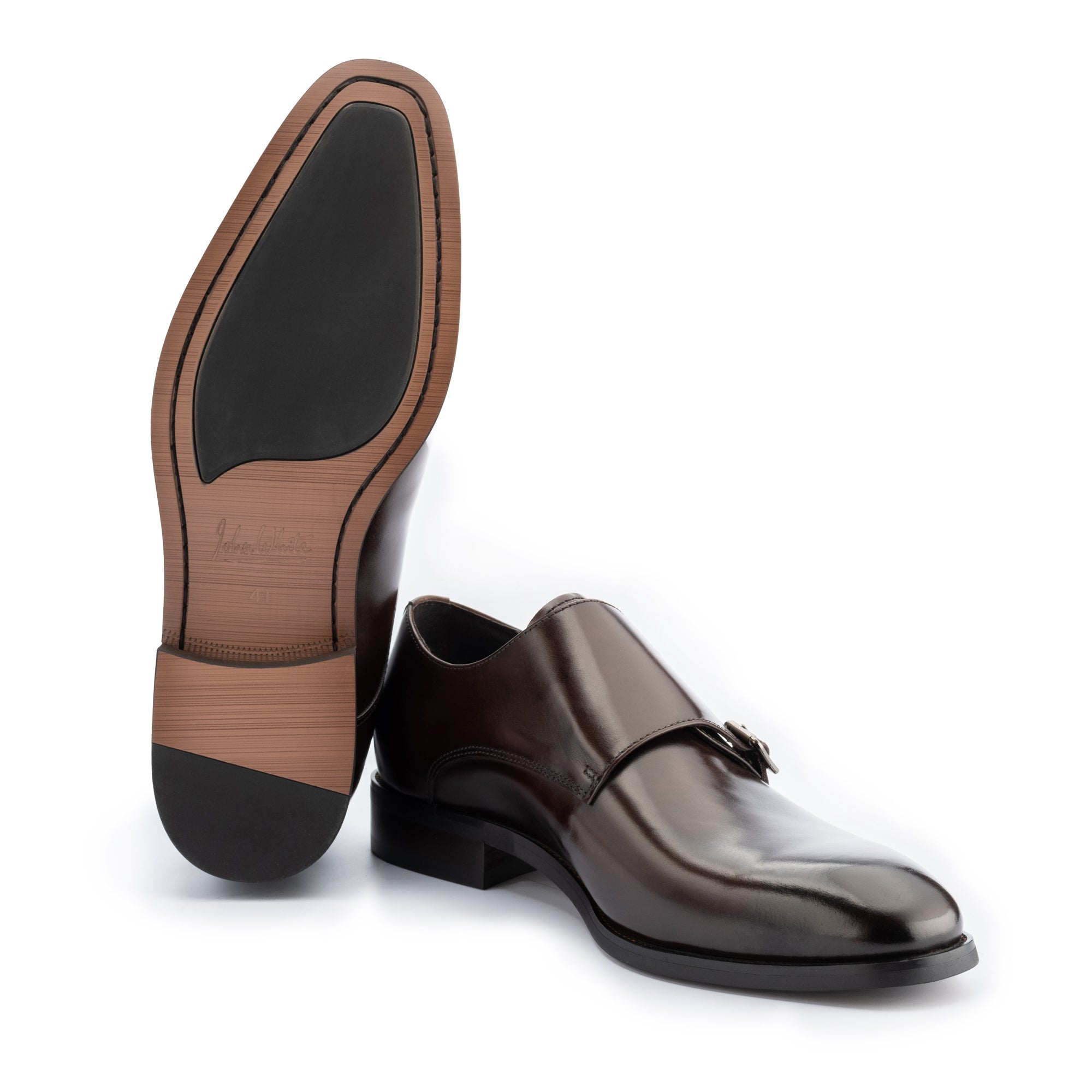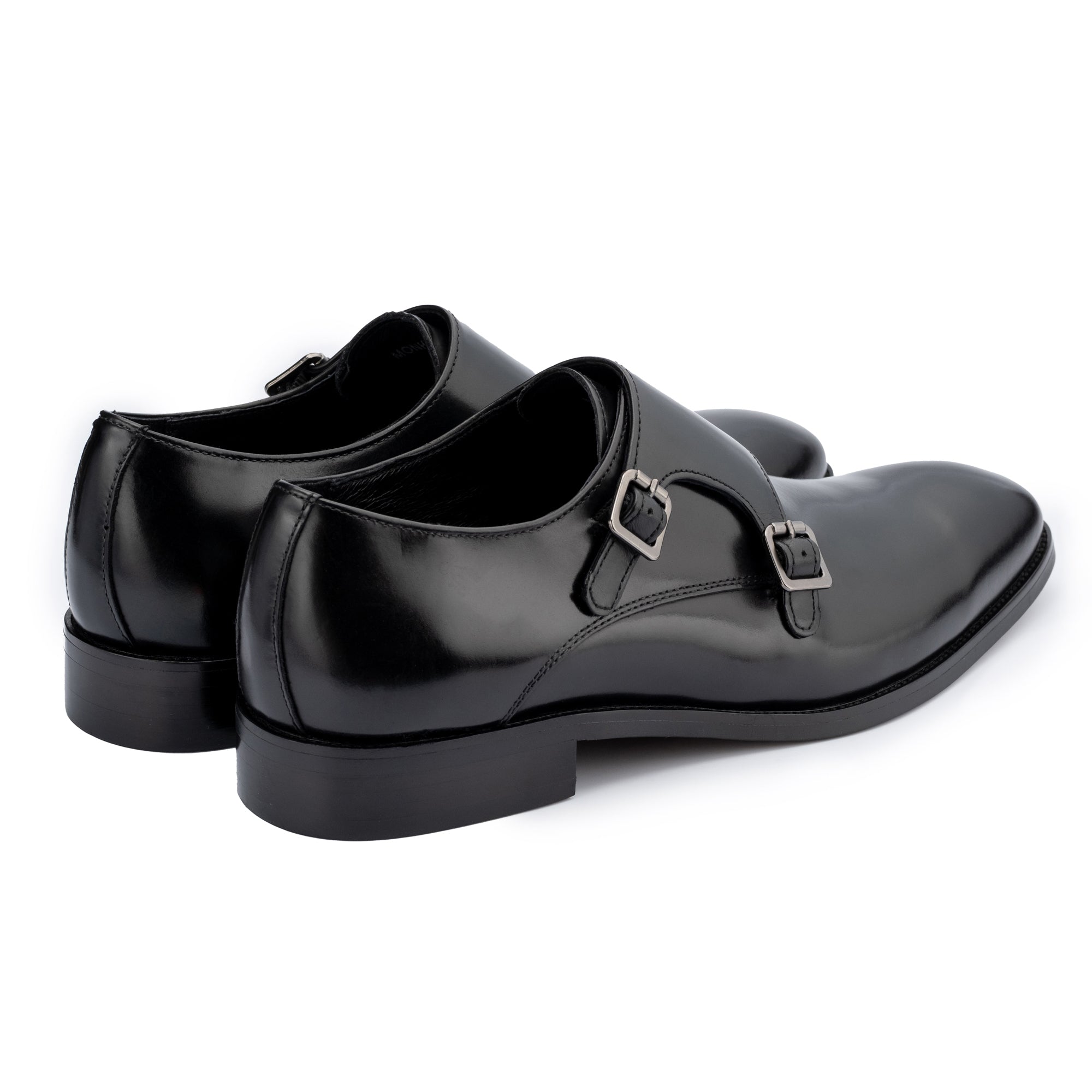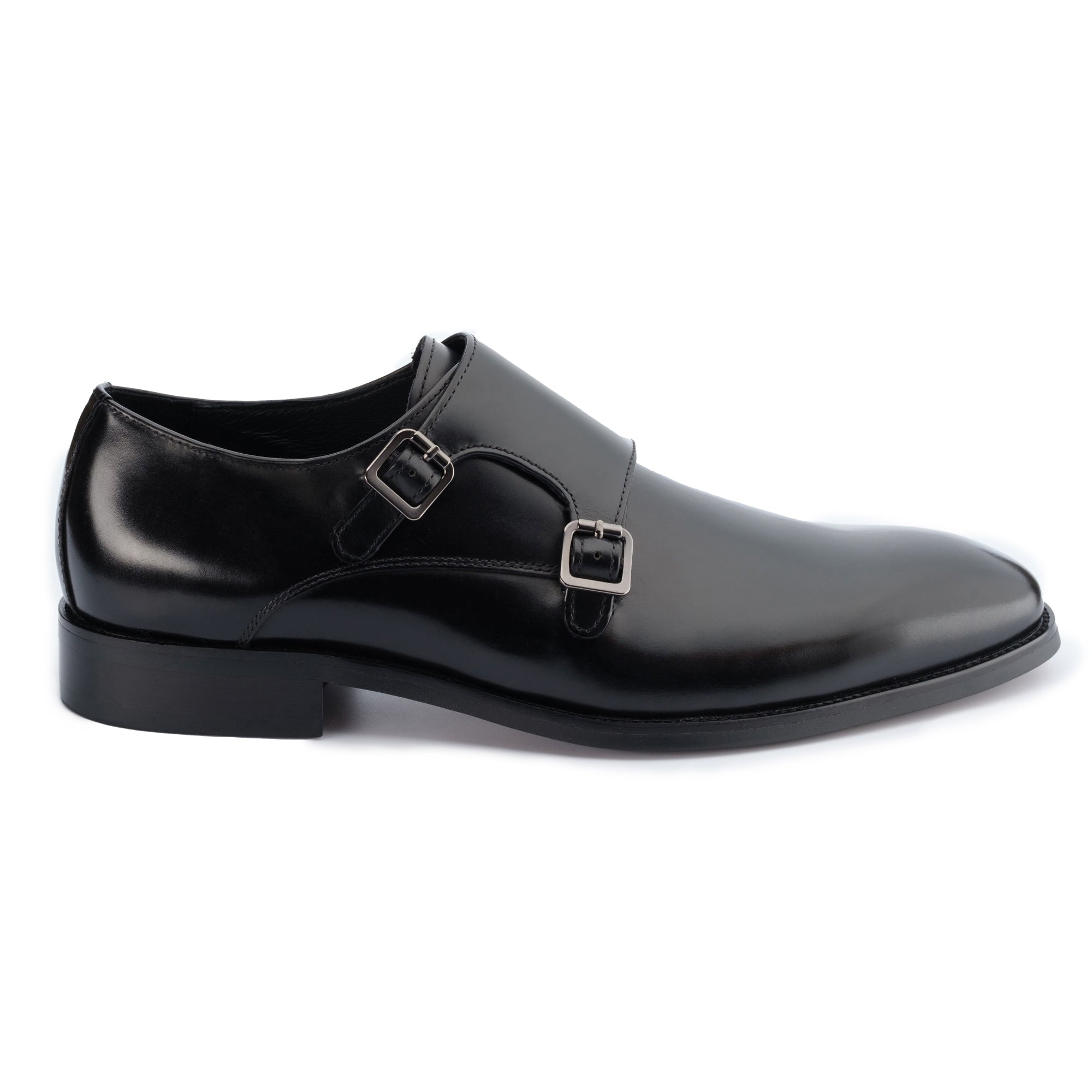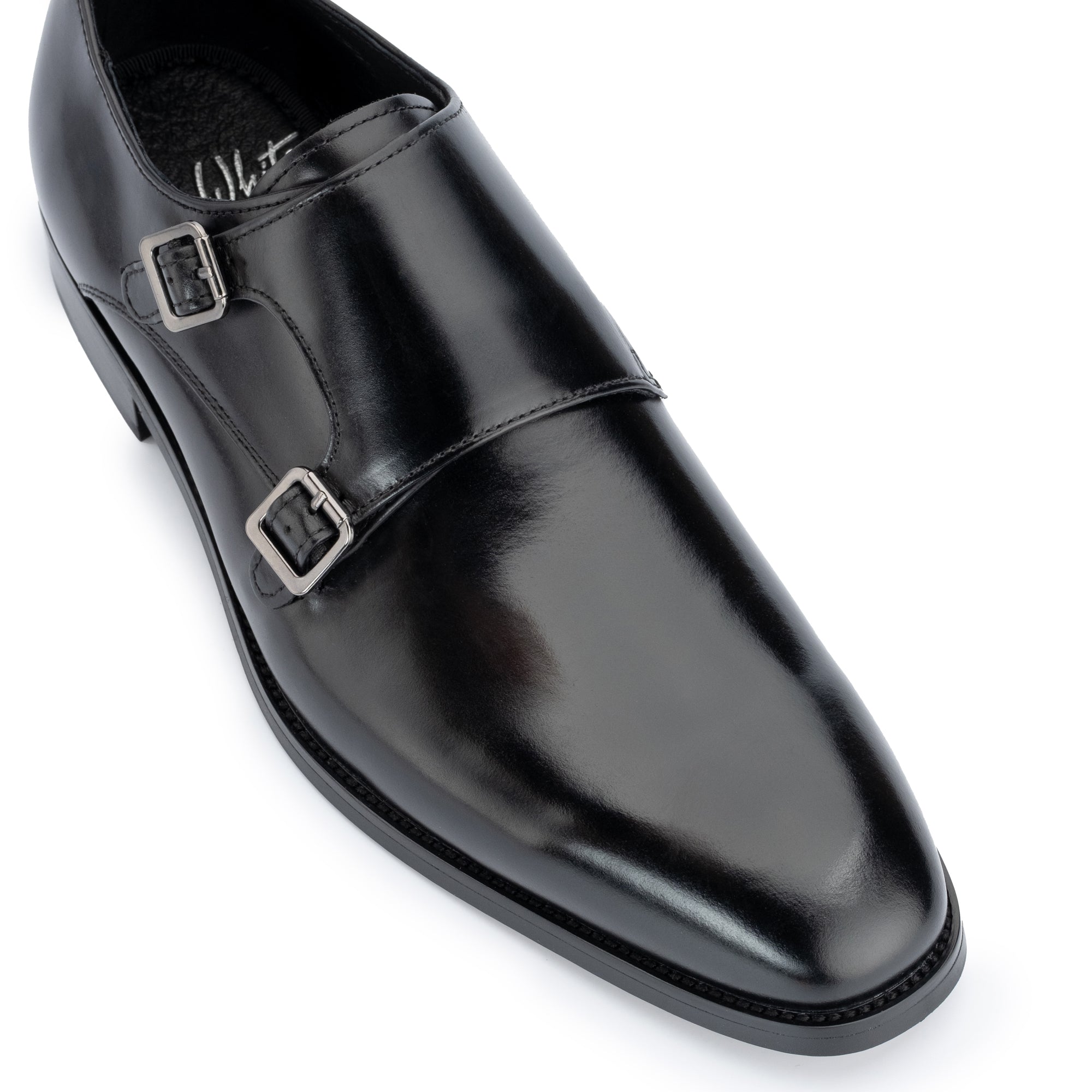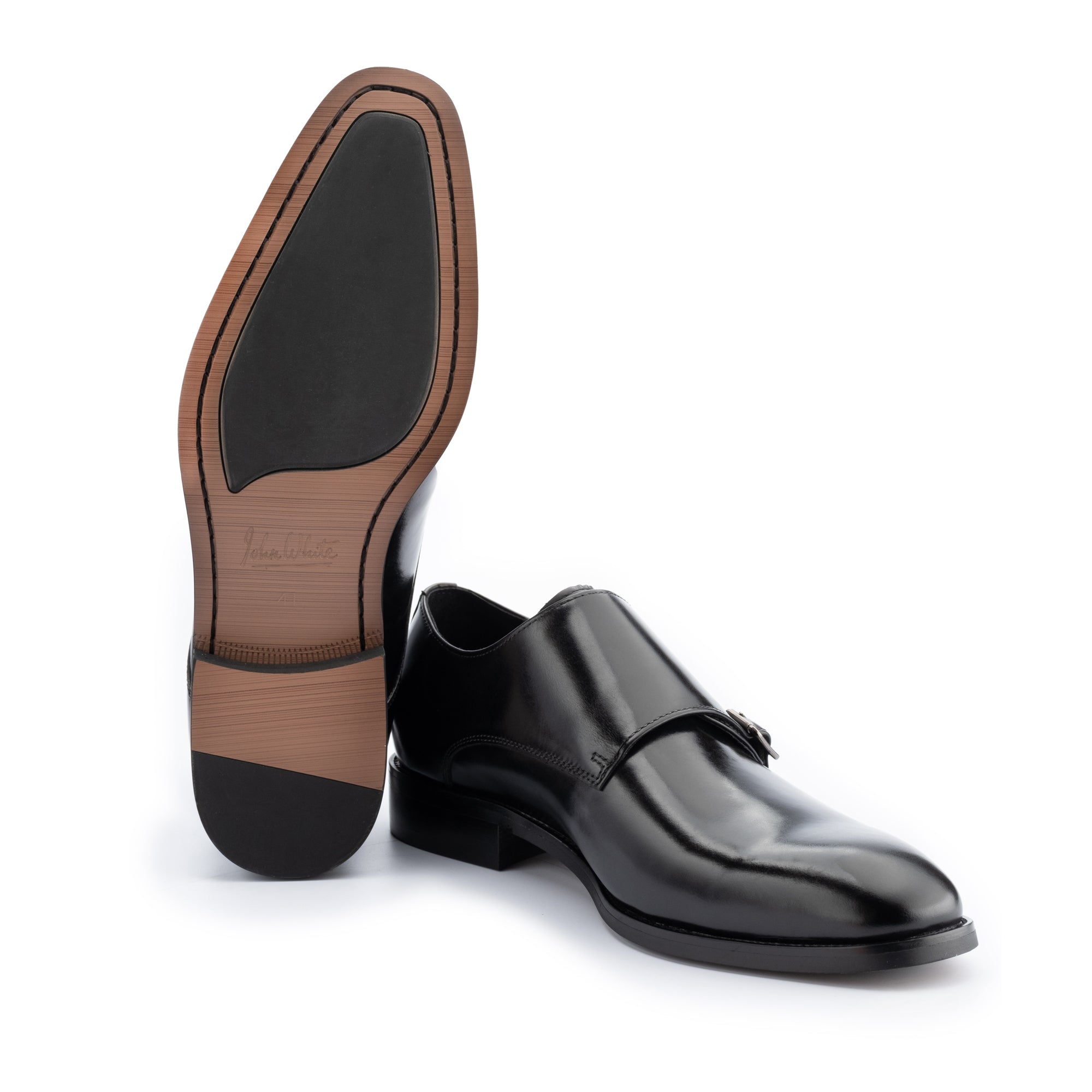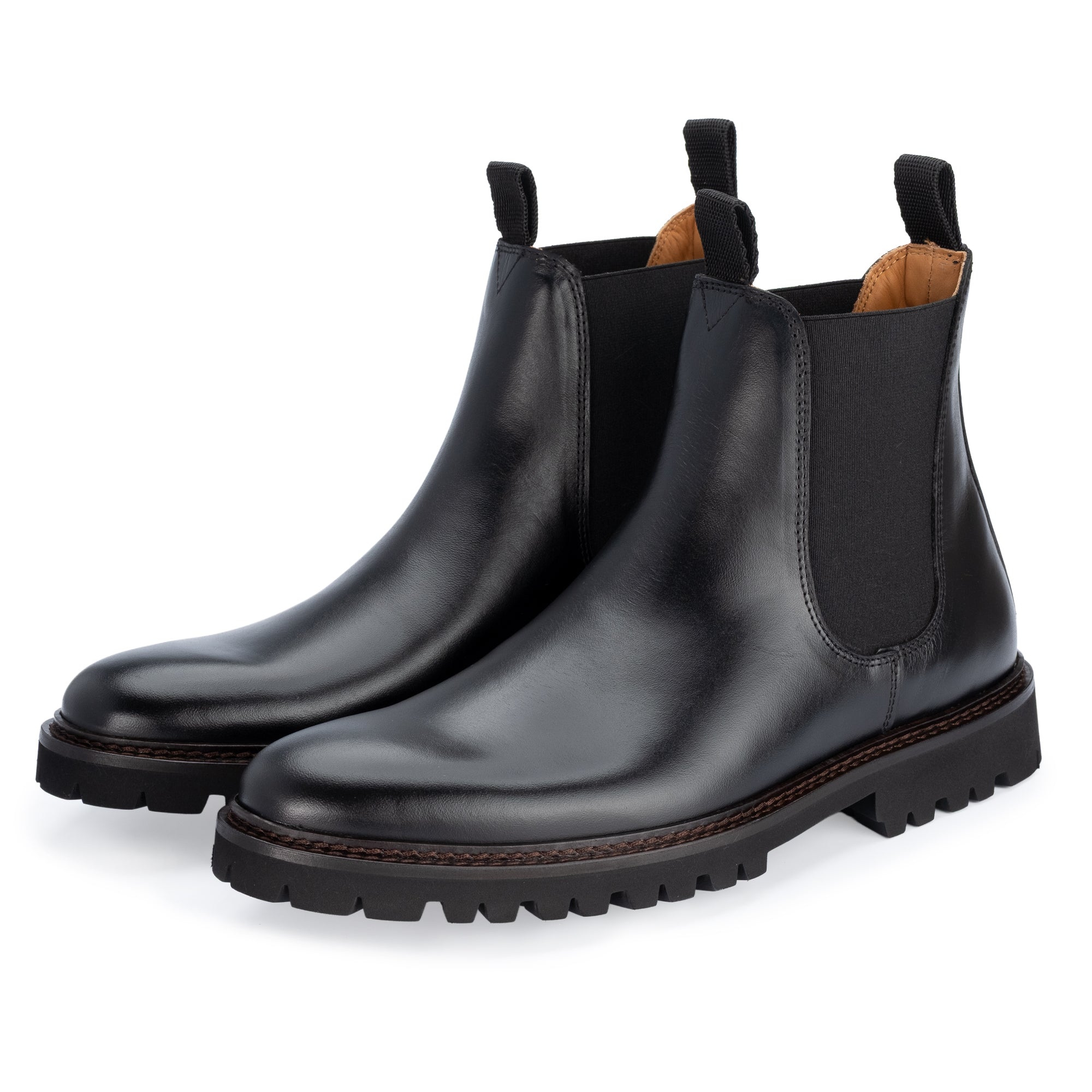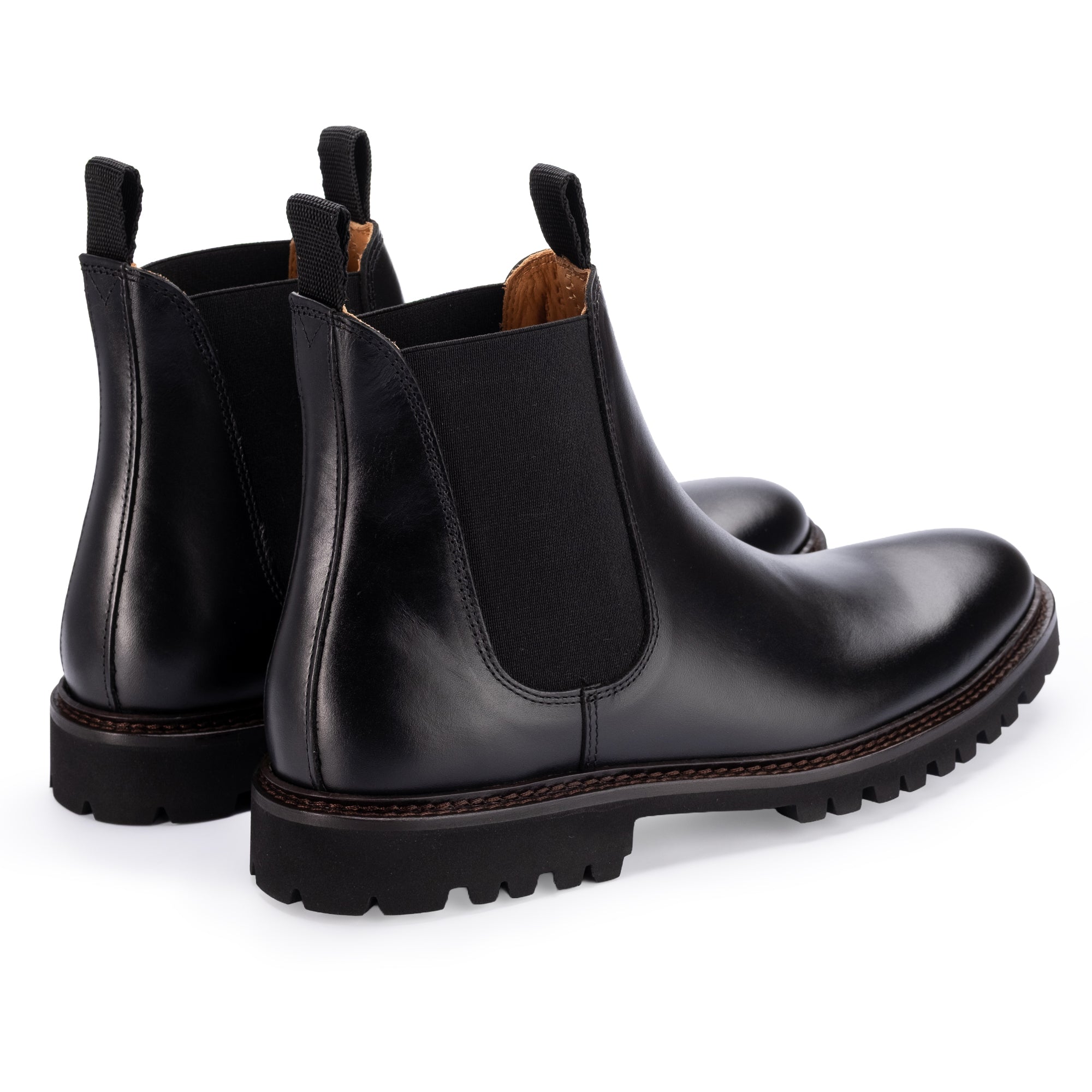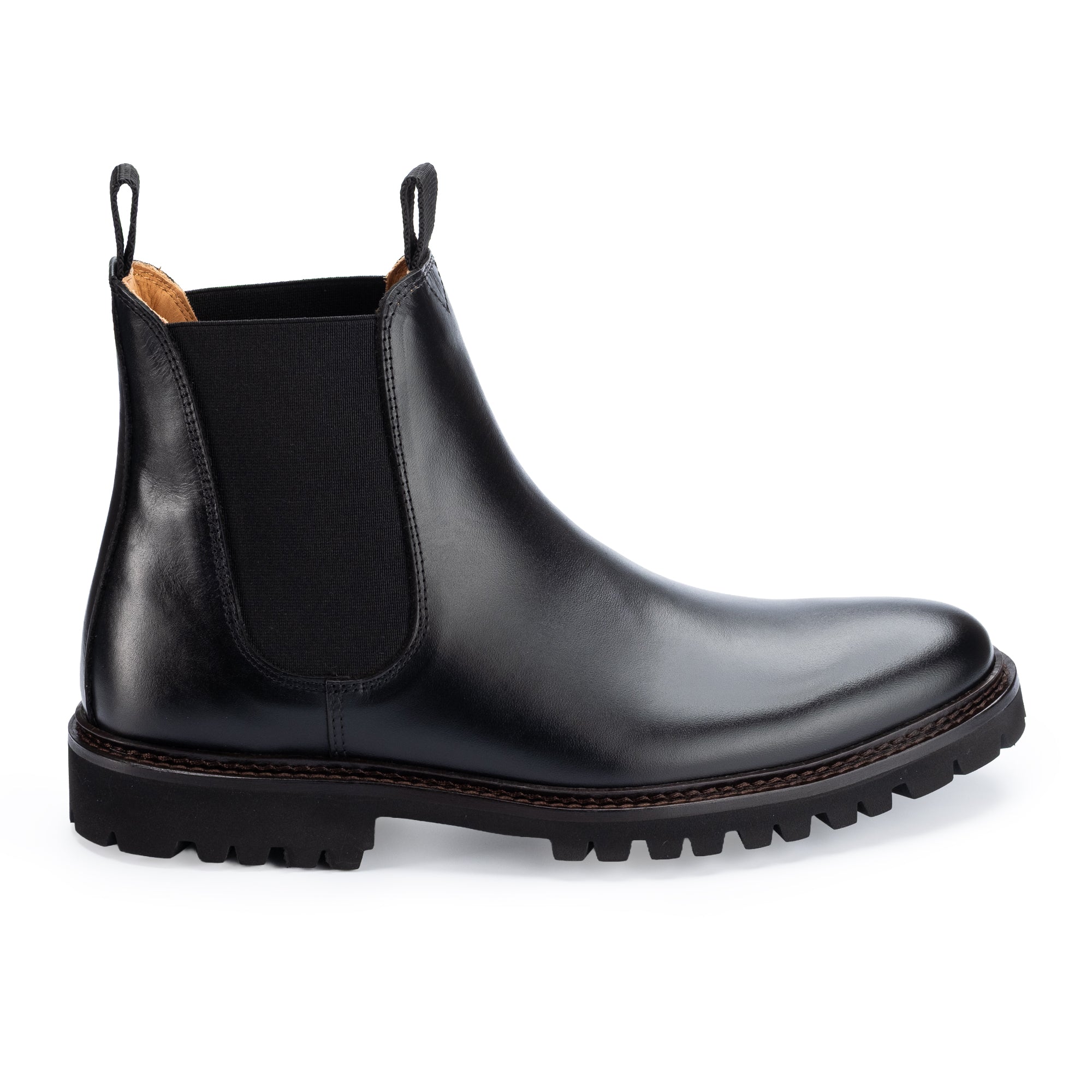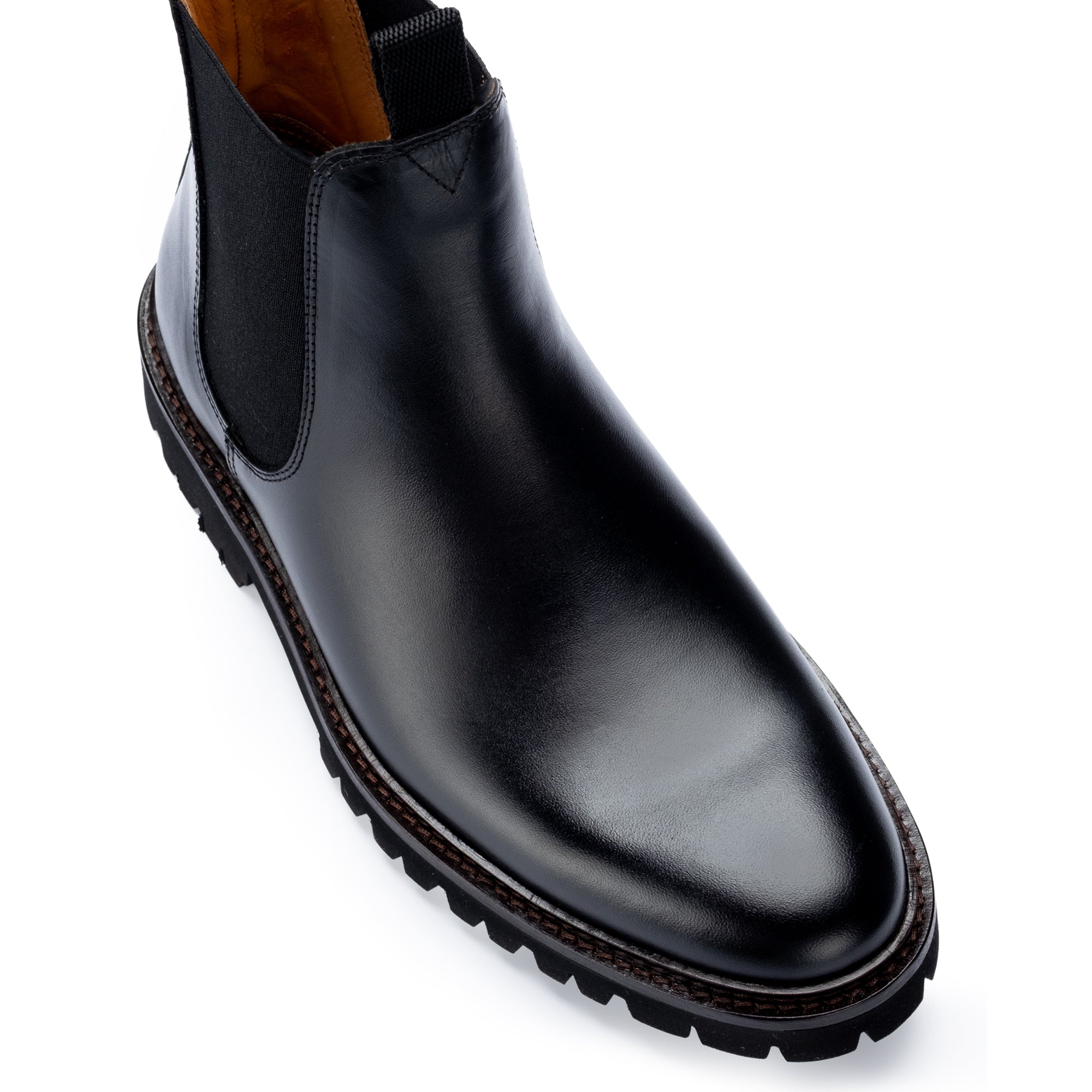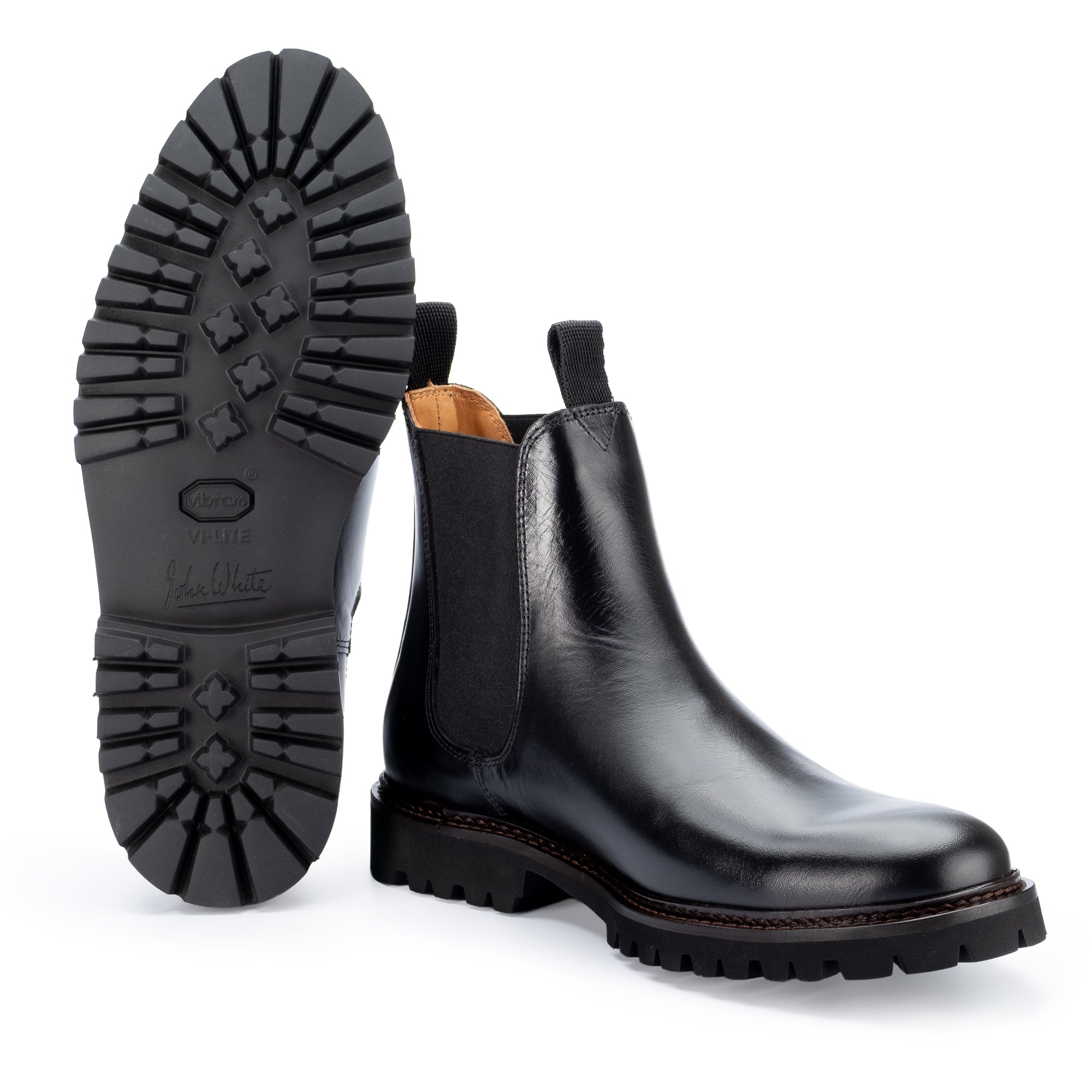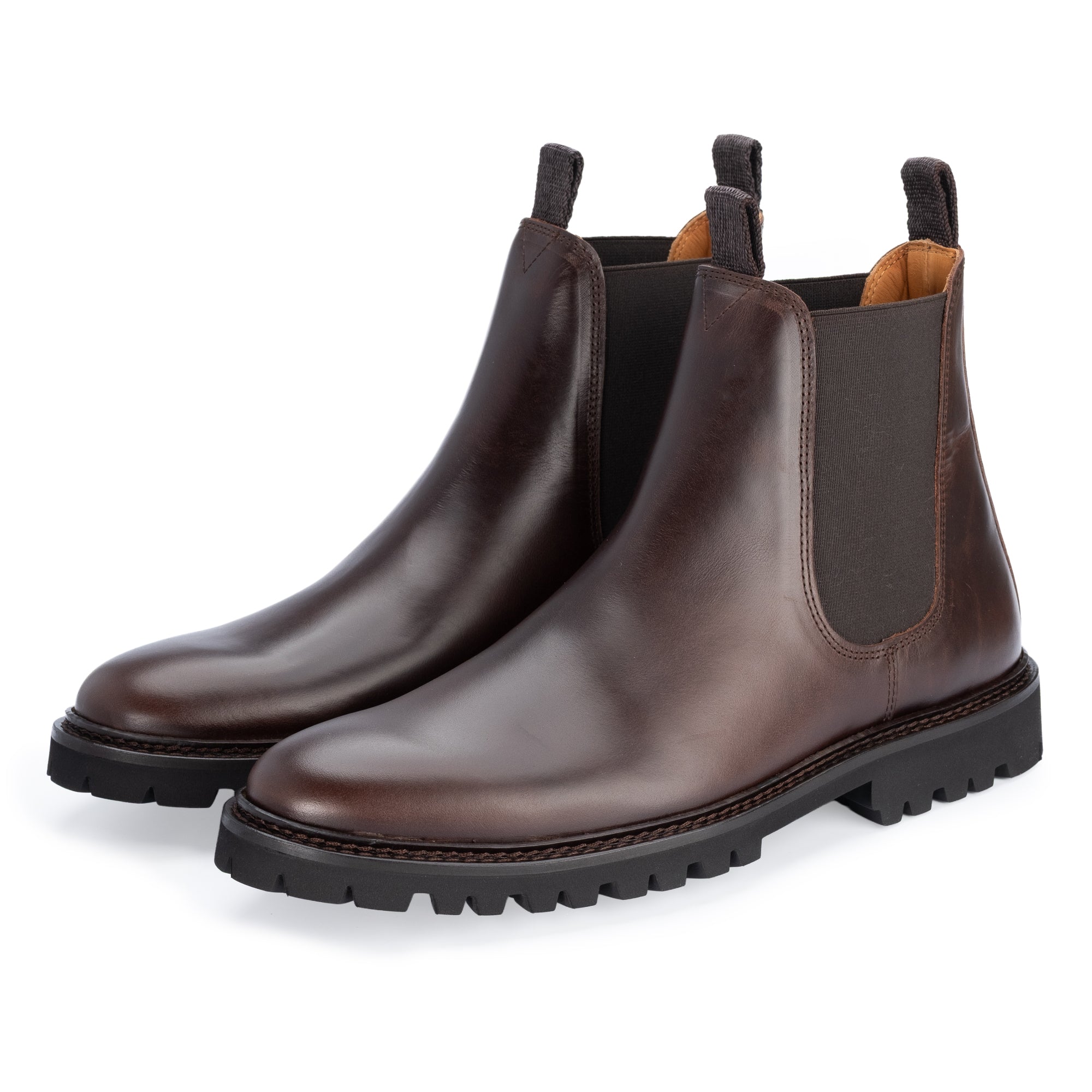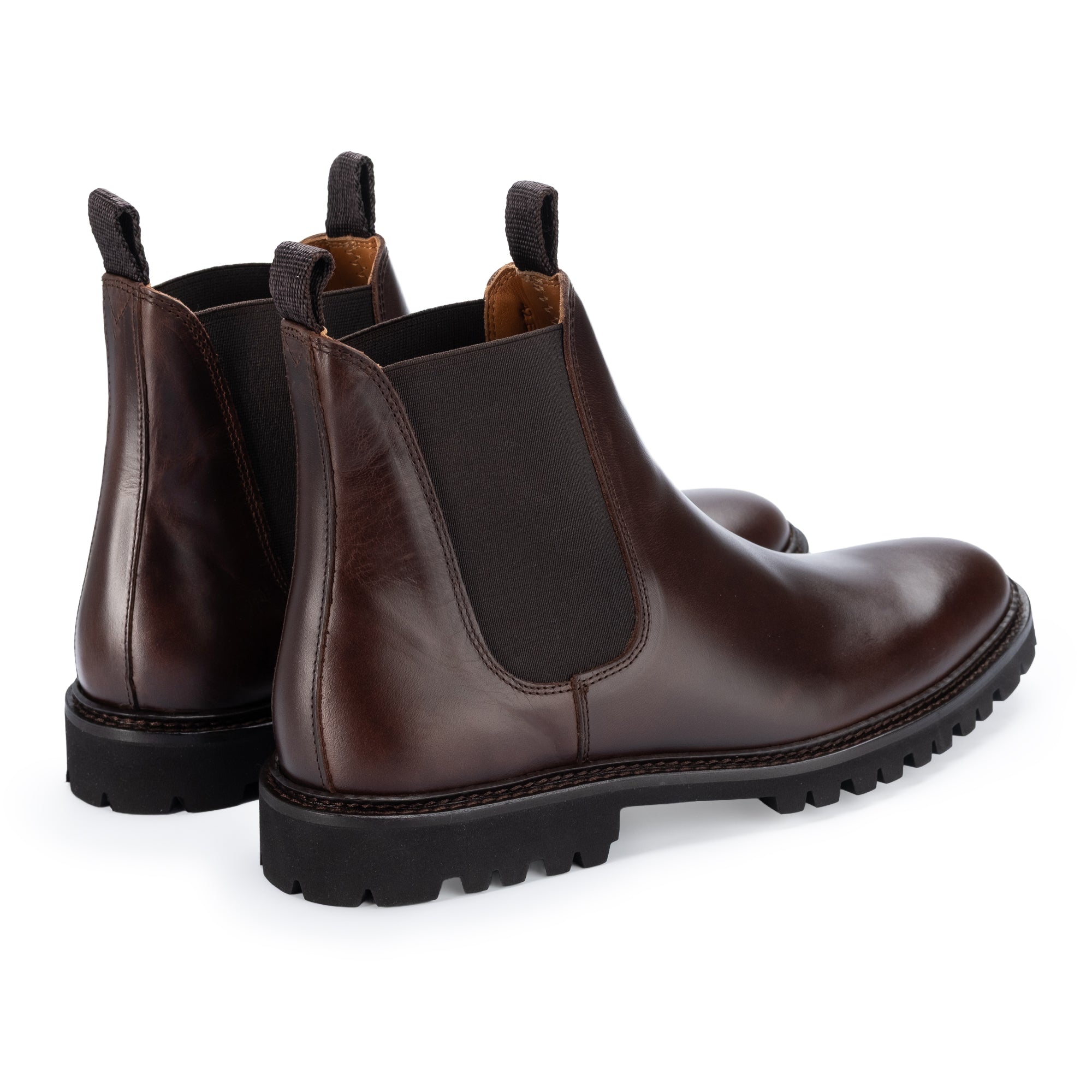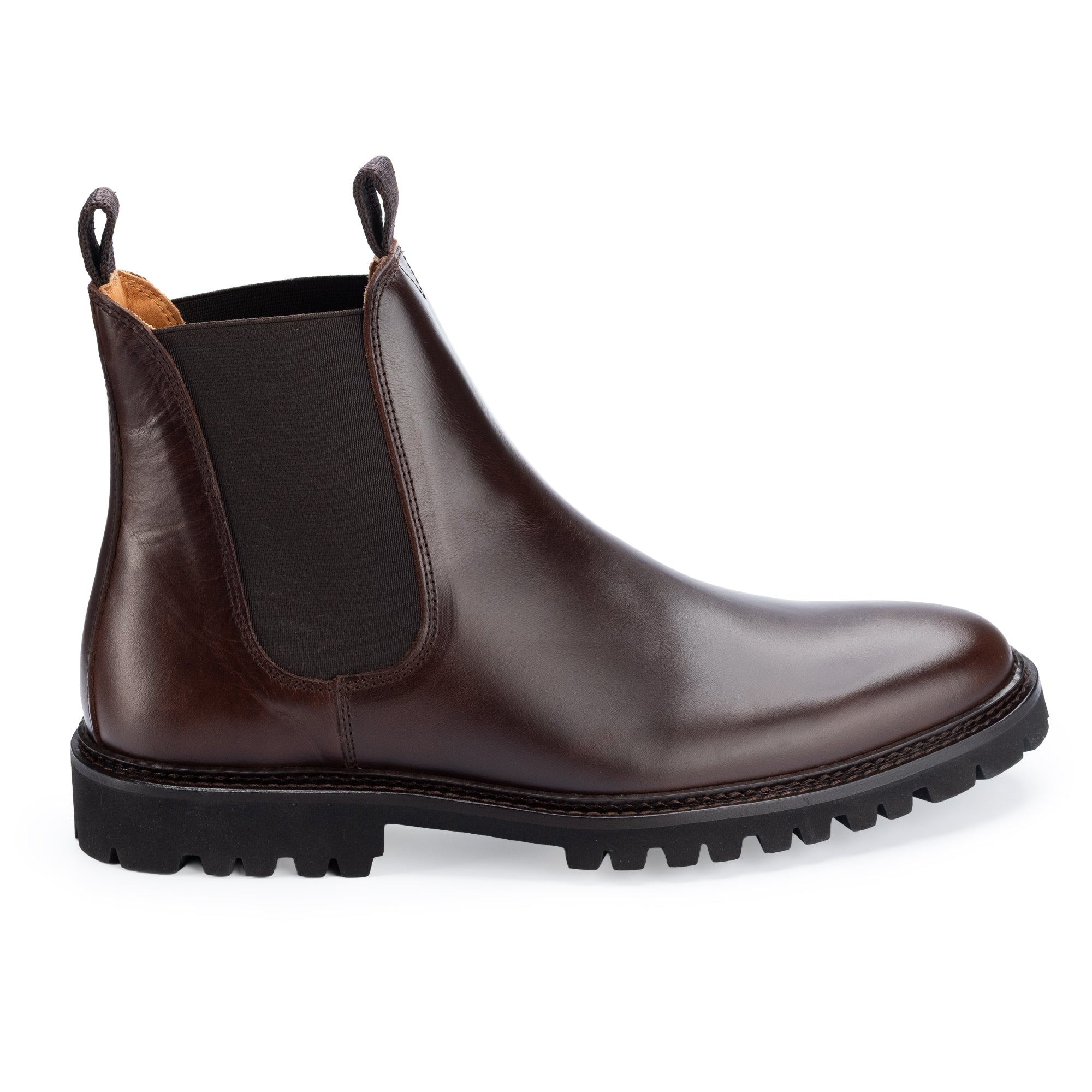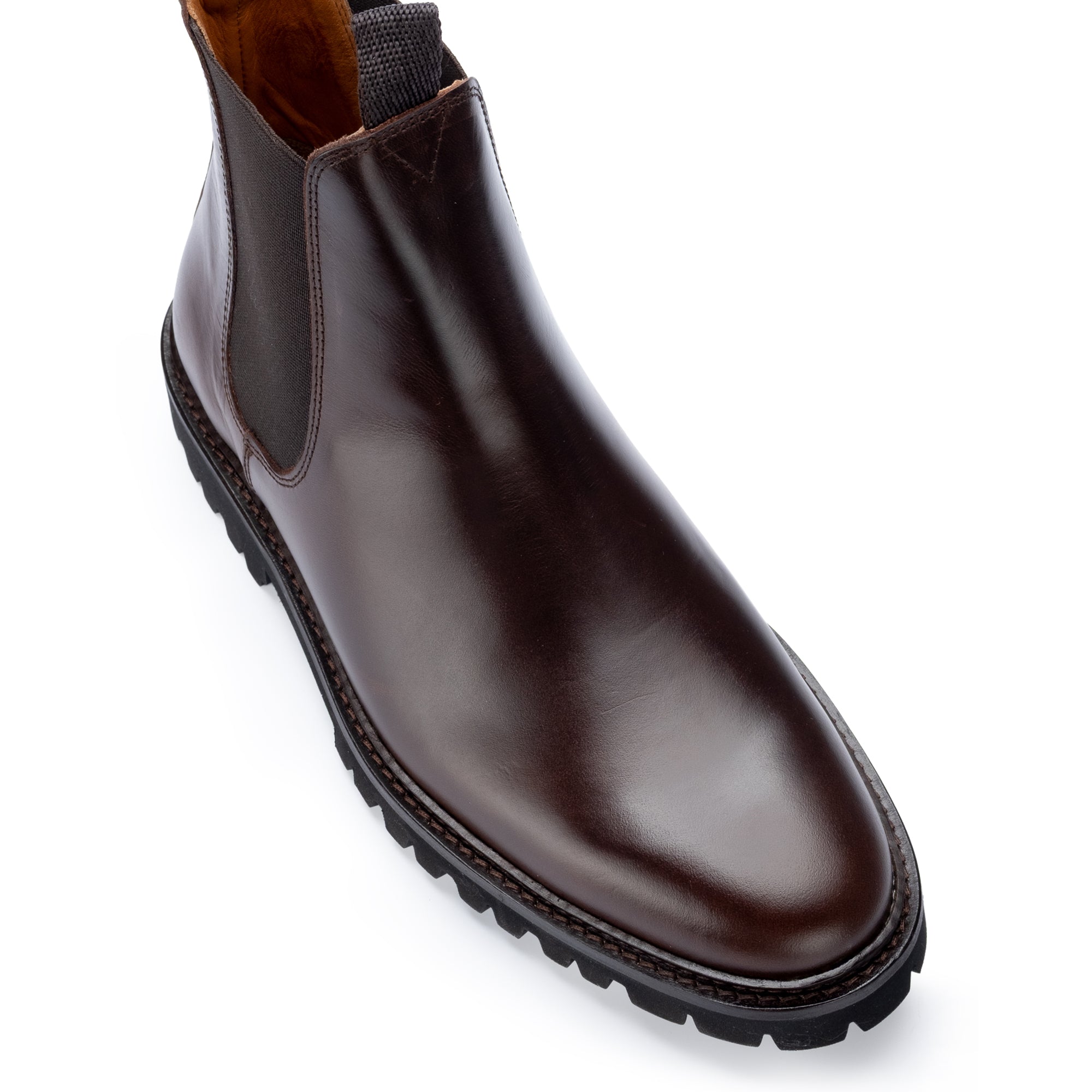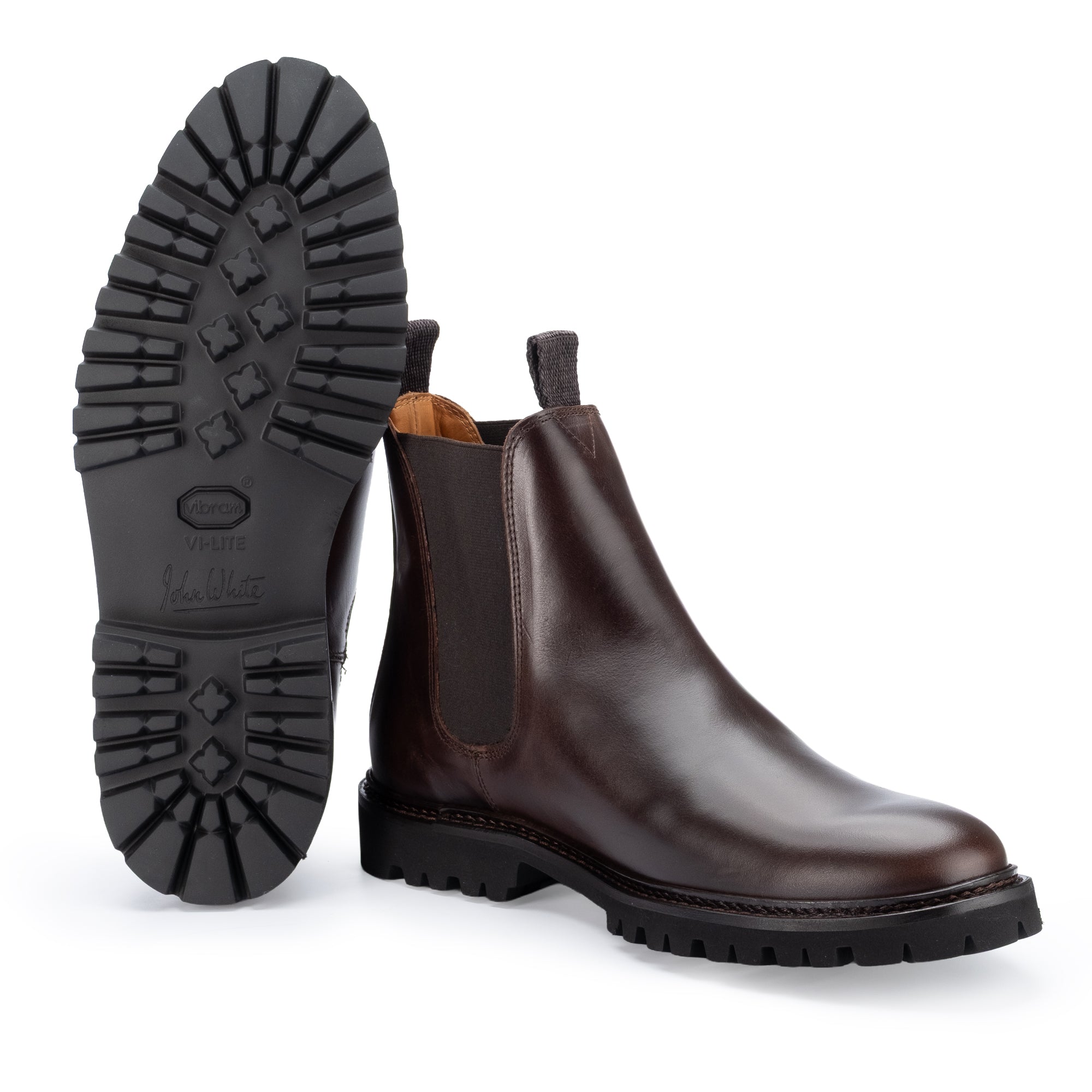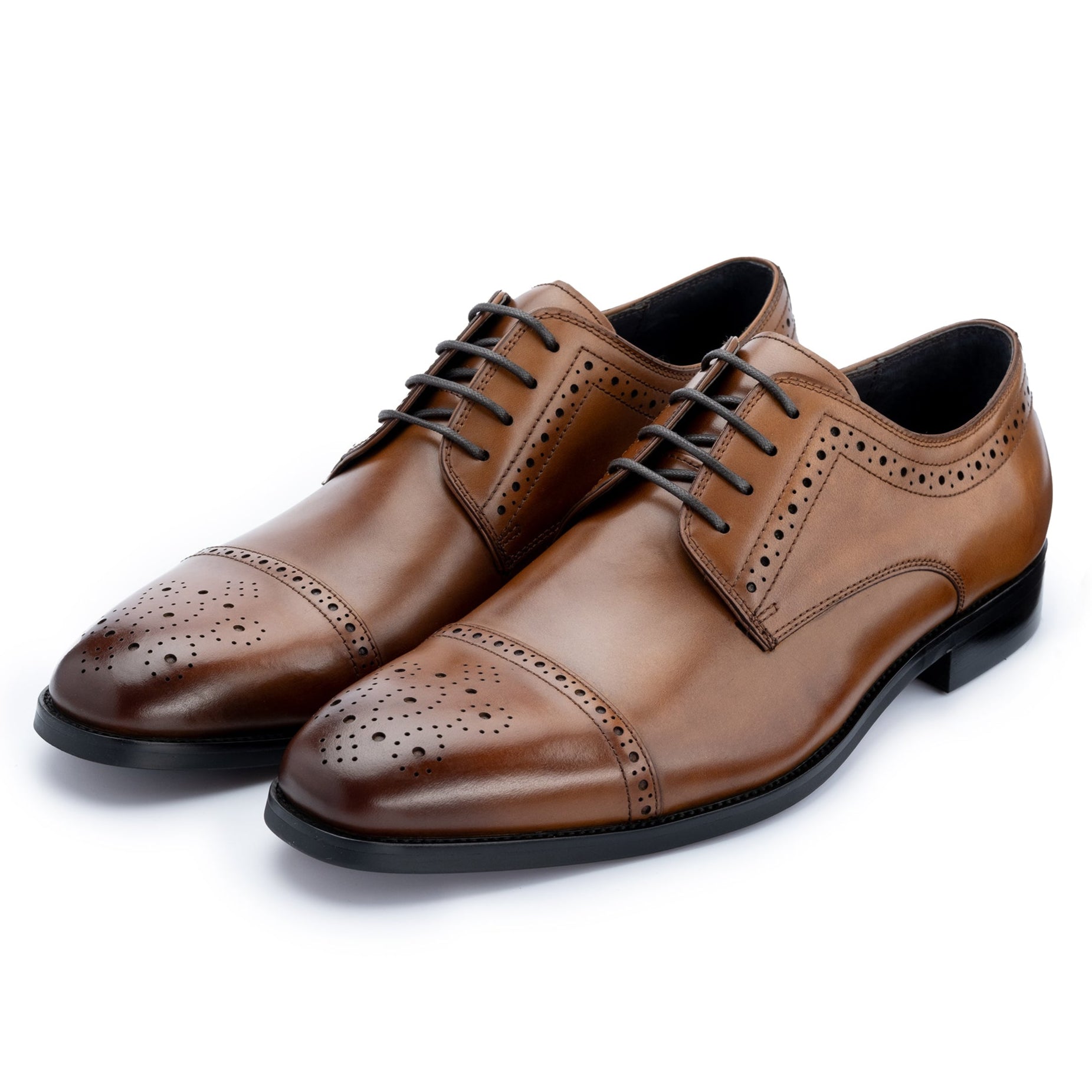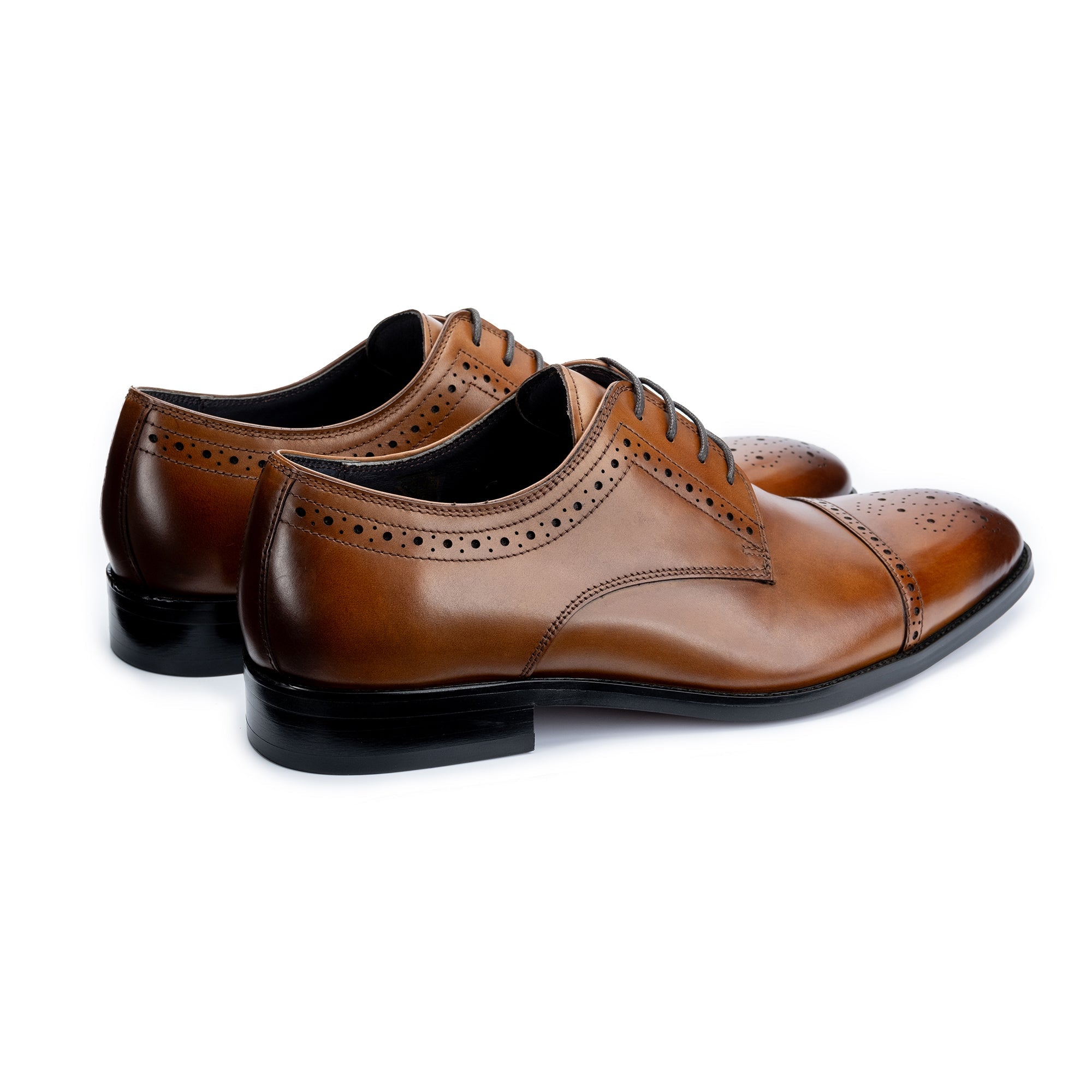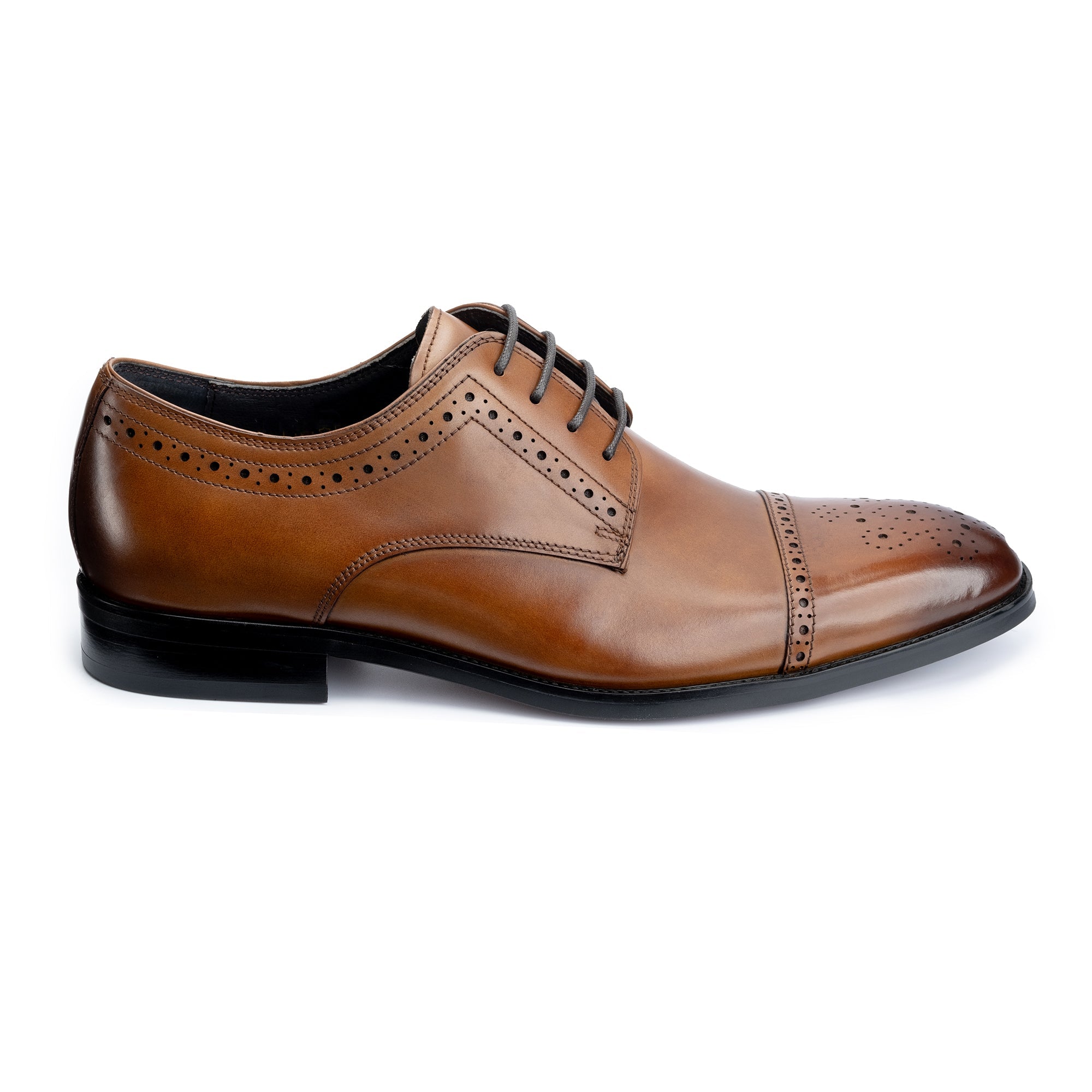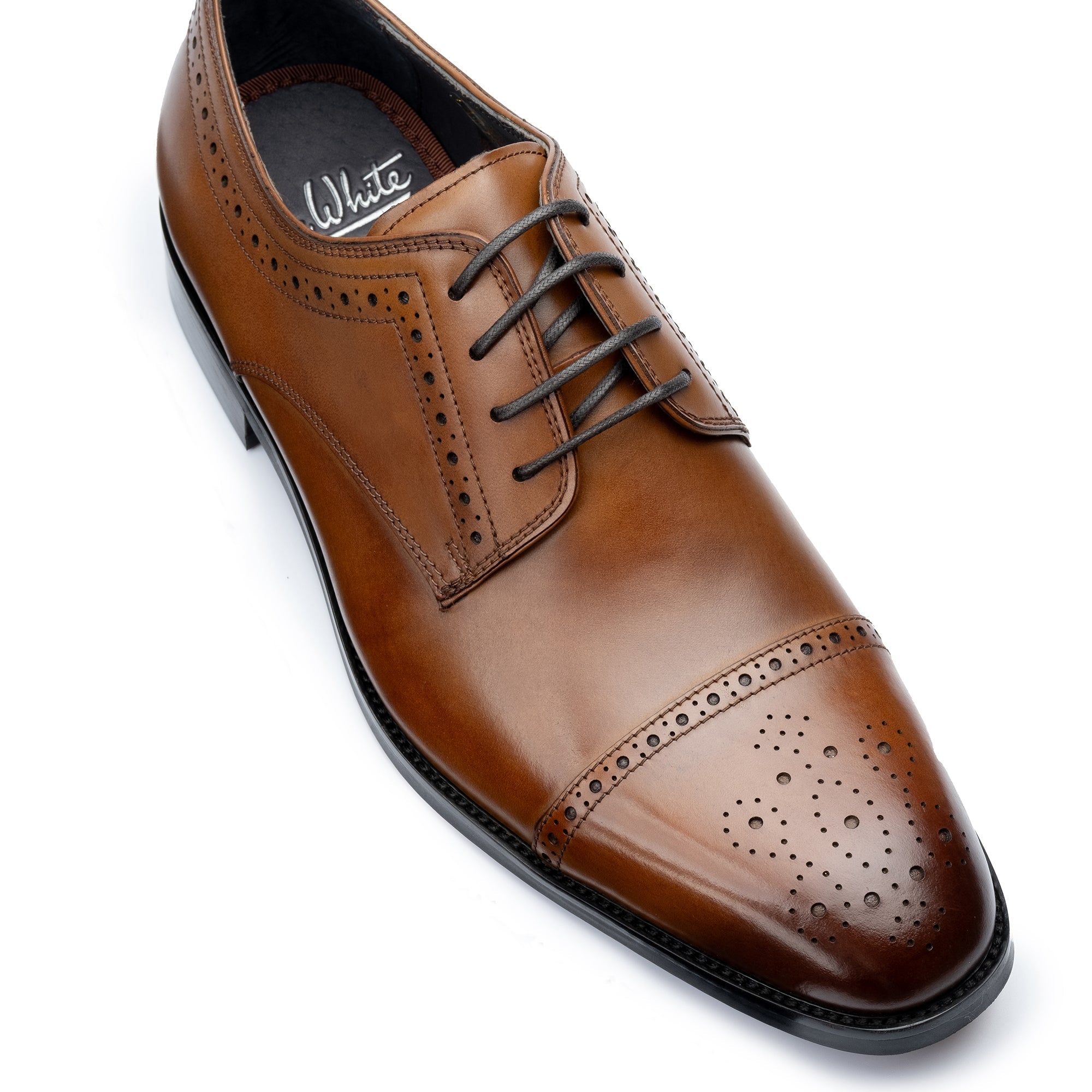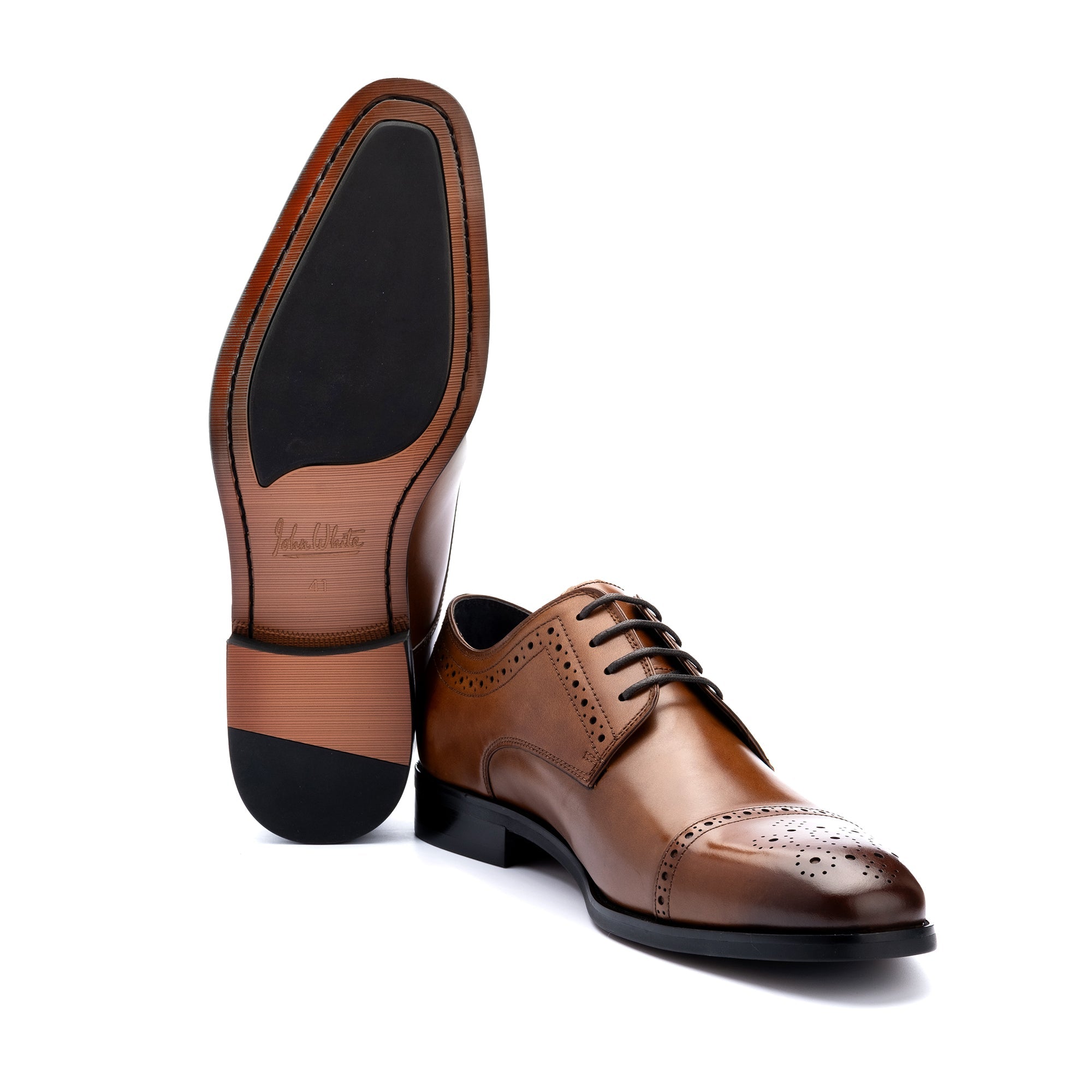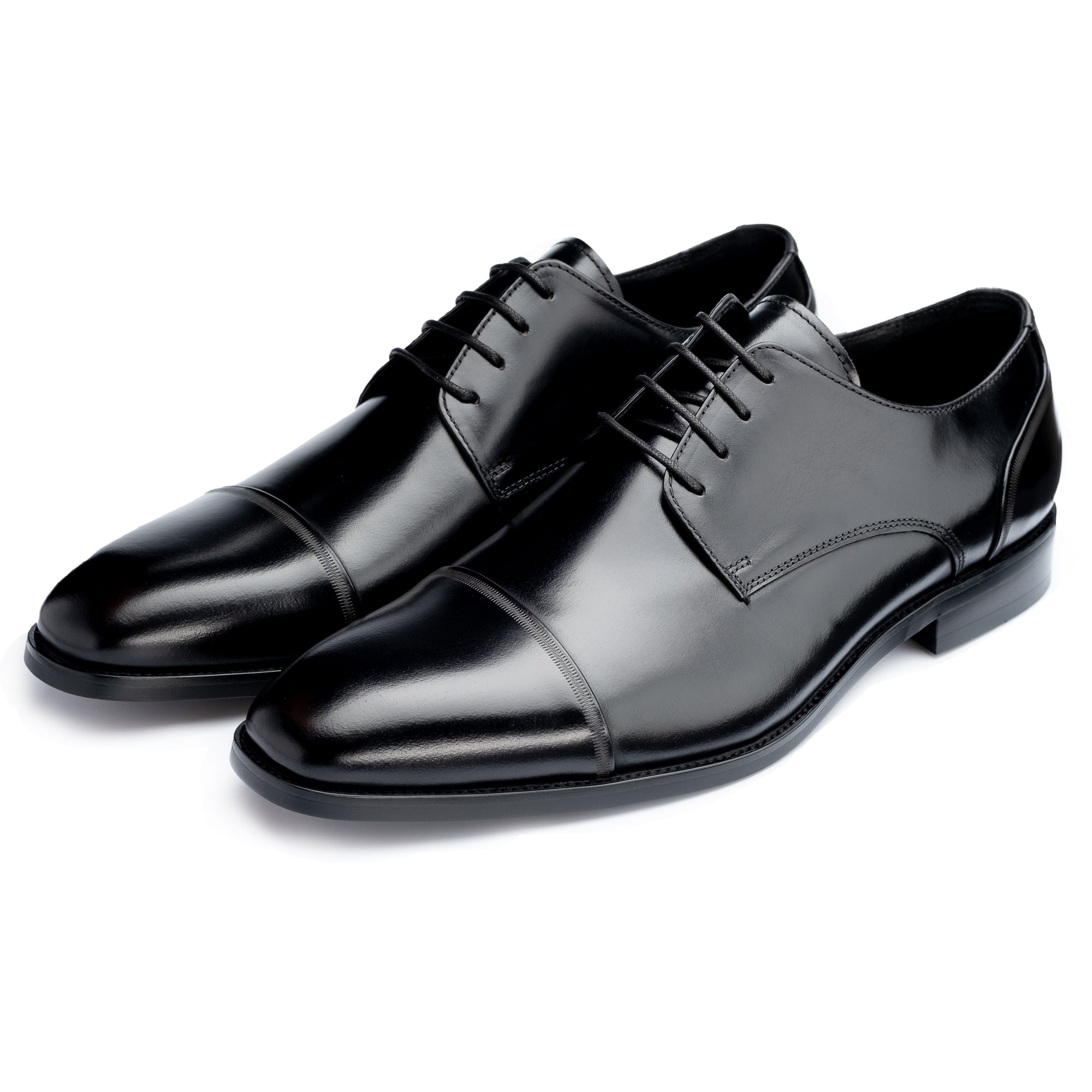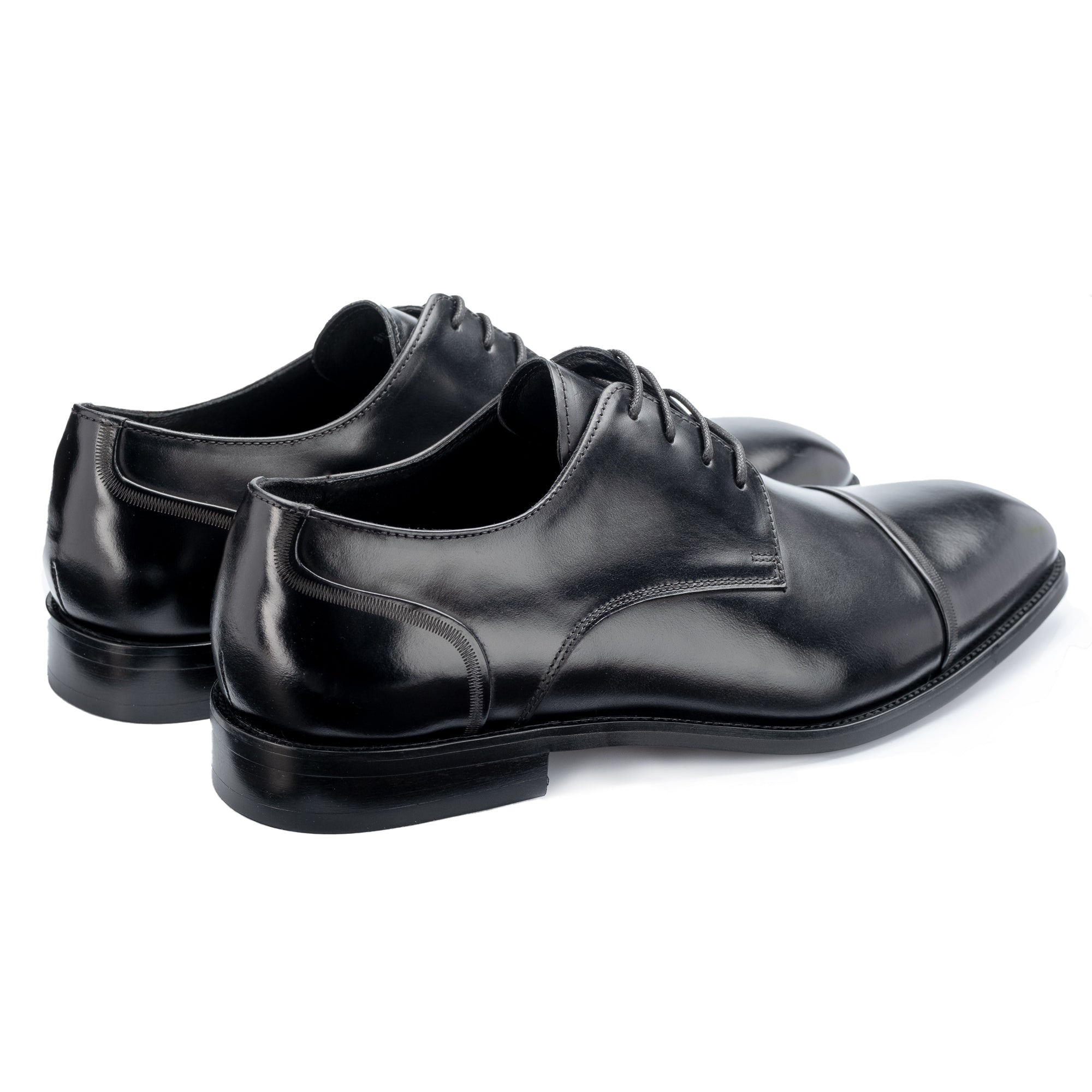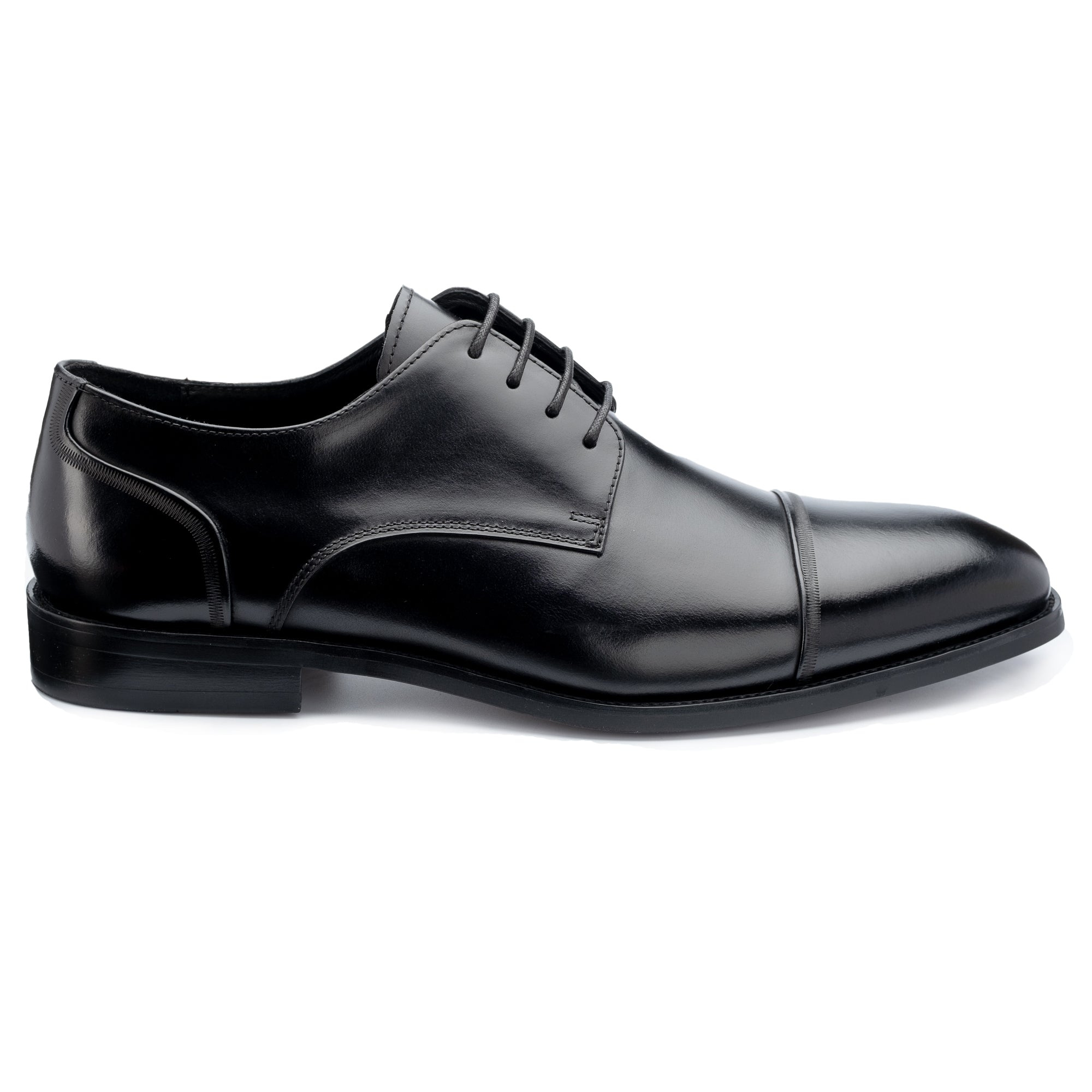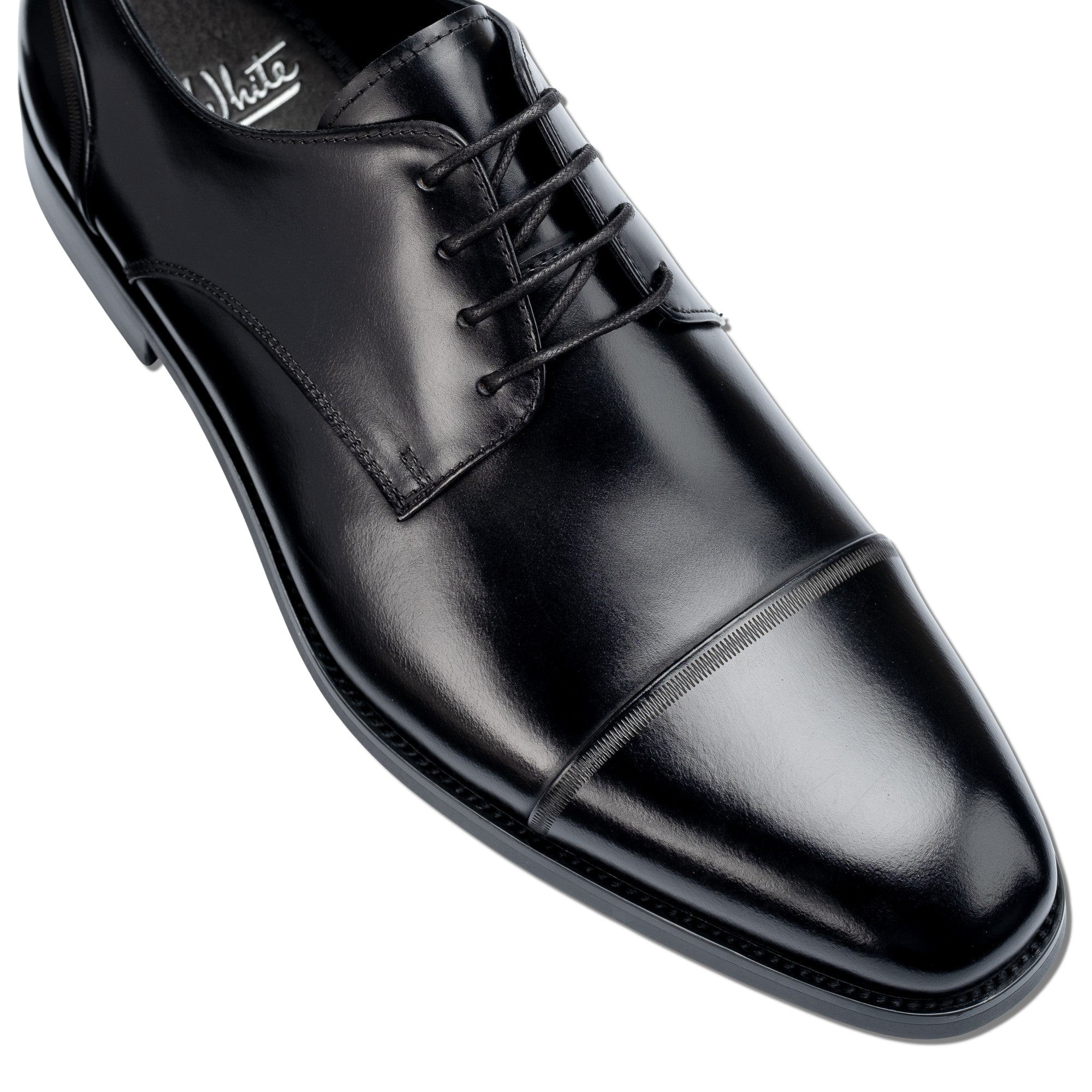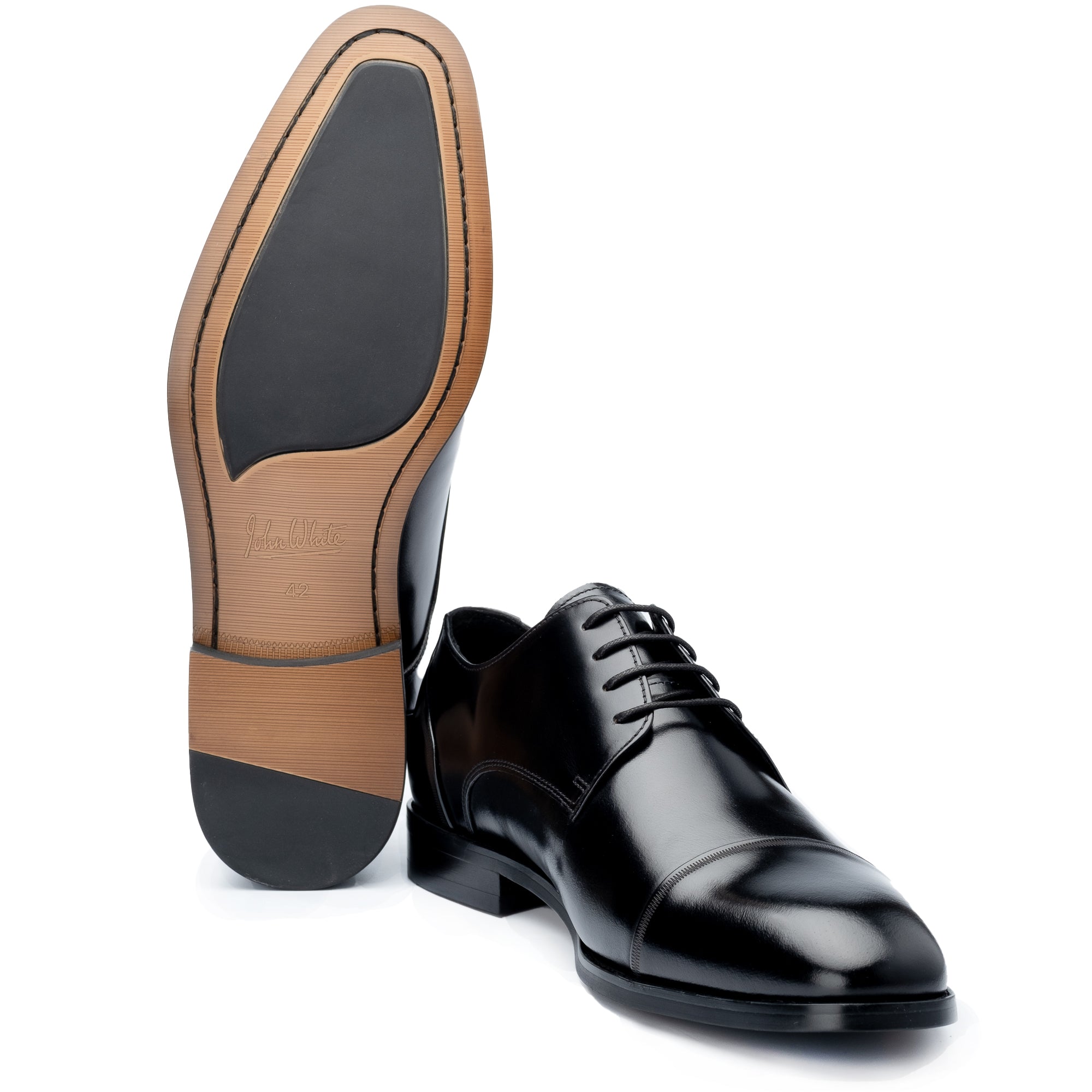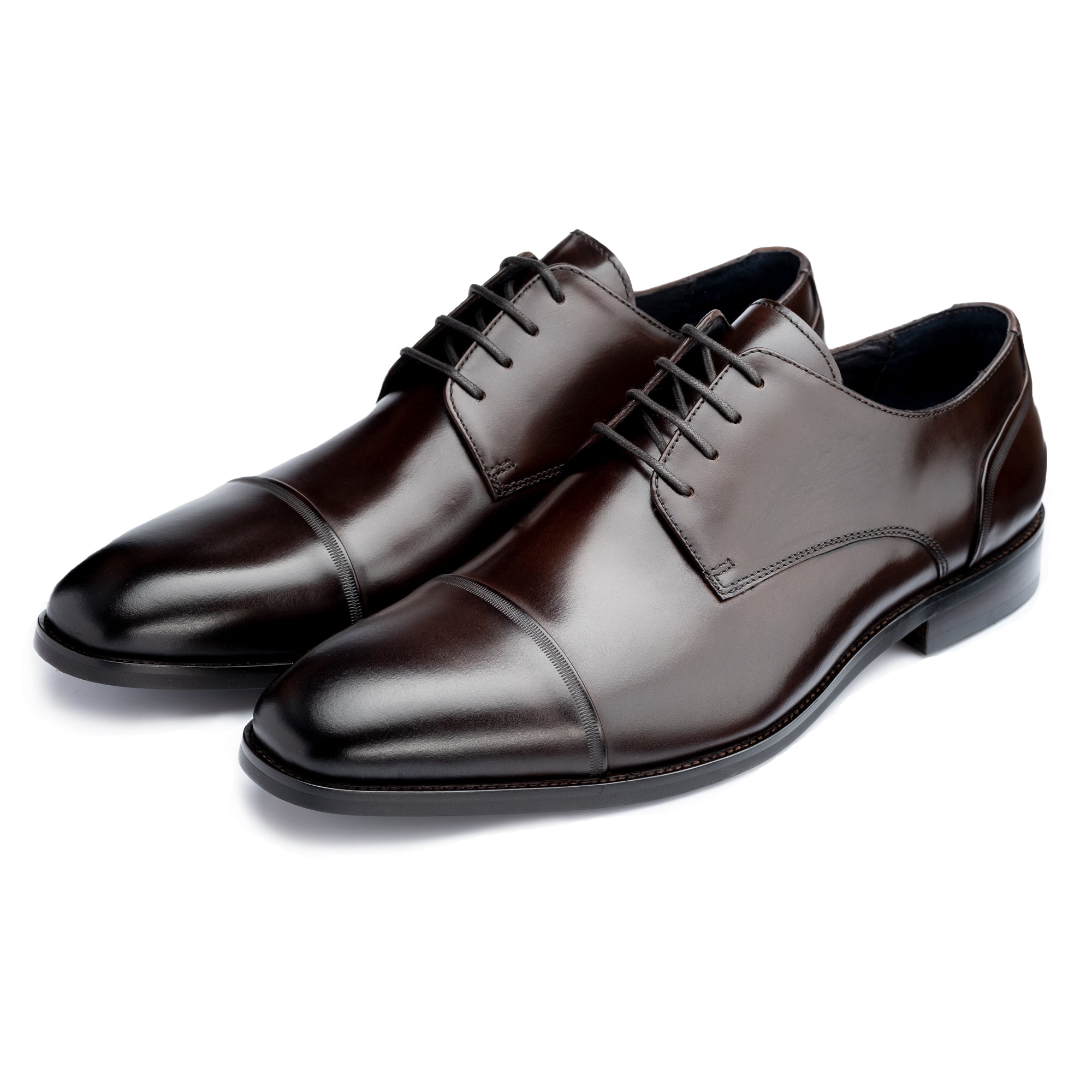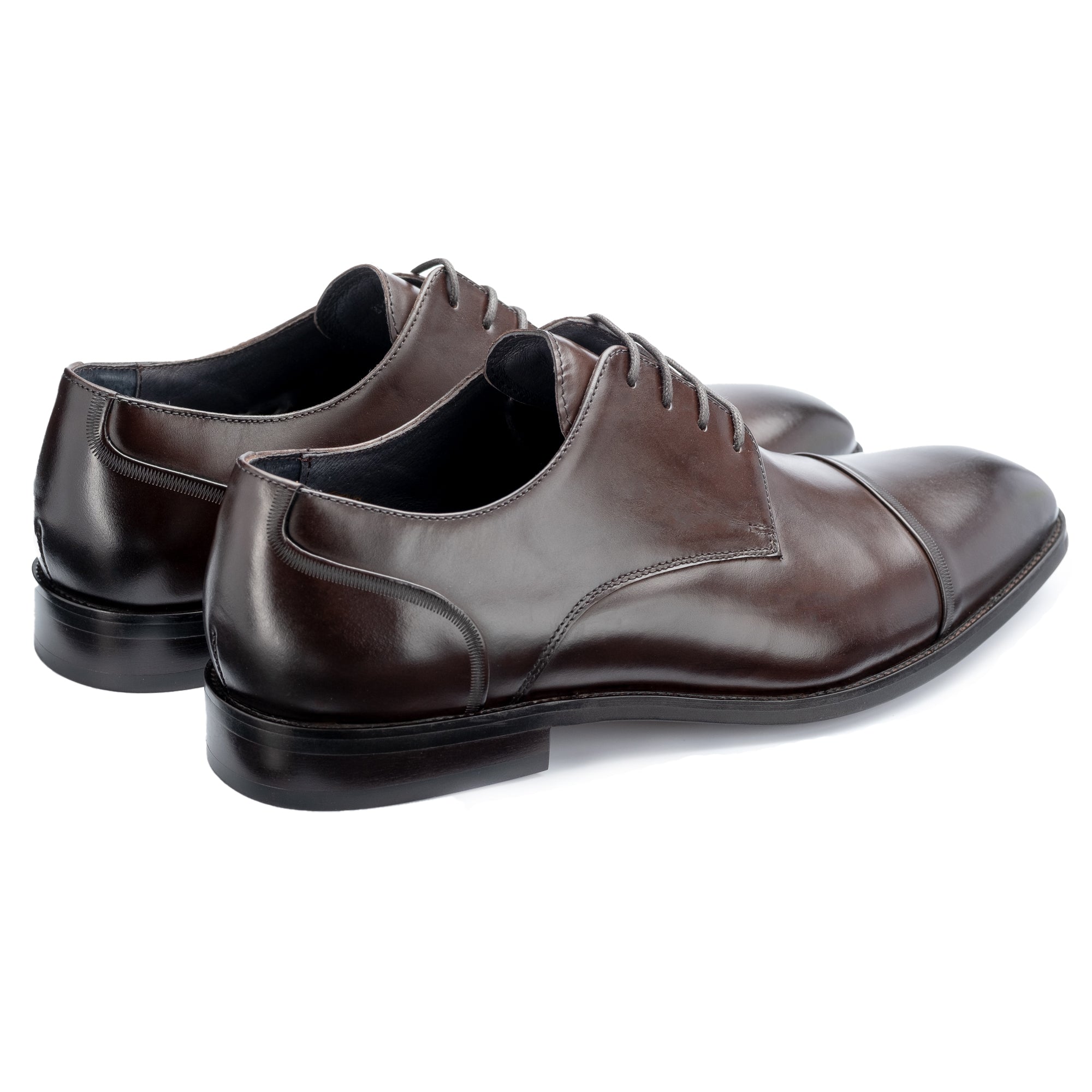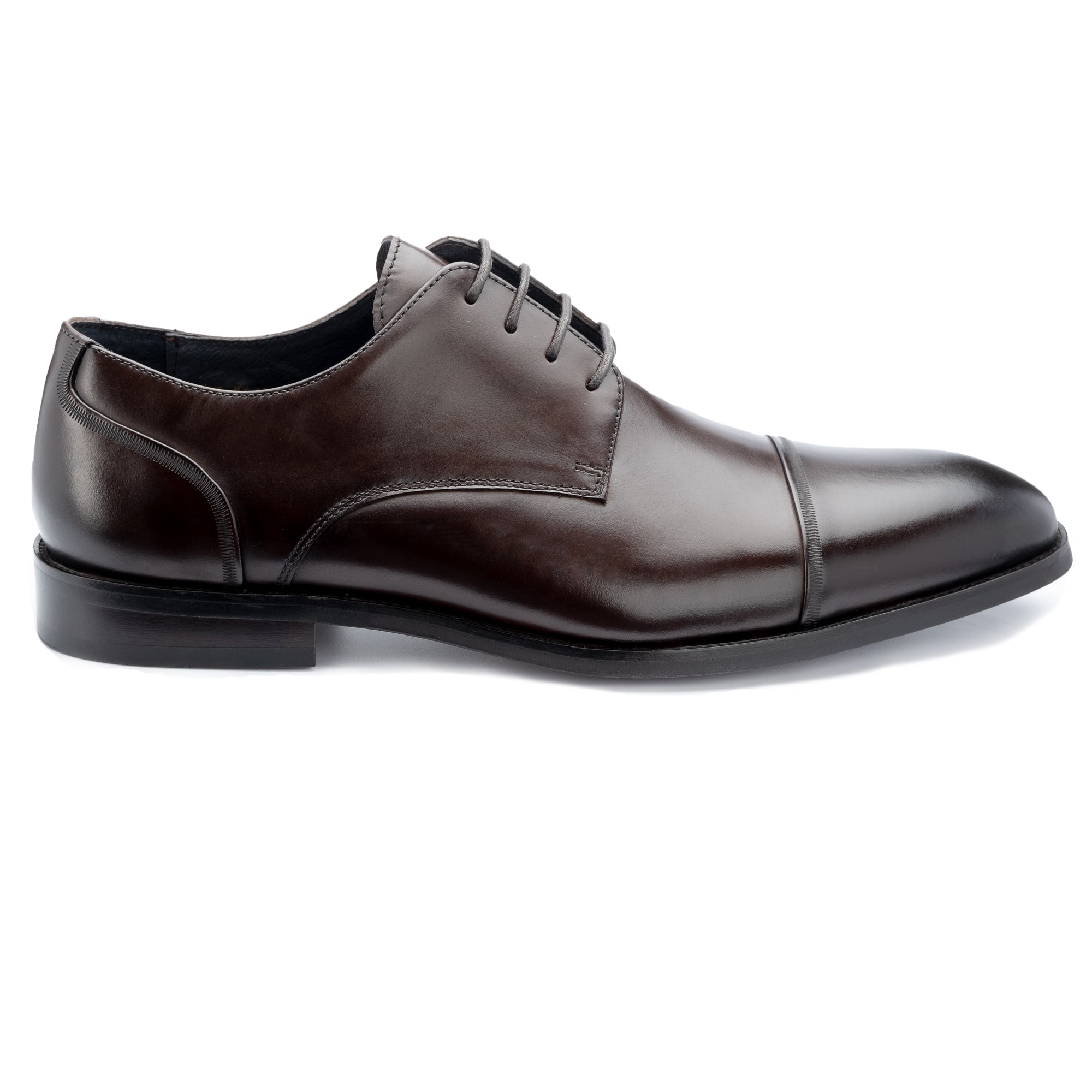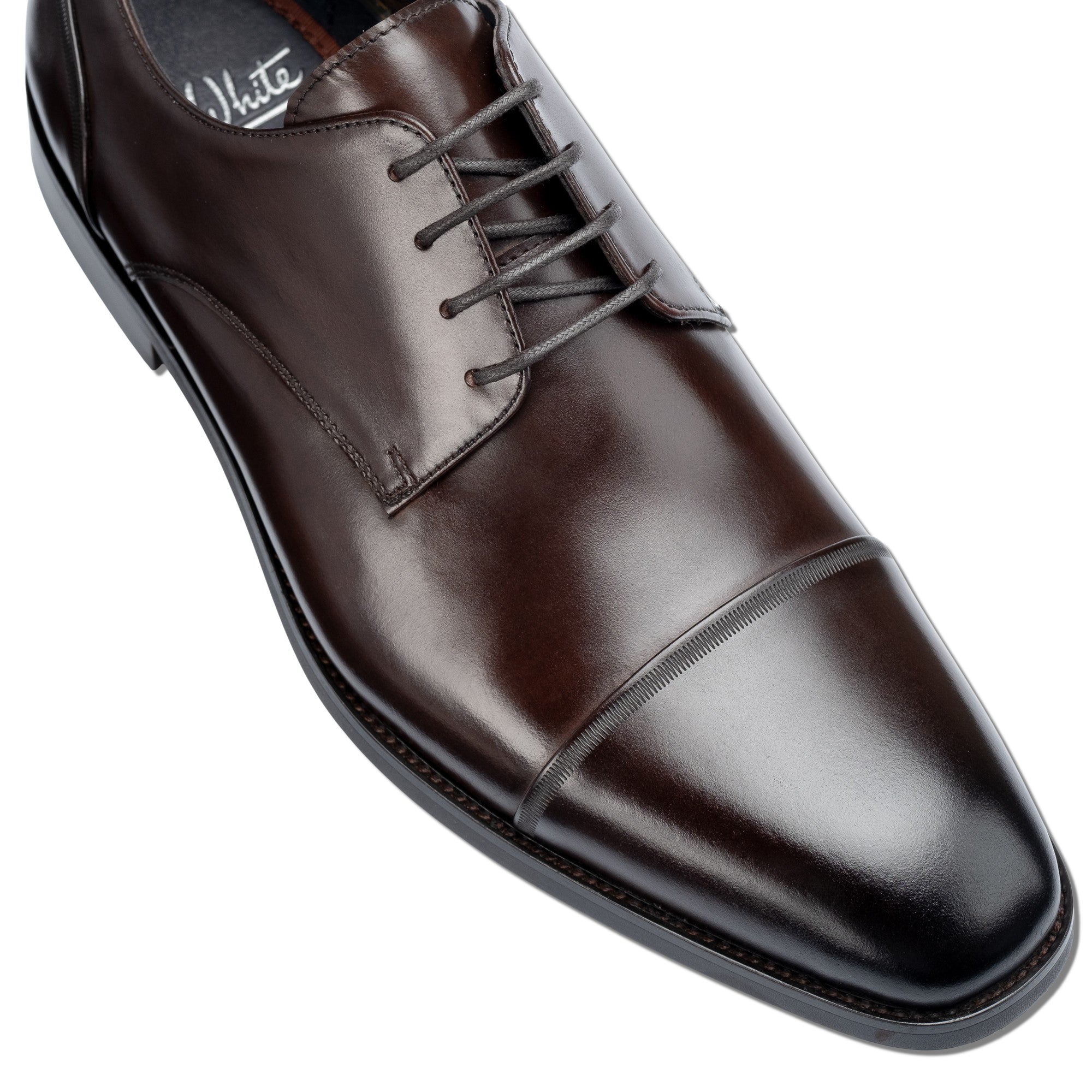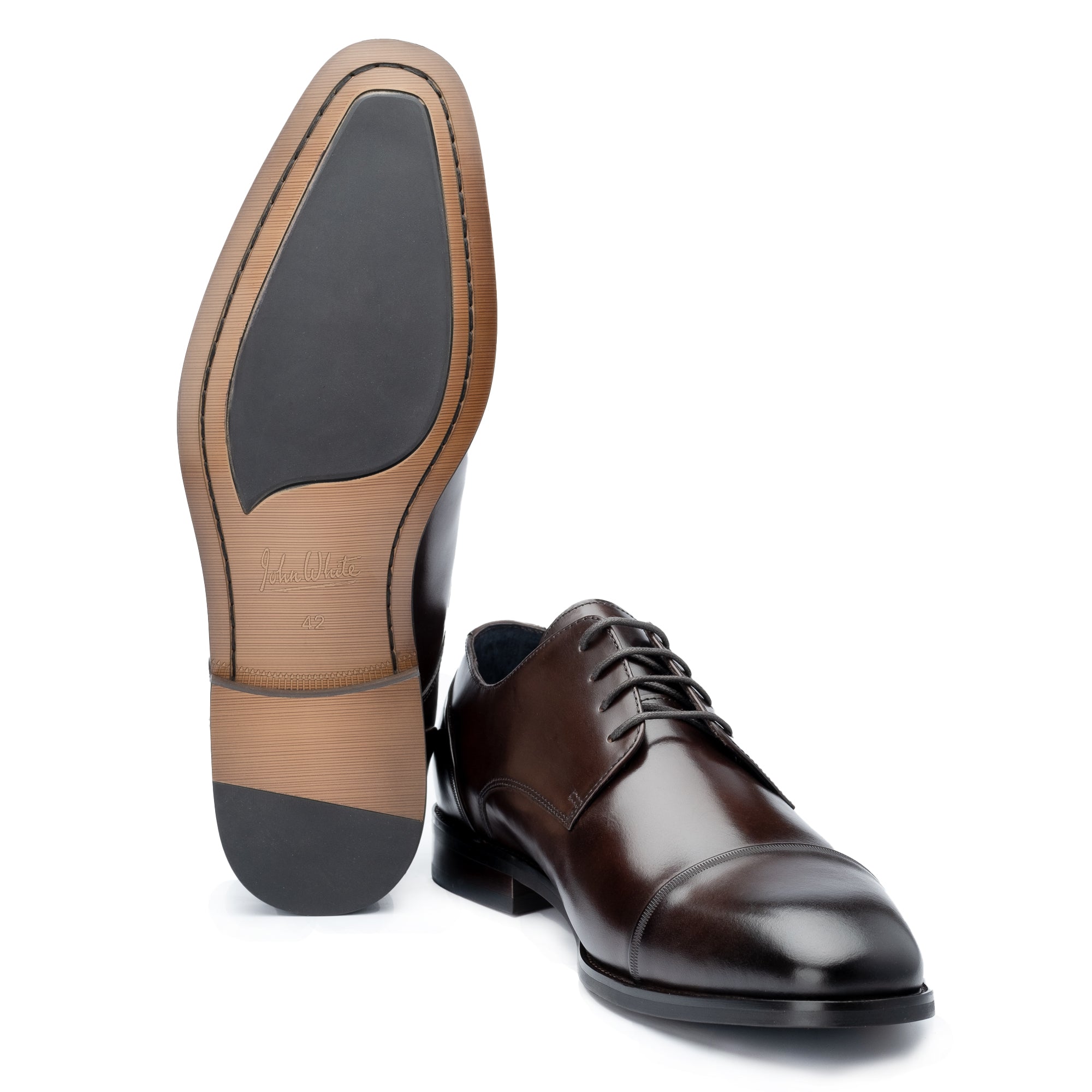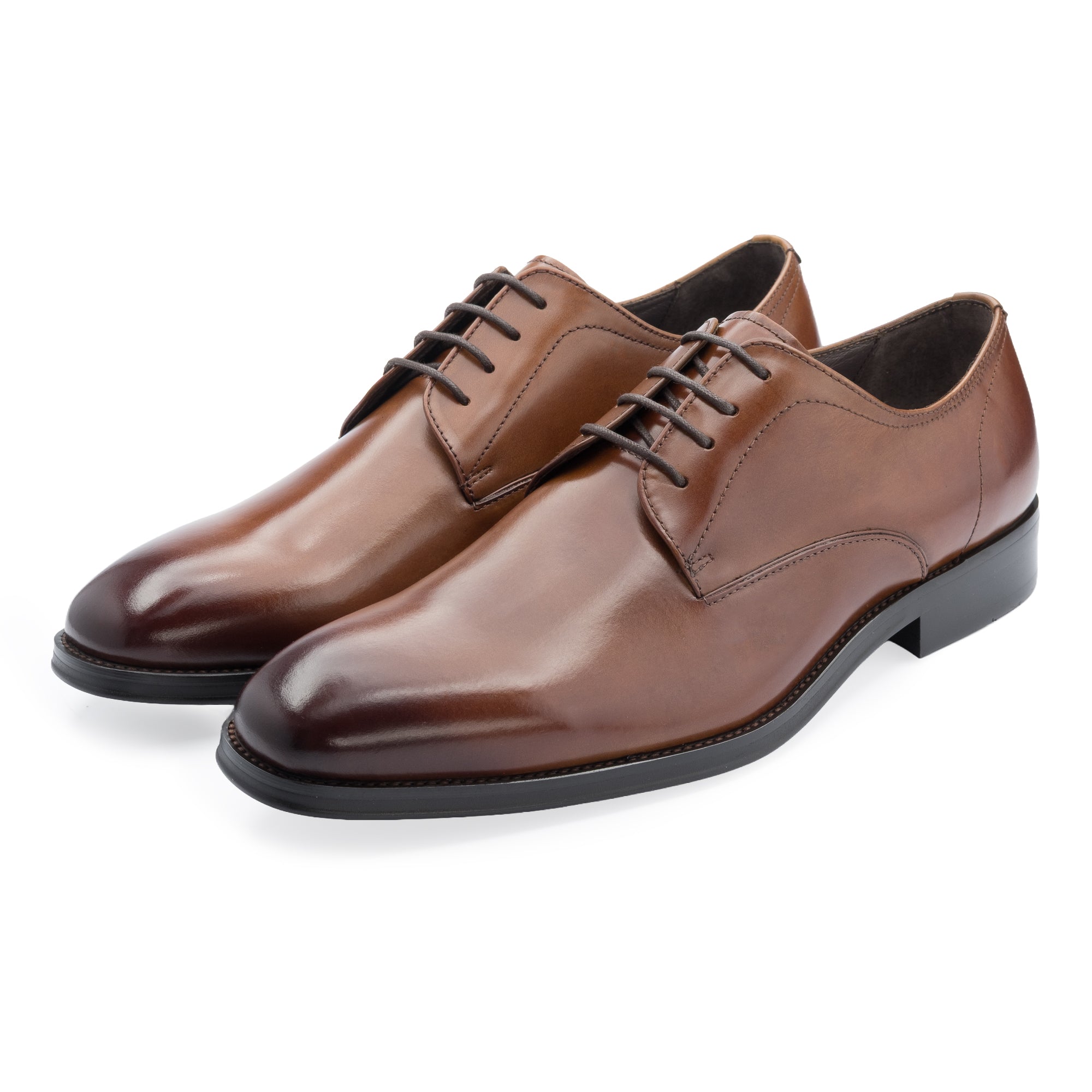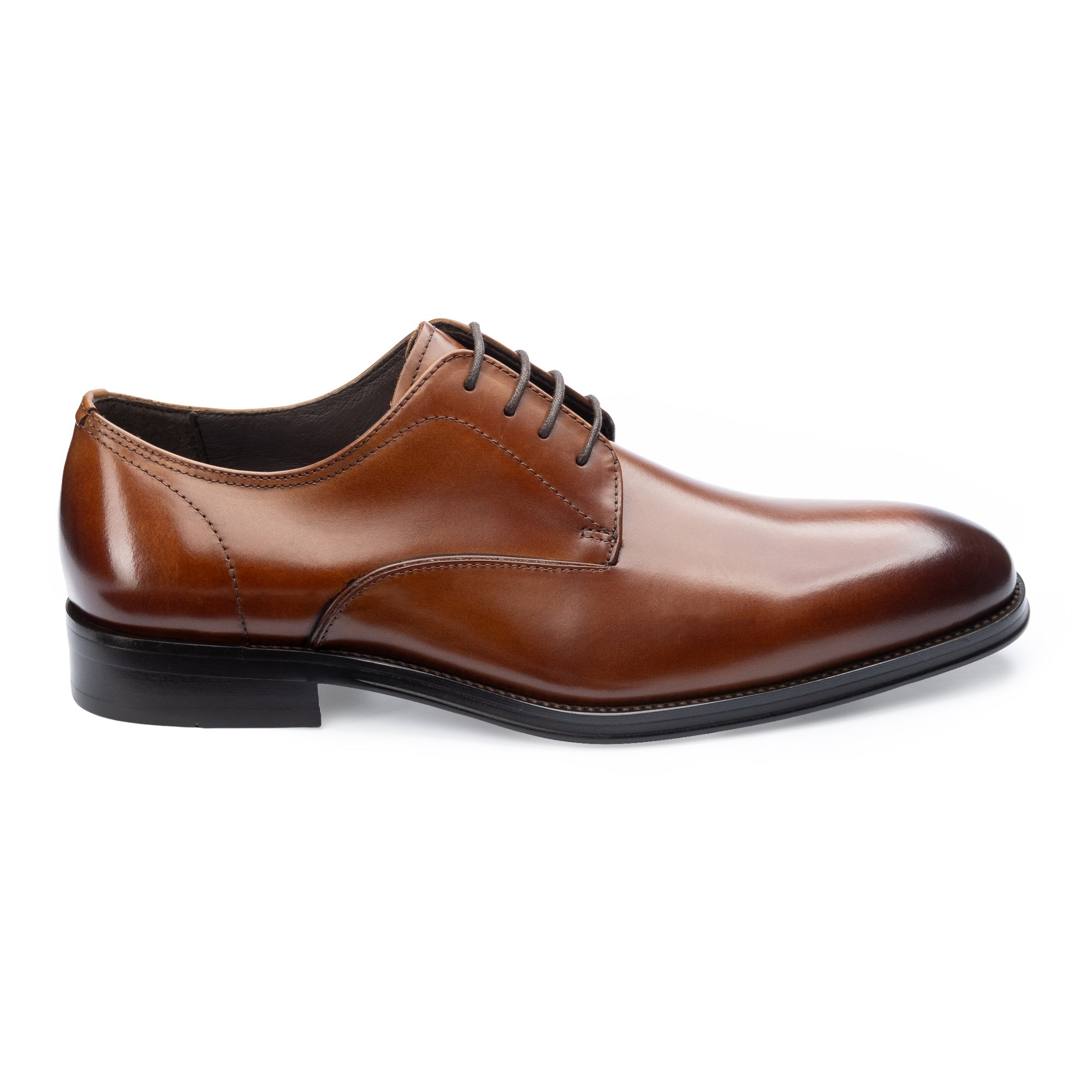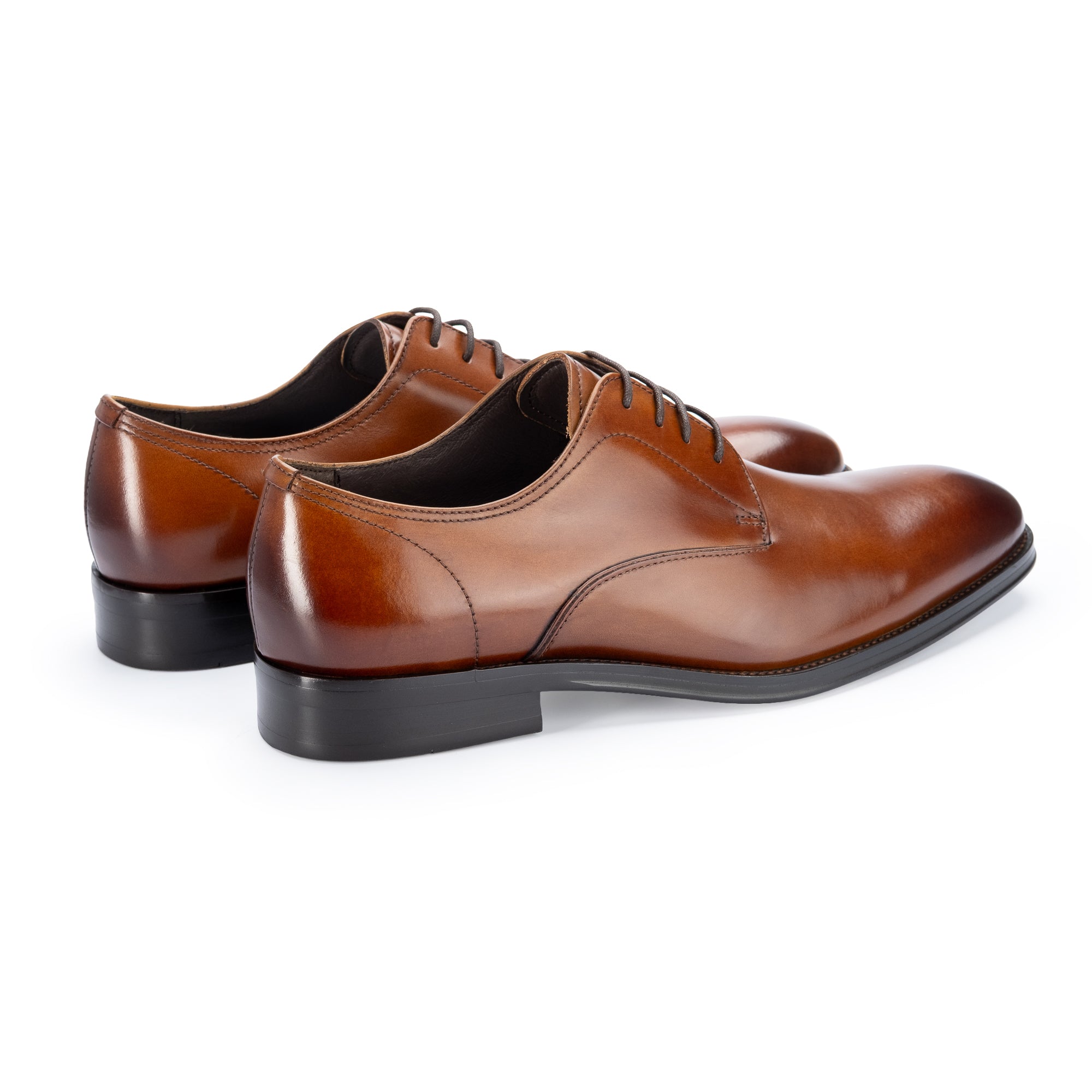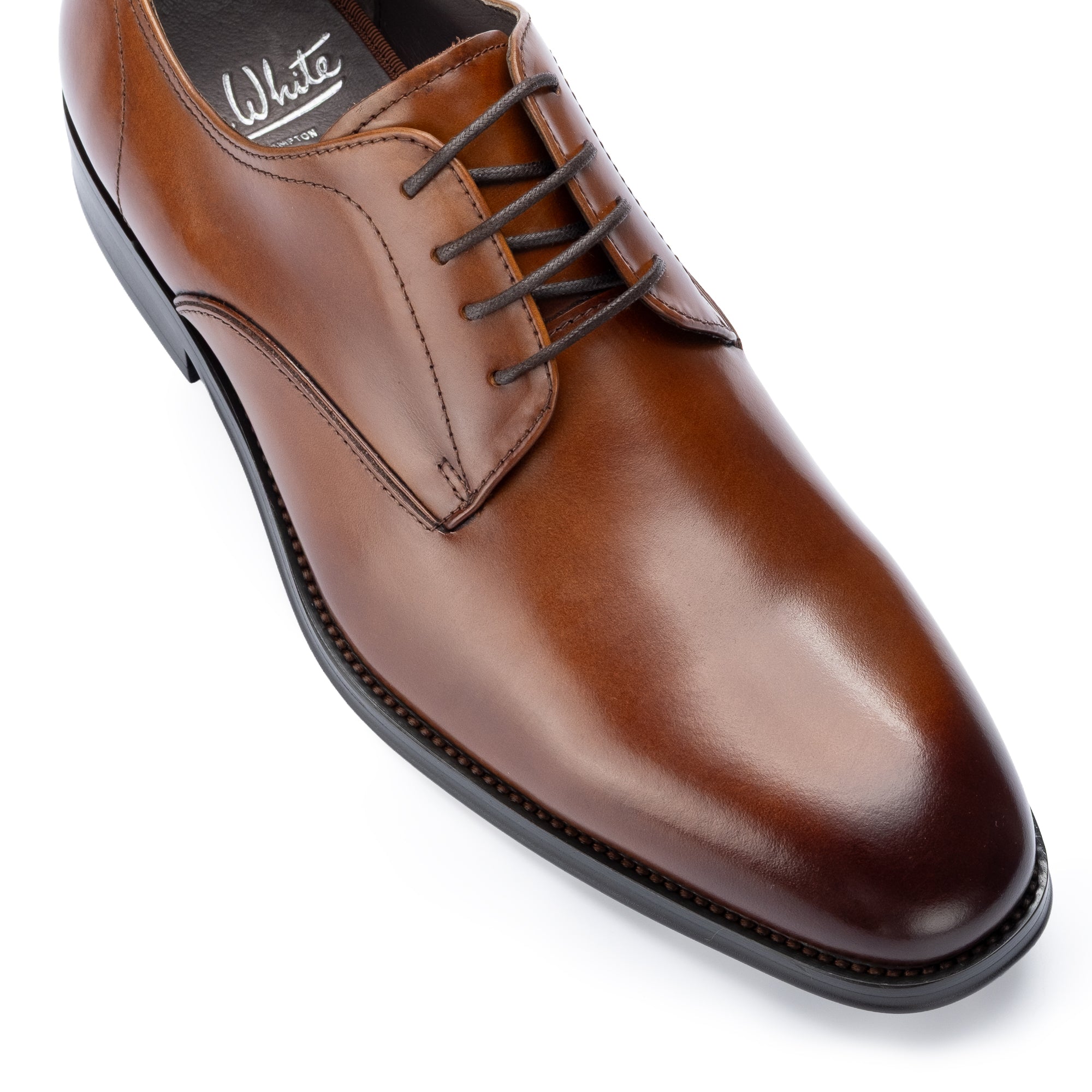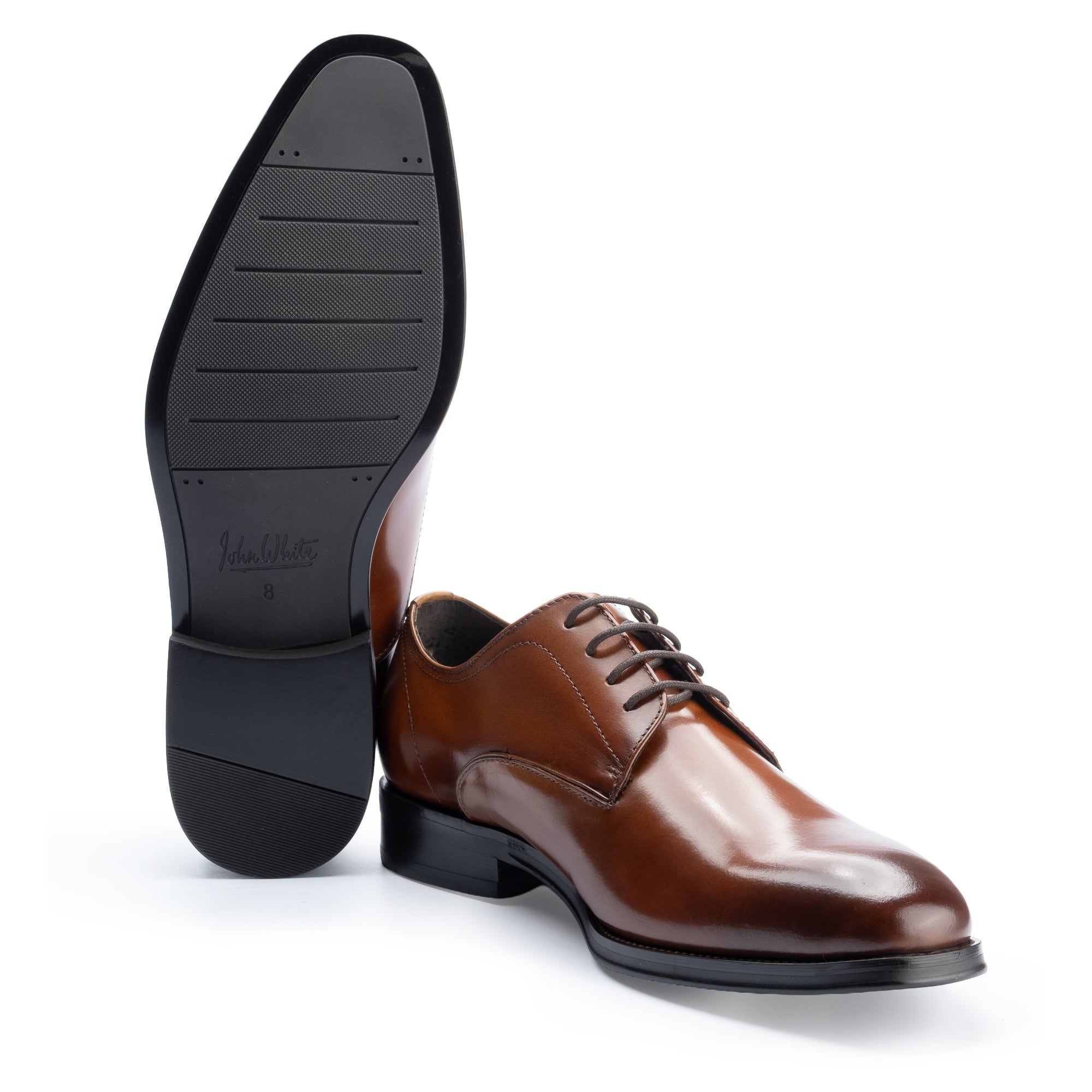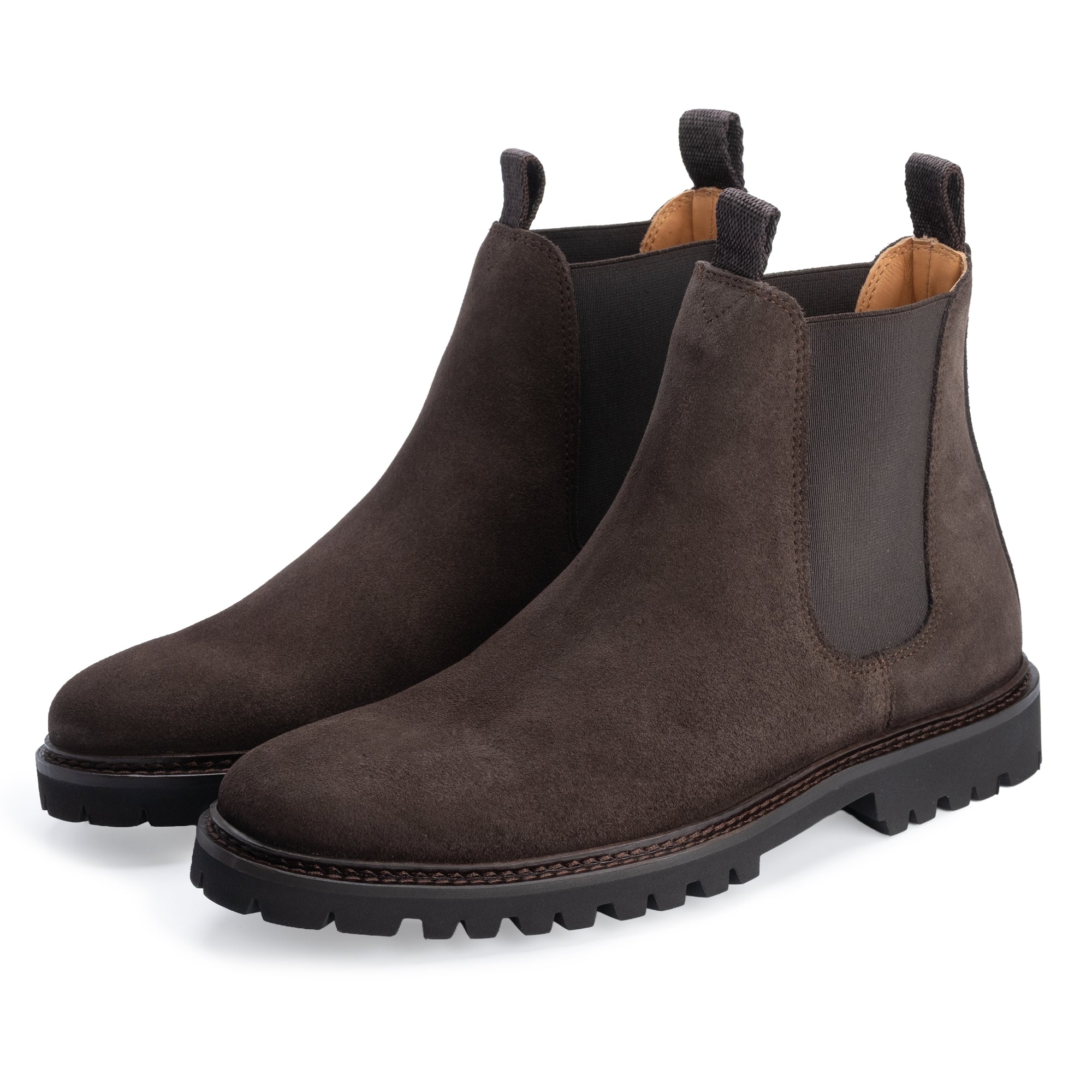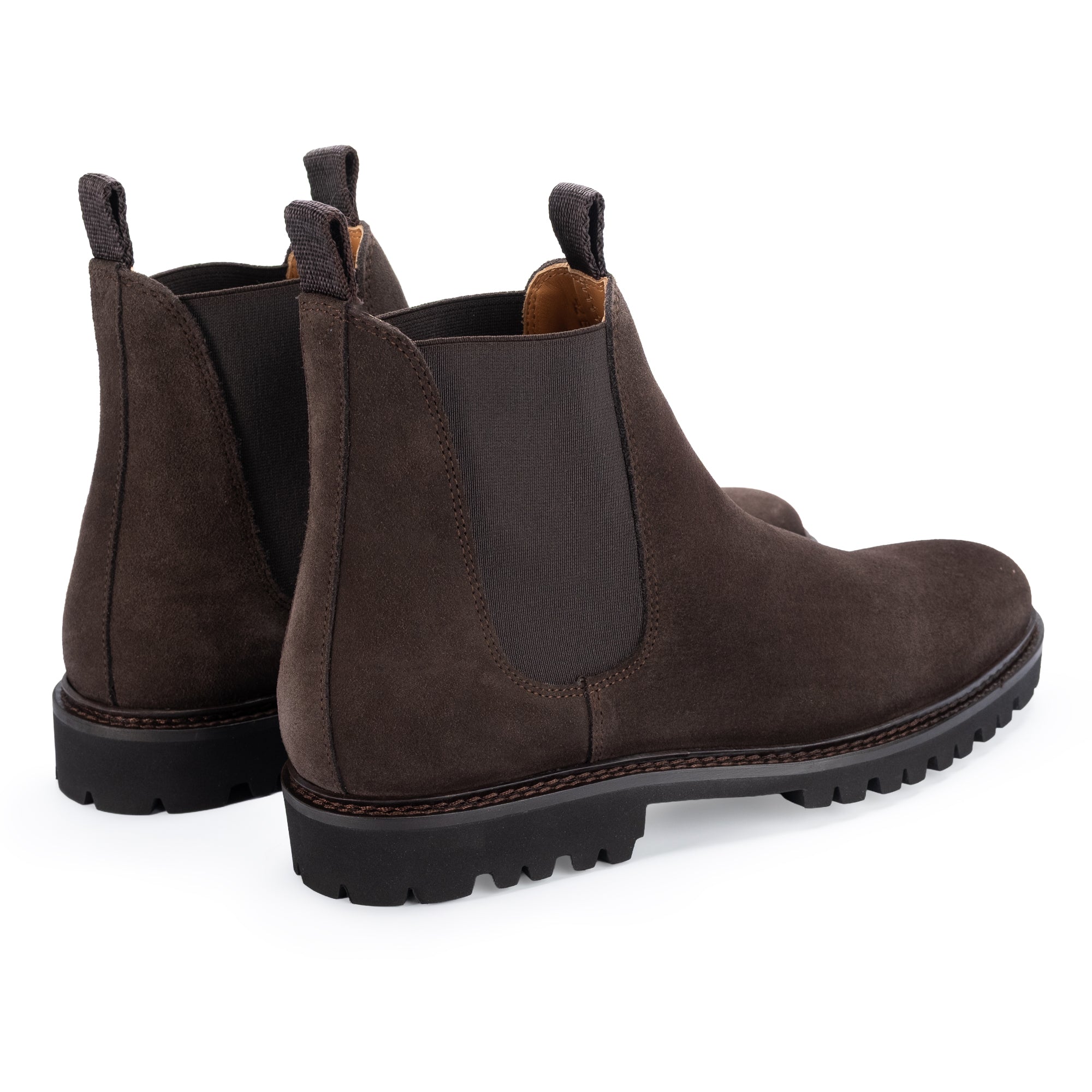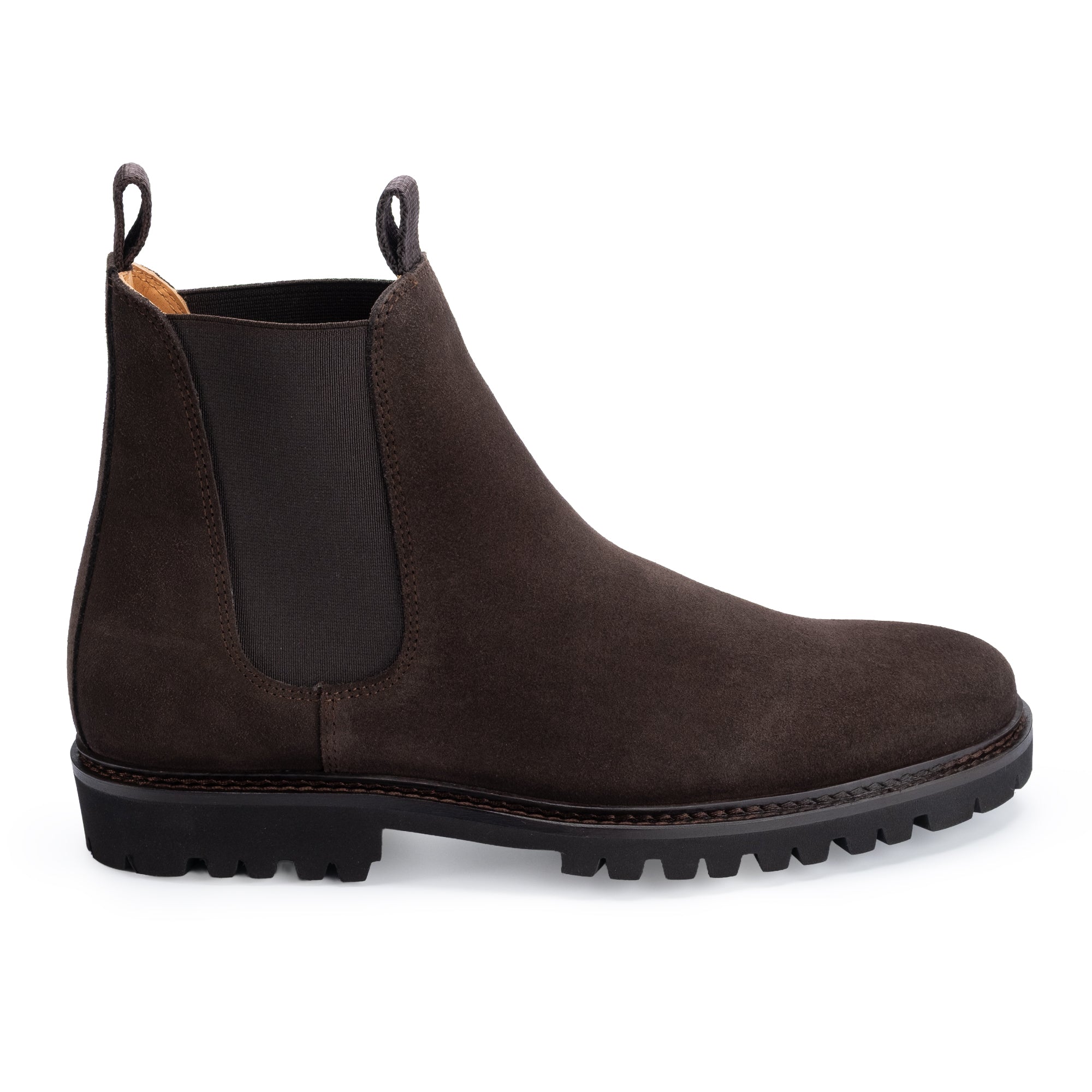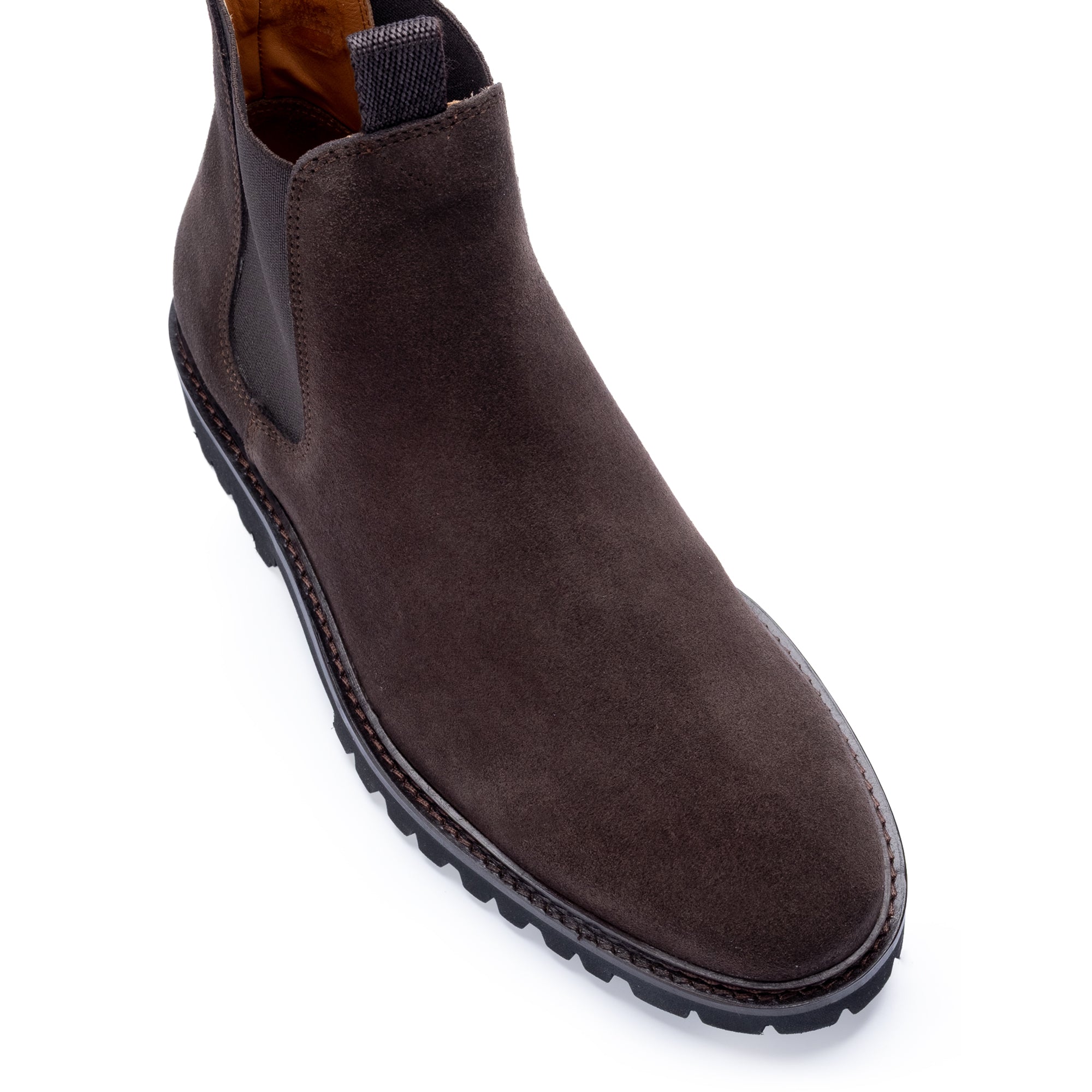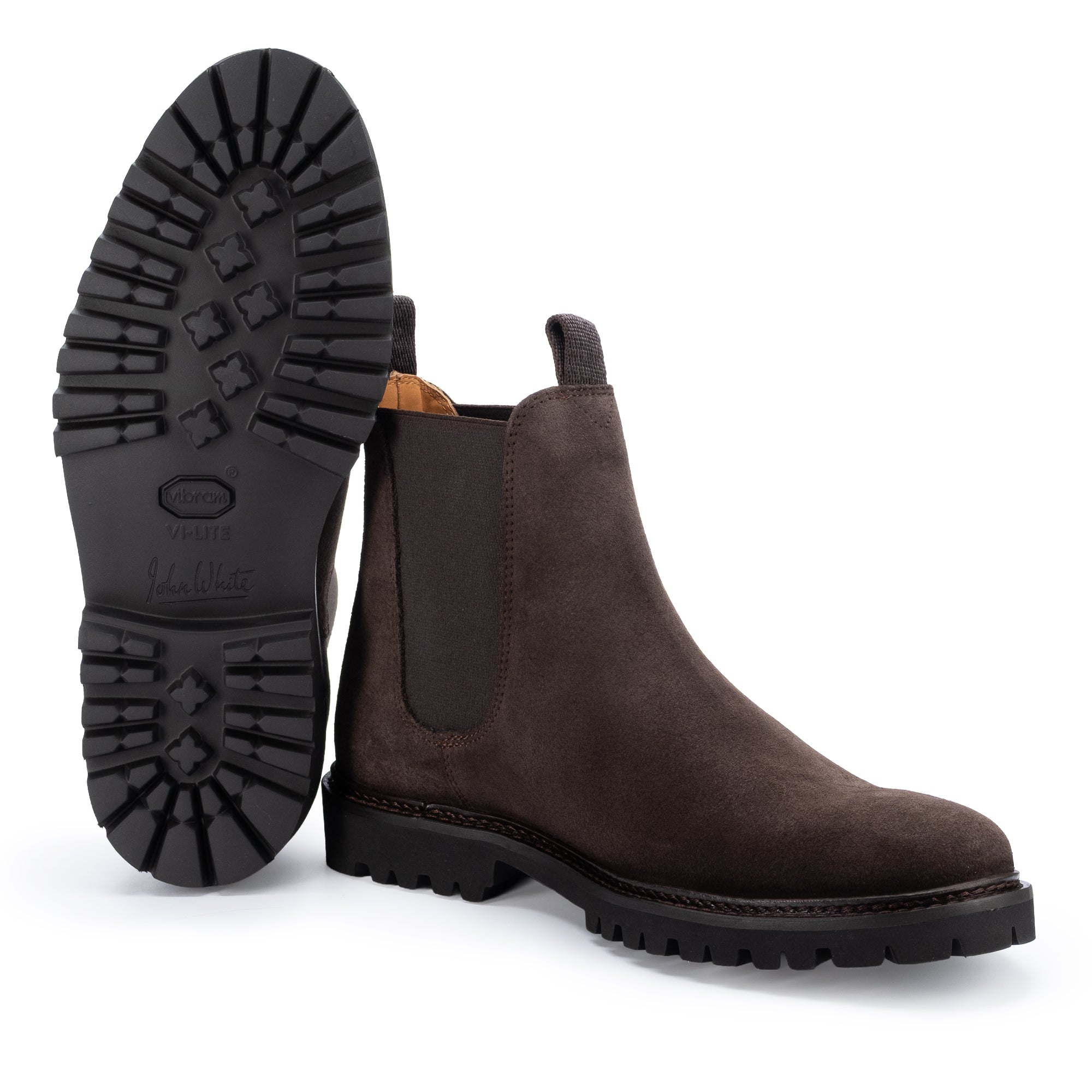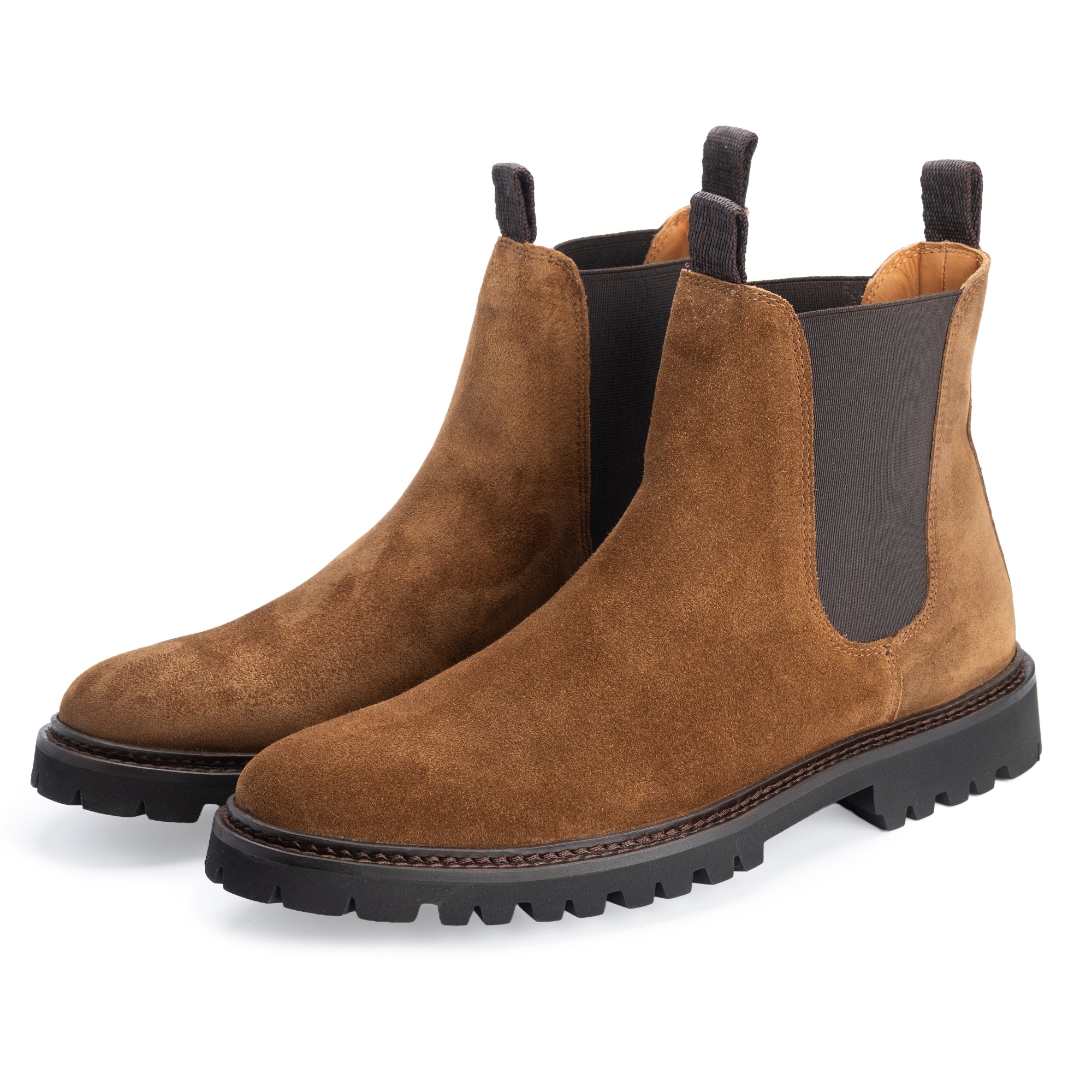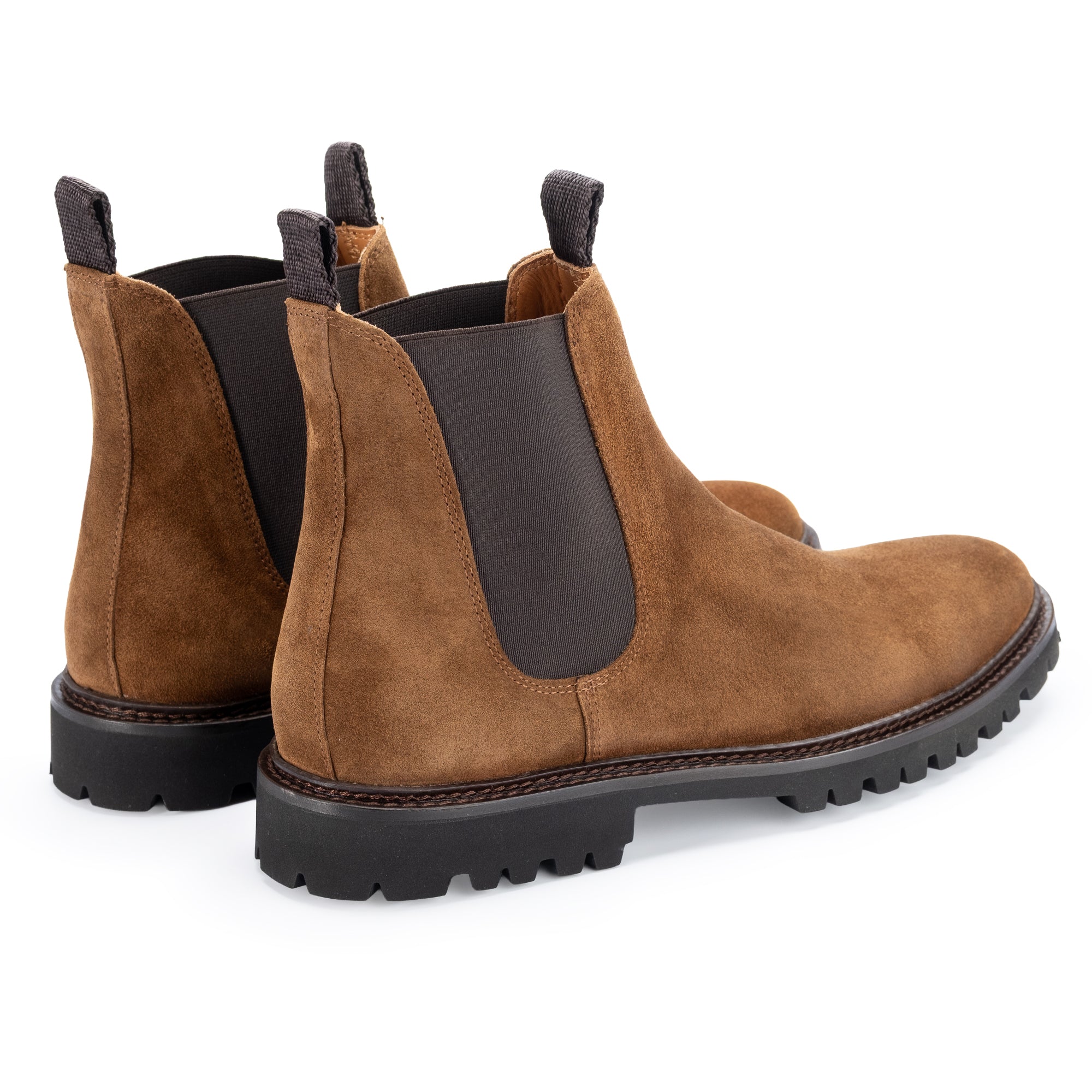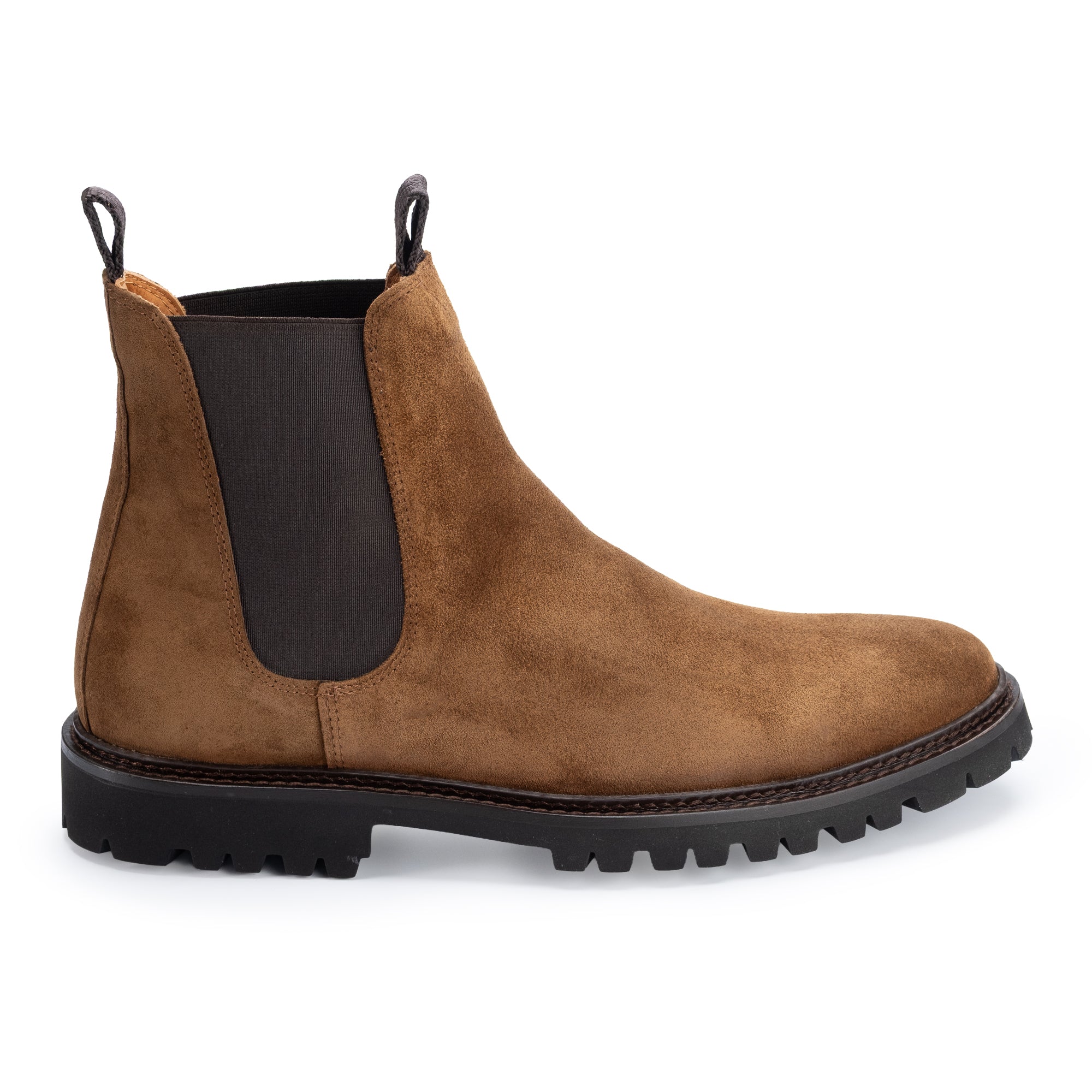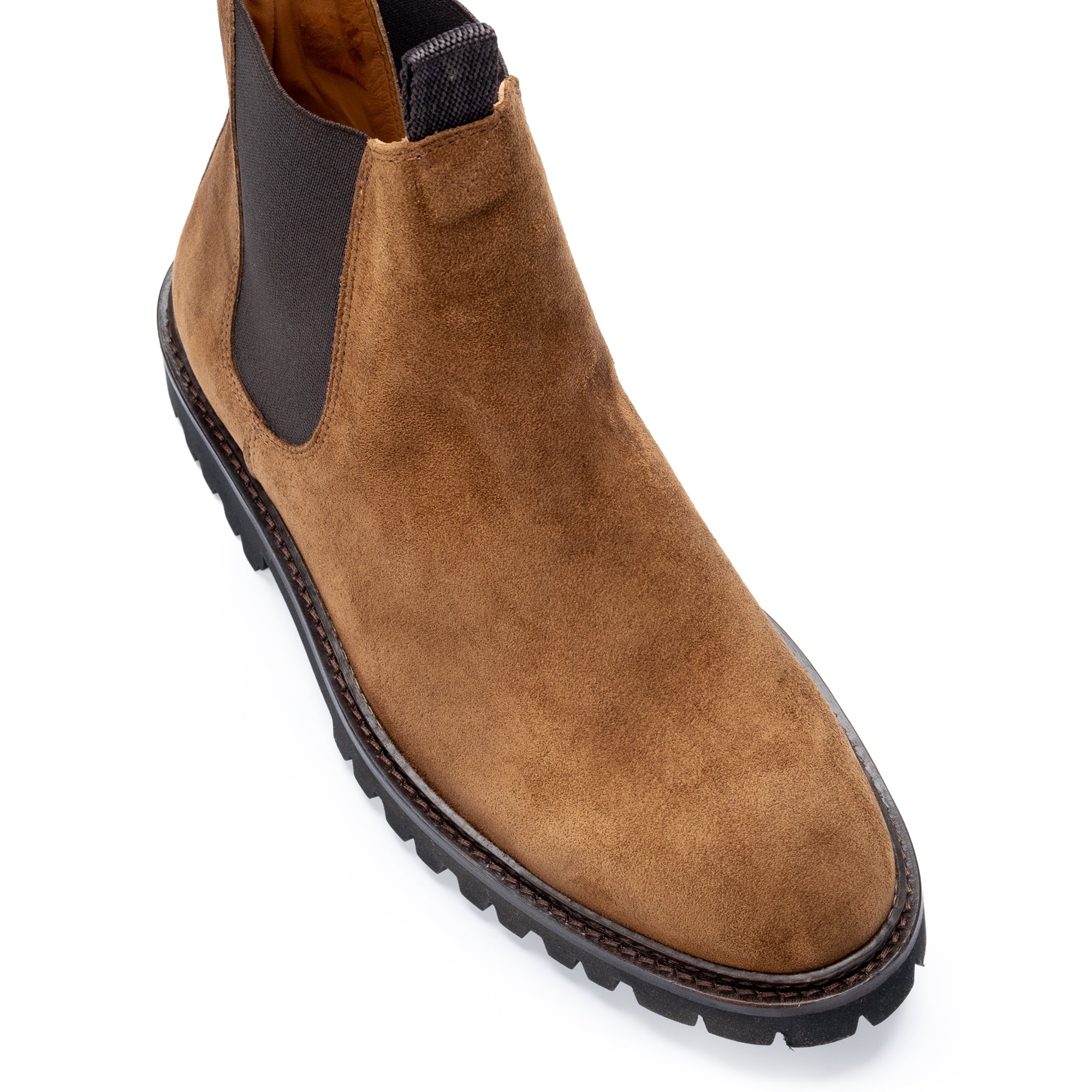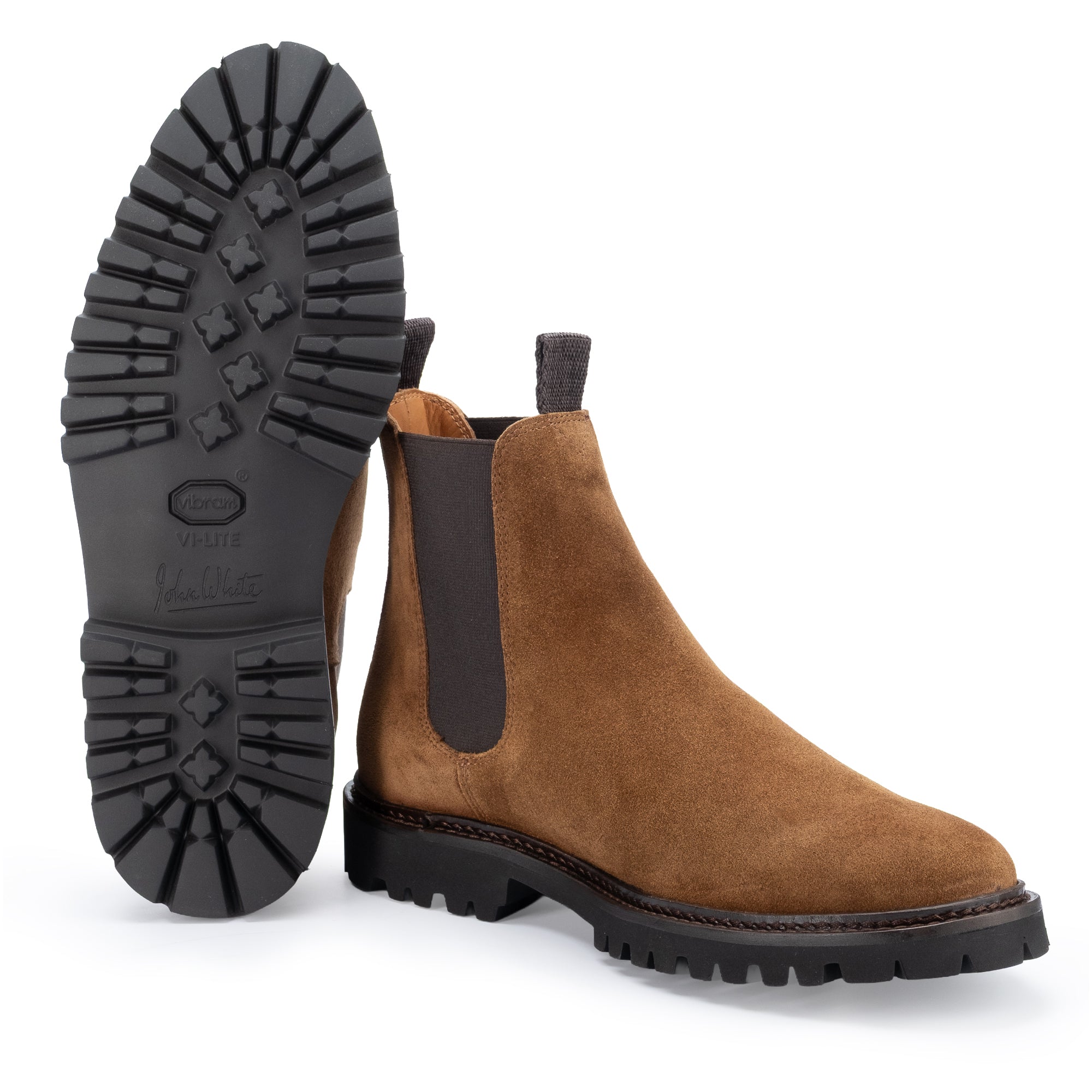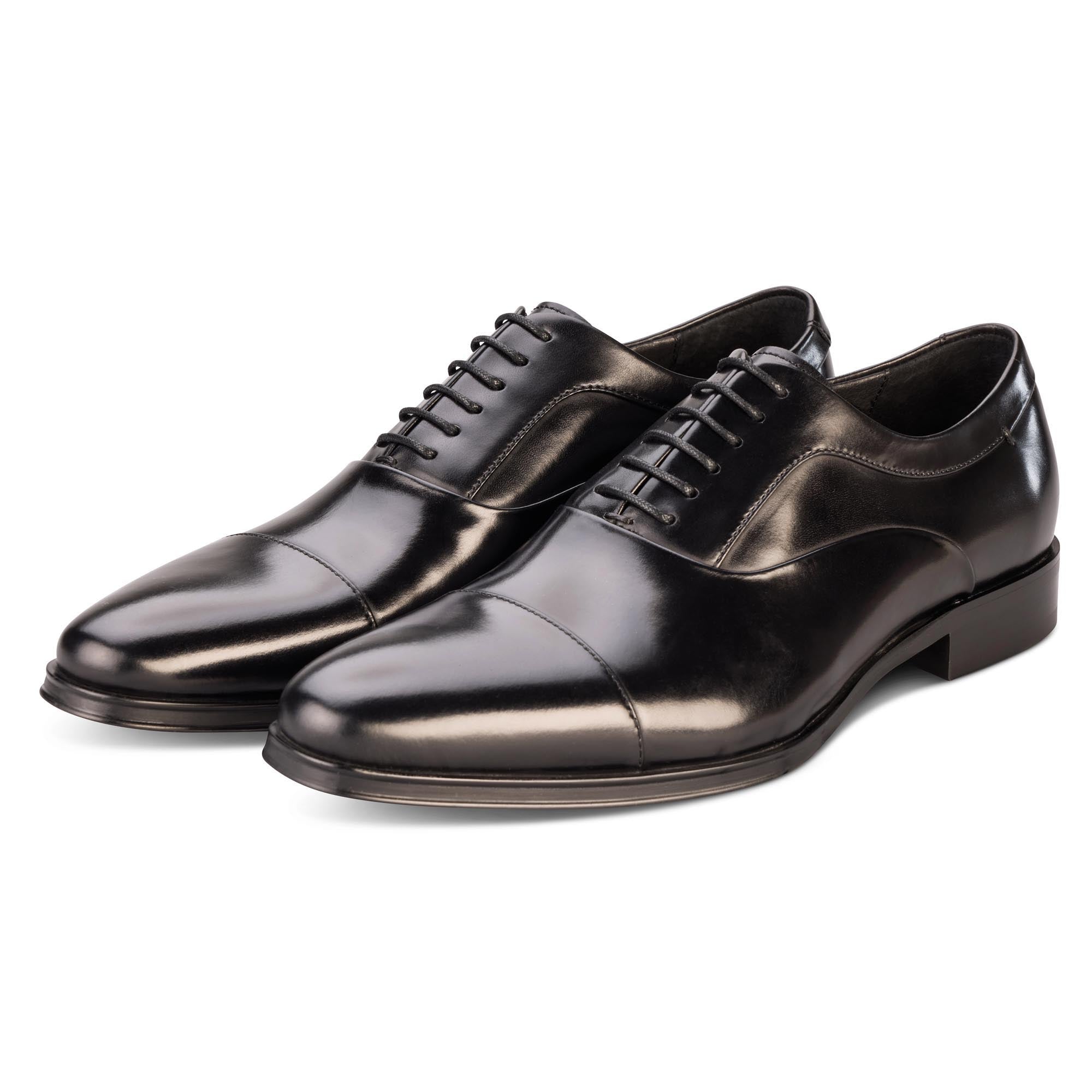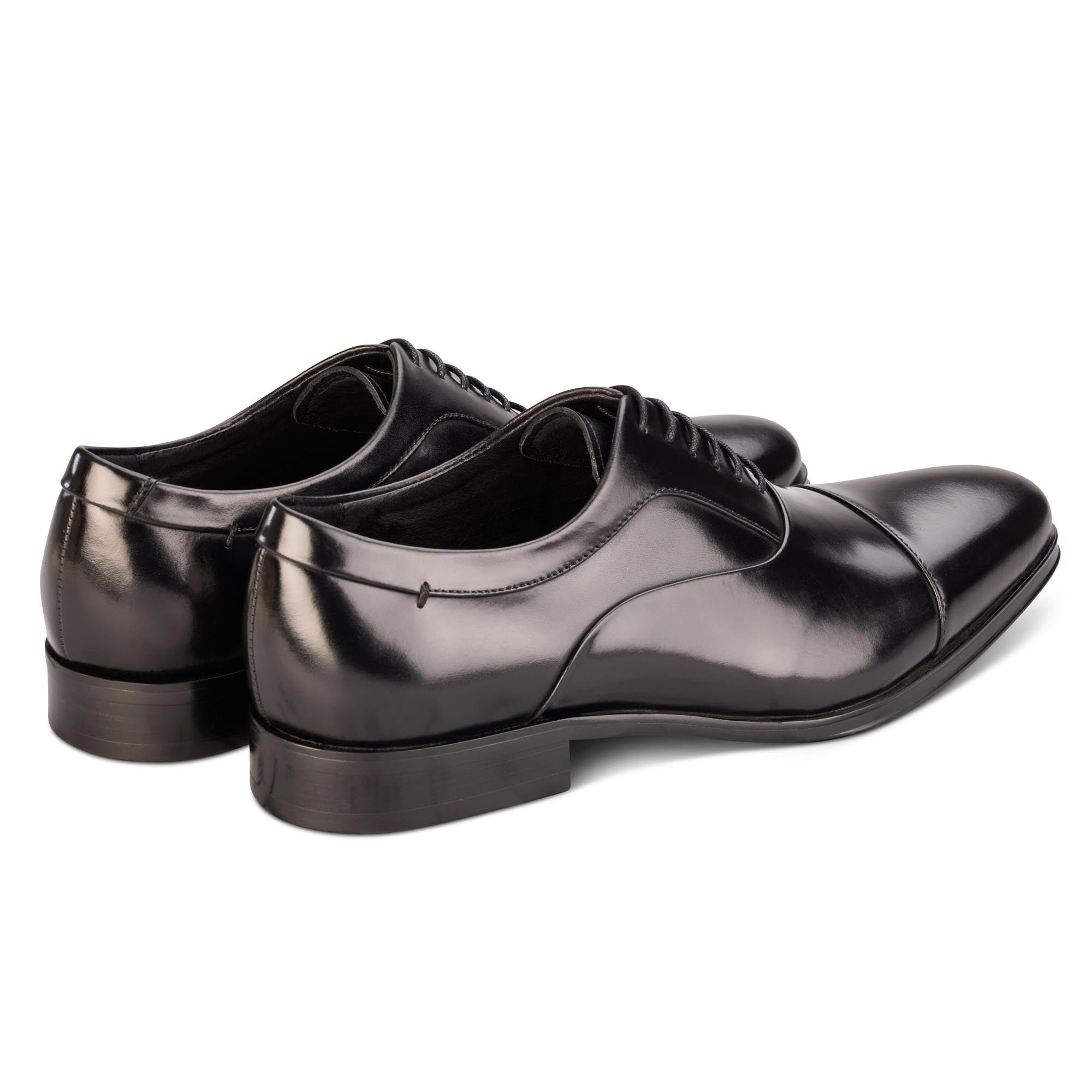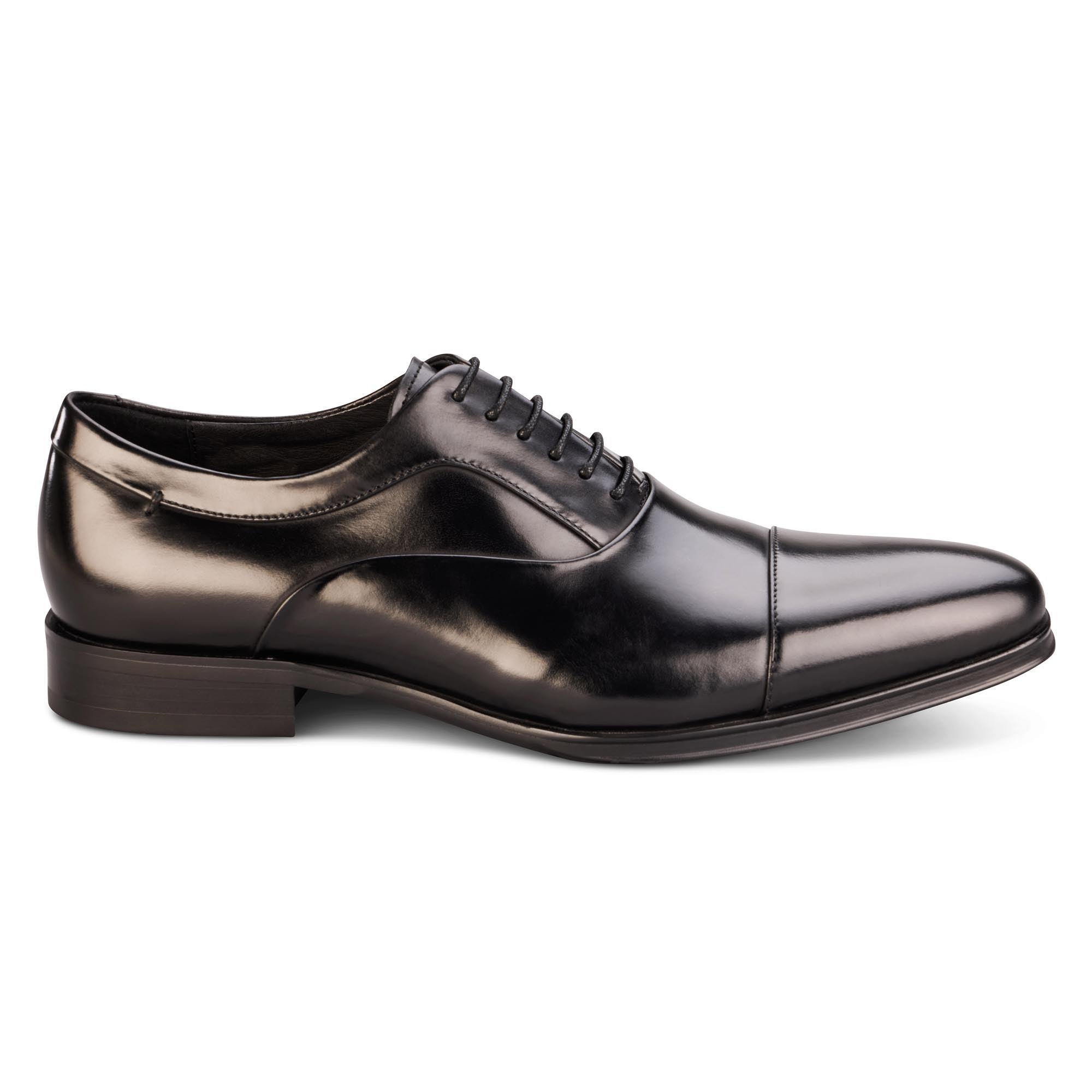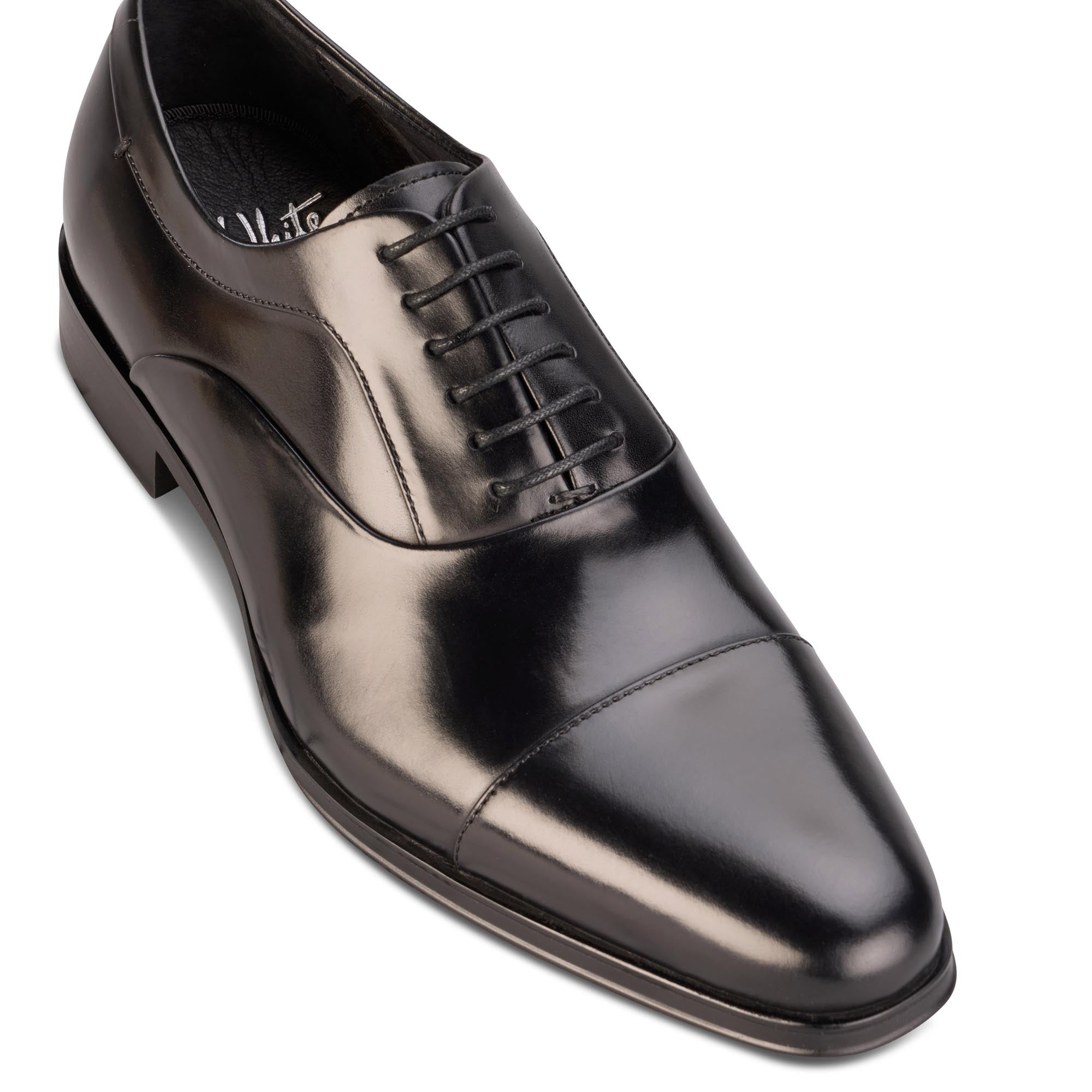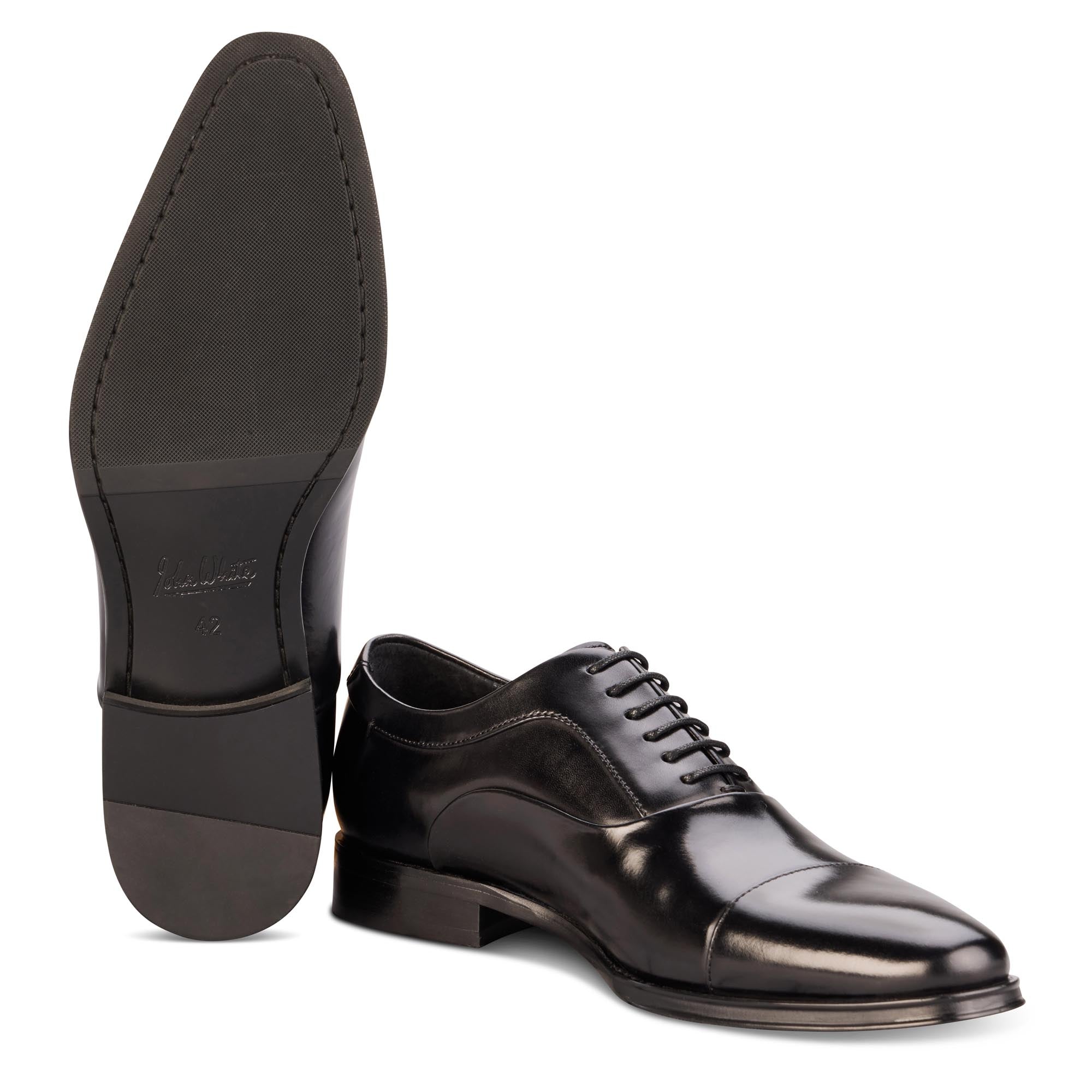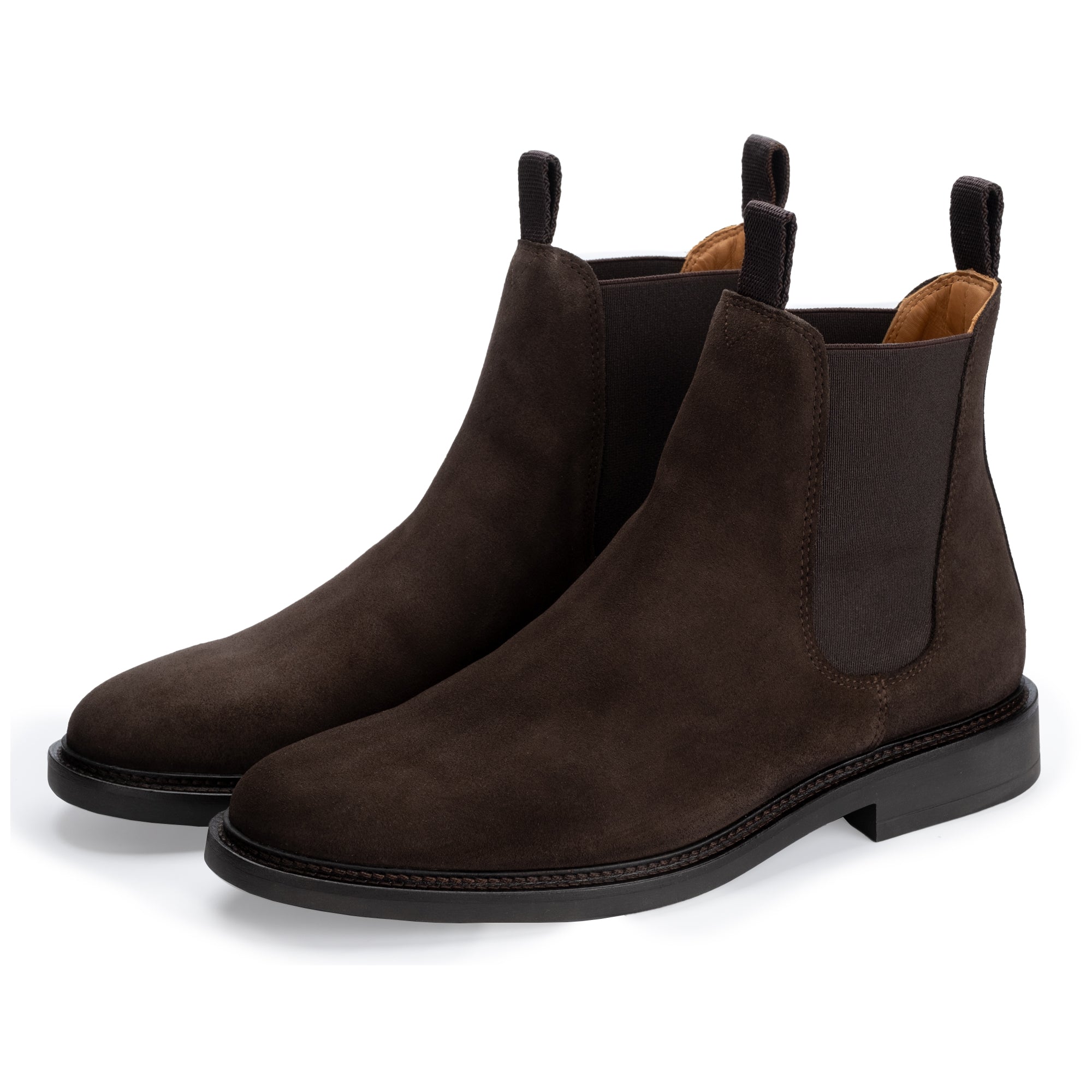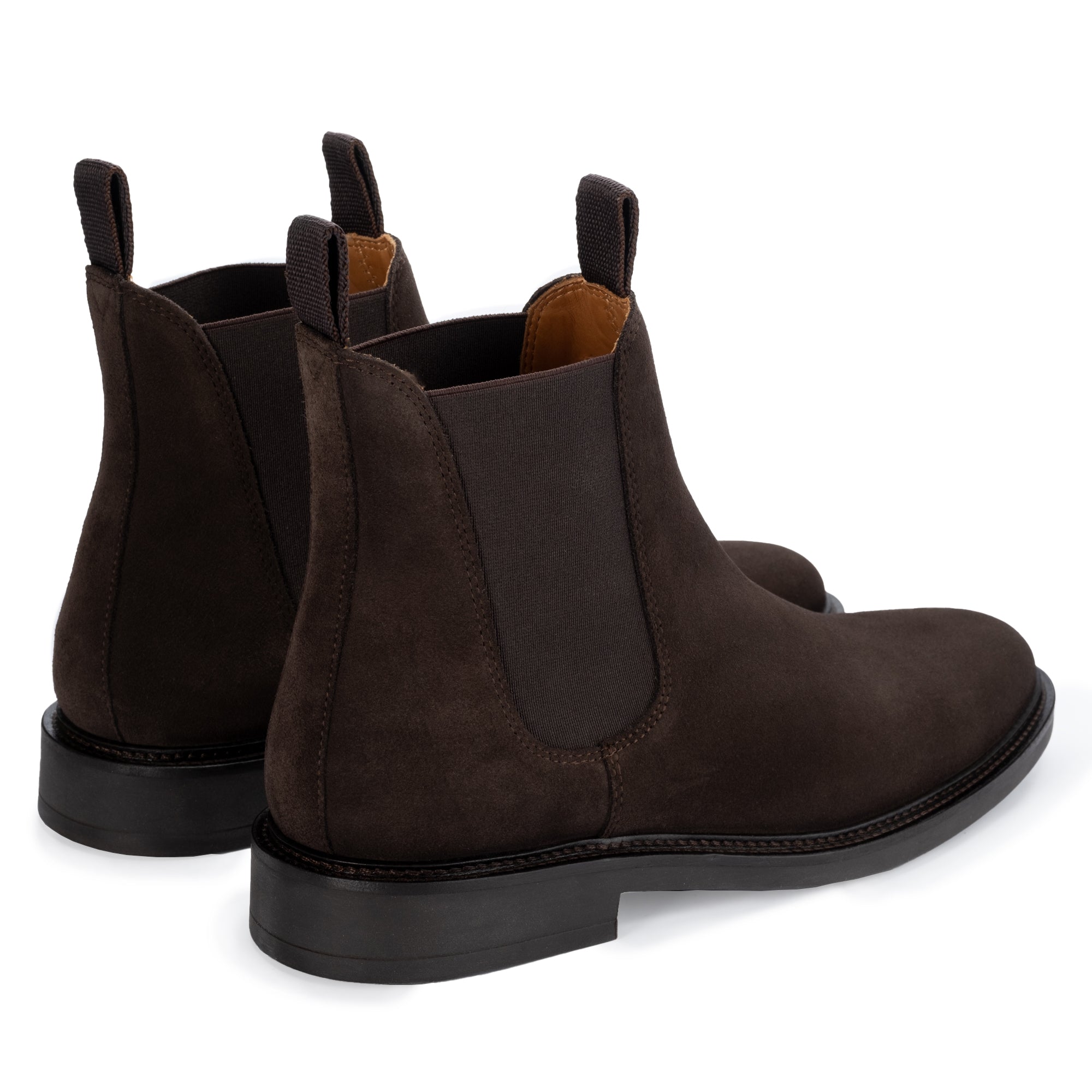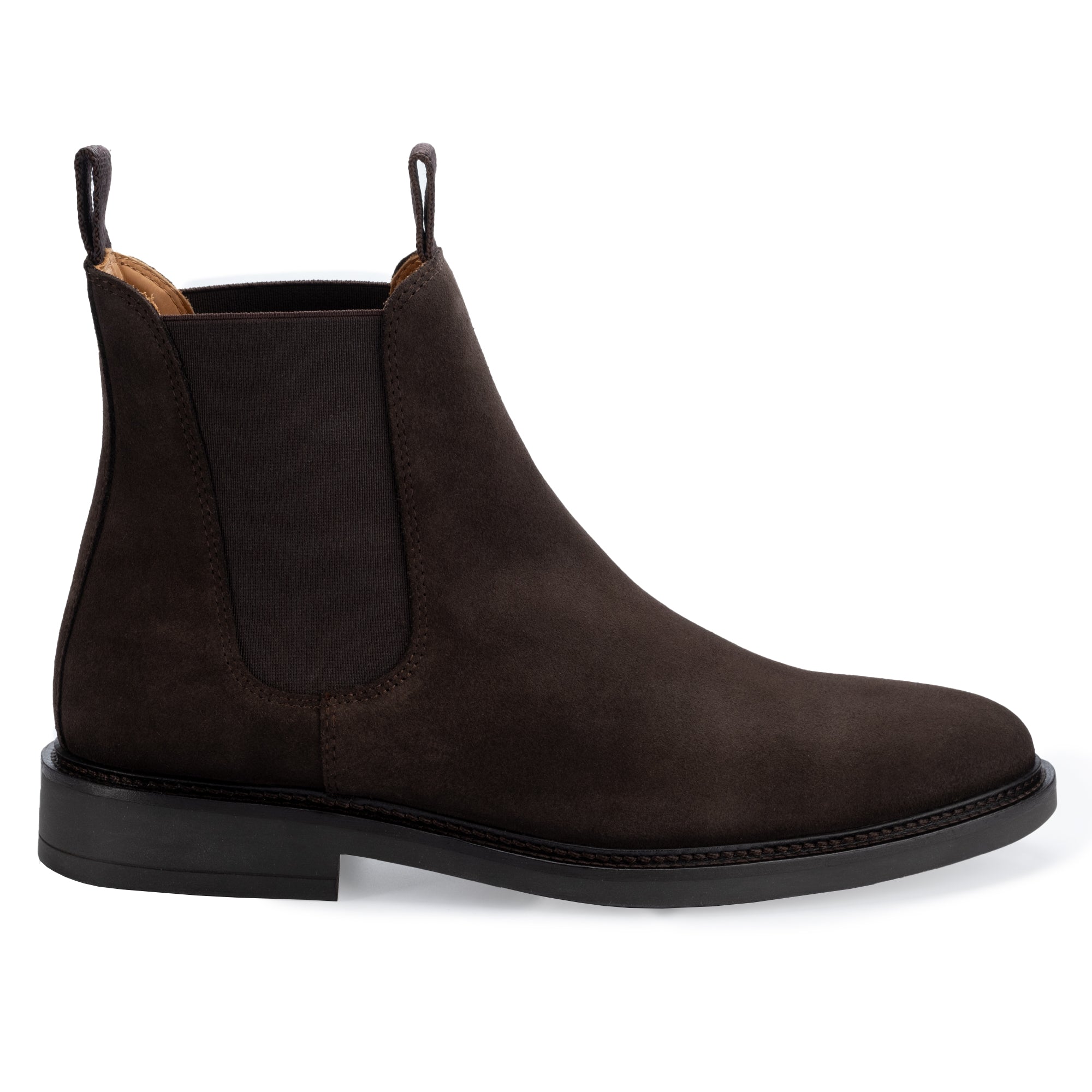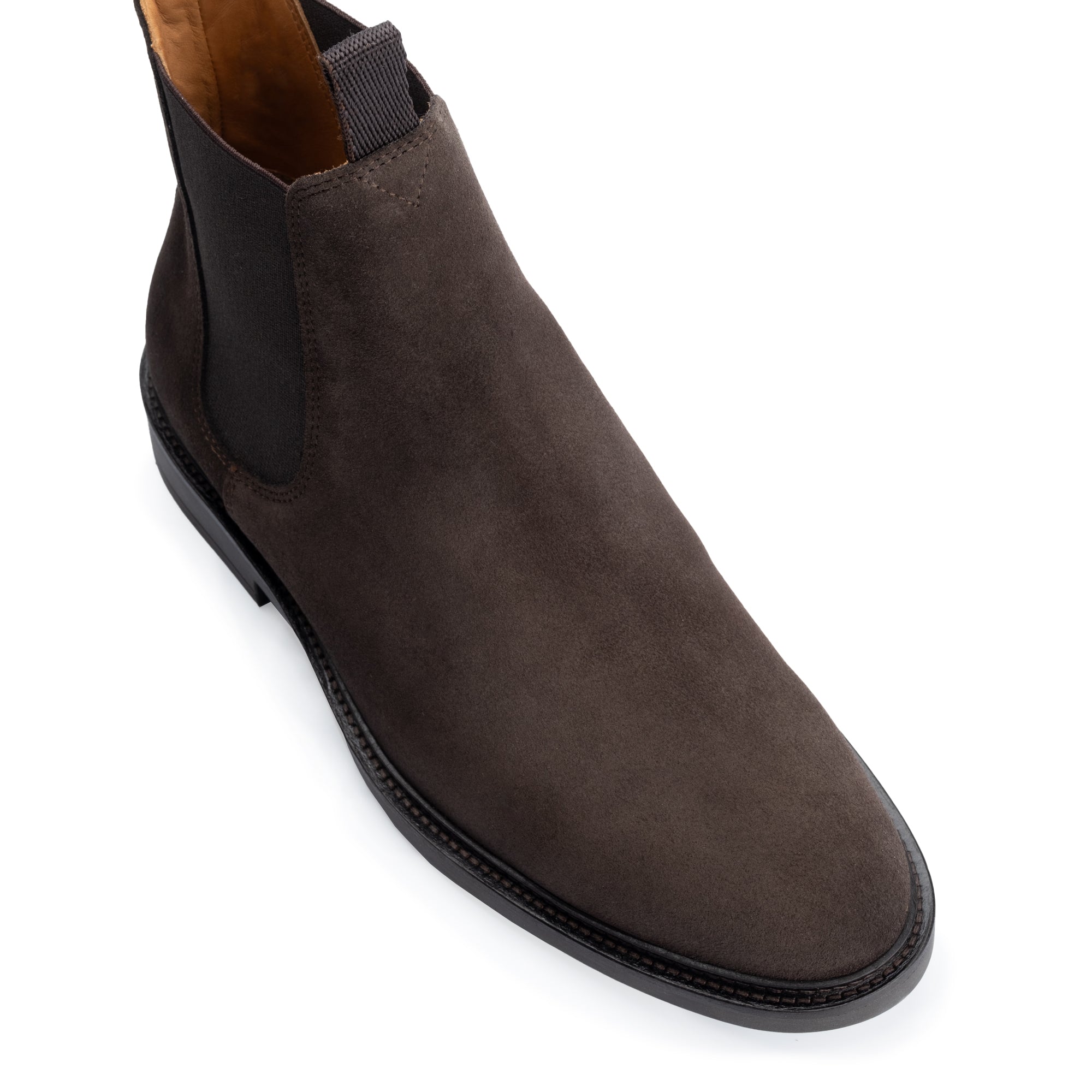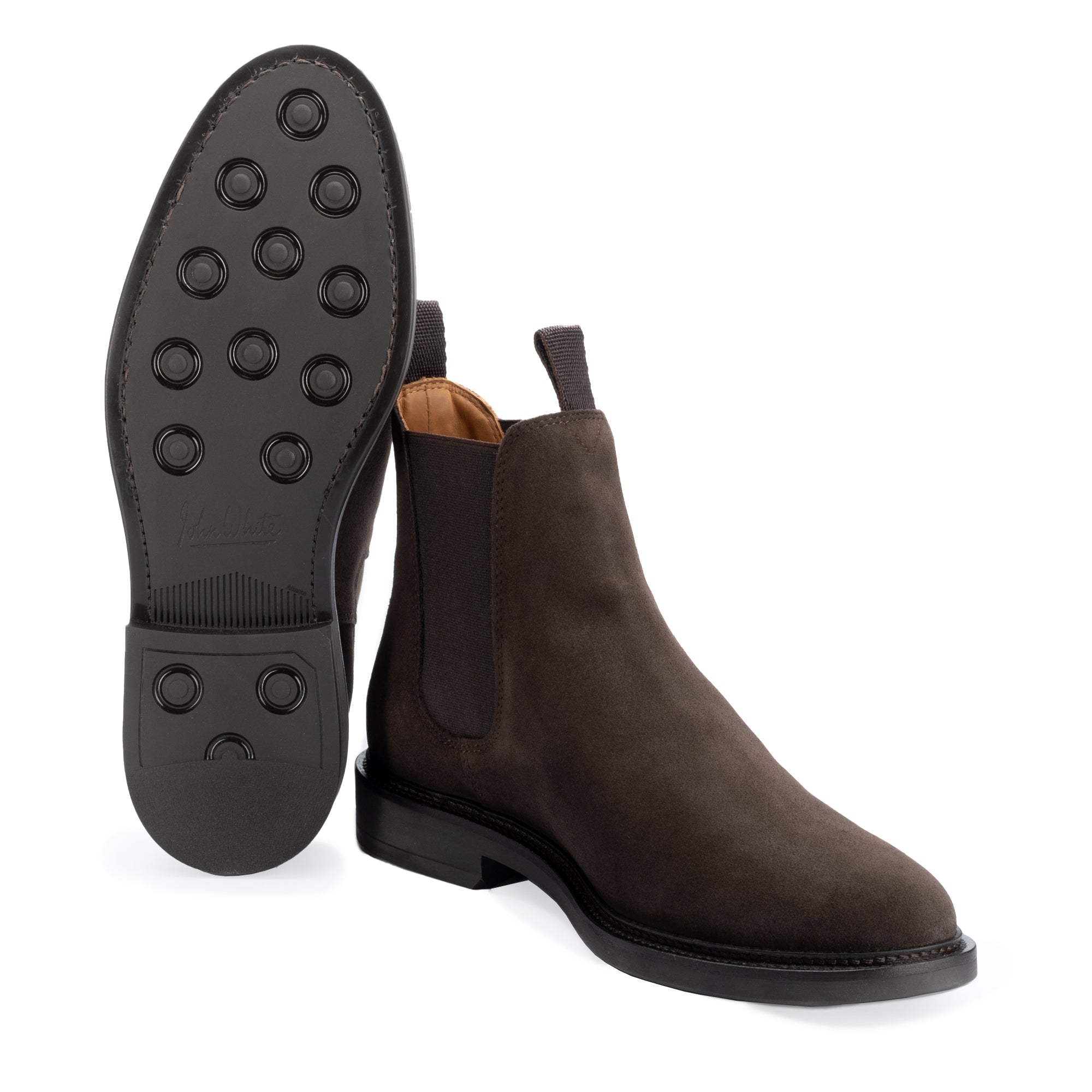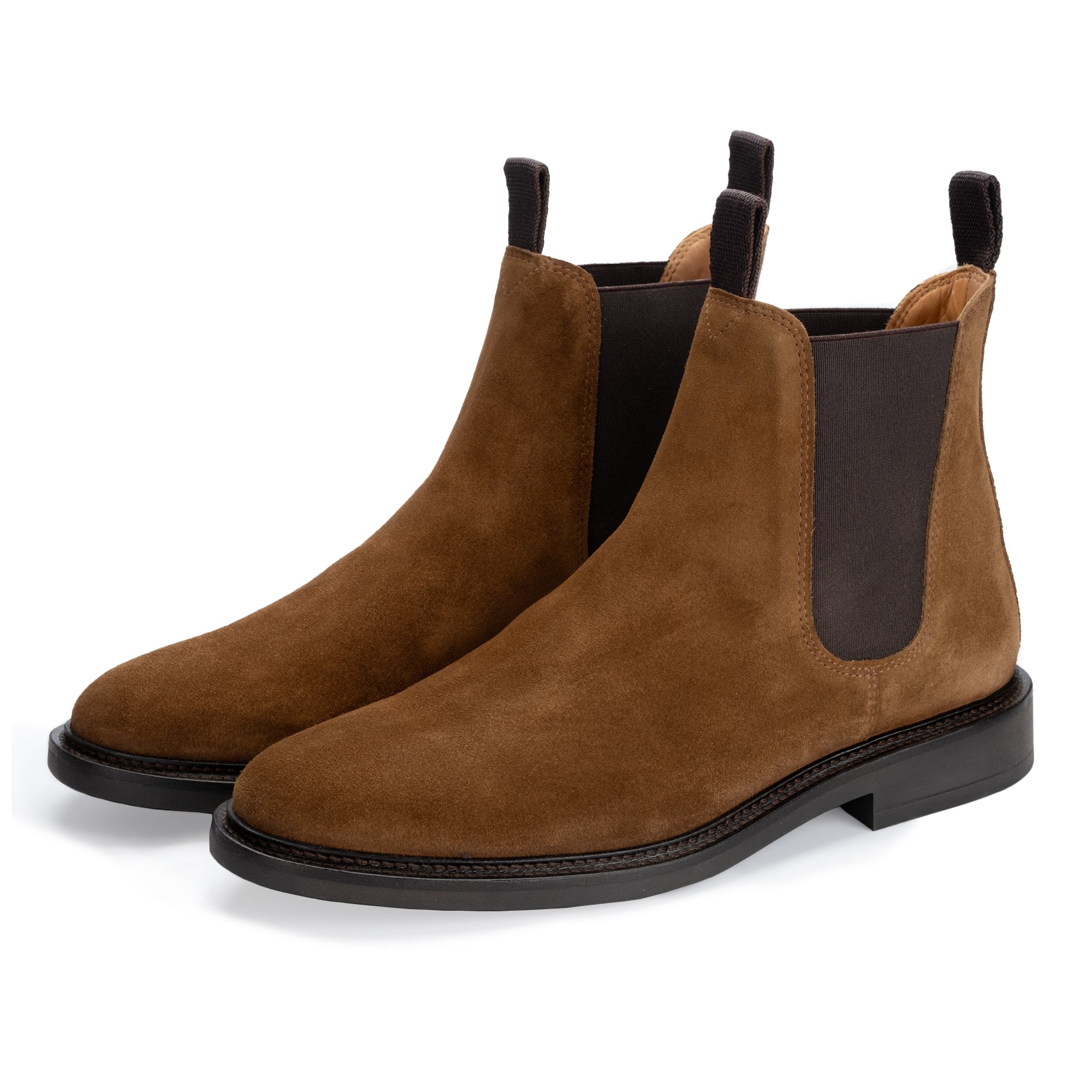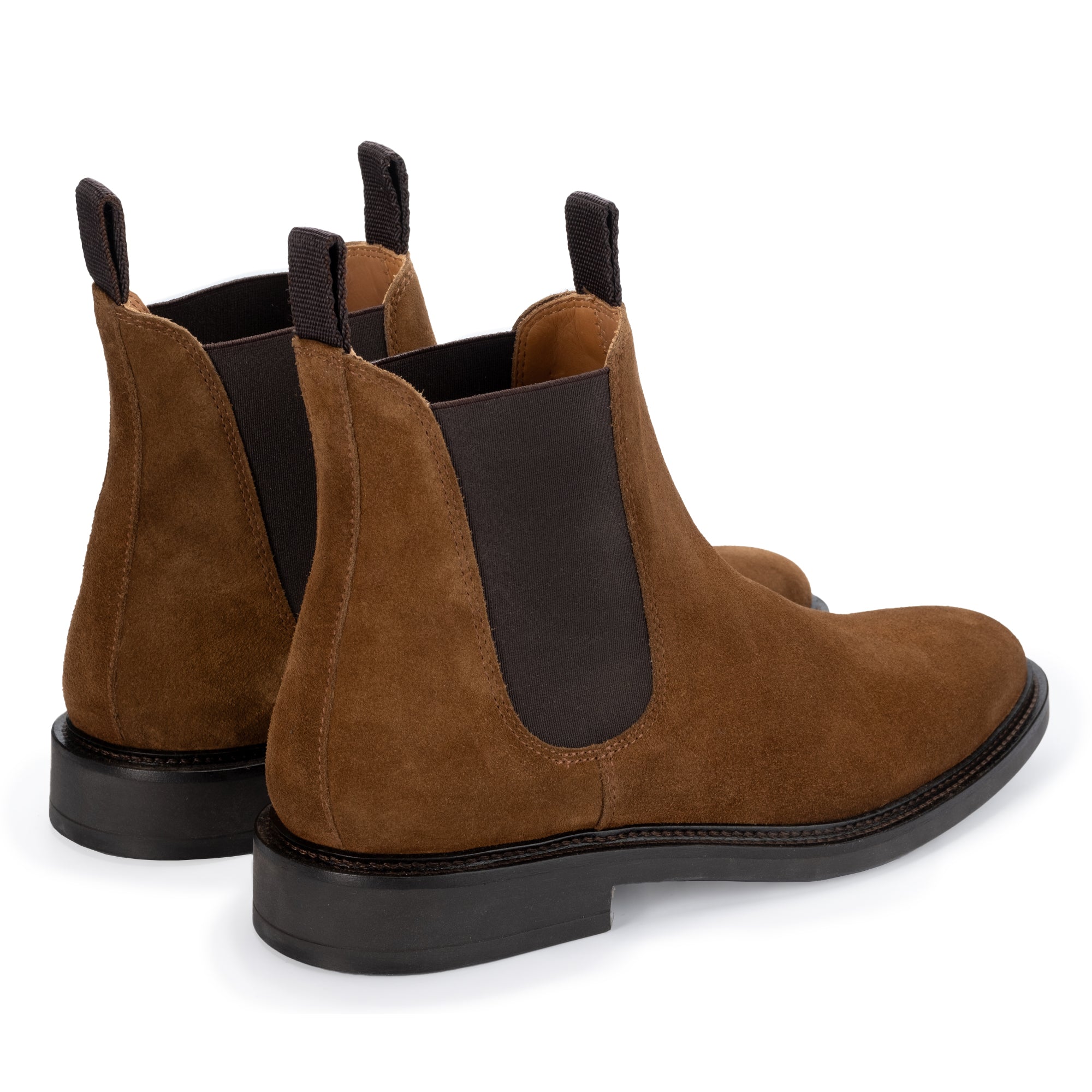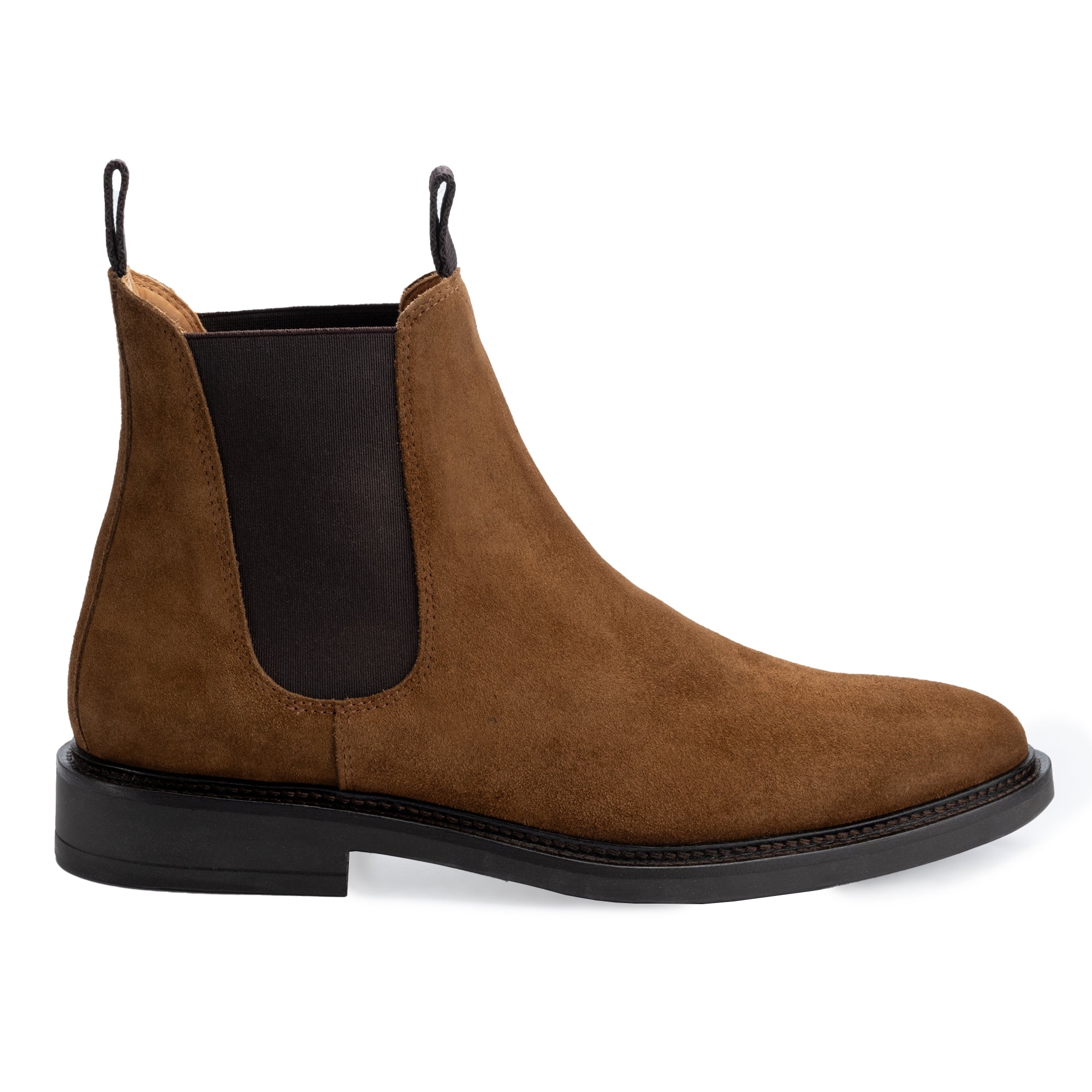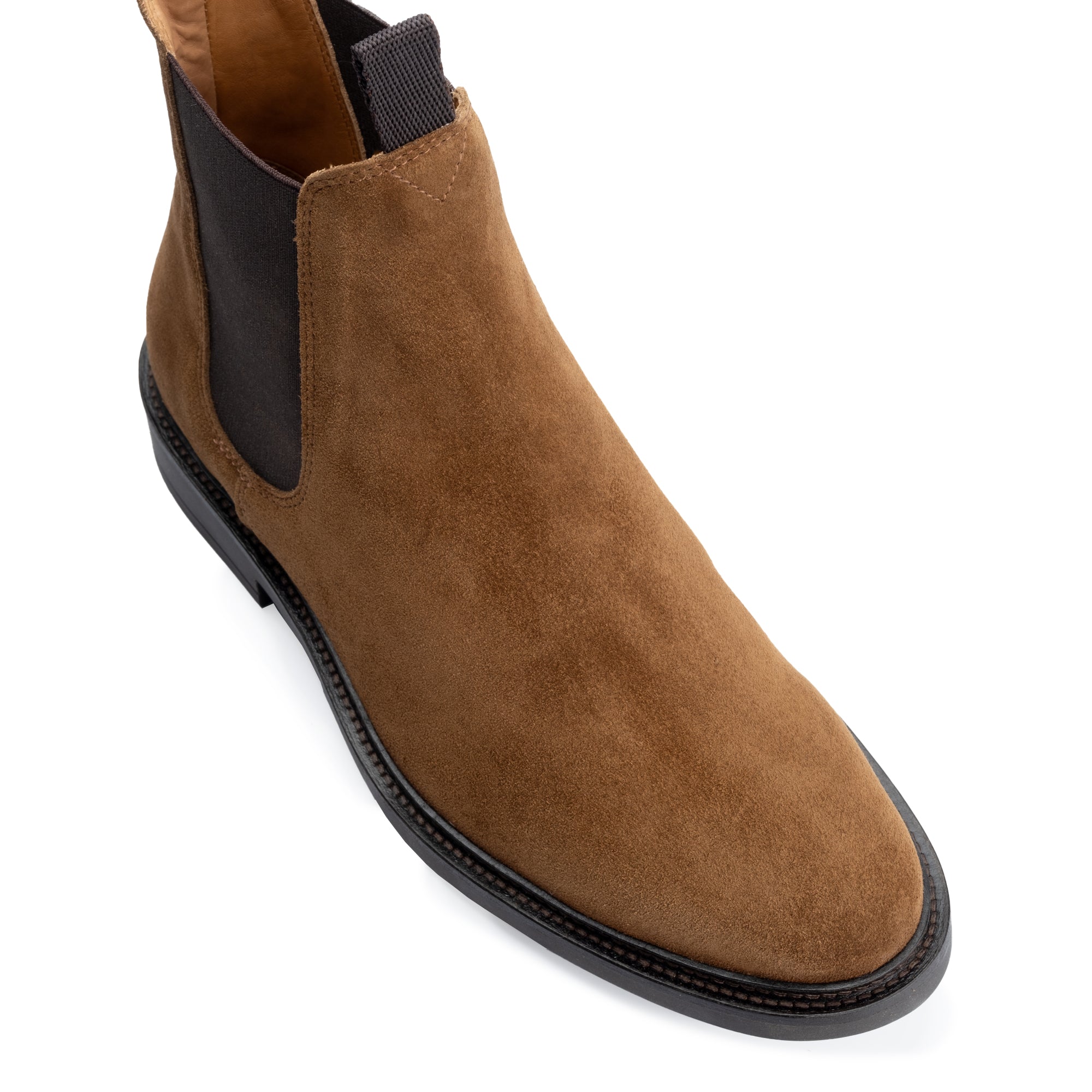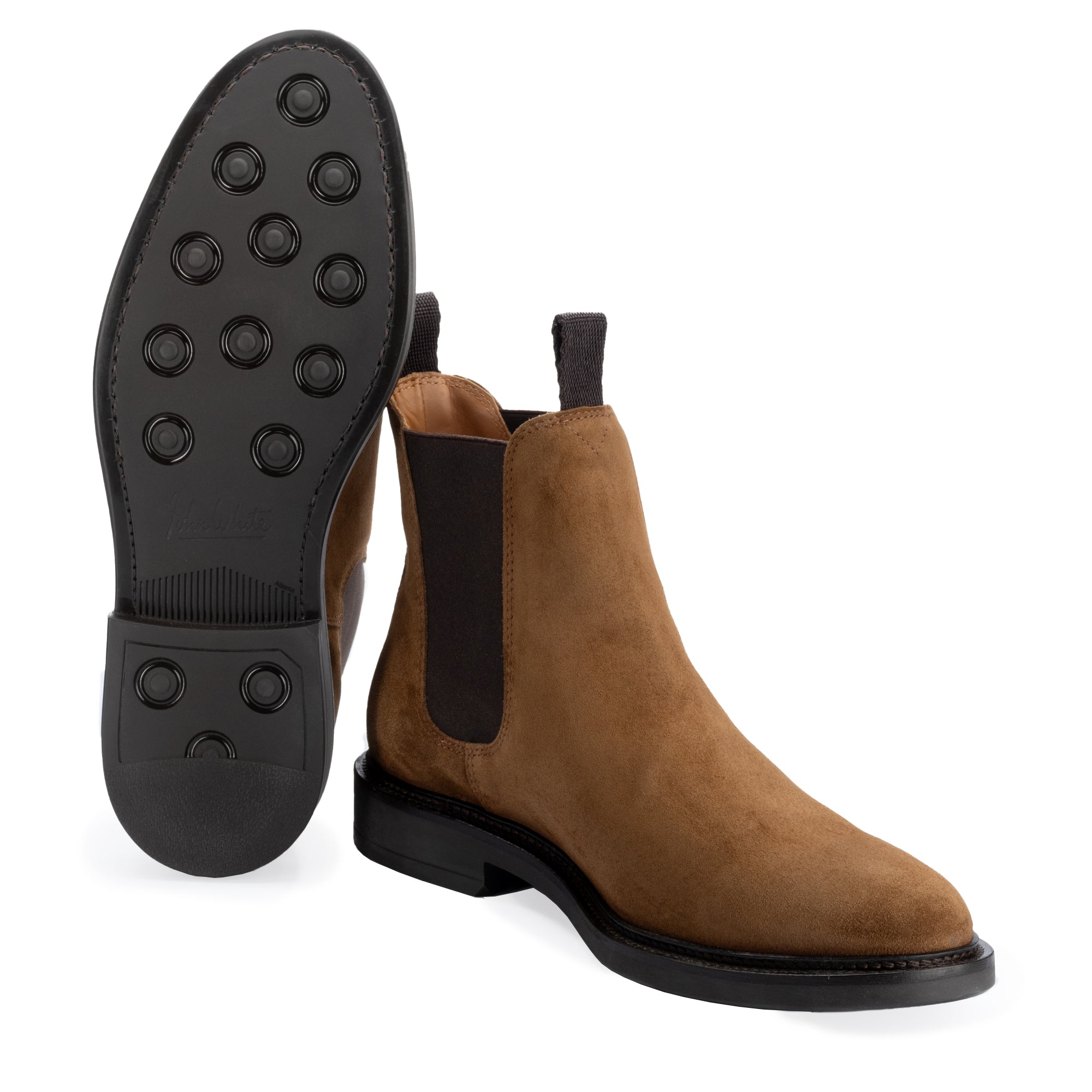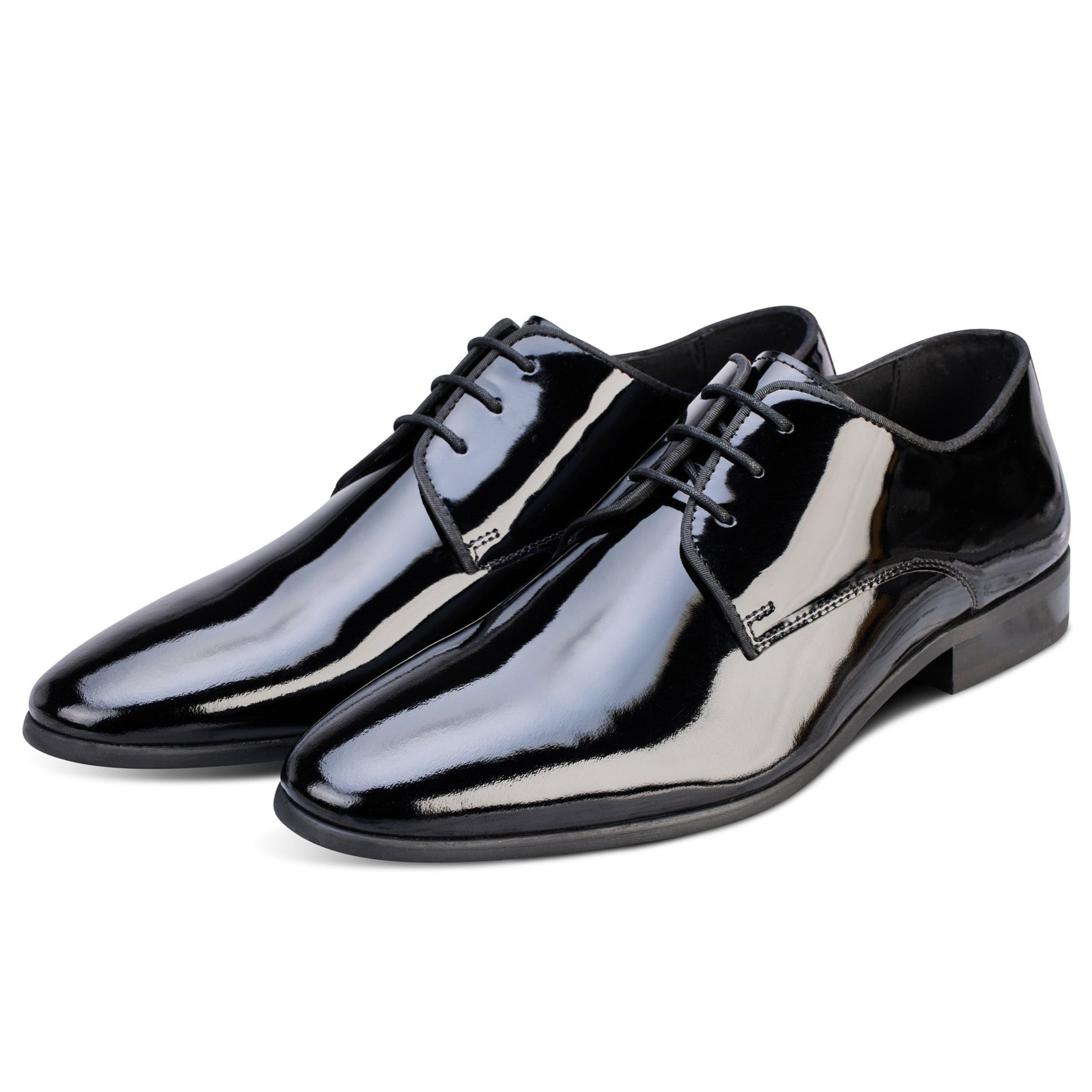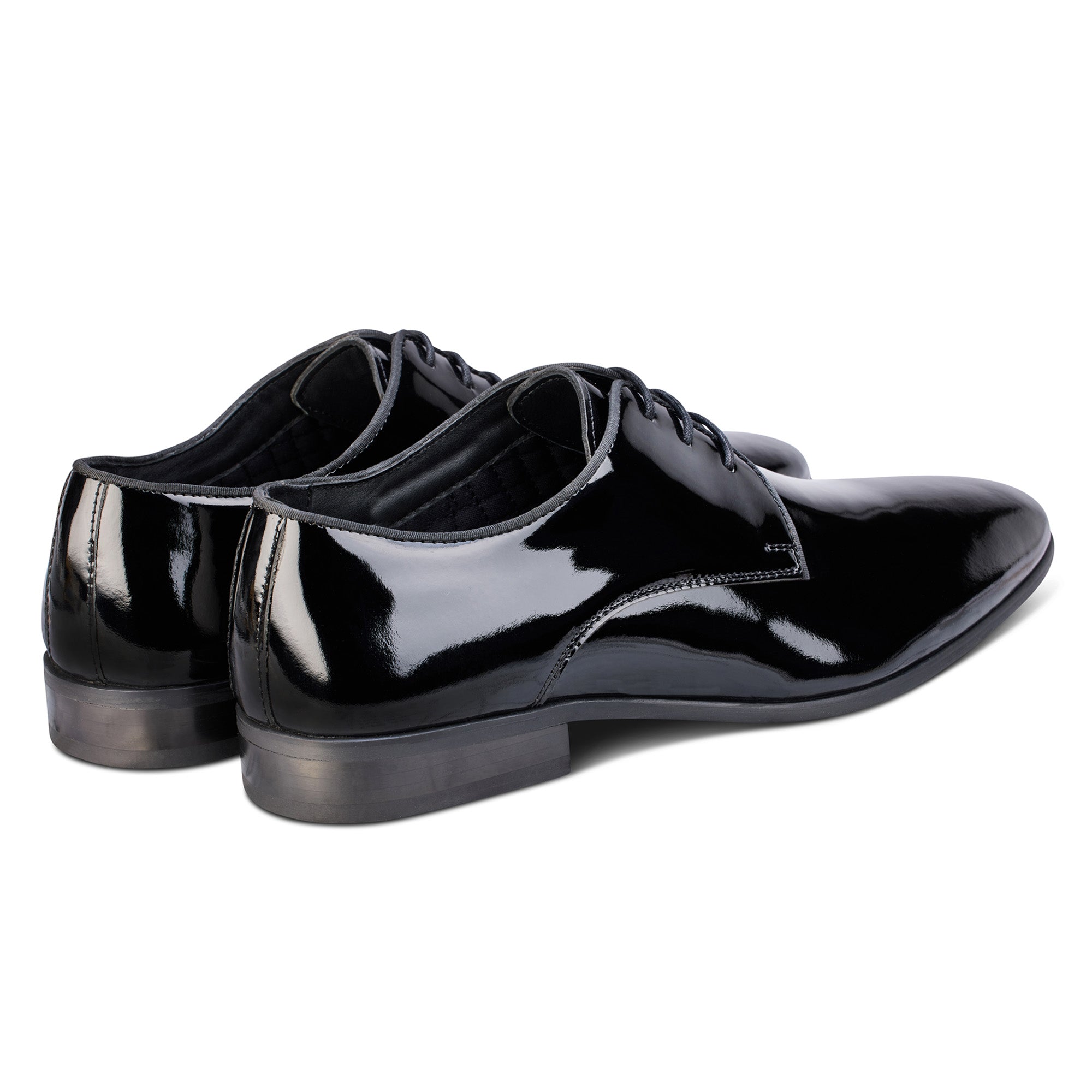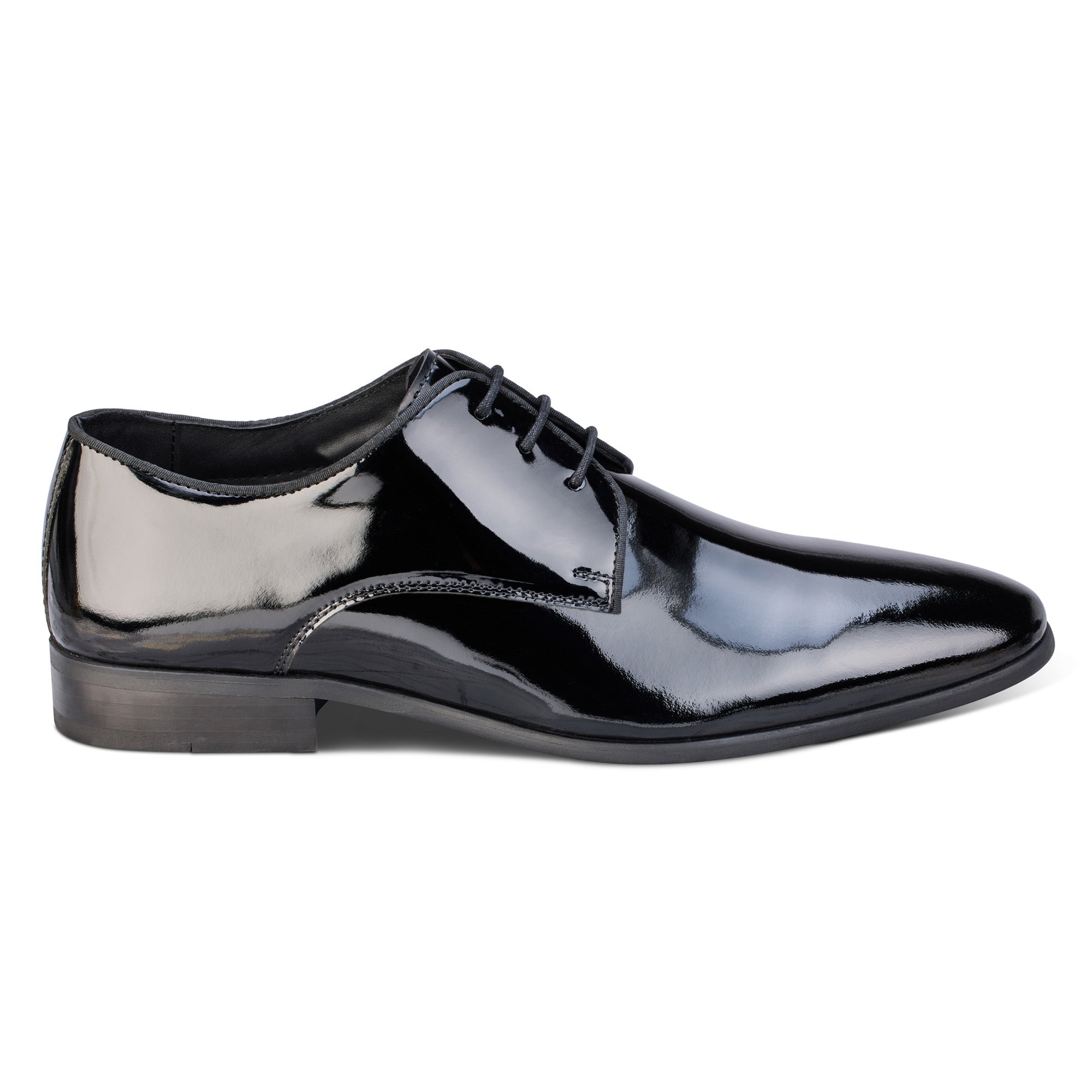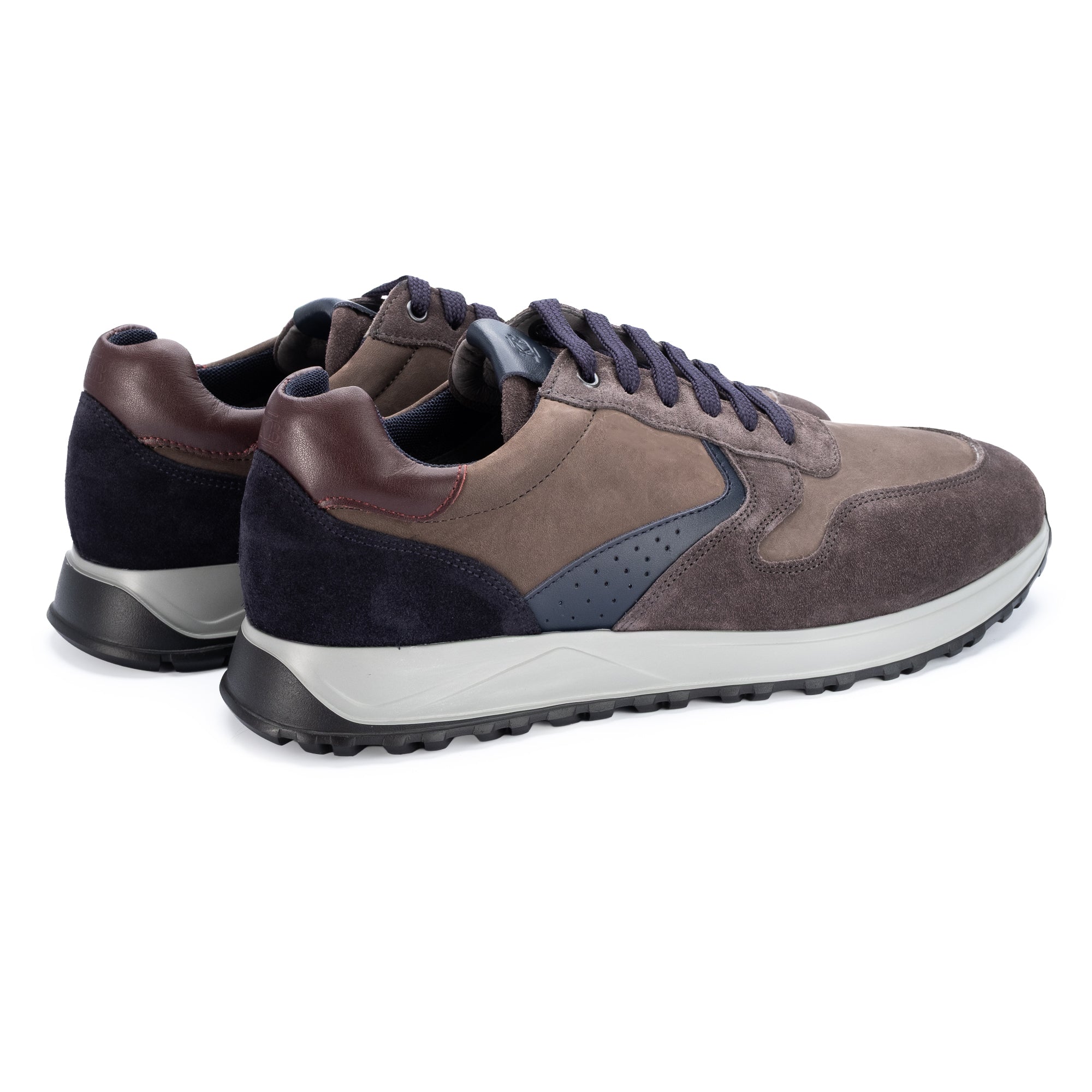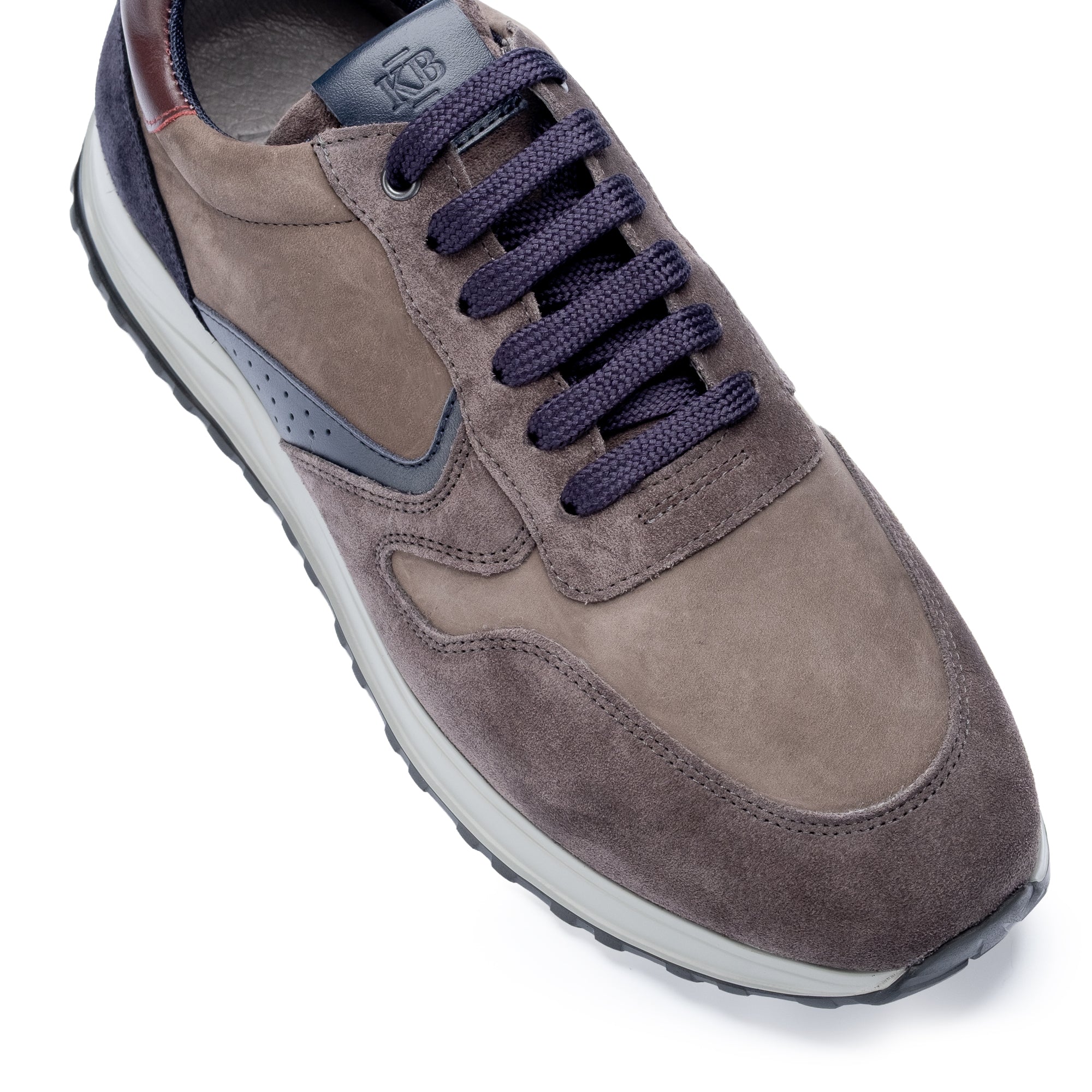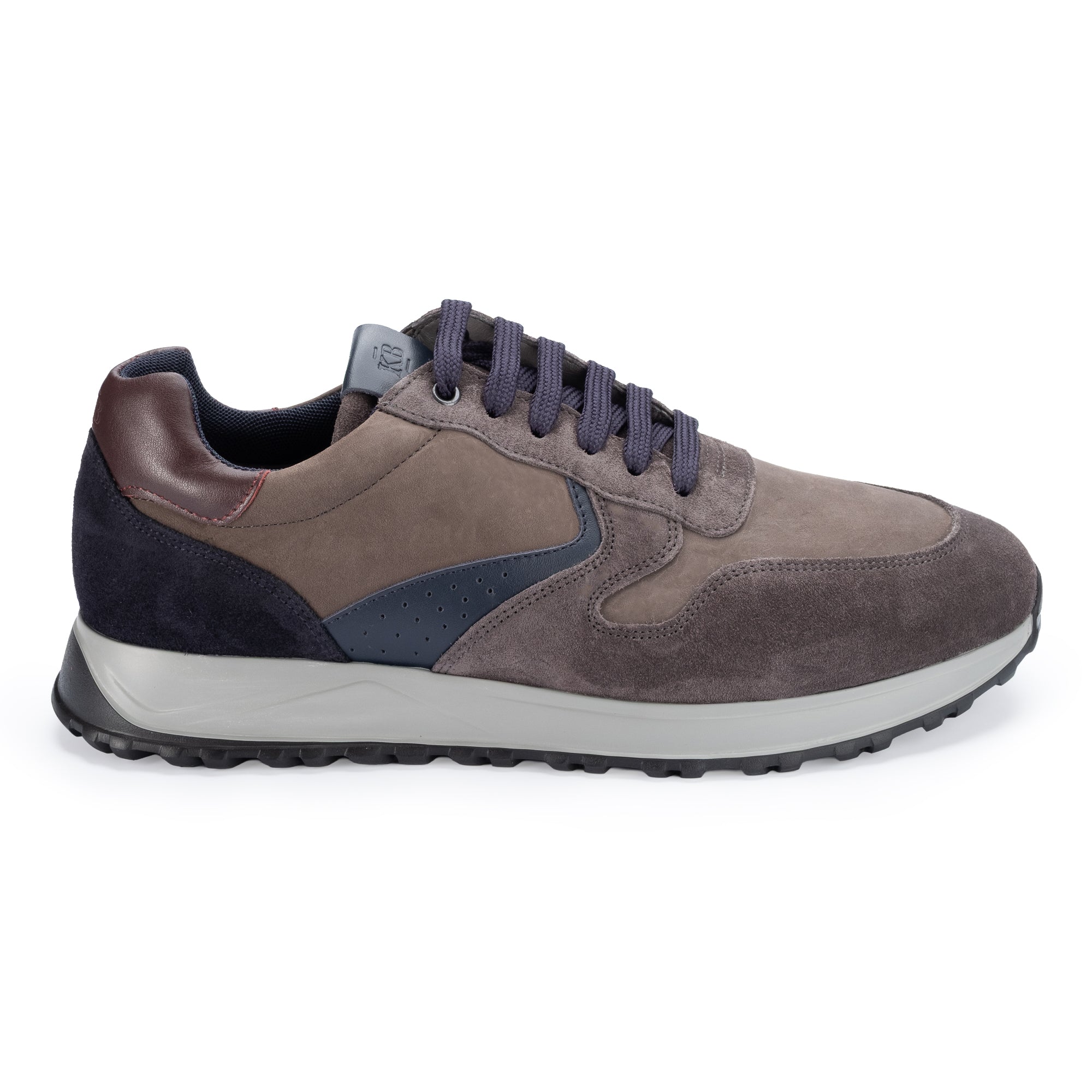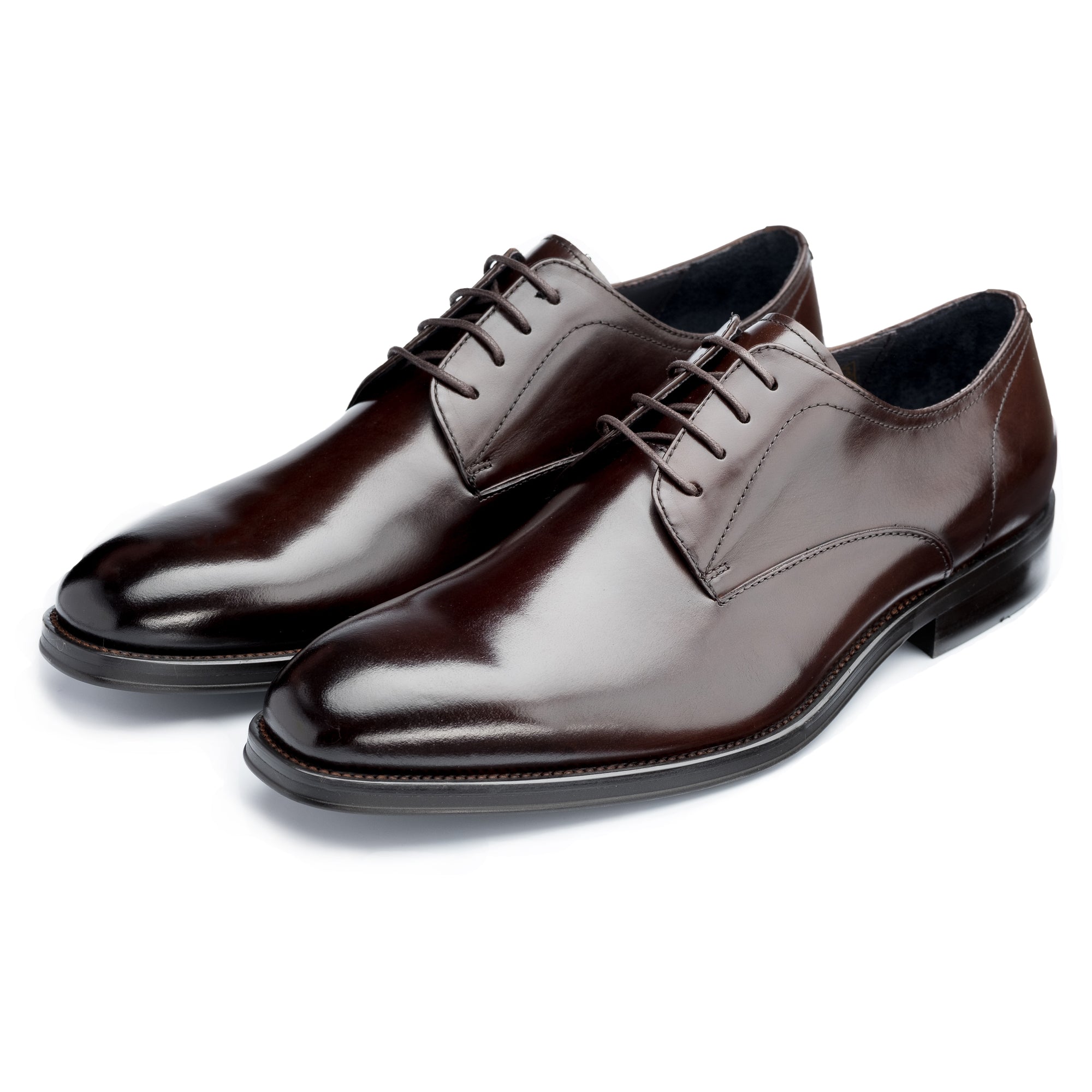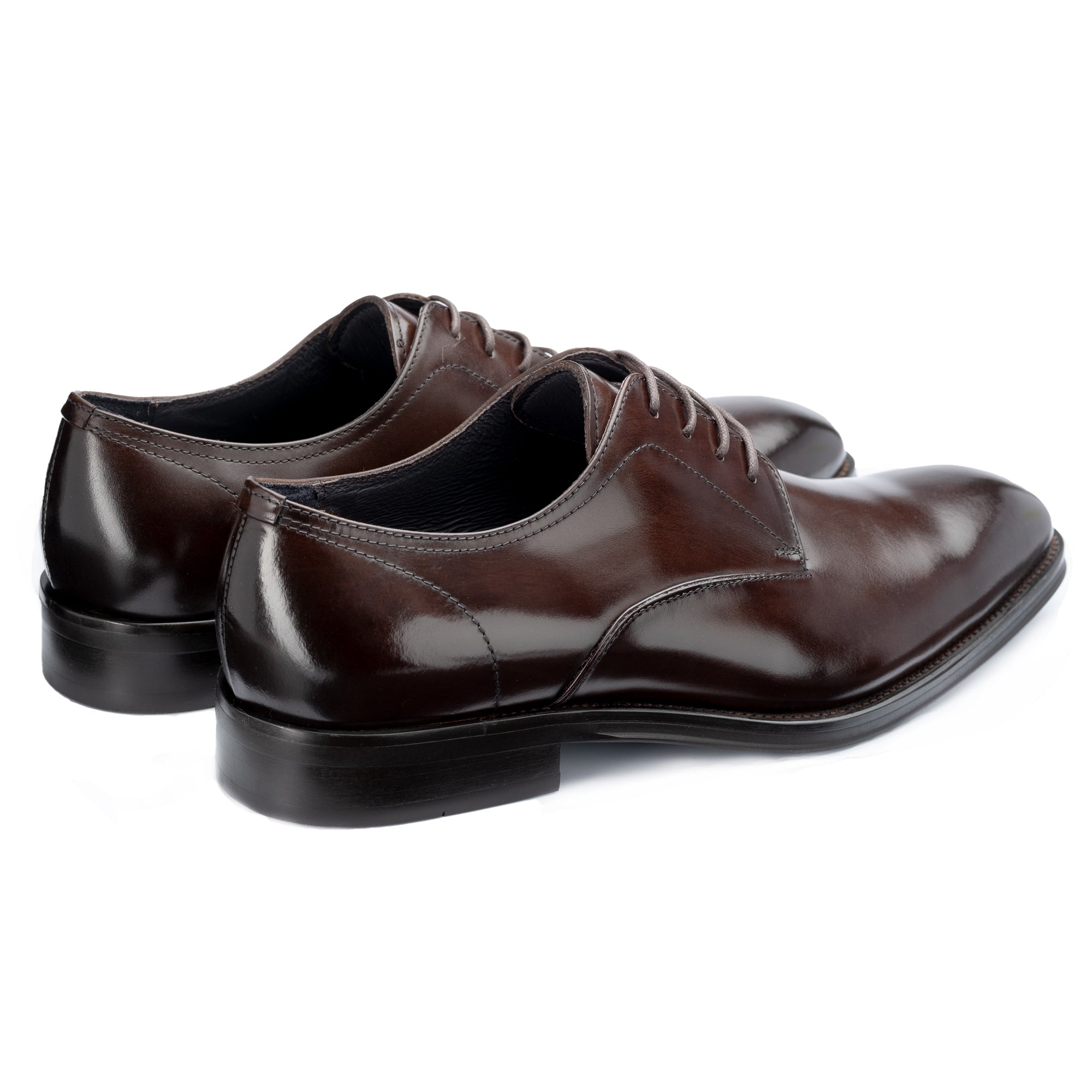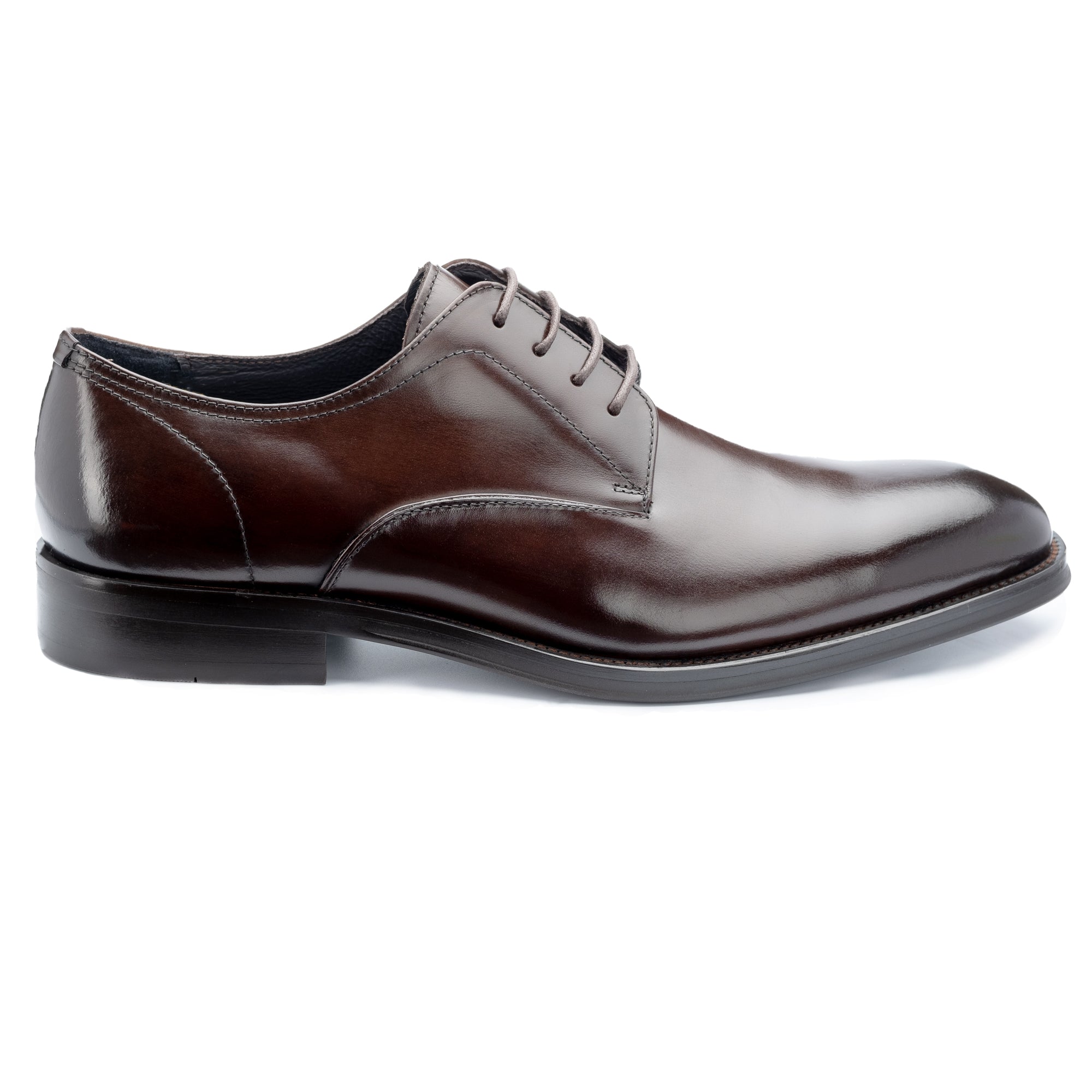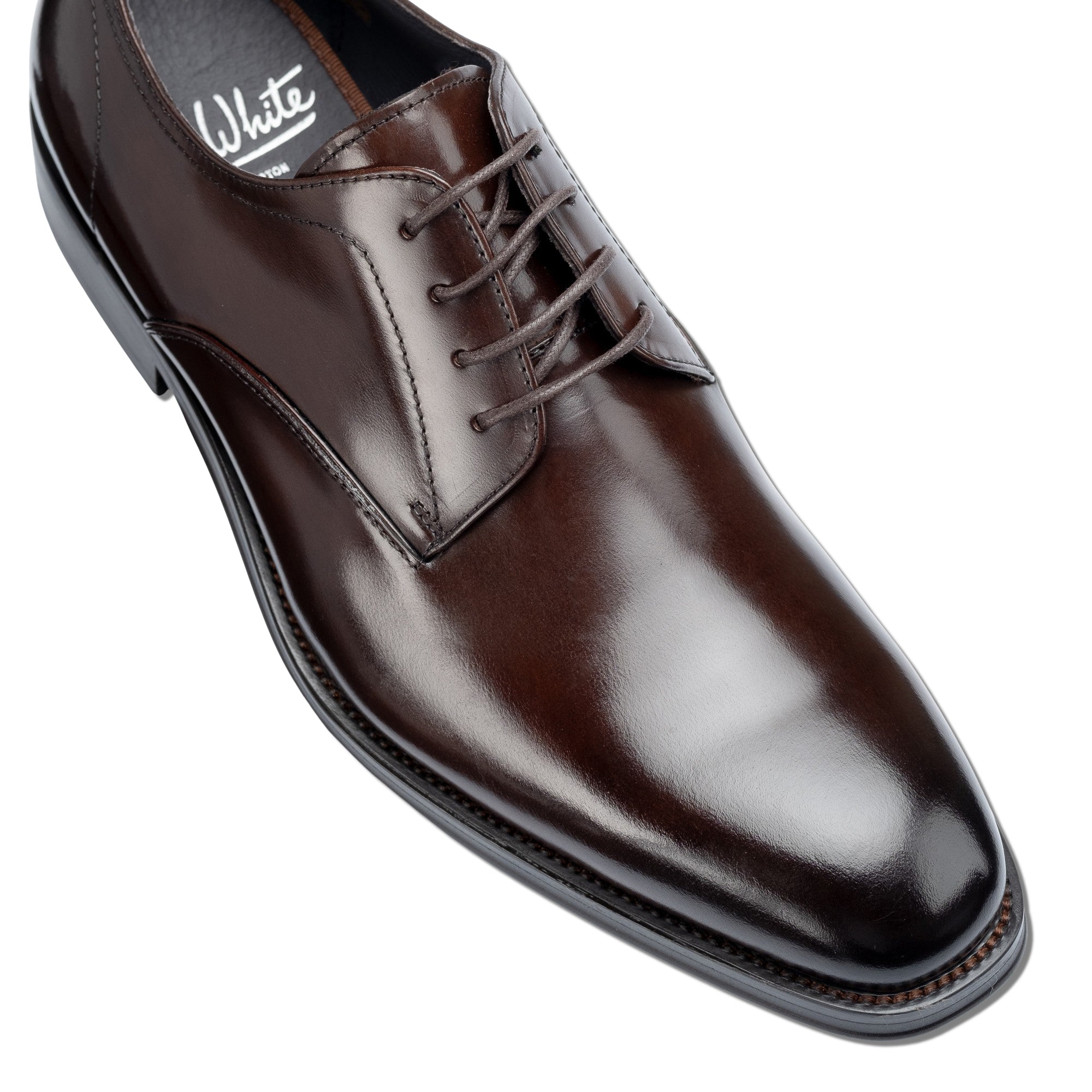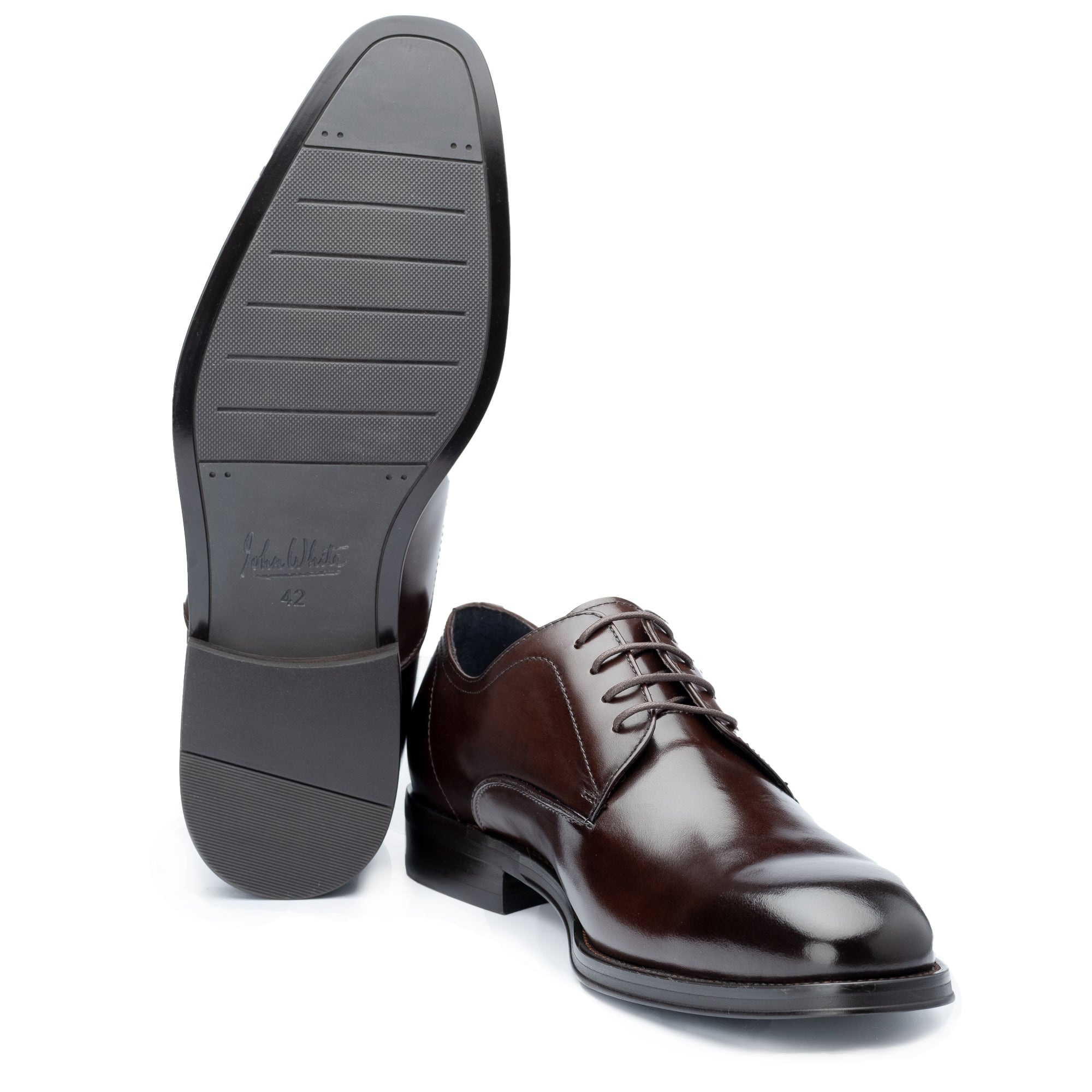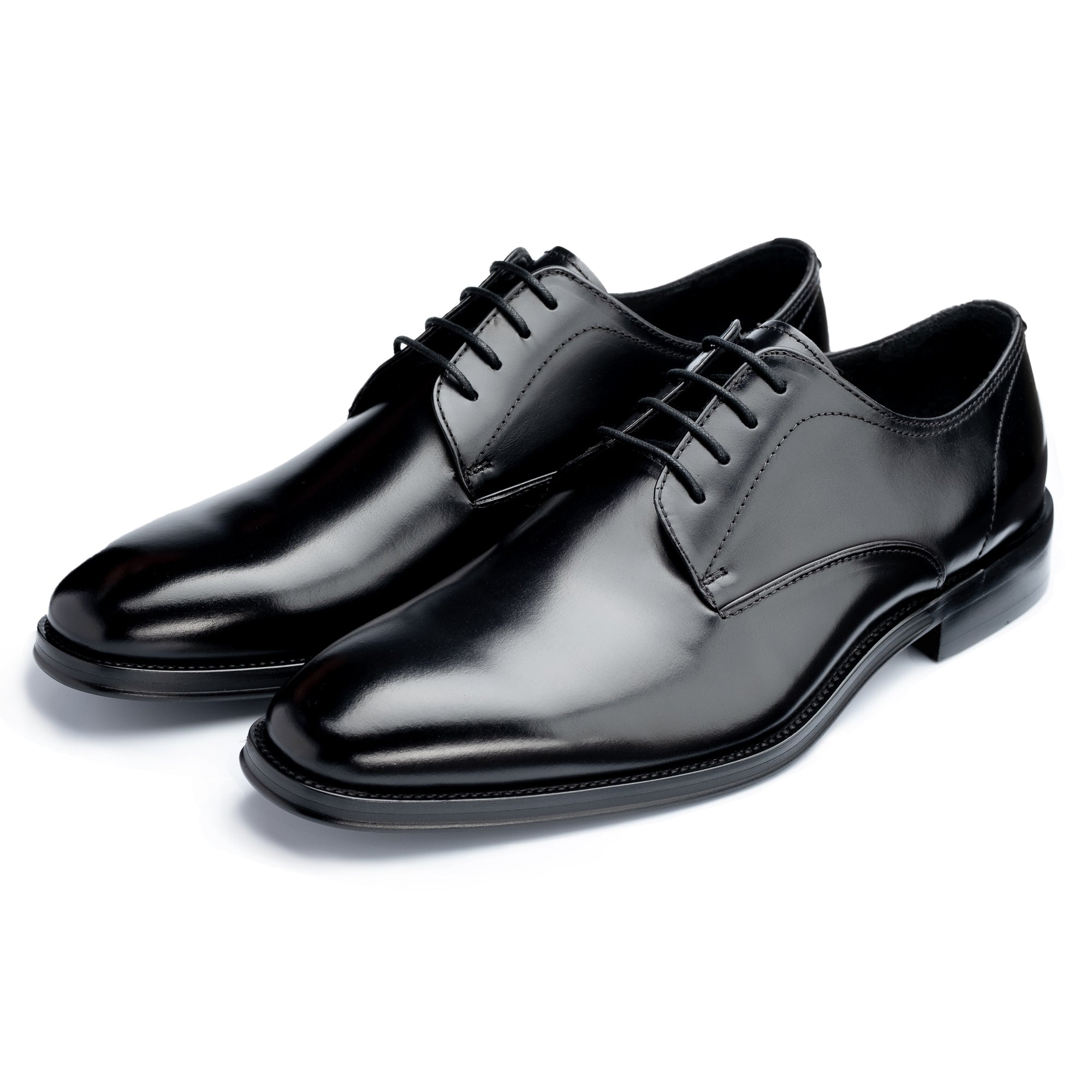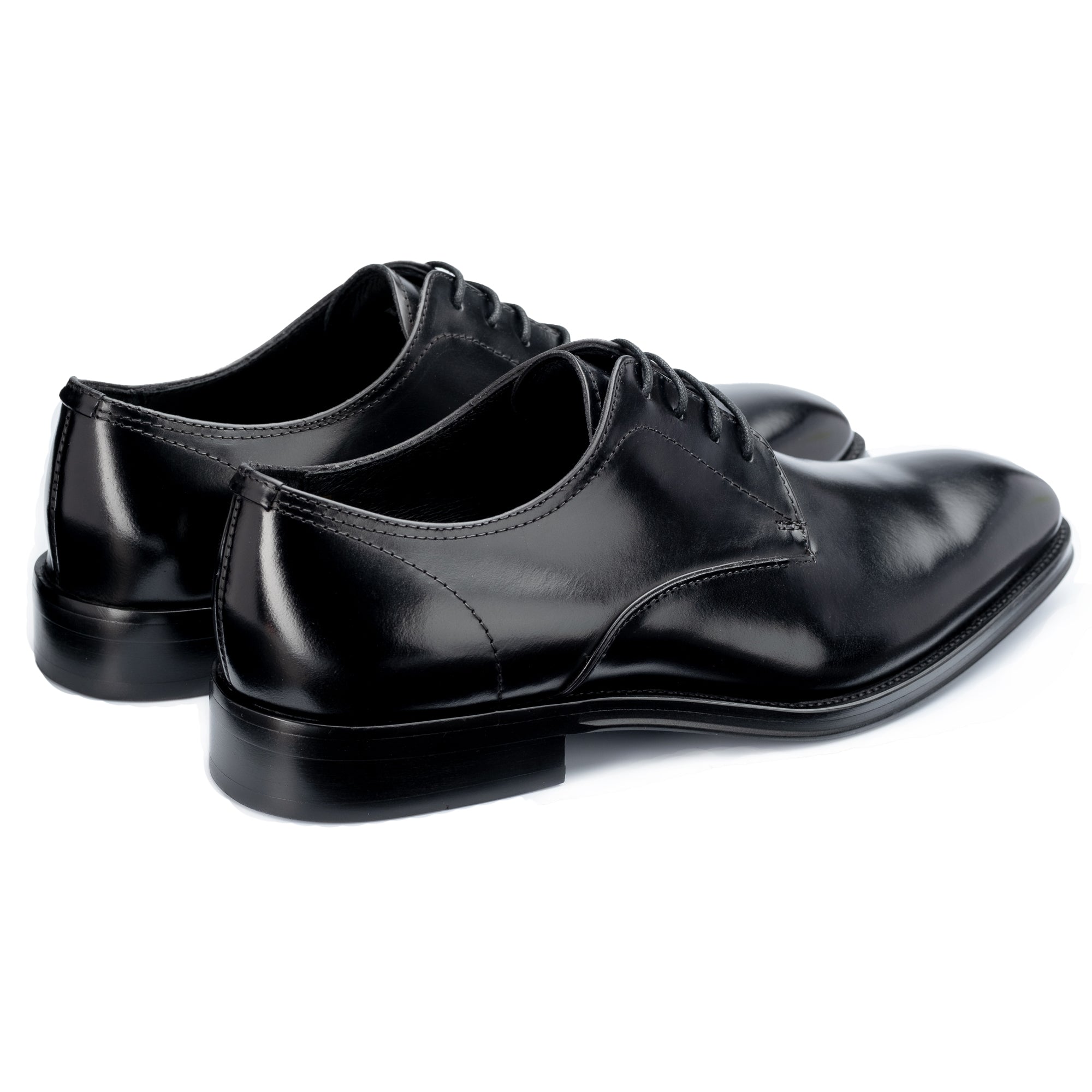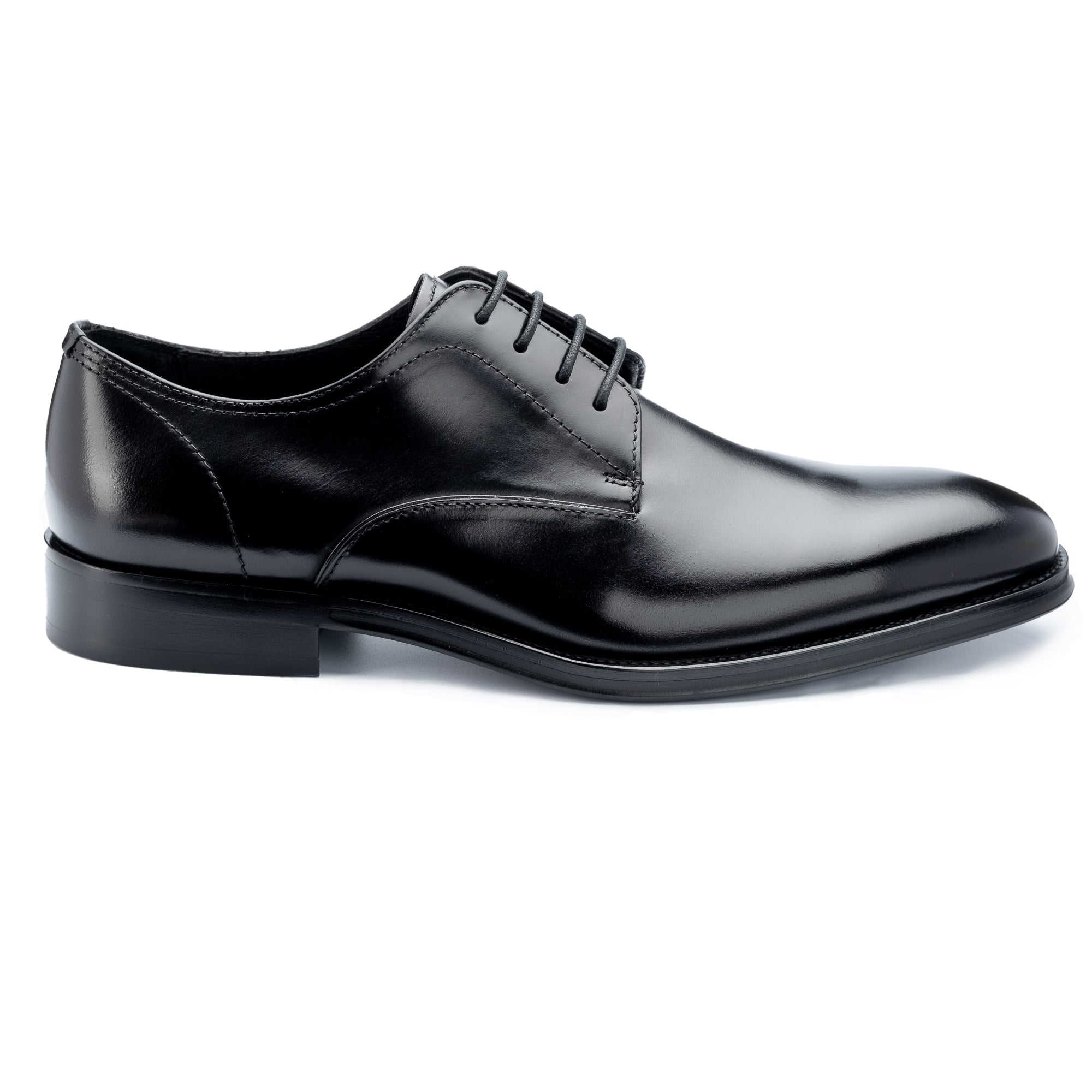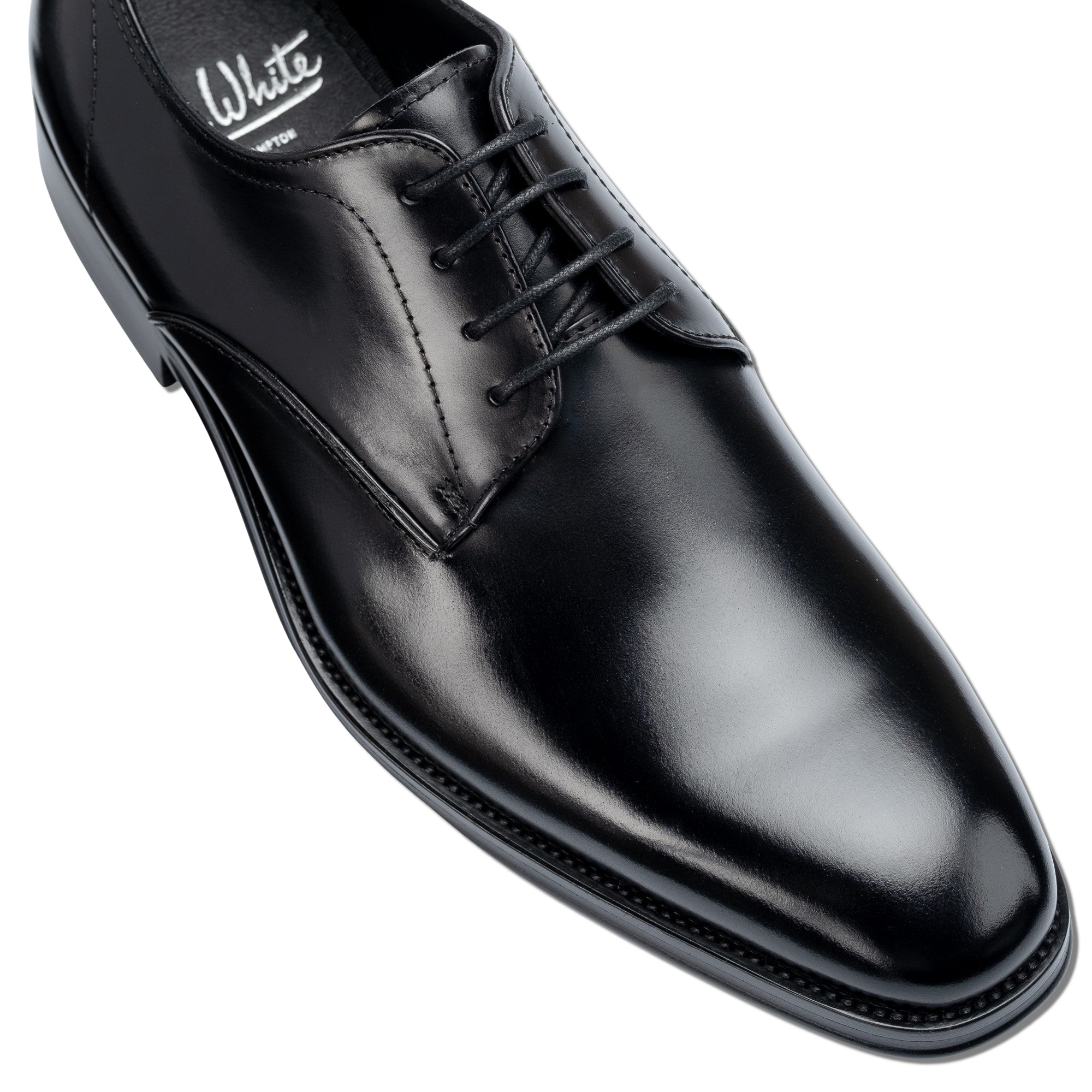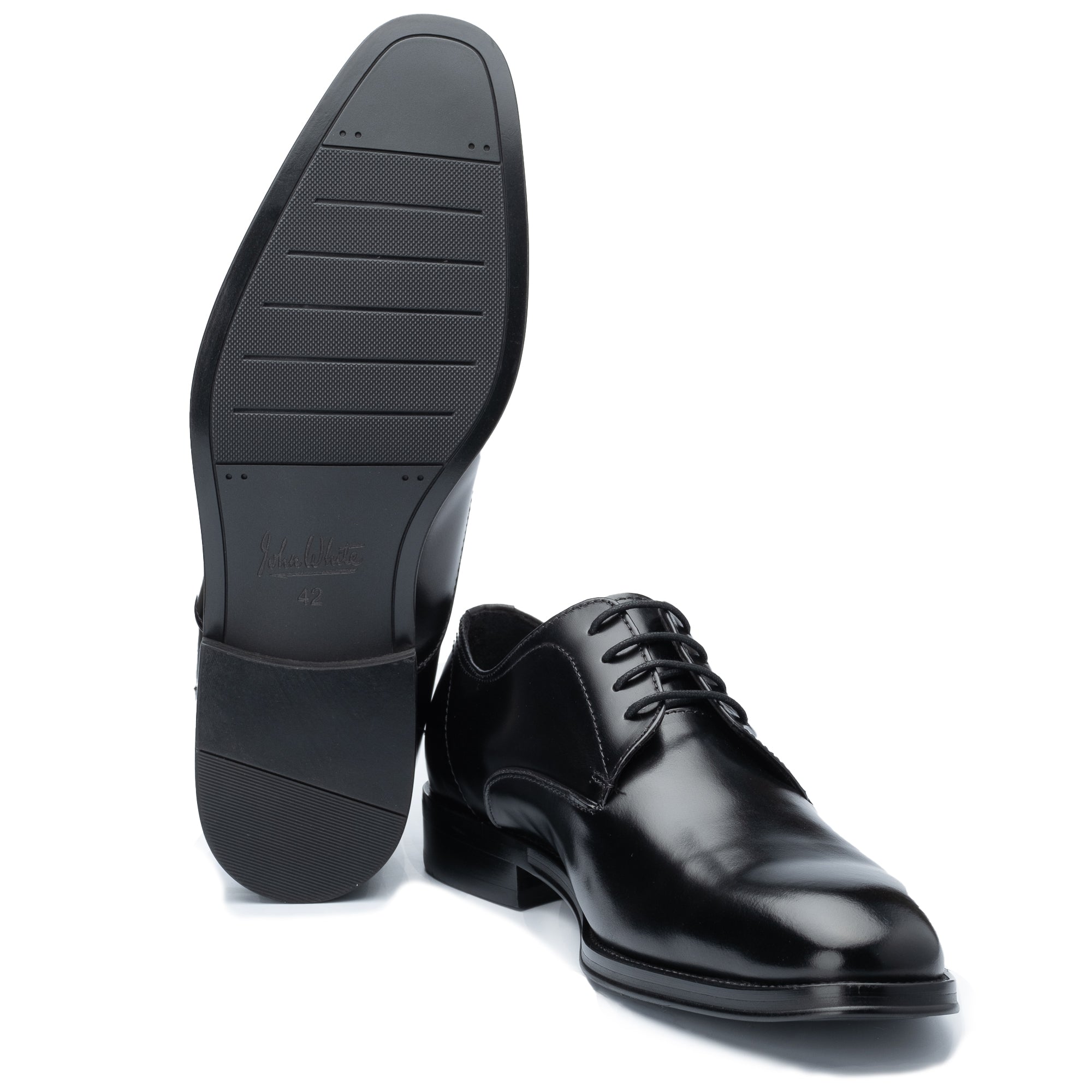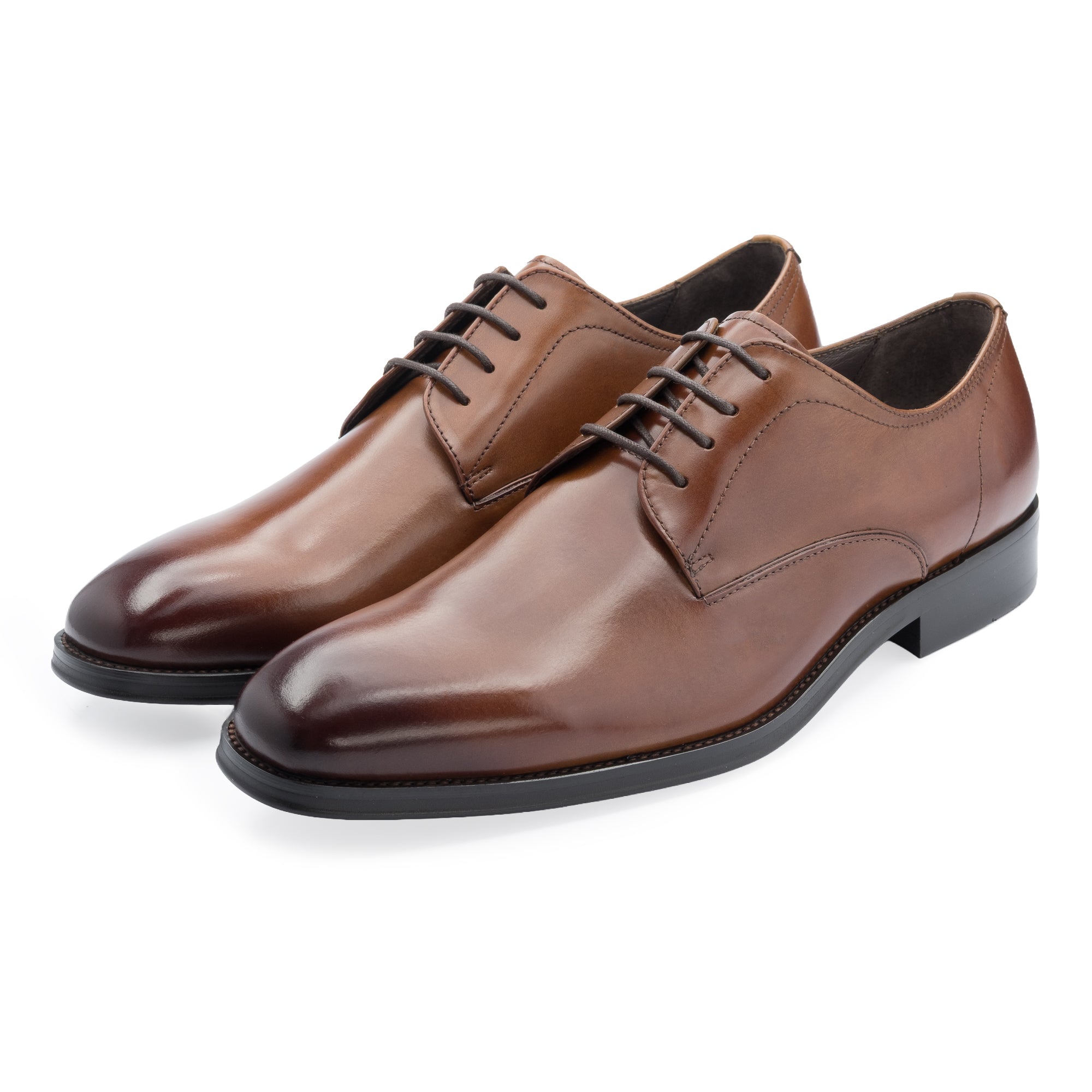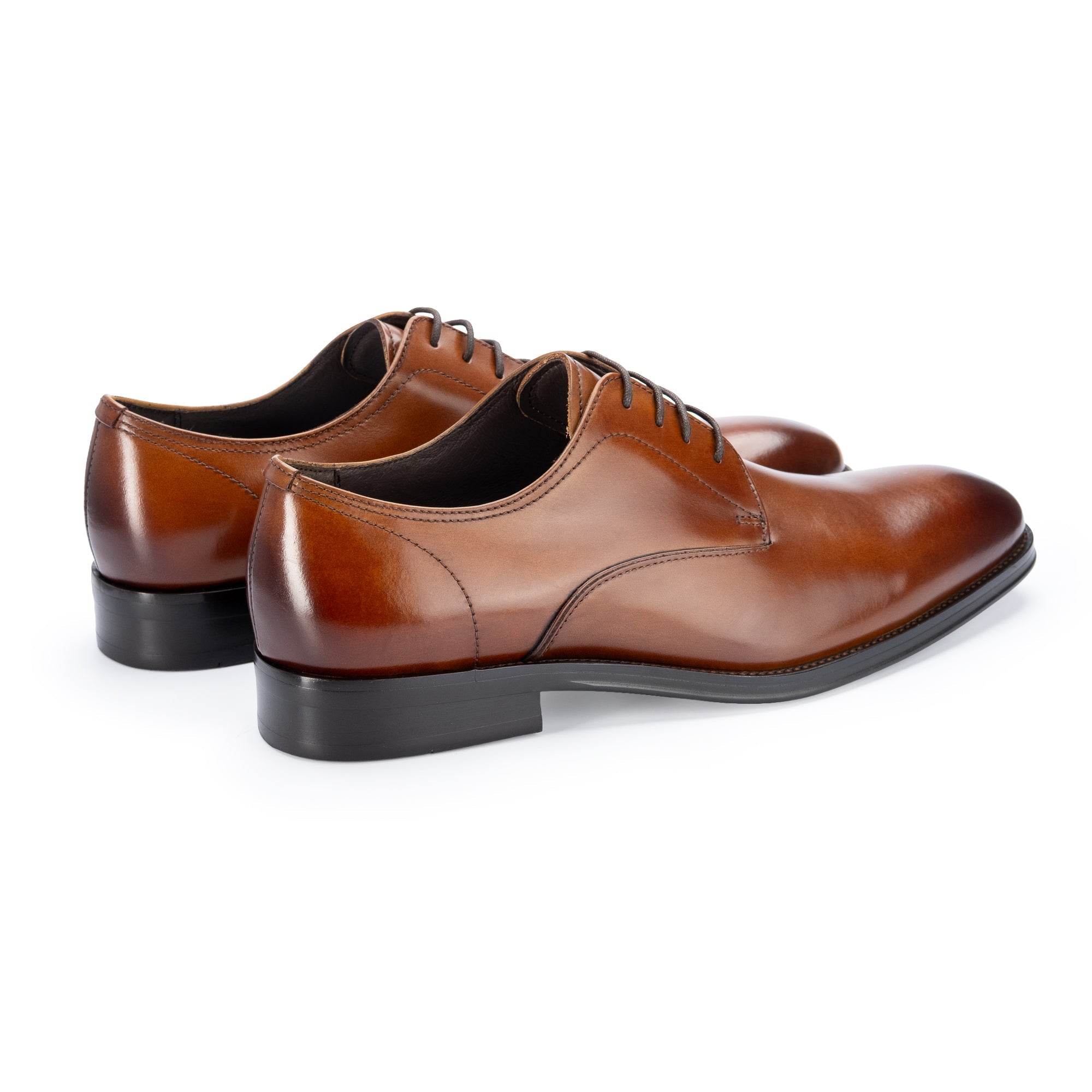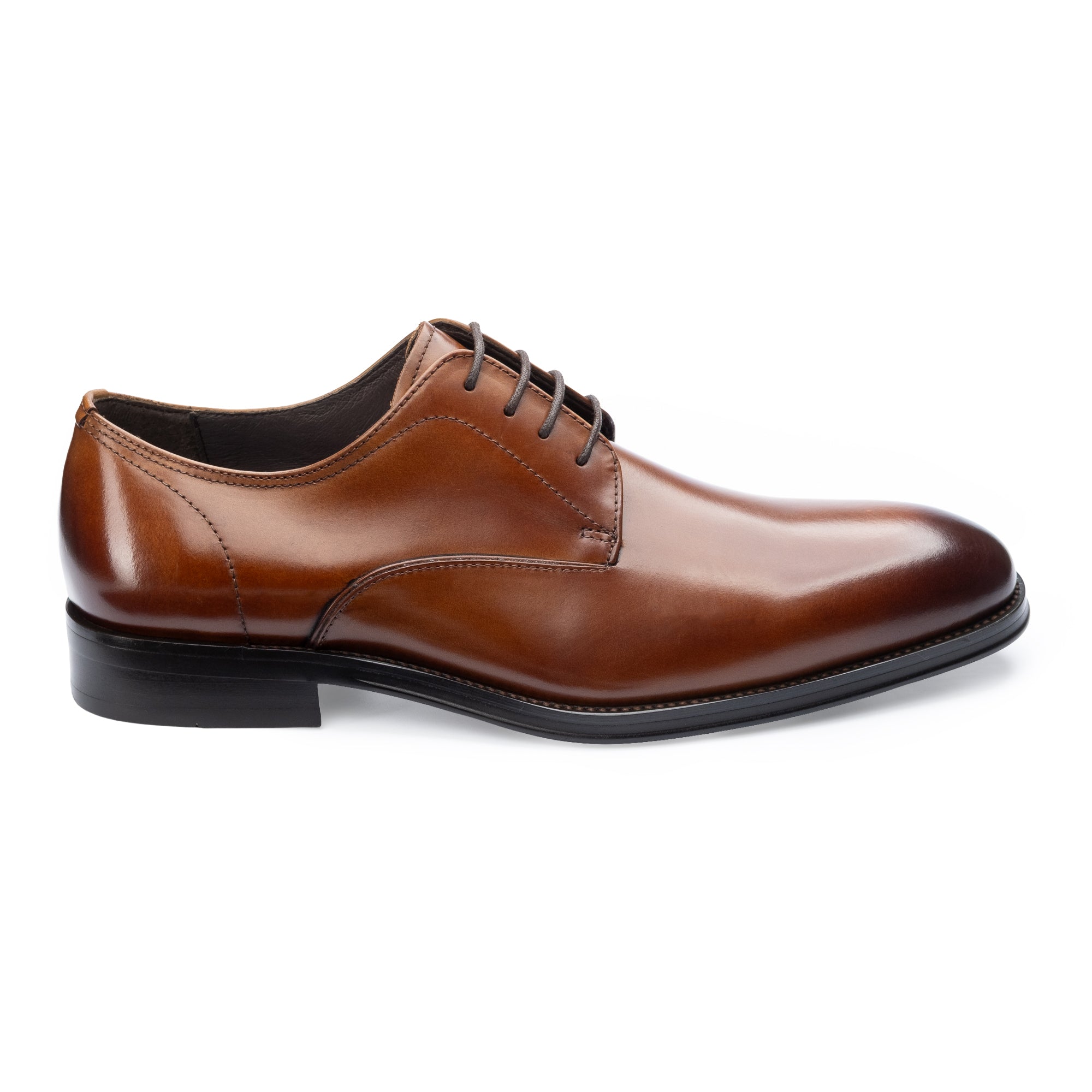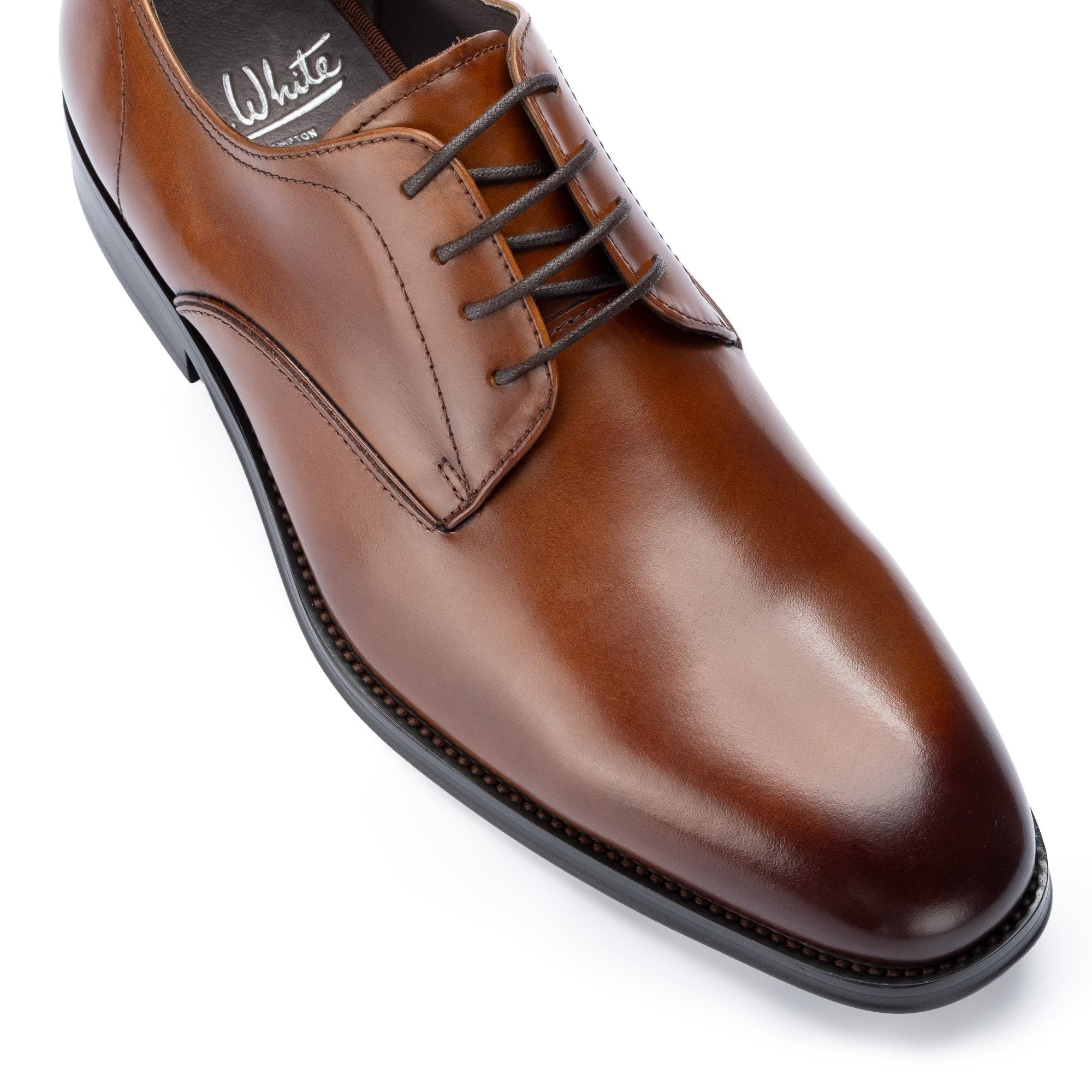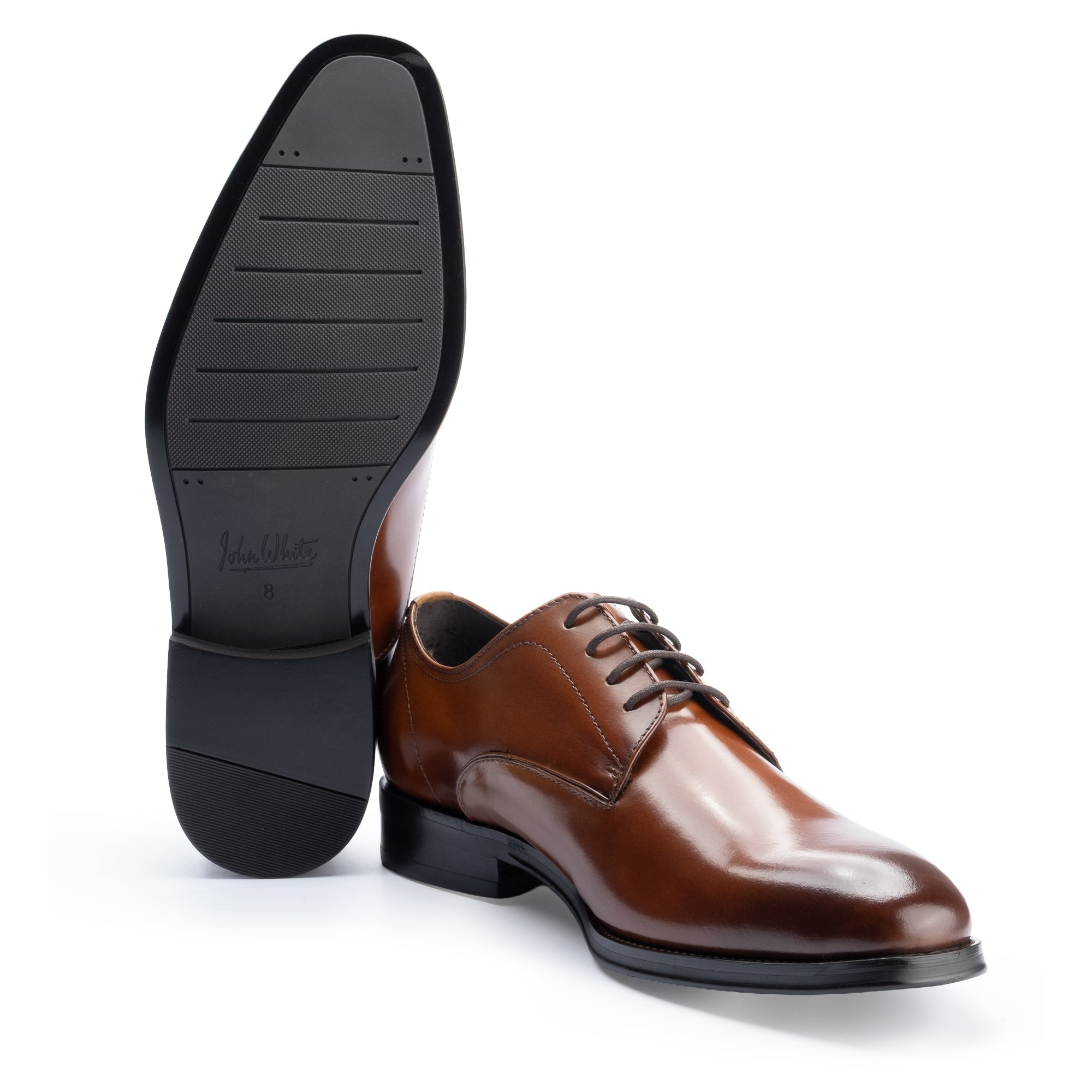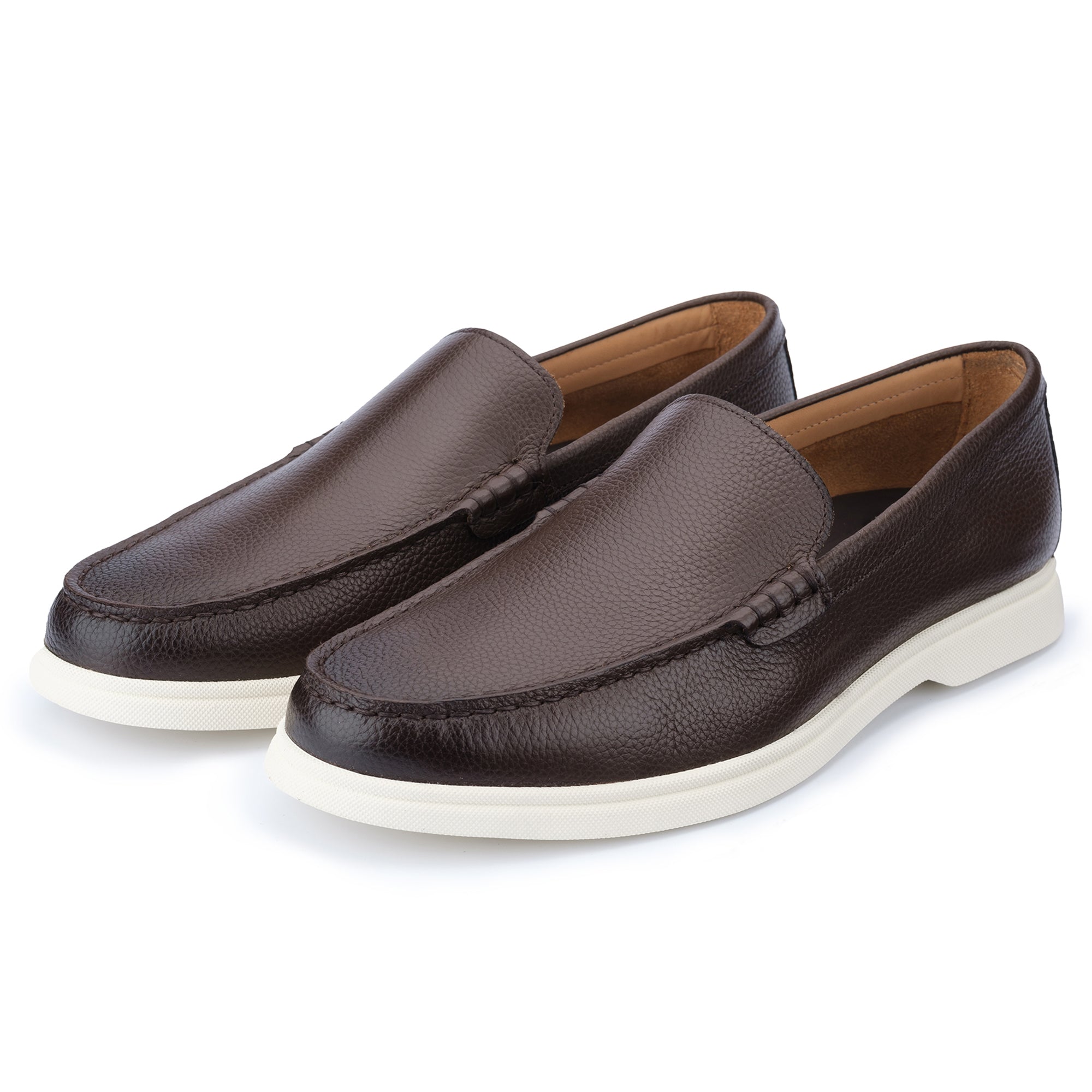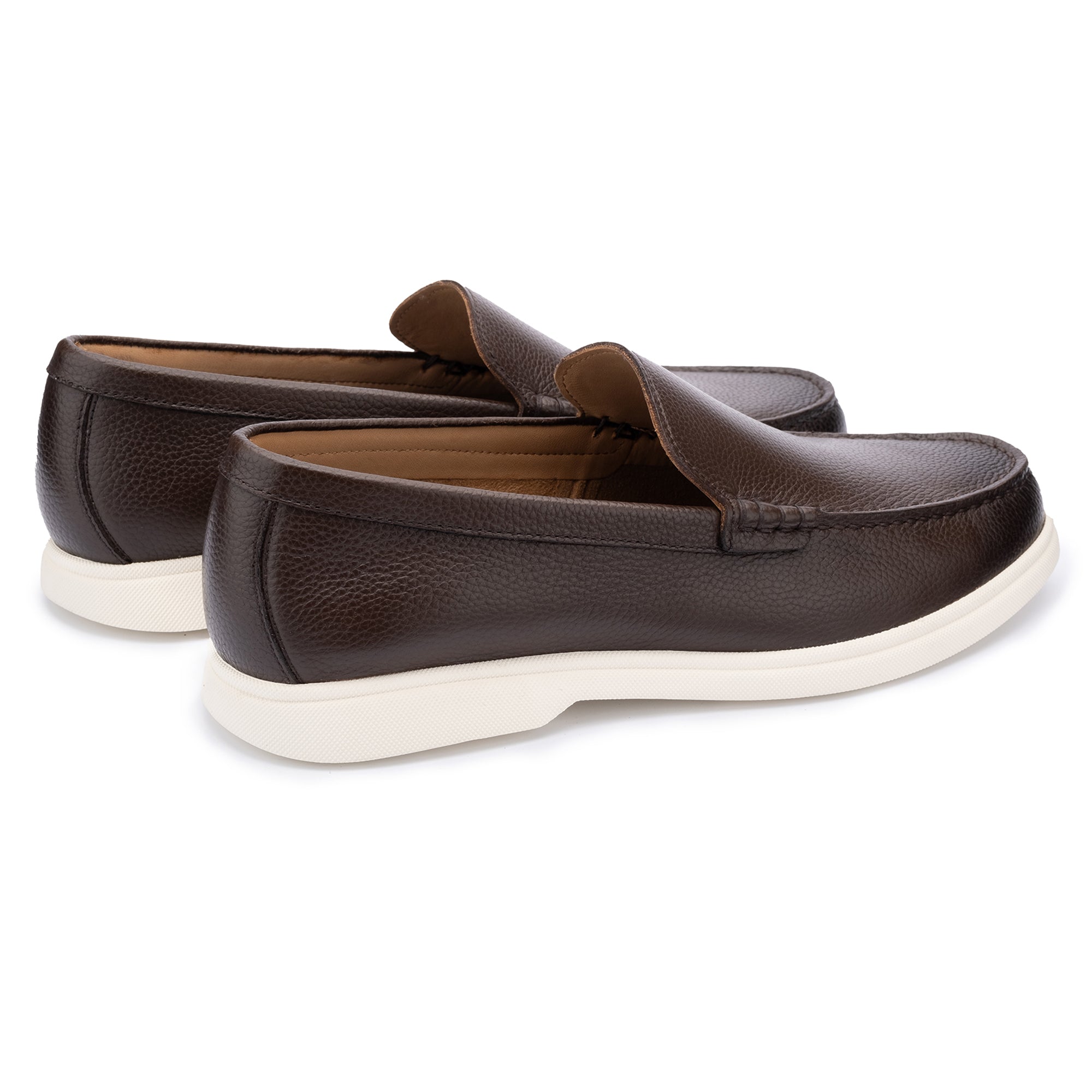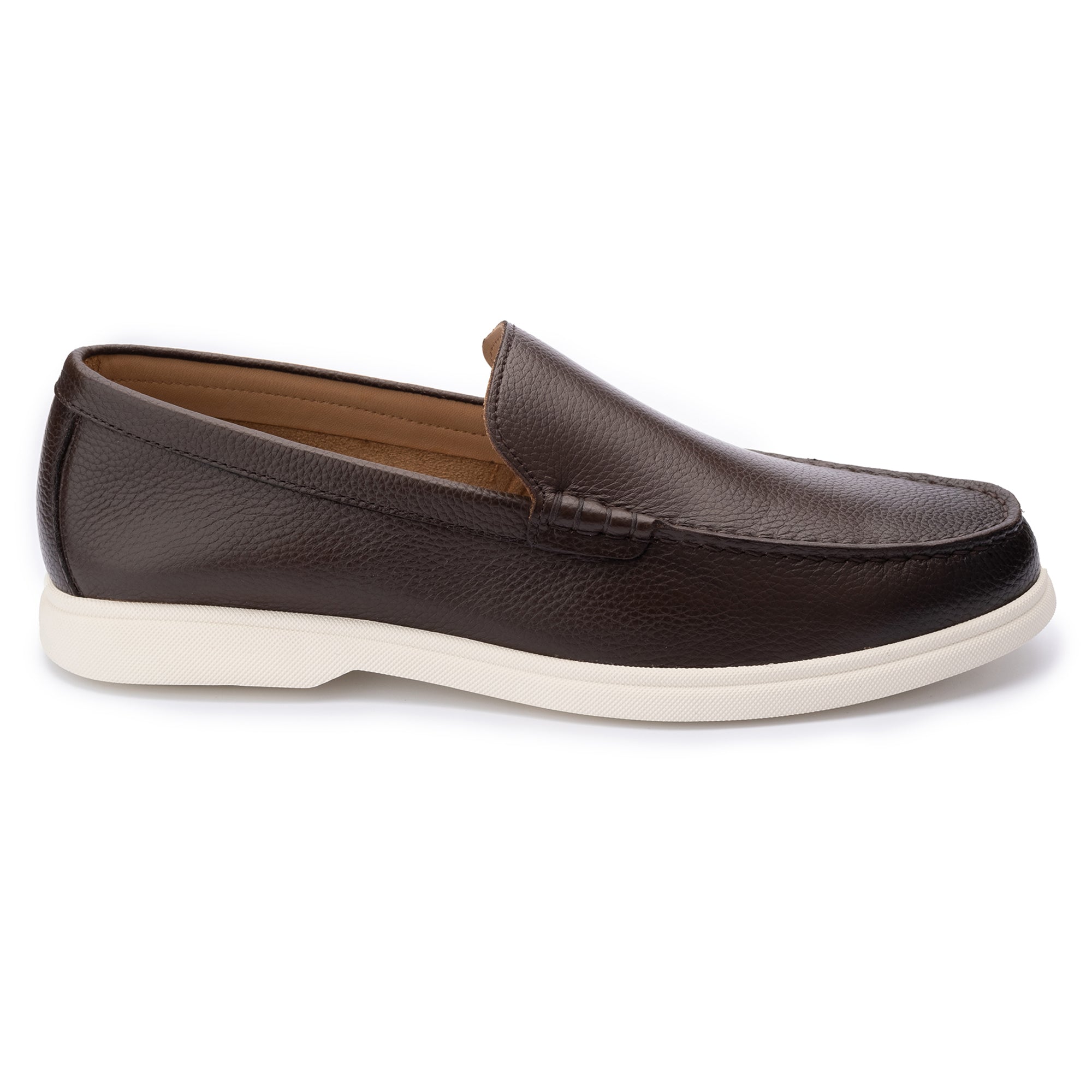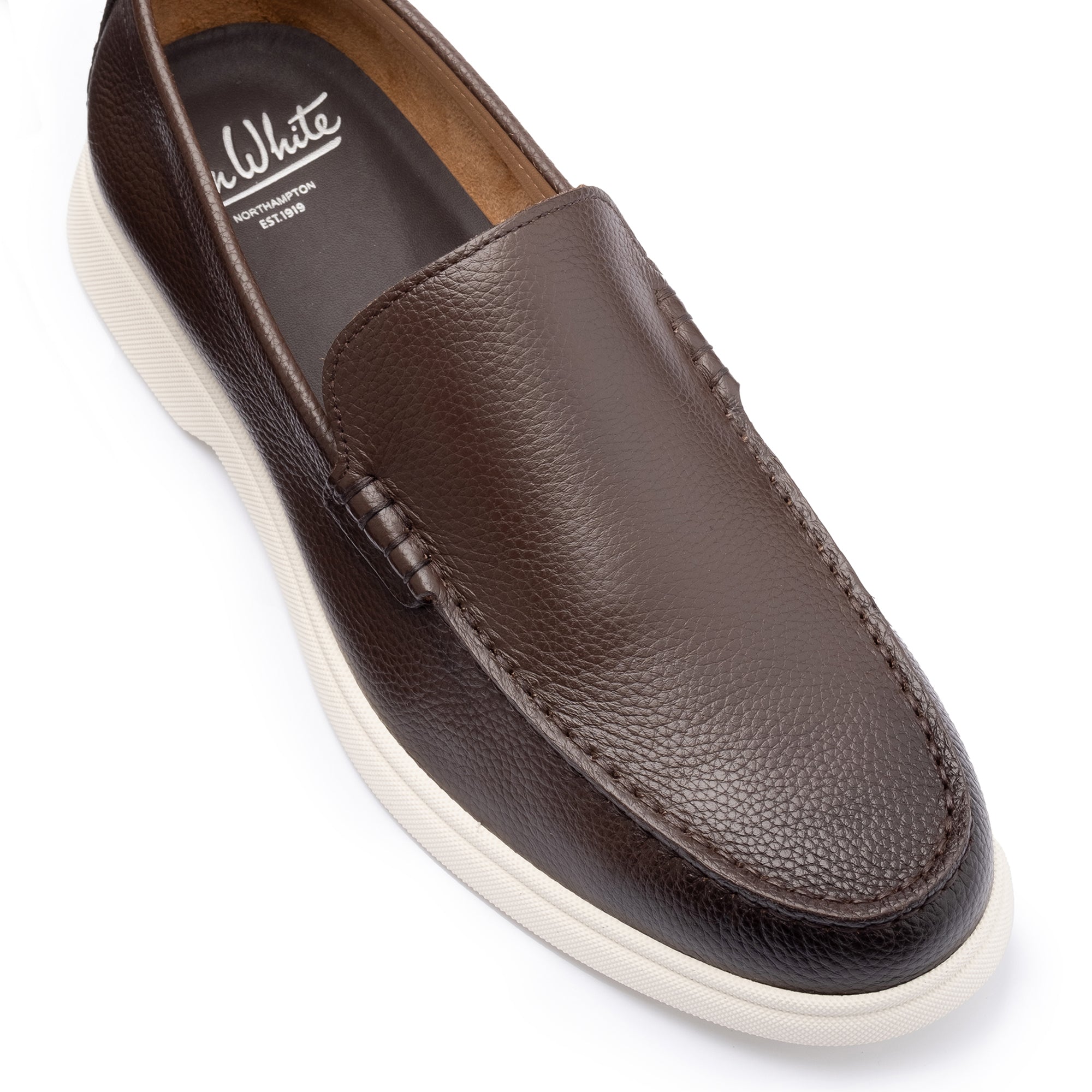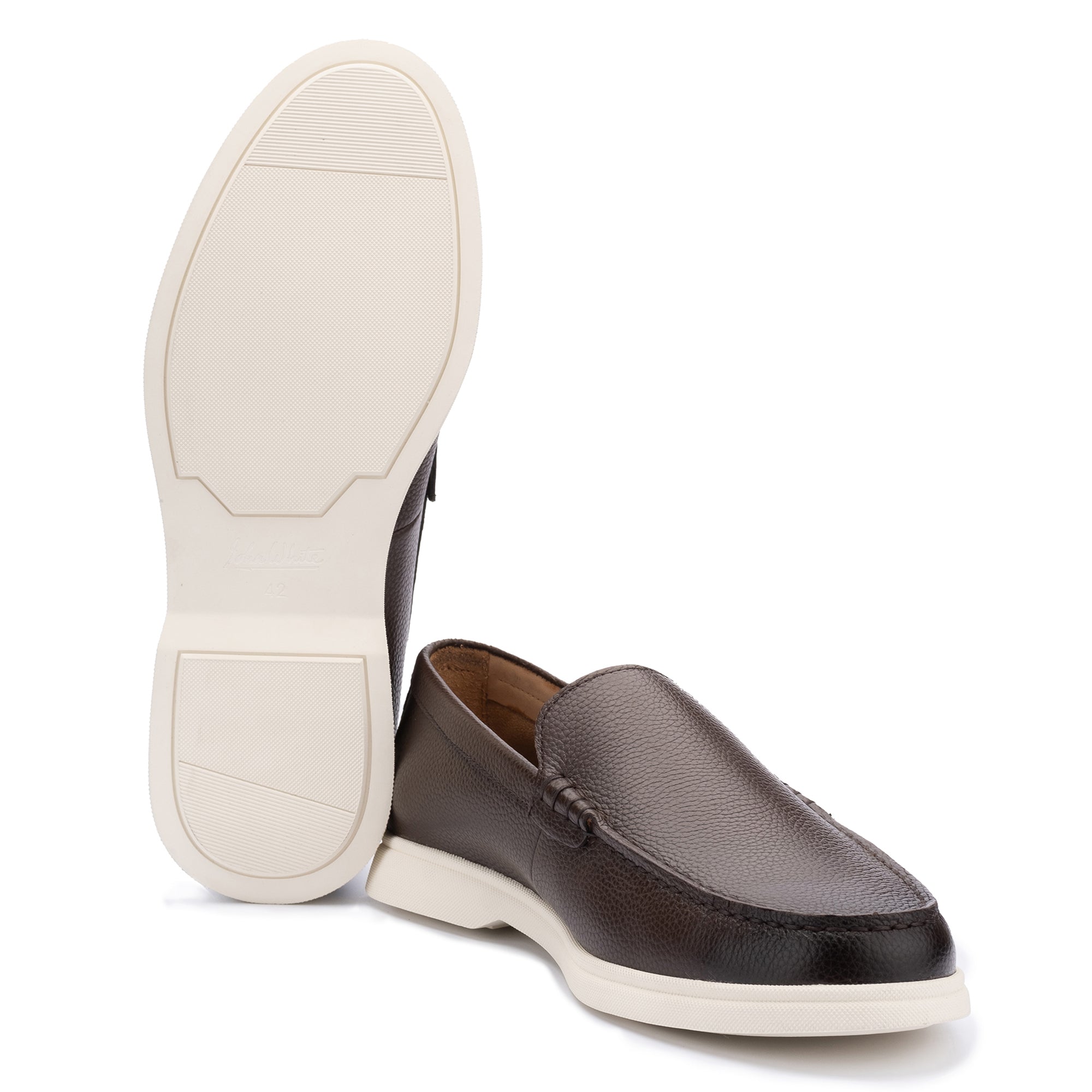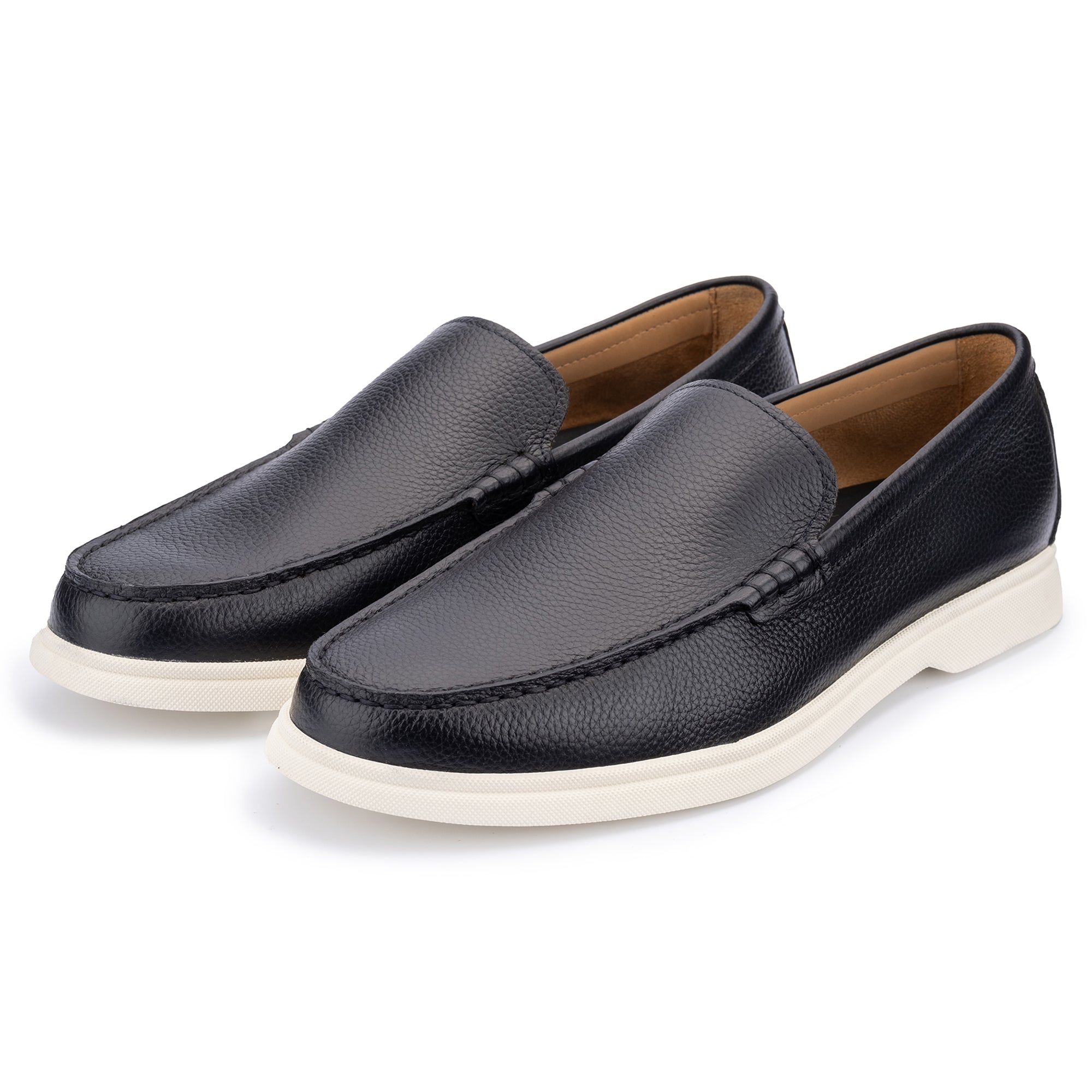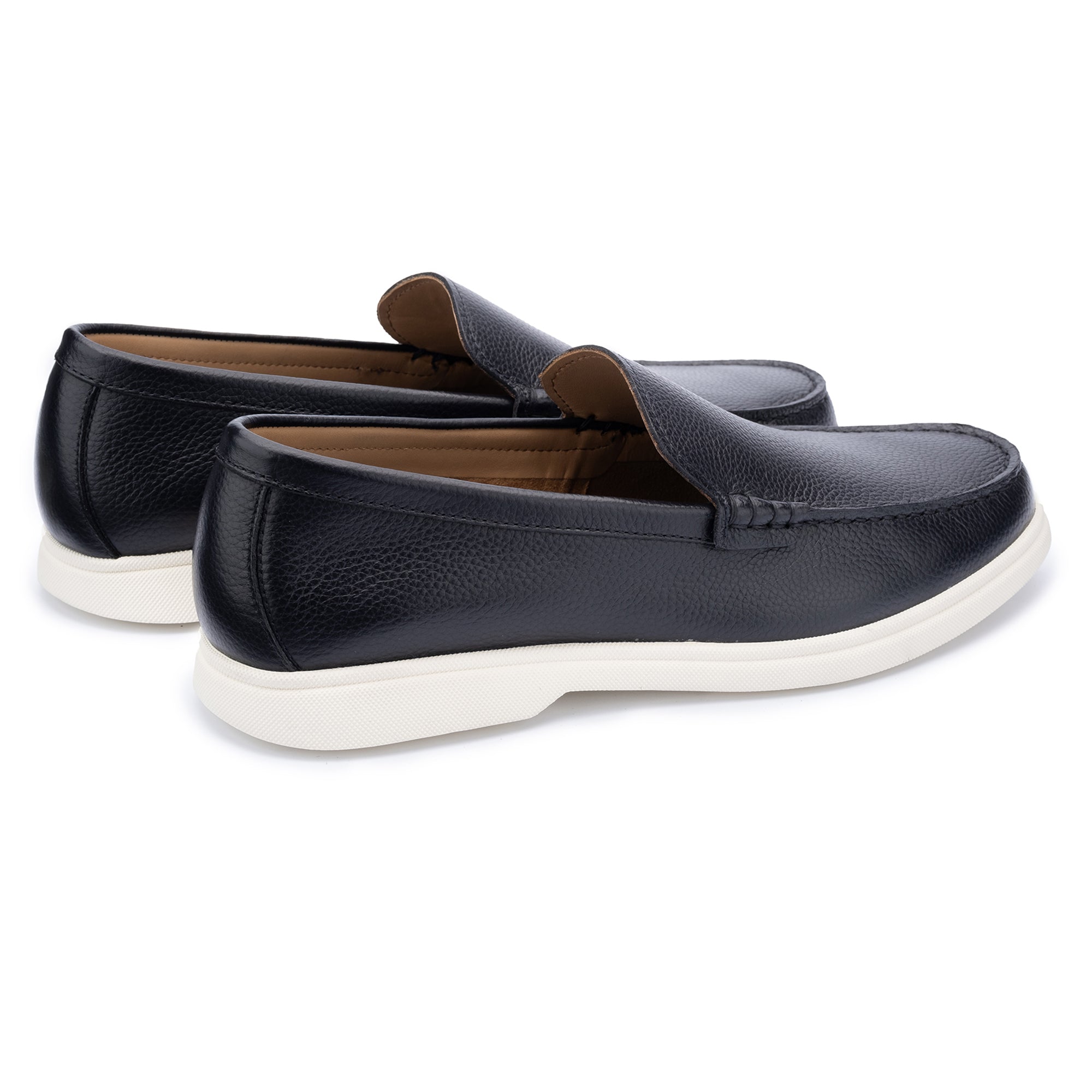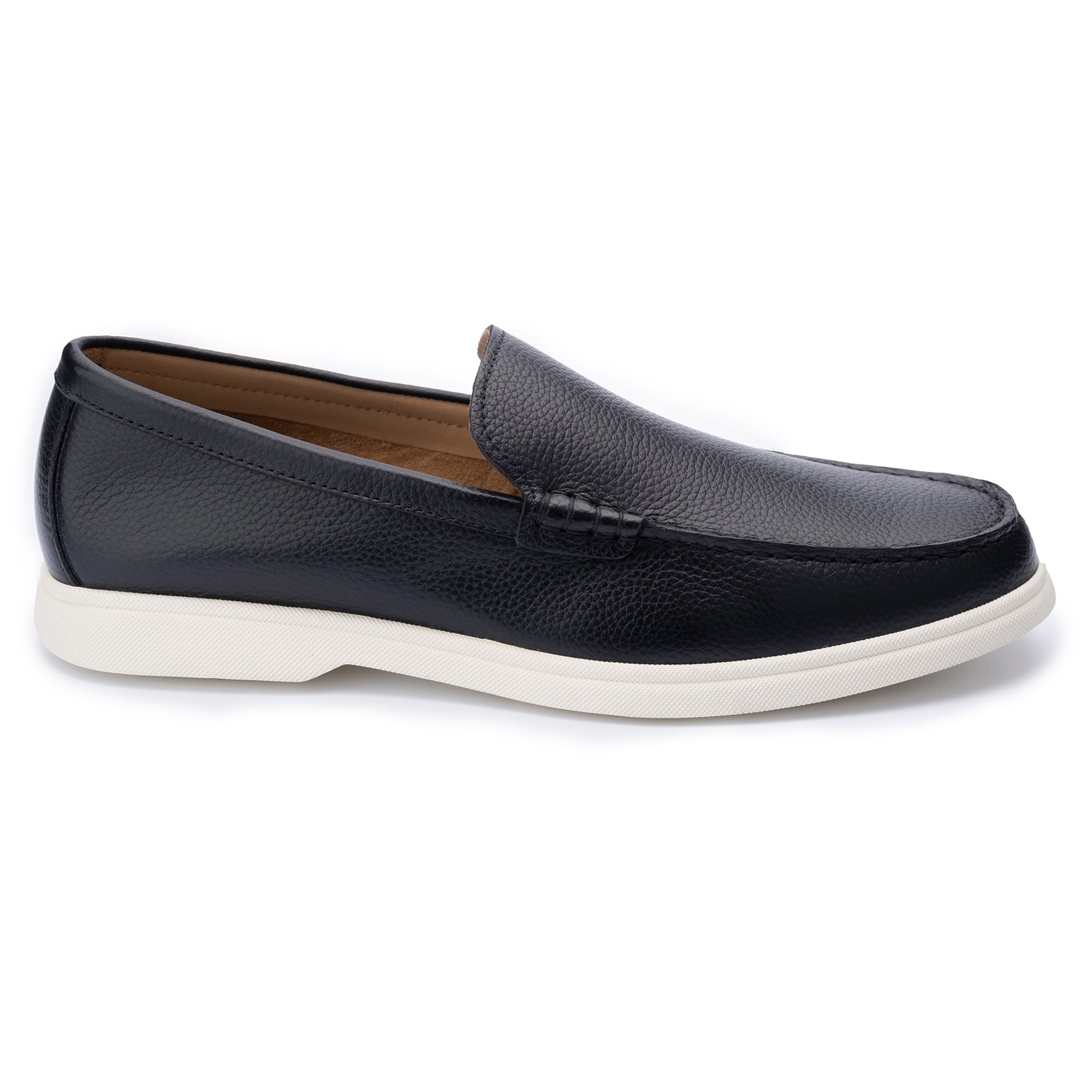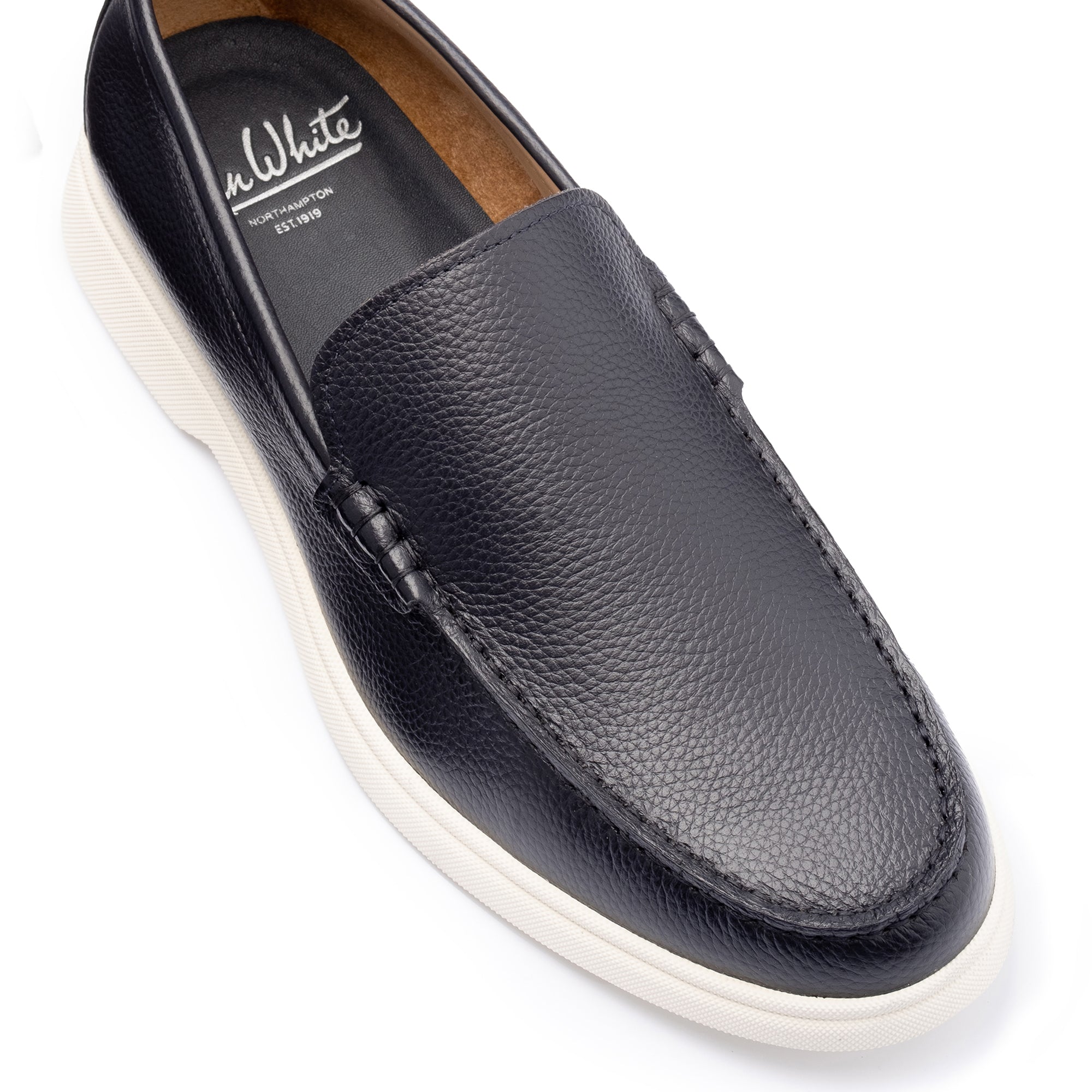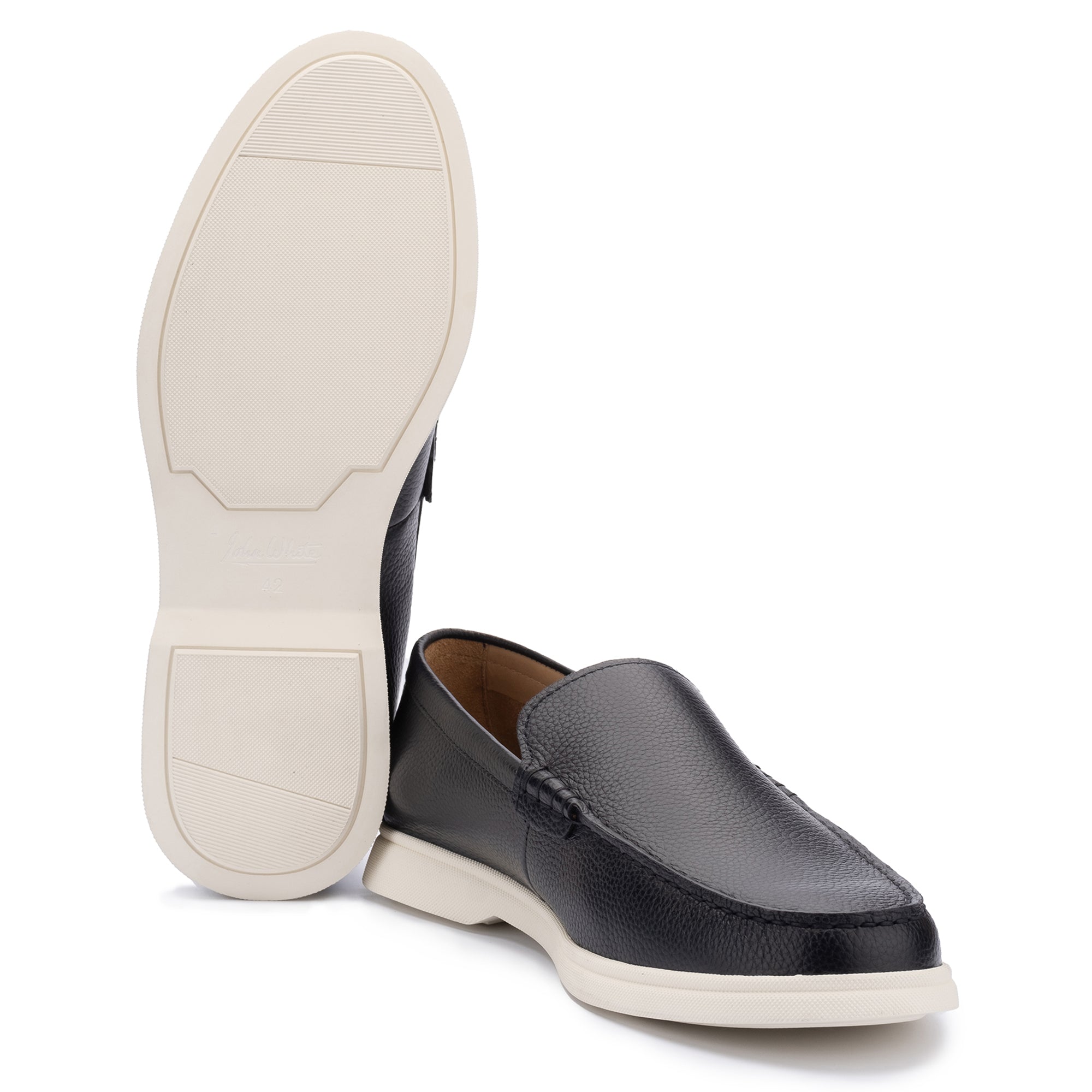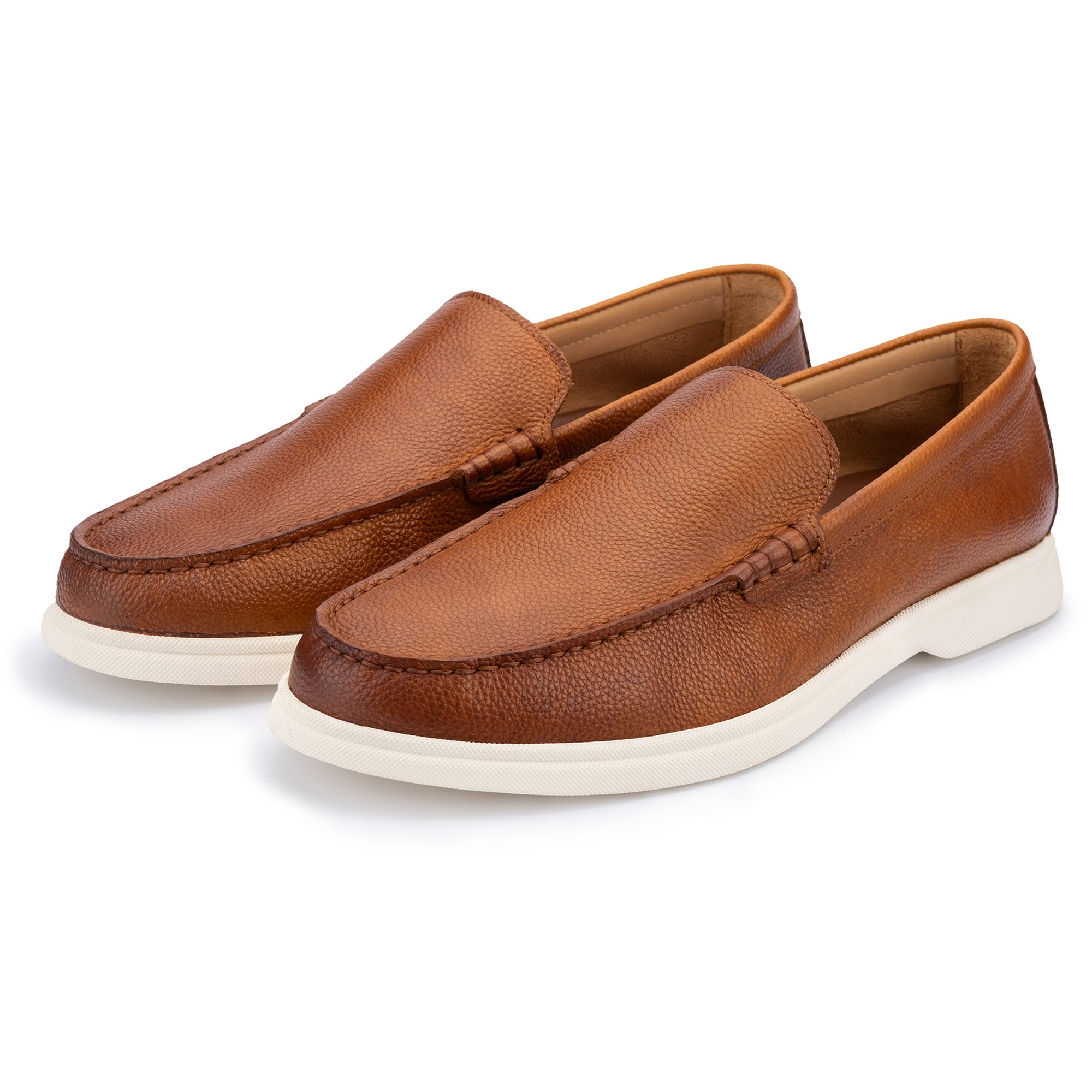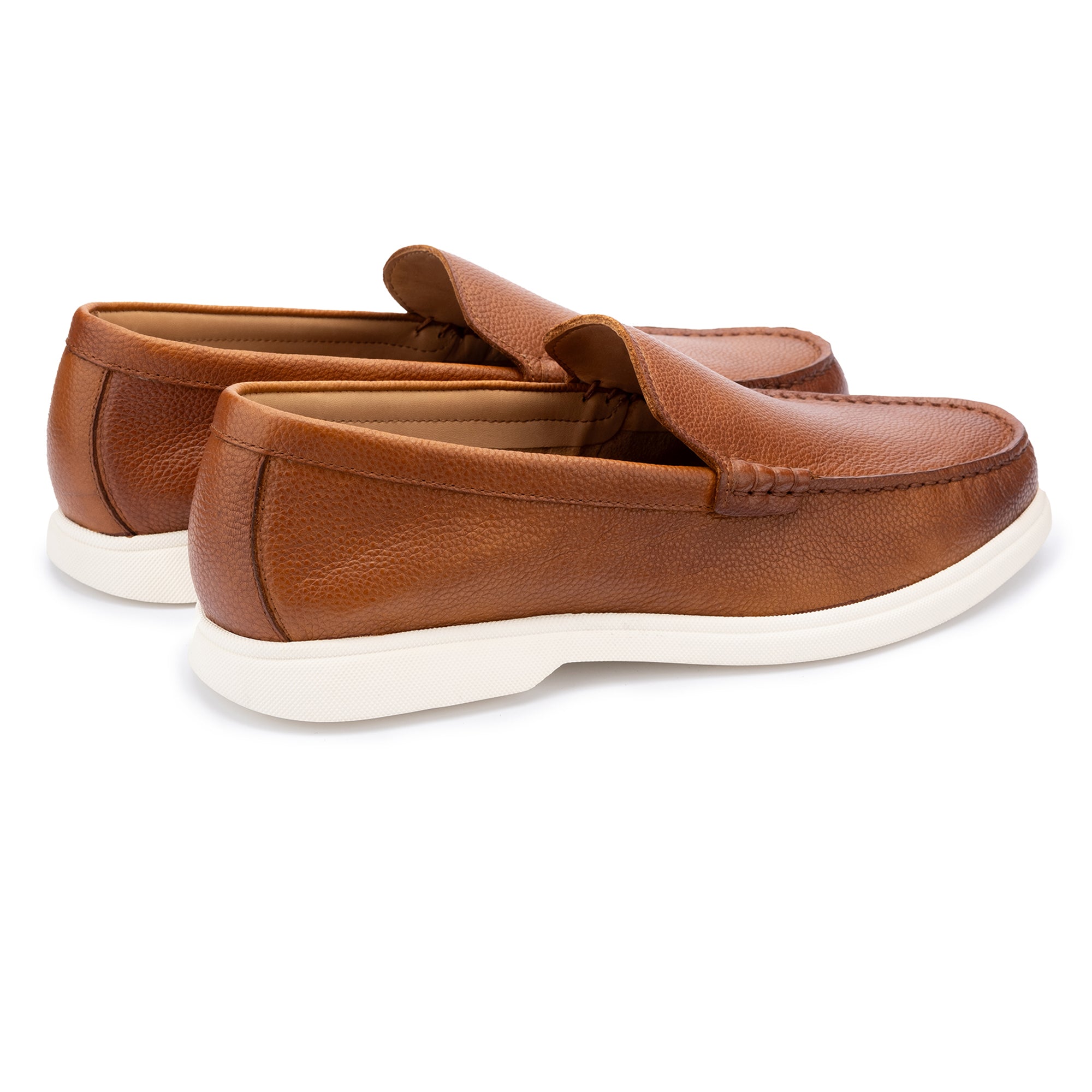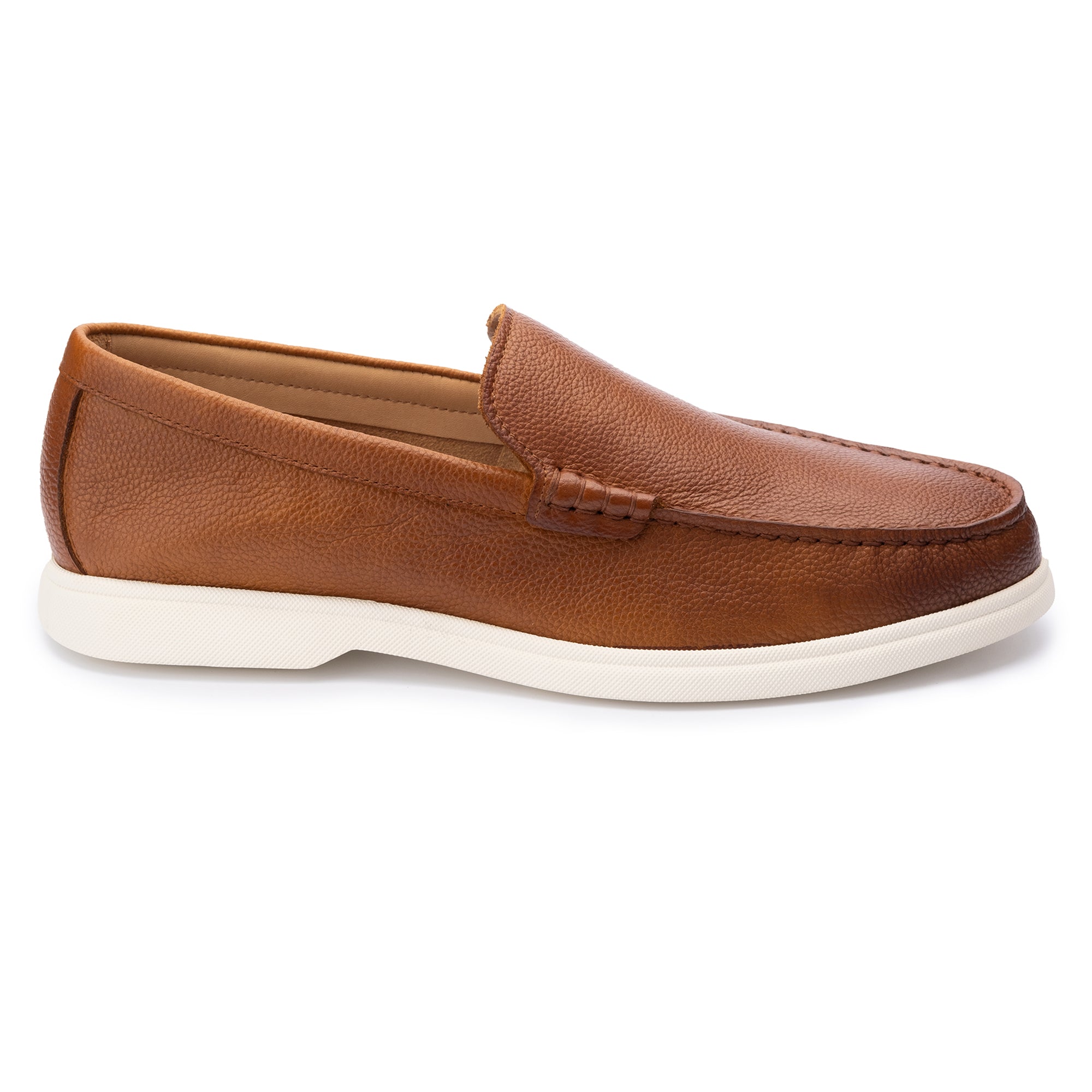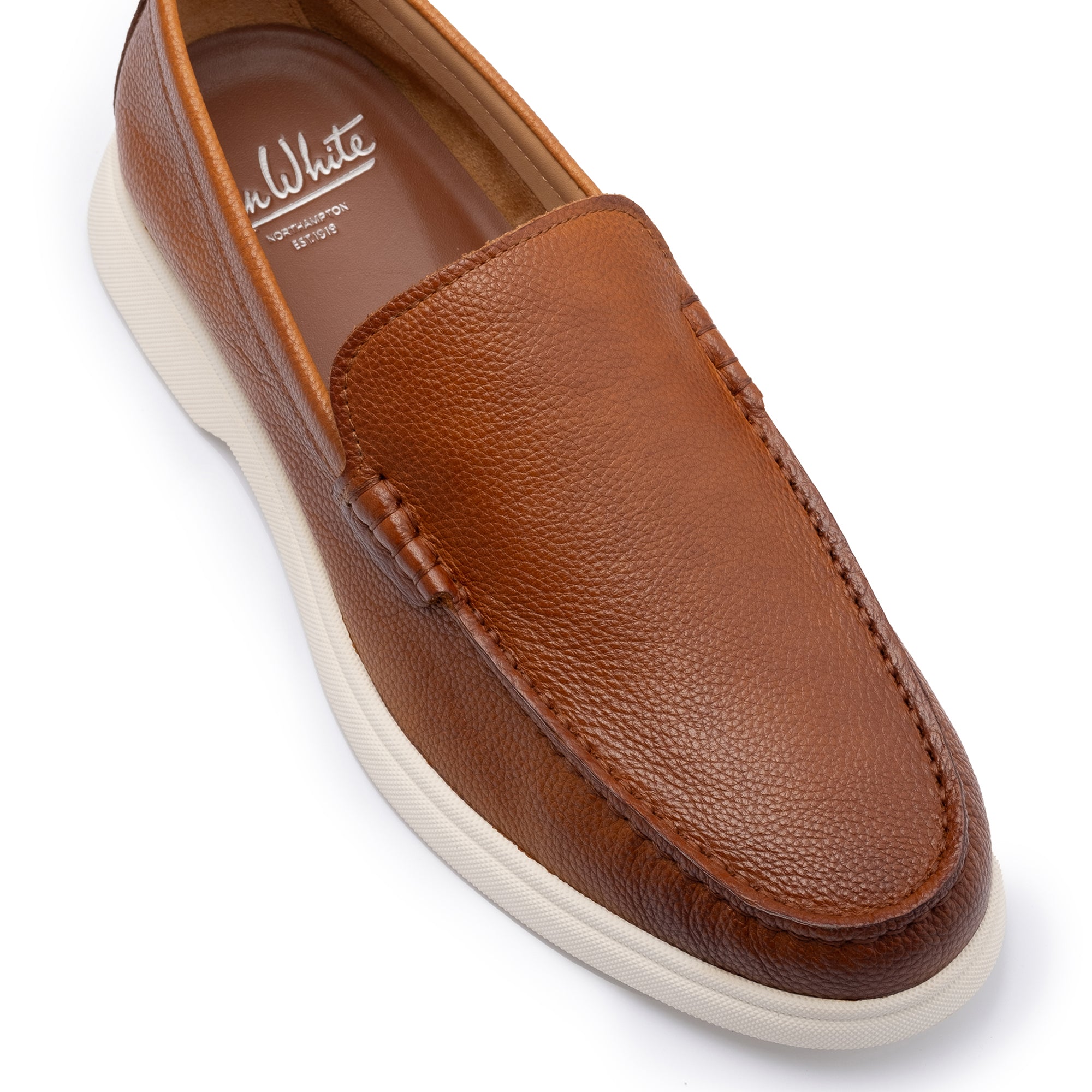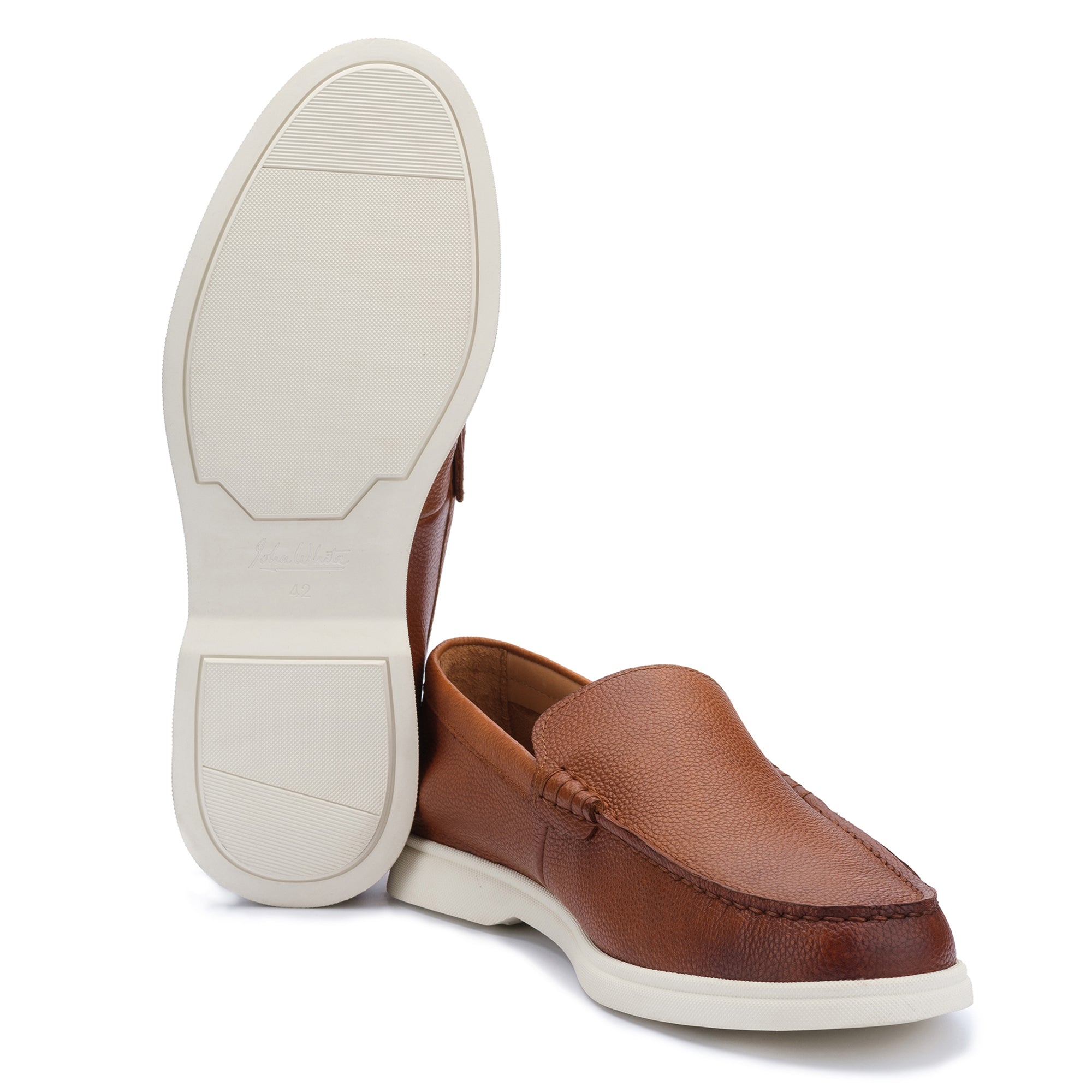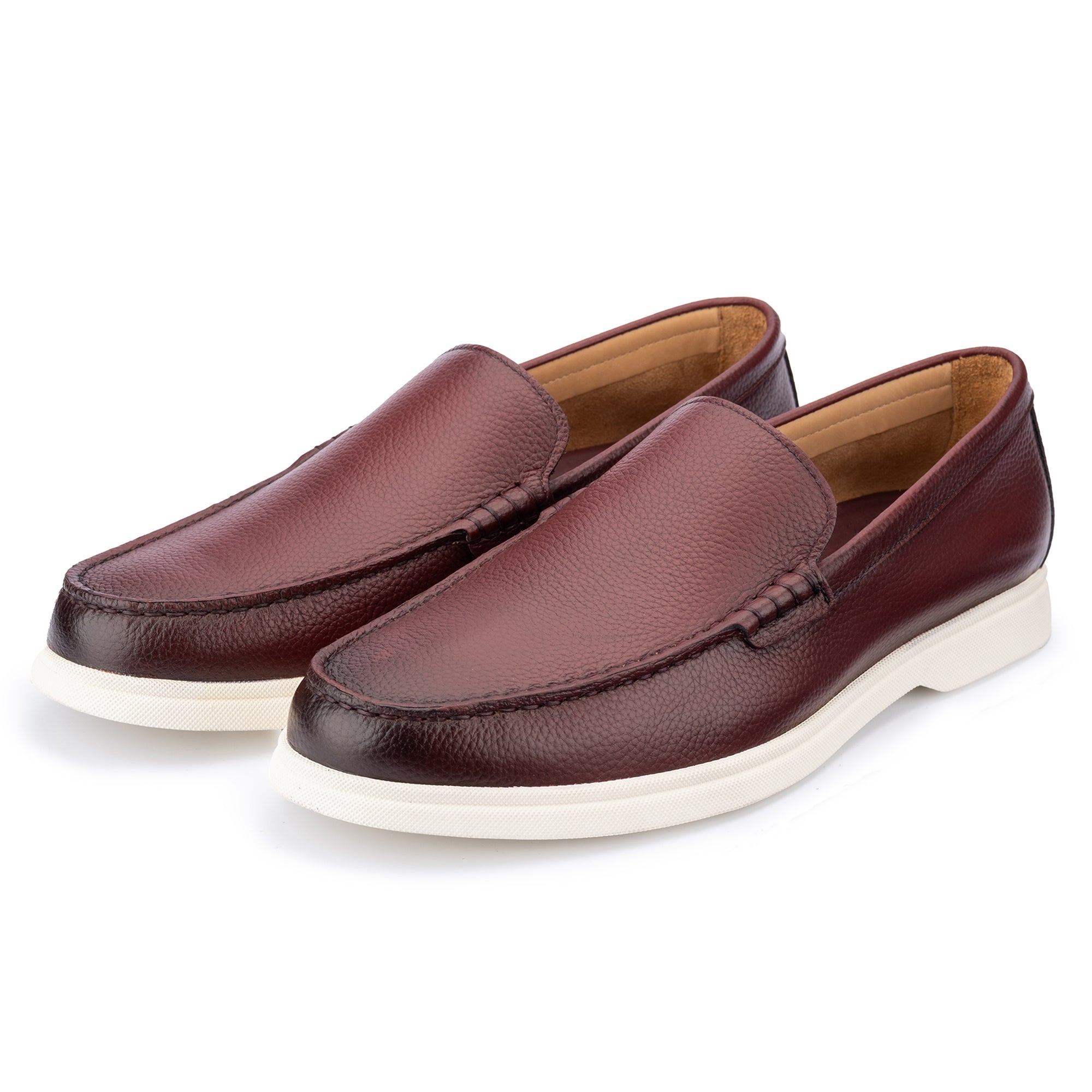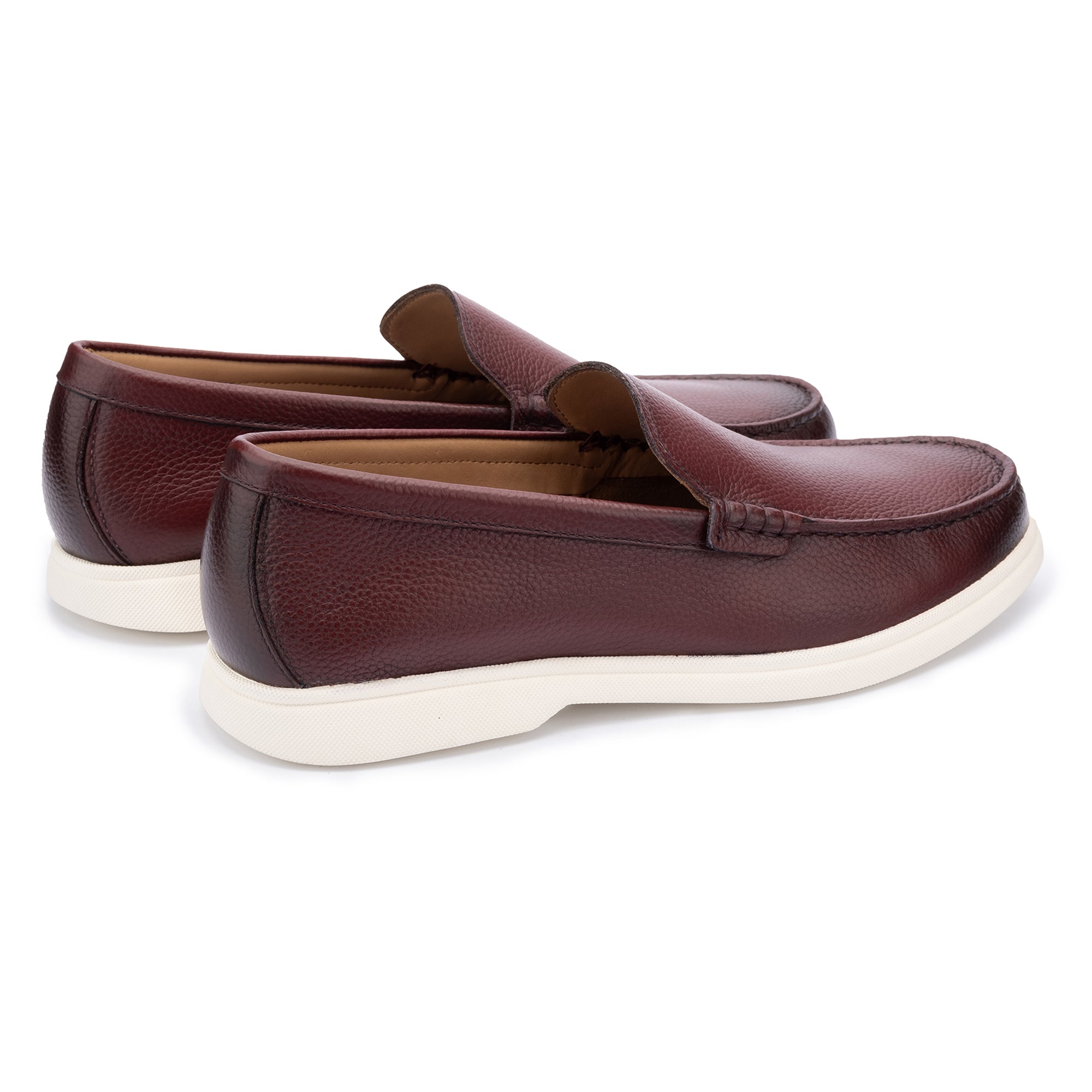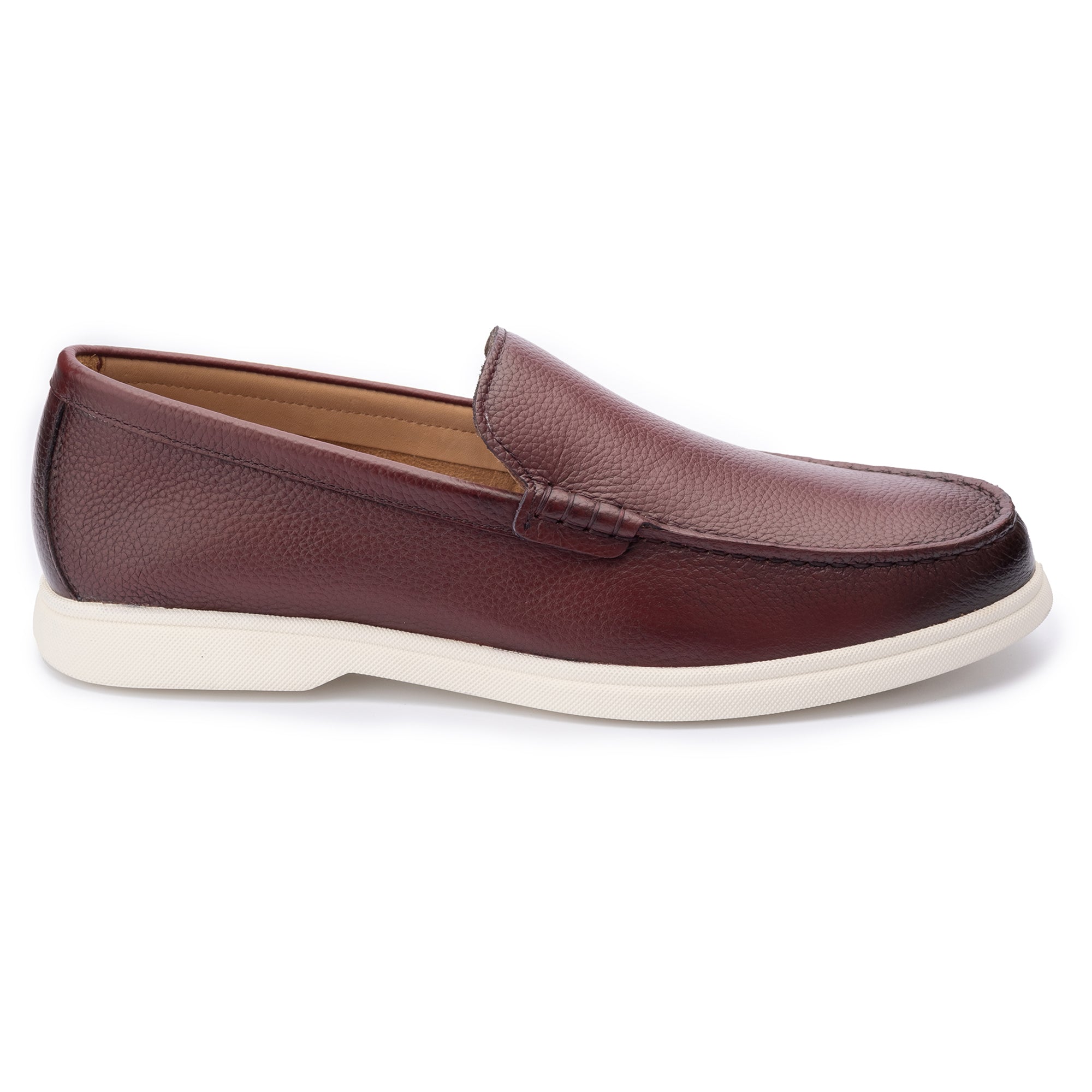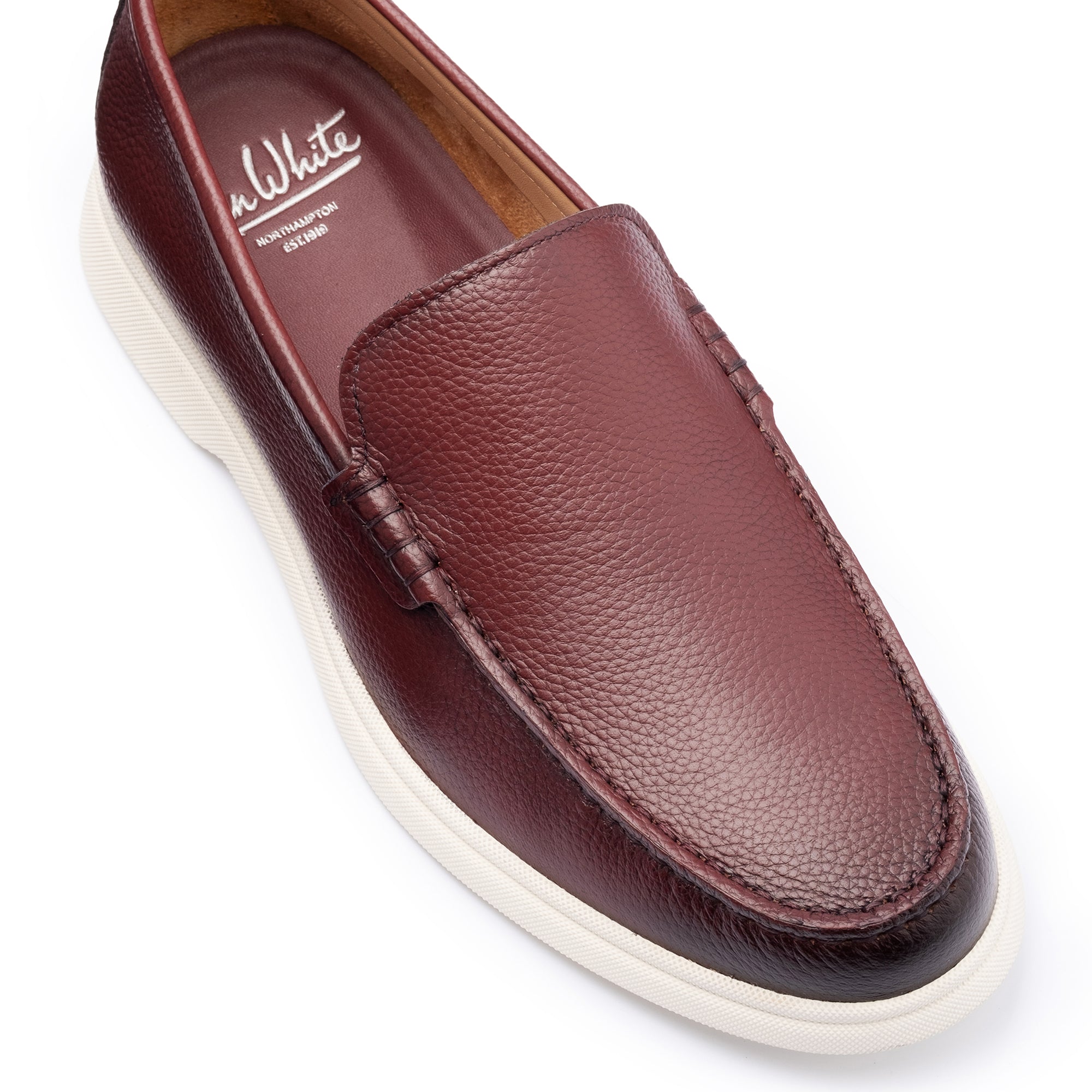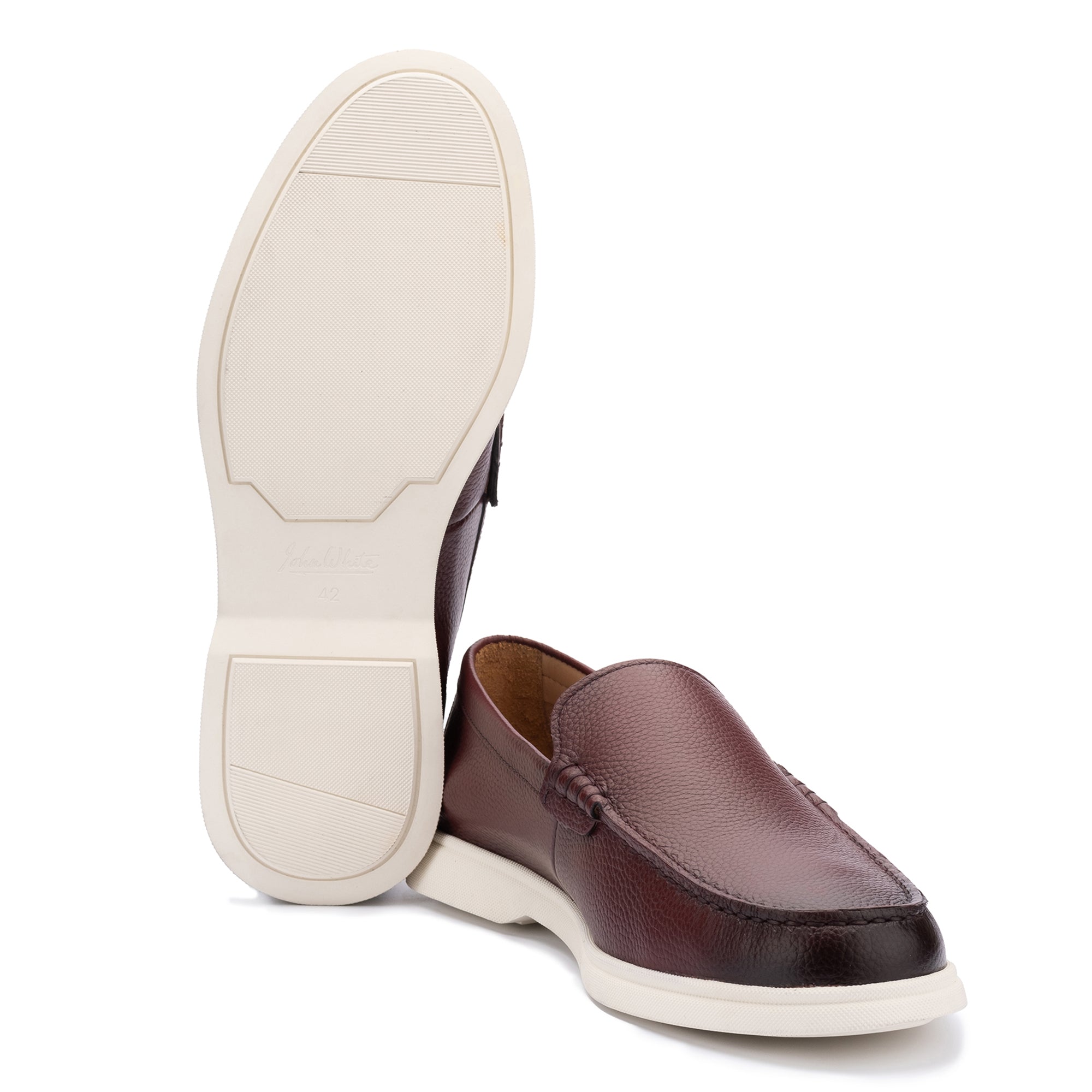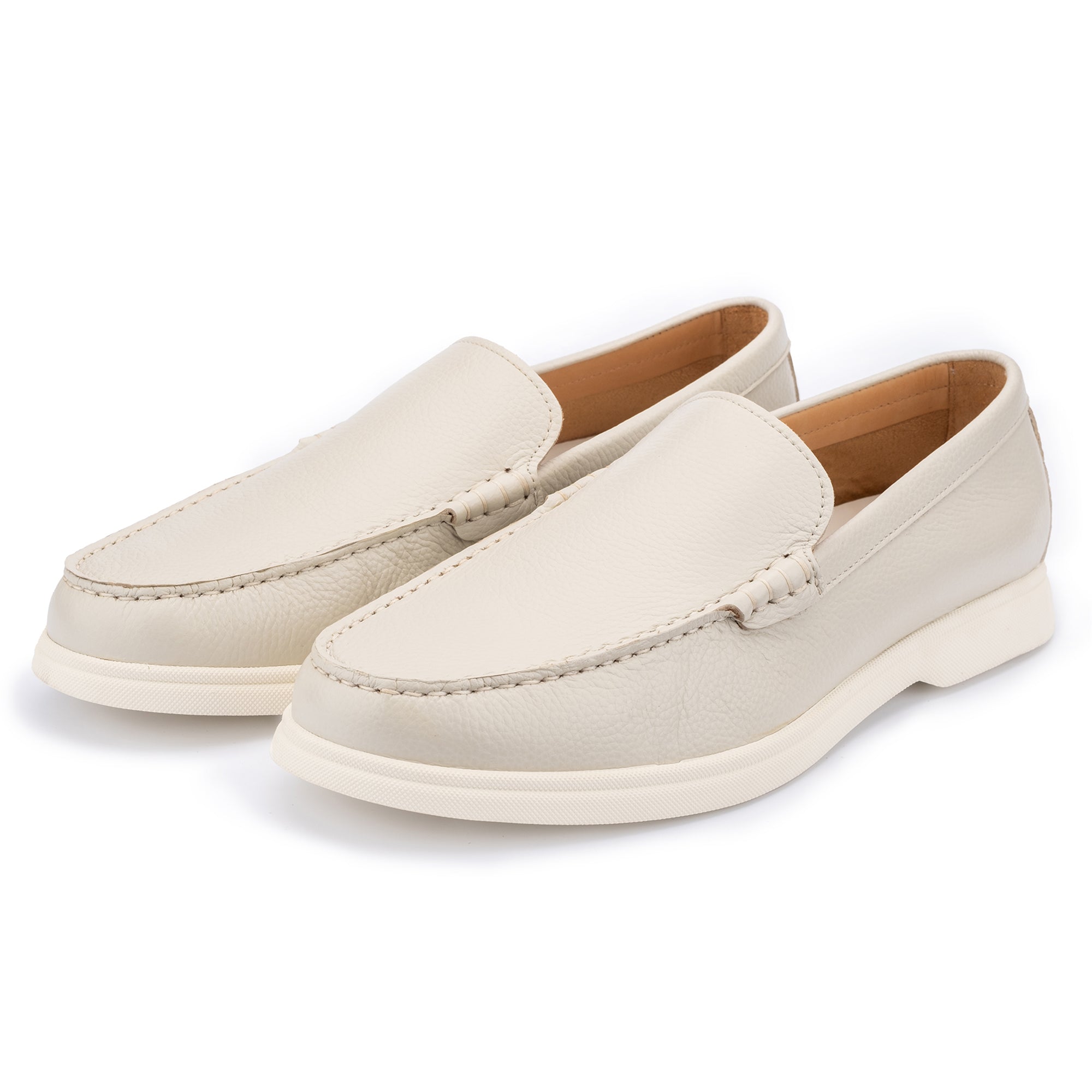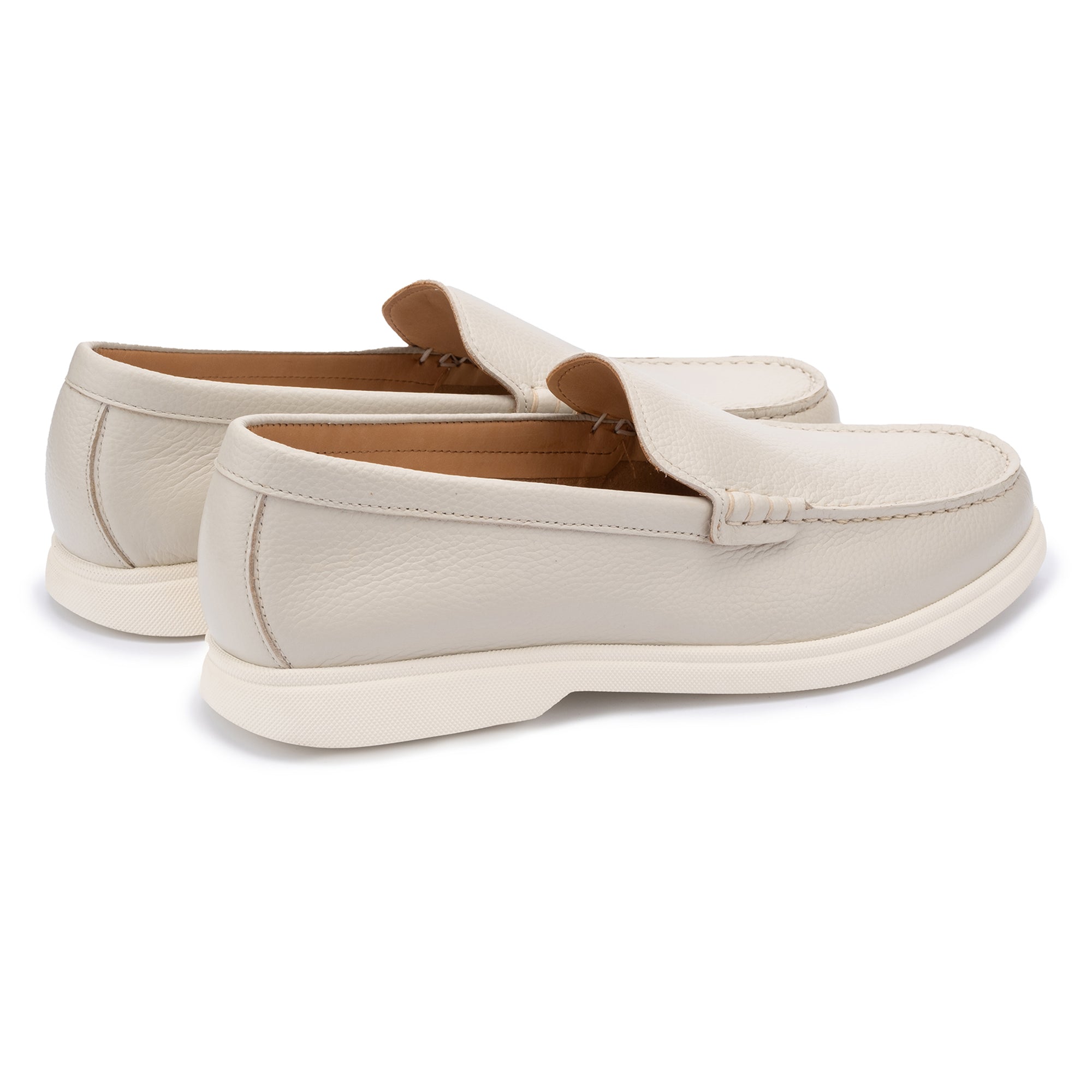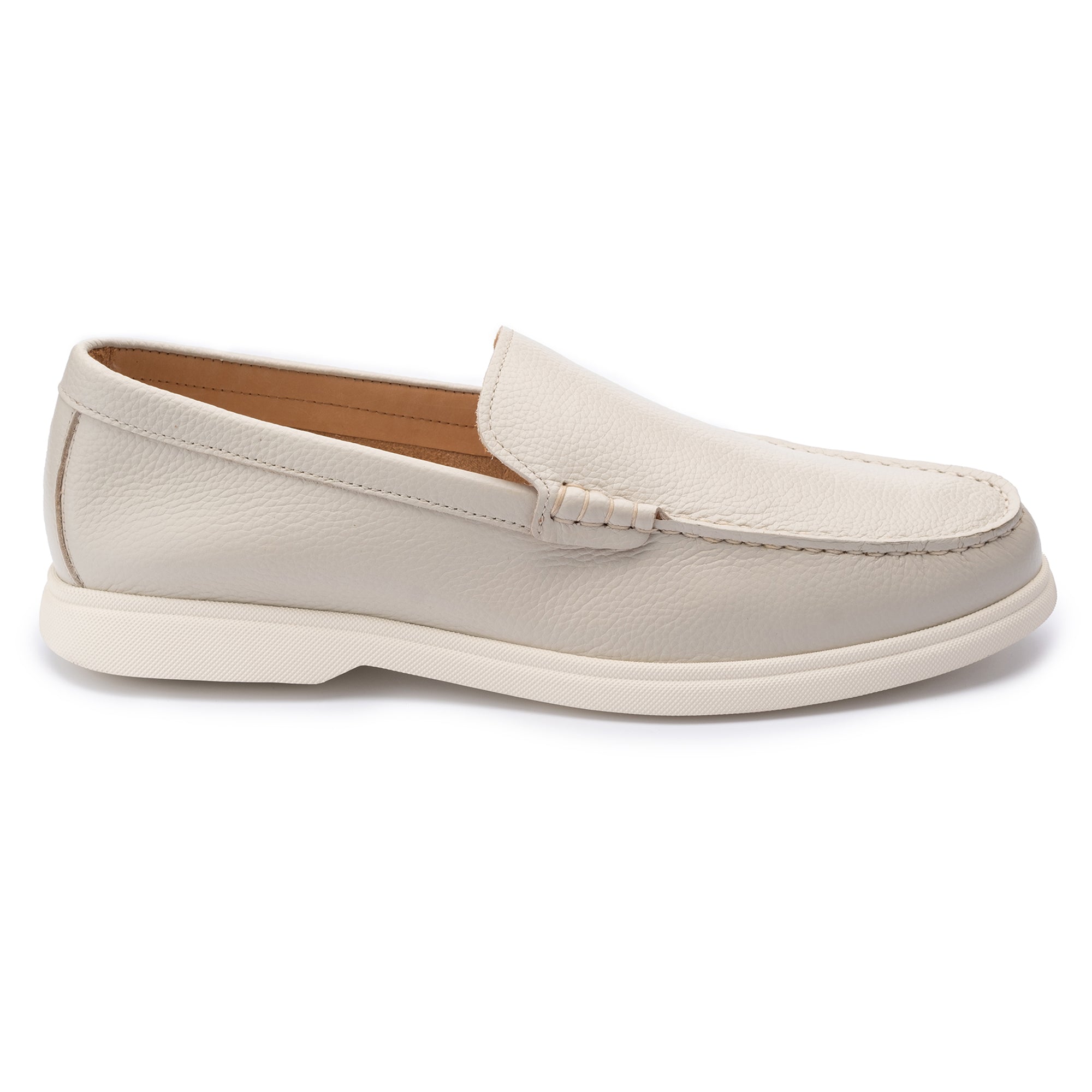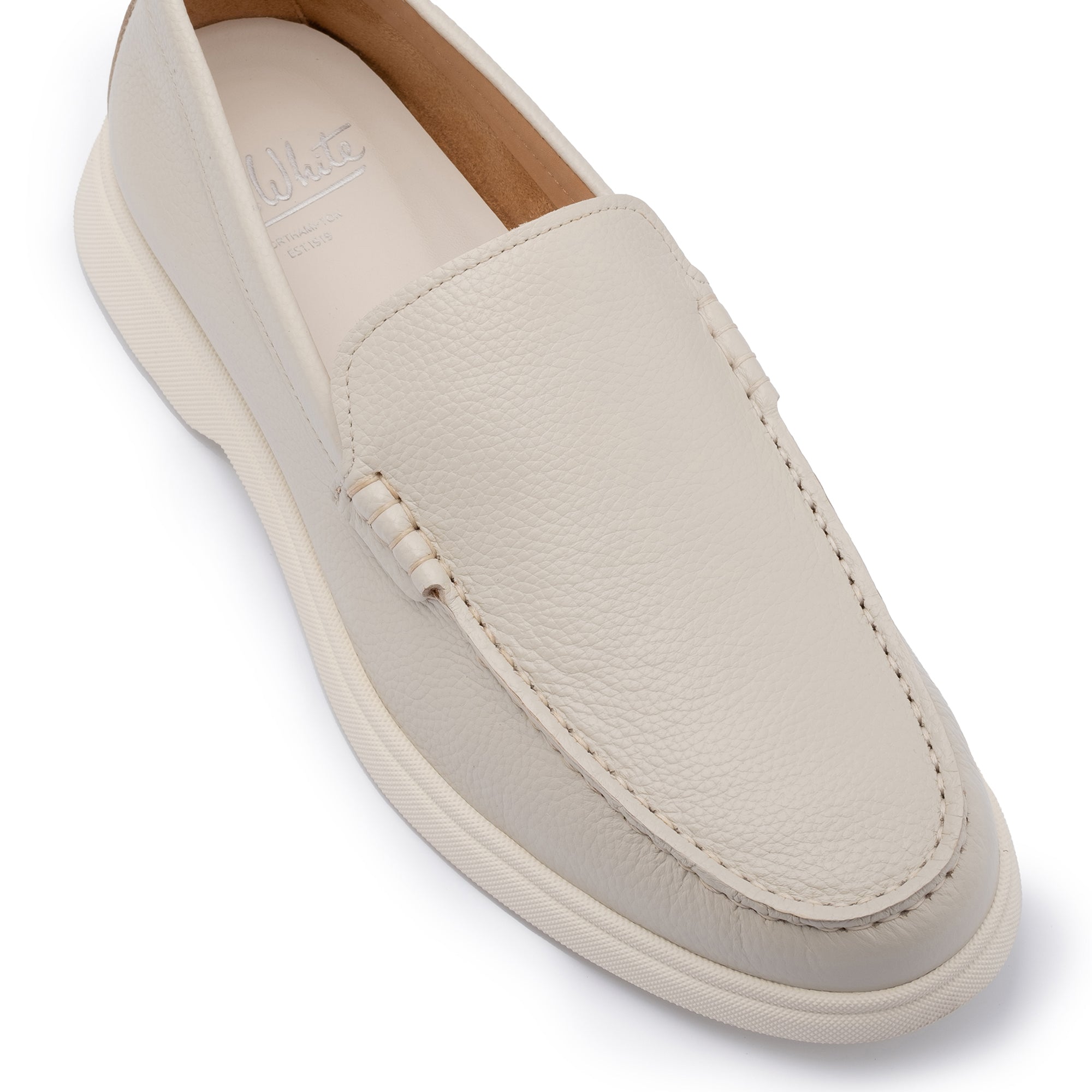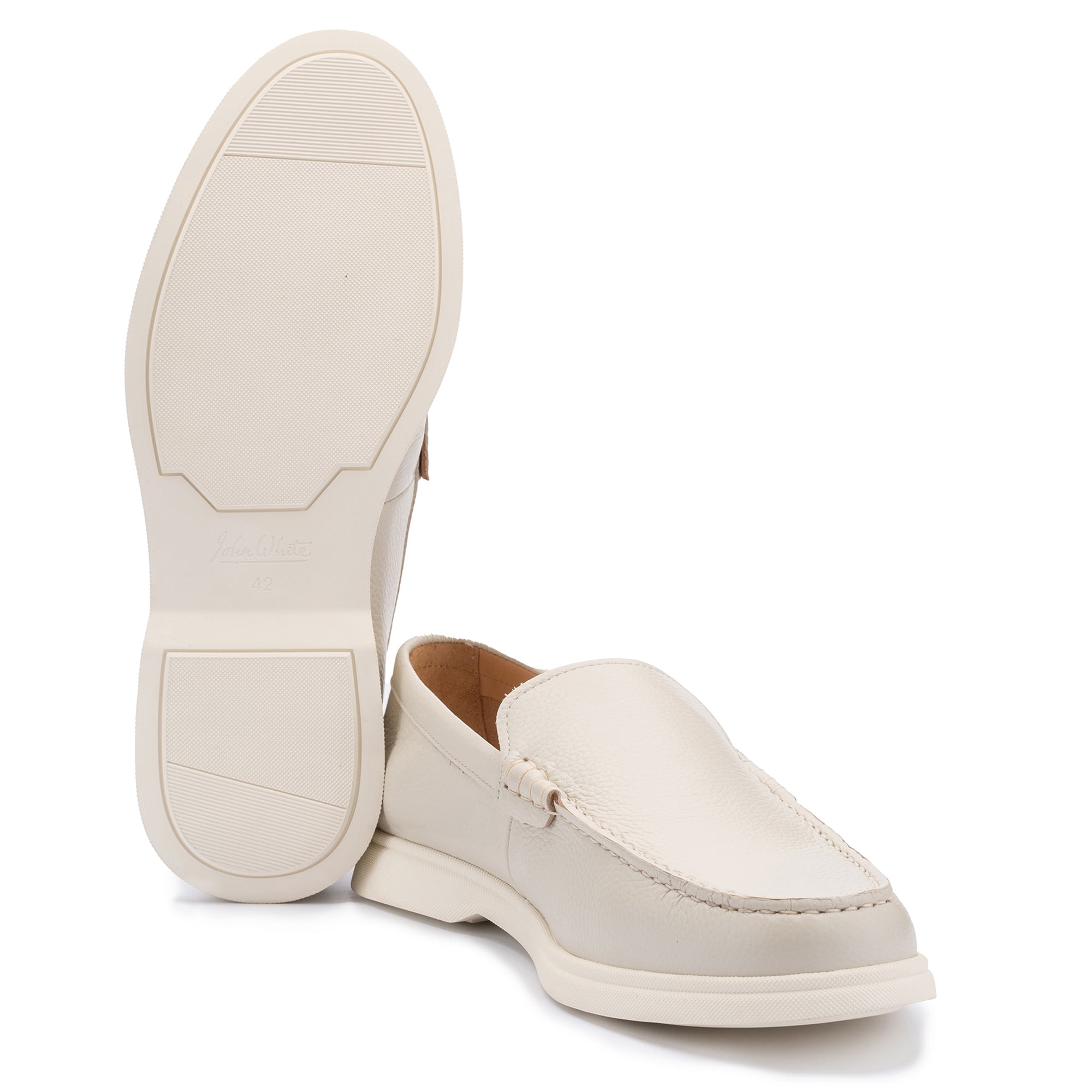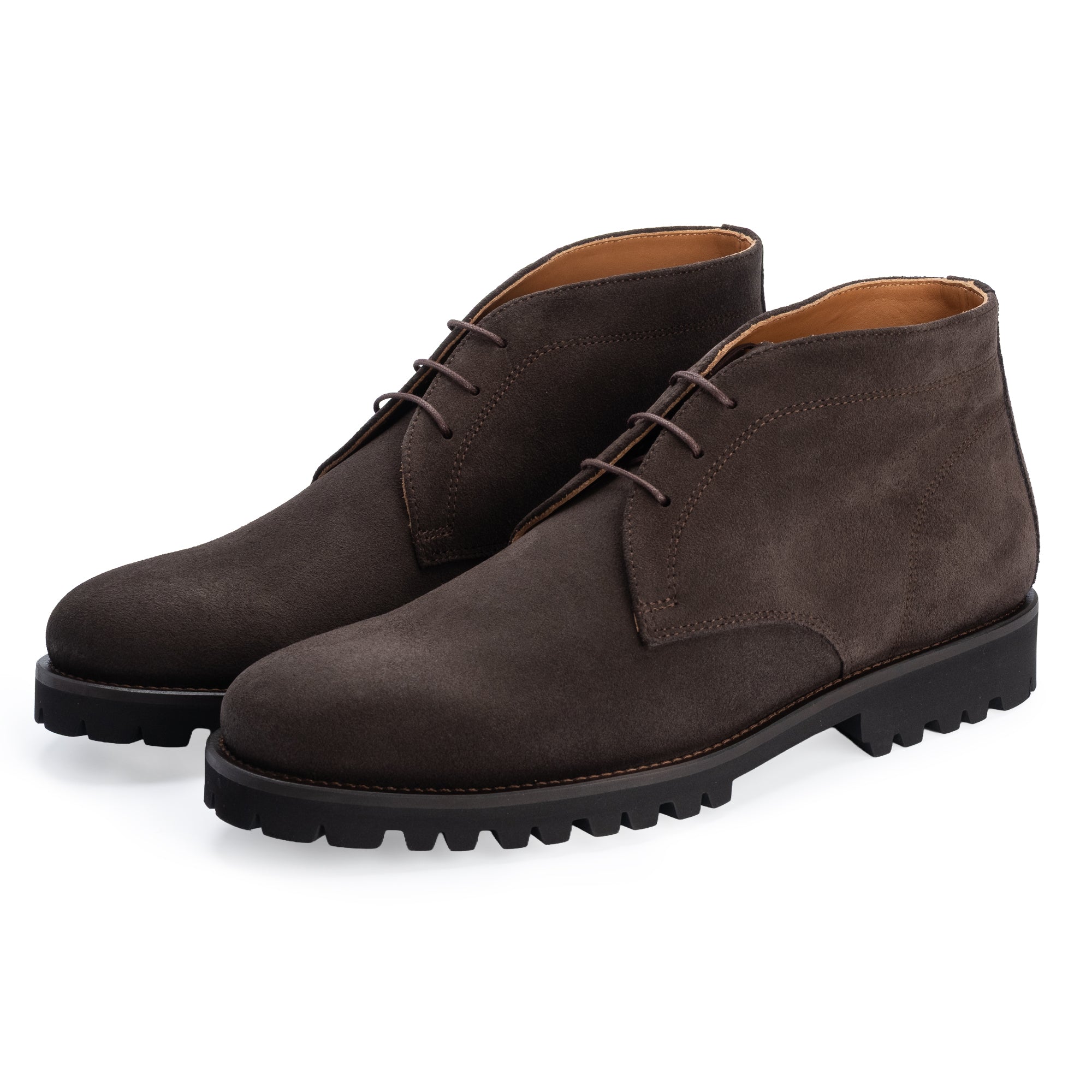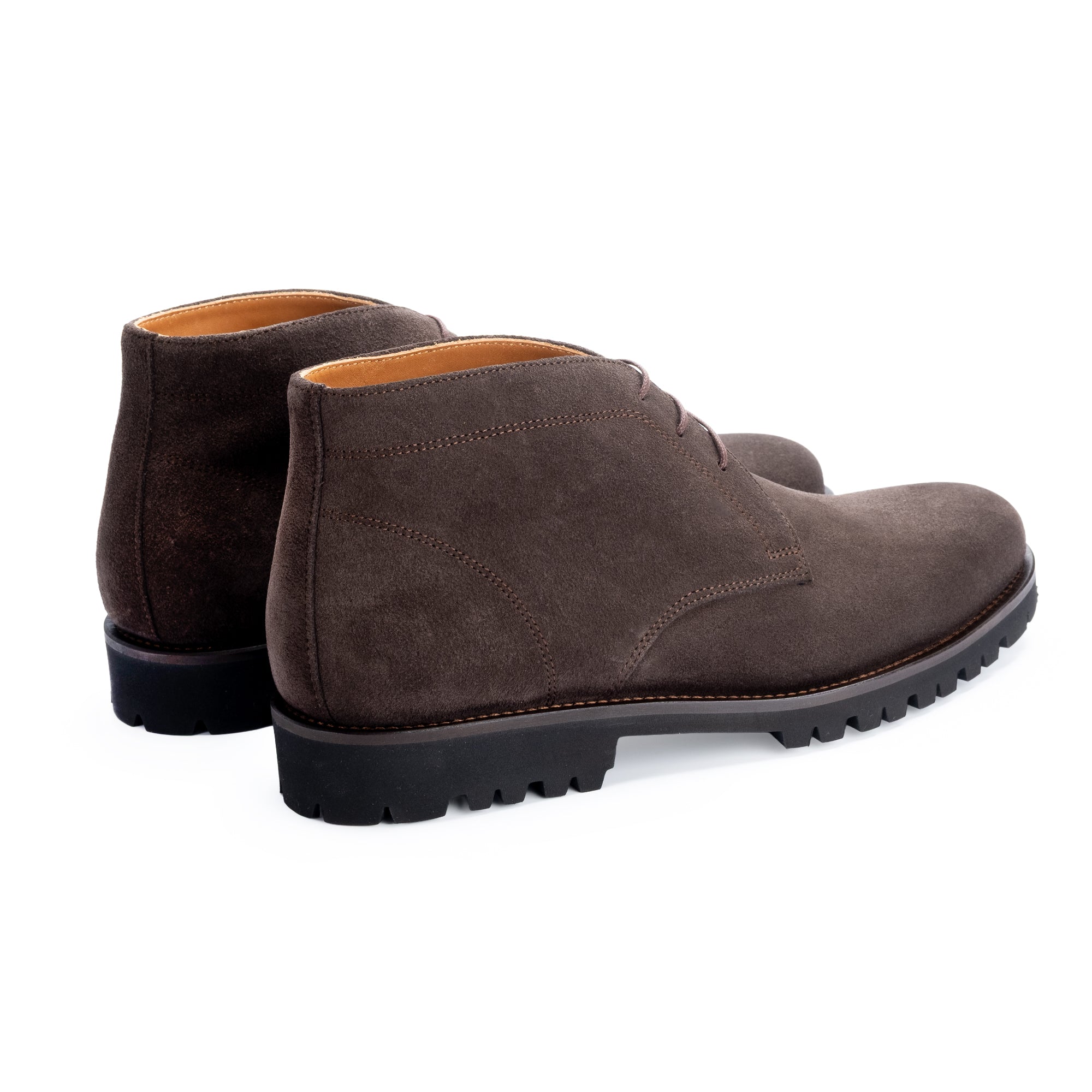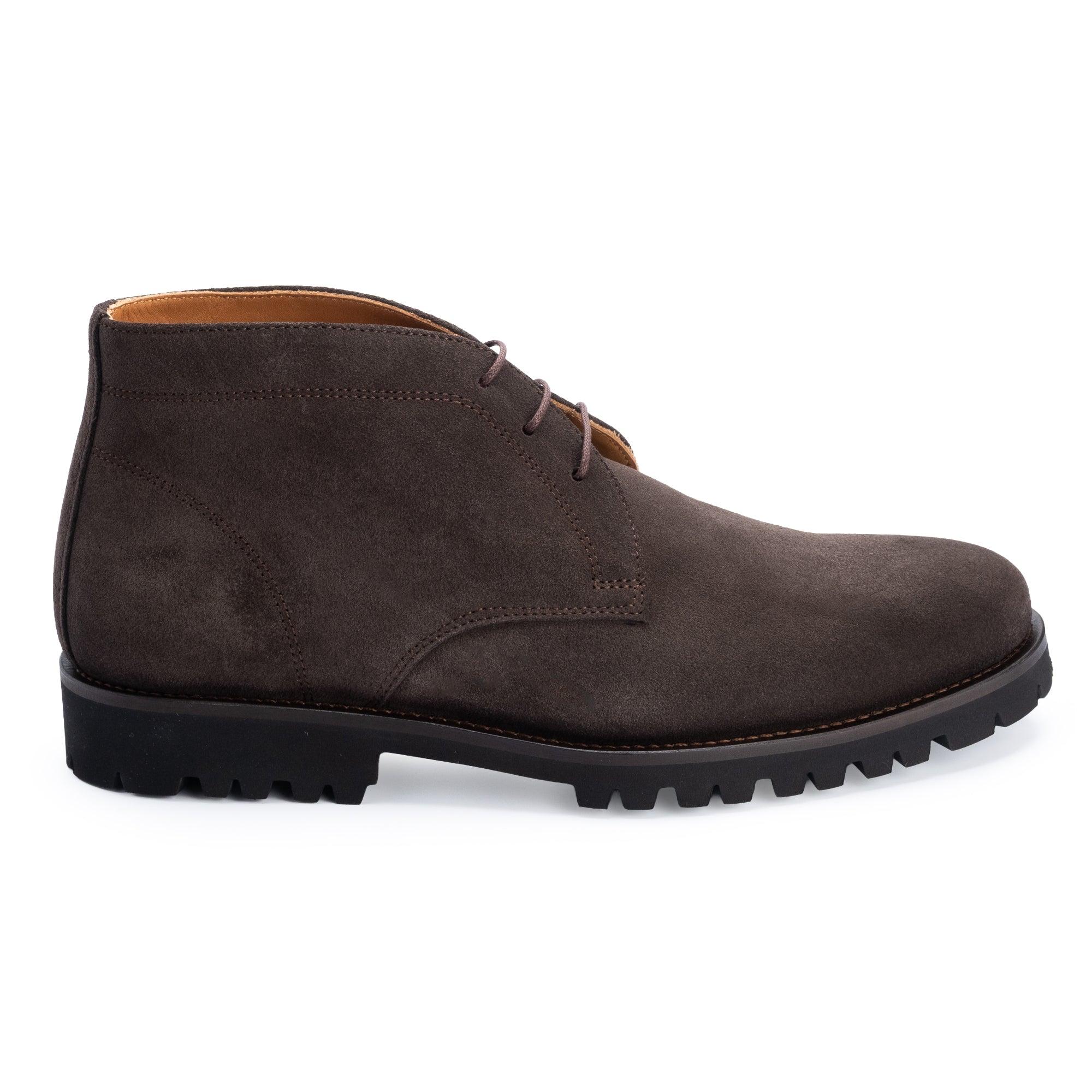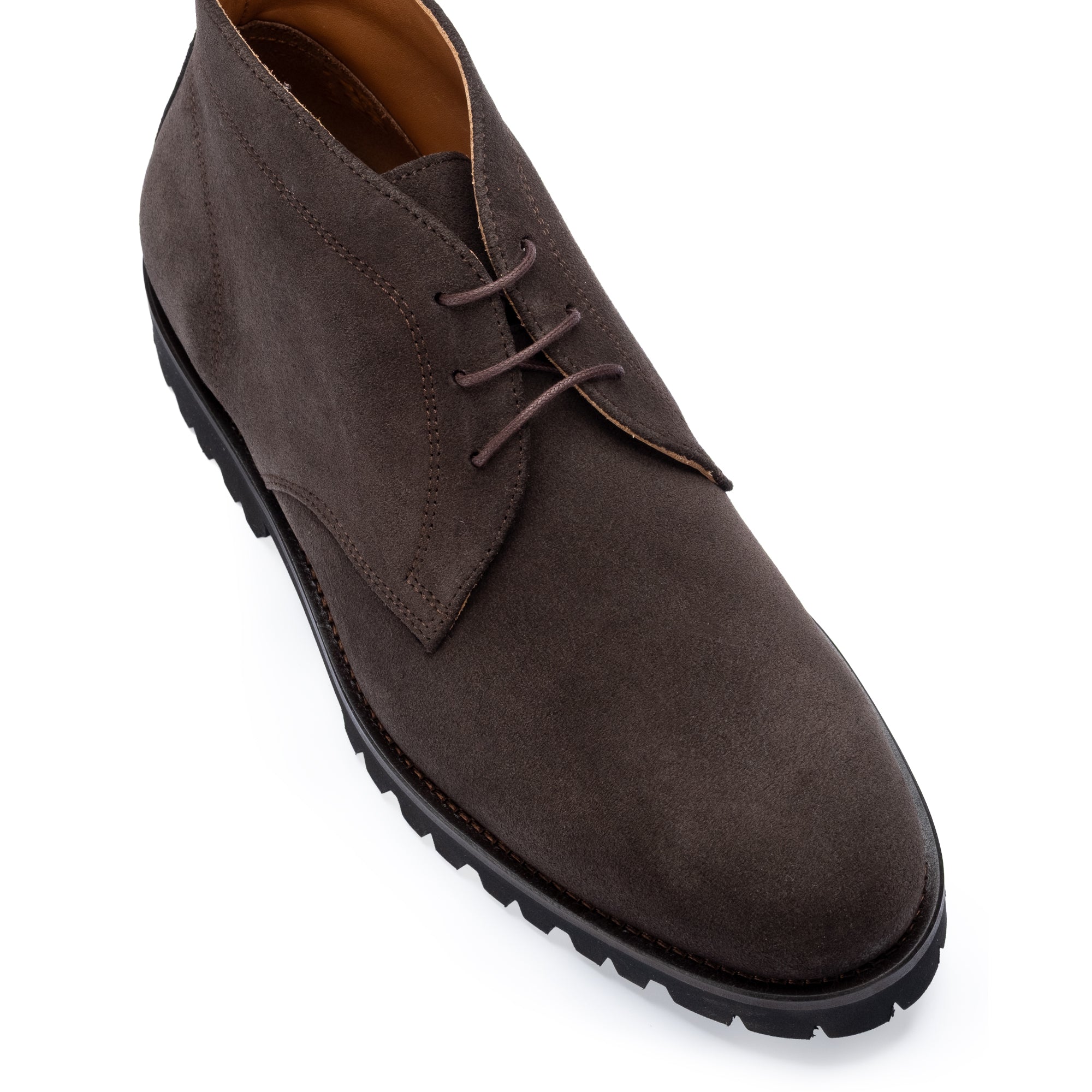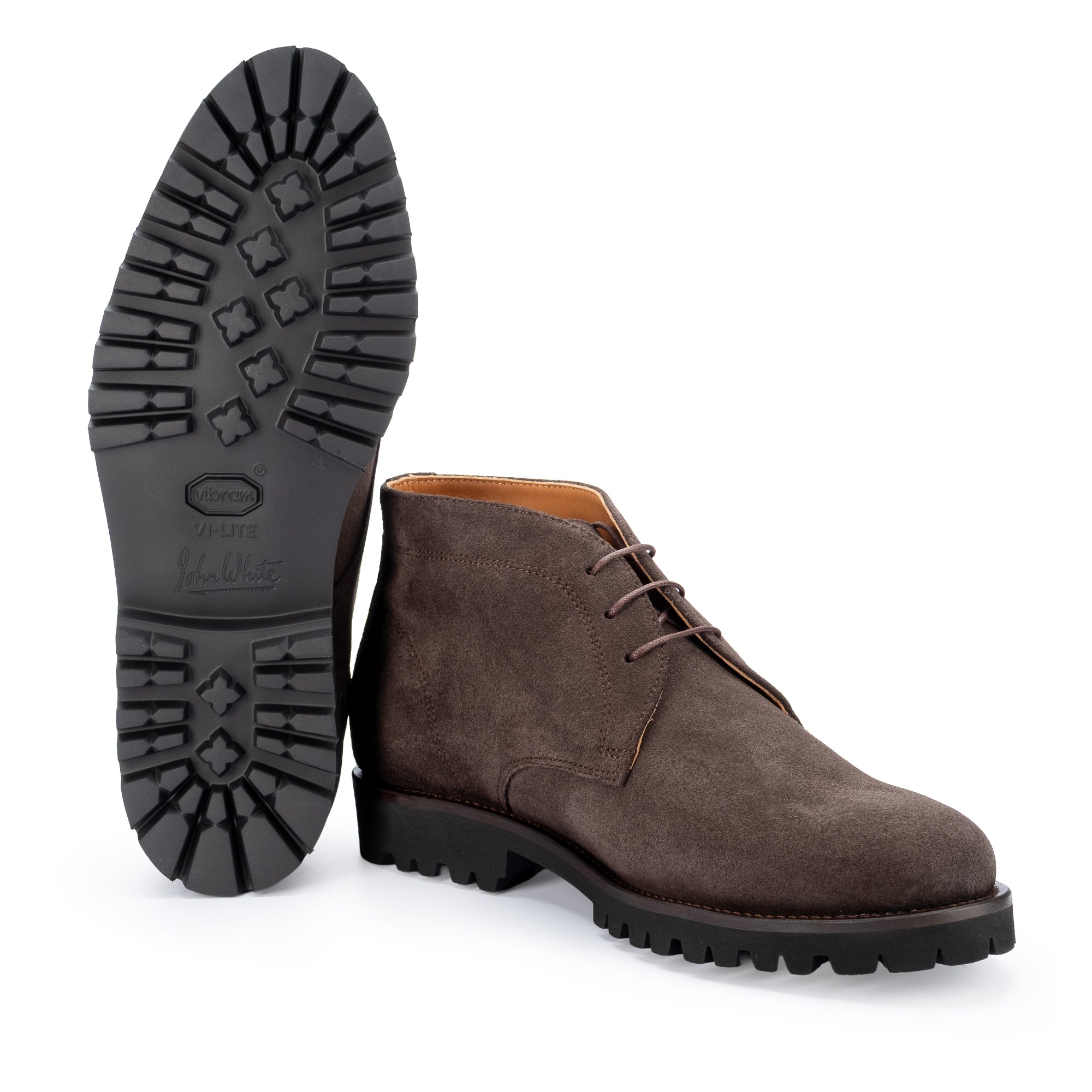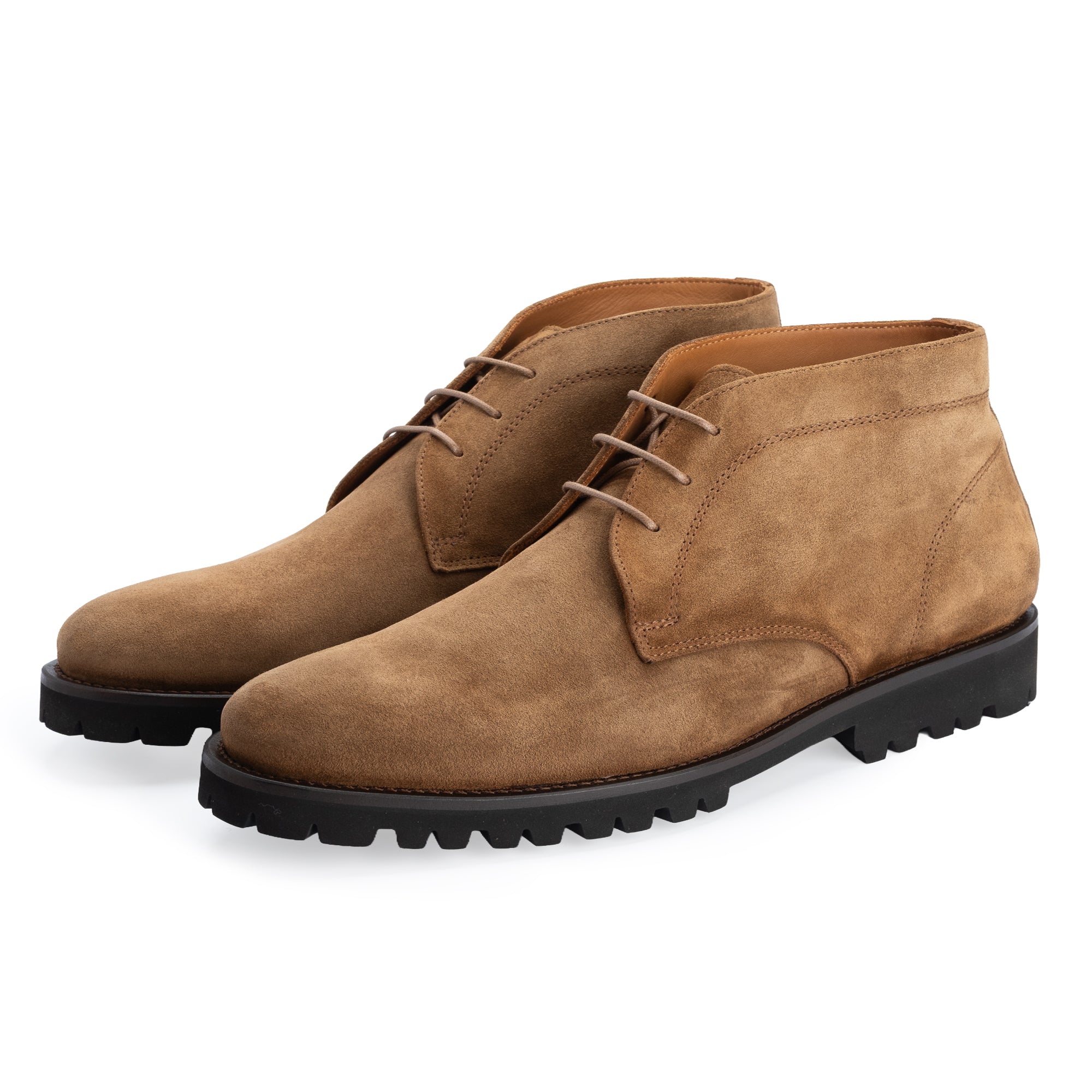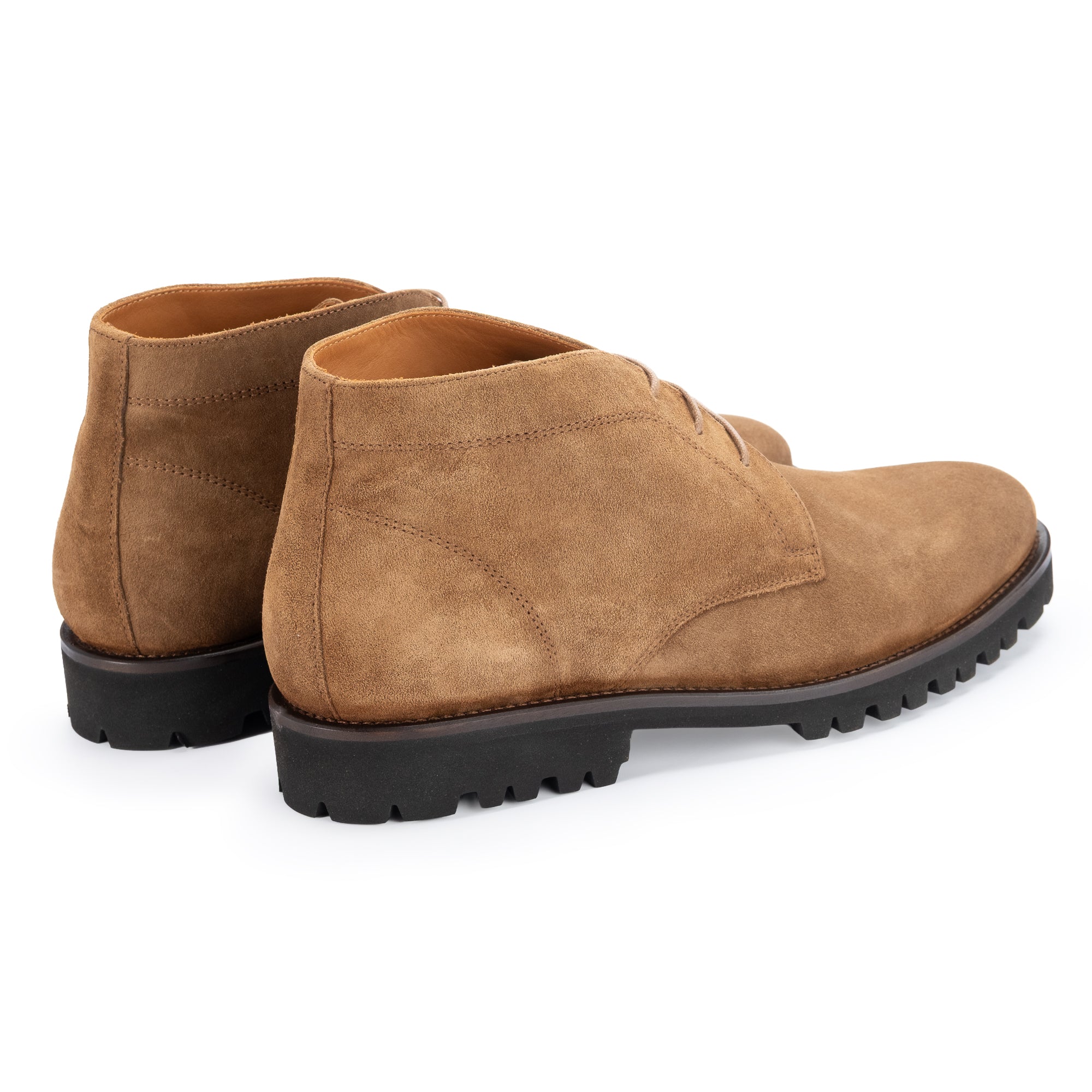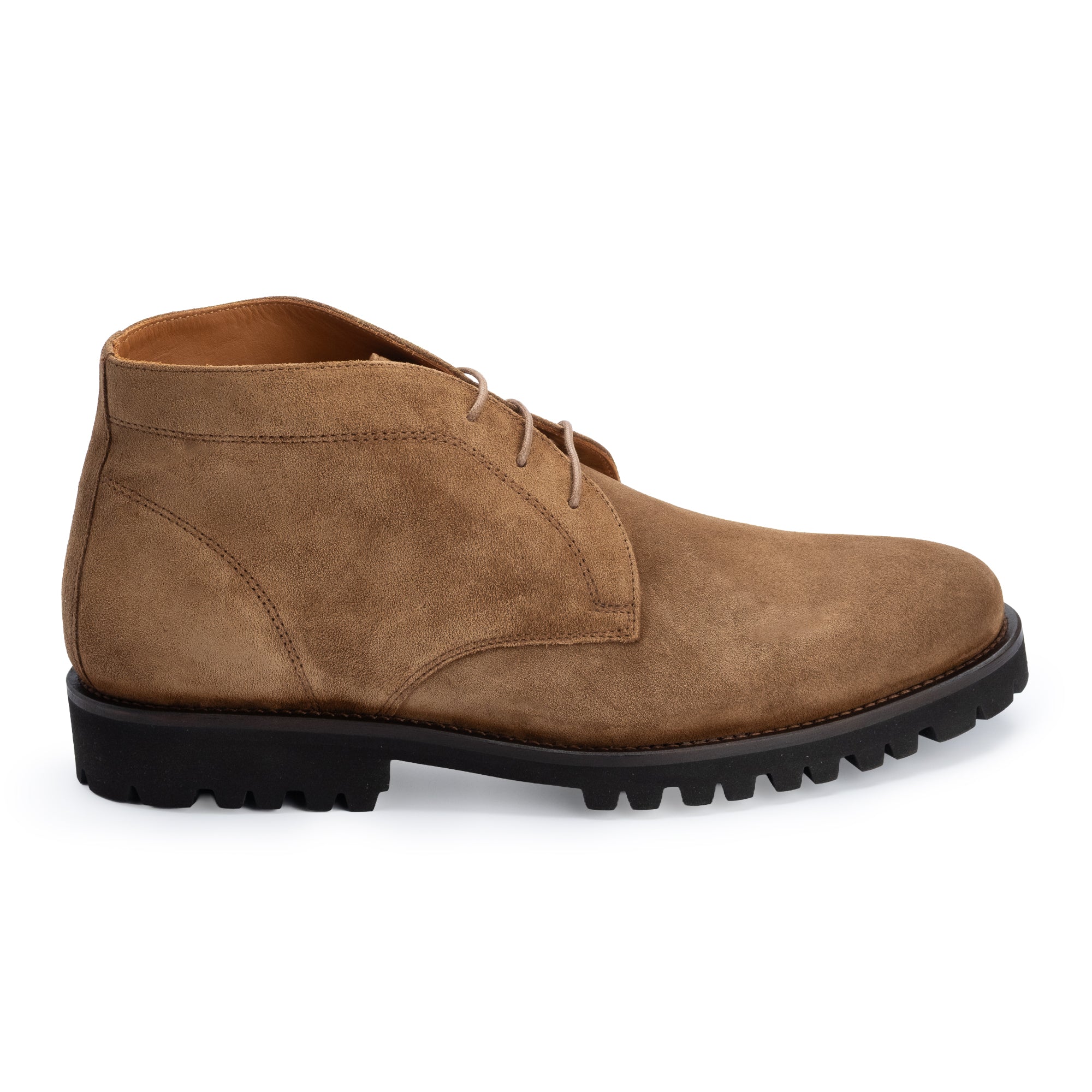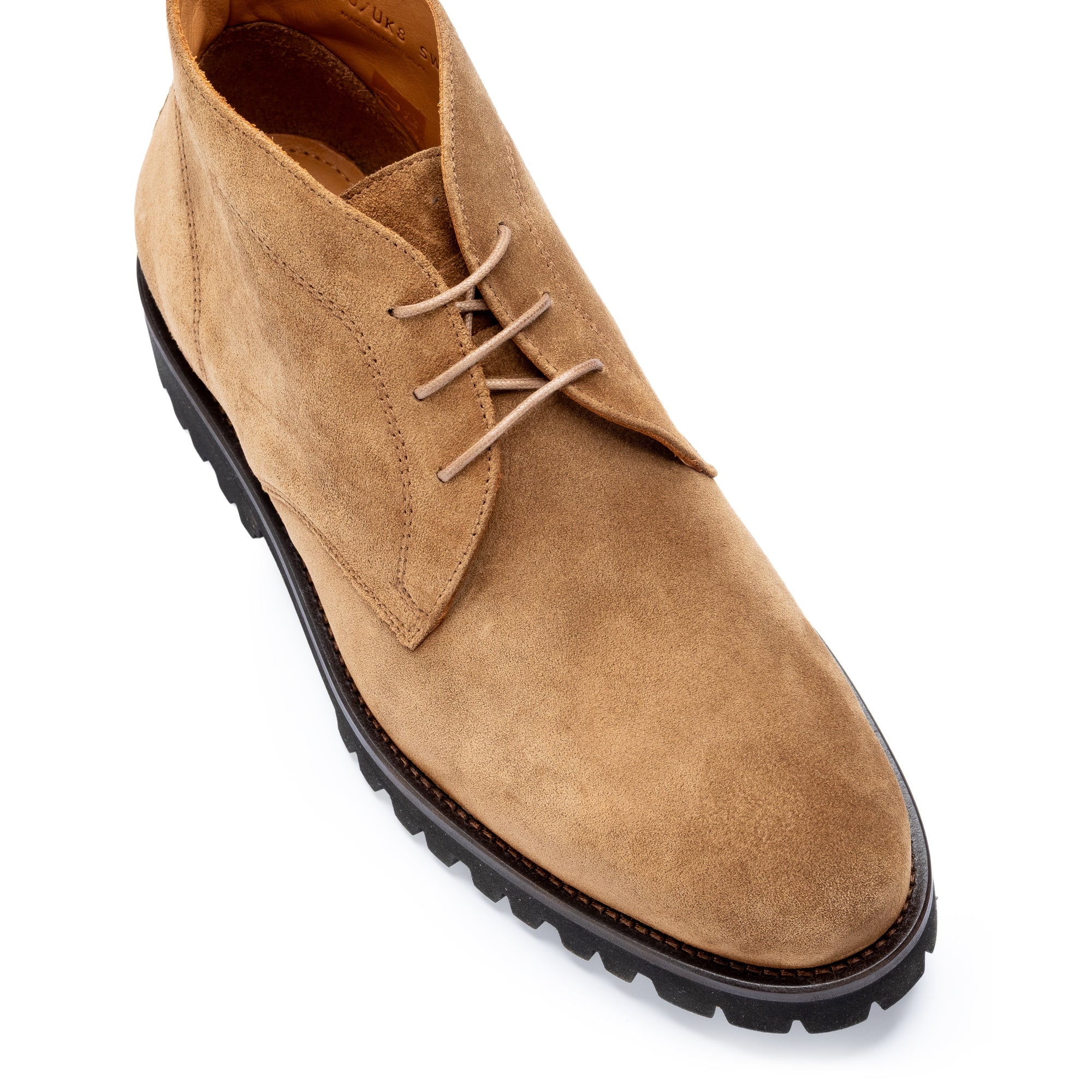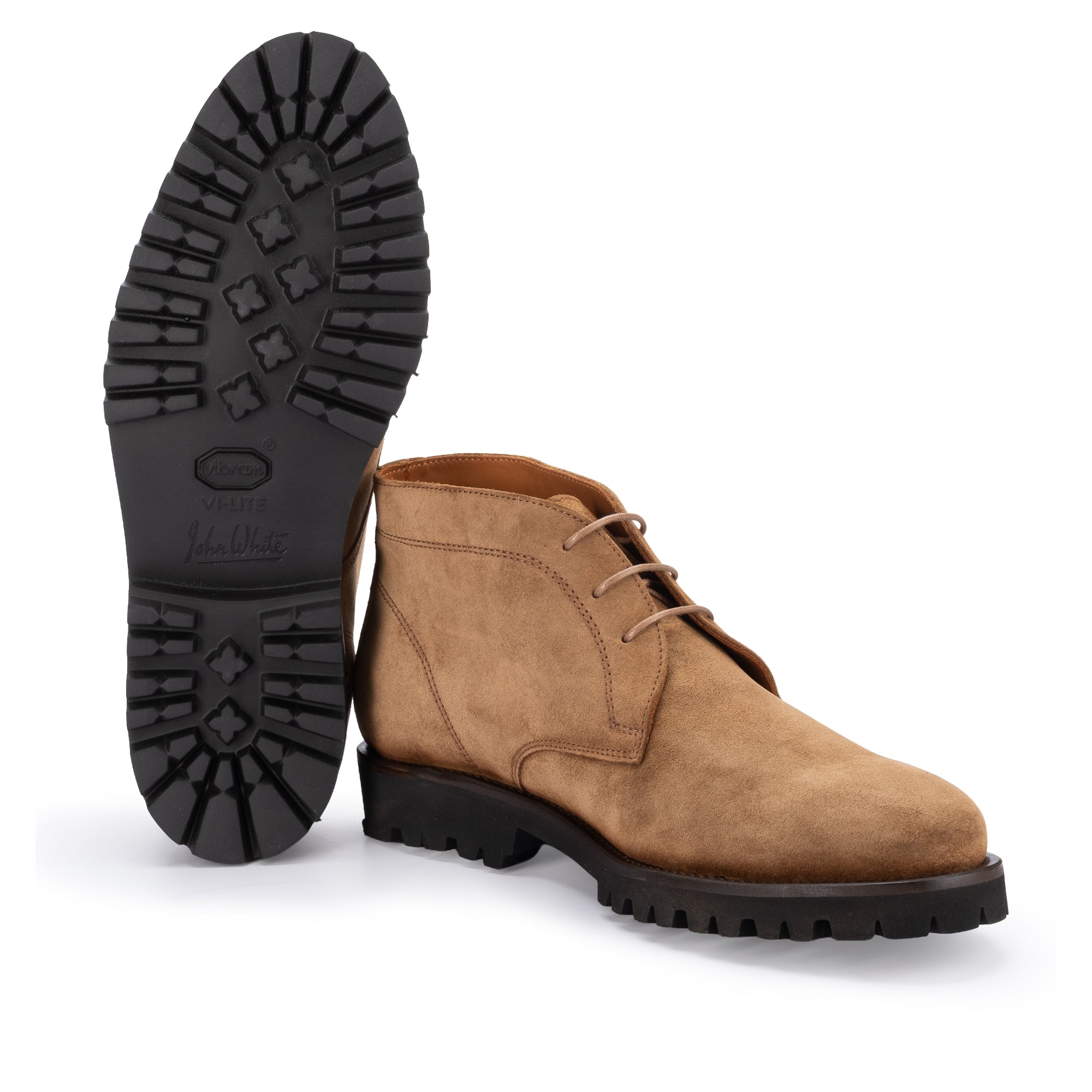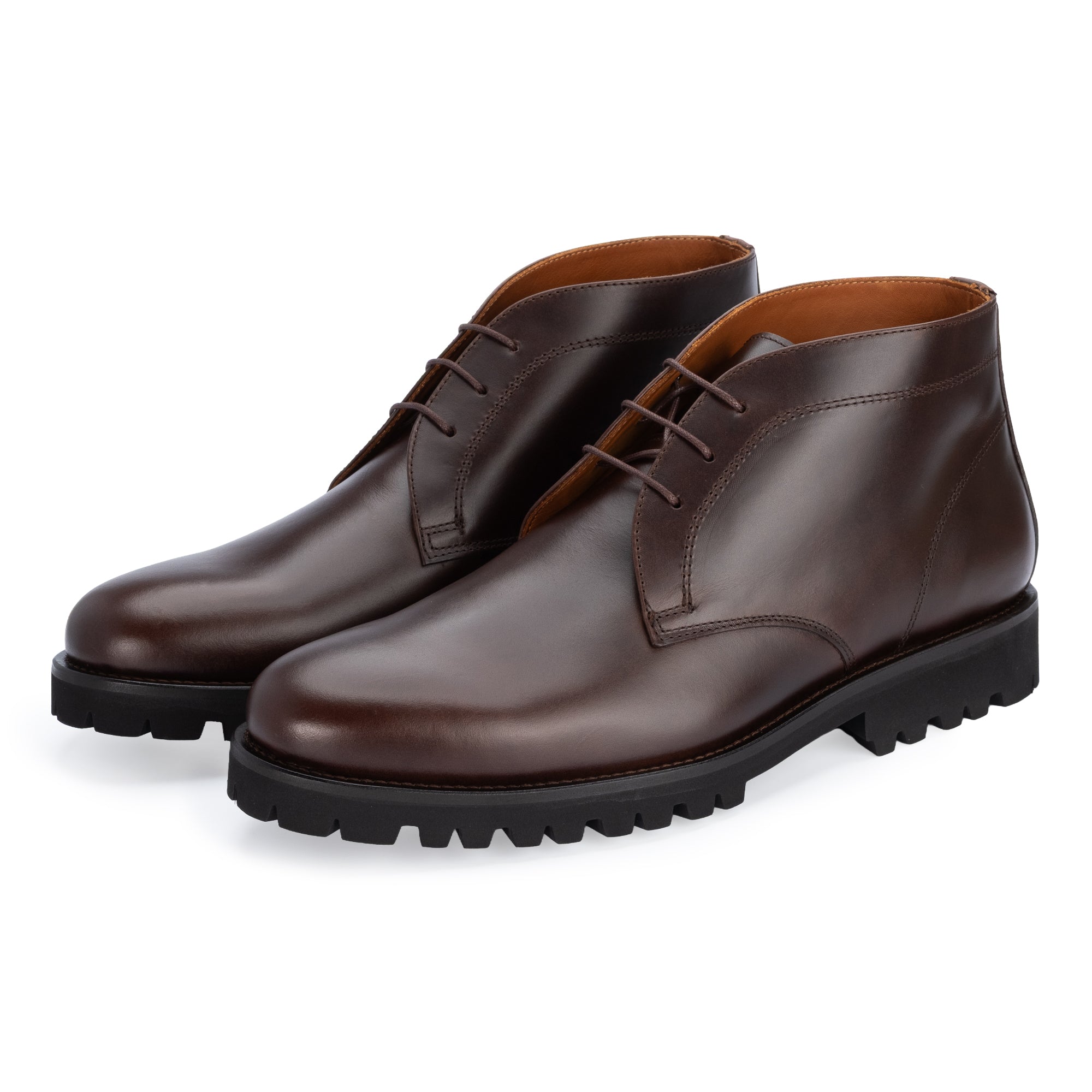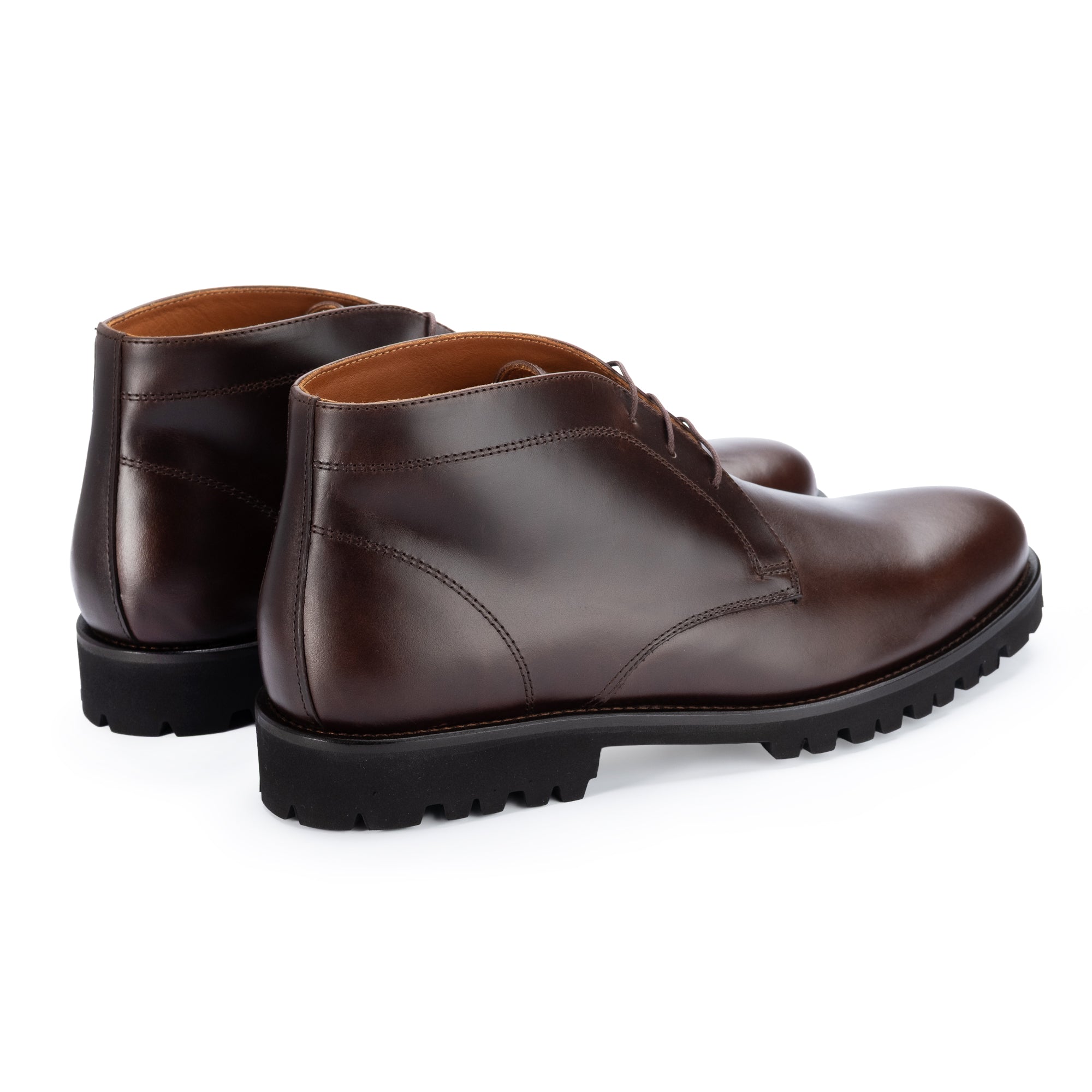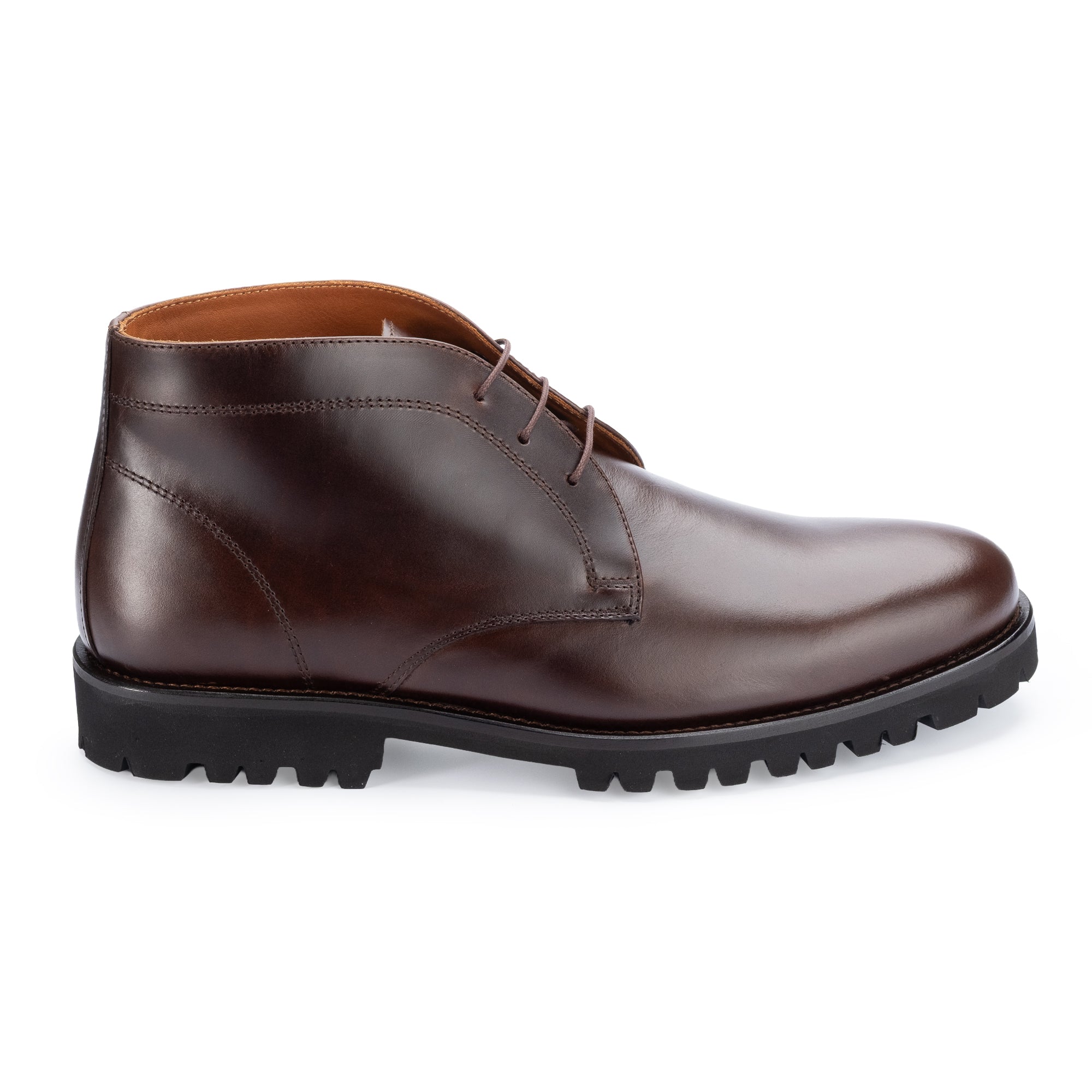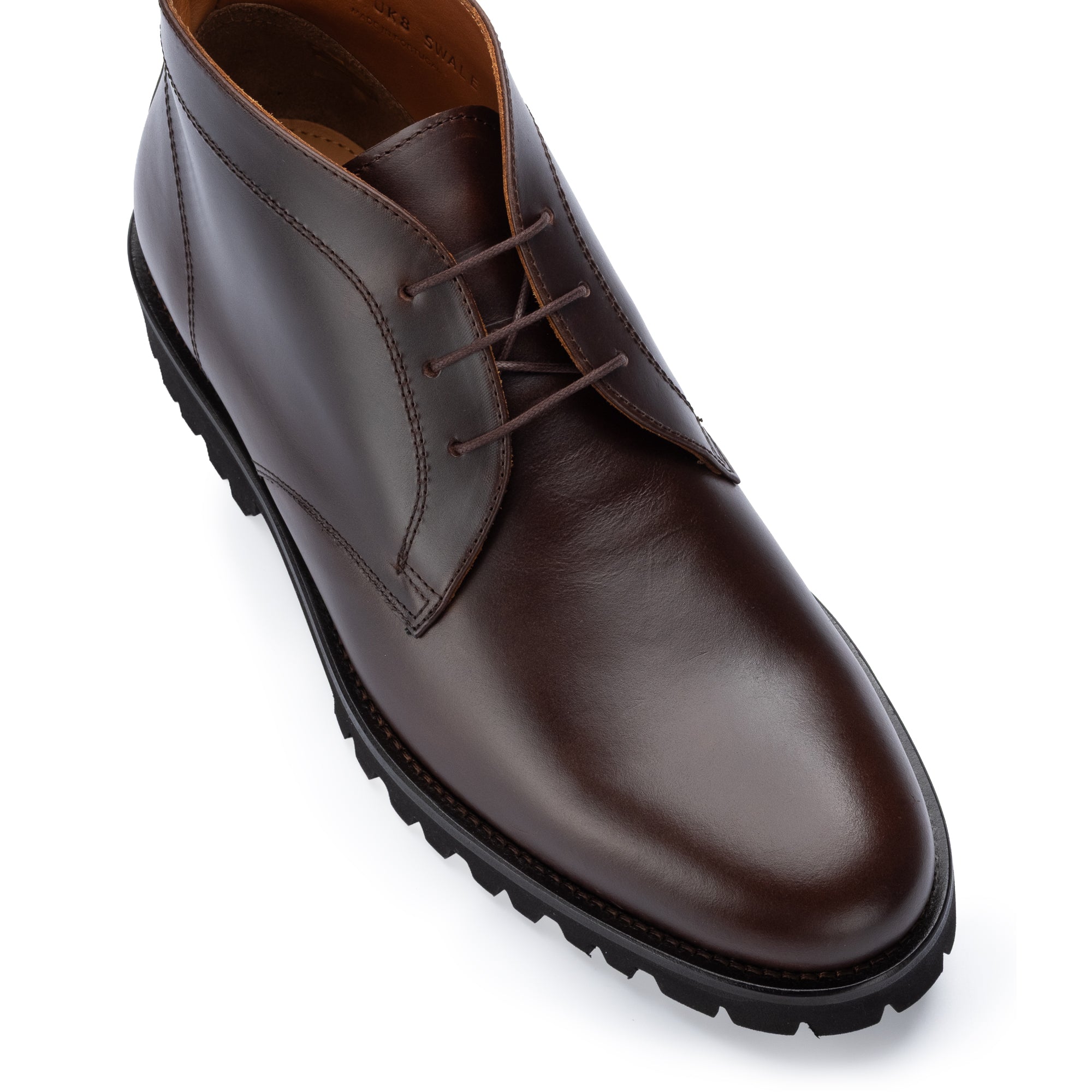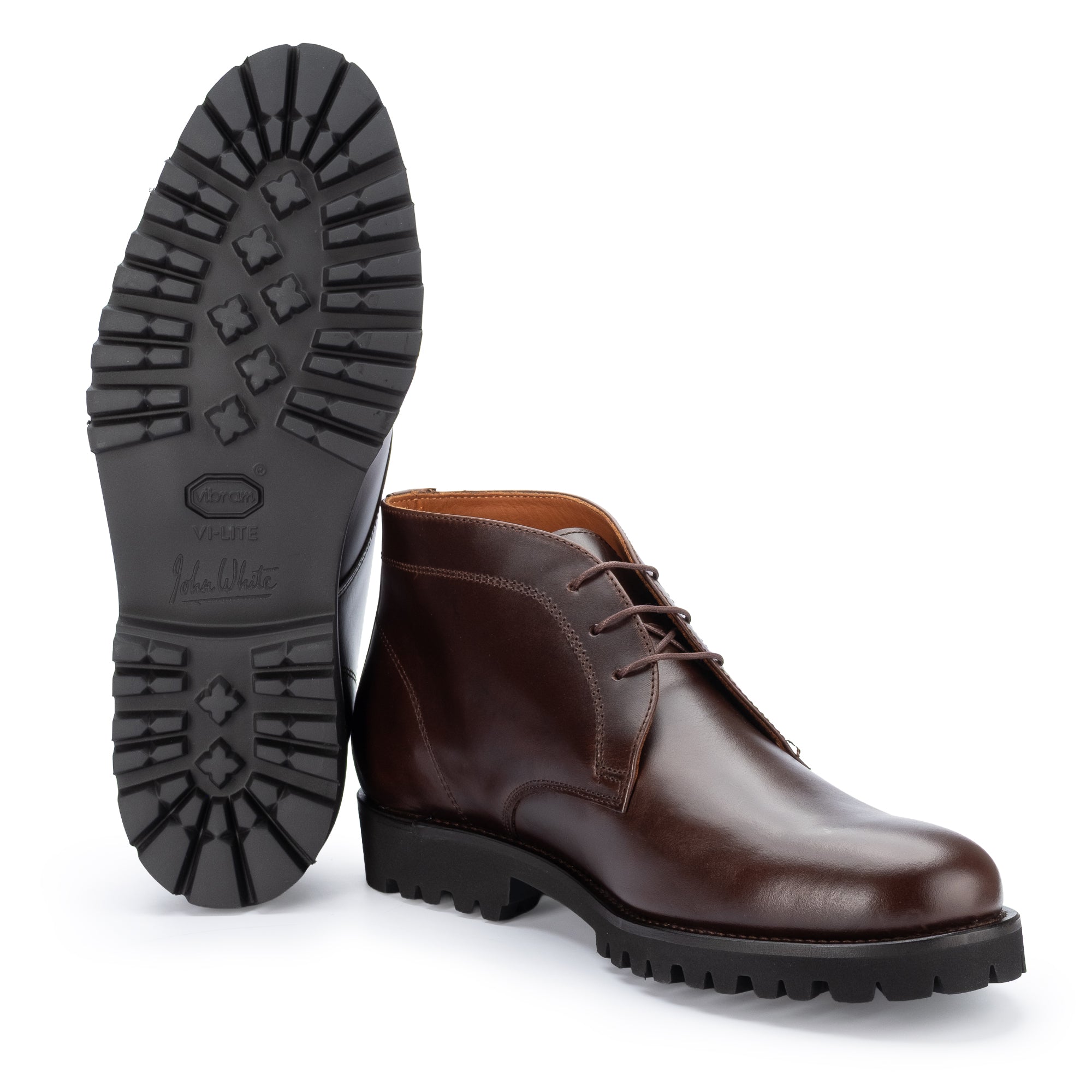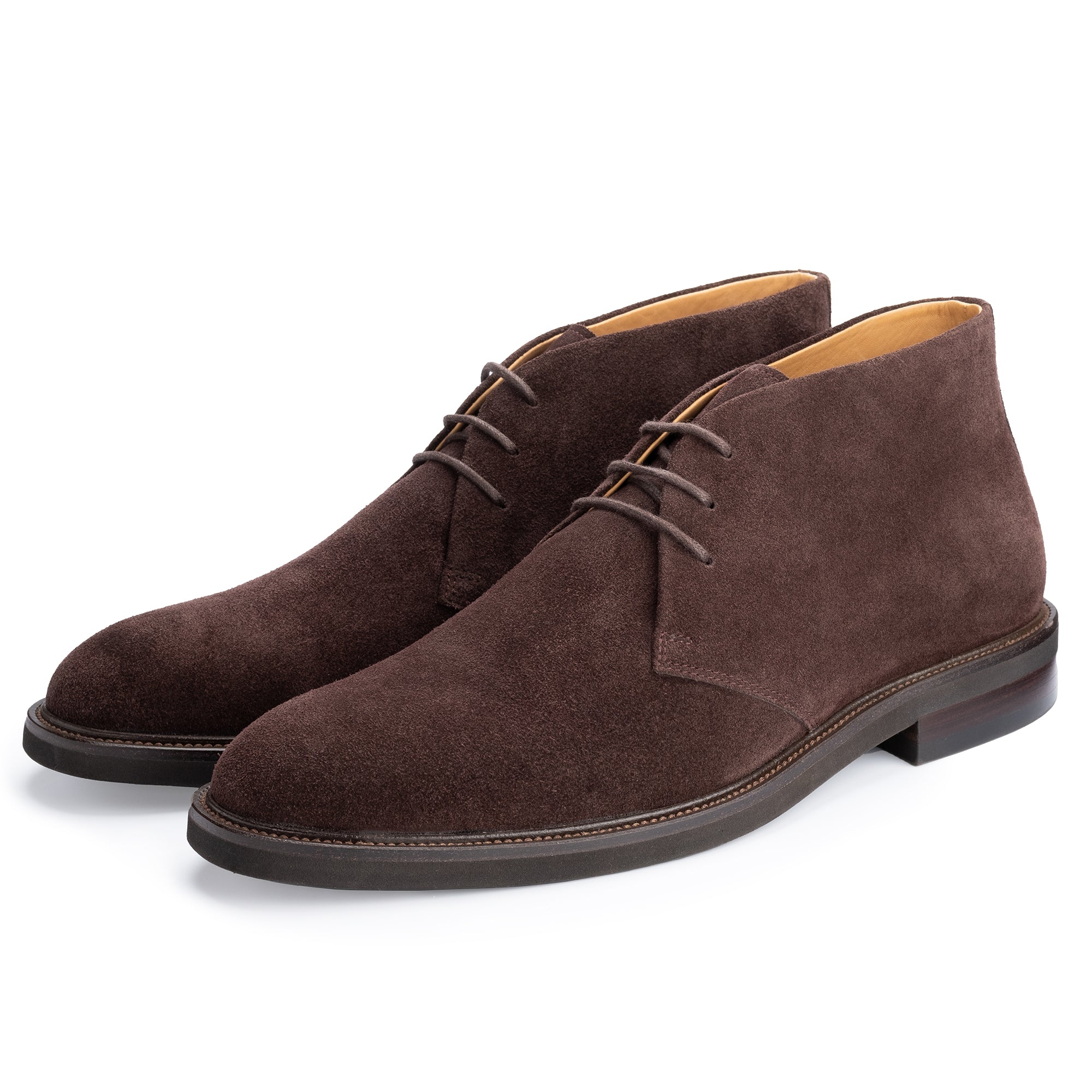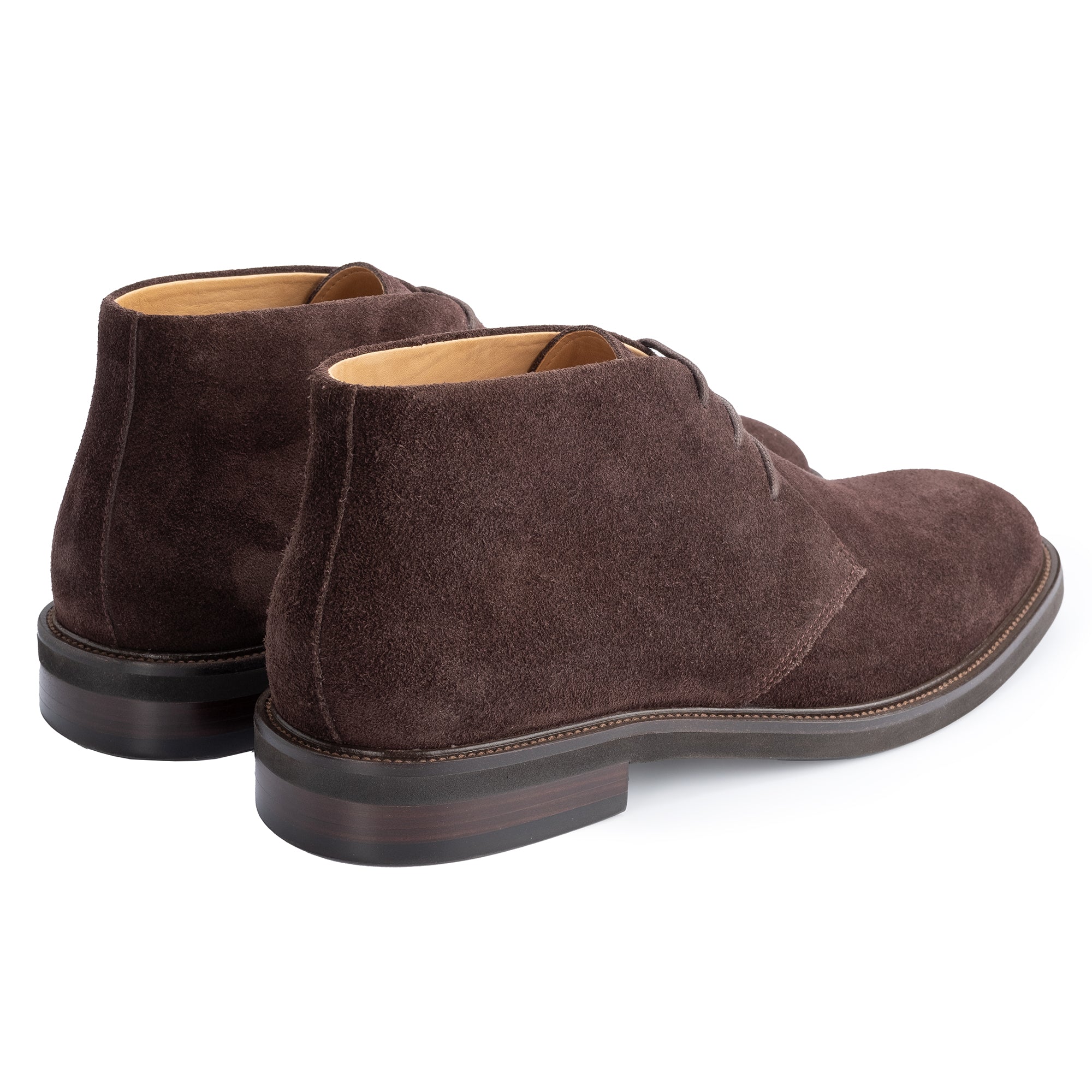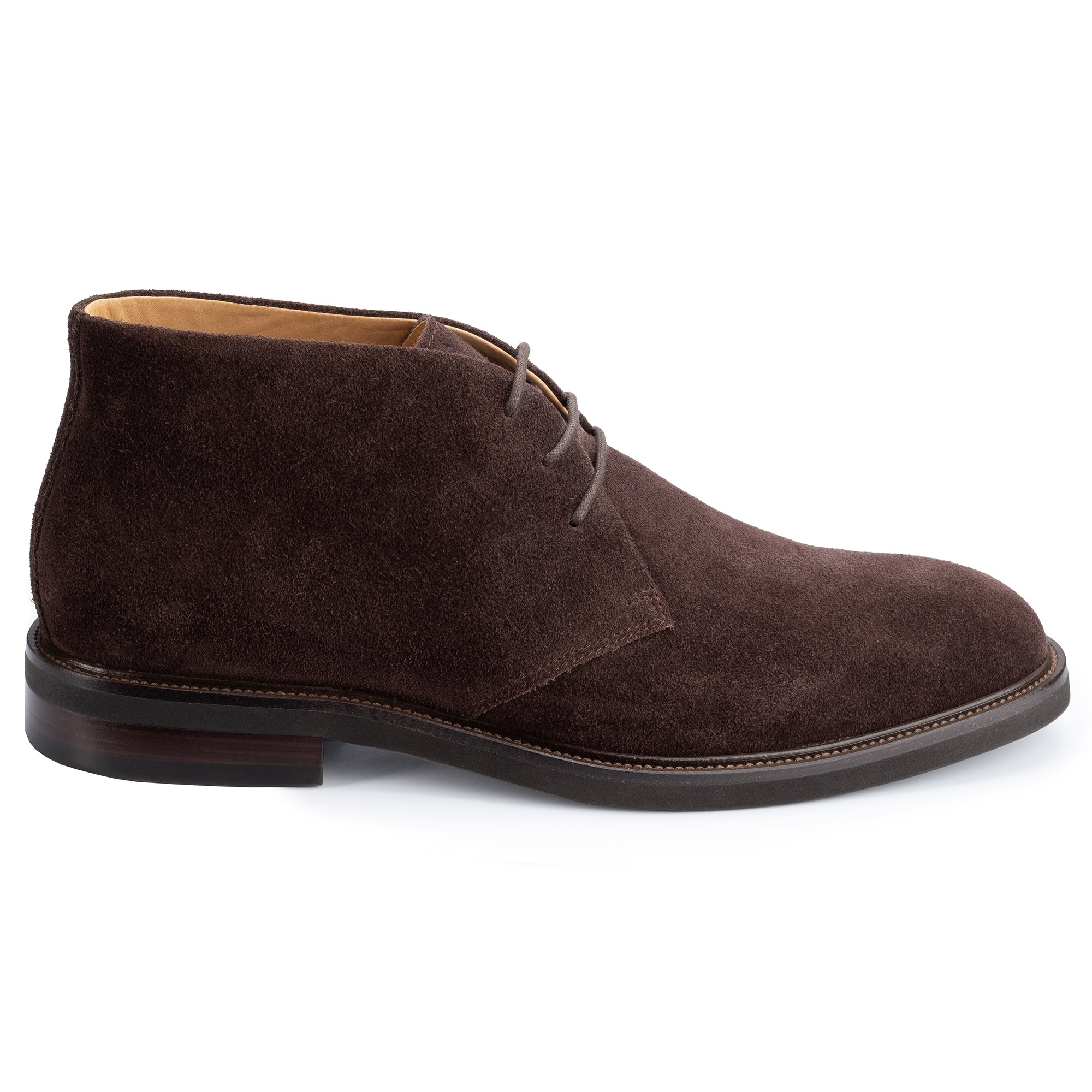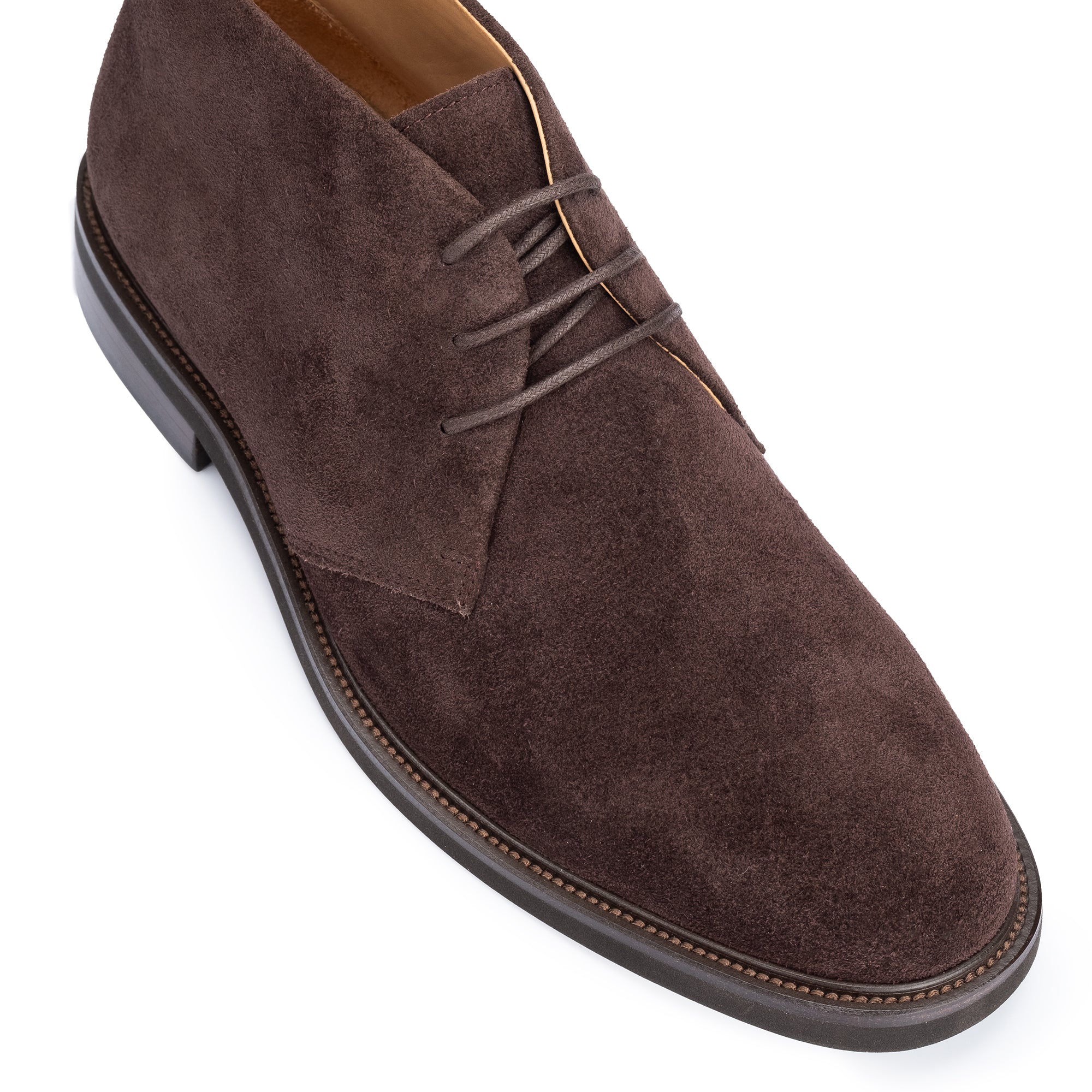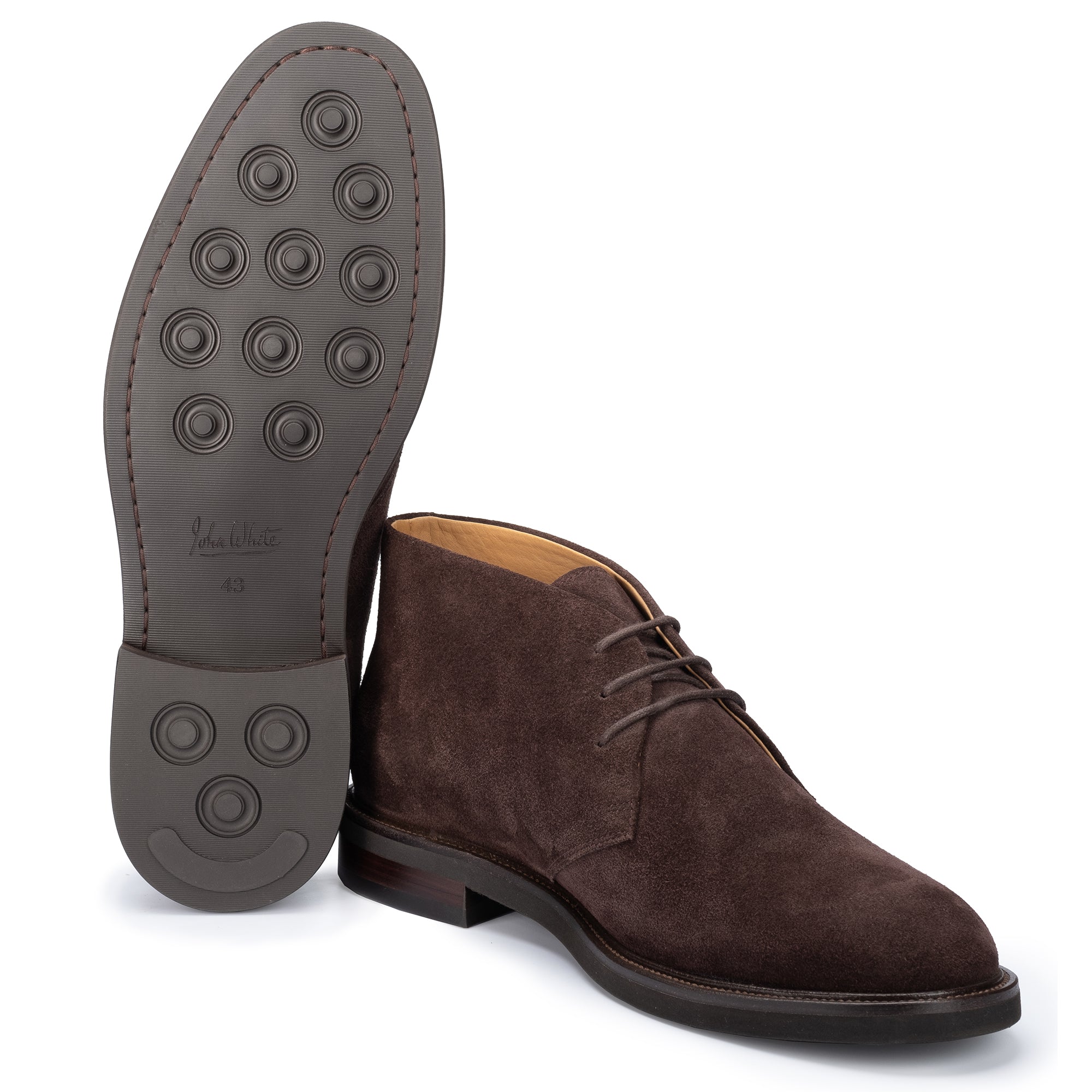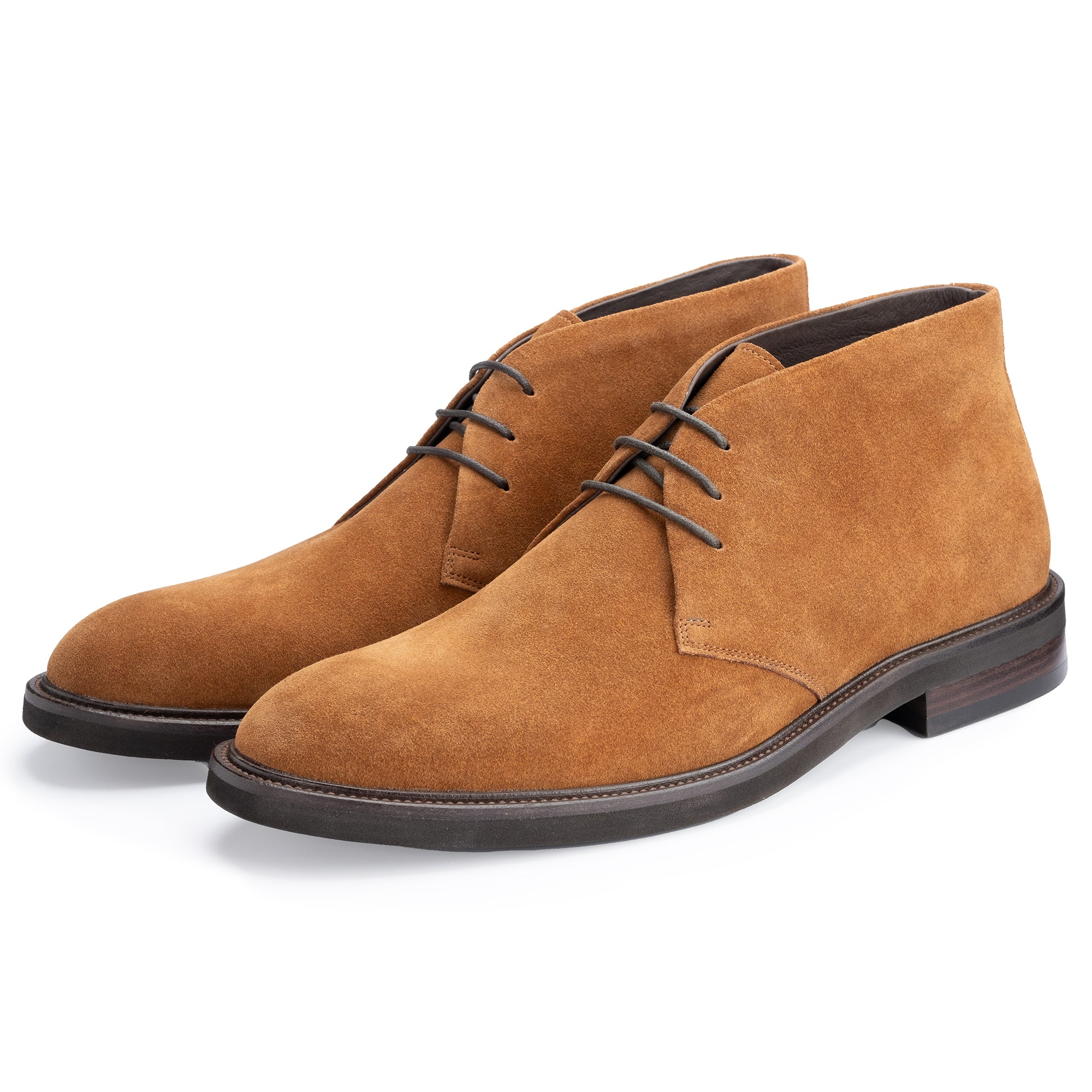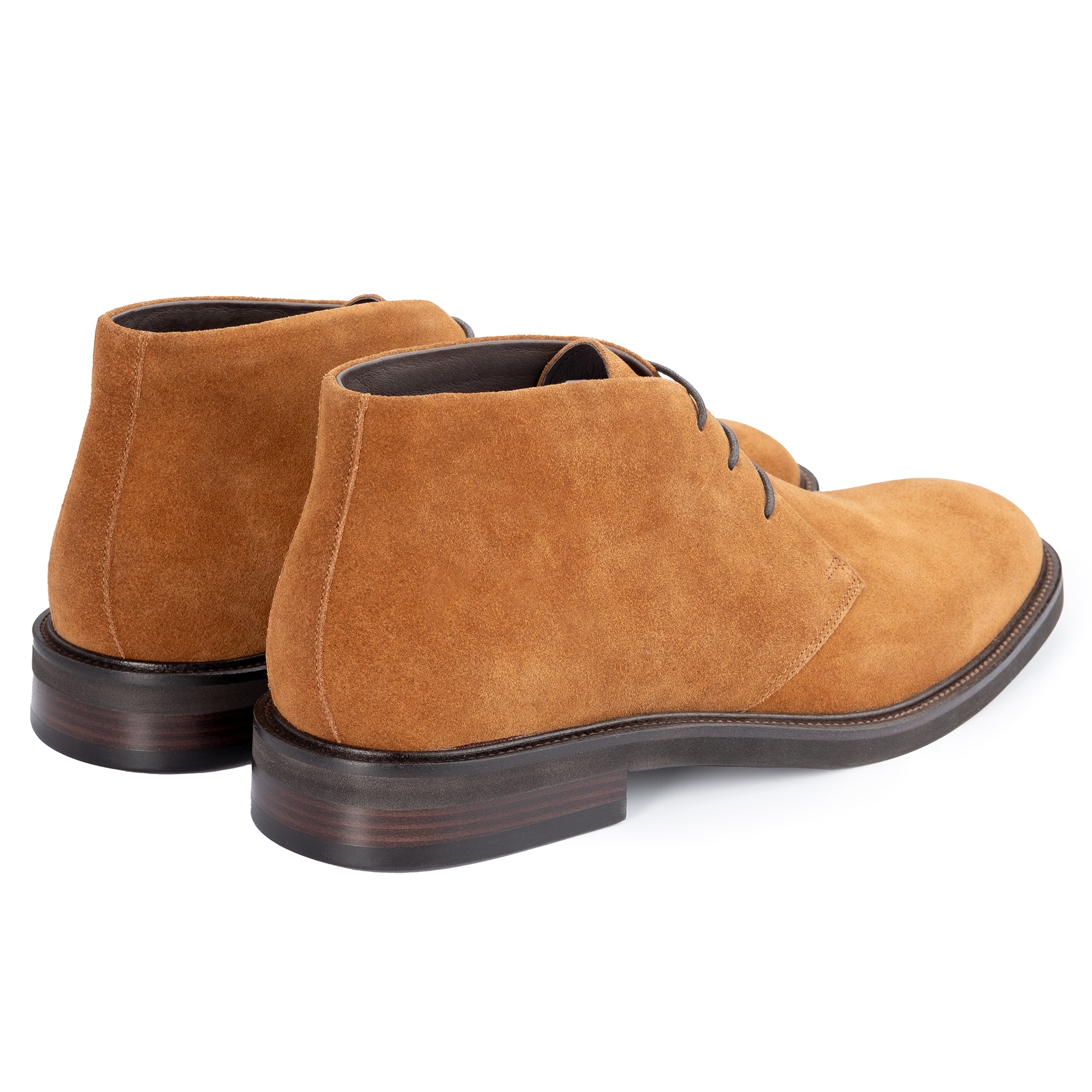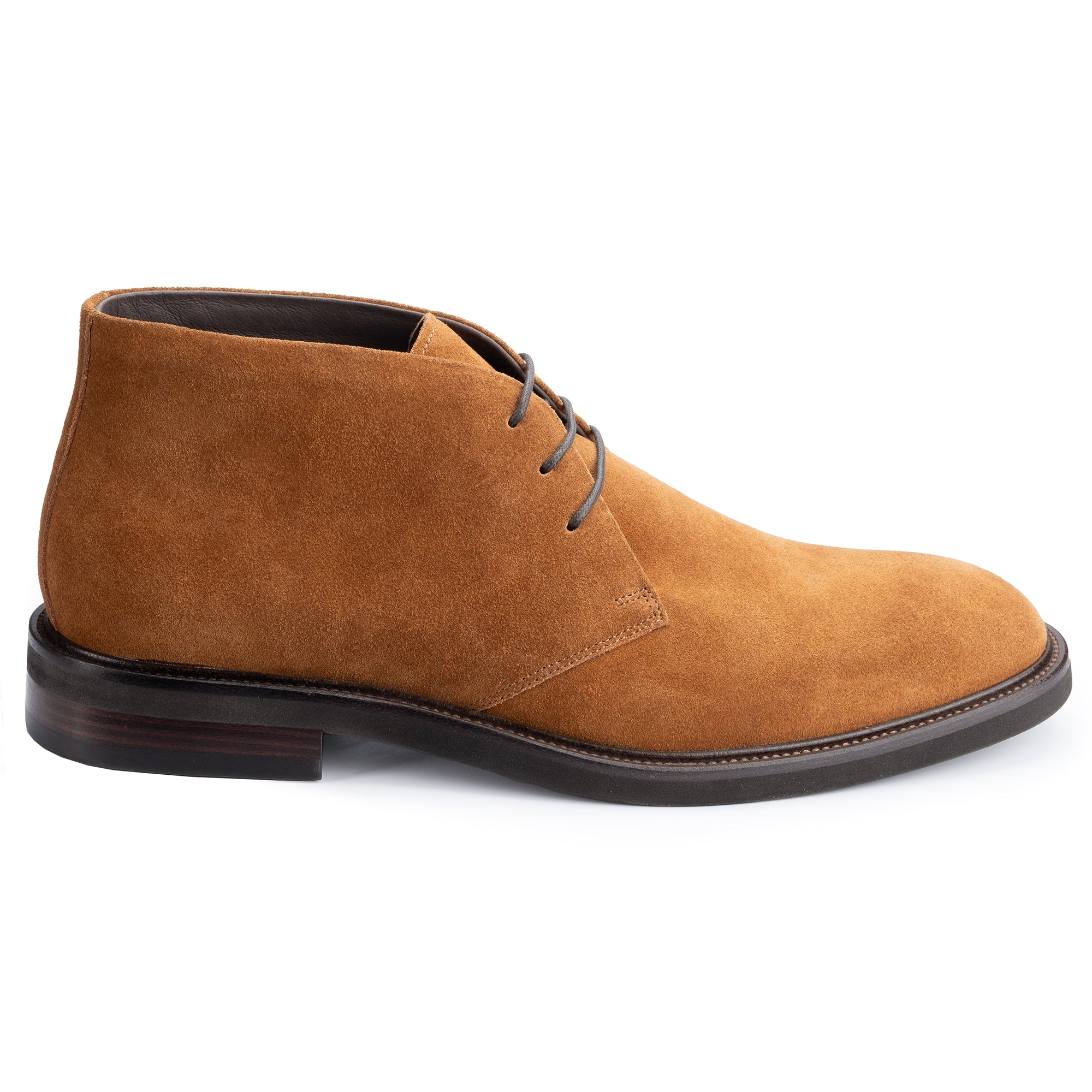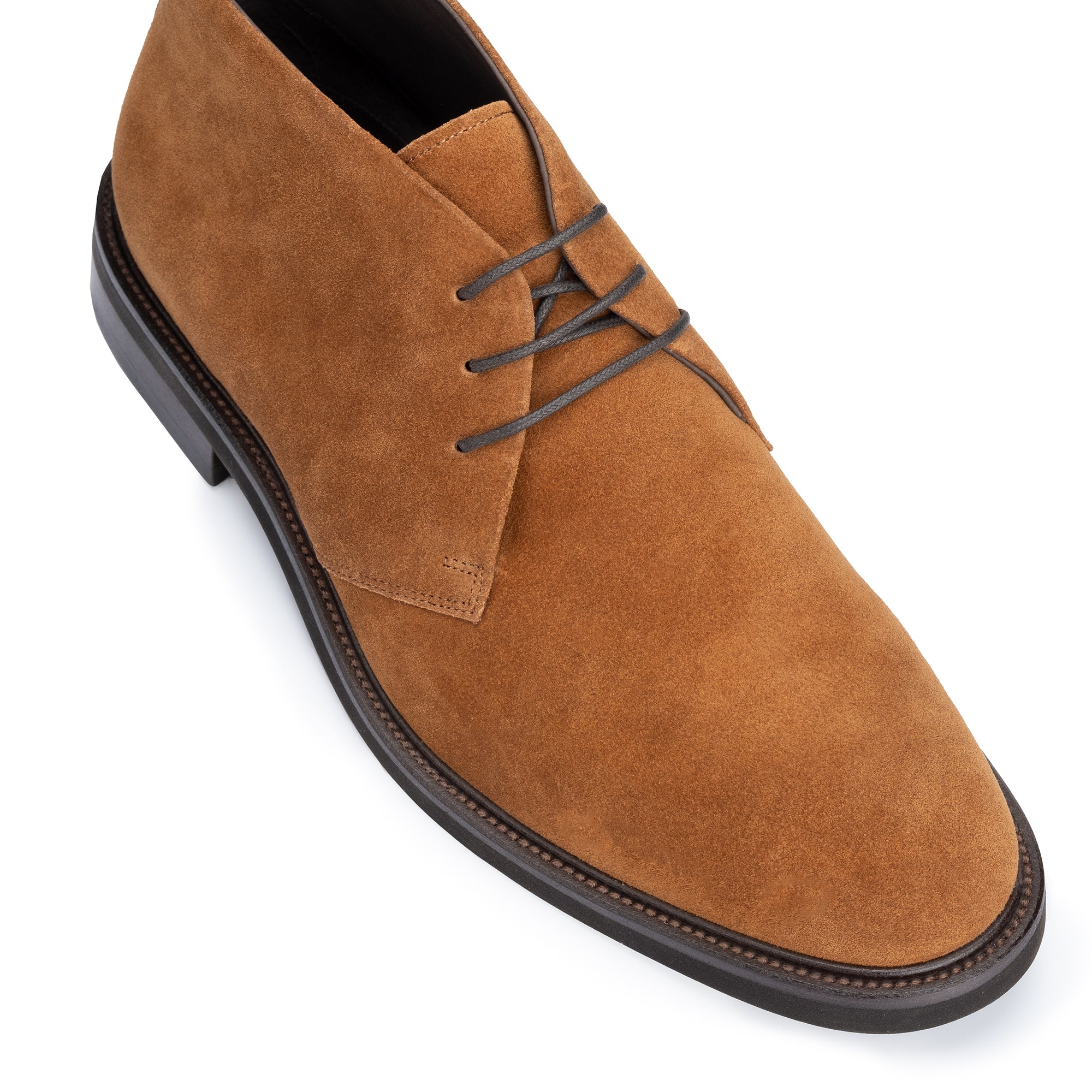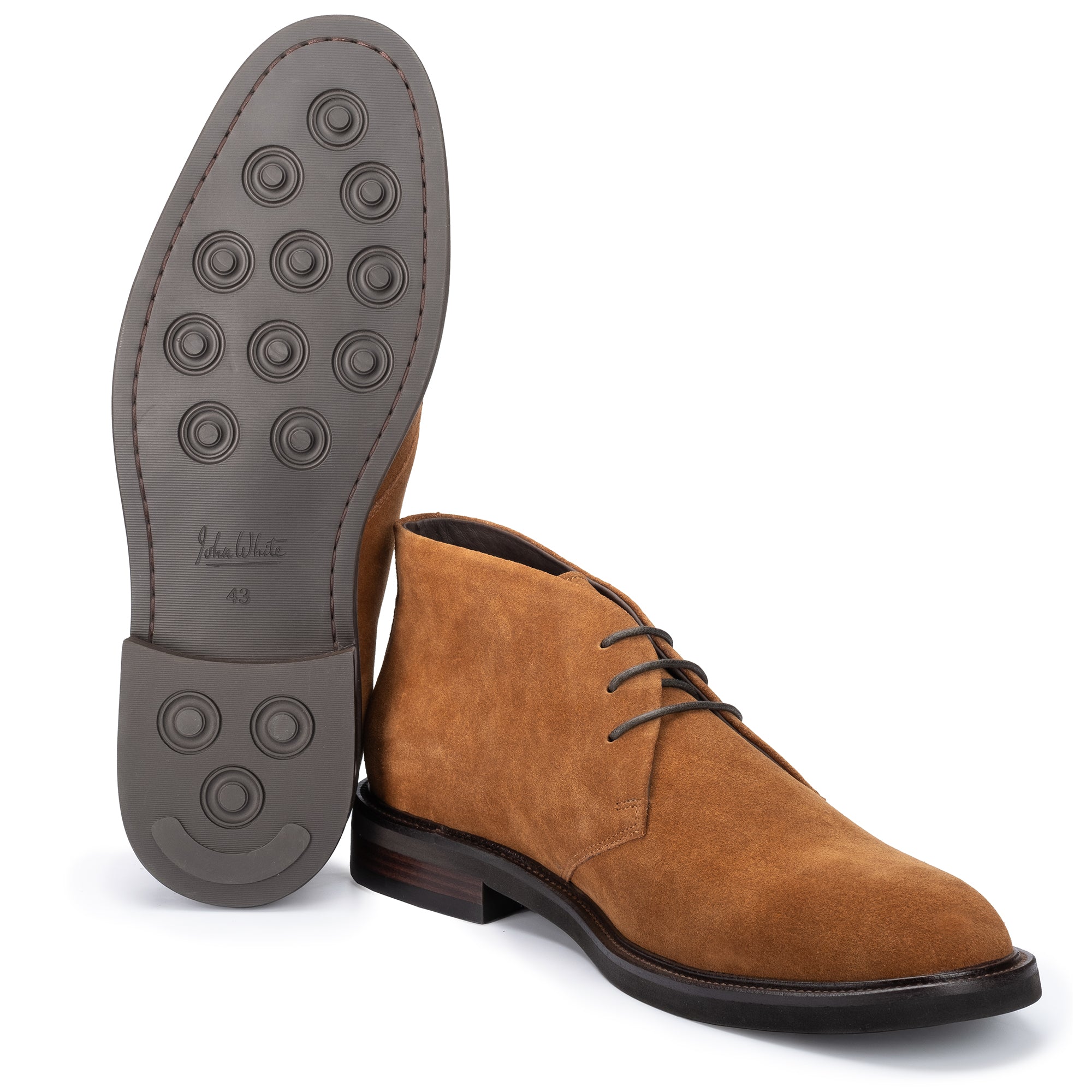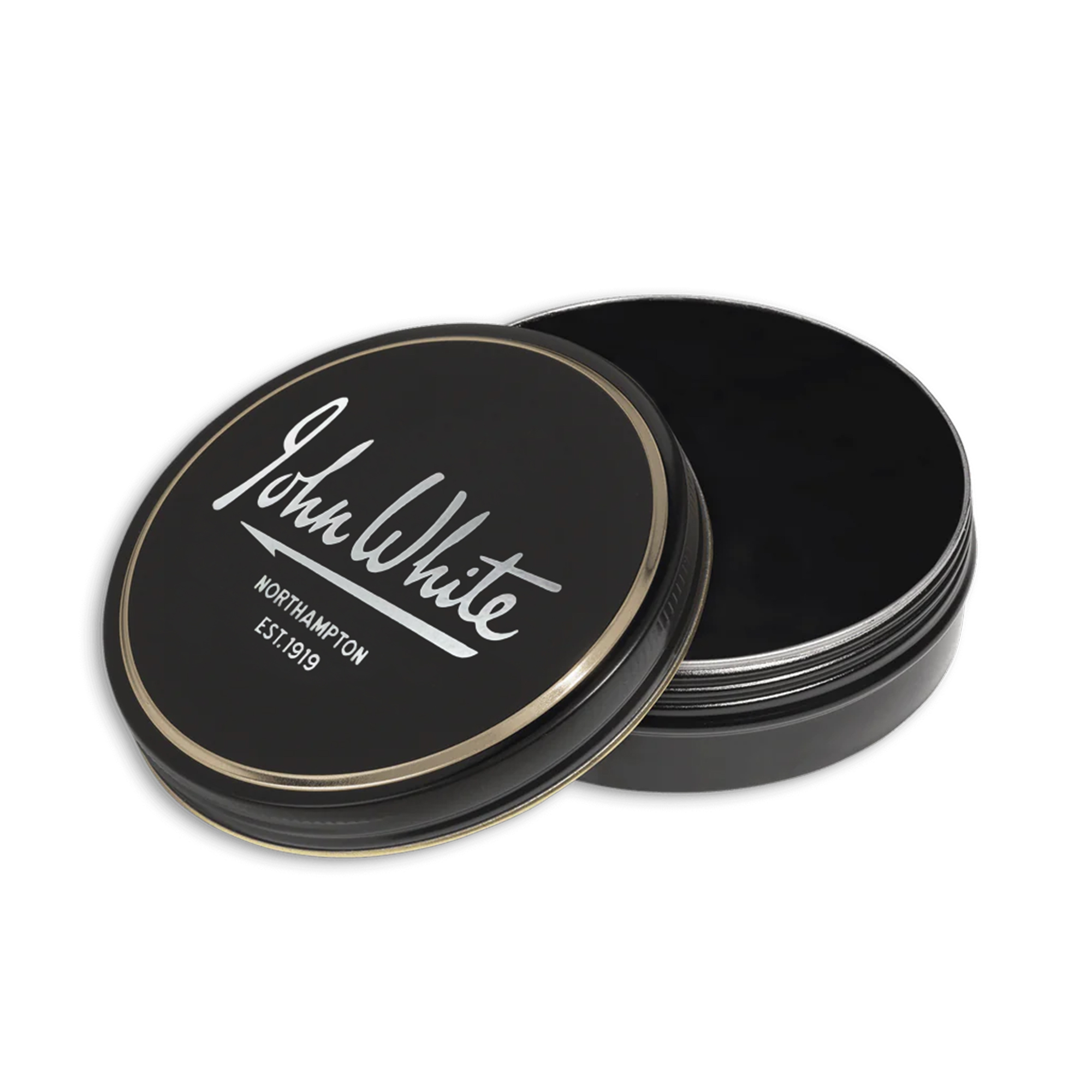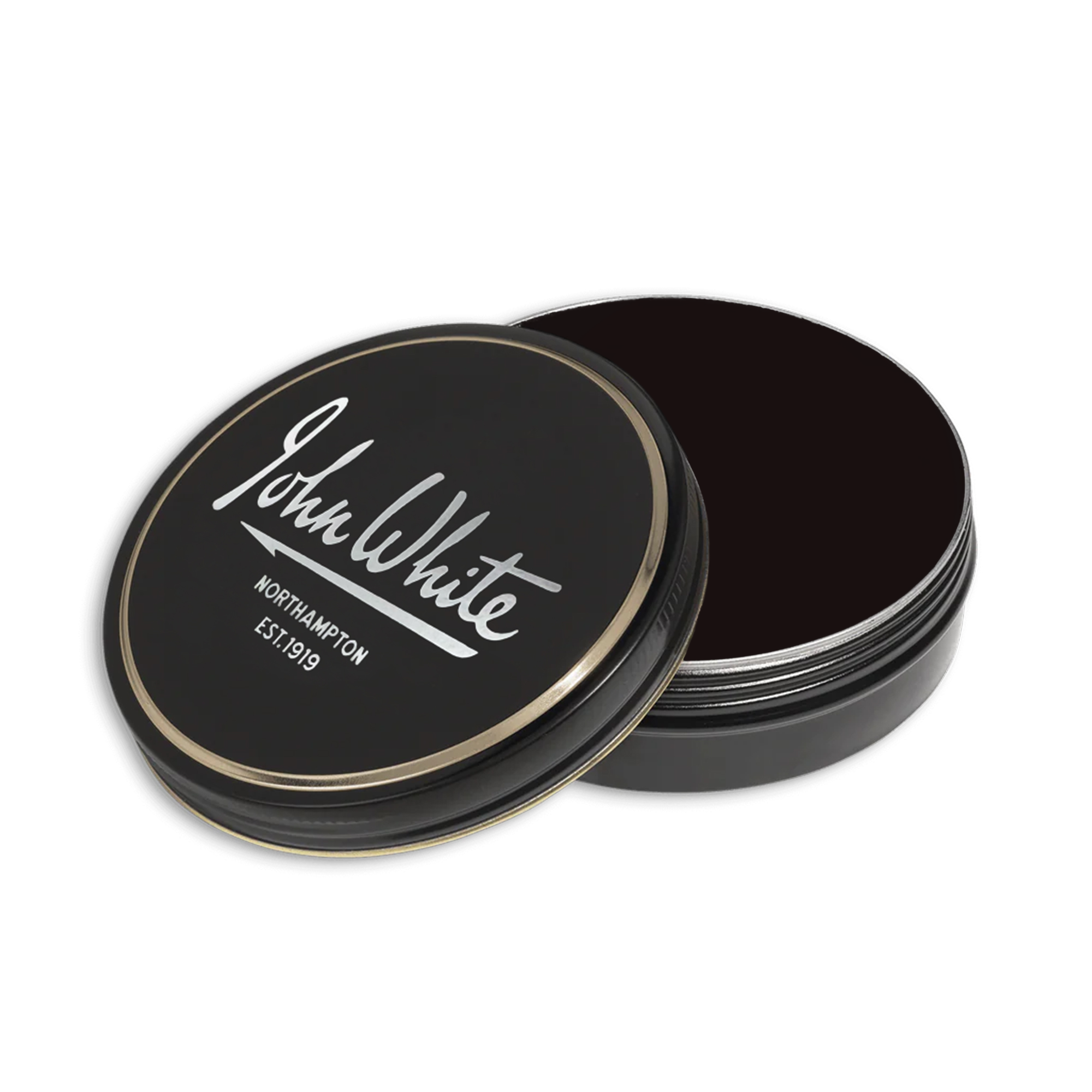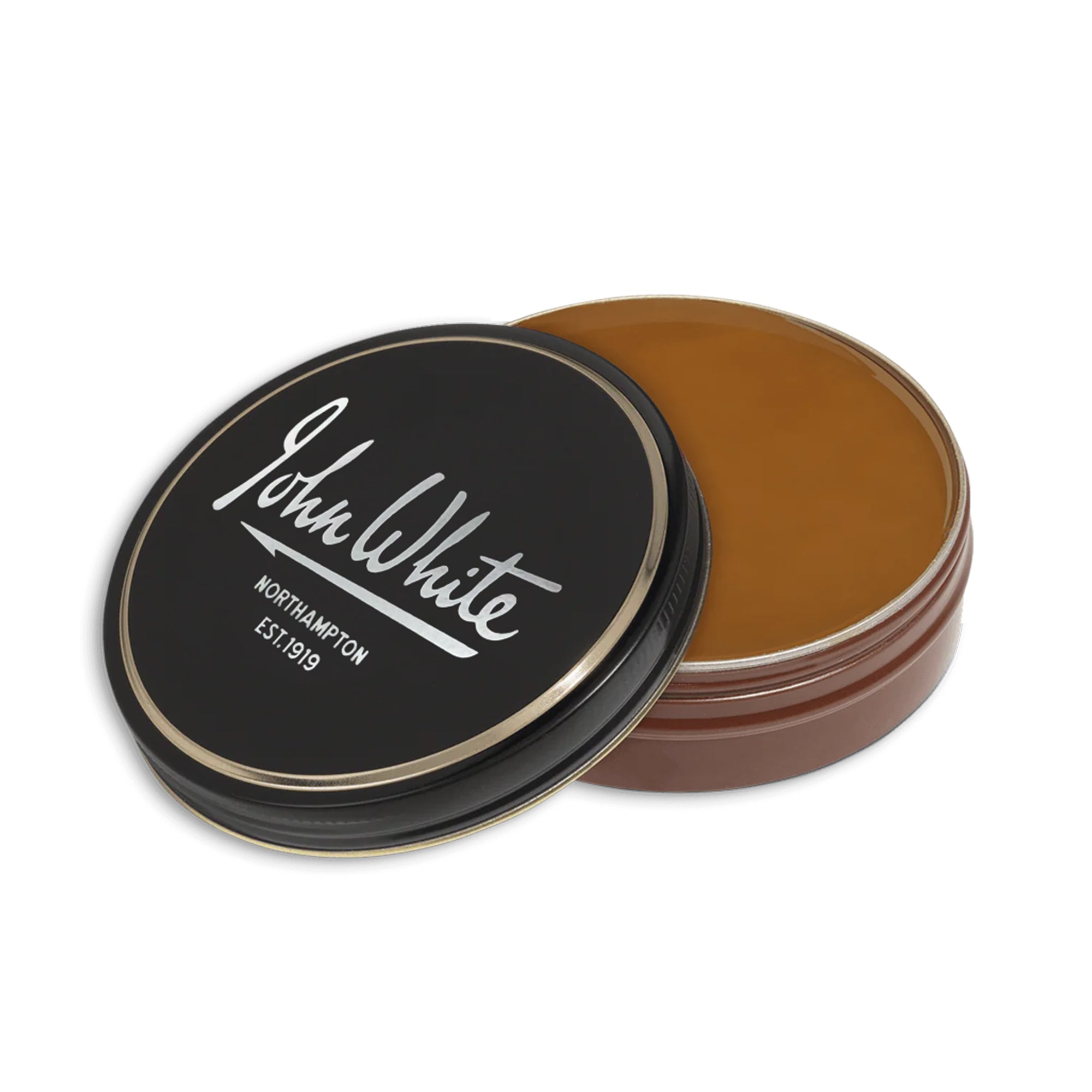

Leather shoe polish colour should match the shoe's original finish as closely as possible. Use a matching coloured cream to restore tone, followed by a matching or neutral wax to seal and shine. Use neutral polish when no close match exists, or as a finishing coat over colour. Applying dark polish to light leather permanently deepens the hide — the pigment accumulates with every application and cannot be reversed at home.
Browse the full men's shoe collection or the men's boots range — then return here for the correct polish approach for each leather in your collection.
In This Guide
- What Is Leather Shoe Polish and Why Does Colour Selection Matter?
- What Are the Main Leather Shoe Polish Colours?
- When Should You Use Neutral or Colourless Shoe Polish?
- How Do You Match Polish Colour to Leather Colour?
- What Happens If You Use the Wrong Polish Colour?
- Should You Use Cream Polish or Wax Polish — and Does It Affect Colour?
- Are There Special Polish Requirements for Specialist Leathers?
- Related Guides
- Frequently Asked Questions
Polish colour selection is the step most men get wrong, and it costs them. Premium leather shoes from makers such as John White Shoes, Loake, Crockett & Jones, Barker, and Church's are finished to precise tonal specifications — and those finishes are worth protecting correctly. Whether your collection runs to black Oxfords, tan brogues, or burgundy monks, choosing the right polish shade is the difference between leather that develops a refined patina and leather that muddies with age.
What Is Leather Shoe Polish and Why Does Colour Selection Matter?
Leather shoe polish is a wax- or cream-based compound that nourishes, protects, and restores the surface of finished leather. Most quality polishes contain natural waxes — carnauba and beeswax are the most common — alongside conditioning agents and pigments that replenish colour lost through wear, cleaning, and exposure to the elements.
The Leather Conservation Centre recommends that coloured polishes be matched as closely as possible to the original leather dye, noting that mismatched pigments accumulate in the surface grain and alter the leather's character permanently. Colour selection is not purely aesthetic — it governs how your shoe ages over years of wear.
Choosing the correct polish colour determines whether premium leather develops a refined patina or an uneven, muddied tone over time.
What Are the Main Leather Shoe Polish Colours?
Is Black Polish Suitable for All Dark Shoes?
Black shoe polish is the most widely used and the least forgiving. It suits black calf, black box calf, and any genuinely black leather where no depth of tone is required. Applied correctly on true black leather, it delivers a dense, mirror-capable finish.
The mistake is applying black to dark brown or navy leather. The pigment is too dominant — it masks the leather's natural variation and, over time, renders the shoe uniformly and irreversibly dark. Black polish on navy leather is particularly damaging, stripping the blue undertone within a handful of applications.
How Many Shades of Brown Polish Are There?
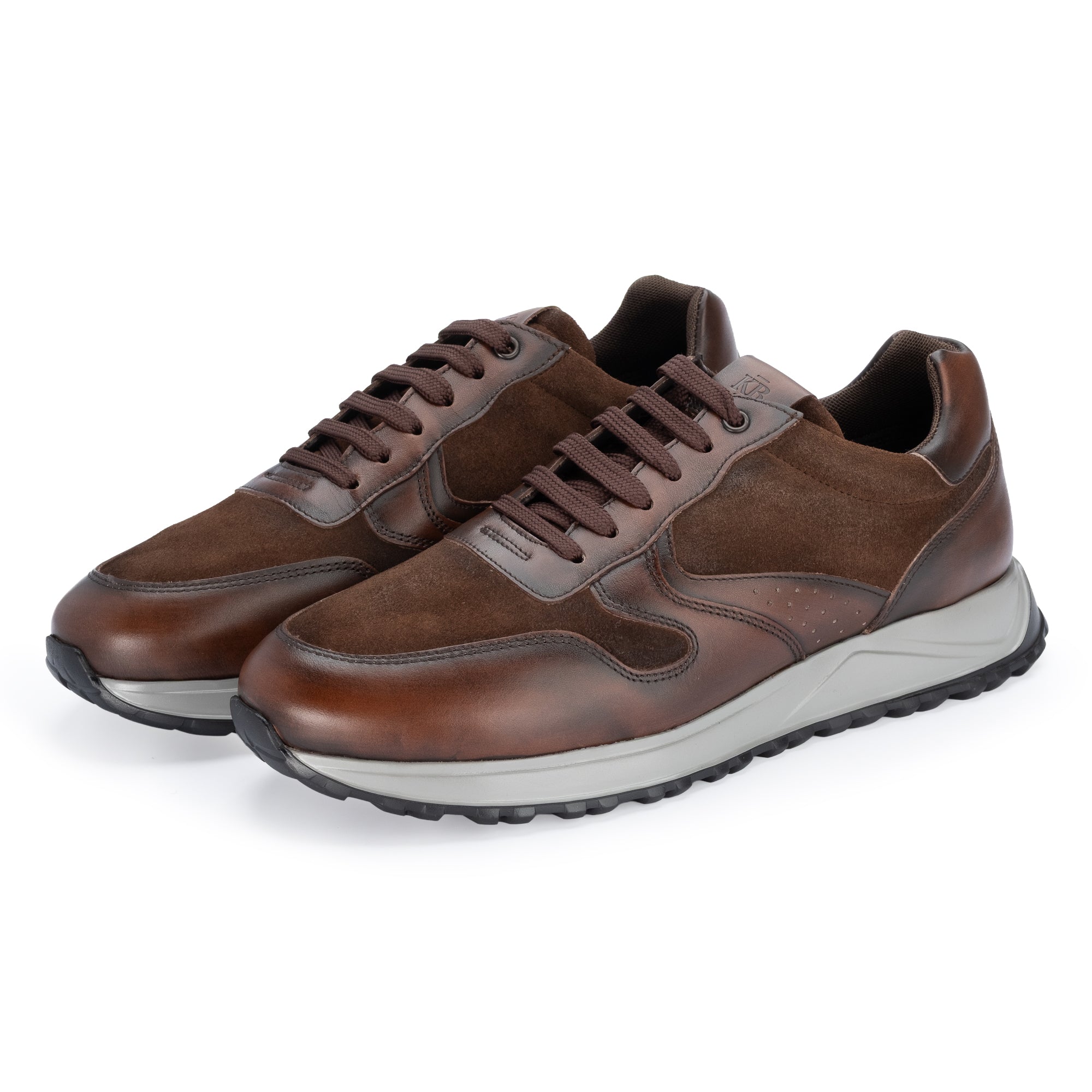
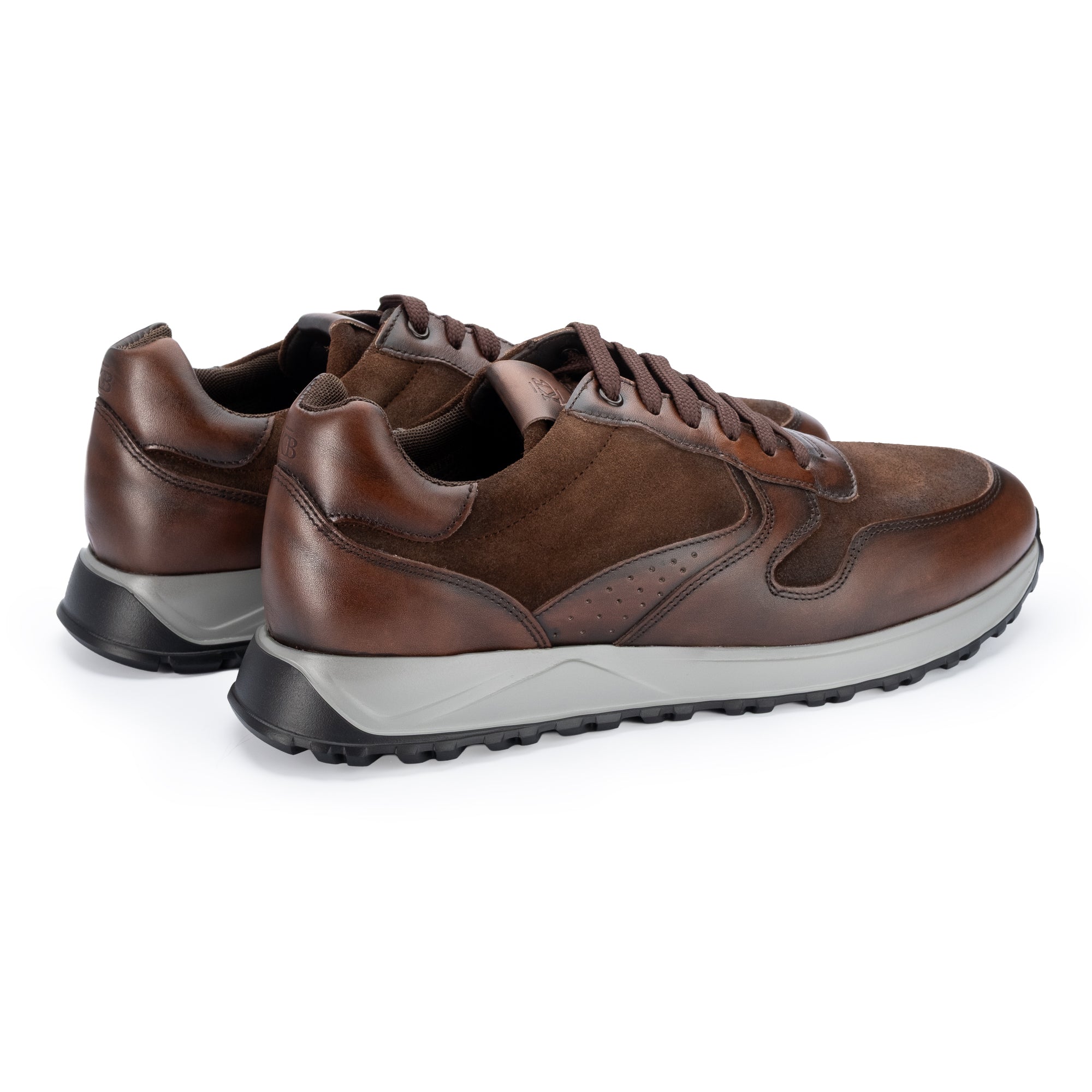
Brown polish is not a single product — it spans a substantial spectrum. The main categories are dark brown (often labelled "Java" or "havana"), mid brown (sold as "chestnut" or "cognac"), and light brown (commonly "tan"). Each is distinct, and each has a specific range of leathers it suits.
Using dark brown on a light tan shoe will deepen it cumulatively — not dramatically in one session, but measurably over months. Makers of quality polish such as Saphir, Burgol, and Lincoln label their browns differently across ranges, so always test on an inconspicuous area — the heel back or inside edge — before committing to a new product on a valued pair.
What Is the Correct Polish for Burgundy and Oxblood Leather?
Burgundy, oxblood, and cordovan leathers require a dedicated burgundy or oxblood polish. These tones occupy a complex red-brown spectrum that neutral polish will maintain but not restore. According to the UK Leather Federation, oxblood leathers polished exclusively with neutral or brown wax over extended periods lose their distinctive red undertones within 18 to 24 months of regular wear, fading toward a flat mid-brown.
If your collection includes oxblood shoes — as it should, given how well the tone works across smart-casual dressing — invest in a matching burgundy cream and treat restoration as a seasonal priority.
When Should You Use Tan or Light Brown Polish?
Tan polish suits light tan, natural, and honey-toned leathers. It is the most hazardous category for colour matching because "tan" varies considerably across brands — warm golden, cold orange, and muted sand are all sold under the same label.
For light leathers, less pigment is generally the safer approach. If an exact match is unavailable, erring toward a lighter shade or switching to neutral is preferable to a close-but-wrong match. Leather can be deepened; it cannot easily be lightened once the pigment has settled into the grain.
If scuffs or surface damage have removed colour from a light tan shoe before polishing, address the damage first. Our guide to correcting scuffs on leather footwear covers the correct sequence for restoration before any polish is applied.
When Should You Use Neutral or Colourless Shoe Polish?
Neutral shoe polish is a wax compound without added pigment. It conditions the leather surface, replenishes surface wax, and delivers shine without altering colour. It is the correct choice in several specific situations:
- Multi-tone or antiqued leathers — where a single matching colour would flatten deliberate tonal variation. These surfaces rely on layered depth that coloured polish can obscure.
- Tan or cream leathers — where an exact match is unavailable and the risk of tonal shift is high.
- Top-coat finishing — applied over a matching coloured cream as a final shine and sealing layer.
- Between full polish sessions — a neutral wax buff refreshes the surface without building excess pigment.
Neutral polish protects and shines without pigment commitment — it is the safest choice when in doubt, but it will not restore lost colour.
How Do You Match Polish Colour to Leather Colour?
The correct method is to match as closely as possible to the shoe's original finish, then adjust one tone lighter if an exact match is unavailable. The table below sets out the standard matching rules for the most common leather colours.
| Leather Colour | Correct Polish Colour | Acceptable Alternative | Avoid |
|---|---|---|---|
| Black | Black | Neutral (top coat only) | Dark brown, navy |
| Dark brown / Java | Dark brown | Neutral | Black, mid brown |
| Mid brown / Chestnut | Mid brown / chestnut | Neutral | Dark brown, black |
| Tan / Light brown | Tan (closest available) | Neutral | Mid brown, dark brown |
| Burgundy / Oxblood | Burgundy / oxblood | Neutral | Brown, black |
| Cordovan | Cordovan-specific cream | Neutral | Standard calf polish in any colour |
| Navy | Navy or neutral | Neutral | Black, blue, brown |
| Antiqued / burnished | Neutral | Base colour, used sparingly | Single-colour wax applied uniformly |
For a thorough understanding of how polish fits into the wider care routine — including the distinction between conditioning and polishing — our guide to leather conditioner versus shoe polish covers the correct sequencing in full.
What Happens If You Use the Wrong Polish Colour?
The consequences depend on the direction of the mismatch. Applying dark polish to light leather causes the most visible and permanent change — pigment penetrates the surface grain and compounds with each application, steadily darkening the shoe. The Society of Master Shoe Repairers notes that colour correction on heavily over-polished leather often requires professional stripping — a process that removes all surface wax and residue before re-balancing the tone, at a cost and inconvenience that routine care would have entirely avoided.
Applying a light polish to dark leather is less damaging in a single session but can create a chalky, uneven residue if the wax content is heavy. Neutral polish carries almost no risk in either direction — the absence of pigment means it cannot permanently alter the leather's colour.
Should You Use Cream Polish or Wax Polish — and Does It Affect Colour?
Cream polish carries pigment more deeply into the leather grain, making it the correct choice for restoring lost colour and feeding the leather. Wax polish sits predominantly on the surface and is better suited for protection, weather resistance, and building shine.
The professional sequence is consistent: cream polish in the matching colour first, followed by wax polish in the same colour or neutral. Applying wax before cream blocks the penetration the cream needs to work effectively. The Worshipful Company of Cordwainers, which has trained London's finest shoe craftsmen since 1272, teaches this as a foundational principle of the trade: the cream nourishes and restores; the wax seals and finishes.
Cream before wax is the non-negotiable sequence for professional-standard results on any coloured leather.
Are There Special Polish Requirements for Specialist Leathers?
Cordovan, the dense shell leather produced from equine hindquarters, requires cordovan-specific cream rather than standard calf polish. Conventional wax polishes can cause the surface to ripple in a manner known as "cordovan roll" — a visible distortion that only a skilled cobbler can correct. Always use a product formulated specifically for the material.
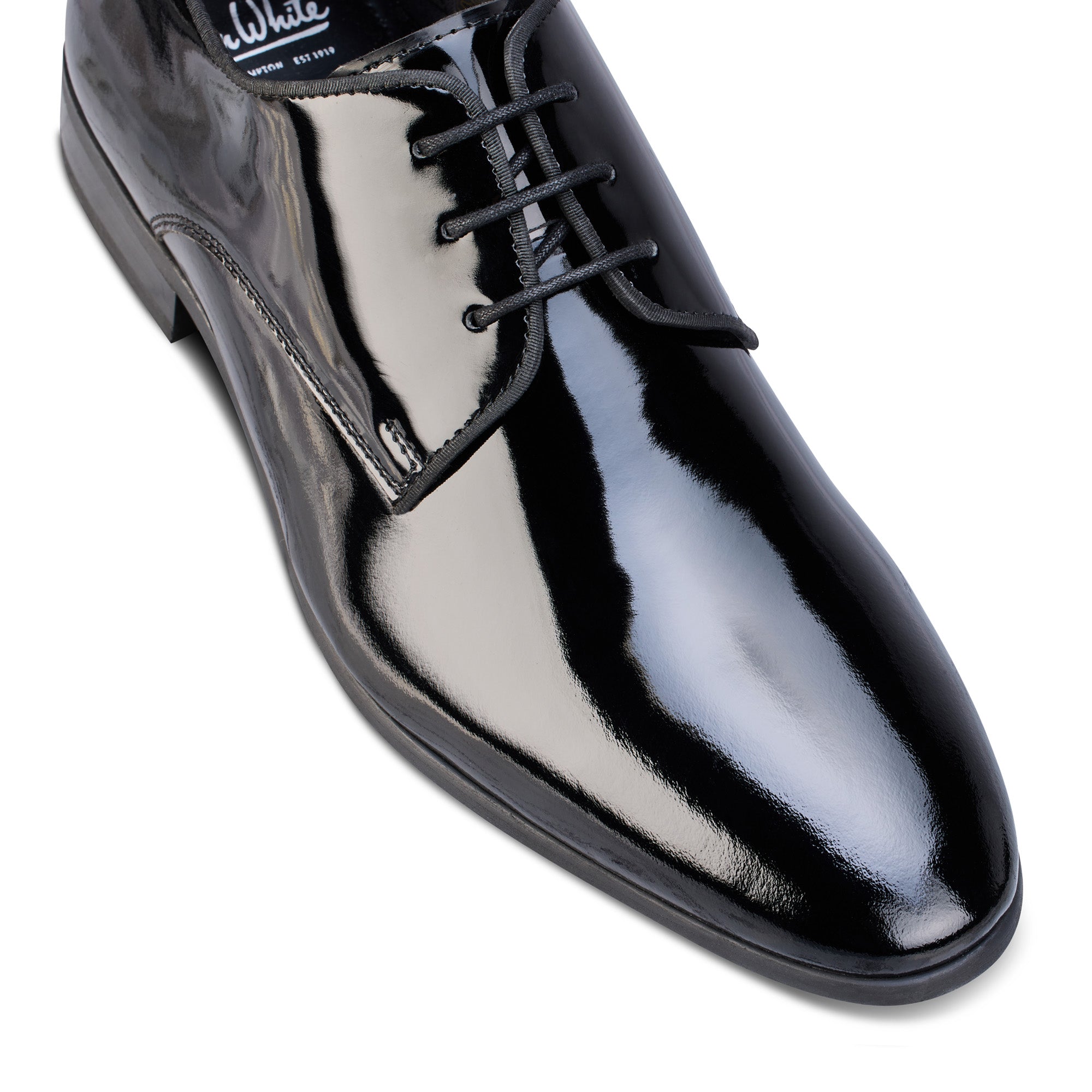
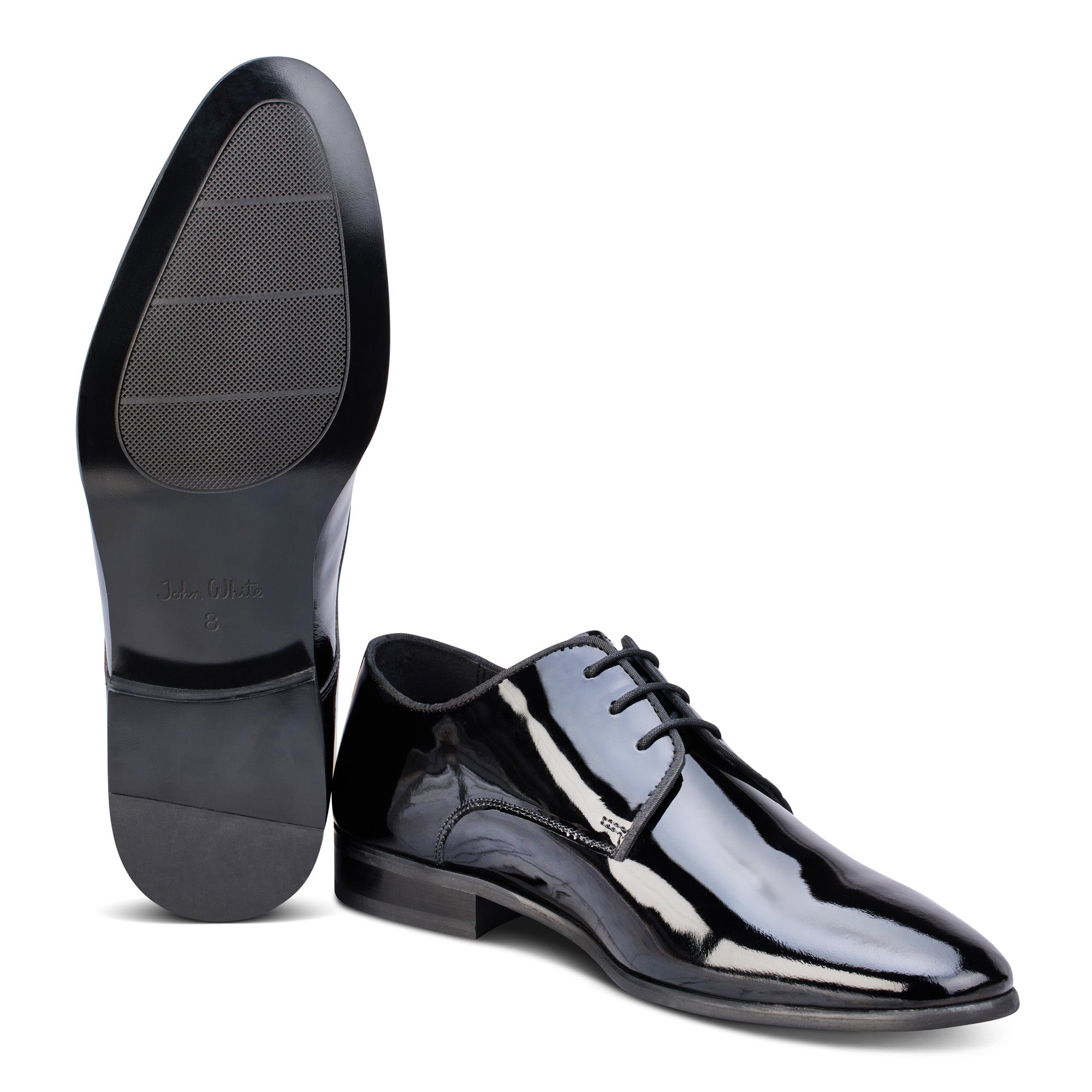
Patent leather requires no wax polish whatsoever. As covered in our guide to polishing patent leather shoes correctly, the high-gloss lacquered surface cannot absorb wax, and applying it leaves a smeared, dull residue. Solvent-free patent cream is the only appropriate product.
For a full framework covering every stage of leather care — from initial cleaning through conditioning, polishing, and long-term storage — our comprehensive leather shoe care guide provides the definitive reference.
Related Guides
- Mastering Leather Shoe Care: The Definitive Guide — our comprehensive guide
- Leather Conditioner vs Shoe Polish: What to Use, When, and Why It Matters
- Restoring Elegance: How to Correct Scuffs on Leather Footwear
- Polishing Patent Leather Shoes: The Correct Method for a Lasting Mirror Shine
TL;DR: Match your shoe polish colour as closely as possible to the original leather finish. Use cream polish first to restore colour, then wax polish to protect and shine. Use neutral when no exact match is available or as a finishing coat over colour. Never apply dark polish to light leather — the pigment change accumulates permanently. Specialist leathers — cordovan, patent — require their own specific products.
Frequently Asked Questions
Can I use black polish on dark brown leather shoes?
No. Black polish on dark brown leather will progressively darken and flatten the shoe's tone, eliminating the natural variation that distinguishes quality brown leather. Use a dark brown polish matched to the shoe, or neutral if no close match is available.
Is neutral shoe polish as protective as coloured polish?
Yes — a quality neutral wax provides equal surface protection to its coloured equivalents. The only thing it does not provide is pigment replenishment. For shoes where colour maintenance is important, neutral should be used as a finishing coat over a matching coloured cream, not as a full substitute.
How often should I re-polish my leather shoes?
The Leather Conservation Centre recommends a full polish — clean, condition, colour cream, wax — every four to six weeks under regular wear. Between full sessions, a light neutral wax buff is sufficient to maintain surface protection without building excess pigment.
What polish should I use on antiqued or burnished leather?
Neutral polish. Antiqued and burnished leathers — common in collections from John White Shoes and makers including Grenson and Barker — carry deliberate tonal variation in highlights, shading, and edge treatment. A single-colour polish applied uniformly flattens this depth. Neutral wax preserves the finish without interfering with the variation the tannery and finisher worked to create.
Explore the full range of men's leather shoes and men's leather boots — and from the first application, care for them correctly.
Last updated: September 2026