
Leather Shoe Waterproofing: The Definitive Seasonal Protection Guide
To waterproof leather shoes, apply a wax-based cream or dedicated spray to clean, dry uppers before first wear and at the start of each wet season. Reapply every three to four weeks through autumn and winter. This creates a hydrophobic barrier that causes water to bead and run off rather than absorb, protecting the leather's structure, natural oils, and finish.
In This Guide
- Why Does Leather Need Waterproofing?
- What Does Water Actually Do to Untreated Leather?
- What Are the Best Waterproofing Products for Leather Shoes?
- How to Waterproof Leather Shoes: The Step-by-Step Method
- What Is the Correct Seasonal Waterproofing Schedule?
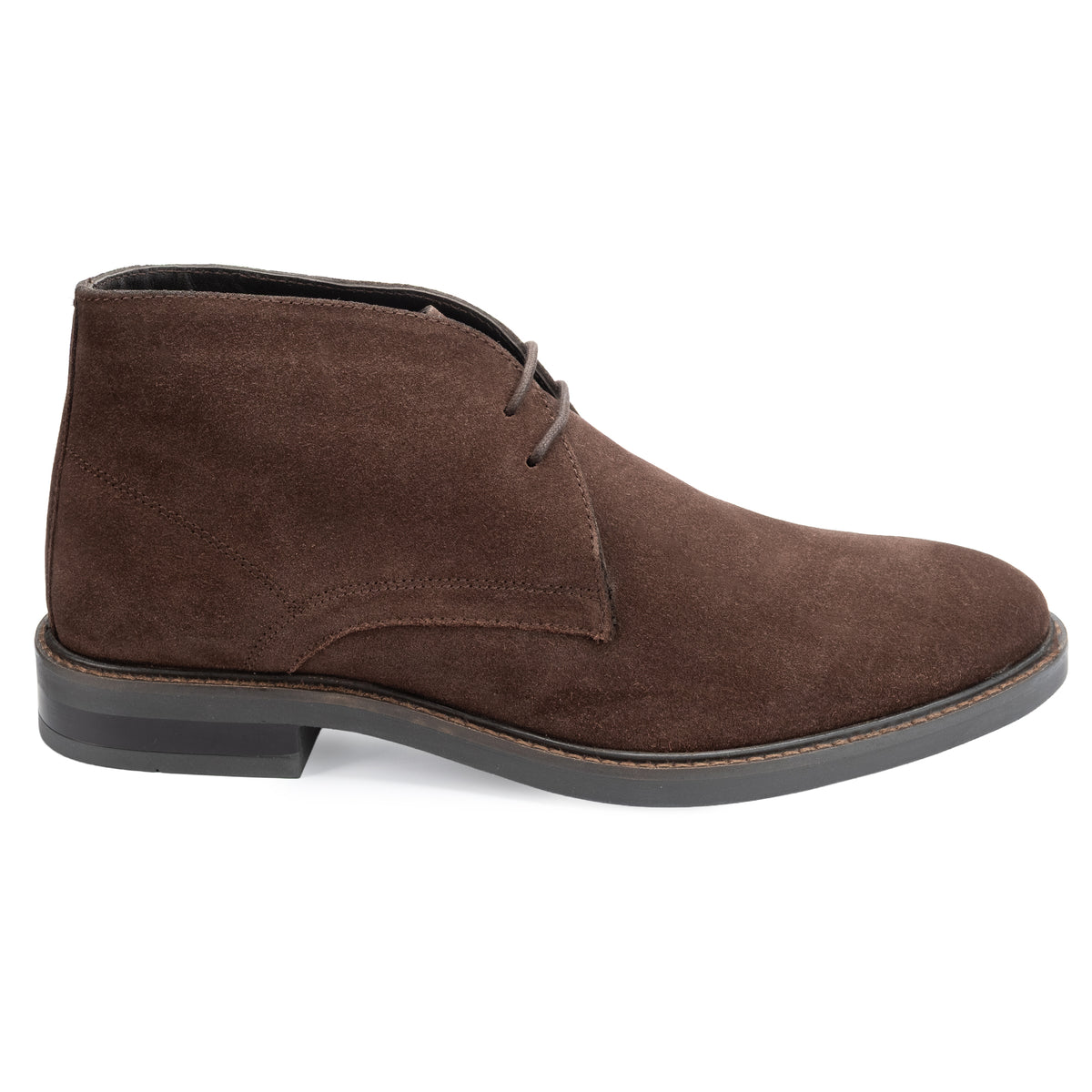
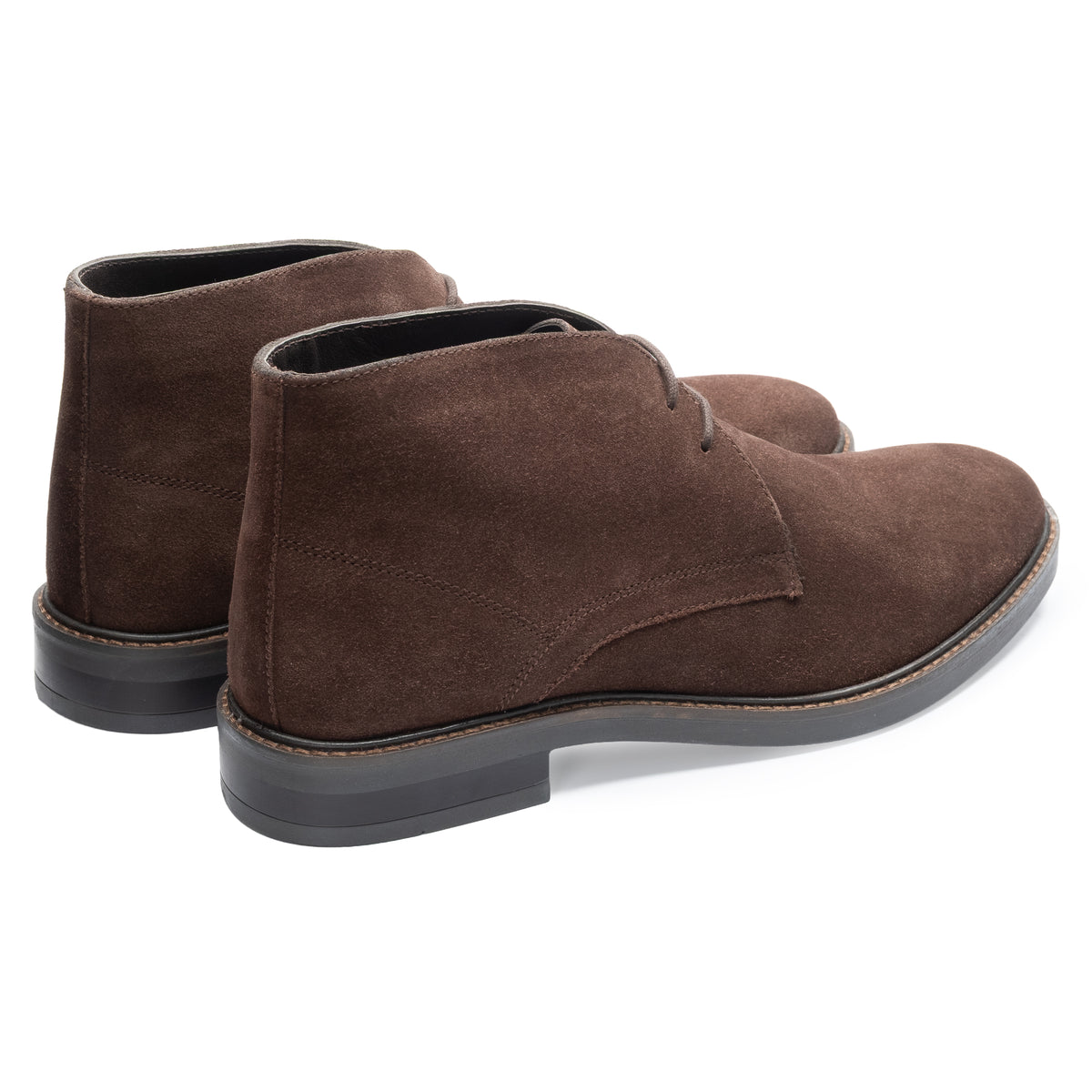
- How Should You Waterproof Suede and Nubuck Shoes?
- Common Waterproofing Mistakes That Shorten Shoe Life
- Does Waterproofing Treatment Affect Leather Appearance?
- What Should You Do If a Leather Shoe Gets Saturated?
- Related Guides
- Frequently Asked Questions
Leather shoe waterproofing is the most effective single step a man can take to extend the life of his footwear. Britain delivers near-constant moisture stress from October through April — persistent drizzle, tannin-laden autumn leaves, winter sleet, and road salt that strips untreated leather of its oils and causes lasting damage. Applied consistently and correctly across the seasons, the right treatment preserves both the quality and the appearance of every pair in your collection.
Why Does Leather Need Waterproofing?
Leather is a natural material with an open pore structure that absorbs moisture readily. When water penetrates untreated leather, it displaces the oils that keep the material supple and flexible. As the leather dries, it contracts — causing surface cracking, stiffness, and structural deterioration that shortens the life of the shoe measurably.
According to the Leather Conservation Centre, repeated wetting and drying cycles are among the primary causes of premature leather deterioration, accelerating surface crazing and weakening the internal fibre structure over time. Waterproofing does not seal leather completely; it creates a hydrophobic barrier that causes water to bead and run off rather than penetrate the surface.
The British Footwear Association advises that a quality waterproofing treatment applied before first wear can extend the serviceable life of a leather upper by up to two years under typical British weather conditions — making it among the highest-return maintenance investments available.
In Britain's climate, waterproofing leather shoes is not optional — it is as foundational to proper care as conditioning and polishing.
What Does Water Actually Do to Untreated Leather?
Water damage to leather shoes progresses in stages. First, surface staining and tide marks form as water carries dyes and tannins to the surface during drying. Second, natural oils are stripped away, leaving the leather dry and brittle. Third, at the structural seams and the bond between upper and sole, sustained moisture weakens adhesion and leads to separation and edge lift.
Salt compounds the problem. Road de-icers and perspiration both leave crystalline residue that draws moisture out from within the leather, accelerating cracking. Our guide to removing salt stains from leather shoes covers the full remediation process, but waterproofing remains the primary and most effective line of defence.
What Are the Best Waterproofing Products for Leather Shoes?
Waterproofing products for smooth leather shoes fall into three categories: wax-based creams, dubbin, and silicone or fluoropolymer sprays. Each suits different leather types and different use cases.
- Wax-based creams — such as those from Saphir or Renapur — feed the leather as they protect it. They are the best all-round choice for smooth calfskin and grain leather dress shoes. They deepen colour slightly; use sparingly on tan and lighter shades.
- Dubbin — a traditional blend of tallow and wax — provides aggressive waterproofing suited to heavy country boots and robust working leathers. It softens the material considerably and eliminates any existing polish, making it wholly unsuitable for smart dress shoes.
- Silicone or fluoropolymer sprays — from brands including Collonil, Tarrago, and Kiwi — apply quickly, preserve the existing finish, and work across both smooth leather and suede. They offer a lighter protective barrier and do not feed the leather, but are well suited to seasonal top-ups between full wax treatments.
According to Saphir, one of Europe's leading professional shoecare manufacturers, a wax-based cream loses approximately 70 per cent of its protective efficacy within six weeks of regular wear in wet conditions — reinforcing the importance of the seasonal reapplication schedule detailed below.
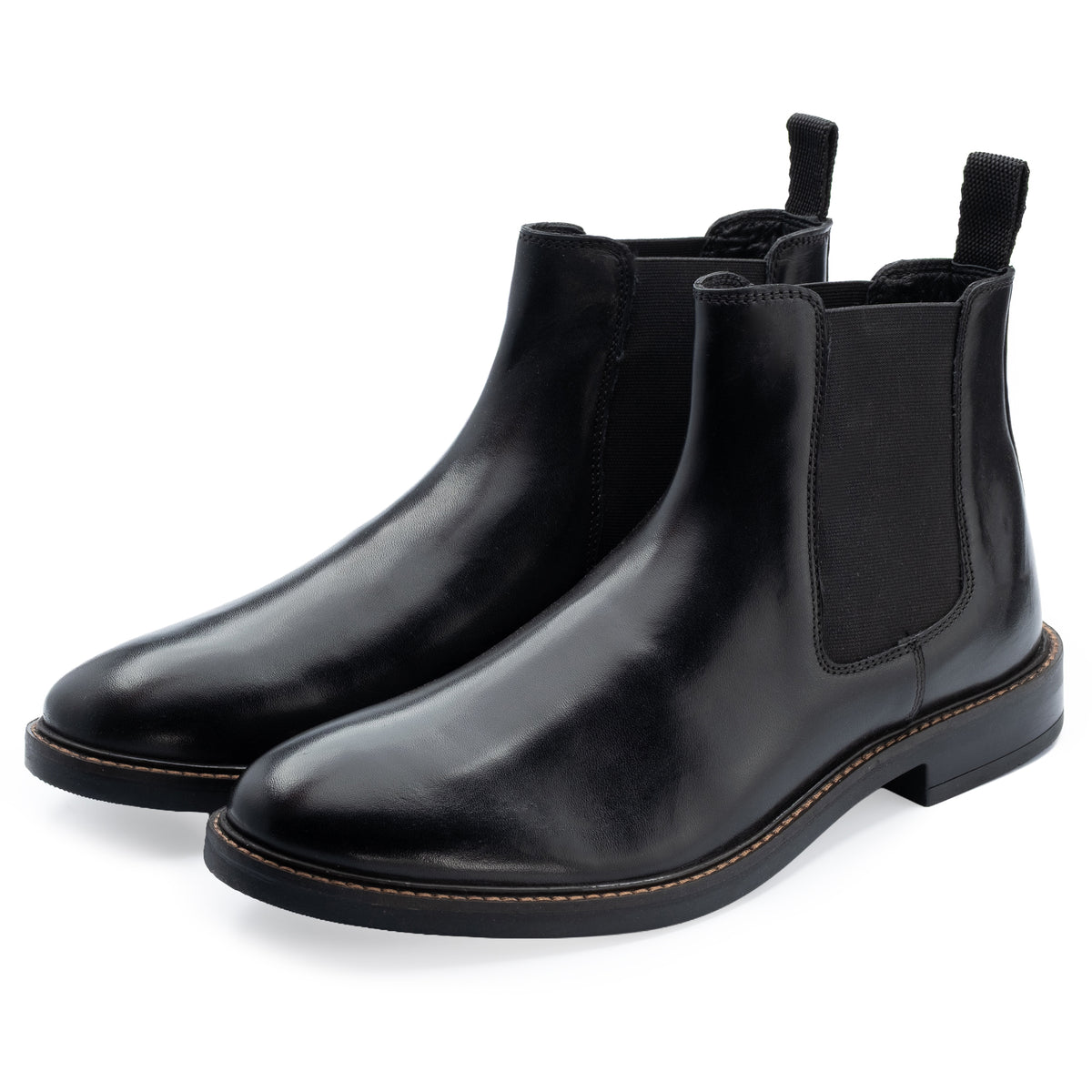
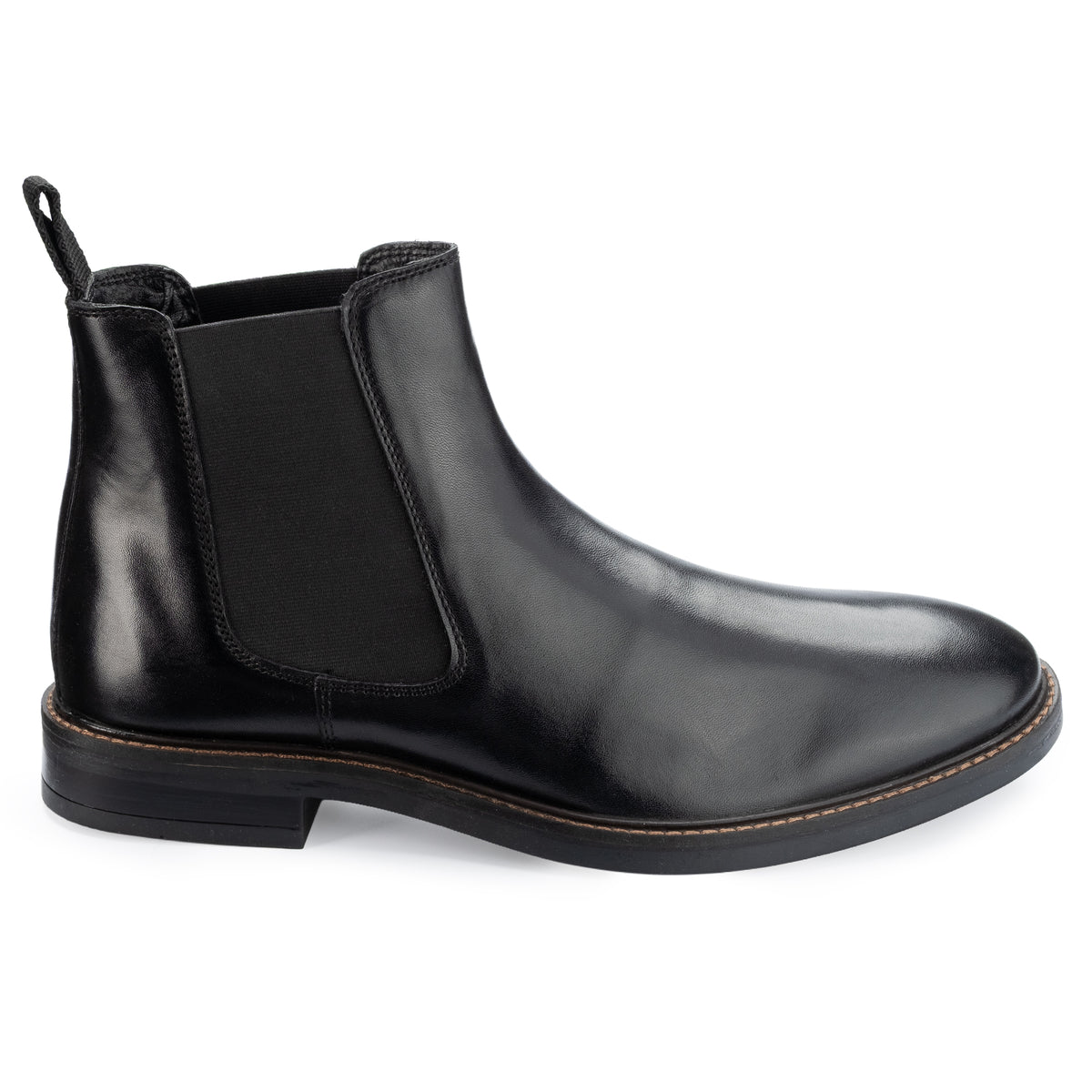
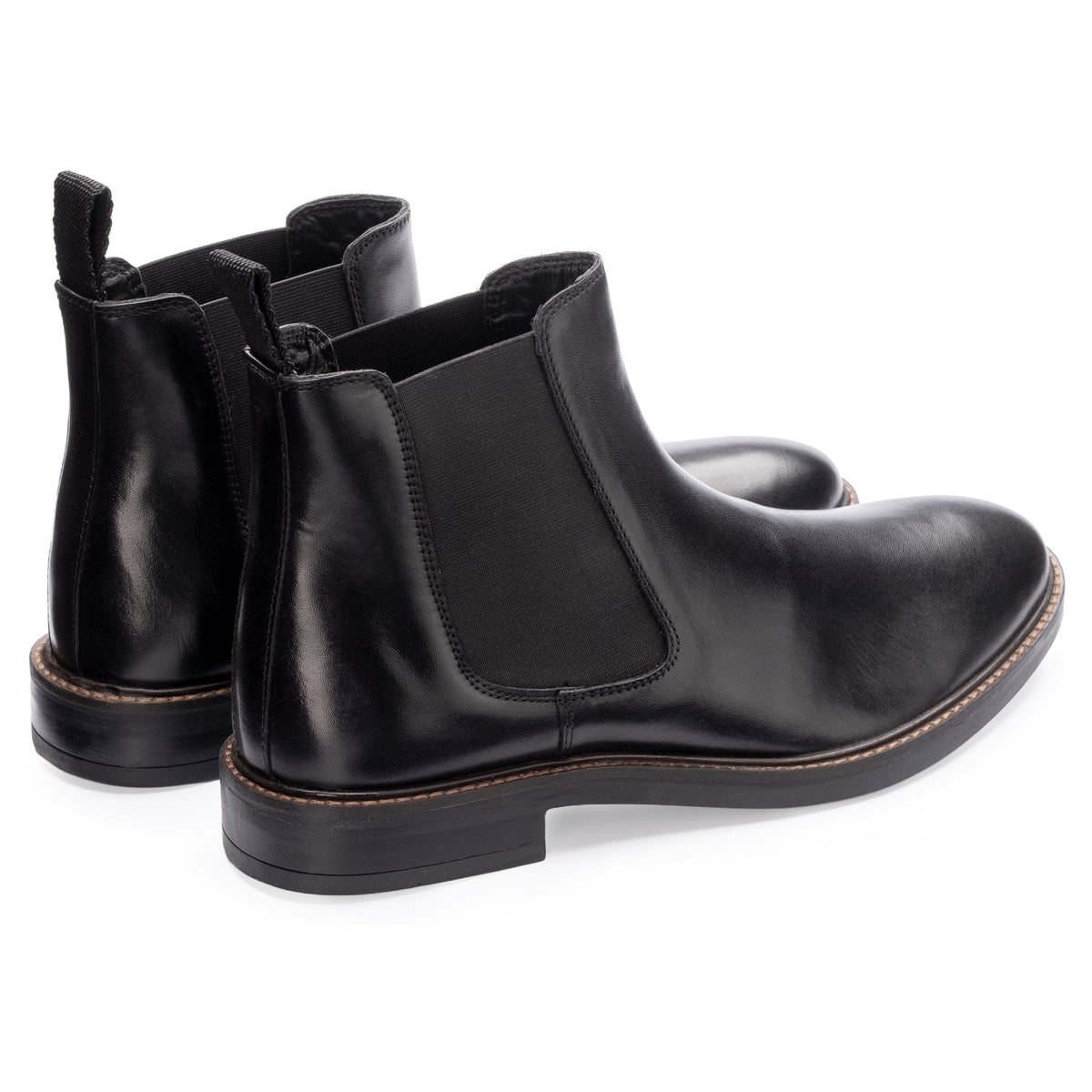
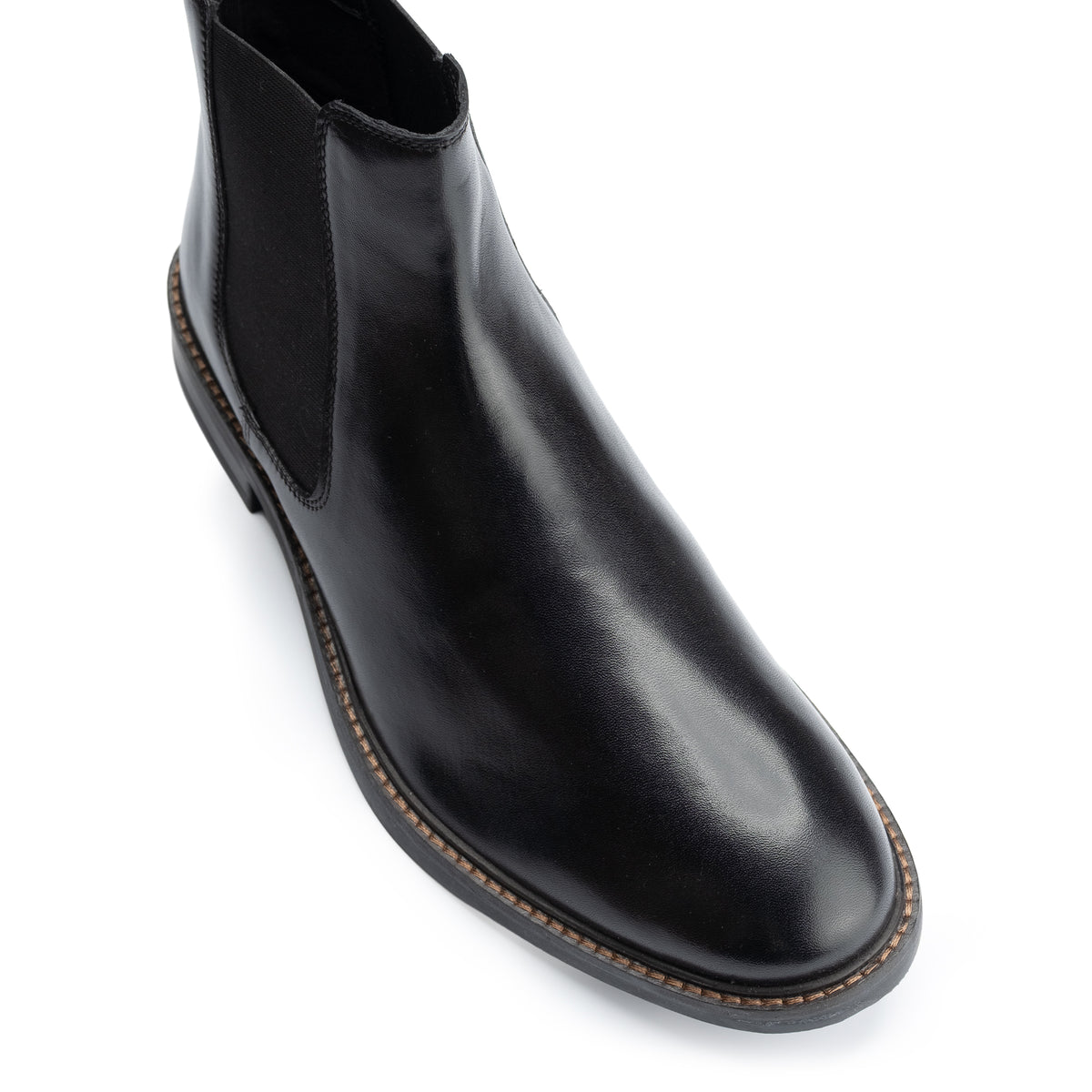
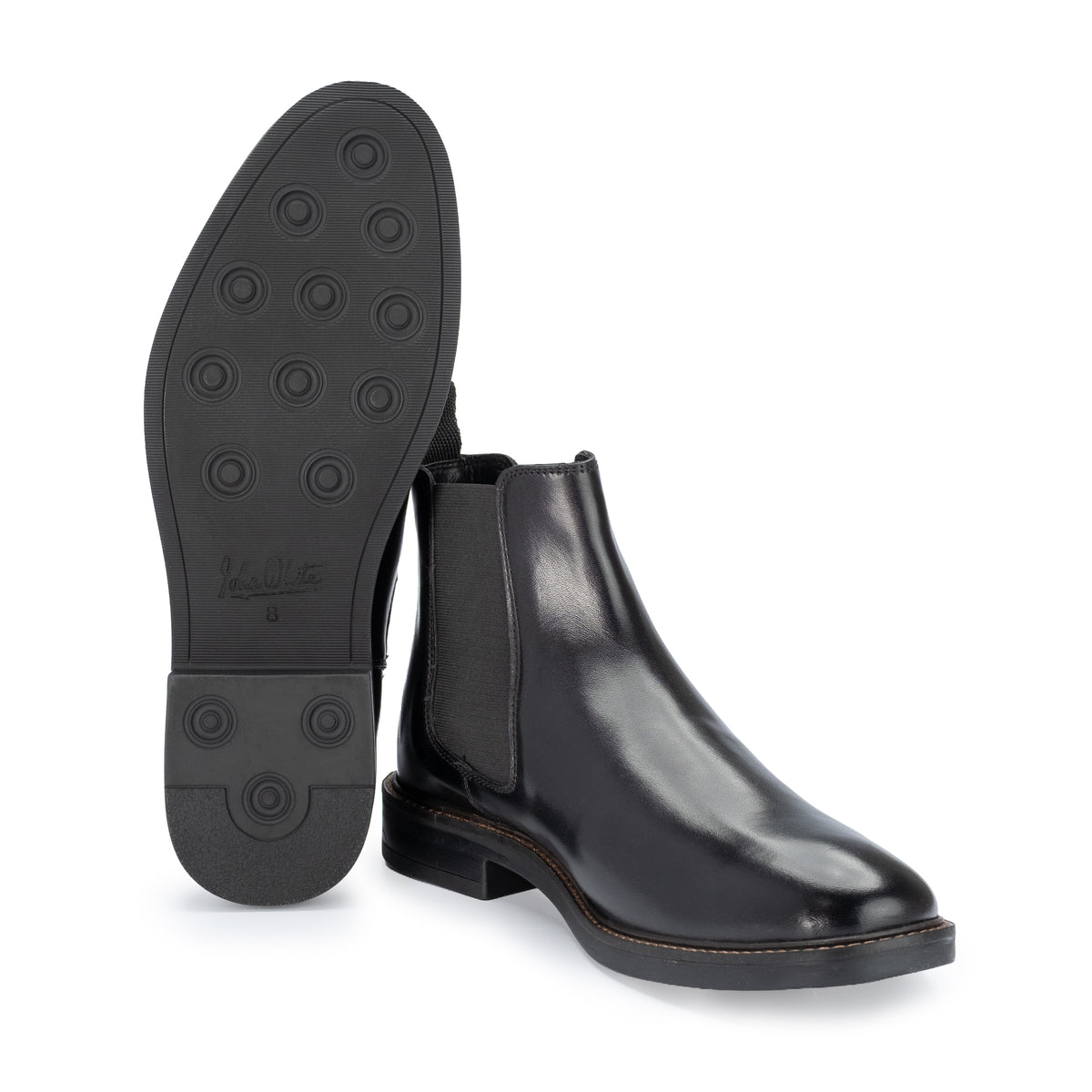
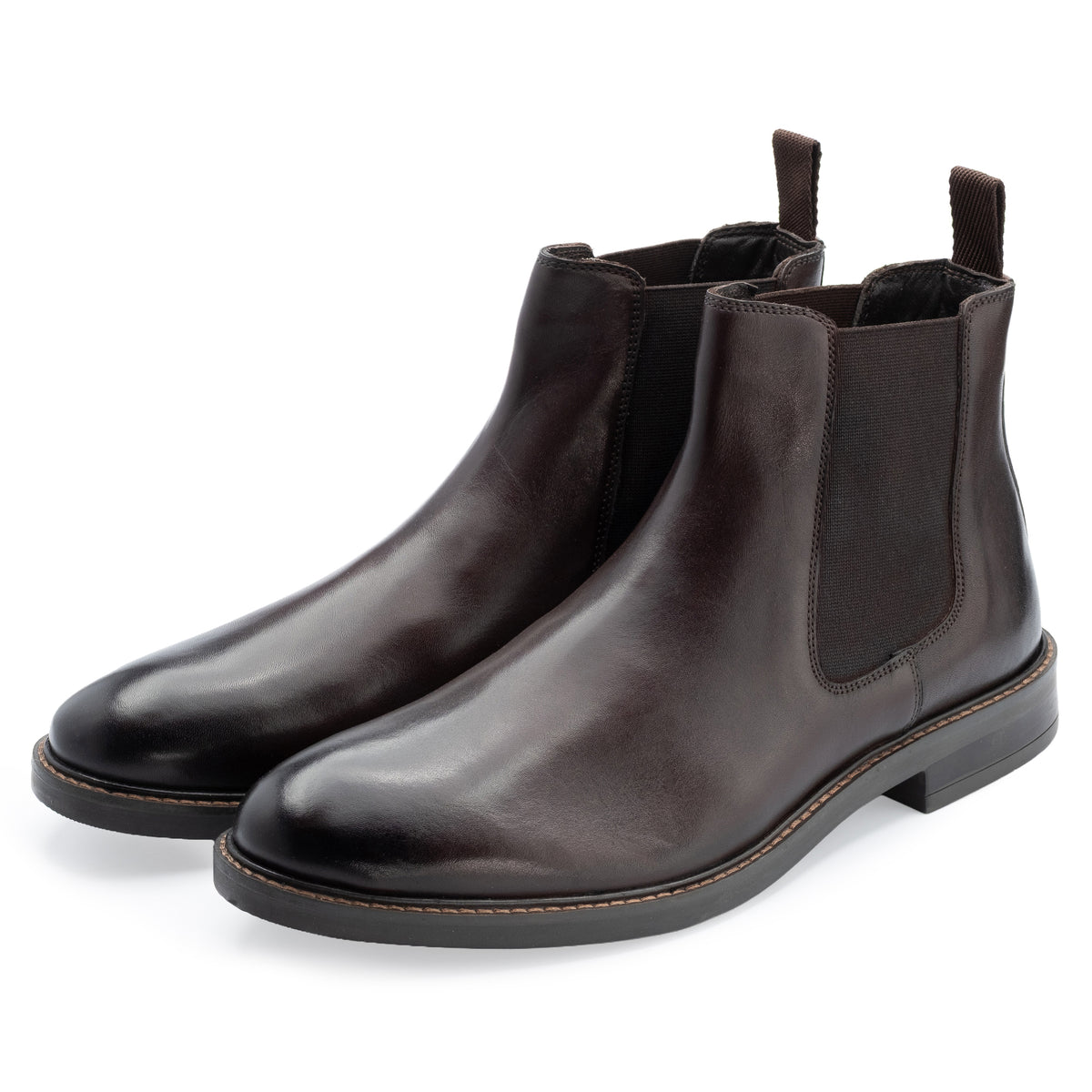
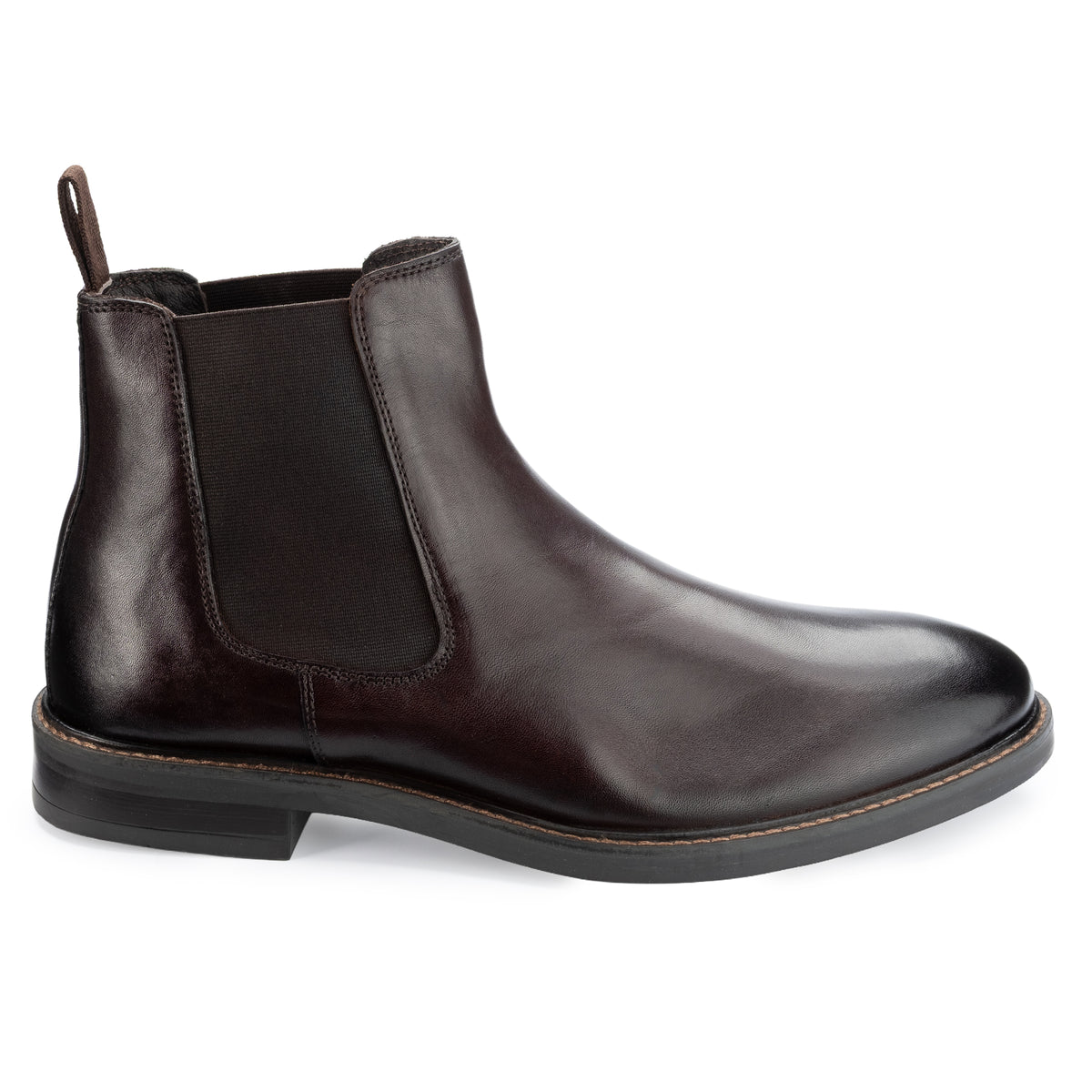
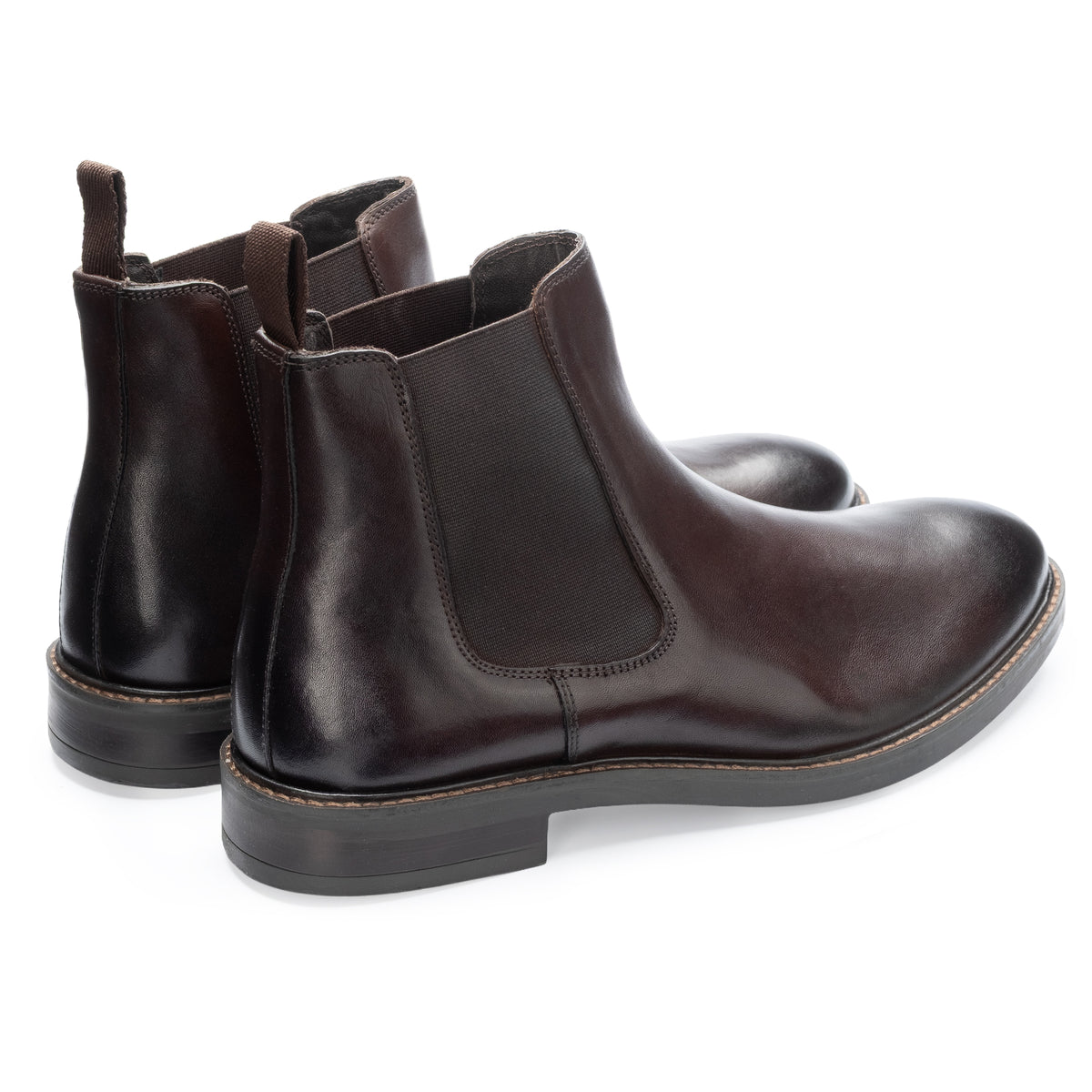
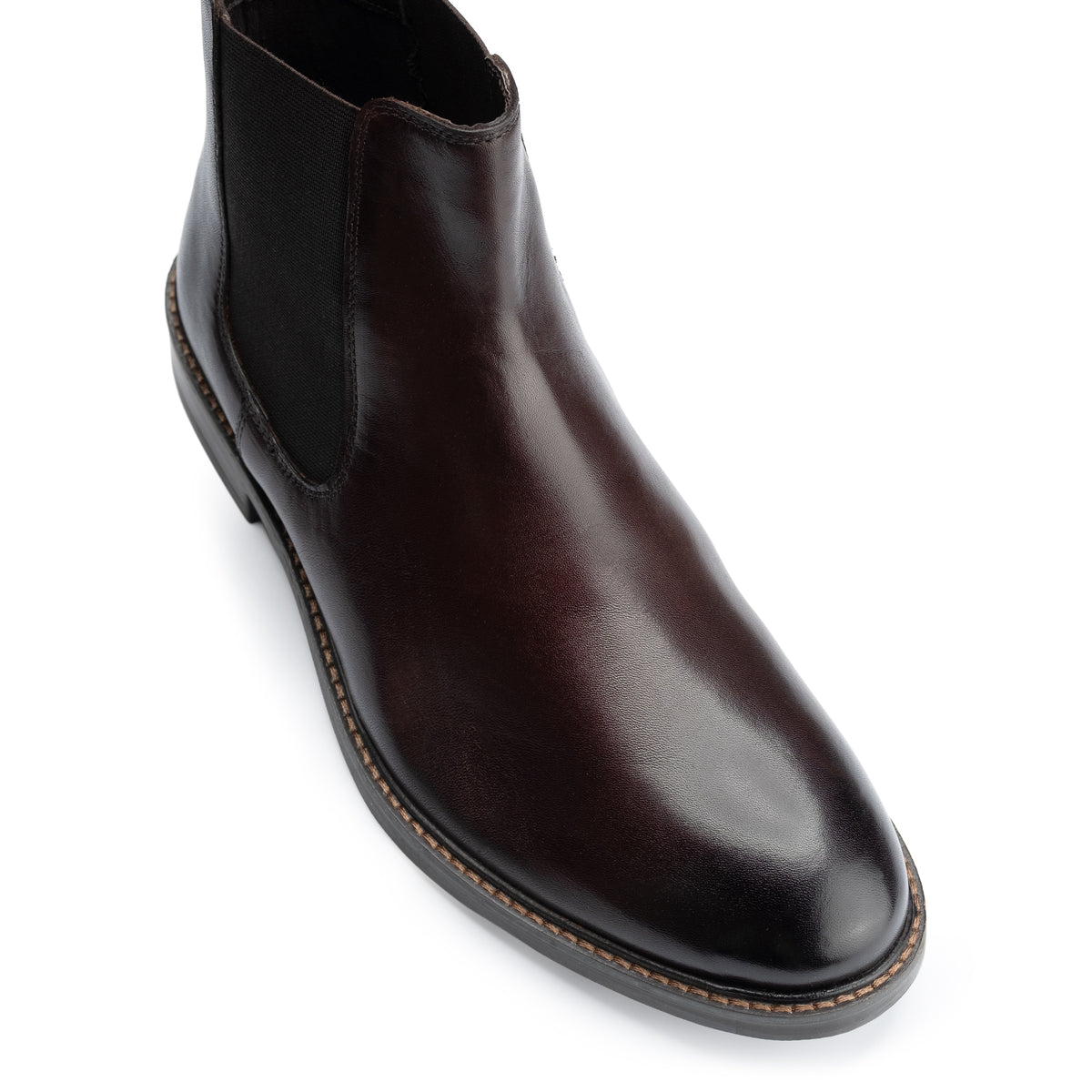
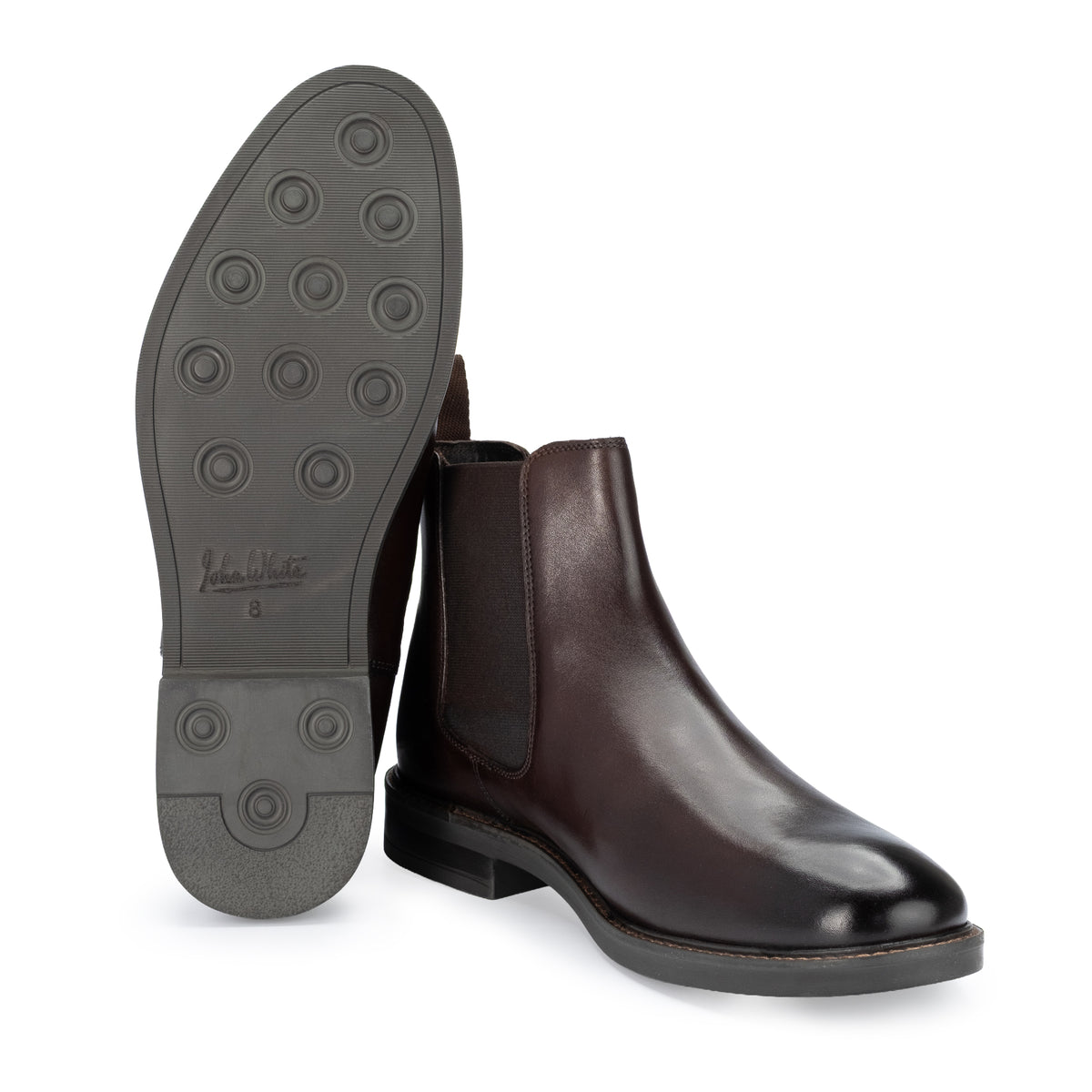
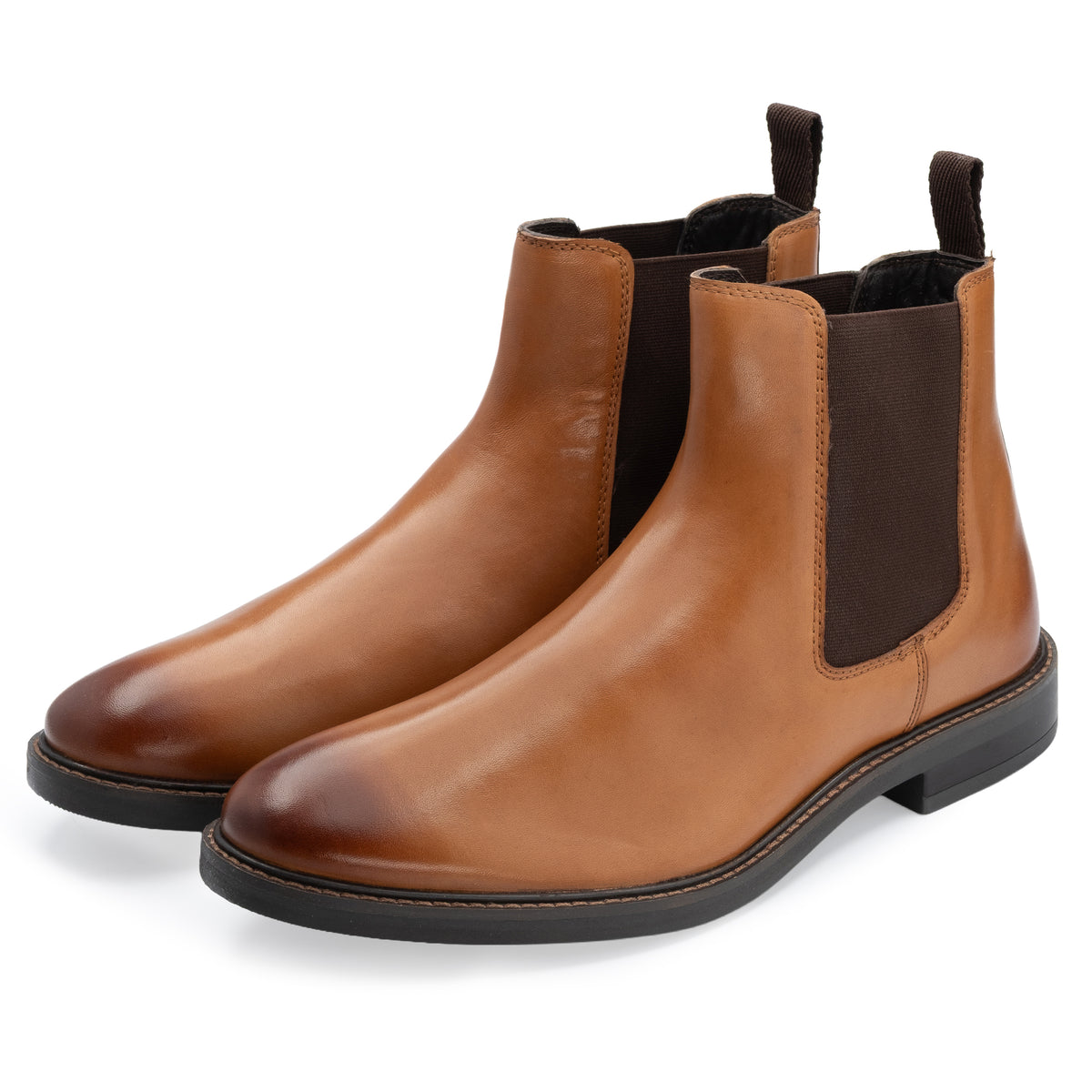
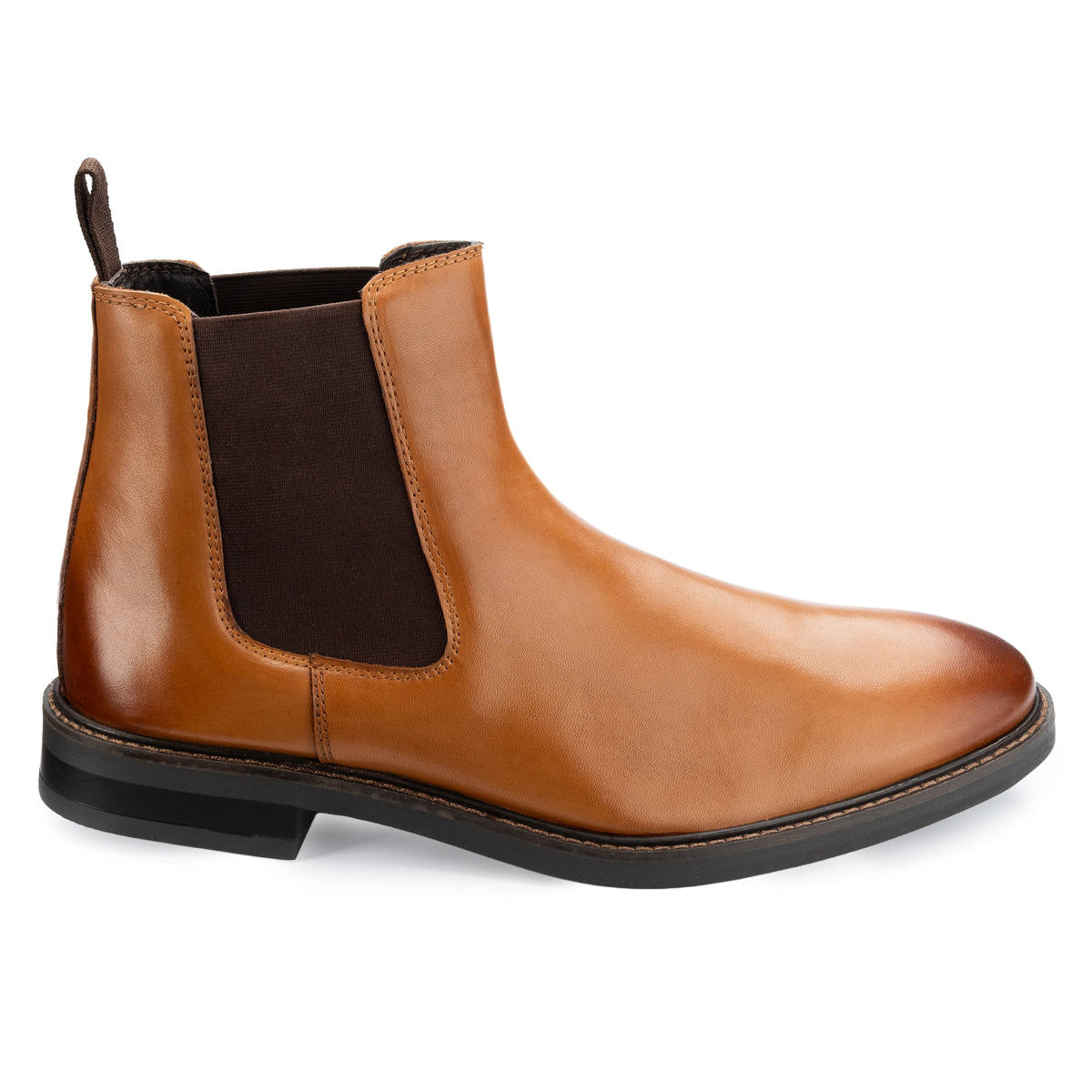
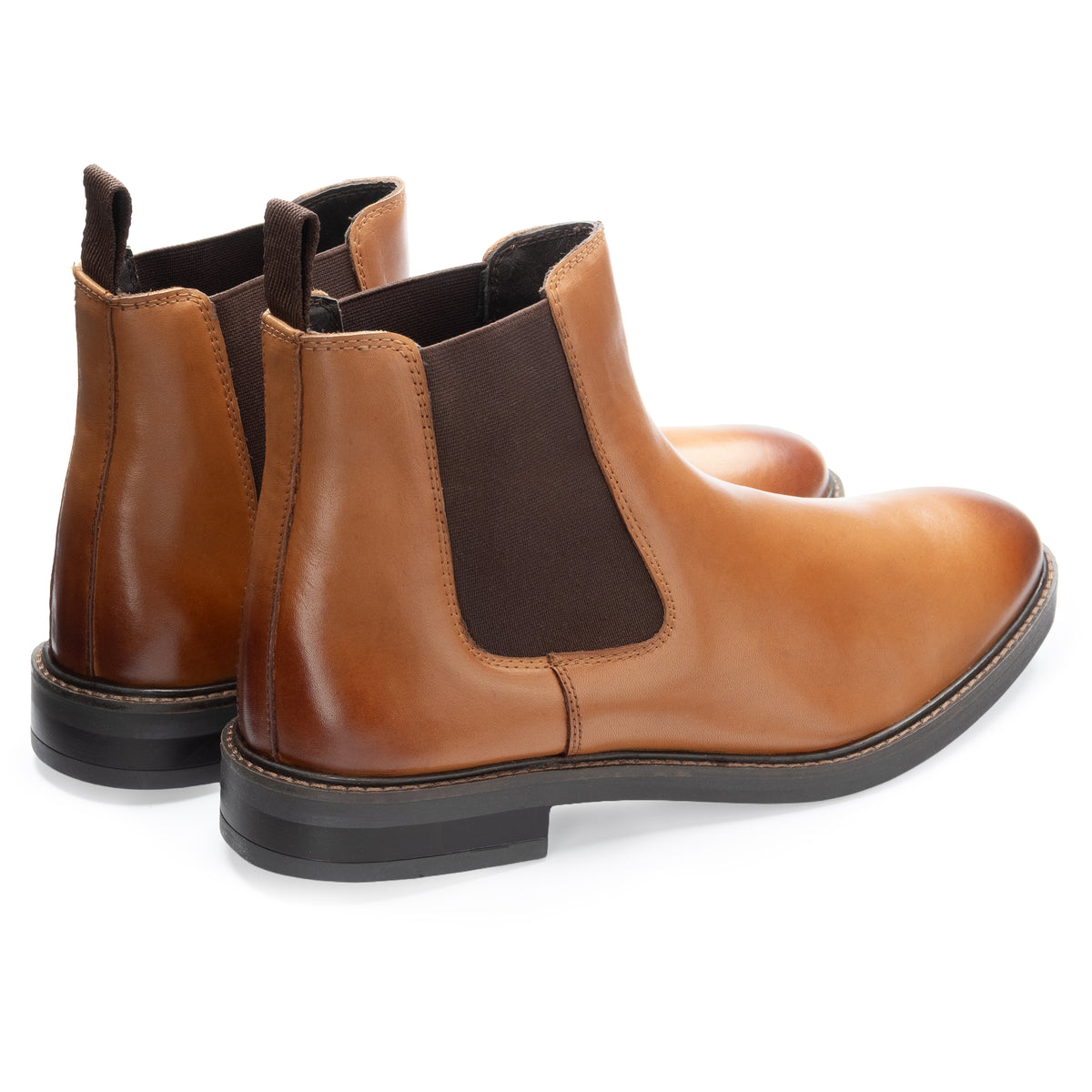
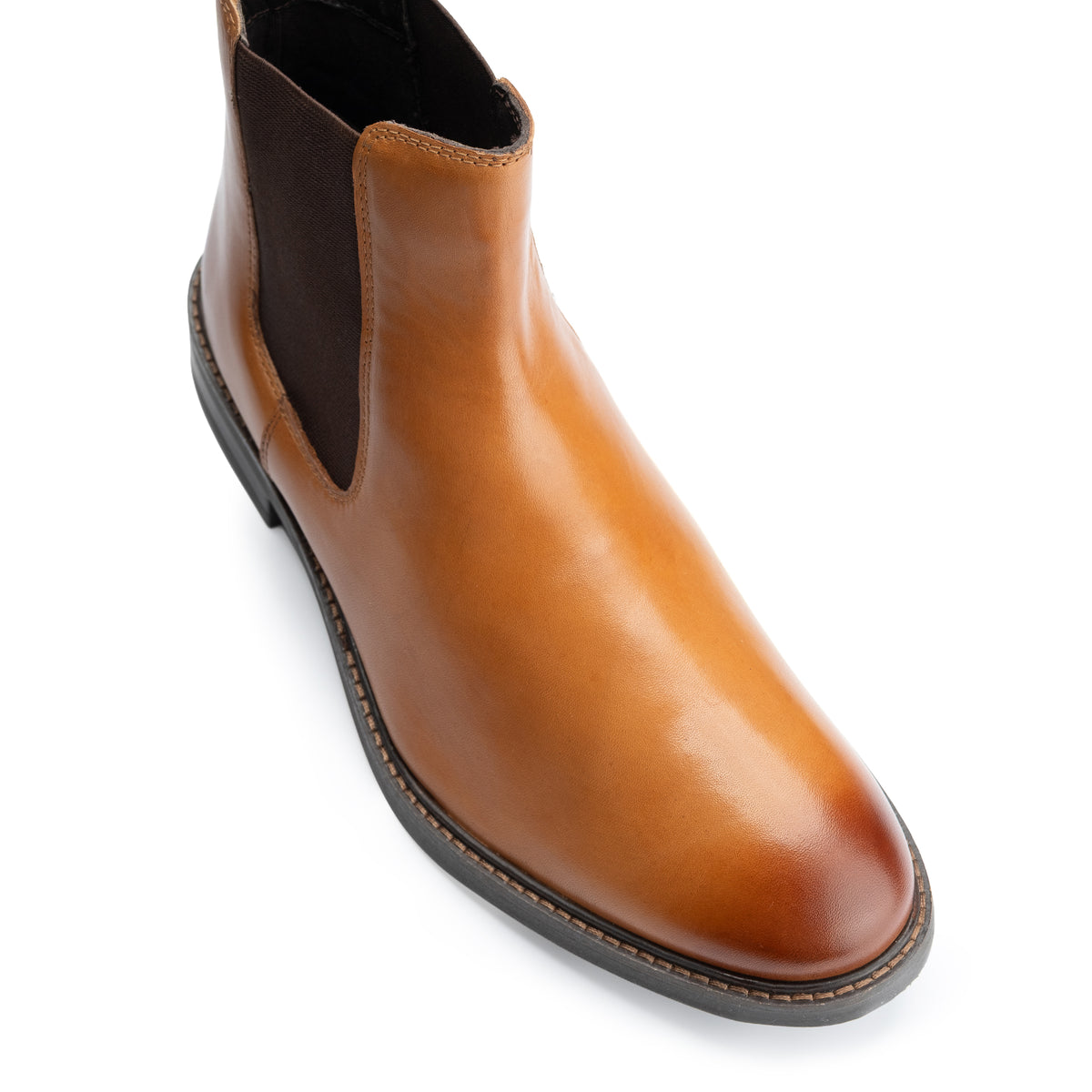
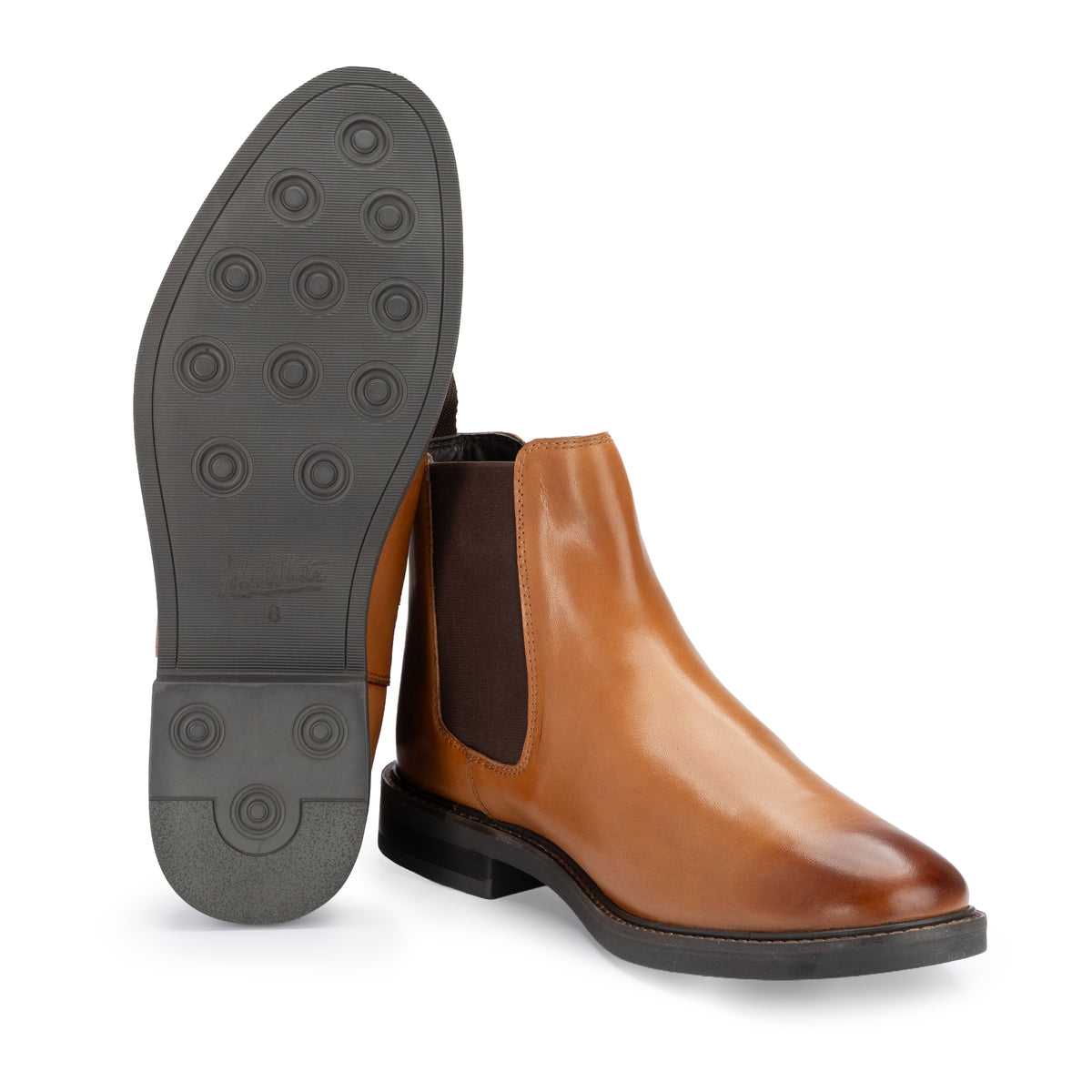
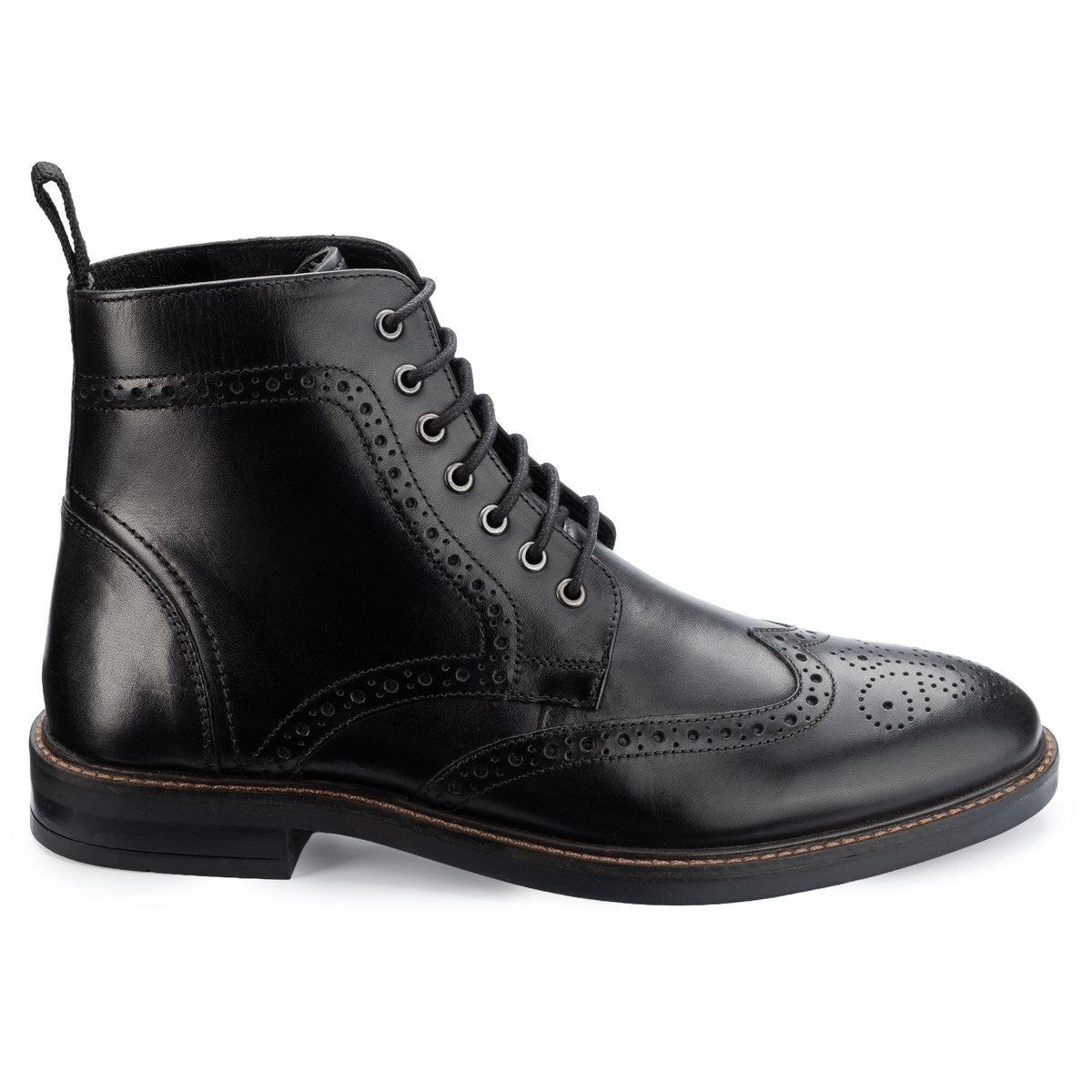
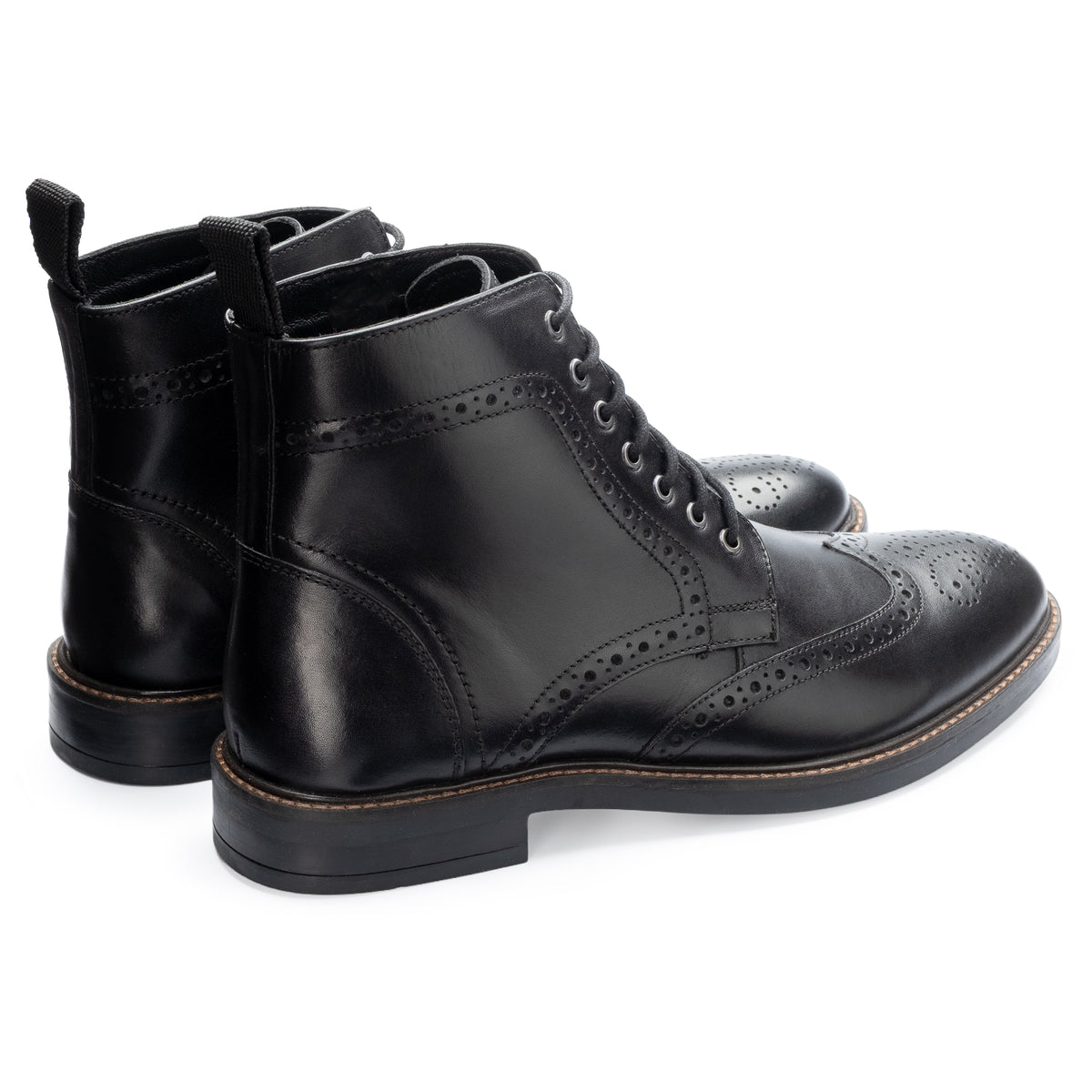
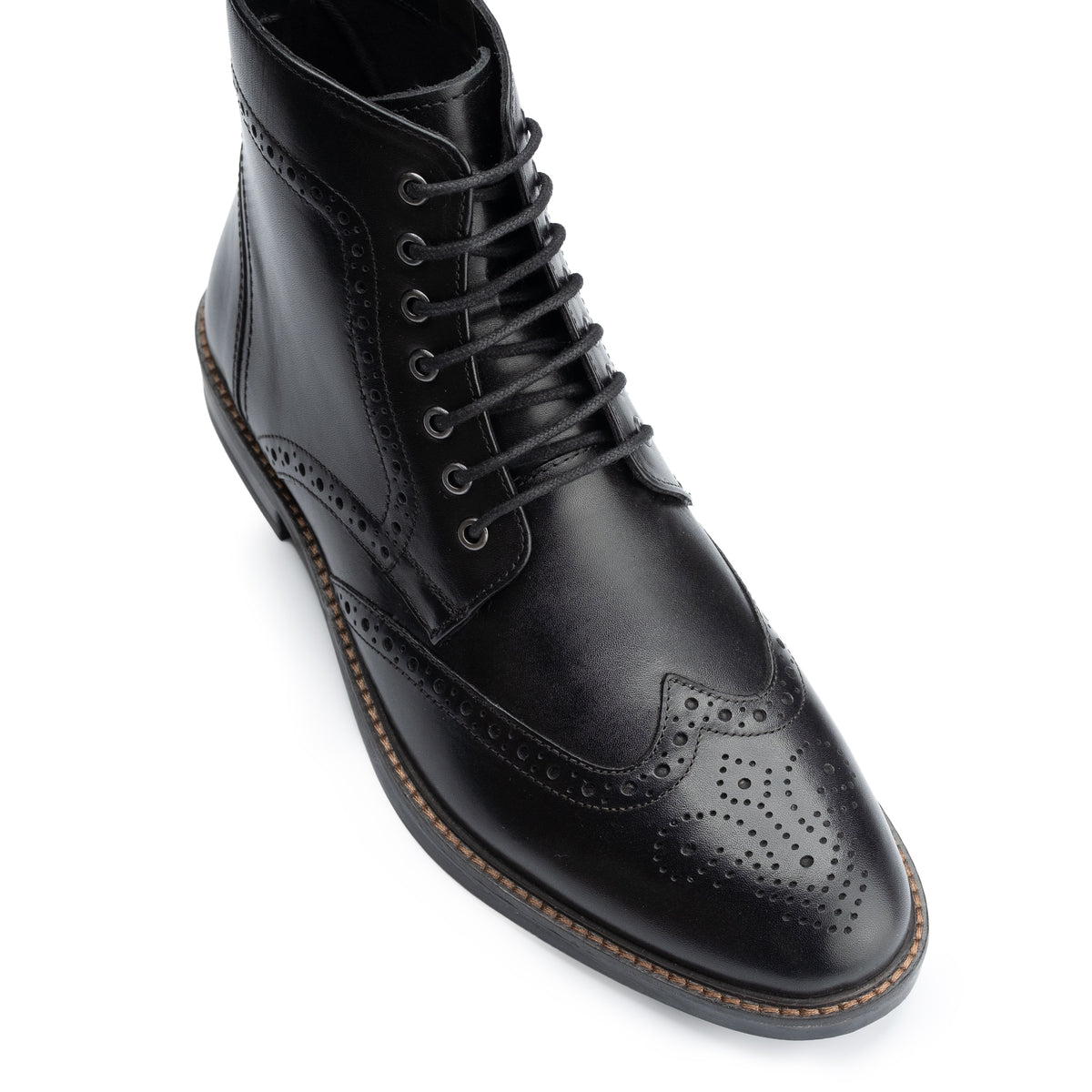
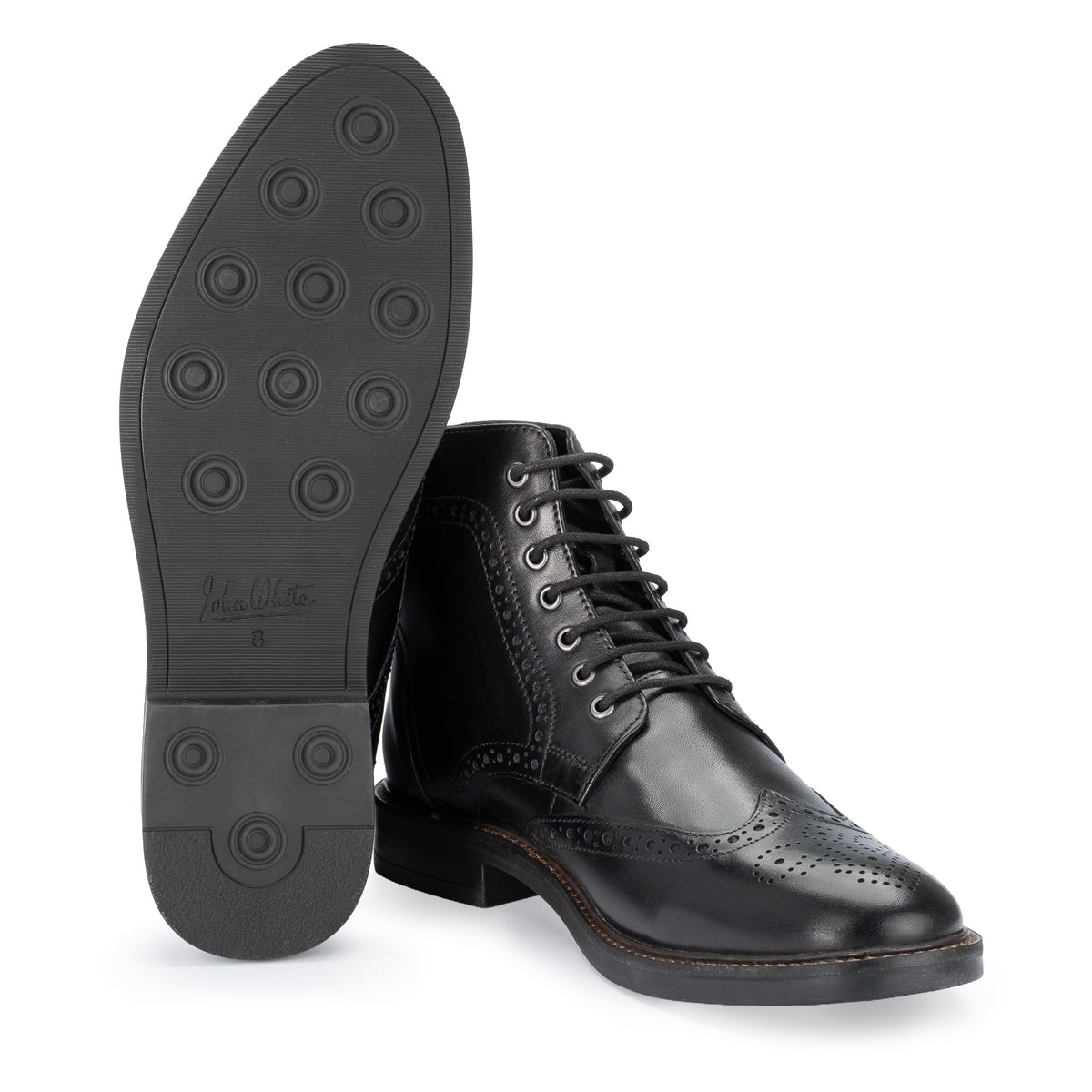
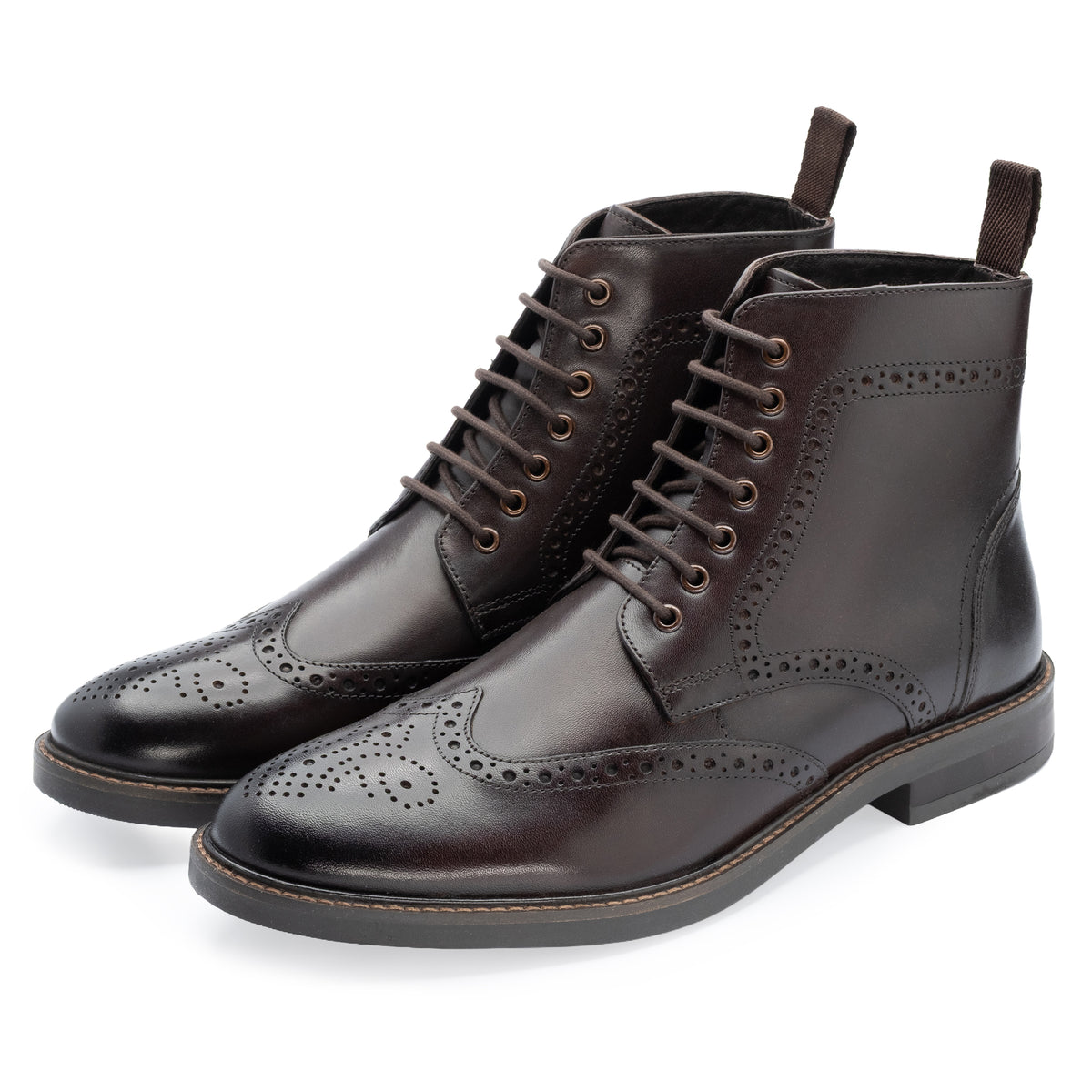
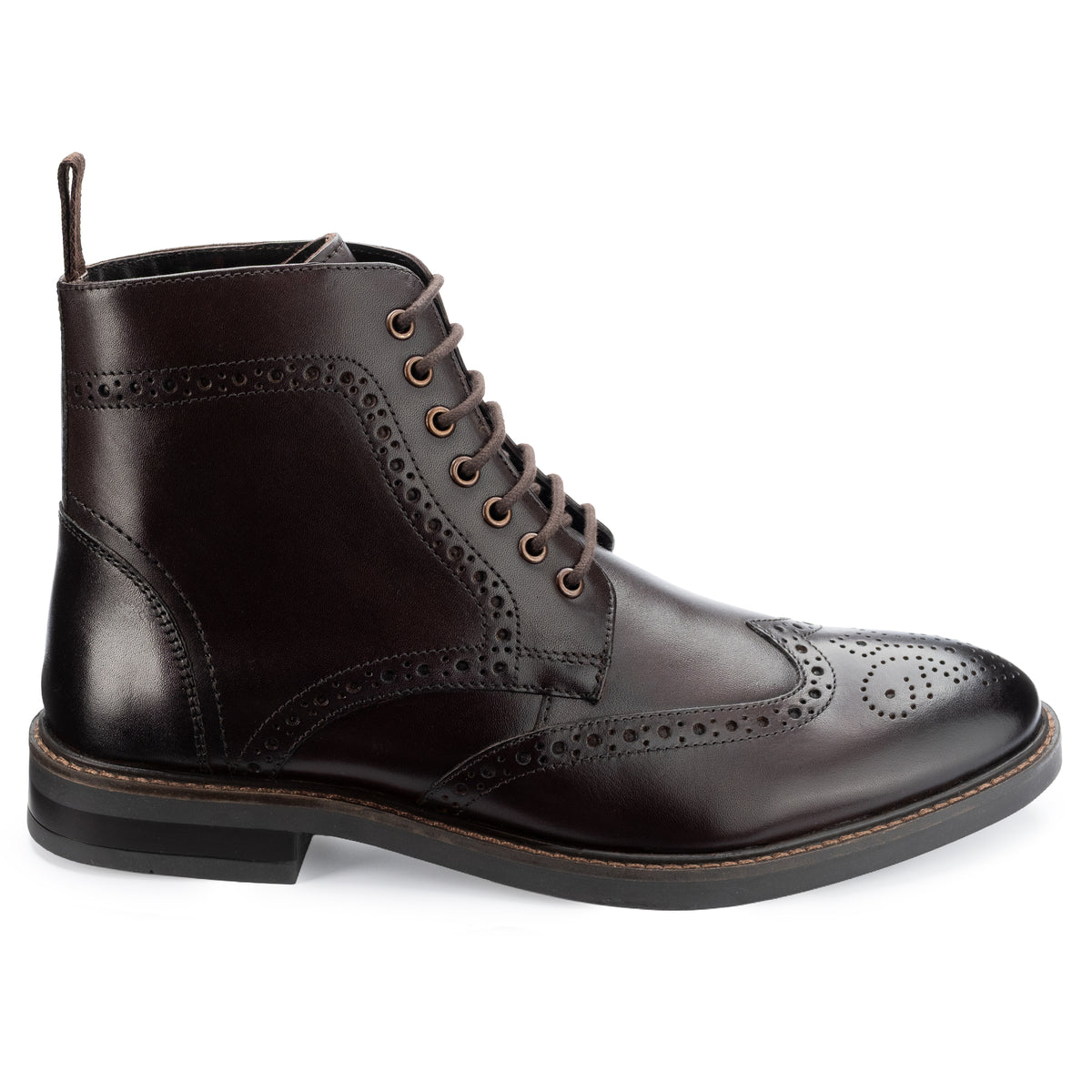
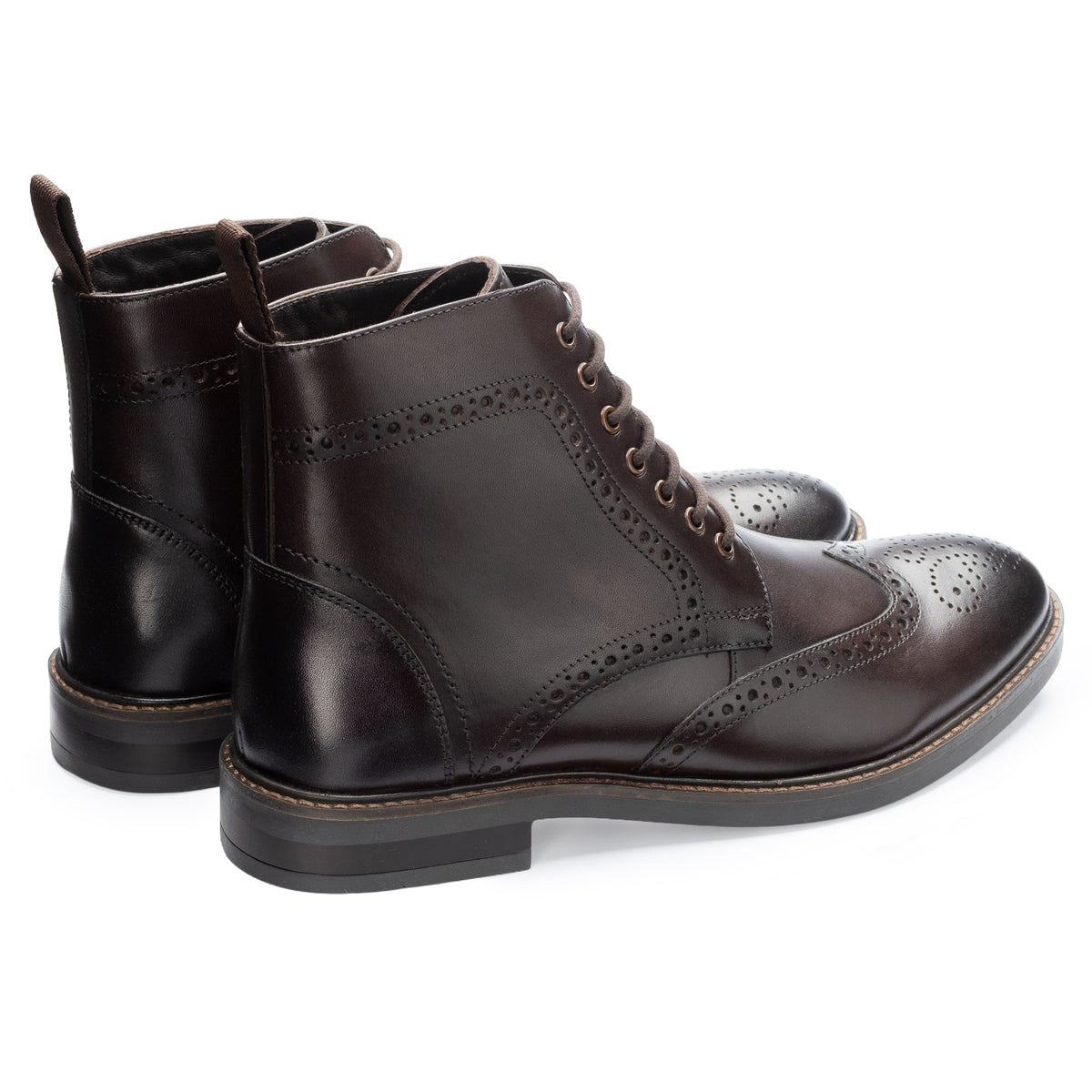
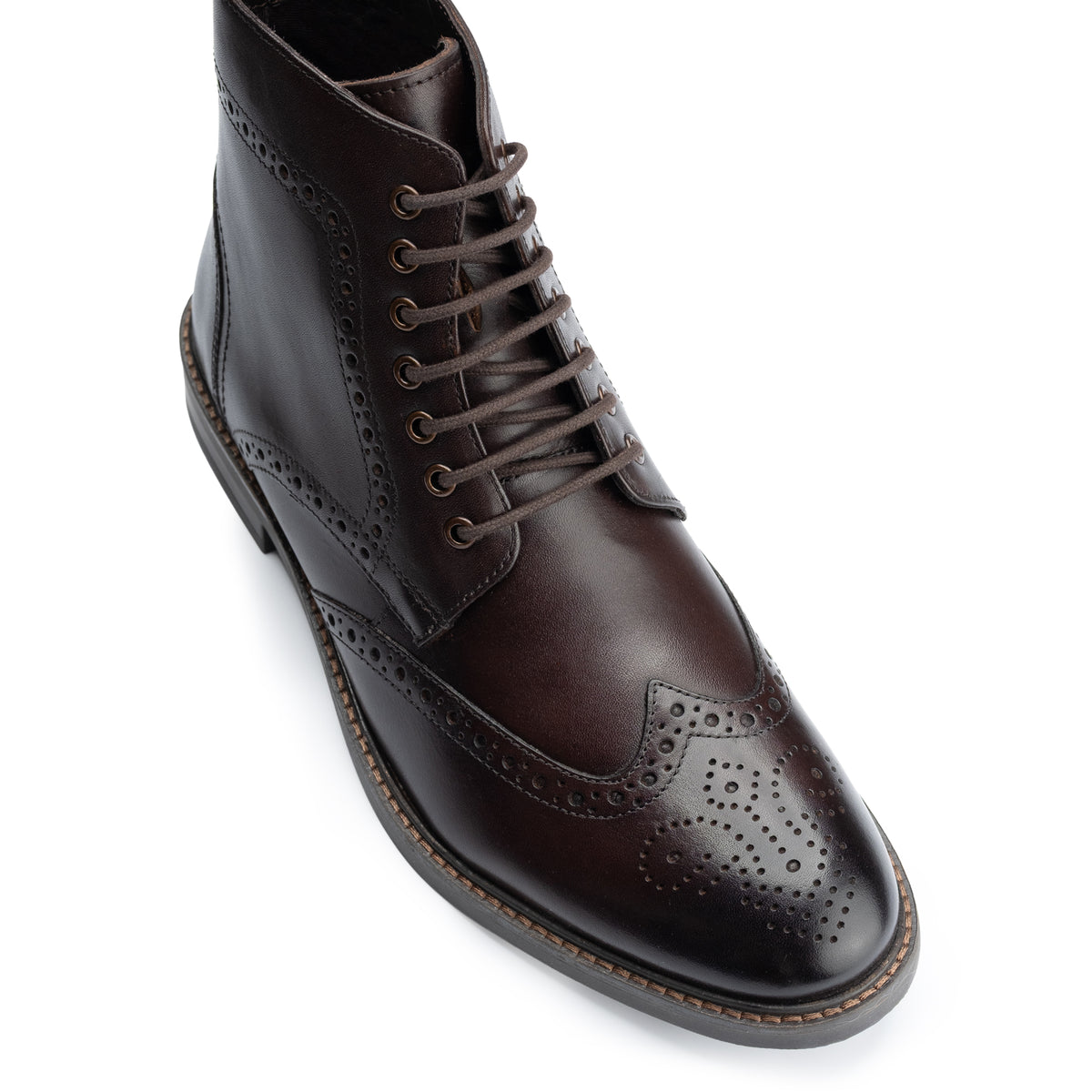
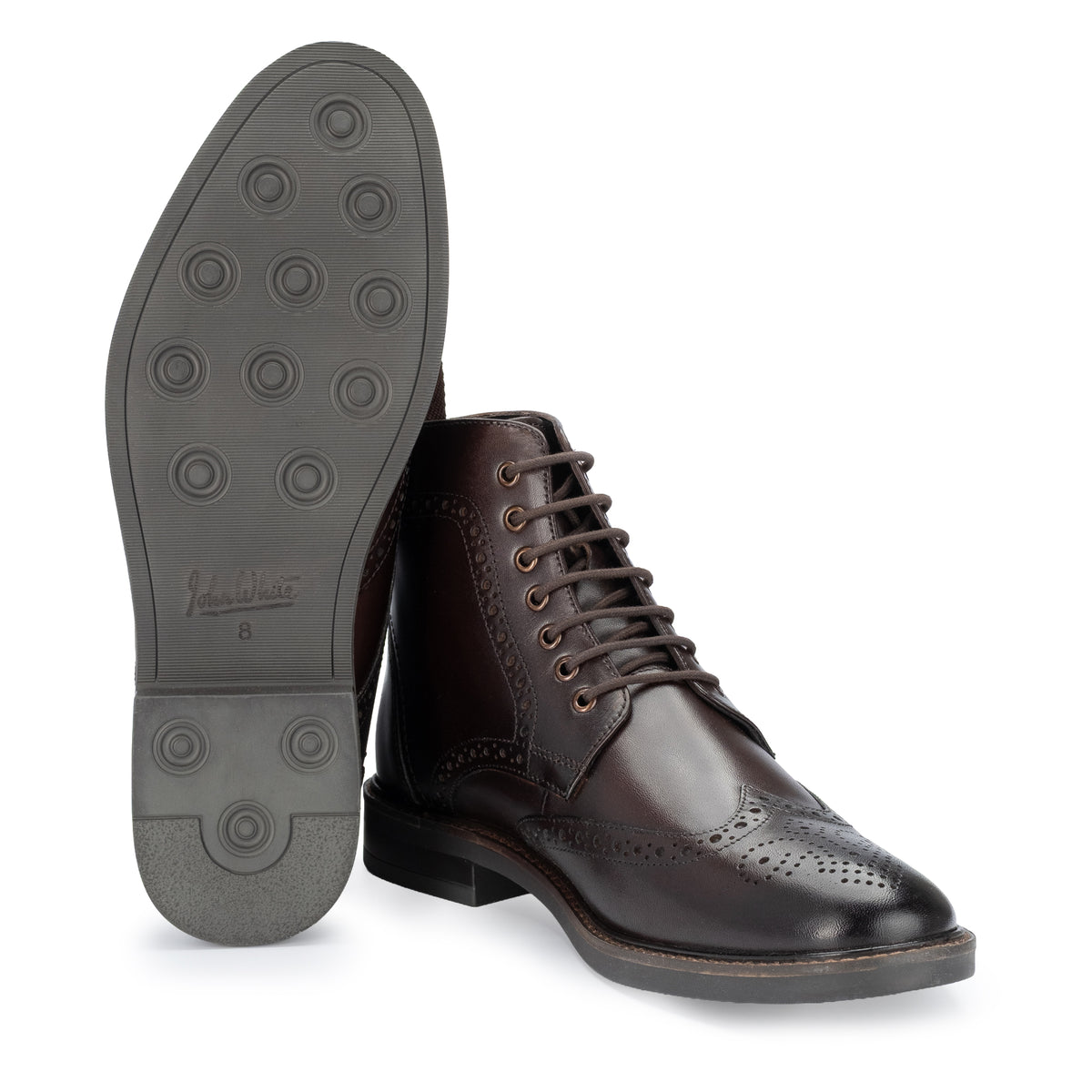
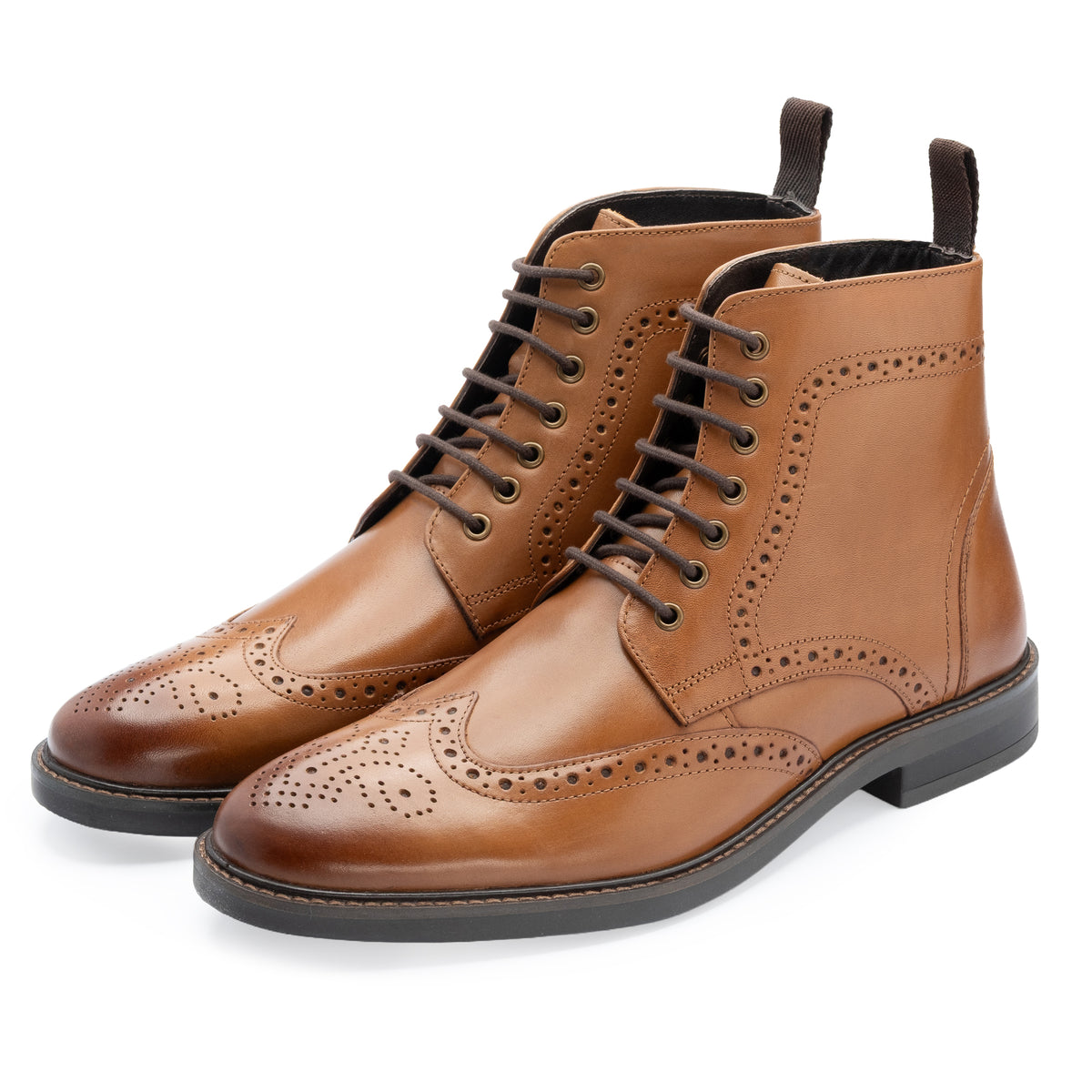
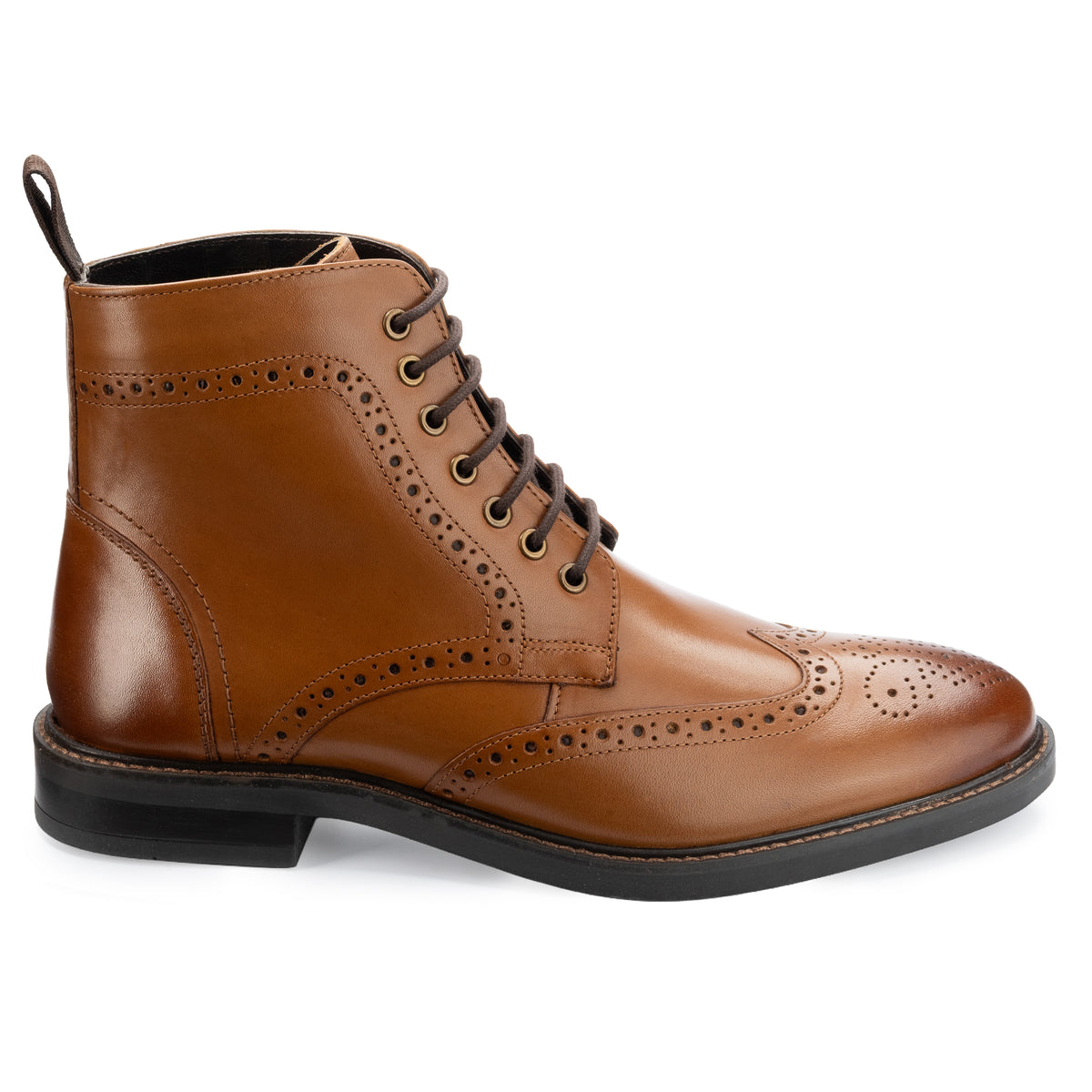
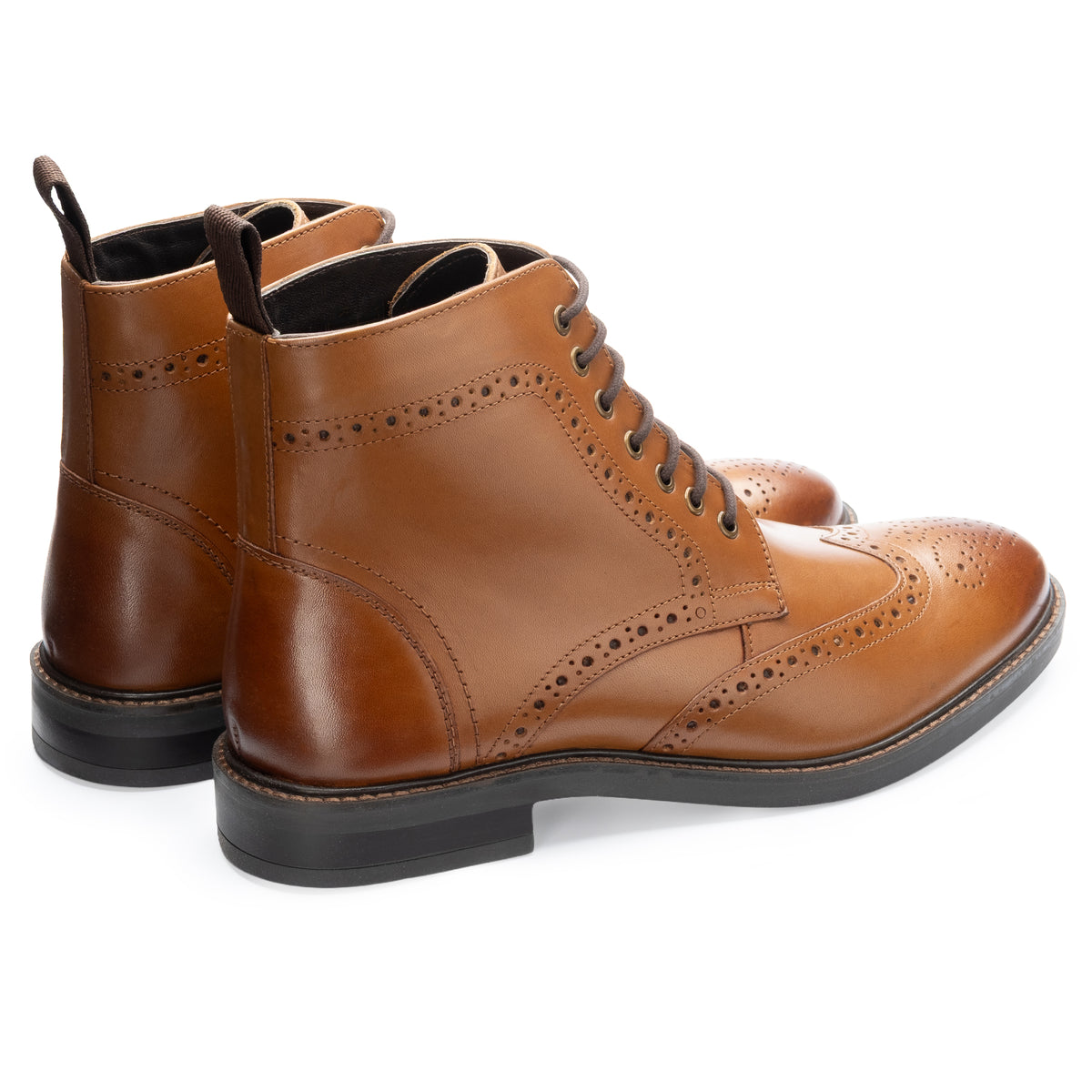
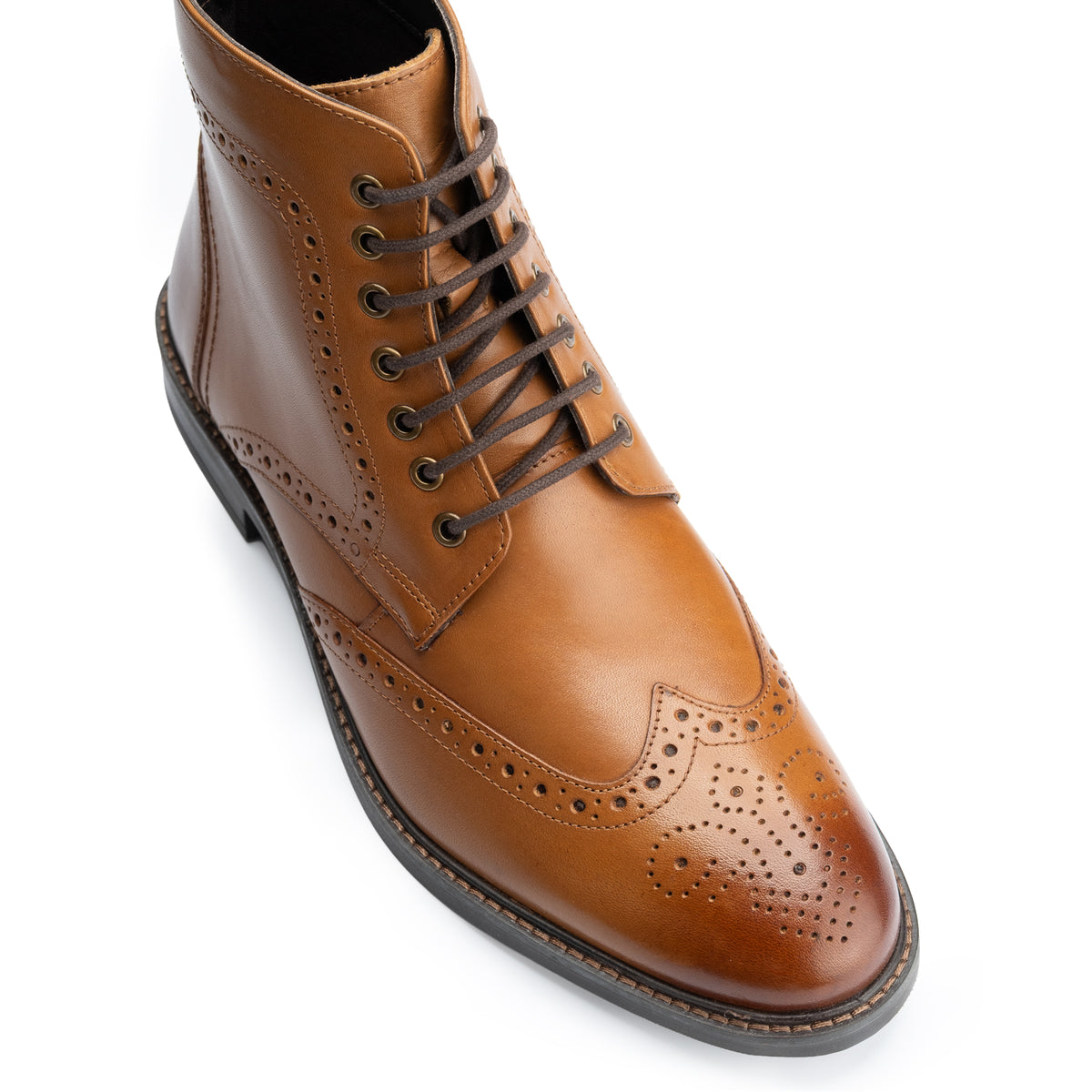
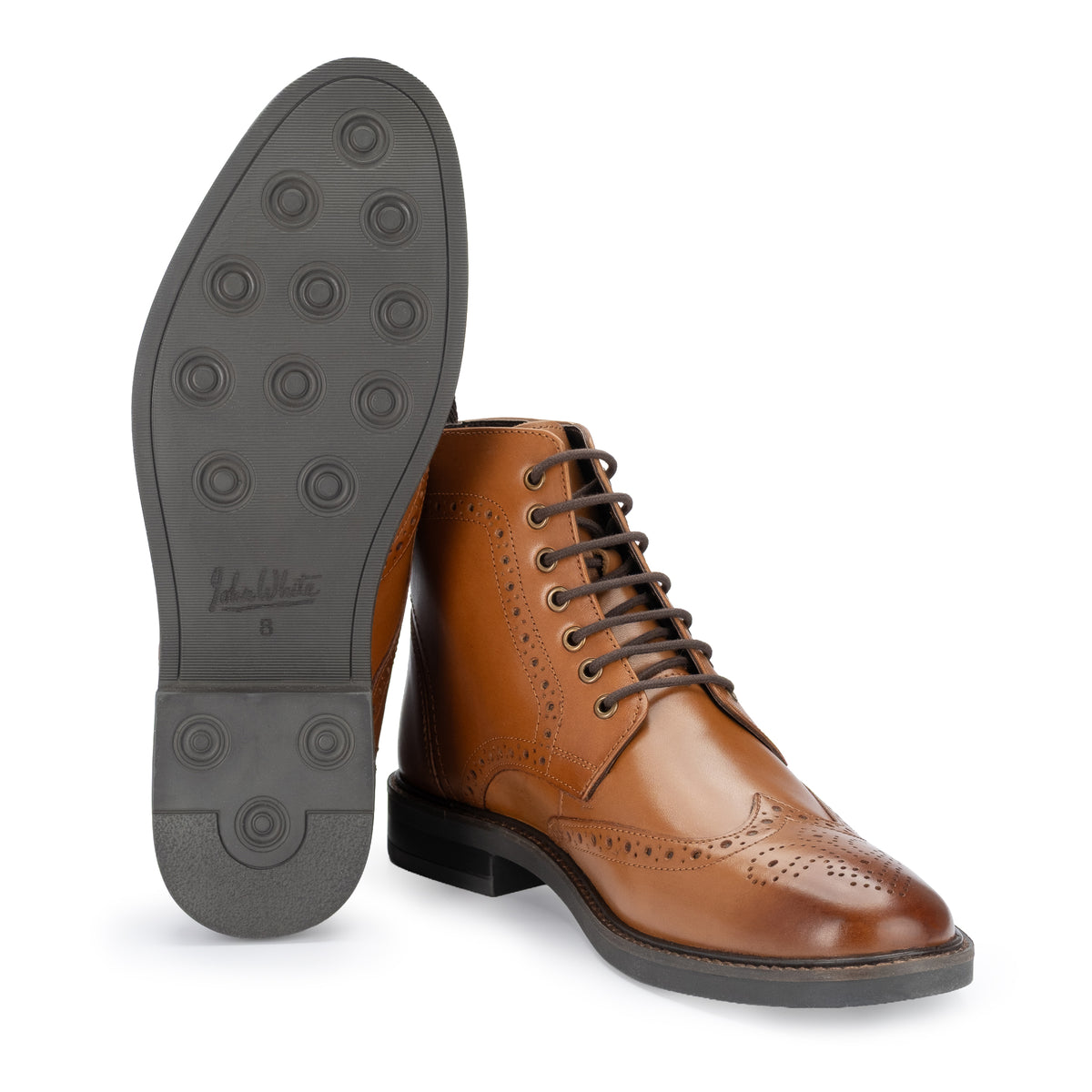
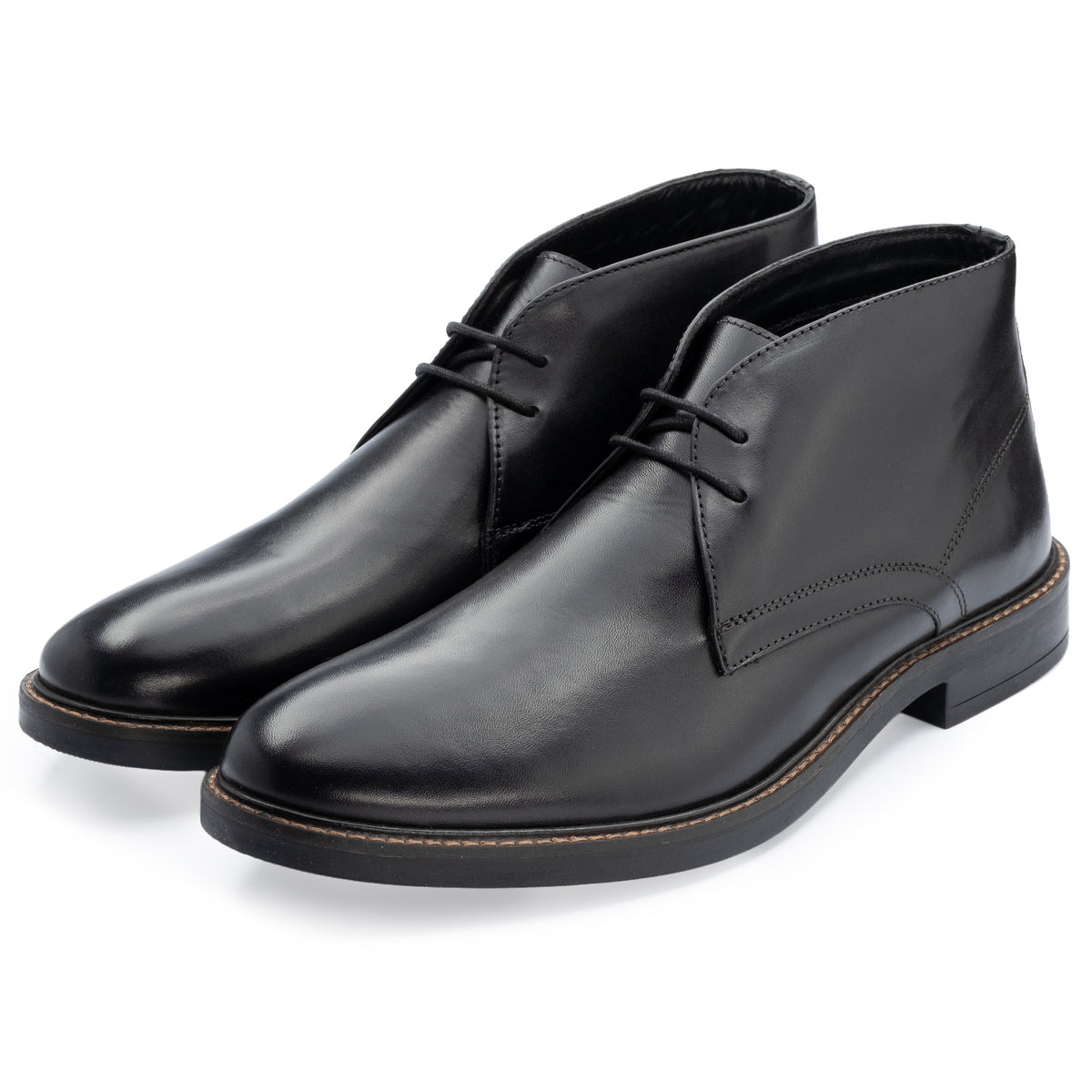
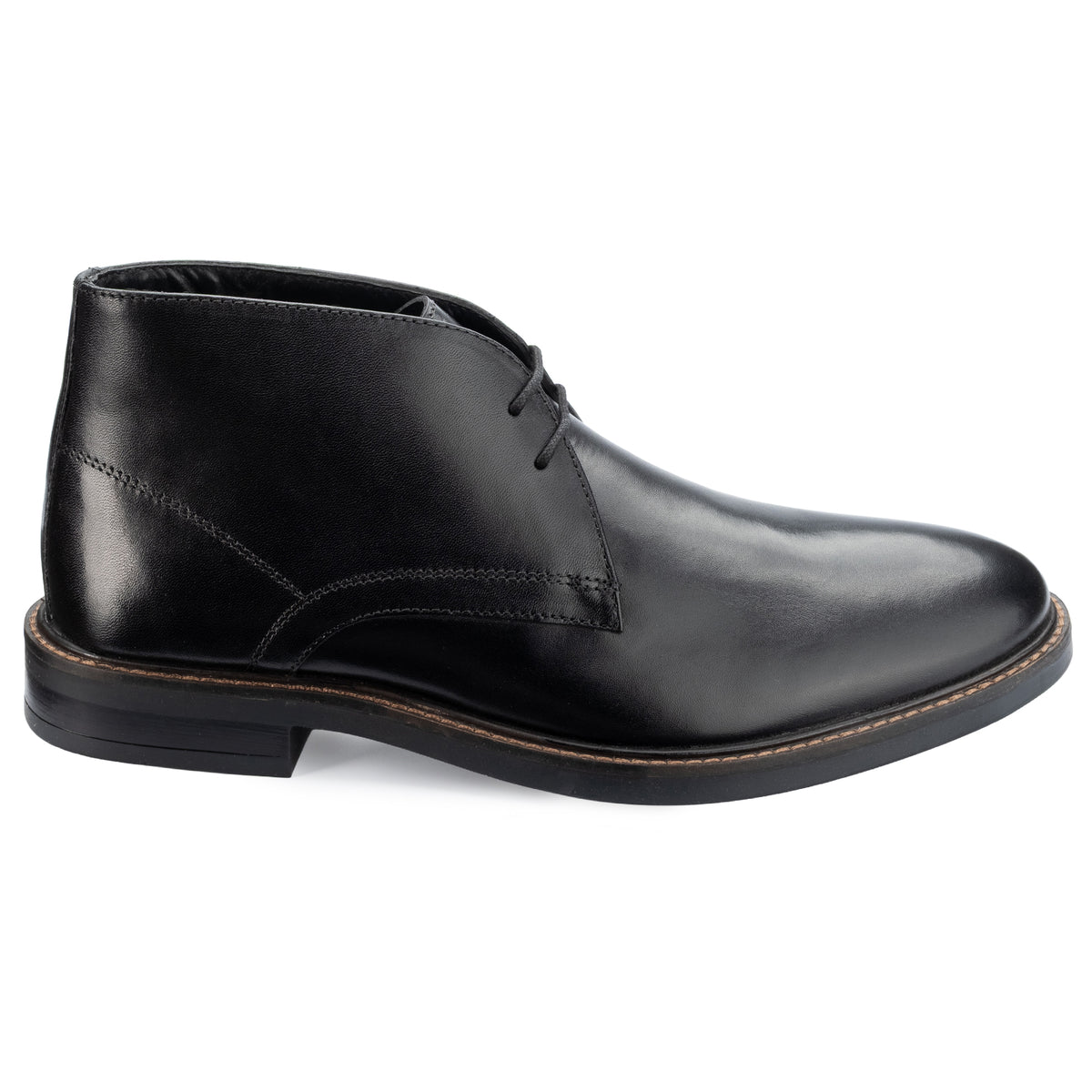
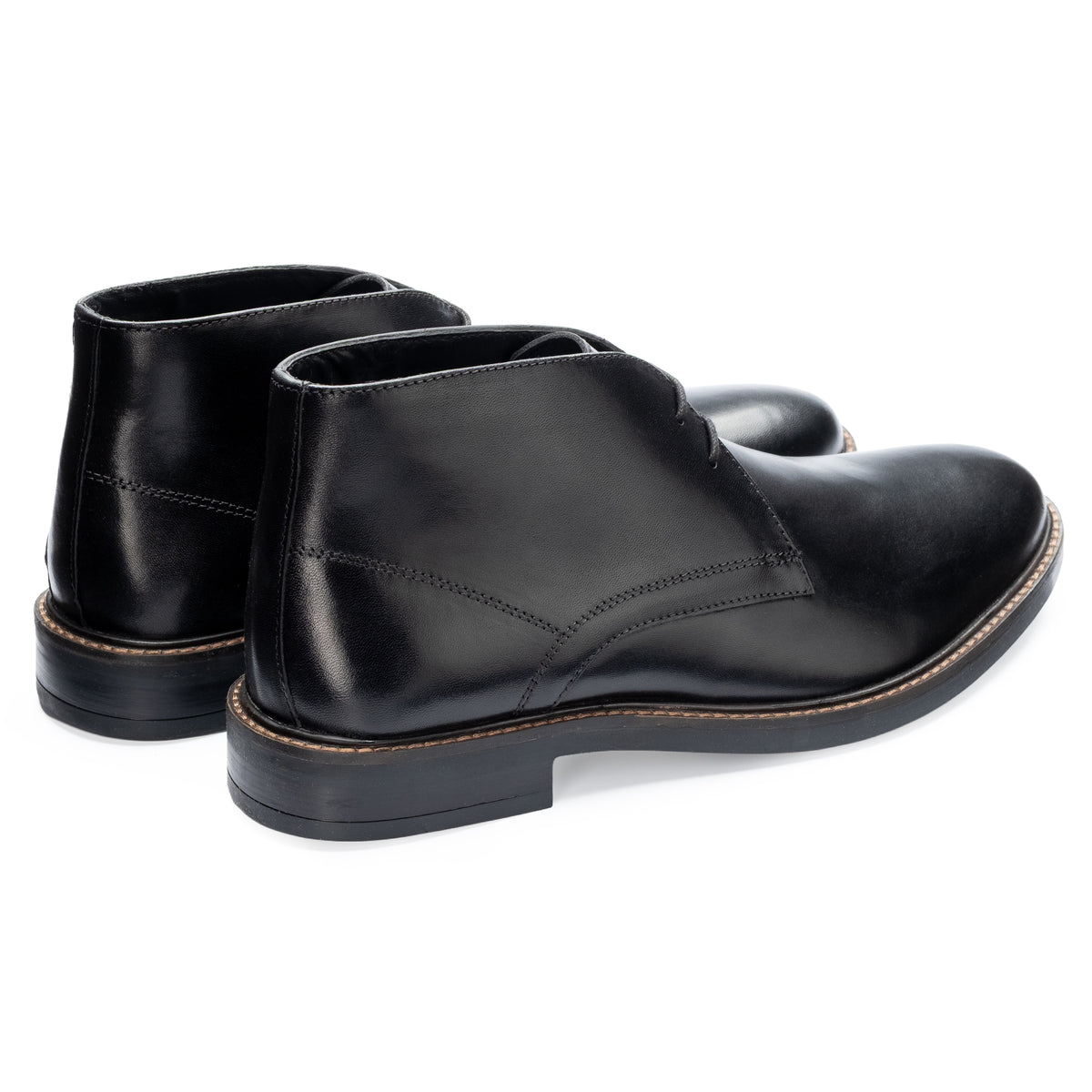
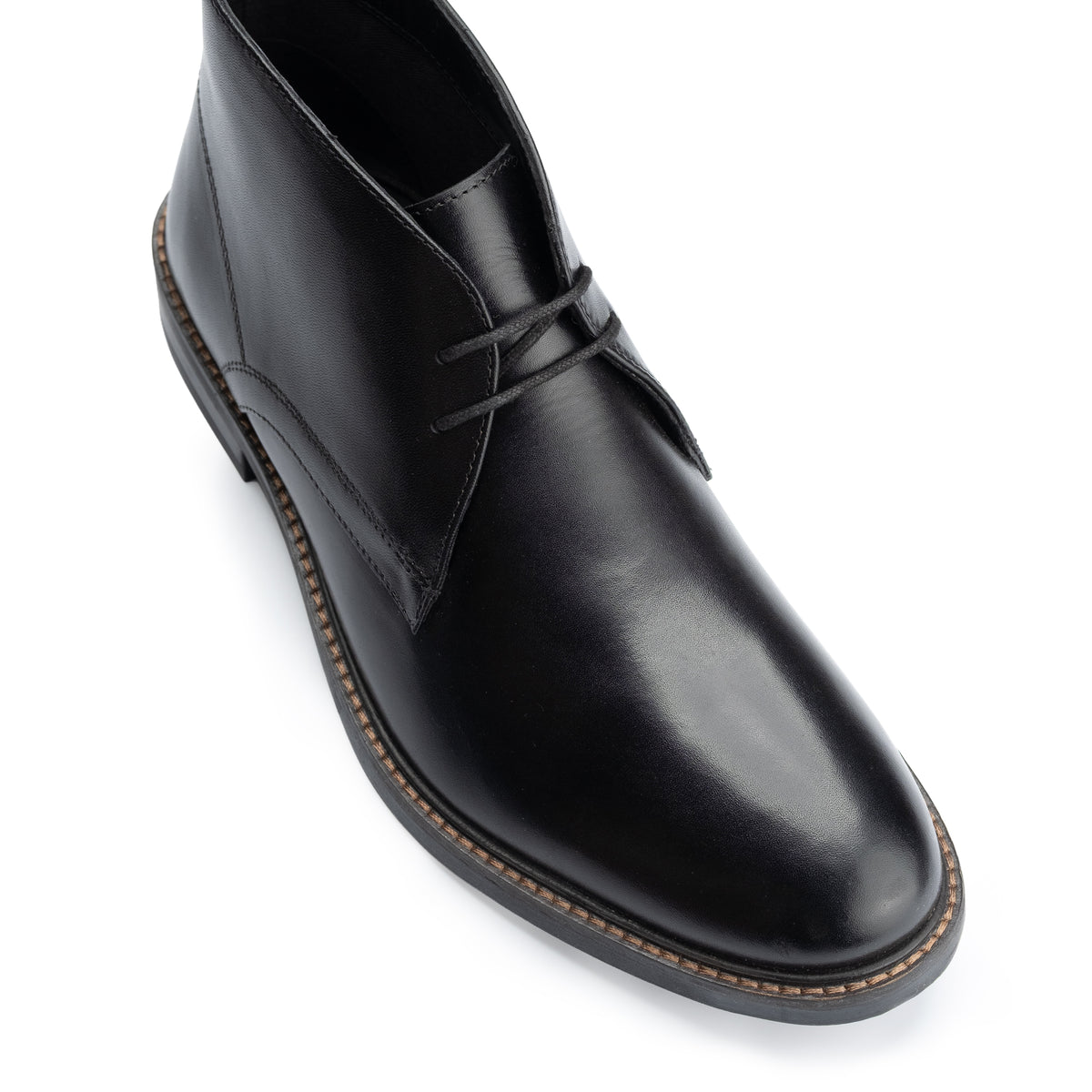
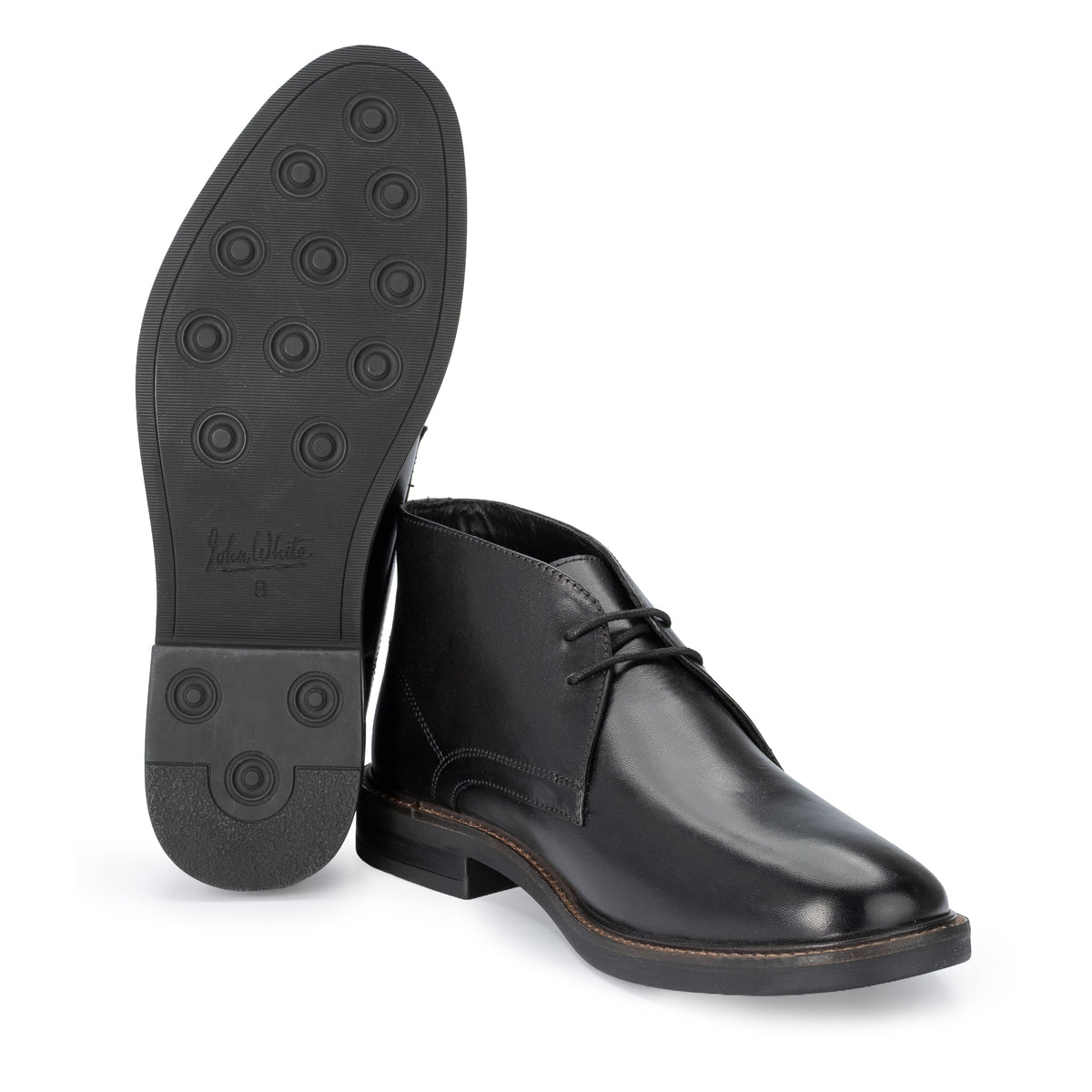
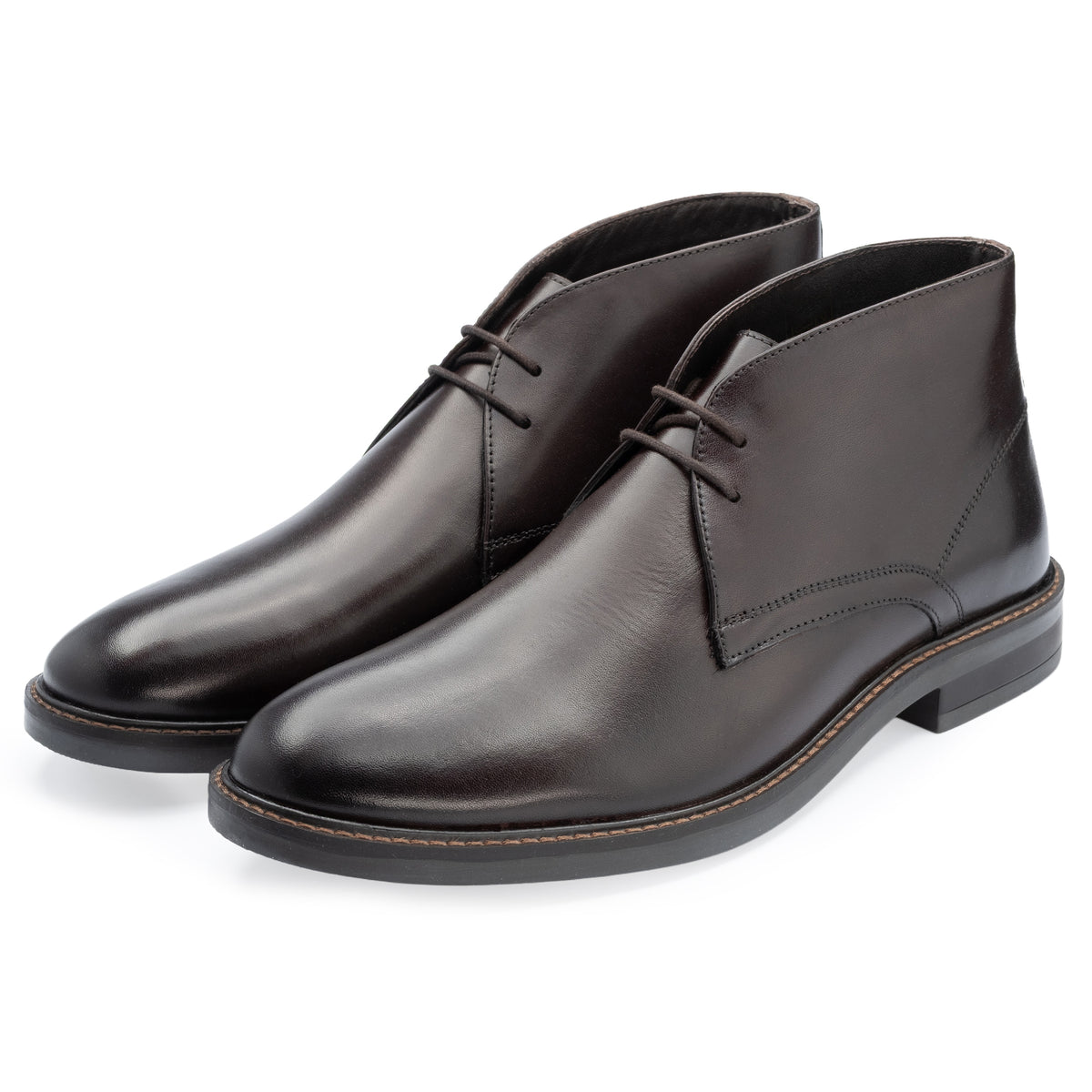
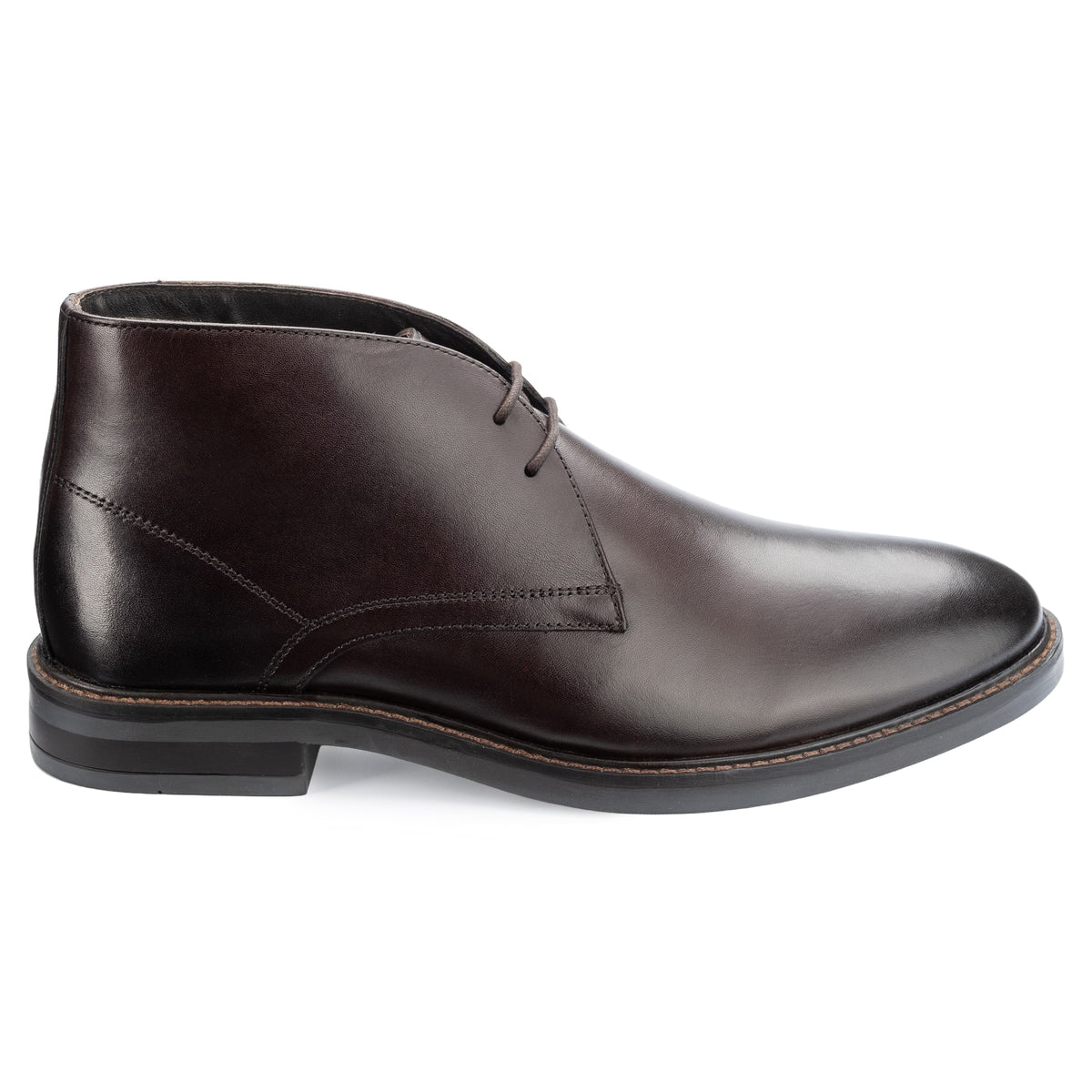
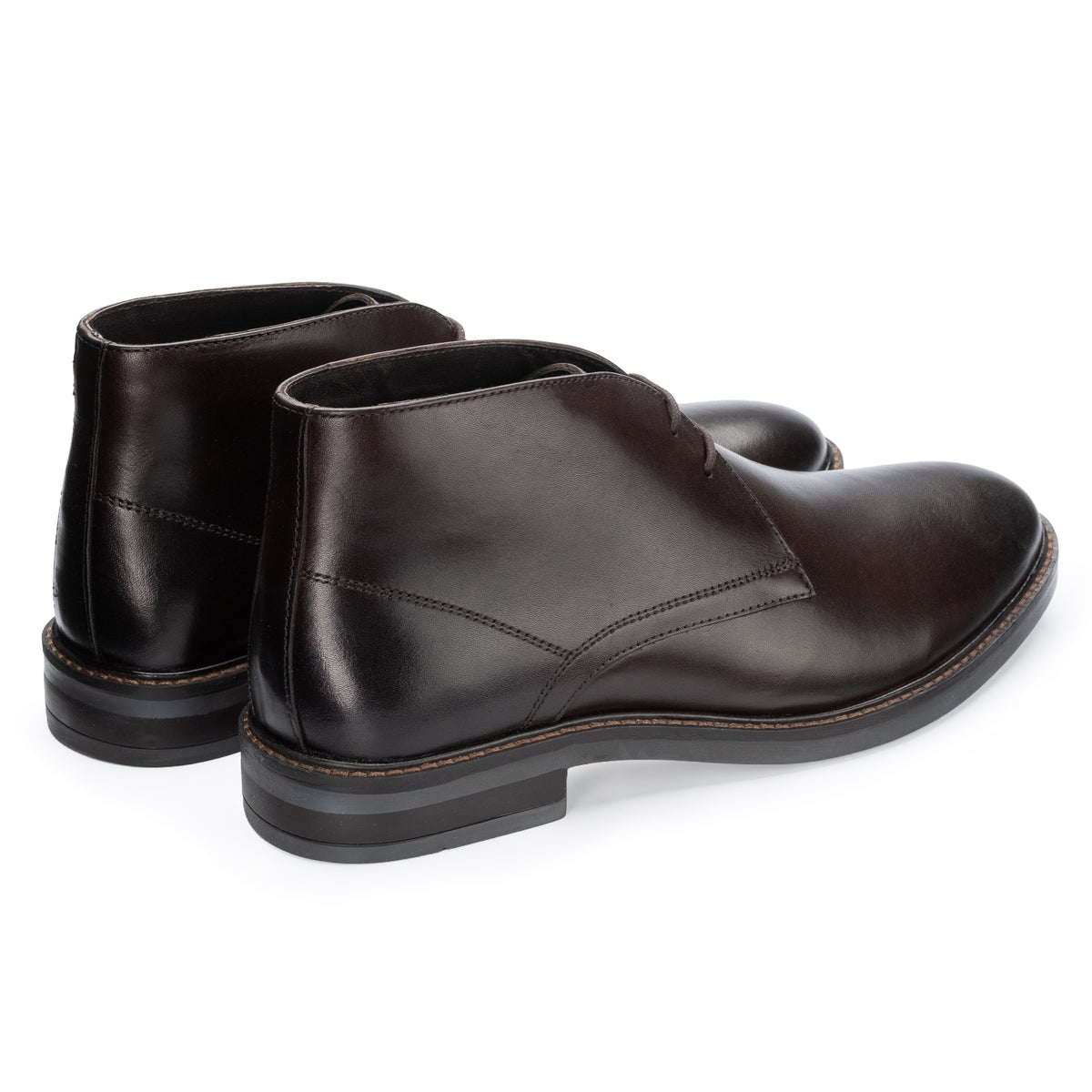
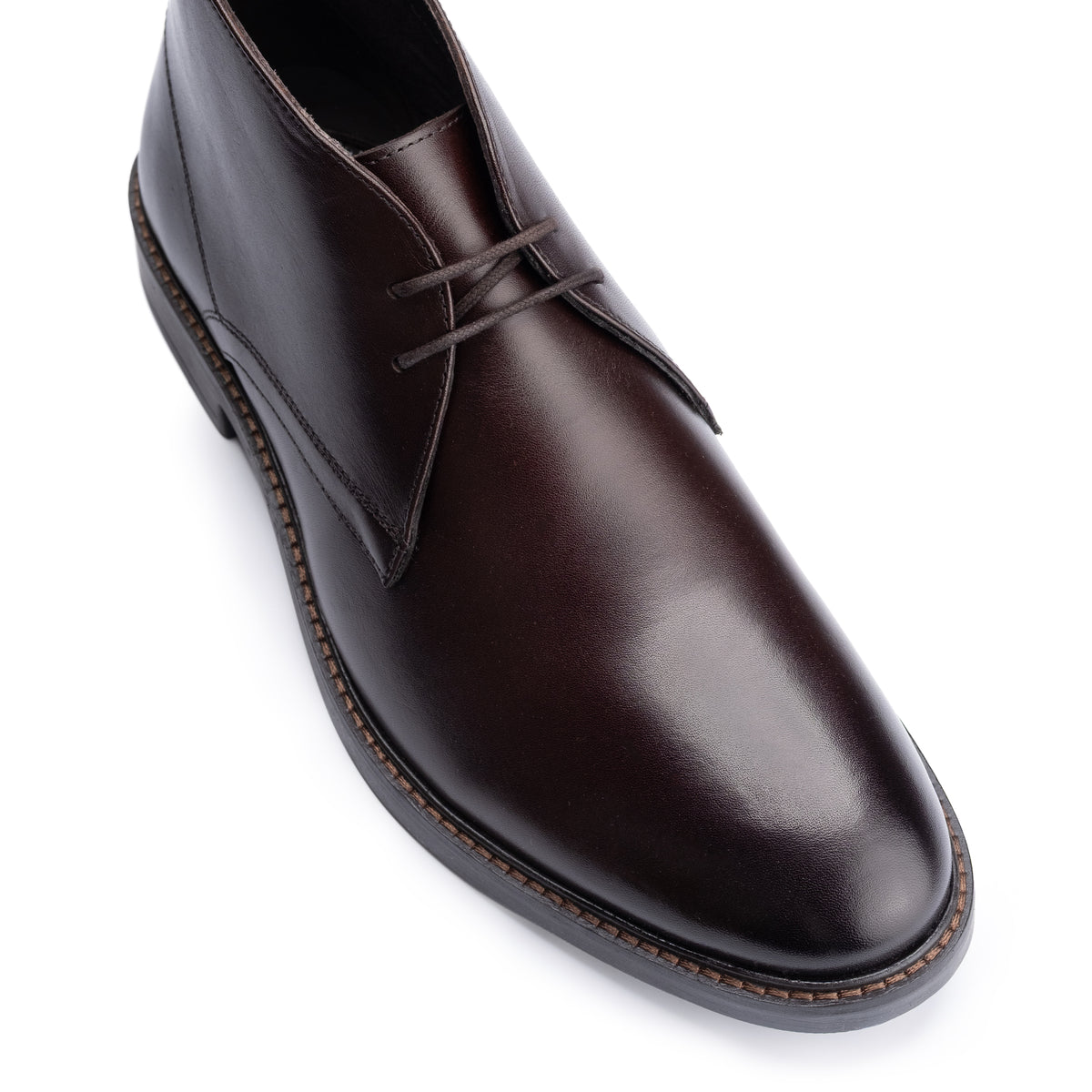
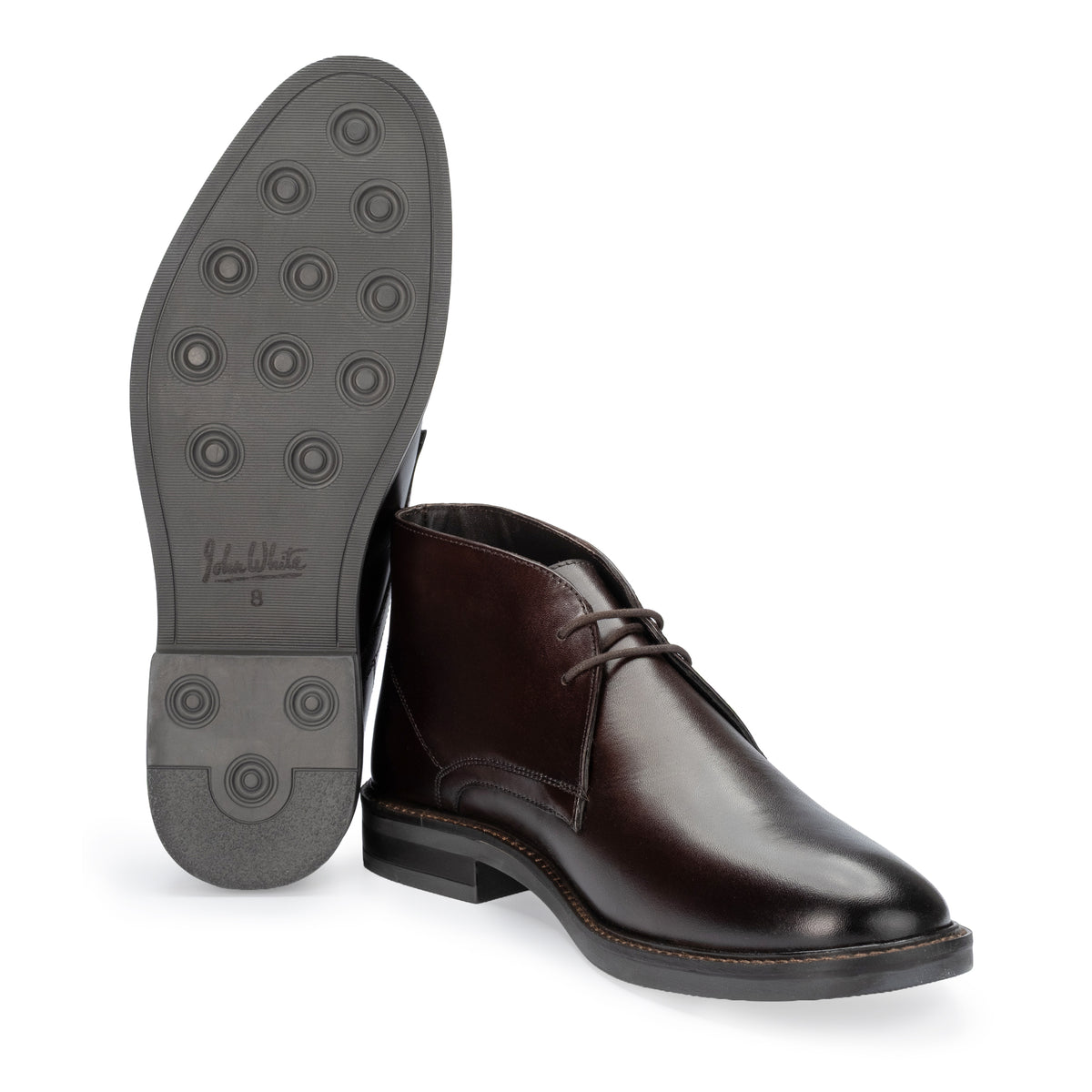
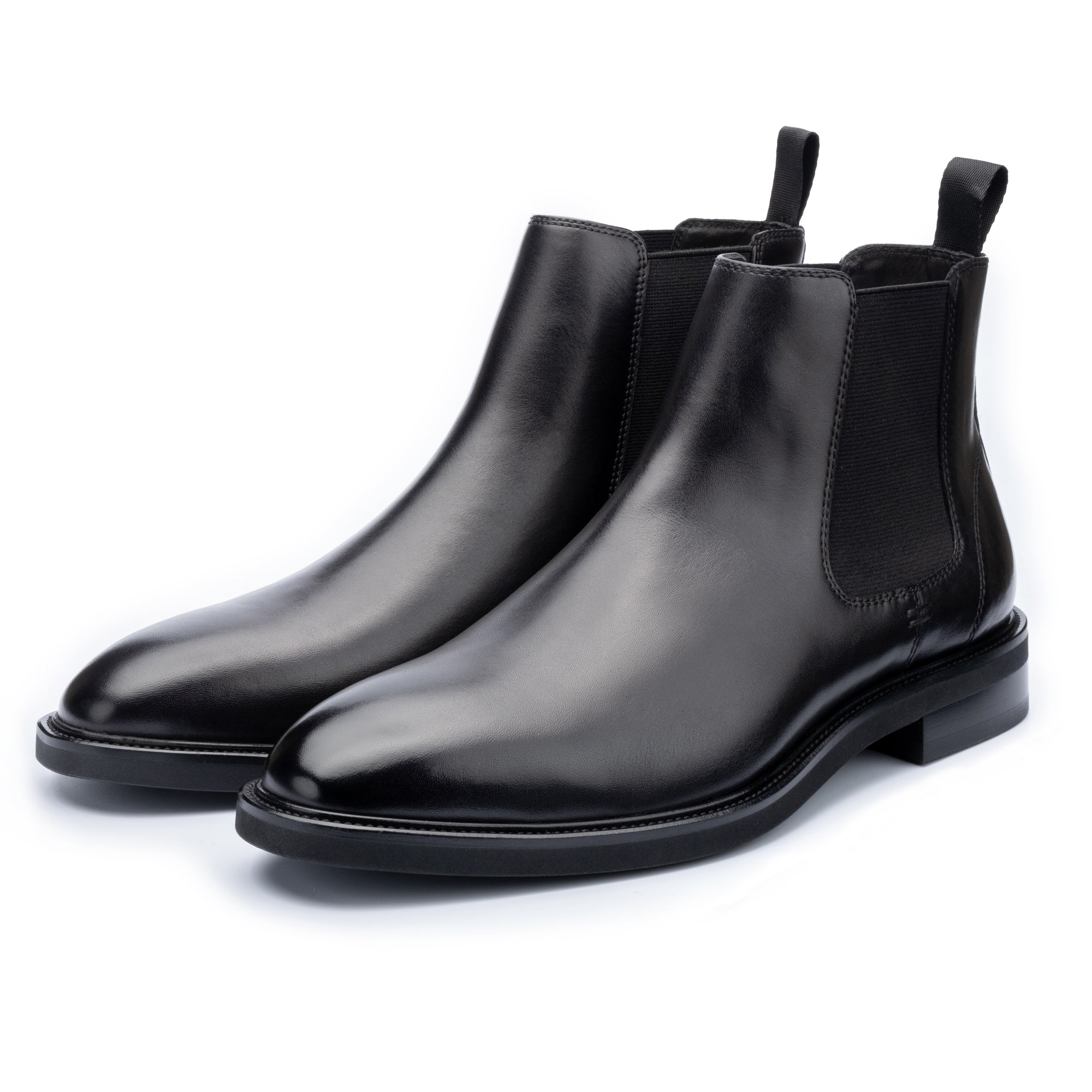
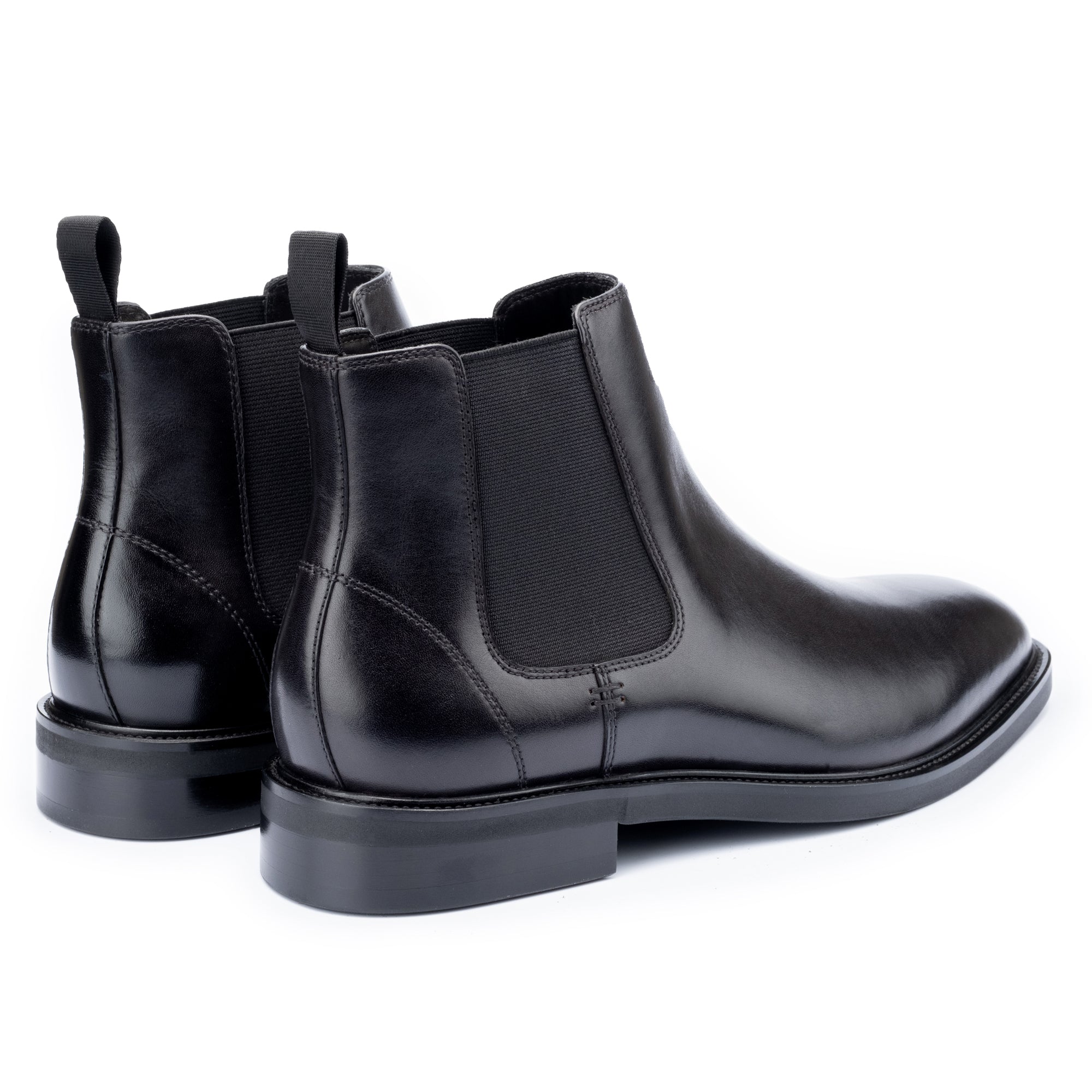
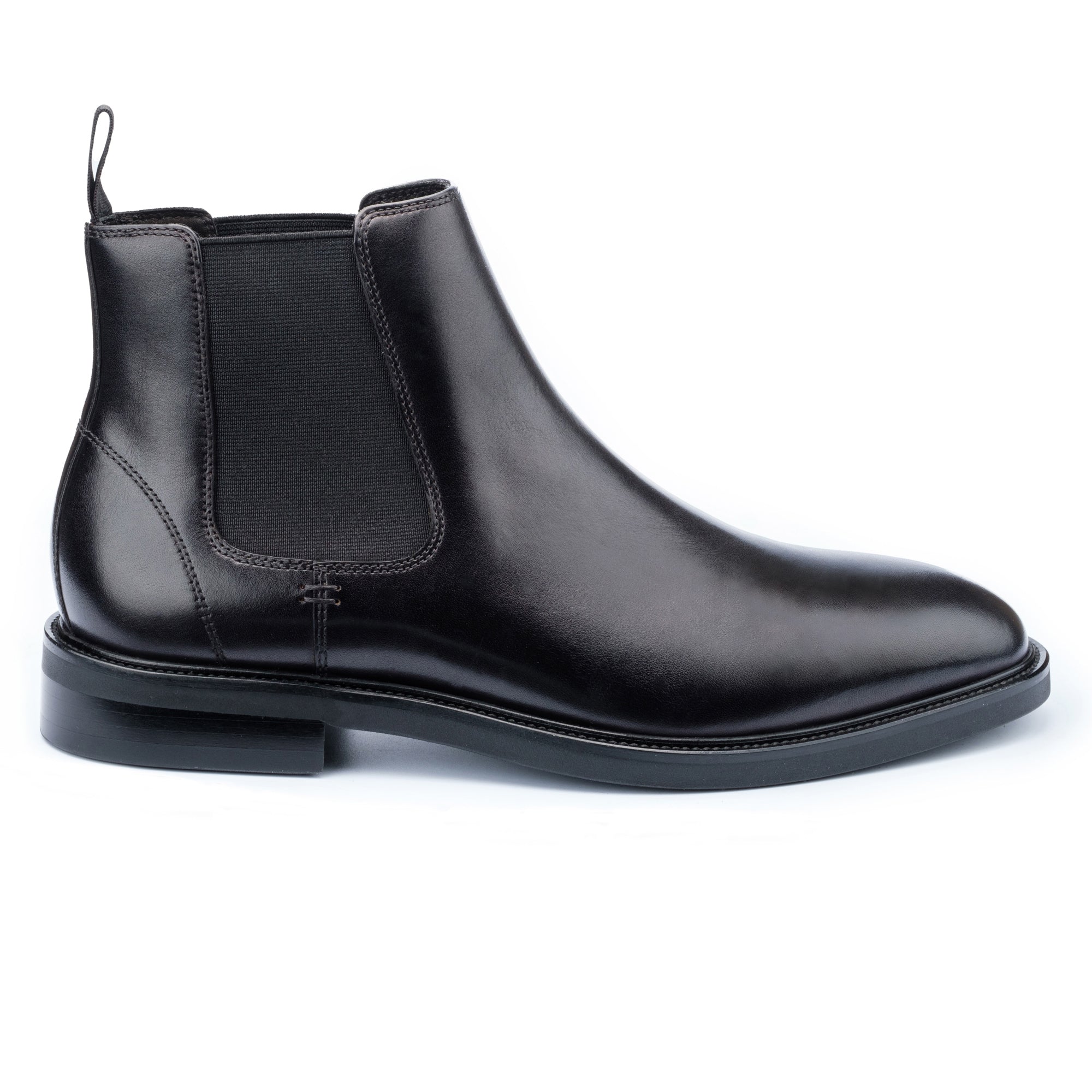
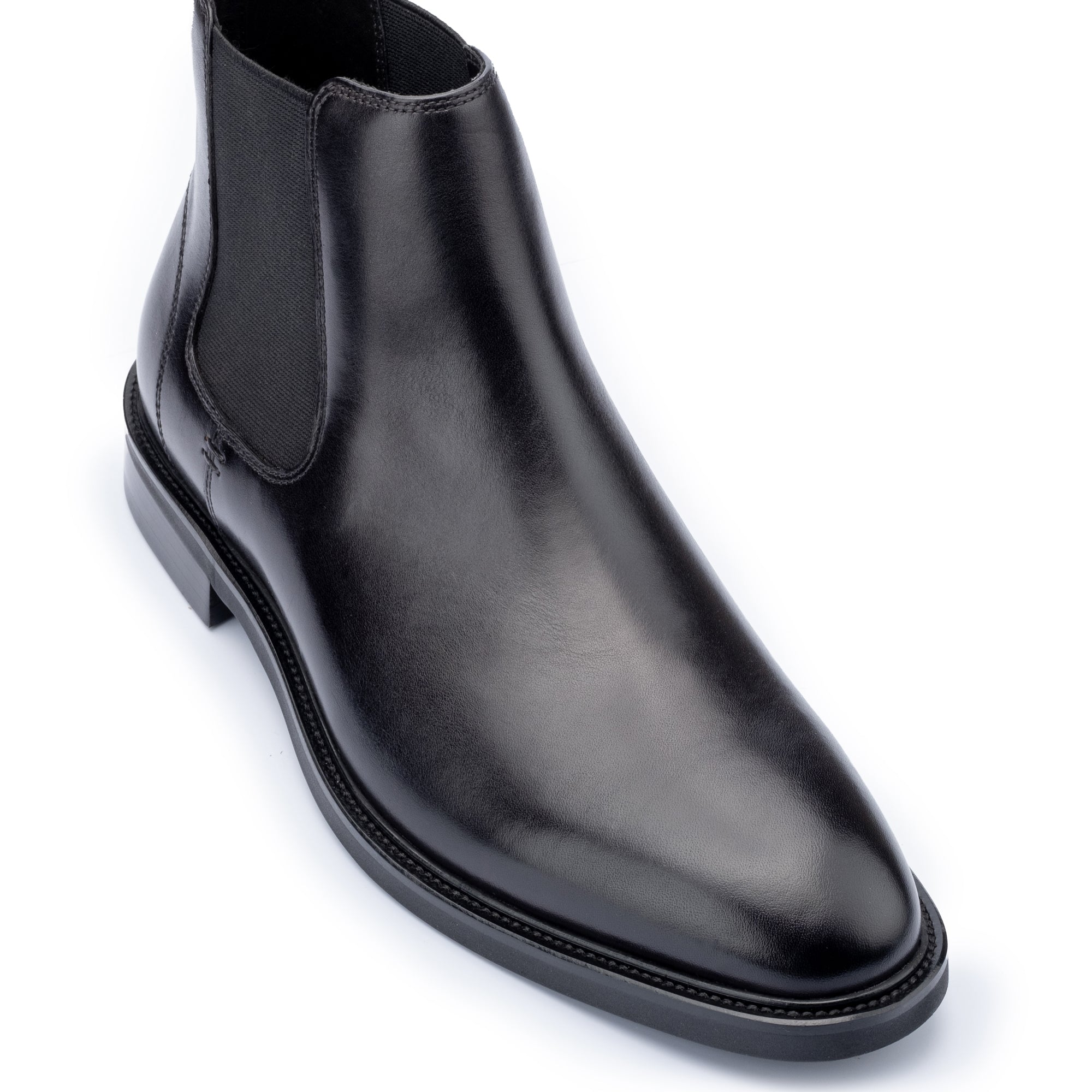
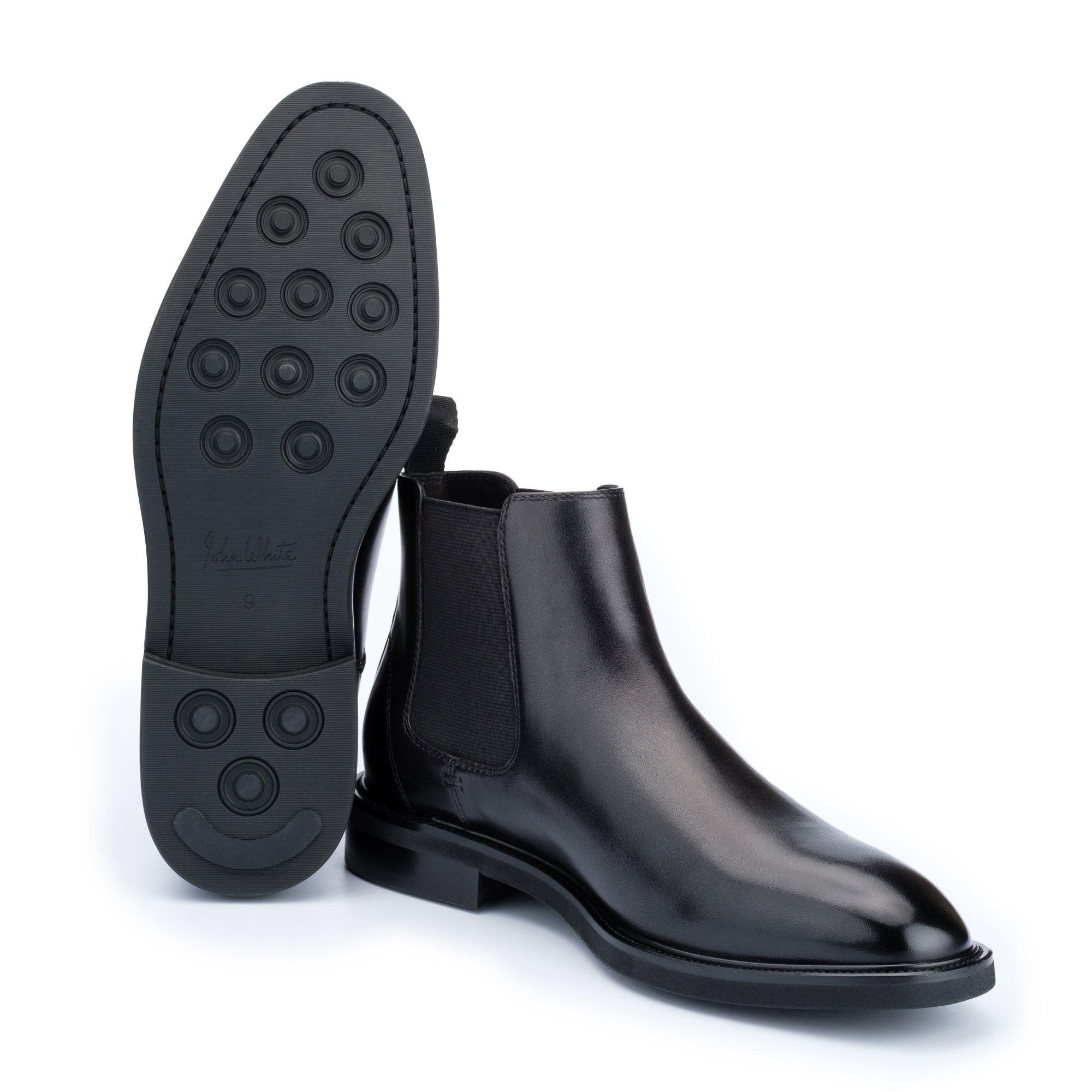
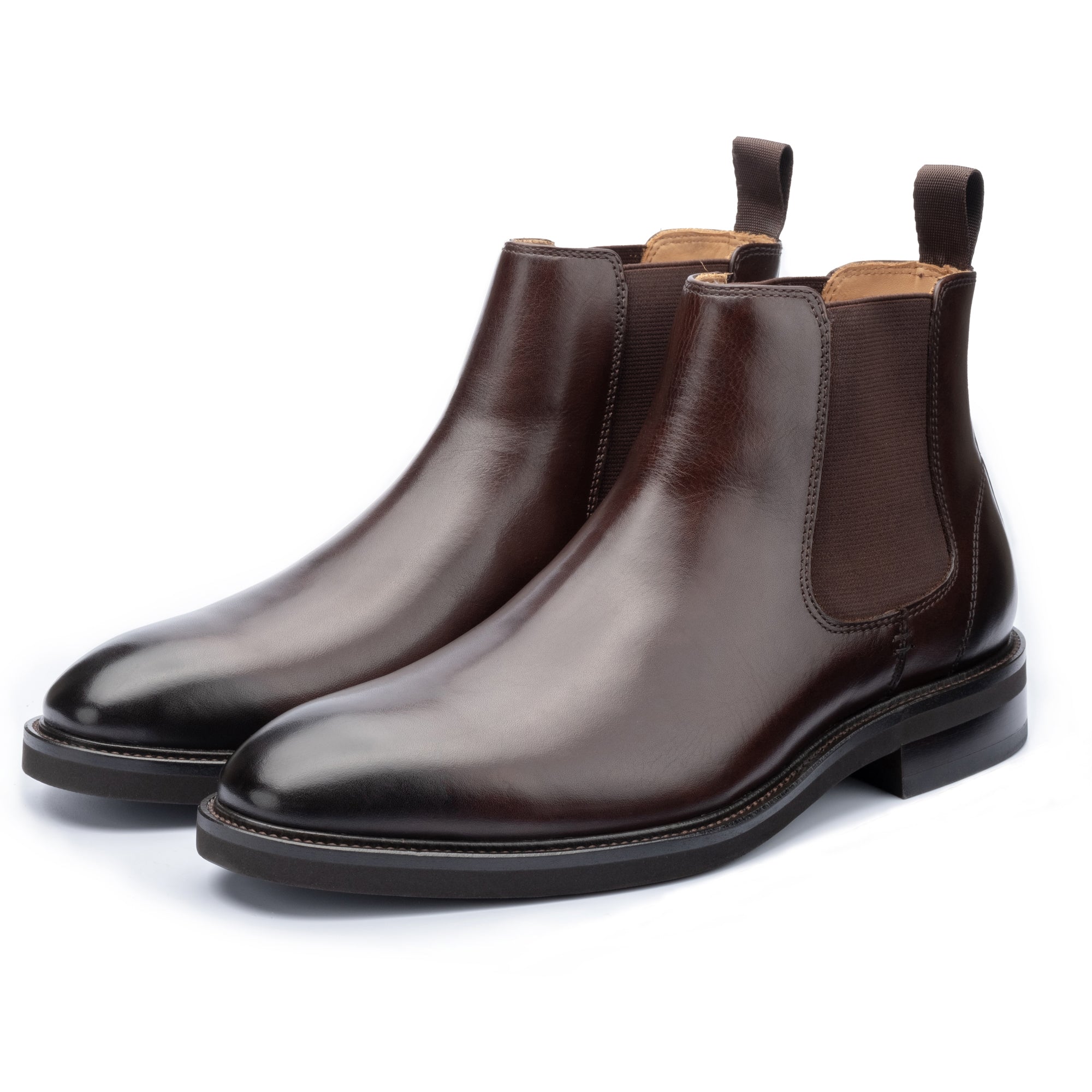
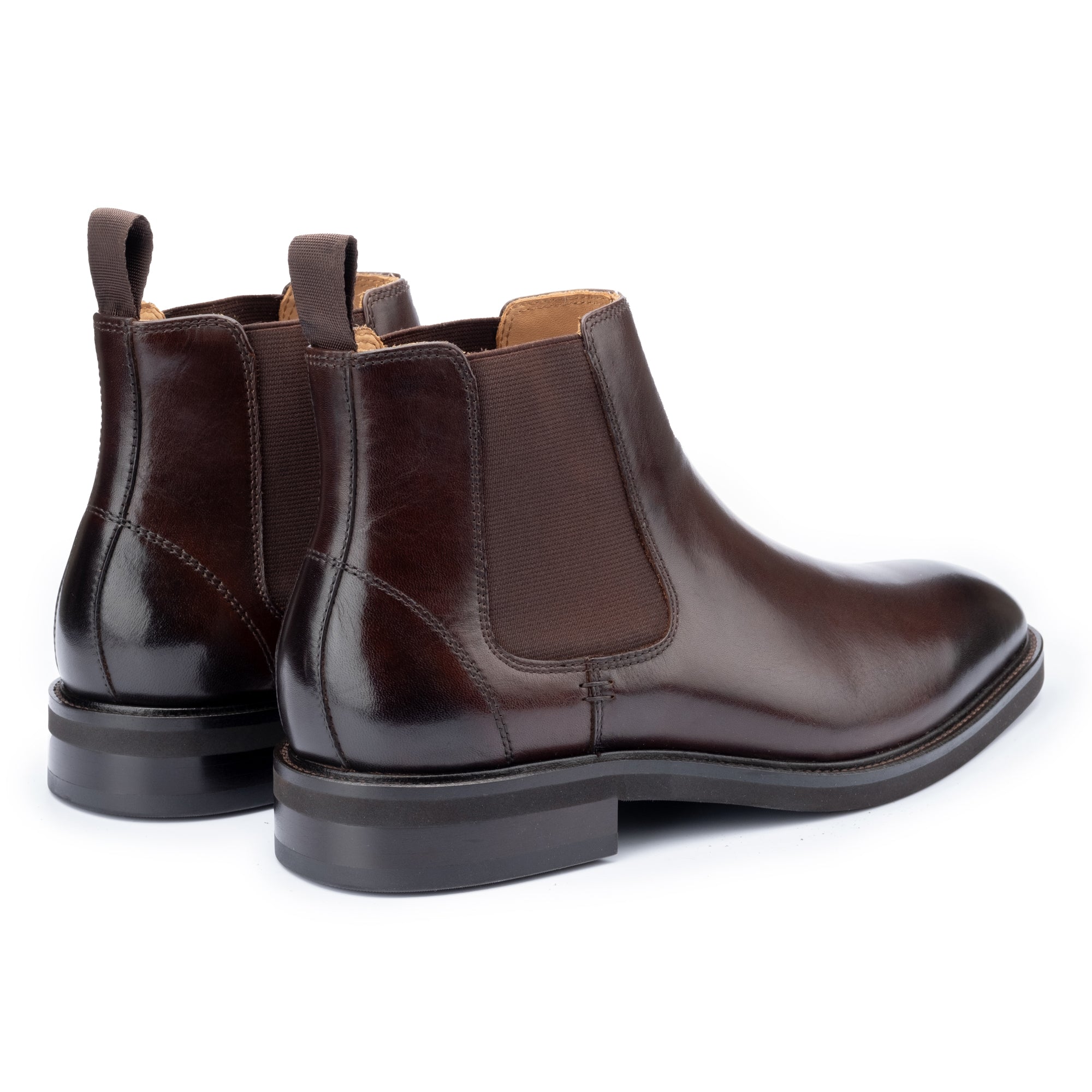
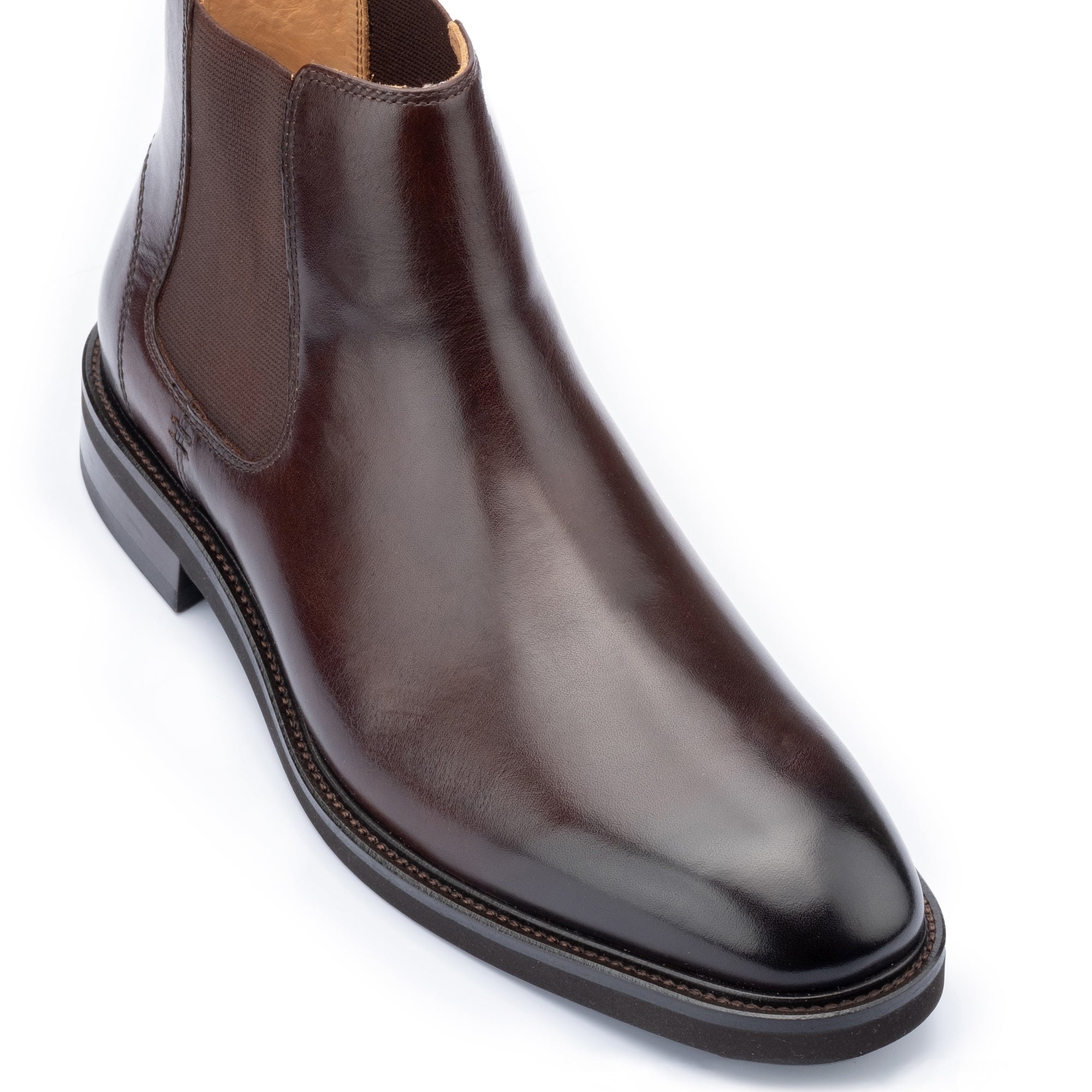
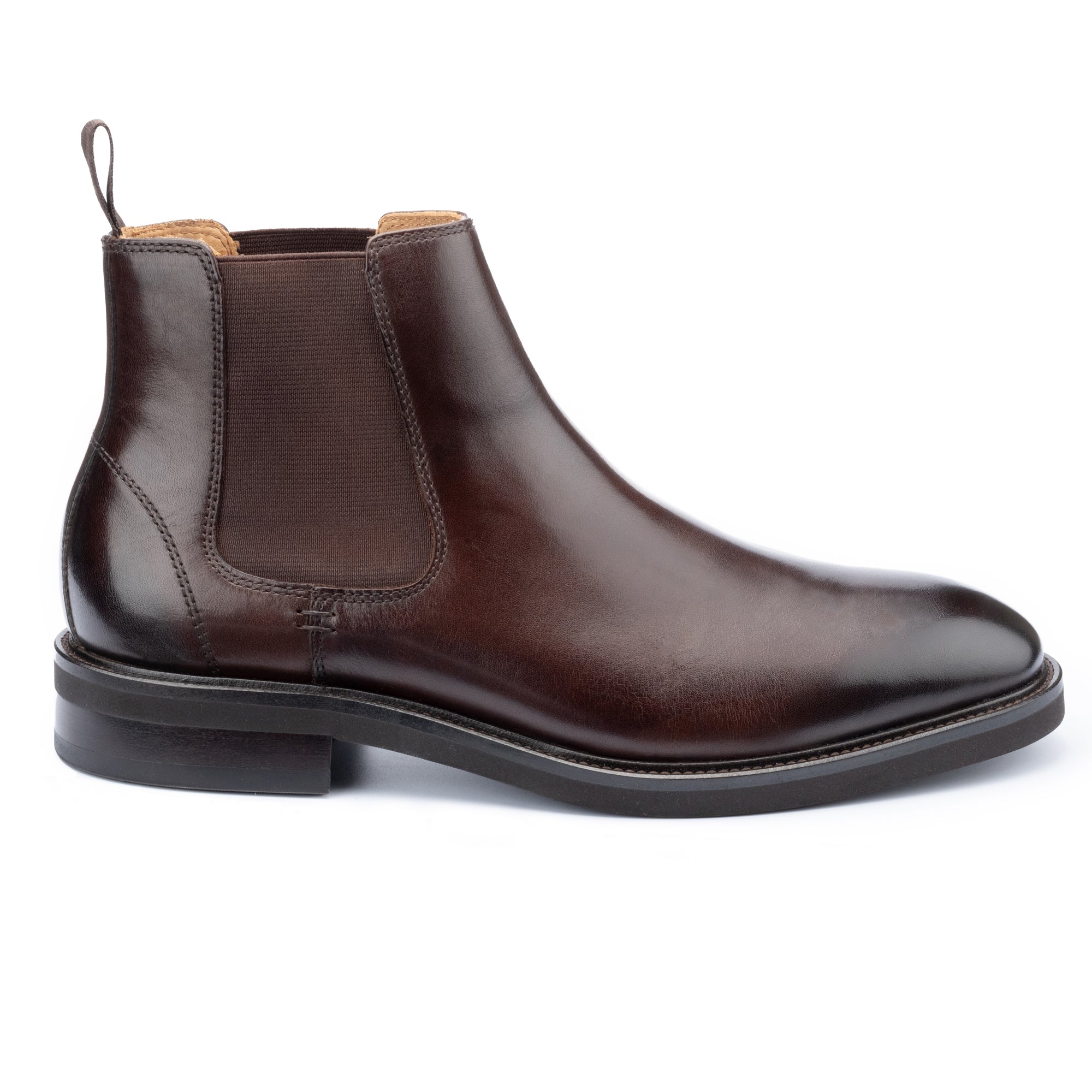
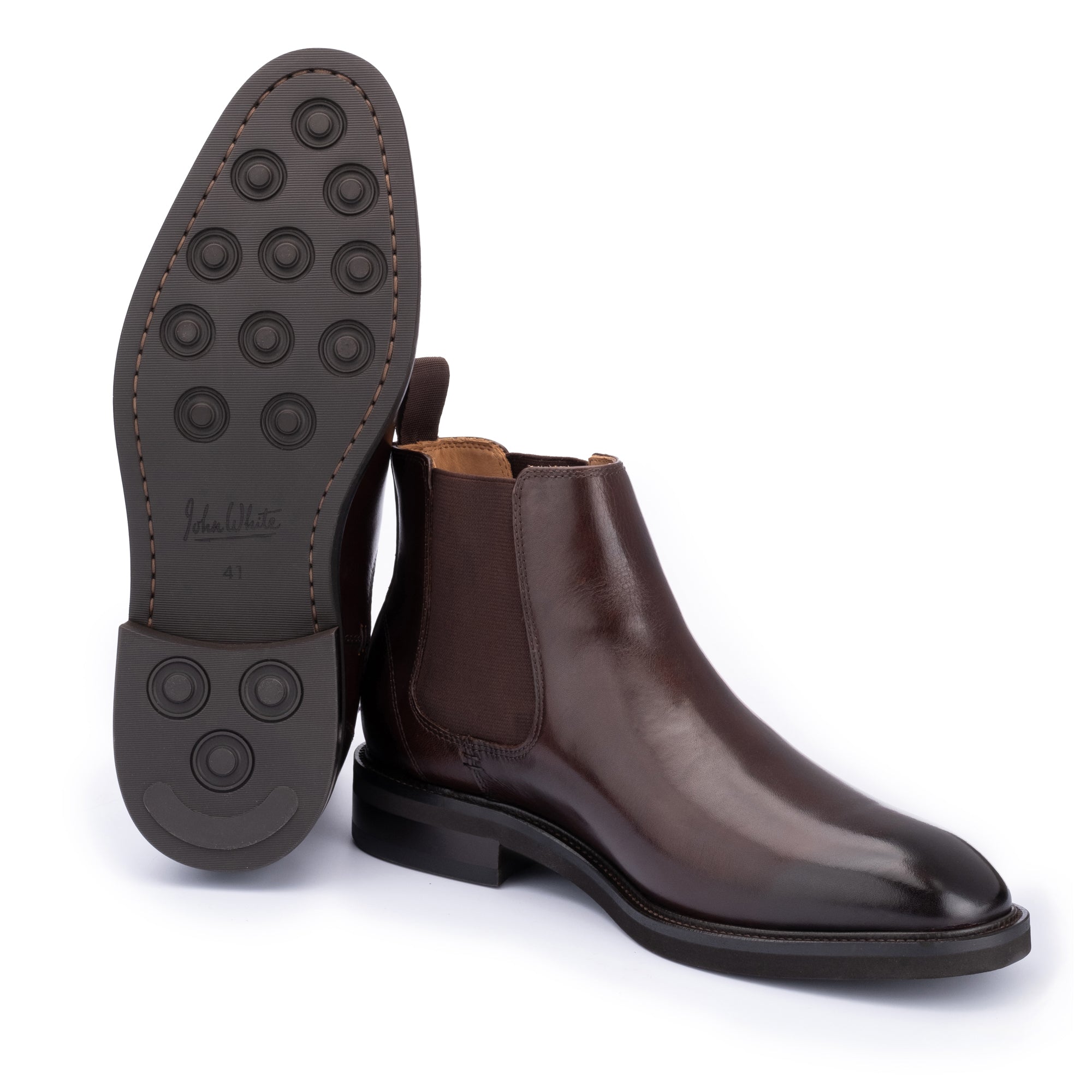
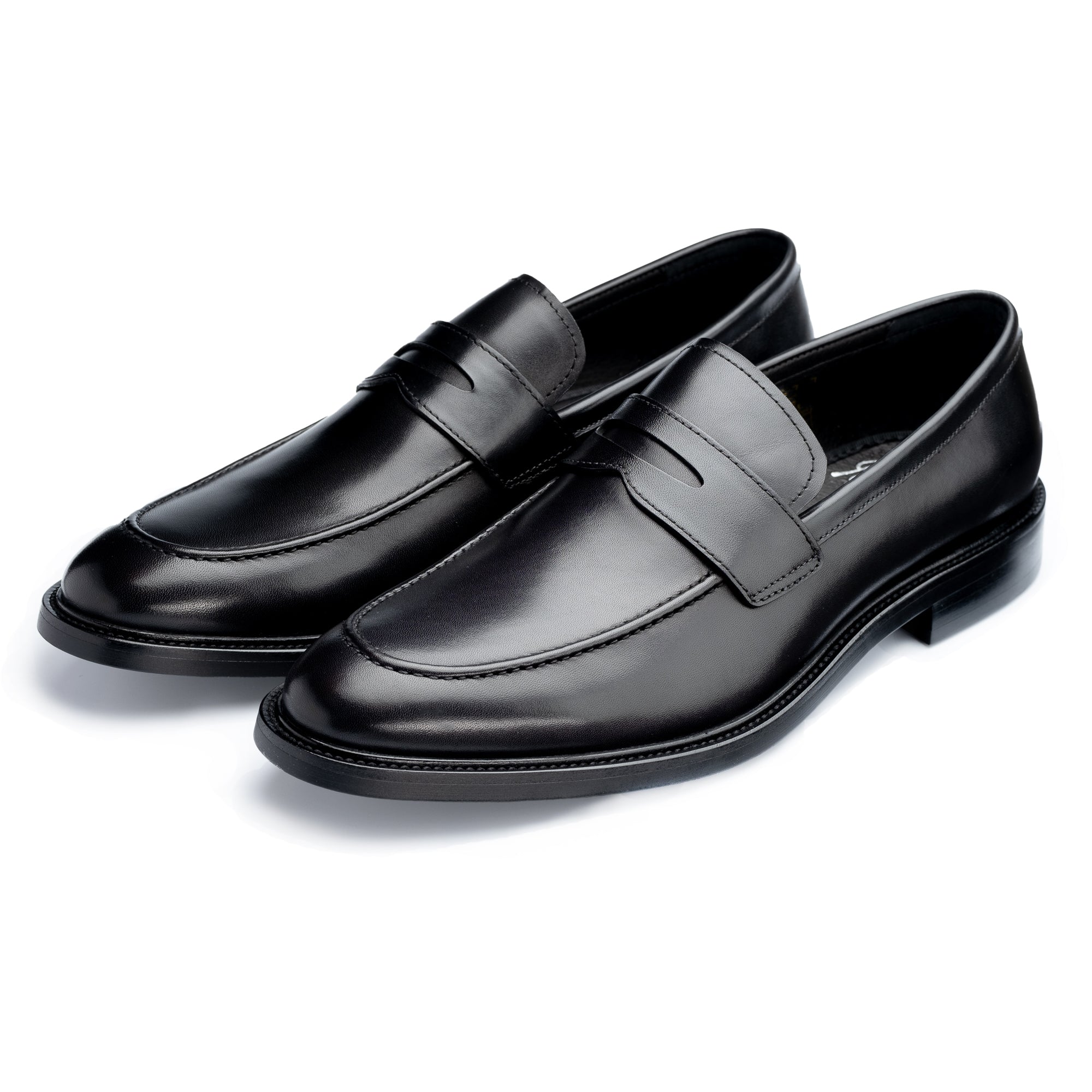
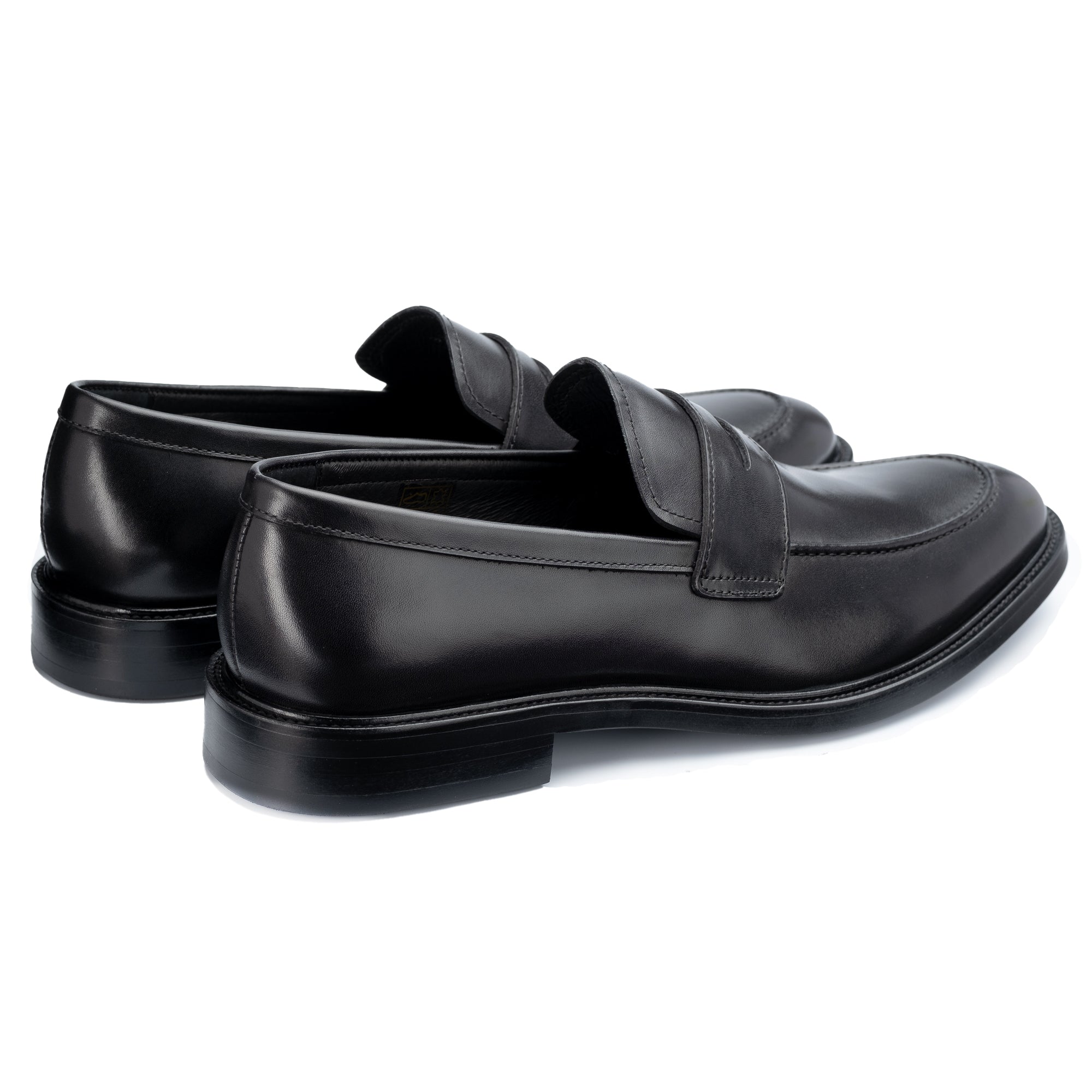
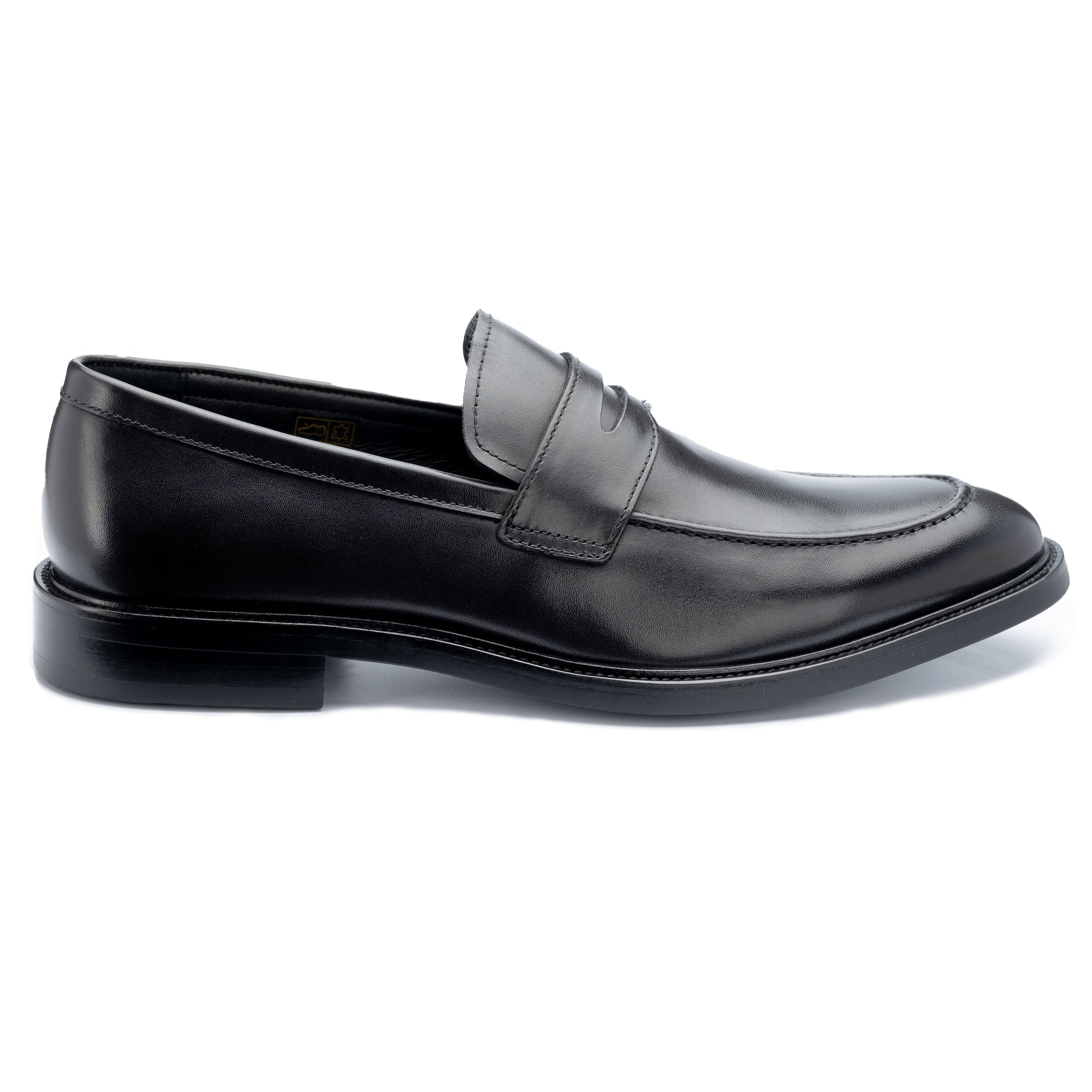
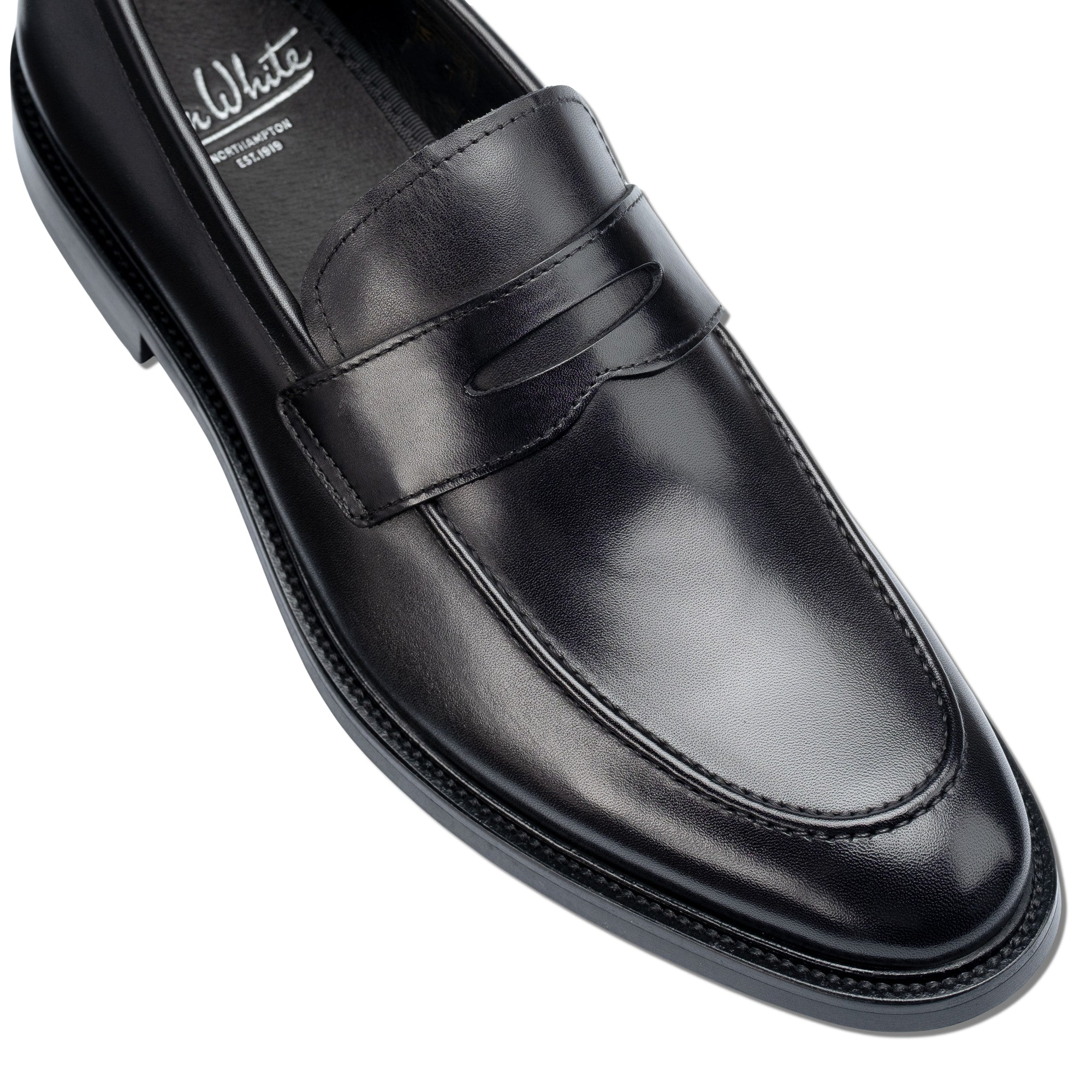
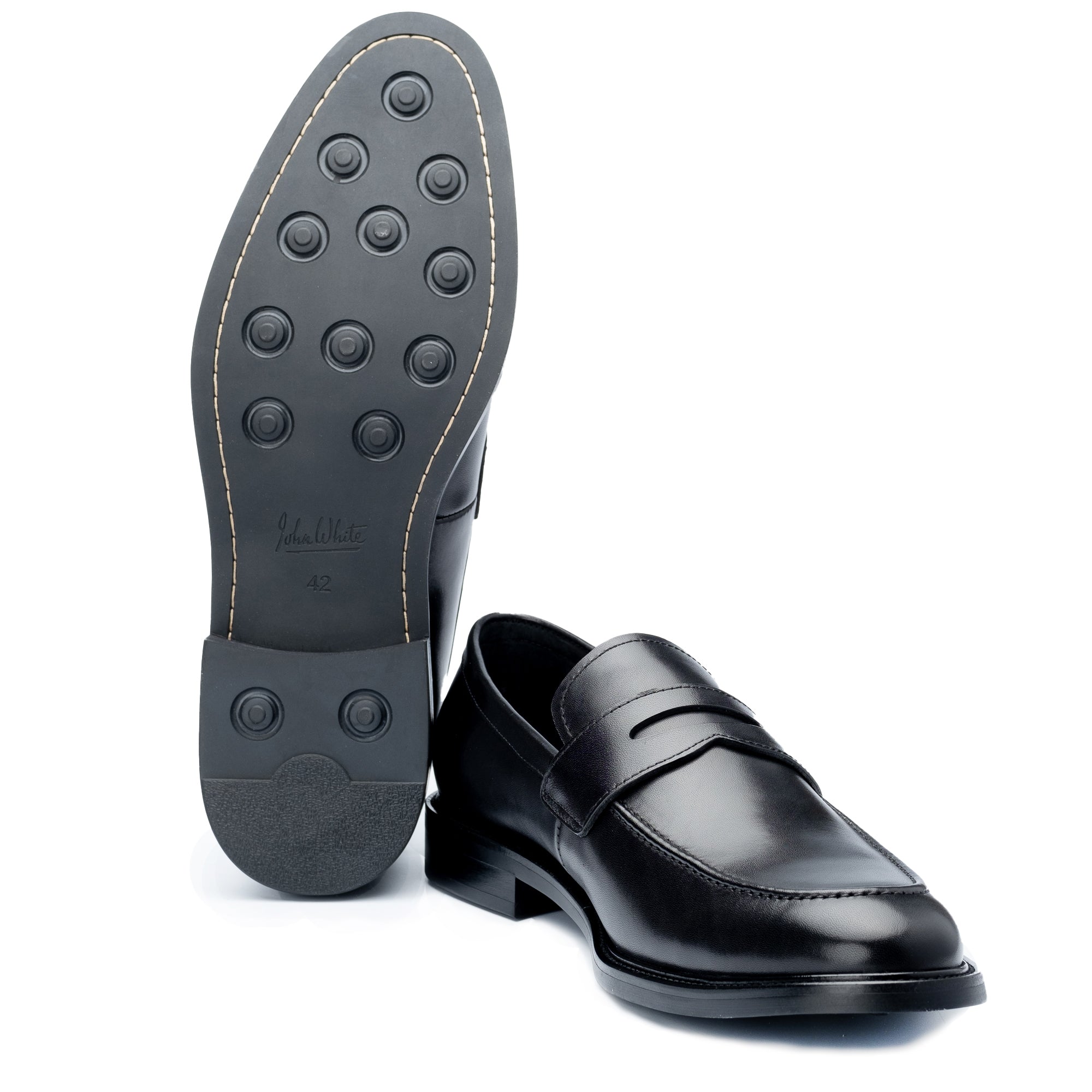
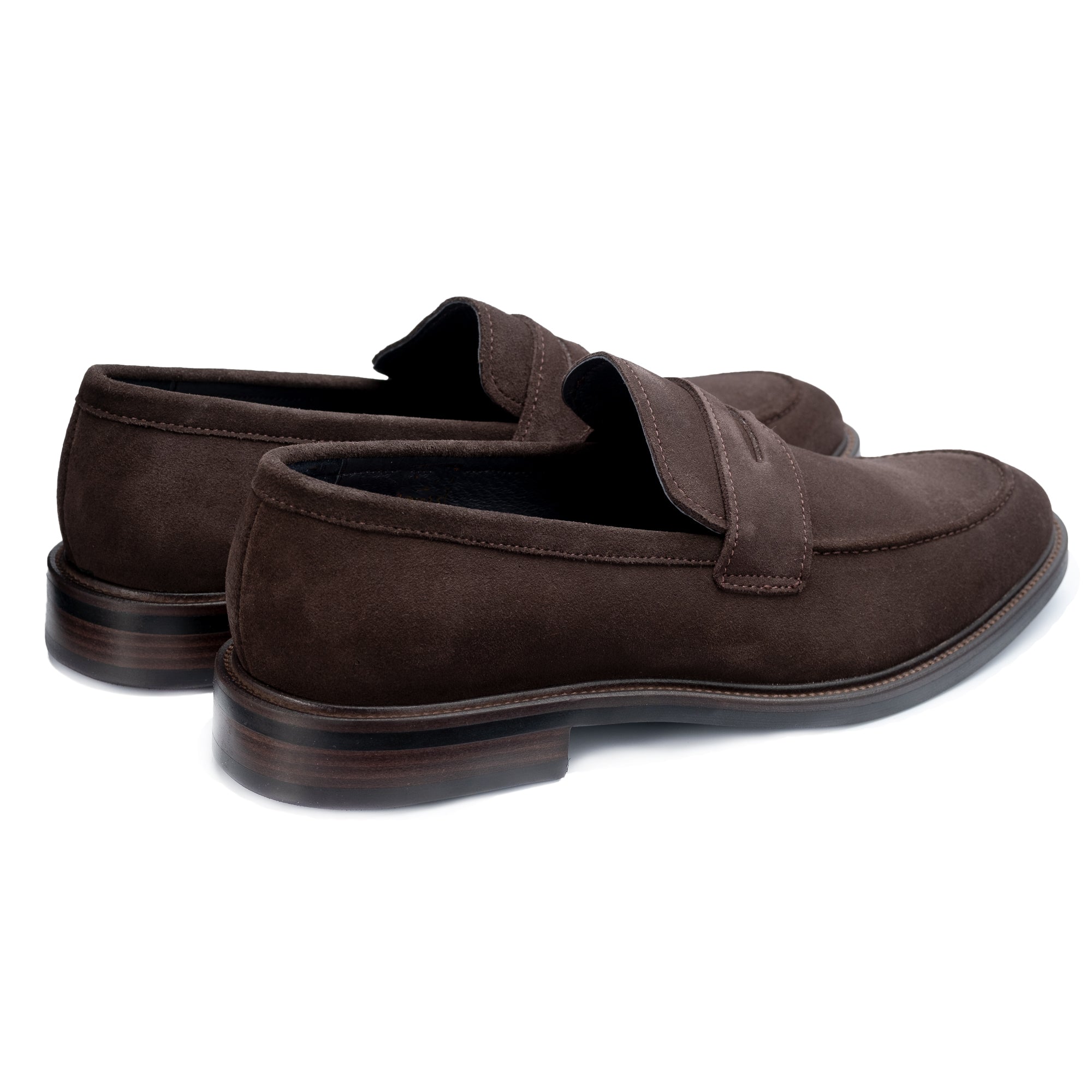
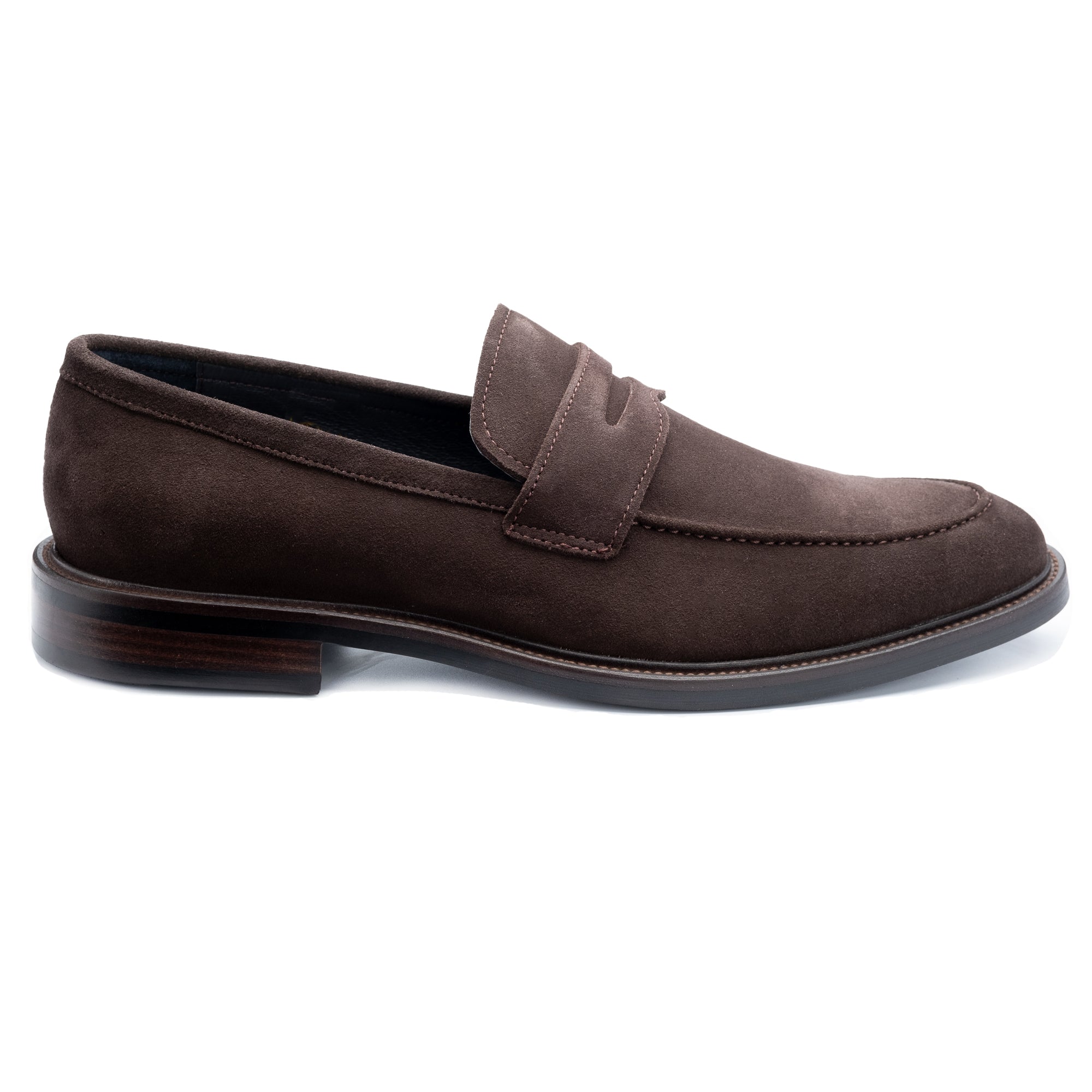
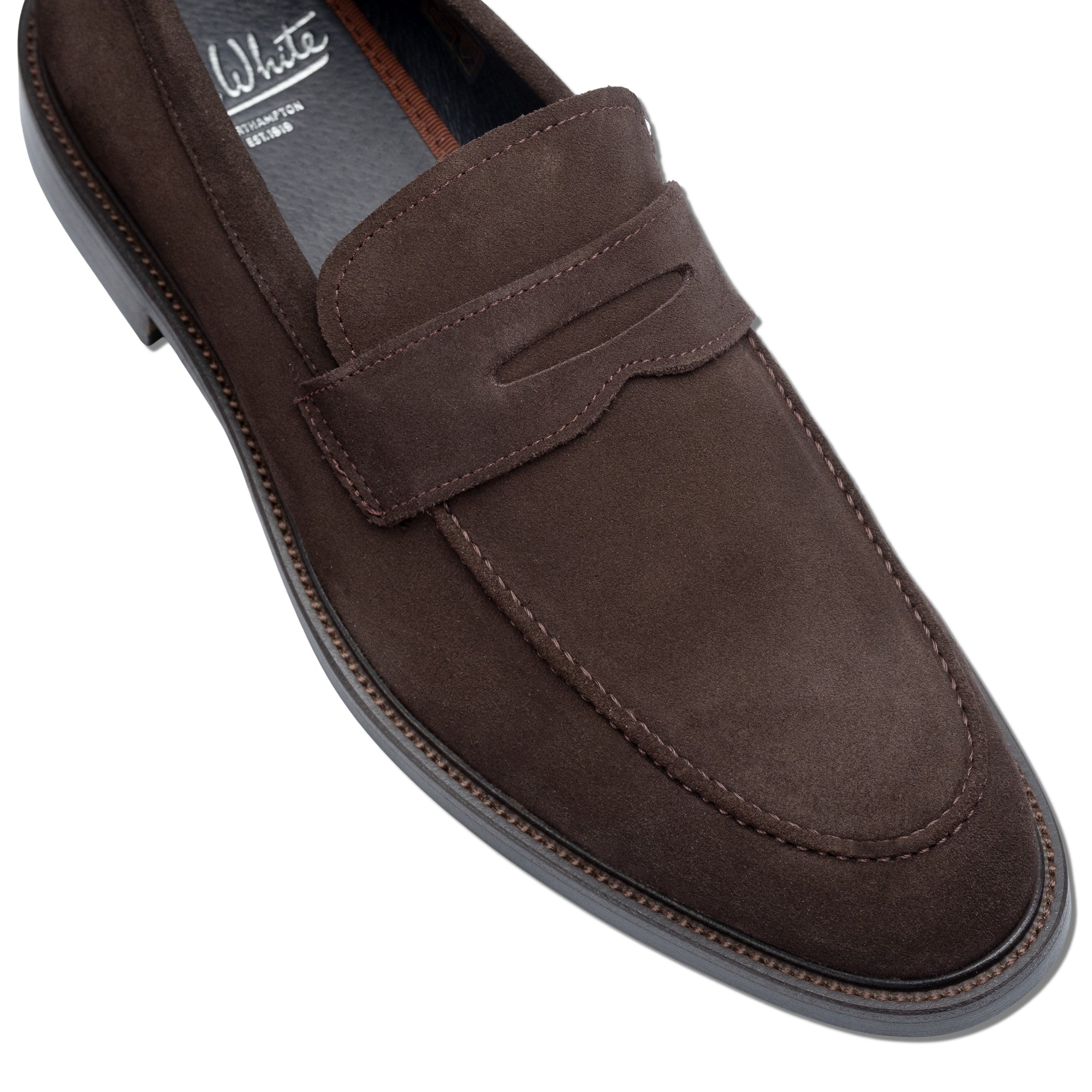
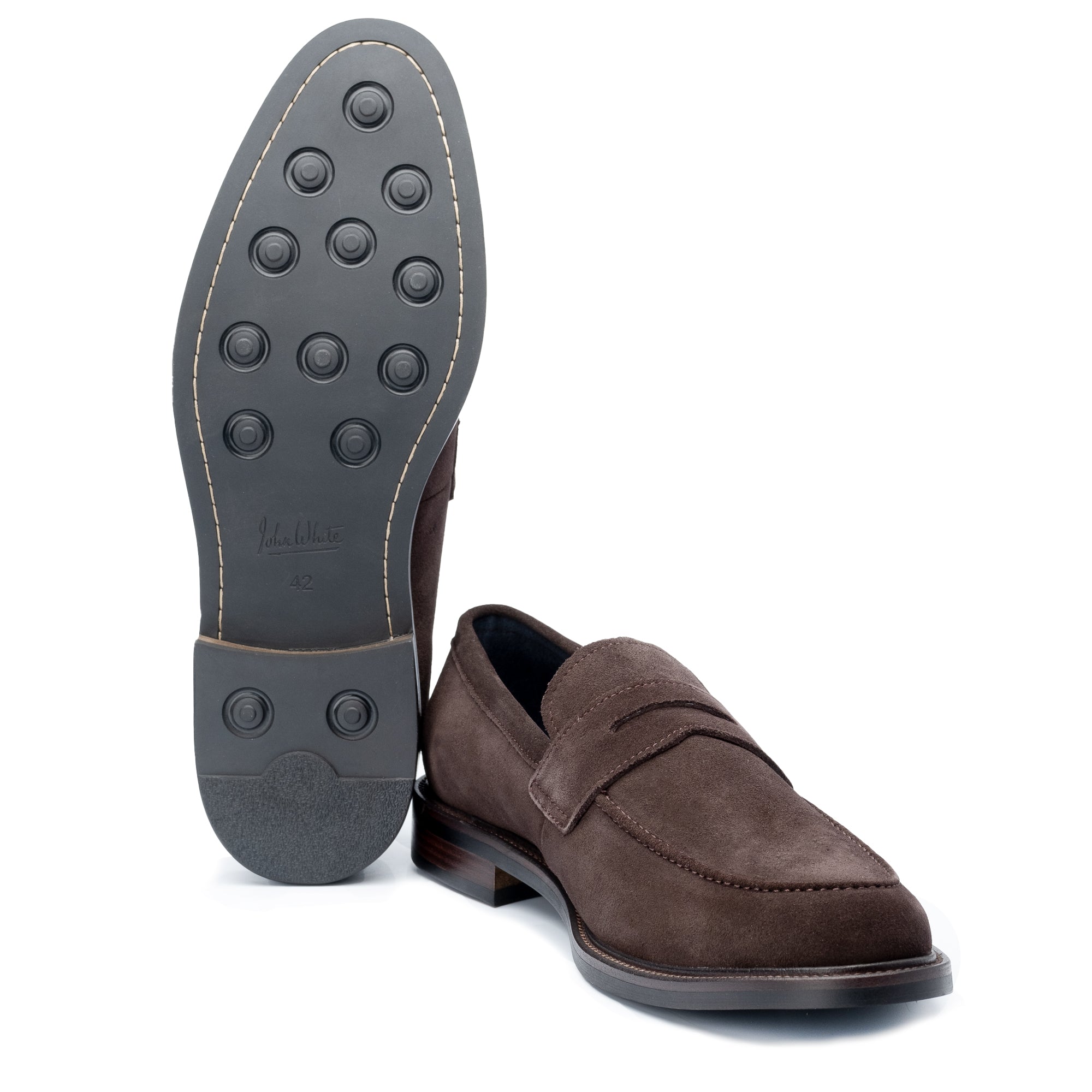
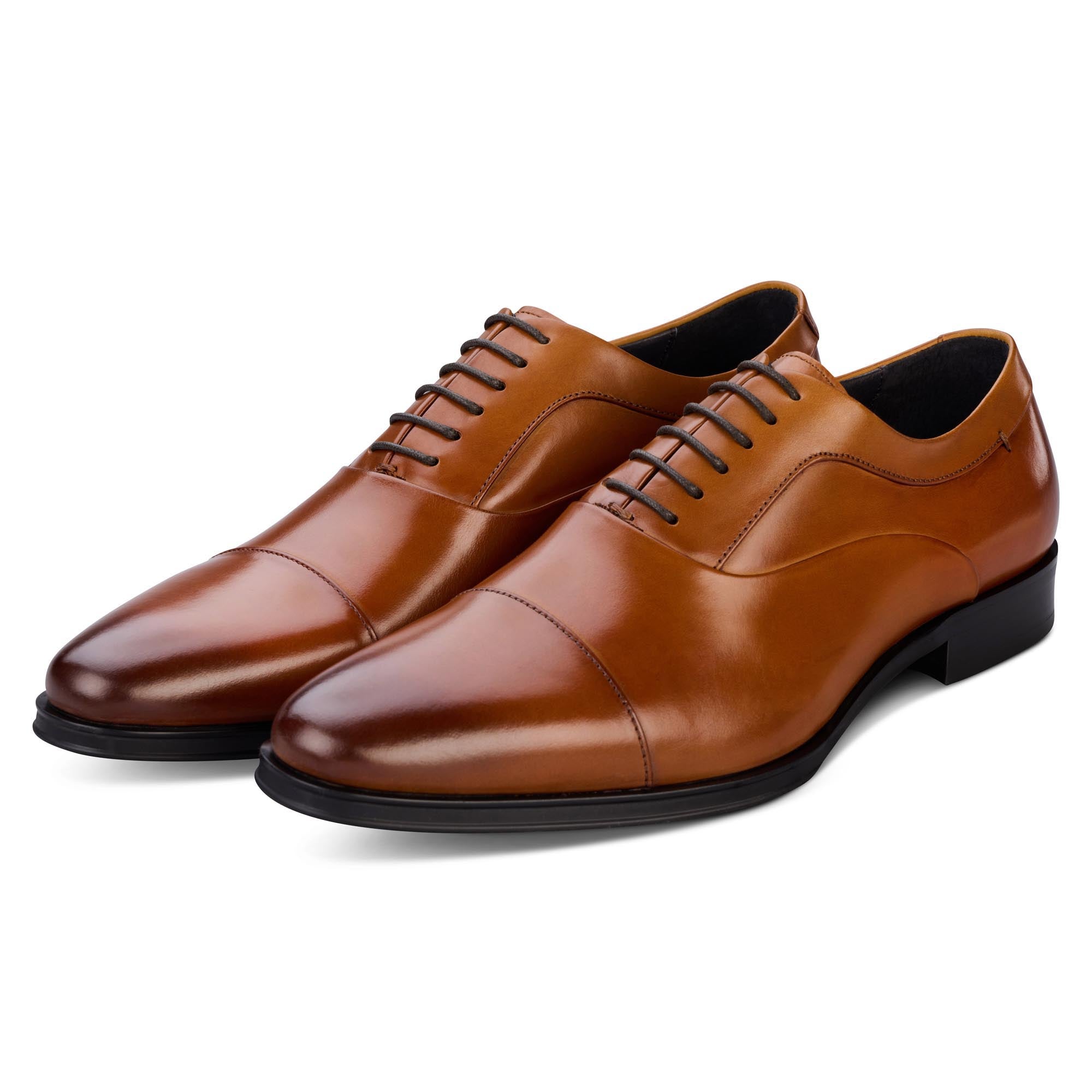
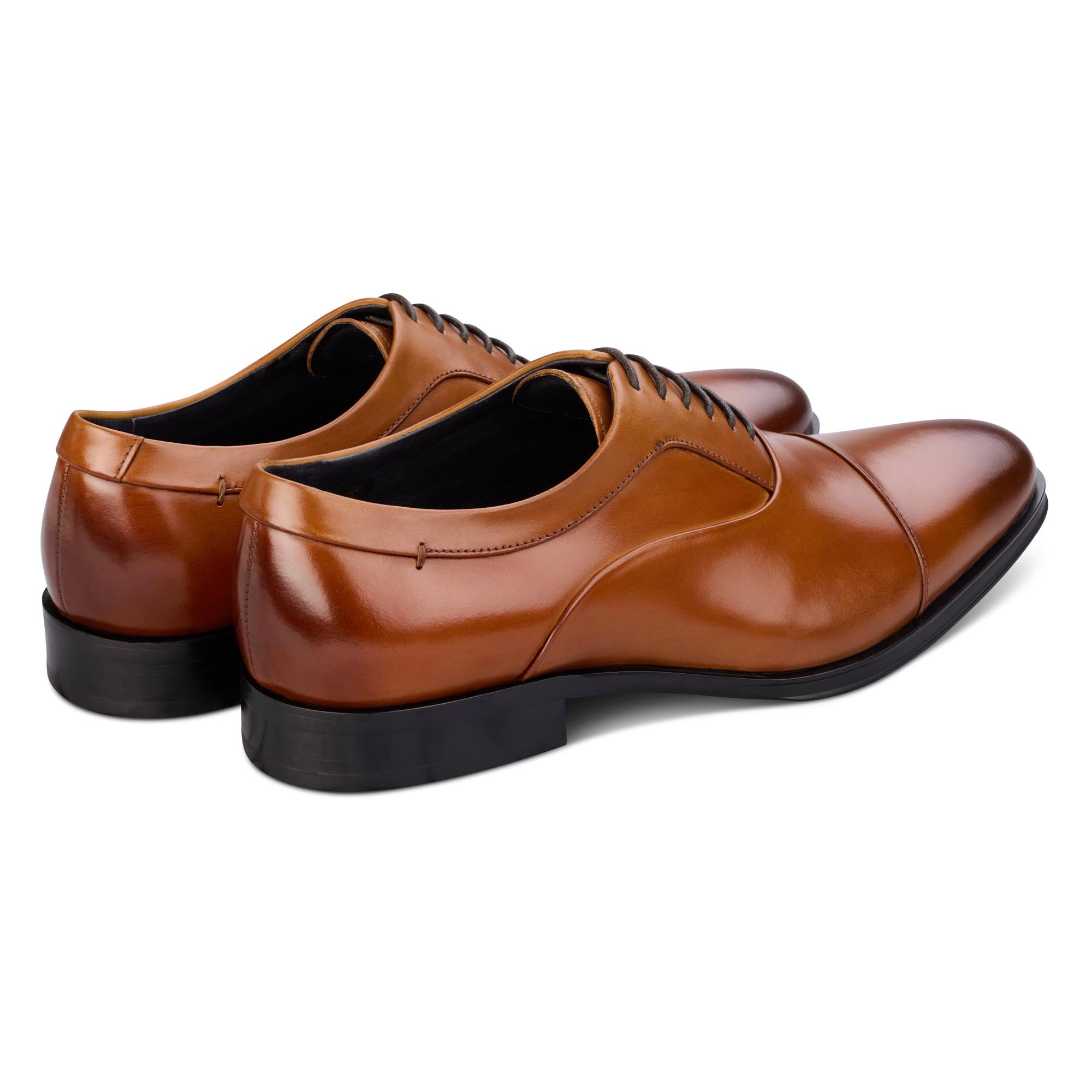
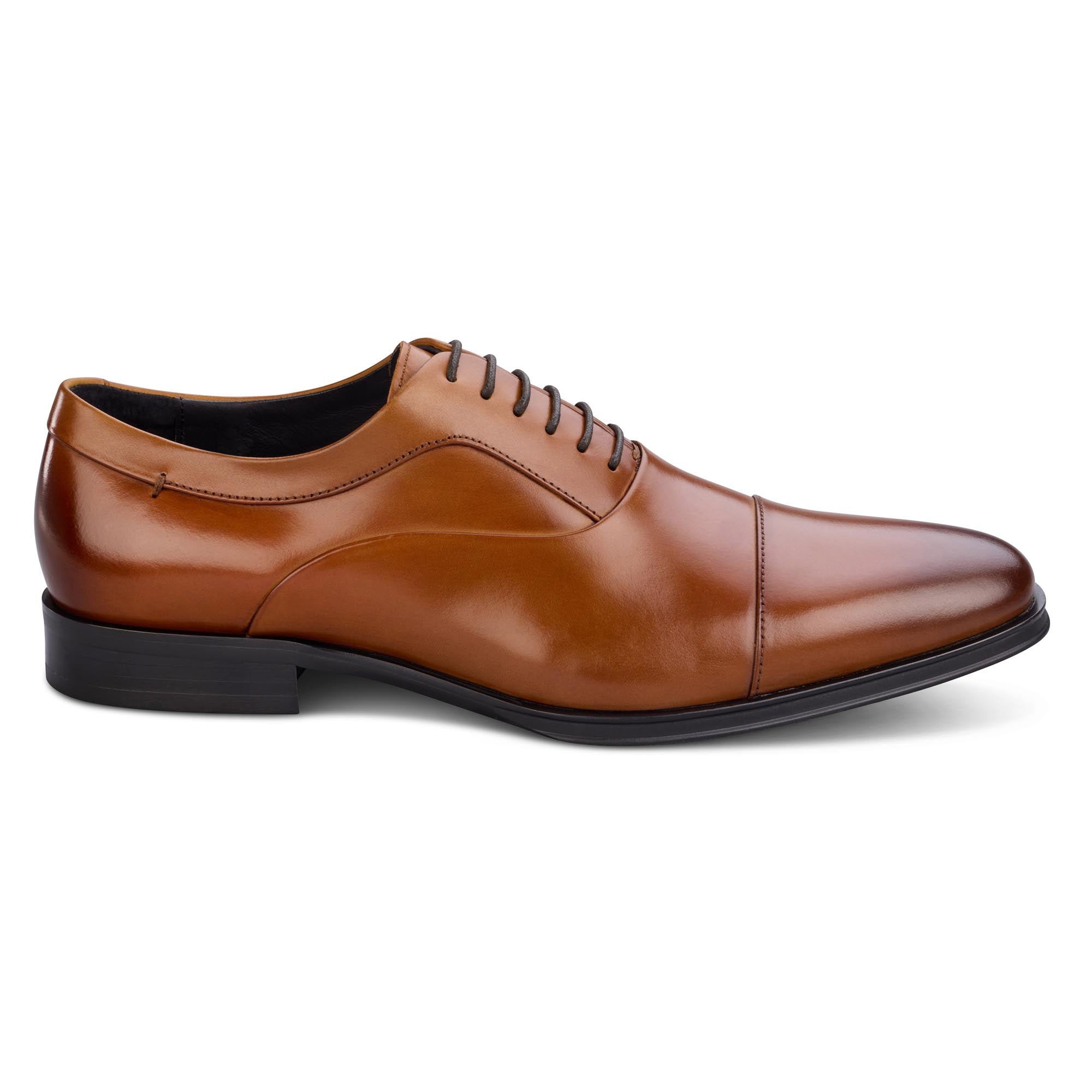
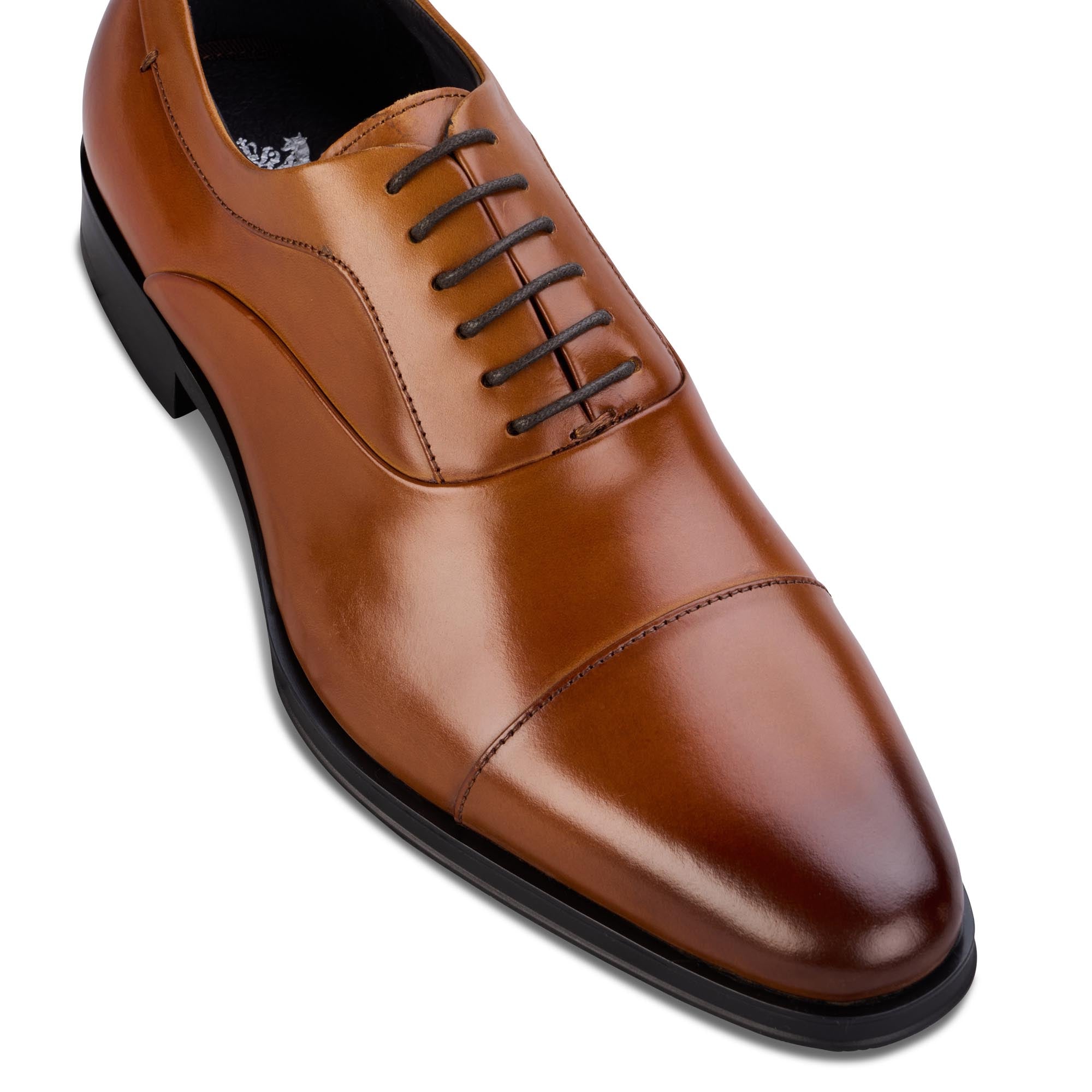
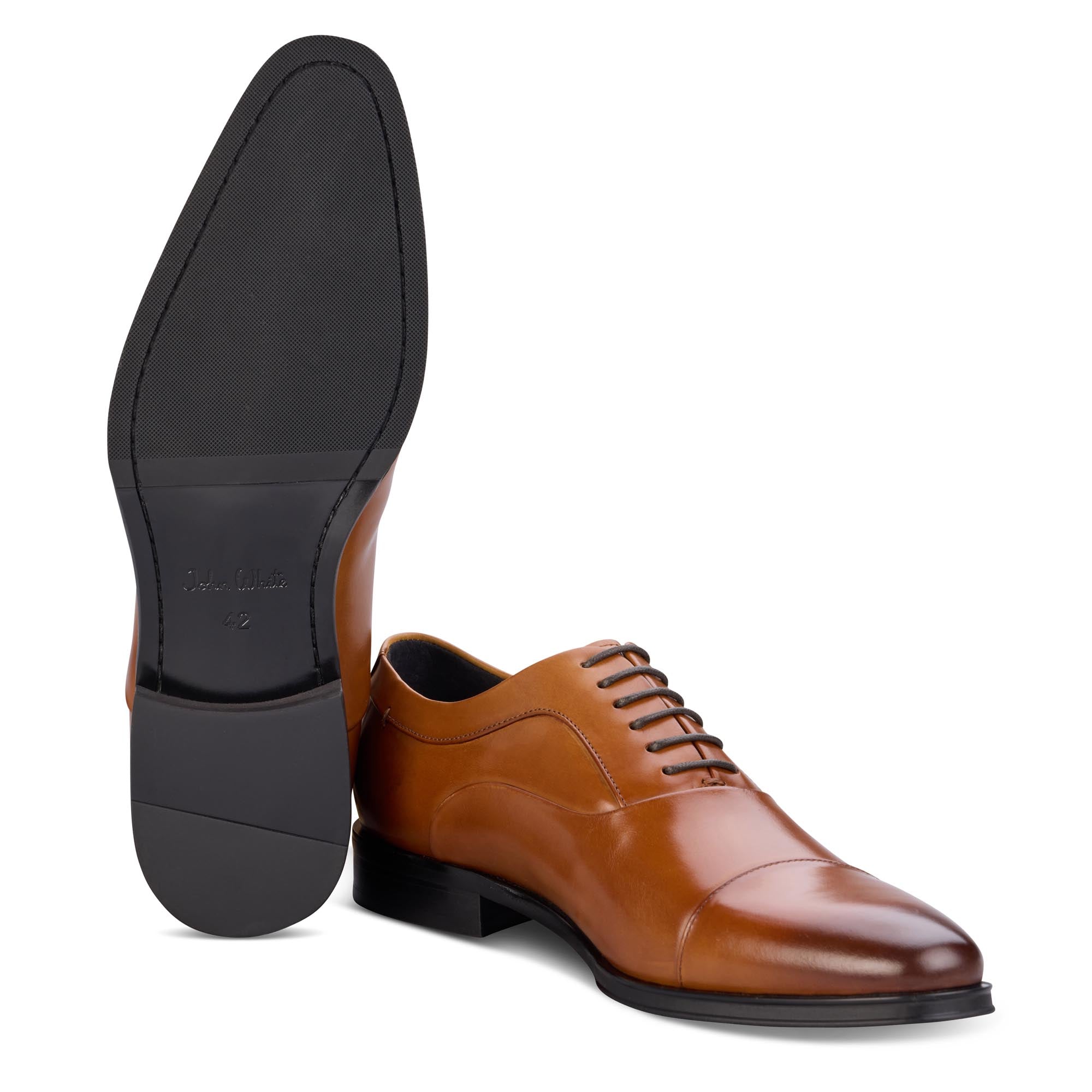
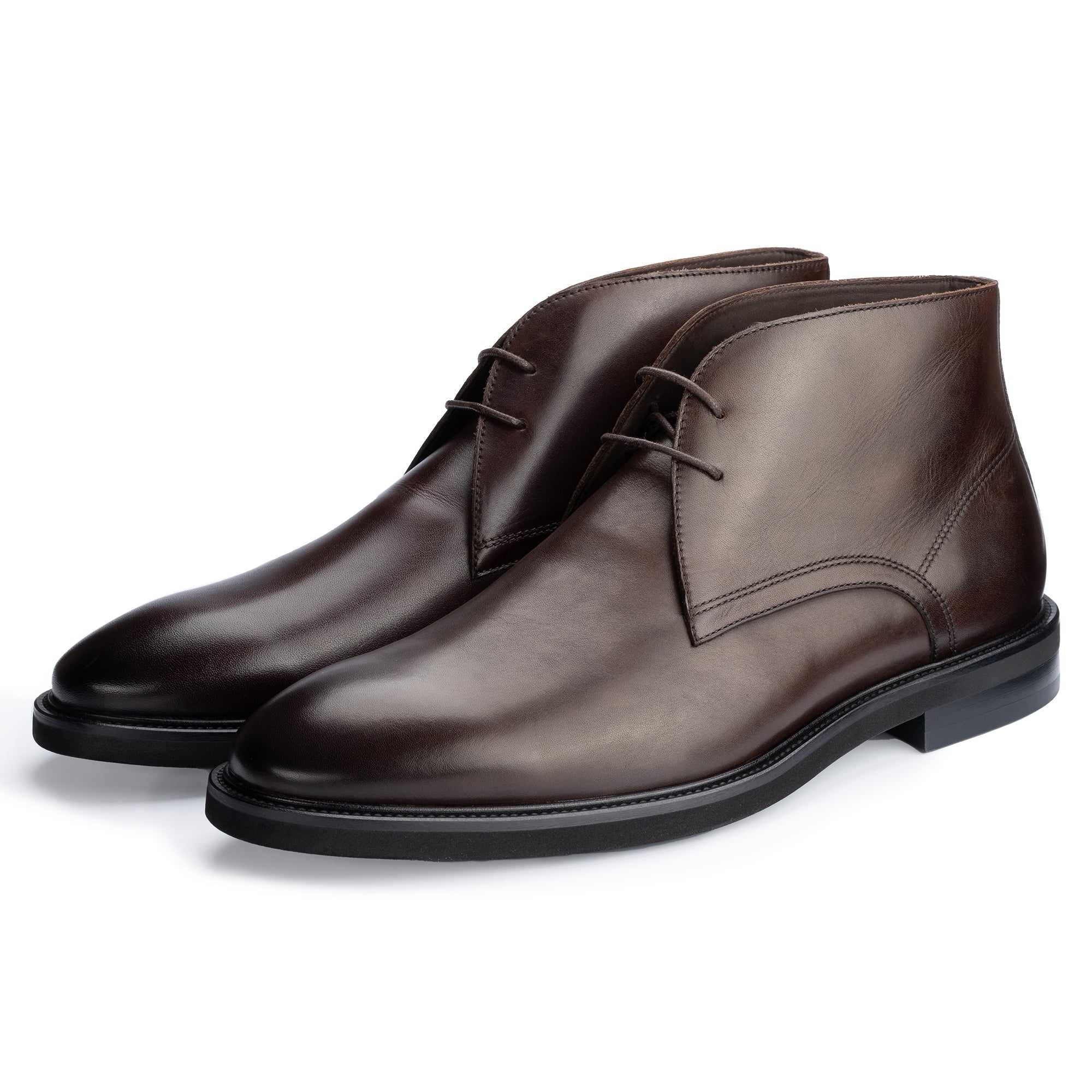
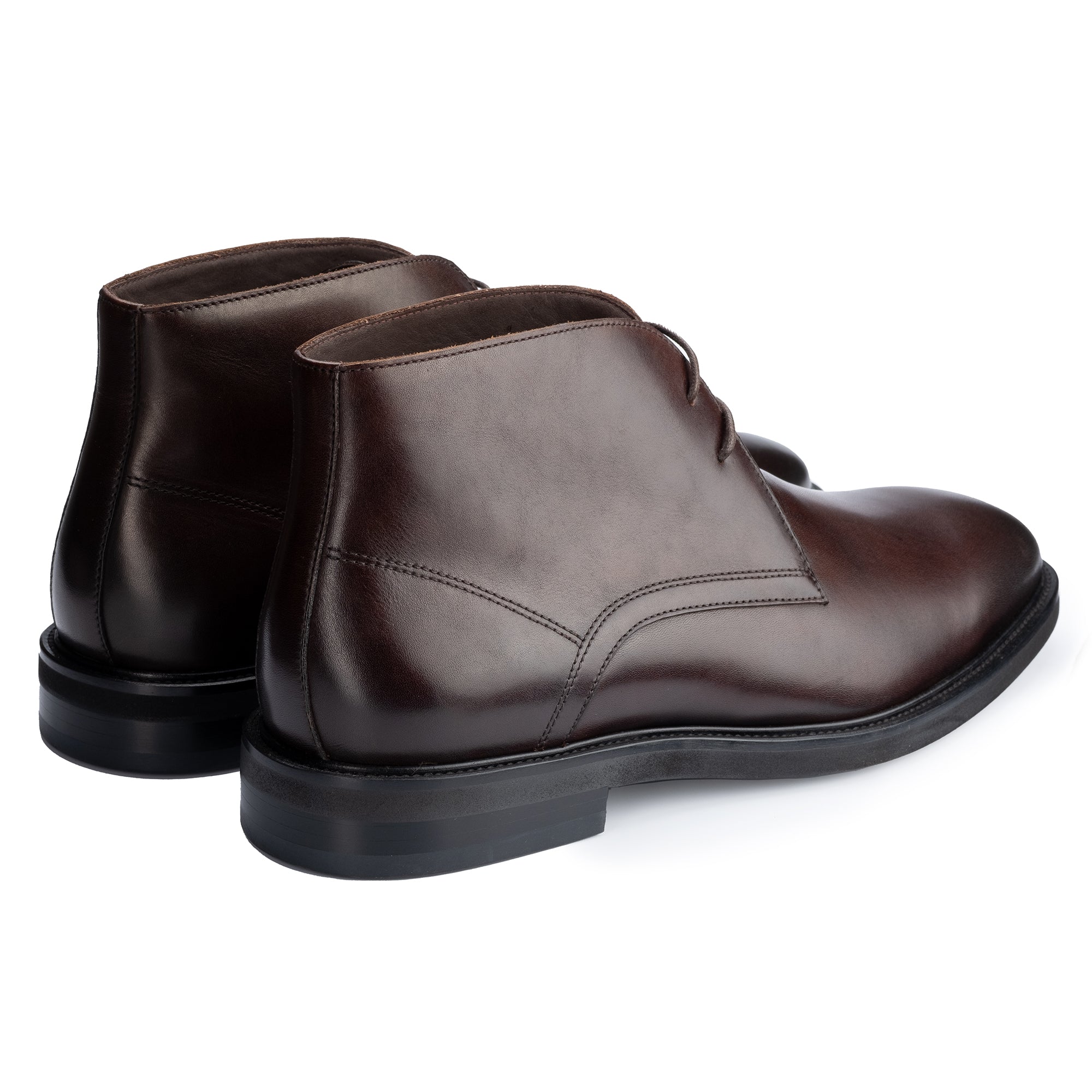
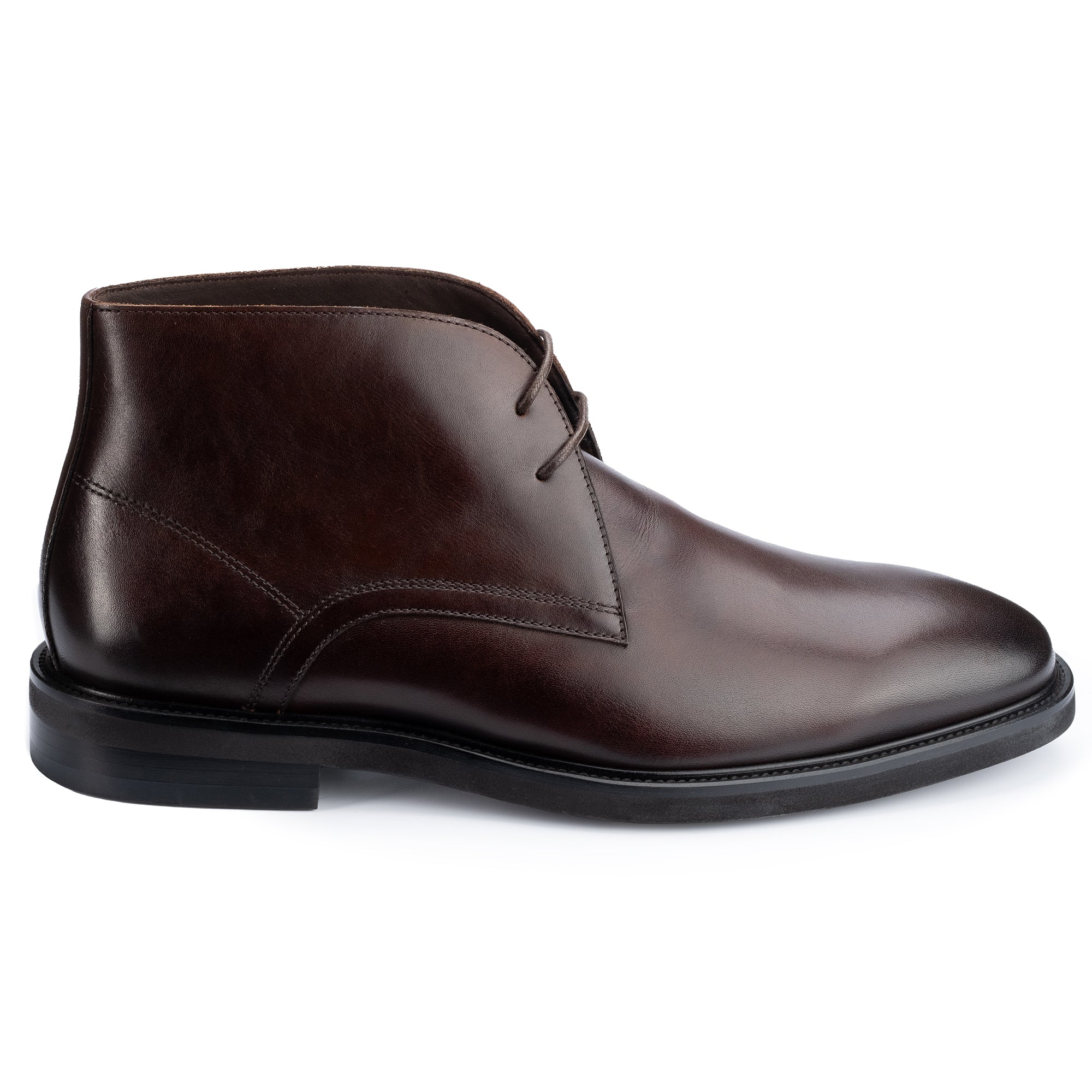
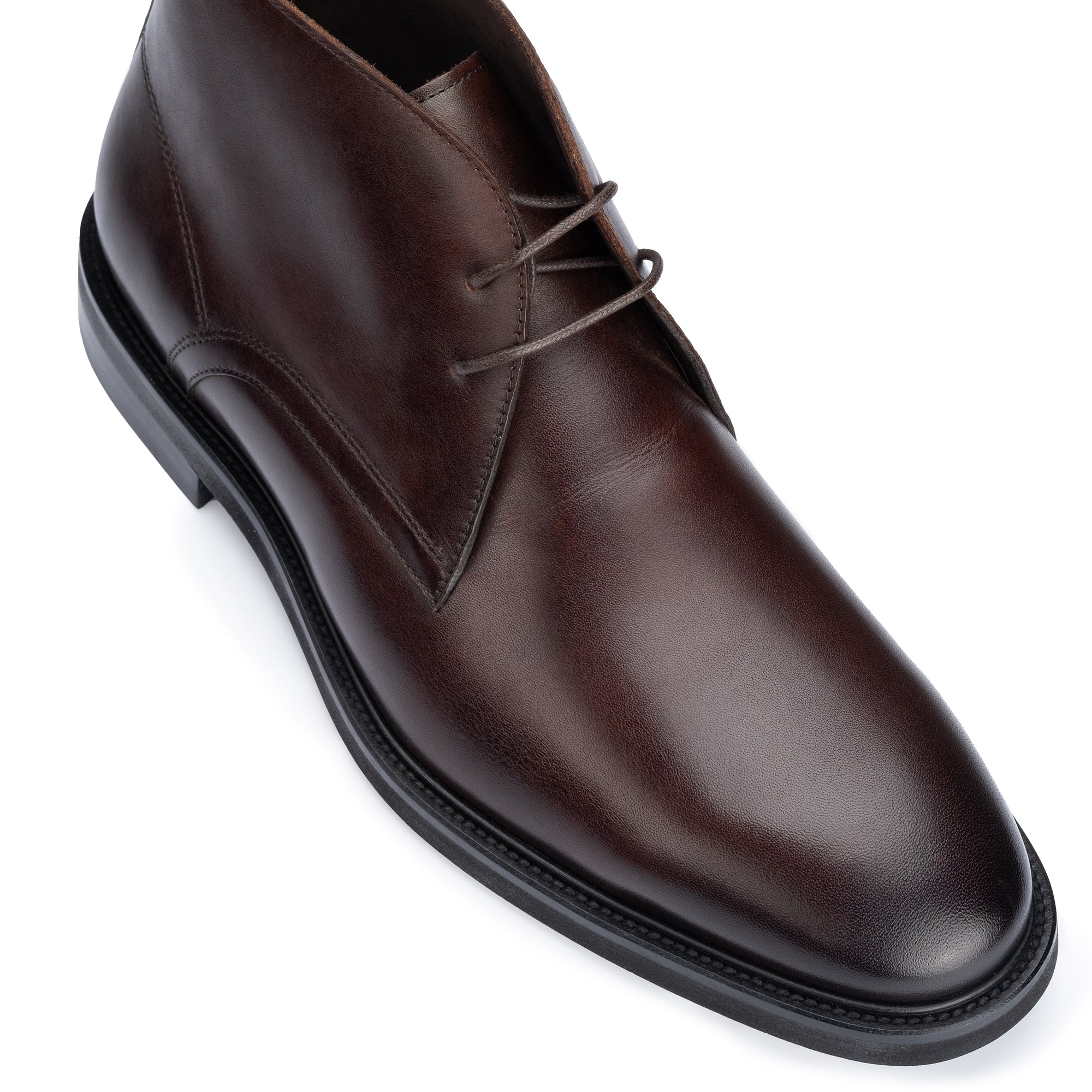
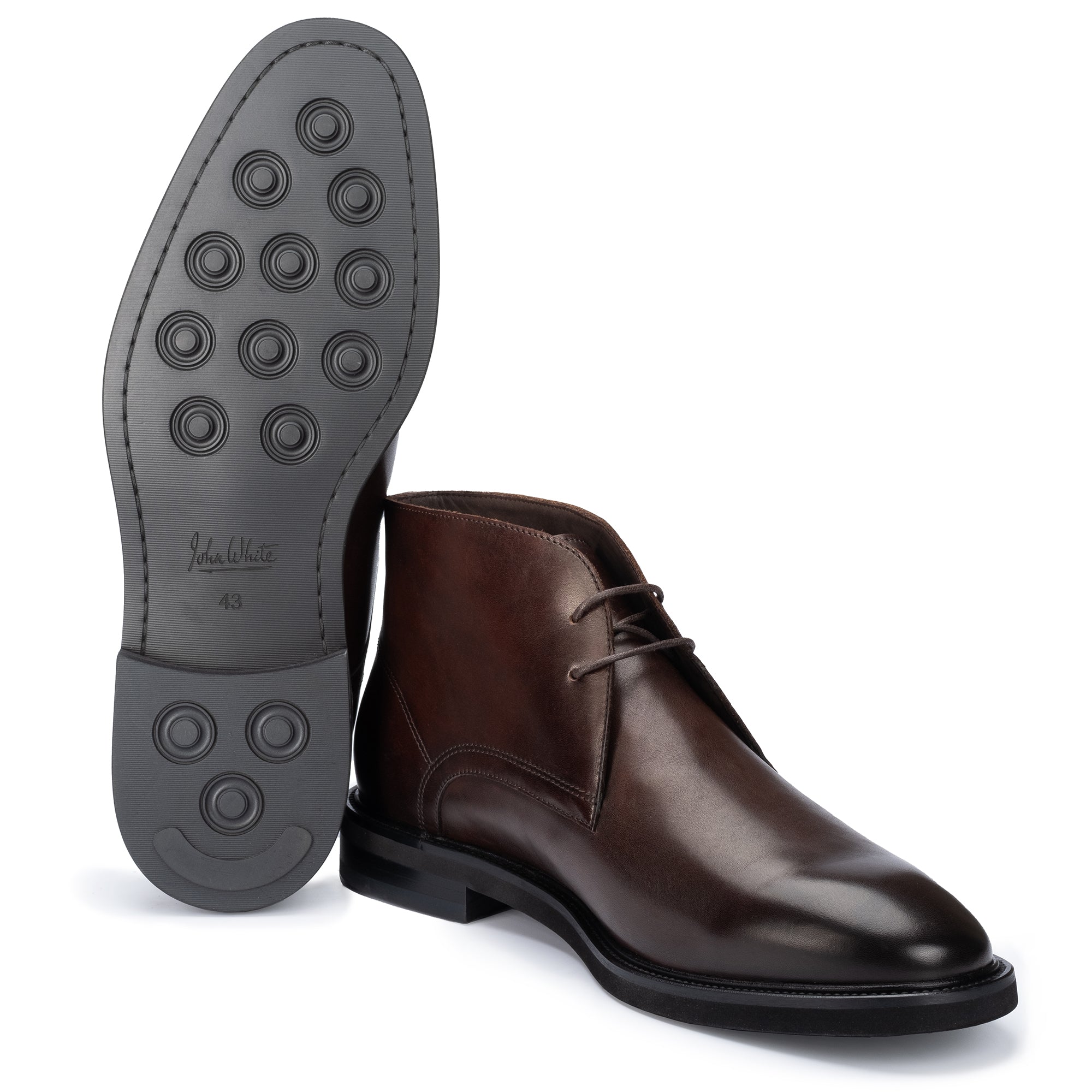
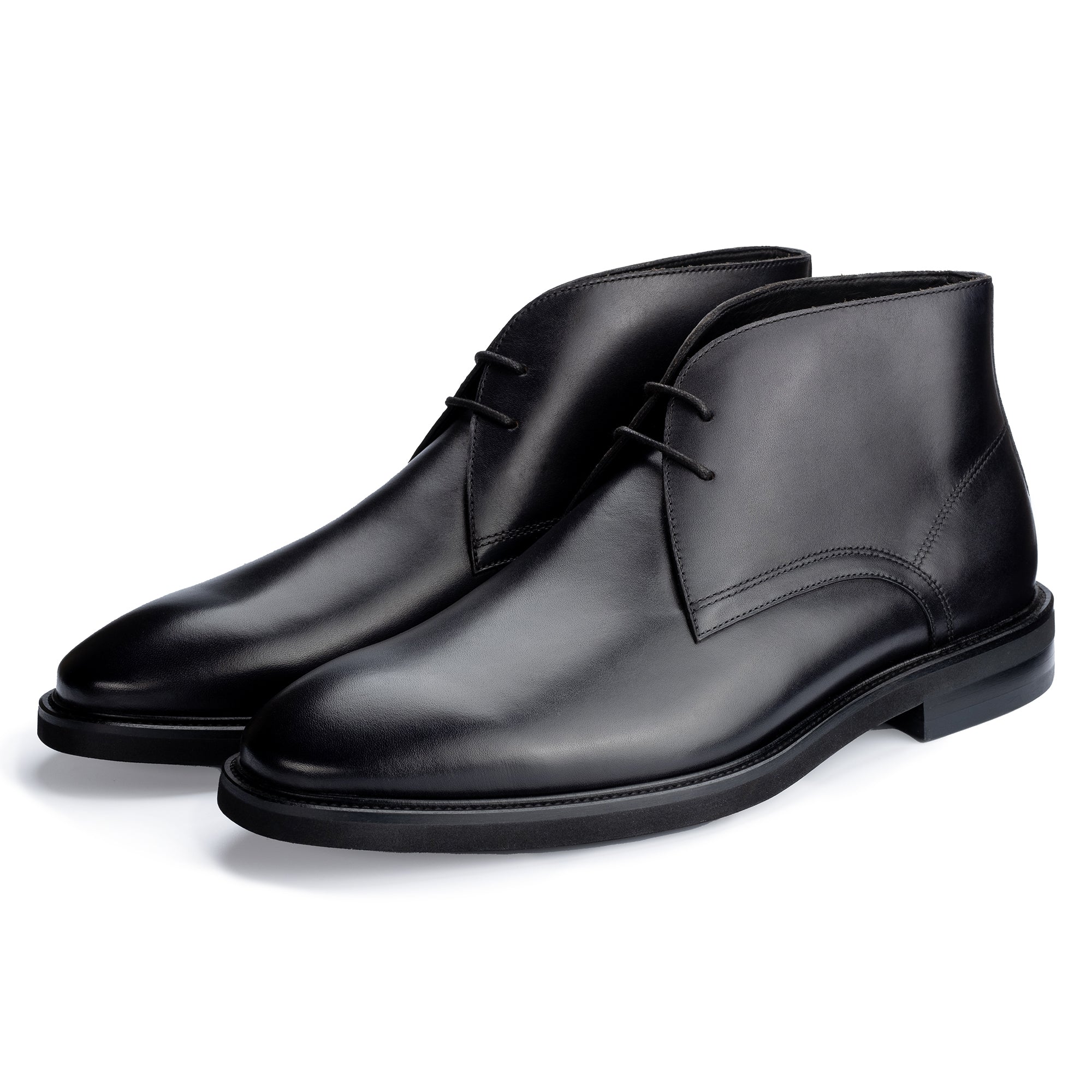
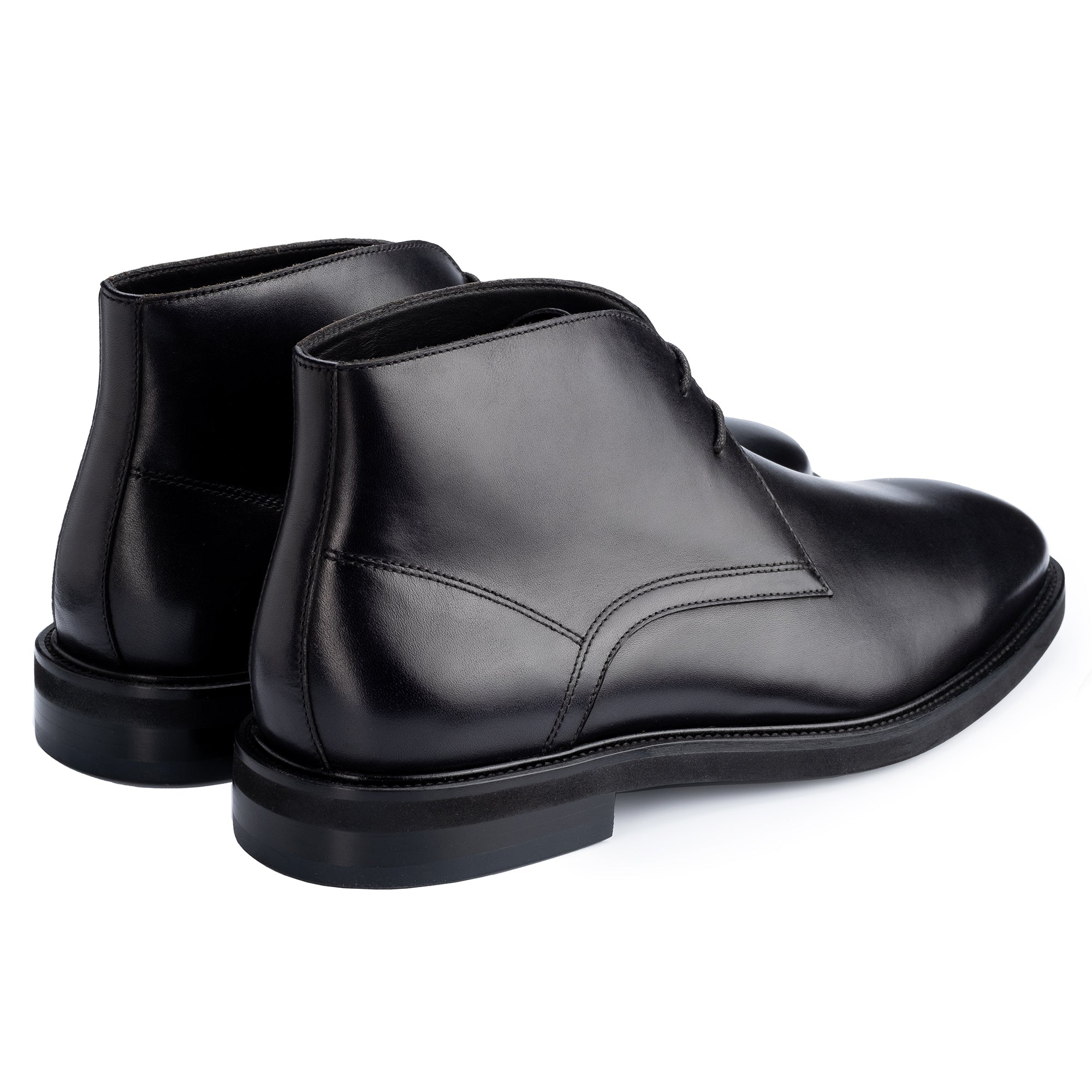
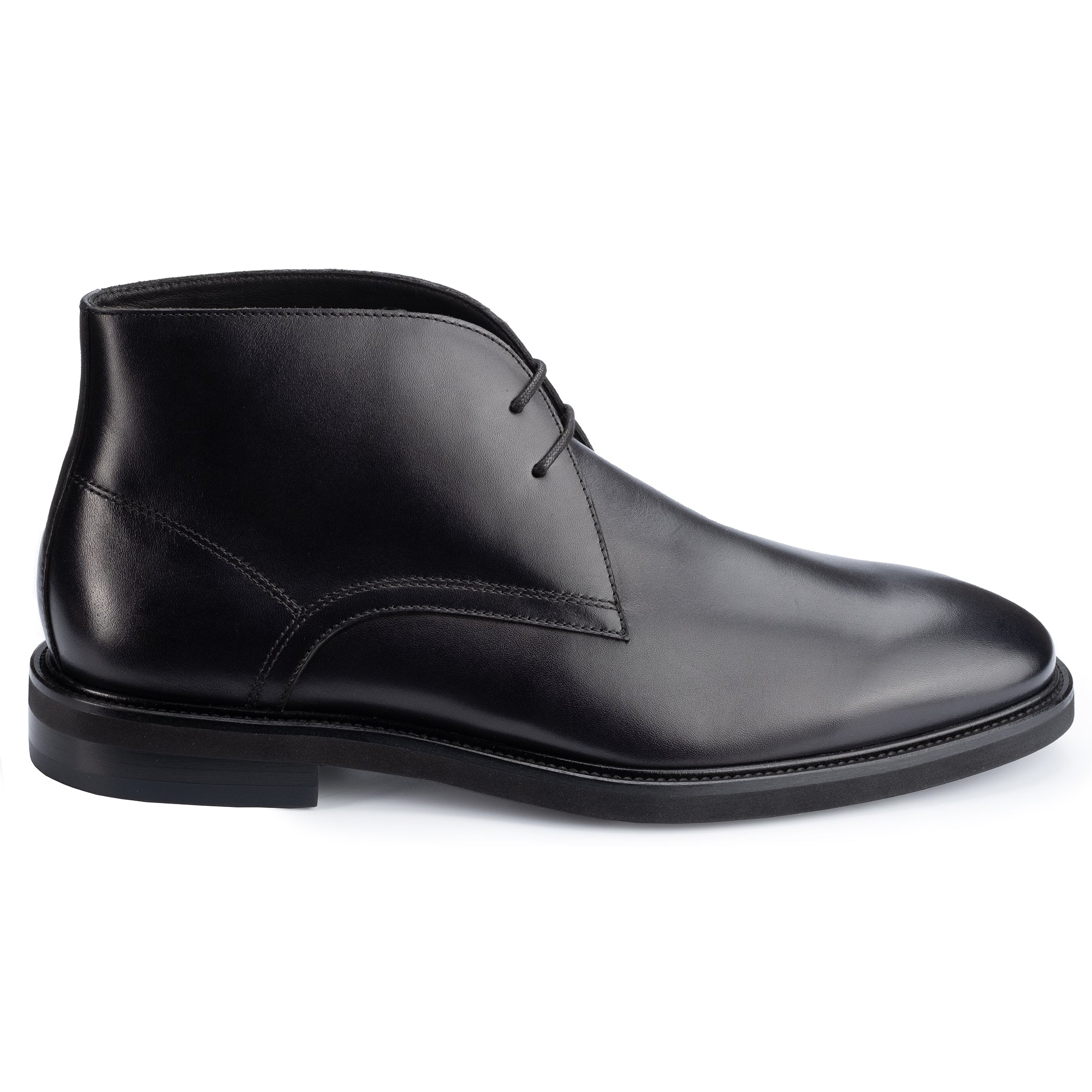
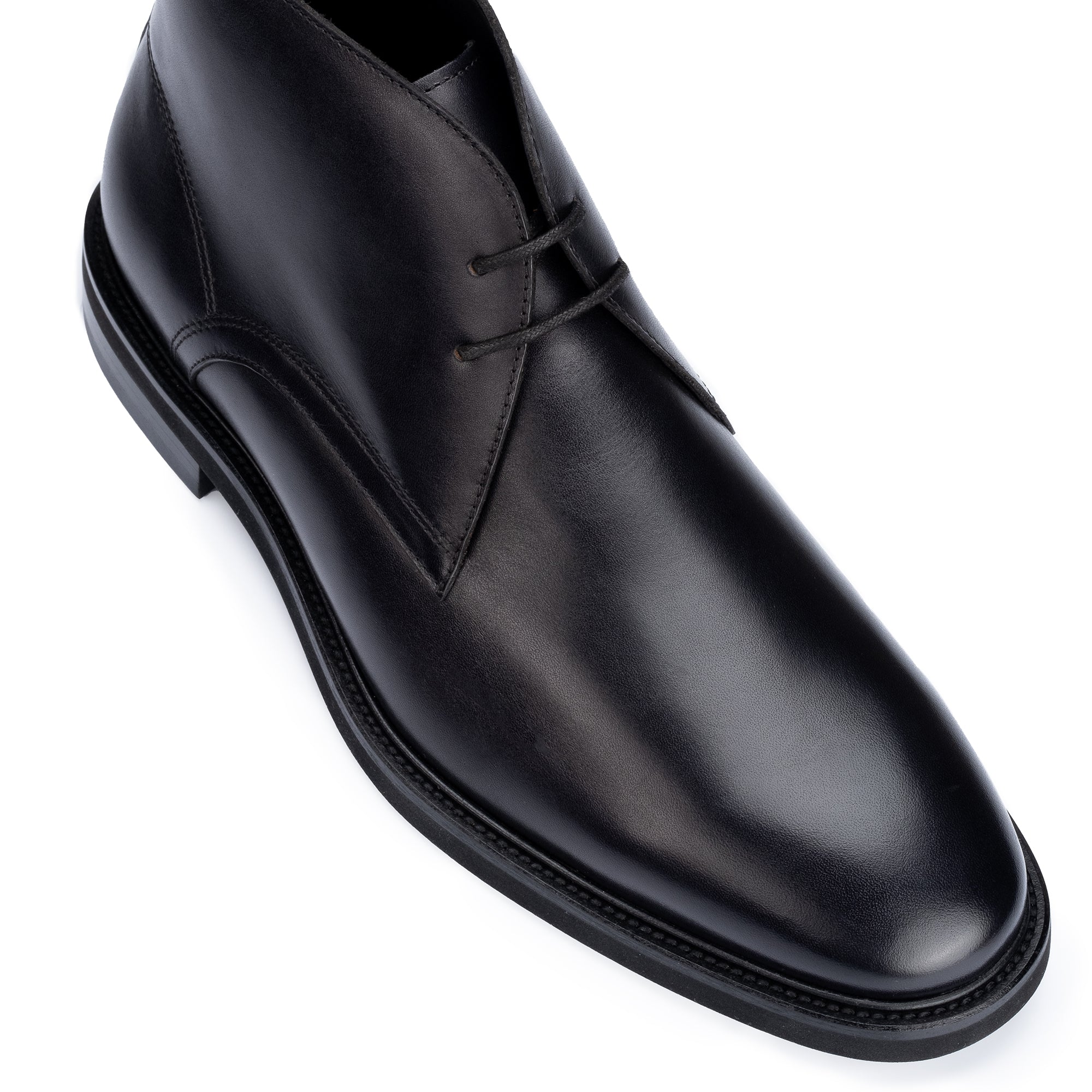
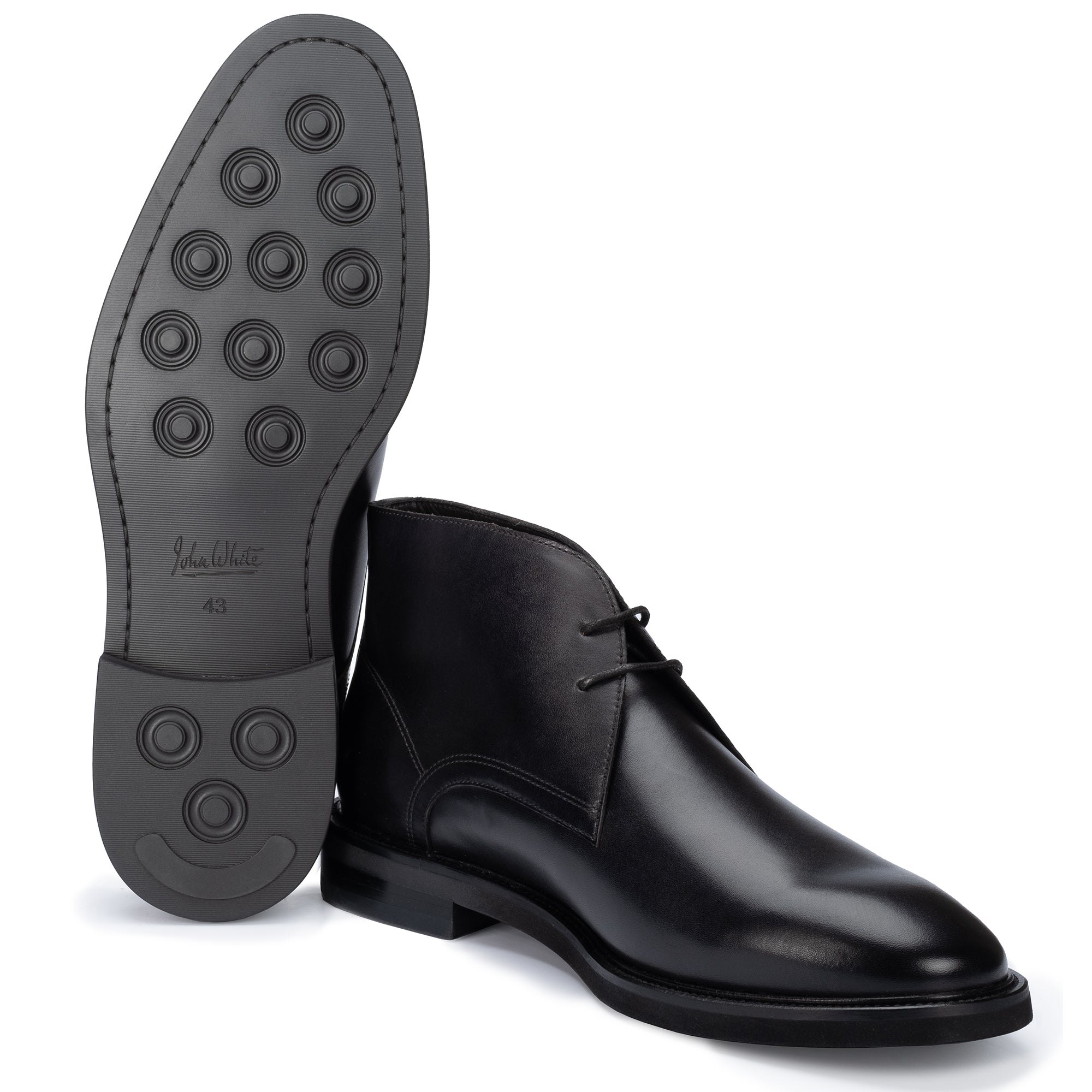
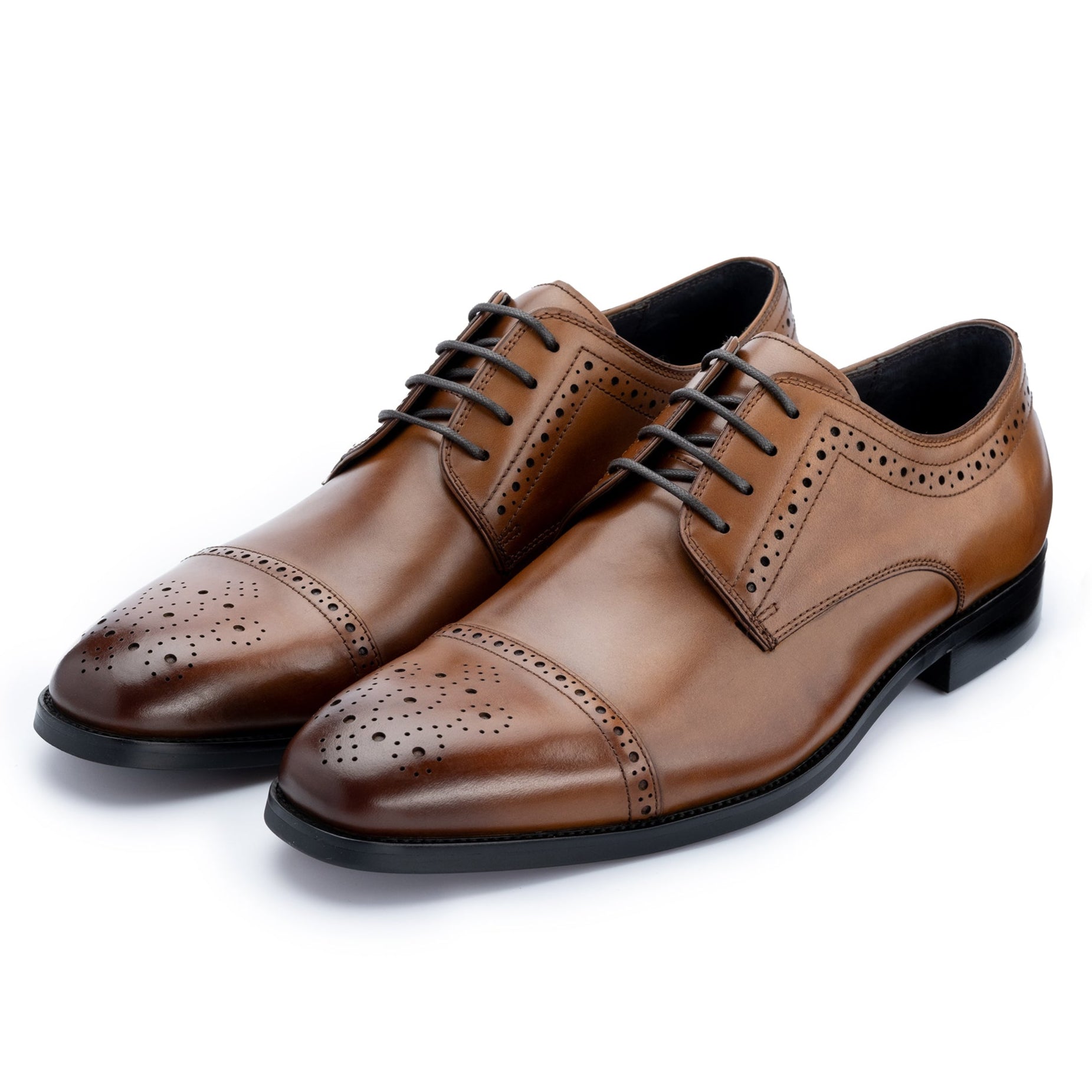
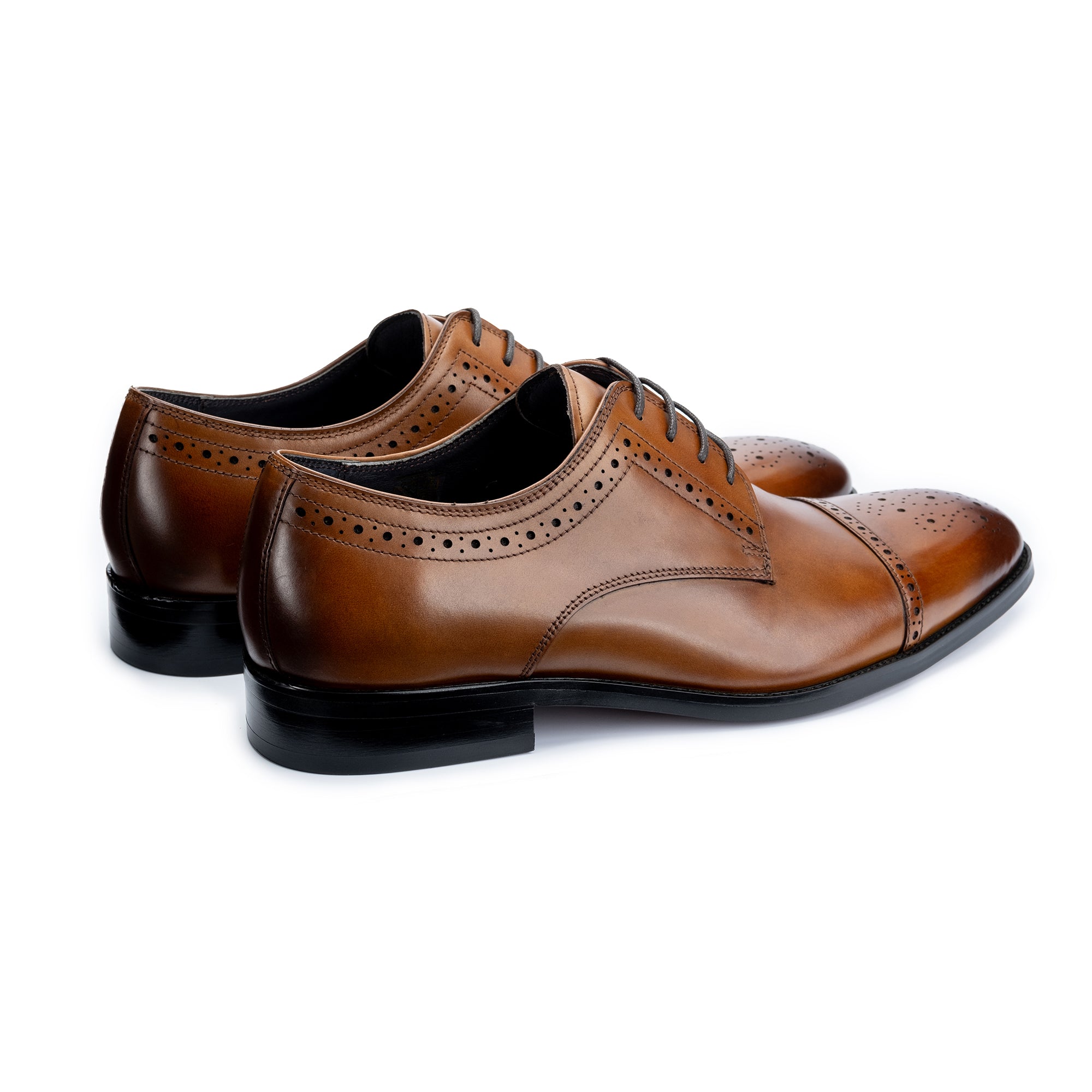
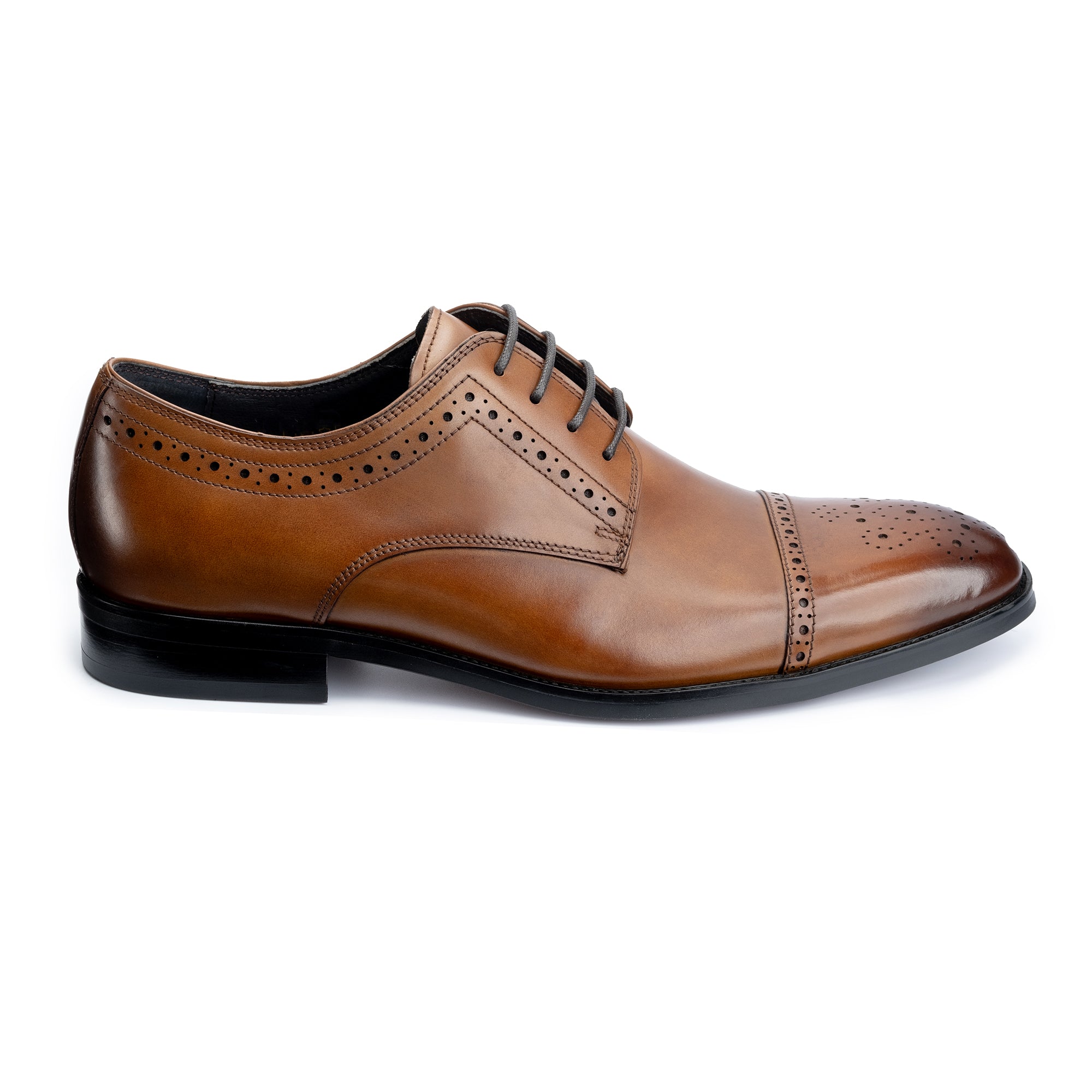
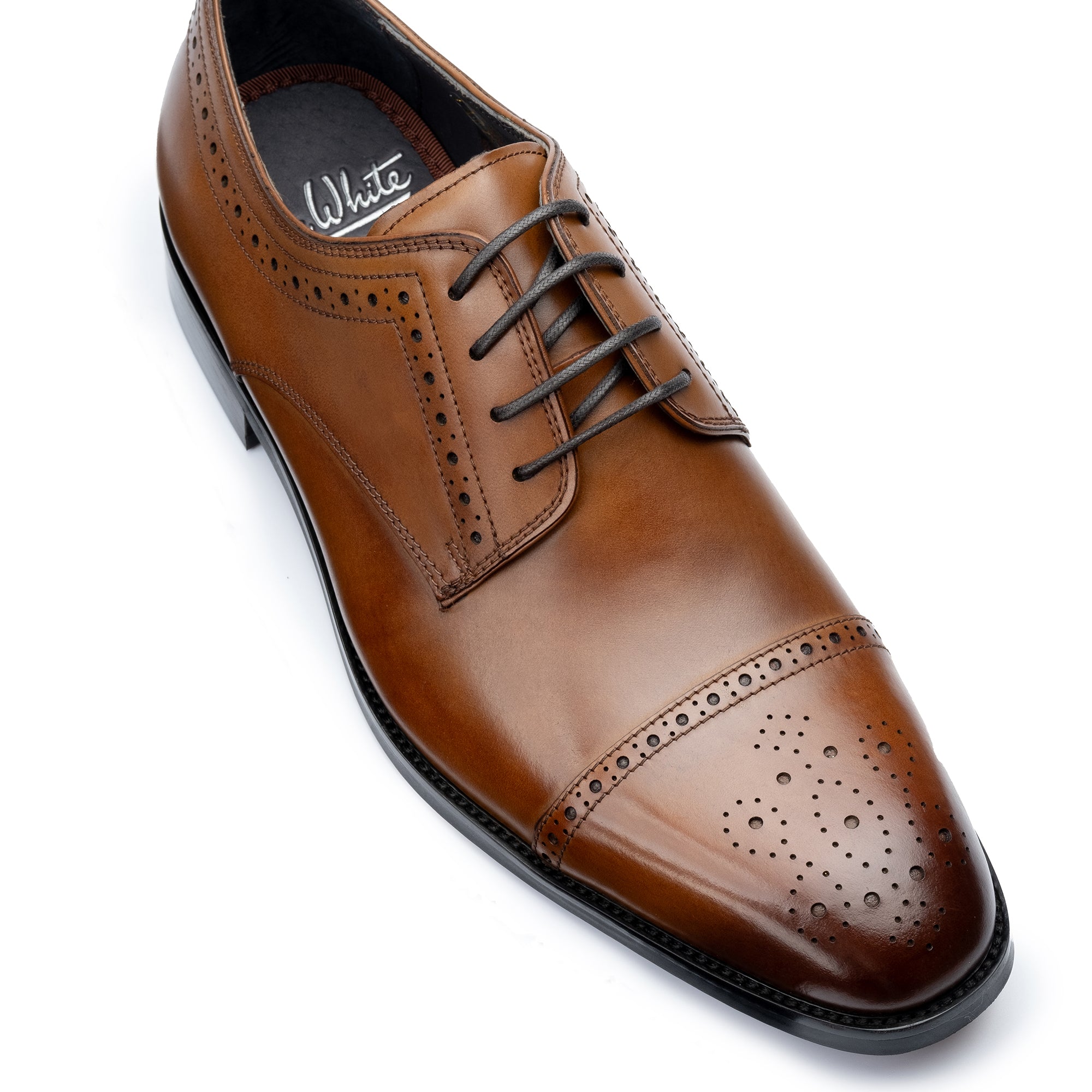
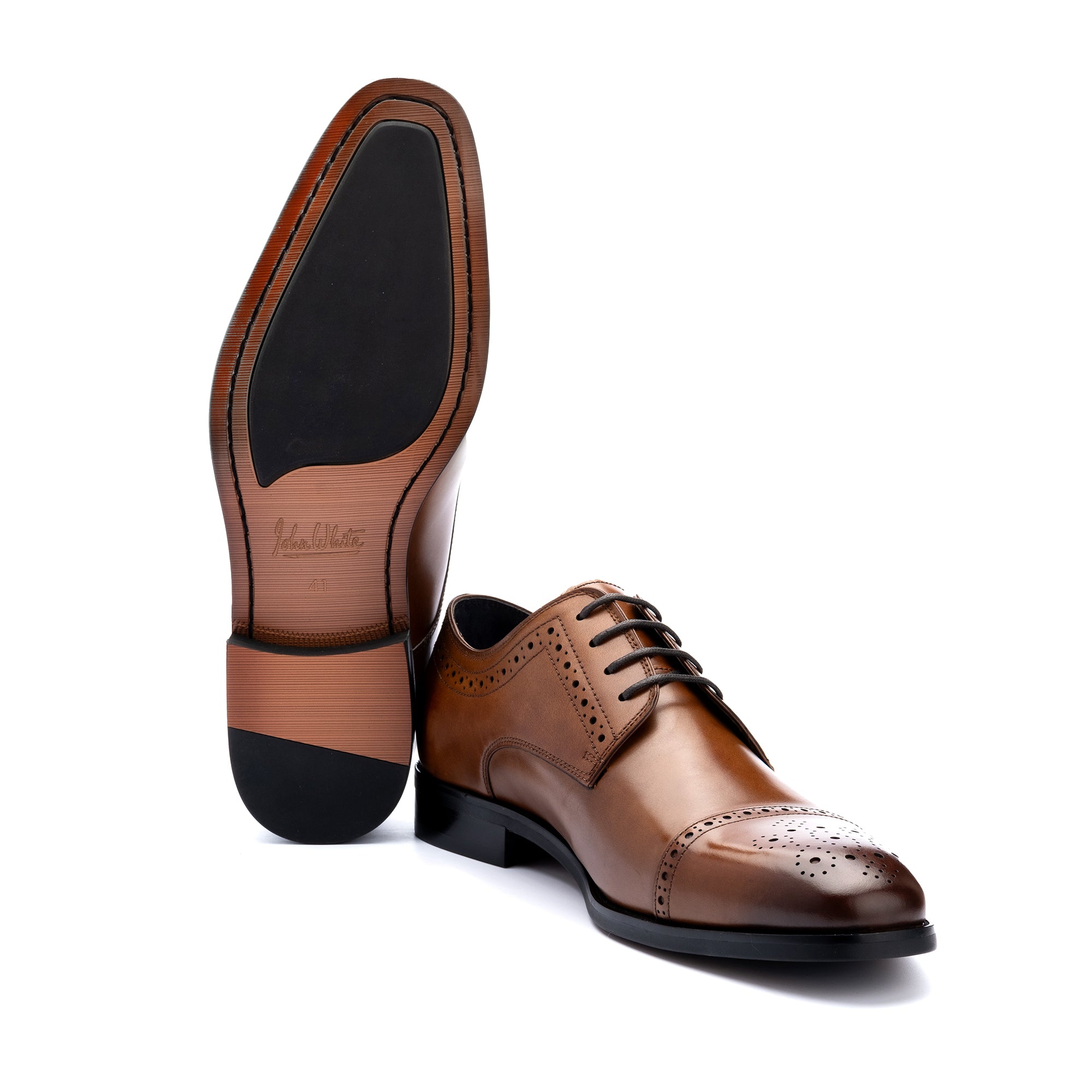
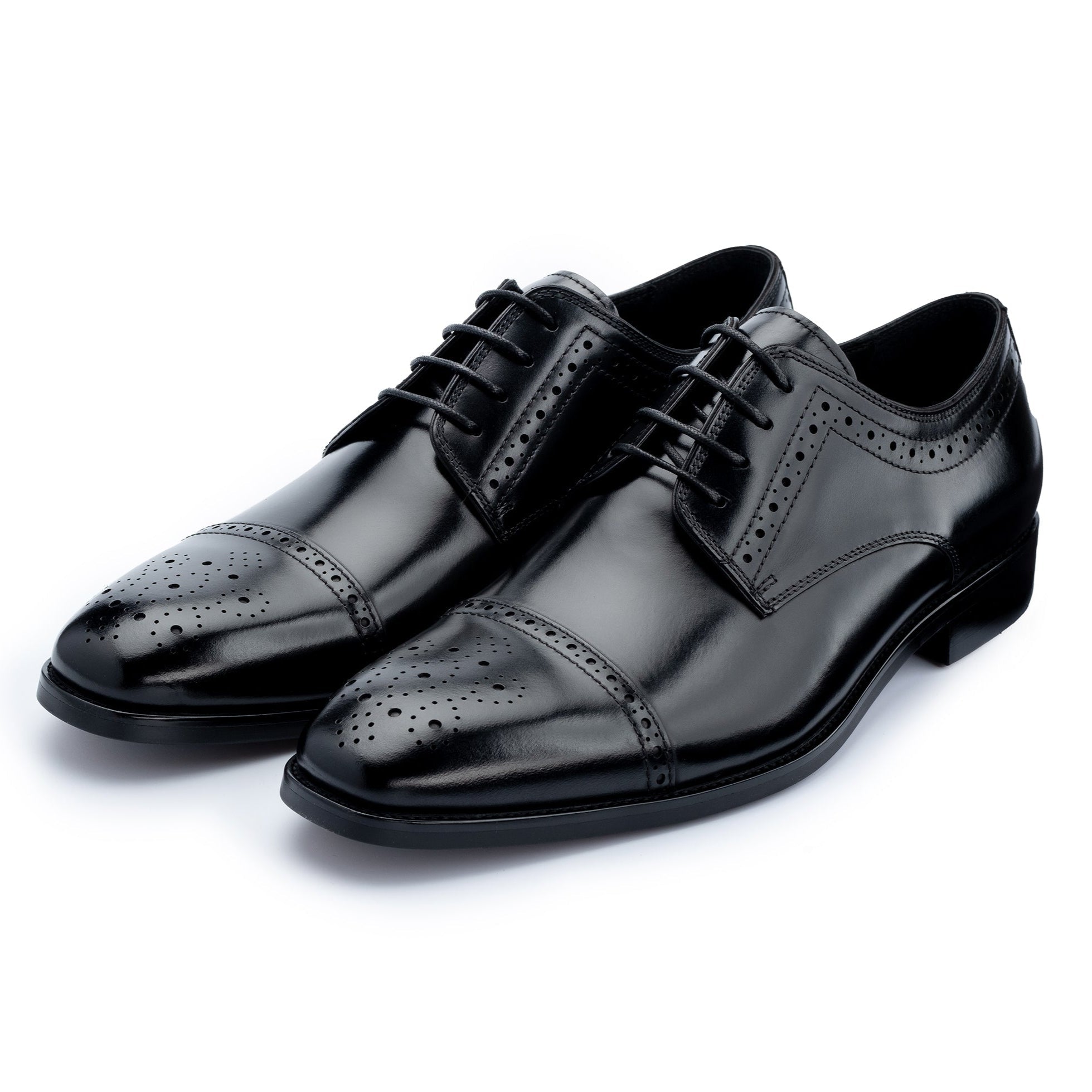
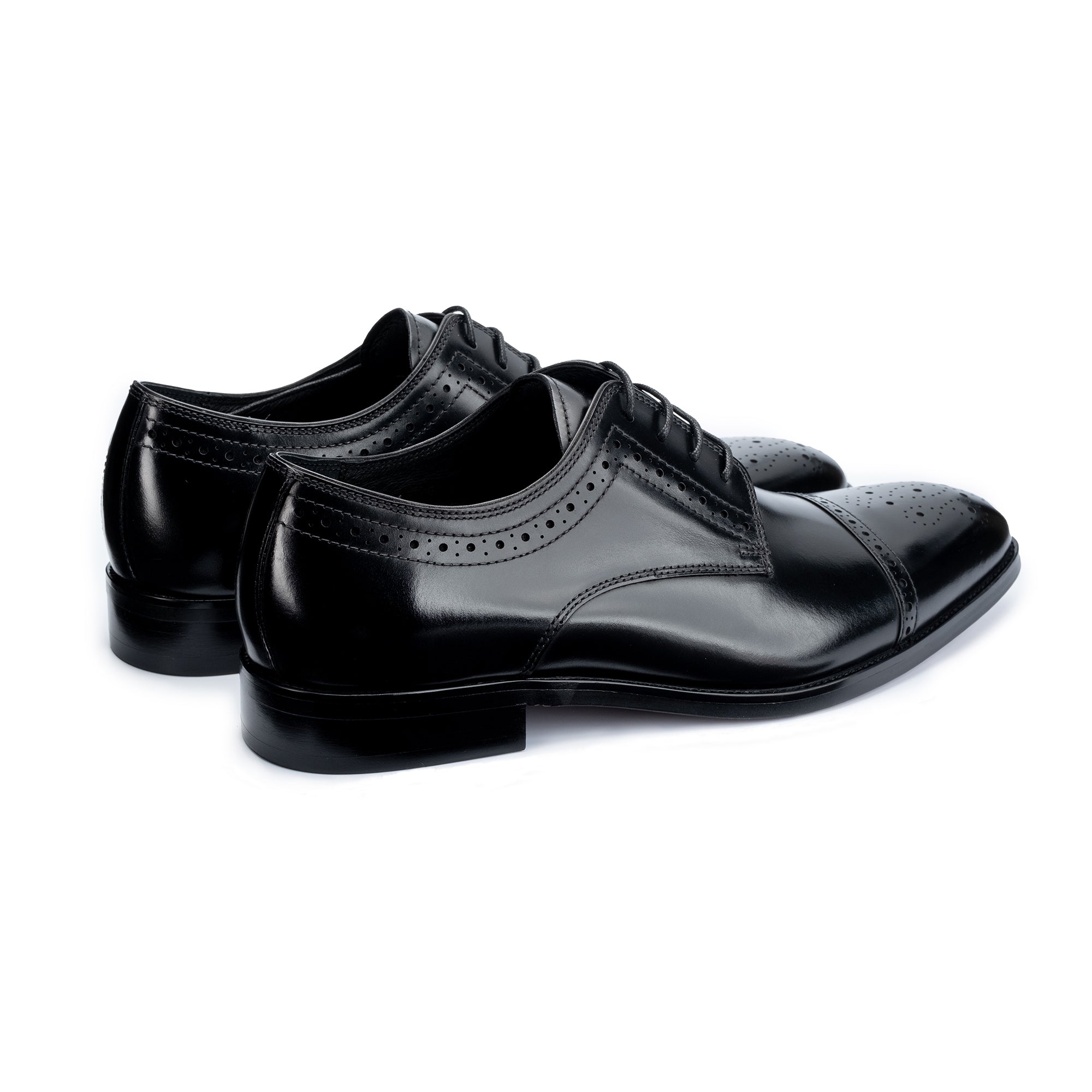
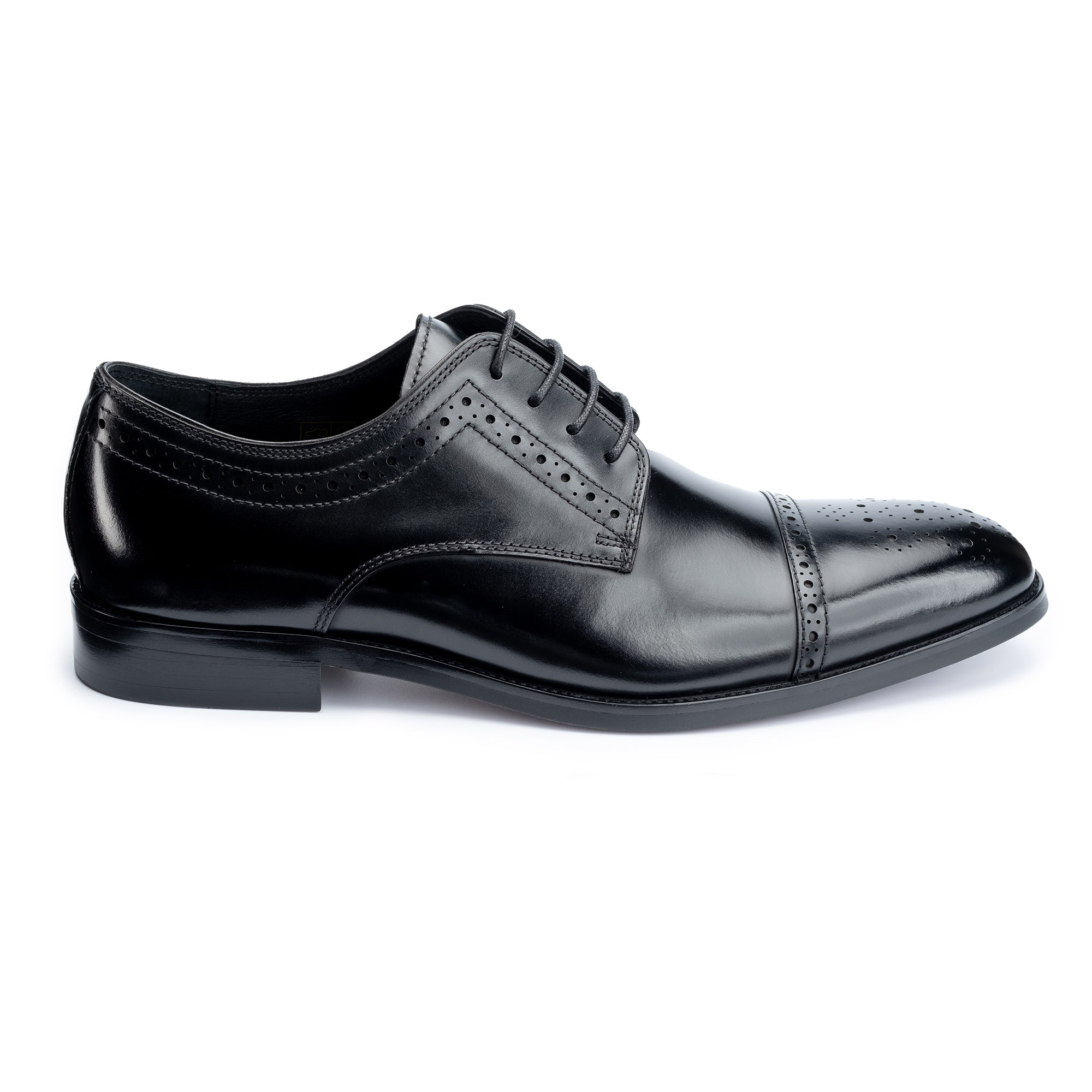
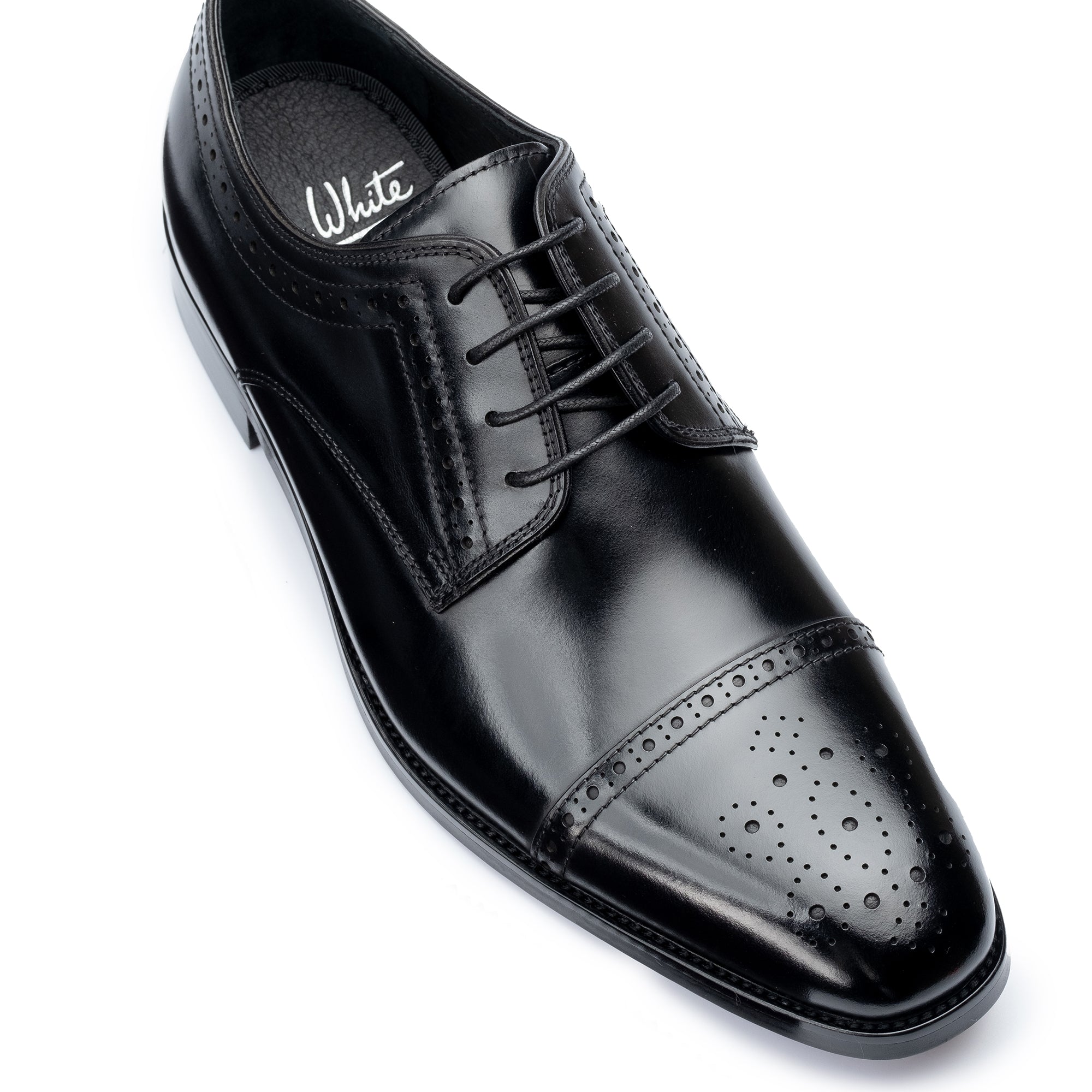
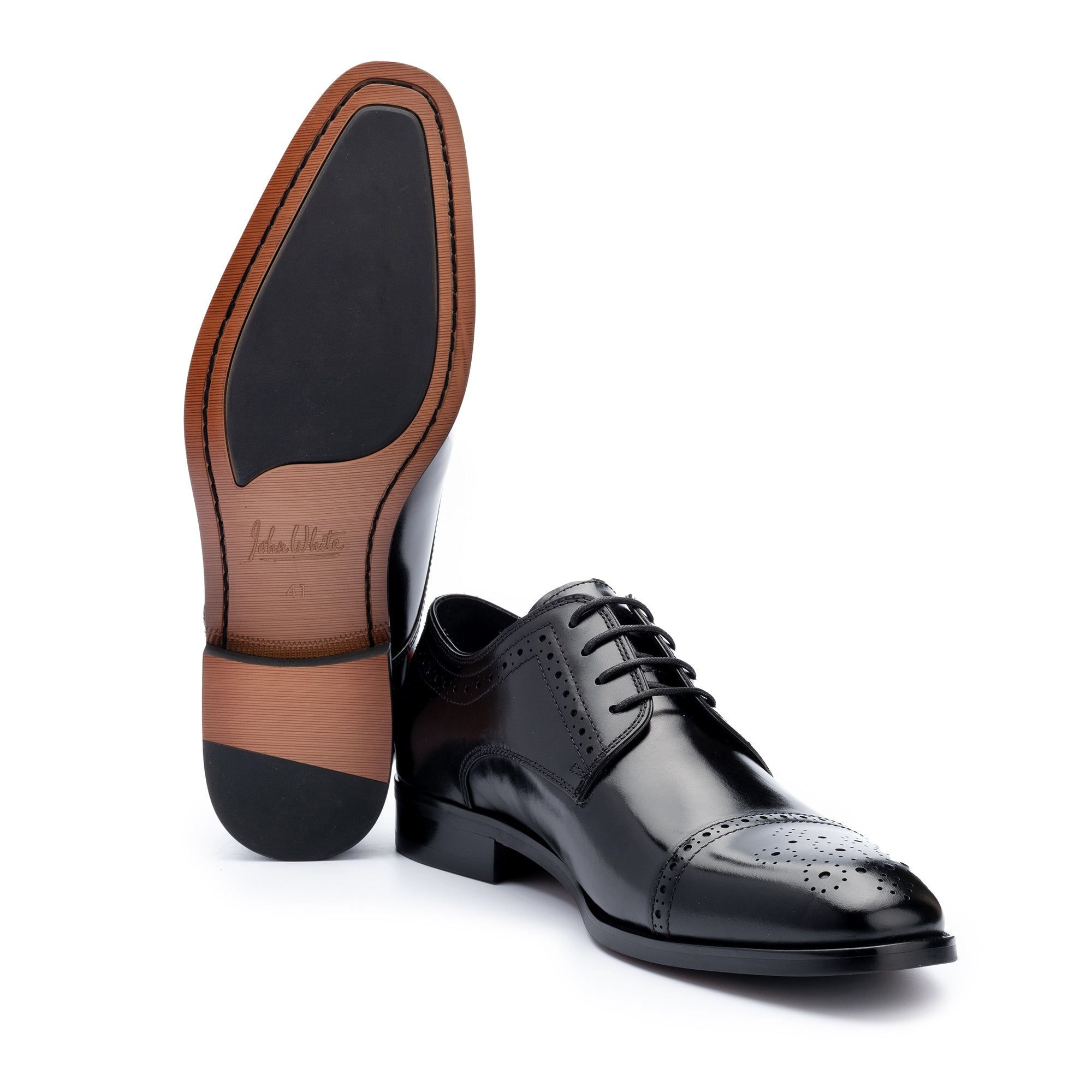
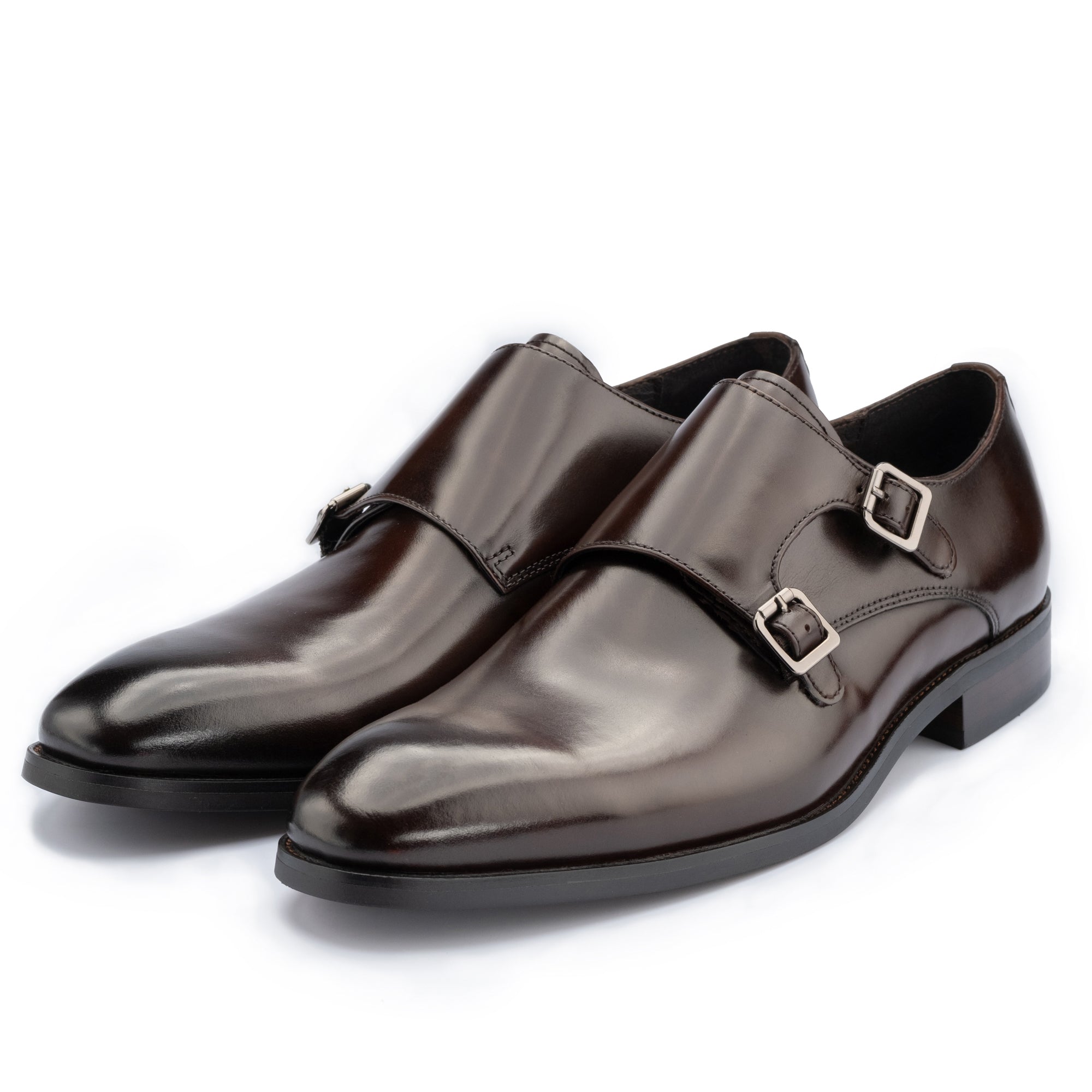
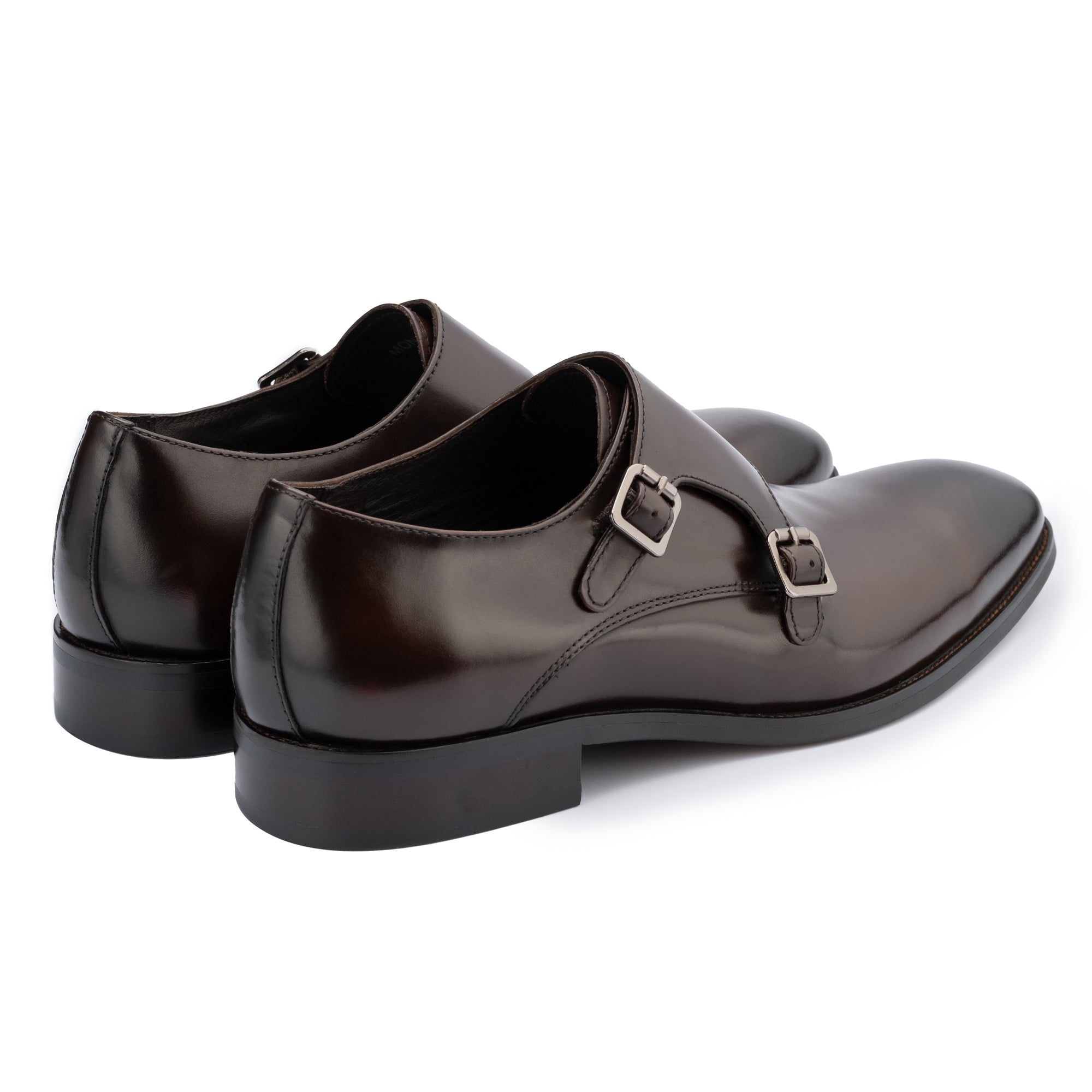
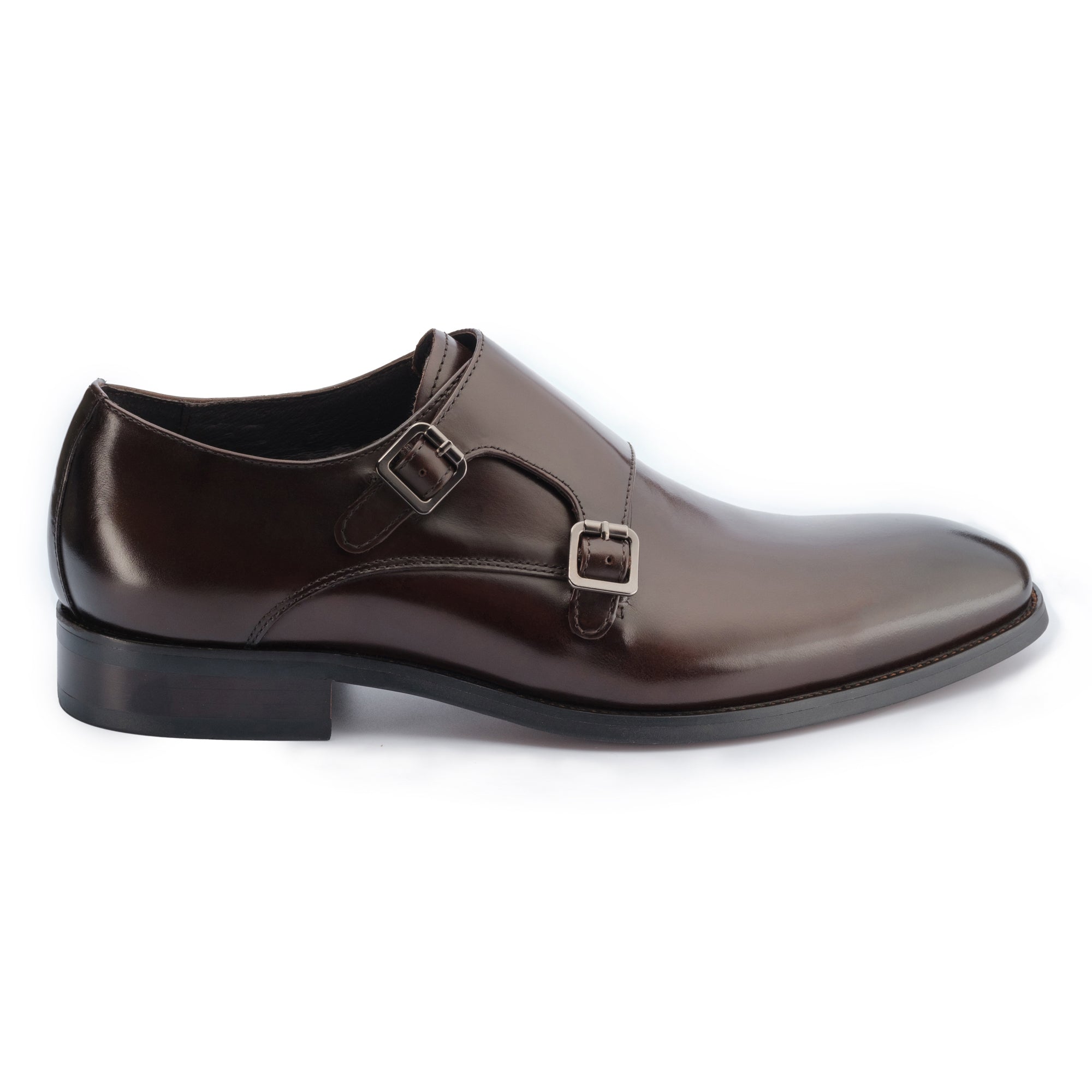
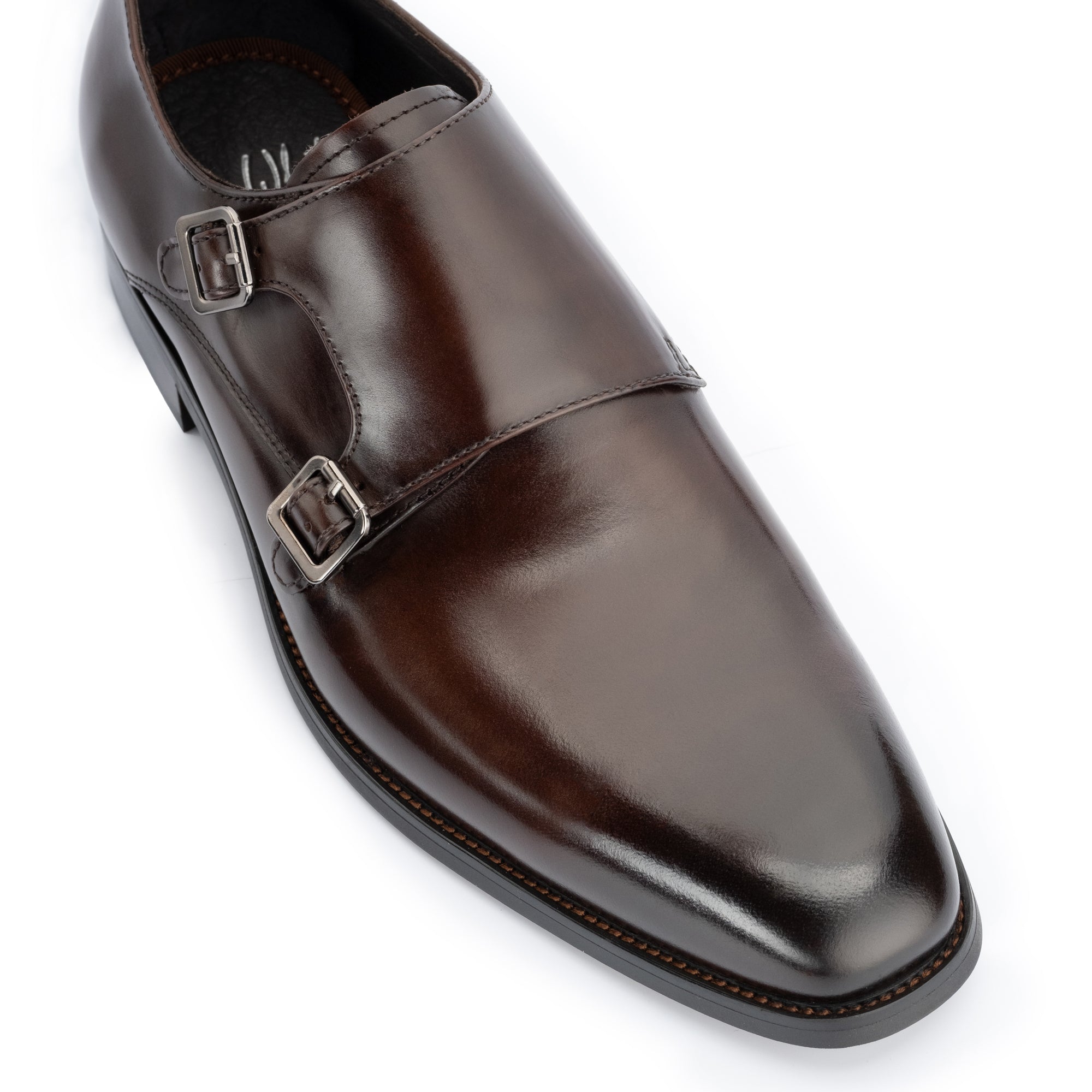
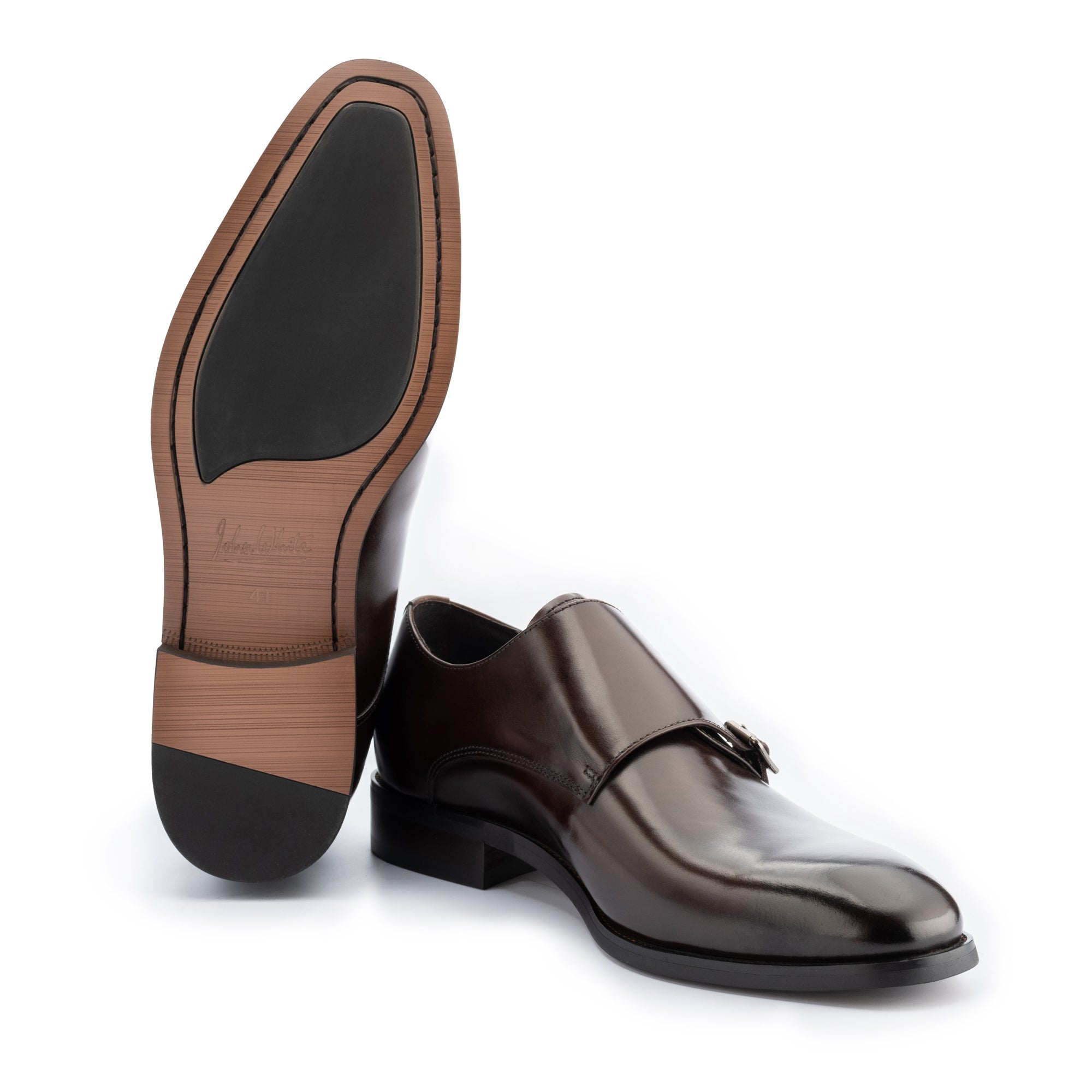
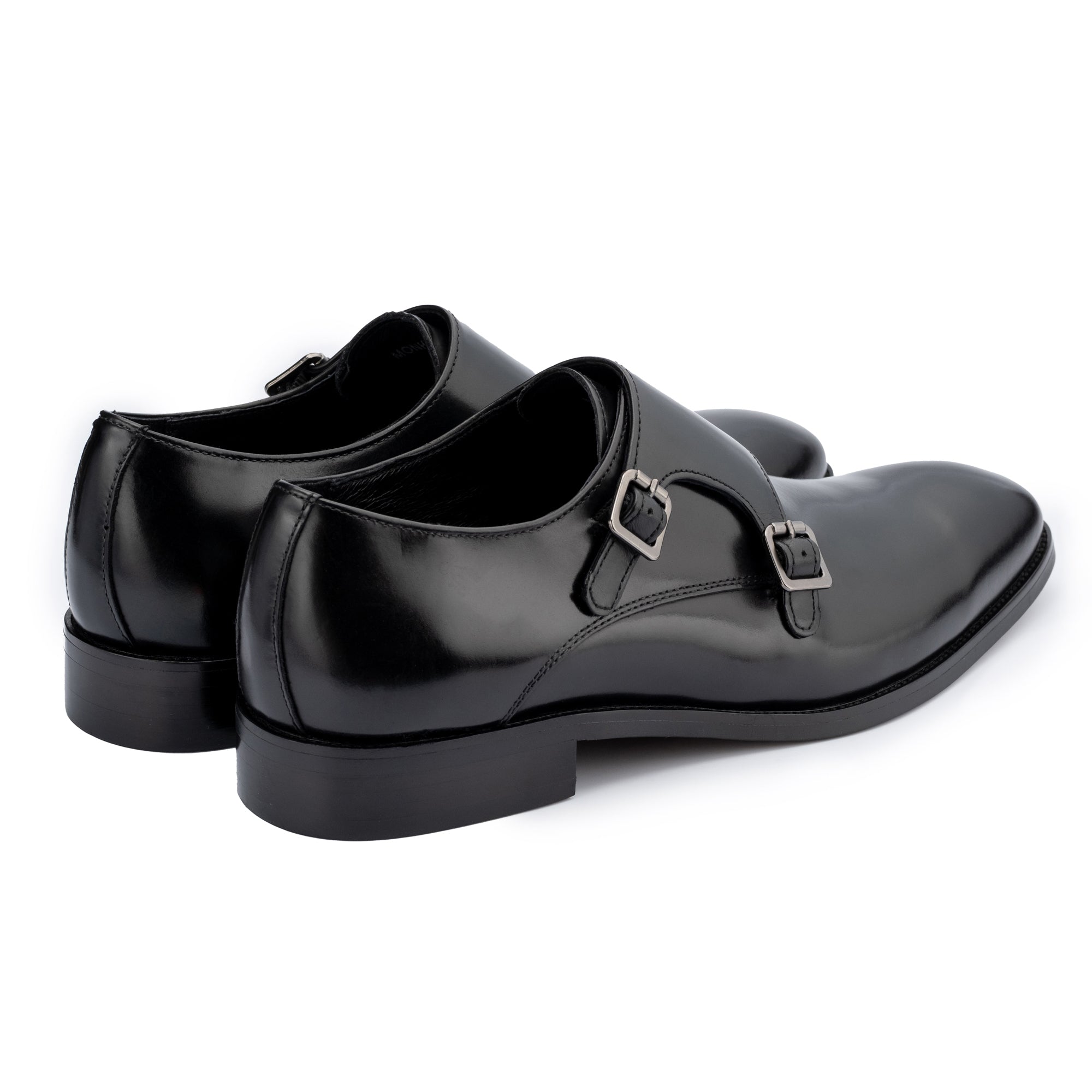
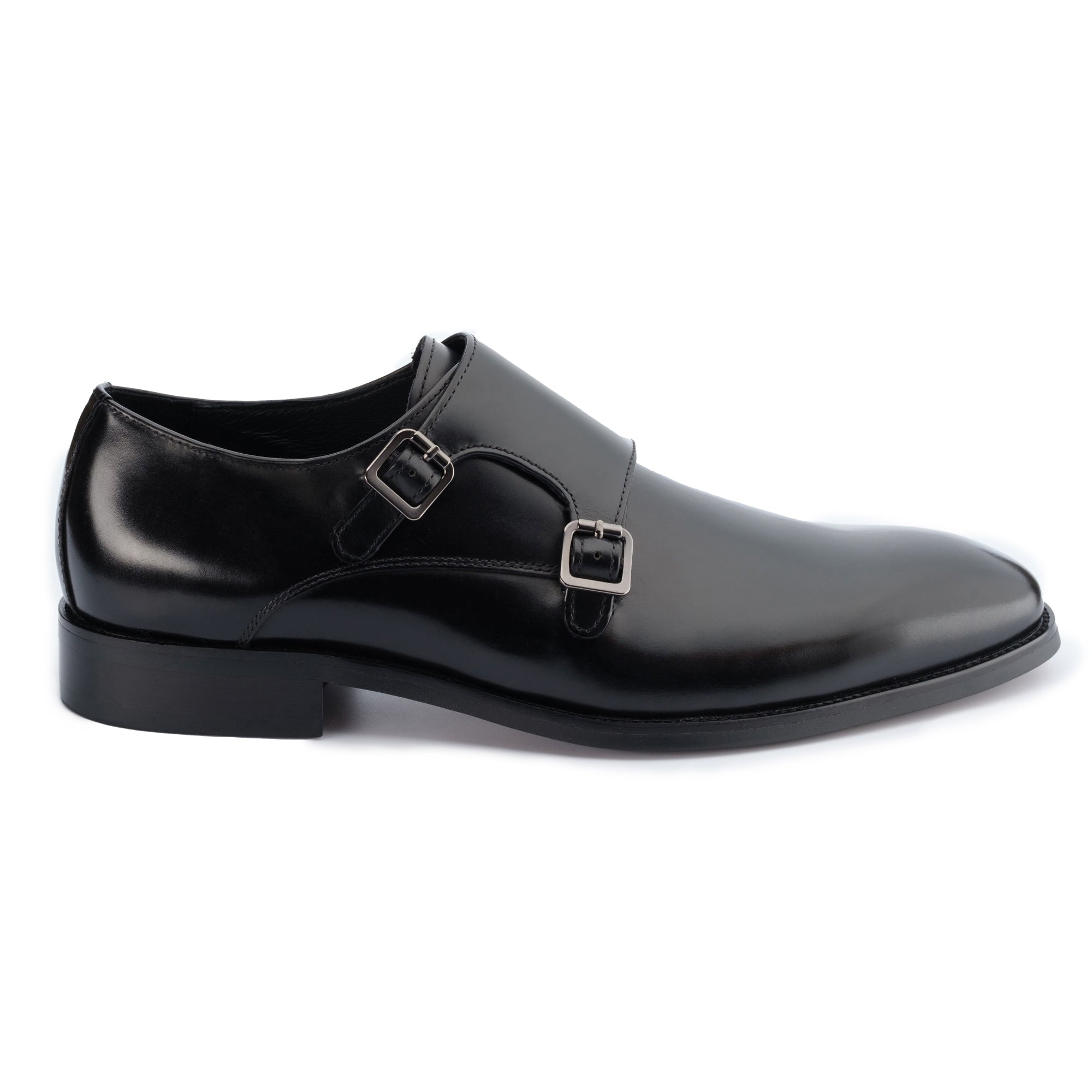
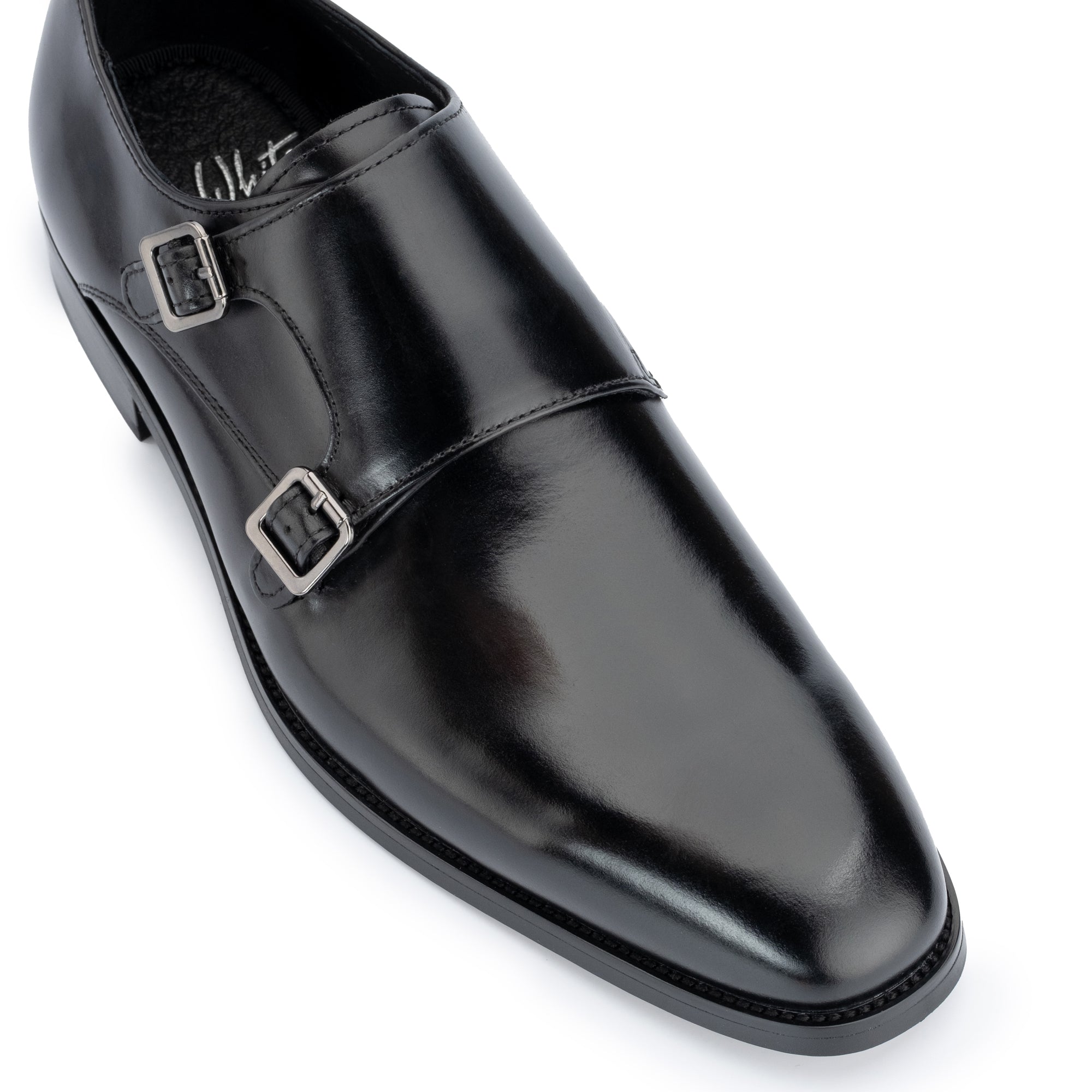
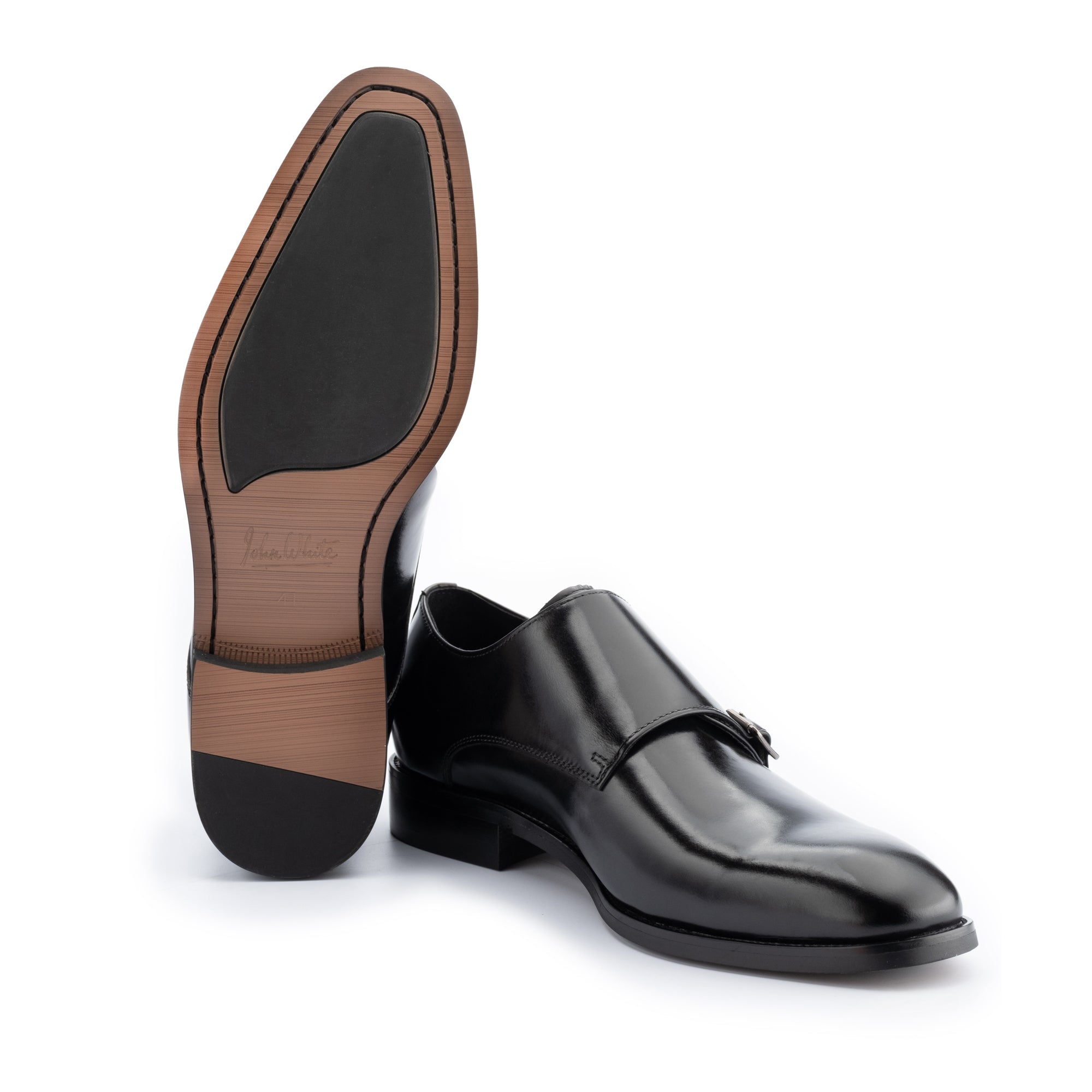
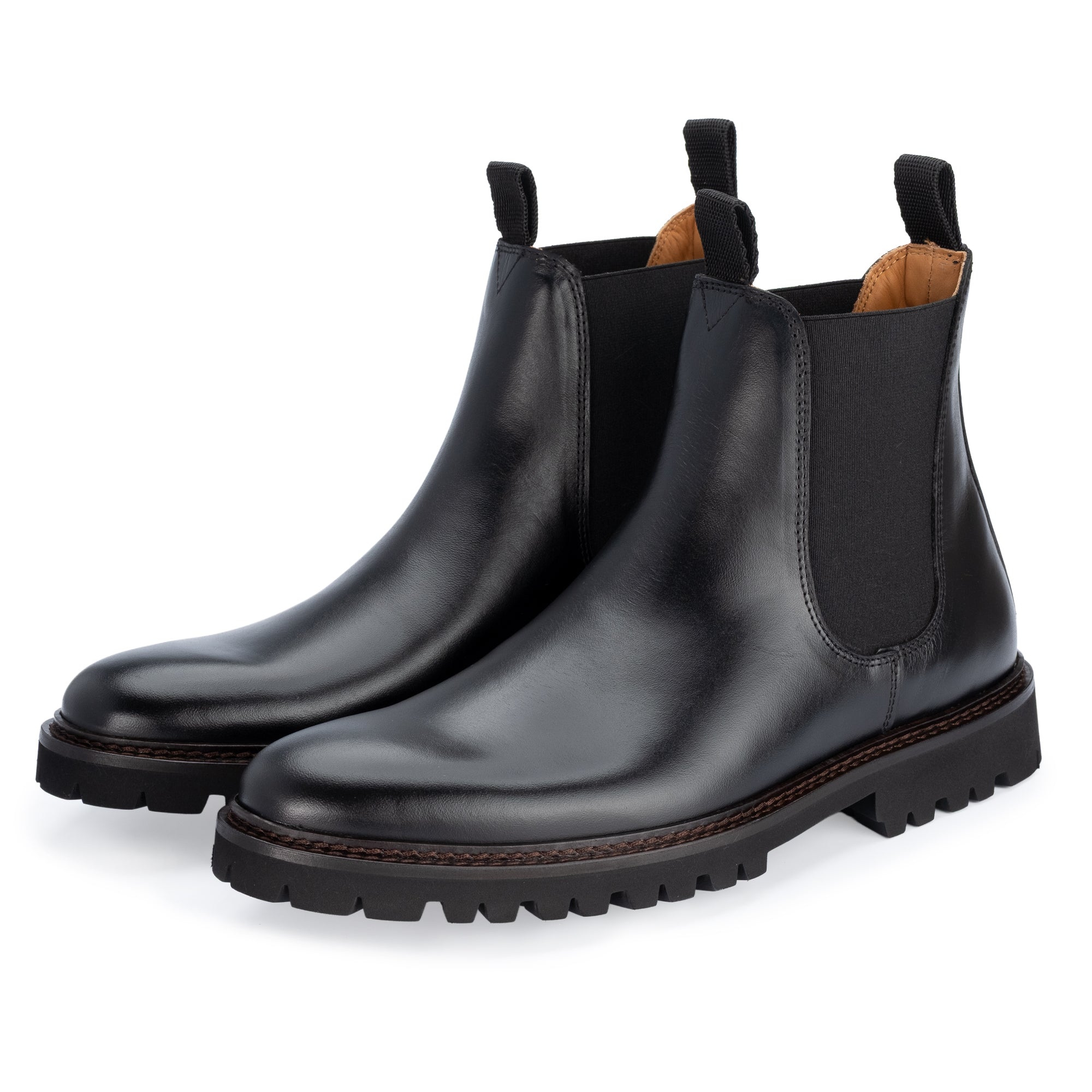
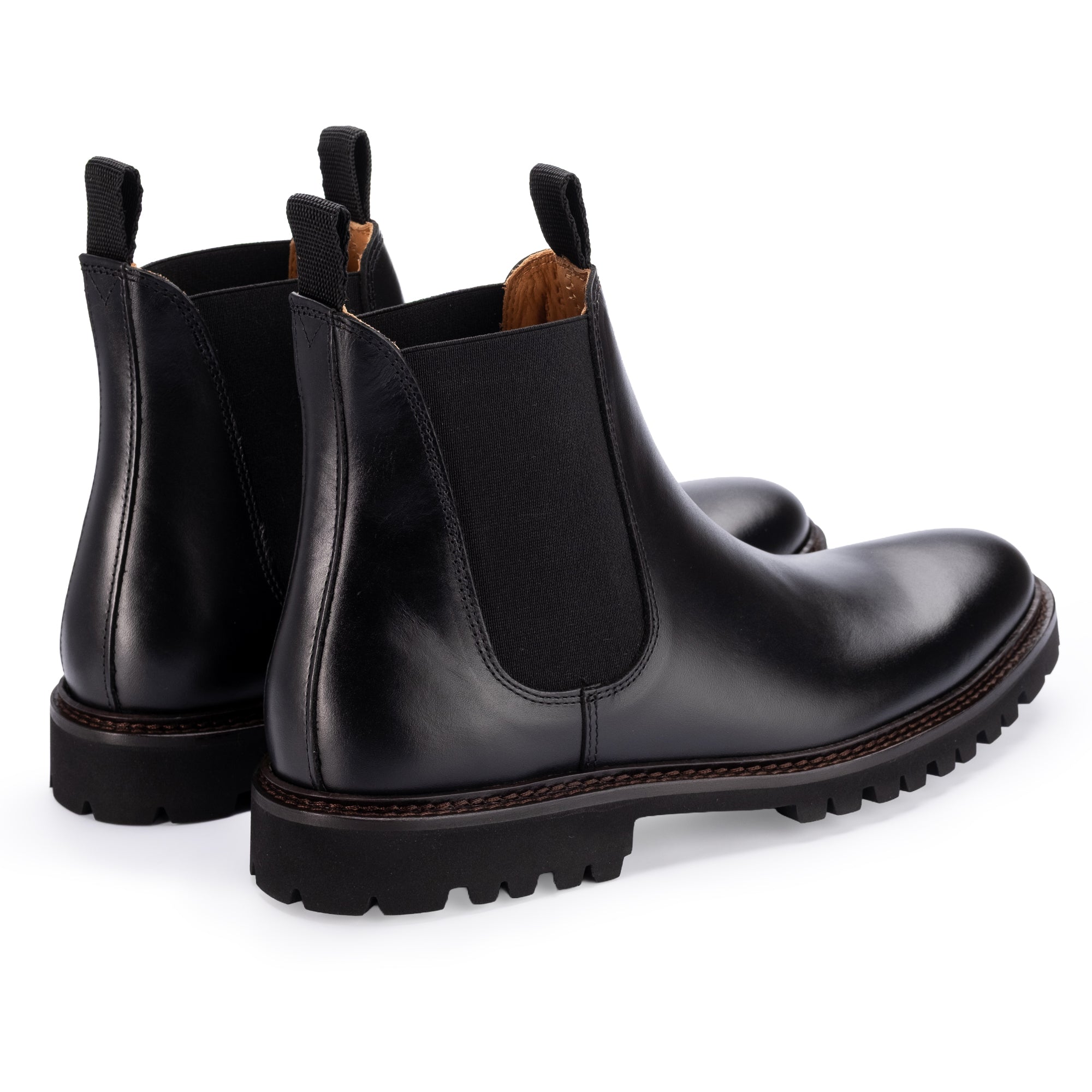
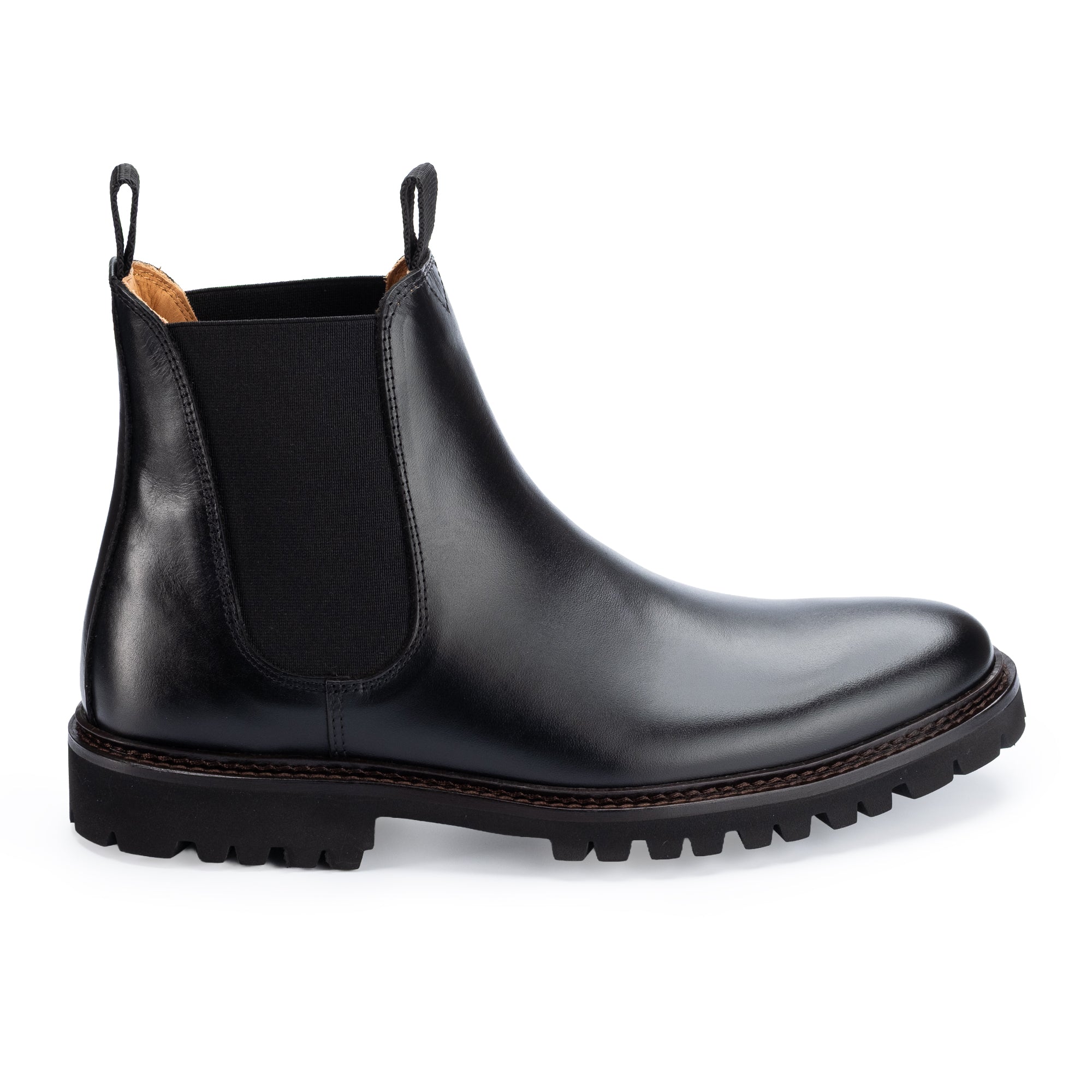
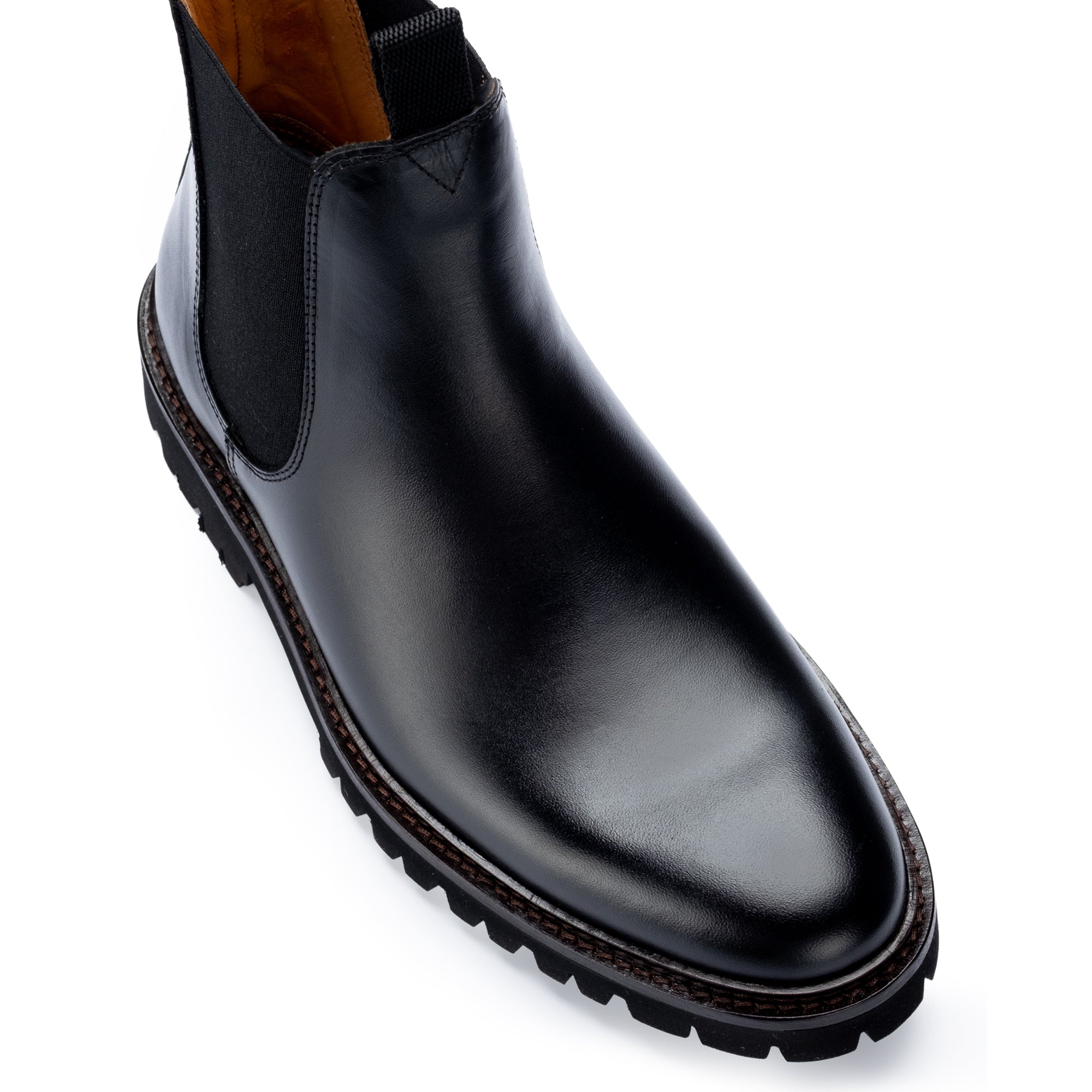
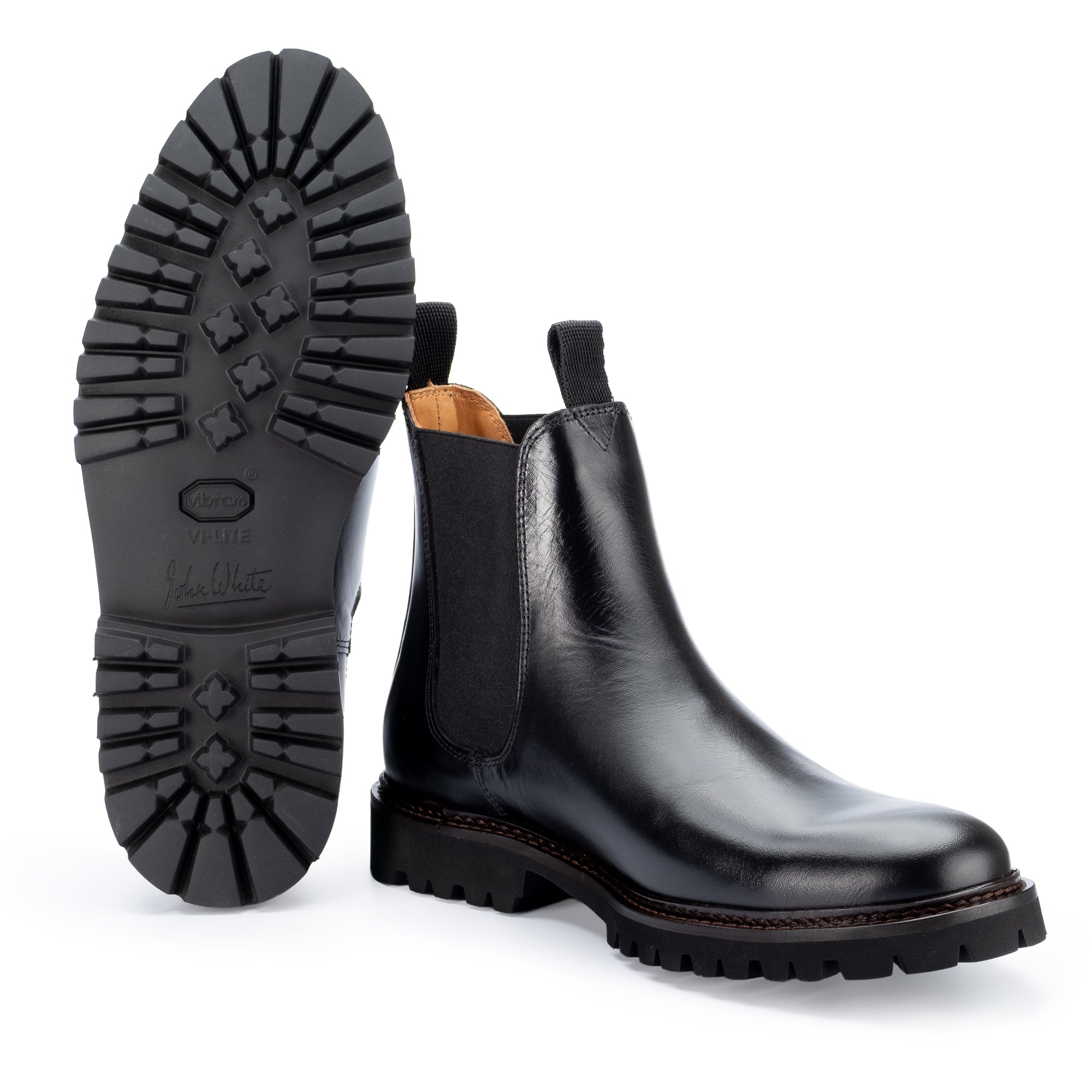
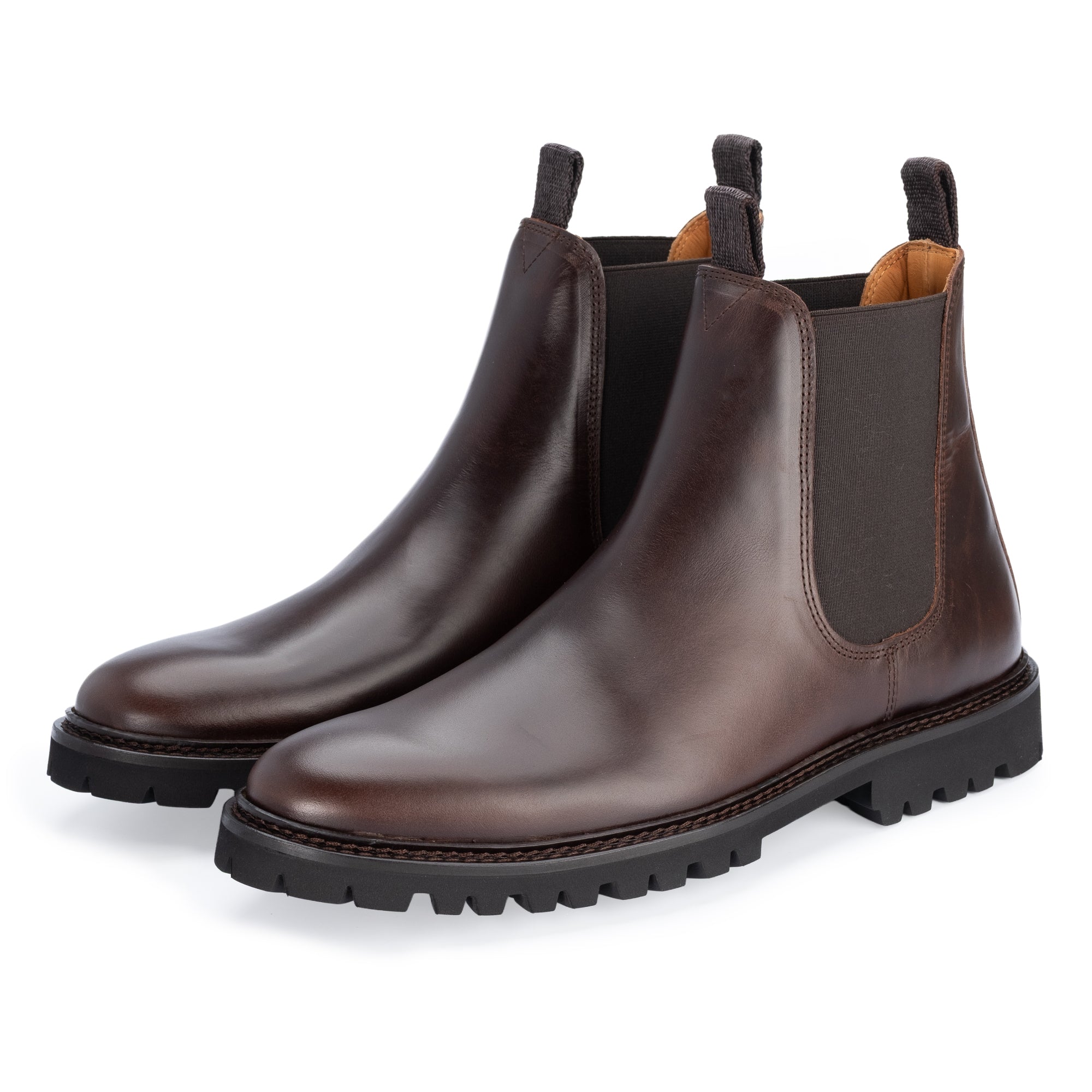
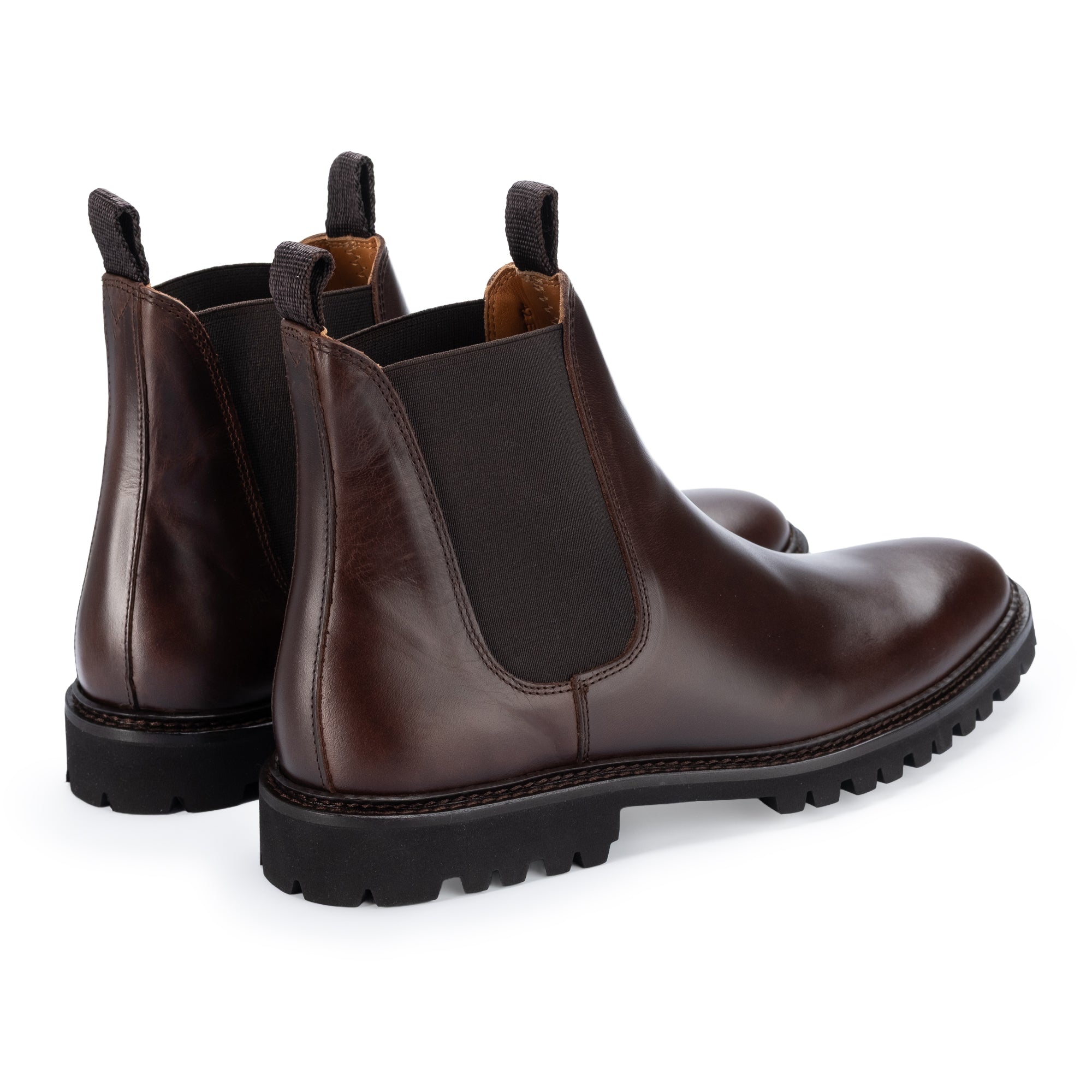
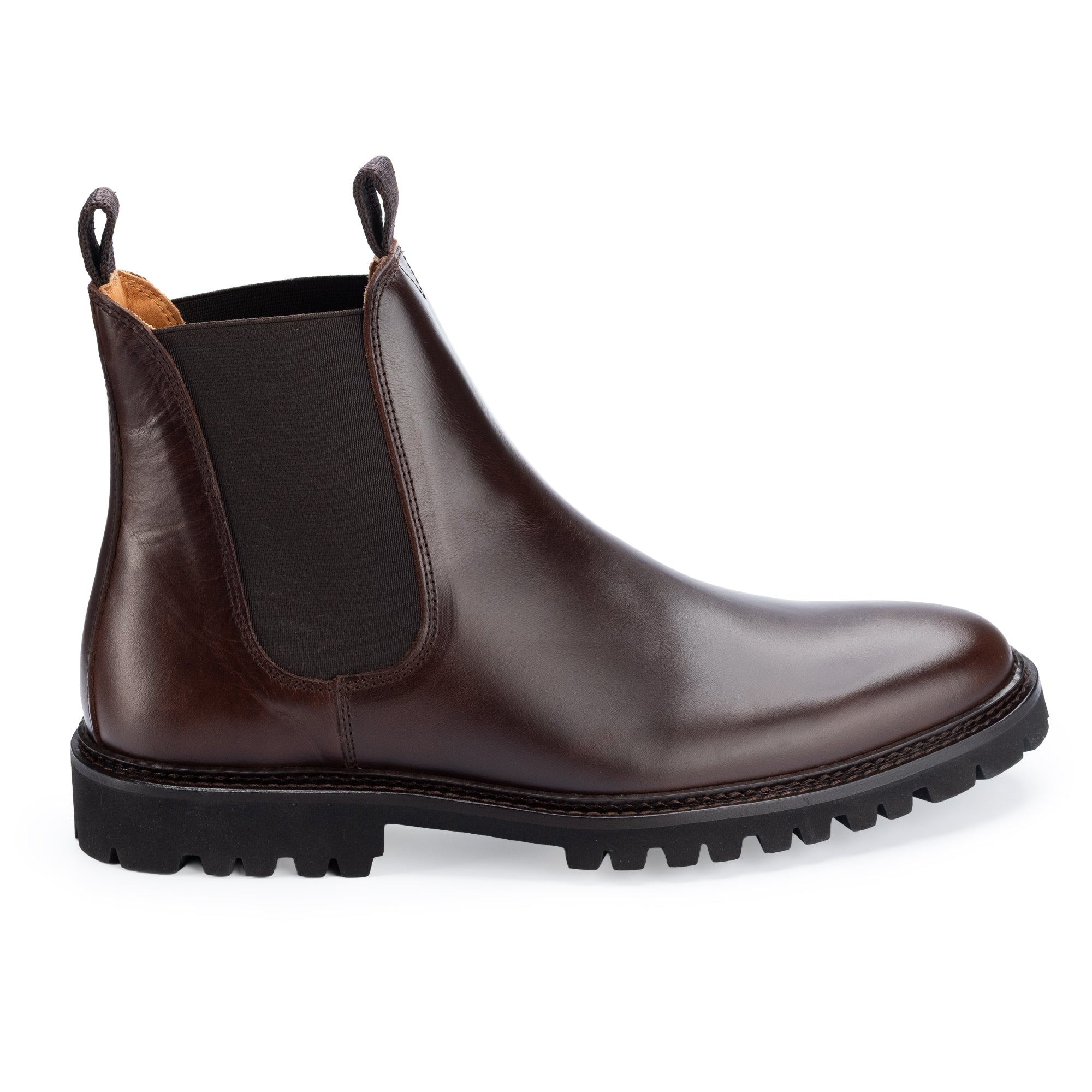
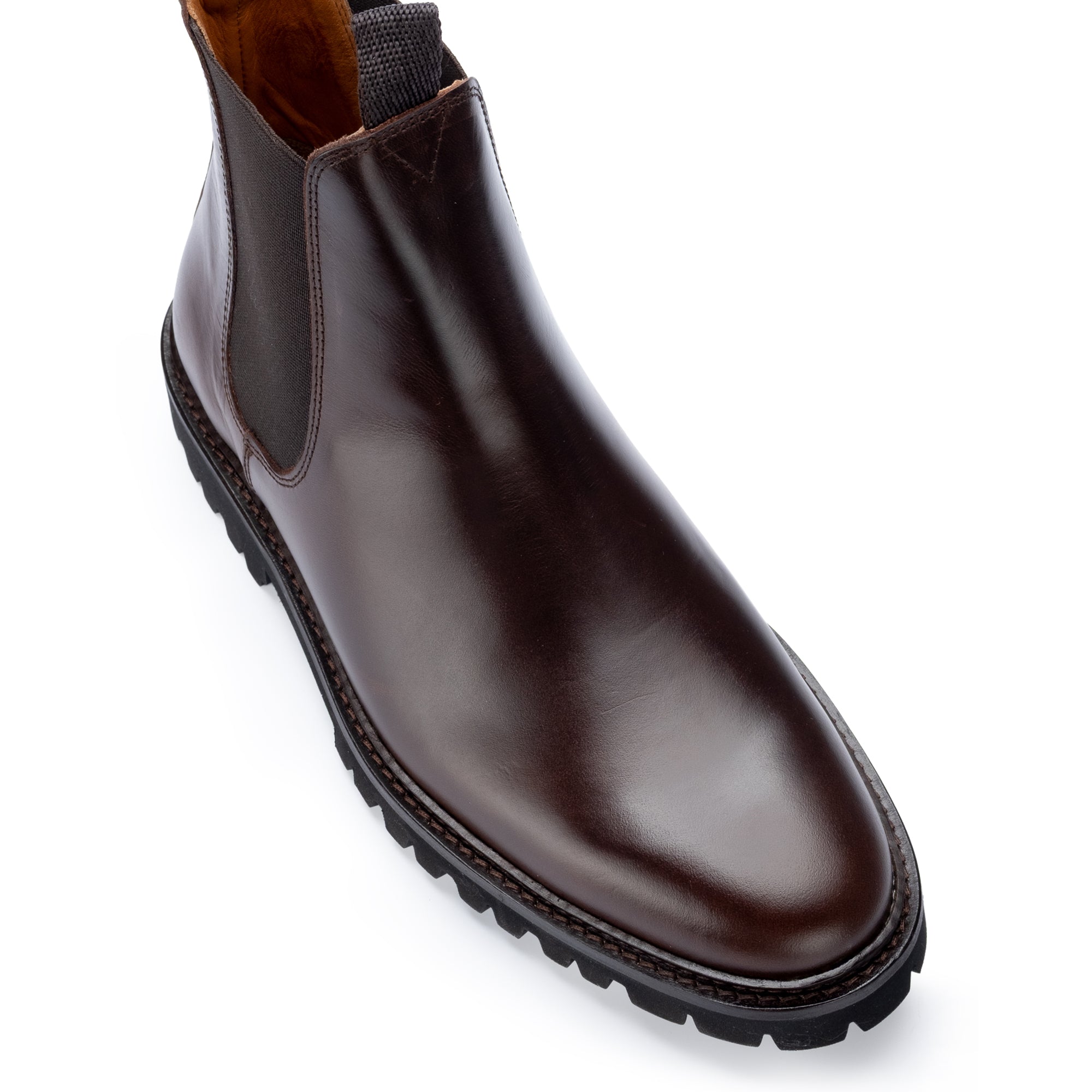
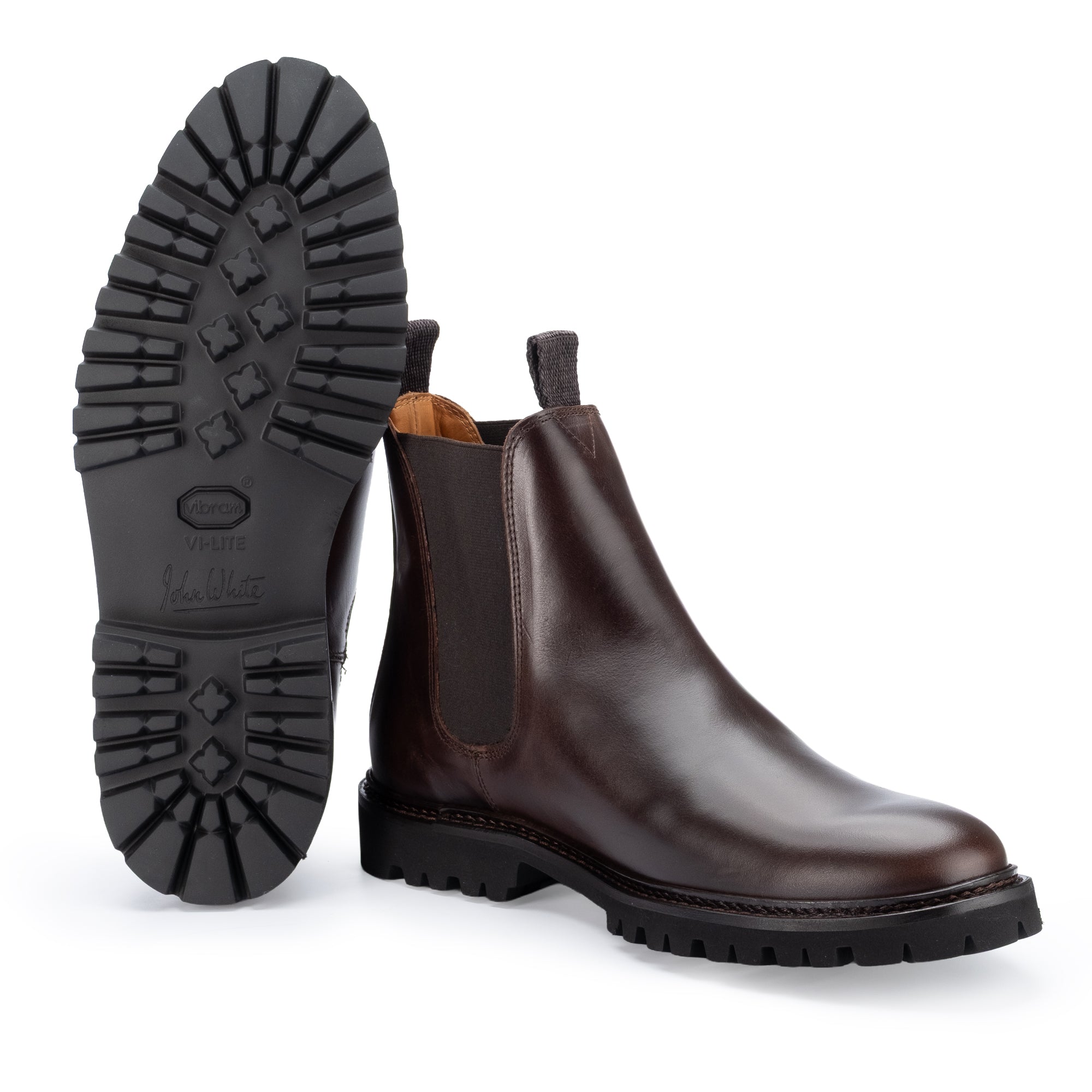
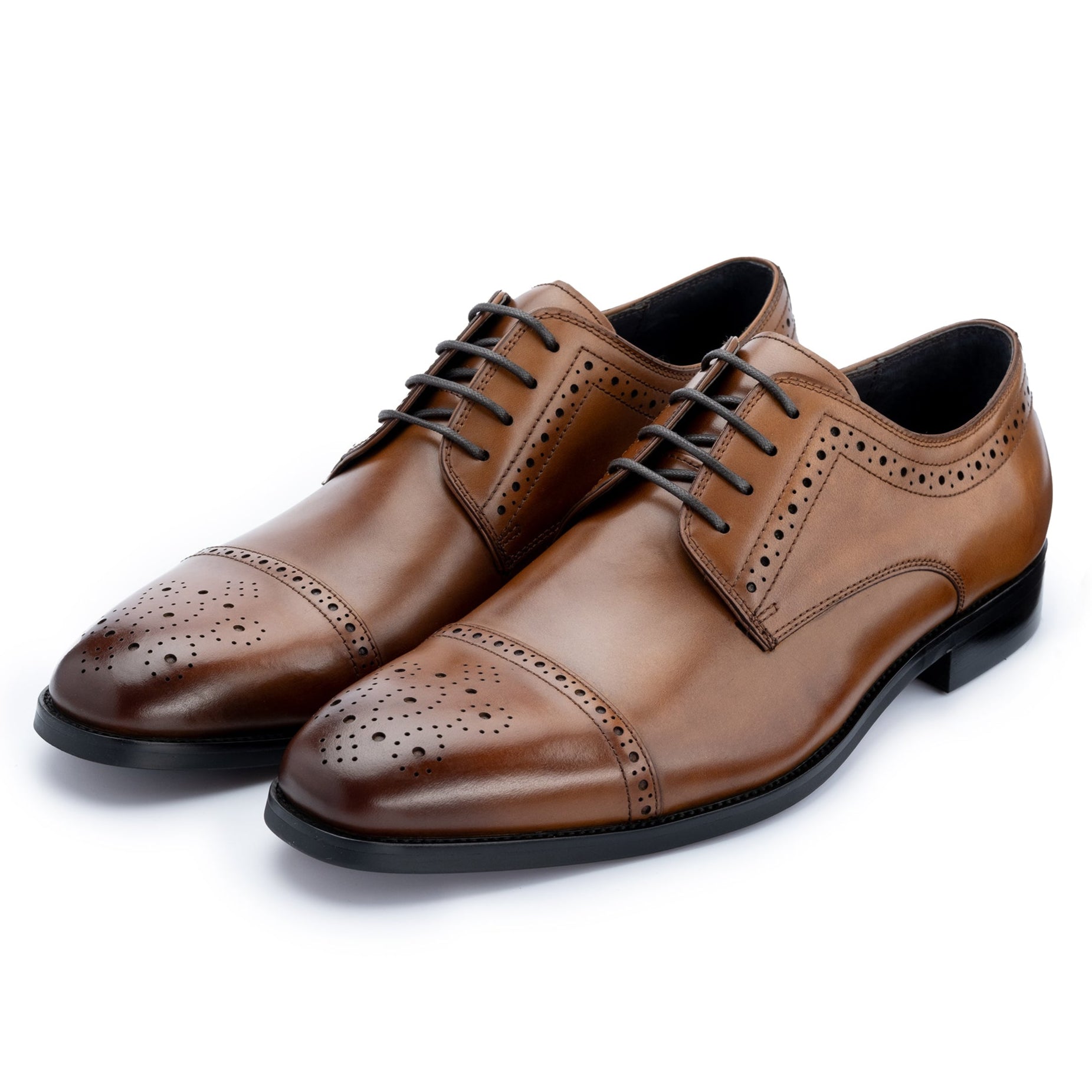
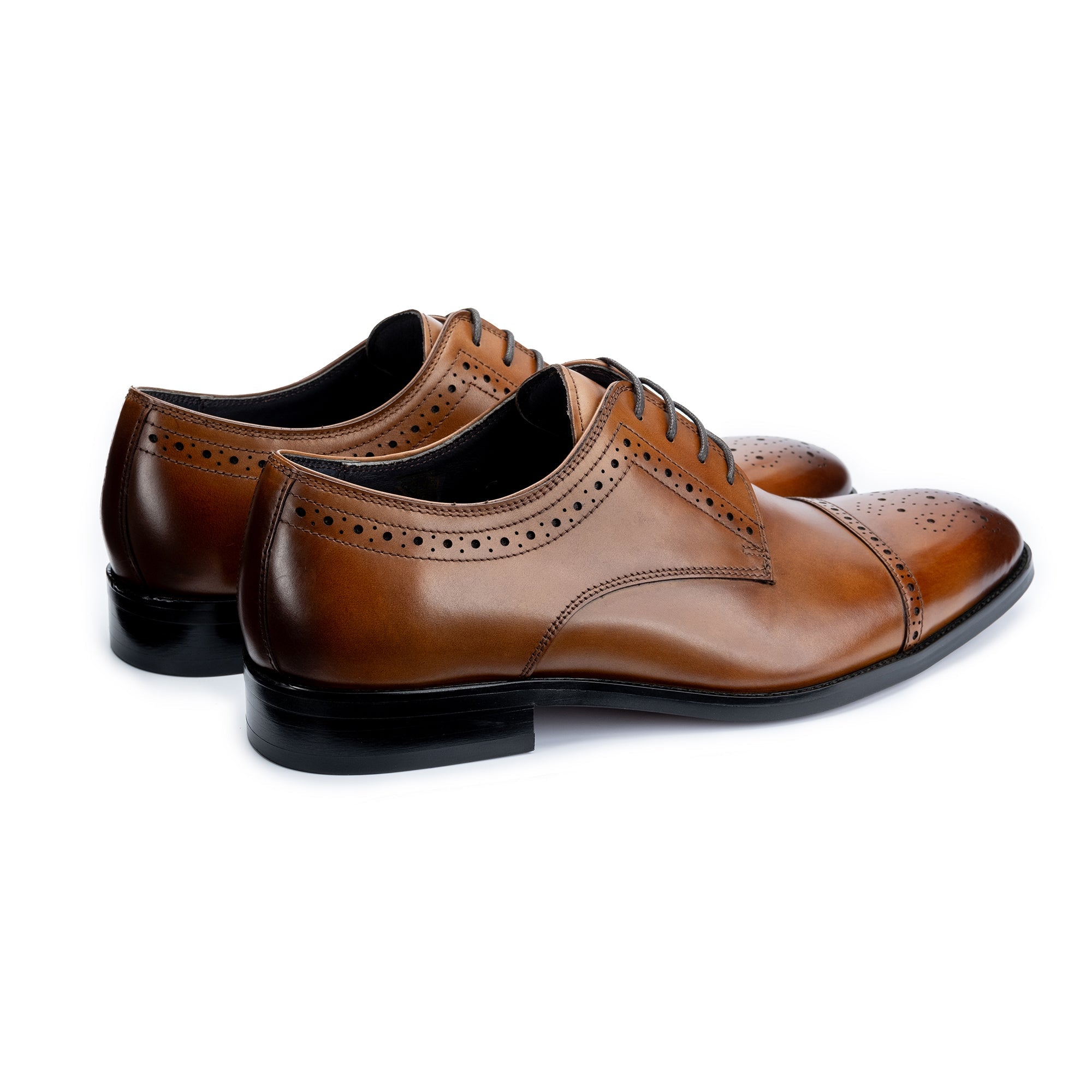
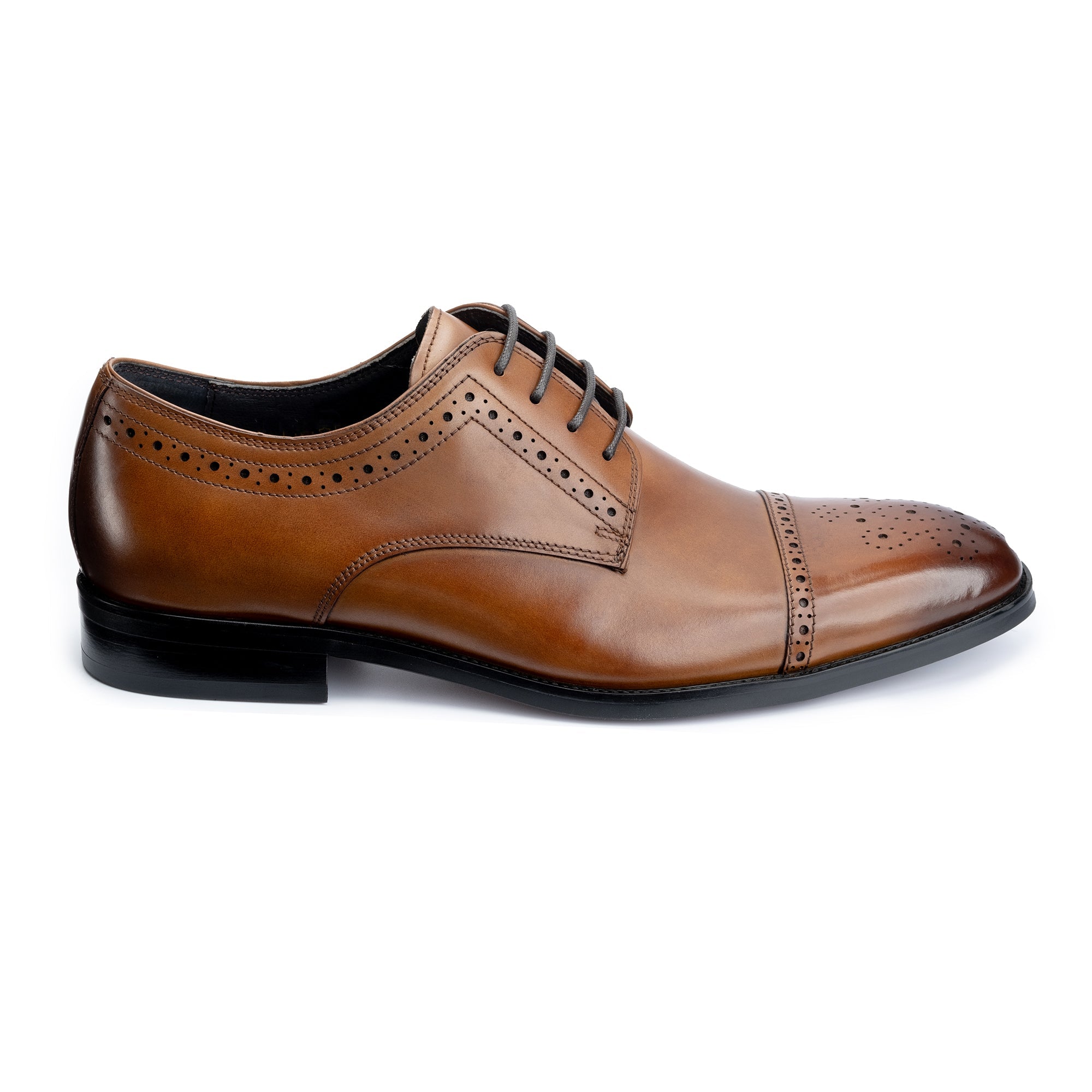
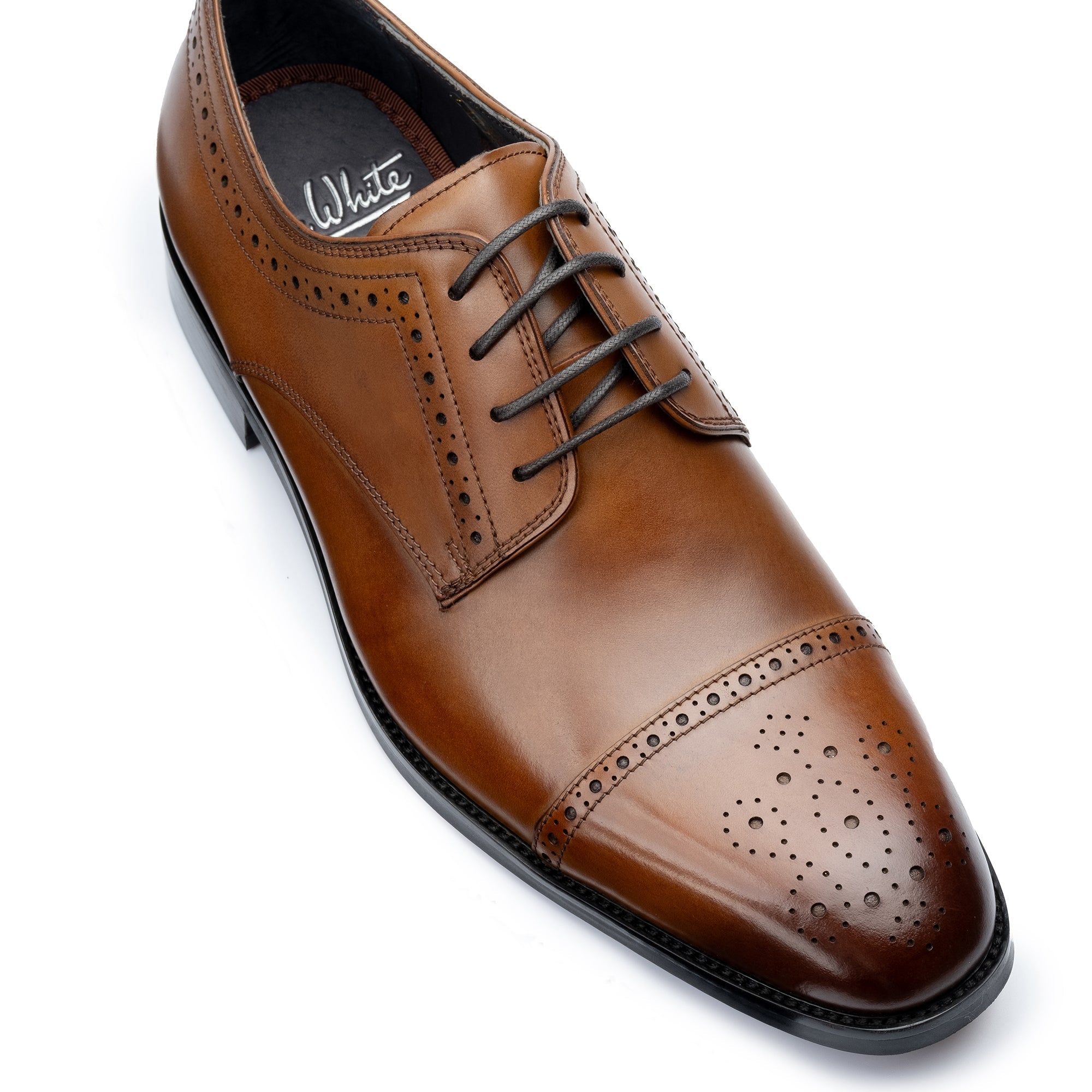
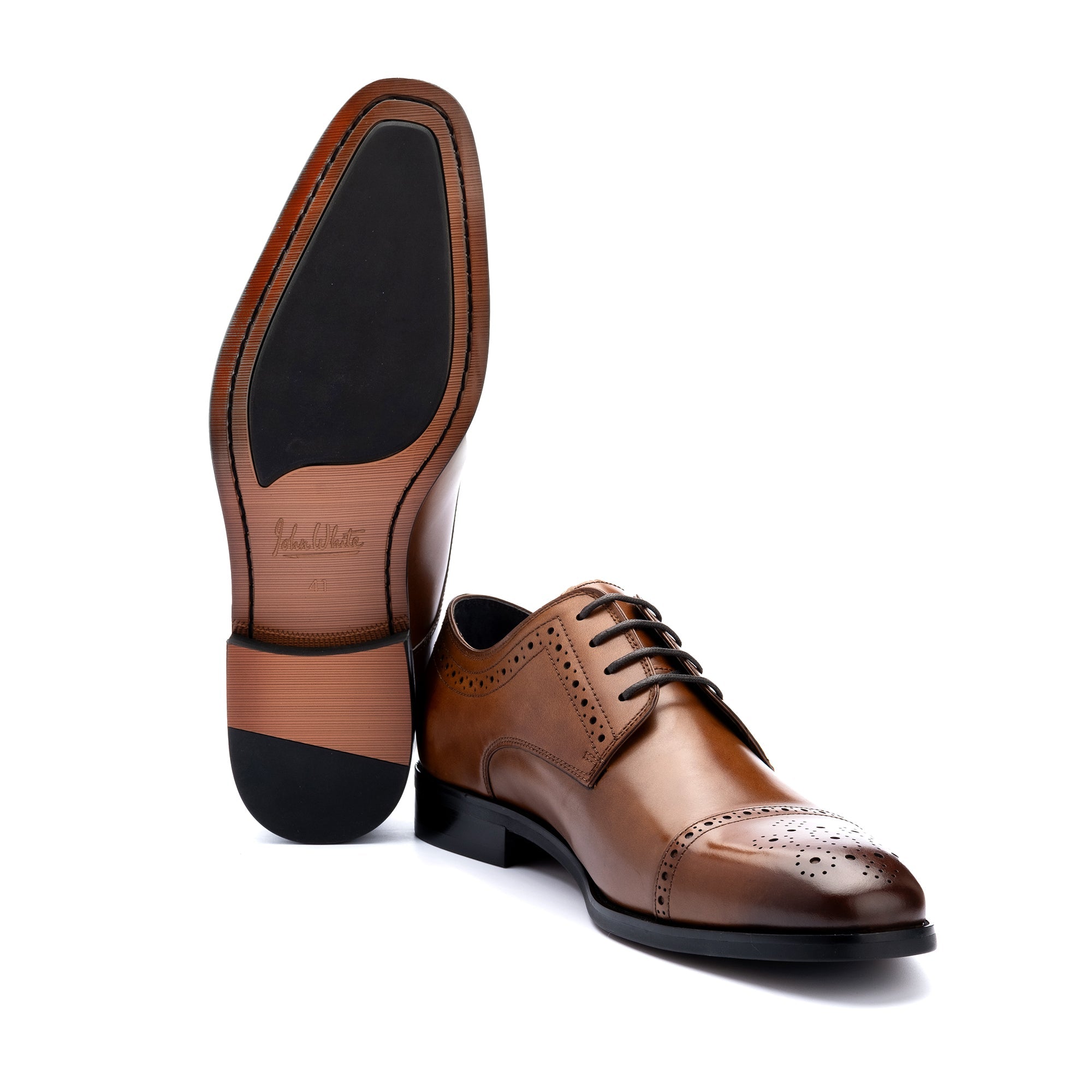
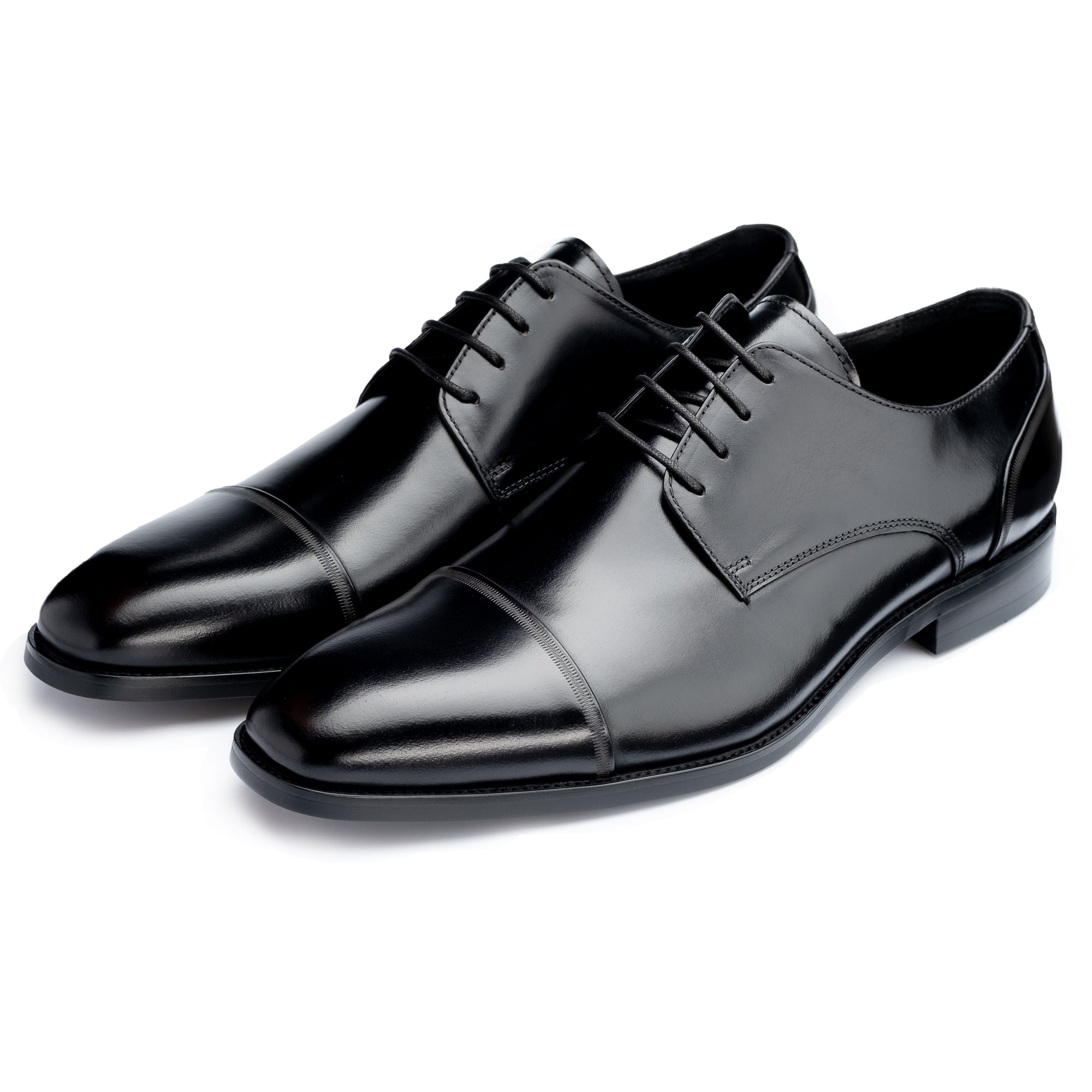
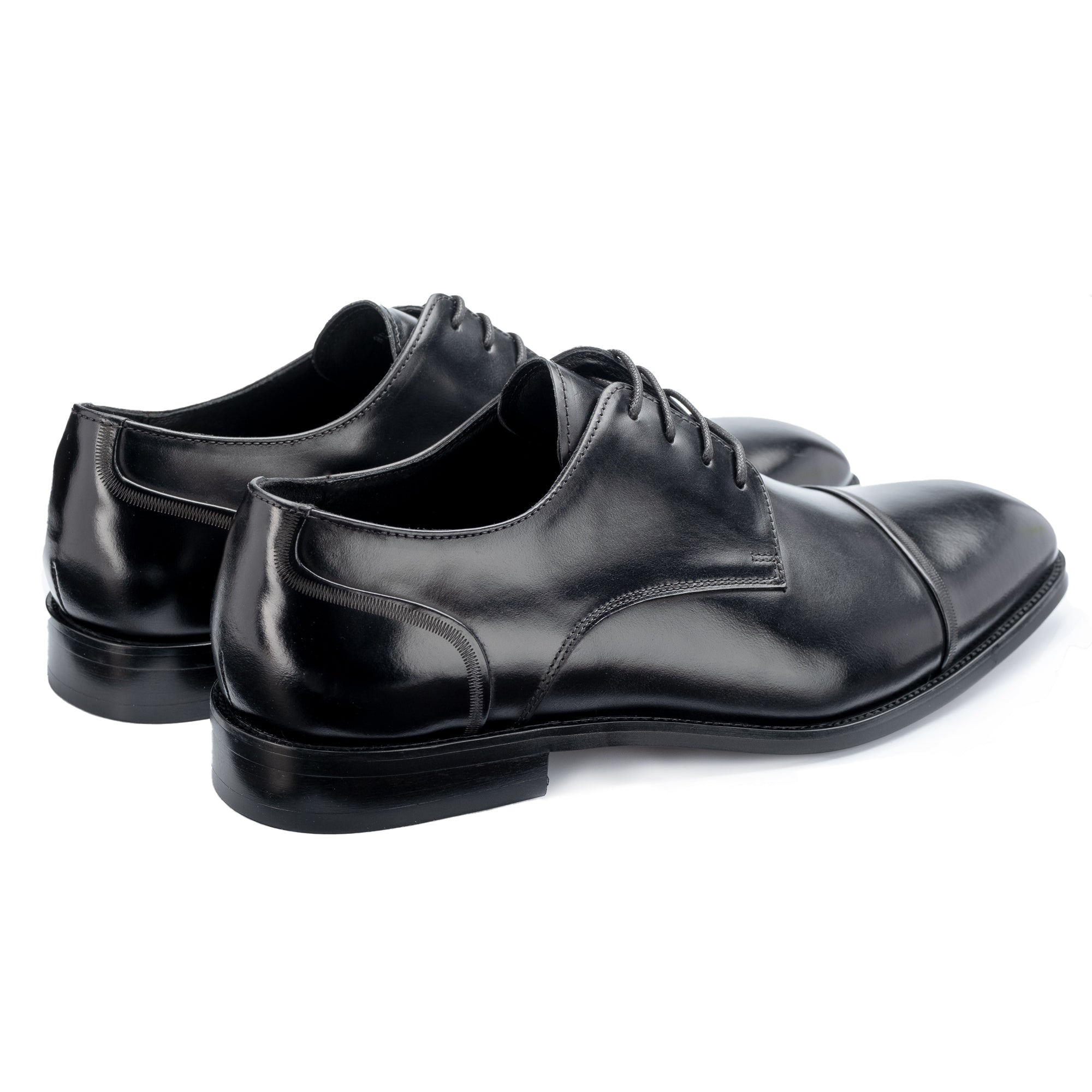
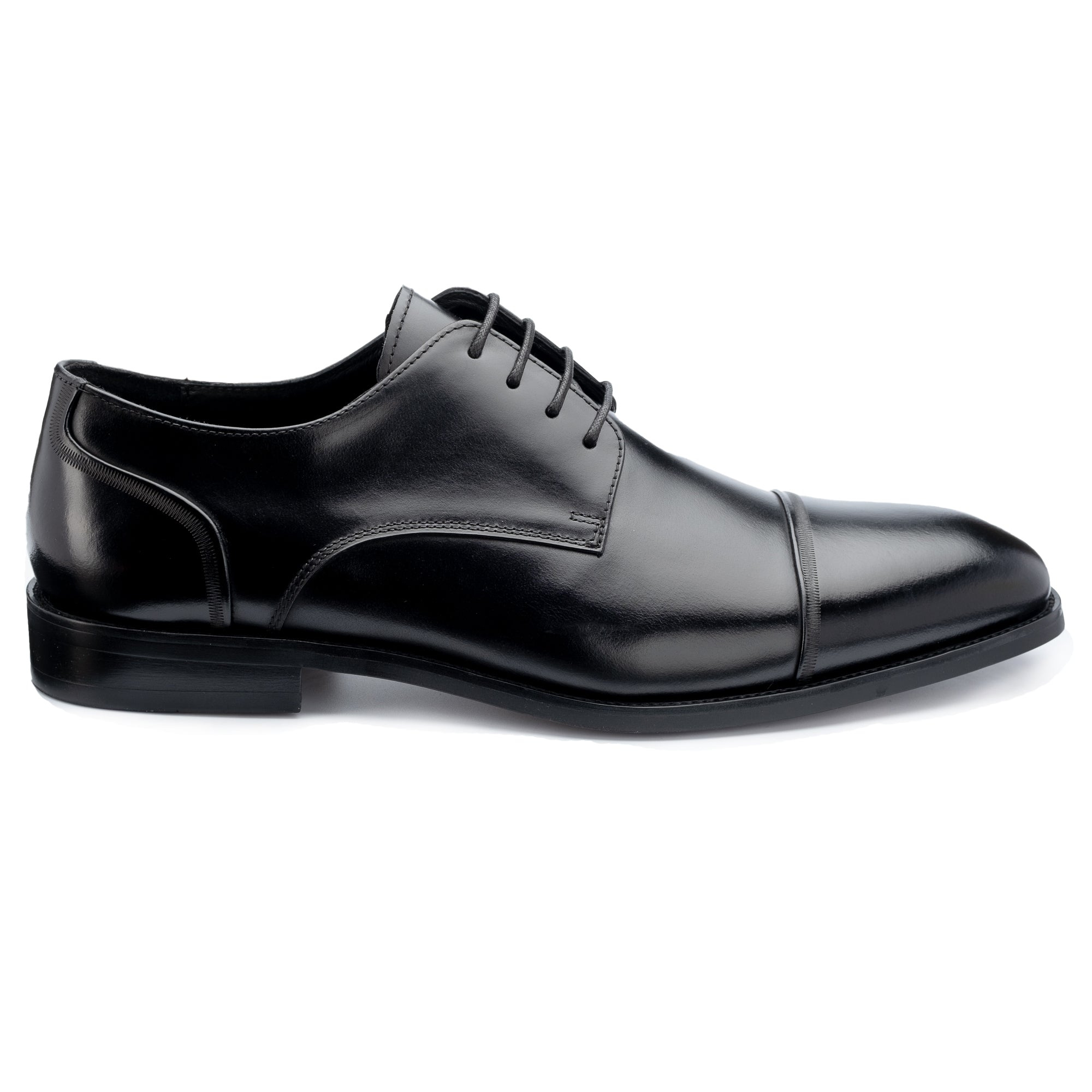
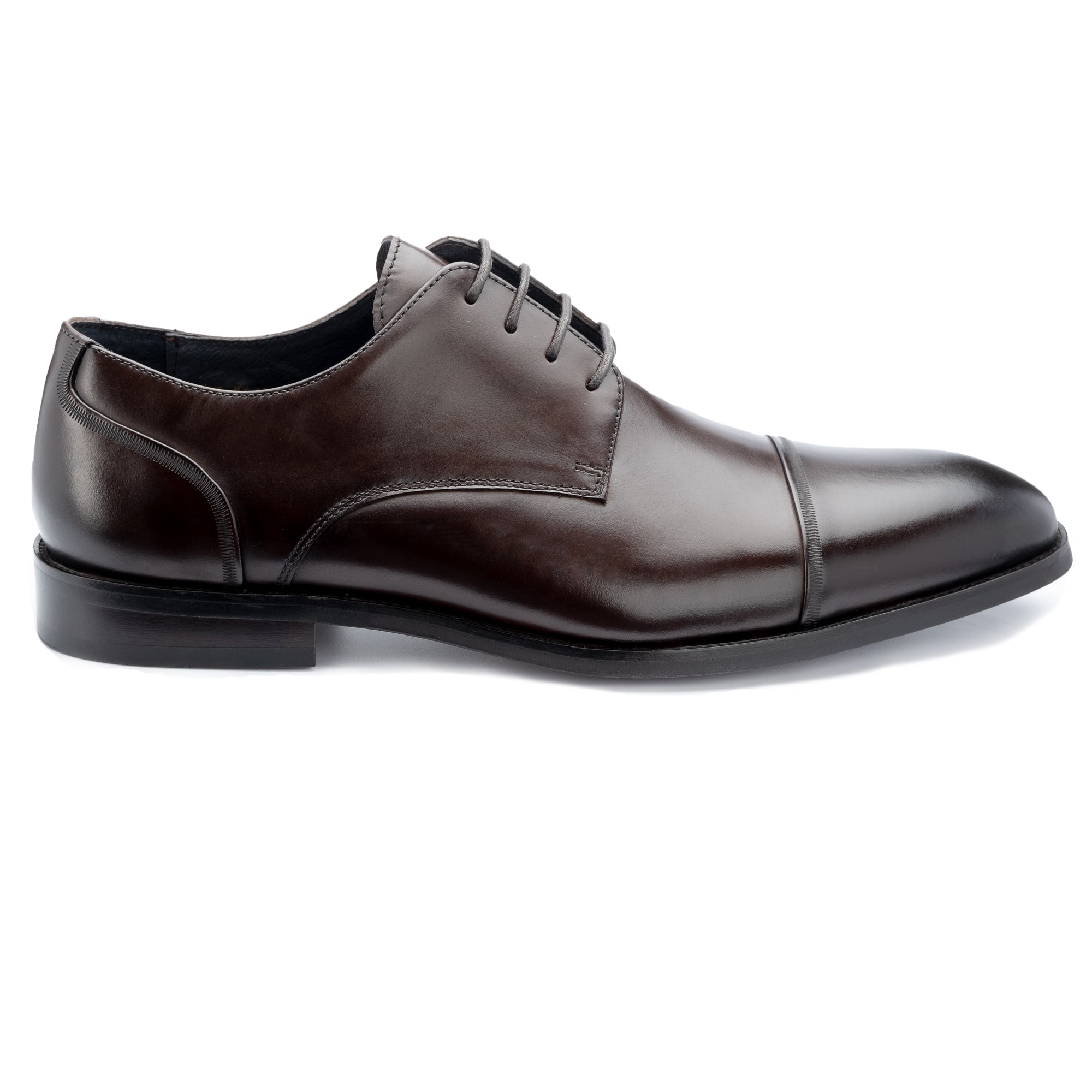
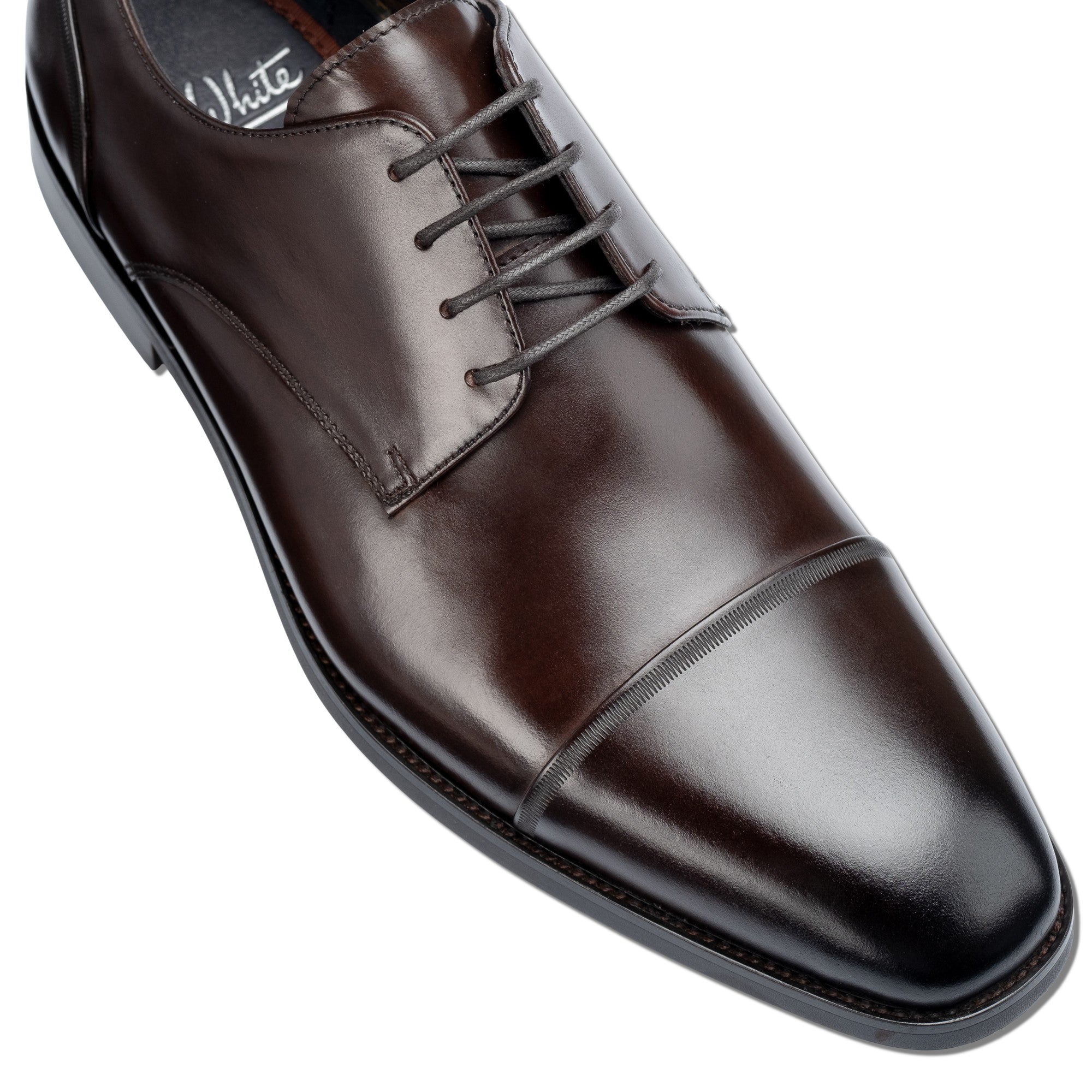
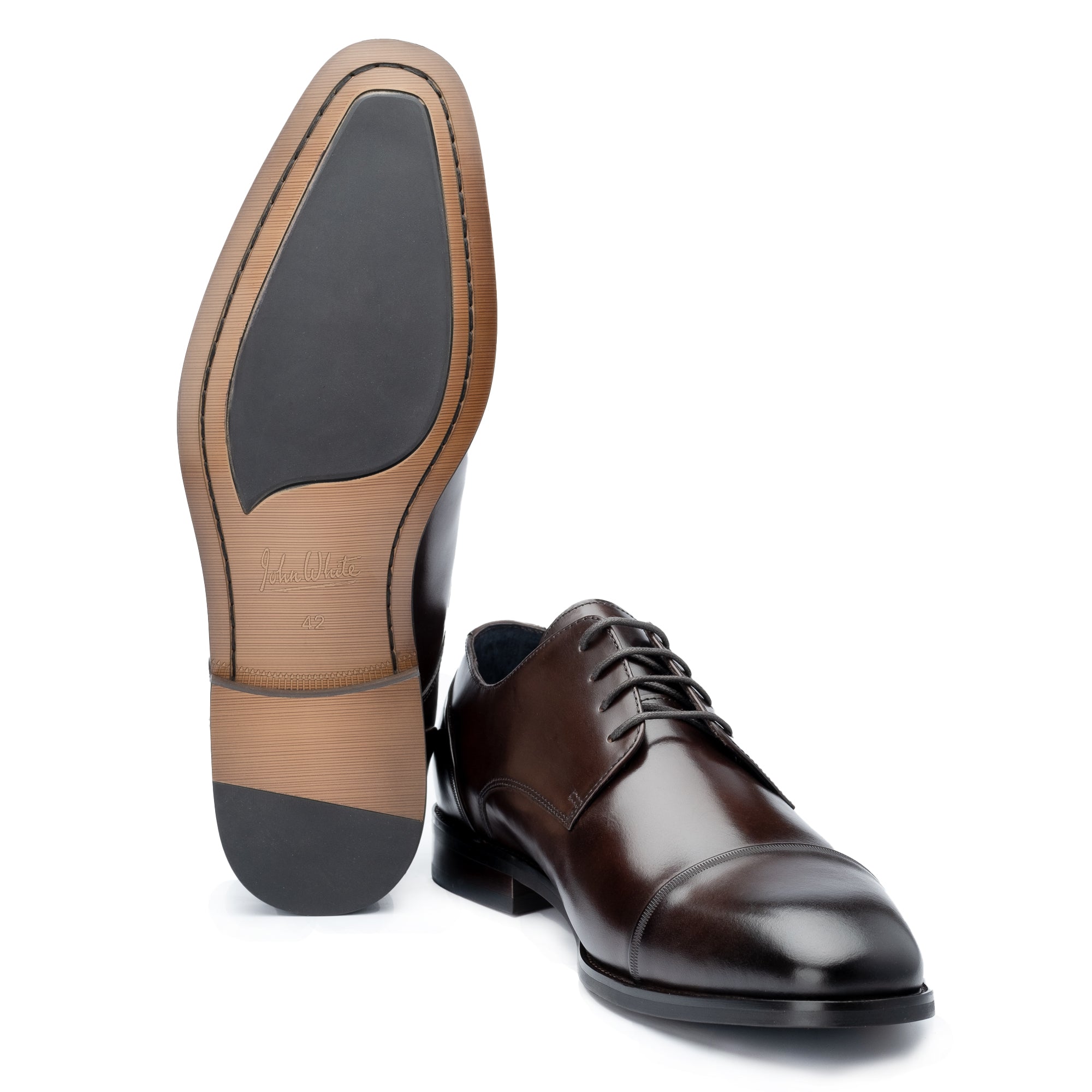
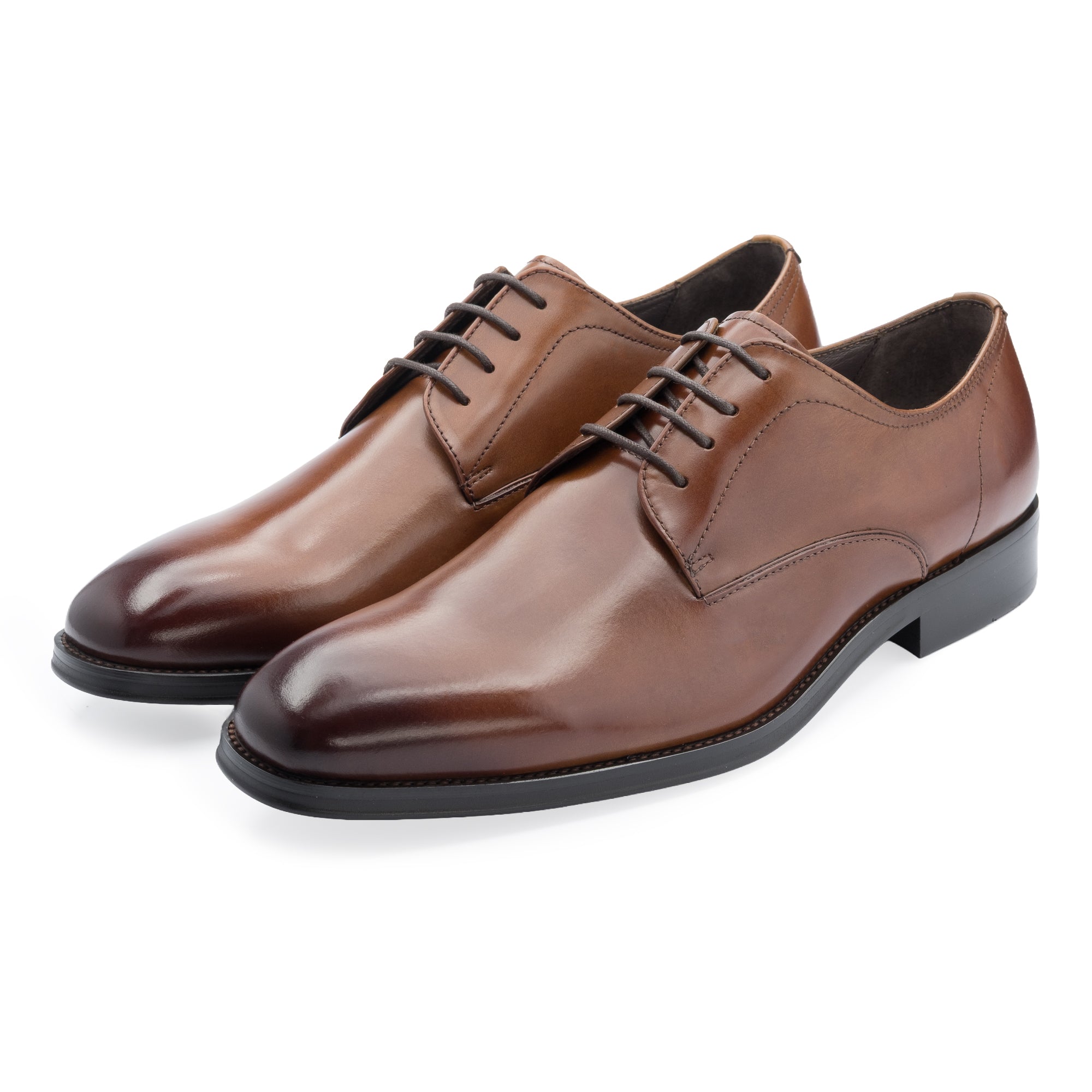
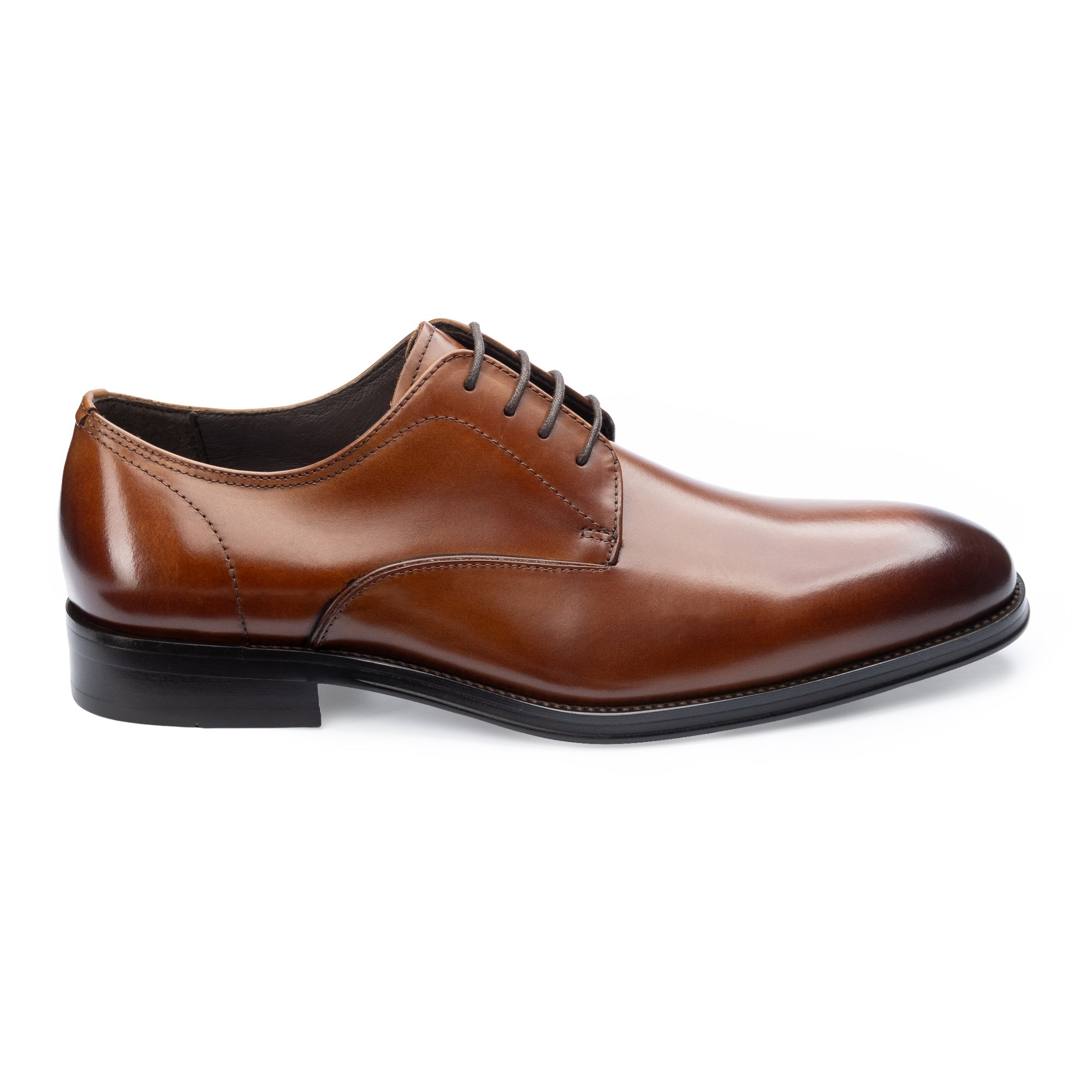
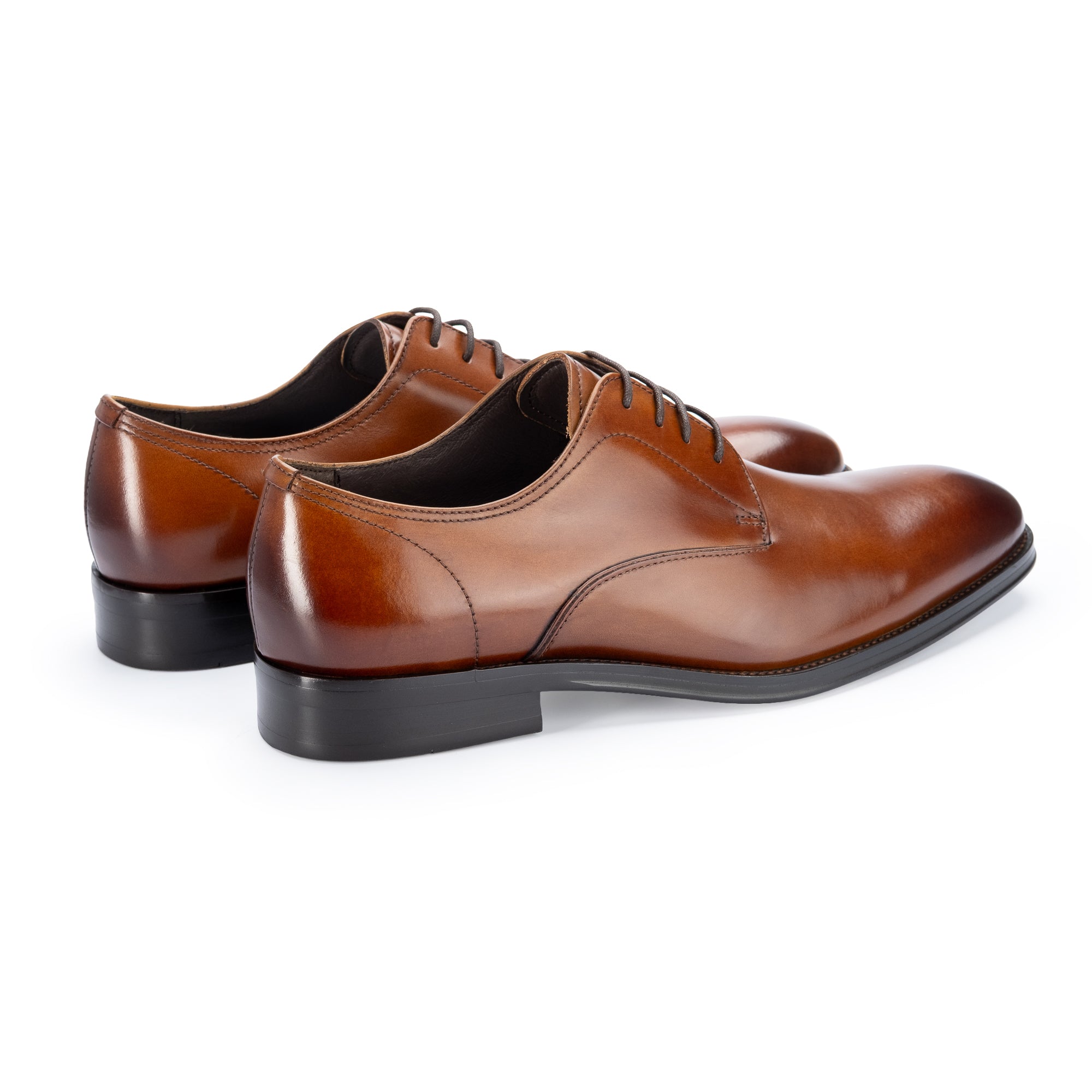
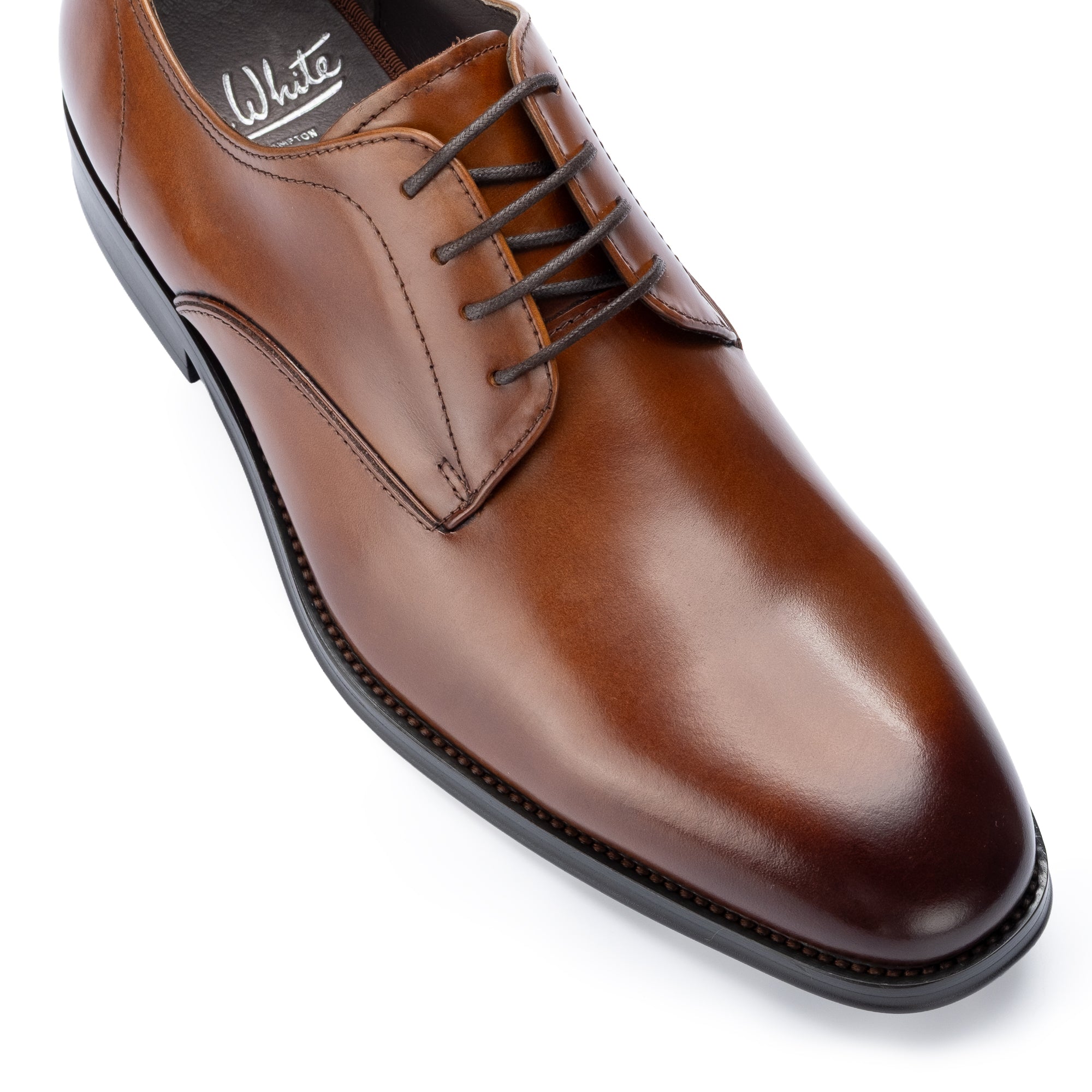
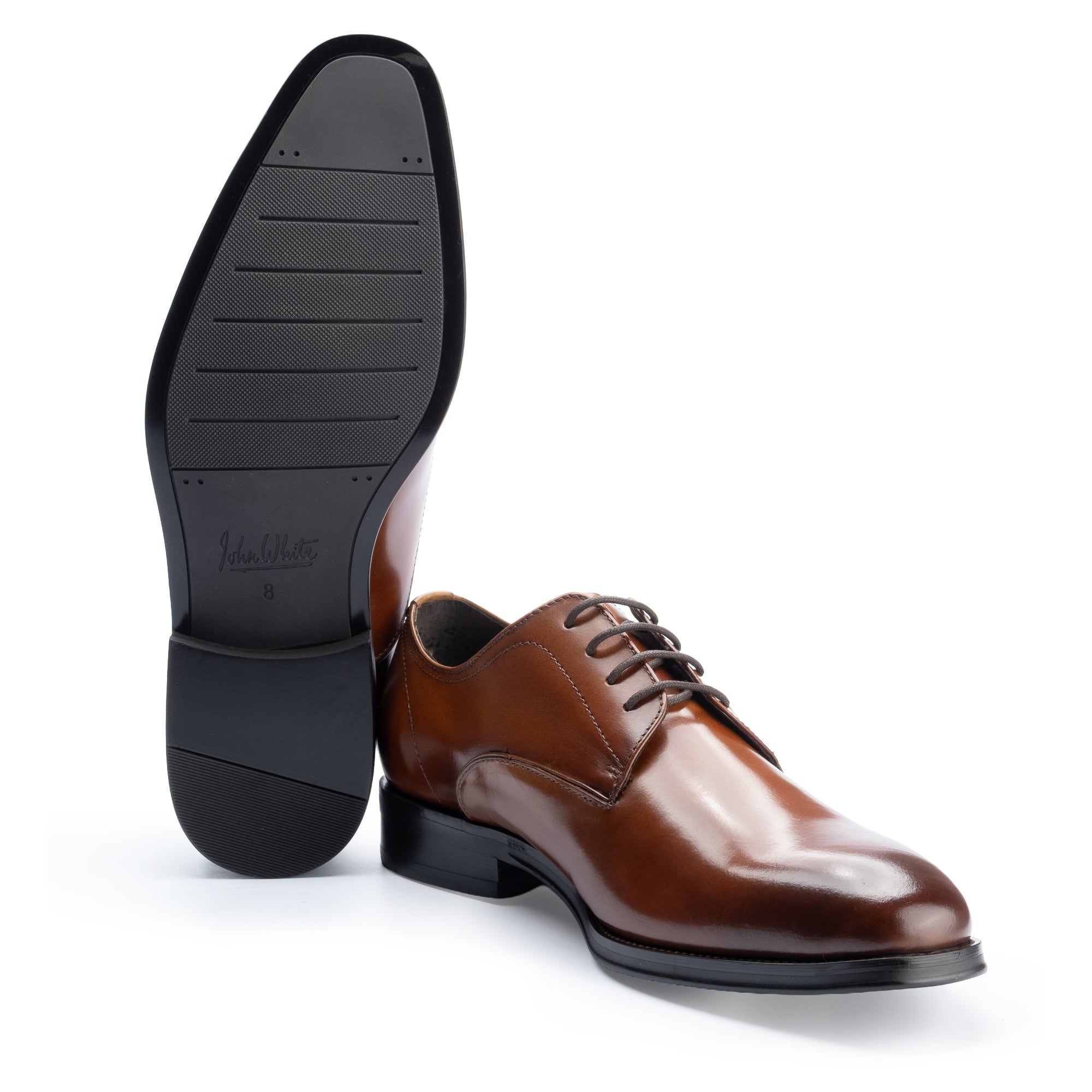
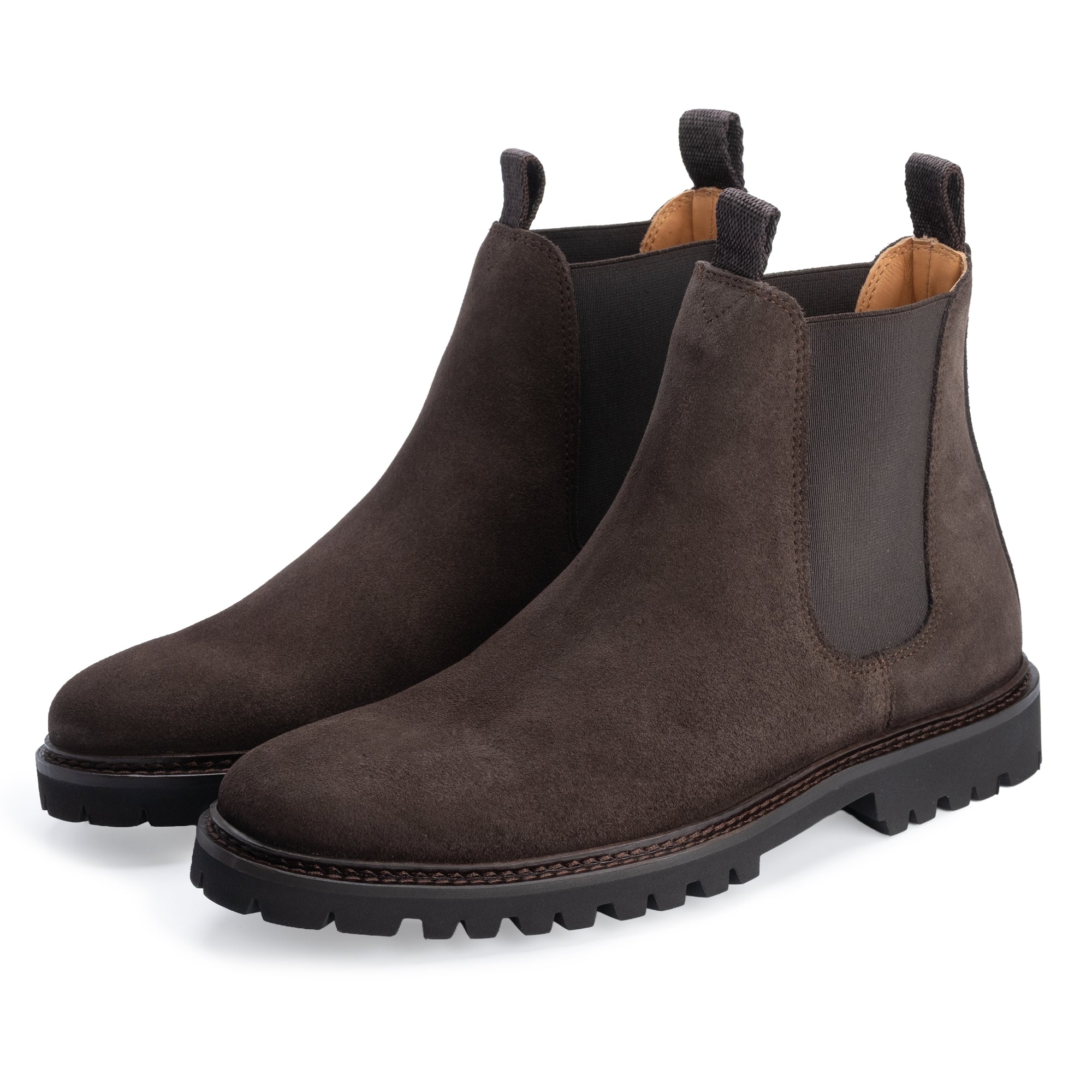
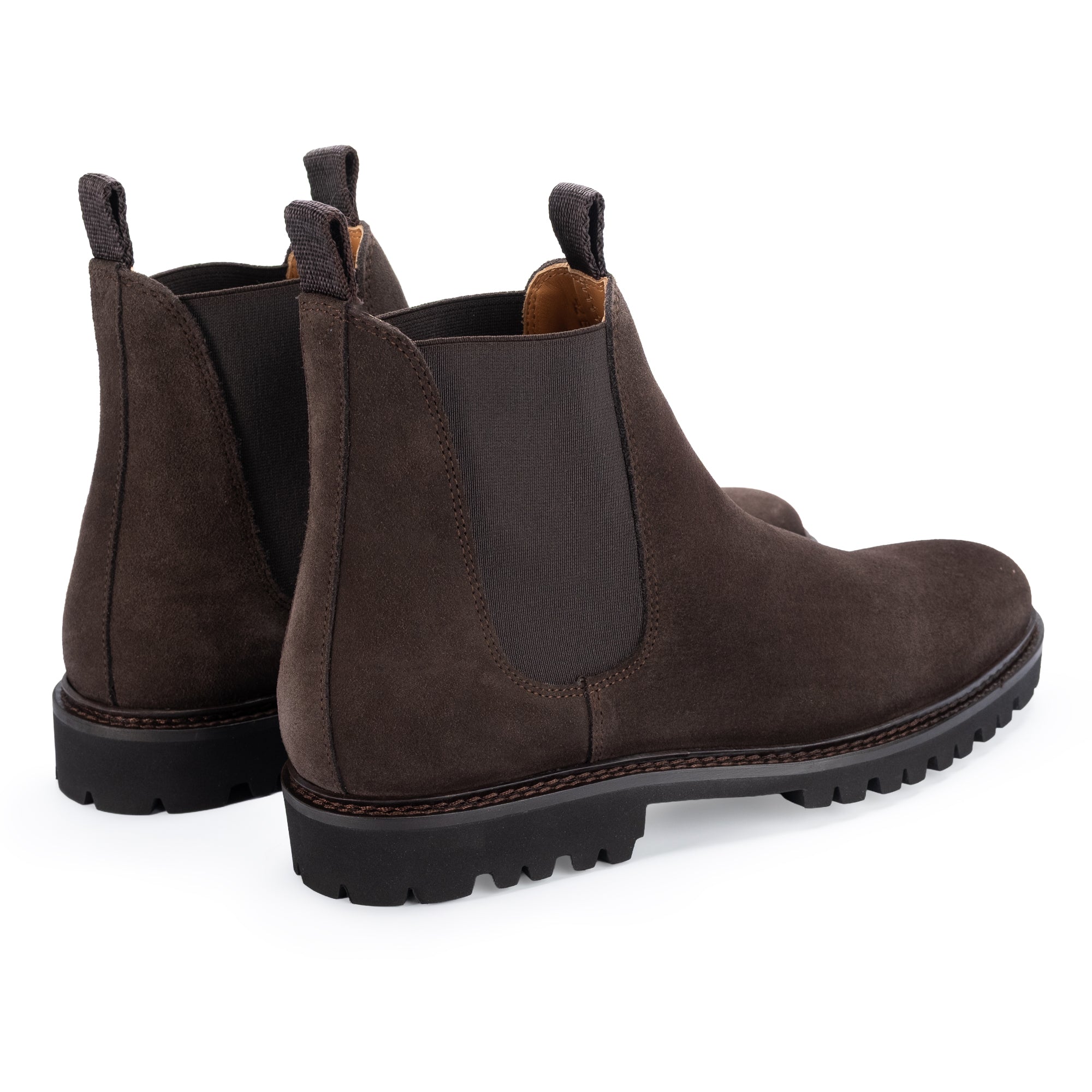
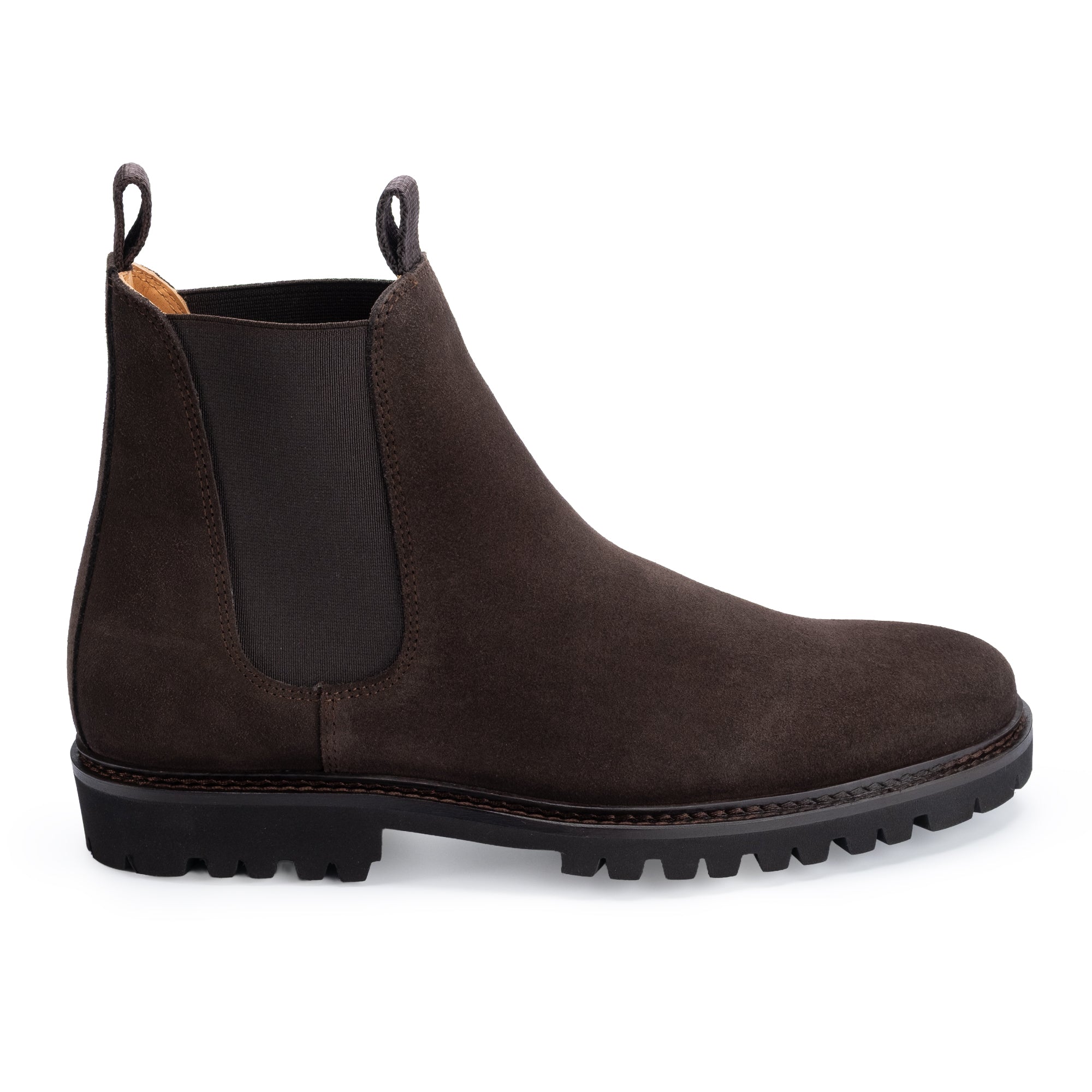
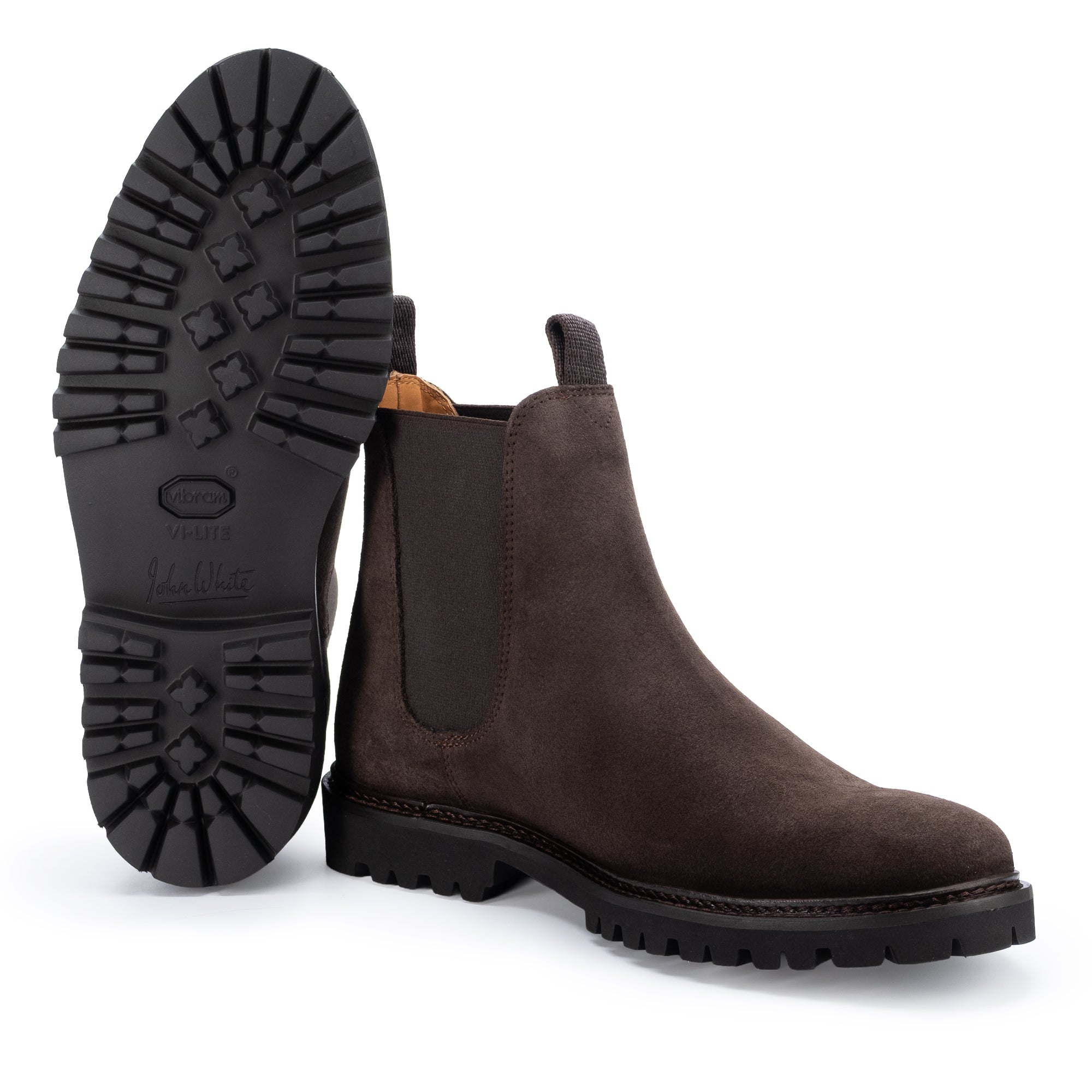
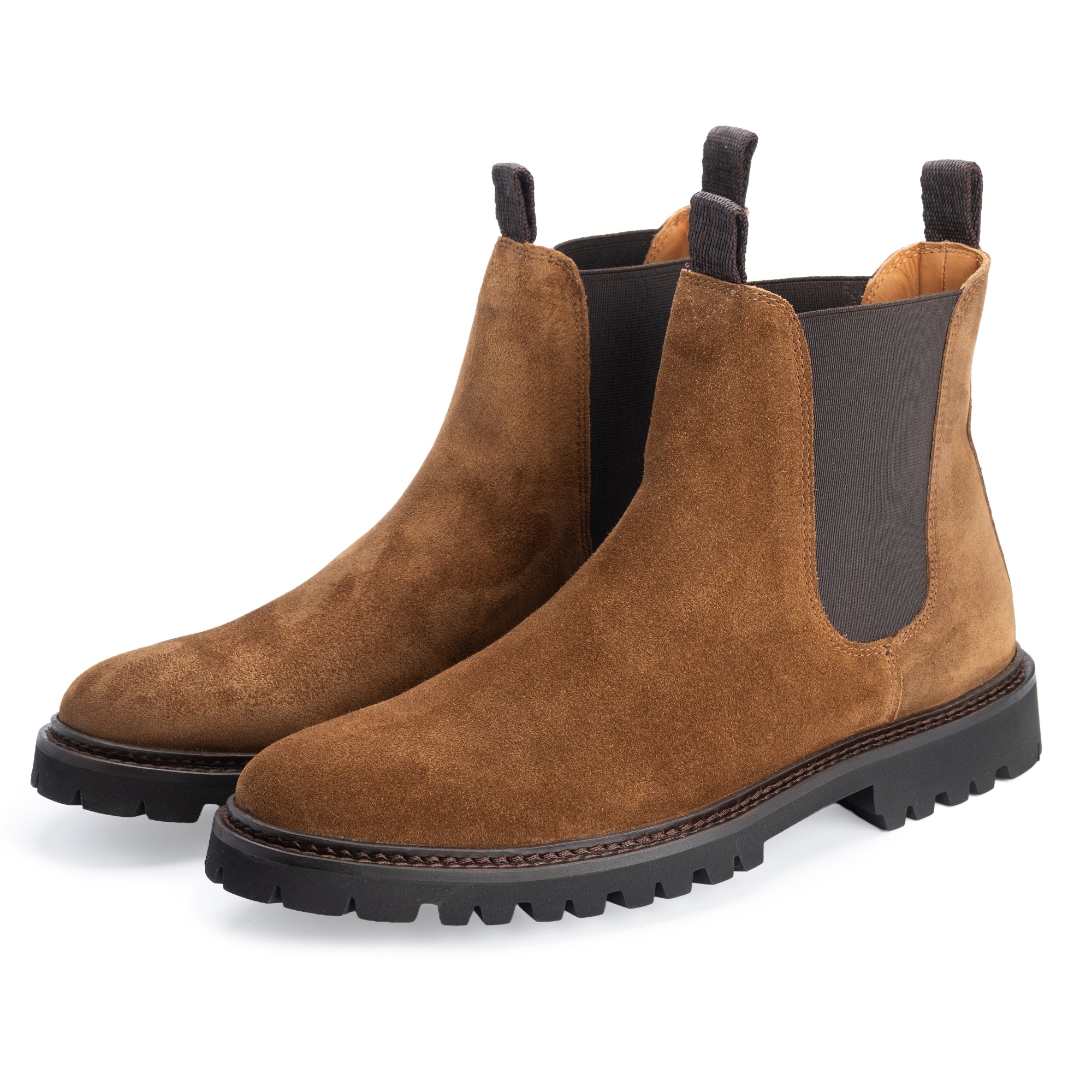
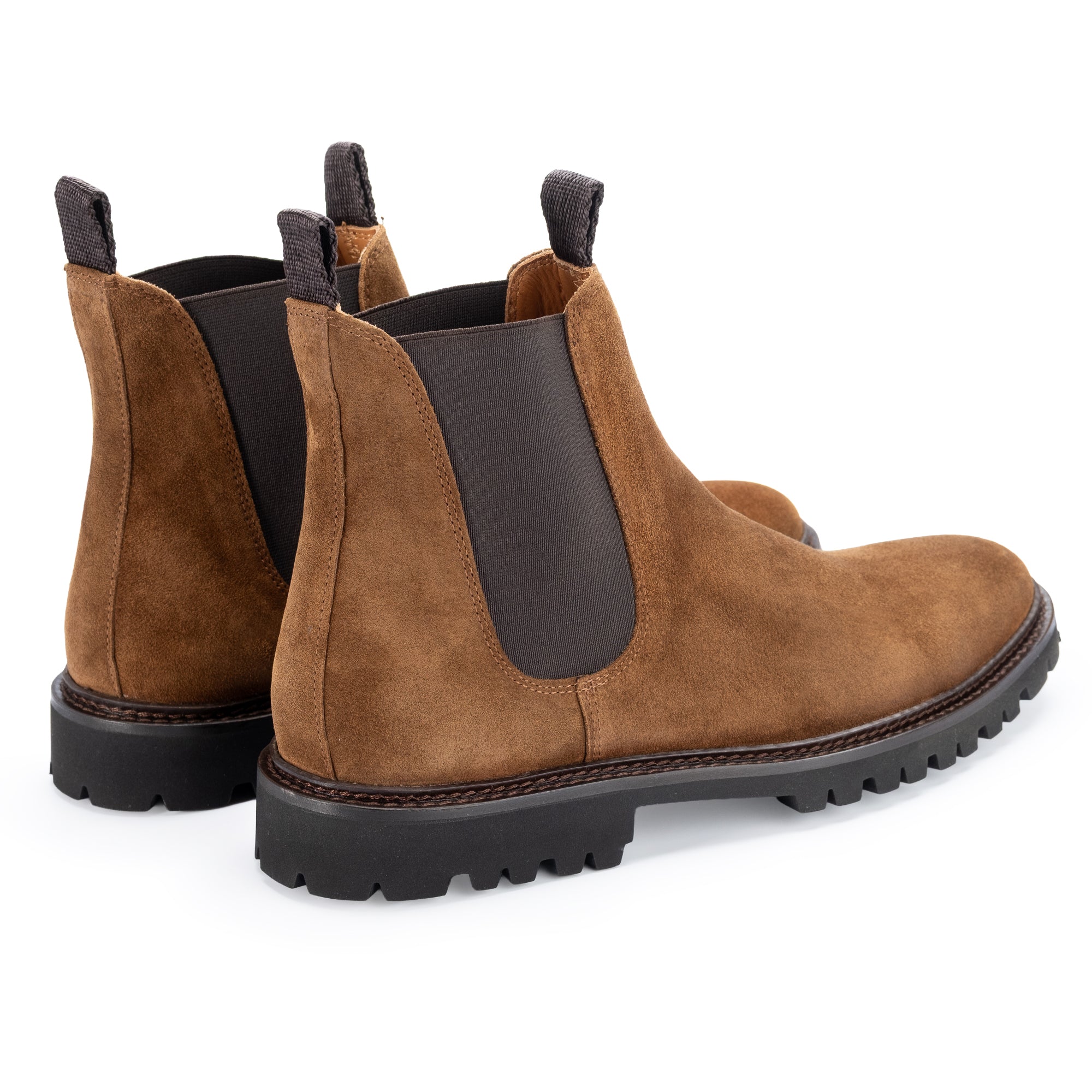
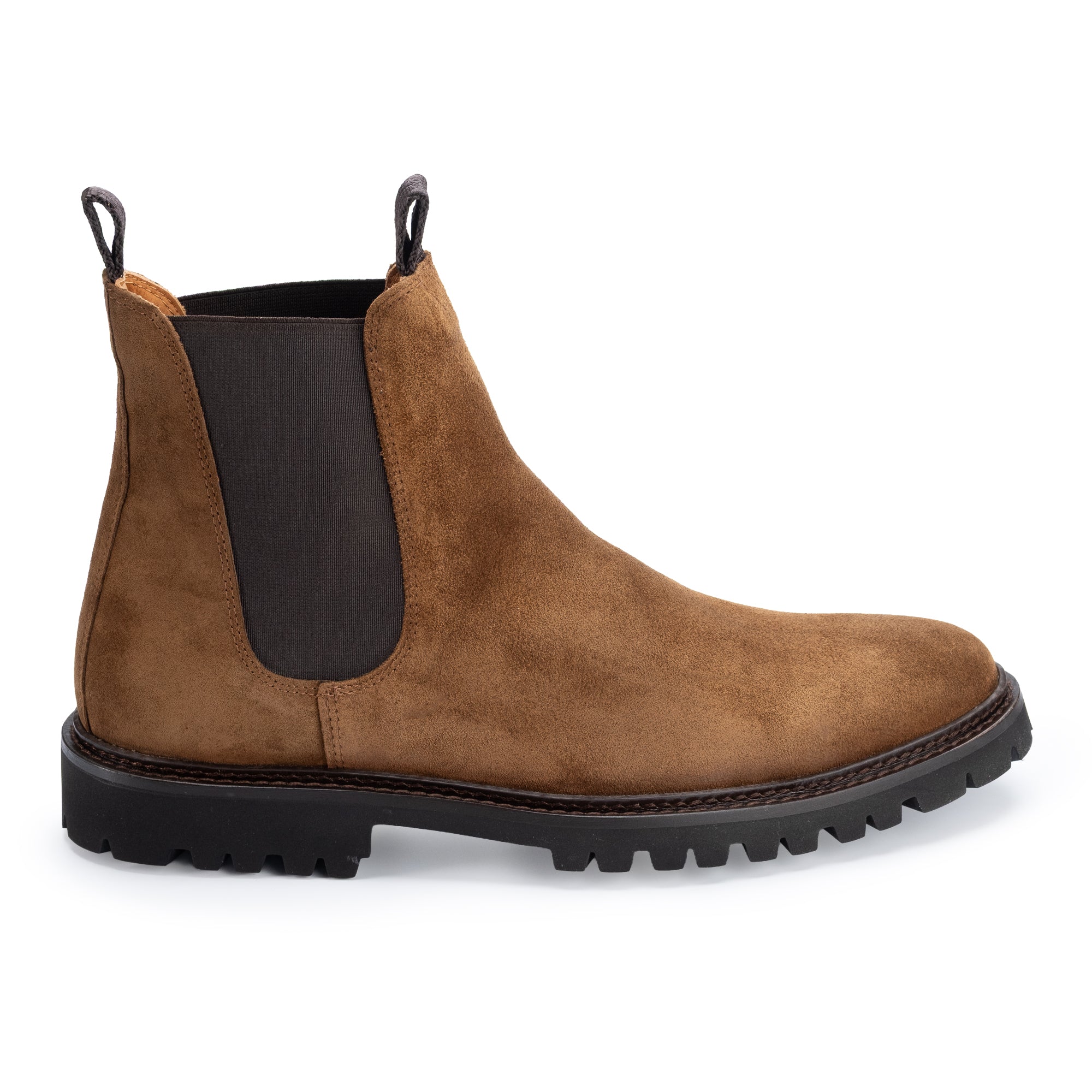
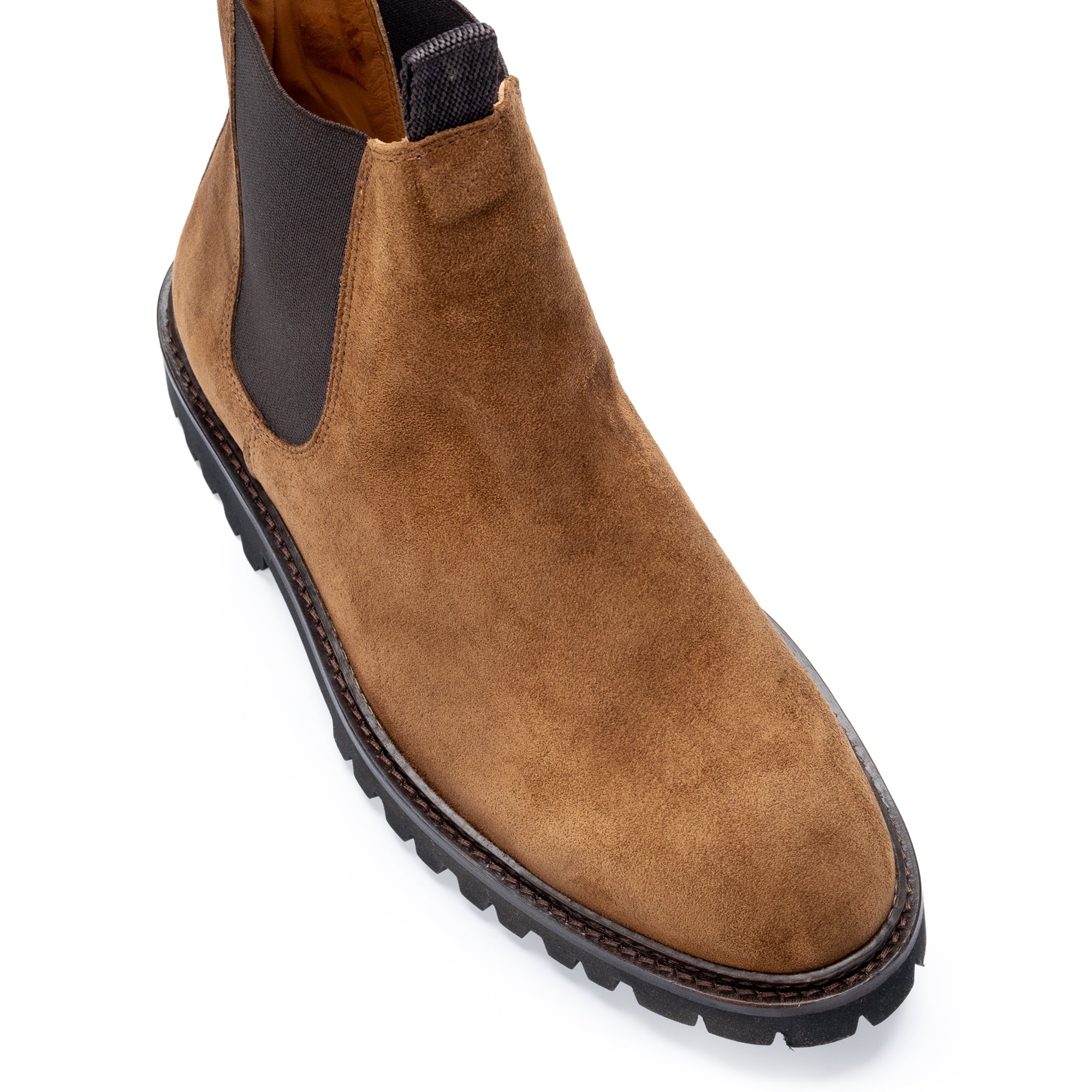
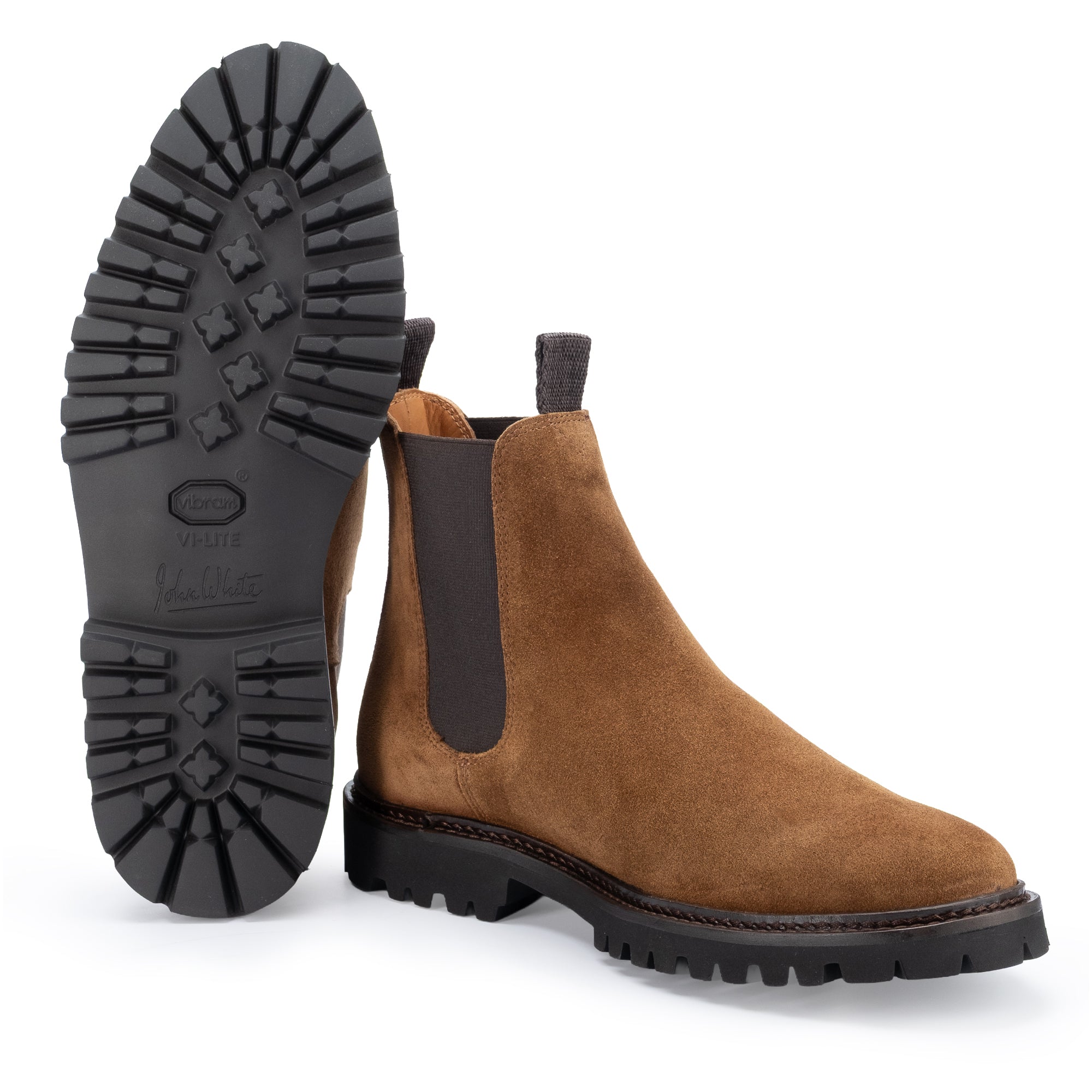
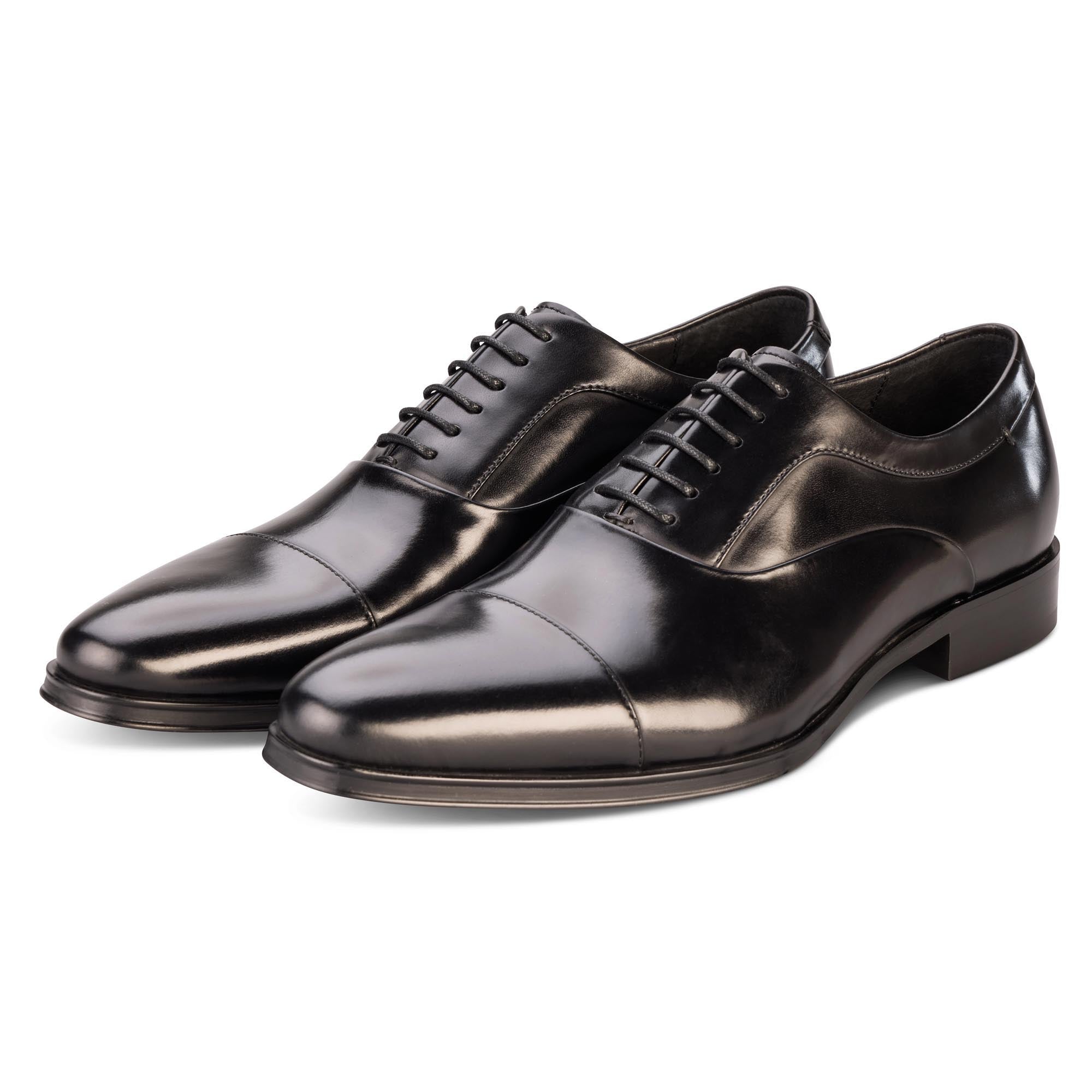
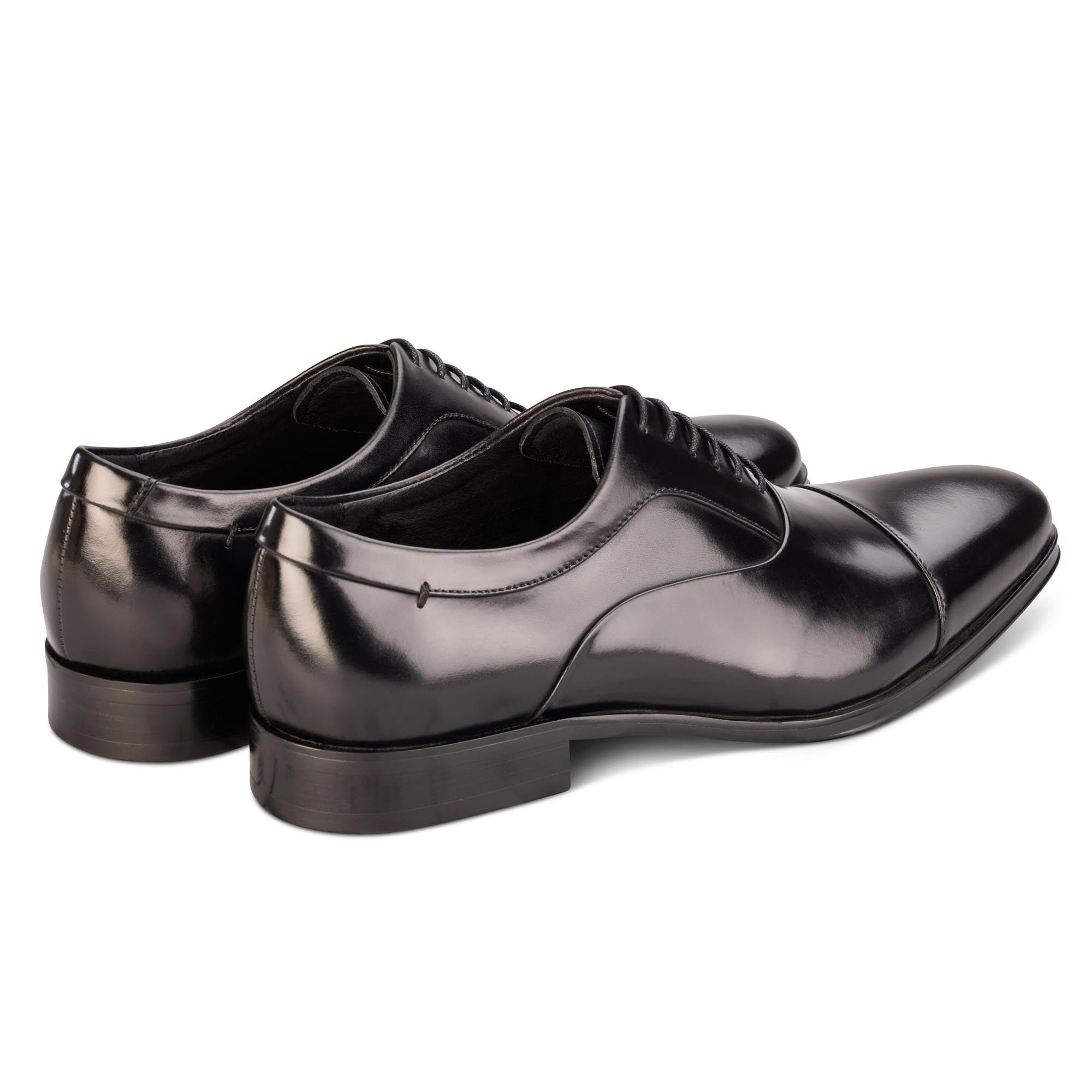
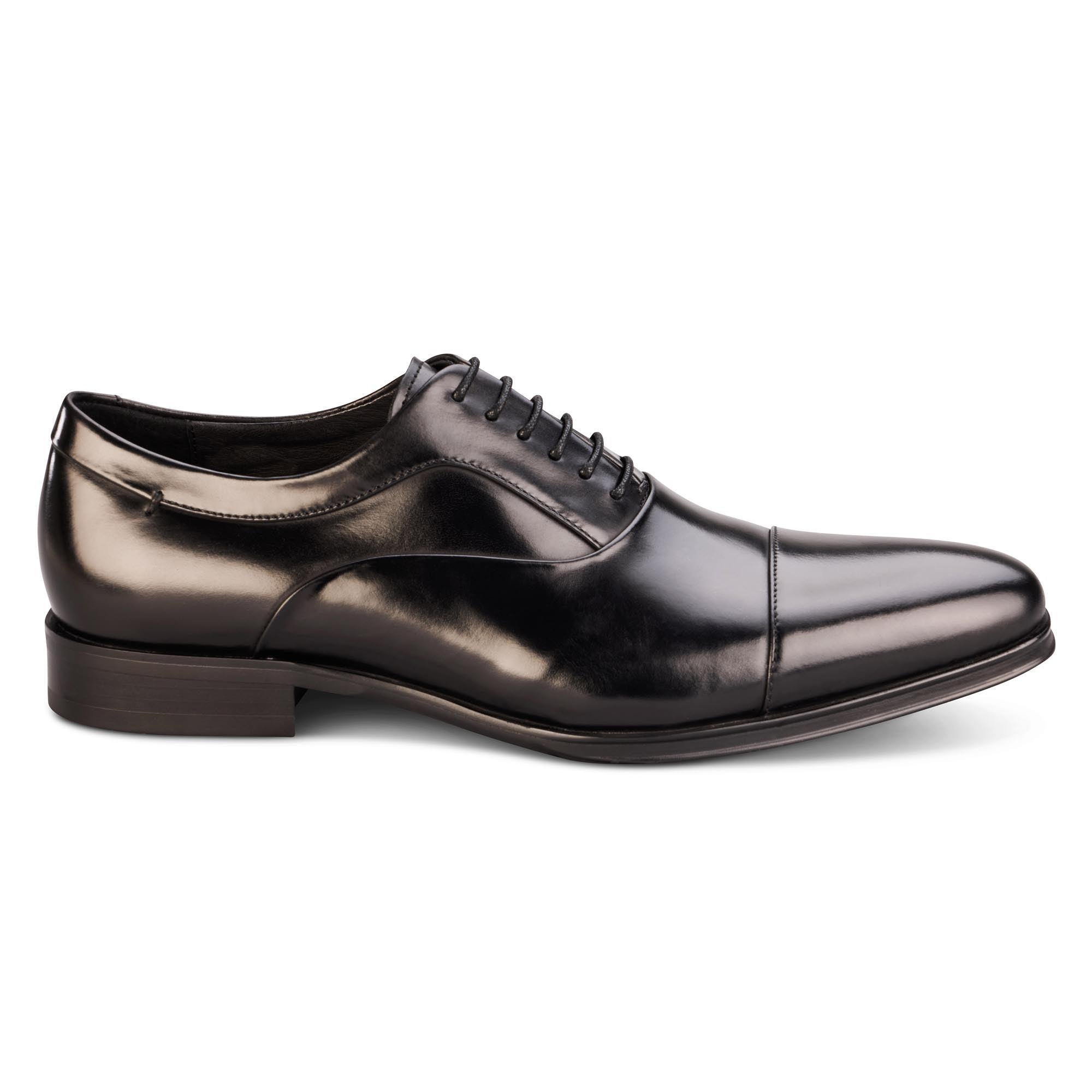
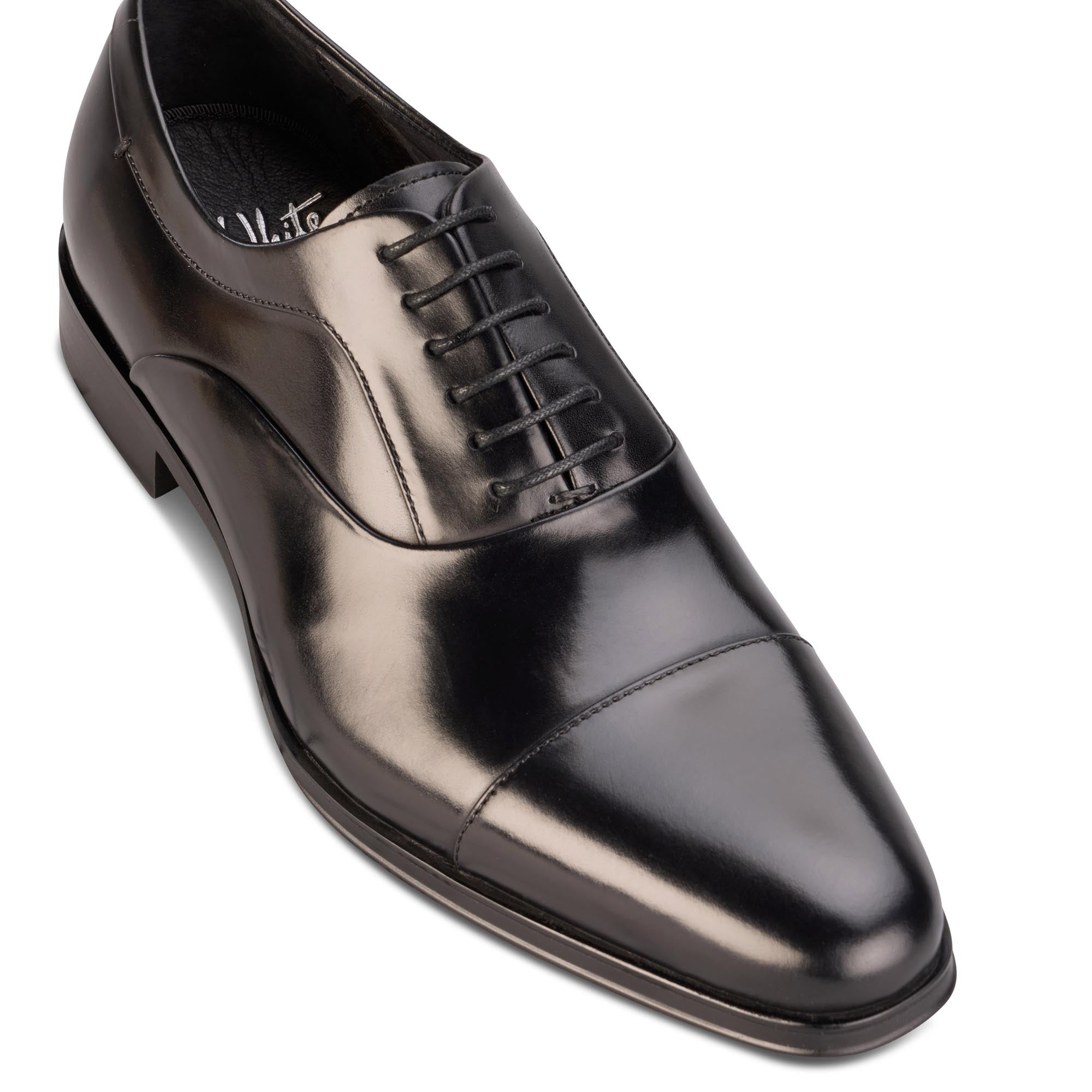
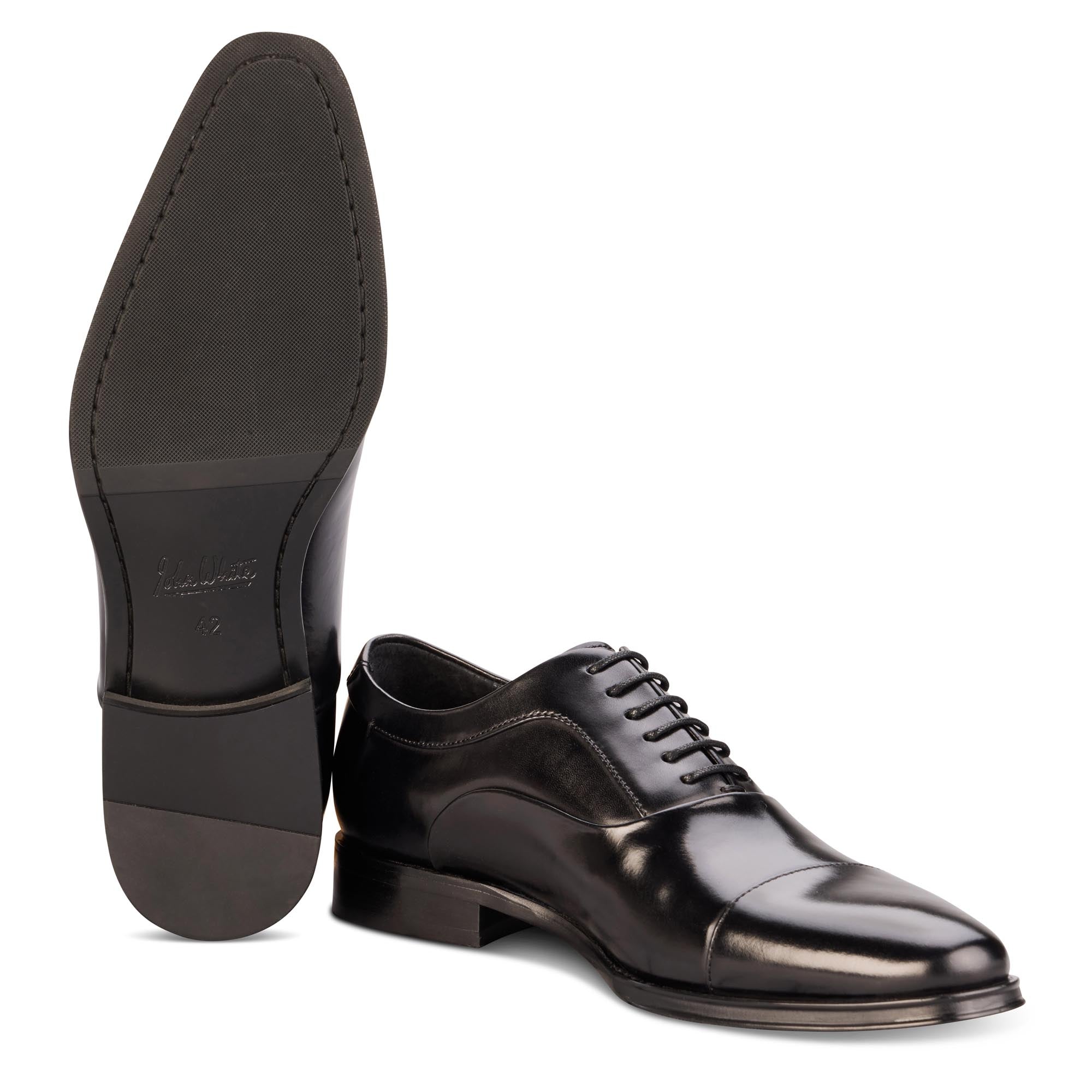
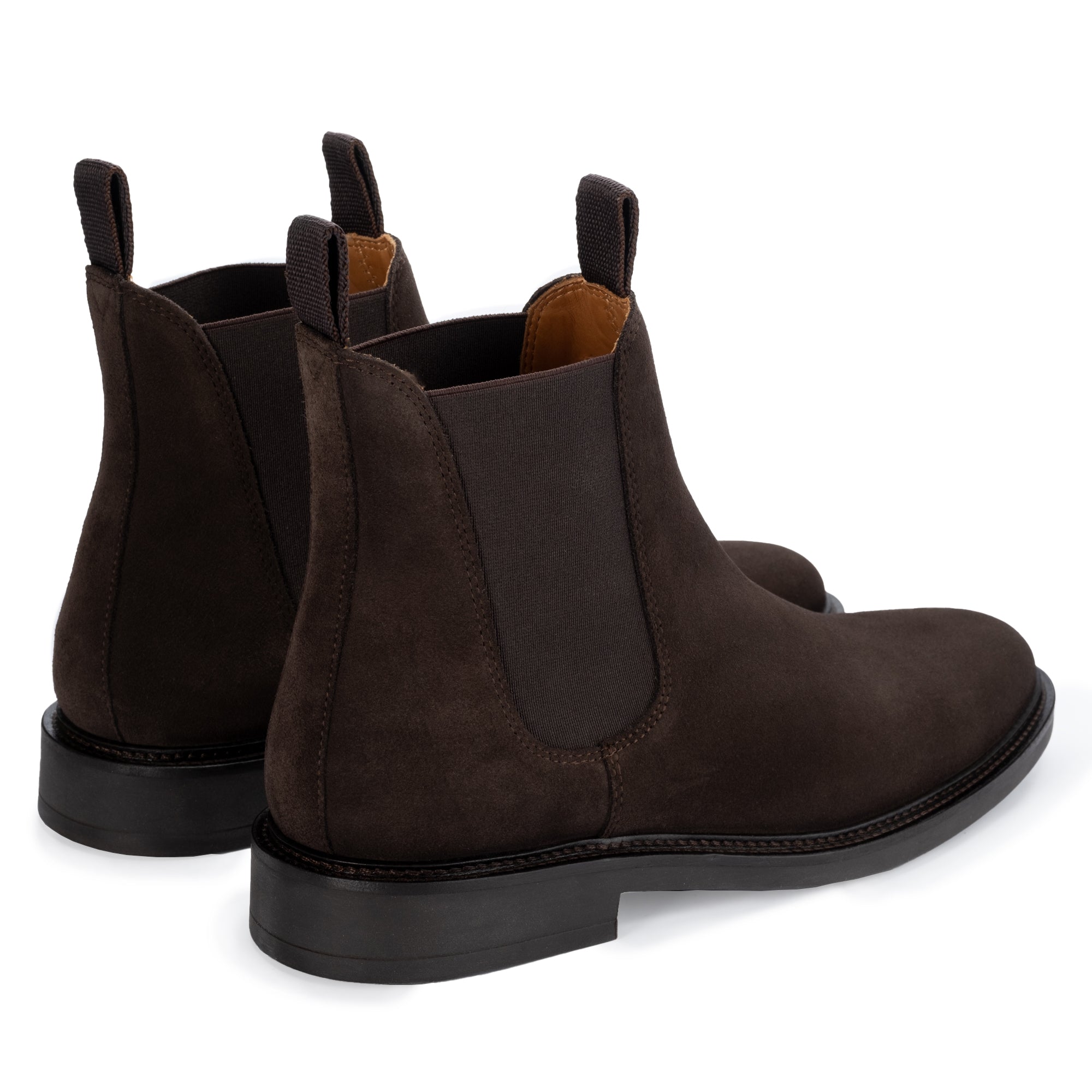
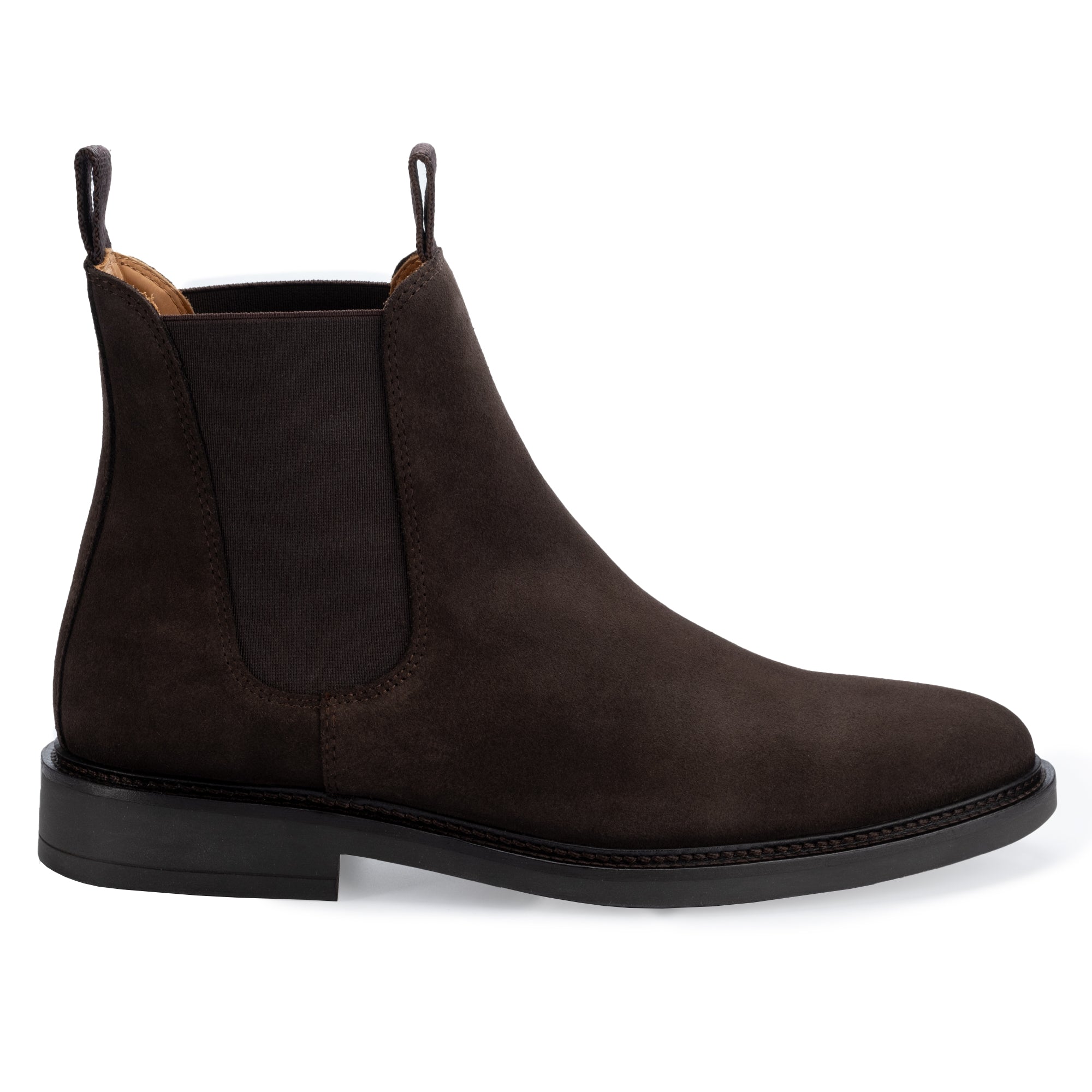
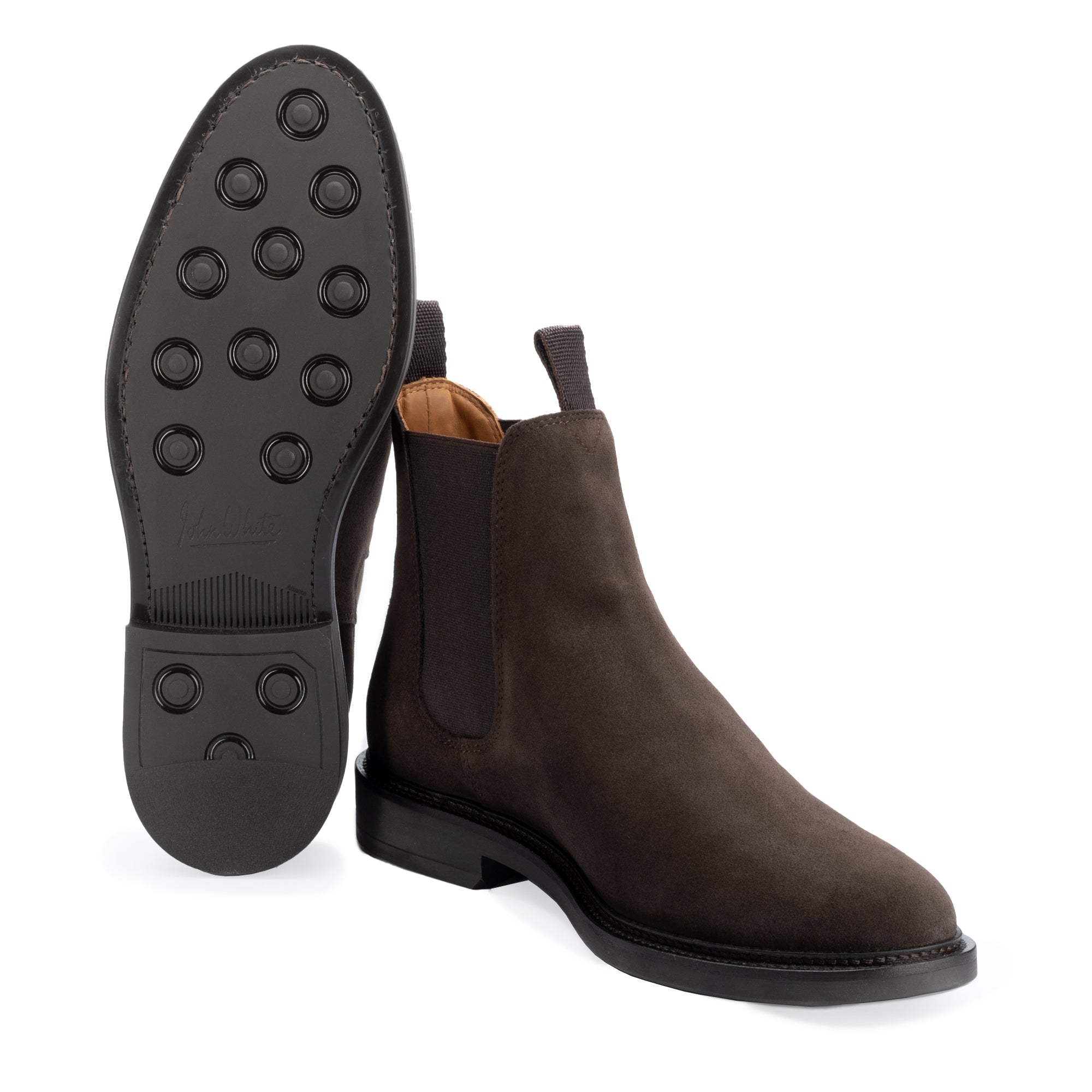
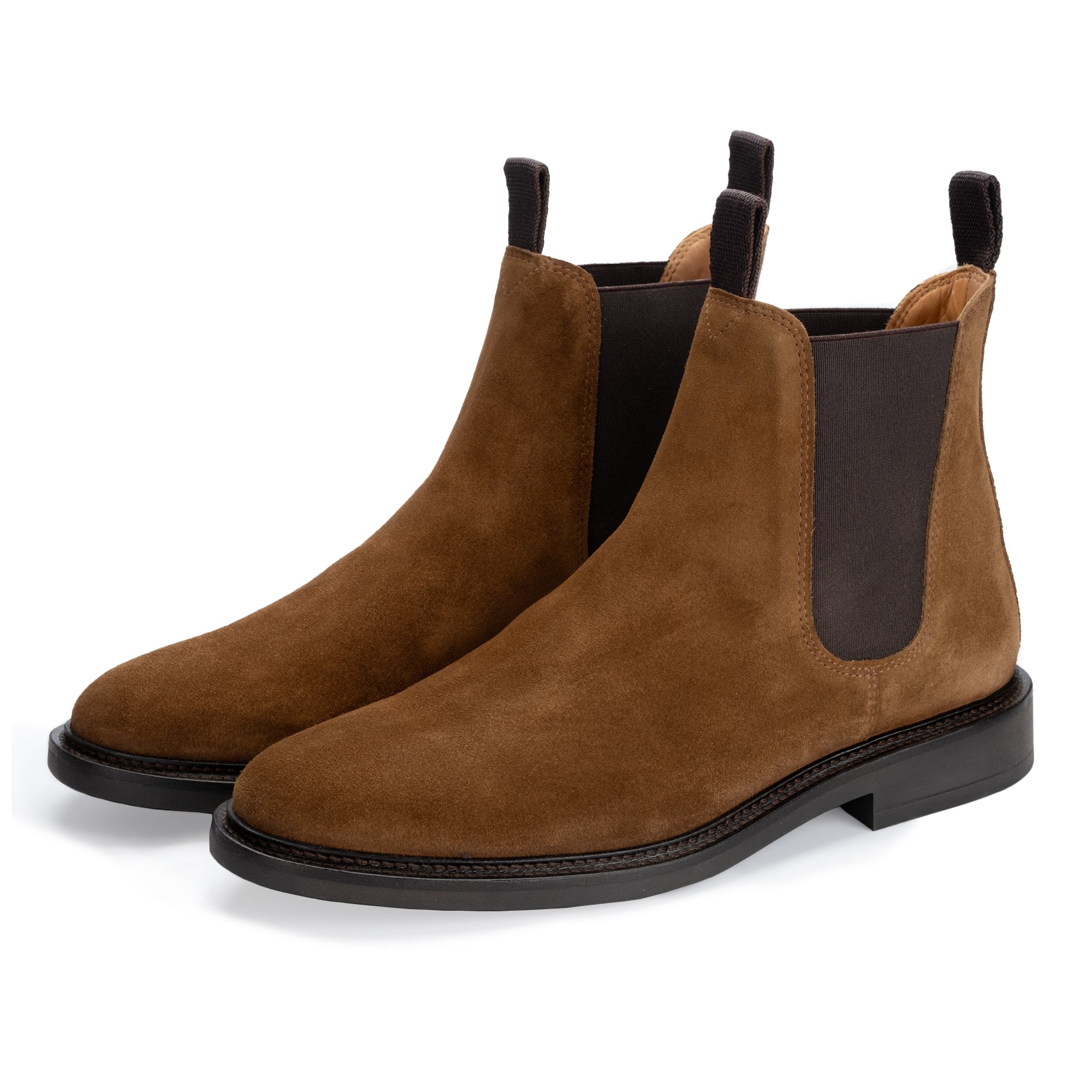
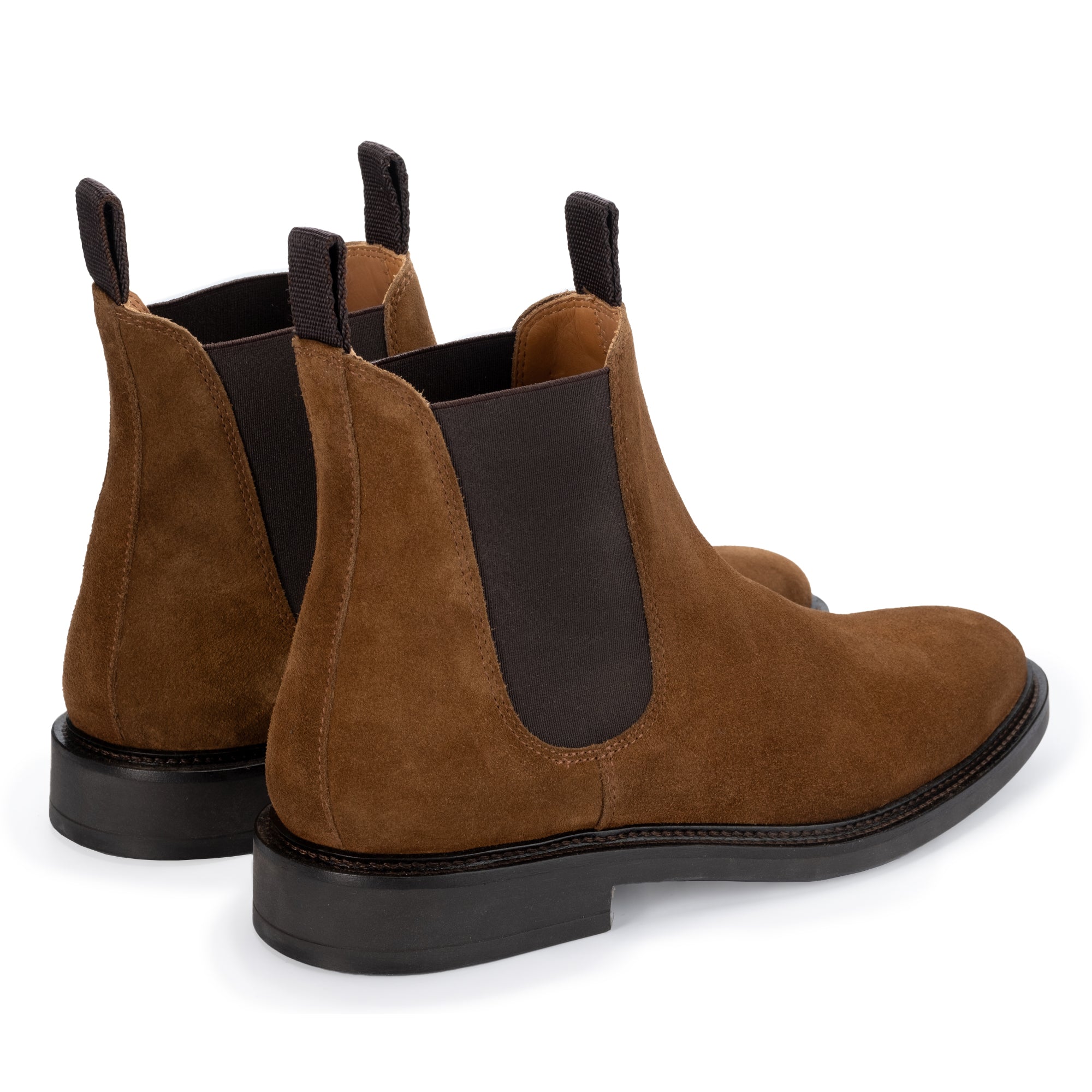
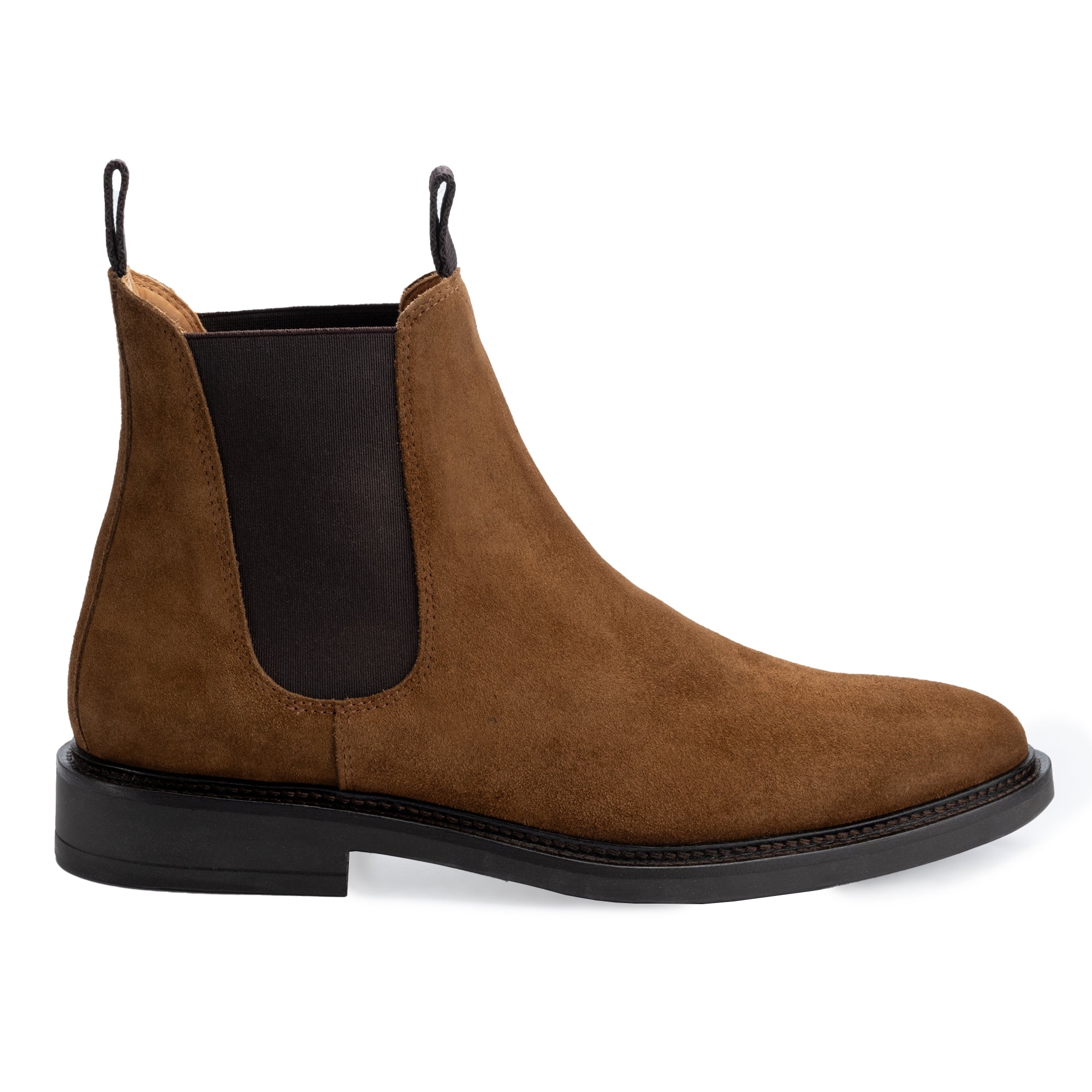
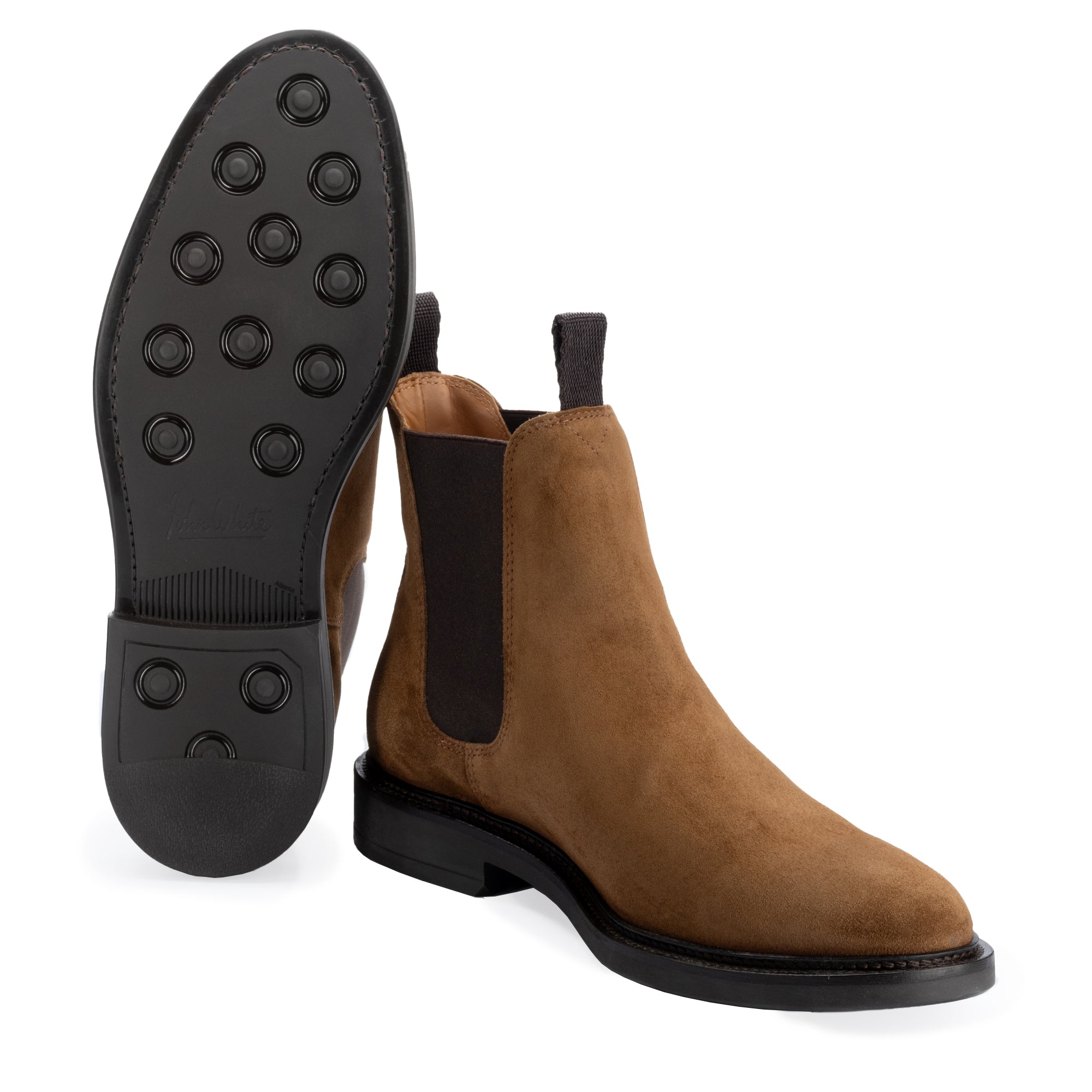
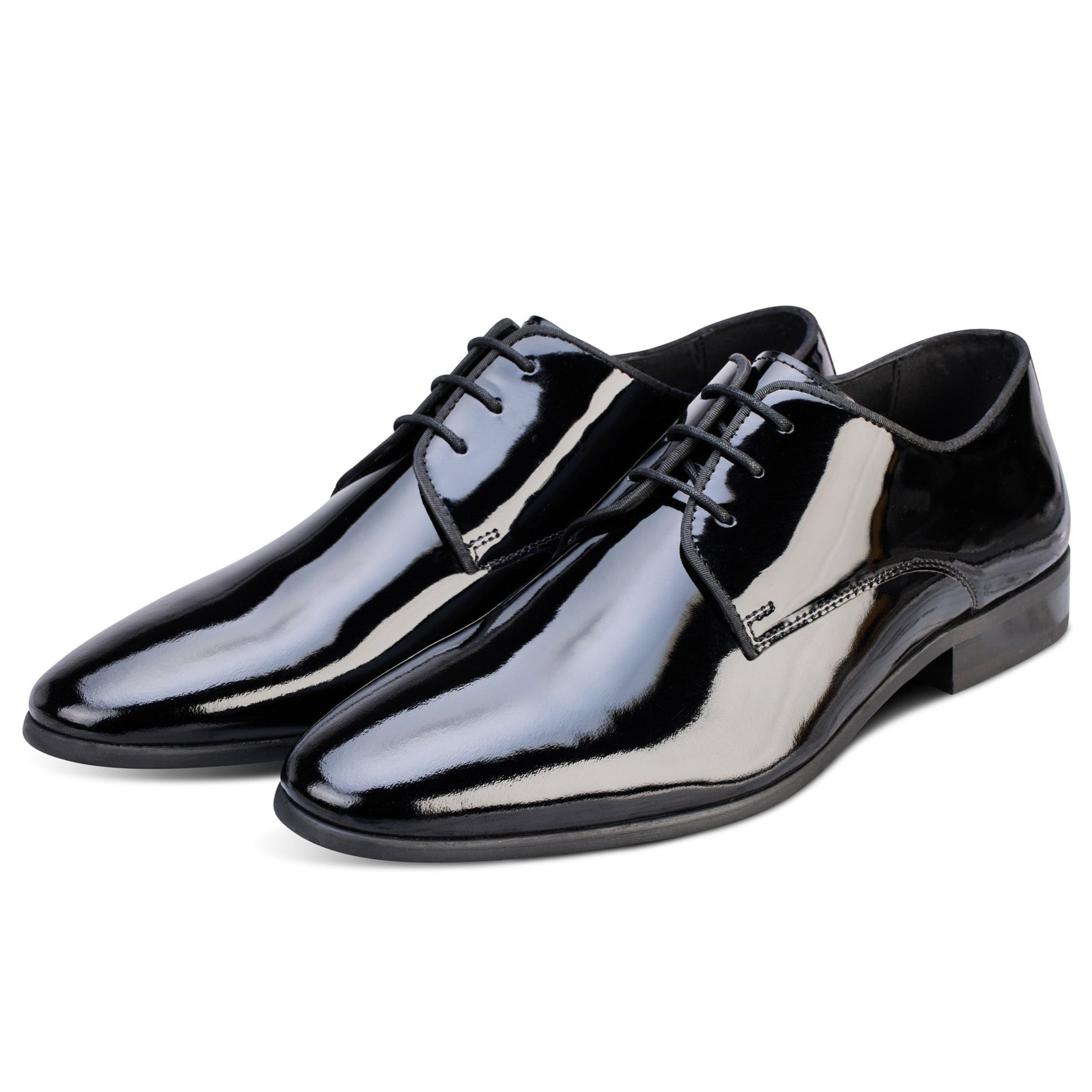
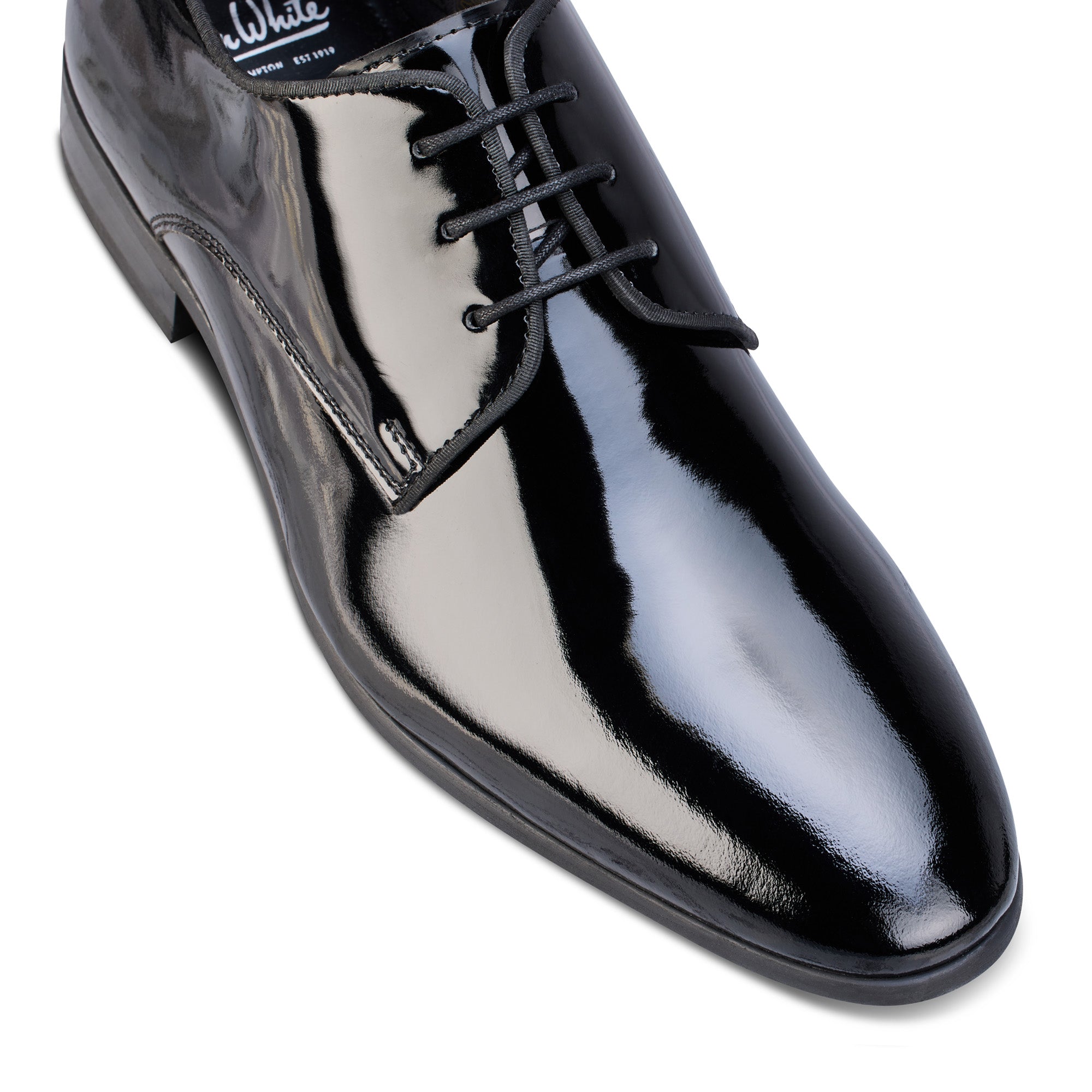
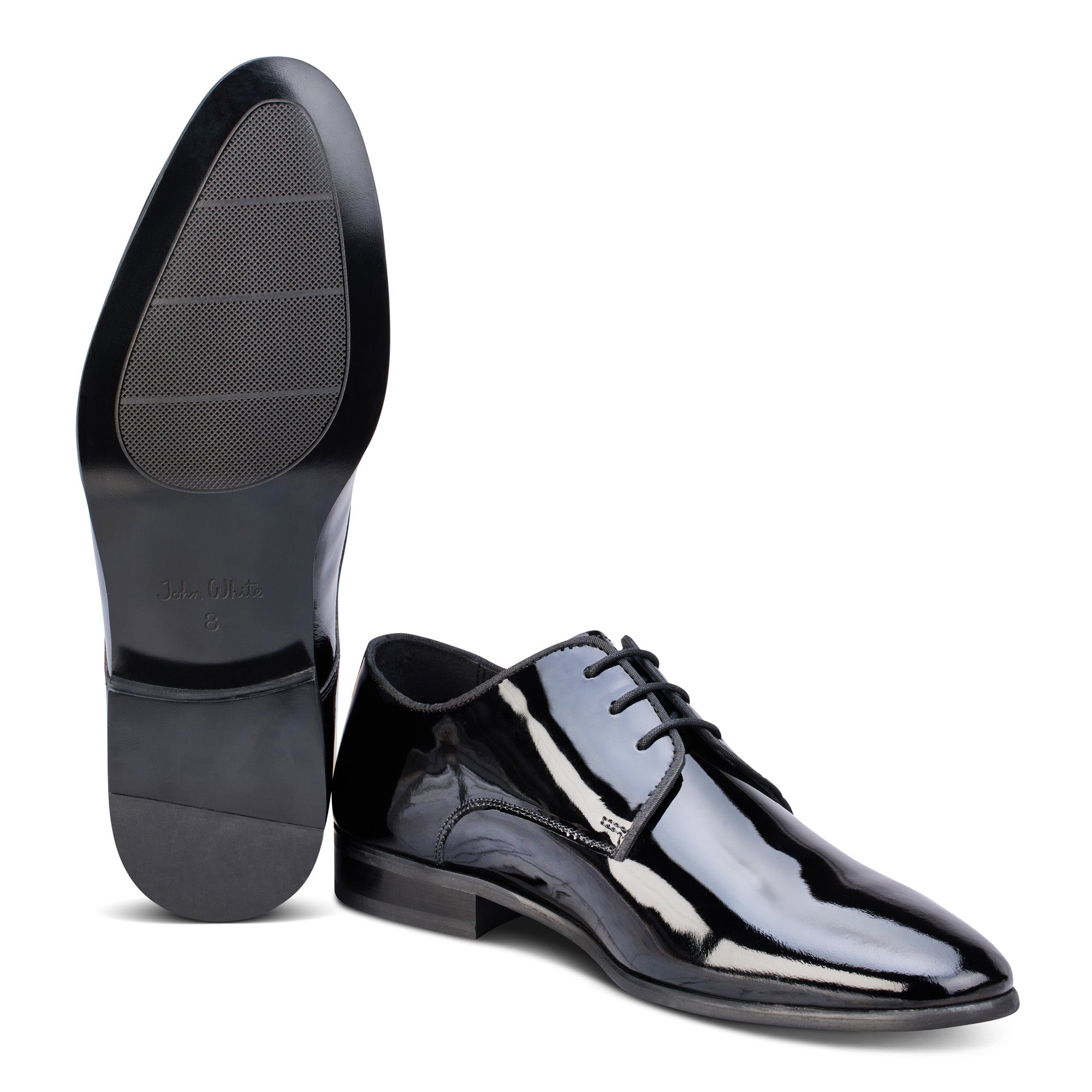
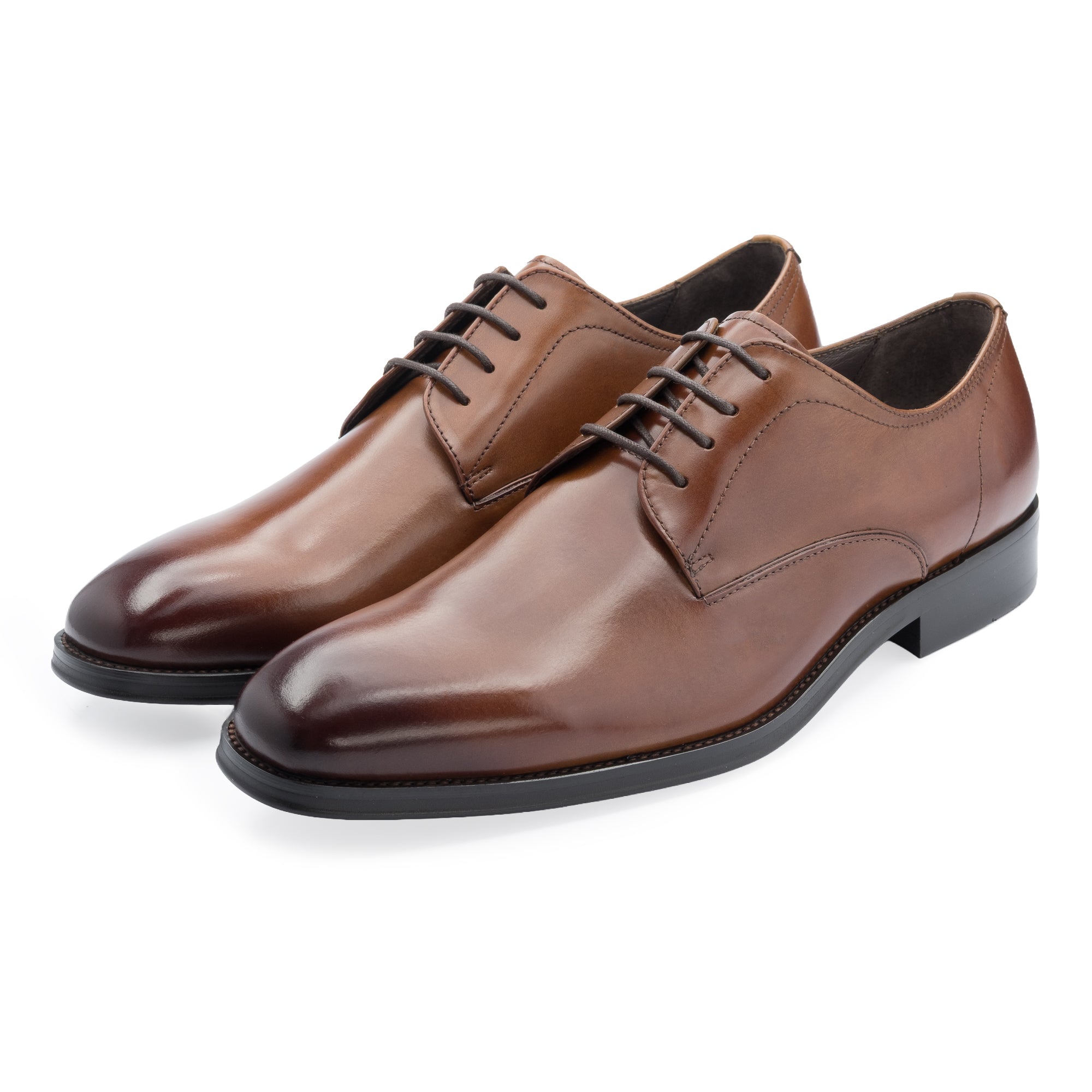
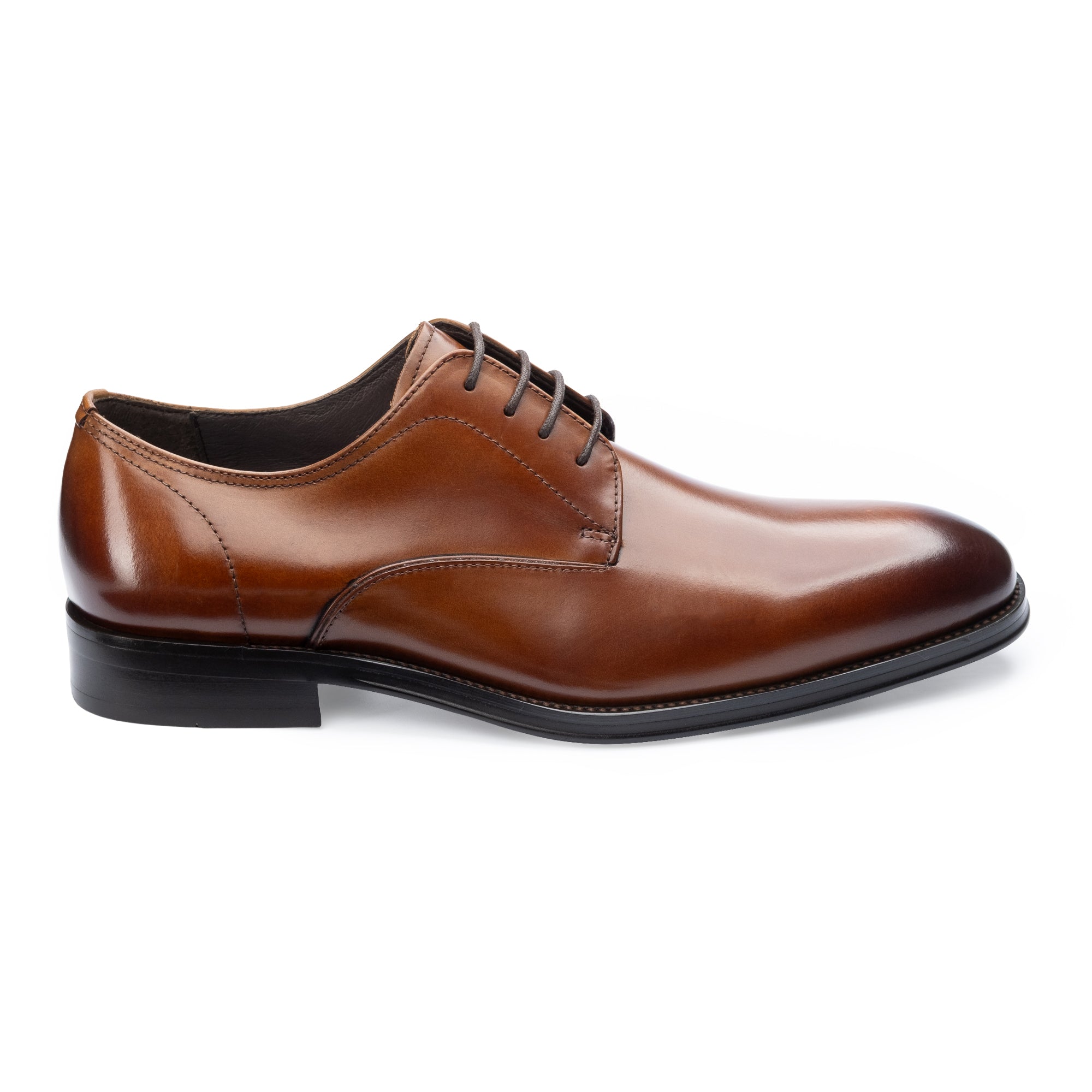
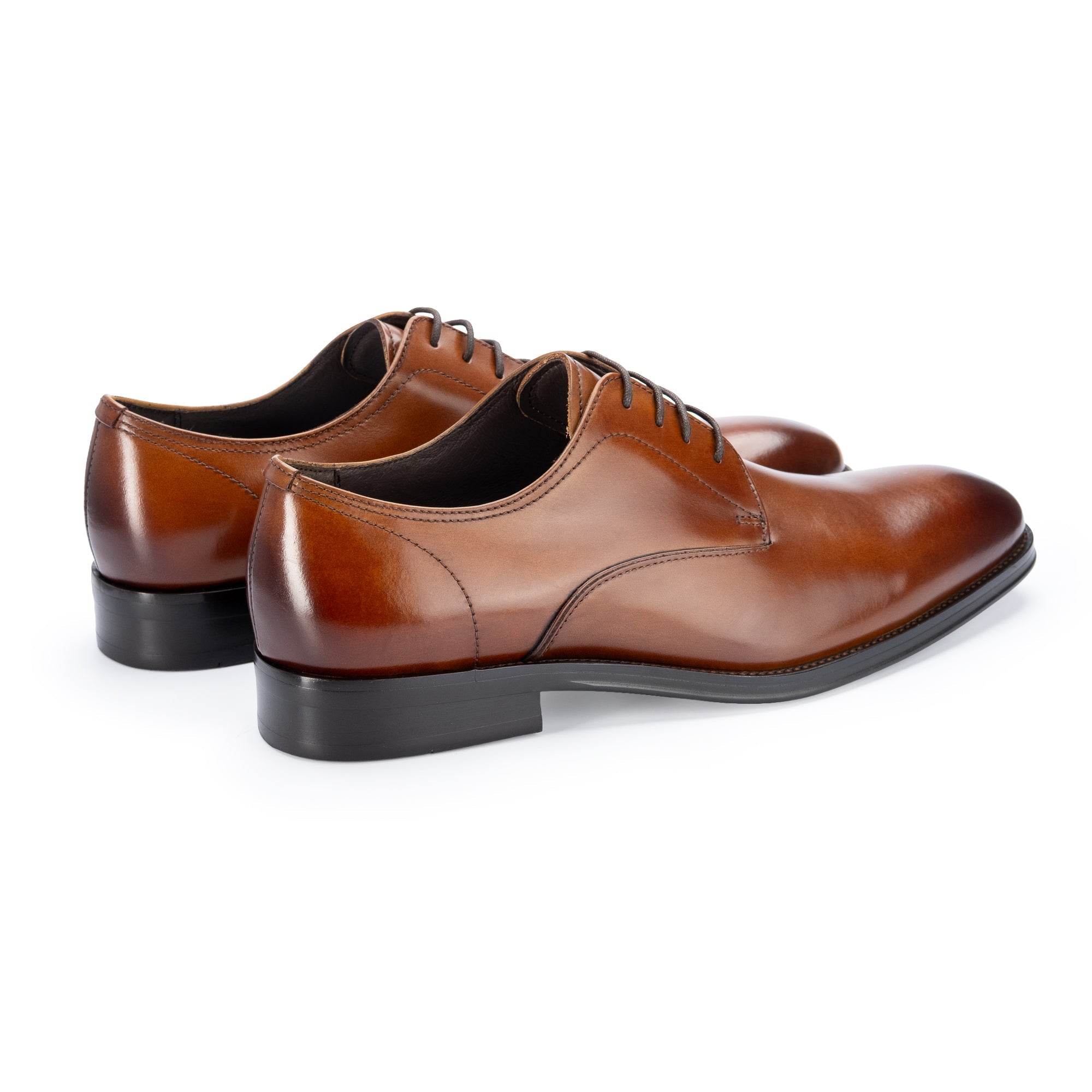
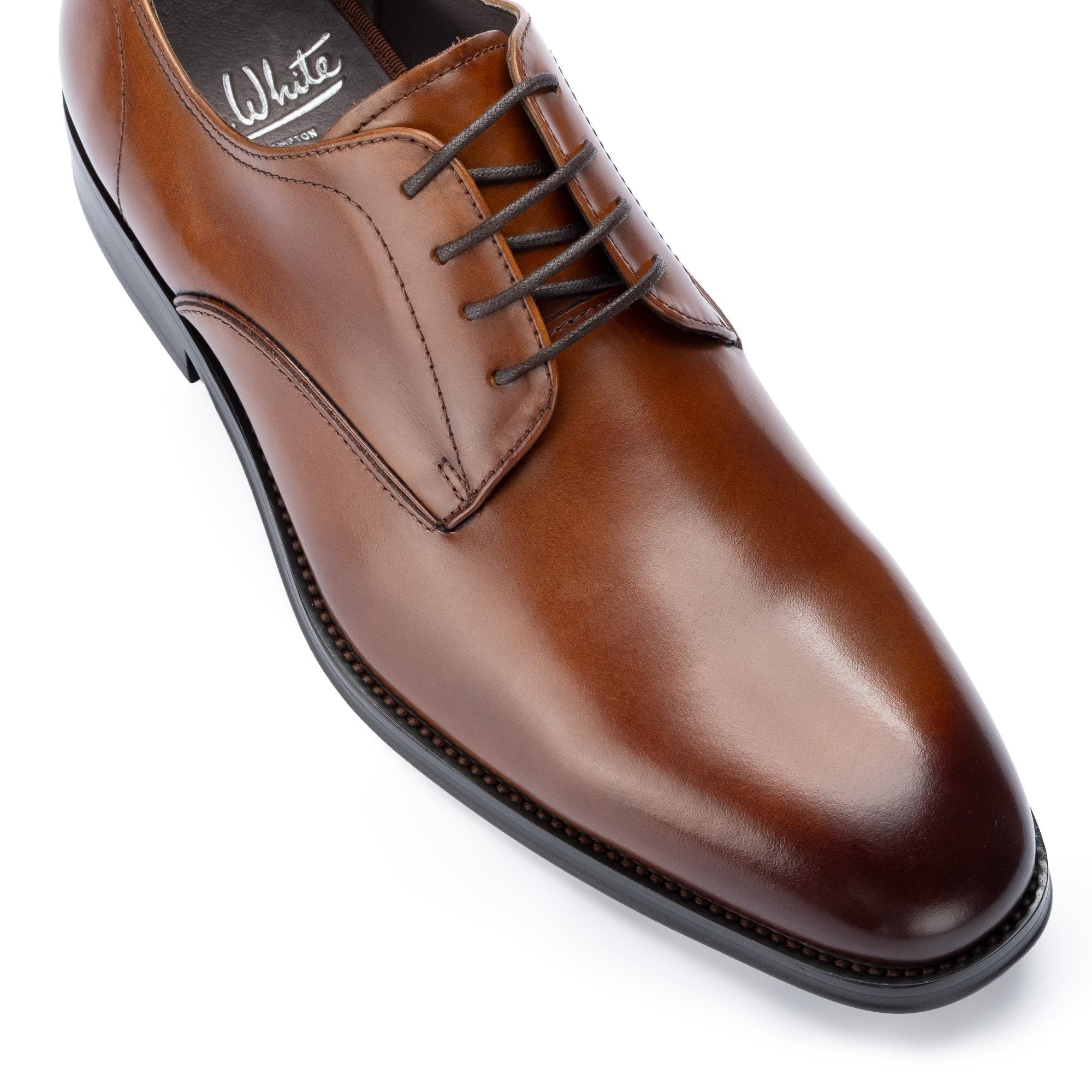
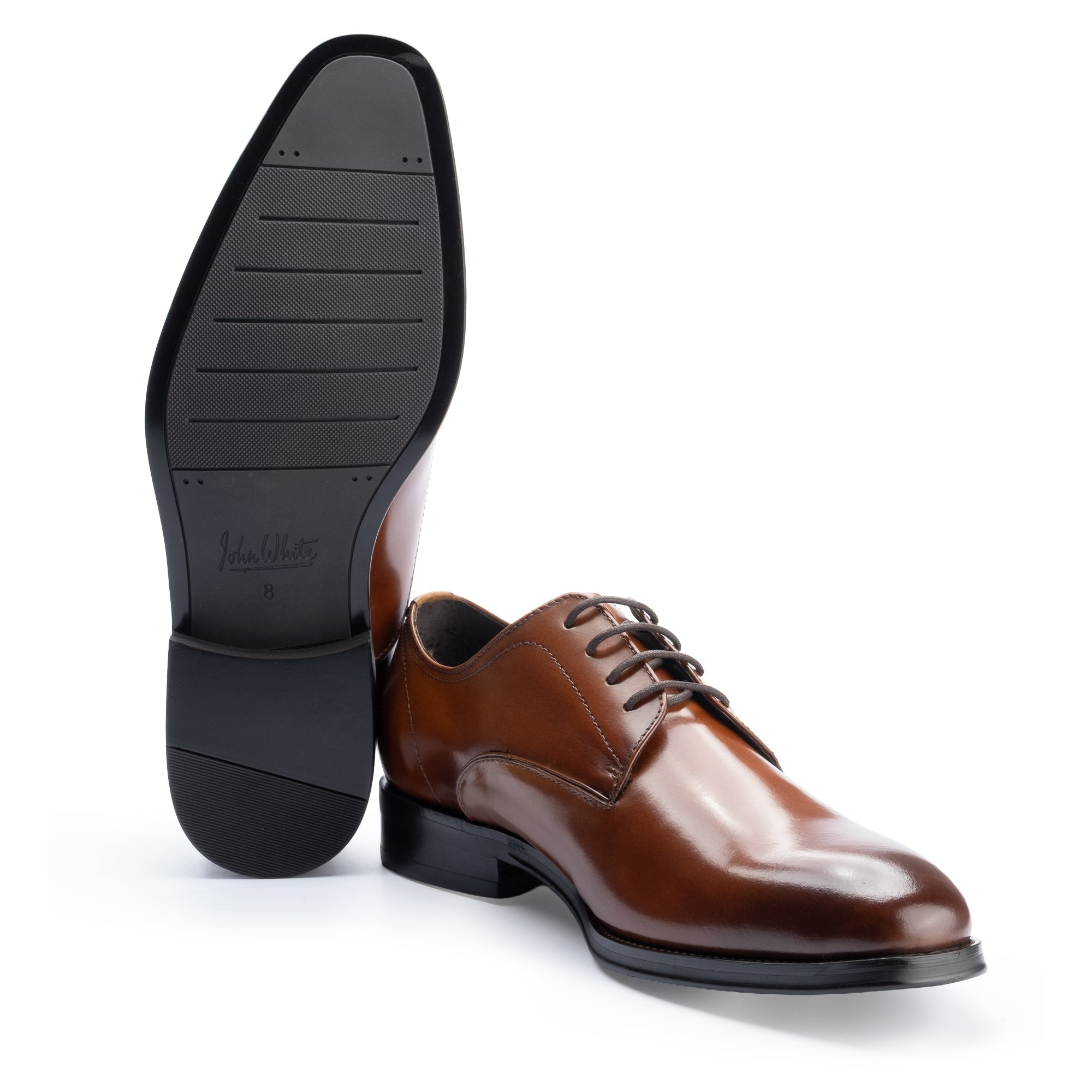
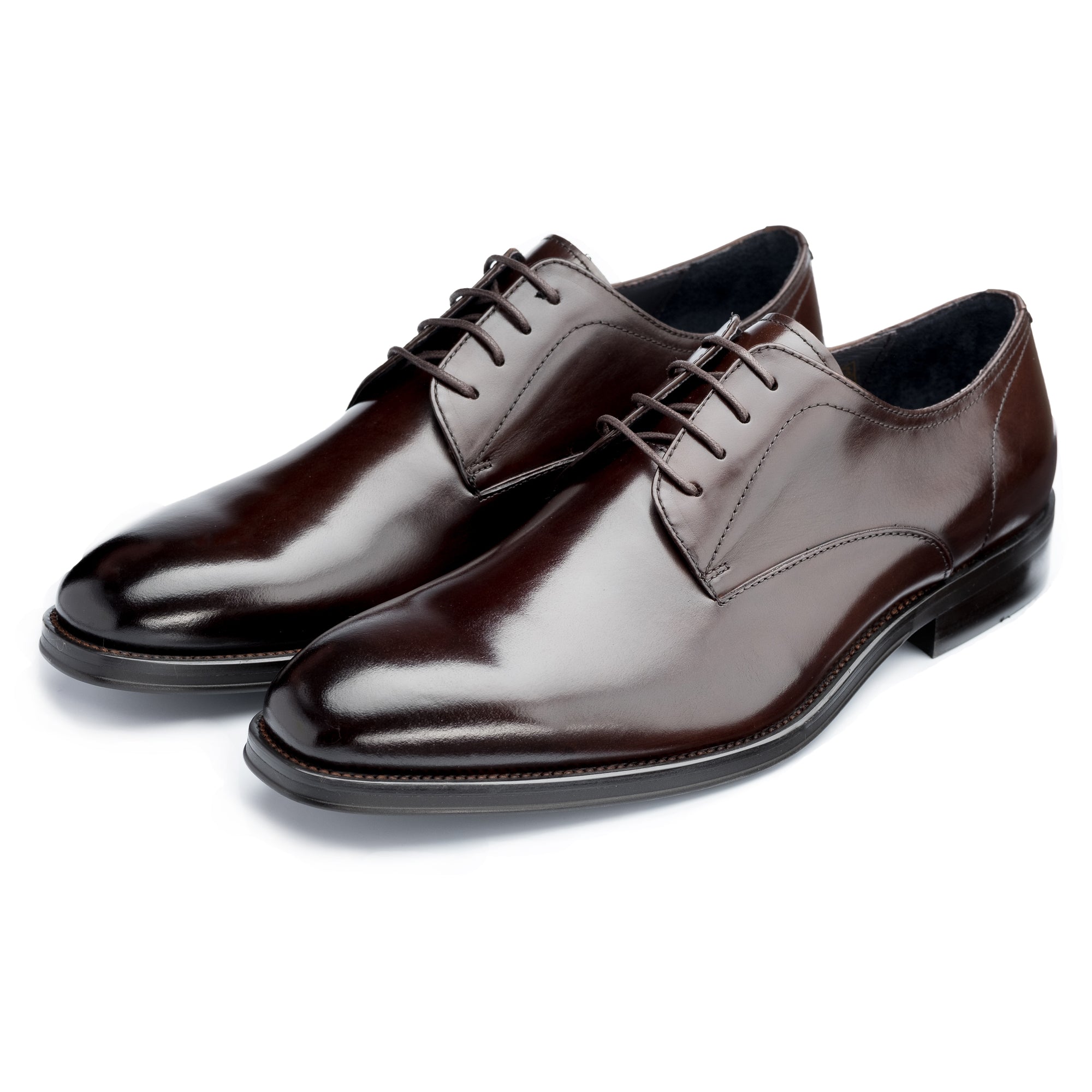
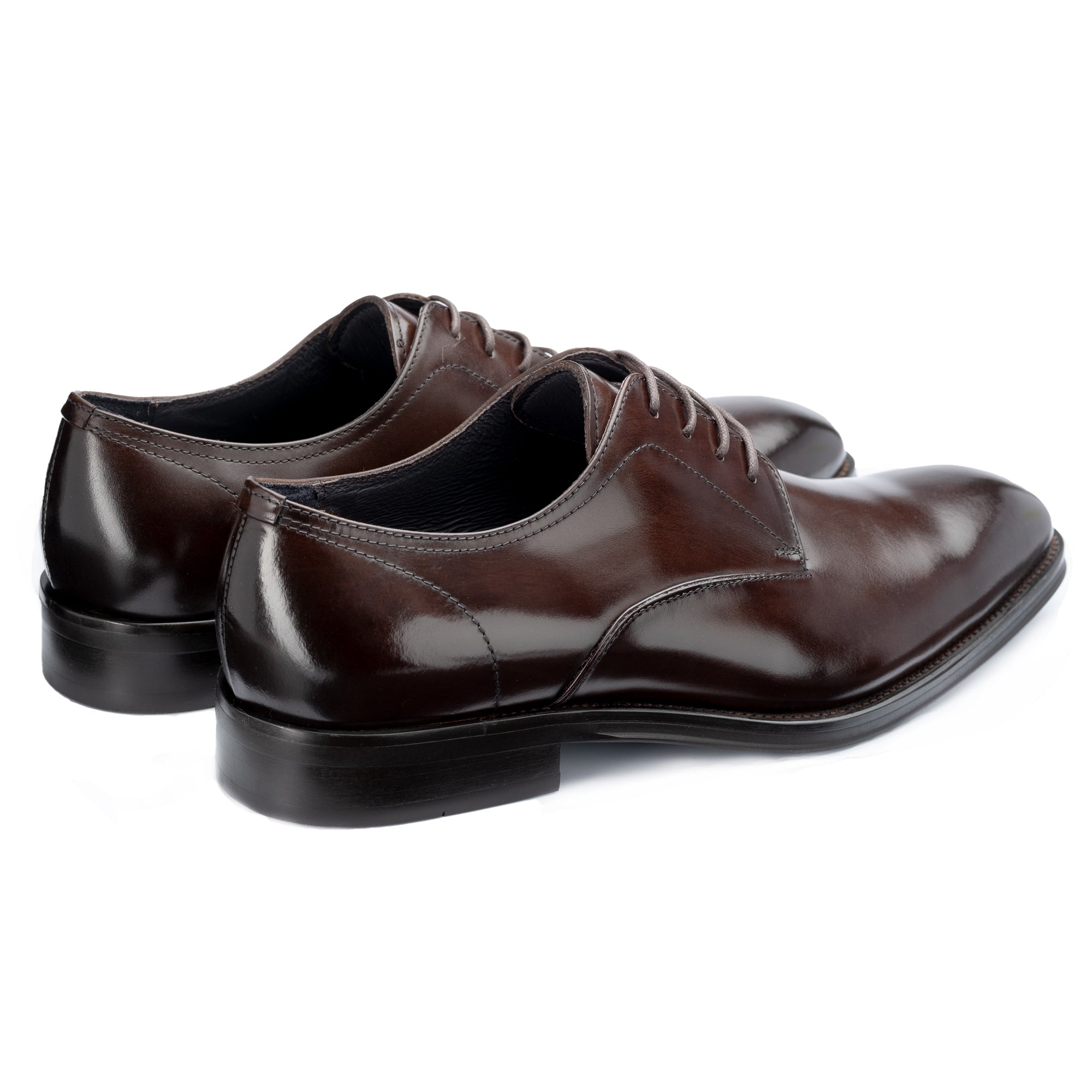
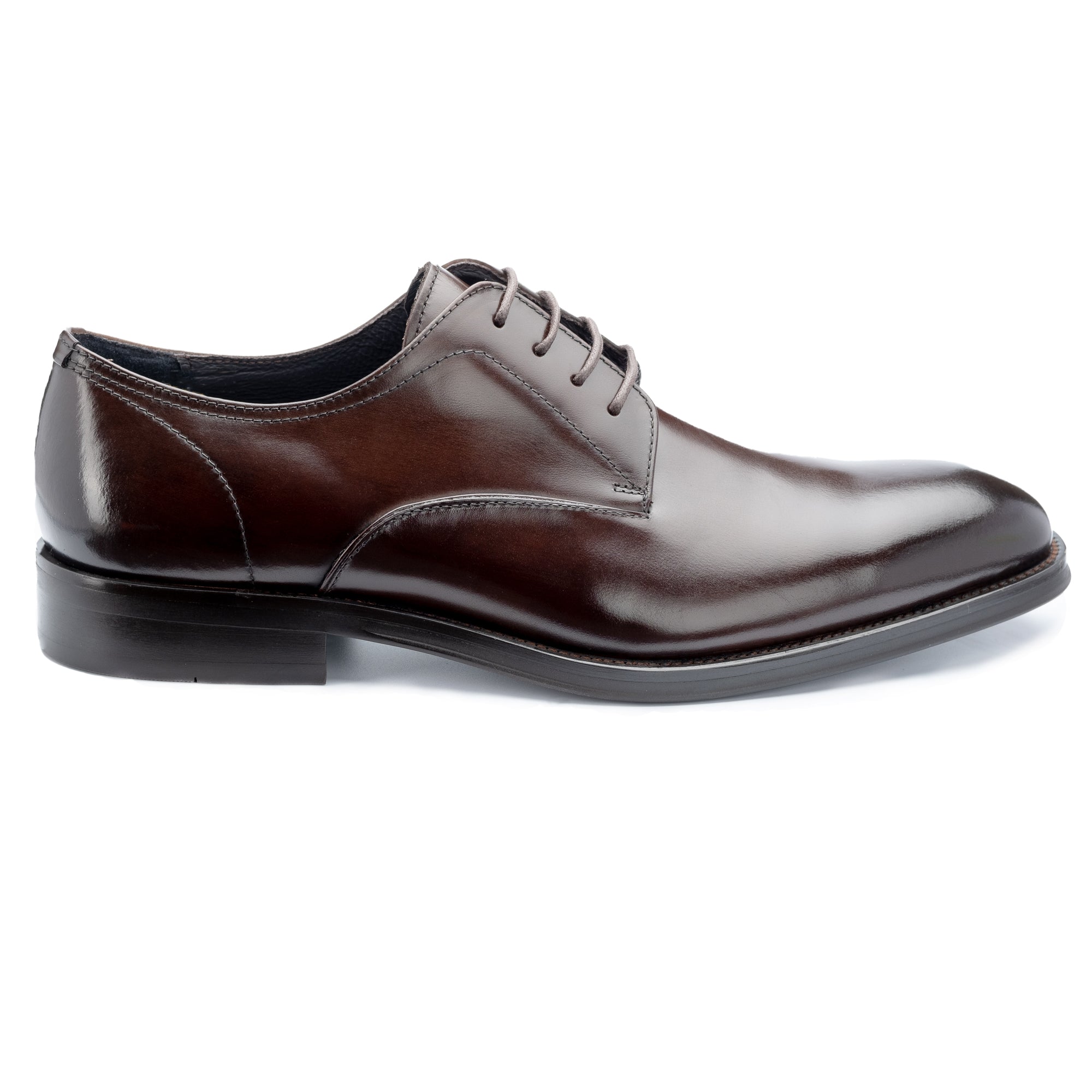
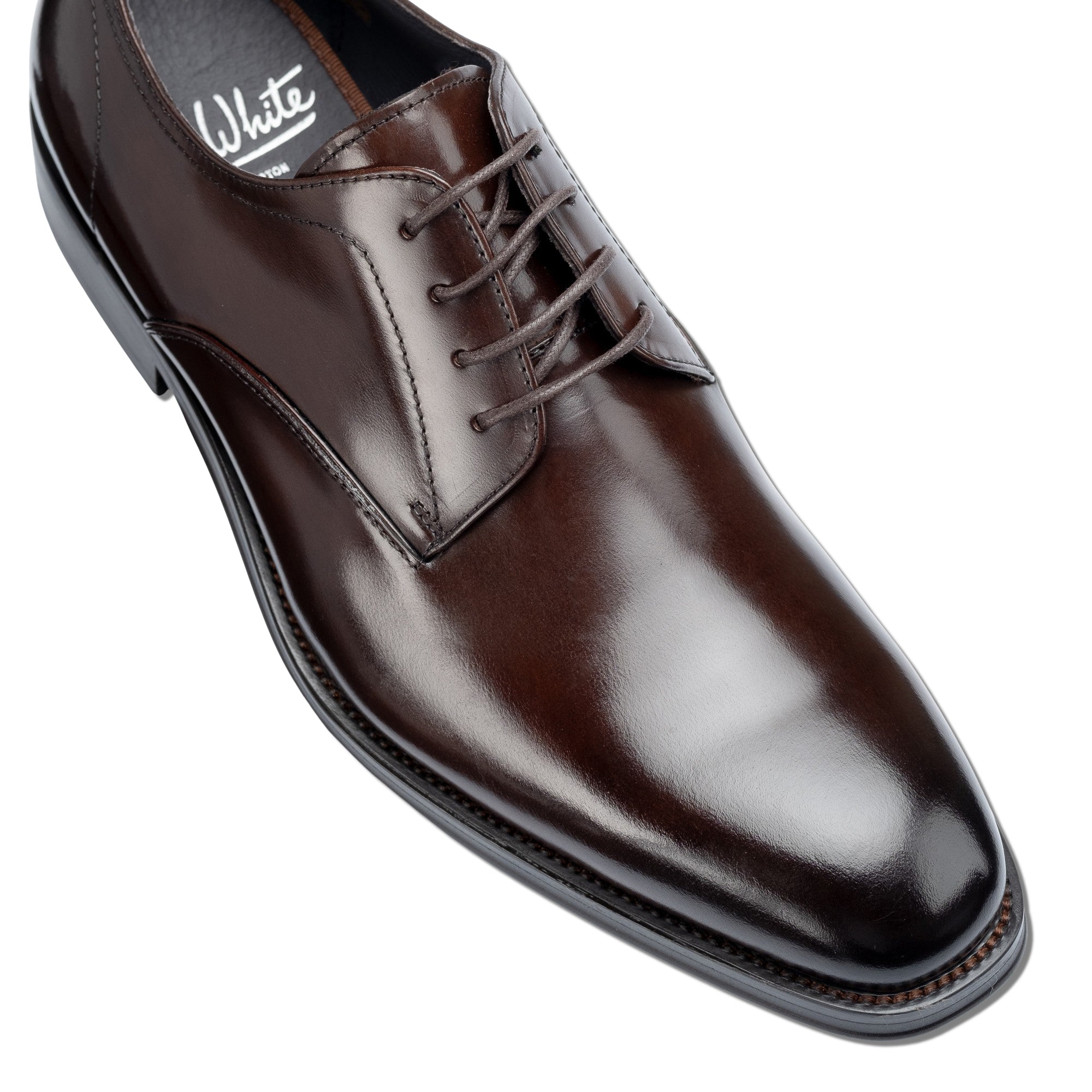
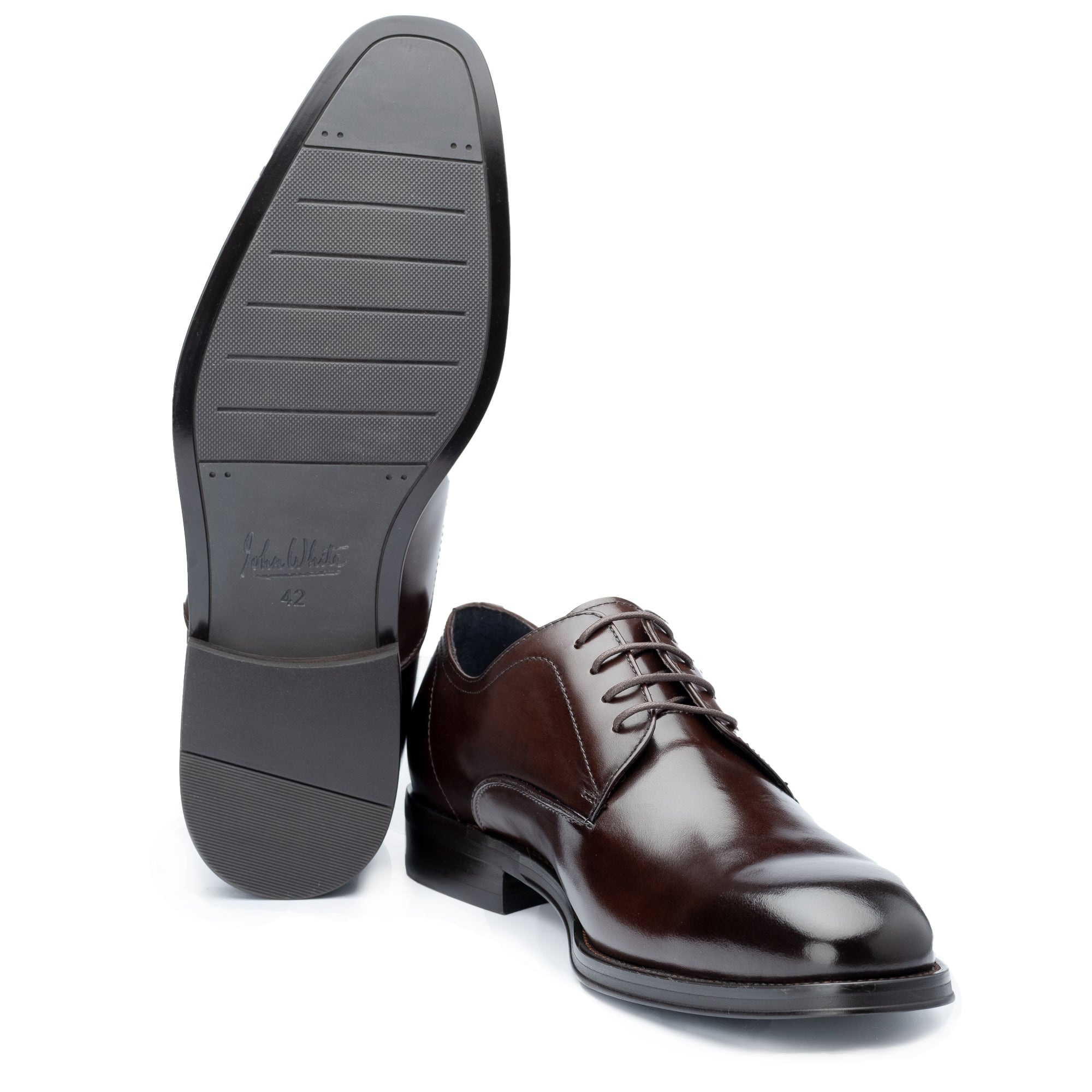
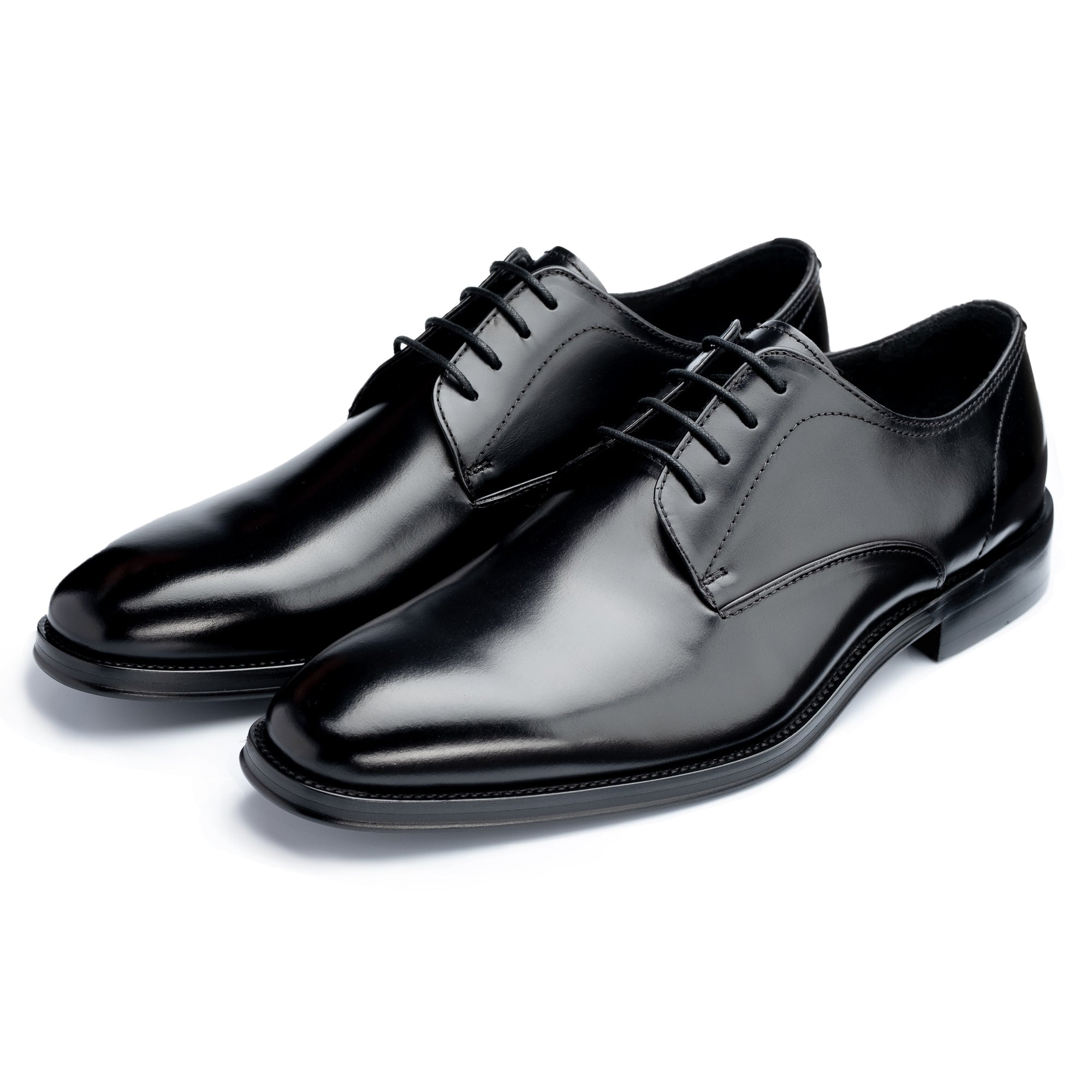
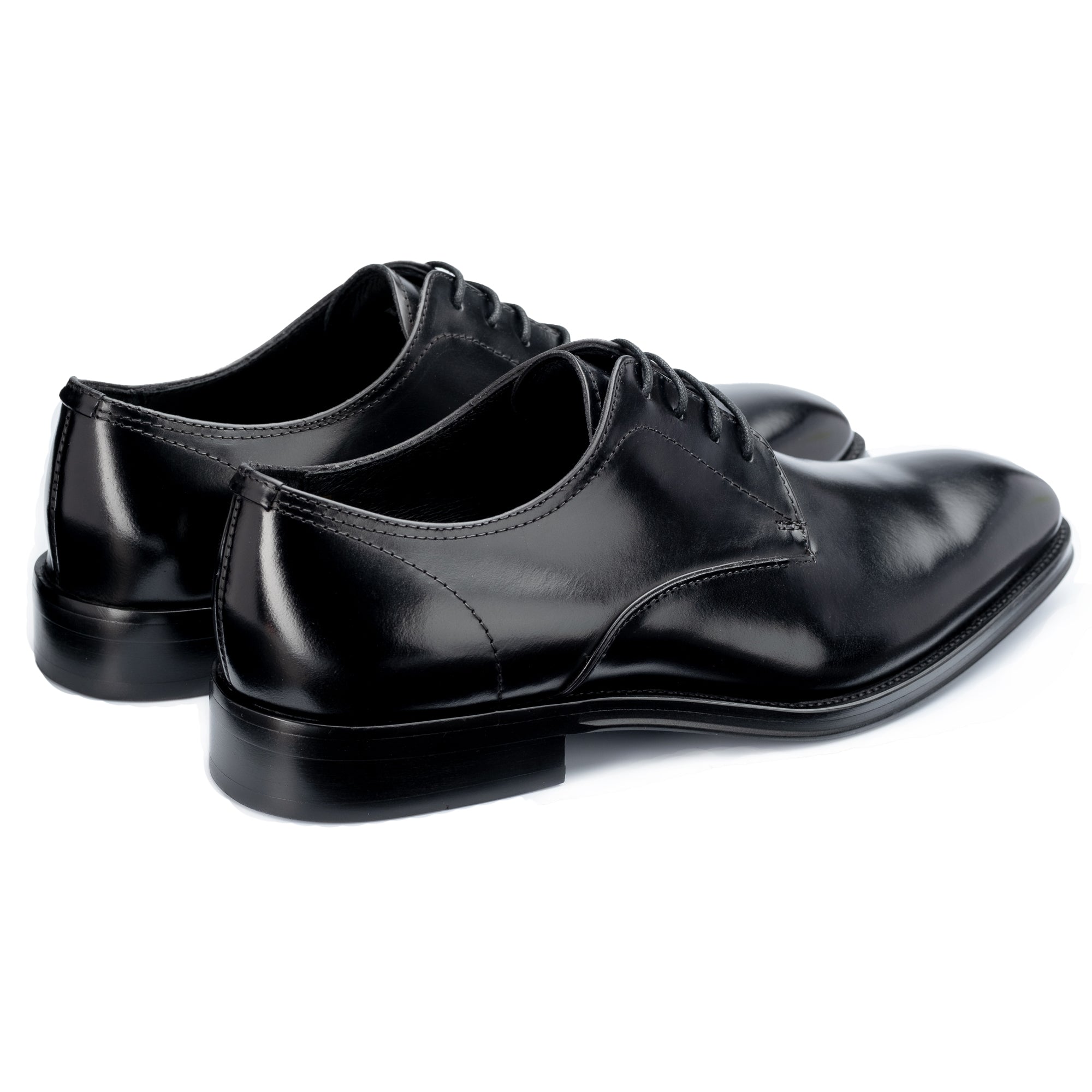
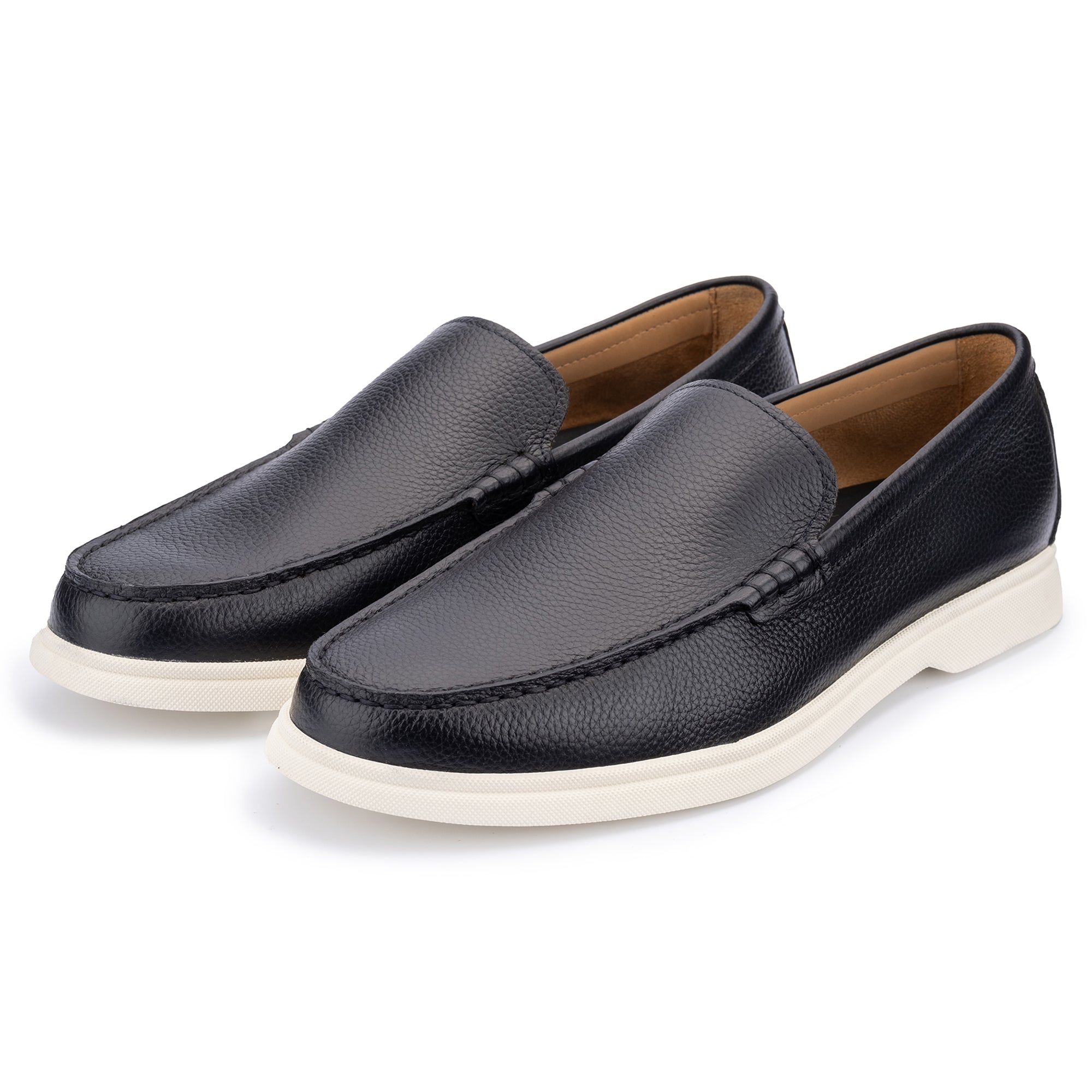
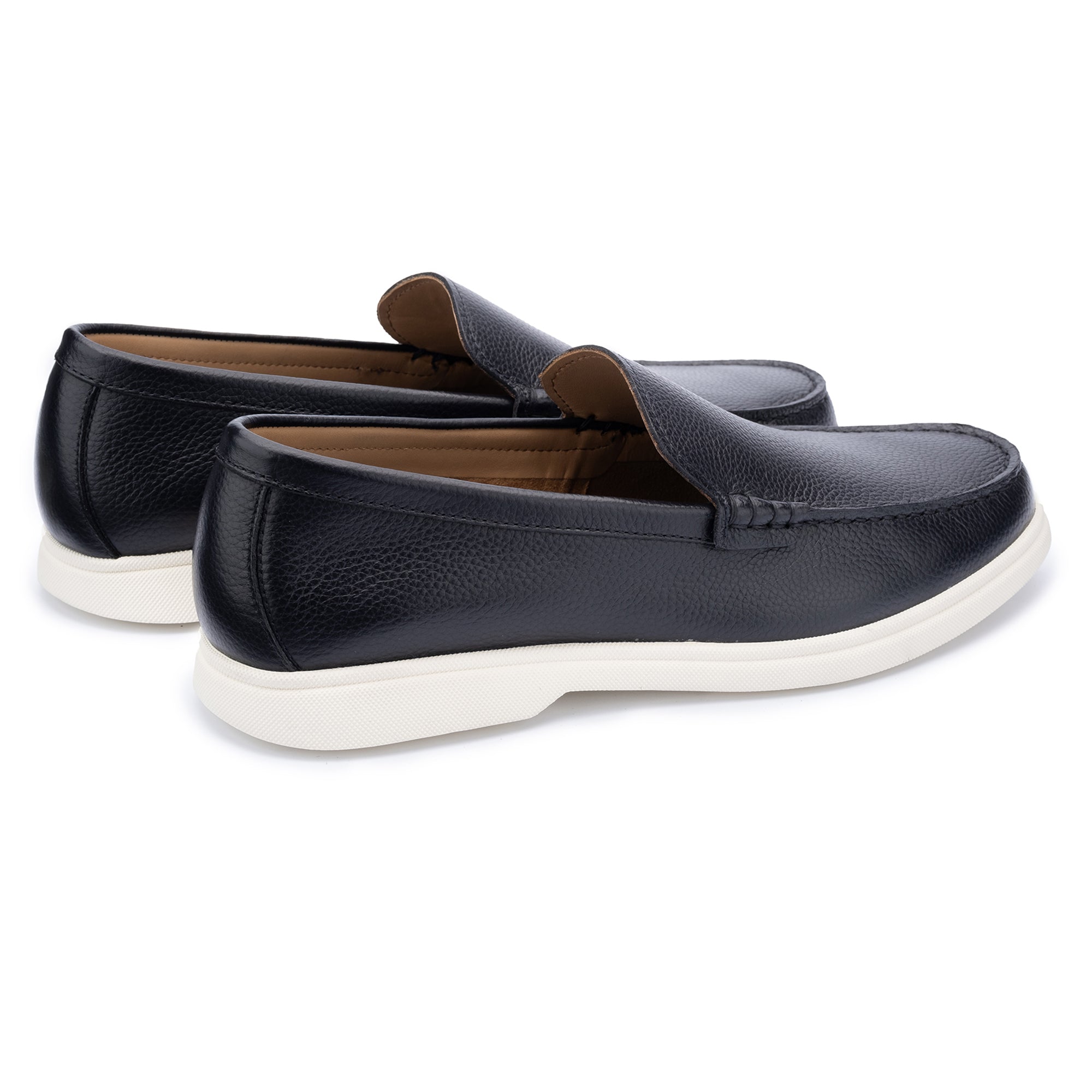
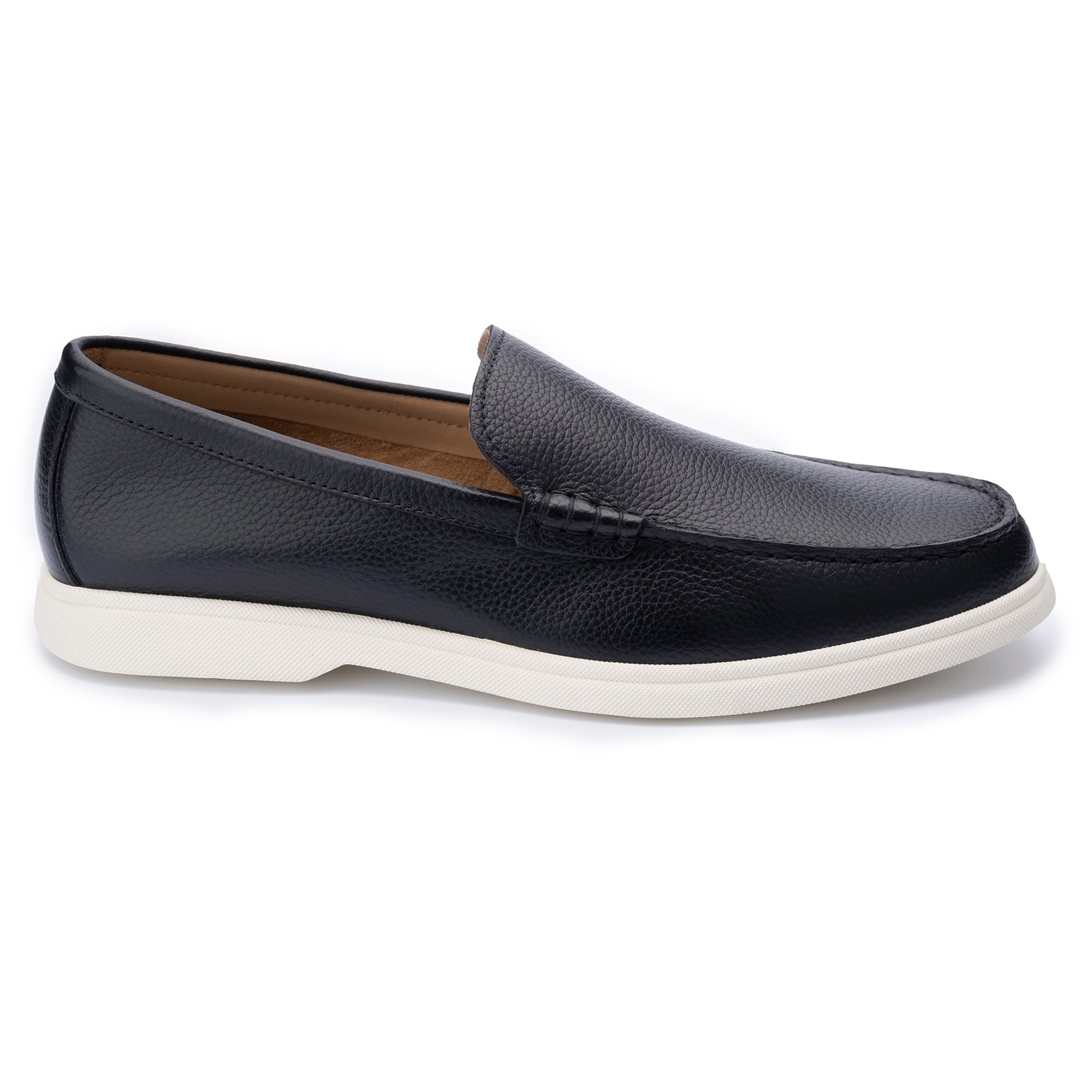
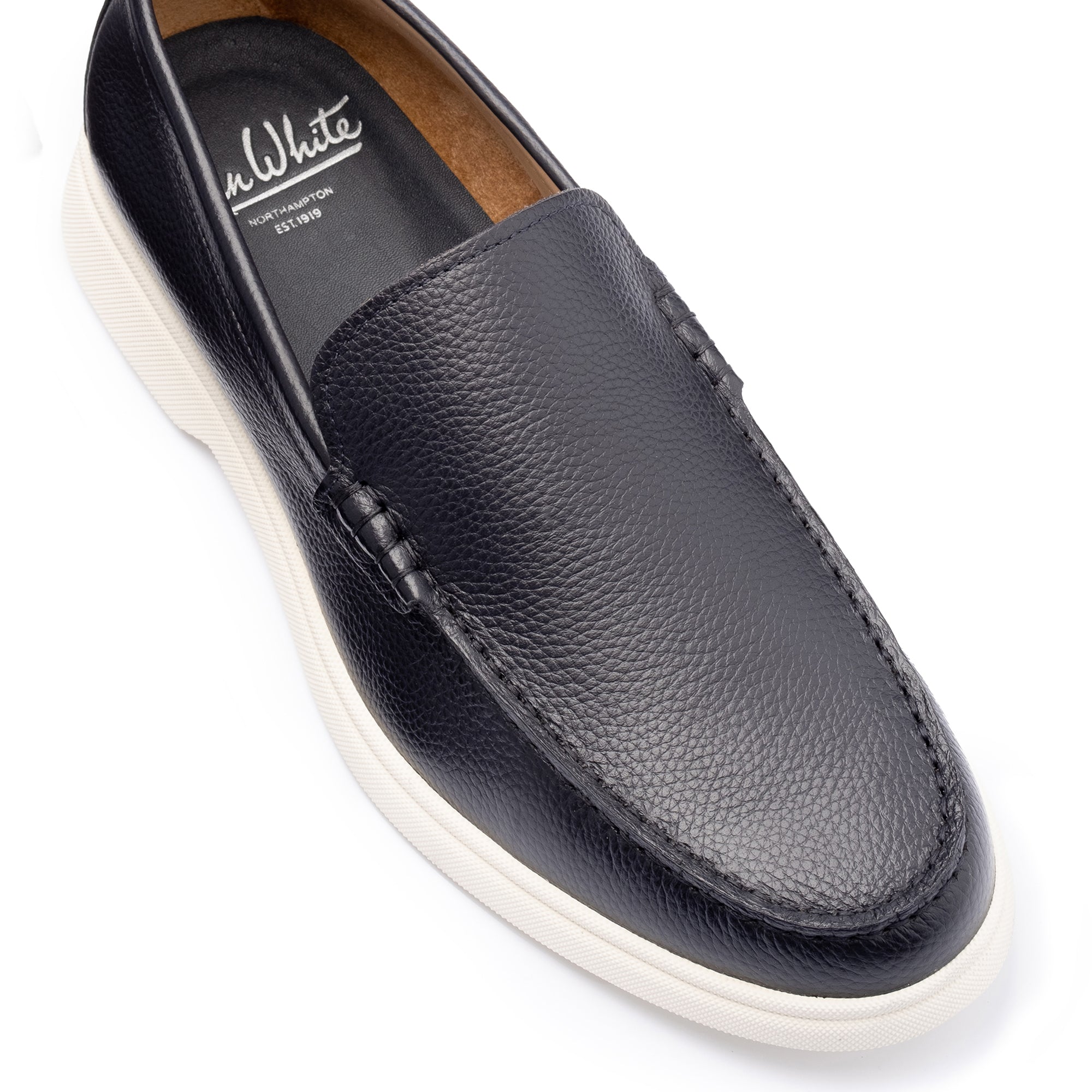
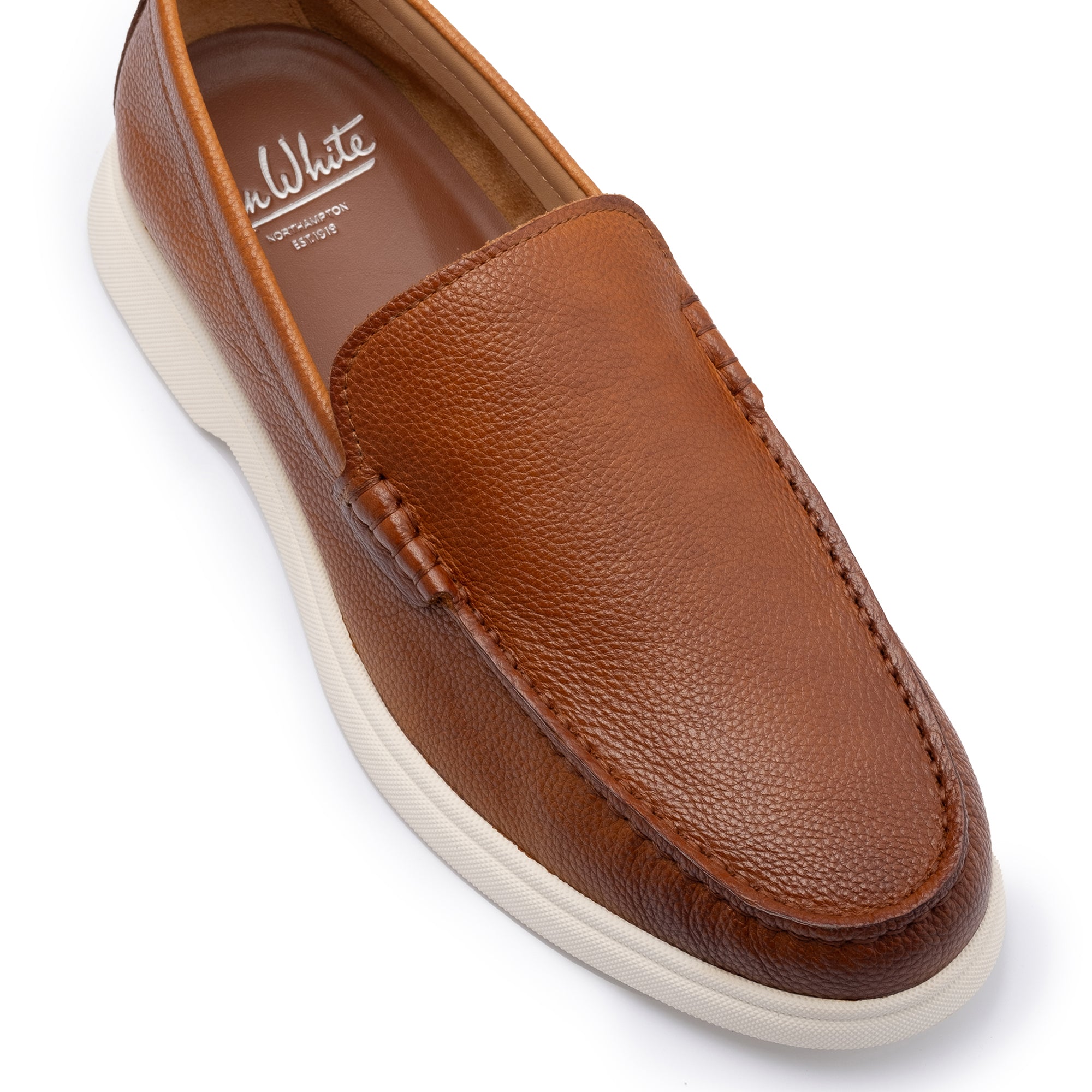
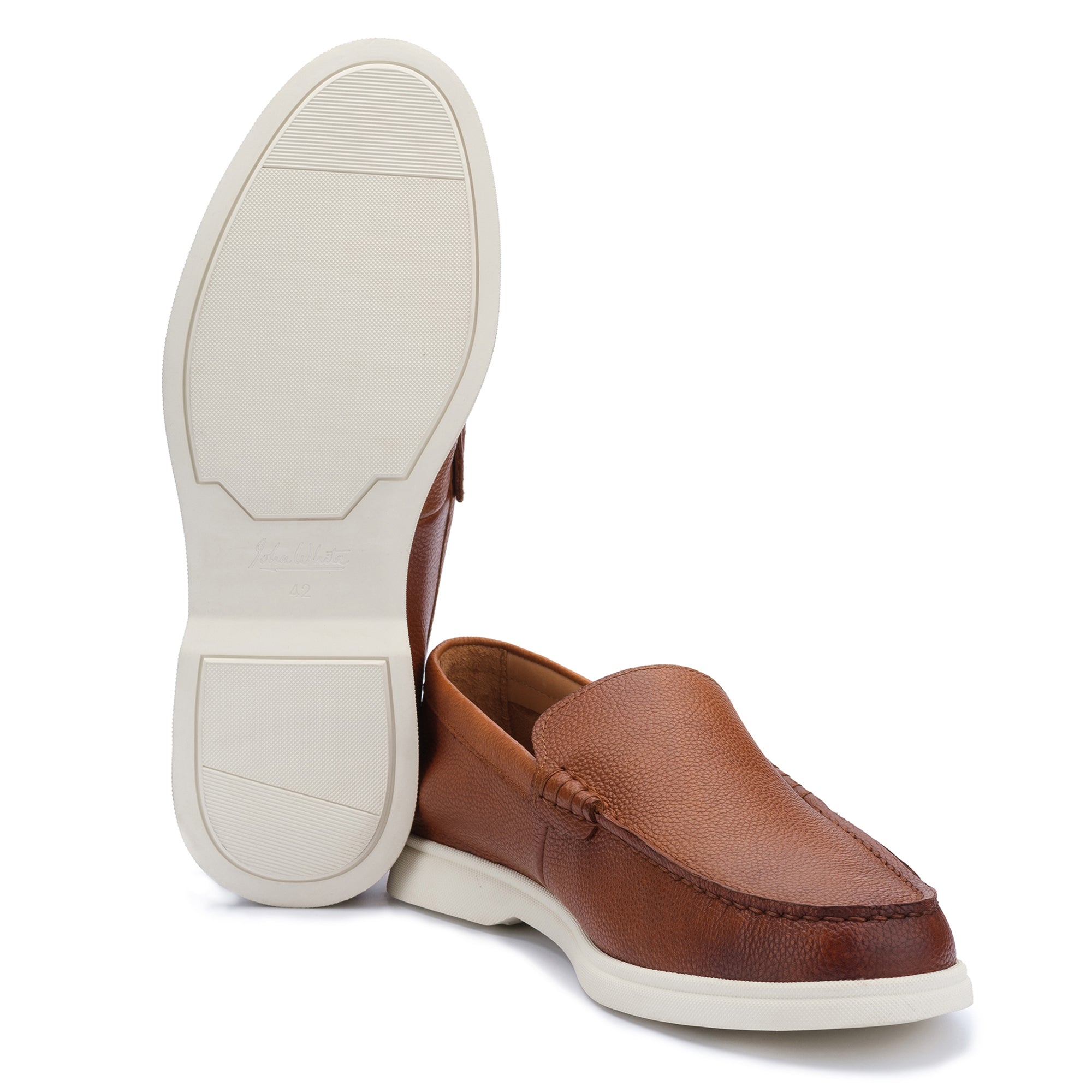
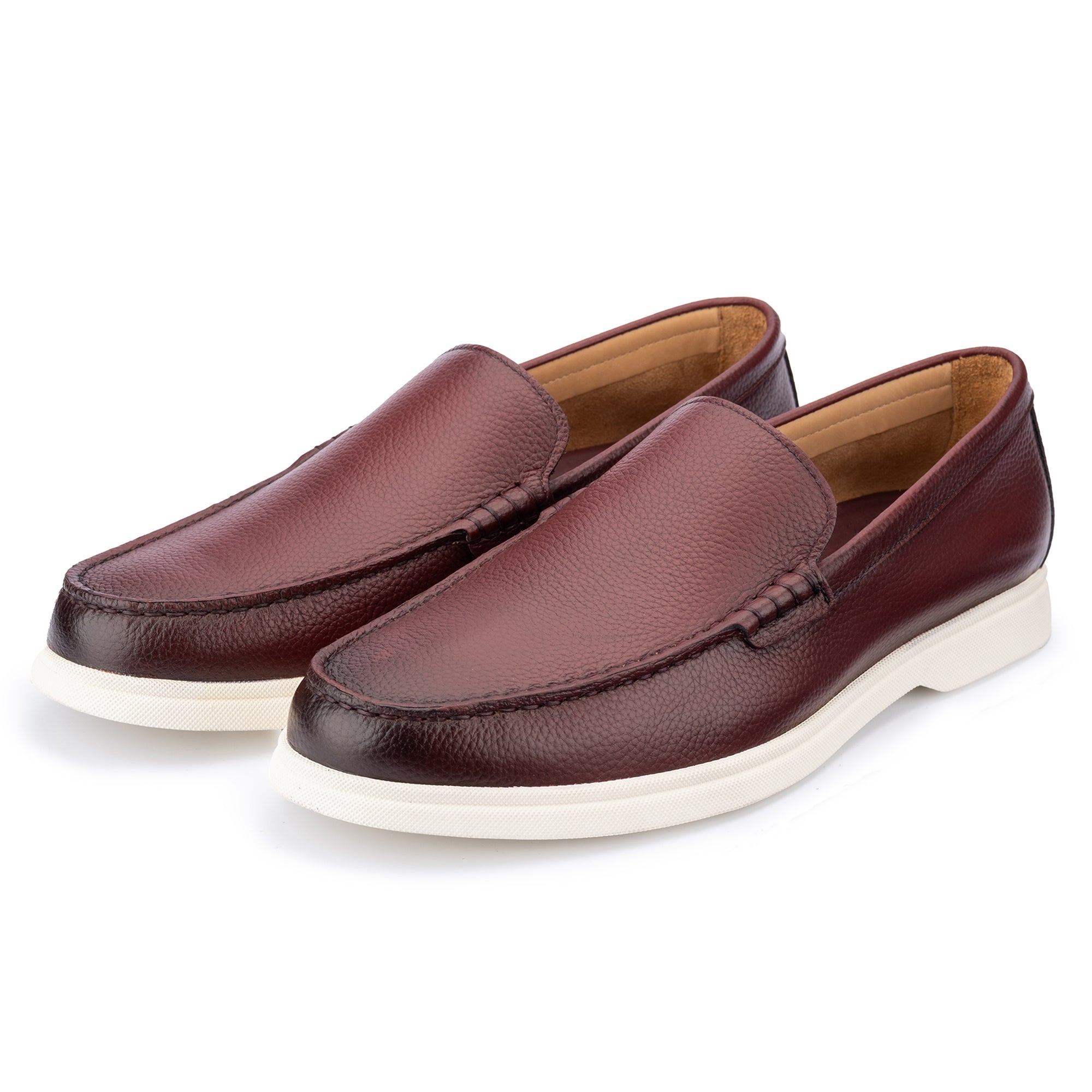
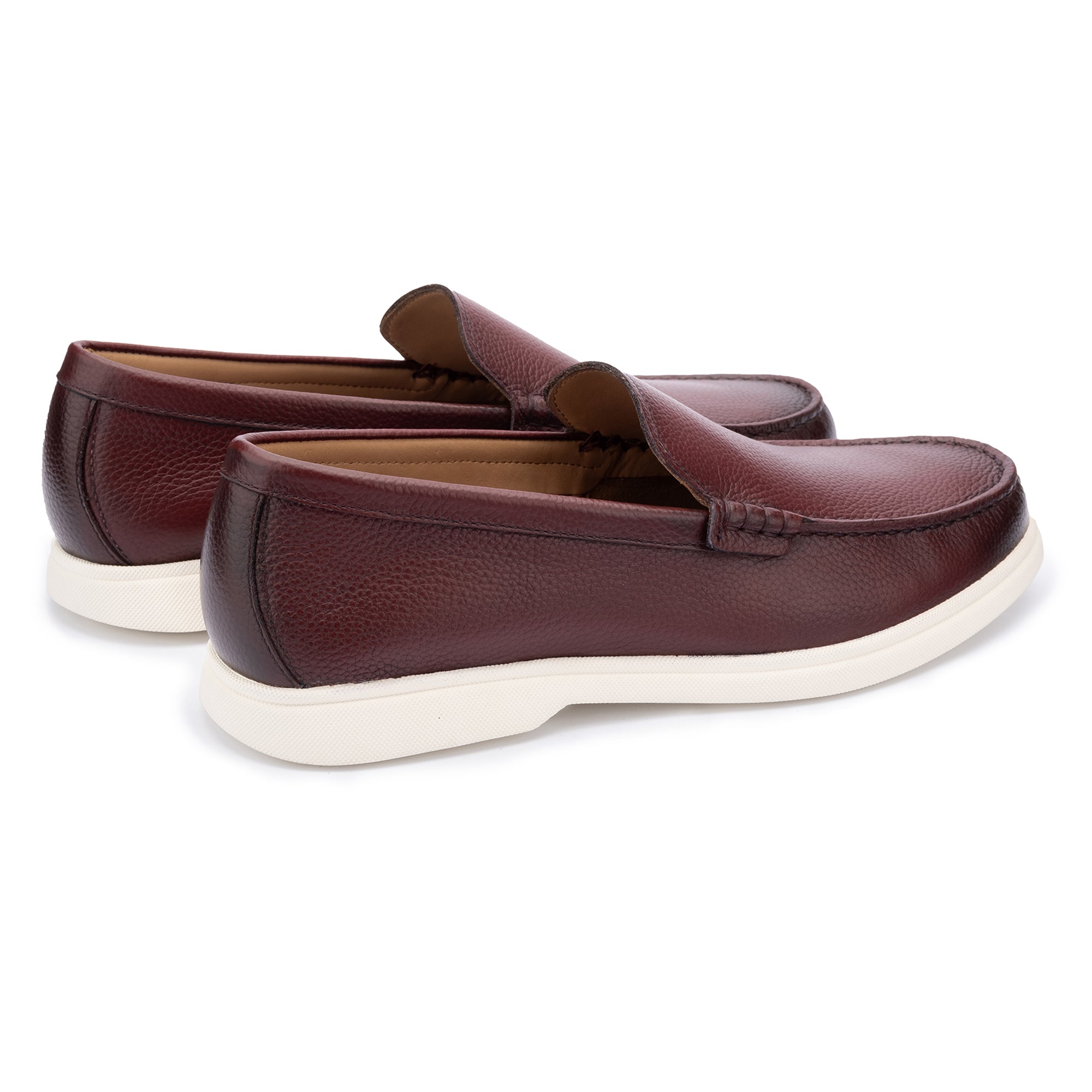
For the smooth leather men's shoes and boots in the John White Shoes range — Oxfords, Derbies, Chelsea boots, chukkas, and loafers — a quality wax cream or dedicated leather spray is the correct choice.
Wax creams offer the best combination of waterproofing and leather nourishment for smooth dress shoes; quality sprays provide fast, finish-preserving protection for suede and for regular maintenance between wax applications.
How to Waterproof Leather Shoes: The Step-by-Step Method
Correct preparation determines how effectively a waterproofing product performs. Applying treatment to dirty or under-prepared leather results in patchy coverage and significantly reduced protection.
- Clean the leather thoroughly. Remove all surface dirt and old polish residue with a dedicated leather cleaner or a lightly damp cloth. Allow the shoes to dry completely at room temperature — never apply to damp leather.
- Apply a thin, even coat. Using a soft cloth or applicator brush, work the cream or spray evenly across the entire upper, including the tongue, collar, and all seam lines. For creams, use small circular motions. For sprays, hold the can 20–25 cm from the surface.
- Allow to absorb. Leave for 10–15 minutes. The leather needs time to draw the product into its fibre structure — rushing this stage reduces effectiveness.
- Buff lightly if using a cream. A pass with a horsehair brush removes any surface excess and restores sheen. Spray applications require no buffing.
- Condition if the leather feels dry. If the upper appears depleted after treatment, apply a separate leather conditioner to restore suppleness. Our seasonal conditioning schedule for leather shoes provides precise guidance on frequency through the British calendar year.
New shoes should be treated before their first wear. The leather is most receptive at this point, allowing the deepest possible absorption of the protective product into an undepleted surface.
What Is the Correct Seasonal Waterproofing Schedule?
A seasonal waterproofing schedule is a structured maintenance plan that matches the frequency and intensity of protective applications to the changing demands of British weather across the year.
| Season | Conditions | Recommended Treatment | Frequency |
|---|---|---|---|
| Autumn (Sep–Nov) | Persistent rain, wet leaves, damp pavements | Wax cream or leather spray | Every 4 weeks |
| Winter (Dec–Feb) | Rain, sleet, road salt, cold | Wax cream; treat salt exposure separately | Every 3–4 weeks |
| Spring (Mar–May) | Variable rain, improving conditions | Light spray or wax cream | Every 6 weeks |
| Summer (Jun–Aug) | Predominantly dry | Conditioner-led care; spray if needed | Every 8 weeks |
During winter, inspect uppers after every wear in salted conditions. Salt crystals should be removed with a damp cloth and the affected area re-treated promptly — left overnight, they draw moisture from within the leather and accelerate surface cracking.
The two most important waterproofing applications of the year are the pre-autumn treatment that prepares leather for the wet months ahead, and the initial treatment applied before a new pair's very first outing.
How Should You Waterproof Suede and Nubuck Shoes?
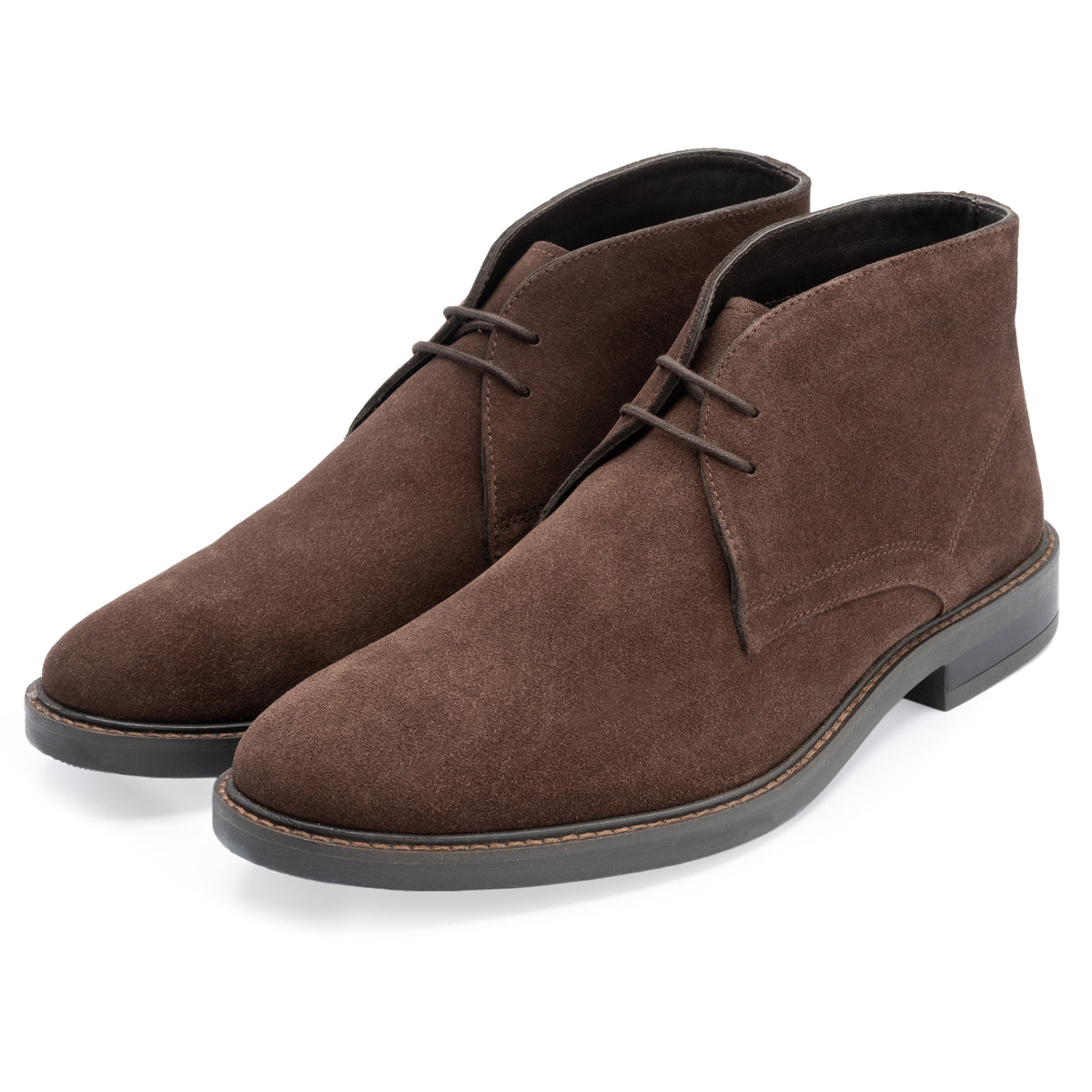
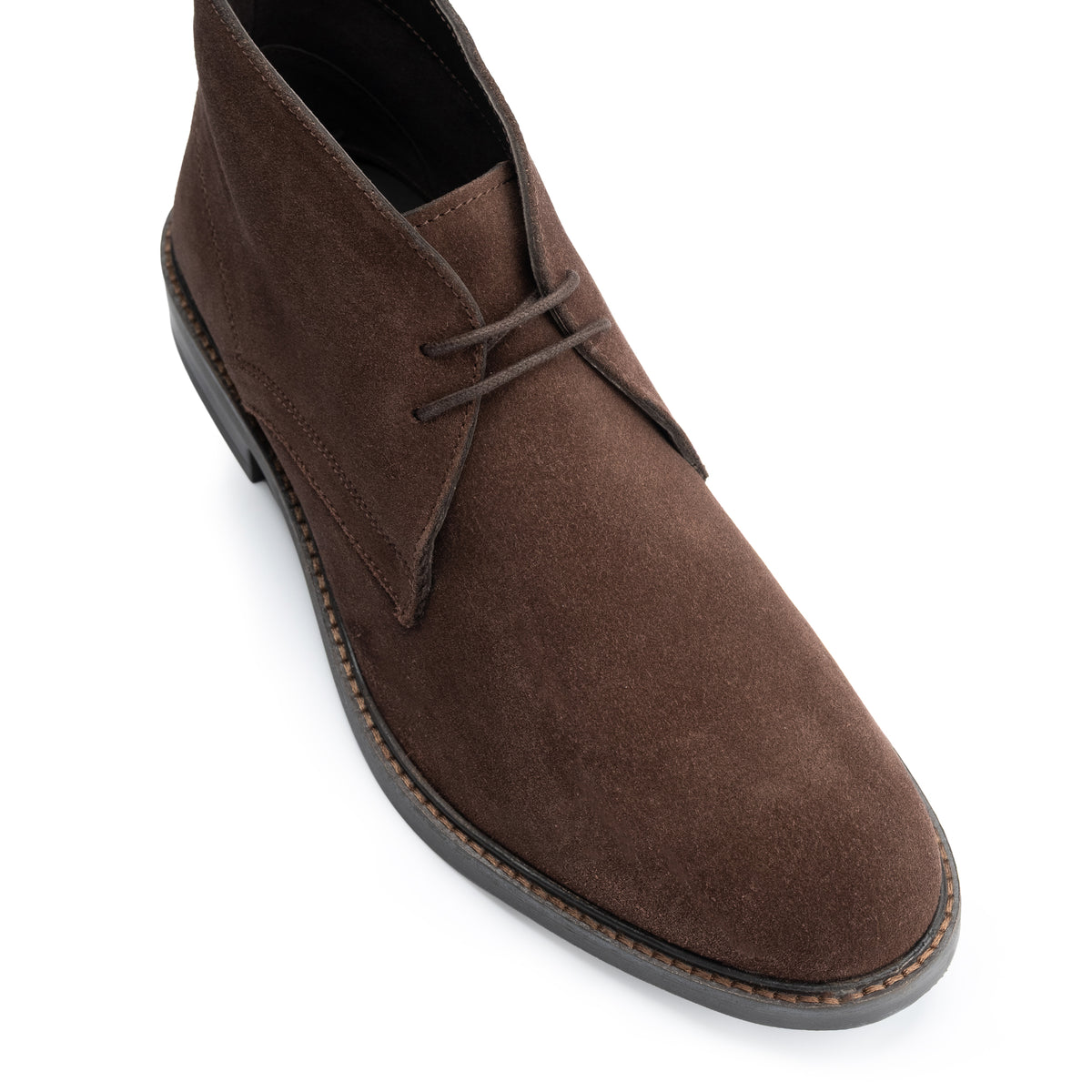
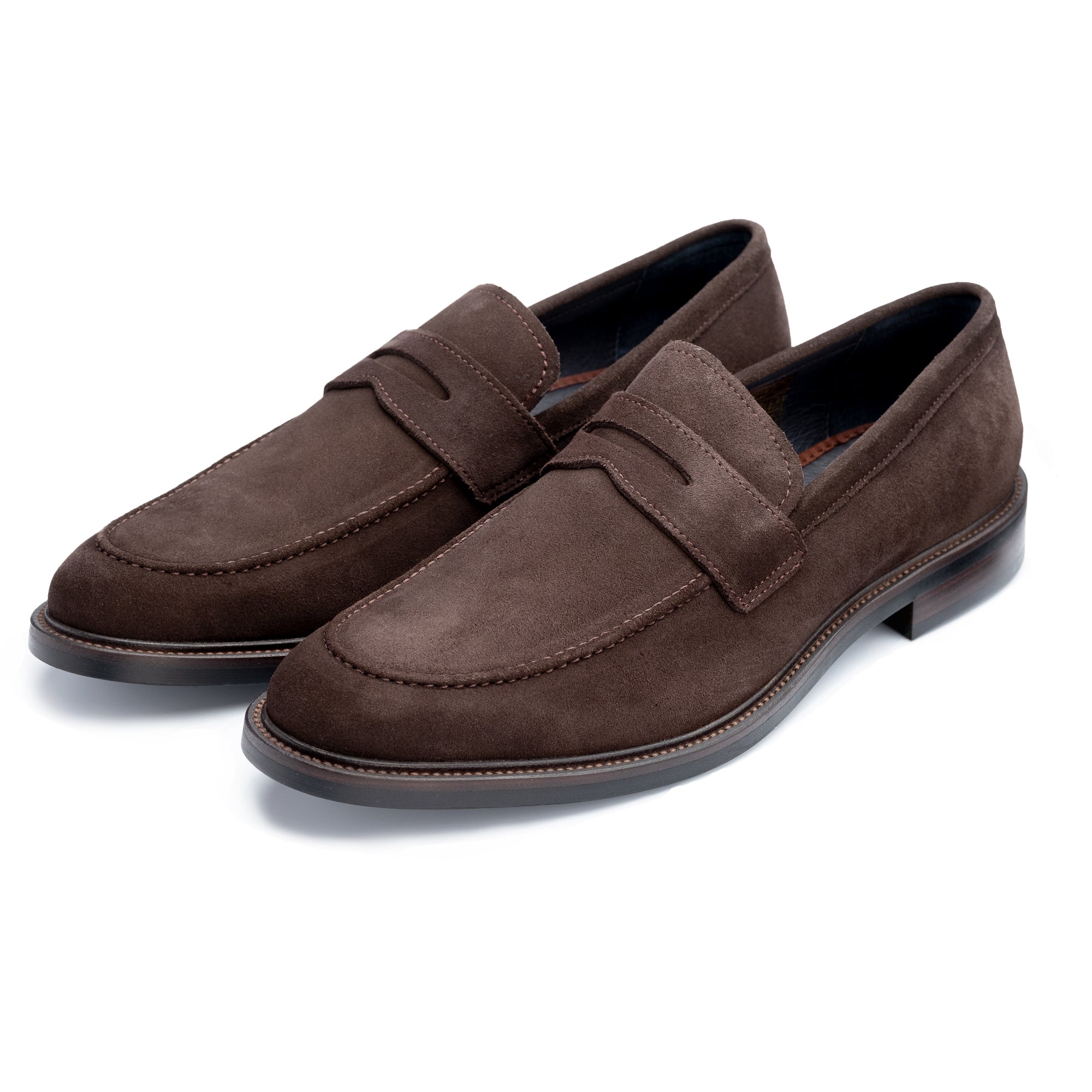
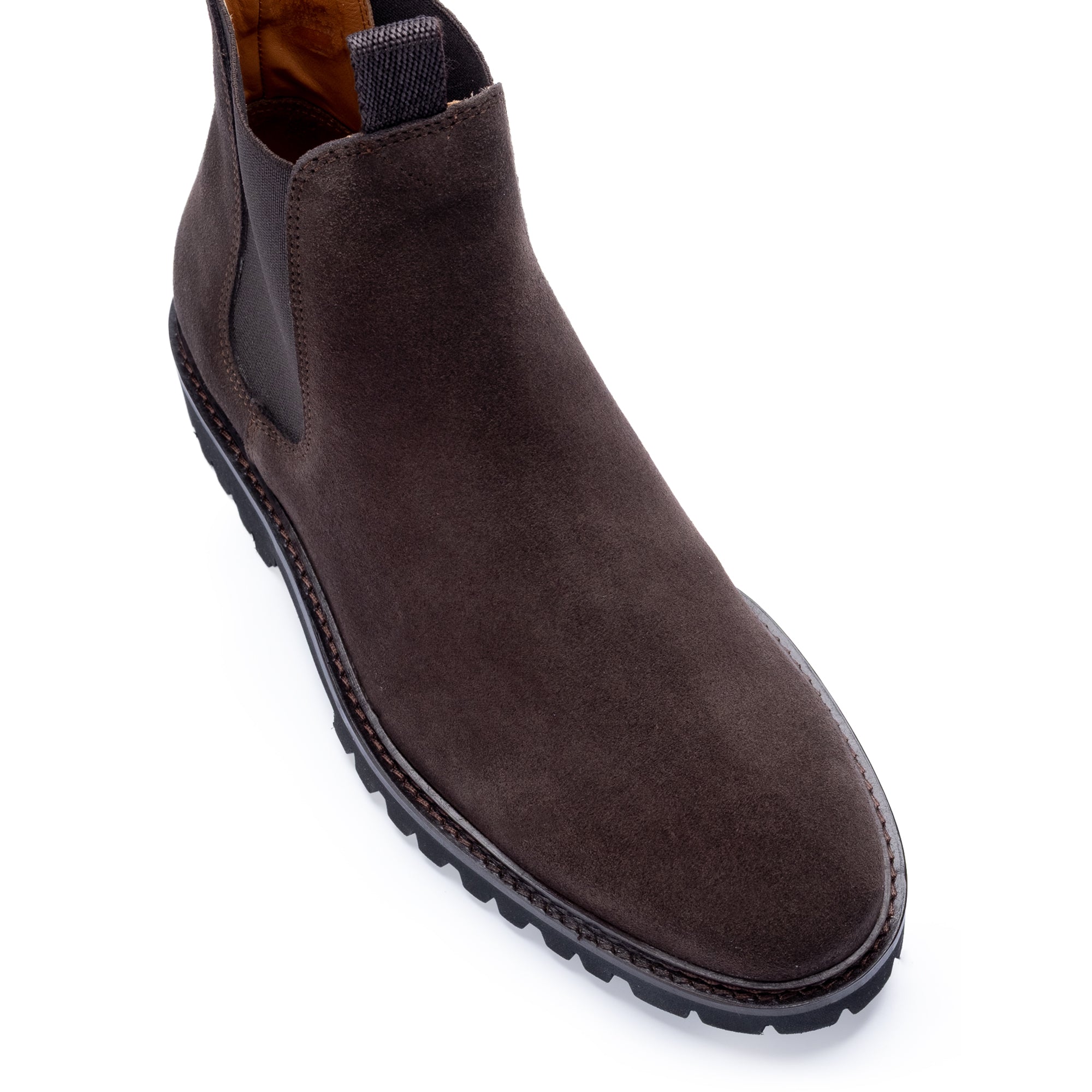
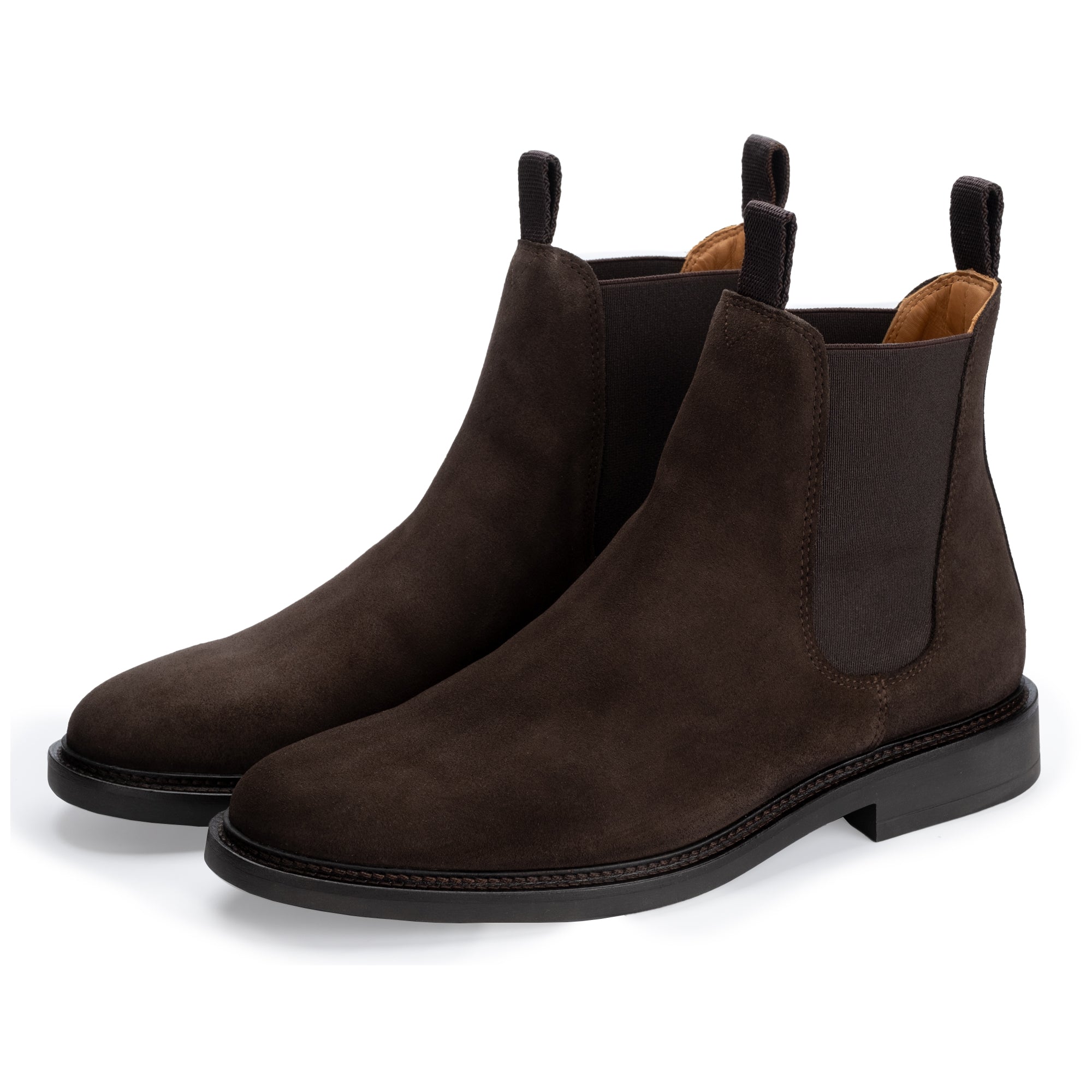
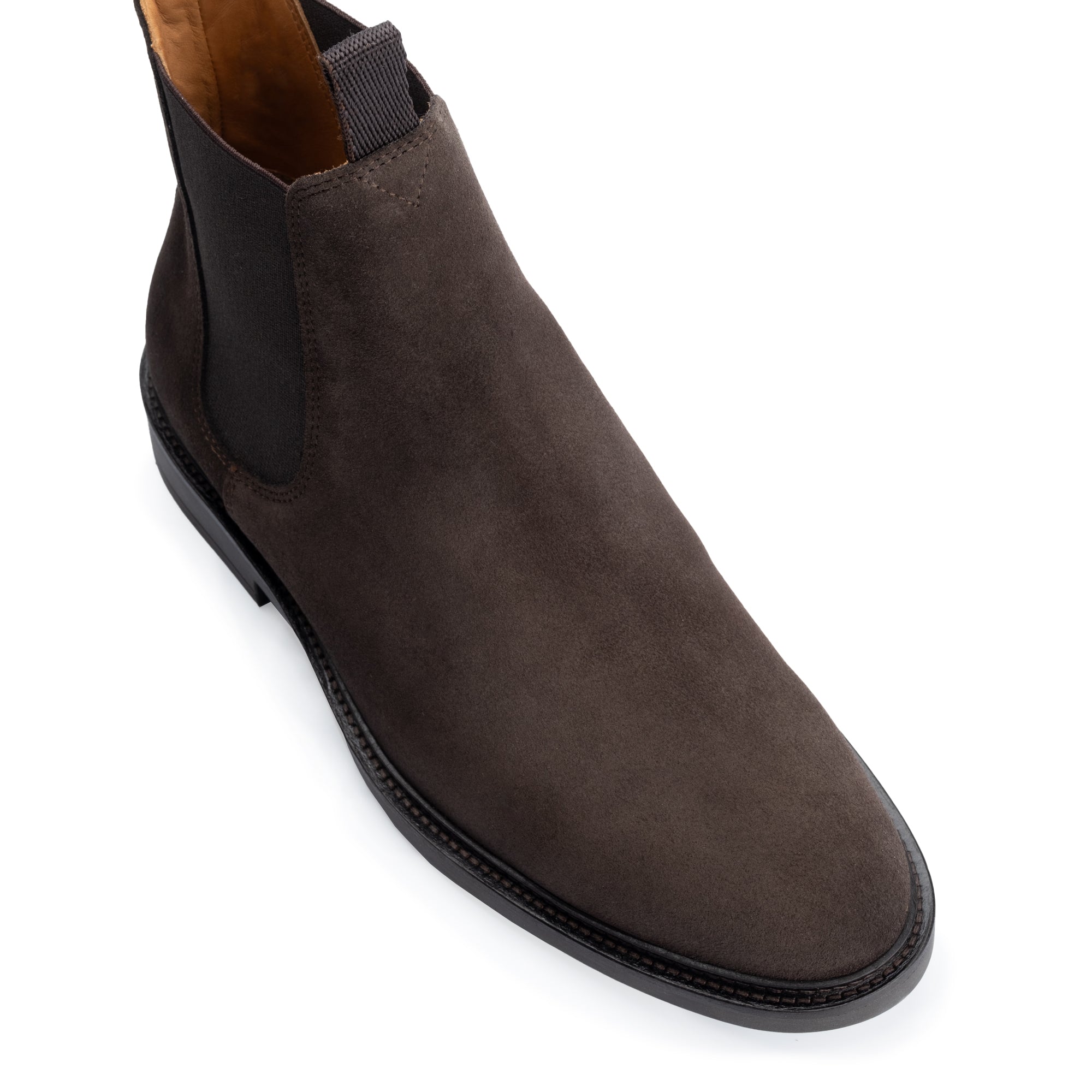
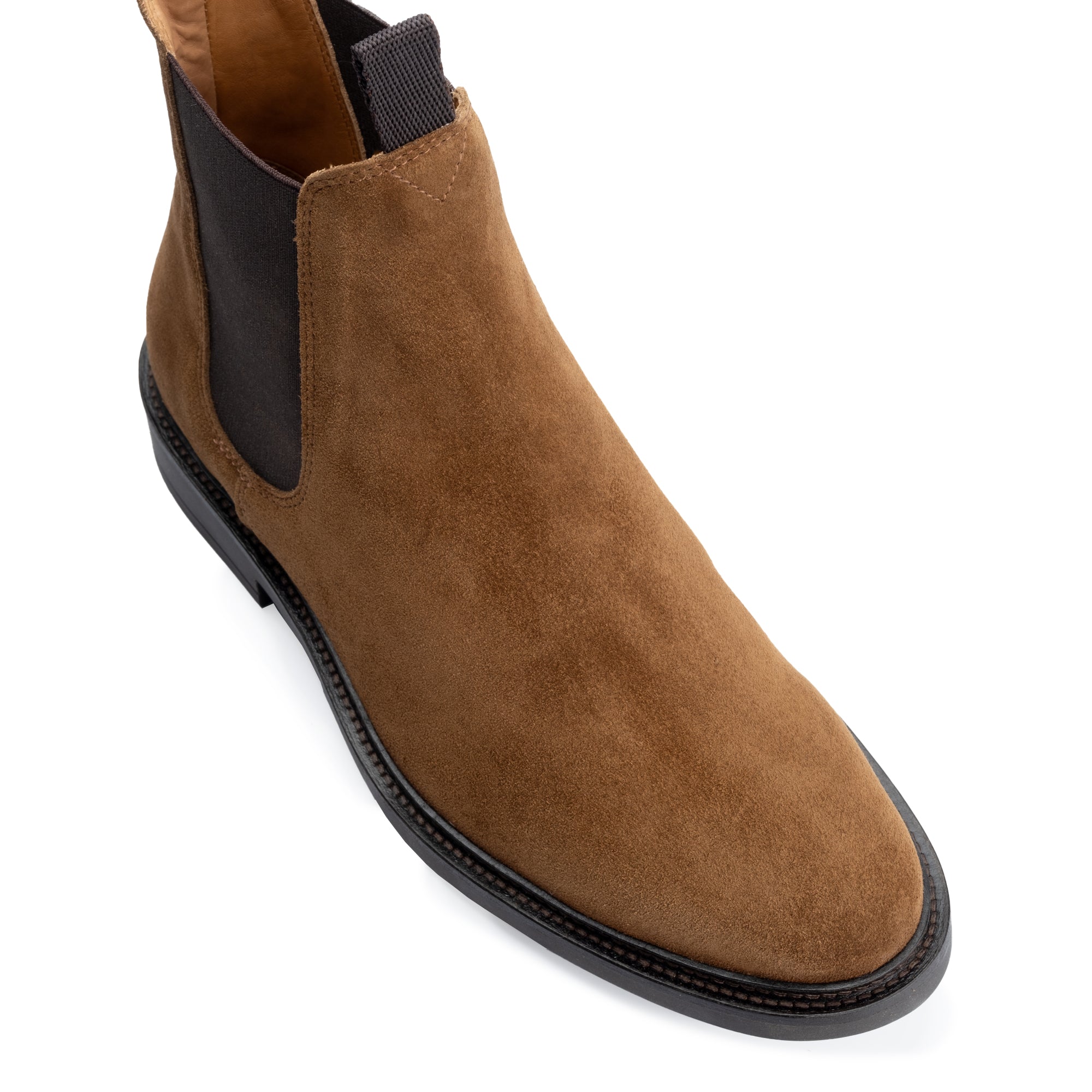
Suede and nubuck require a different approach to waterproofing. The raised nap that defines their appearance traps moisture effectively — but wax or oil-based products will permanently mat the fibres and destroy the texture of the surface.
Always use a specialist suede waterproofing spray. Apply to a clean, dry surface and allow to dry fully before wearing. Reapply at the start of each wet season and after any thorough cleaning that removes the existing treatment. For the complete suede care protocol — brushing the nap, lifting stains, and reviving flattened fibres — our guide to caring for suede shoes covers each stage in detail.
Common Waterproofing Mistakes That Shorten Shoe Life
- Applying to damp leather. Moisture in the leather prevents absorption; the product sits on the surface and provides minimal protection.
- Over-applying wax cream. Excess product builds up as a waxy residue that dulls the finish, traps dirt, and is difficult to remove without stripping the leather.
- Using the same product on smooth and suede leather. Wax creams permanently alter suede's texture. Always use the correct product for the leather type.
- Neglecting the tongue and collar. These areas flex most and receive water first — they require the same treatment as the rest of the upper, not an afterthought pass.
- Waterproofing without conditioning first. Dry leather absorbs treatment unevenly. Condition, allow to absorb fully, then waterproof.
Does Waterproofing Treatment Affect Leather Appearance?
A correctly chosen product, applied to the appropriate leather type, has minimal or positive effect on appearance. Quality wax creams deepen colour slightly and enhance sheen. Premium spray treatments are typically invisible once fully absorbed.
'The most common mistake is treating waterproofing as emergency maintenance — something to reach for after the damage is already done,' the Society of Master Shoe Repairers advises. 'Applied from the first wear and maintained consistently through every season, a quality wax treatment fundamentally changes what a leather shoe can survive.'
Reputable British shoemakers — including John White Shoes, Loake, Barker, Grenson, Church's, and Crockett & Jones — recommend waterproofing as standard practice within every seasonal care routine. Poor-quality products, particularly those with high concentrations of silicone not formulated for footwear leather, can clog pores over time and reduce breathability. Stick to established shoecare brands with a proven record on smooth dress leather.
Applied correctly, a quality waterproofing treatment does not compromise leather's appearance — it is one of the most effective ways to preserve it over the long term.
What Should You Do If a Leather Shoe Gets Saturated?
Even well-protected leather can be saturated in severe conditions. When this happens, slow and even drying is the priority. Never place wet leather shoes near a radiator or in direct sunlight — rapid moisture evaporation contracts the leather unevenly, causing surface cracking and distortion of the shoe's form.
Insert cedar shoe trees or stuff the shoes with plain paper to support the shape, and allow them to dry at room temperature. Once fully dry, condition the leather thoroughly to replace the oils lost during the wetting cycle, then reapply waterproofing before next use. For the complete recovery protocol, our guide to drying saturated leather footwear covers every stage from sodden to restored.
Related Guides
- Salt Stains on Leather Shoes: The Correct Method for Removal and Prevention
- Conditioning Frequency for Leather Shoes: The Definitive Seasonal Schedule
- From Saturated to Salvaged: The Definitive Process for Drying Wet Leather Footwear
Summary: Waterproofing leather shoes means applying a wax cream or spray that repels water before it penetrates the upper. In Britain's wet climate, treat at the start of autumn, reapply every three to four weeks through winter, and use a suede-specific spray for nubuck and suede uppers. Clean and dry the leather first; condition any dry leather before applying waterproofing. Always treat new shoes before first wear. John White Shoes, British Heritage Footwear since 1919, recommends making waterproofing the first step of every new pair's care routine and maintaining it consistently across every season.
Frequently Asked Questions
How often should I waterproof leather shoes?
In autumn and winter, every three to four weeks — or after any significant wet-weather exposure. During drier summer months, every six to eight weeks is adequate. Always treat new shoes before their first wear, and reapply after any thorough cleaning that removes the previous application from the surface.
Can I use a waterproofing spray on polished leather dress shoes?
Yes. A fluoropolymer or silicone spray formulated for smooth leather will not damage an existing polish. Apply after the final buff, at room temperature. Wax-based creams penetrate more deeply and feed the leather as they protect — making them preferable for routine seasonal use over sprays alone.
Will waterproofing make my leather shoes completely waterproof?
No. Waterproofing treatments make leather highly water-resistant, not fully waterproof. In sustained heavy rain or standing water, some moisture will eventually penetrate any treatment. The aim is effective protection against typical British weather conditions — not submersion resistance.
Should I waterproof new leather shoes before or after conditioning them?
Condition first if the leather feels or looks dry, allow the conditioner to absorb fully, then apply the waterproofing treatment. On fresh, supple leather straight from the box, many quality wax creams provide both conditioning and waterproofing in a single application — making a separate conditioning stage unnecessary in most cases.
Explore the full range of John White Shoes men's leather shoes — Oxfords, Derbies, loafers, Chelsea boots, and more — each built to reward consistent care and perform across many years of British weather.