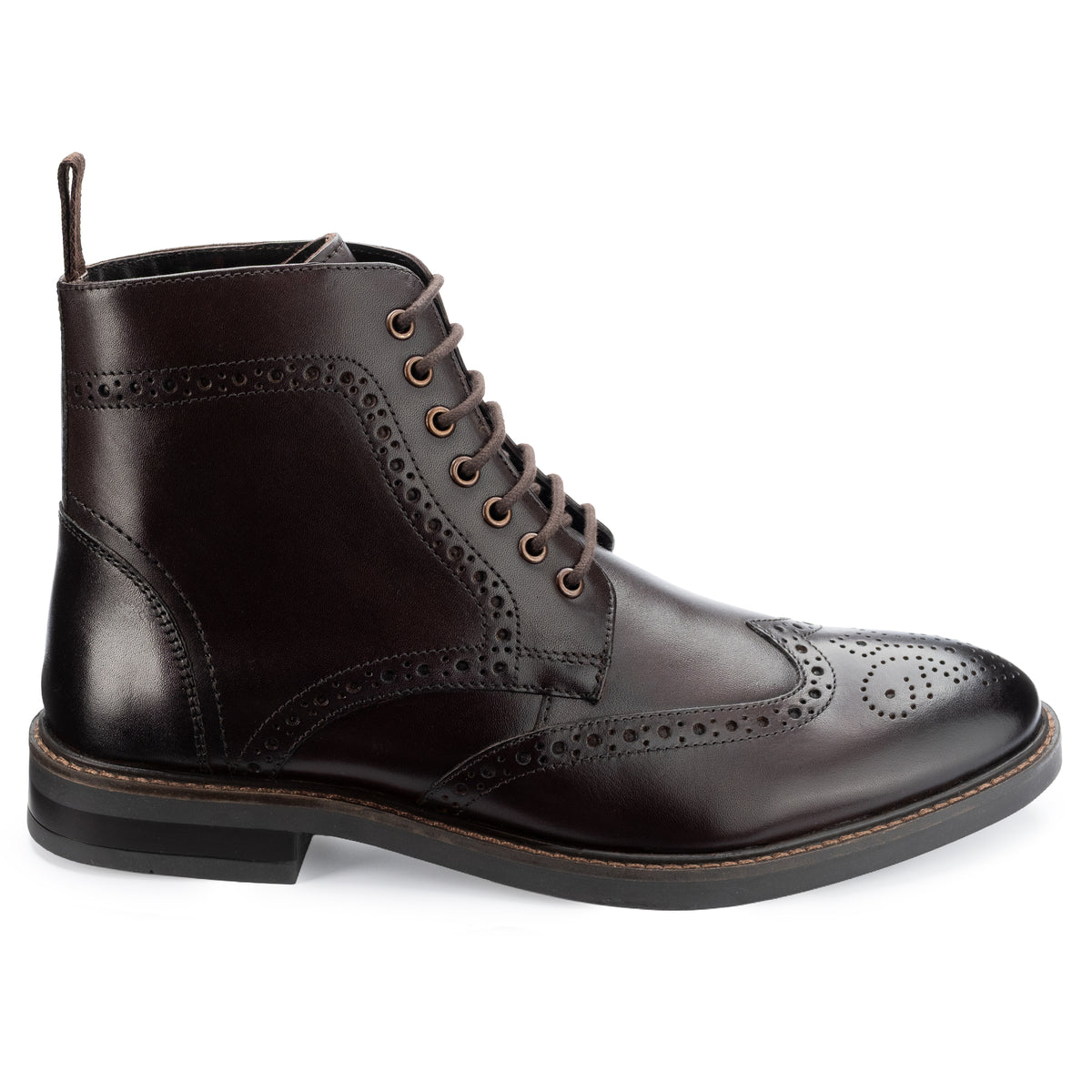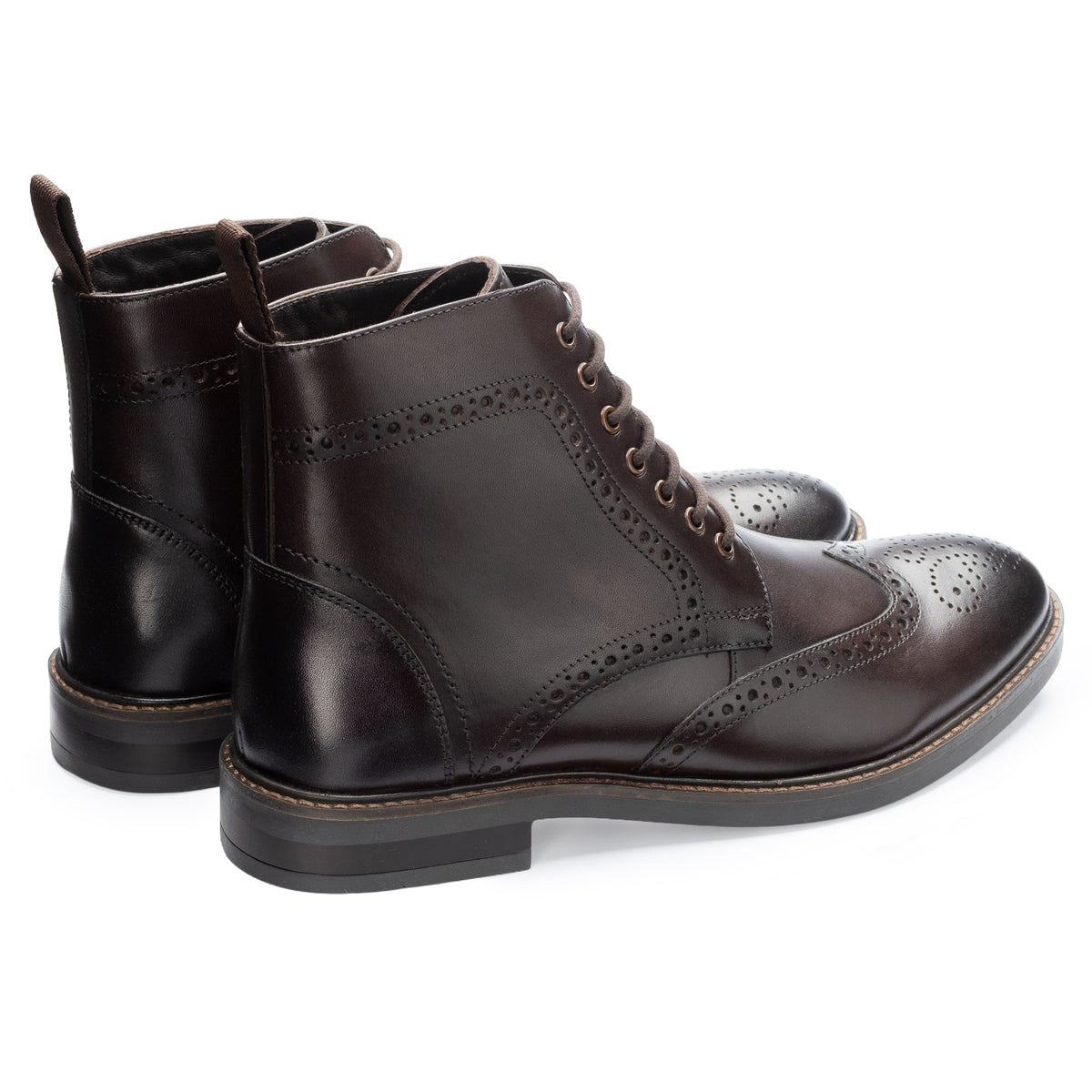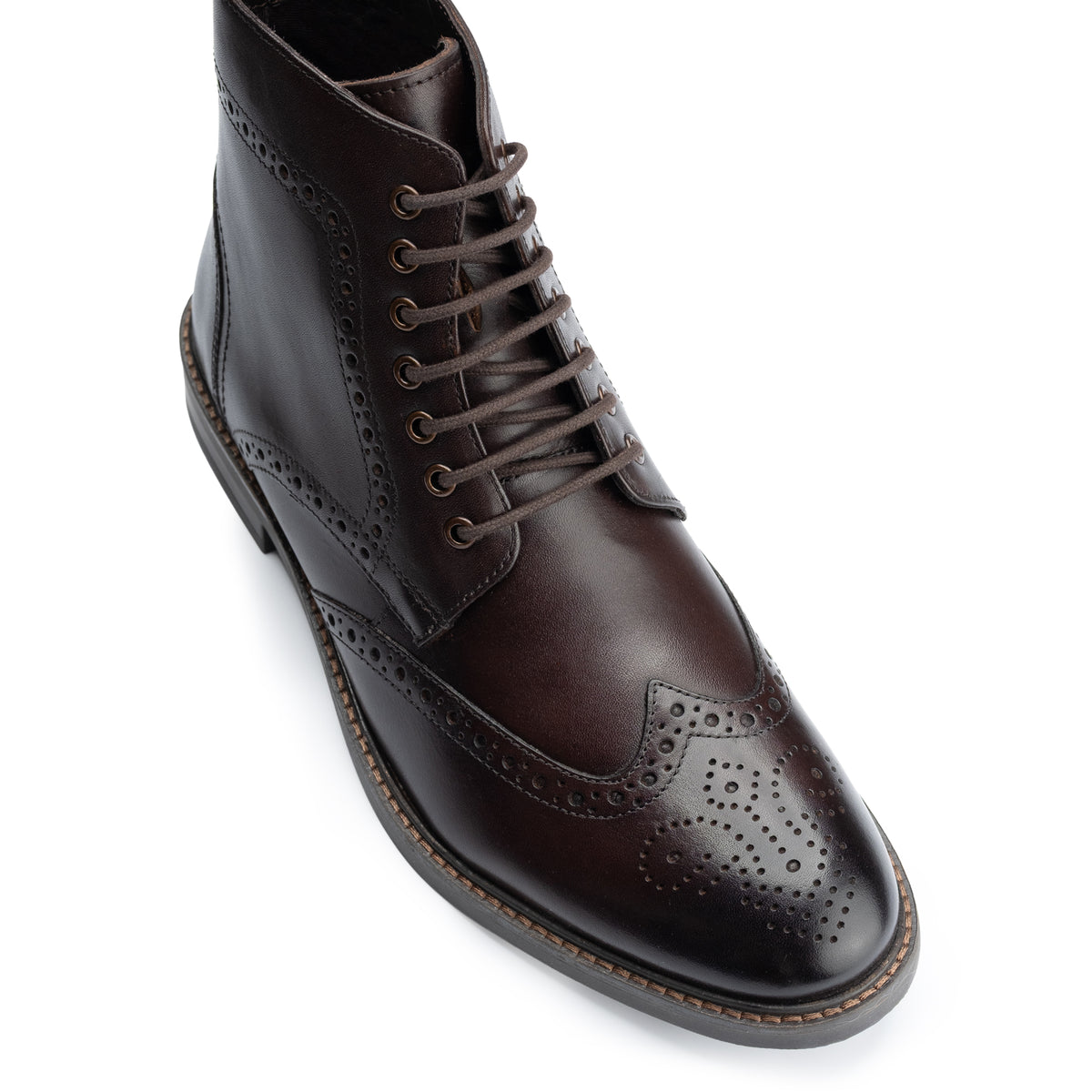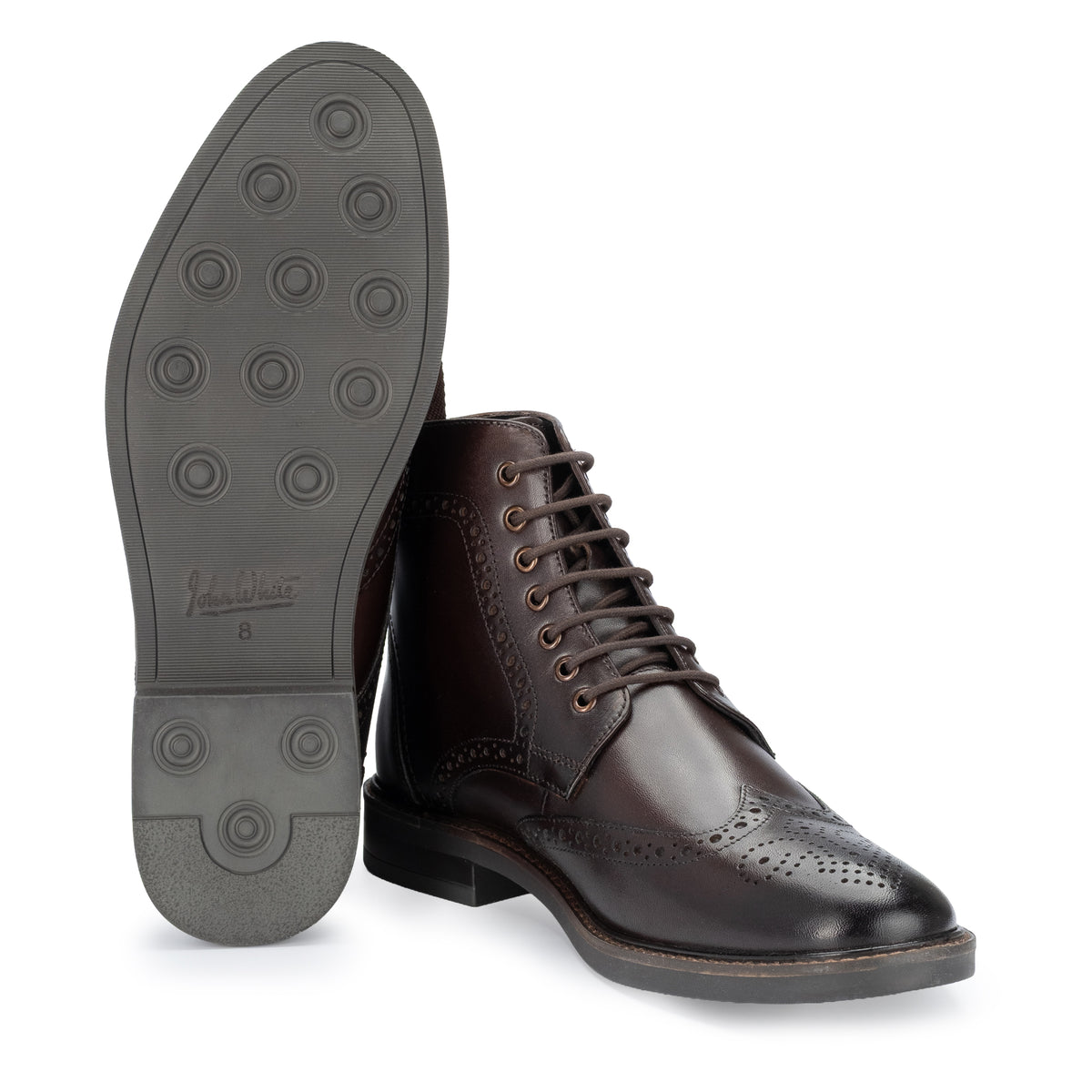

Navy has become the dominant suit colour in British wardrobes, and not by accident. It sits between charcoal's severity and grey's indifference. It reads as formal without the bluntness of black. It travels from a City boardroom to a Saturday wedding without asking much of you.
In This Guide
And yet the shoe question — which colour, which style — trips up more men than you would expect. Type the query into any forum and you will get confident, contradictory answers. Brown shoes. Black shoes. Never black. Always tan. The disagreement is partly a sign that navy is genuinely flexible; the same suit can go several directions depending on the shoe.
This guide cuts through it. We have worked through the colour pairings by occasion, set out which JWS styles fit each role, and flagged the mistakes worth avoiding. Navy suits are too good to waste on the wrong shoes.
Why Navy Changes the Rules
Most suit colours have a fixed formality ceiling. Grey flannel has a natural register — smart, understated, never quite black-tie. Charcoal sits one rung below black-tie in the hierarchy and doesn't really want to come down. Navy is the exception. It is the only suit colour that flexes credibly across the full formality range: from a morning suit occasion where you have been given latitude, through daily office wear, to a relaxed smart-casual setting where the jacket comes off.
That flexibility is the suit's appeal. It is also why the shoe question has a wider range of correct answers than with other suit colours. The pairing that works for a legal meeting will not be the one you reach for at a garden party. Understanding the colour hierarchy — and how each pairing signals formality — gives you the tools to choose deliberately rather than by habit.
The Colour Pairs — Ranked by Formality
Black — The Formal Anchor
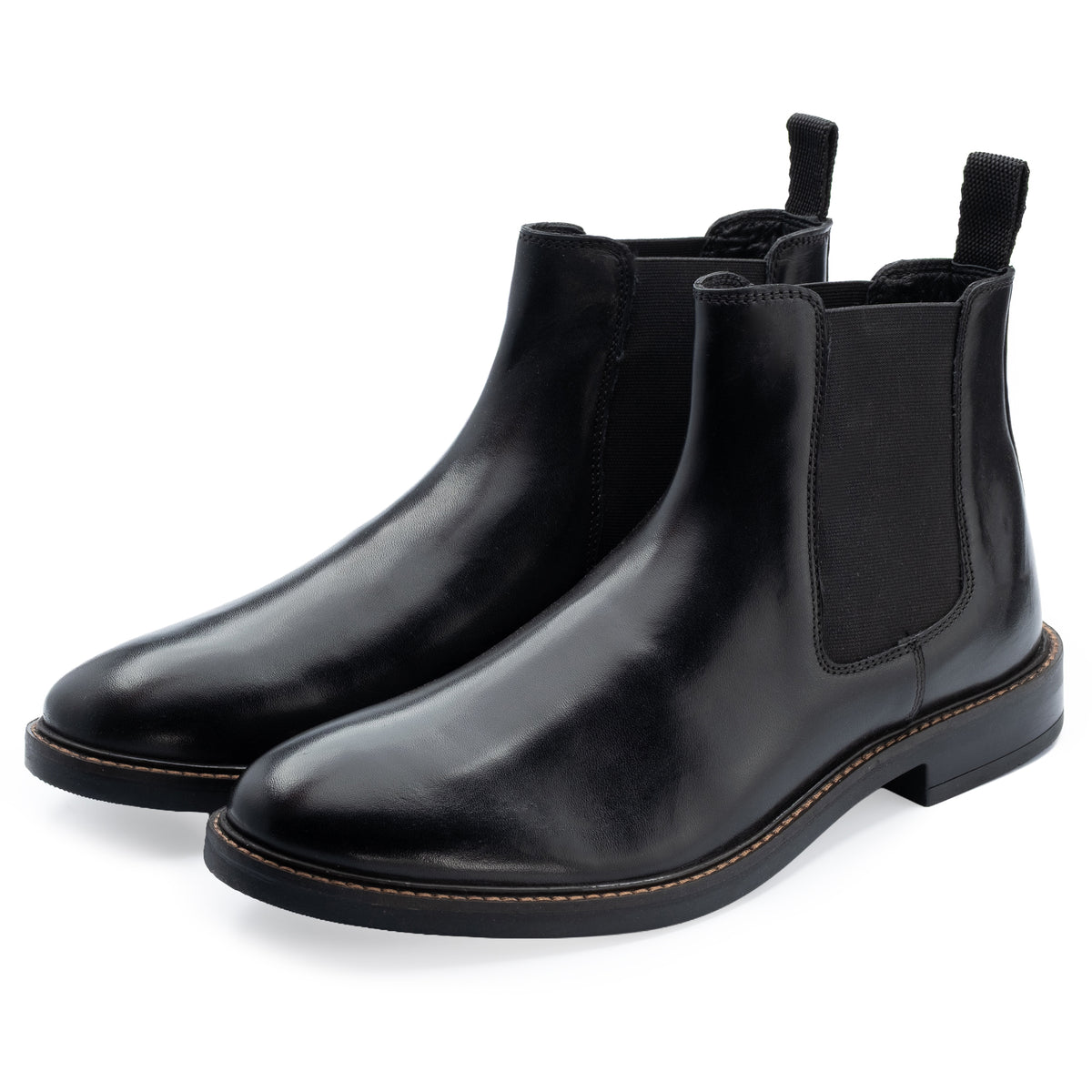
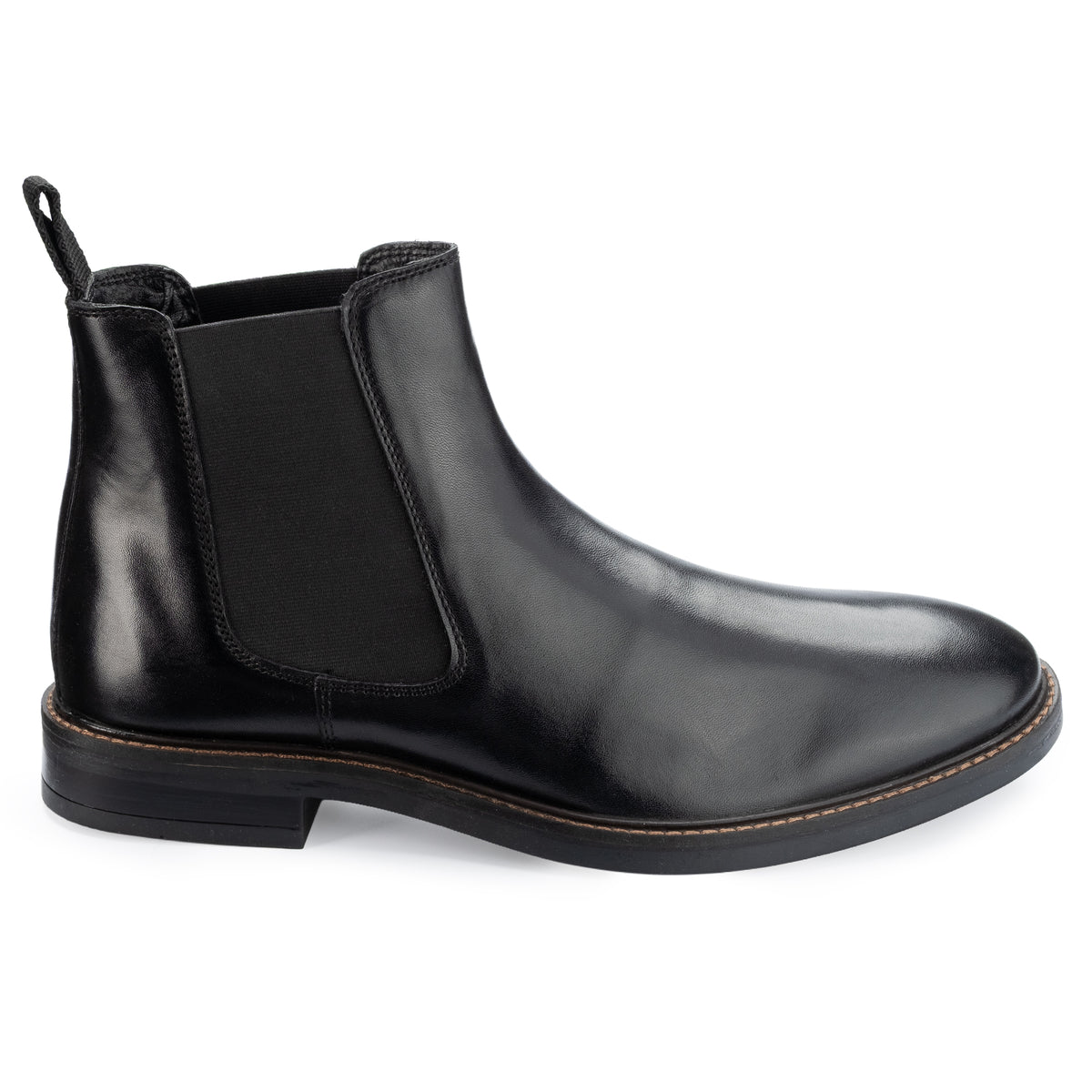
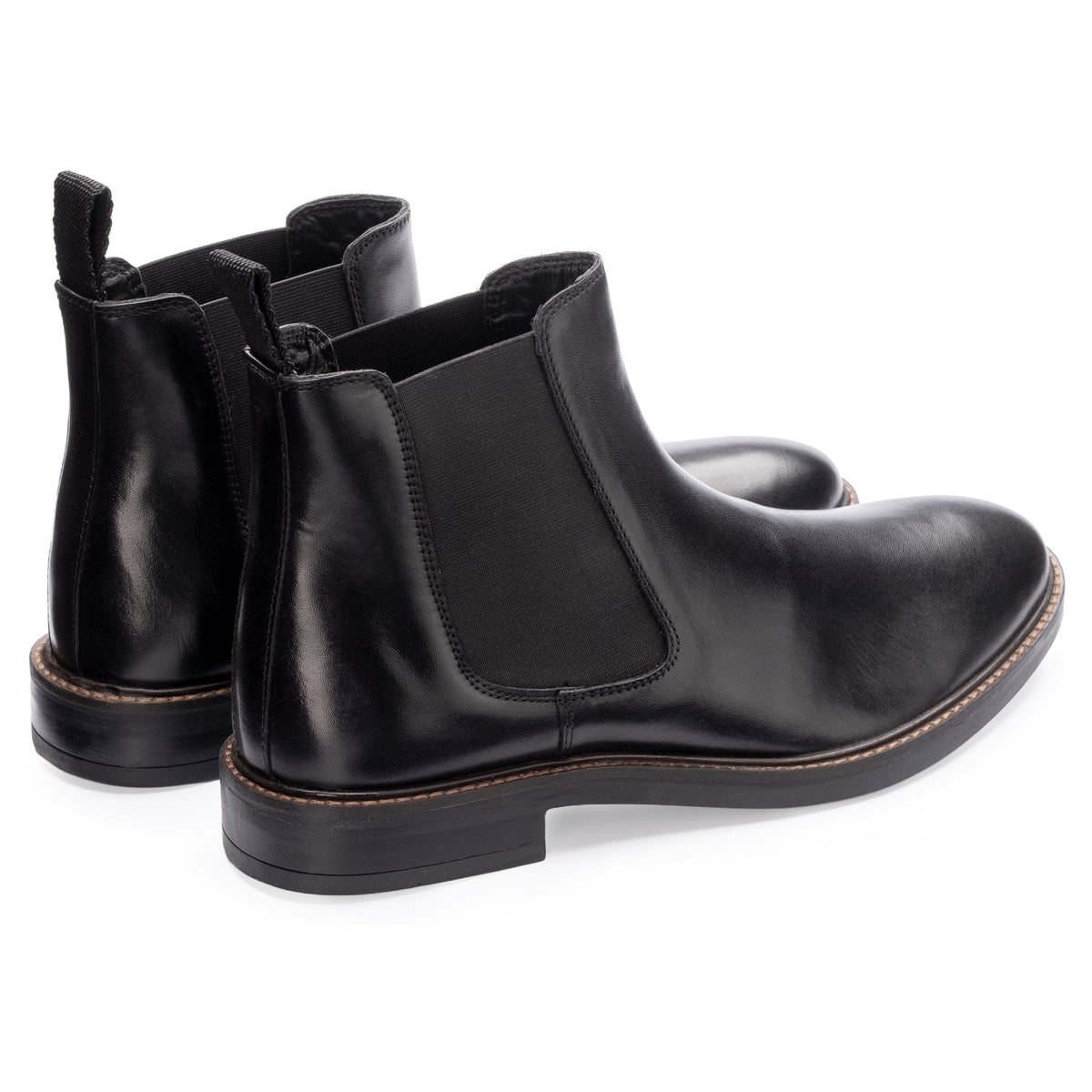
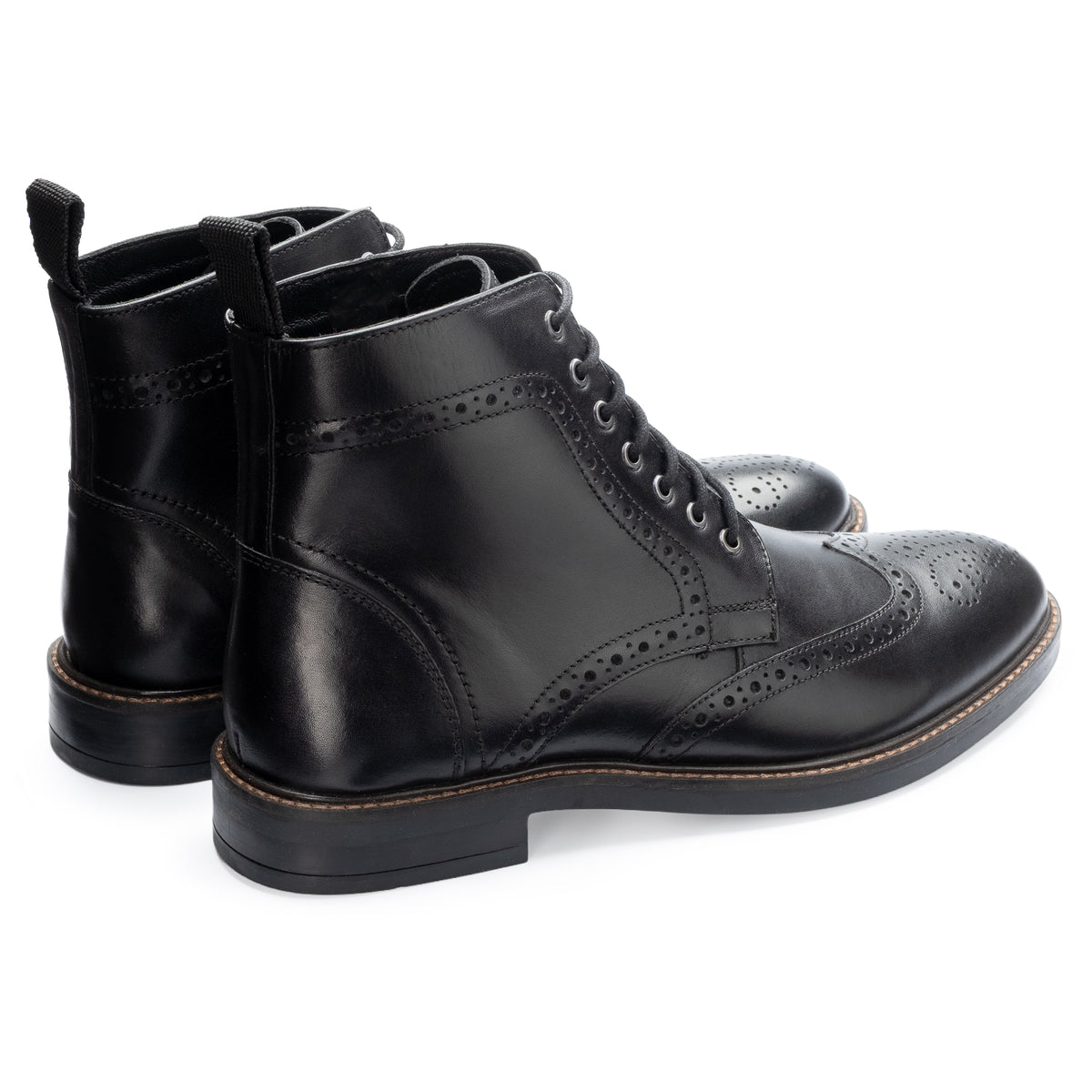
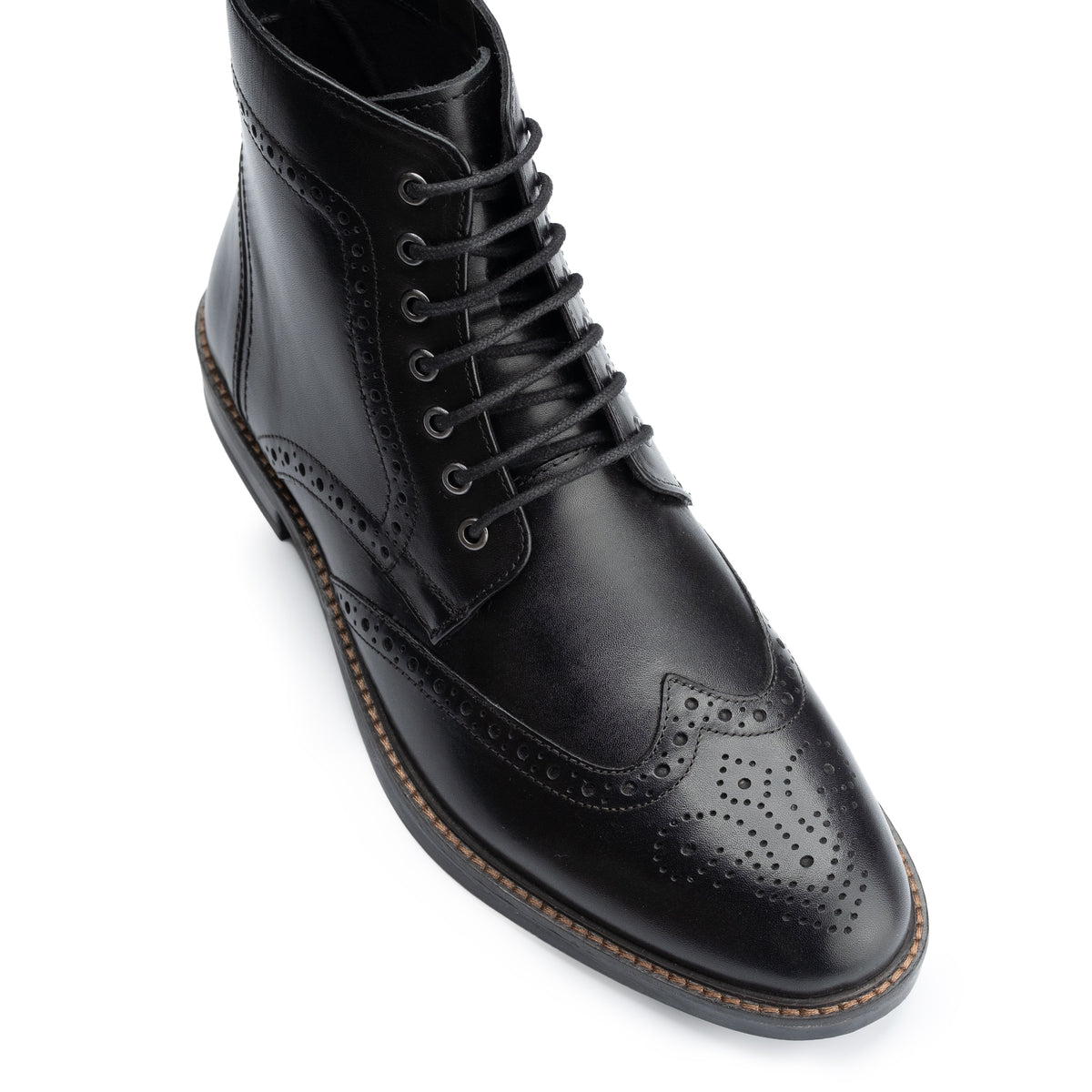
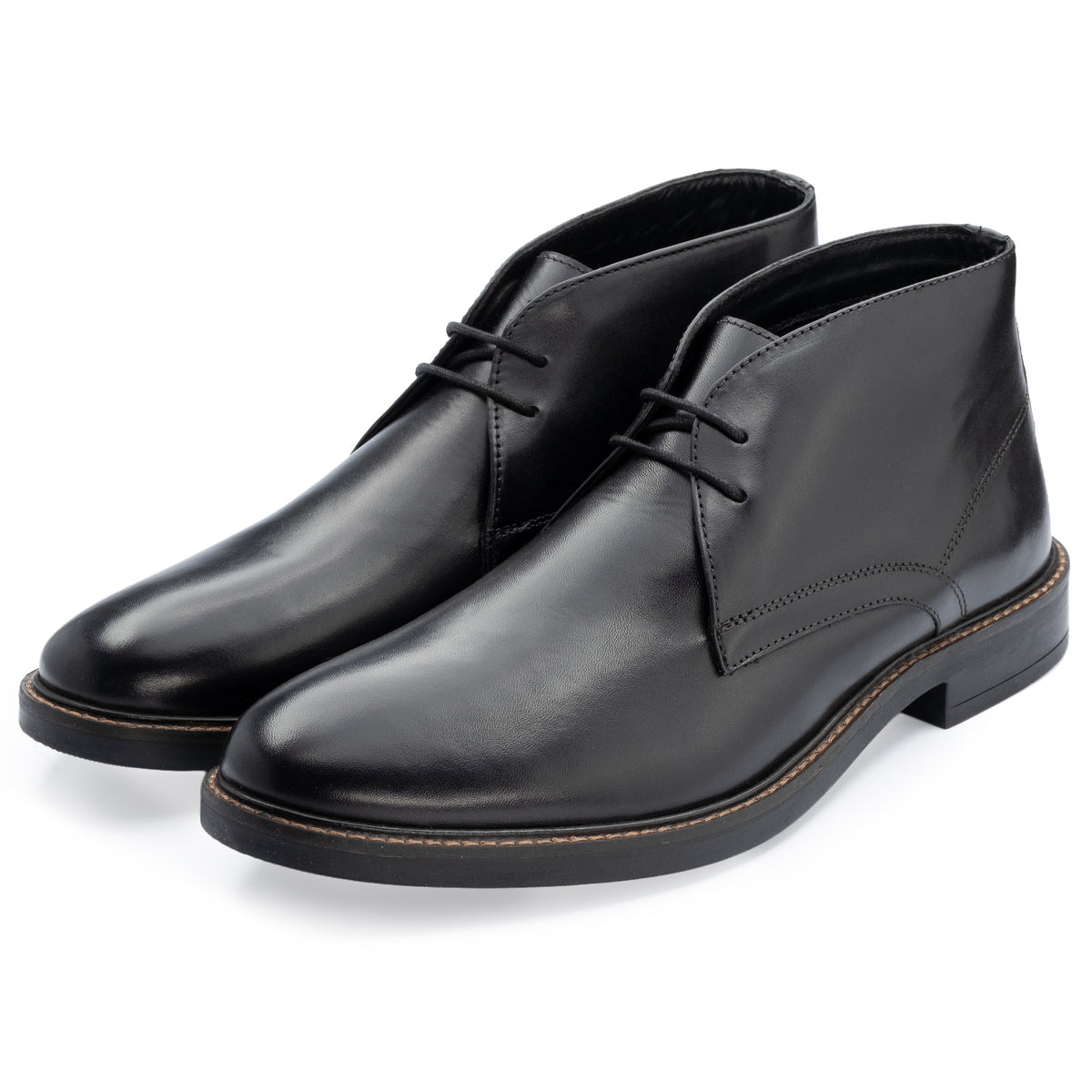
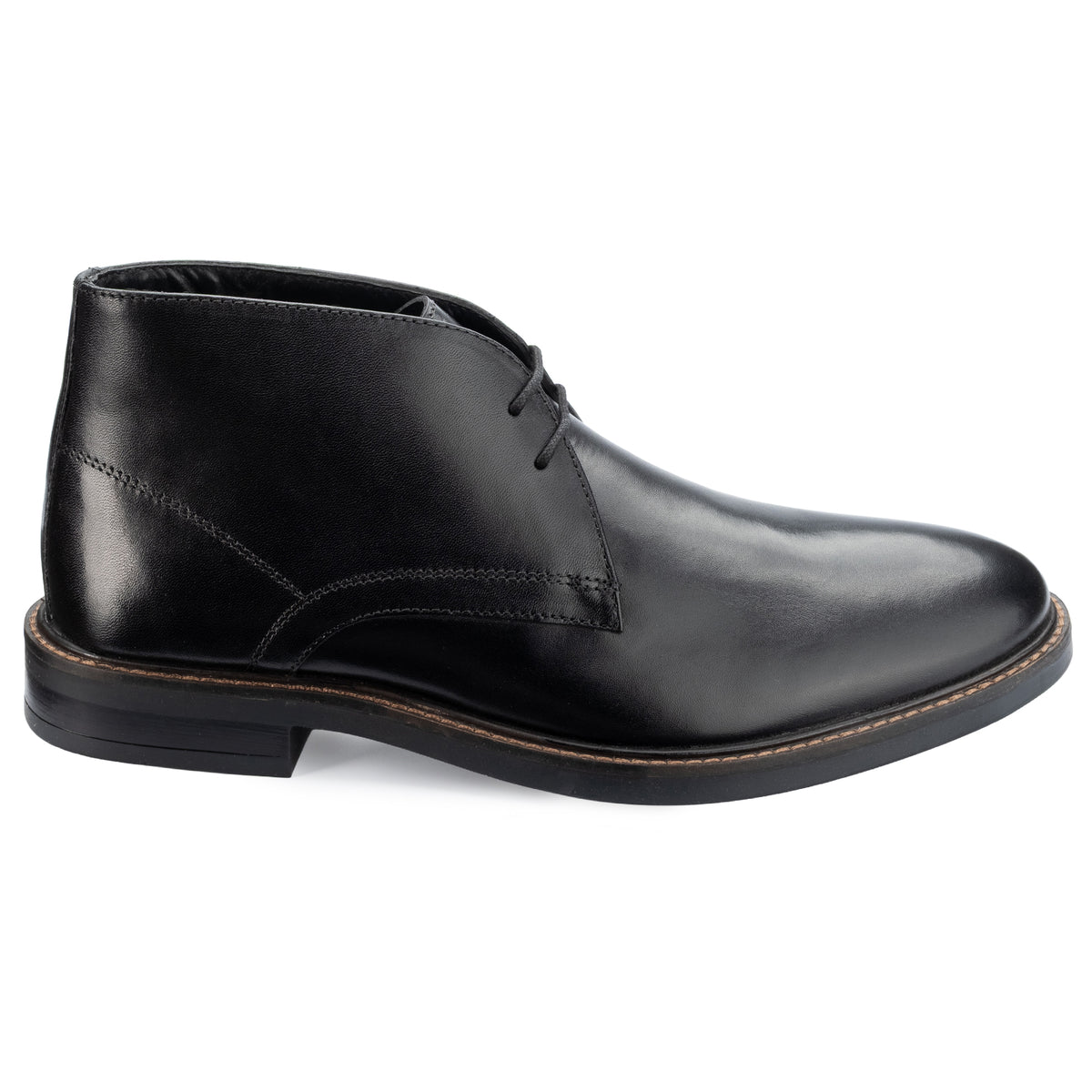
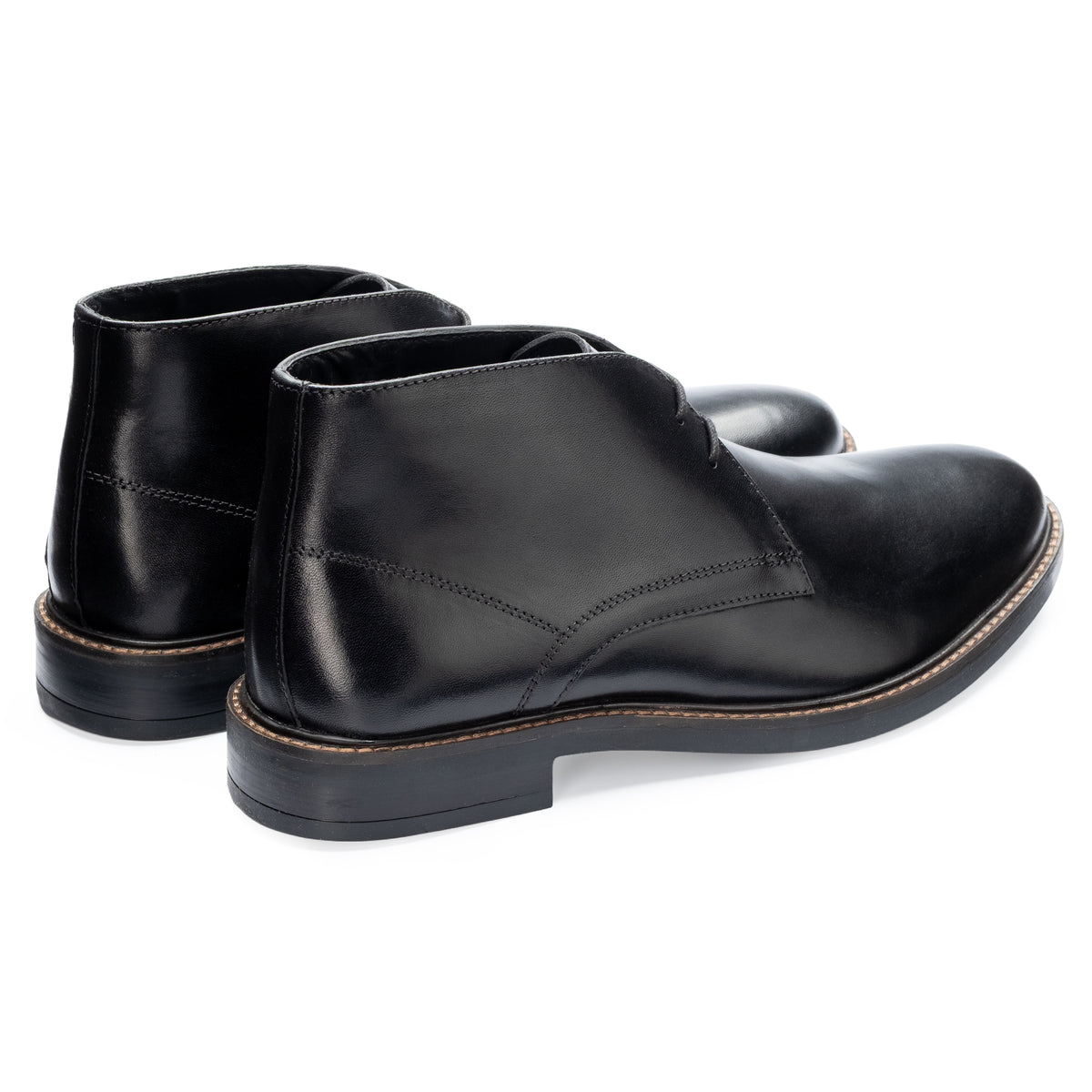
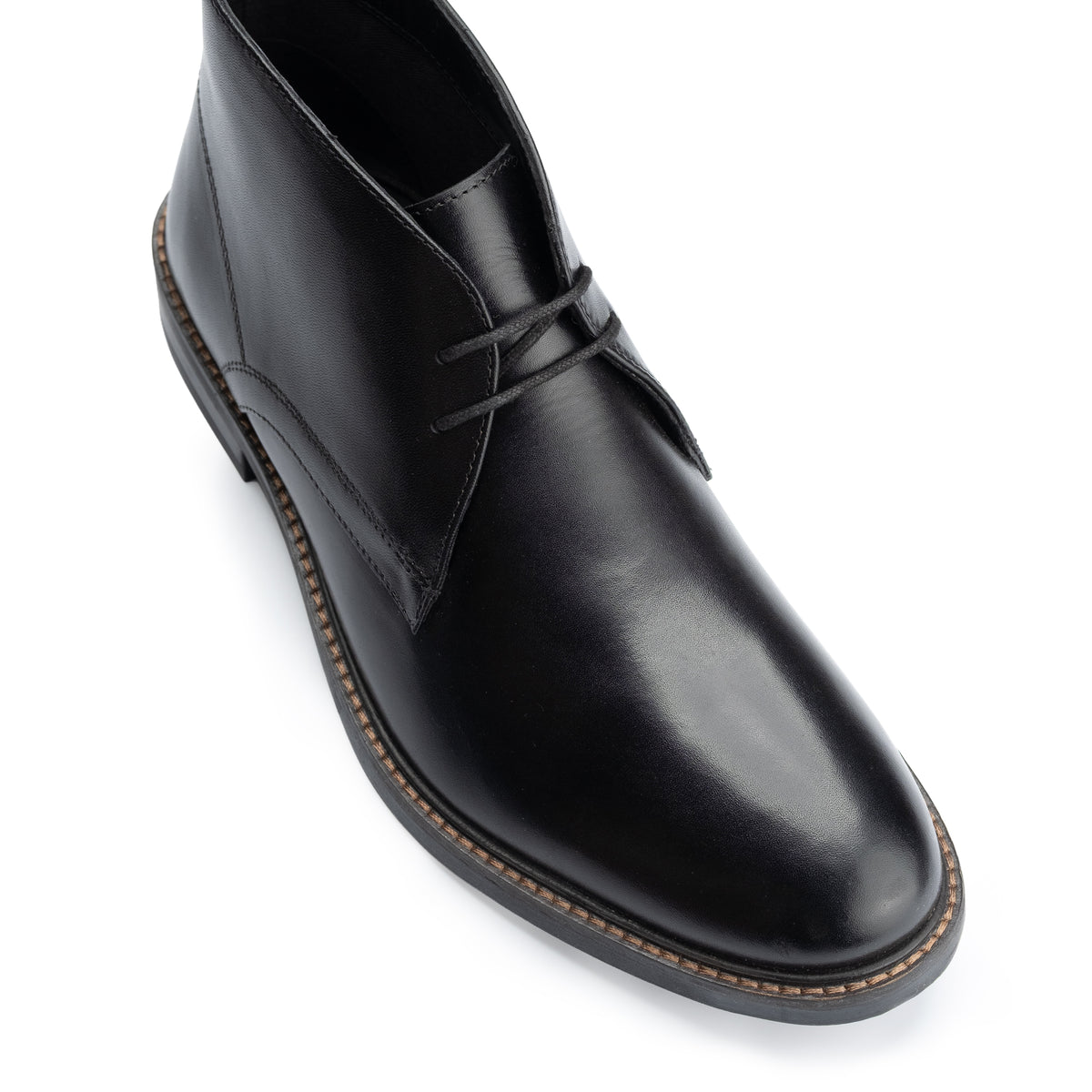
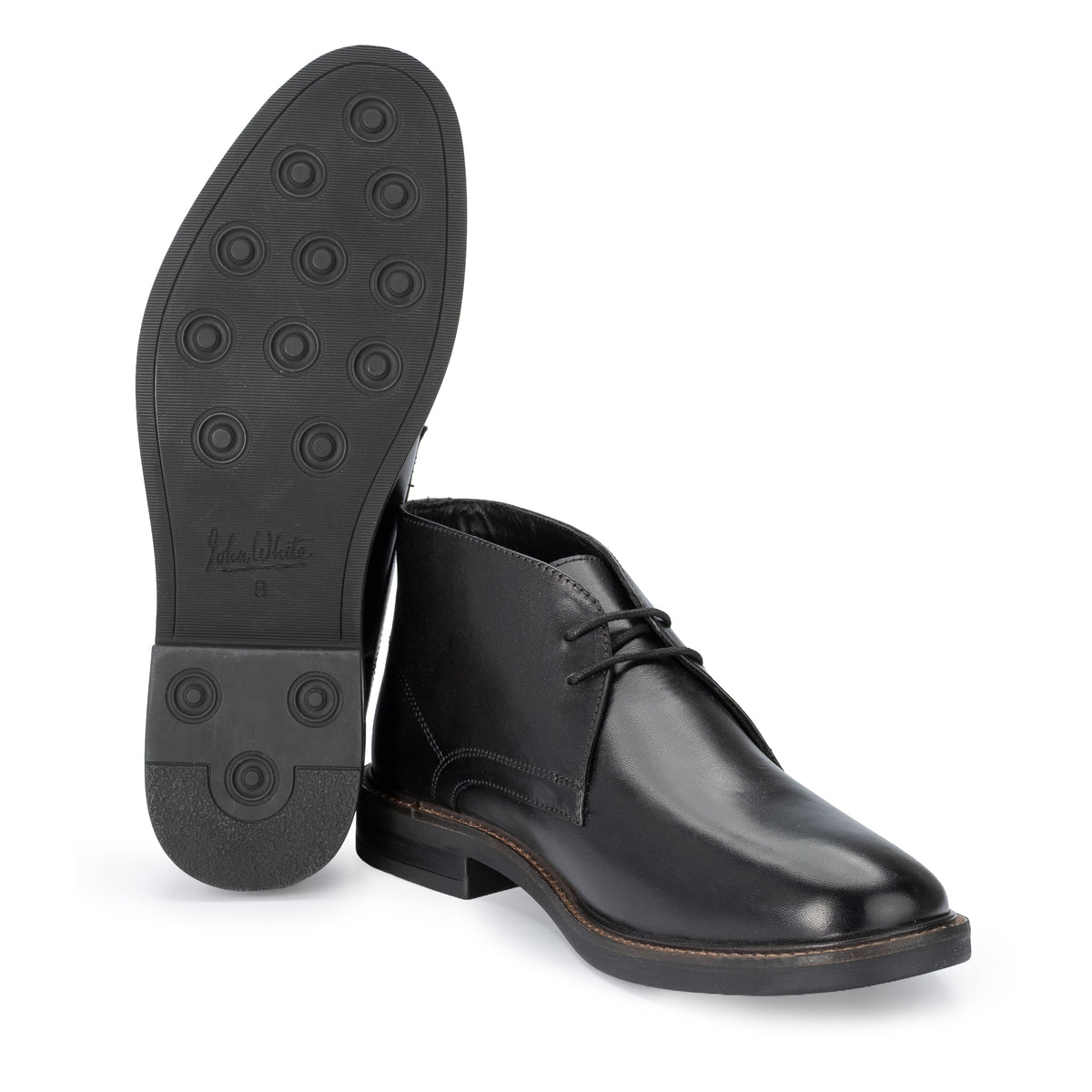
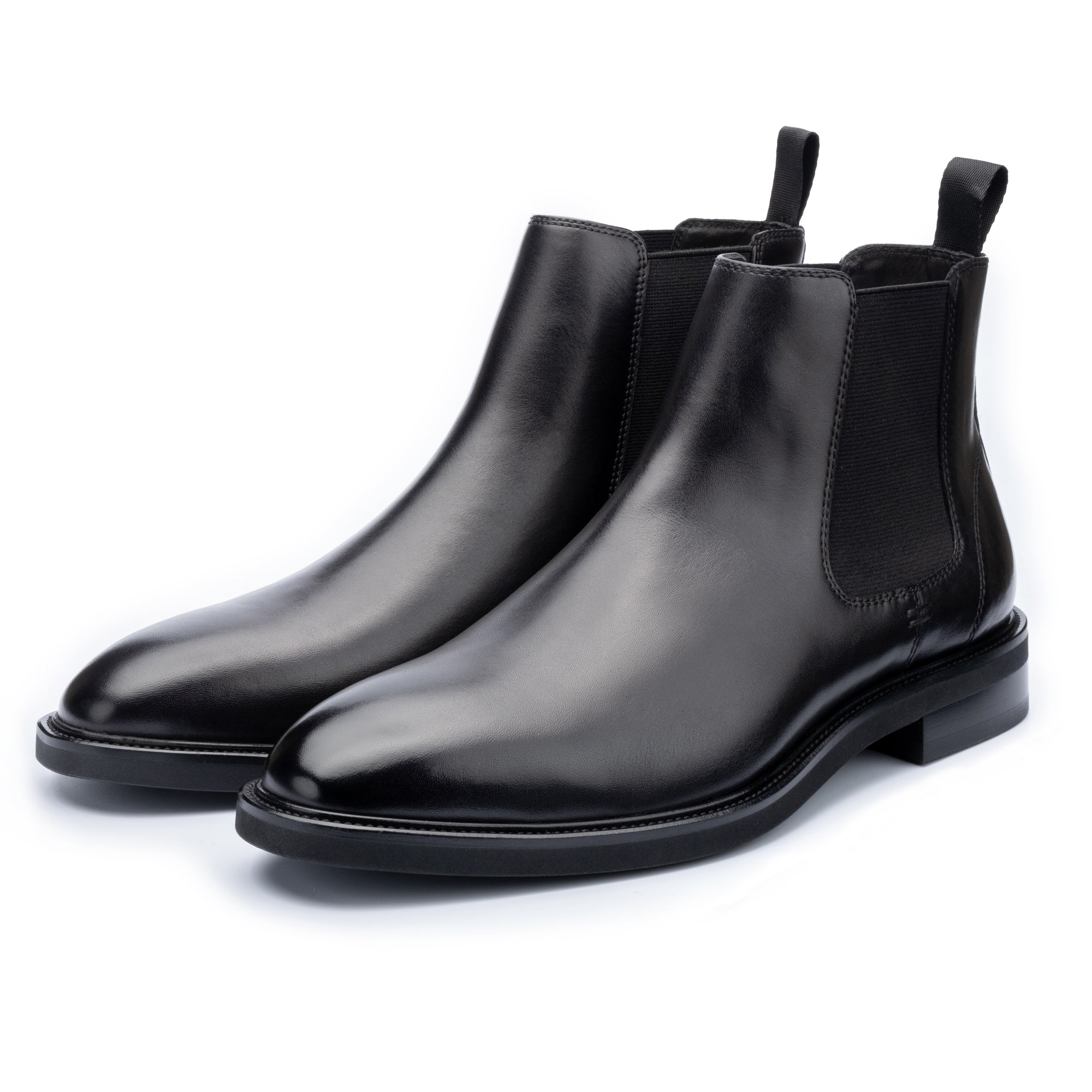
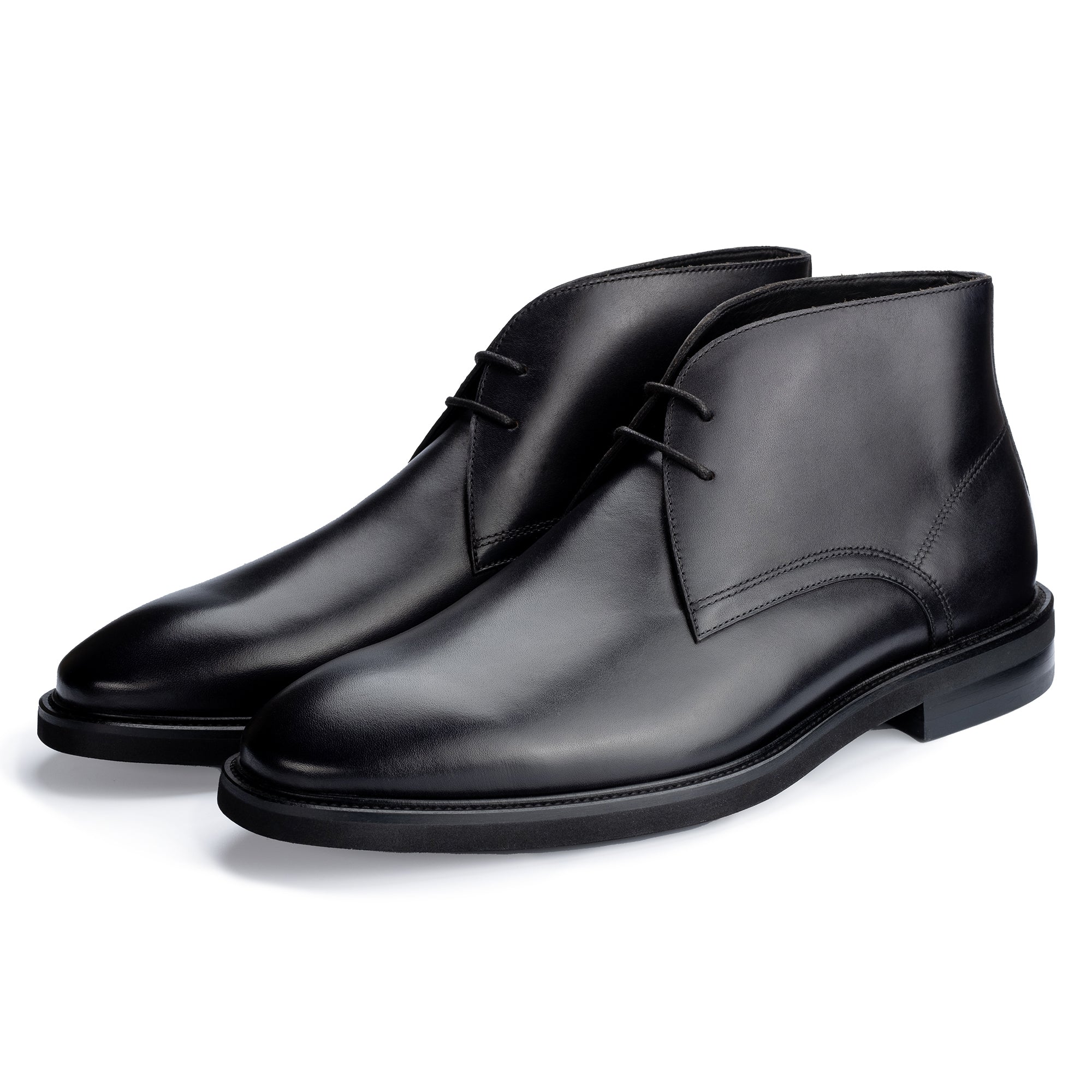
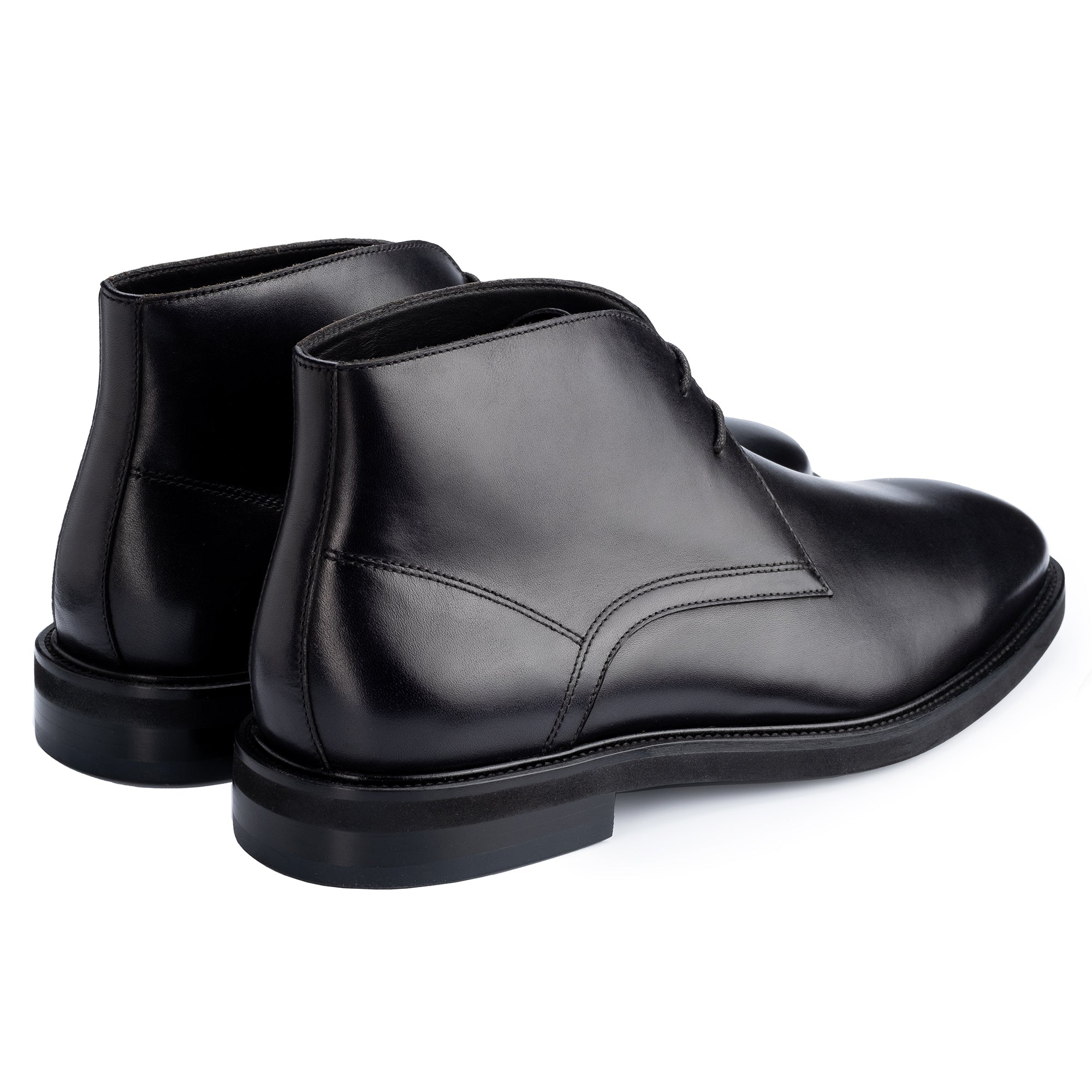
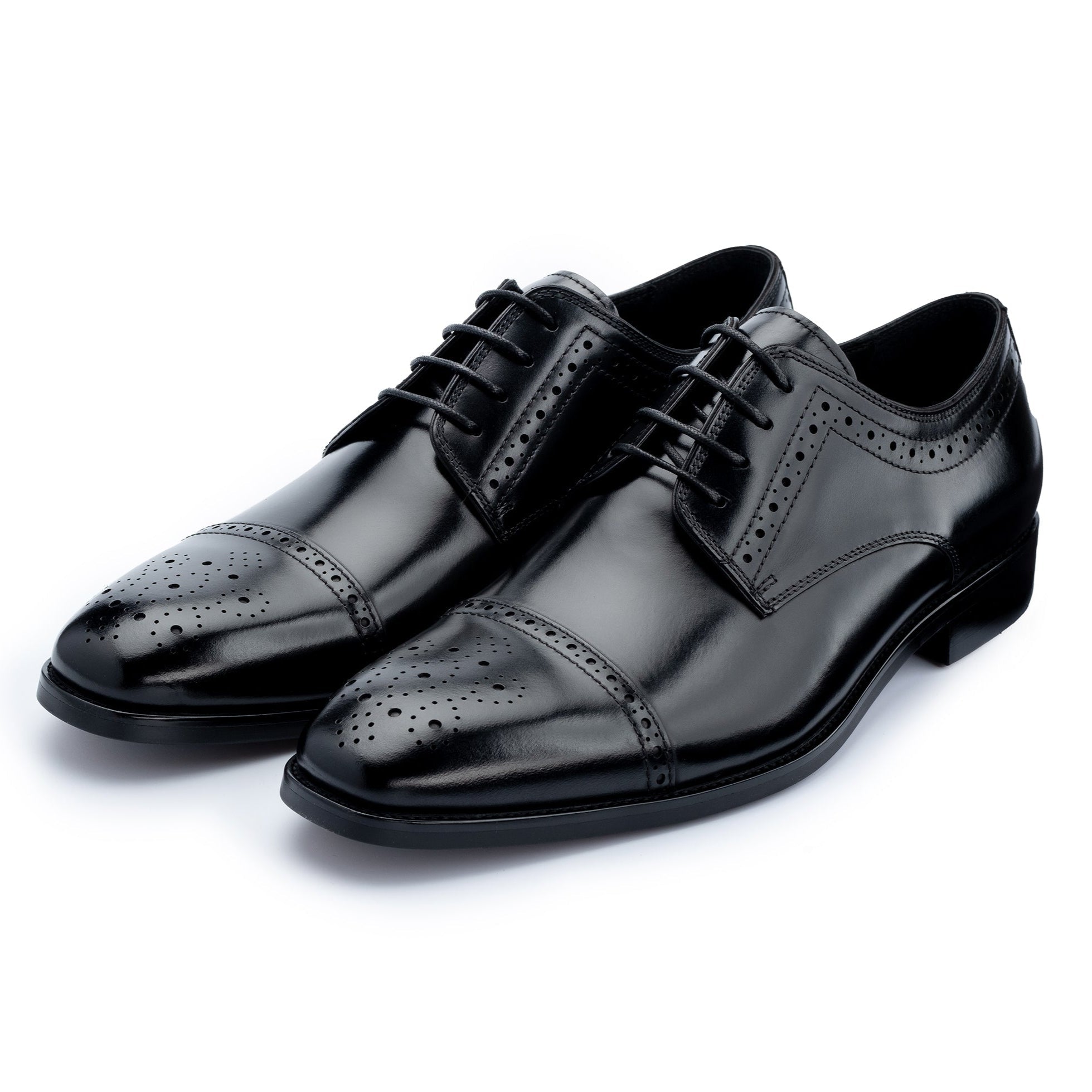
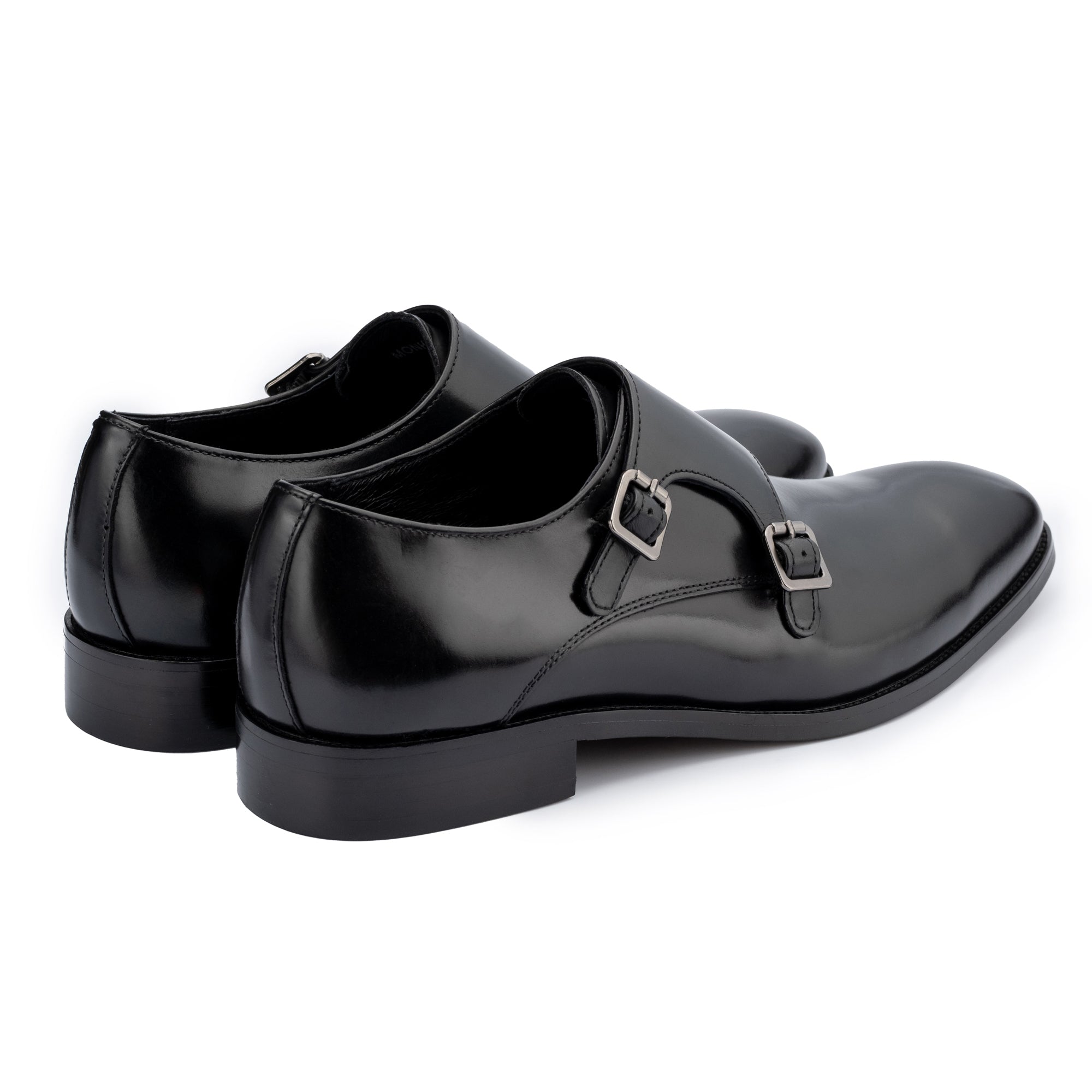
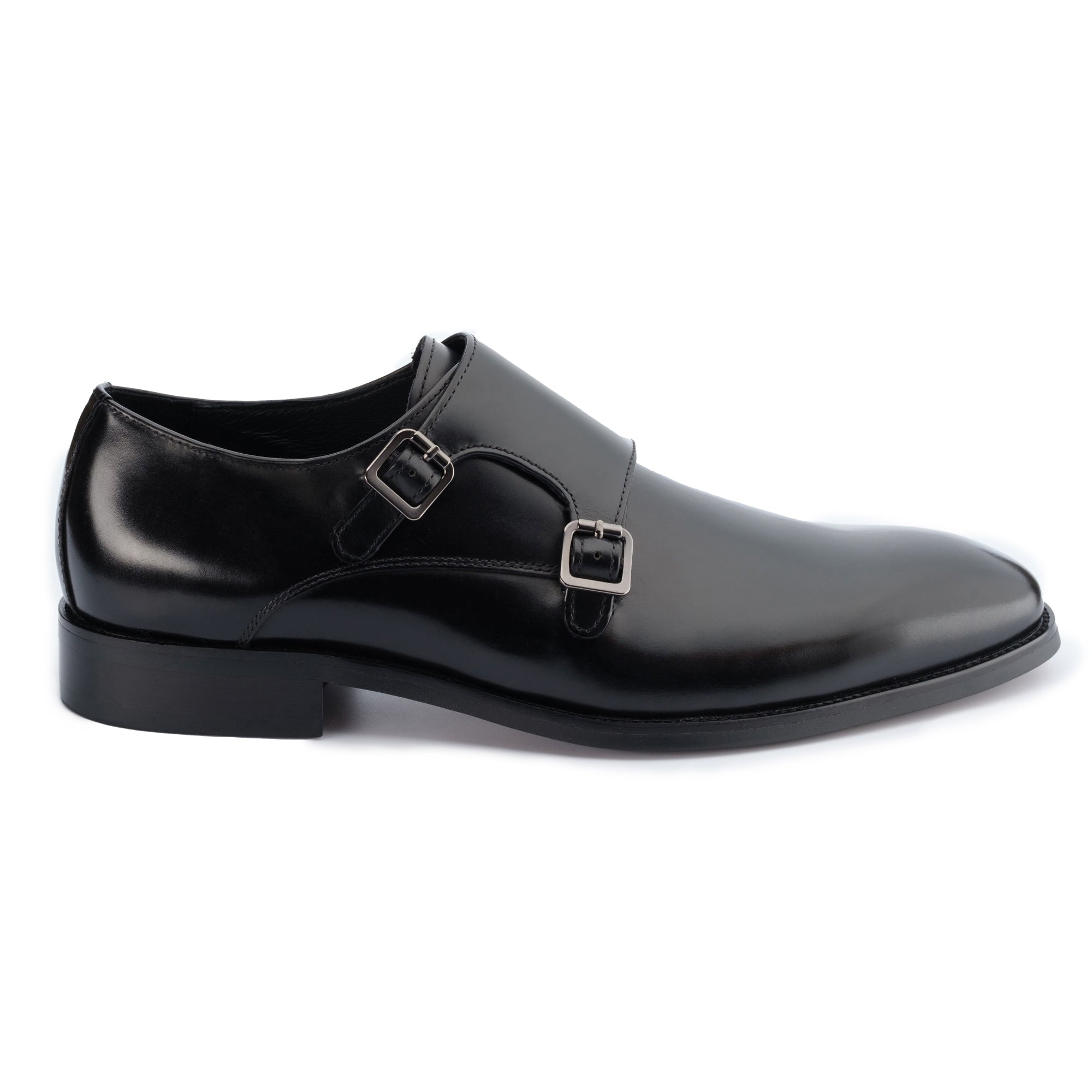
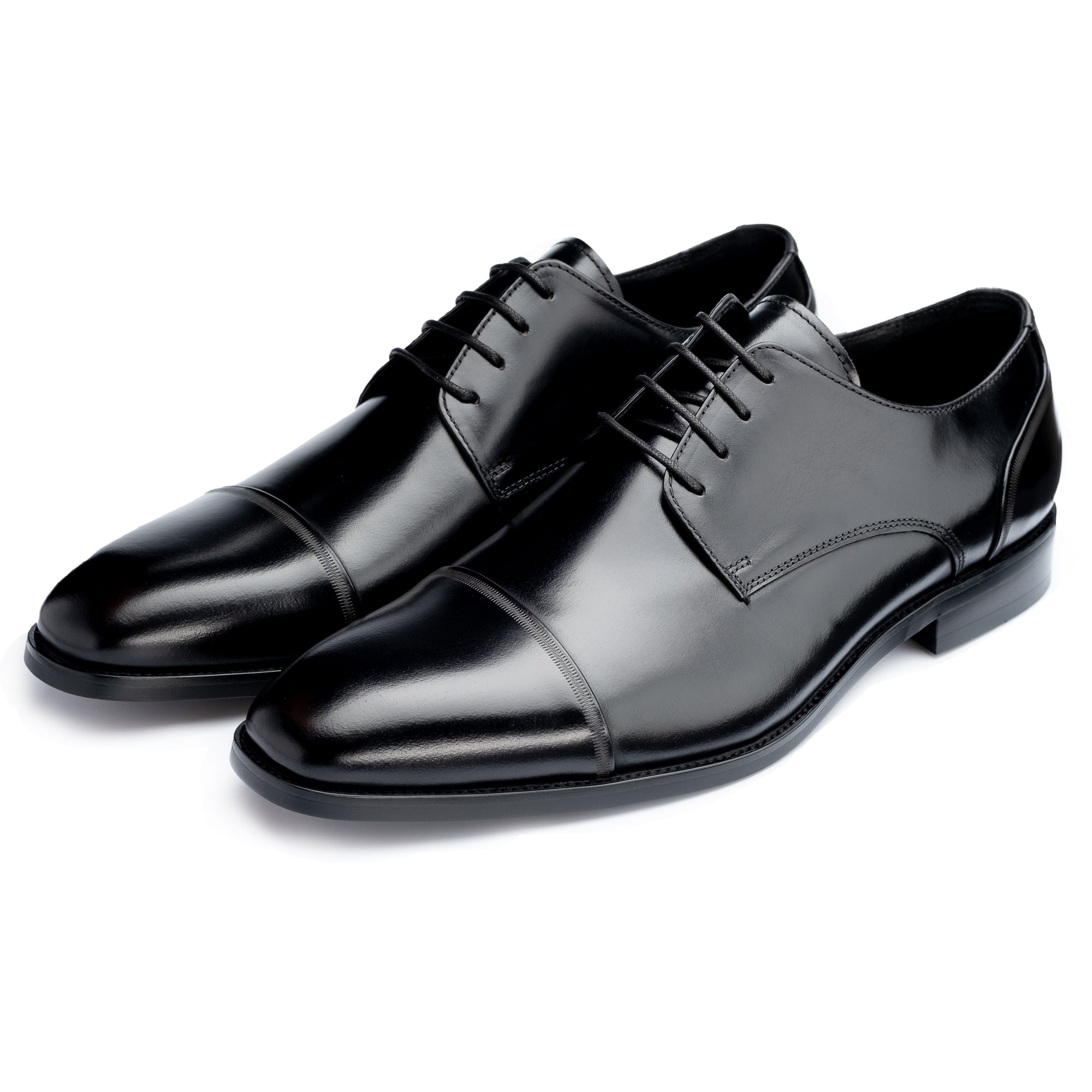
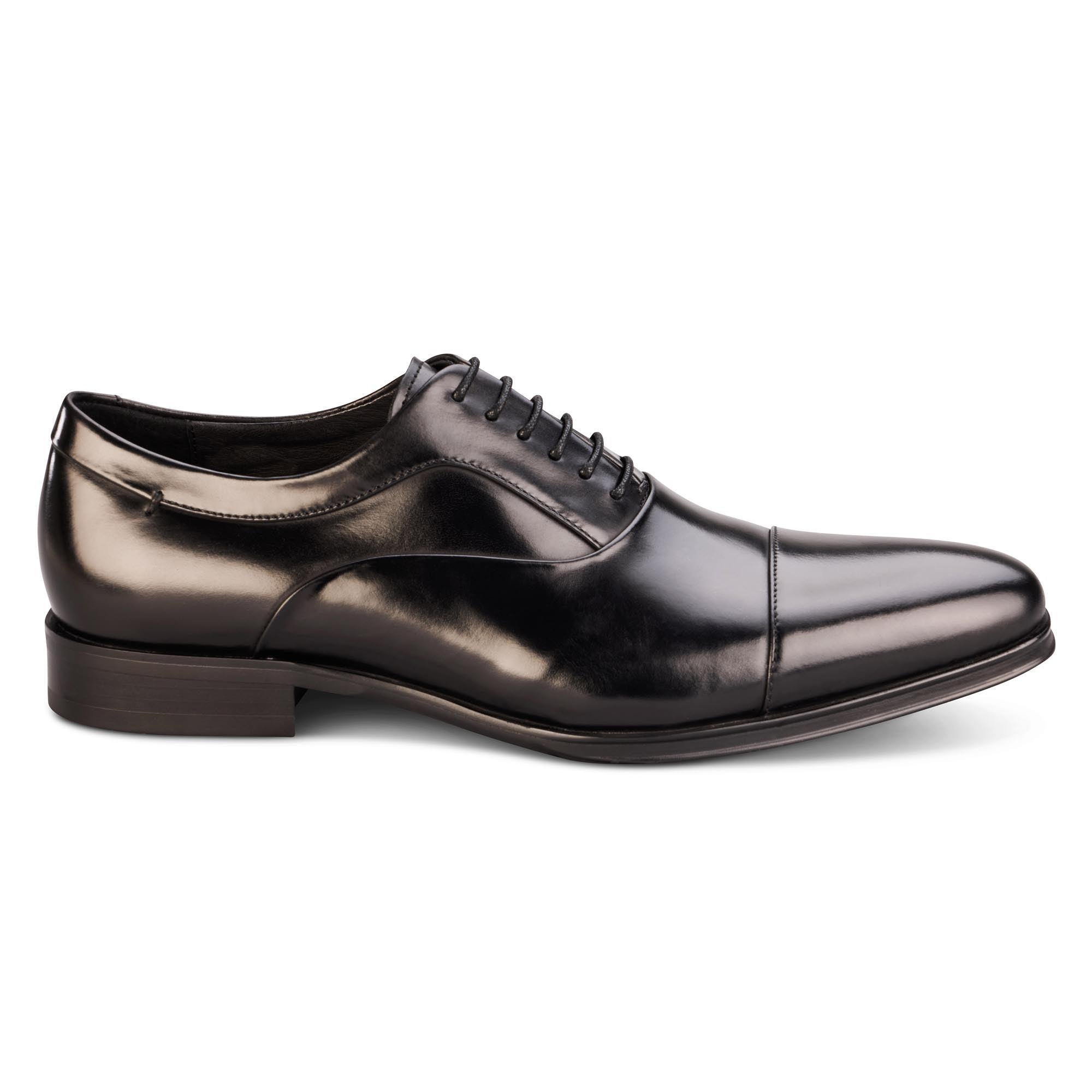
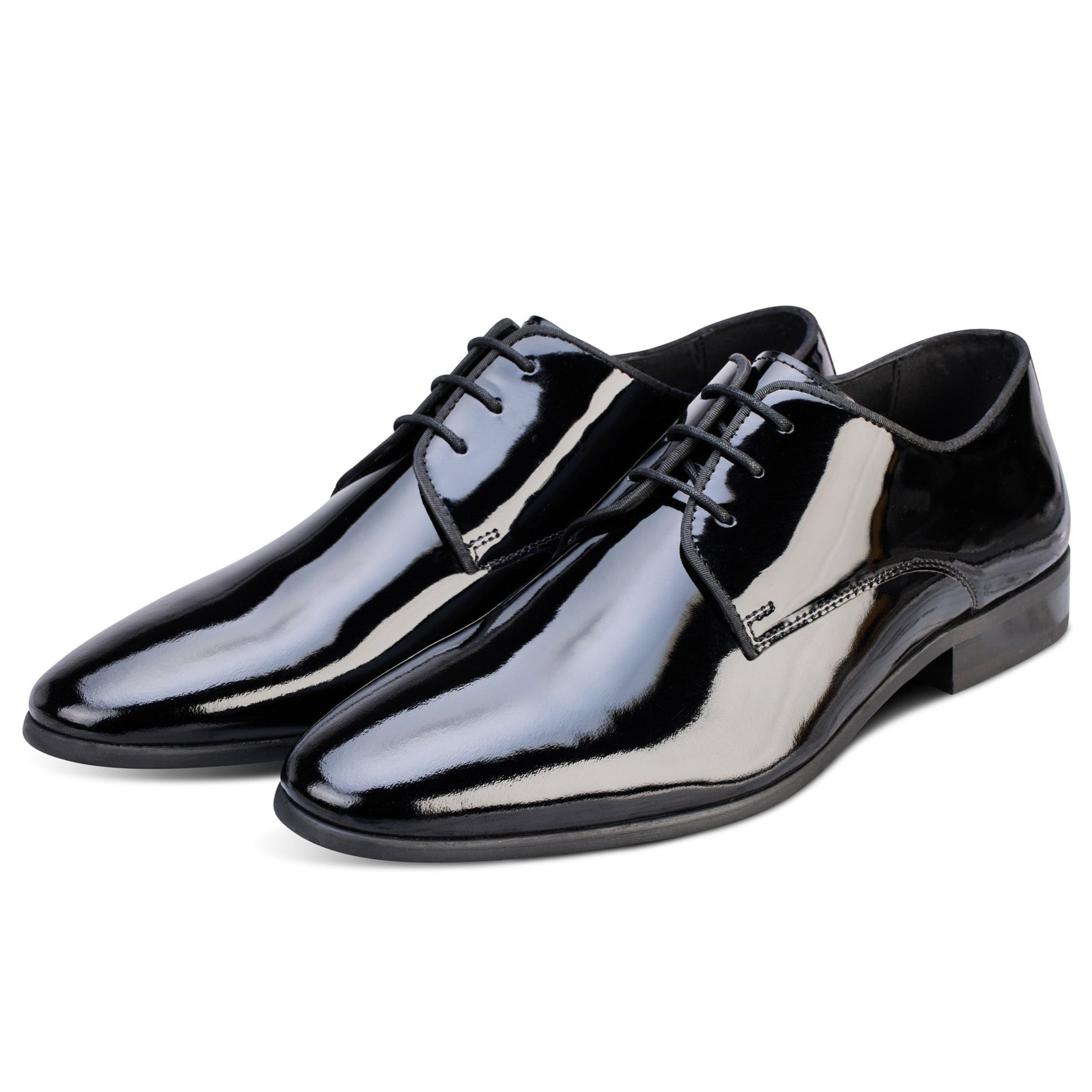
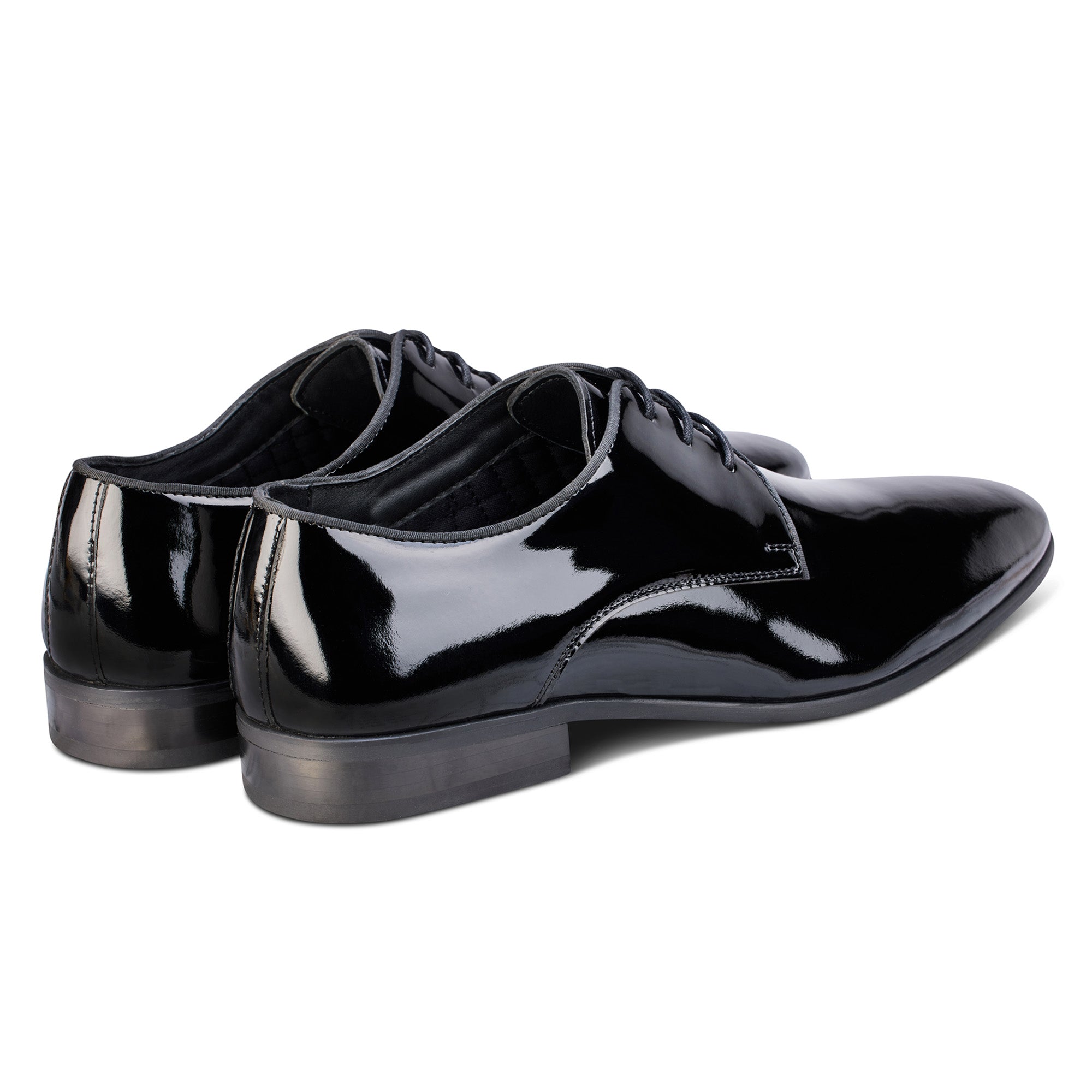
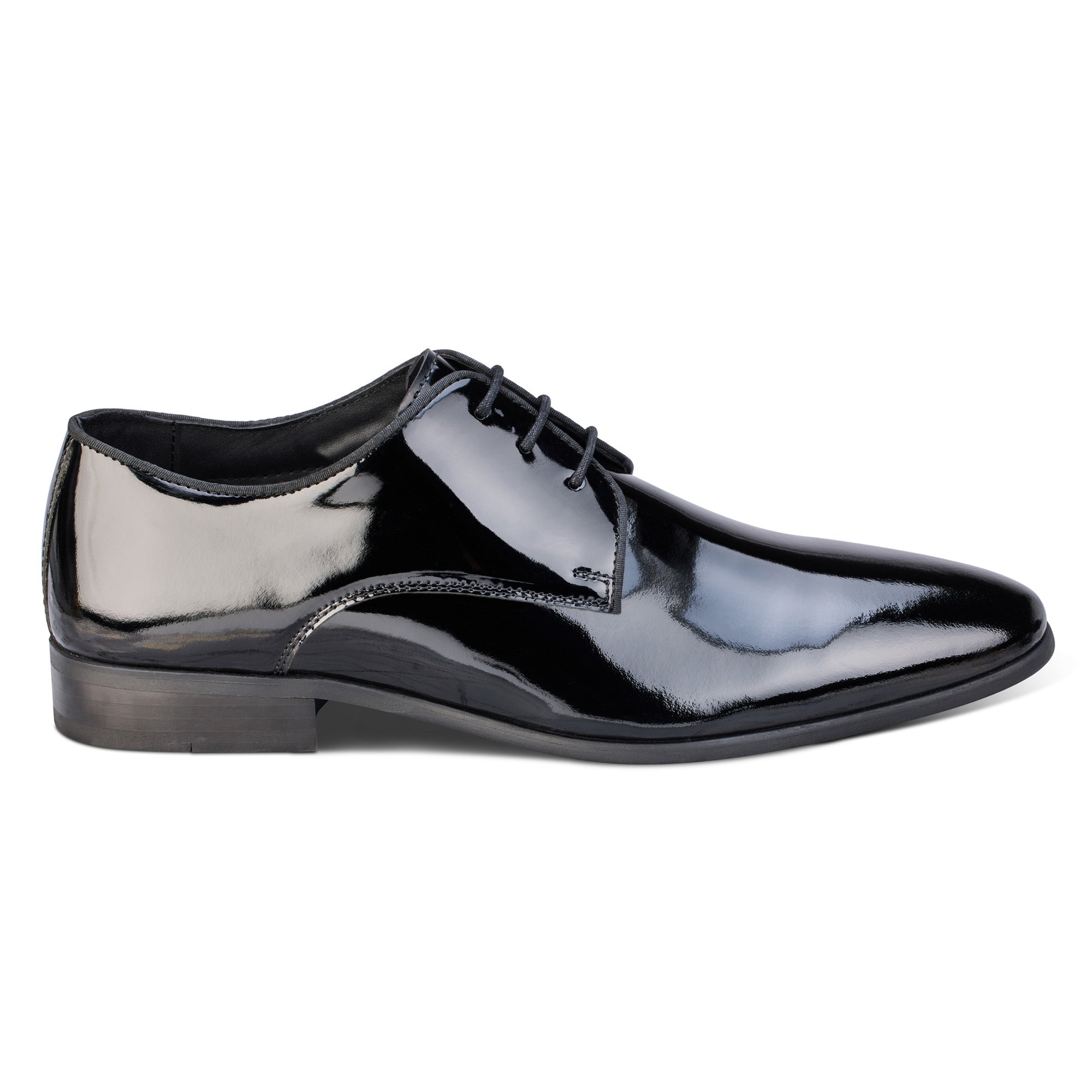
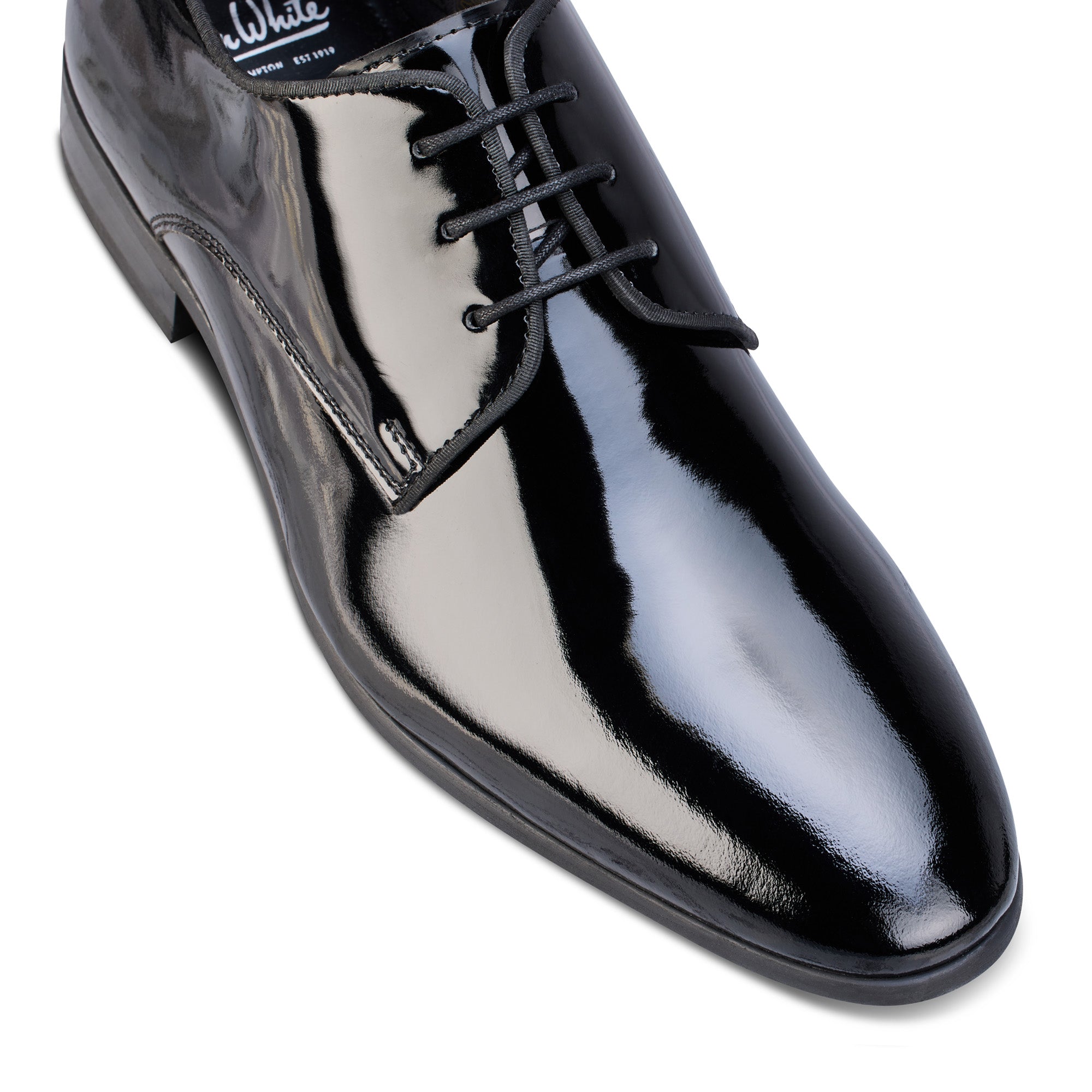
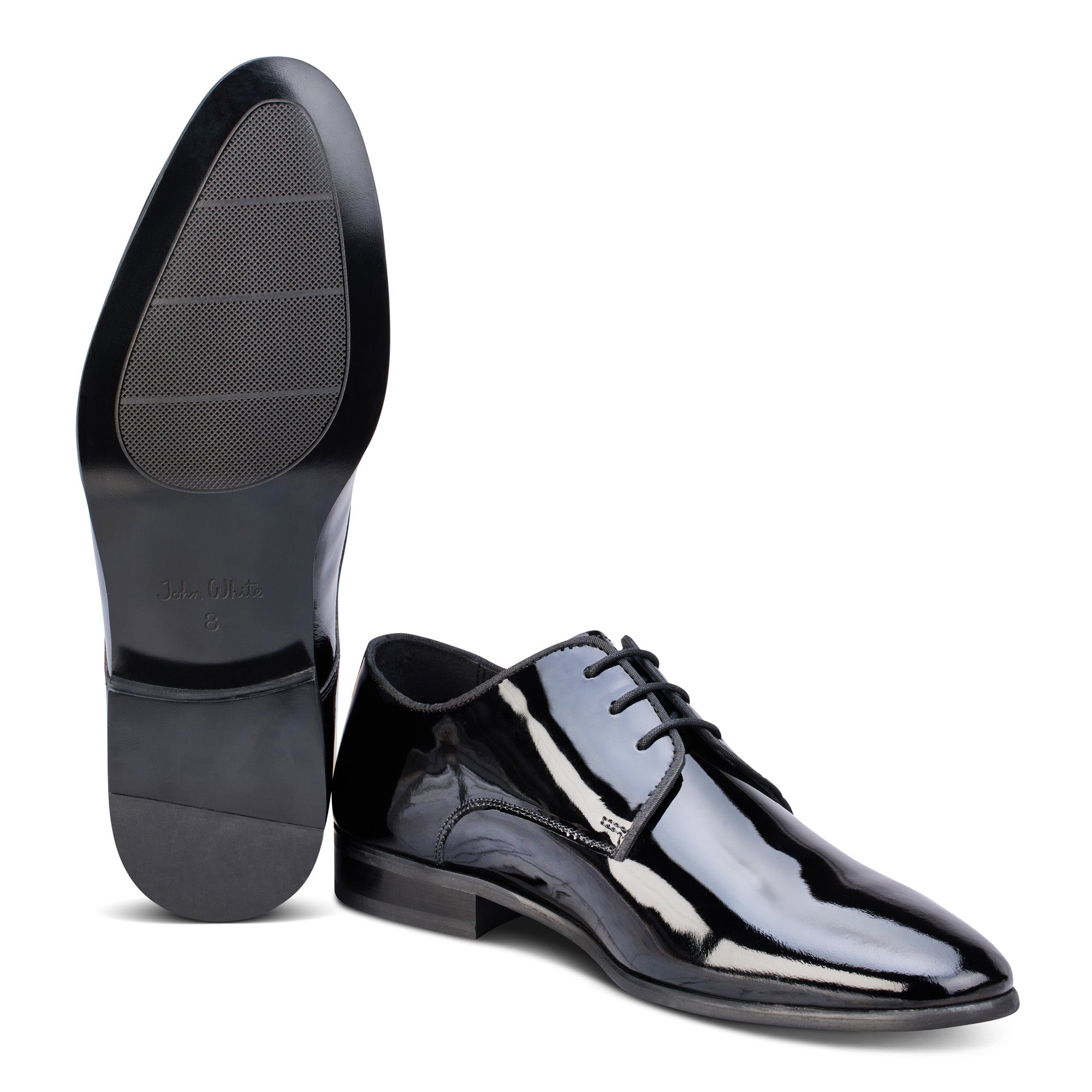
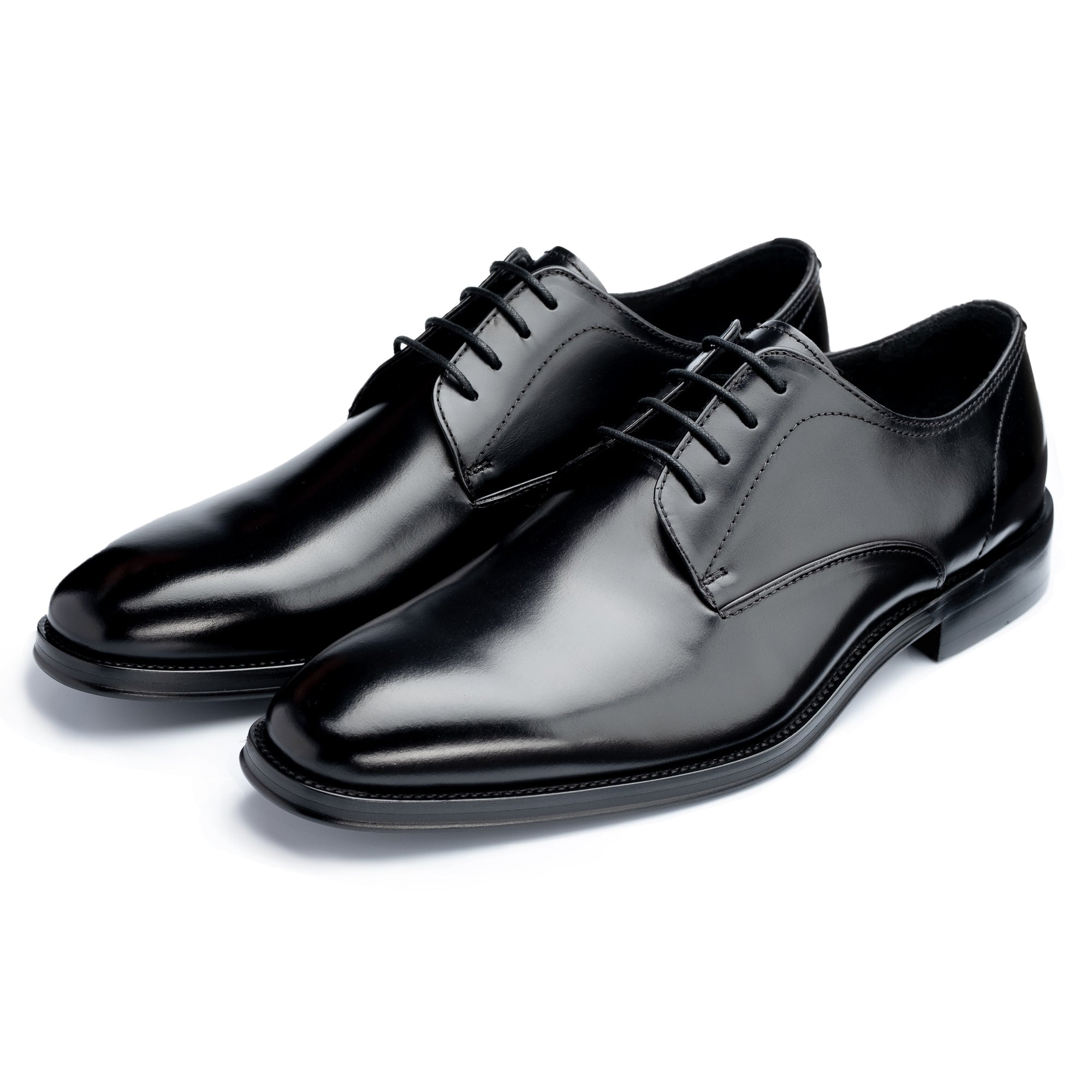
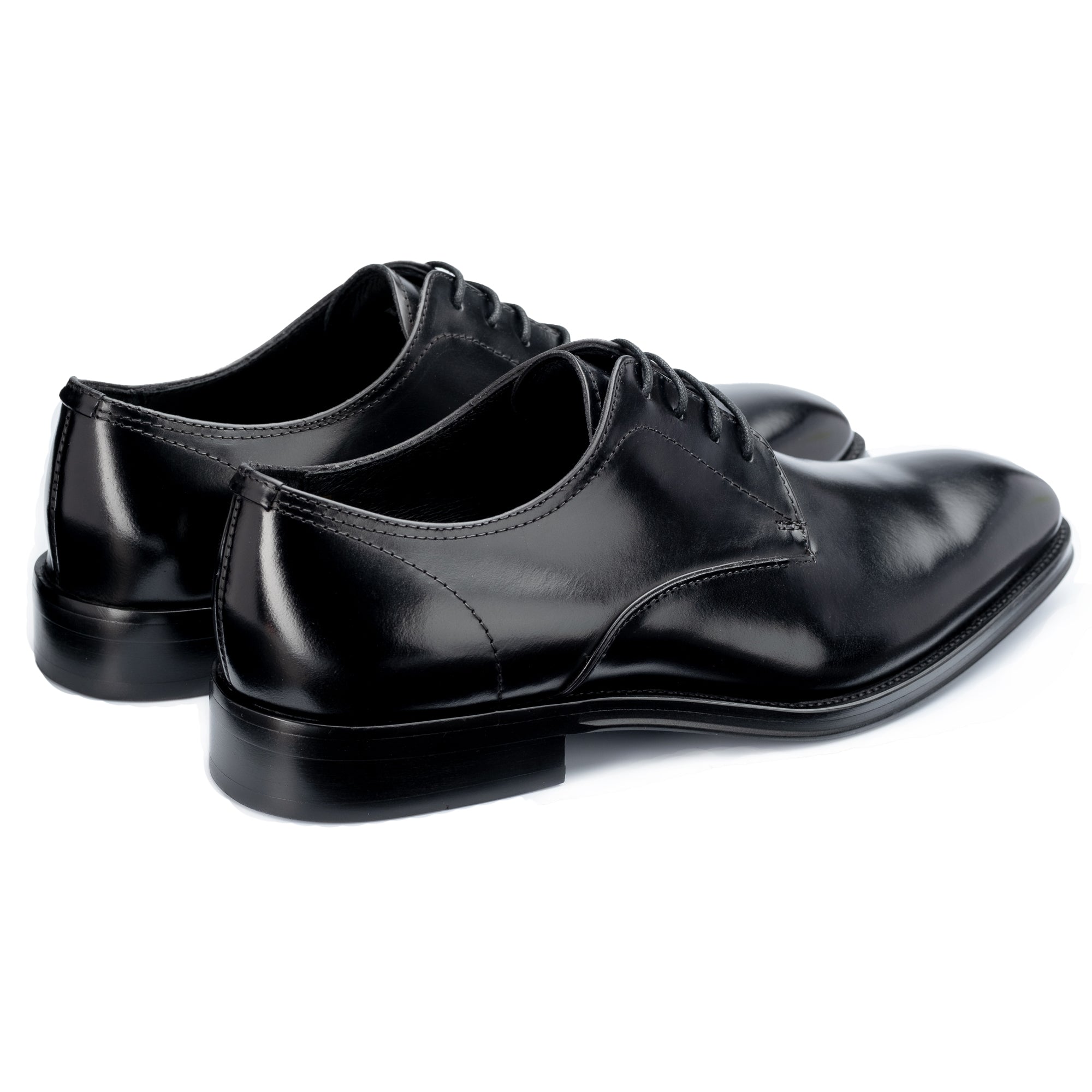
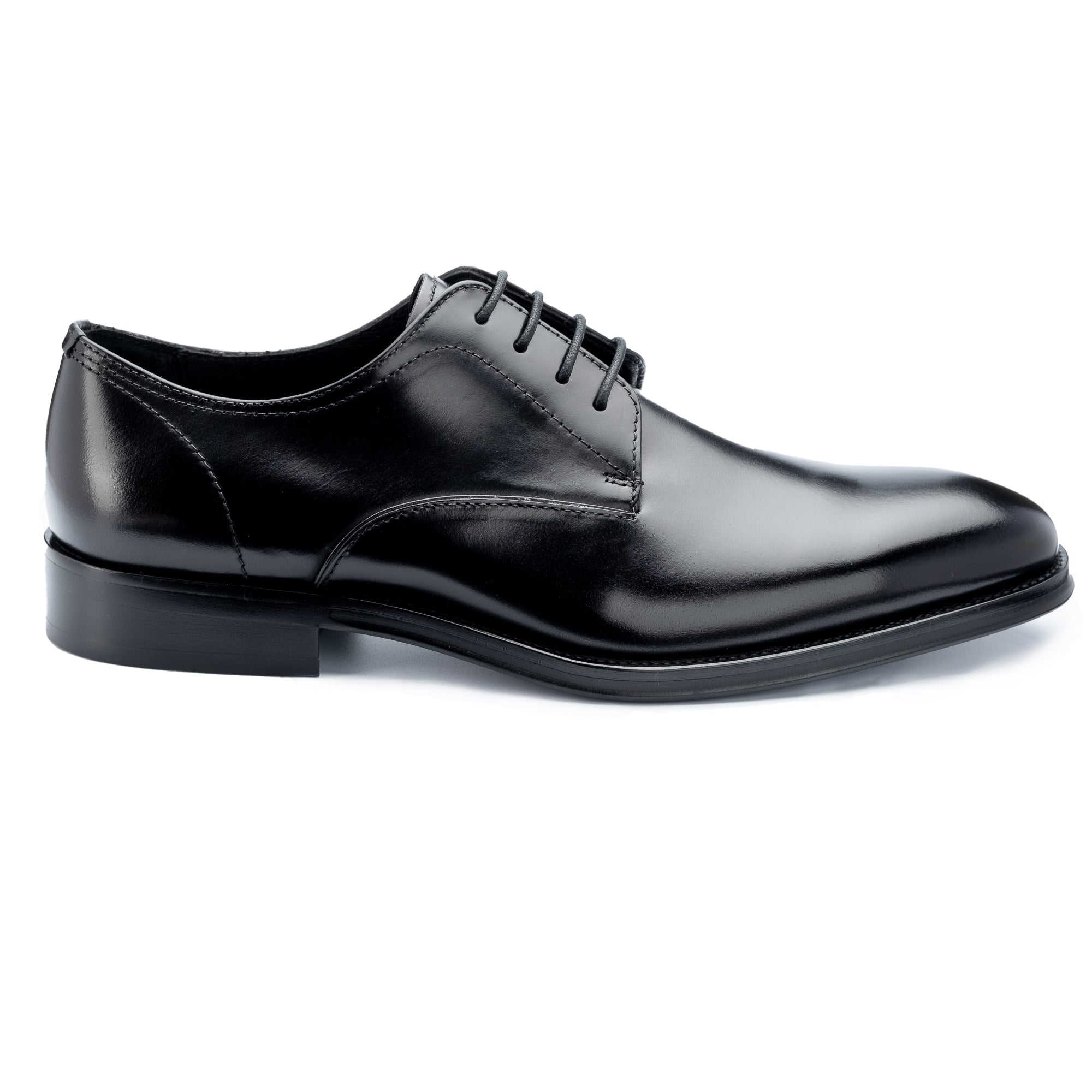
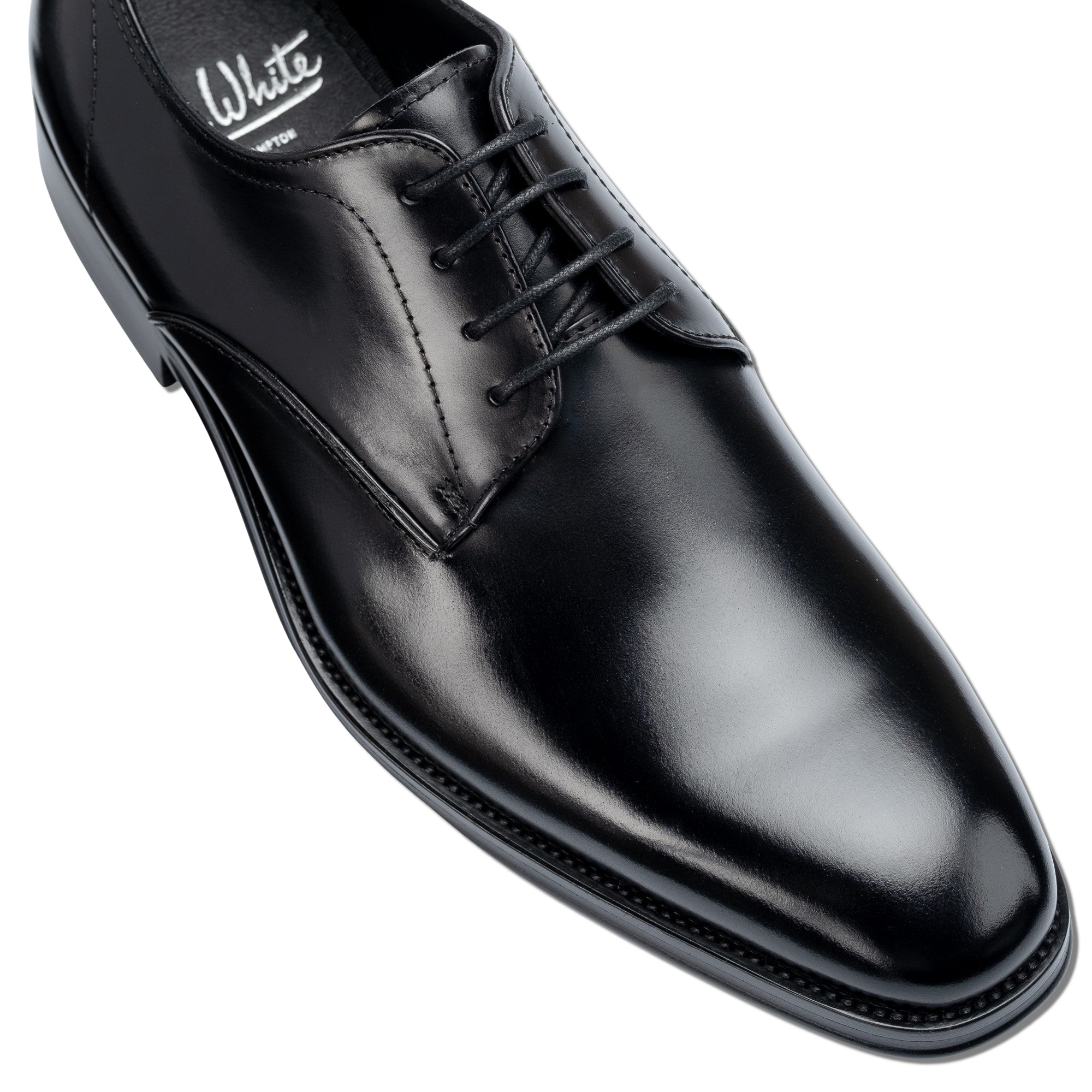
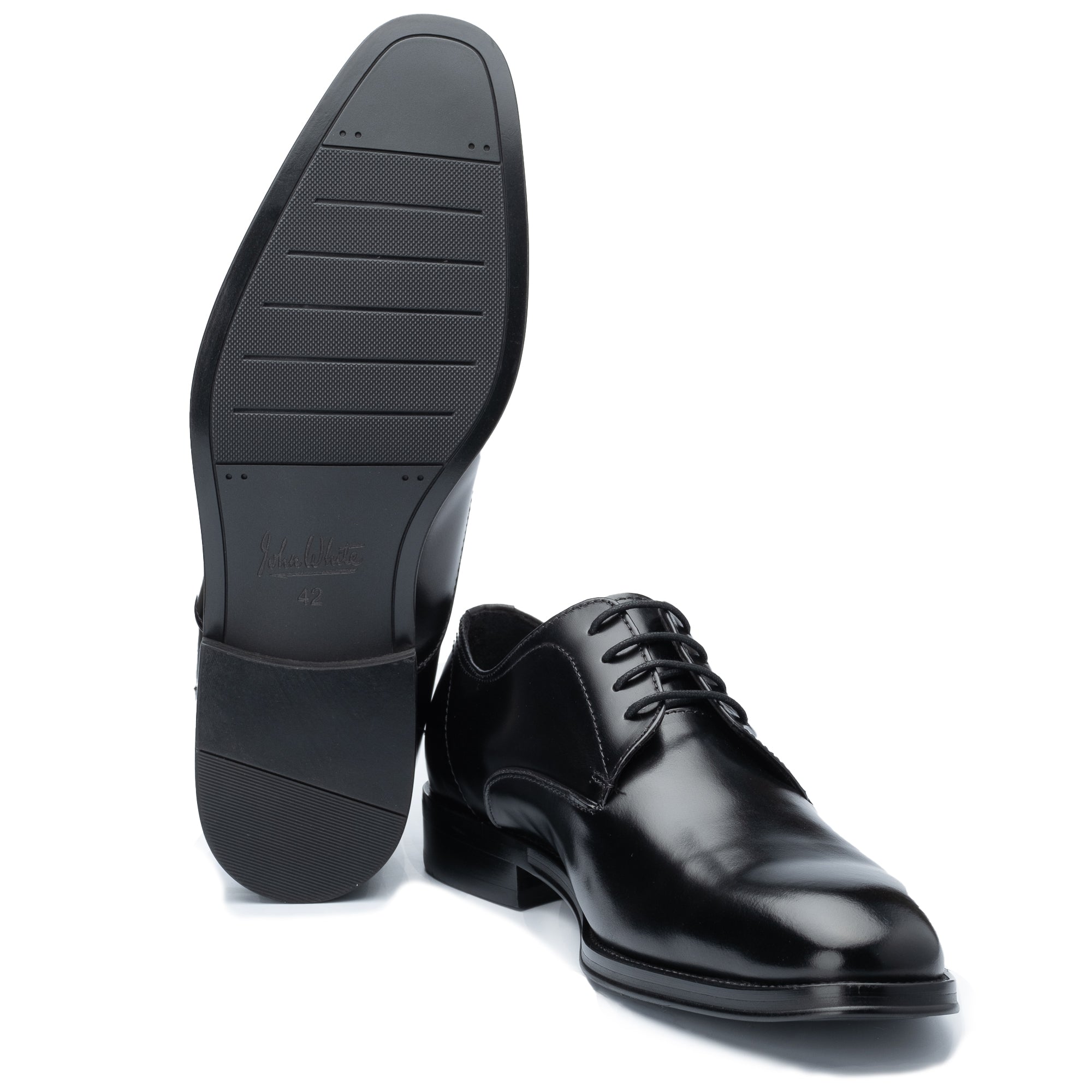
Black shoes with a navy suit is the most formal pairing available to you and the correct choice when you cannot afford to look underdressed. A wedding where you are in the wedding party. A board-level interview. A black-tie-adjacent function where navy is the small concession you have made to the dress code. In each of these contexts, black grounds the outfit and removes ambiguity.
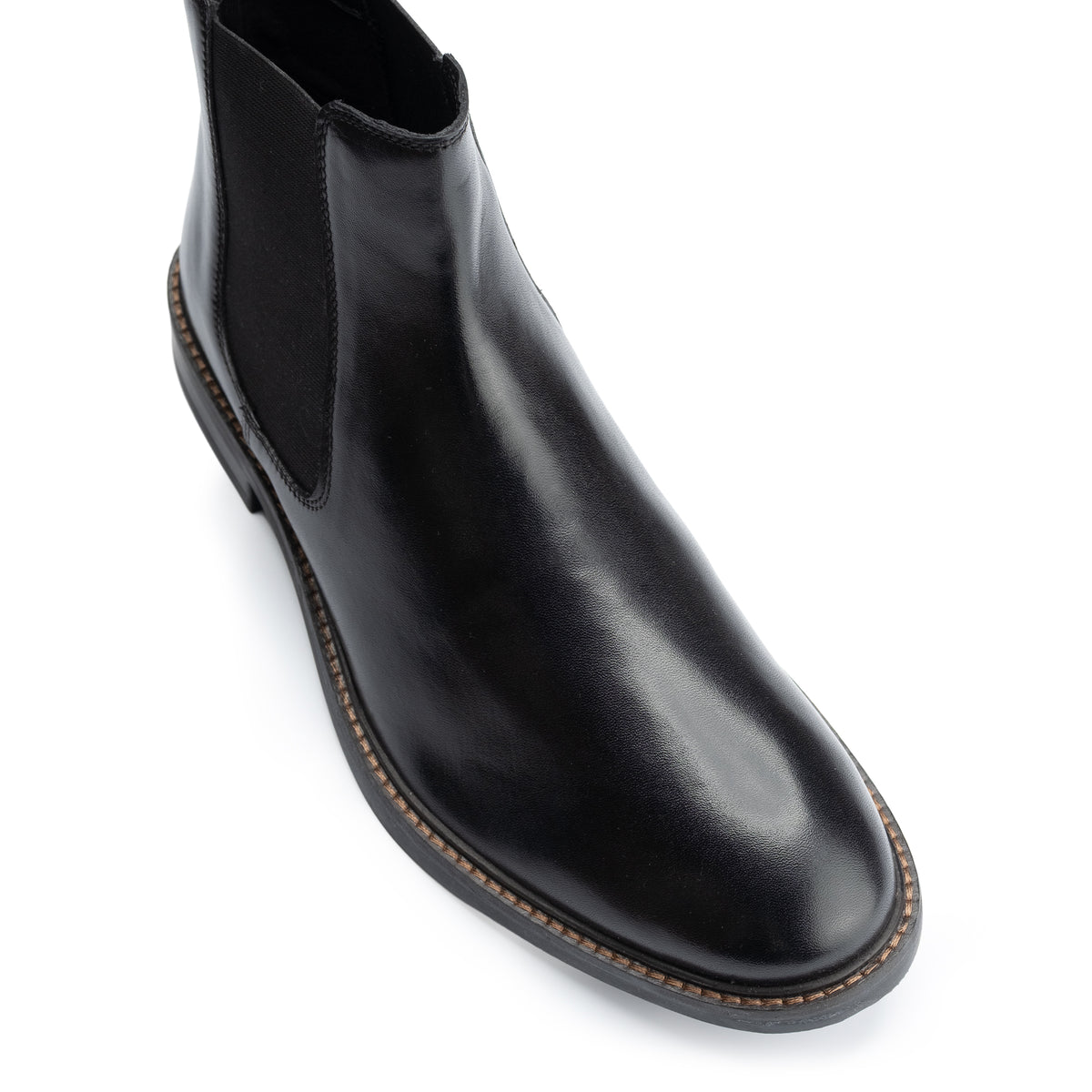
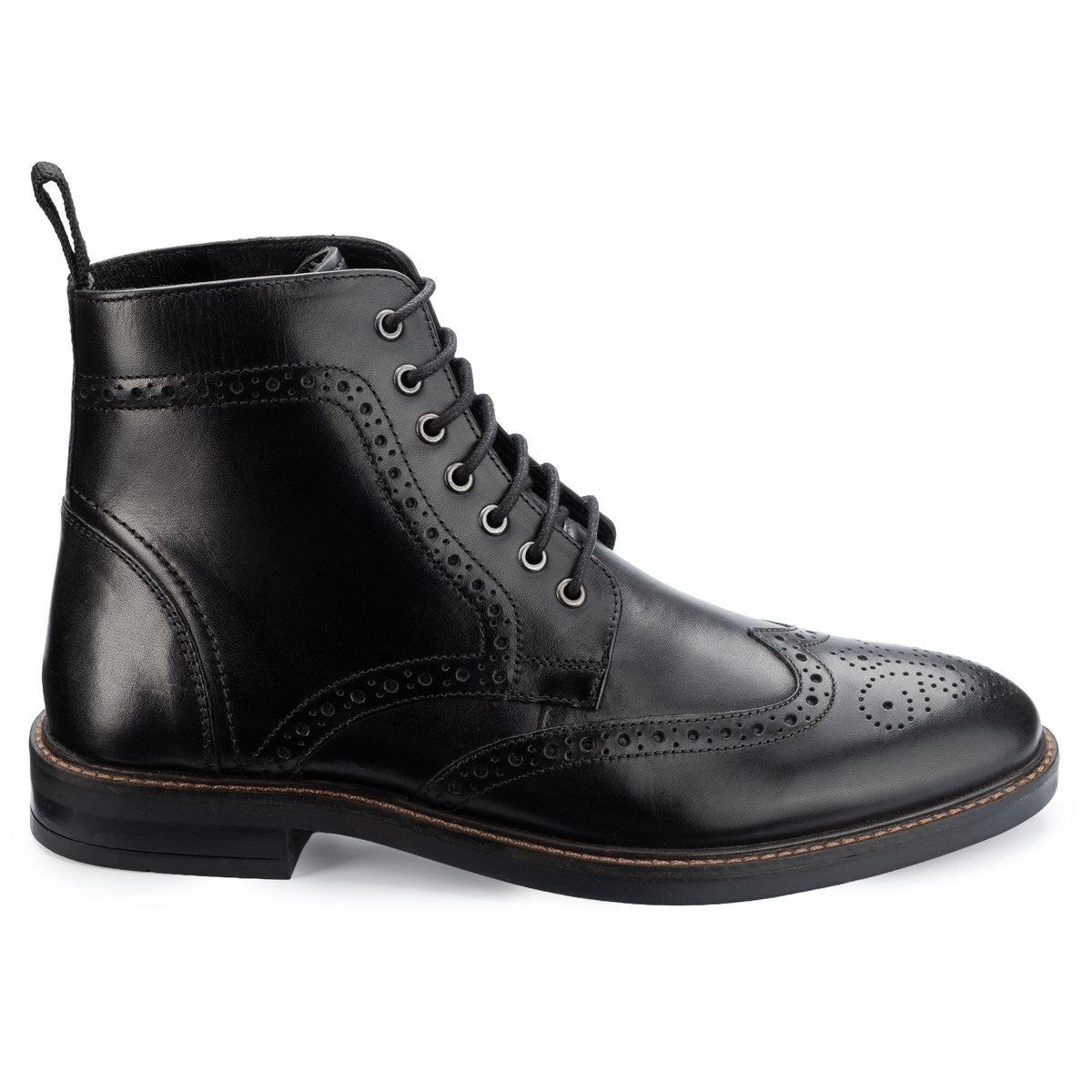
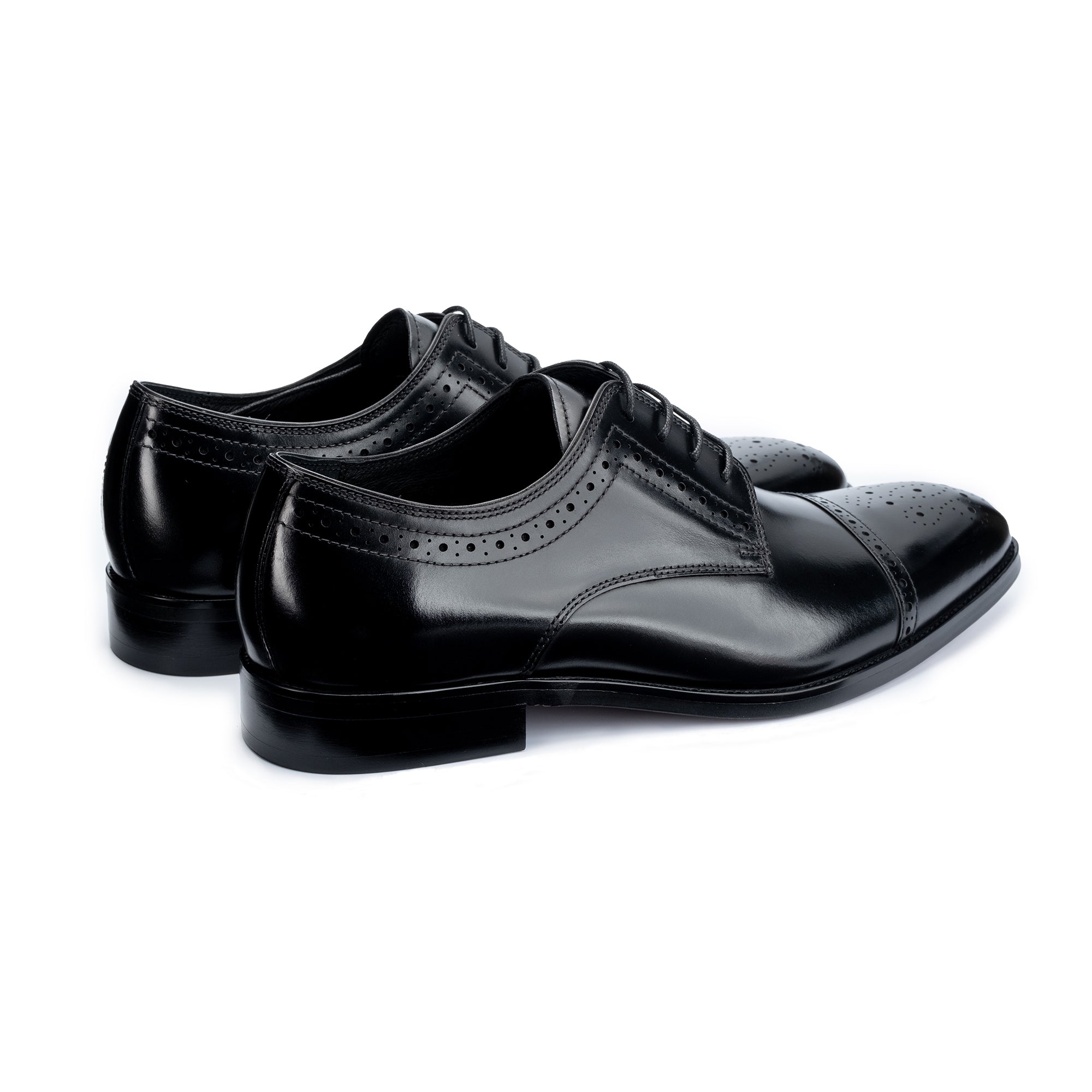
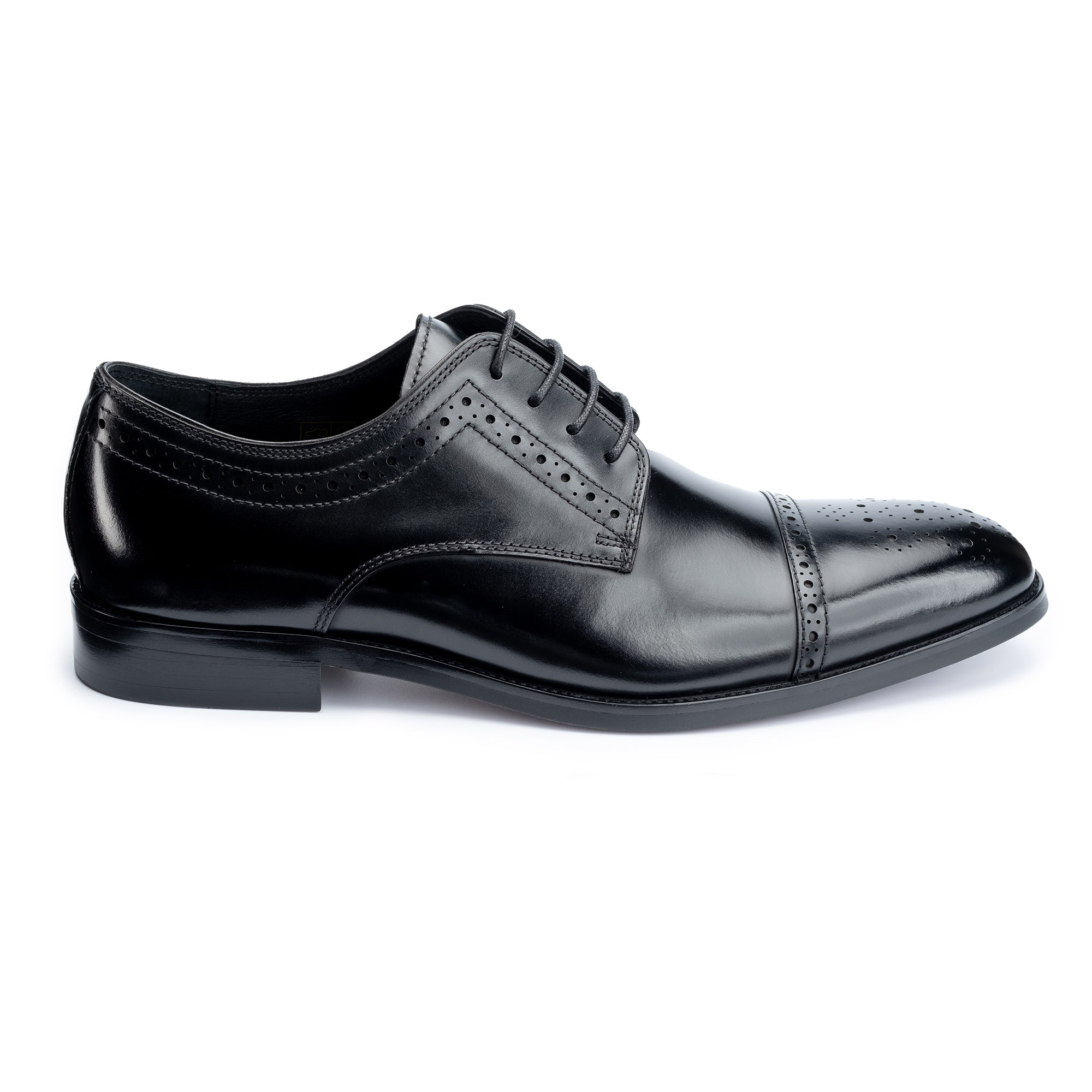
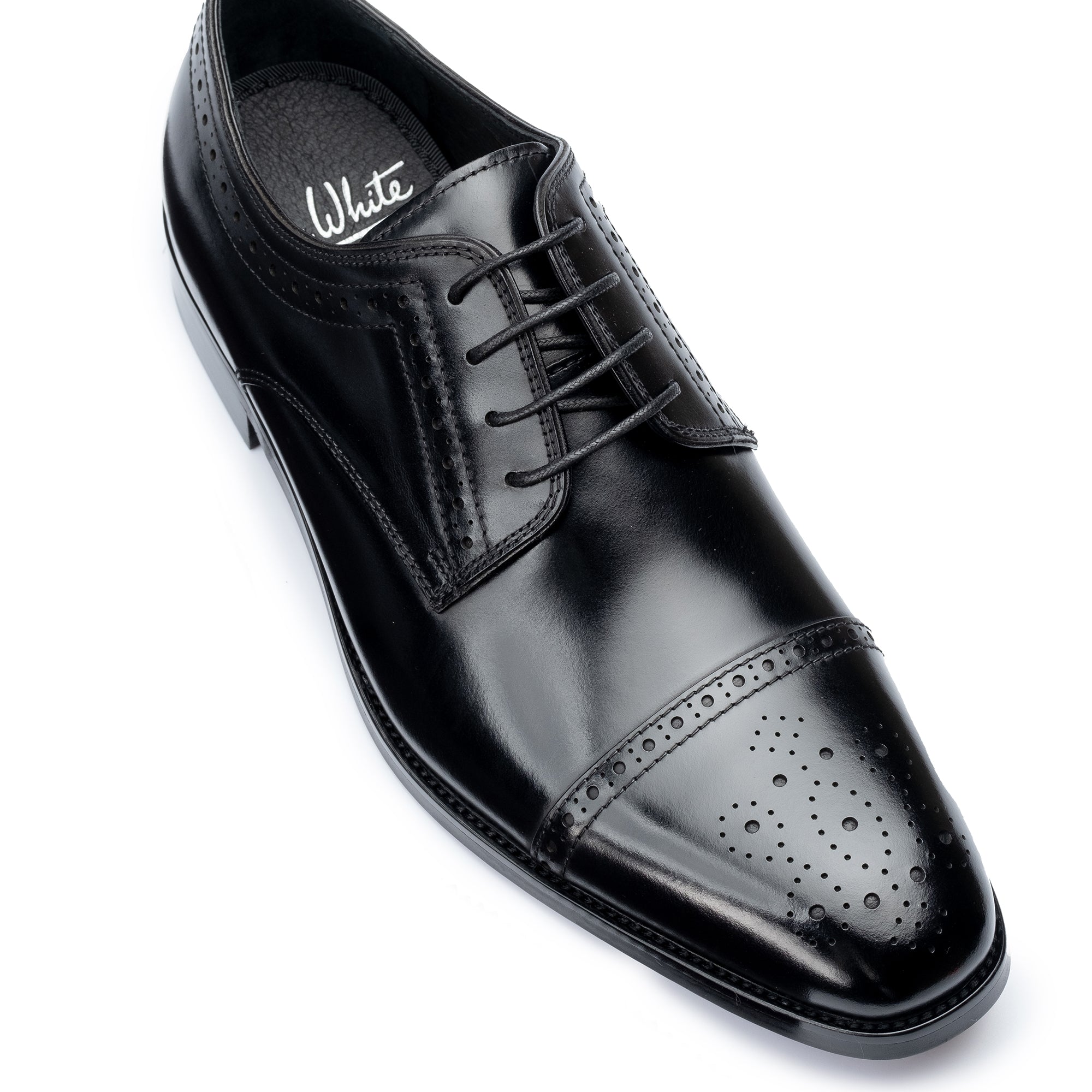
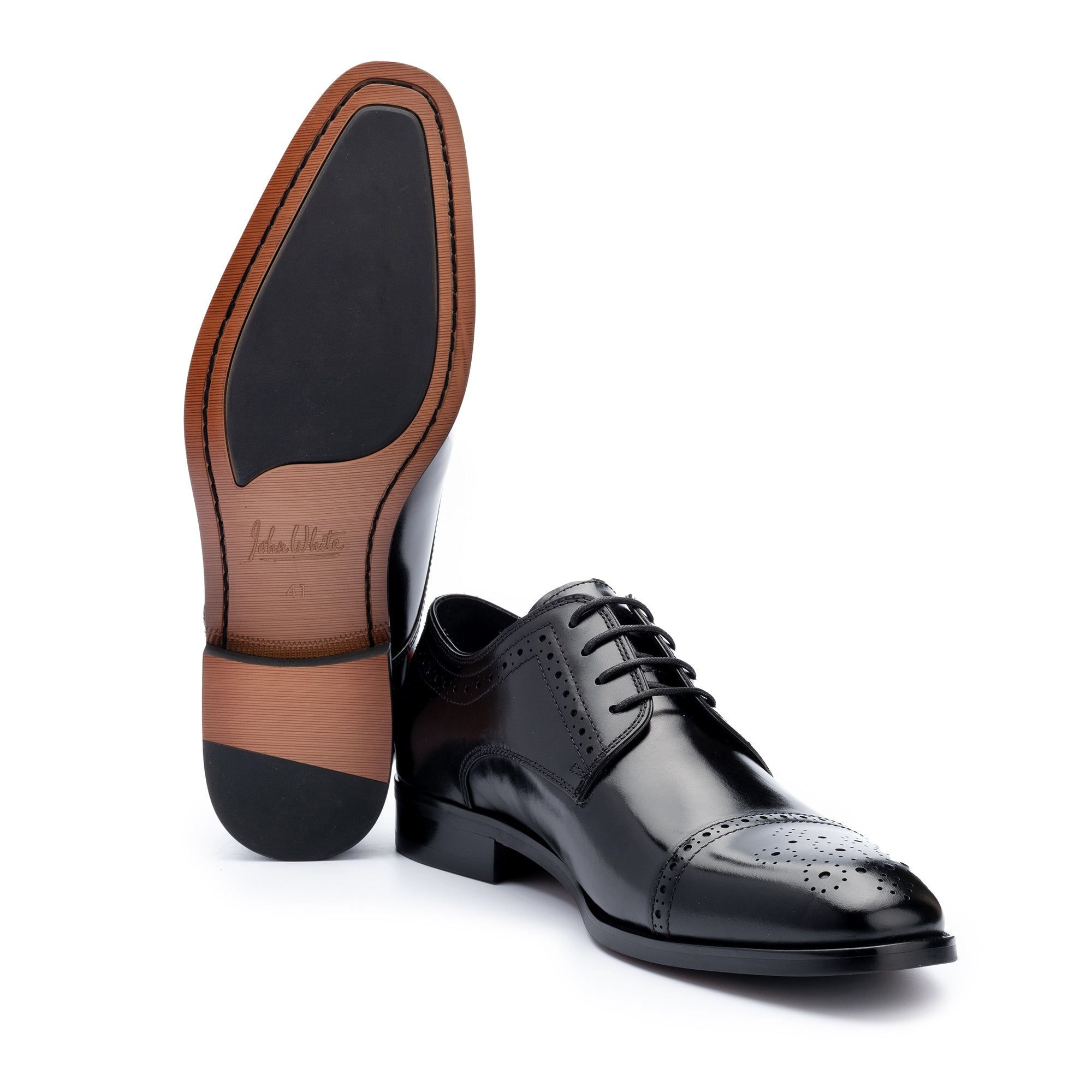
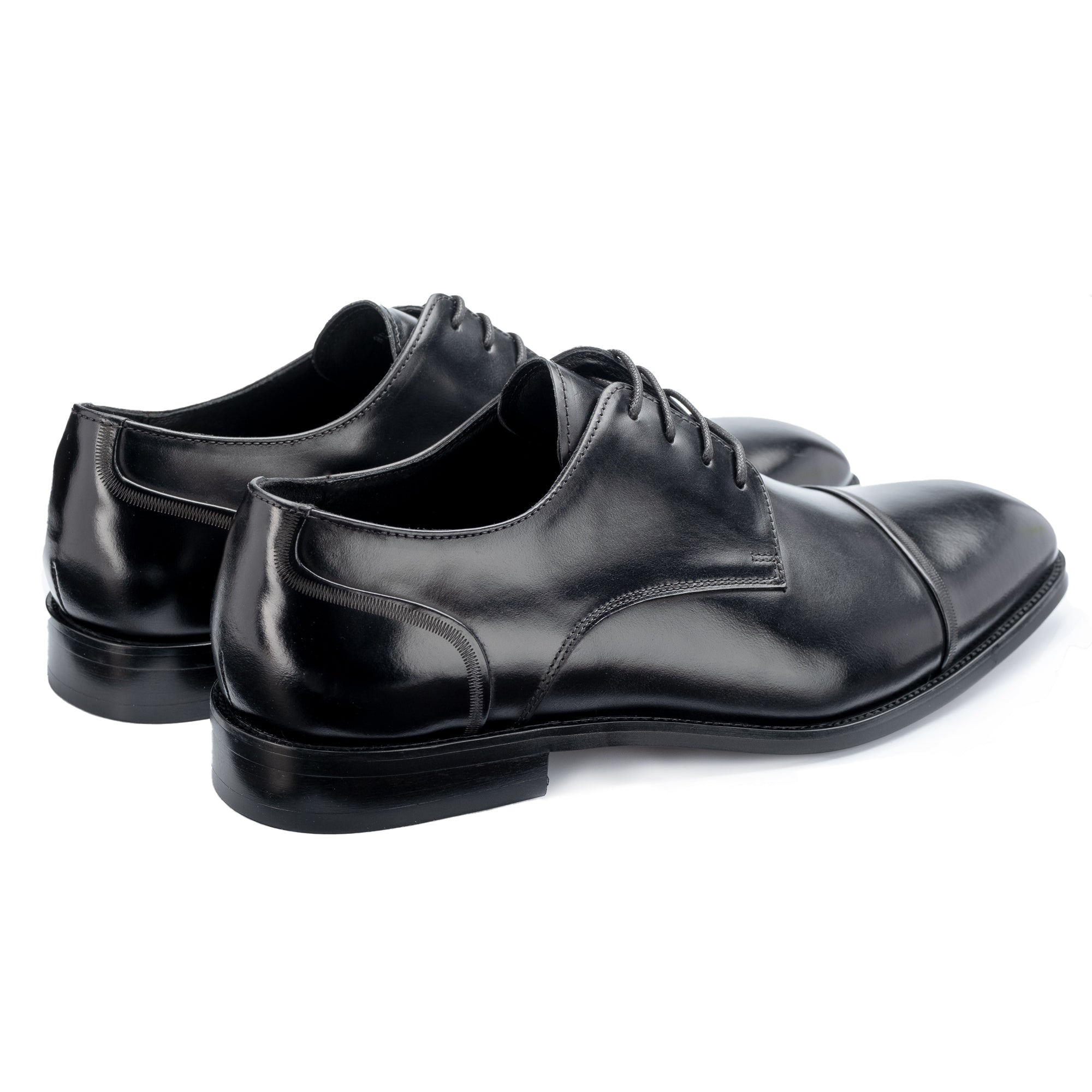
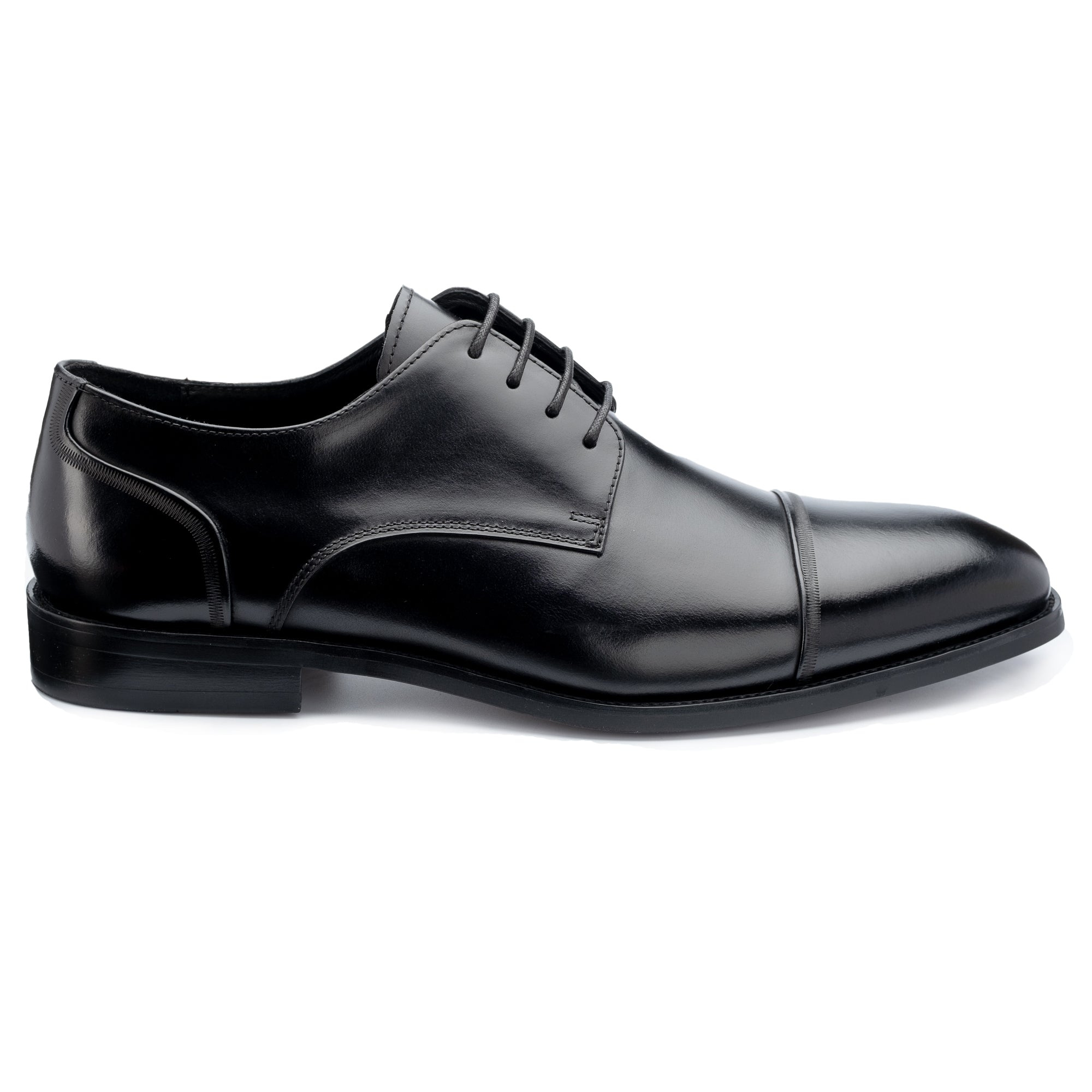
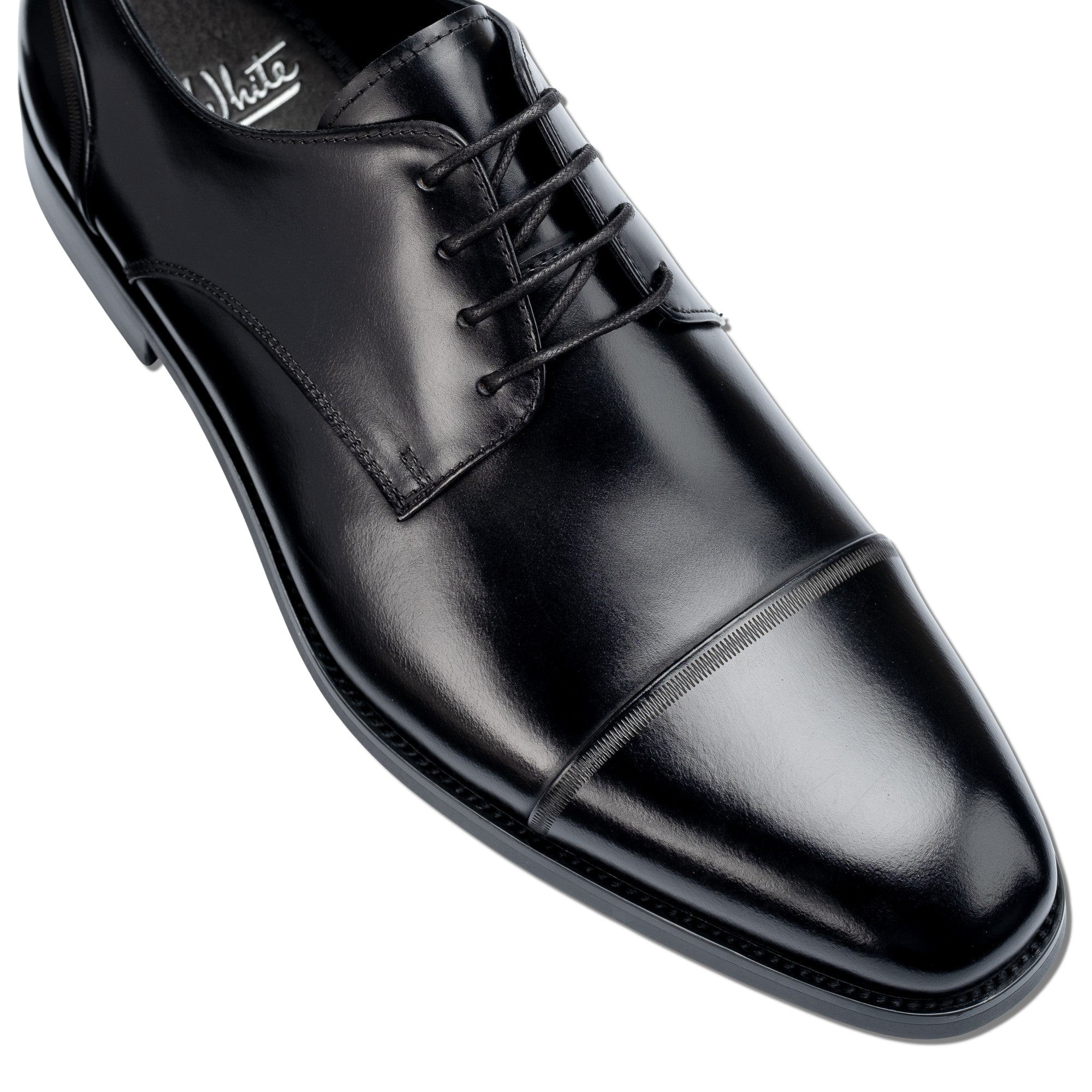
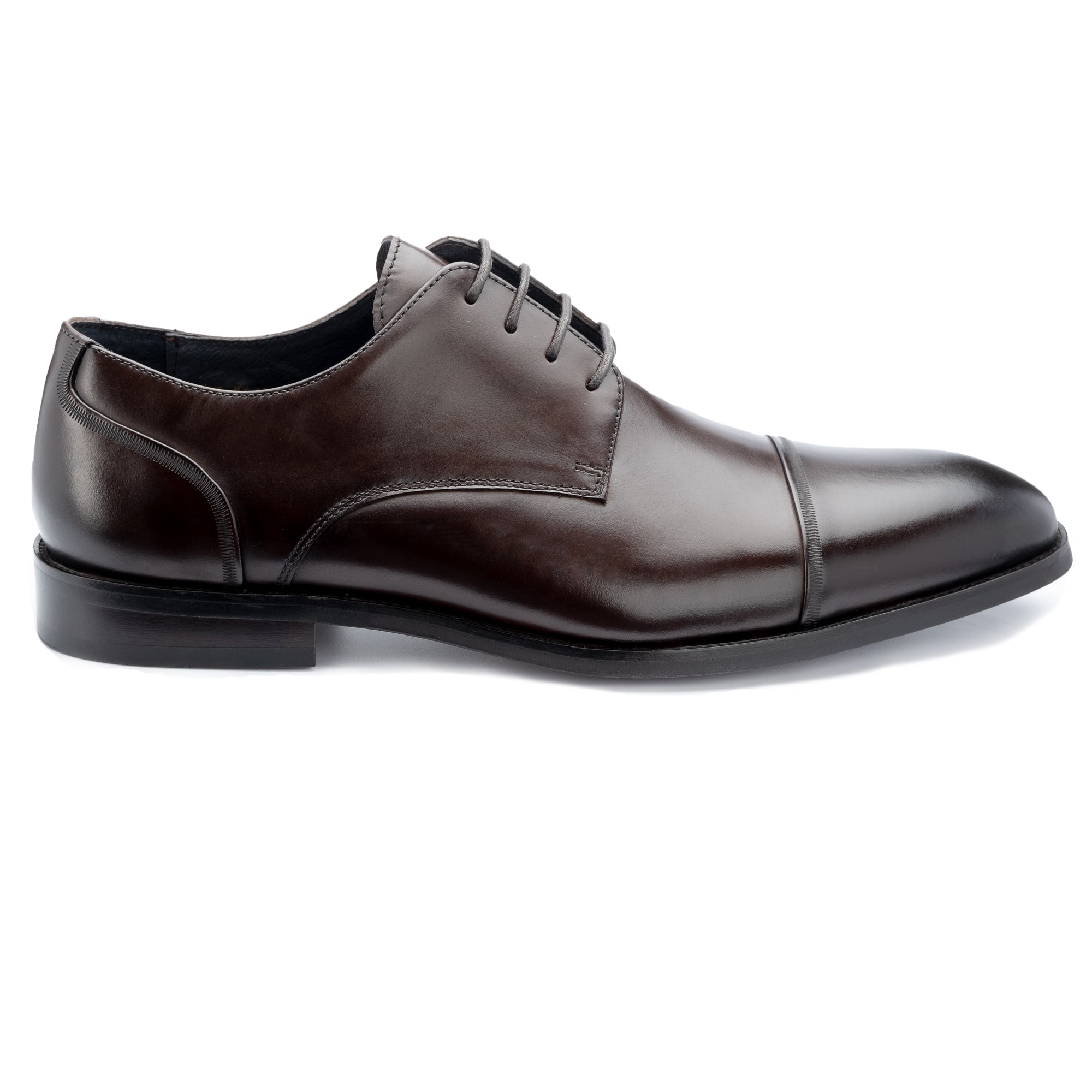
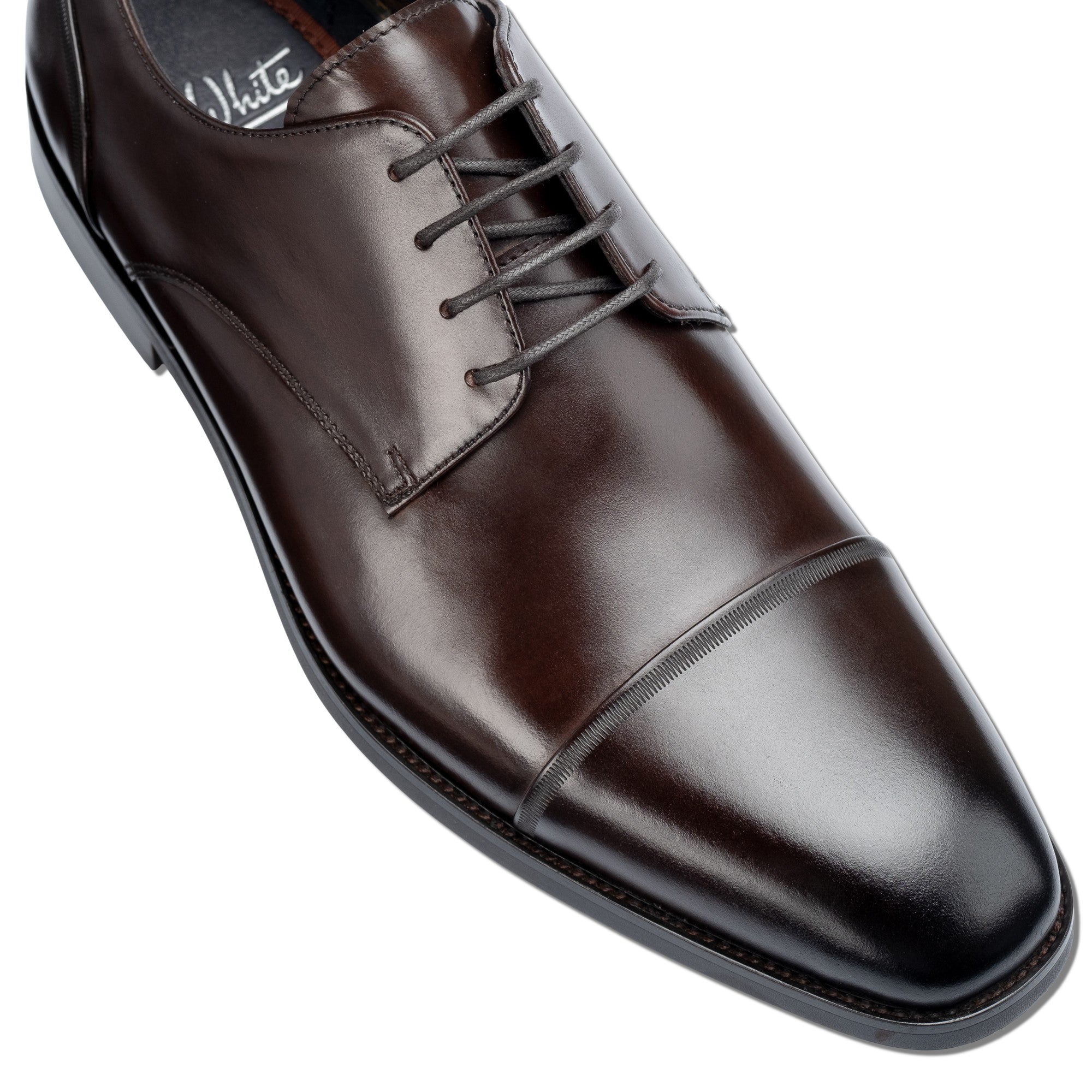
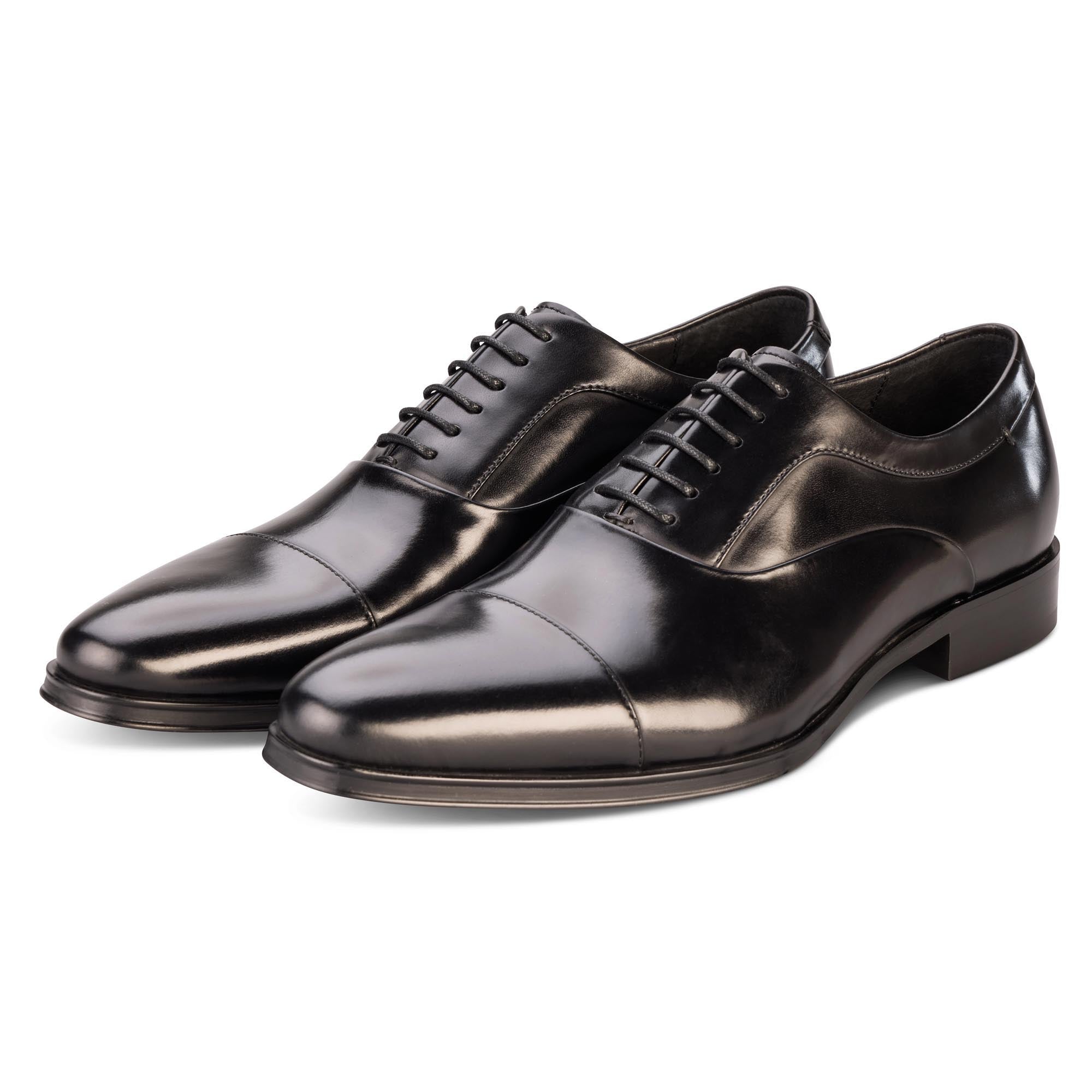
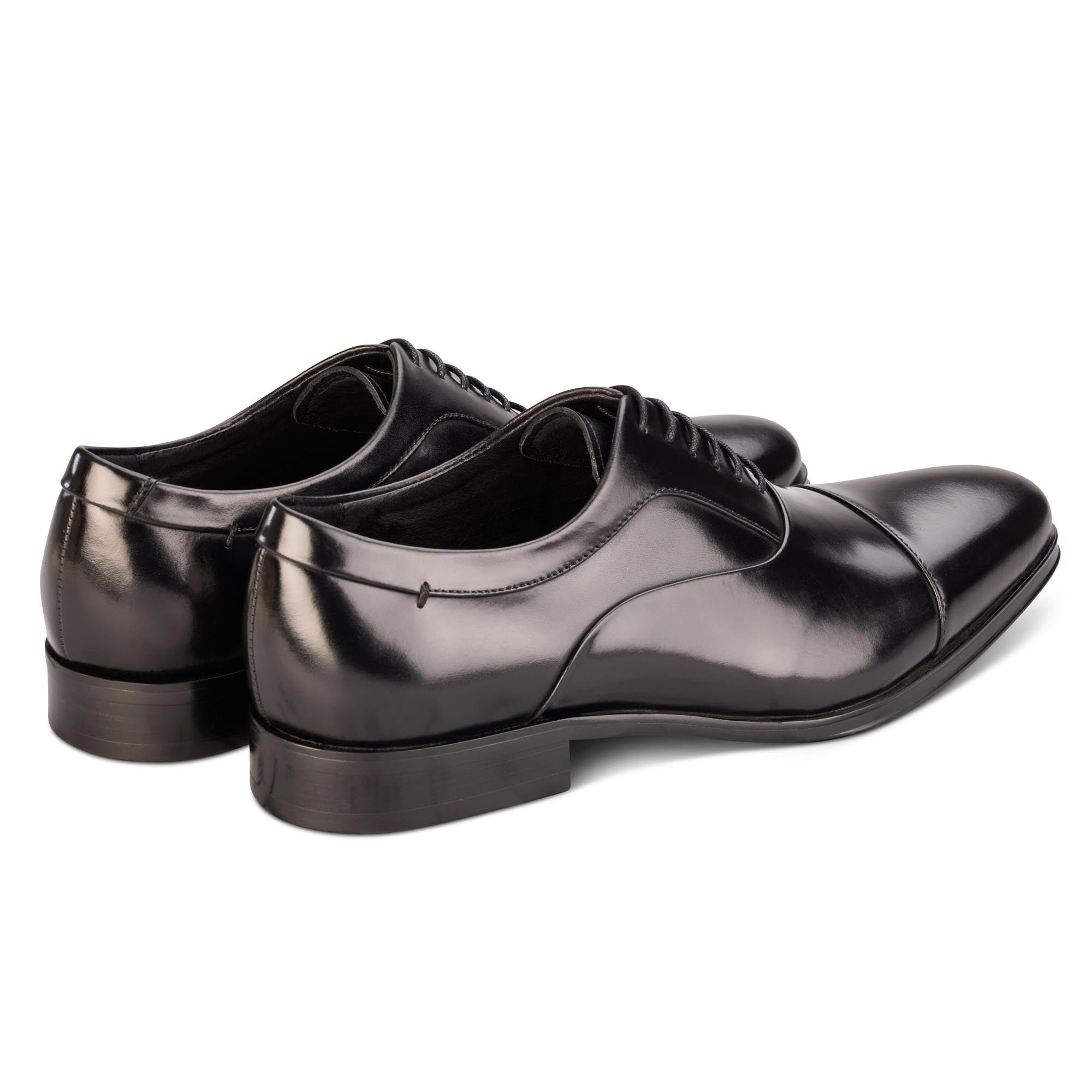
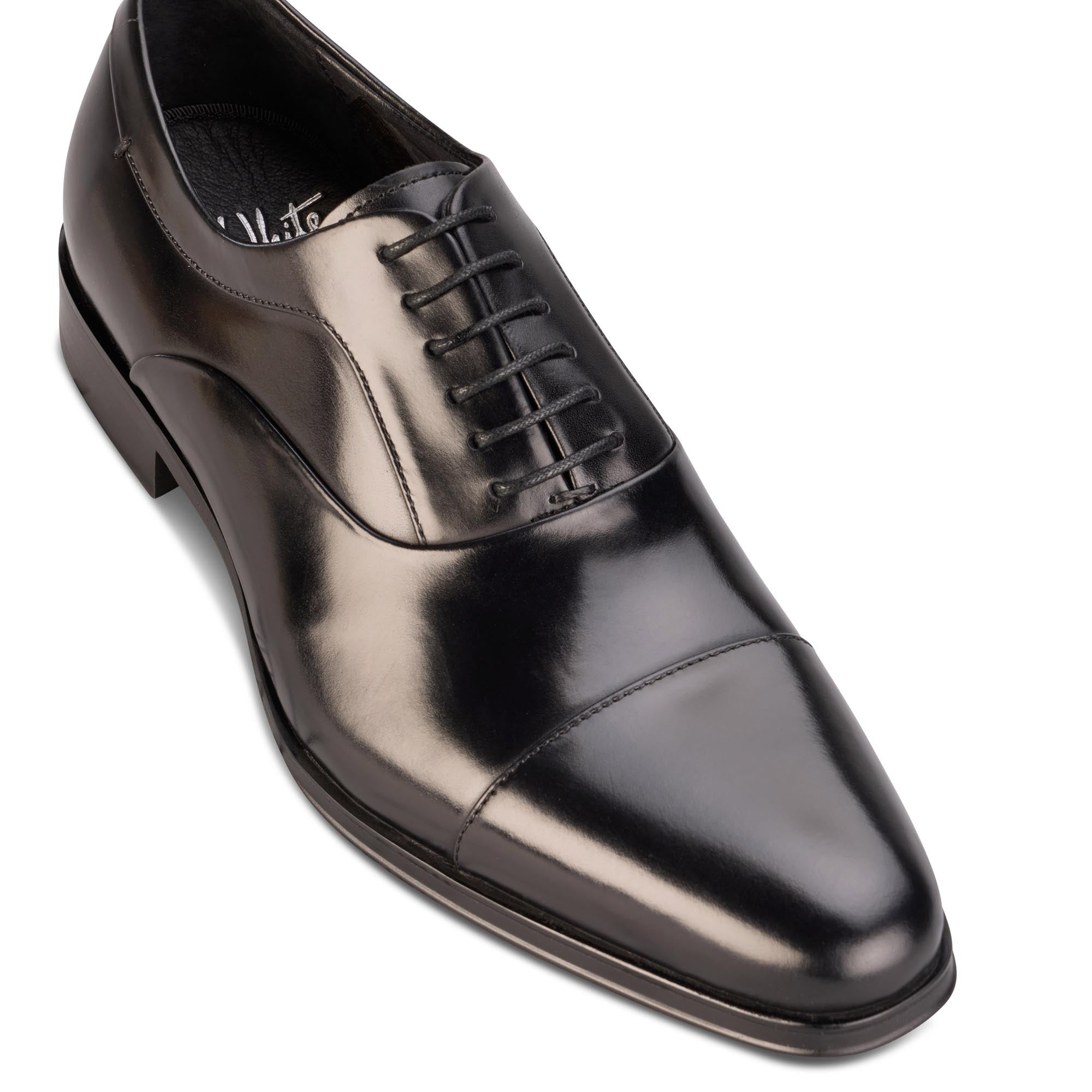
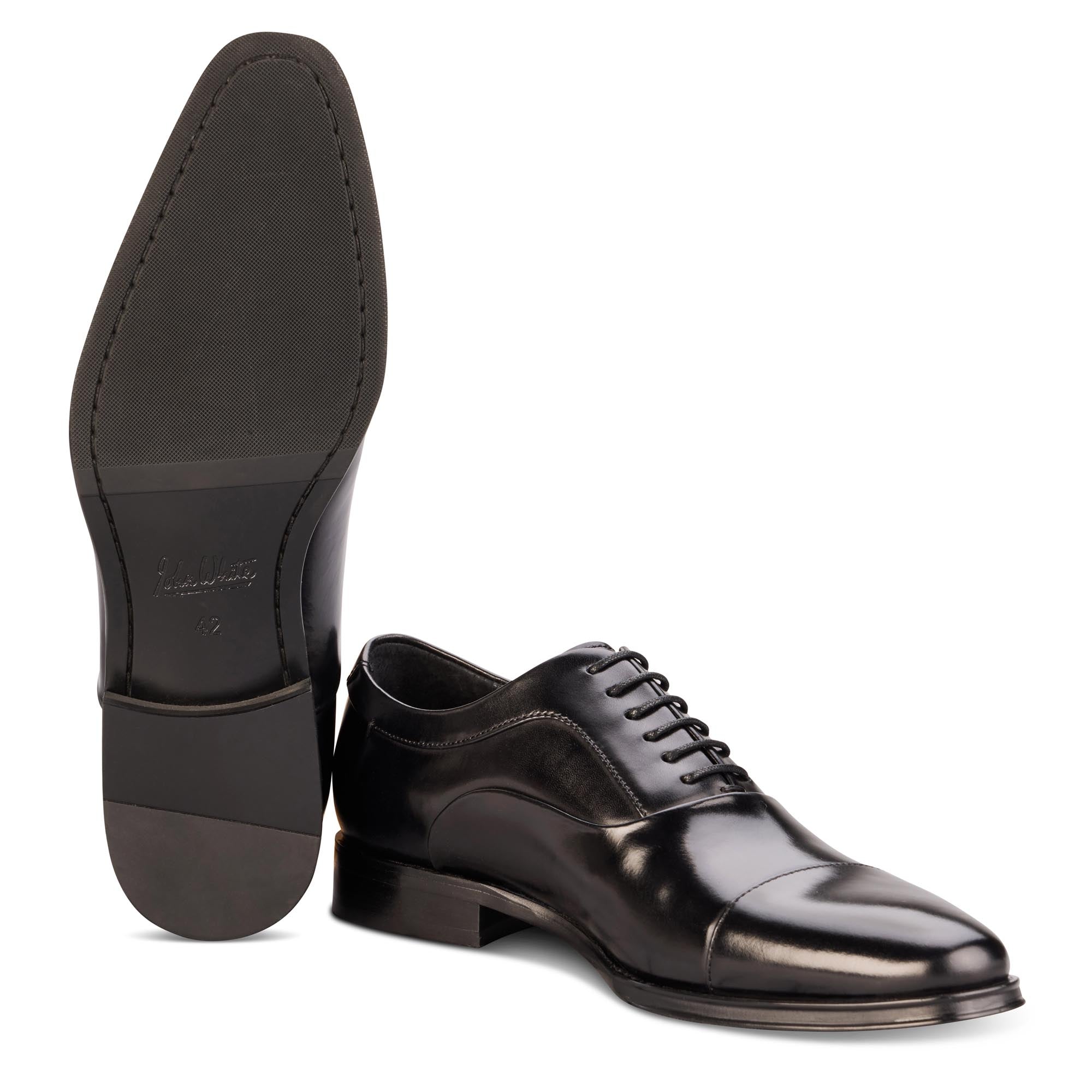
The risk with black and navy is that the combination can read as flat if both the suit and shoe are similarly dark and matte. A mirror polish on the shoe creates contrast through reflectivity. A cap-toe or semi-brogue adds surface interest without departing from the formal register. A plain Oxford in matte black next to a dark navy wool suit is the one combination that can look slightly underdone.
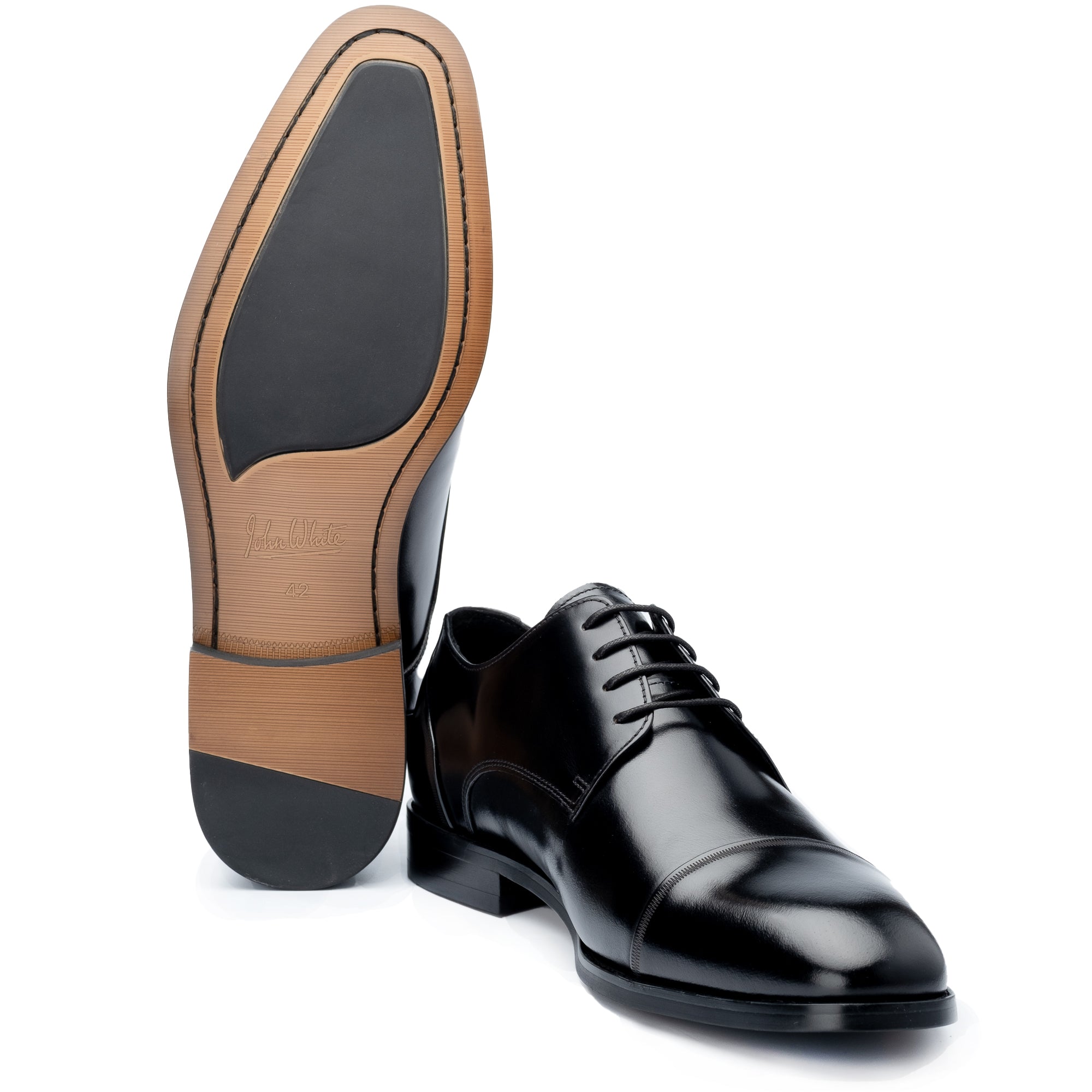
If you own one pair of black shoes, a capped Oxford is the version that serves you best across the most occasions.
Tan, Cognac, and Caramel — The Standard
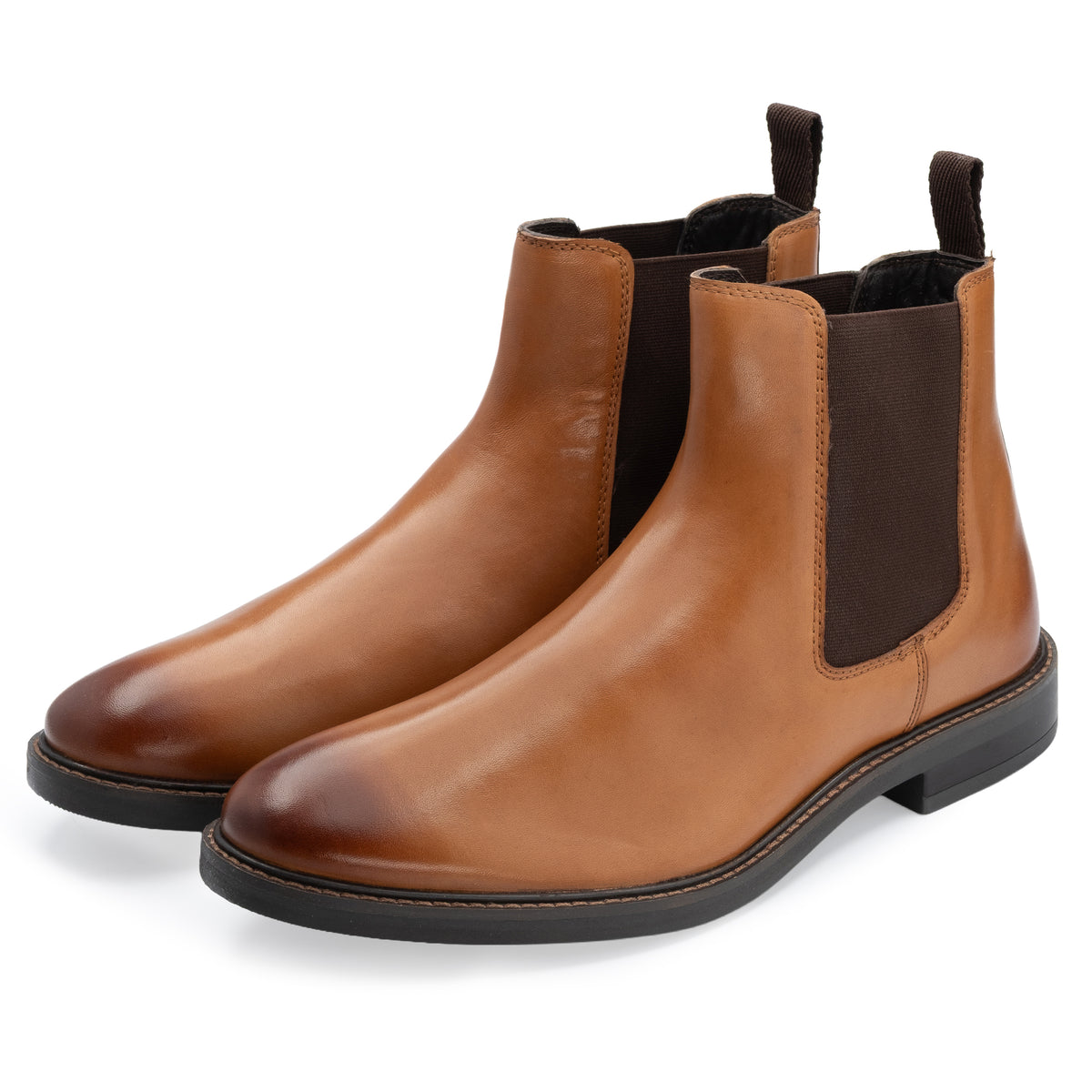
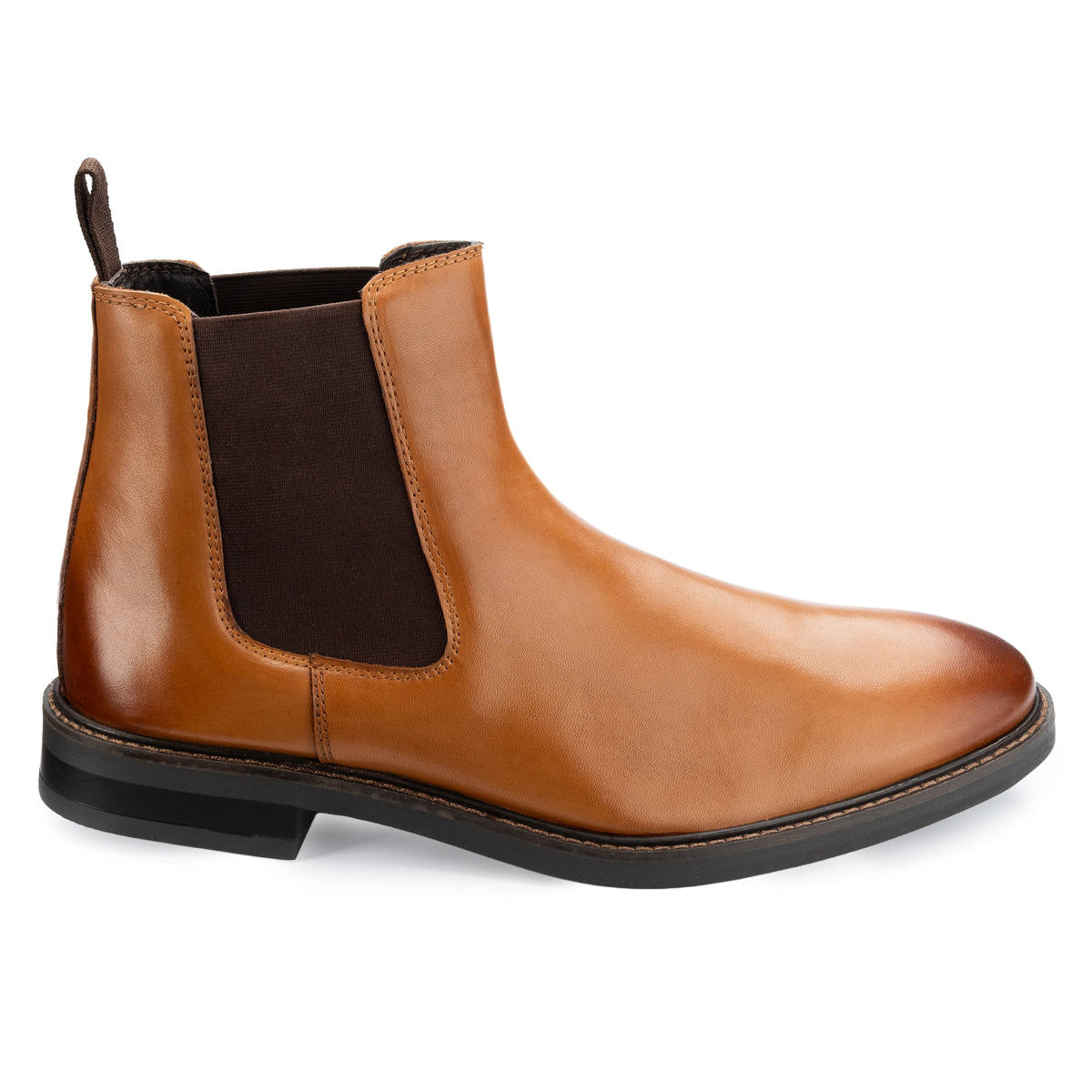
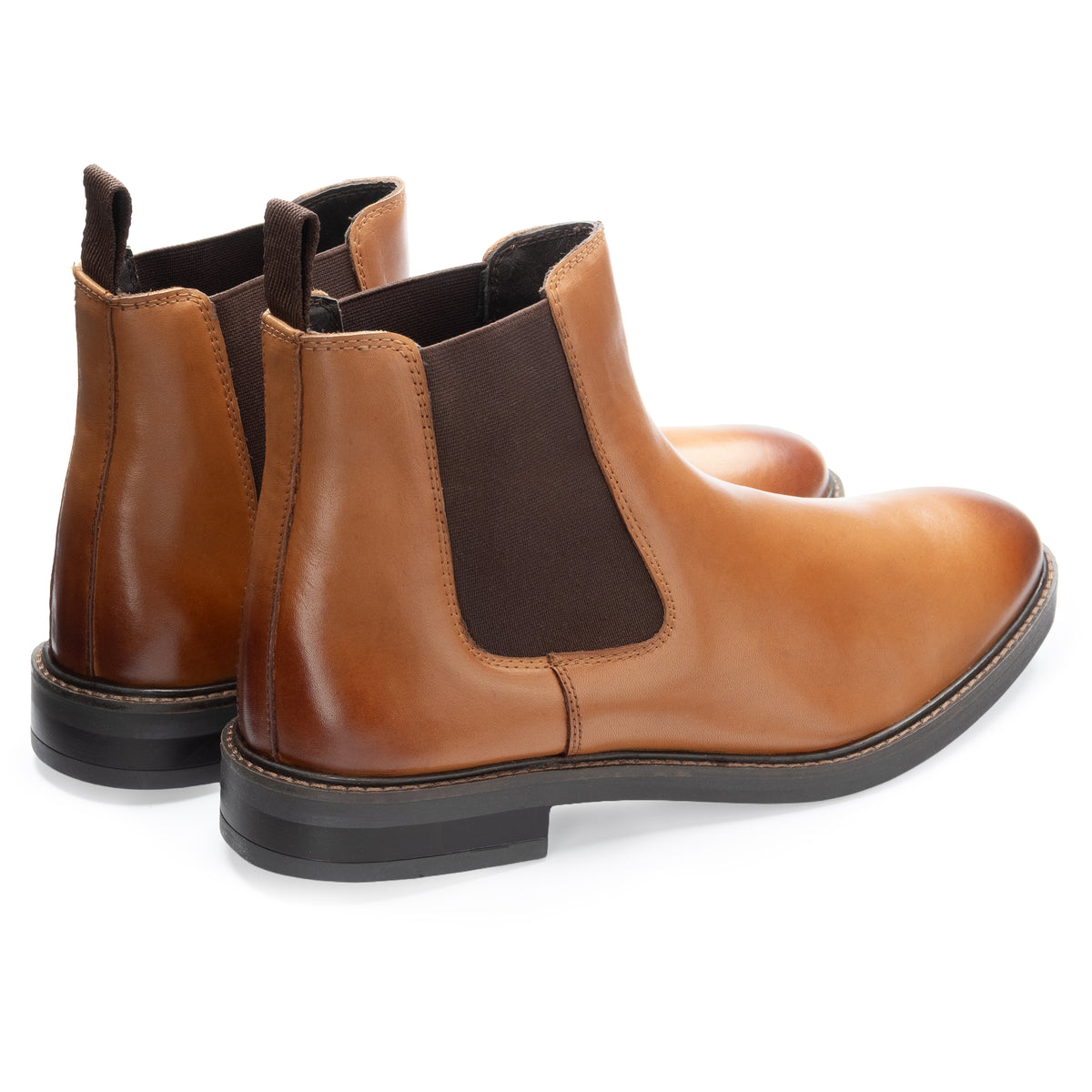
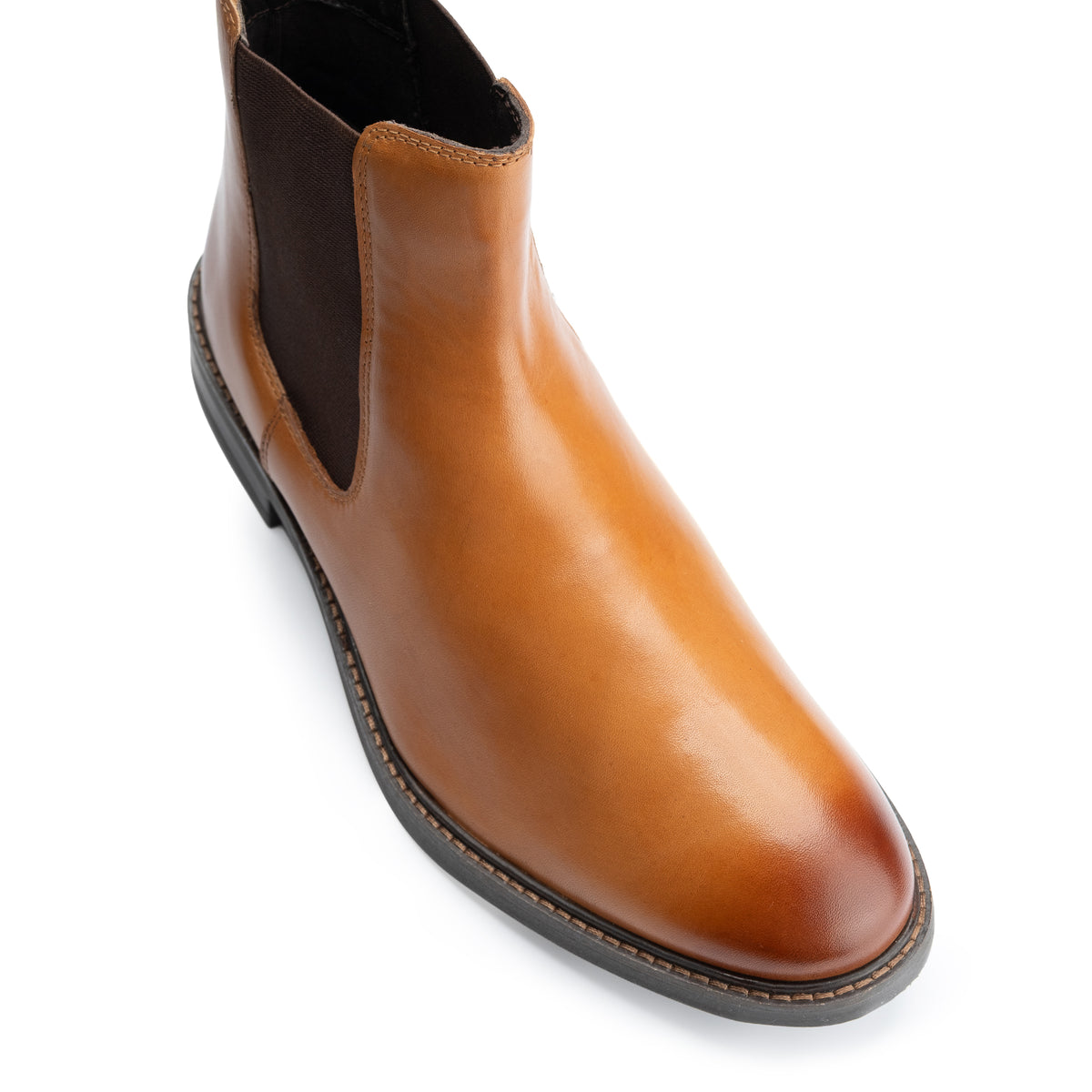
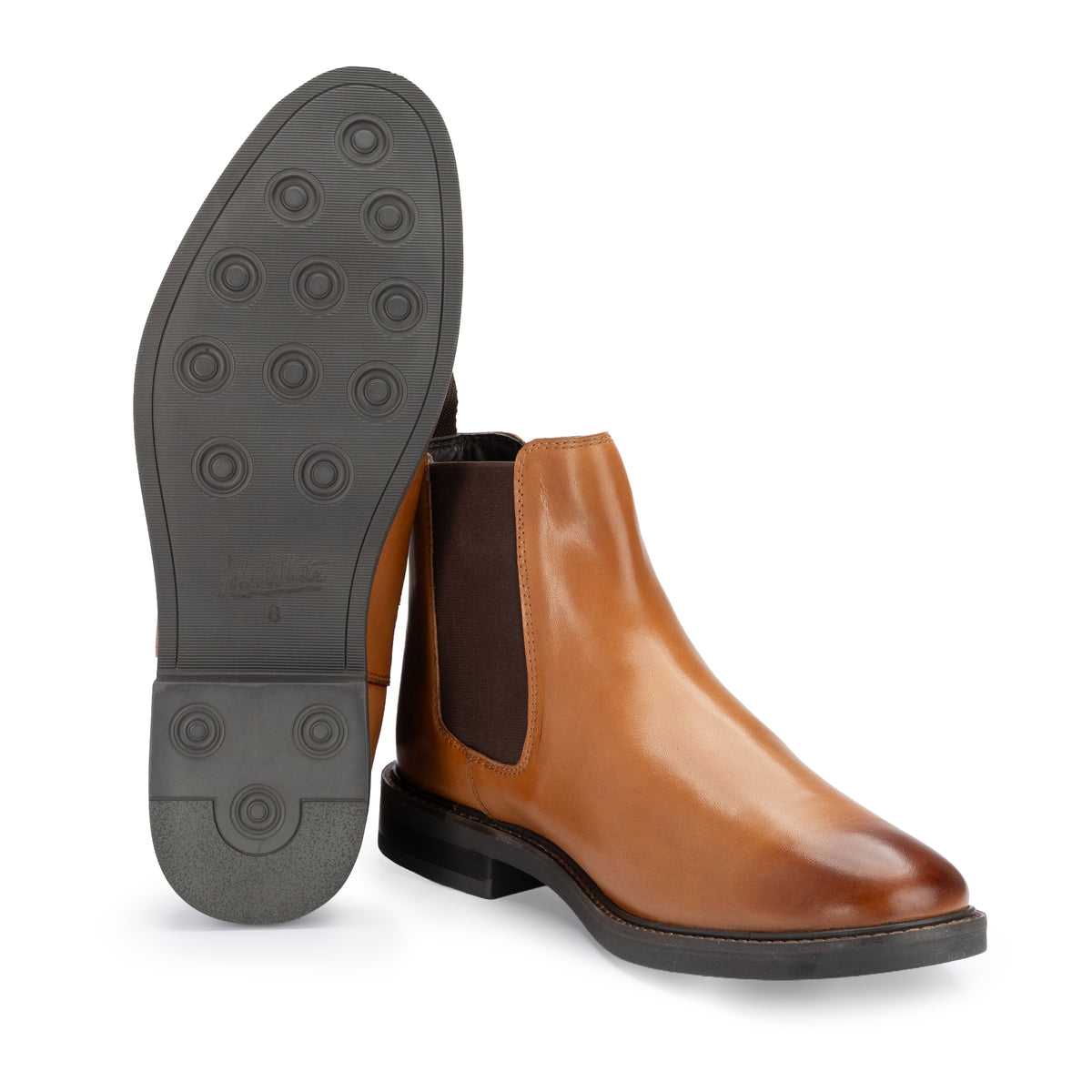
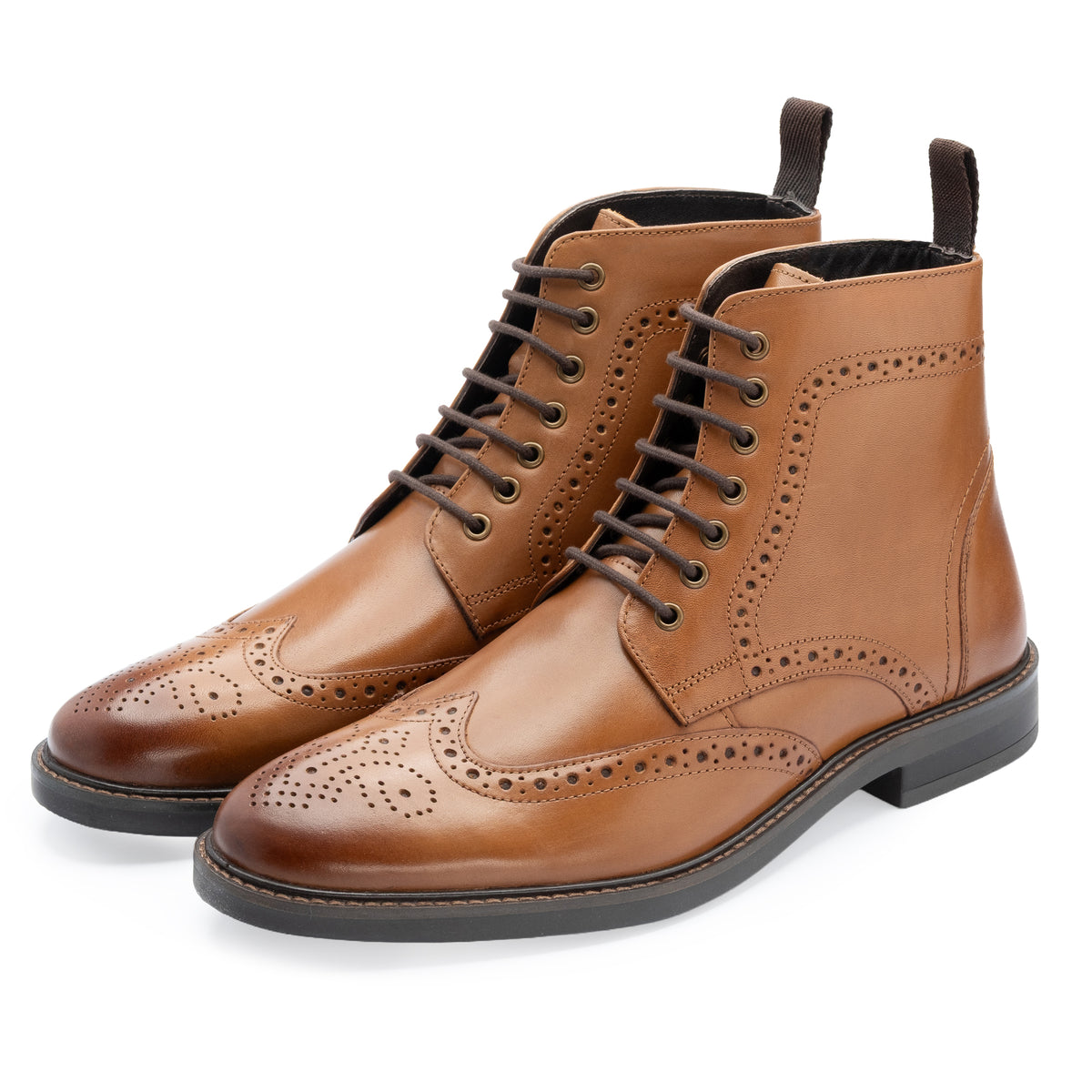
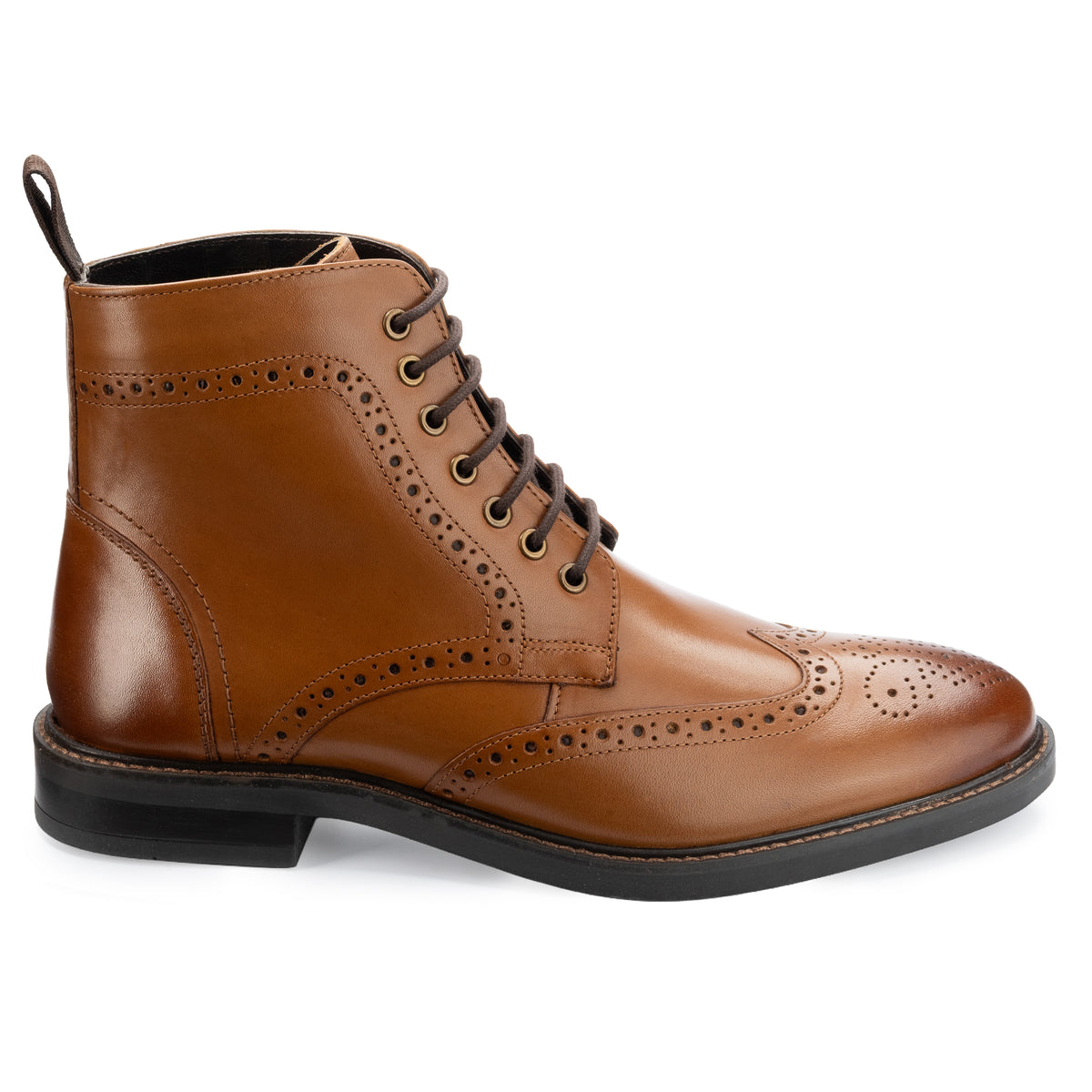
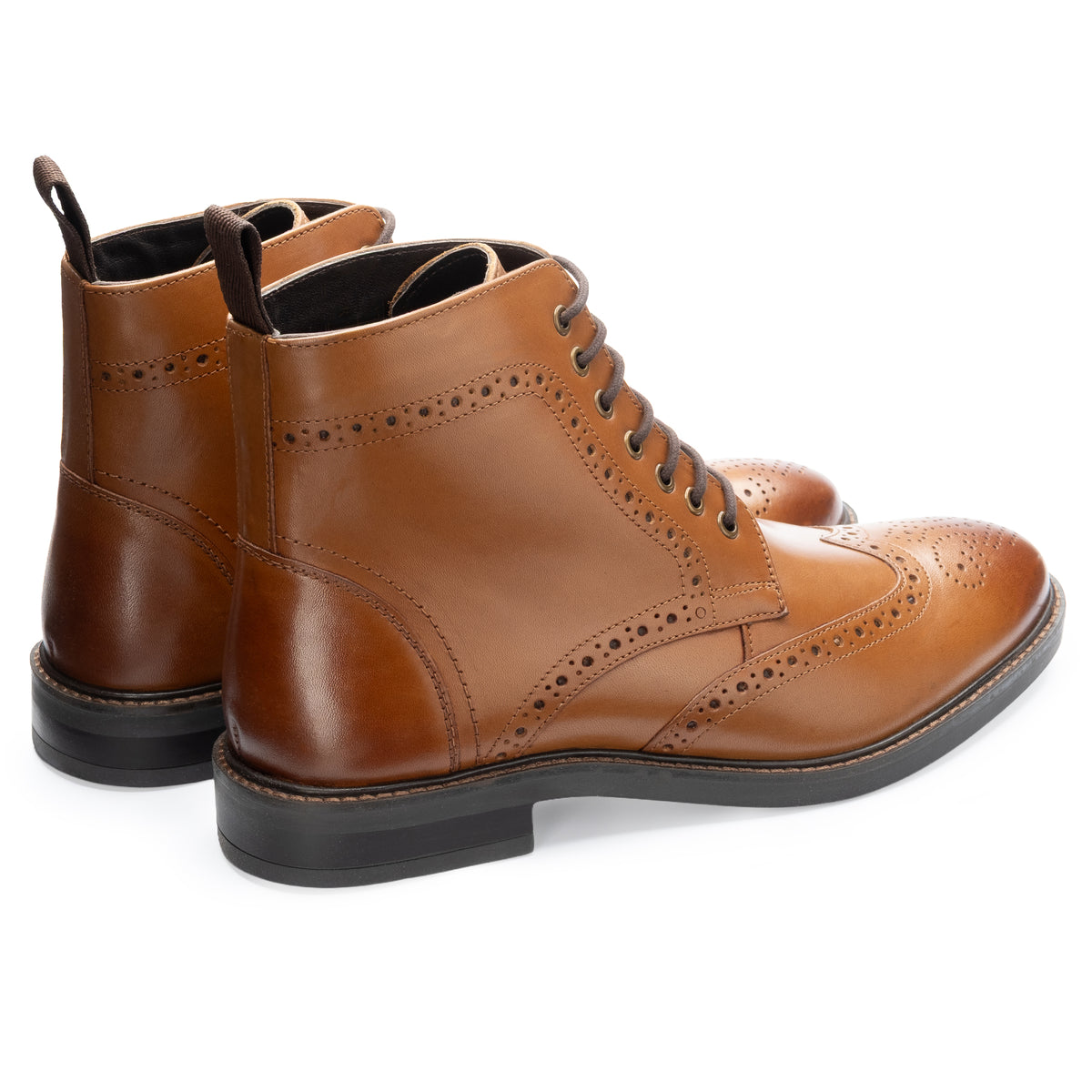
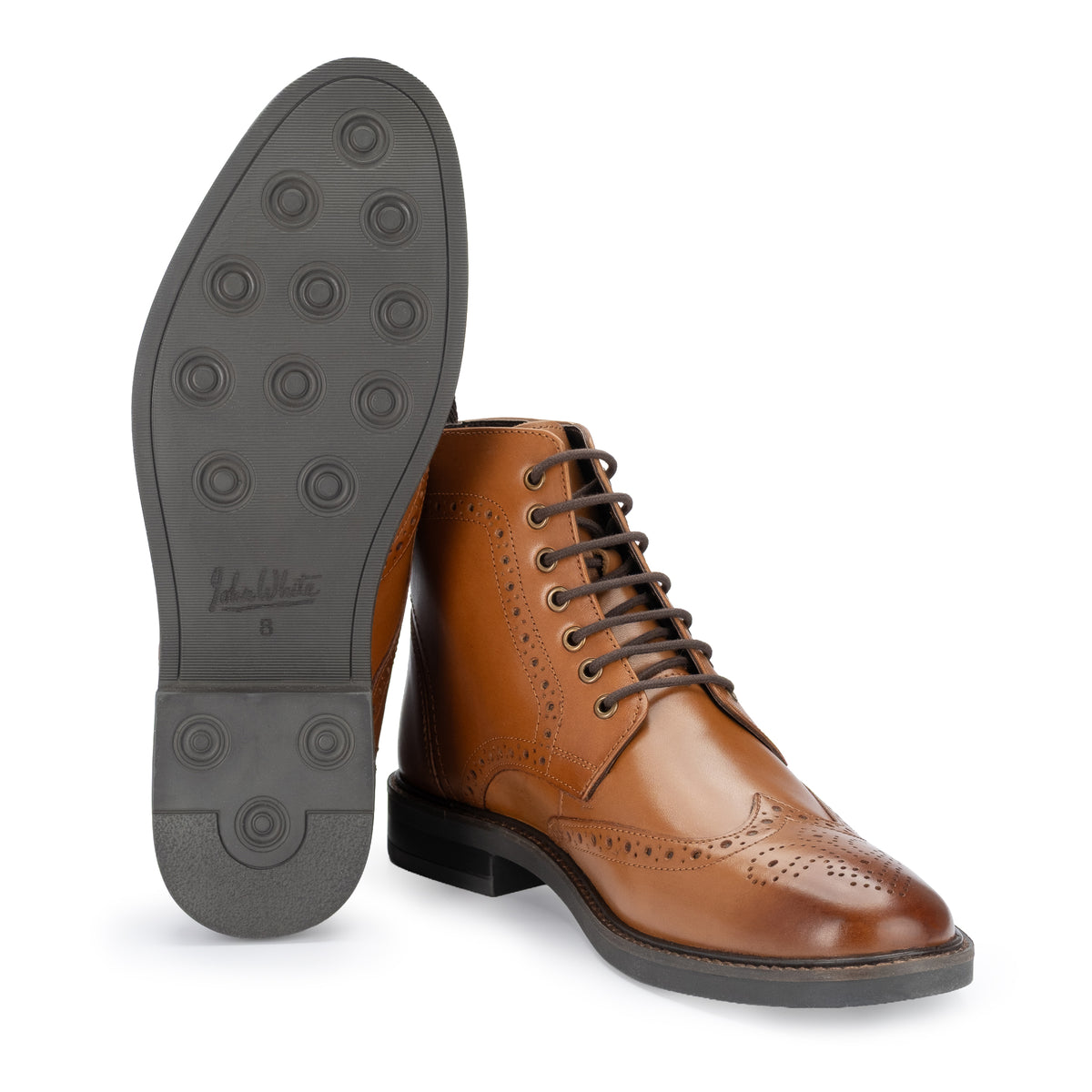
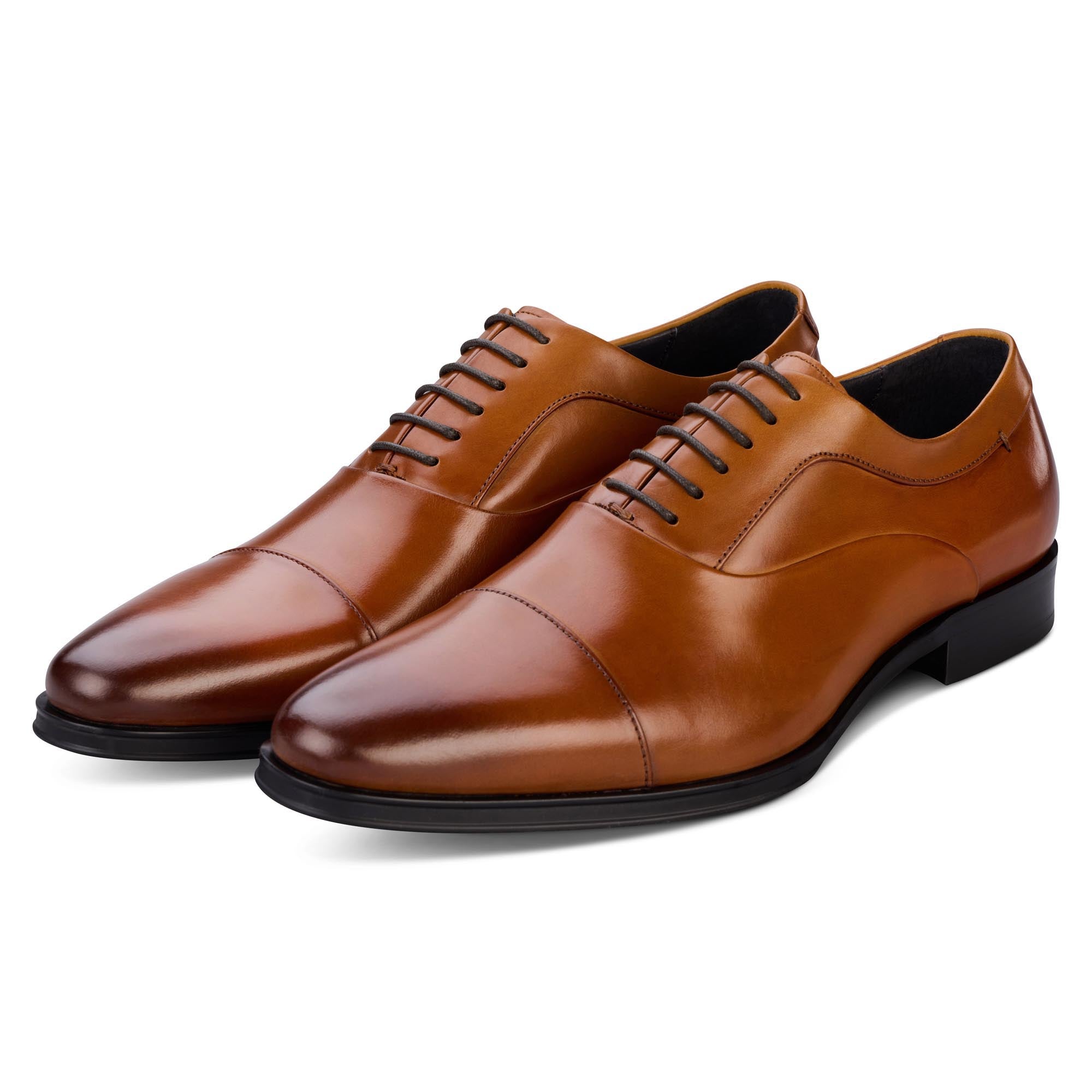
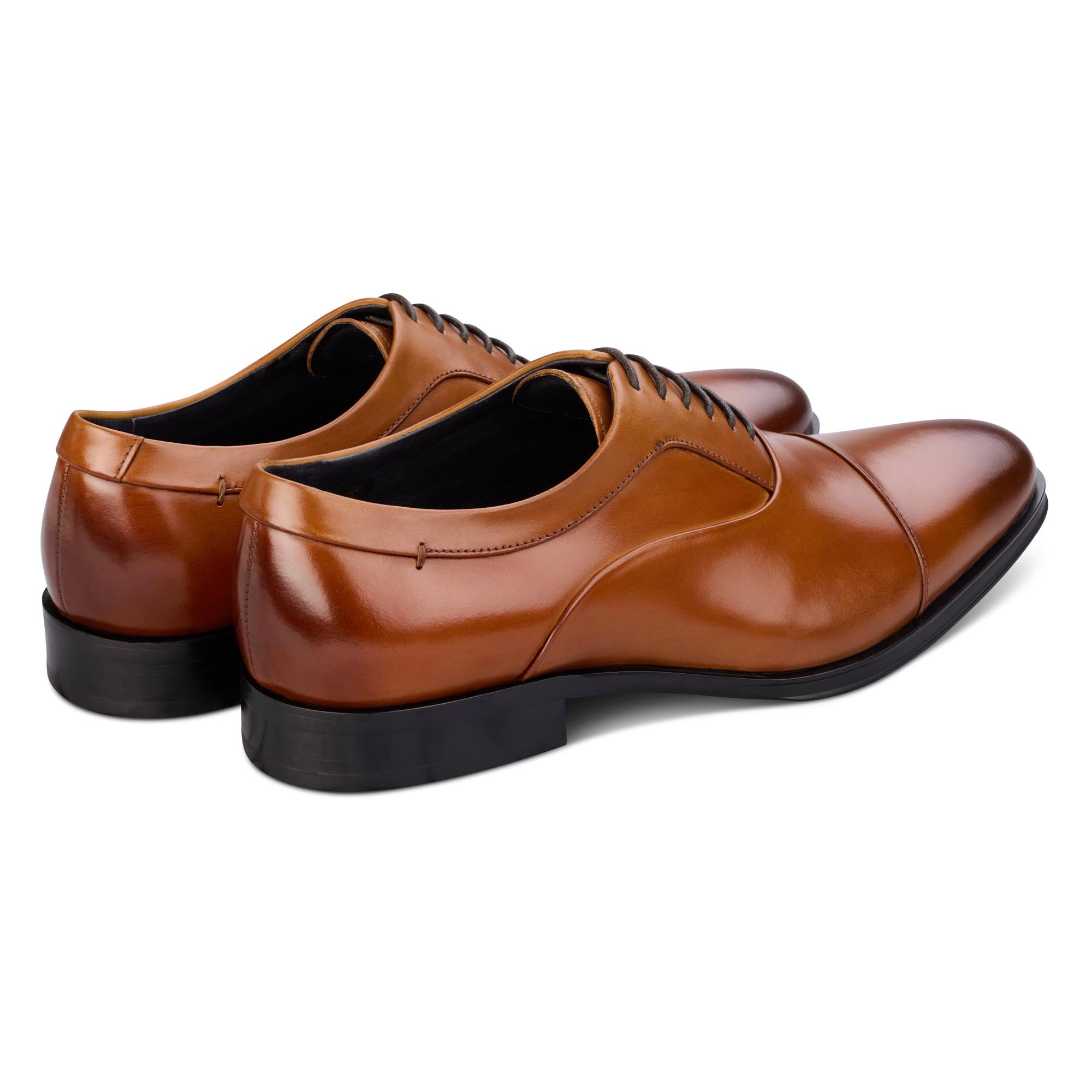
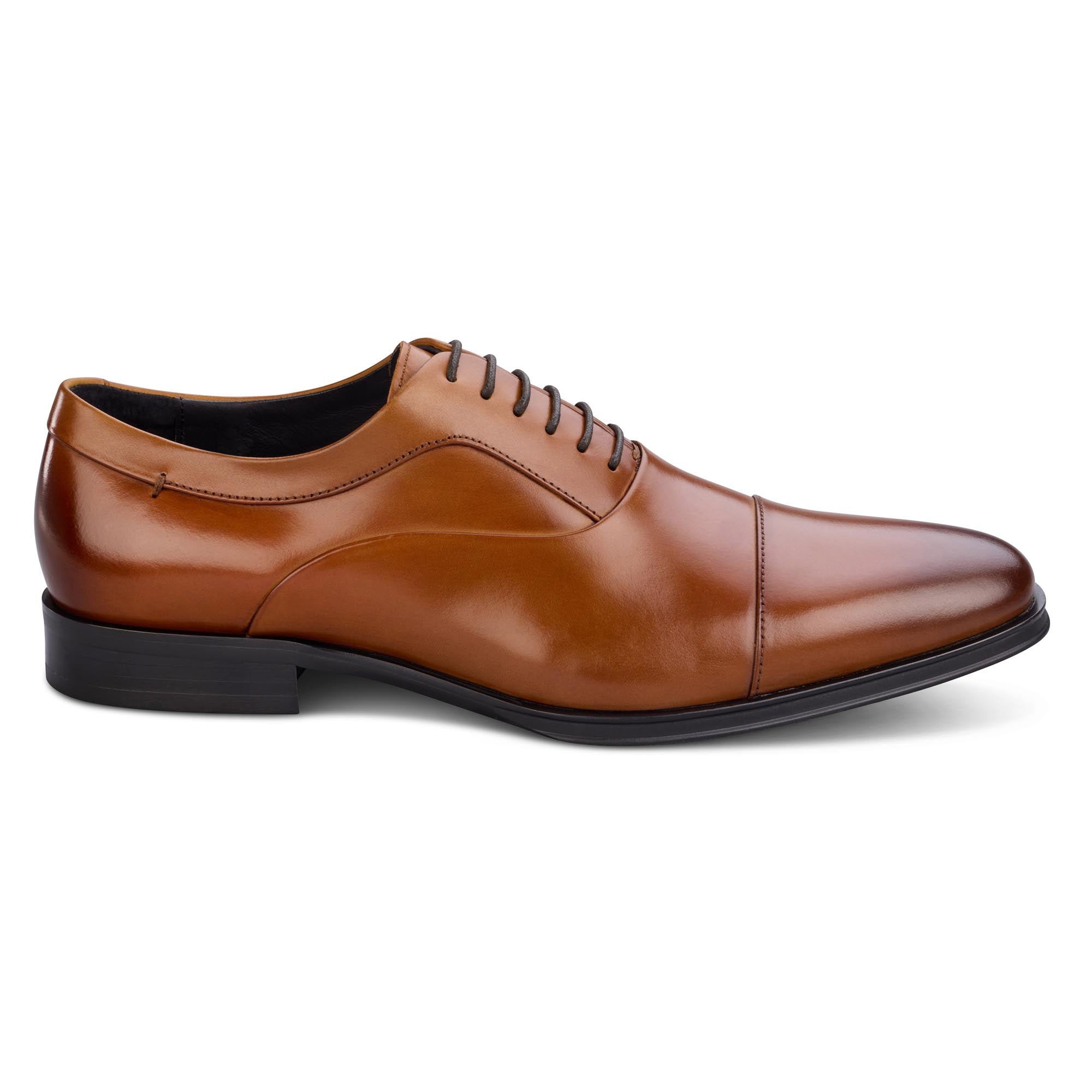
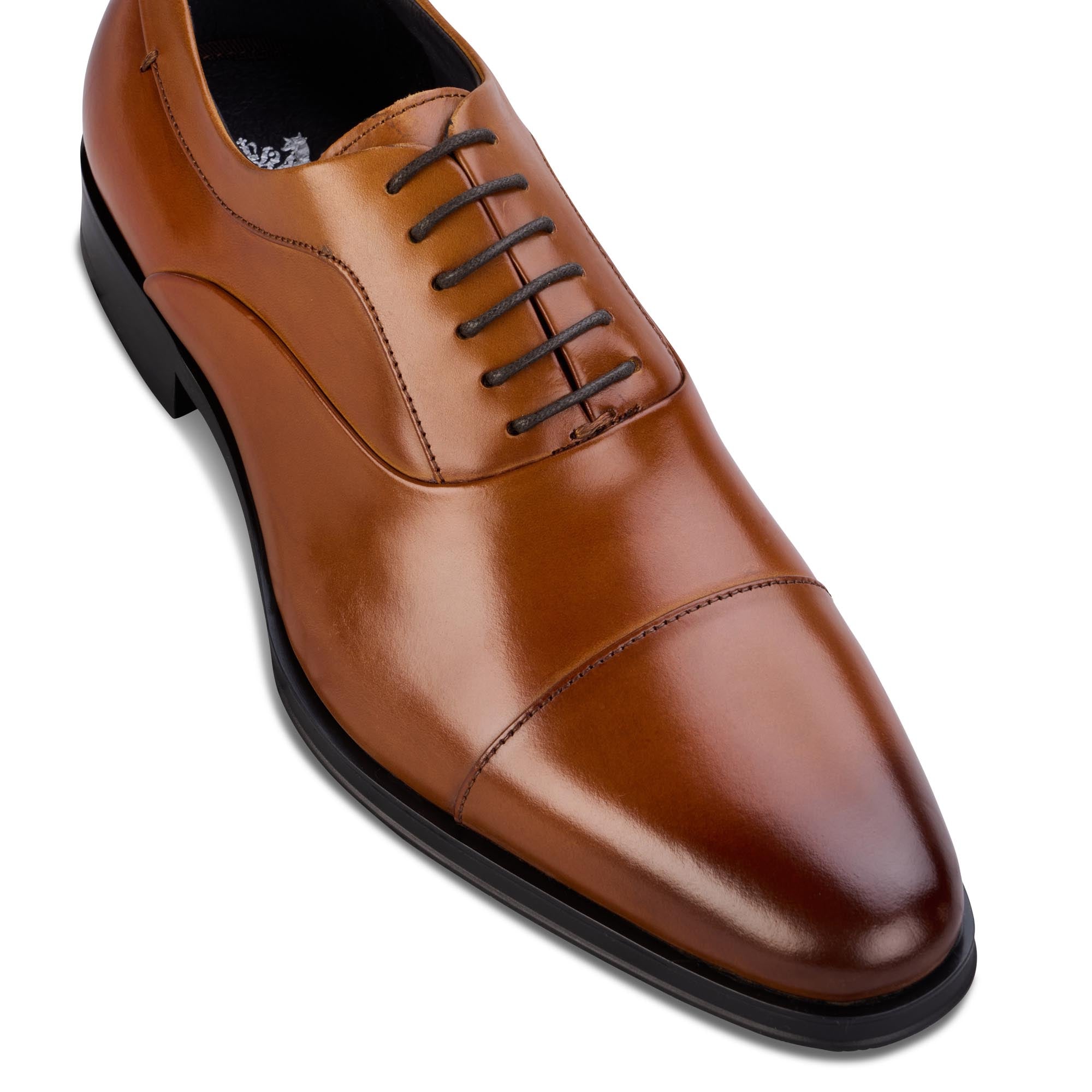
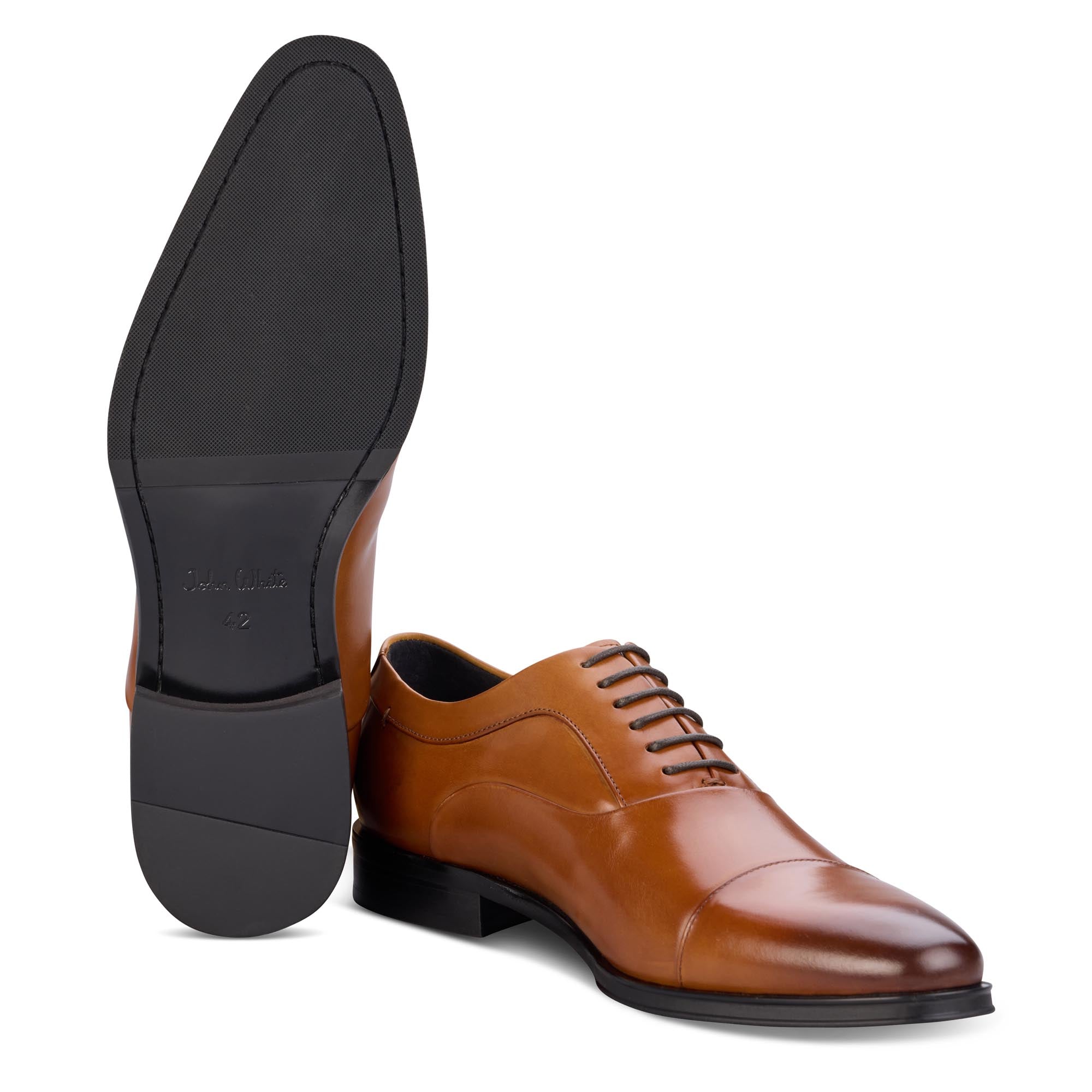
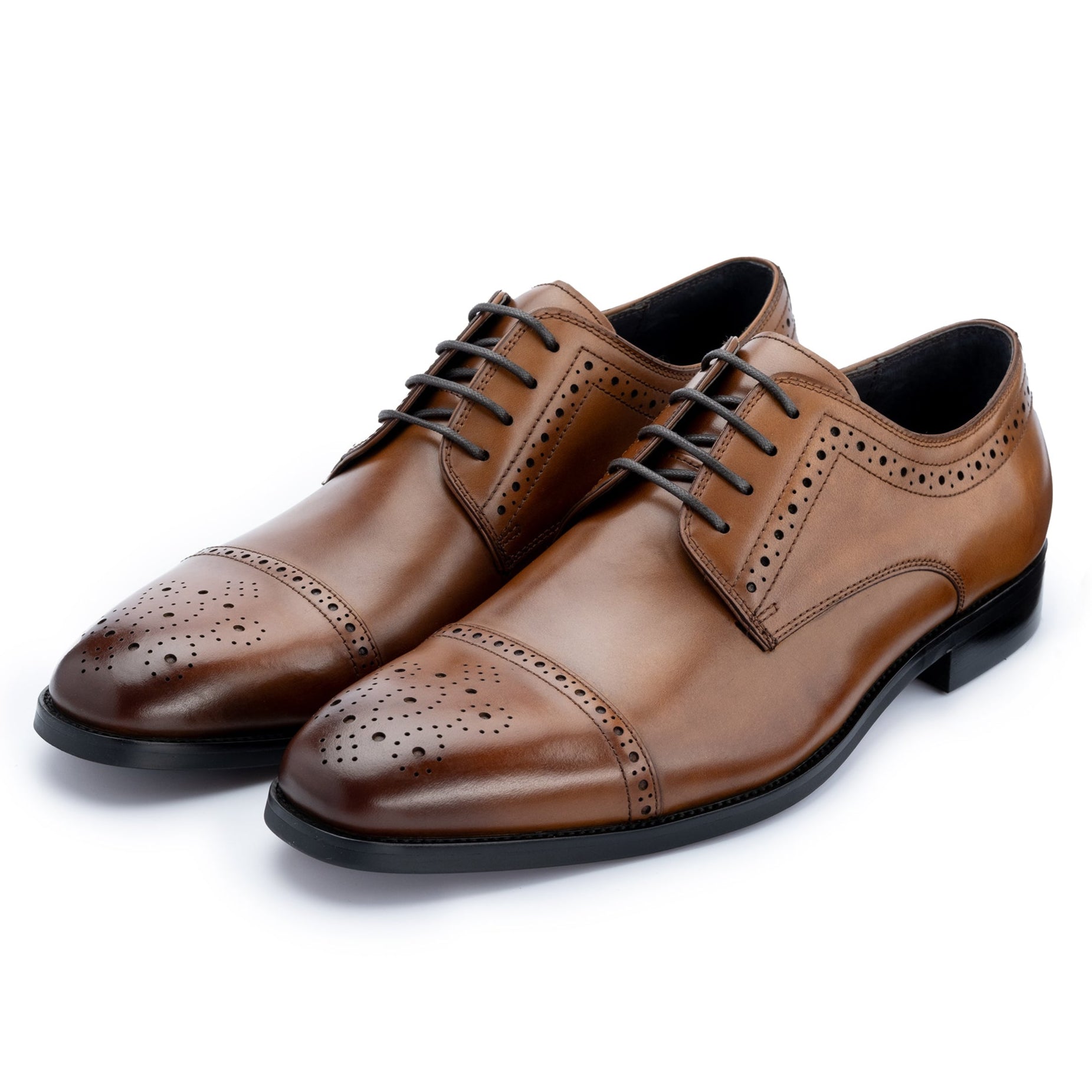
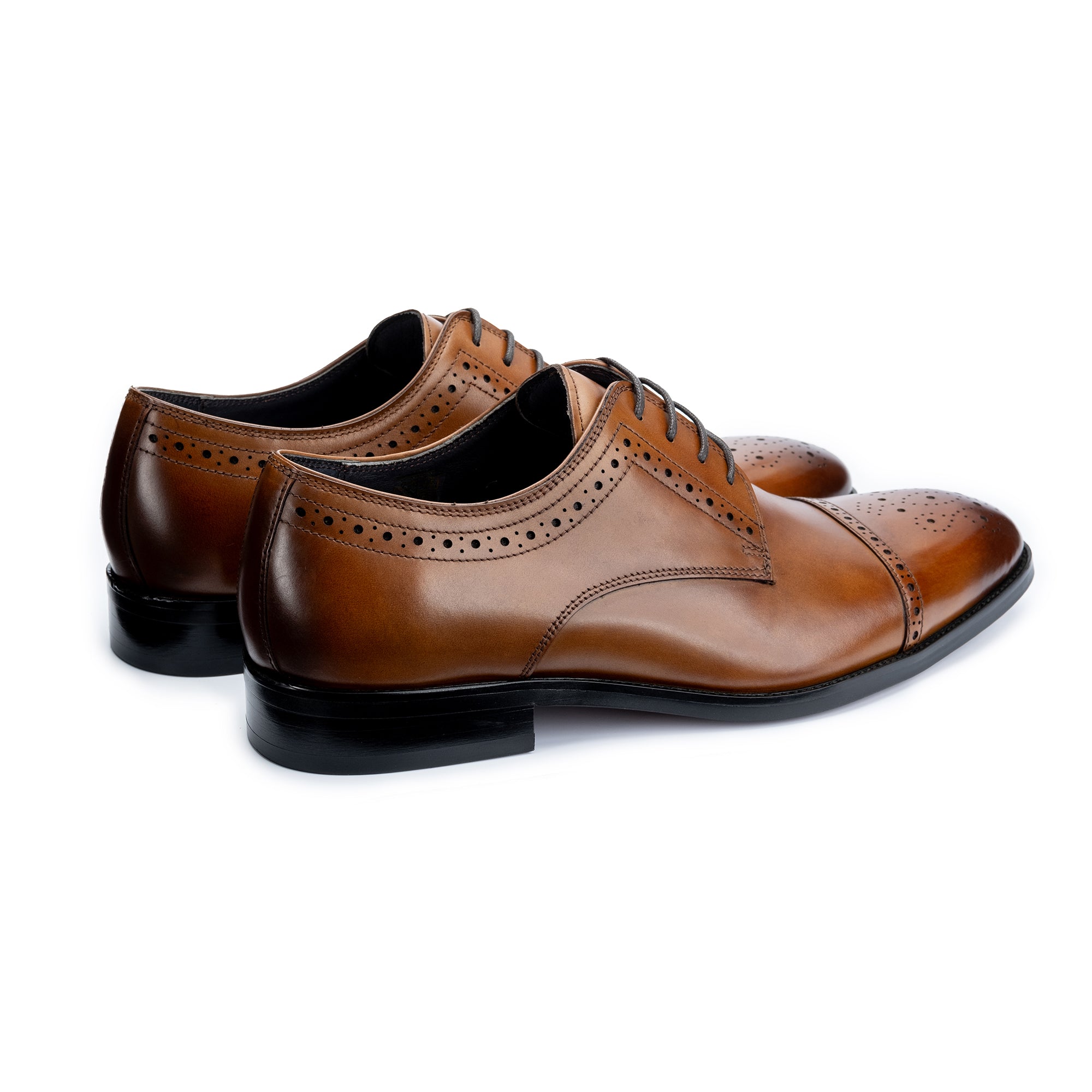
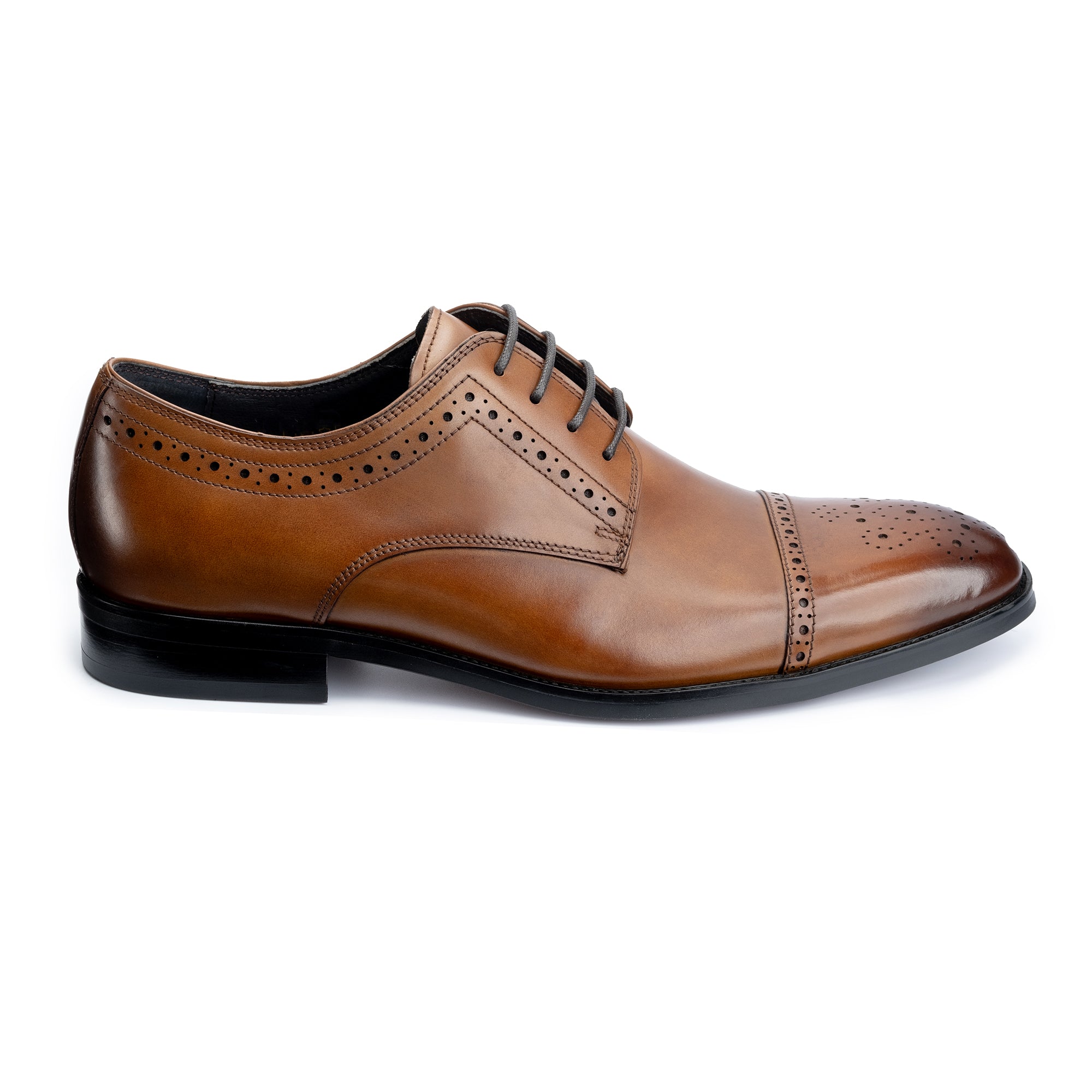
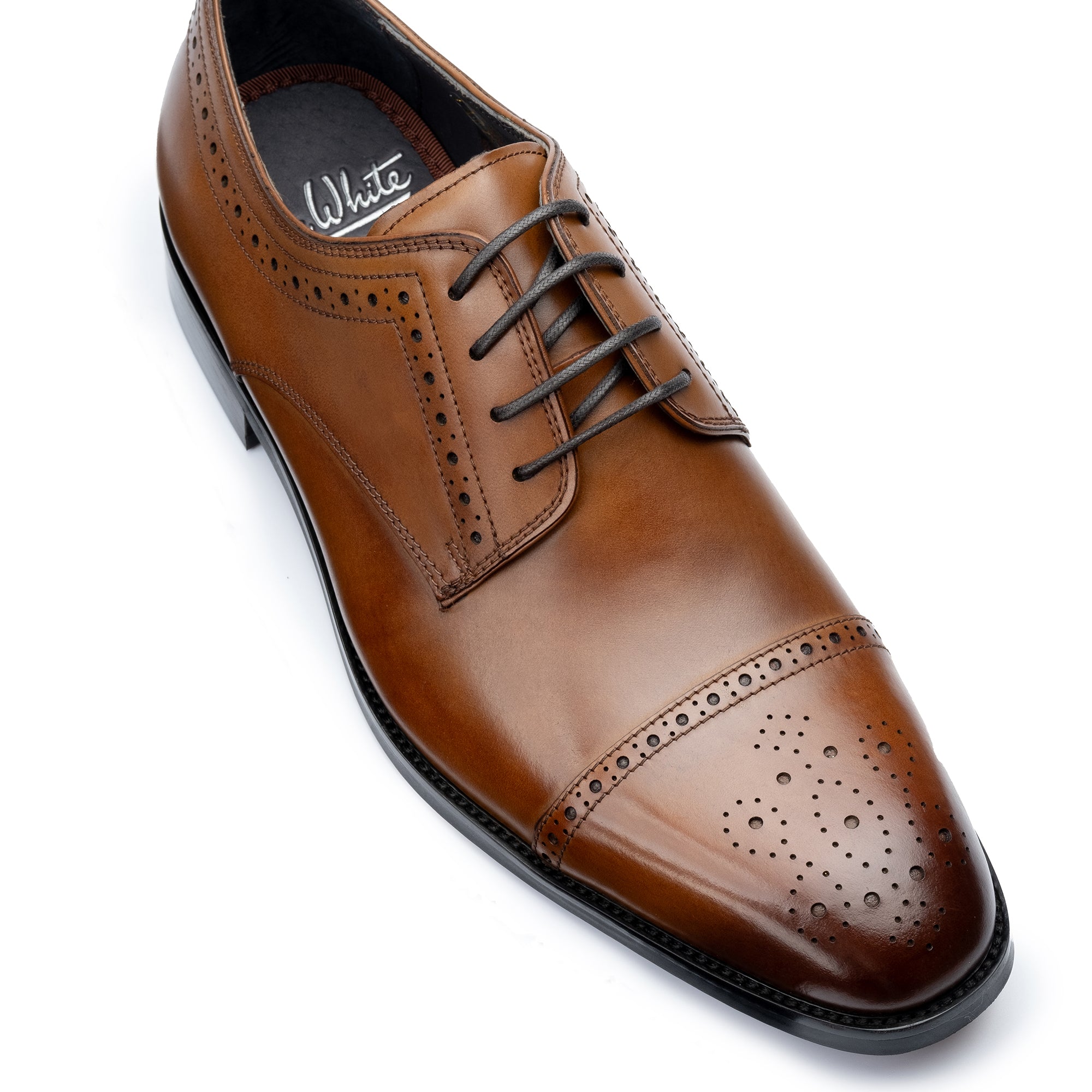
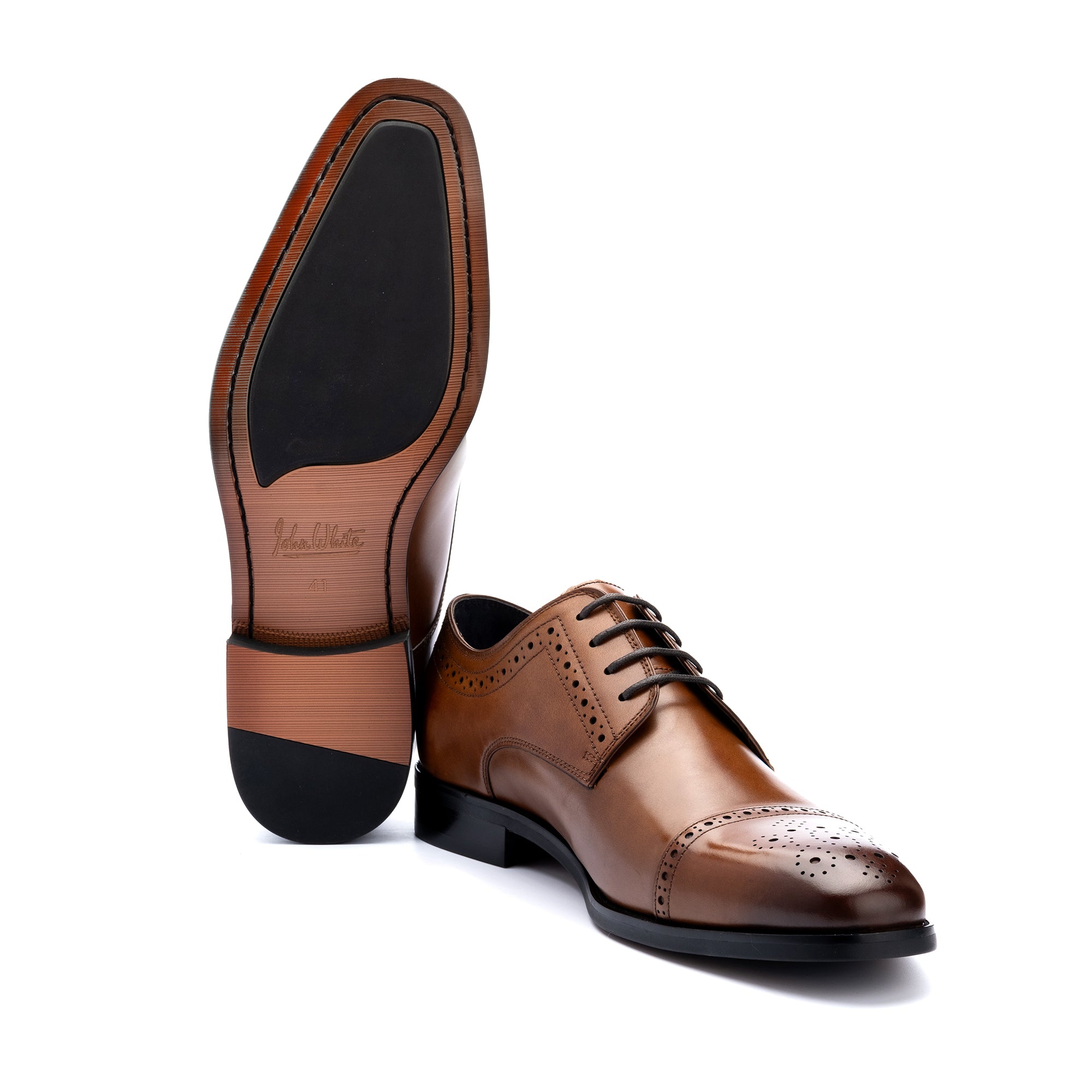
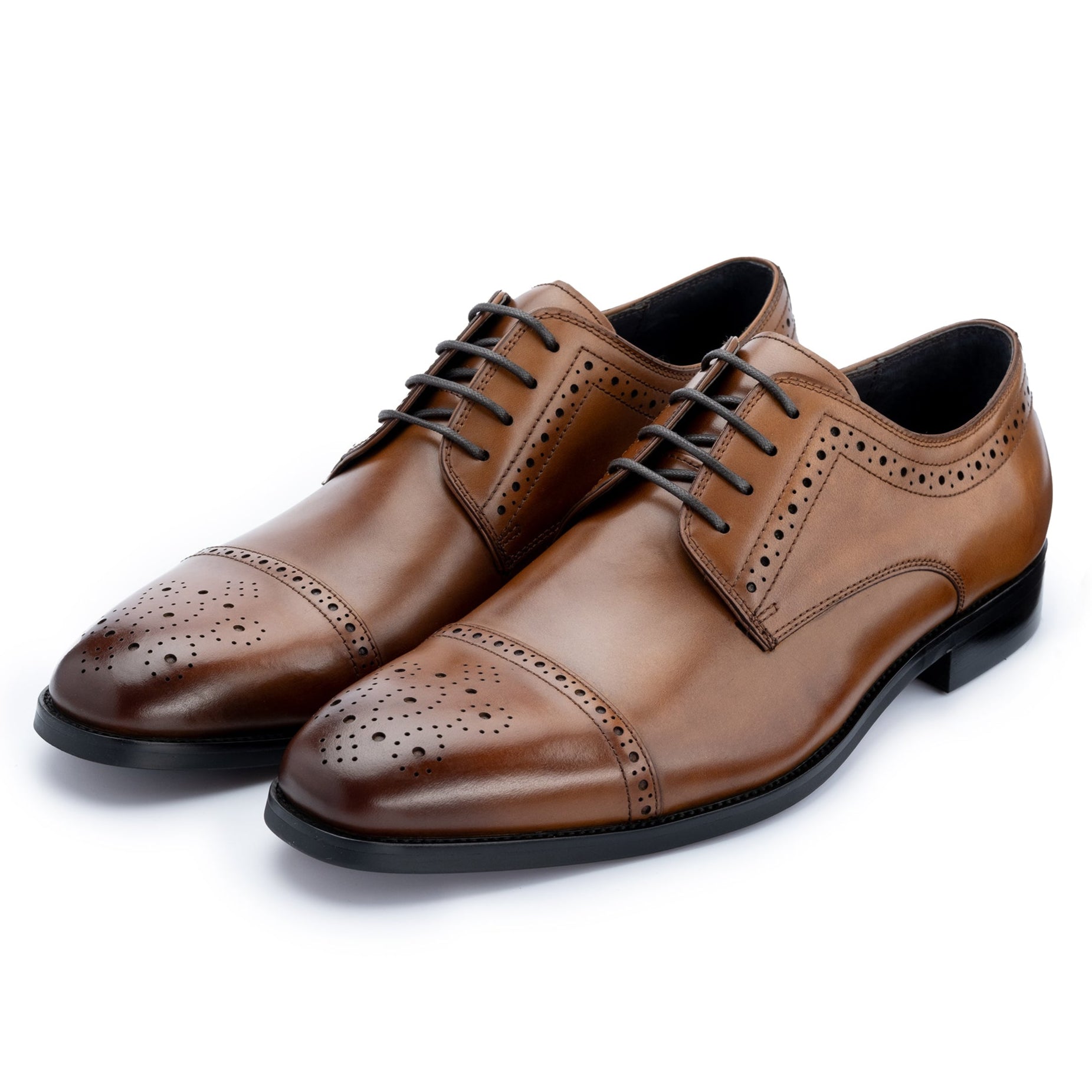
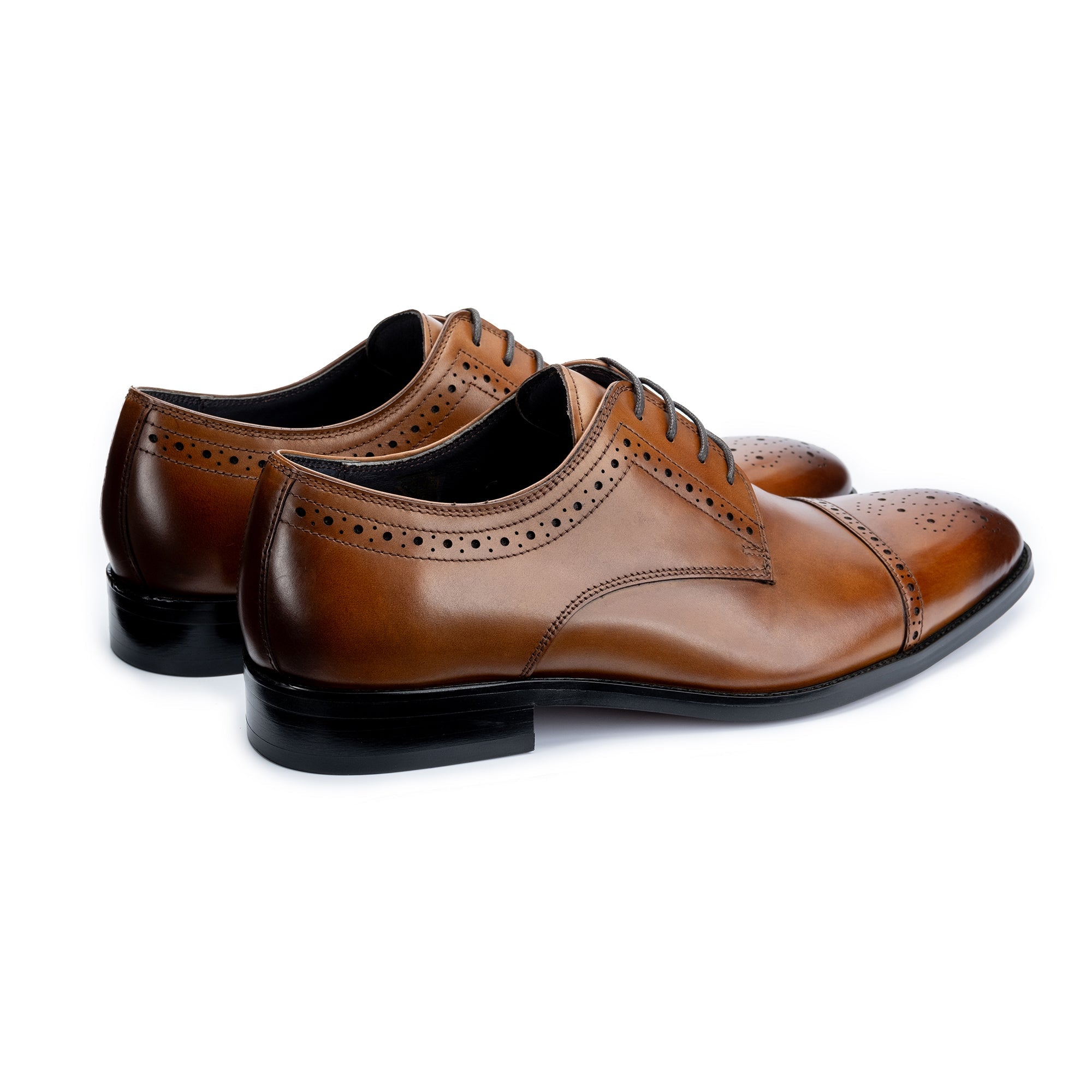
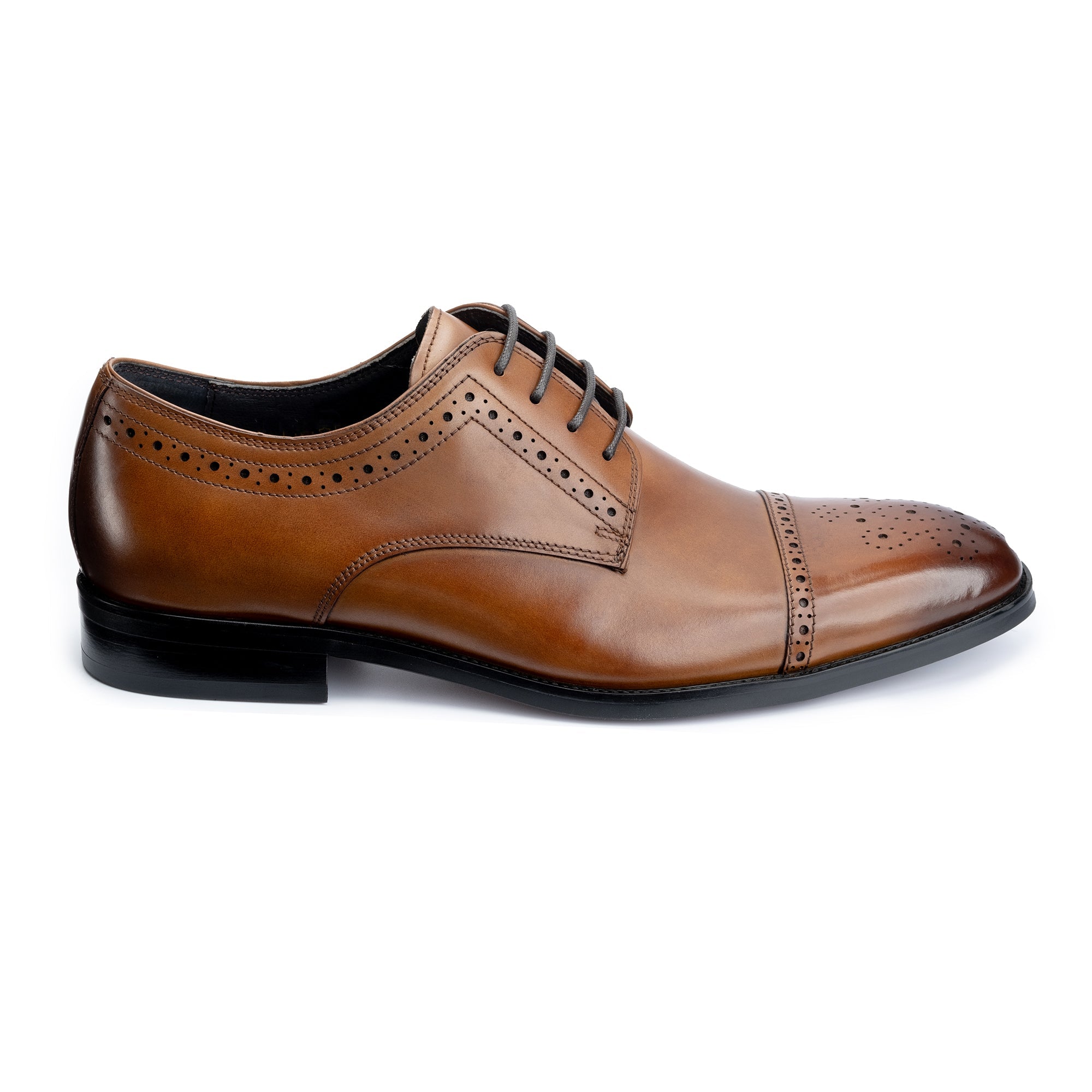
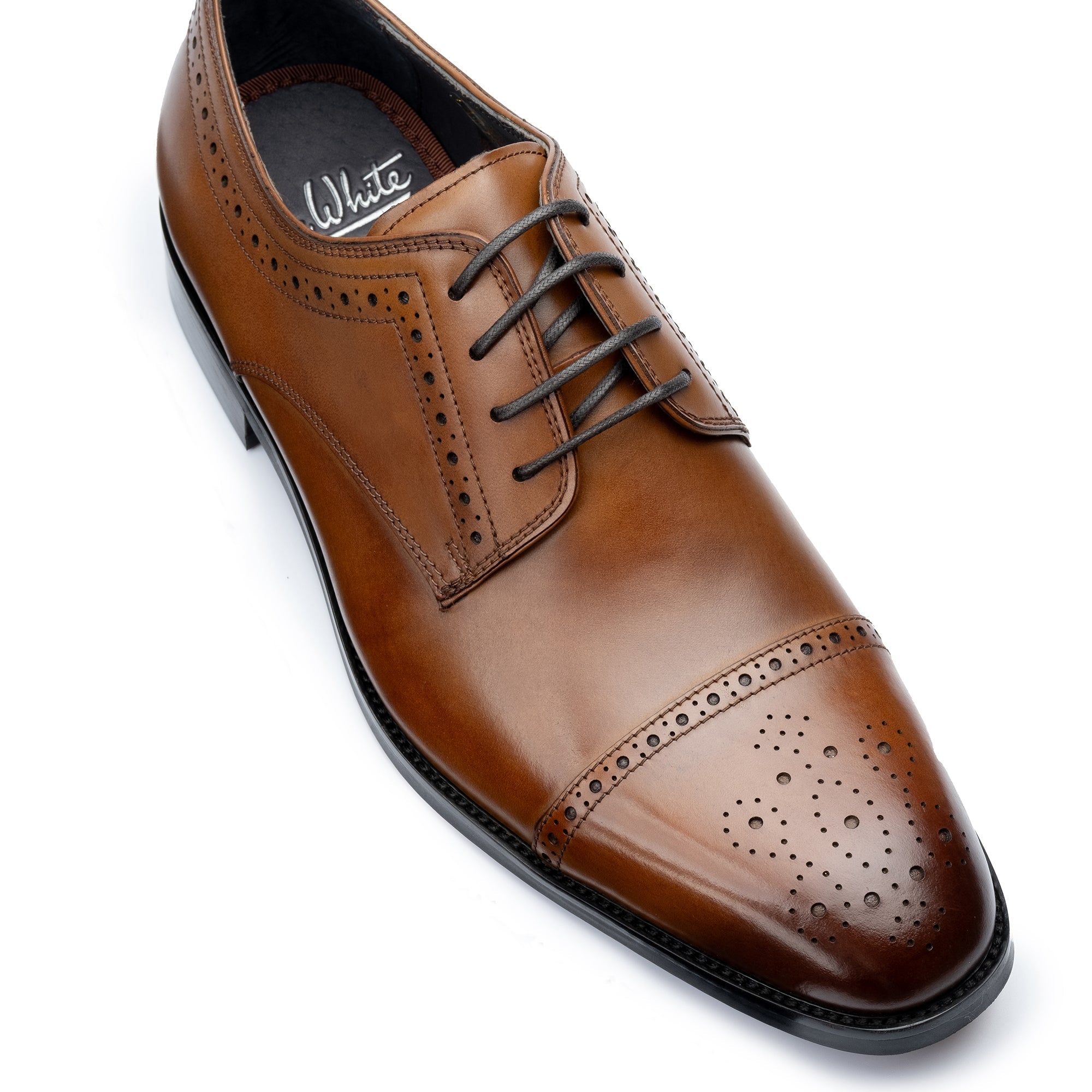
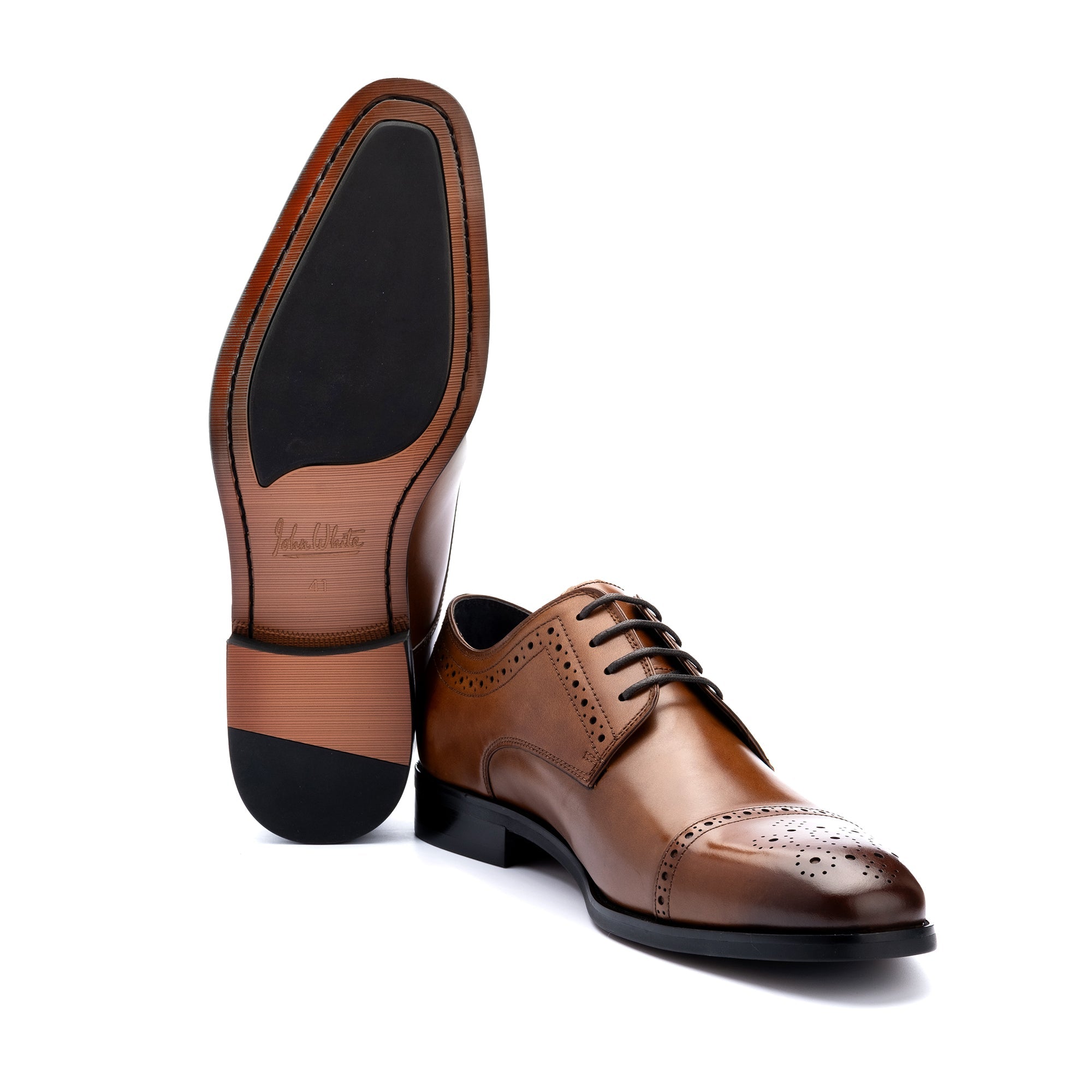
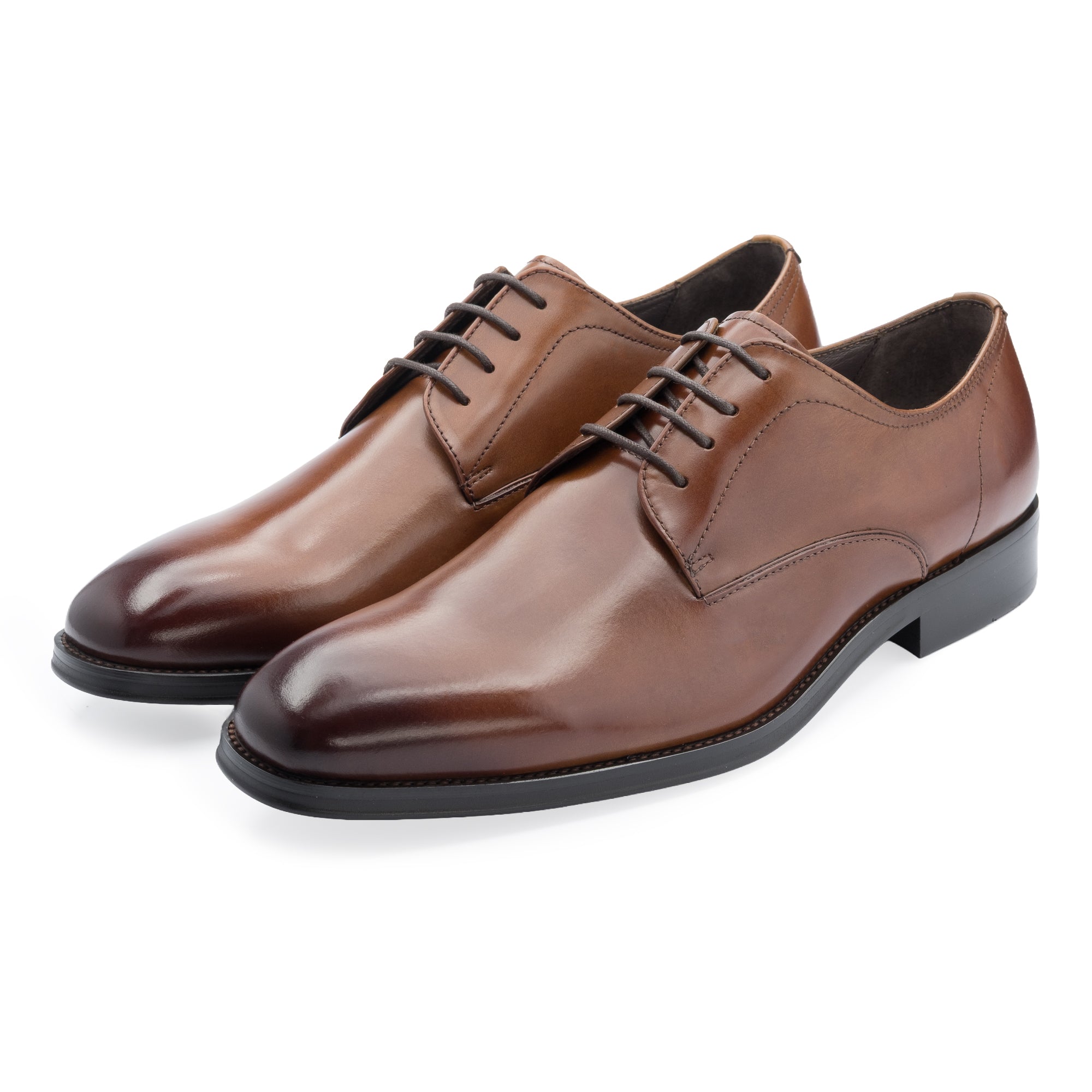
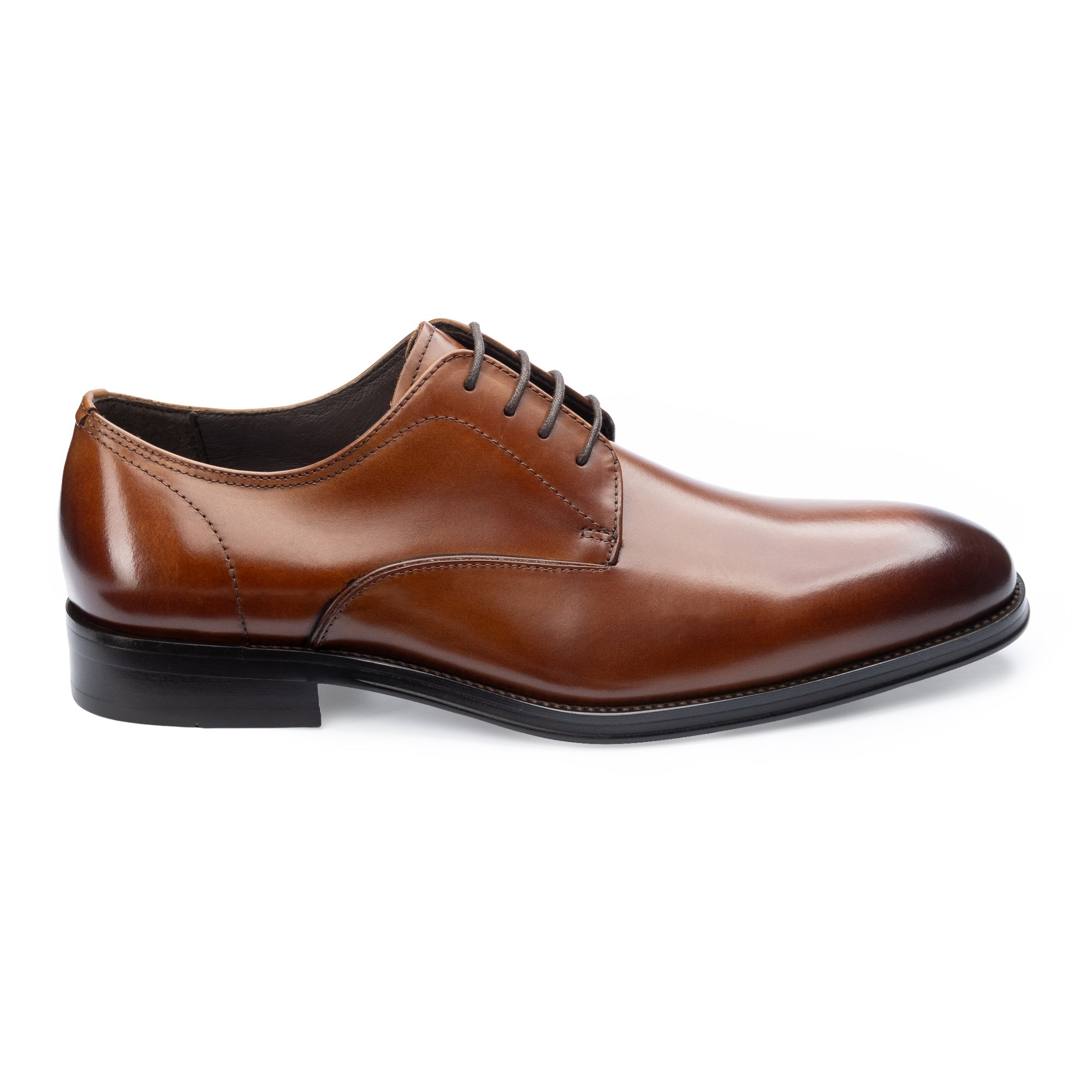
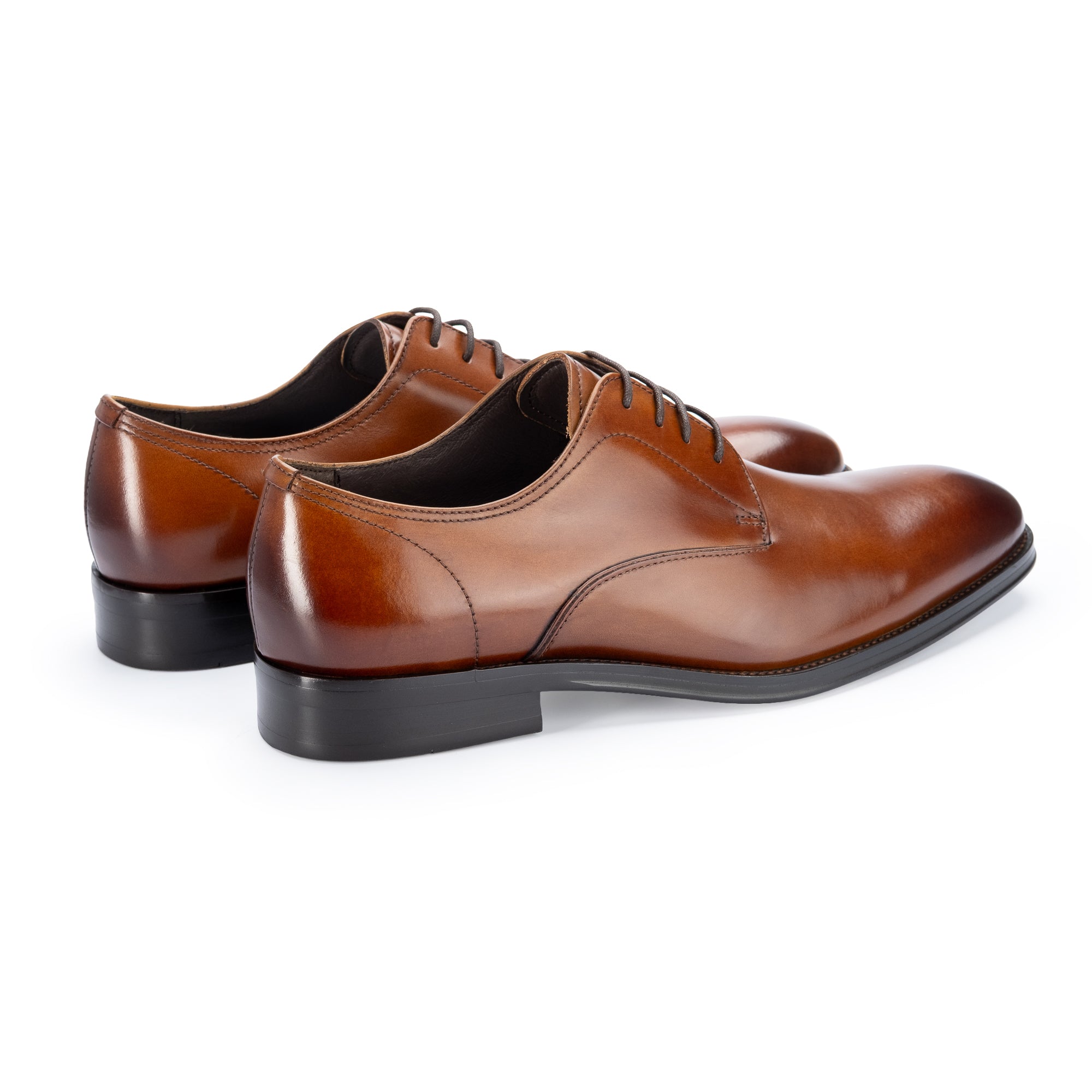
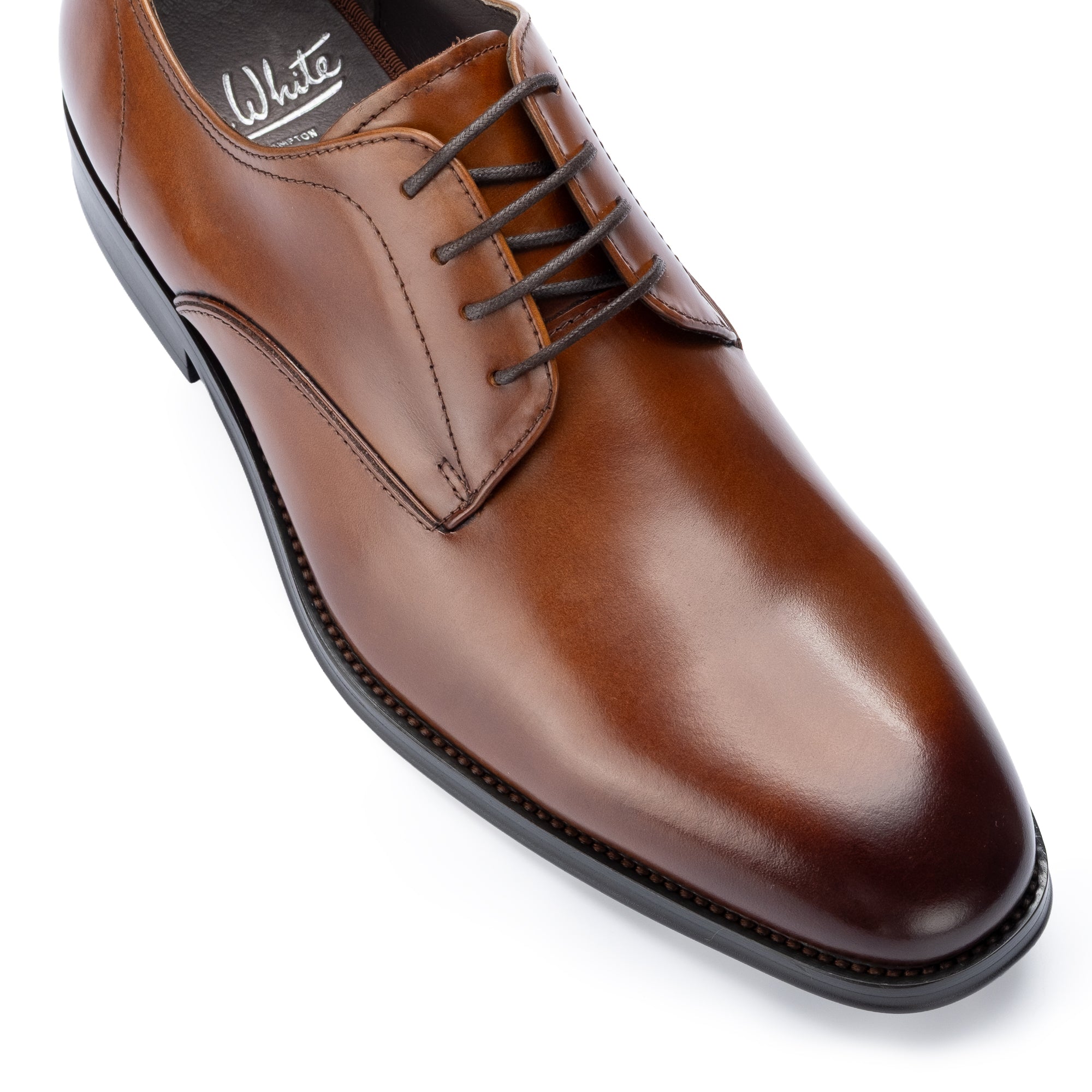
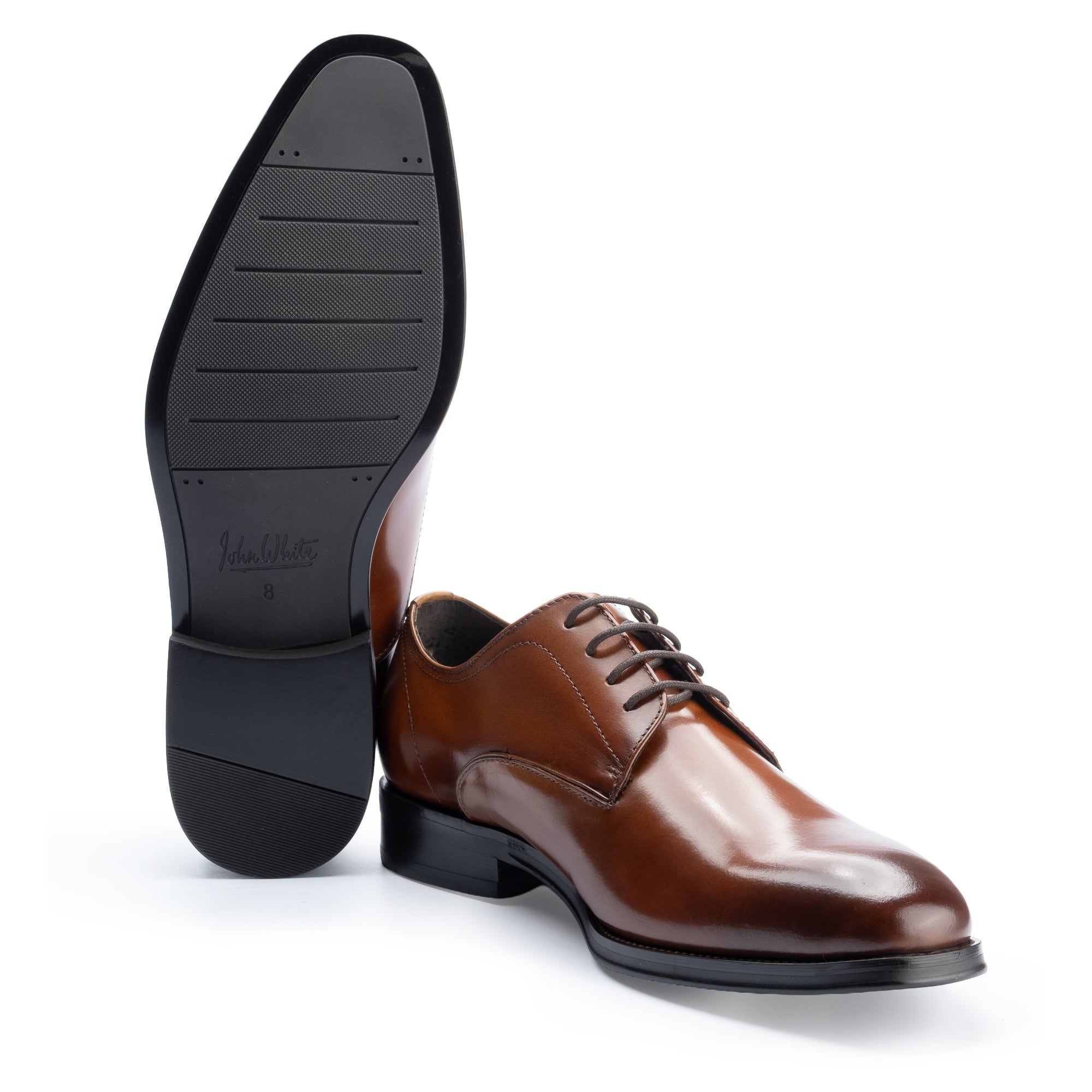
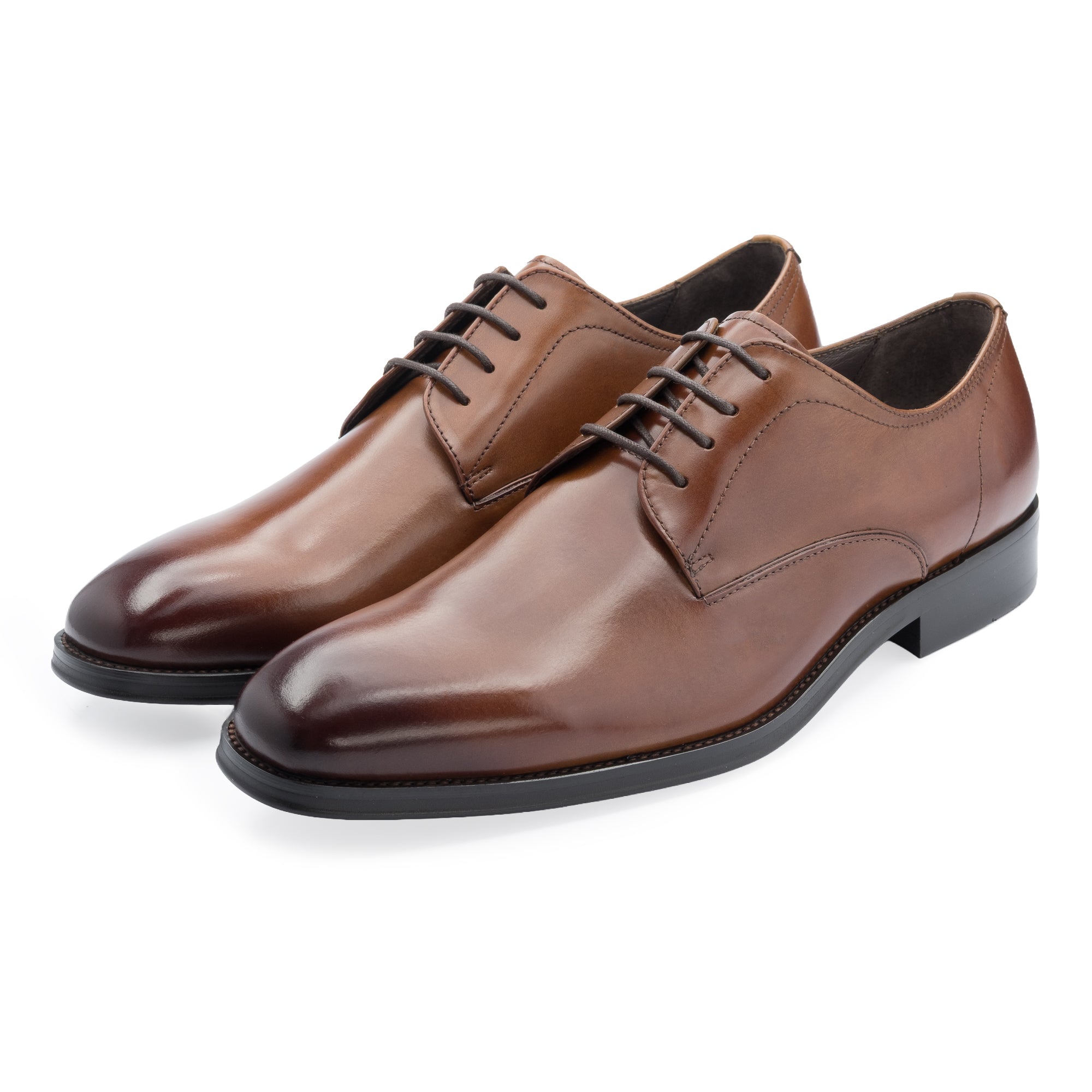
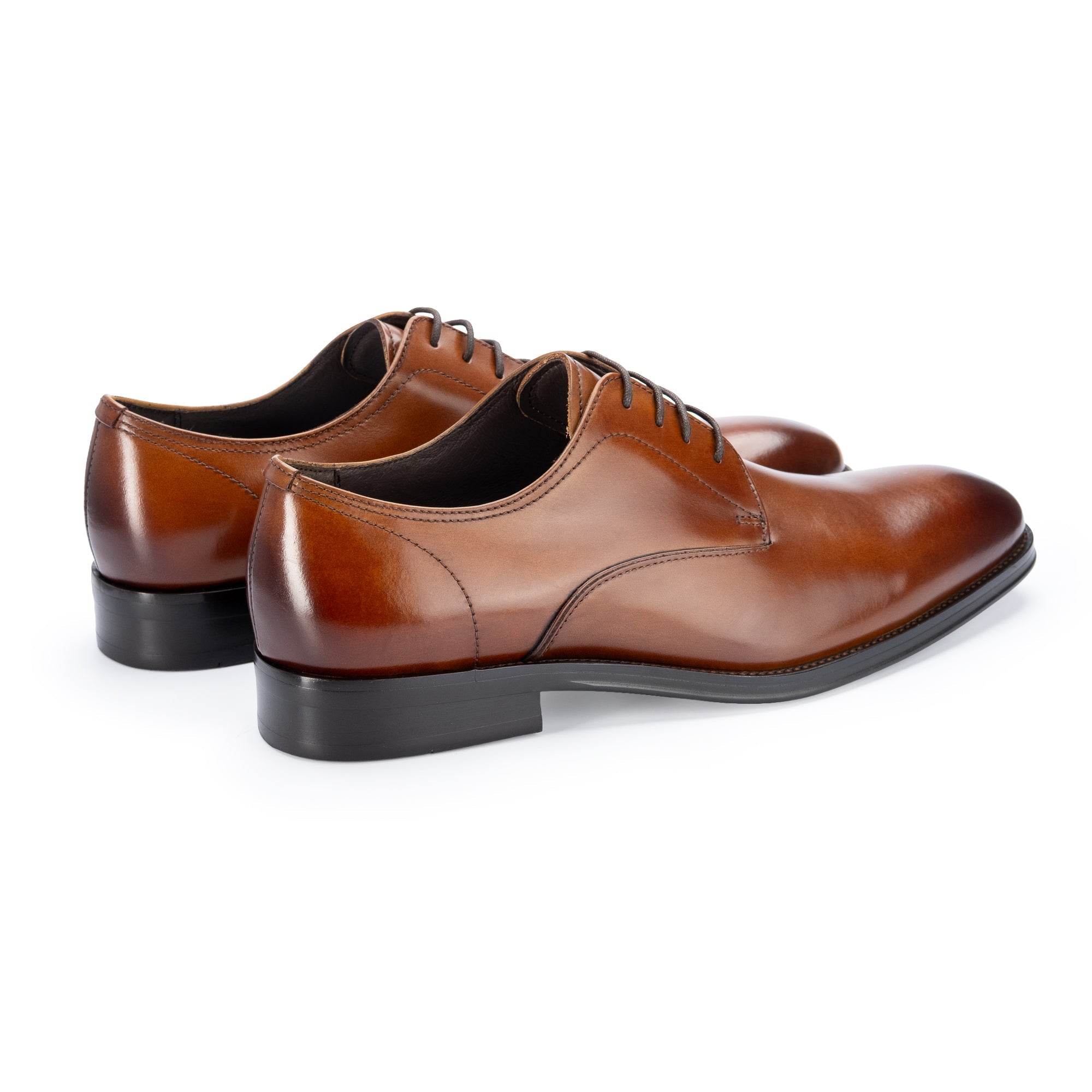
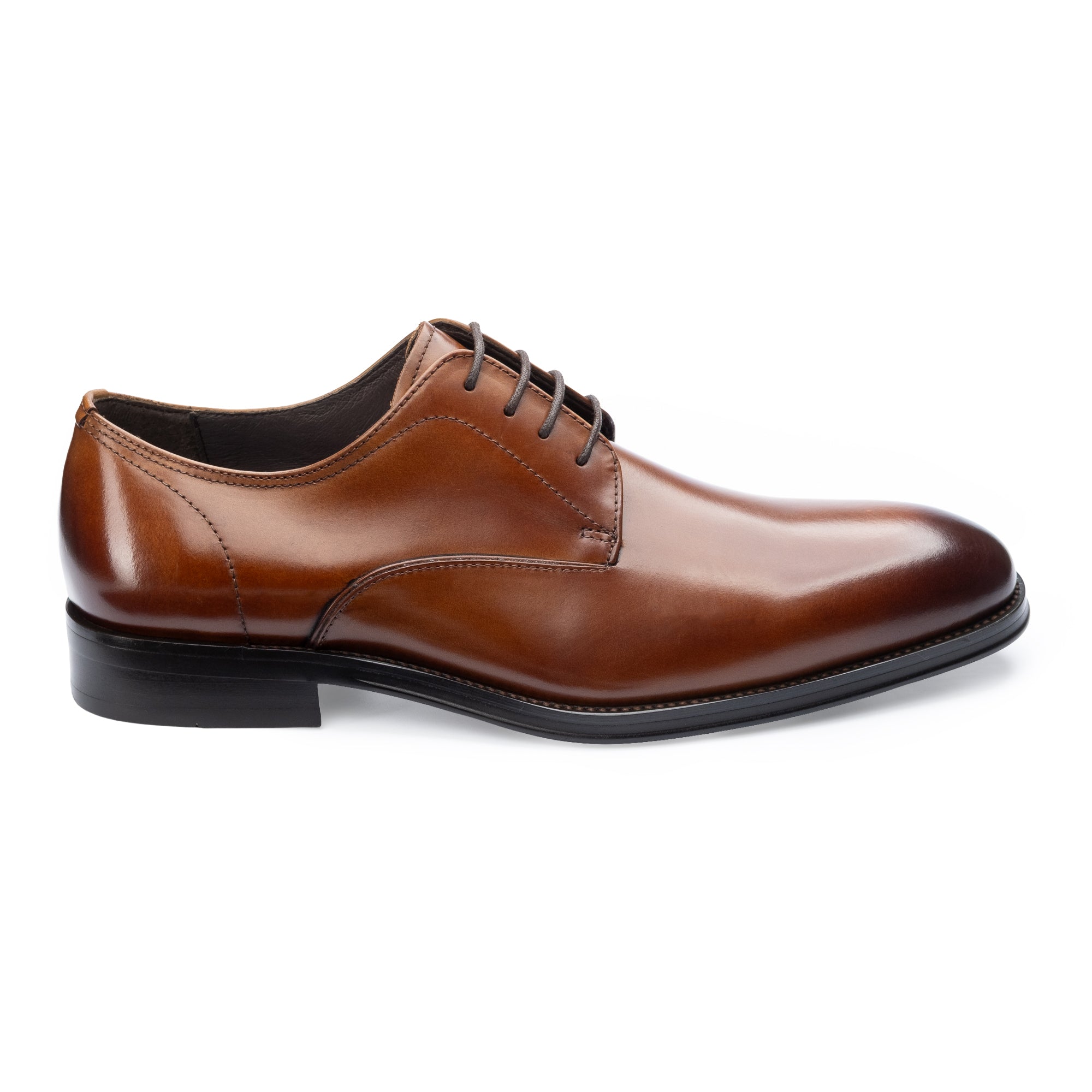
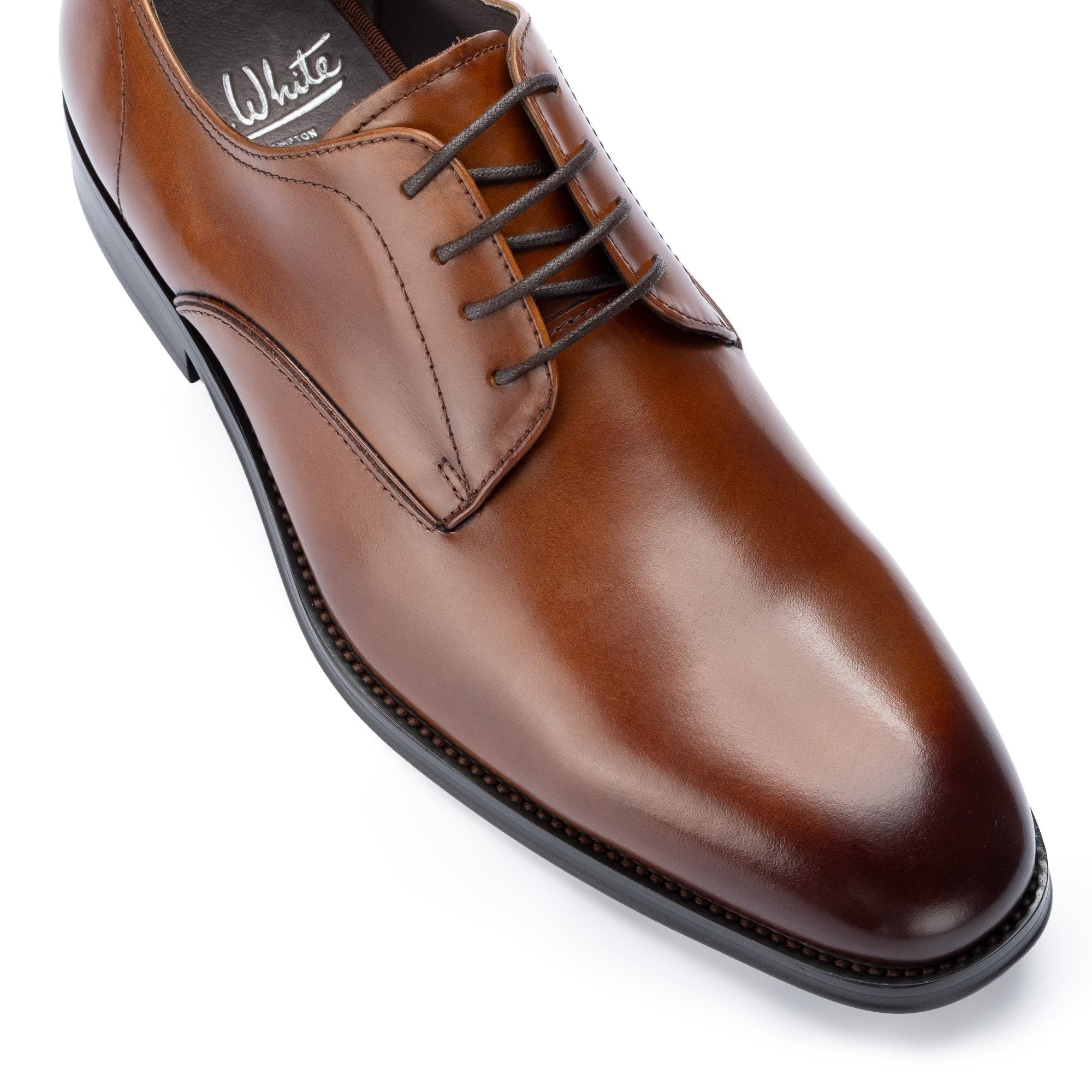
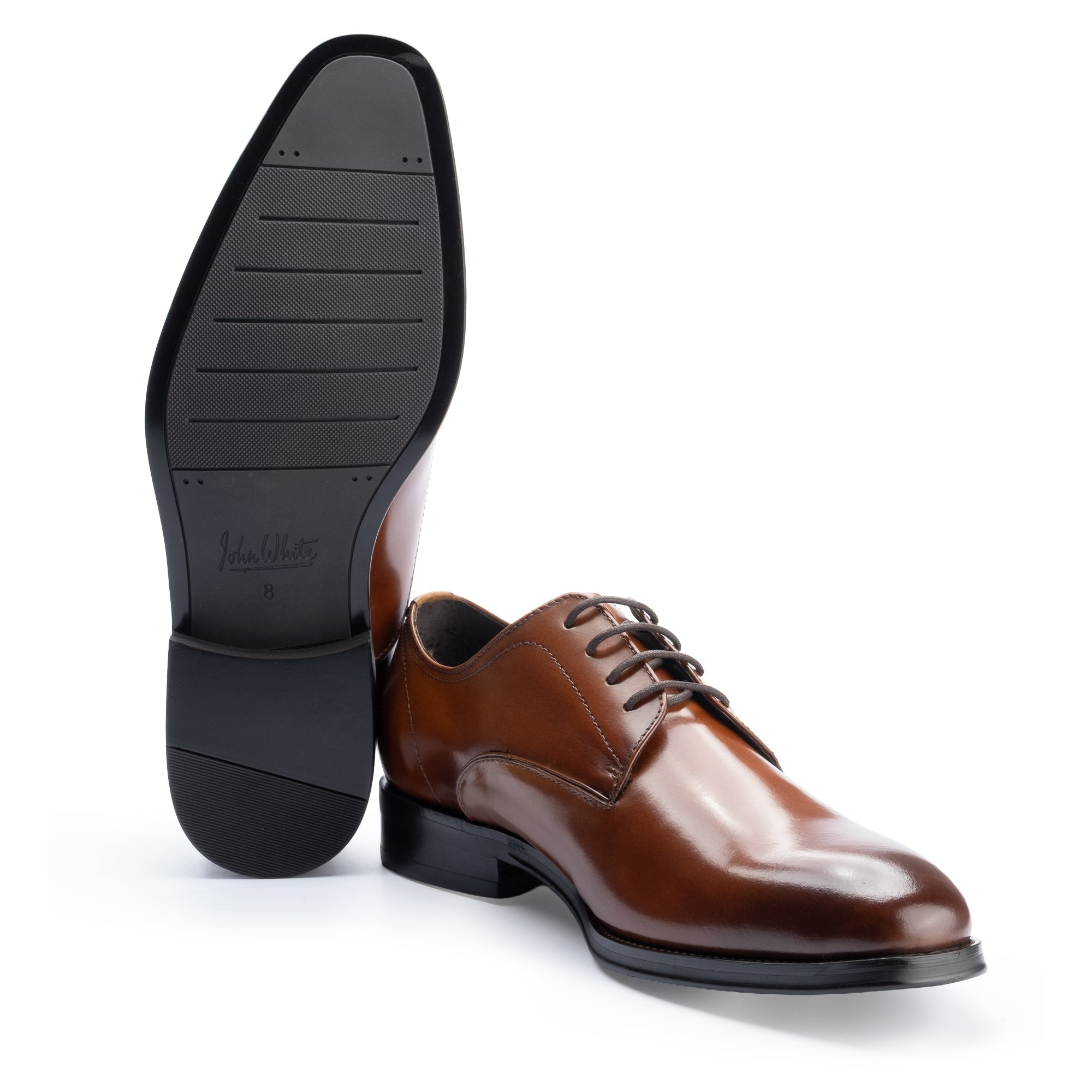
This is the most referenced pairing for good reason. Tan or cognac against navy creates warmth and visual contrast without the gravity of black. The lighter the tan, the more relaxed the signal; a pale honey leather with a navy suit reads as spring-summer smart. A deeper cognac or caramel is versatile enough for the office year-round.
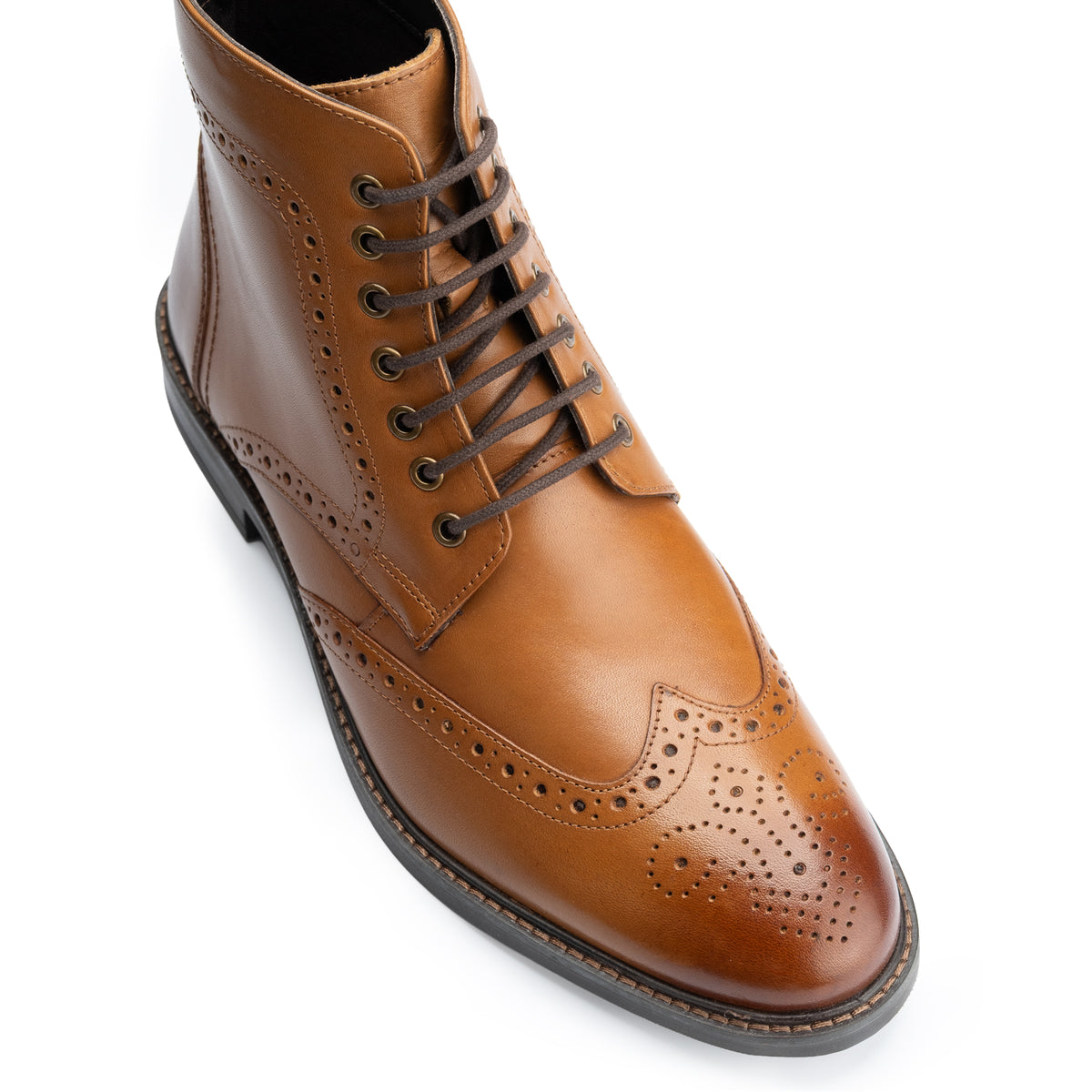
The pairing handles brogue detailing well. Punched and patterned broguing in tan leather against navy is one of the cleaner combinations in menswear — the texture and the contrast do the work without requiring anything further from the outfit. A plain tan Derby works equally well but with a quieter result.
This is also the pairing that suits the widest range of navy shades — bright mid-navy, ink, and washed indigo all work with tan without adjustment.
Burgundy and Oxblood — The Considered Choice
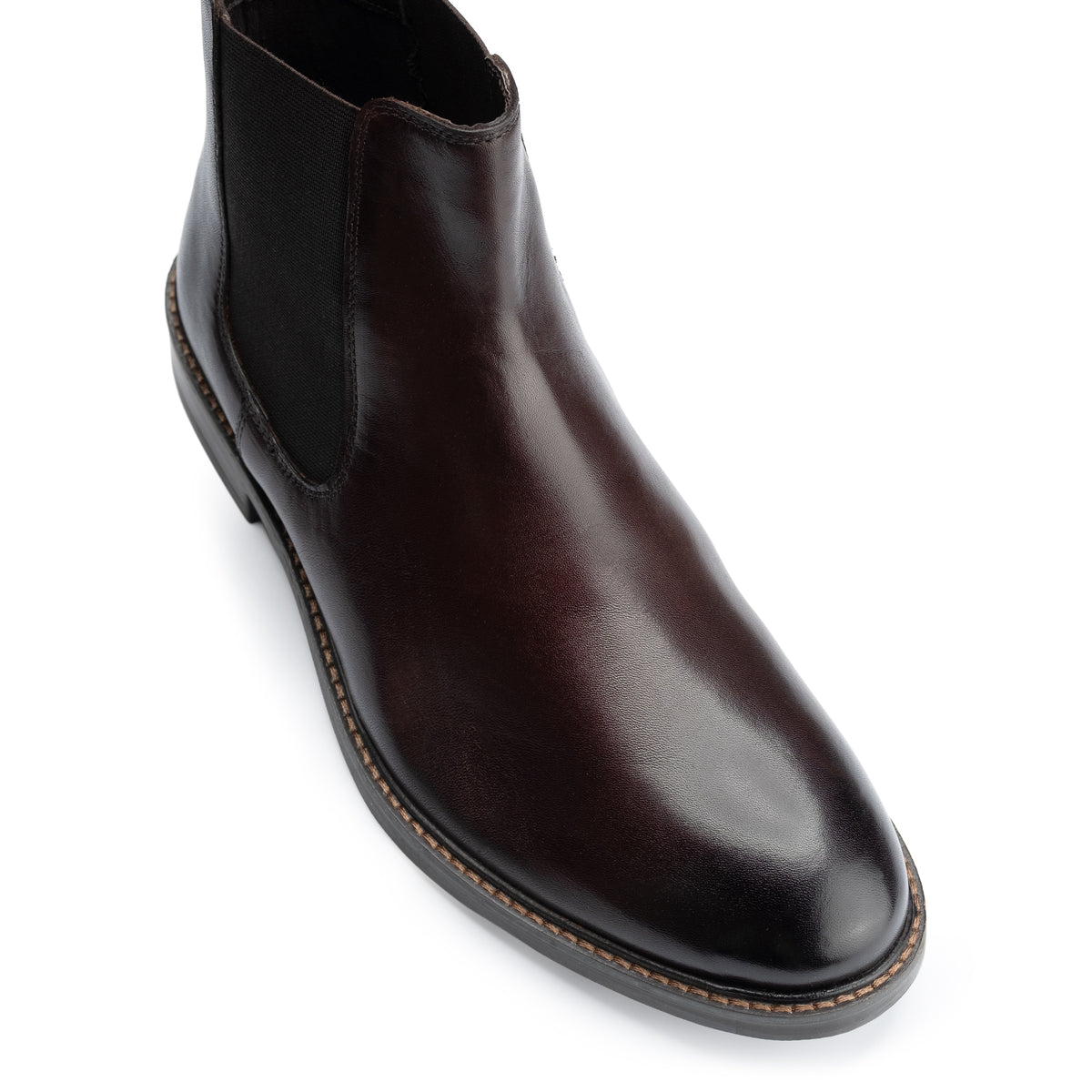
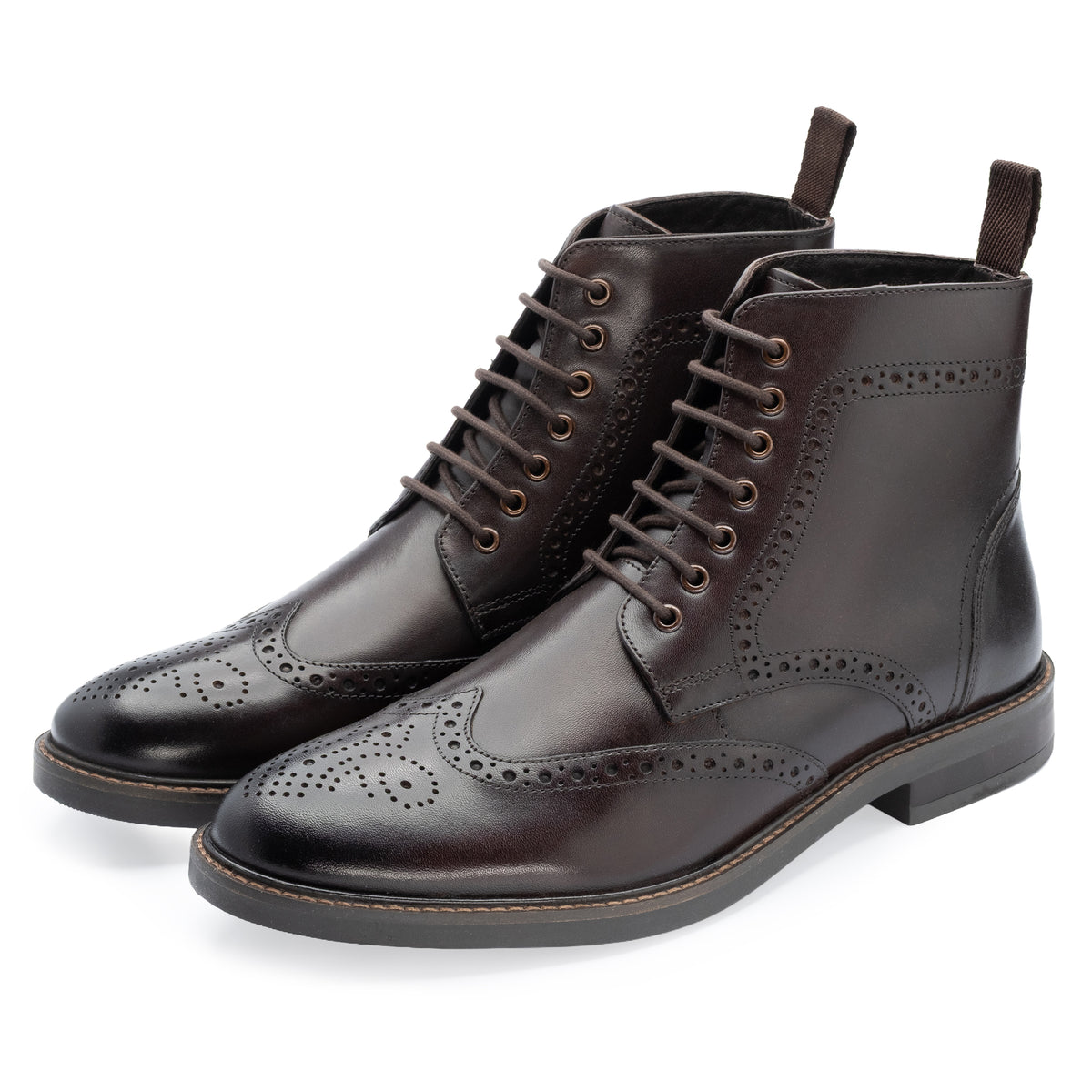
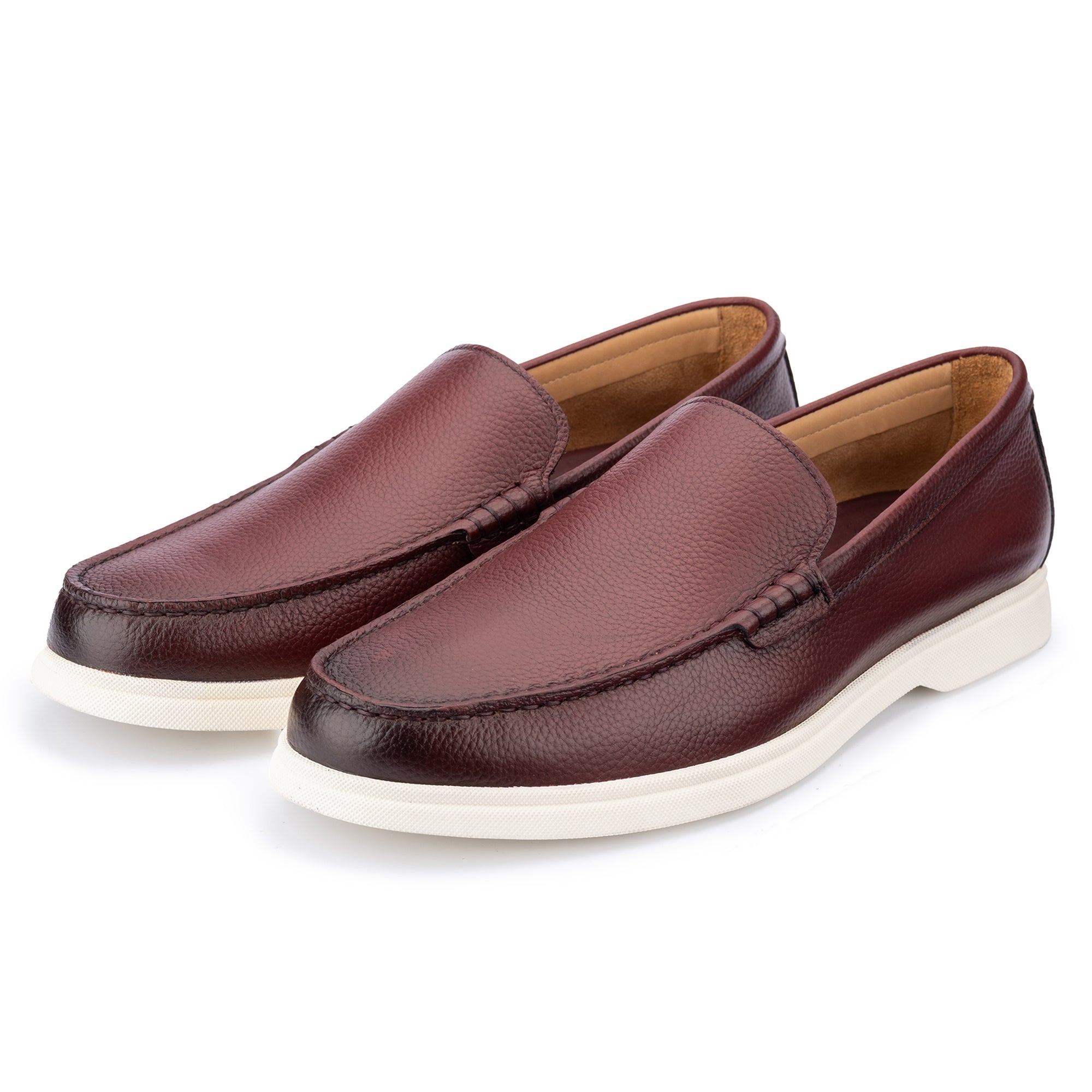
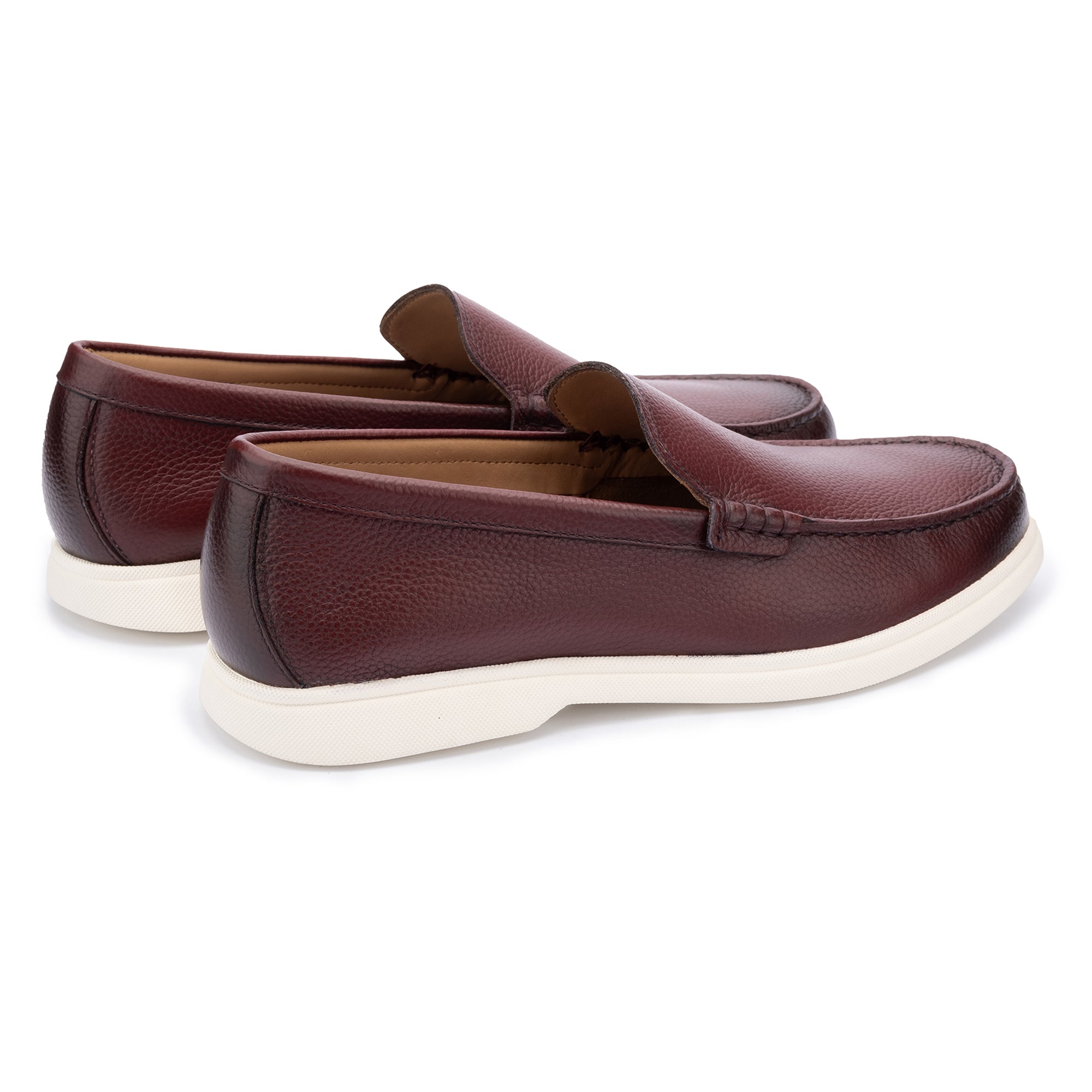
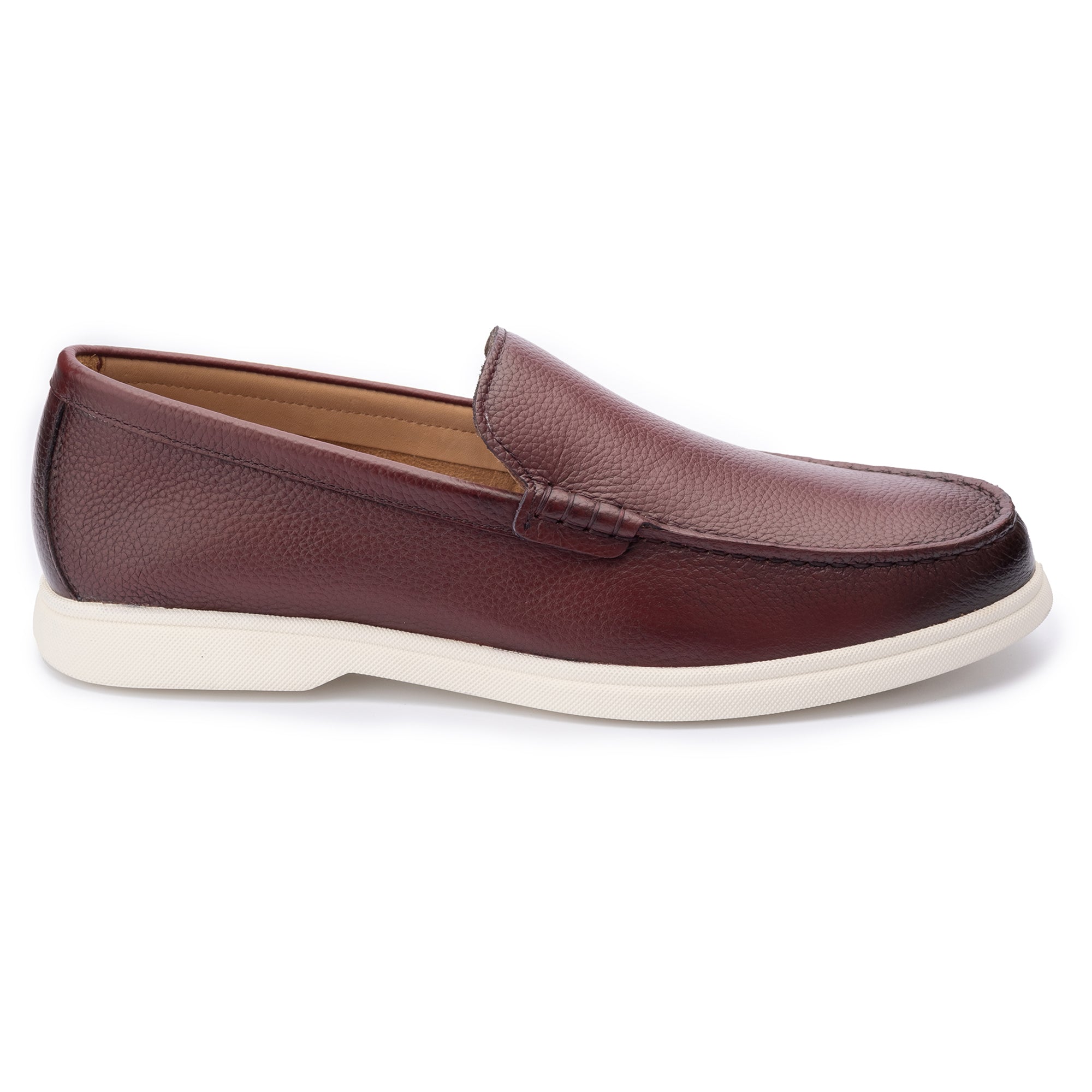
Deep reds against navy produce a combination that reads as deliberate and well-observed rather than conventional. Burgundy and oxblood tones share enough blue in their undertone to sit comfortably alongside navy without clashing, while the warmth of the red family creates interest that tan cannot quite match.
This pairing tends to work best in an office or restaurant context rather than at formal events, where the colour choice requires confidence to carry. Wear it with a navy suit in a medium to dark shade; it can disappear against very dark navy. Plain or semi-brogue styles are more reliable here than heavy broguing, which can compete with the colour for attention.
Brown — Often Overlooked, Usually Right
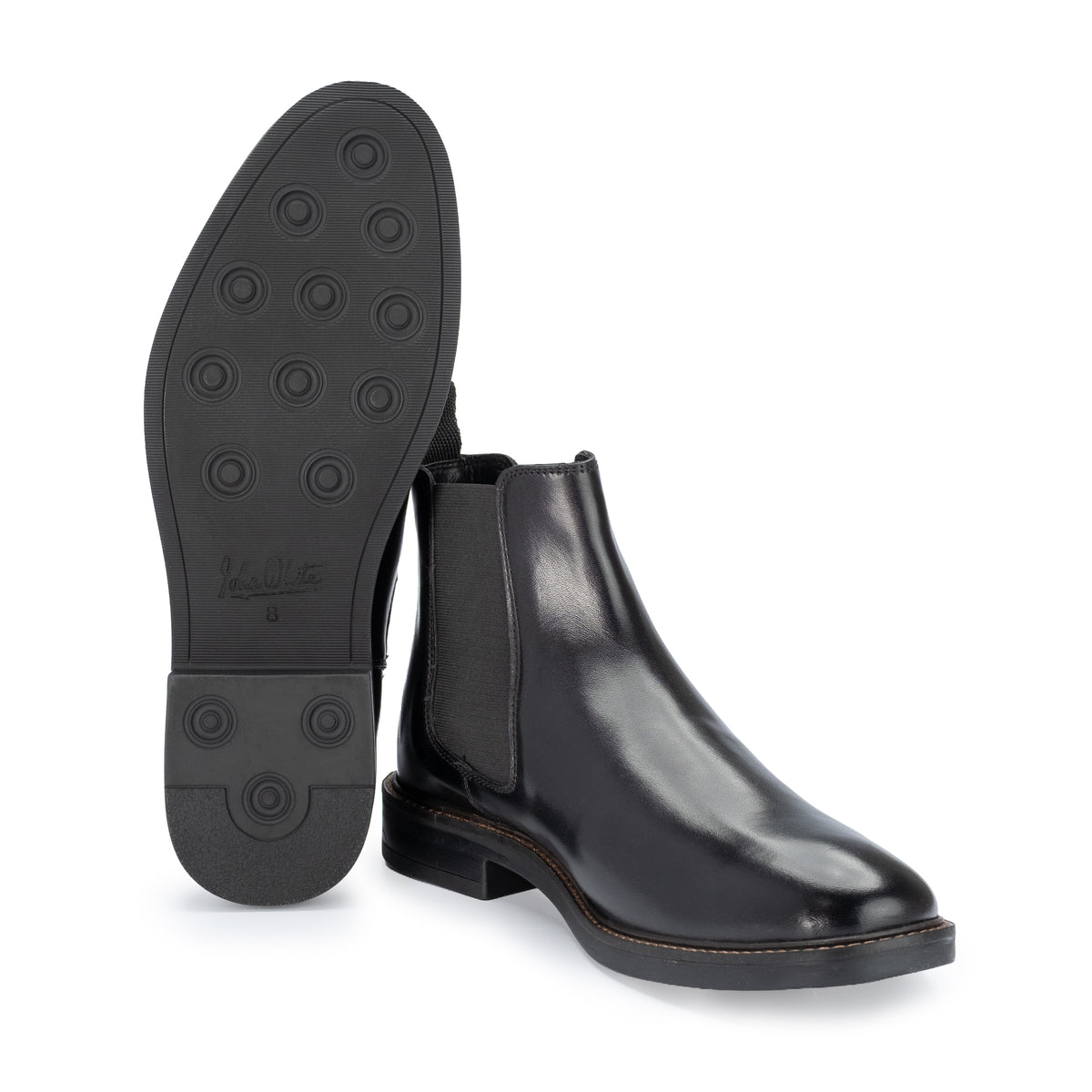
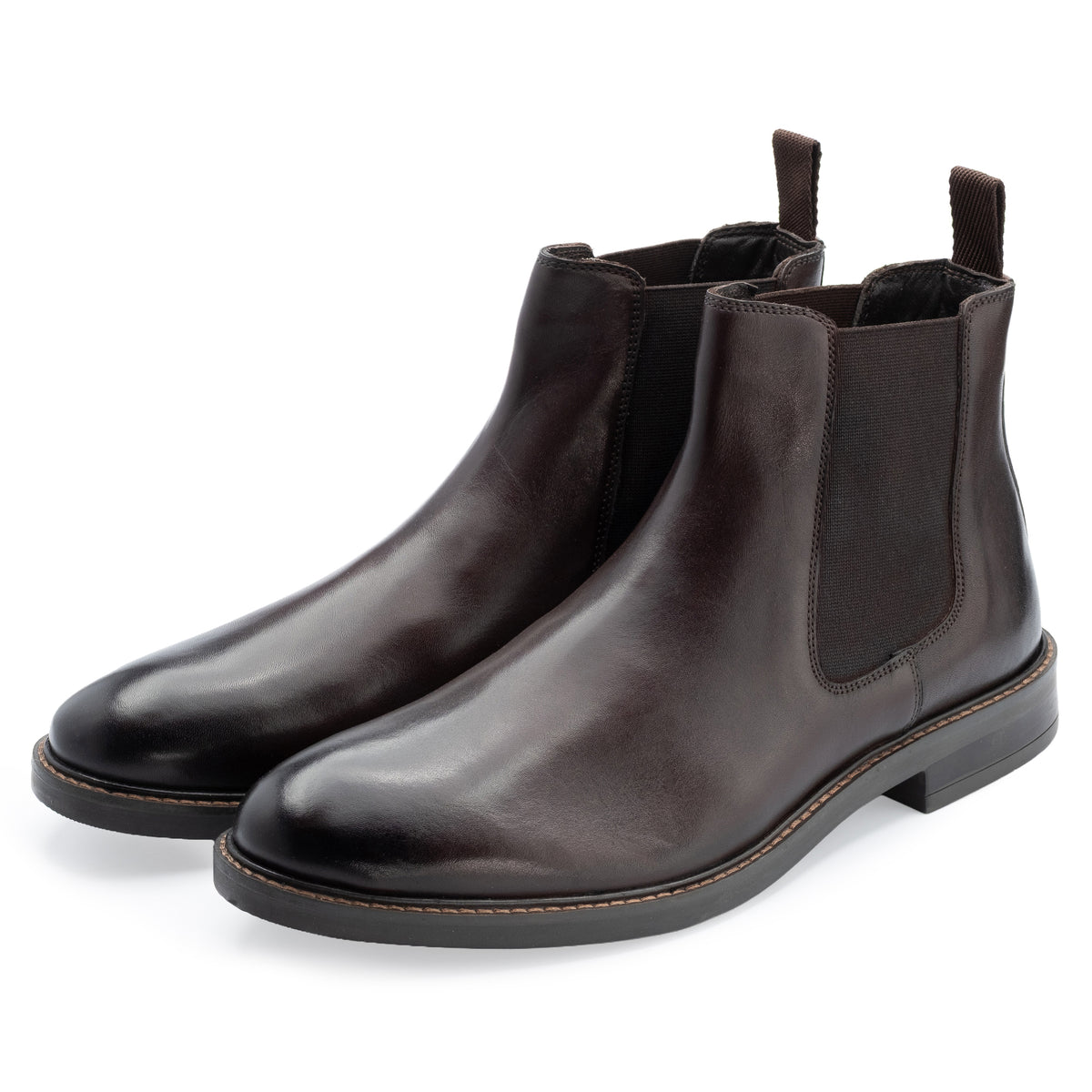
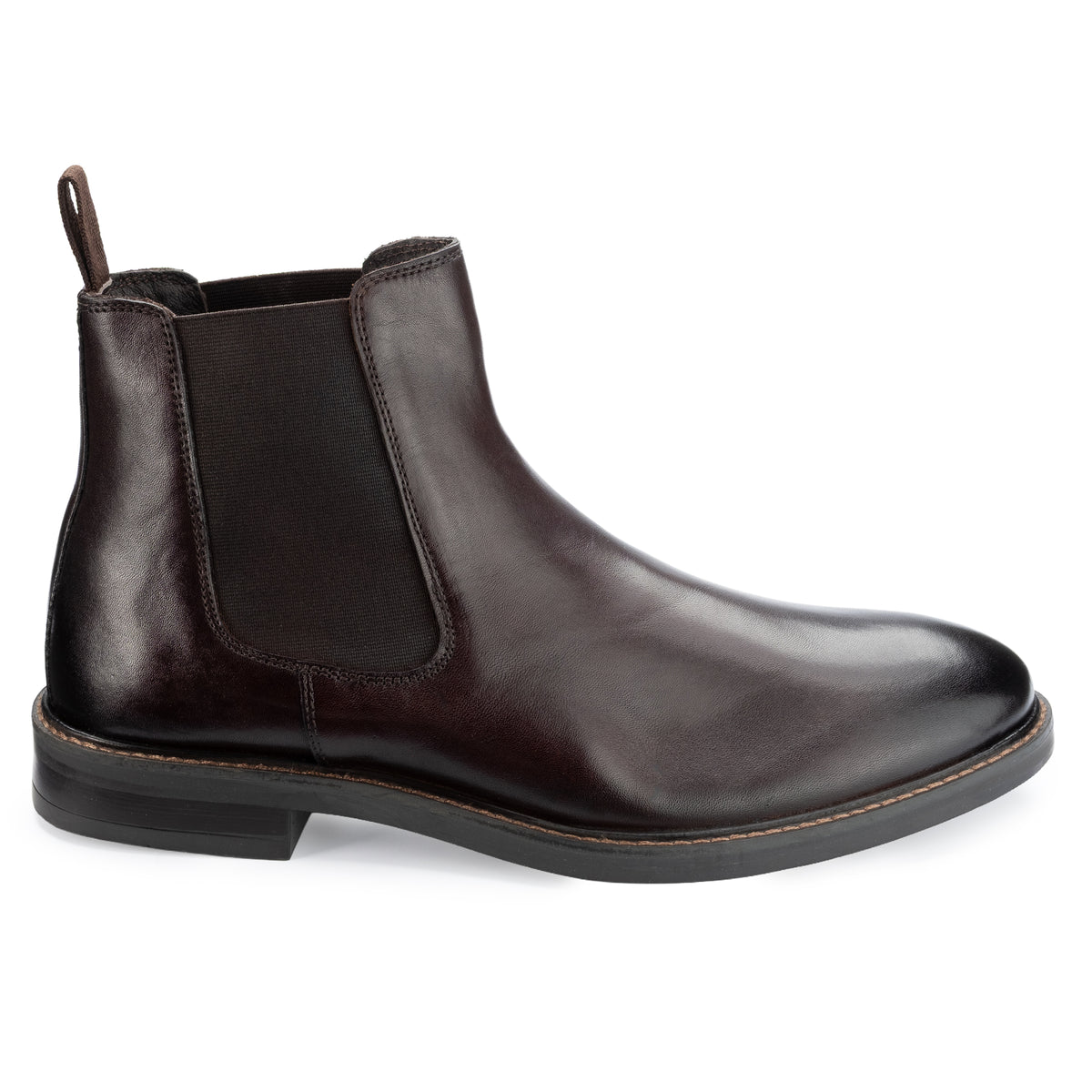
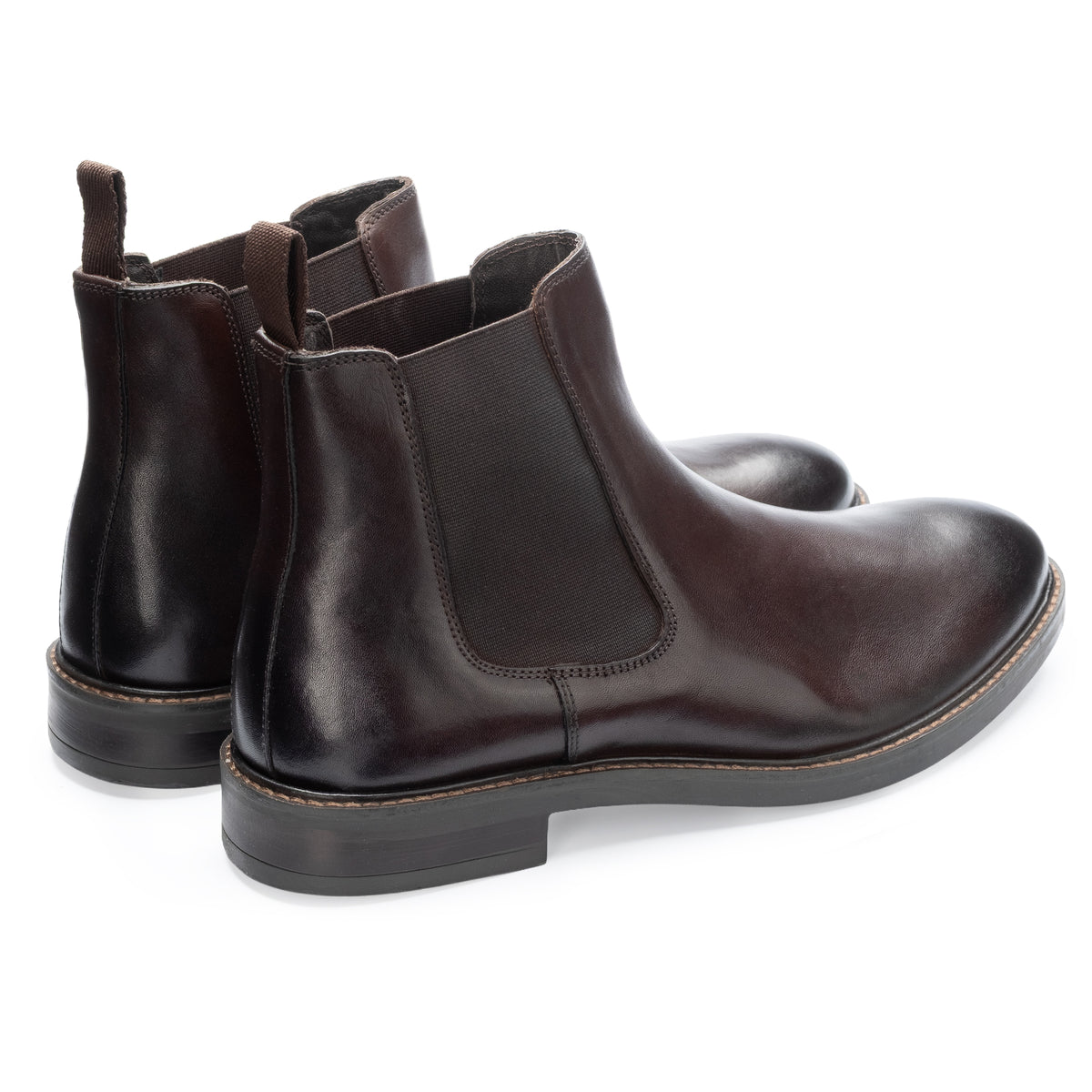
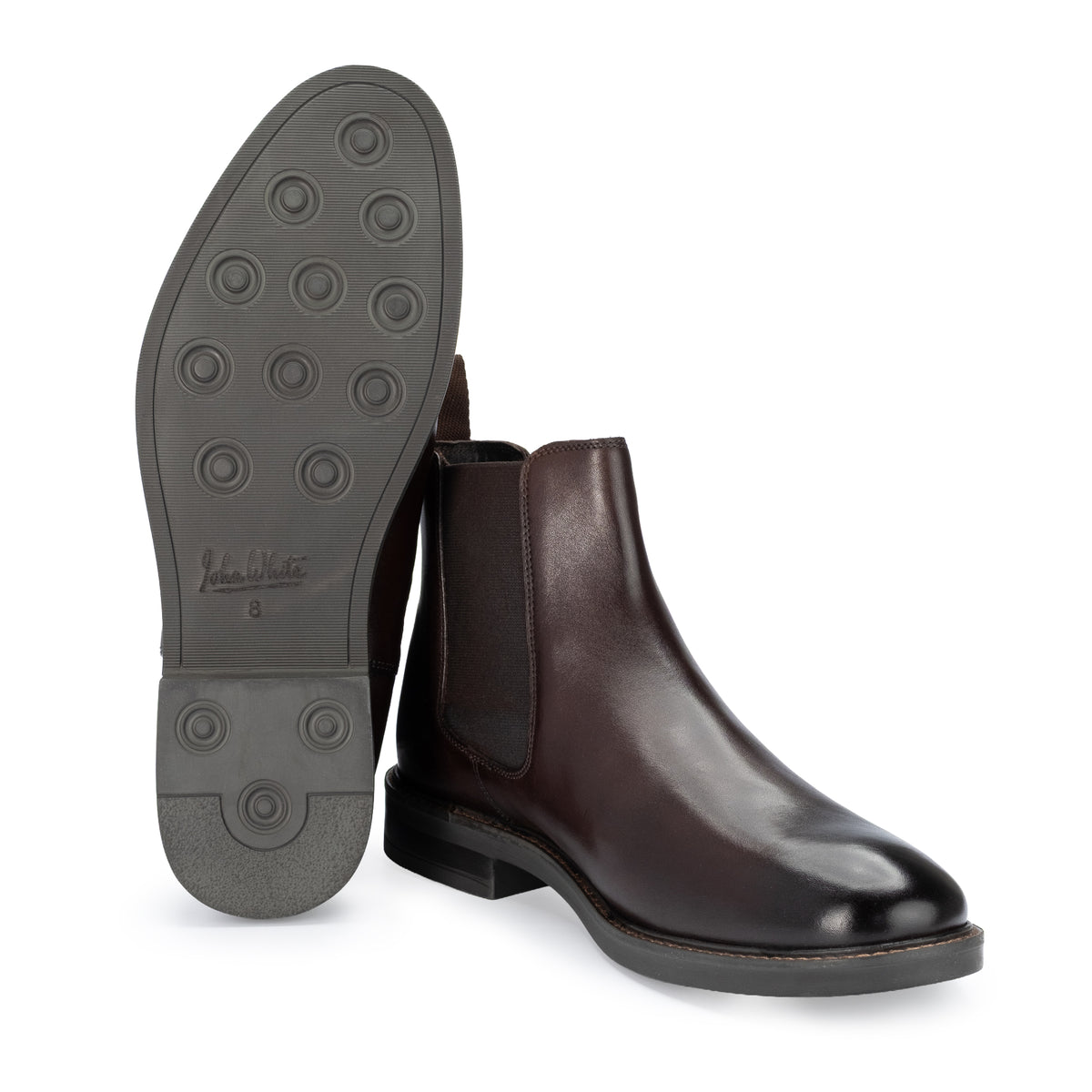
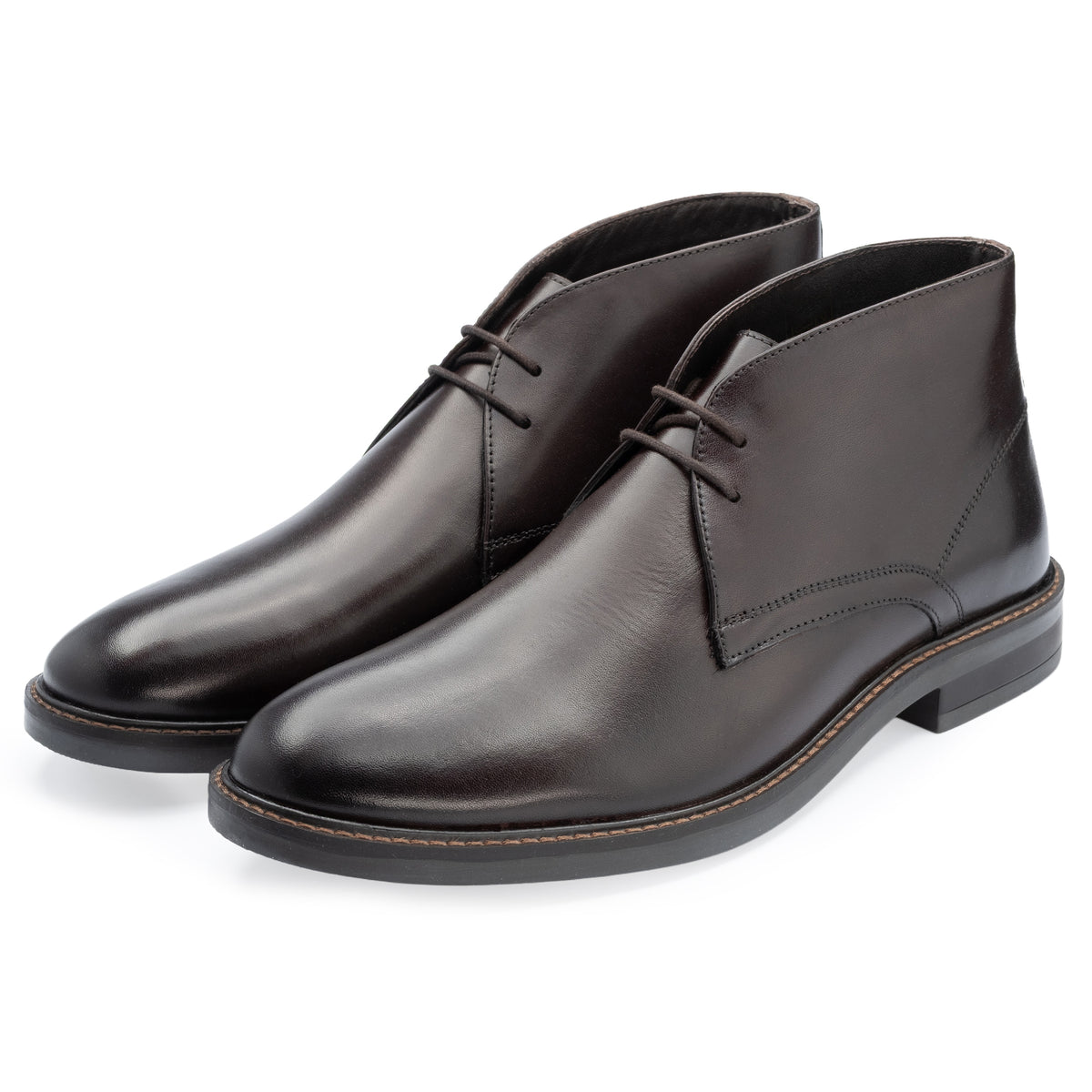
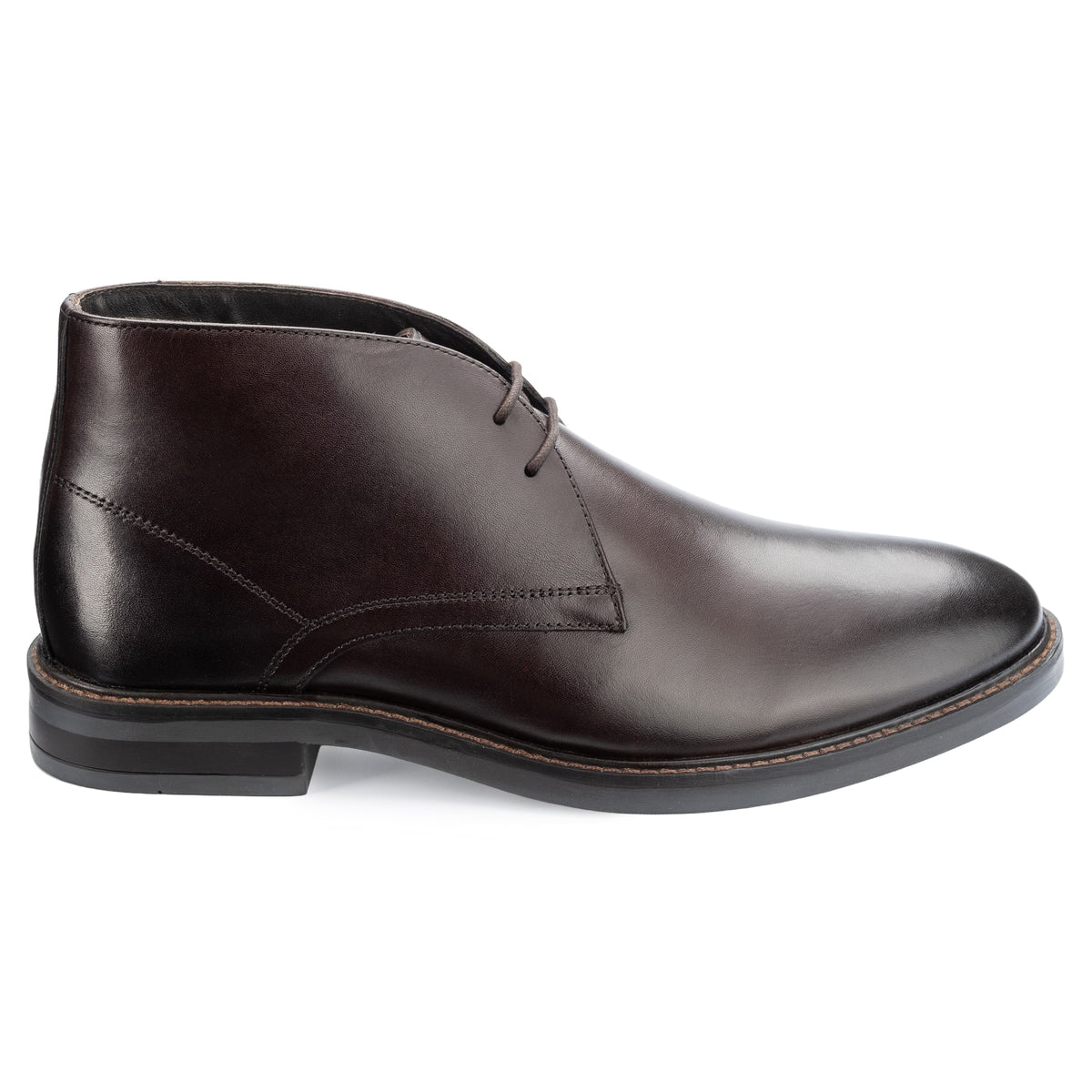
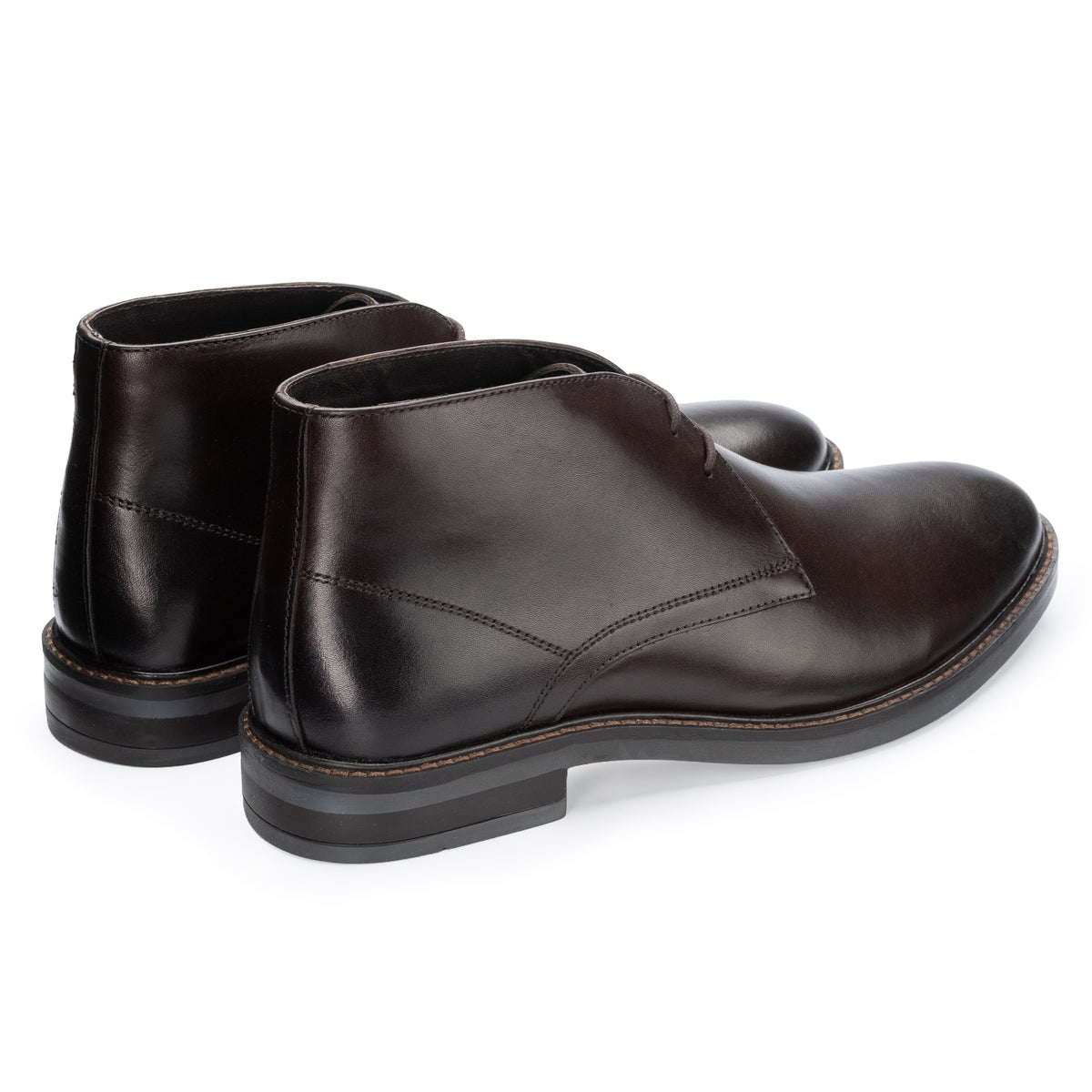
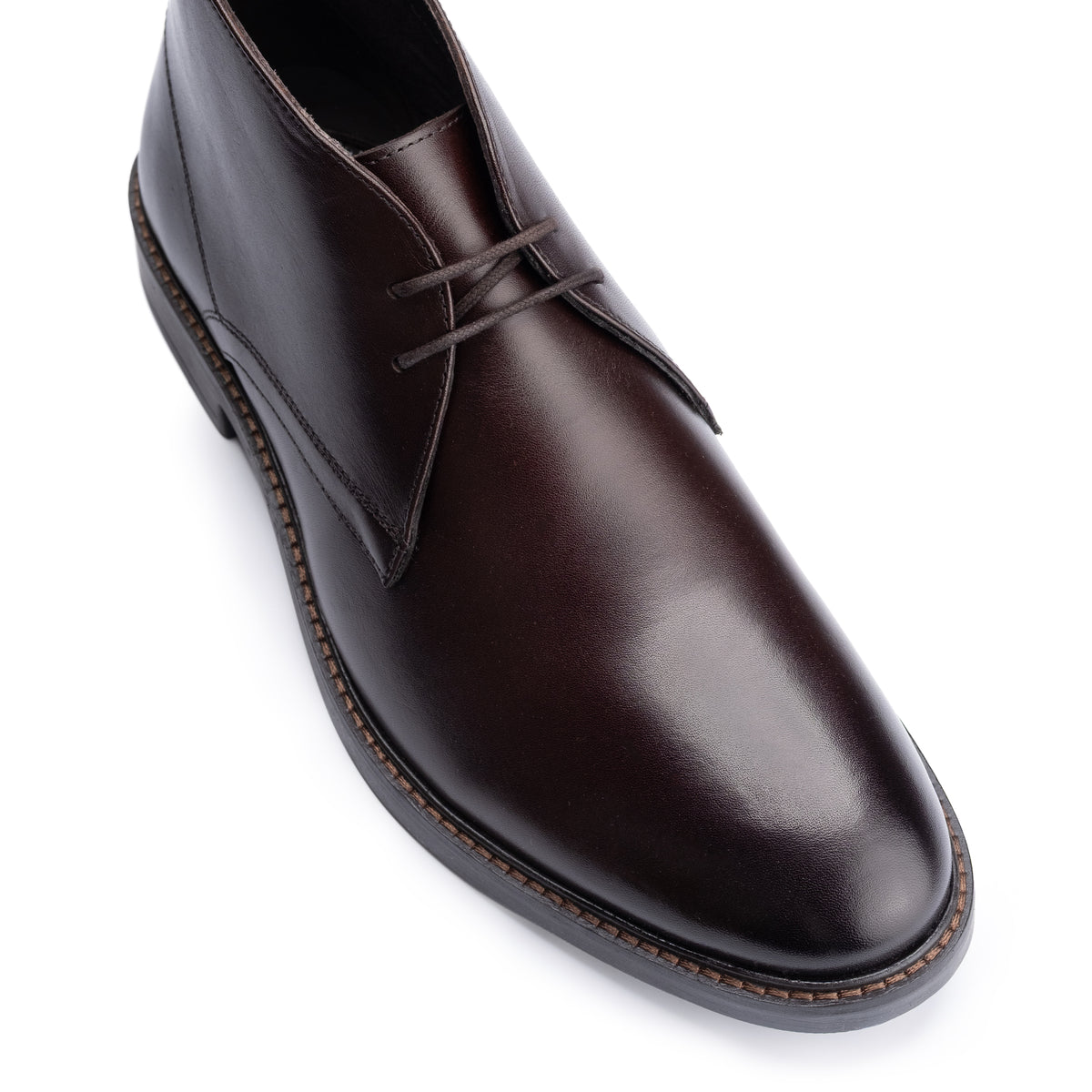
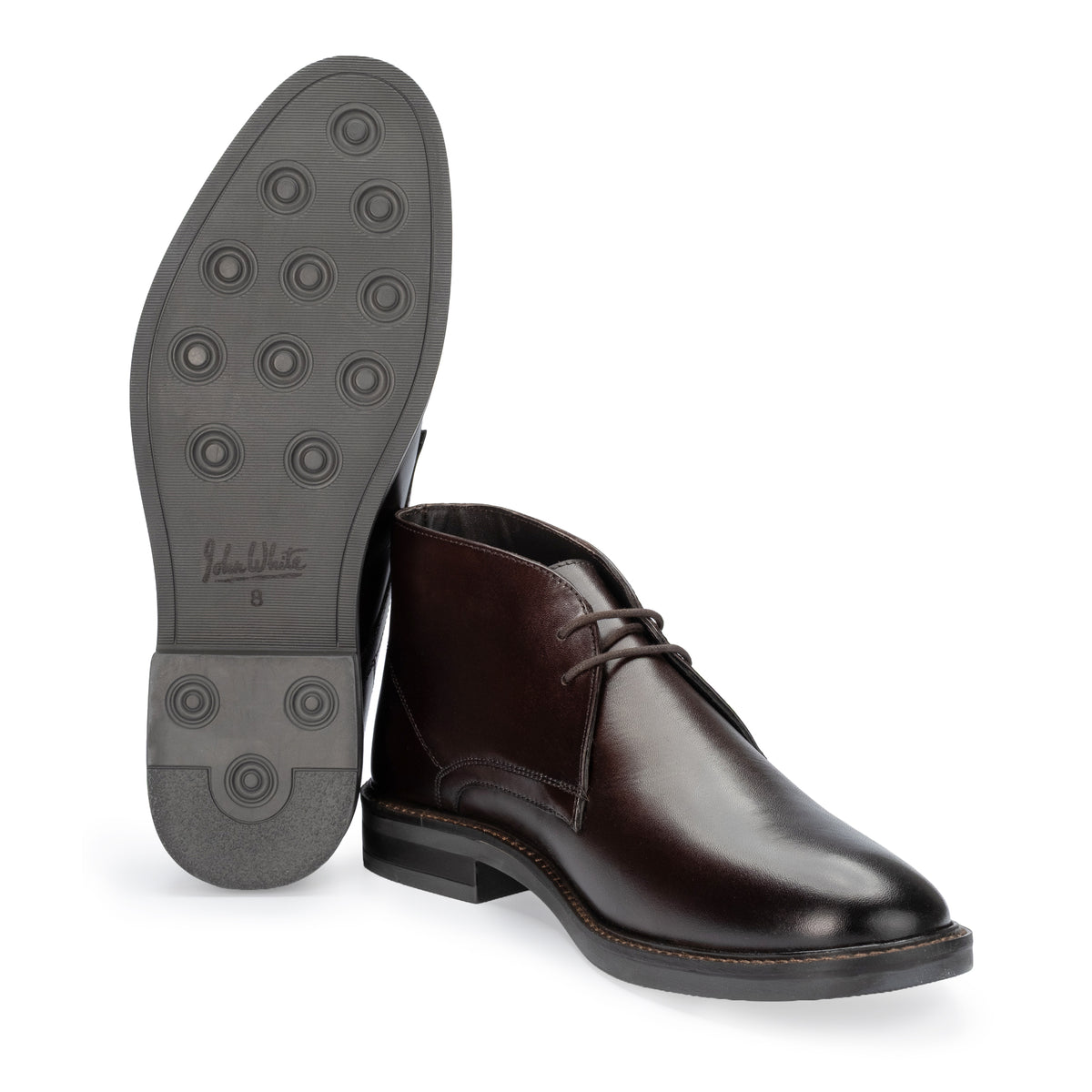
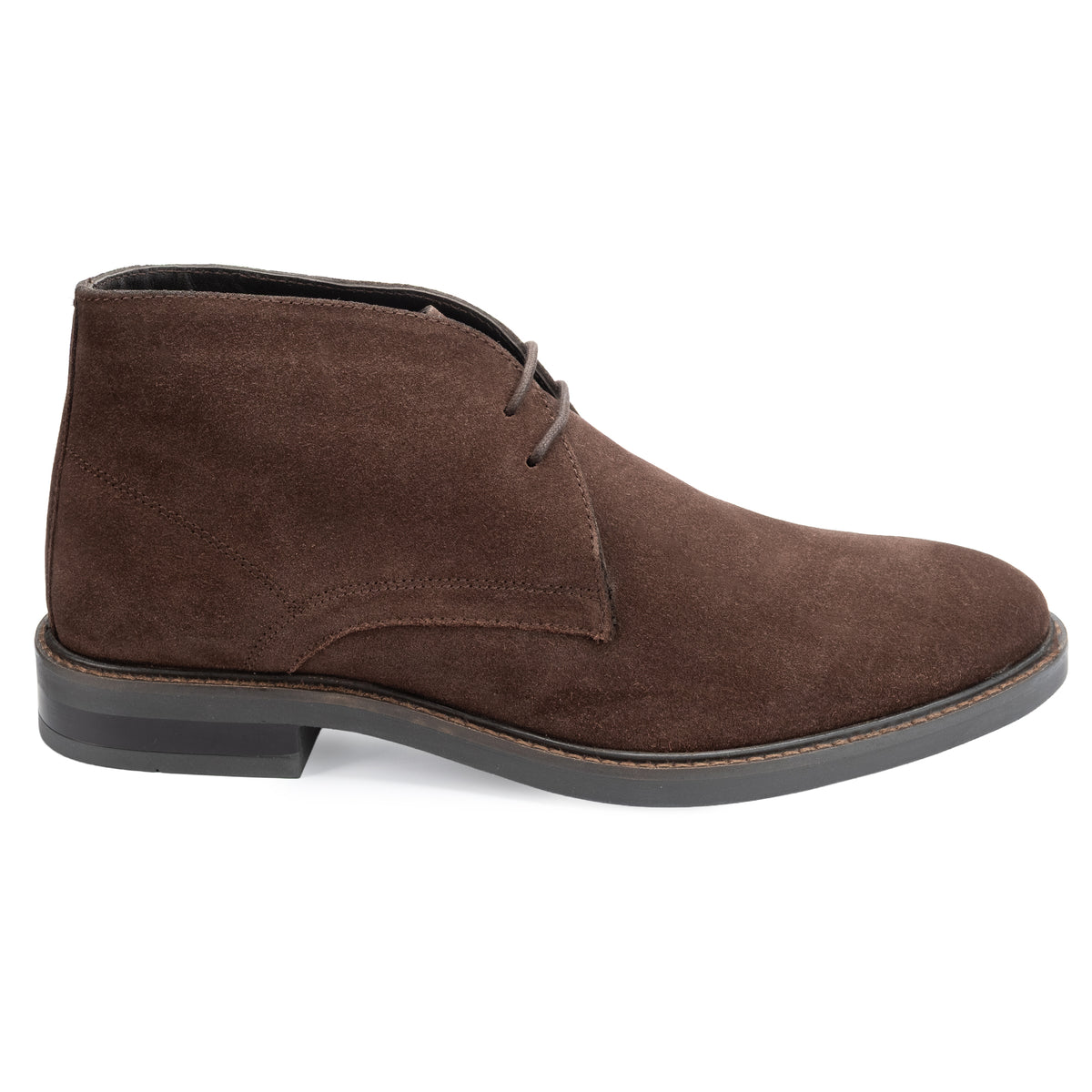
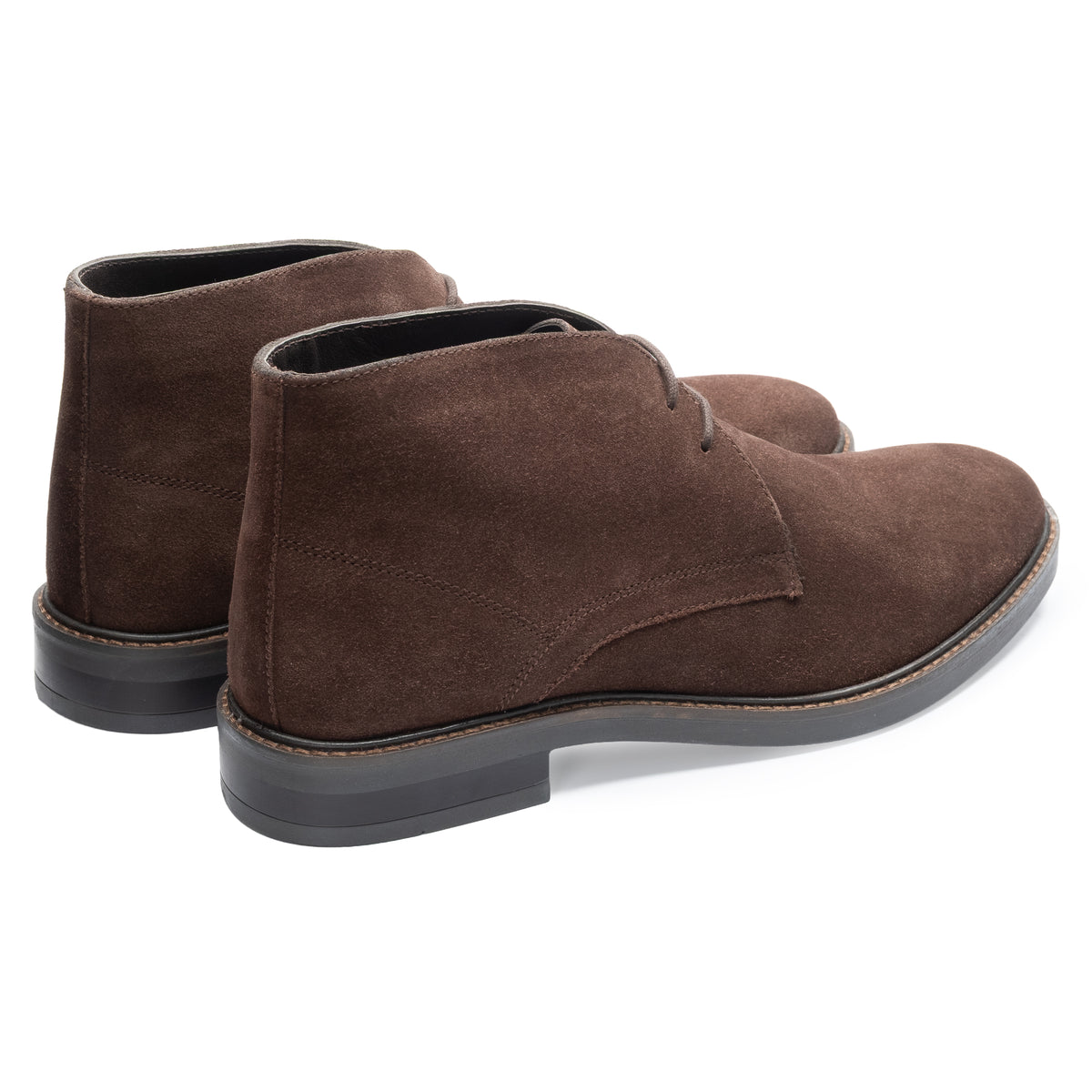
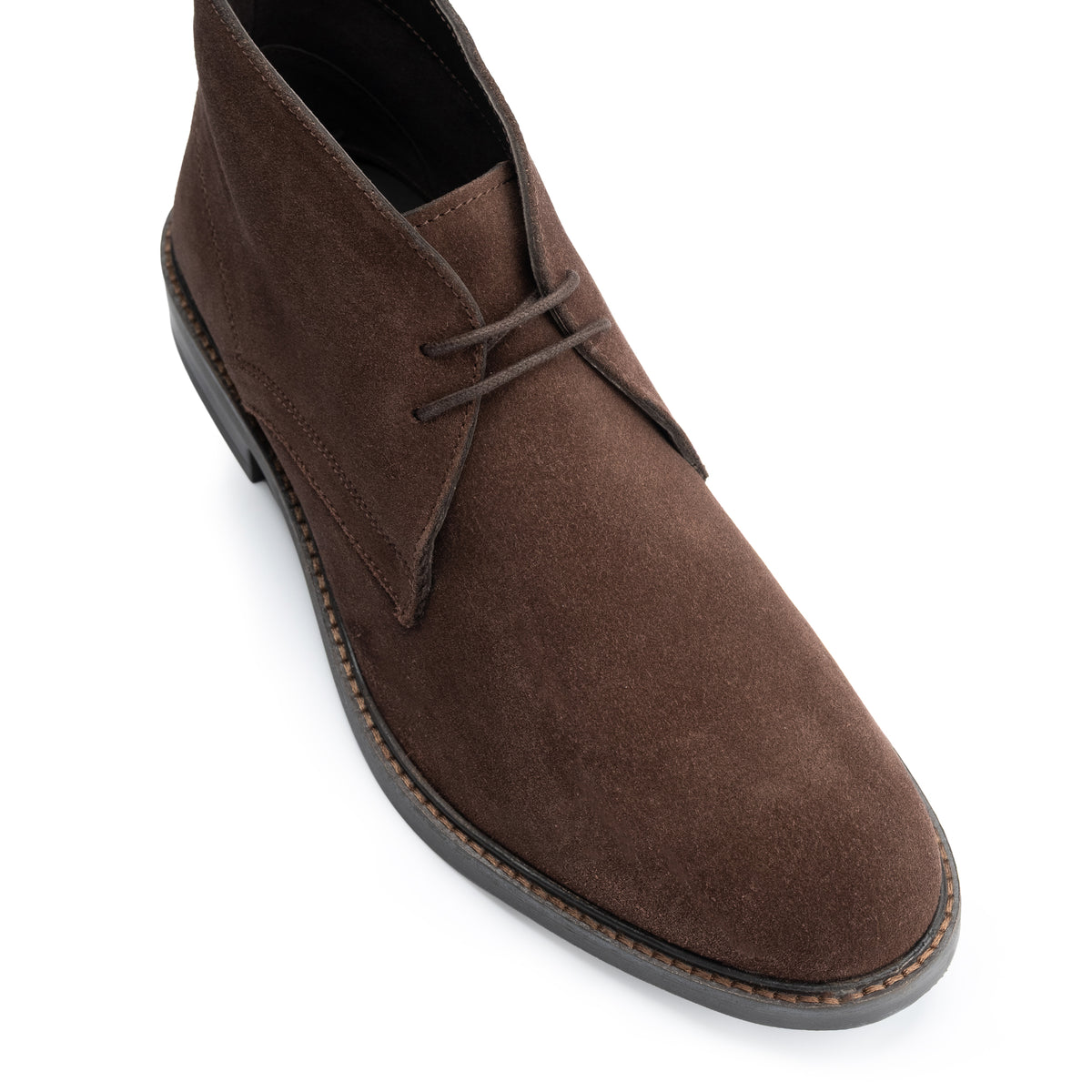
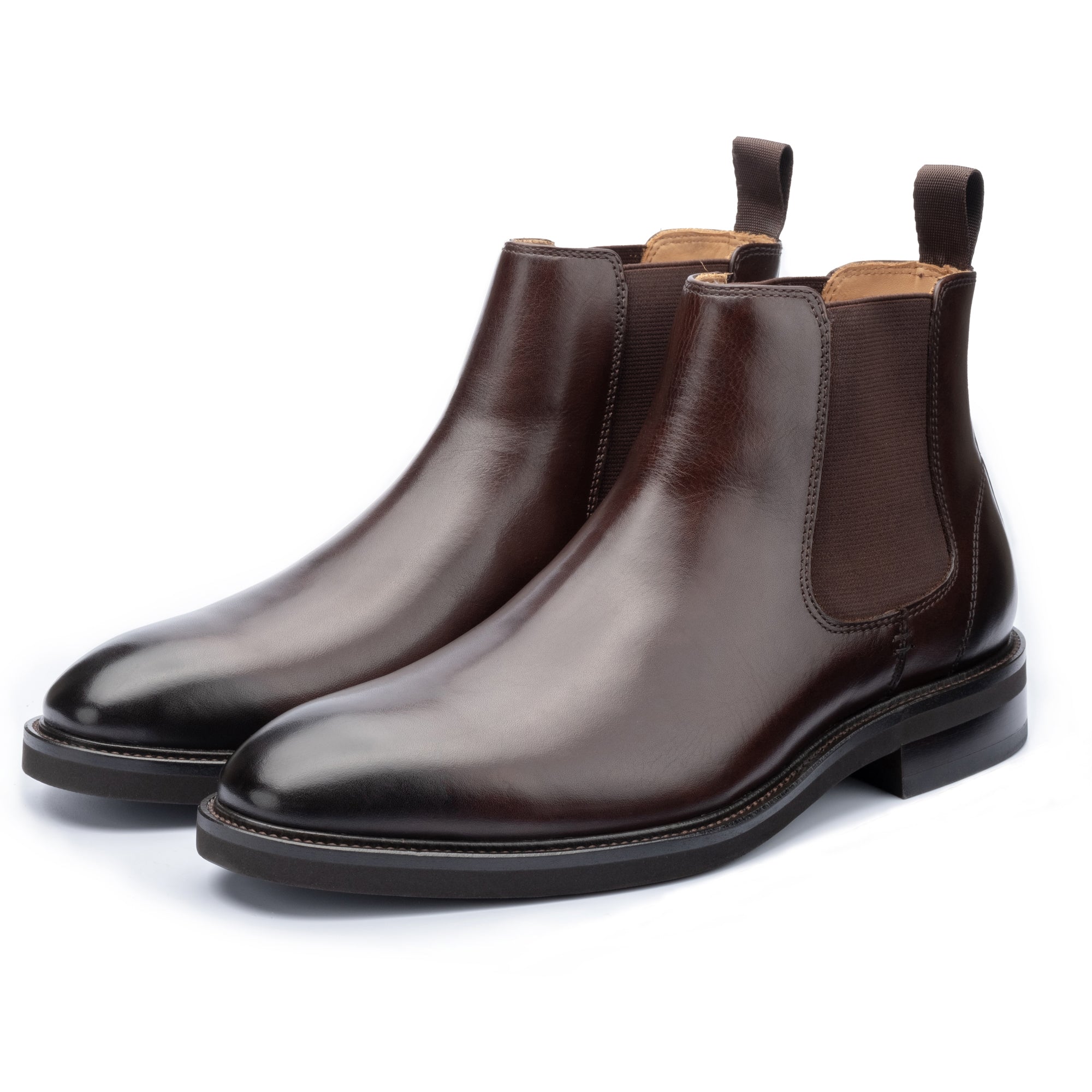
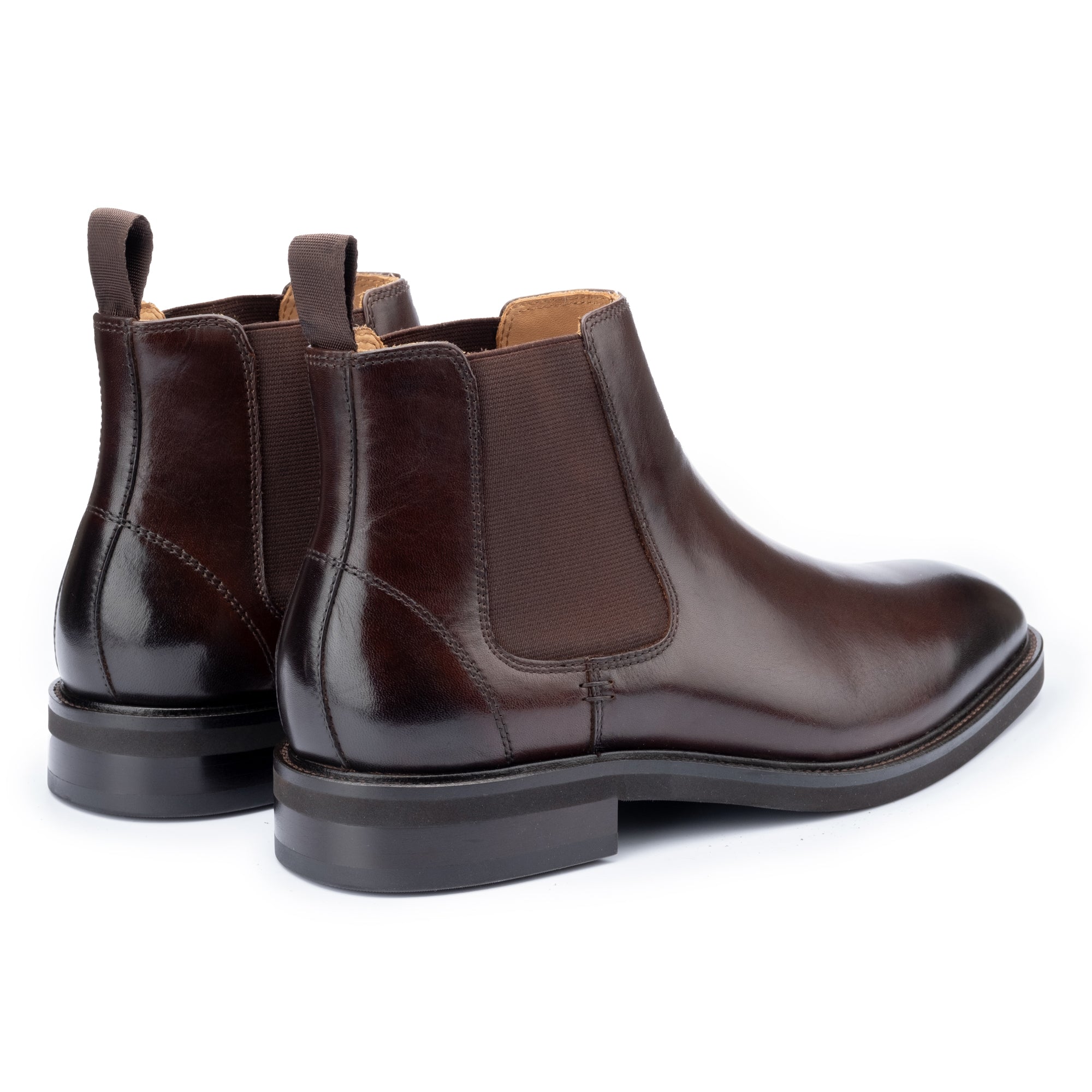
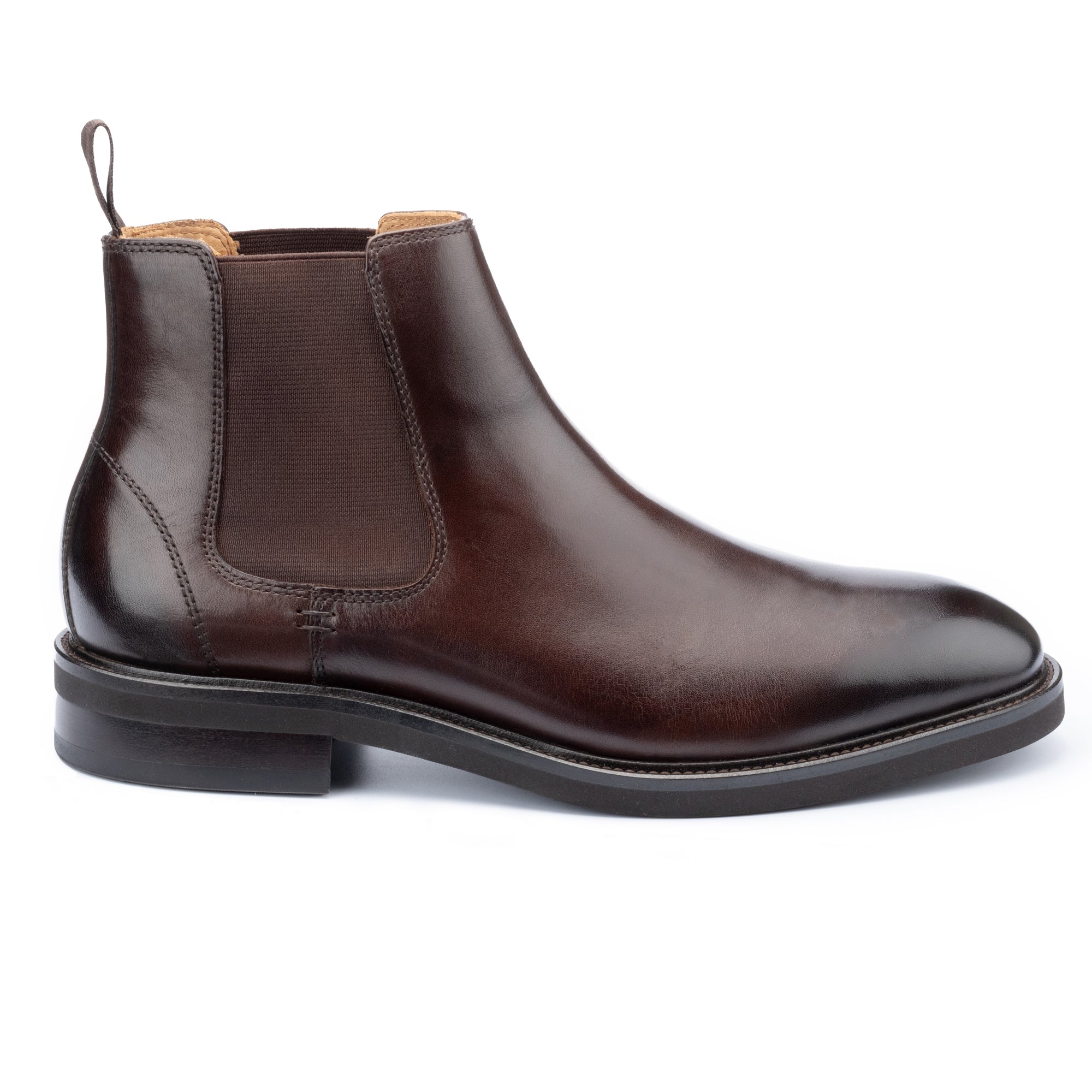
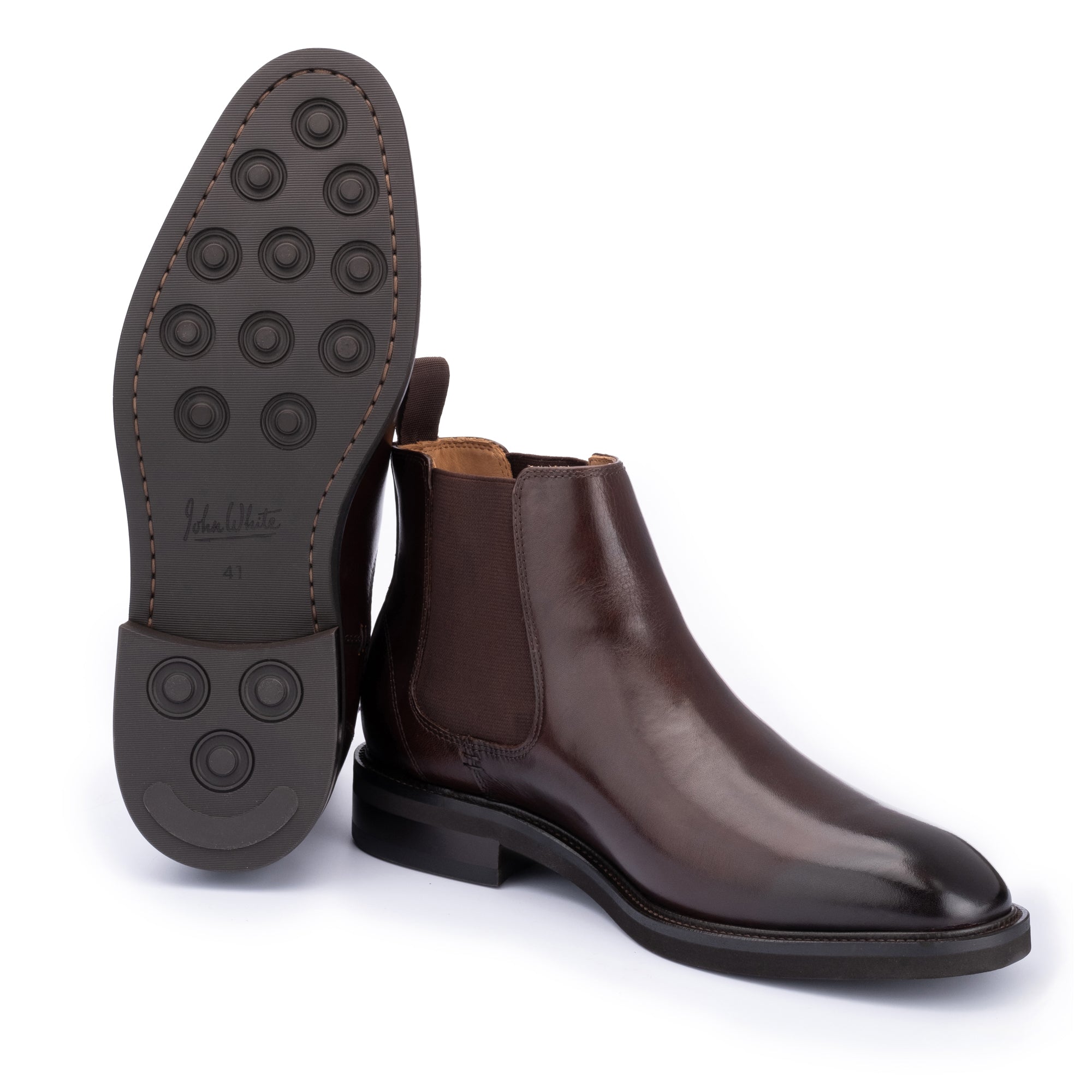
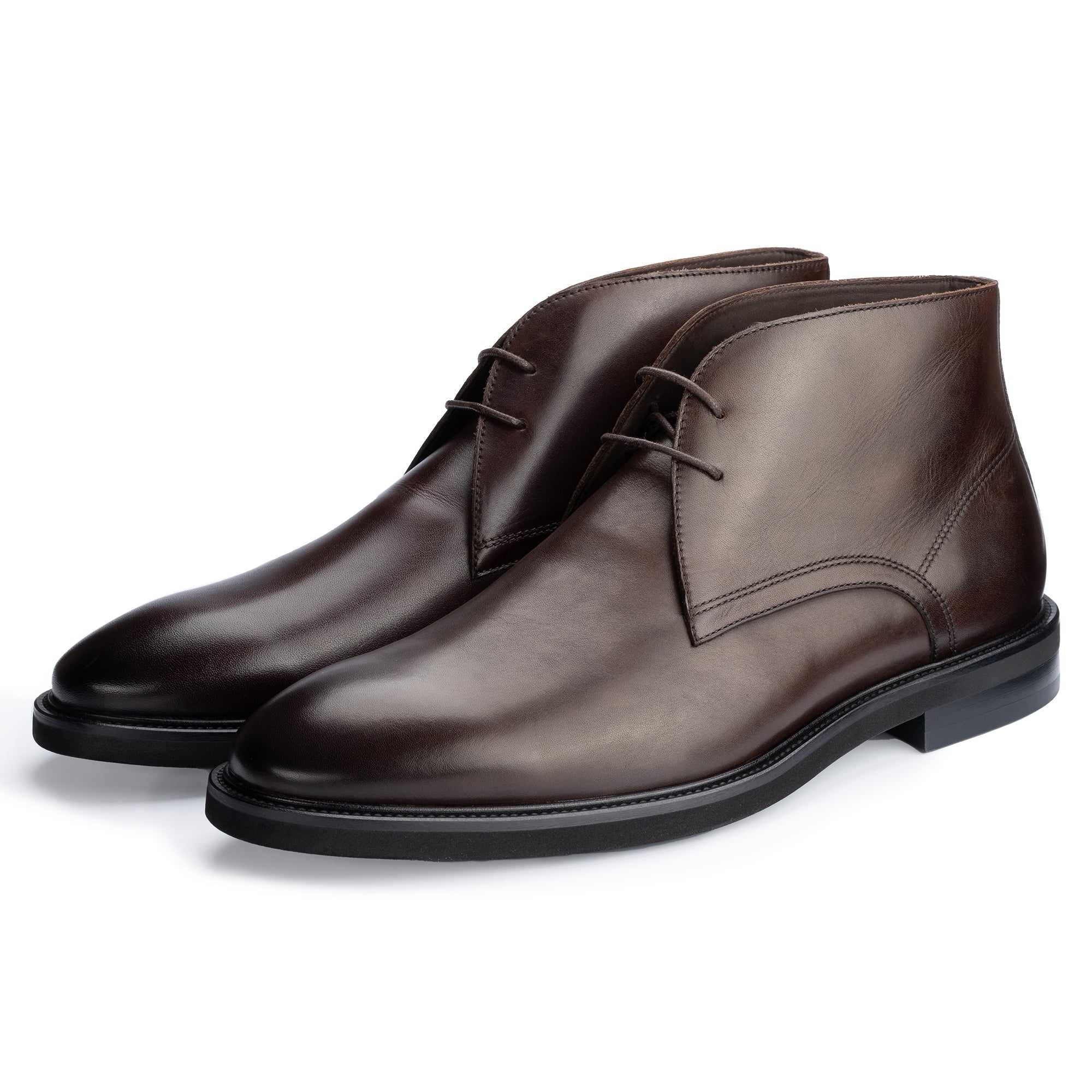
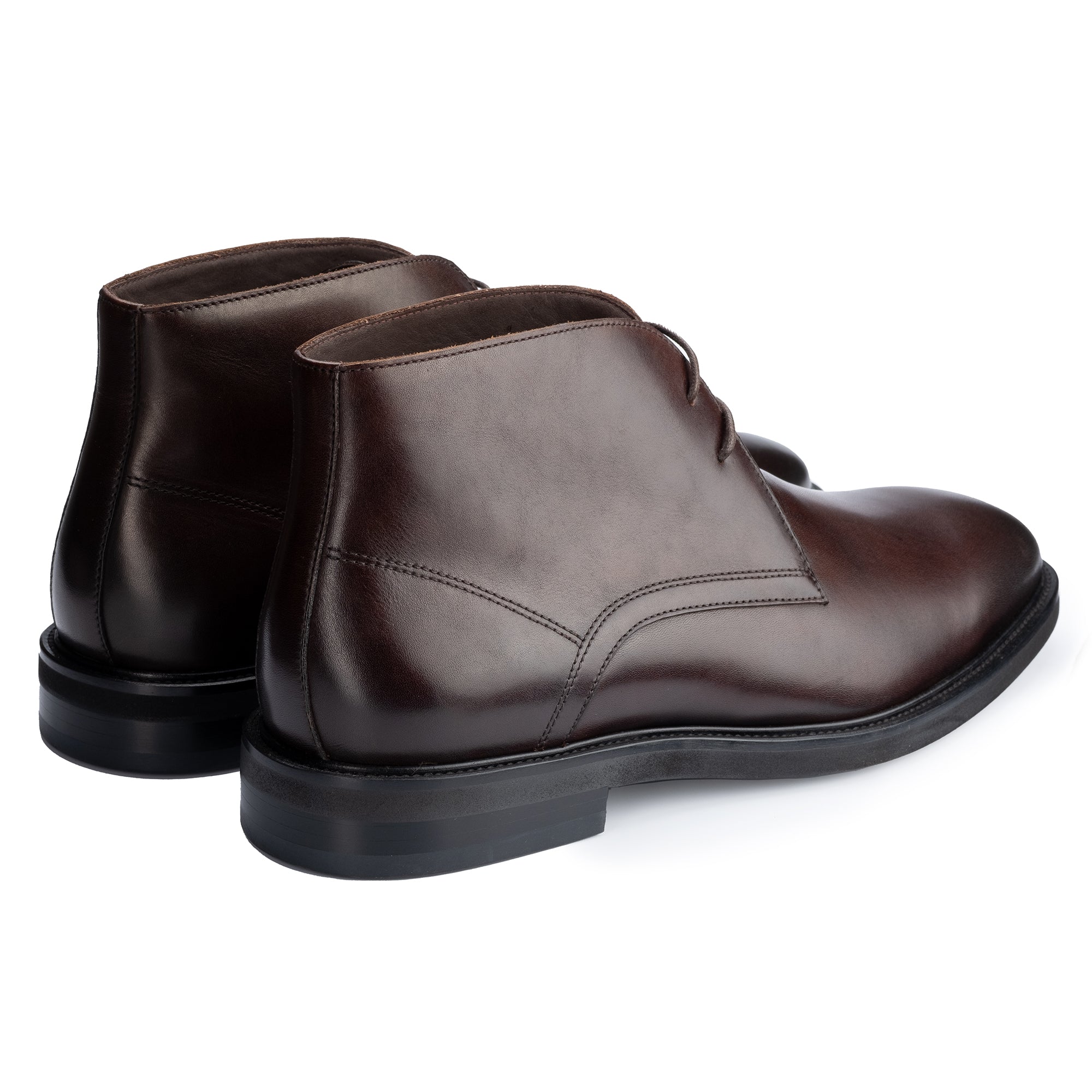
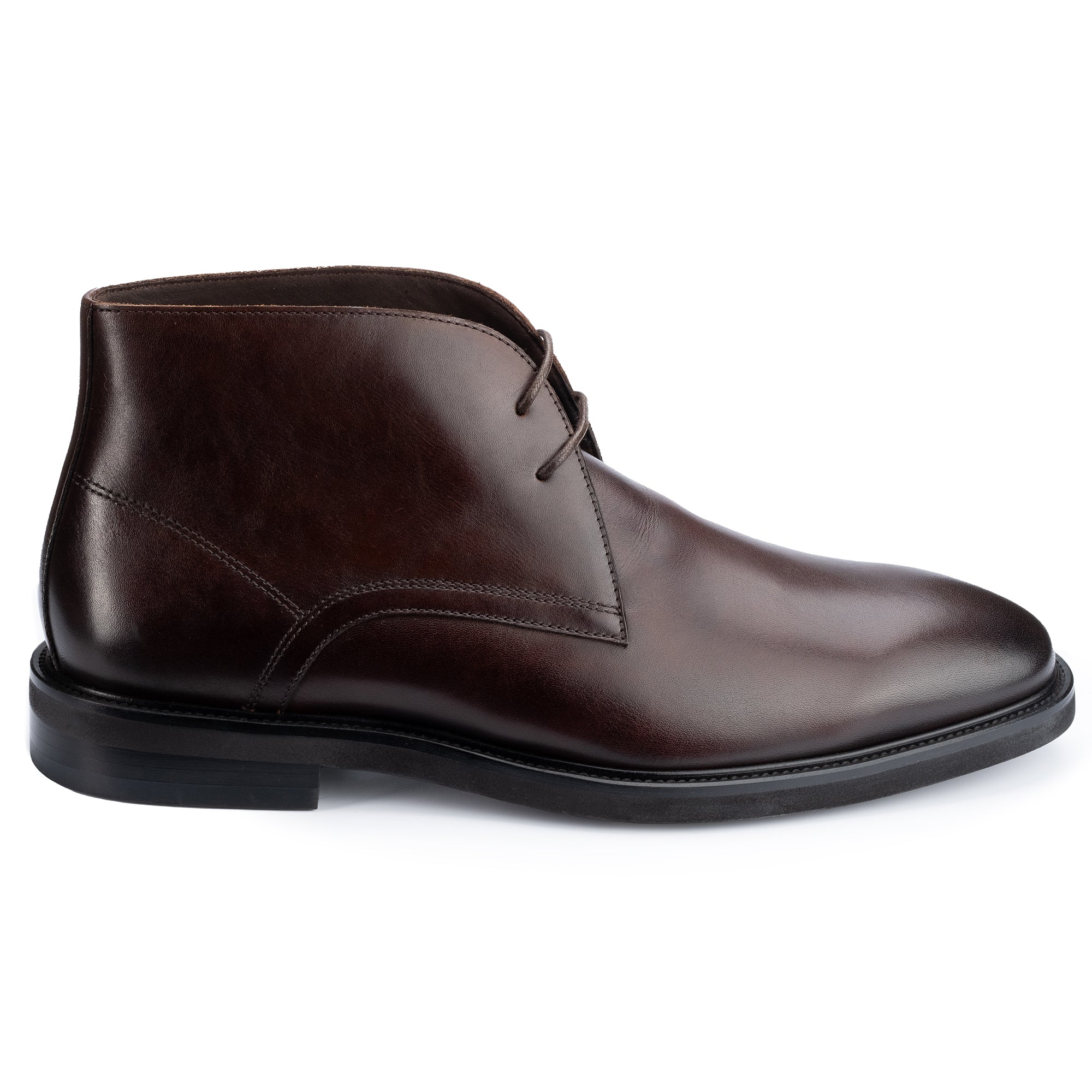
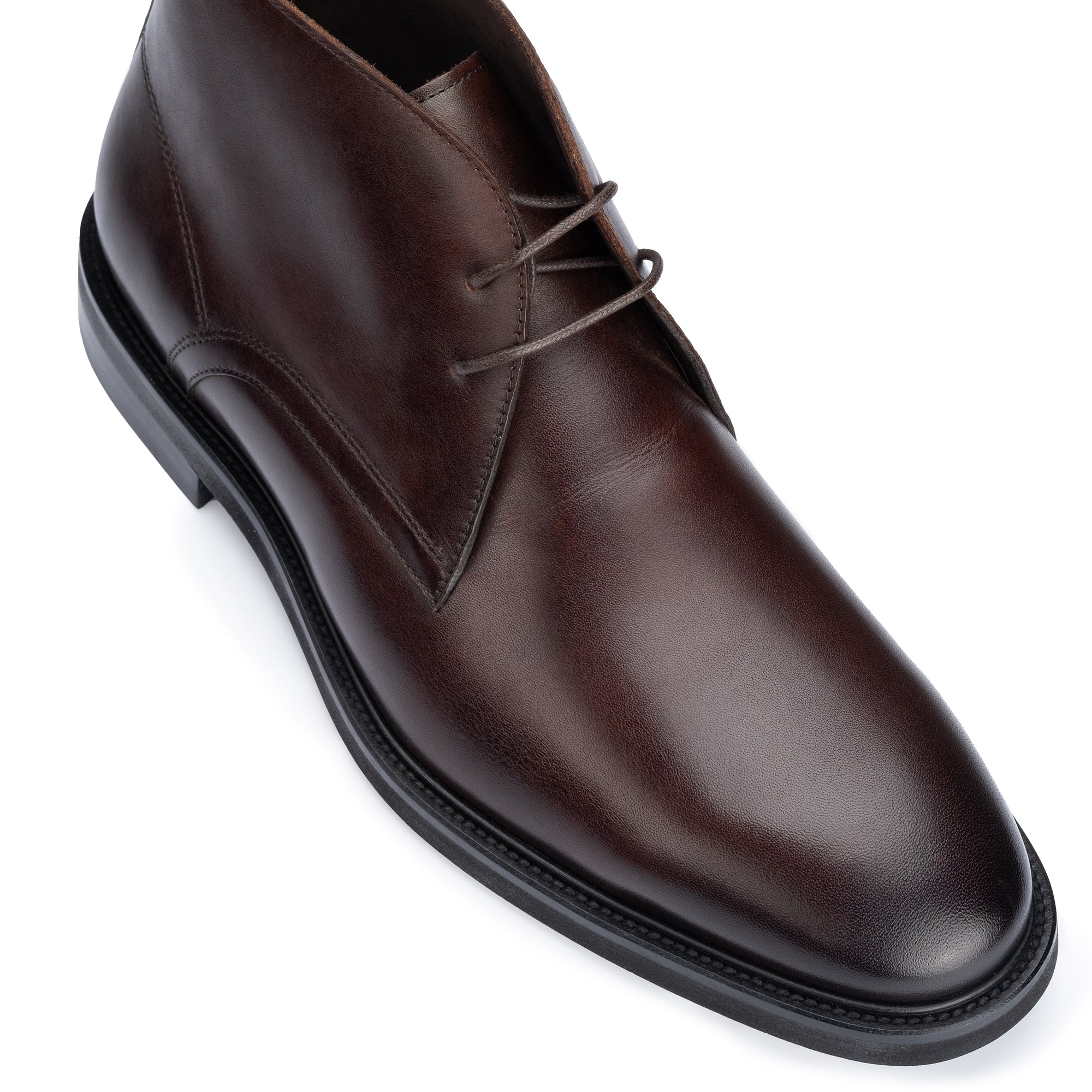
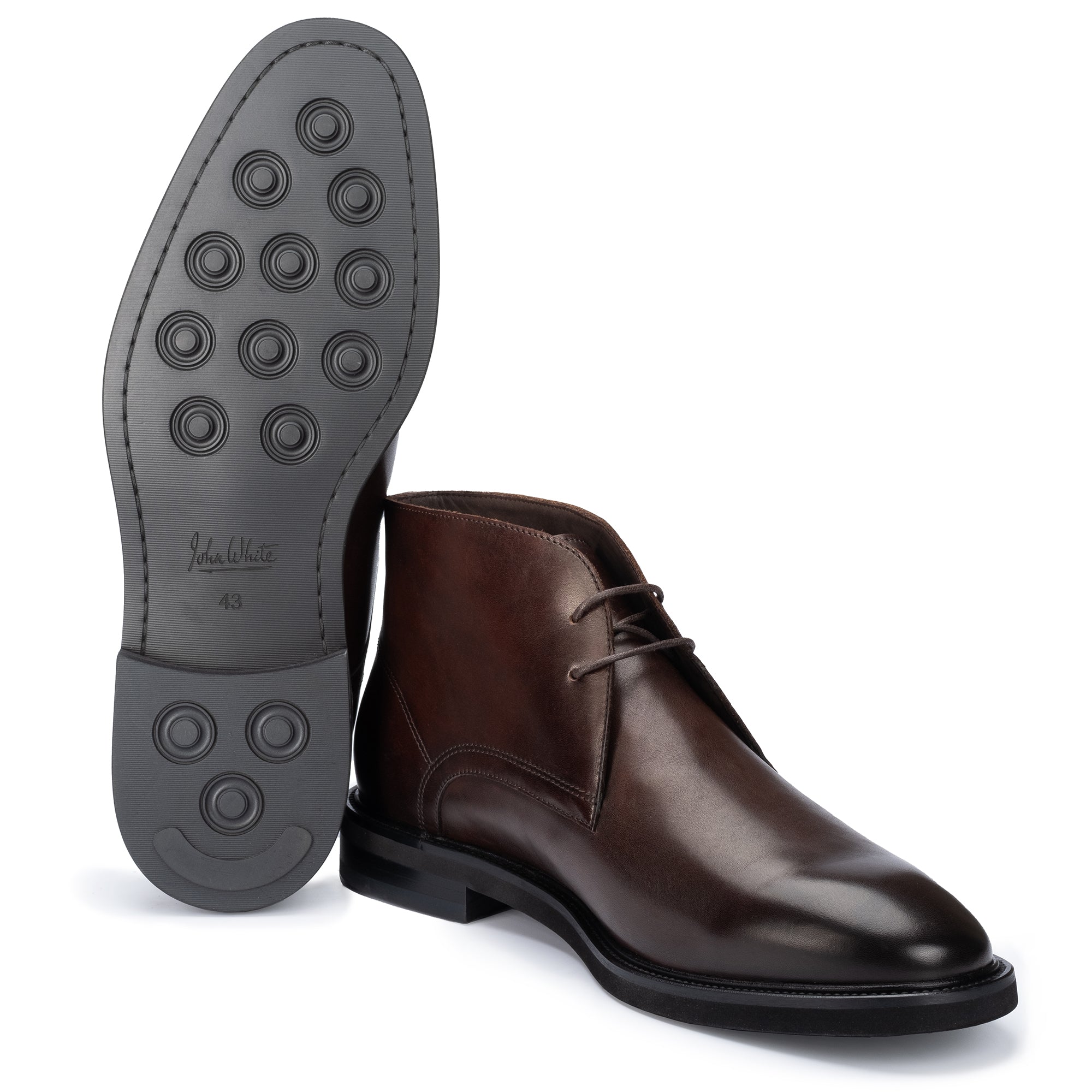
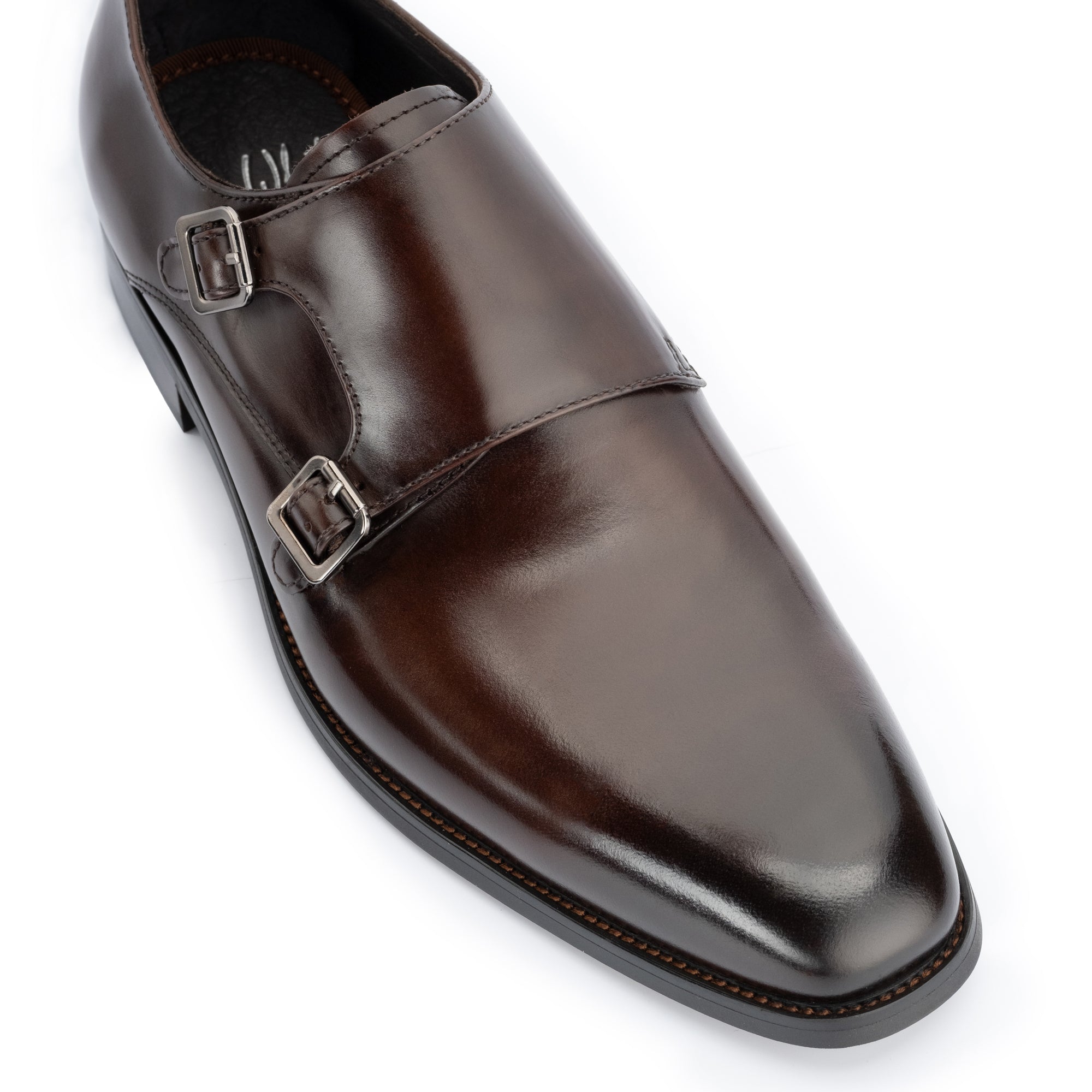
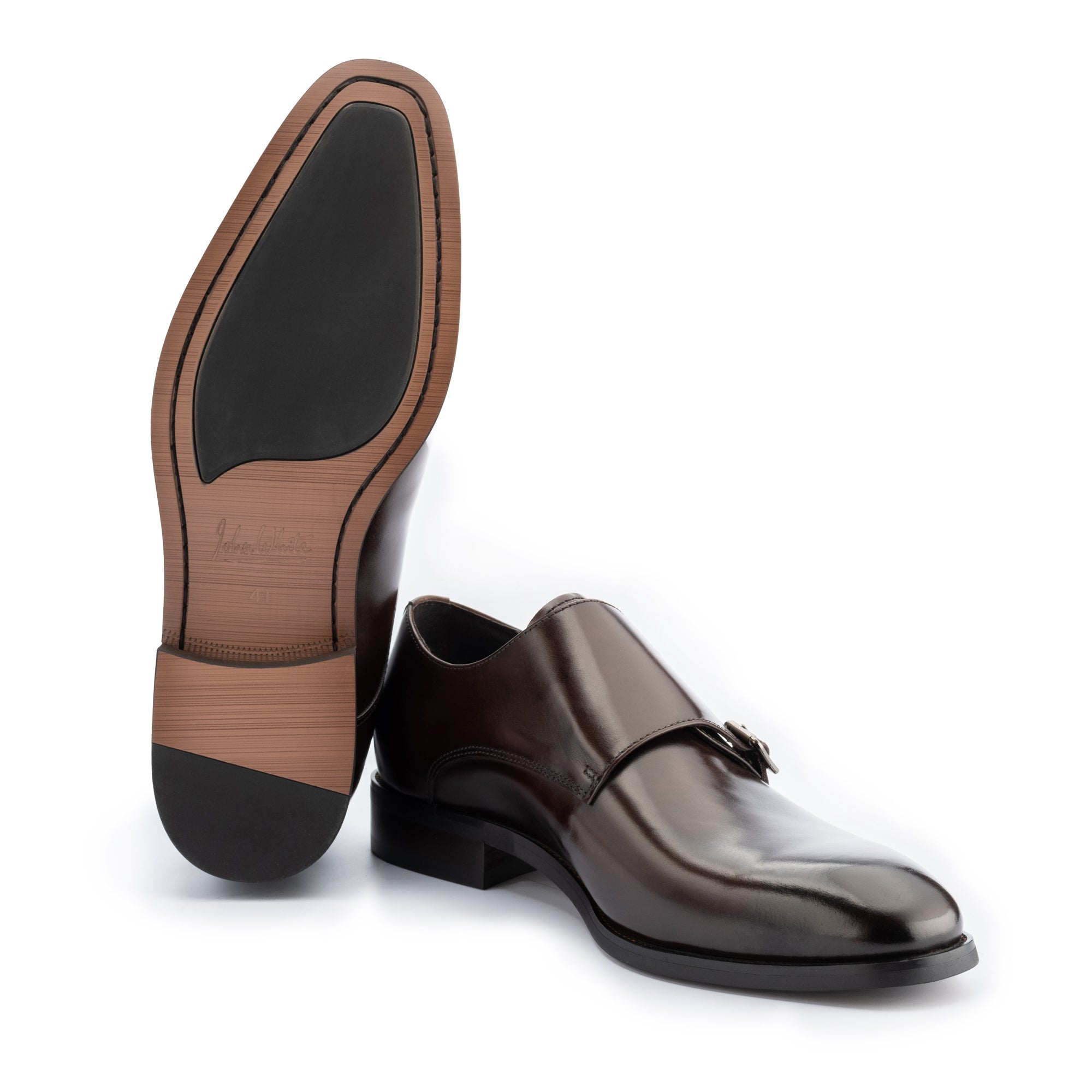
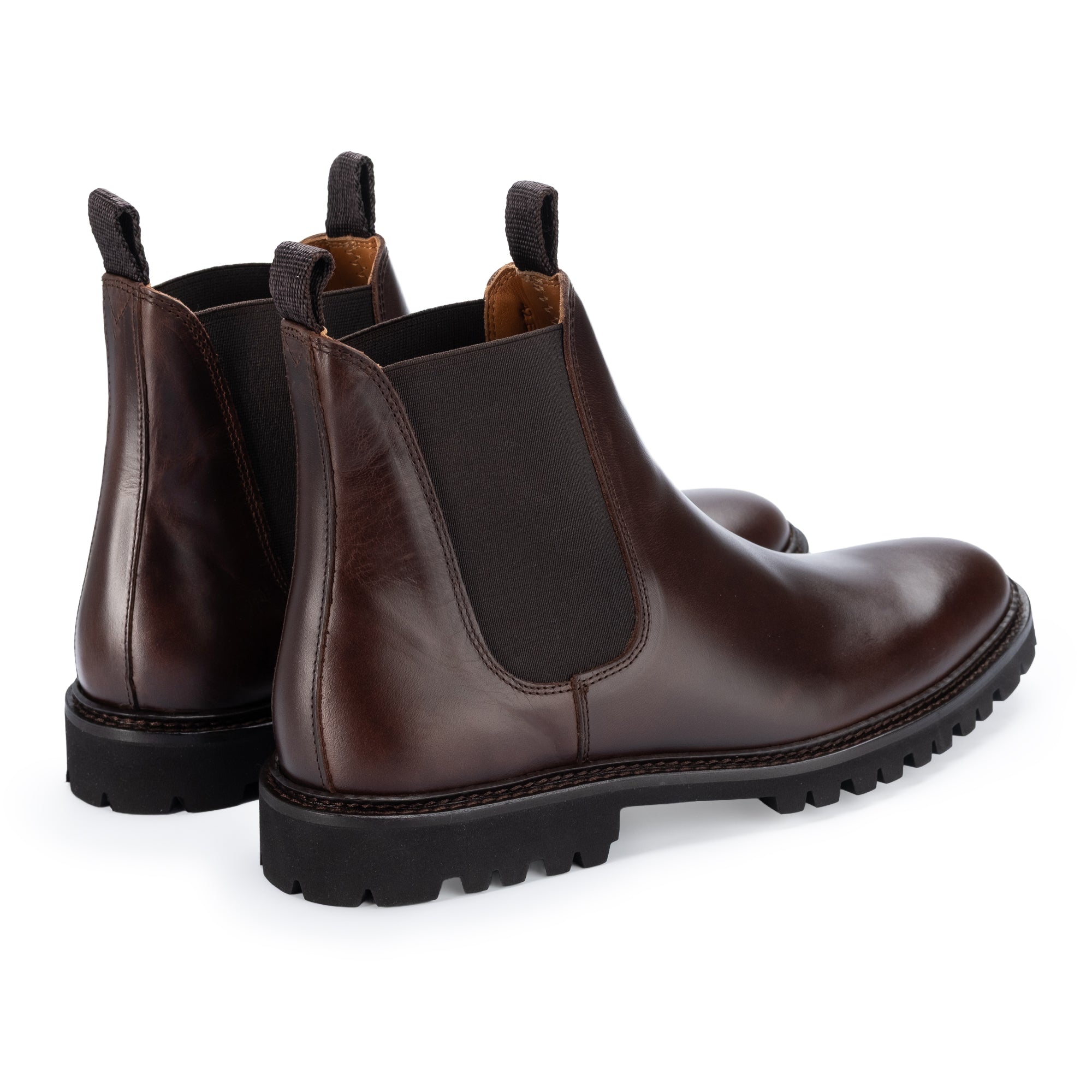
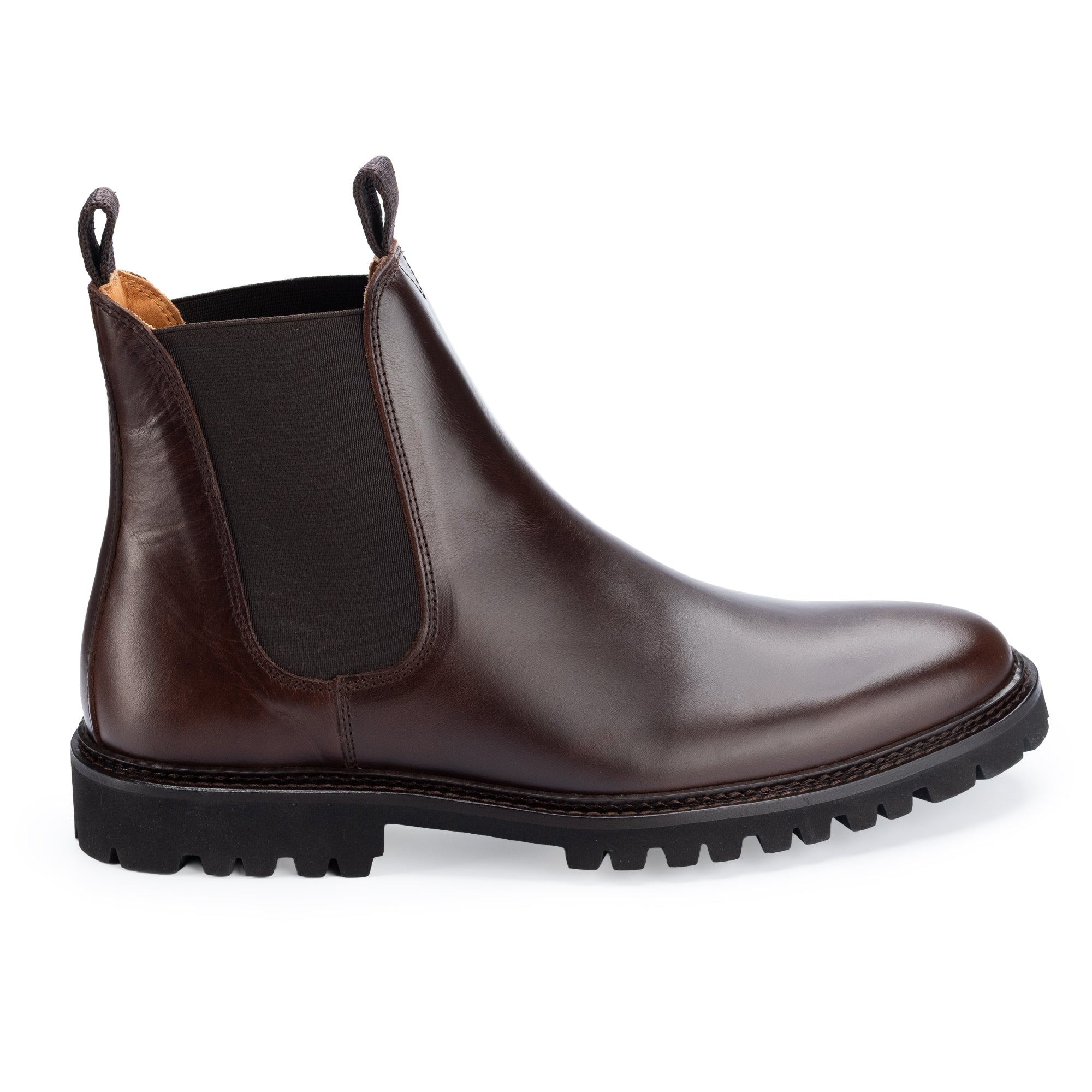
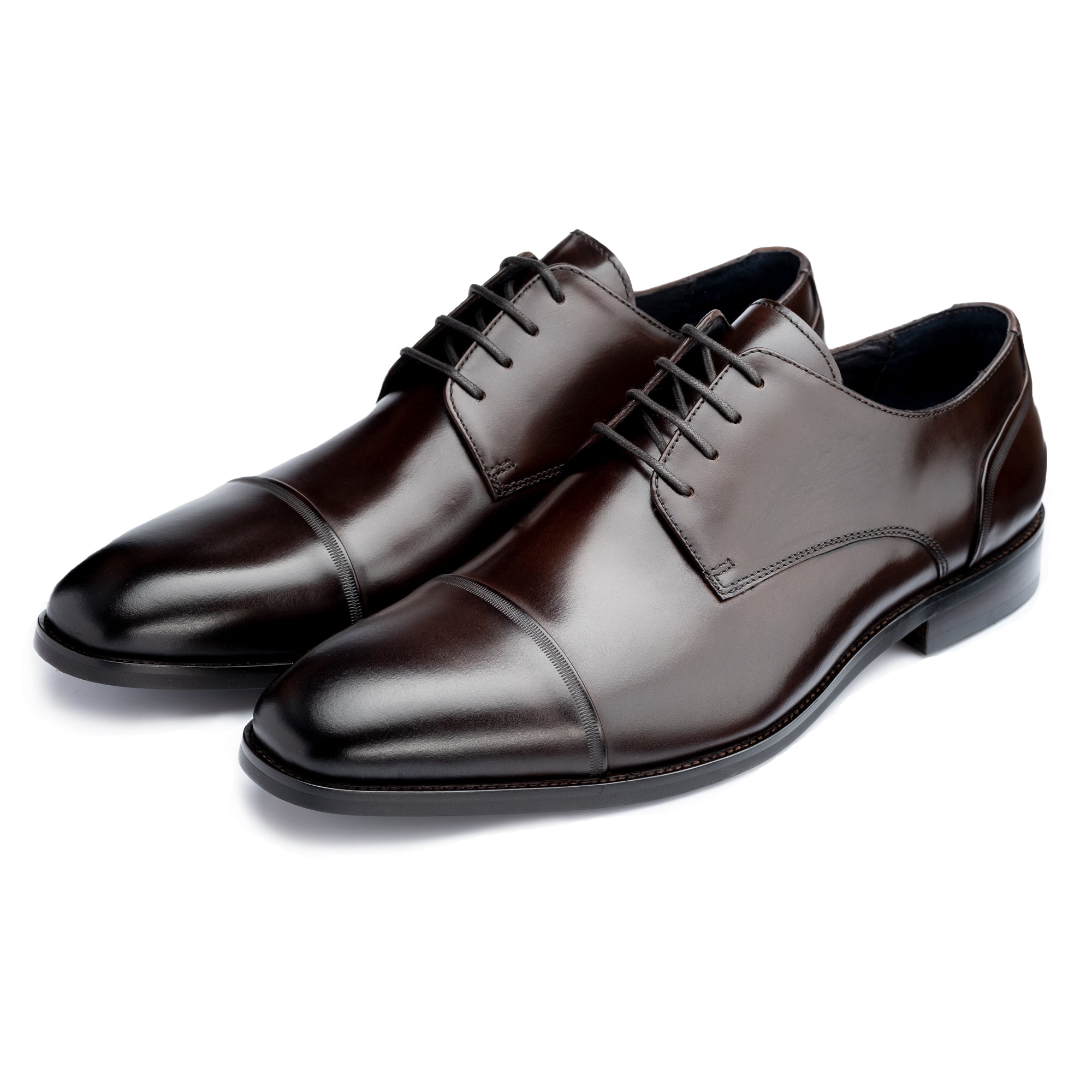
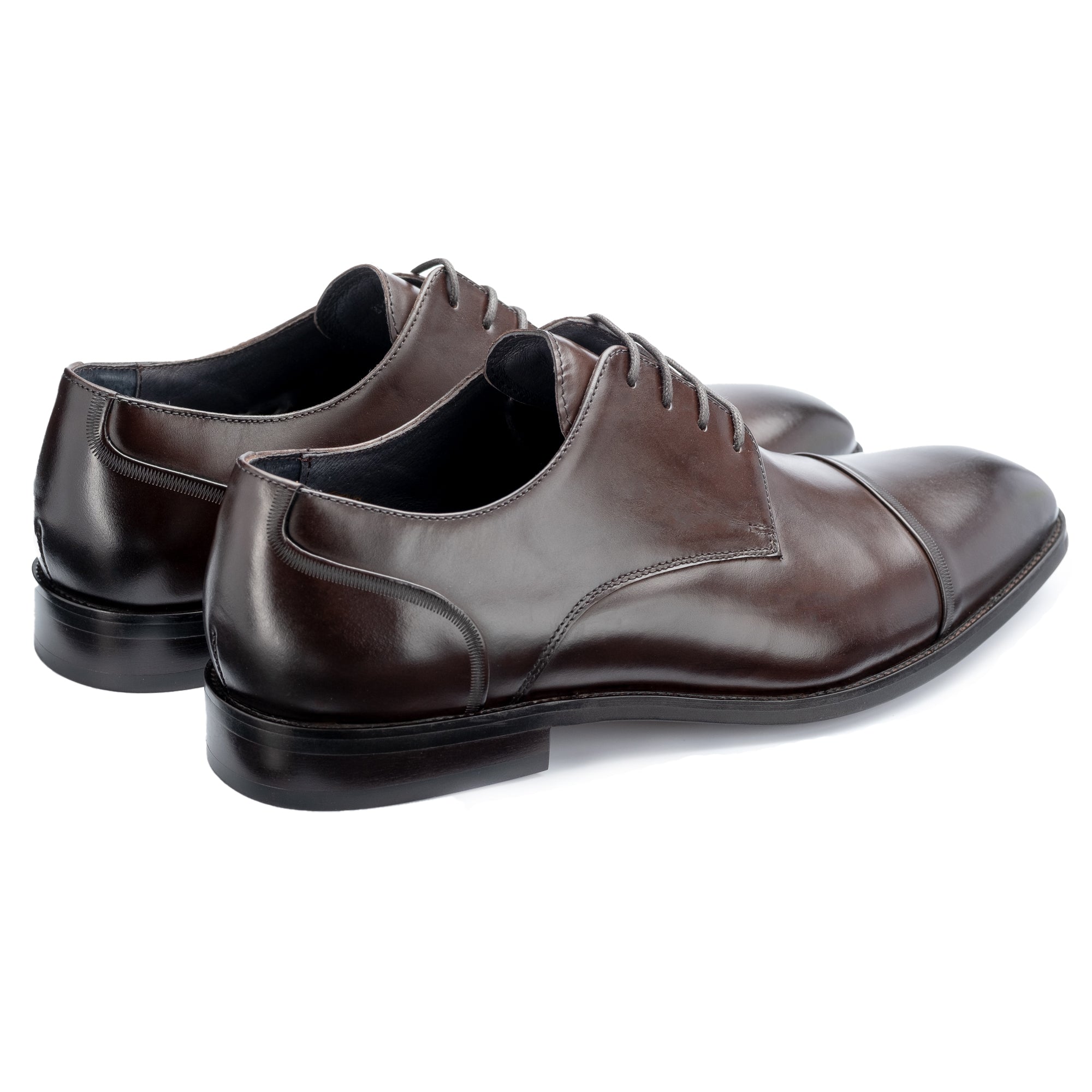
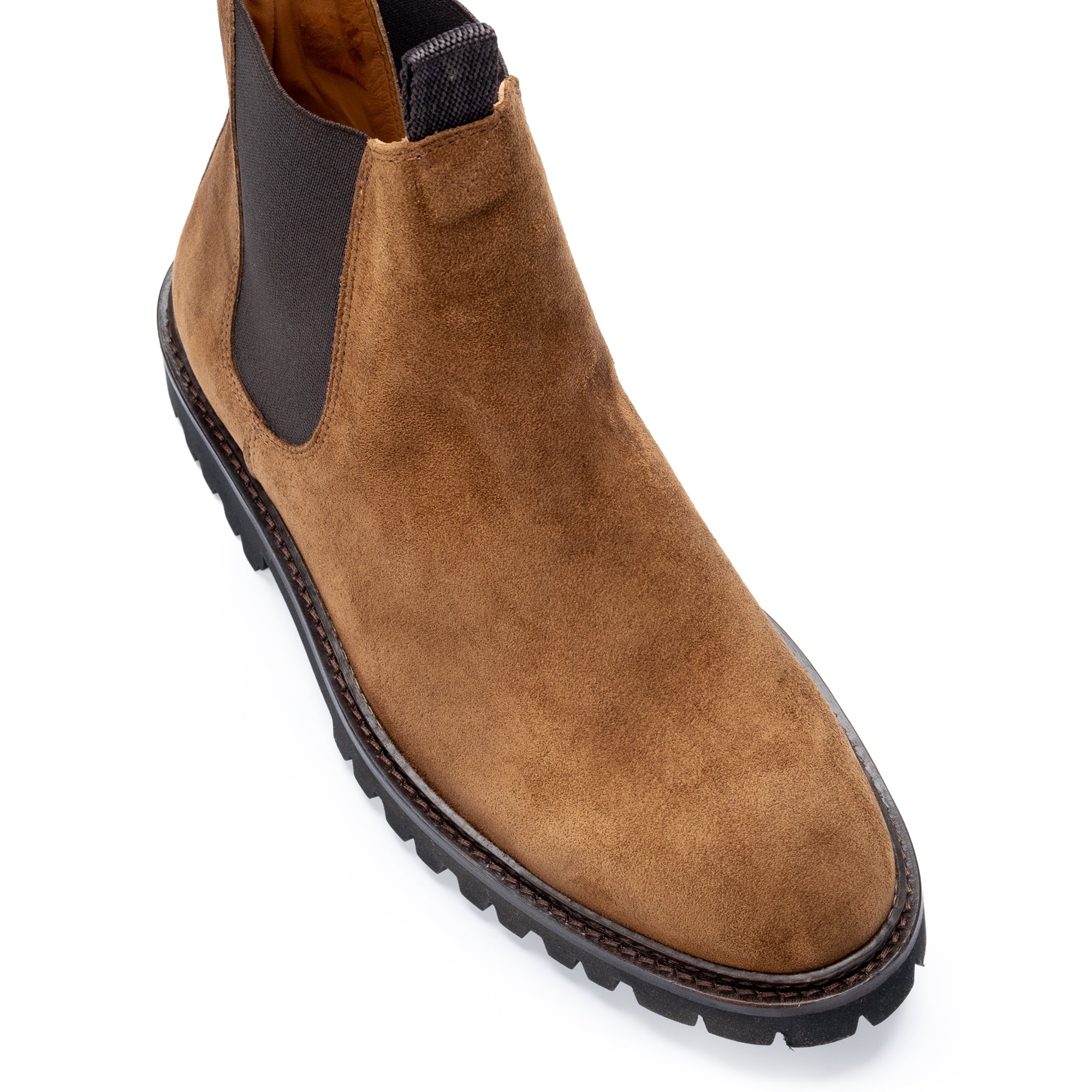
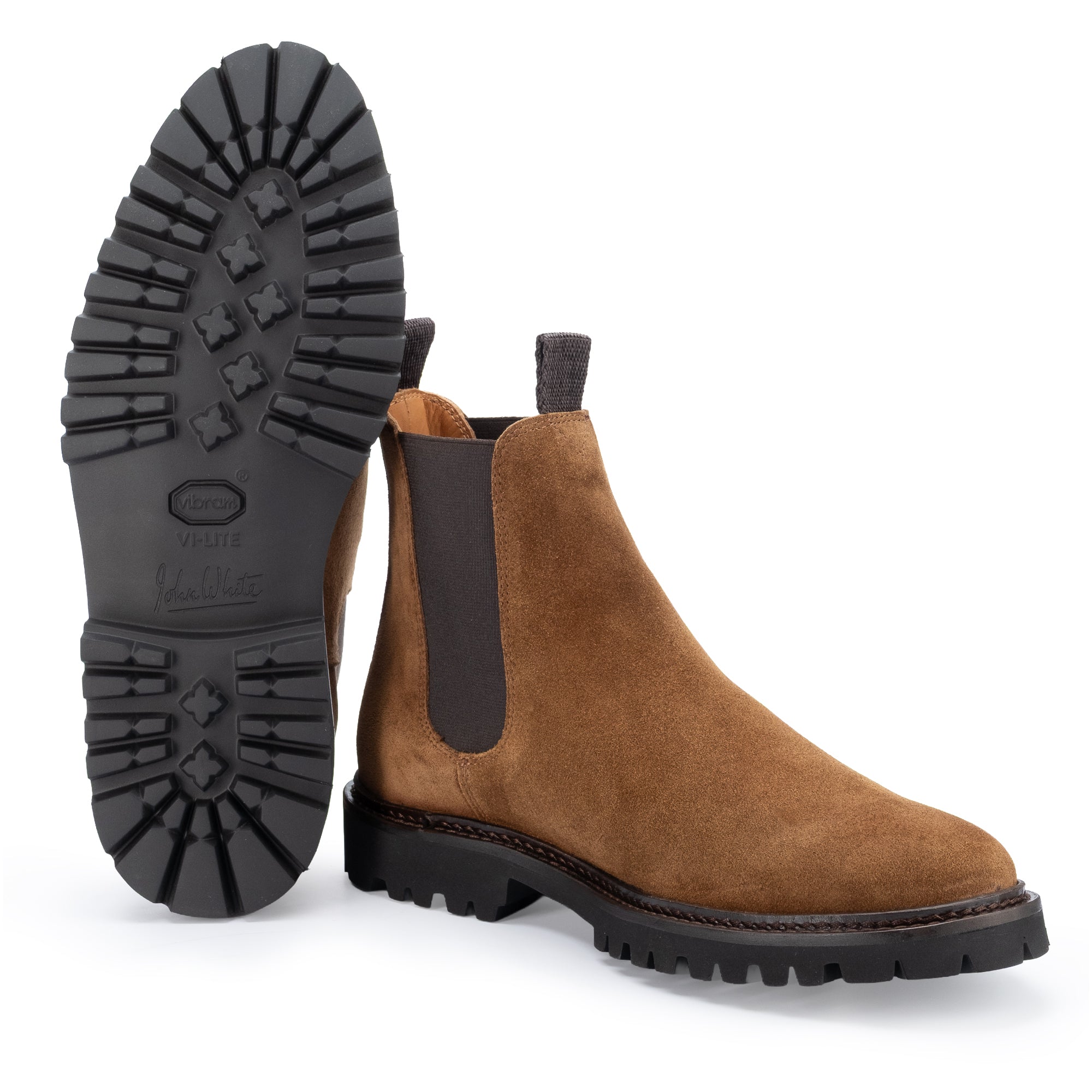
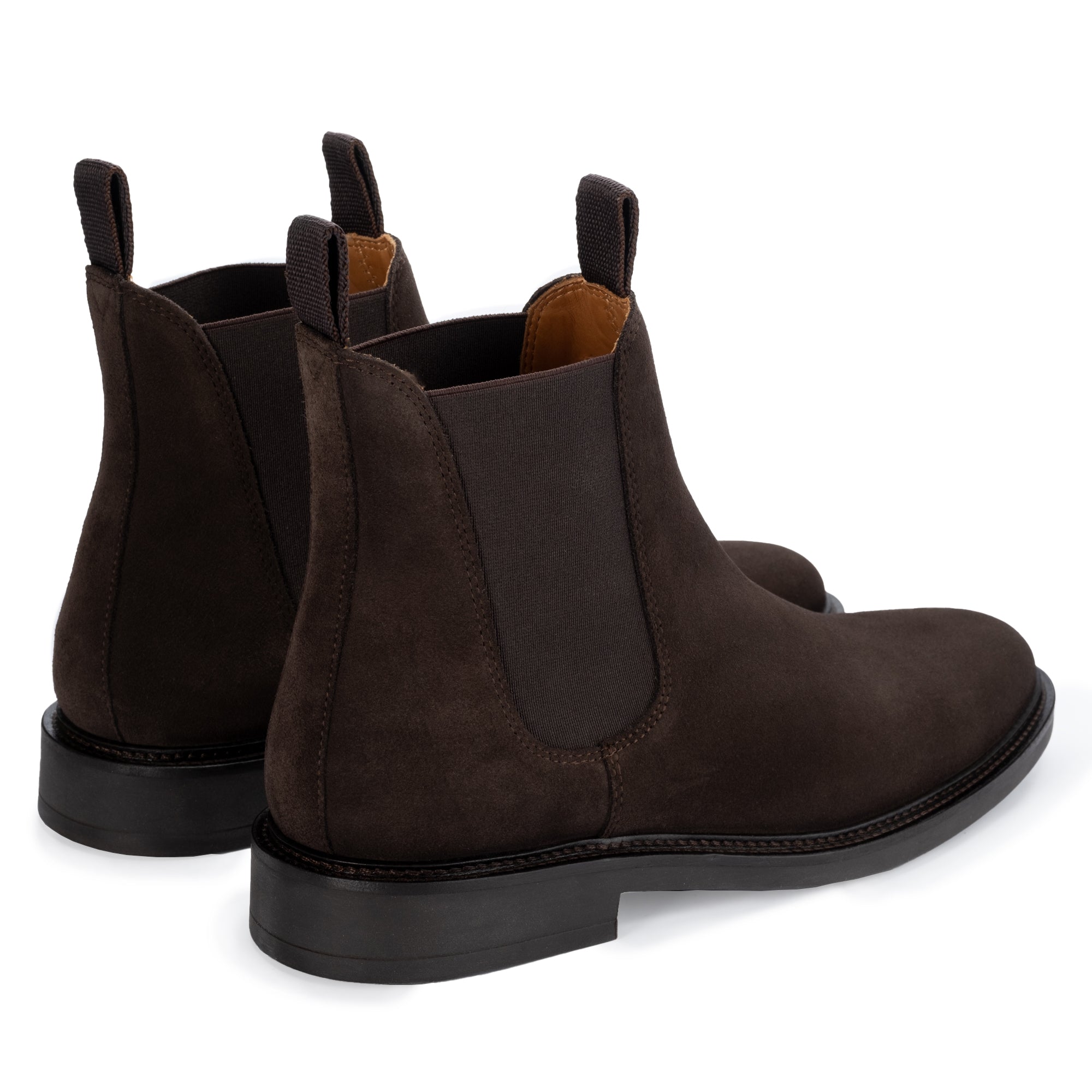
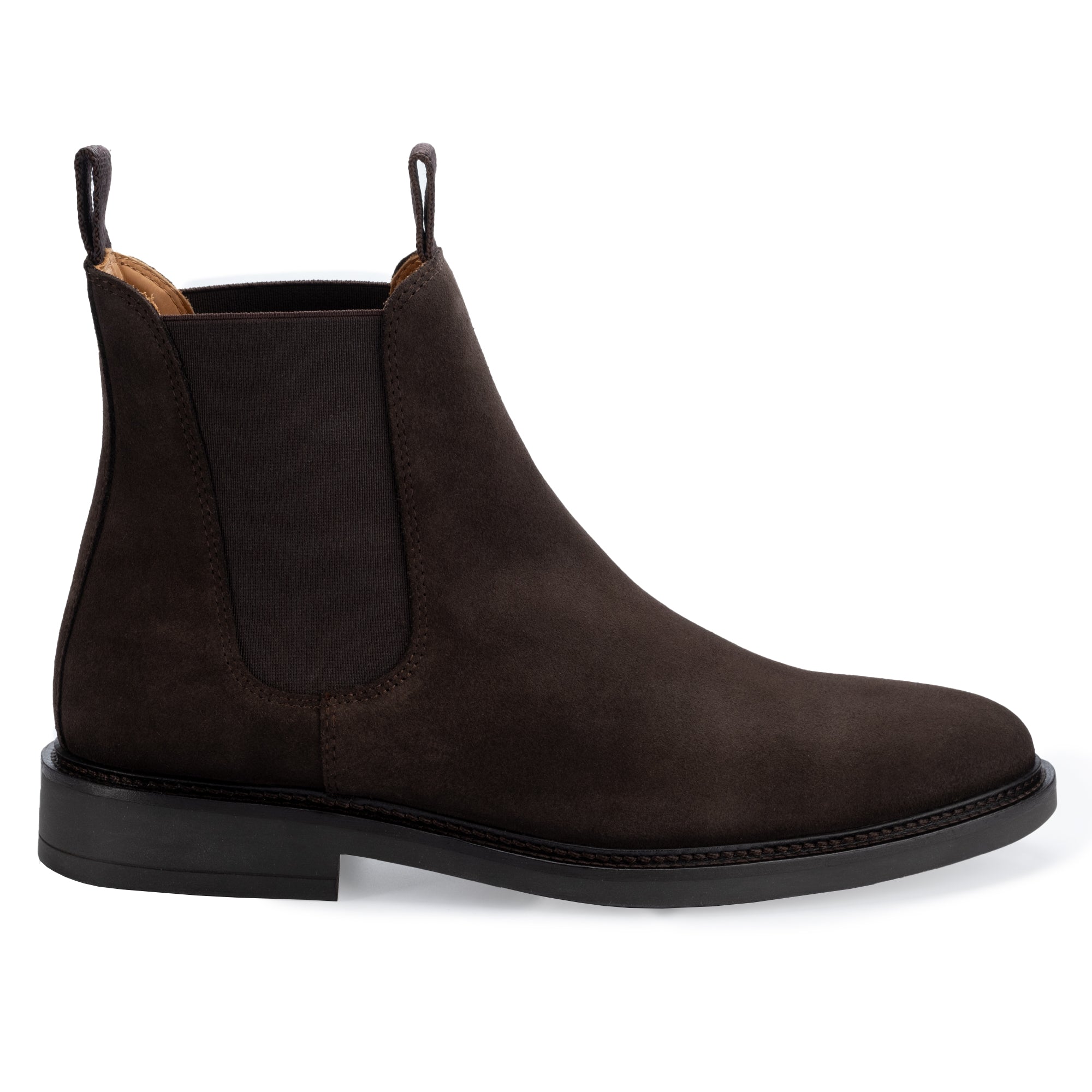
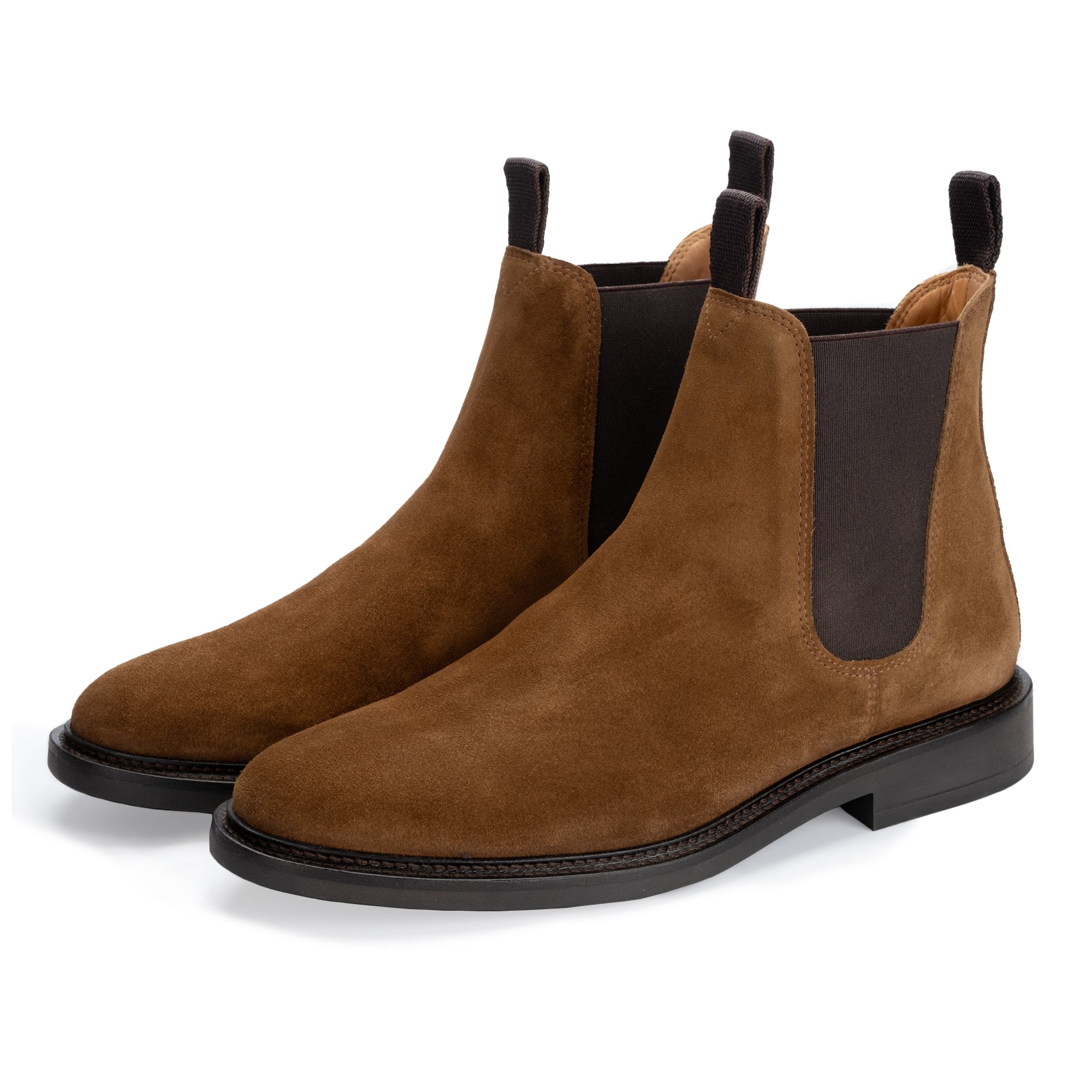
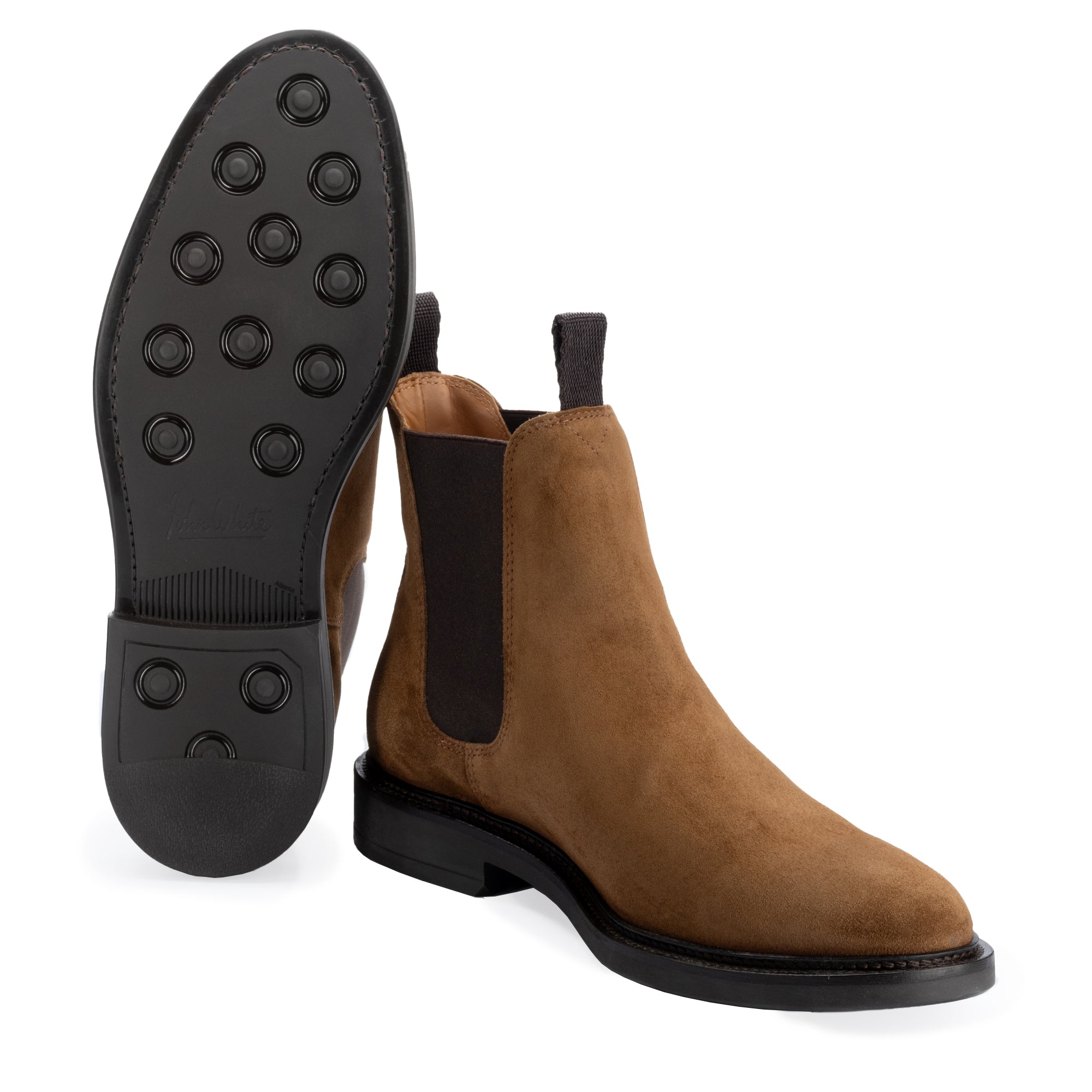
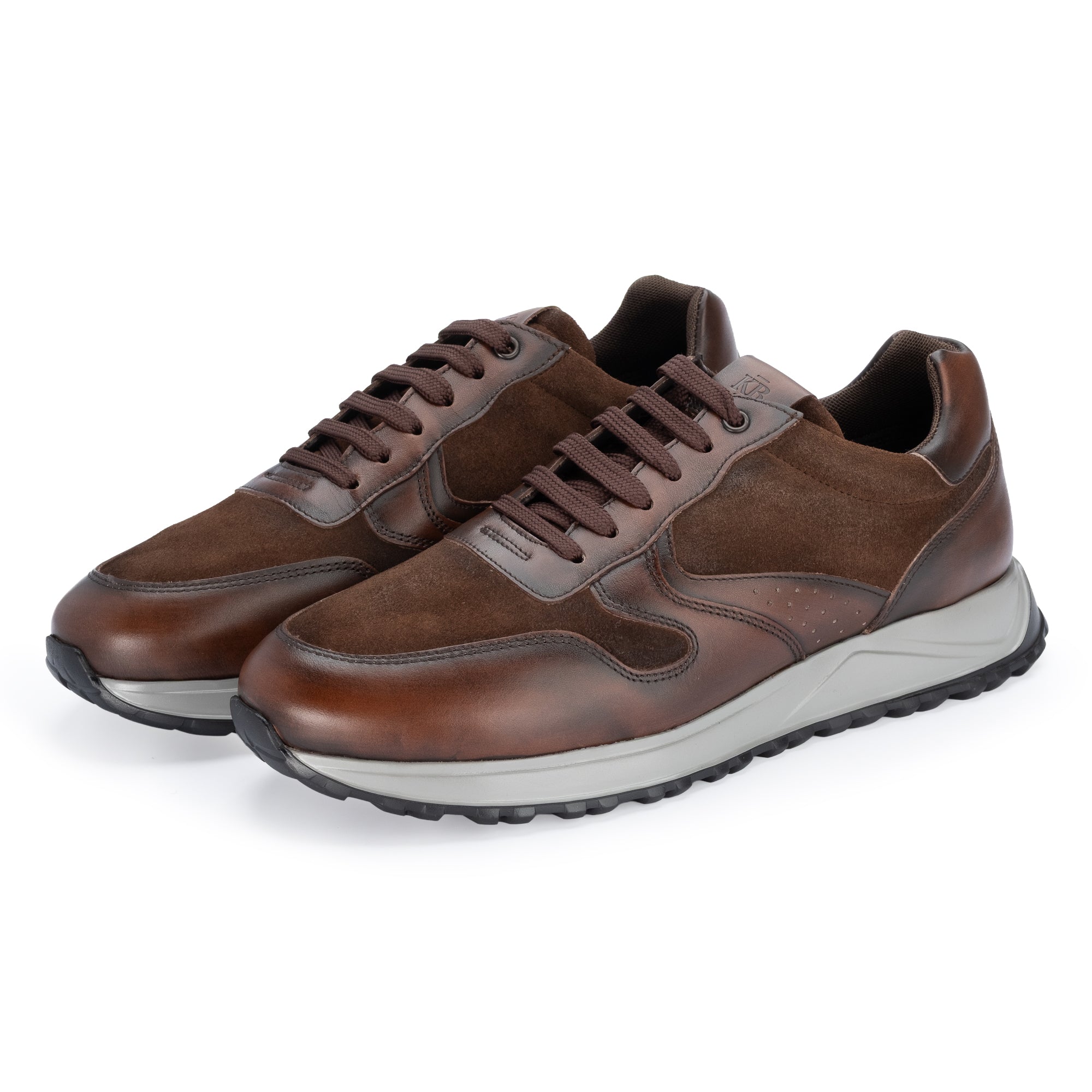
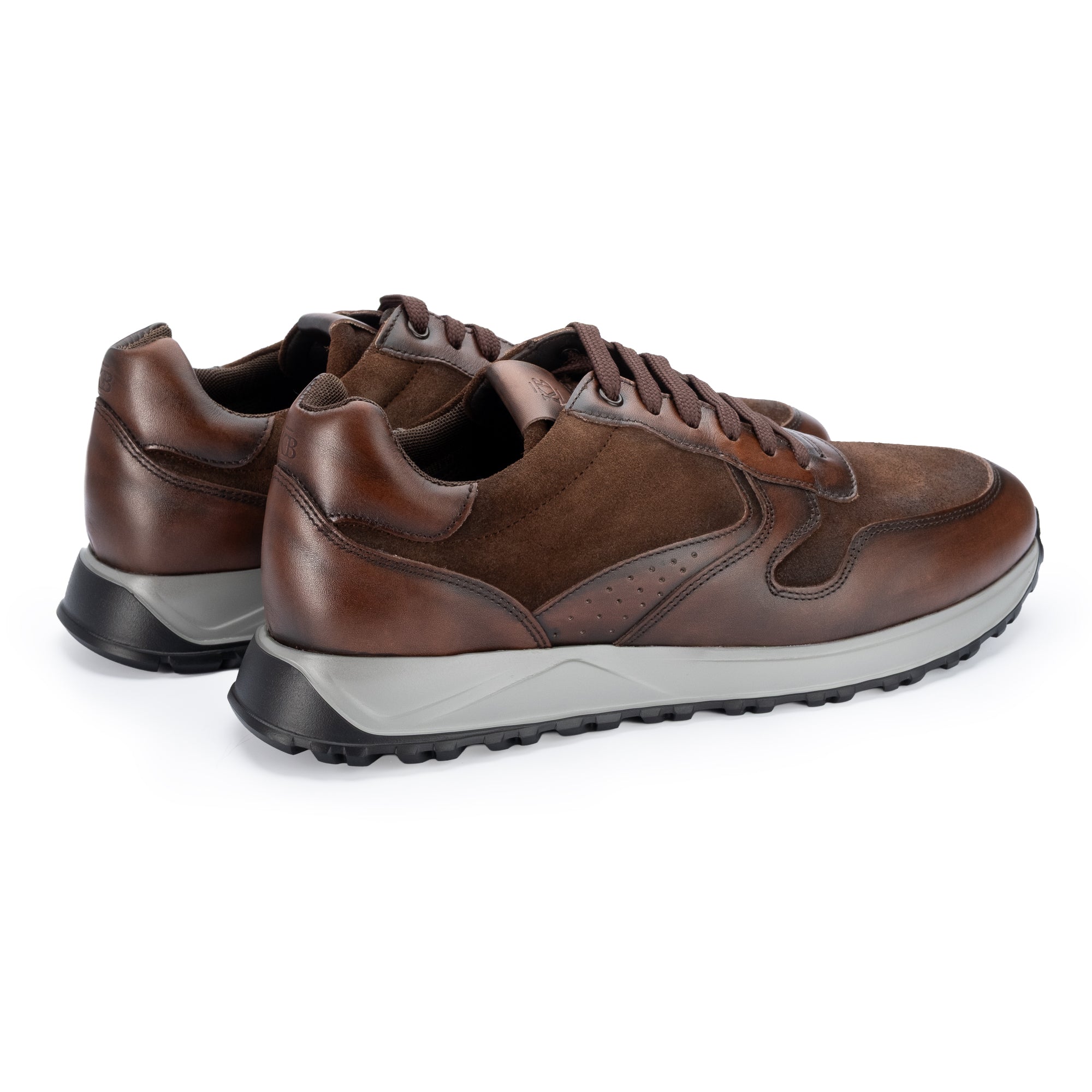
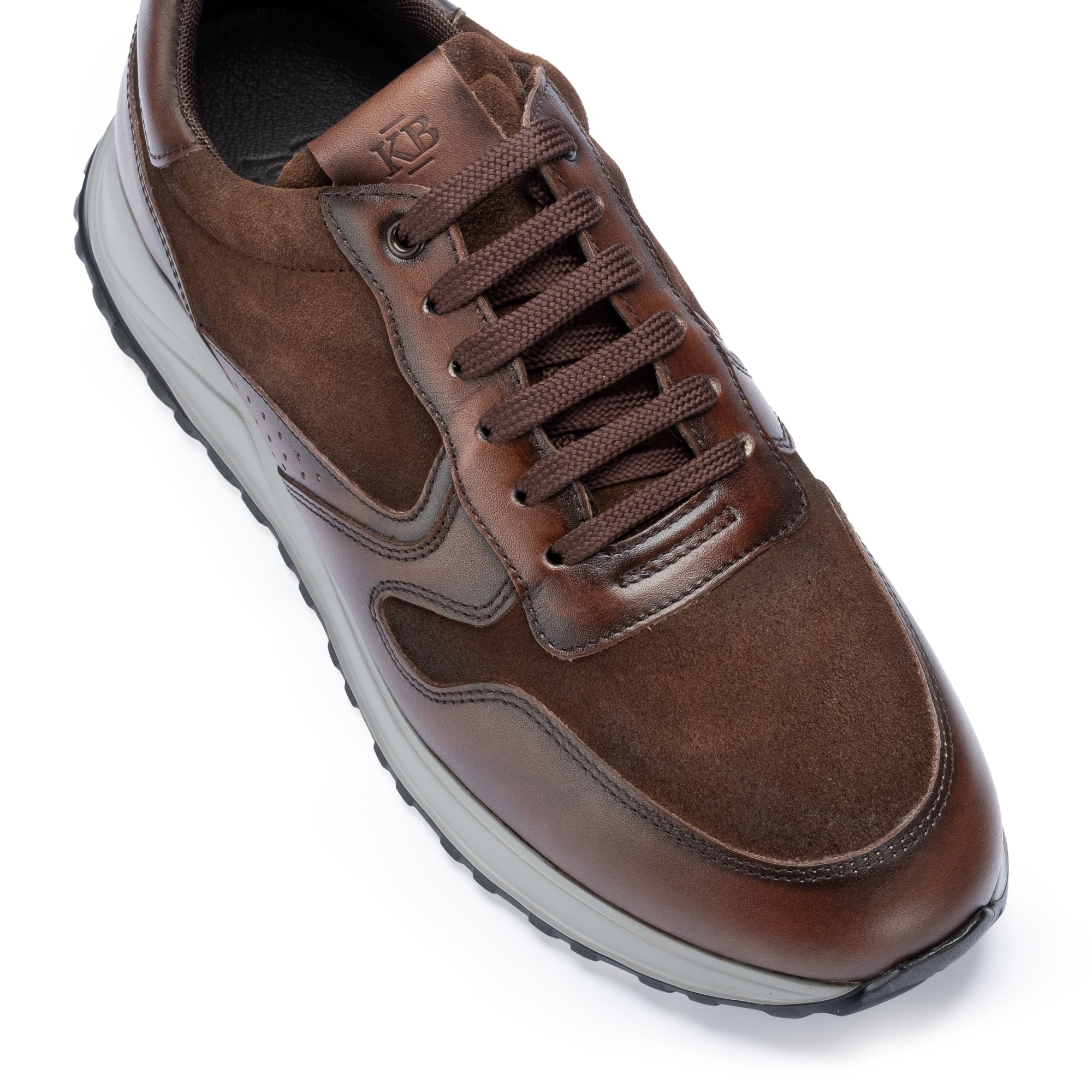
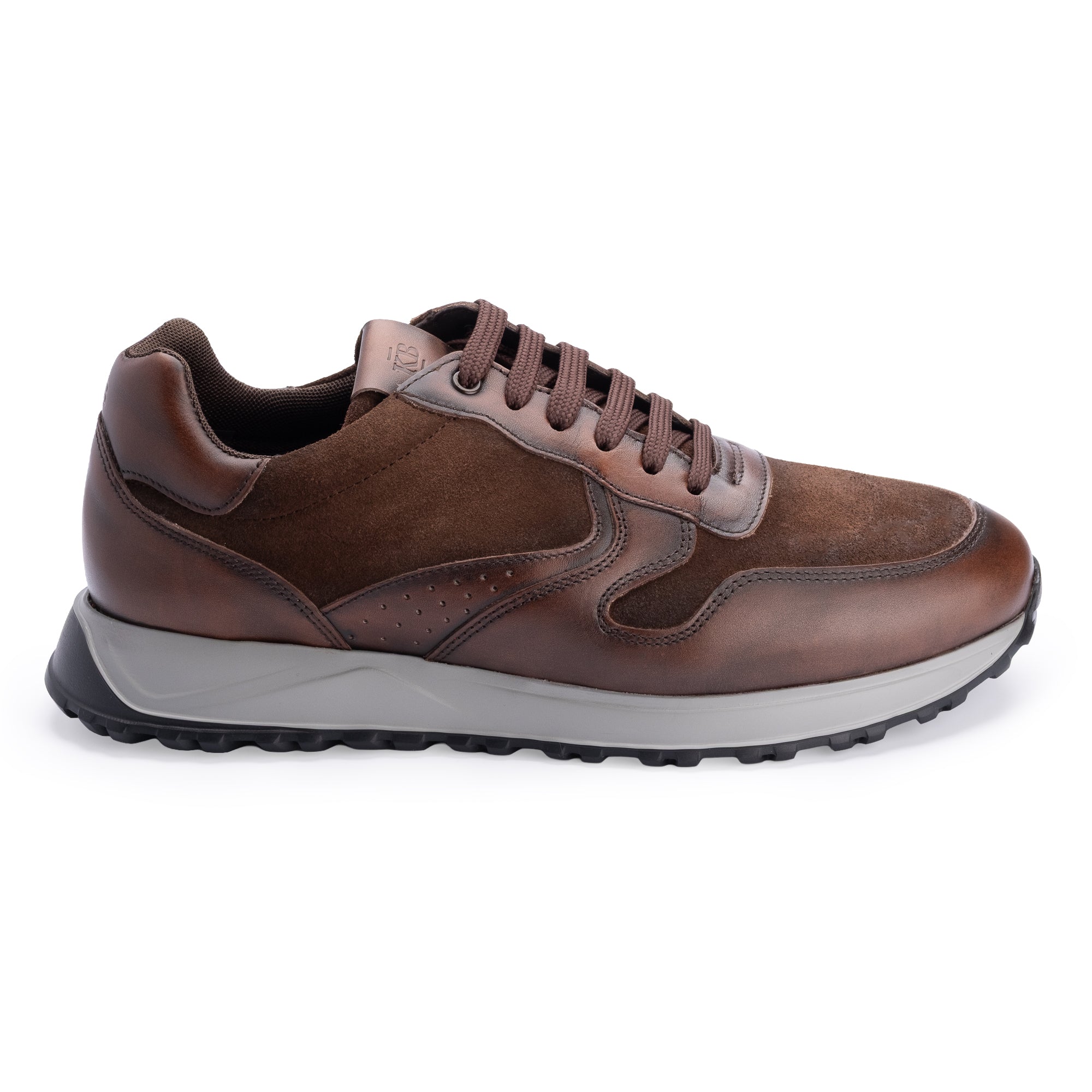
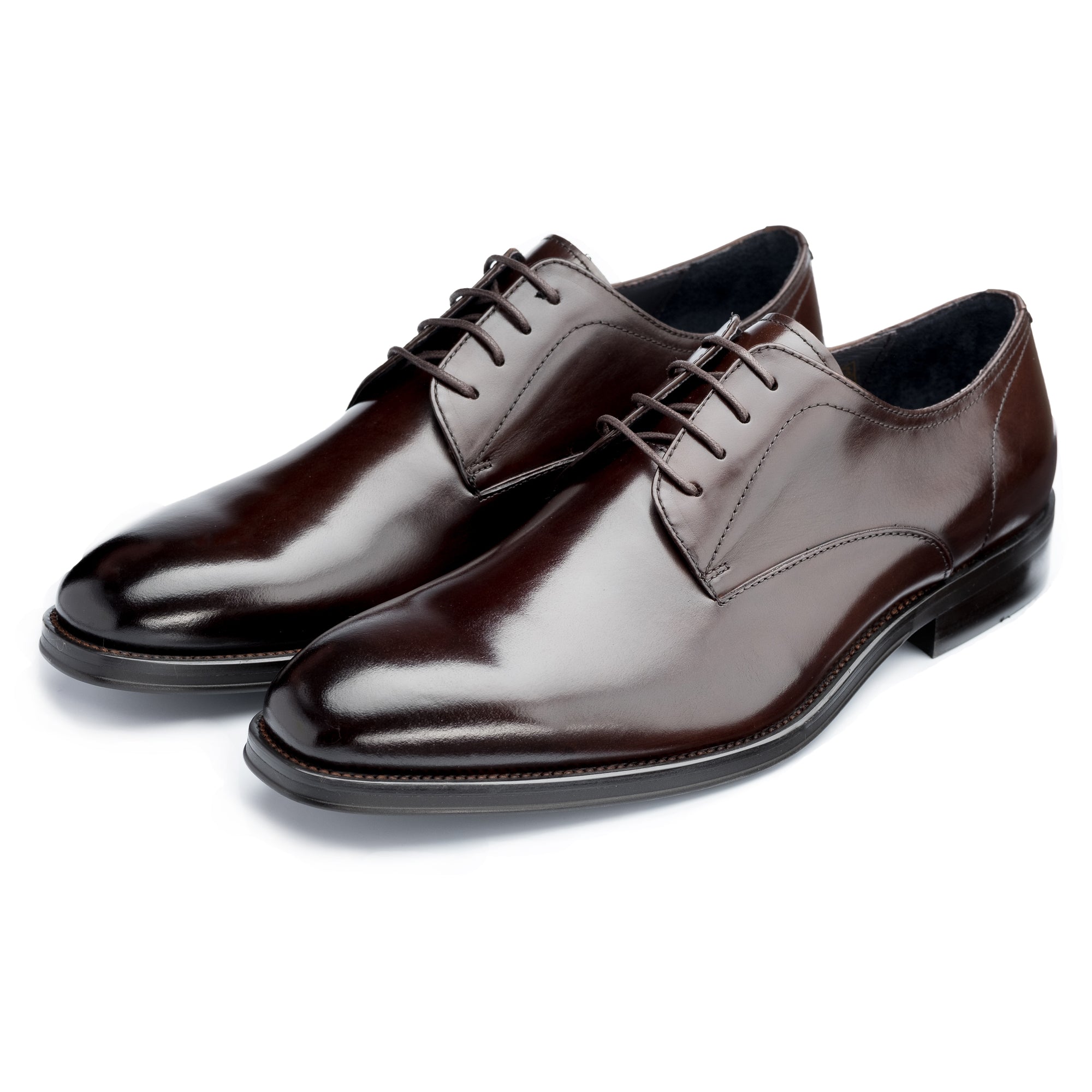
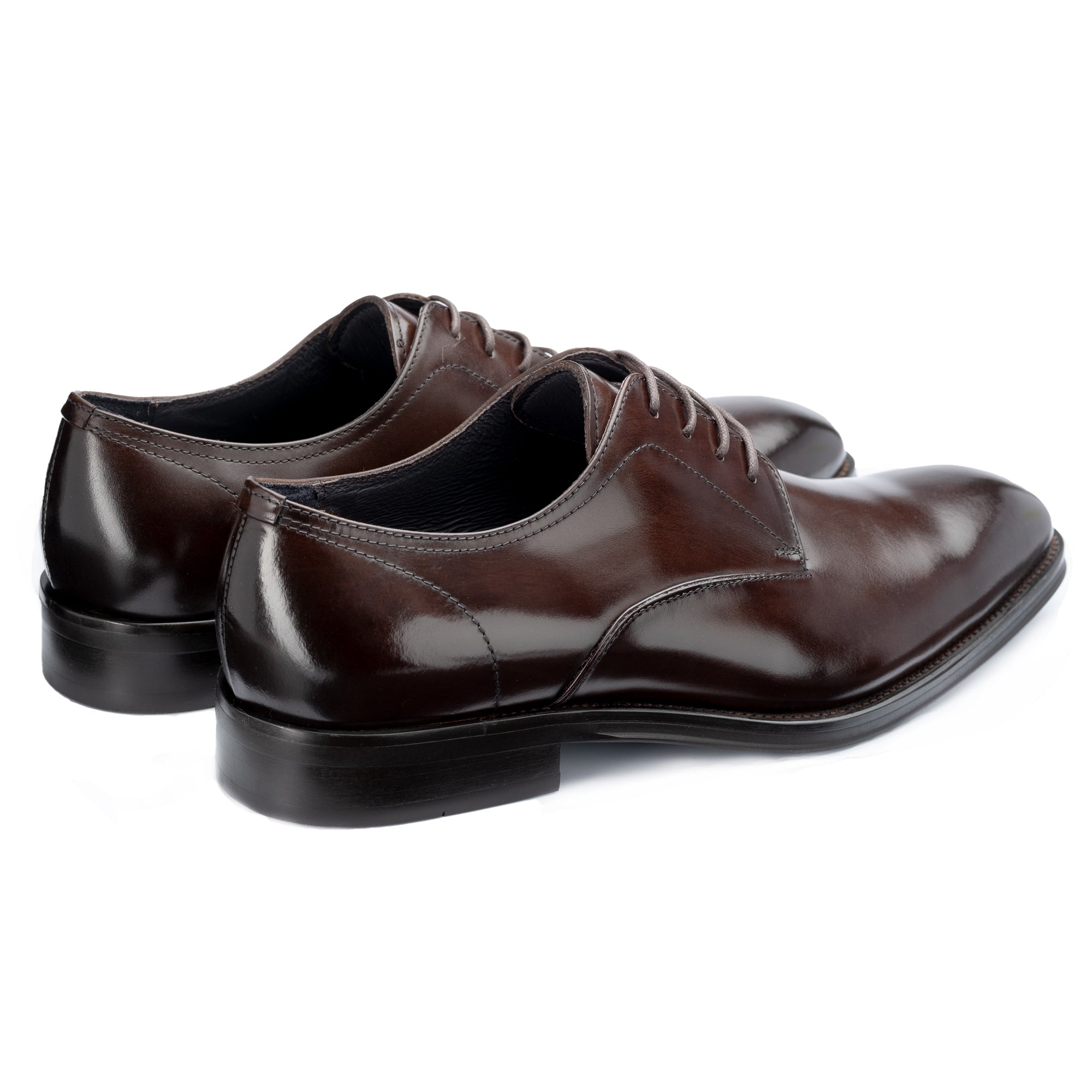
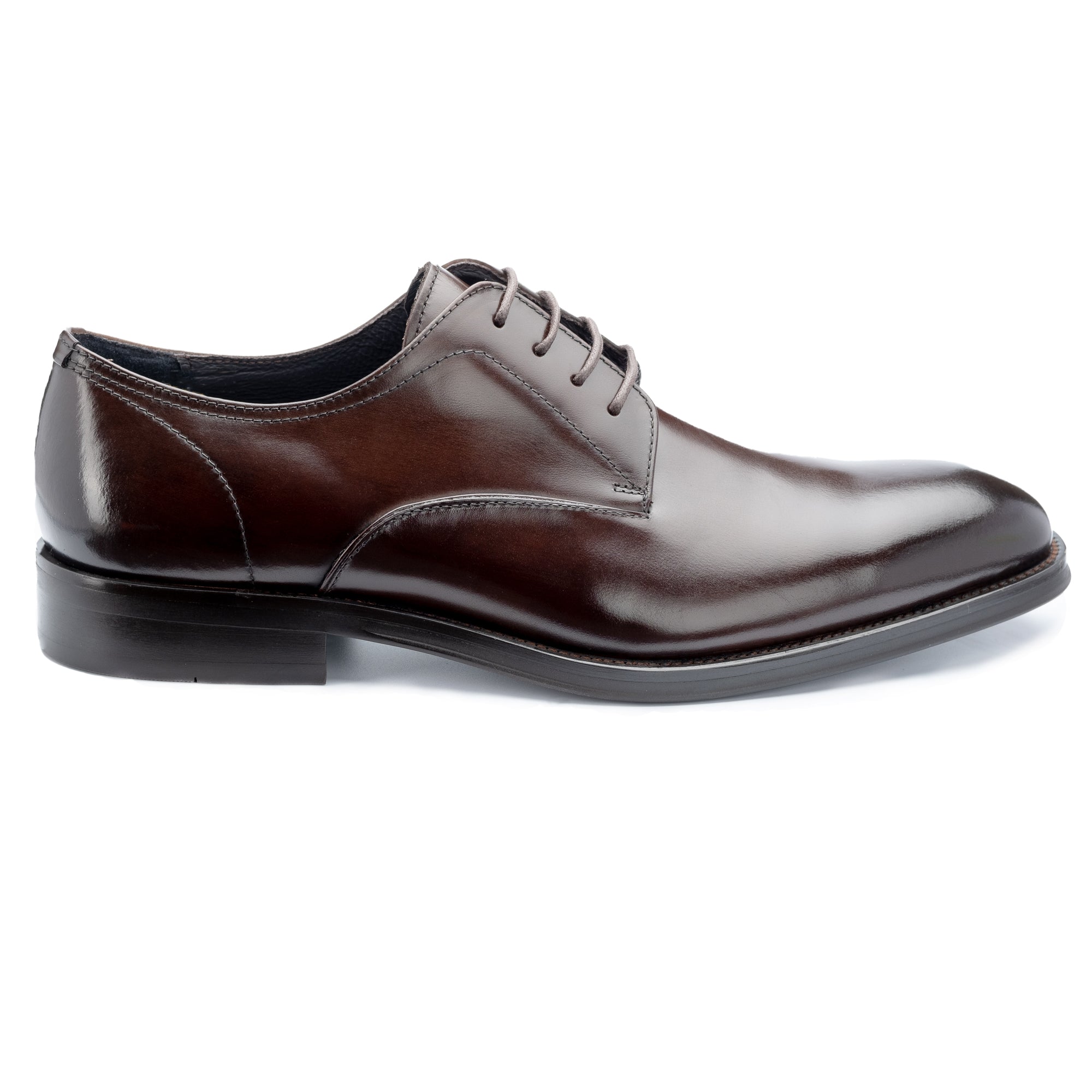
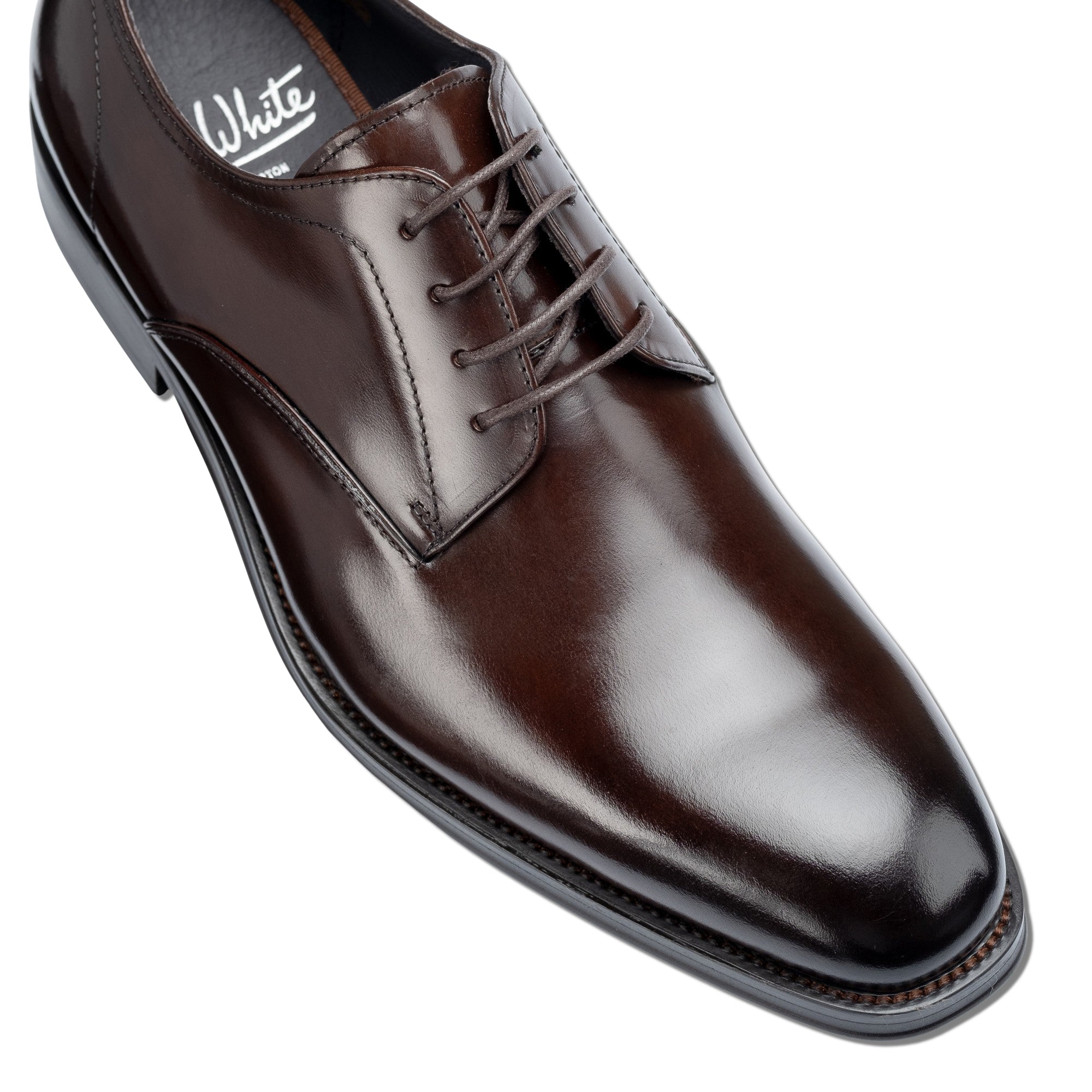
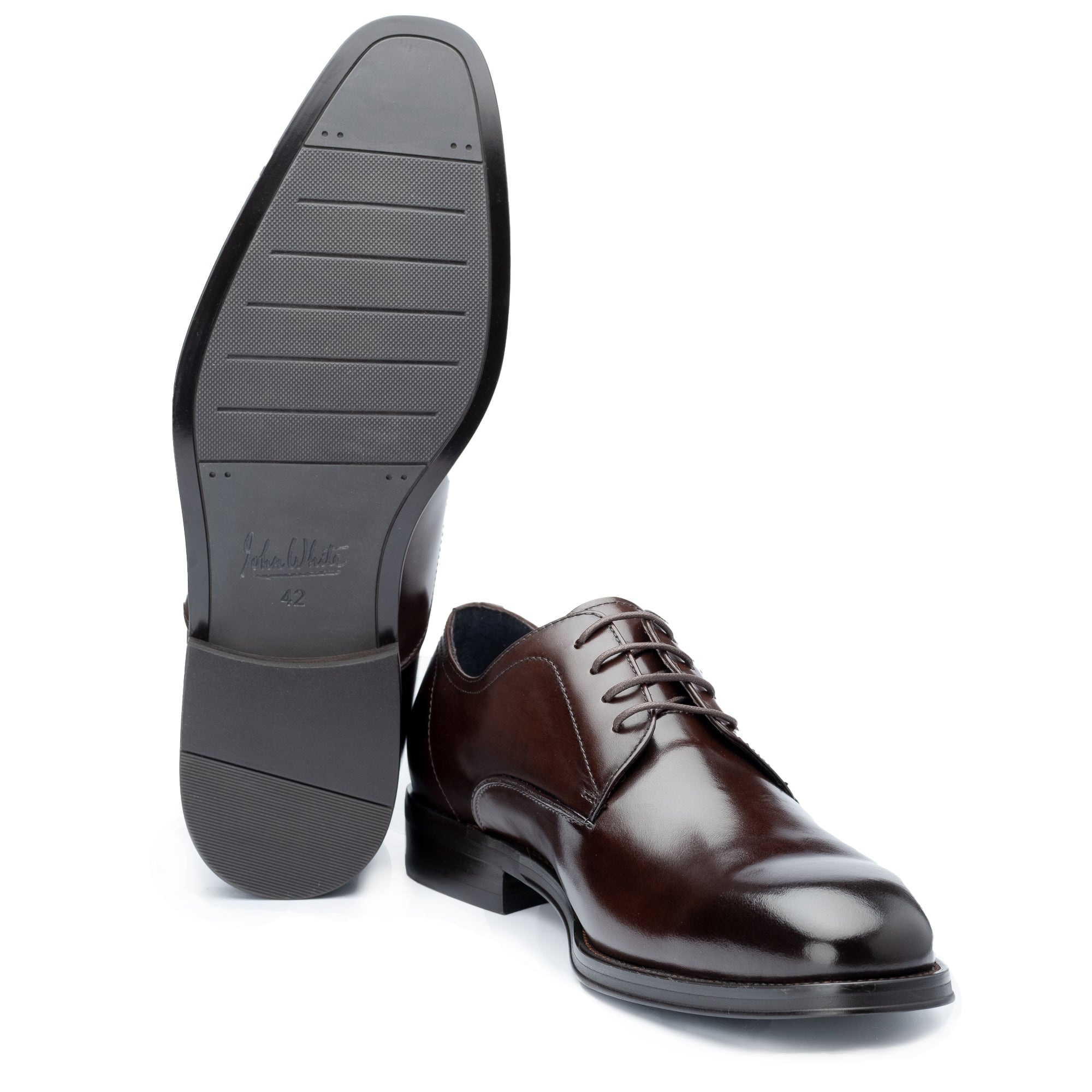
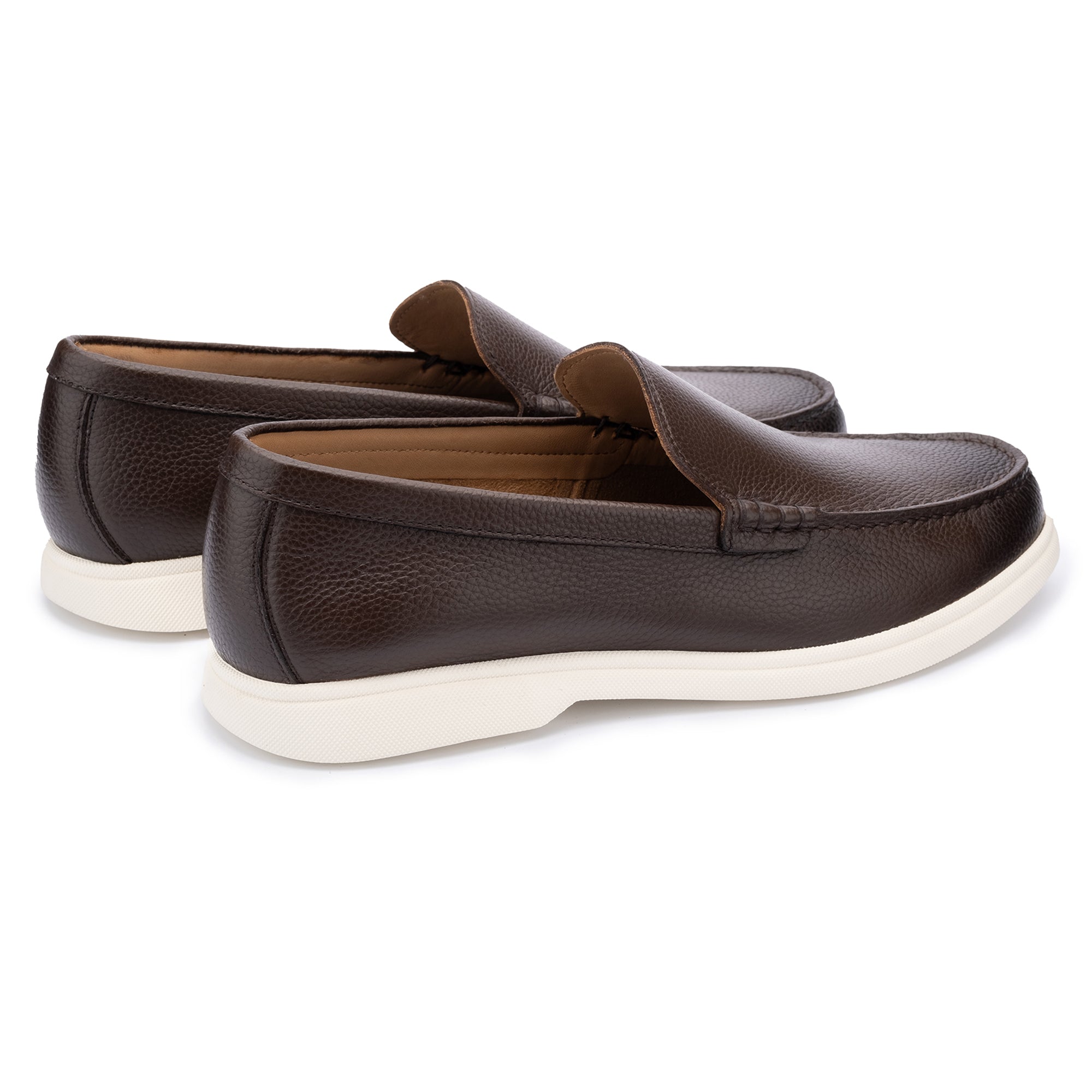
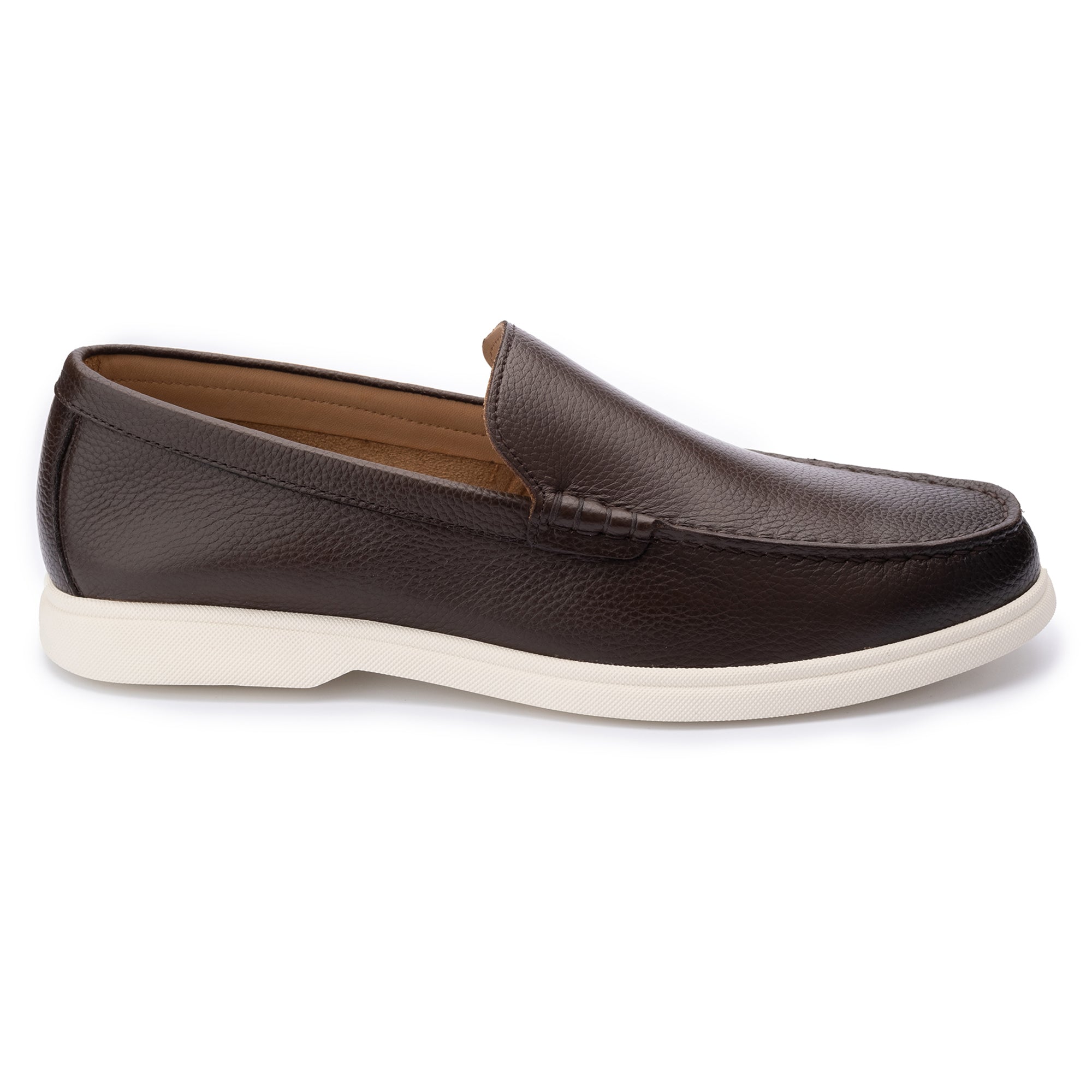
Mid-brown occupies the space between the warmth of tan and the depth of burgundy. It is quieter than either, which makes it easier to wear but less immediately striking. A good mid-brown Derby or Oxford with a navy suit is one of the most reliable combinations available — appropriate for the office, credible at a wedding, comfortable in a smart casual setting.
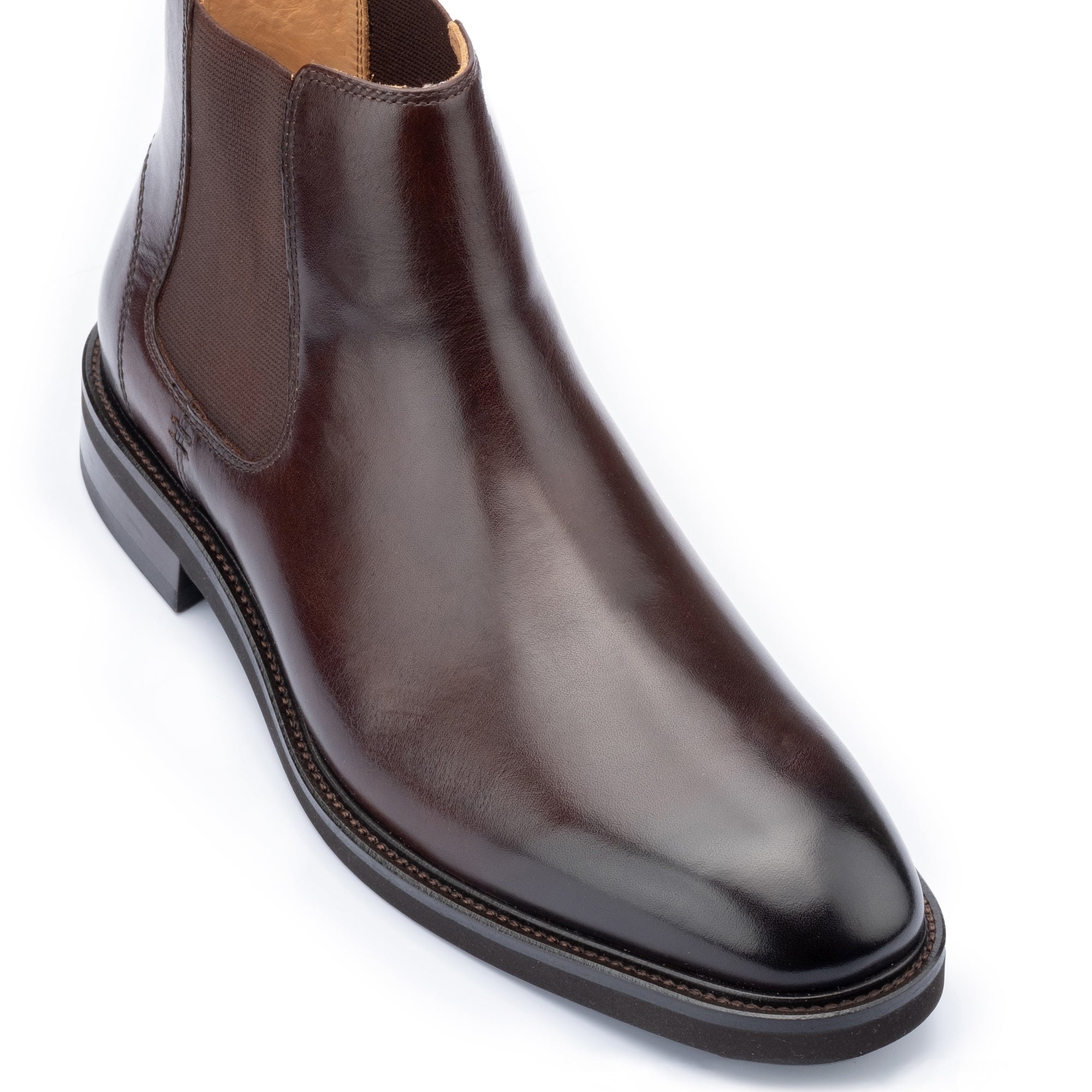
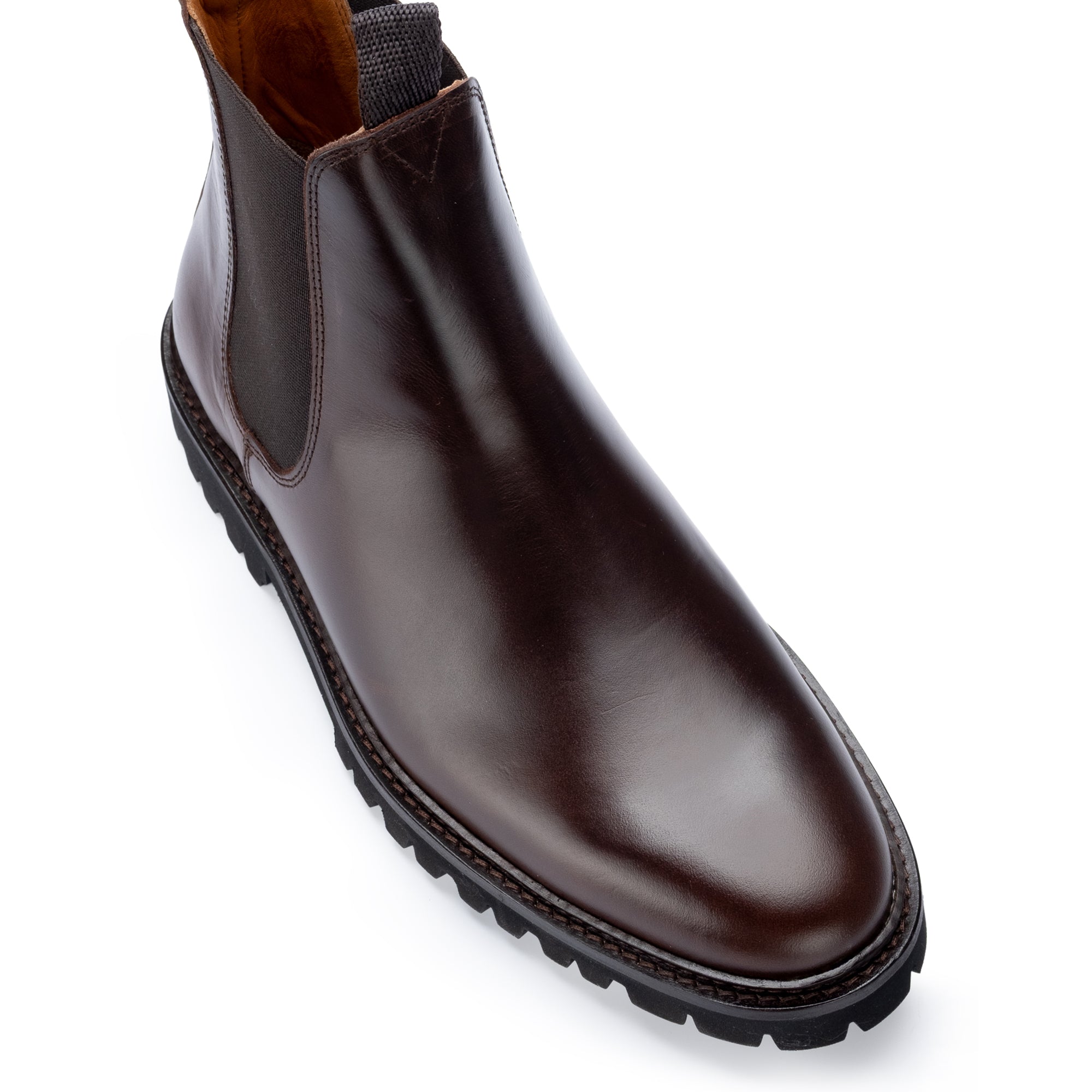
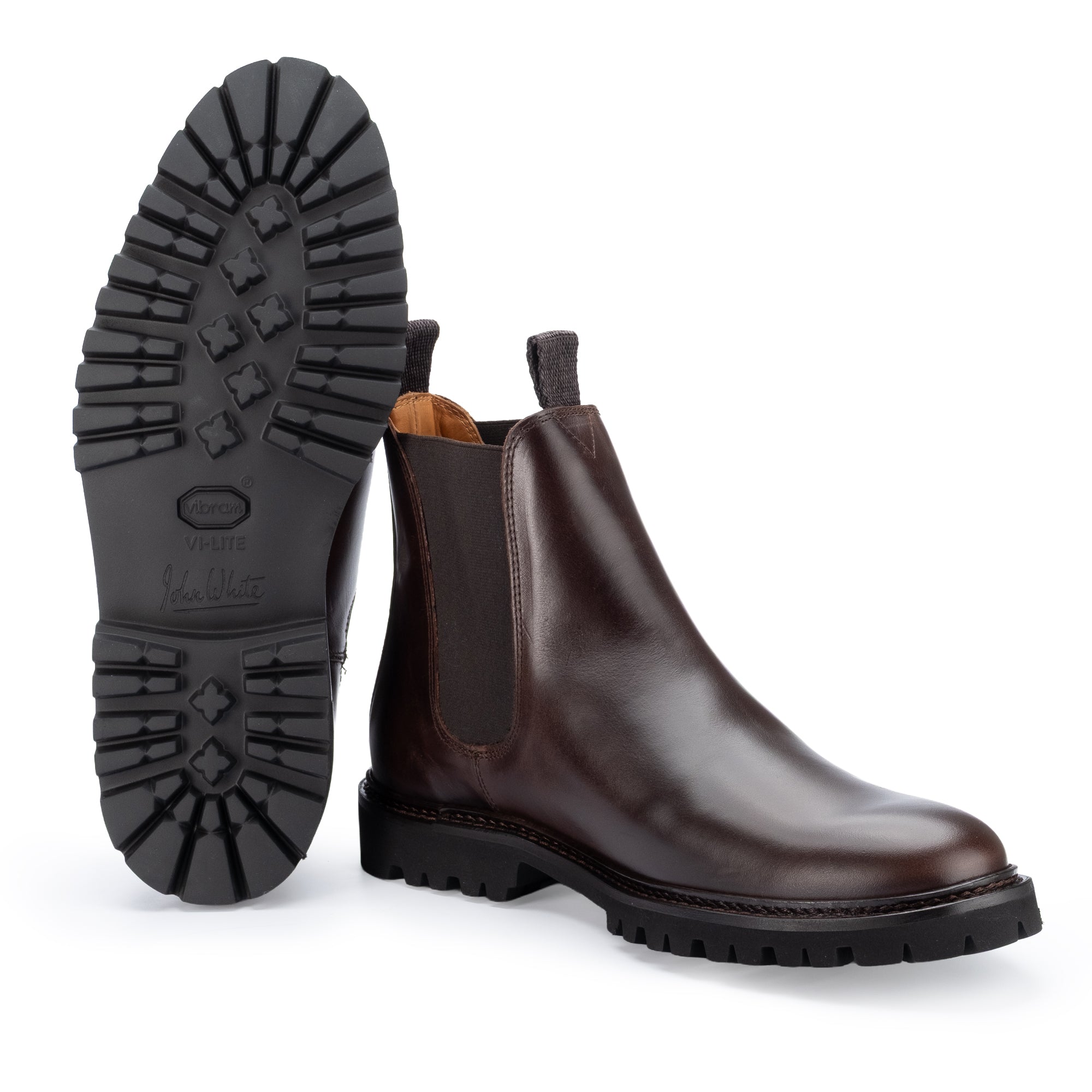
Brown's reputation suffers partly from association with cheaper leathers — pale, orangey browns that lack depth. A well-finished darker brown, particularly in a smooth calf or burnished finish, carries the weight of the suit correctly. If you own a single brown shoe that has to do everything, a deeper shade is the better investment.
Style by Occasion
Weddings and Formal Events
At a wedding, the degree of formality in the dress code is the primary determinant. Black-tie or morning coat occasions mean black shoes, full stop. For lounge suit or smart dress codes — the standard for most British weddings — you have real latitude.
A navy suit at a summer wedding with tan leather brogues is a combination that has worked for decades and will continue to. It is colourful enough to read as dressed up, conservative enough to not distract from the occasion. Burgundy shoes in a plain Oxford or semi-brogue style work well for the same context, particularly in the afternoon and evening.
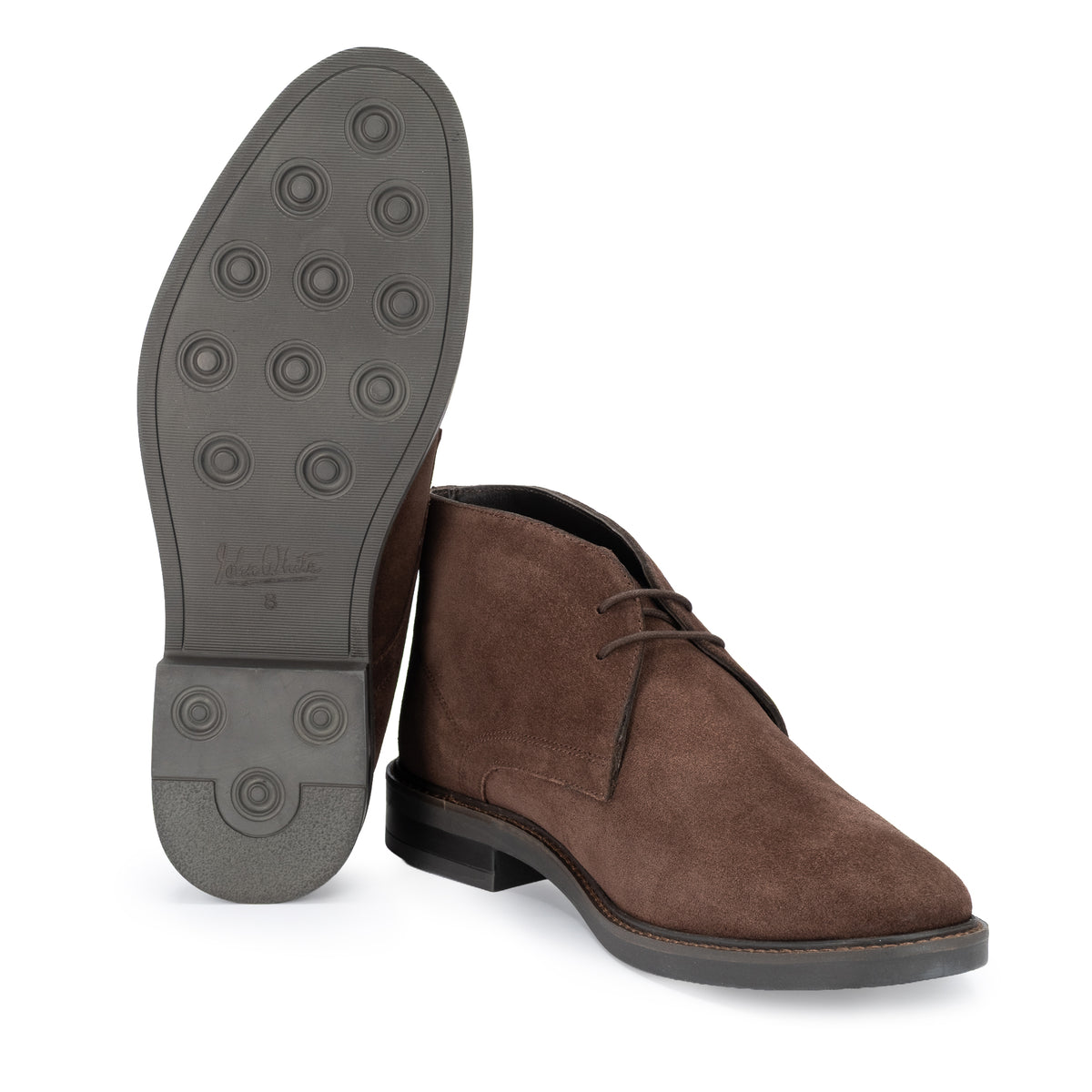
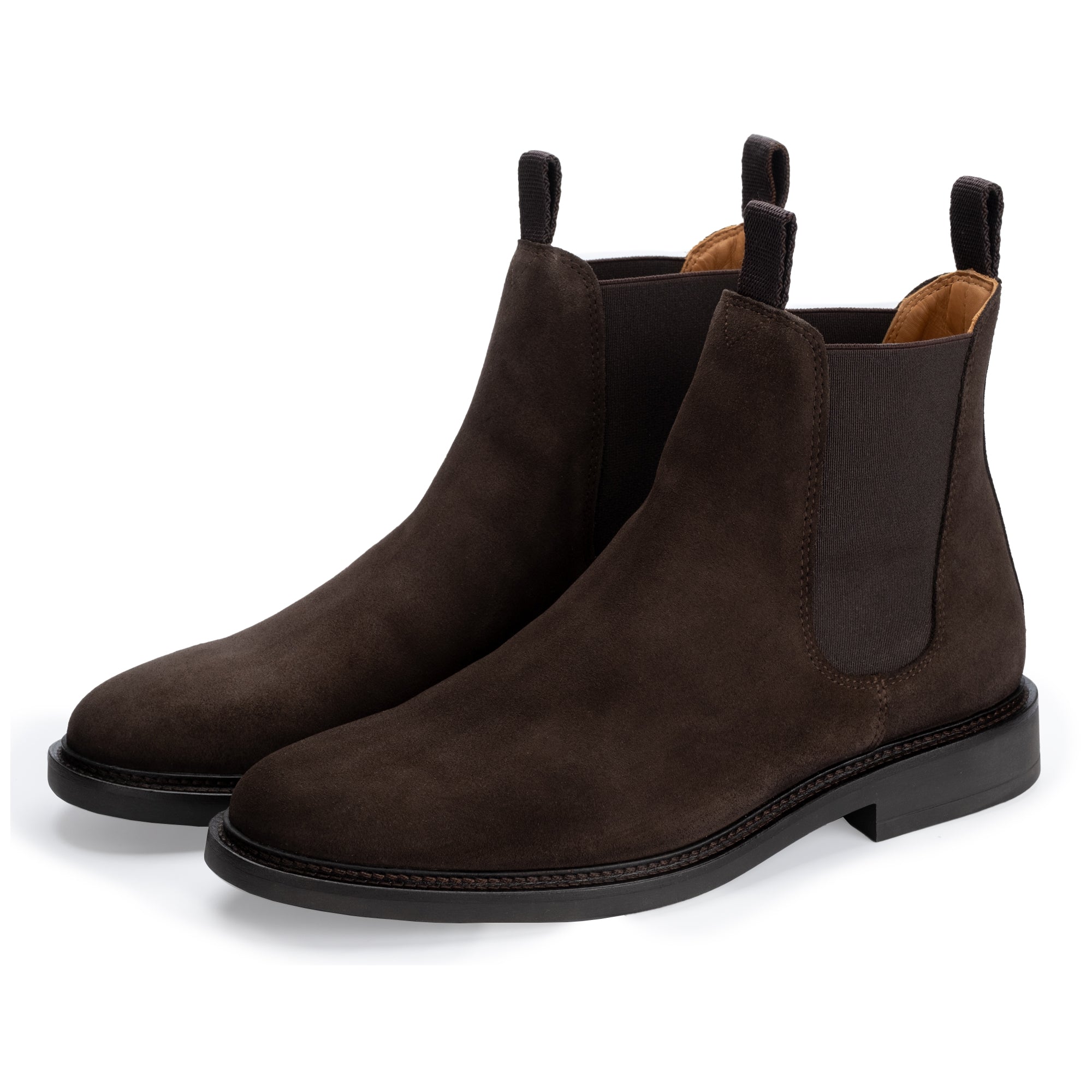
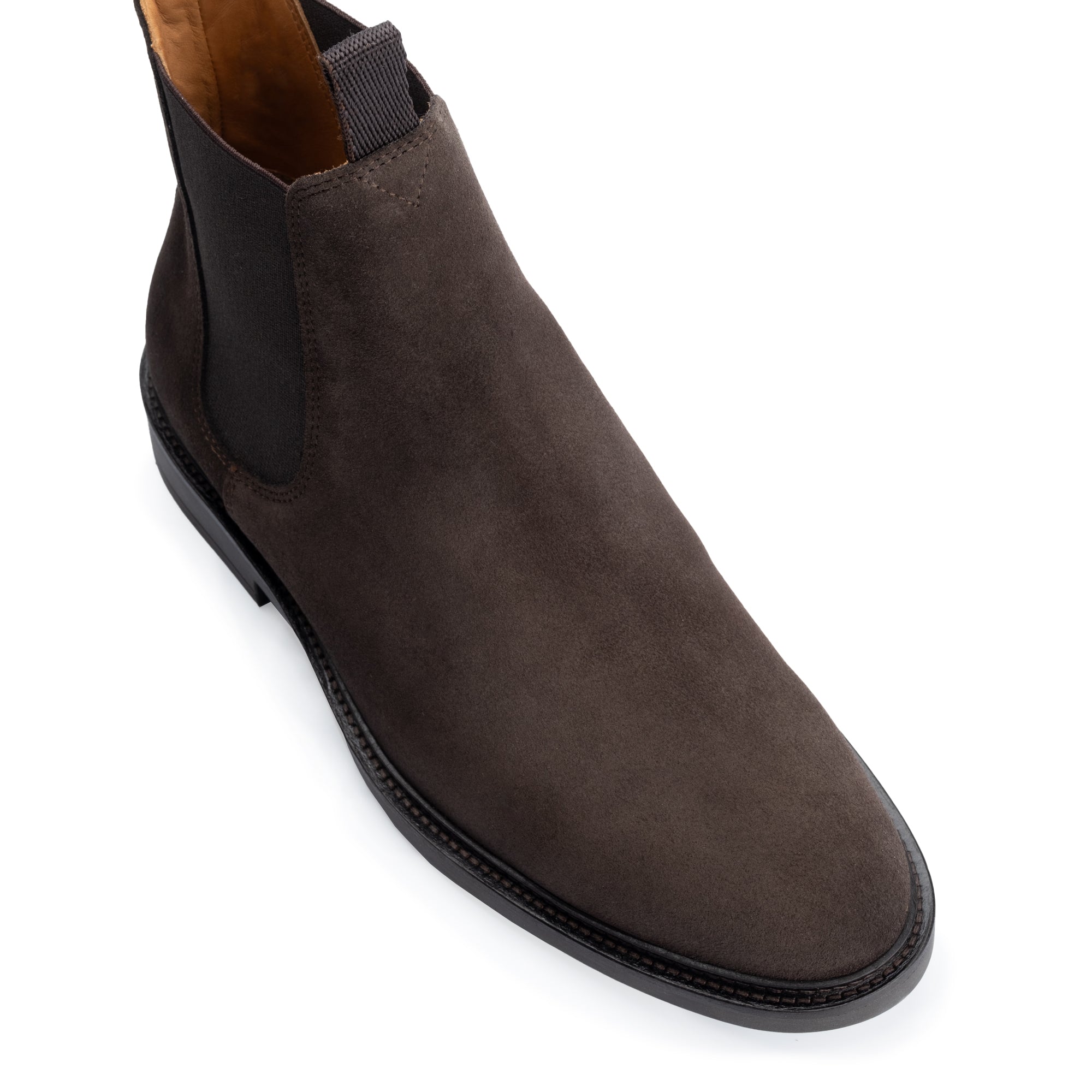
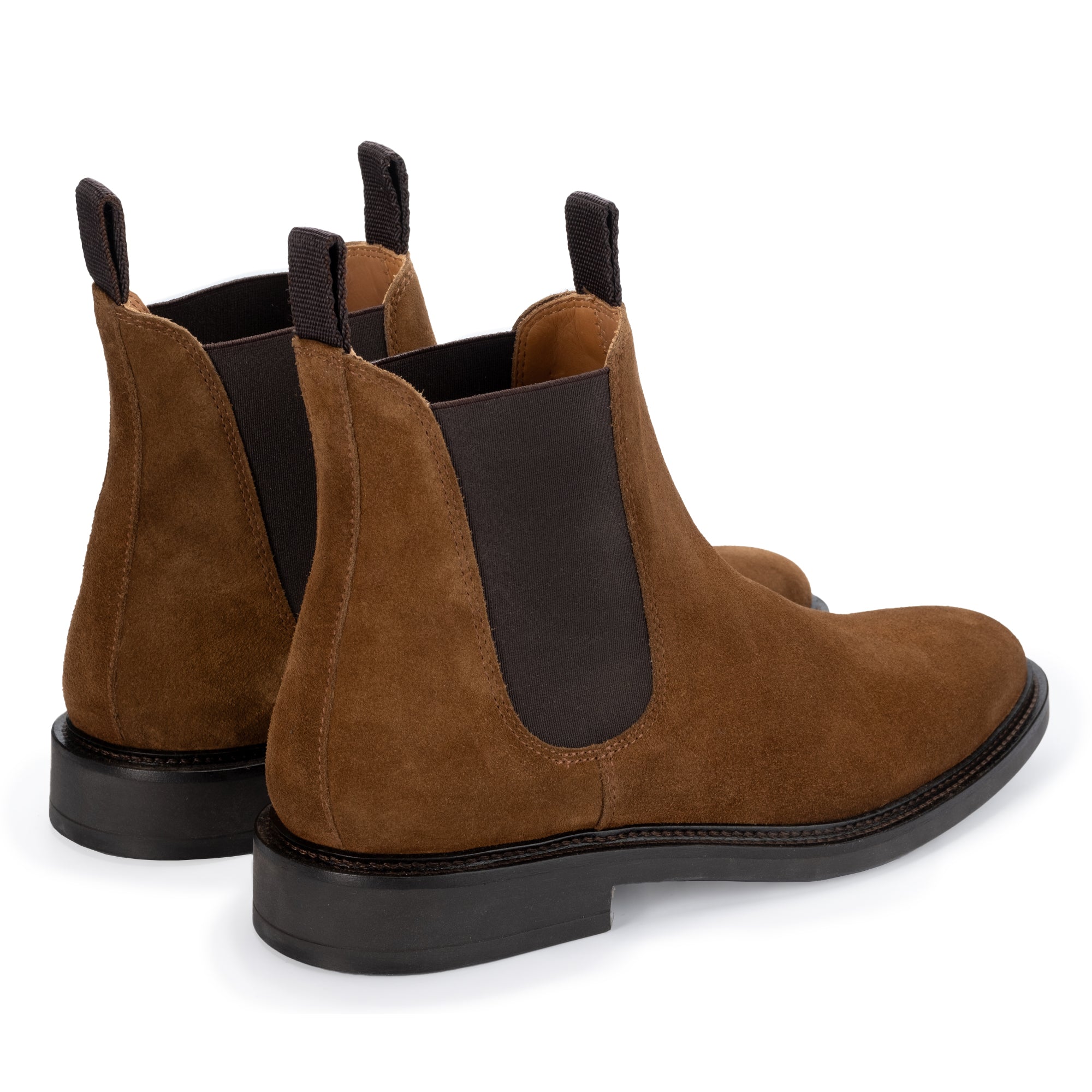
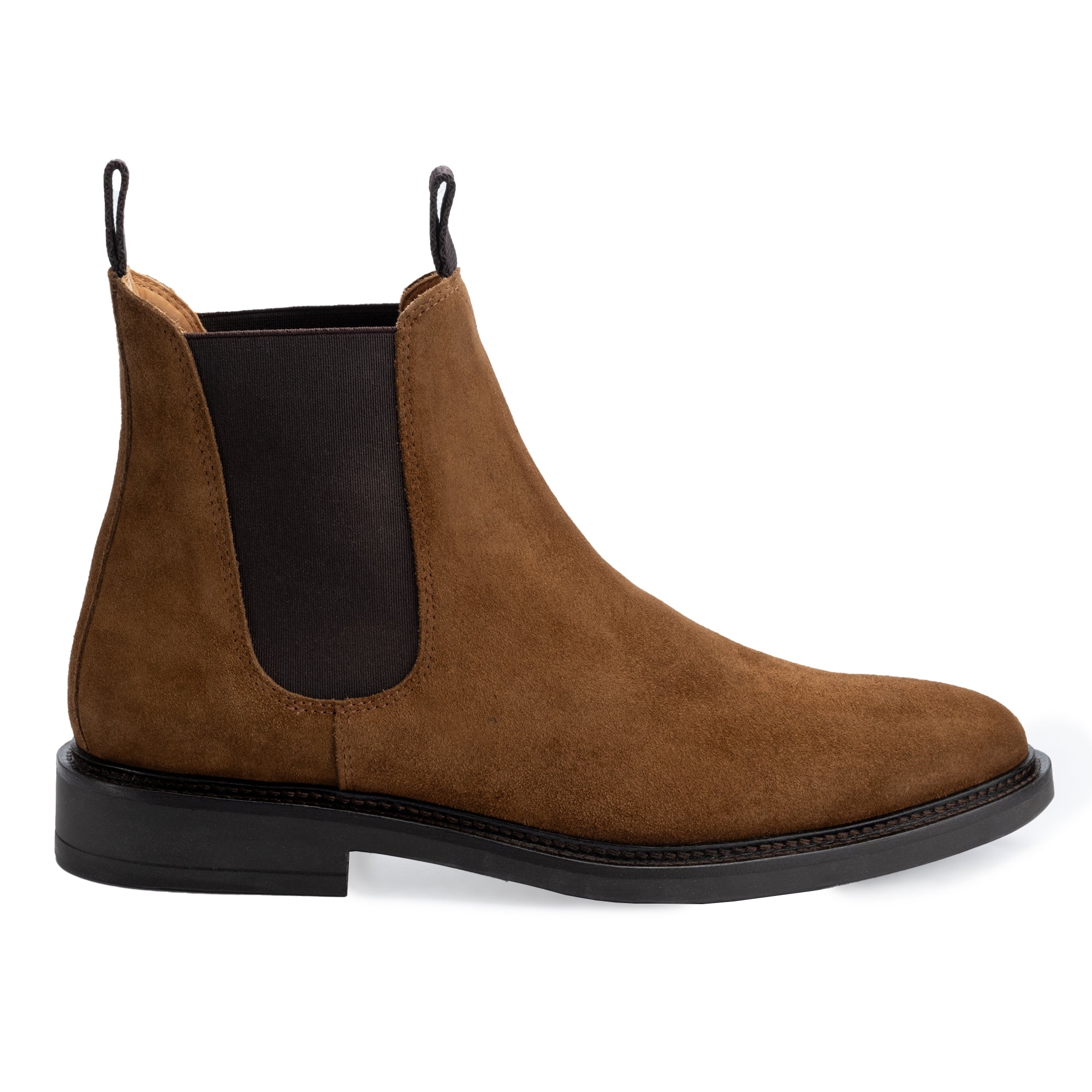
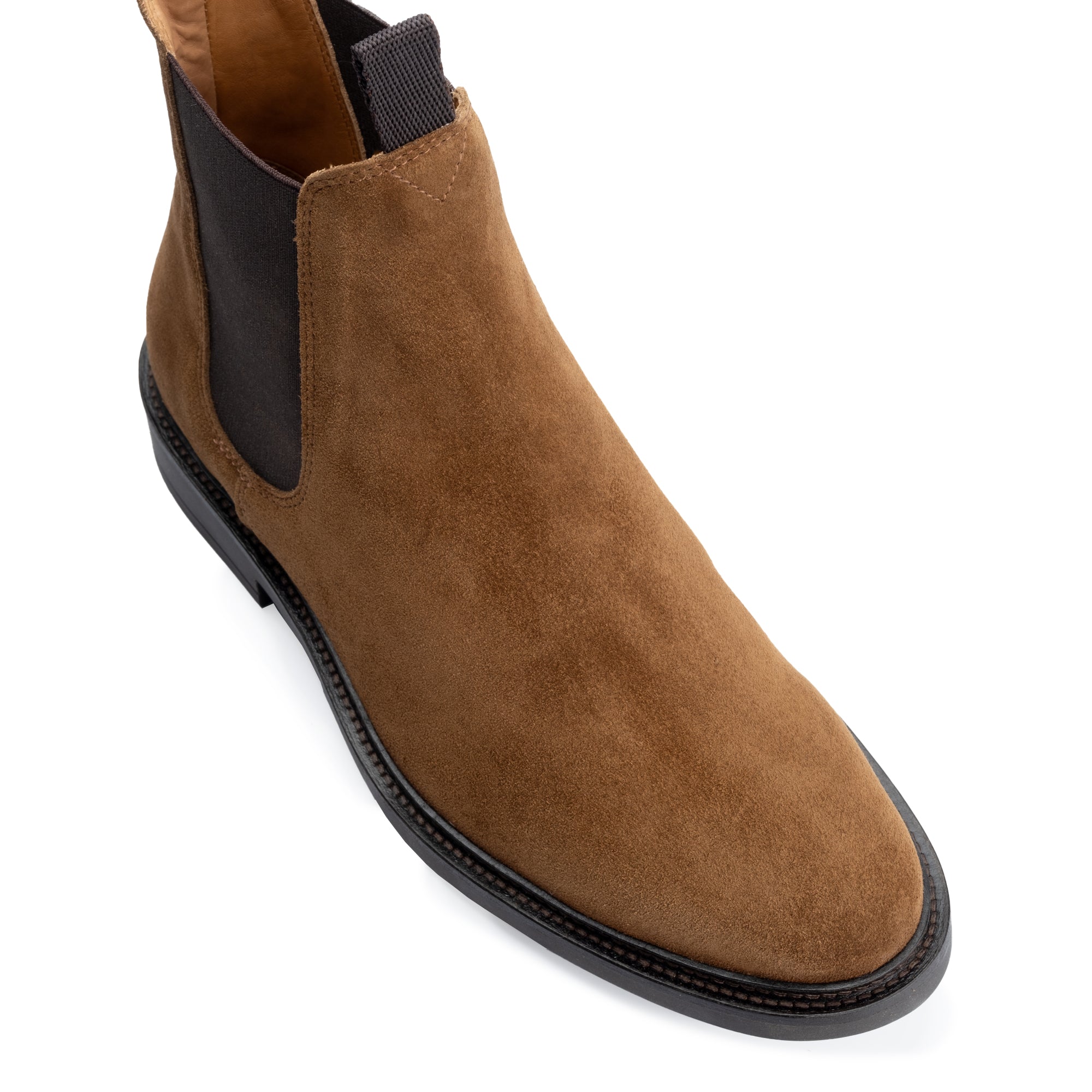
One note: at formal occasions, avoid suede. Suede shoes carry a casual register that tends to sit uneasily against the formality a wedding demands from the guests. This is not an absolute rule, but it requires effort to pull off and is rarely worth the attempt when the alternatives are stronger.
The Office
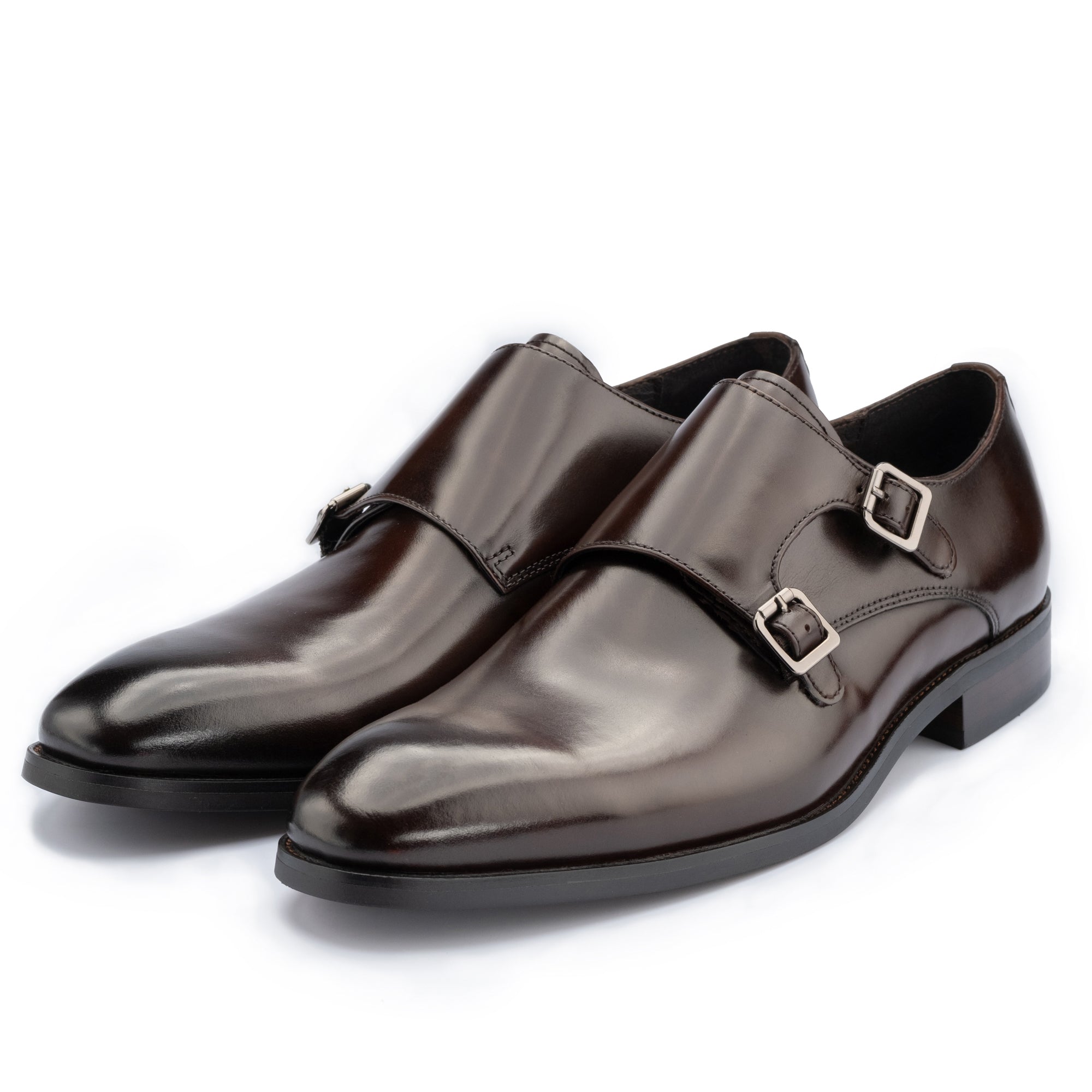
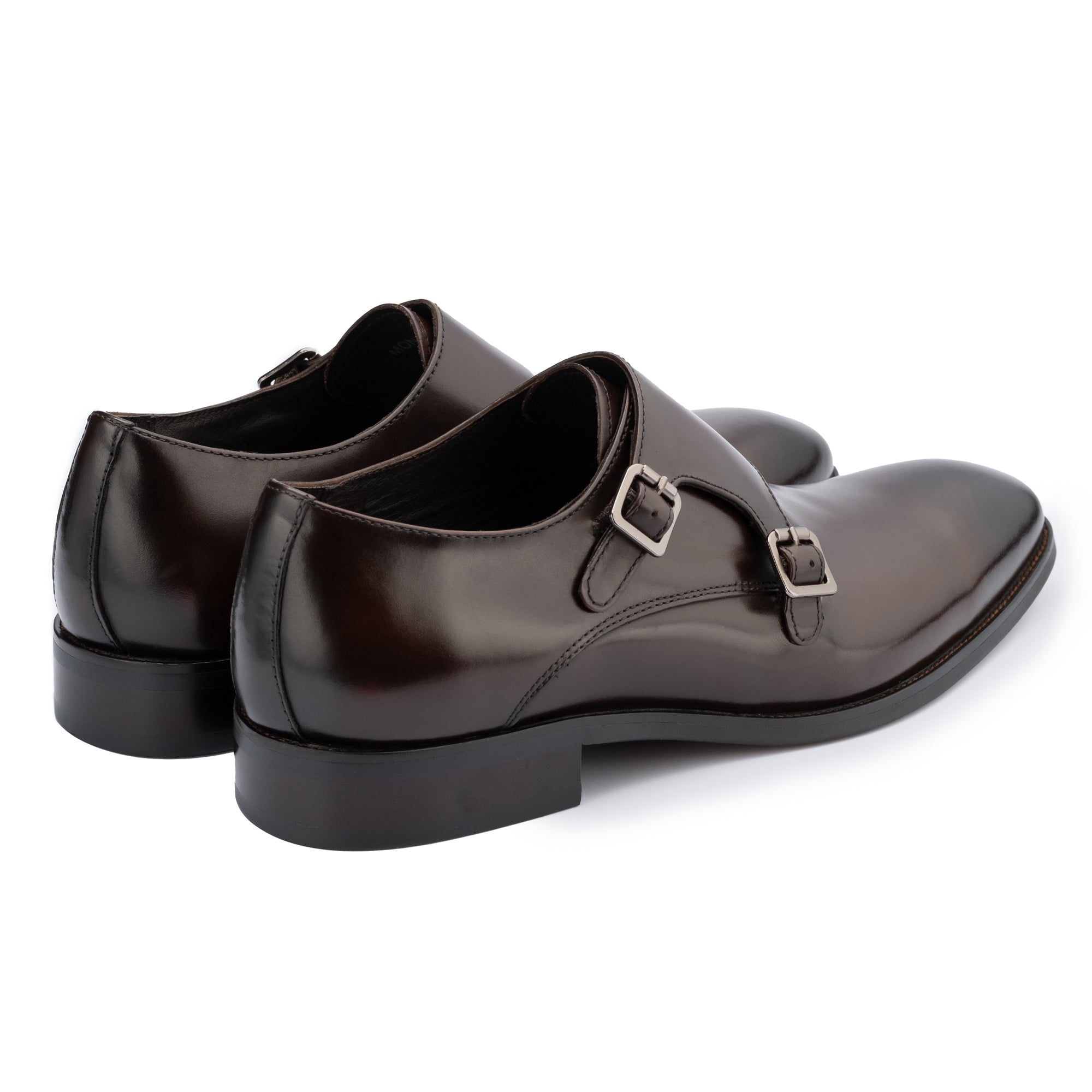
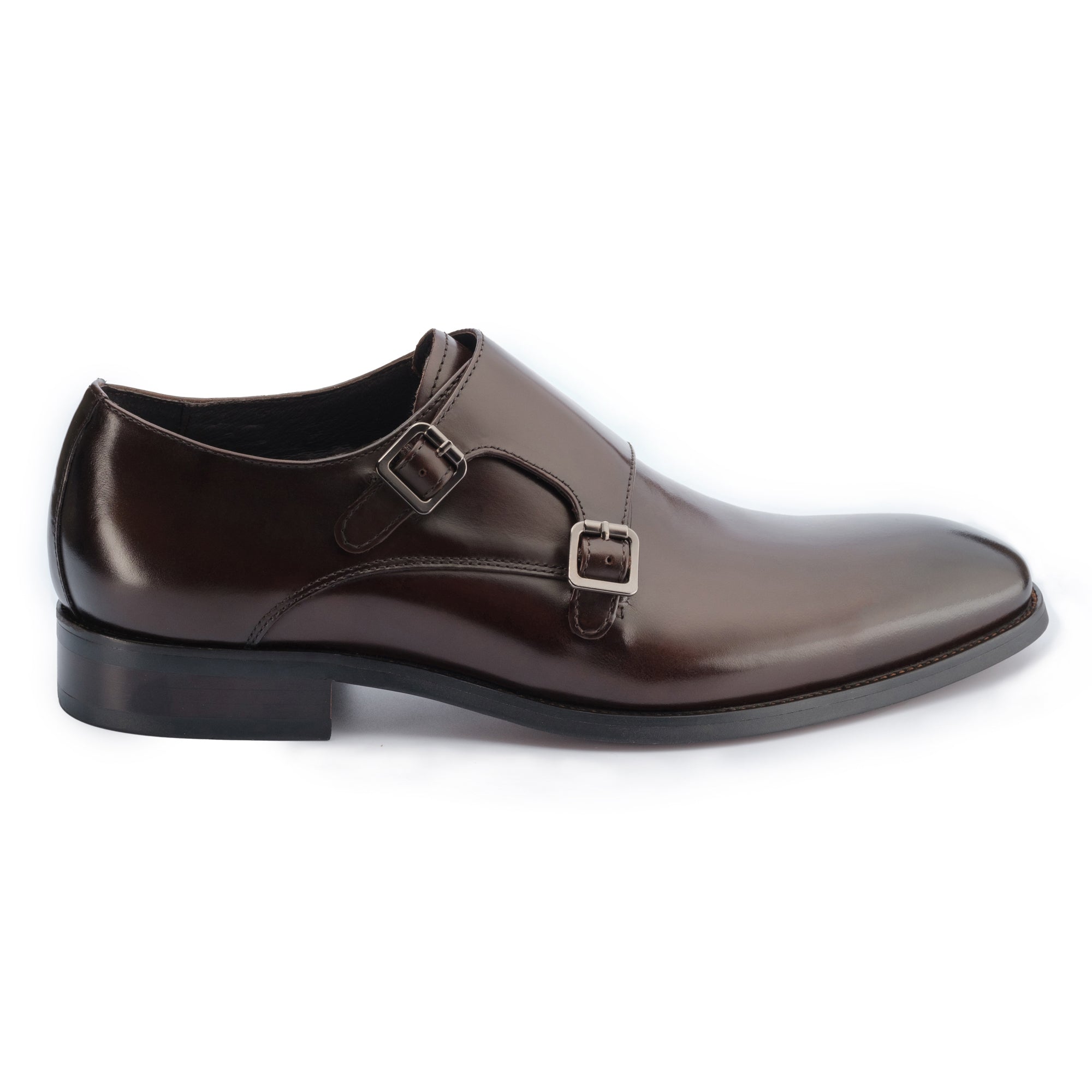
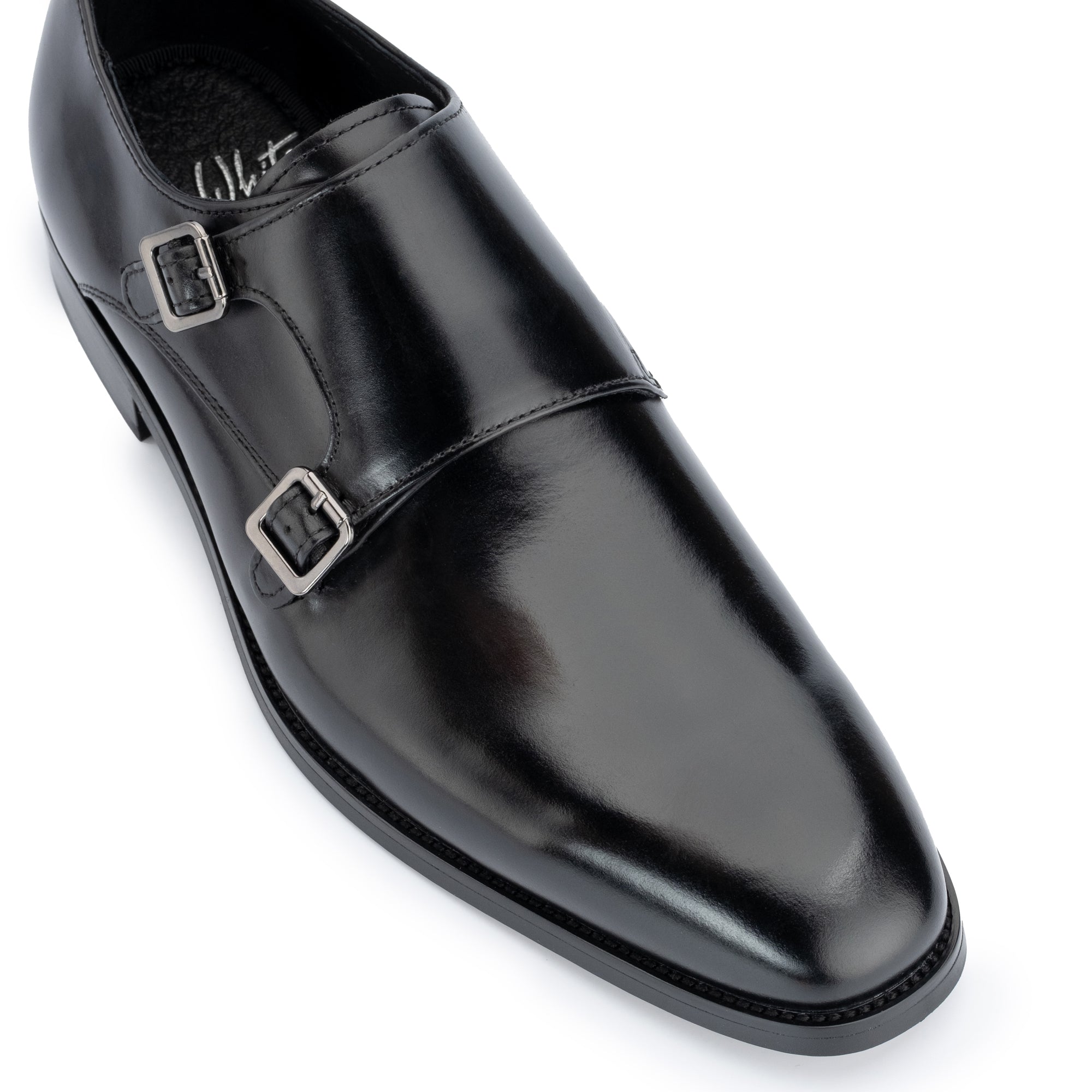
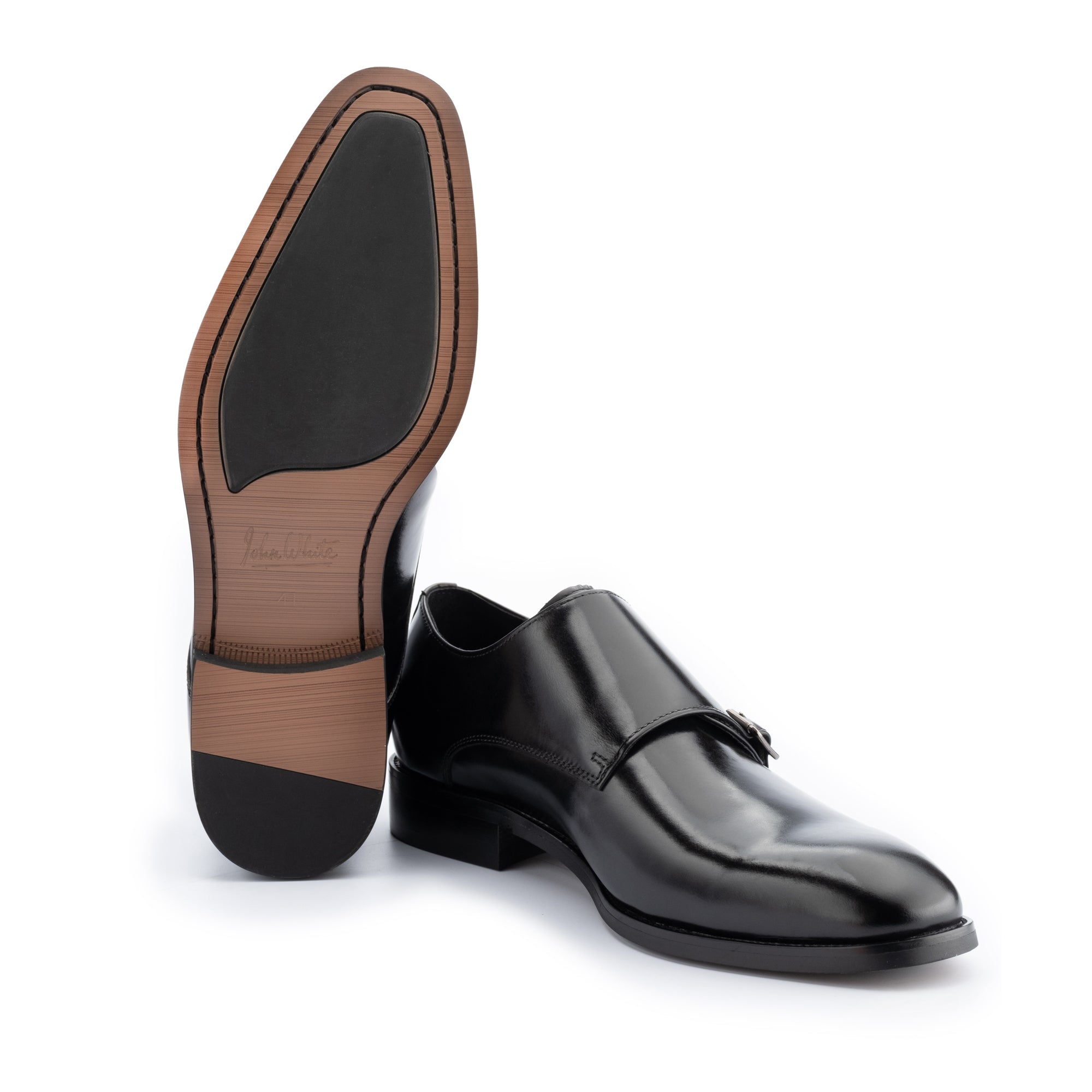
For daily office wear, the parameters are wider. A plain Derby or Oxford in black, brown, or tan all work across the week. Broguing is acceptable in most British office environments and adds variety without crossing into casual territory. A monk strap in black or brown reads as considered and slightly less conventional than a lace-up — it works well in creative, legal, or financial contexts where there is tolerance for character in the dress code.
The one combination worth approaching carefully is very light tan or honey-coloured shoes in a formal office. The contrast between a pale leather and a dark navy suit can read as informal at close range. A slightly deeper caramel or mid-tan avoids this.
Smart Casual
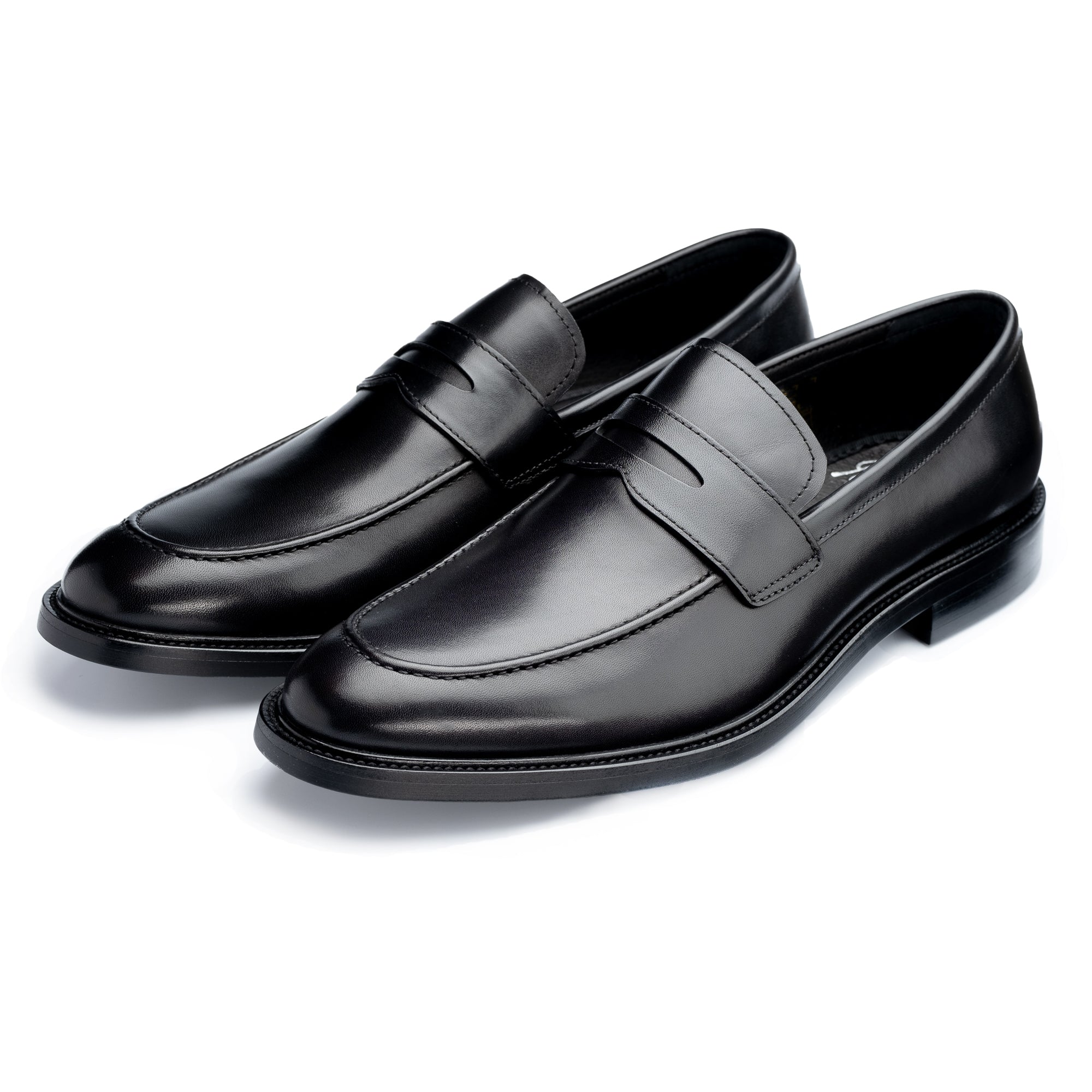
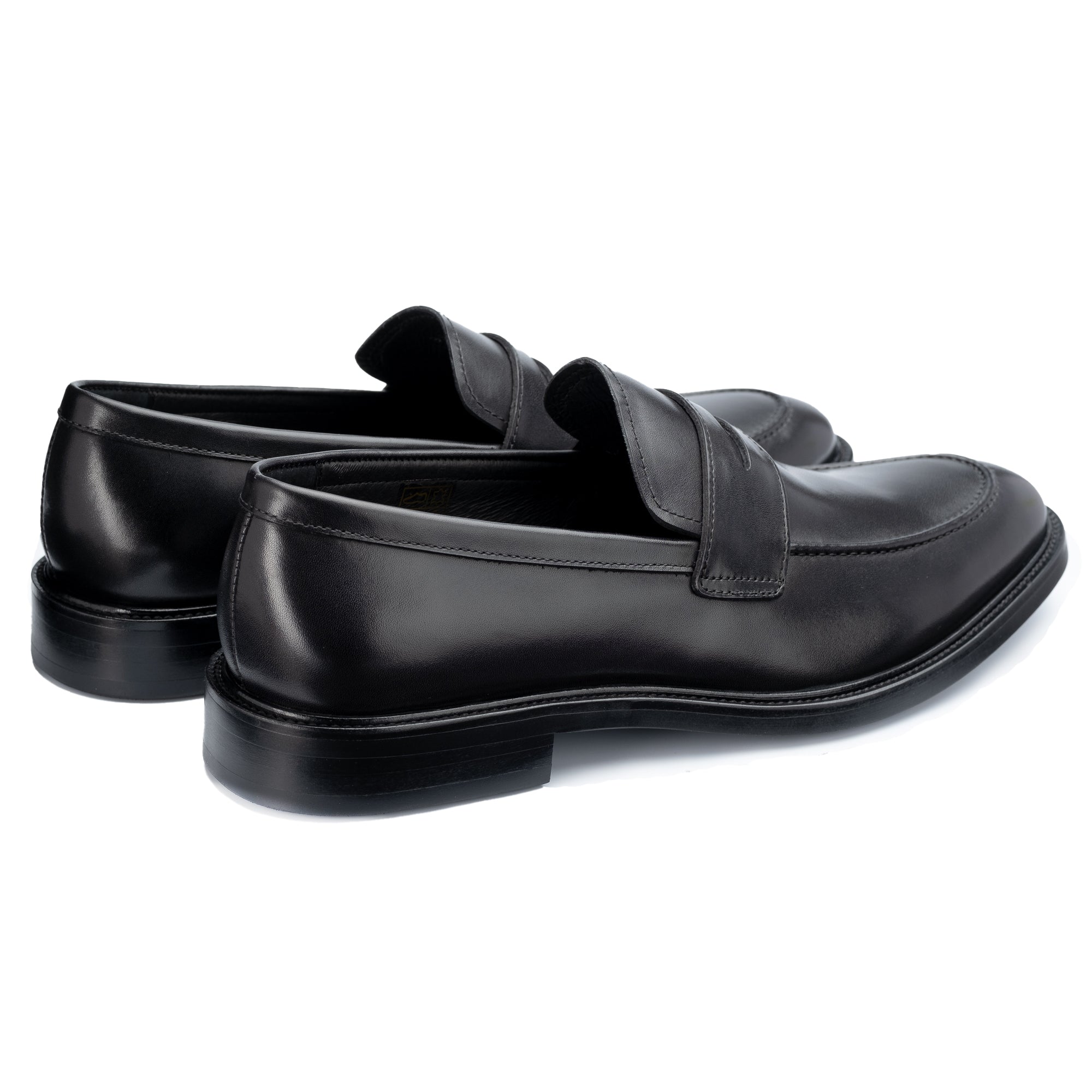
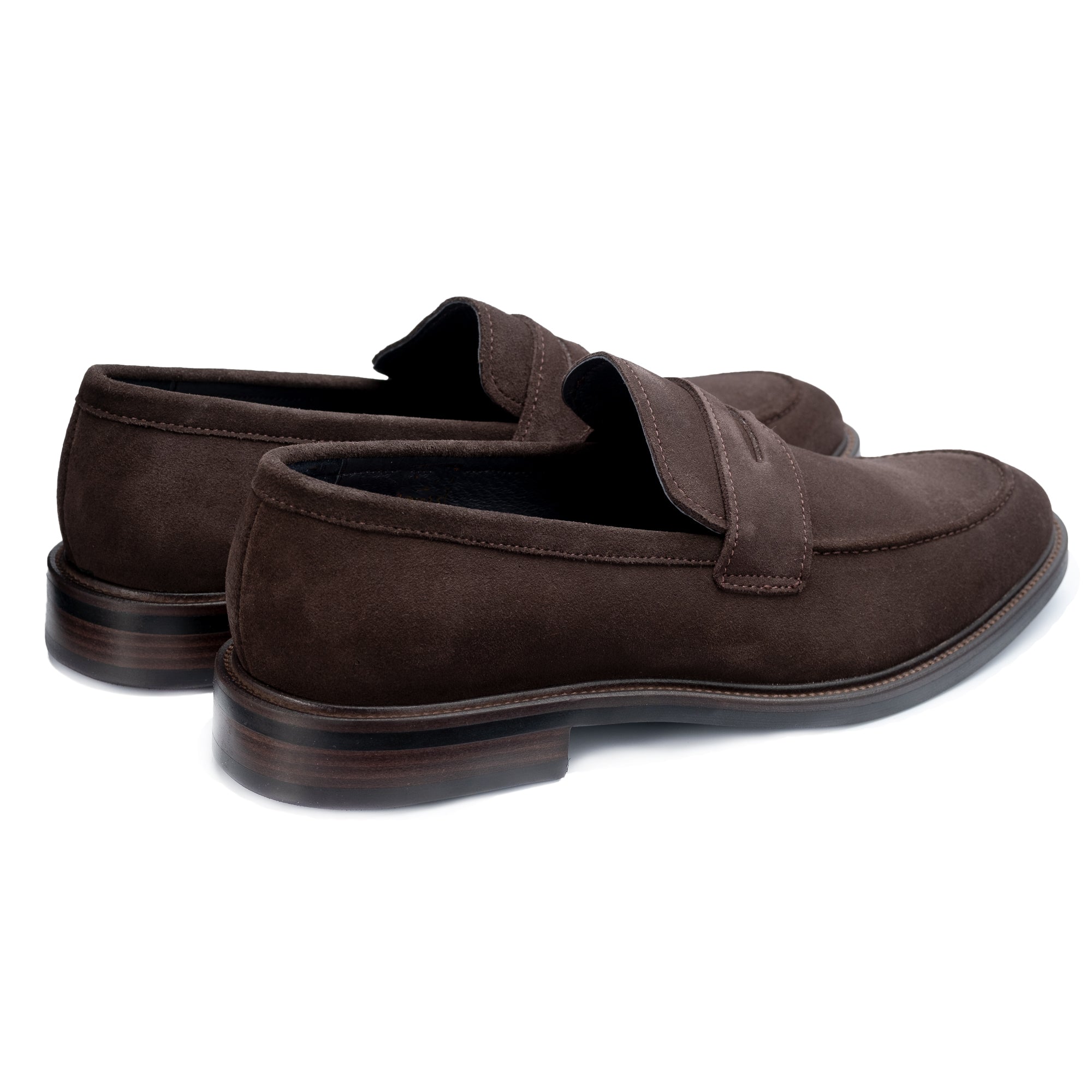
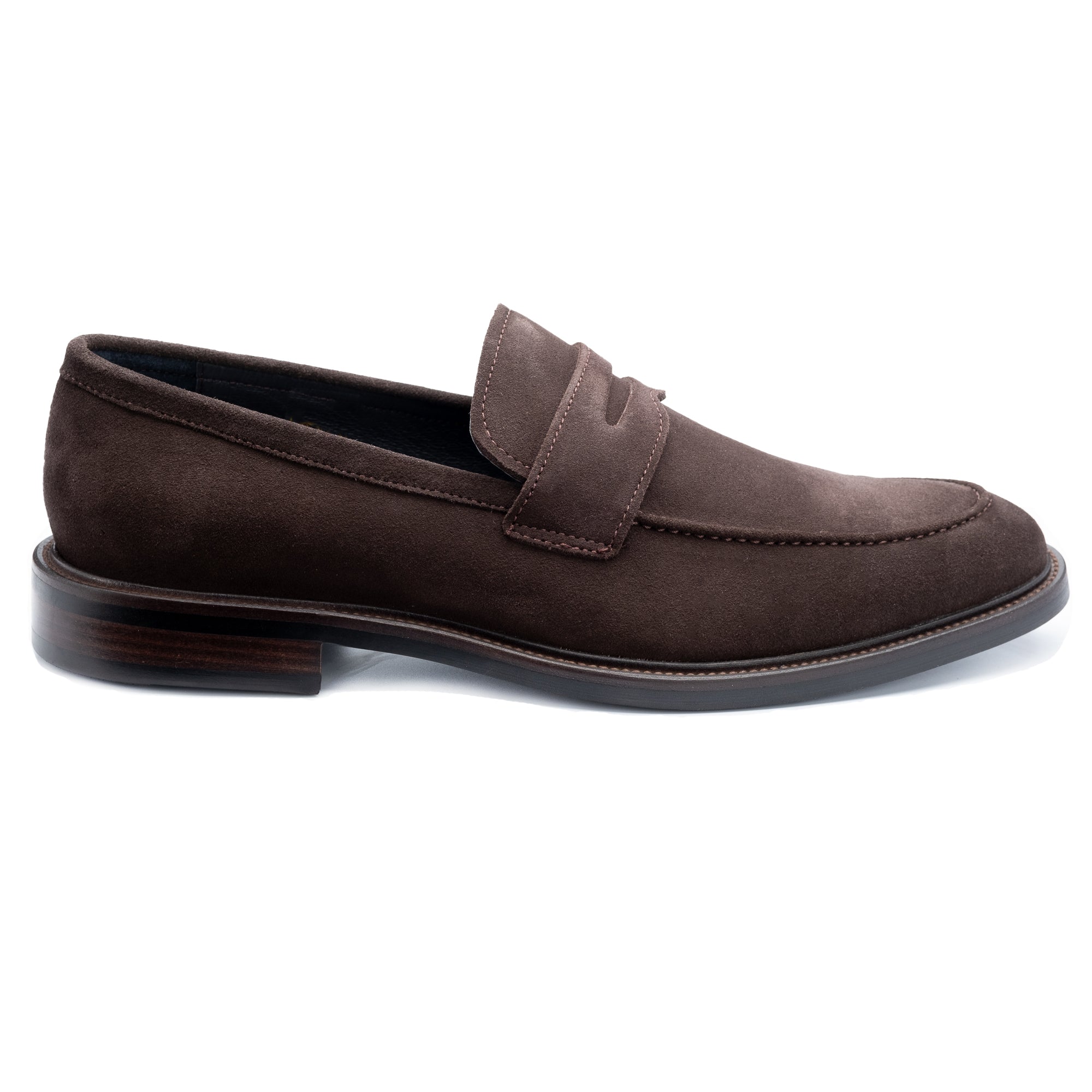
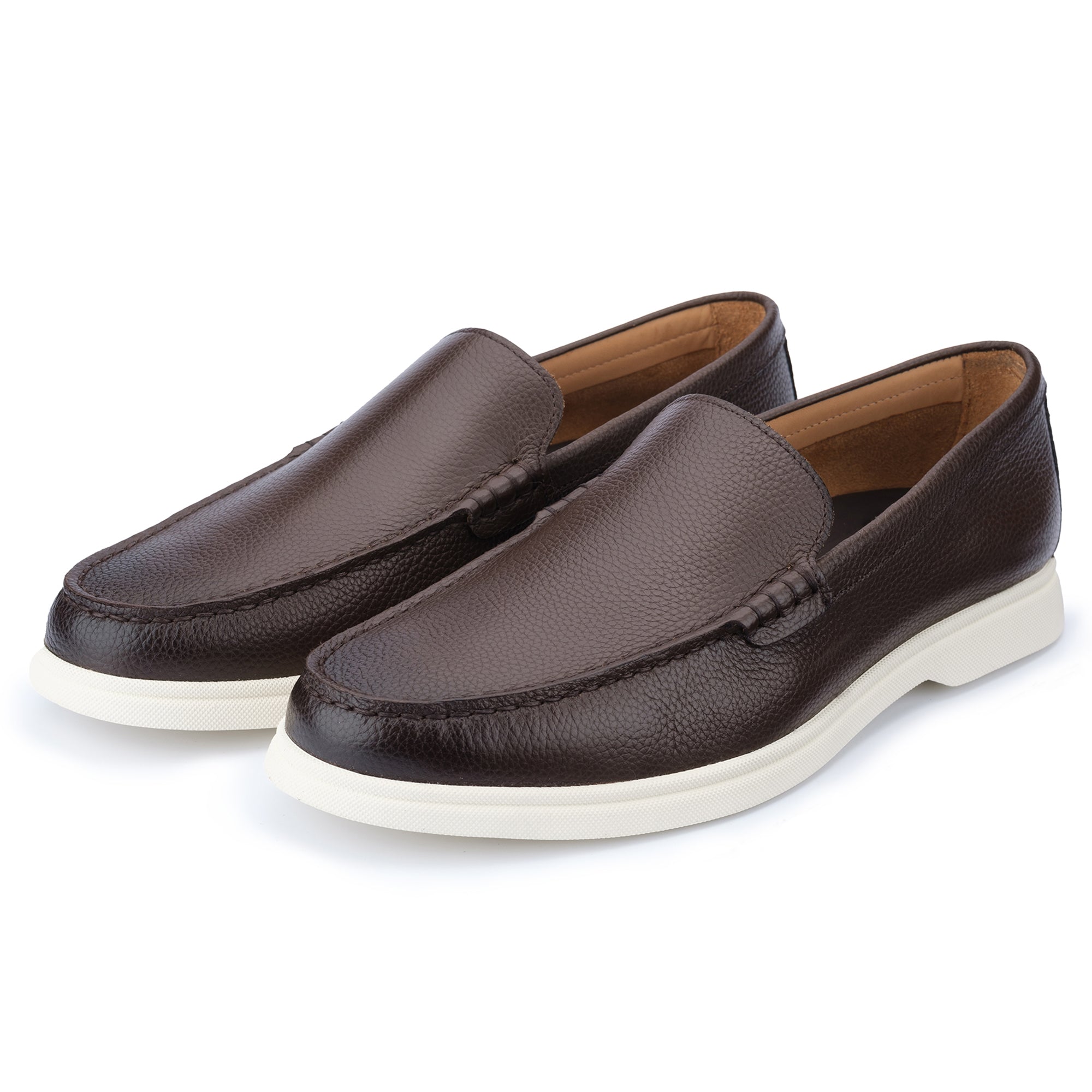
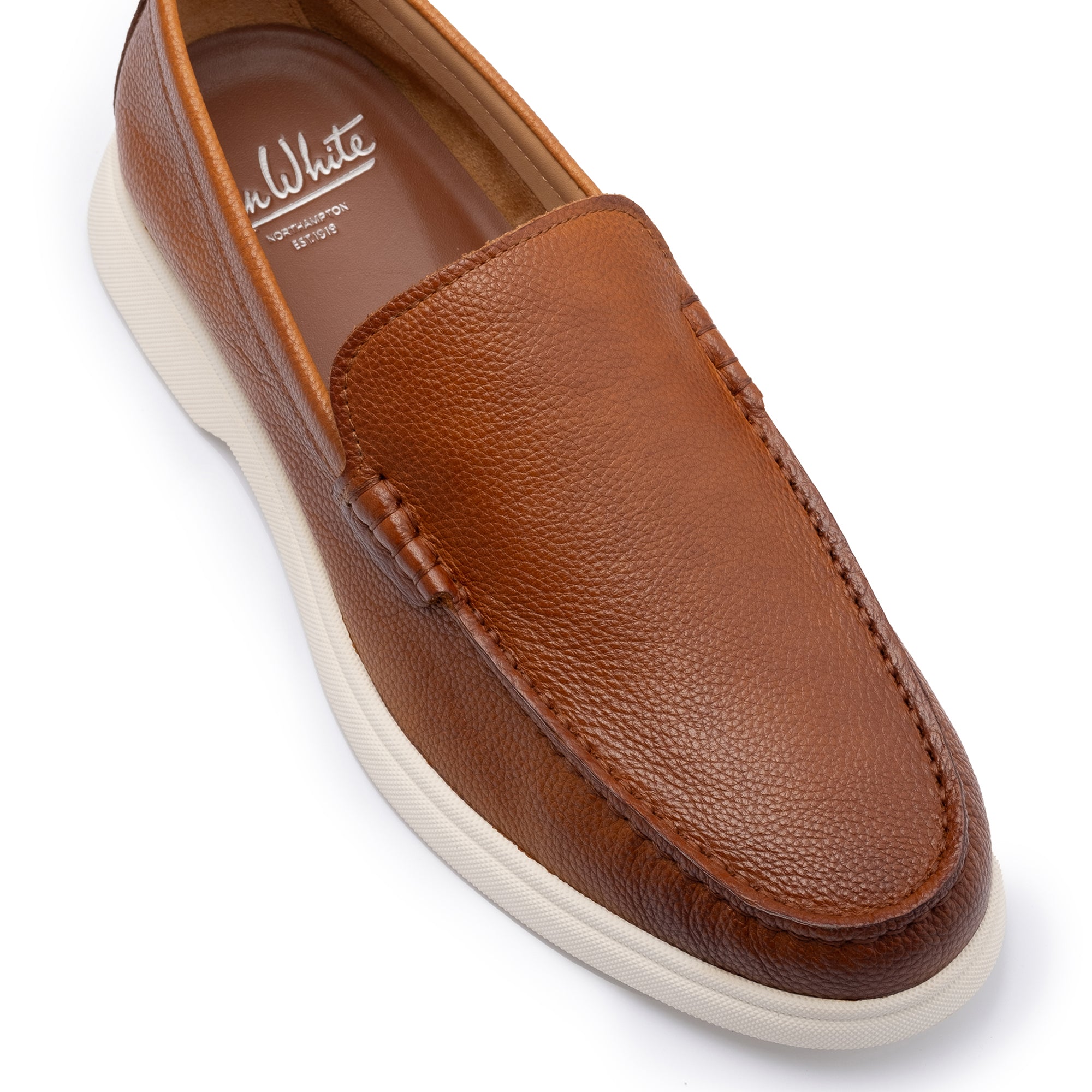
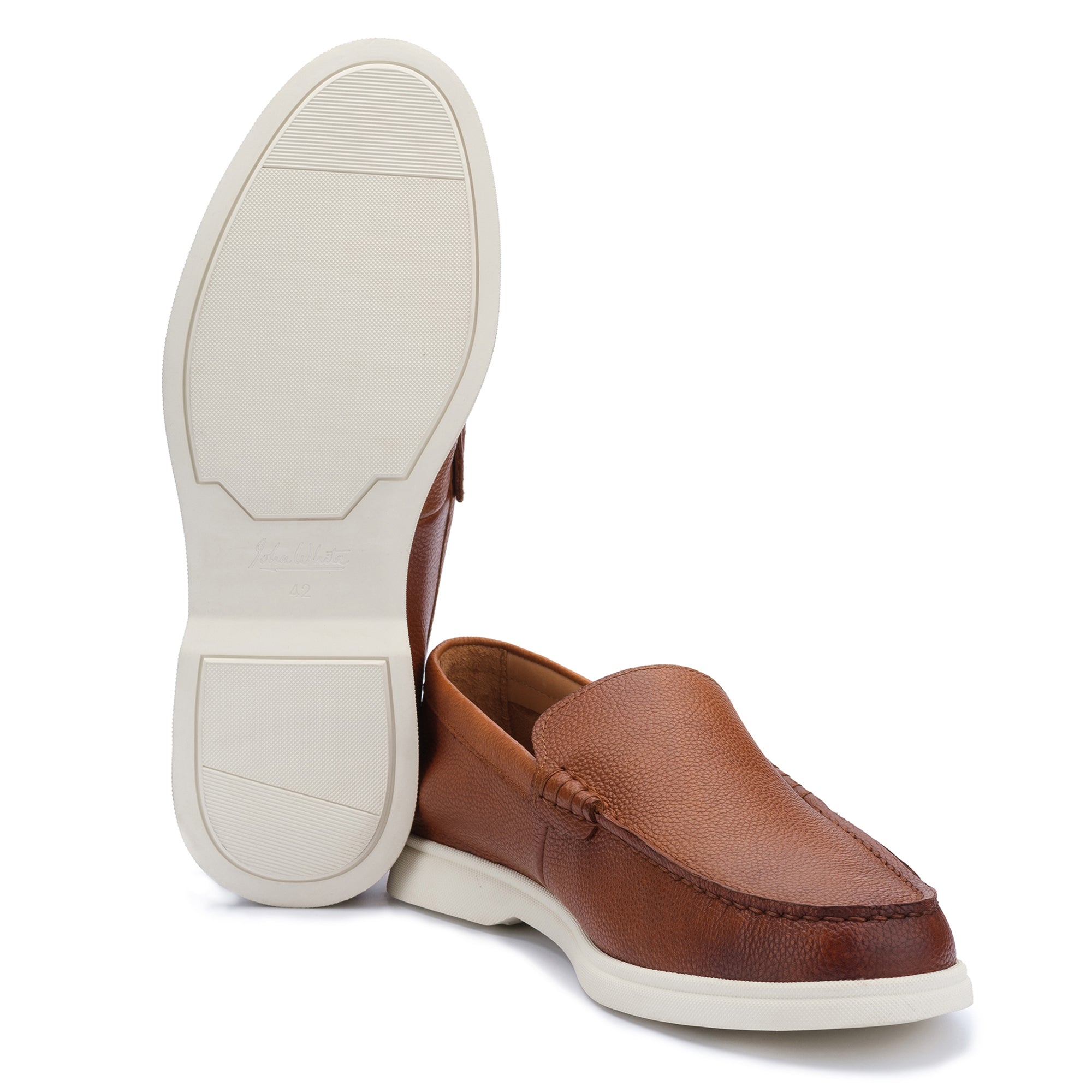
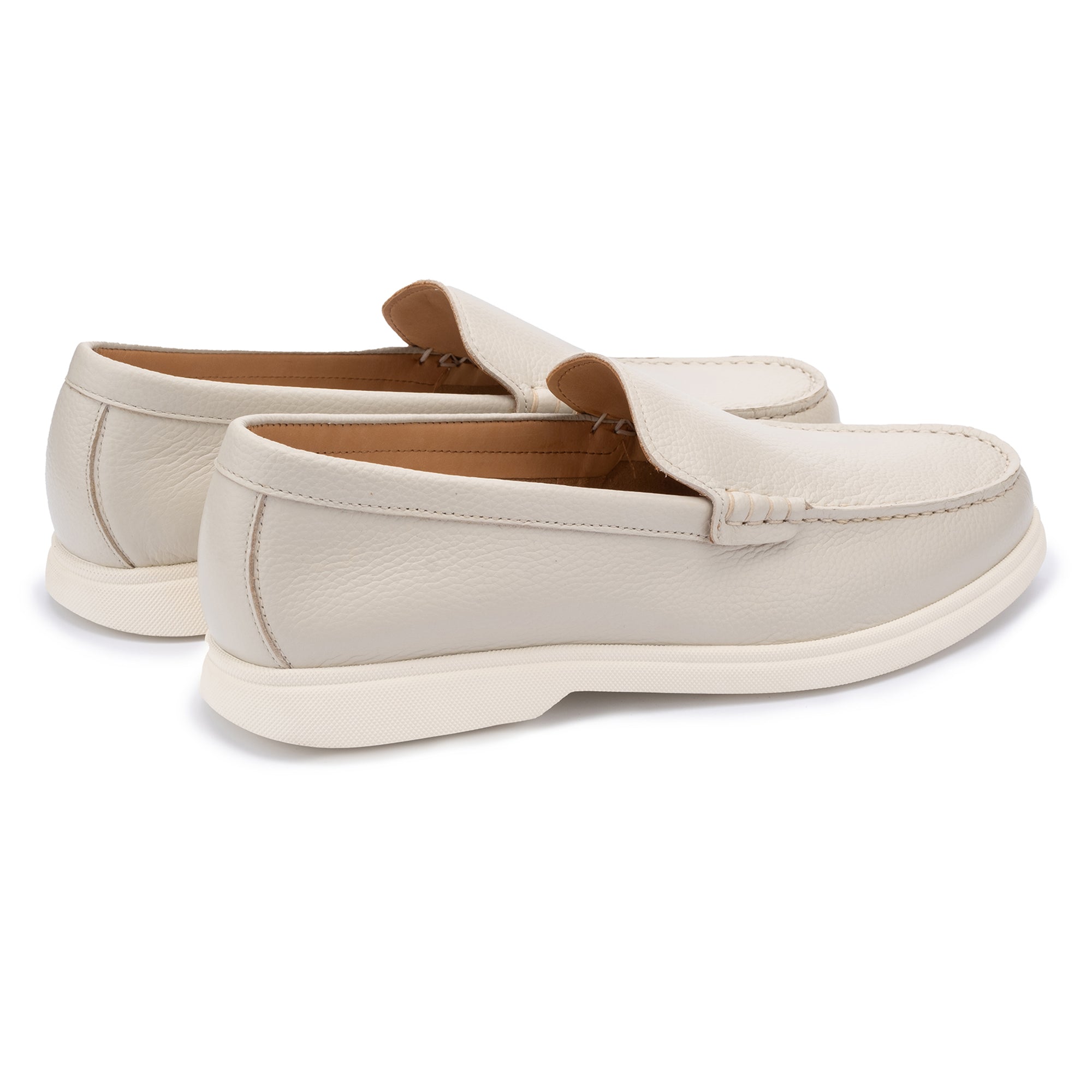
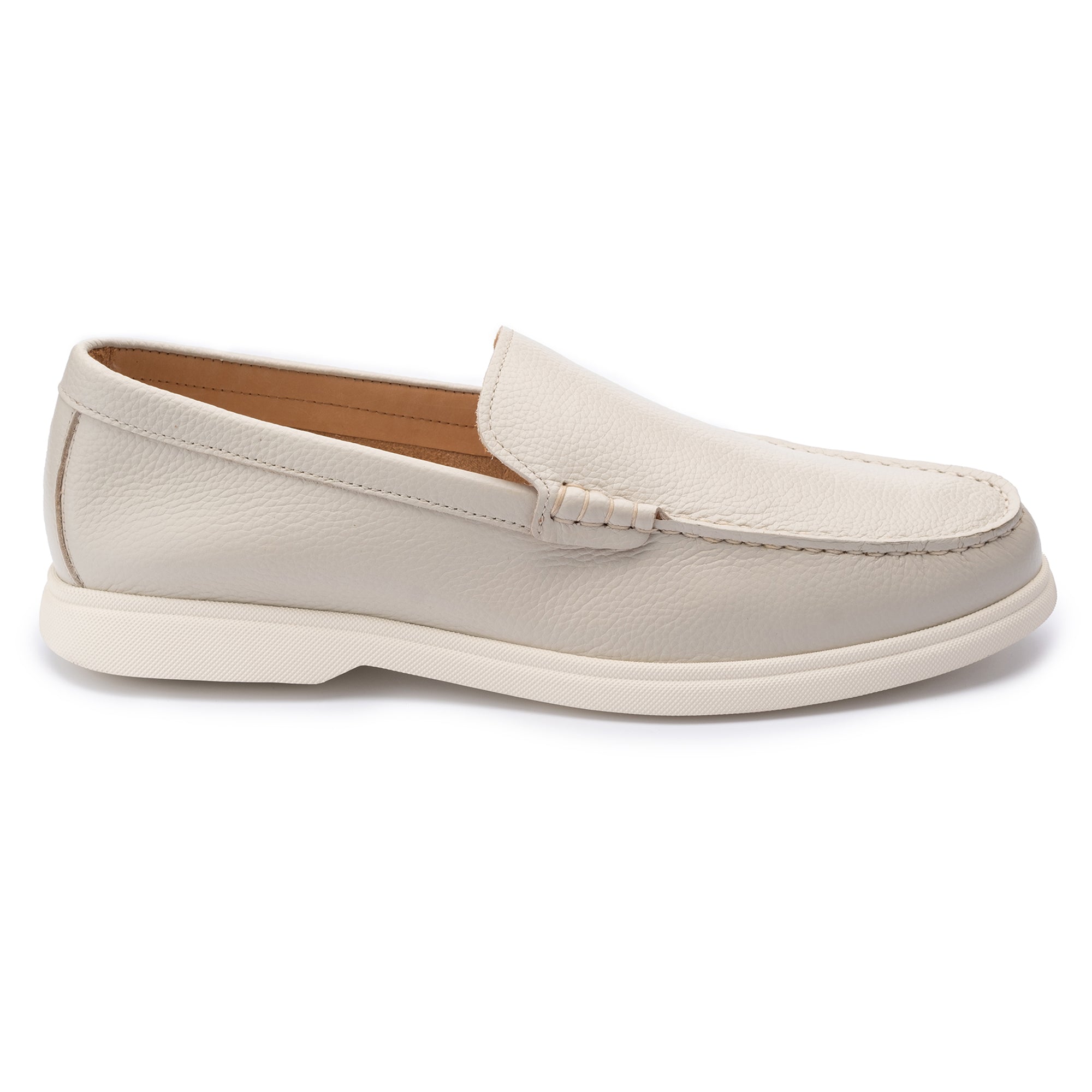
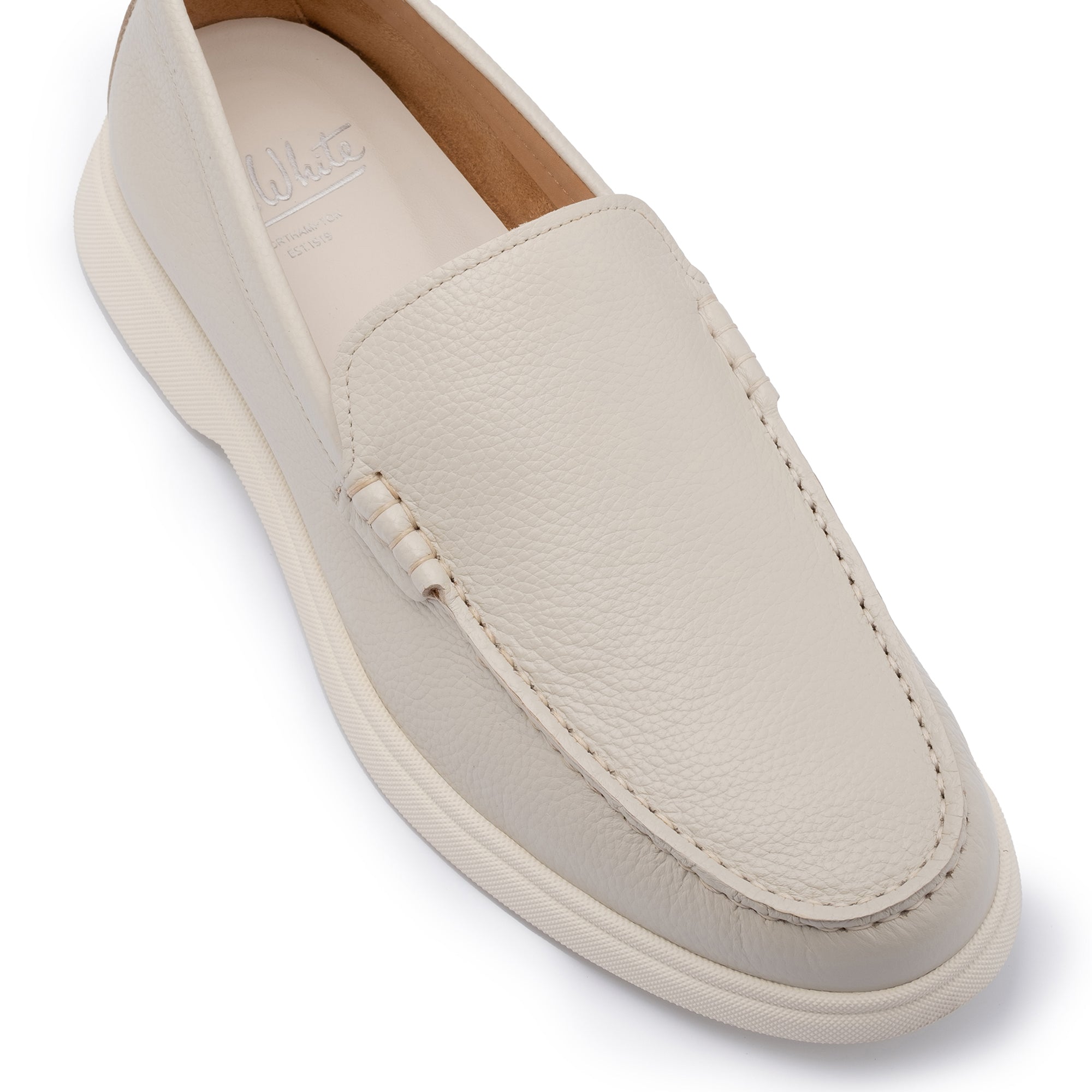
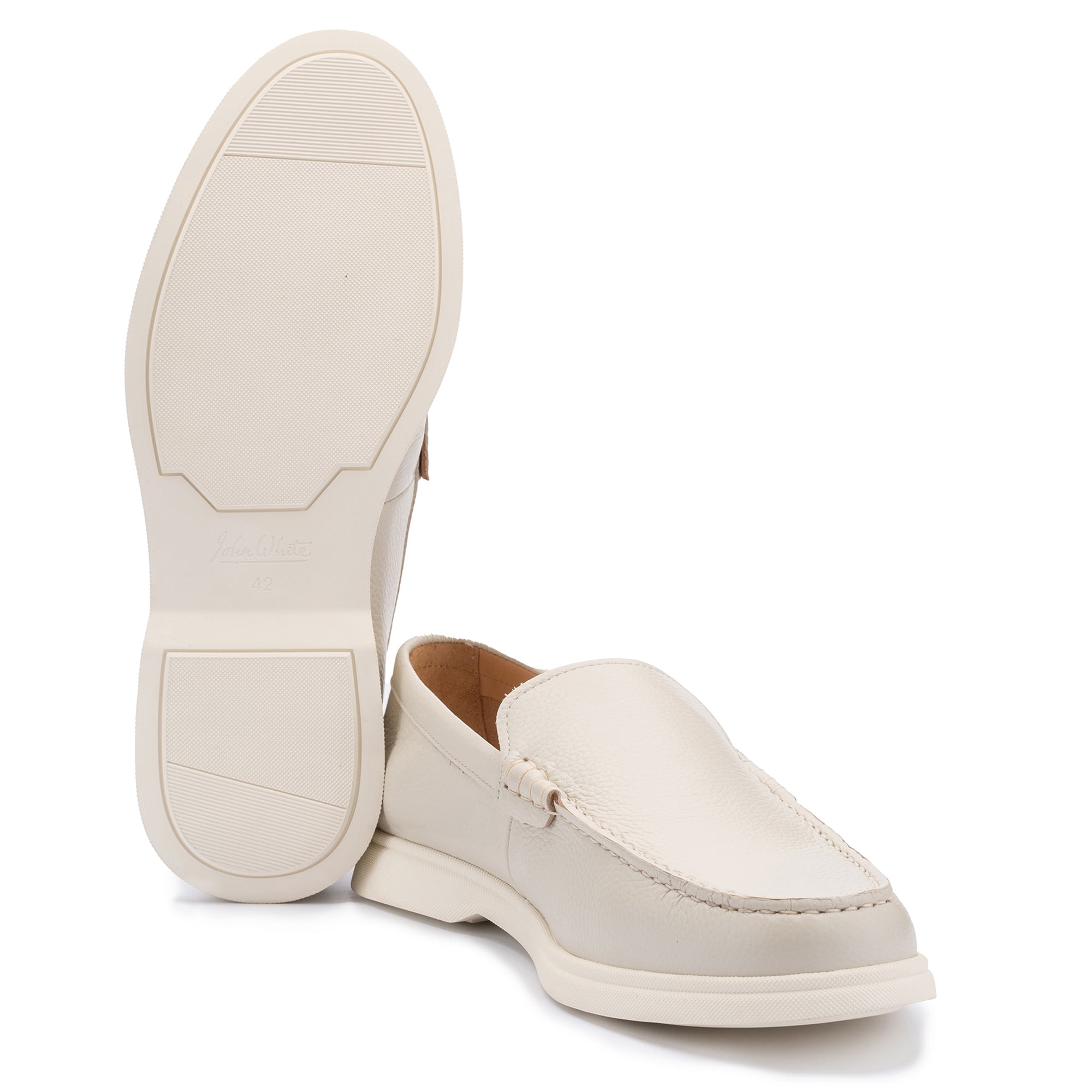
A navy suit worn with an open collar in a smart casual context opens up the full range of shoe options. Loafers — penny or slipper style — are at home here in a way they rarely are in a boardroom. A tan penny loafer with navy trousers (suit trousers worn without the jacket) is one of the better smart casual combinations available.
In this register, the shoe drives the character of the outfit. A plain tan penny loafer reads relaxed and assured. A double monk strap in brown reads more considered. A Brogue Derby in cognac reads as doing slightly more work than the occasion requires. Understanding what effect you are after helps you choose the right direction.
JWS Options by Pairing
The catalogue has strong coverage across each pairing category.
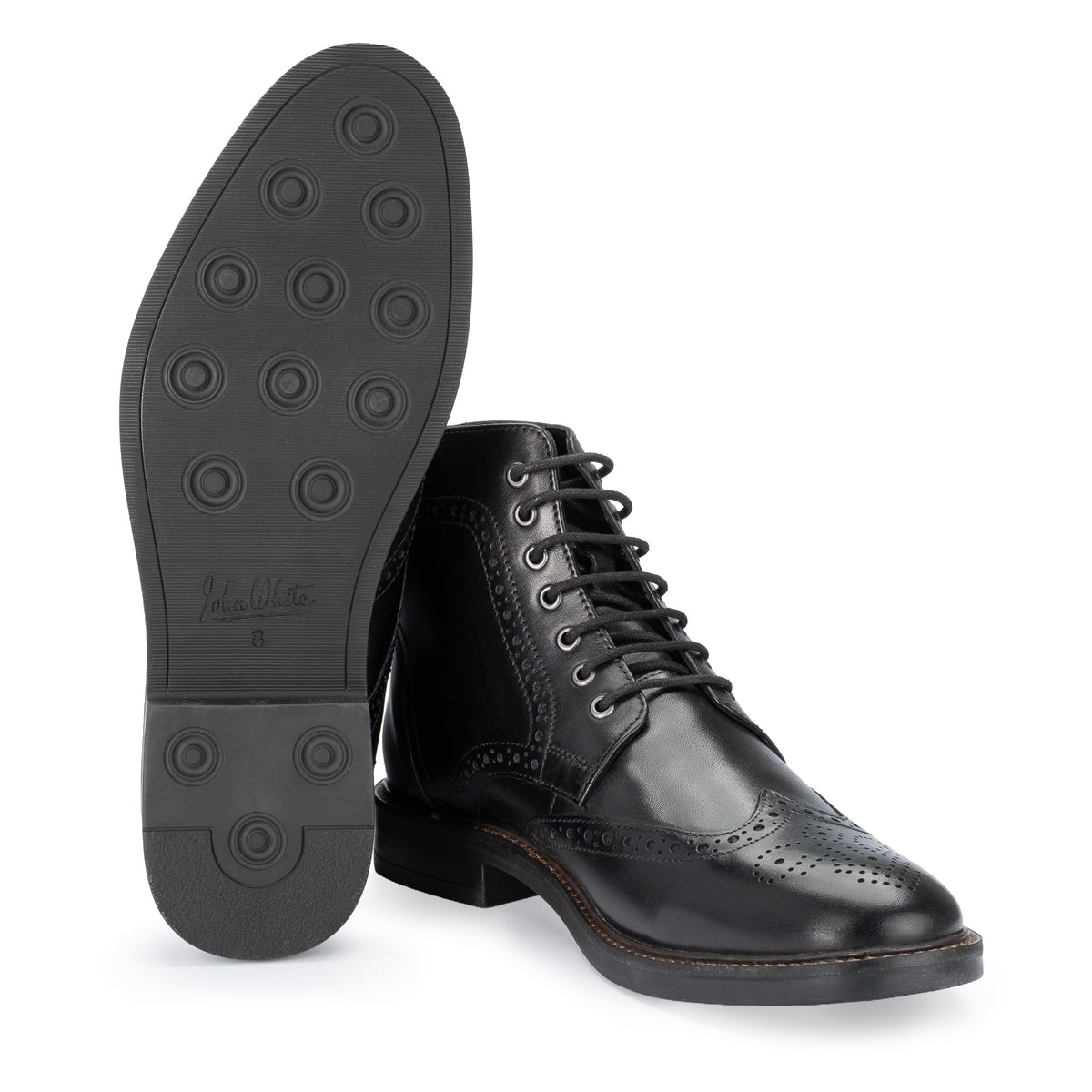
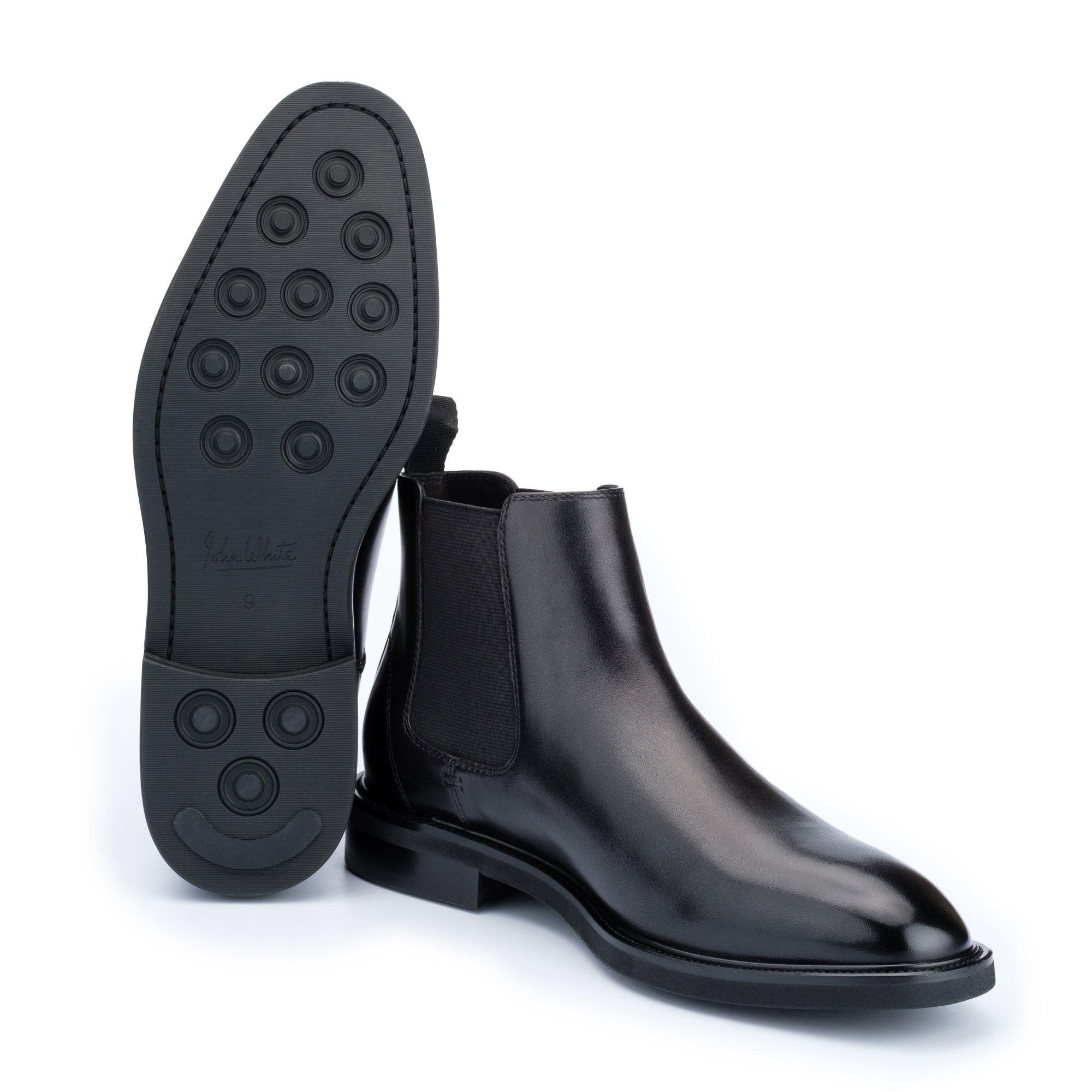
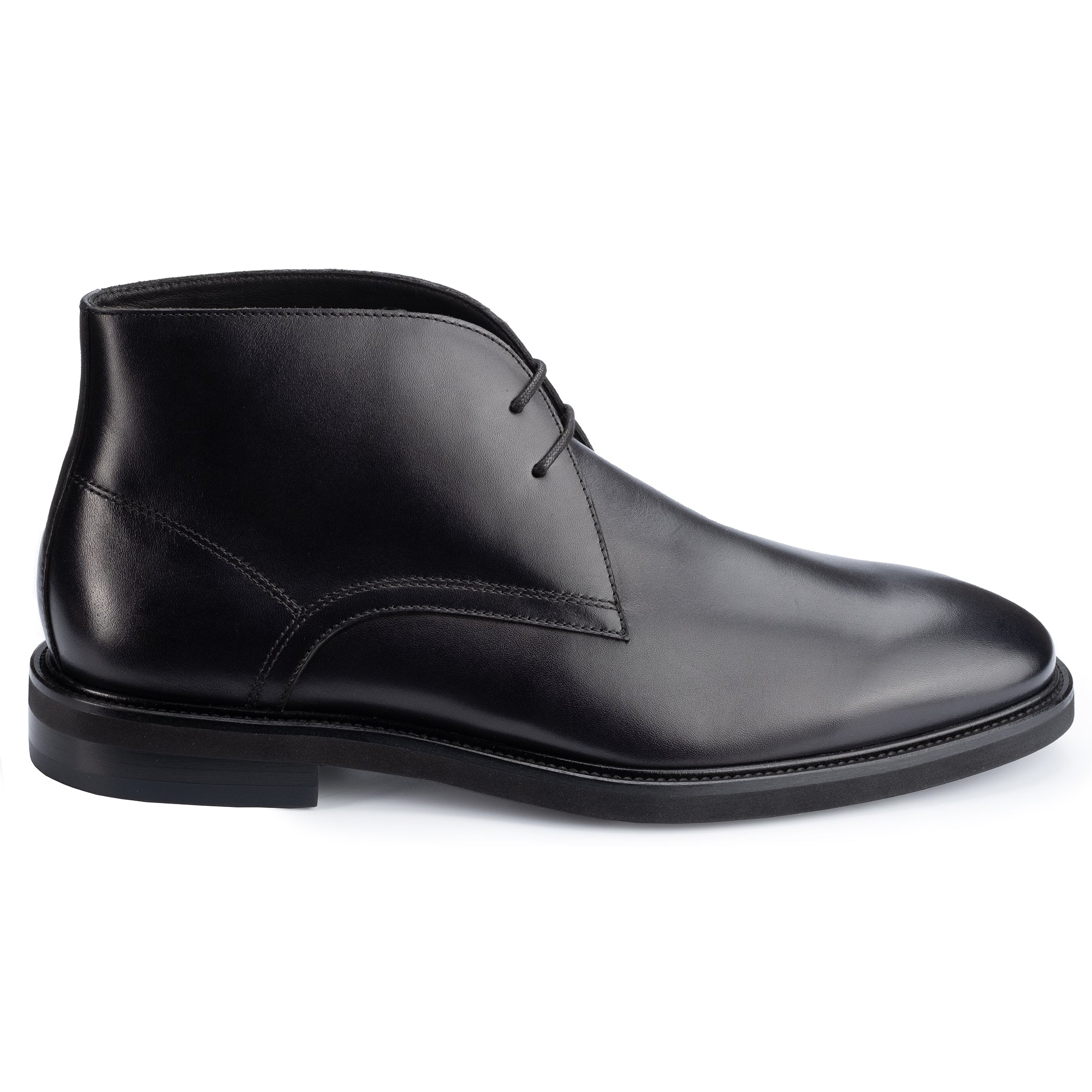
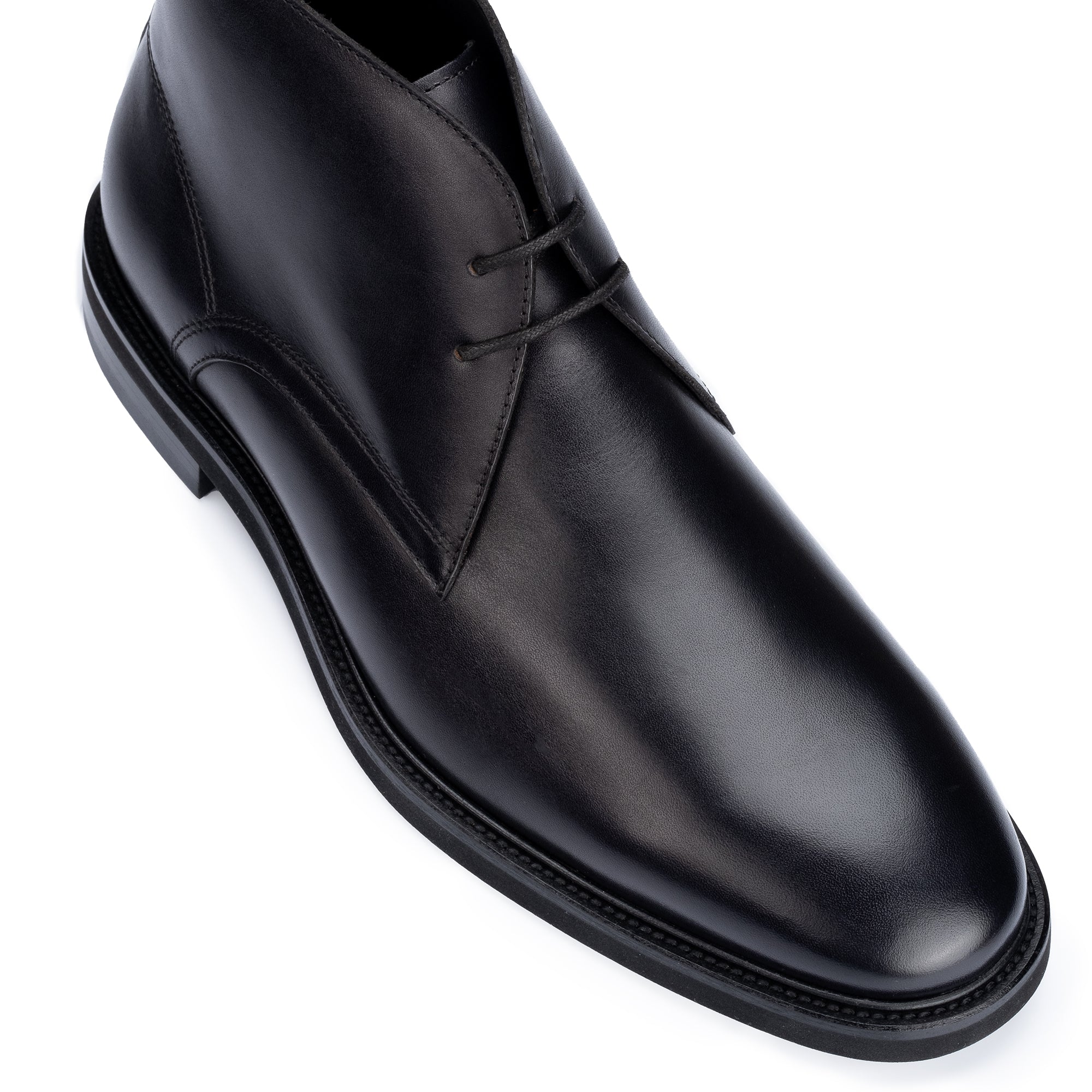
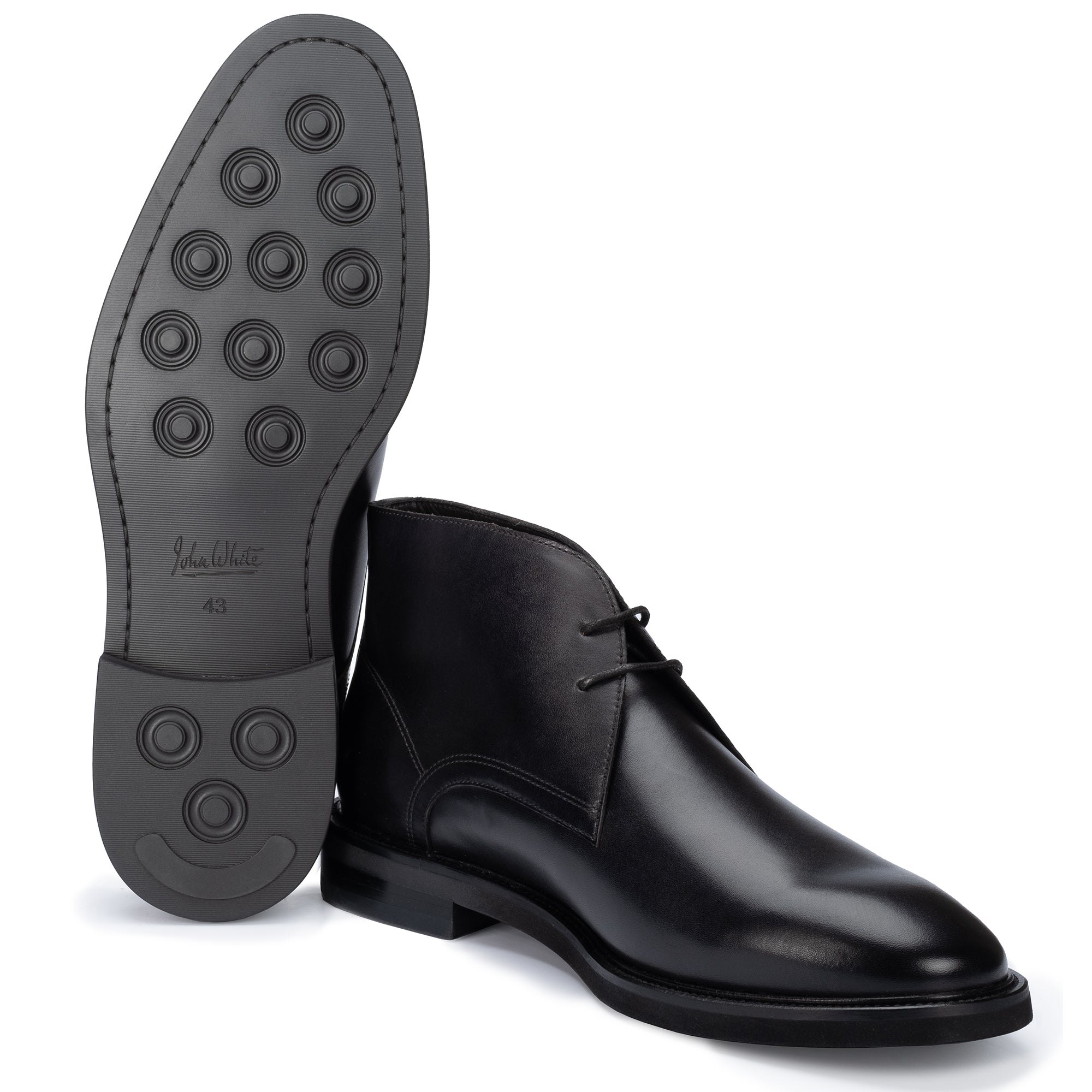
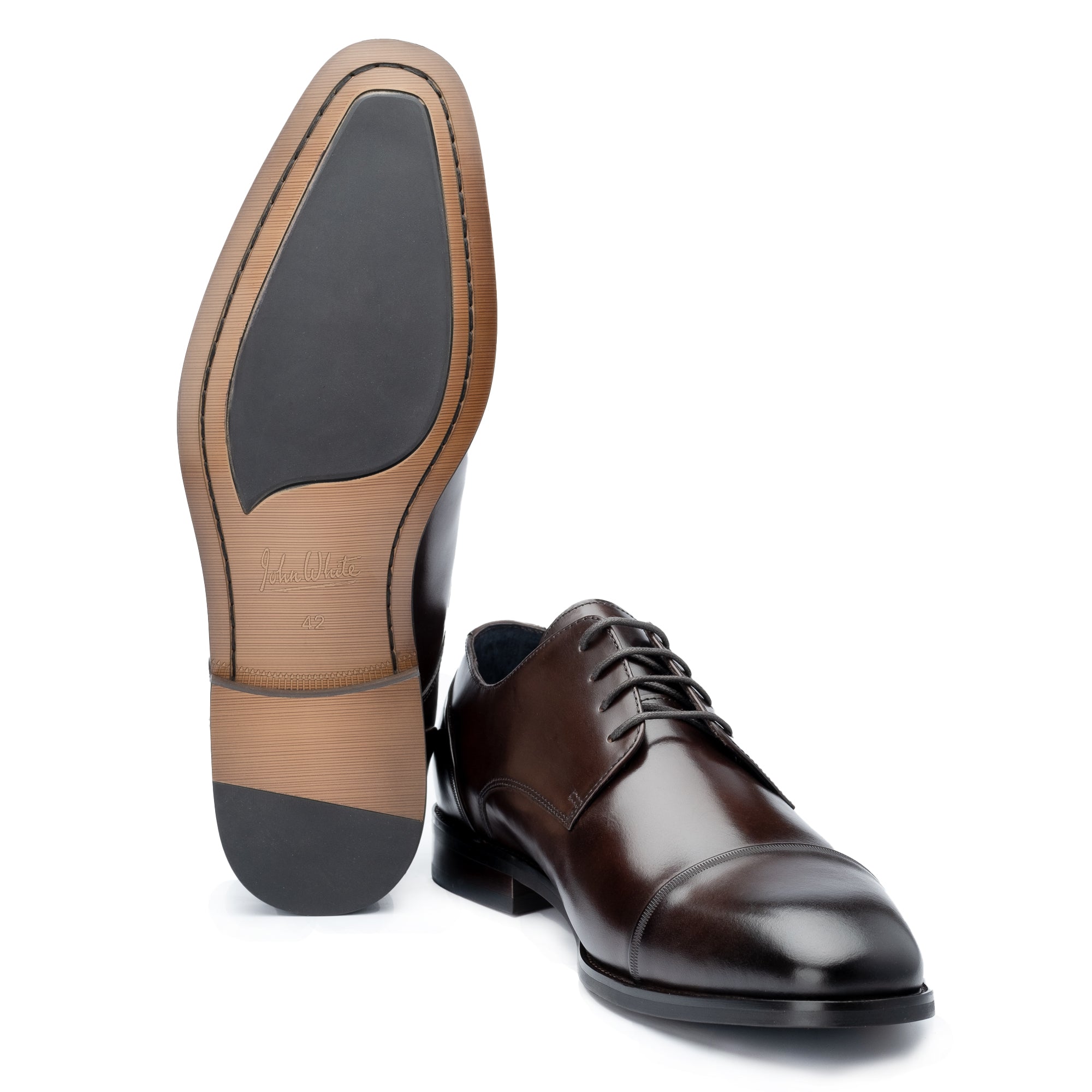
For the formal black pairing, the Guildhall Capped Oxfords in Black are the natural choice — a clean cap-toe line, smooth leather, and a last suited to suit wear. The Rudd Derby in Black and Broad Derby in Black are strong alternatives for those who find the Derby more comfortable over a long day.
For tan and cognac, the Lucan Semi-Brogues in Tan are a reliable first choice — the light broguing adds texture while the semi-brogue form keeps the shoe formal enough for most occasions. The Stokes Brogue Derby in Tan offers fuller broguing for those who want more detail, and the Guildhall Capped Oxfords in Tan are the cleaner option in the same colour family.
For the brown category, the Broad Derby in Brown and the Tanner Derby in Brown both cover the mid-brown register well. The Monkton Double Monk in Brown is the character option in this category — appropriate for offices and occasions where a conventional lace-up would do the job but a monk strap does it with more personality.
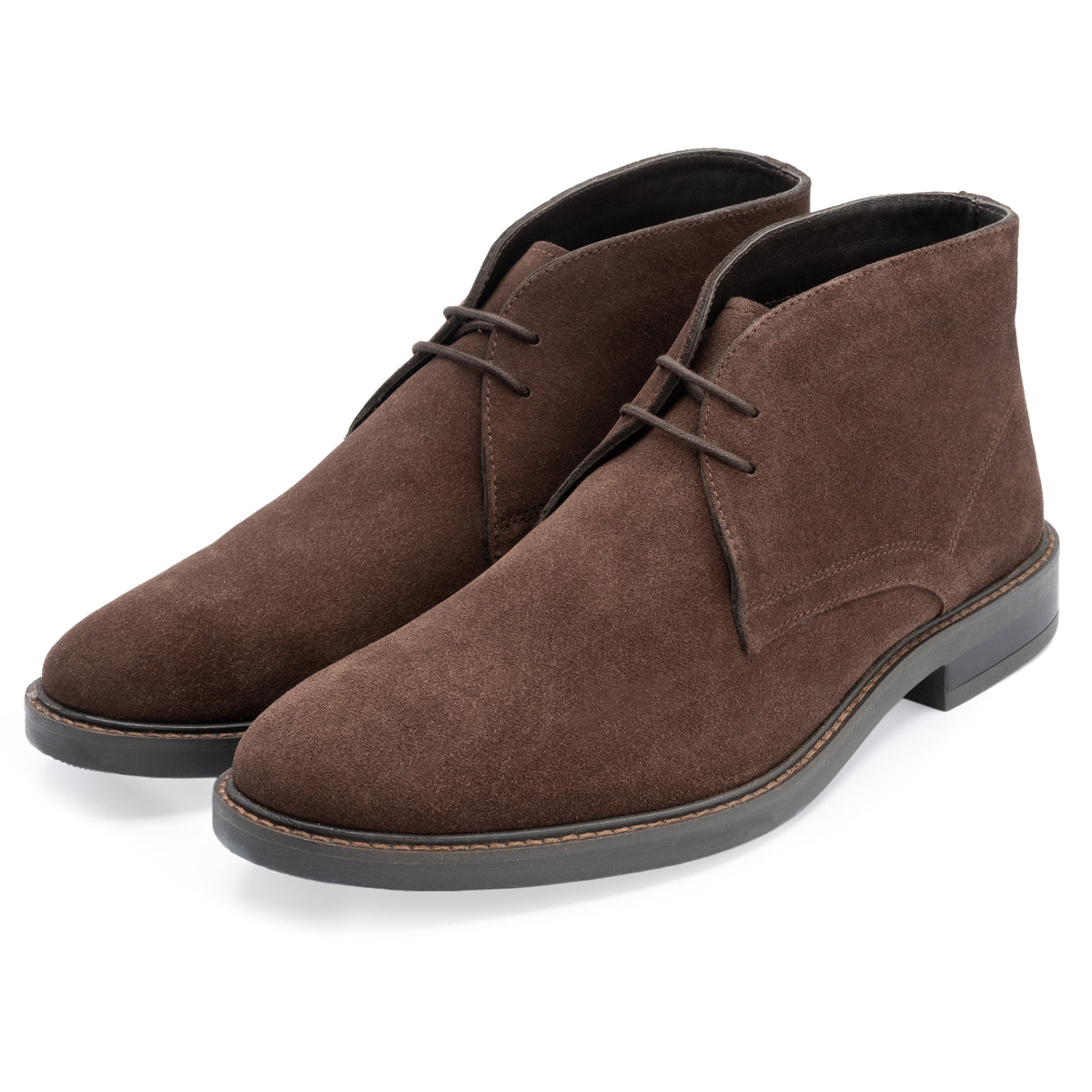
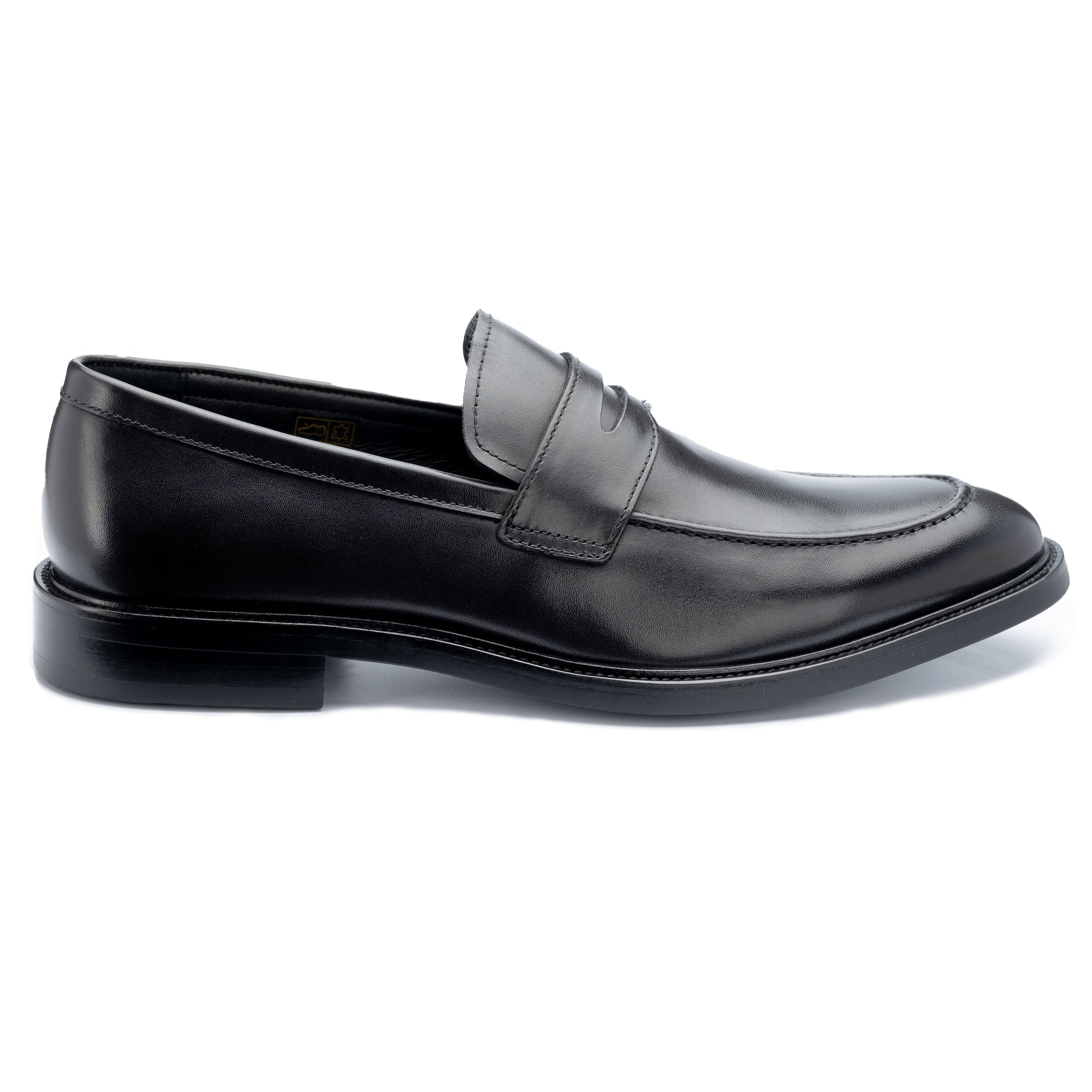
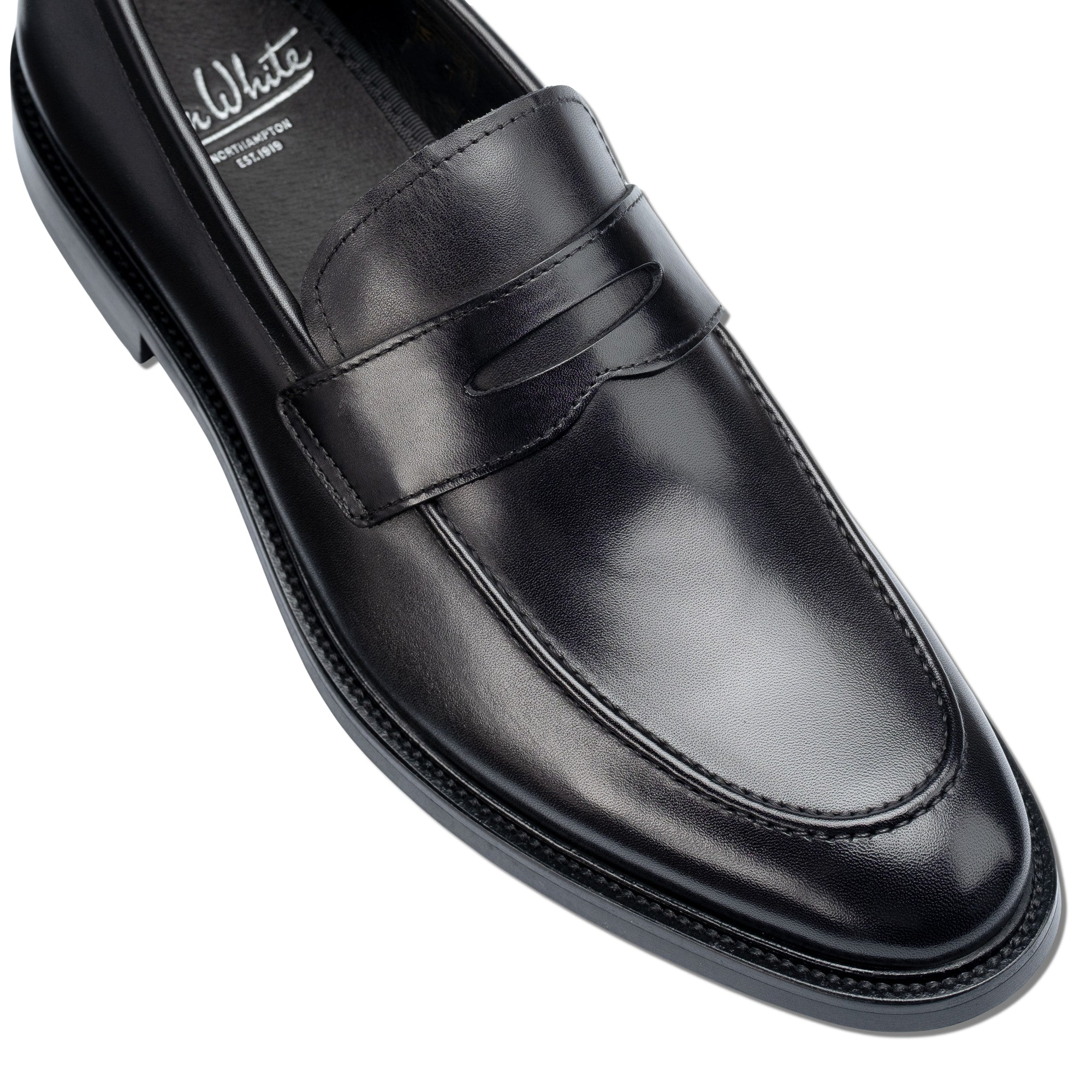
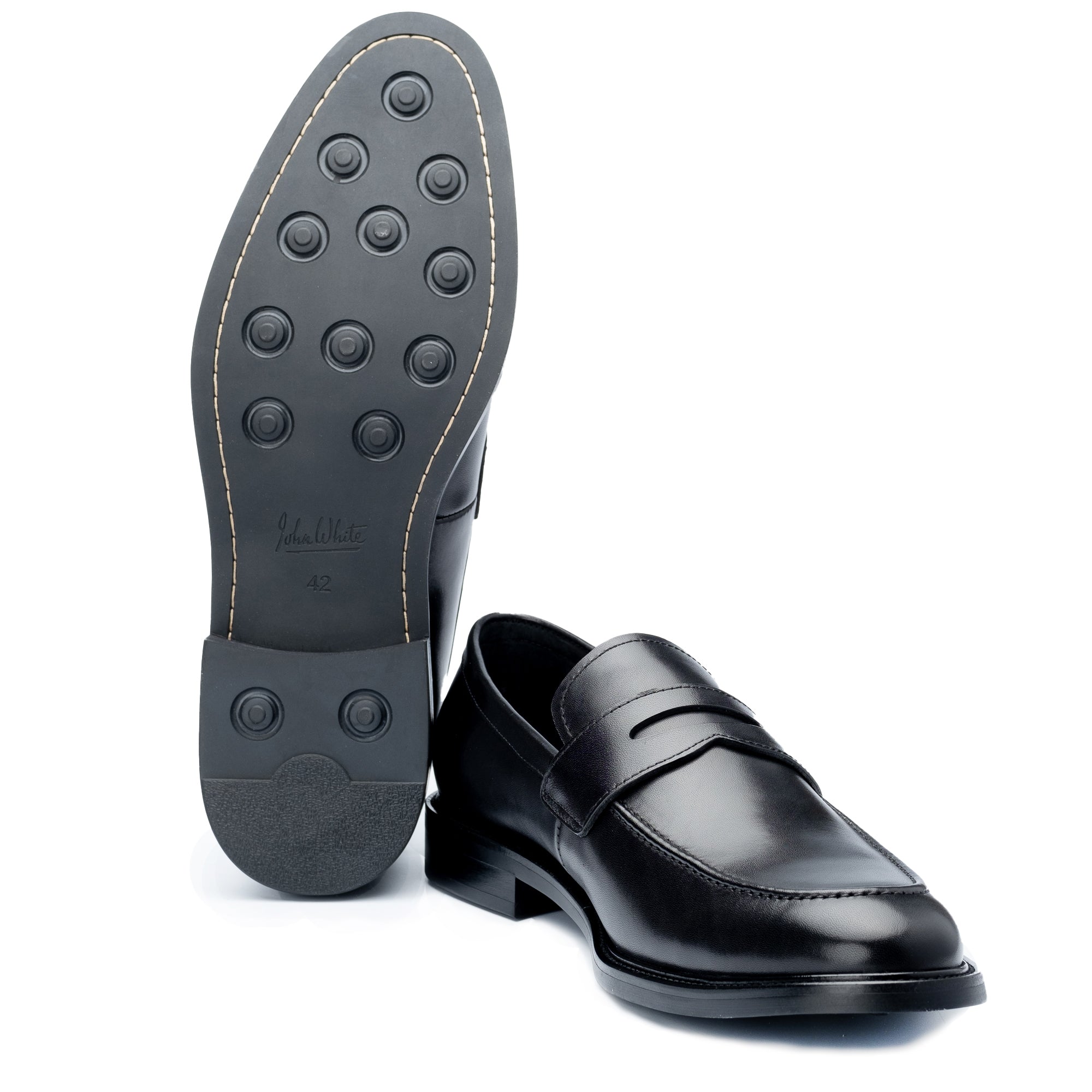
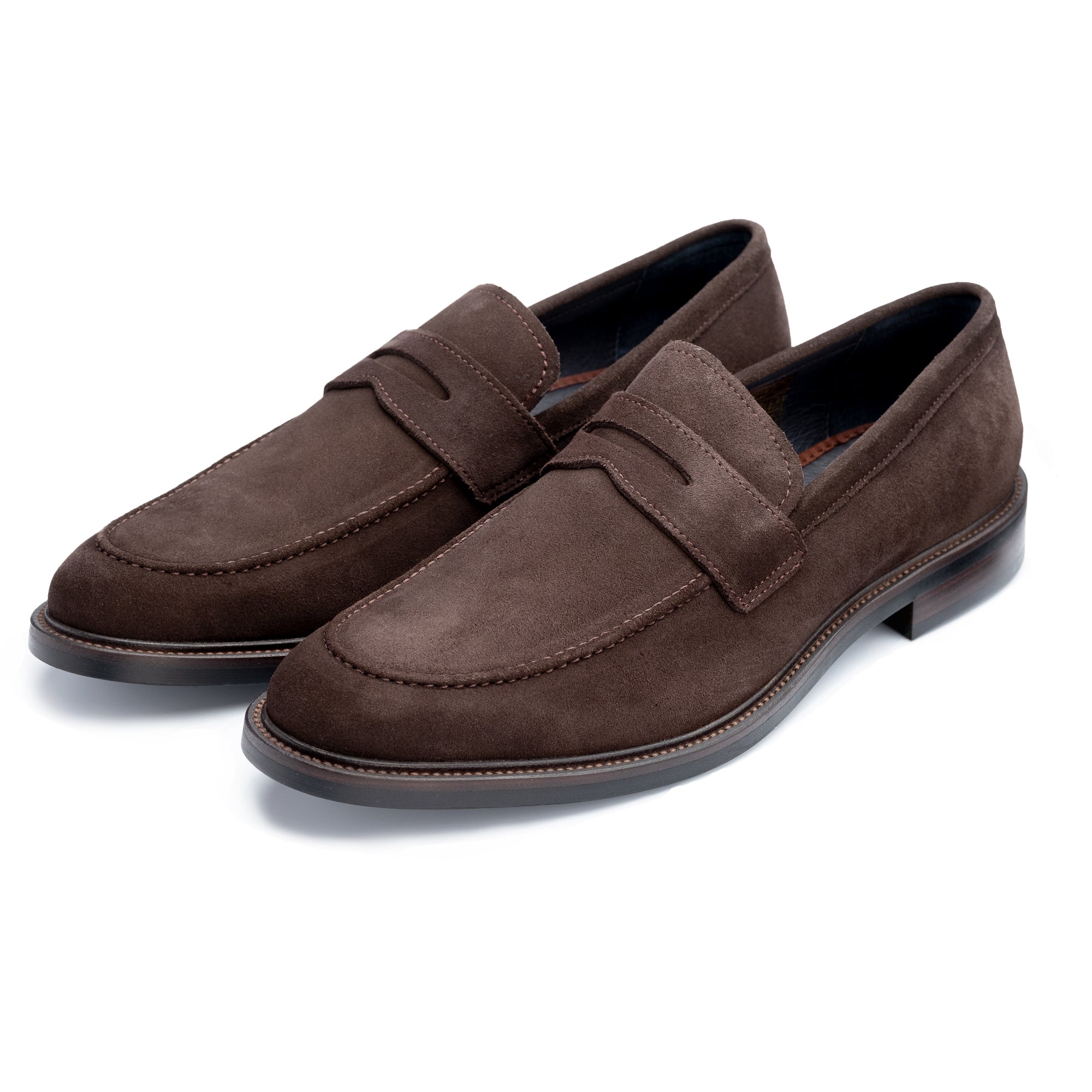
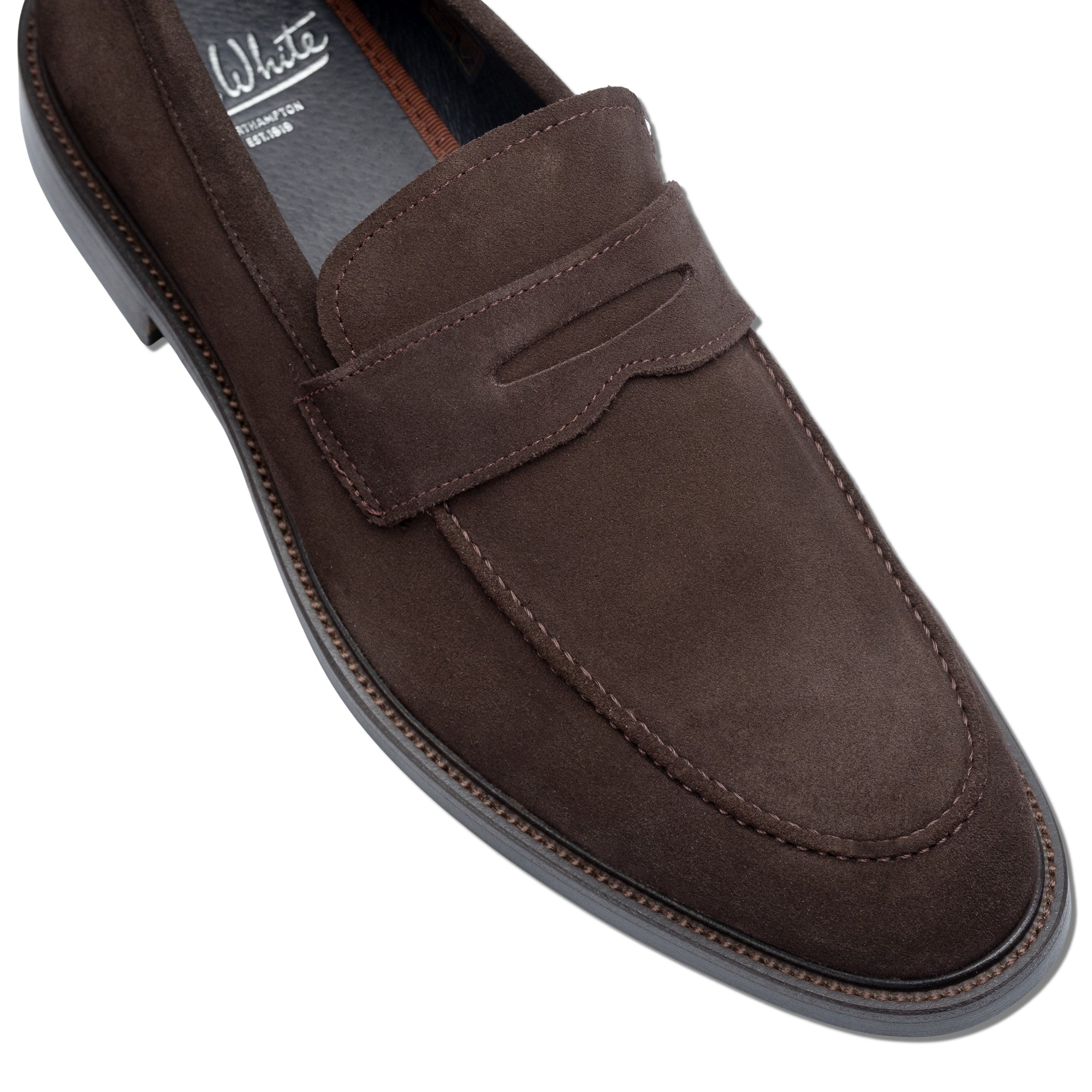
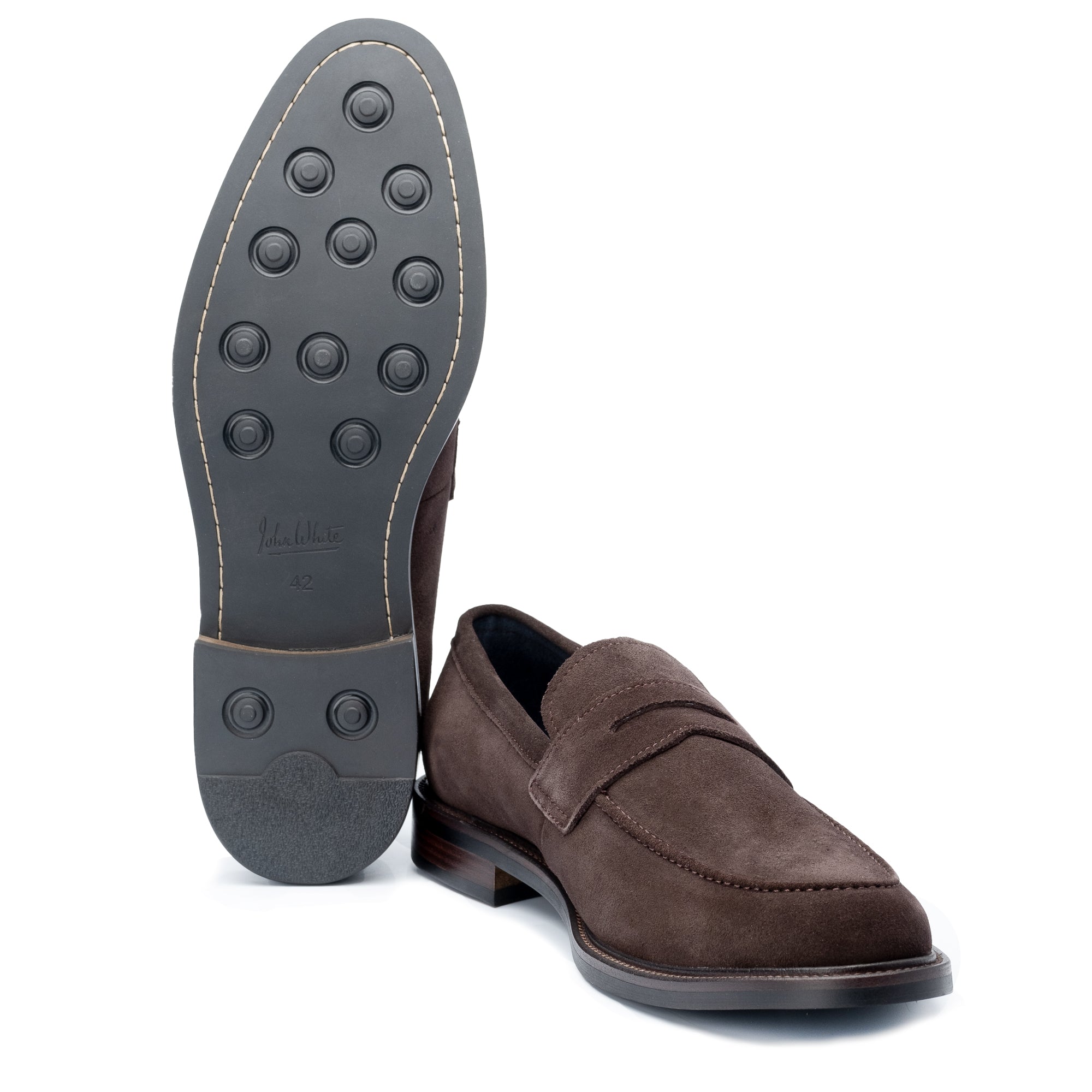
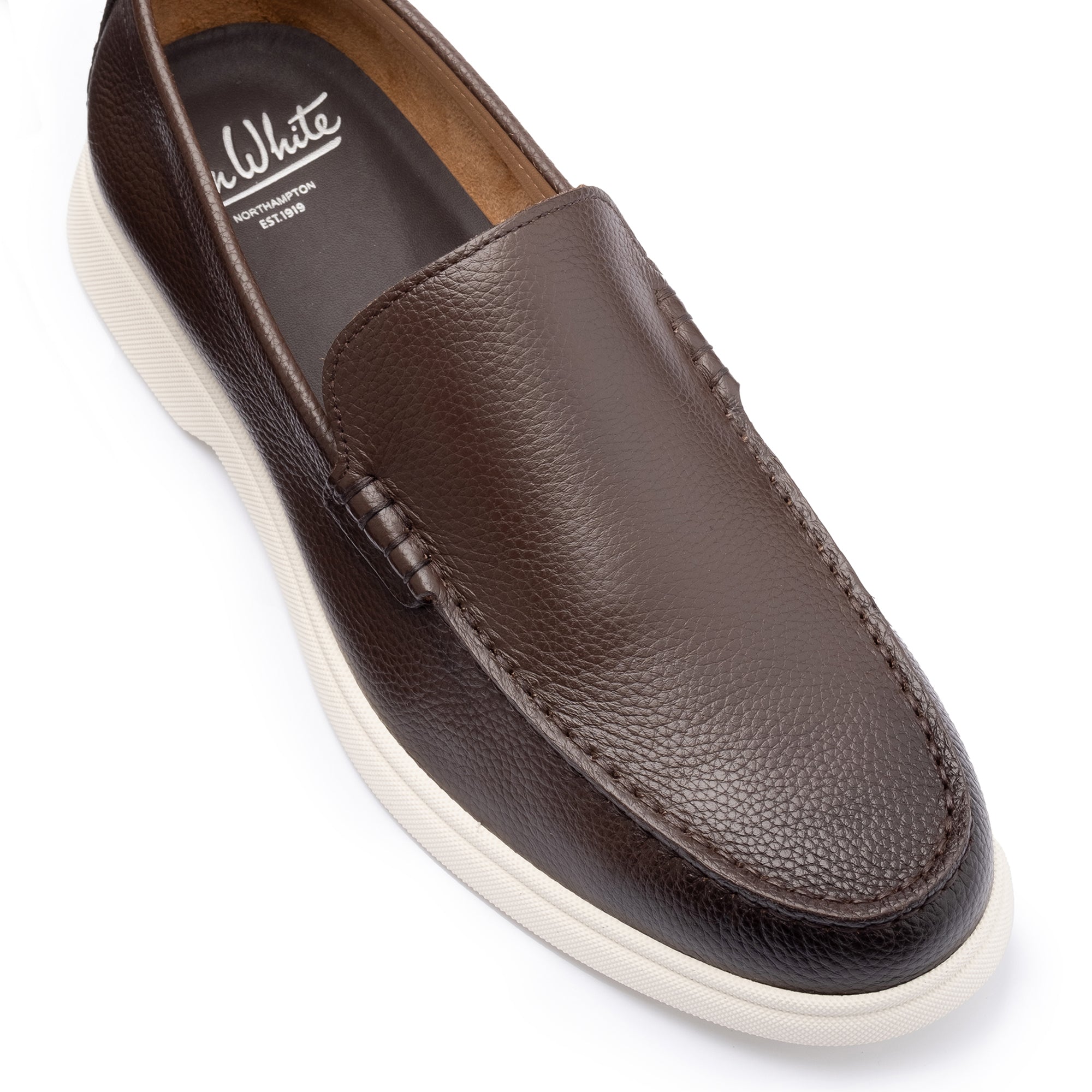
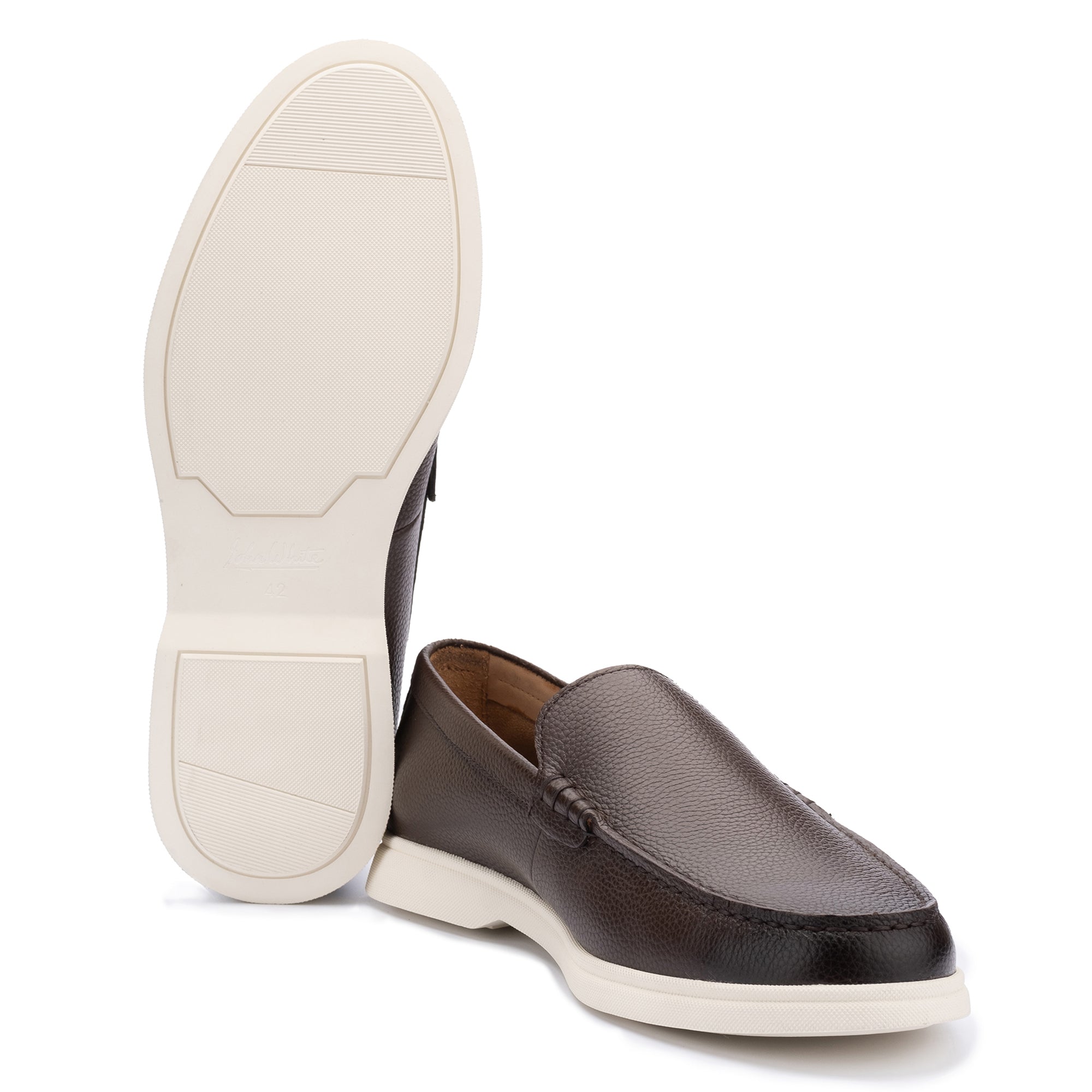
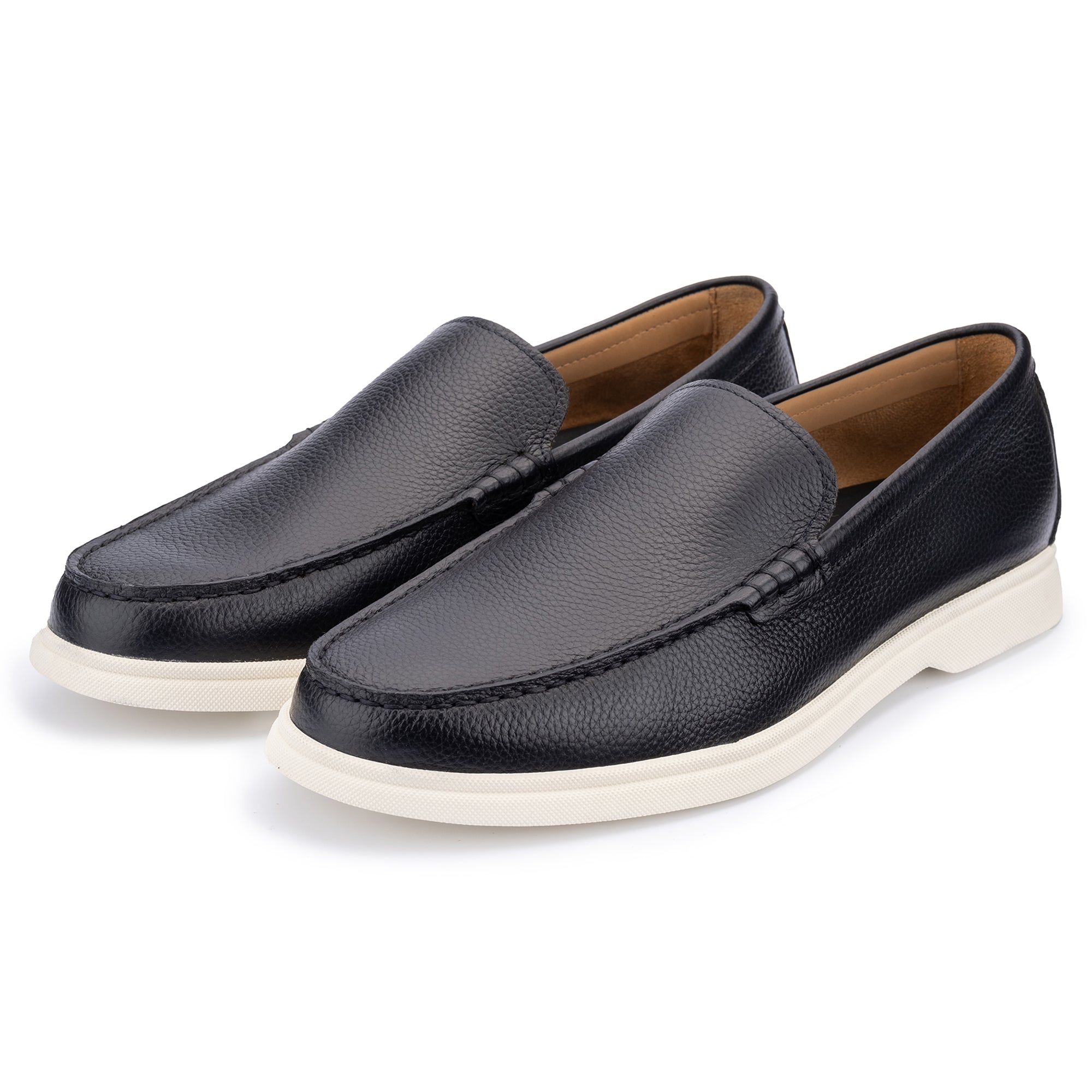
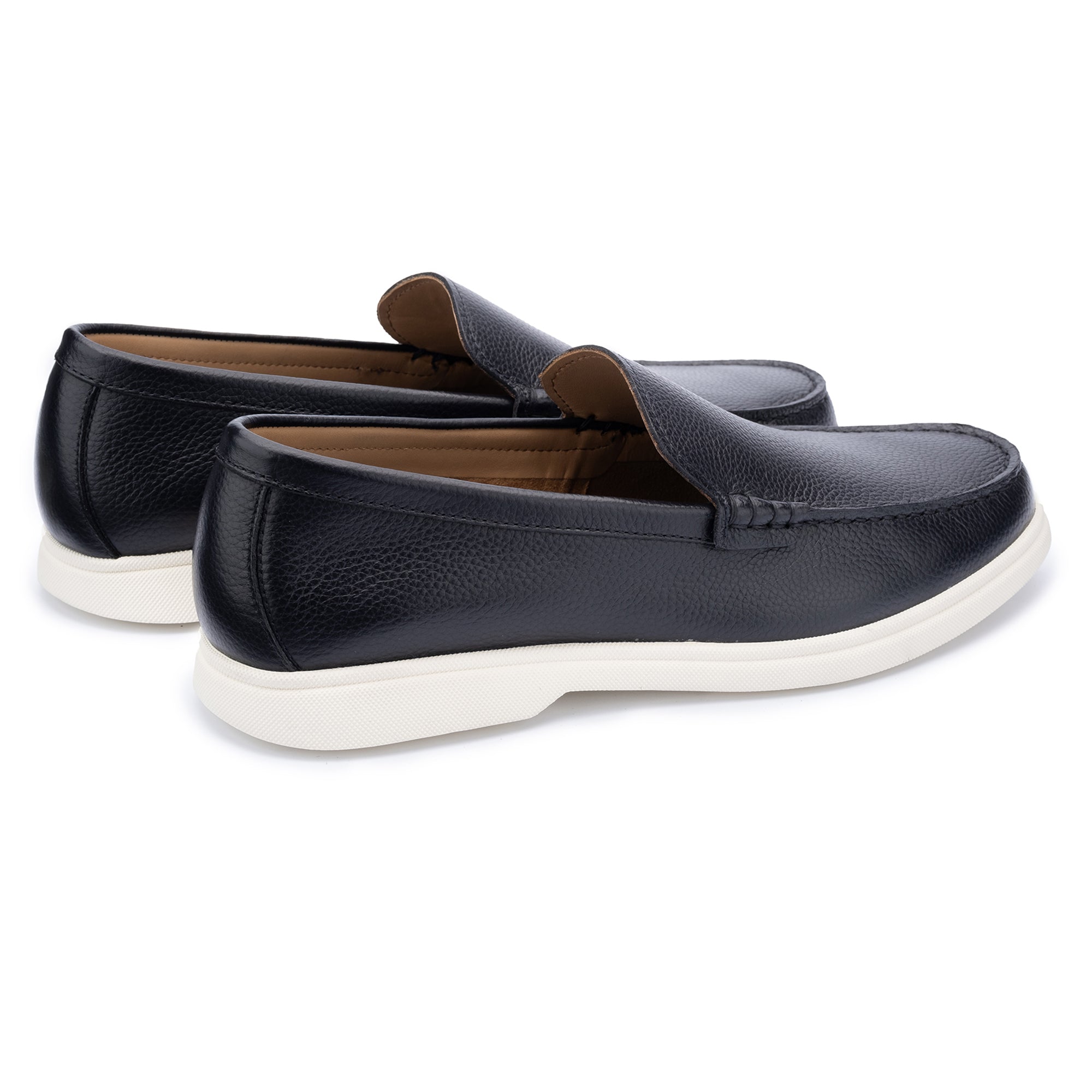
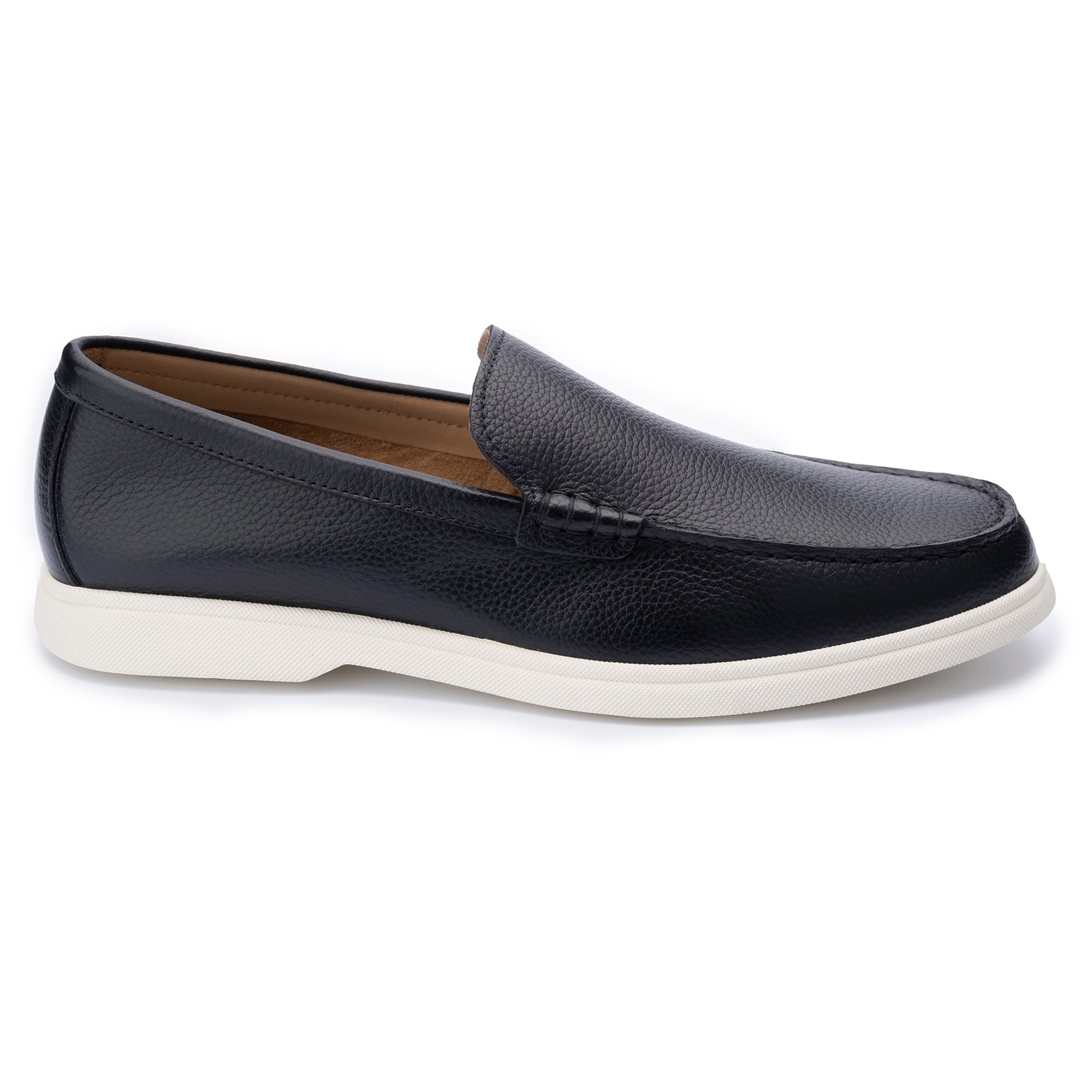
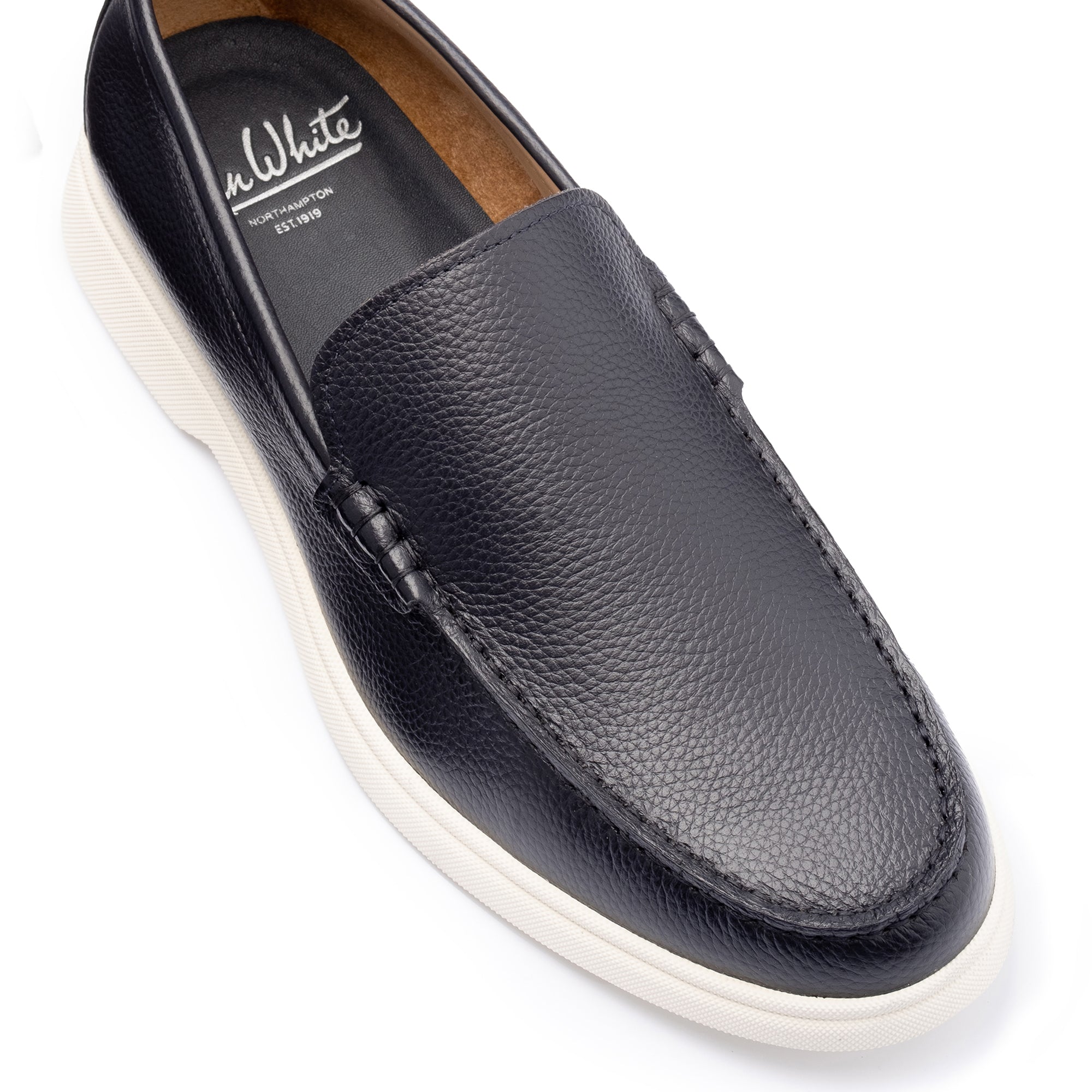
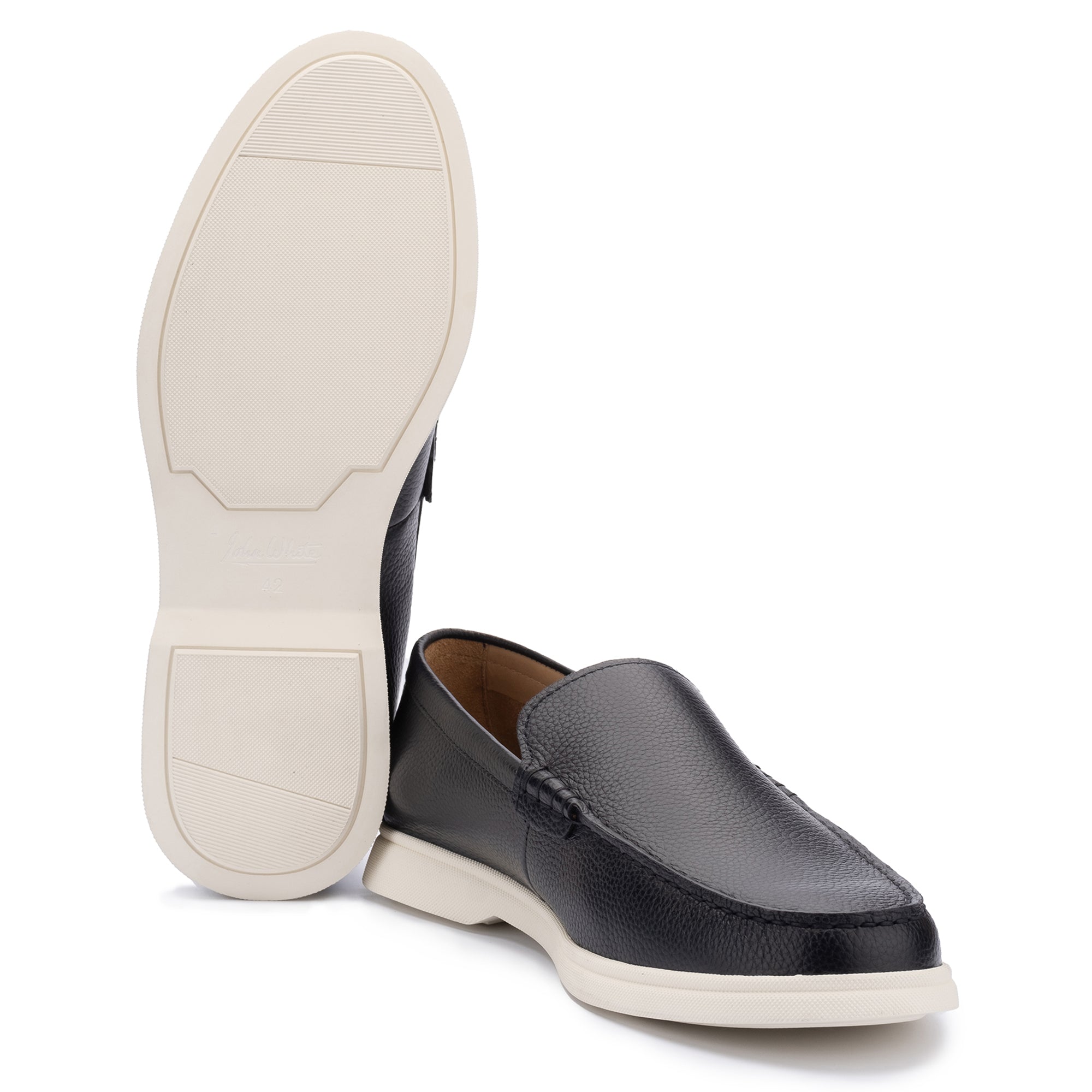
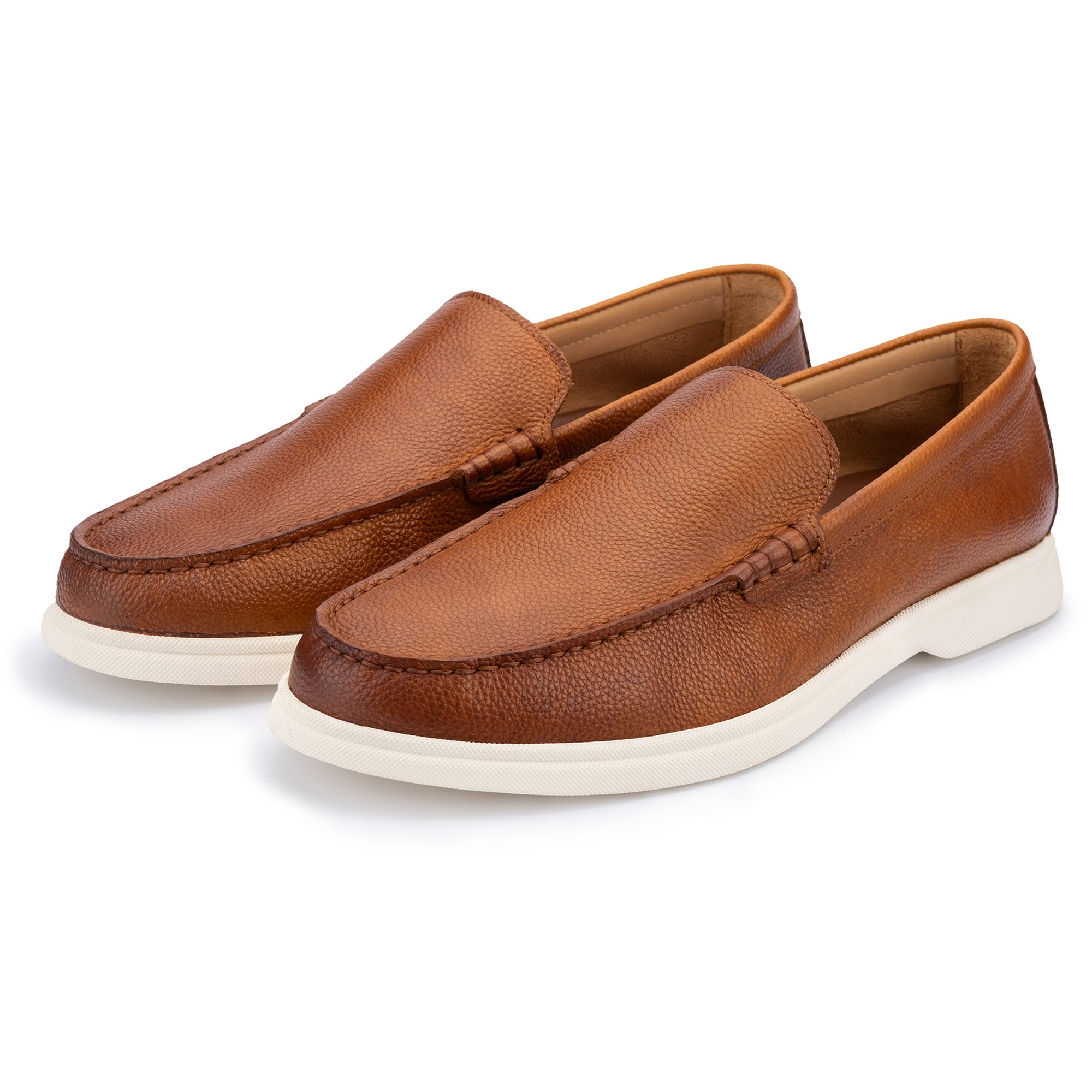
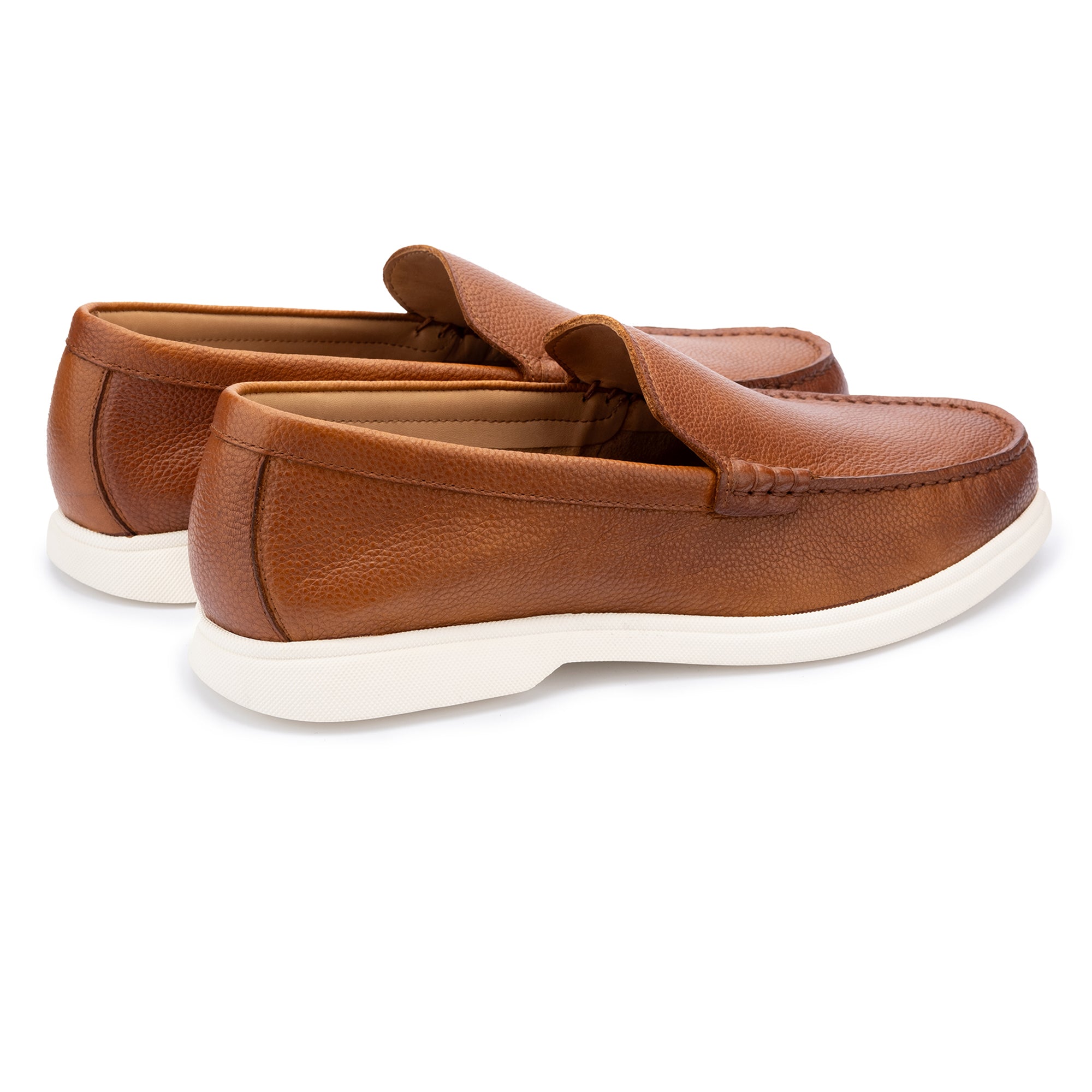
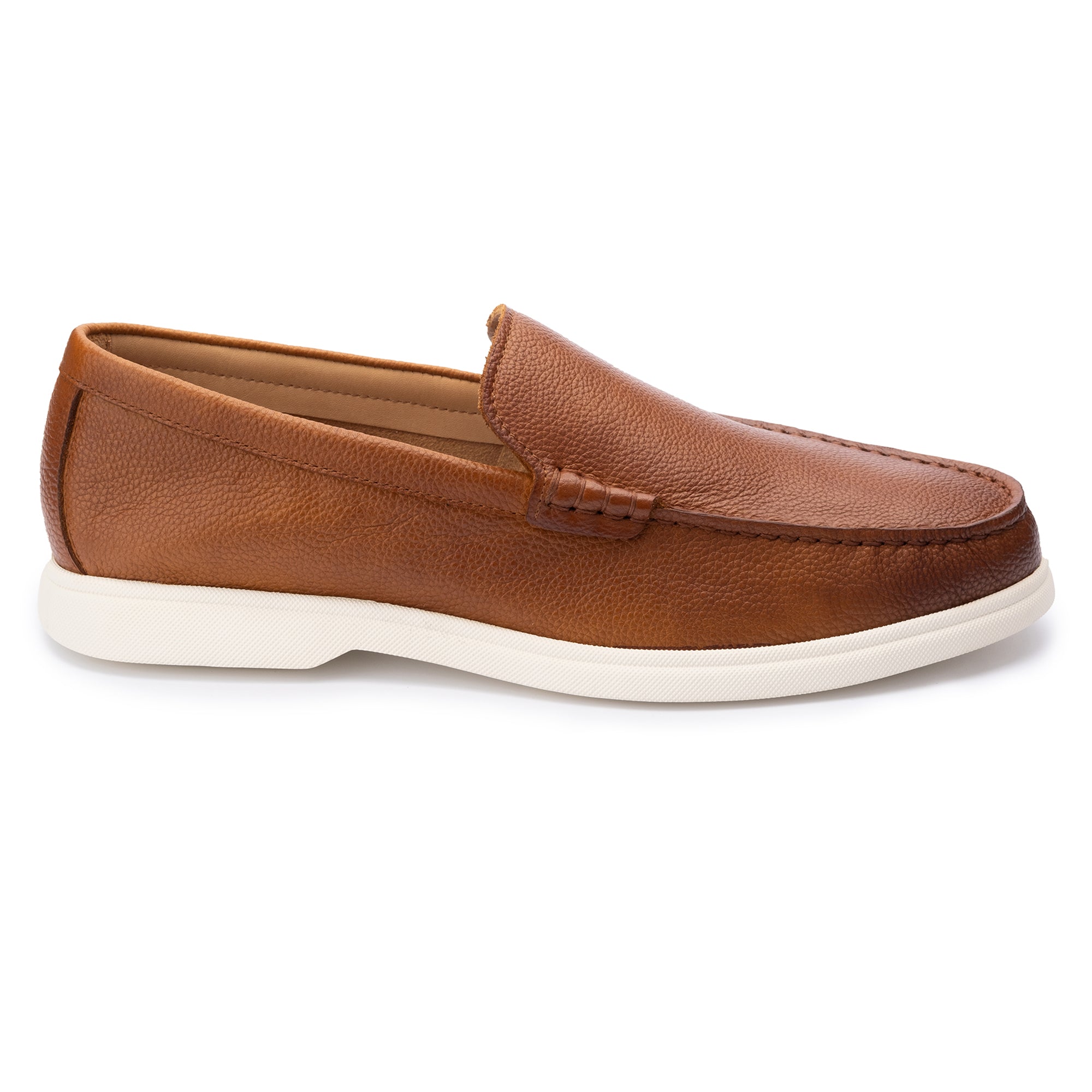
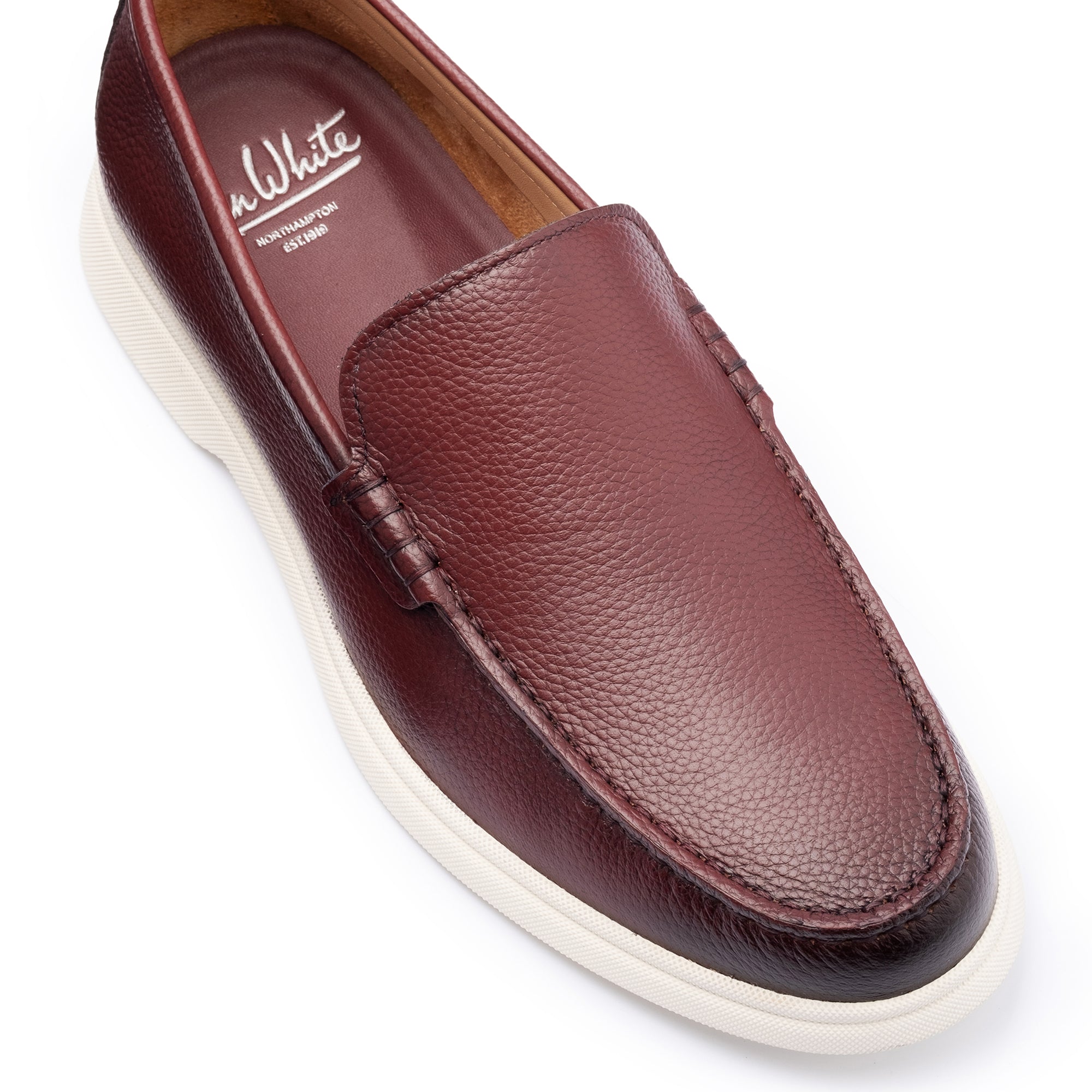
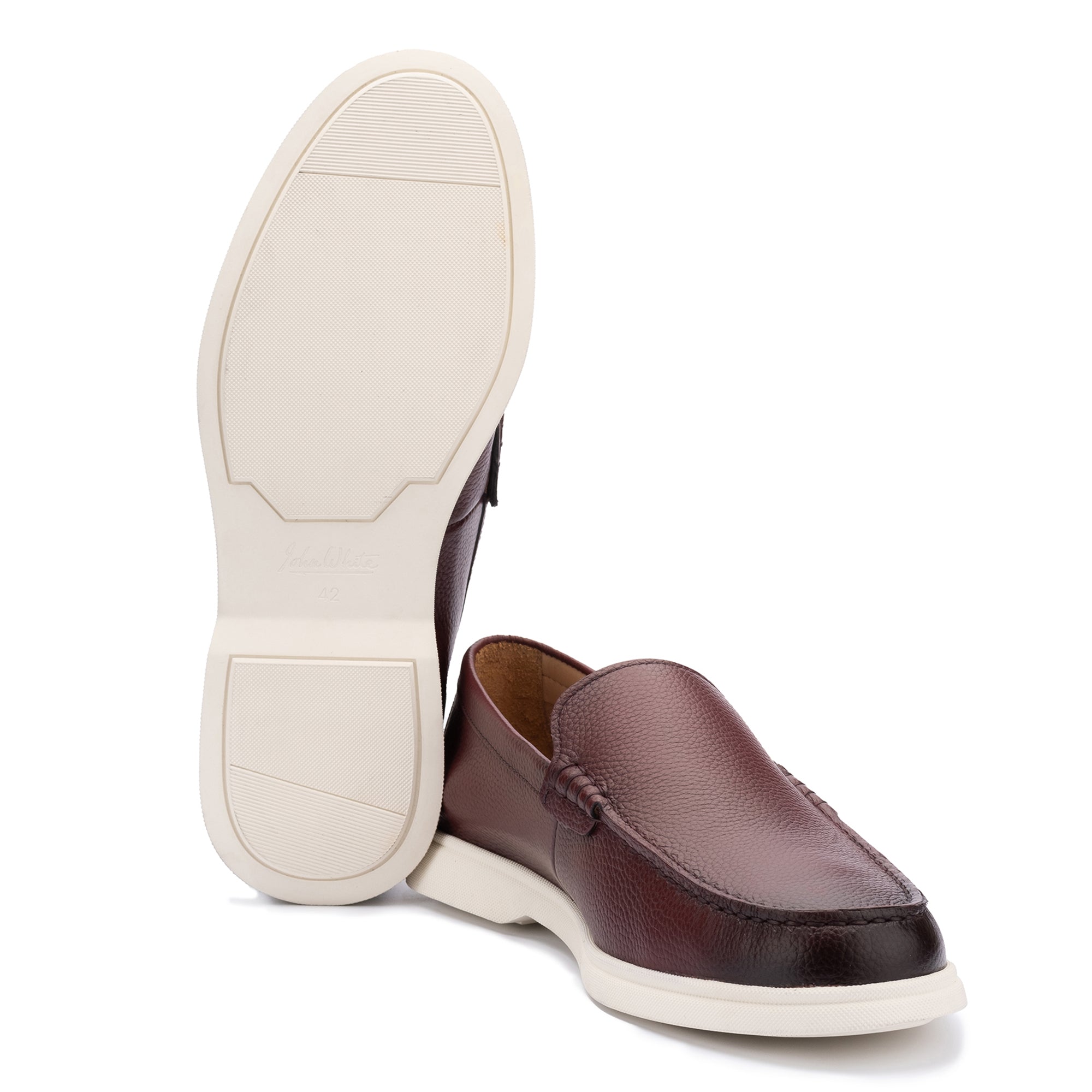
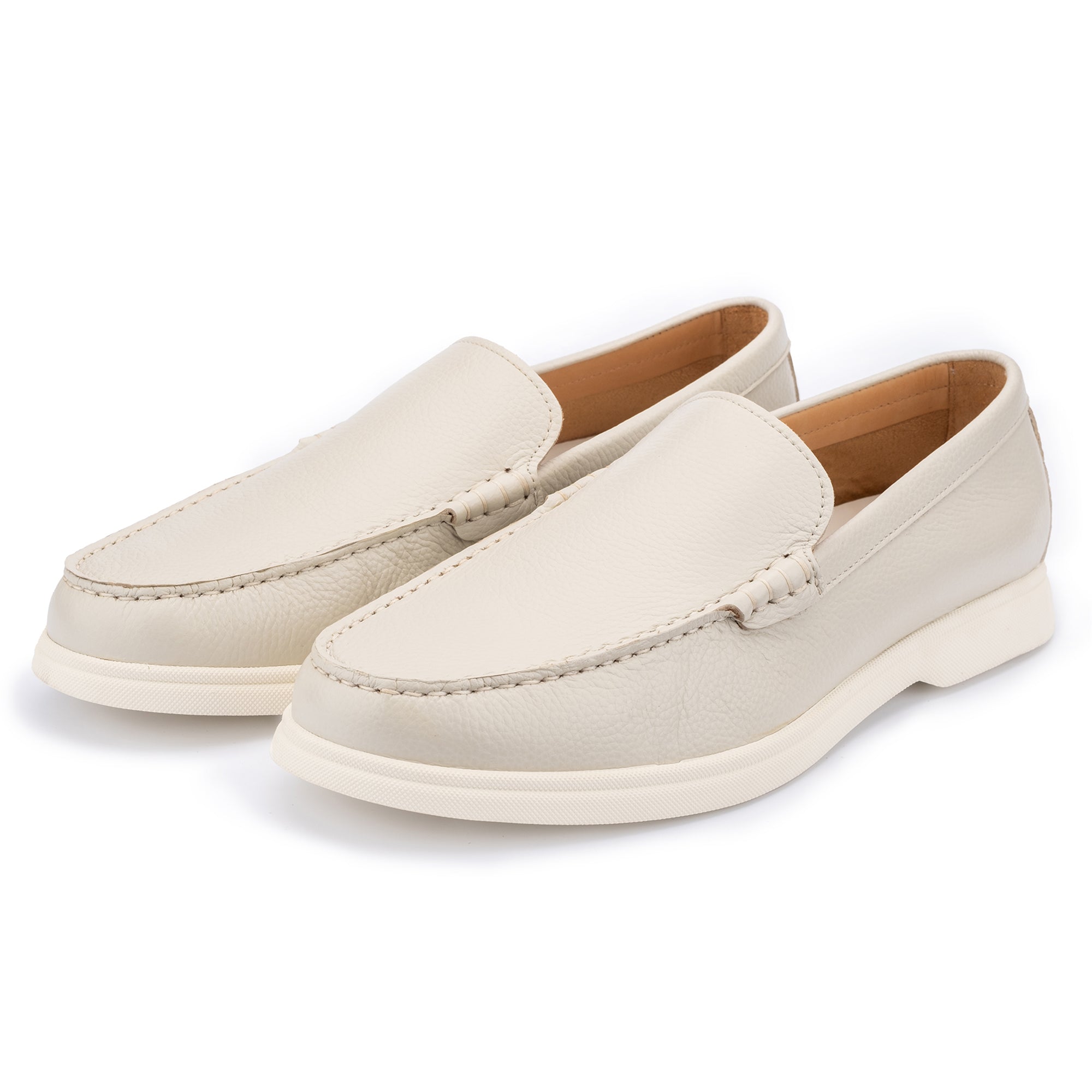
For smart casual and loafer pairings, the Banff Penny Loafer is worth particular attention. The brown suede version works exceptionally well with mid-navy, and the penny loafer form sits comfortably at the smarter end of casual. The Ethan Plain Tumbled Grain Loafer in Navy offers a more unusual tonal route: navy shoes with a navy suit, carried off through a difference in texture and finish rather than colour contrast.
Three Mistakes Worth Avoiding
Matching too closely. Navy shoes with a navy suit can work when the tonal and textural contrast is managed carefully. But a near-match in colour and finish — dark navy leather against dark navy wool — tends to look unplanned rather than coordinated. If you are going tonal, commit to contrast within the family: a lighter mid-navy loafer against a dark suit, not a matching attempt.
Ignoring the formality register of the occasion. A navy suit is versatile enough that you can get the shoe wrong by aiming too casual or too formal for the event. Loafers at a black-tie-adjacent function look like an oversight. Black Oxfords at a garden party look like an error of judgement in the other direction. Read the occasion first.
Neglecting shoe care before formal events. Scuffed or poorly polished leather reads more obviously against a suit than against casual clothing. A leather shoe worn to a wedding or job interview should be cleaned and polished beforehand. It takes twenty minutes and changes the impression the shoe makes significantly.
Related Guides
- The Complete Guide to Men's Dress Shoes — our comprehensive guide
- The Complete Guide to Men's Dress Shoes — our comprehensive guide
- What Shoes to Wear with a Suit — the broader guide covering charcoal, grey, and tweed as well as navy
- The Core Collection: Choosing Between Black, Brown, and Burgundy — on building the colour foundation of a shoe wardrobe
- The Fourth Pair: A Gentleman's Guide to Tan, Oxblood, and Navy — on the shoes that complete a wardrobe once the essentials are in place