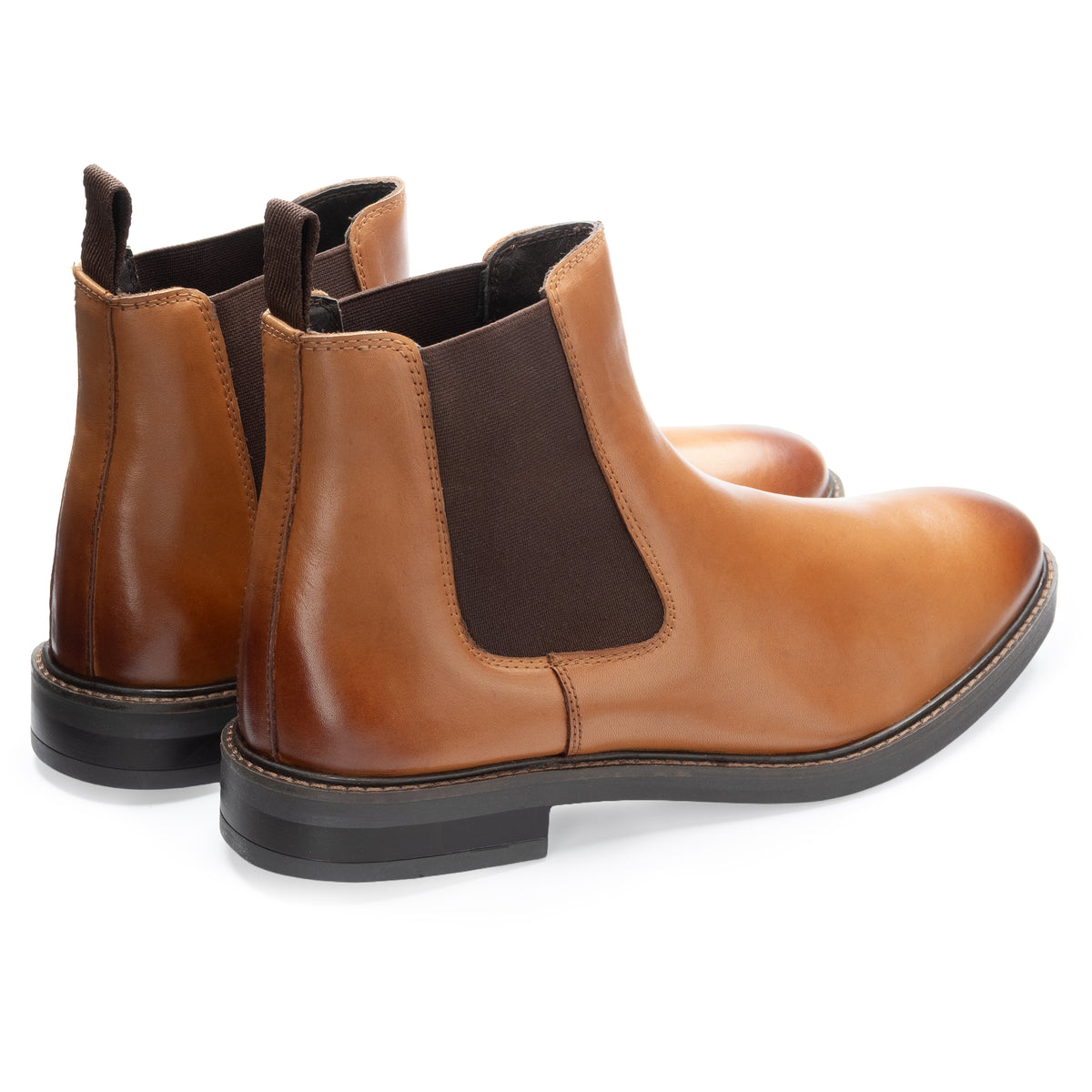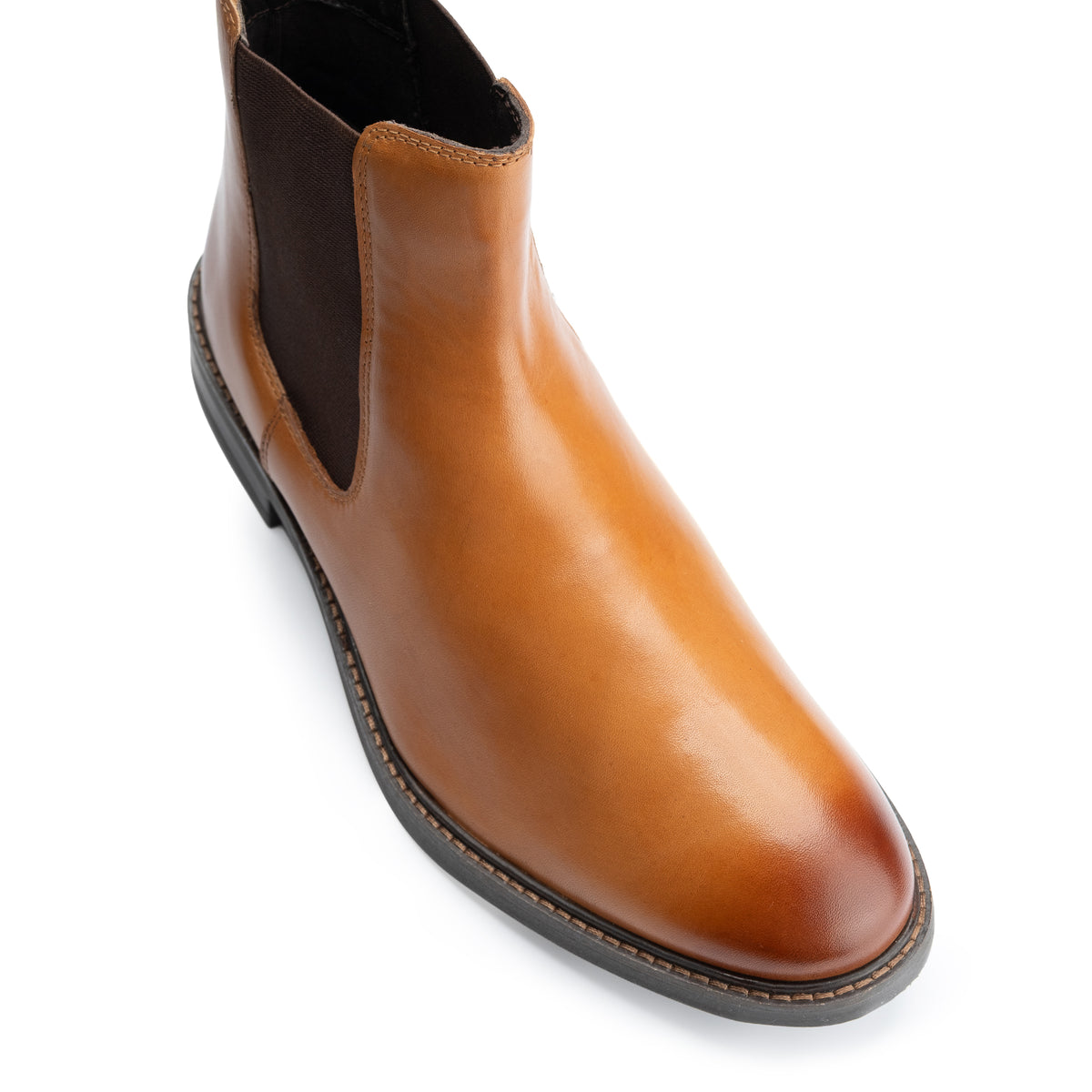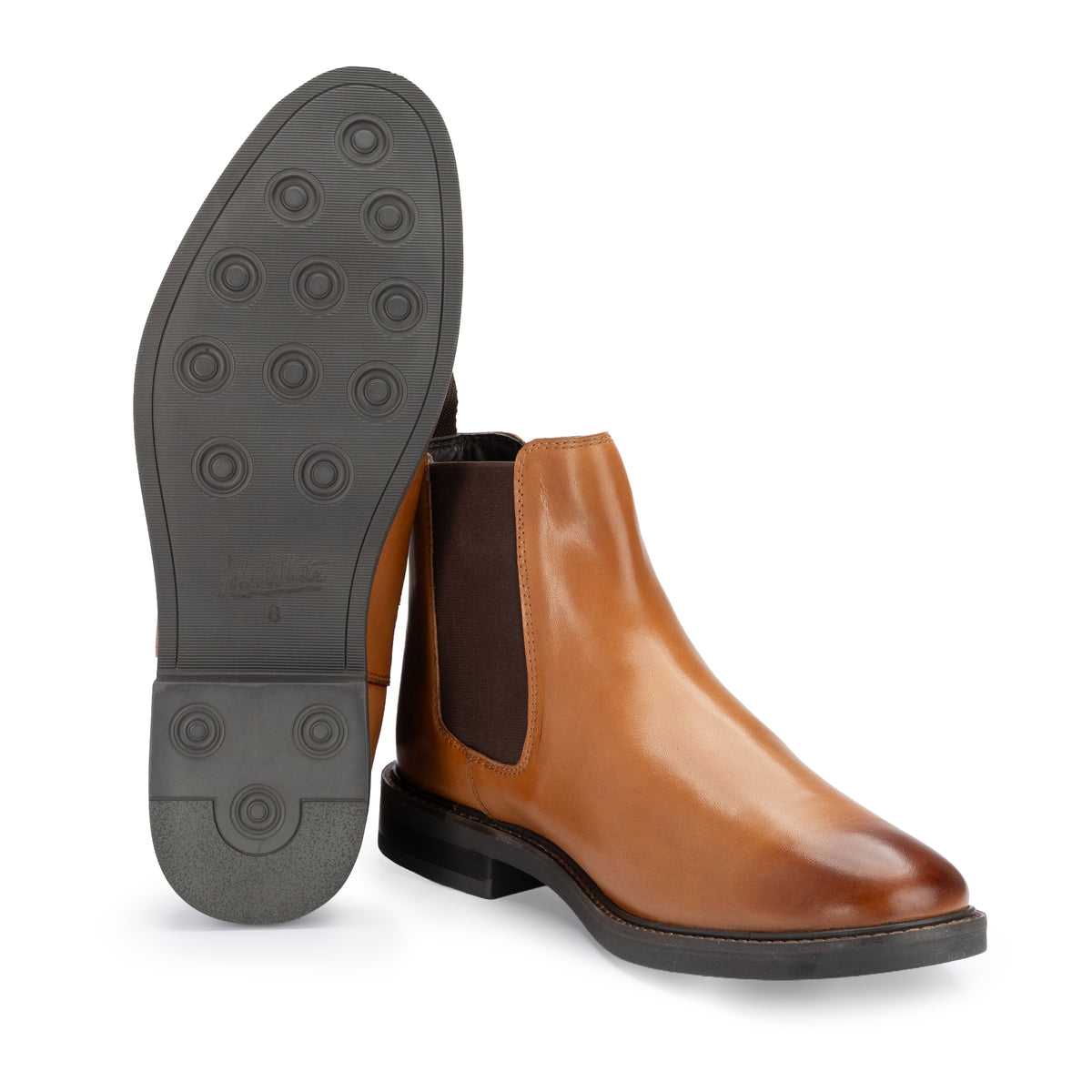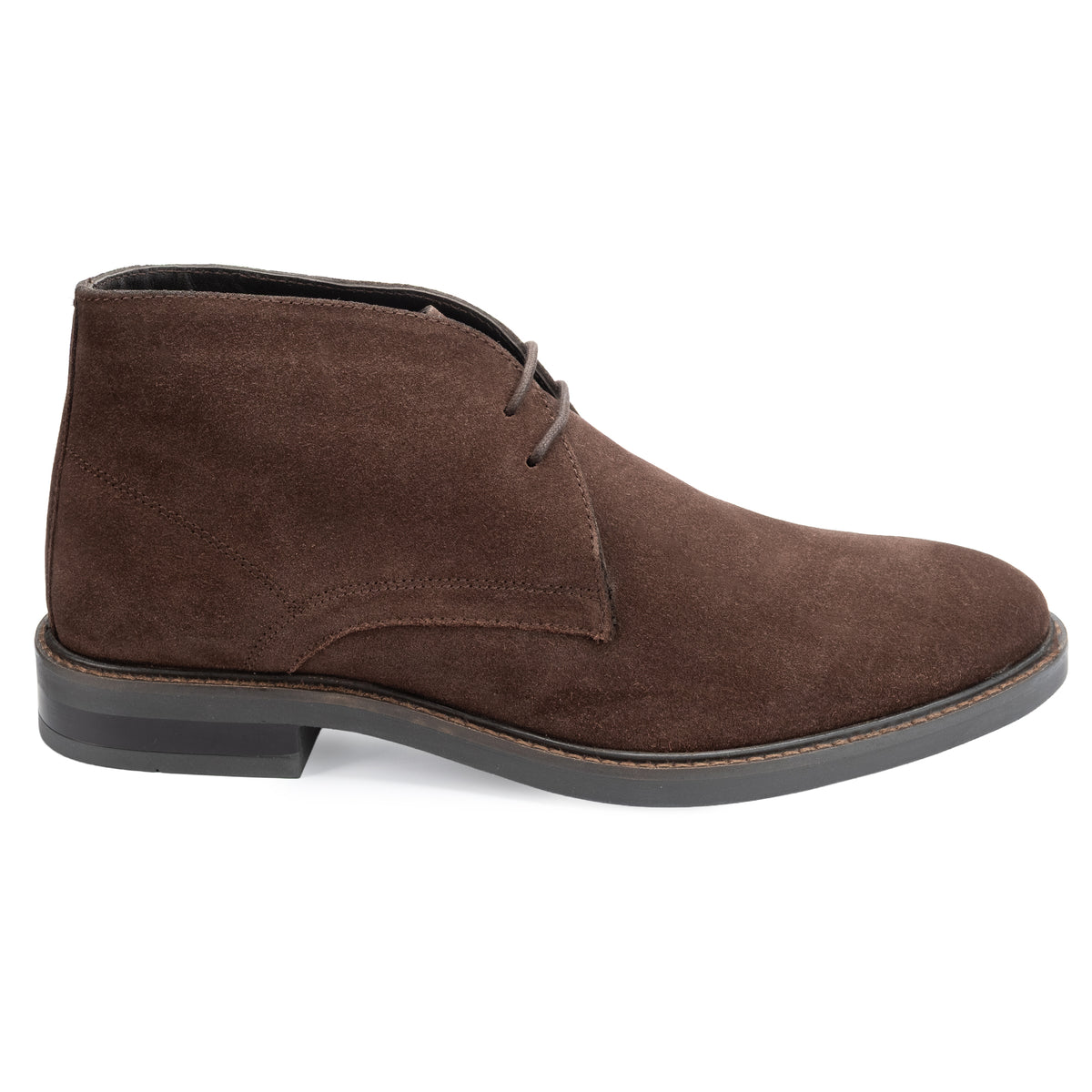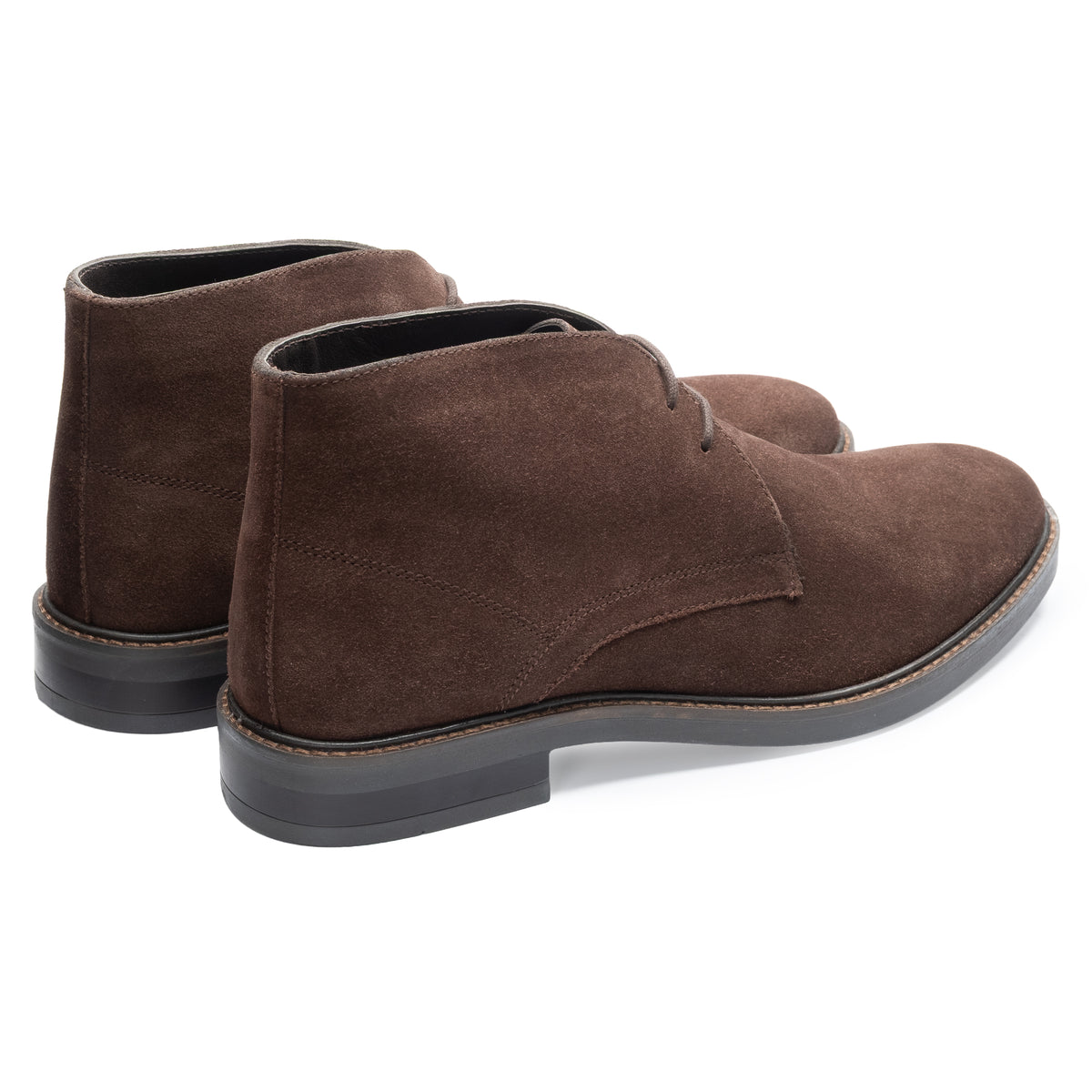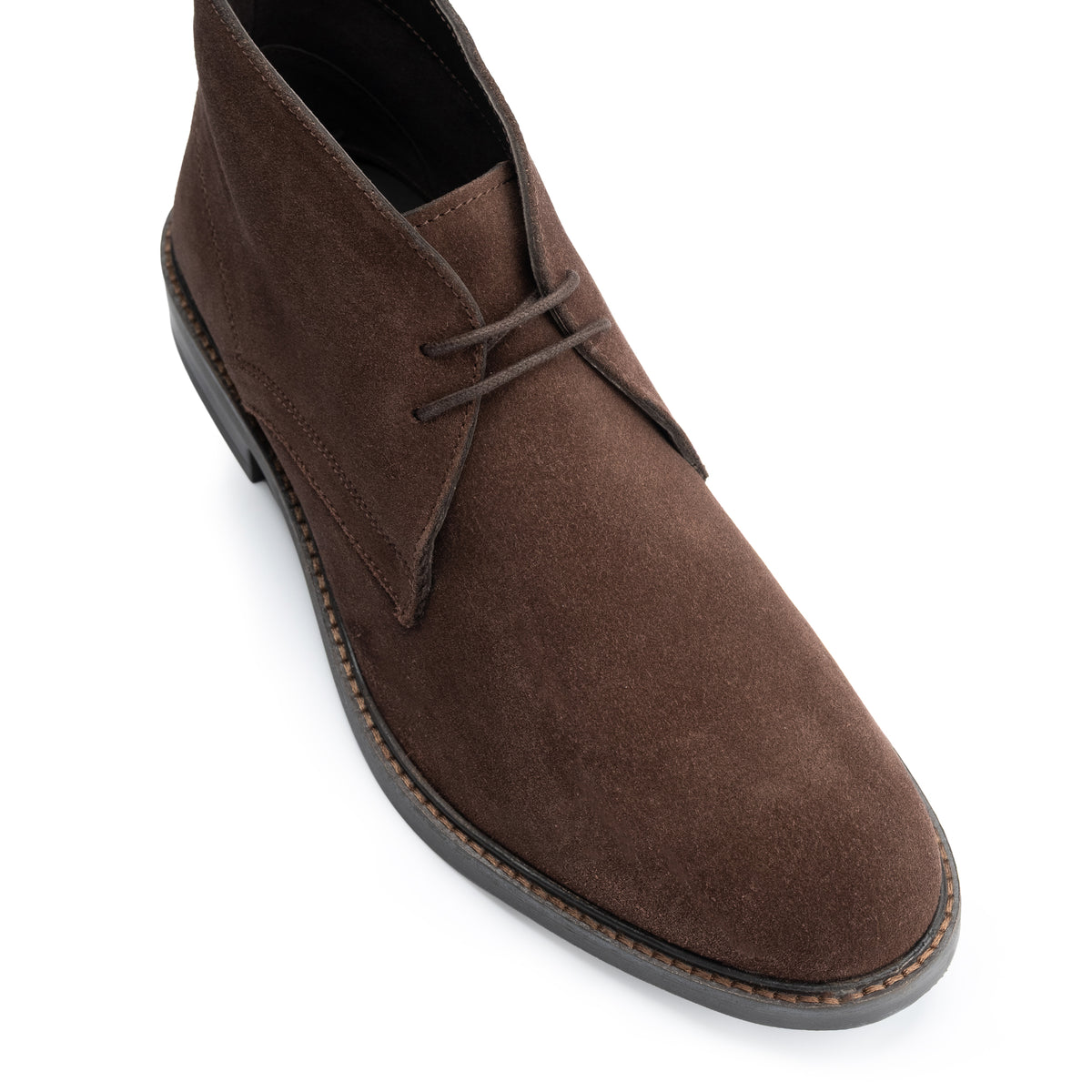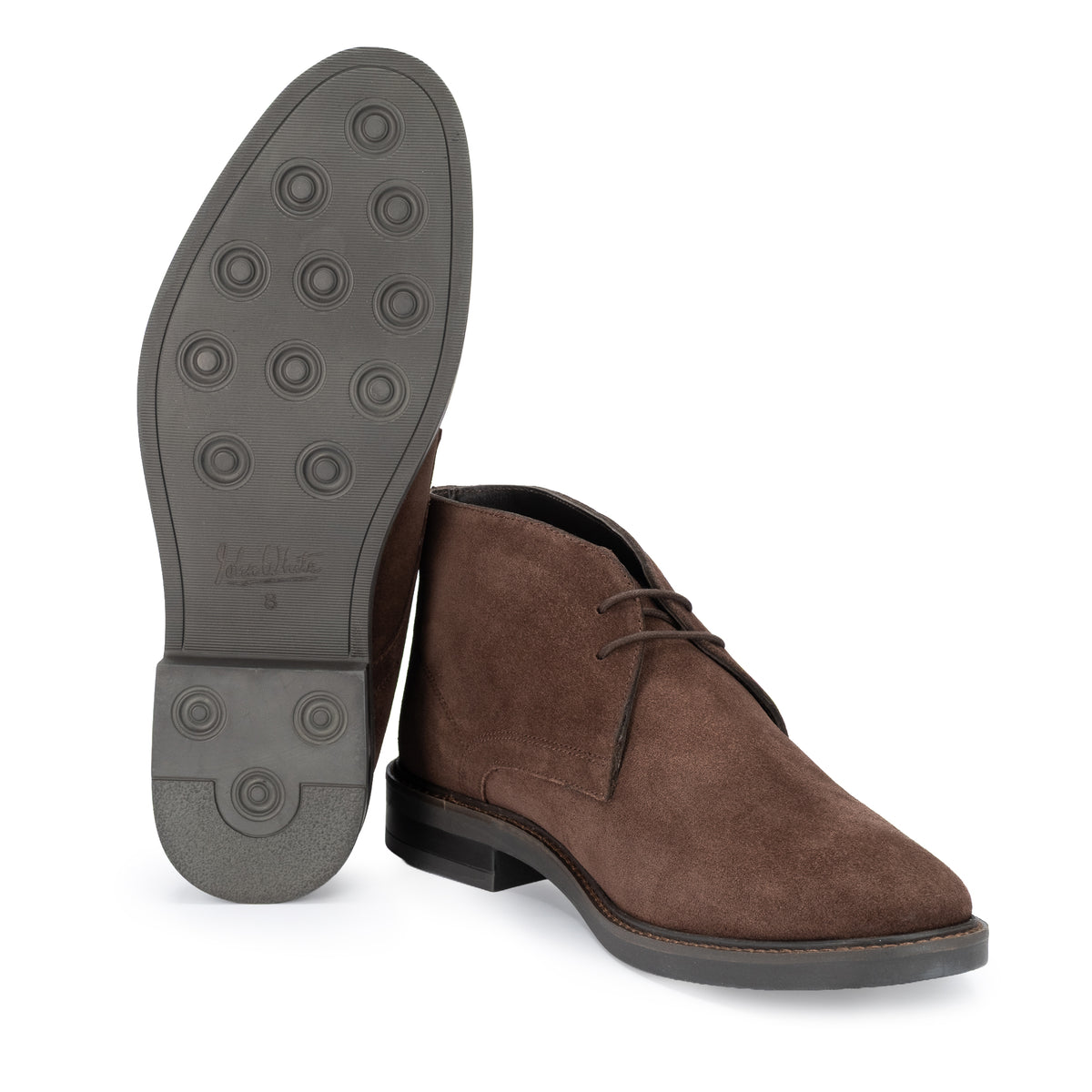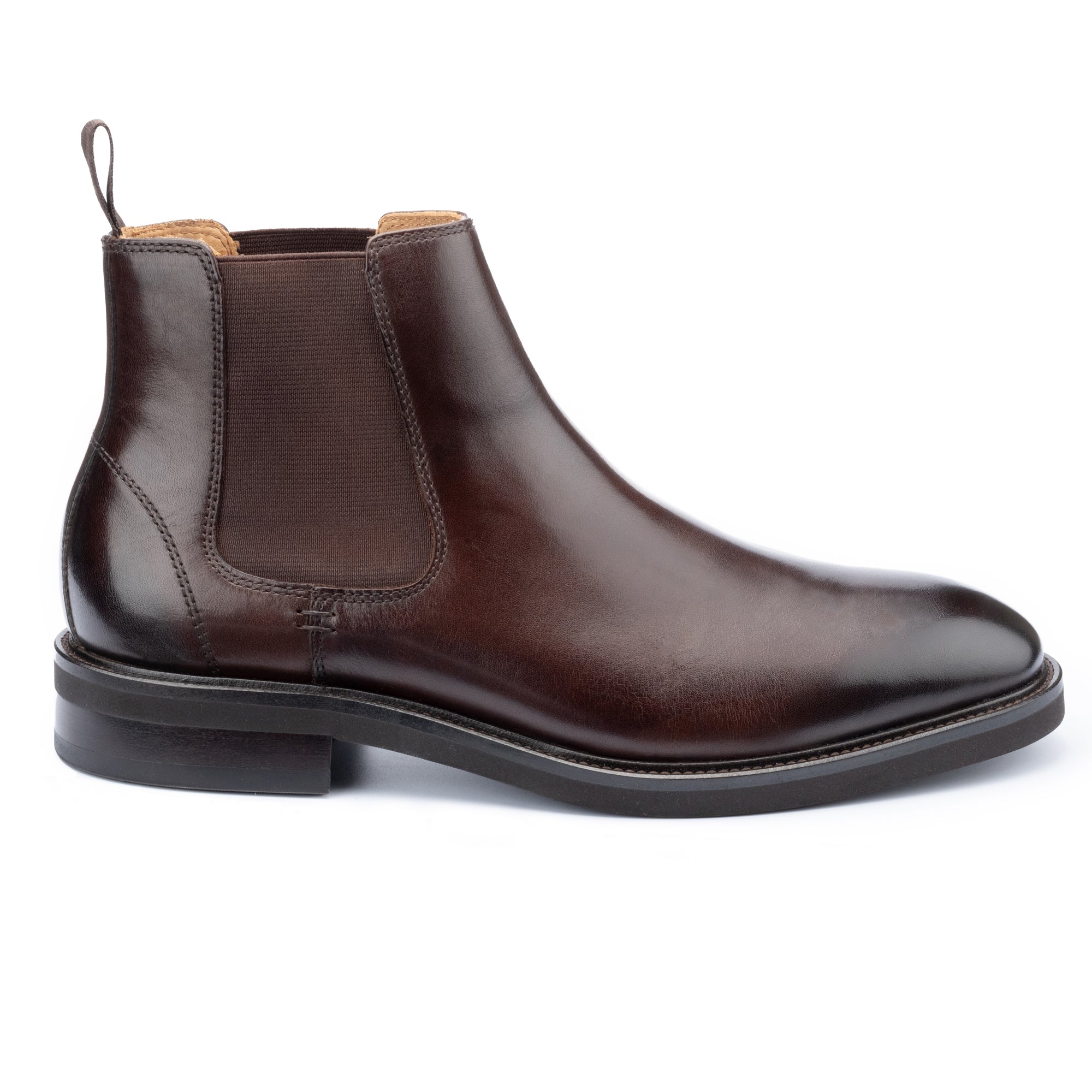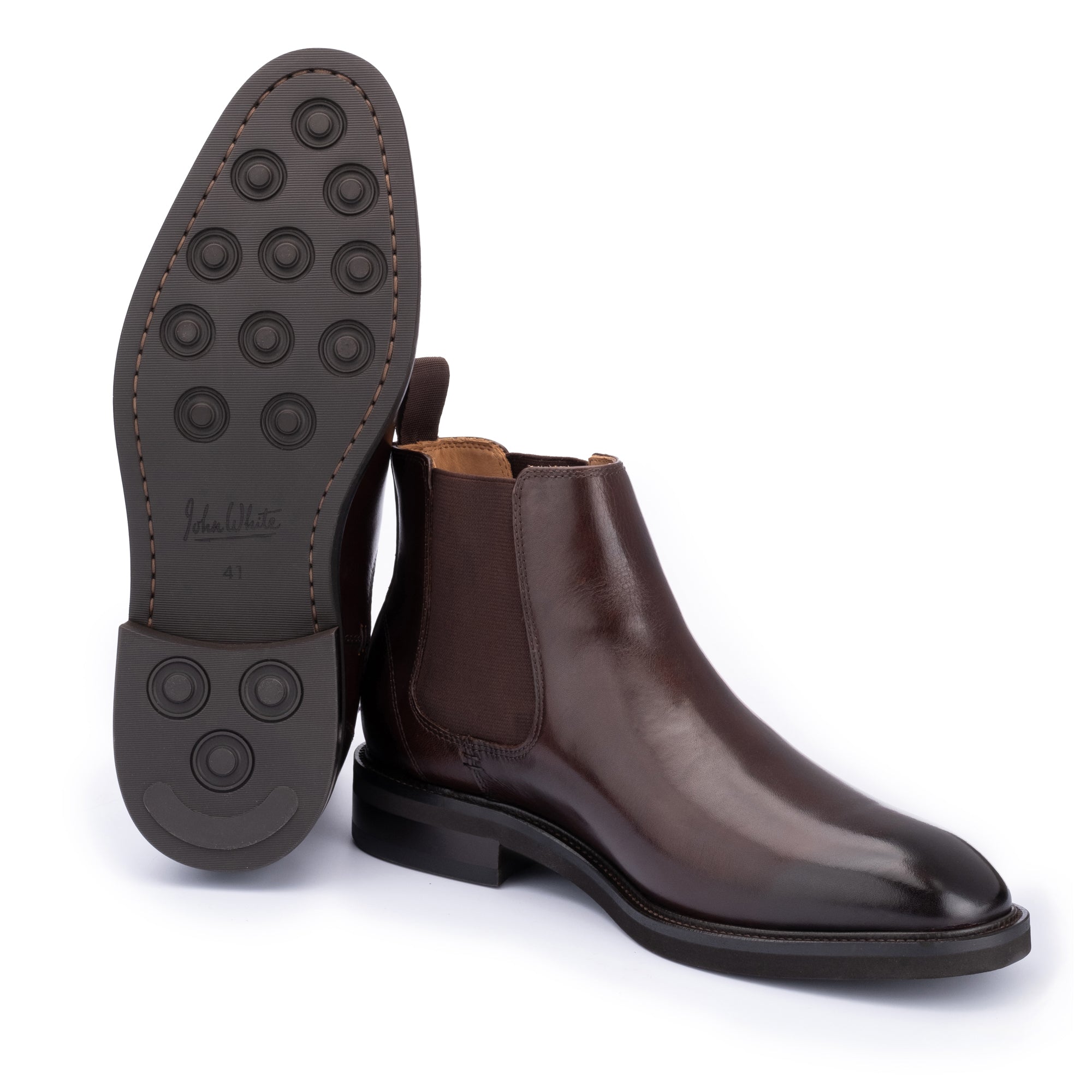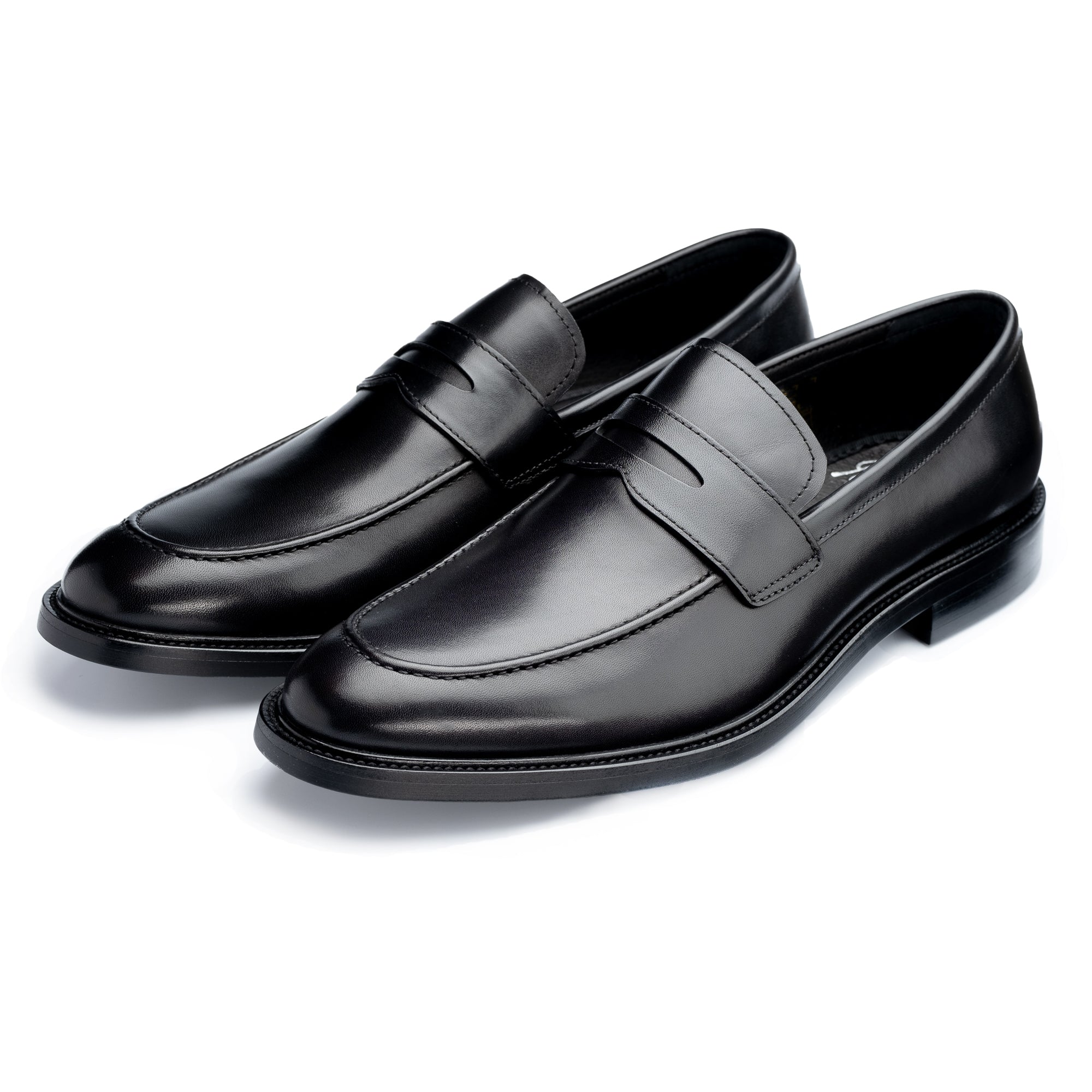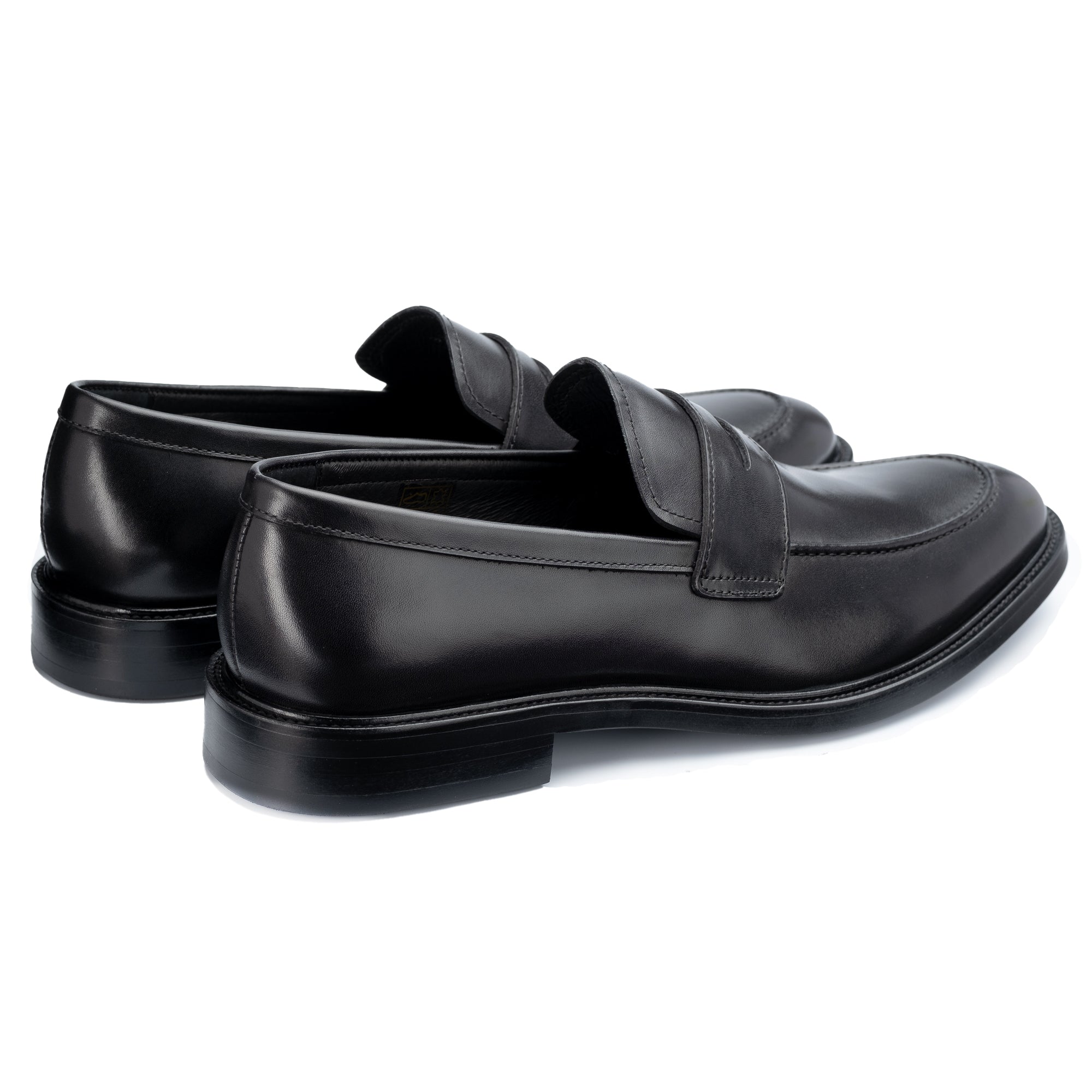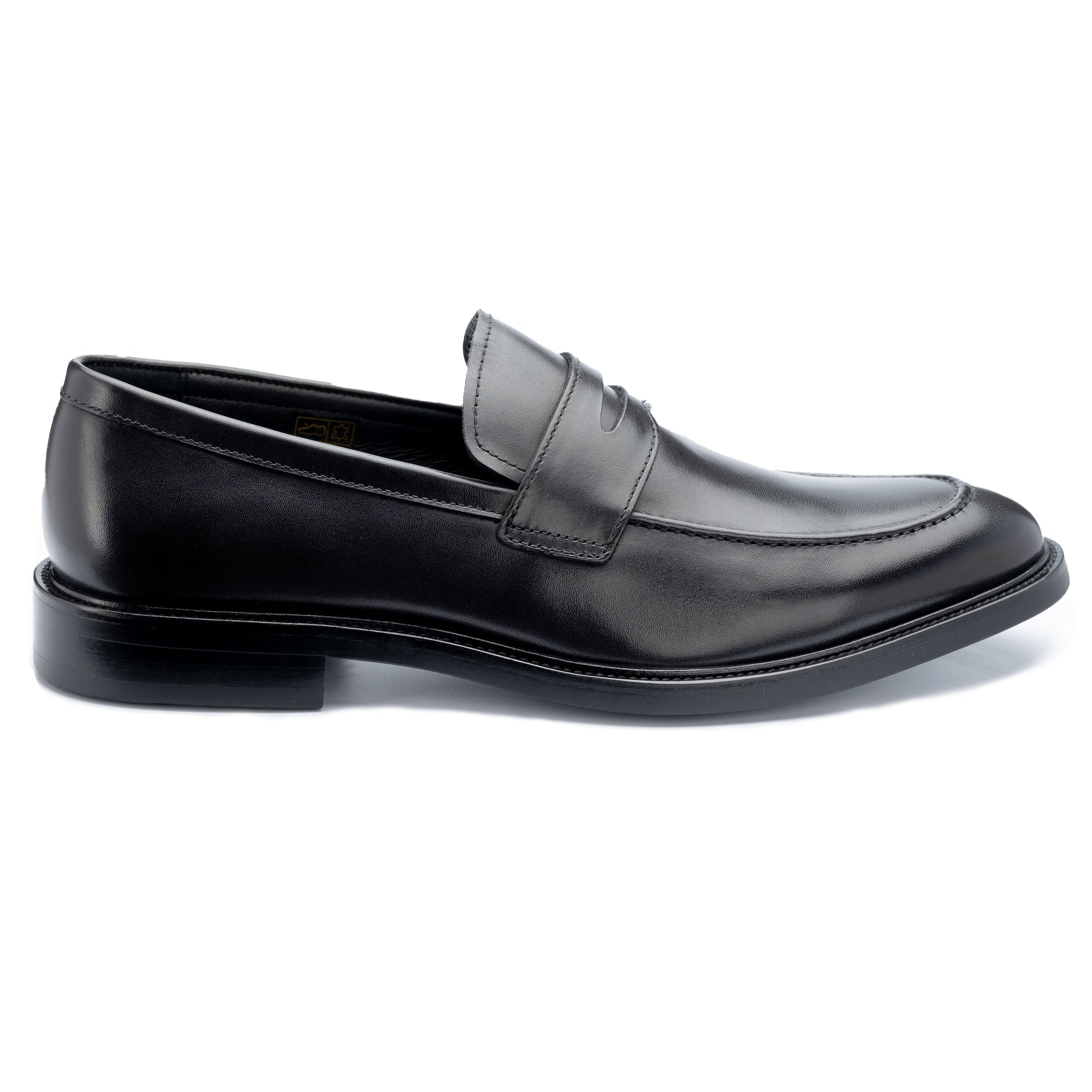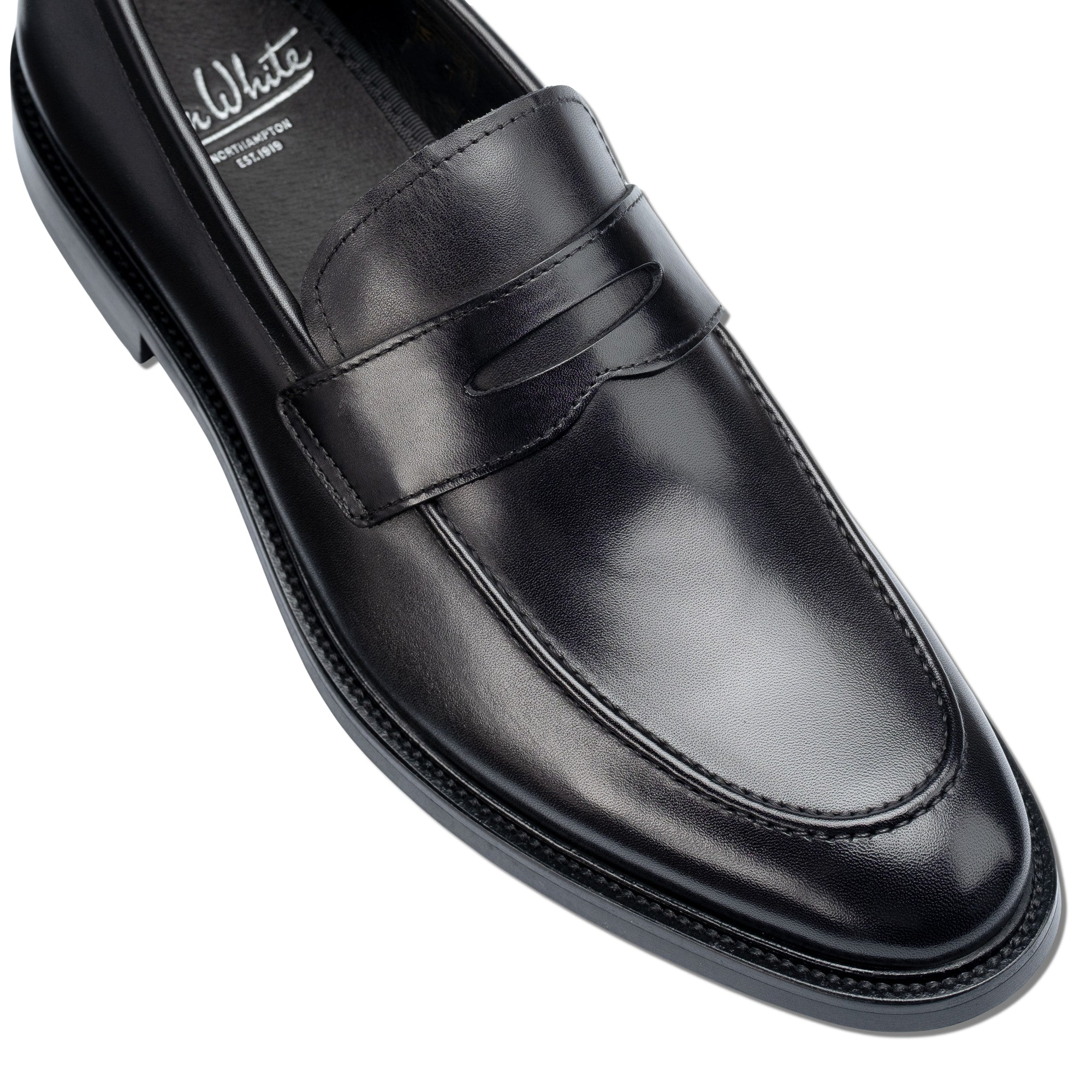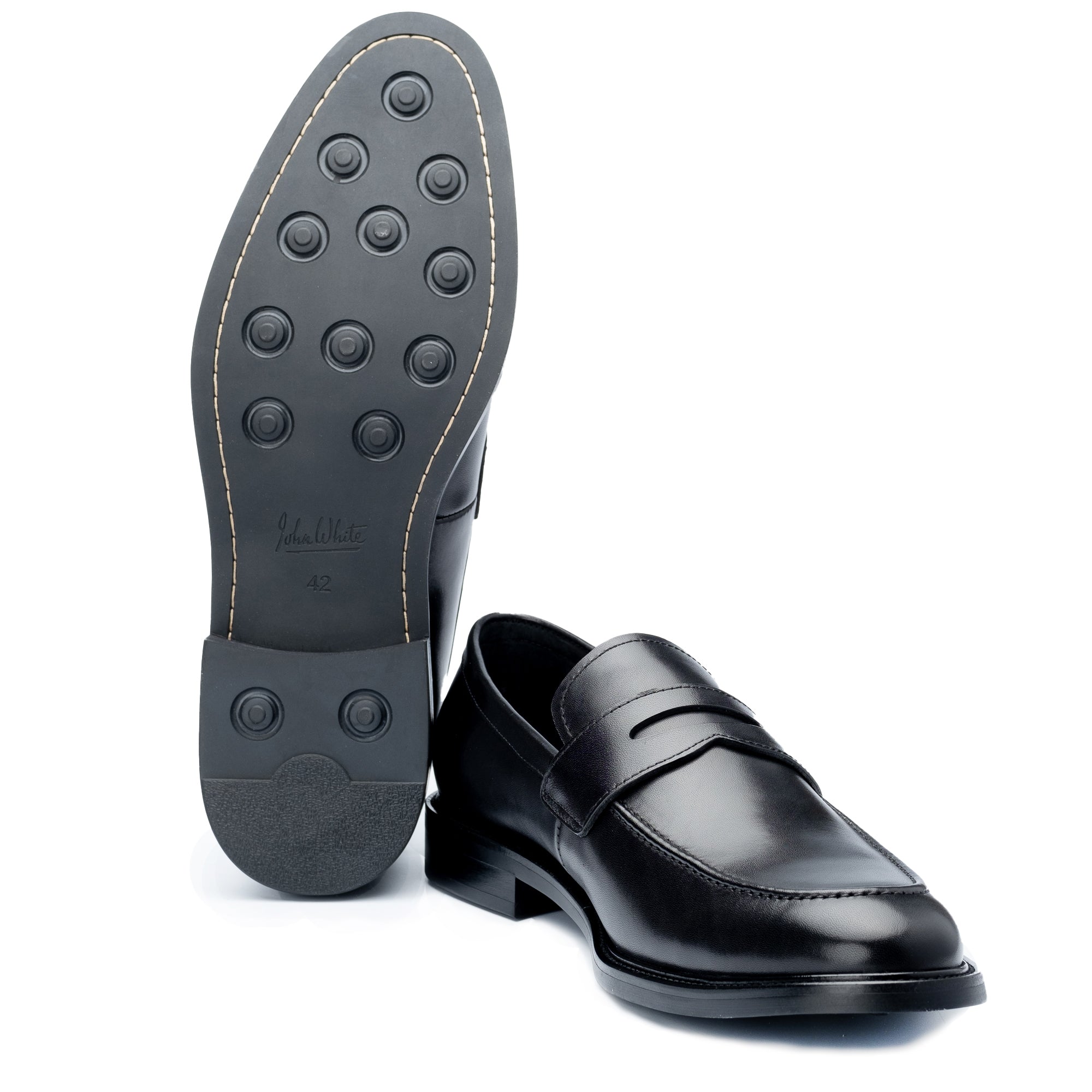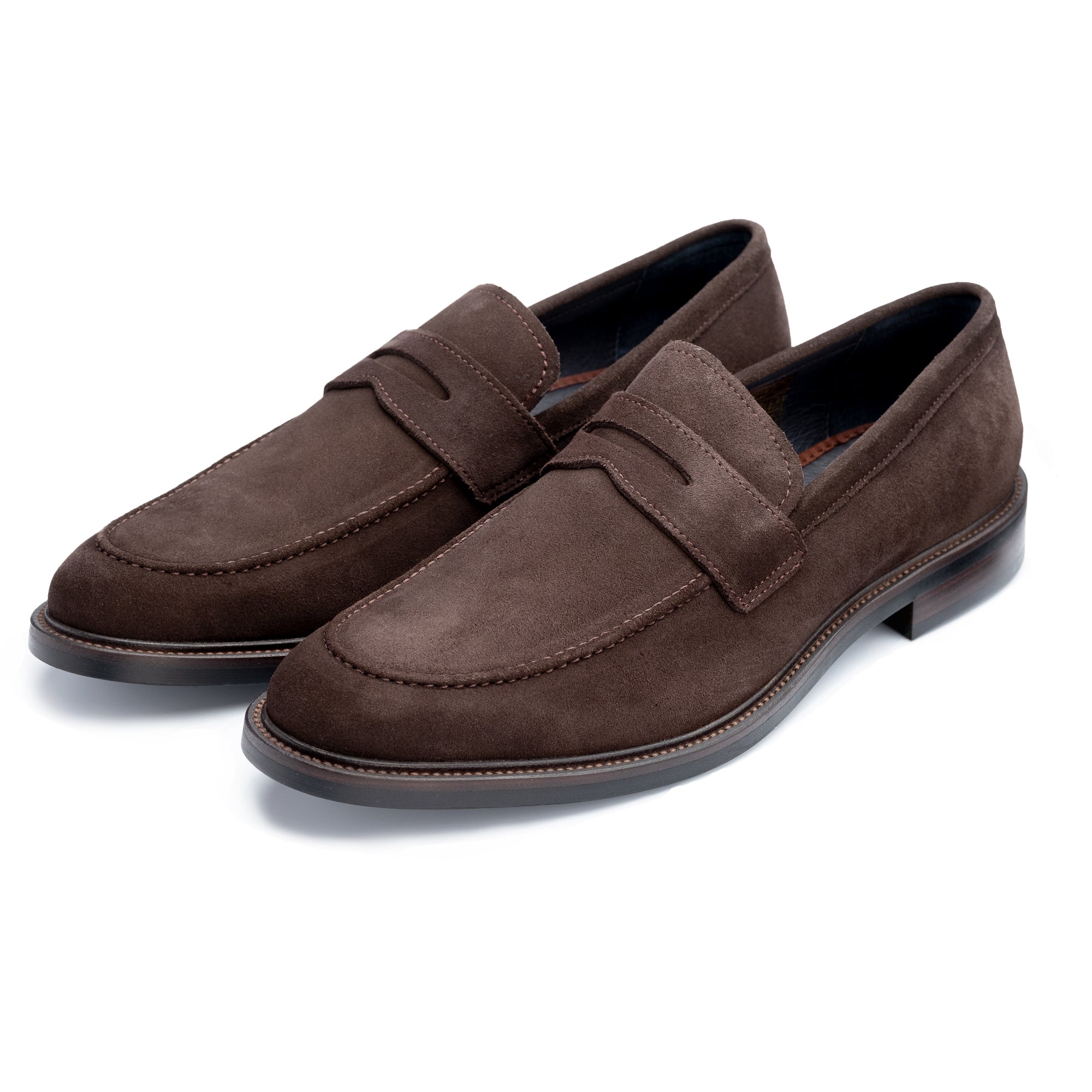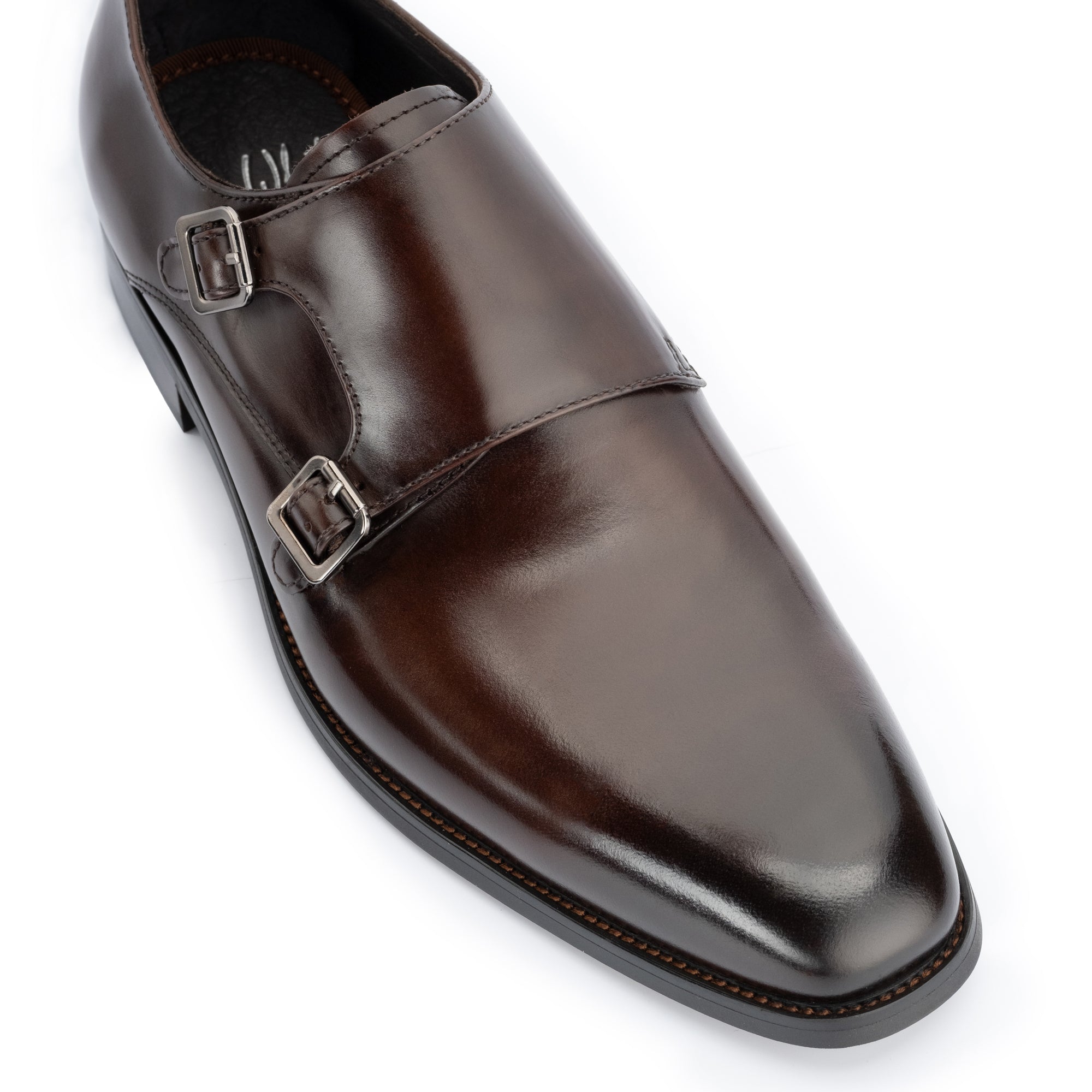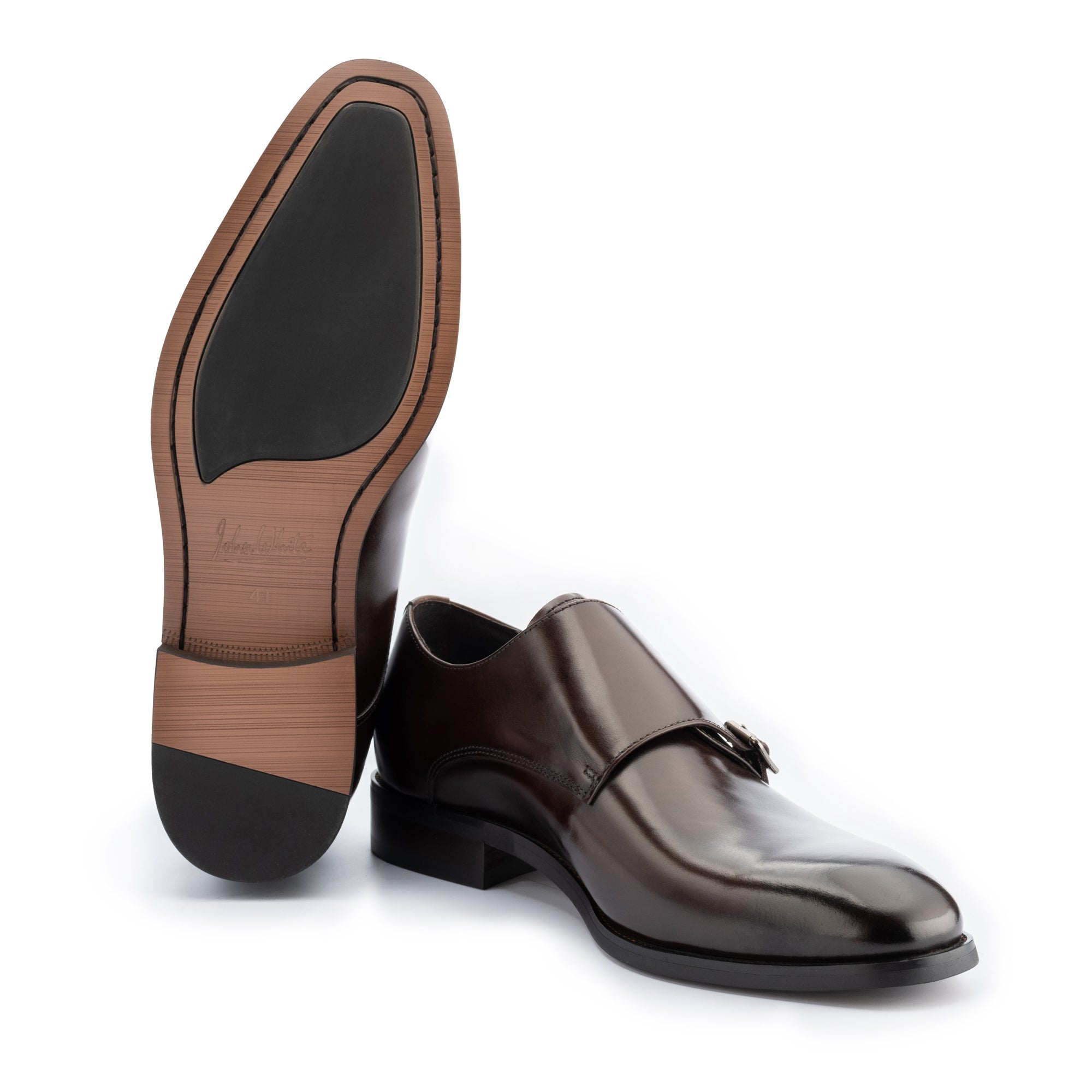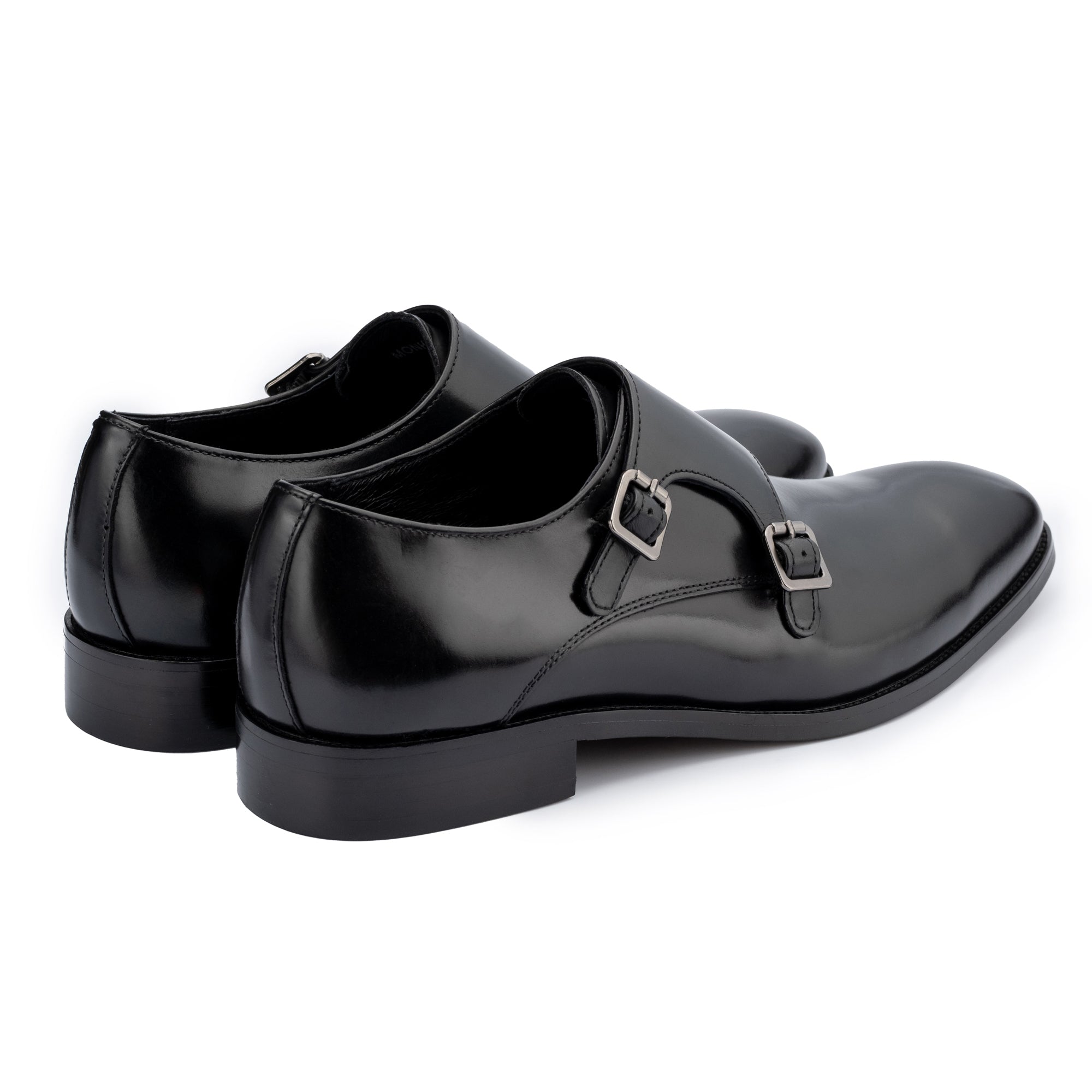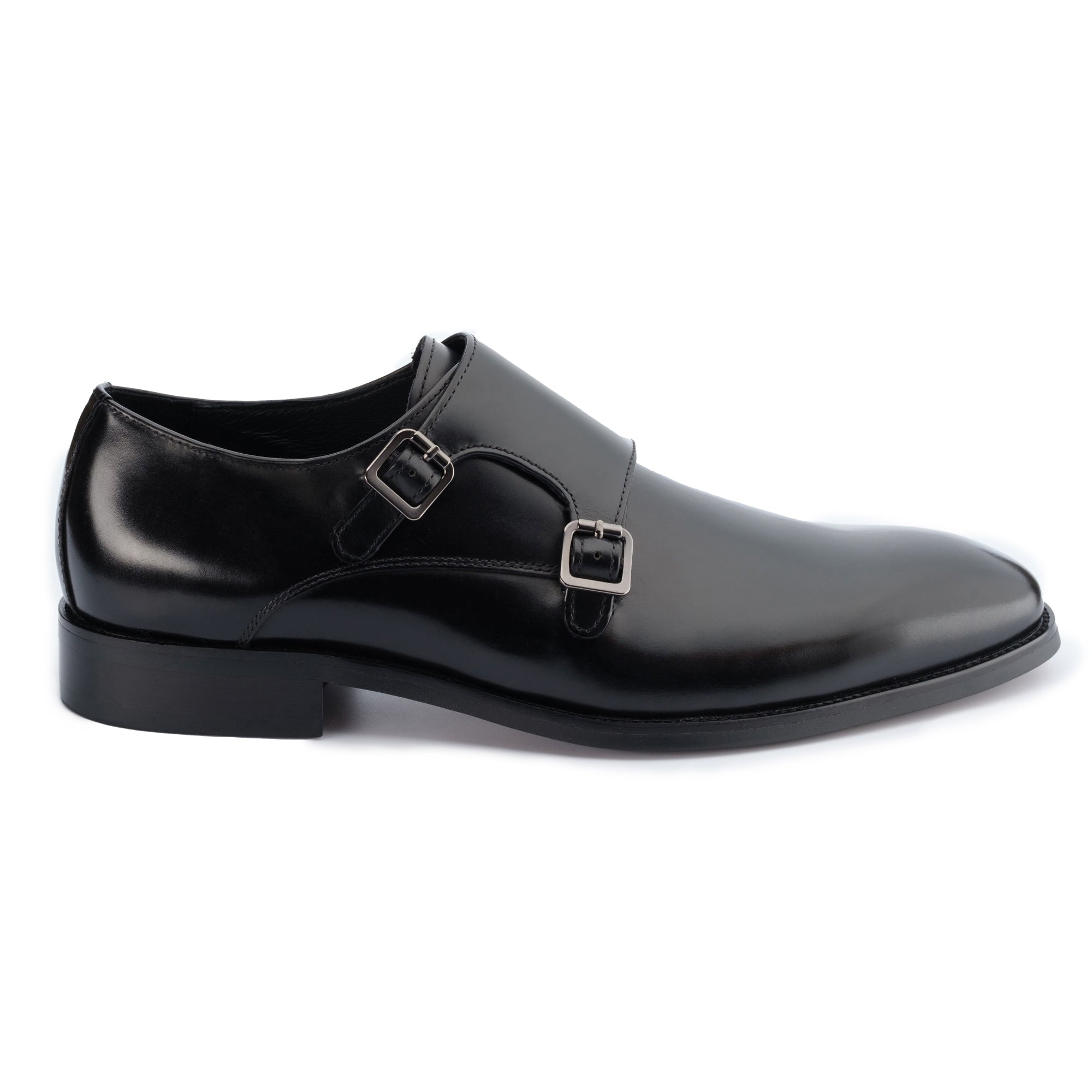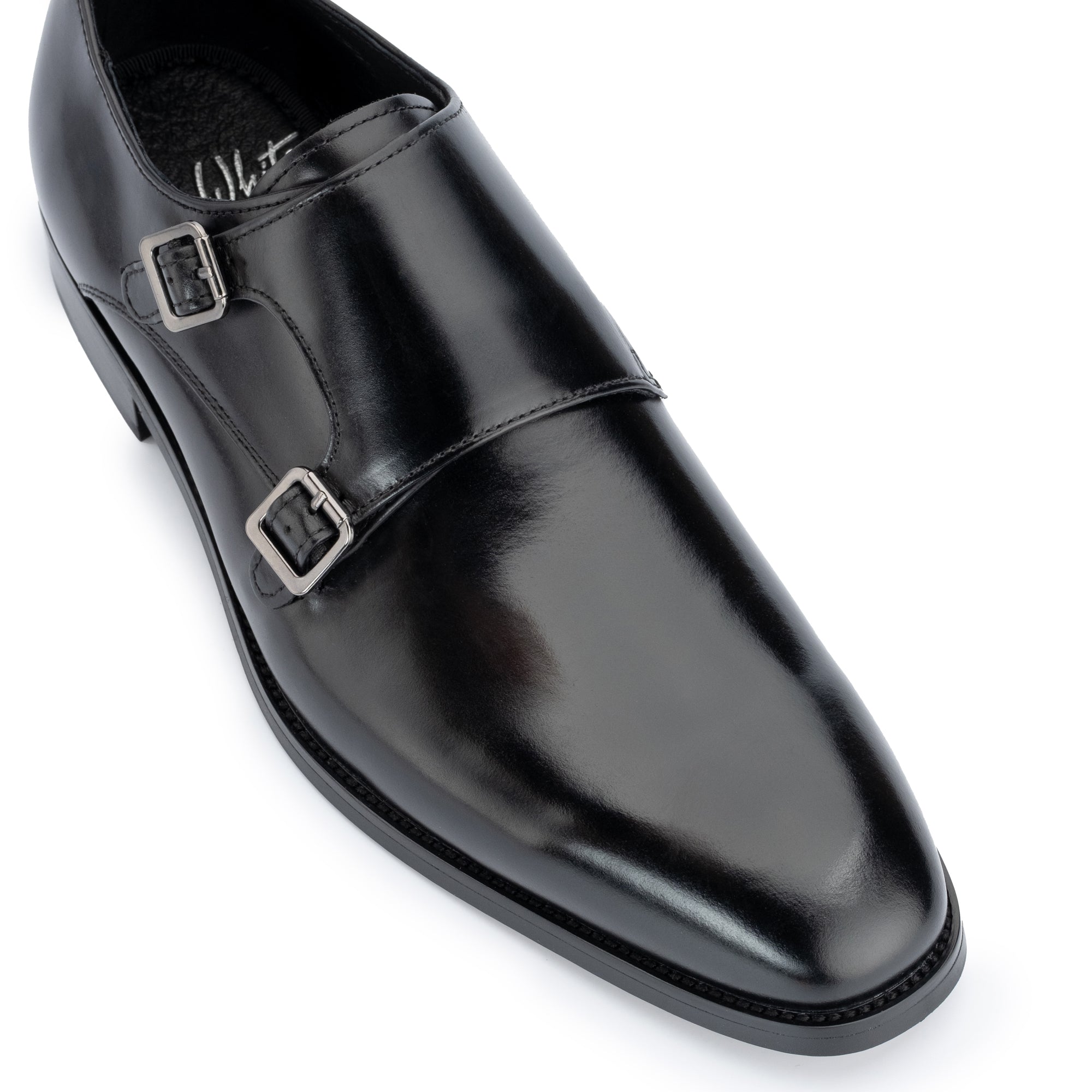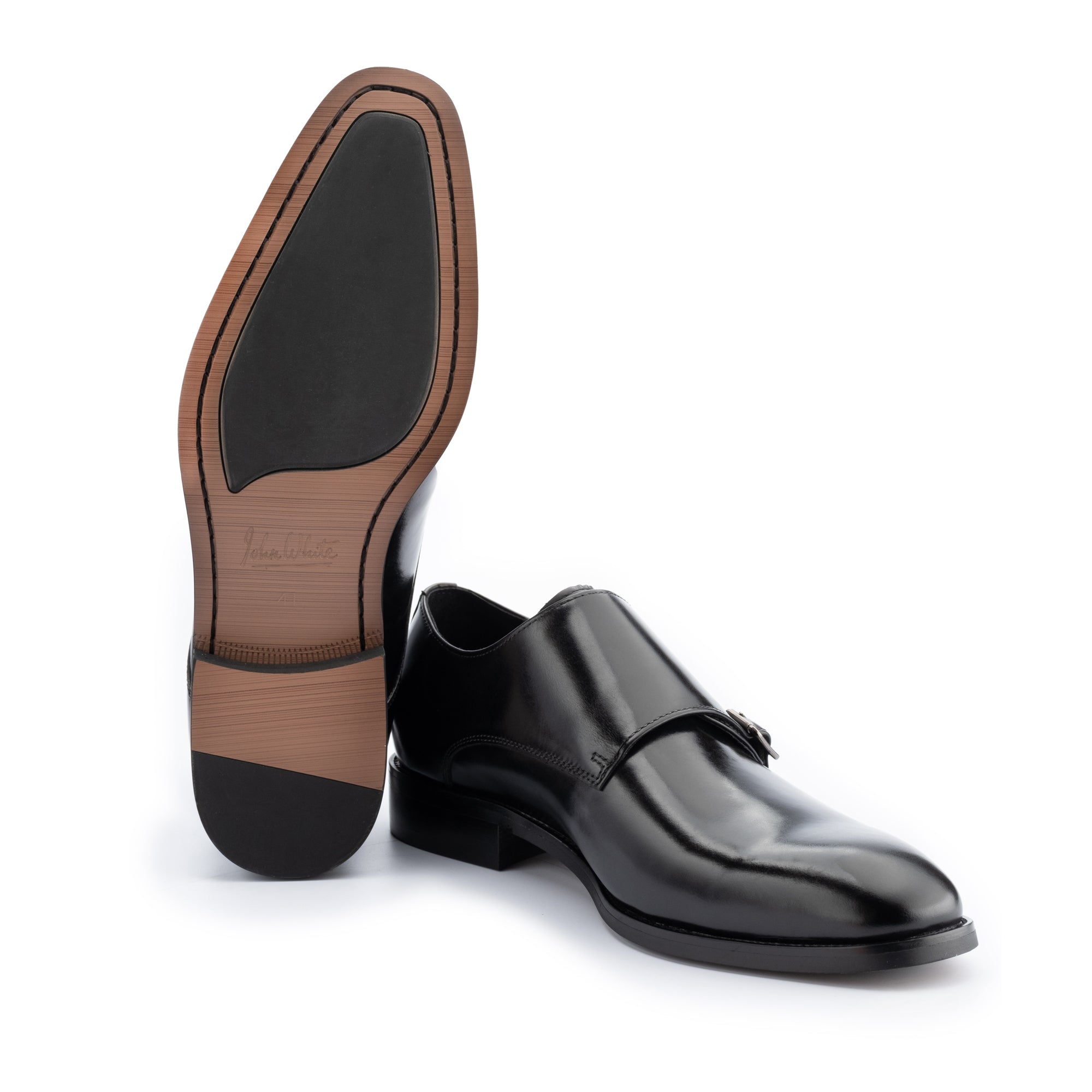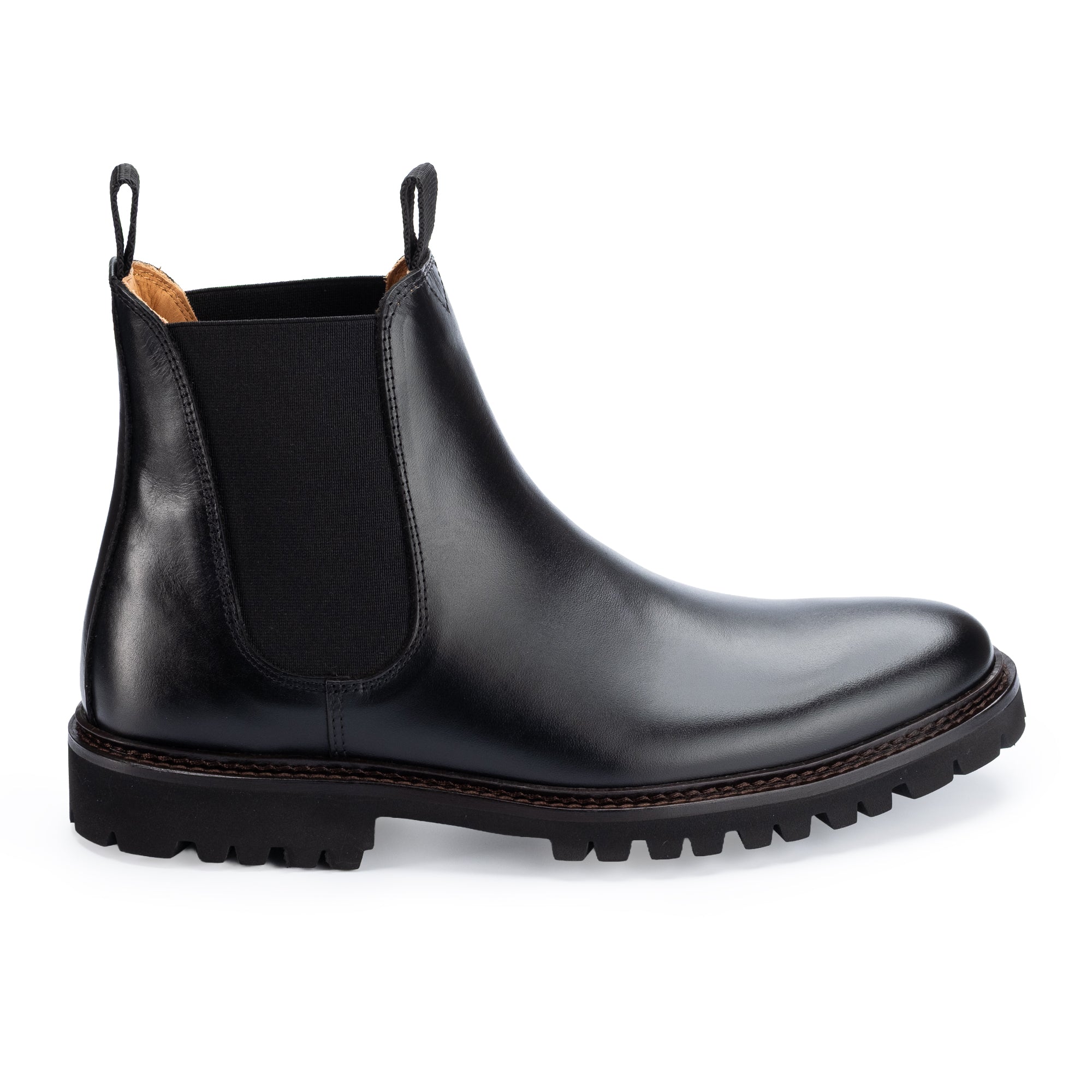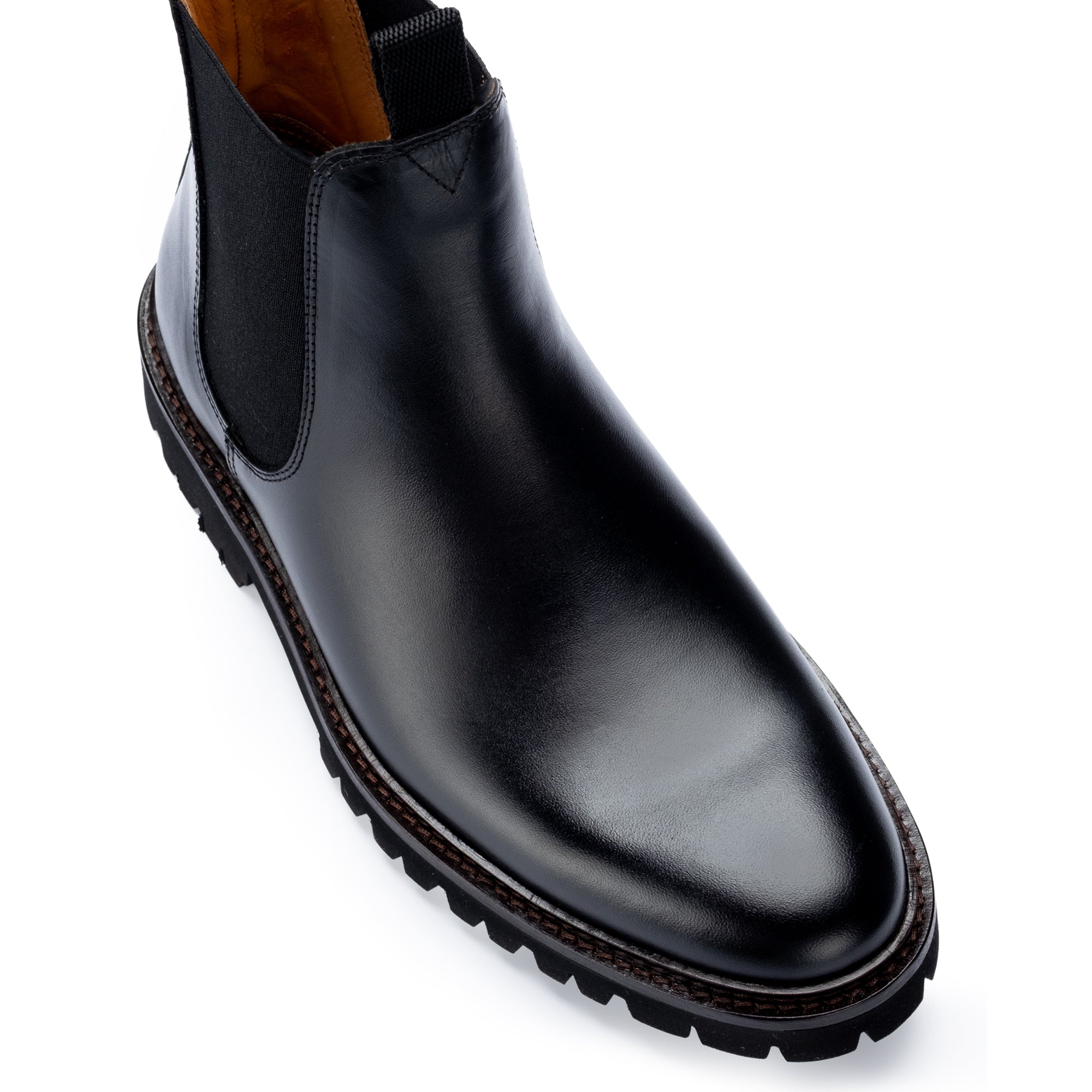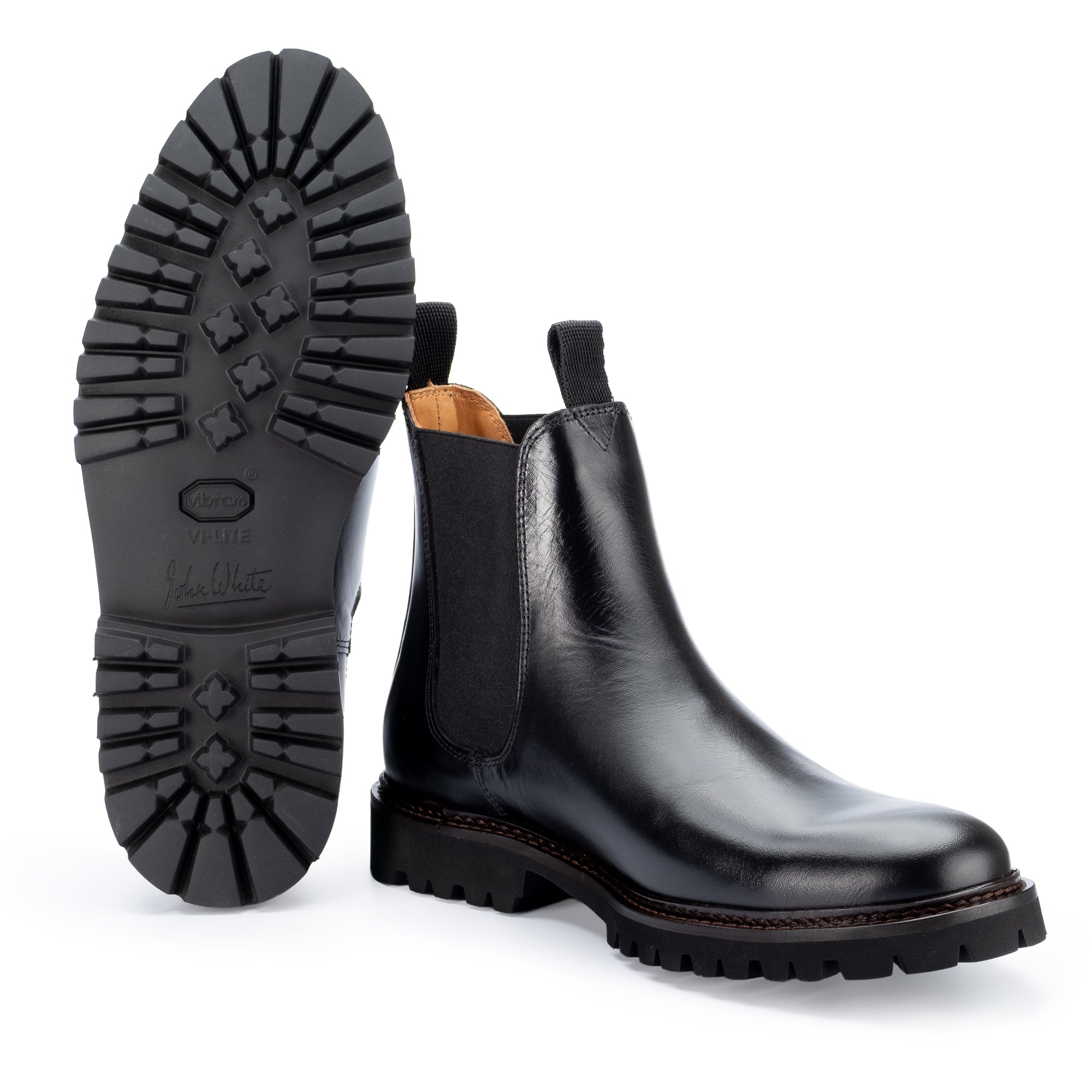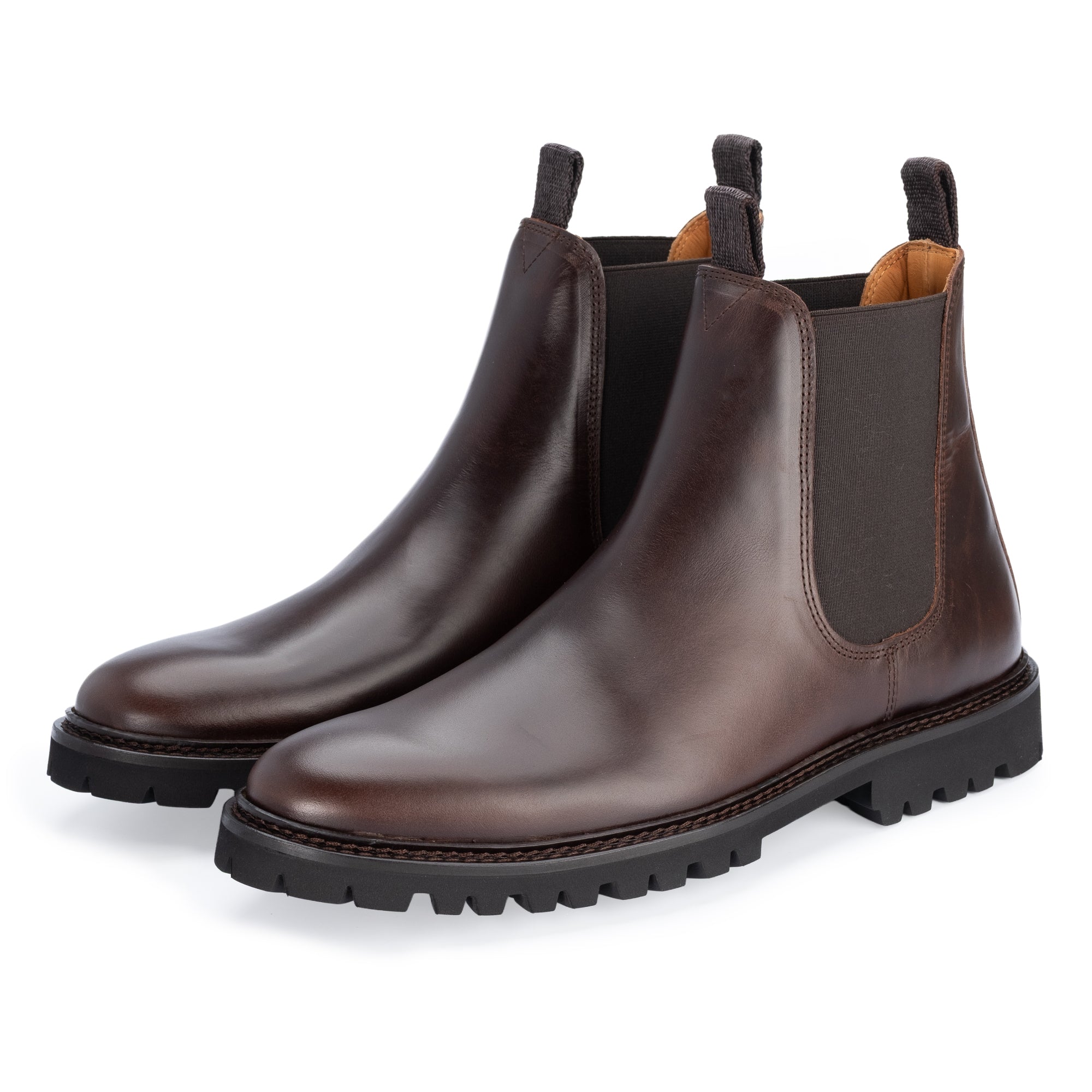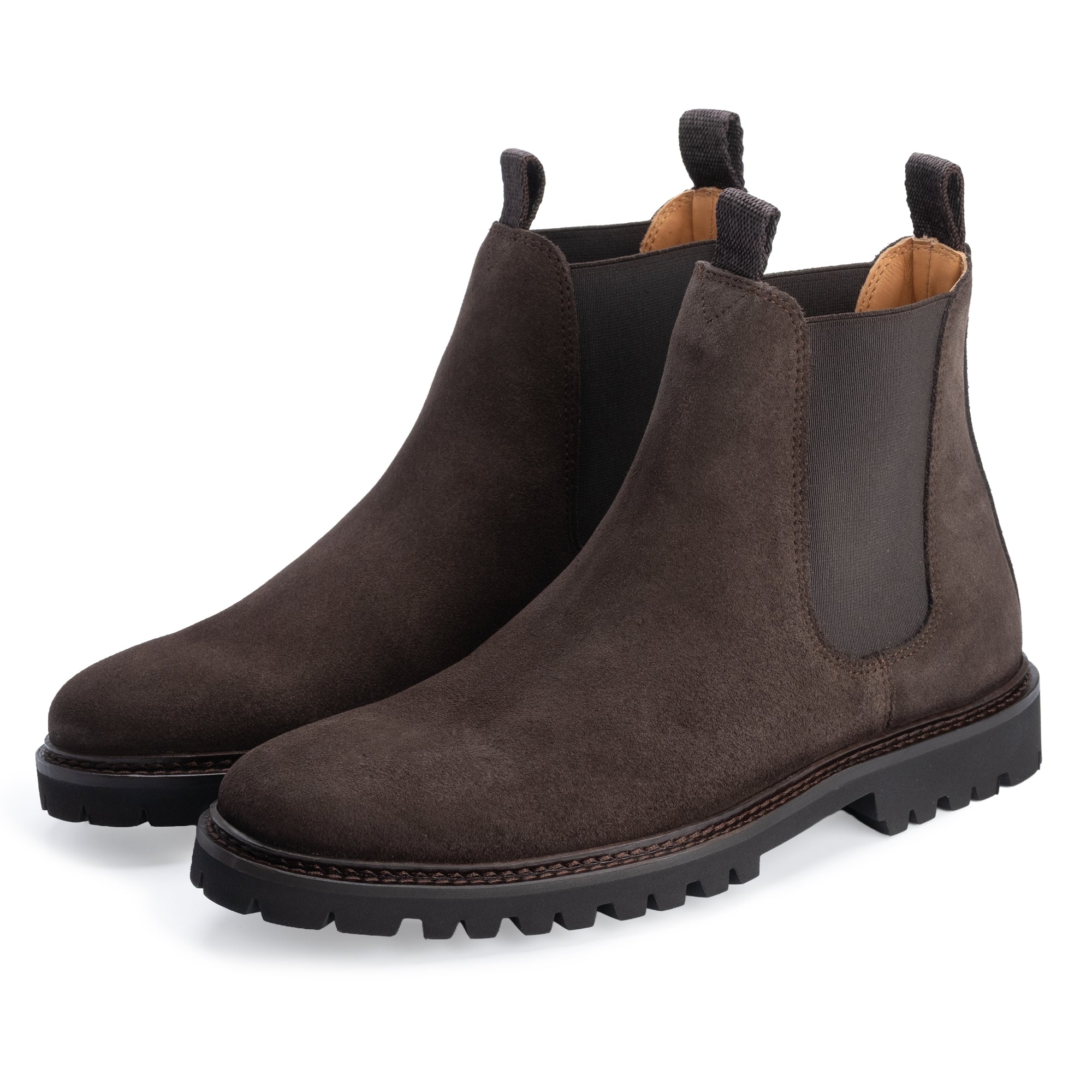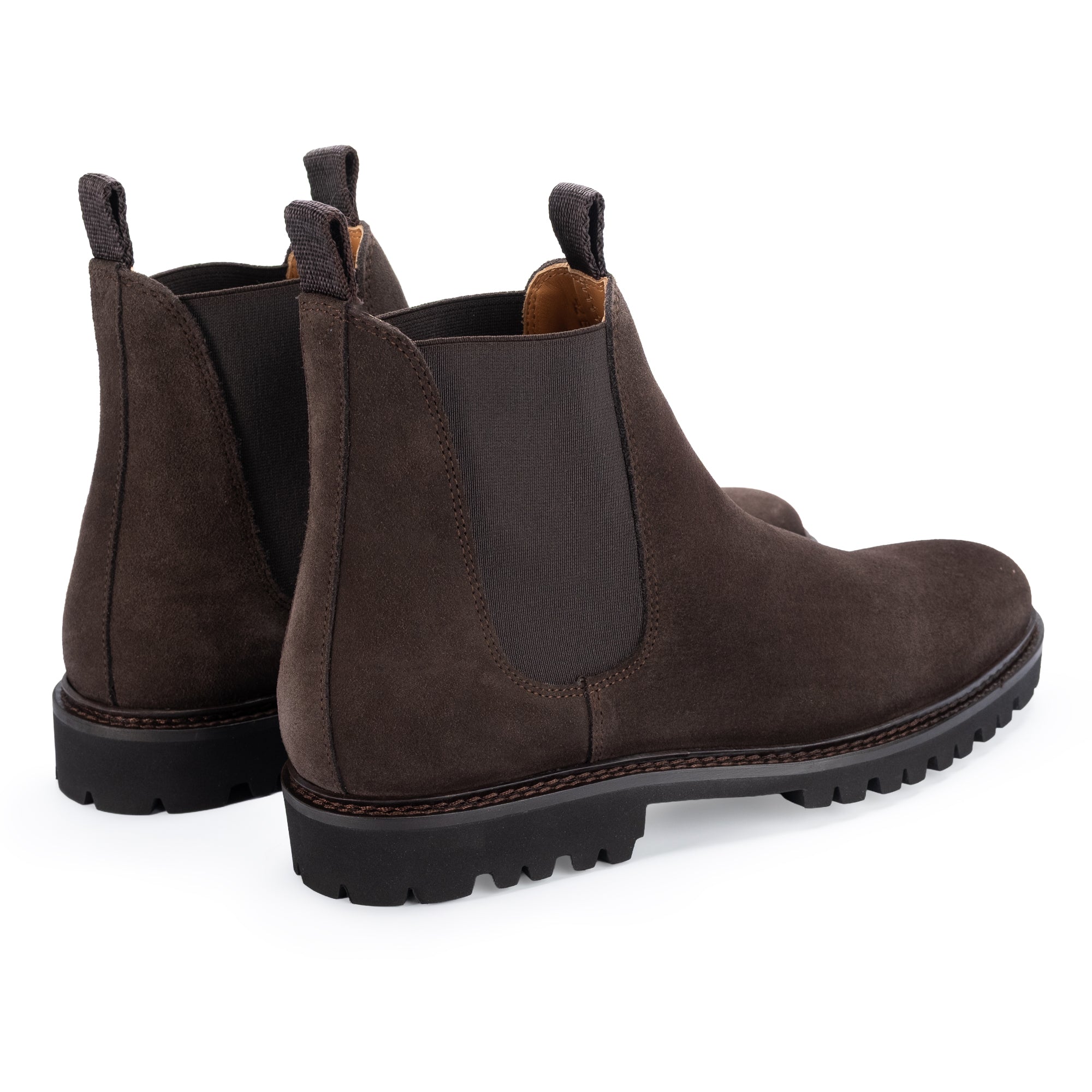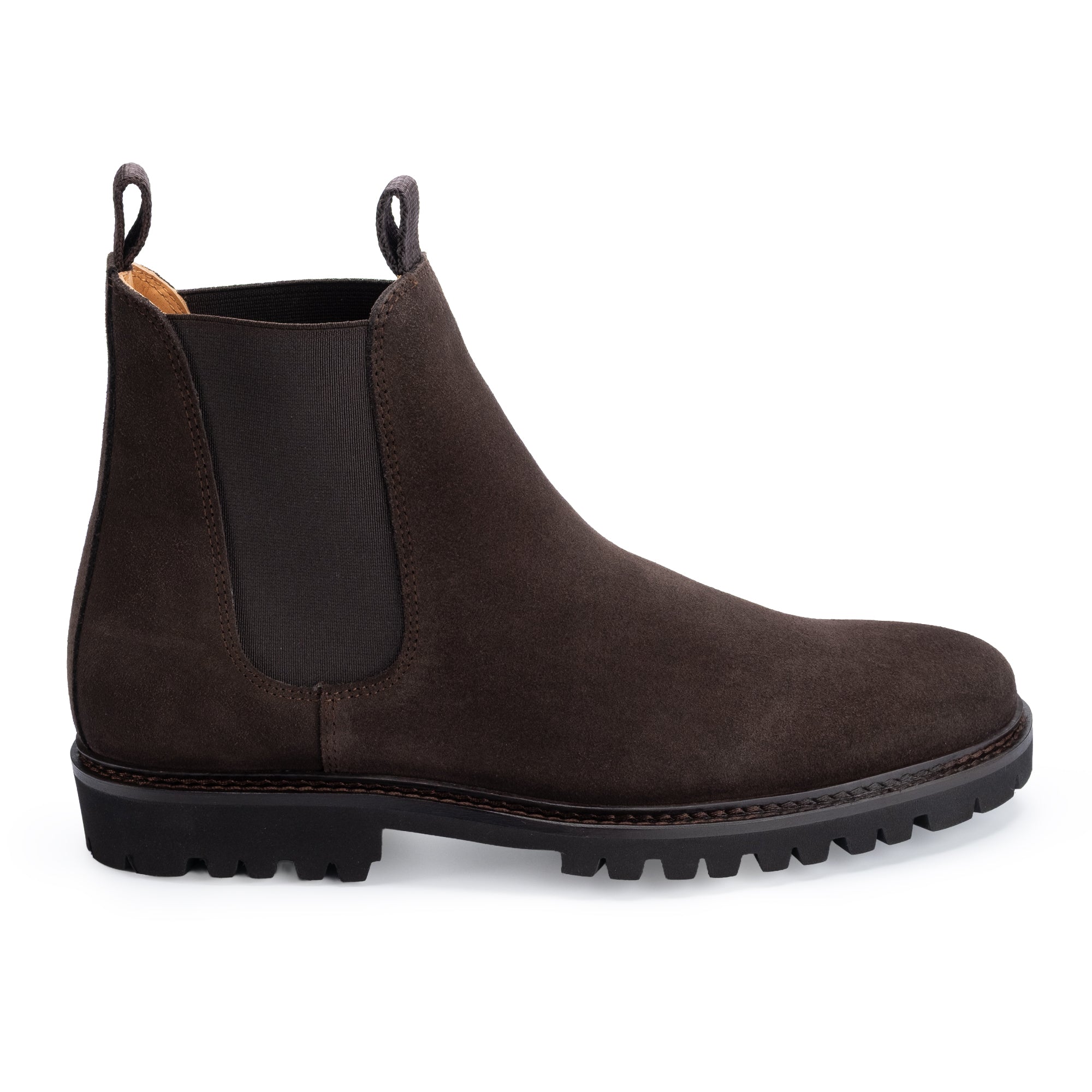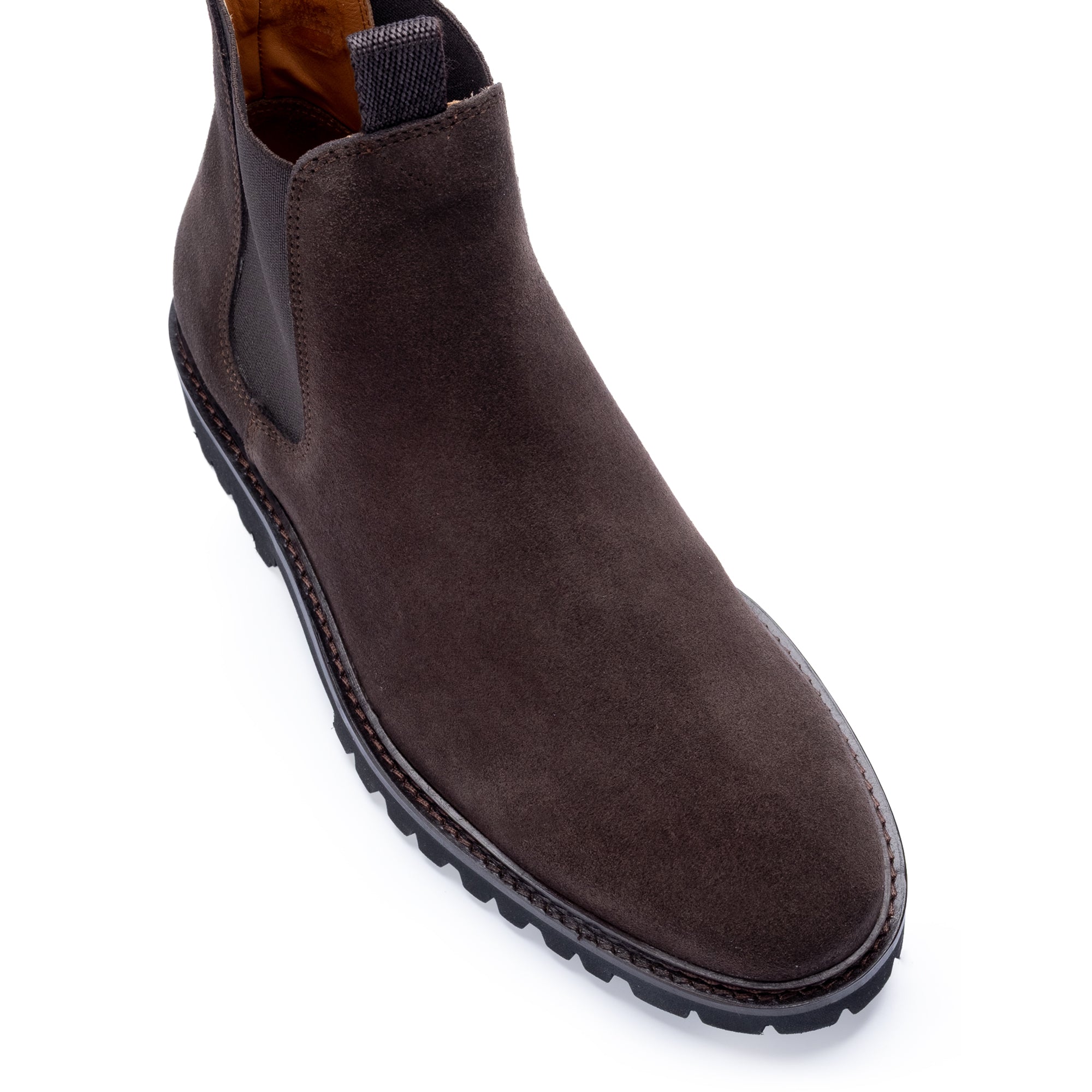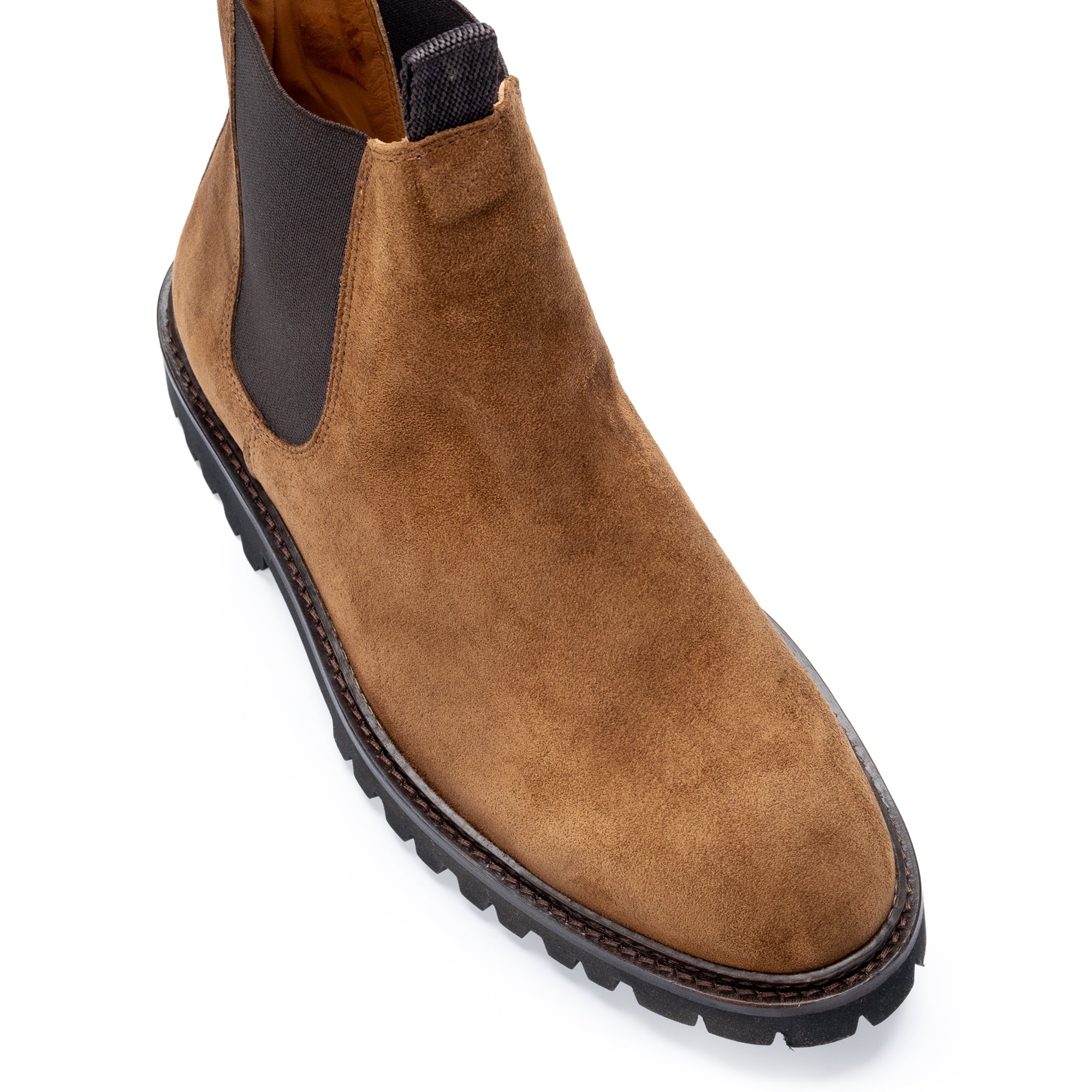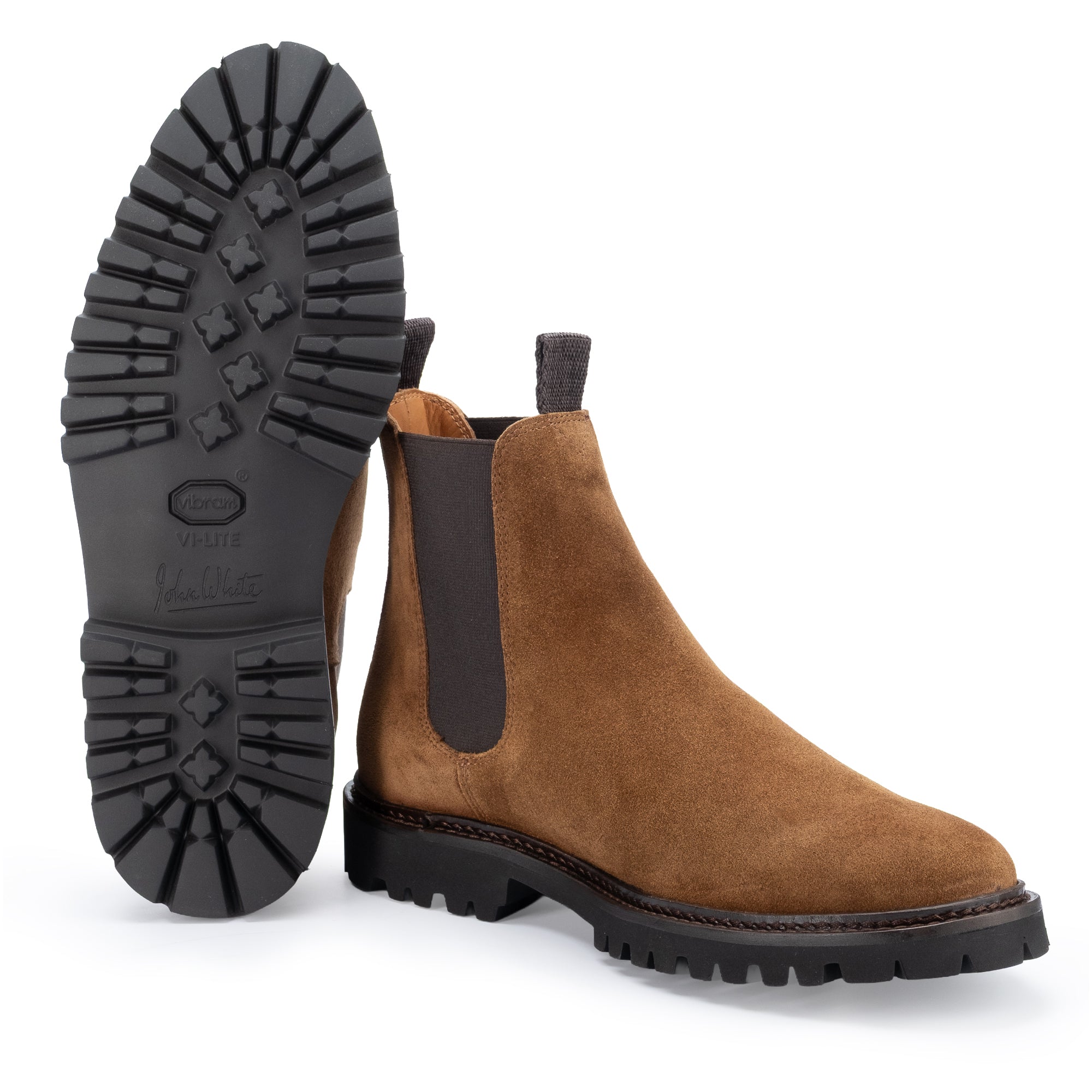

Most men own a Derby or an Oxford without knowing which is which. The two silhouettes have coexisted for over a century, and the confusion between them is near-universal — which is a shame, because the difference is structural rather than stylistic, and understanding it changes both how you shop and how you dress.
In This Guide
This guide covers the mechanical distinction, the formality gradient, the JWS styles in each family, and how to decide which belongs in your wardrobe first — or whether, as is usually the answer, you want one of each.
The Structural Difference: Closed Quarters vs Open Quarters
The distinction between a Derby and an Oxford comes down entirely to how the quarters — the side panels of the shoe — are attached to the vamp, which is the front section covering the instep.
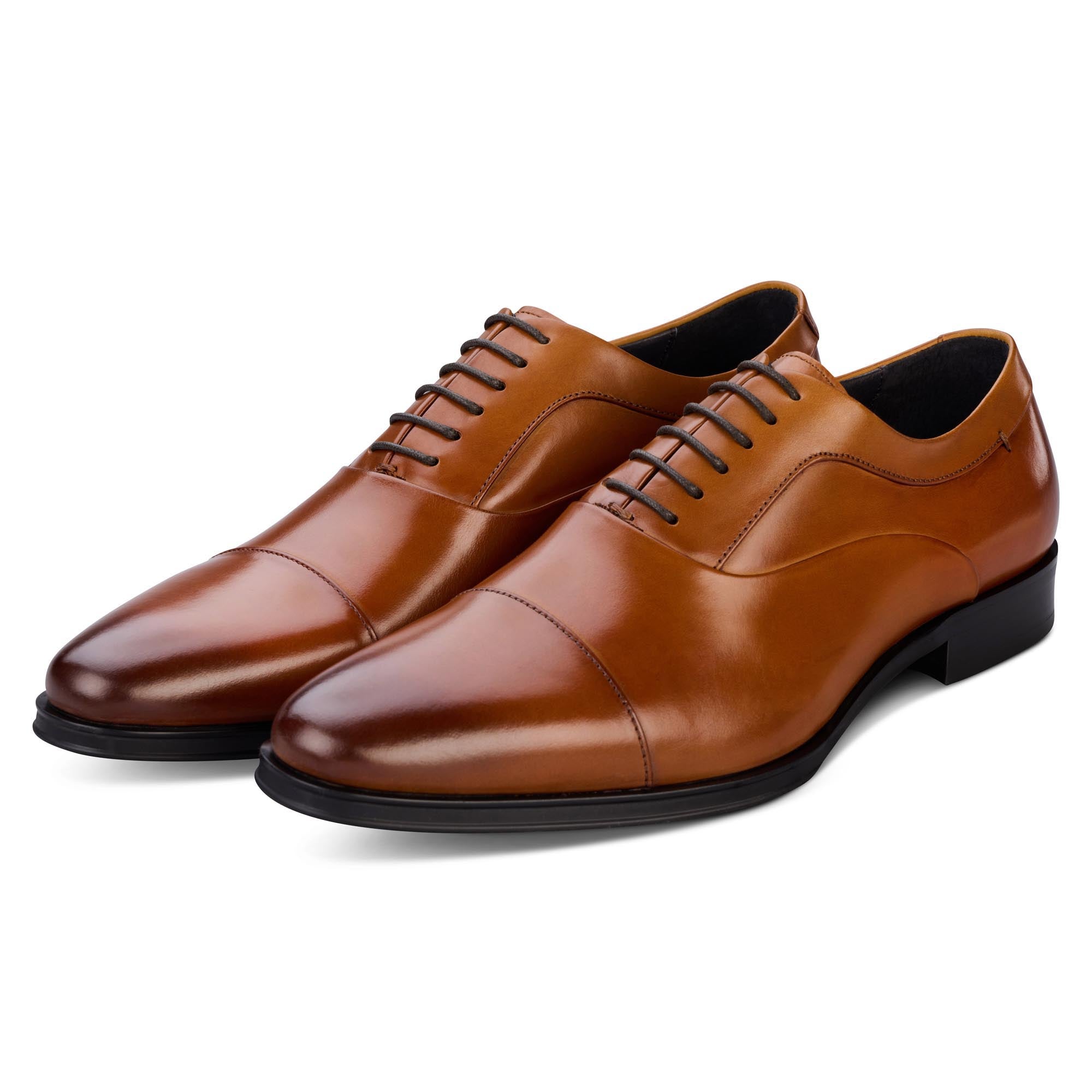
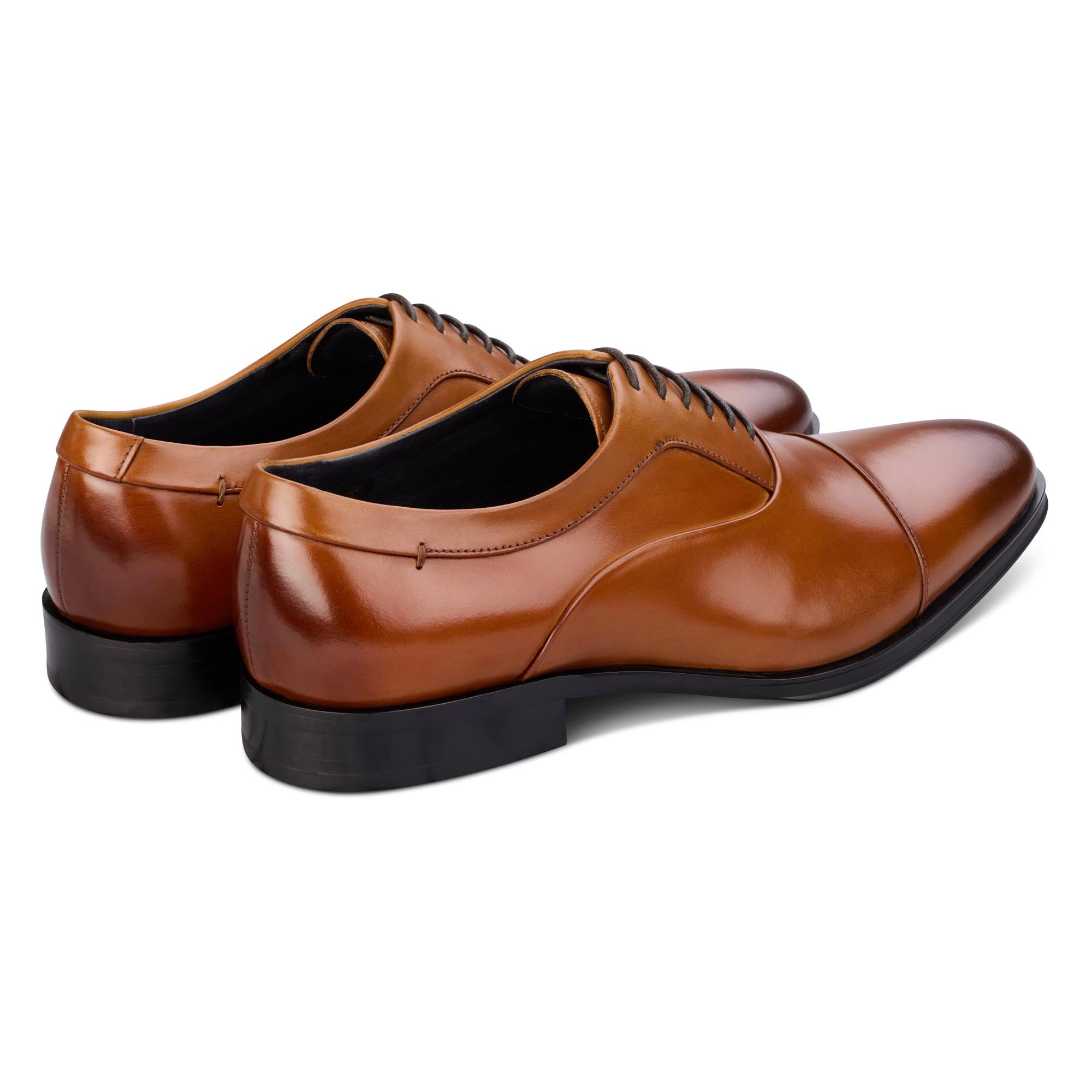
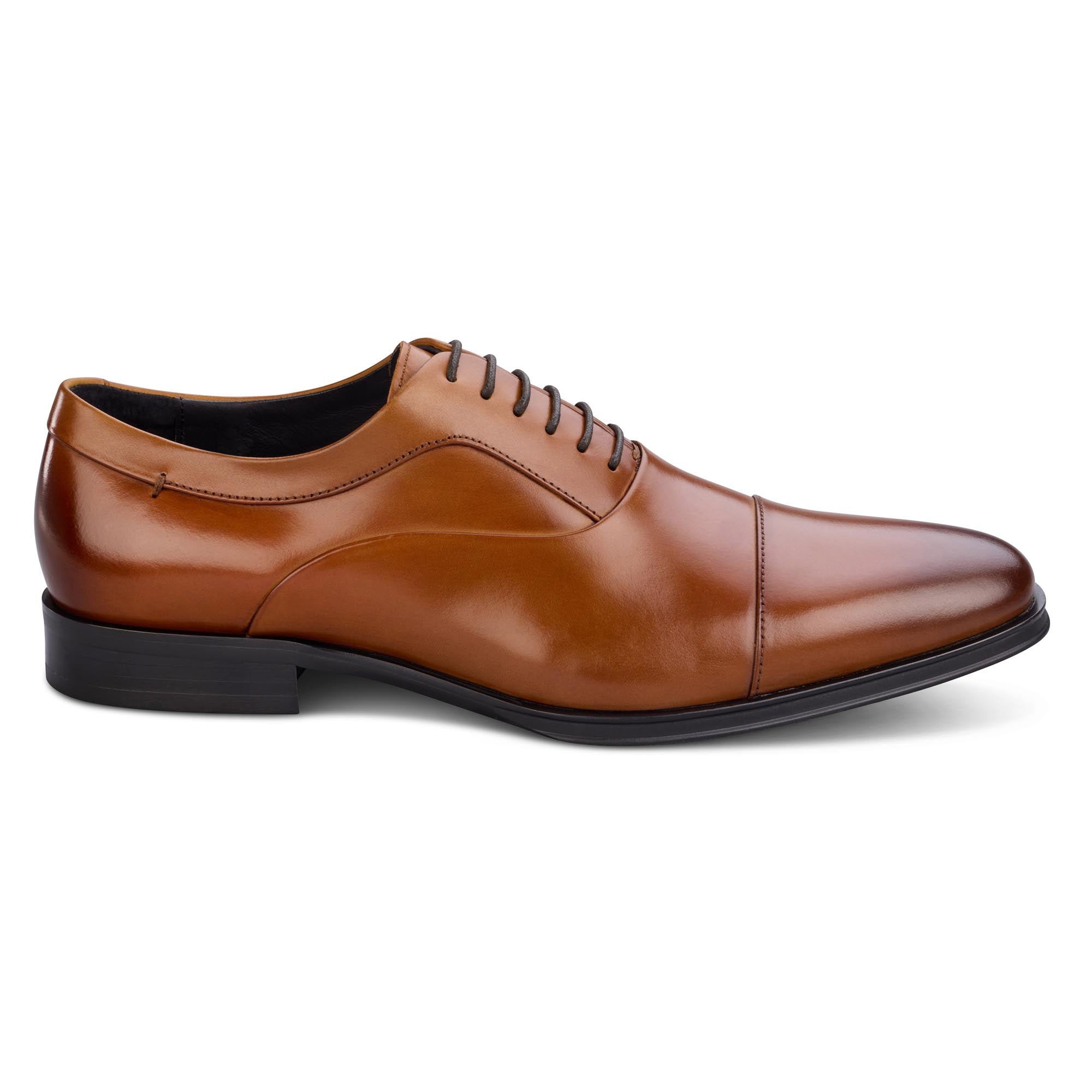
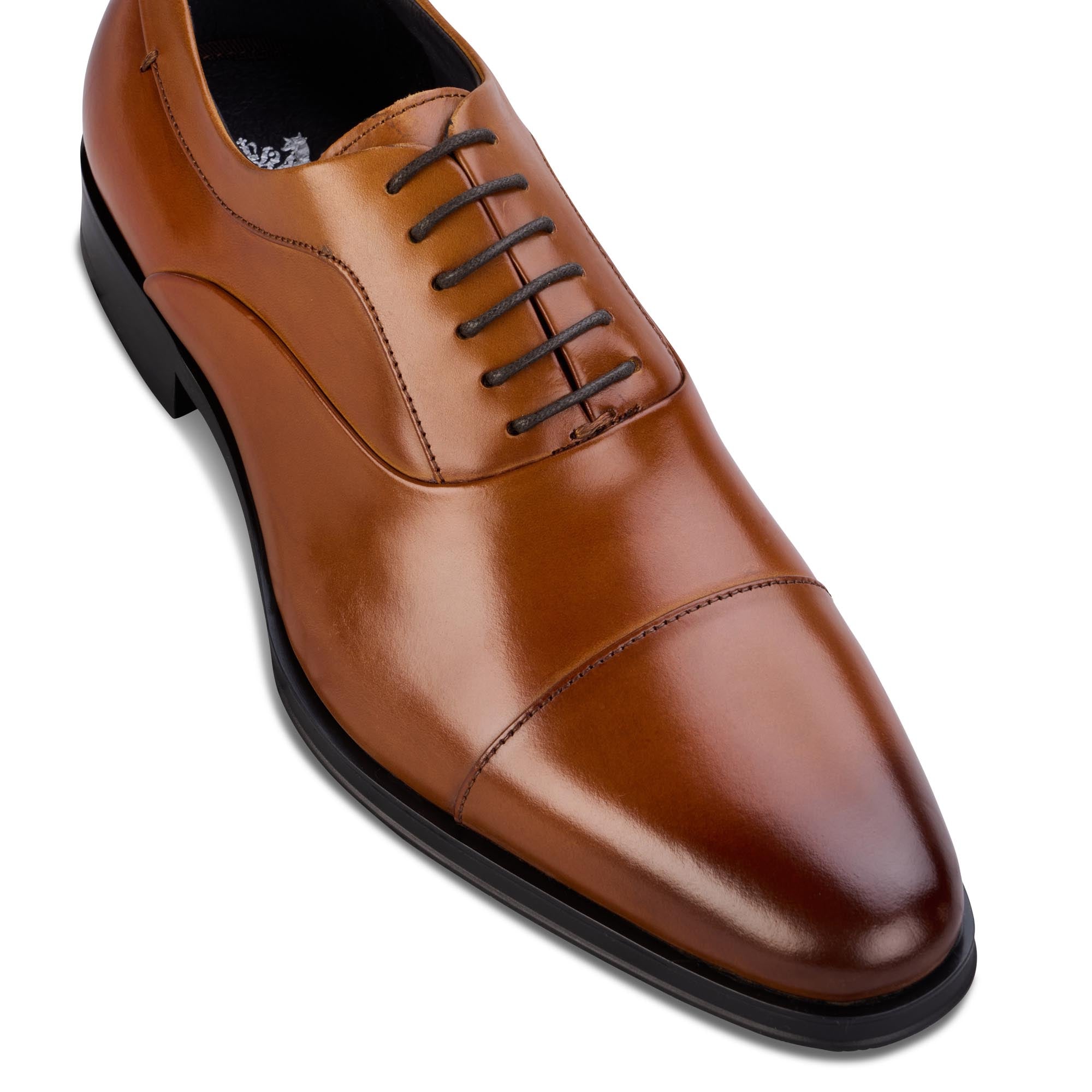
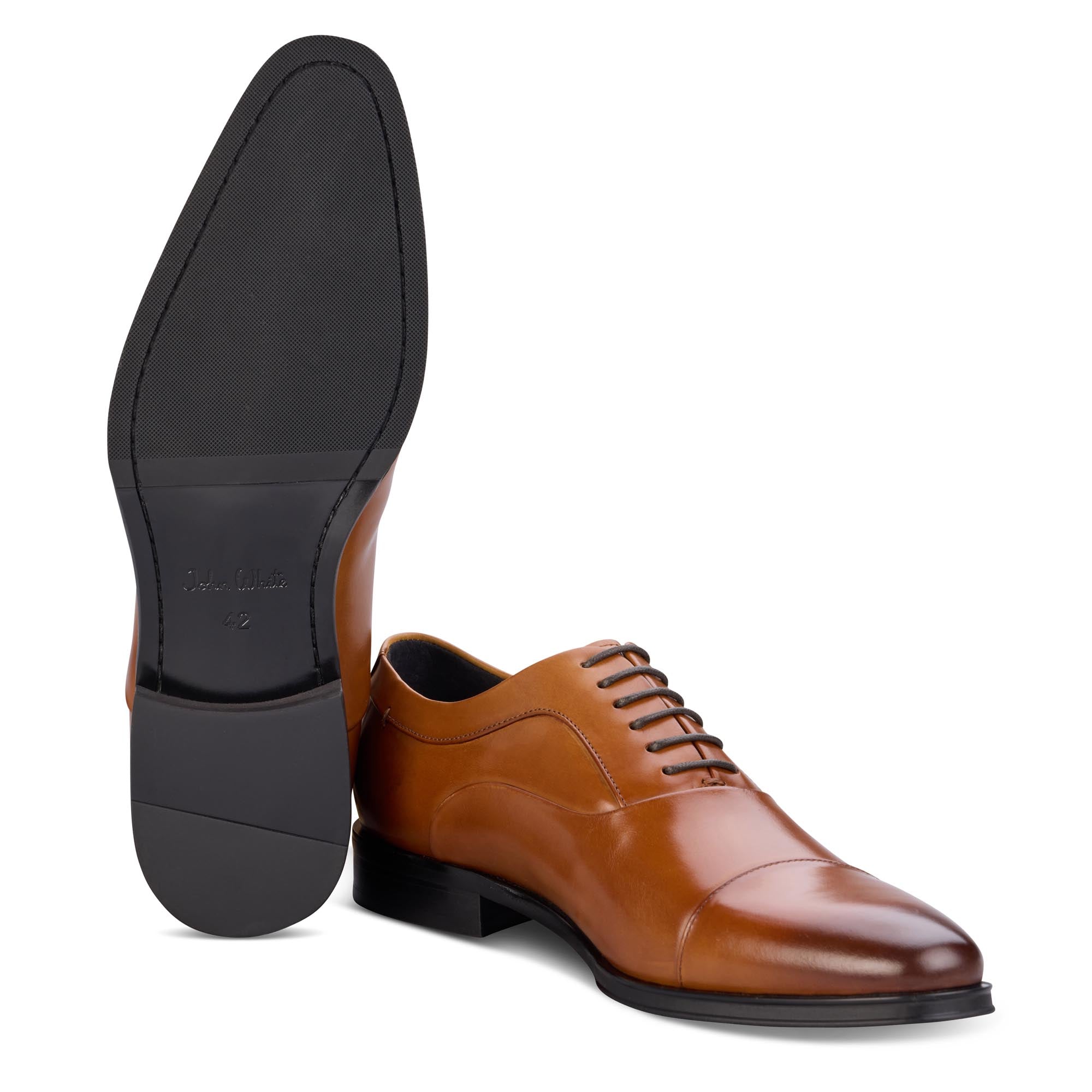
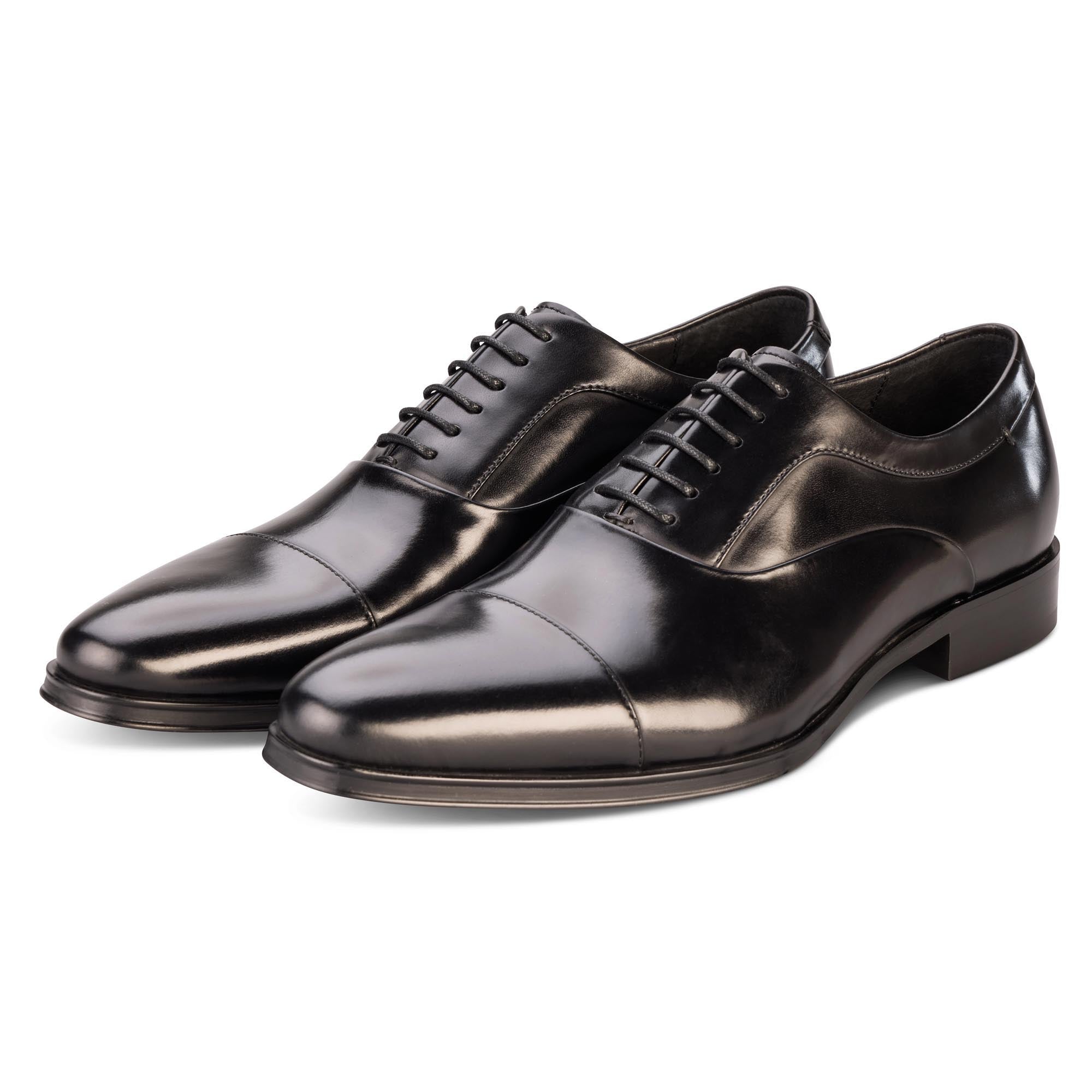
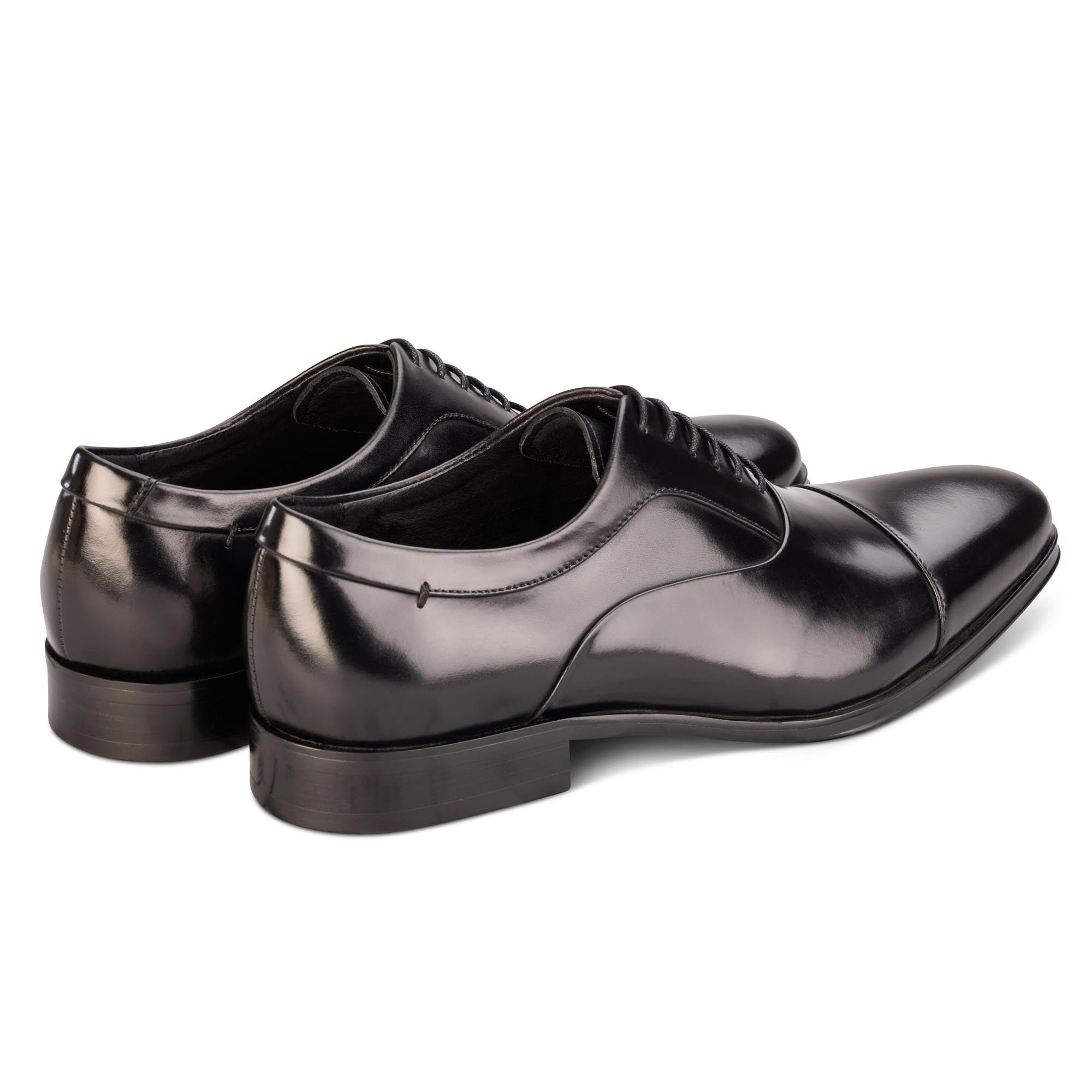
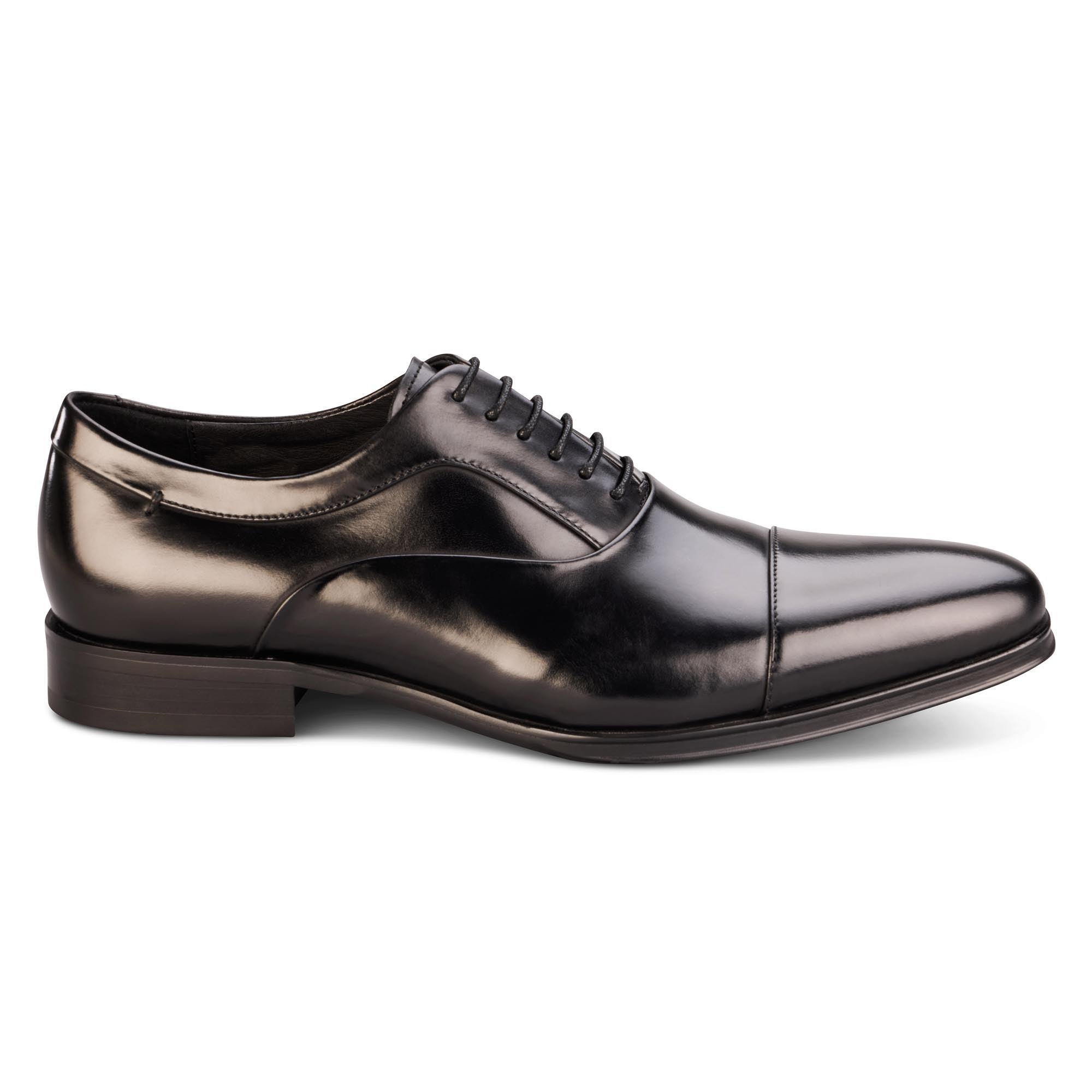
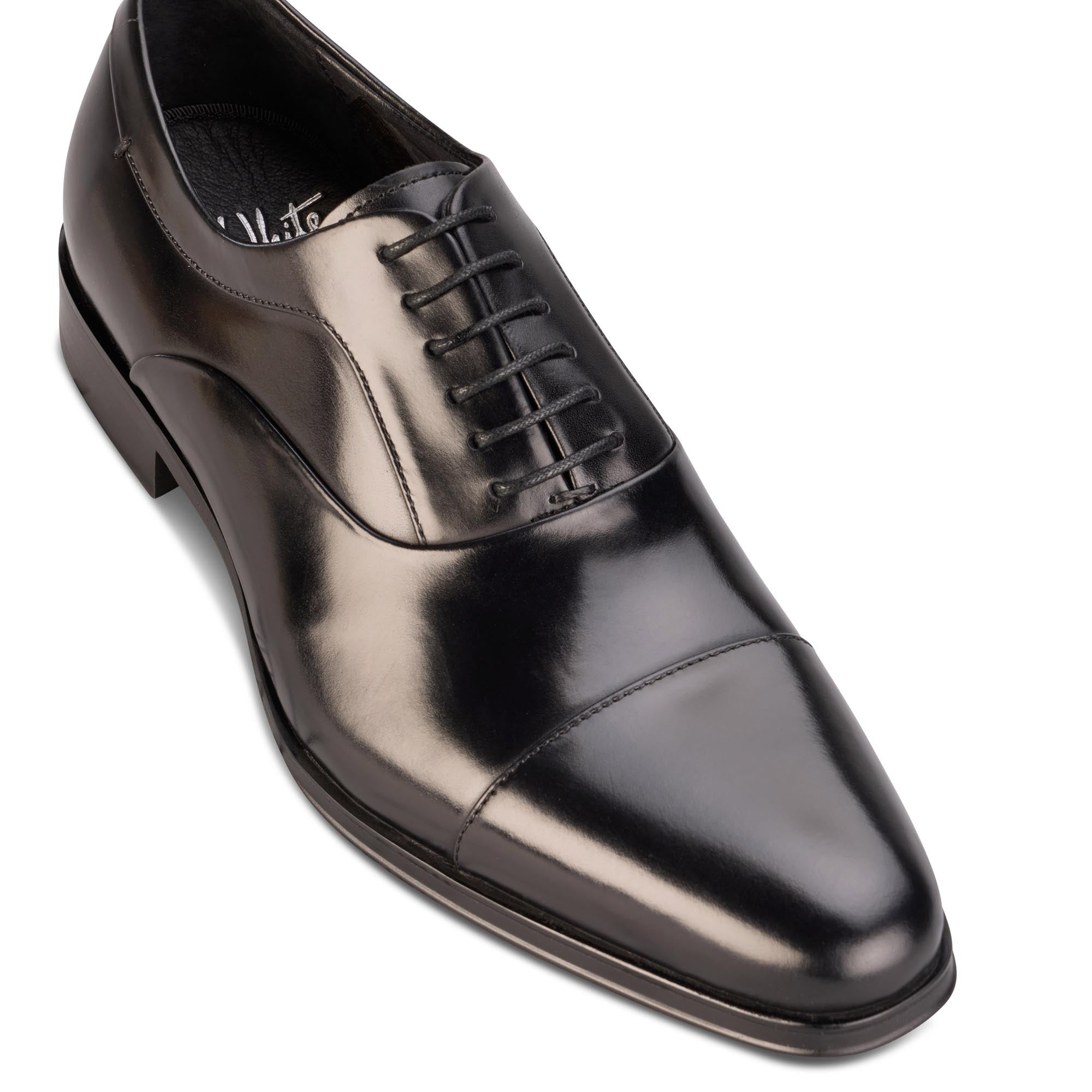
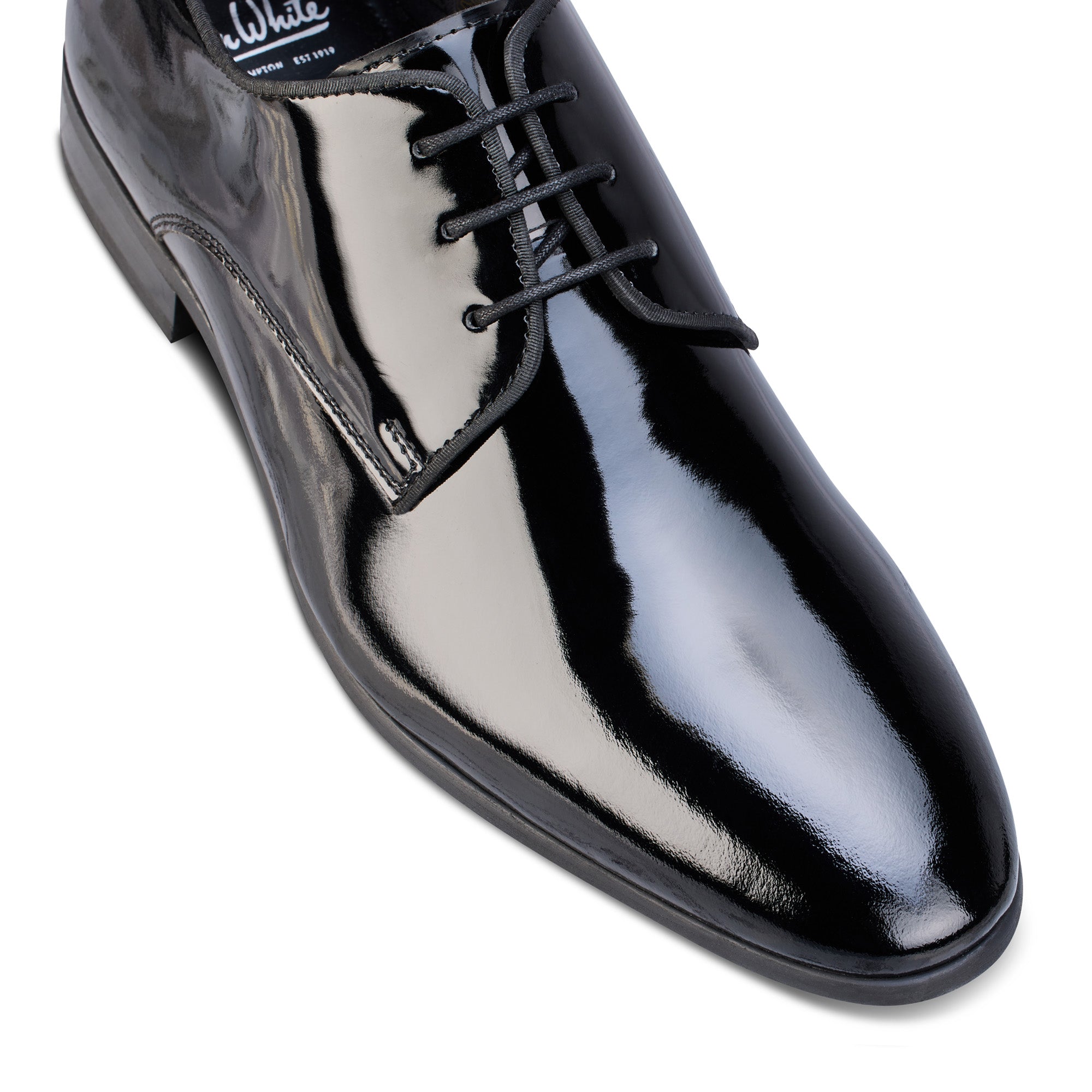
On an Oxford, the quarters are stitched underneath the vamp. This is called closed-quarter construction. The result is a sleek, unbroken line across the top of the shoe: the eyelets pull together tightly when laced, the throat of the shoe closes neatly, and the overall profile is compact and controlled. You cannot pull the sides apart without force.
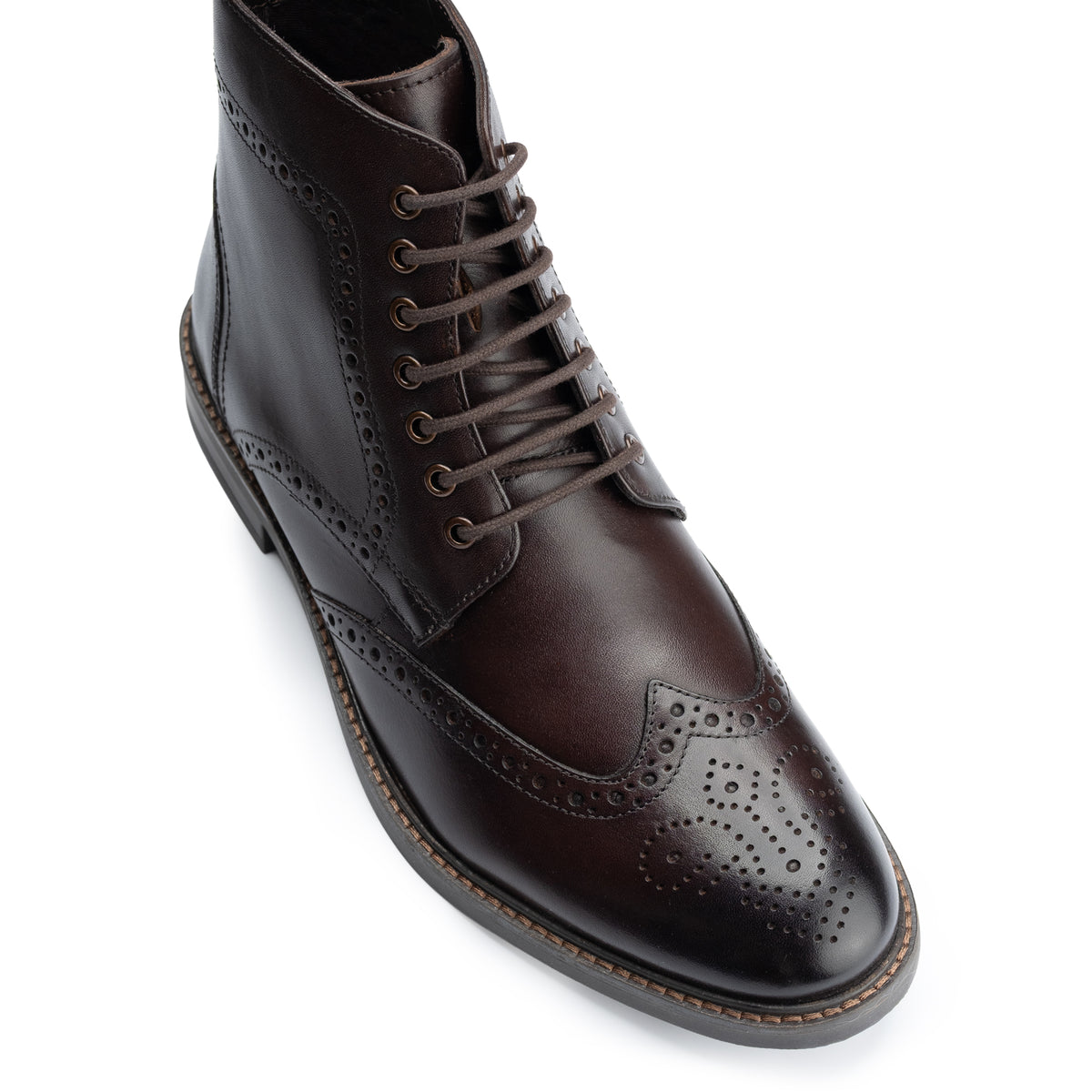
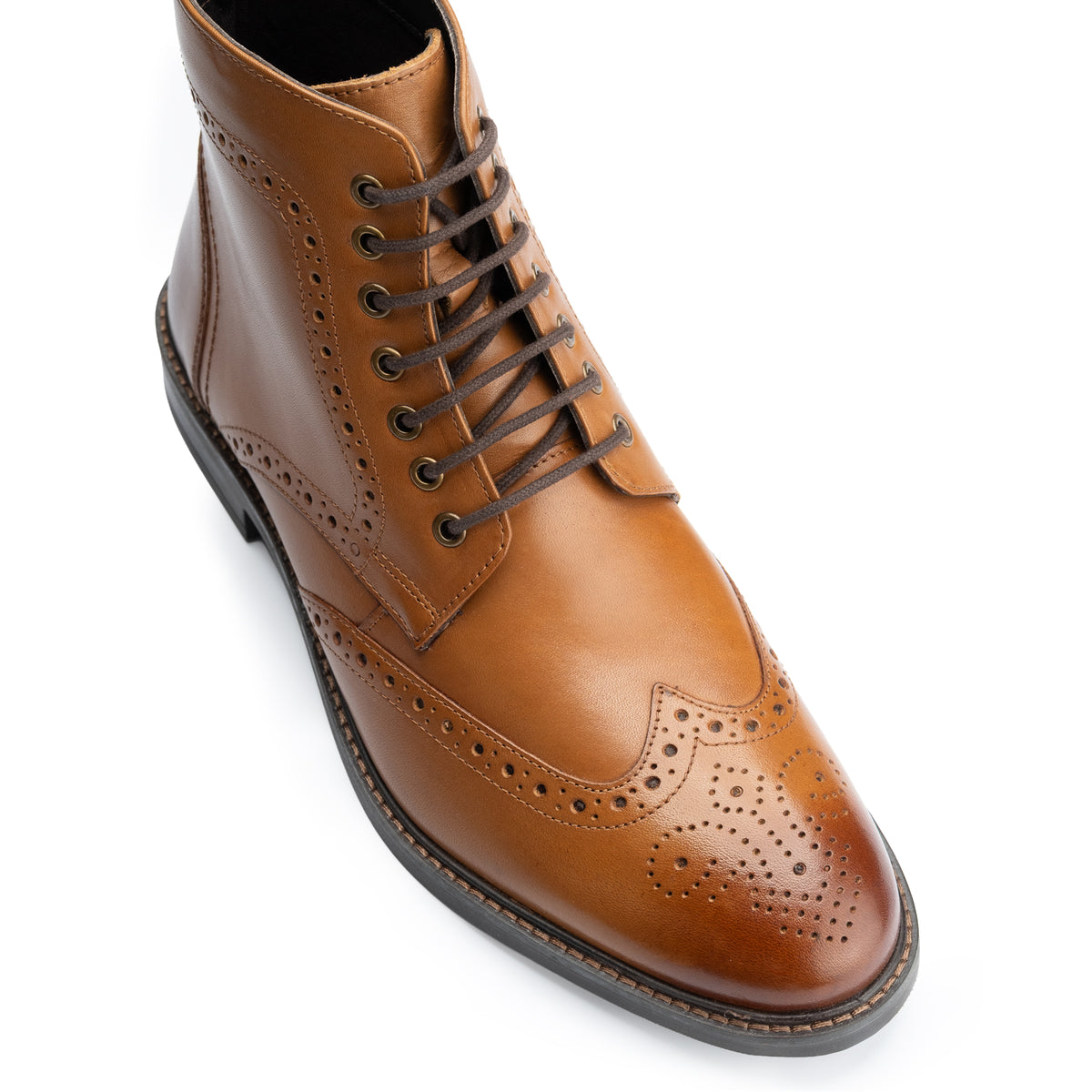
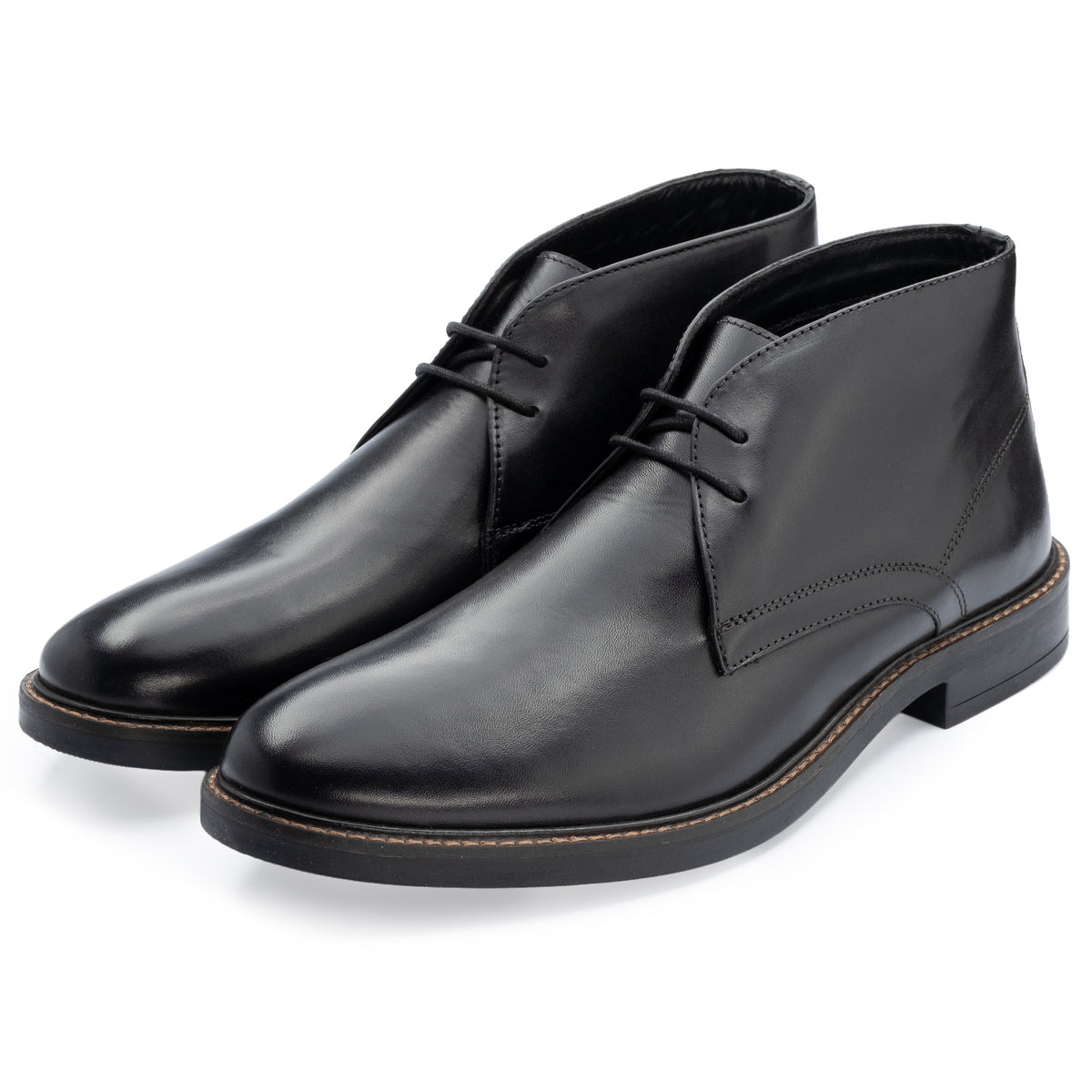
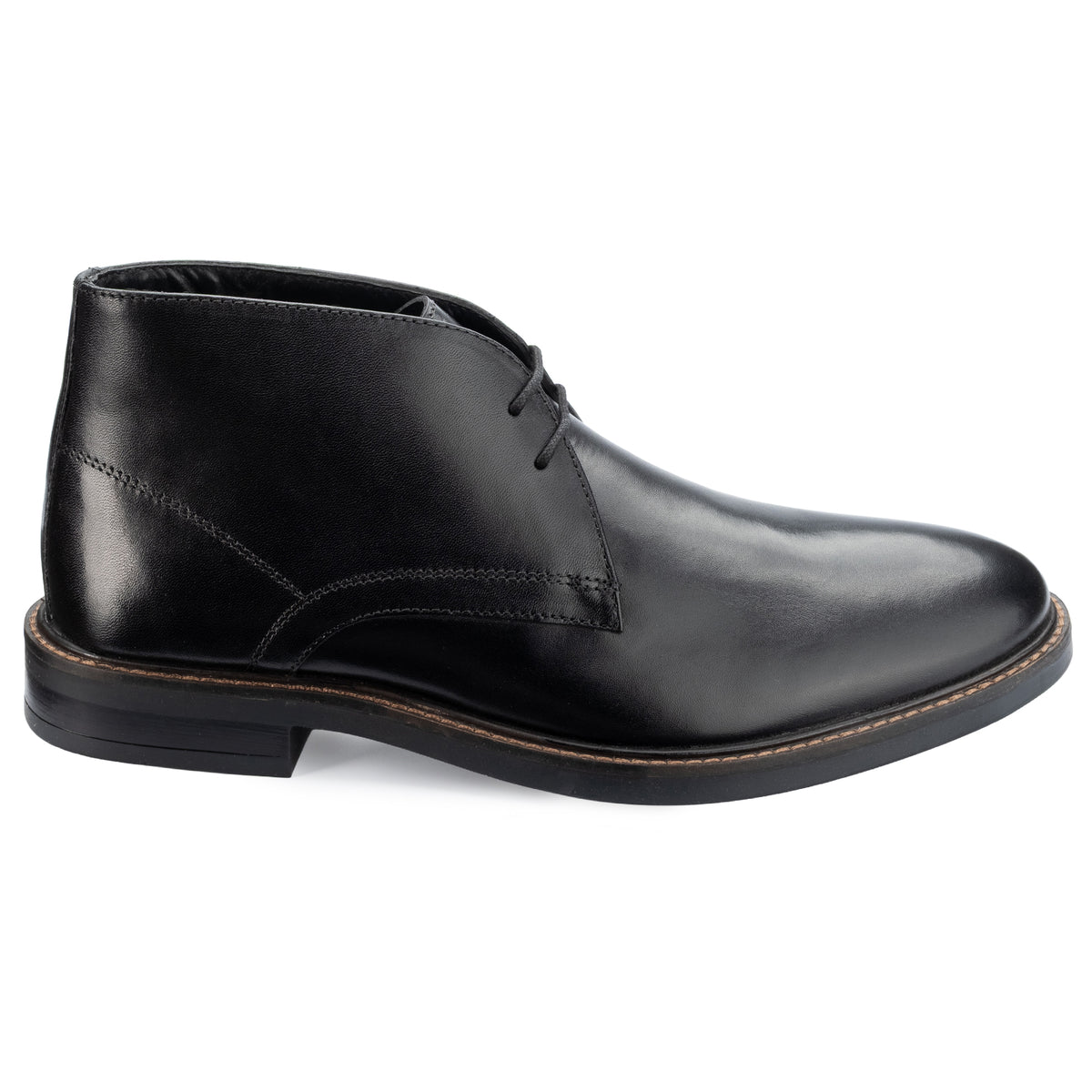
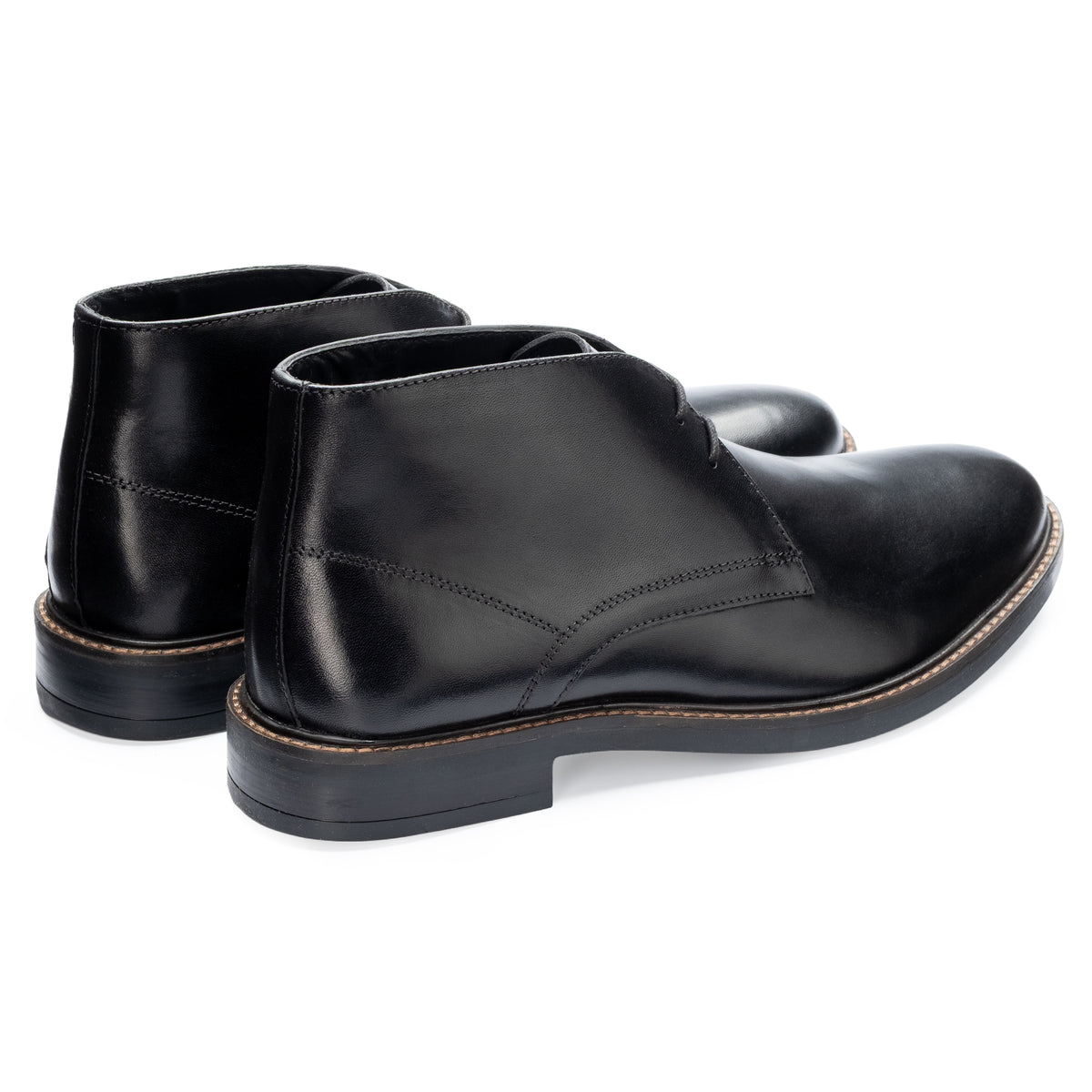
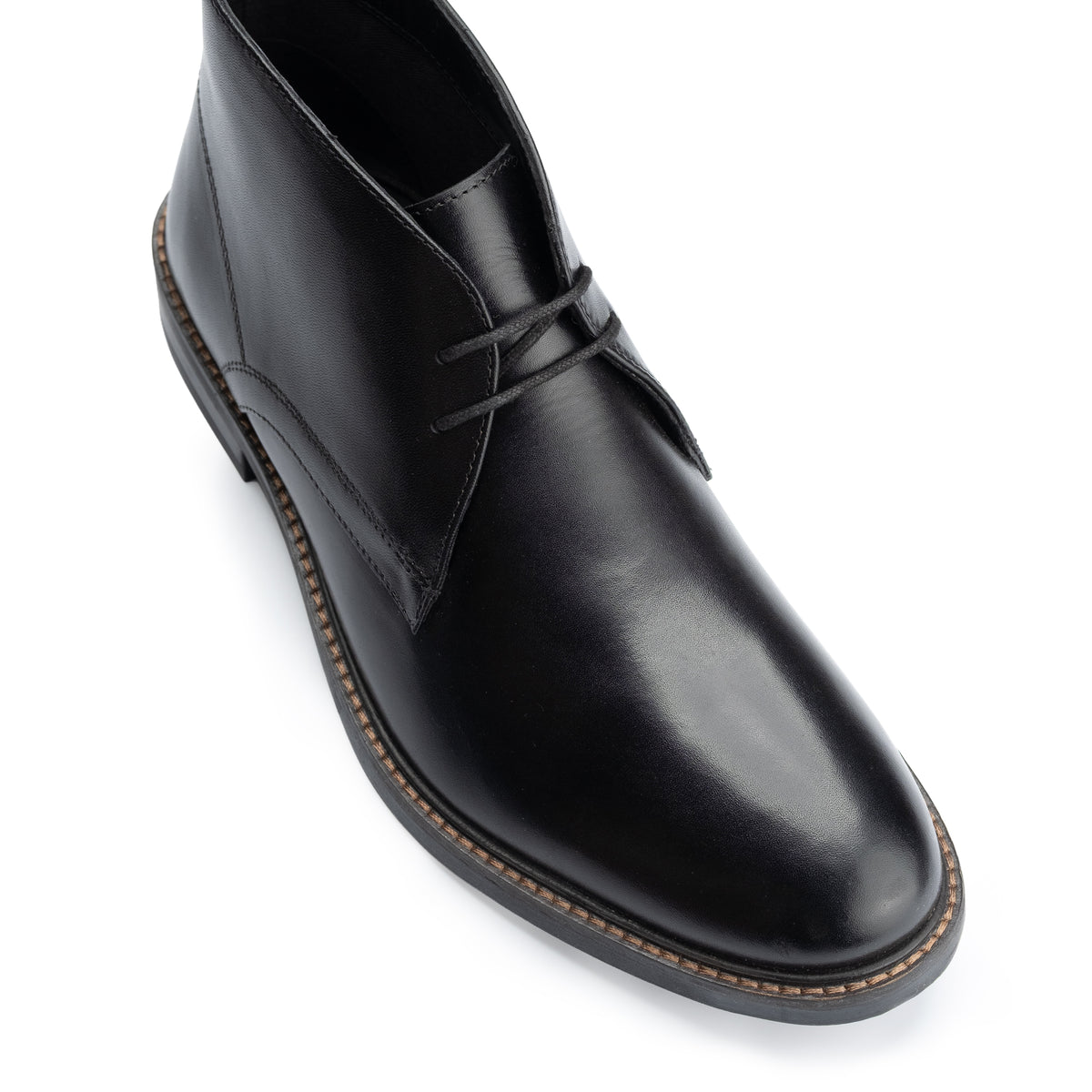
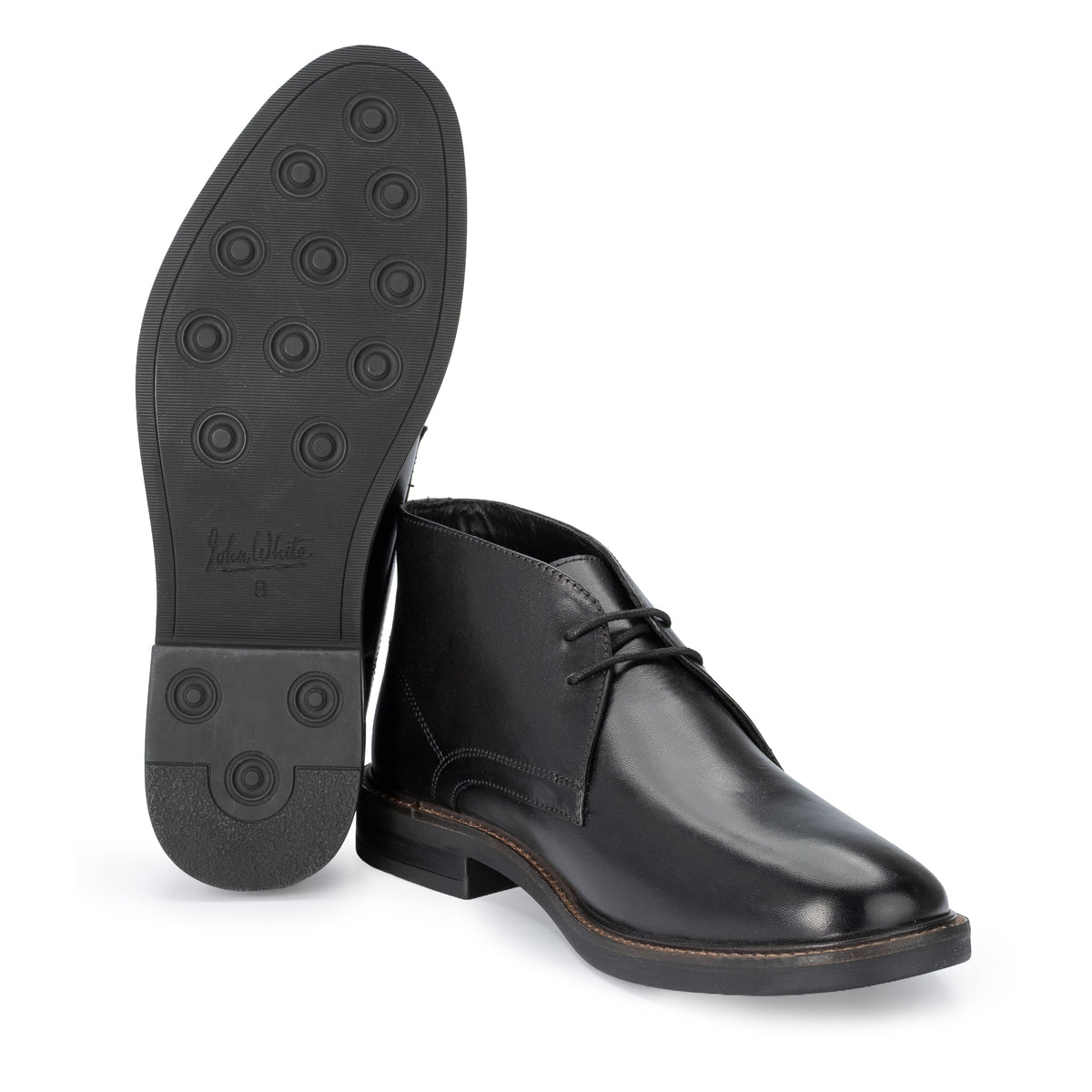
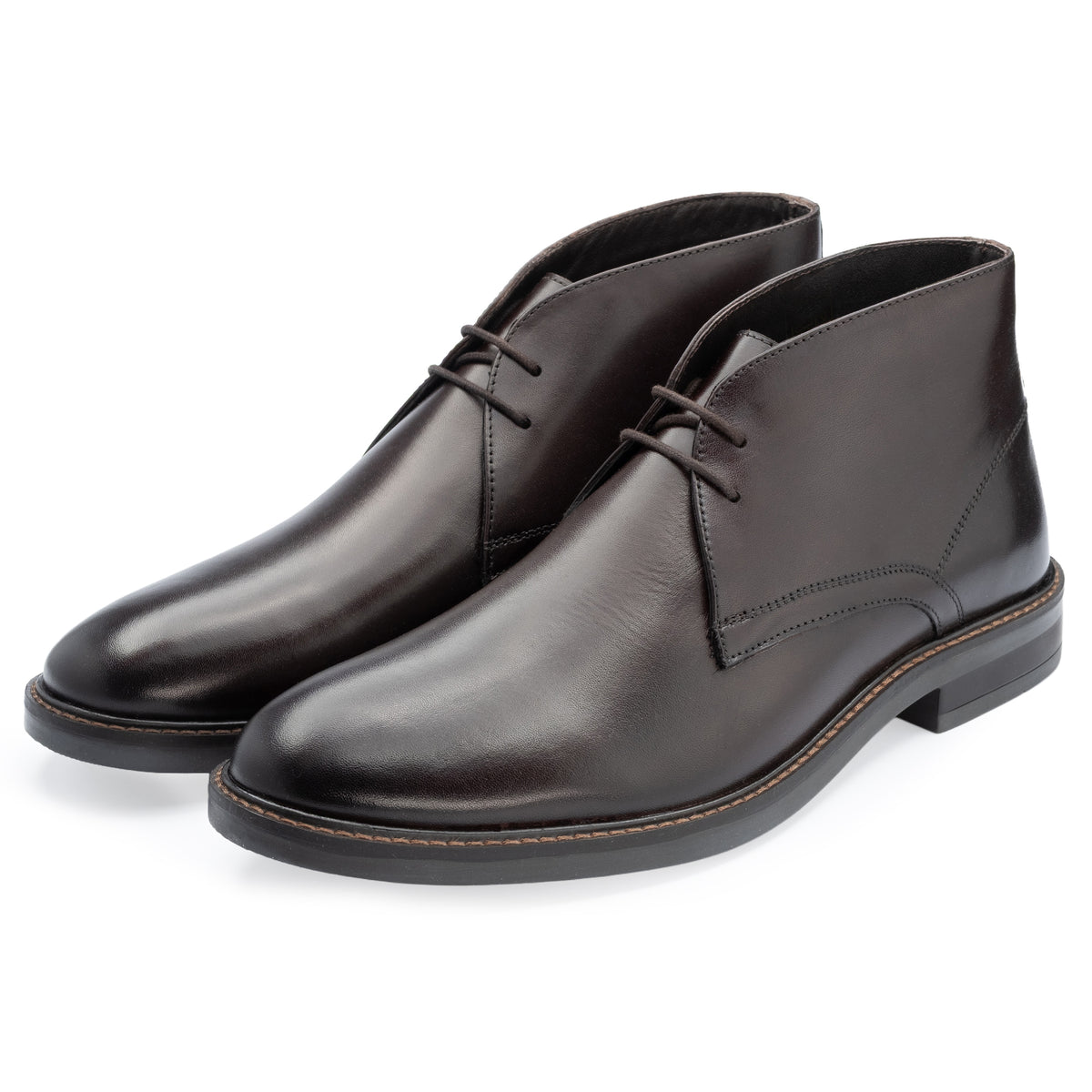
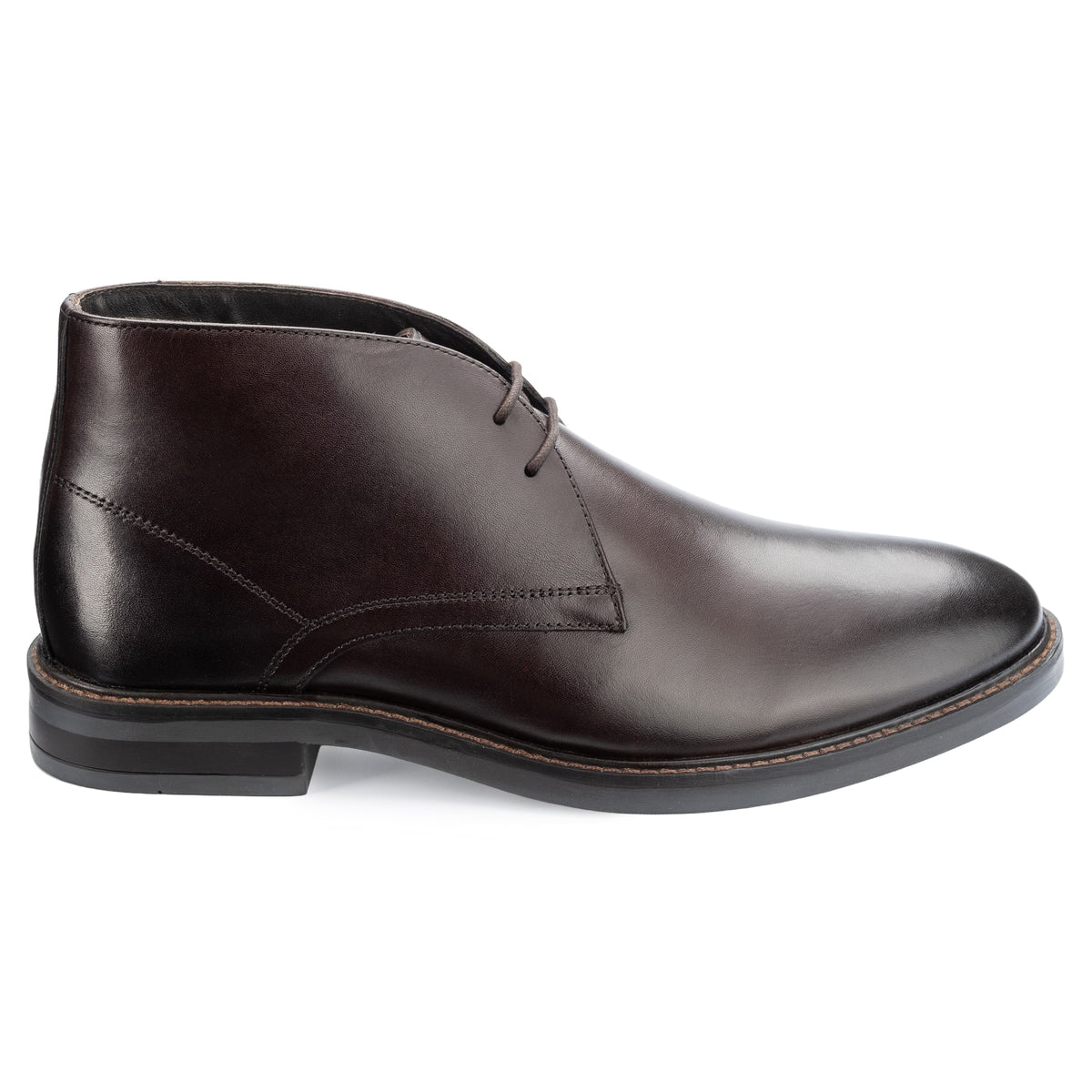
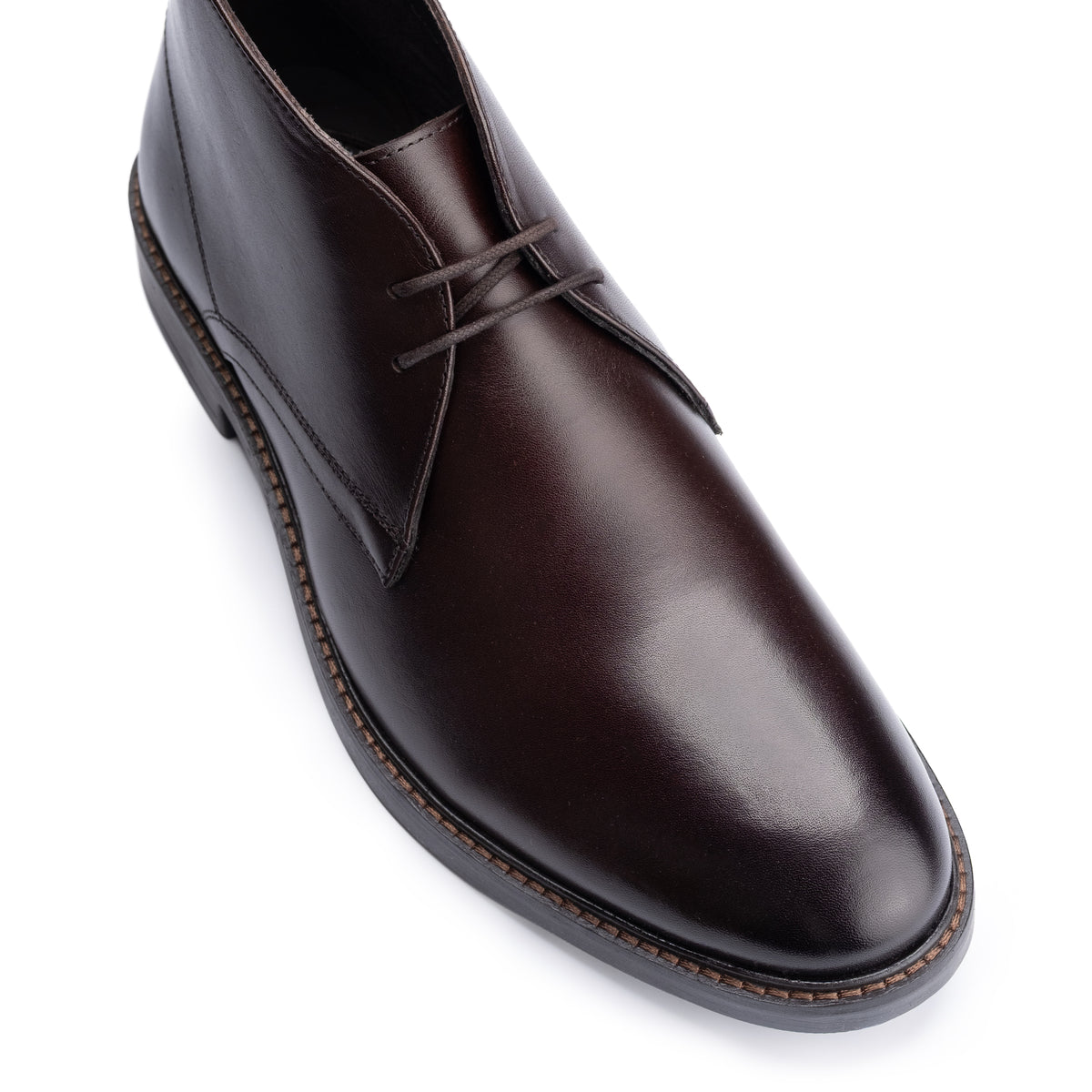
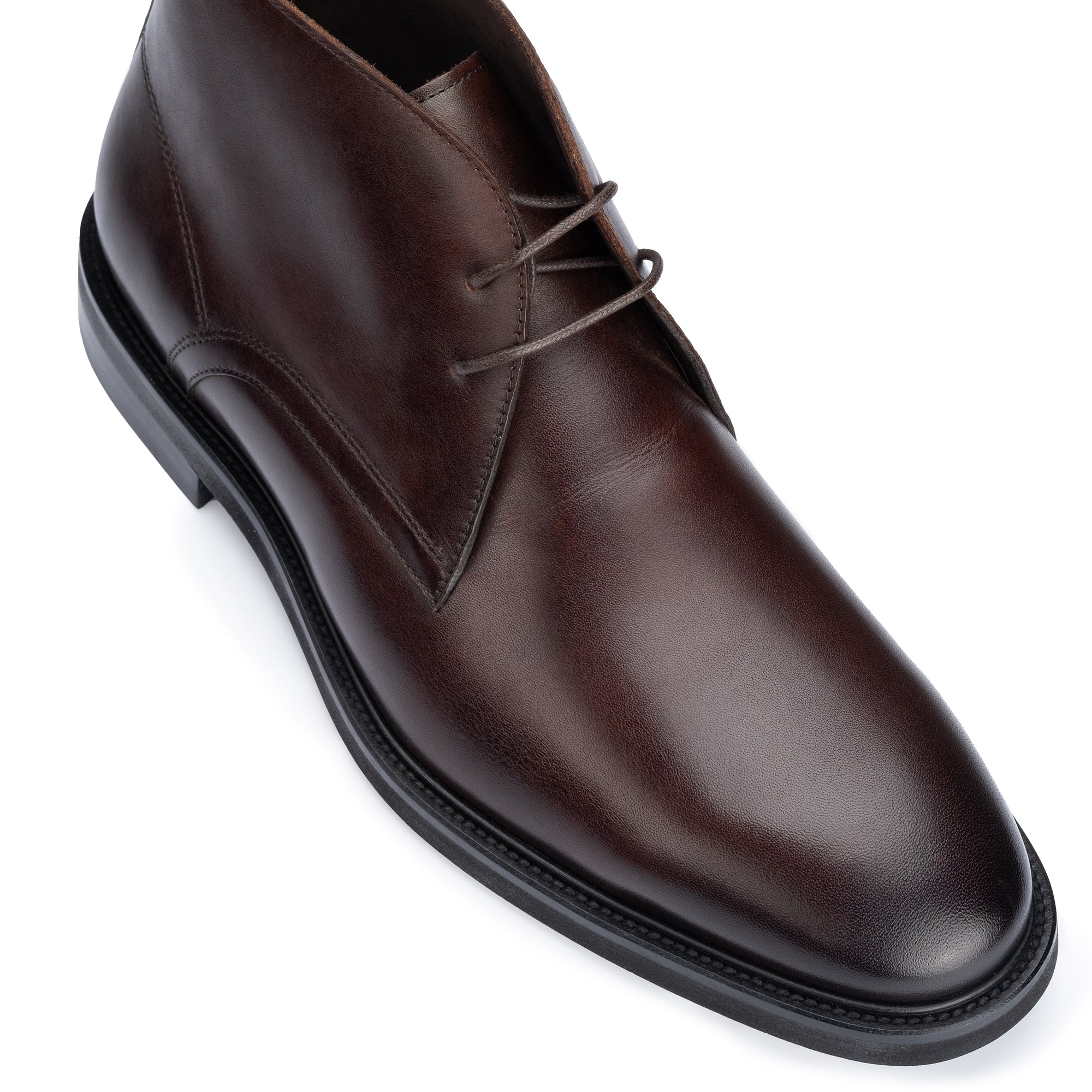
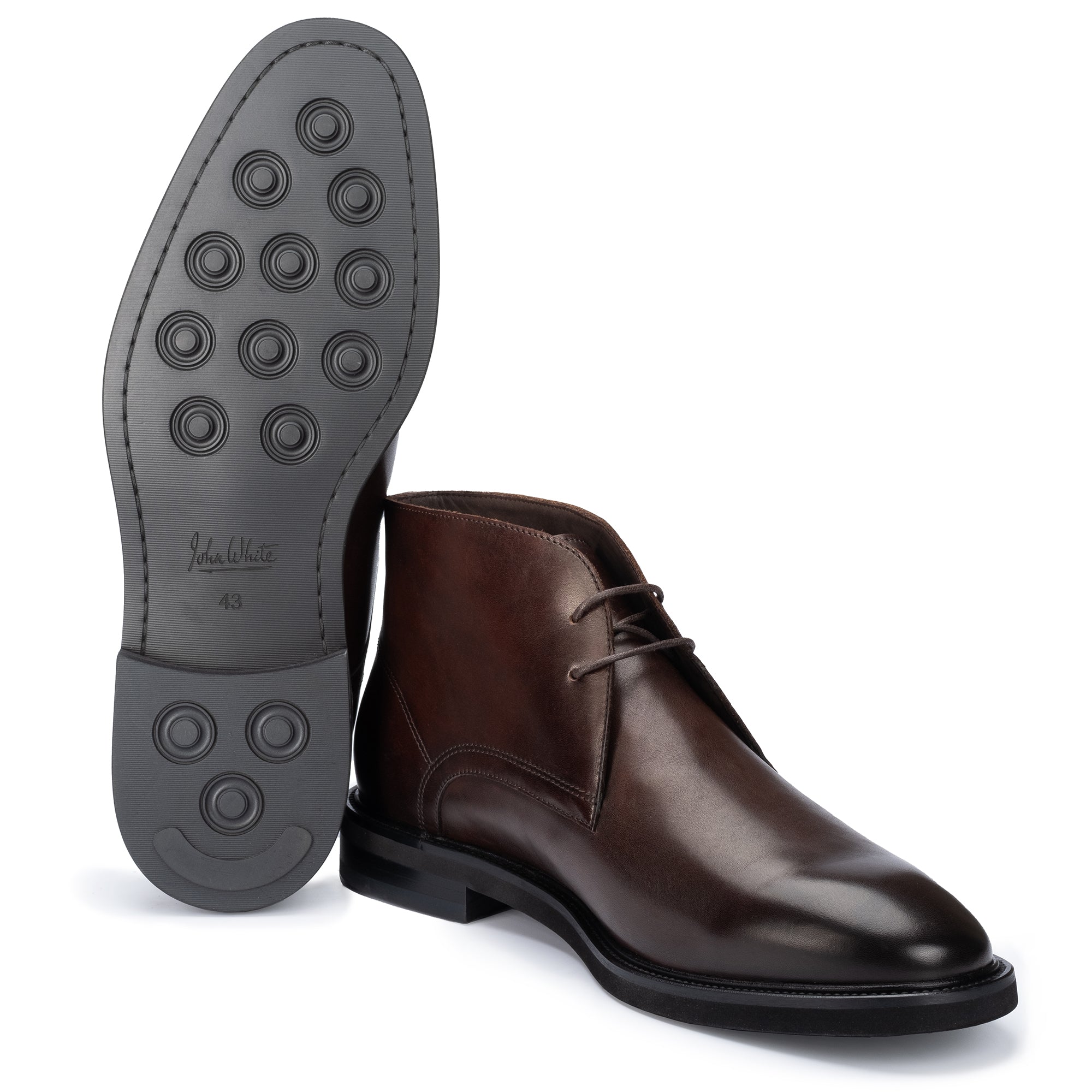
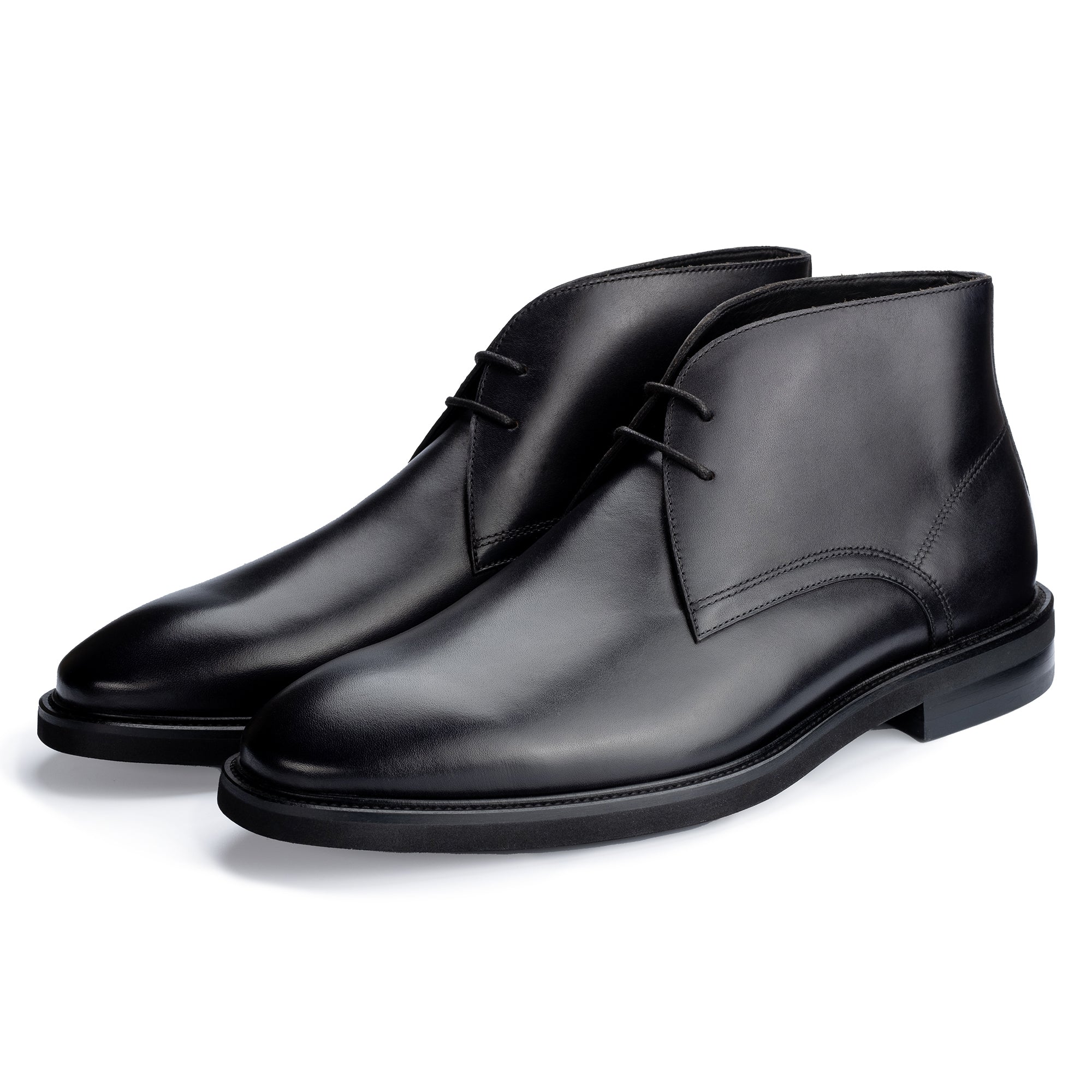
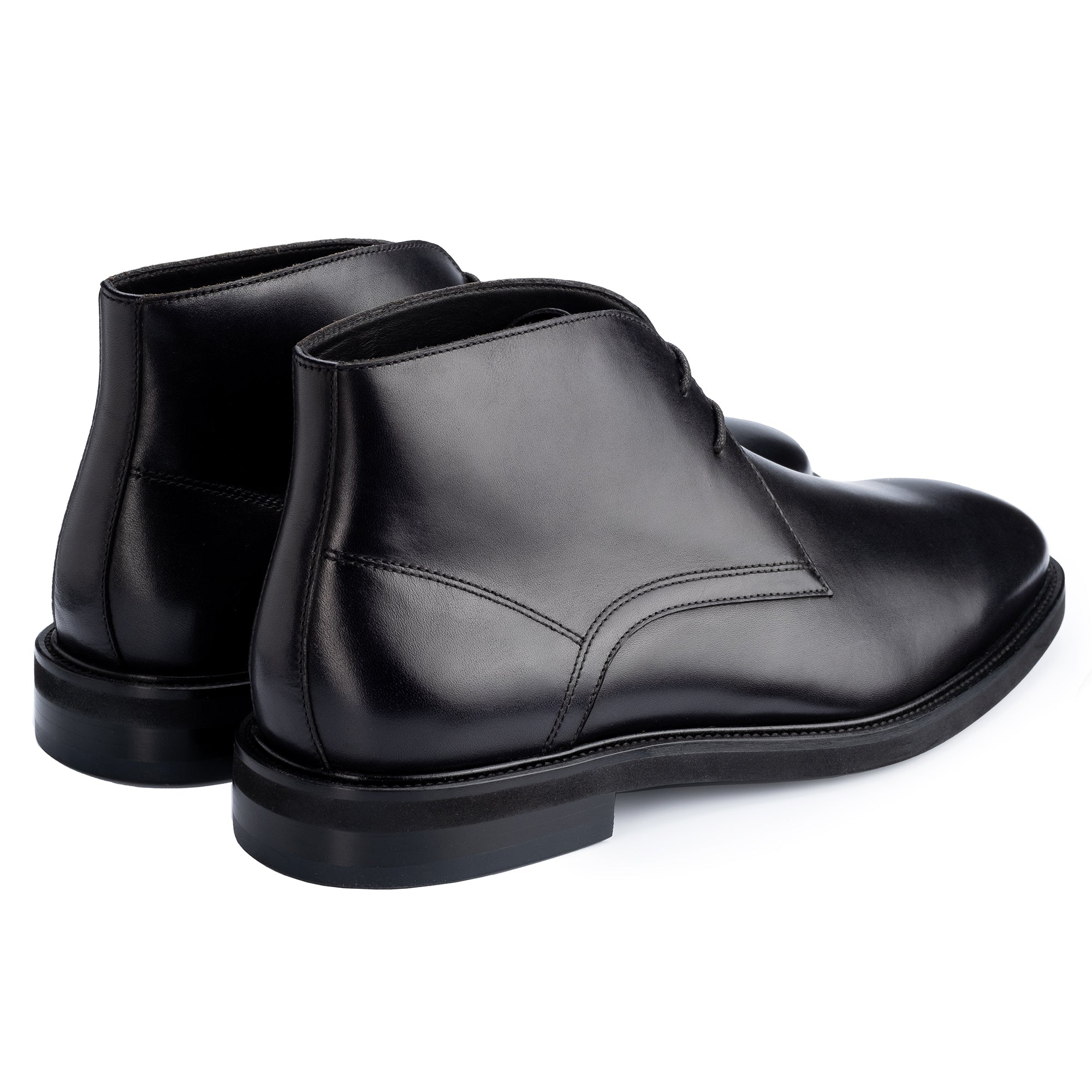
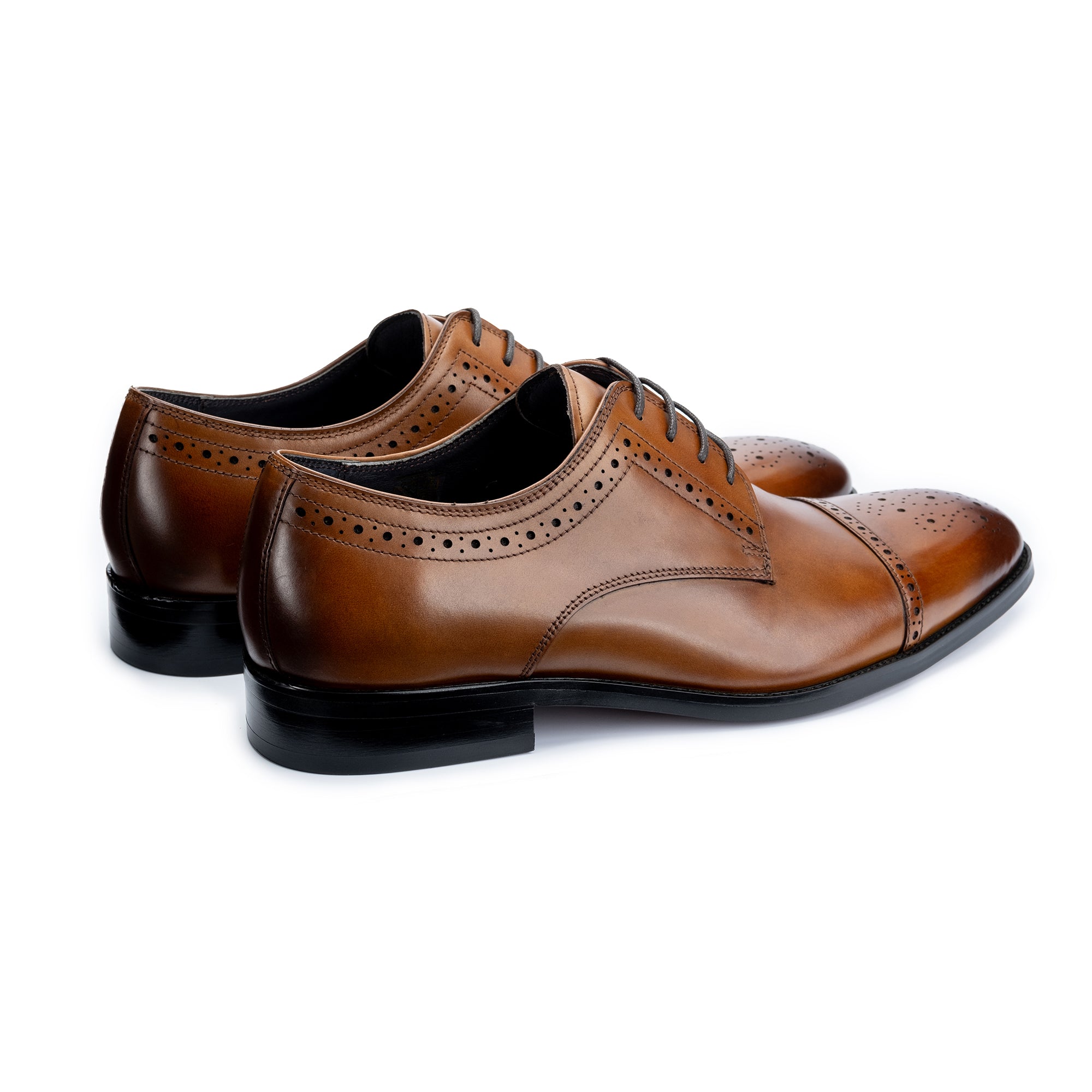
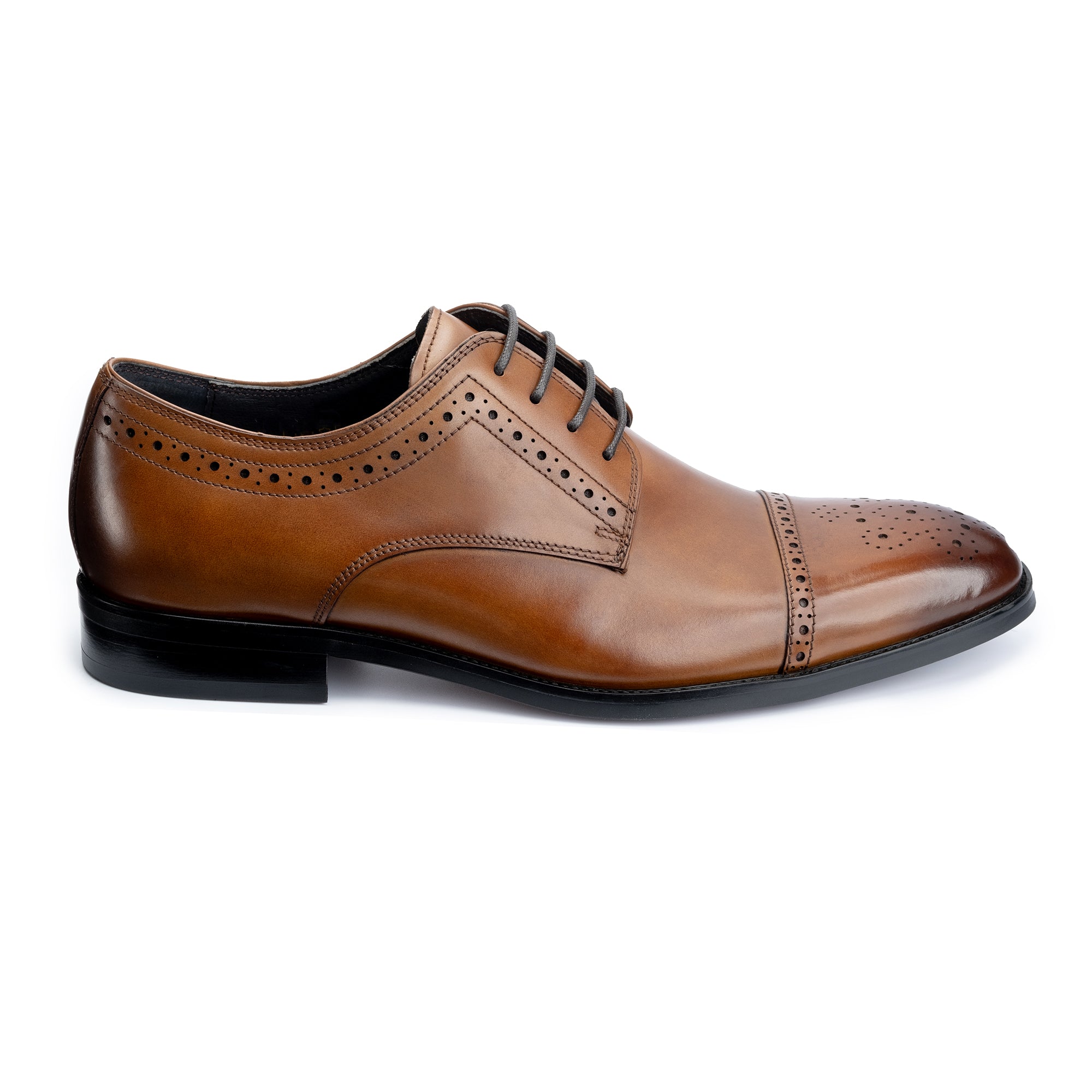
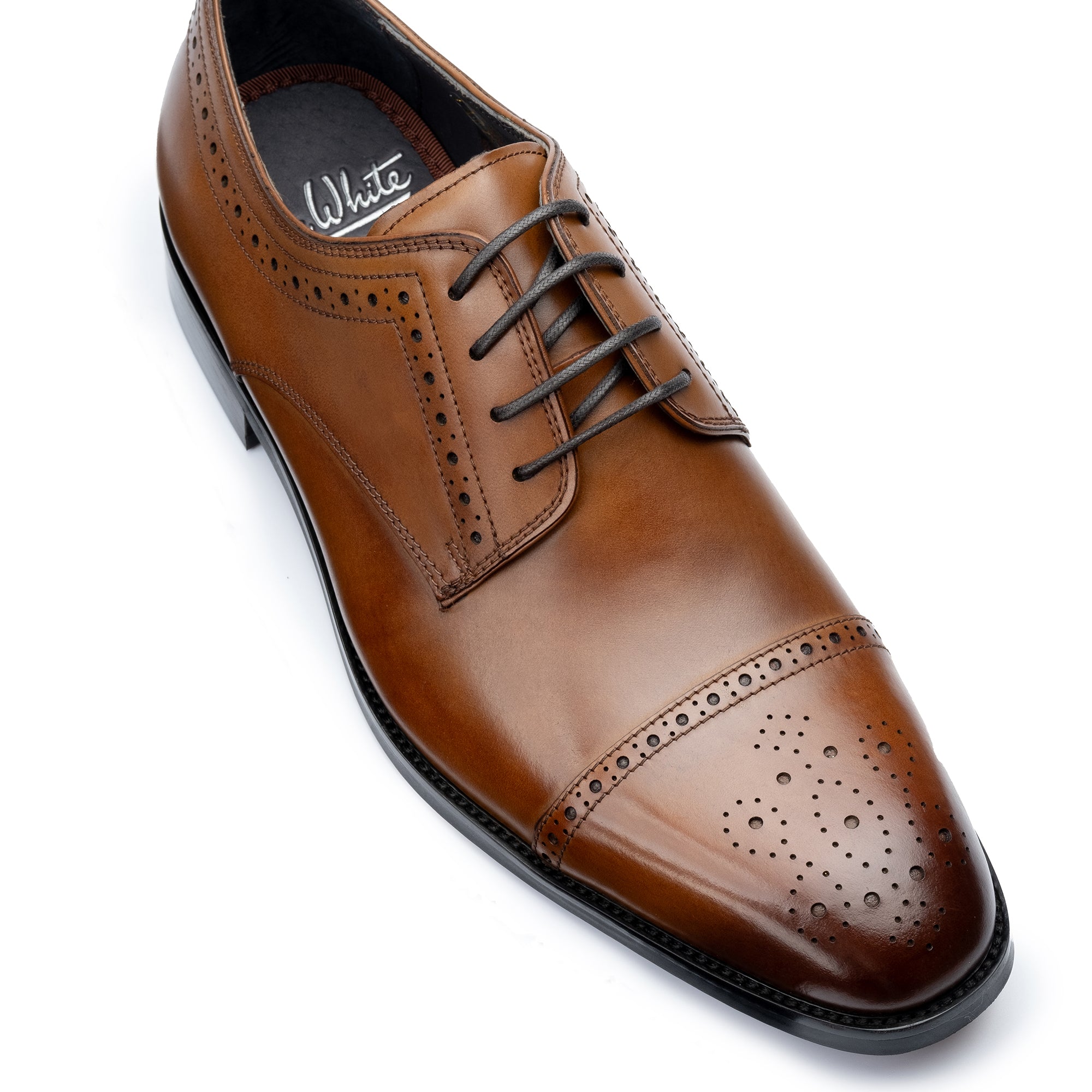
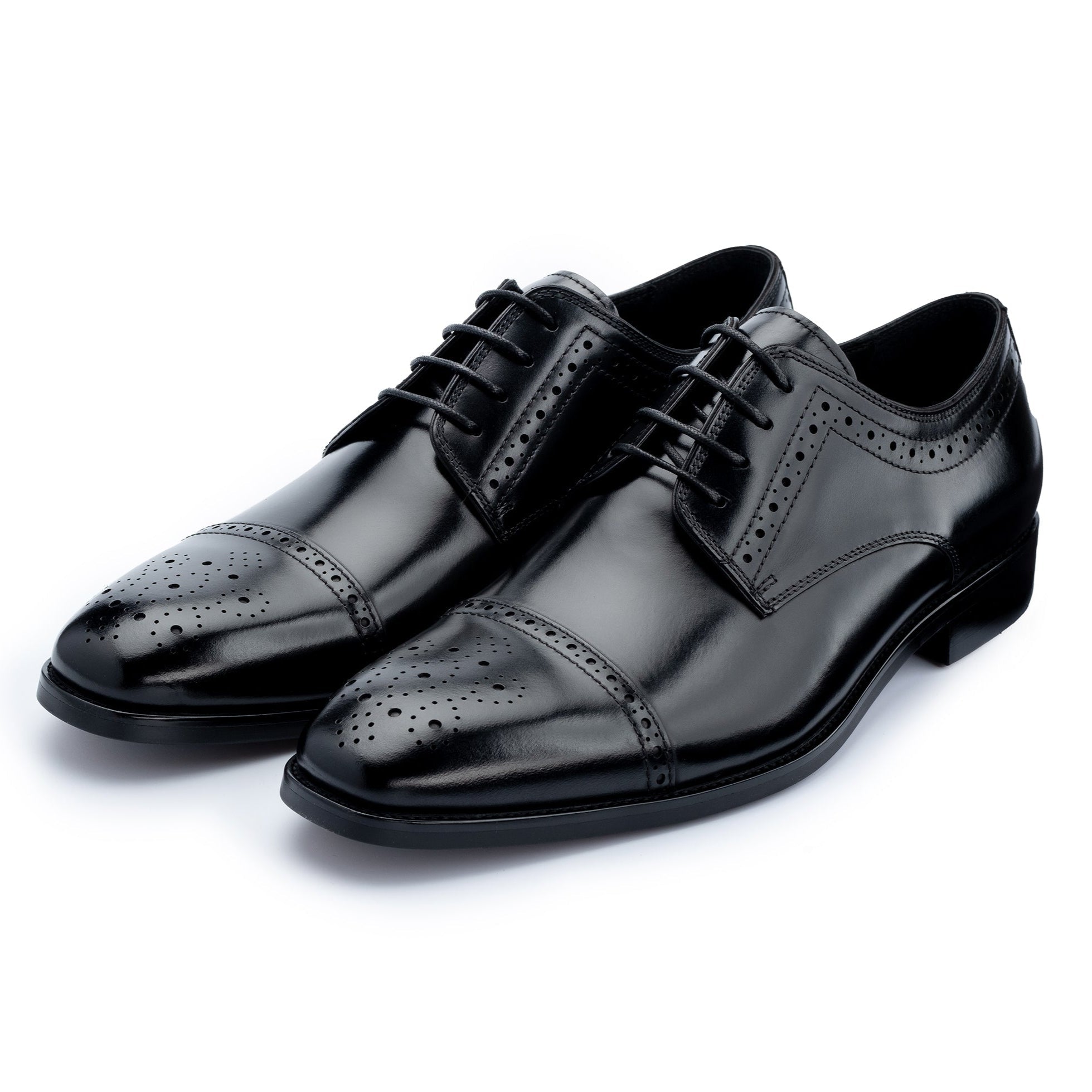
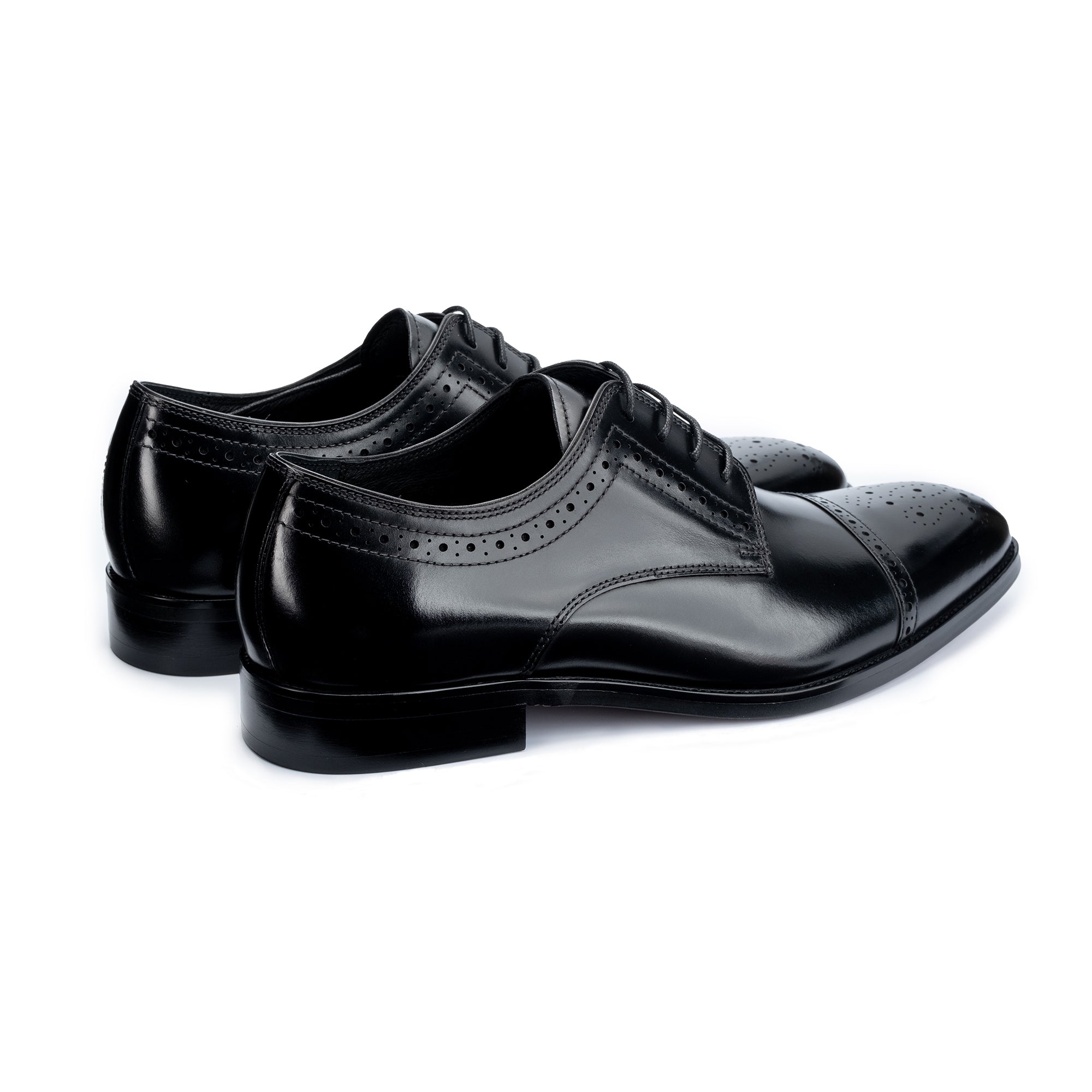
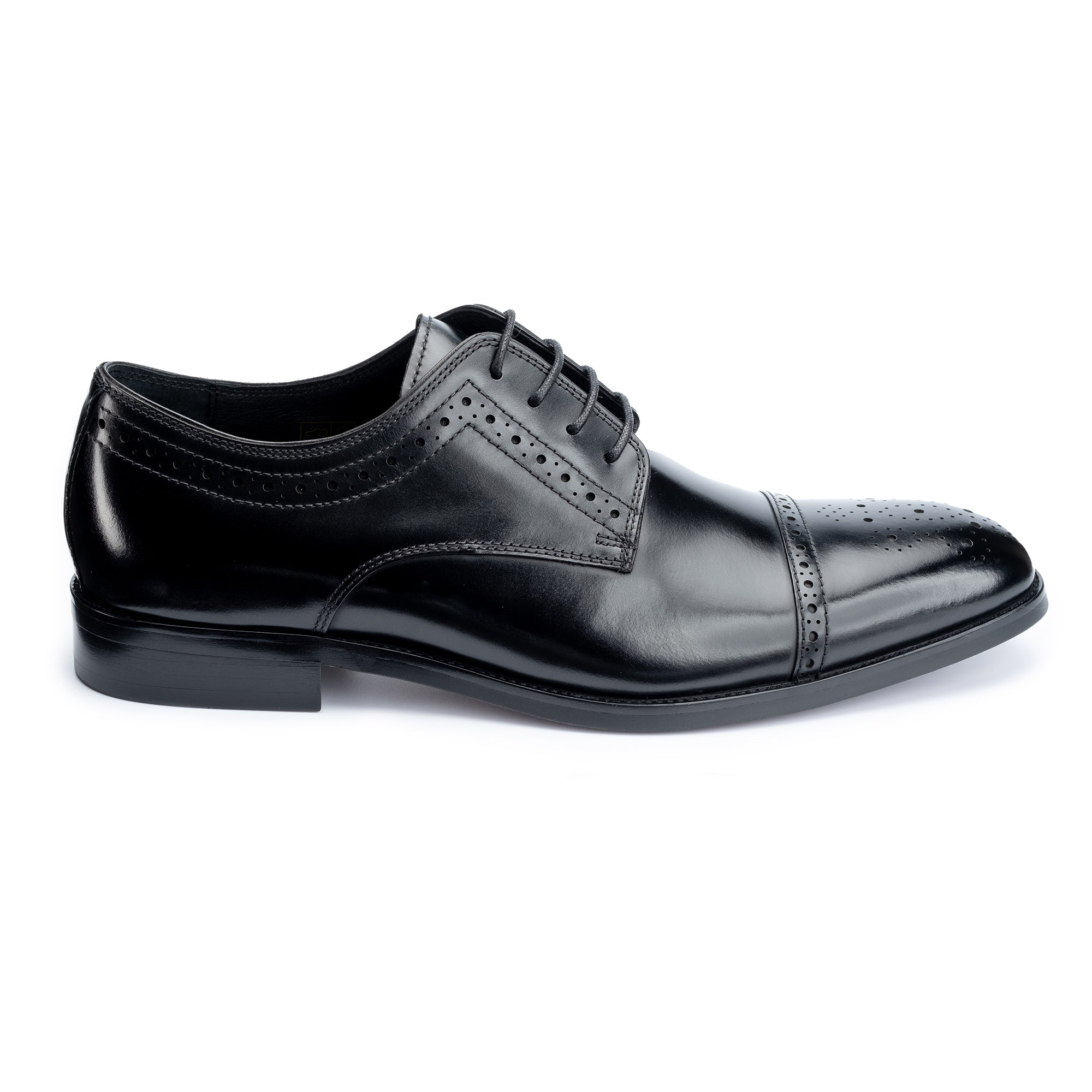
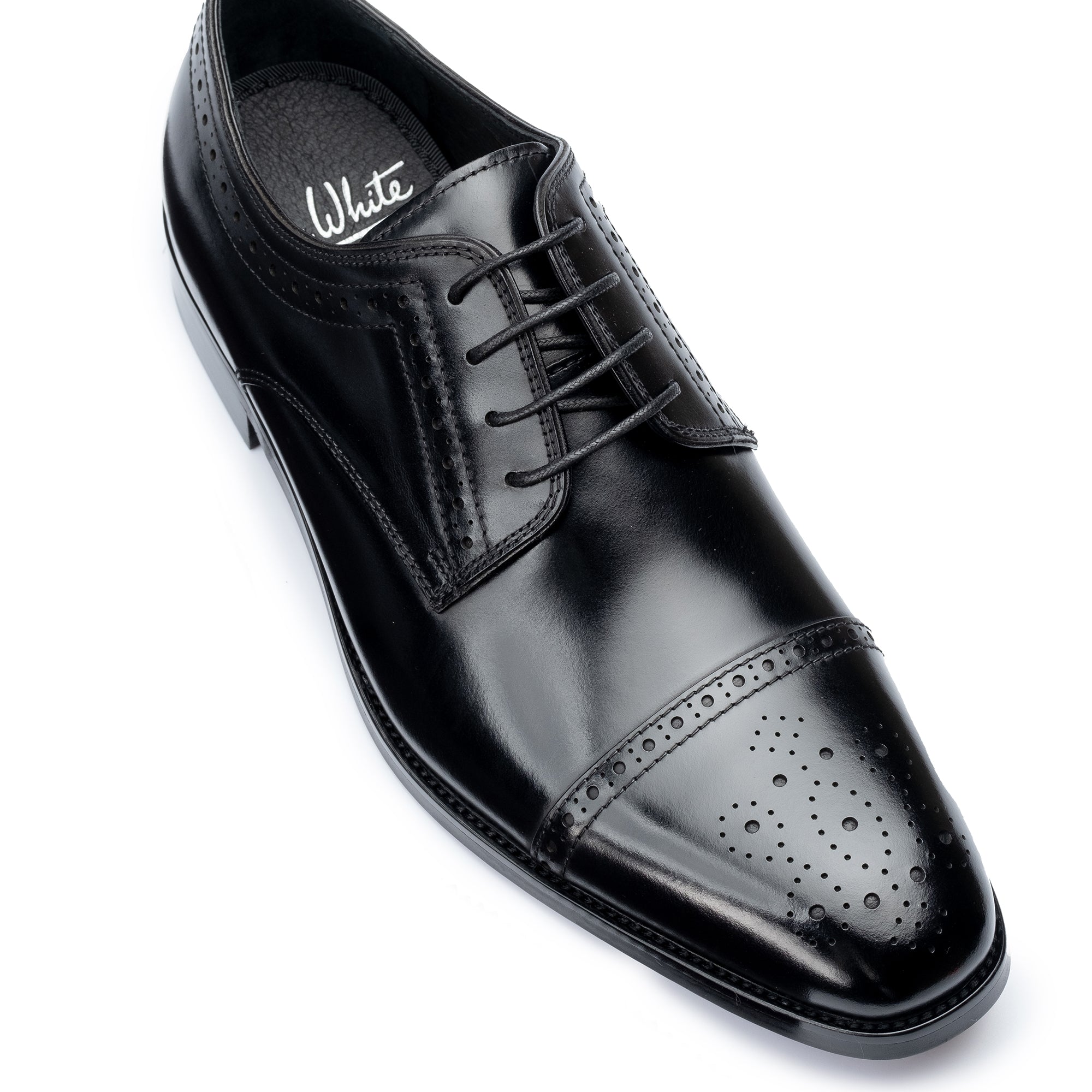
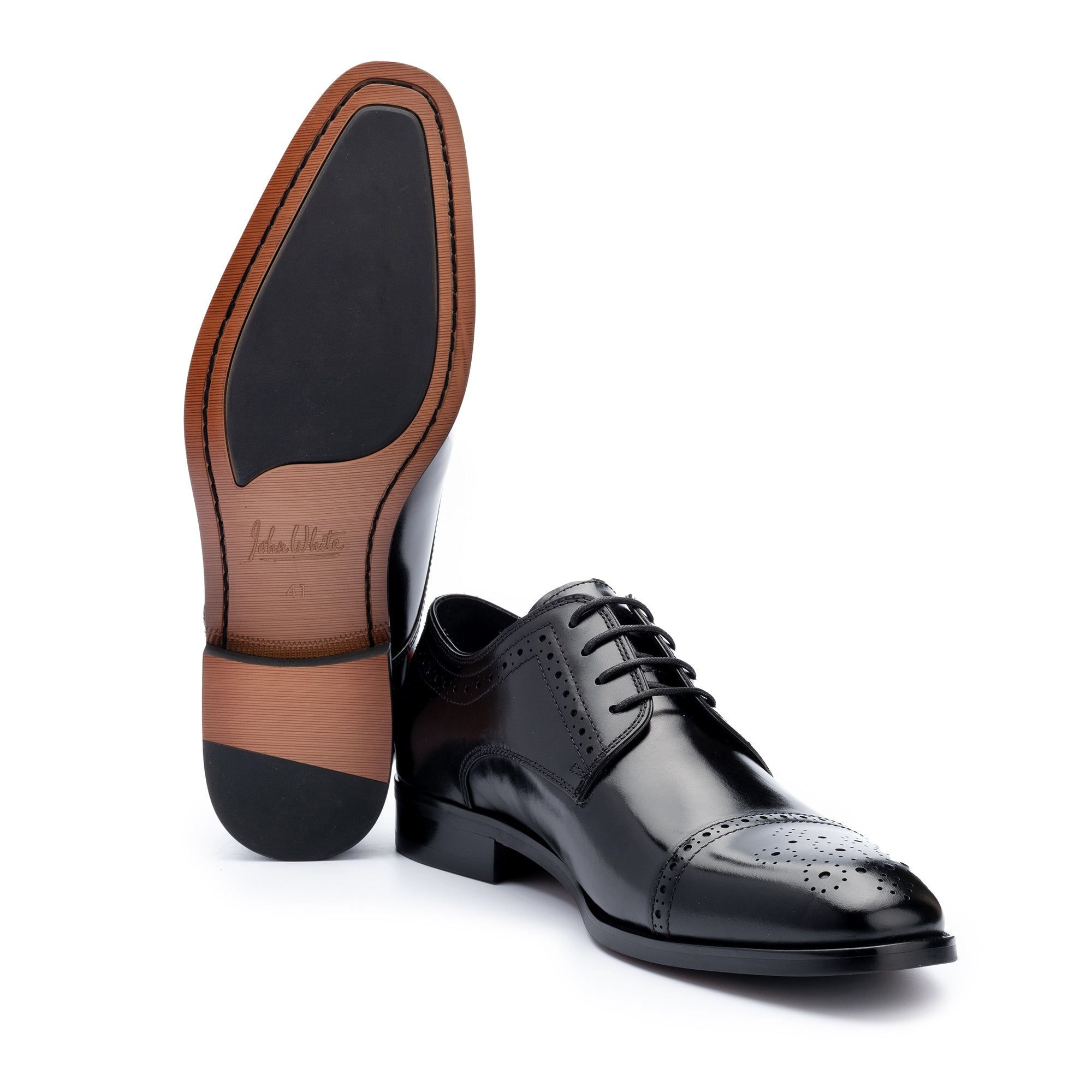
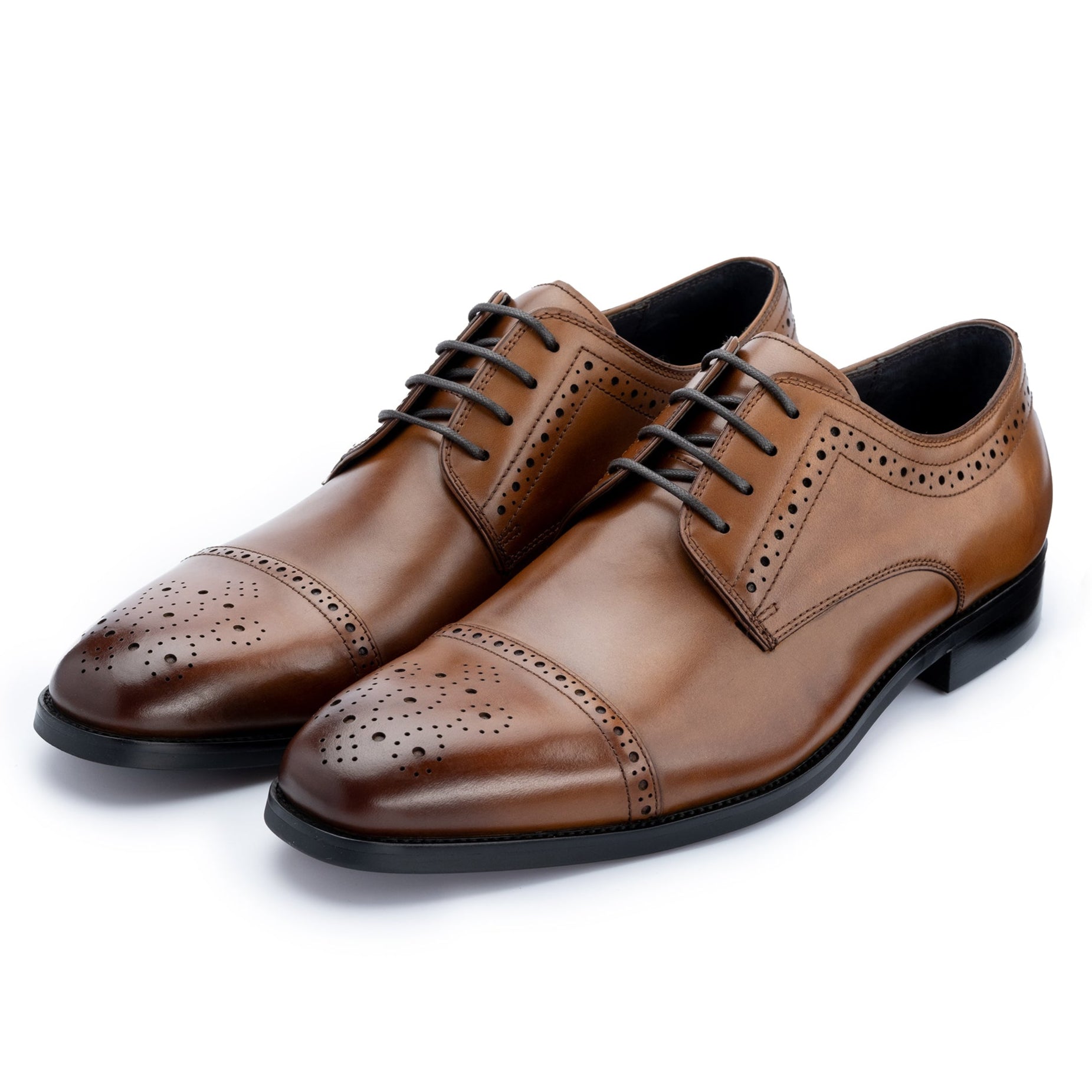
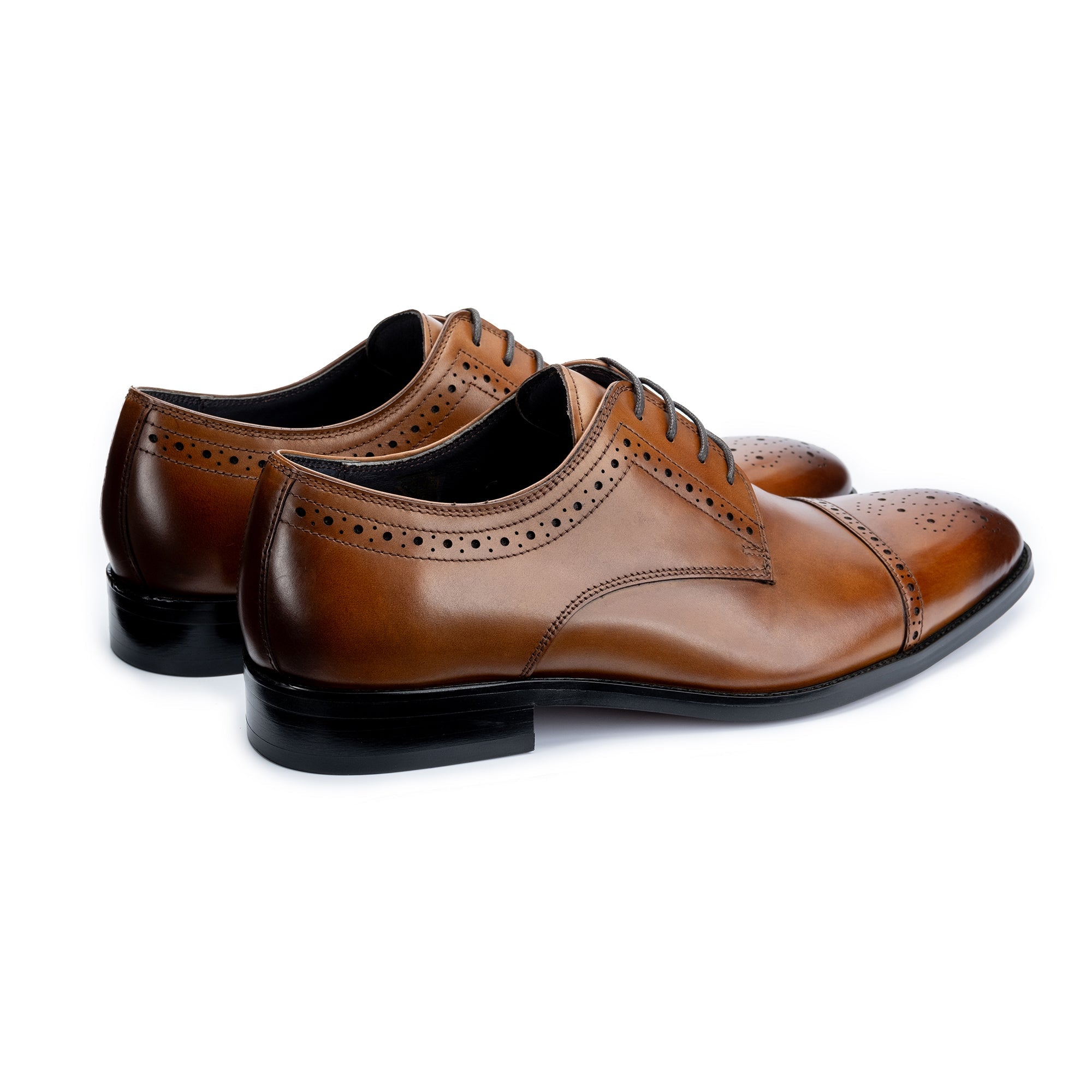
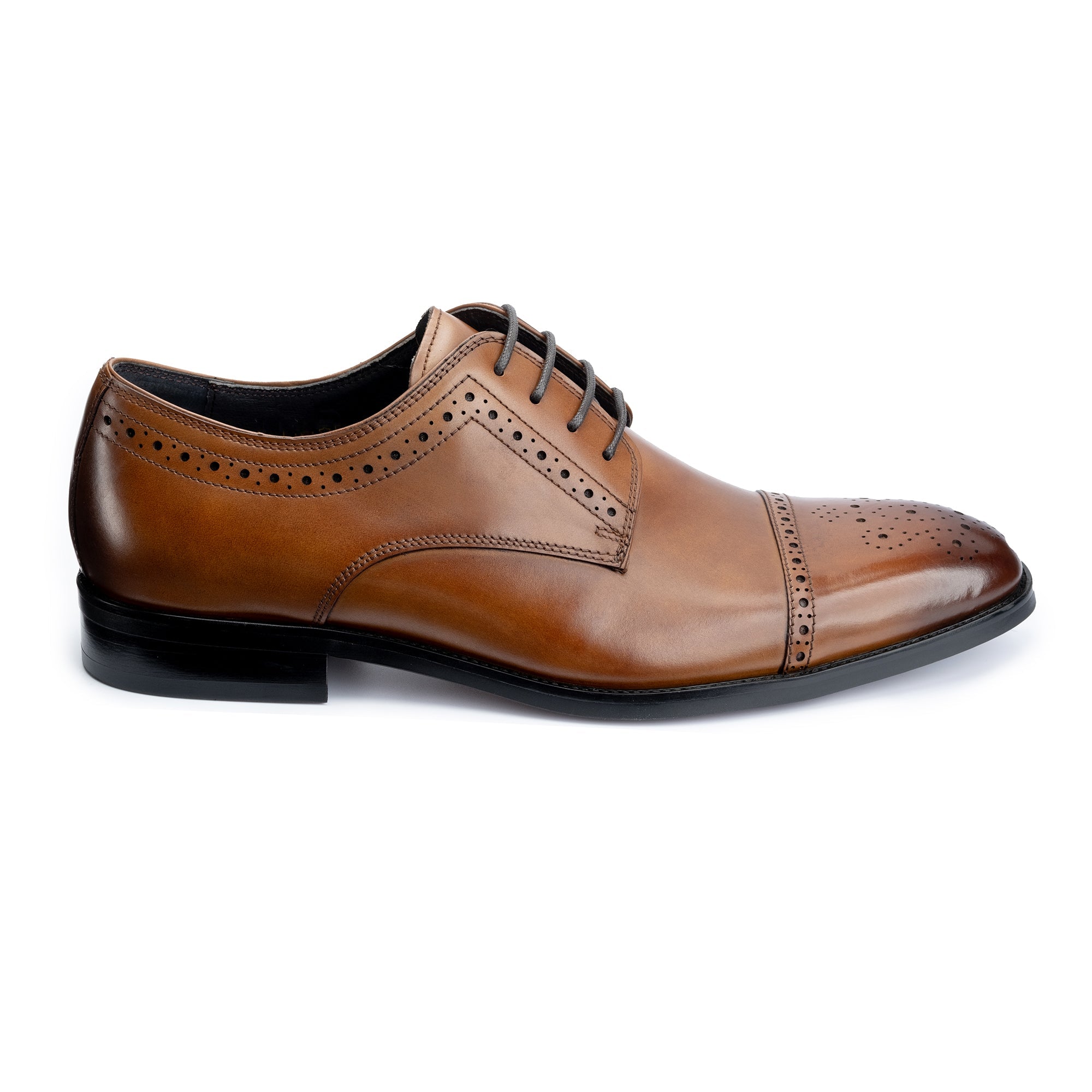
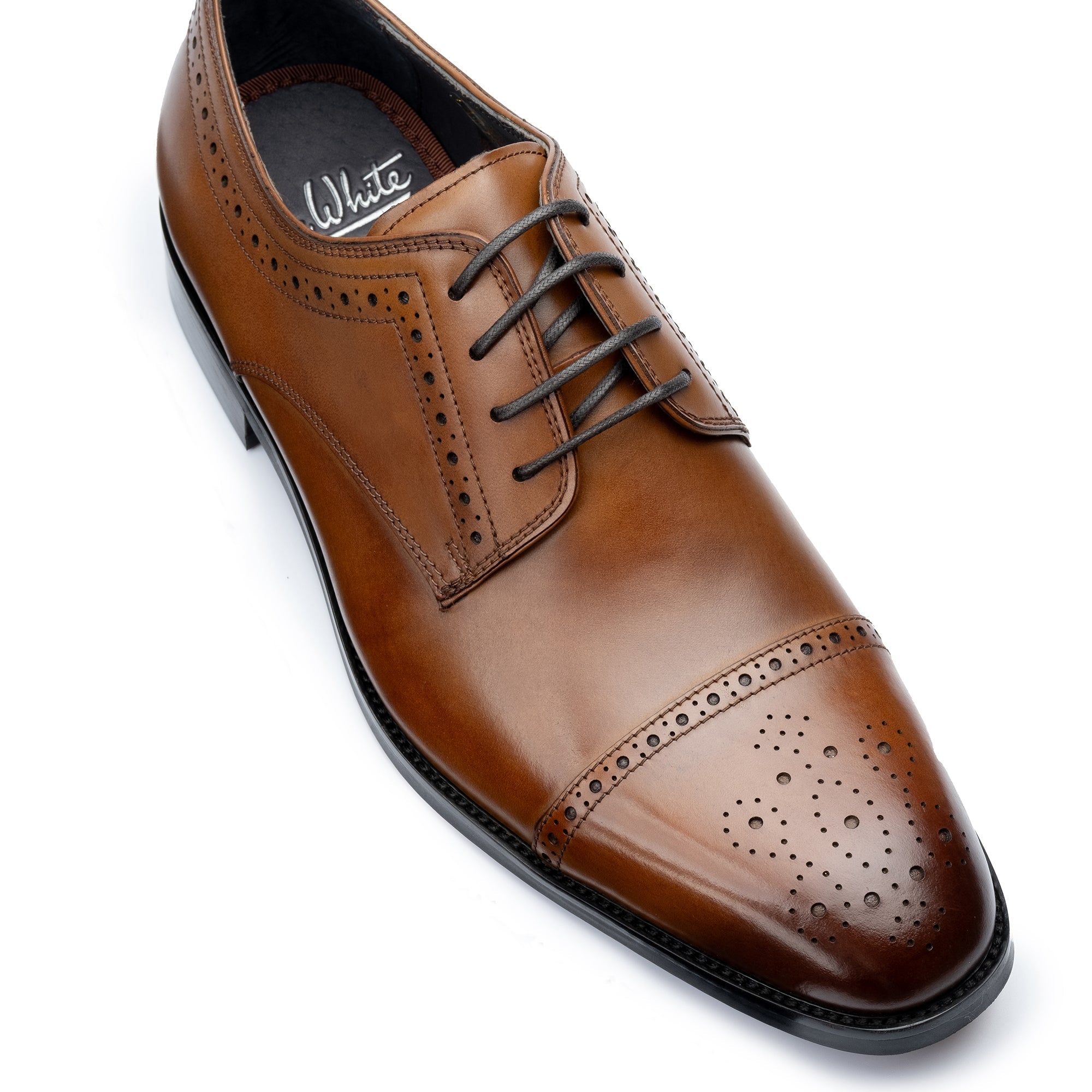
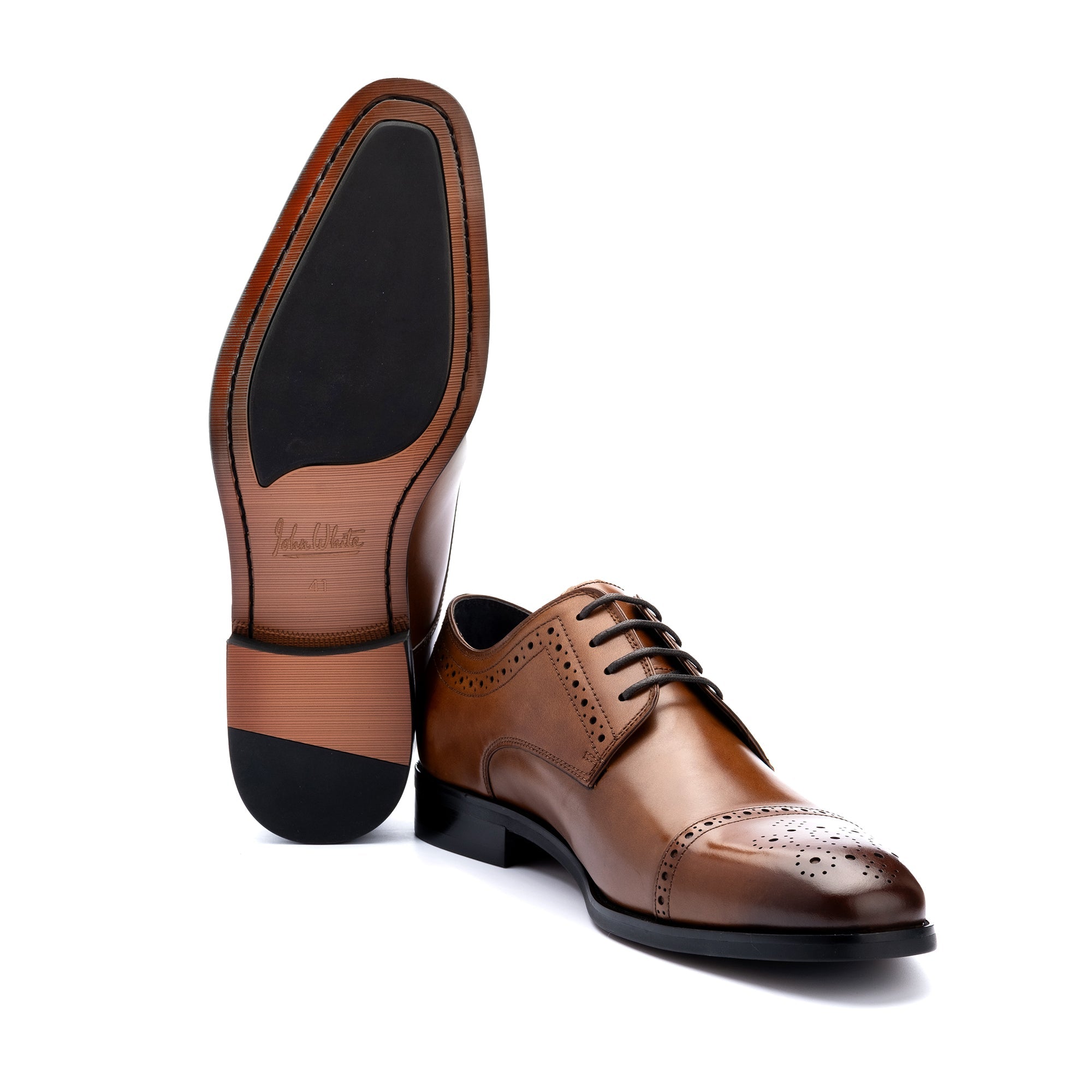
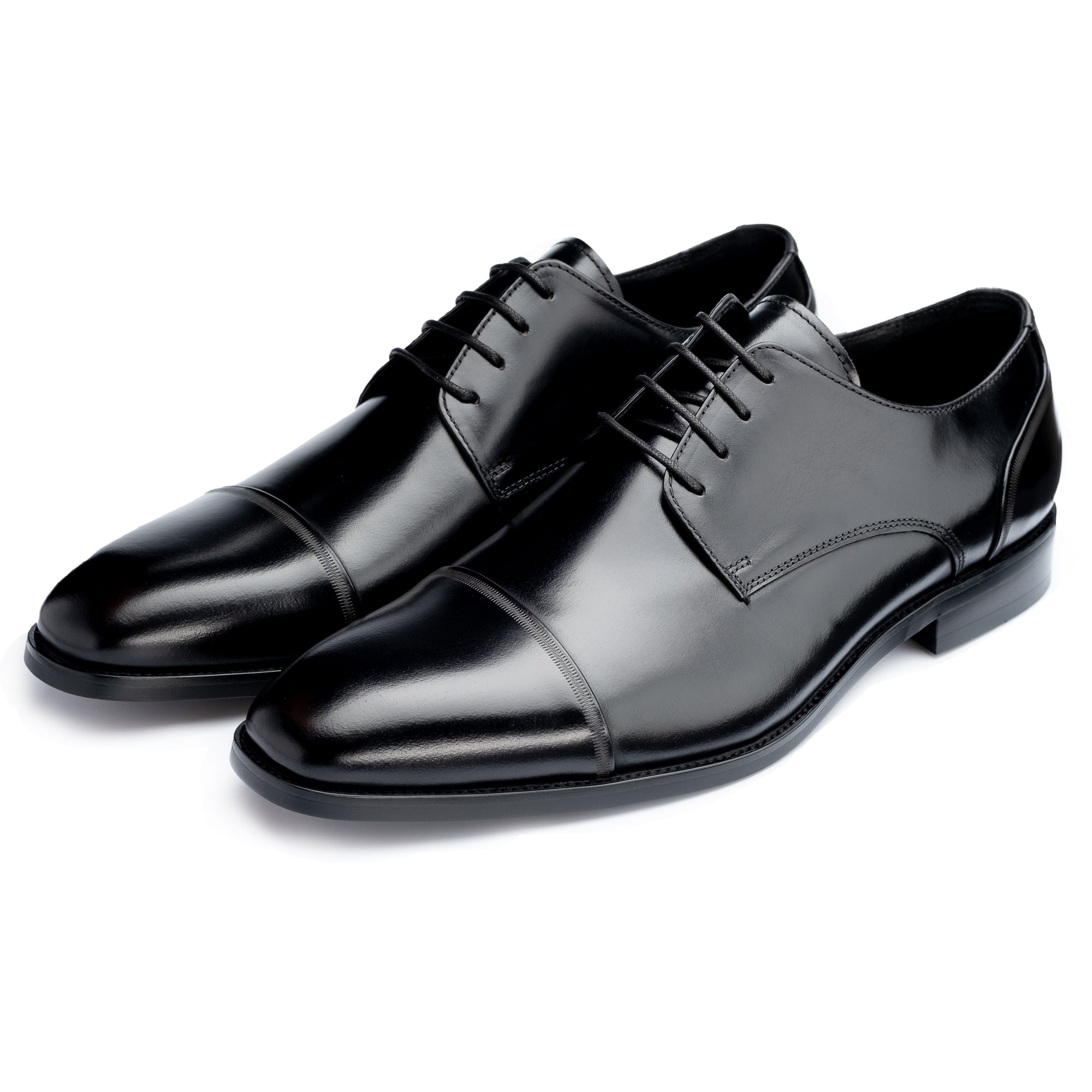
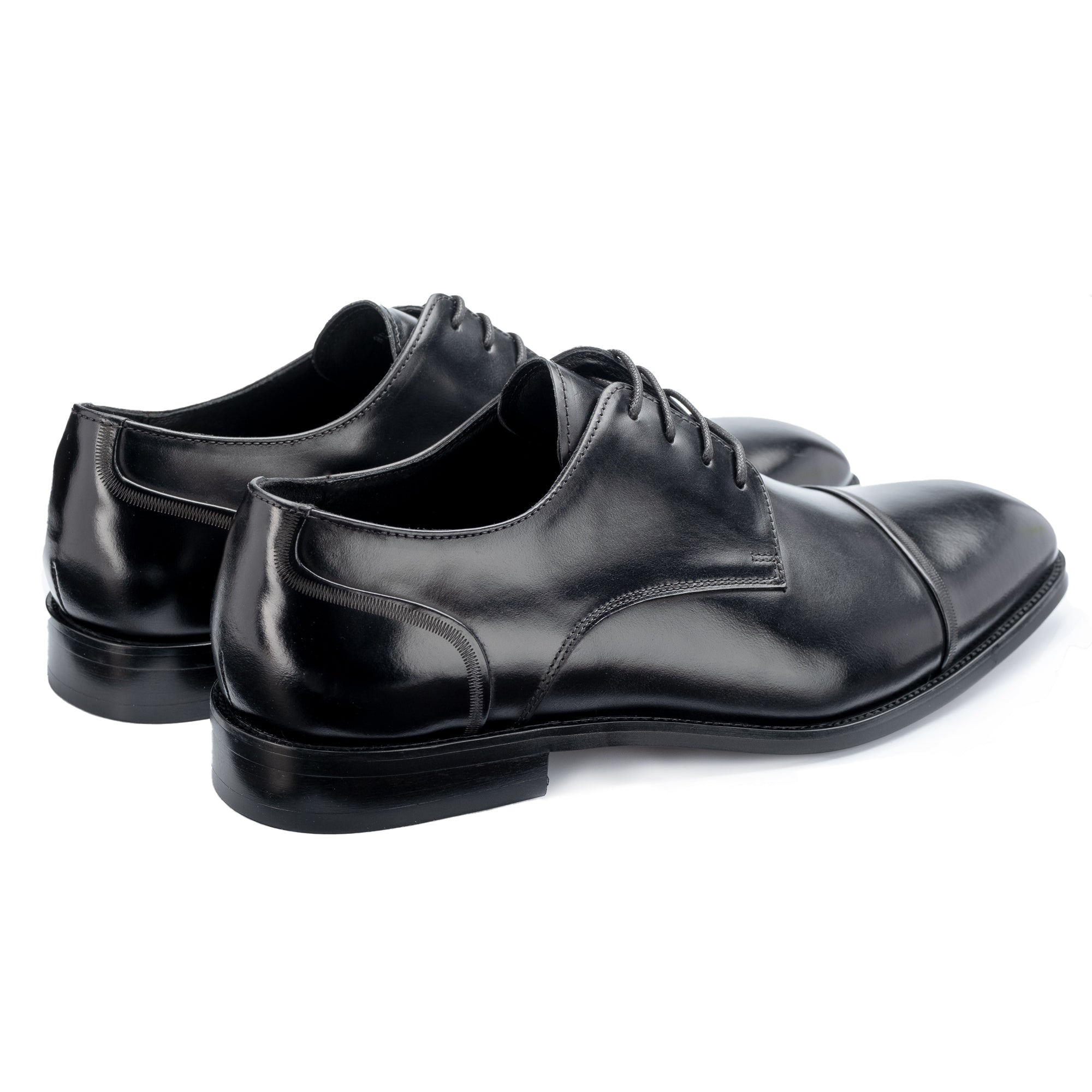
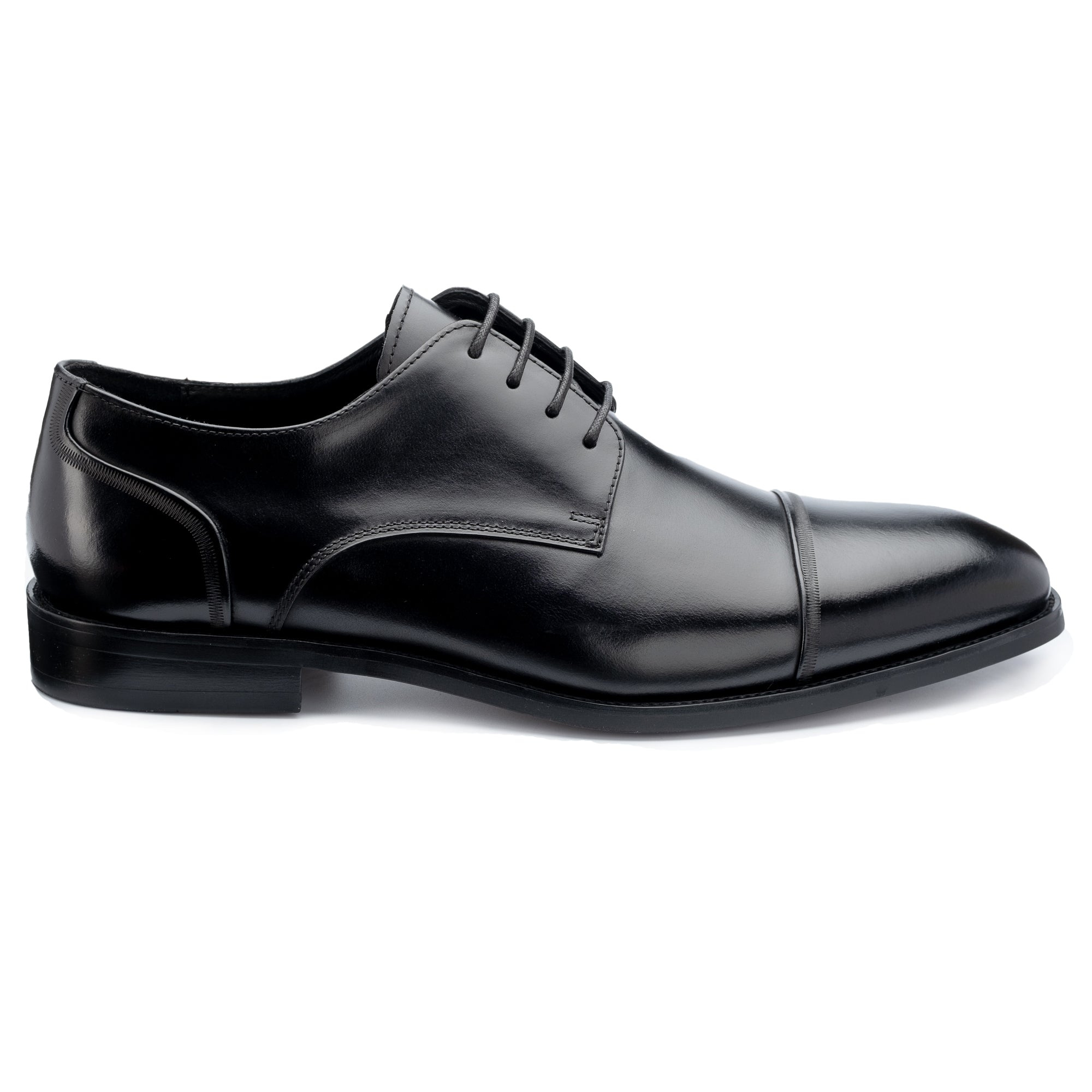
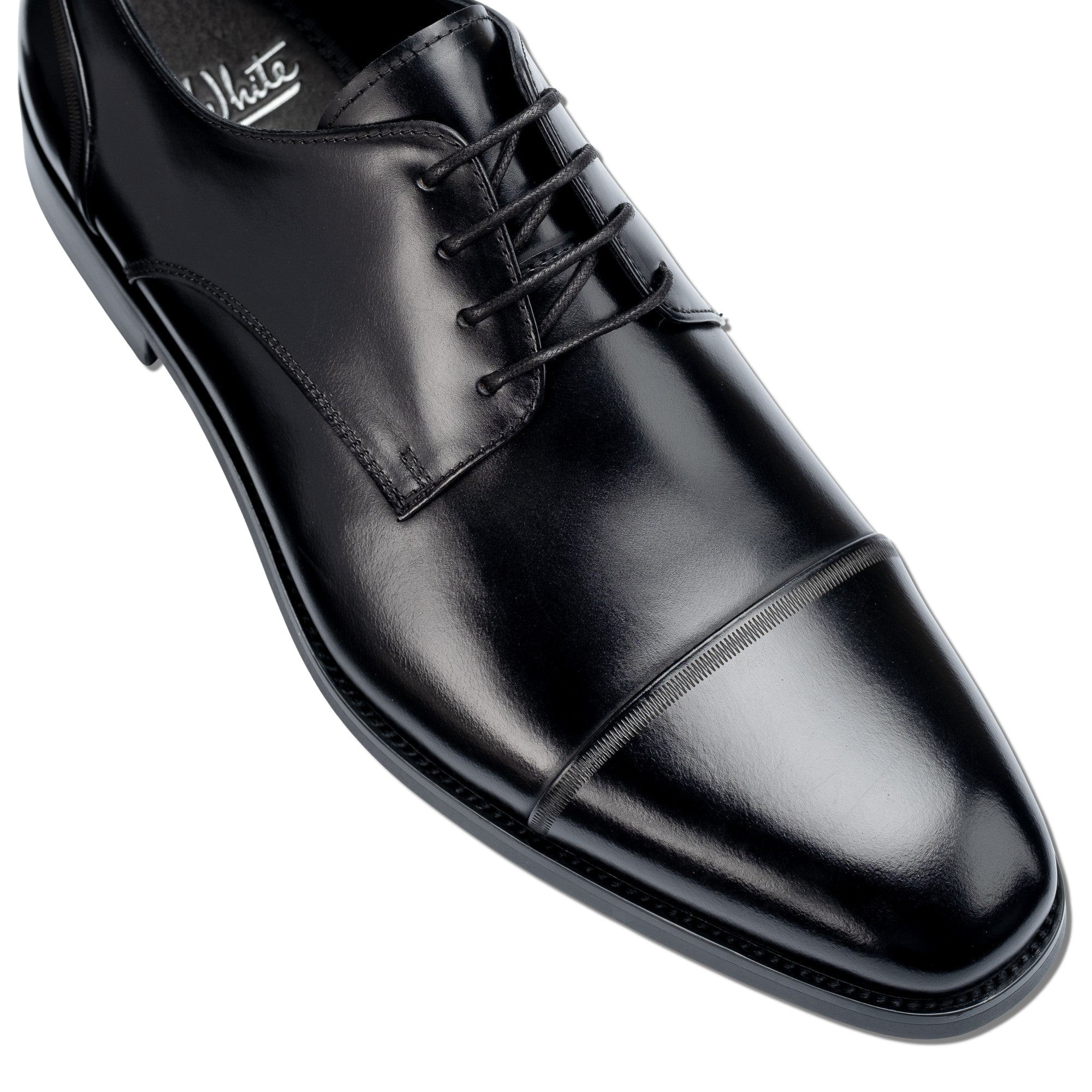
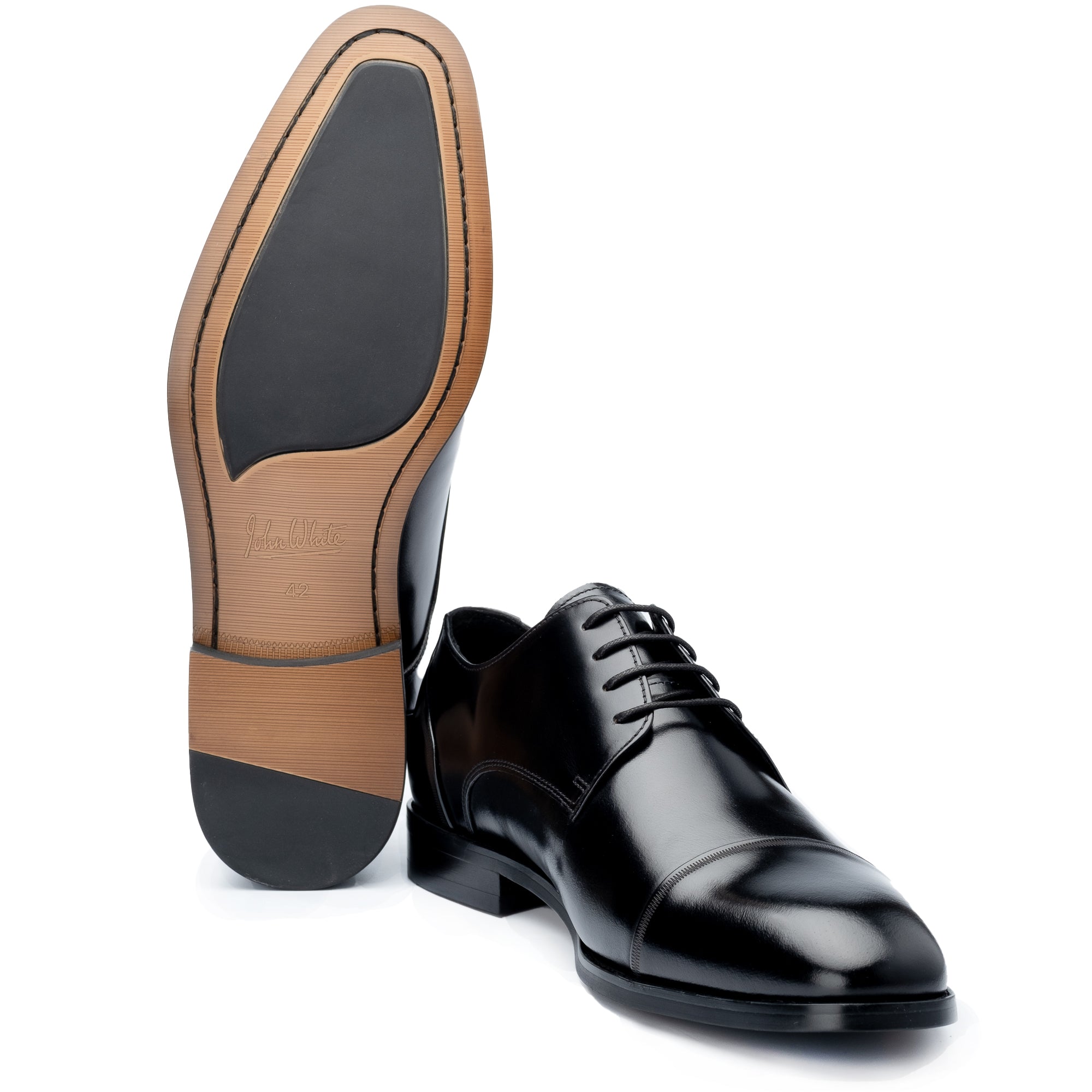
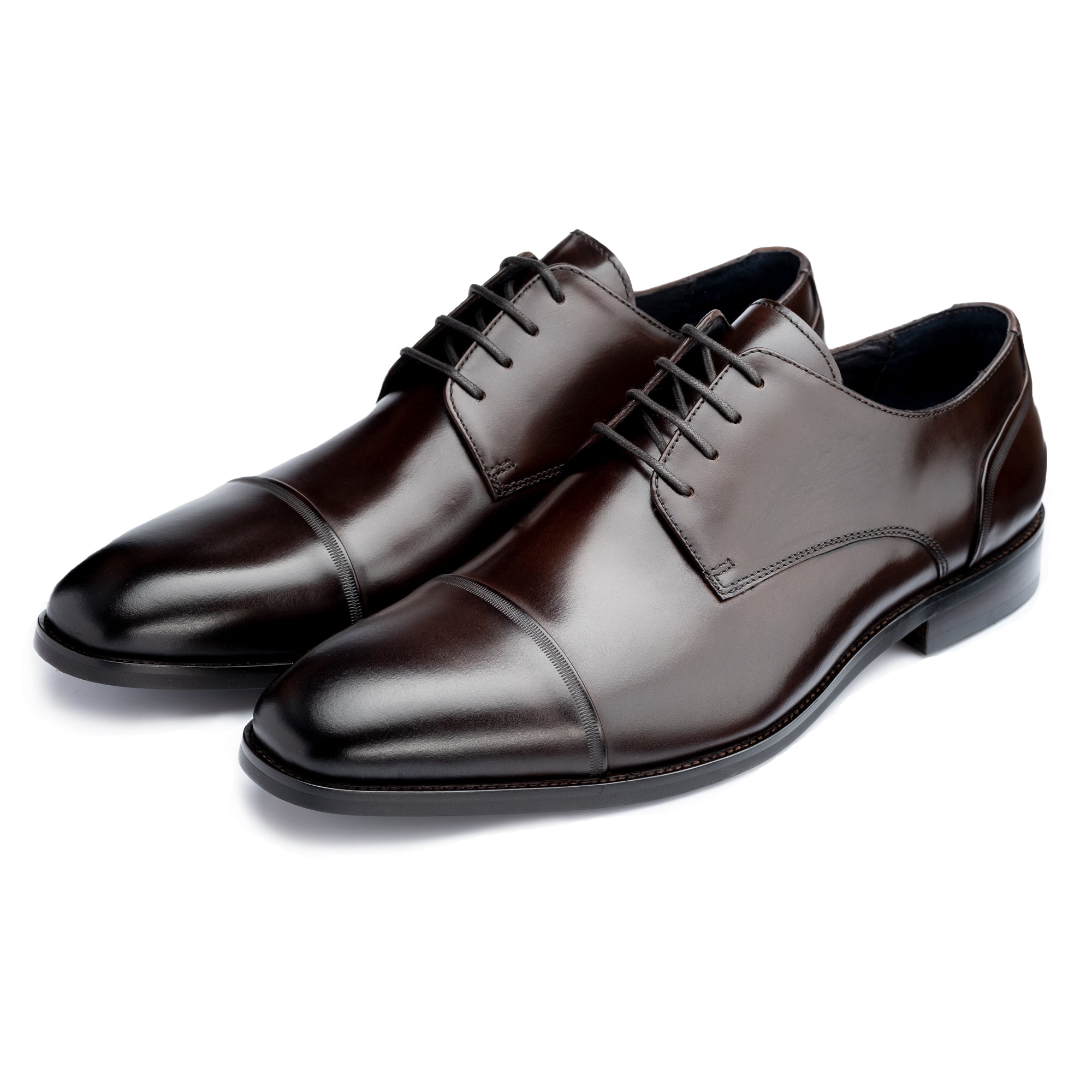
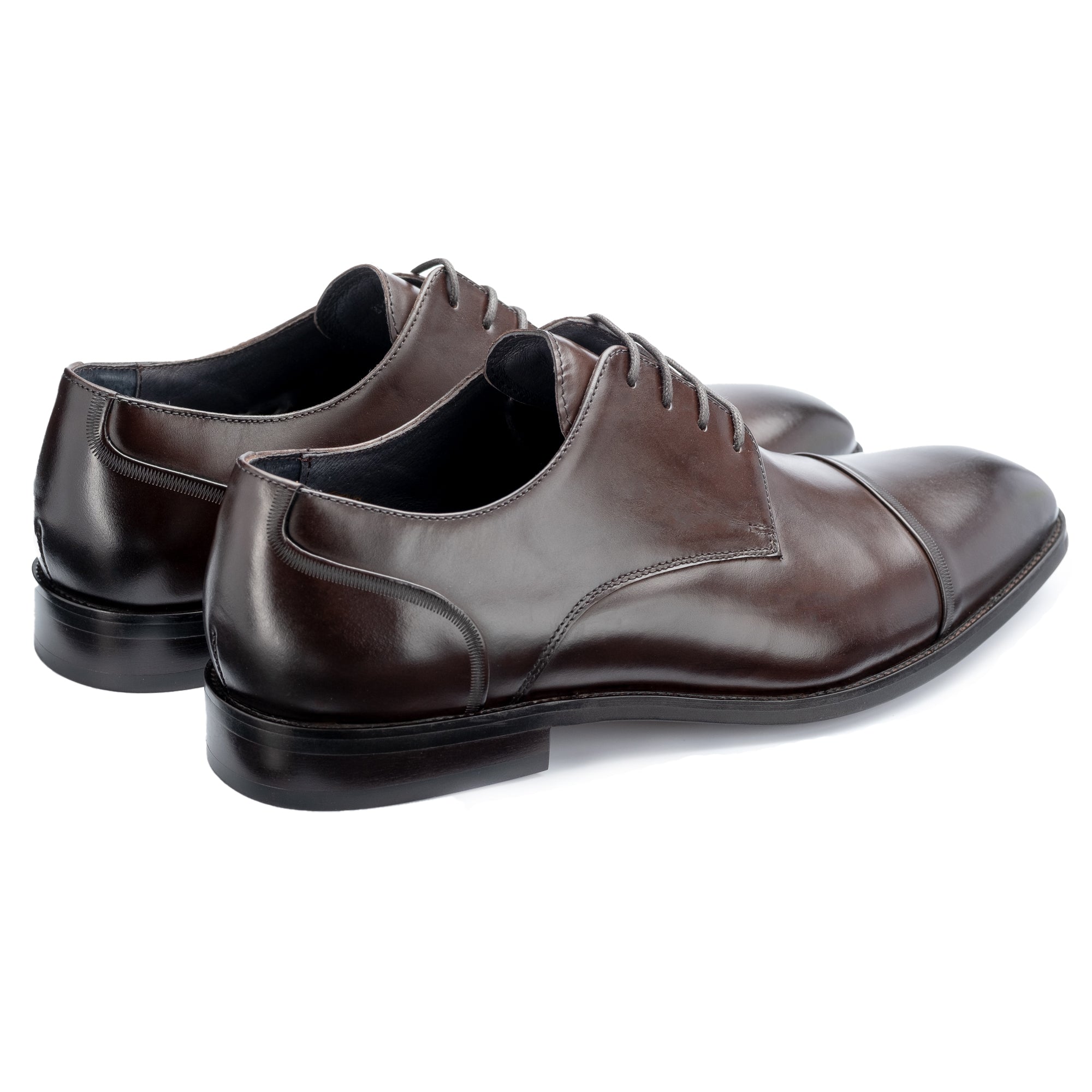
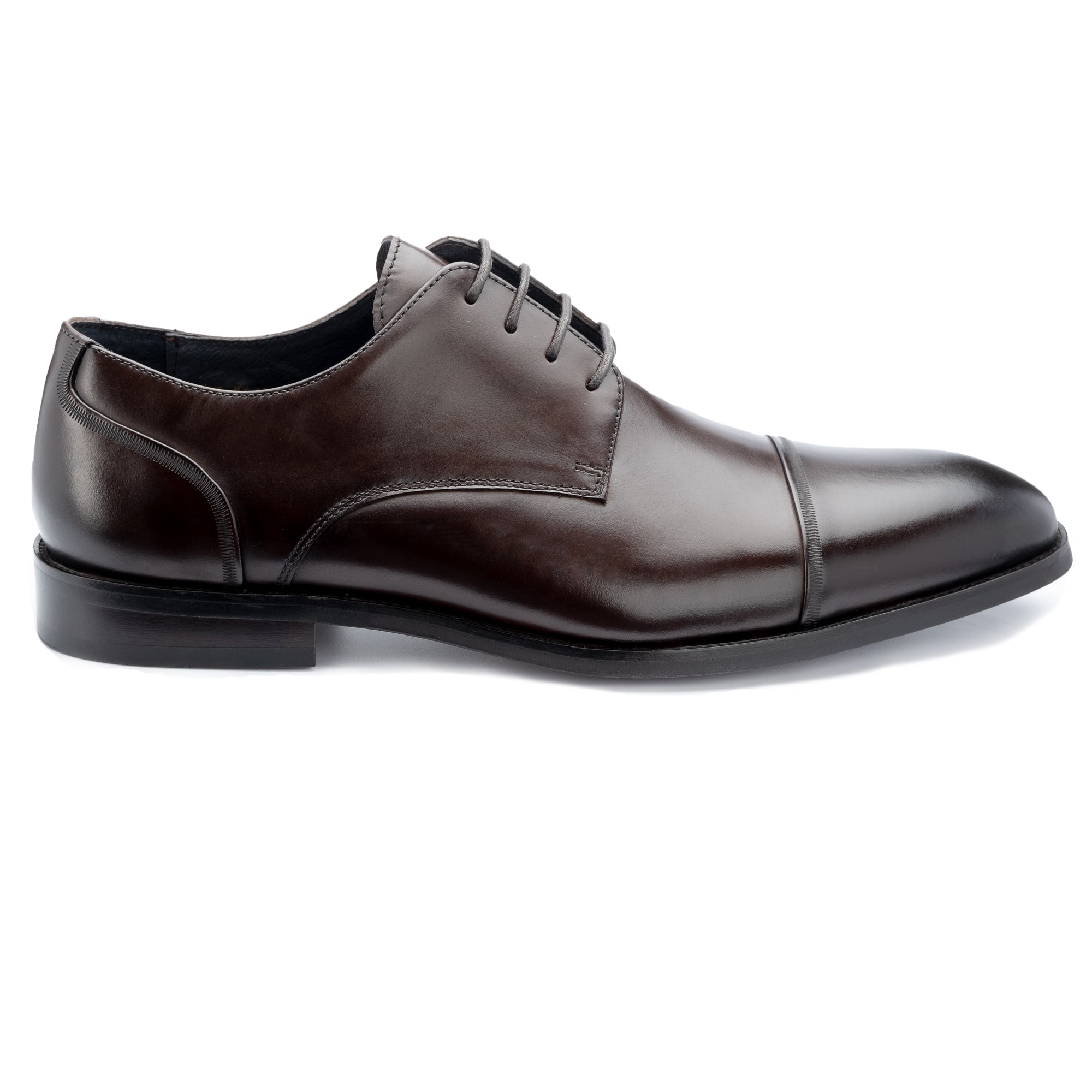
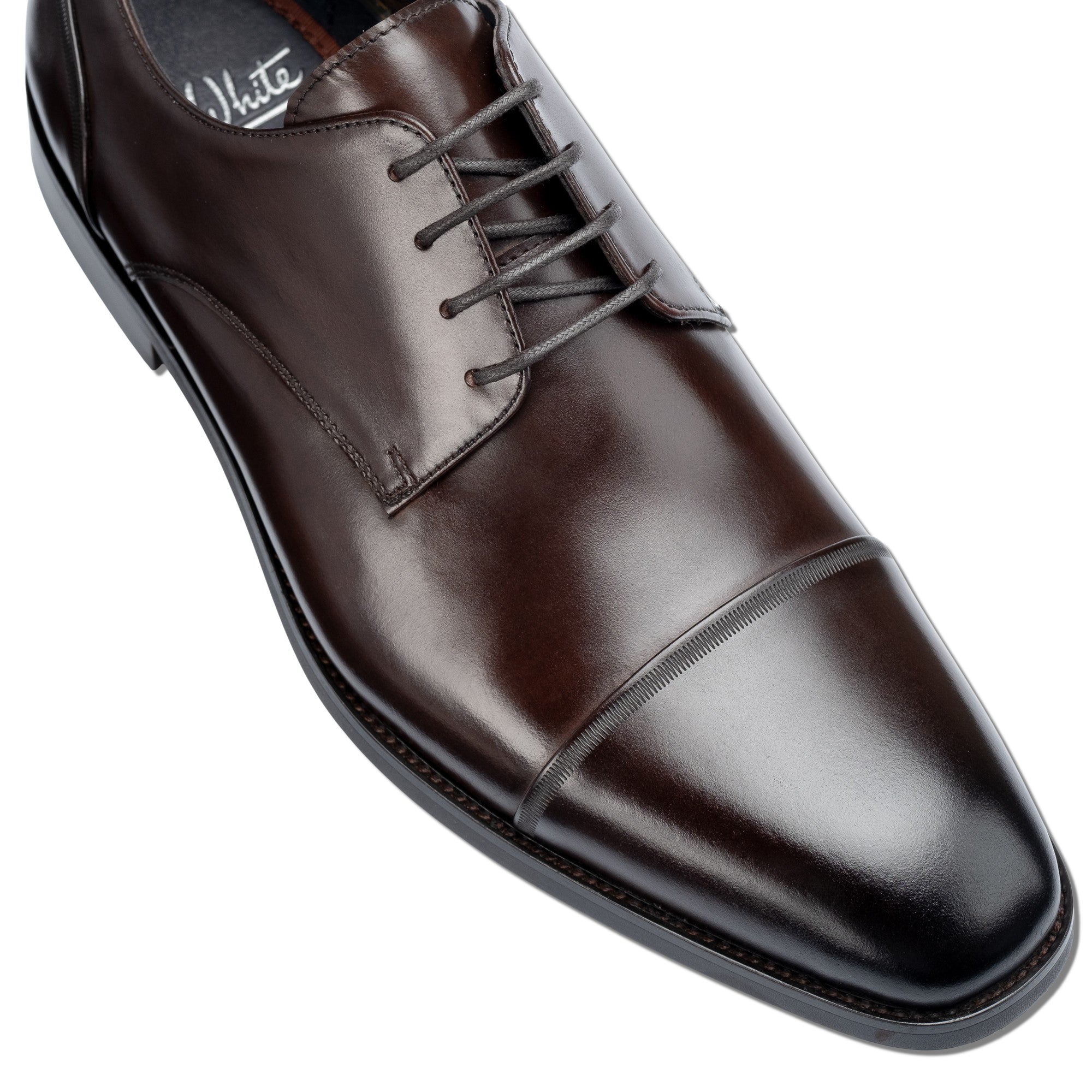
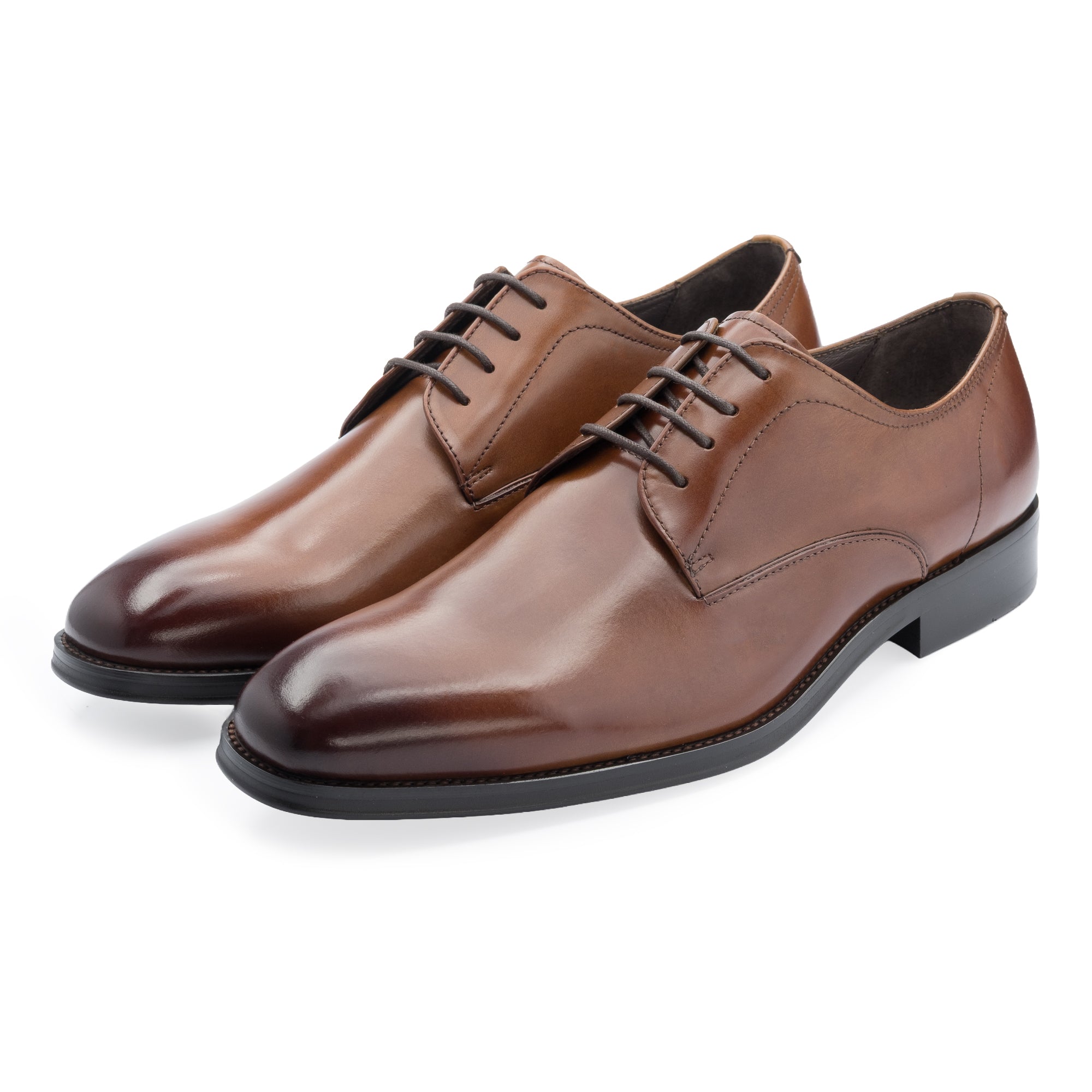
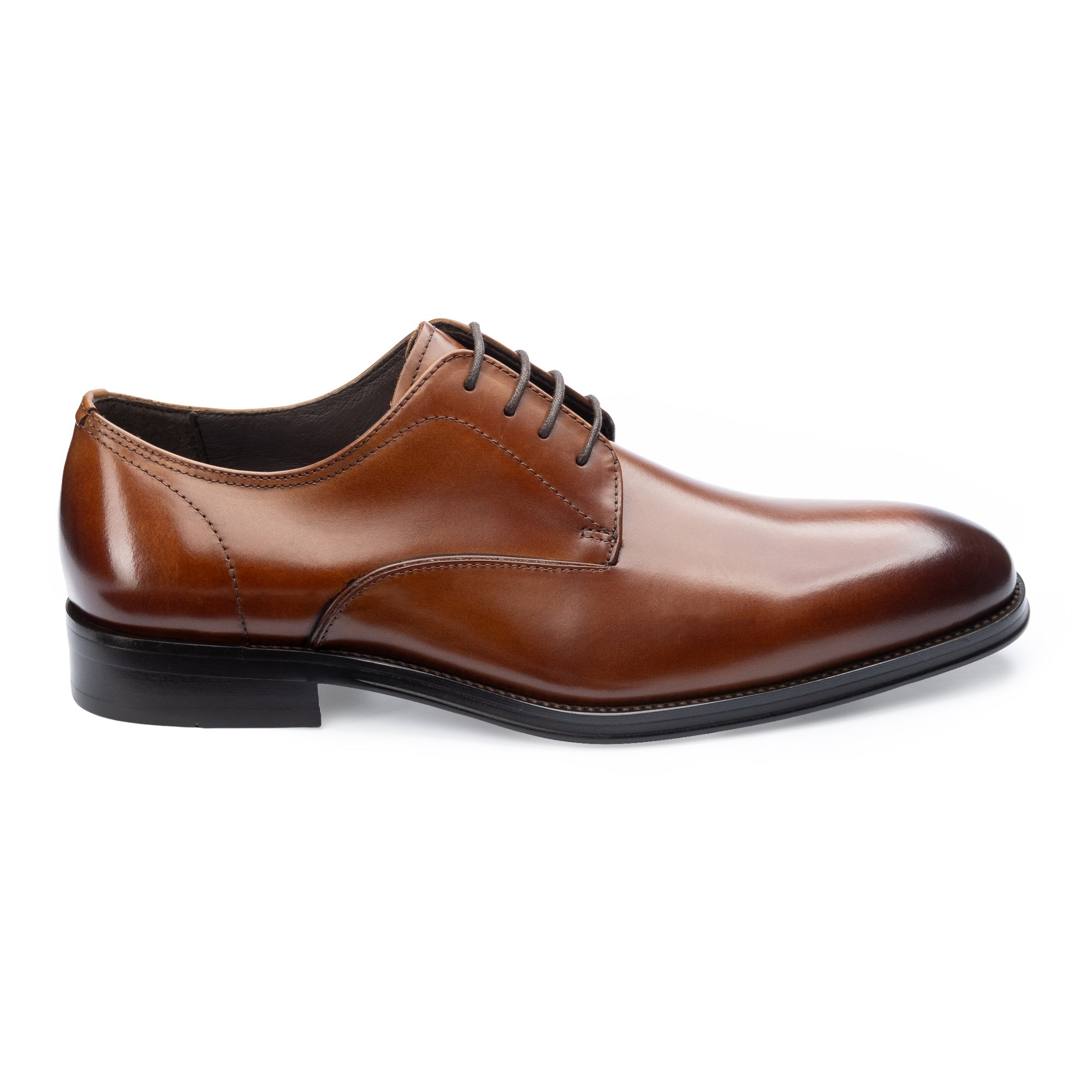
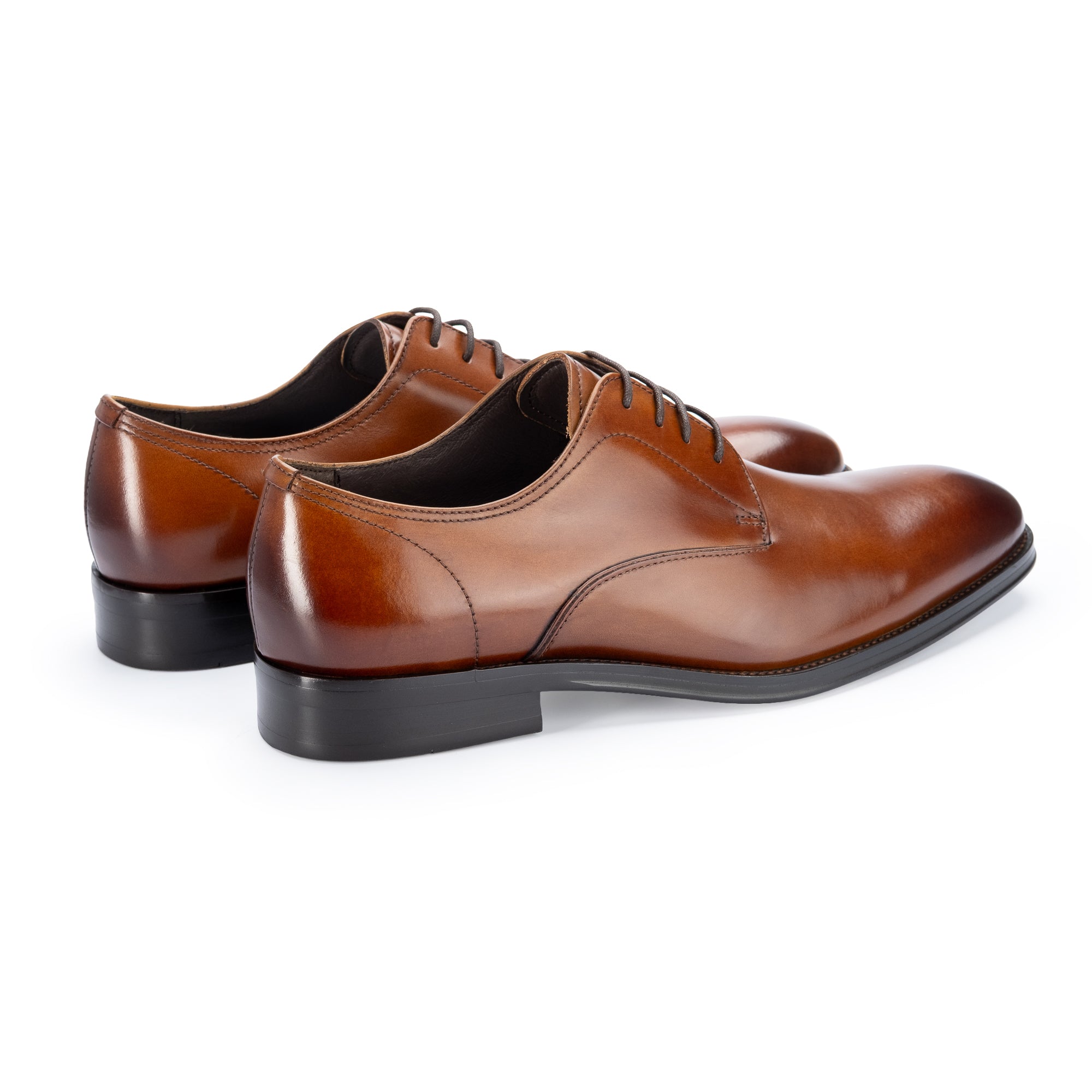
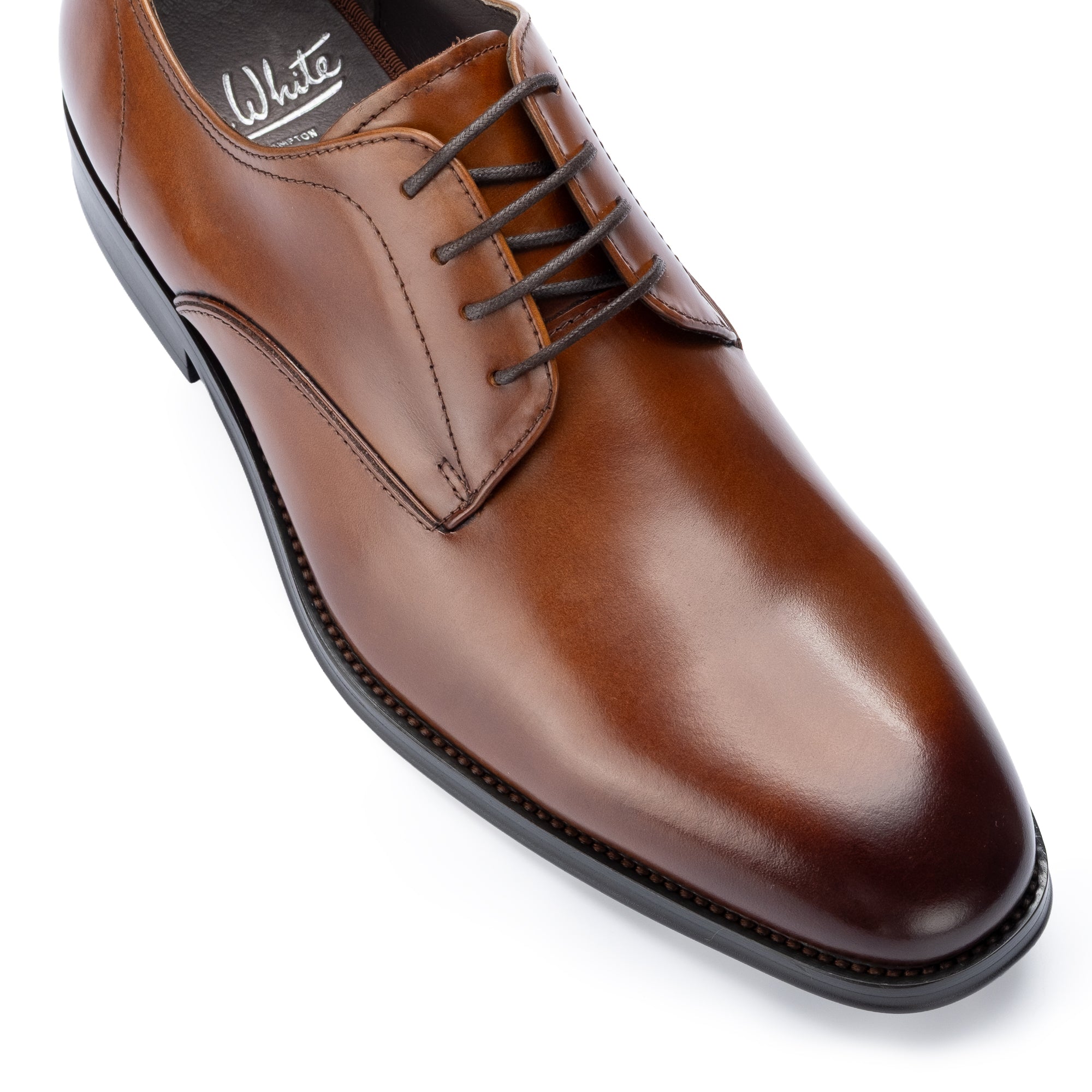
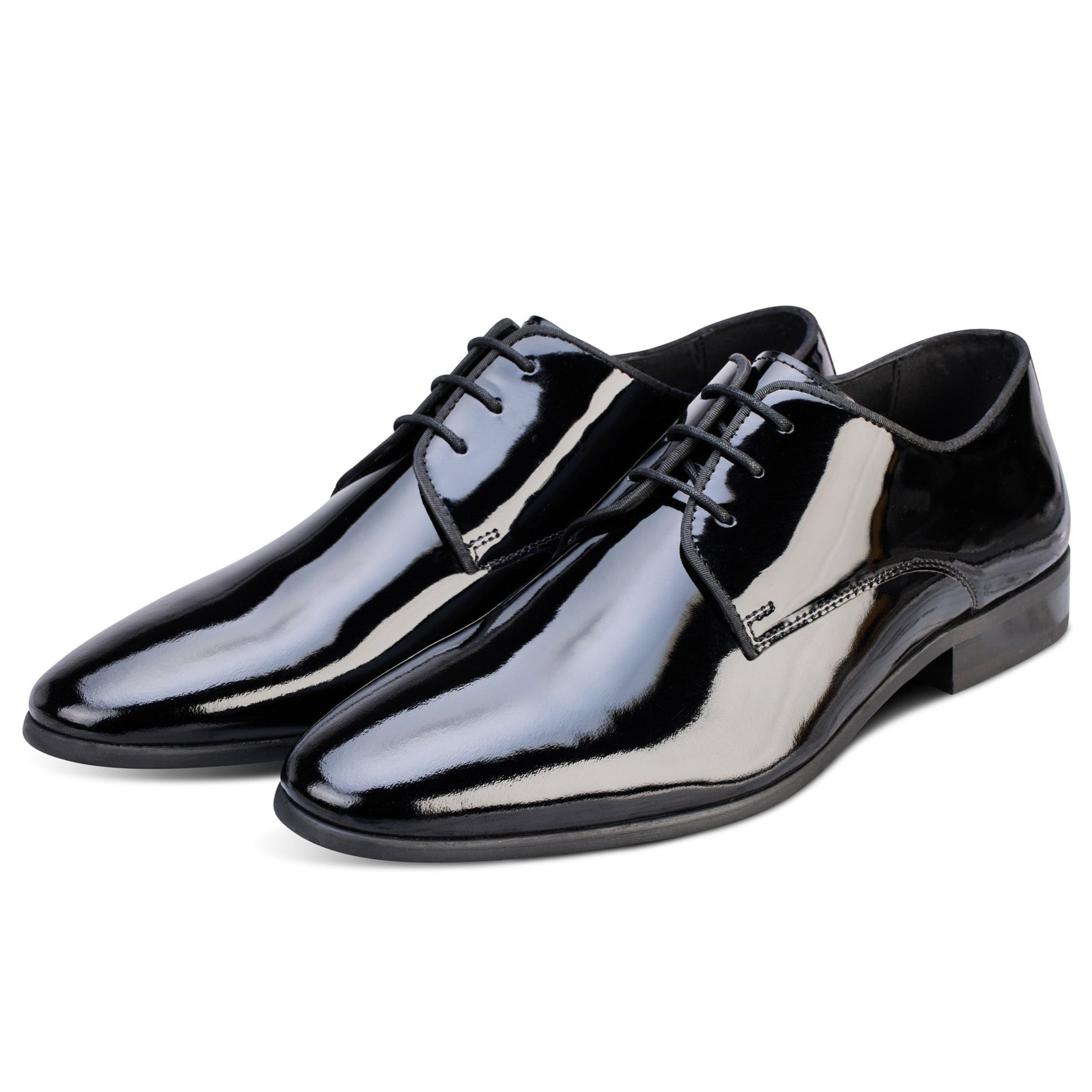
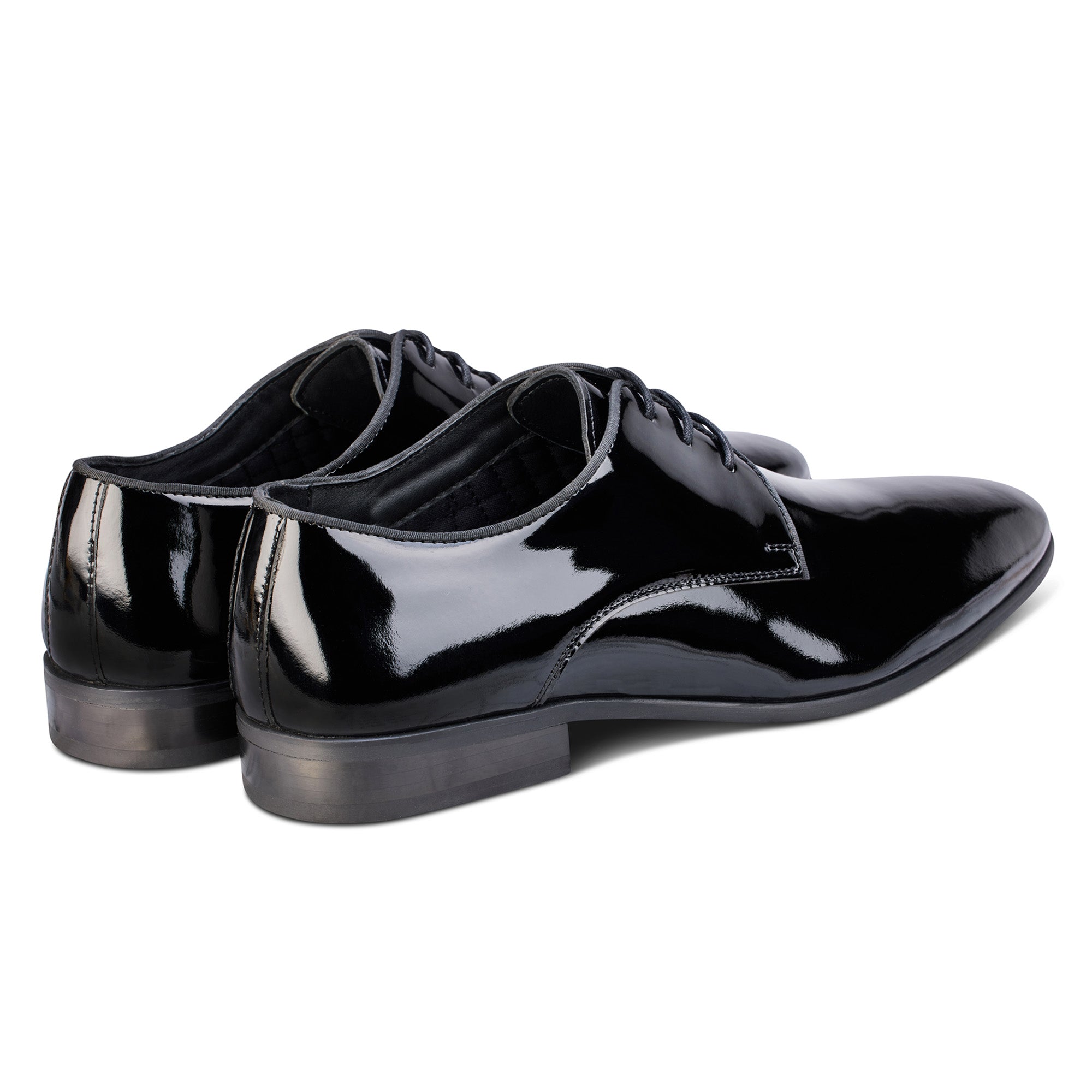
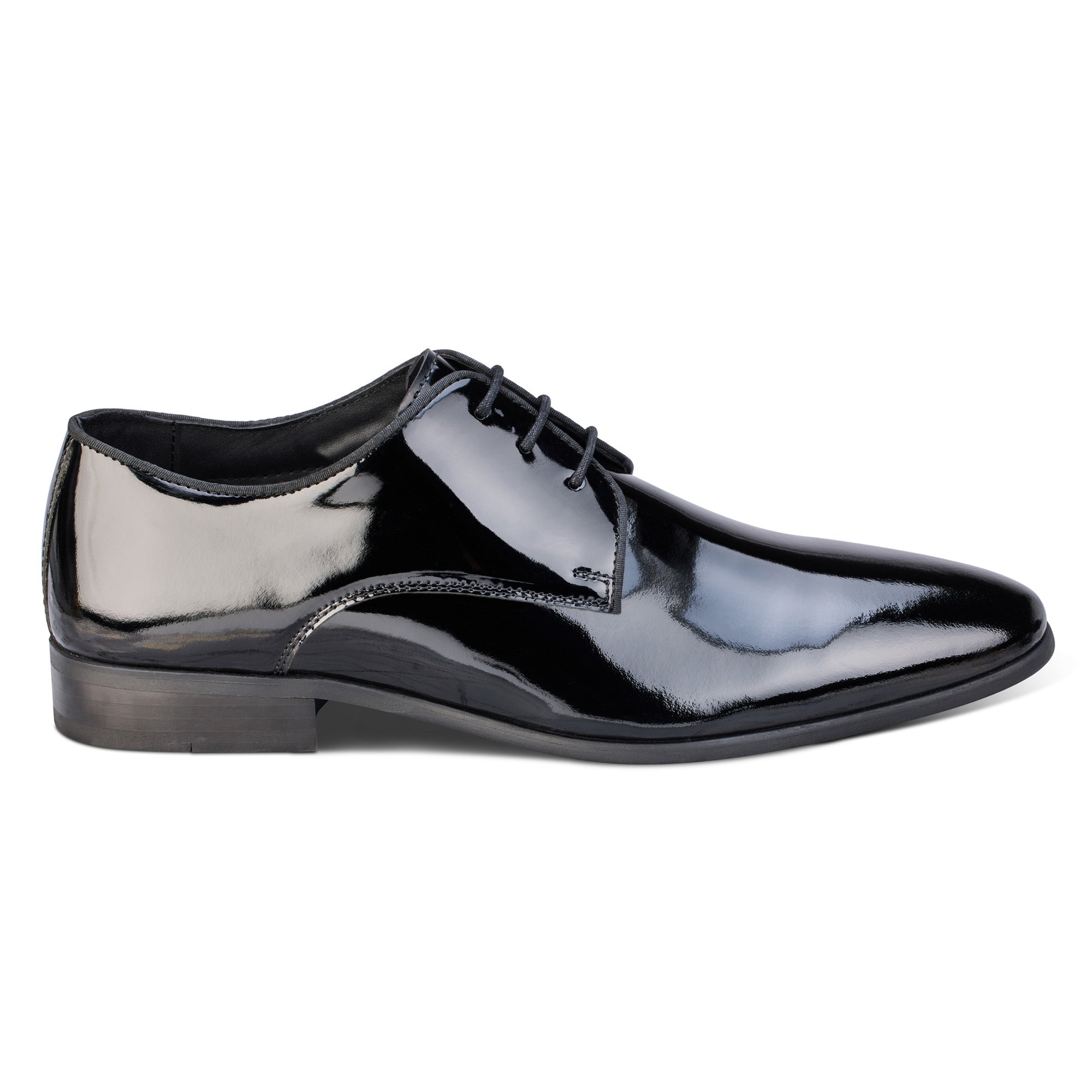
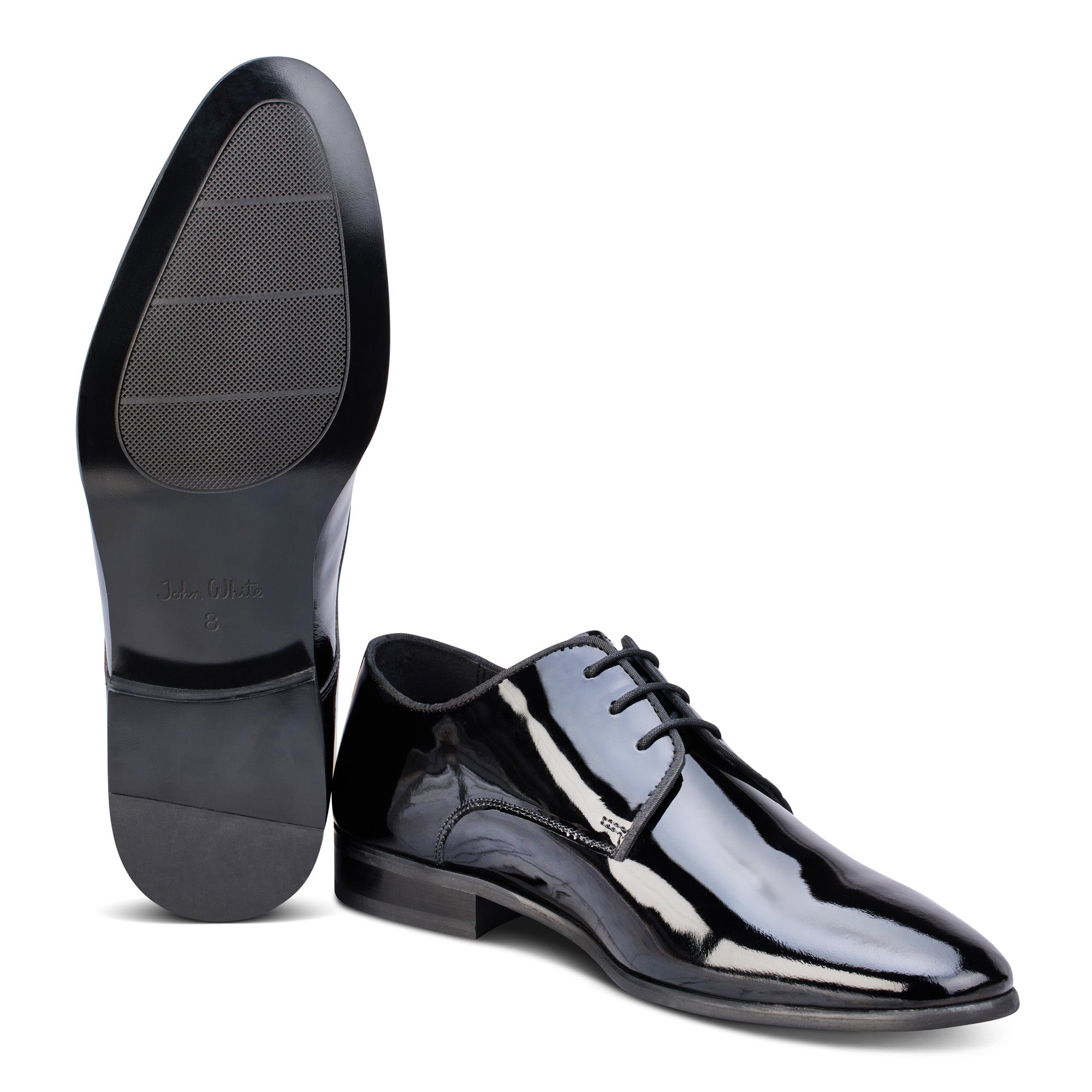
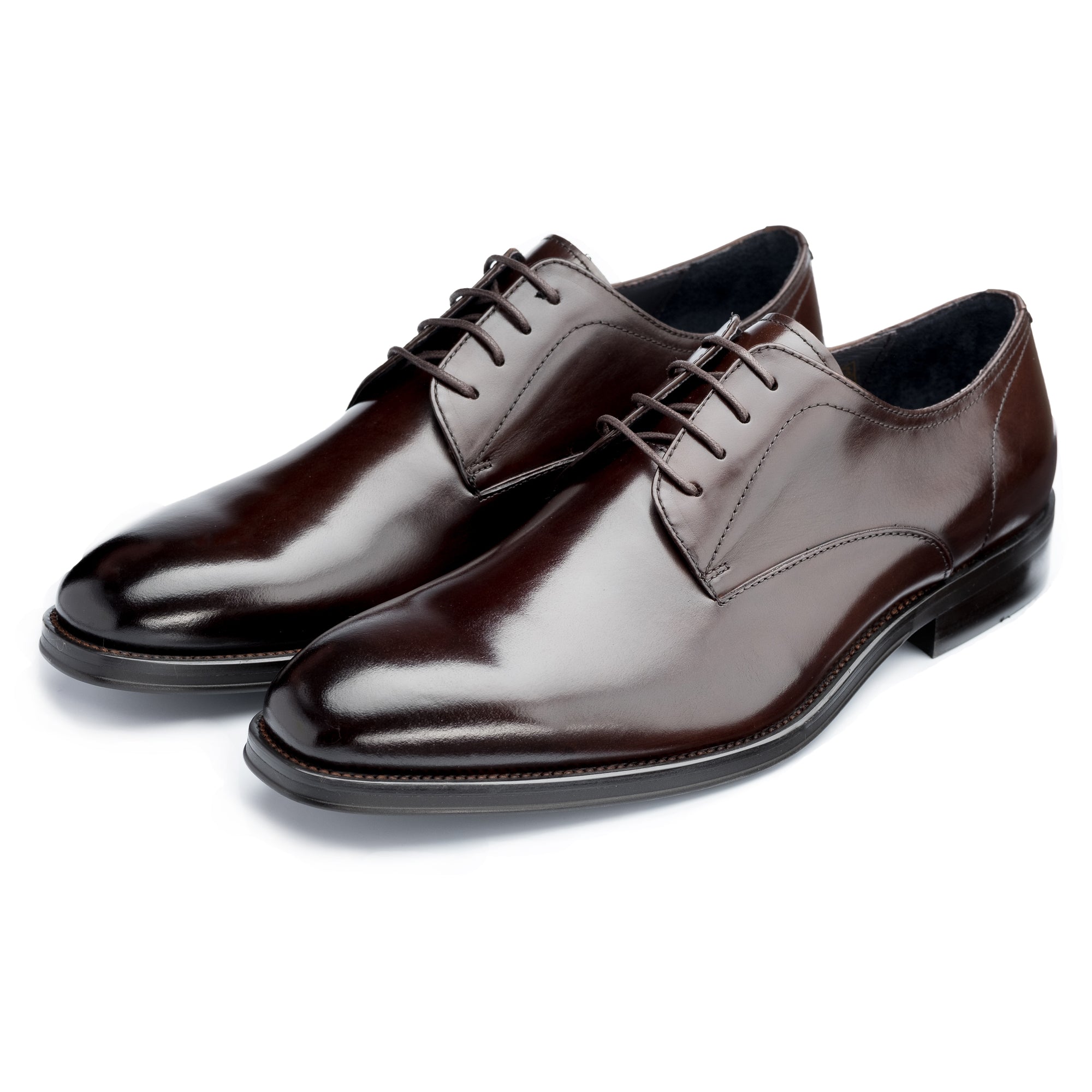
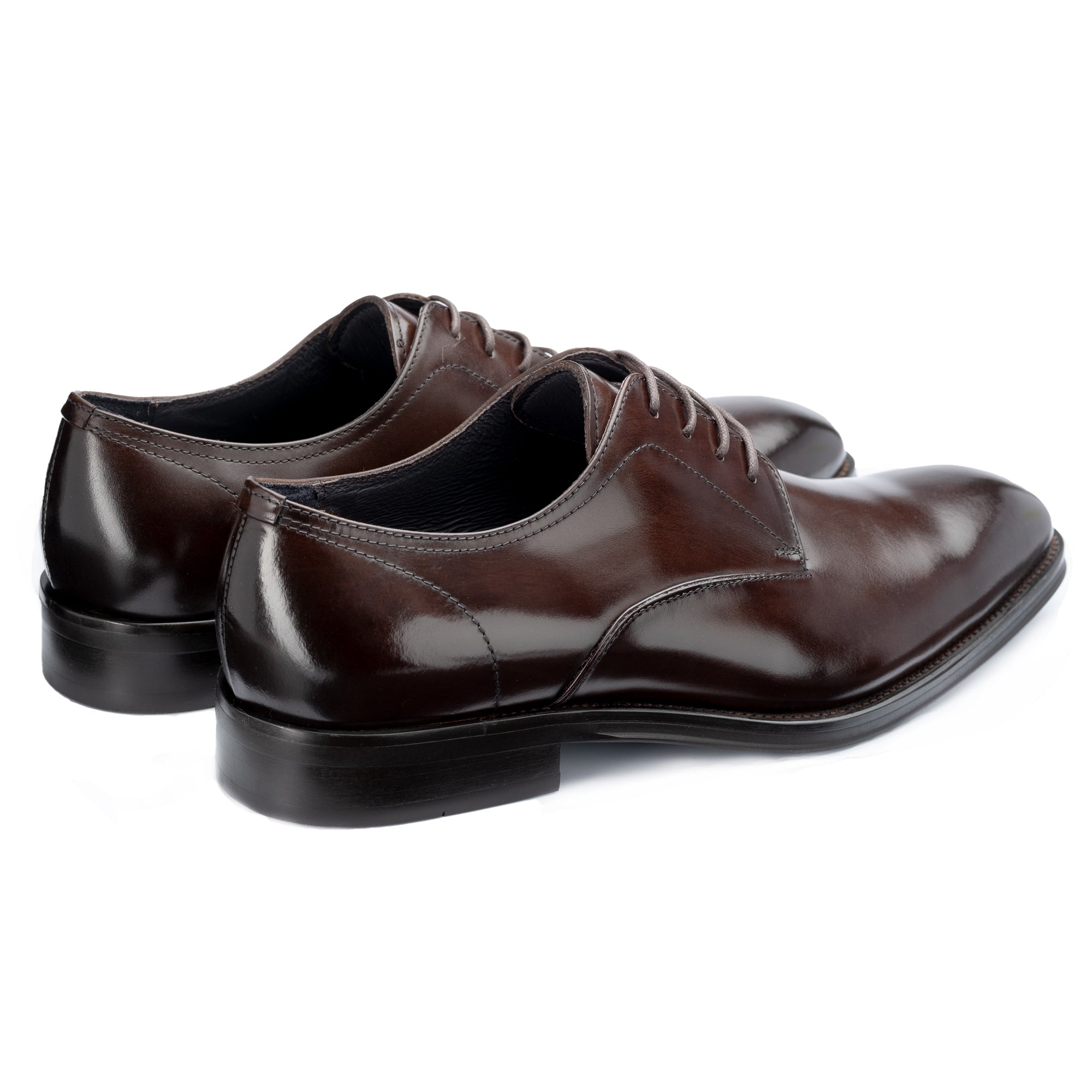
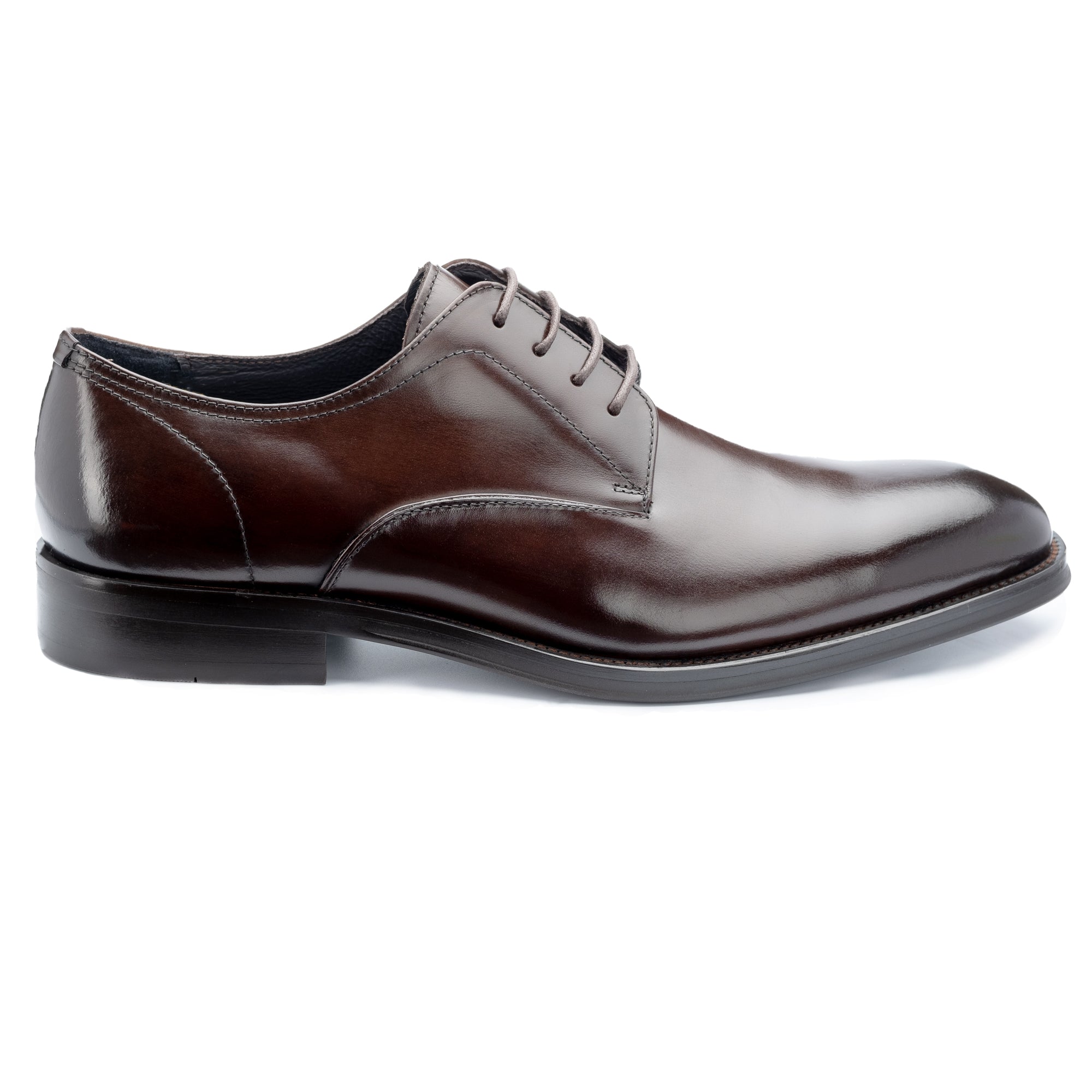
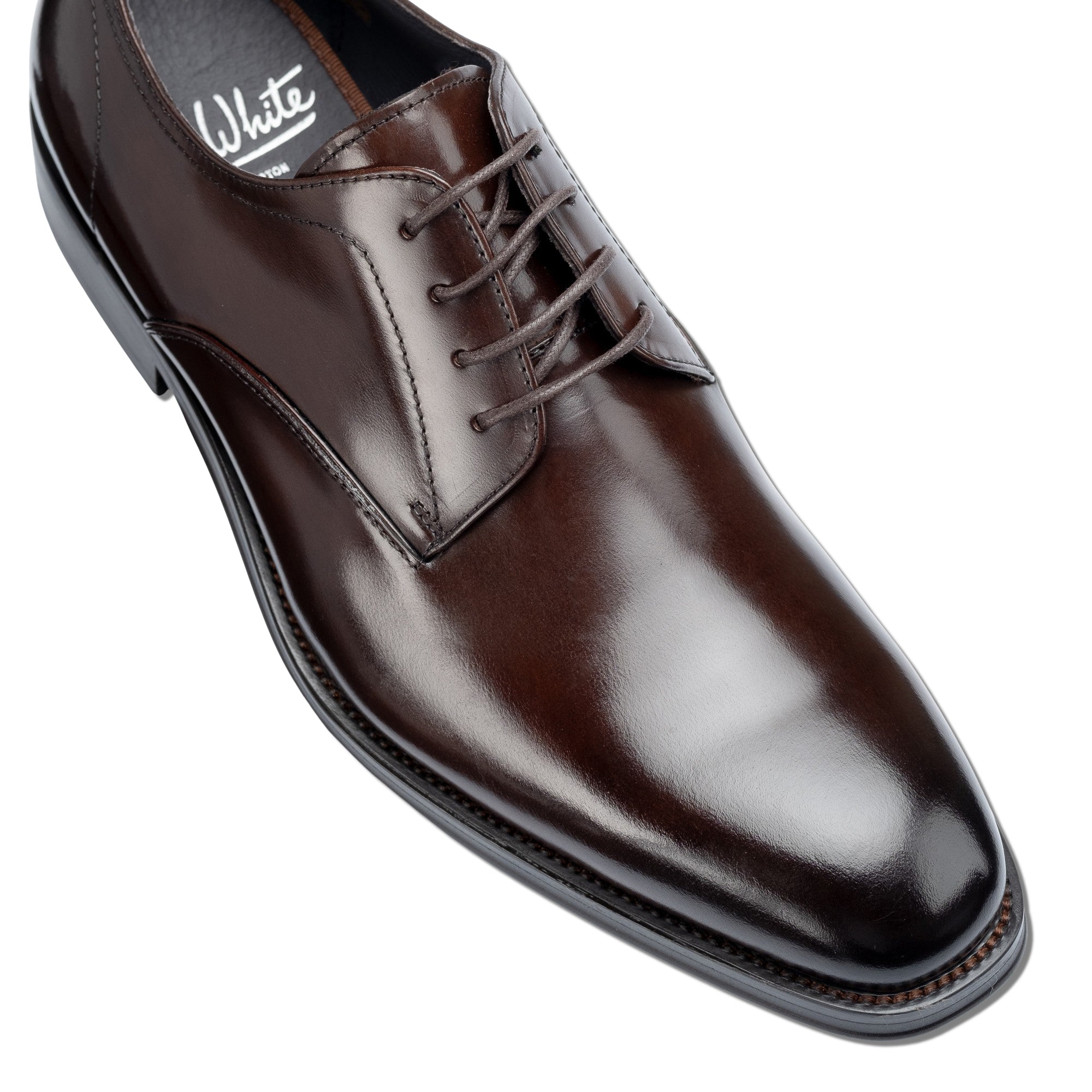
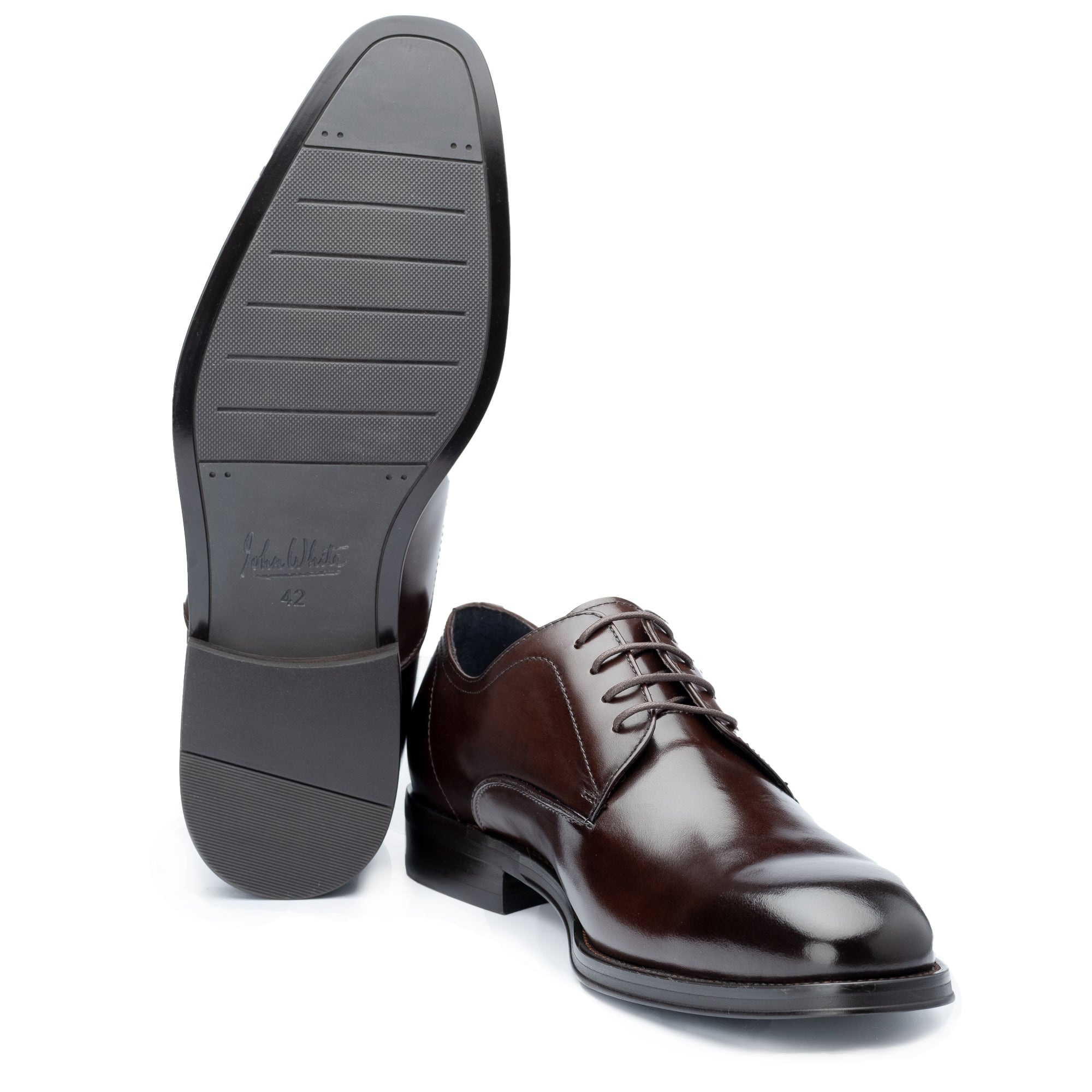
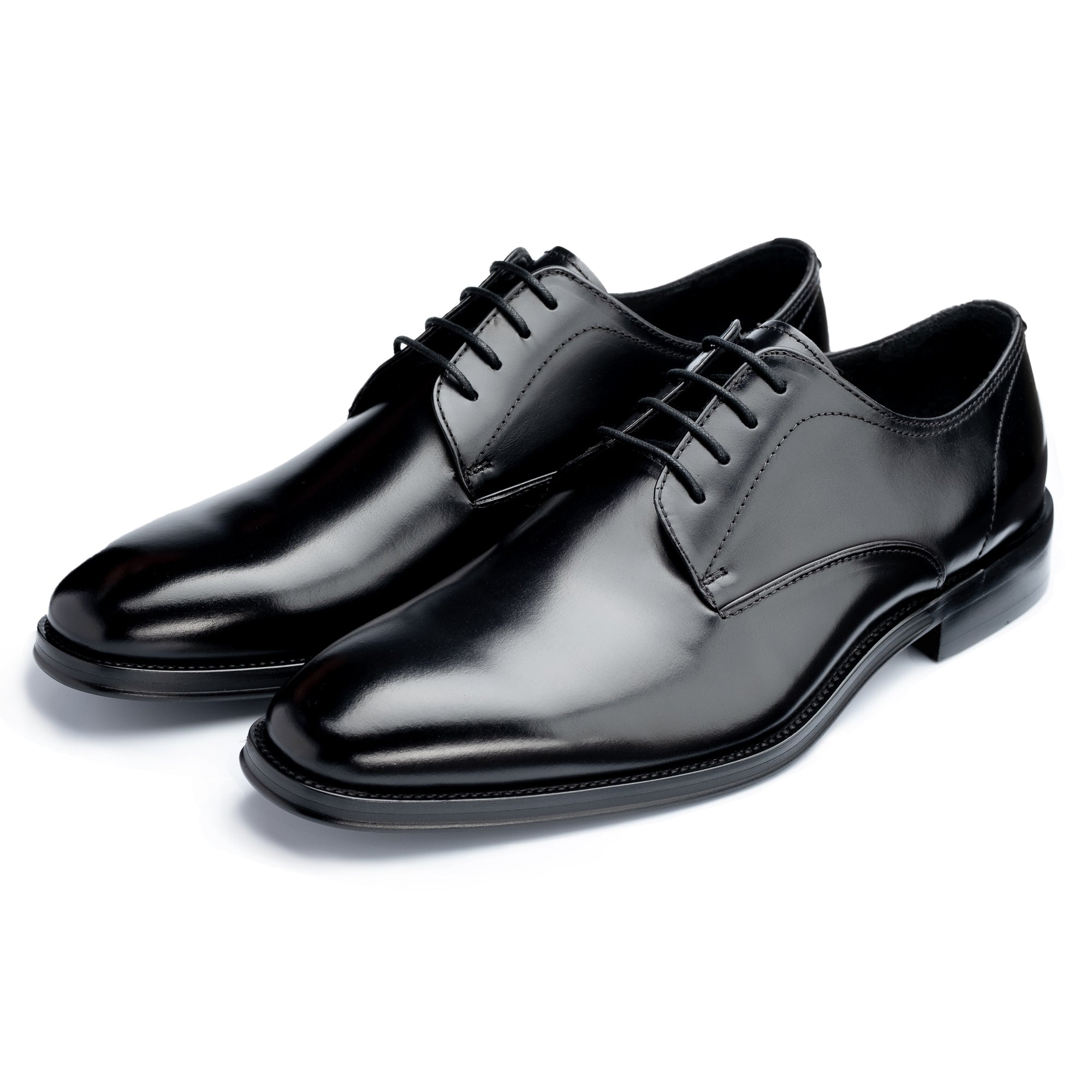
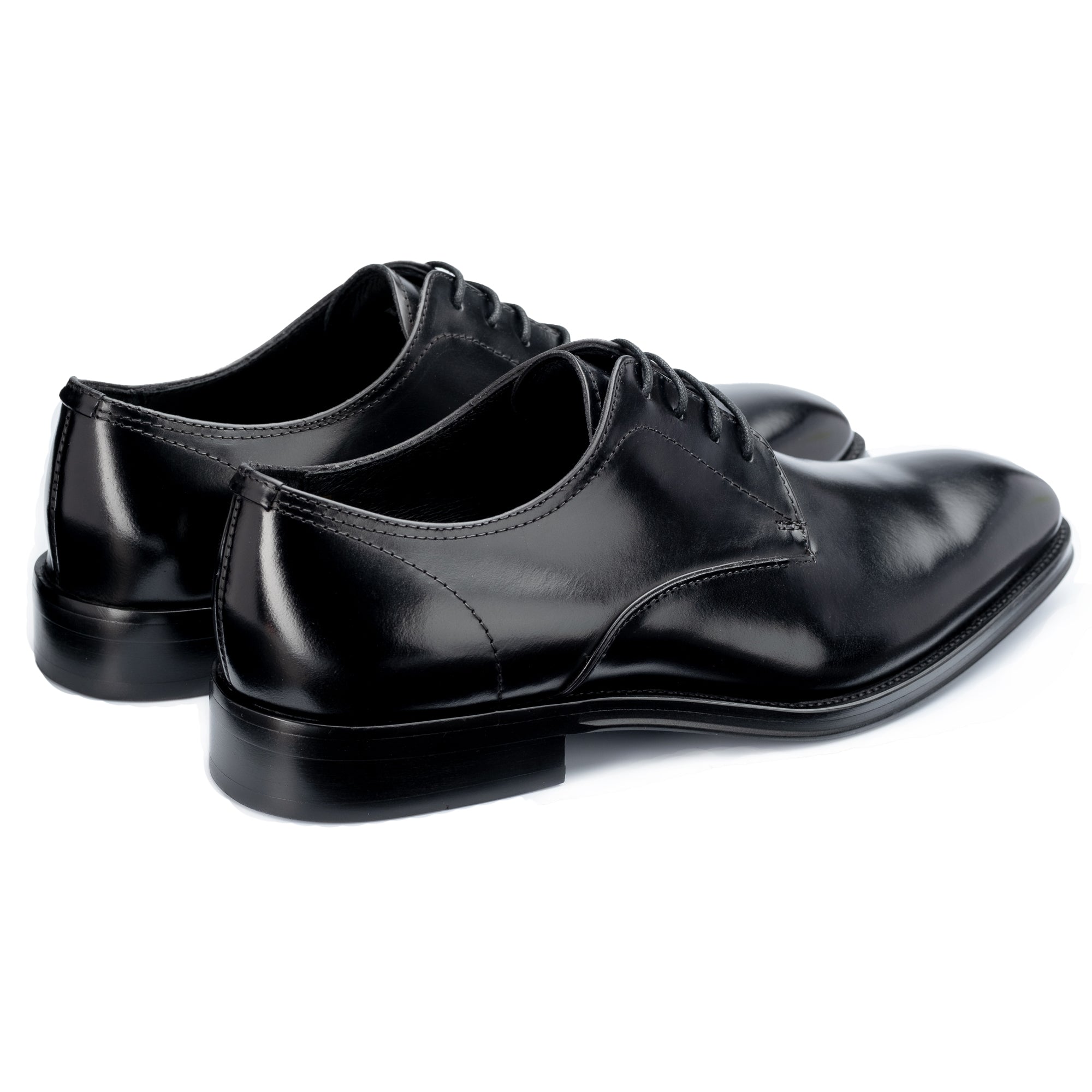
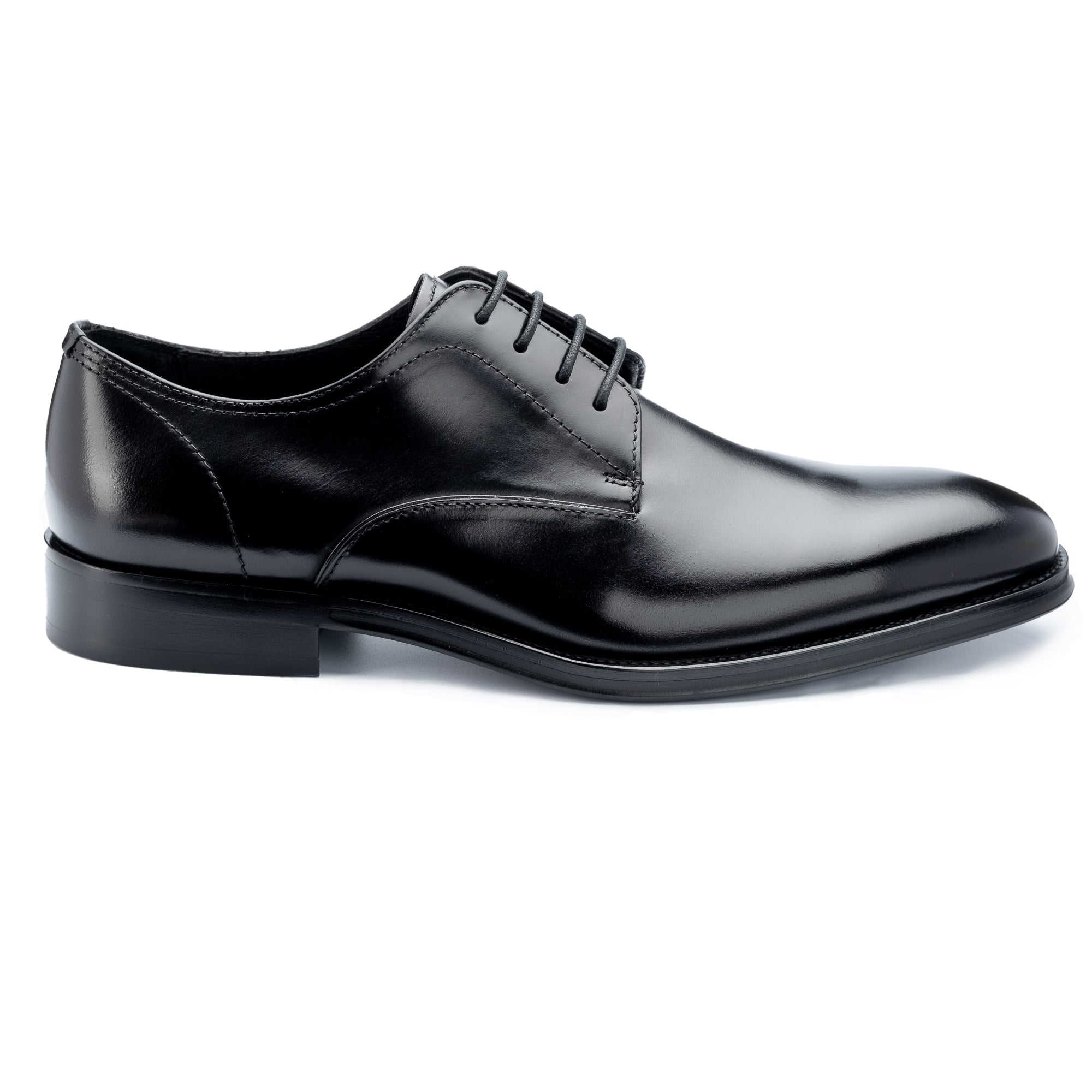
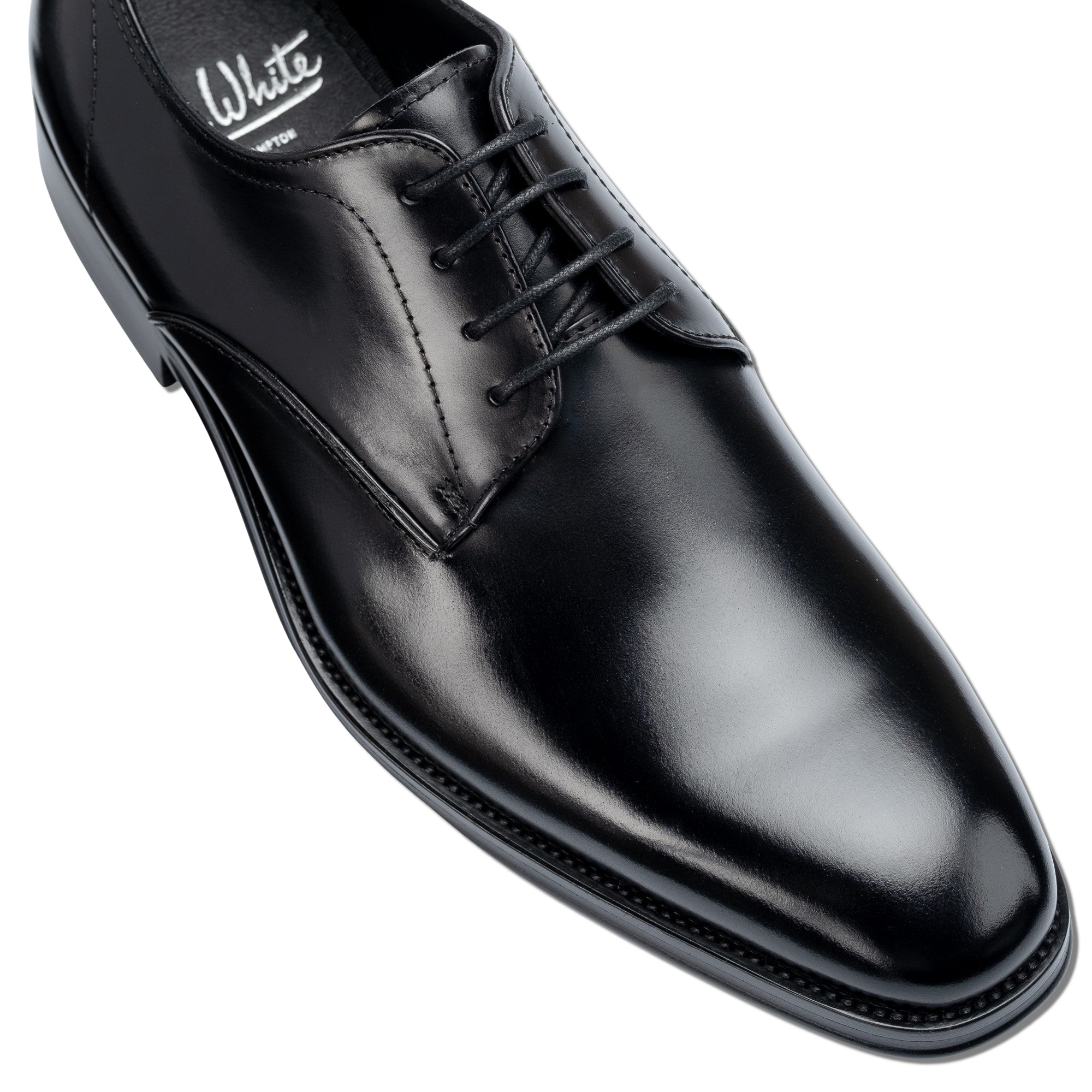
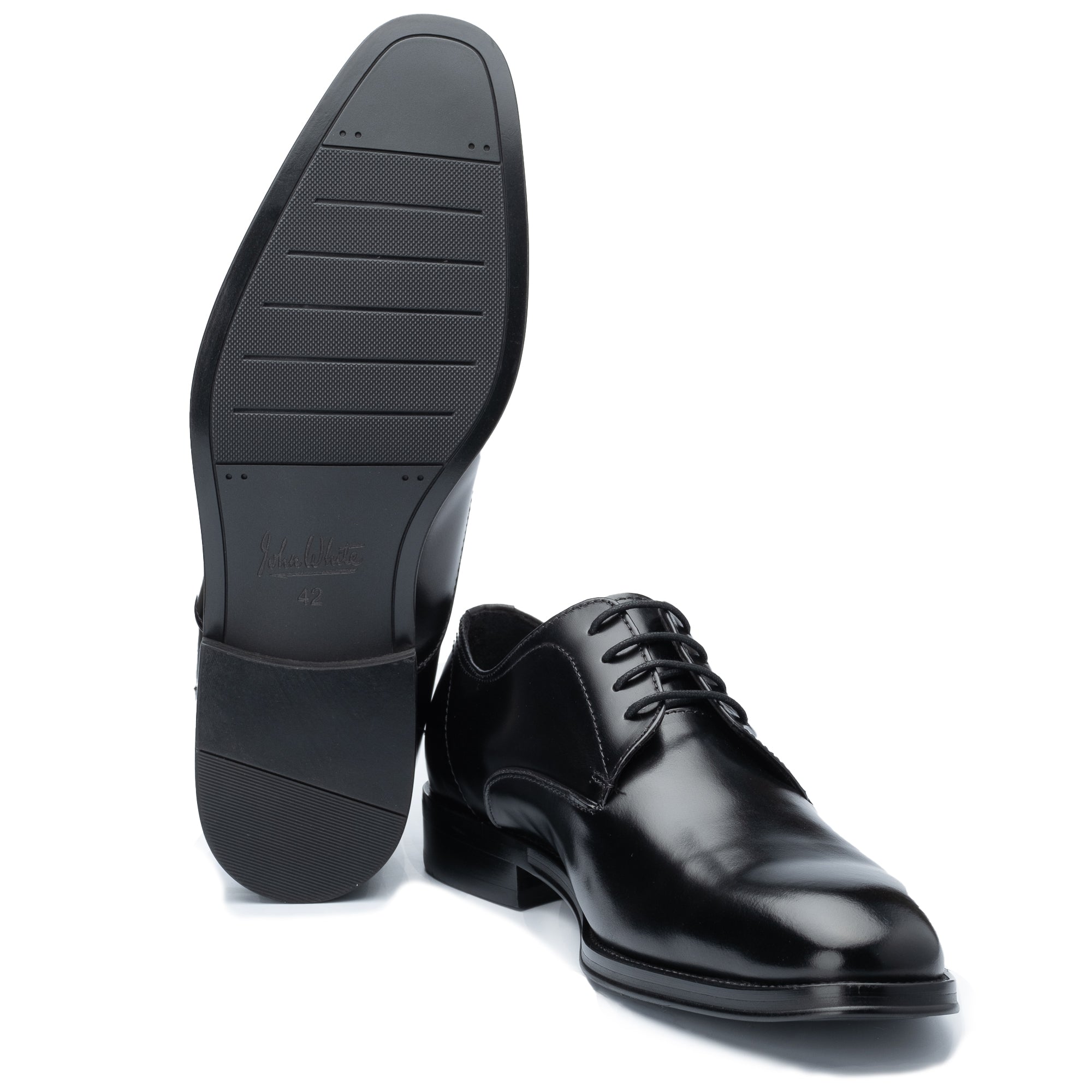
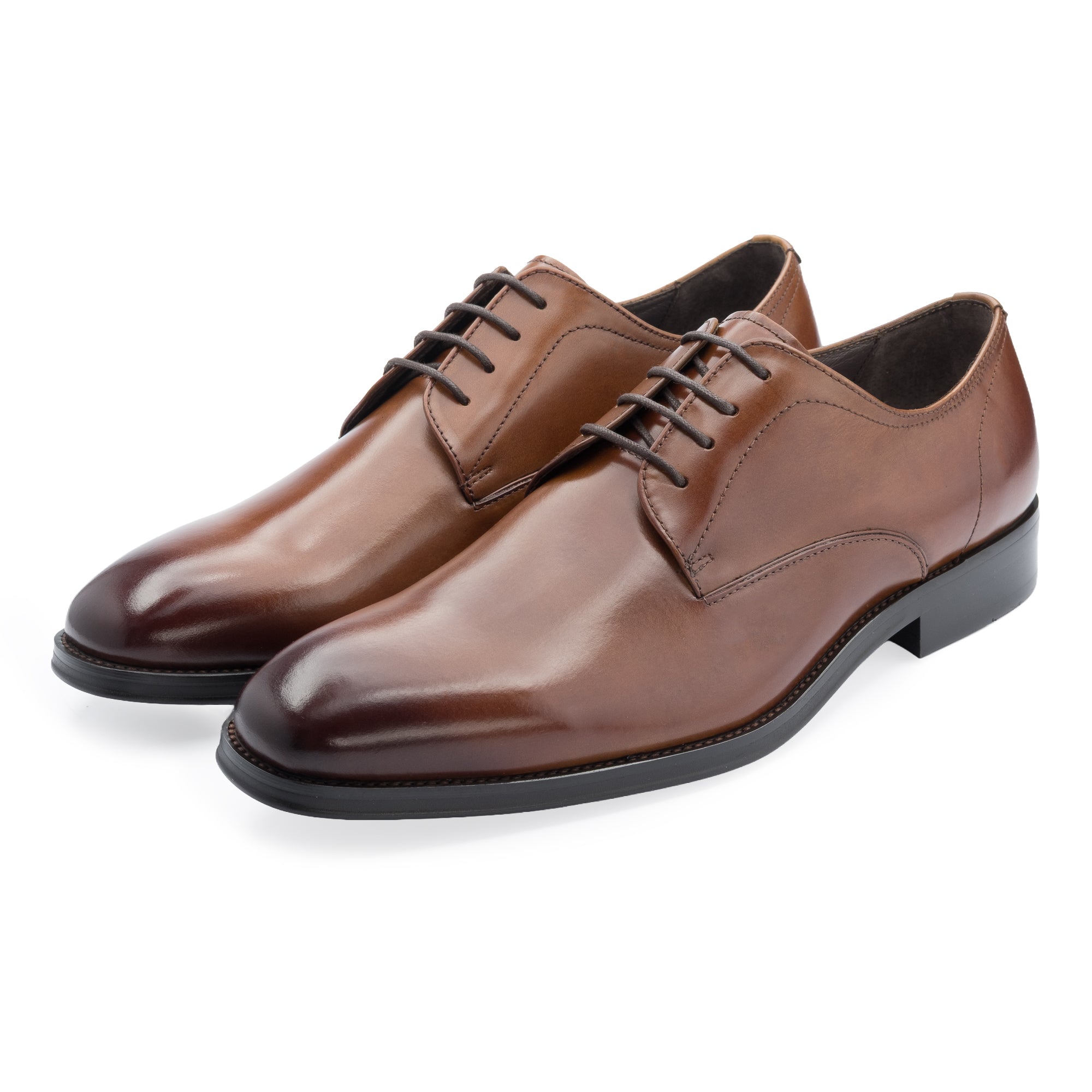
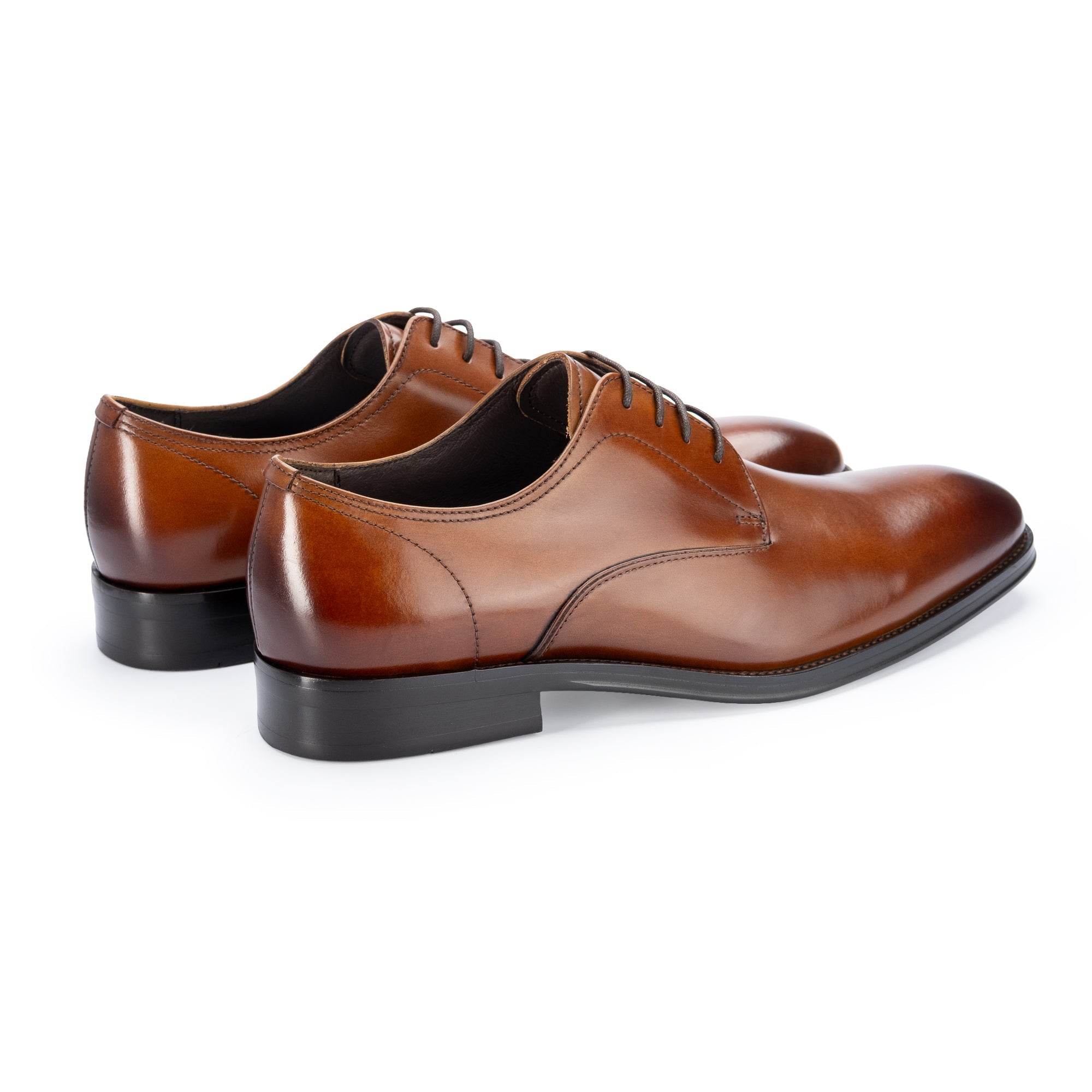
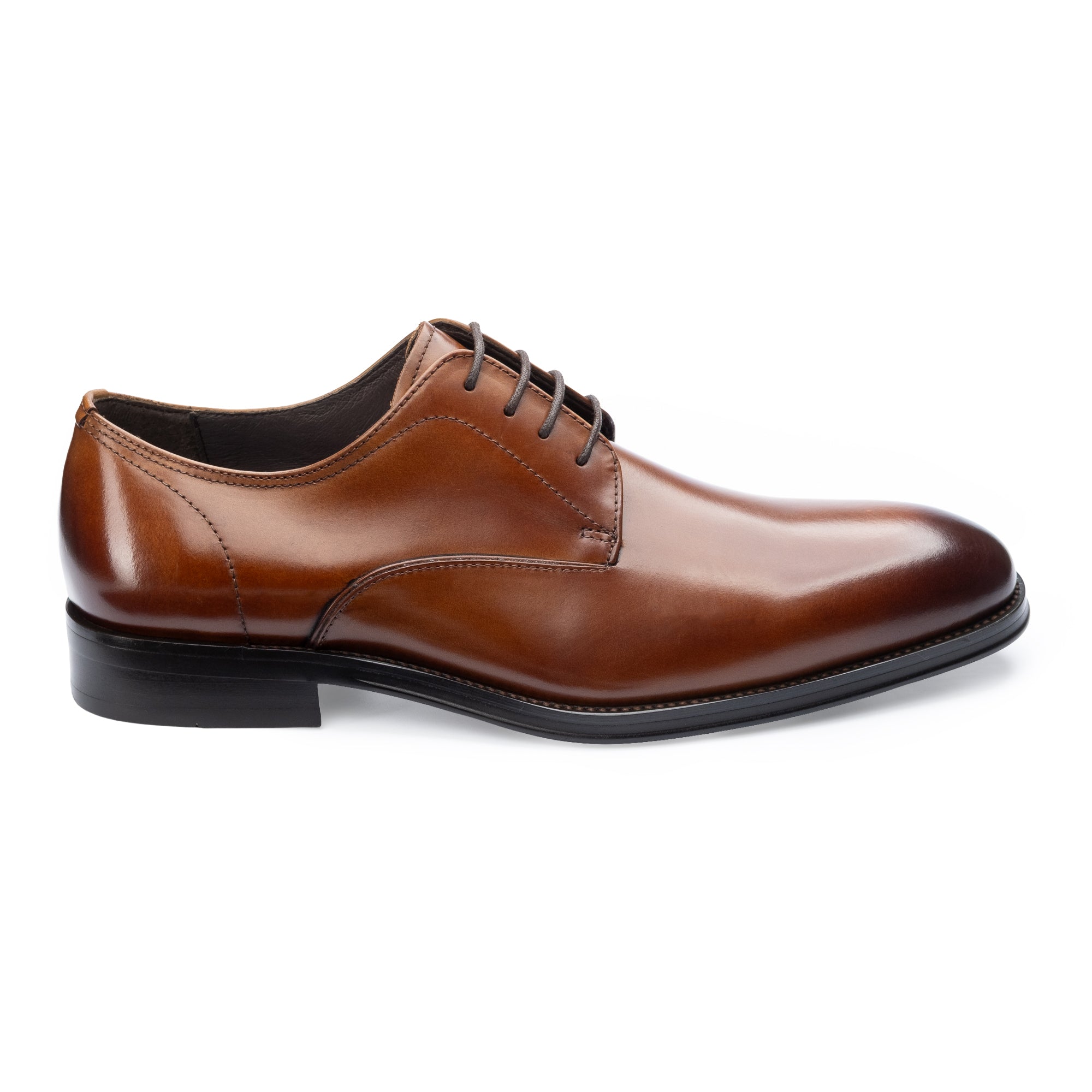
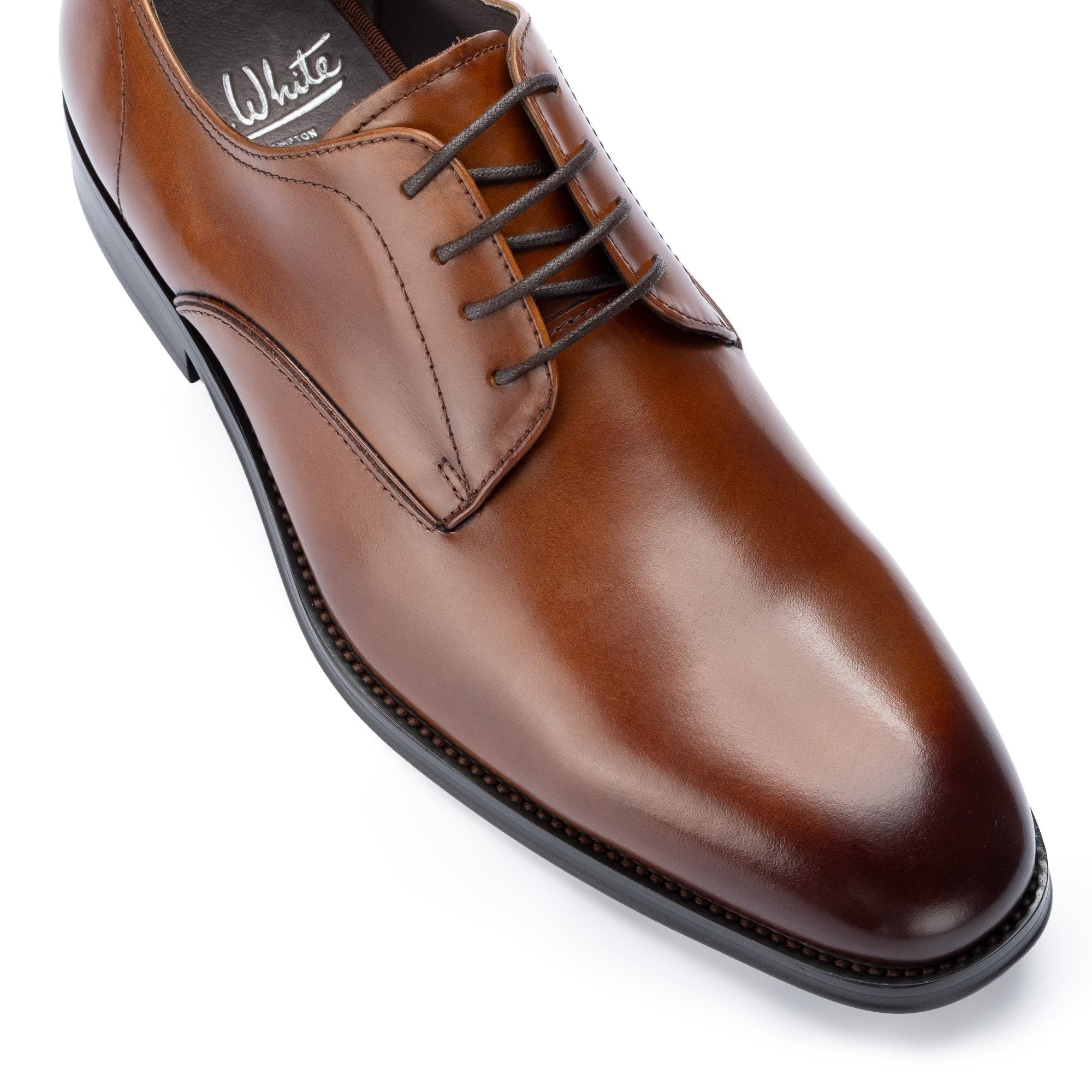
On a Derby, the quarters are stitched on top of the vamp. This is open-quarter construction. The lacing panels splay slightly at rest, giving the shoe more flex across the instep, accommodating a wider variety of foot shapes, and producing a fractionally more relaxed silhouette at the throat. The formality gap between a Derby and an Oxford, while genuine, is narrower than most guides suggest.
That is the whole distinction. Everything else — broguing, toecap style, heel height, sole thickness — is a separate variable layered on top of either construction. An Oxford can be plain or heavily perforated. A Derby can carry a cap toe or a full brogue pattern. These are independent choices.
The Oxford: When Formality Is the Point
The Oxford takes its name — though the etymology is imprecise — from nineteenth-century university culture, where students are said to have moved away from the heavy Hessian boot toward a lower, more fitted shoe. By the early twentieth century the Oxford had become the default dress shoe across Britain, Europe, and most formal Western contexts.
What keeps it at the top of the formality register is the closed quarter. When laced, the sides draw together with no visible gap — the shoe wraps the foot cleanly. Under a well-pressed trouser, particularly a narrow or straight-cut leg, the Oxford disappears into the silhouette without interruption. There is nothing superfluous about it. That restraint is what makes it right for occasions where the dress code is explicit and unforgiving.
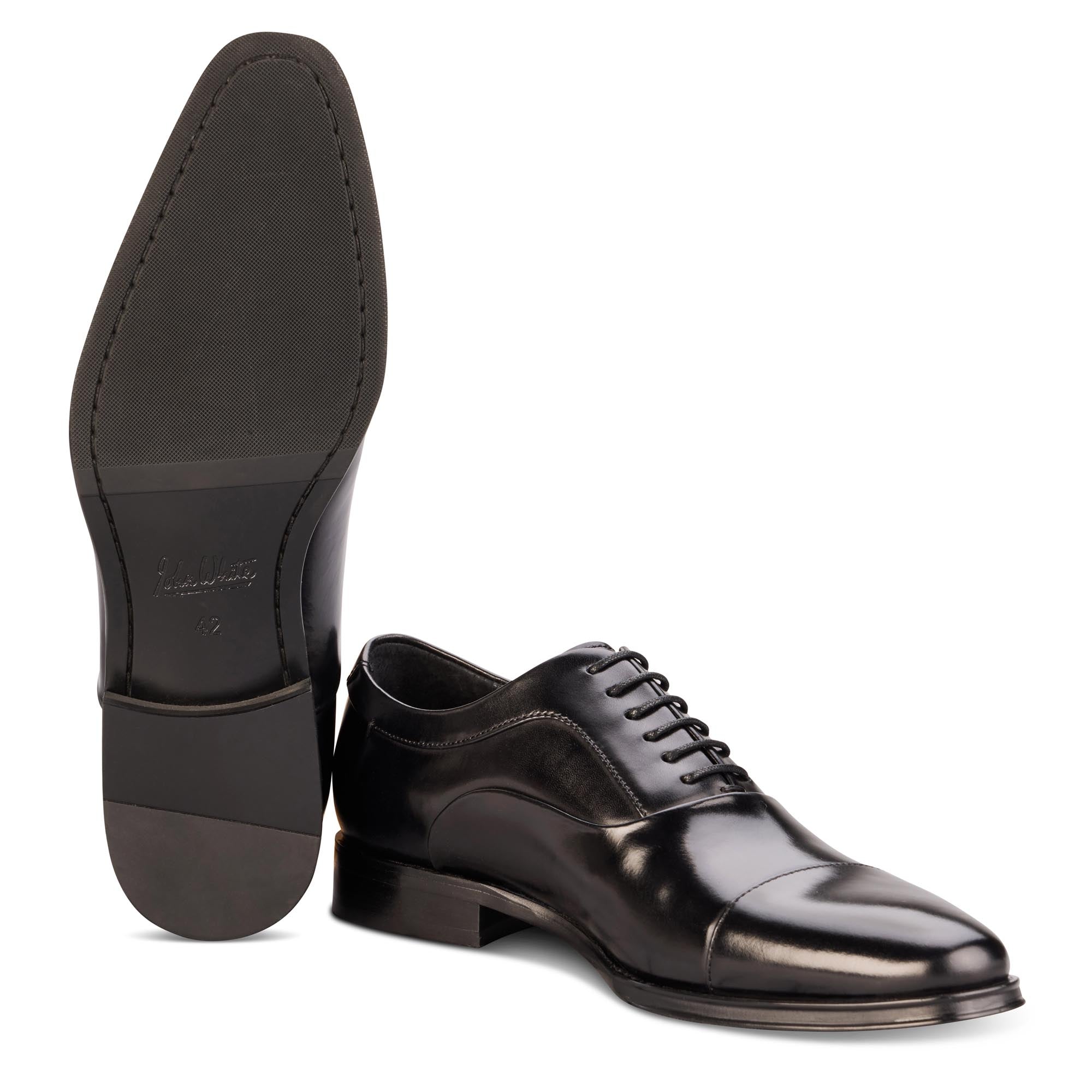
The Guildhall Capped Oxford is the JWS formal shoe. In black it covers the full range of dress occasions: city office, interview, wedding, court. The cap toe — a single horizontal seam across the toe — adds a restrained degree of structure without departing from the formal register. In tan, the same silhouette opens up considerably: summer suits, country events, business-casual pairings where the closed lacing reads as polished rather than stiff.
For those who want texture alongside the Oxford's discipline, the Lucan Semi-Brogue — the highest-volume shoe in the JWS range — applies modest brogueing along the cap edge to a closed-quarter construction. In silhouette it reads as an Oxford; in character, it reads as a brogue. It is a reliable middle position for men who want formality and texture in the same shoe. For a more detailed treatment of the captoe and plain-toe distinction within the Oxford family, that comparison is covered separately here.
When the Oxford Is the Right Choice
- Formal weddings, black-tie-adjacent occasions, and anything with a written dress code
- Job interviews, client presentations, court appearances
- Narrow-cut or high-rise trousers, where the closed profile works with the silhouette rather than against it
- Any context where being slightly over-dressed is preferable to being under-dressed
The Derby: More Versatile Than It Gets Credit For
The Derby's origin is less settled. One version connects the open-laced shoe to the 14th Earl of Derby, who reportedly needed a shoe his gamekeeper could put on more easily in the field. Another traces it through the German Blucher, the military boot redesigned after Waterloo to lace rather than buckle, making it quicker to remove after battle. What is consistent across both accounts is that open-quarter construction was valued for adaptability: wider feet, heavier socks, outdoor terrain, practical use.
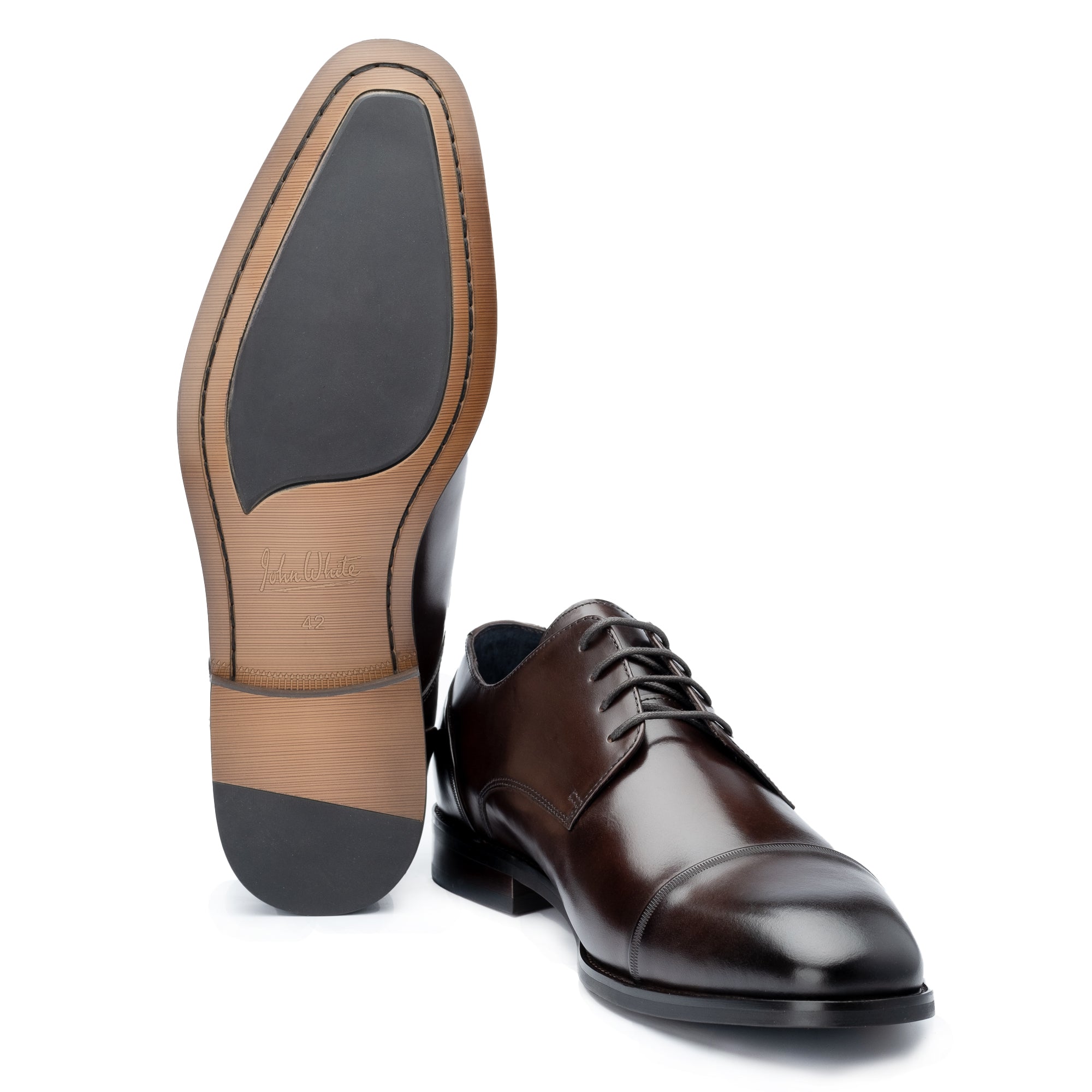
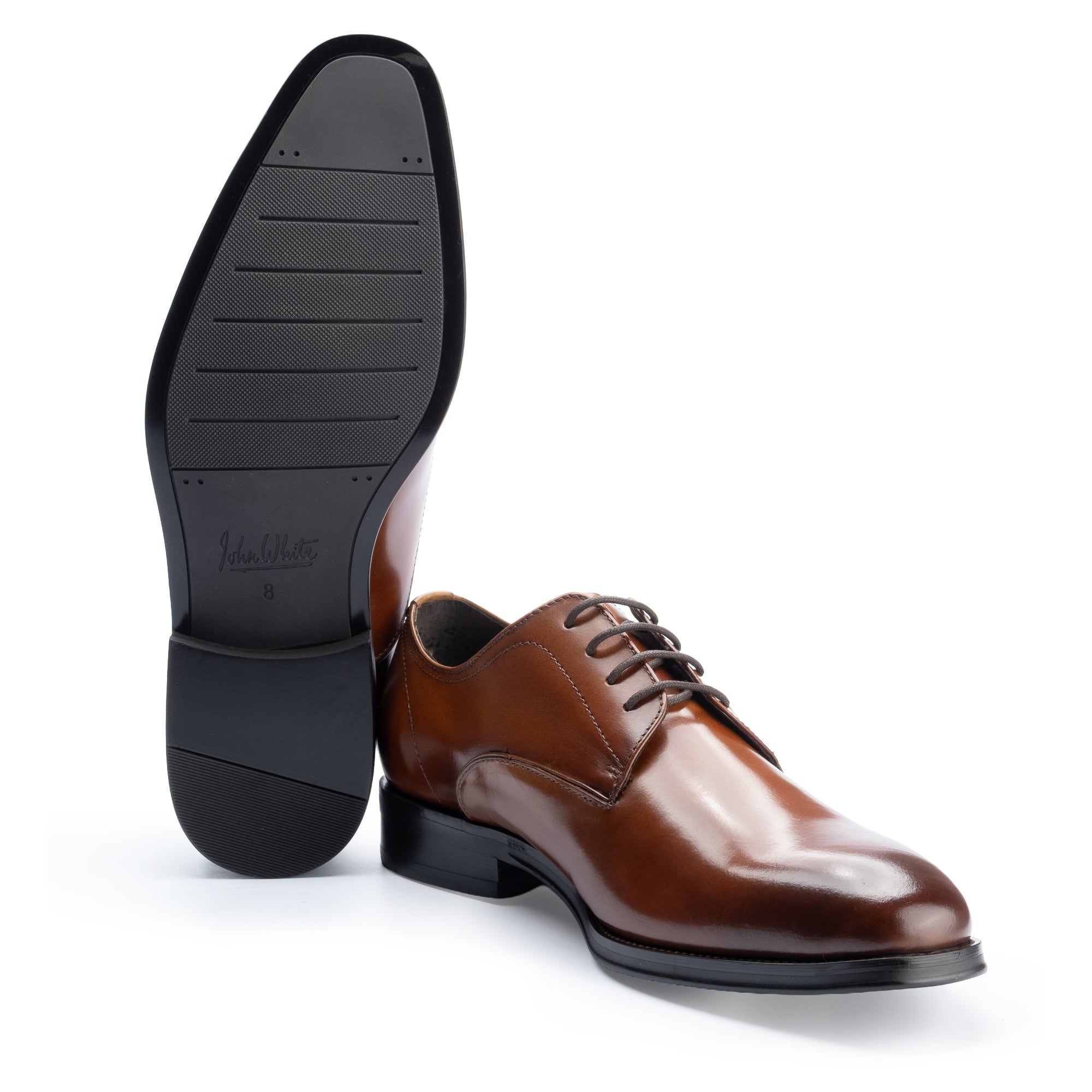
In contemporary sartorial terms, the Derby sits one notch below the Oxford on the formality scale. In practice that notch matters very little in most modern contexts. A well-polished black Derby reads as formal in every environment short of white tie. A brown or tan Derby in a good grain leather is the most reliable workhorse in the British man's shoe wardrobe — formal enough for the office, relaxed enough for a weekend occasion.
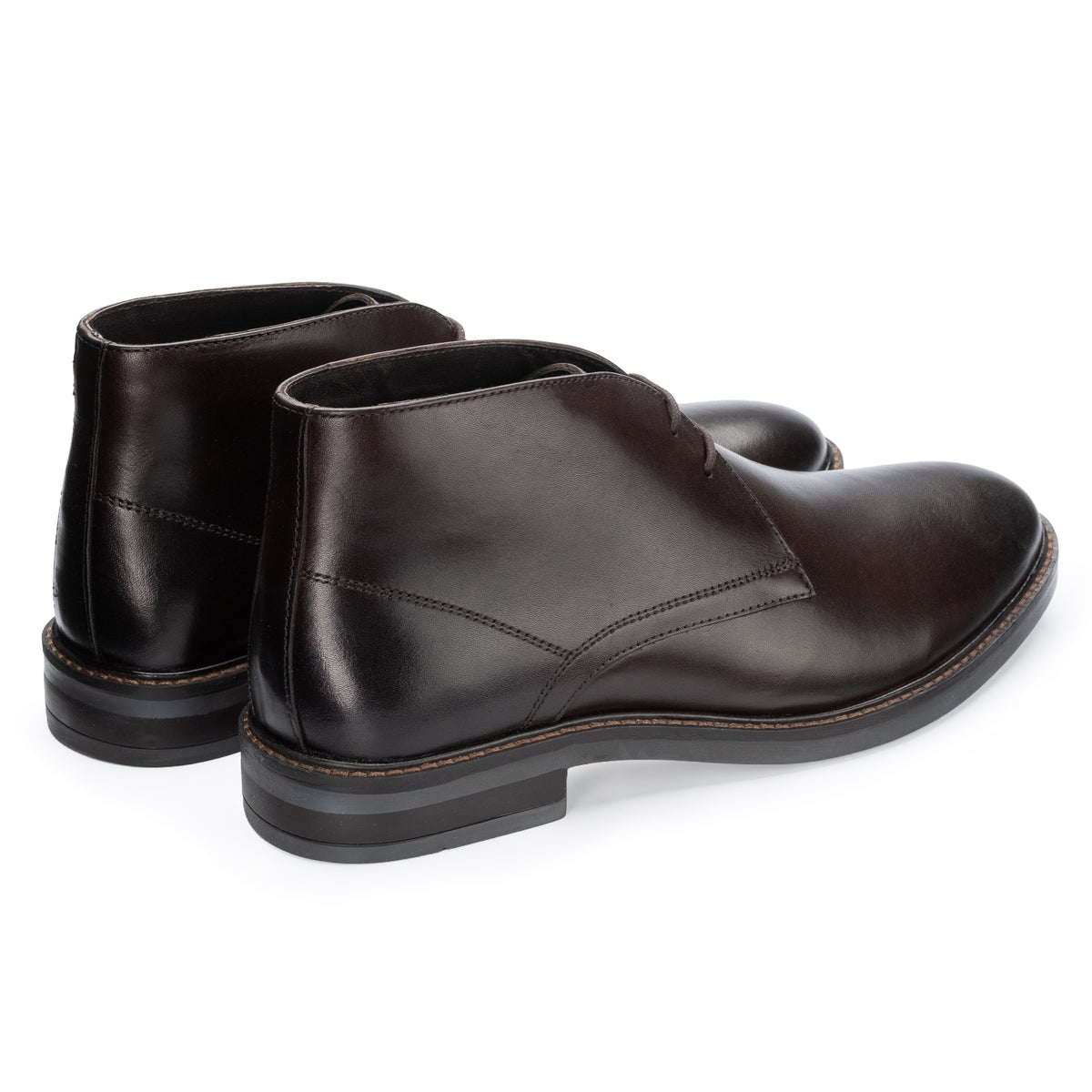
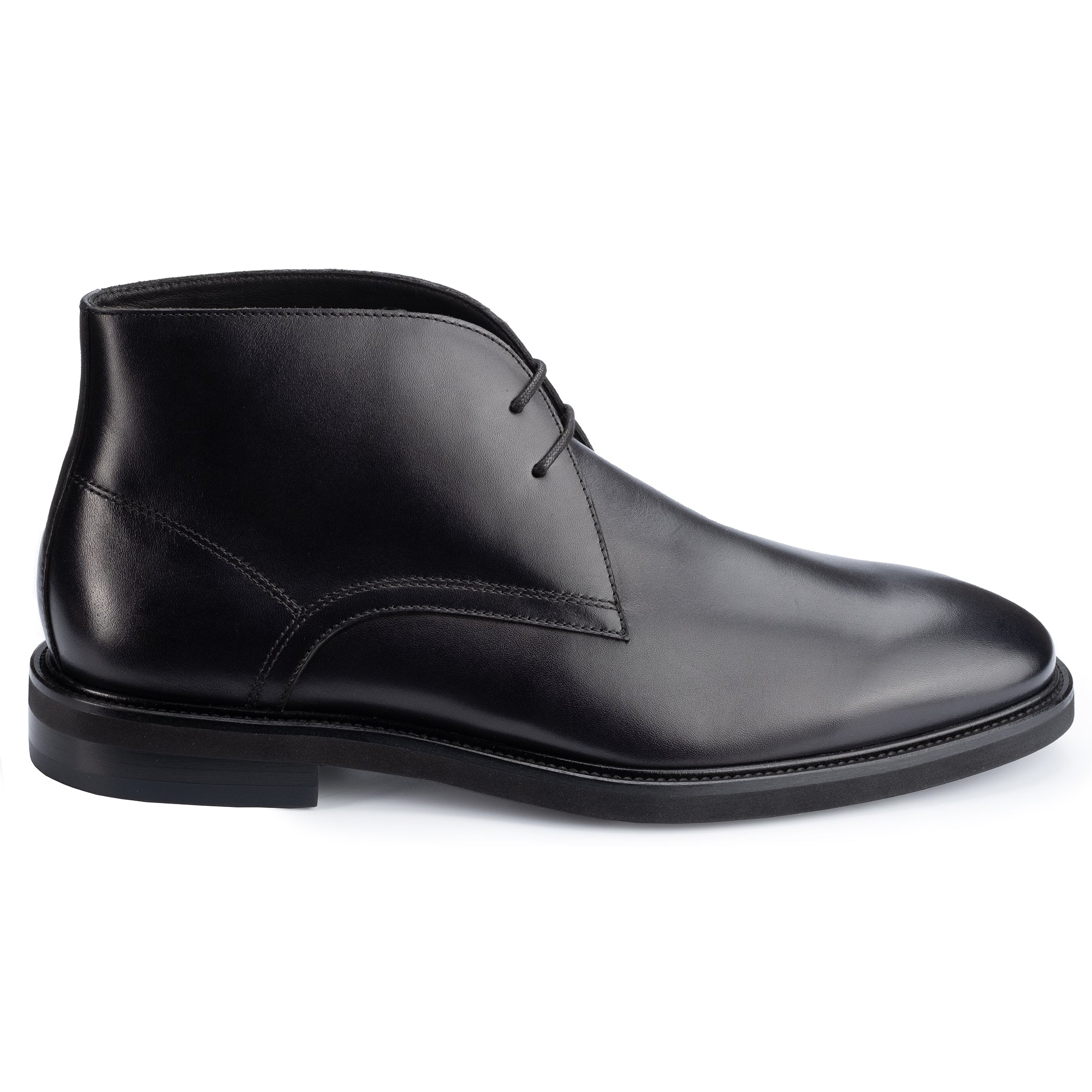
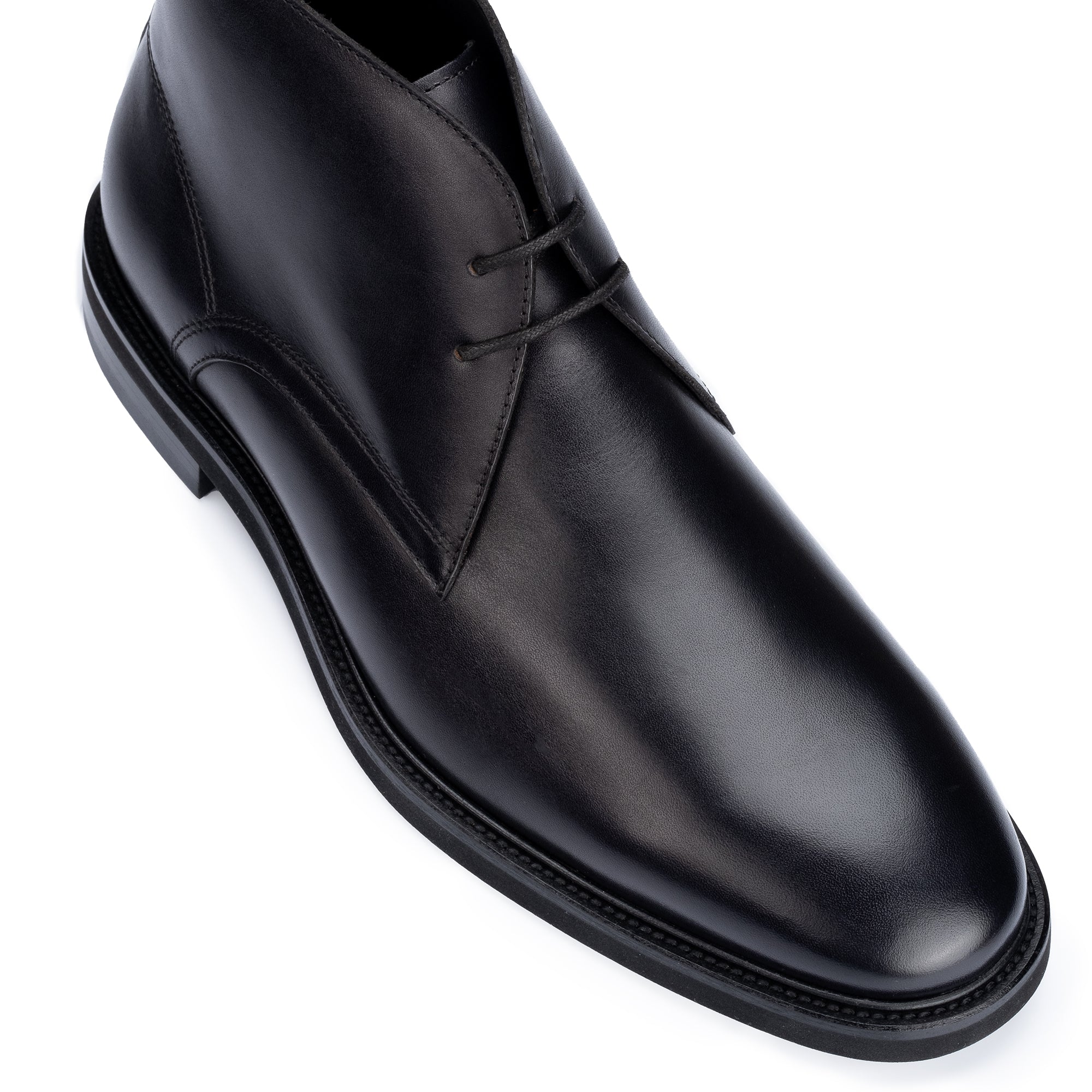
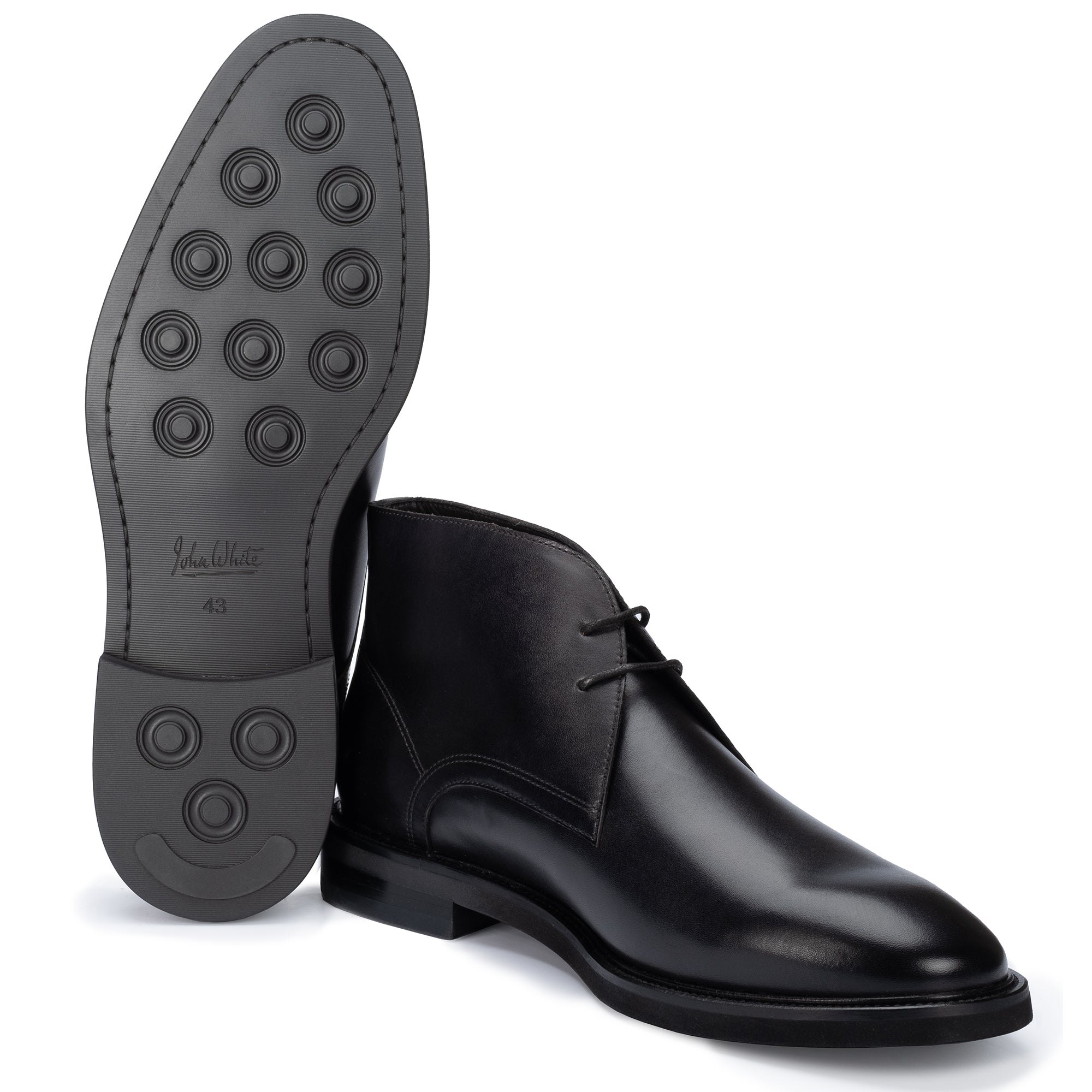
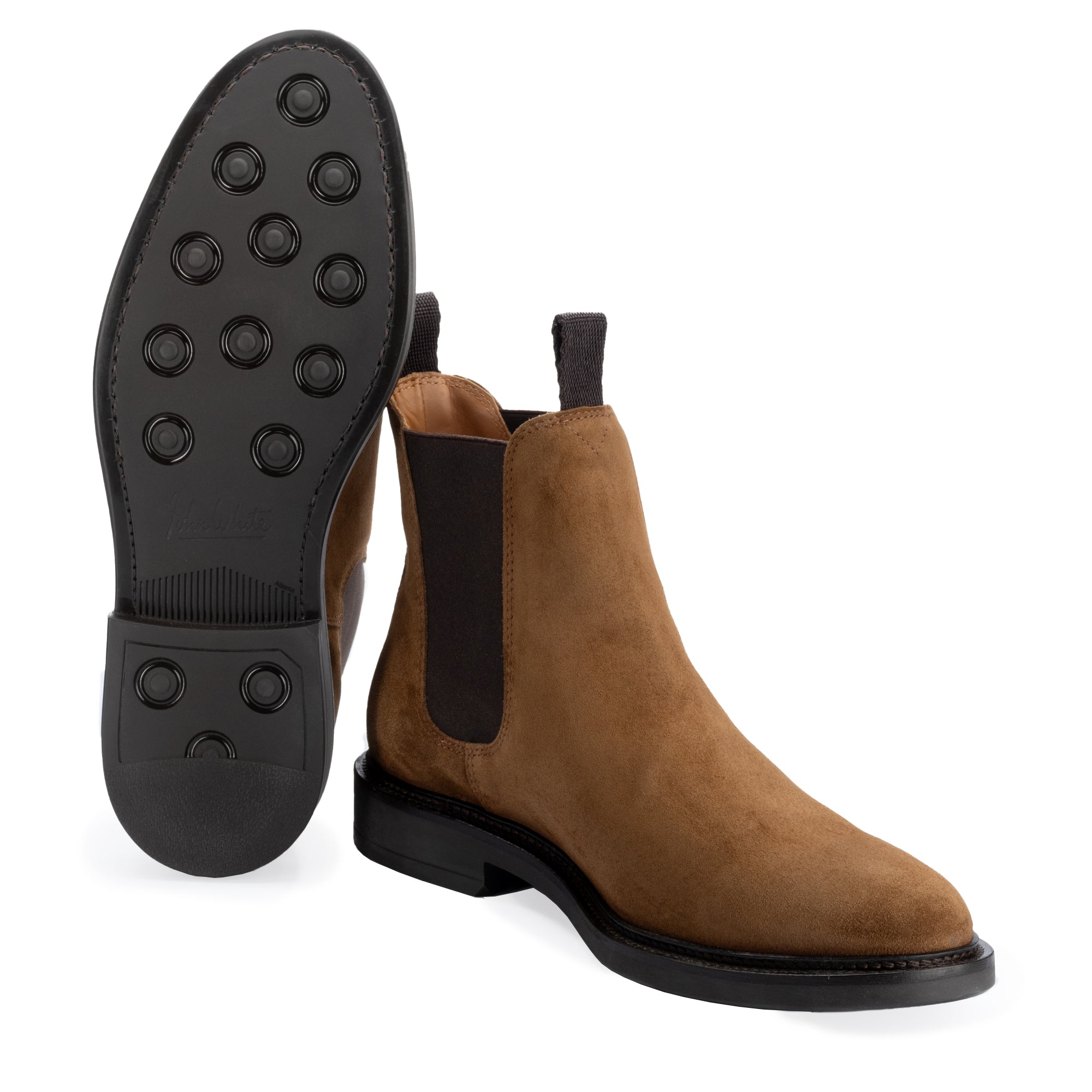
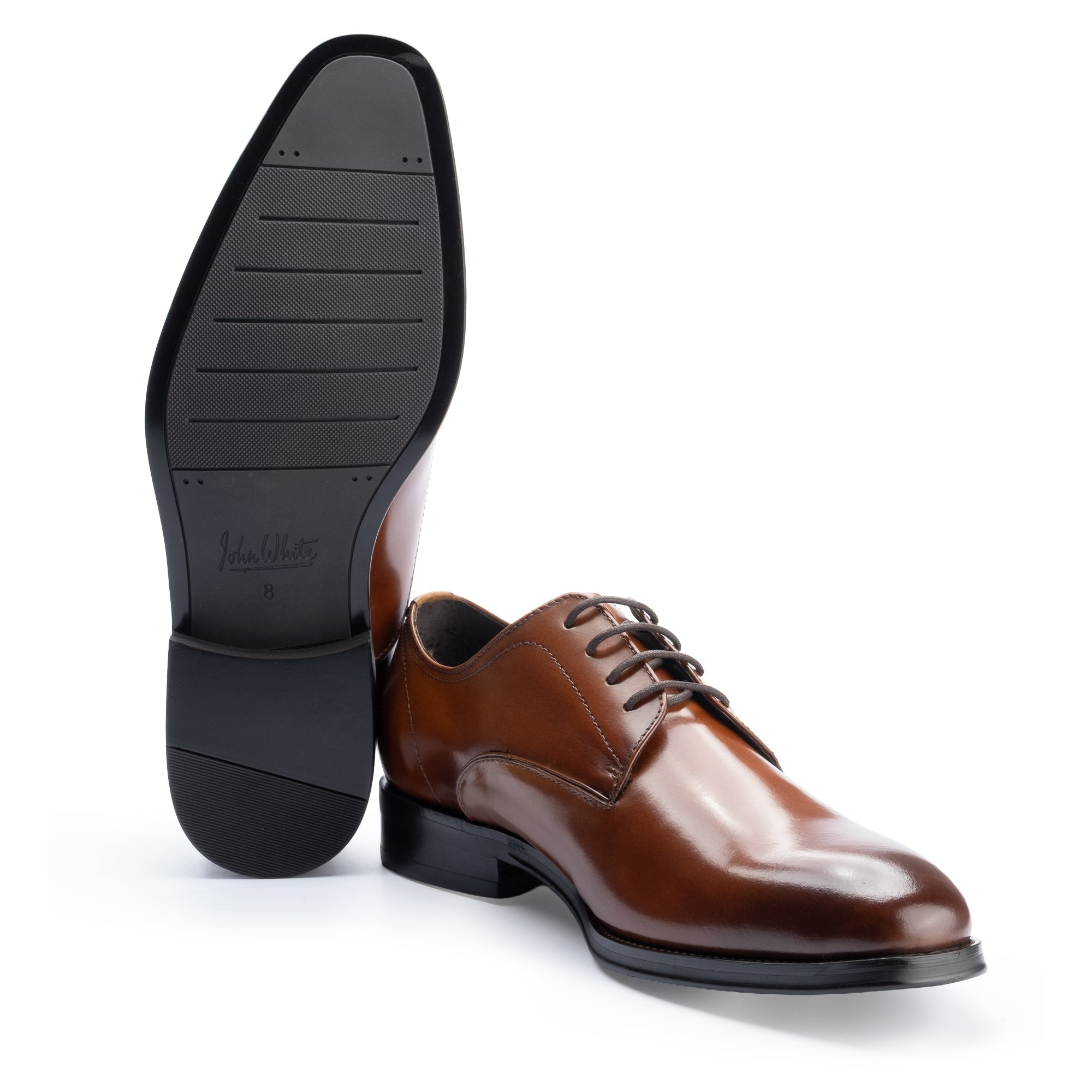
The JWS Derby range covers several distinct positions. The Tanner Derby offers a plain-toe profile in black or brown: clean and unadorned, appropriate for office and occasion wear without demanding attention. The Broad Derby takes a slightly more substantial build, well-suited to heavier-weight fabrics and autumn tailoring. The Wilms Derby produces a leaner silhouette within the same open-quarter construction — closer to the Oxford's profile despite its Derby architecture.
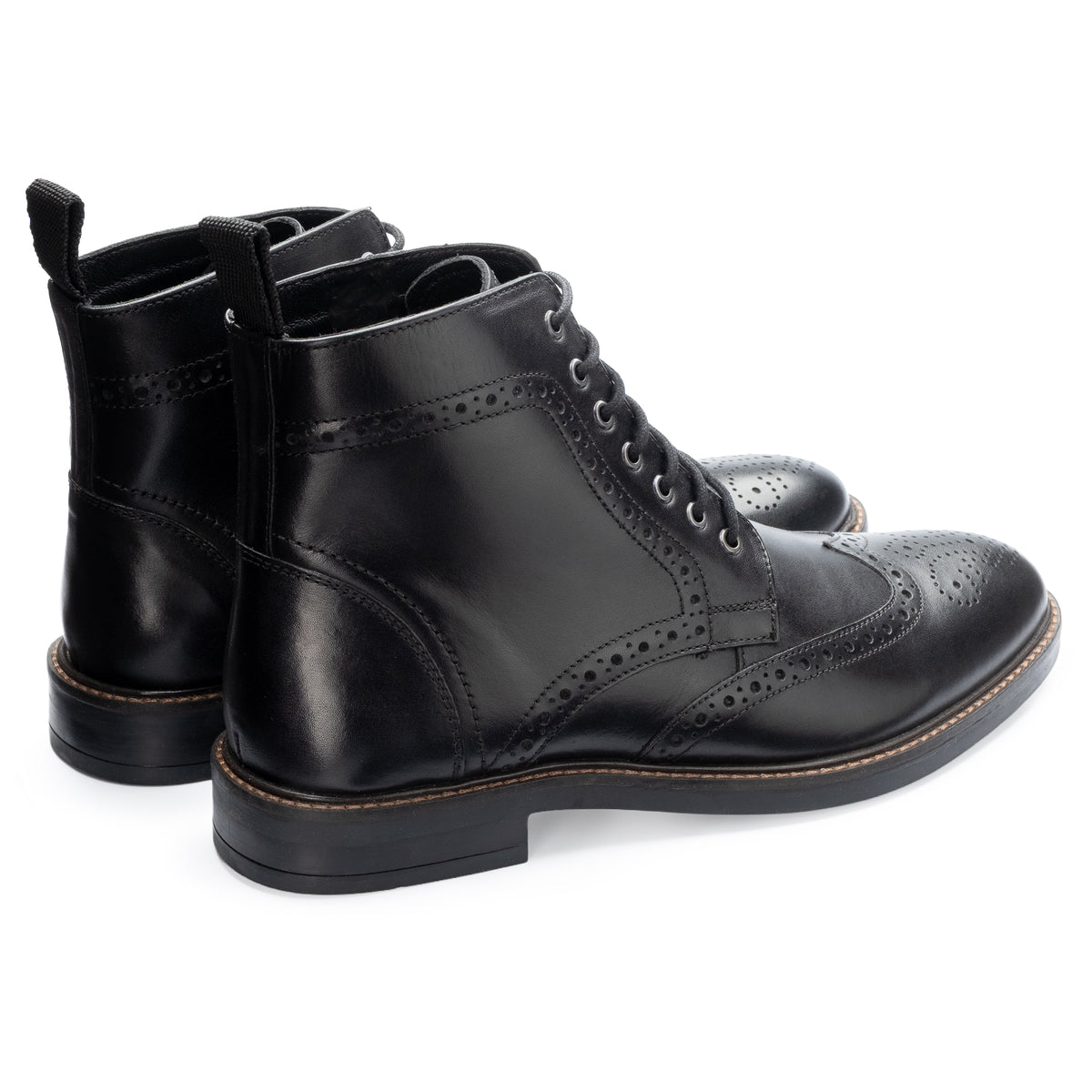
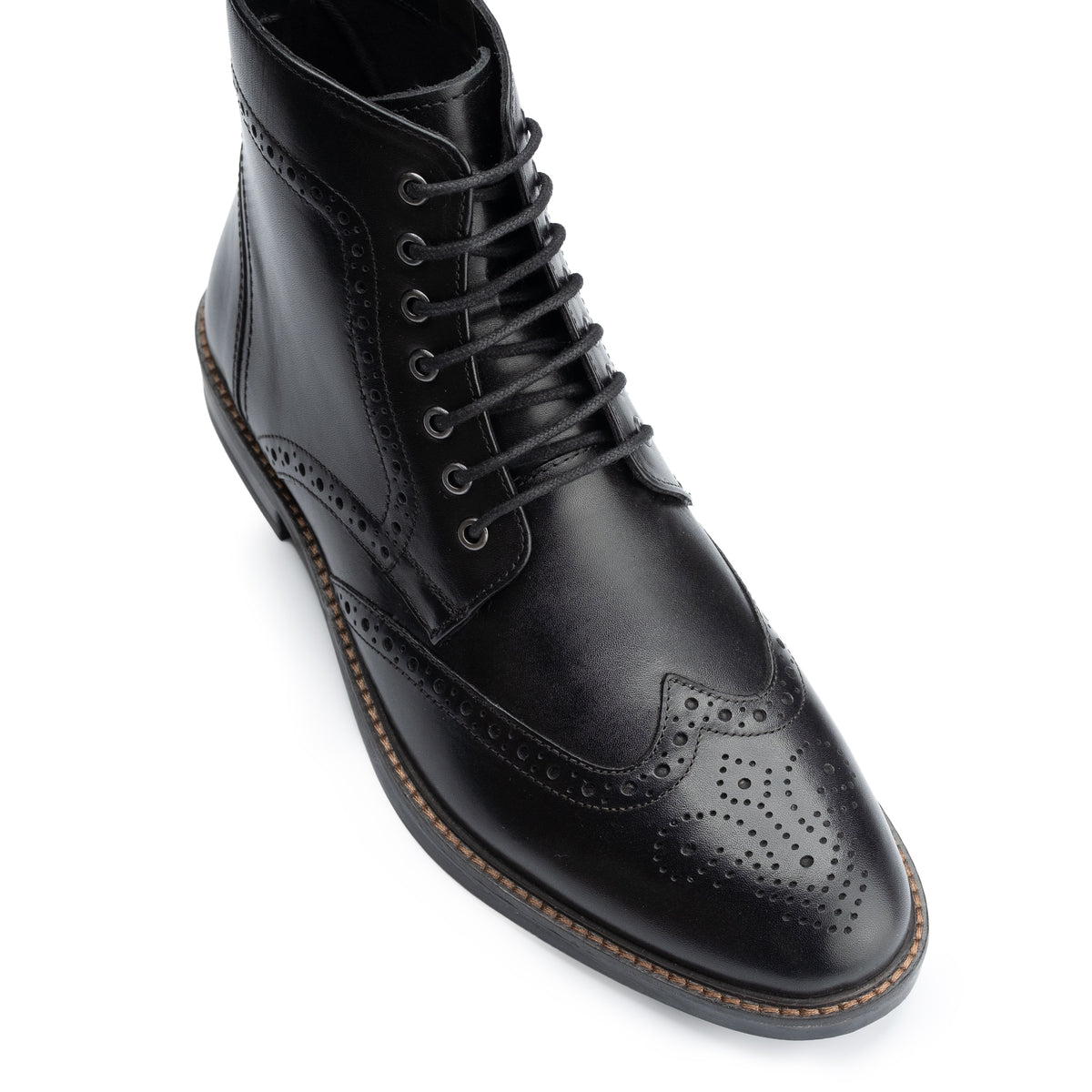
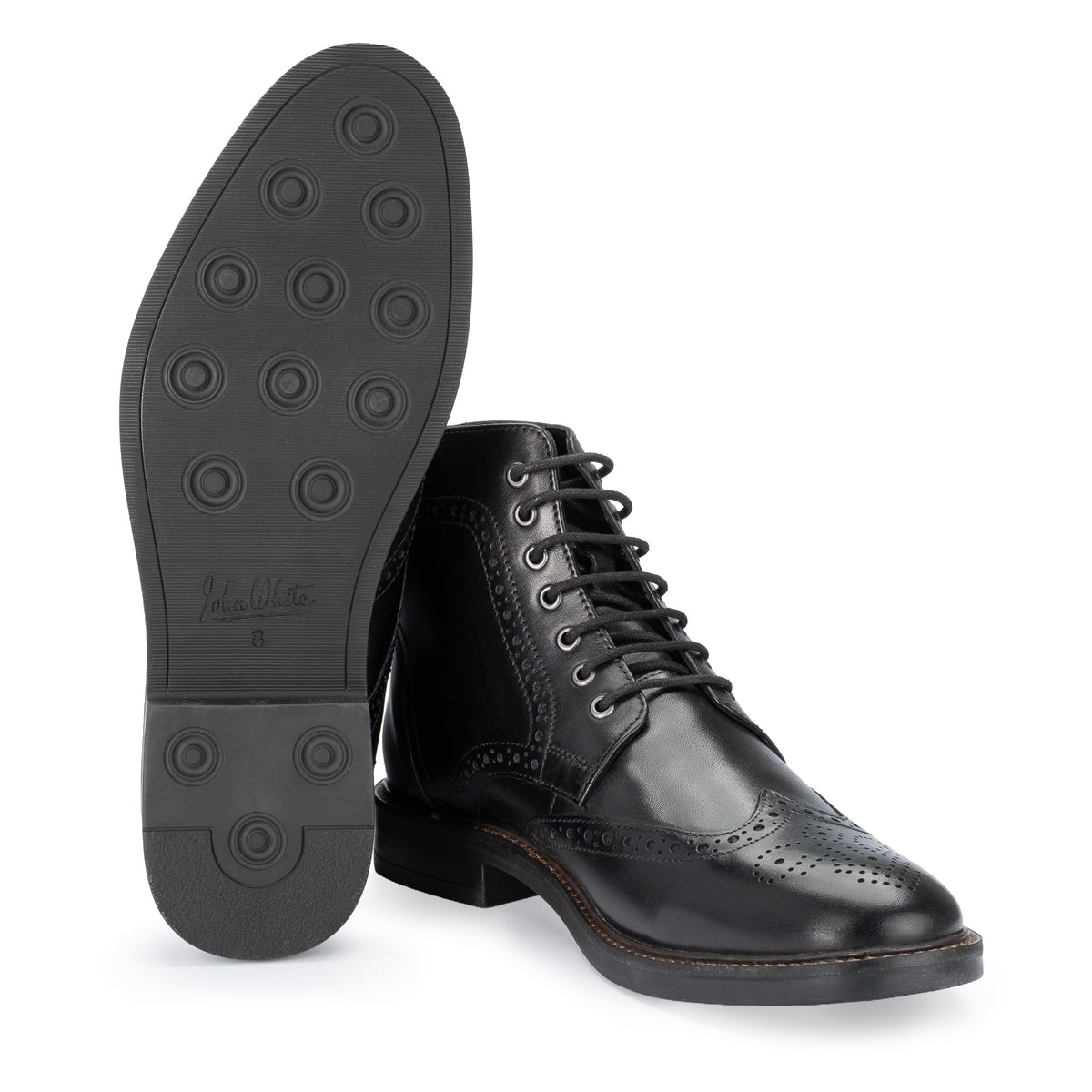
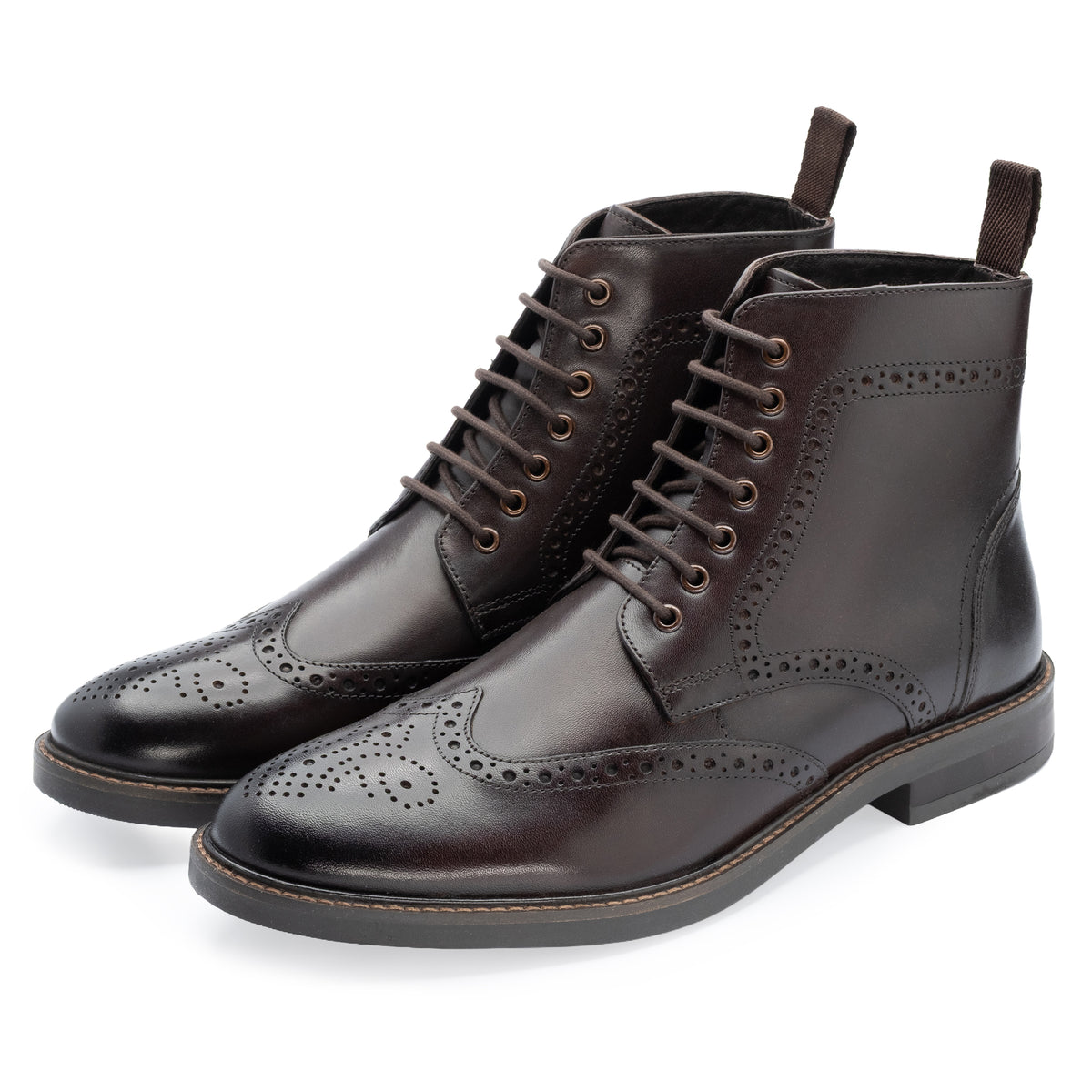
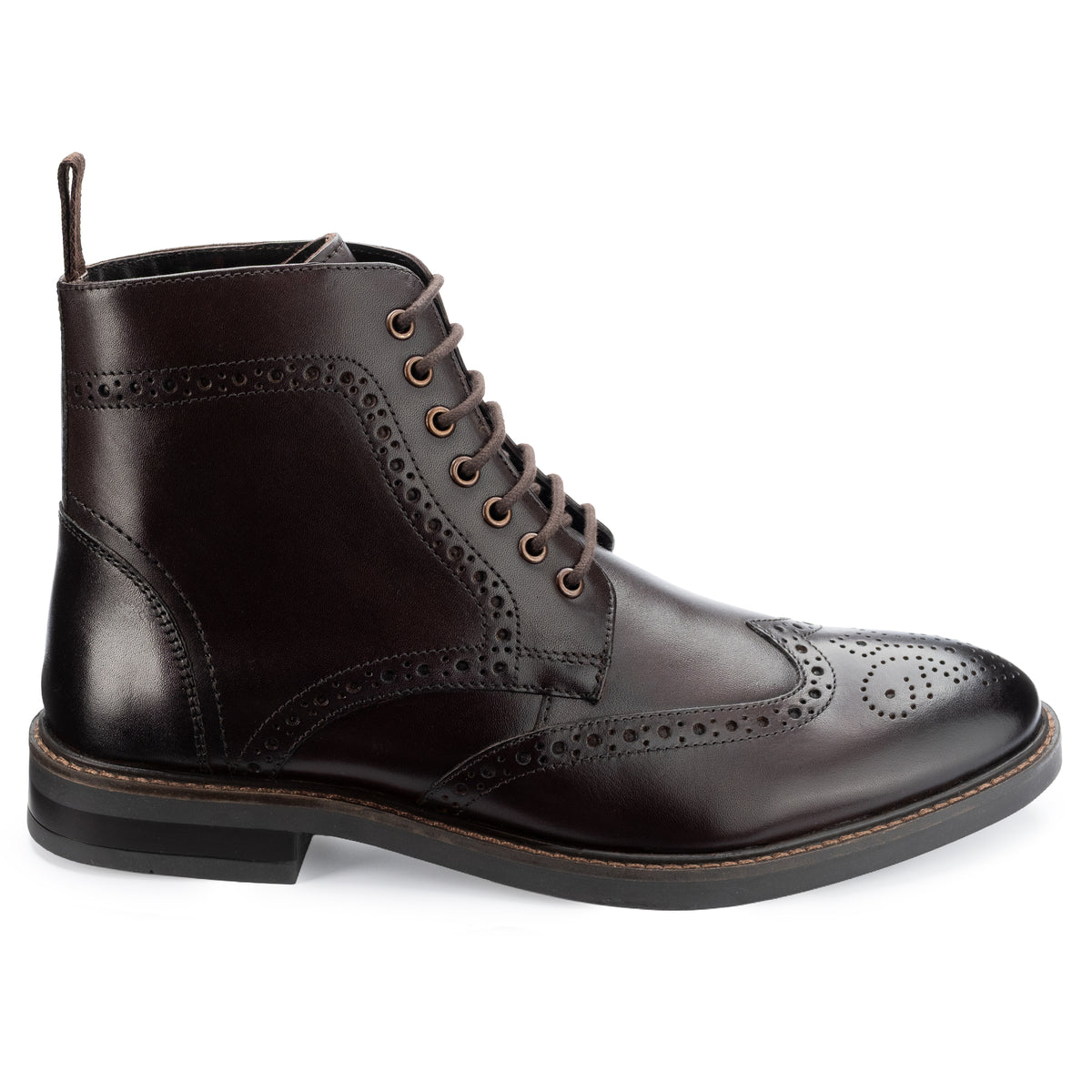
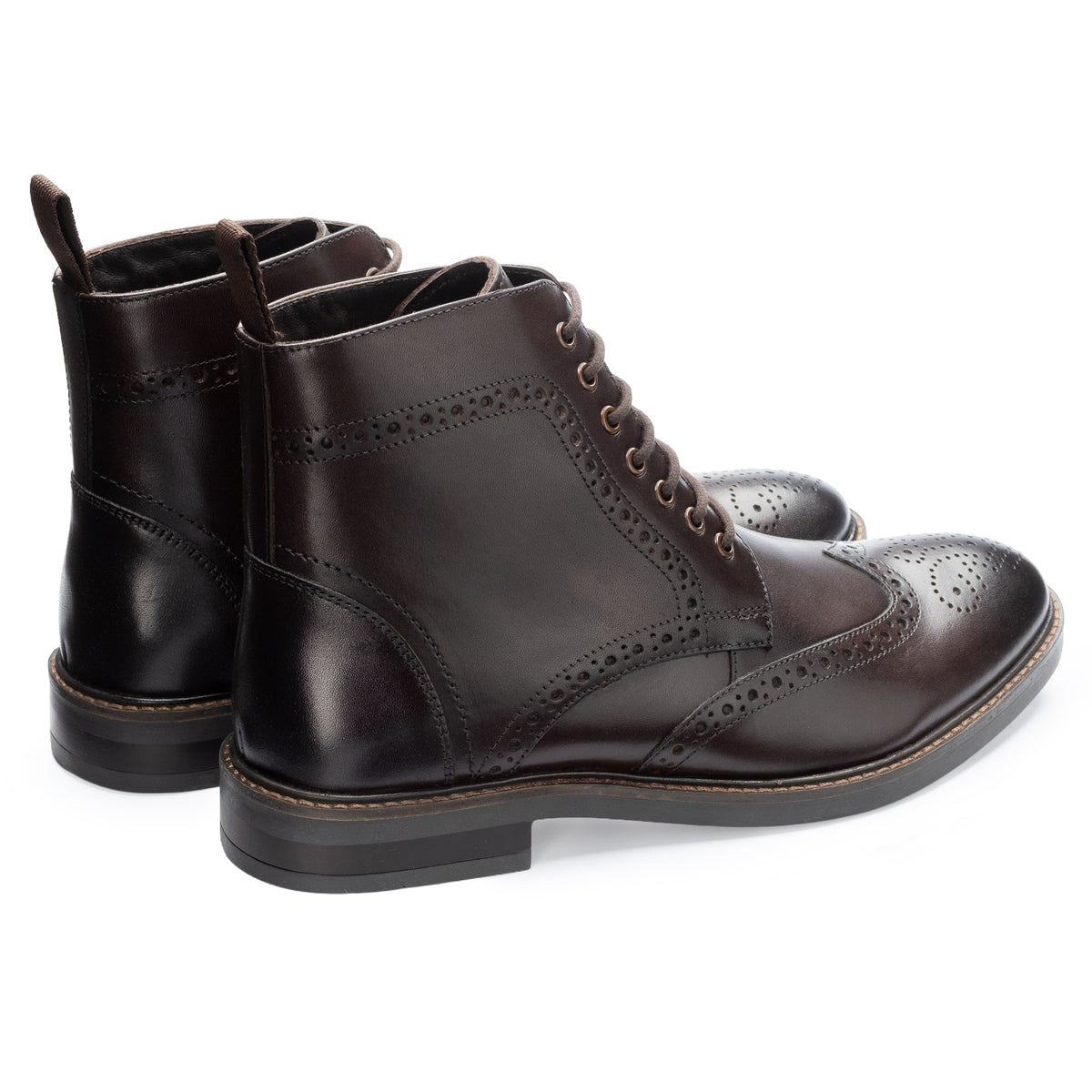
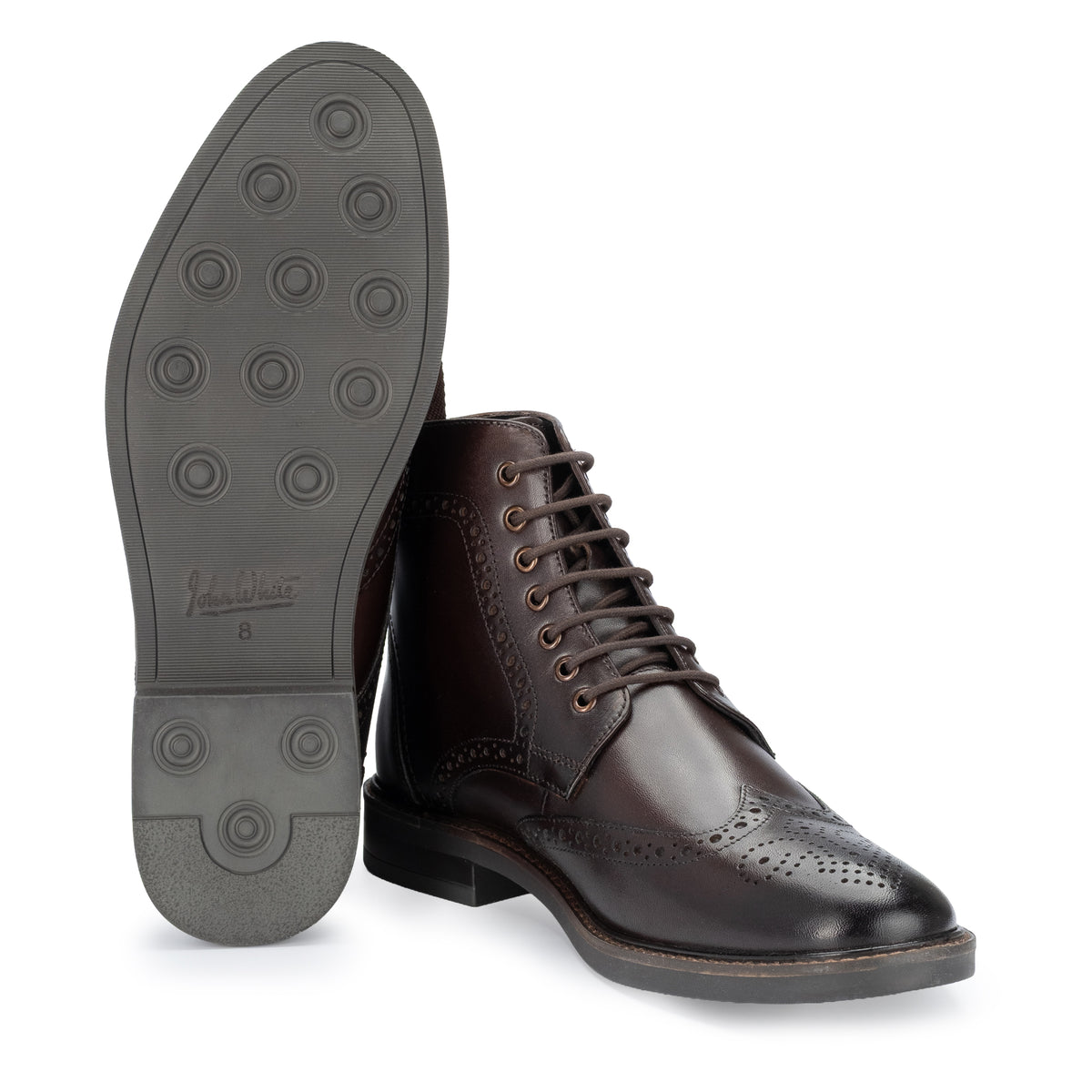
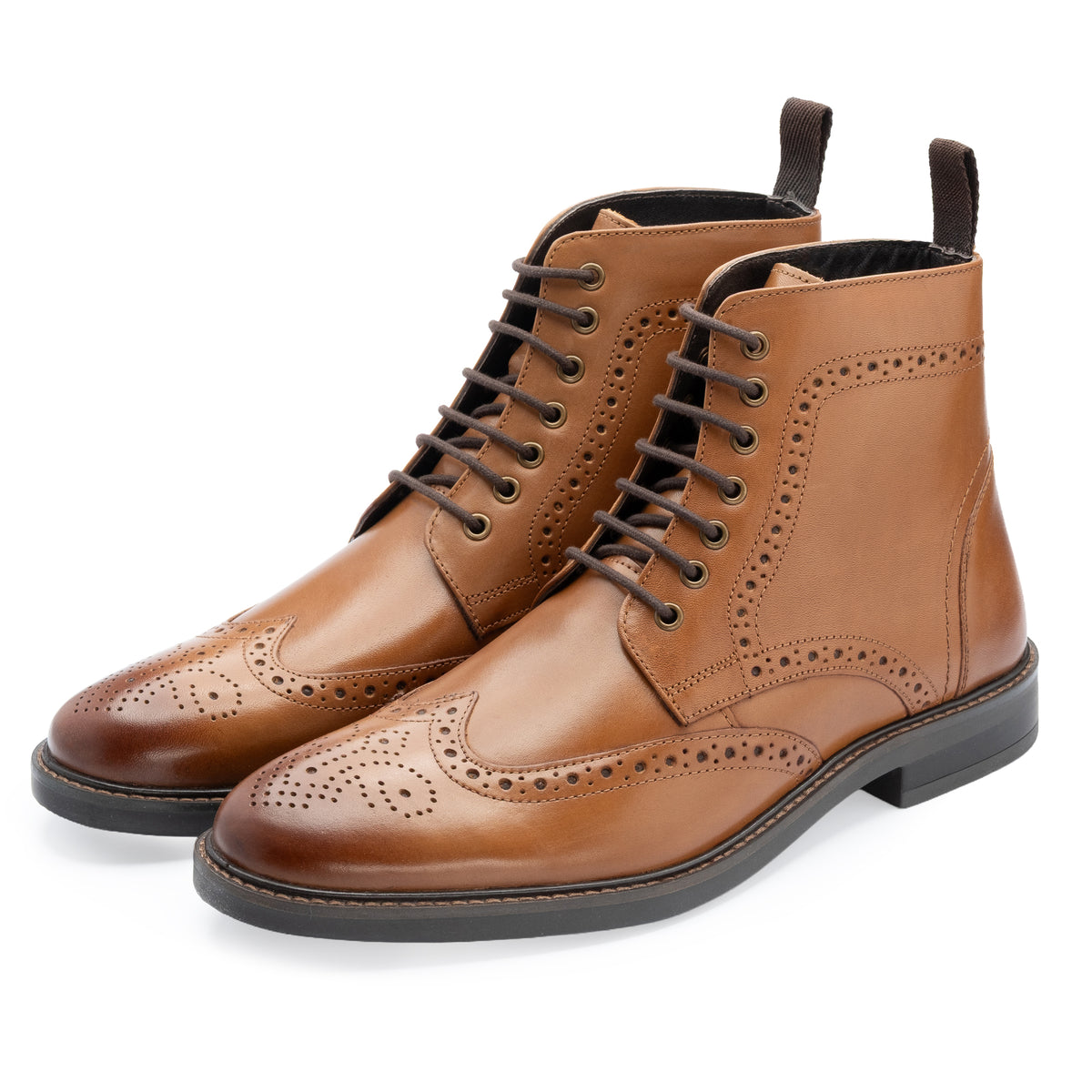
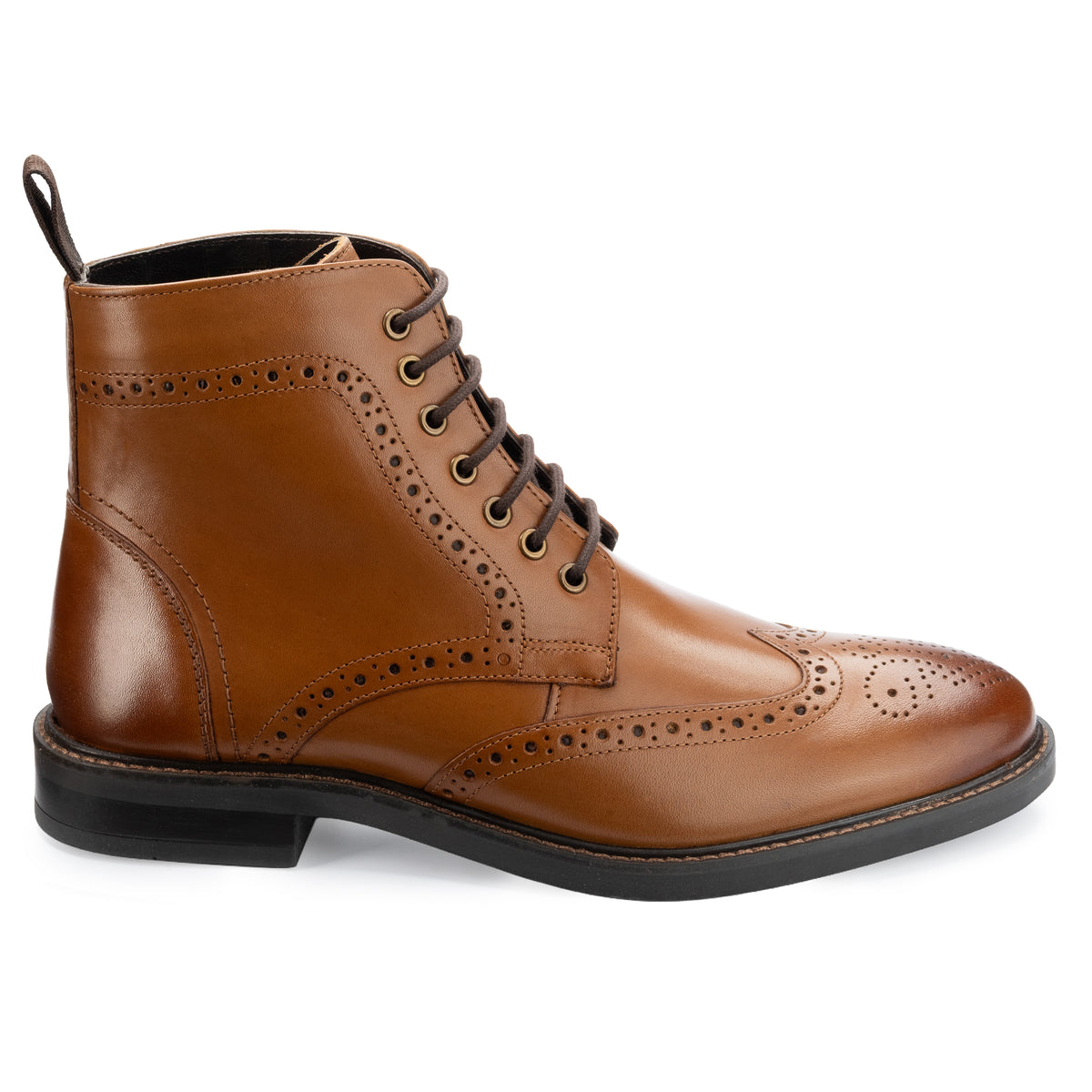
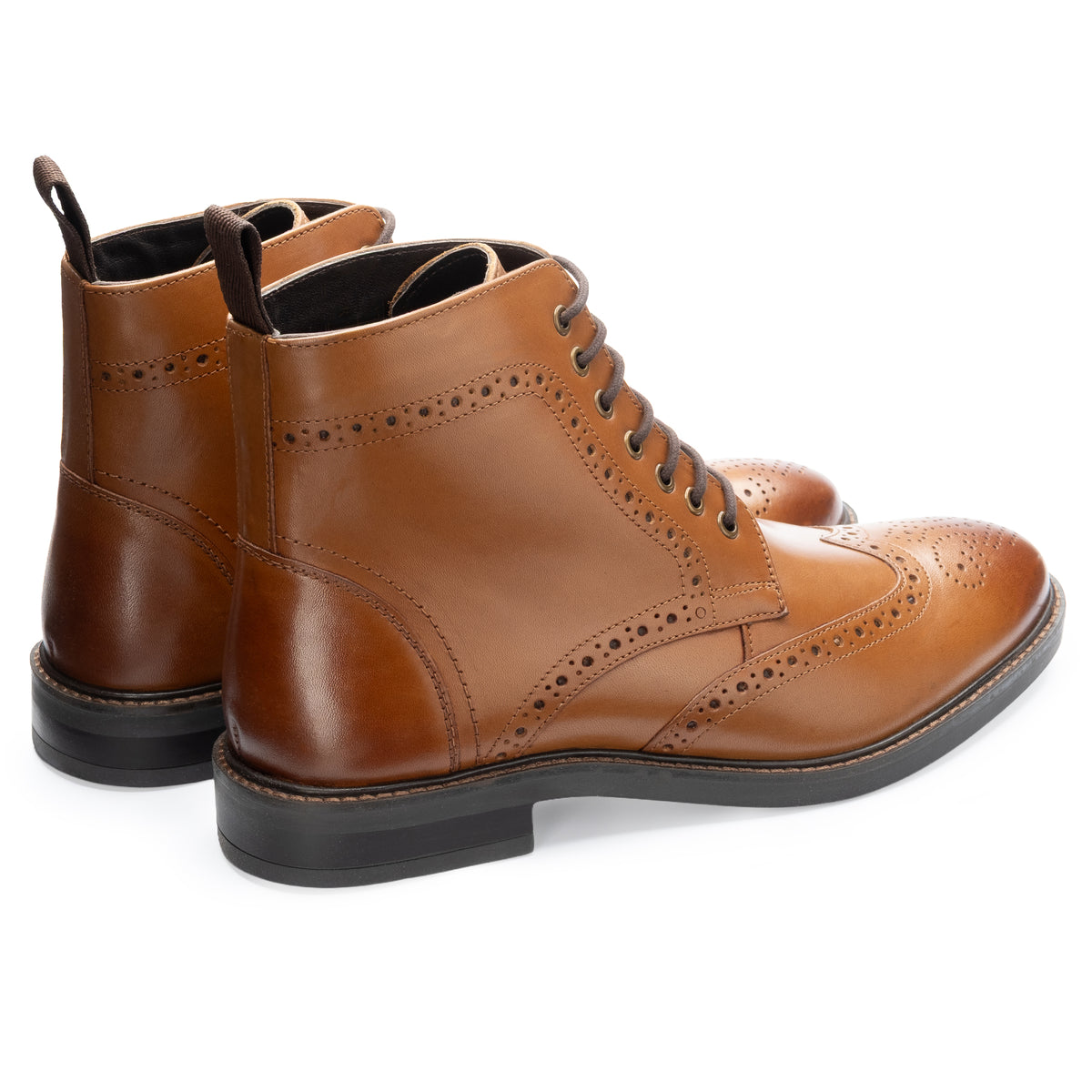
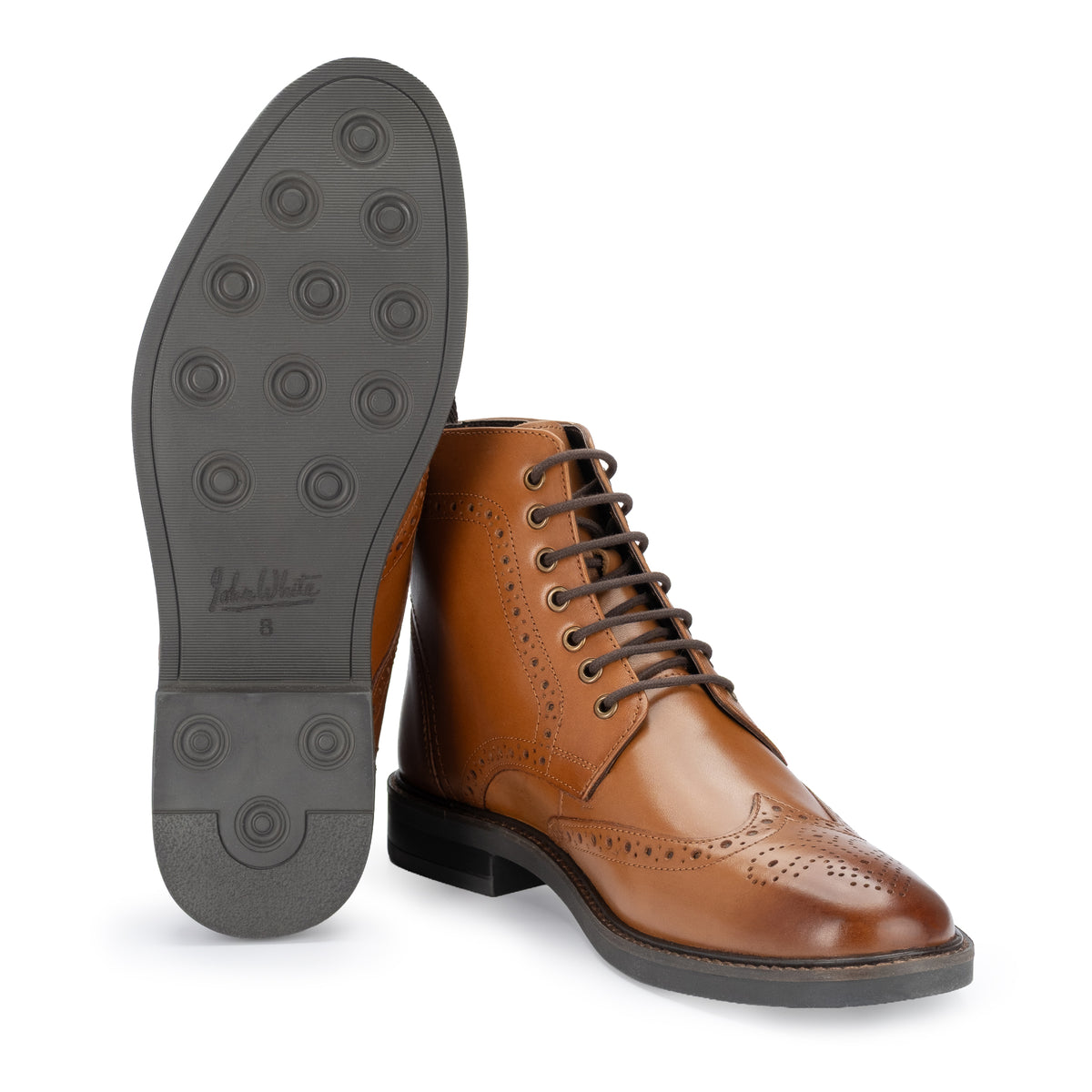
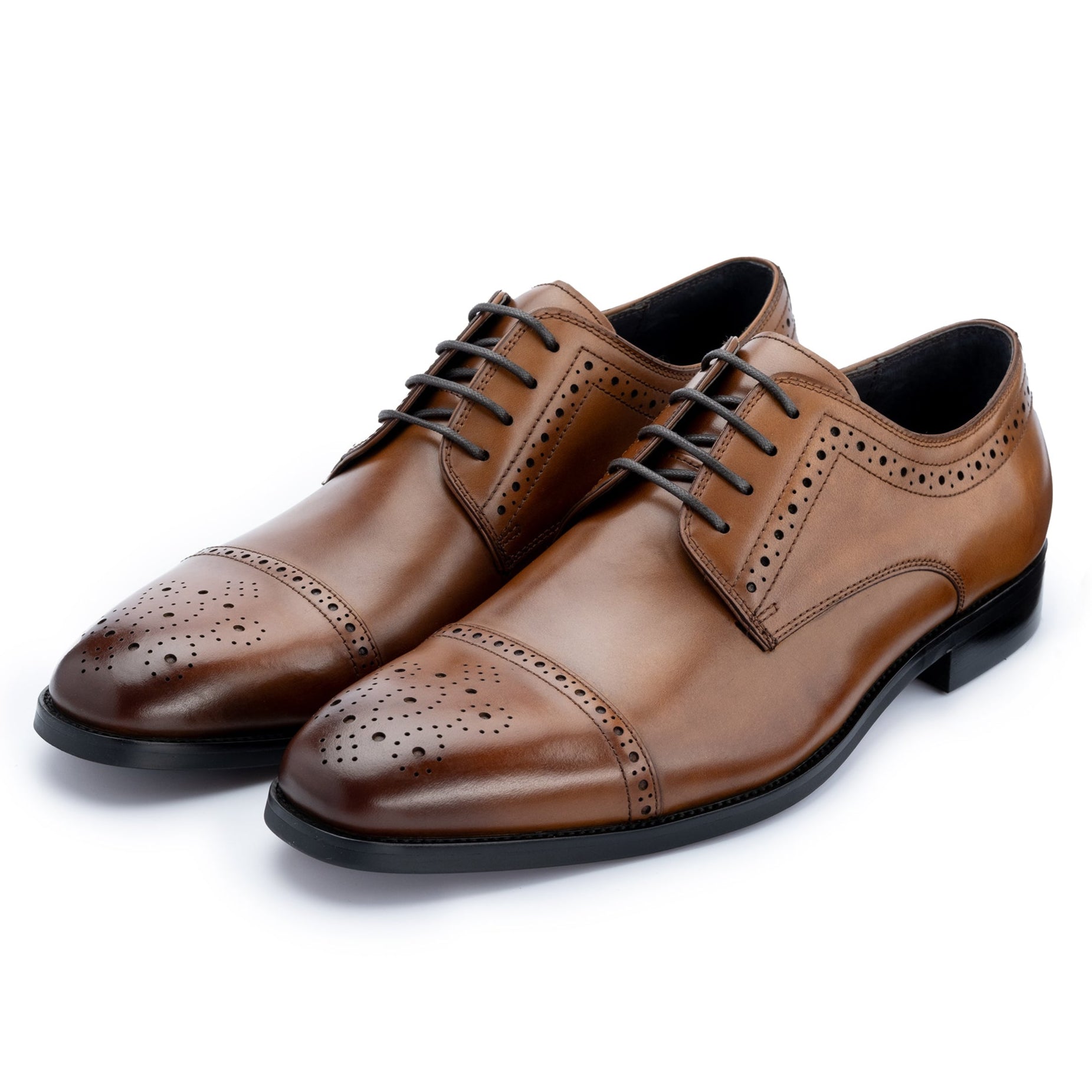
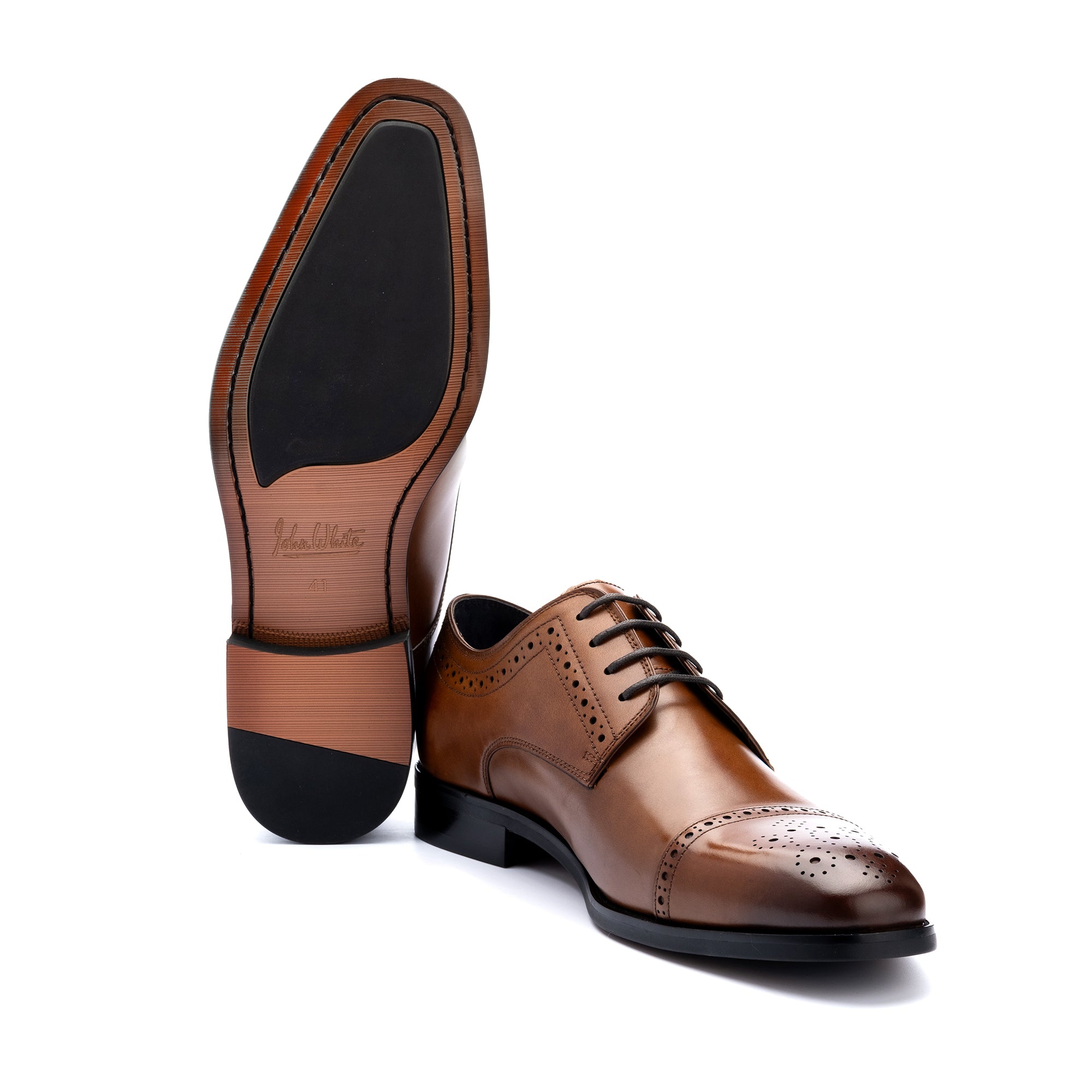
For those who want character alongside versatility, the Stokes Brogue Derby — available in black, brown, and tan — brings full brogueing to an open-laced construction. In tan or brown, it is one of the better smart-casual investments across the JWS range: dressed up with a wool suit, dressed back with chinos or moleskin trousers, or worn with dark jeans without looking out of register. Explore the full Derby range if you are coming to this family for the first time.
When the Derby Is the Right Choice
- Smart-casual workplaces where the Oxford would feel effortful or out of tone
- Country weddings, garden parties, and outdoor occasions where closed lacing risks looking pinched against an informal setting
- Chinos, cord, moleskin, and dark denim — the Derby's open construction sits more naturally against relaxed trouser weights
- Men with a wider foot or higher instep who find the Oxford's closed quarter creates unwanted pressure at the lacing
Broguing: A Separate Variable
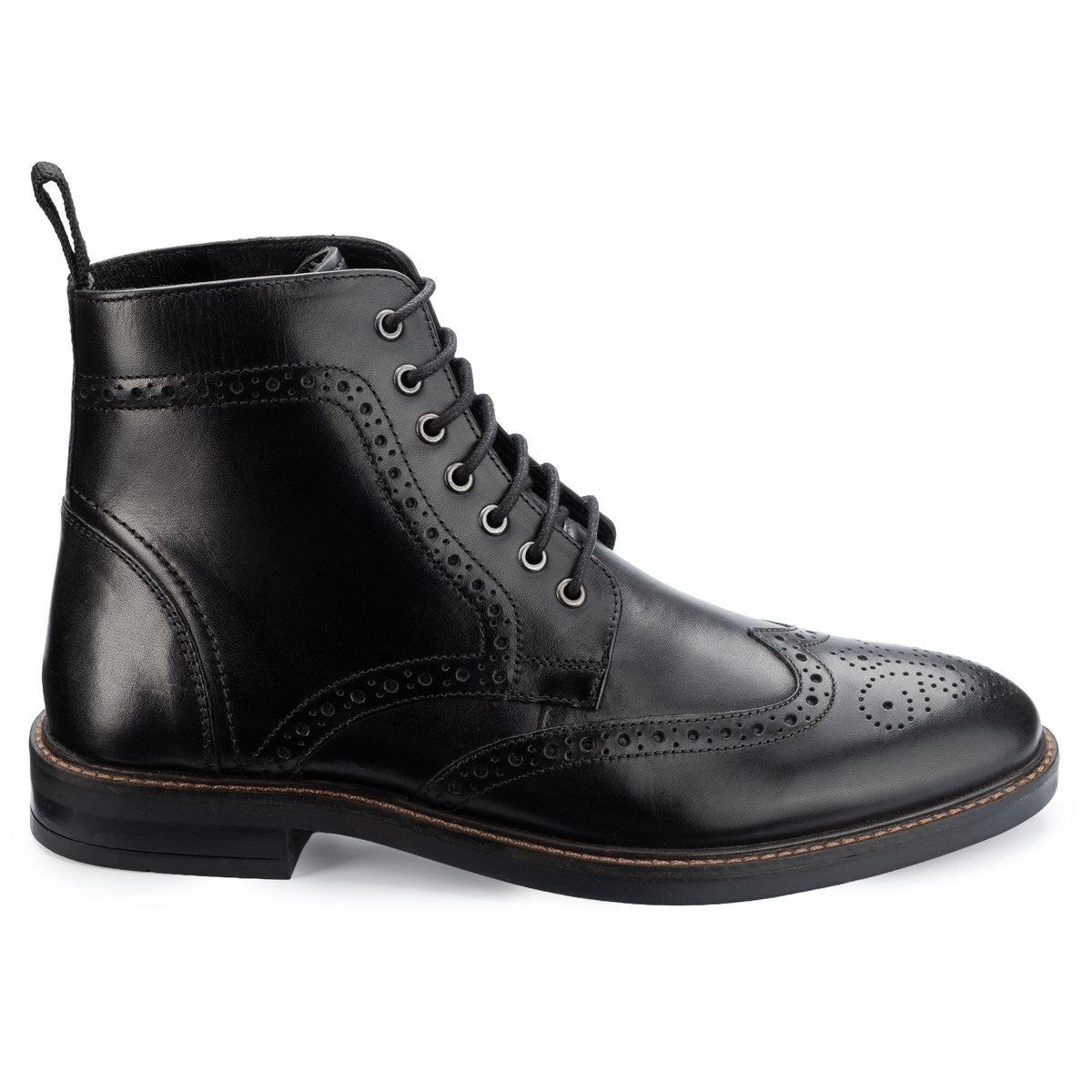
Brogue perforations — the decorative punched-hole pattern that follows the seams and toe cap of a shoe — do not determine whether a shoe is a Derby or an Oxford. They are an independent decorative layer applied to either construction.
A full brogue on an Oxford produces a wingtip Oxford — still formally closed at the quarter, but ornamented. A semi-brogue on a Derby gives you an open-quarter shoe with a perforated cap. The Lucan Semi-Brogue is an Oxford. The Stokes Brogue Derby is a Derby. Both are brogued. Knowing which is which matters because the construction affects fit and occasion, while the broguing affects character and formality register.
The brogueing does, however, move the shoe down the formality scale independently of the lacing. More broguing equals a less formal shoe. A plain-toe Oxford at the top of the register; a full-brogue Derby at the bottom of the dress-shoe range (though still well above a trainer or casual loafer). The Lucan Semi-Brogue holds the middle ground: Oxford discipline, brogue texture.
Colour and the Formality Register
Colour affects formality at least as much as construction. The general rule is simple, even if exceptions abound:
- Black: formal. Interview, funeral, evening occasion, any context where understatement is required. Both the Oxford and Derby are appropriate; the Oxford is marginally the safer choice at the extreme formal end, though a well-kept black Derby is indistinguishable to most observers.
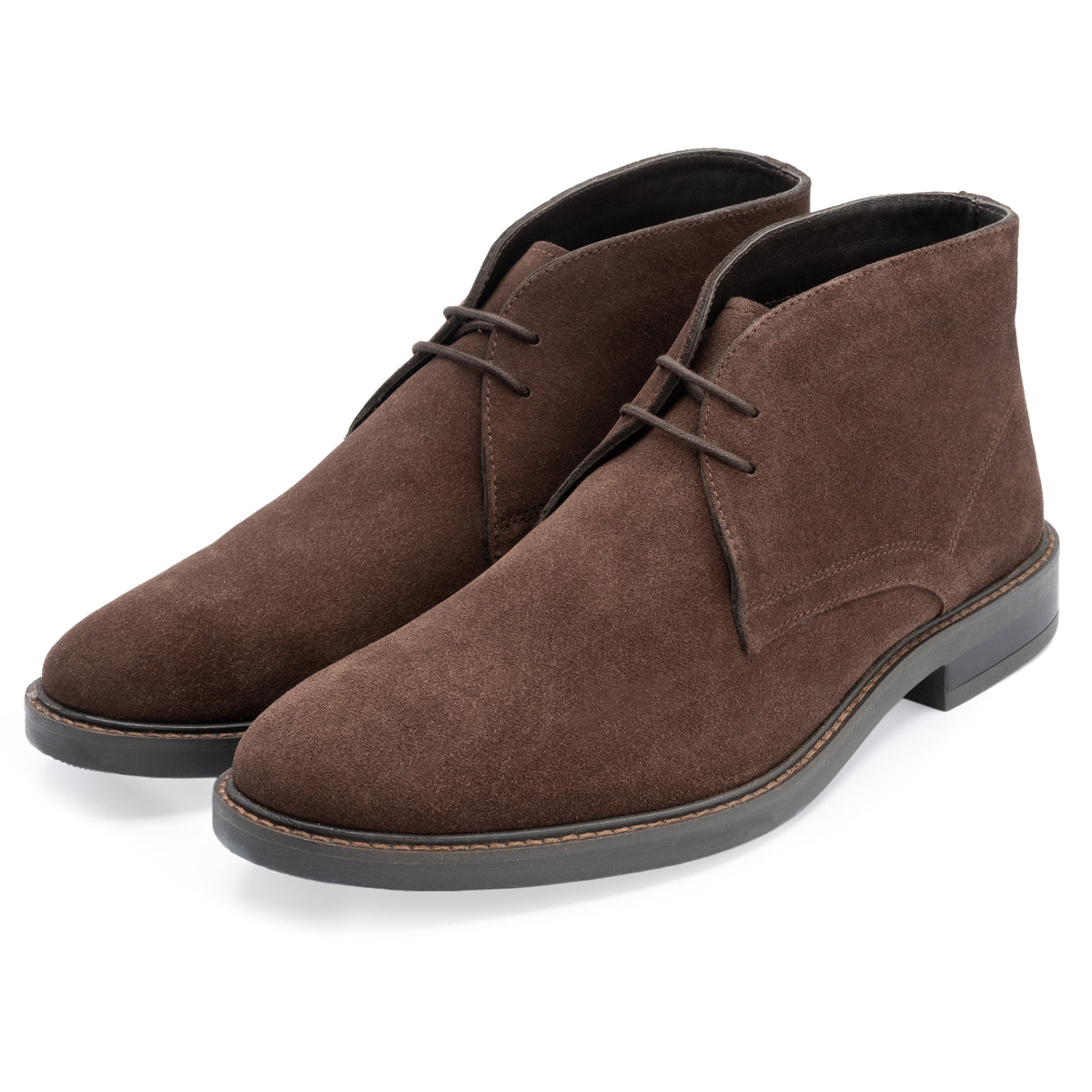
- Brown: business-casual through country-smart. Charcoal and mid-grey suits, tweed, wool flannel. The Derby carries brown more naturally — its open construction is in keeping with the slightly relaxed register that a brown shoe implies.
- Tan: smart-casual and summer. Chinos, linen, lightweight suits in navy or pale grey. The Stokes Brogue Derby in tan and the Guildhall Capped Oxford in tan are the two JWS anchors here. Both read as considered without straining for effect.
The old instruction that one should not wear brown shoes in town before 6pm has retreated considerably, but the instinct behind it — that lighter colours sit in lighter, more casual contexts — still holds as a working principle.
Which Do You Buy First?
If formality is your primary requirement — a professional environment with a clear dress code, frequent formal occasions, a wardrobe that skews towards tailoring — start with an Oxford. The Guildhall Capped Oxford in black covers every formal context and can be polished and maintained over many years without looking dated.
If your wardrobe is more varied — smart-casual, occasional formal, a working life that moves between environments — start with a Derby. The Stokes Brogue Derby in brown or the Tanner Derby in black give you more range per shoe. The Lucan Semi-Brogue, with its Oxford construction and brogue character, holds the middle ground between both camps and remains the most consistently worn shoe in the JWS range for exactly that reason: it asks little of you and delivers reliably across most situations.
Most men who pay attention to dressing well end up with both a Derby and an Oxford eventually. That is not marketing — it reflects the genuine difference in what each silhouette does. Buy the one that matches the life you are living now, then add the second when the gap becomes obvious.