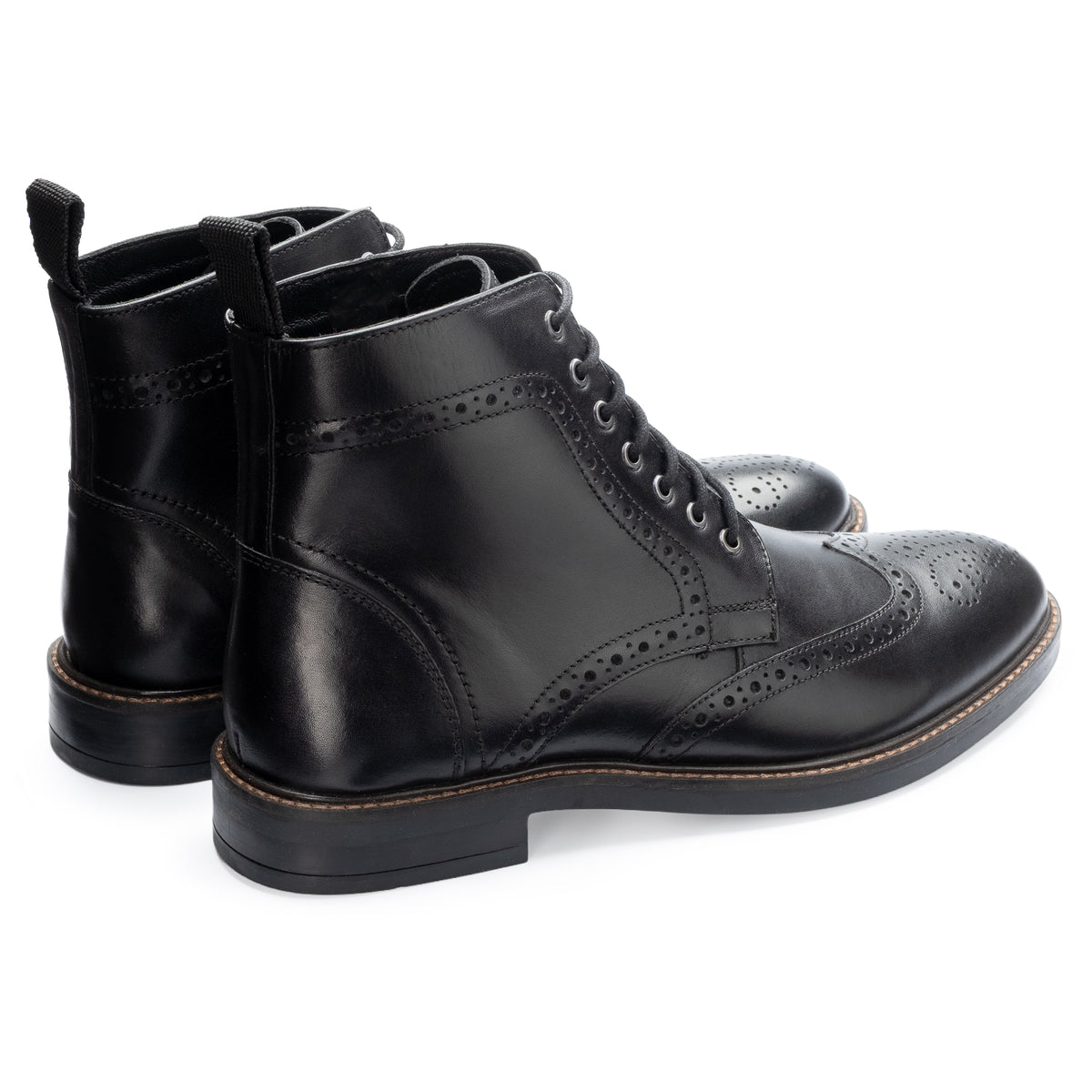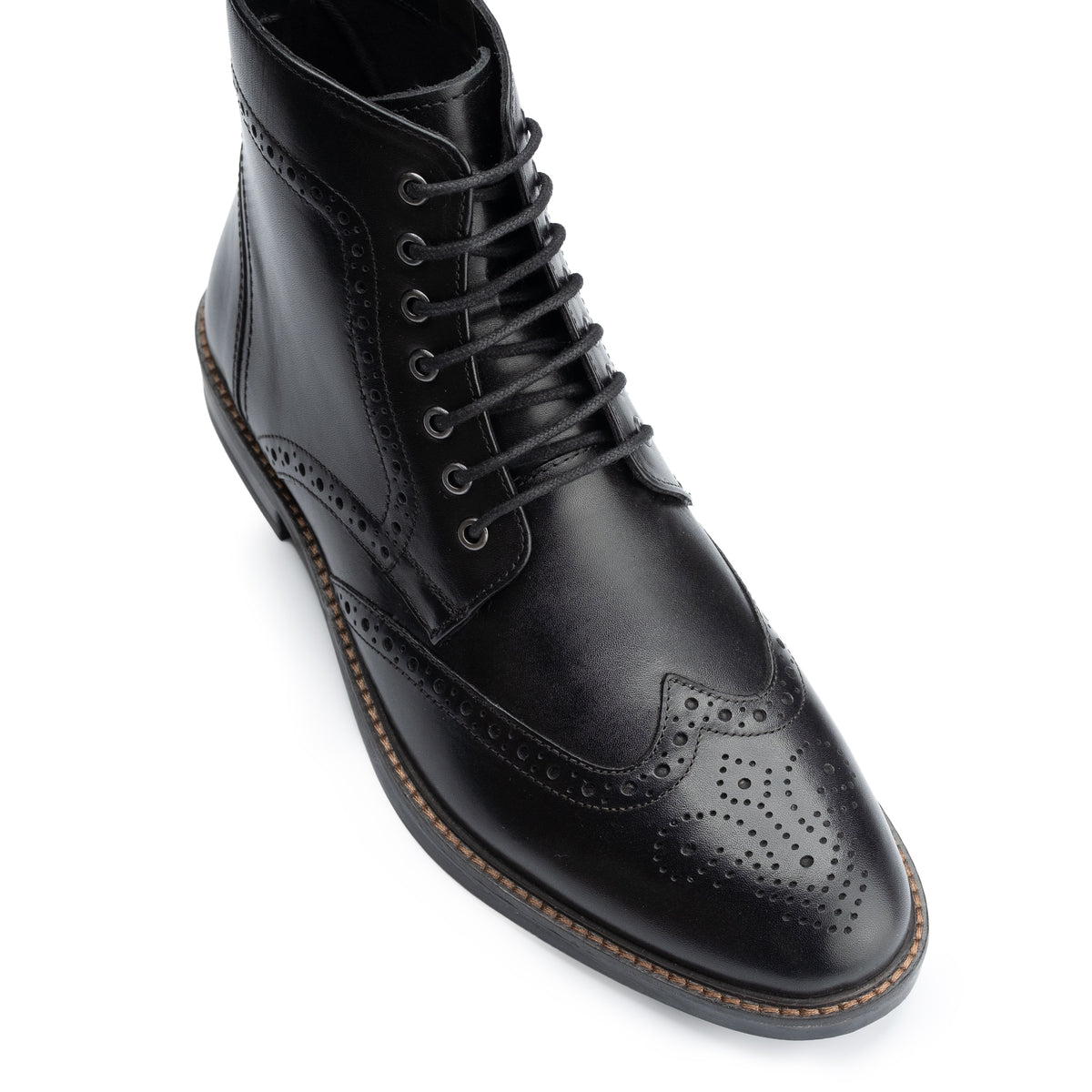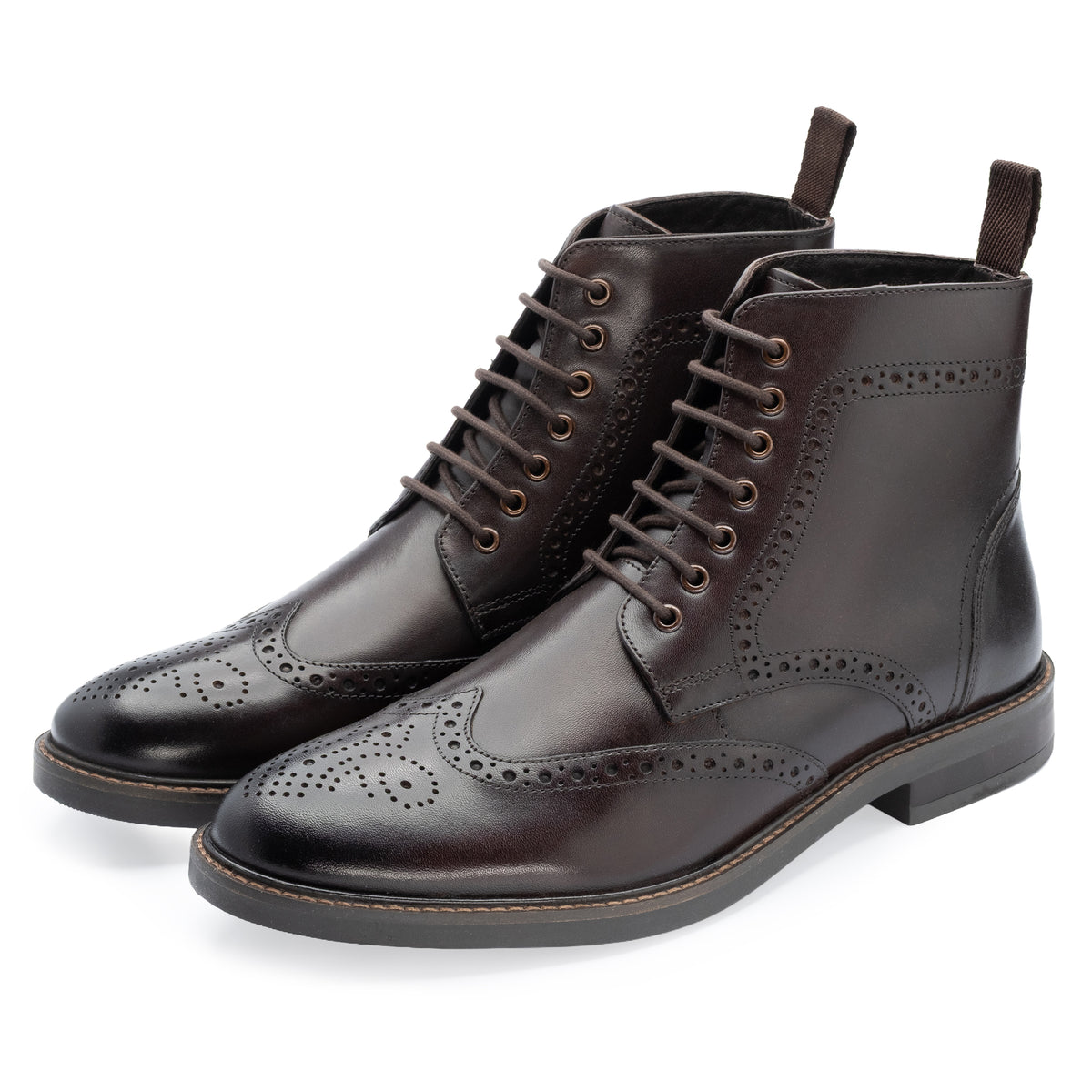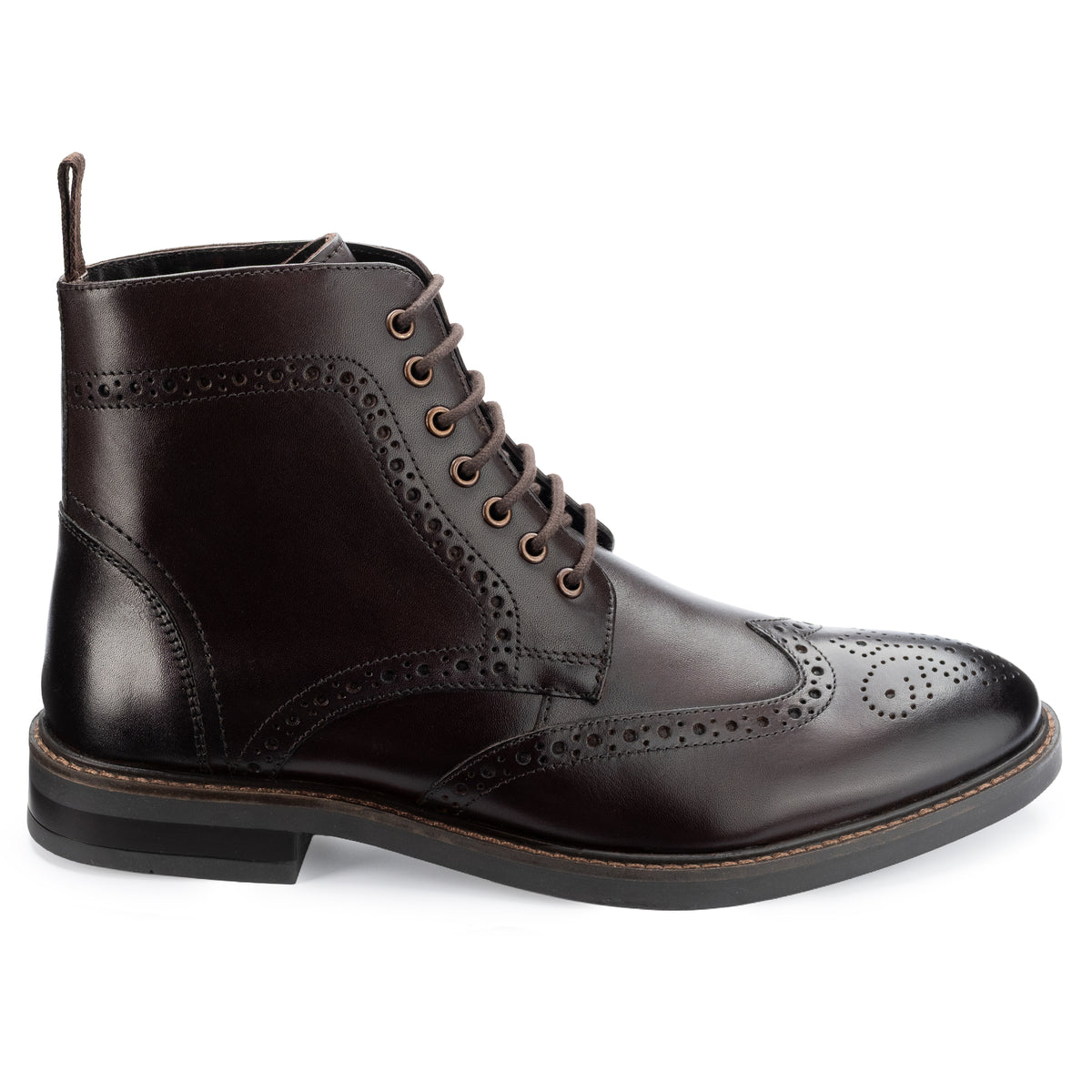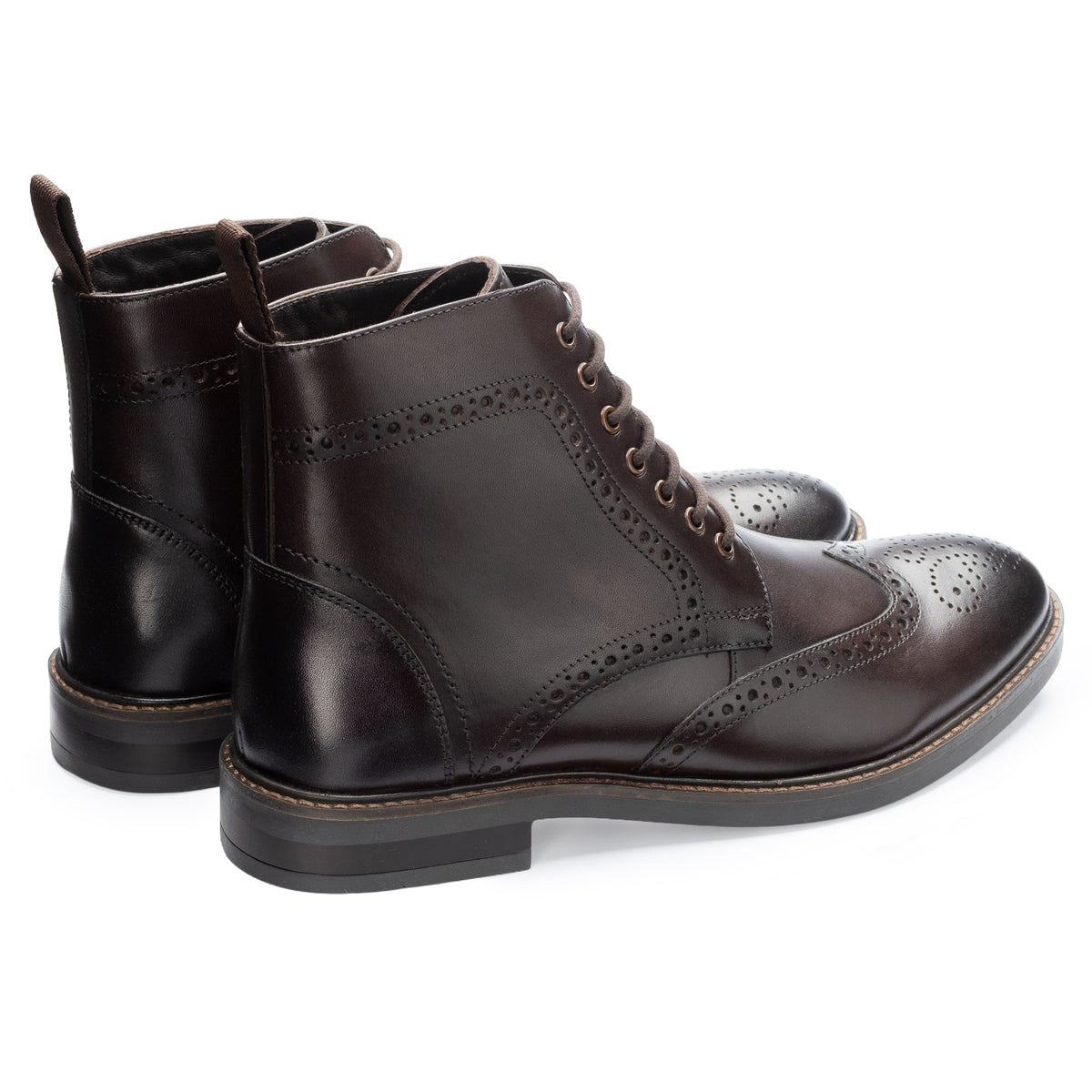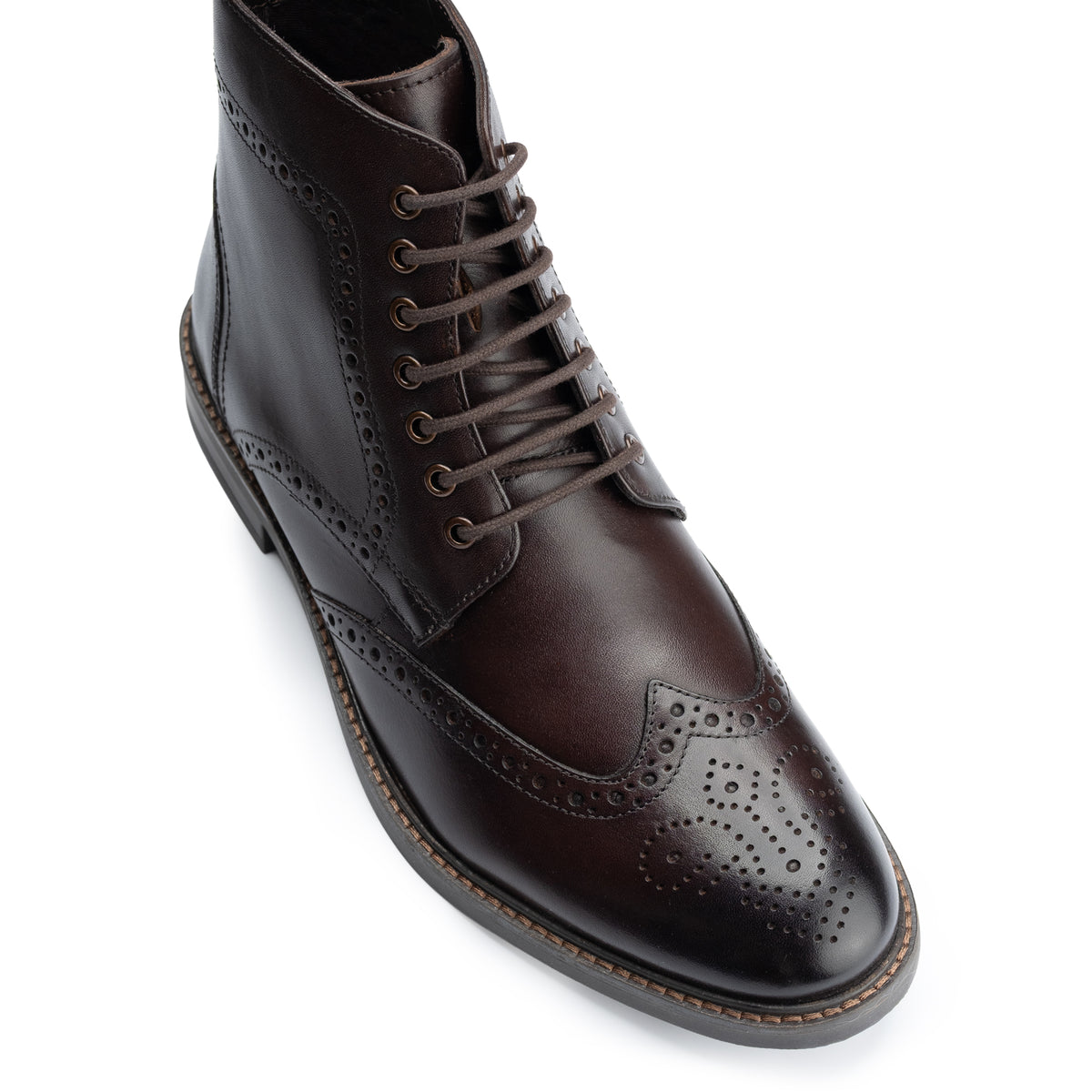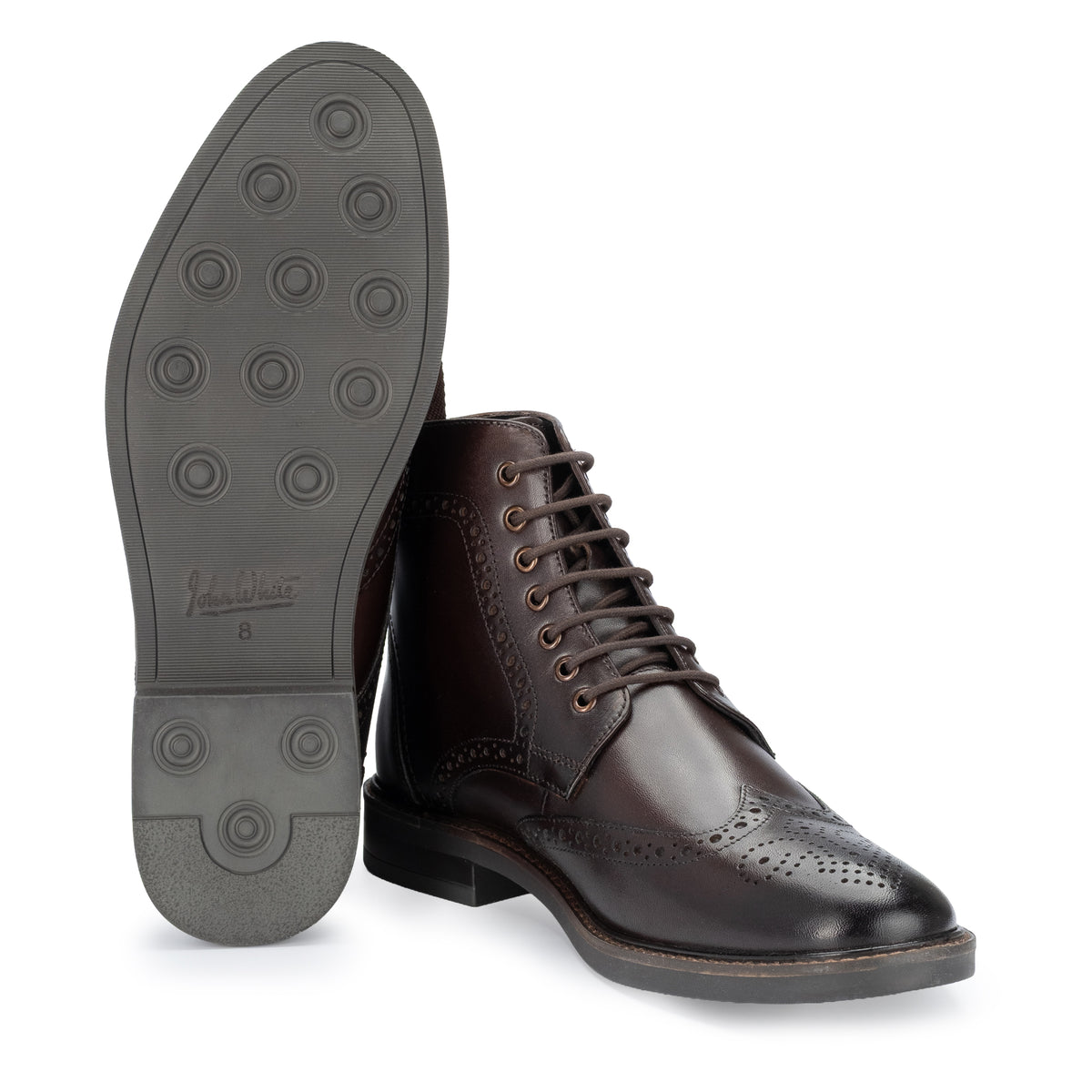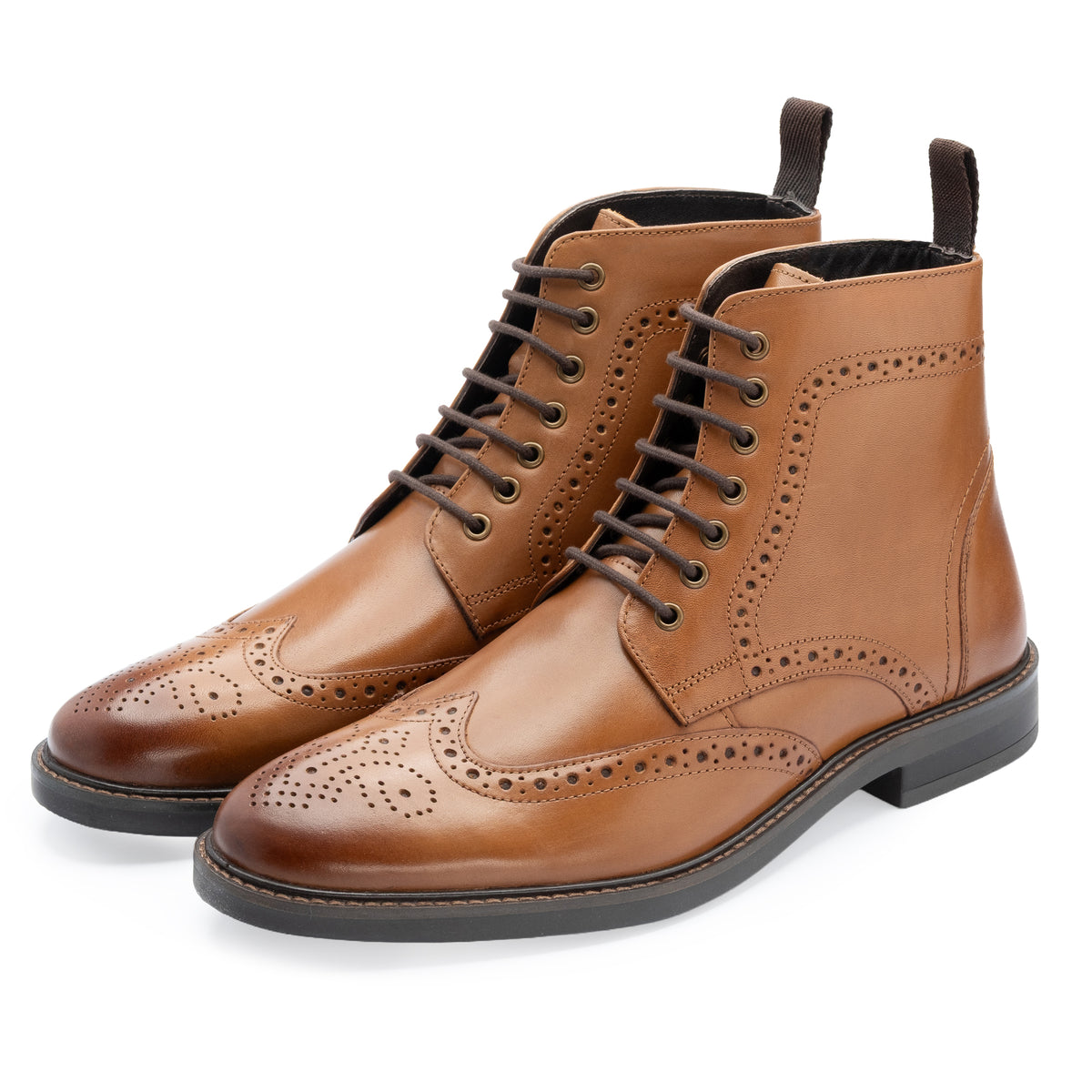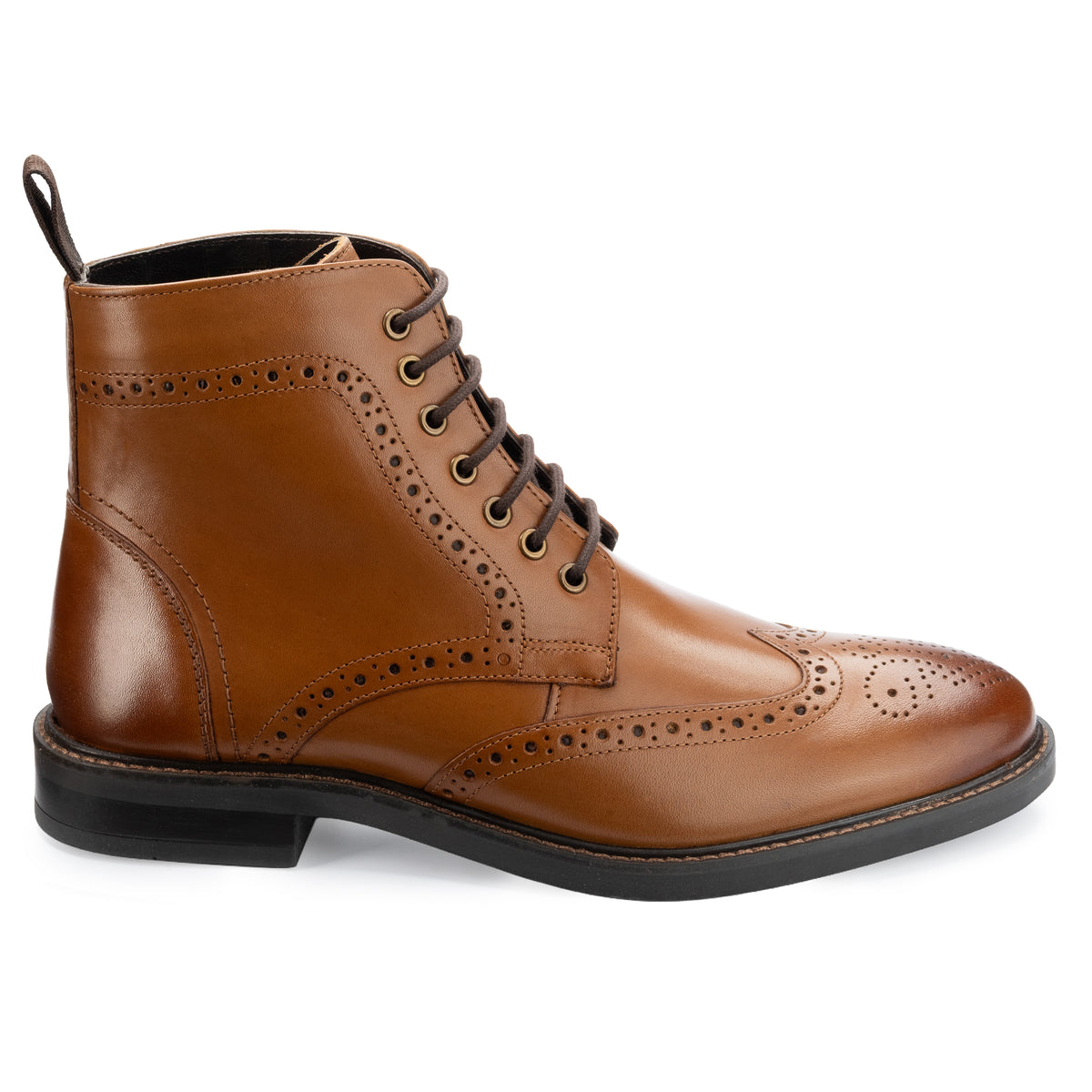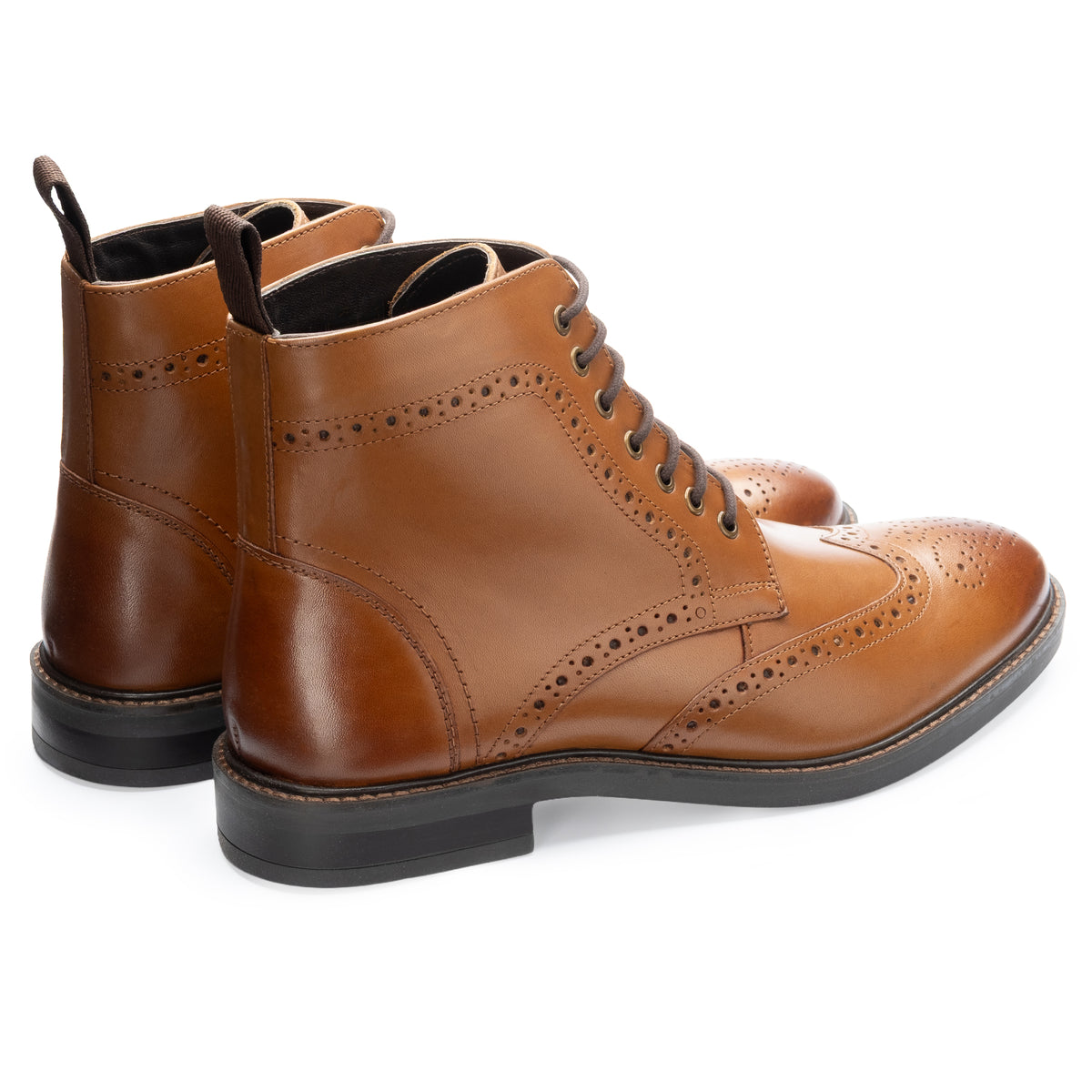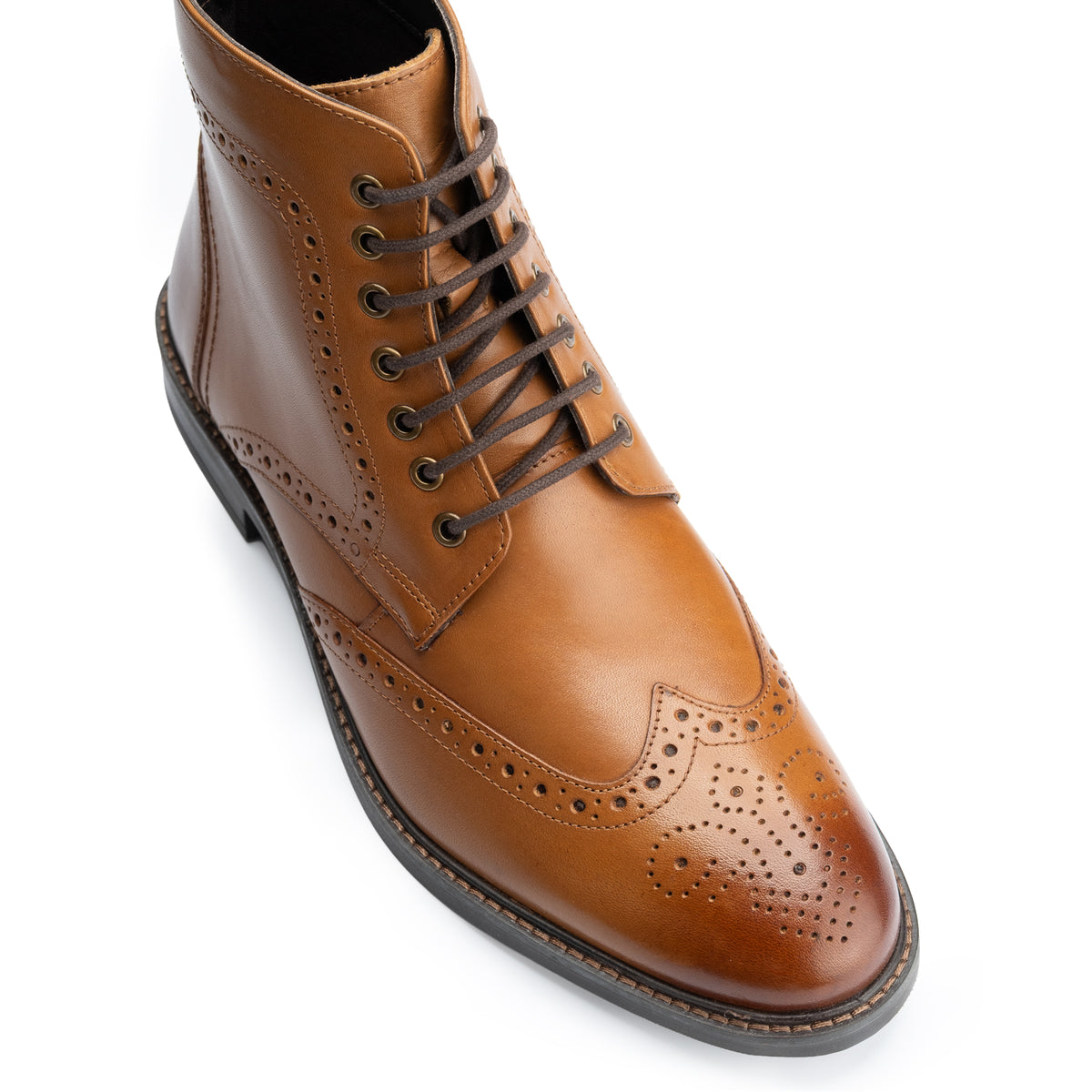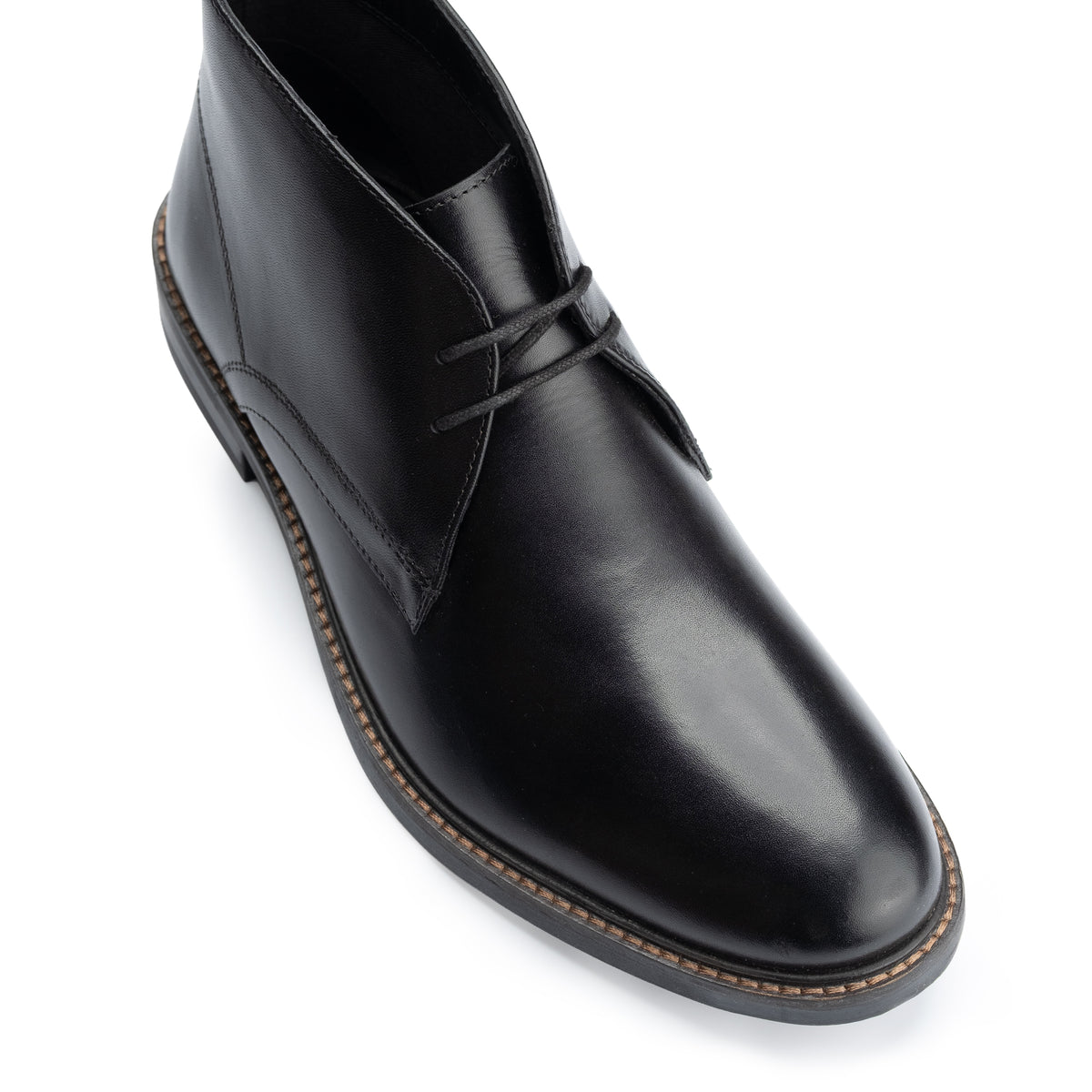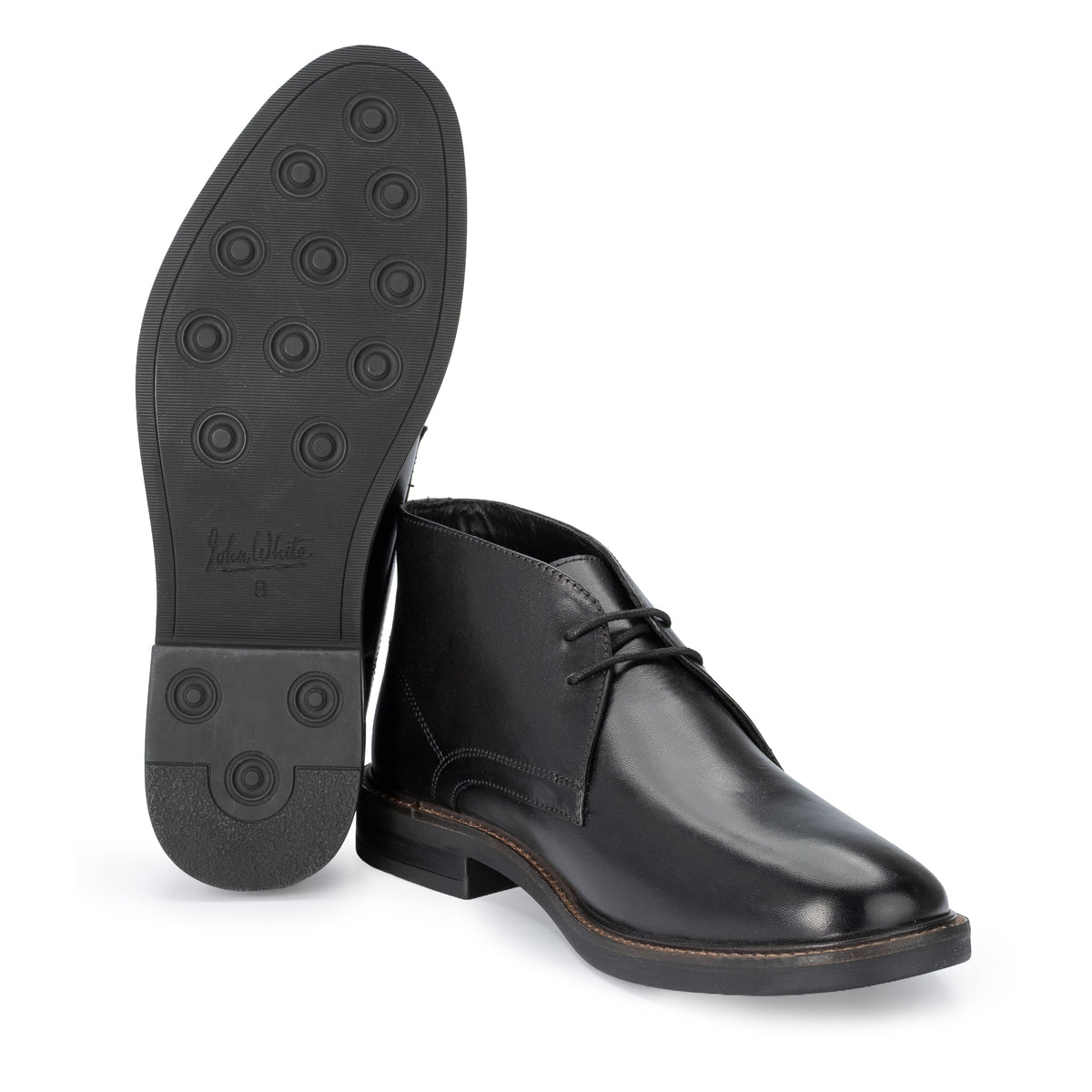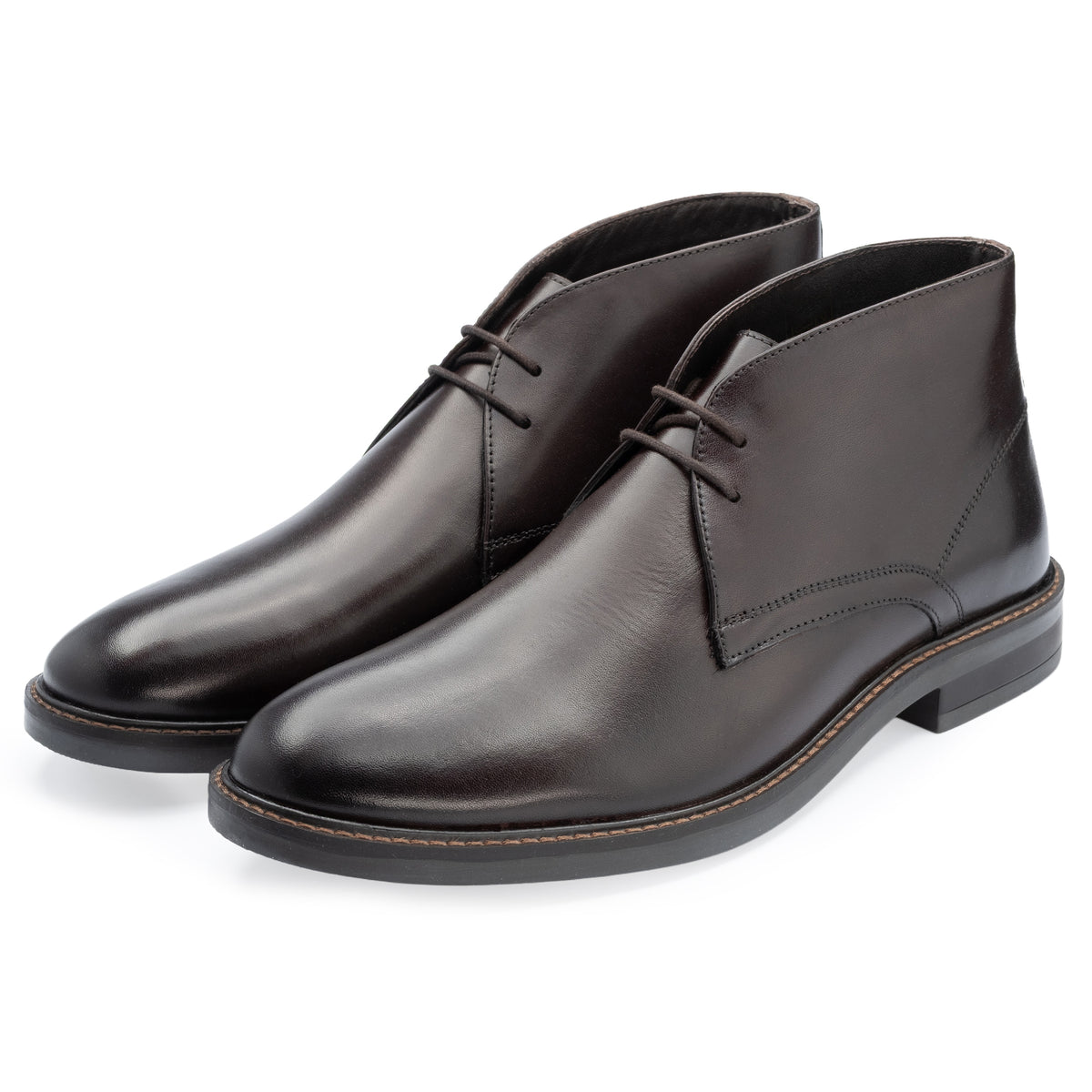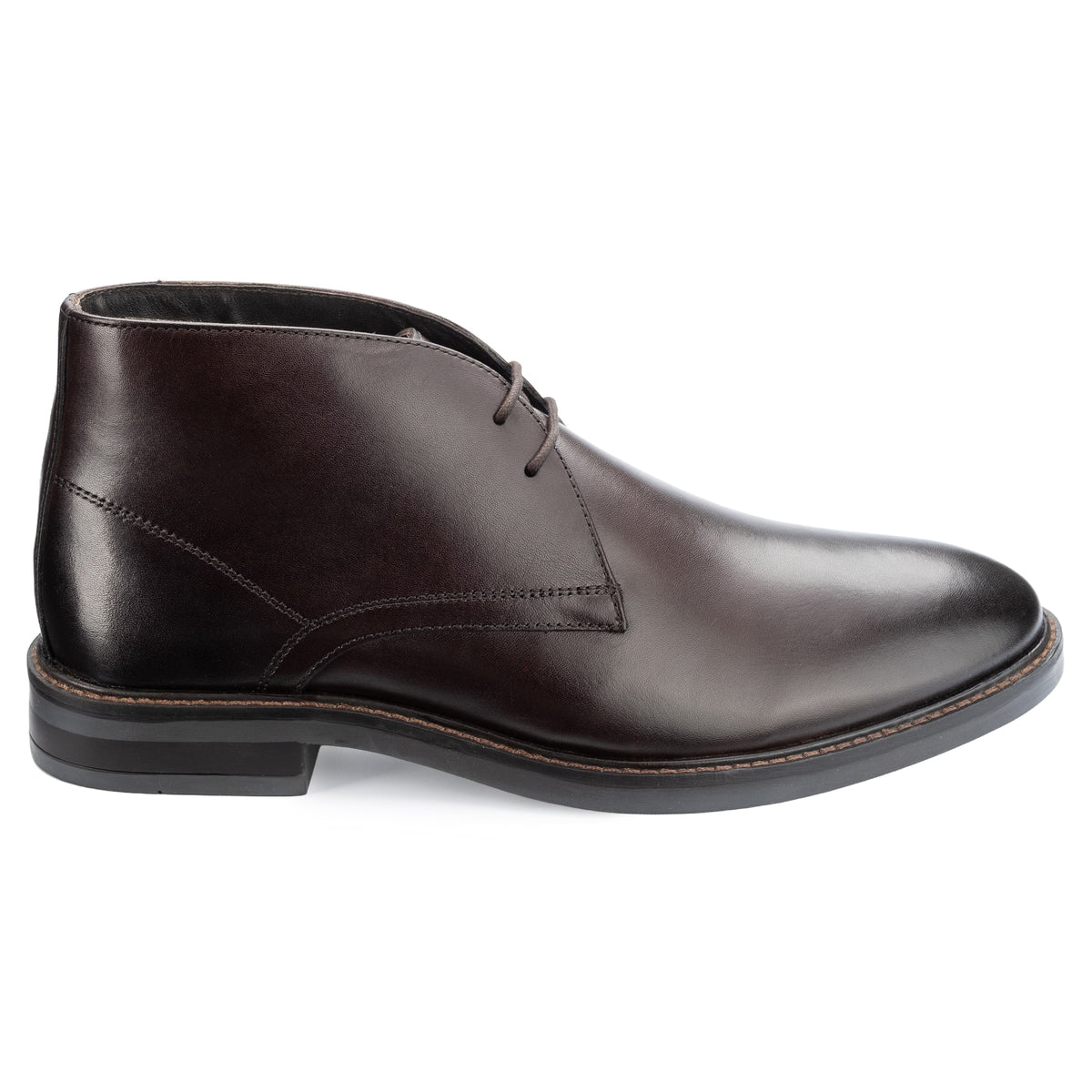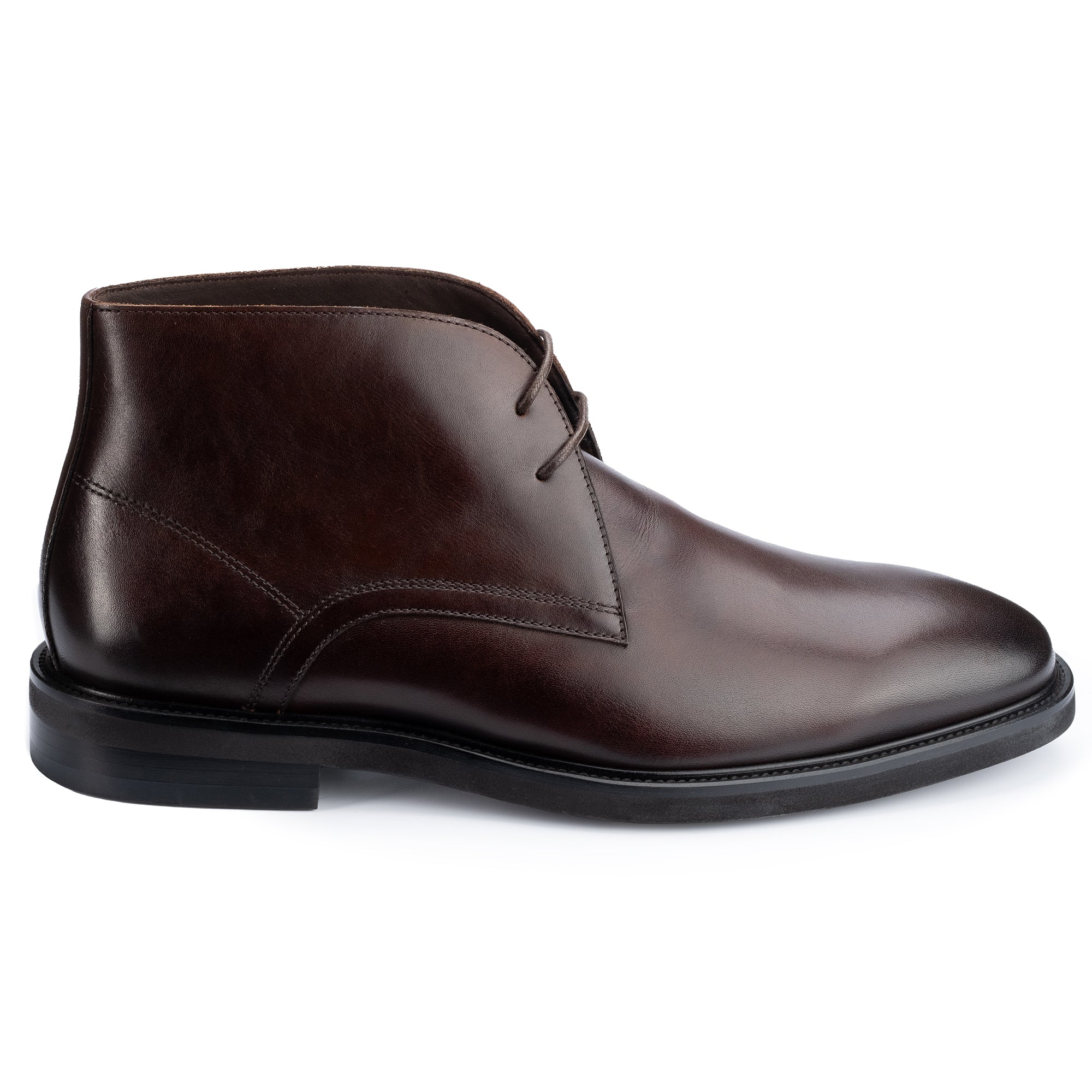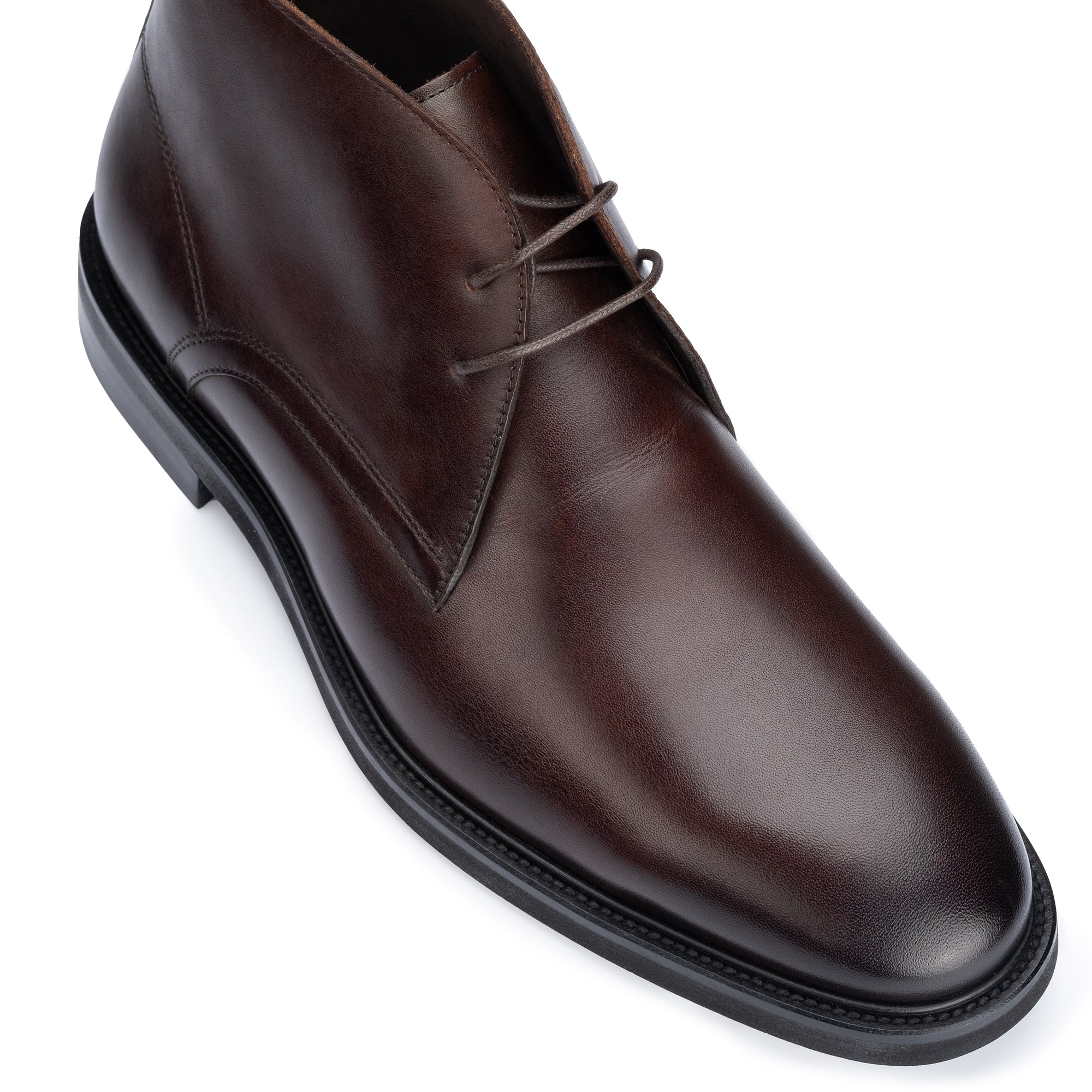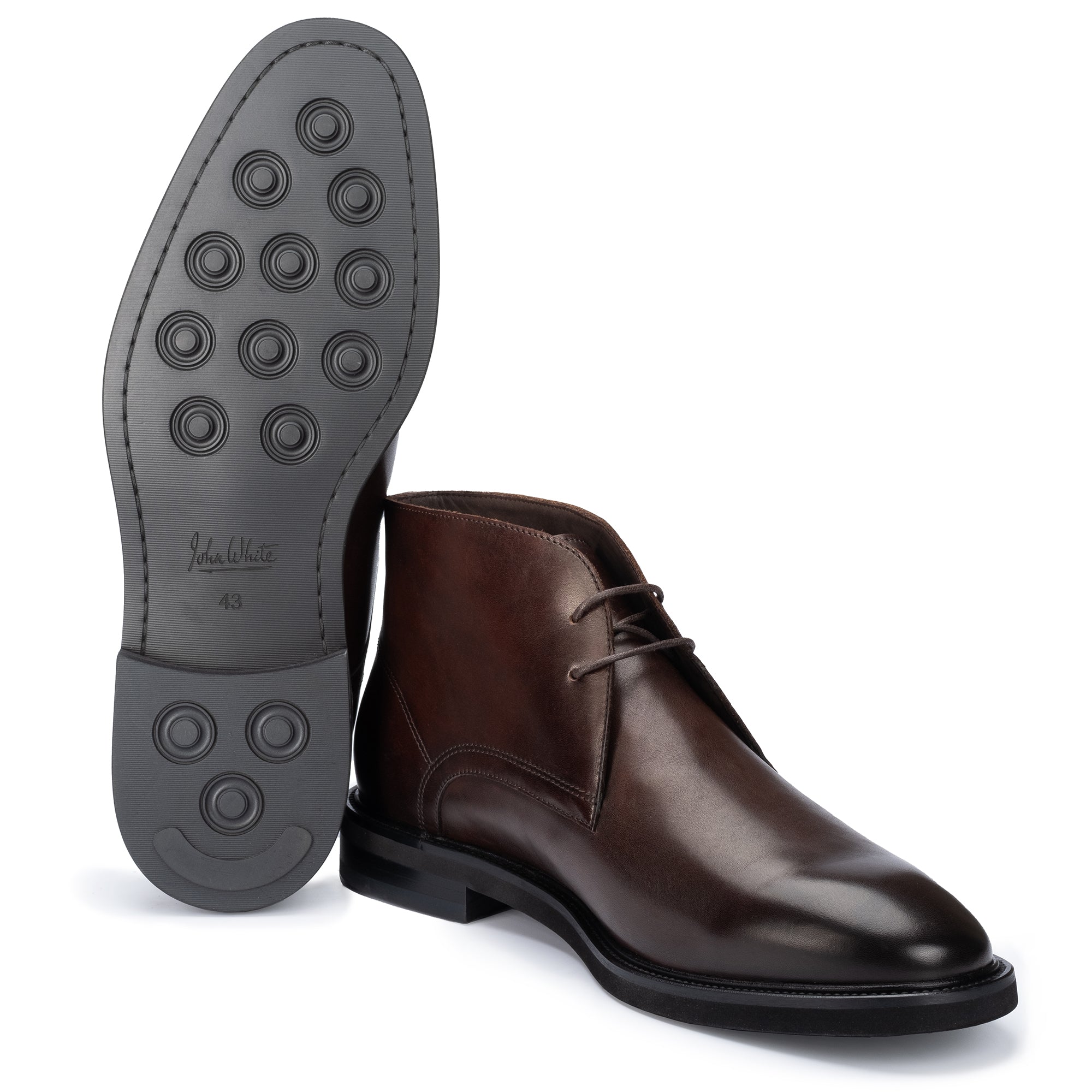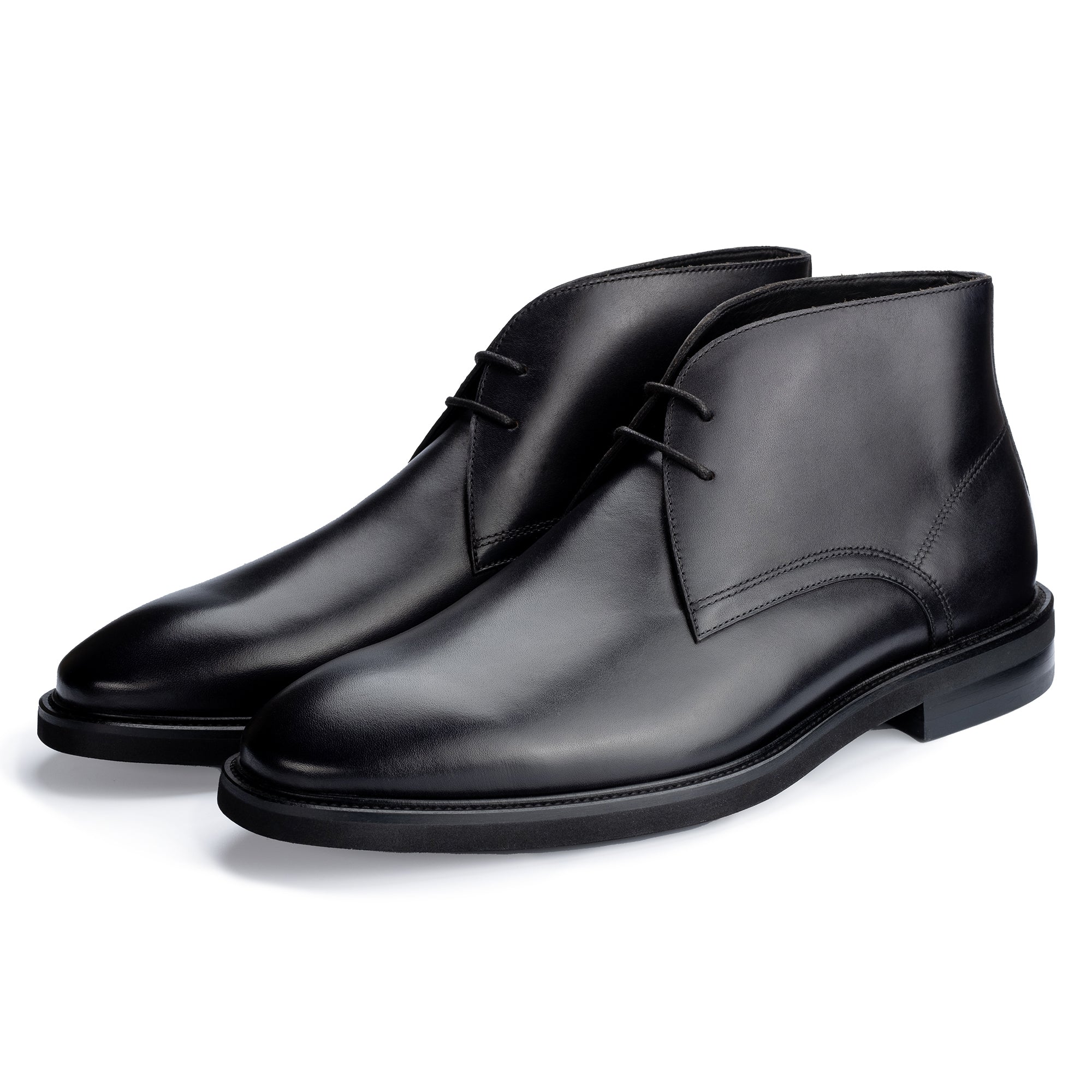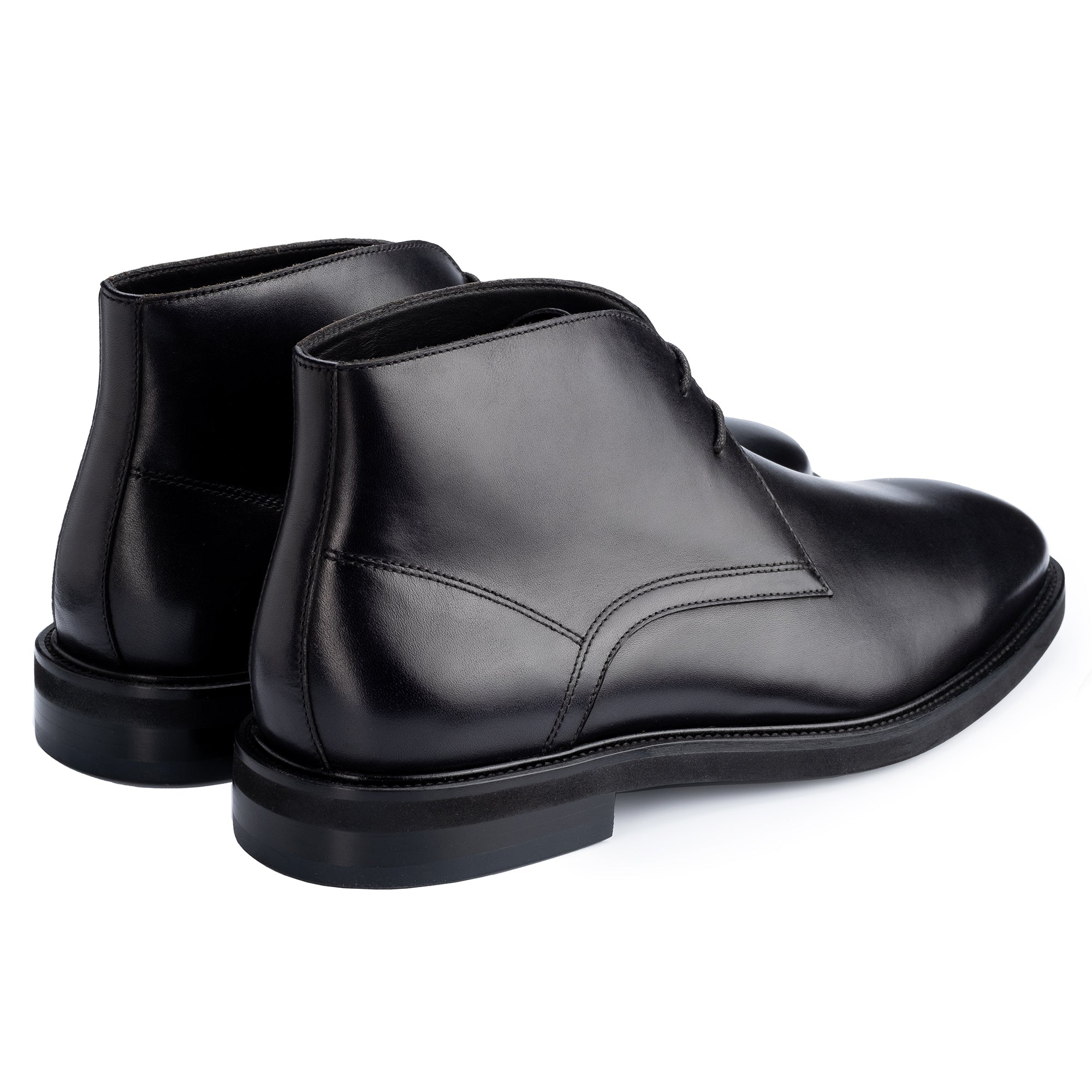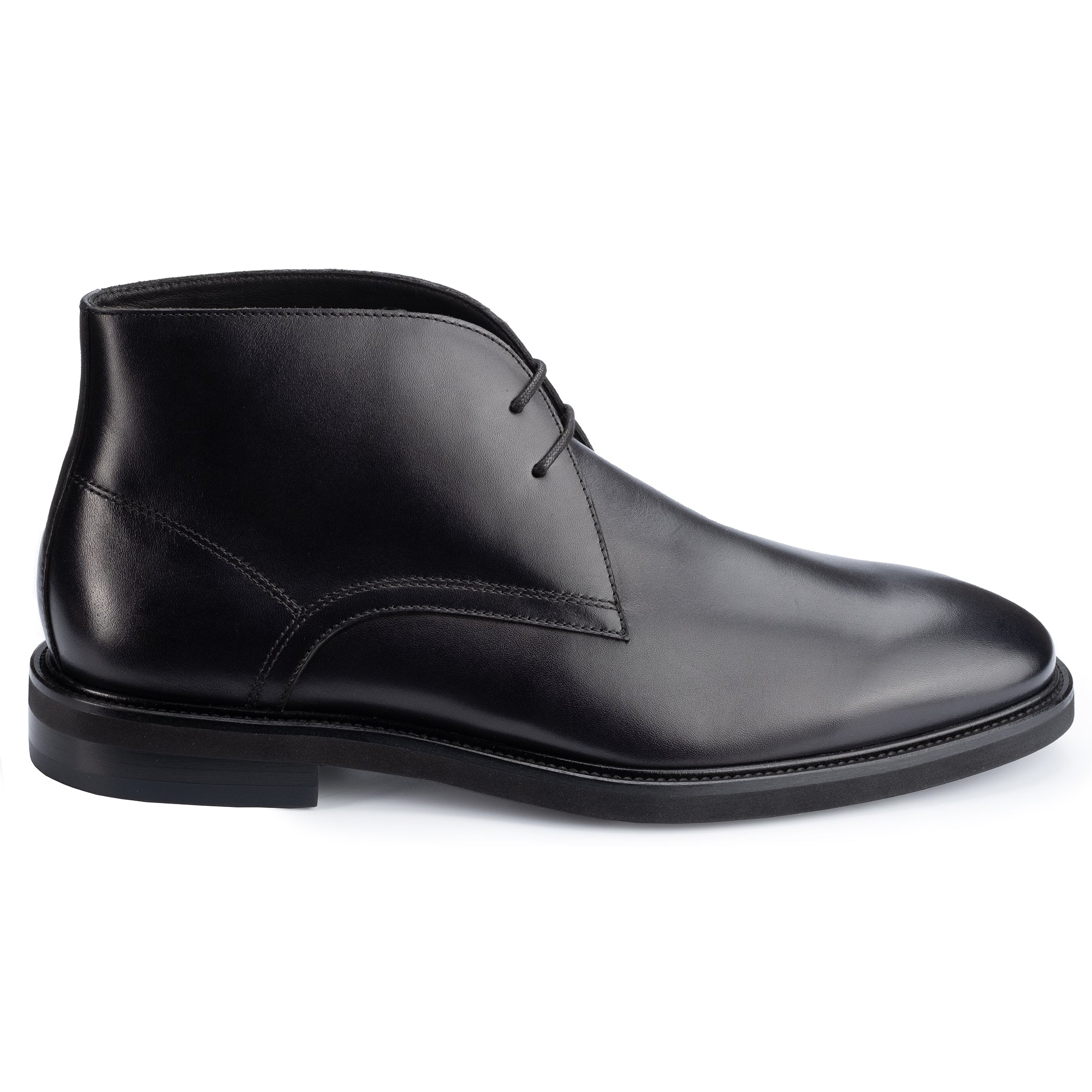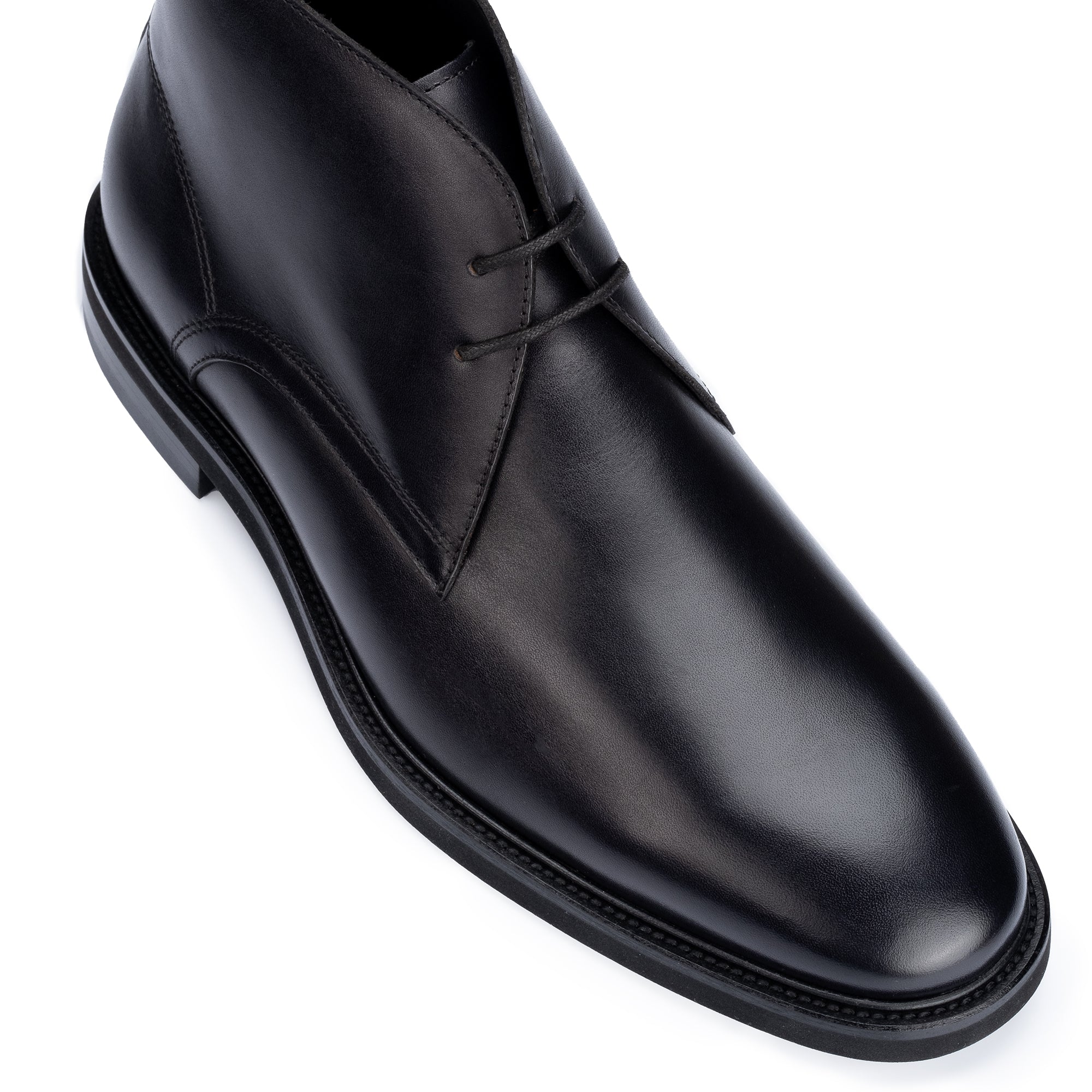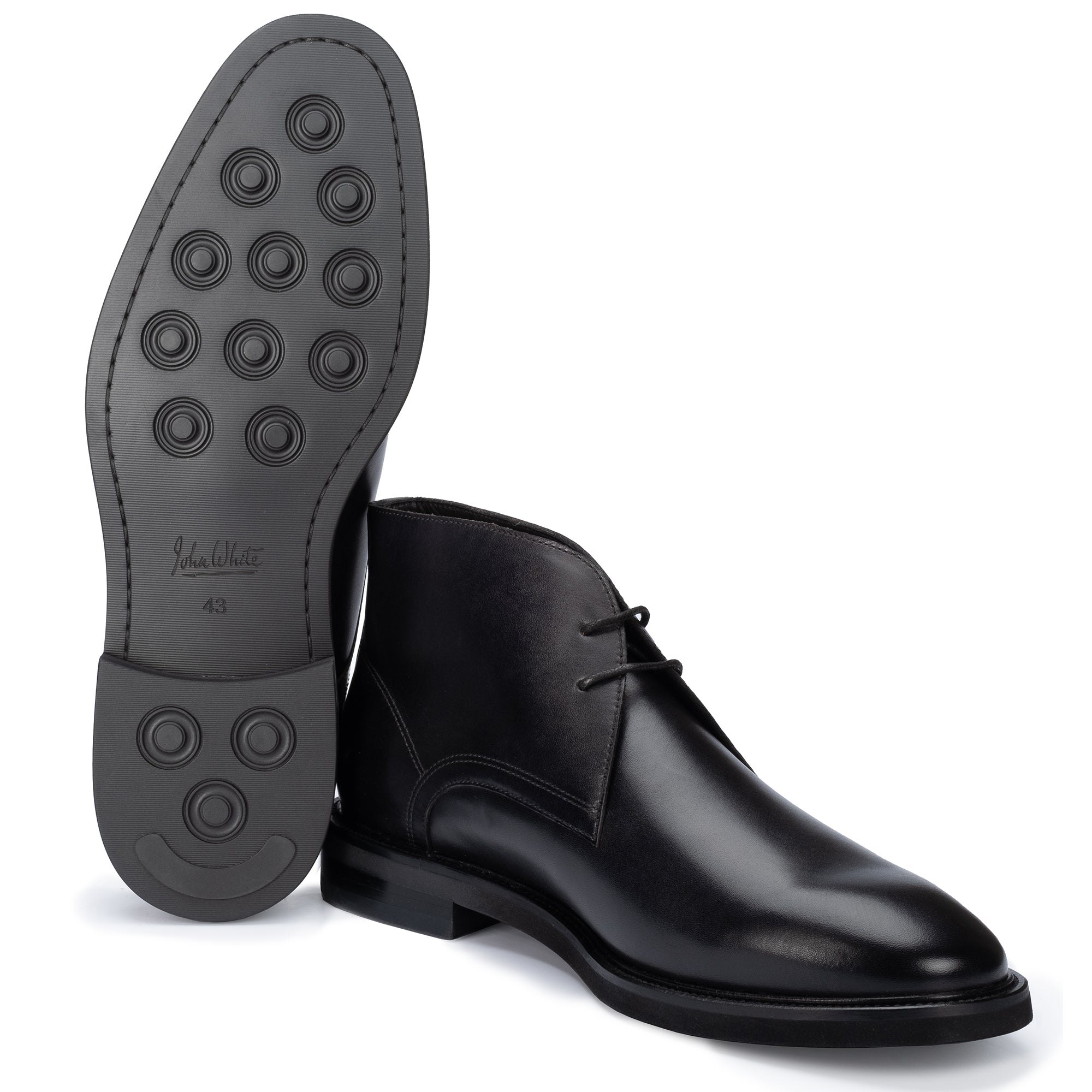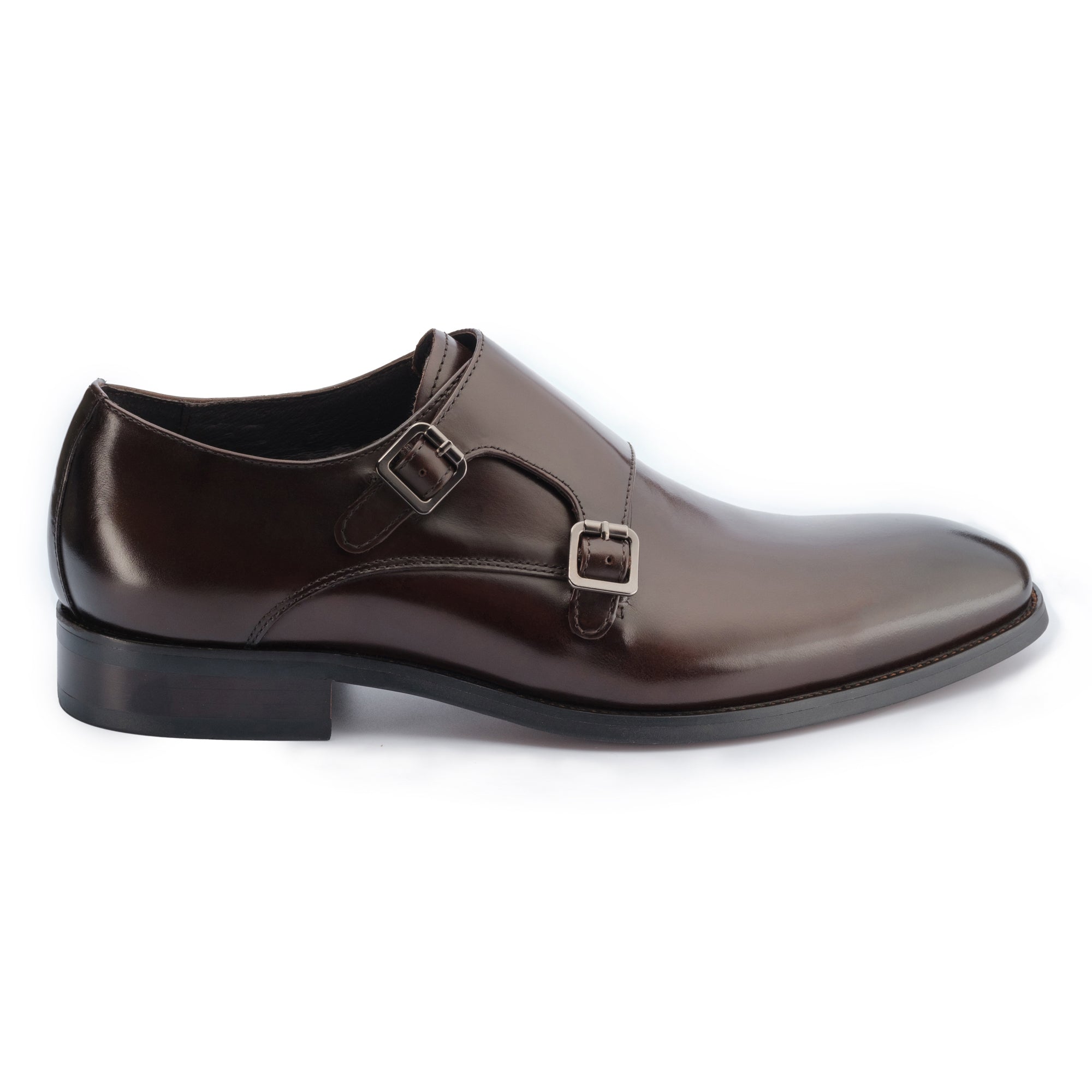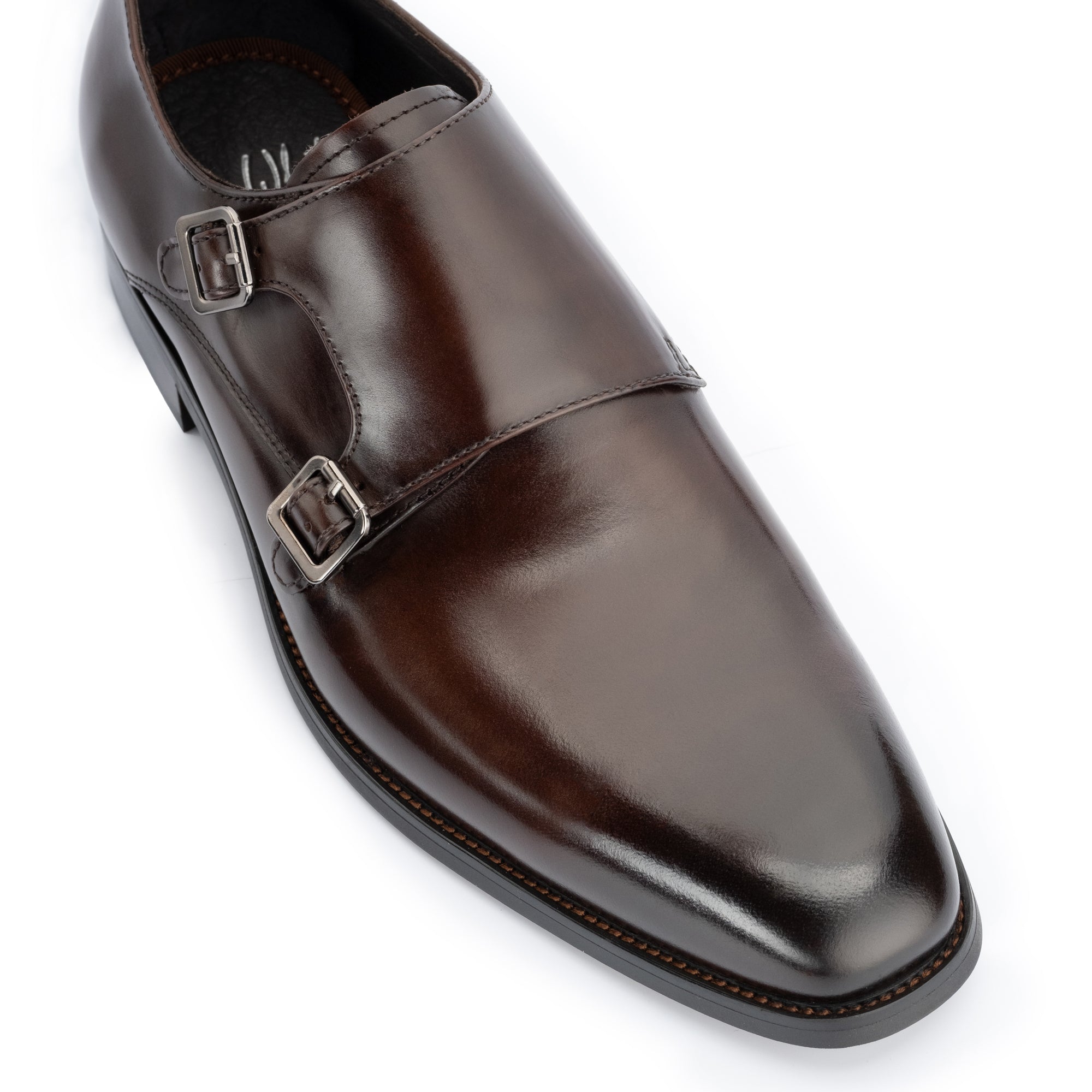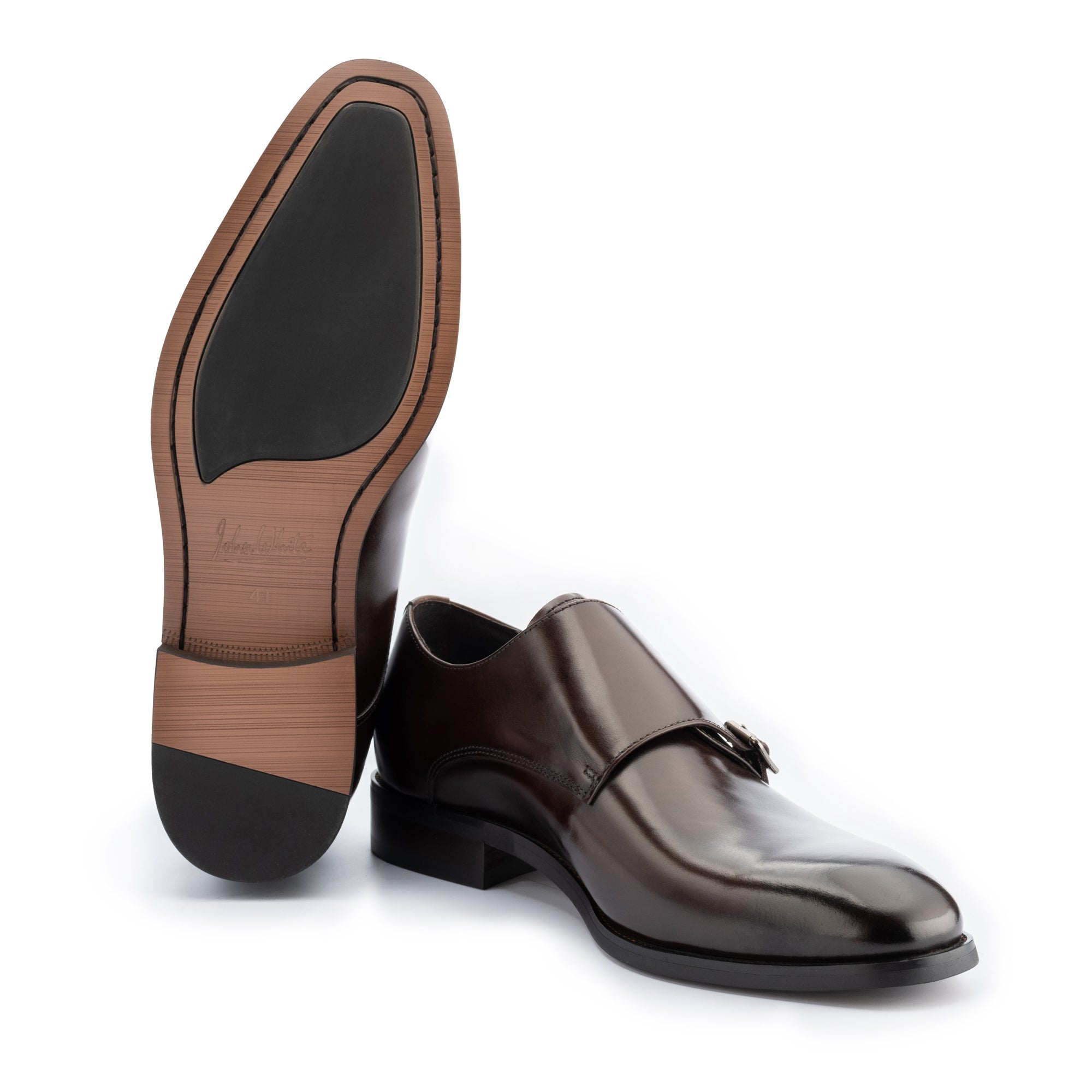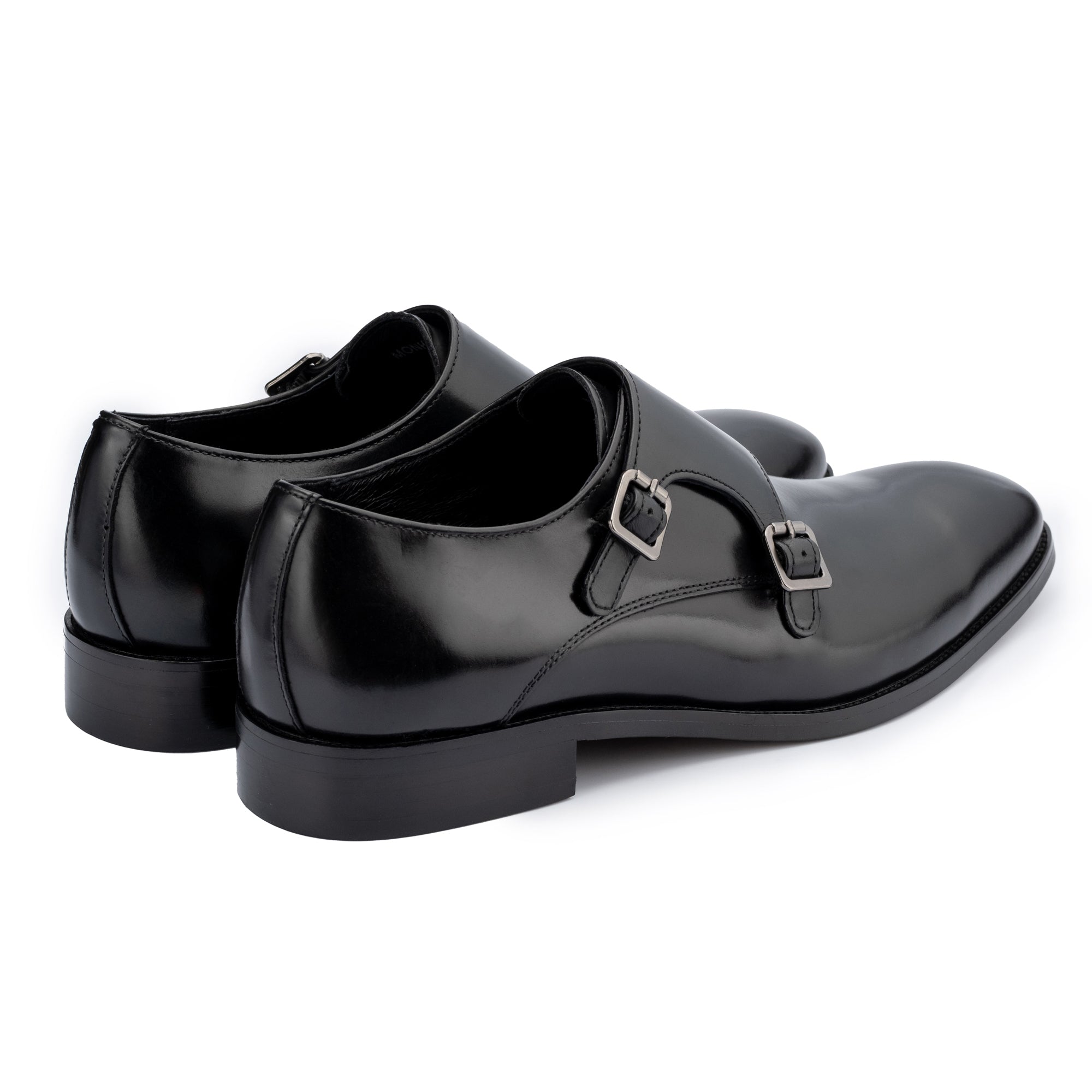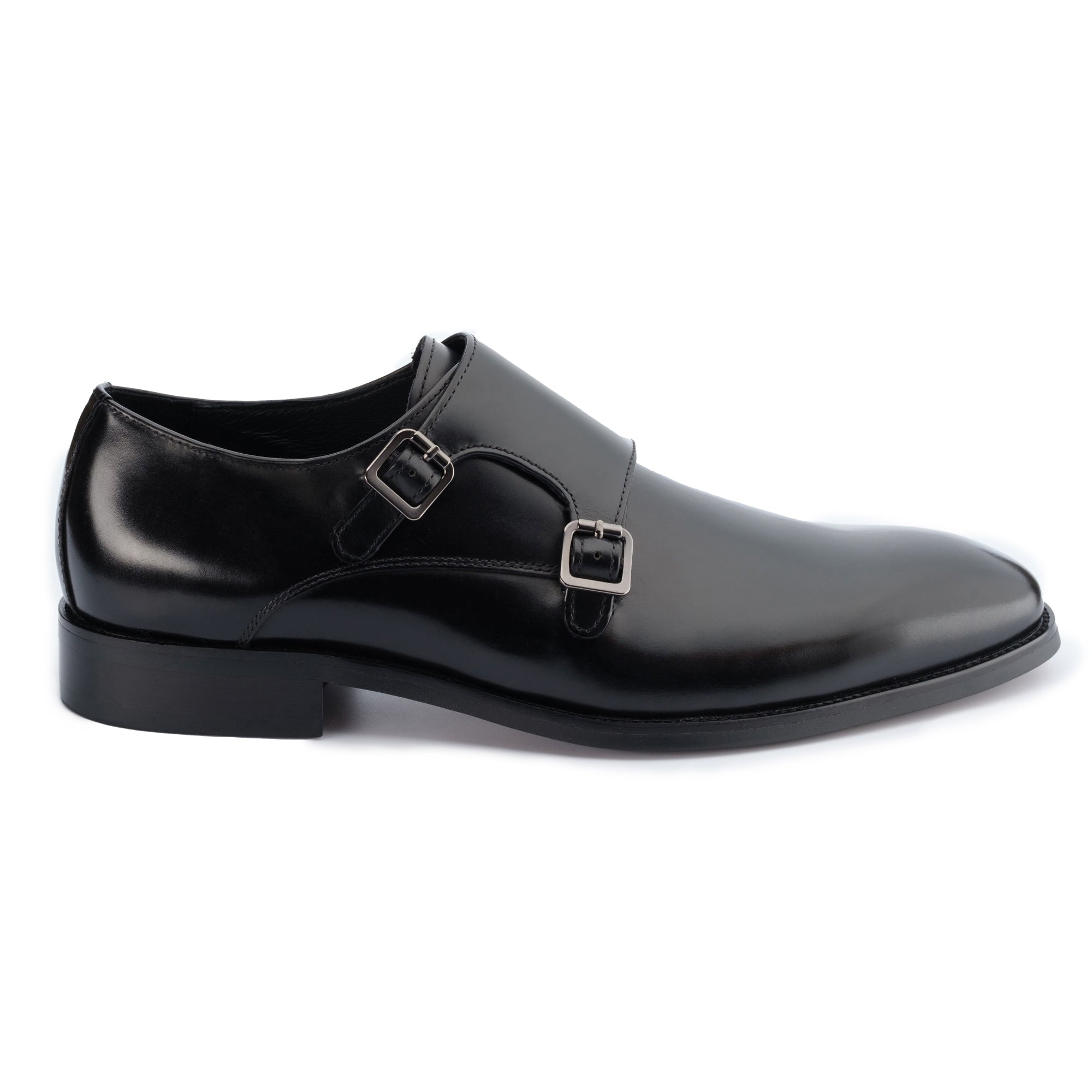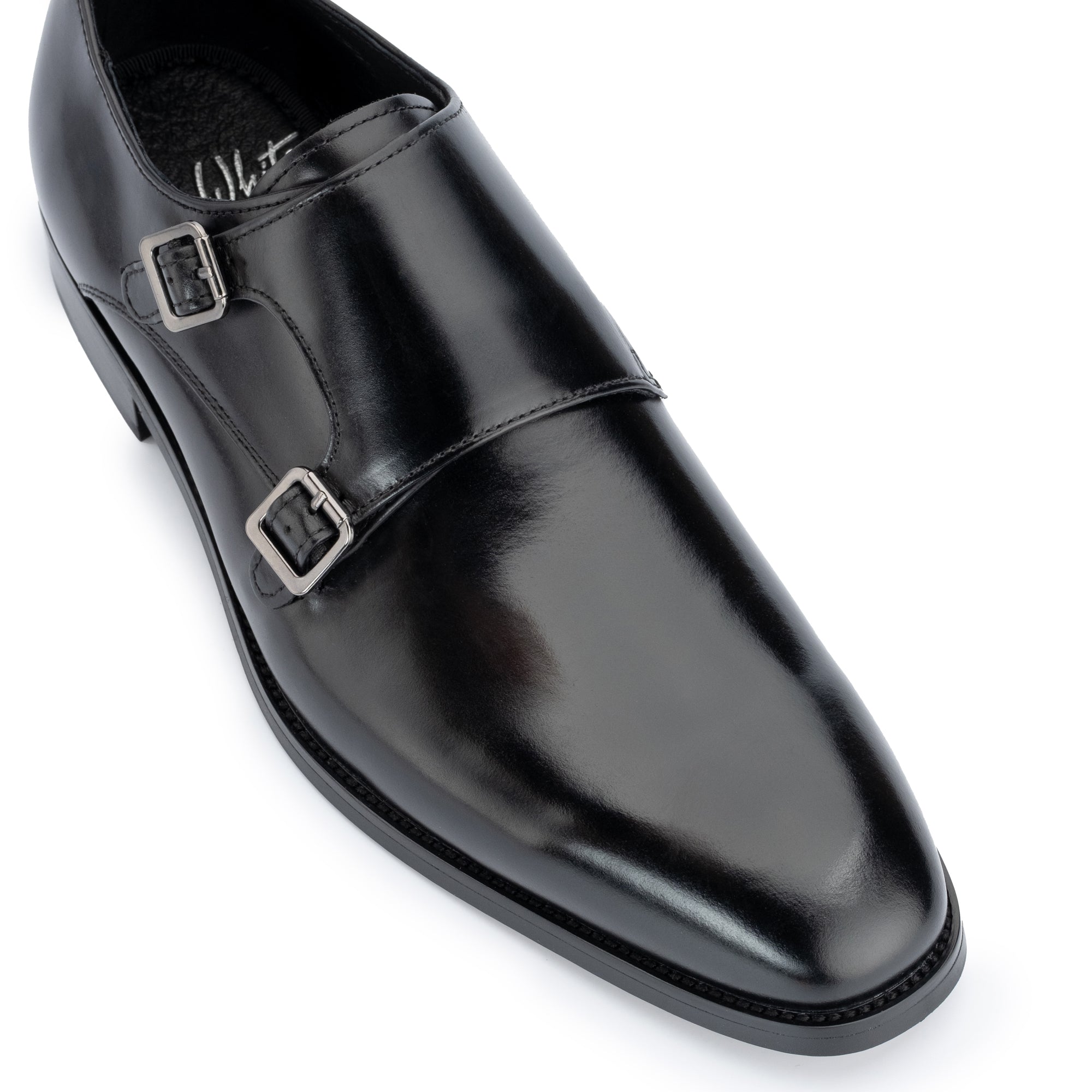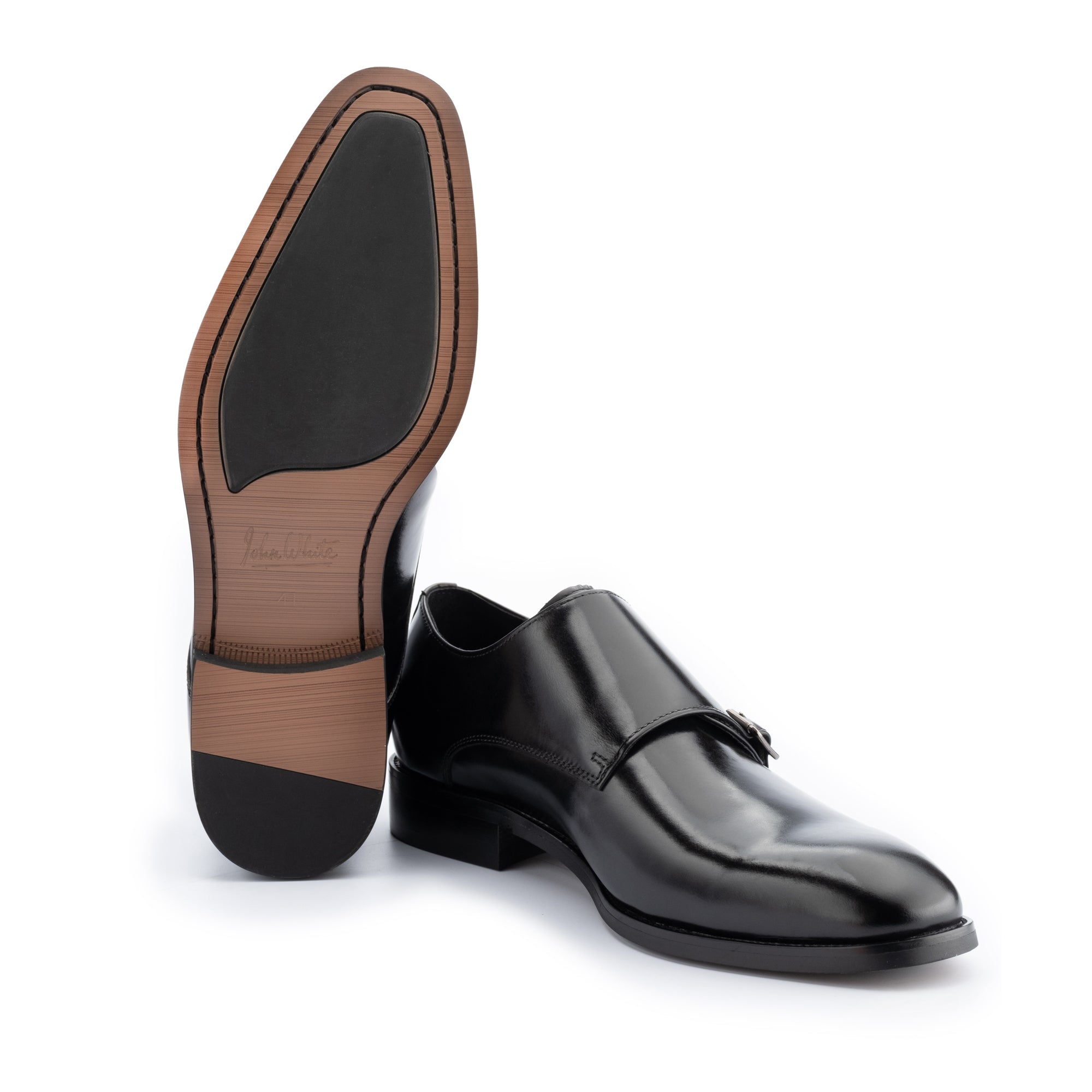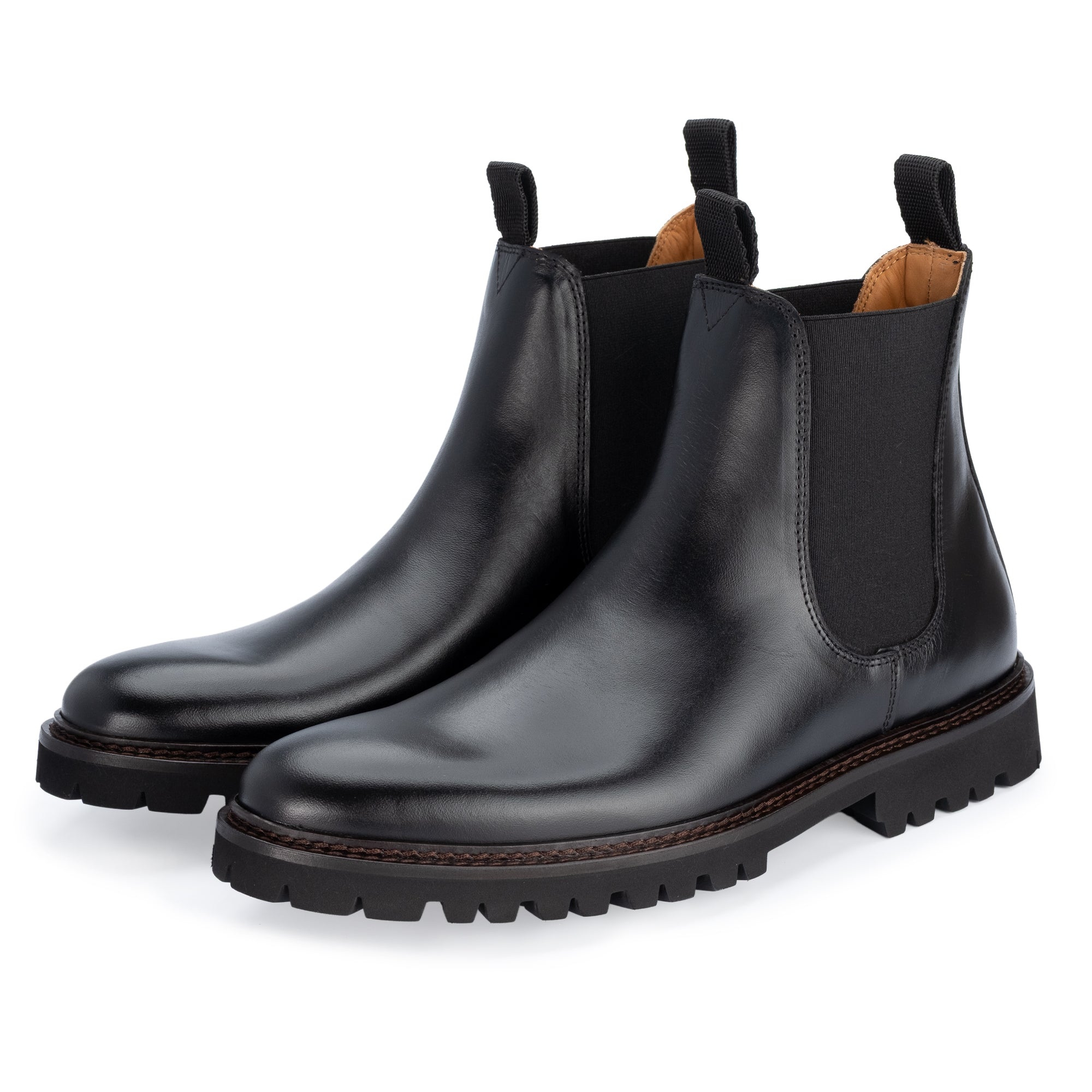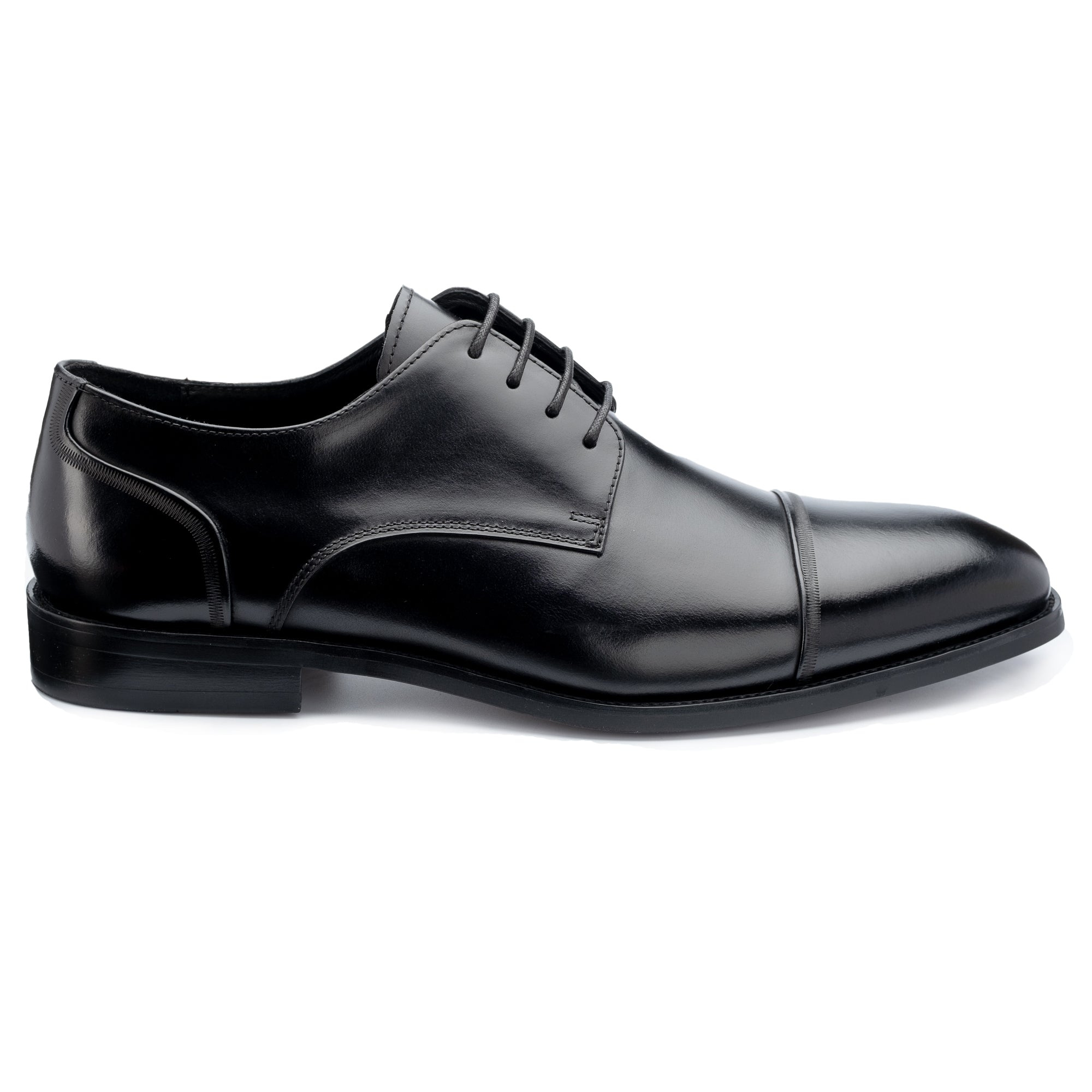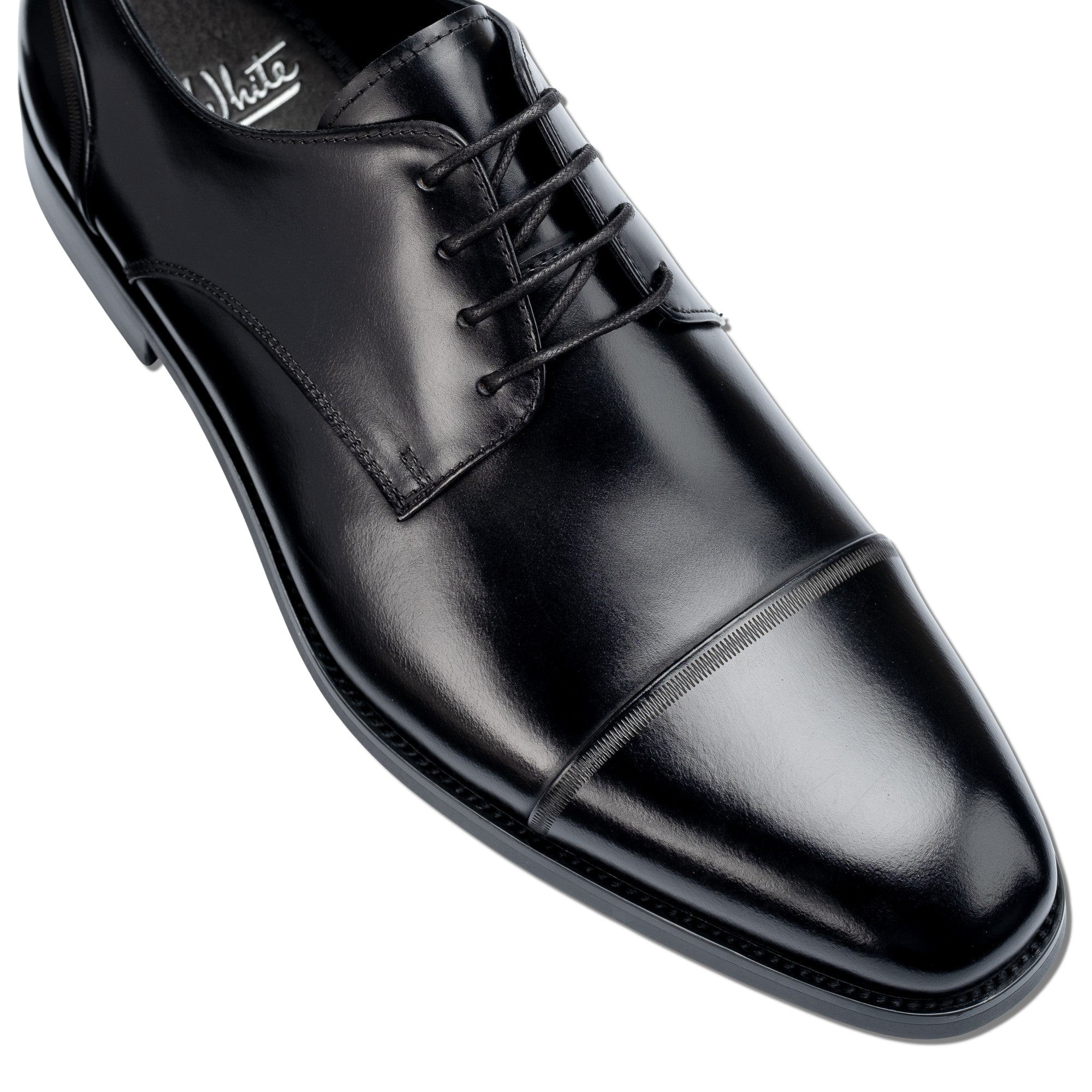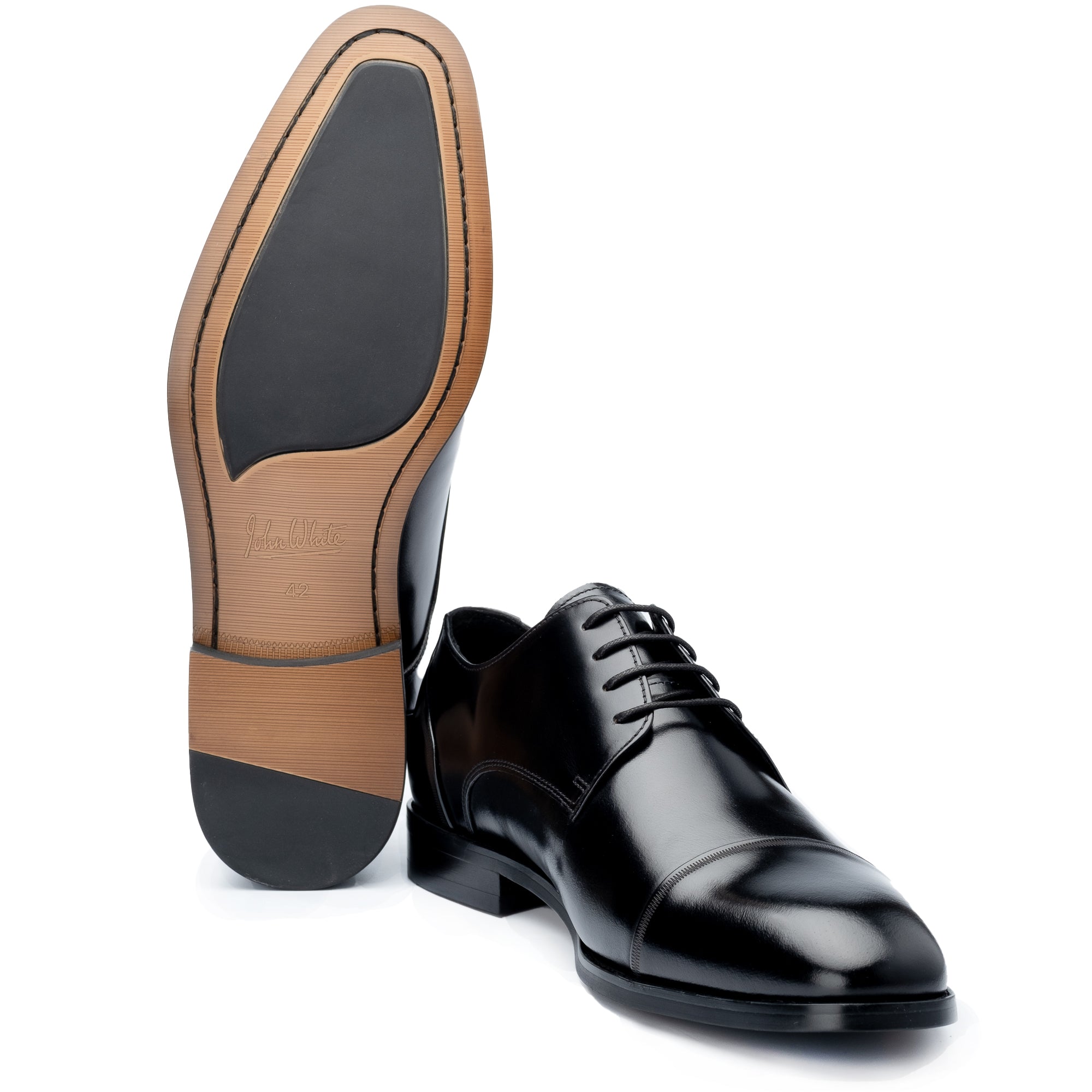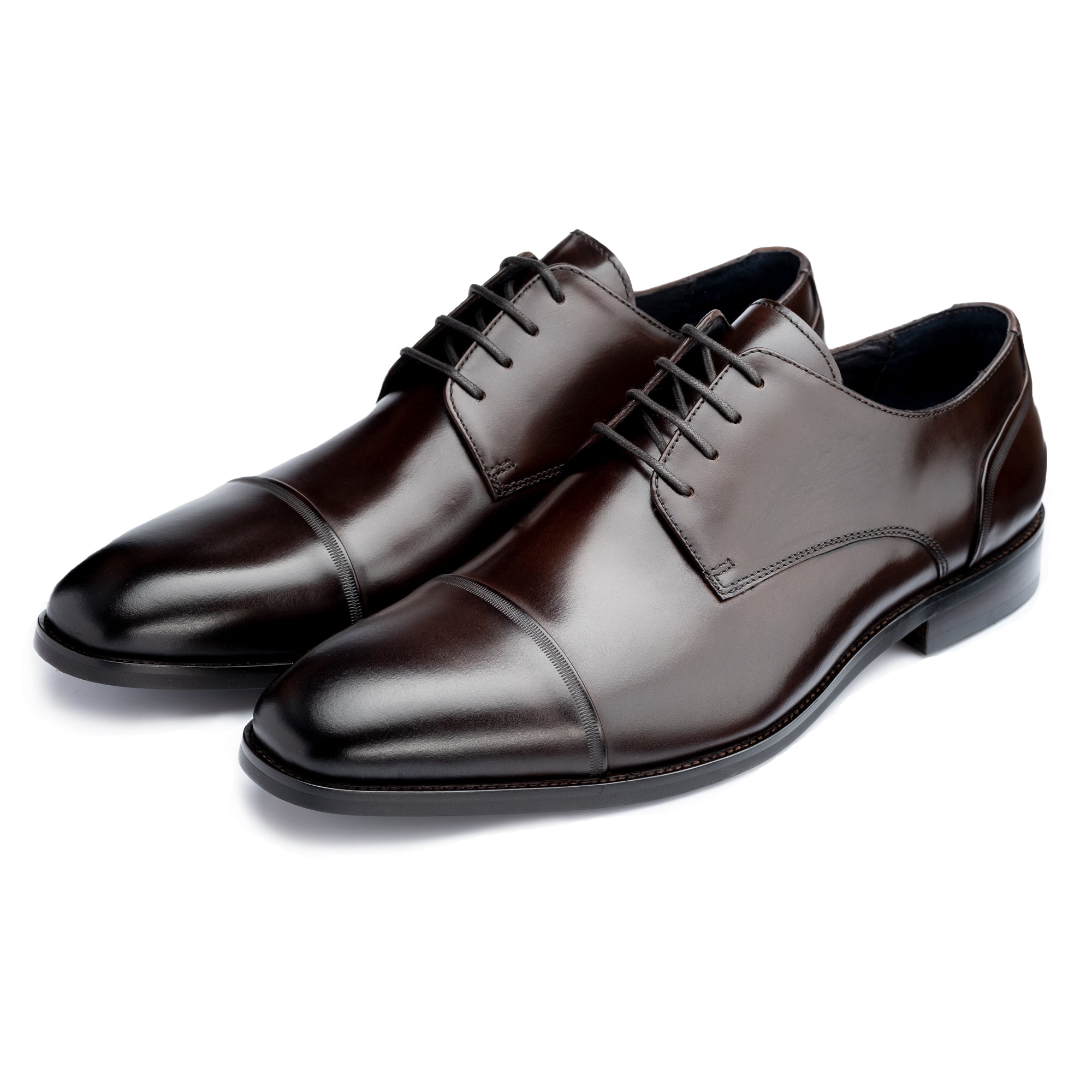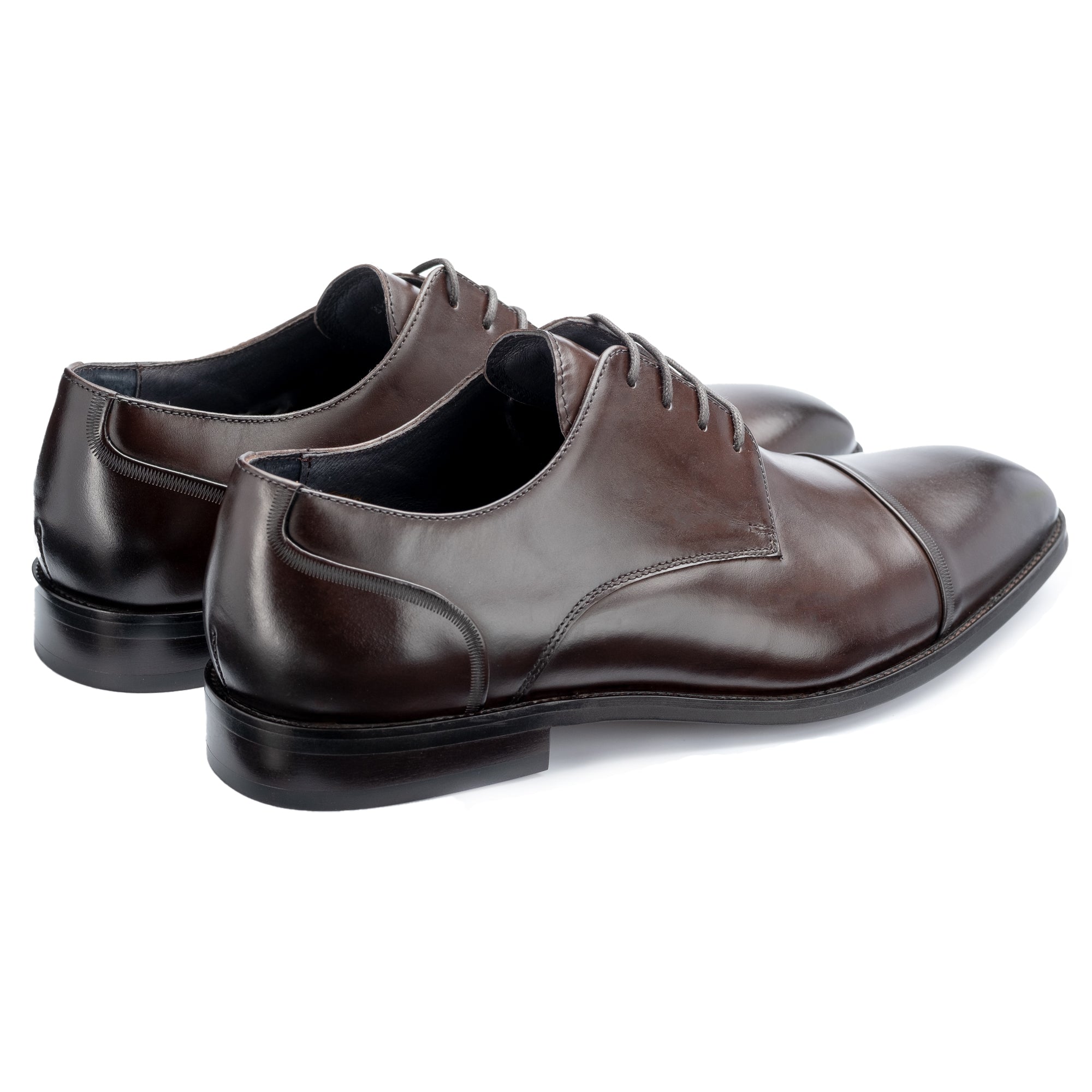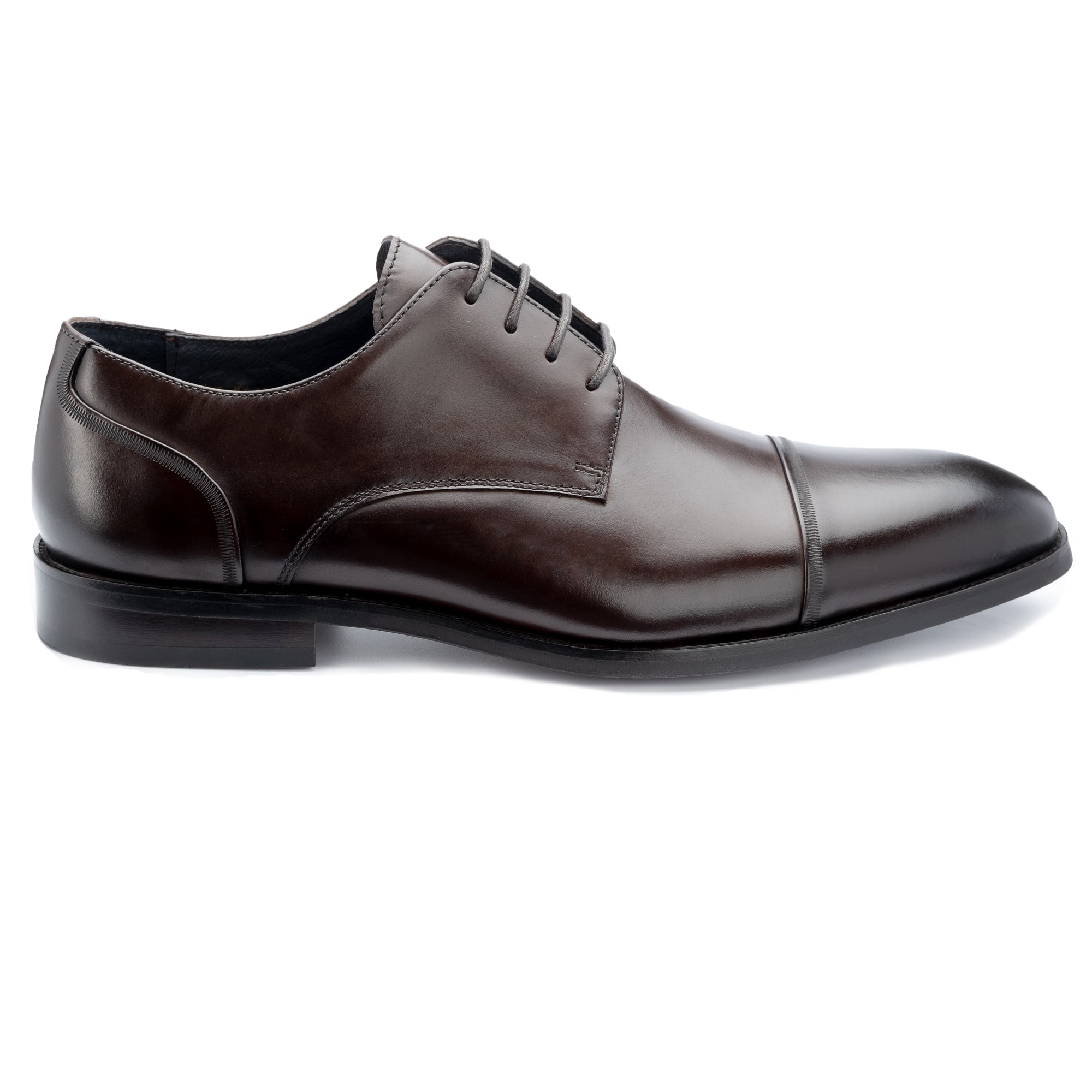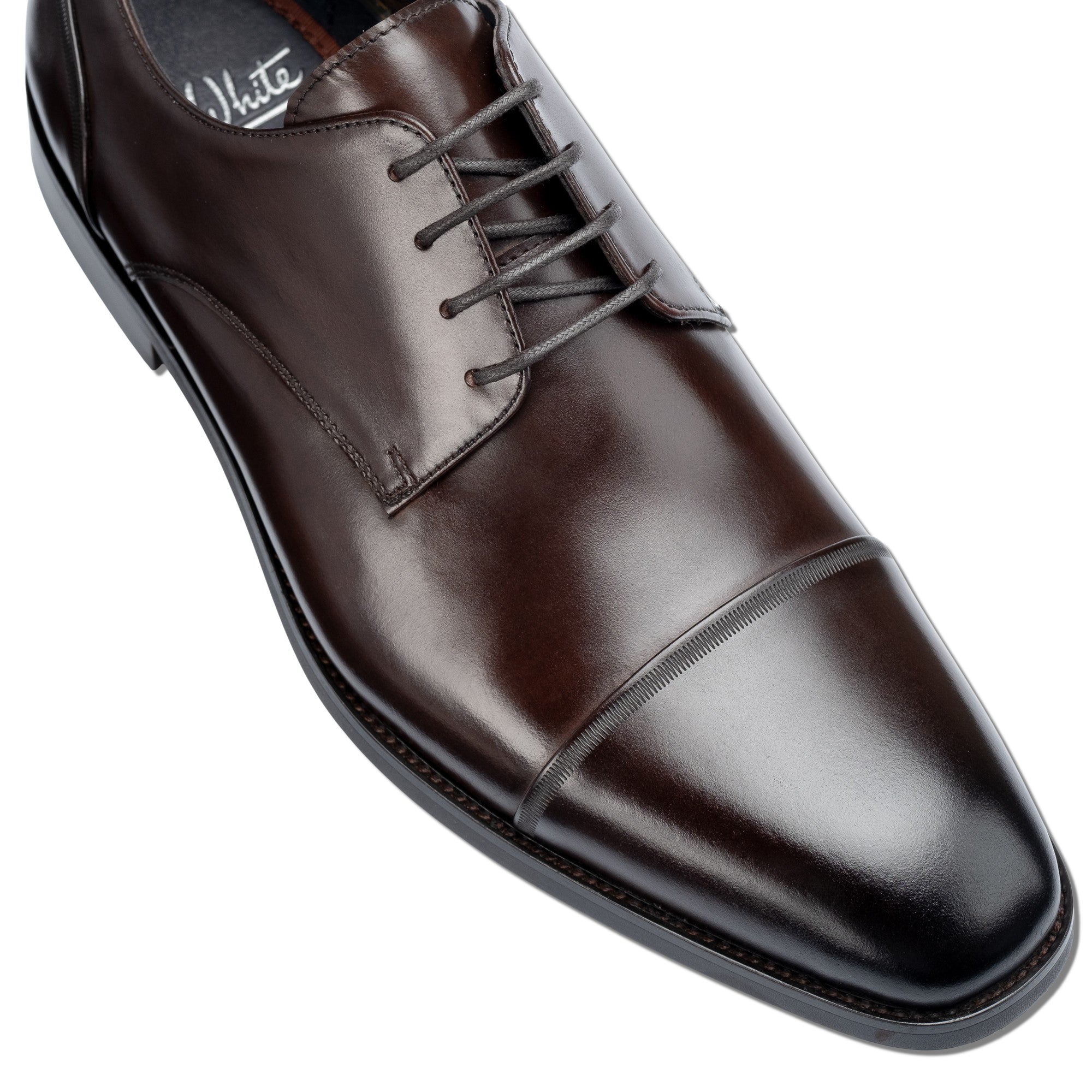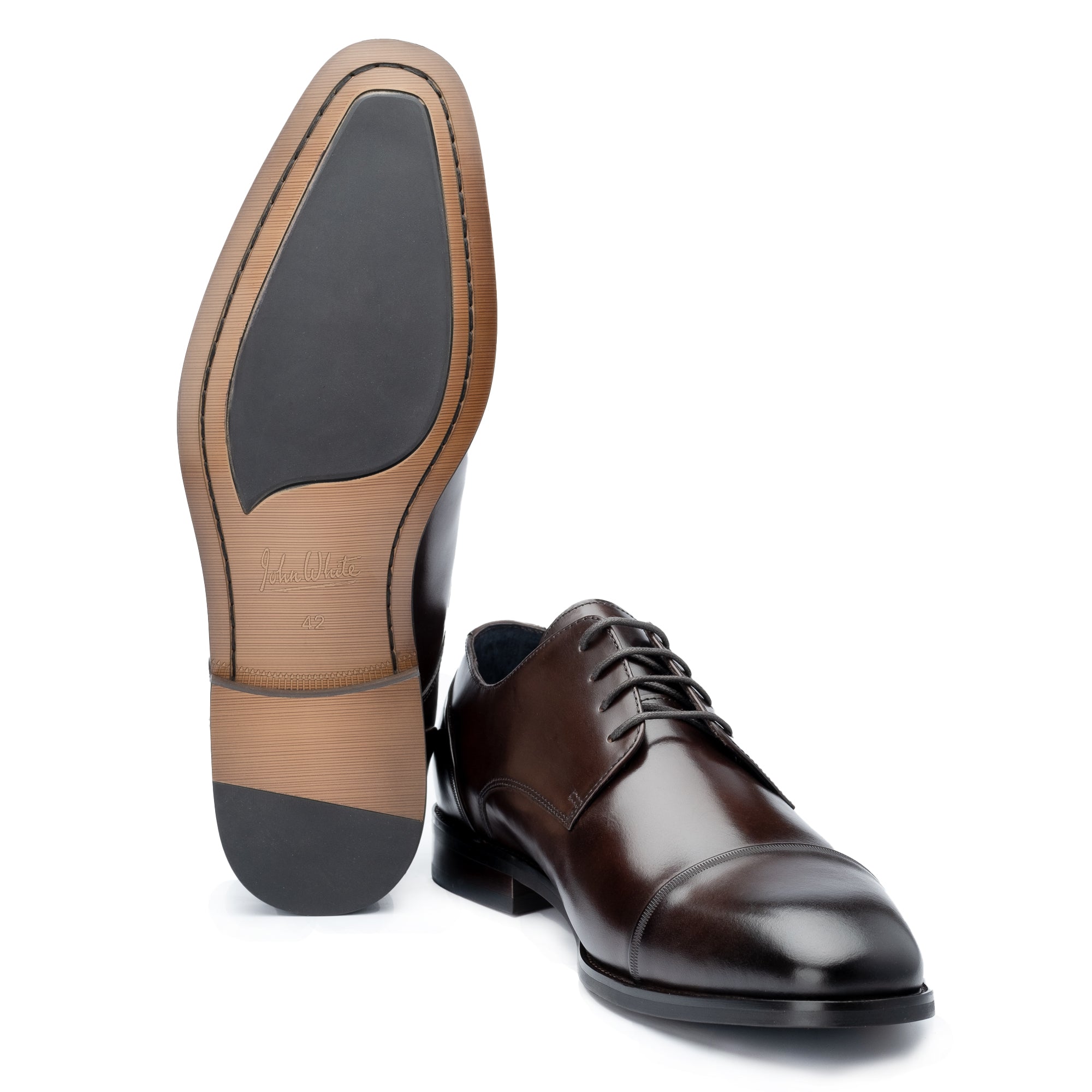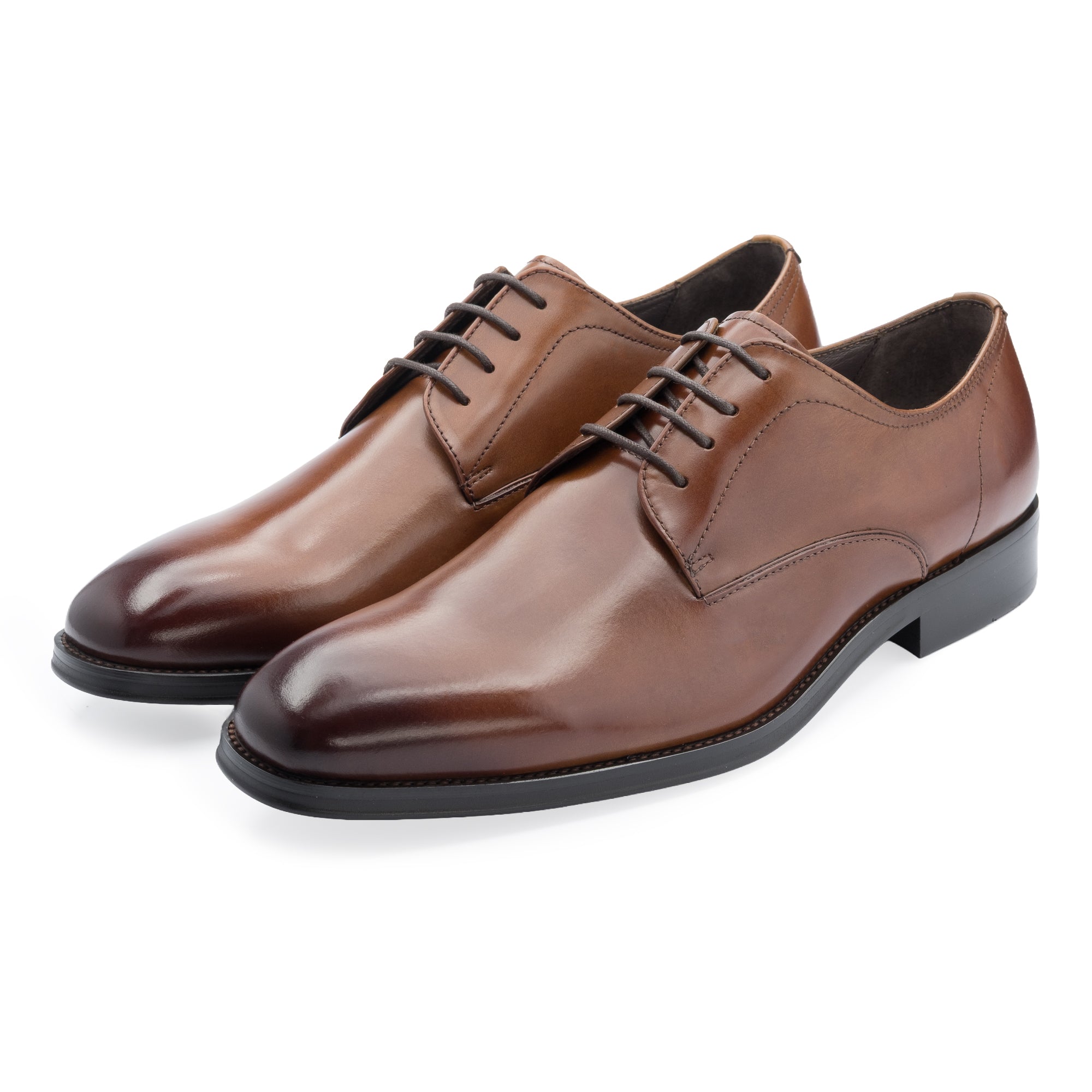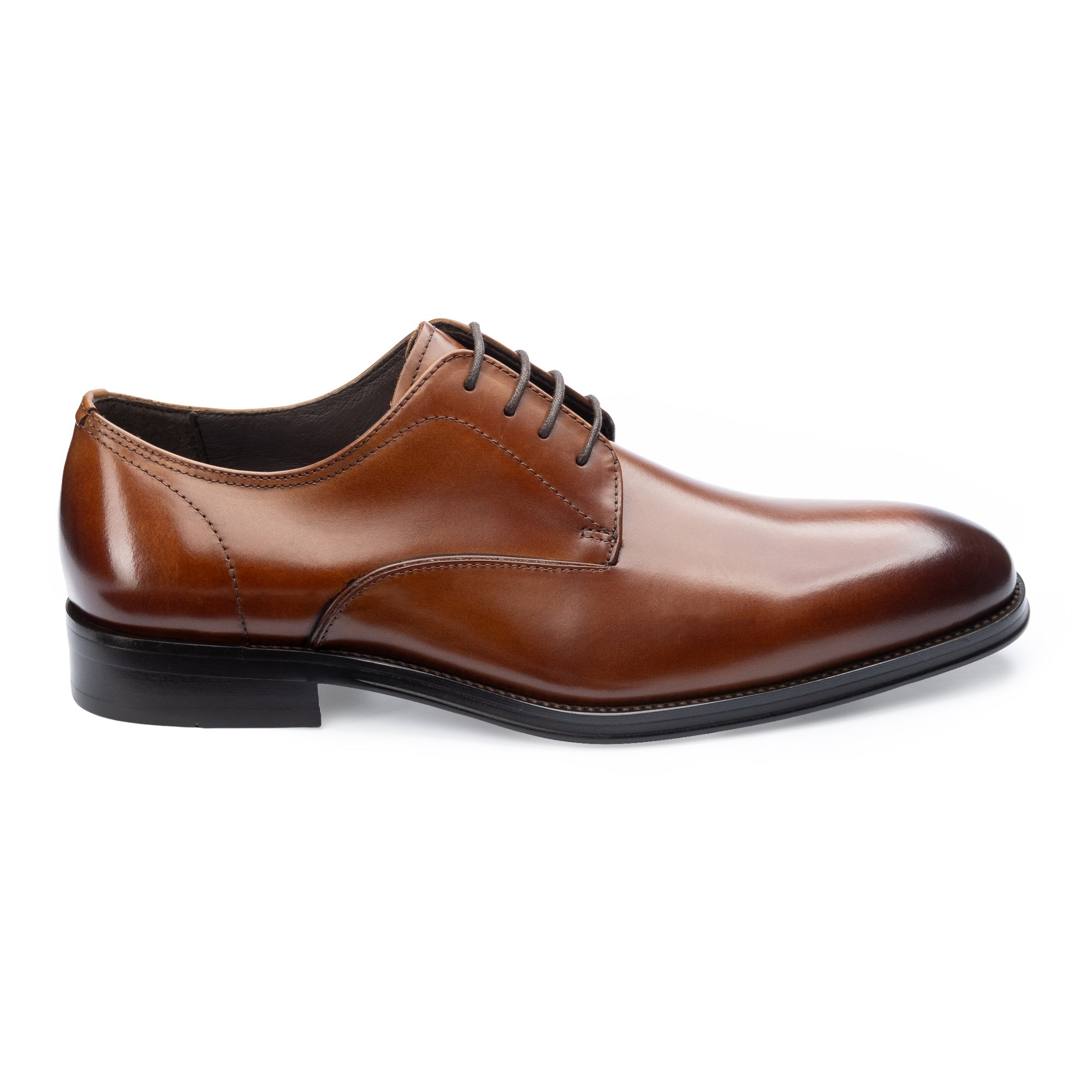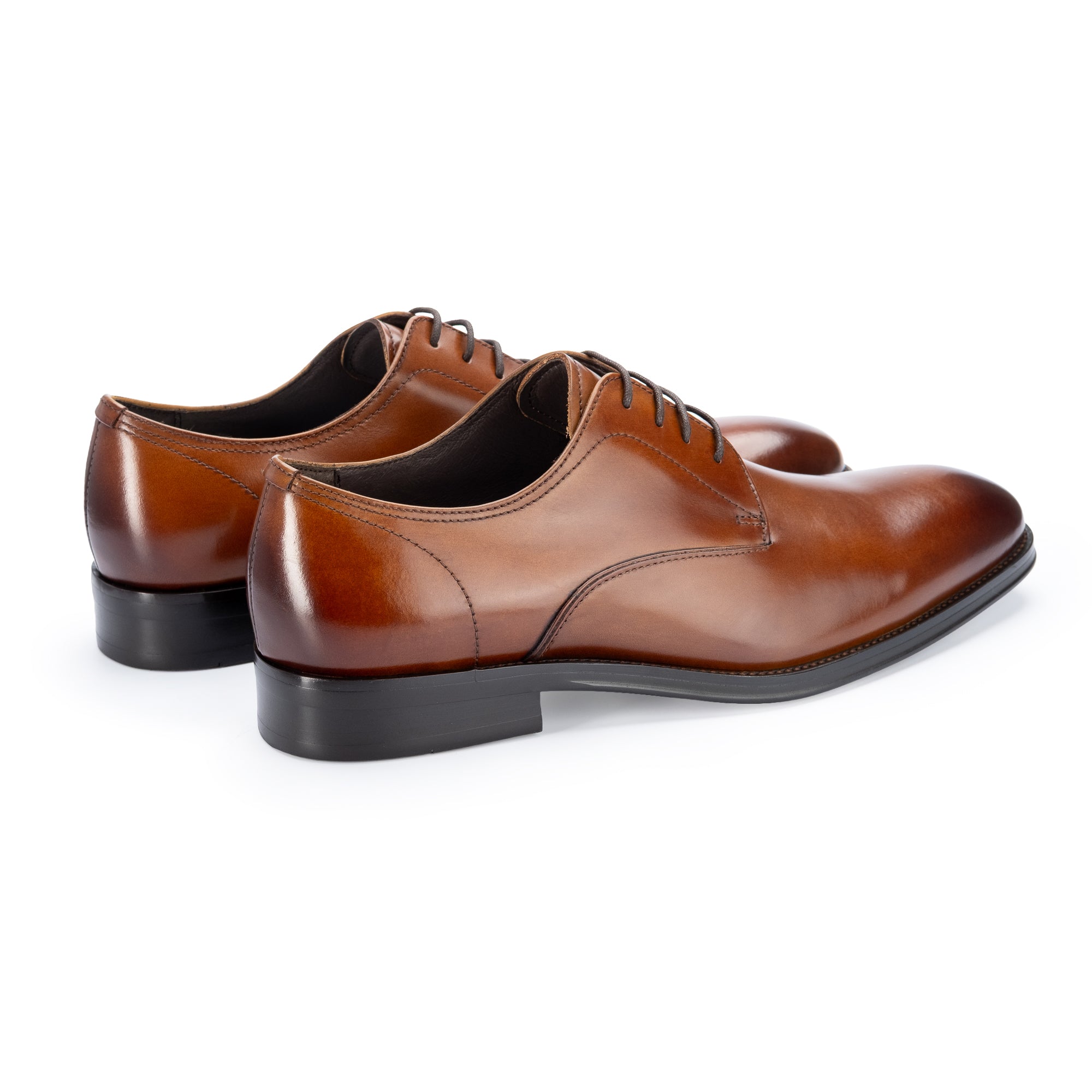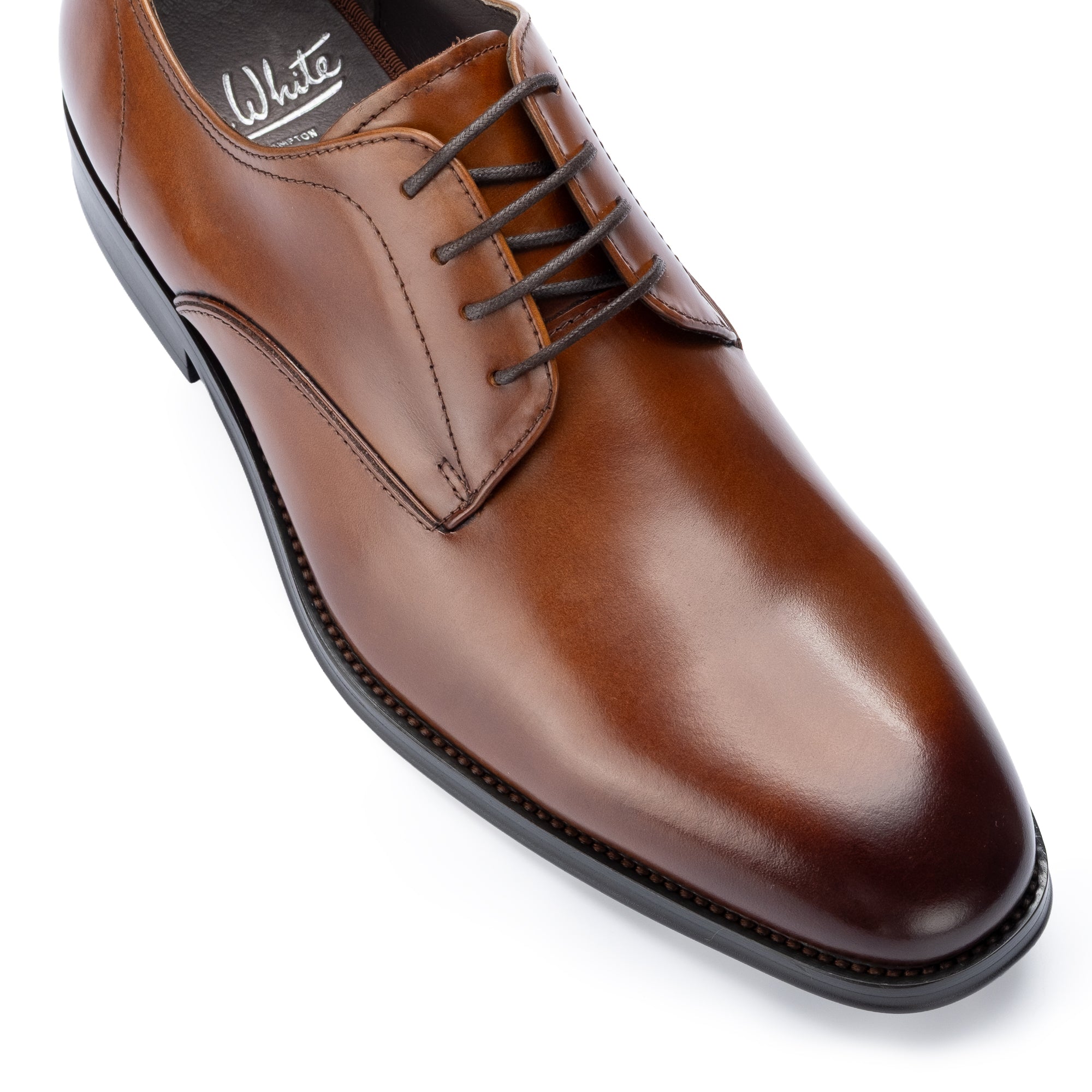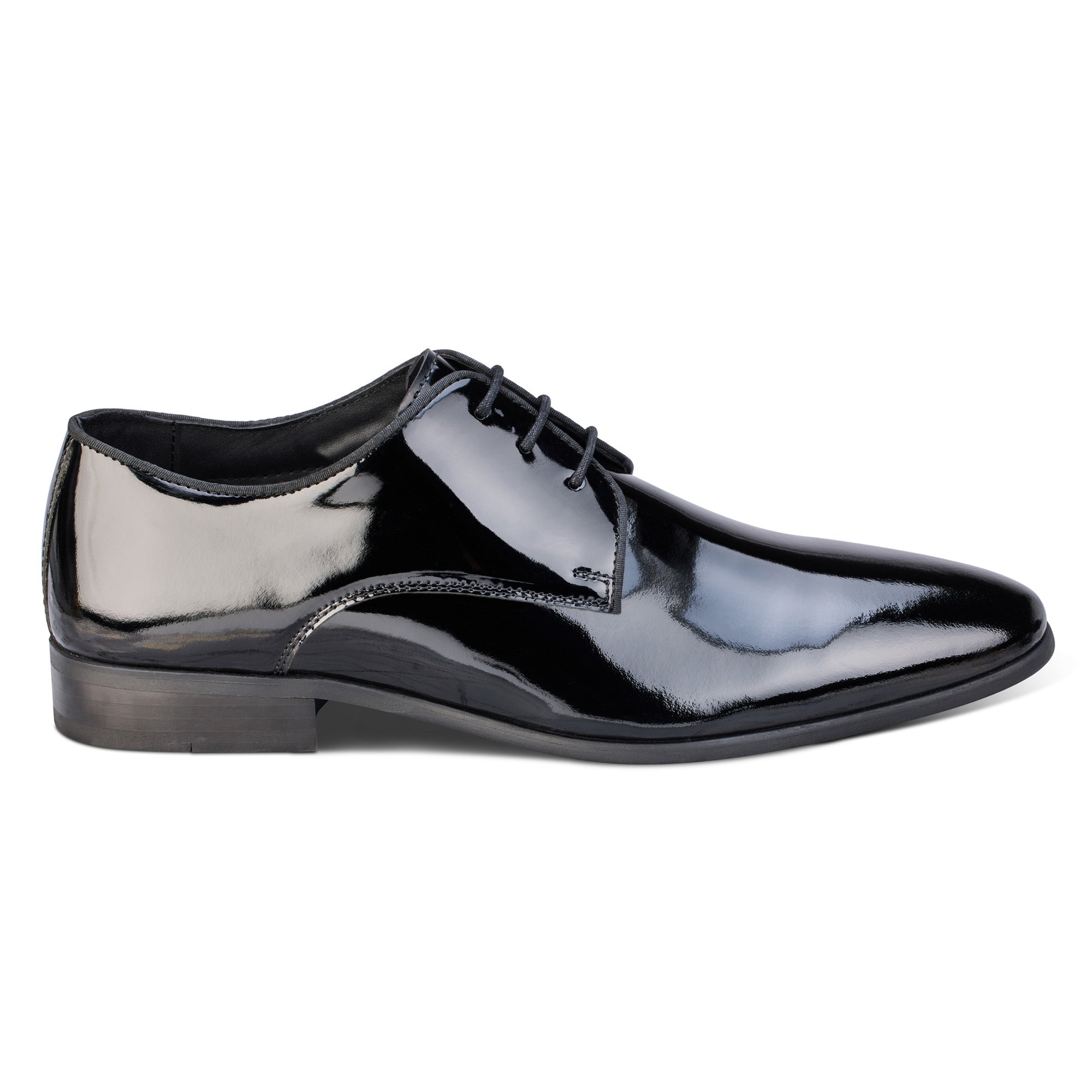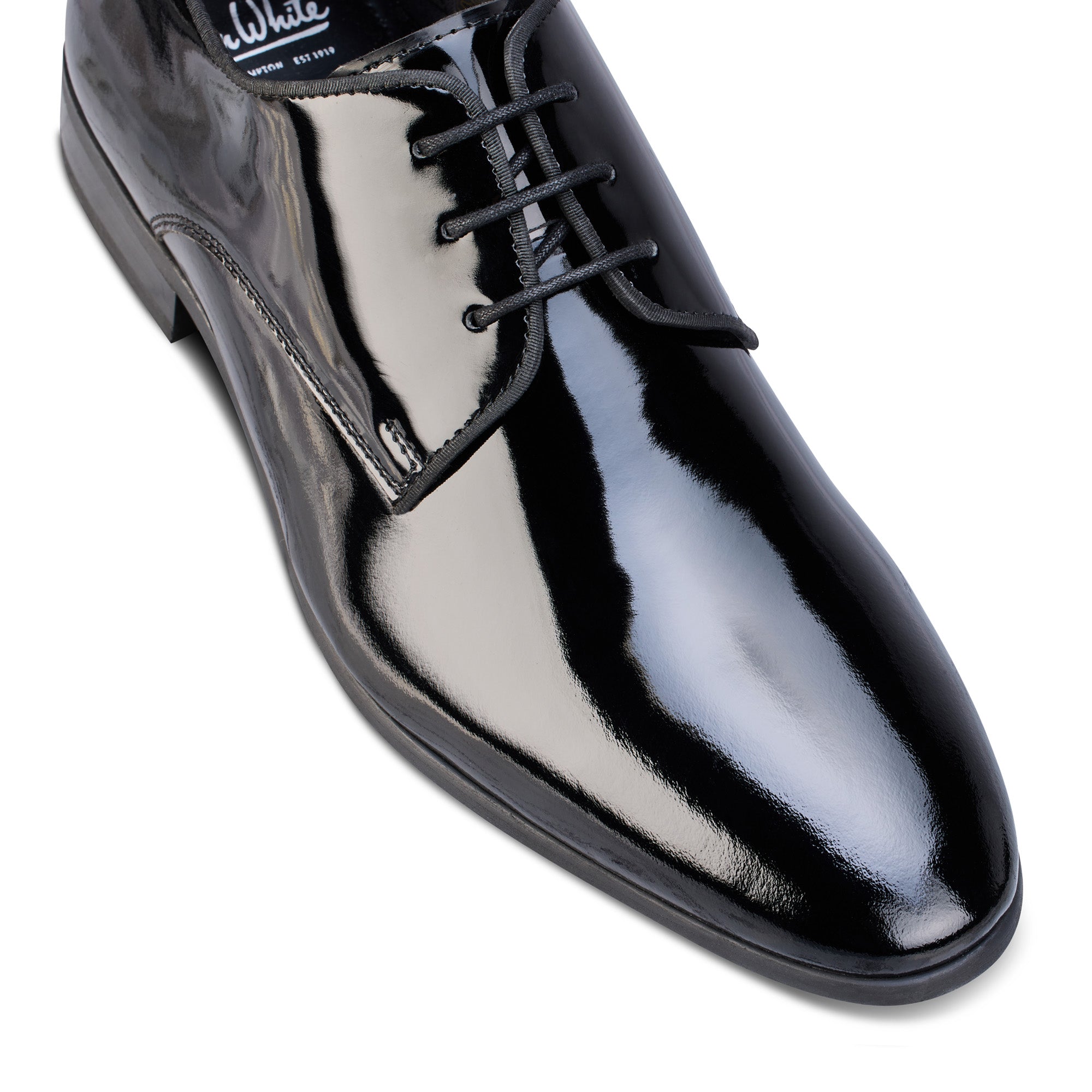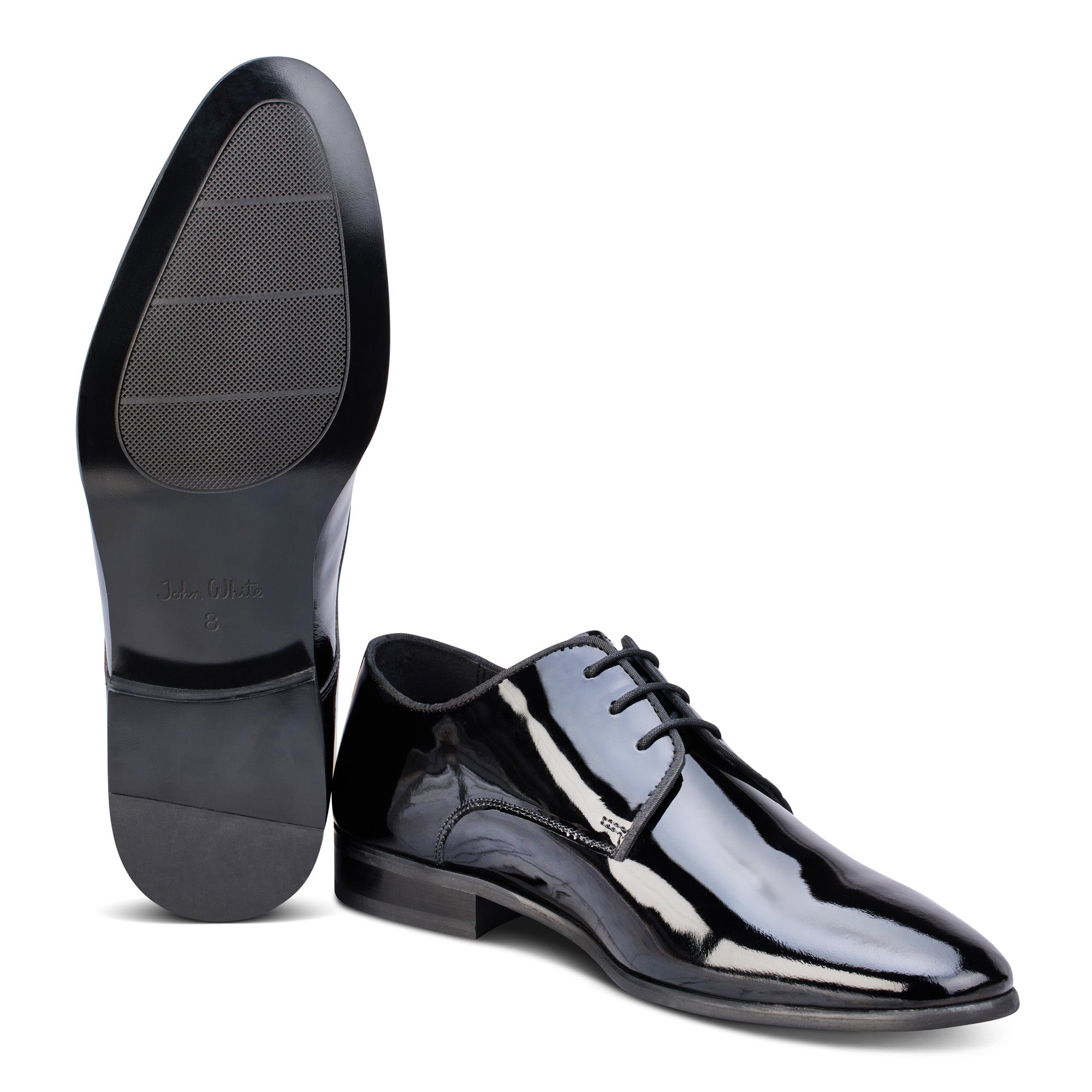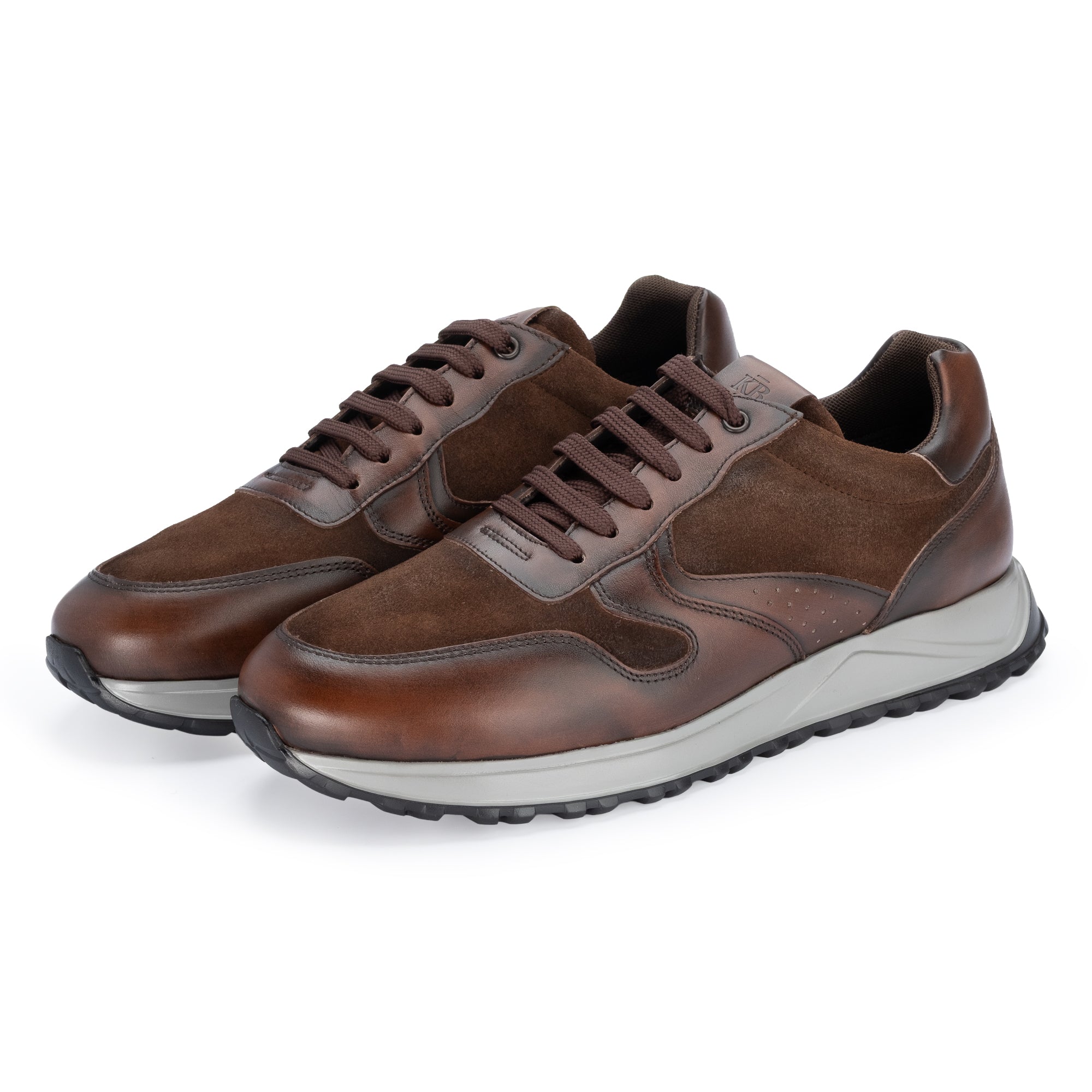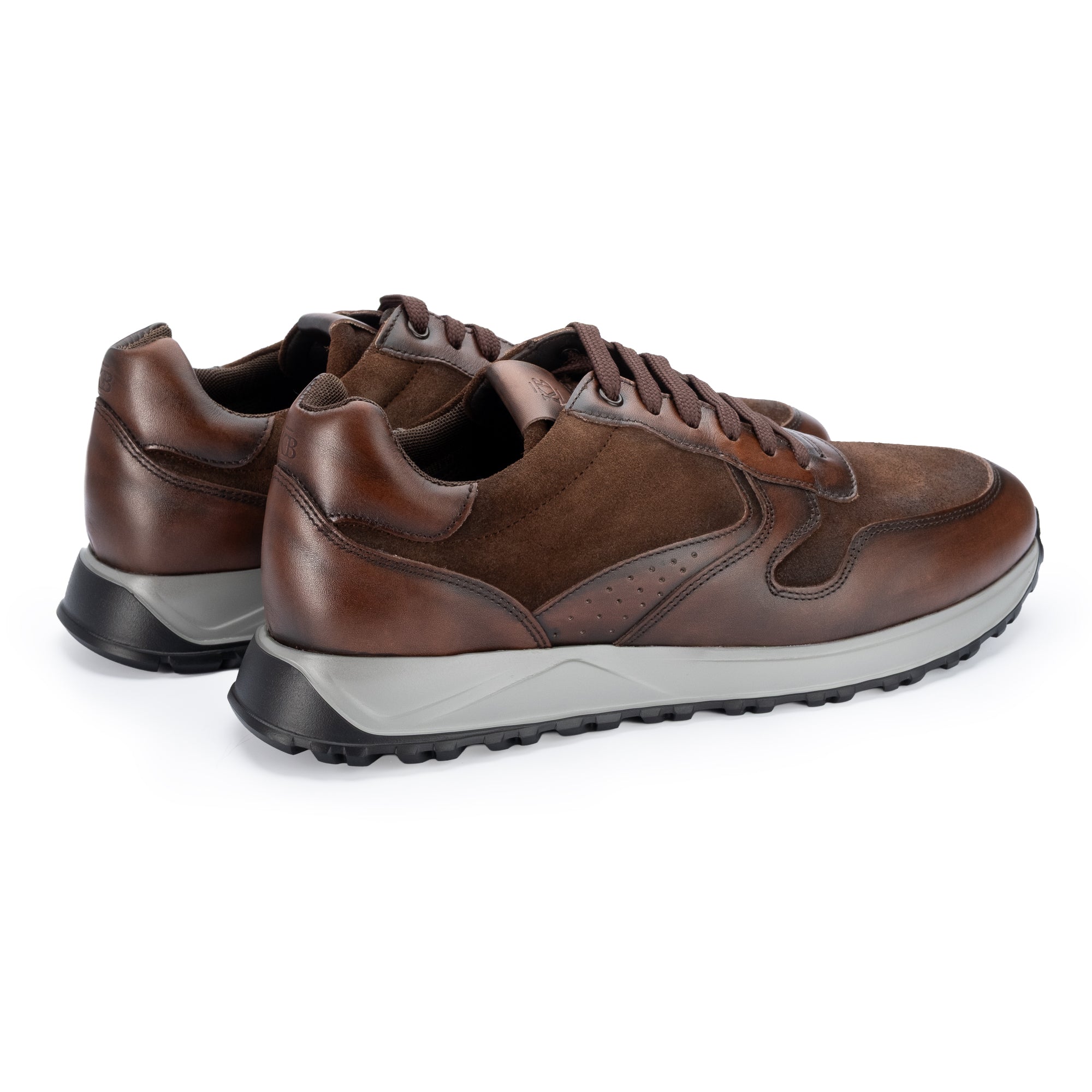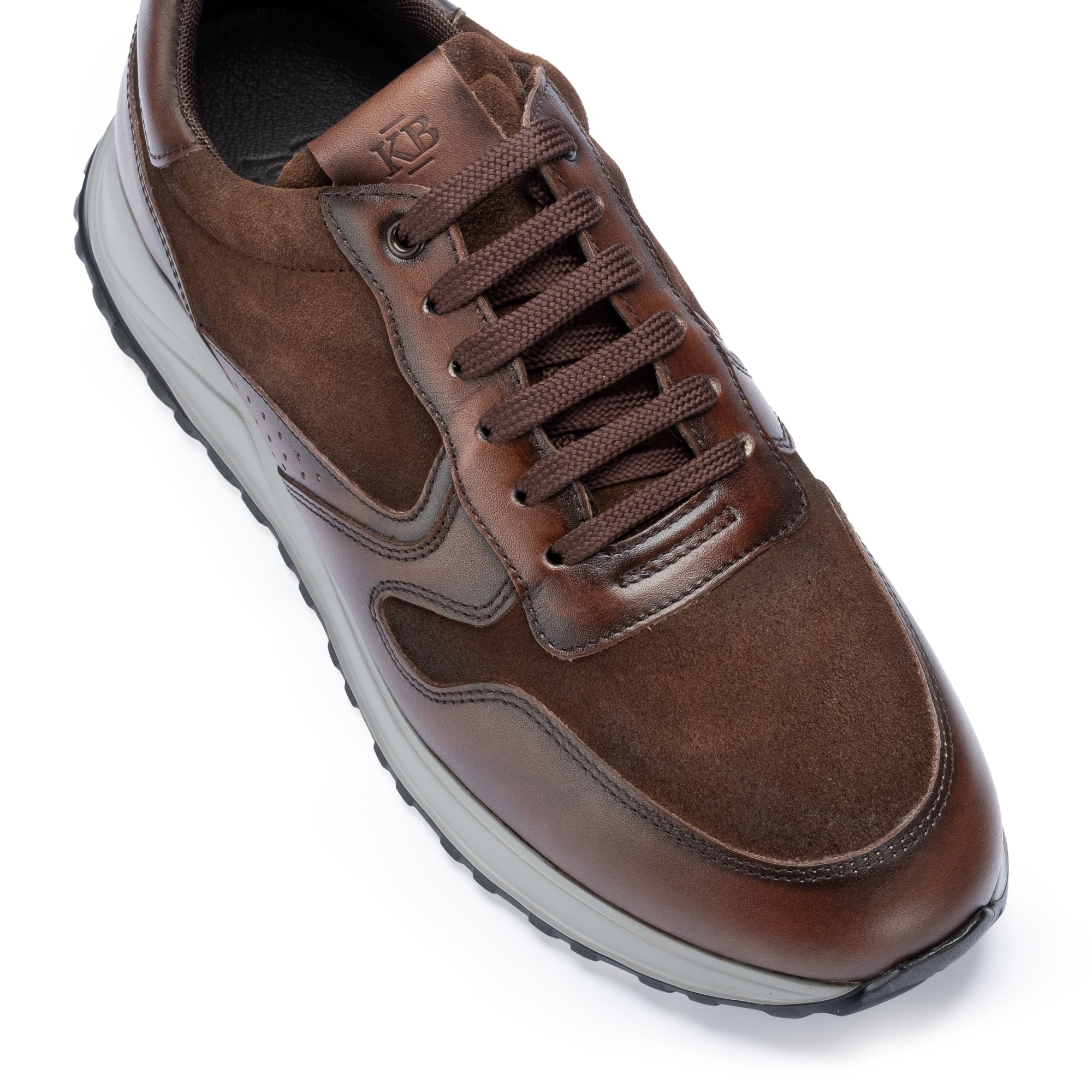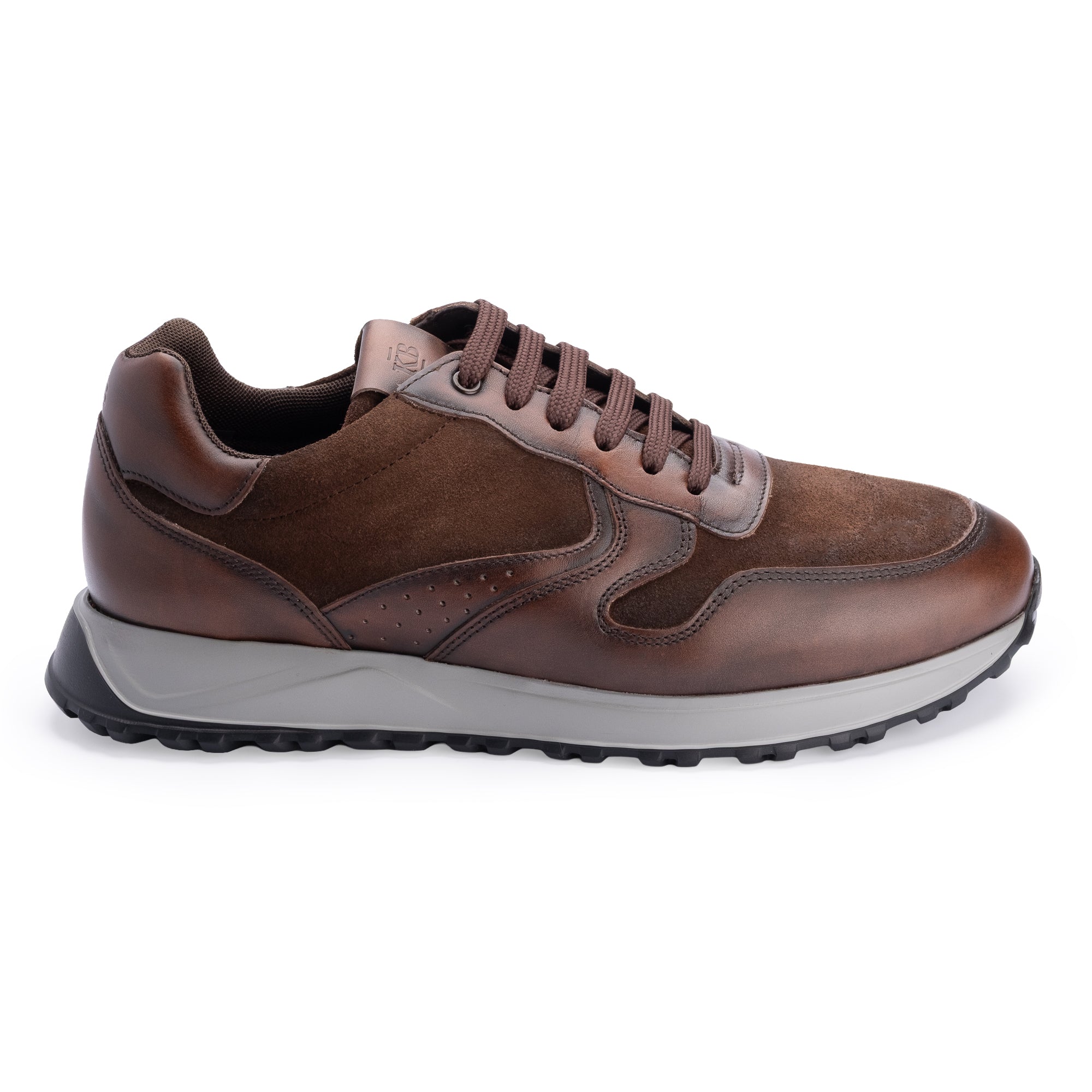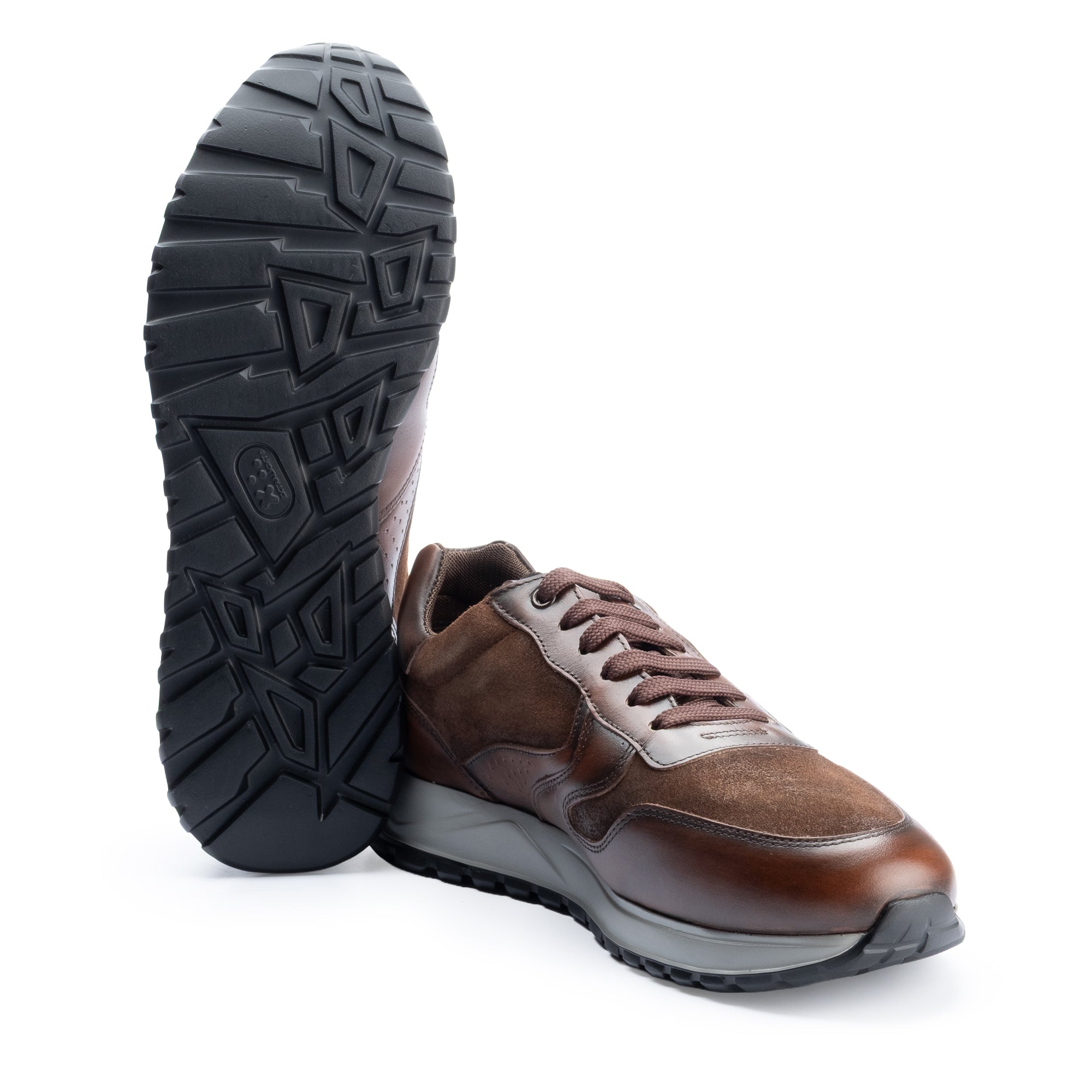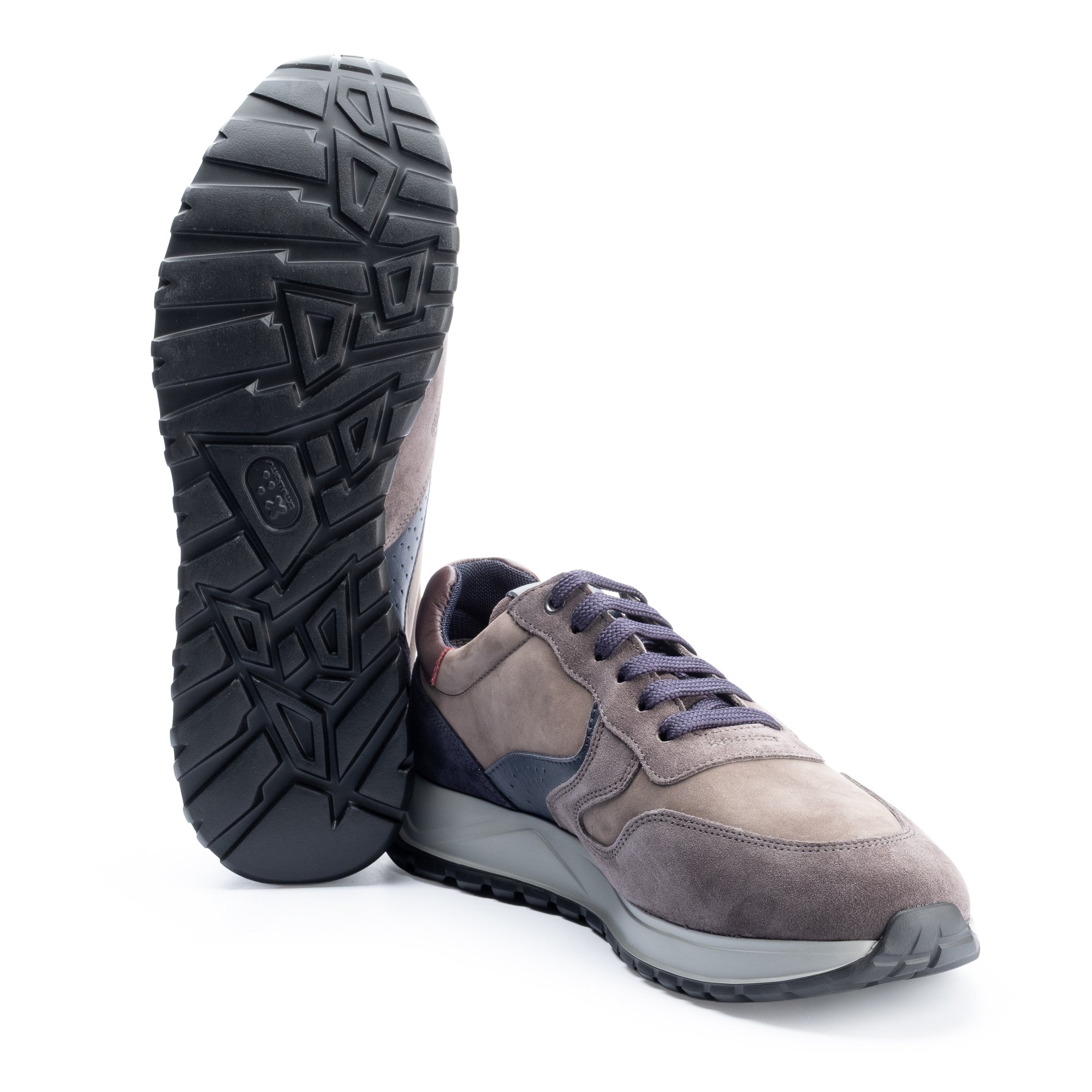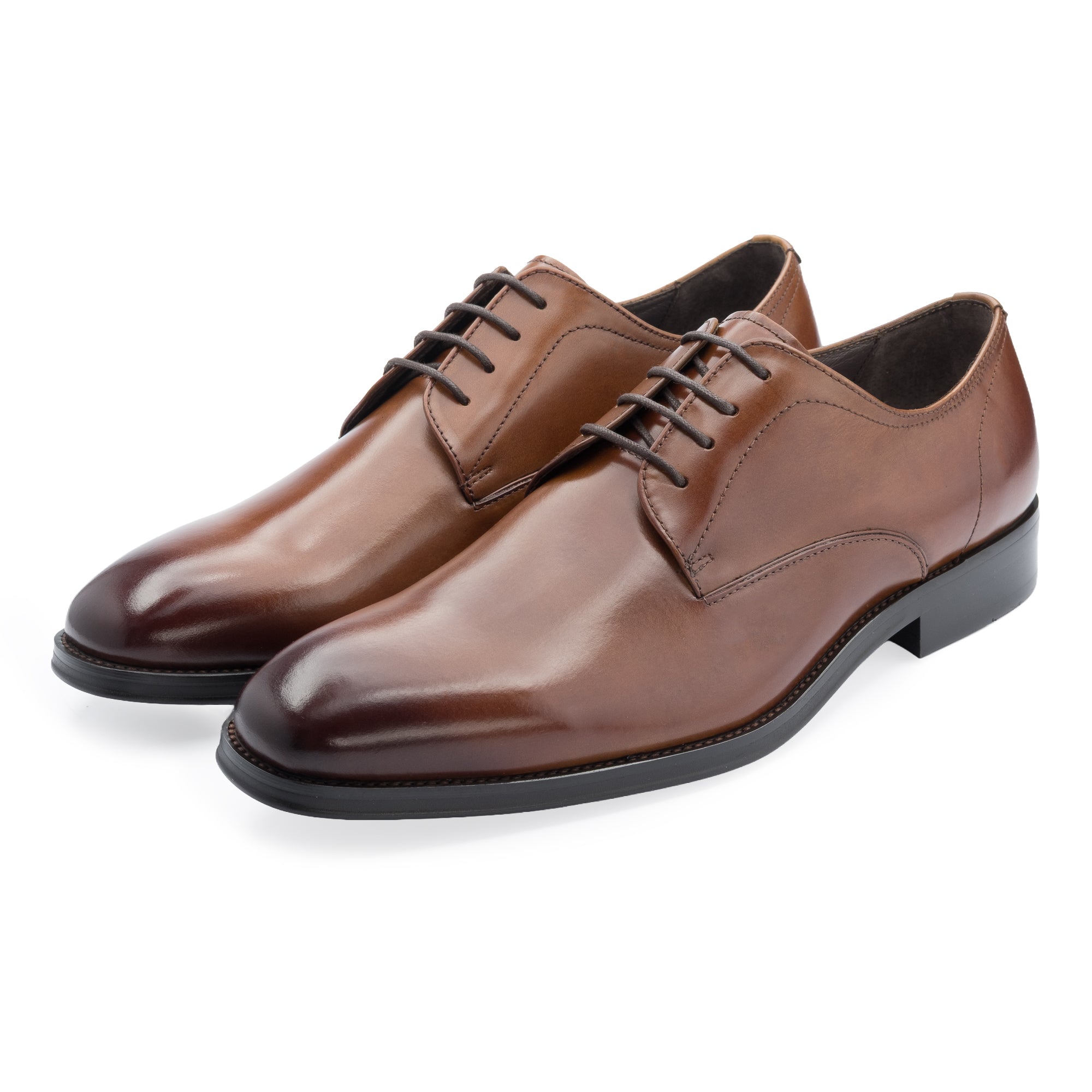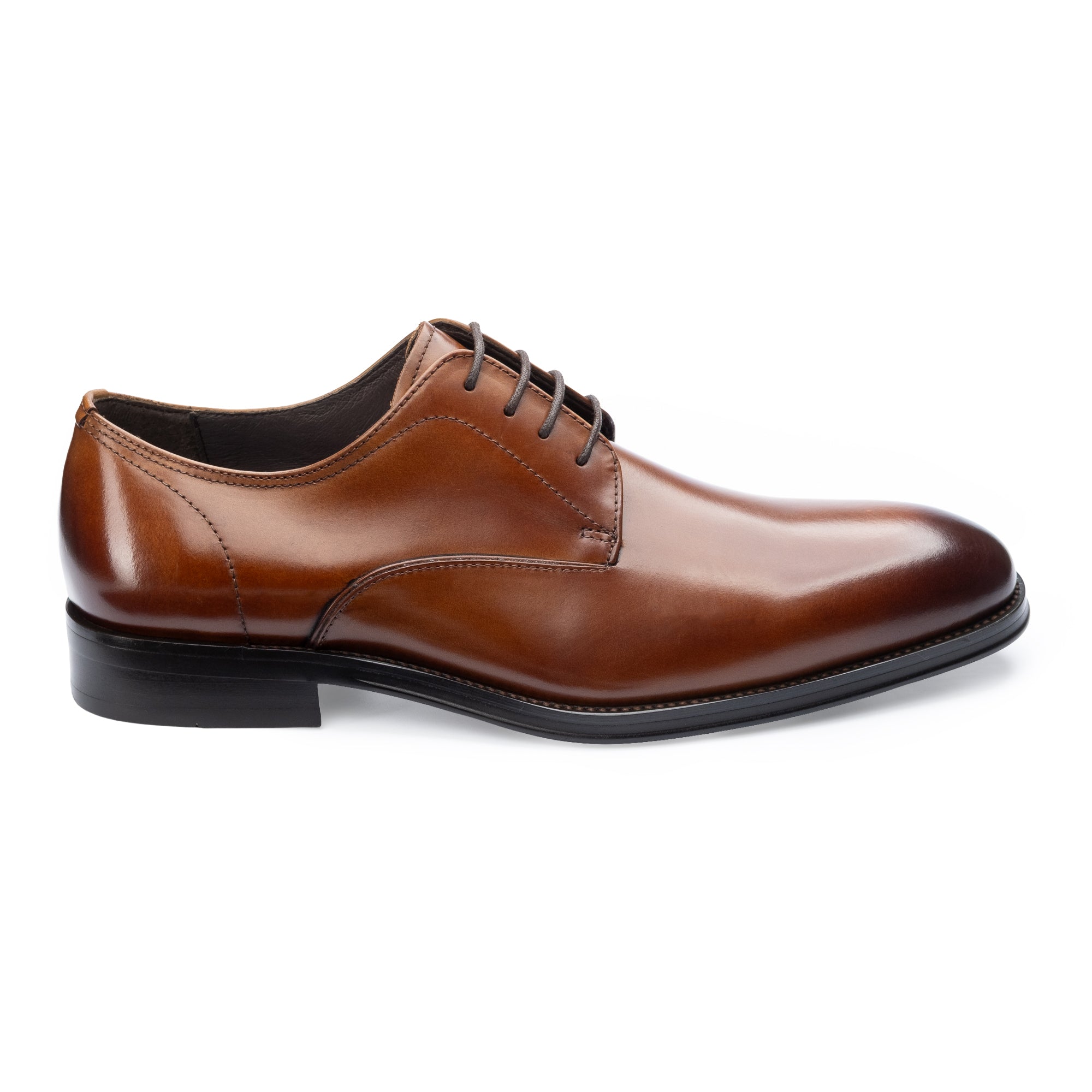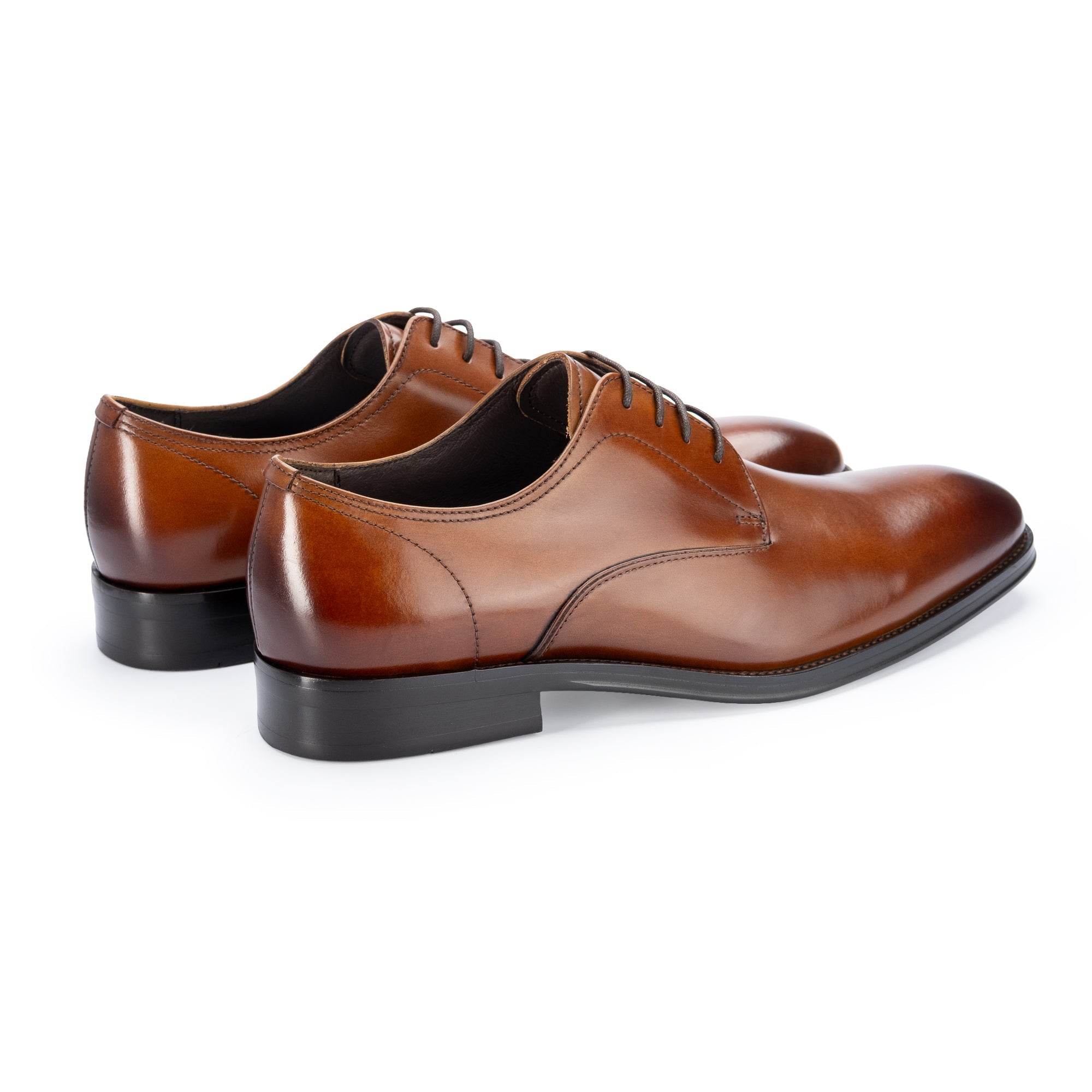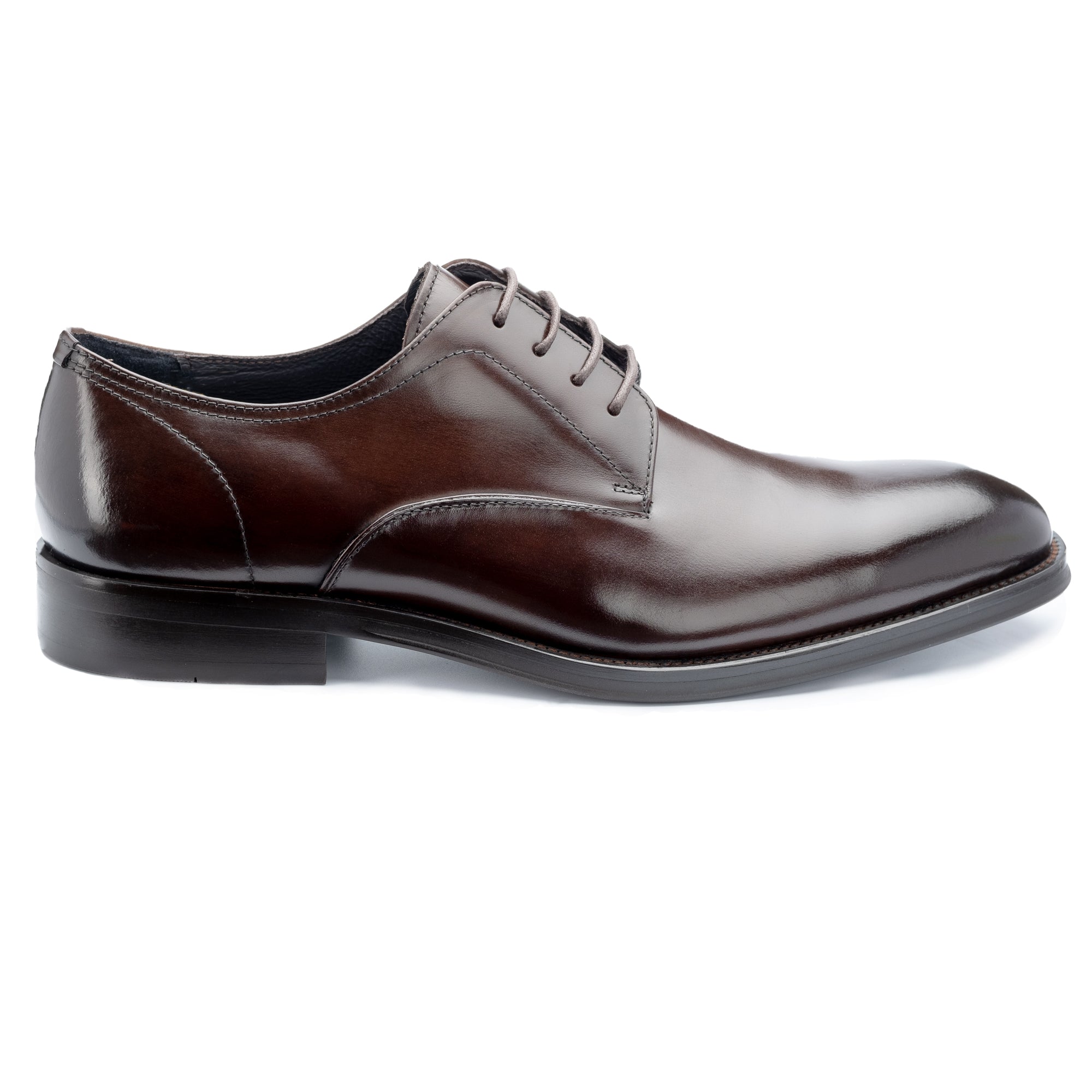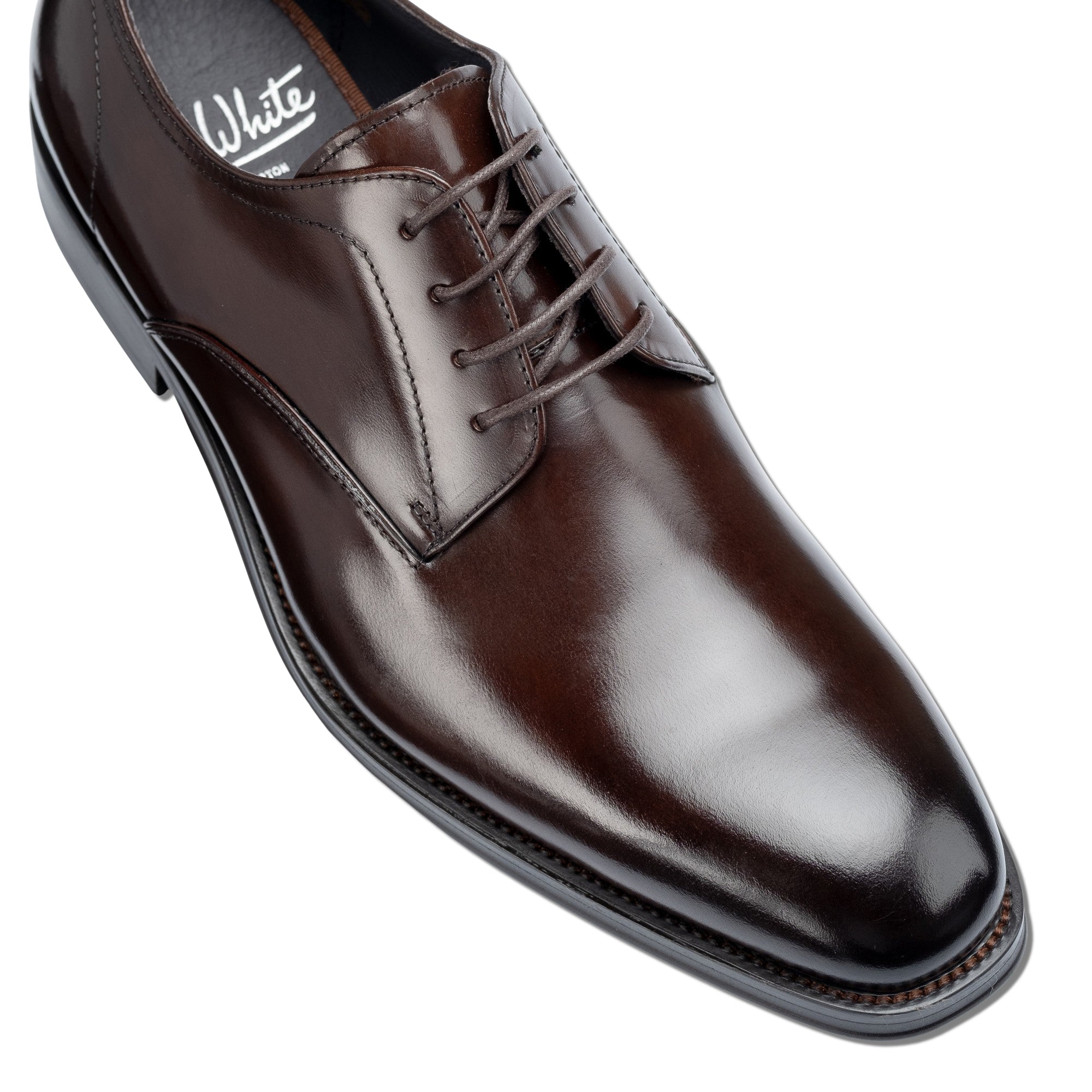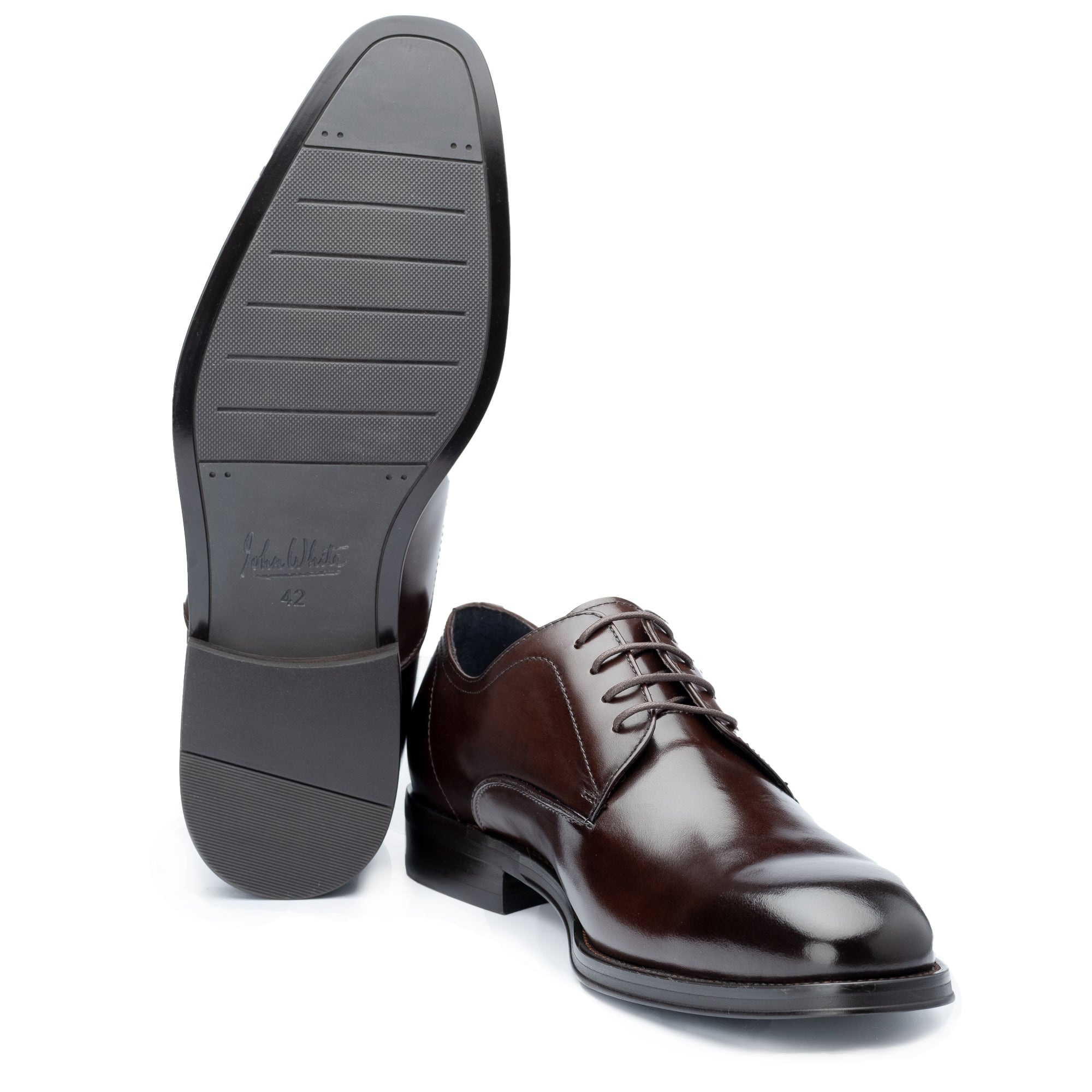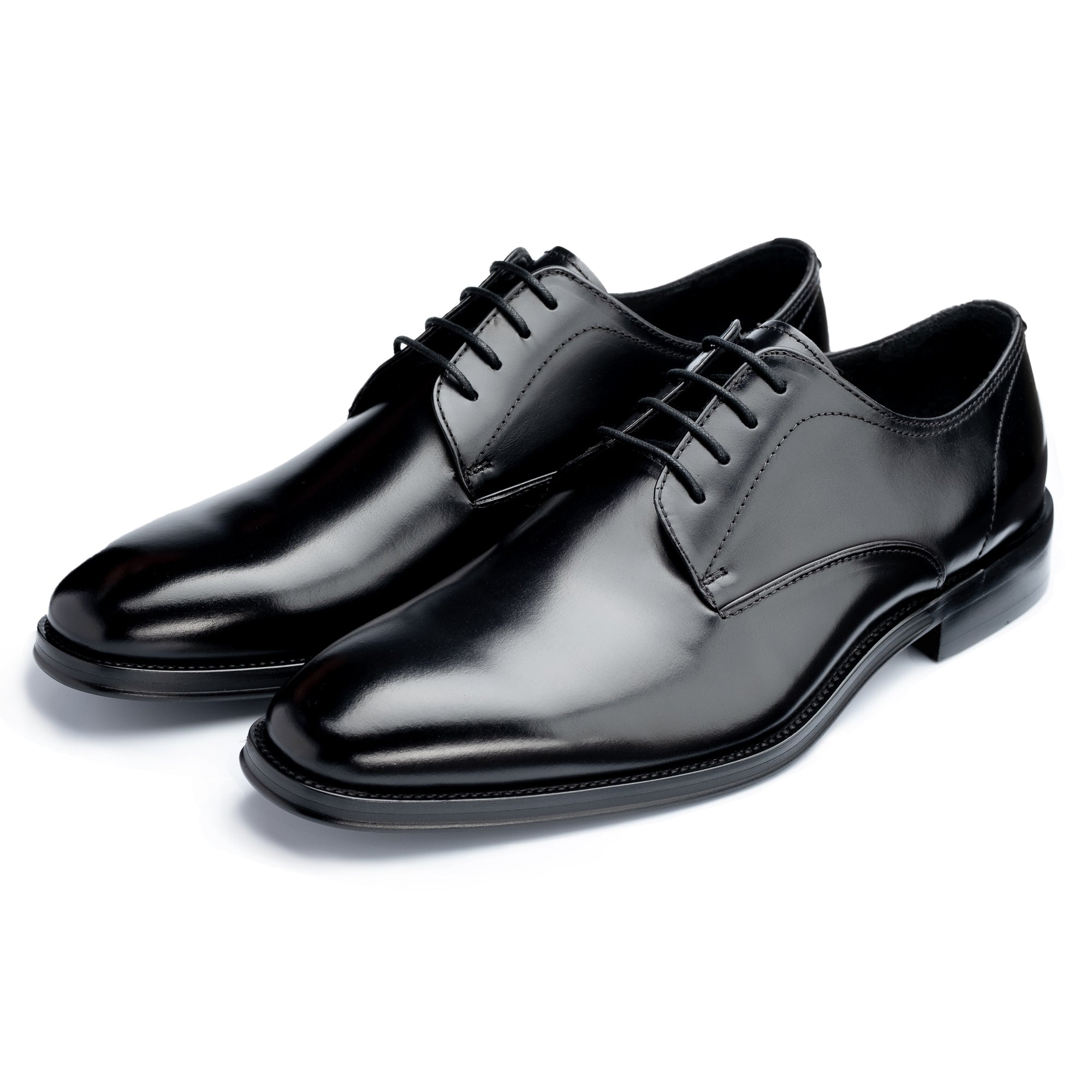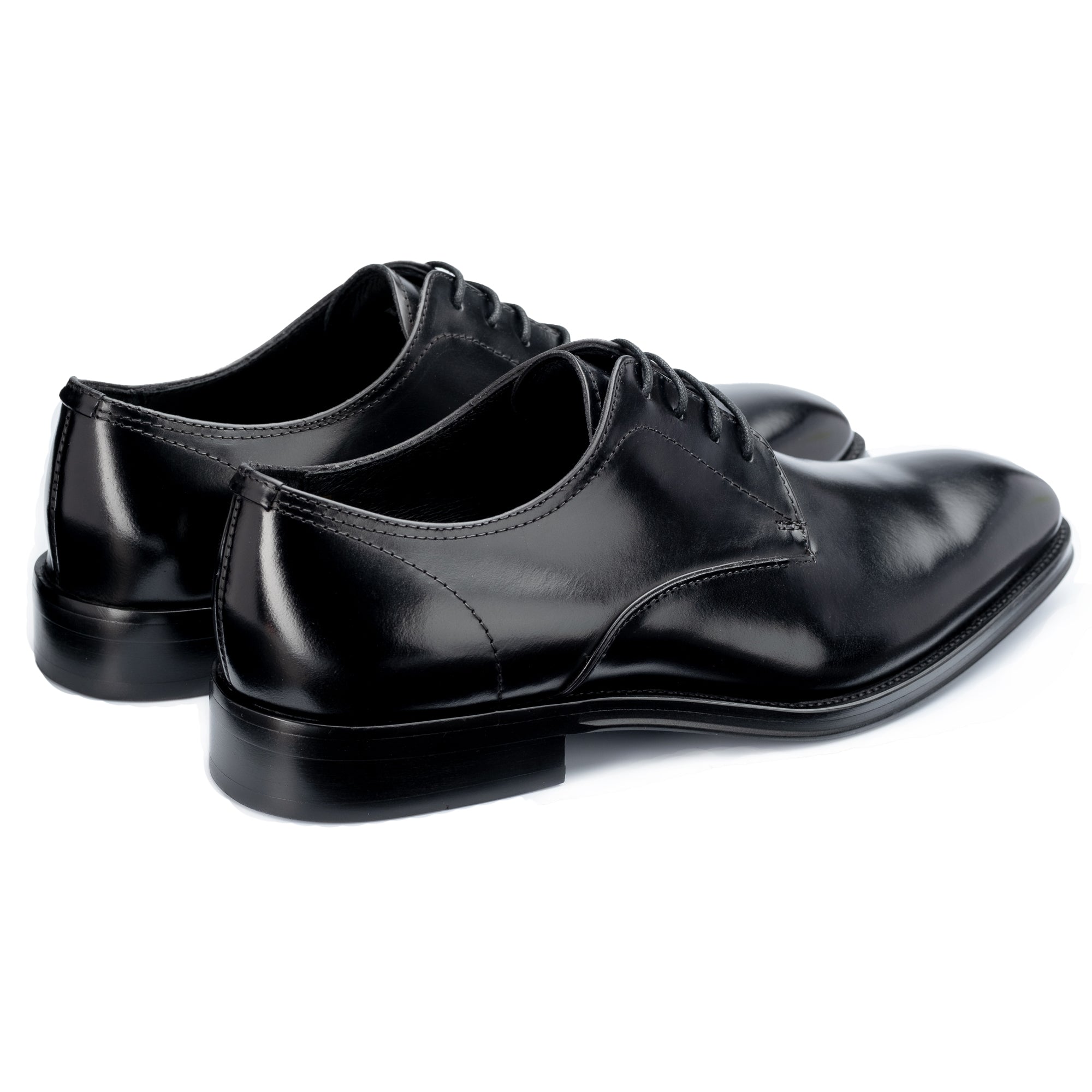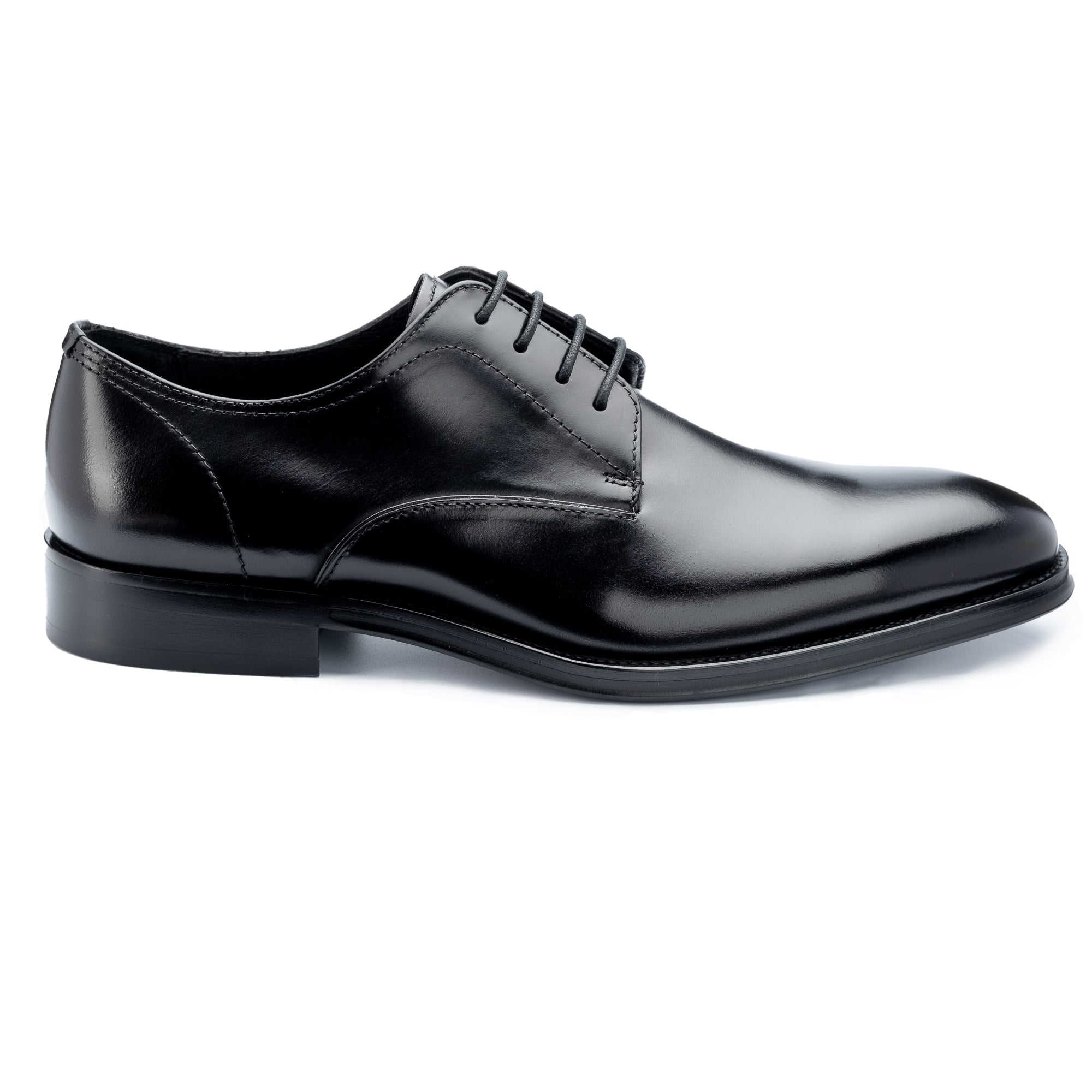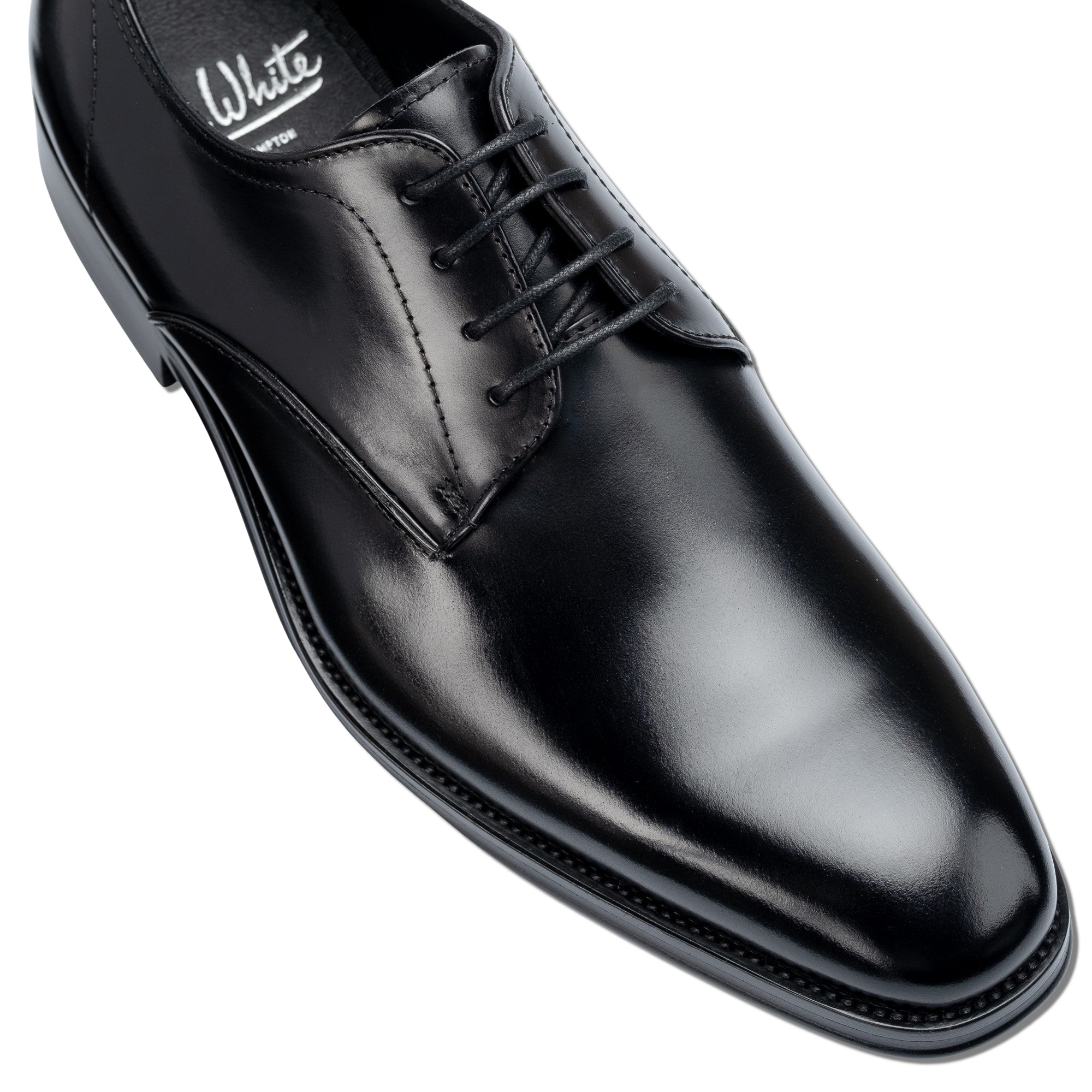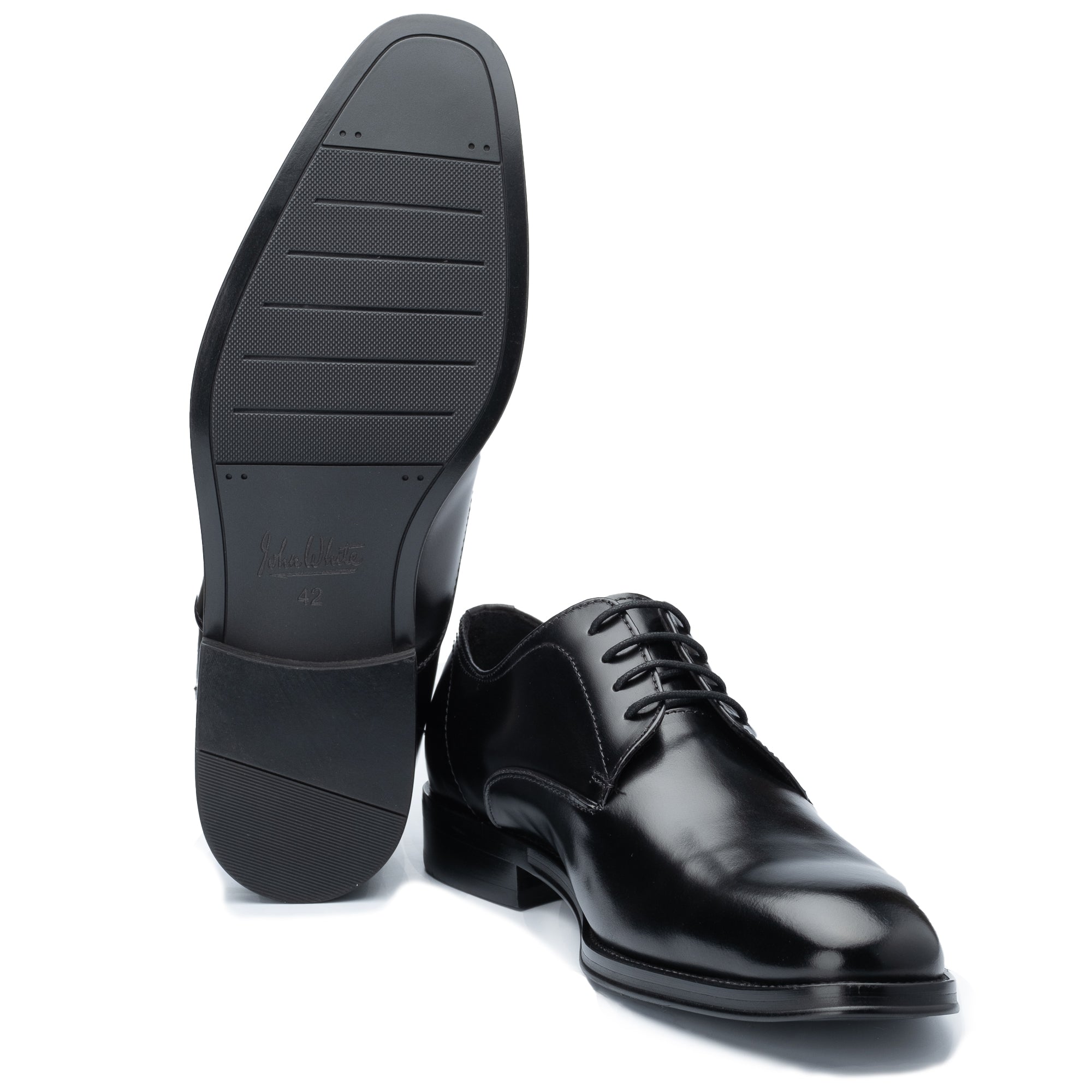

When you hold two leather shoes side by side — both marketed as genuine leather, both priced differently — what exactly are you paying more for? The answer lies almost entirely in the upper. How the leather was treated at the tannery, which part of the hide was used, and how much of the natural surface was preserved determines not just how a shoe looks on the day you buy it, but how it ages across years of wear.
In This Guide
- The Leather Hierarchy: What Sits Beneath the Surface
- Full-Grain Leather: The Unaltered Surface
- Corrected-Grain Leather: Consistent, Practical, Predictable
- Tumbled Grain: Full-Grain, Informally Finished
- Reading the Difference: A Practical Buyer's Test
- How British Conditions Favour Full-Grain
- Where the Premium Is Earned
- Related Guides
Understanding the difference between full-grain and corrected-grain leather is one of those things nobody explains when you buy your first proper pair. Once you know it, you cannot unknow it — and your buying decisions improve considerably.
The Leather Hierarchy: What Sits Beneath the Surface
A cowhide is not a uniform material. It comes in layers, and the closer you stay to the natural surface, the more durable and characterful the leather becomes. The outermost layer — where the animal's hair grew — is the grain layer. Below it sits the corium, a looser and more fibrous structure. Below that is the split.
Full-grain leather uses the entire top layer: the natural surface, the natural grain pattern, and all the structural integrity that comes with it. Corrected-grain leather begins in the same place but then undergoes sanding or buffing to remove blemishes, imperfections, and natural markings. An artificial grain is embossed onto the smoothed surface, and a pigmented coating is applied to create uniformity.
The hierarchy, from highest to lowest grade:
- Full-grain — natural surface intact, premium tannage, highest durability and patina potential
- Top-grain — lightly sanded, natural surface partially preserved, often a smooth pigmented finish
- Corrected-grain — heavily sanded, embossed artificial grain, consistent appearance across the run
- Split leather — lower layers of the hide; not used in quality dress shoes
Full-Grain Leather: The Unaltered Surface
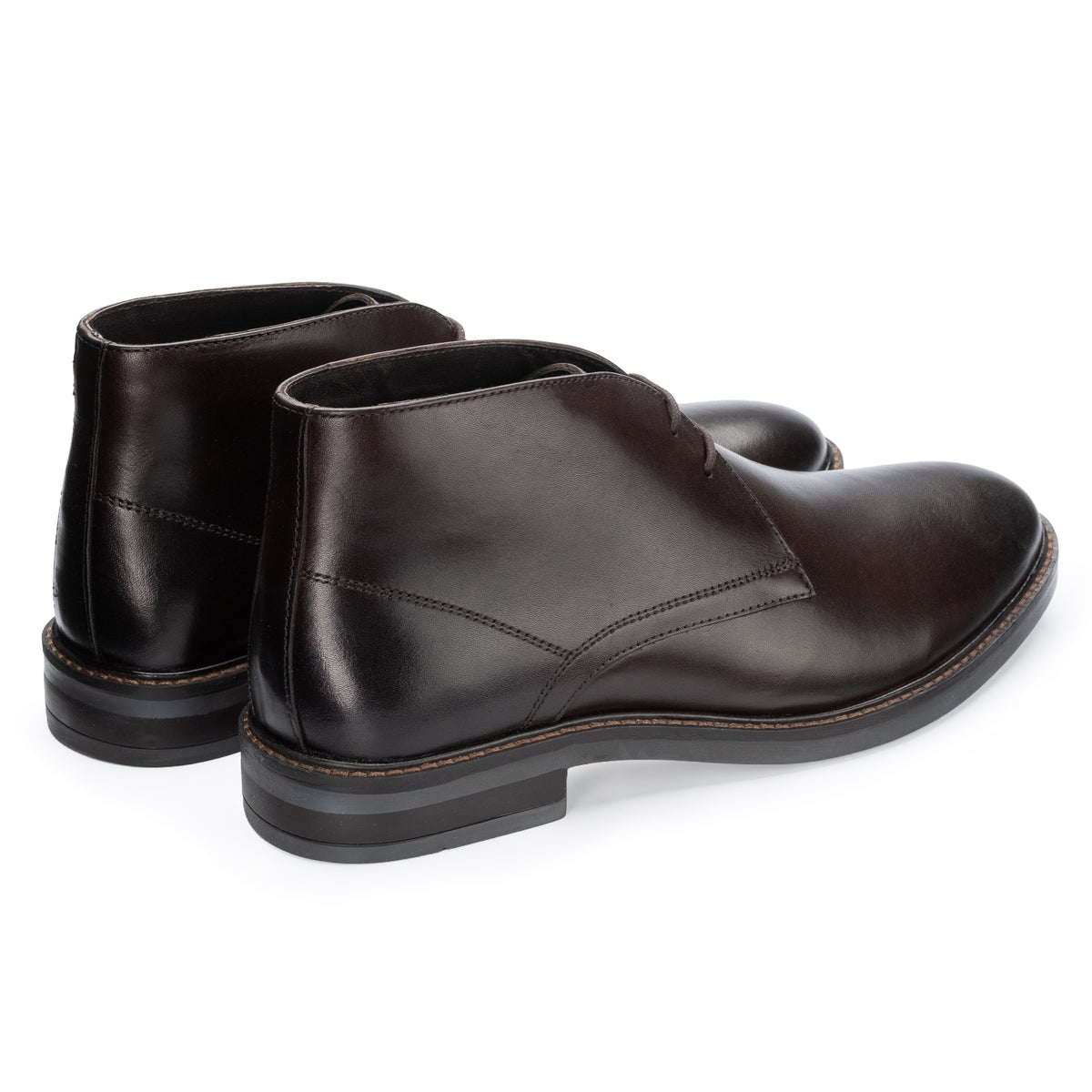
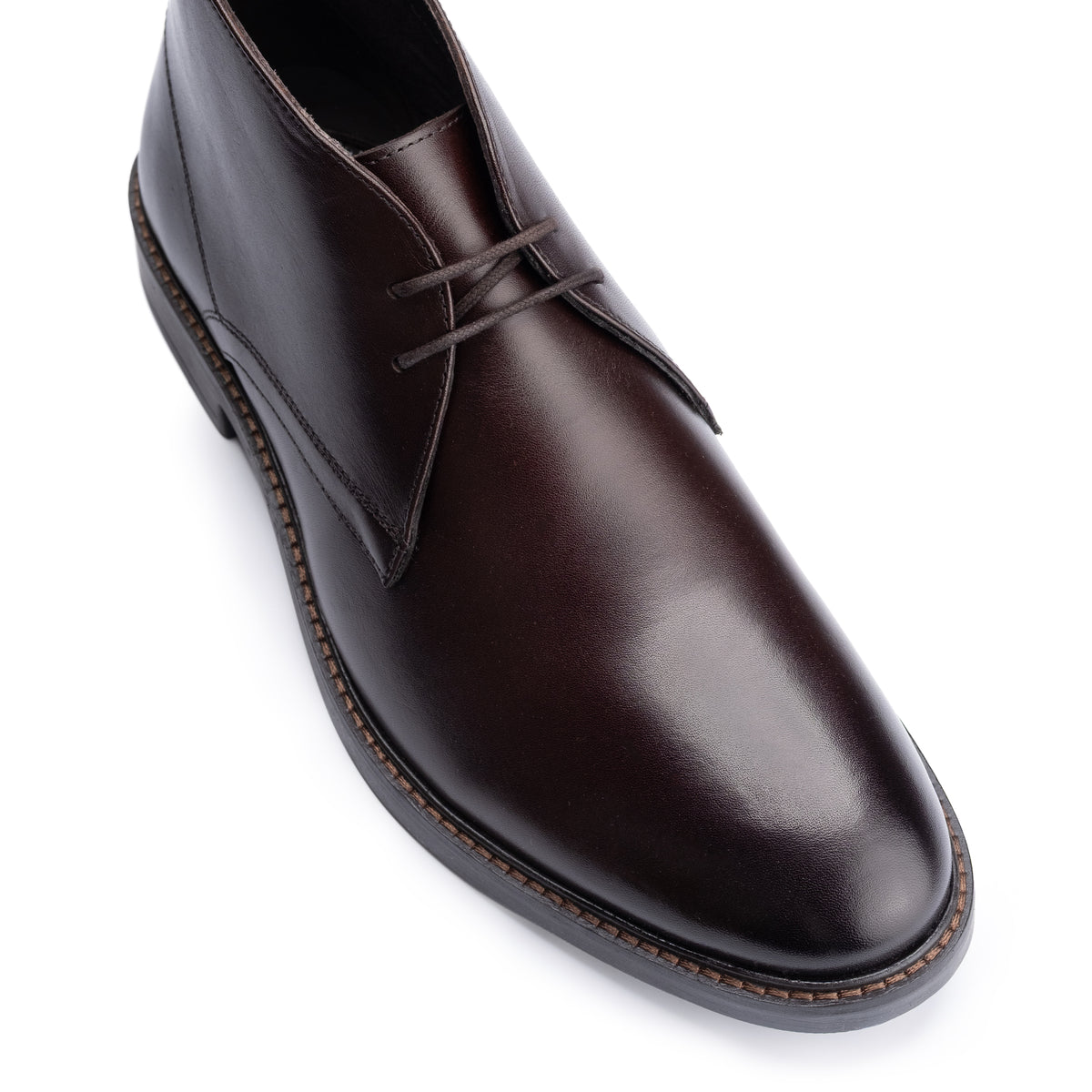
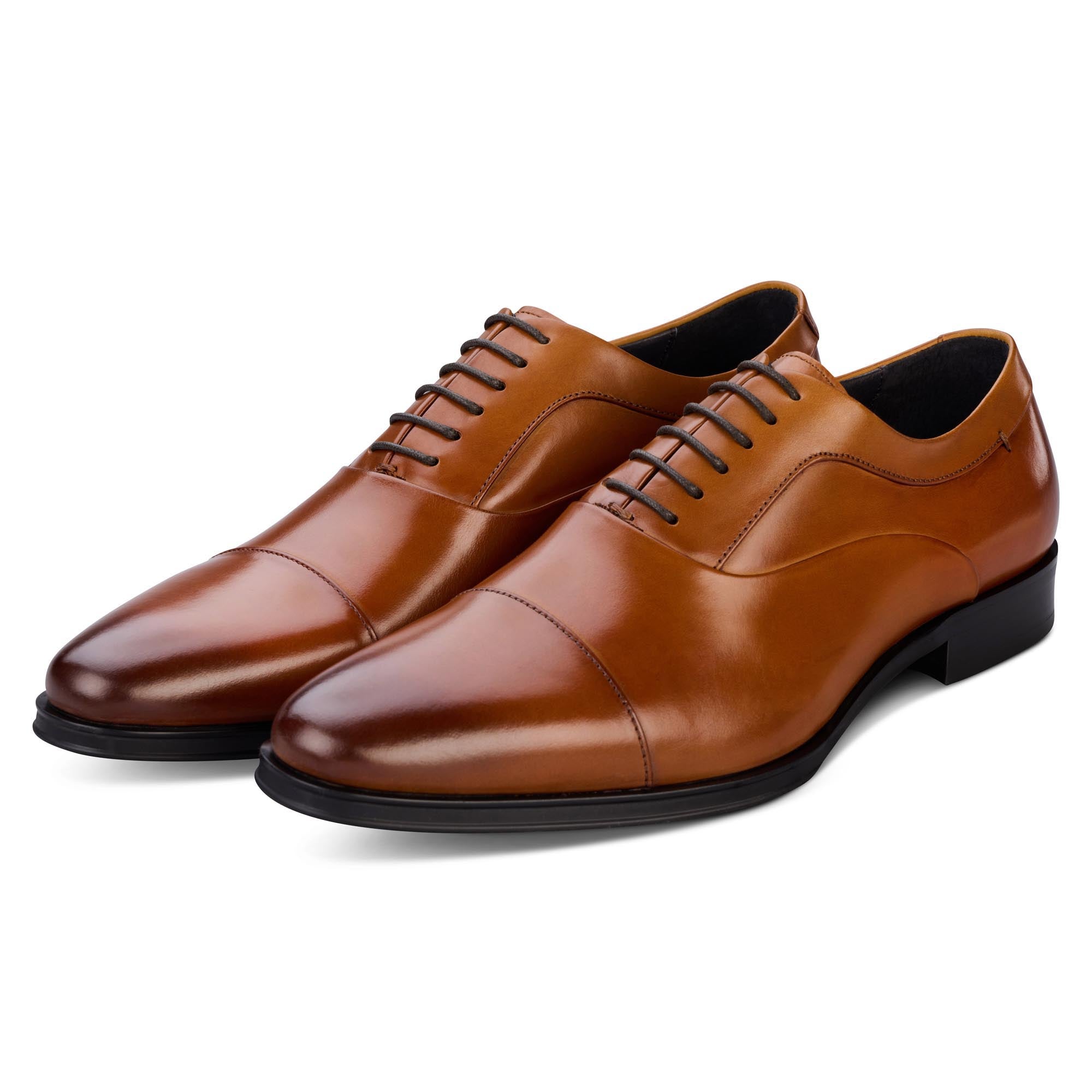
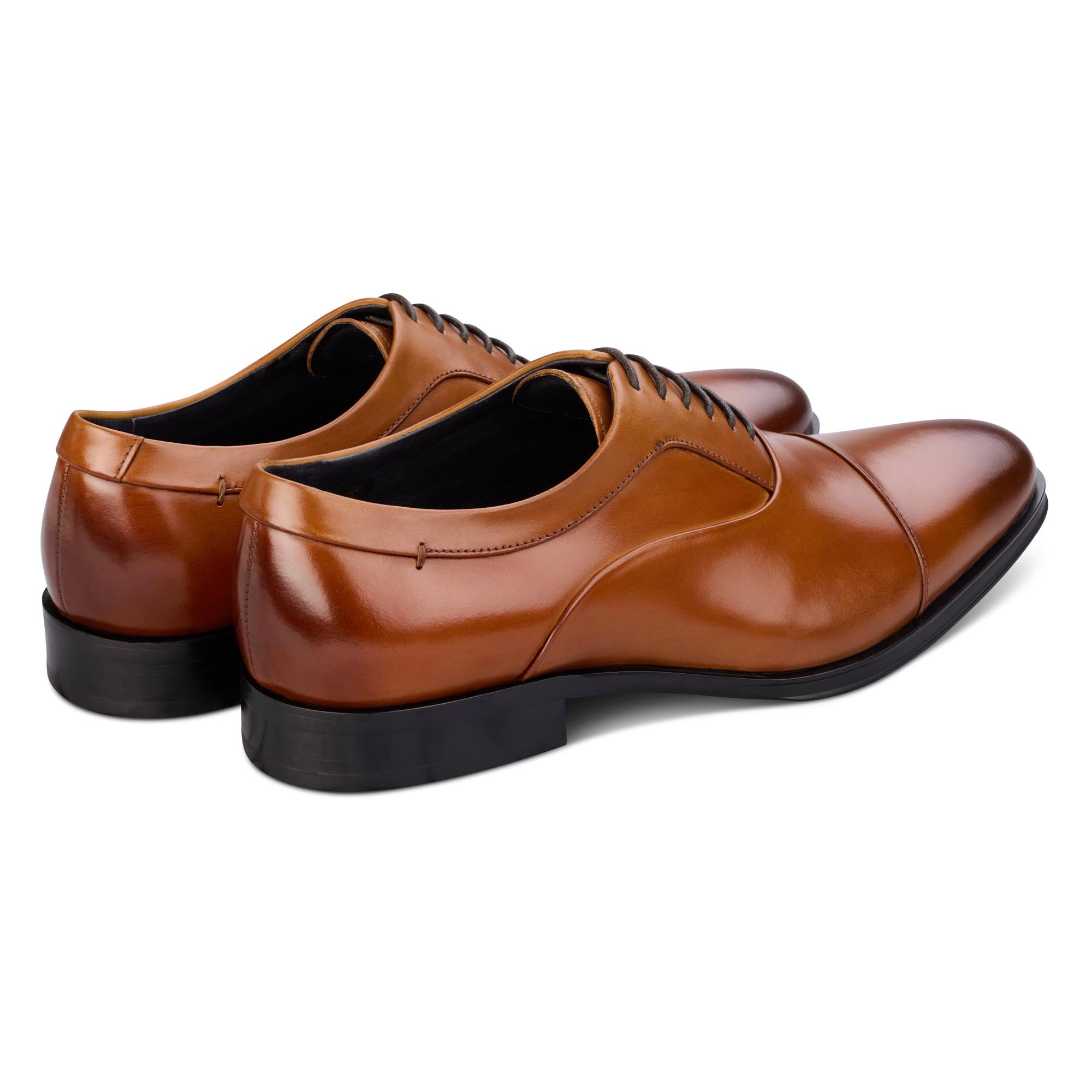
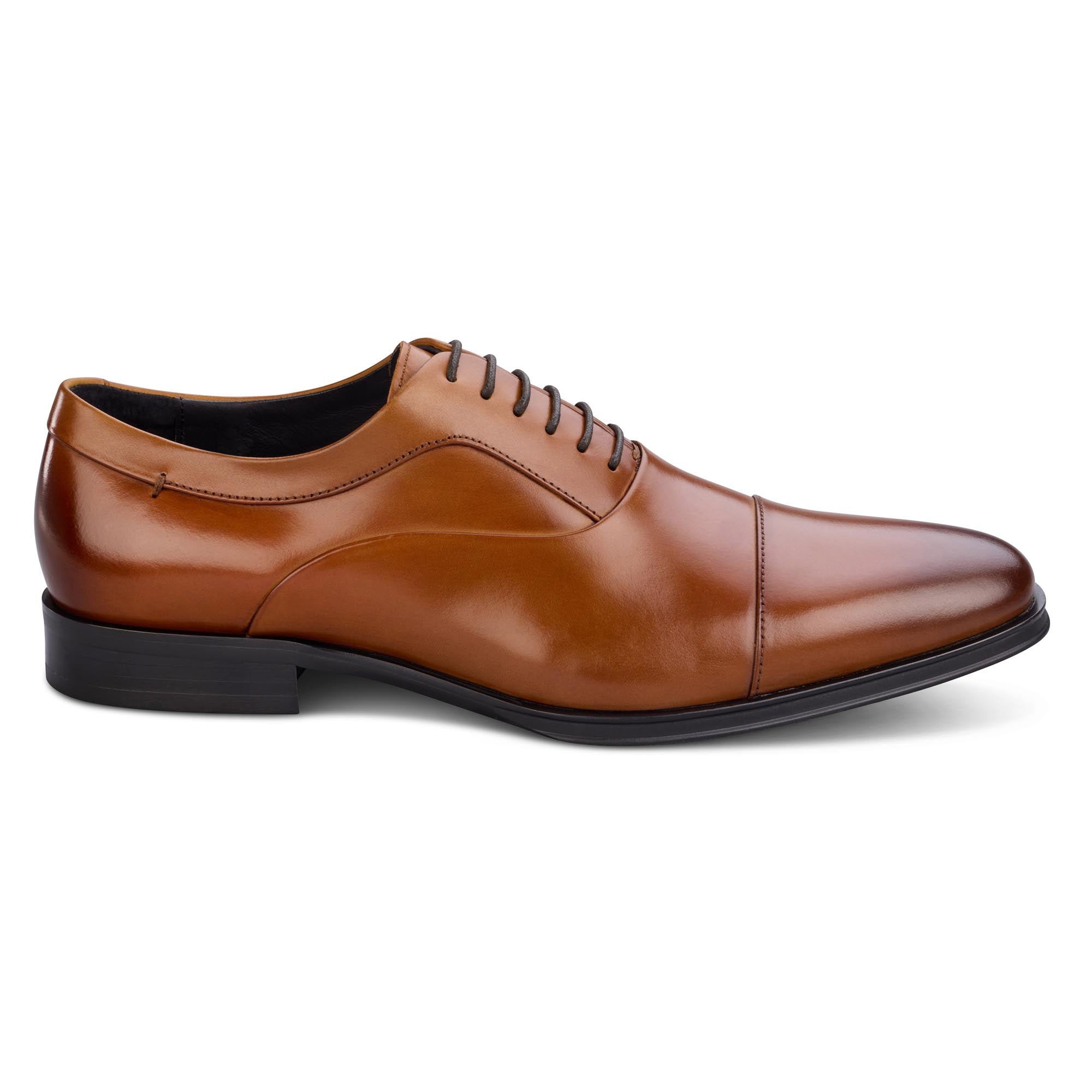
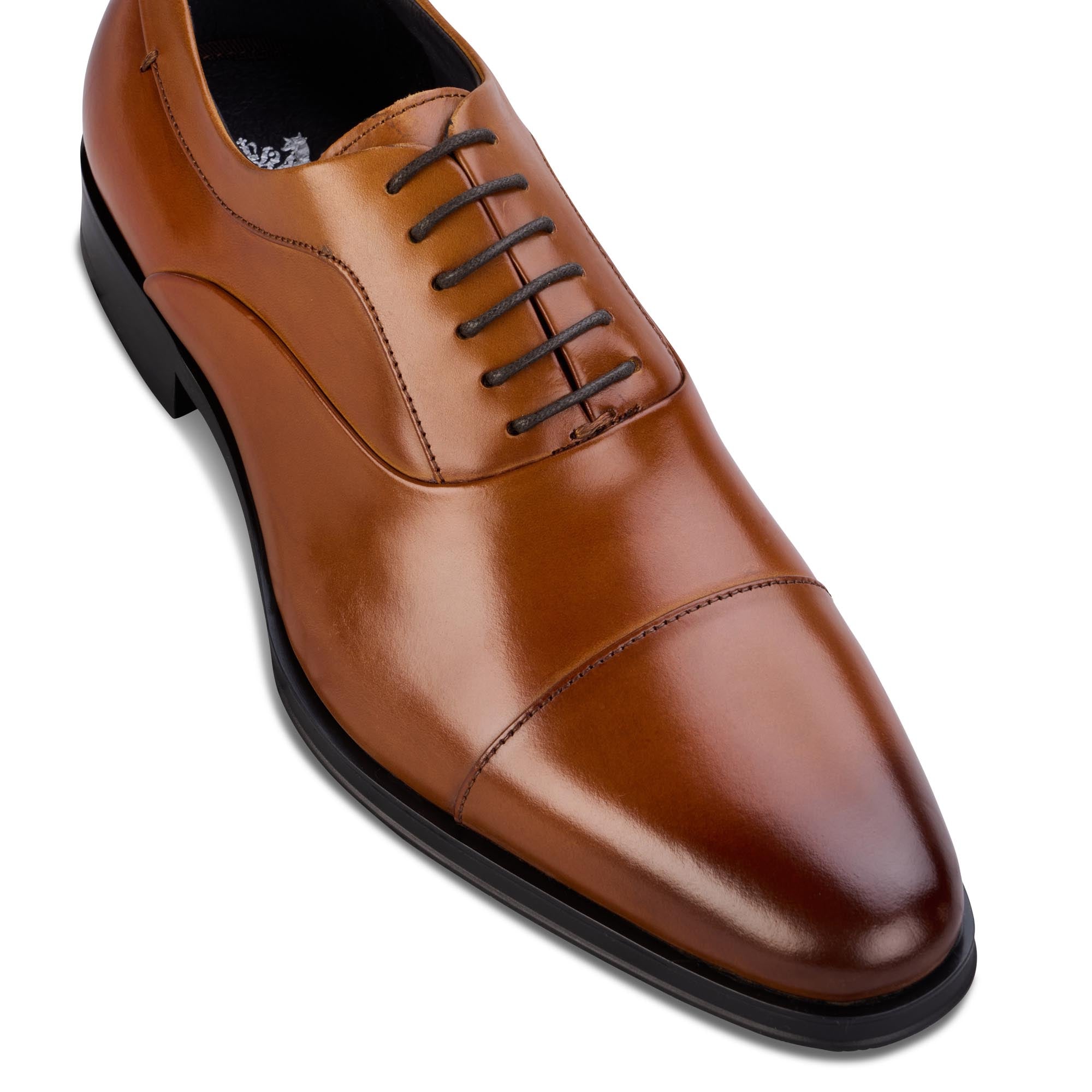
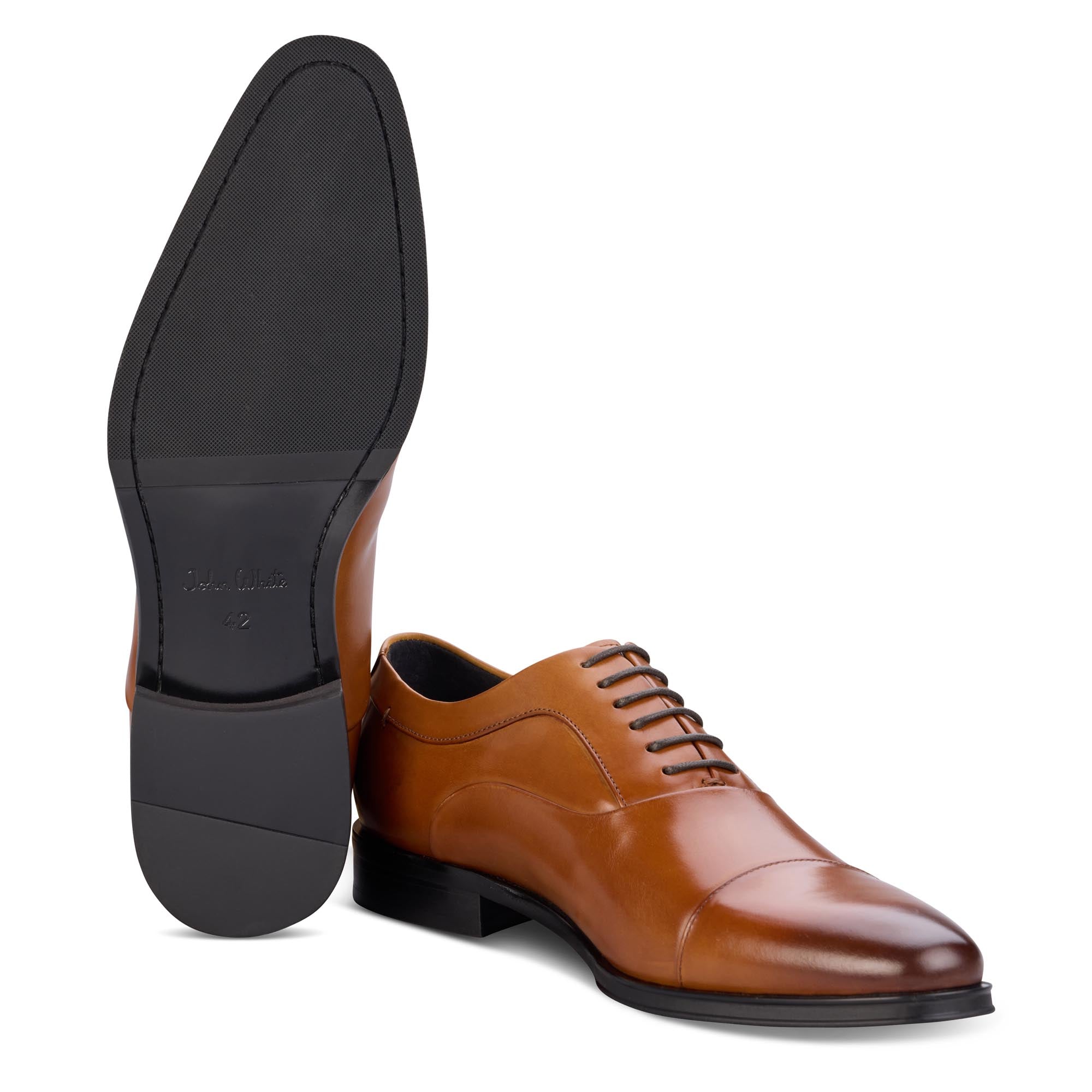
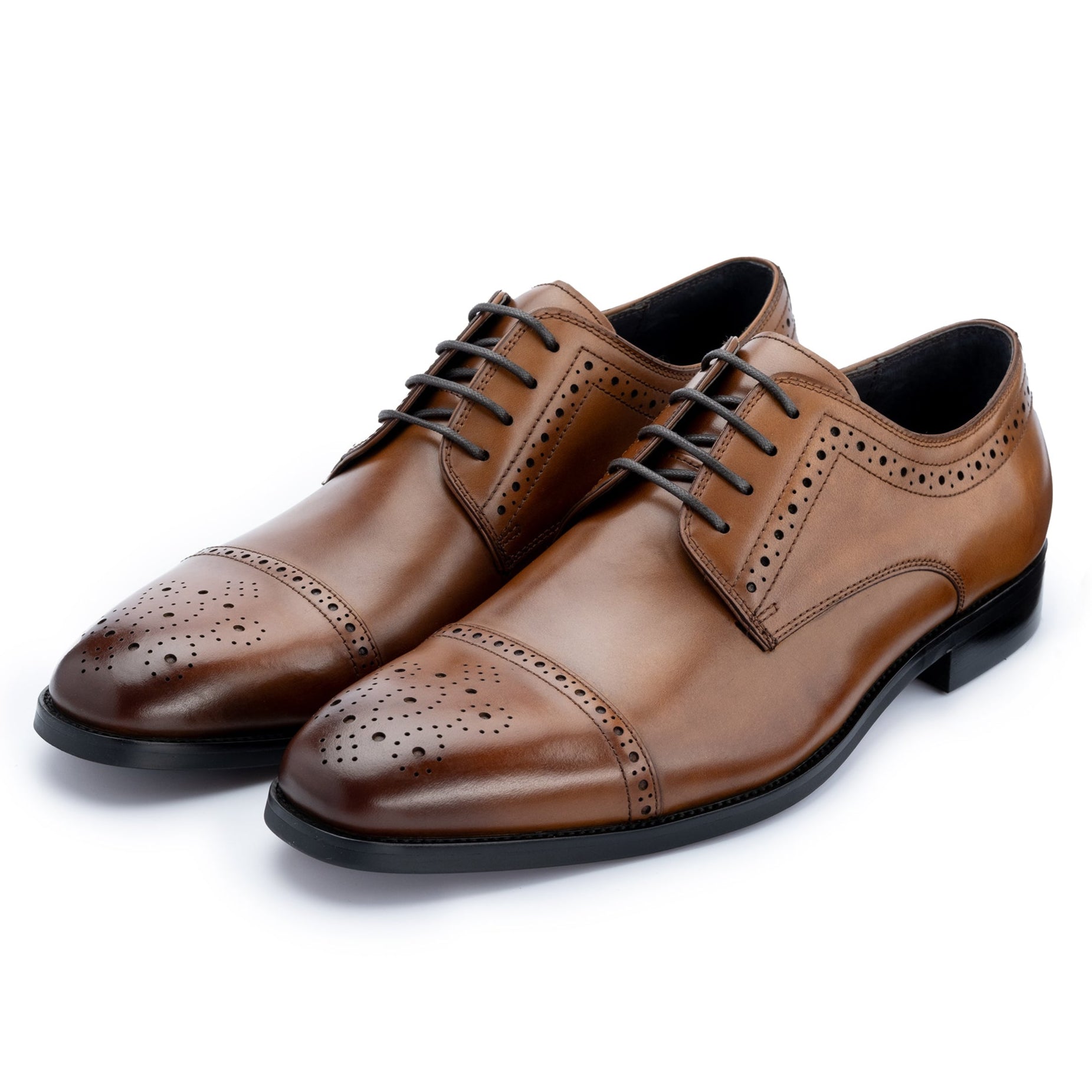
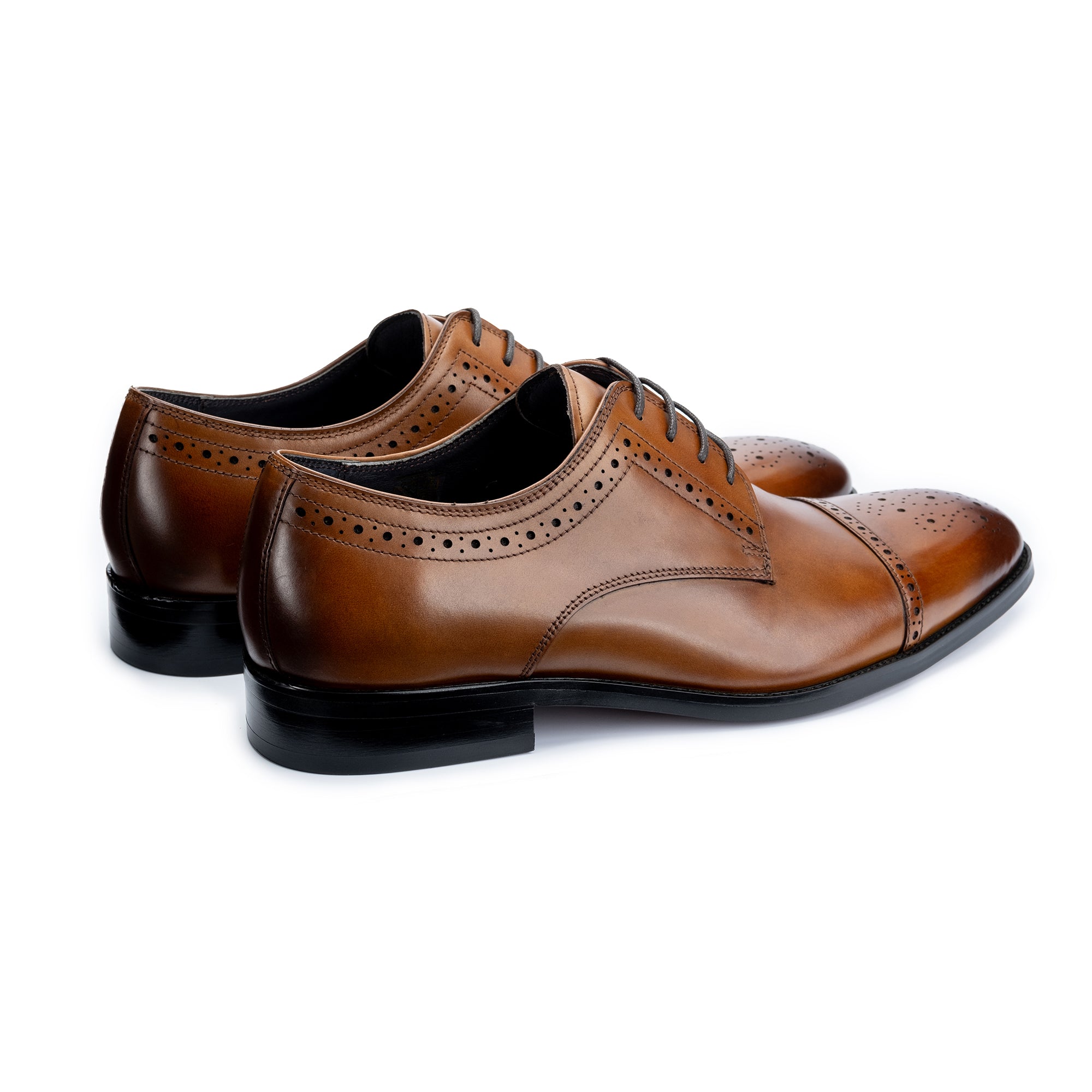
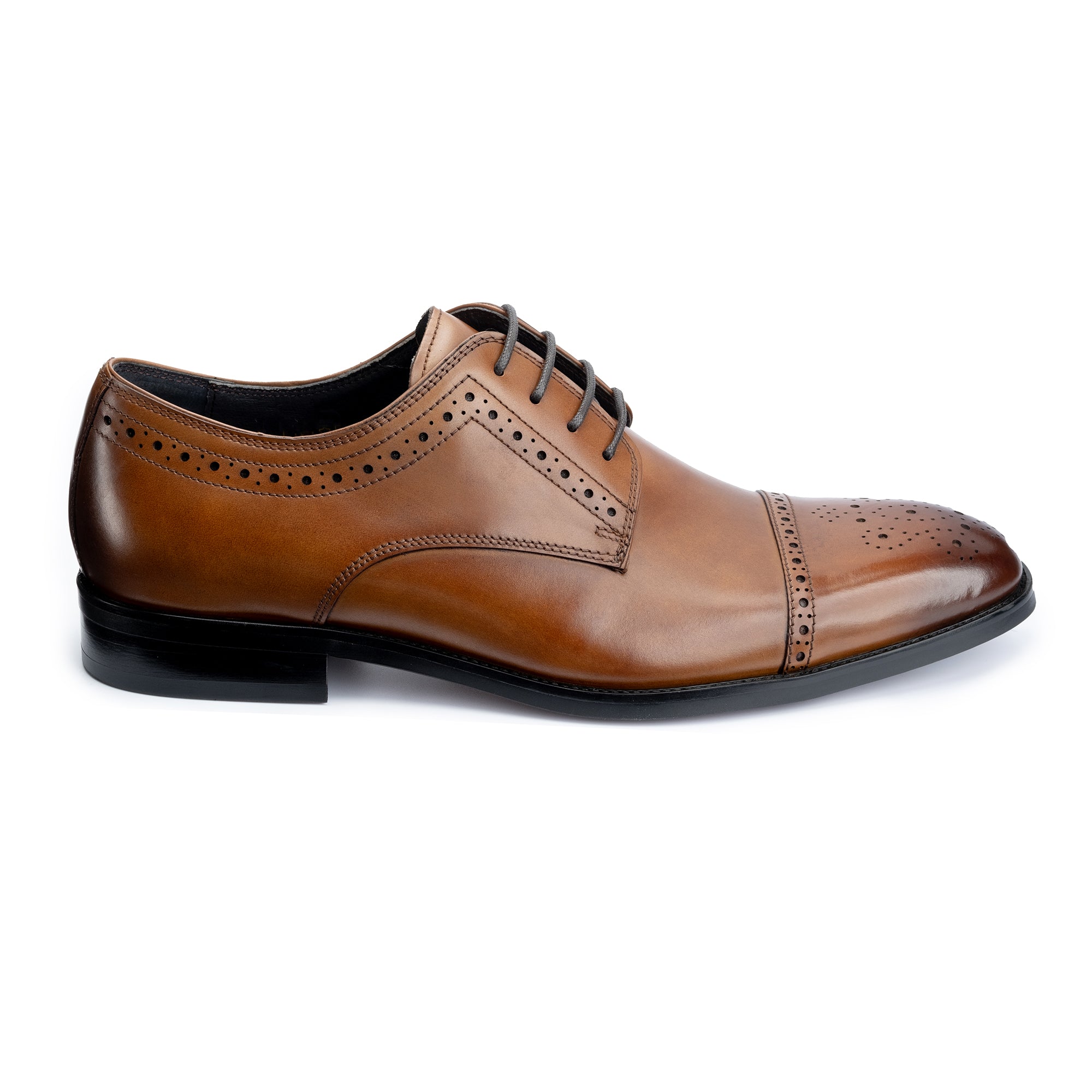
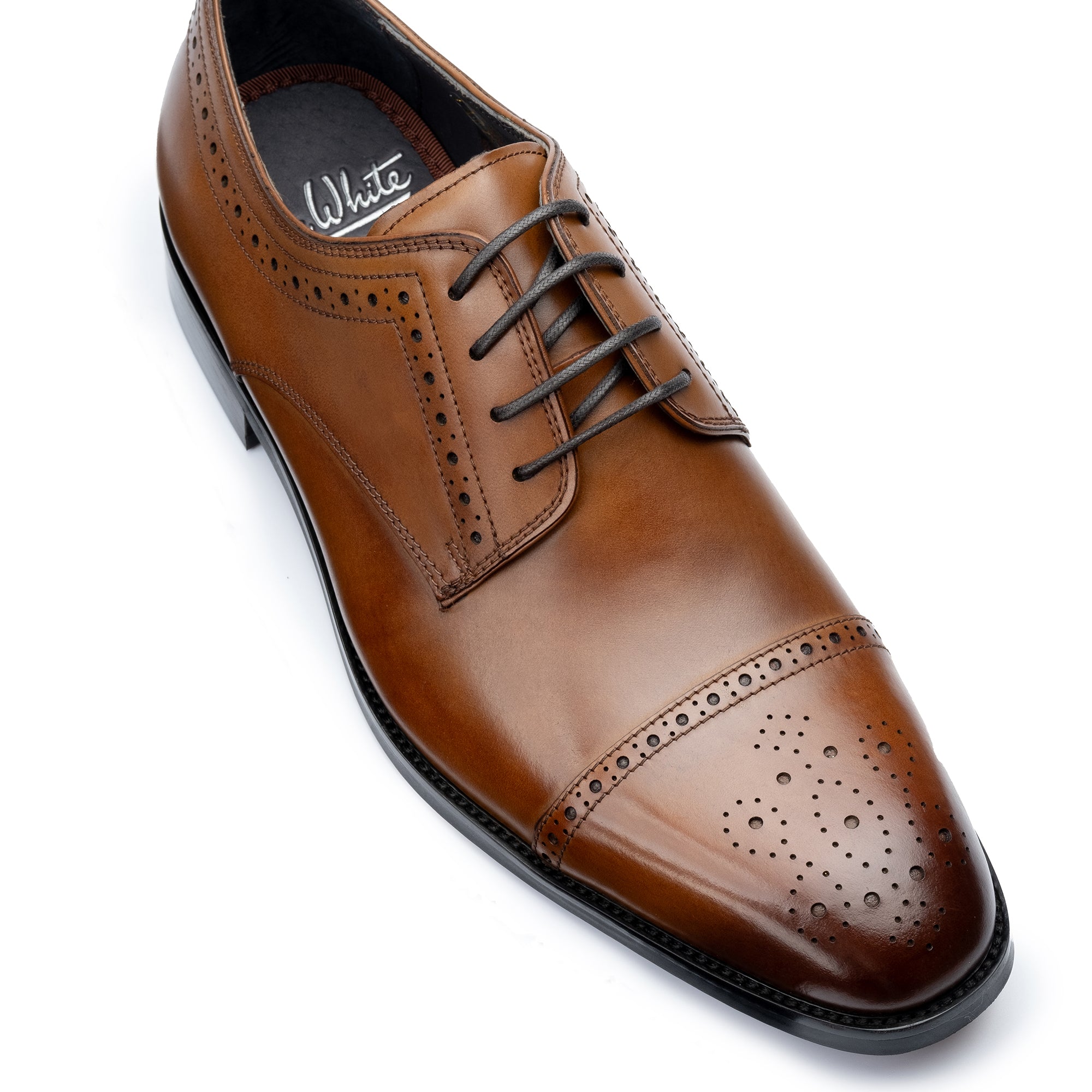
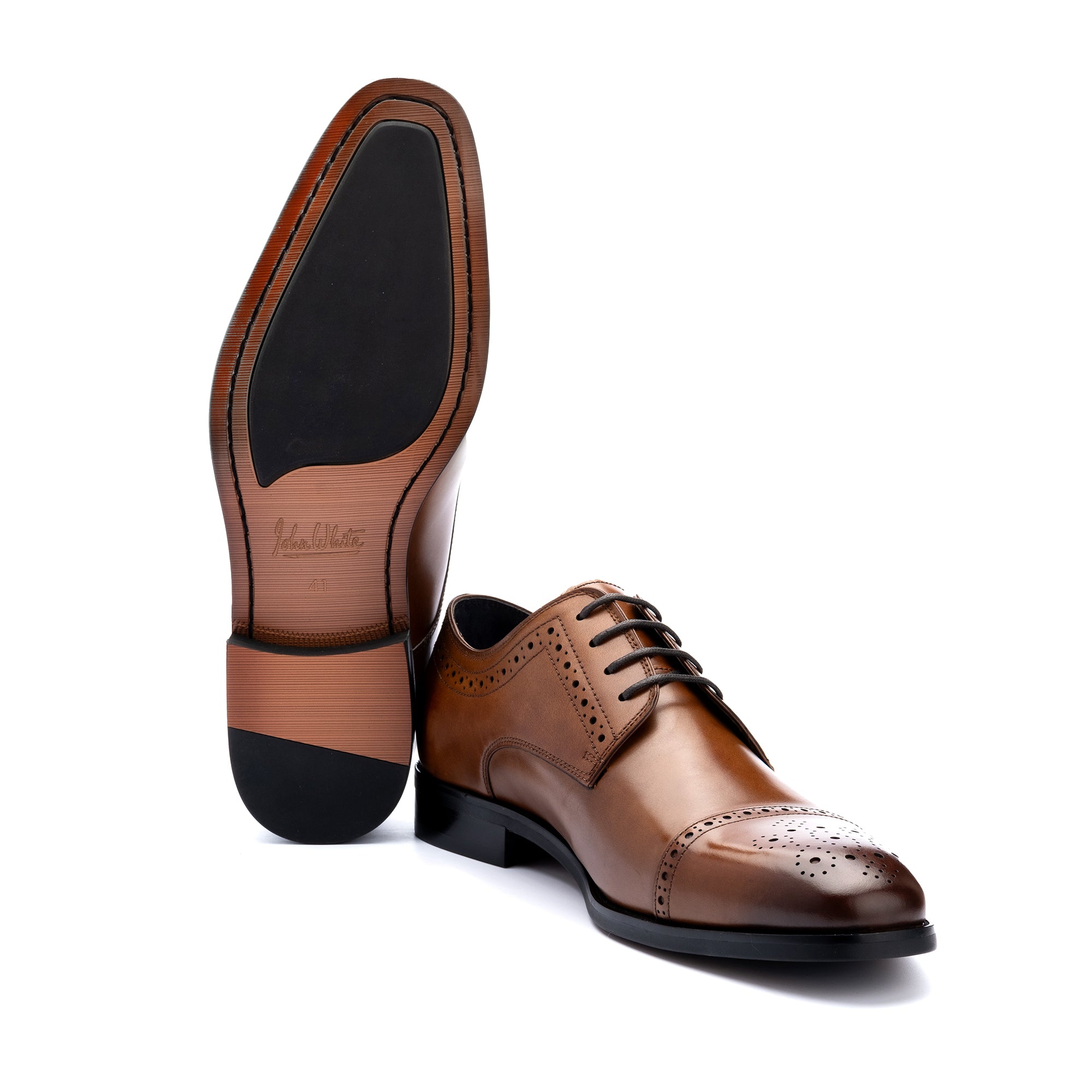
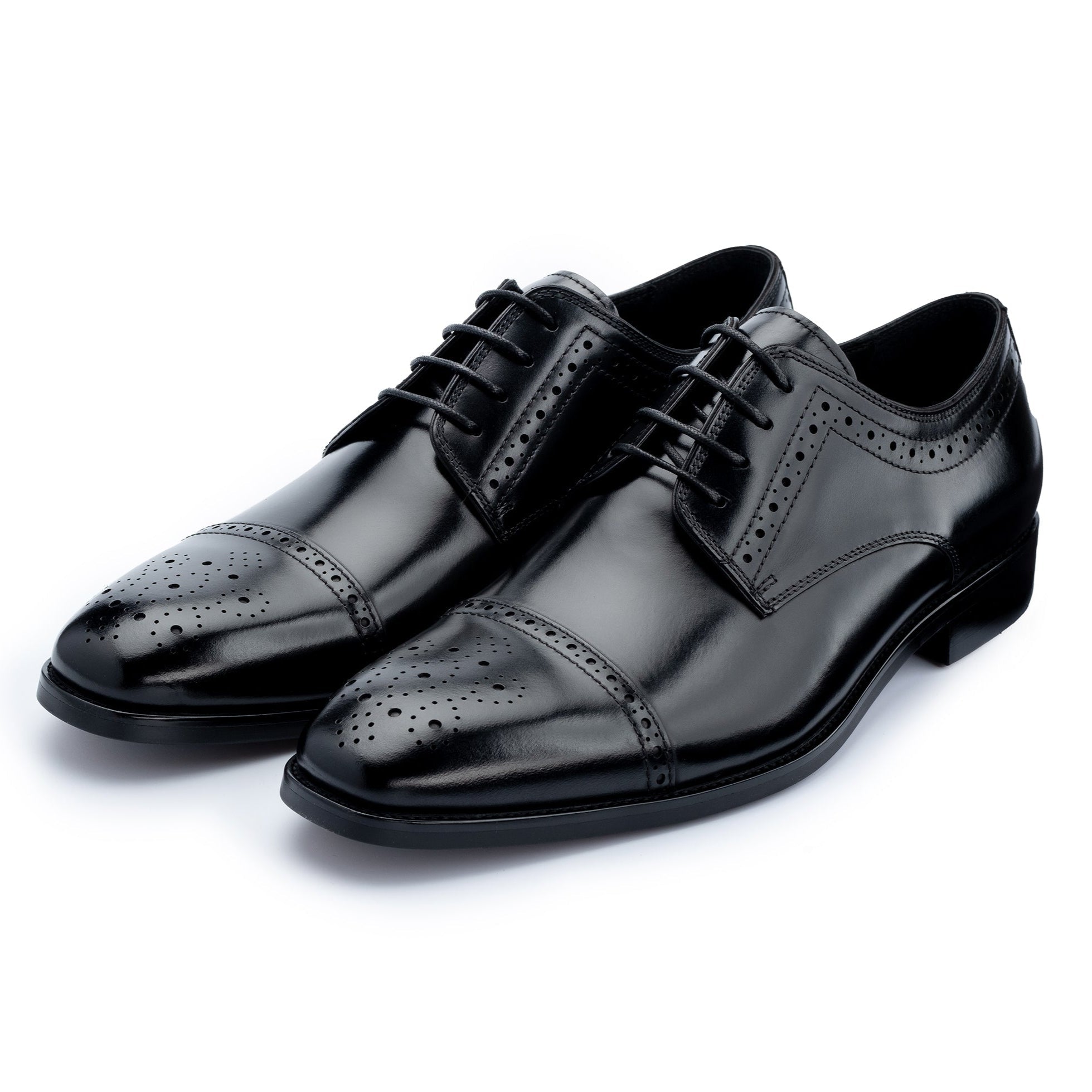
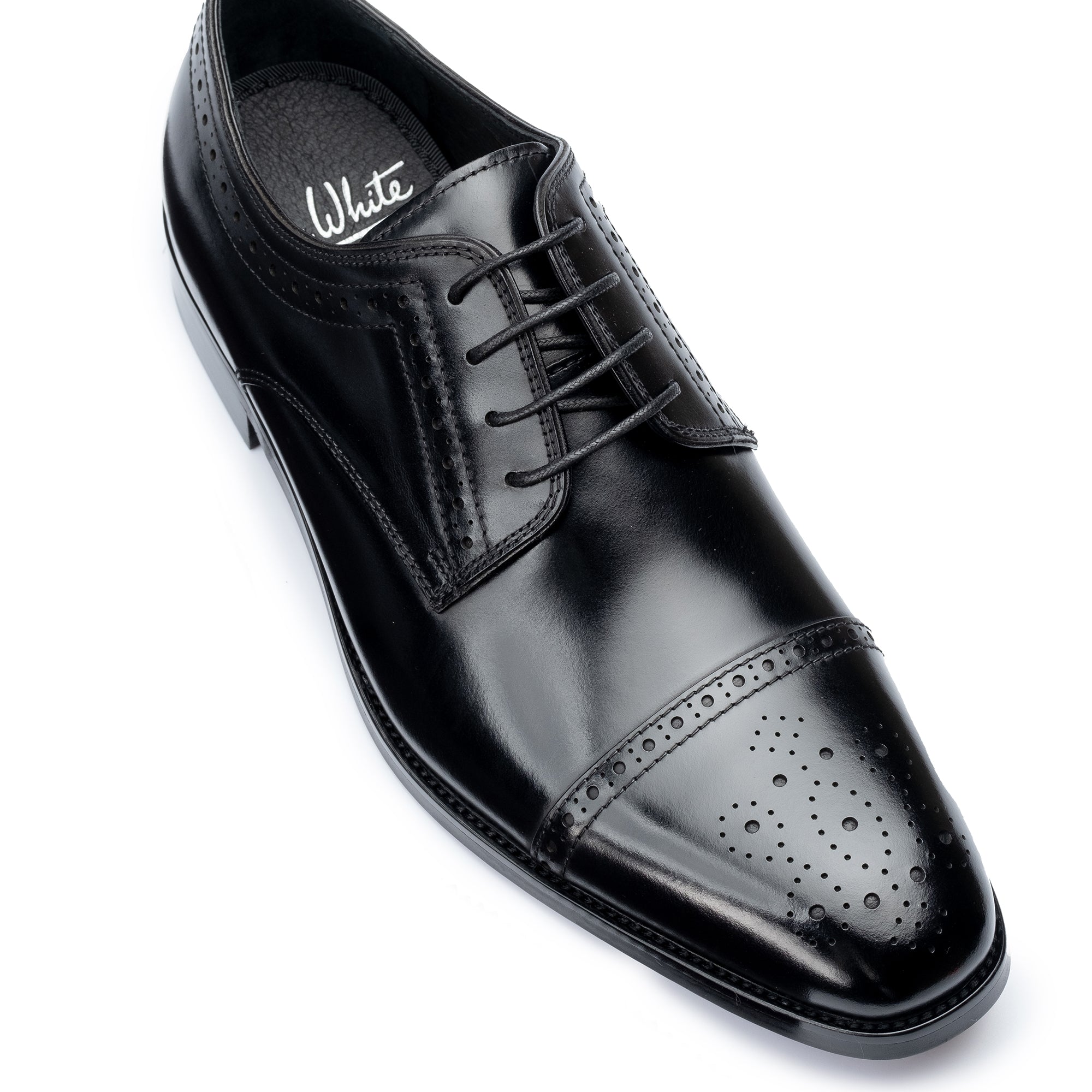
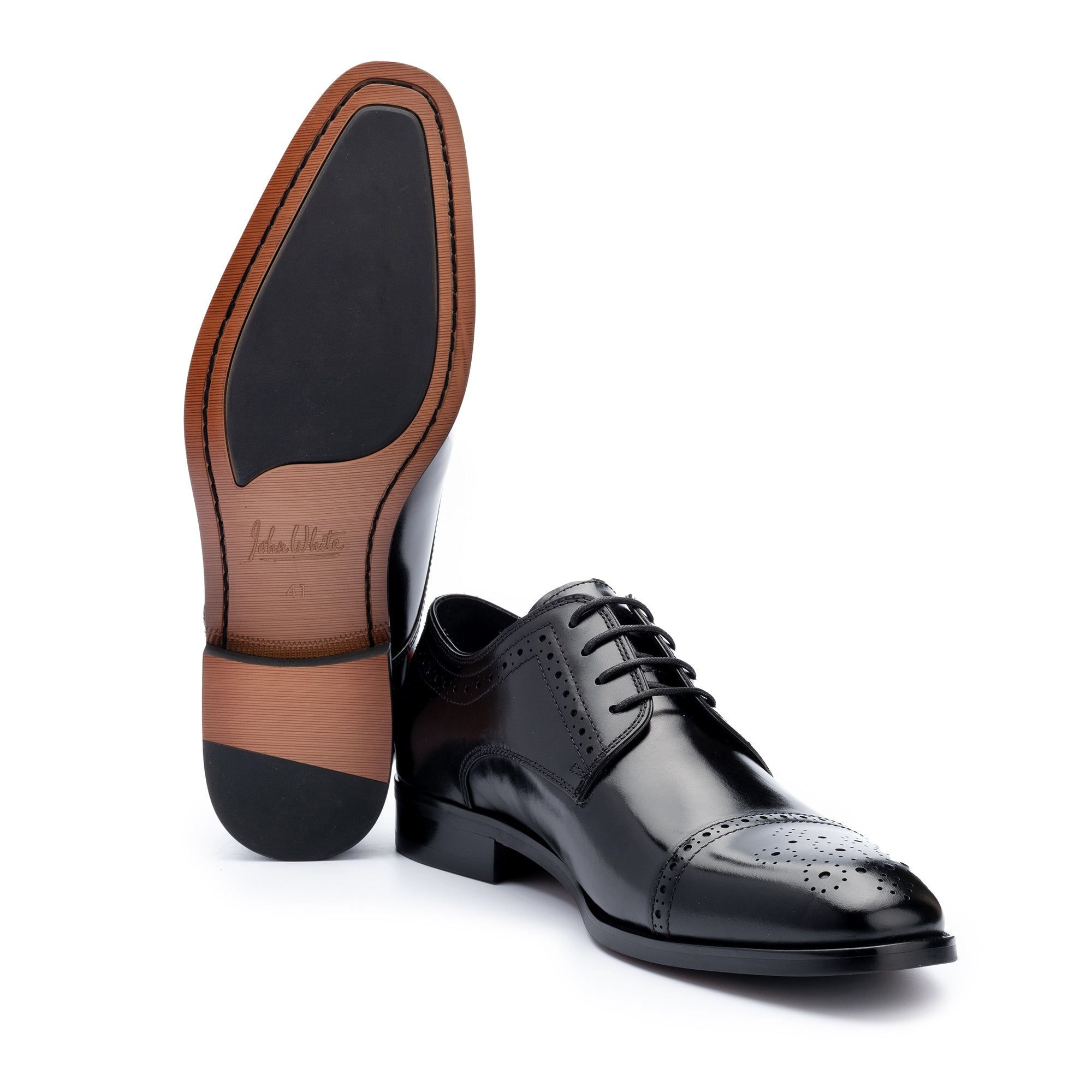
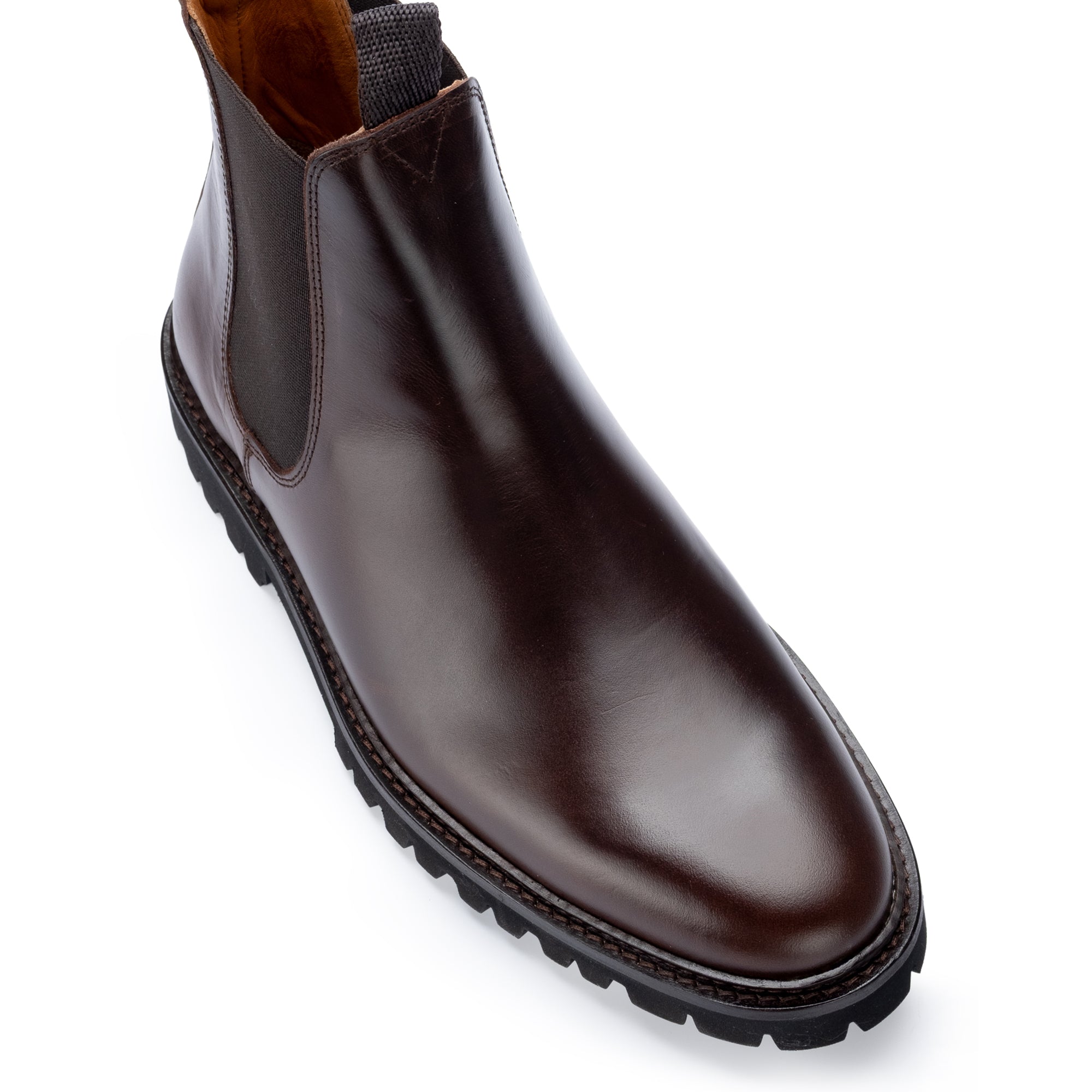
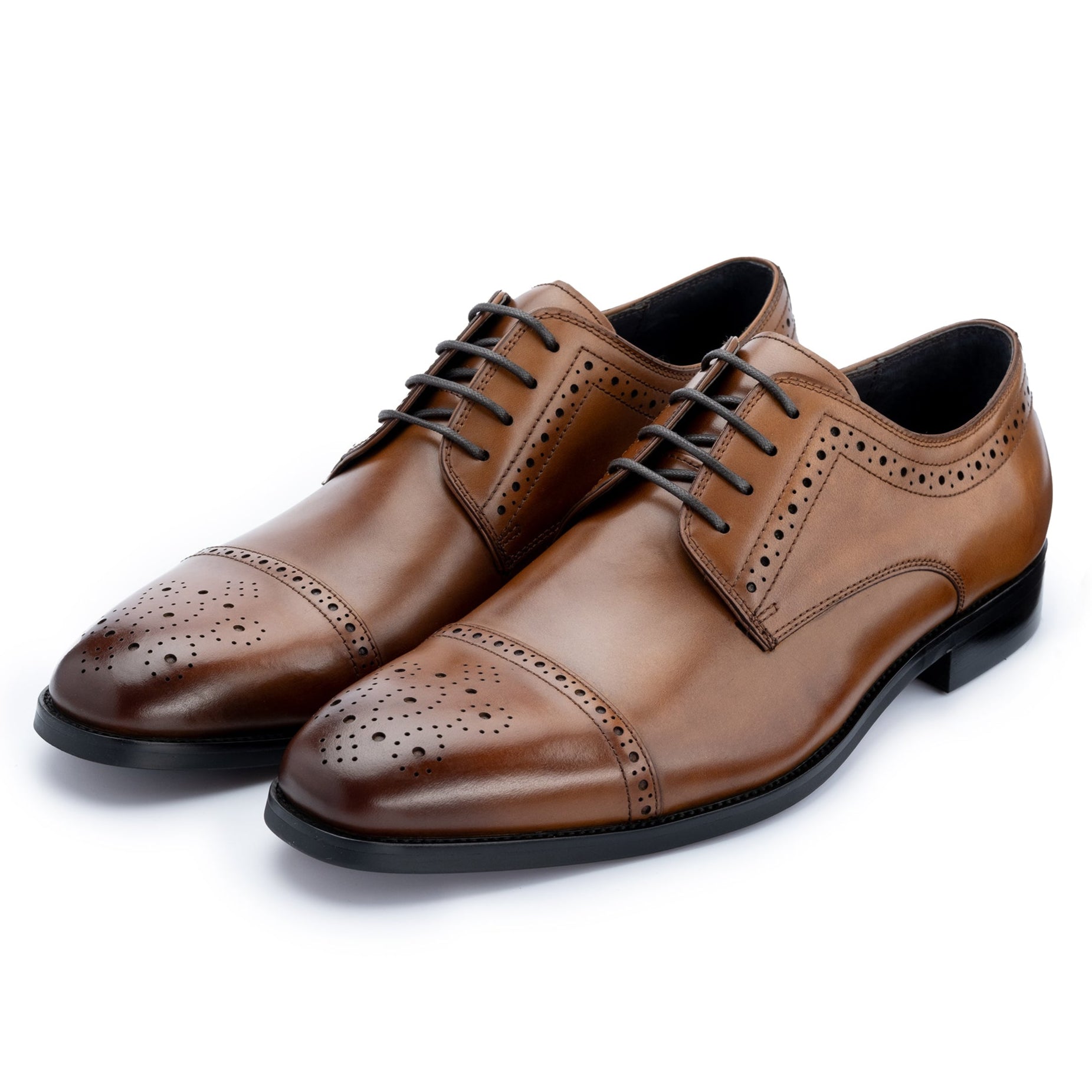
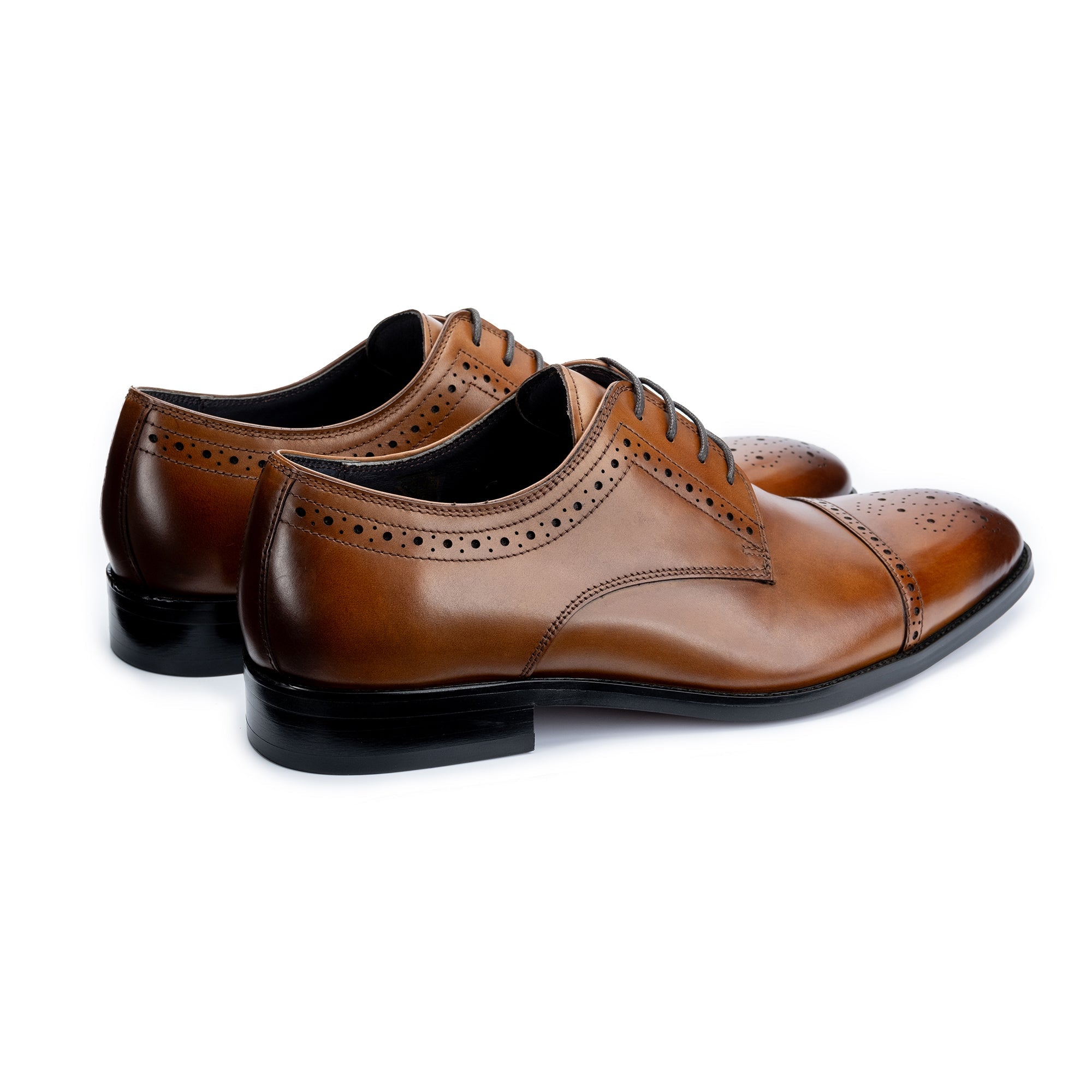
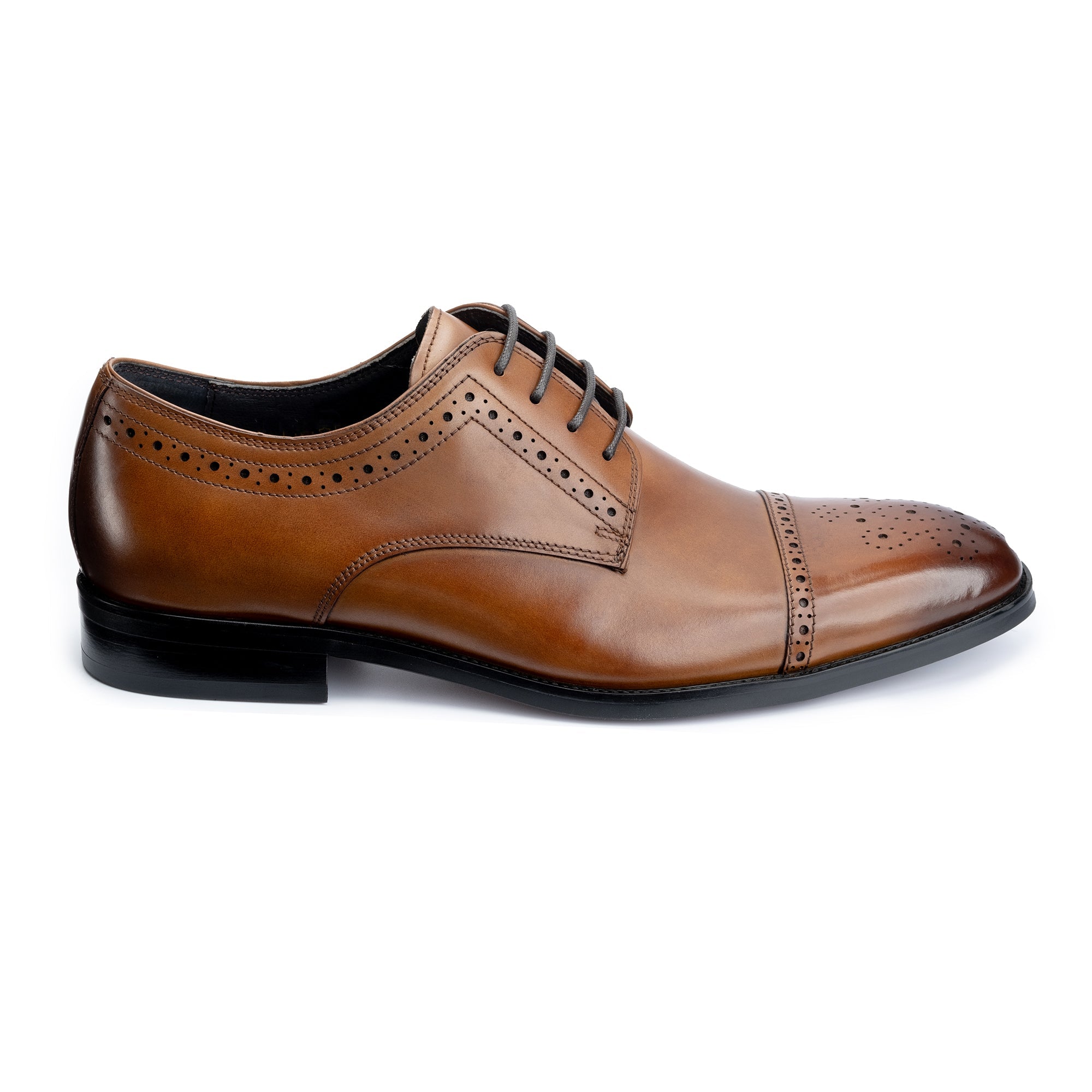
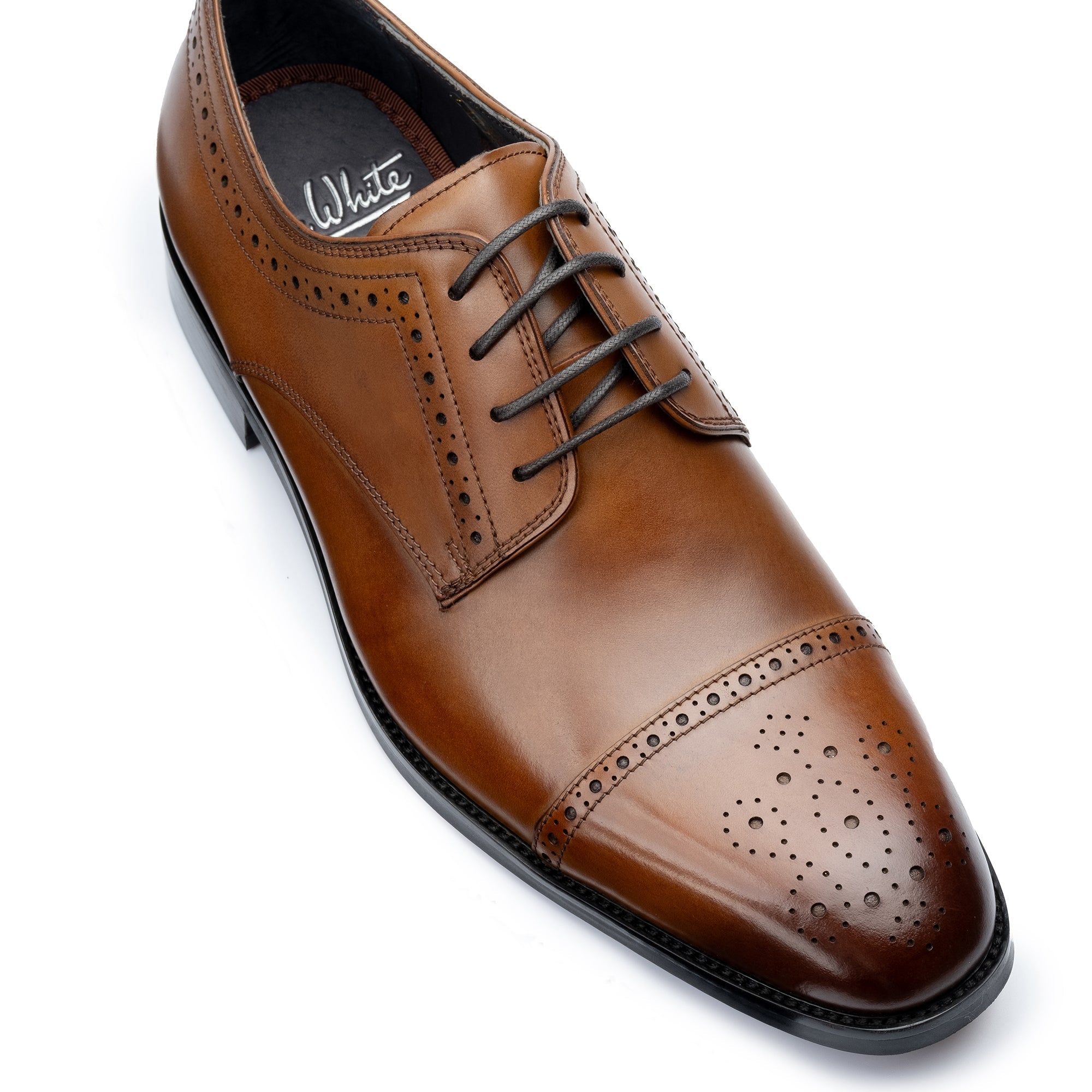
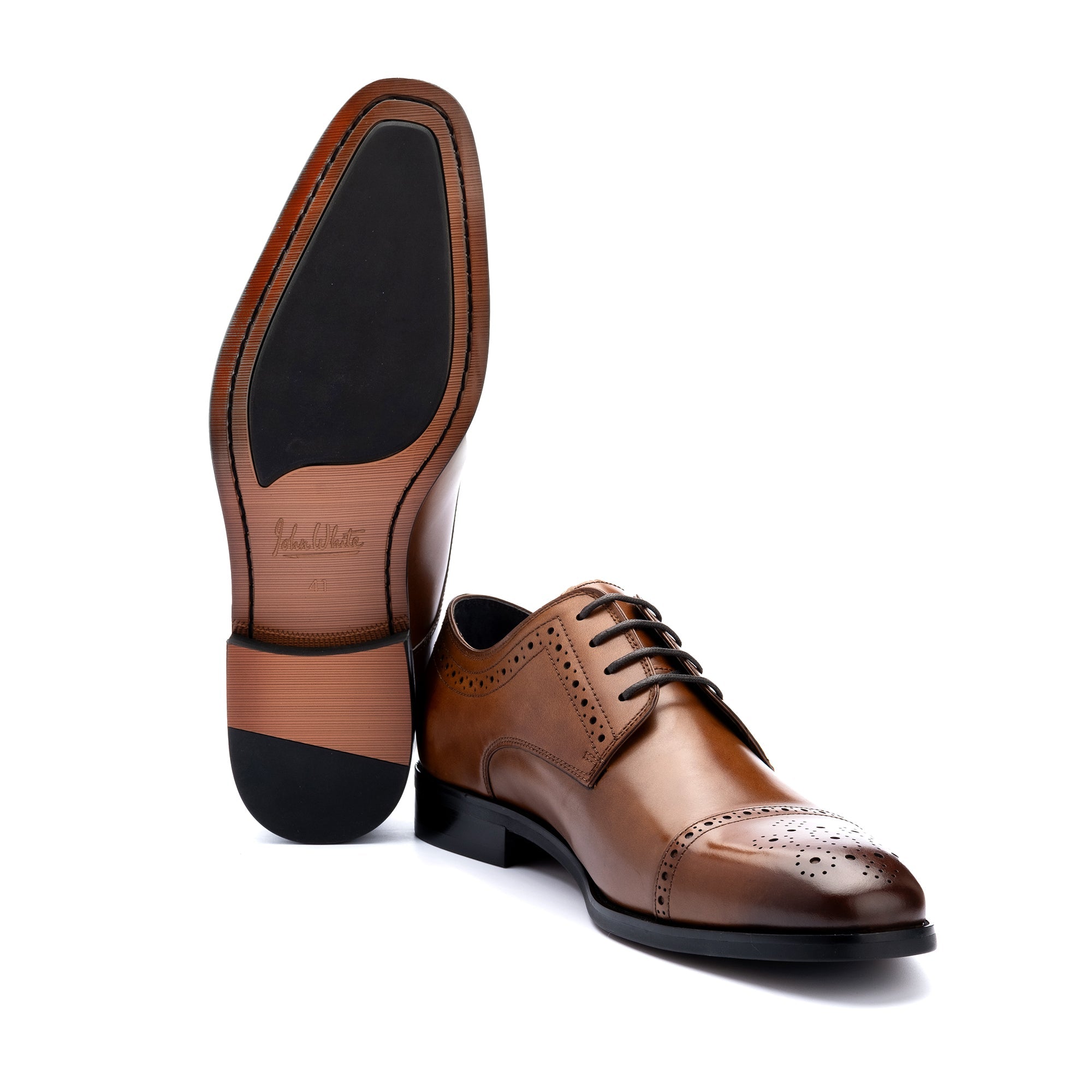
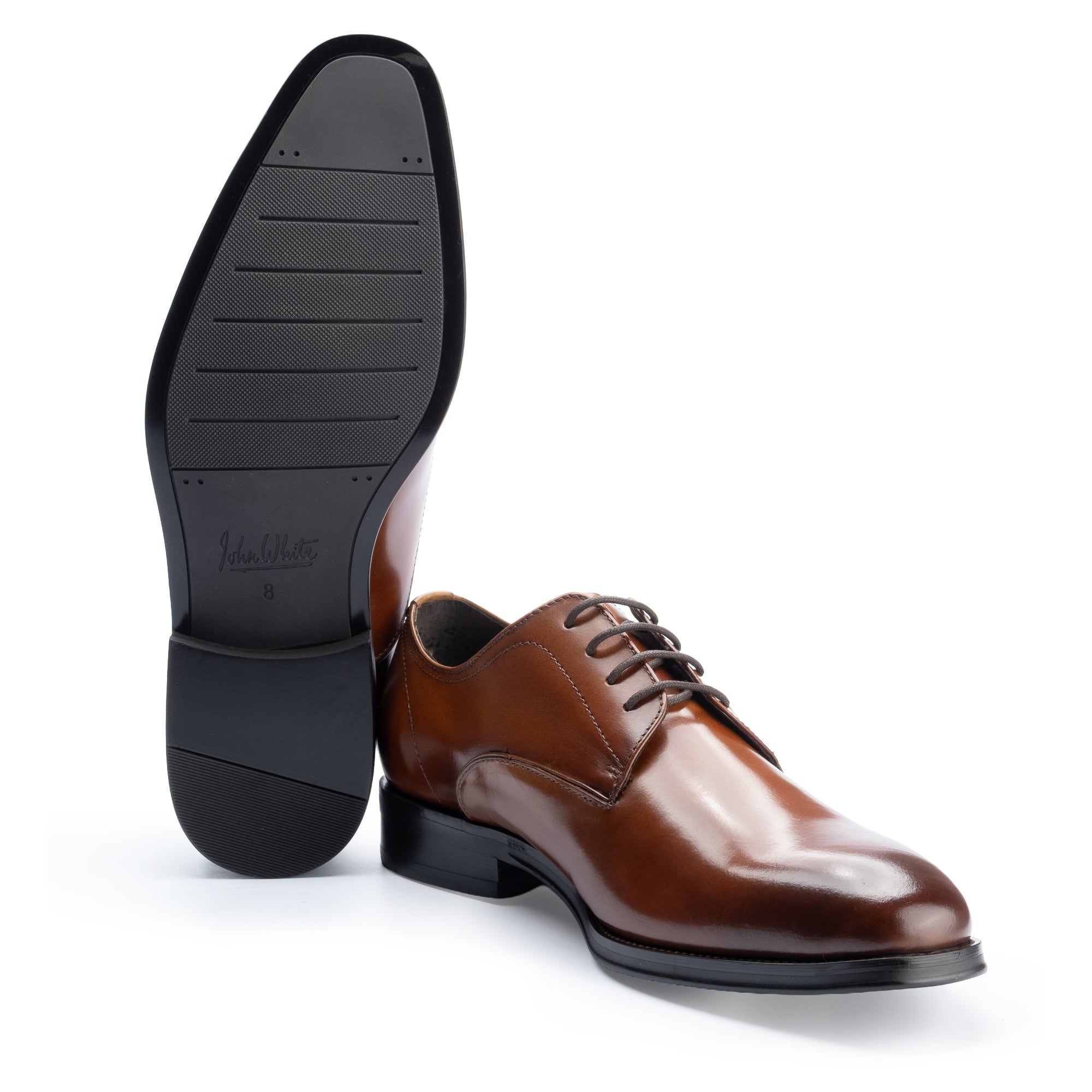
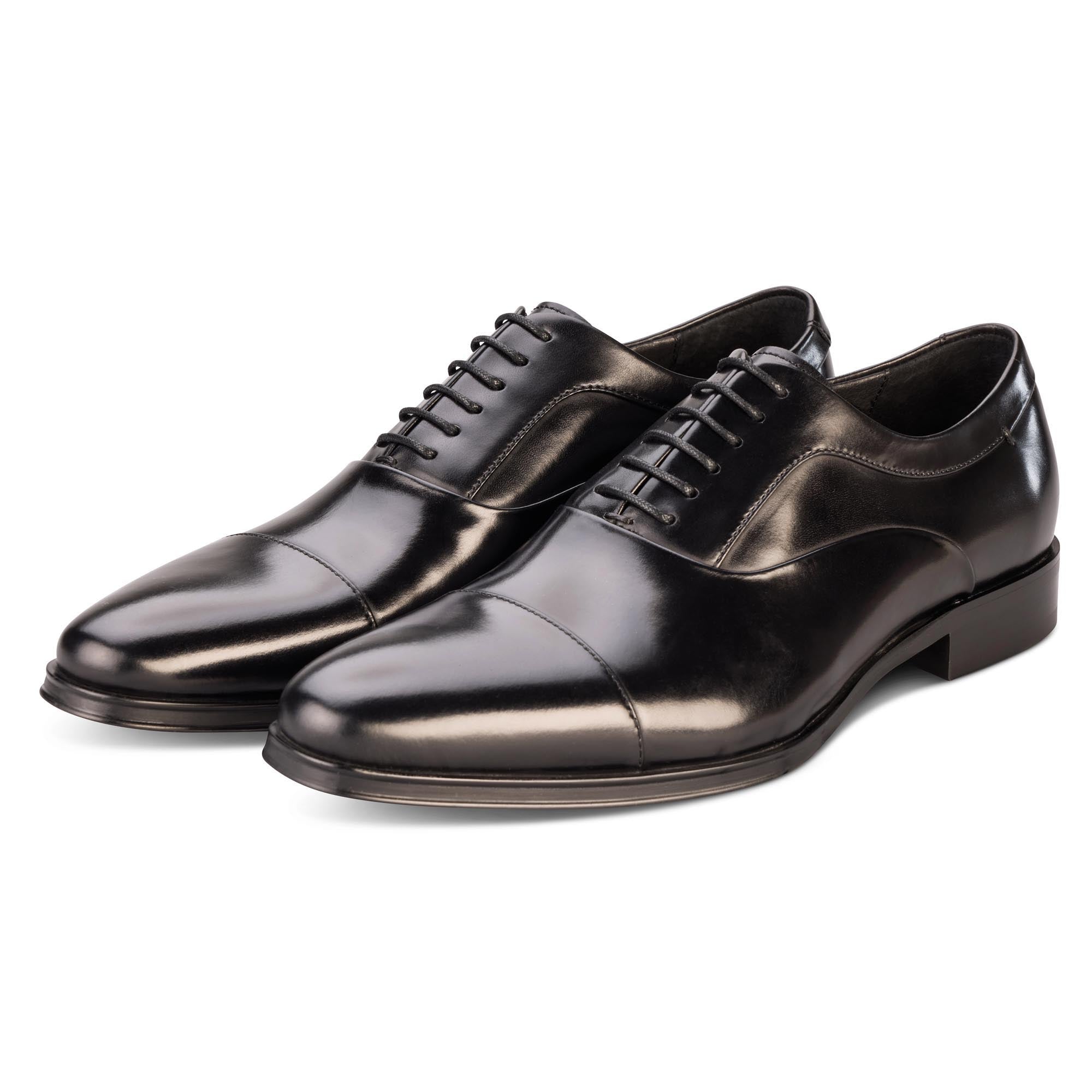
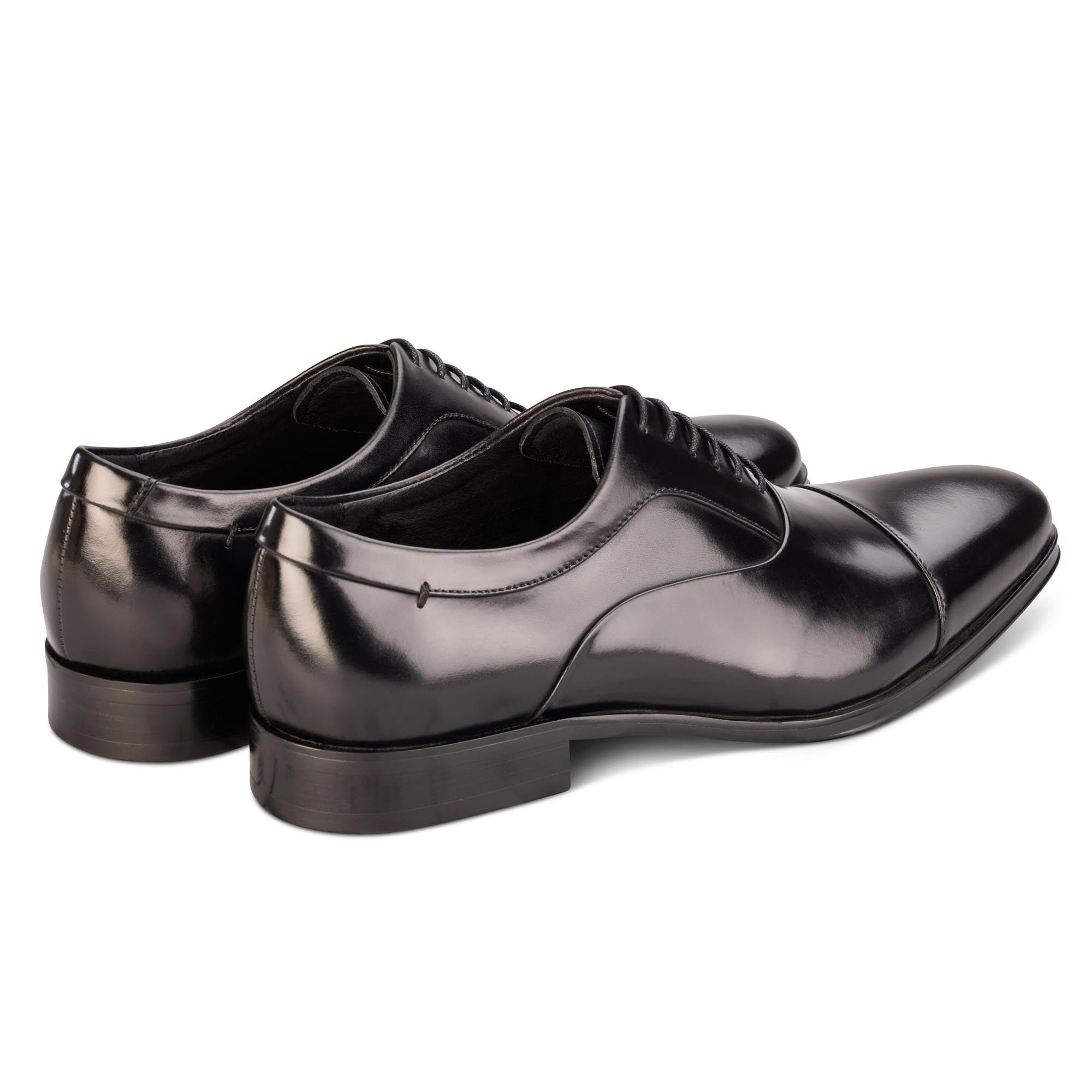
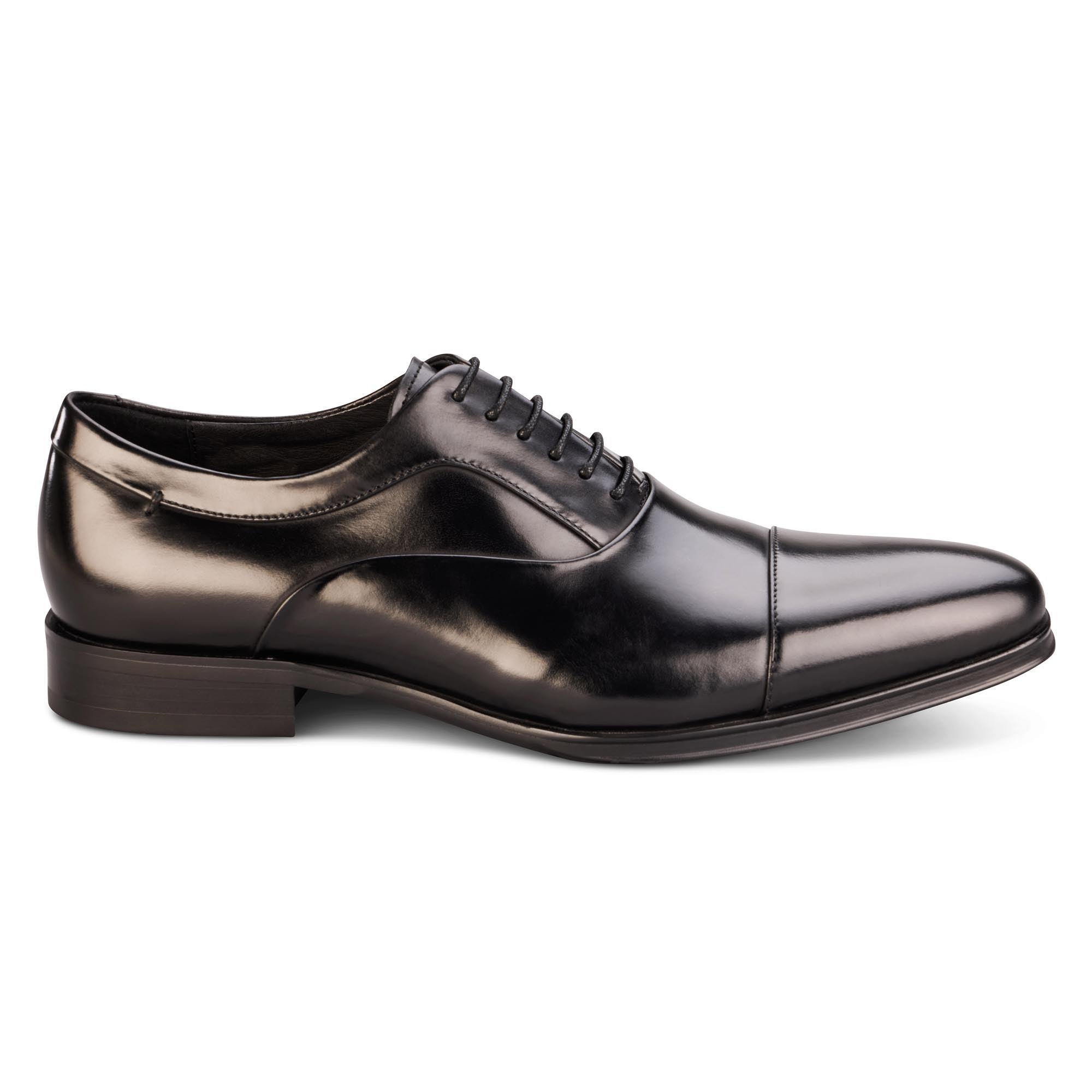
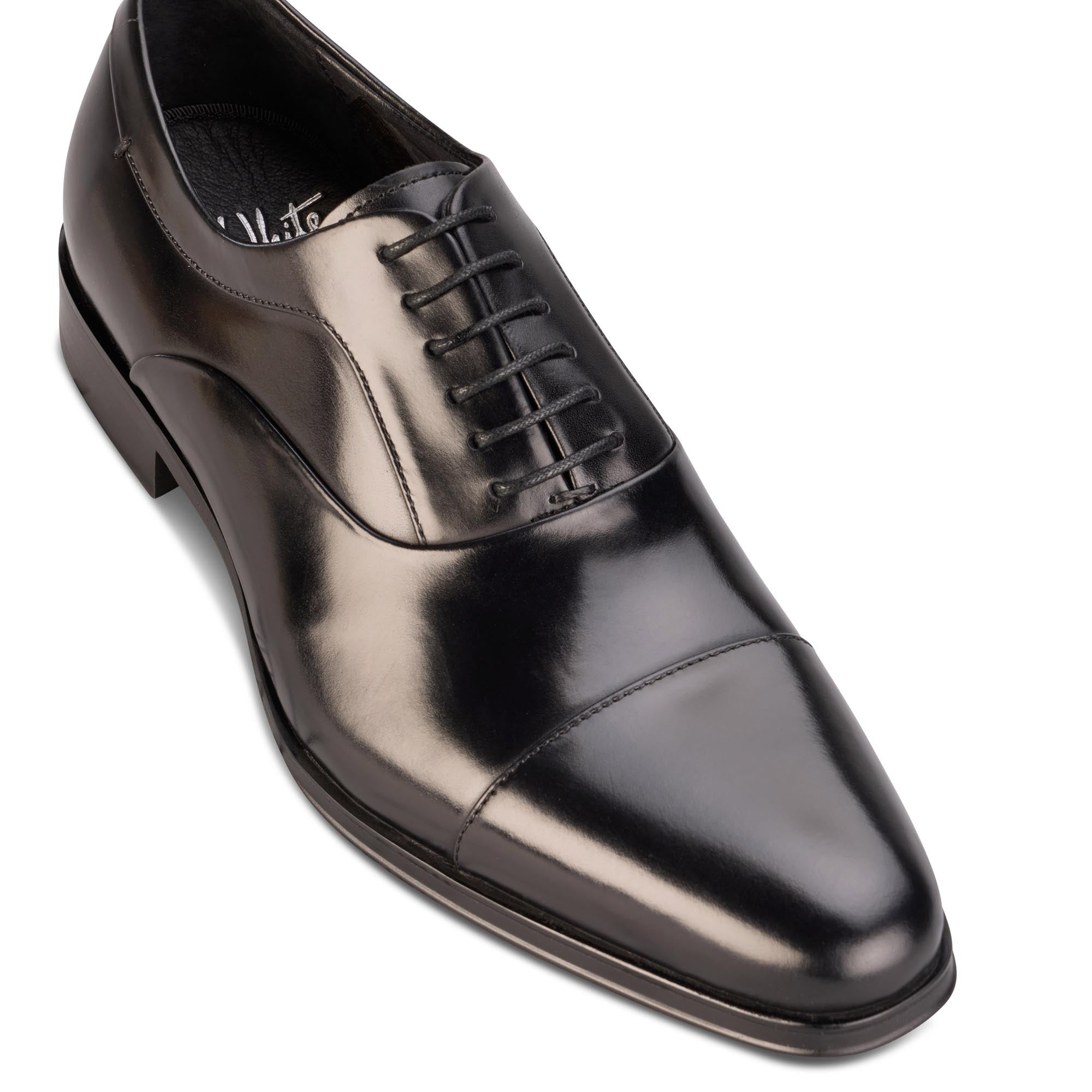
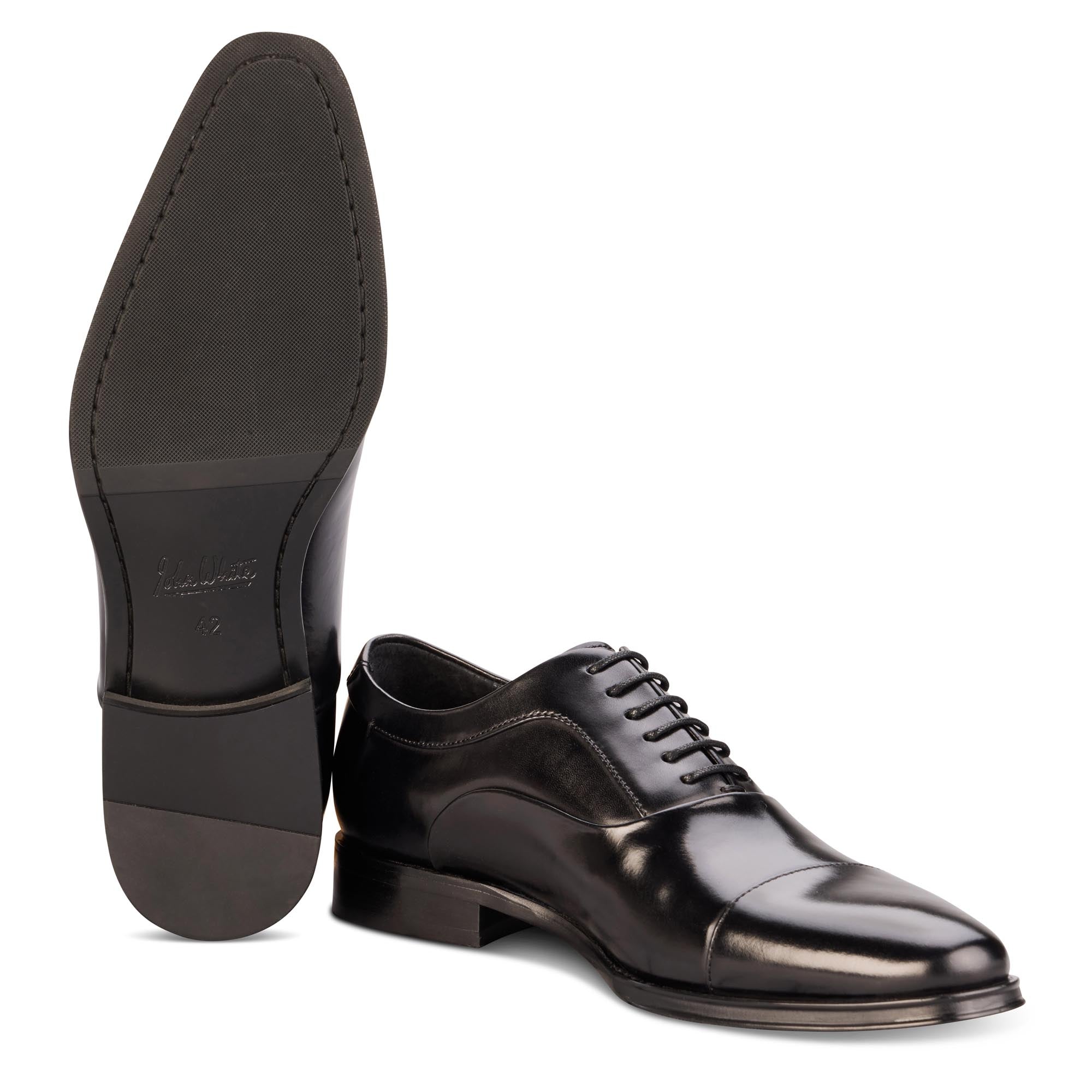
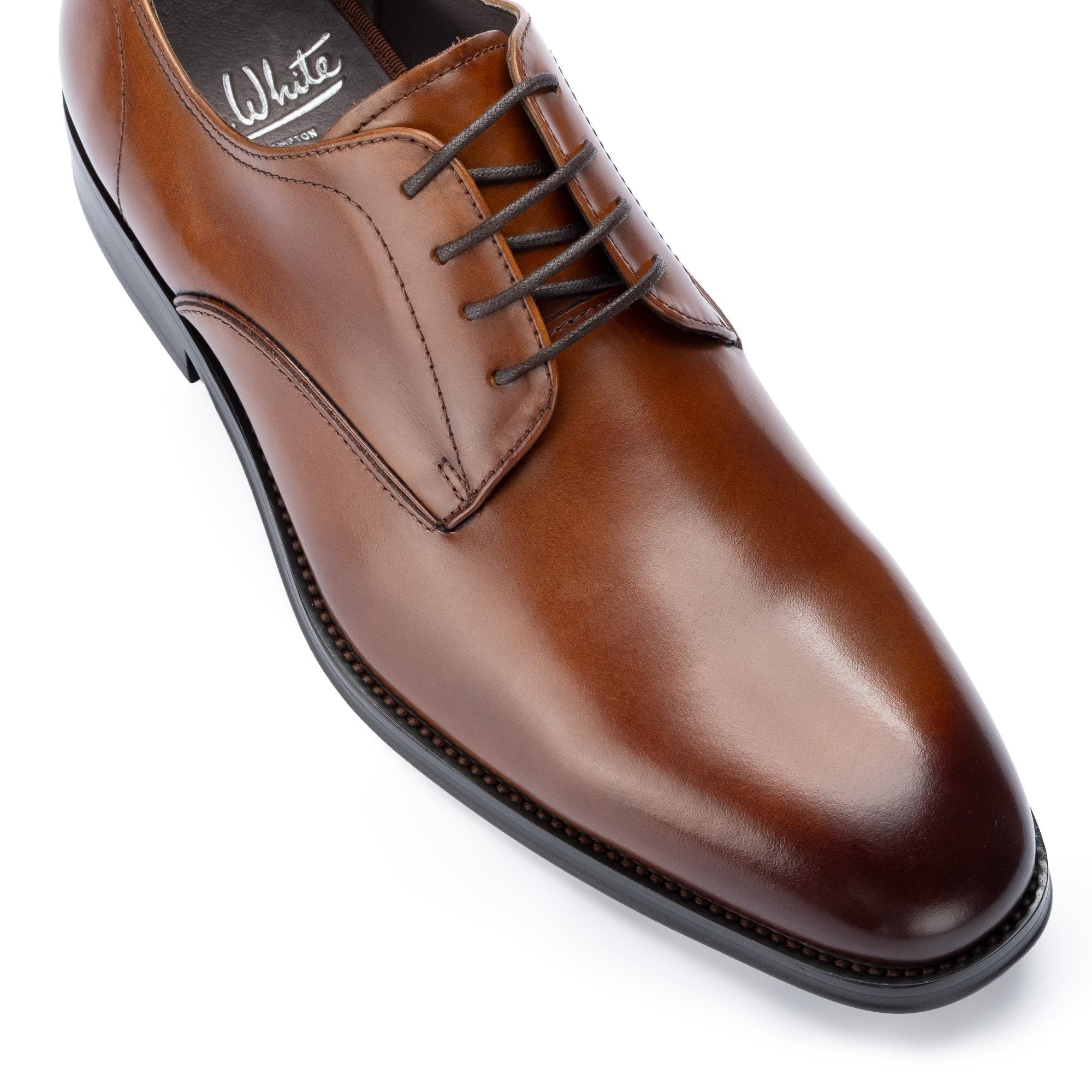
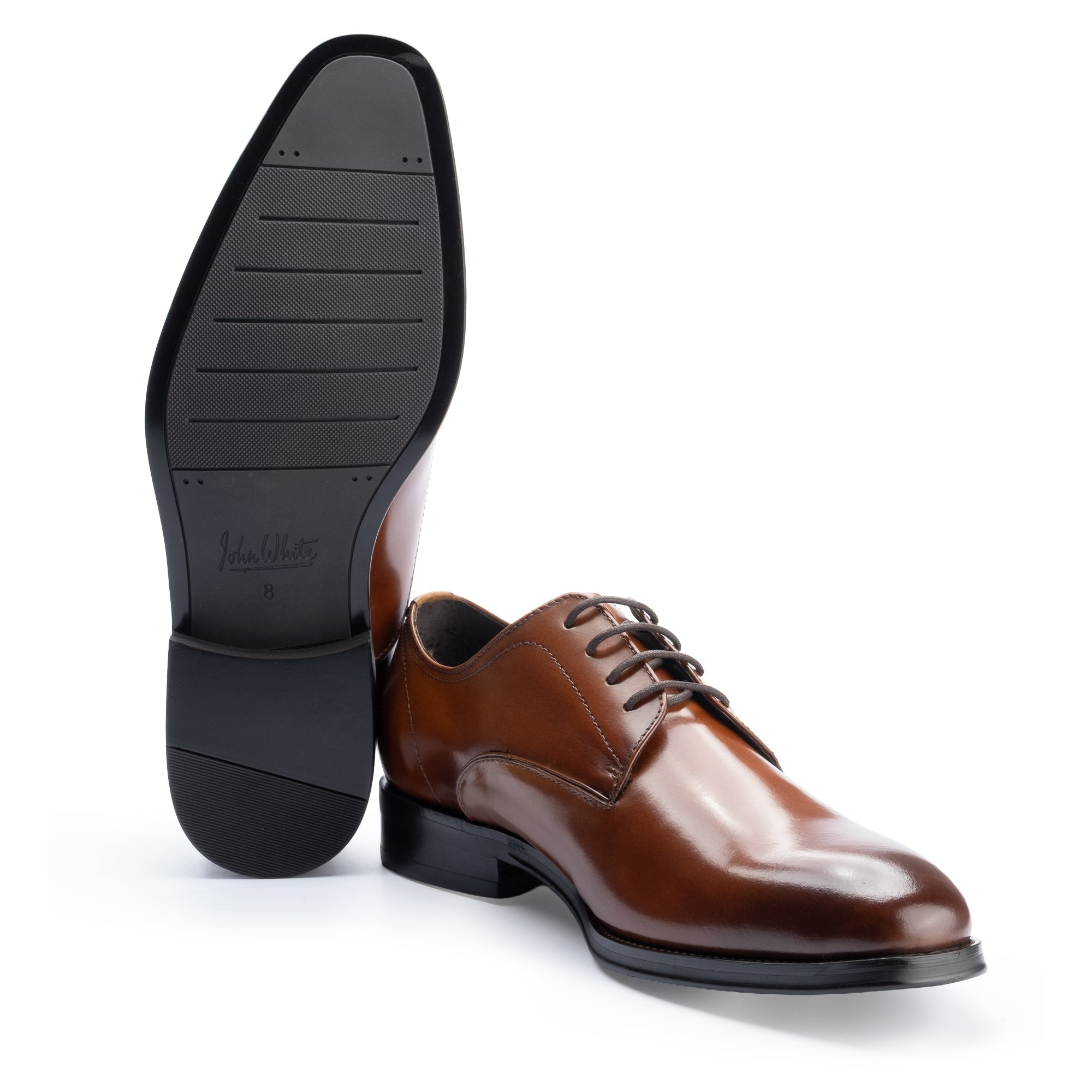
The first thing buyers tend to notice about full-grain leather is that no two pairs look quite identical. Natural hides carry slight variation in grain density, tightness, and surface texture. Where corrected-grain has been processed to eliminate this, full-grain preserves it entirely. The Guildhall Capped Oxfords in Tan, for instance, carry the faint character of the original hide — subtle, not flawed, but individual in a way that machine-embossed grain is not.
More importantly, full-grain leather breathes. The grain is open rather than sealed beneath a pigmented coating, which means moisture passes through the upper during wear rather than accumulating at the foot. In a shoe worn for a full working day, this matters considerably for both comfort and longevity.
The structural argument is equally compelling. The strongest fibres of the hide sit at its surface, and those fibres are left intact in full-grain leather. The upper resists tearing, stretching, and deformation better over years of wear. You are using the hide the way it was constituted — rather than reconstructing its surface with artificial means.
Patina: What It Actually Means
Patina is a word the footwear trade uses casually, but it has a specific meaning worth understanding. Full-grain leather develops a patina because the oils from conditioning products — and from handling — absorb into the grain itself, deepening and enriching the colour over time. The grain is open; the oils have somewhere to go.
Corrected-grain leather has a sealing coat over its surface. Polish sits on top rather than absorbing in. A full-grain shoe accumulates character — scuffs that polish out, creases that soften, colour that deepens at the toe and heel — while a heavily coated corrected surface tends to look the same for several years, then deteriorate more abruptly when the coating finally fails.
This also means that caring for full-grain leather becomes a genuine investment. The work compounds with each application. The same effort applied to a corrected-grain shoe produces a surface shine without the underlying enrichment.
Corrected-Grain Leather: Consistent, Practical, Predictable
To understand why corrected-grain leather exists, consider tannery economics. Only the cleanest hides — free from natural scars, healed scratches, and processing marks — have the surface quality required for full-grain use. Hides with natural imperfections are not suitable as-is. Rather than waste material, tanners correct the surface: buff out the blemishes and finish uniformly. The economics are sound; the material trade-off is real.
The result is leather that looks consistent across an entire production run. Every pair carries the same grain texture, the same depth of finish, the same surface appearance. For buyers who prioritise predictability over character, this is a reasonable proposition. The surface coating also resists light marks better in the short term — the film is harder than natural grain and shows everyday dust and scuffs less readily.
The trade-offs emerge over time. The coating that creates uniformity limits breathability. Deeper scuffs that break through the surface are harder to recover fully, because you are working back through a manufactured finish layer rather than with an open grain. And the shoe will not develop the same depth of character with age, however well it is maintained.
When considering which dress shoe silhouette to buy, most buyers think about the open versus closed quarter construction first — the Derby vs Oxford question — but material grade shapes how any silhouette wears over years, regardless of how the vamp is constructed.
Tumbled Grain: Full-Grain, Informally Finished
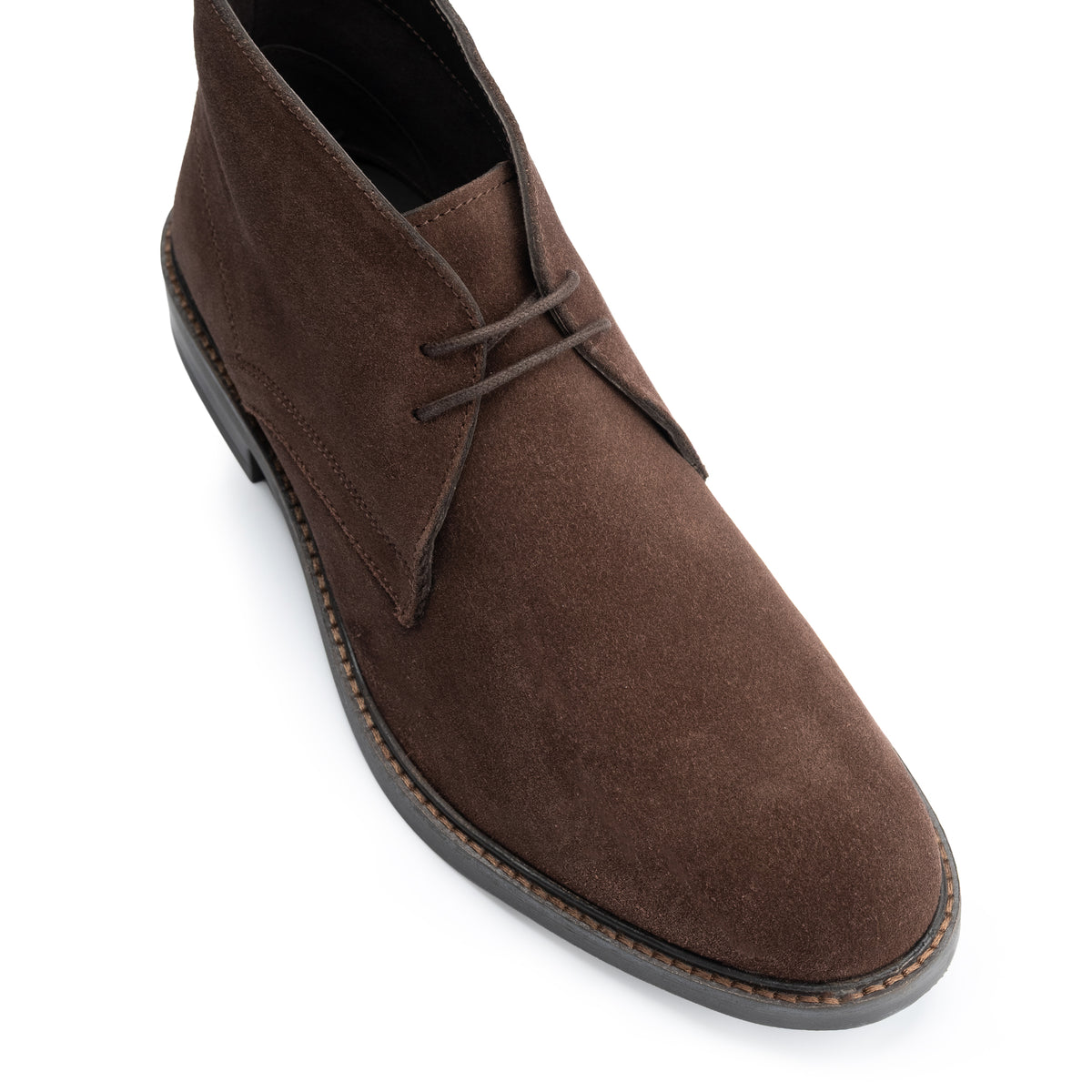
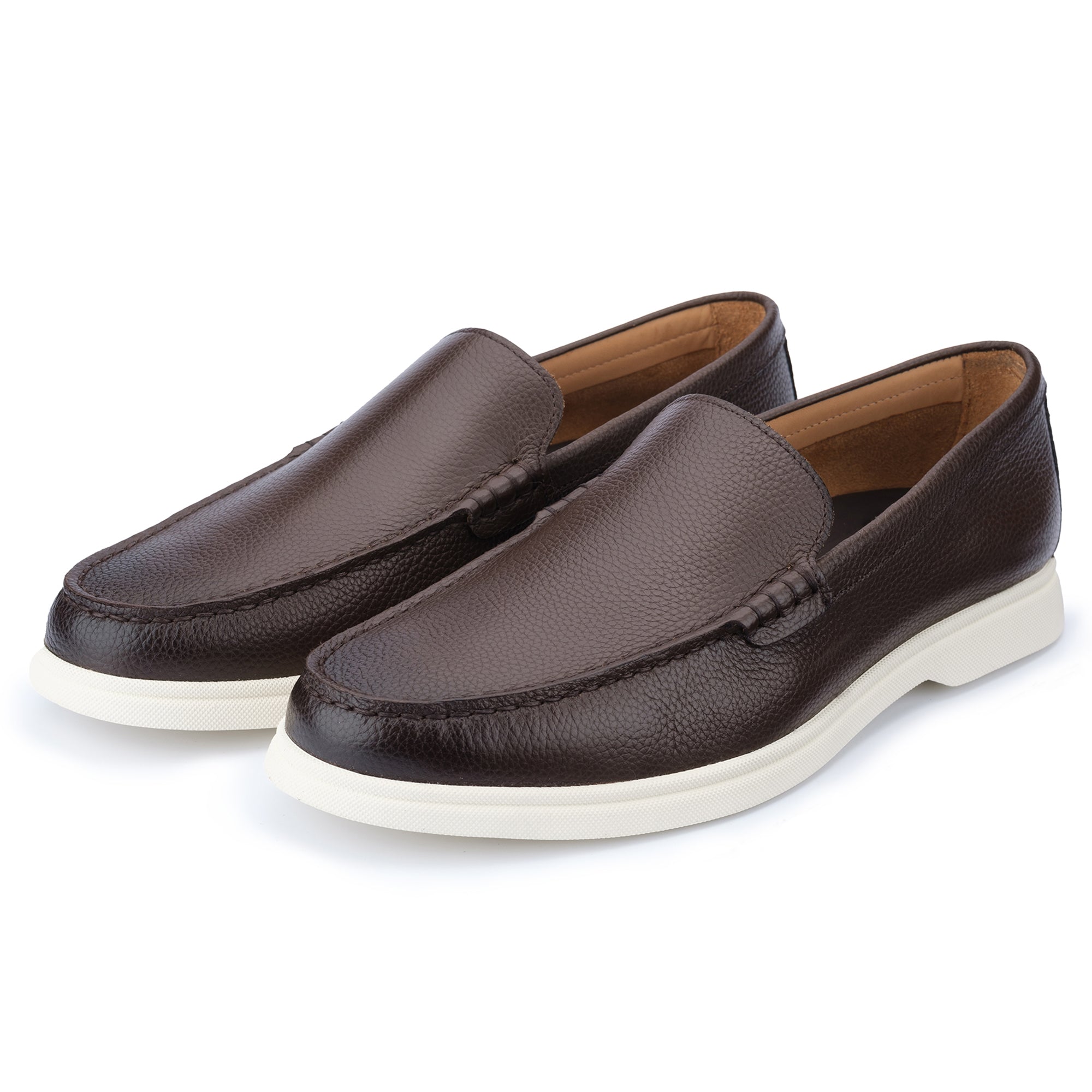
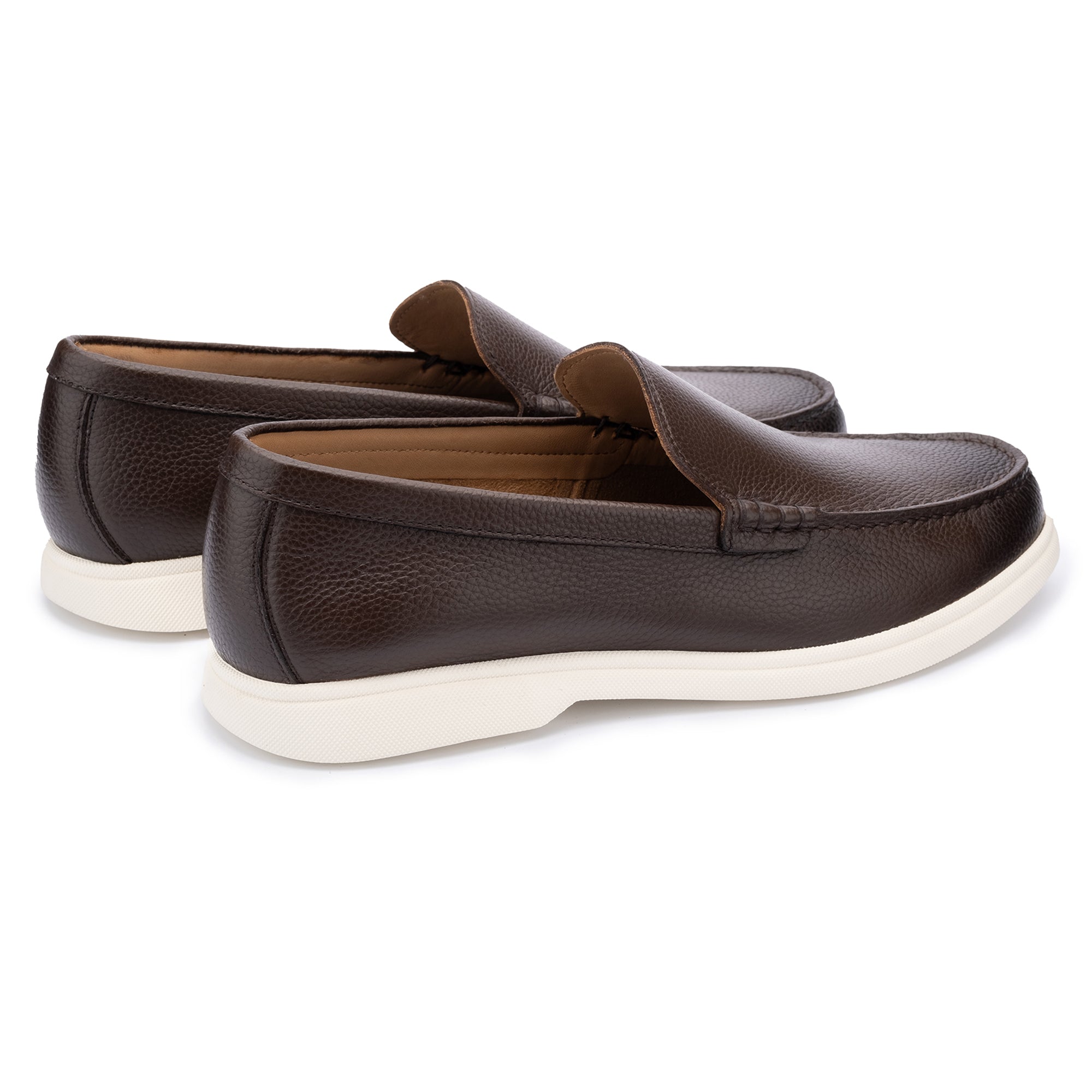
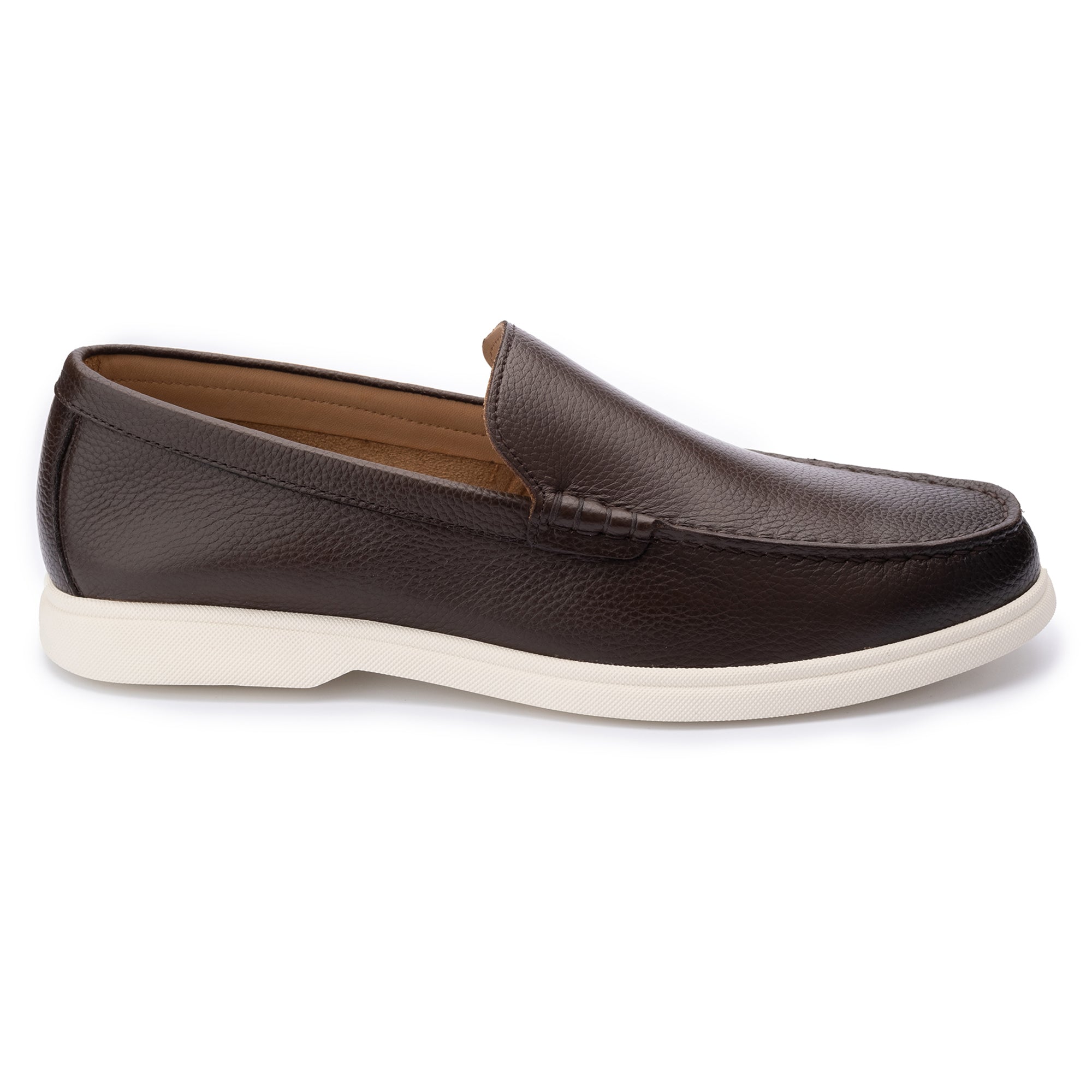
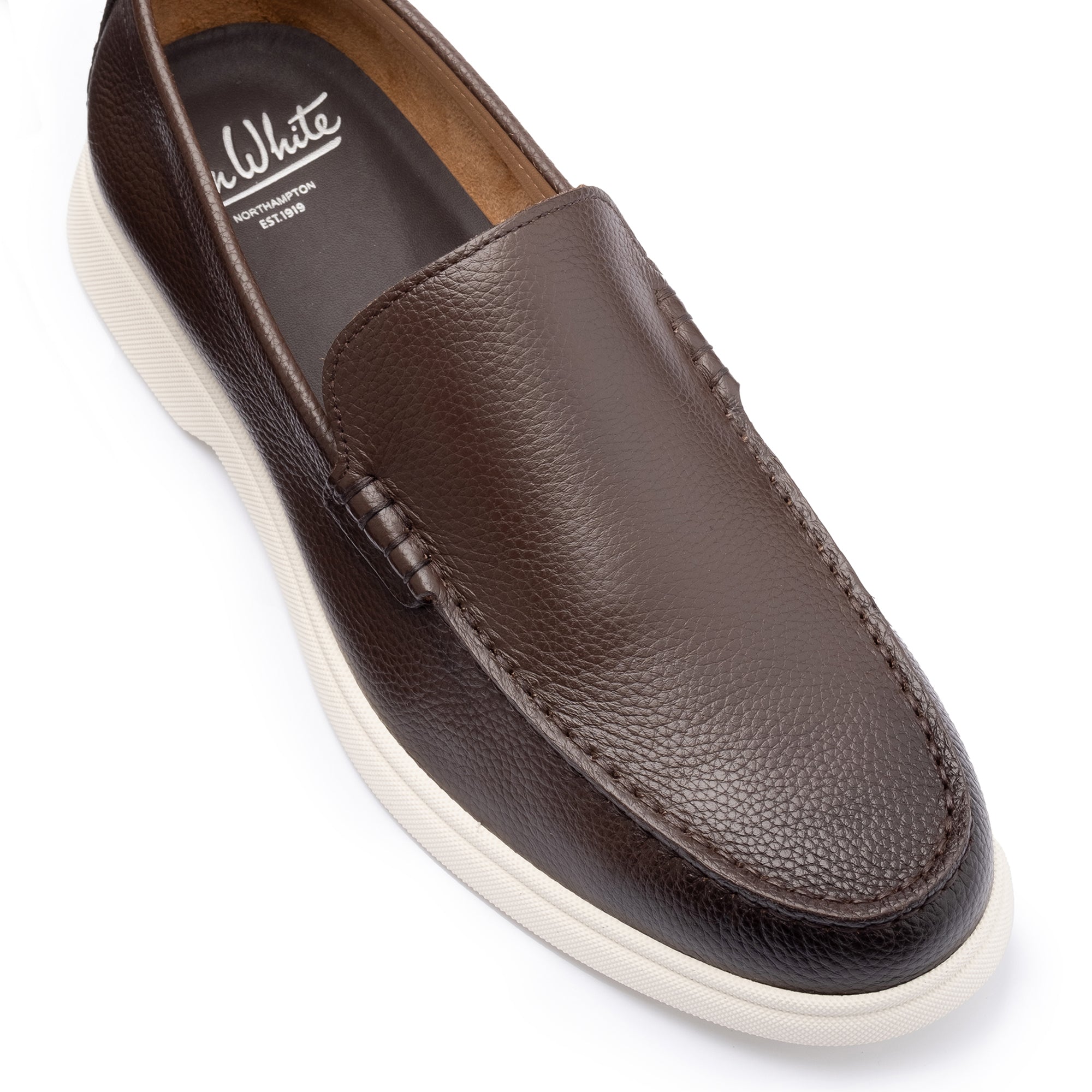
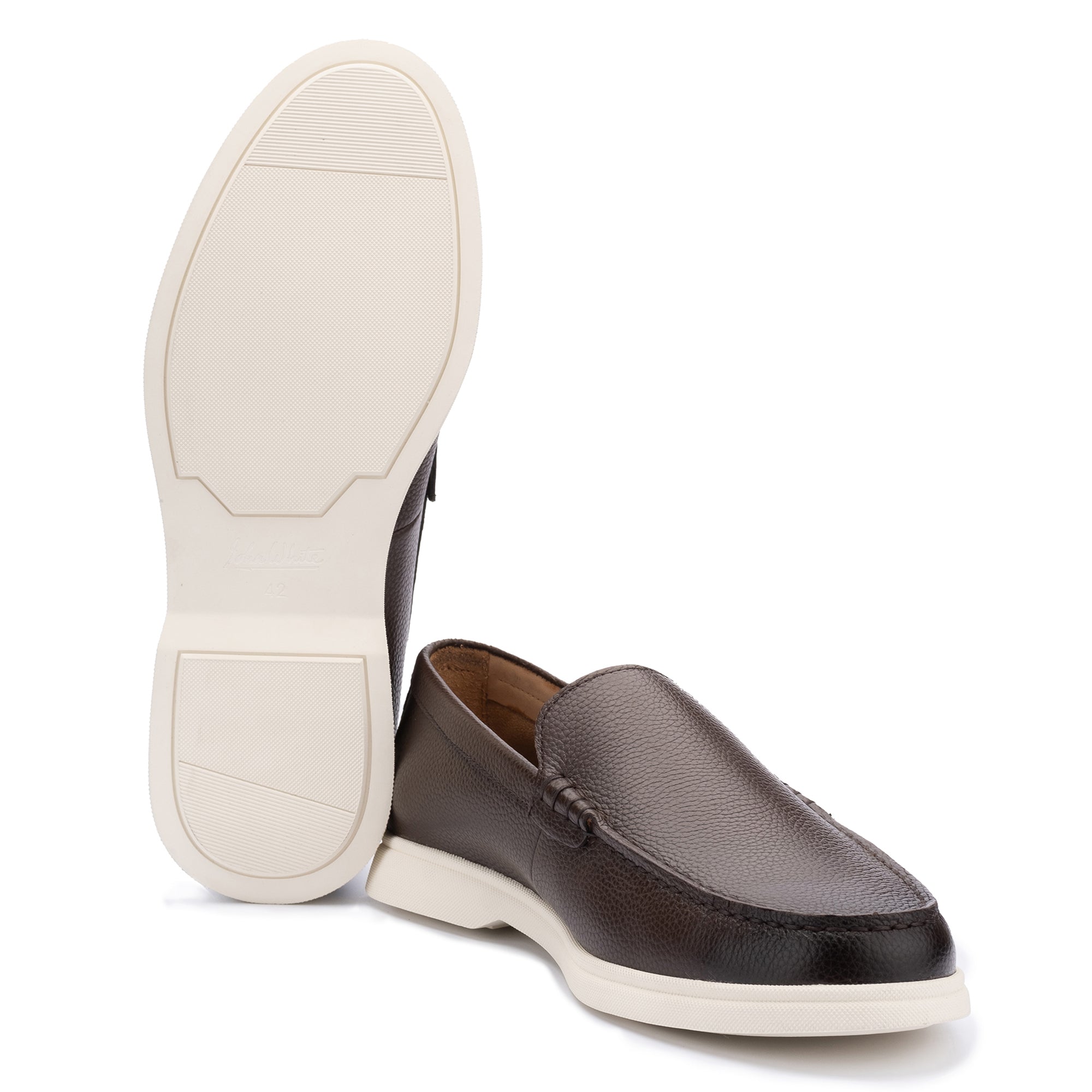
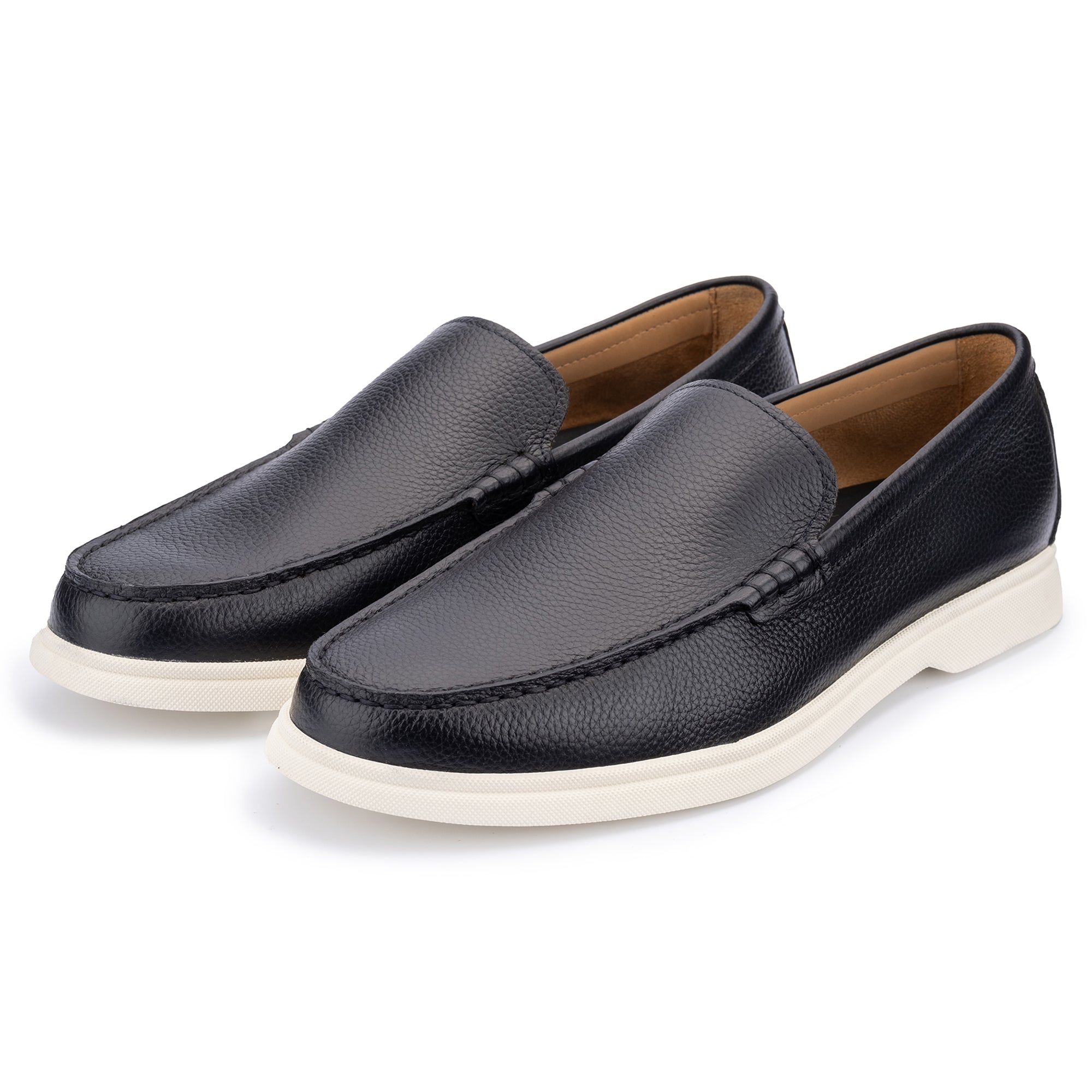
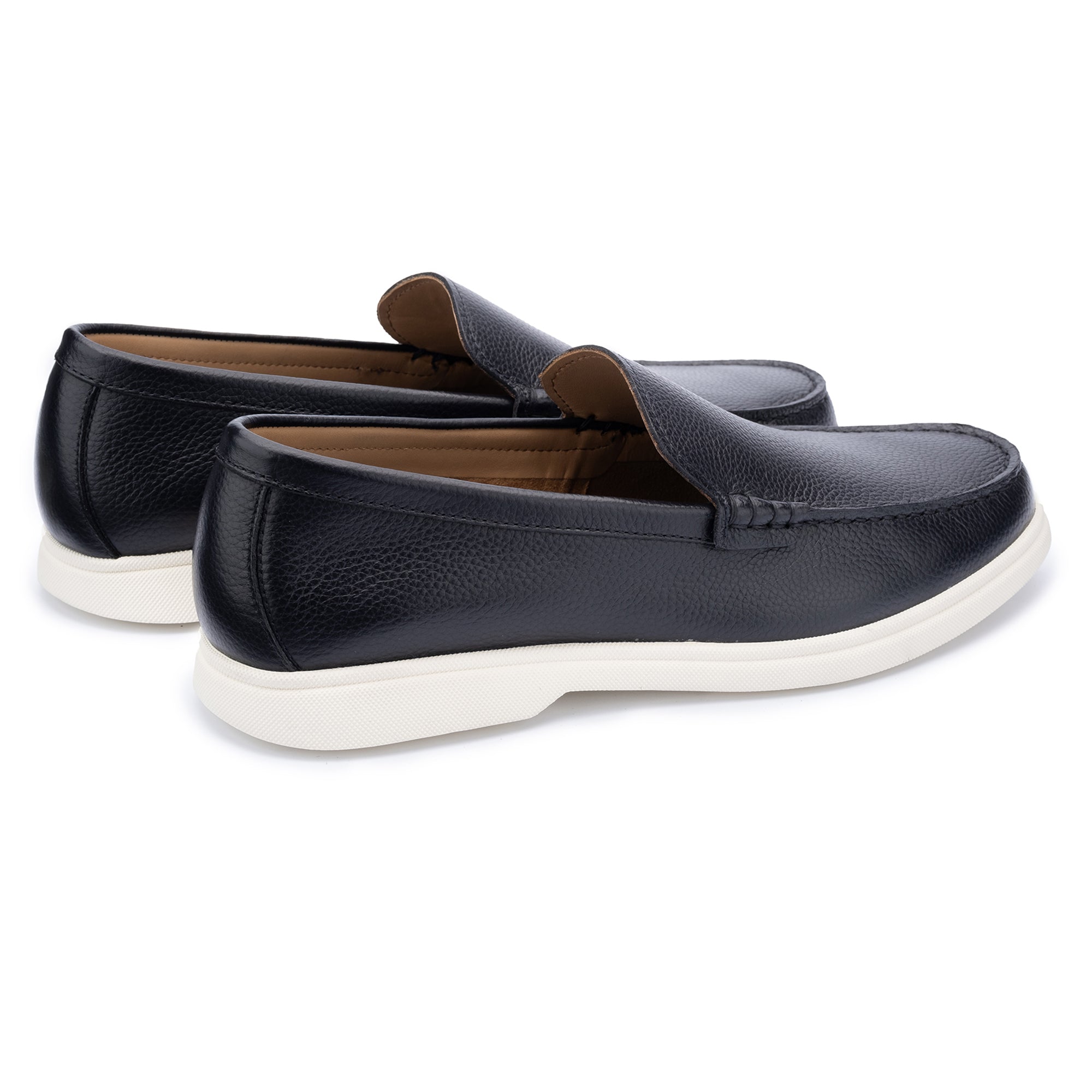
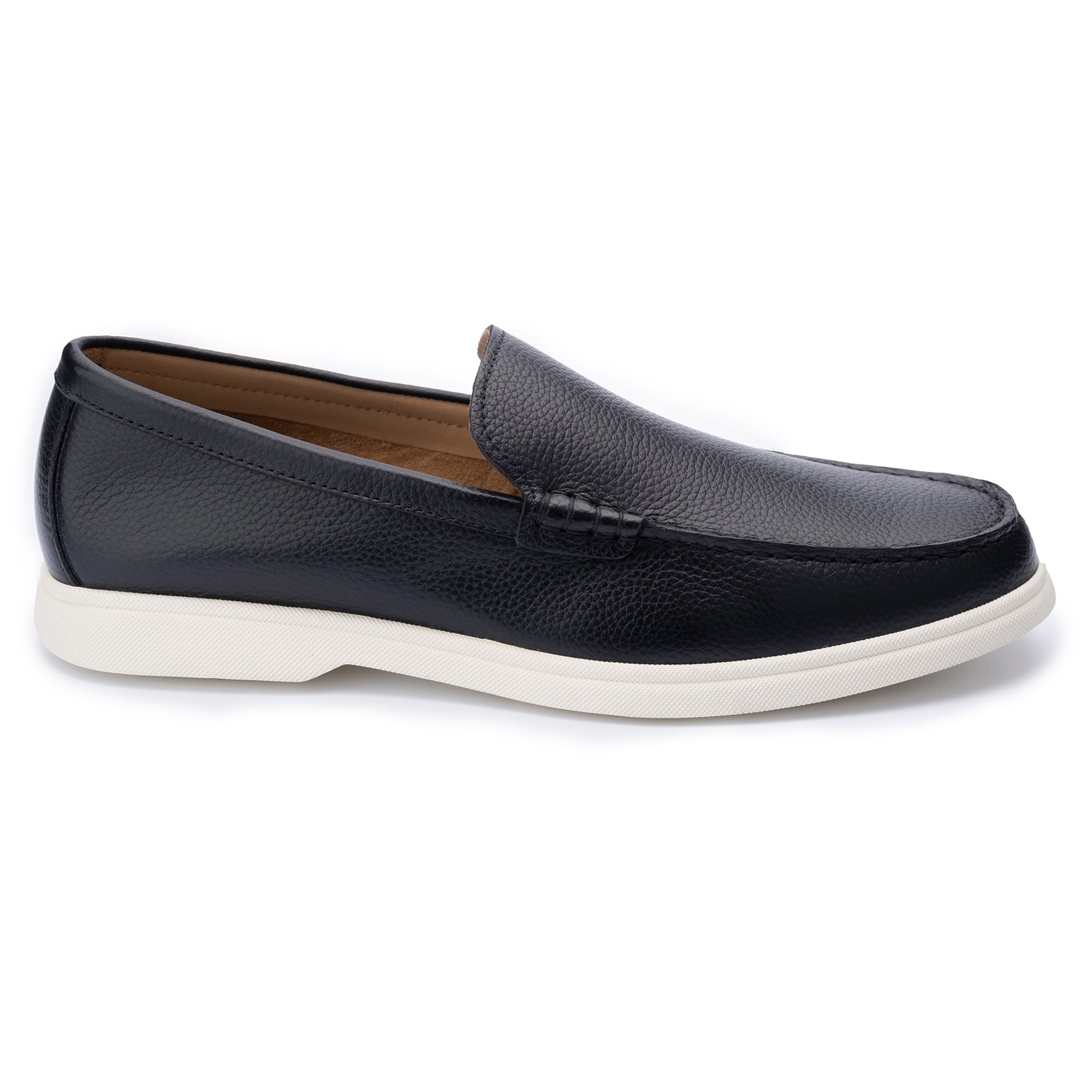
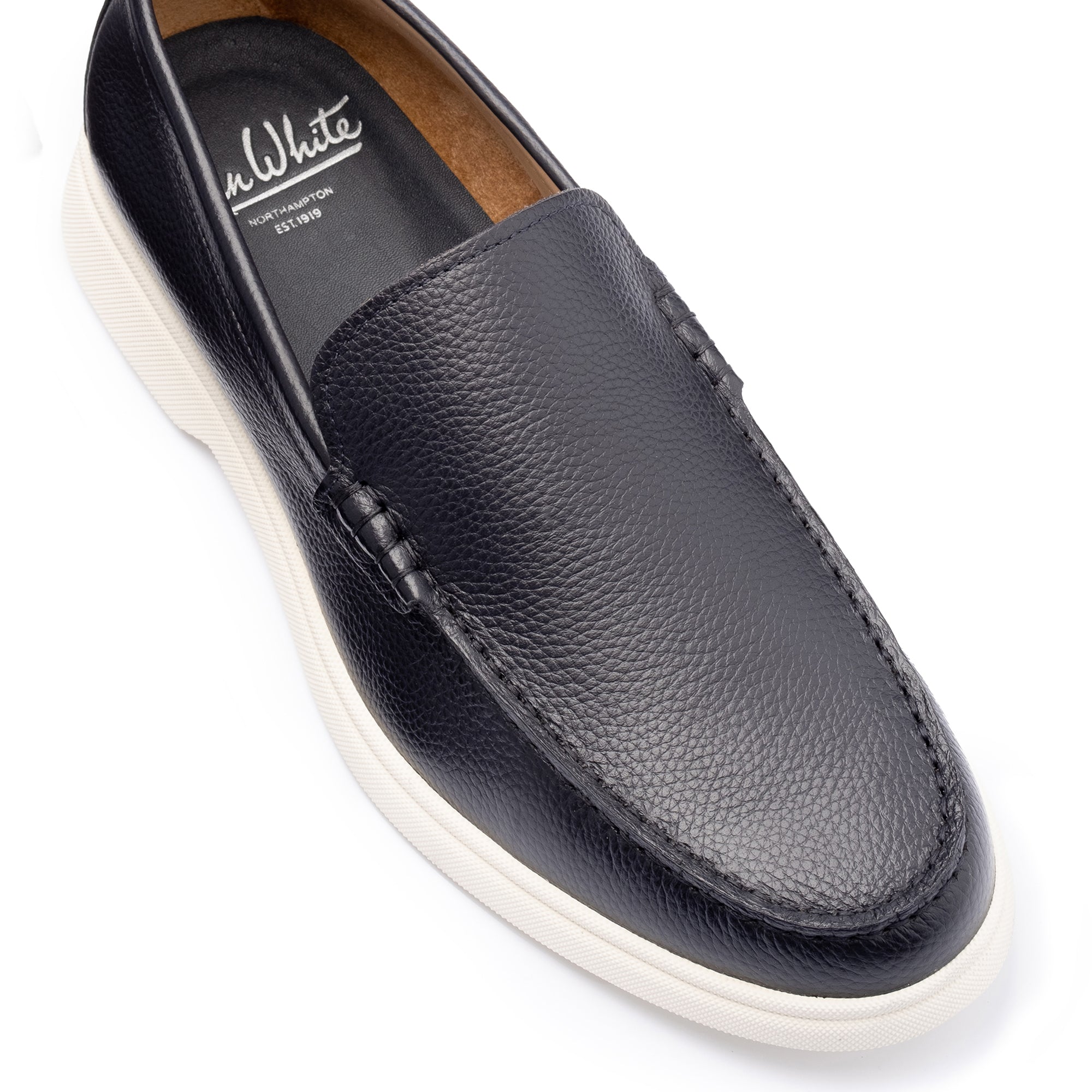
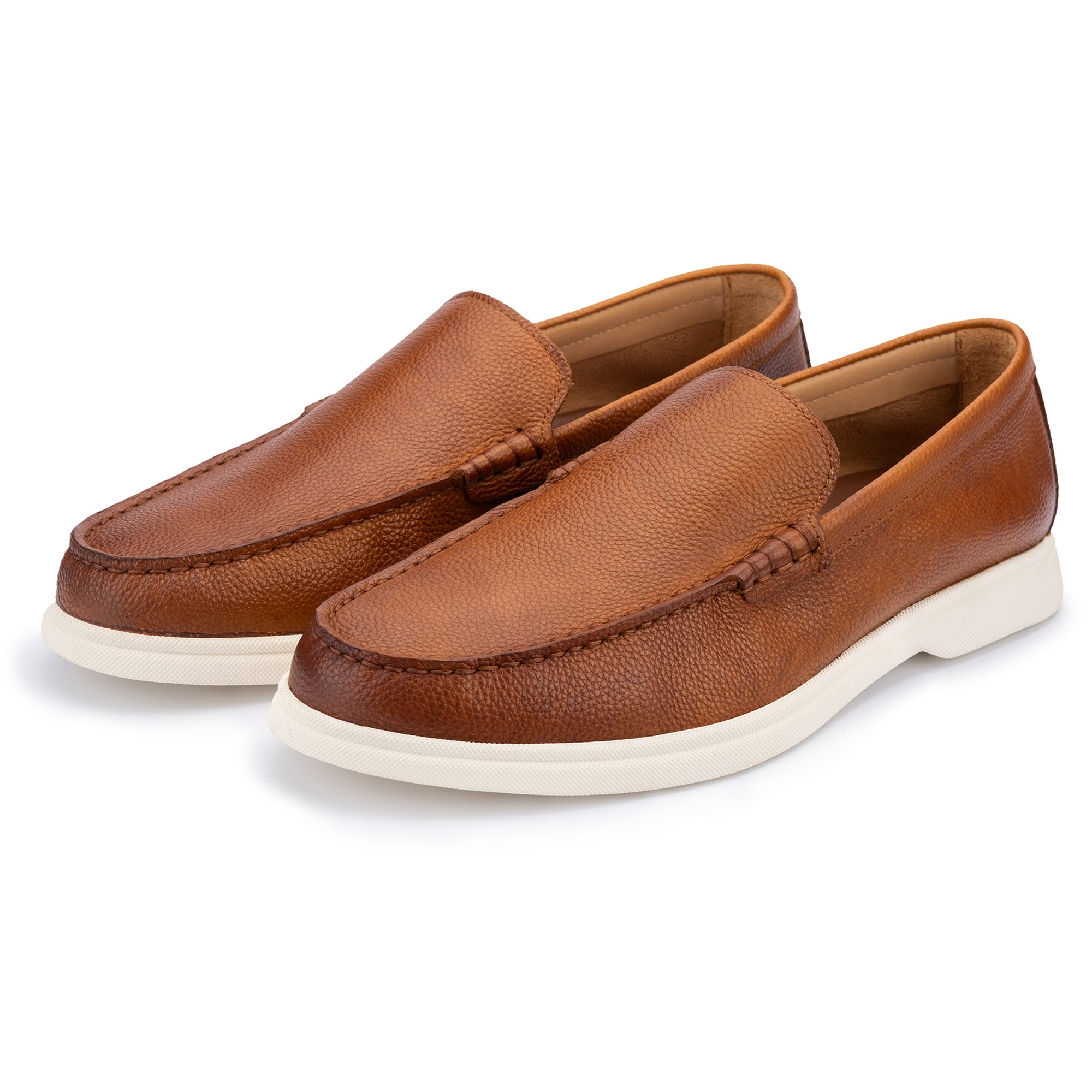
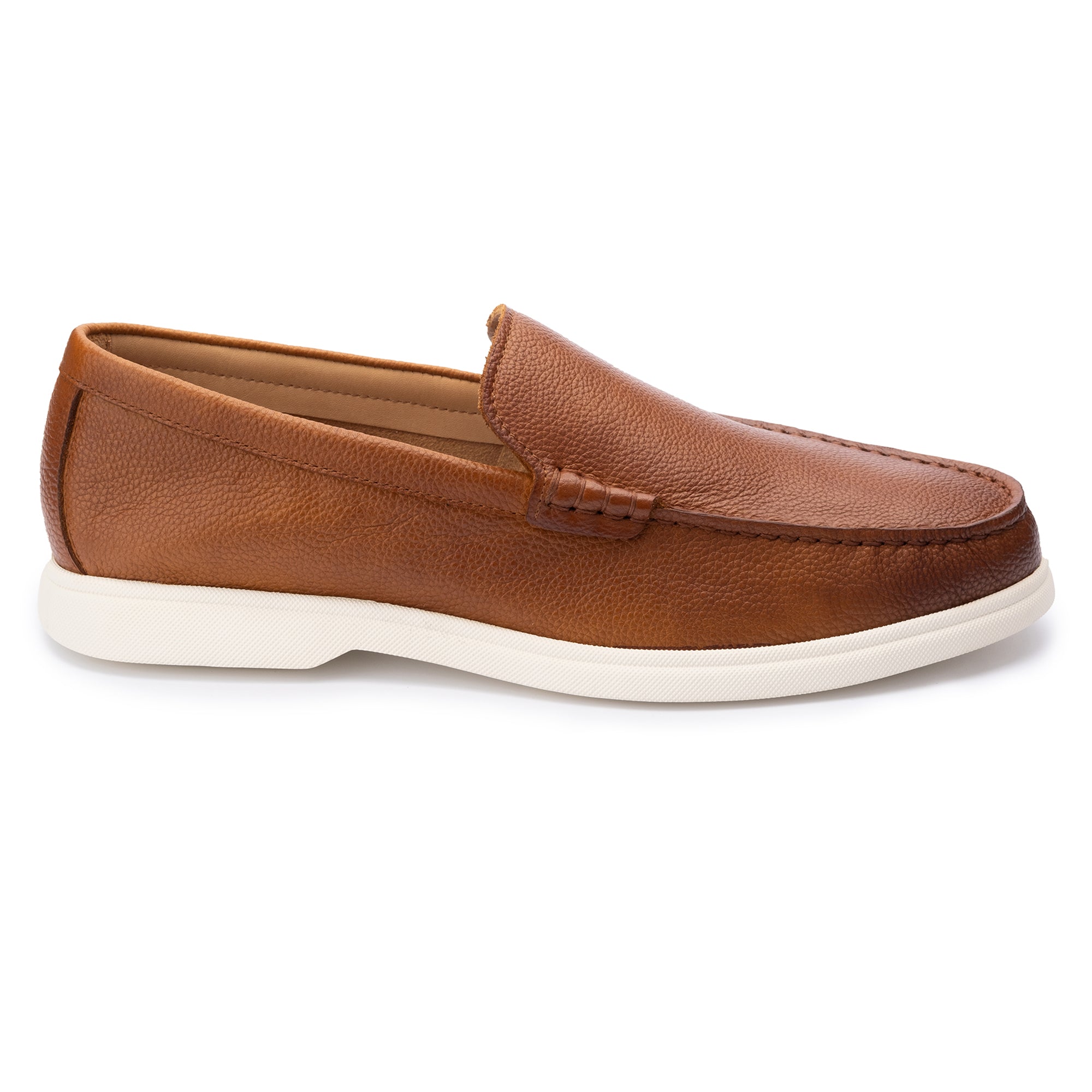
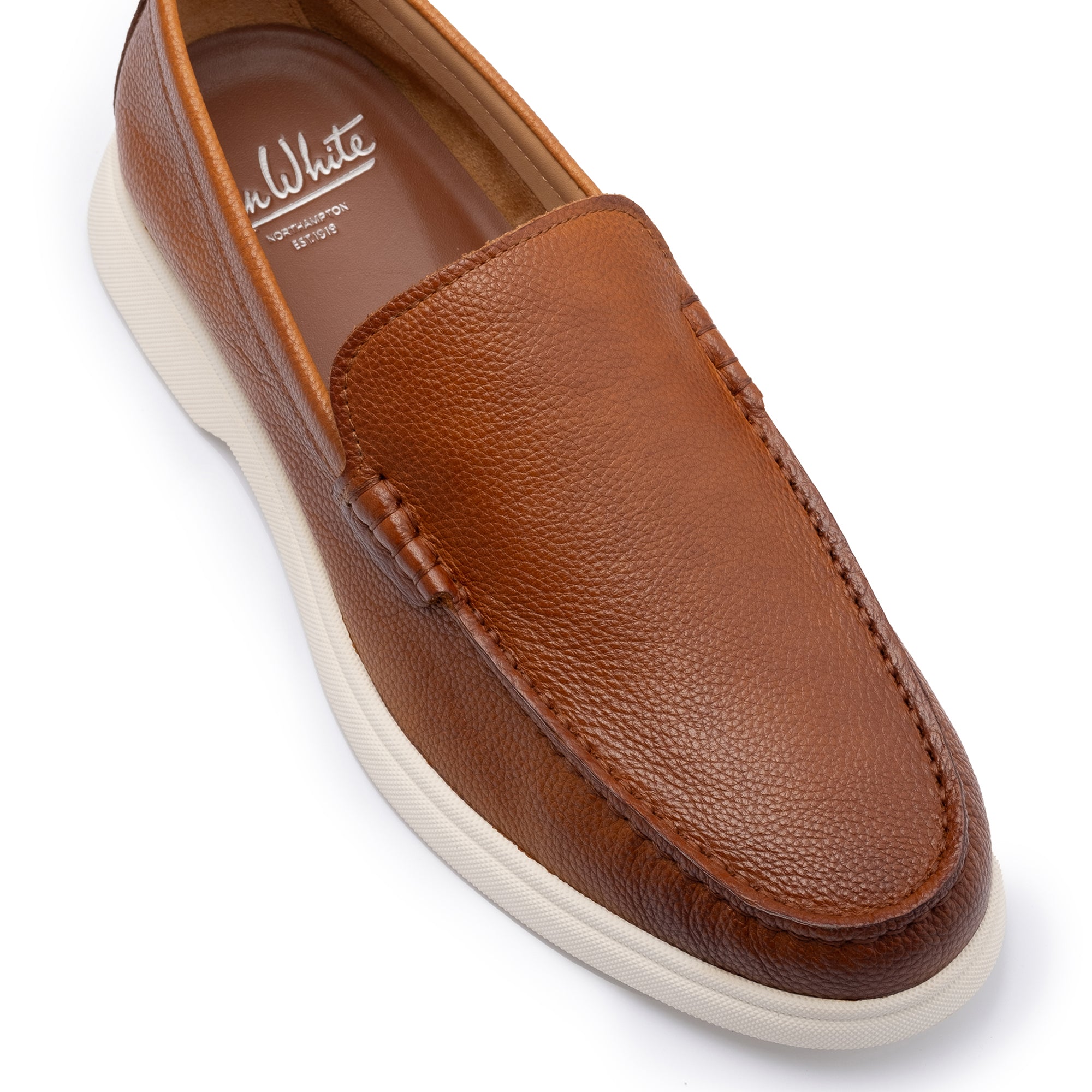
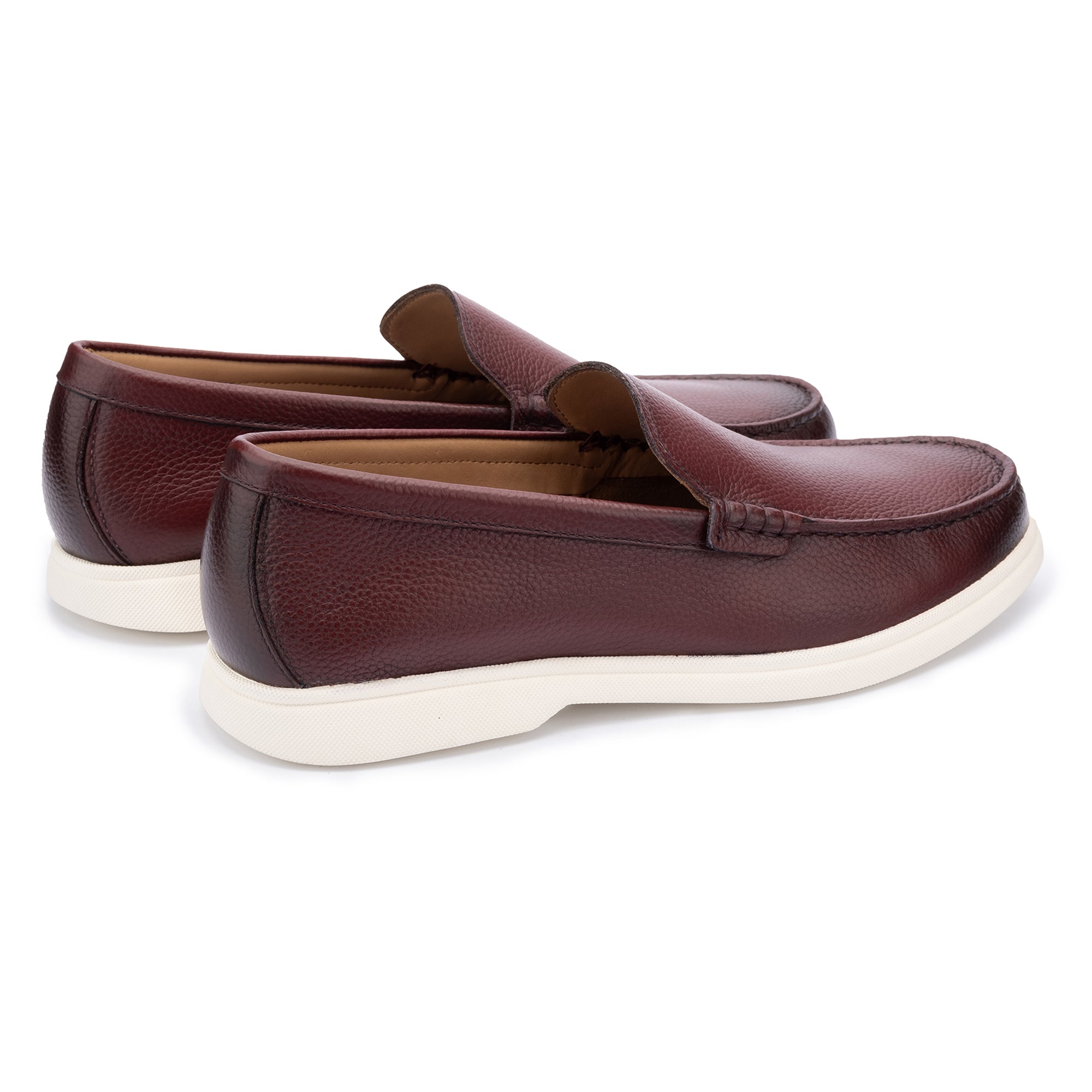
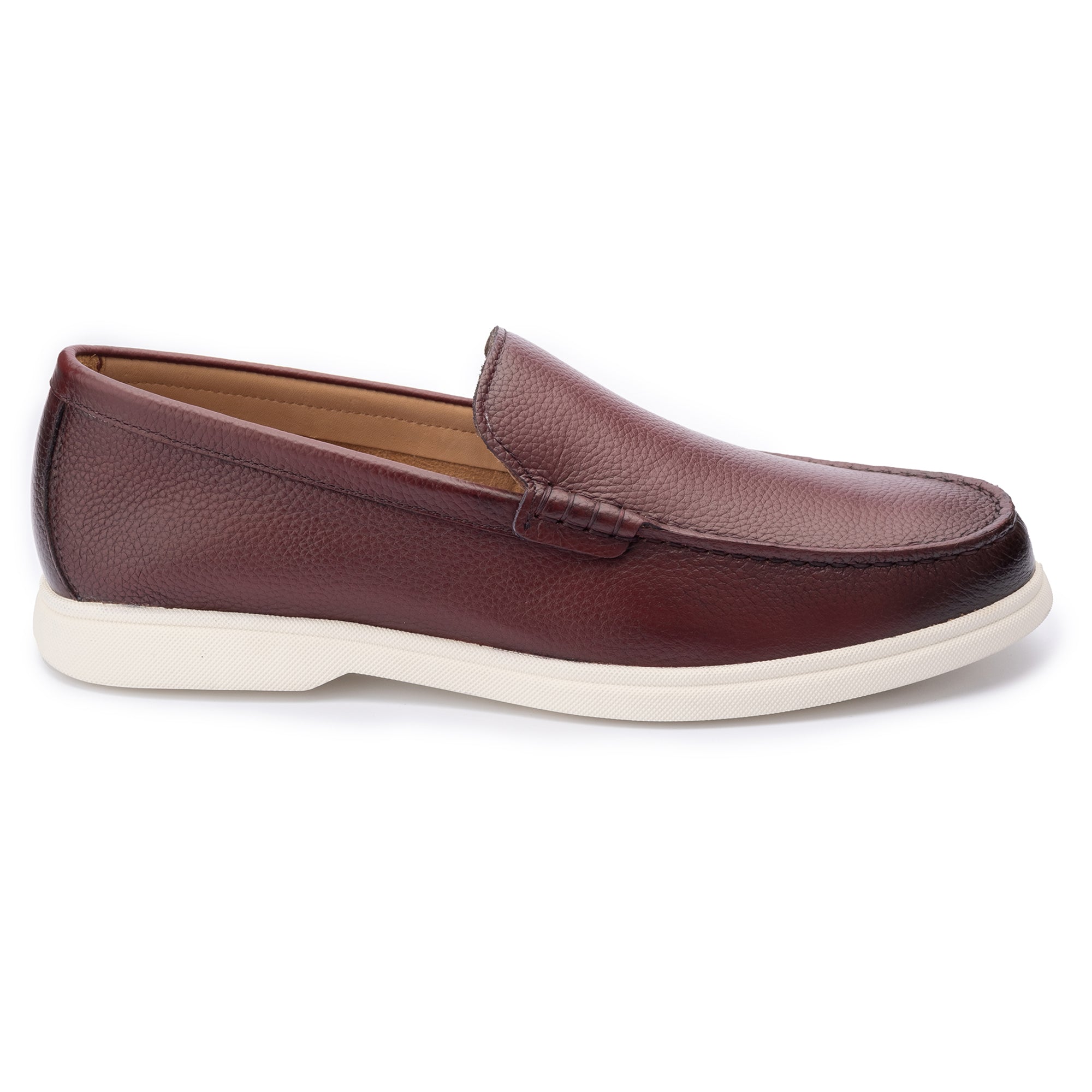
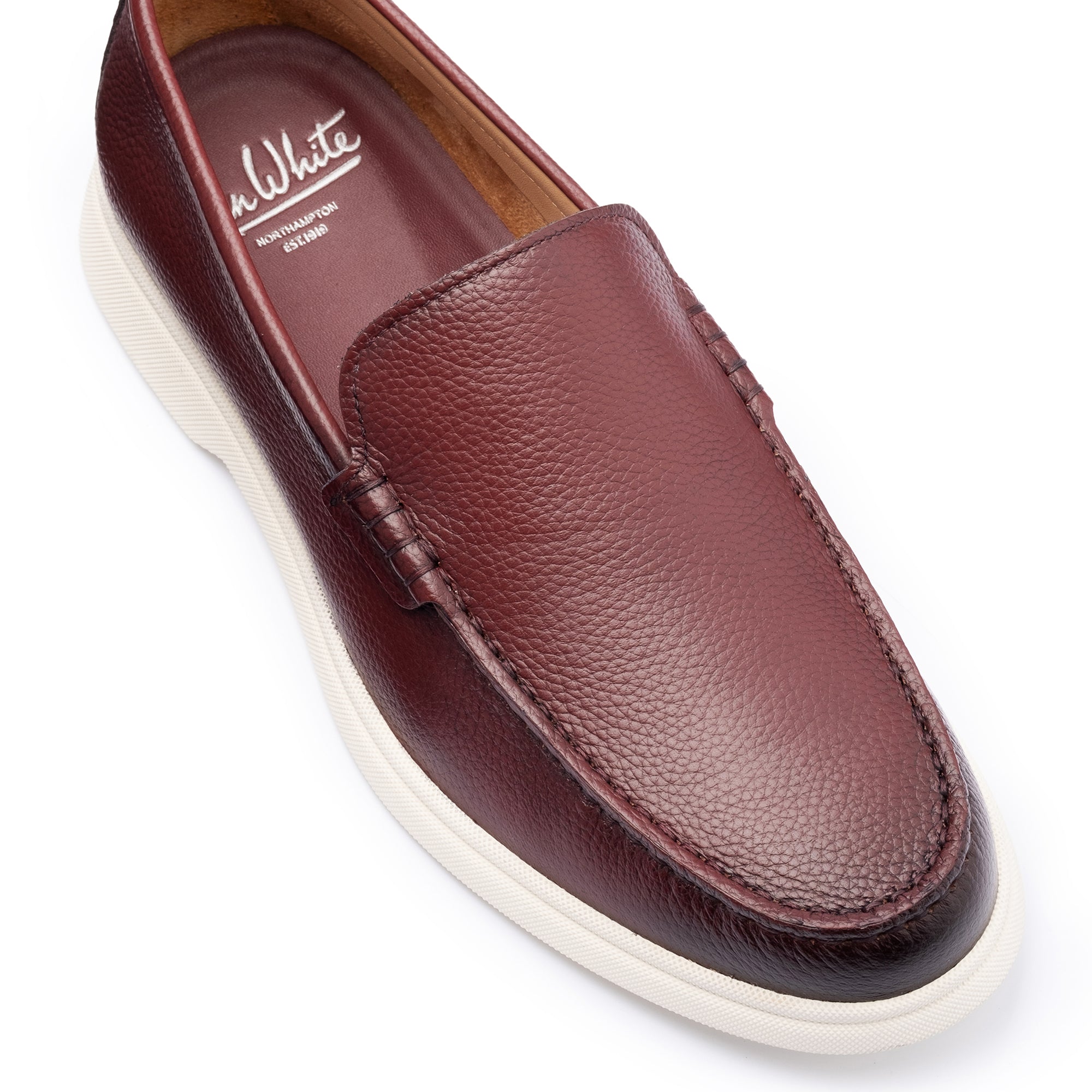
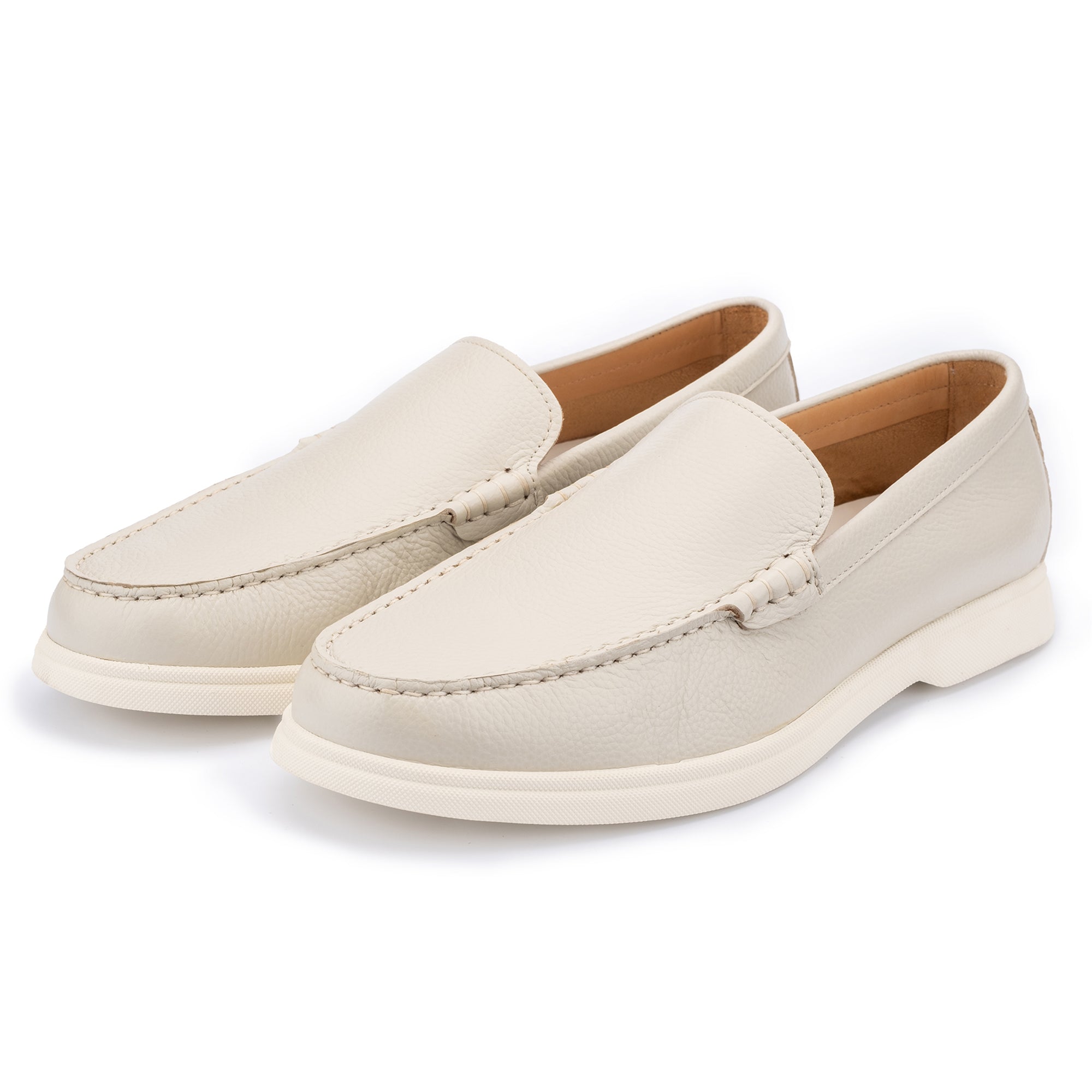
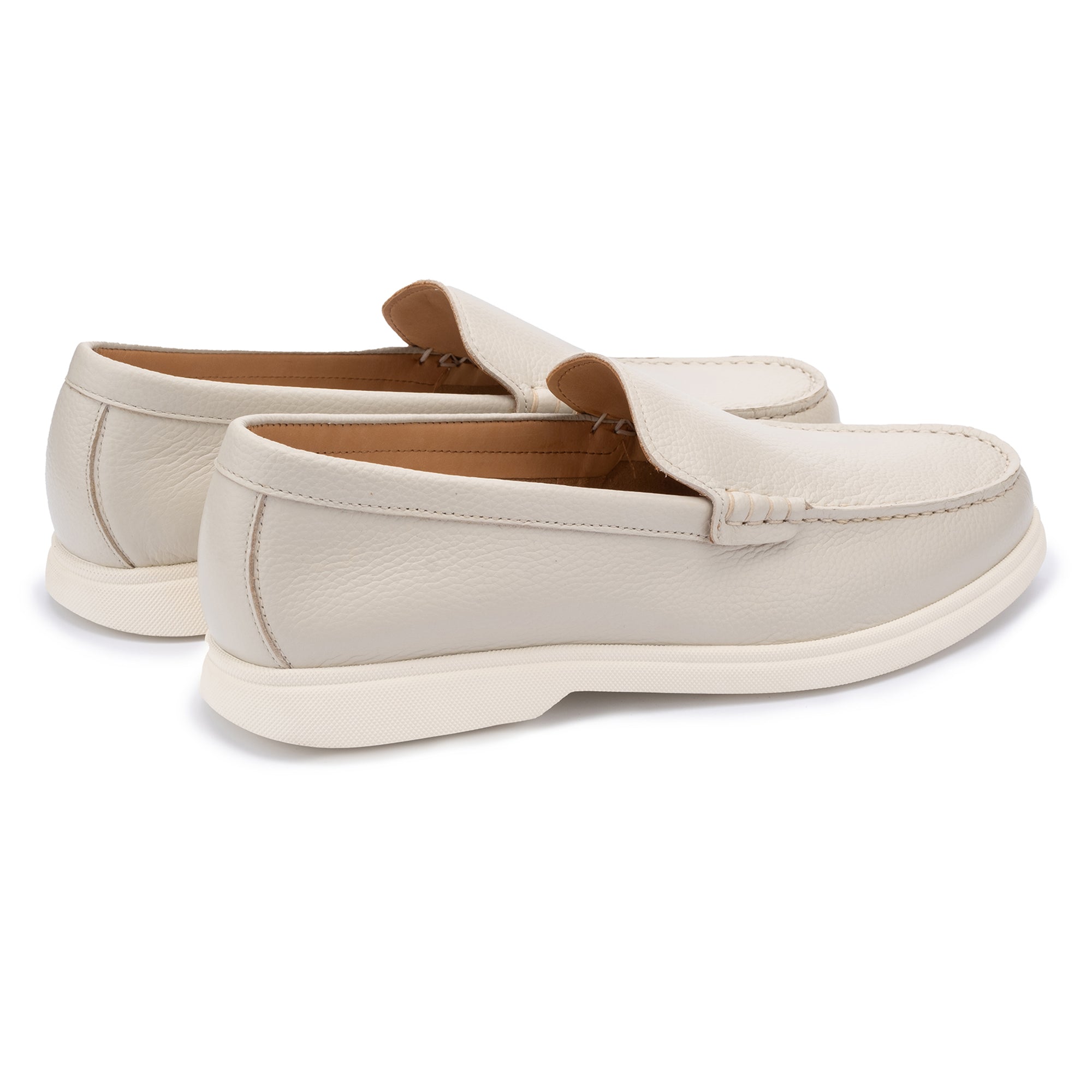
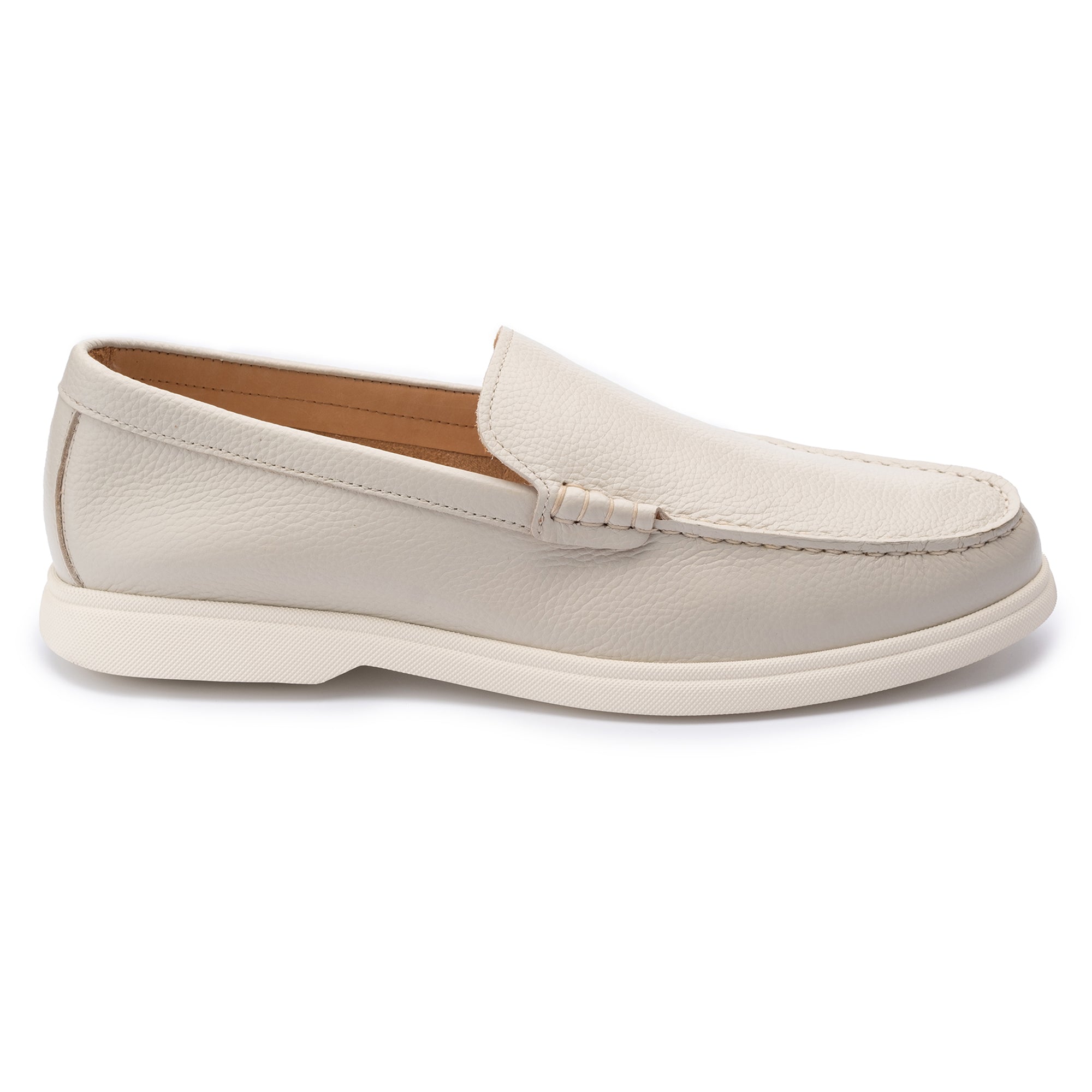
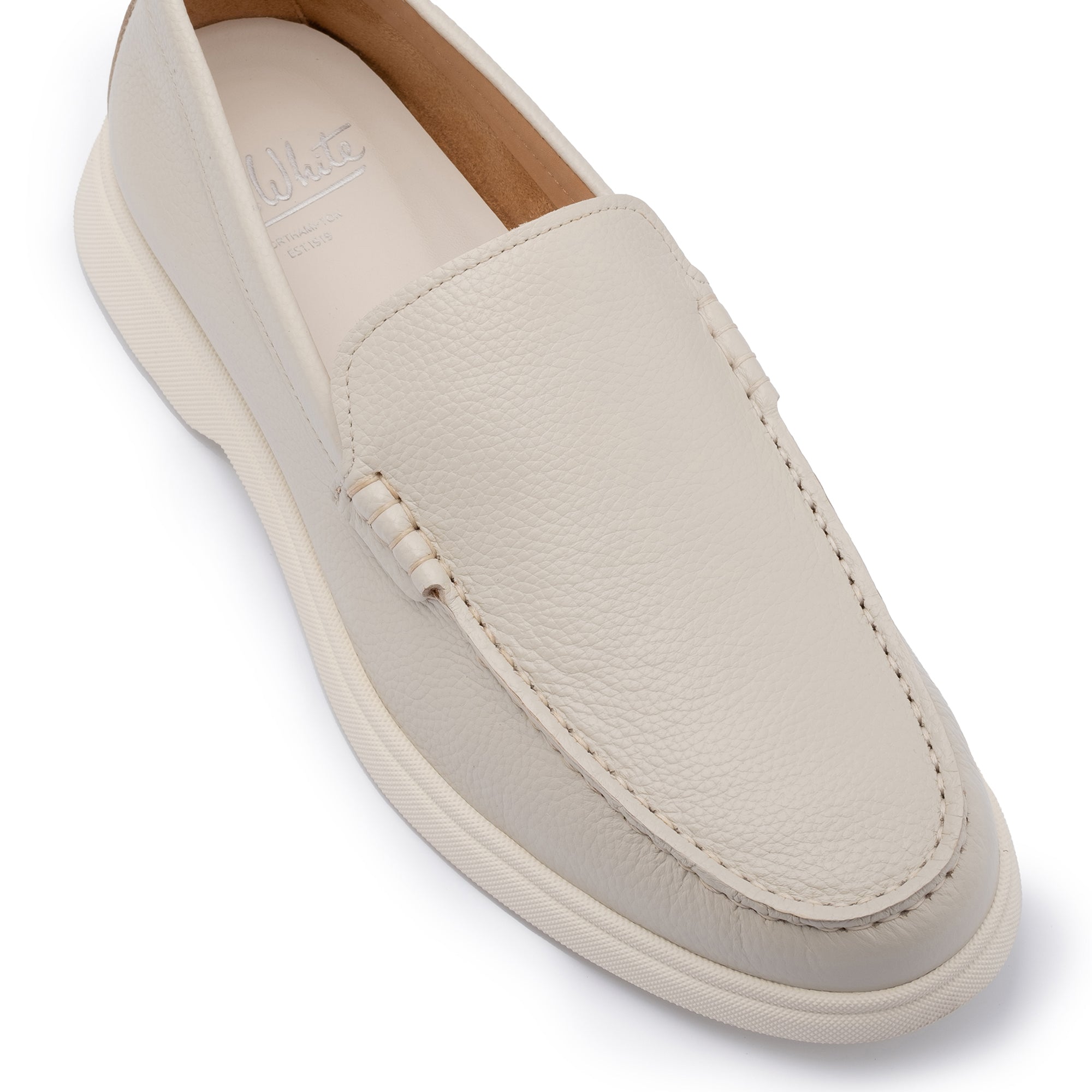
There is a variant of full-grain leather that sits between polished formal calf and the corrected category: tumbled grain. The term describes full-grain leather that has been mechanically worked — placed in a drum and tumbled — to break down the surface fibres slightly and create a relaxed, pebbled texture.
Because the natural grain surface is preserved throughout this process, tumbled grain retains the core advantages of full-grain leather: it breathes, it conditions, and it ages with character. What it trades away is the capacity for a high-mirror formal finish. The pebbled surface sits better on a loafer or a smart-casual Derby than on a polished Oxford worn to a formal occasion.
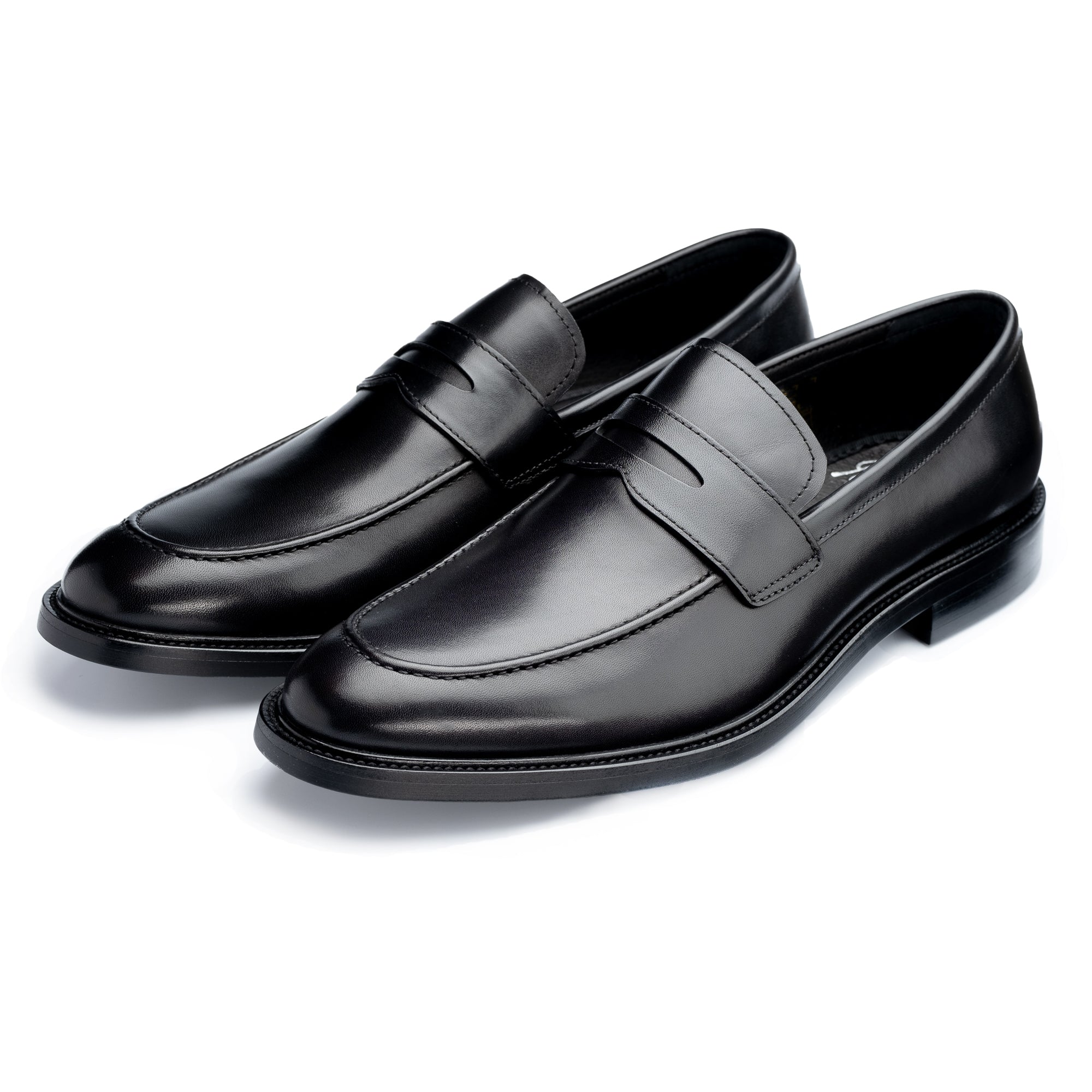
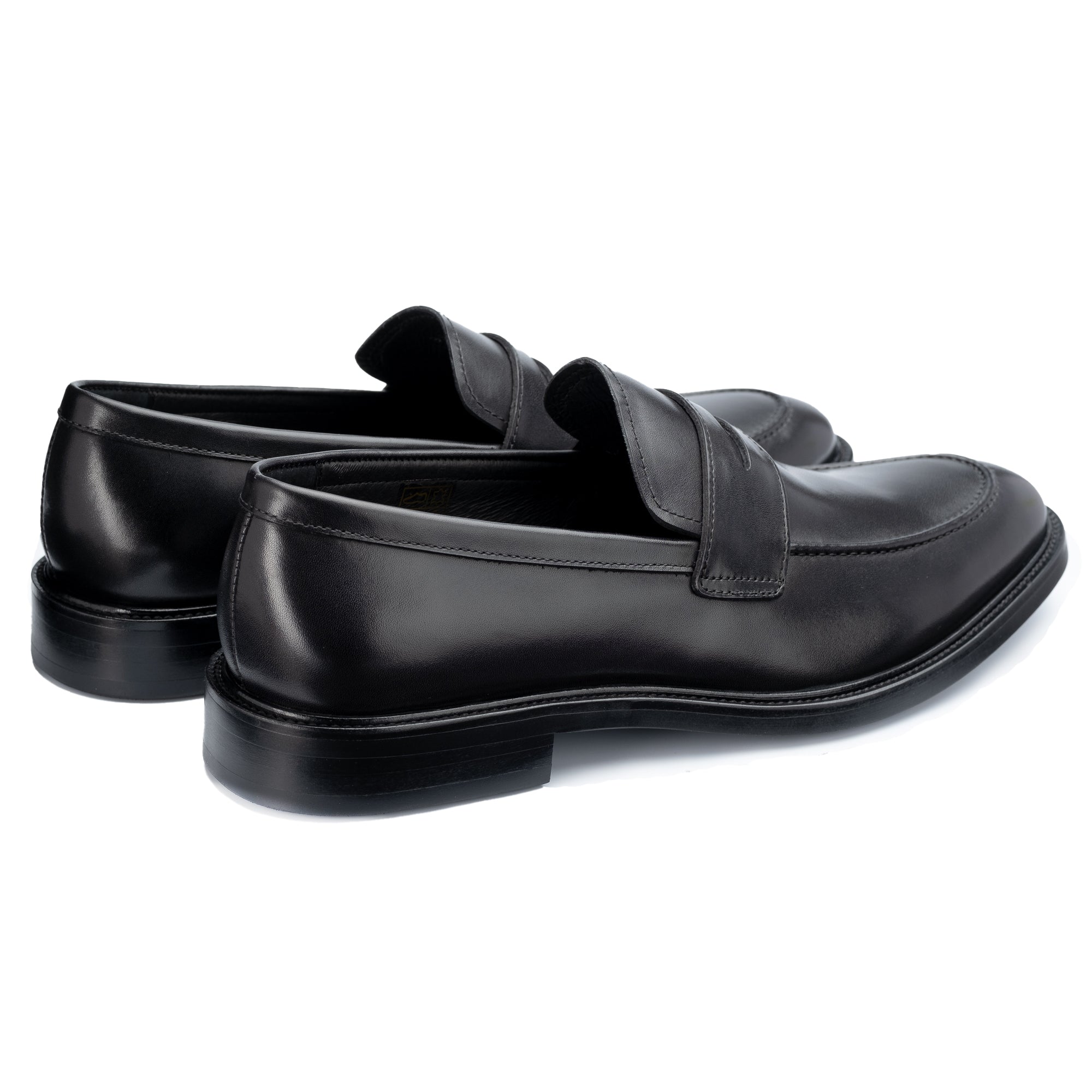
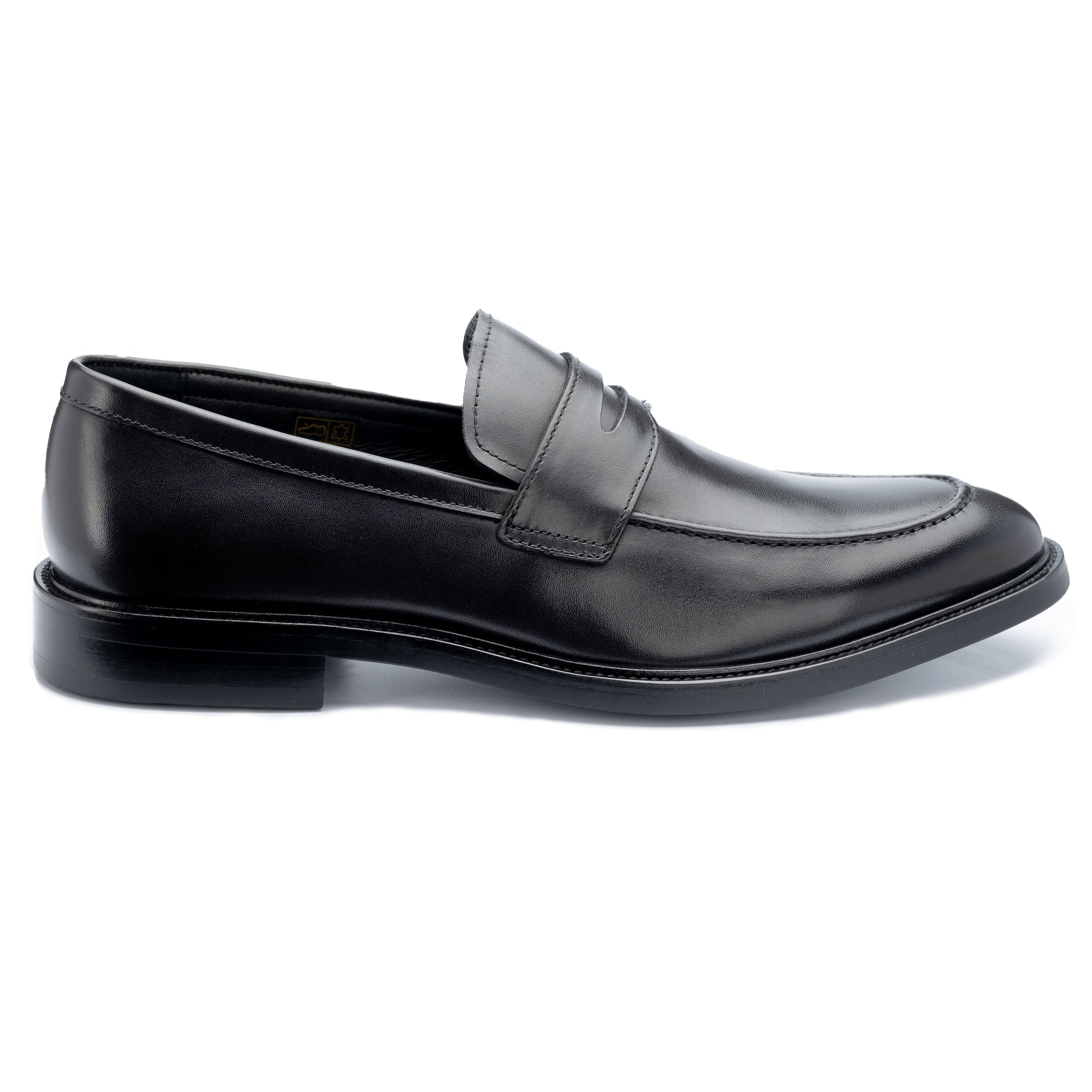
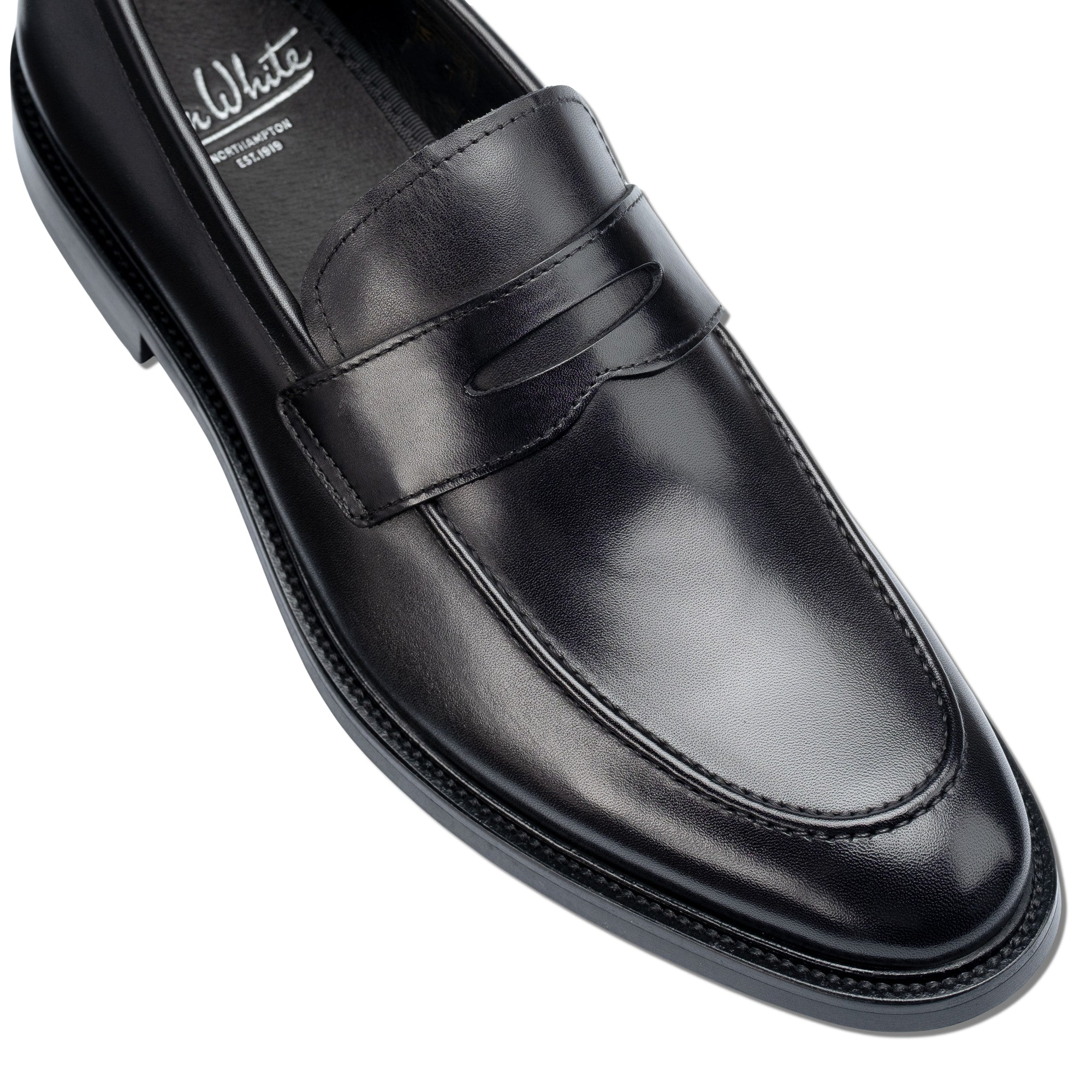
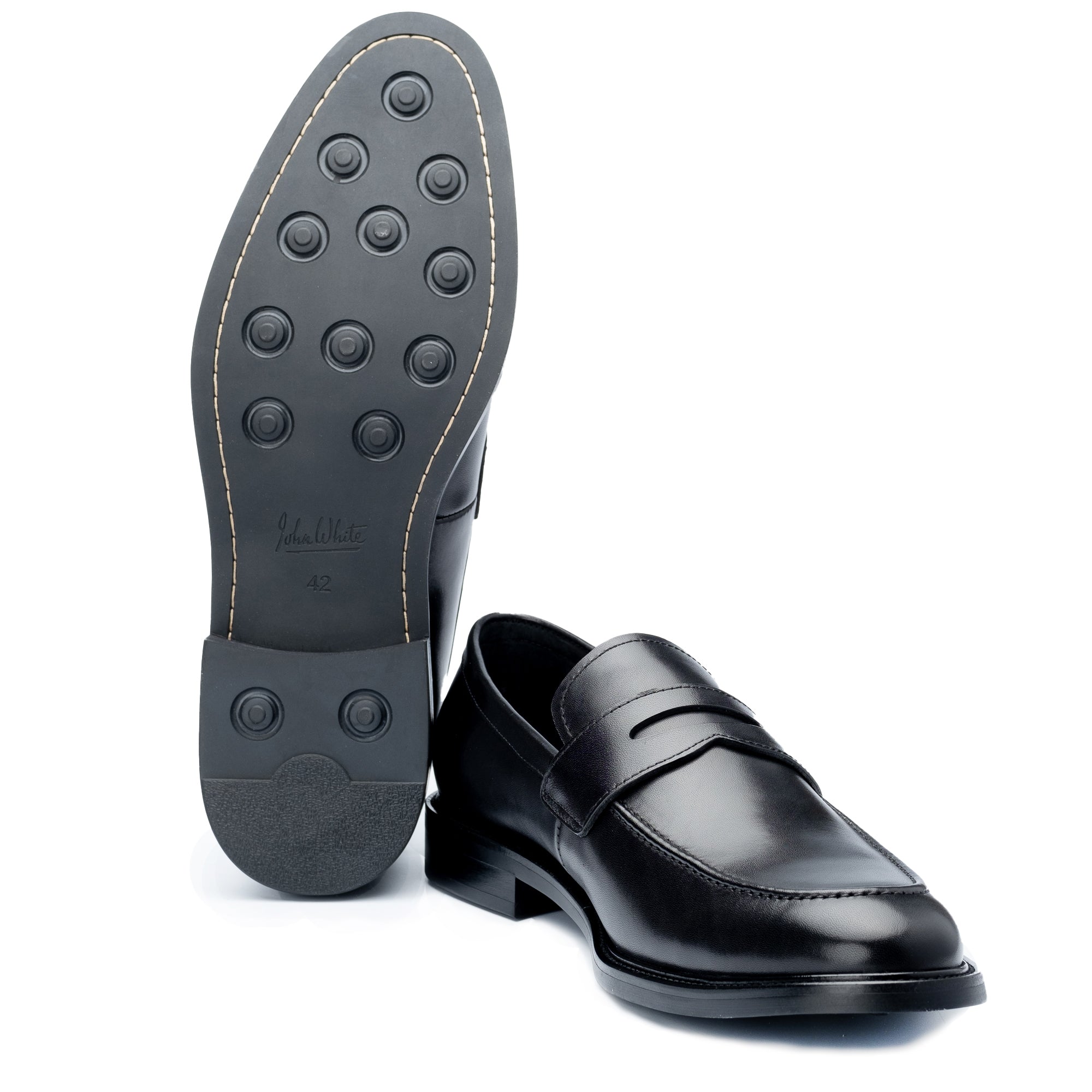
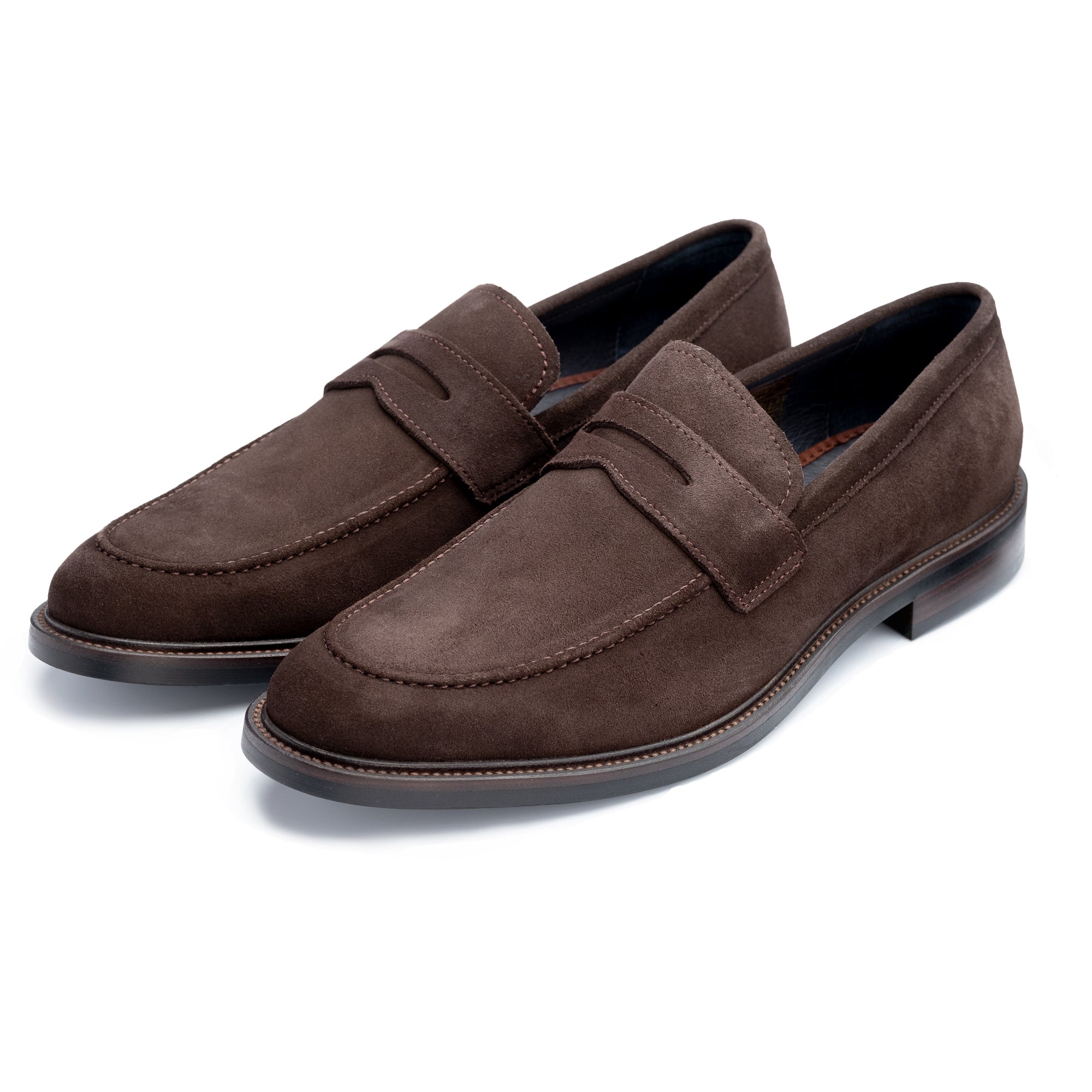
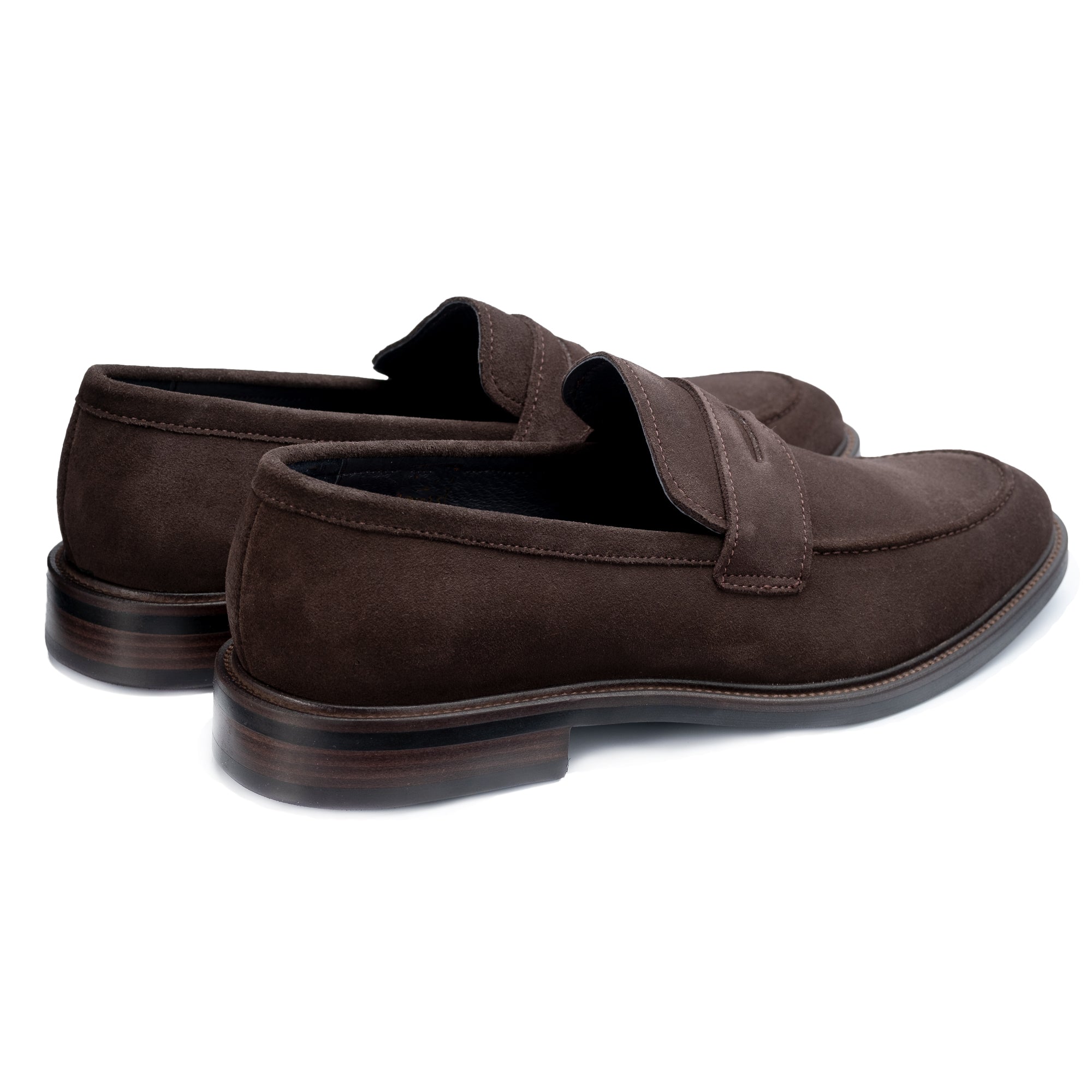
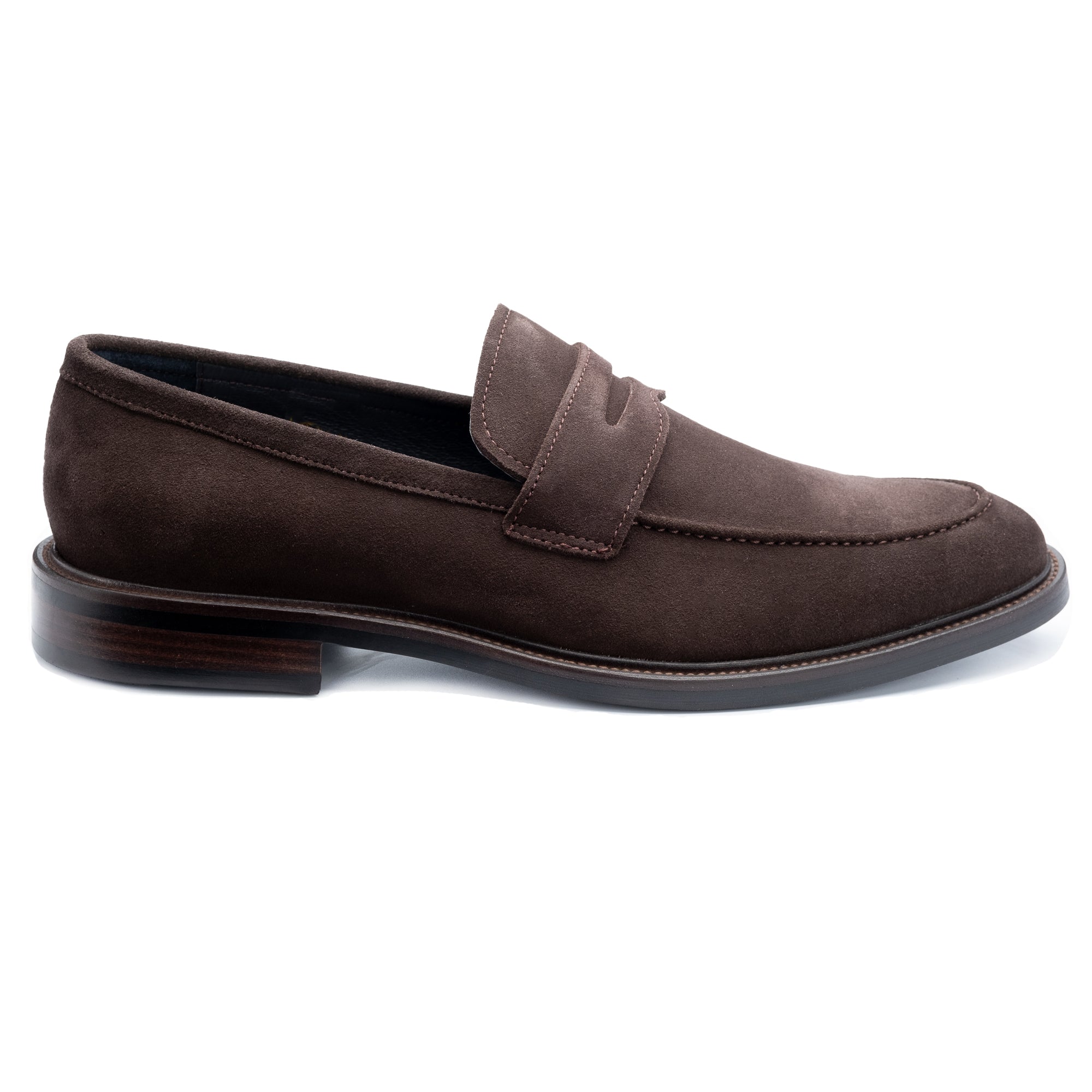
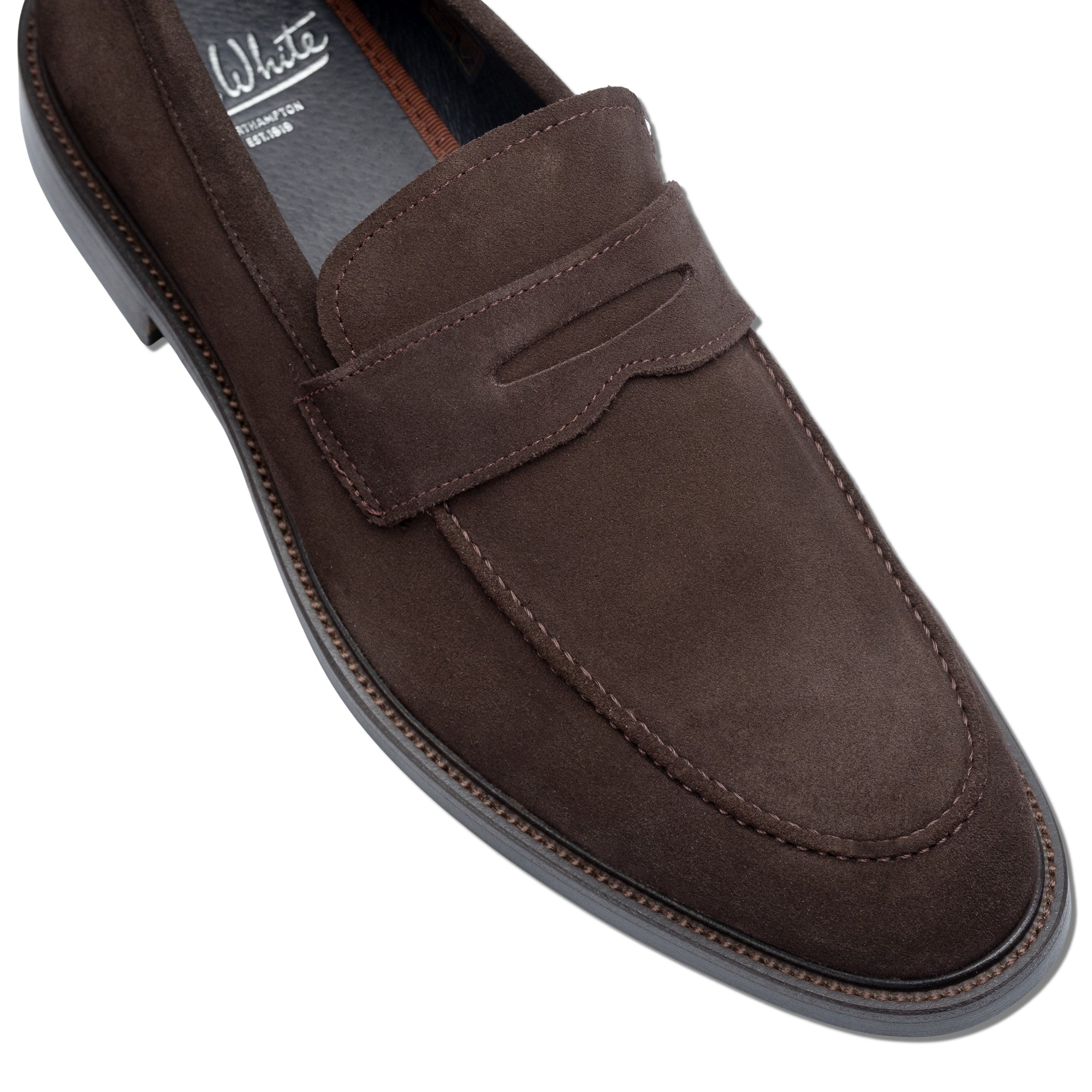
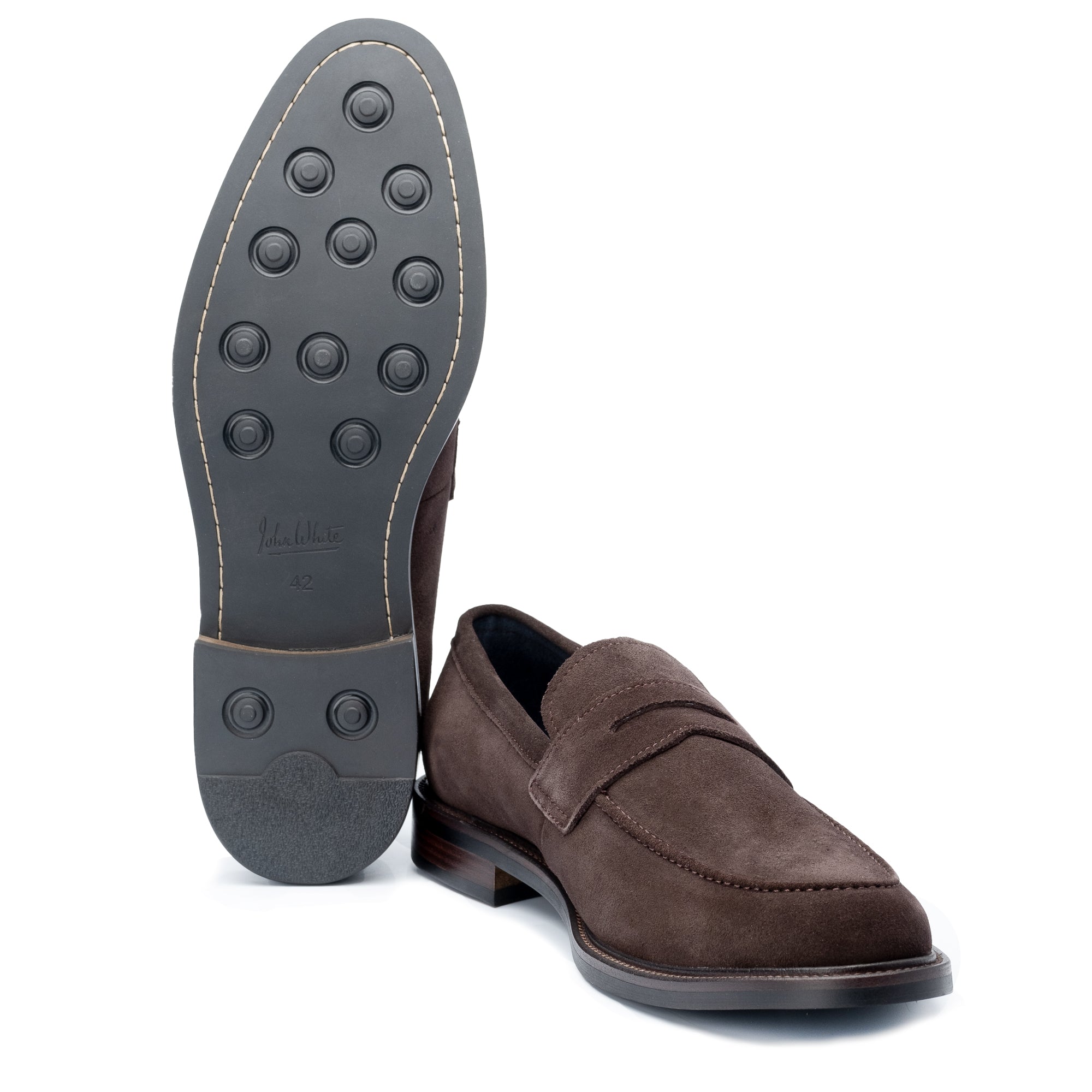
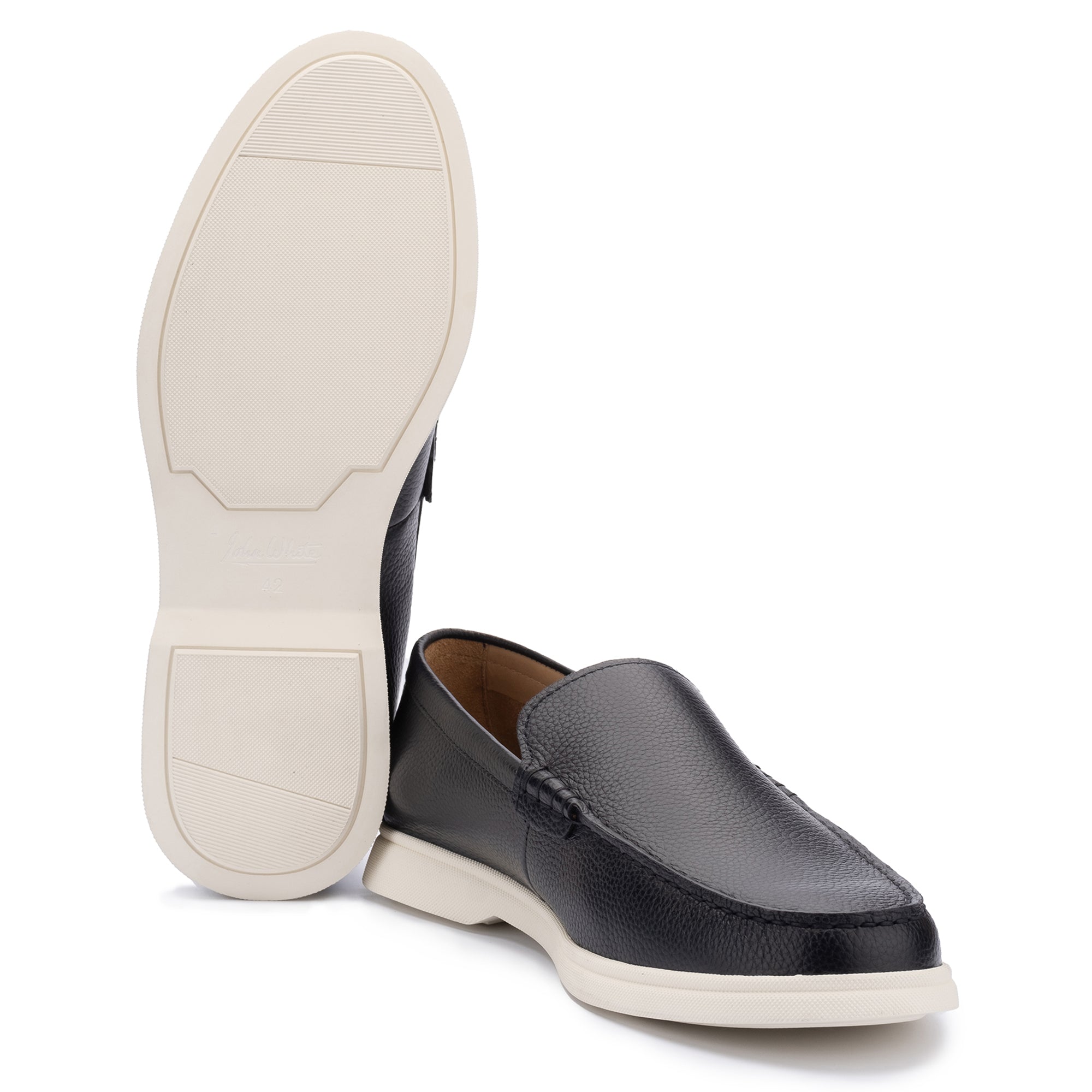
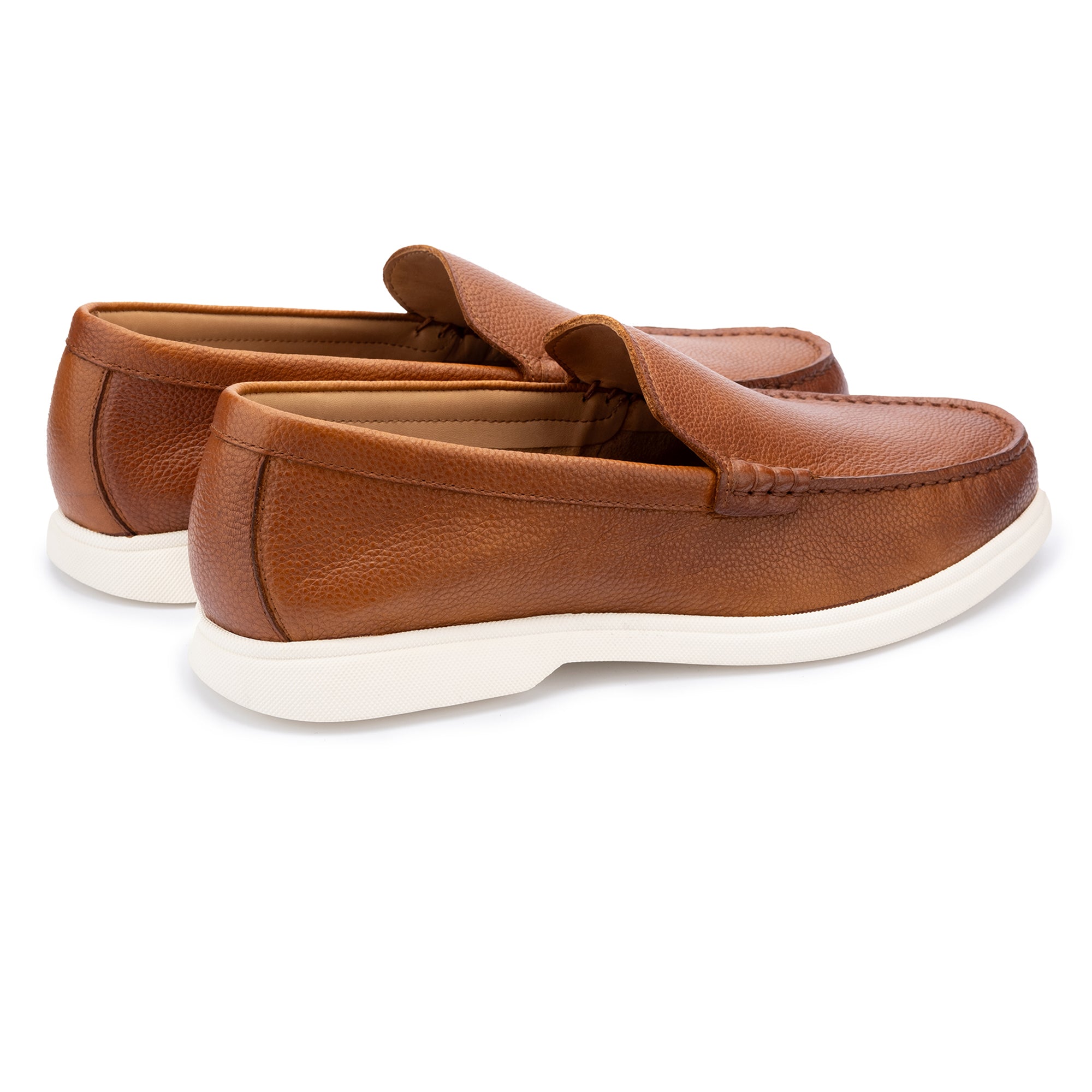
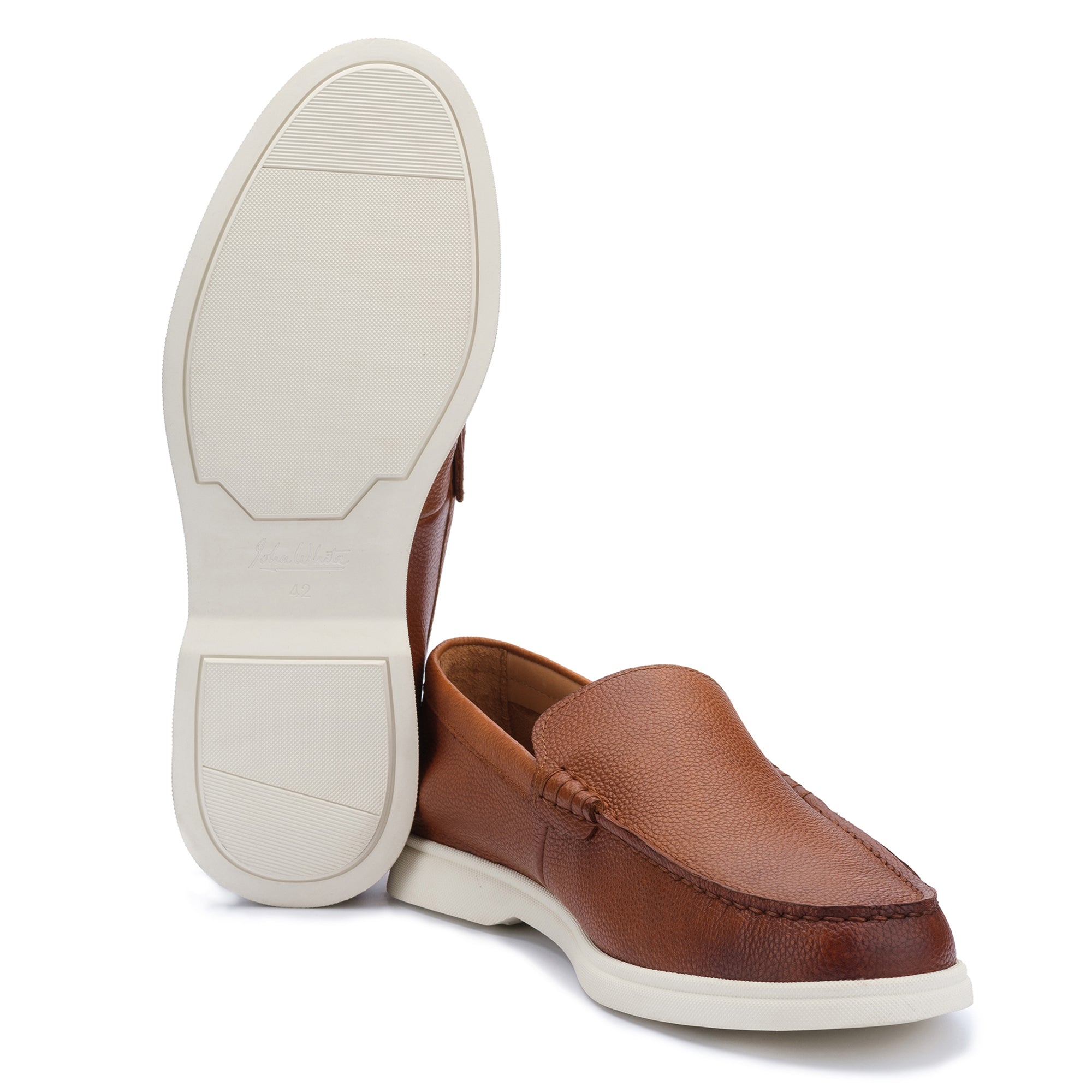
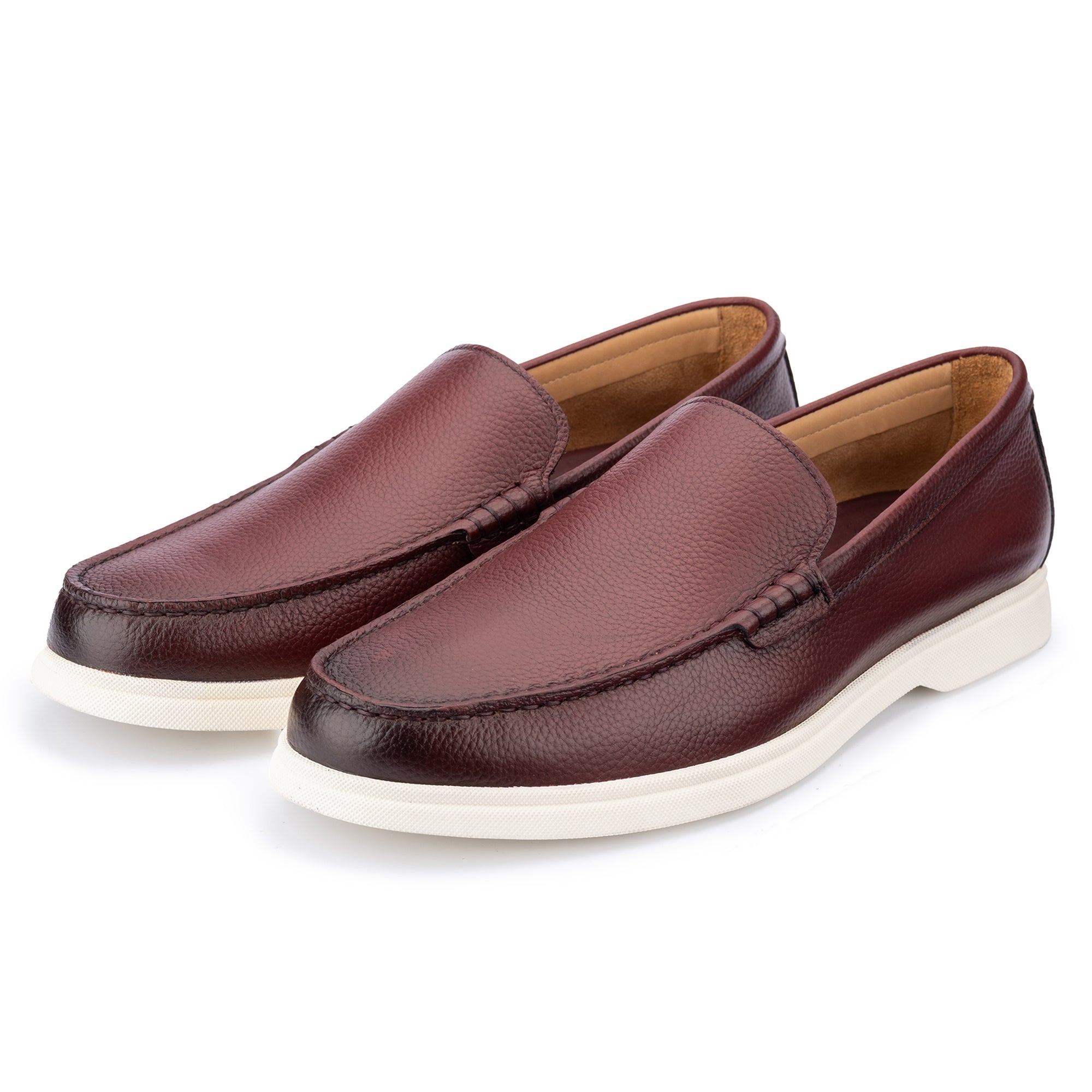
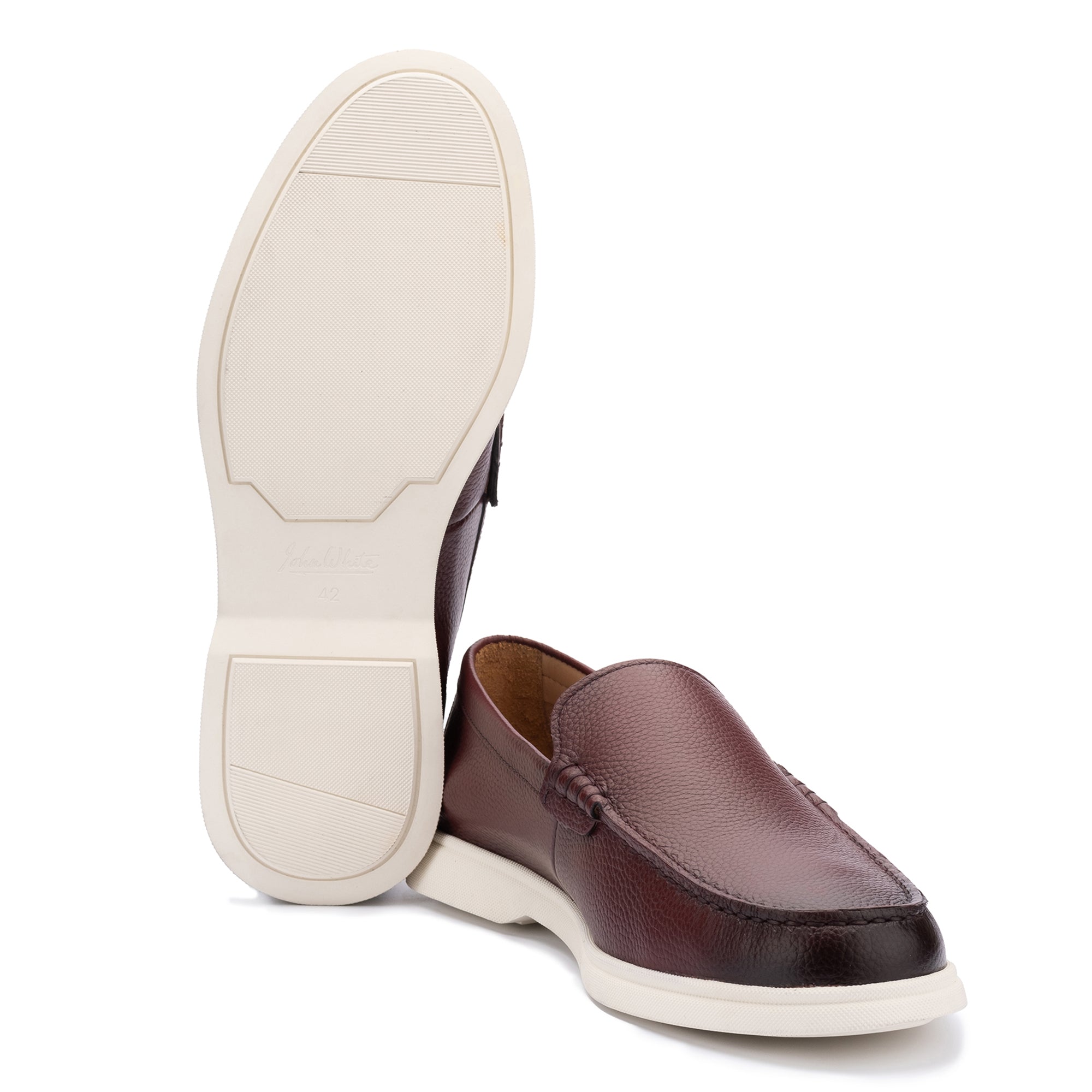
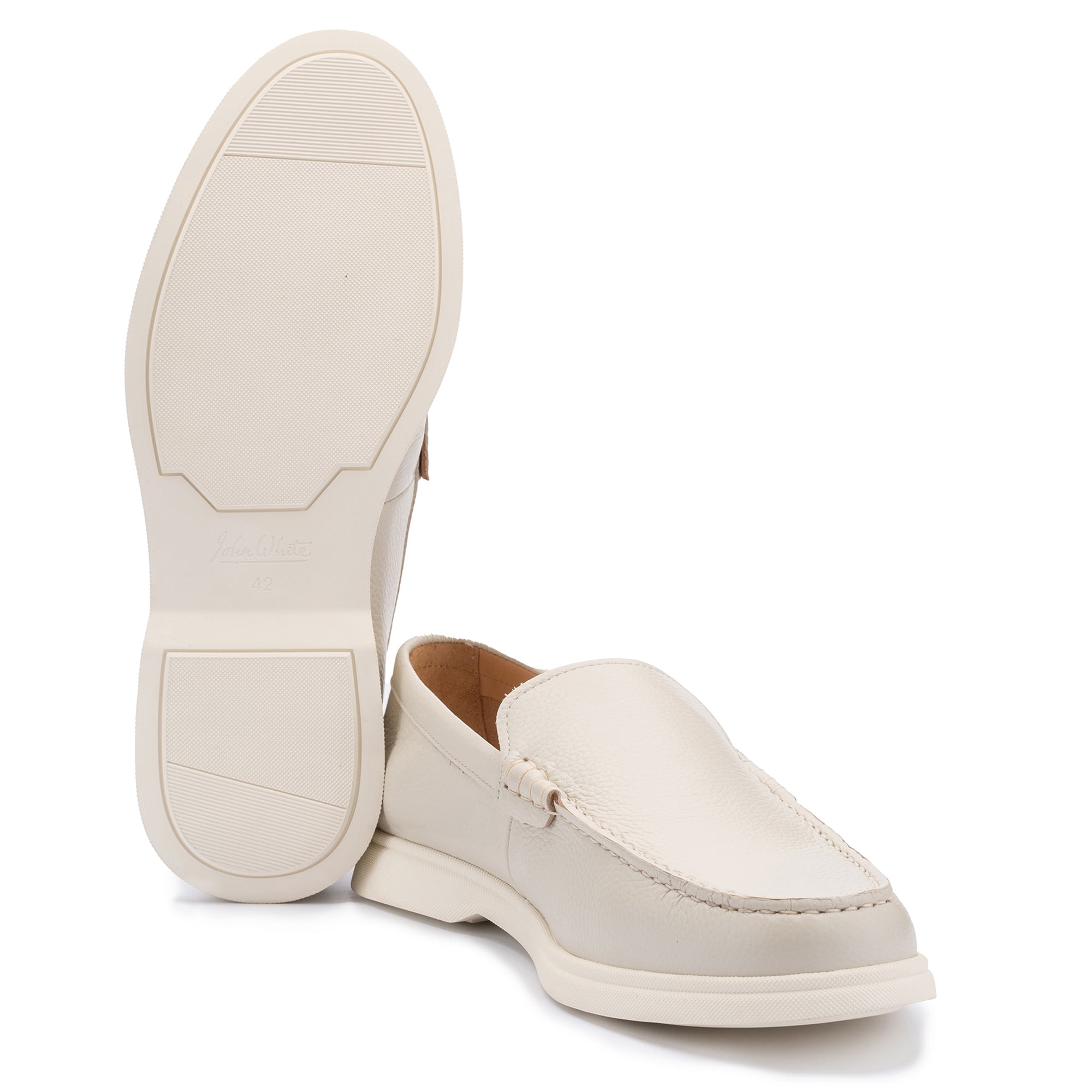
The Ethan Plain Tumbled Grain Loafer uses this construction across all five colourways — Brown, Navy, Pearl, Tan, and Wine. The pebbled surface is more forgiving in British street conditions while retaining the breathability and conditioning response of genuine full-grain leather. The Wine colourway, in particular, develops a notably rich surface character over time, deepening in areas of natural flex and handling.
Reading the Difference: A Practical Buyer's Test
In a shop, or when considering a shoe online with the product in hand, several quick tests distinguish full-grain from corrected-grain leather reliably.
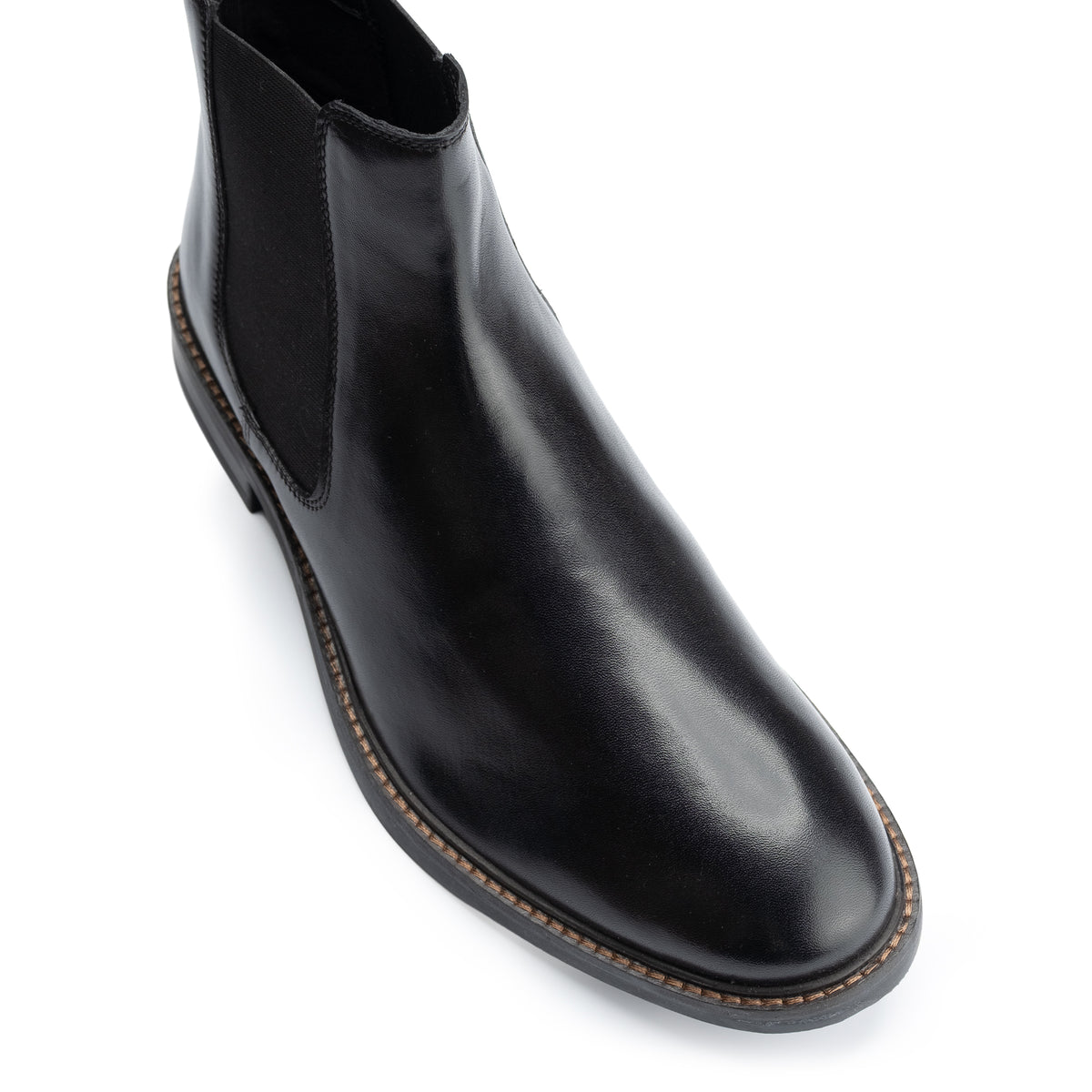
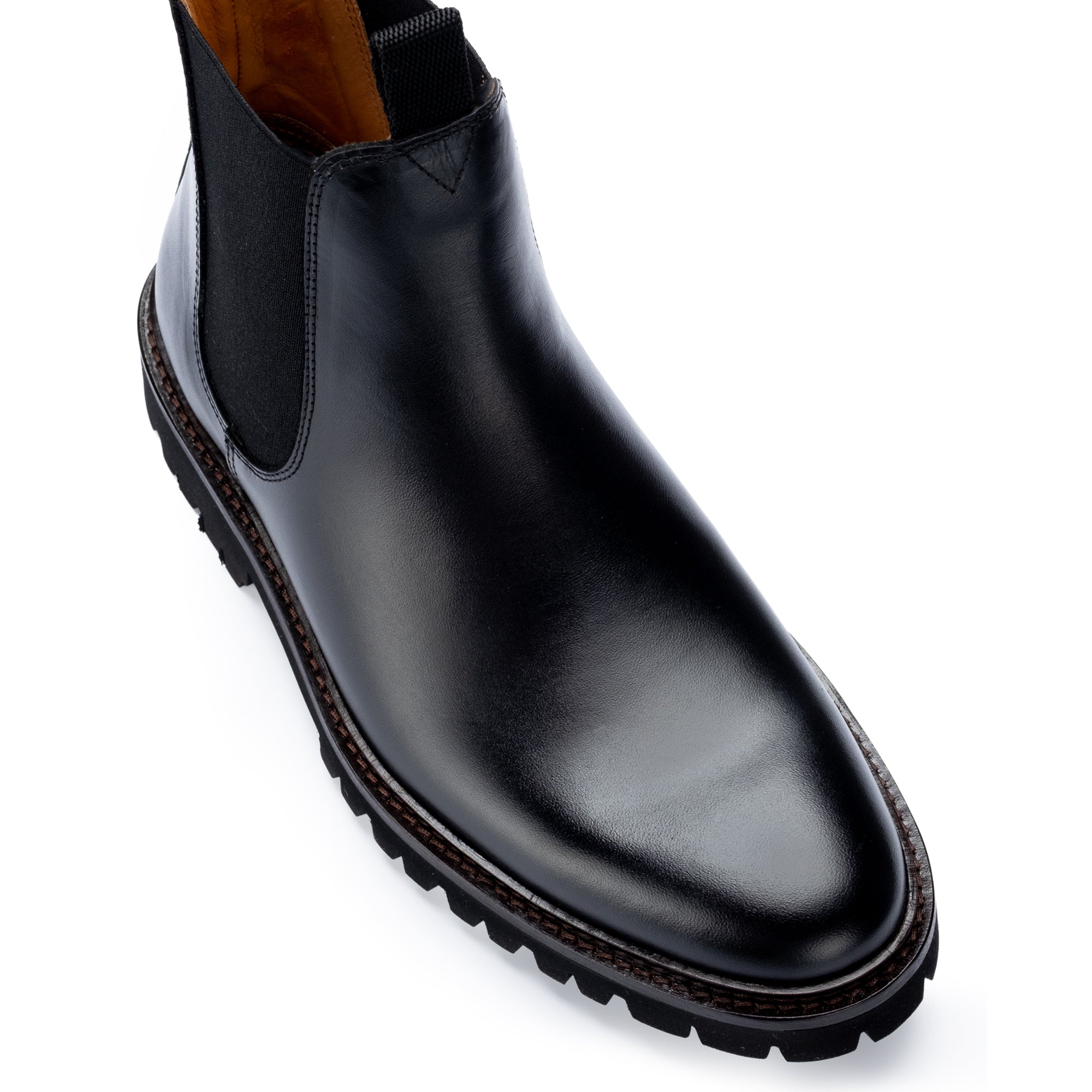
The grain pattern test. Hold the shoe to natural light and look closely at the grain. Natural grain shows variation — the pattern shifts subtly in density and direction across the toe cap, vamp, and heel. Artificial embossed grain is mechanically regular: the same pattern repeating at even intervals across the entire surface. The difference is visible once you know to look for it.
The flex test. Gently flex the upper between your hands. Full-grain leather creases cleanly, with fine natural wrinkles that follow the grain direction. Heavily coated corrected-grain may show a lighter ring around stress points where the coating starts to separate from the hide beneath — a tell that increases over time with regular wear.
The care language test. A product description that instructs you to "wipe clean with a damp cloth" is almost invariably describing a surface-coated leather. Full-grain leather requires conditioning — wax or cream that the grain absorbs — and this is reflected in honest care guidance. "Polish regularly with a quality wax" is the signal you want.
How British Conditions Favour Full-Grain
The British climate puts specific demands on footwear. Wet pavements, winter salt residue, and central heating that desiccates leather through the colder months — these conditions favour leather that can be conditioned, waterproofed, and recovered rather than leather that depends on a surface coating.
Full-grain leather absorbs conditioning products — beeswax, lanolin, leather oils — directly into the grain. Regular application maintains flexibility and builds genuine water resistance over time. A shoe conditioned every fortnight for three years is substantially more resistant to moisture than one left untreated, because the oils compound in the grain with each application.
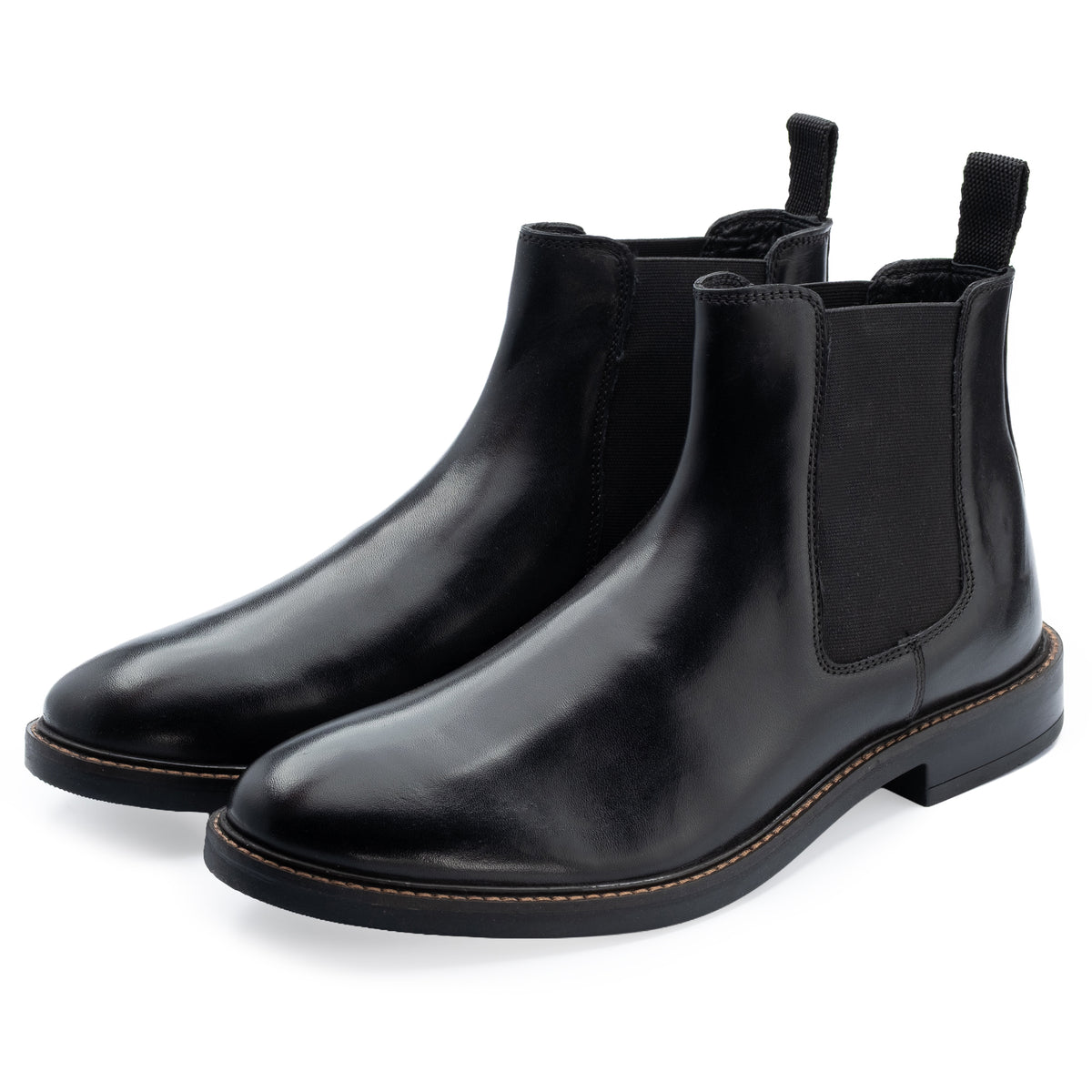
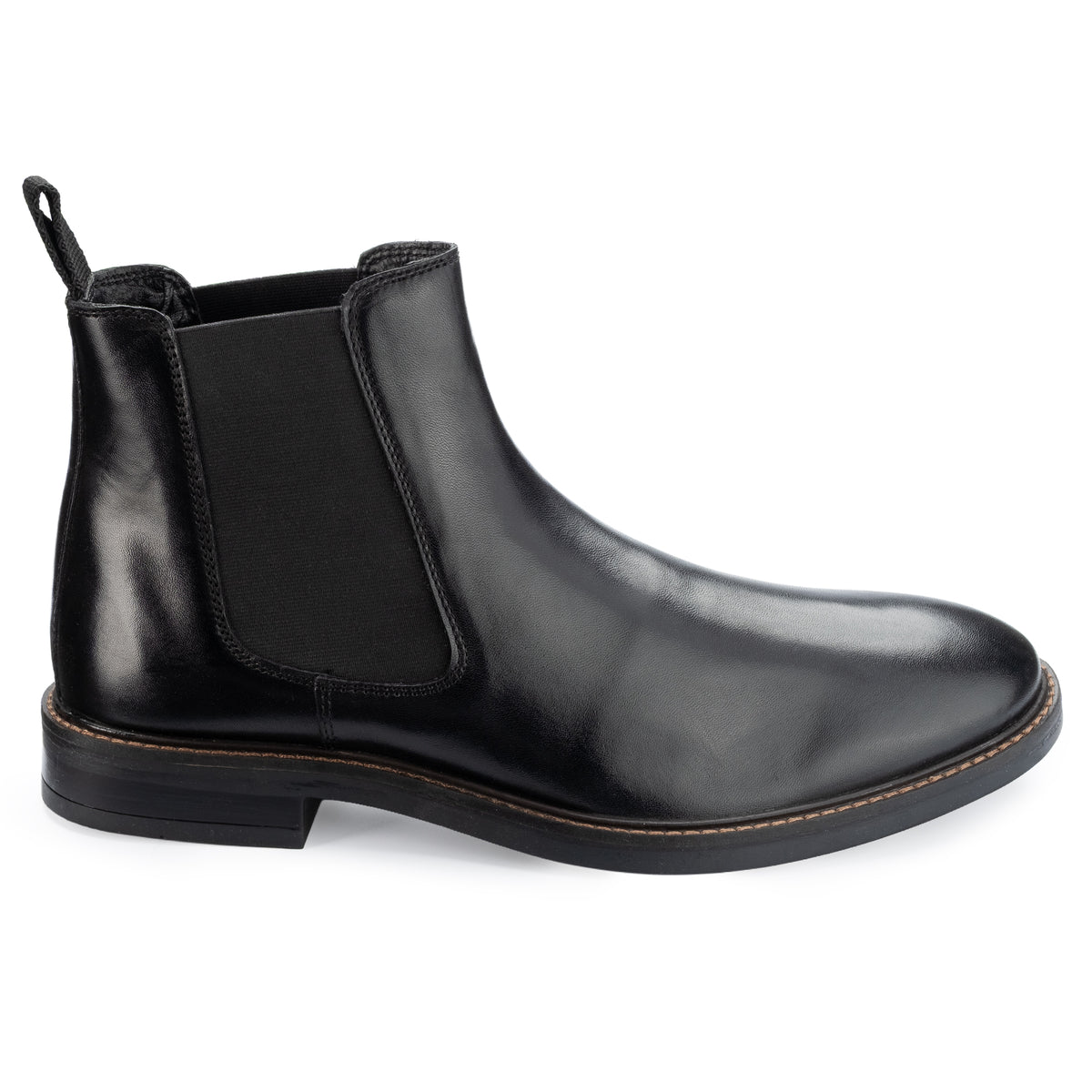
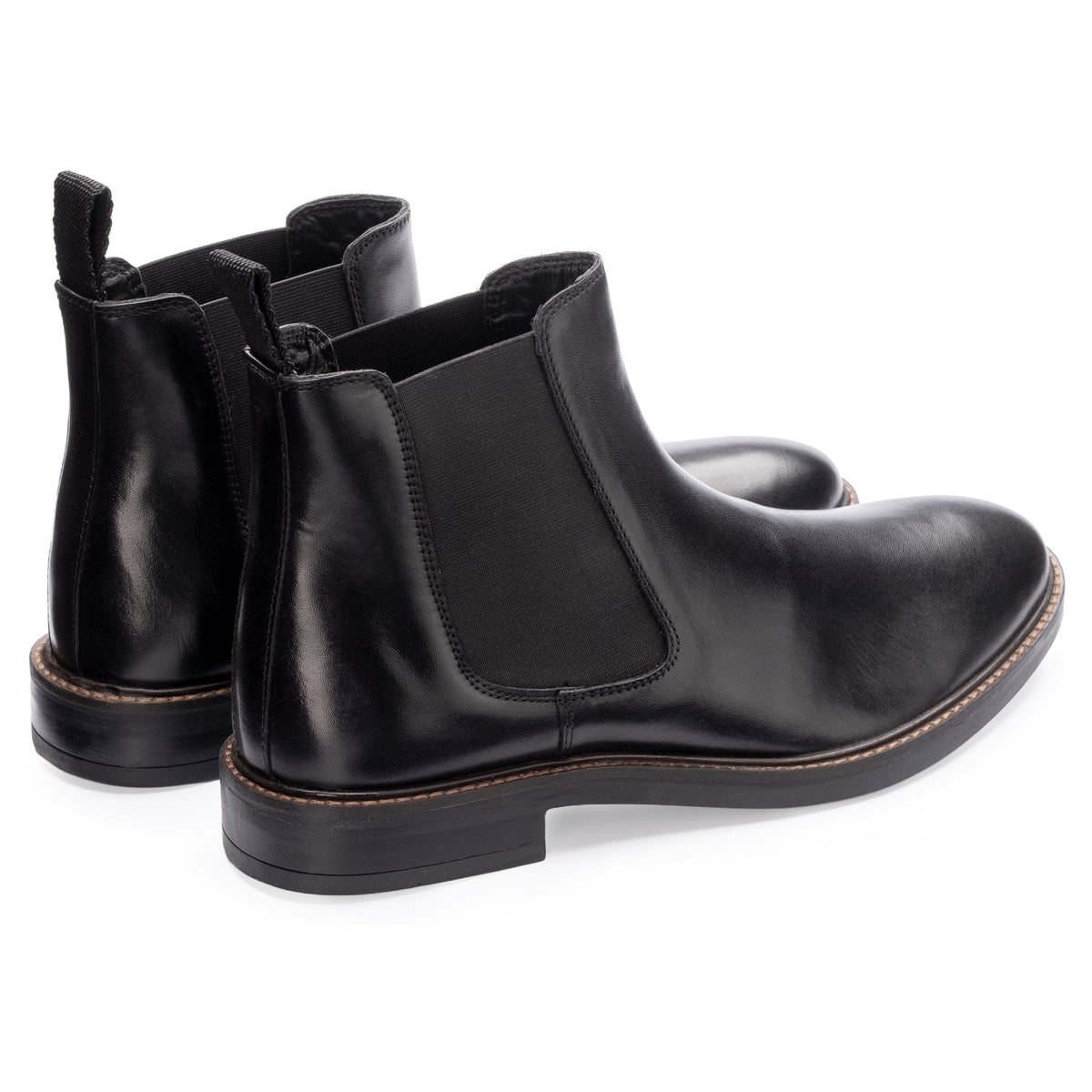
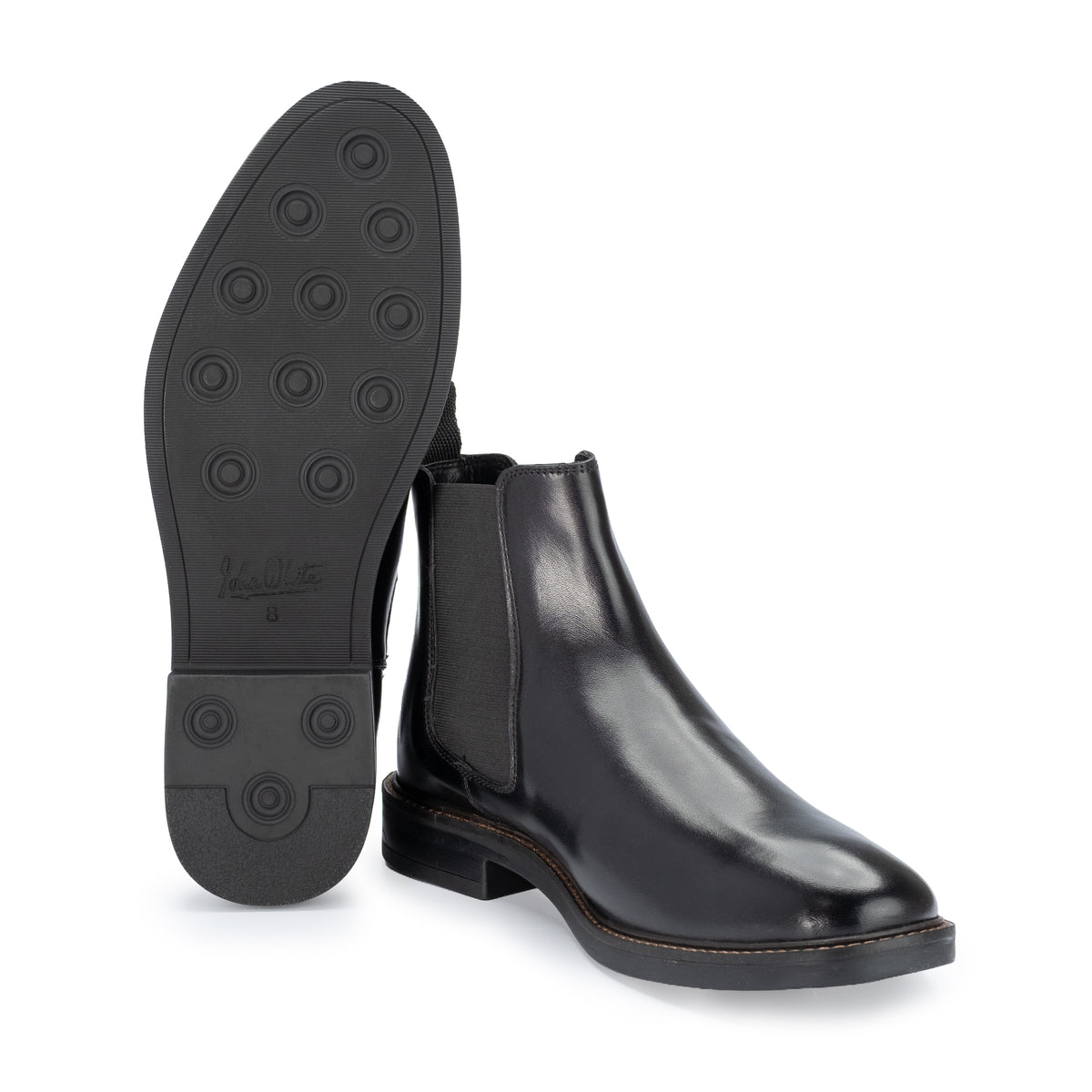
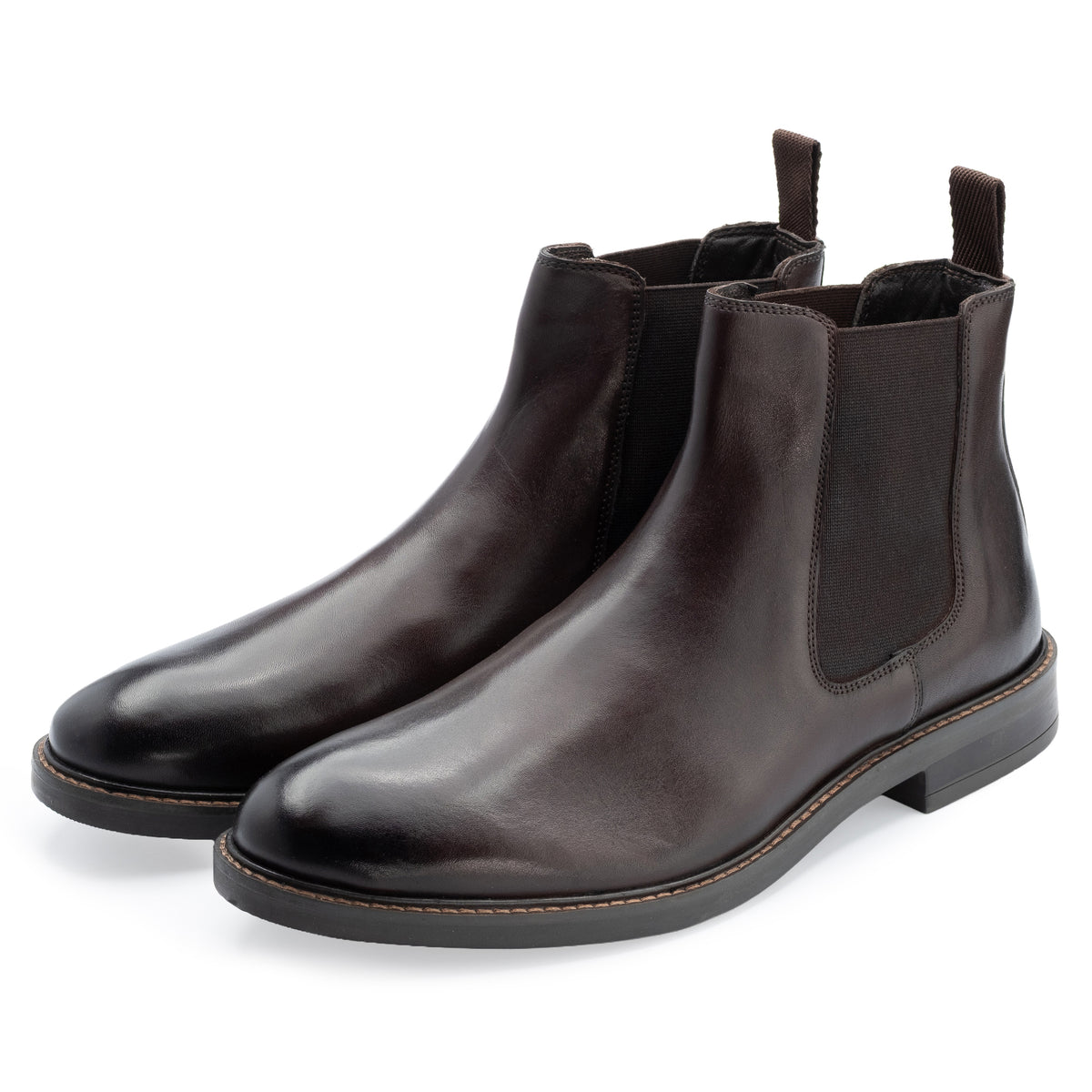
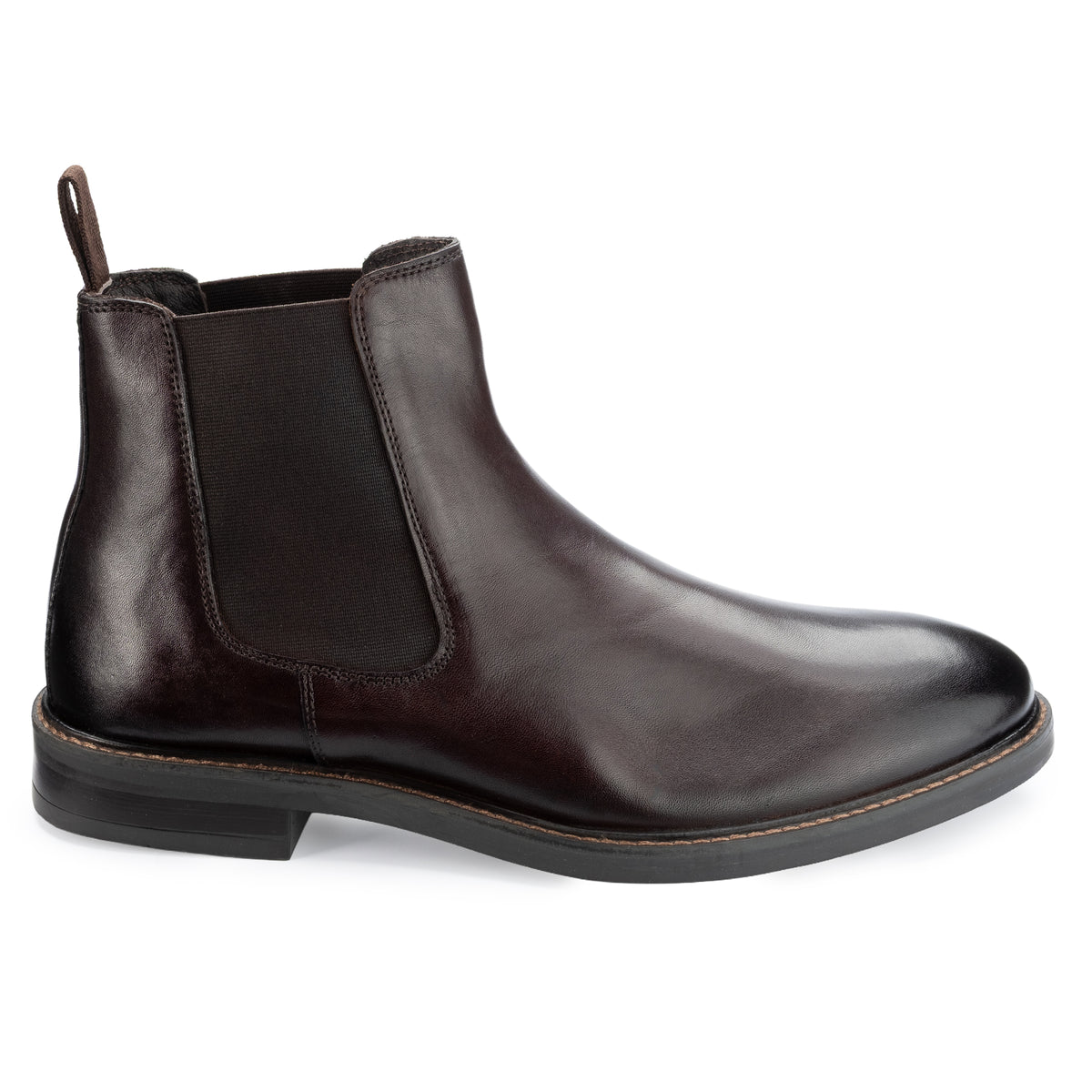
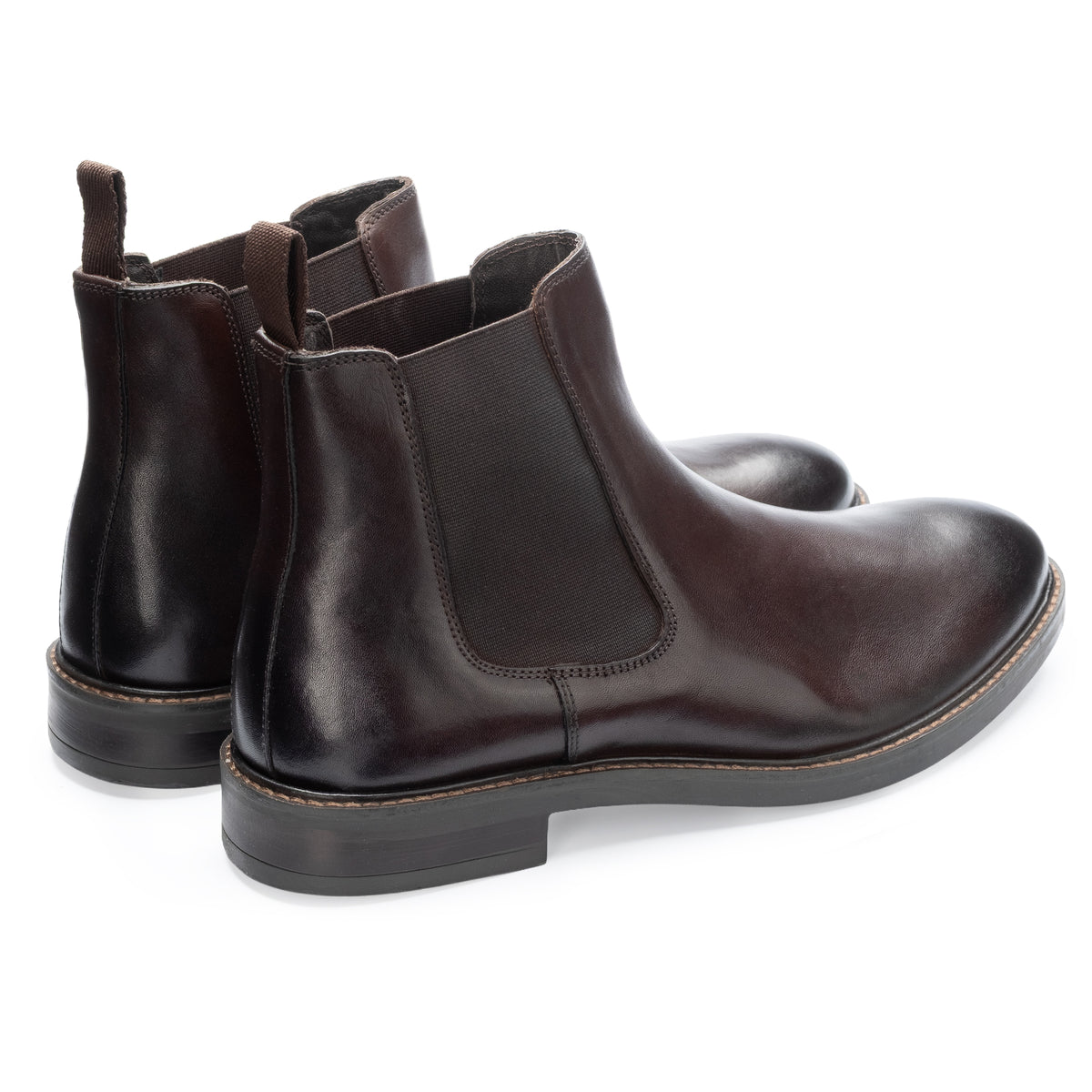
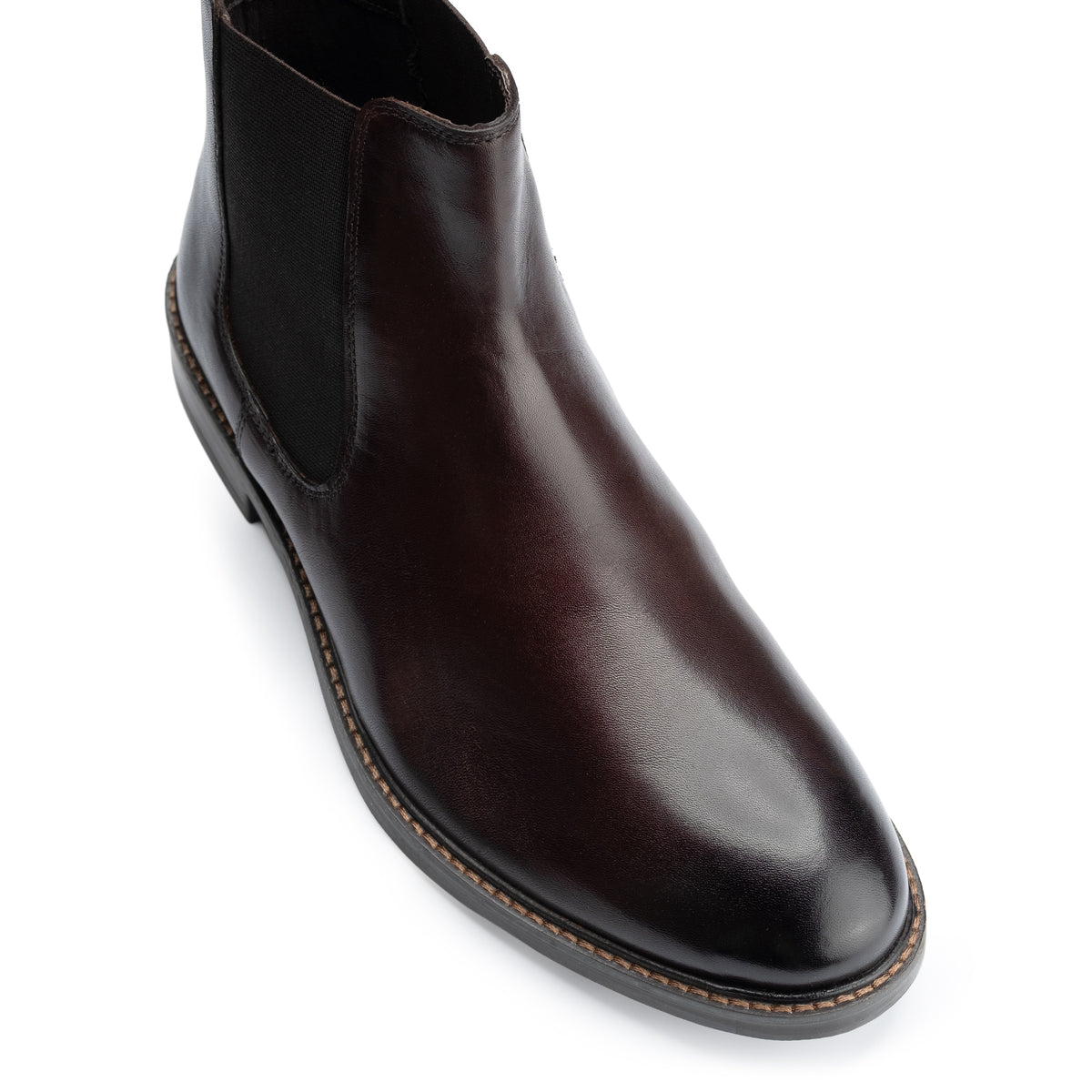
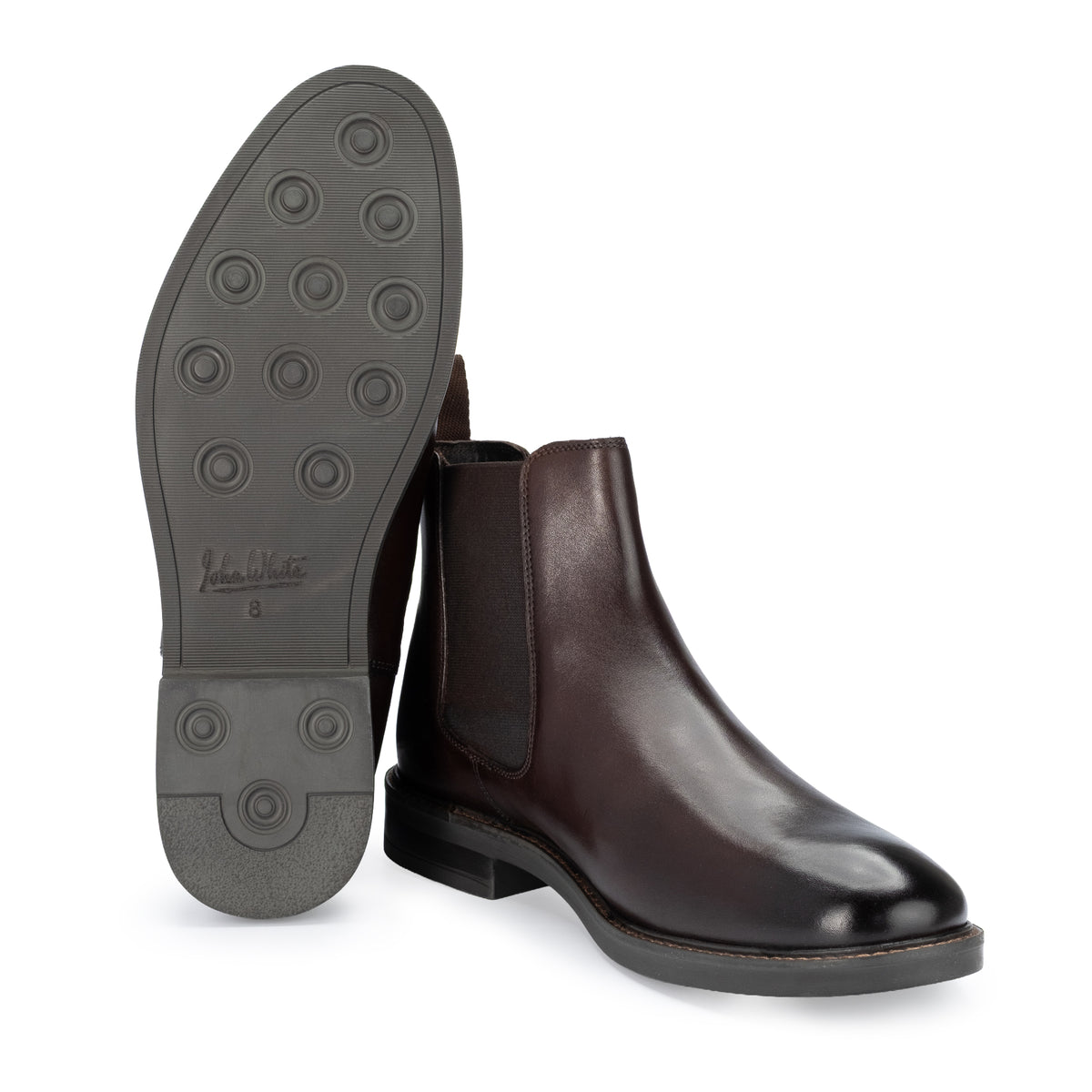
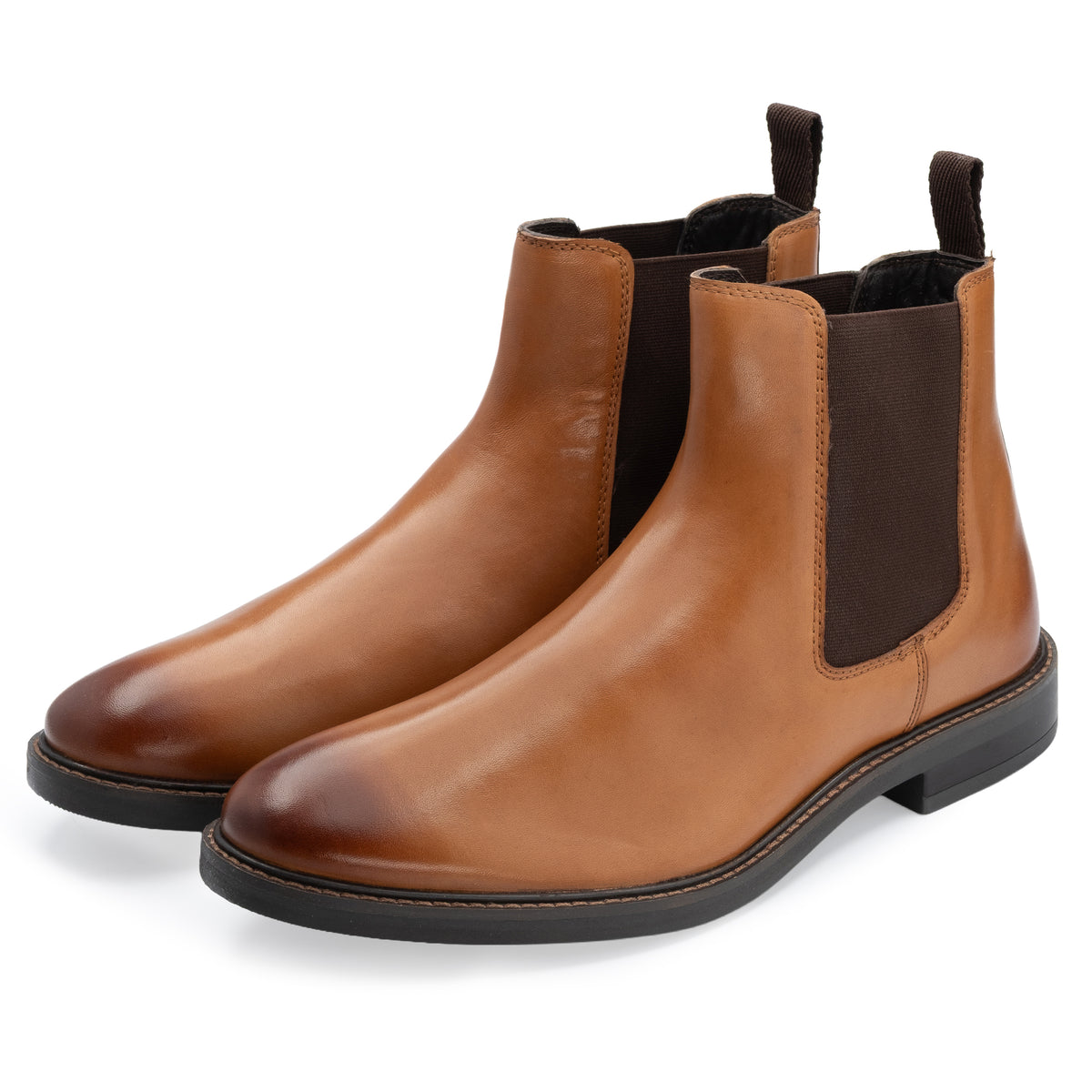
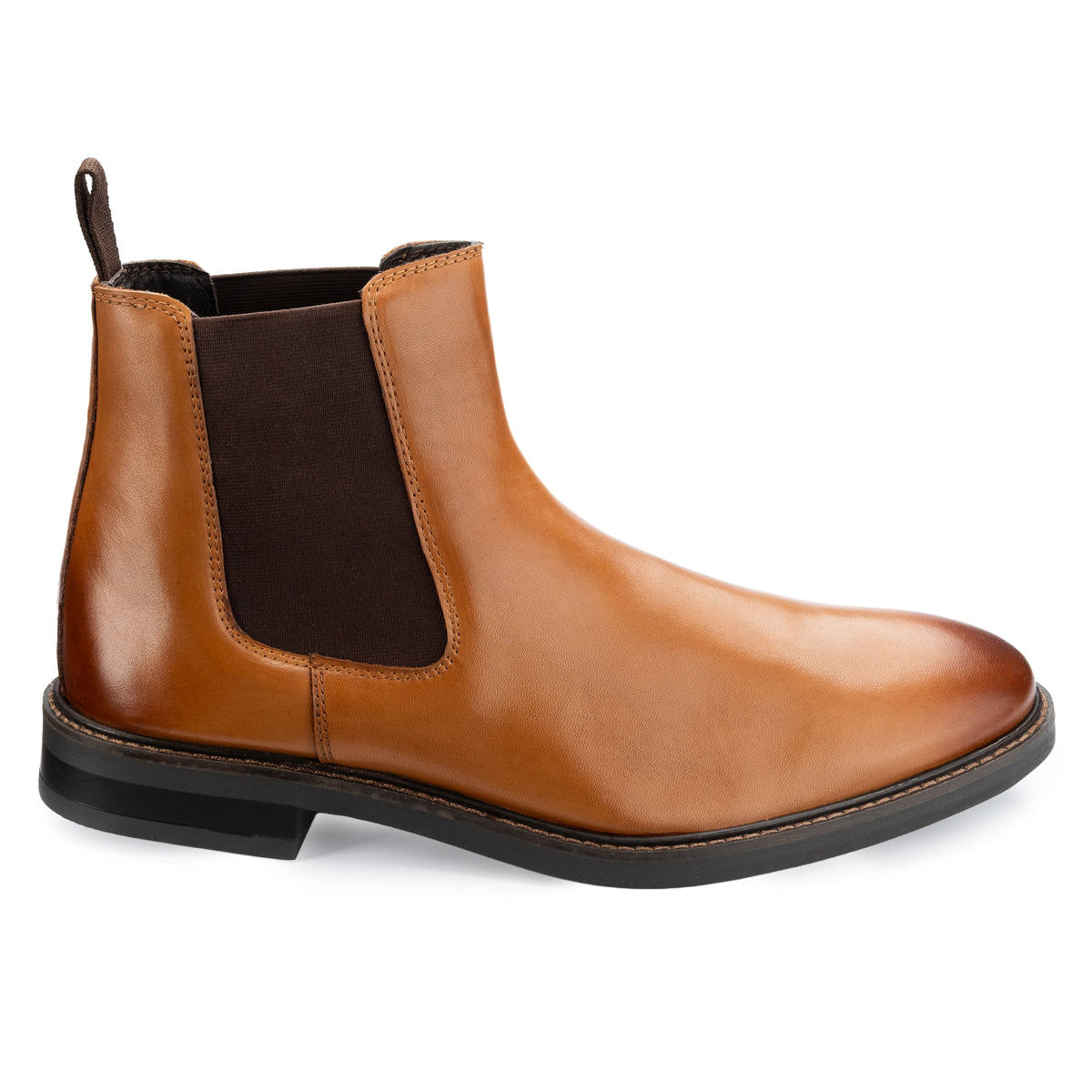
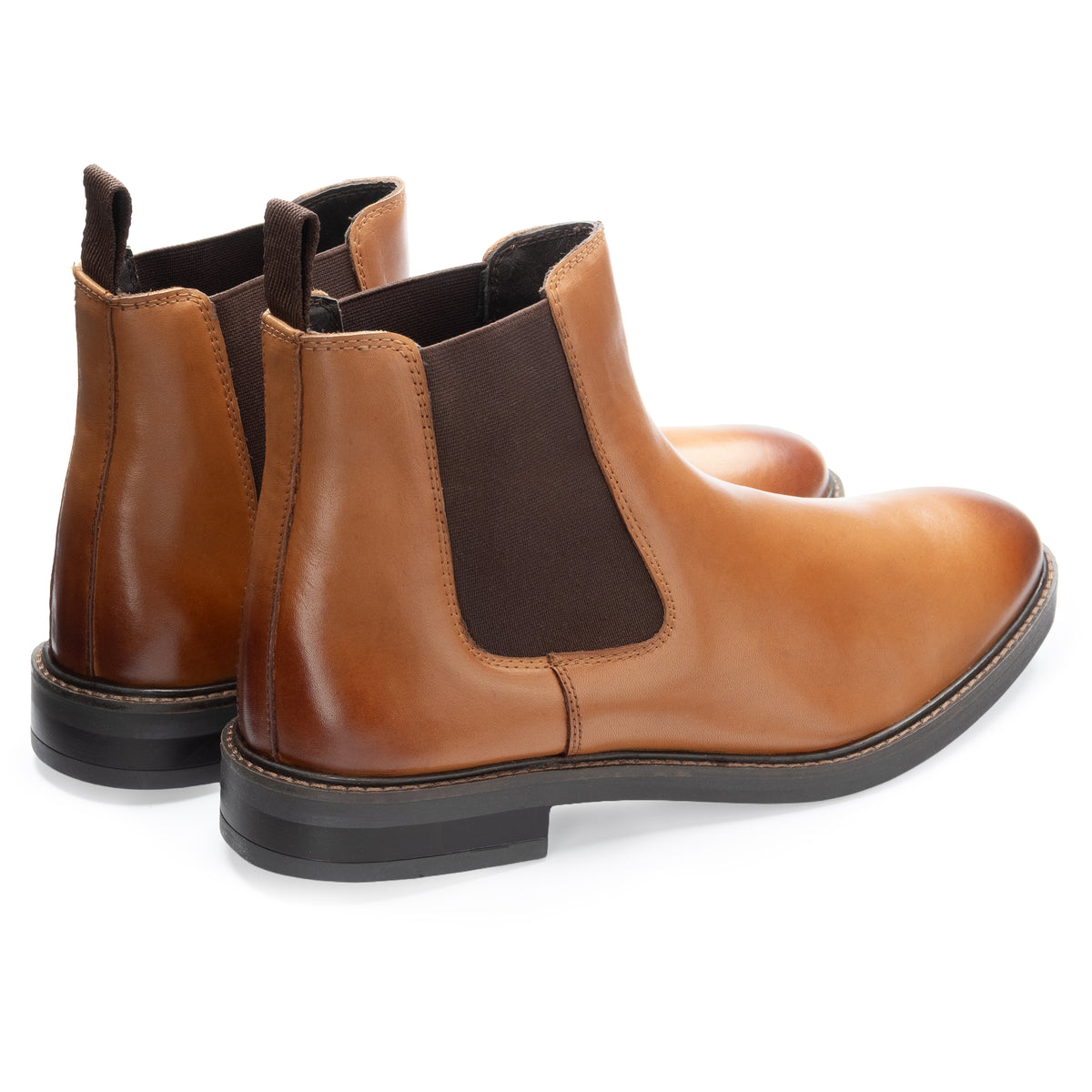
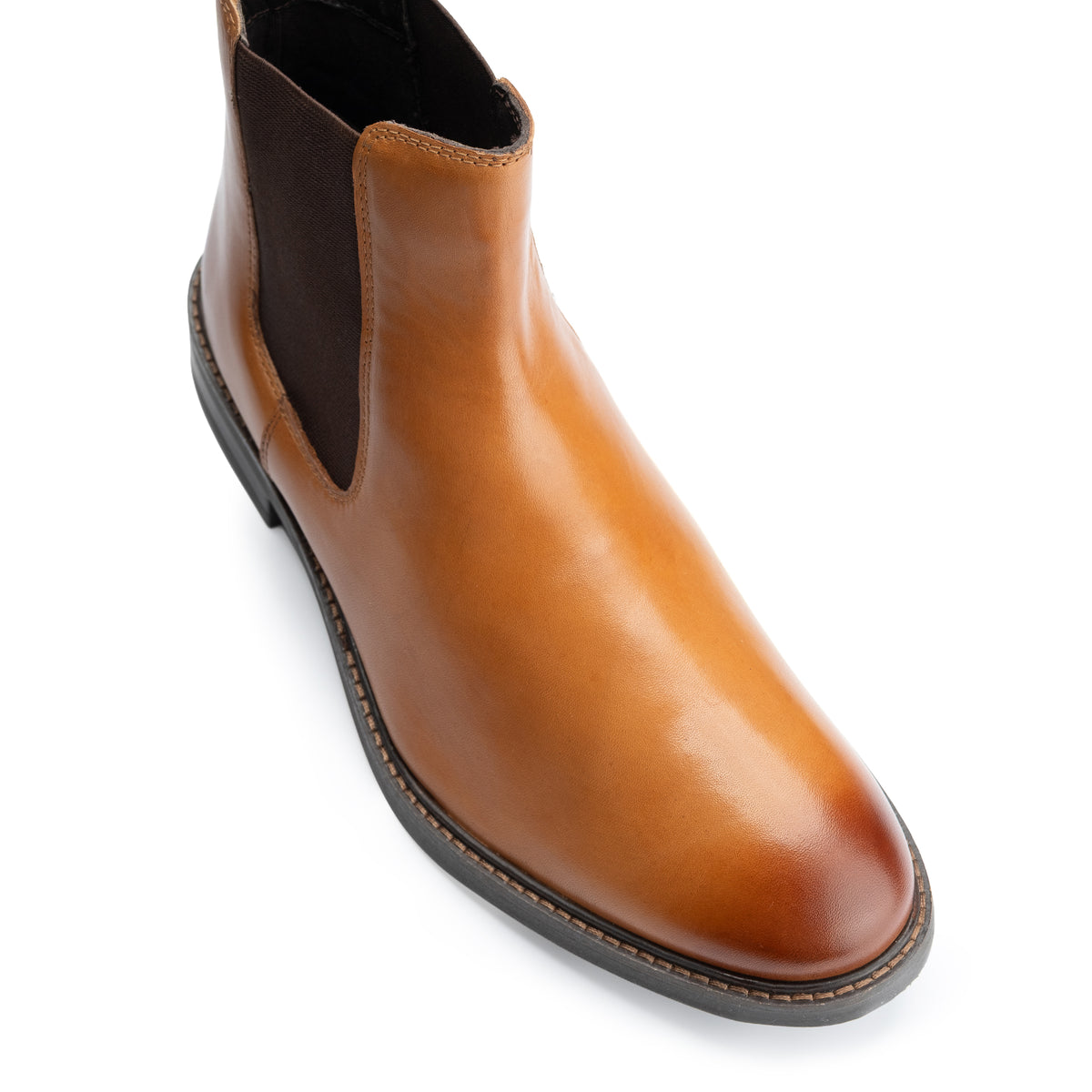
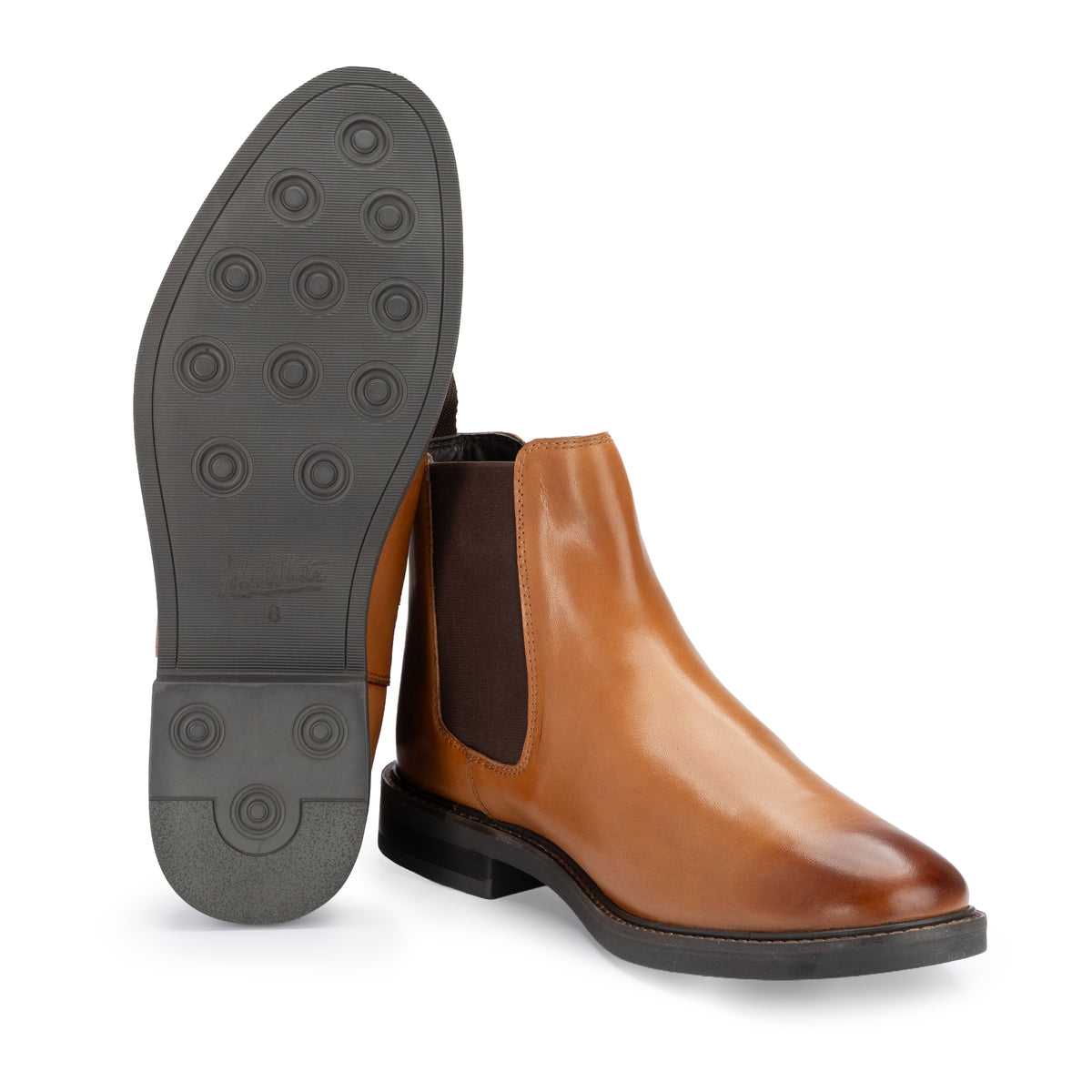
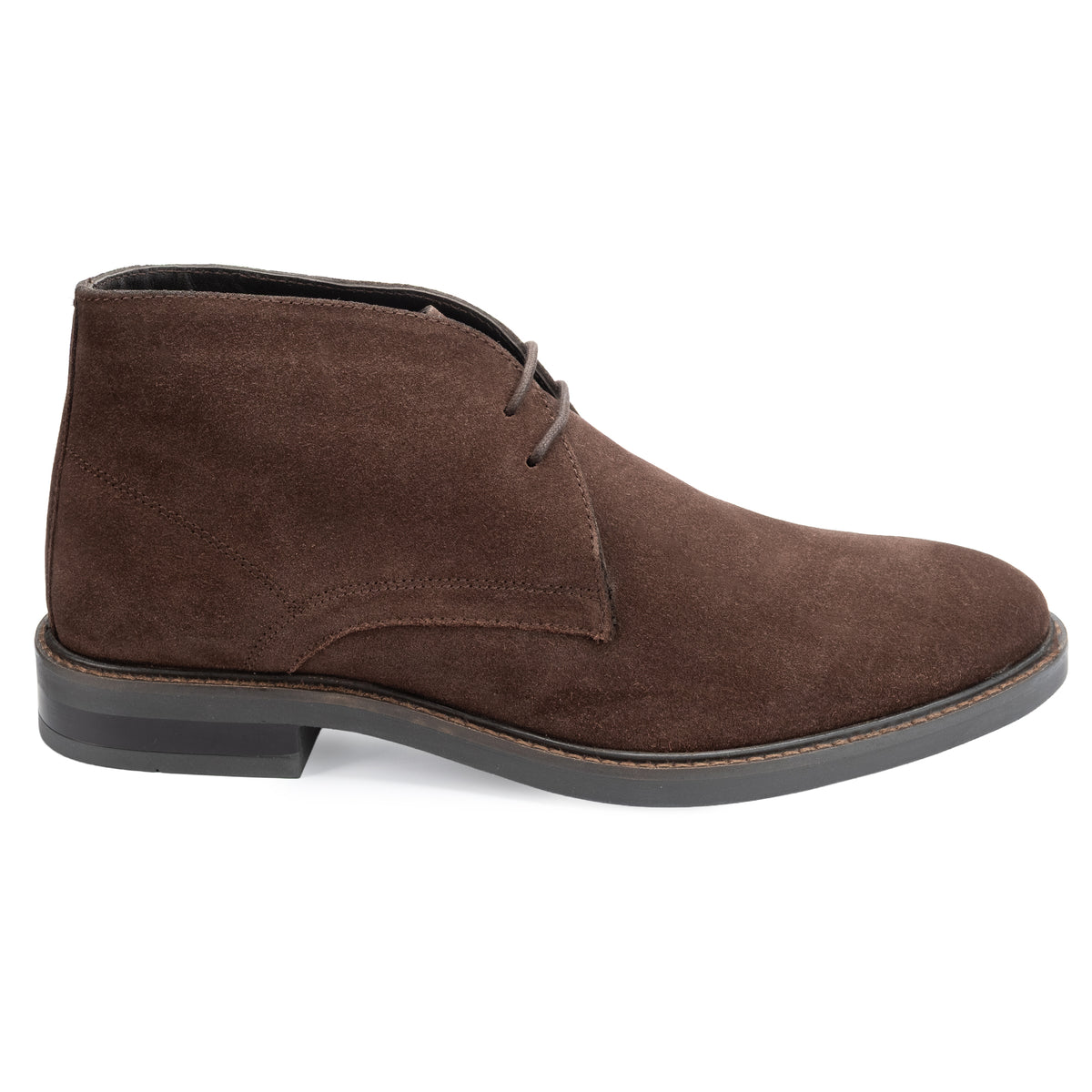
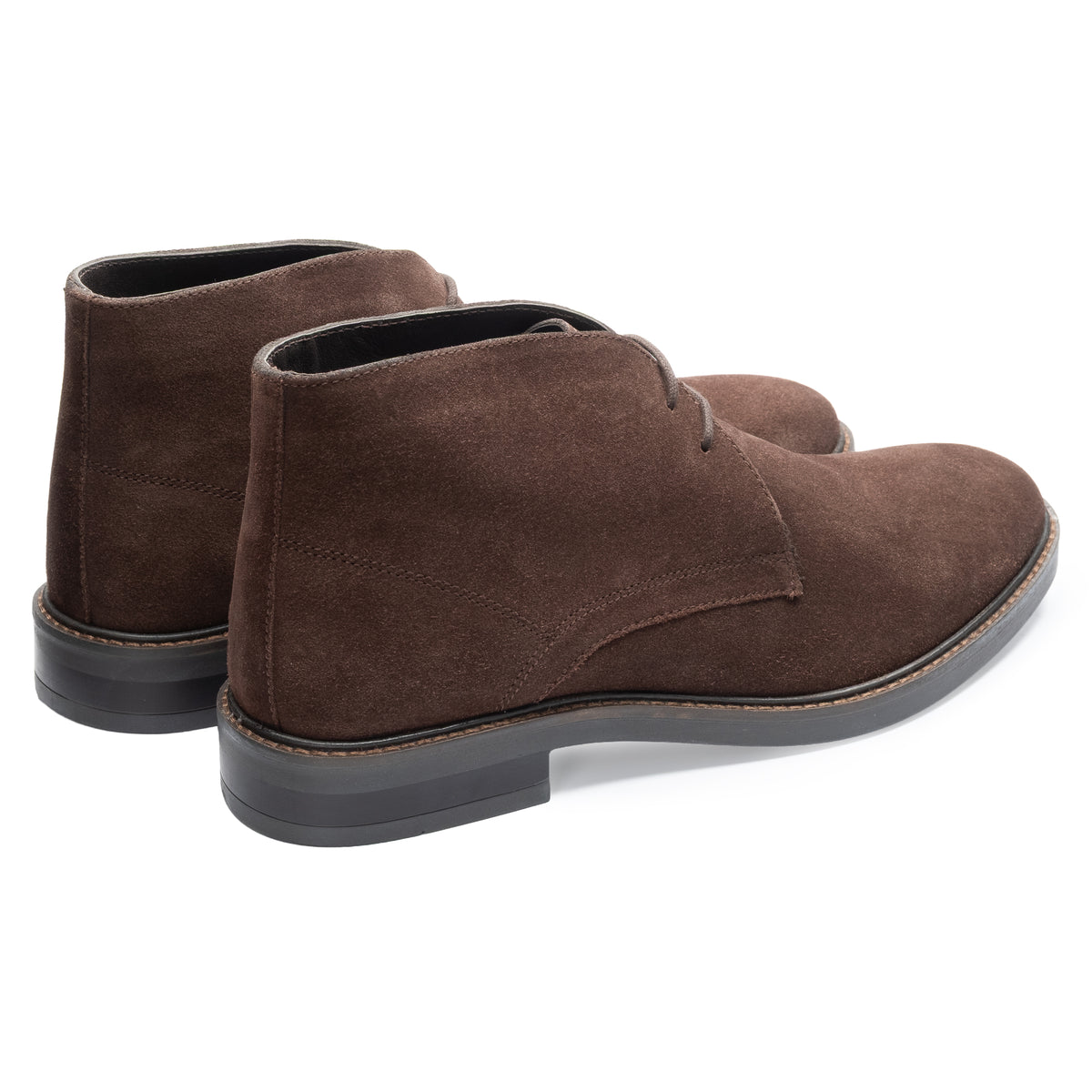
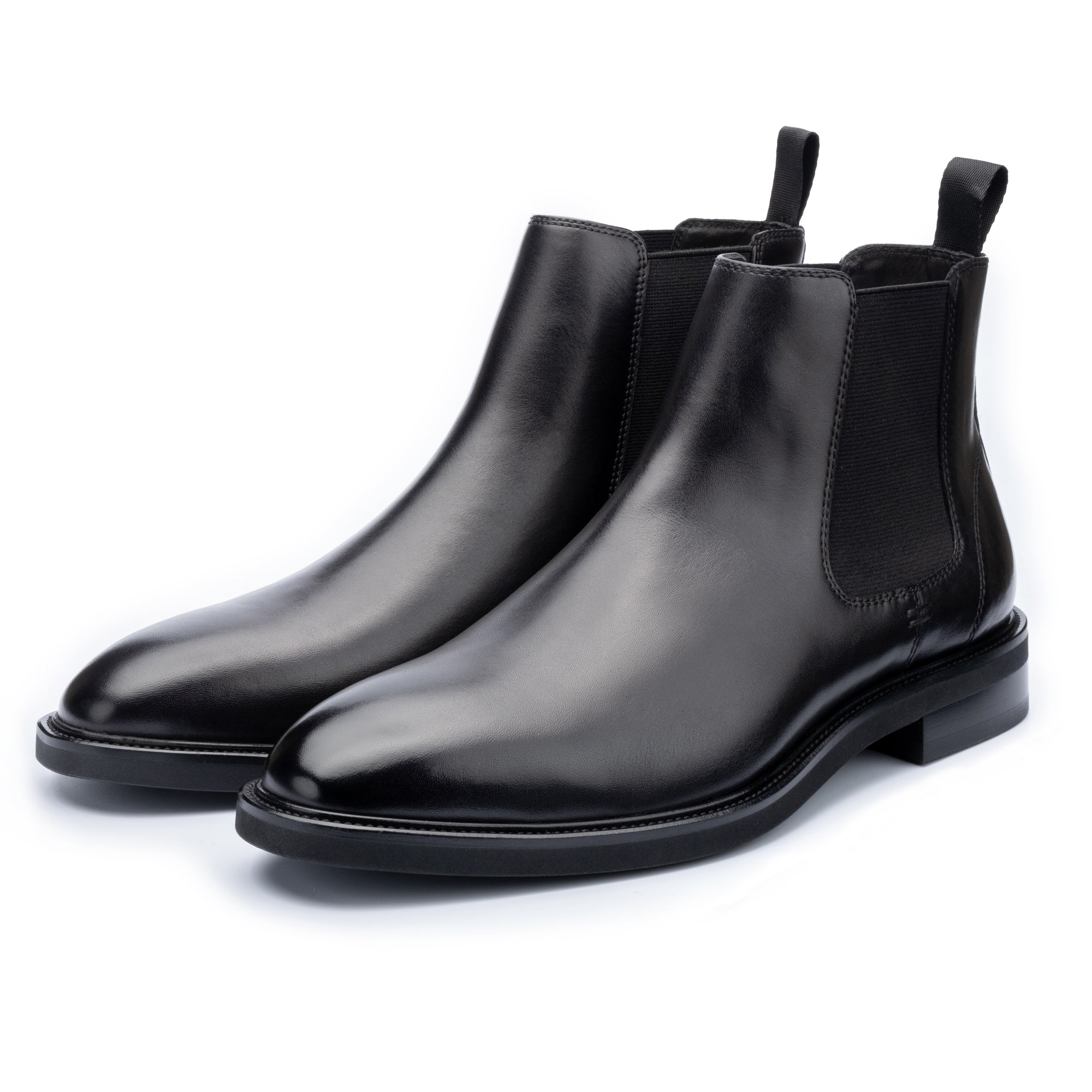
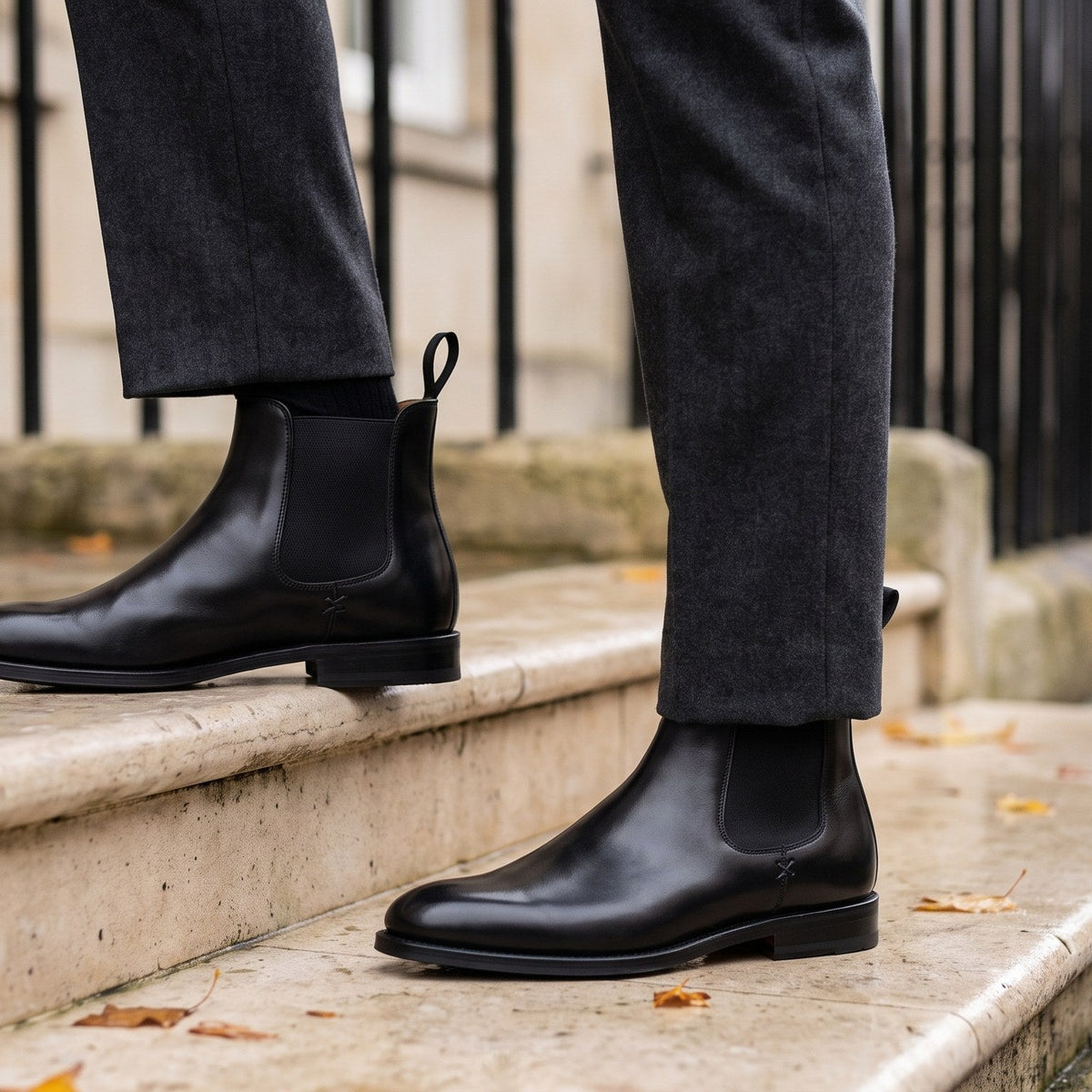
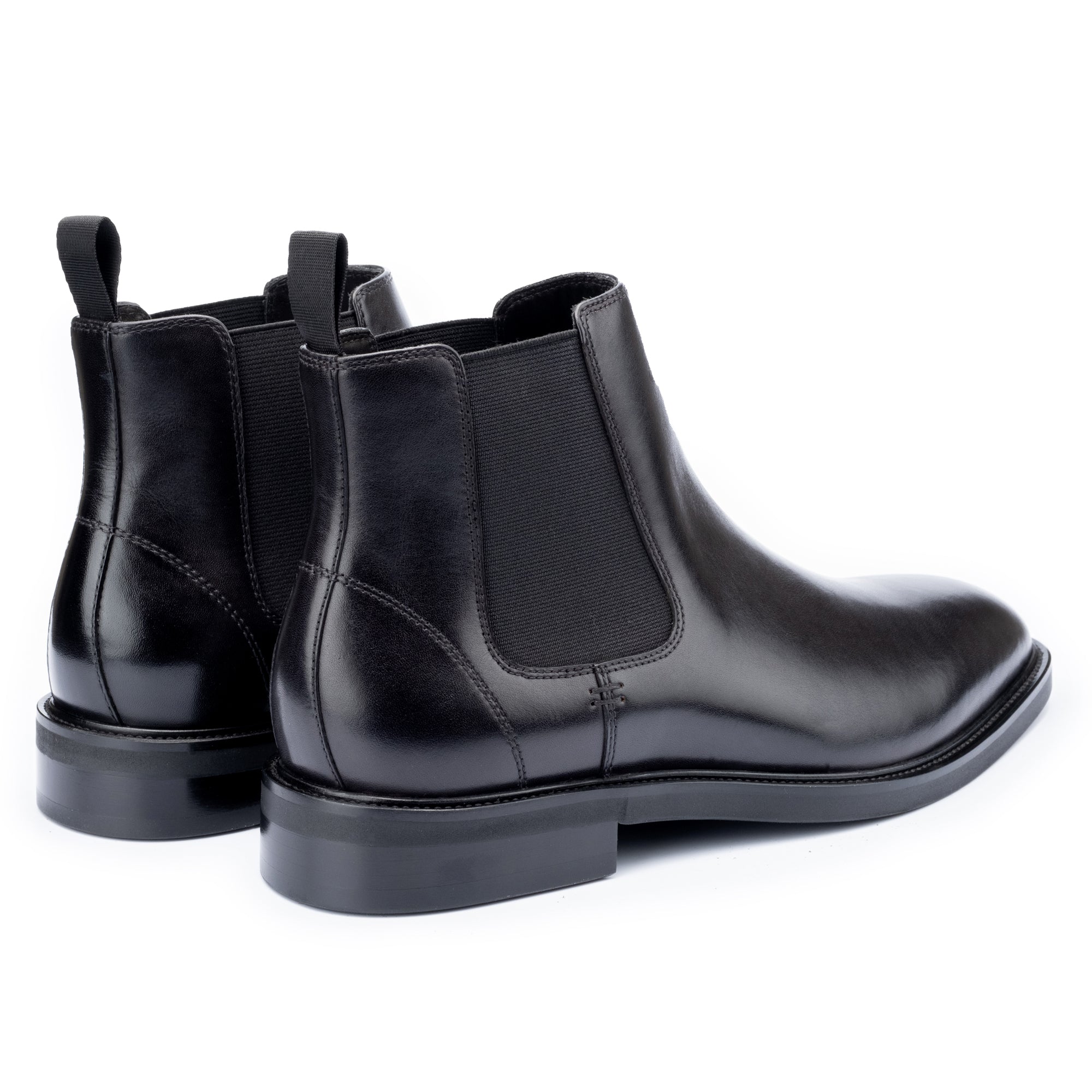
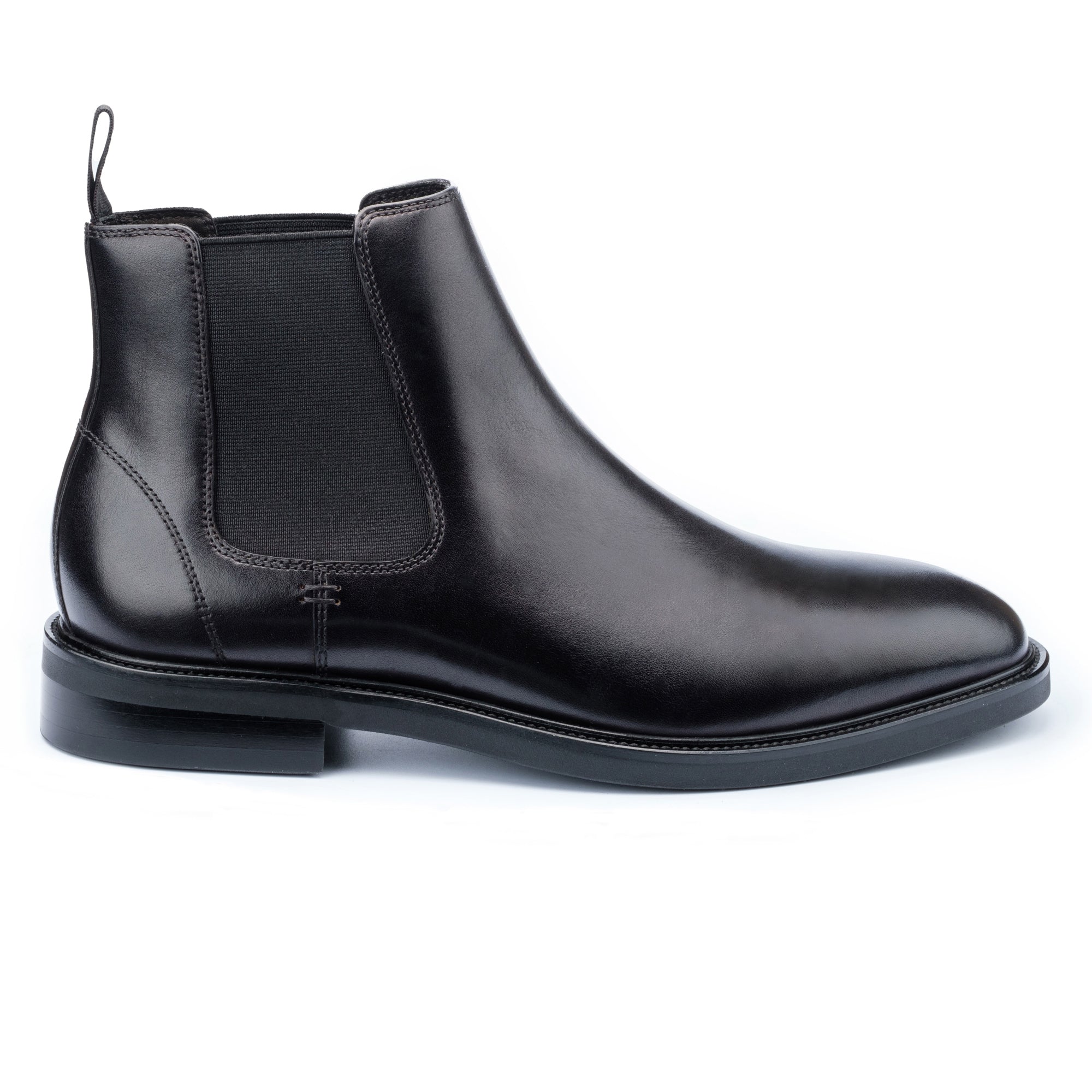
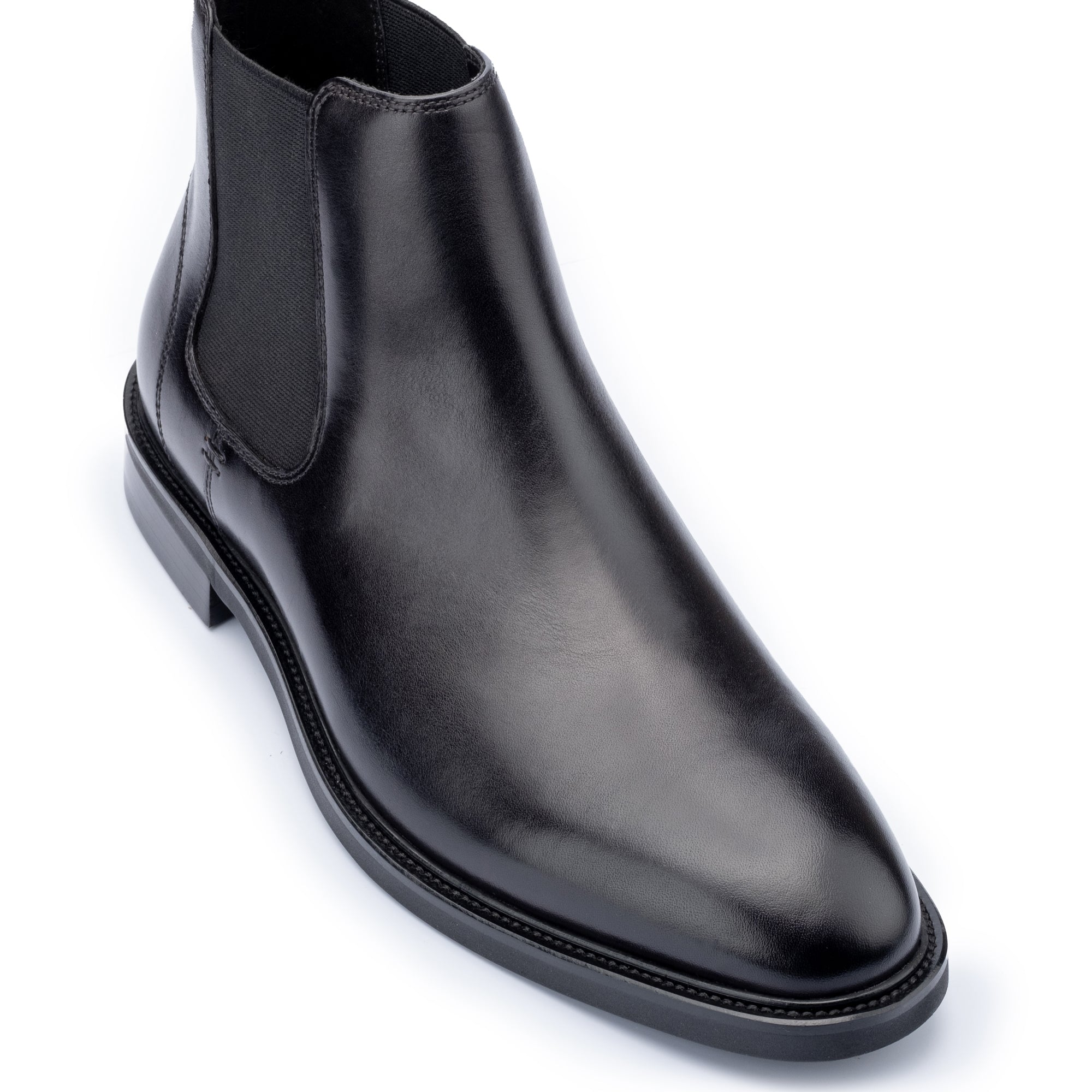
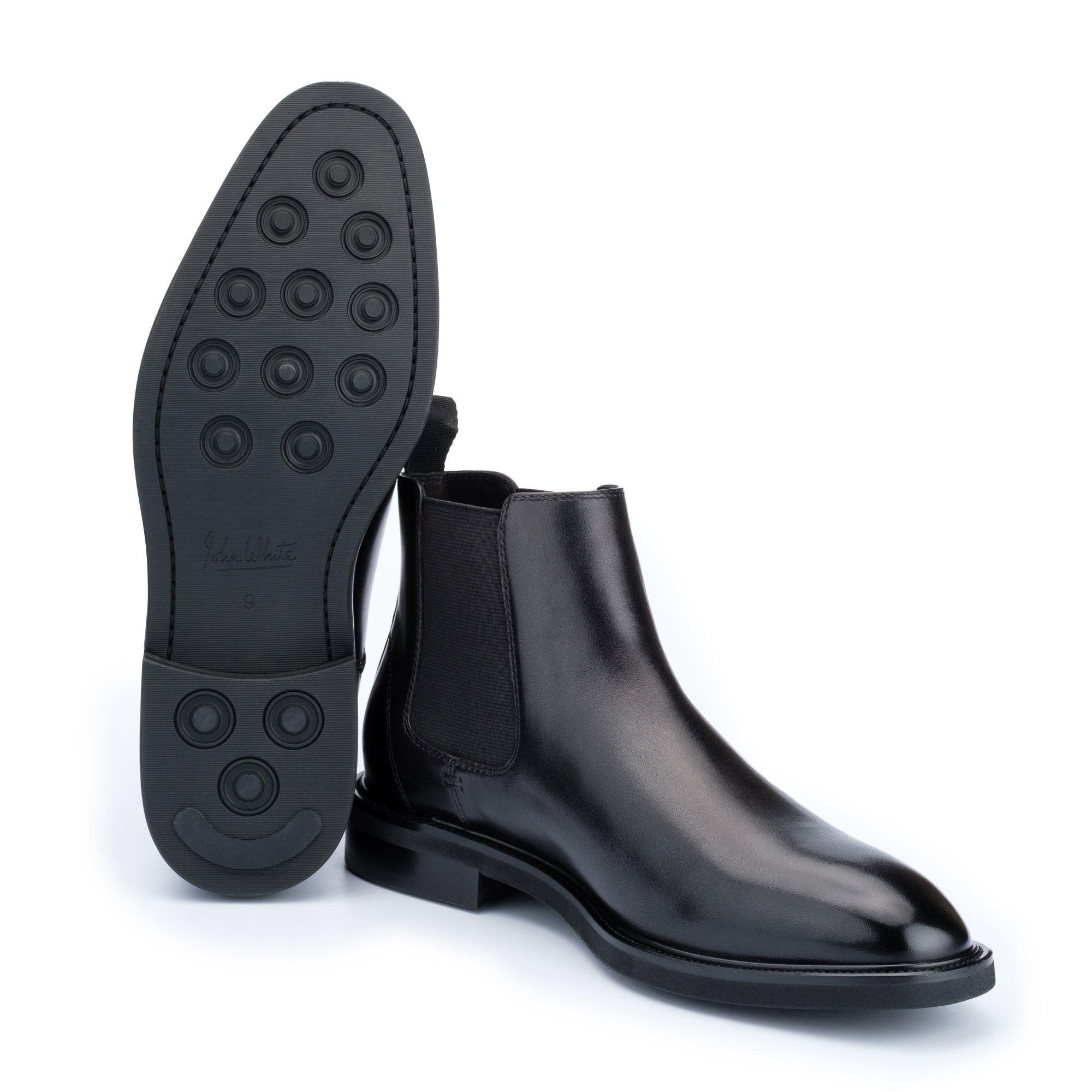
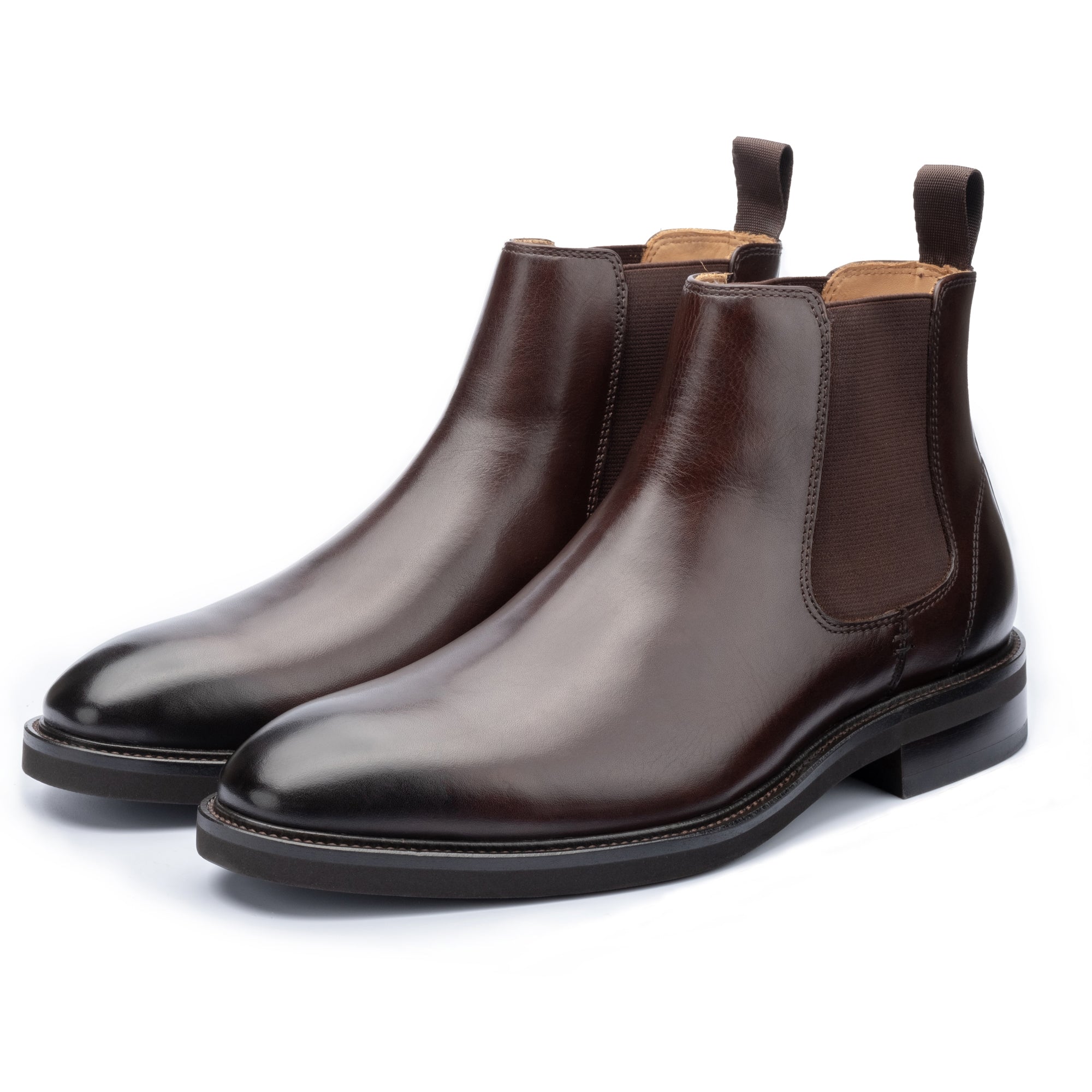
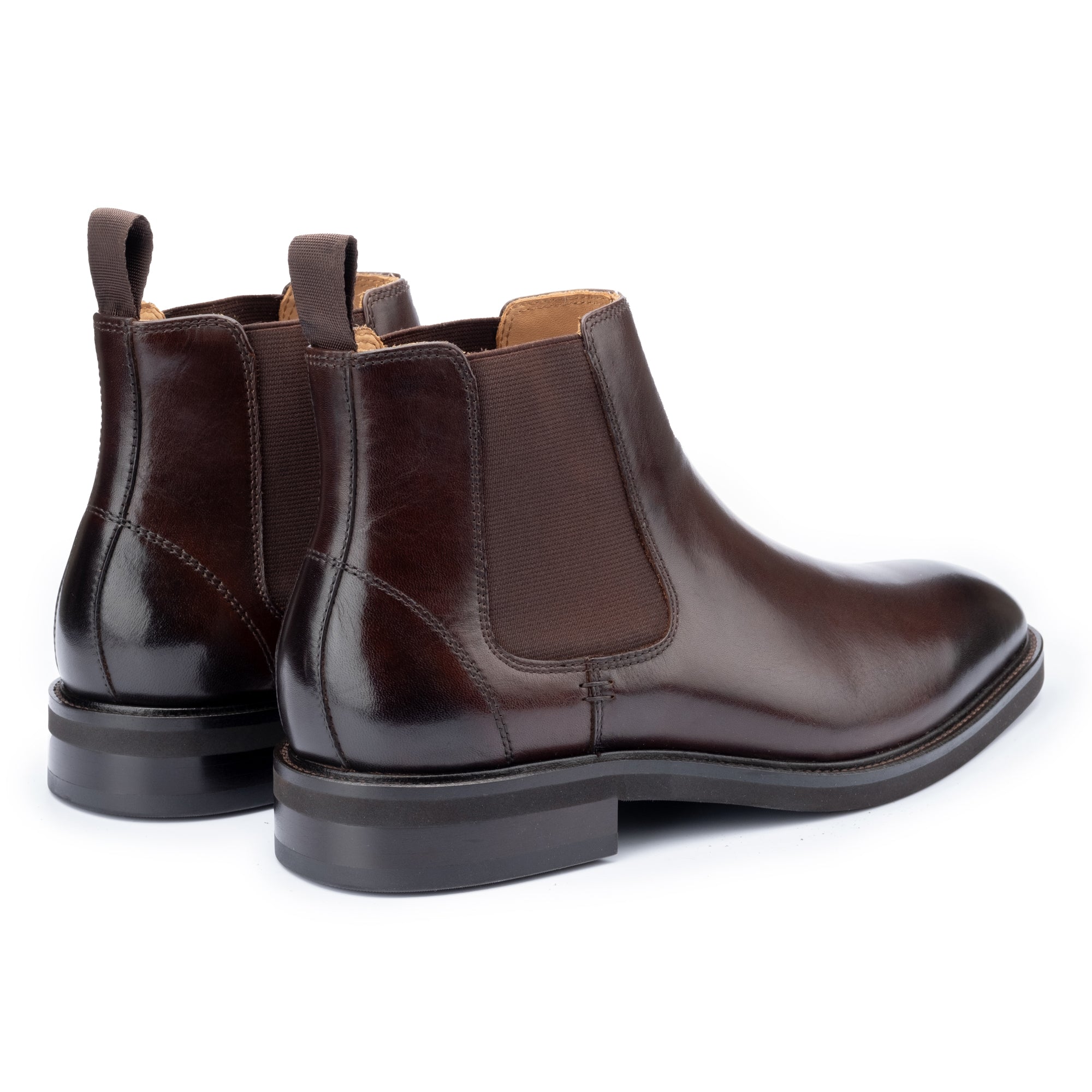
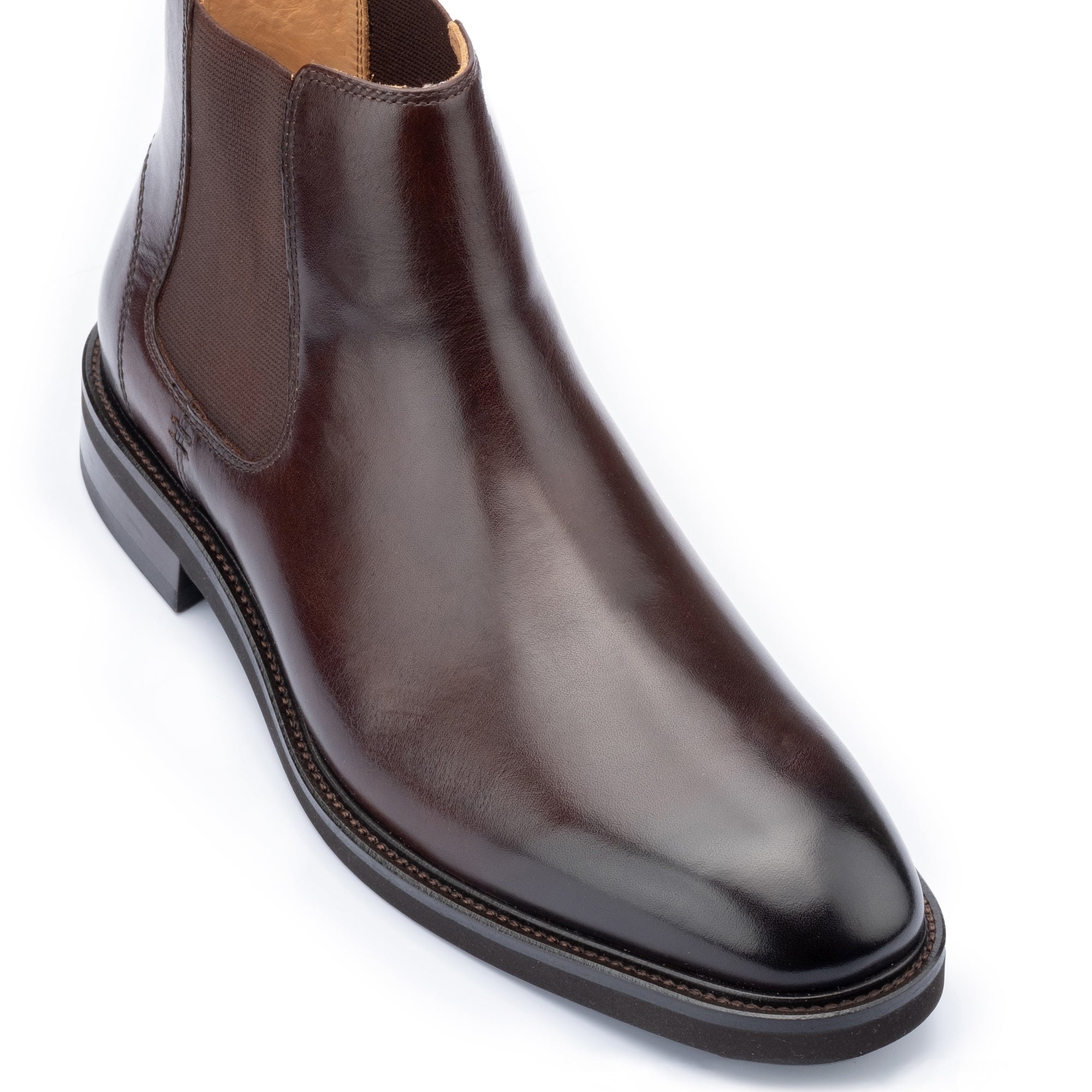
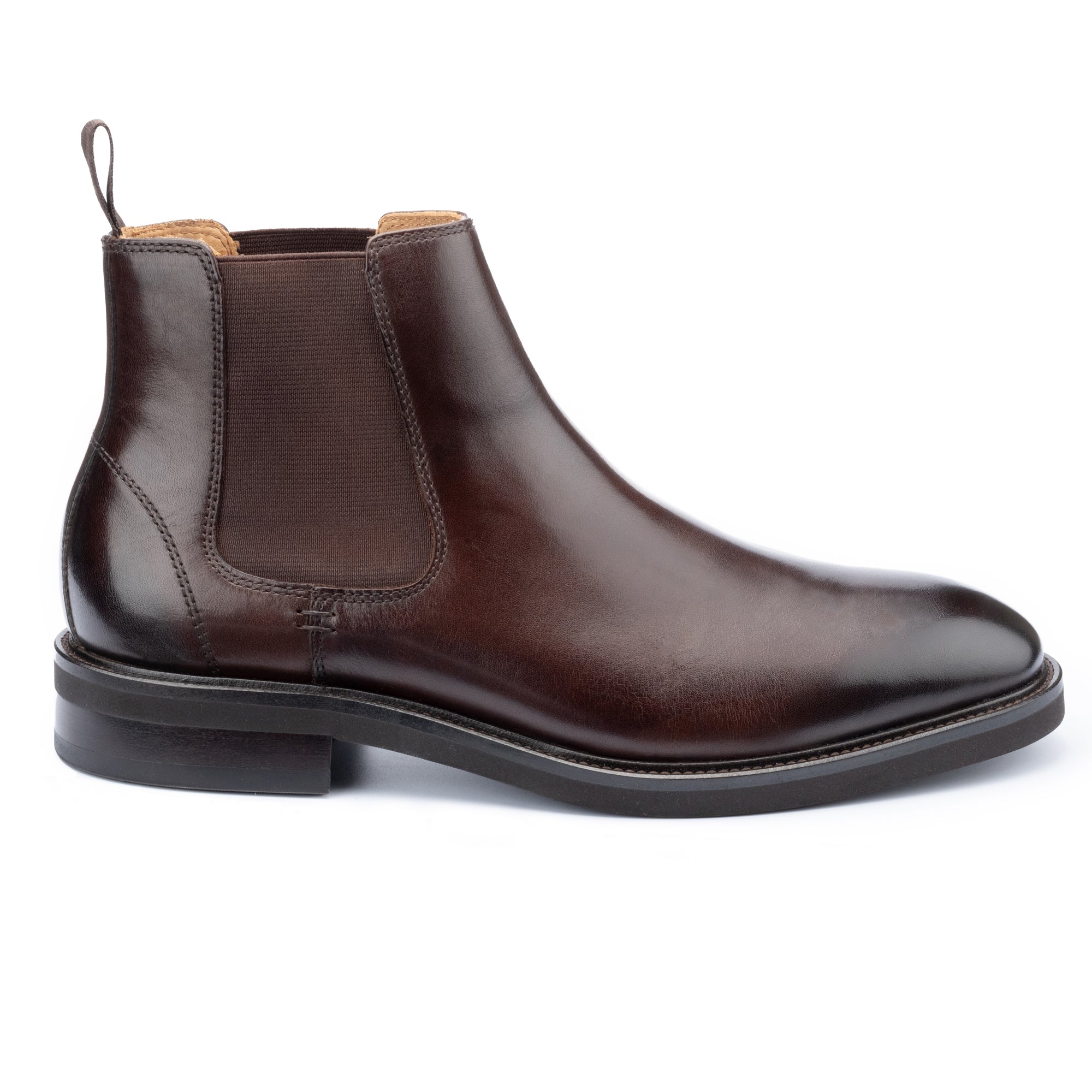
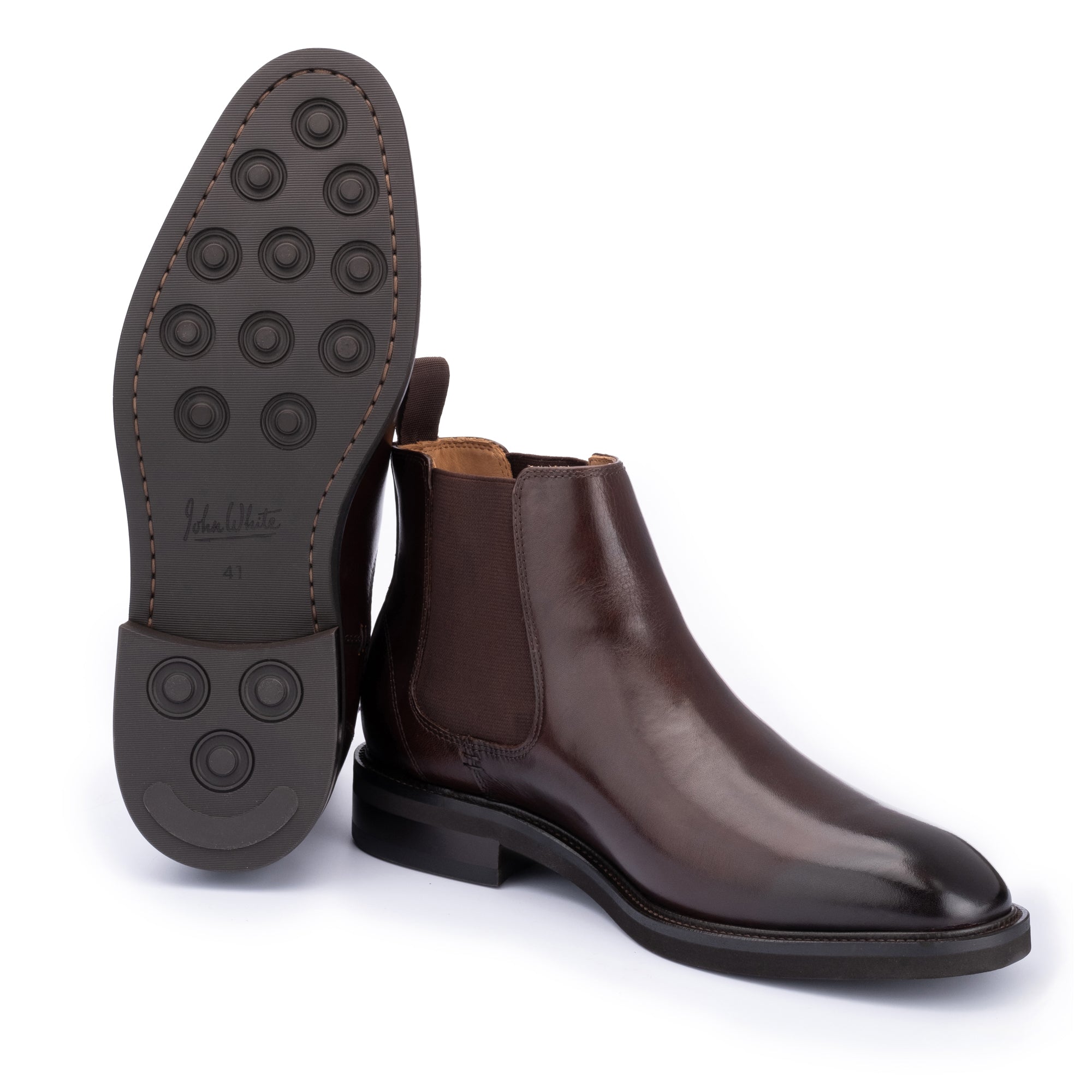
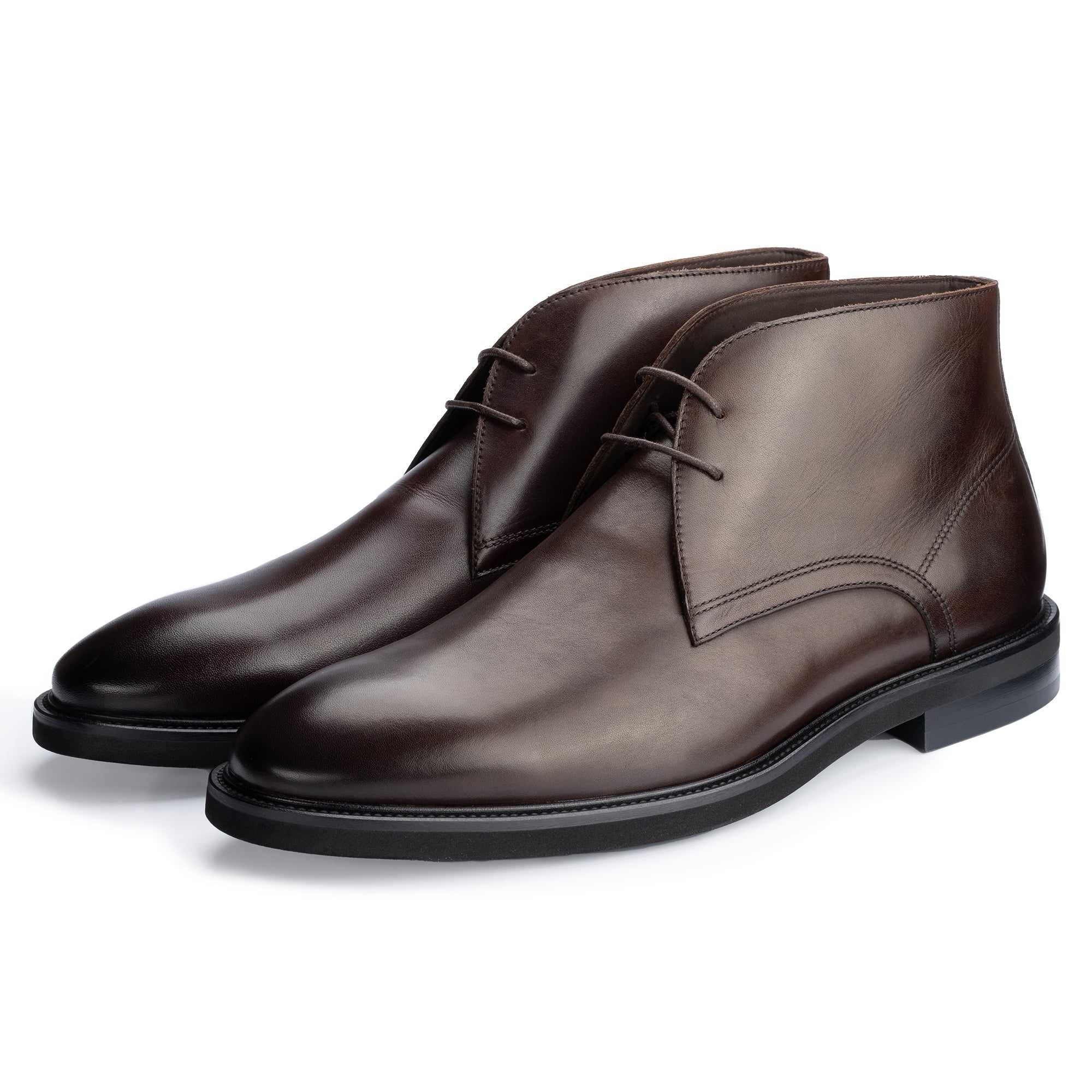
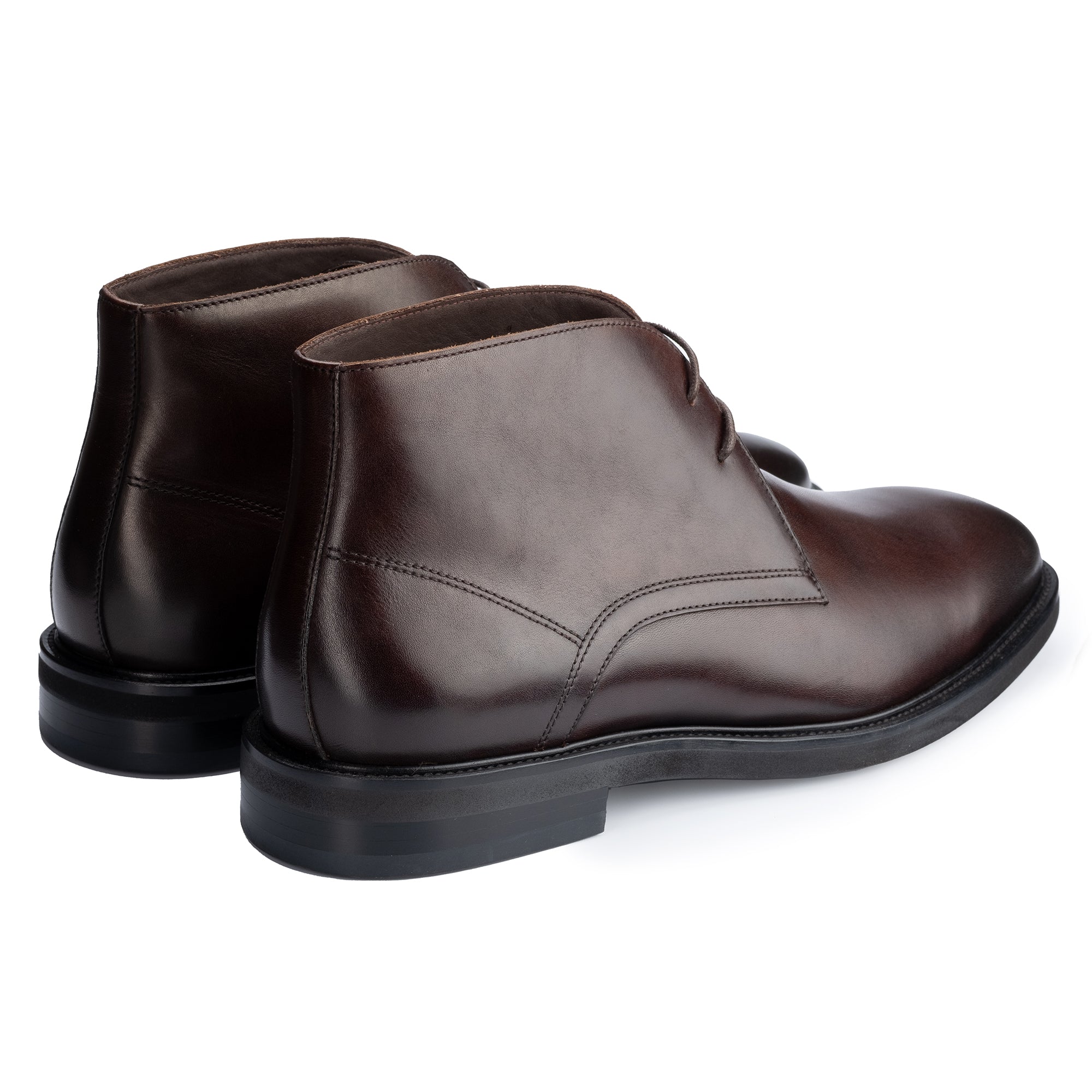
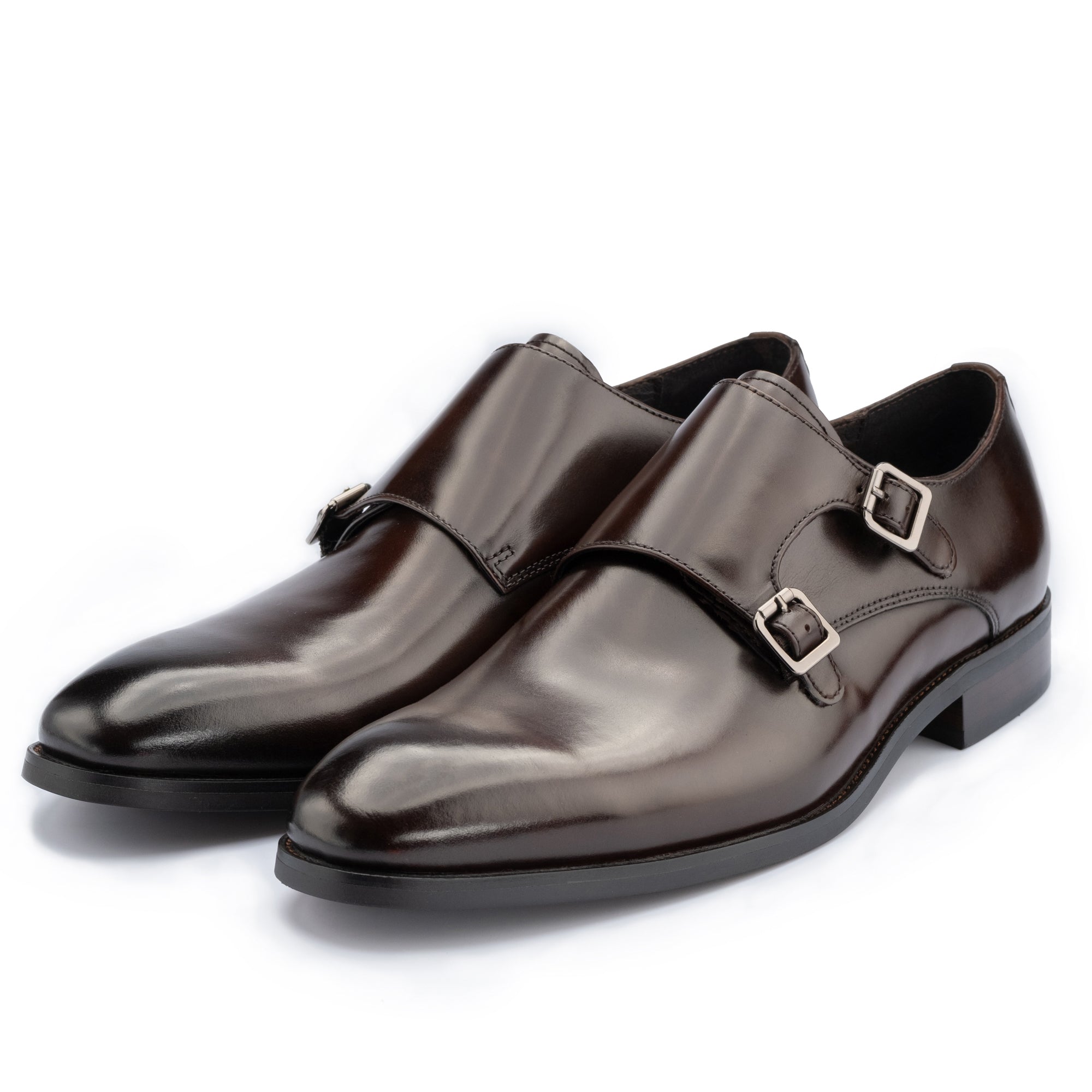
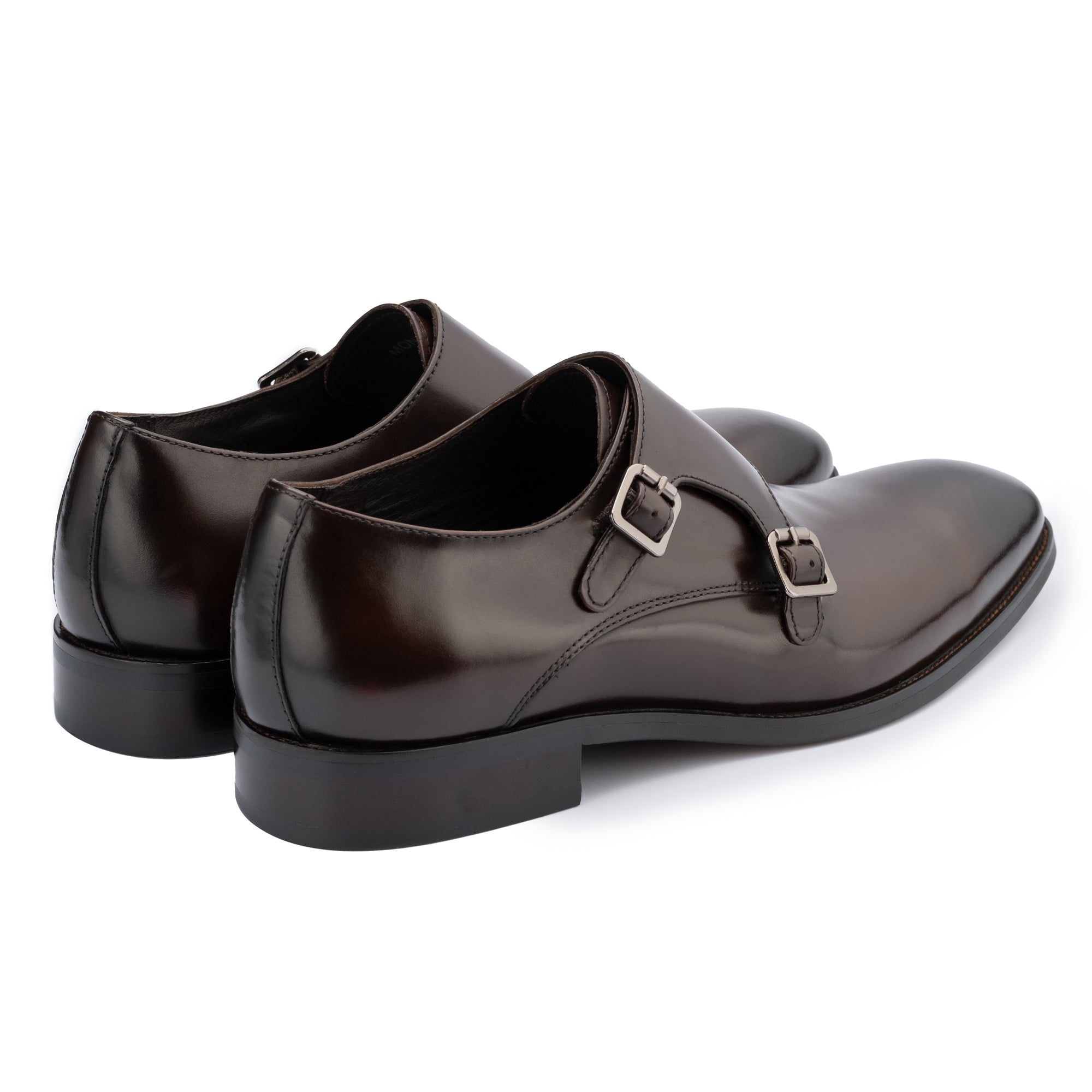
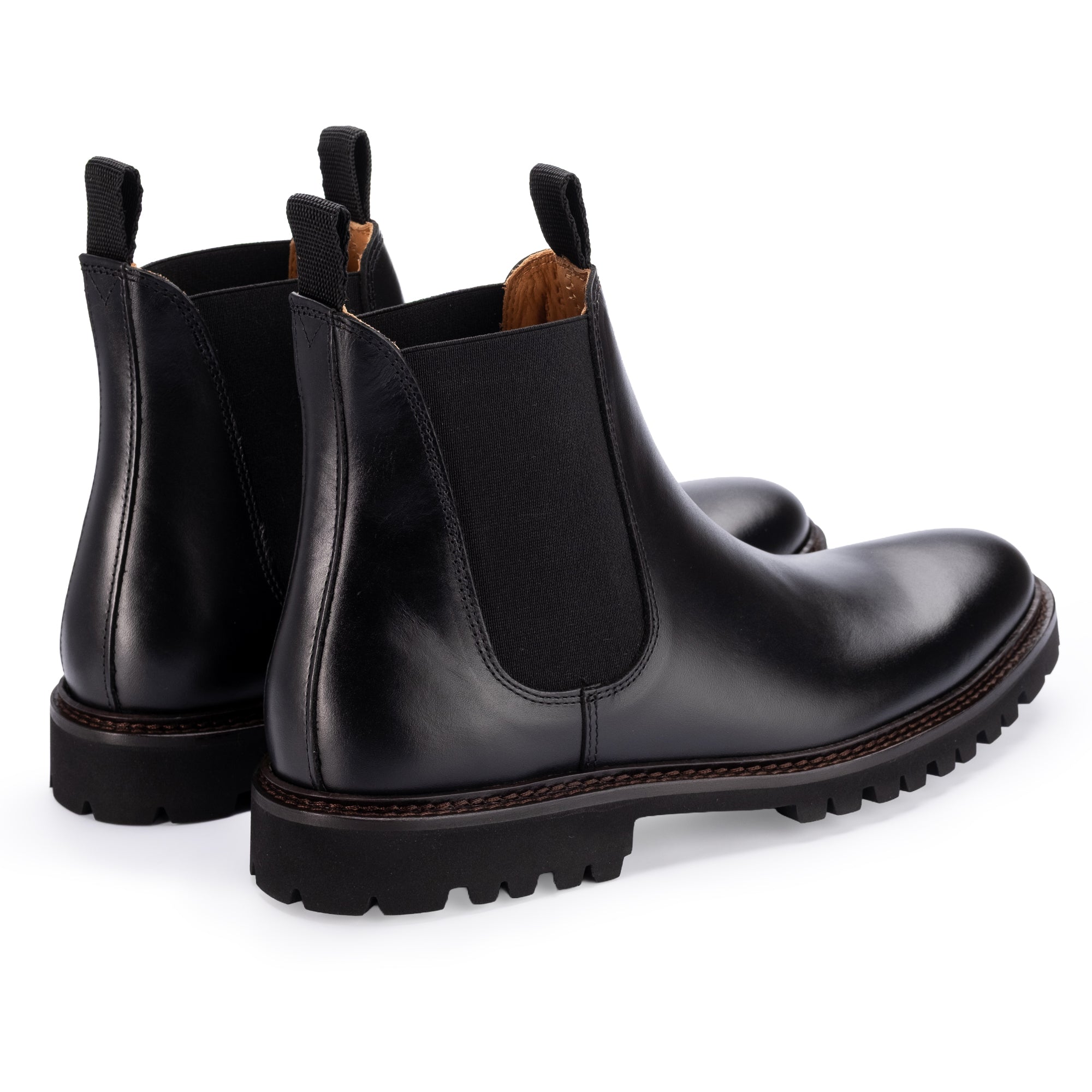
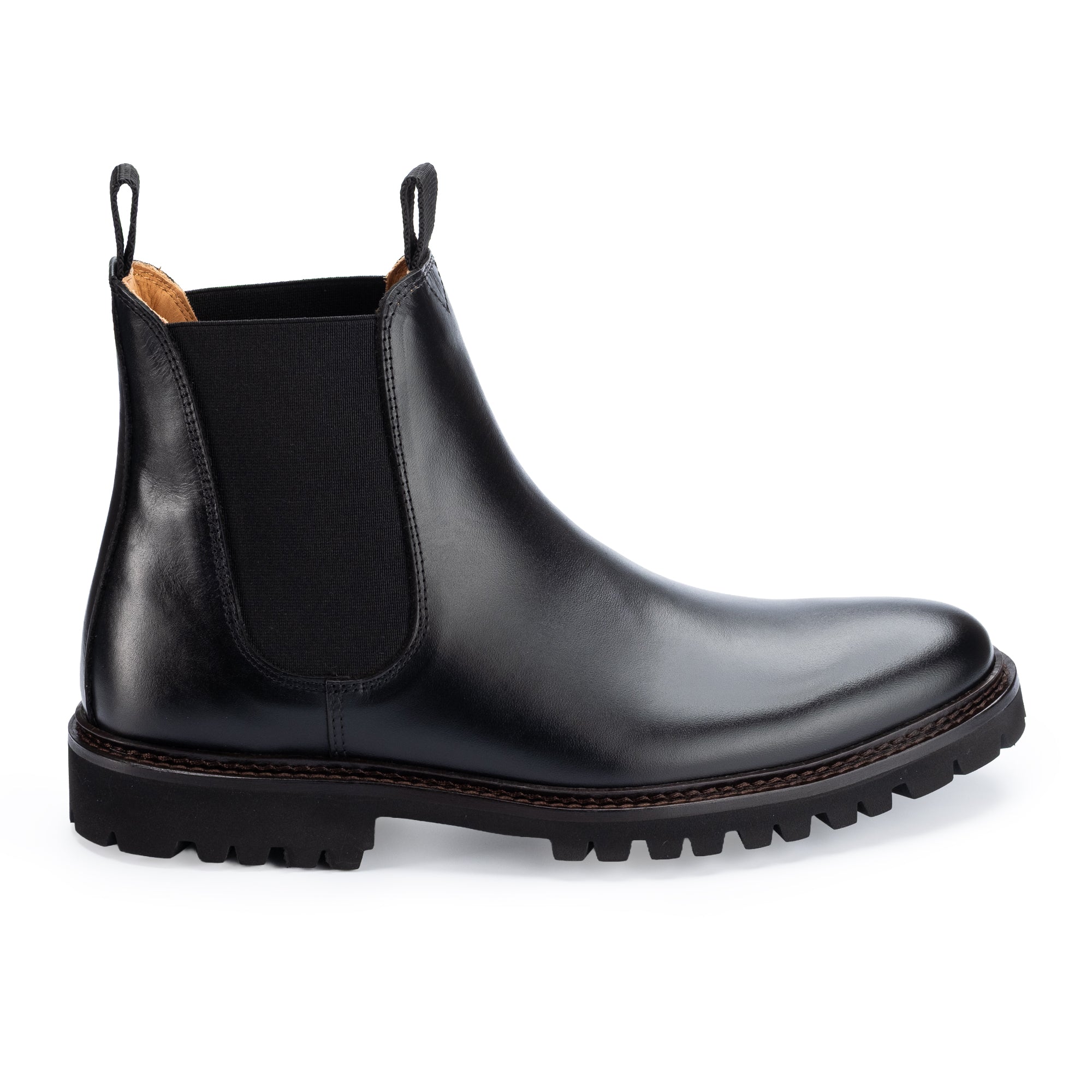
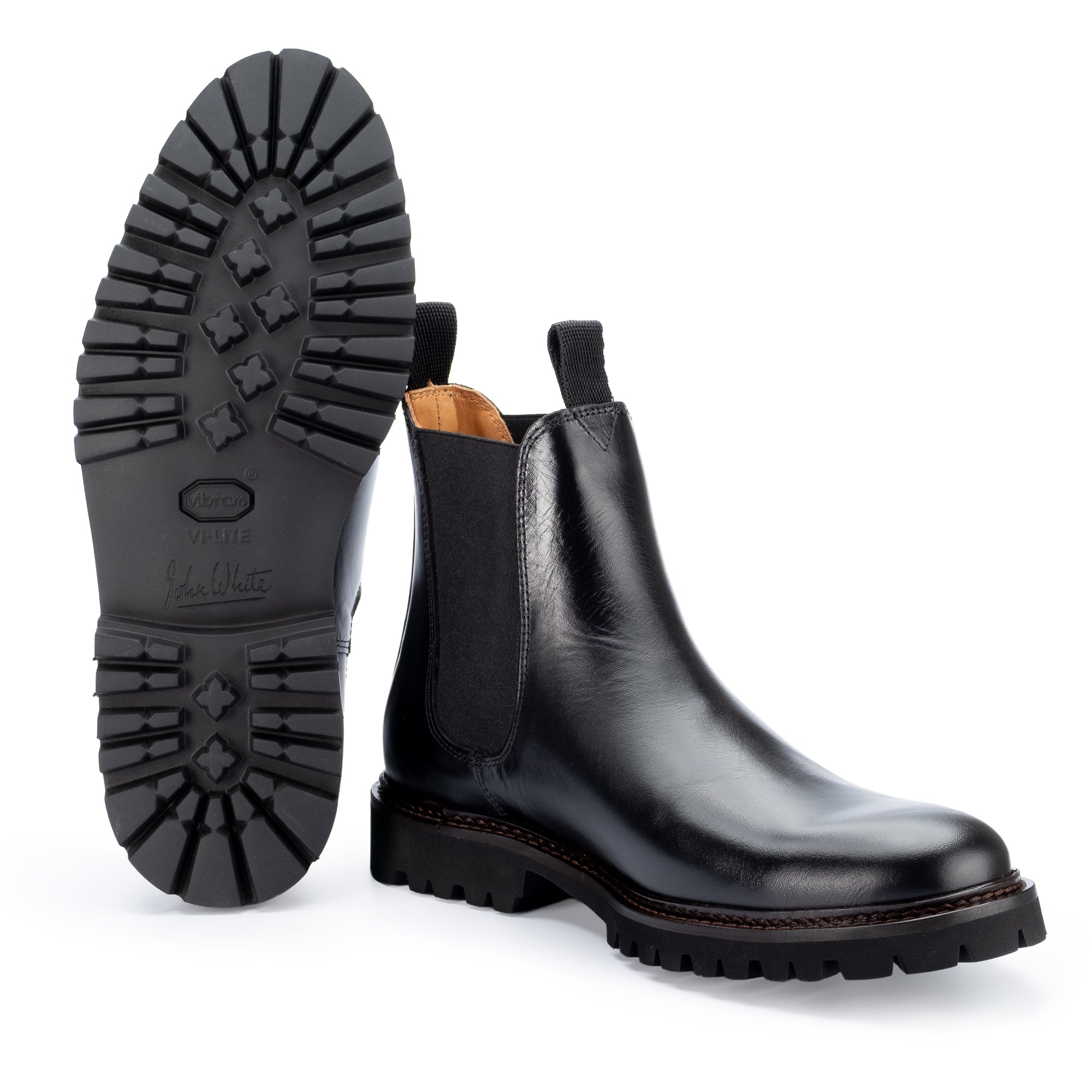
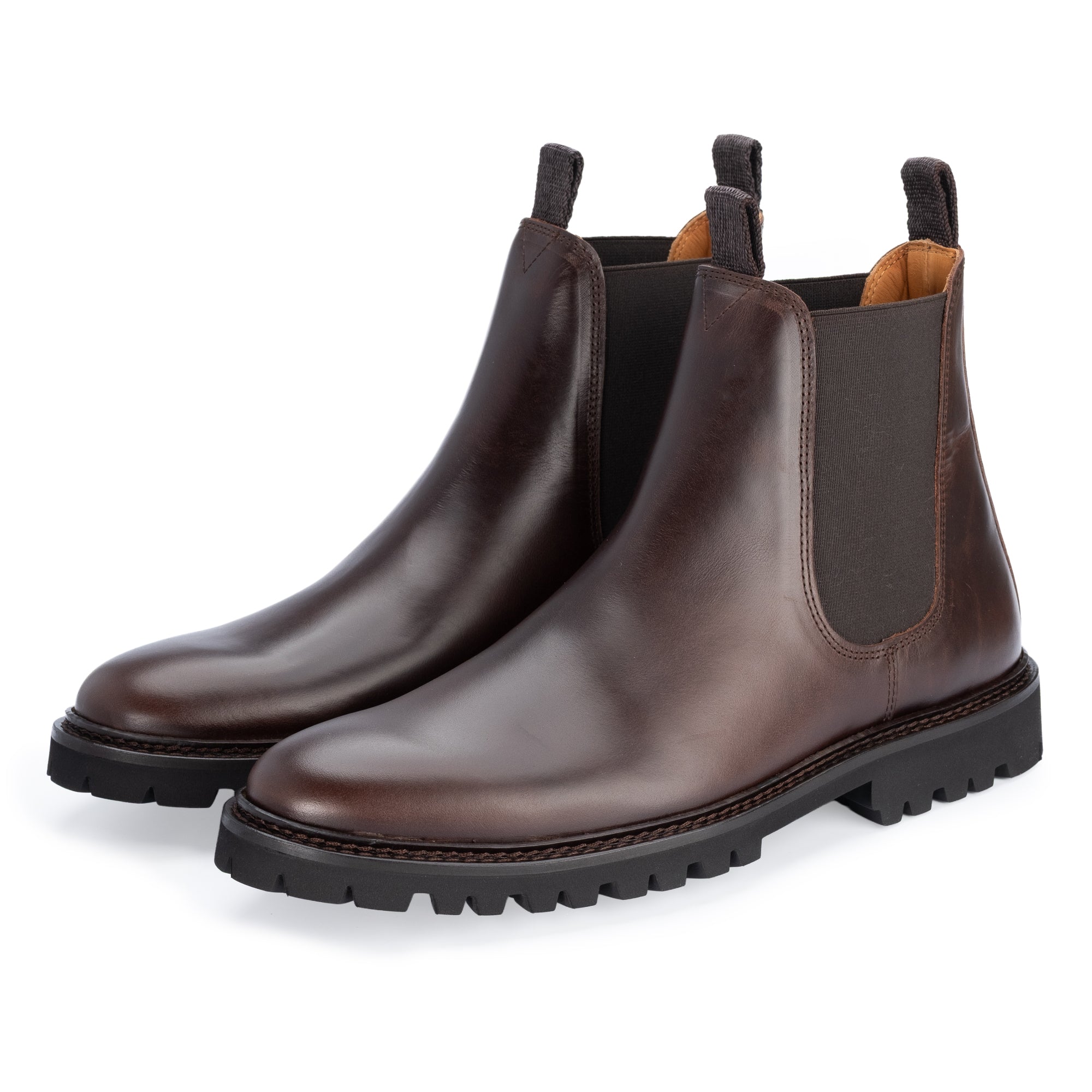
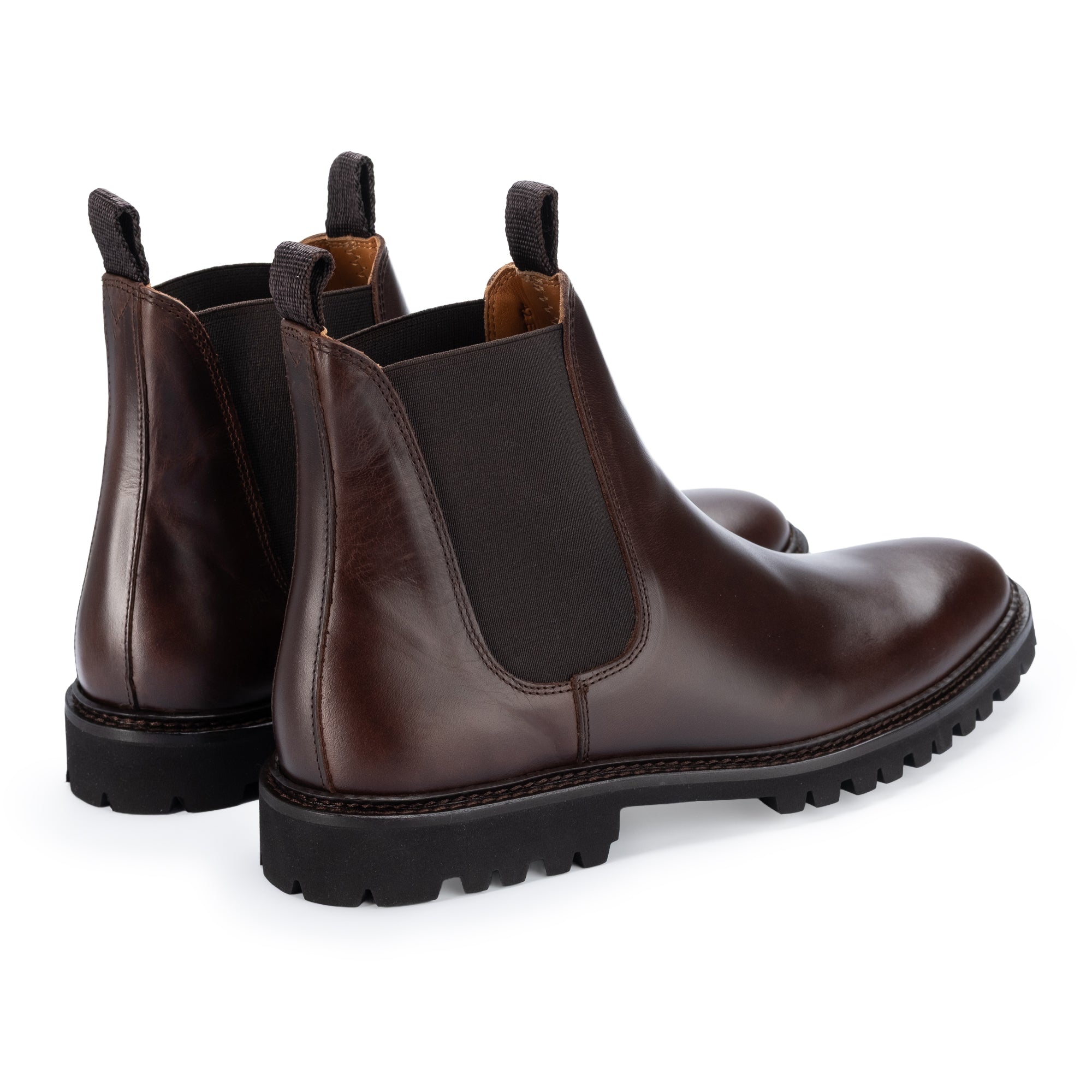
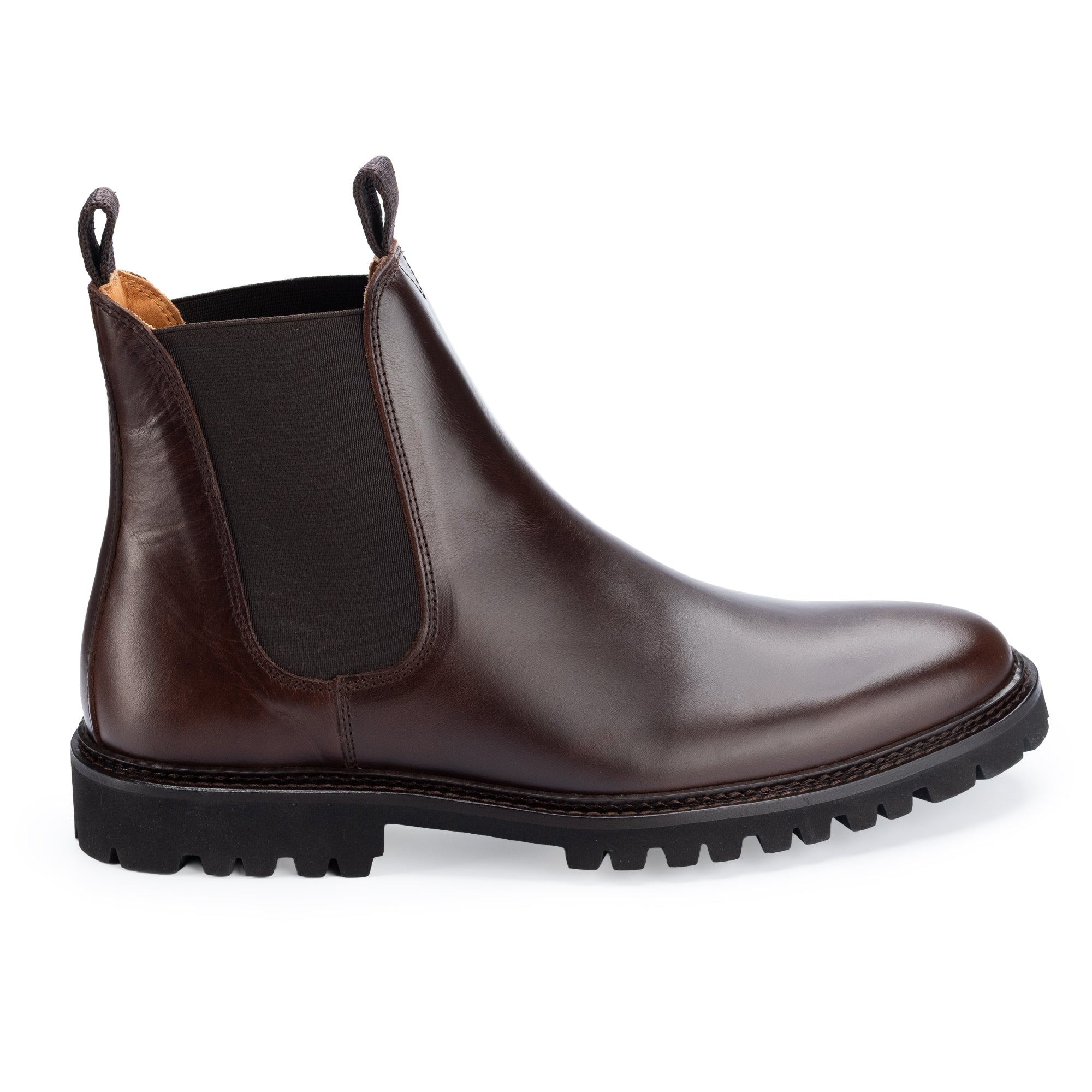
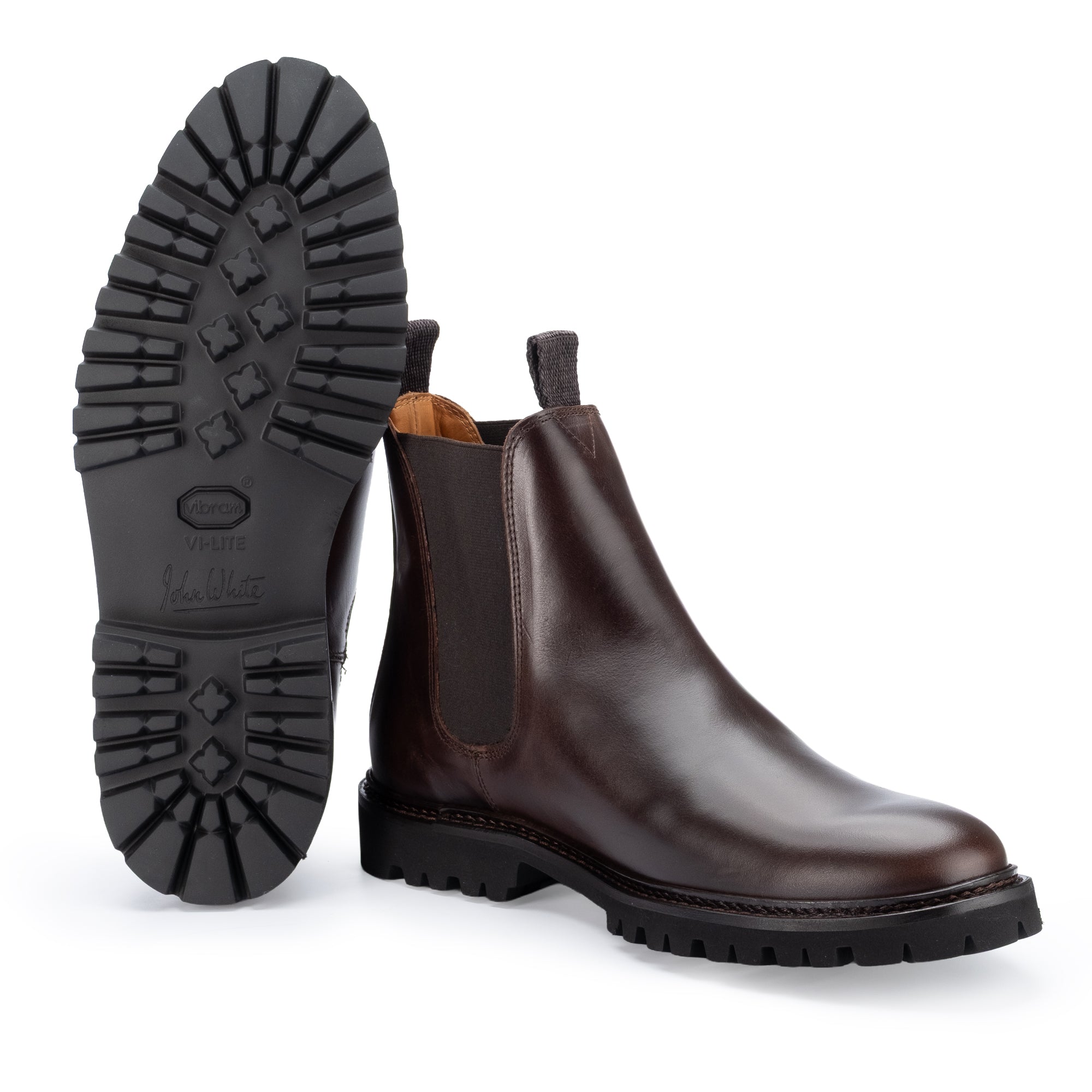
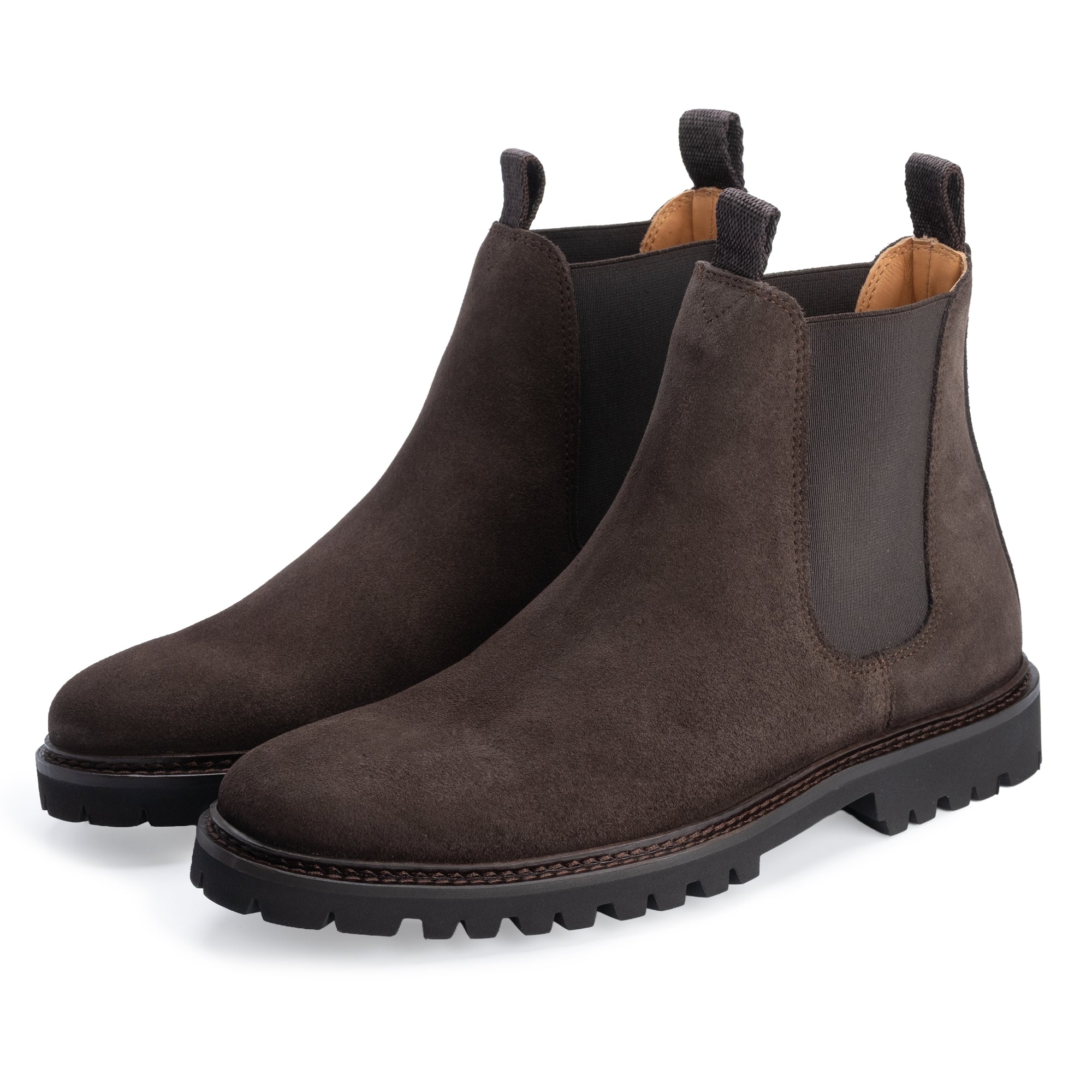
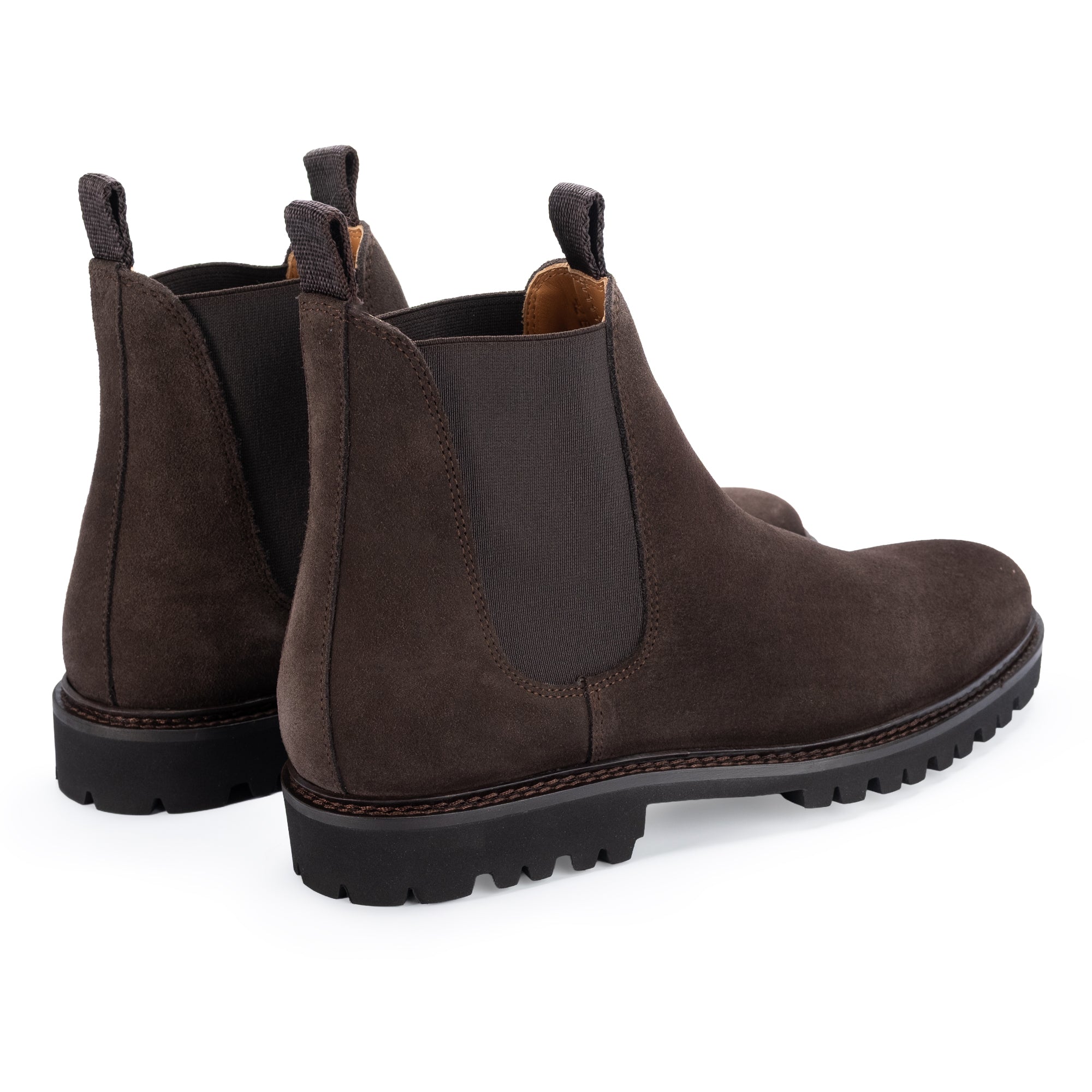
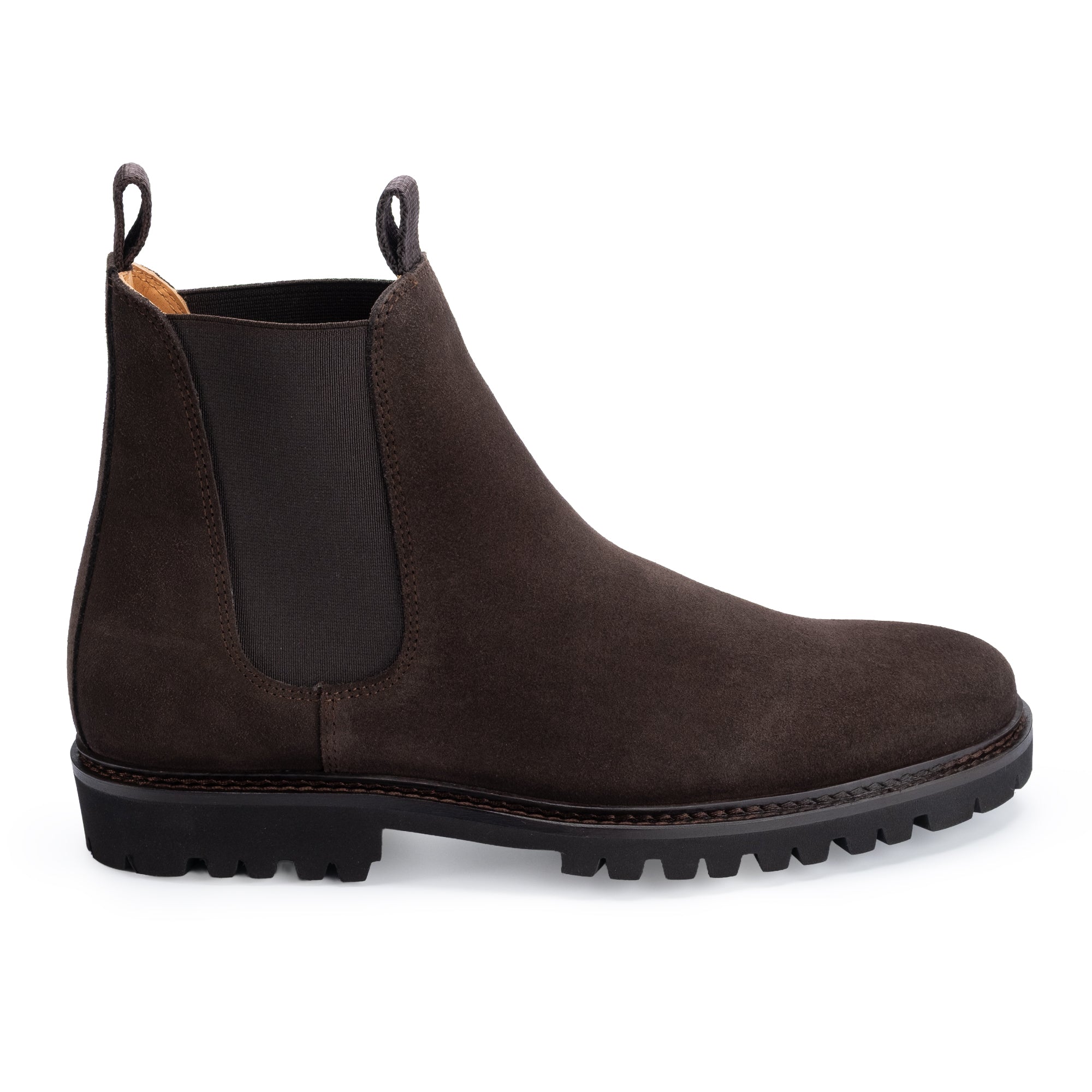
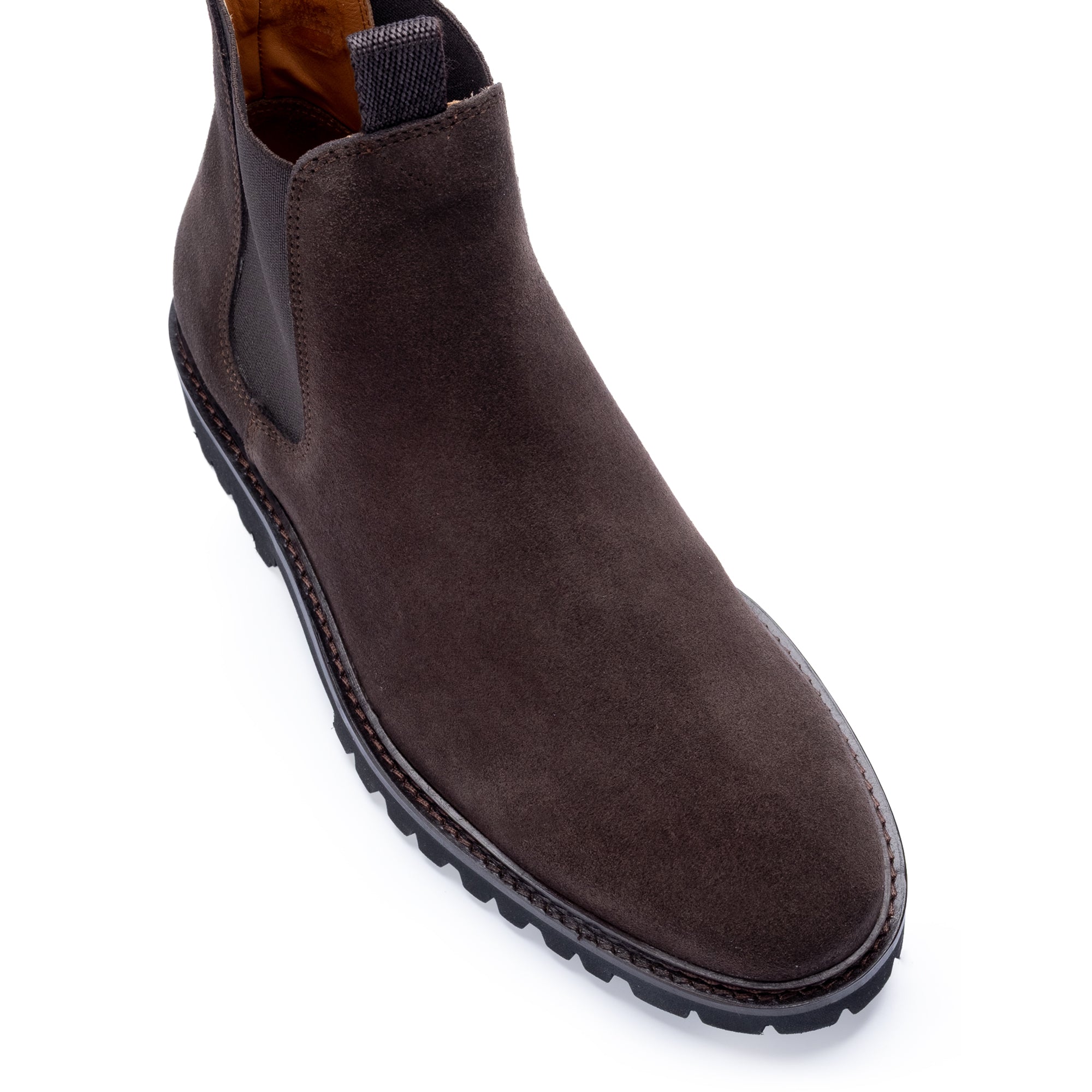
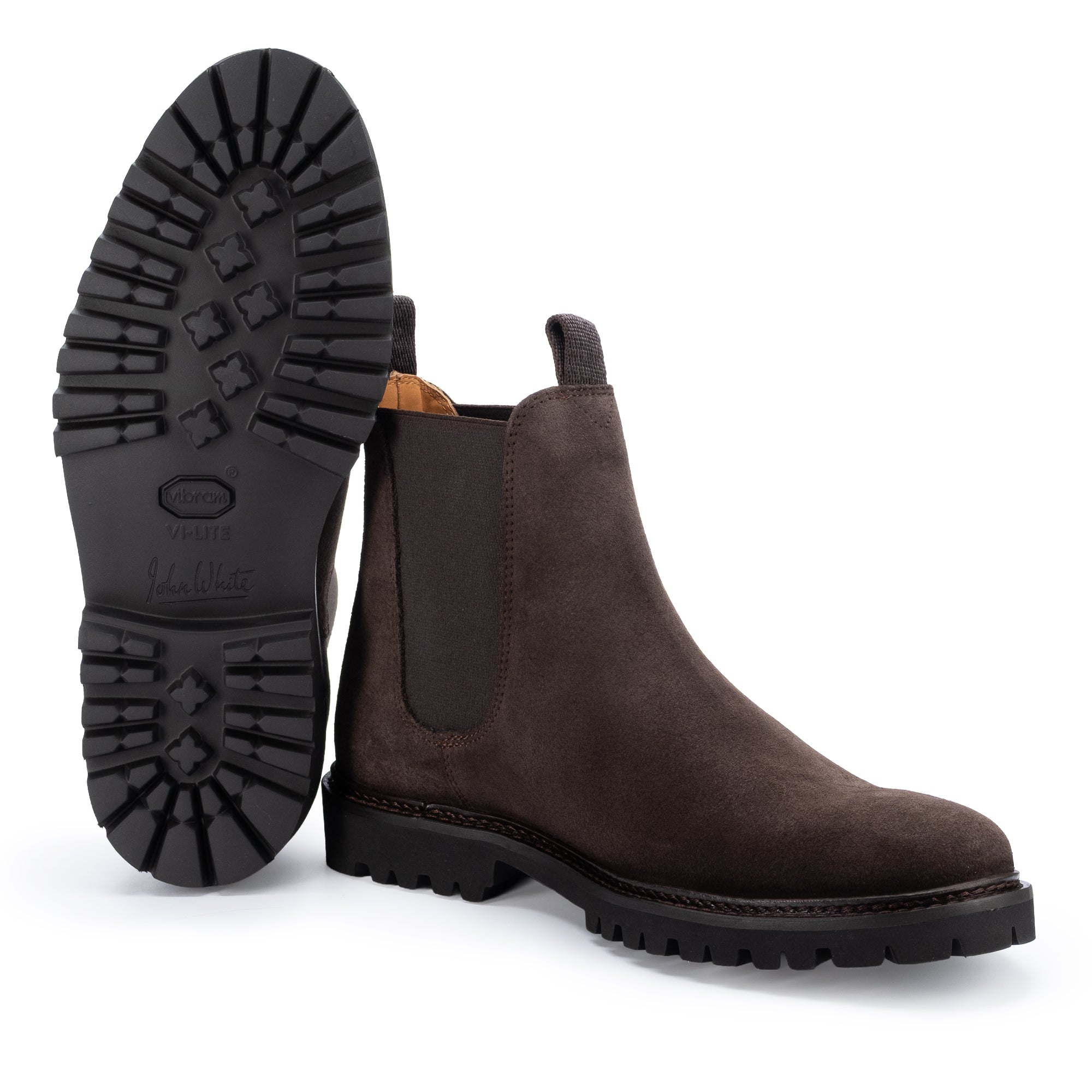
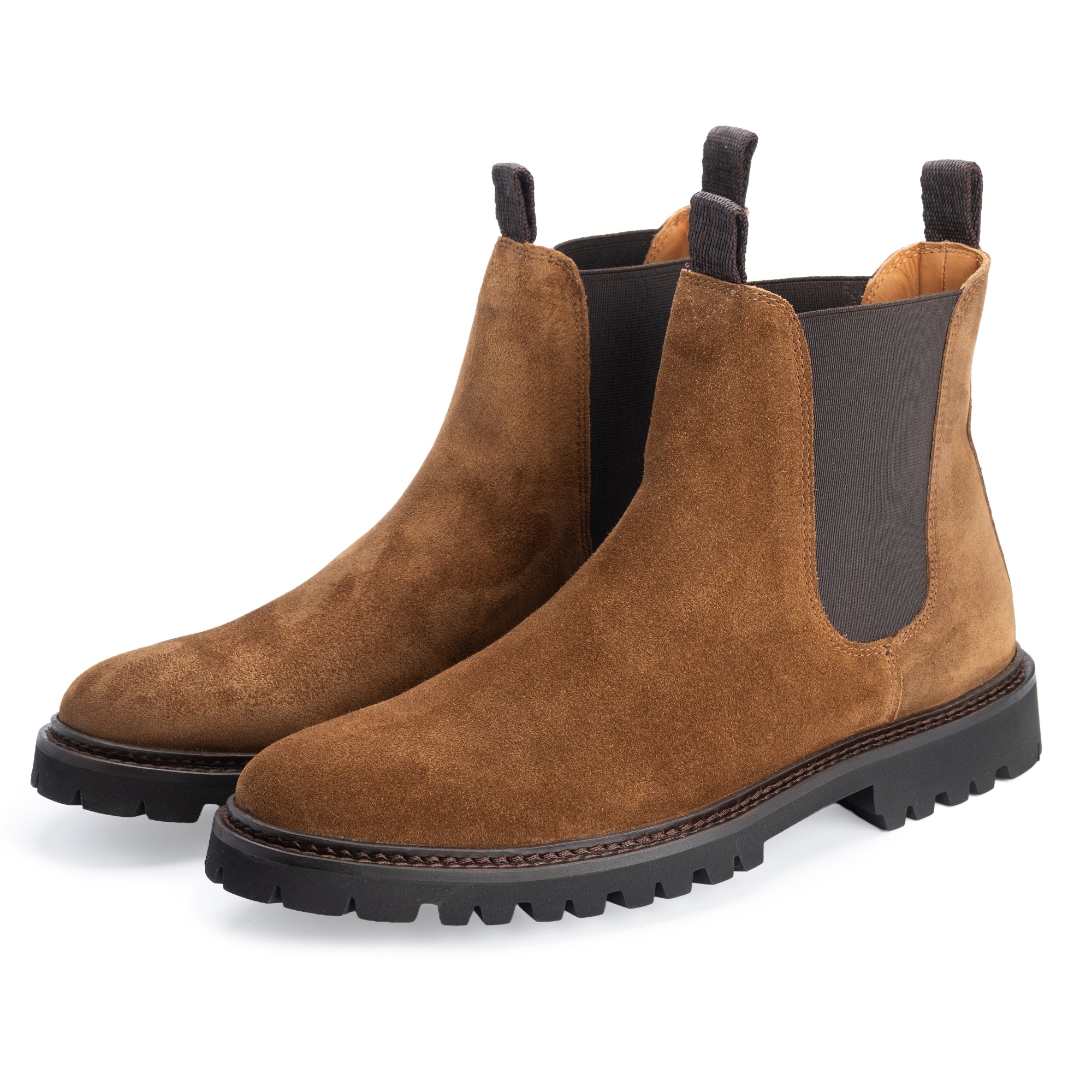
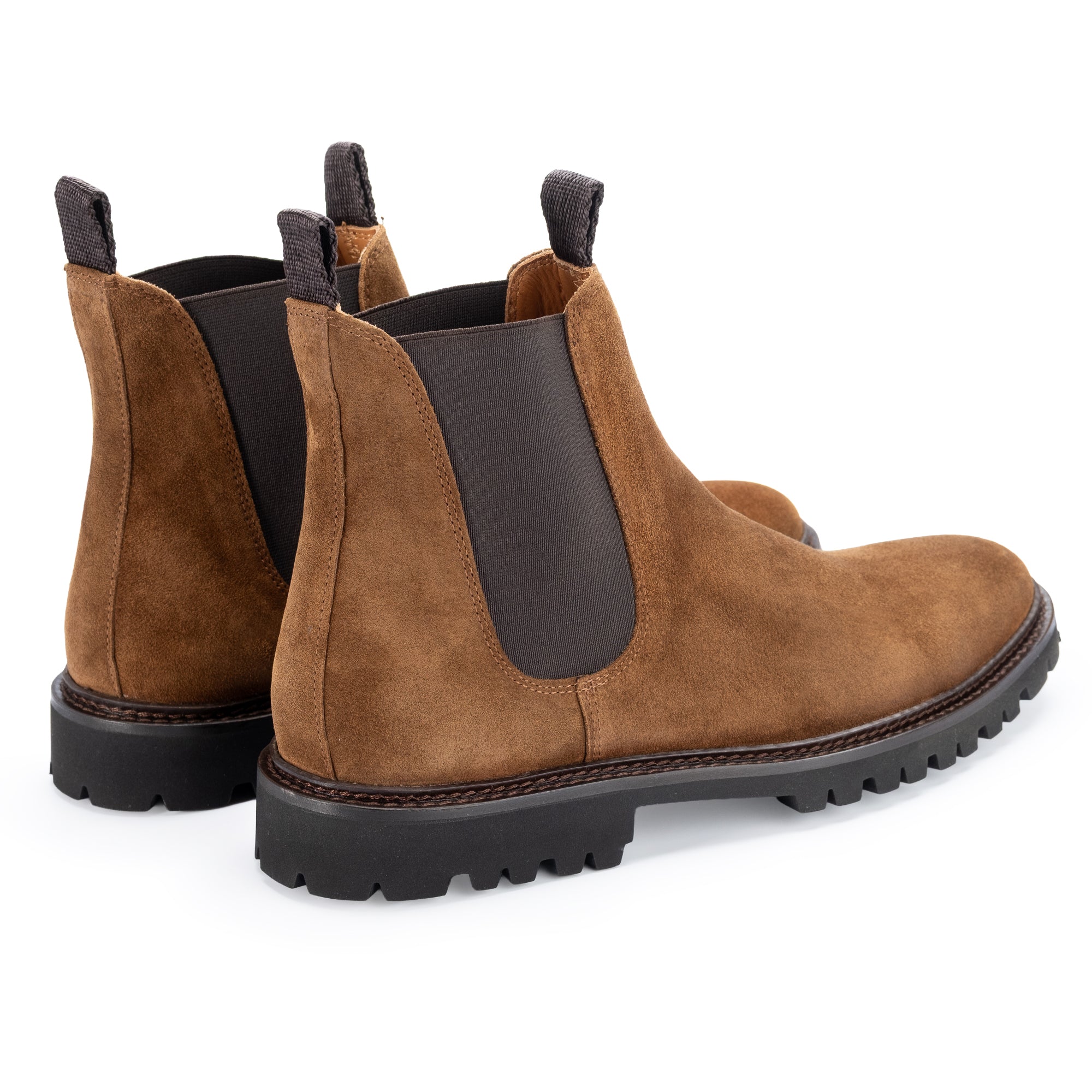
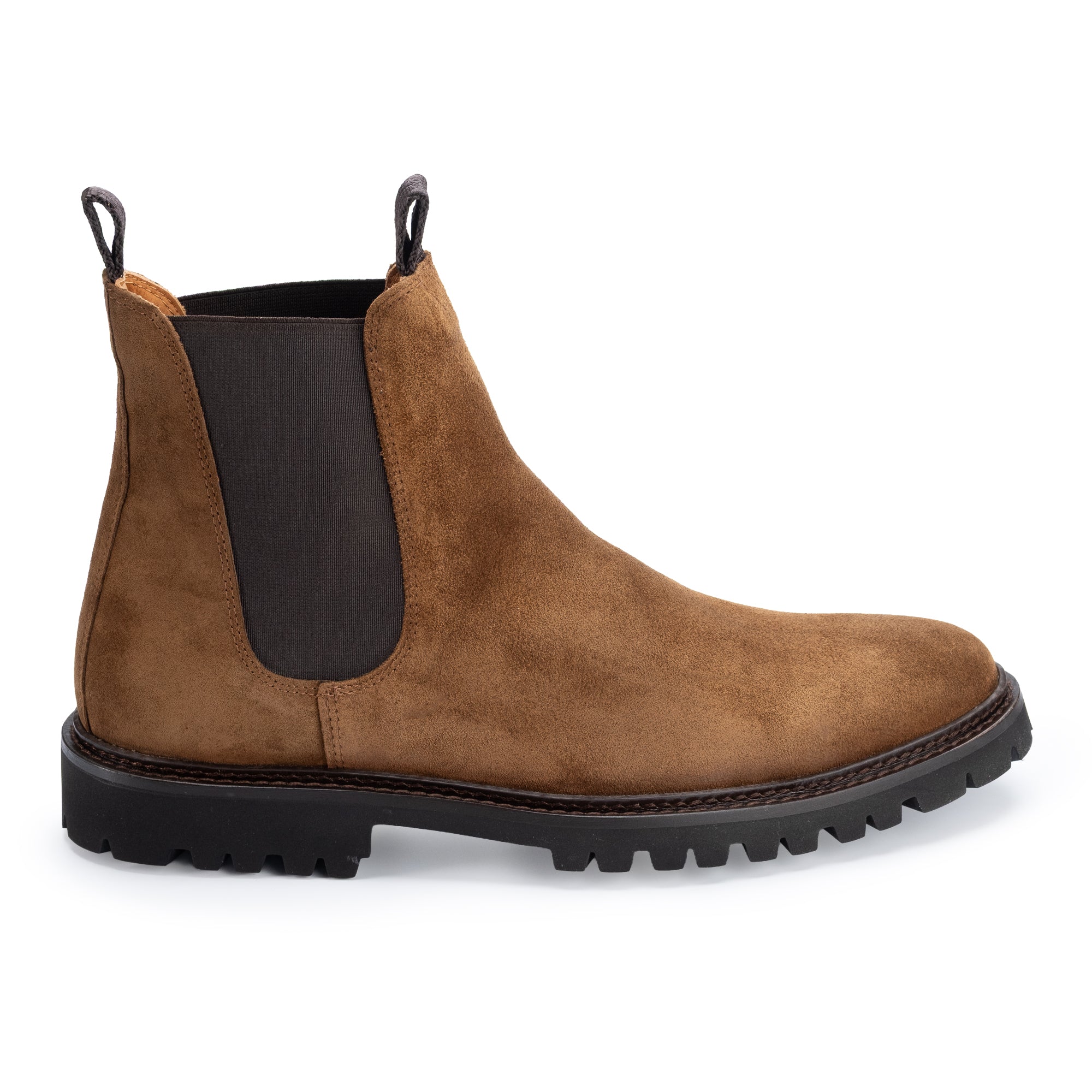
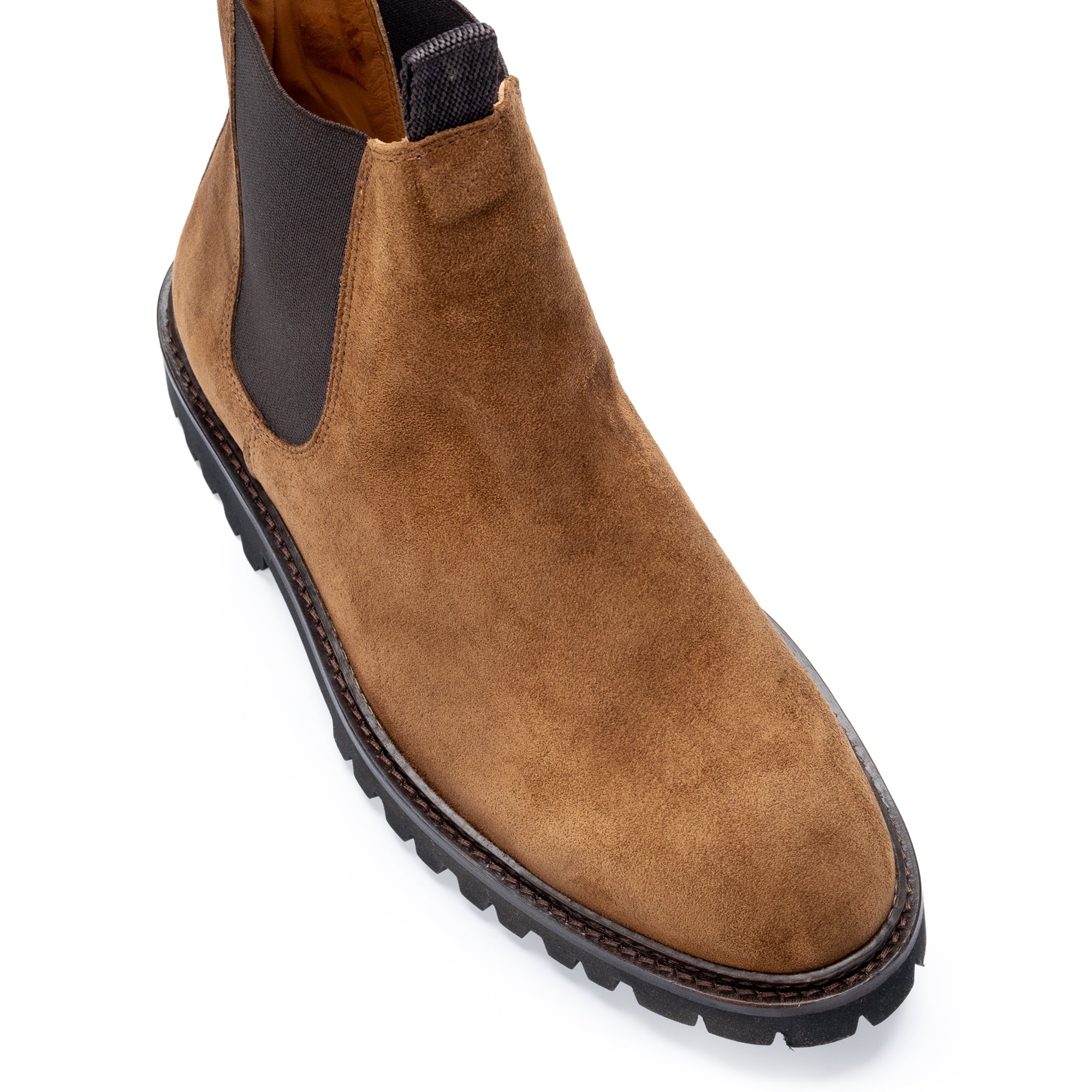
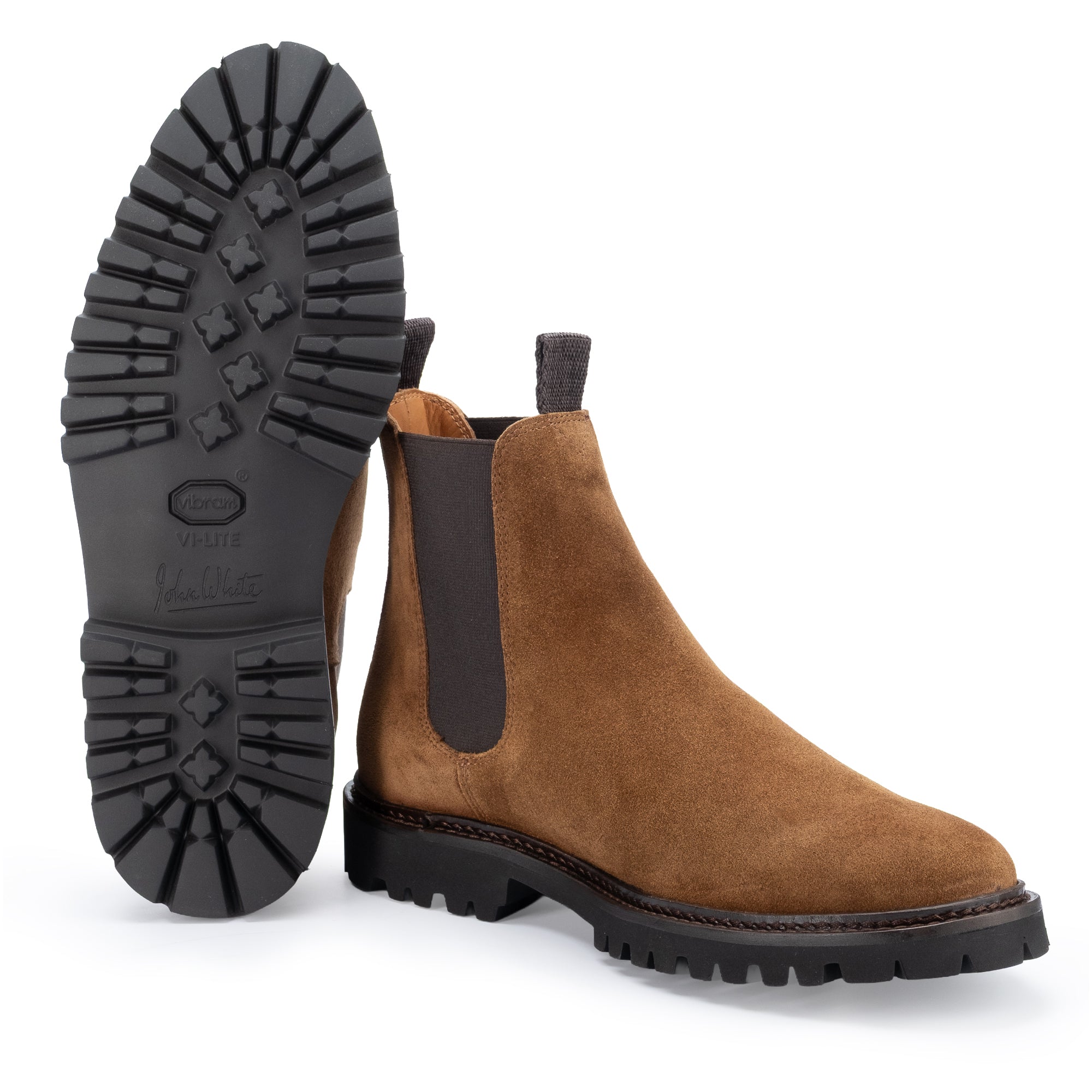
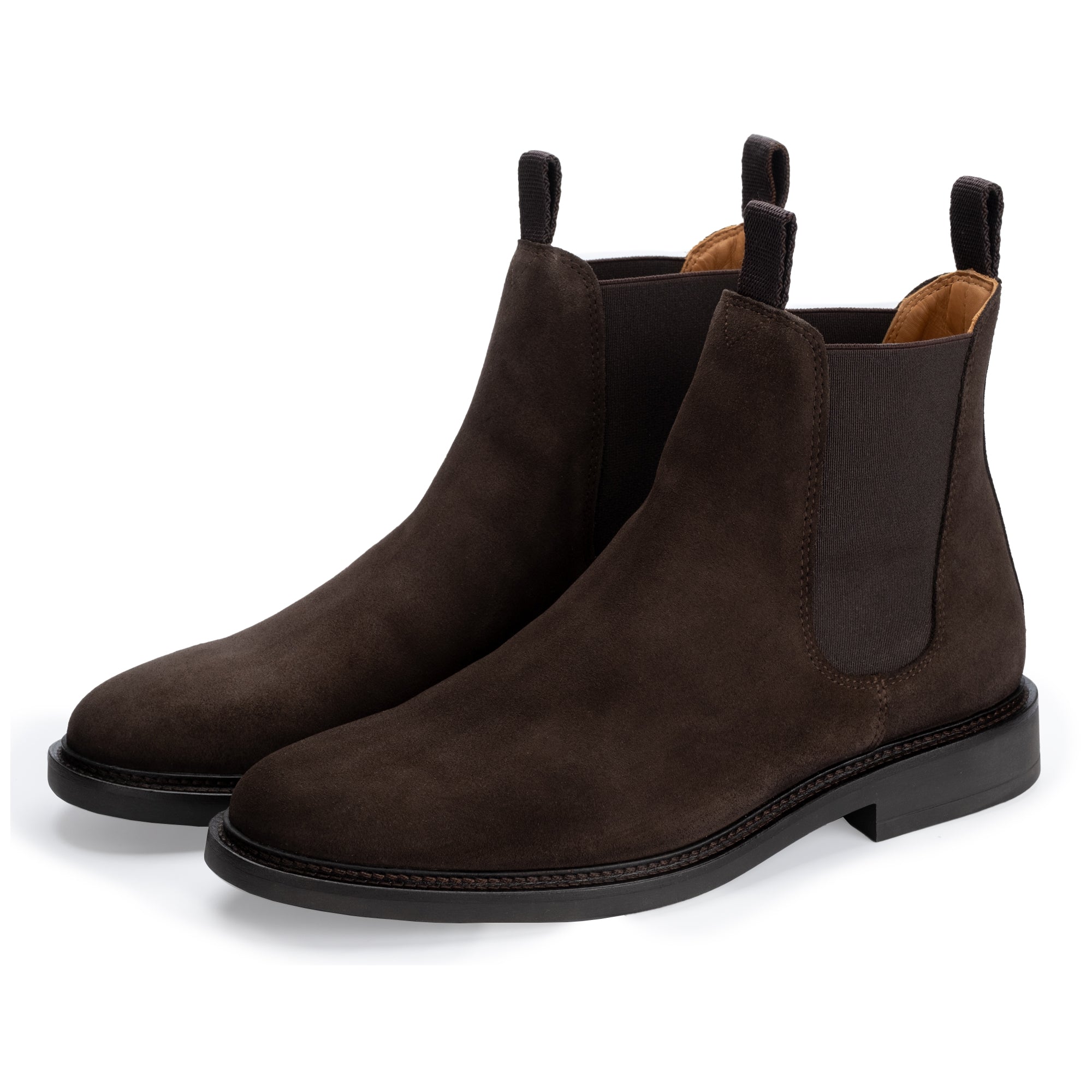
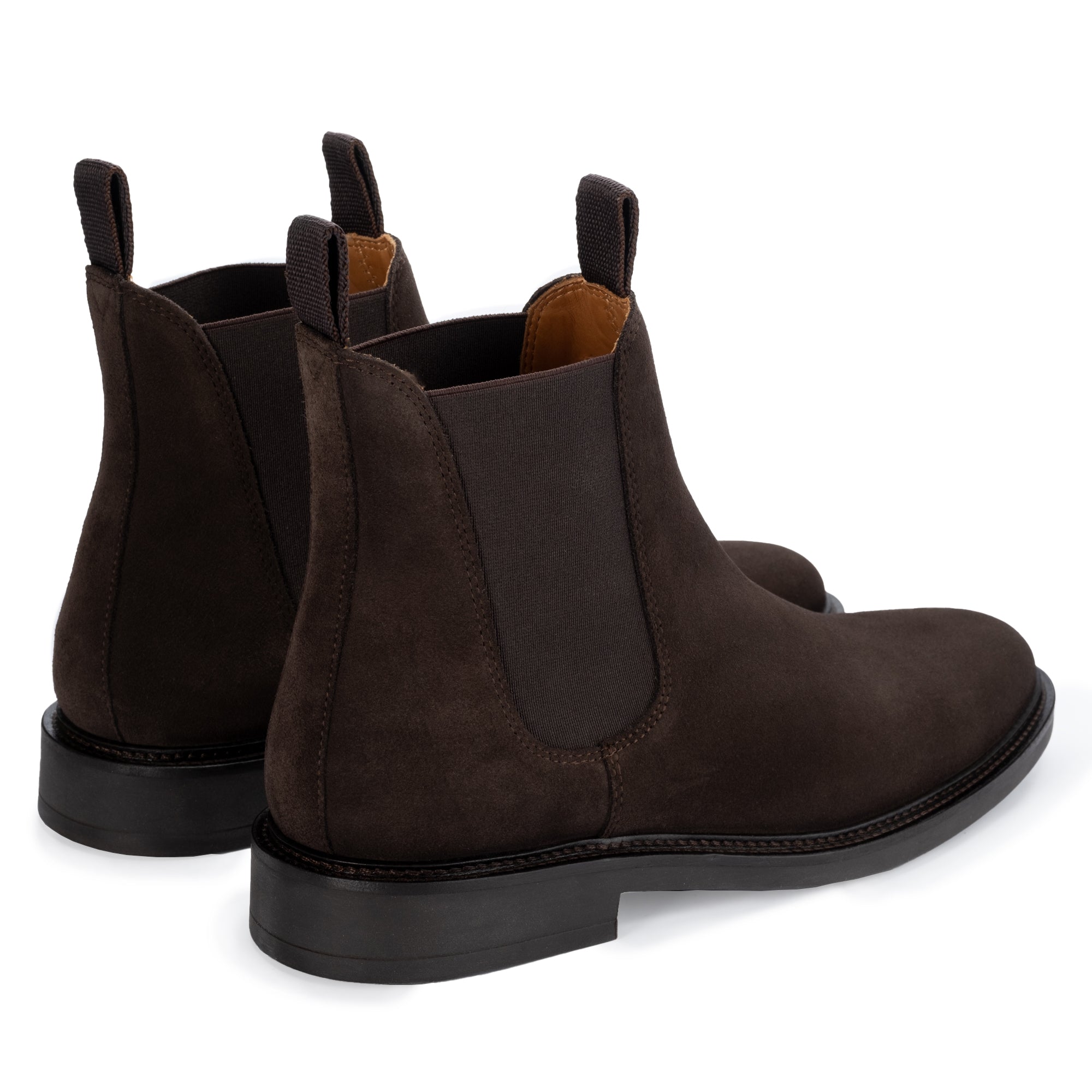
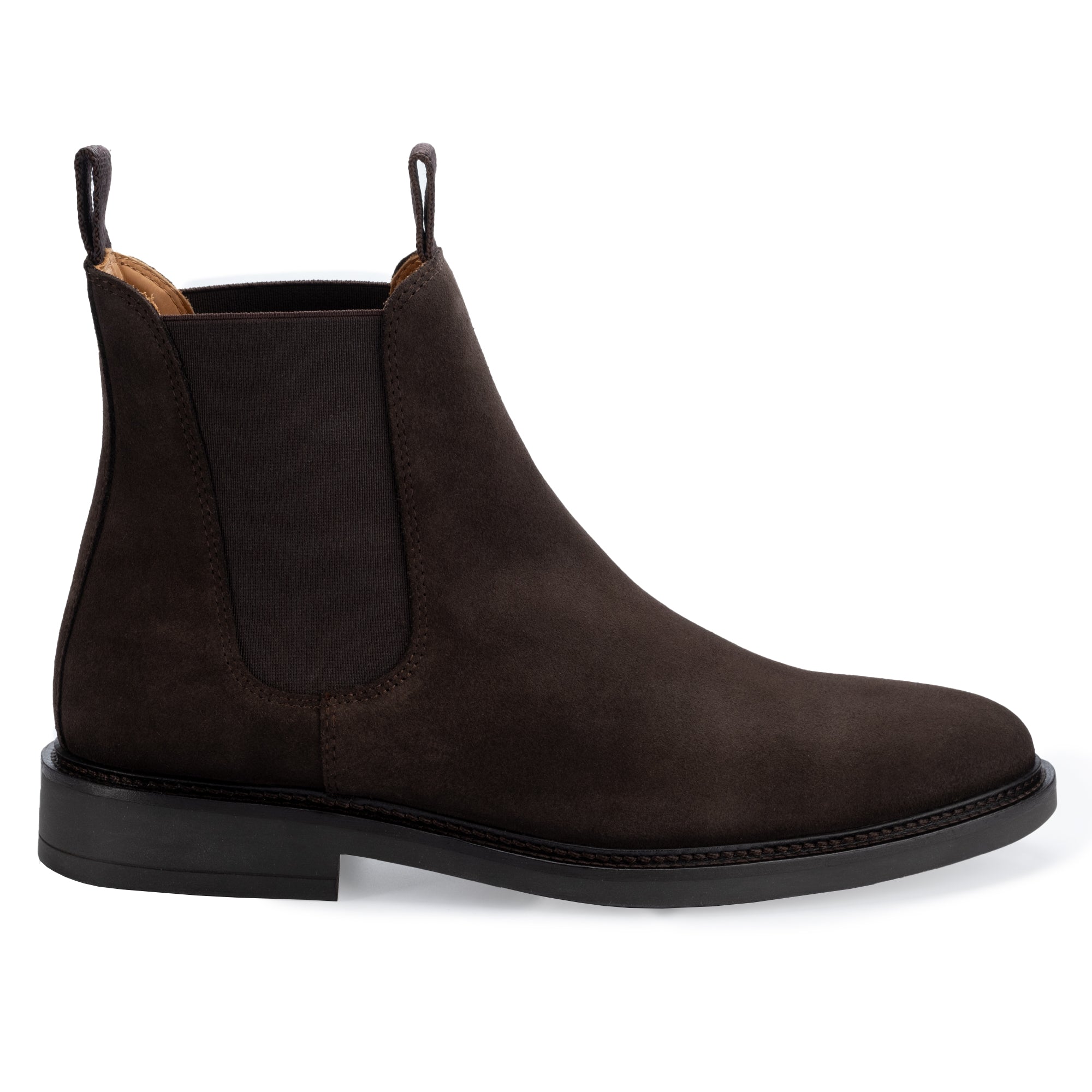
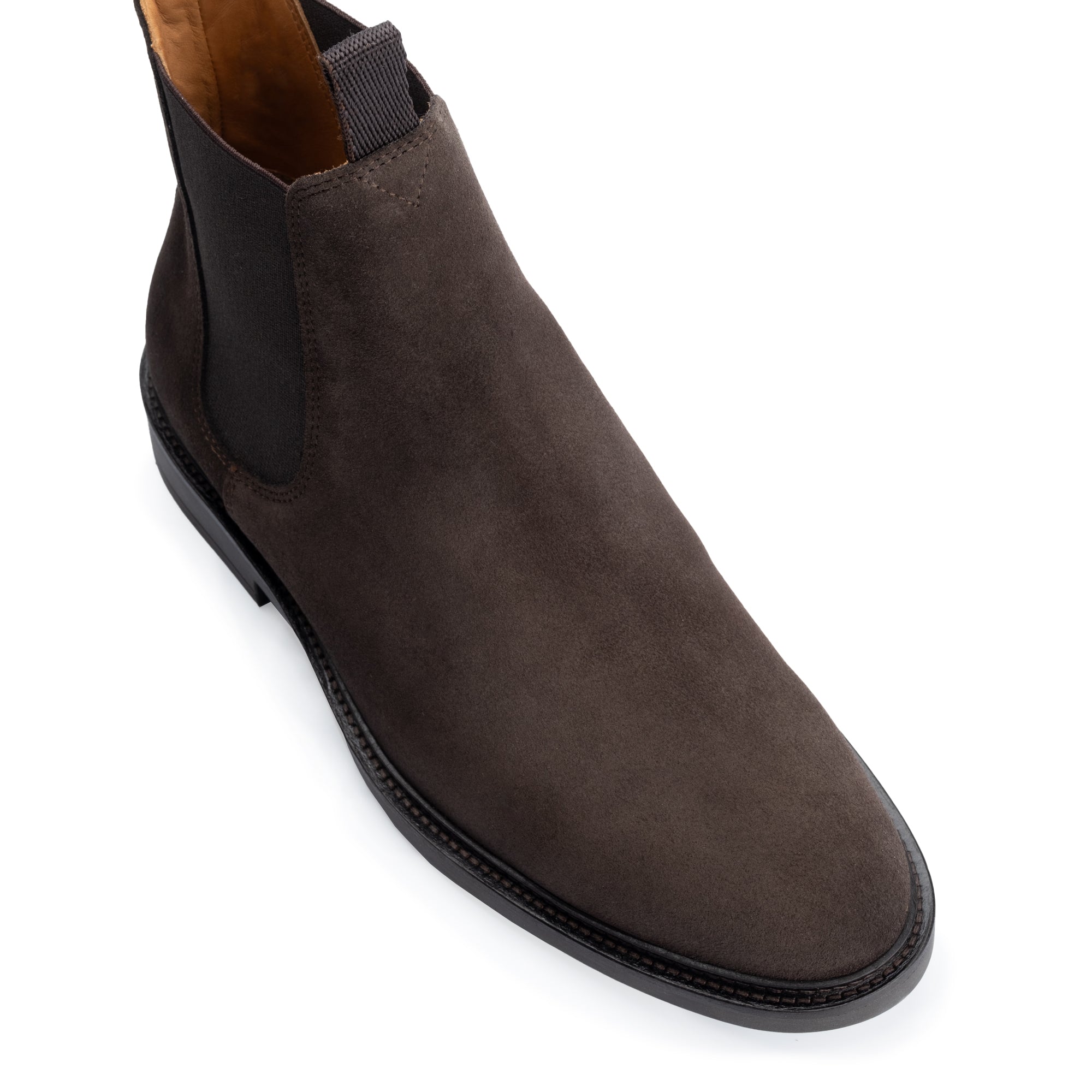
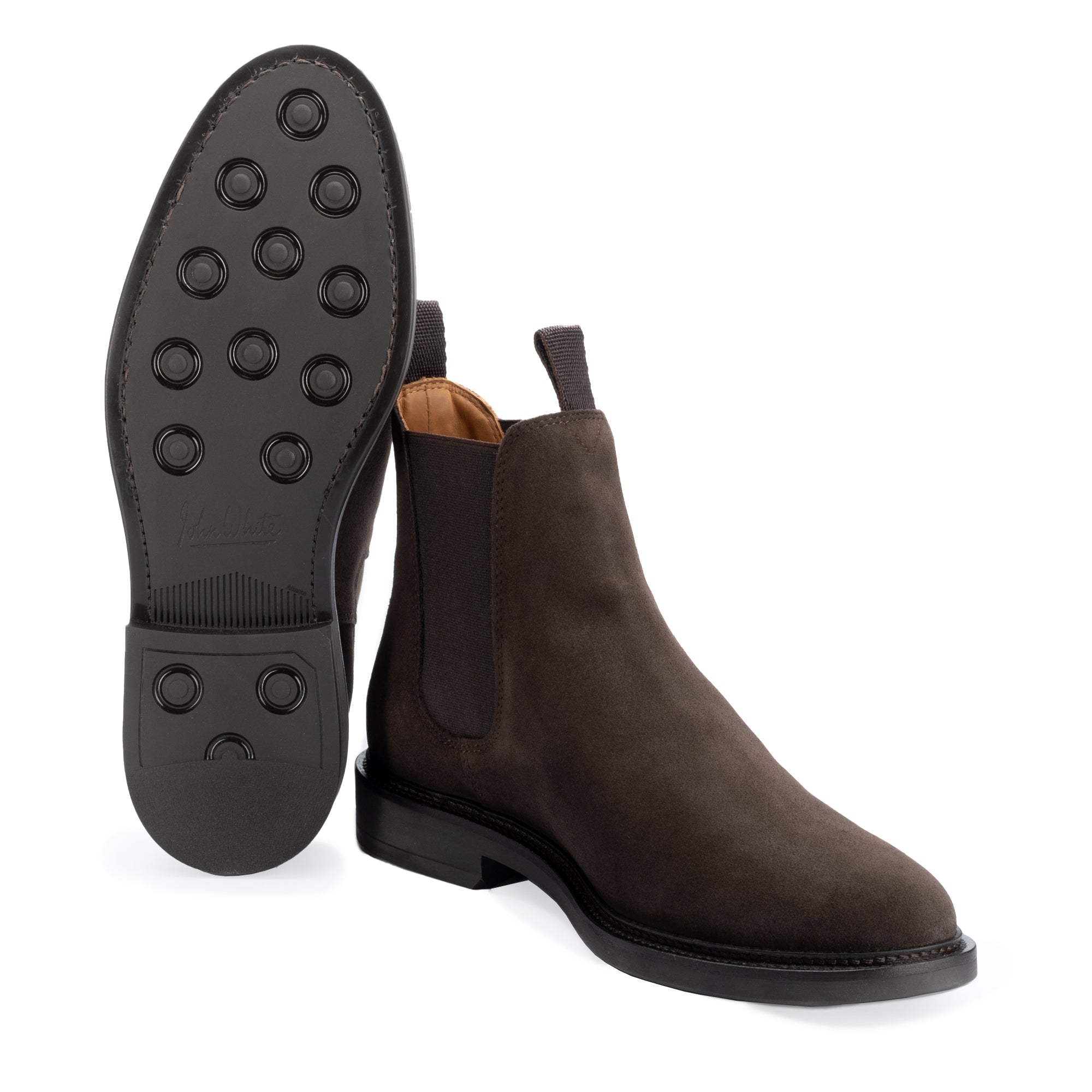
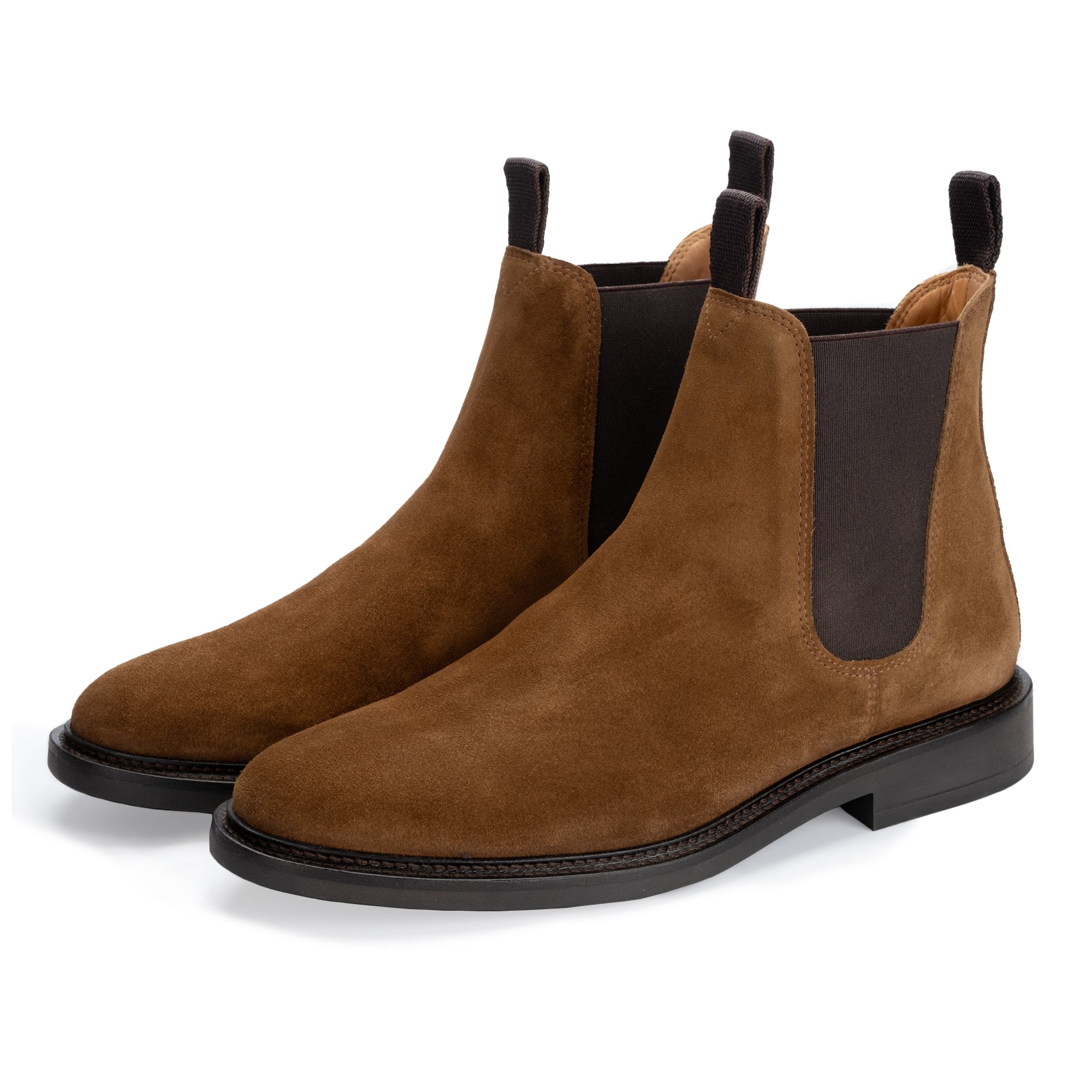
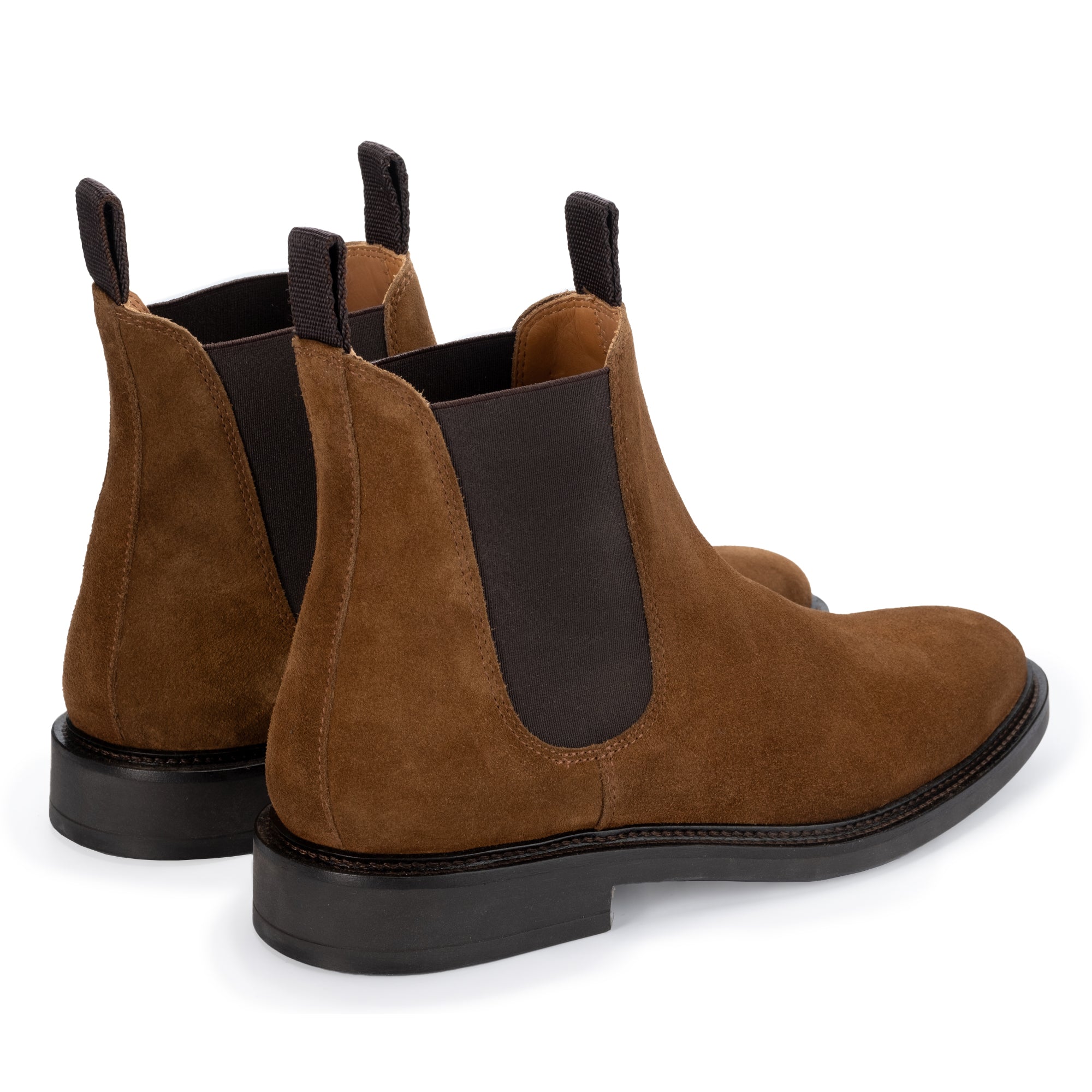
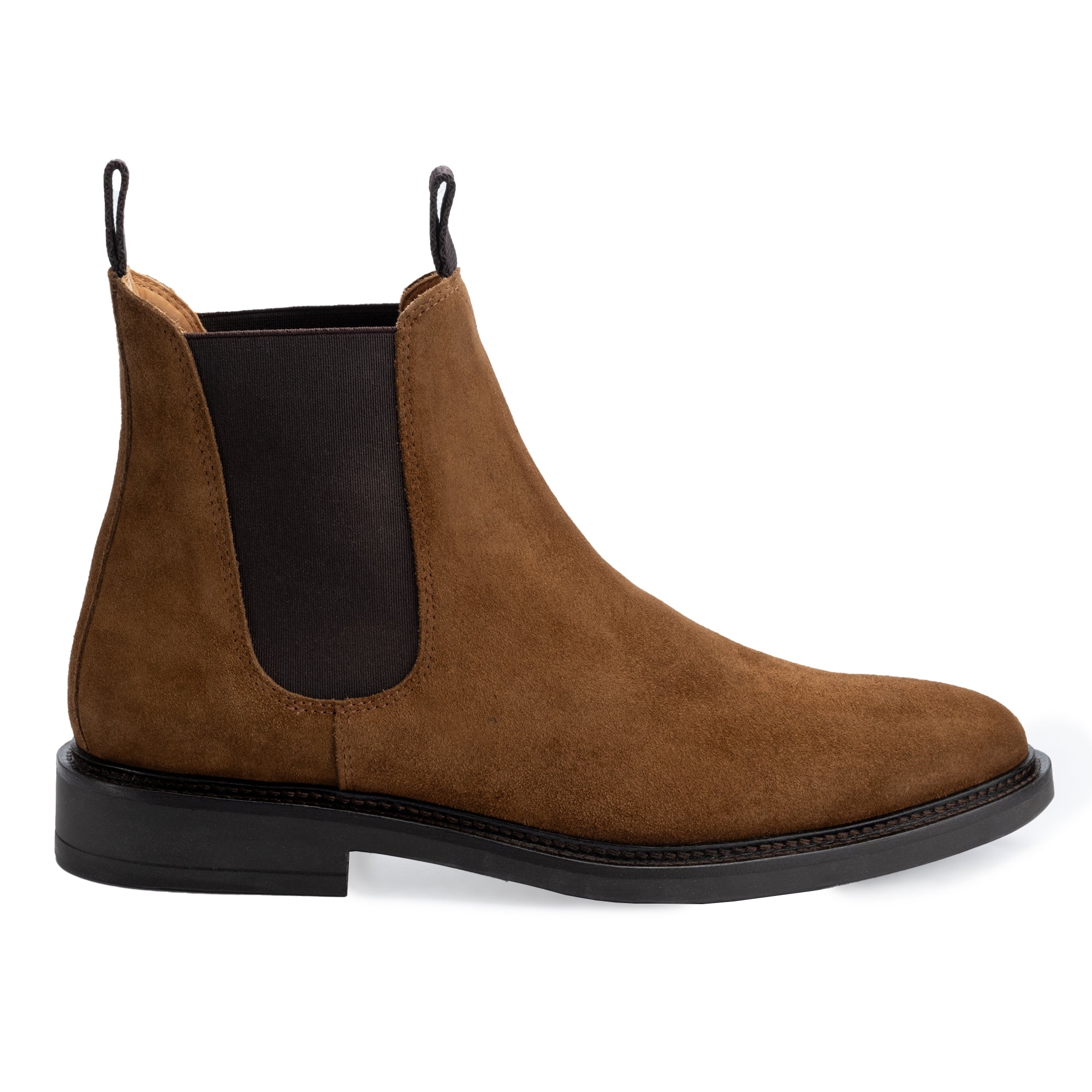
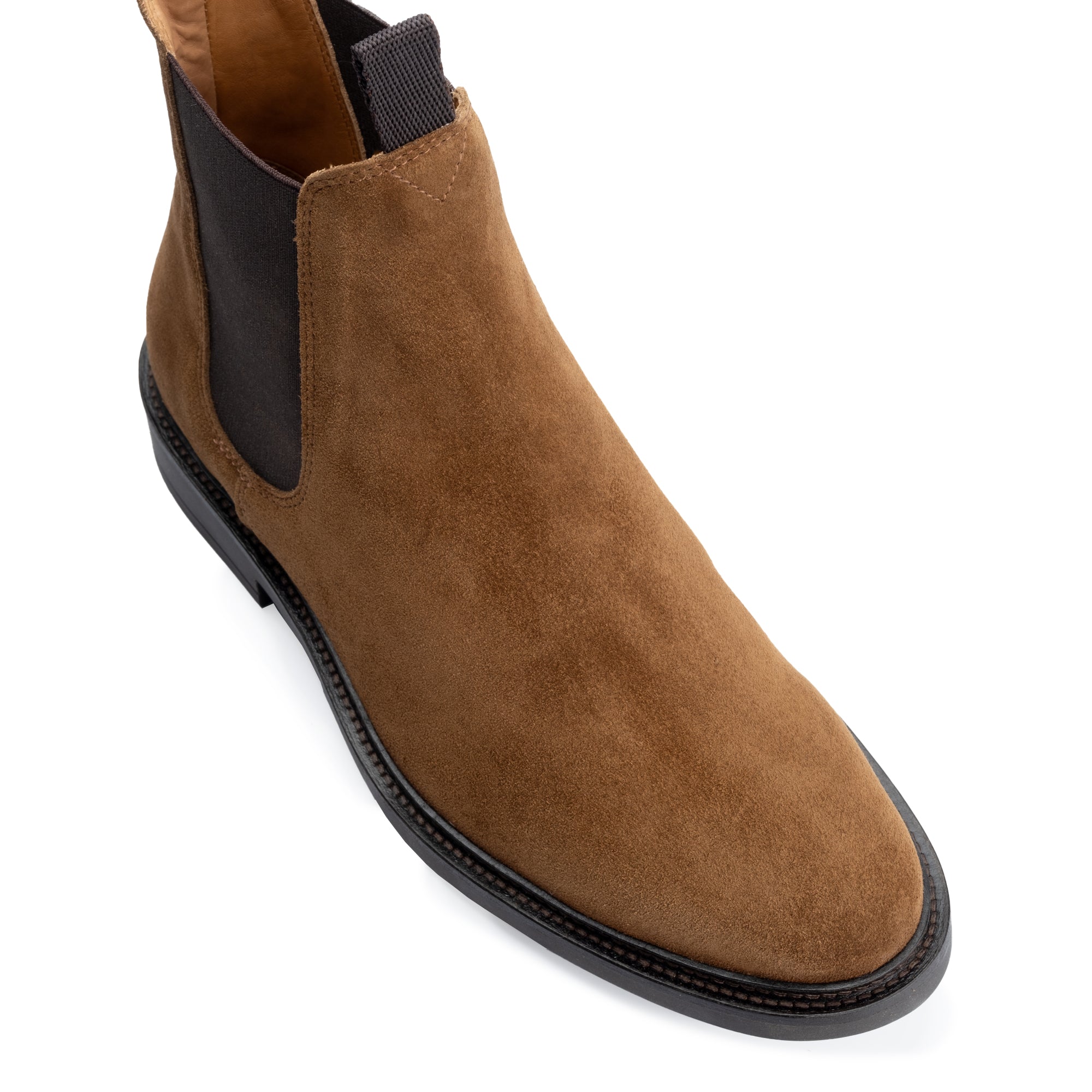
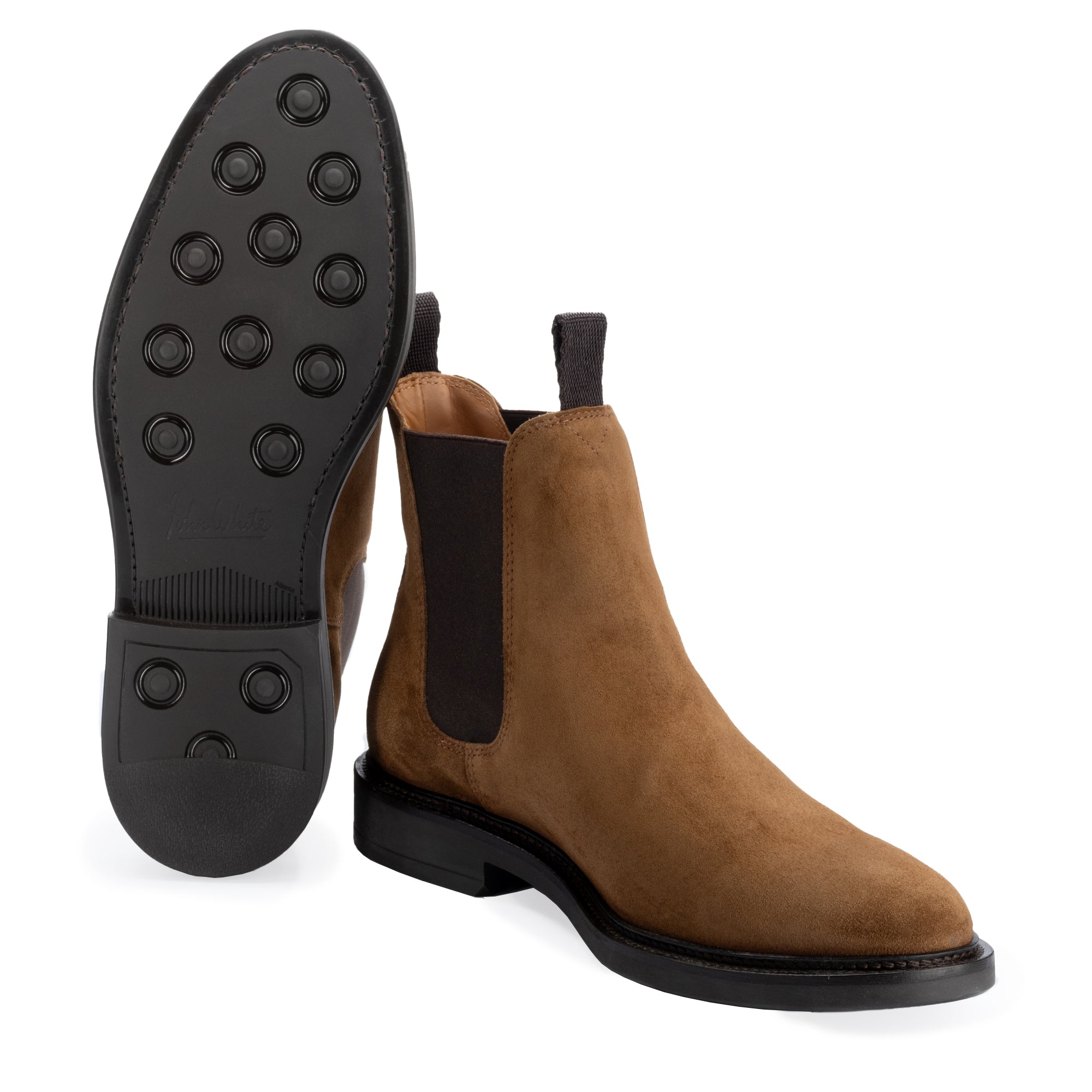
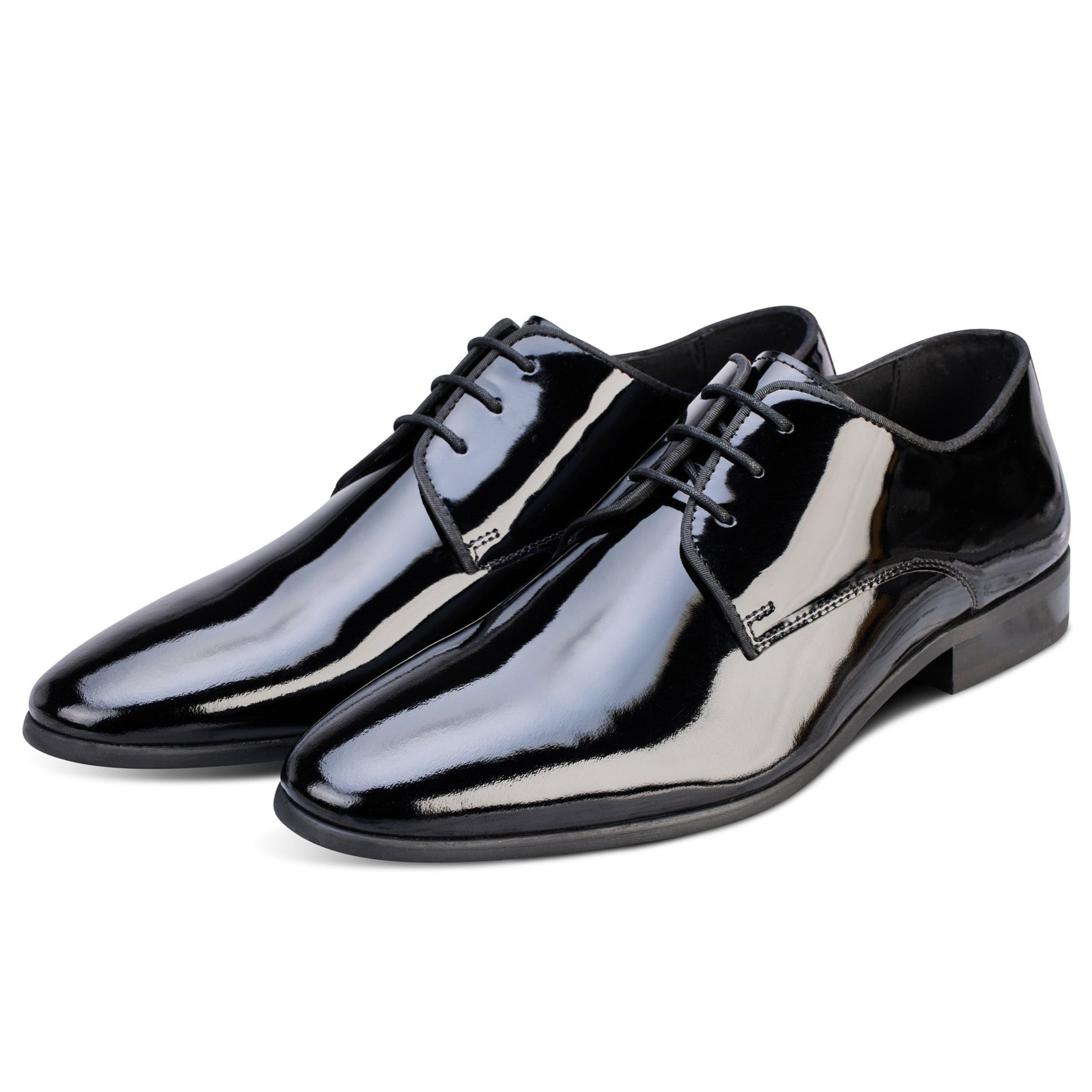
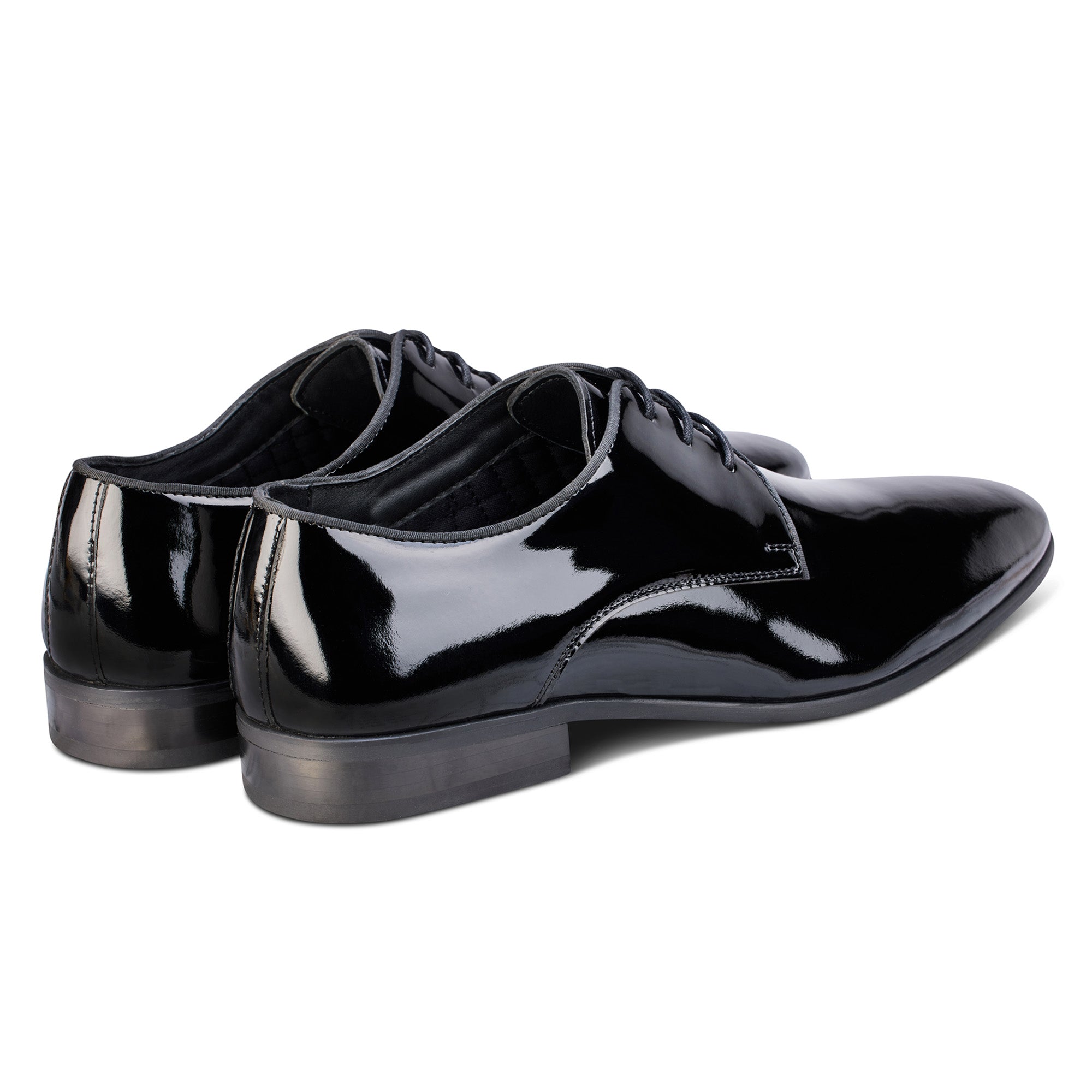
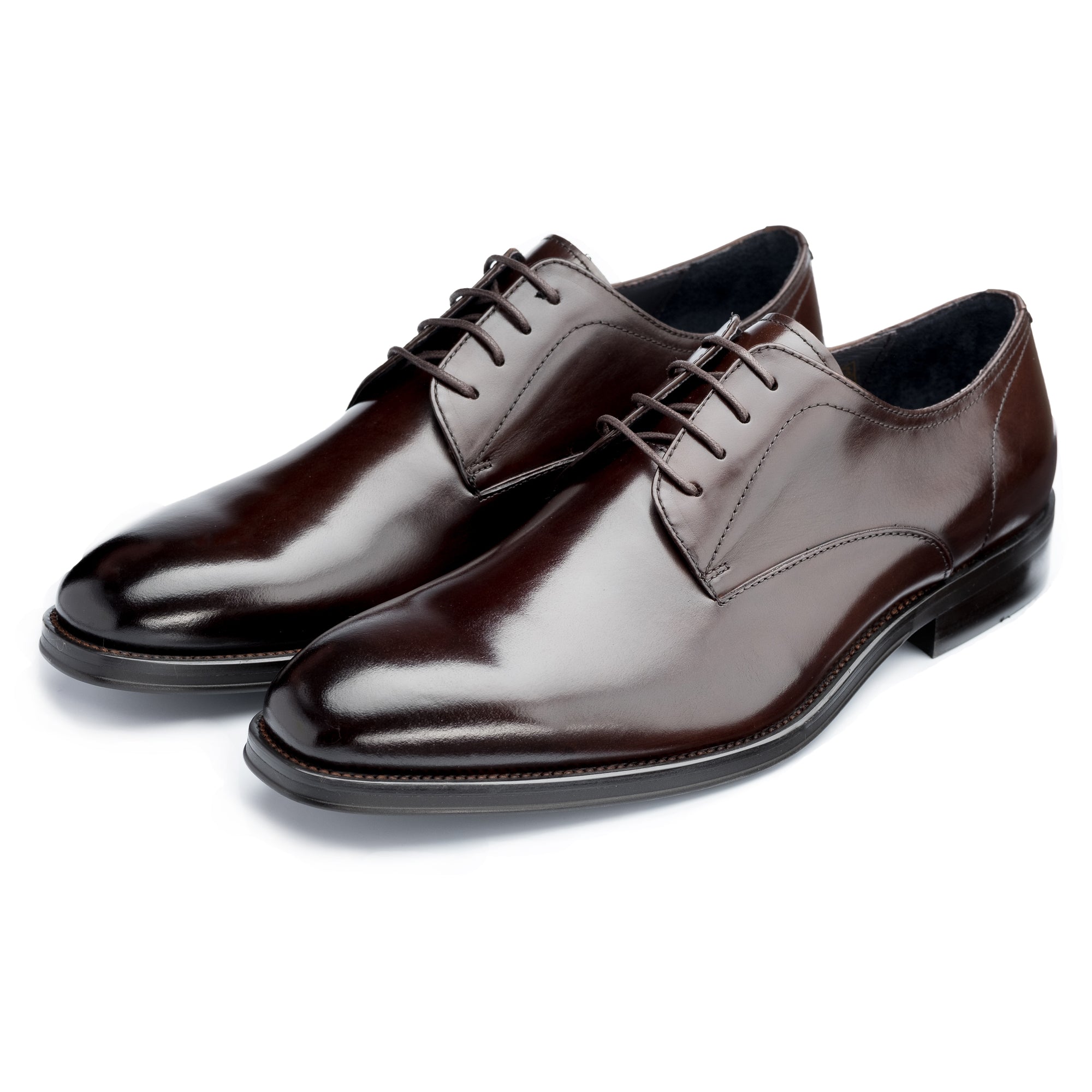
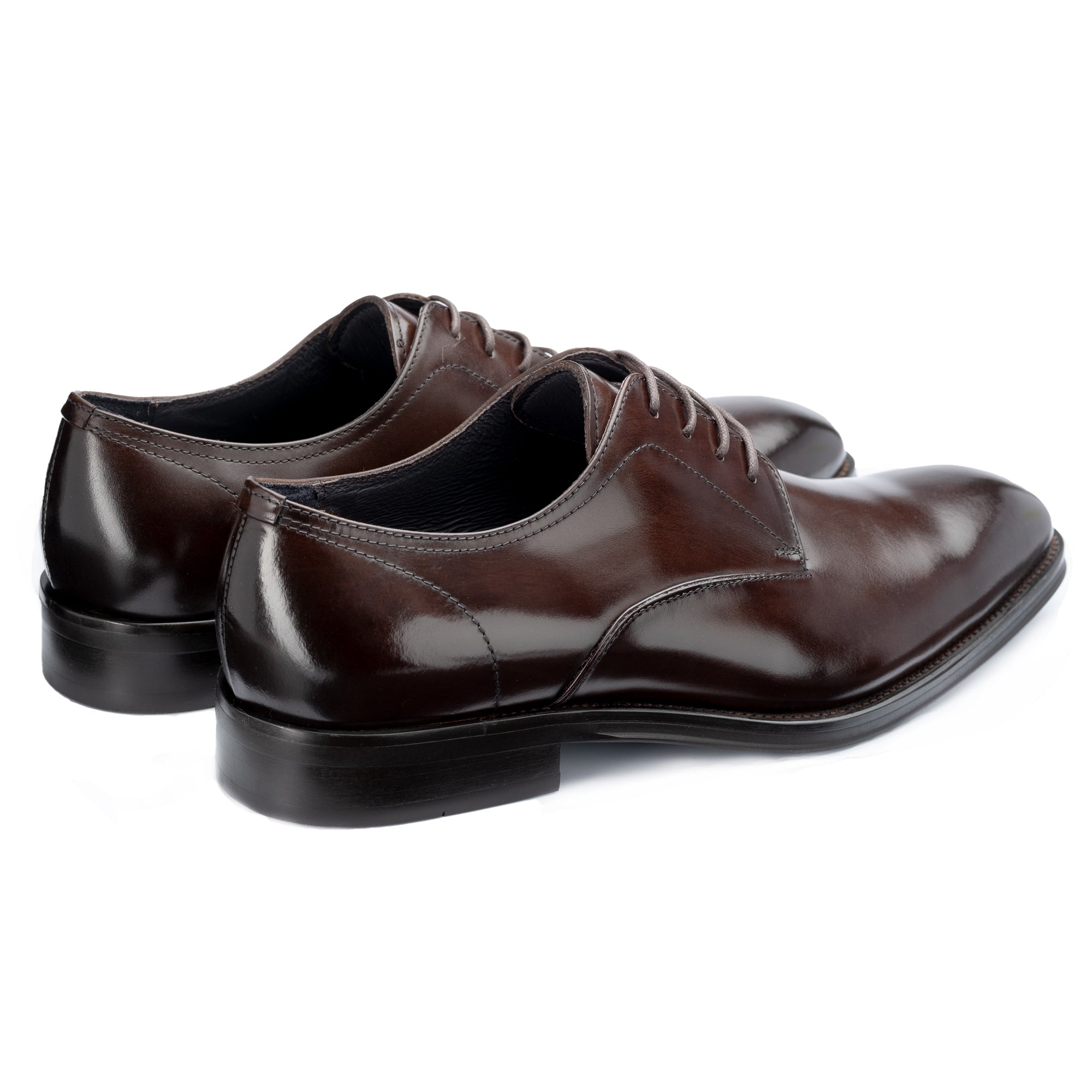
For a boot worn in genuine autumn and winter conditions, this matters considerably. The Brecon Chelsea Boot in Brown and the Tanner Derby Shoes are both designed to respond to regular conditioning — a monthly wax keeps the upper supple through temperature changes that would otherwise dry and crack a less carefully maintained surface.
Where the Premium Is Earned
The cost difference between a full-grain and corrected-grain shoe reflects two things: the quality of the hide at source, and the tannery process required to work with it. Sourcing hides with sufficiently clean, tight grain for full-grain production is more expensive because those hides are less common. The tanning process required to preserve the natural surface without damage is slower and more carefully controlled than the process that simply buffs and coats.
You are, in effect, paying for less intervention — which is counterintuitive but consistently true with quality materials. The premium is not decorative. It reflects longevity. A full-grain shoe maintained correctly will outlast a corrected-grain shoe by years, because the underlying structure of the upper has not been compromised in its production.
For a dress shoe that will be worn to occasions where appearance counts and repeated wear is expected, full-grain is the material that rewards commitment. When the stakes are high — a first meeting with a client, a formal interview, an occasion where the details are noticed — the choice of leather grade beneath the polish is worth understanding. The guide to shoes for a job interview covers the occasion-dressing context; the material decision covered here is the foundation beneath those choices.
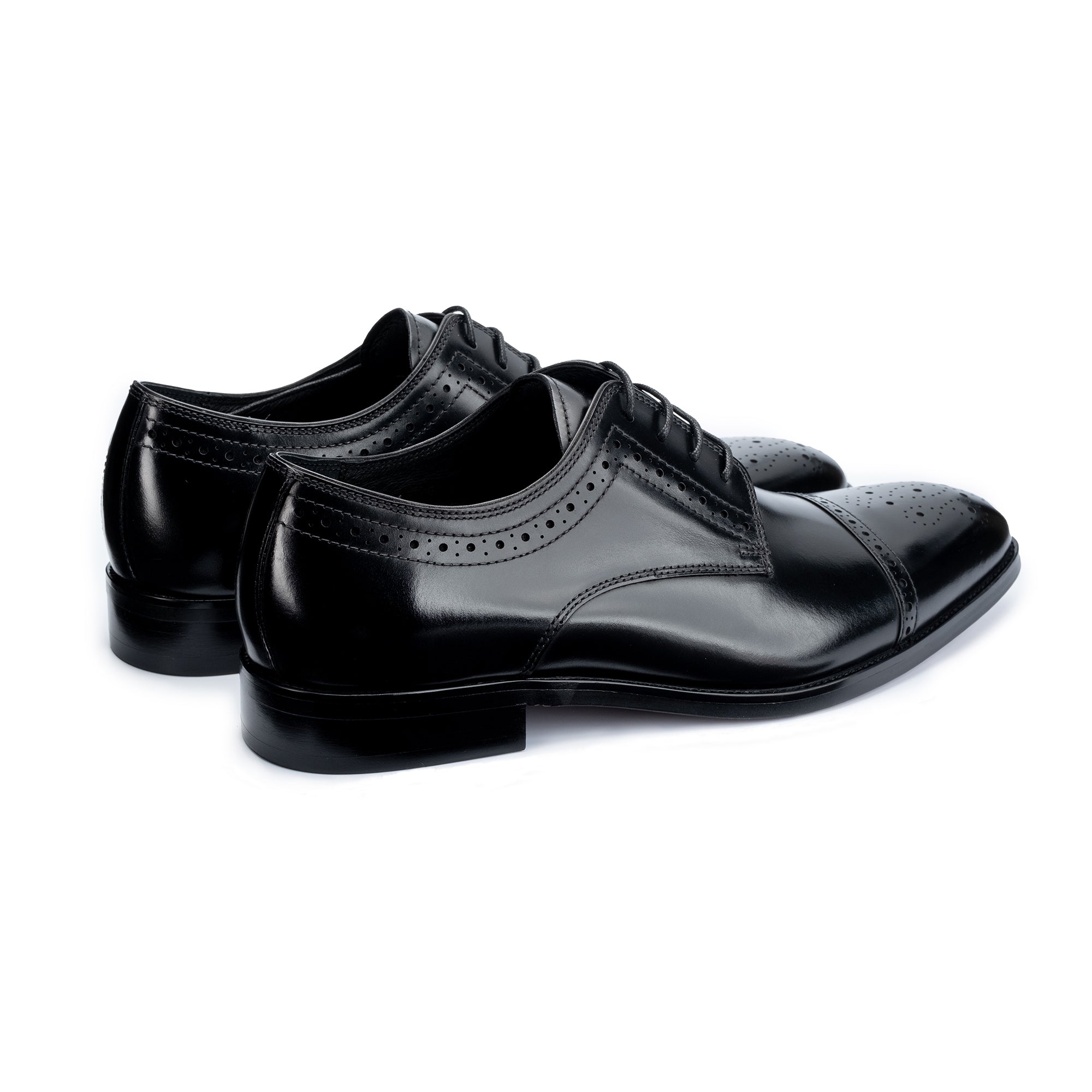
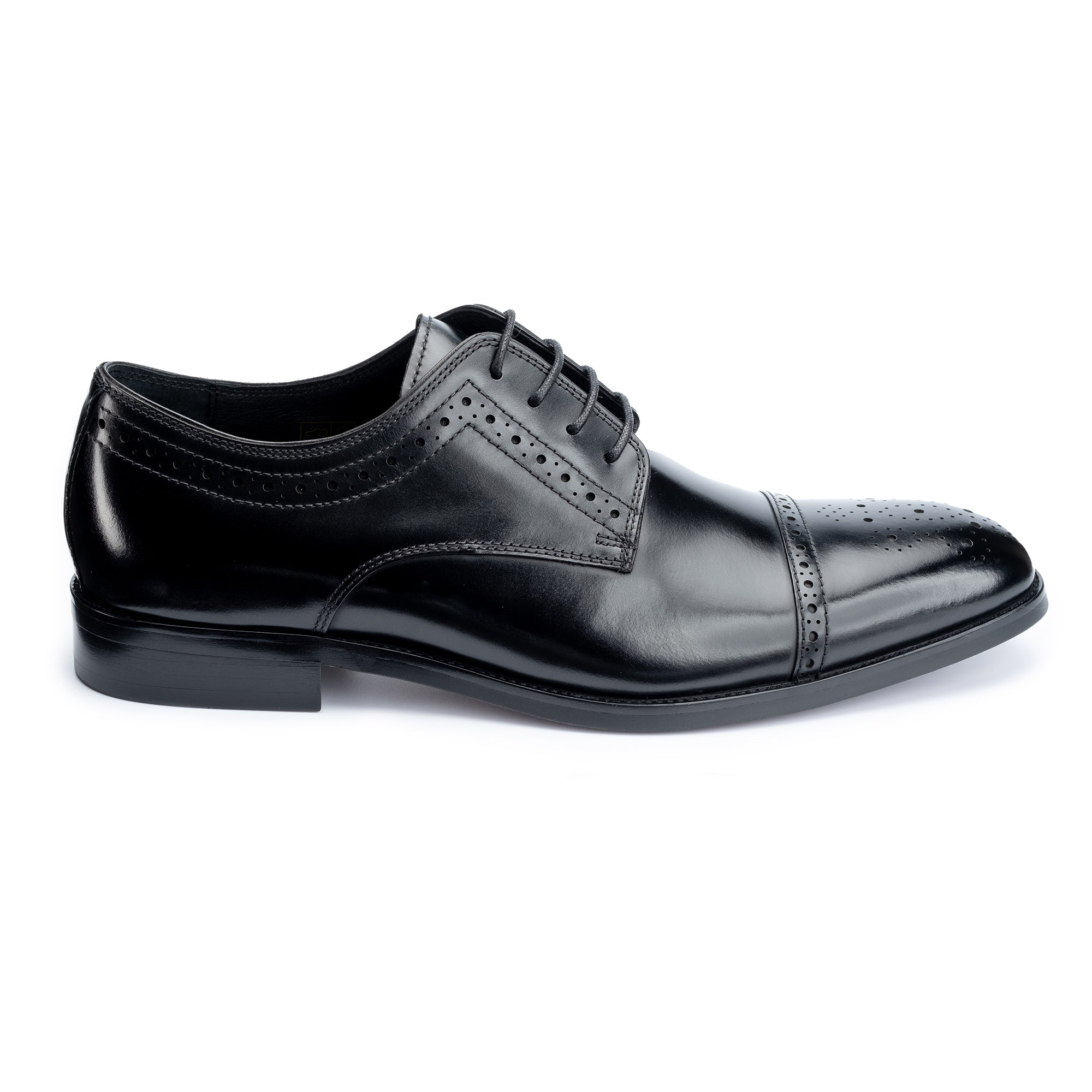
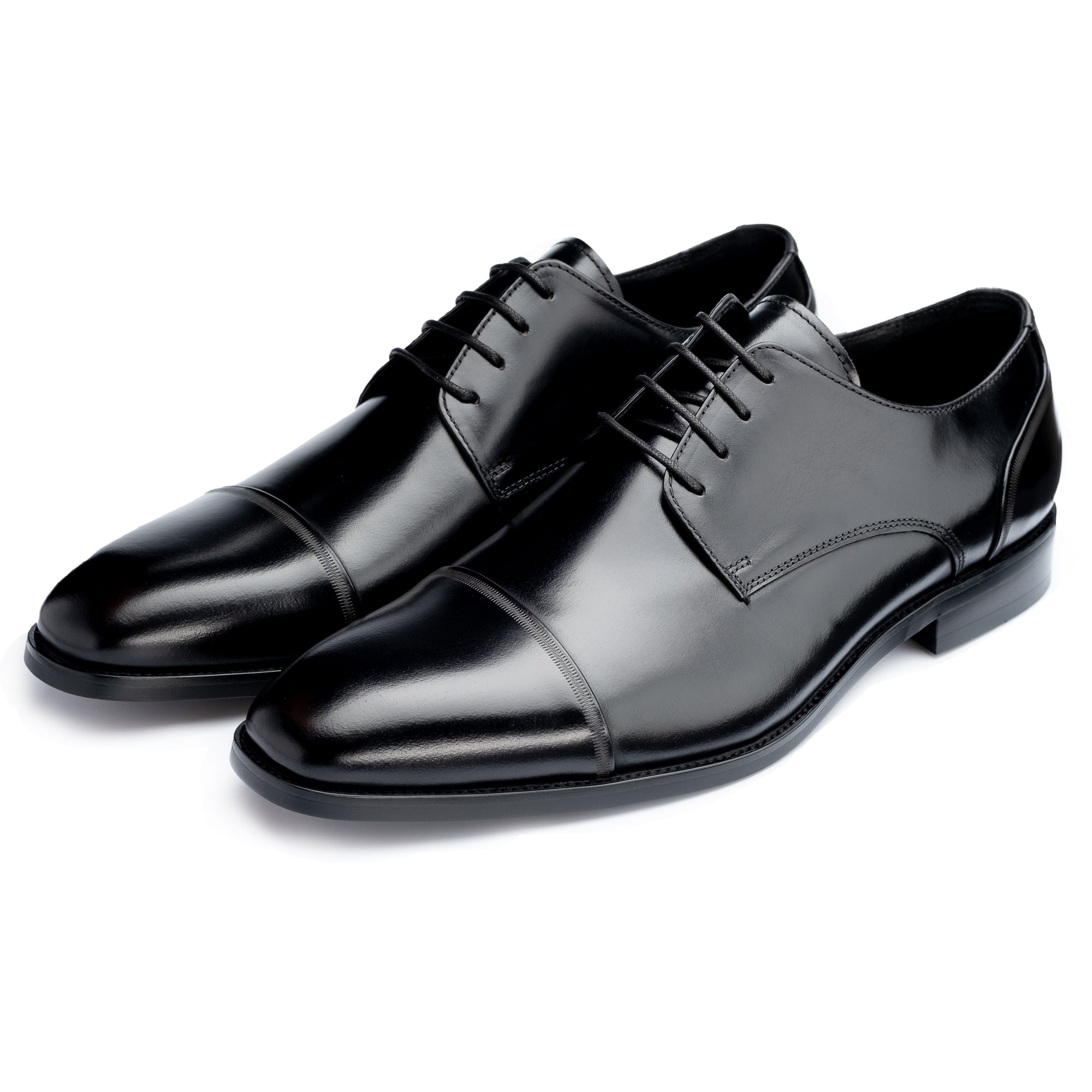
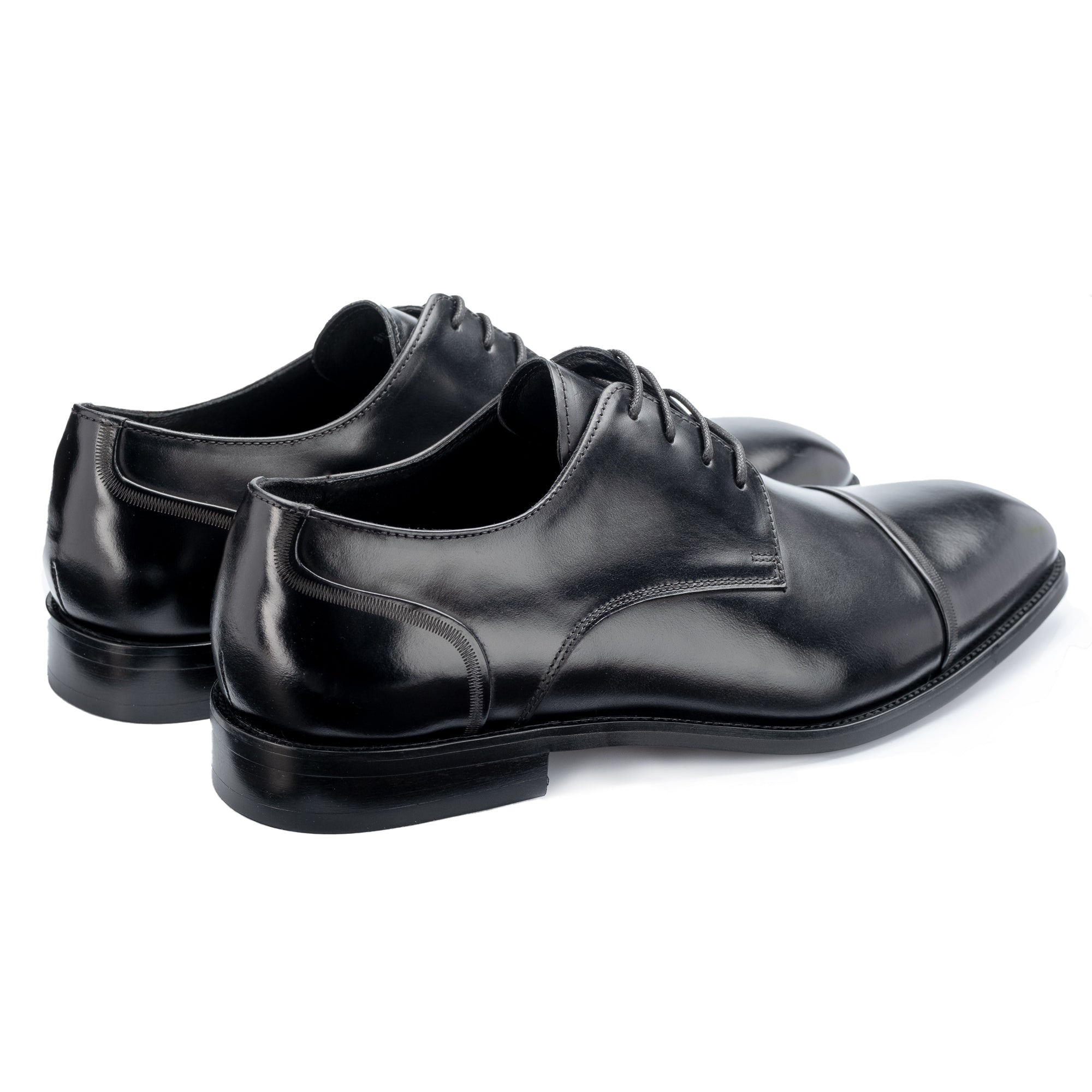
The JWS Oxford range — led by the Guildhall Capped Oxfords in both Black and Tan — represents this standard at the formal end. A polished calf upper that will deepen, settle, and hold its structure across years of careful ownership. That is precisely what a quality upper is meant to do.