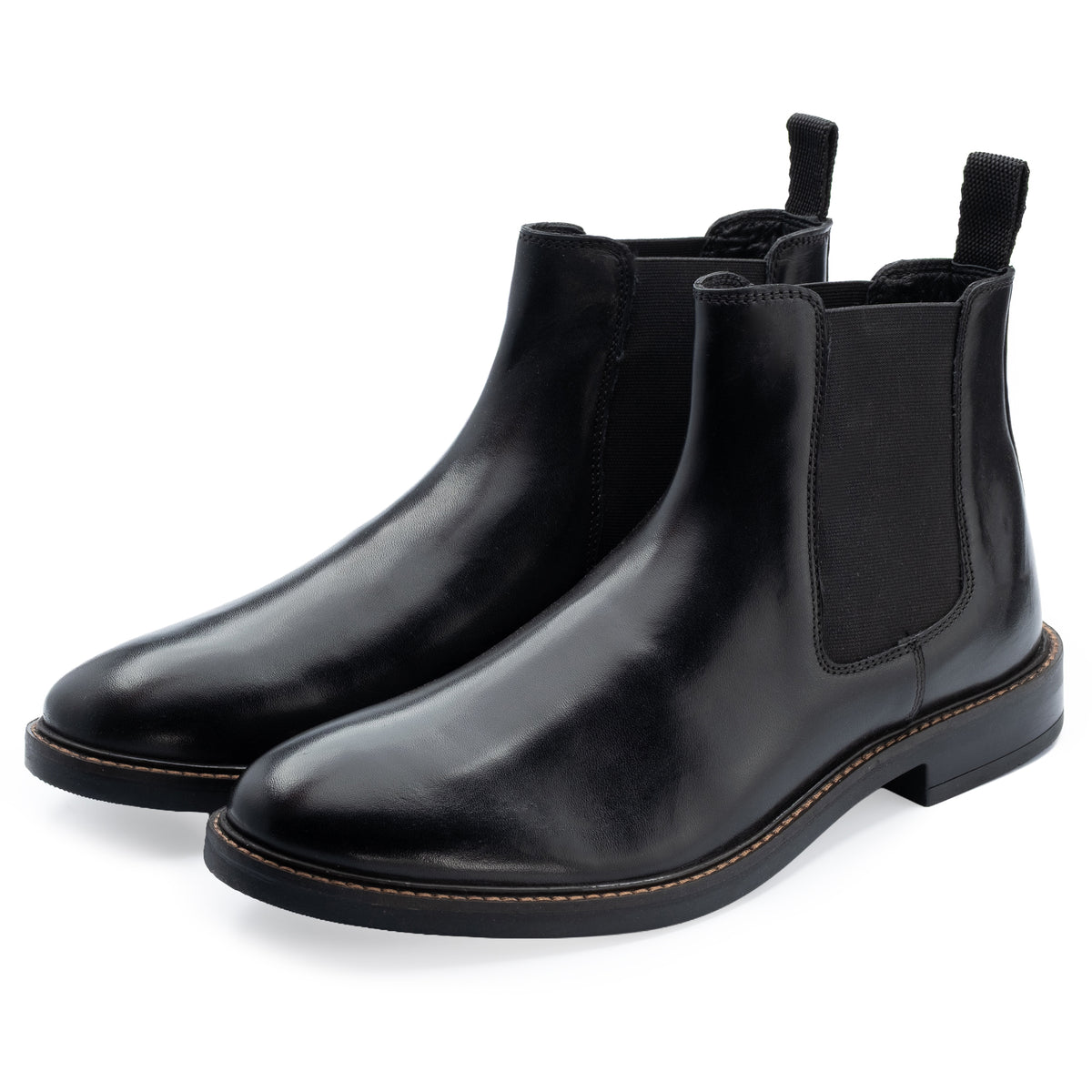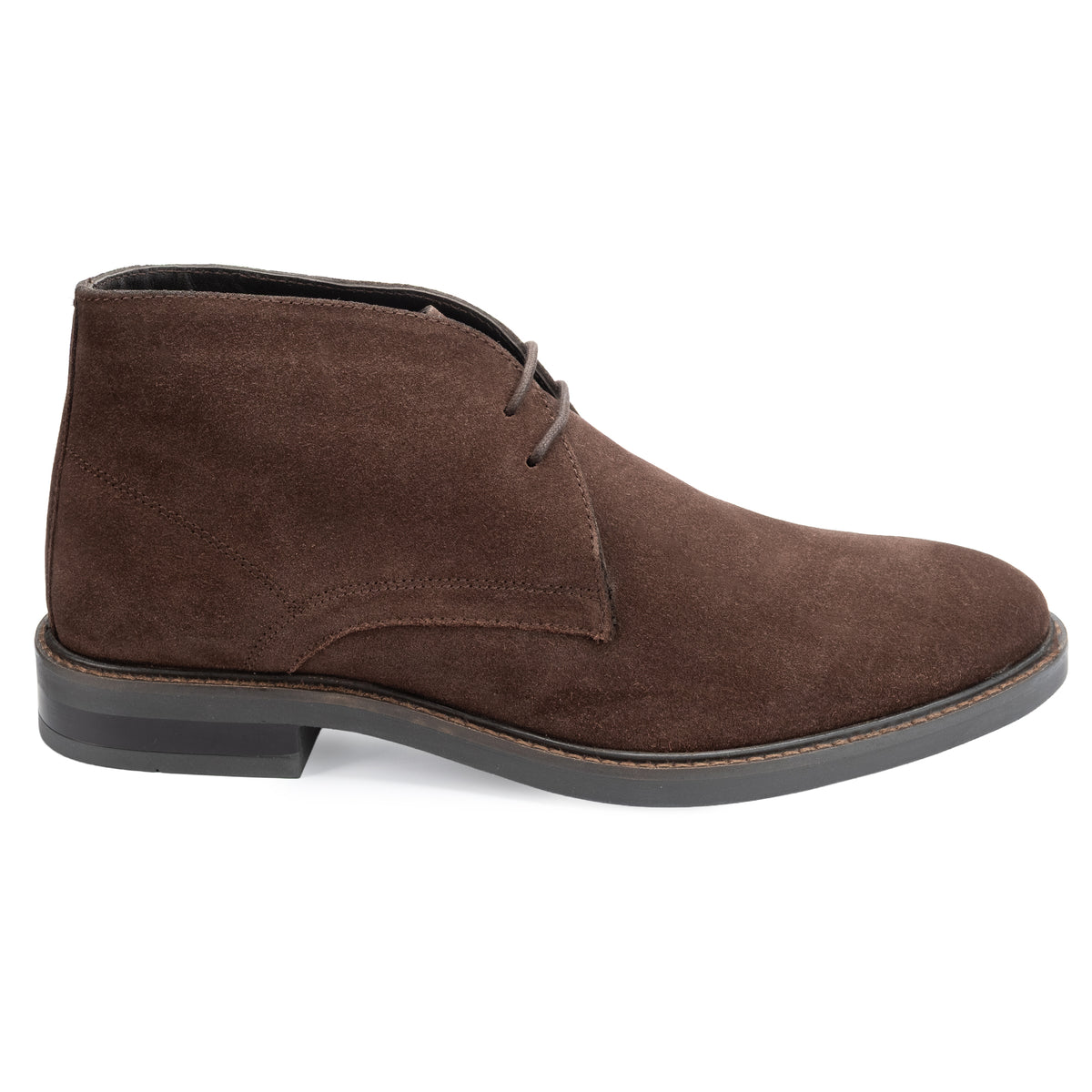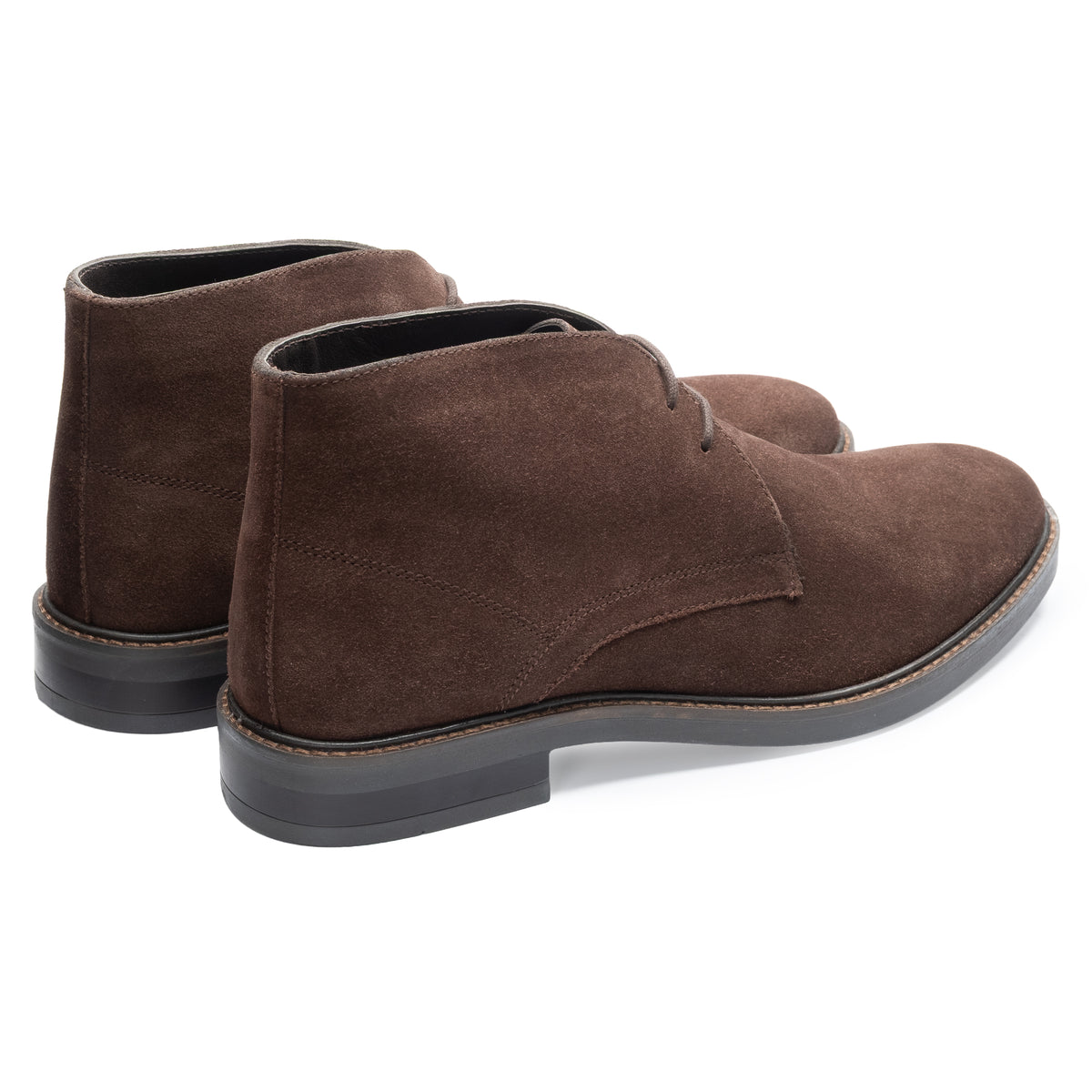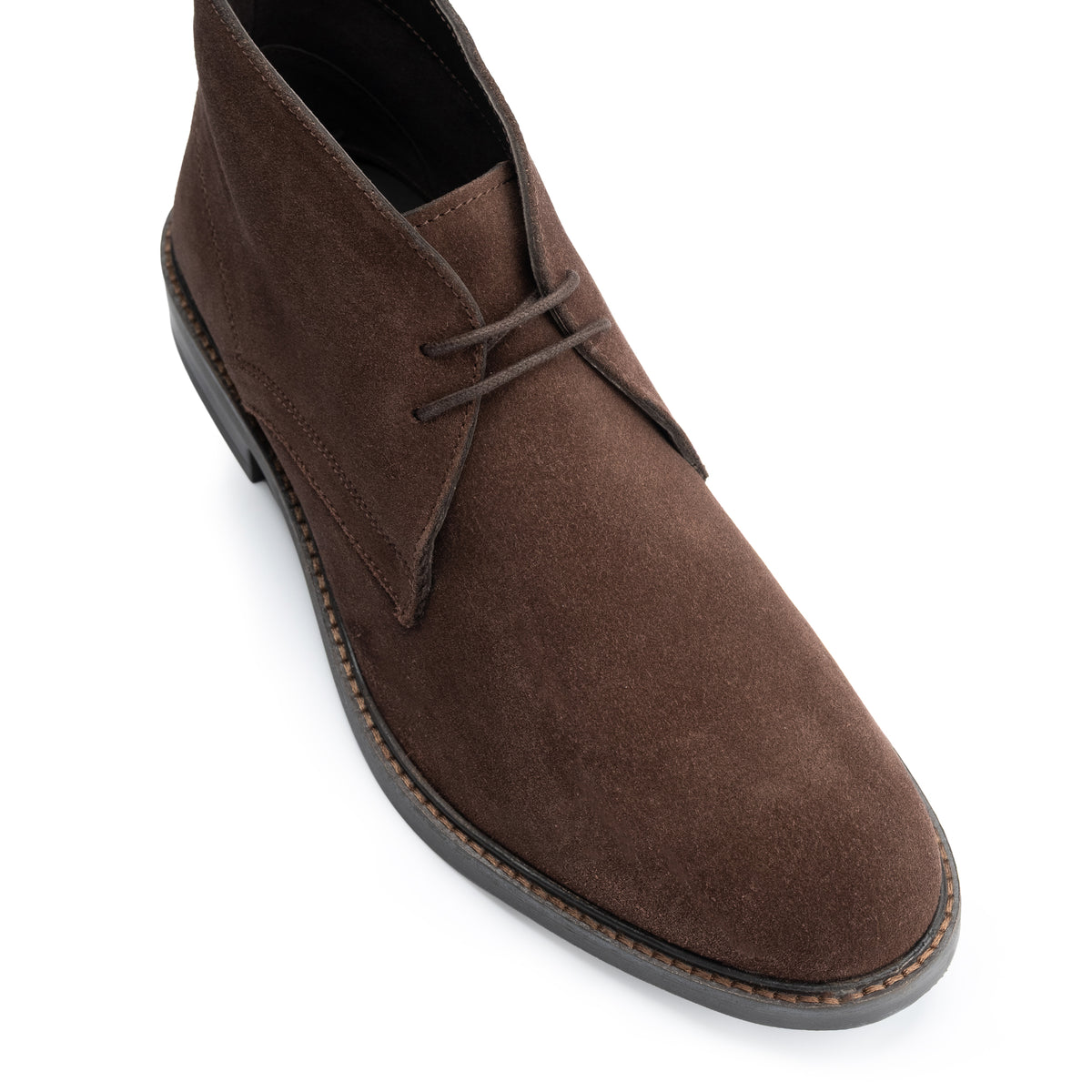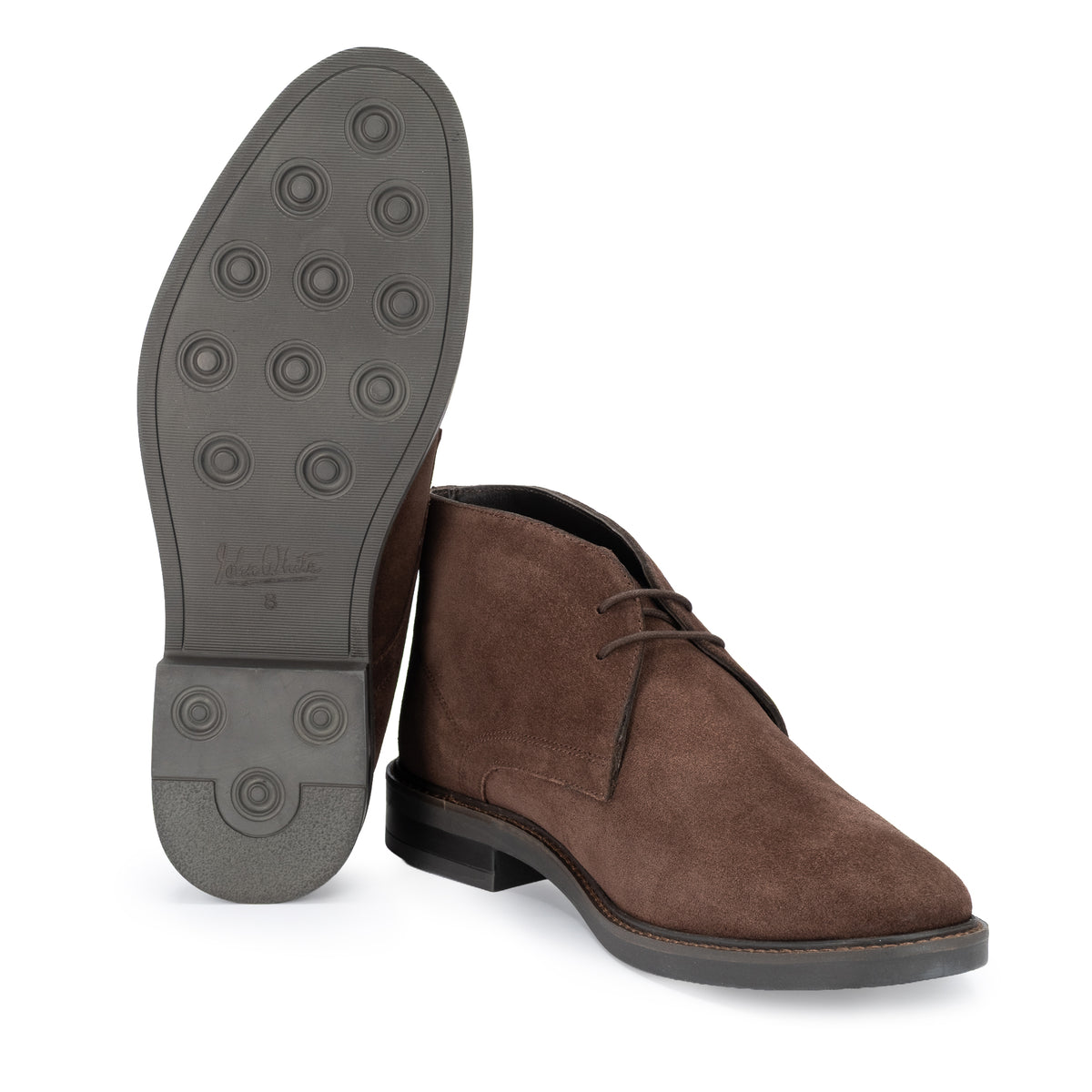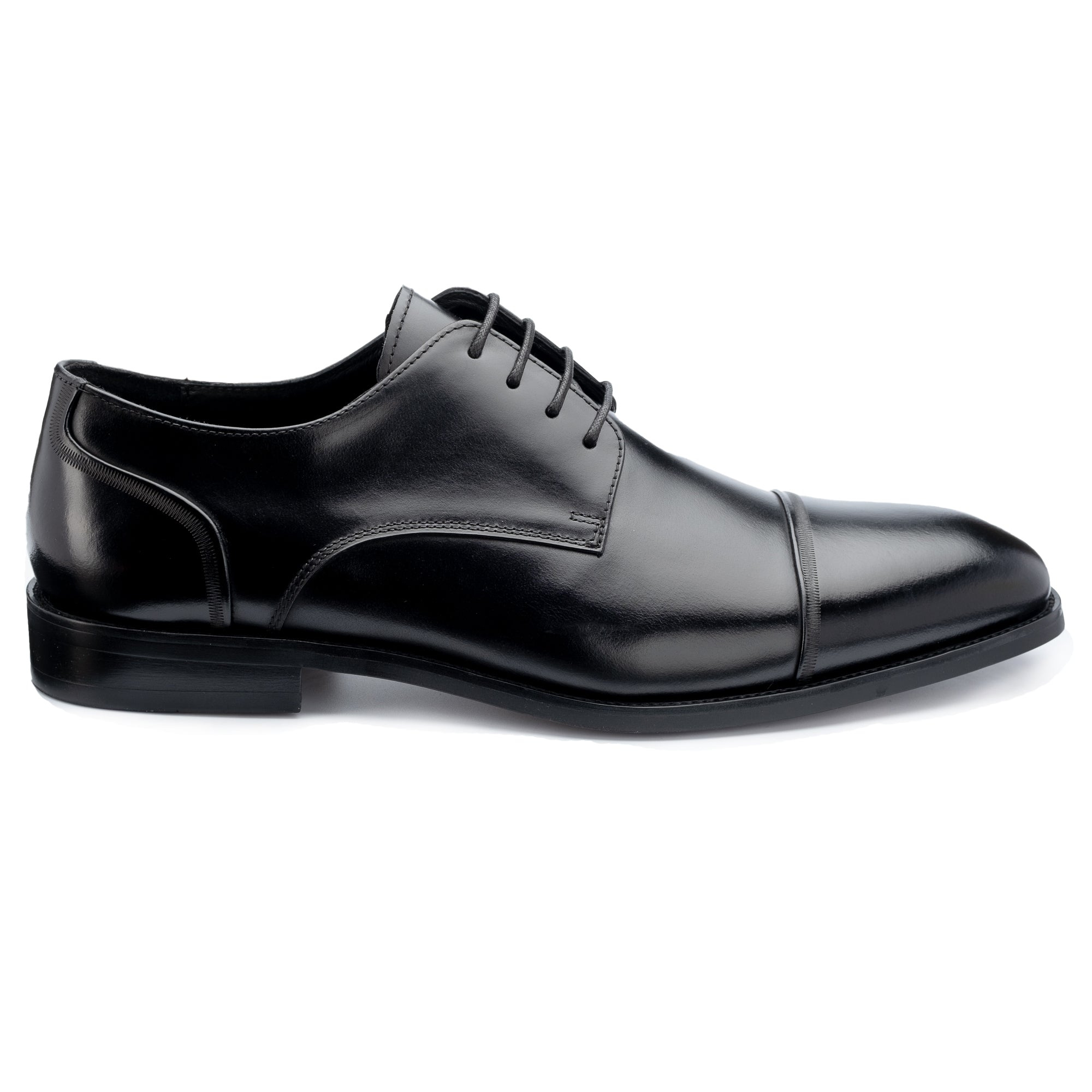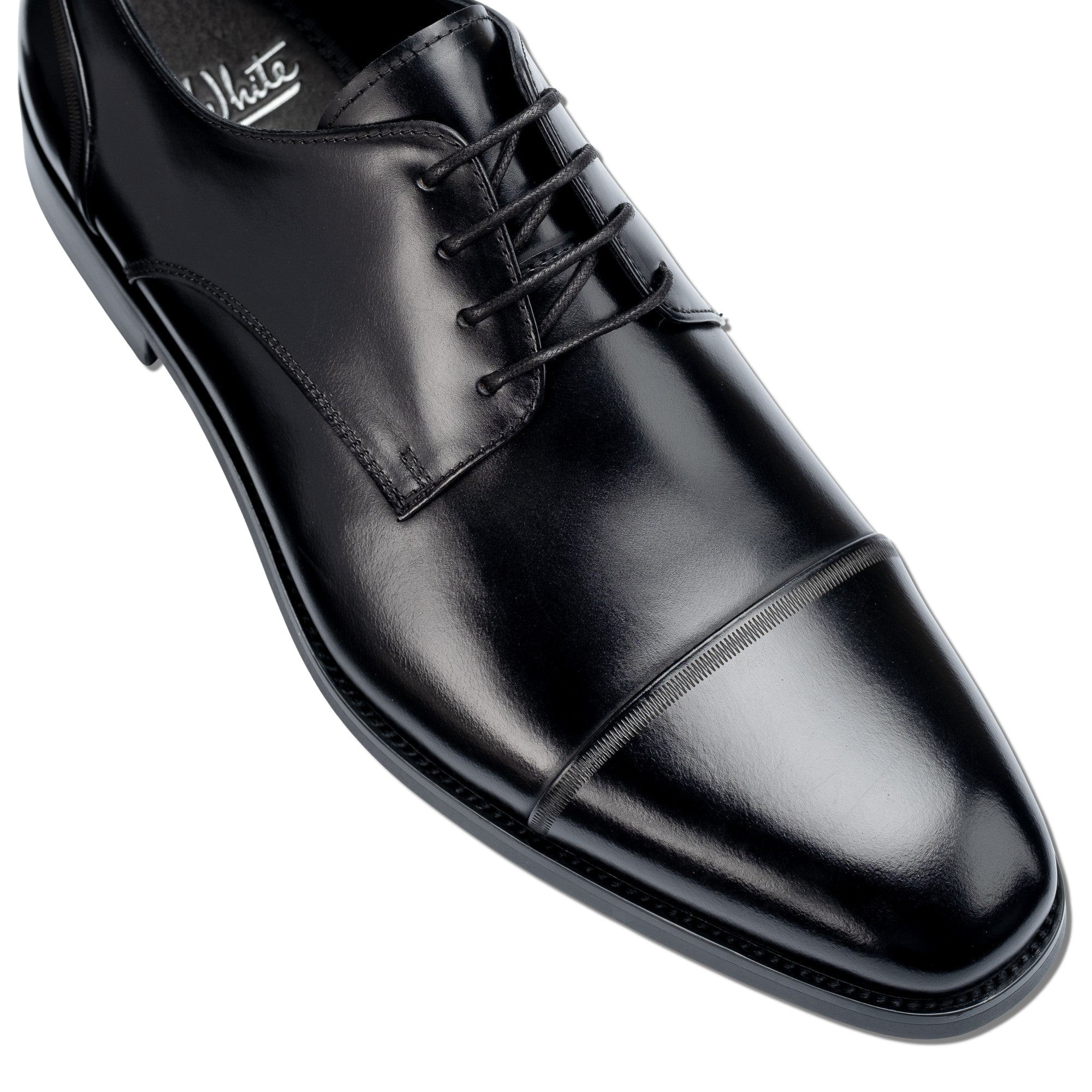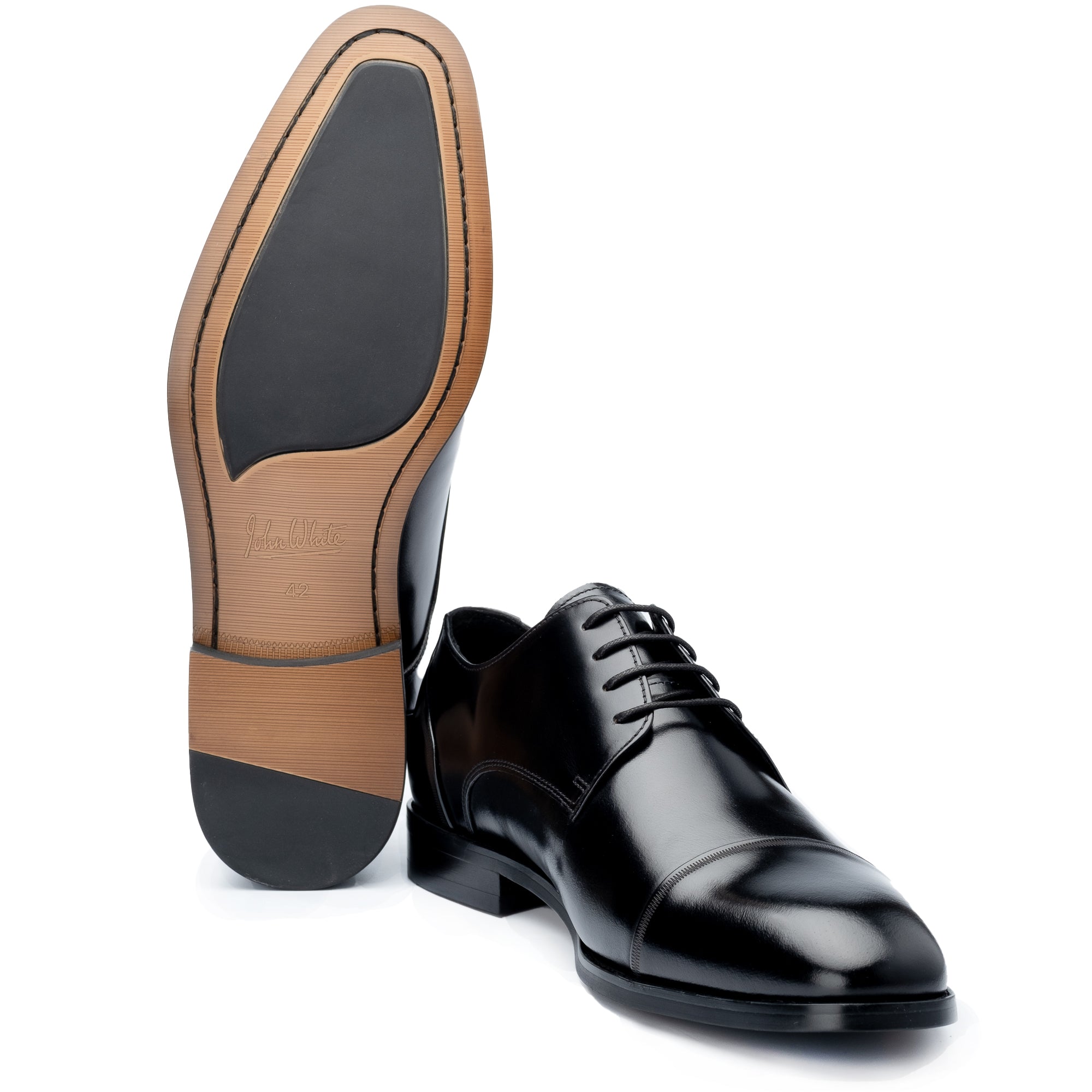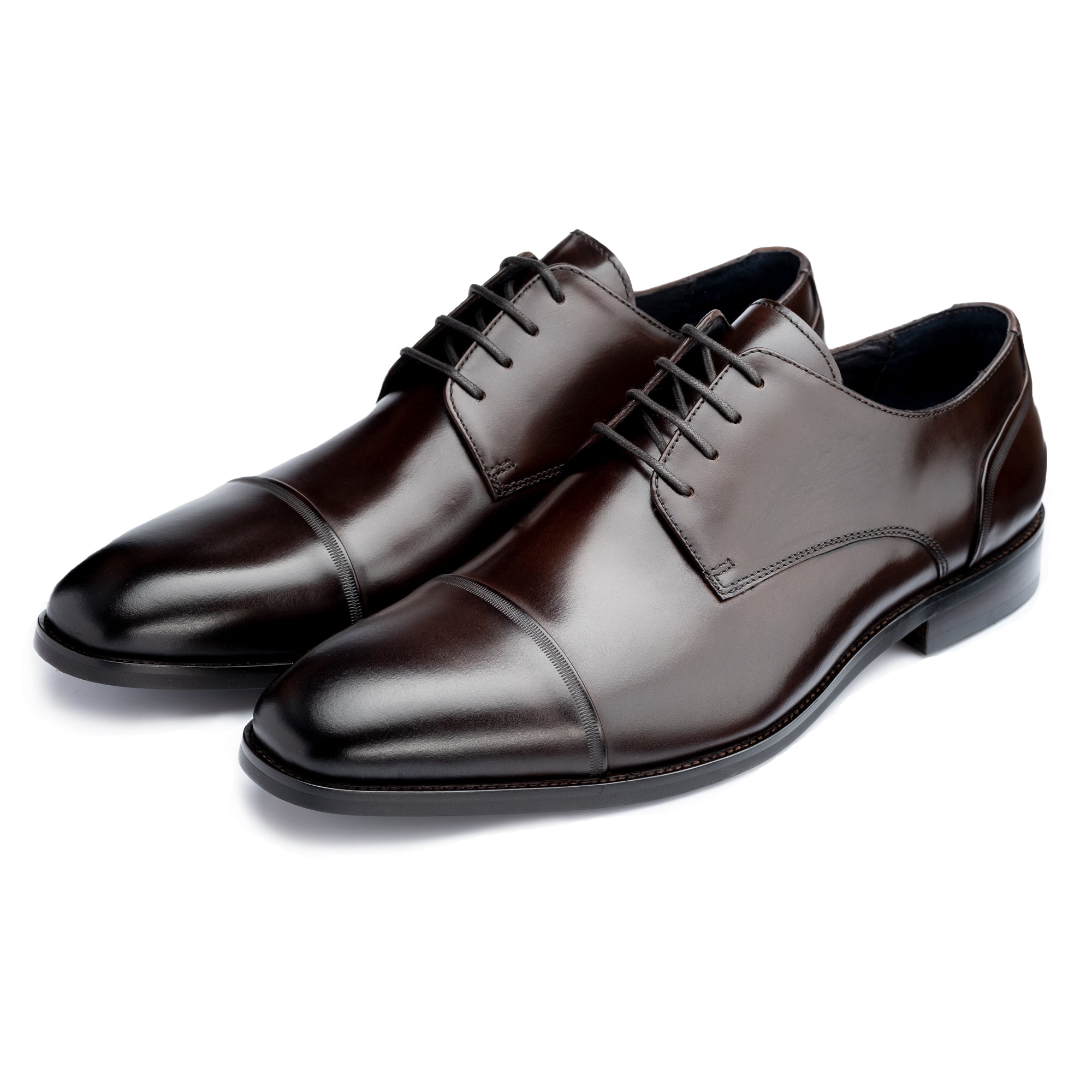

Ask a shoe retailer for a brogue and you might receive anything from a stately full wingtip to a barely-decorated toe-capped Oxford. The word is used loosely, the terminology varies between Northampton, Edinburgh, and New York, and the visual difference between a full brogue and a semi-brogue is sometimes subtle enough to confuse buyers who have been wearing them for years.
In This Guide
That confusion costs money. A man who buys a full wingtip for his City job, or a plain-capped Oxford for a country weekend, has misread the formality map. This guide draws that map clearly — what each level of broguing means, where it belongs, and which pair earns its place in which wardrobe.
What Is Broguing?
Broguing refers to the decorative perforations — rows of small punched holes — worked into the leather of a shoe. The technique originated in Irish and Scottish field shoes, where the perforations were functional: they allowed water to drain from the upper when crossing wet or boggy ground. The name comes from the Irish bróg, meaning shoe.
By the time the brogue reached English towns and gentlemen's wardrobes in the early twentieth century, the perforations had shed their agricultural purpose and become purely ornamental. The Northamptonshire makers who refined the style understood it as decoration, and the level of decoration — how much of the shoe carries broguing — became a reliable signal of formality. More broguing meant more casual. Less meant smarter. That logic holds today.
The three main categories — the full brogue, the semi-brogue, and the quarter brogue — each sit at a different point on that spectrum. Understanding where each falls, and why, makes buying decisions considerably cleaner.
The Full Brogue (Wingtip)
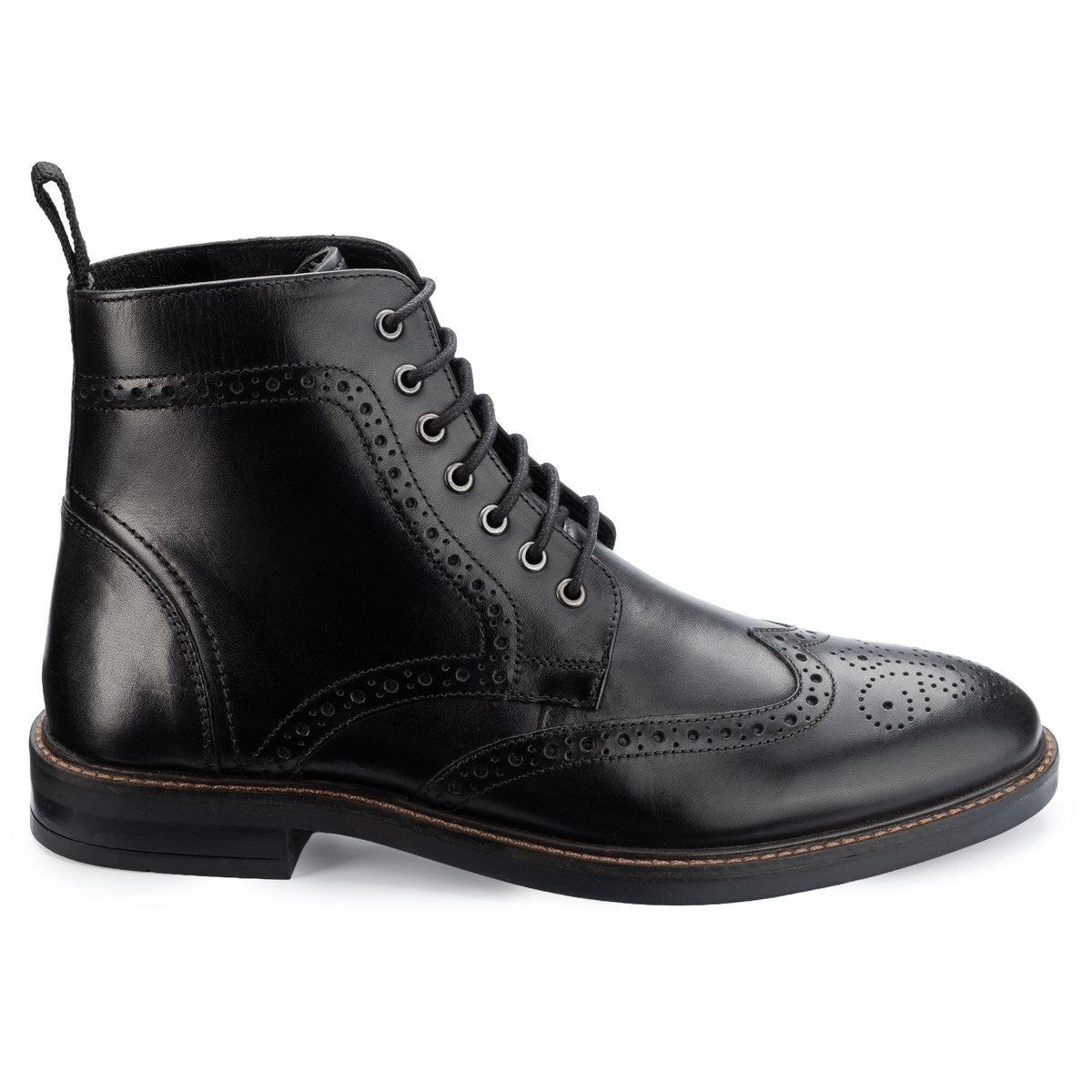
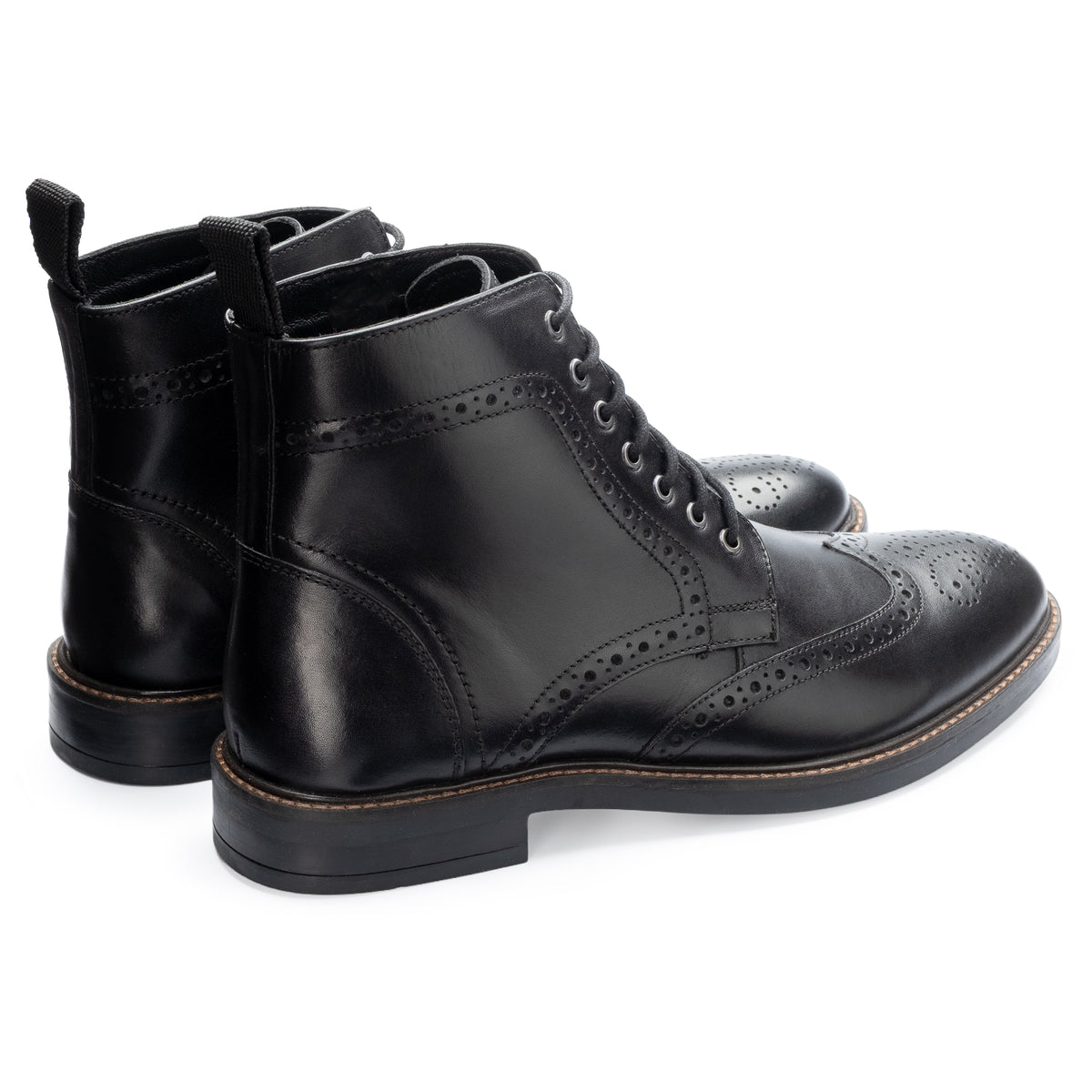
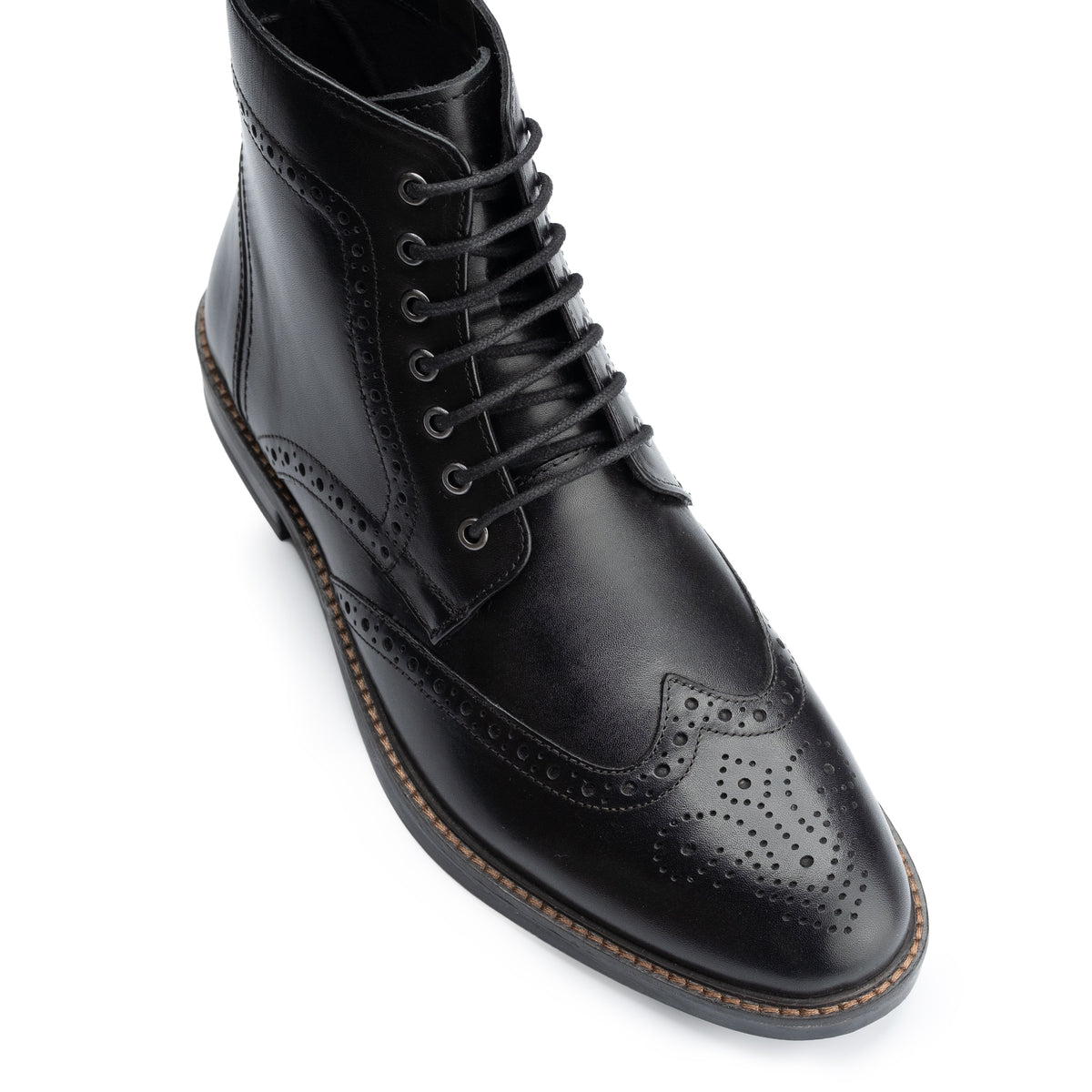
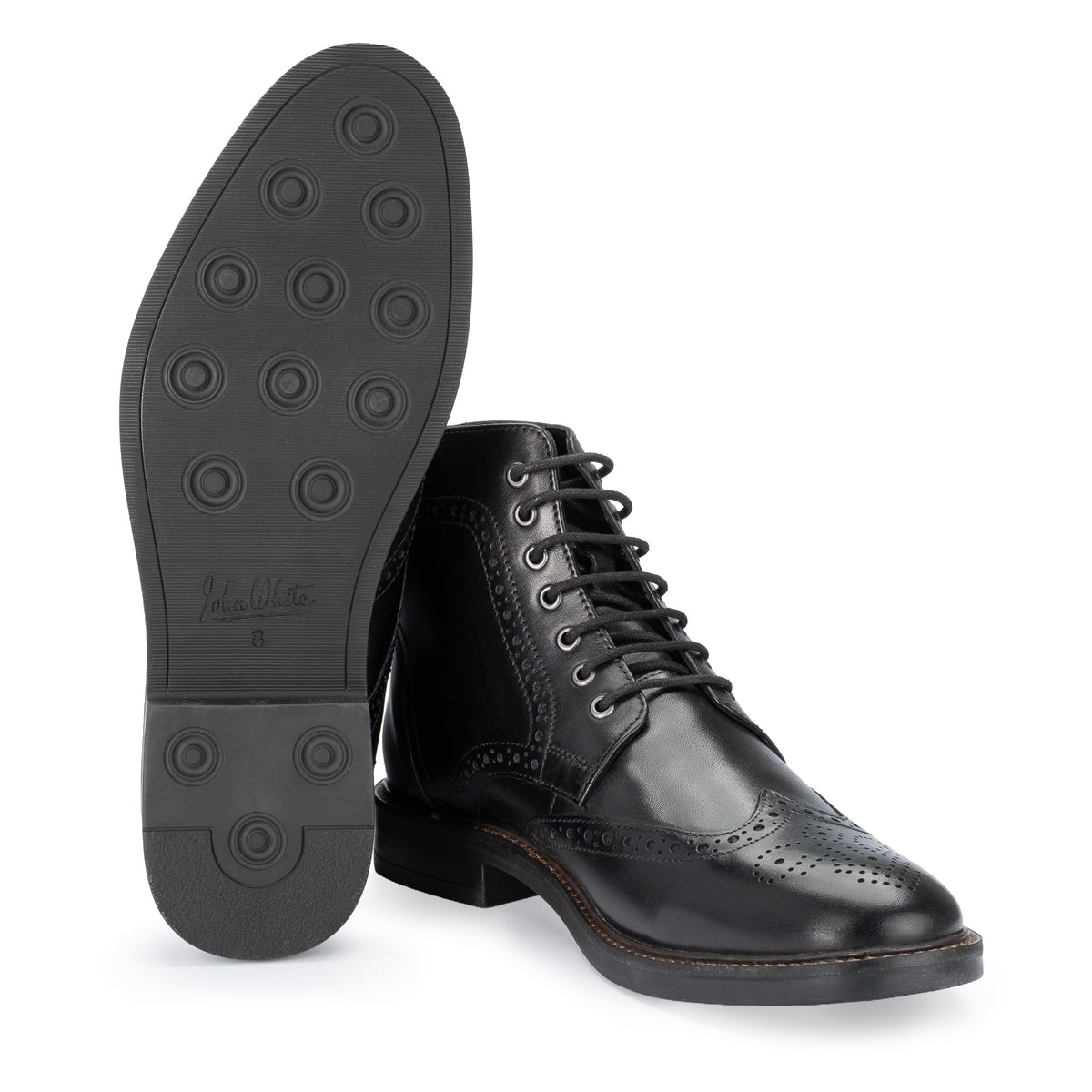
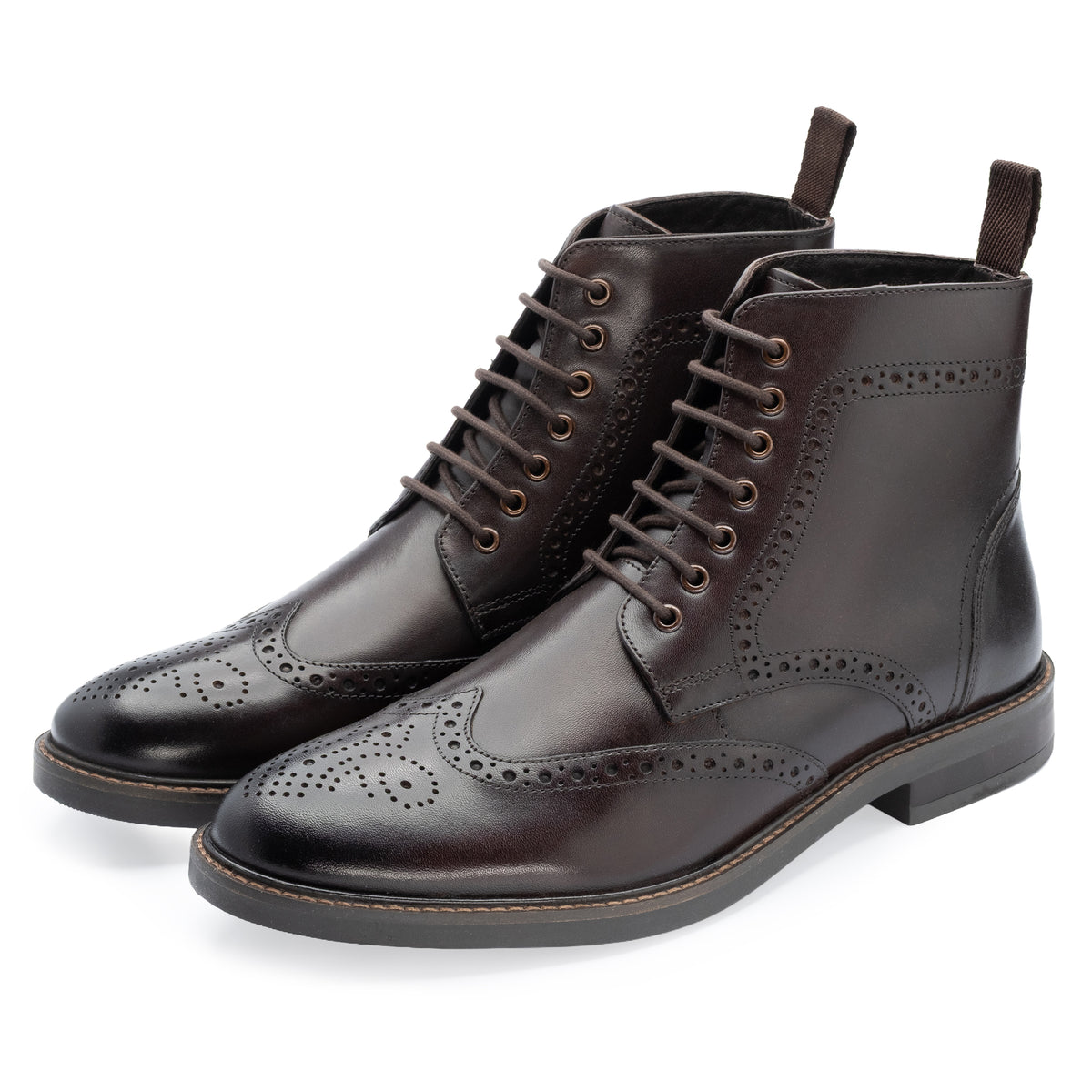
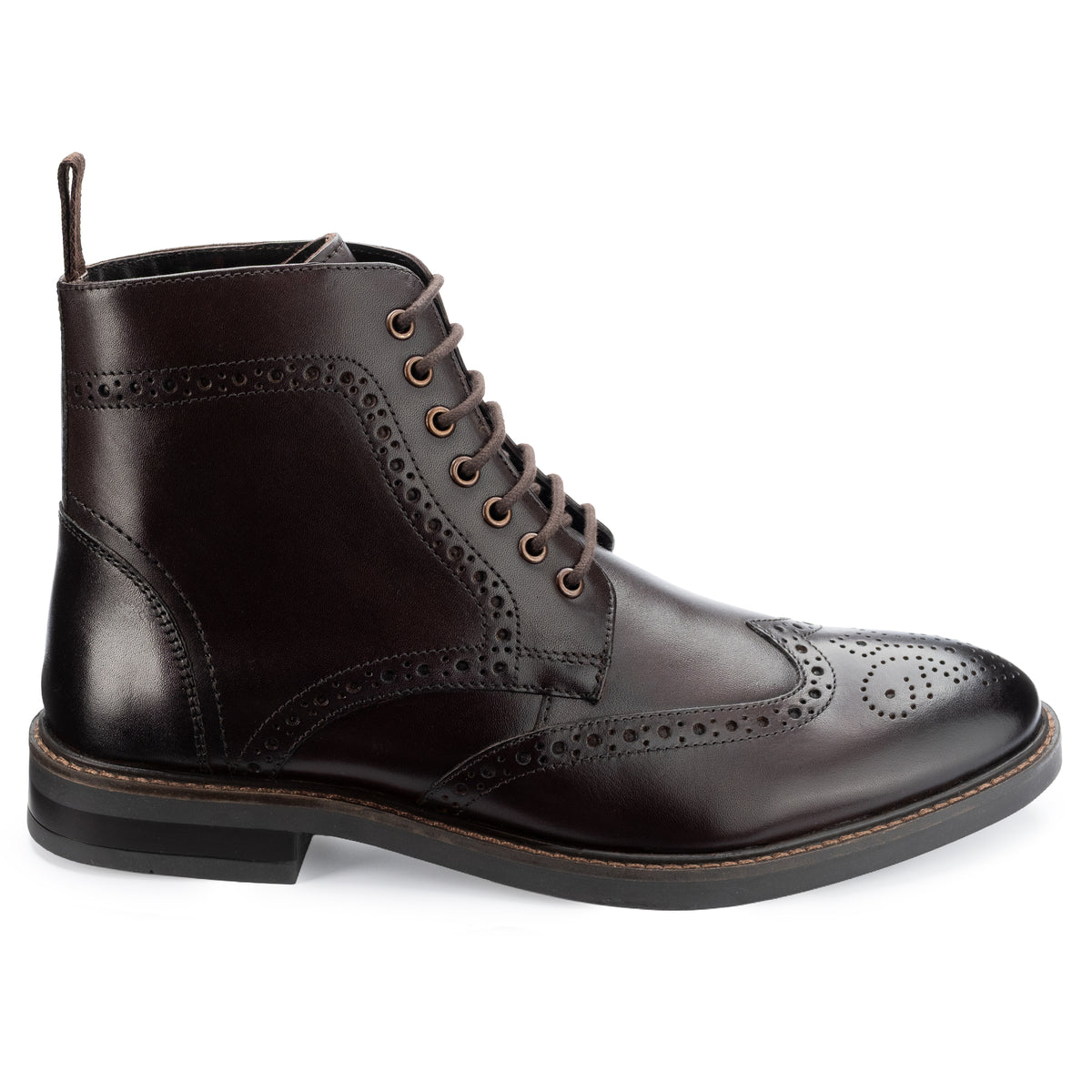
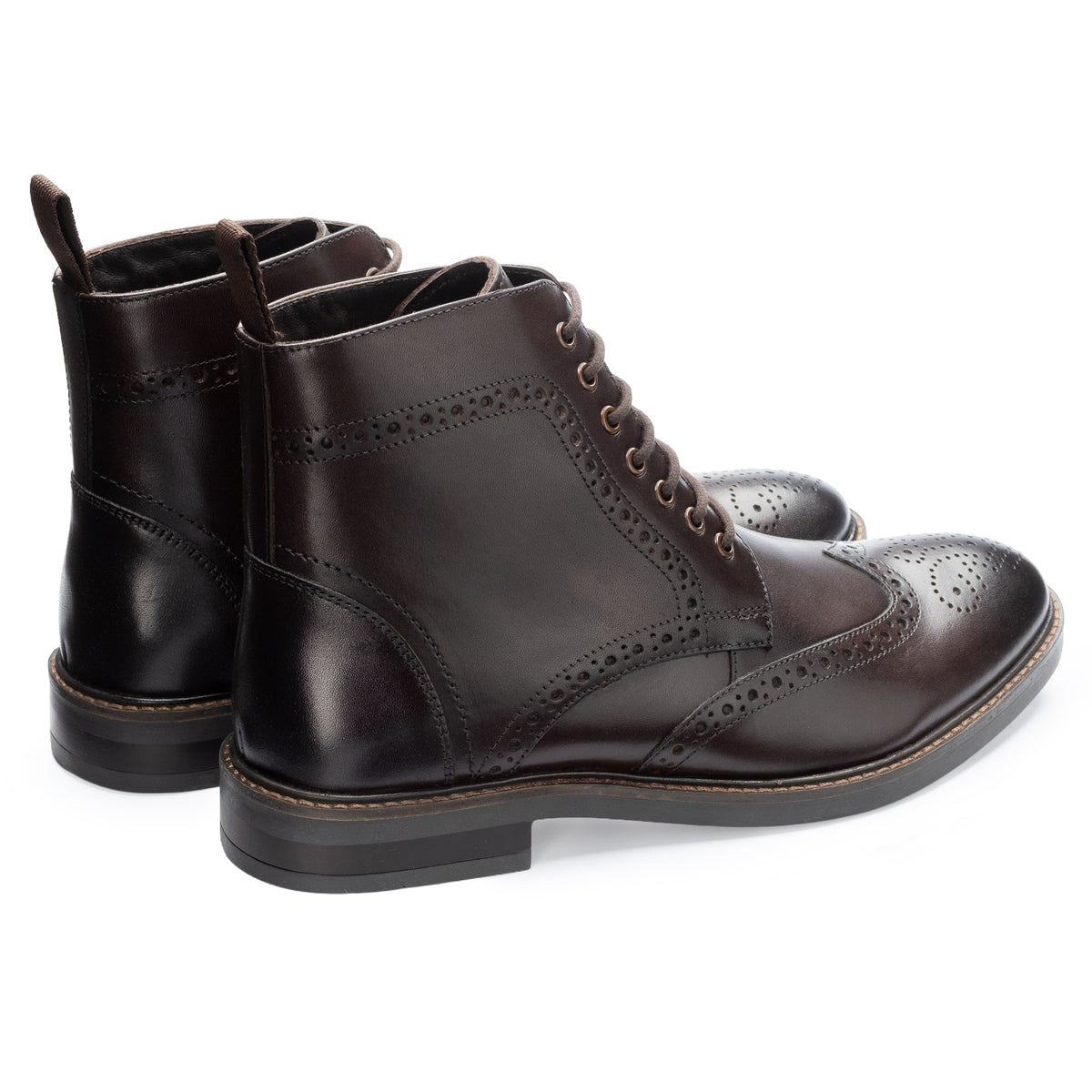
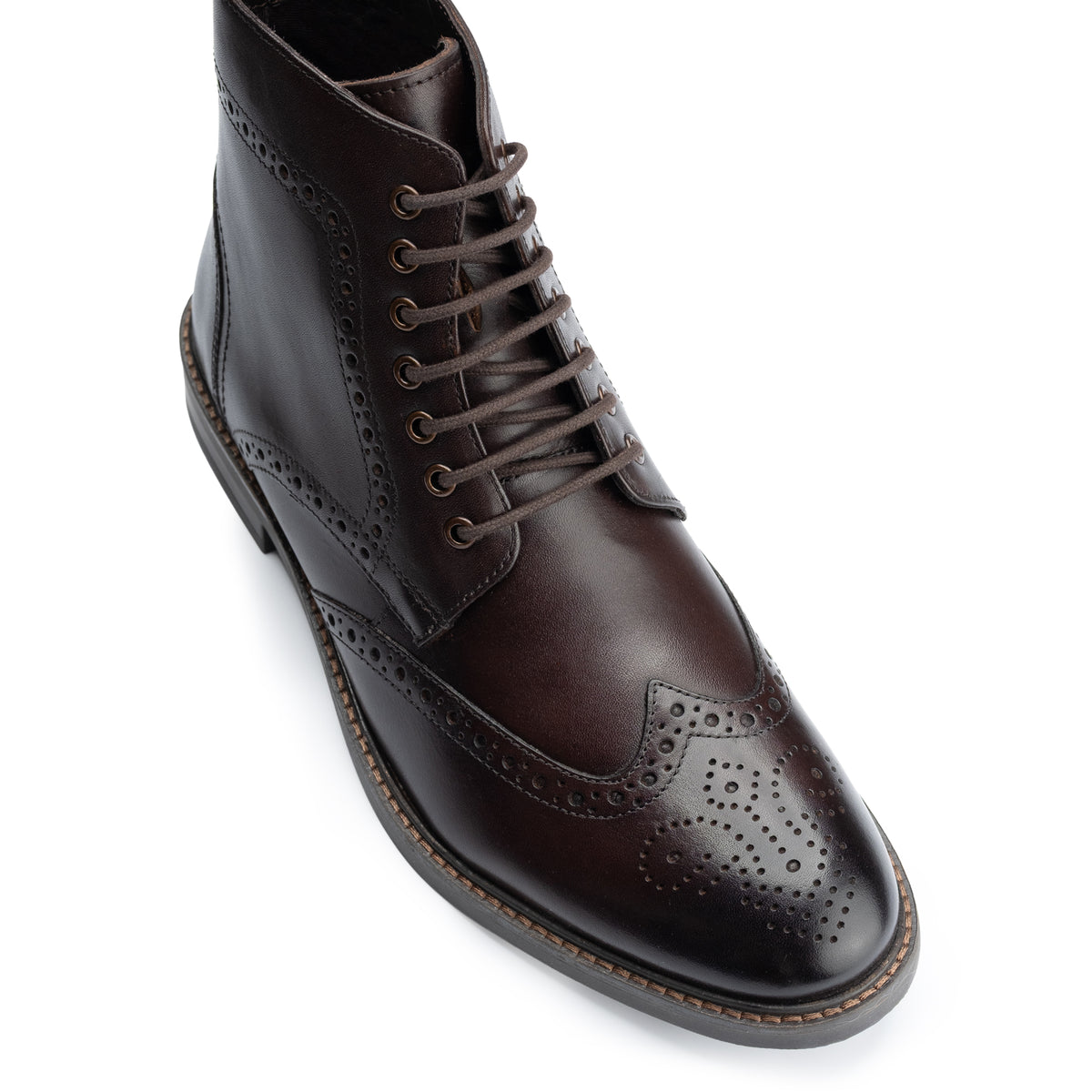
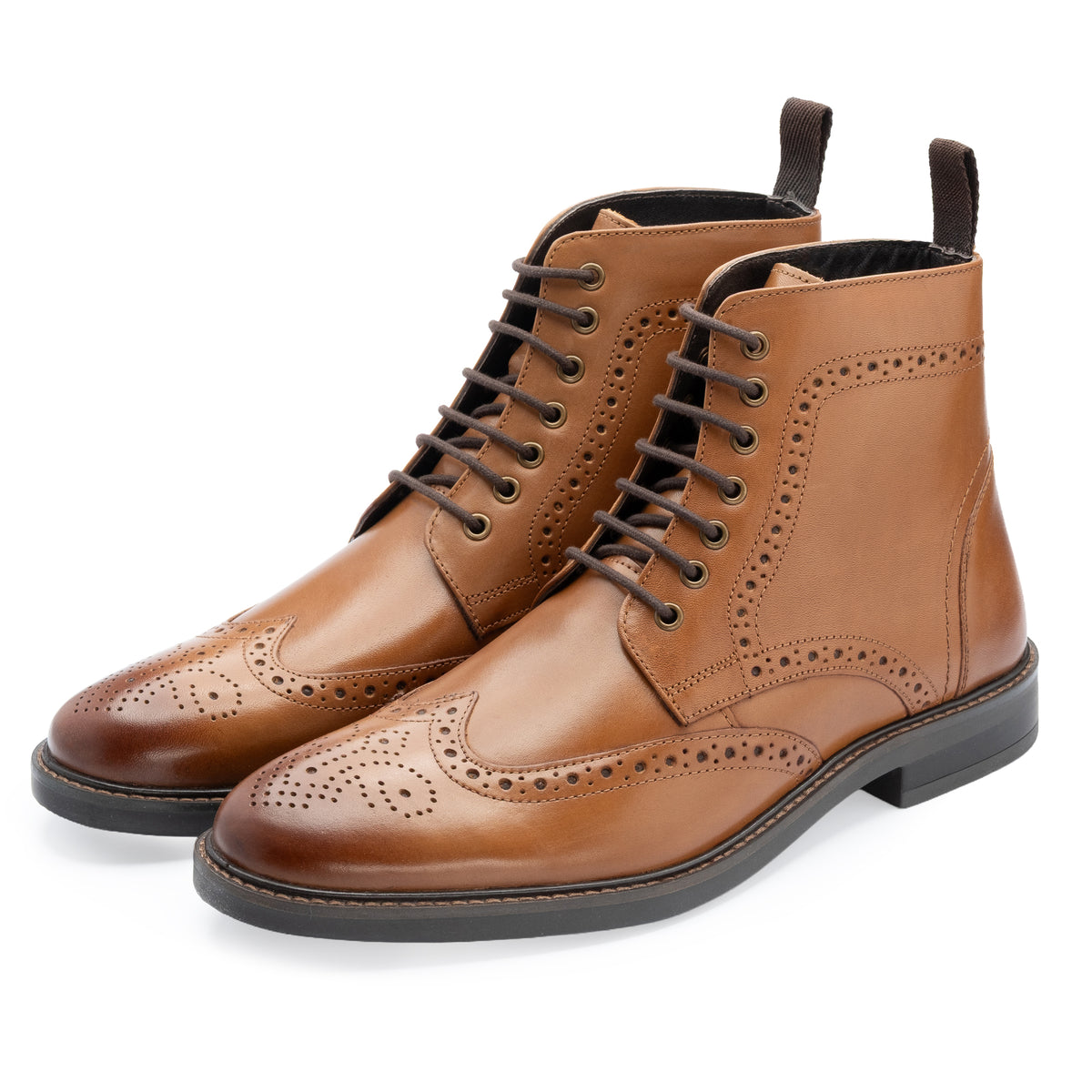
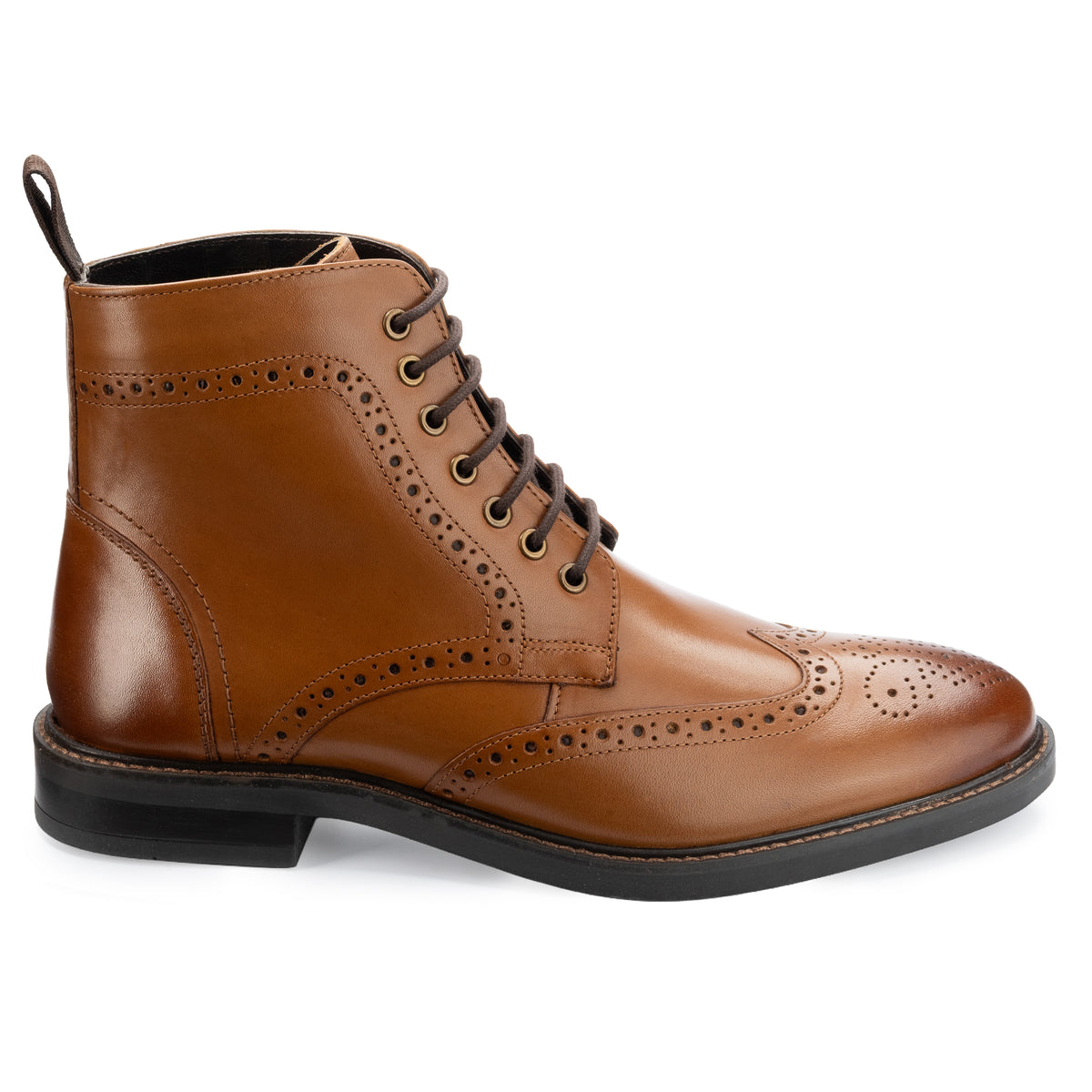
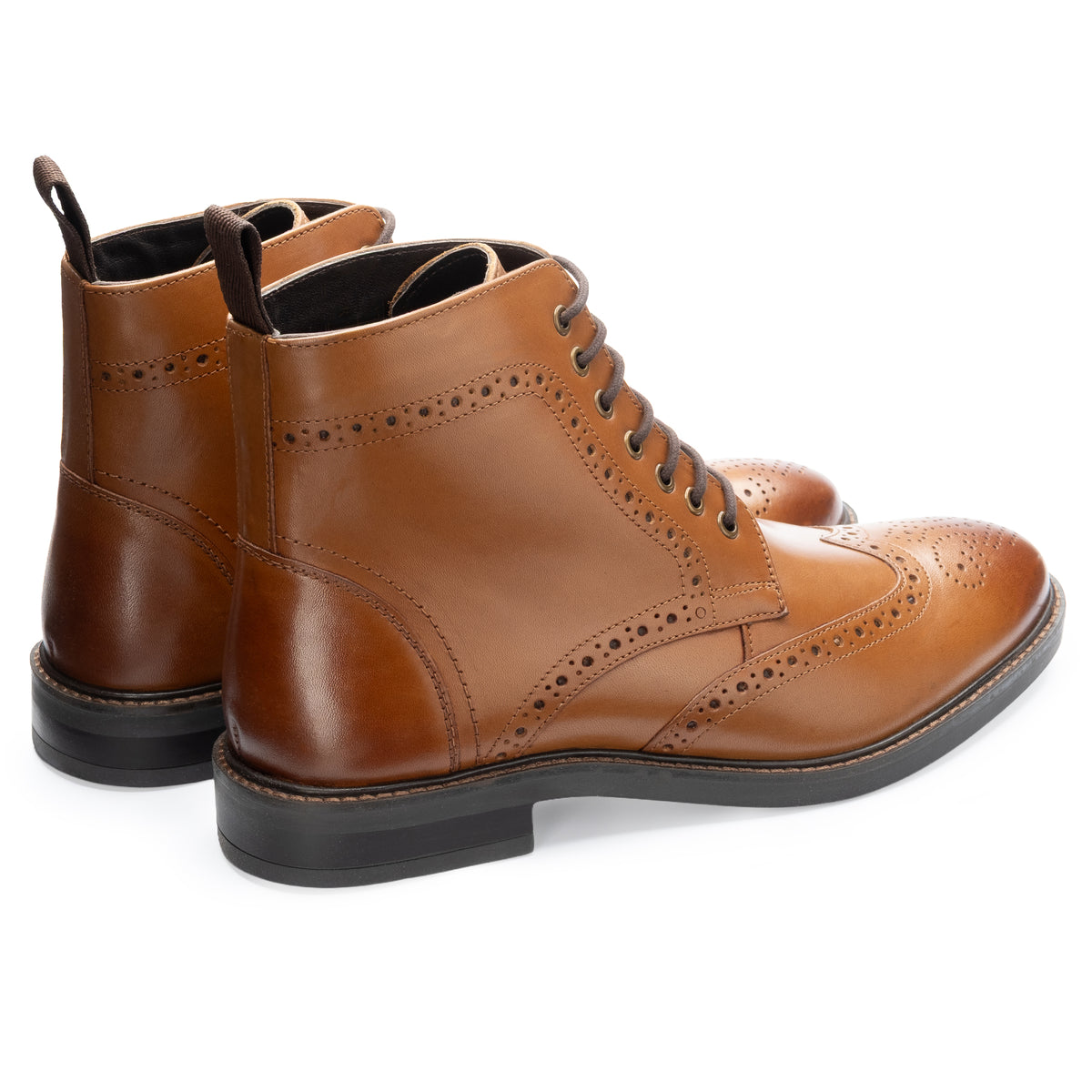
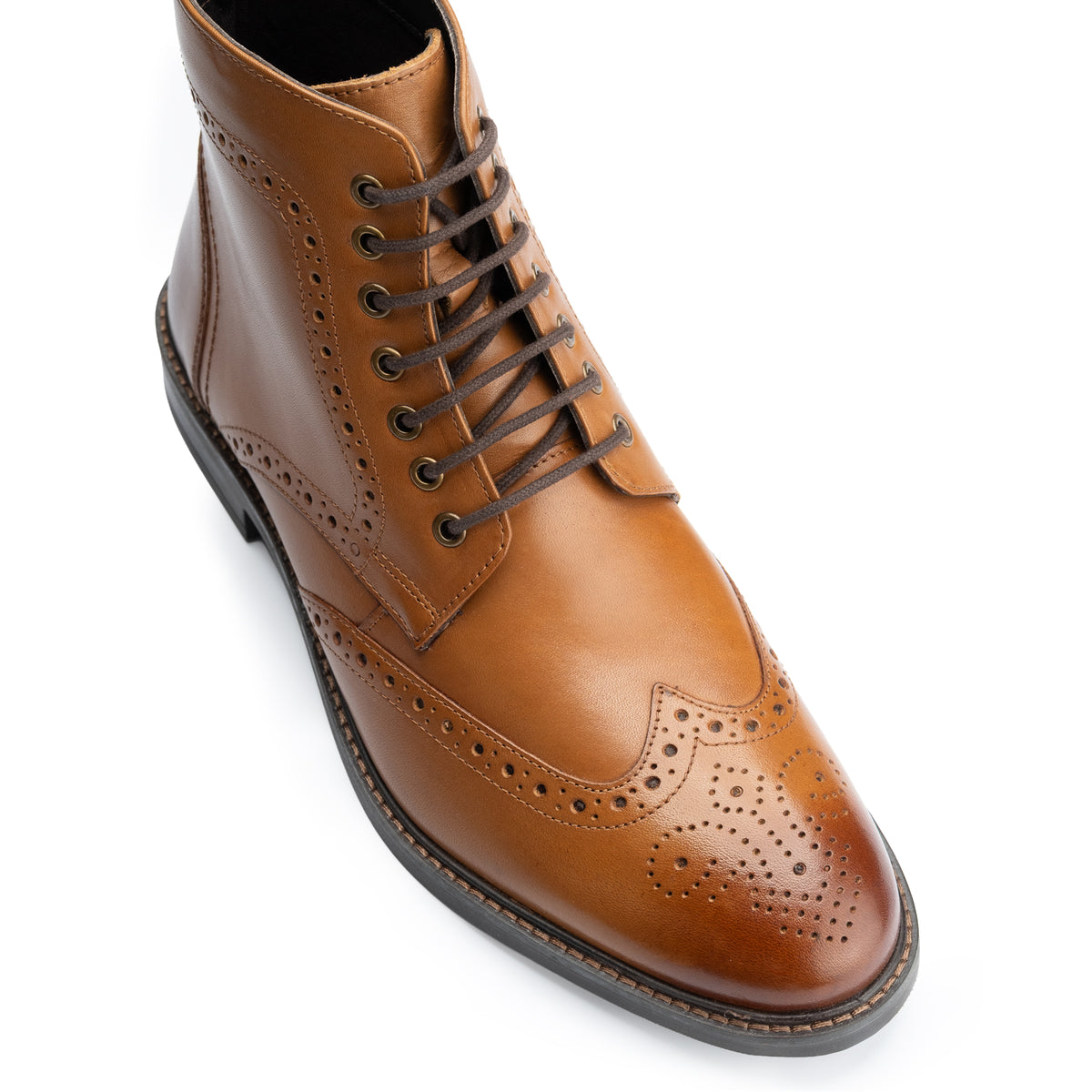
The full brogue is immediately recognisable. Its defining feature is the W-shaped toecap — a leather panel that sweeps up each side of the shoe and extends around toward the back, resembling the outstretched wings of a bird. That shape gives the full brogue its American name: the wingtip. Along every seam of this cap runs a row of neat perforations, and a decorative medallion — a small punched rosette design — sits at the toe point.
The full brogue is the most decorated of the three, and consequently the most casual in formality terms among dress shoes. It belongs to country suits, robust tweeds, and smart-casual dressing. Worn with flannel trousers and a hacking jacket it is correct; worn with a dark charcoal suit at a formal City meeting, it introduces more ornamentation than the occasion can absorb.
Context always moderates formula, however. A full brogue in black leather reads considerably smarter than the same shoe in tan. The Hogarth Brogue Shoes from John White Shoes are available in Black and Reef — the black version can accompany more formal smart-casual occasions than the Reef would manage. The Stokes Brogue Derby Shoes, available in Black, Brown, and Tan, bring the full wingtip treatment to a derby cut, which opens the shoe to a slightly broader outfit range than an Oxford silhouette would: the open lacing of a derby reads less rigidly formal, softening what is already a decorated shoe into something genuinely versatile for mid-level smart-casual.
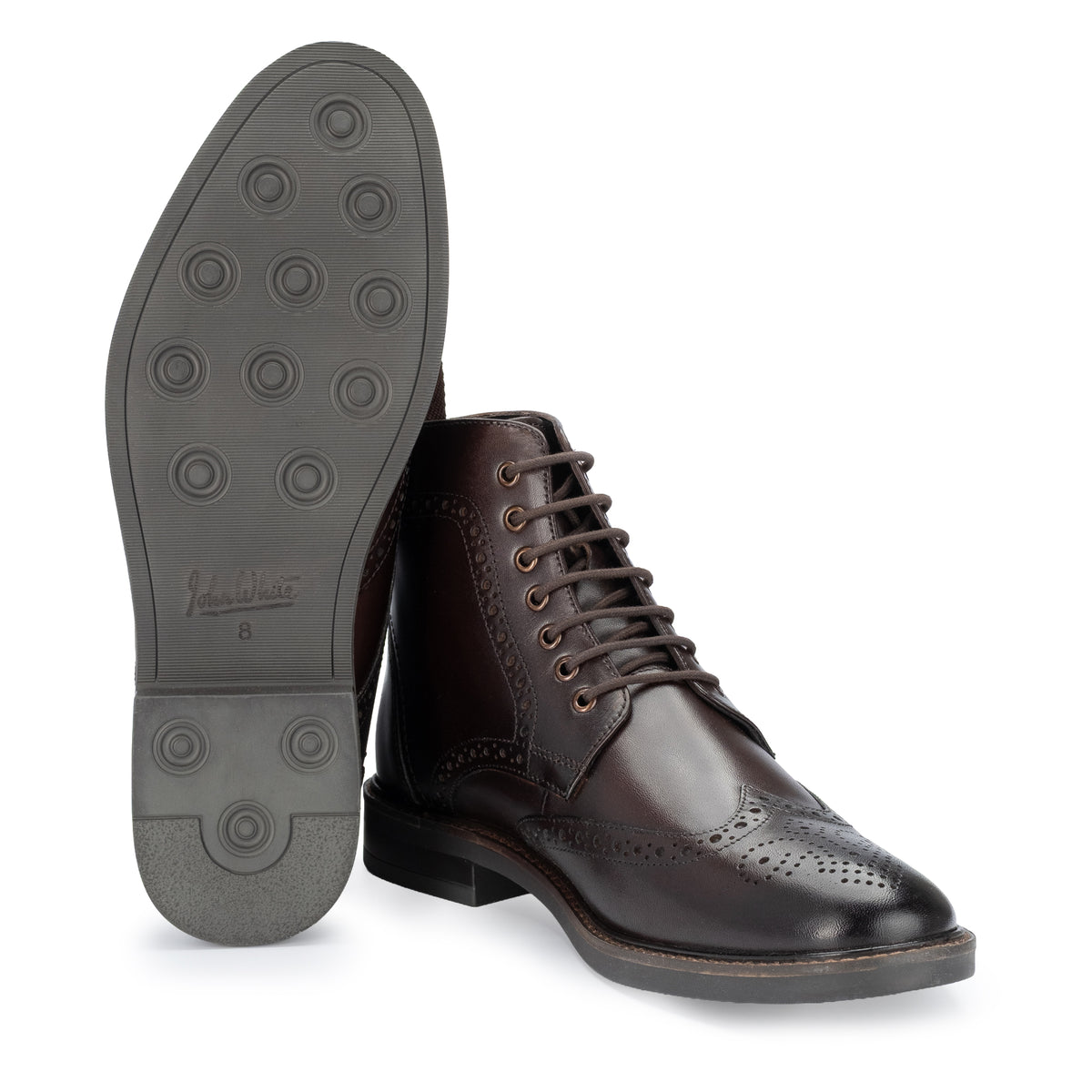
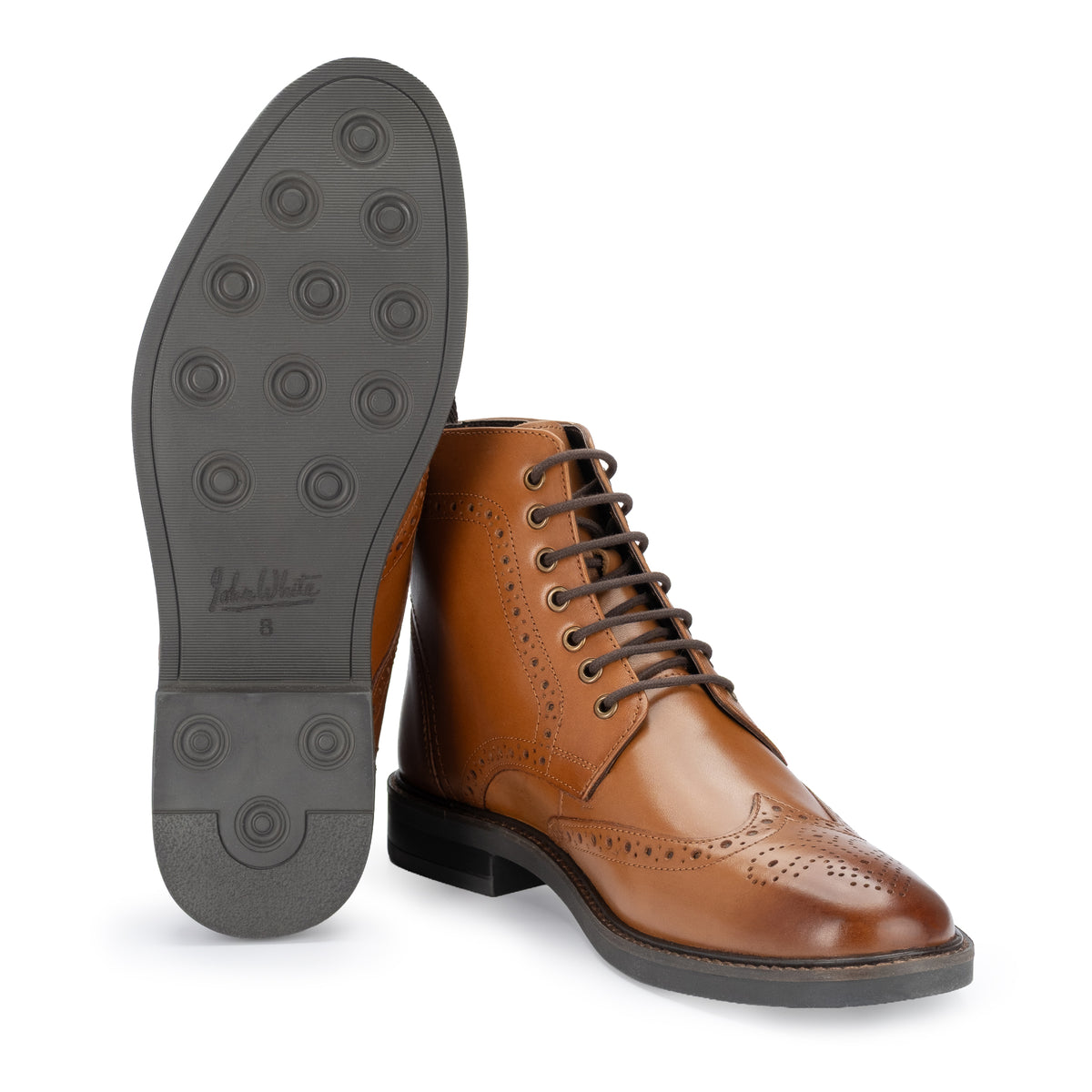
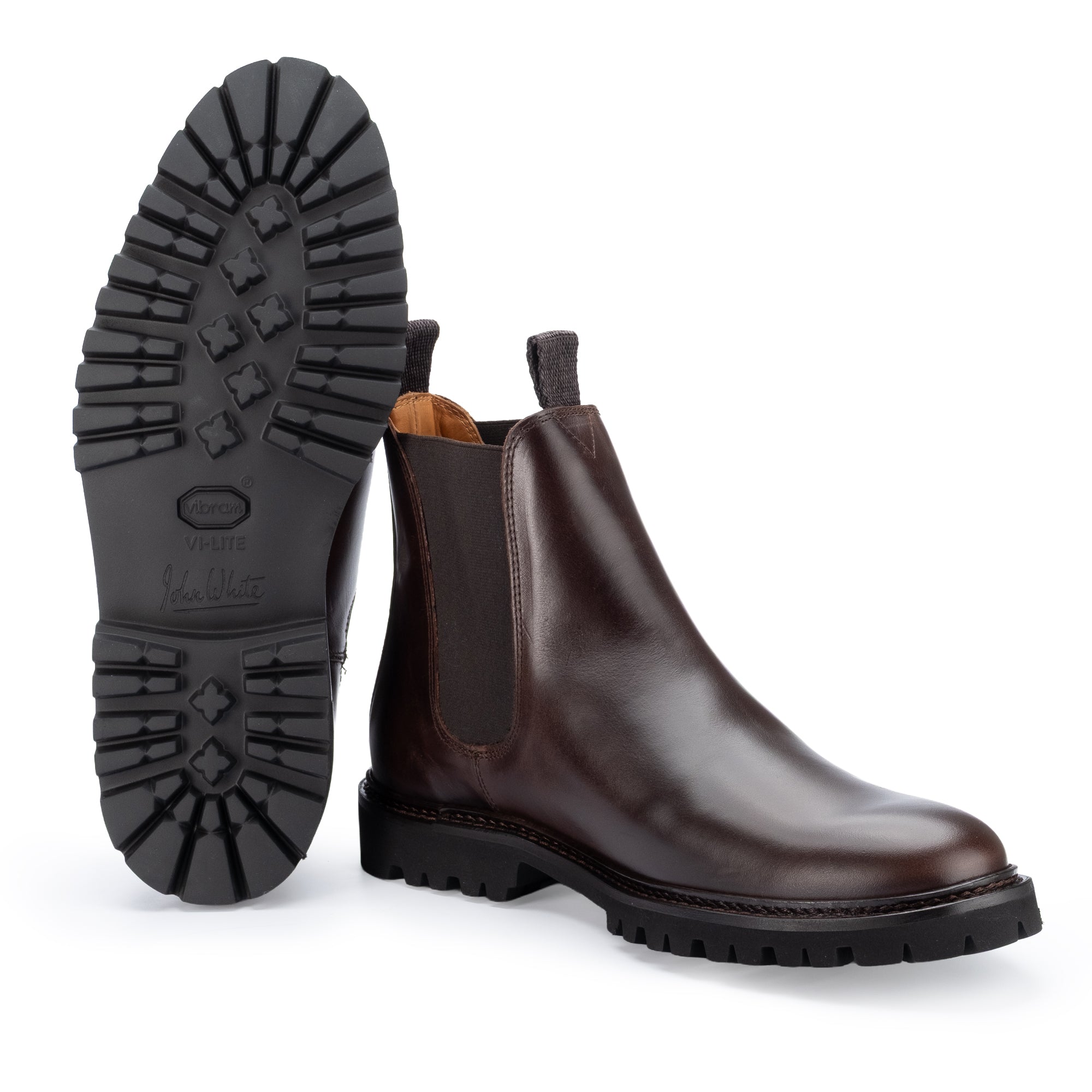
For those who want broguing on a boot, the Falcon Brogue Boot, available in Black and Brown, applies the full decorative treatment to a lace-up ankle boot. This is a strong shape for autumn and winter smart-casual — worn with cord, moleskin, or heavy-weight twill trousers, it covers a range from country weekends to informal Fridays without asking the wearer to change their whole approach.
The Semi-Brogue
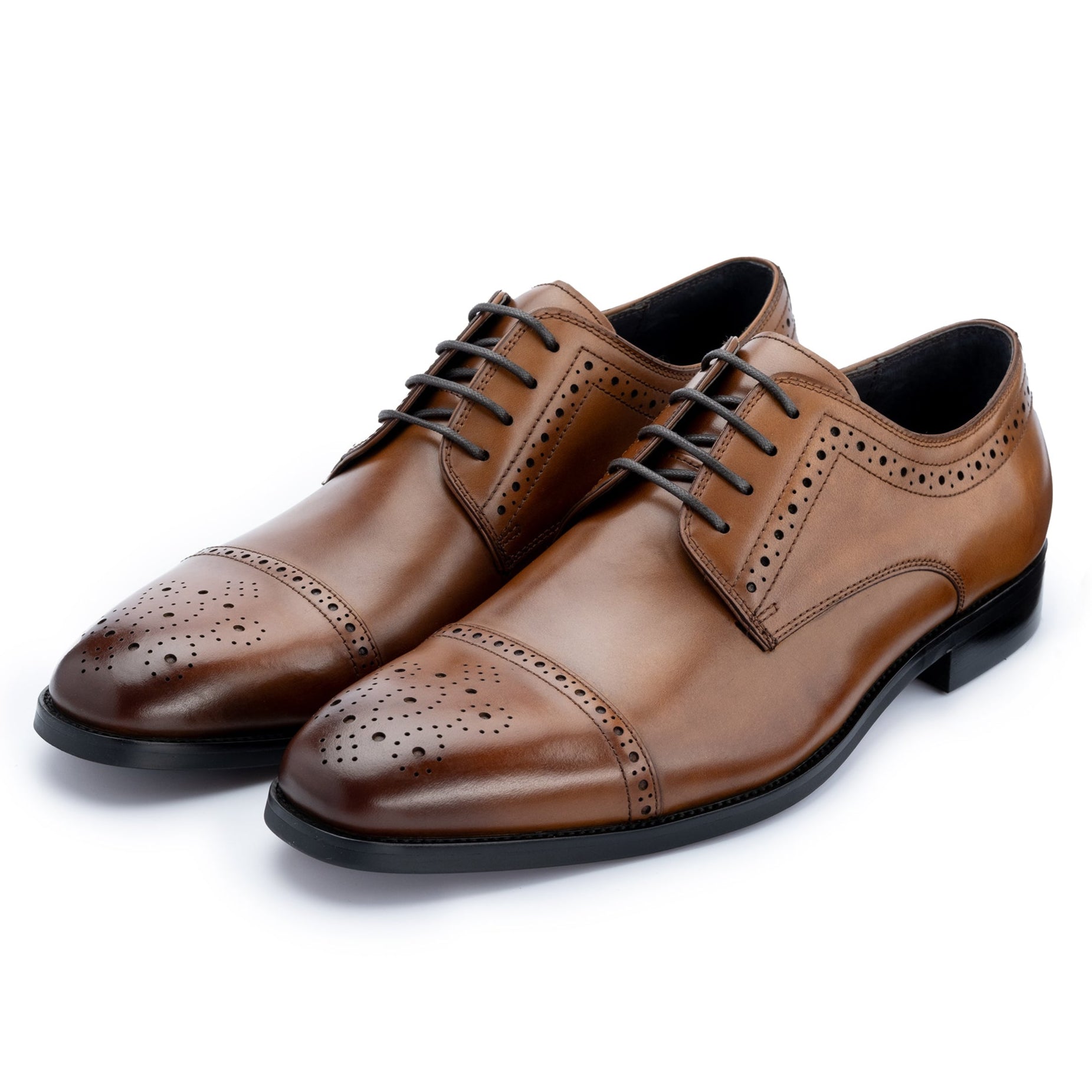
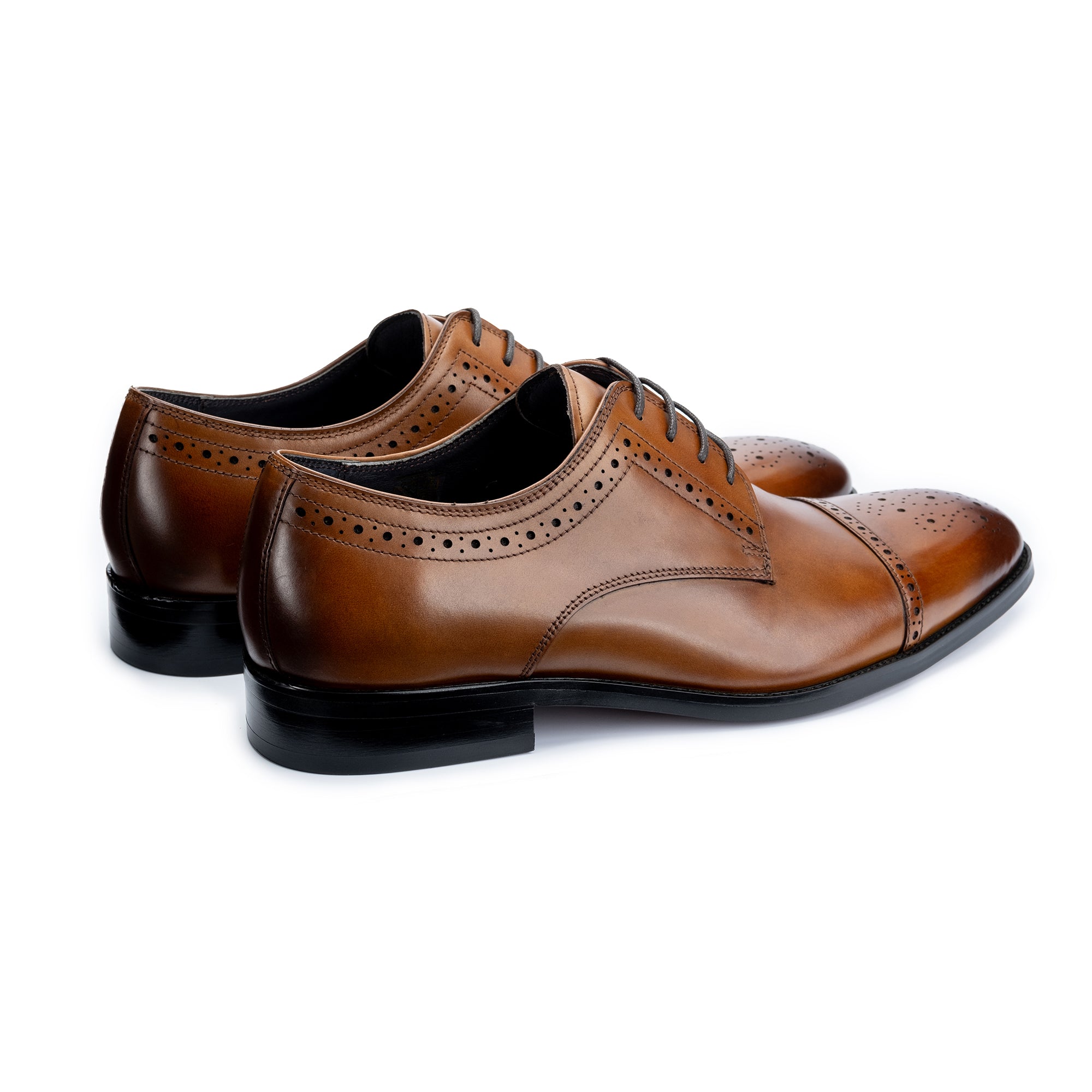
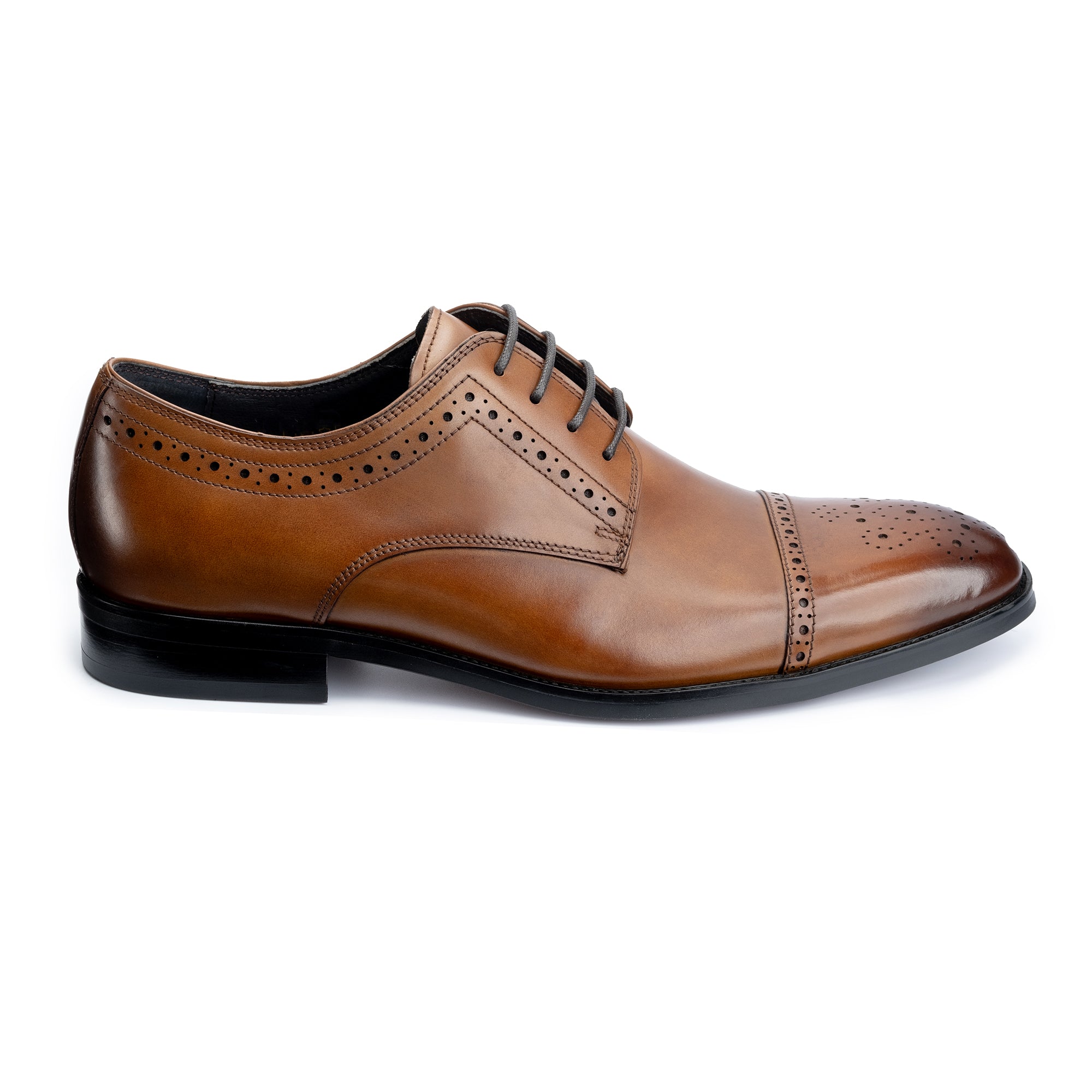
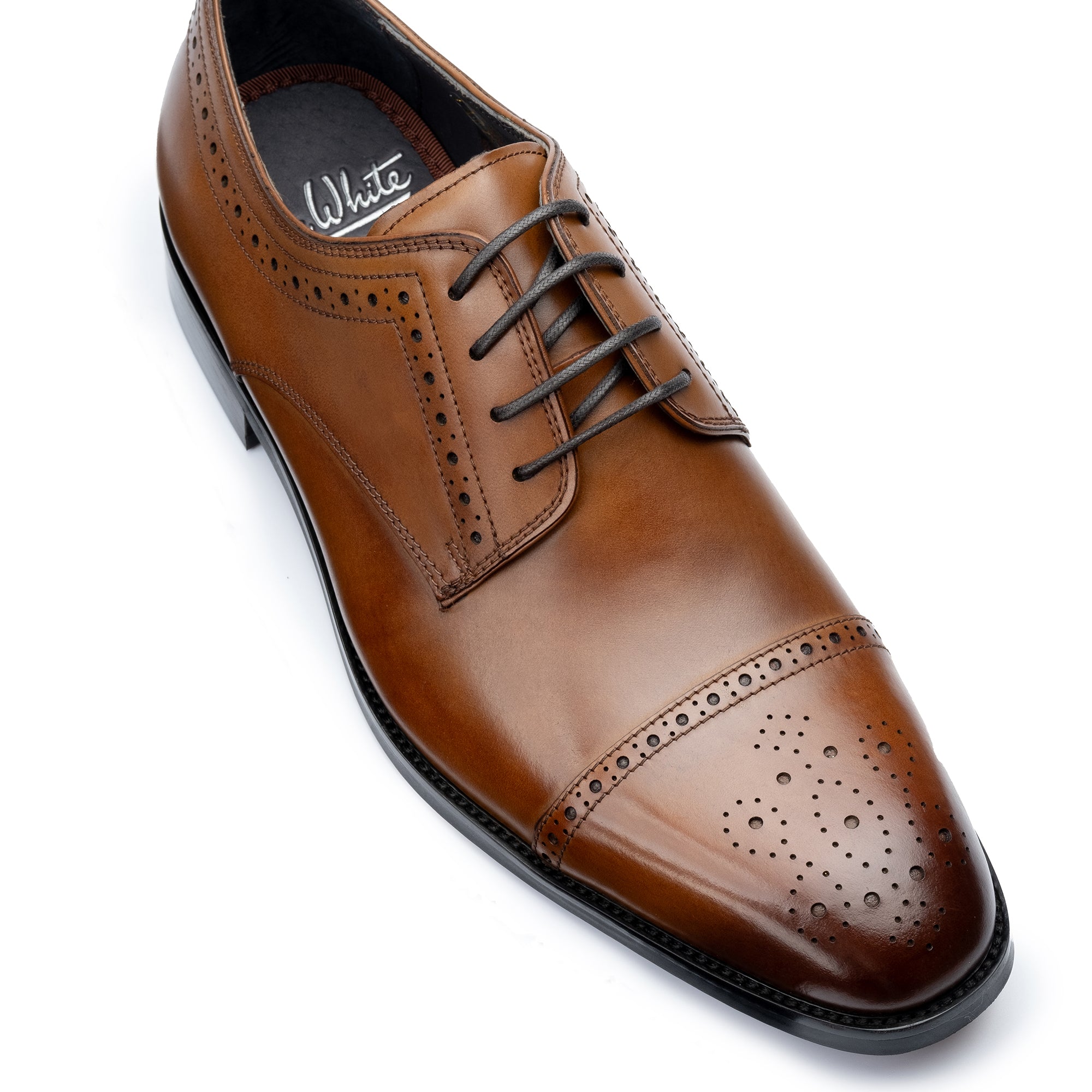
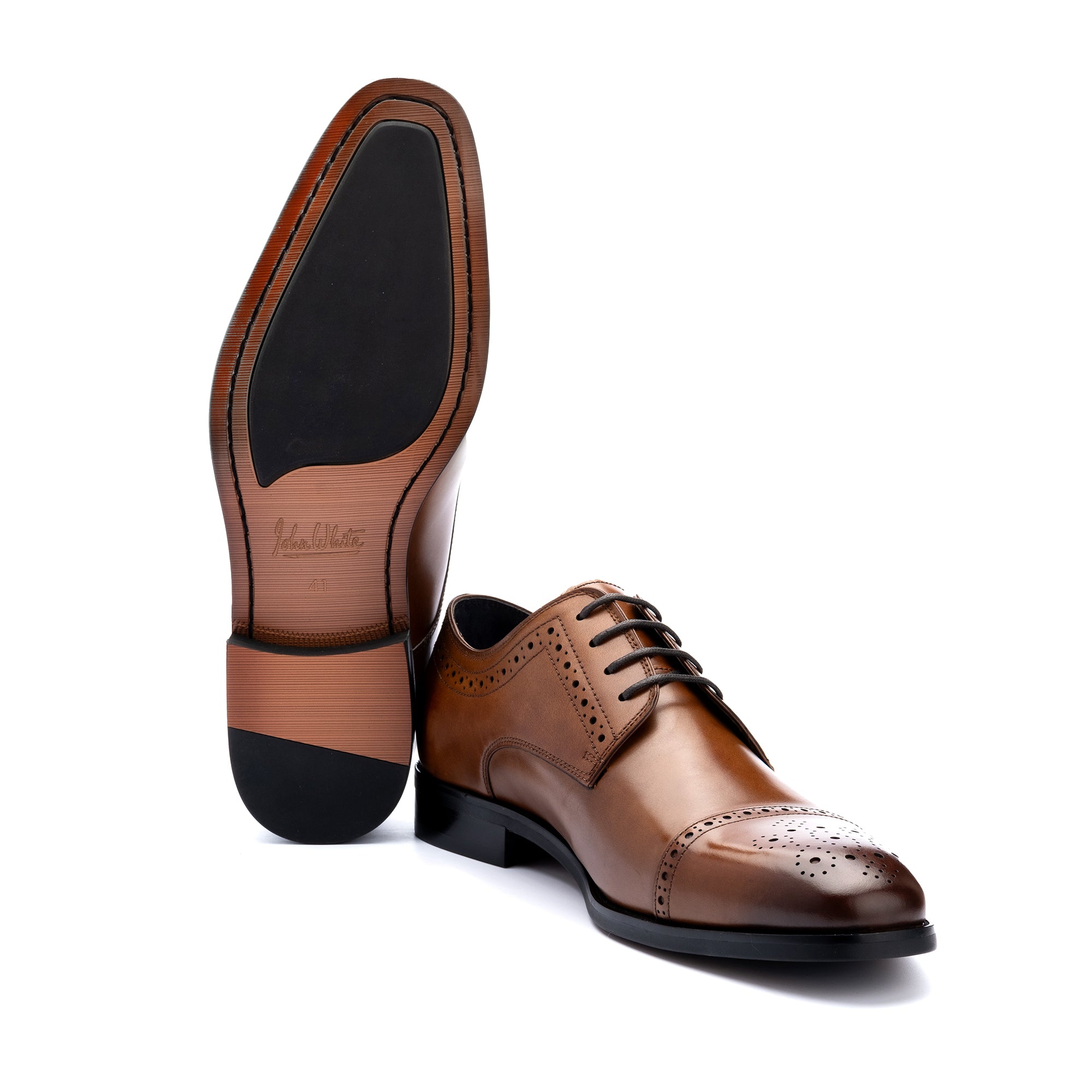
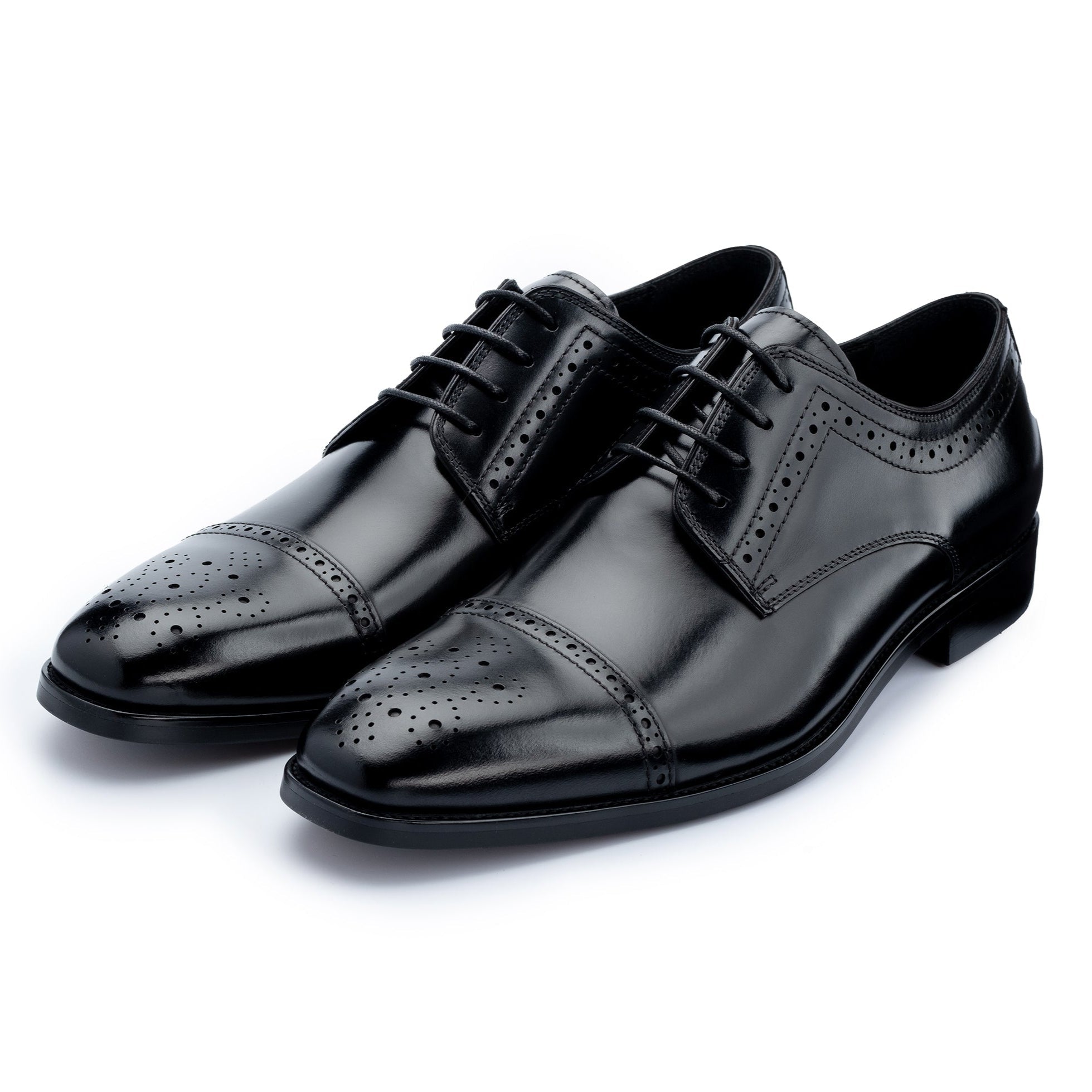
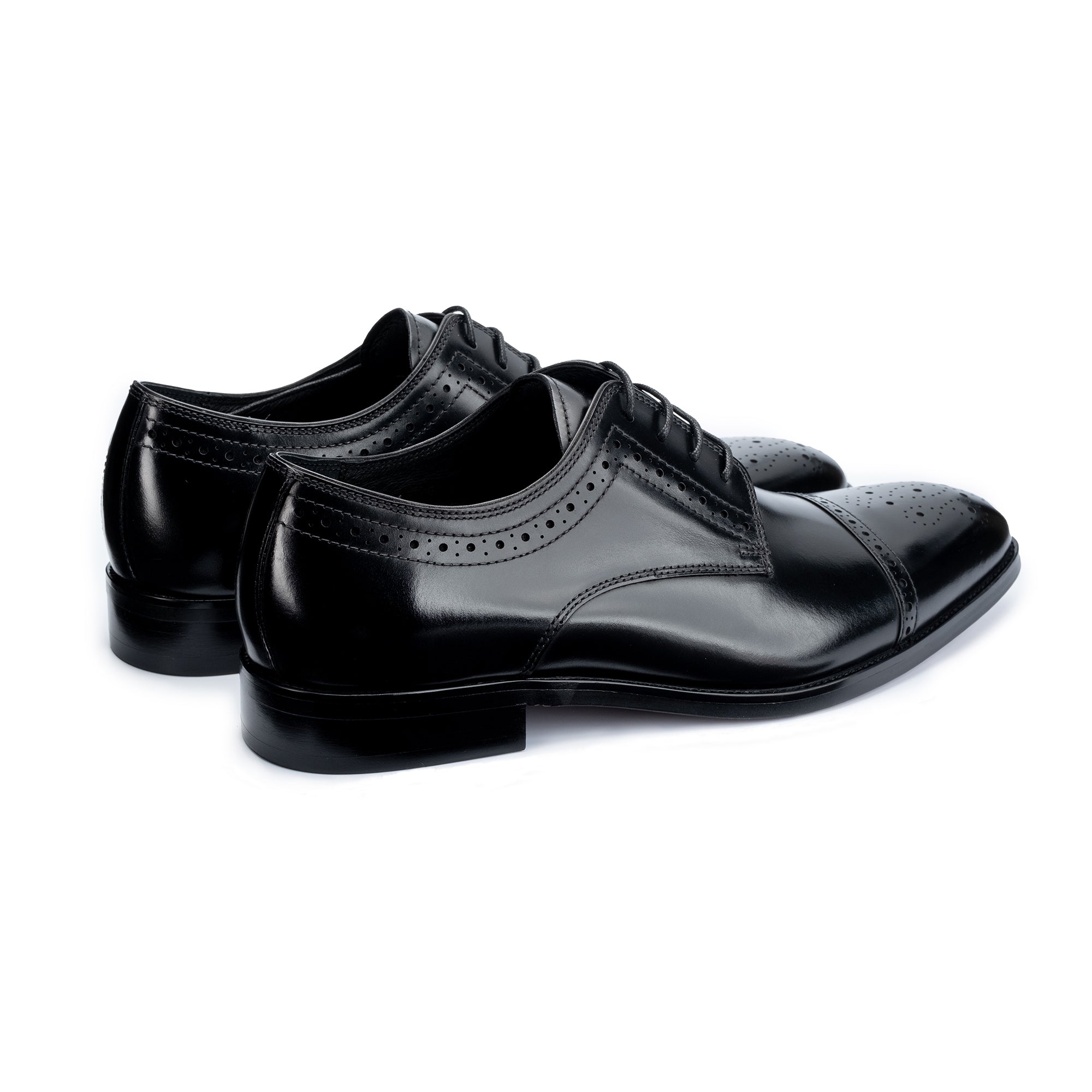
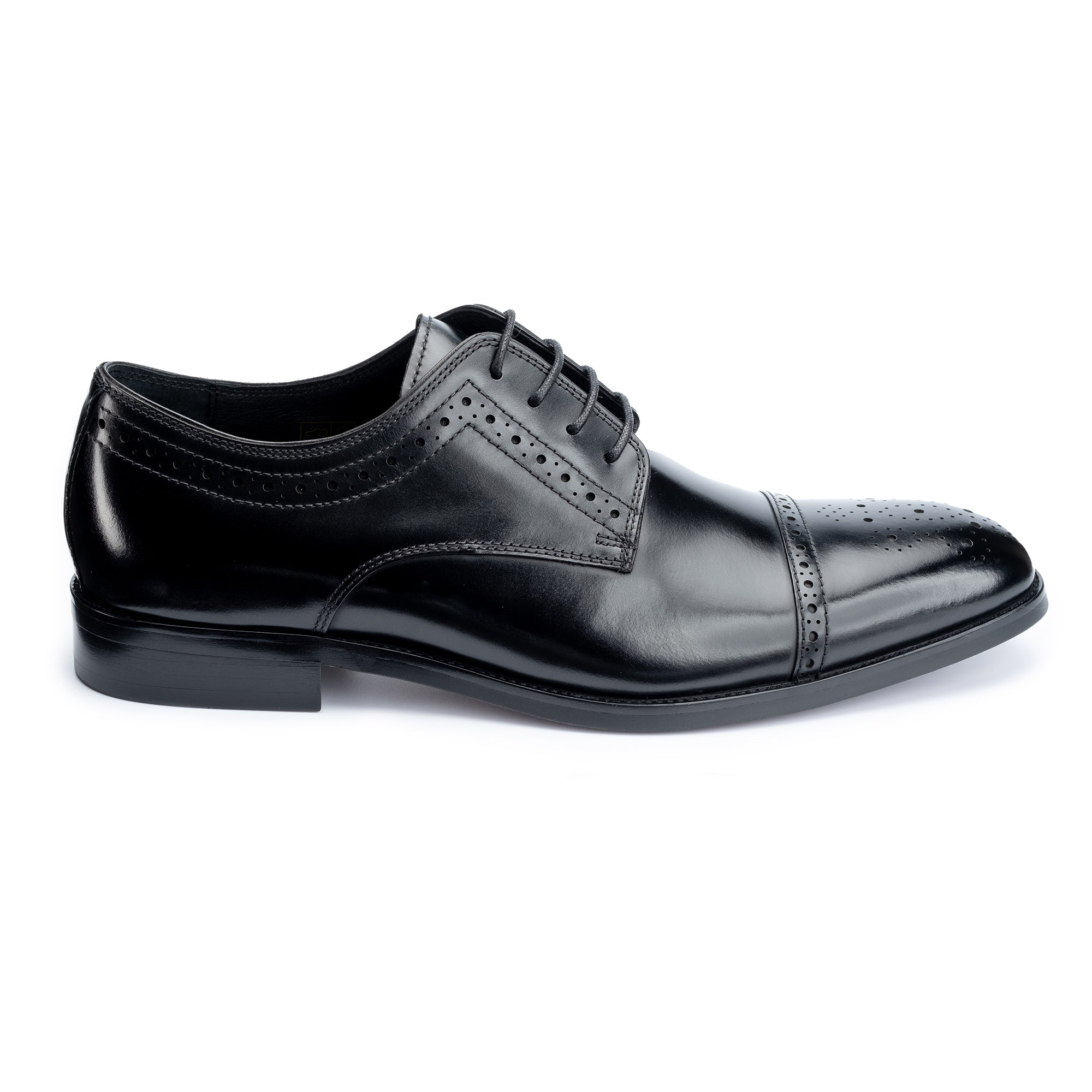
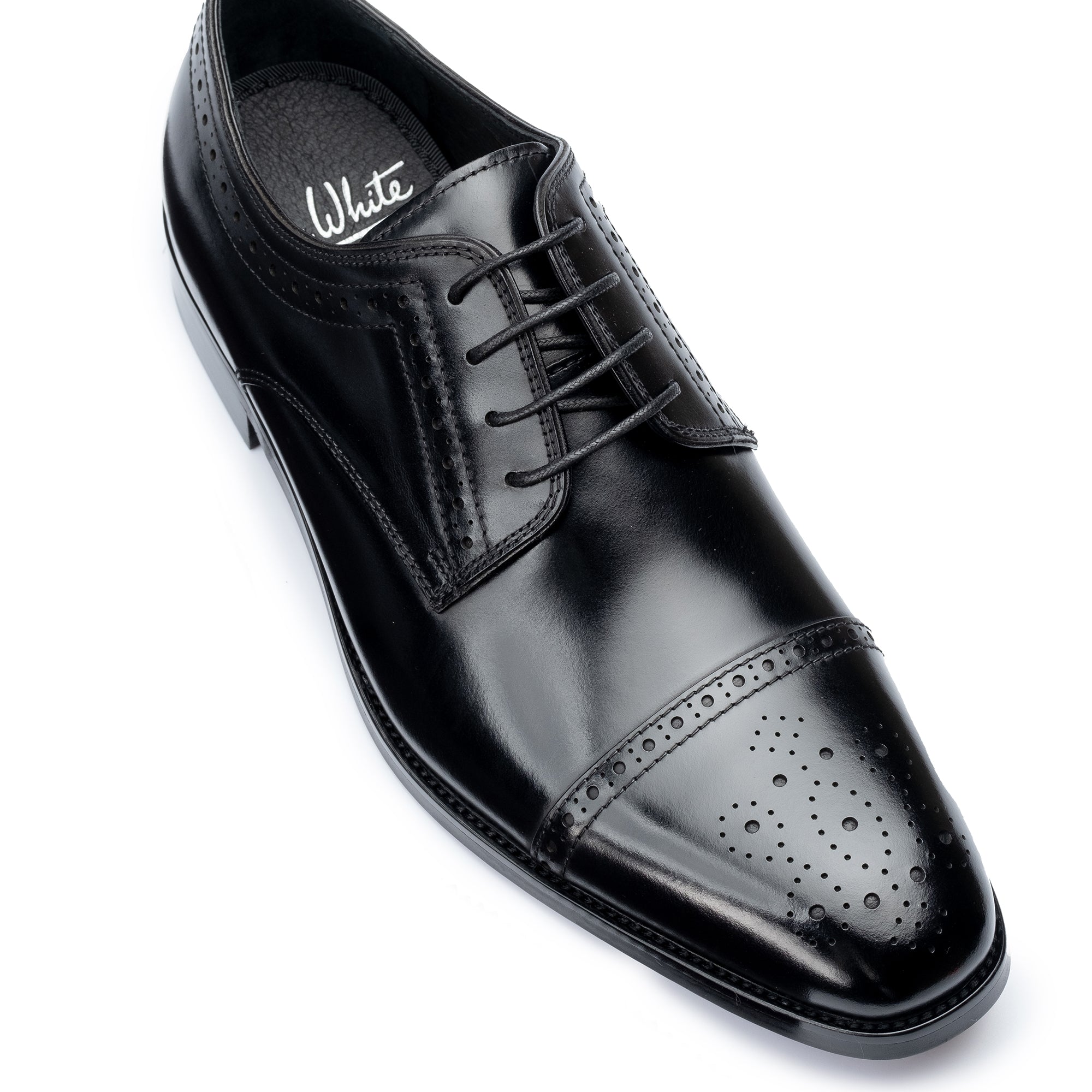
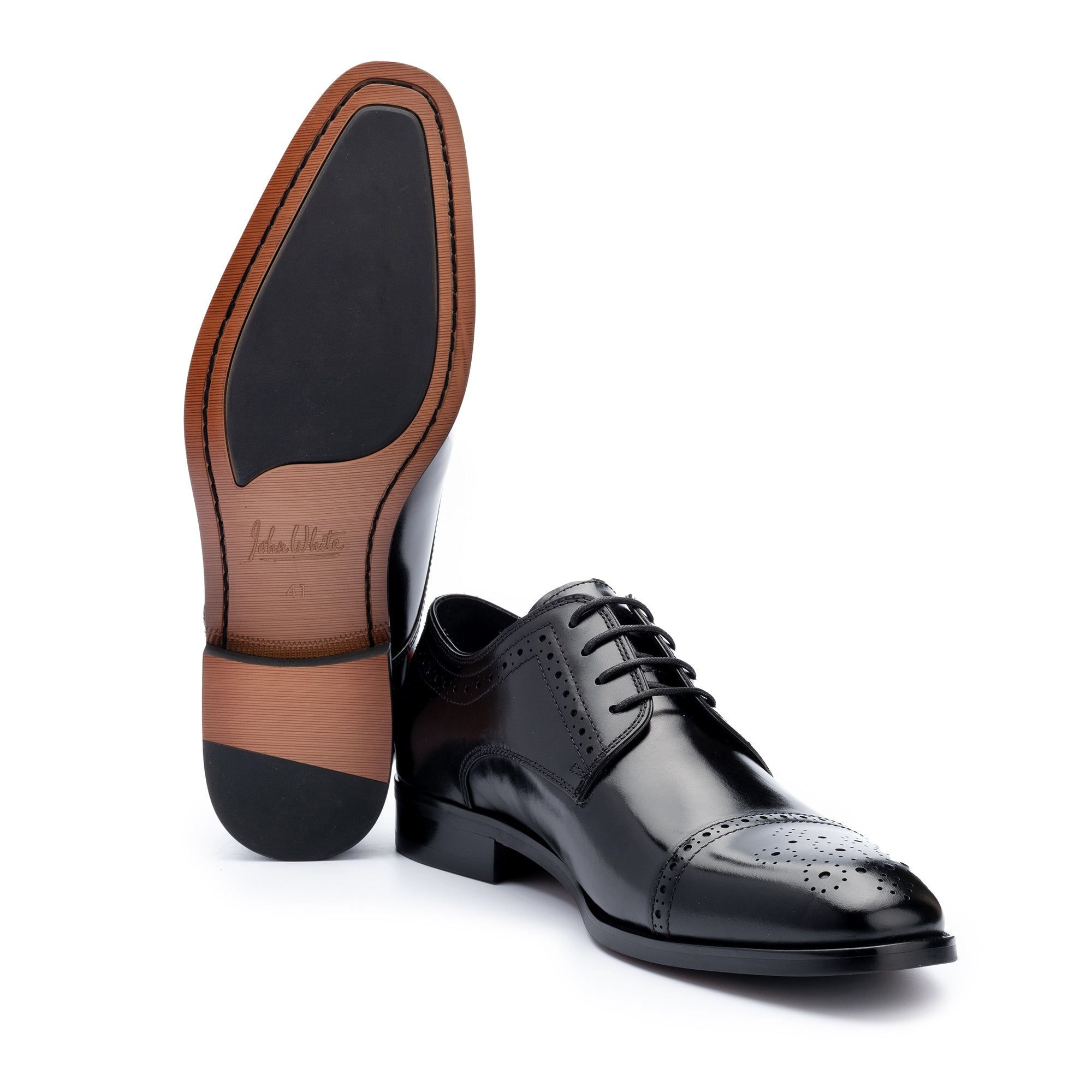
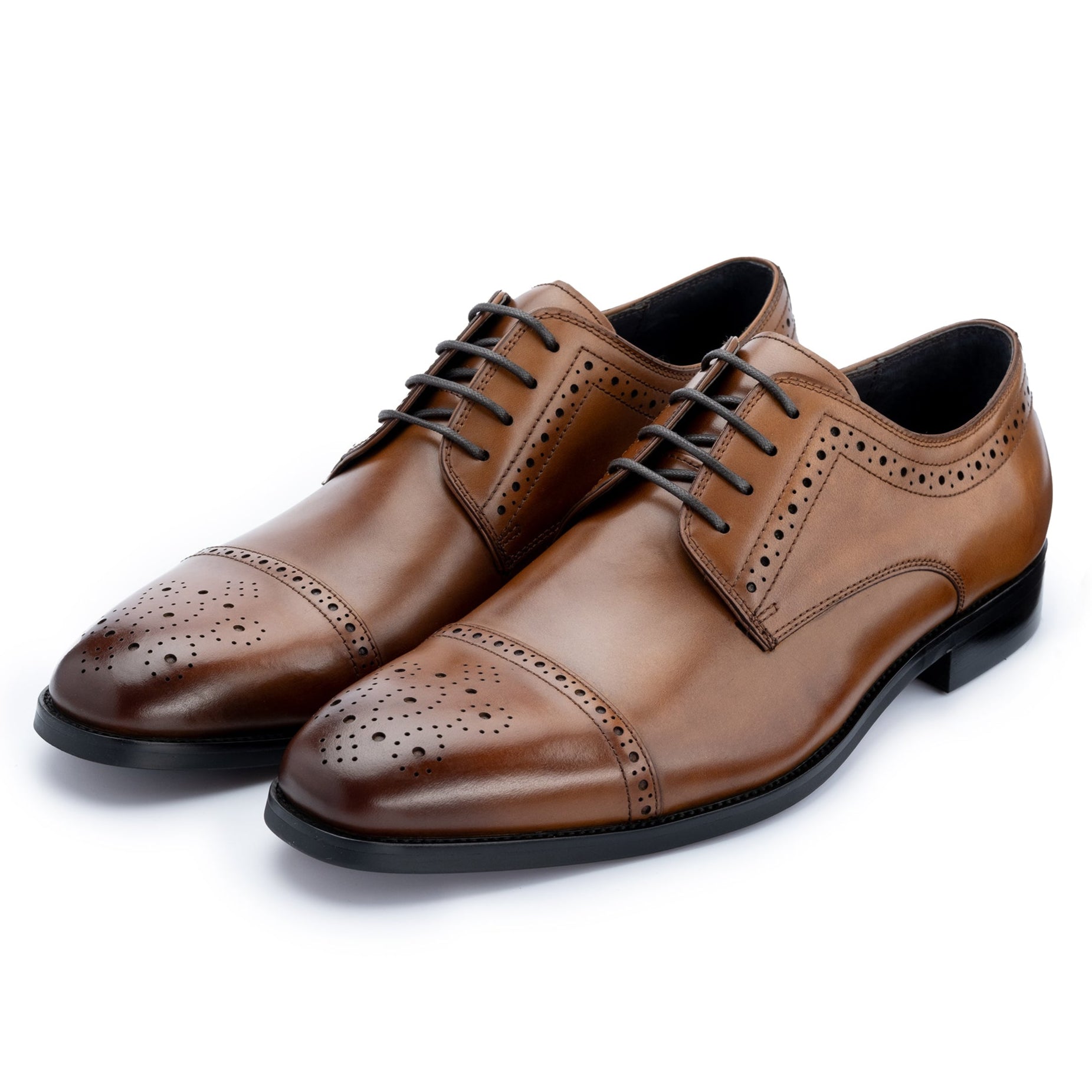
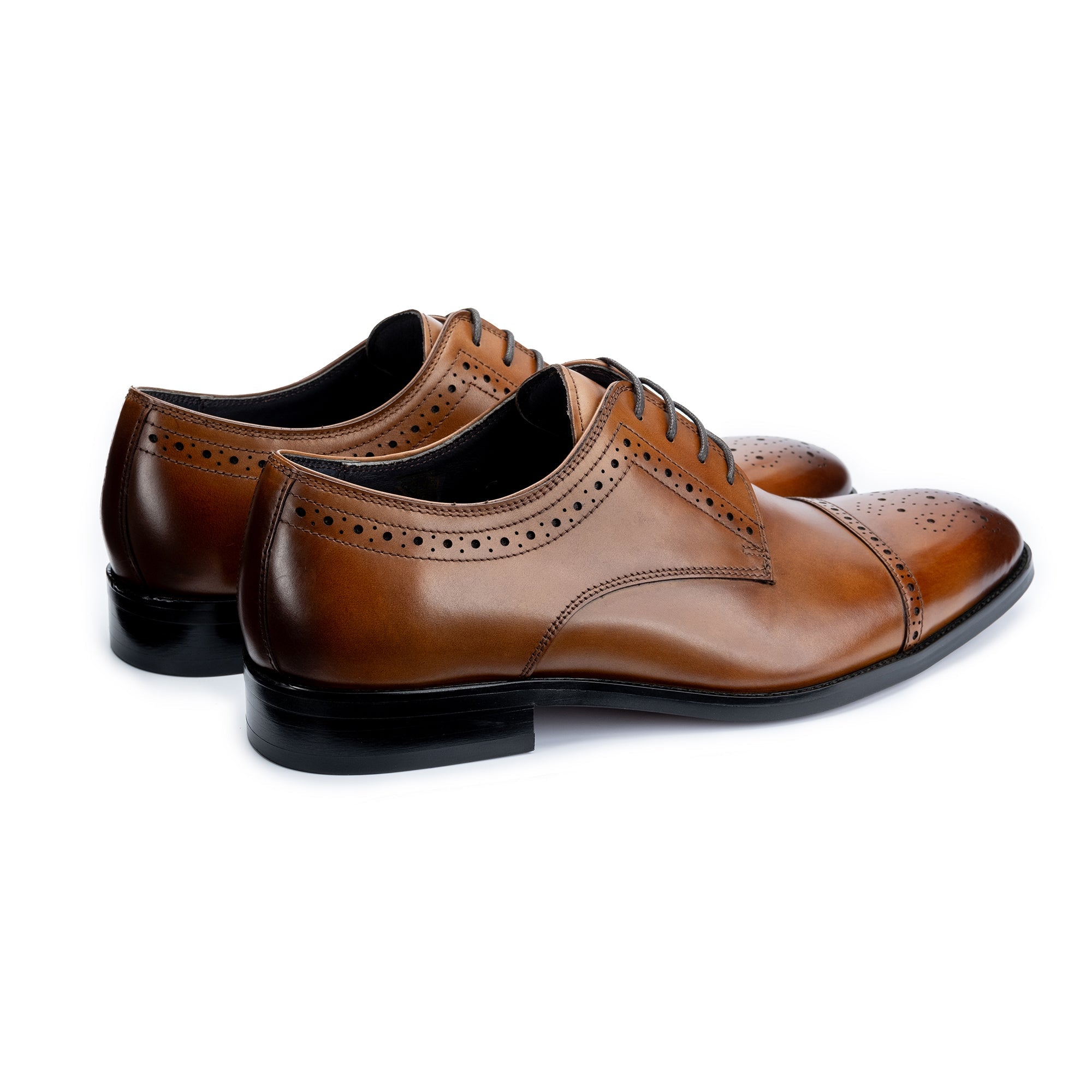
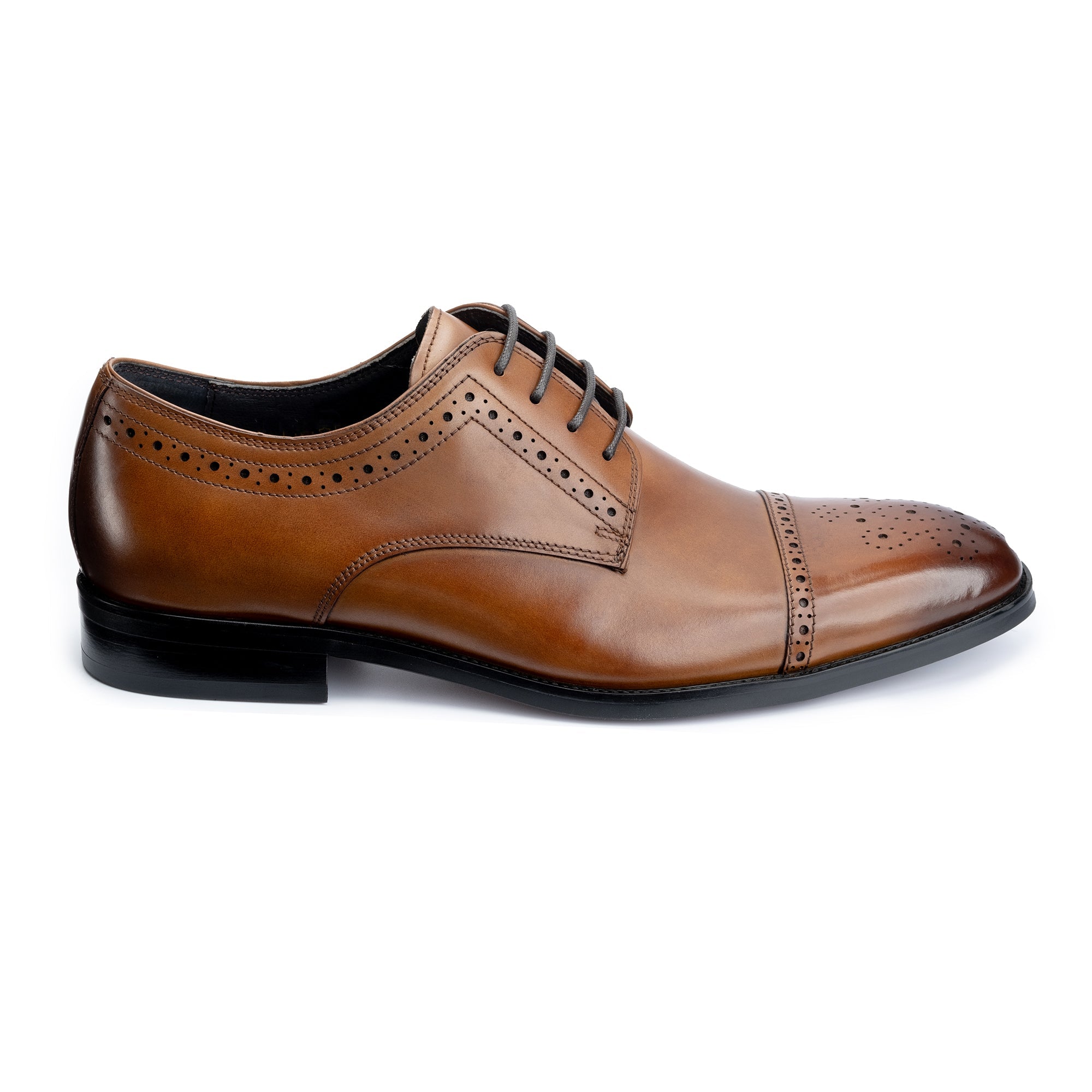
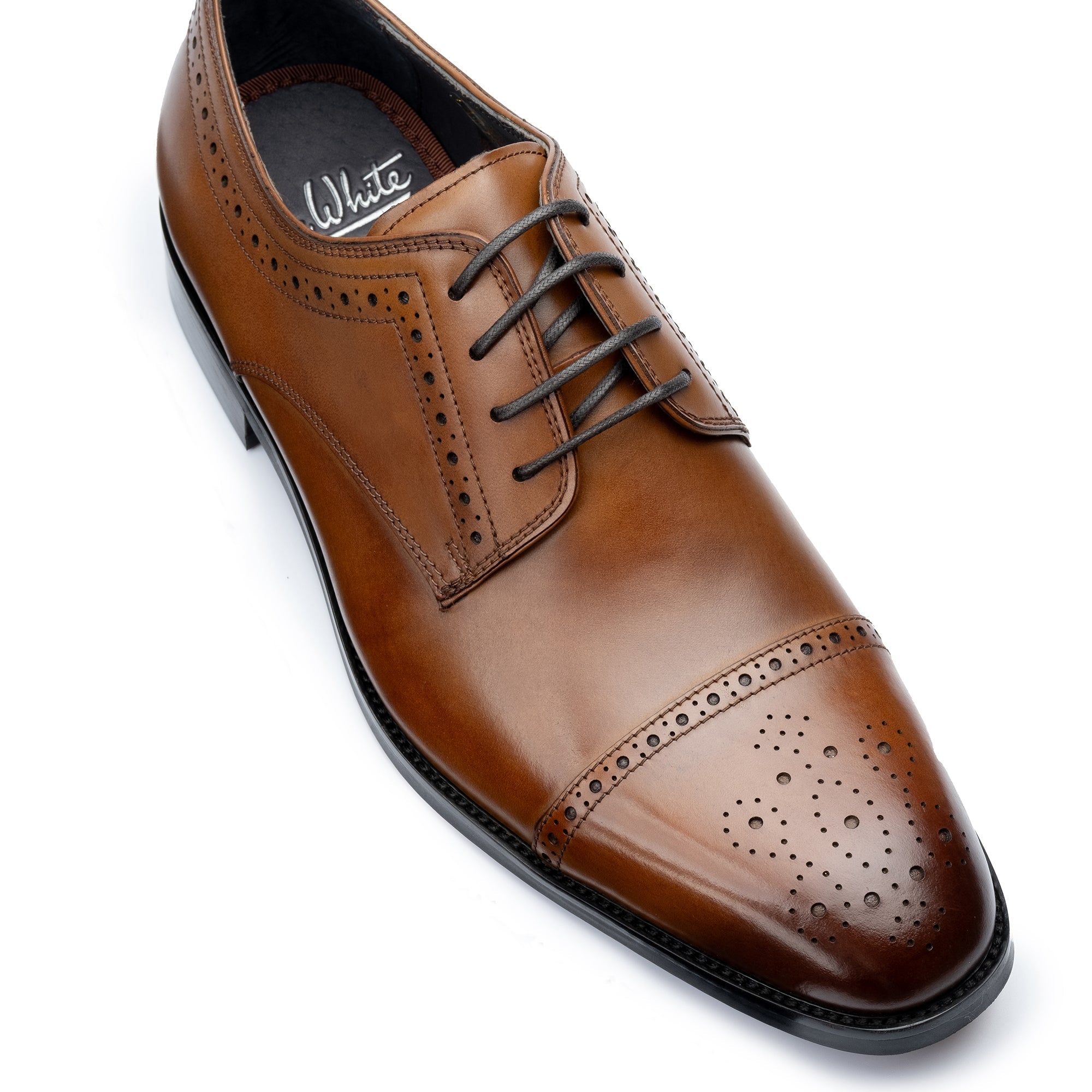
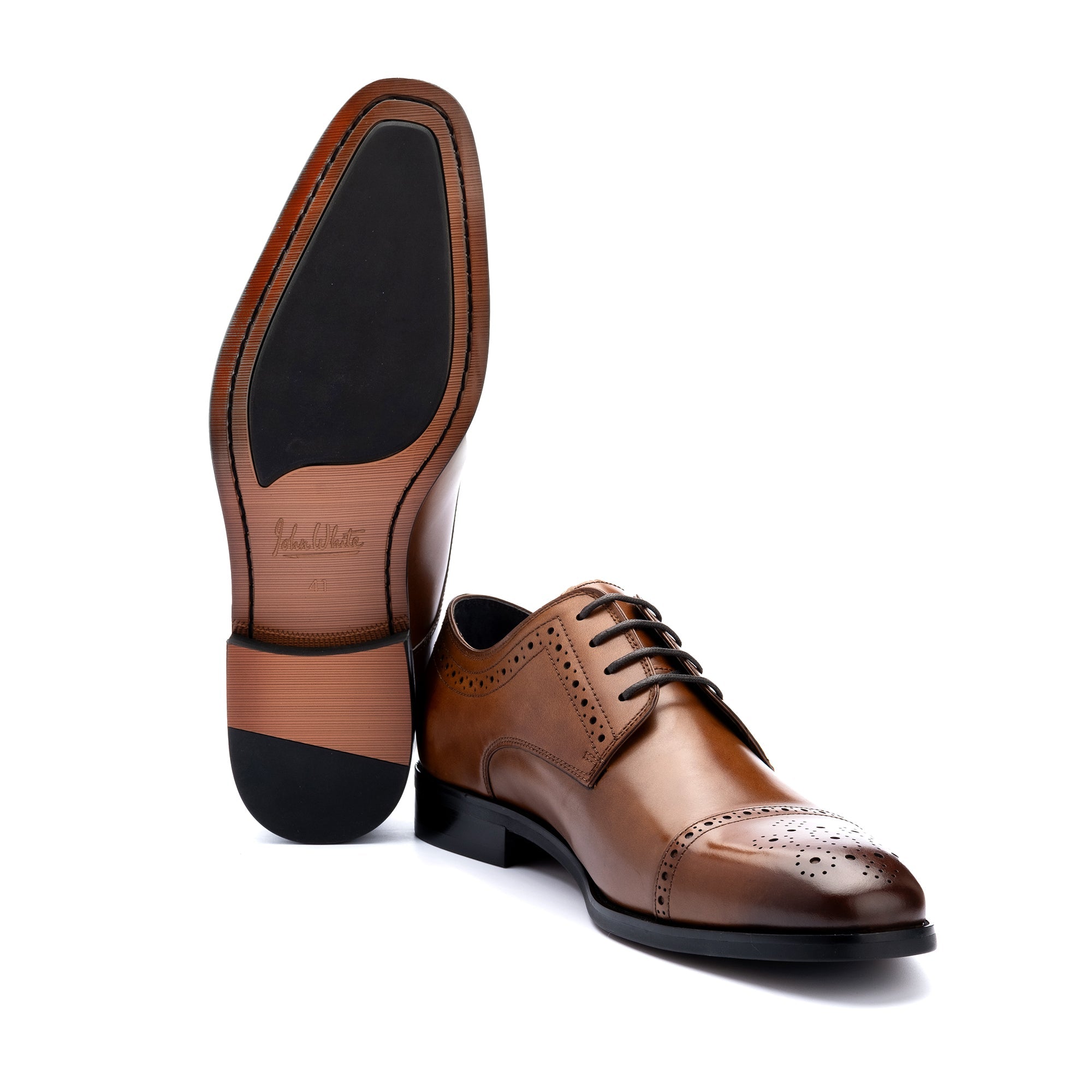
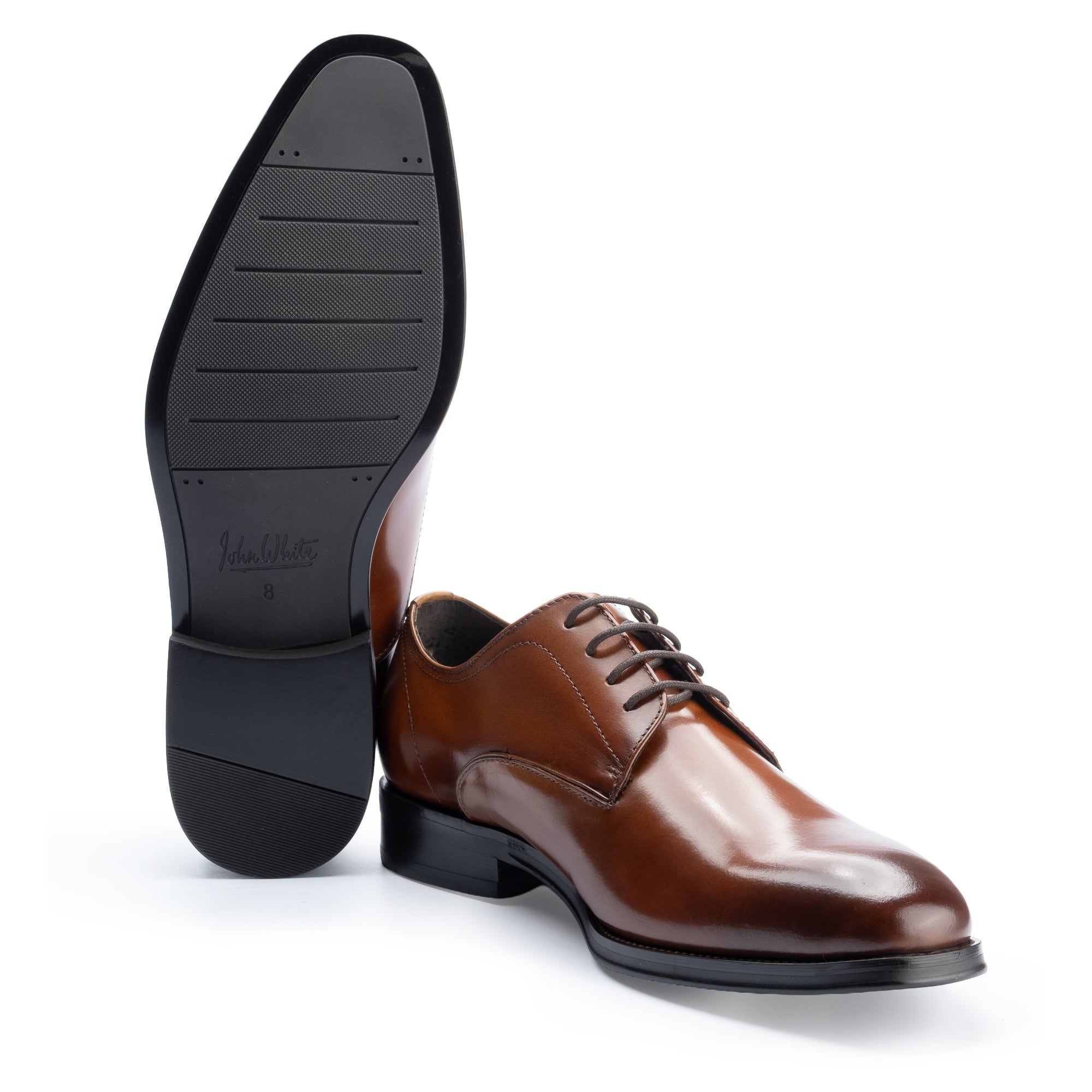
The semi-brogue — sometimes called the half brogue, terms used interchangeably in the British trade — is a shoe with a straight, clean toecap rather than the W-shape of the wingtip. What sets it apart from a plain-capped Oxford is the brogue perforations worked along the edge of that cap and a medallion punched into the toe. The decoration is contained, restrained, and far less visible from a distance than the full wingtip's continuous ornamentation.
This is the brogue that works in an office where the full version would read as too casual. The decoration adds character without loudness — a quiet signal rather than a statement. Against a navy or mid-grey suit it implies personality and attention to detail without competing with the outfit. The semi-brogue is the choice when you want the craft tradition and visual interest of a brogue without sacrificing the formality that business dress requires.
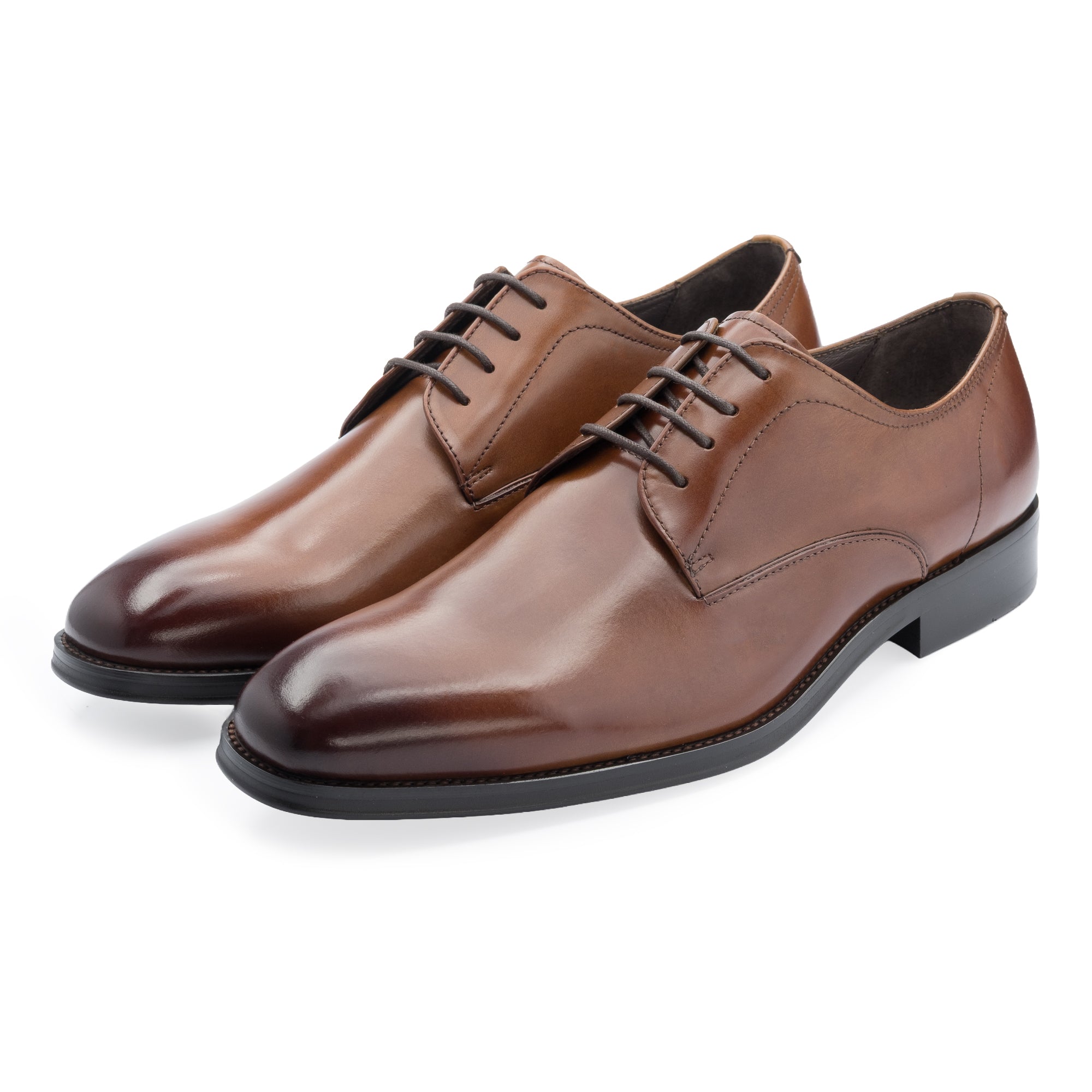
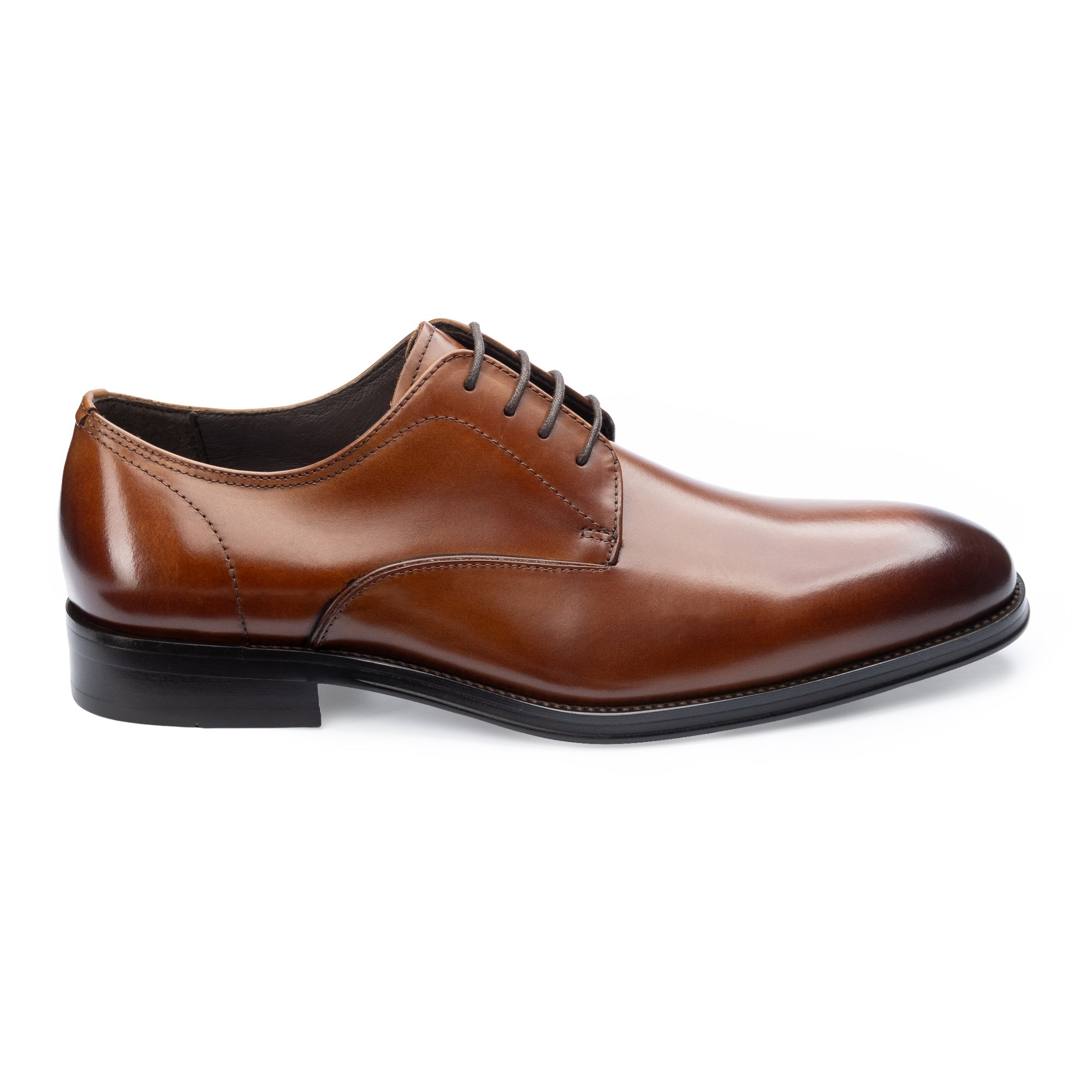
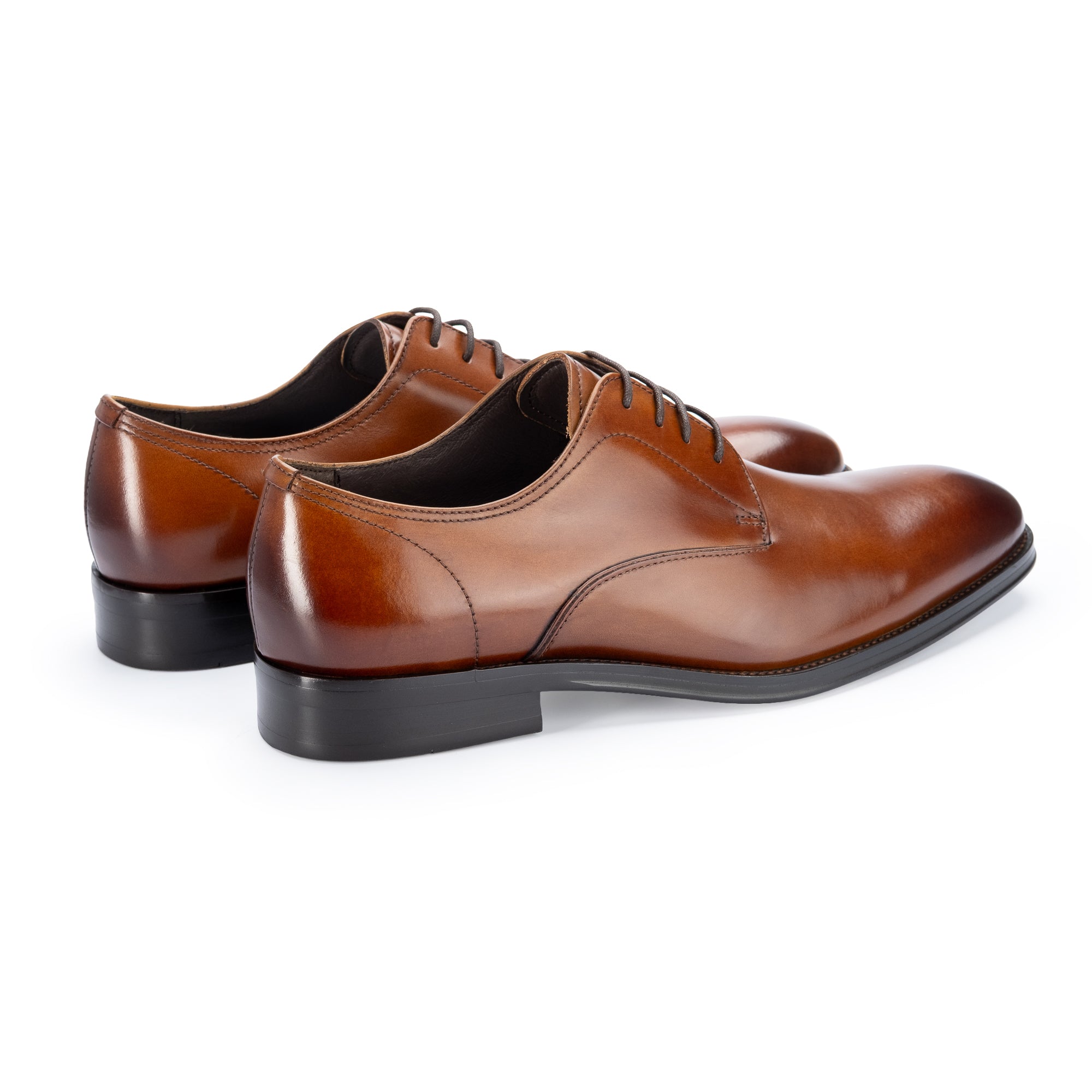
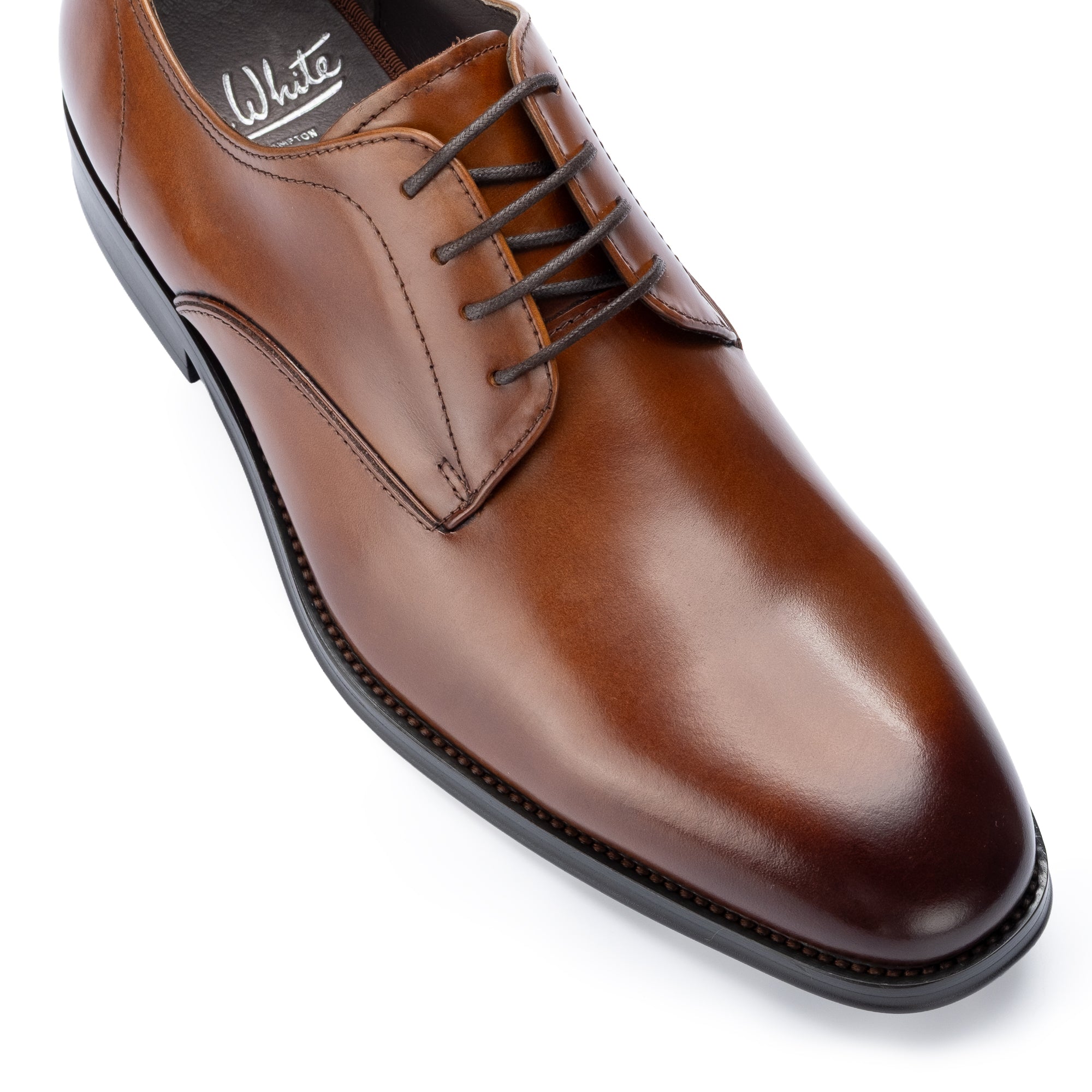
The Lucan Semi-Brogues from John White Shoes are offered in Black and Tan. The black Lucan can accompany a suit to a conservative professional environment — or to the kind of smart occasion where an Oxford might feel blank. The tan Lucan belongs more naturally to lighter-weight suiting in navy or stone, or to smart-casual weekend dressing. A shoe that covers this much formality range reliably is worth understanding well before you buy.
The Quarter Brogue
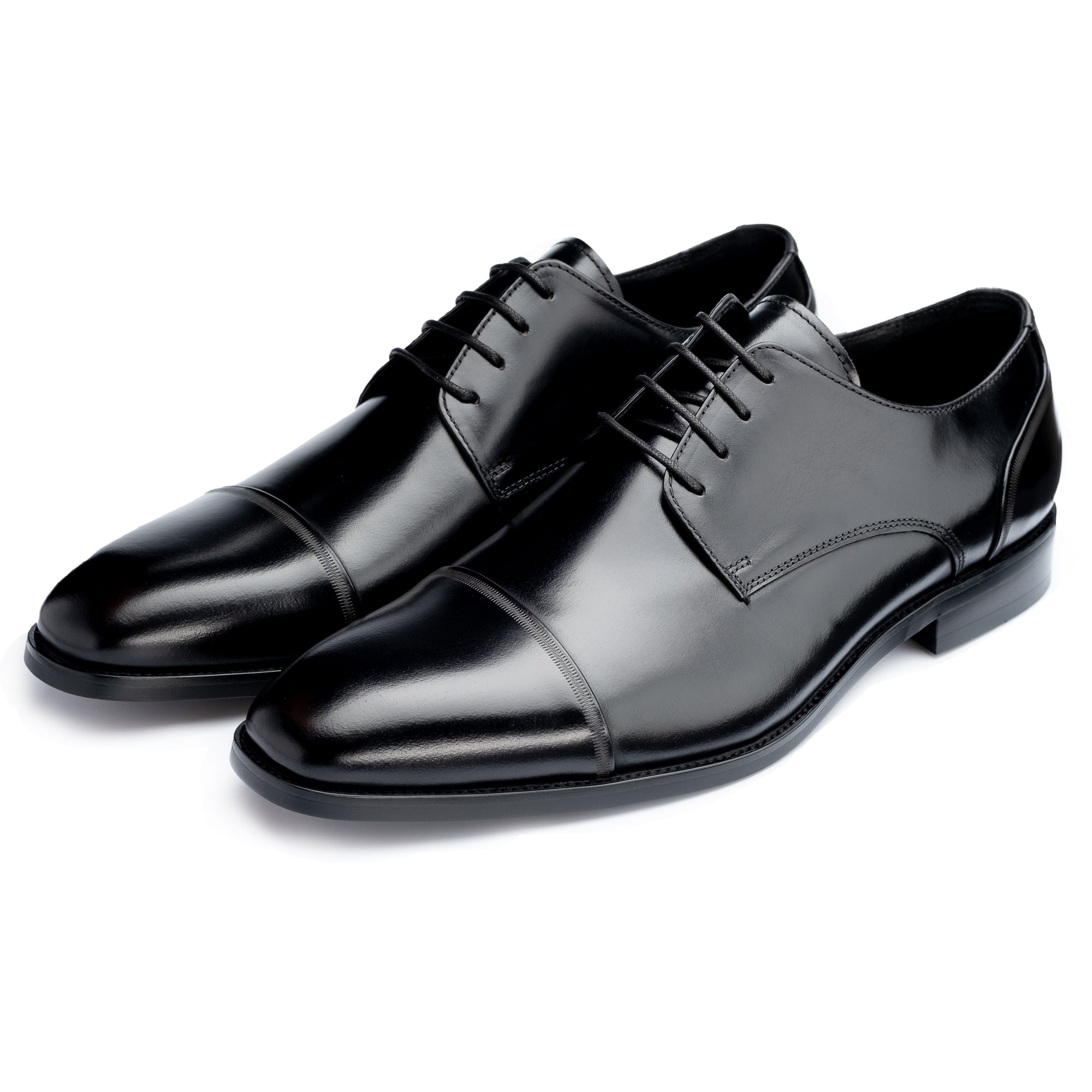
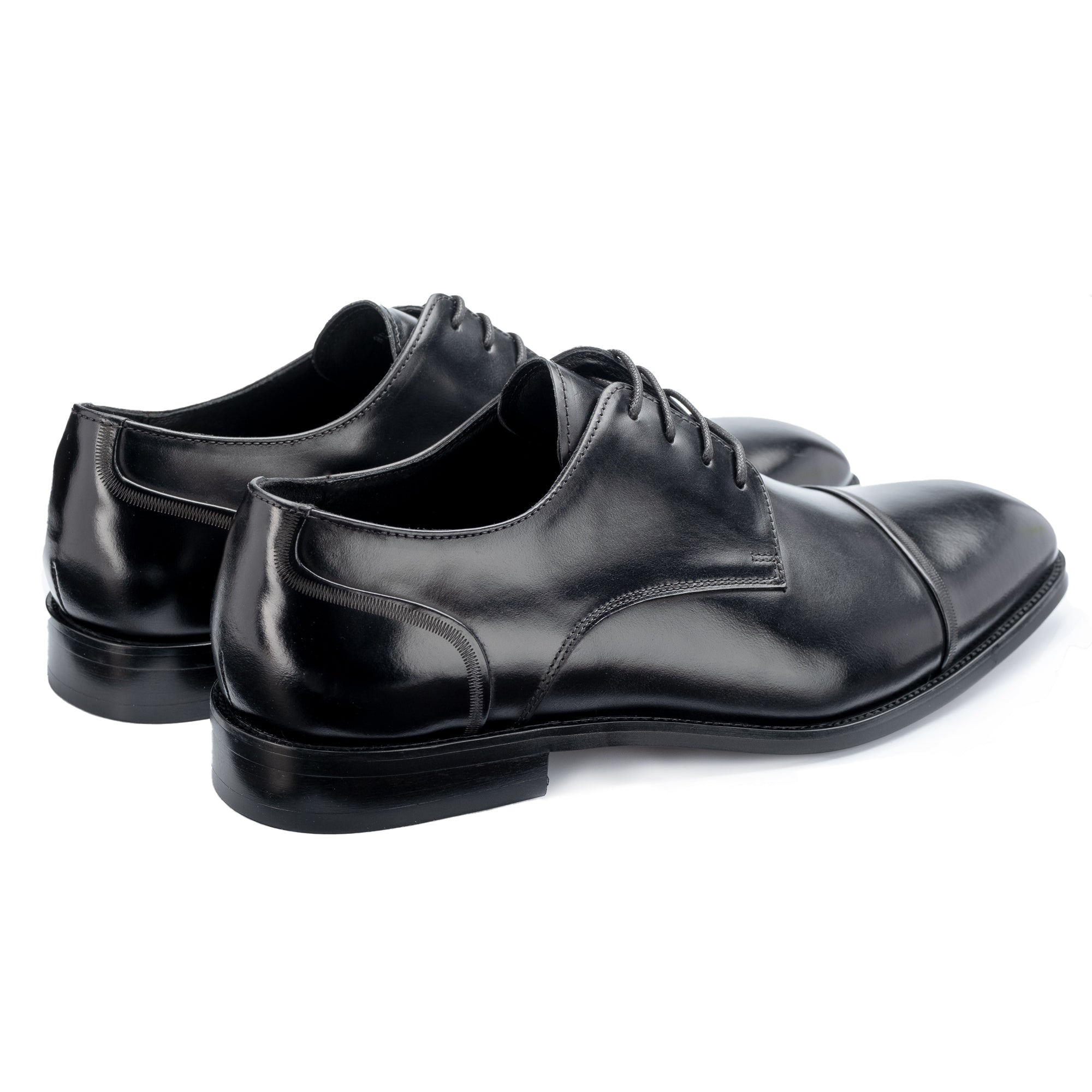
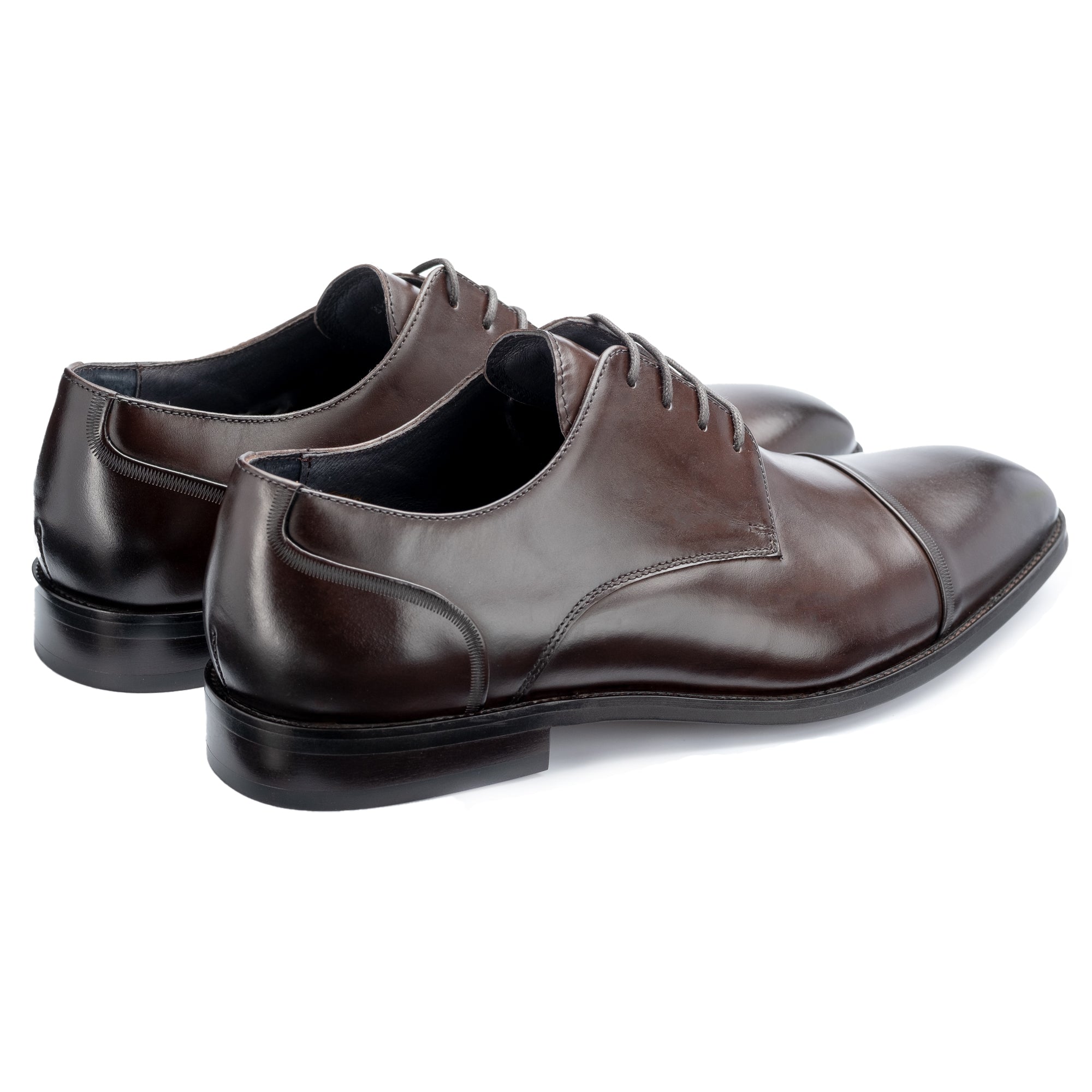
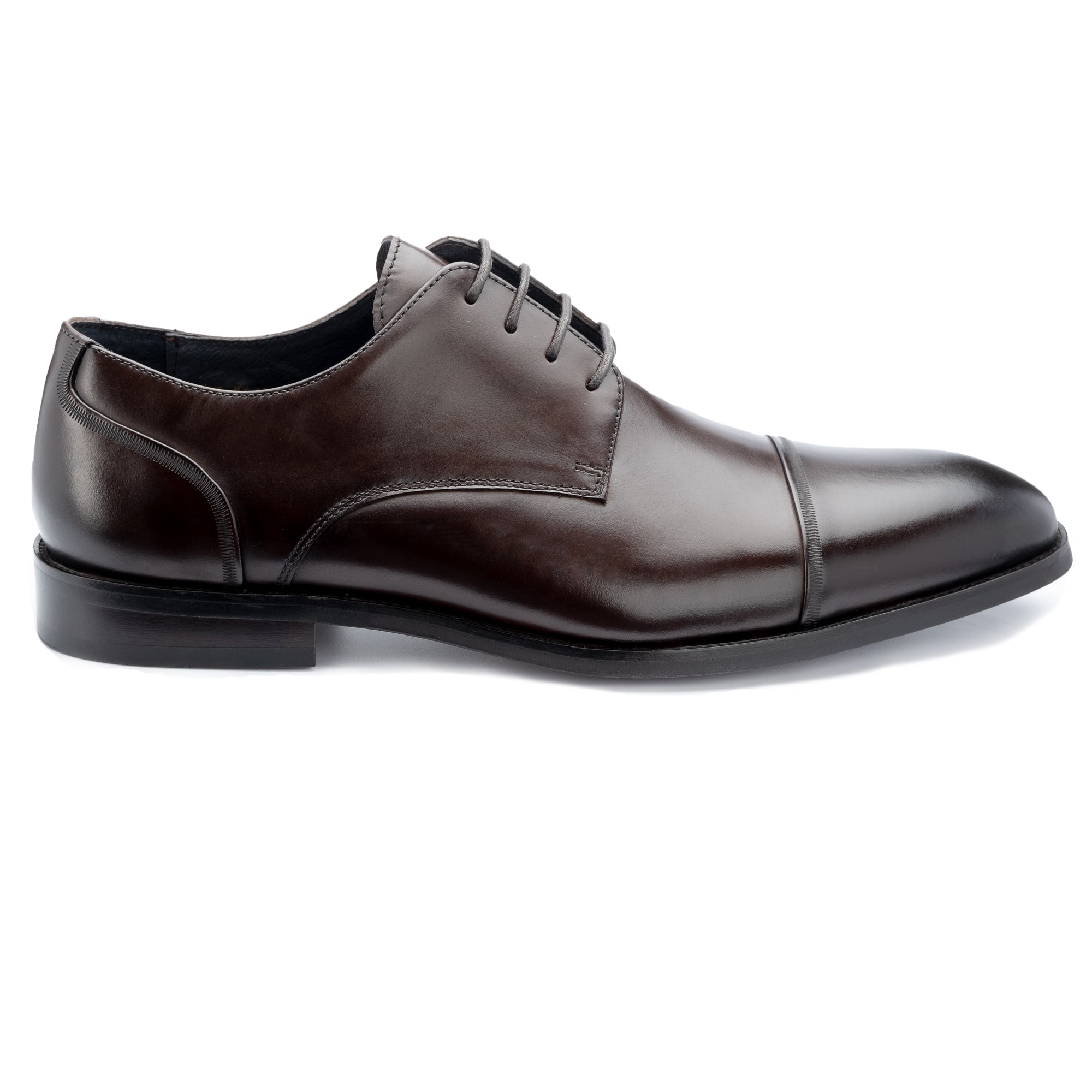
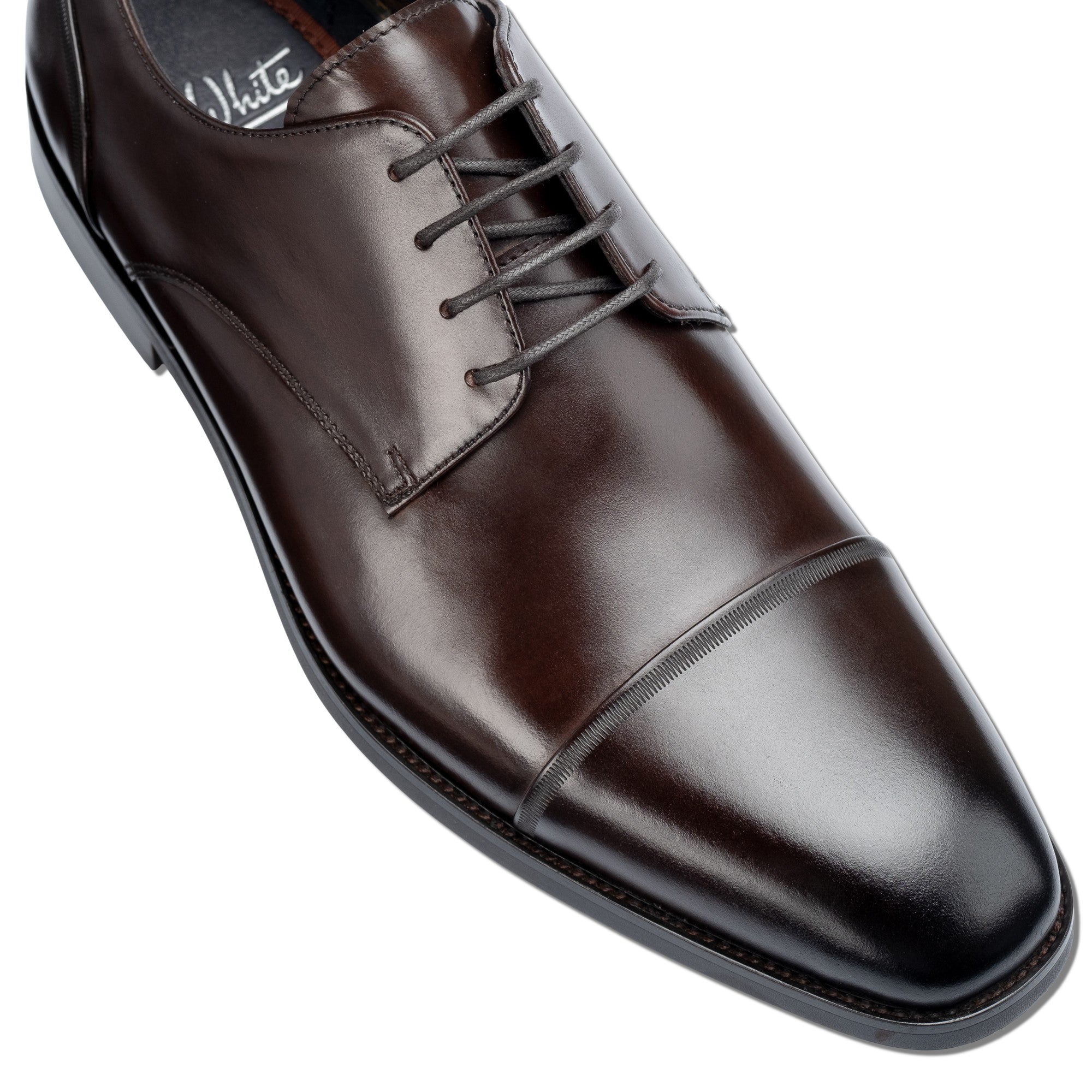
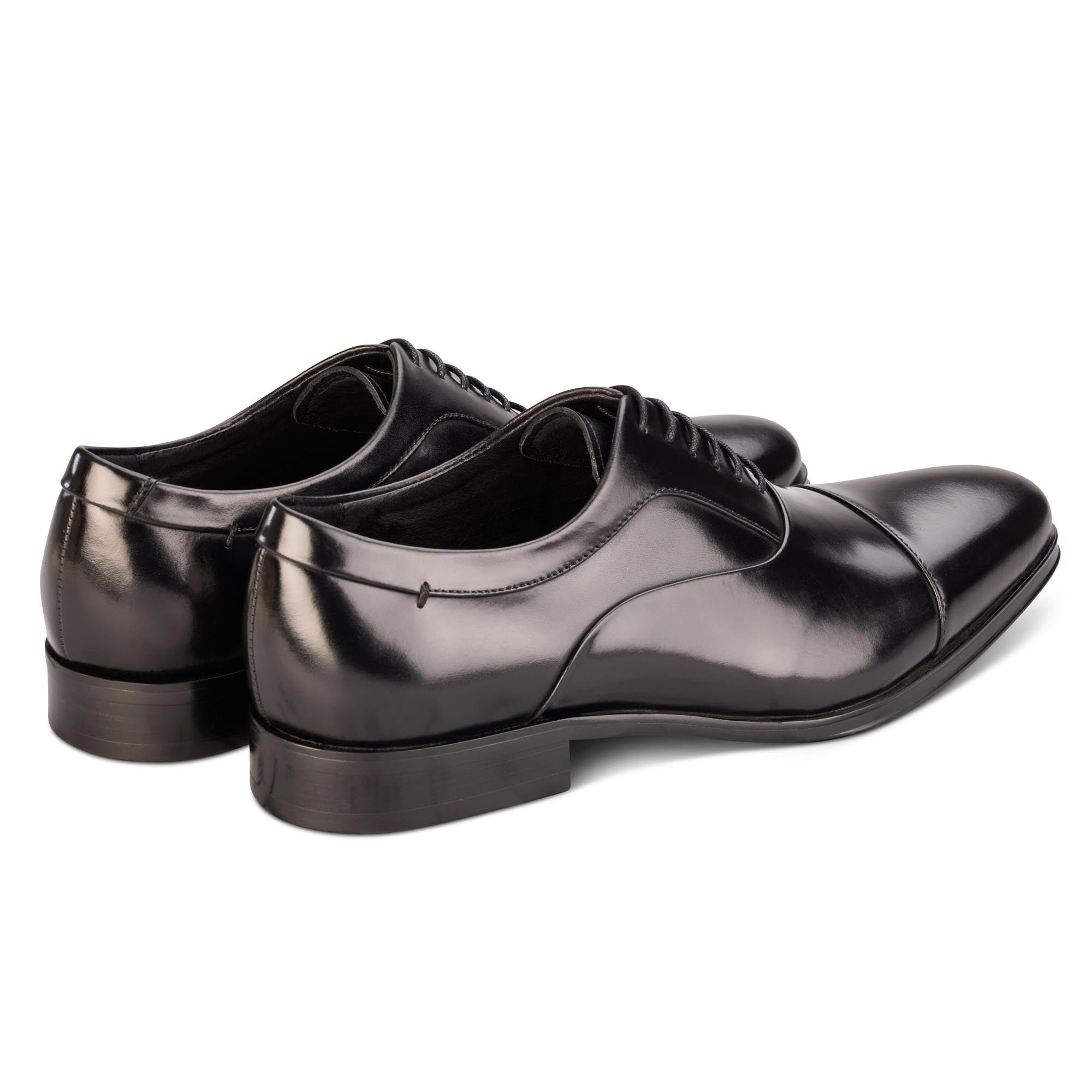
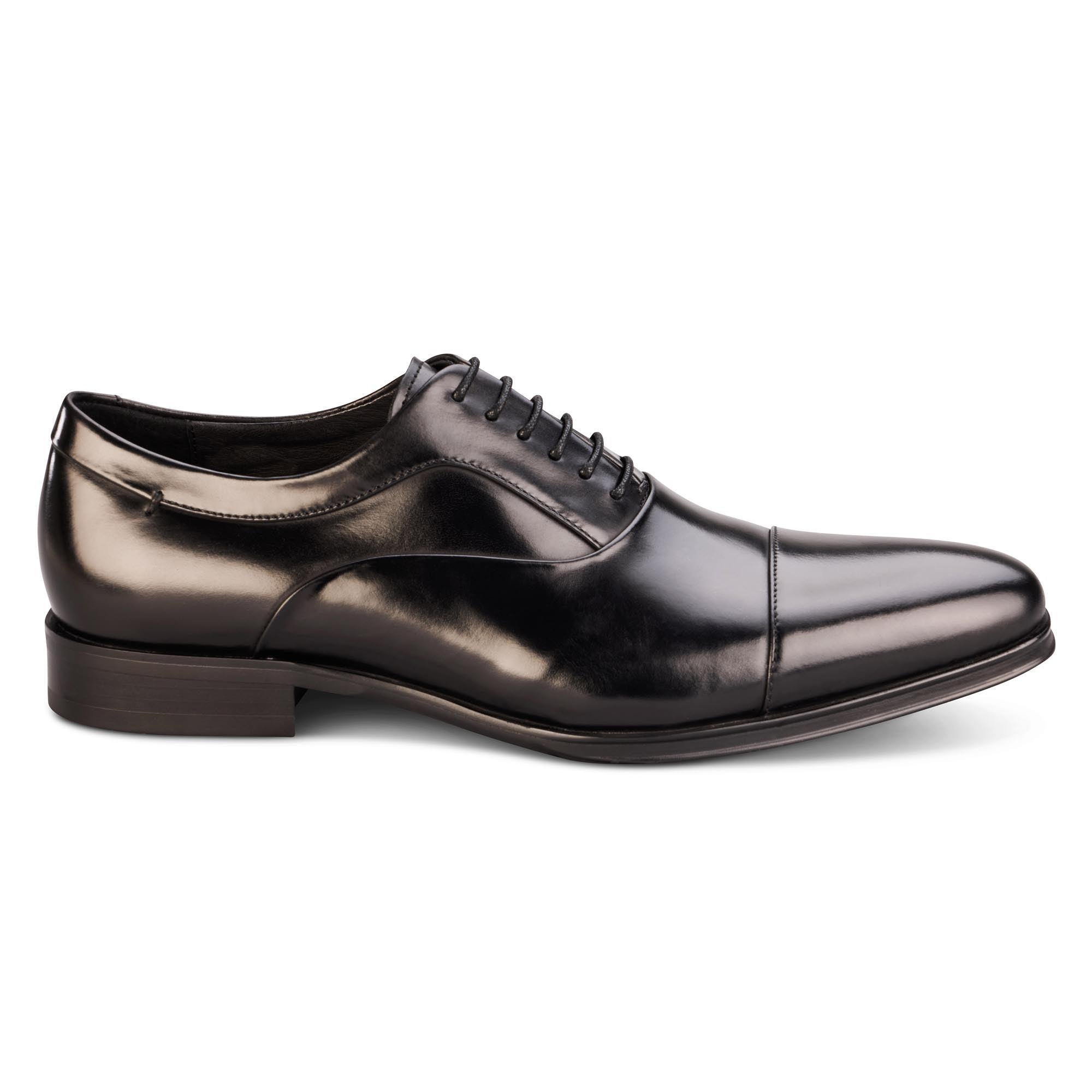
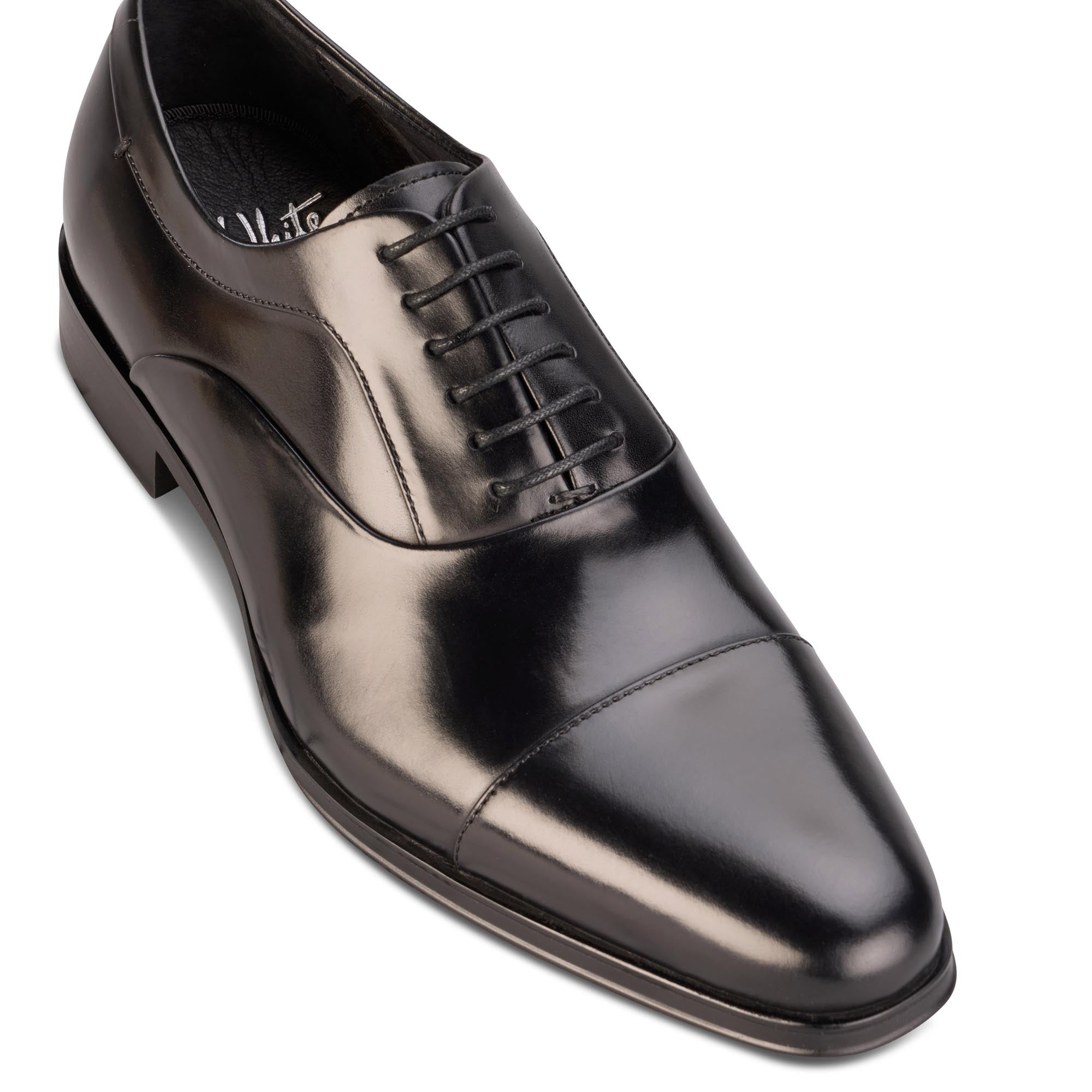
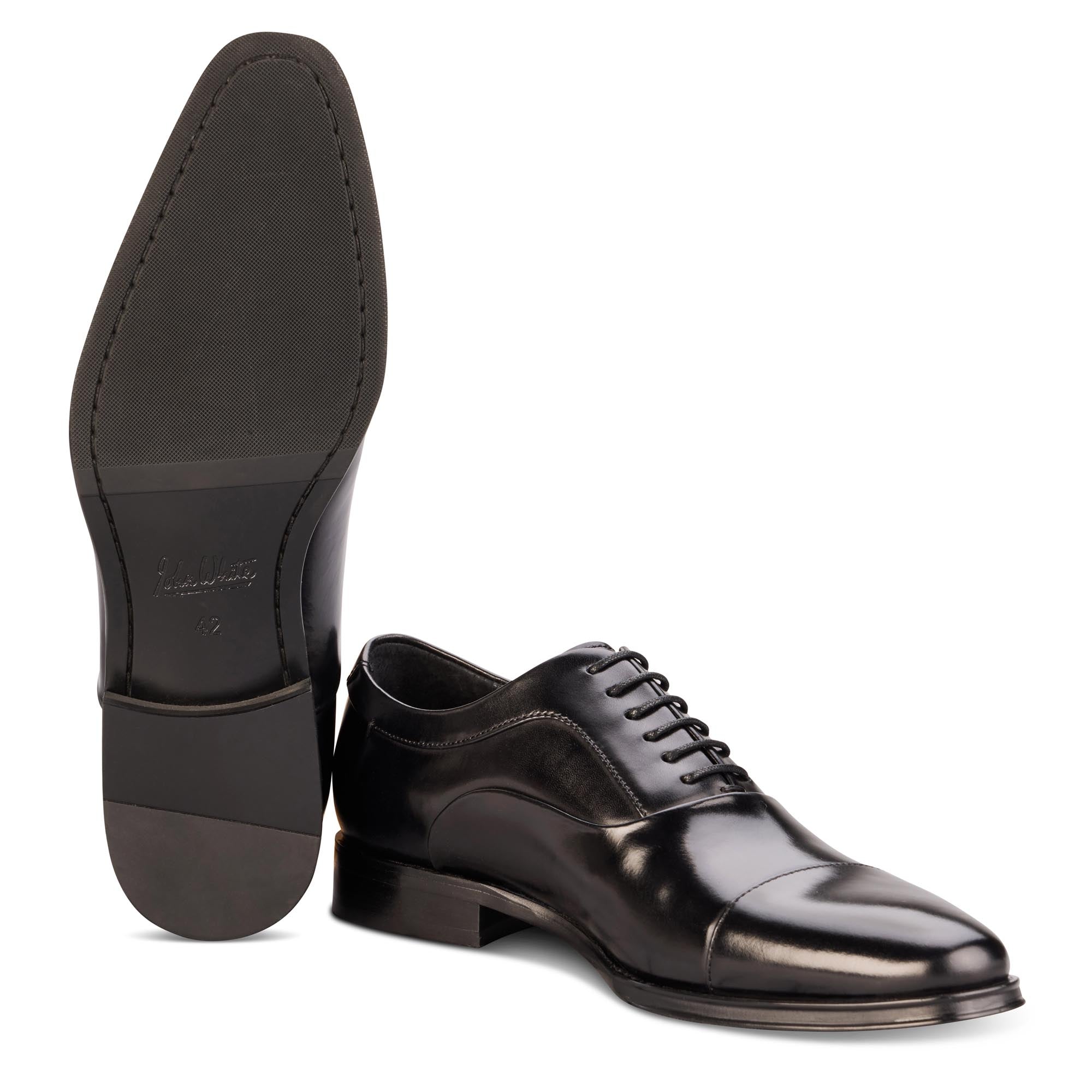
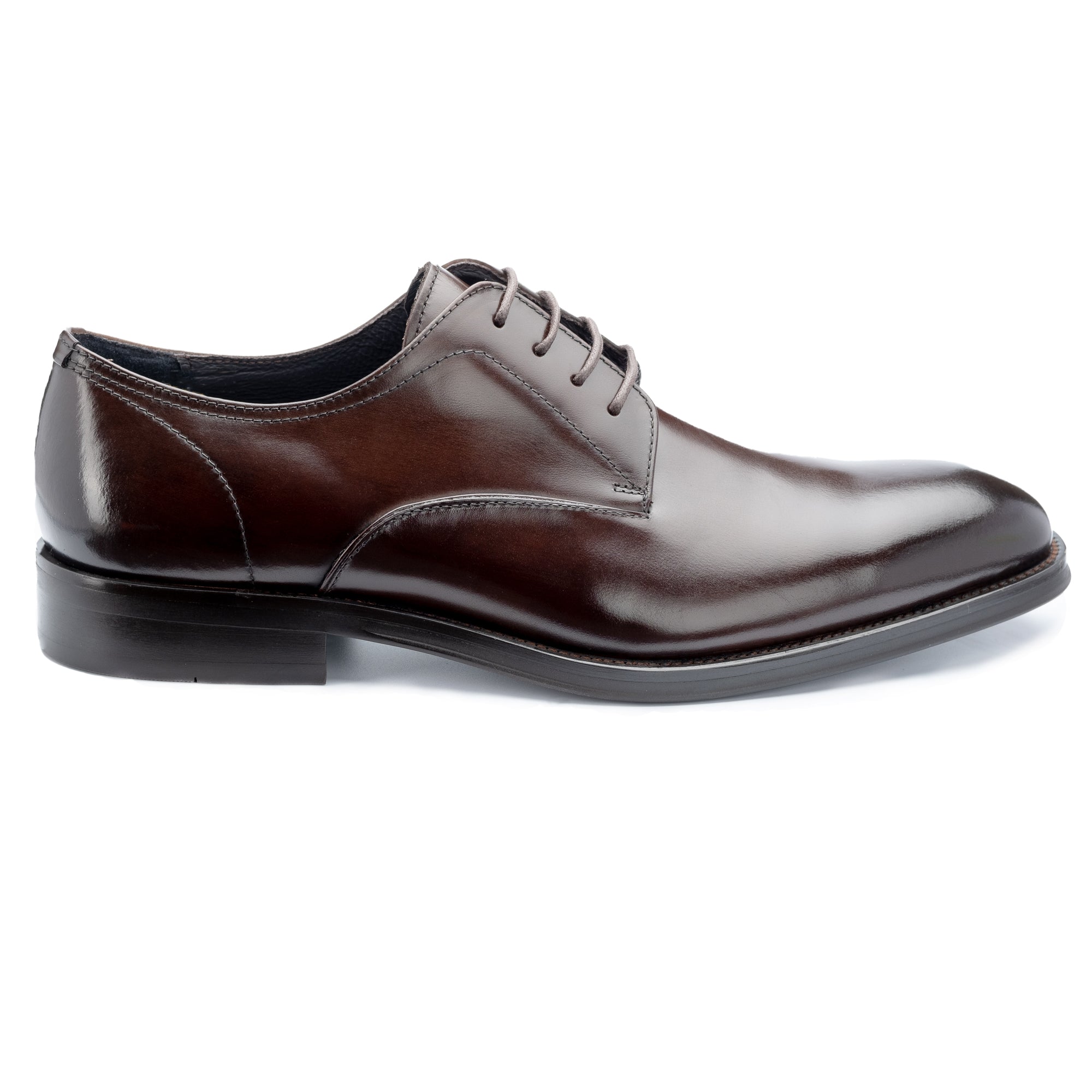
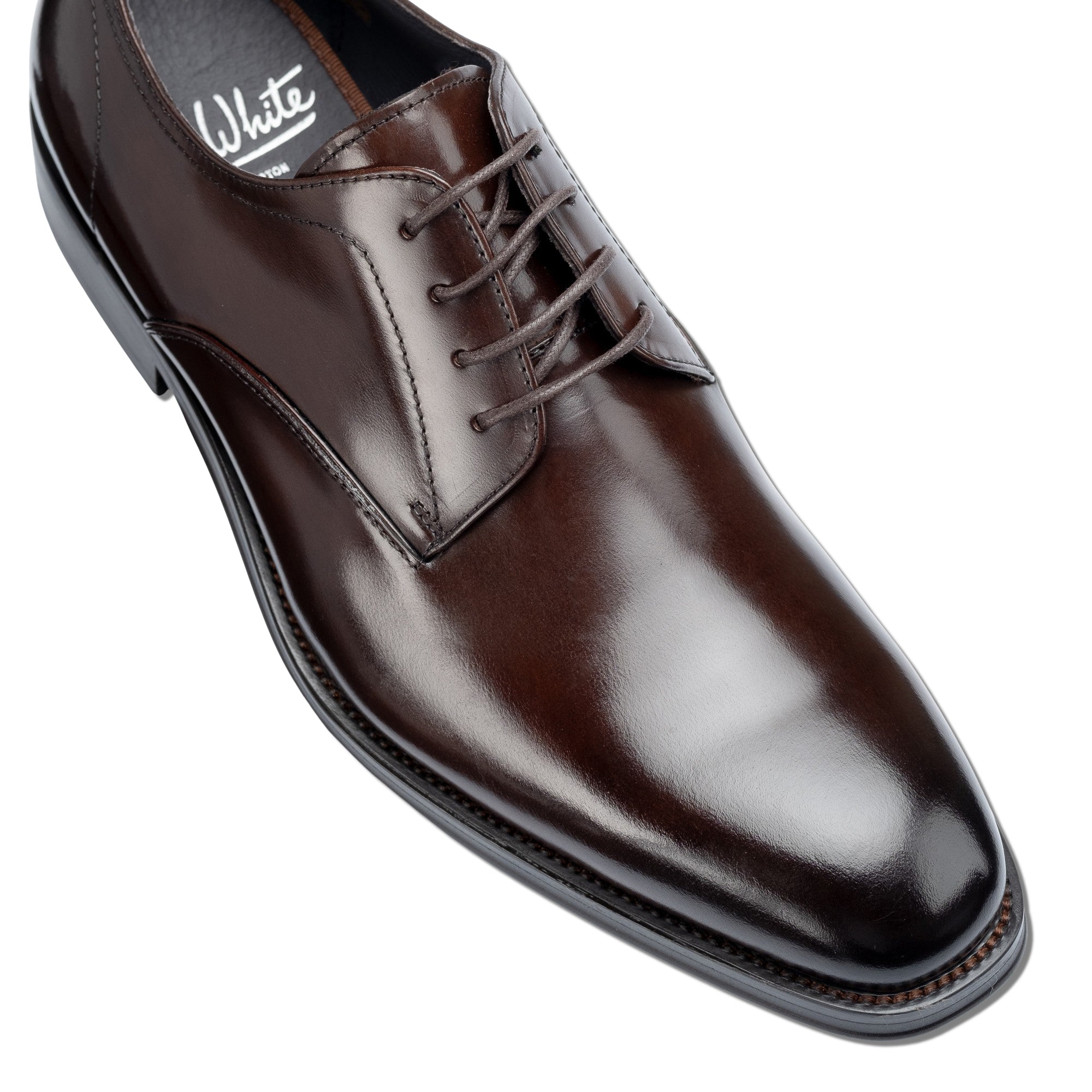
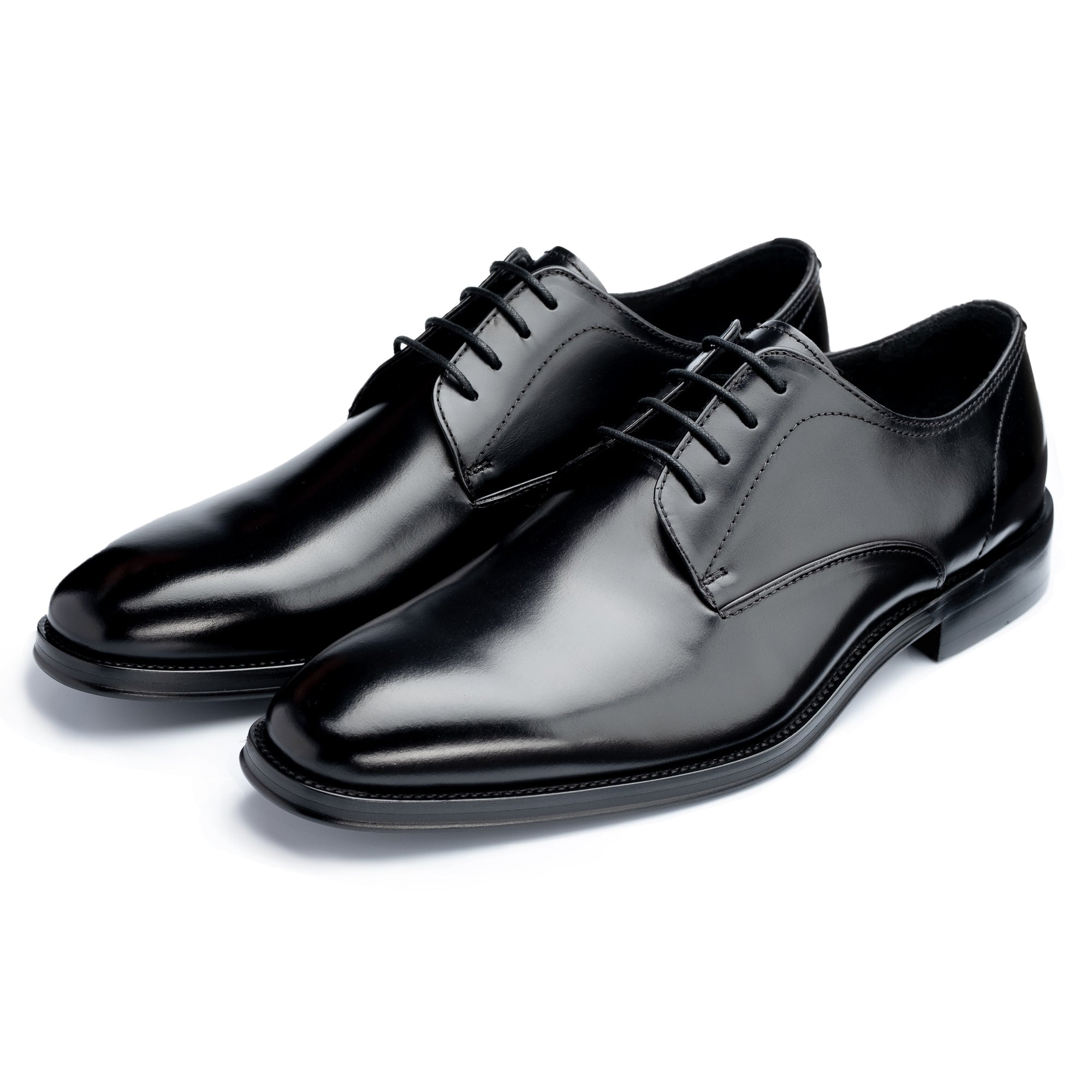
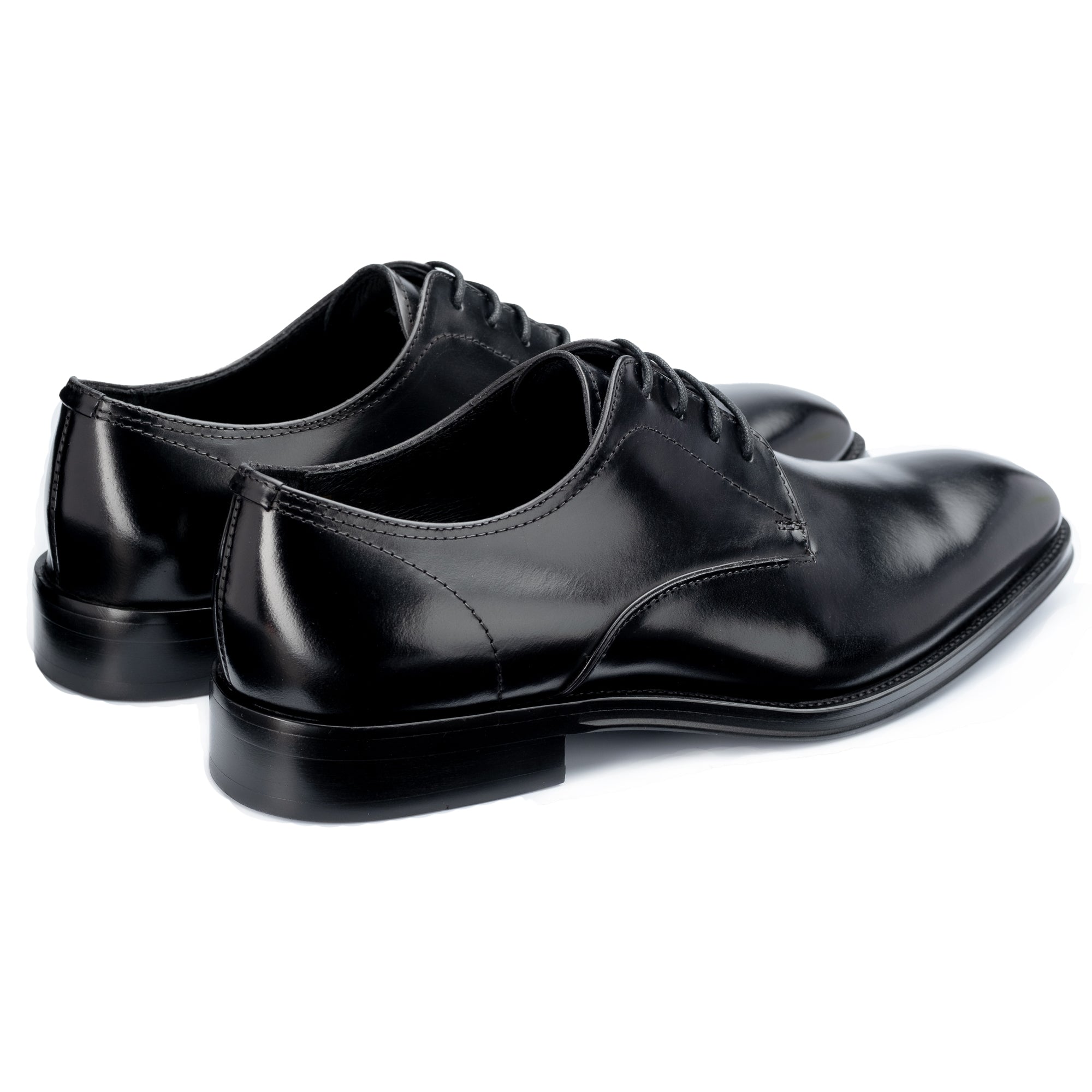
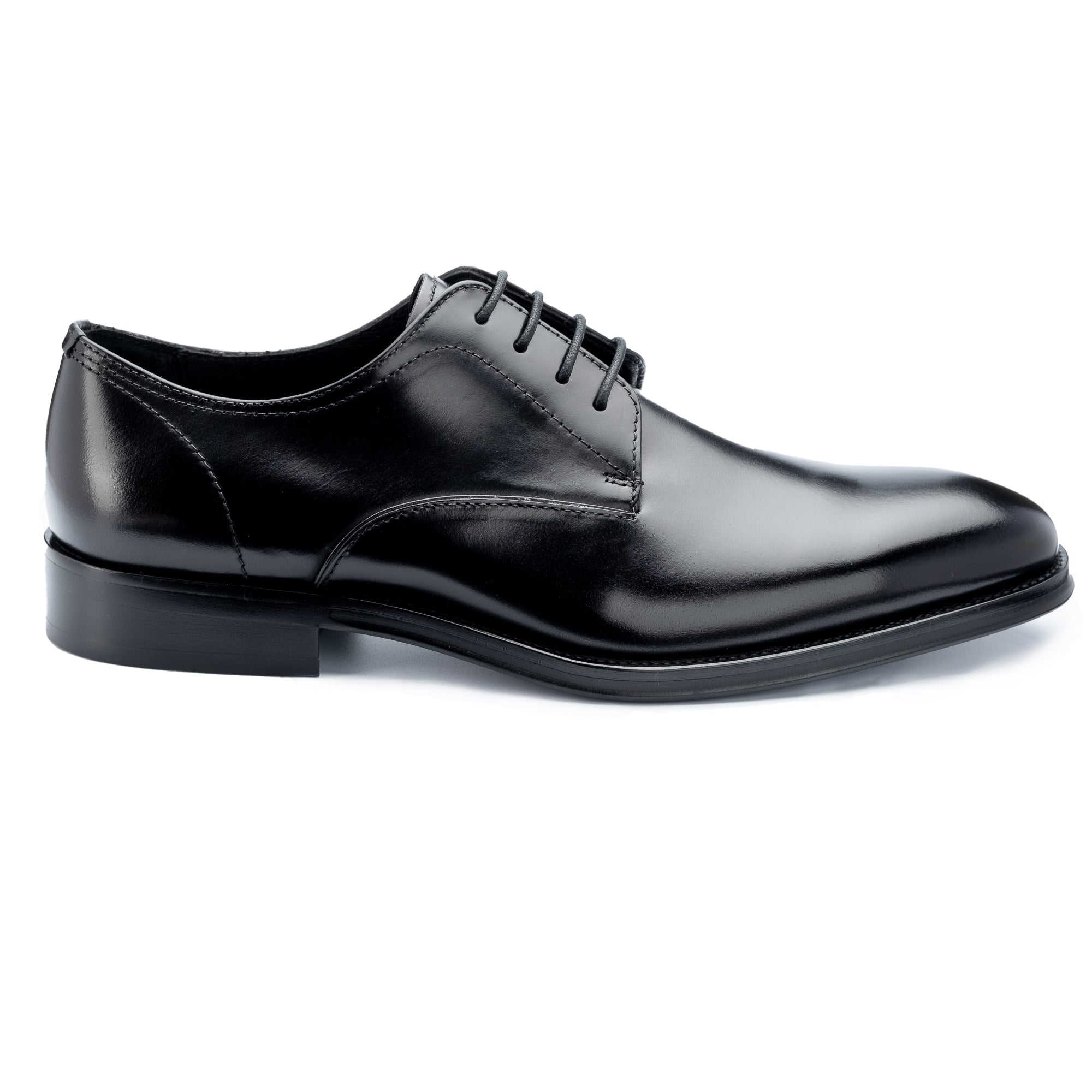
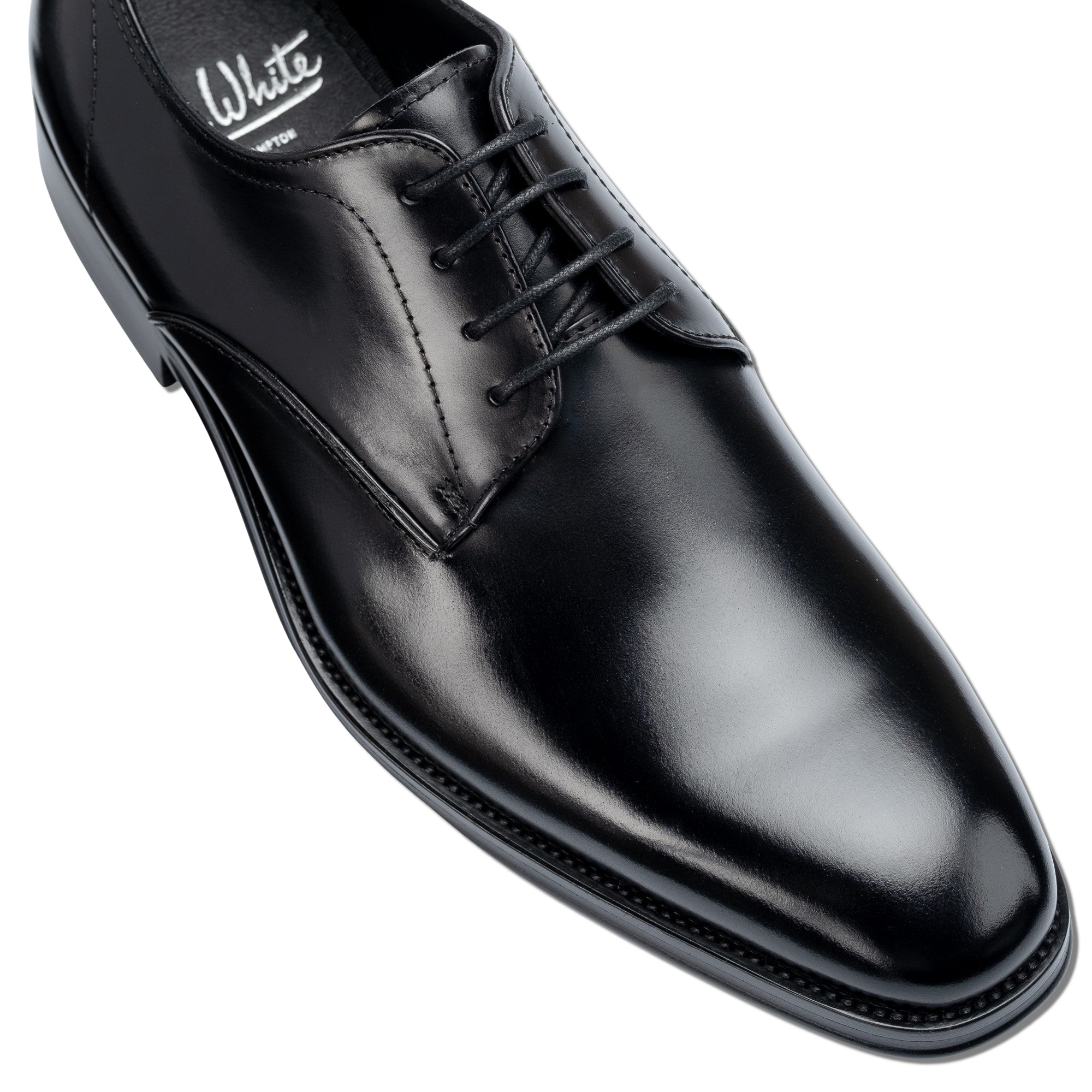
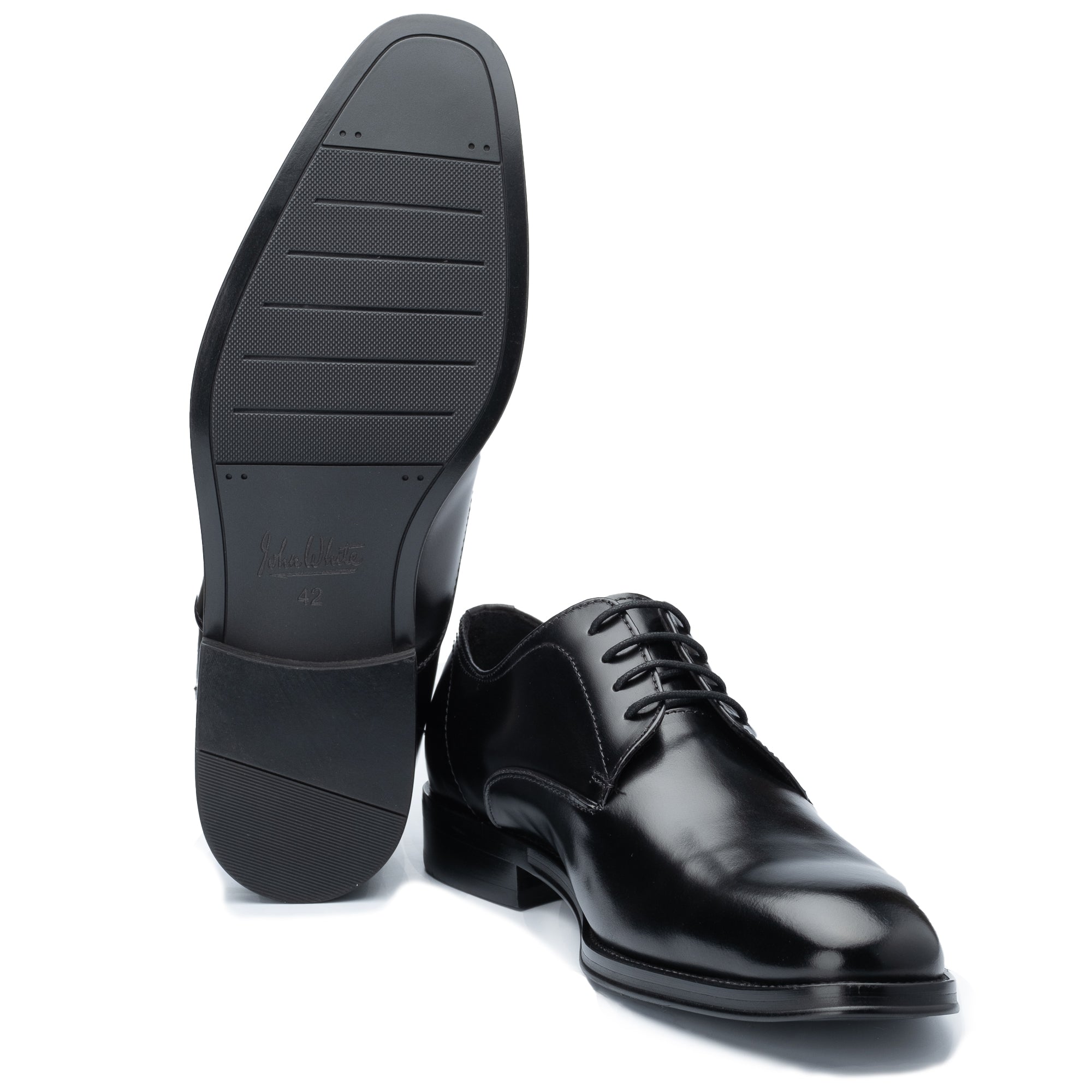
The quarter brogue is the most restrained of the three: a straight toecap with minimal perforations along its edge and typically no medallion. The decoration is discreet enough that many wearers — and most non-specialists — would not immediately read the shoe as a brogue at all. At a glance it reads closer to a plain-capped Oxford.
Quarter brogues are common among the finer Northampton makers, often appearing in their upper ranges where the emphasis is on leather quality and subtle craft detail rather than visible decoration. John White Shoes does not currently range a dedicated quarter brogue, but understanding the category matters when comparing the wider British market or making sense of descriptions on other makers' sites. When a shoe is described as "lightly brogued," it is almost always a quarter brogue.
How to Choose: Reading the Occasion
The decision between these three is primarily an occasion question, with colour working as the secondary dial to fine-tune the formality reading.
For smart office and formal business
The semi-brogue in black is the right instrument. It carries enough character to avoid the blankness of a plain Oxford, while keeping the decorative work discreet enough for conservative professional environments — law, finance, client-facing roles where clothing is noticed by its absence of error rather than its presence of personality. A full brogue in this context asks more of an outfit than most business dress can comfortably support.
For smart-casual and the working week outside the office
All three levels of broguing earn their place here, which is what makes smart-casual so hospitable to the brogue as a category. The full brogue in tan or brown is the natural country-adjacent shoe, suited to tweed, cord, and robust woollen trousers. The semi-brogue in tan moves between town and country comfortably. A black semi-brogue in a smart-casual setting can begin to look over-dressed against chinos — the context is better served by a tan or brown brogue, as the dark jeans formula also shows.
For country and rural occasions
The full brogue was designed for this terrain — literally. Country house weekends, race meetings on grass, field sports, rural weddings held in marquees on uneven ground — the W-cap and the robust visual character of a full wingtip belong here without qualification. Colour can run warm: tan, brown, and the Reef tones that echo countryside palettes.
Matching broguing level to suit weight
Suit weight and texture are a useful secondary guide. Dark, smooth formal suiting — charcoal barathea, navy worsted — calls for a semi-brogue at most, in black. Mid-grey and lighter-weight city fabrics wear a black or dark-brown semi-brogue with ease. Country suits — tweed, Prince of Wales check, herringbone, heavy flannel — are where the full brogue is not merely permissible but correct. The construction of the shoe mirrors the construction of the cloth: both are robust, characterful, built for texture.
The Role of Colour
Broguing level and colour work together to set the formality of a shoe. A tan full brogue is the most casual combination in this trio. A black semi-brogue is the most formal combination that still carries visible broguing. Between those poles, brown and mid-tan semi-brogues occupy the versatile middle ground that most buyers find serves them across the widest range of situations.
For buyers making a first brogue purchase, a tan or mid-brown semi-brogue covers smart-casual occasions, suits outside the most conservative environments, and weekend dressing without requiring a second pair immediately. Build the wardrobe from versatility first; the full wingtip comes later as a deliberate addition for the occasions that specifically call for it.
Explore the full selection of John White Shoes brogues — from the full wingtip Hogarth and Stokes to the semi-brogue Lucan — and compare decoration levels and colours in one place before deciding.