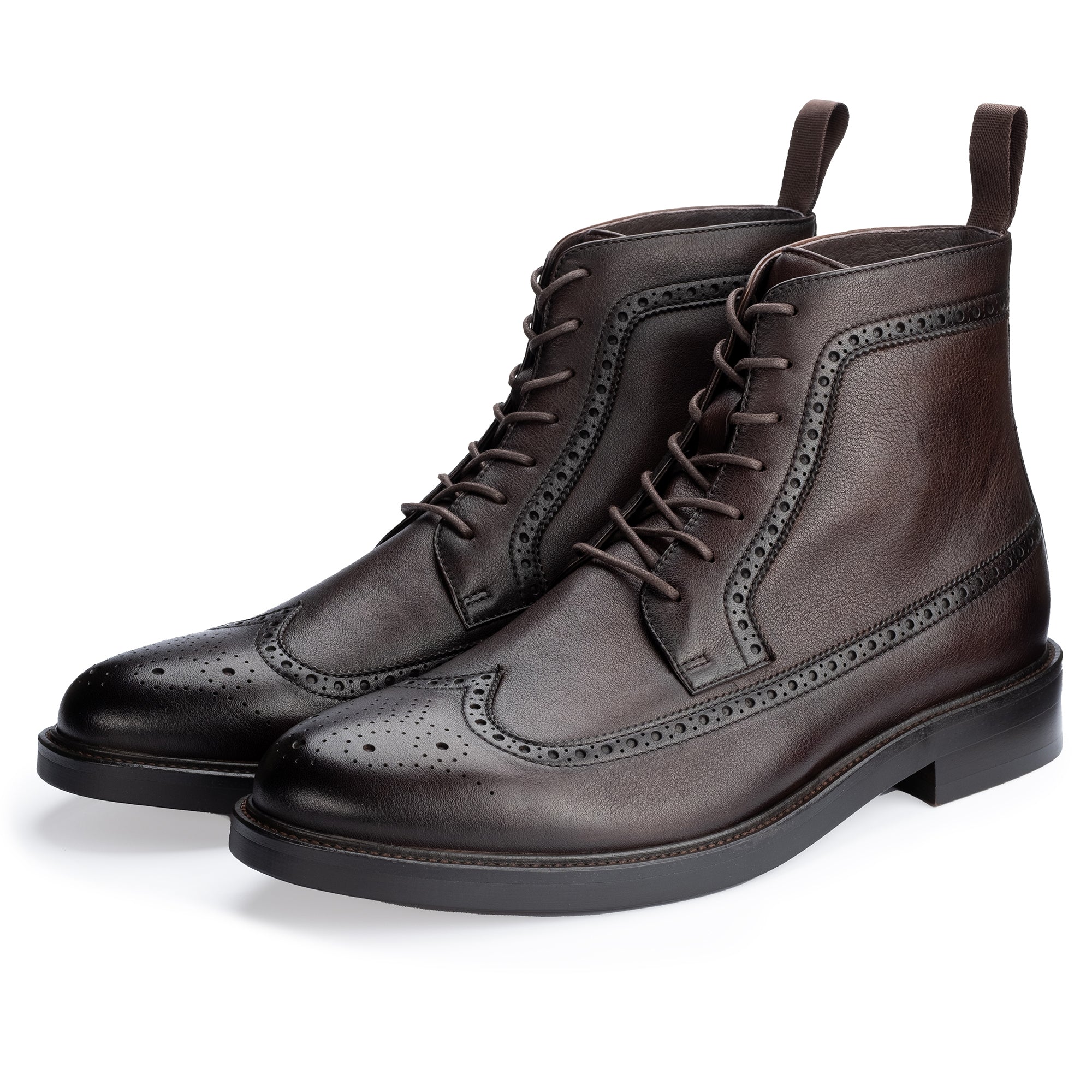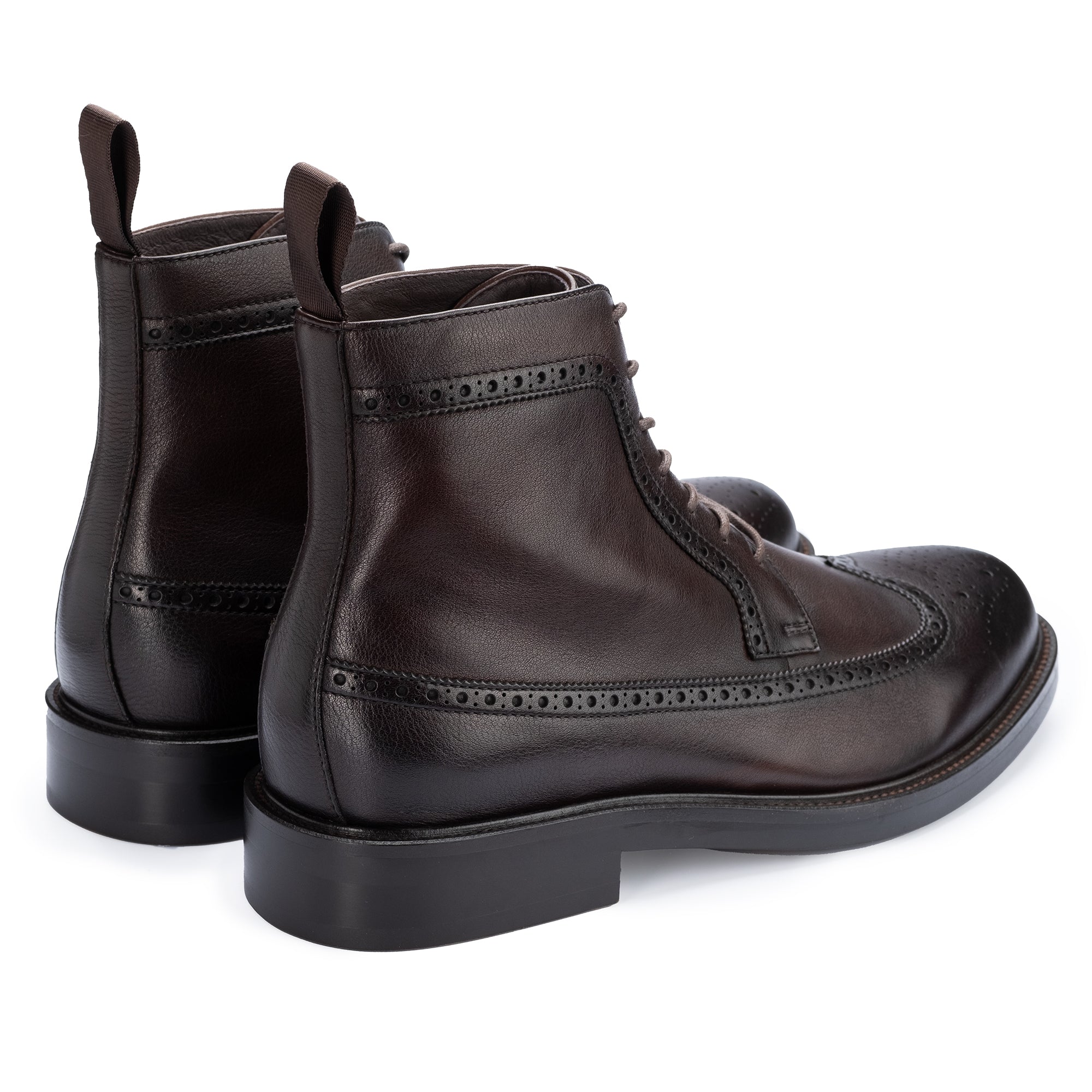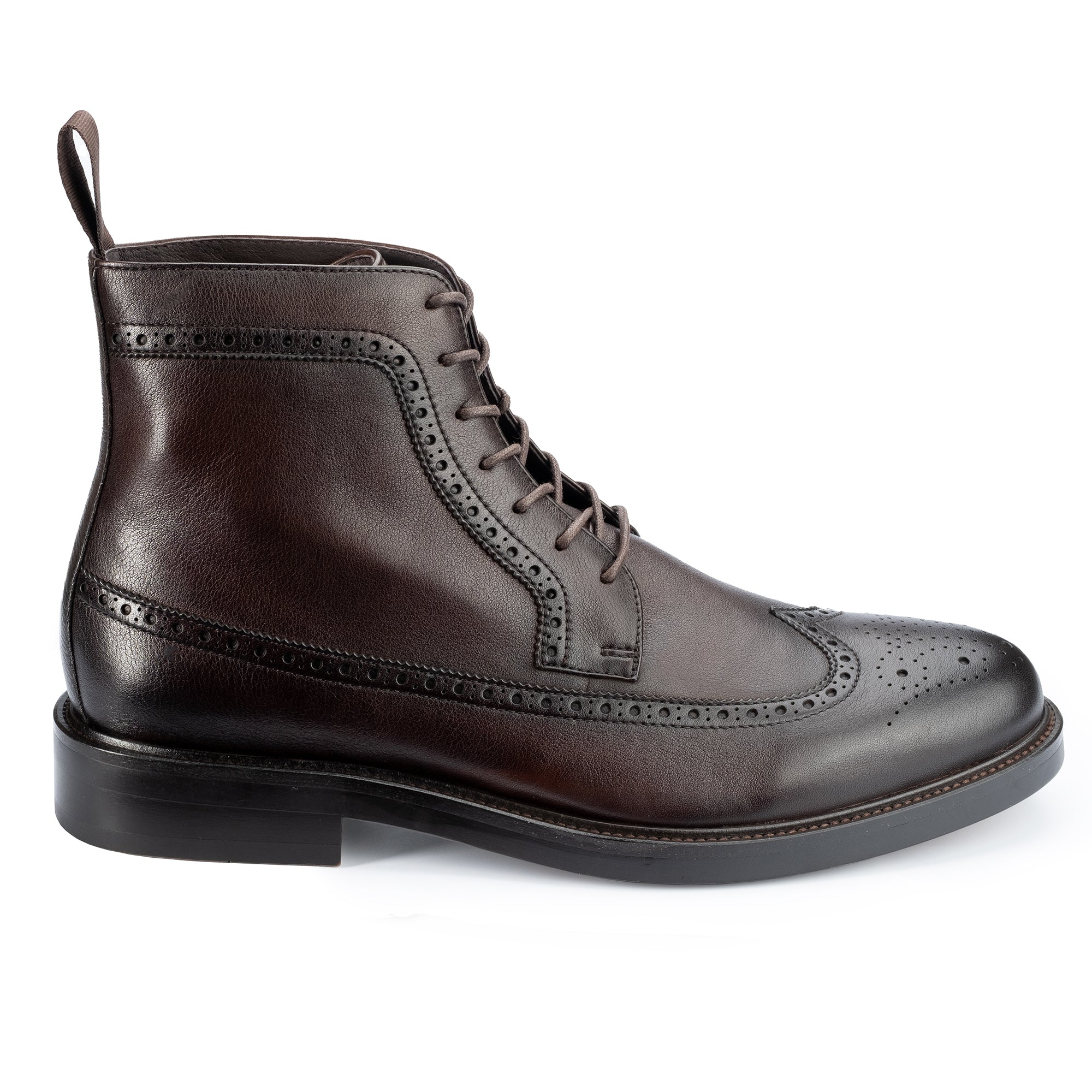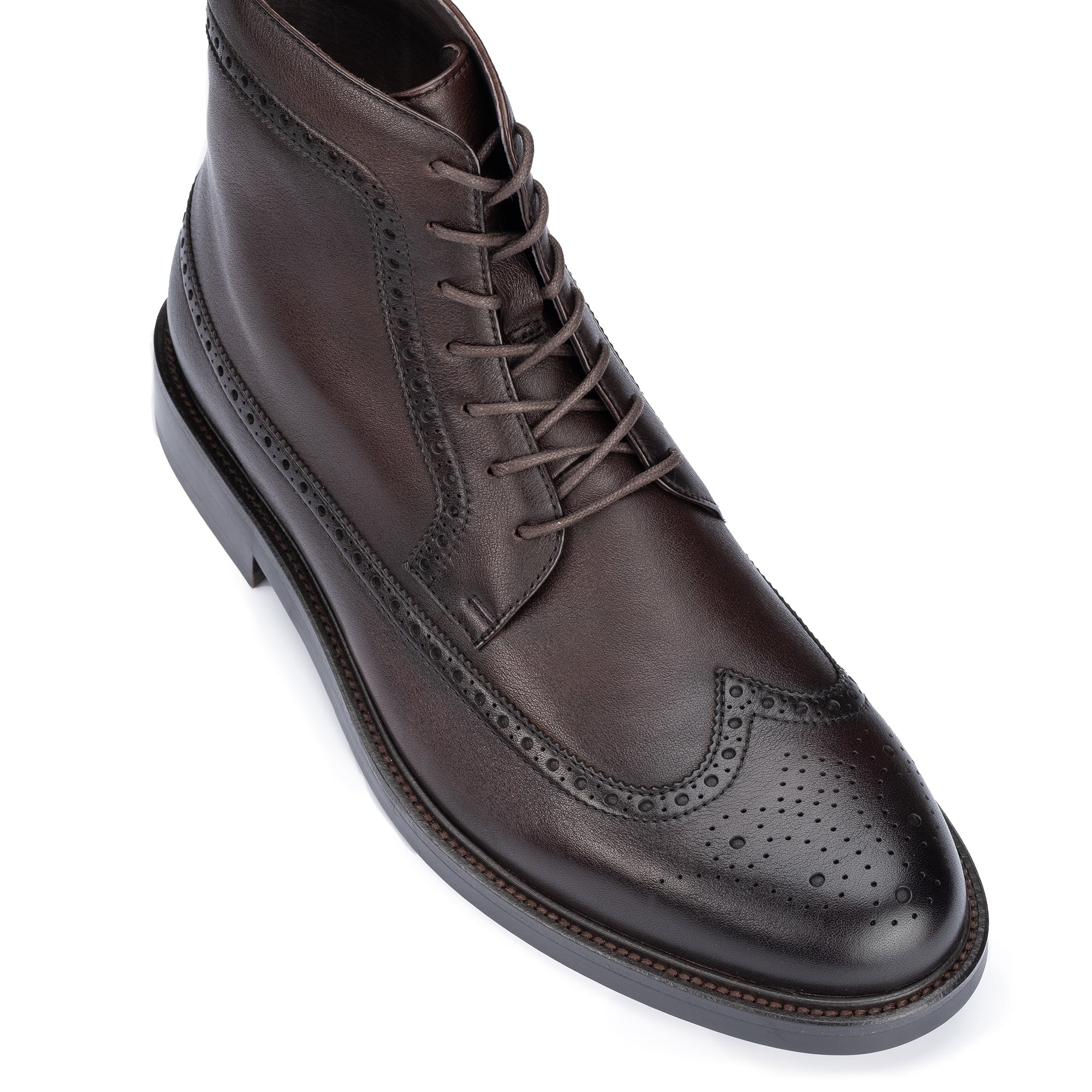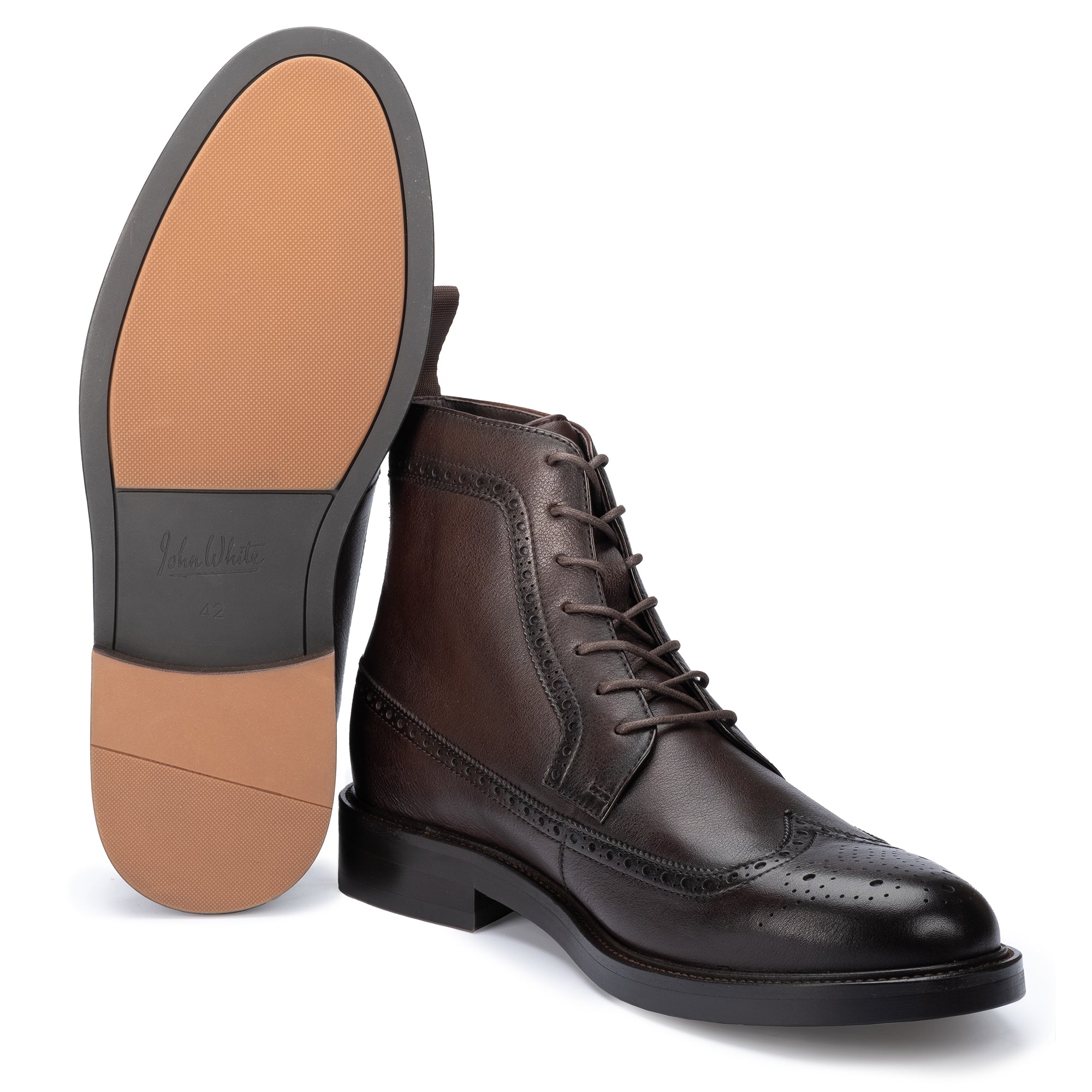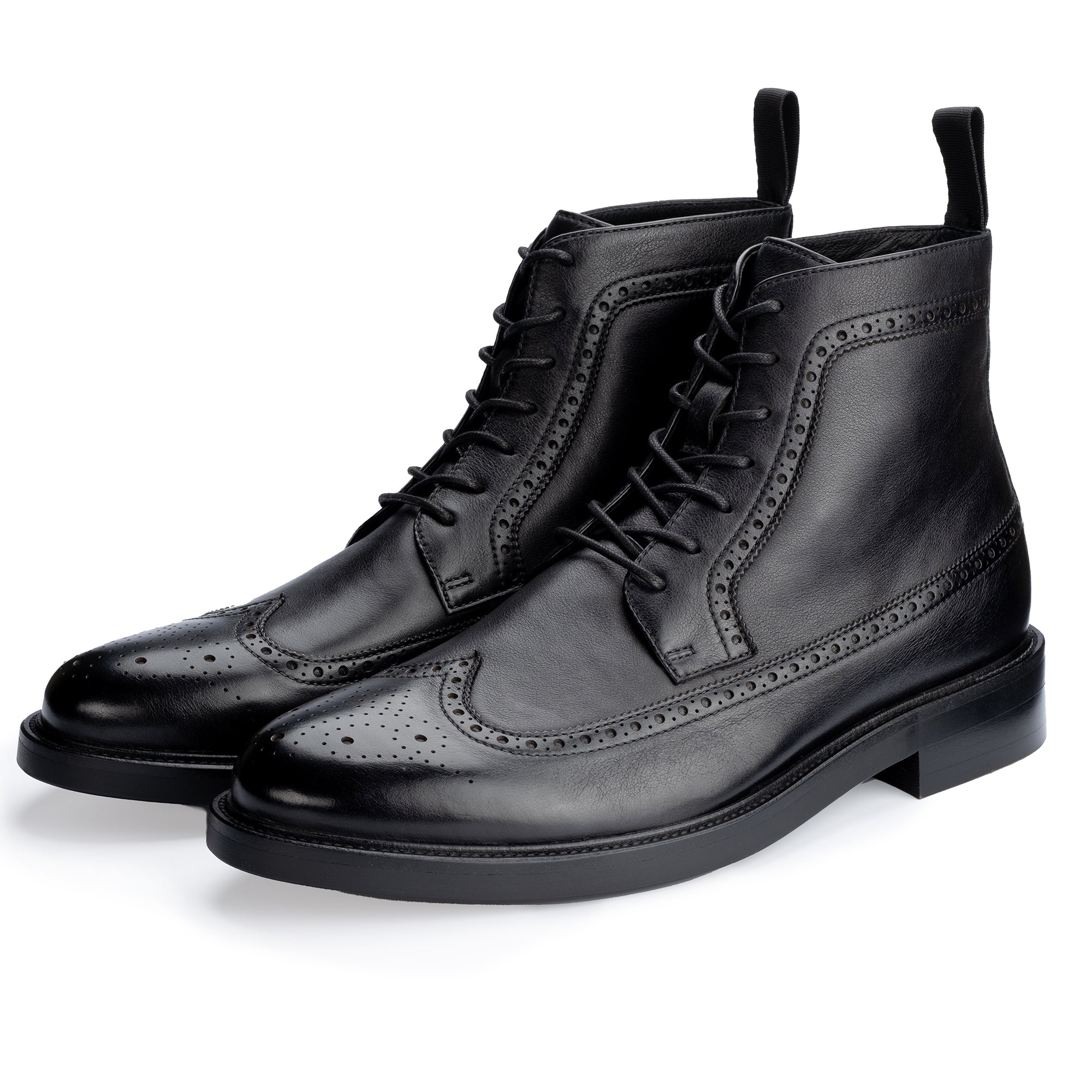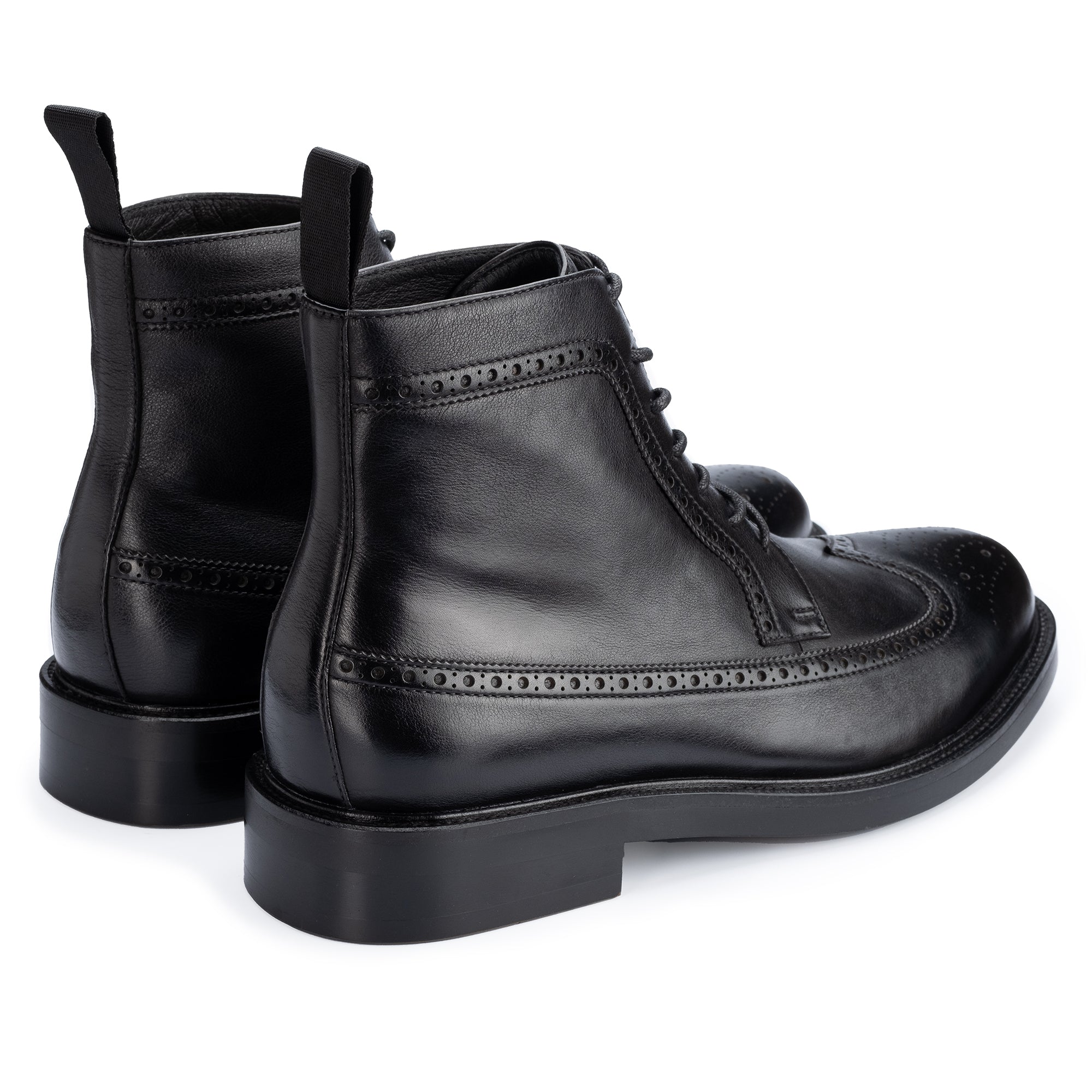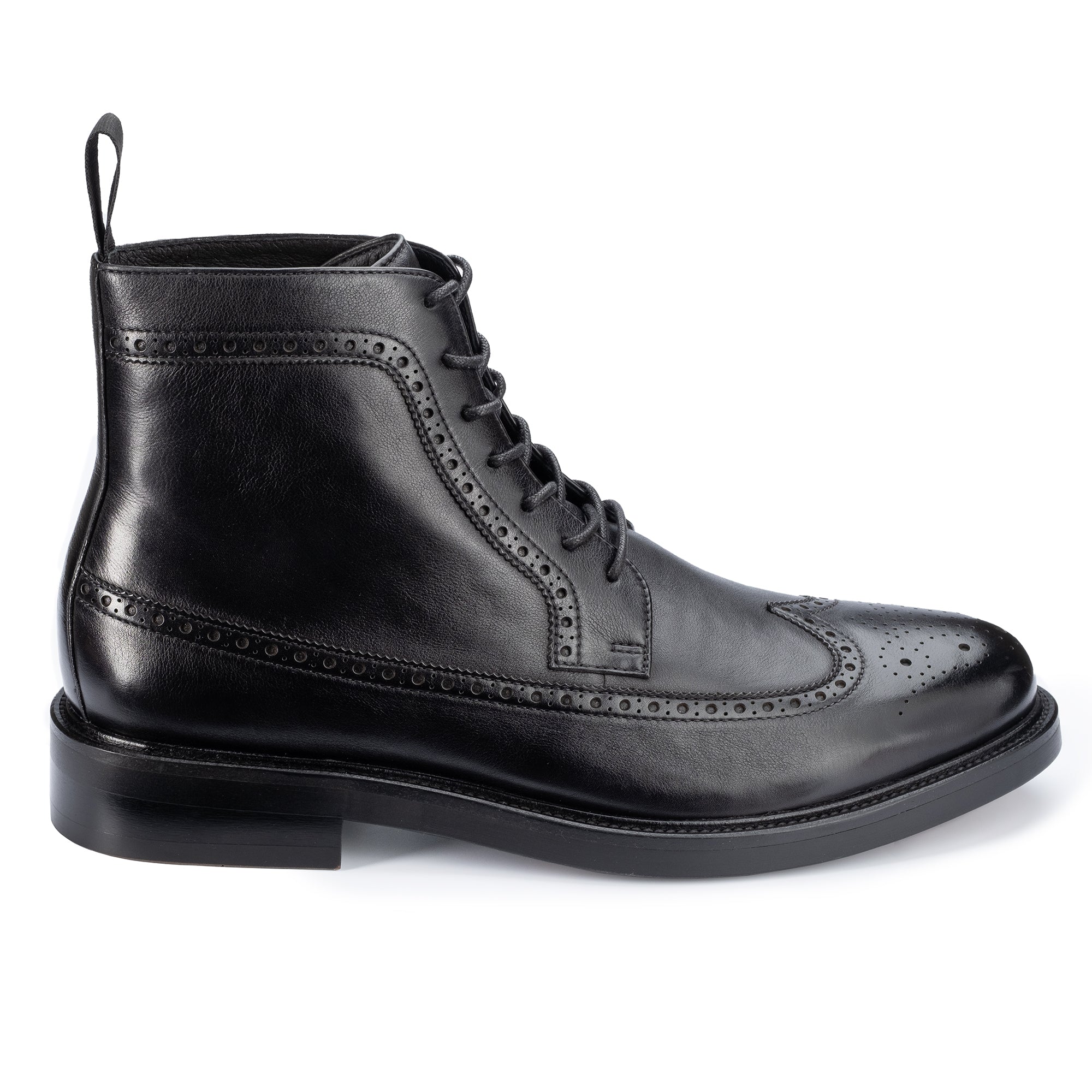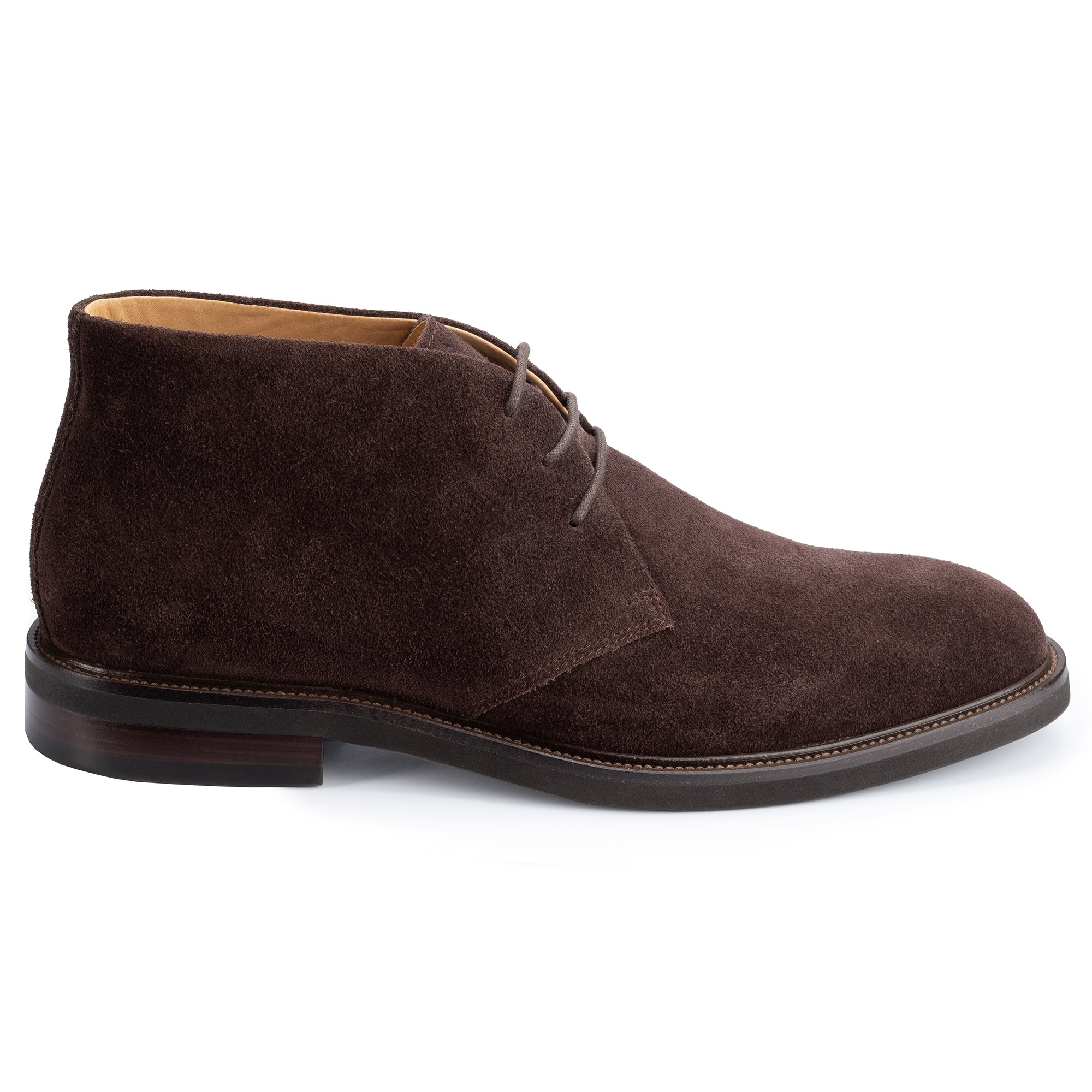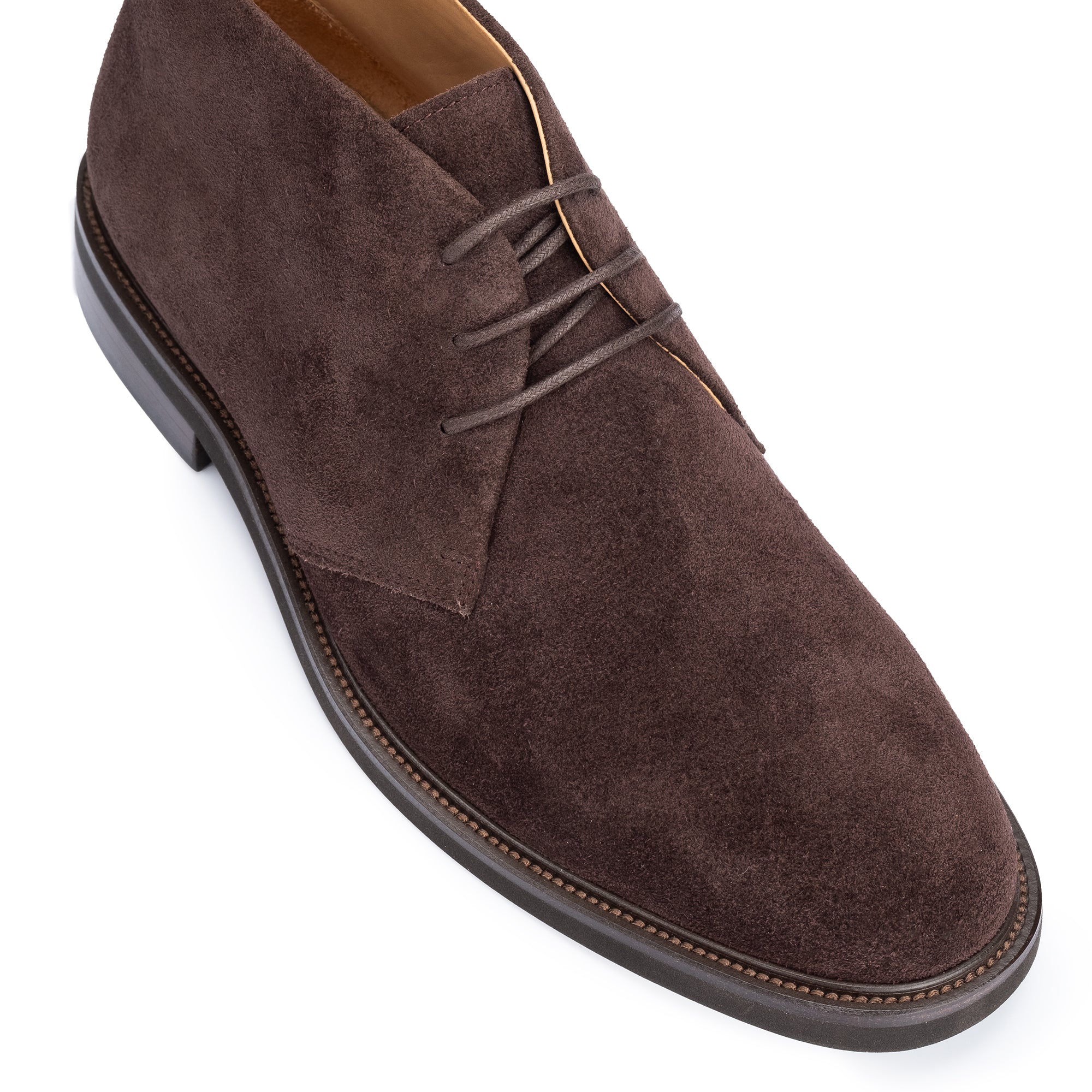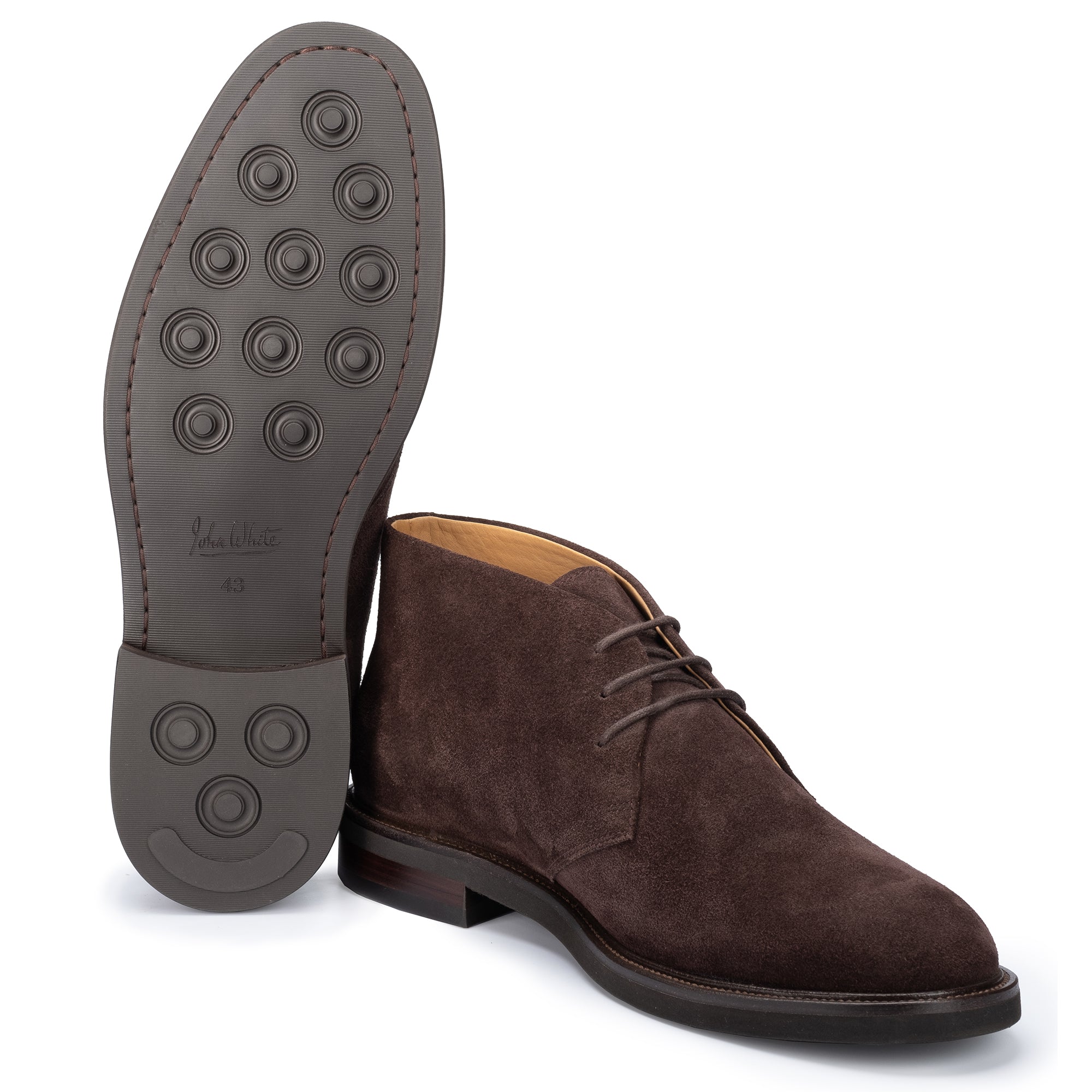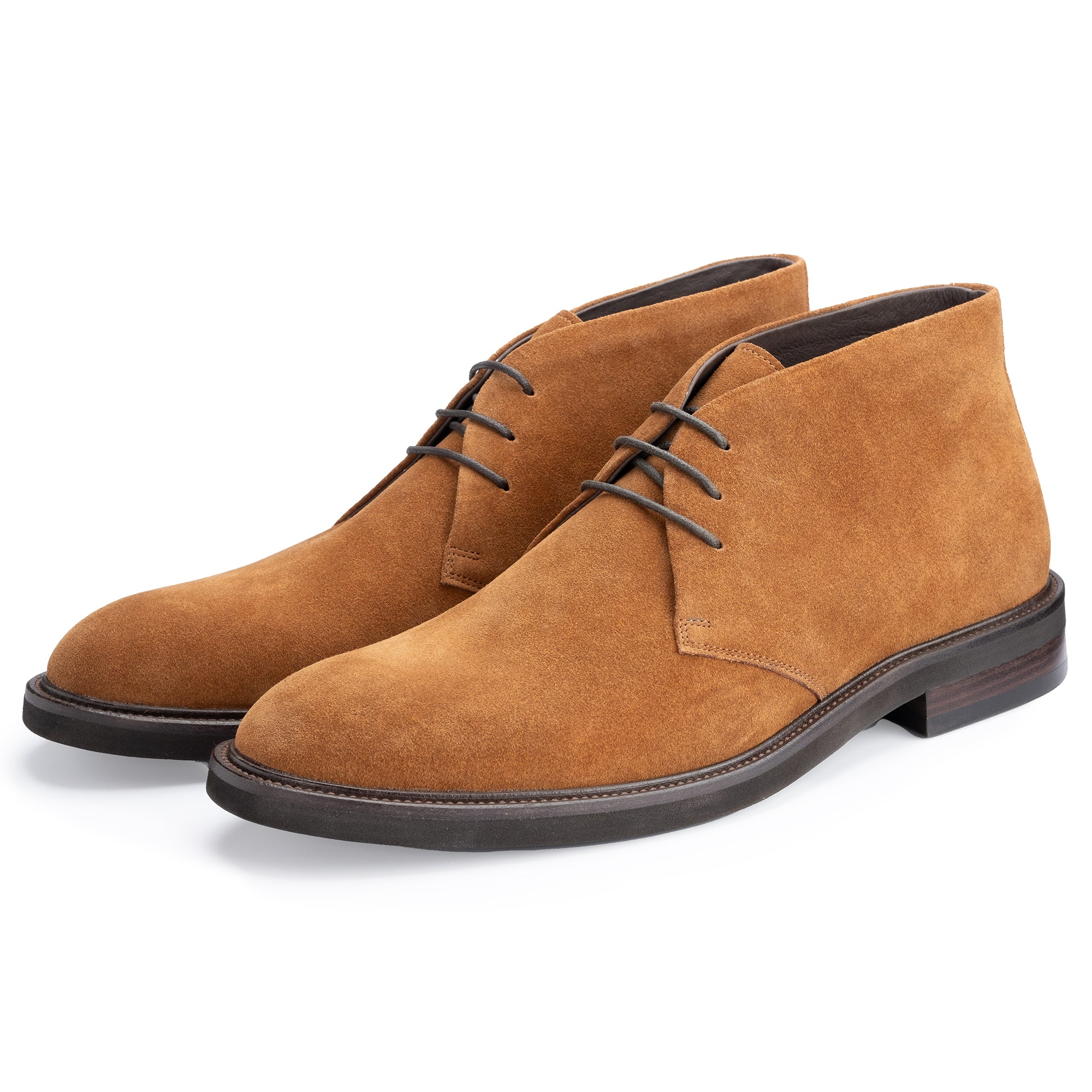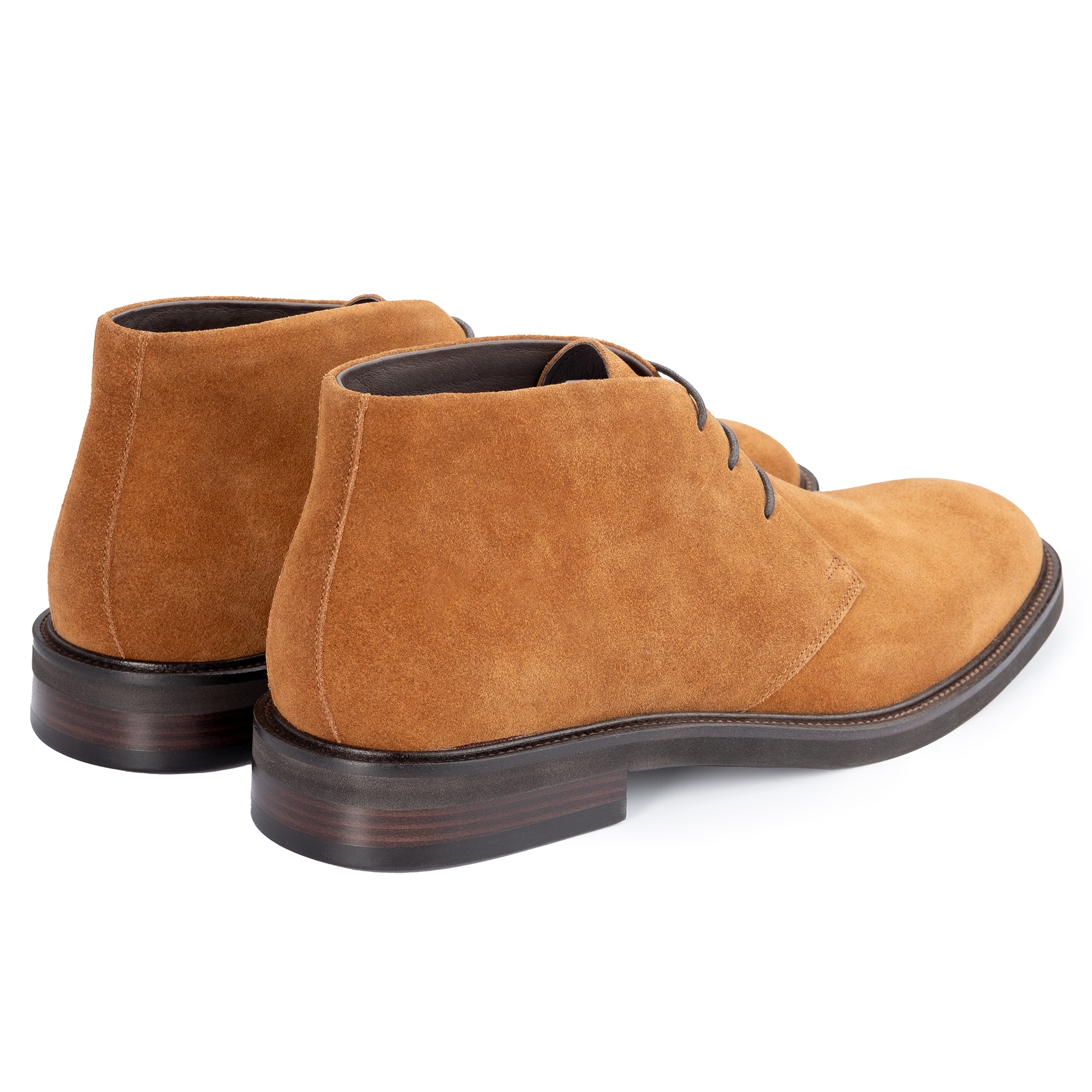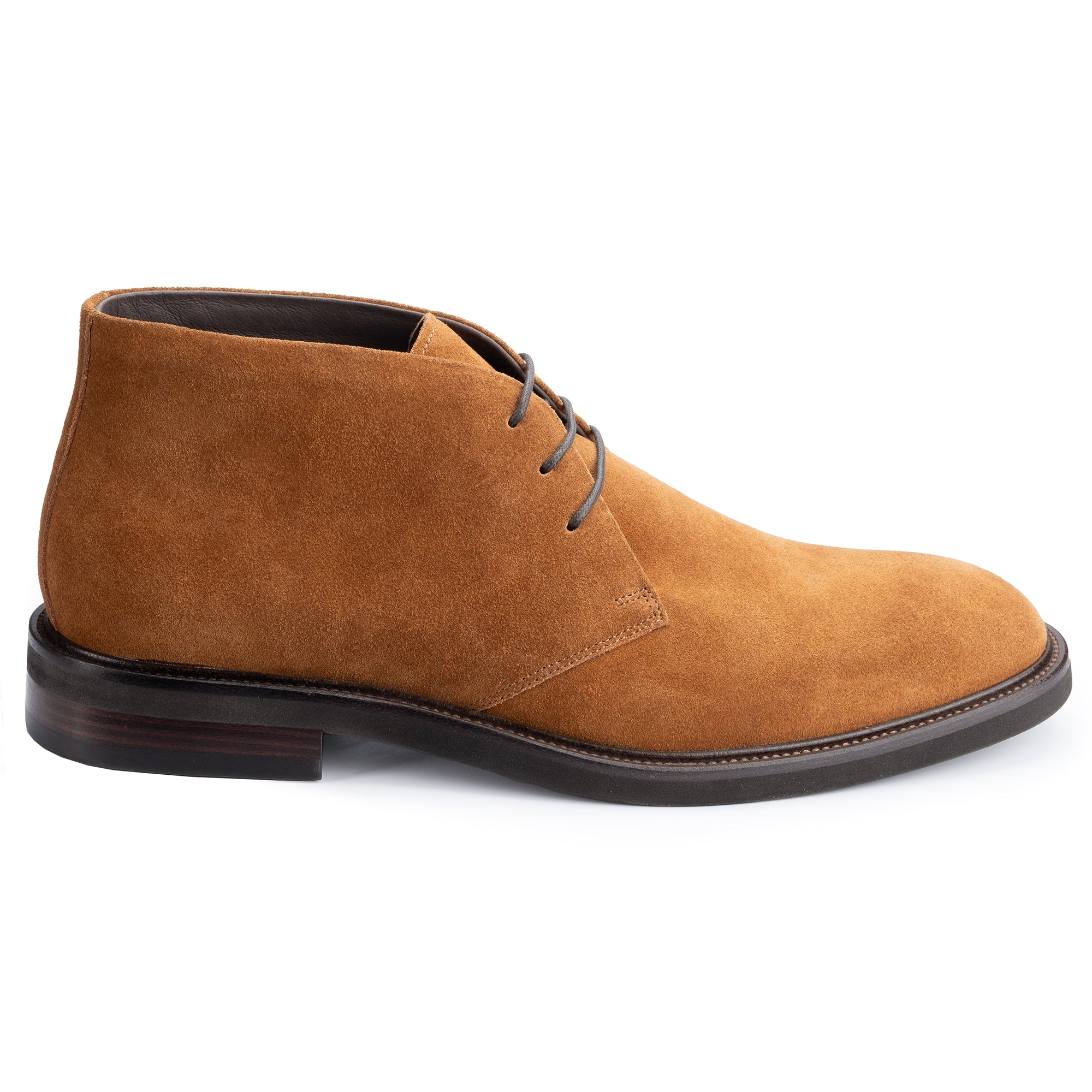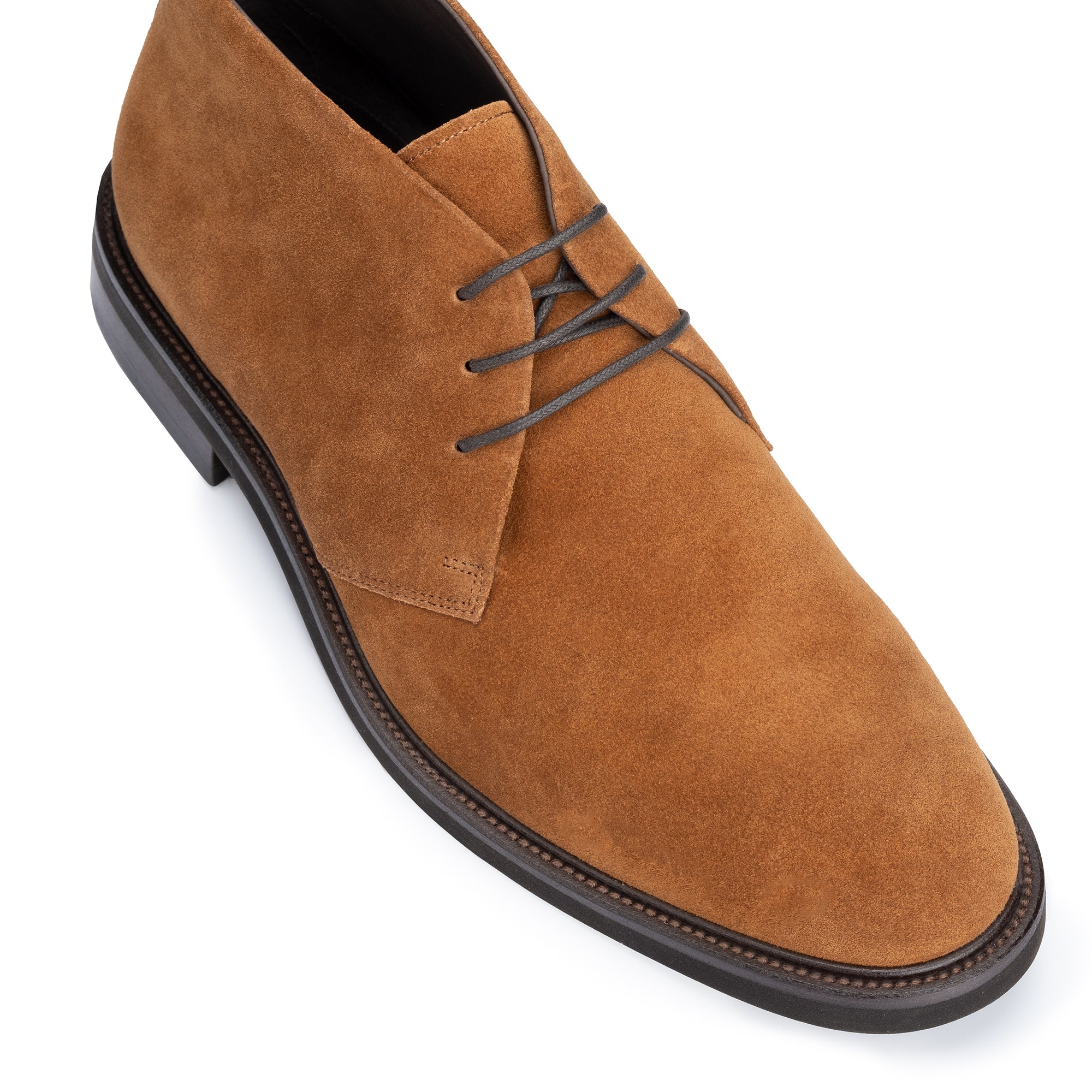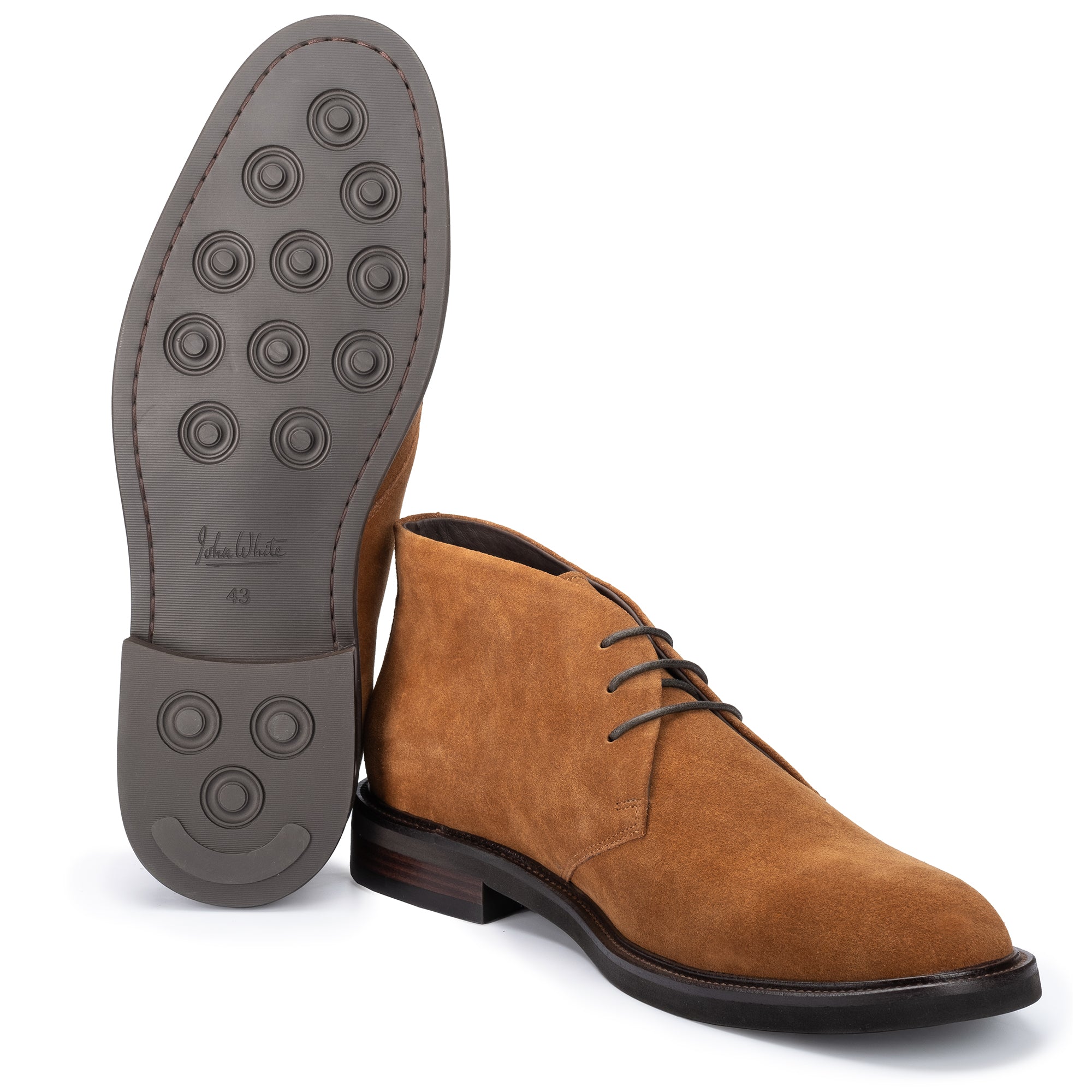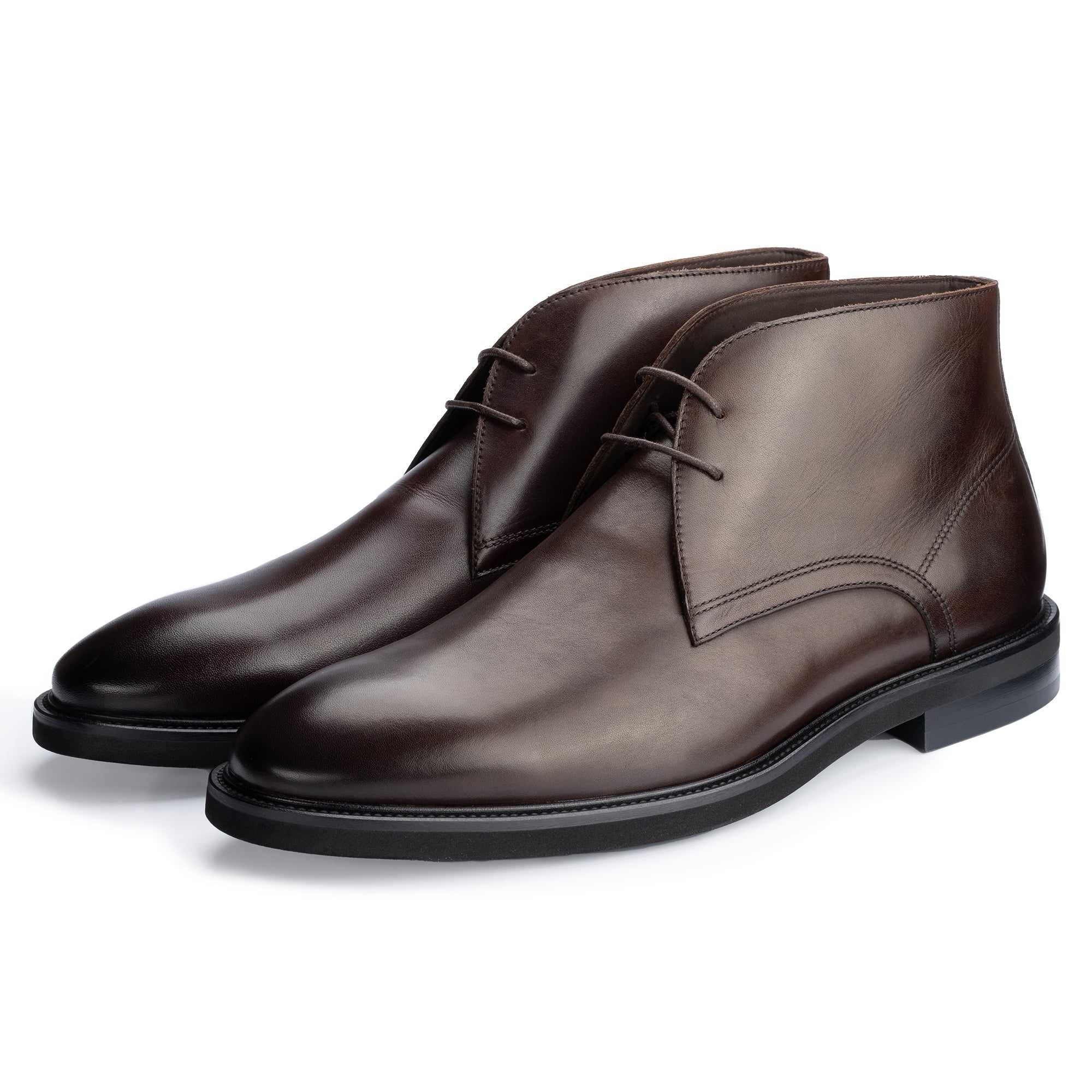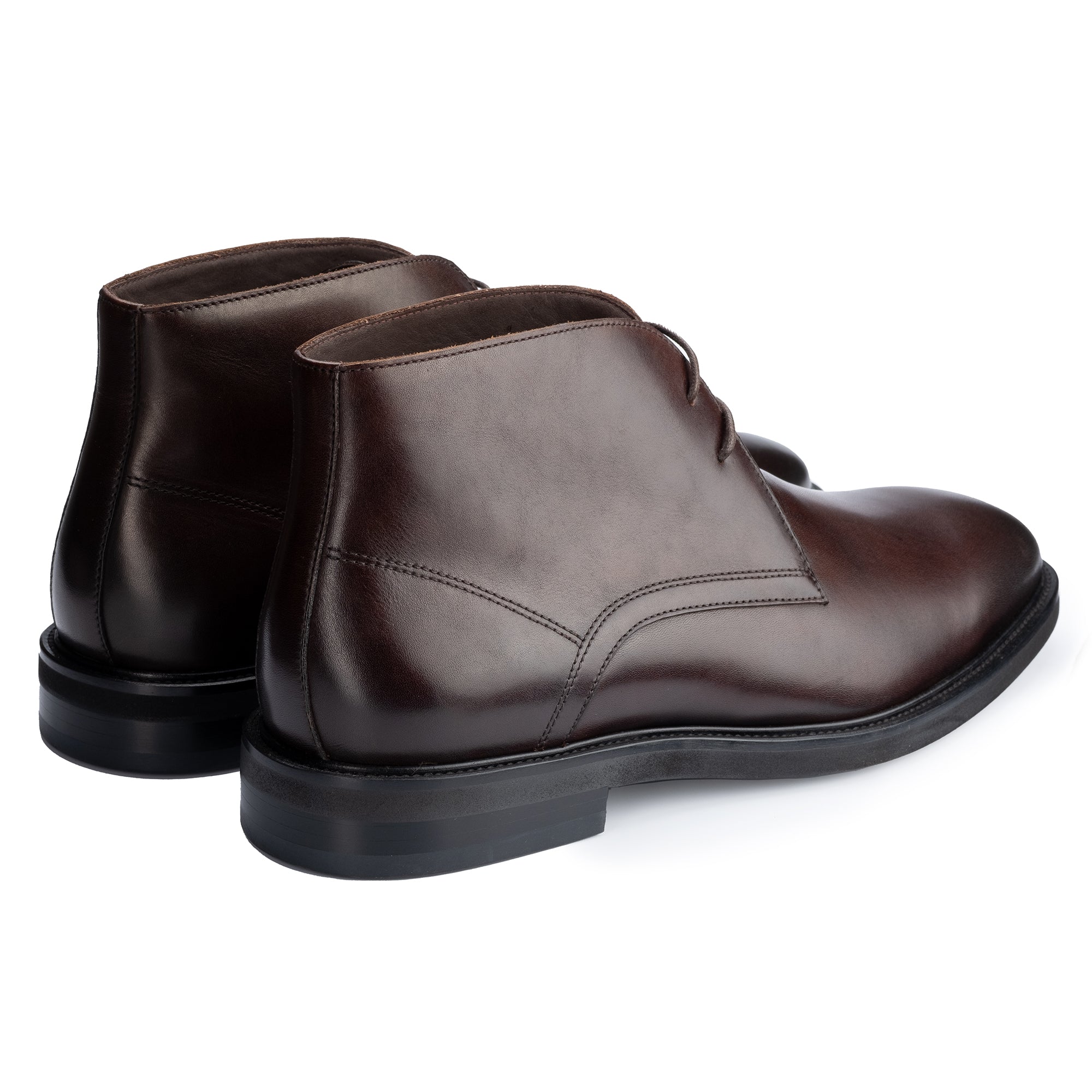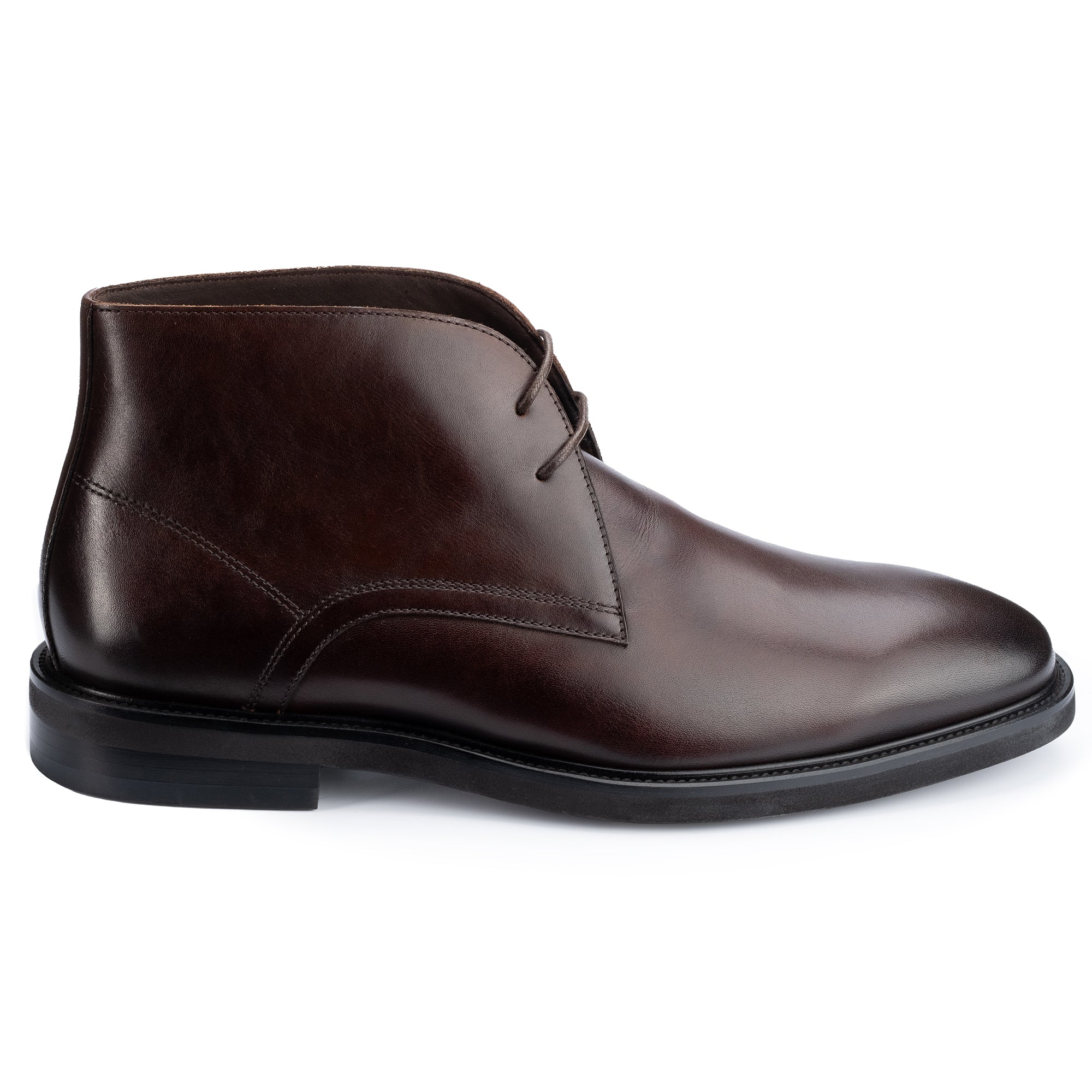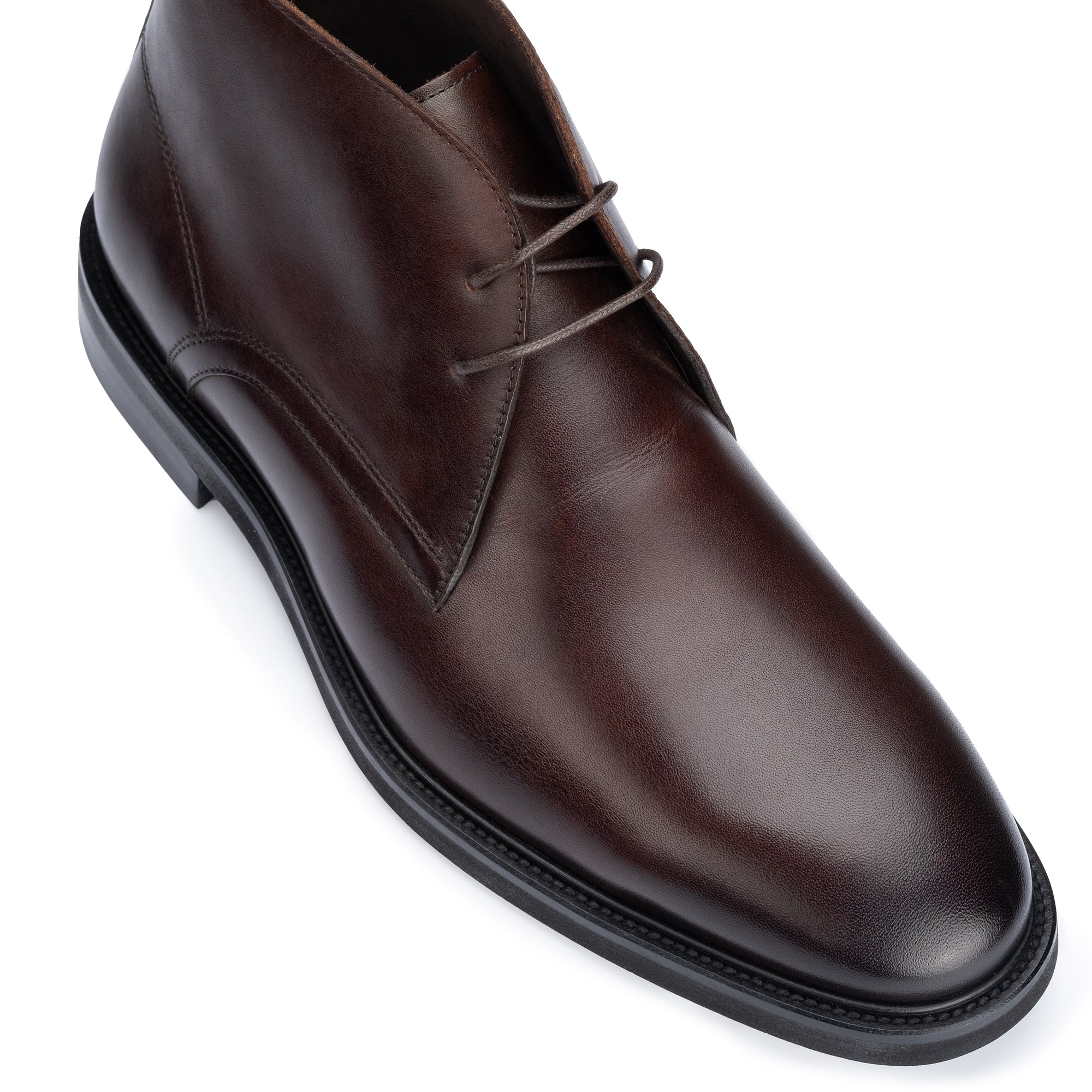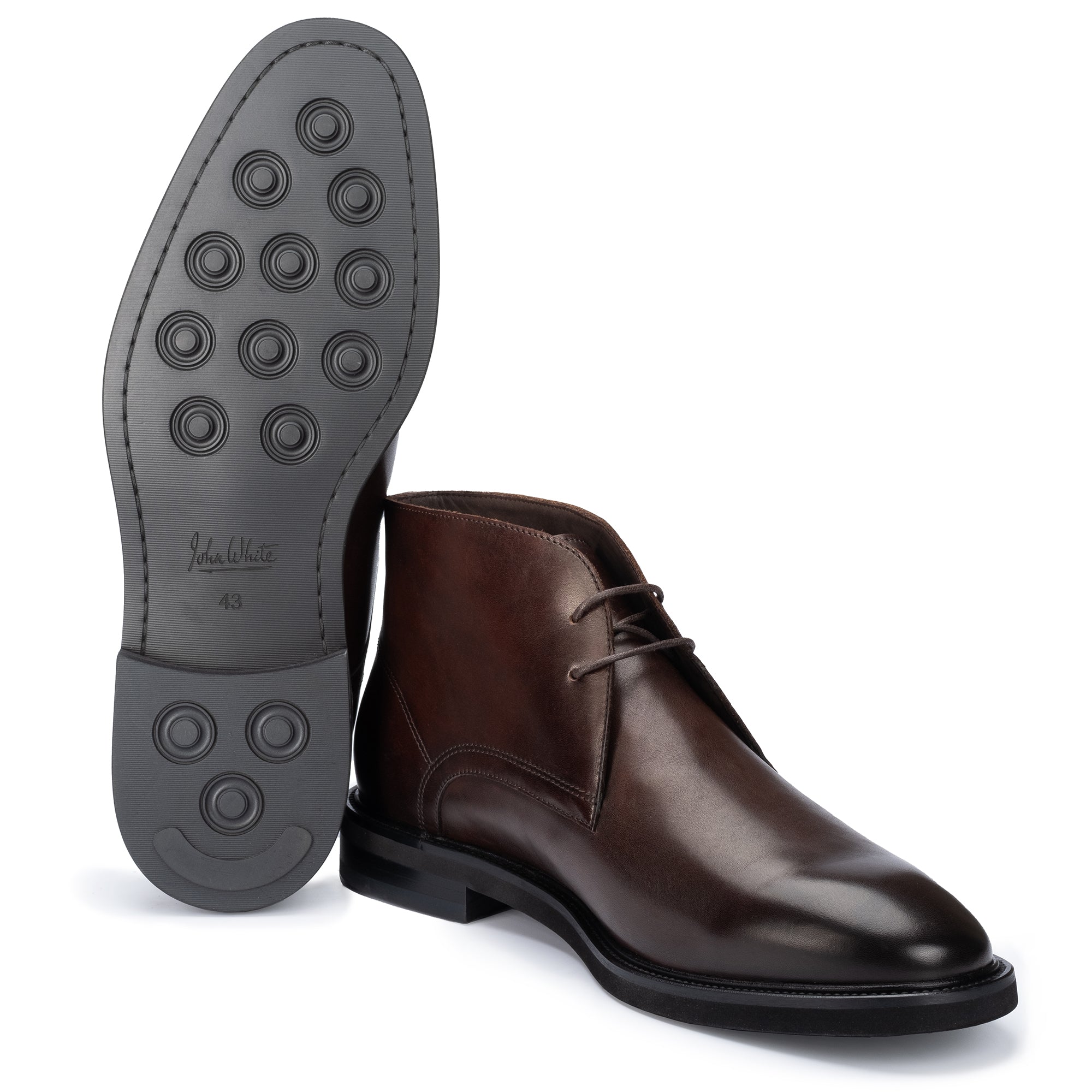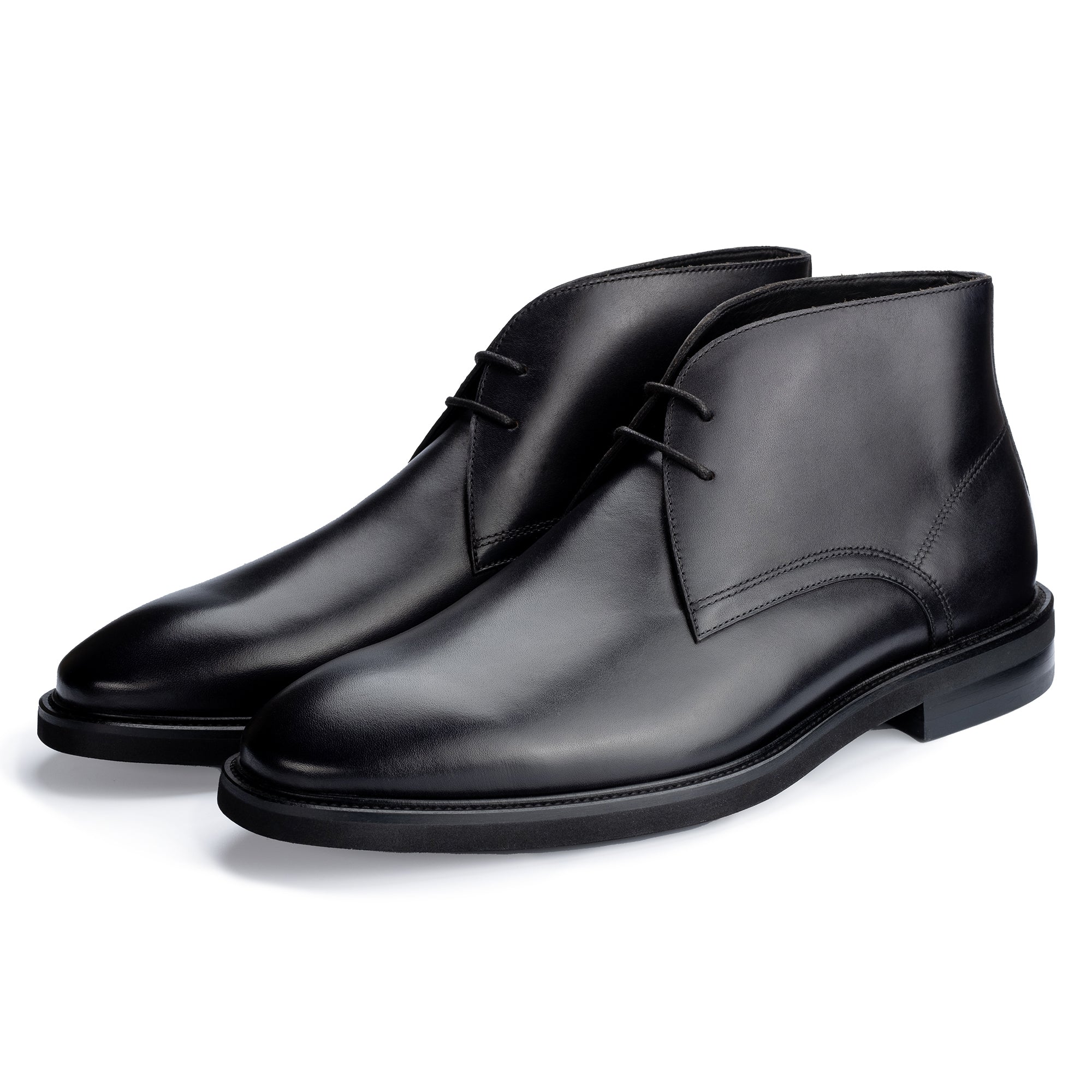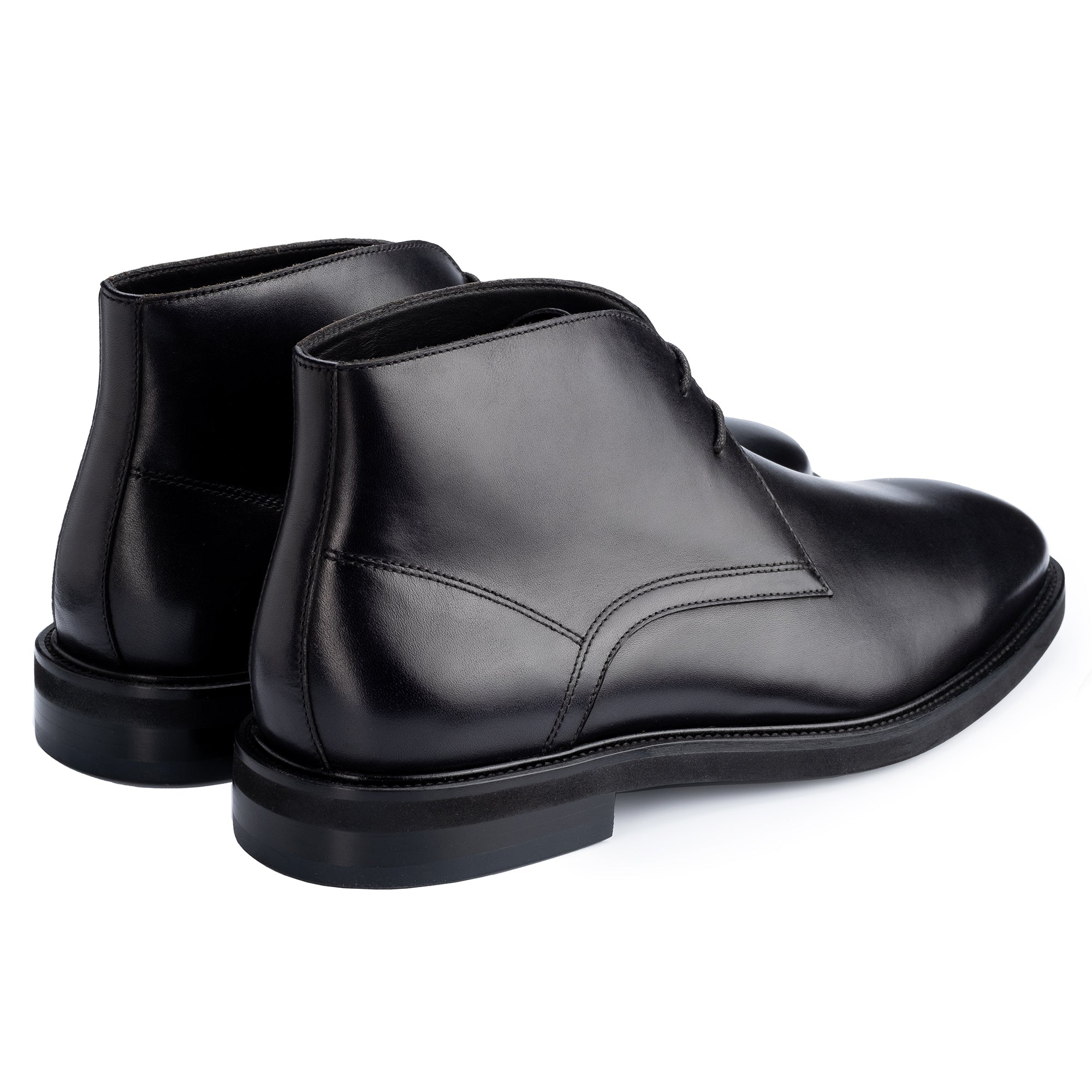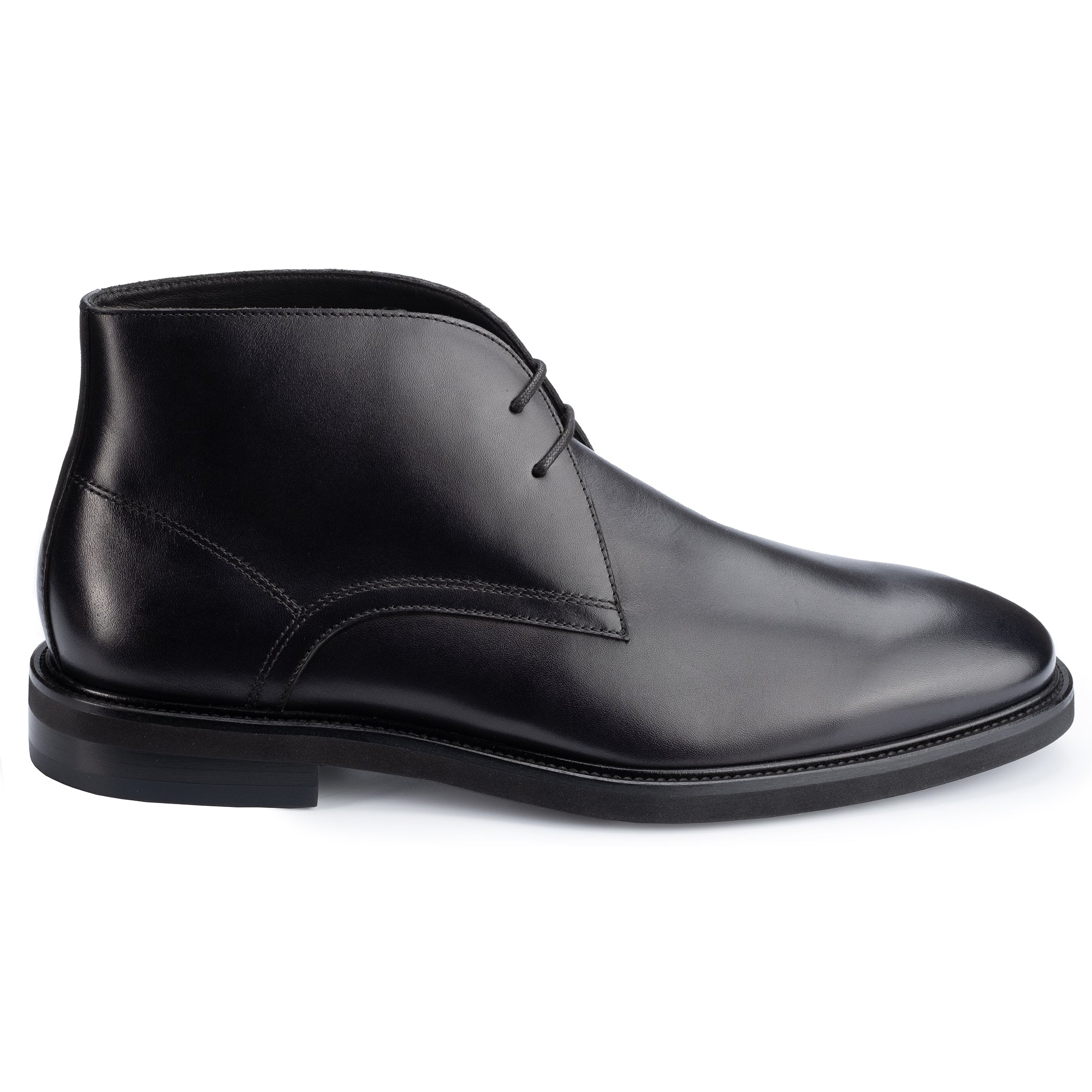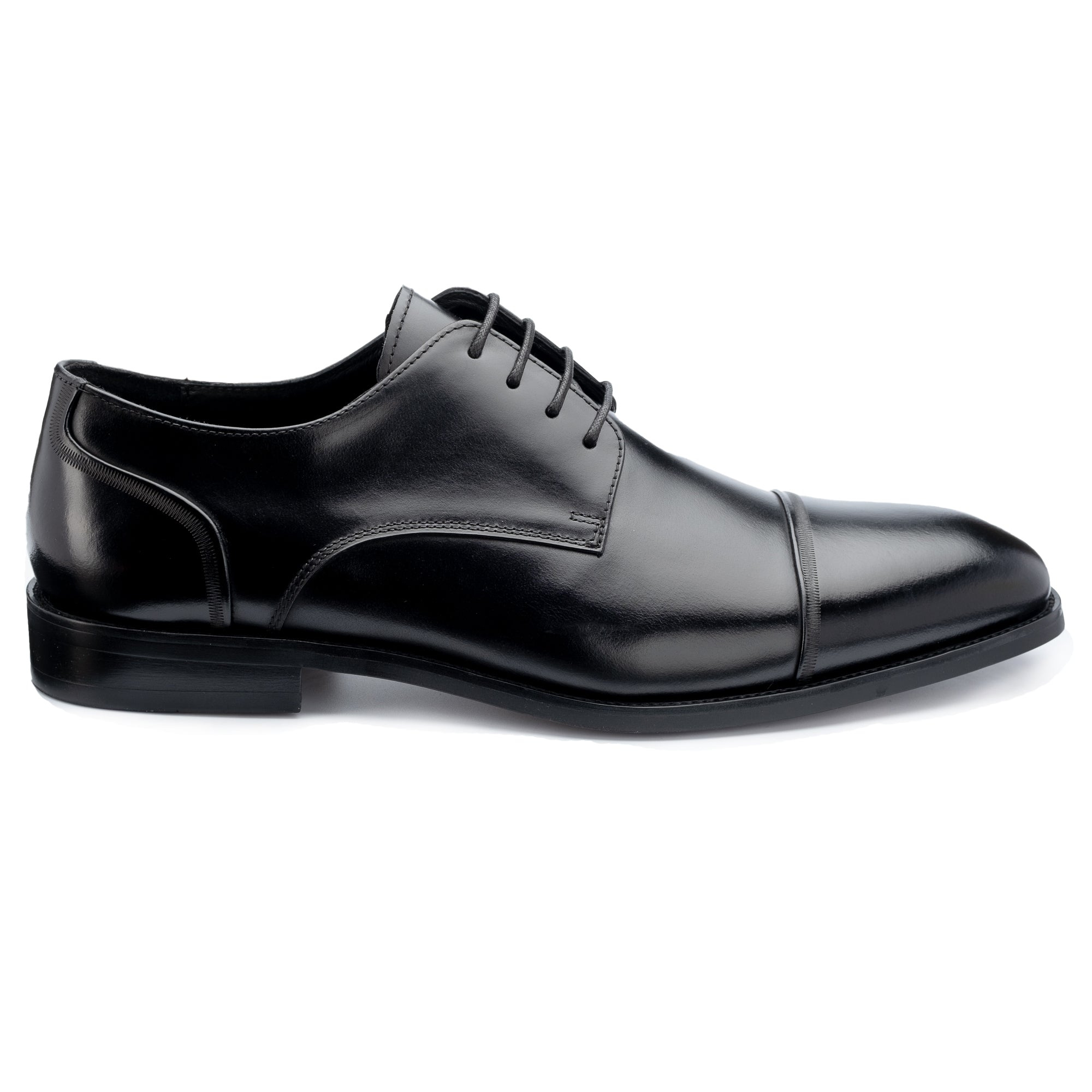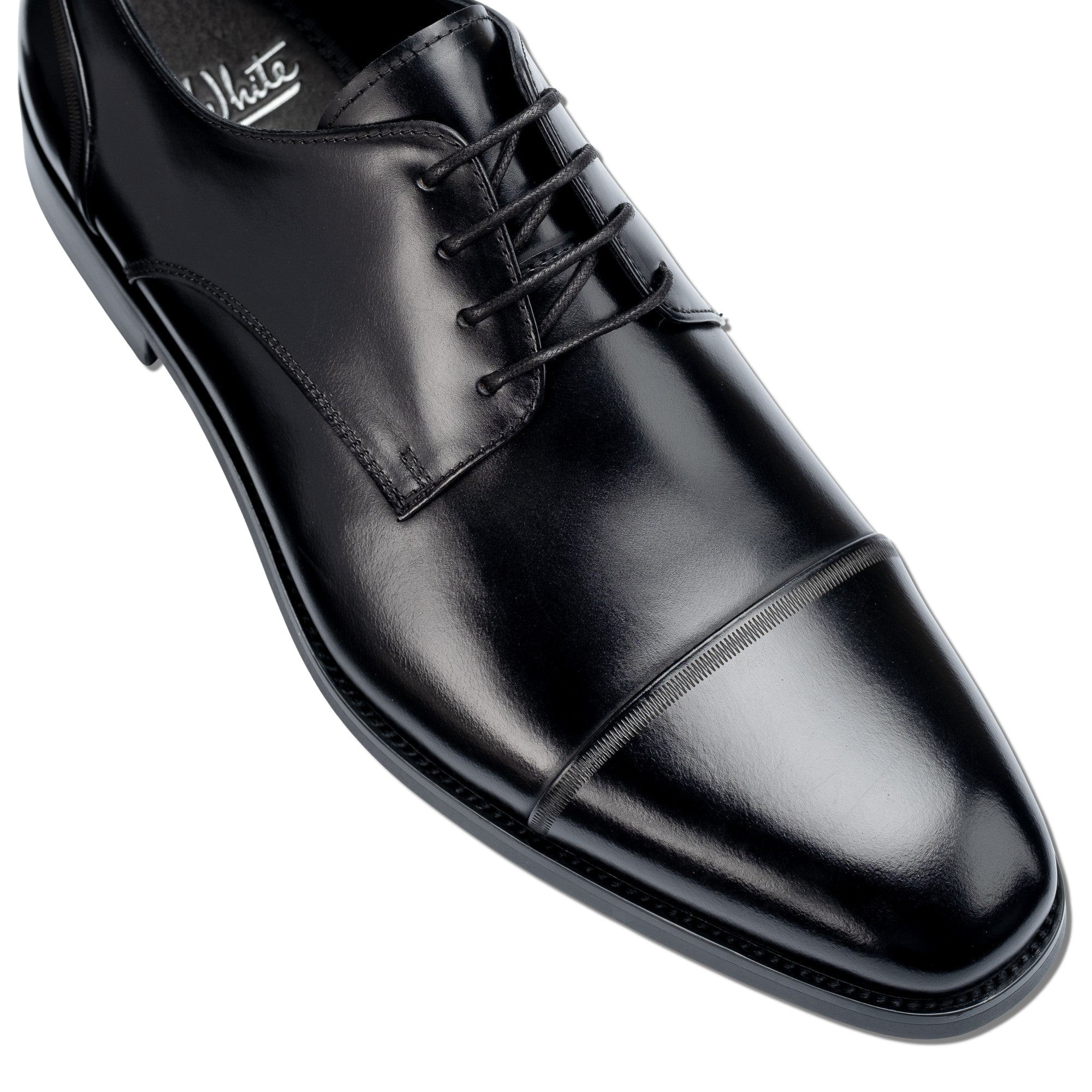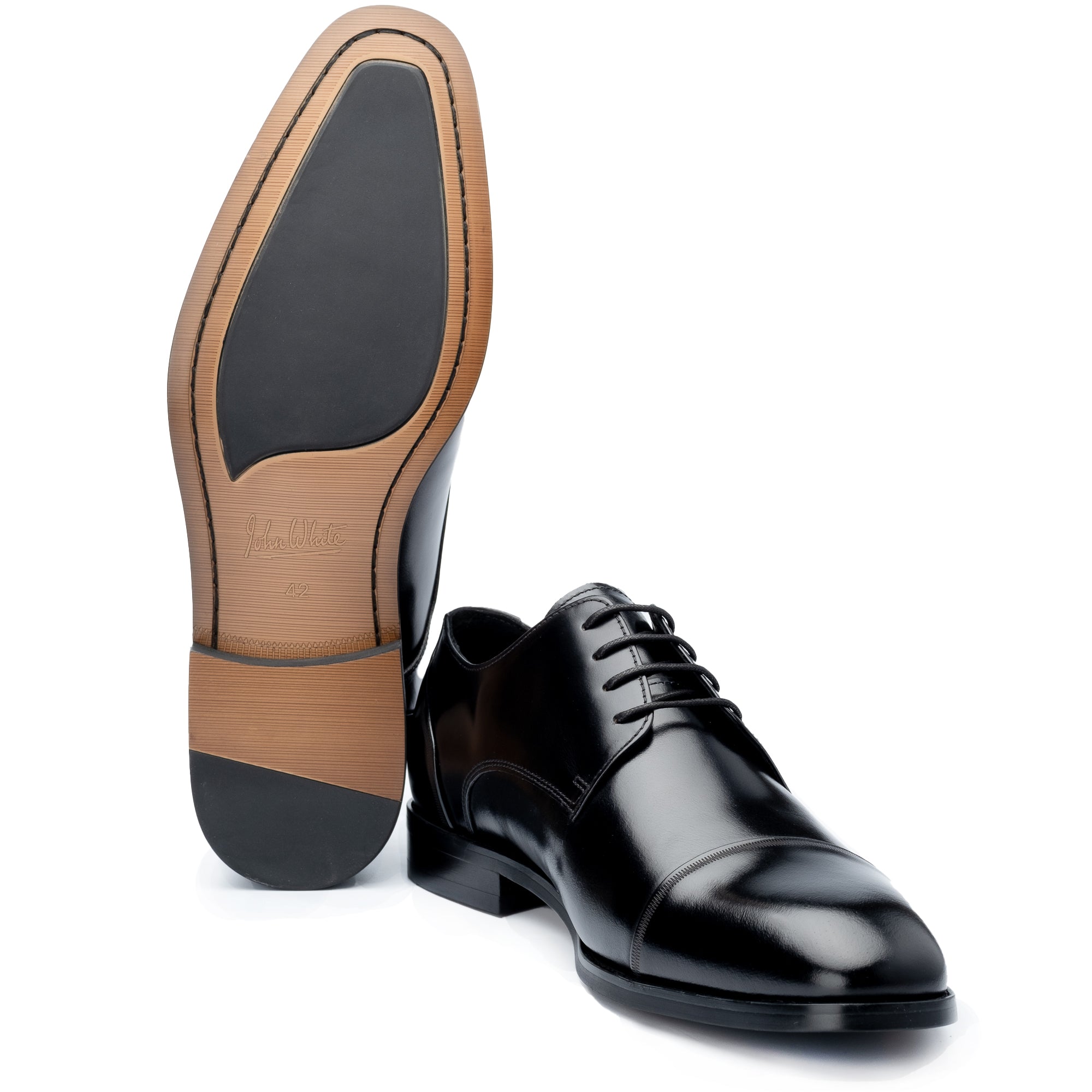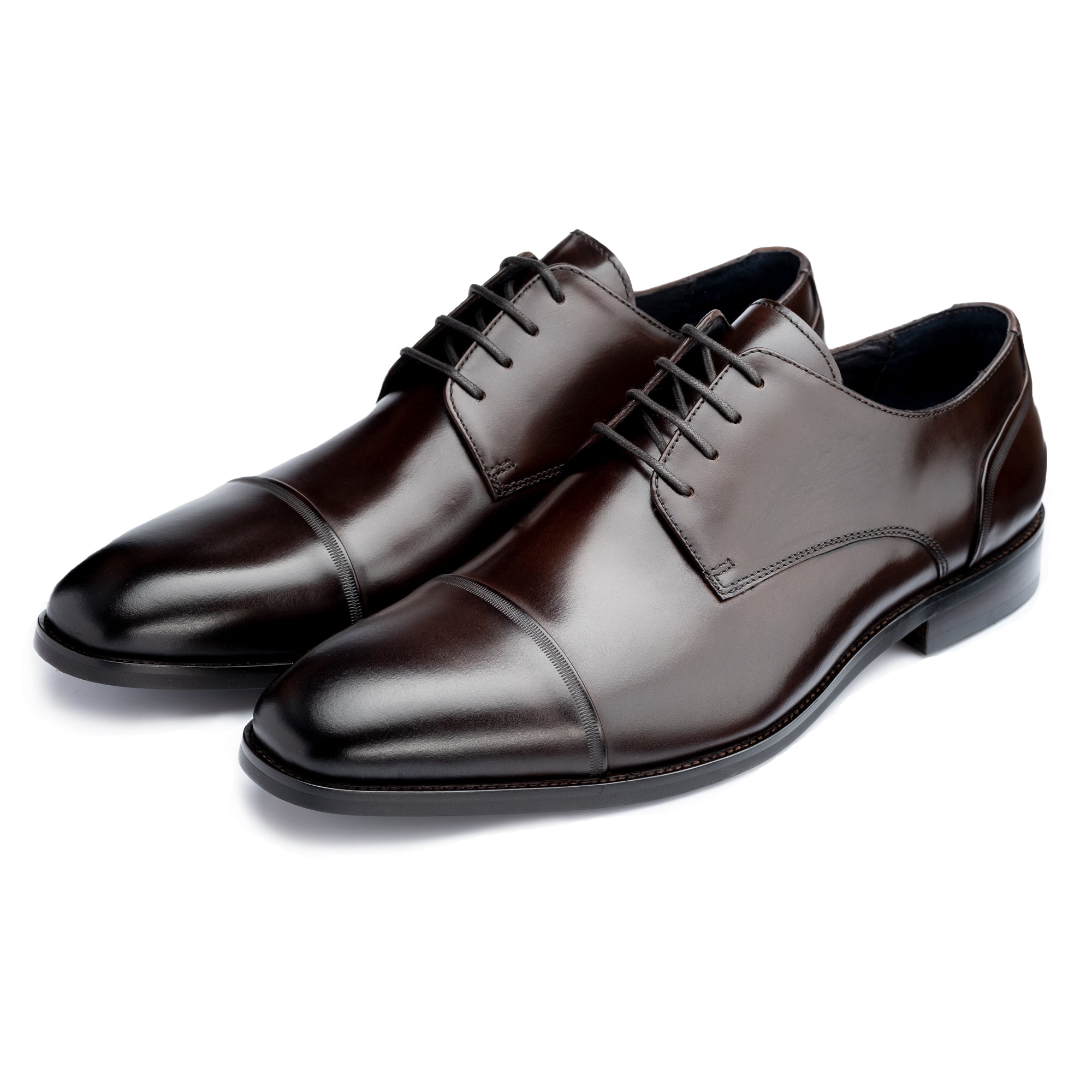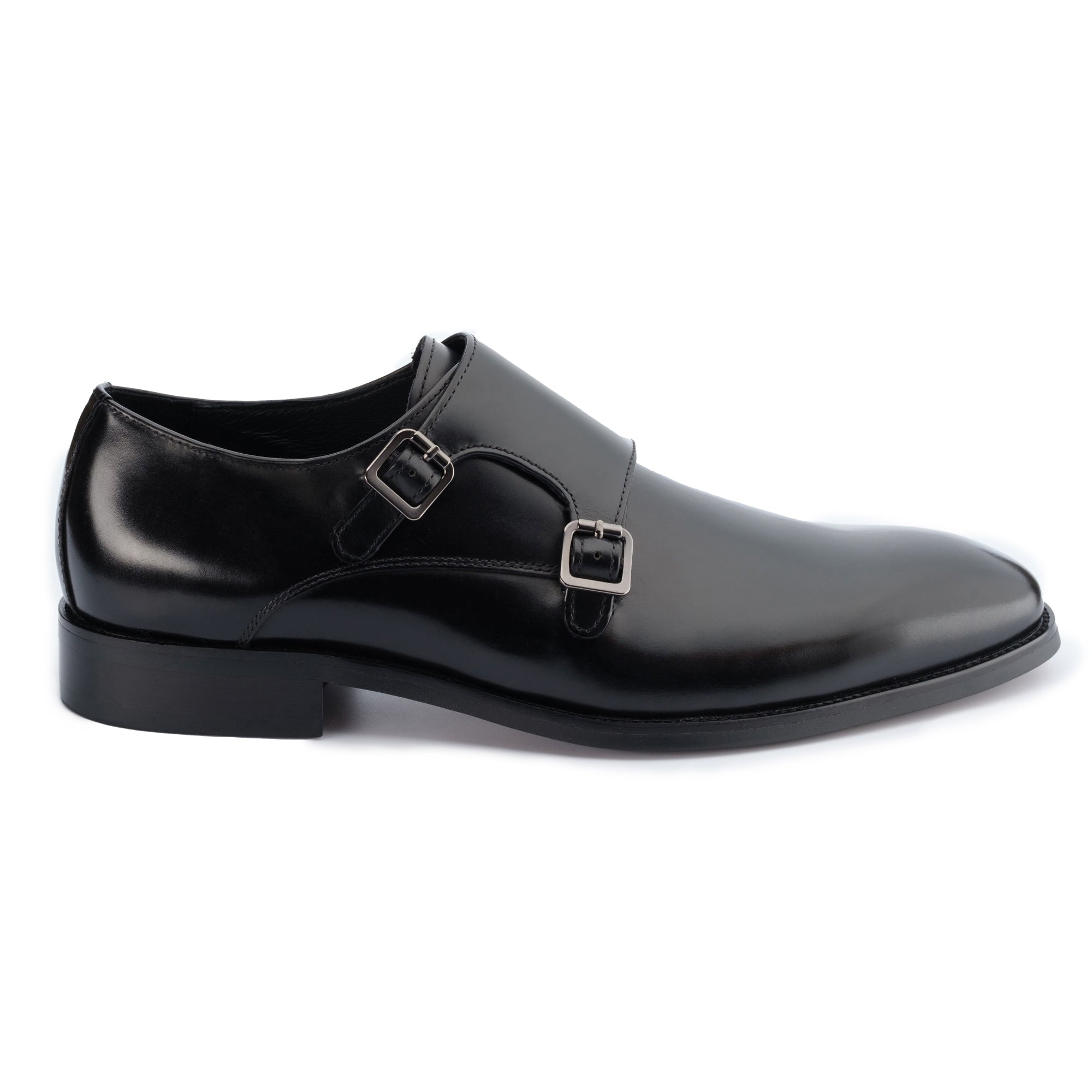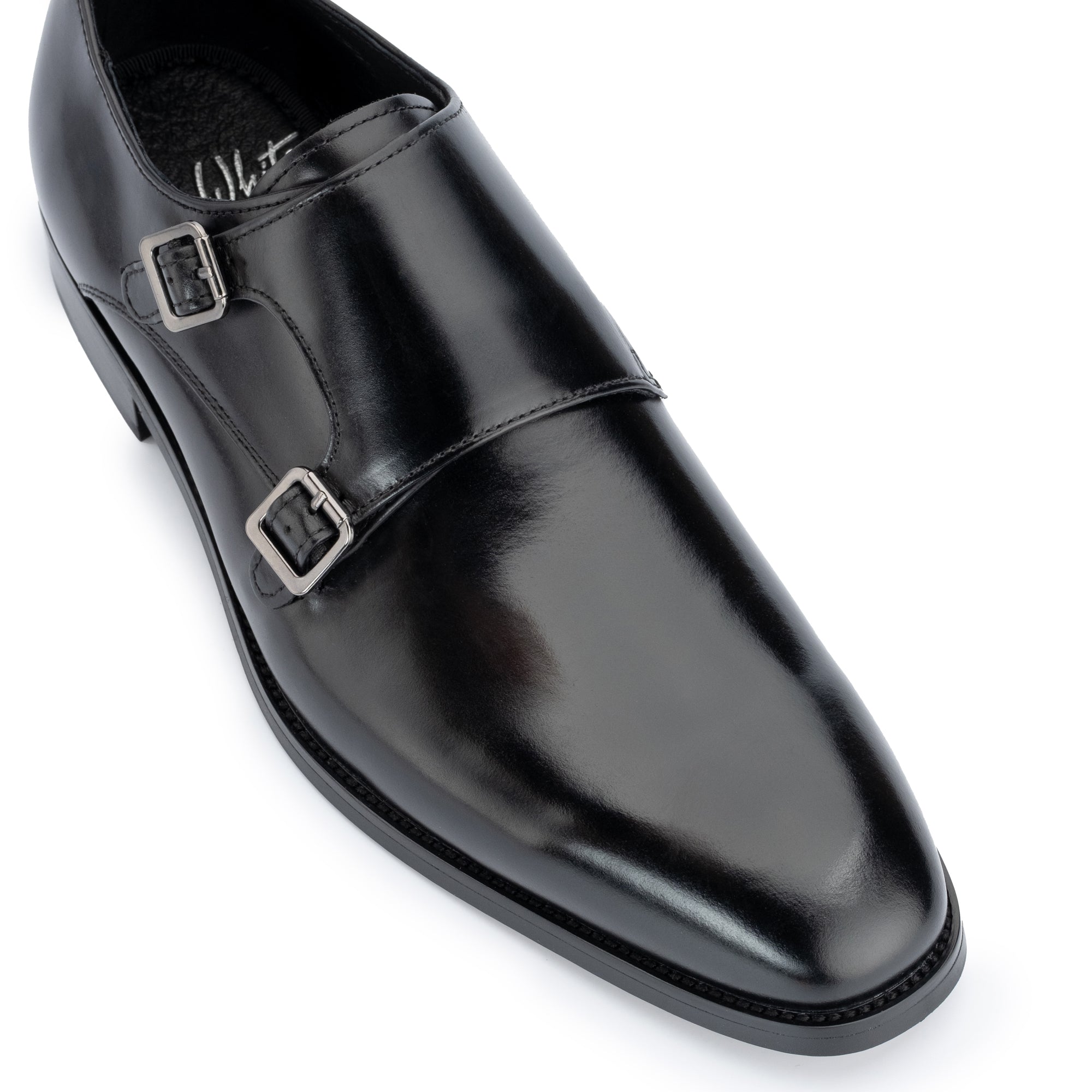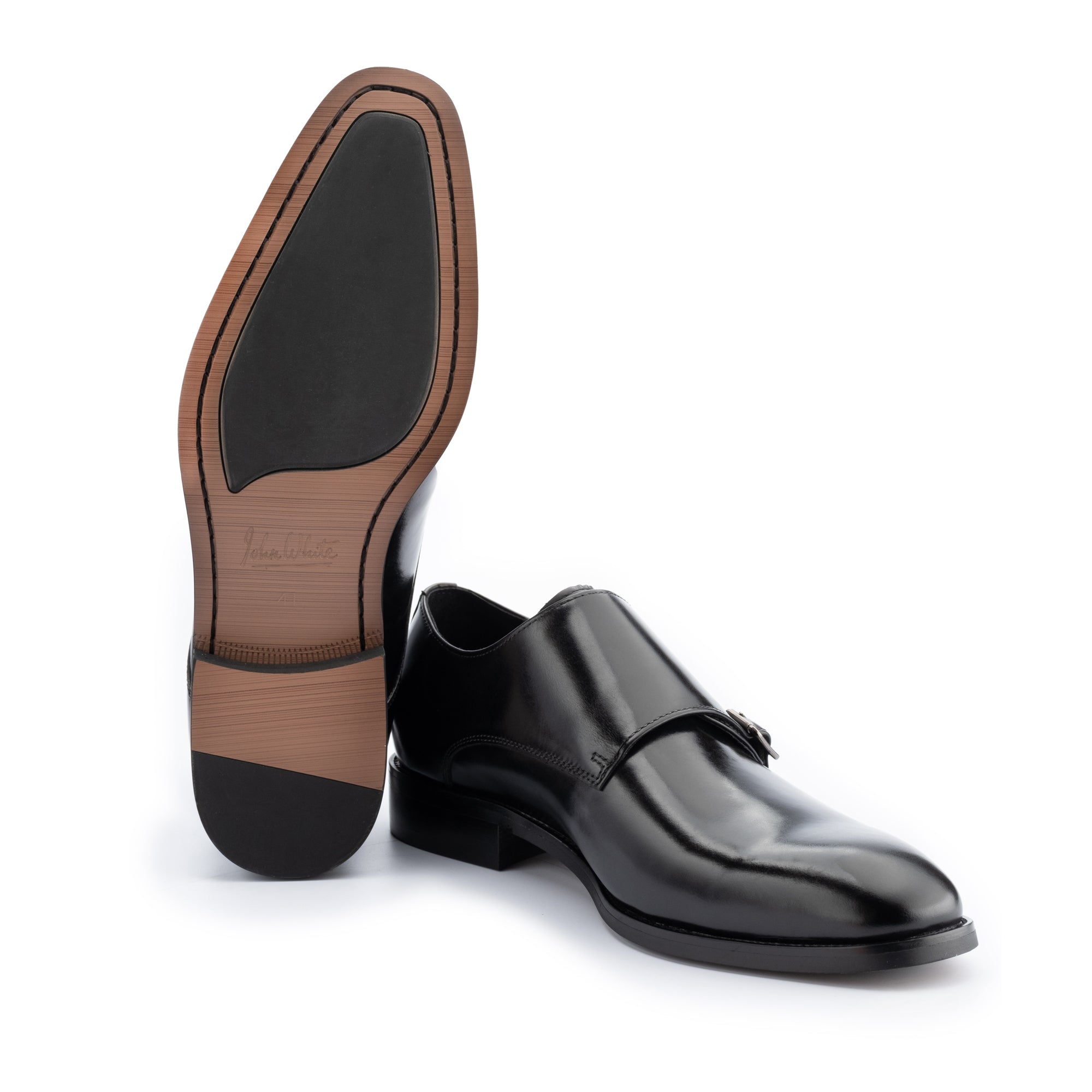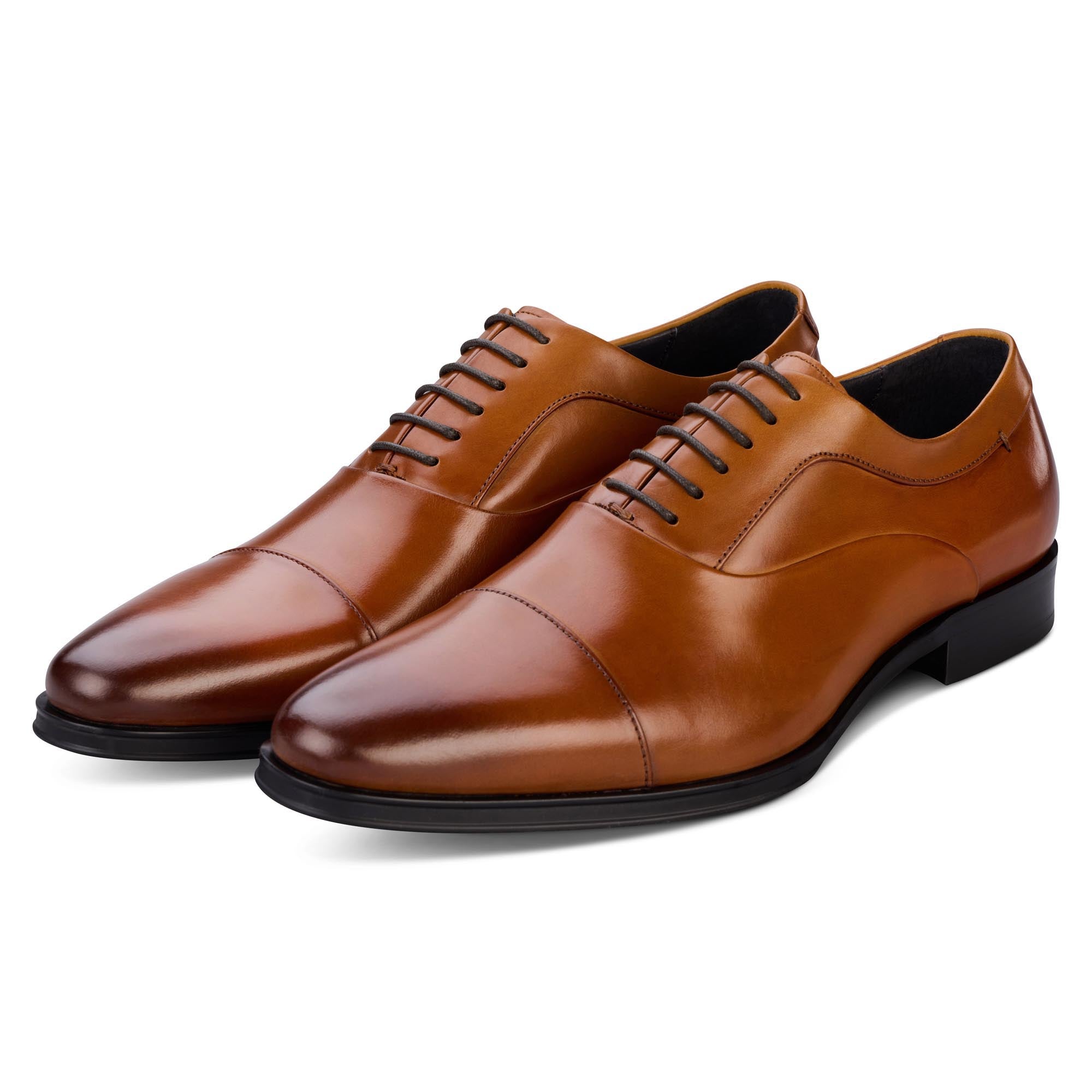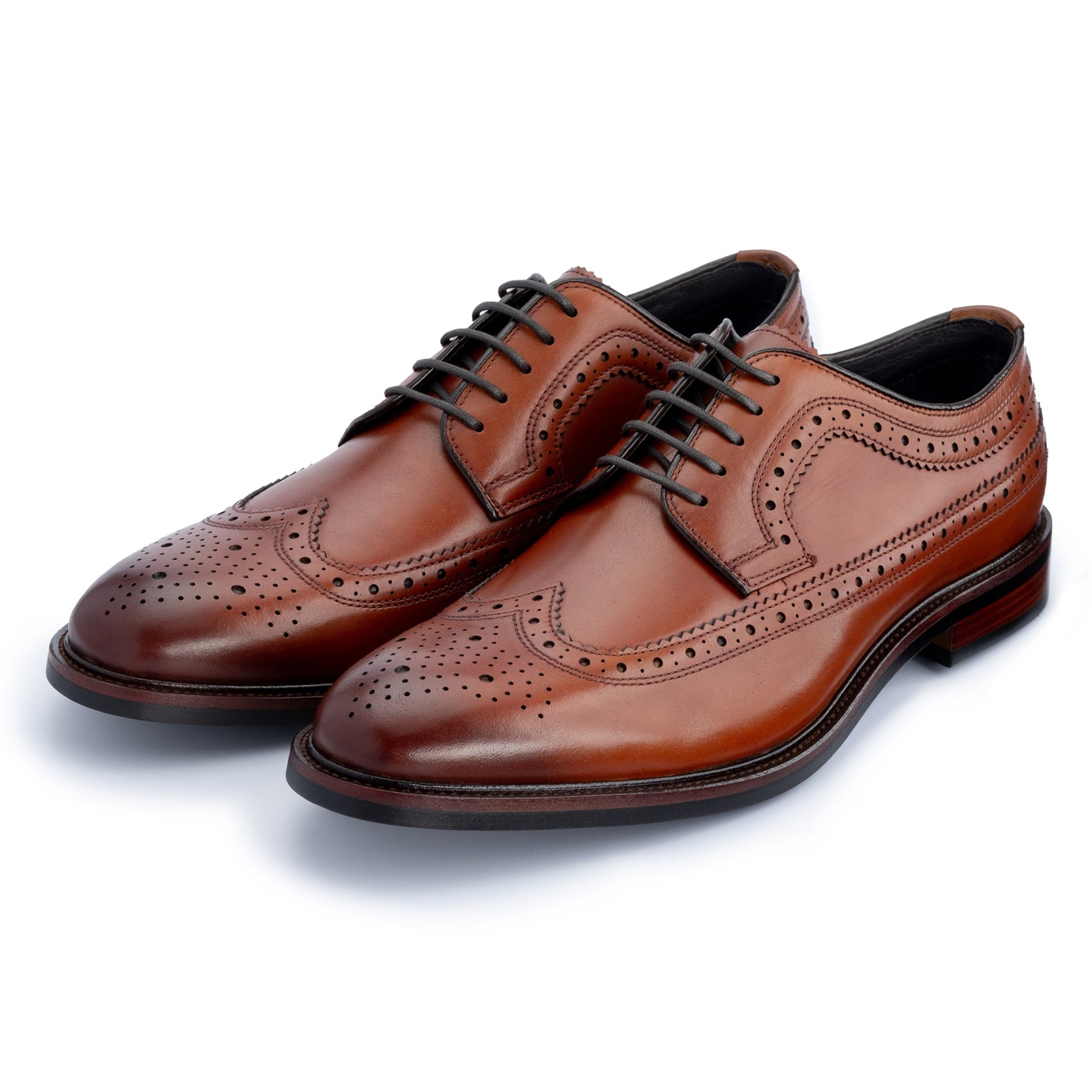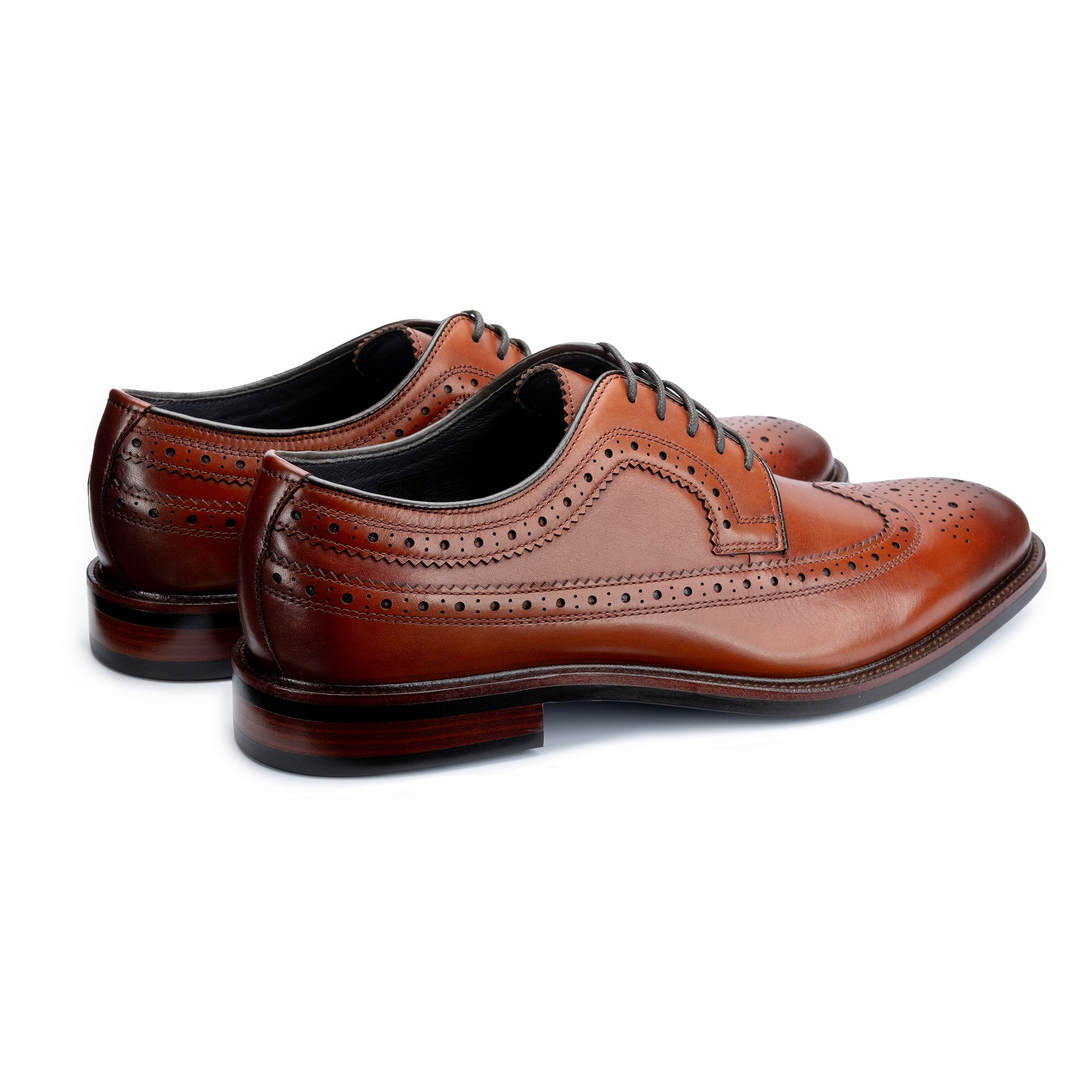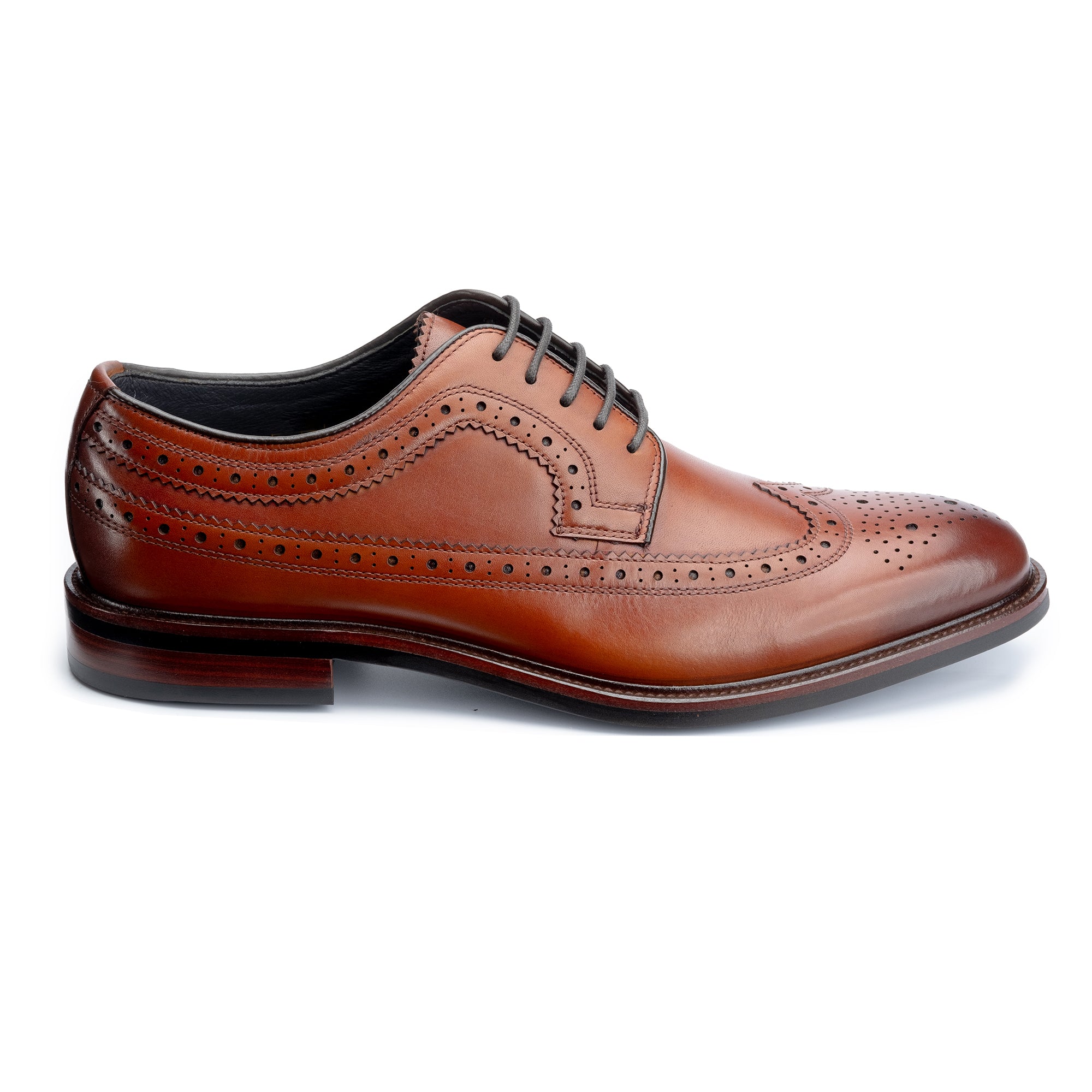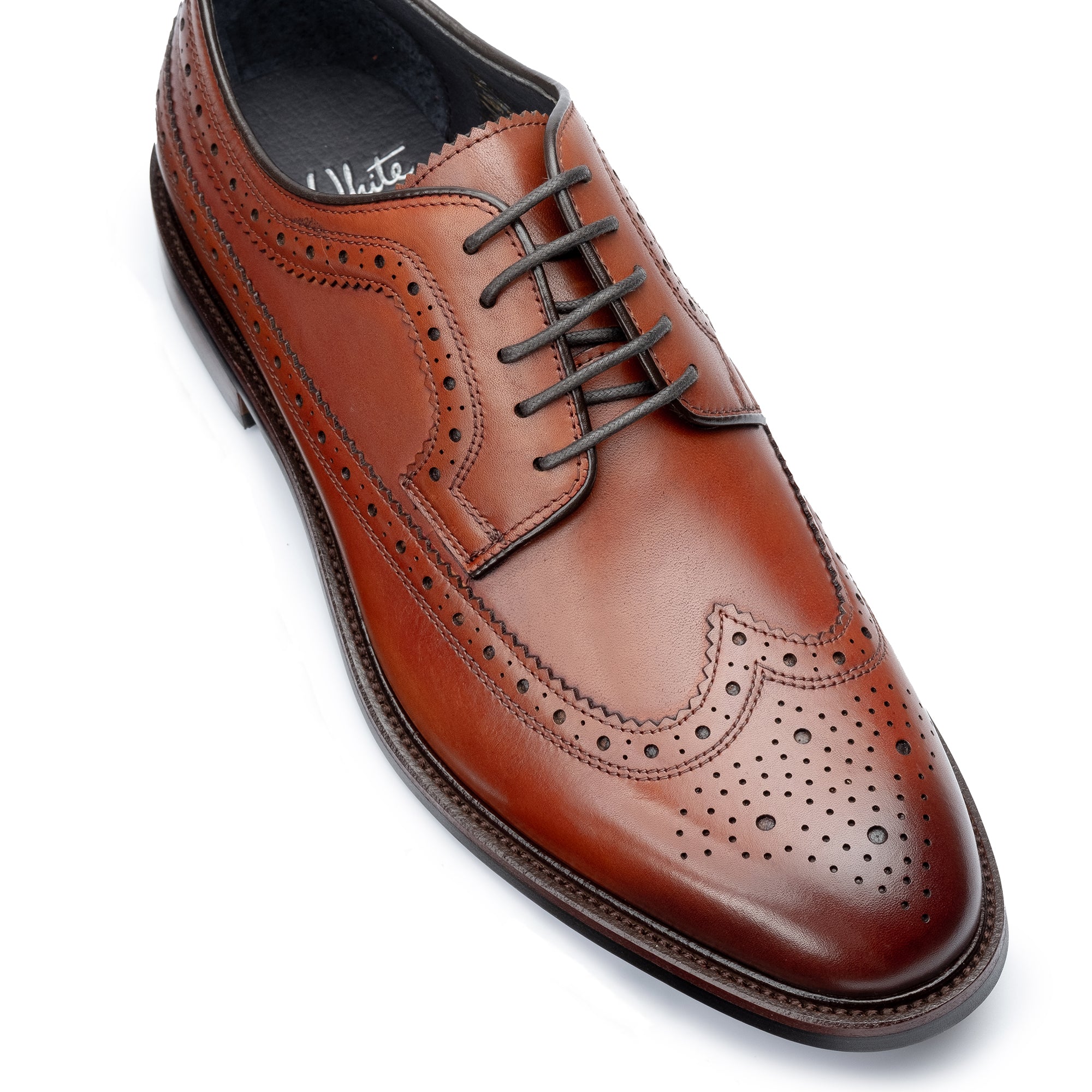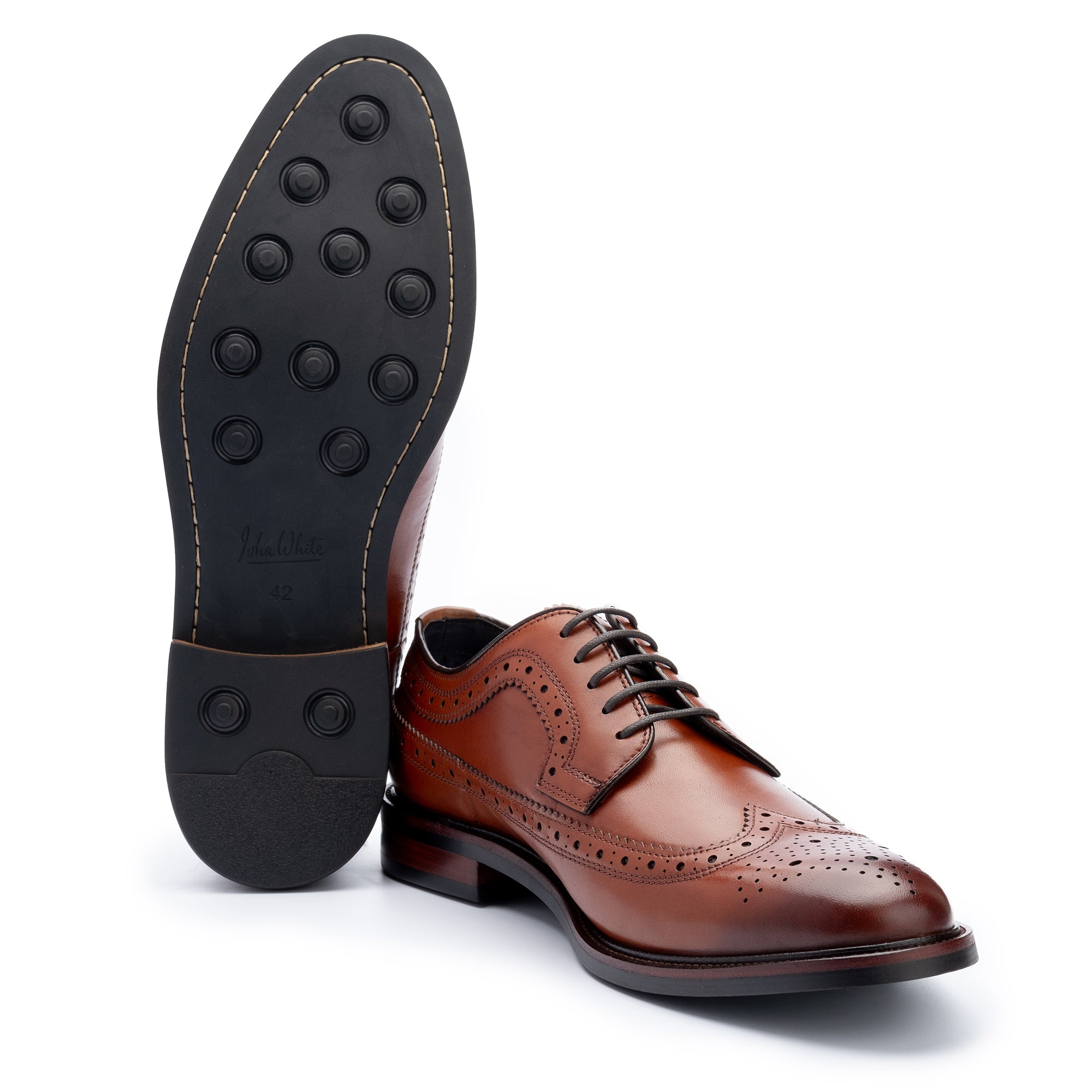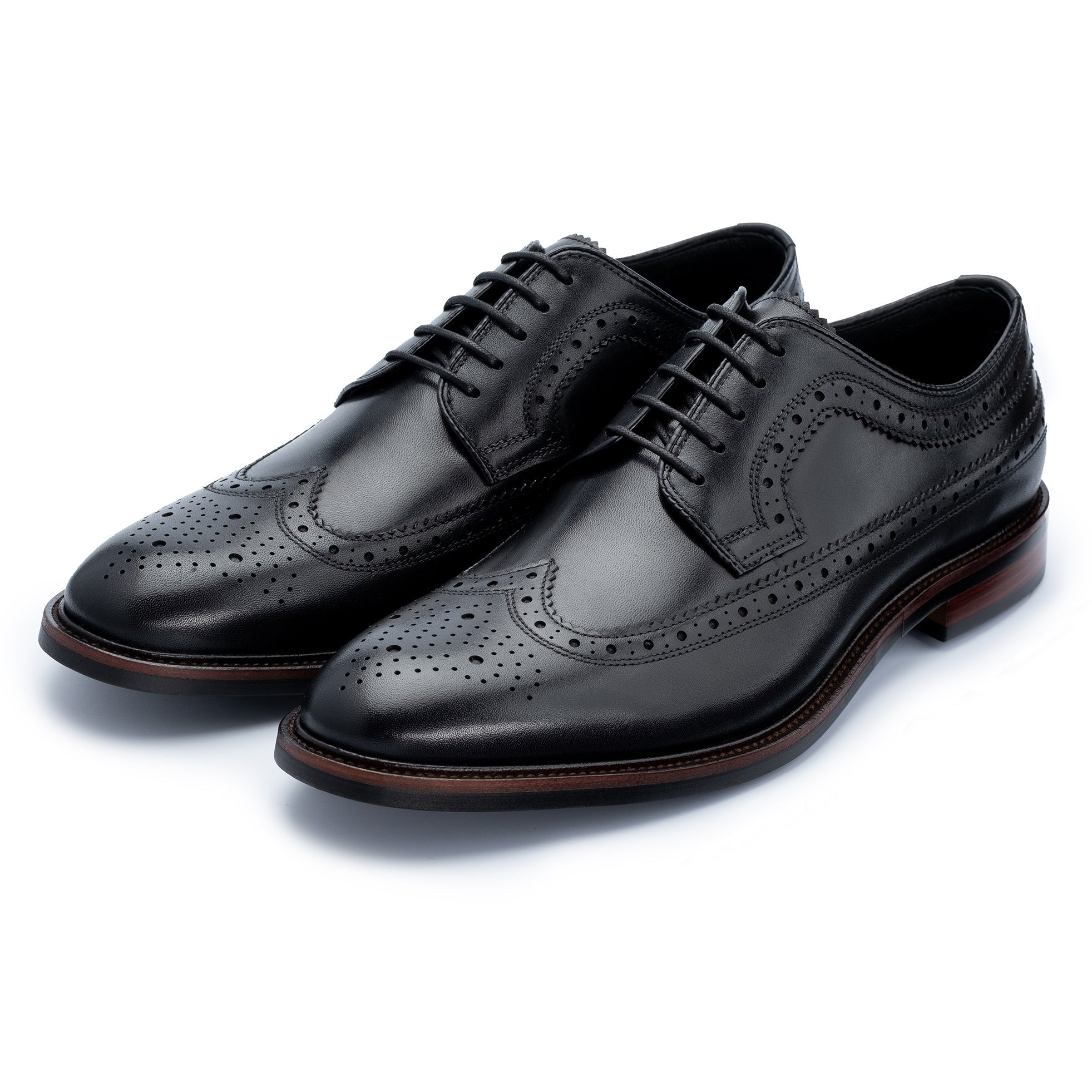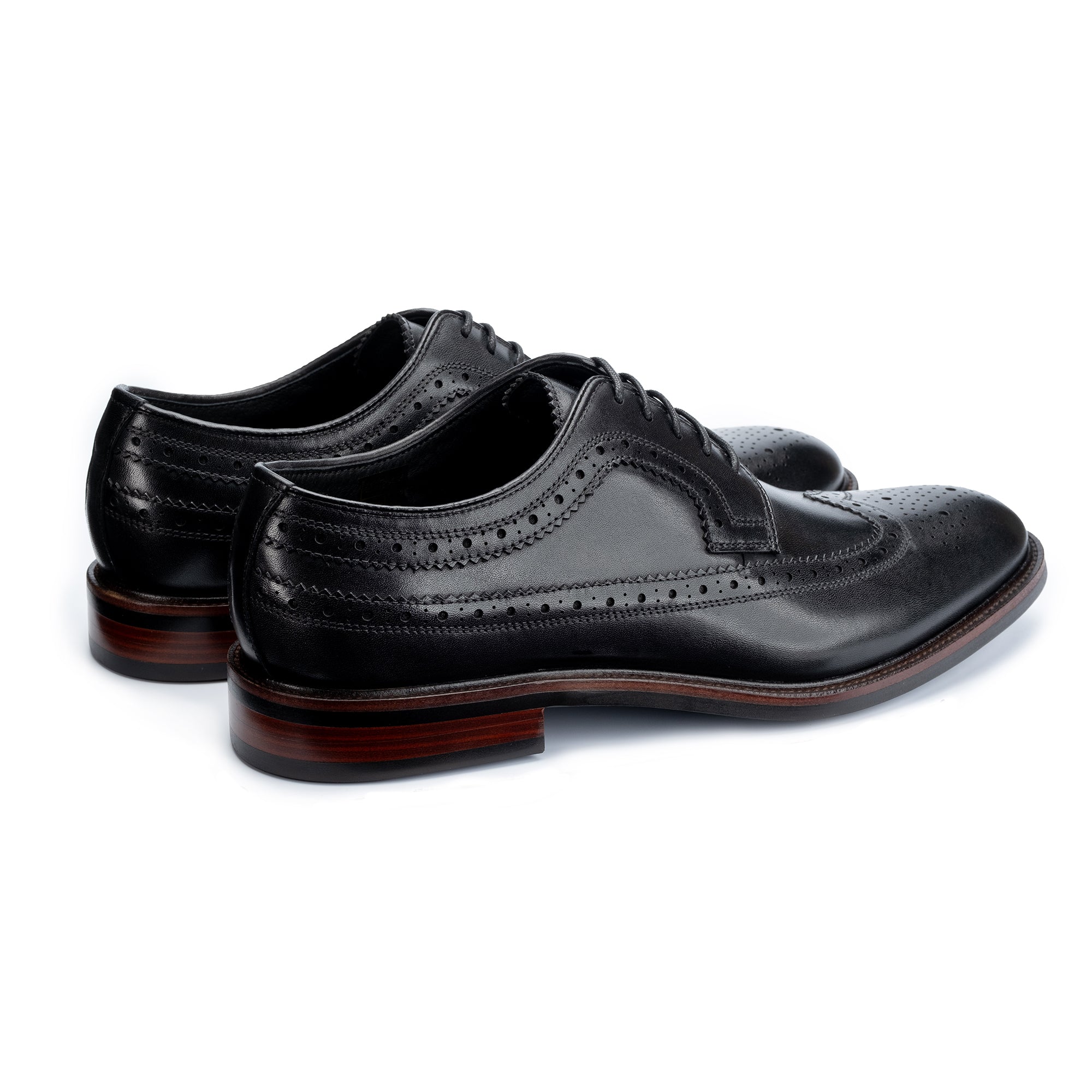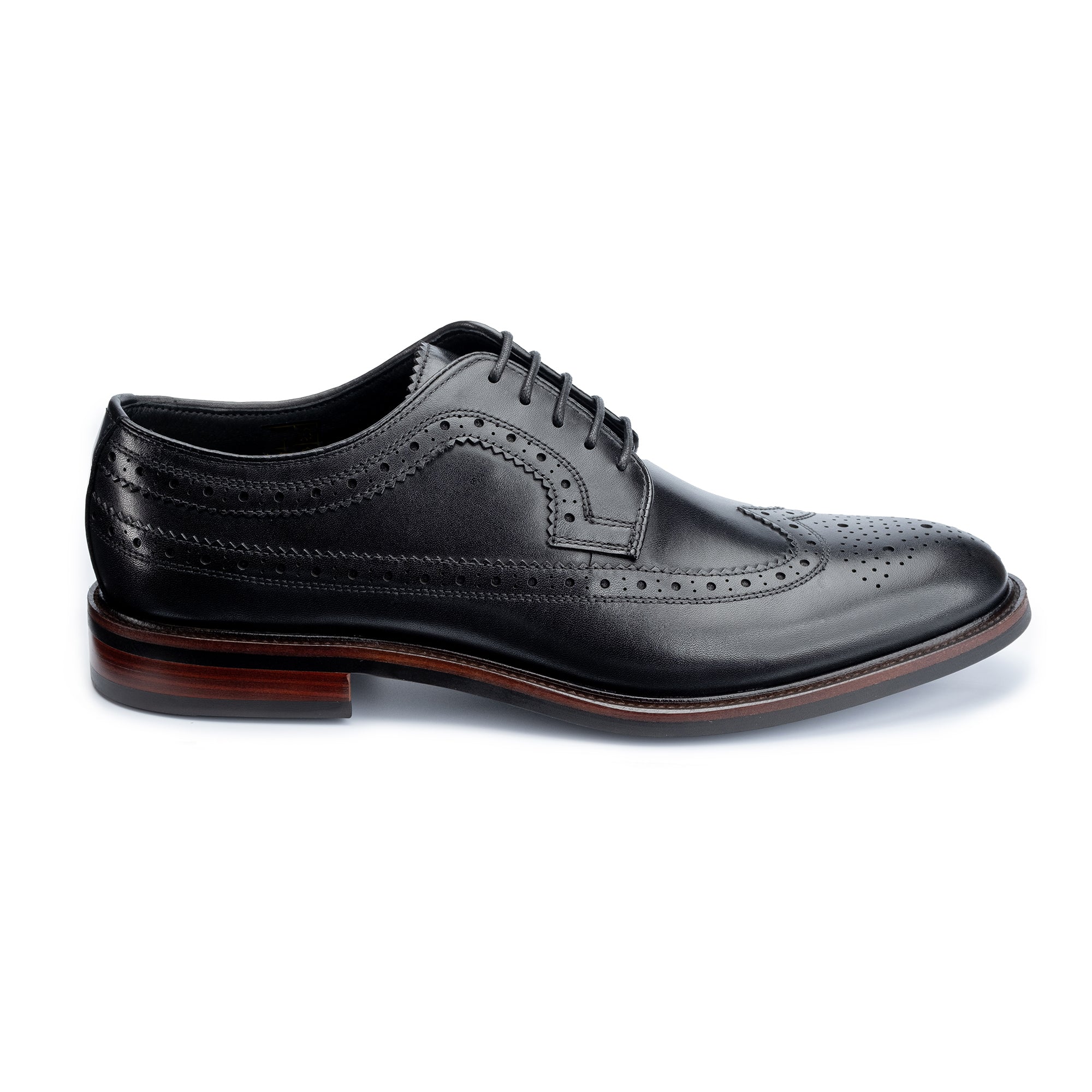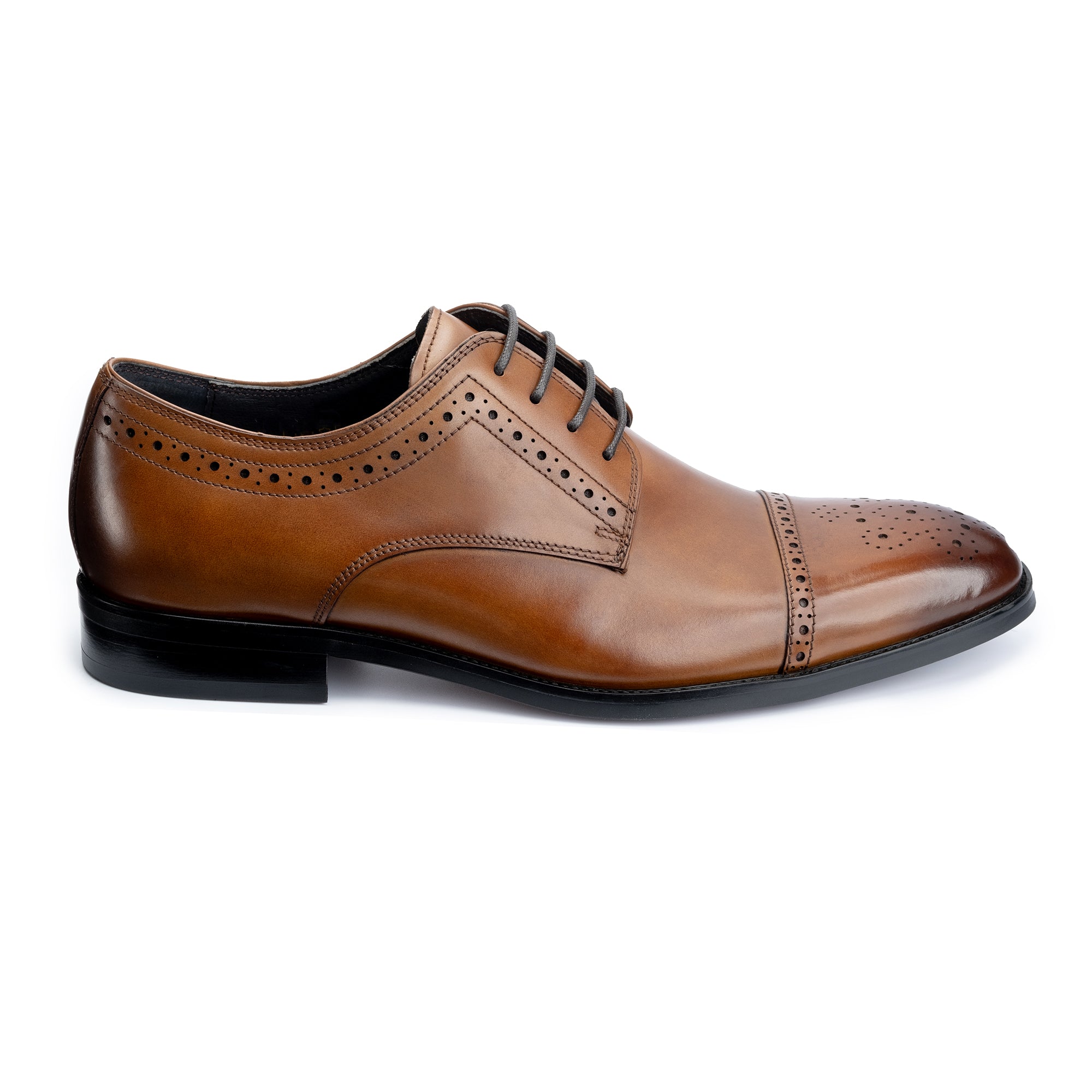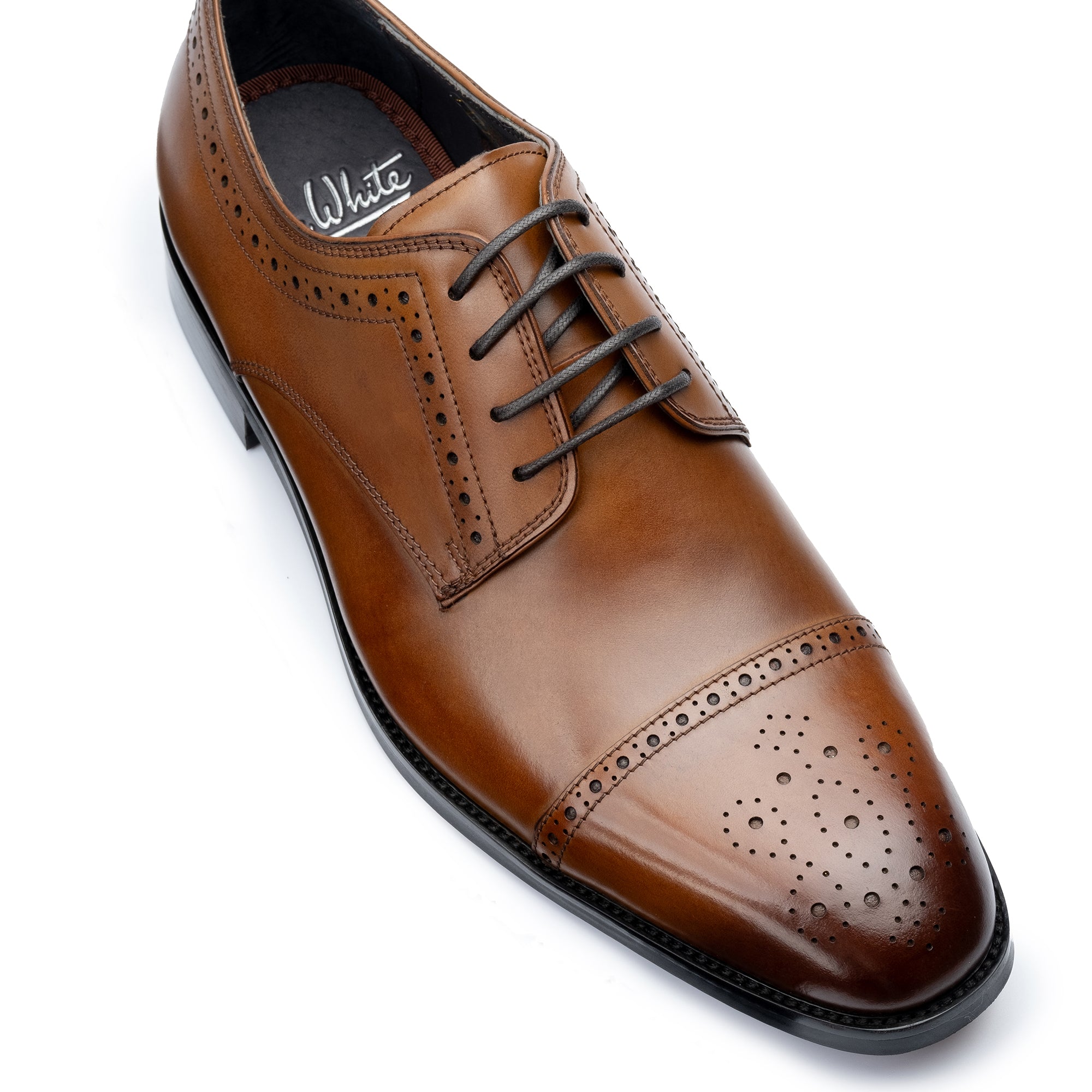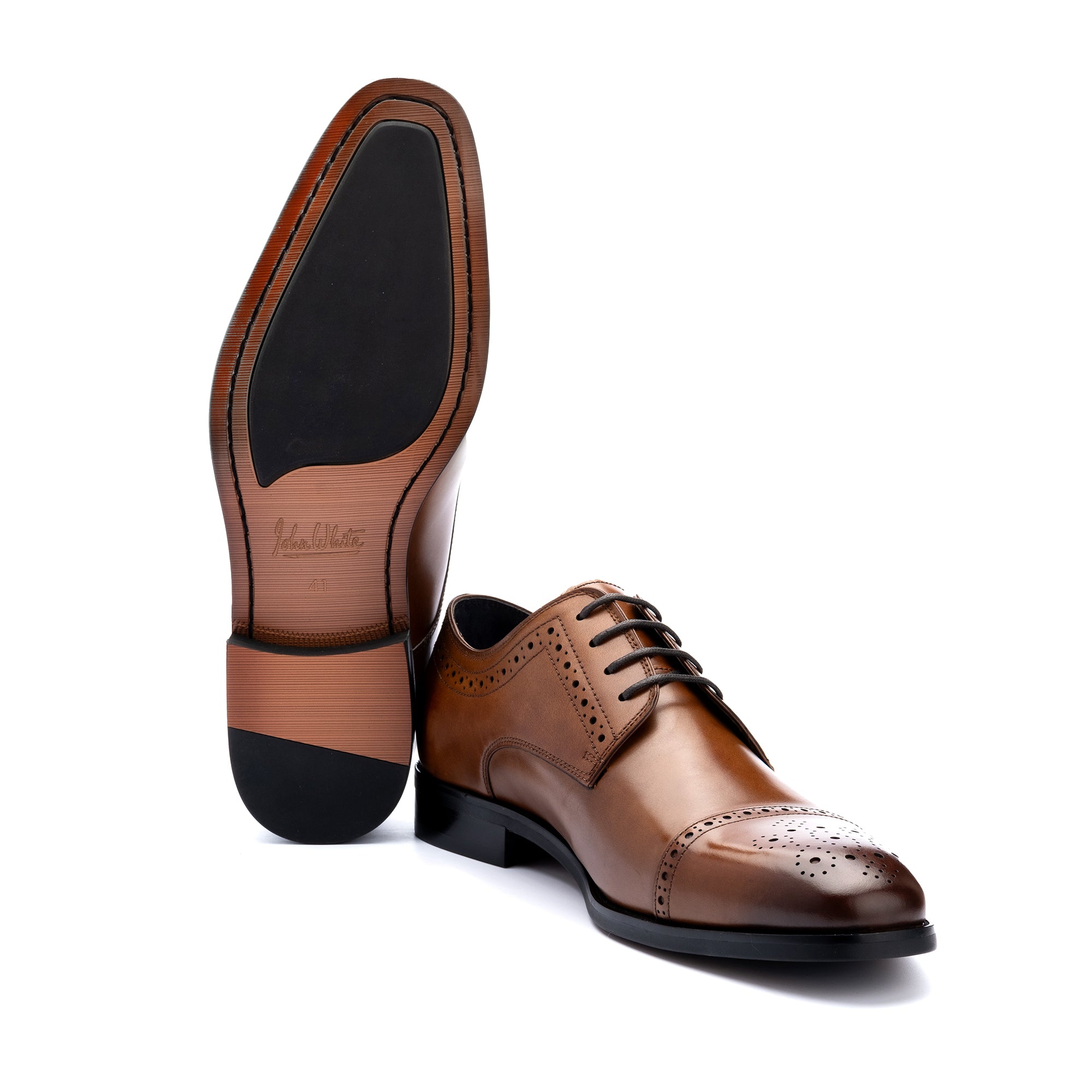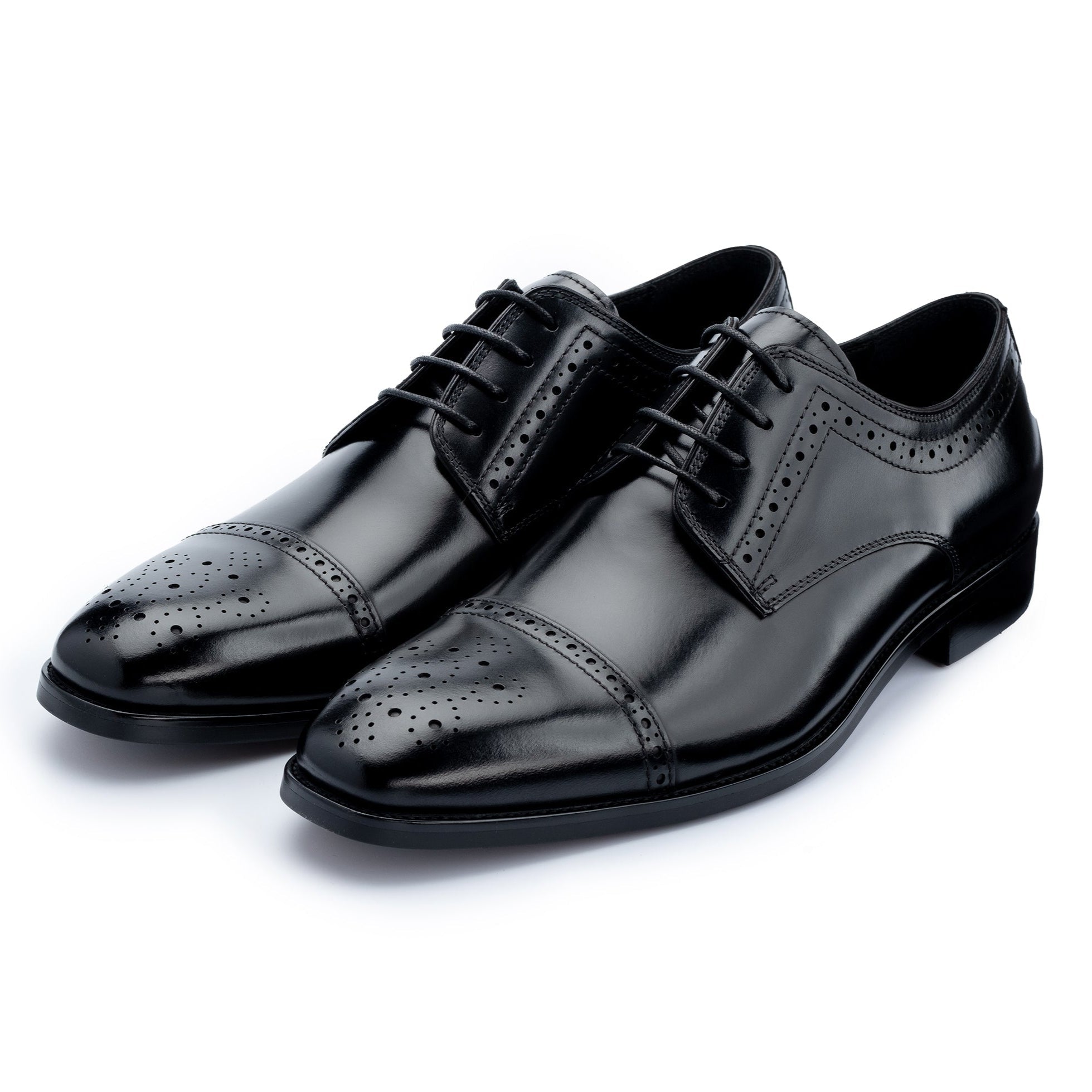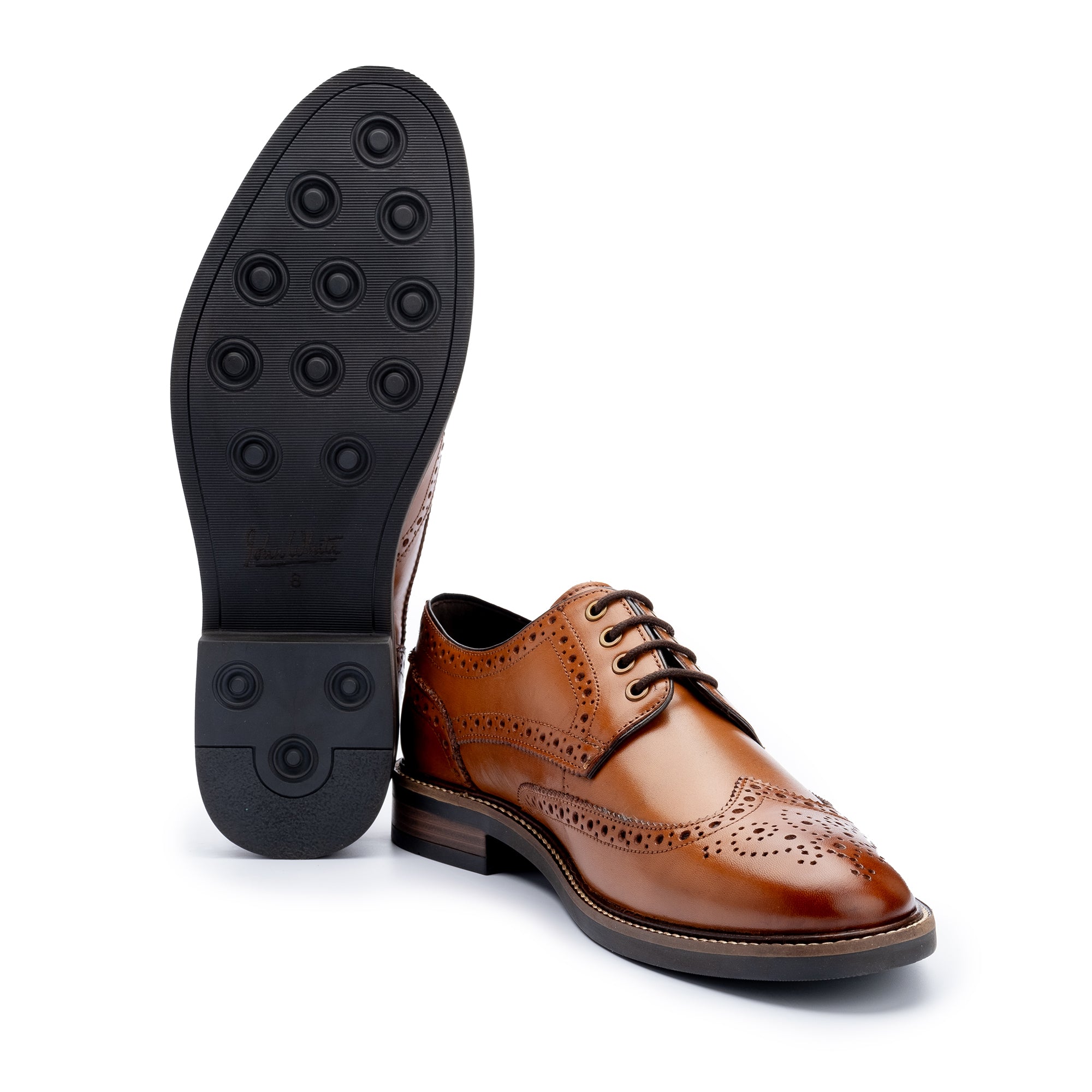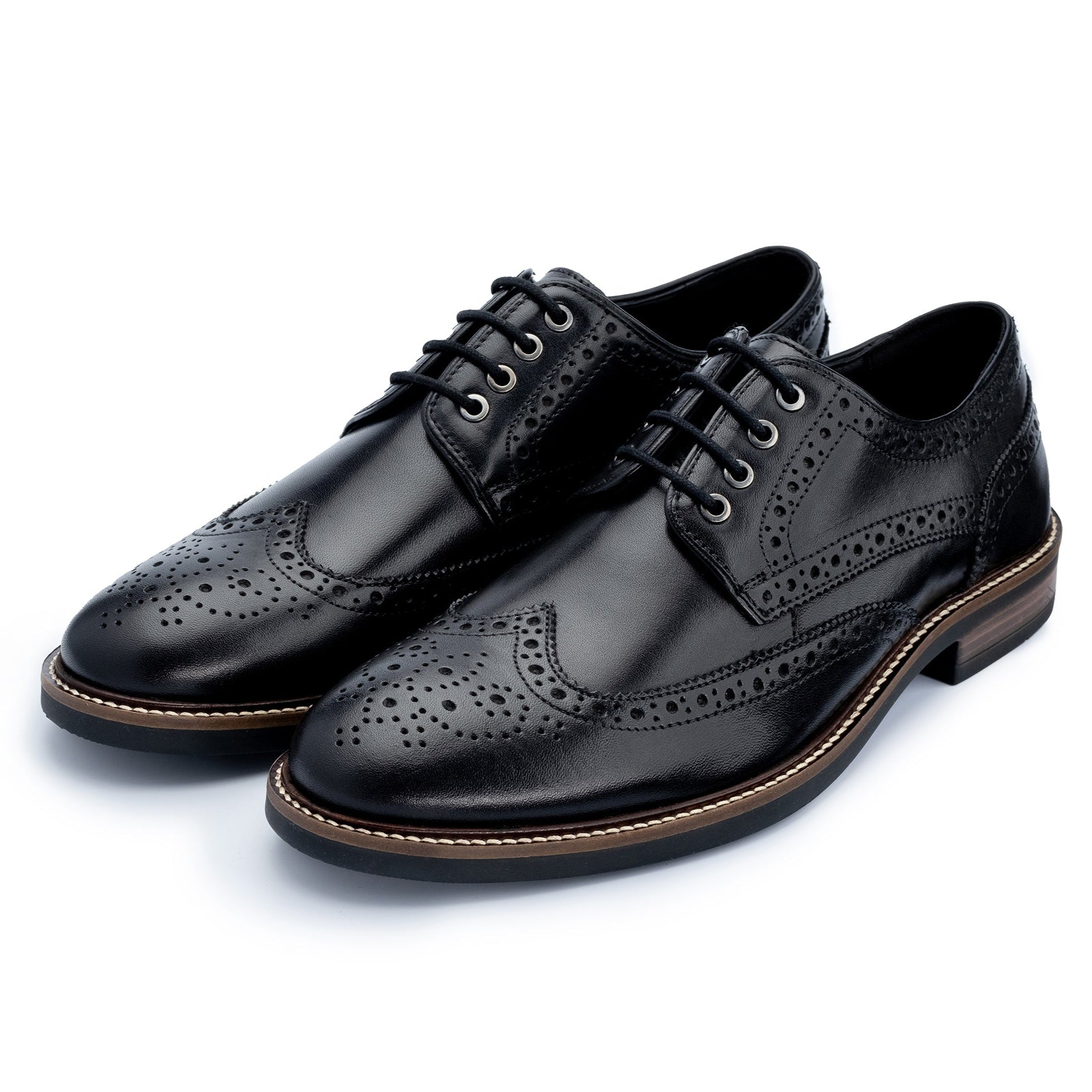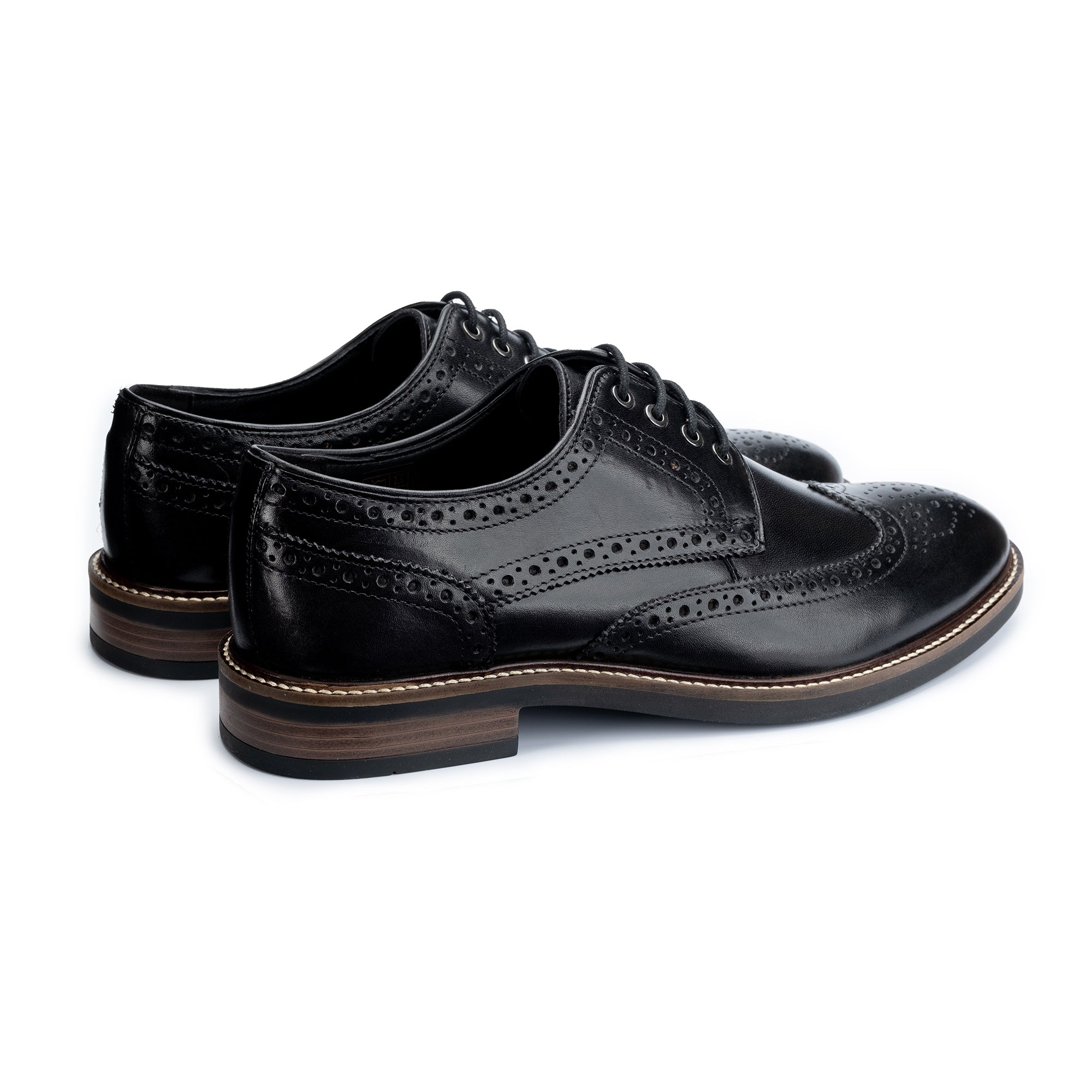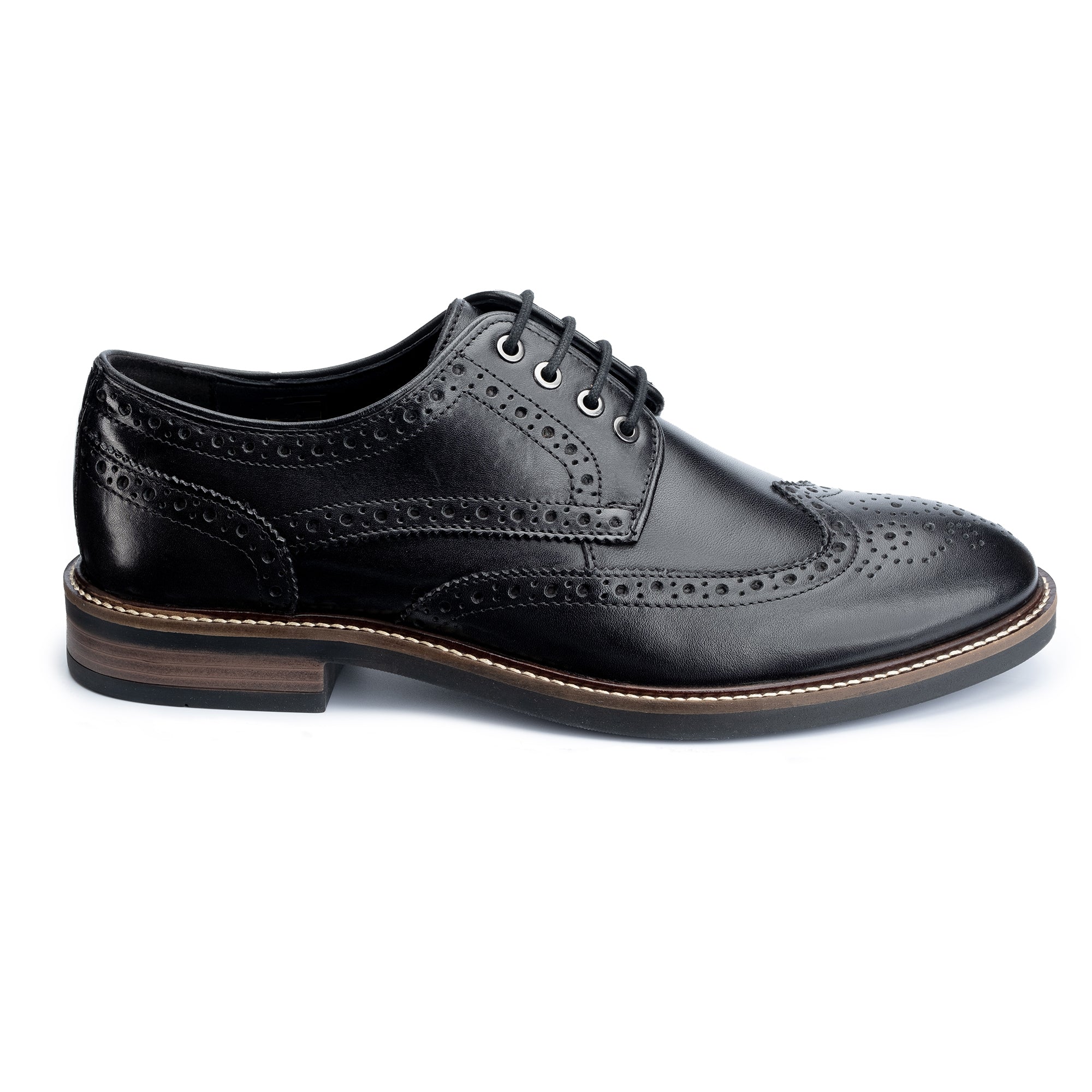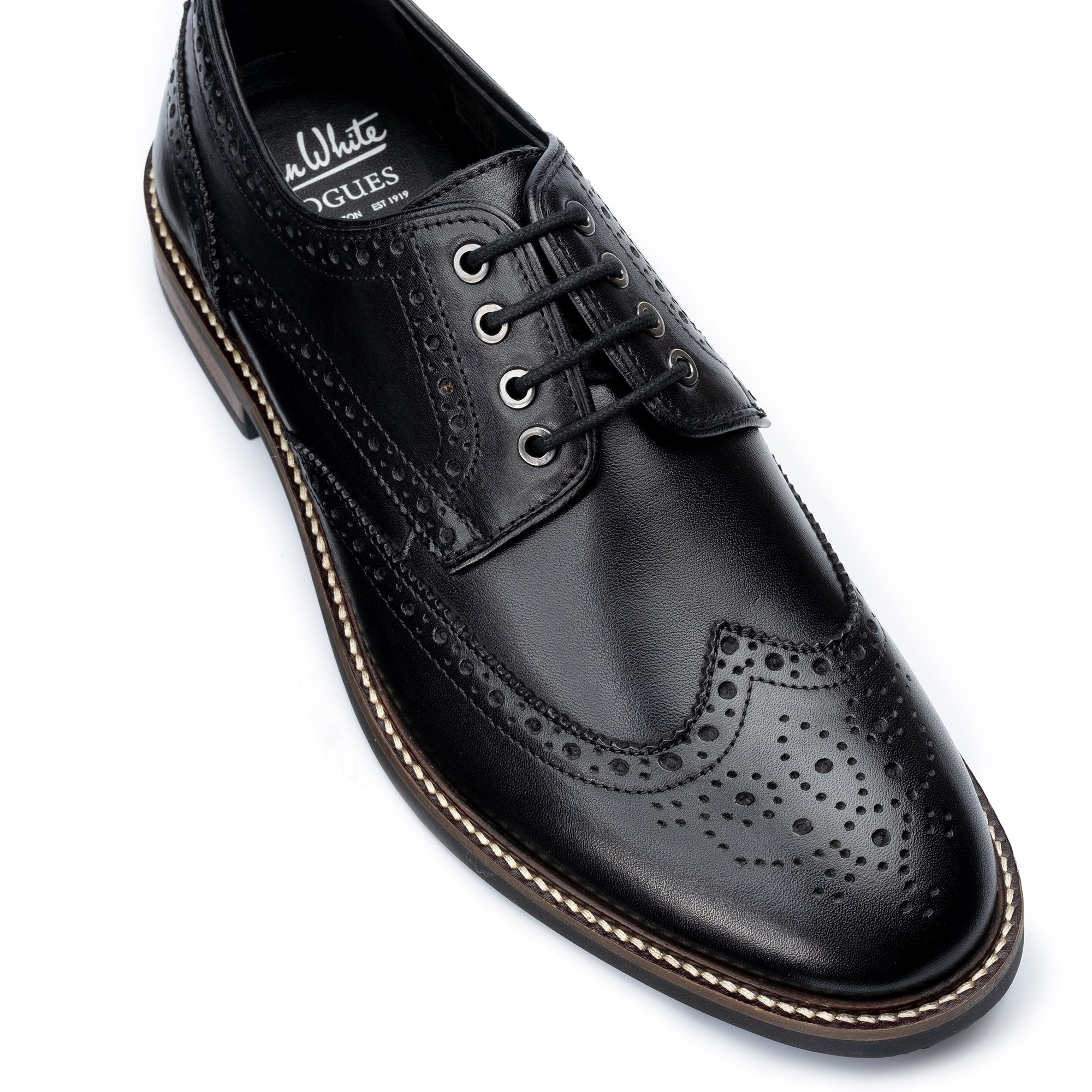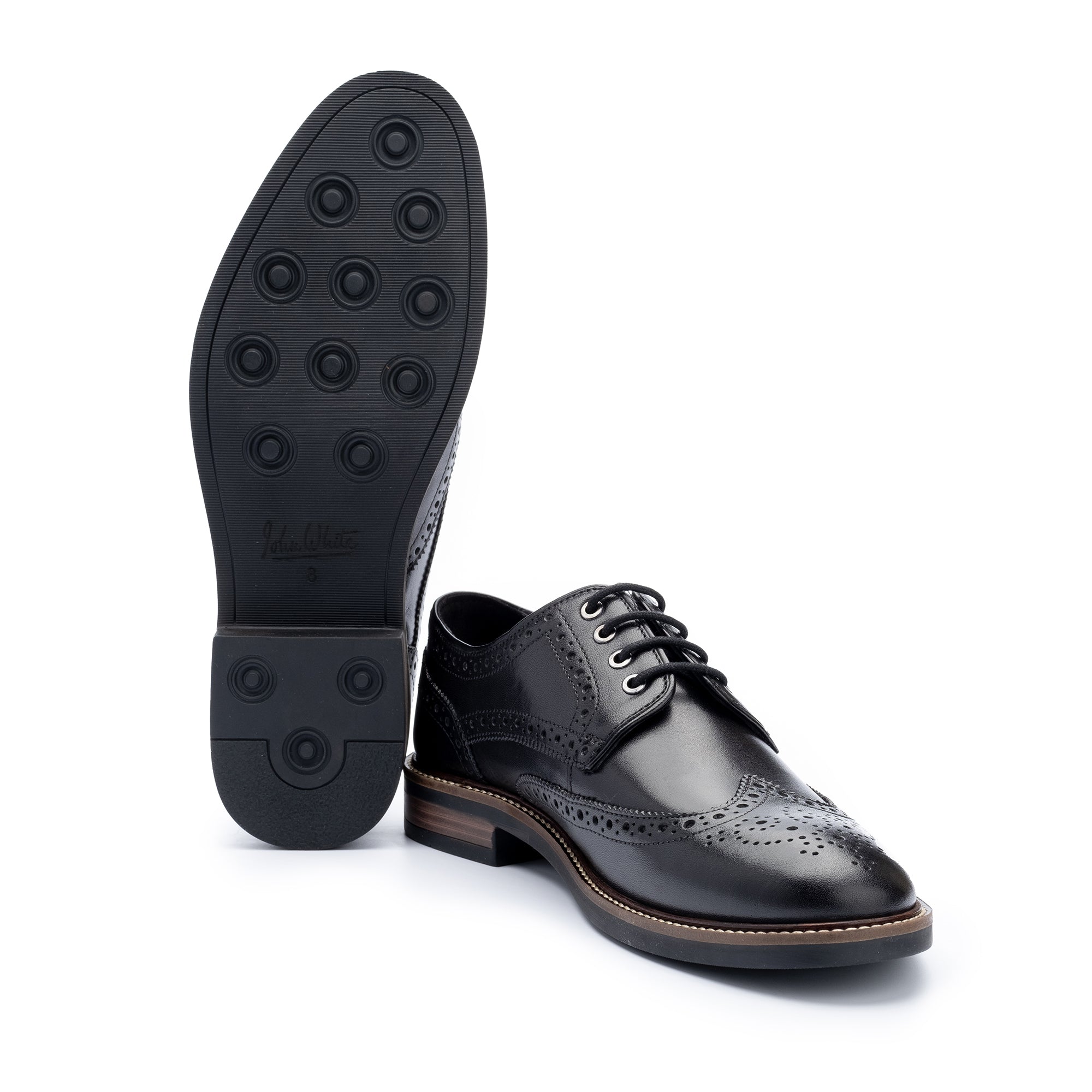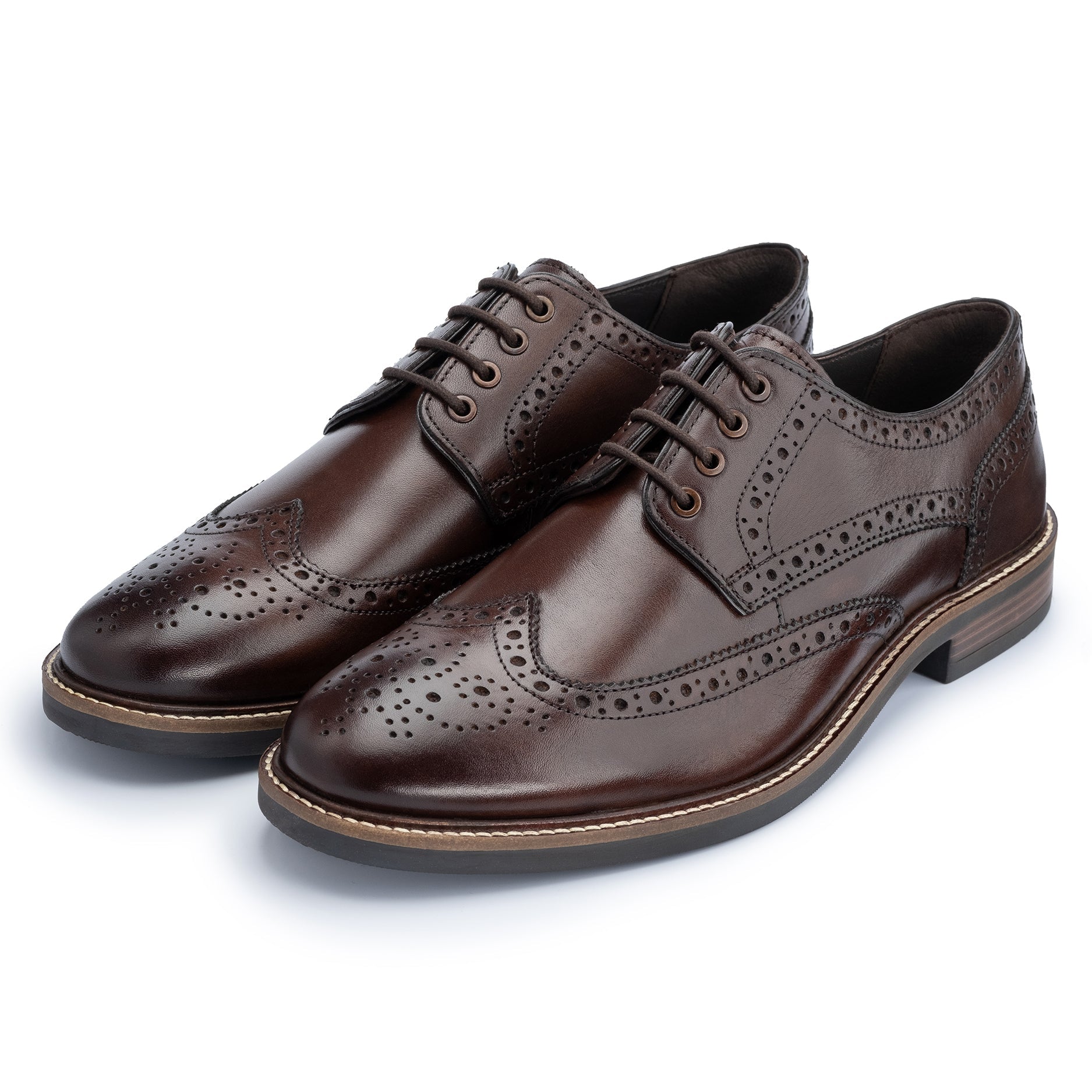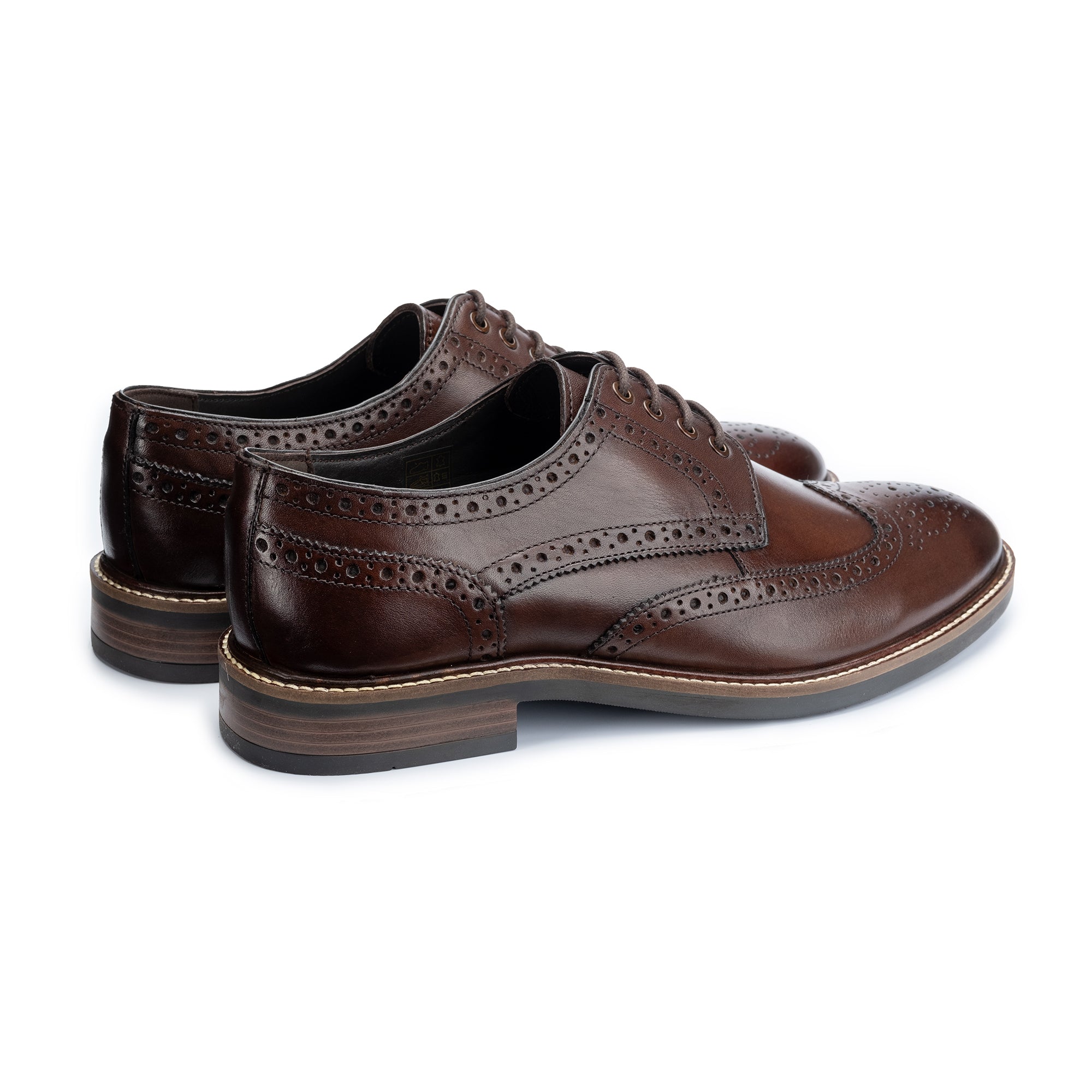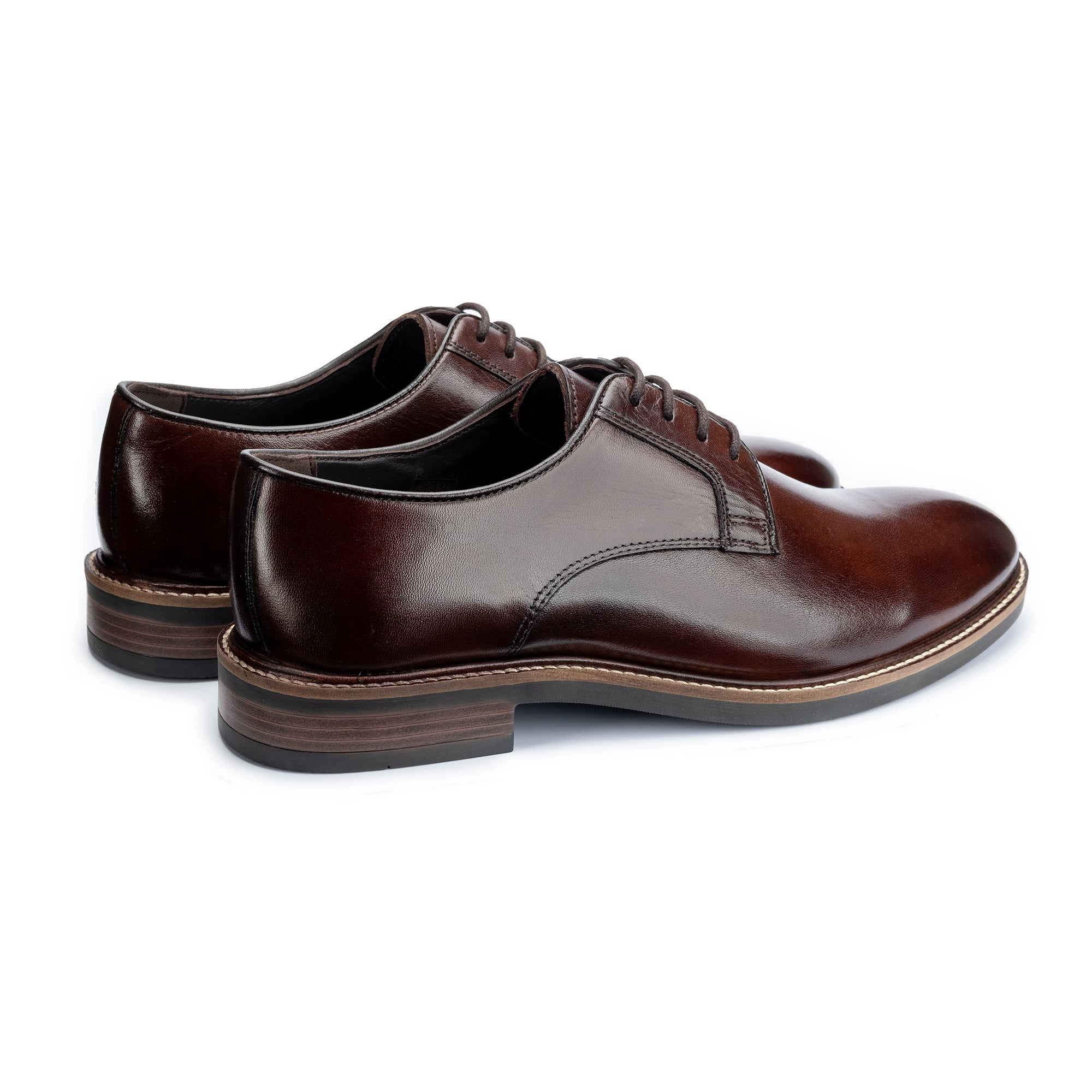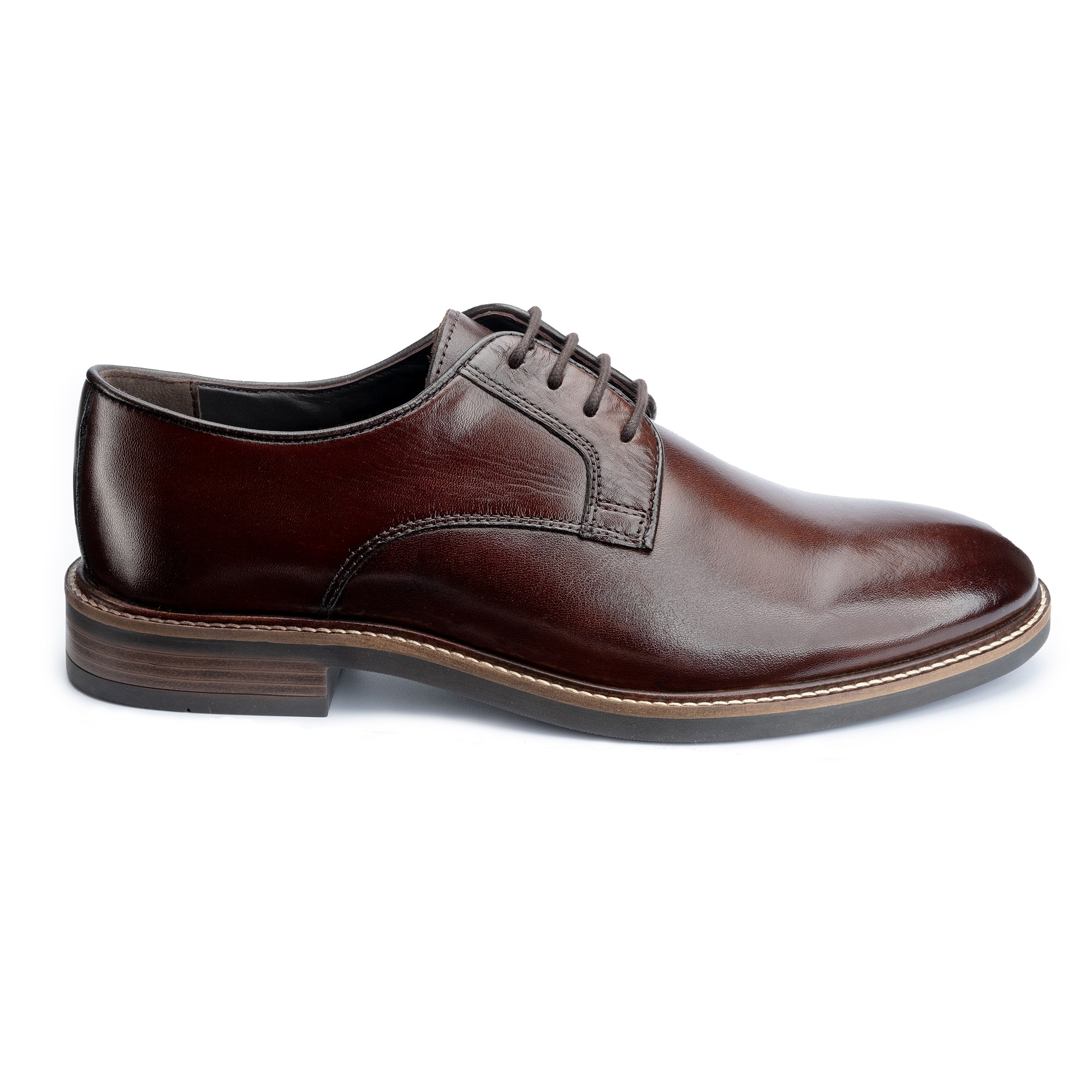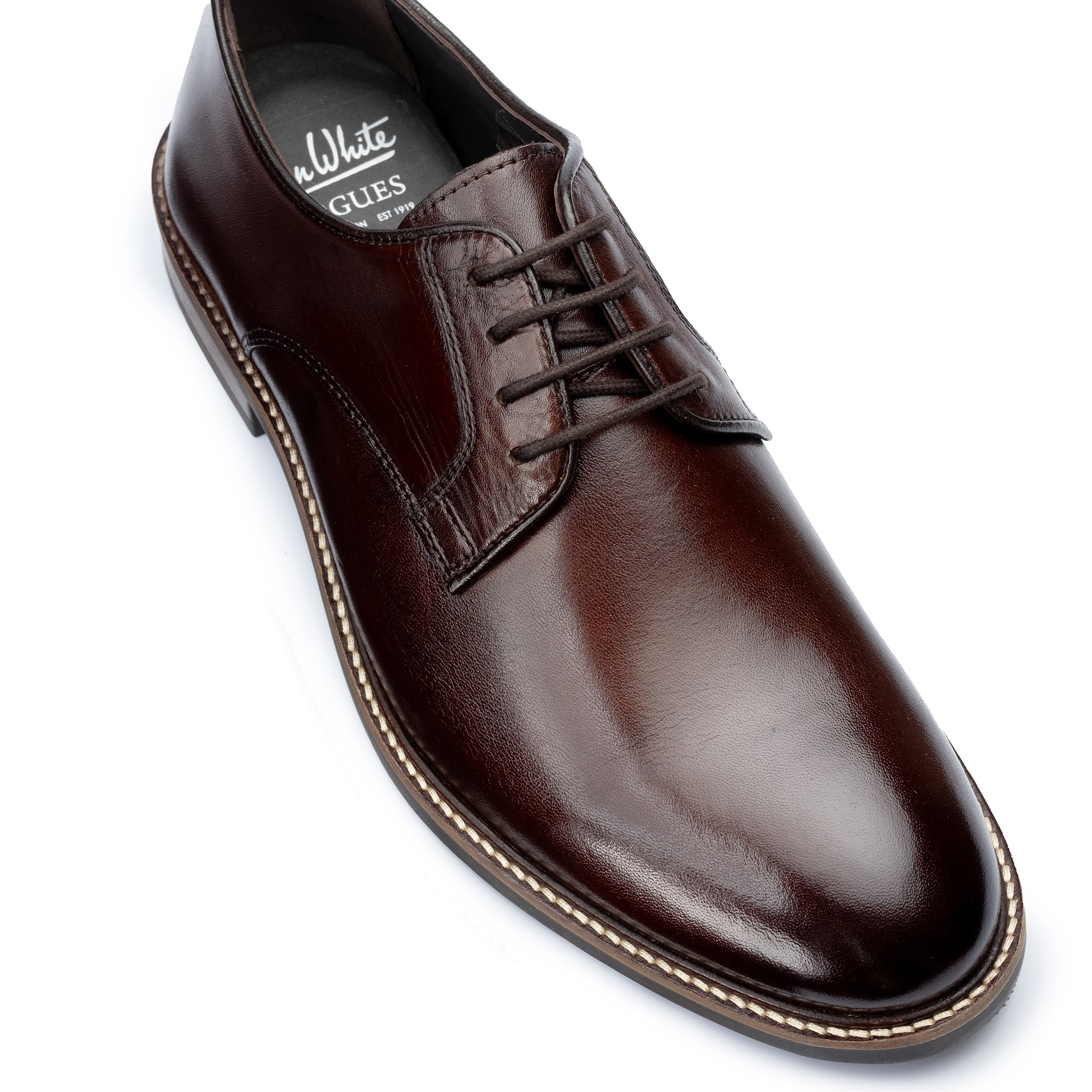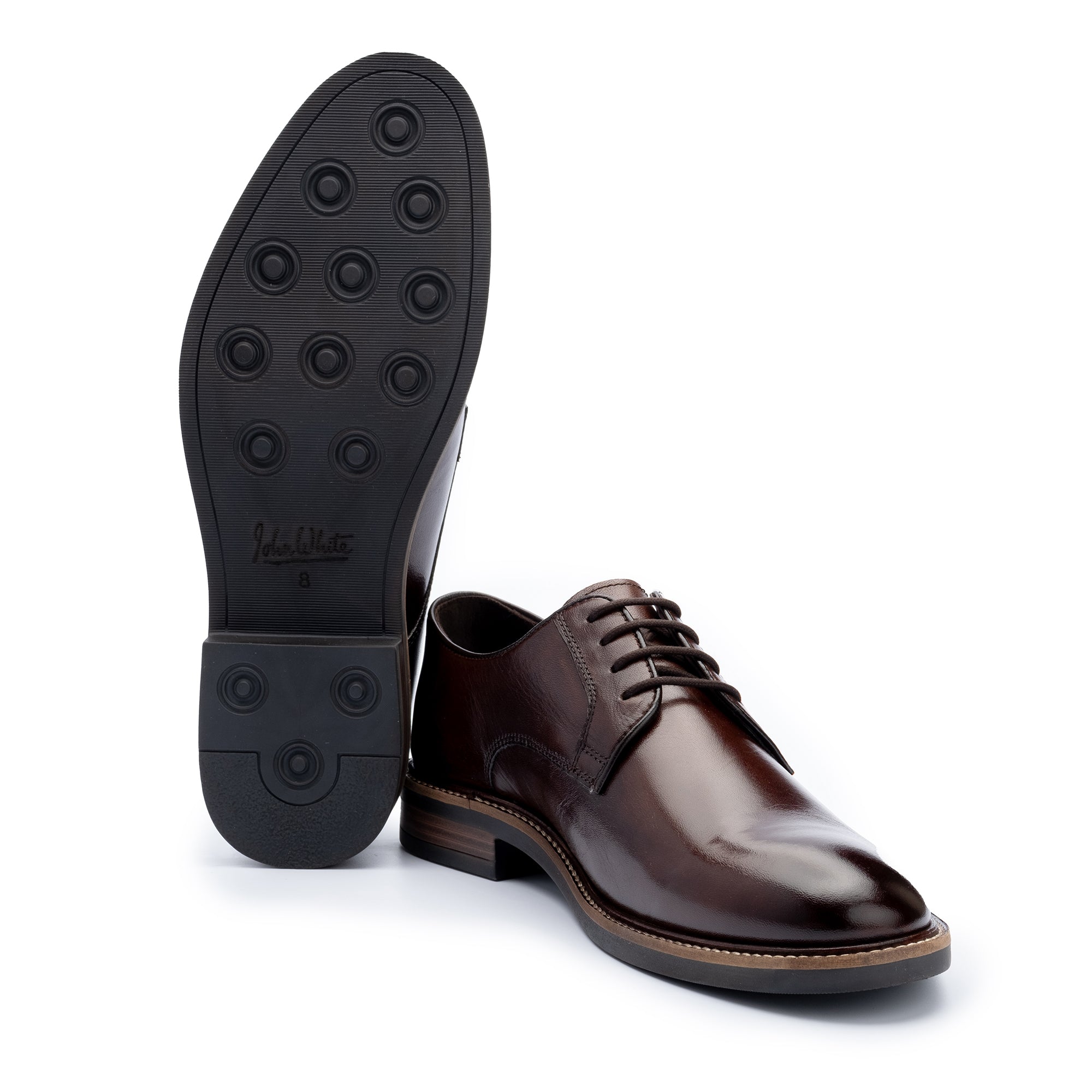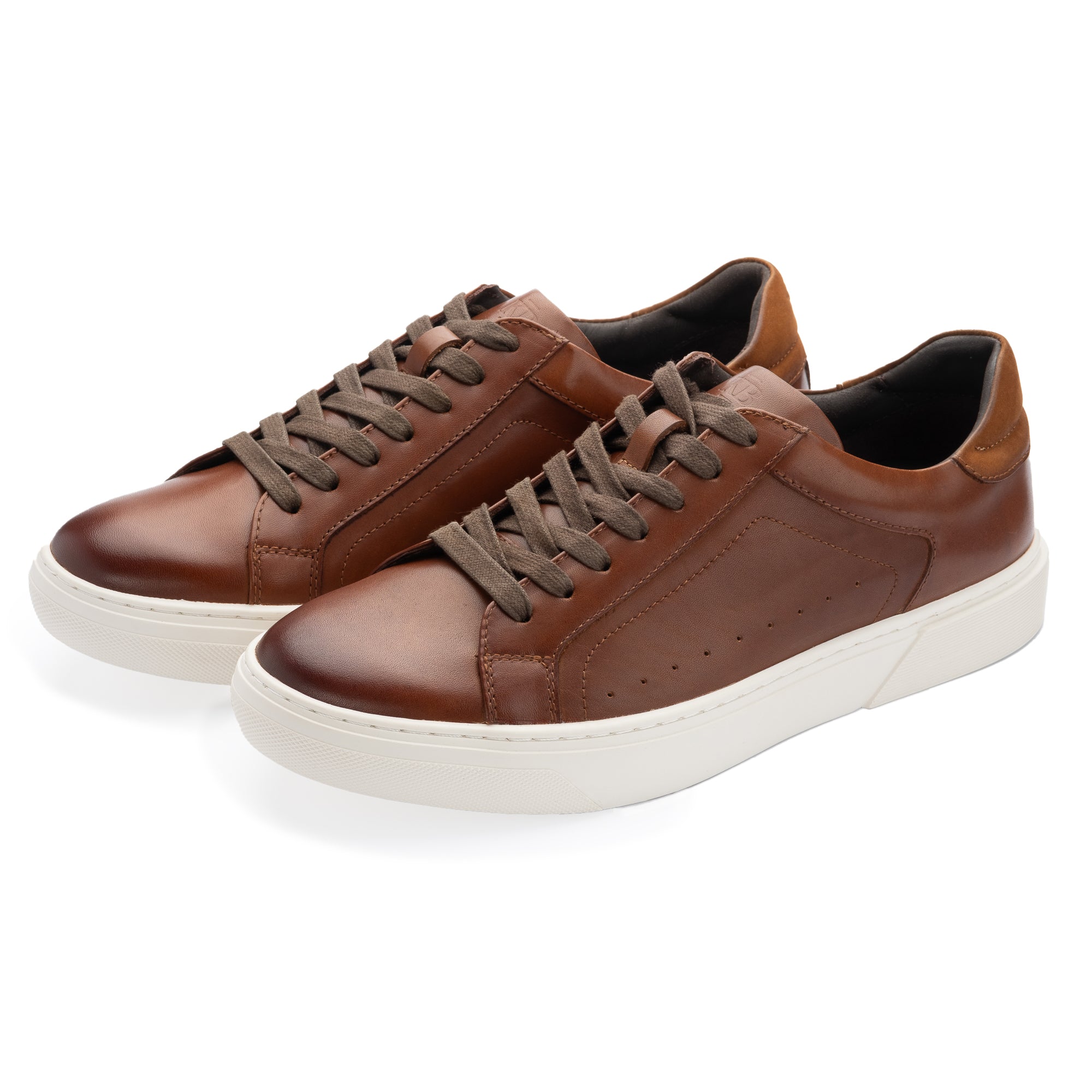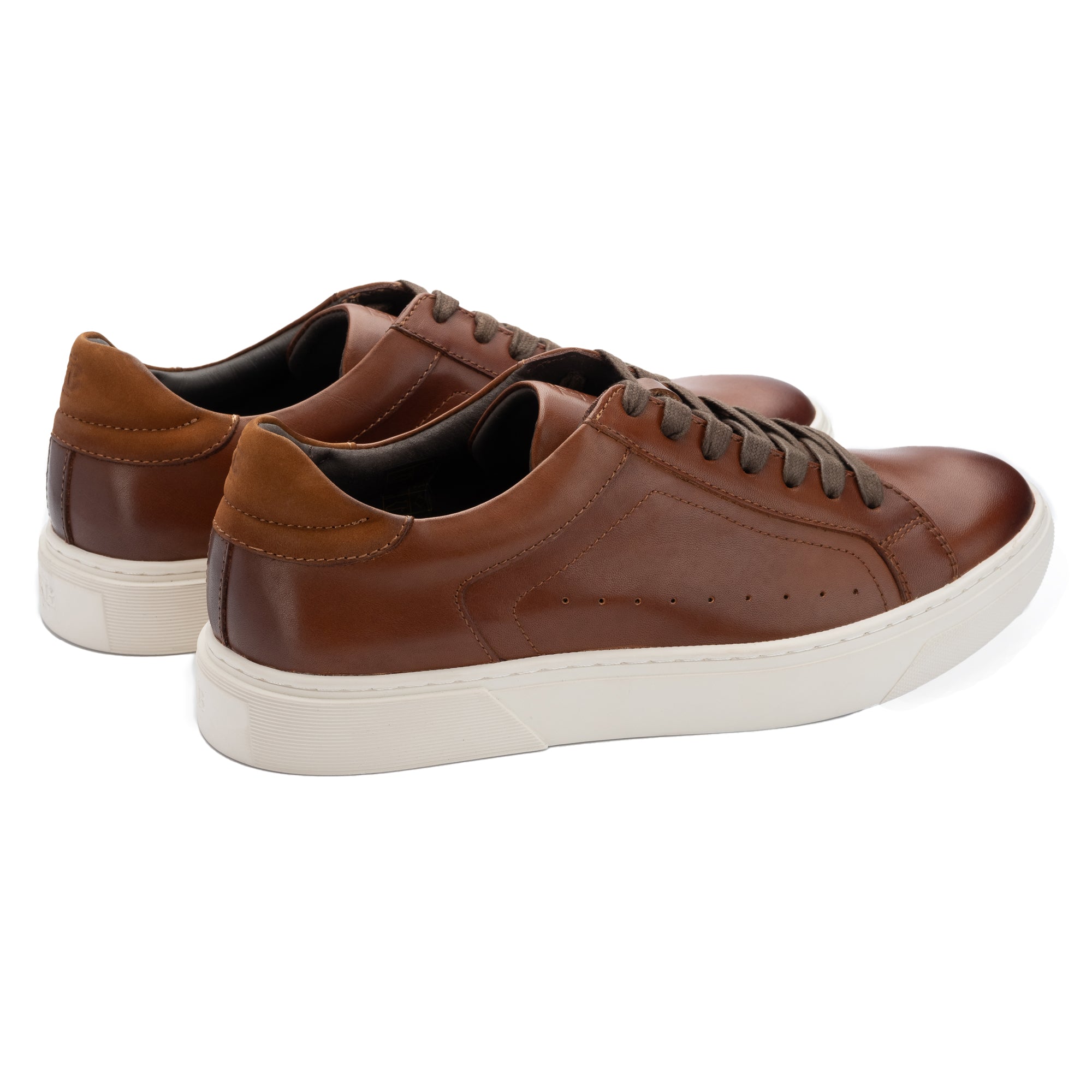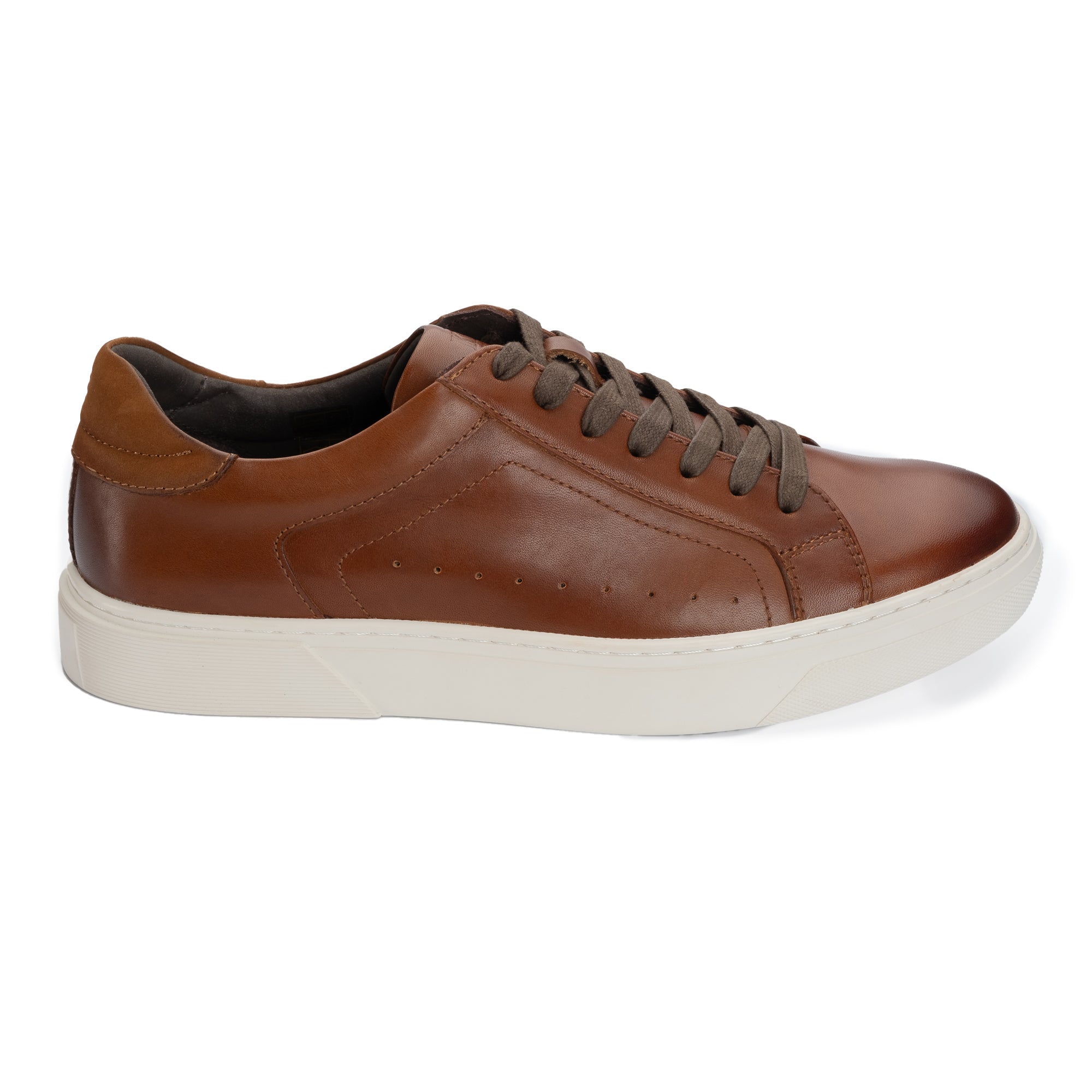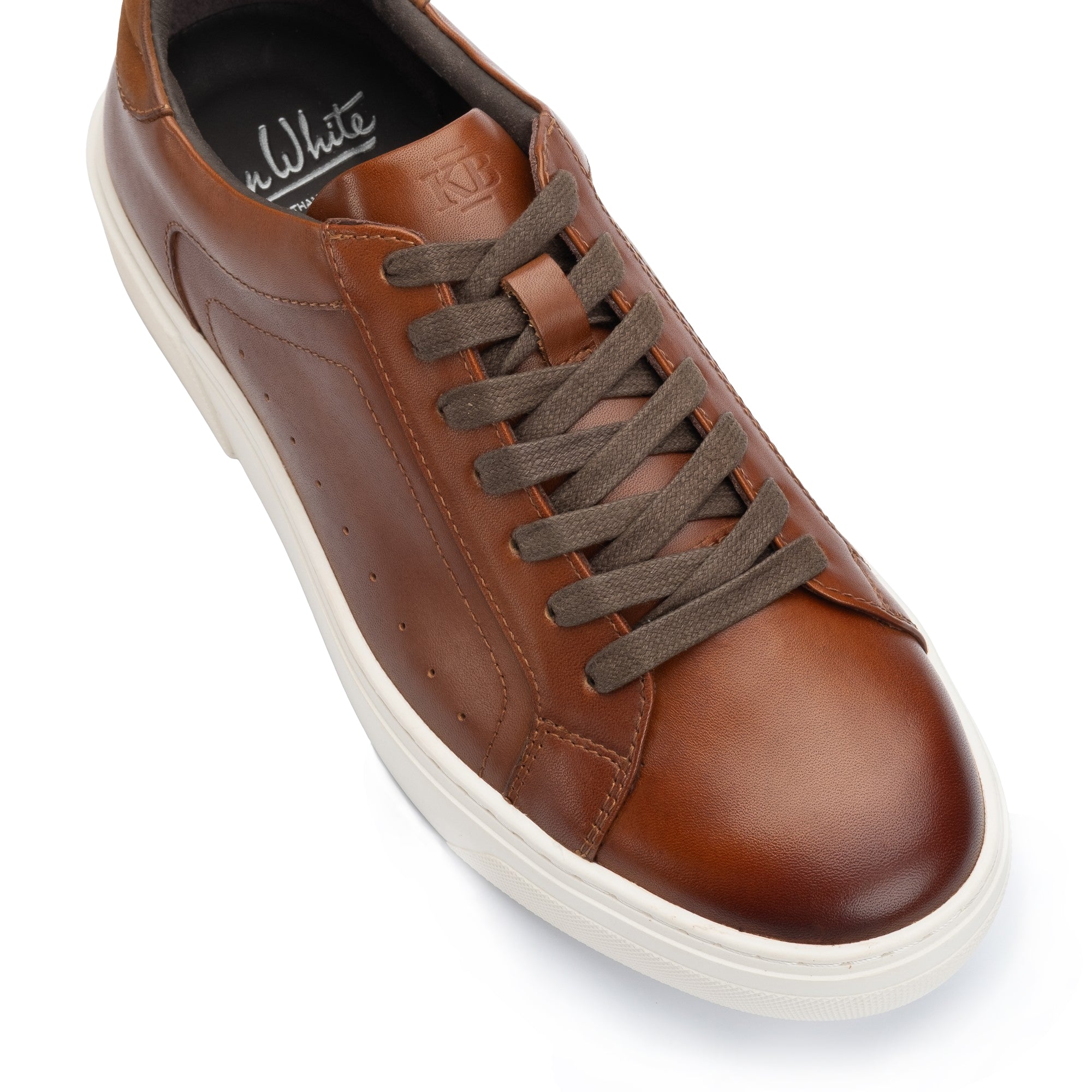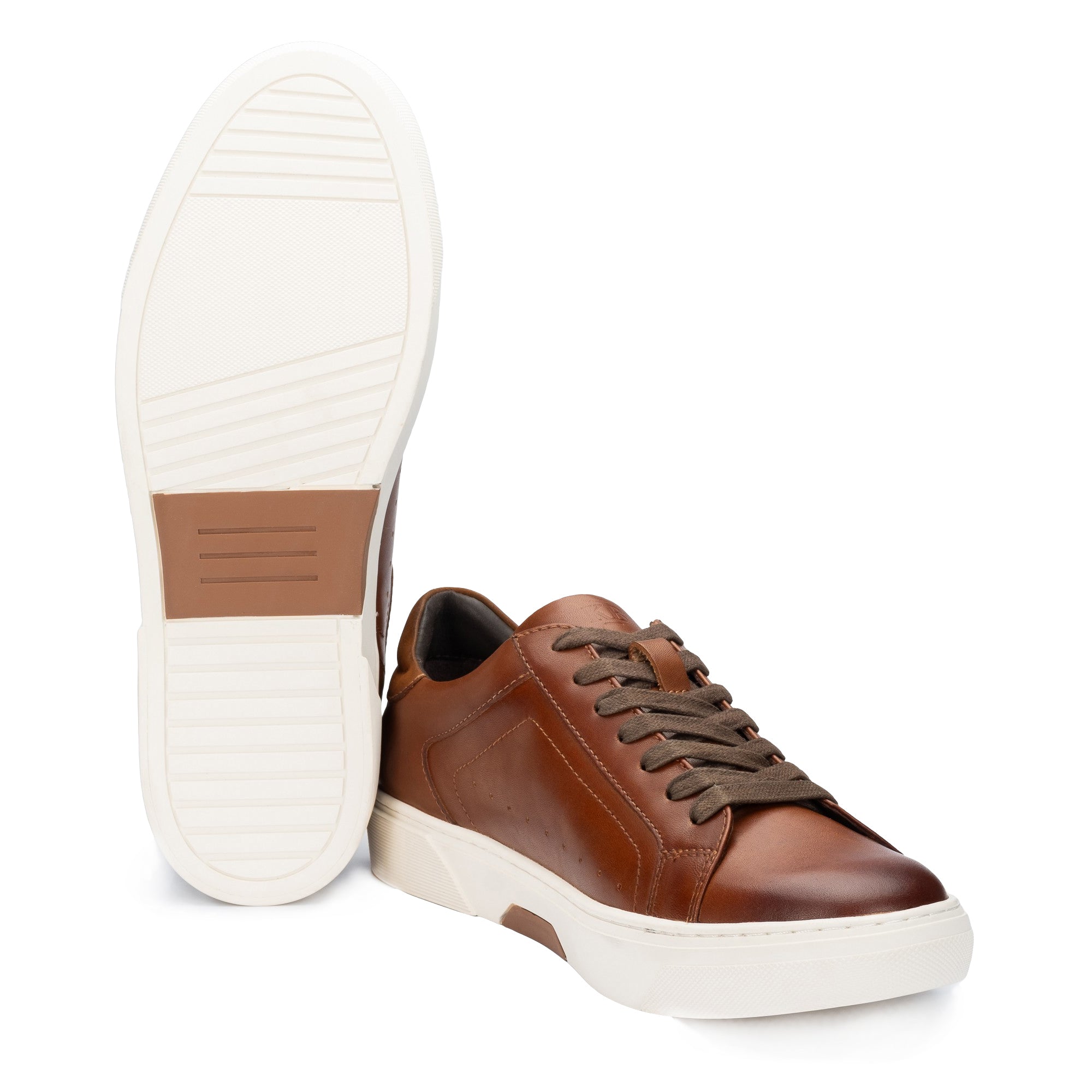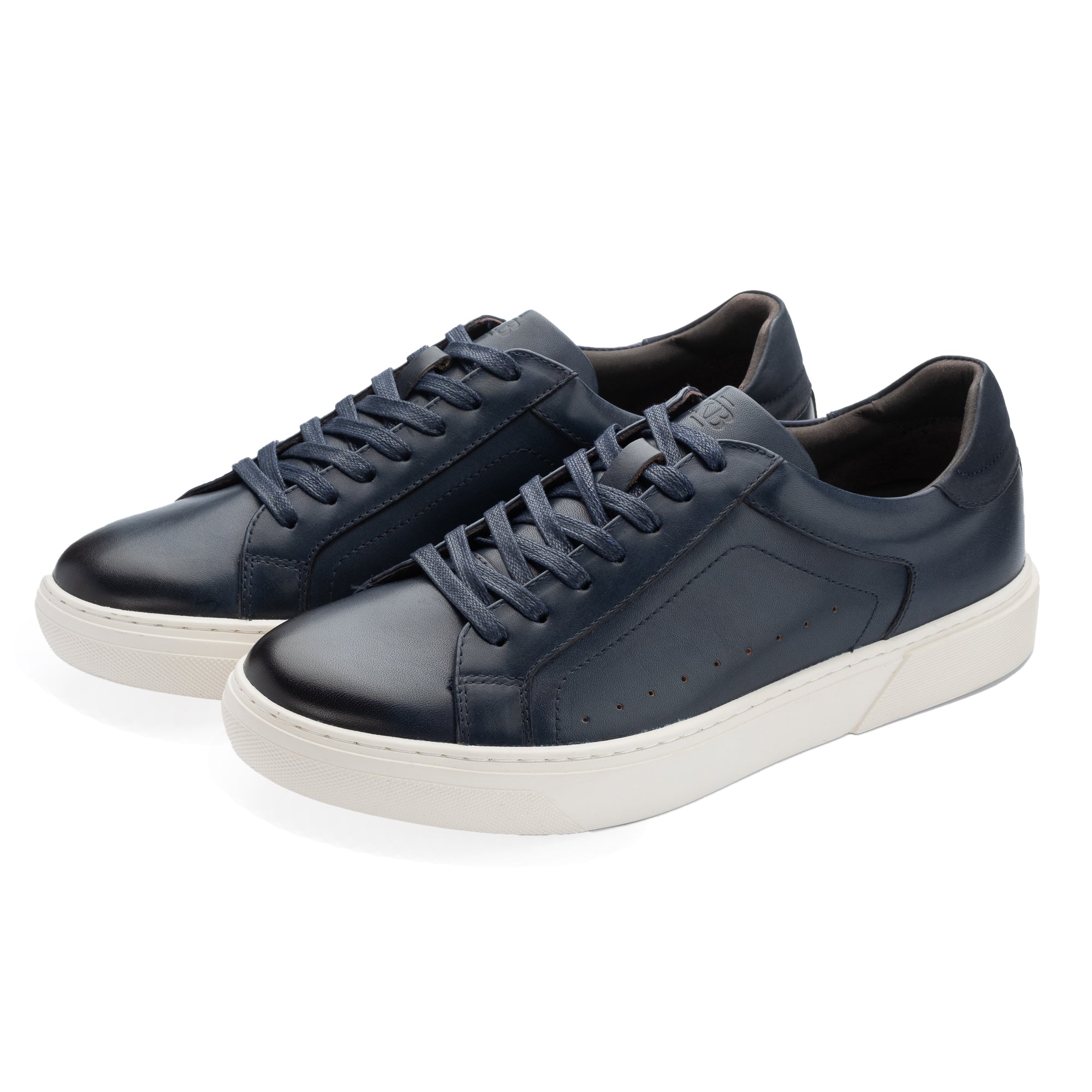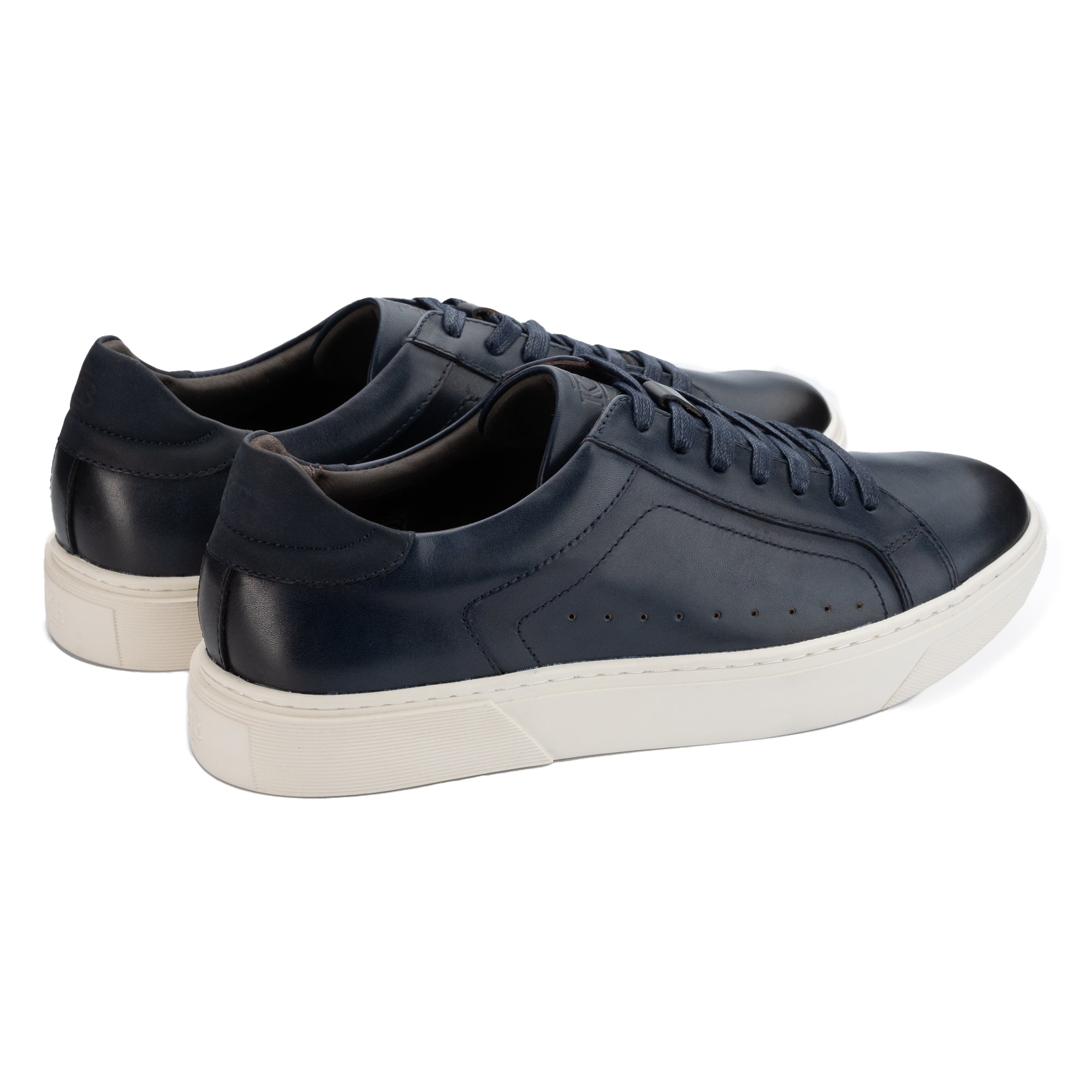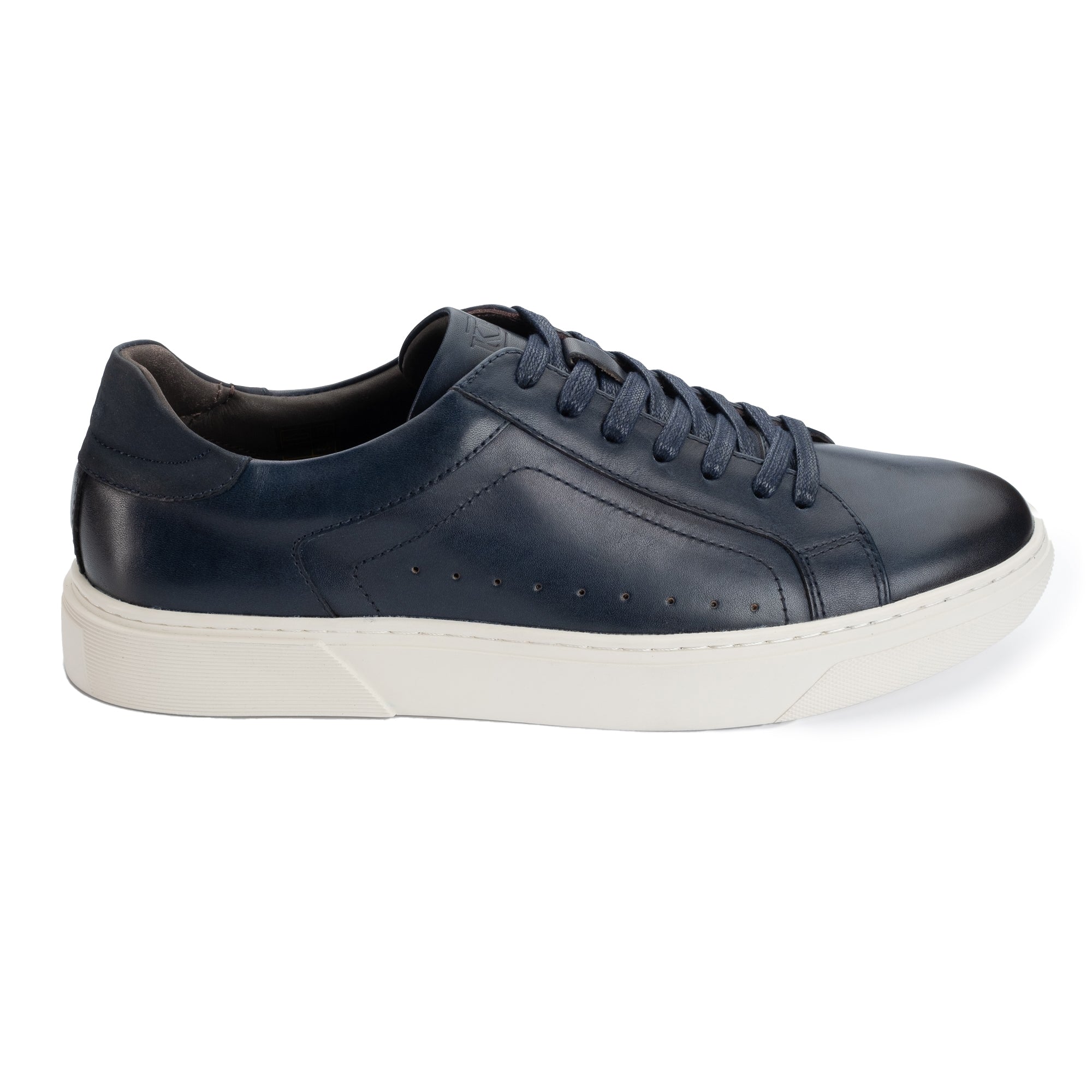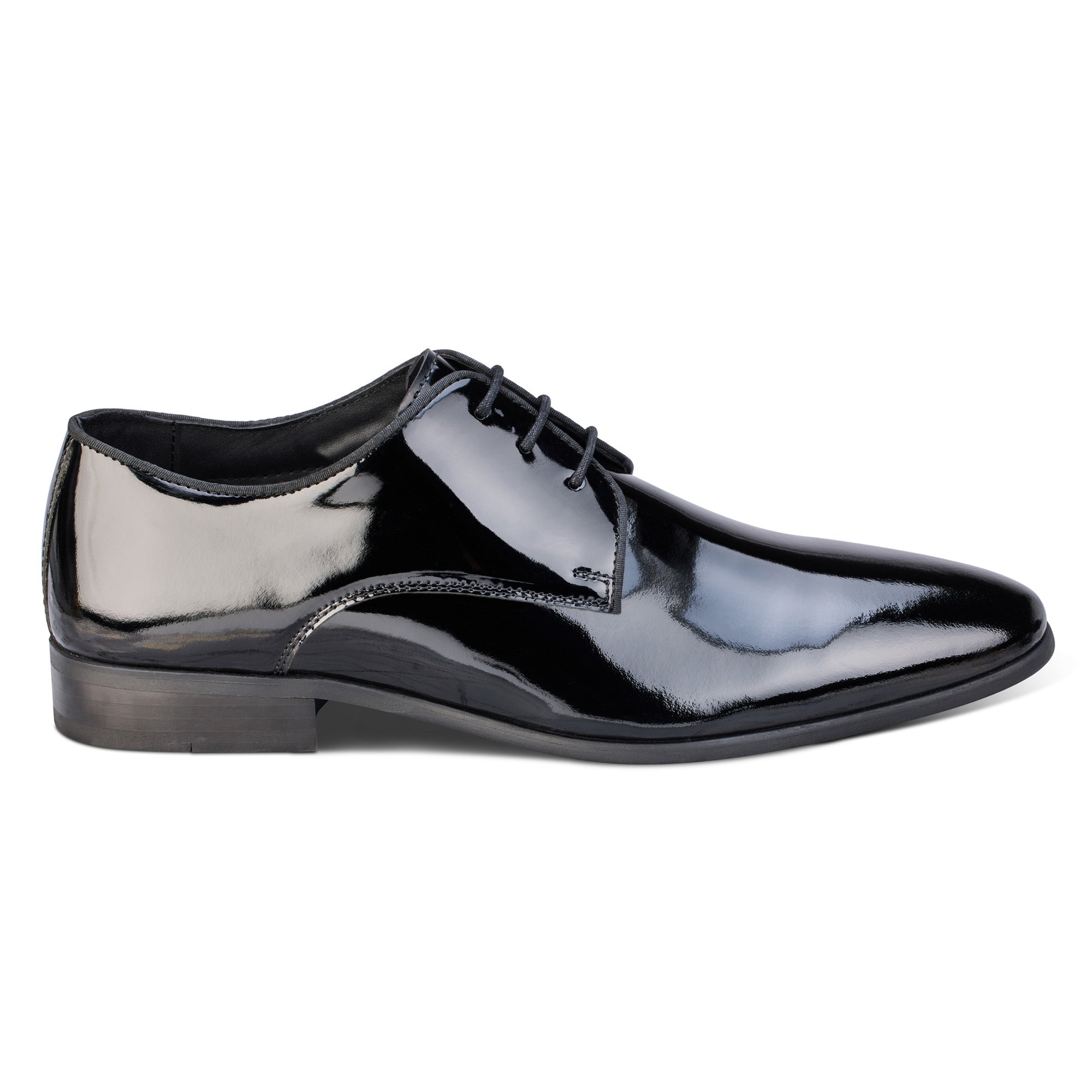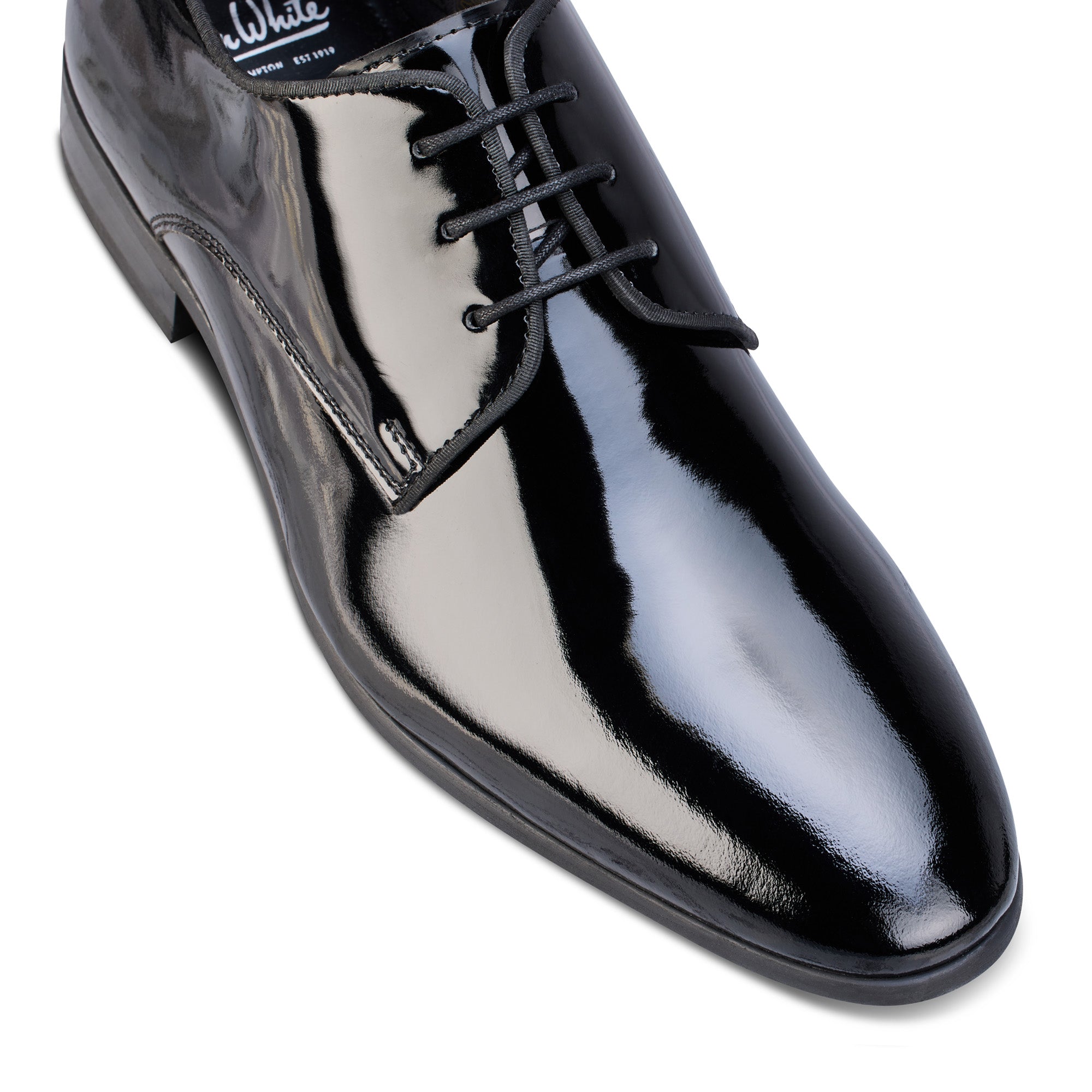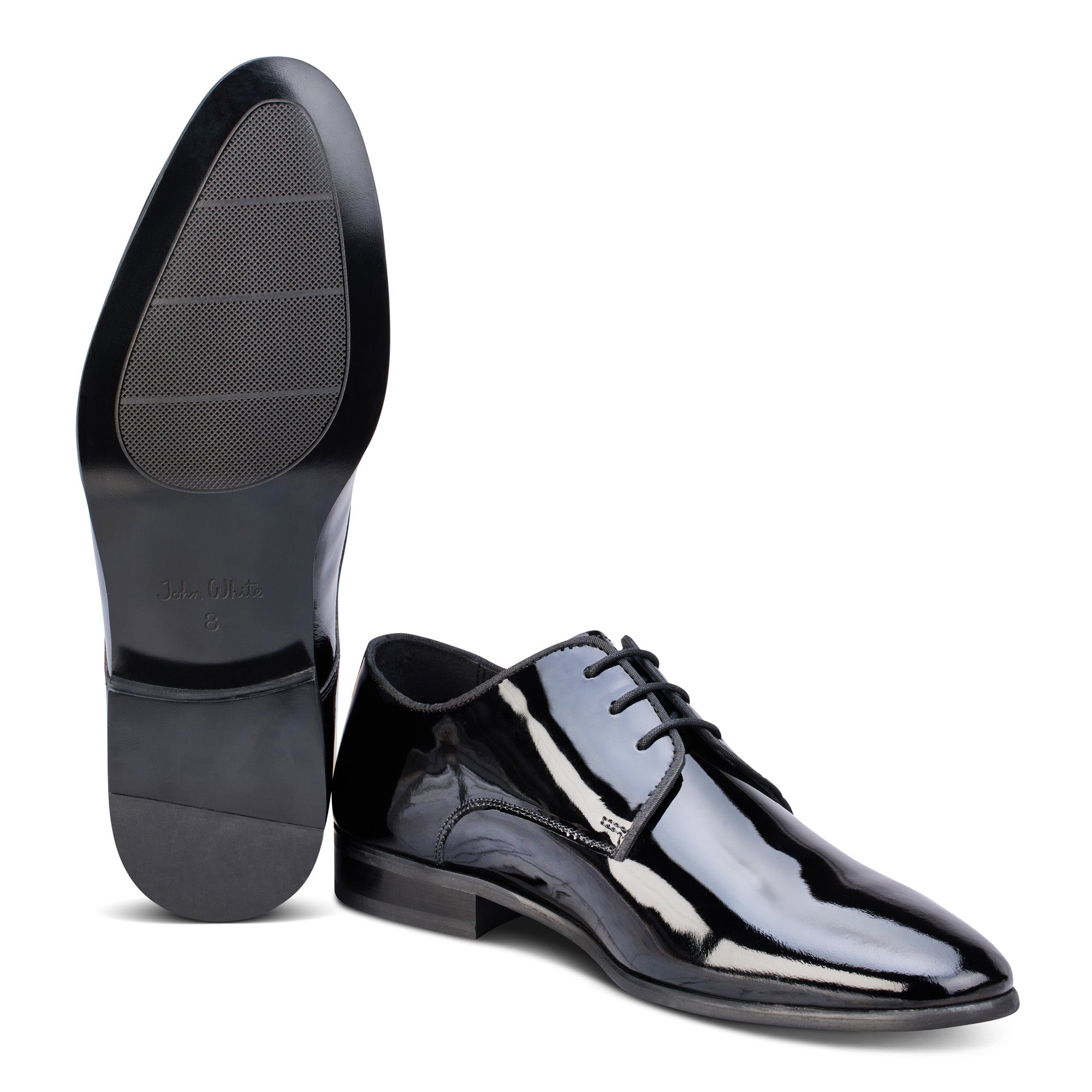

Derby vs Oxford: Which Lace-Up Should You Buy First?
Buy the Oxford first if your life regularly demands formal dress — professional environments, black-tie events, weddings where a suit is non-negotiable. Buy the Derby first if your lifestyle is predominantly smart-casual: it offers greater daily versatility, accommodates a wider range of foot shapes, and transitions more naturally across dress codes. When in doubt, the Oxford is the more correct starting point — but the Derby is the more practical one for most modern professional men.
In This Guide
- What Is the Structural Difference Between Derby and Oxford Shoes?
- Which Is More Formal — Derby or Oxford?
- Derby vs Oxford: A Direct Comparison
- Who Should Buy an Oxford First?
- Who Should Buy a Derby First?
- What Colour Should Your First Lace-Up Be?
- How Does Broguing Affect the Decision?
- Does Construction Matter When Choosing Between the Two?
- Related Guides
- TL;DR
- Frequently Asked Questions
The Derby vs Oxford debate is the first serious decision in building a considered shoe wardrobe. Both are lace-up leather shoes. Both read as dress shoes. But they are structurally different, occupy distinct positions on the formality spectrum, and suit different lifestyles. Which to buy first is not a matter of taste alone — it is a question of where you spend your time, how you dress for work, and what occasions your wardrobe currently fails to cover.
What Is the Structural Difference Between Derby and Oxford Shoes?
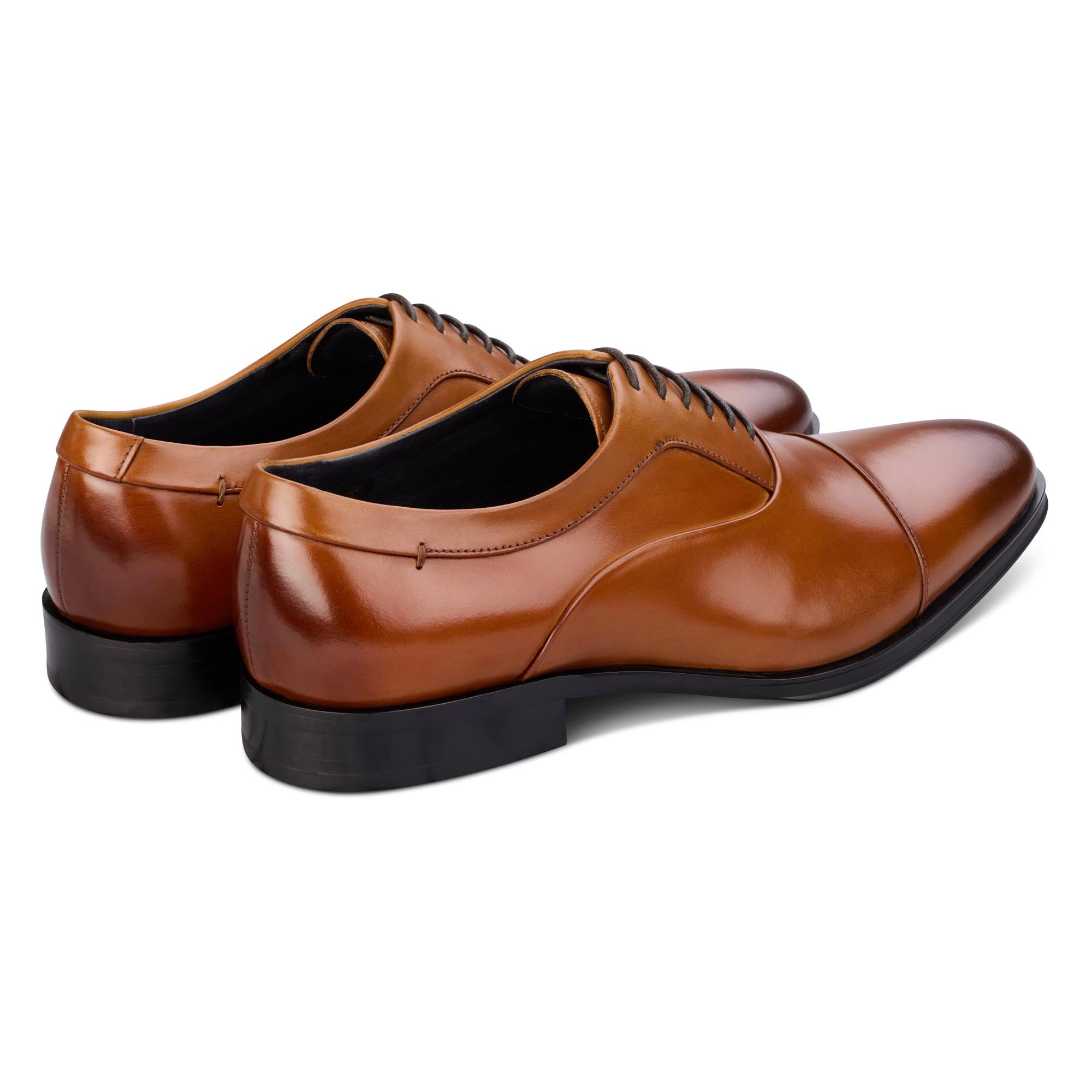
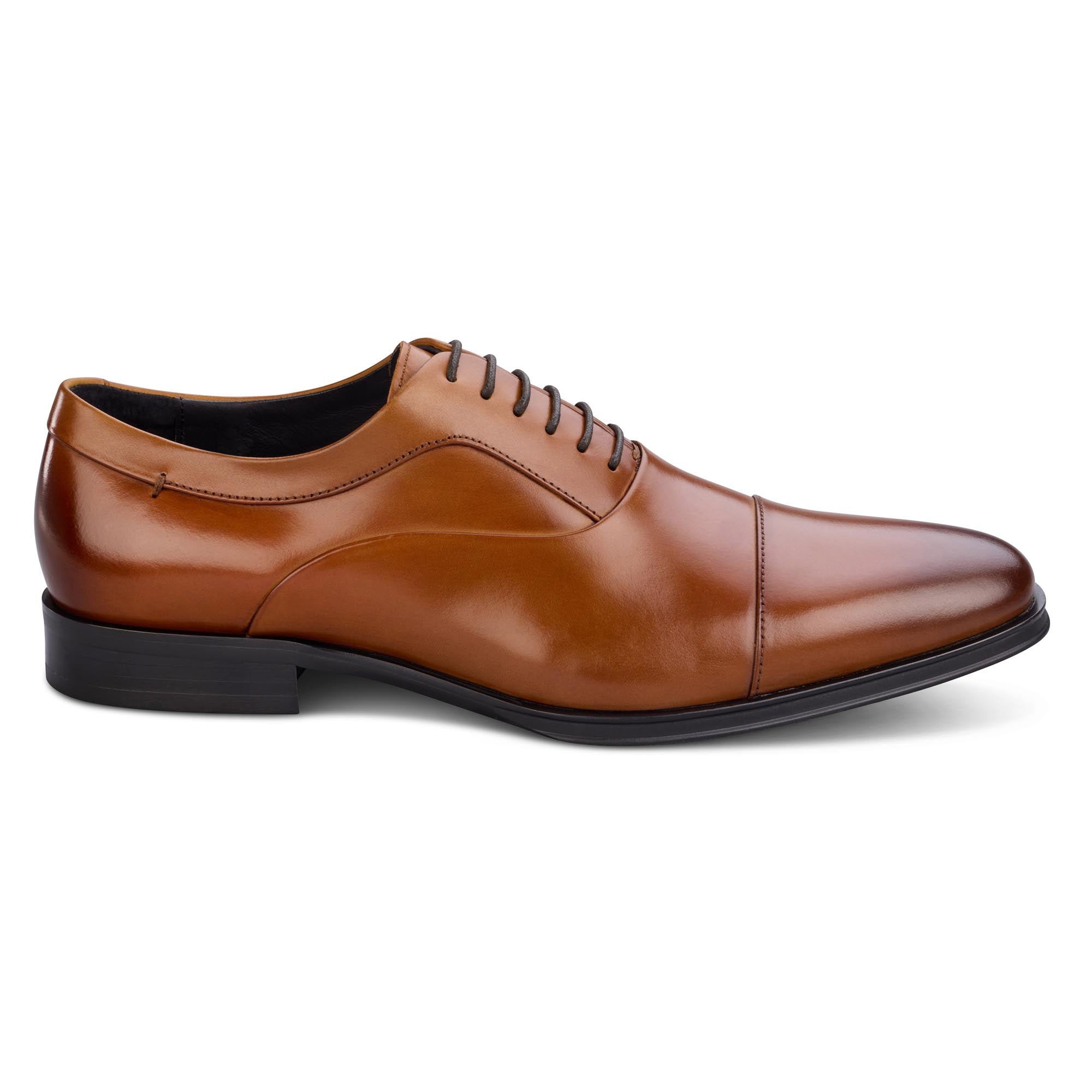
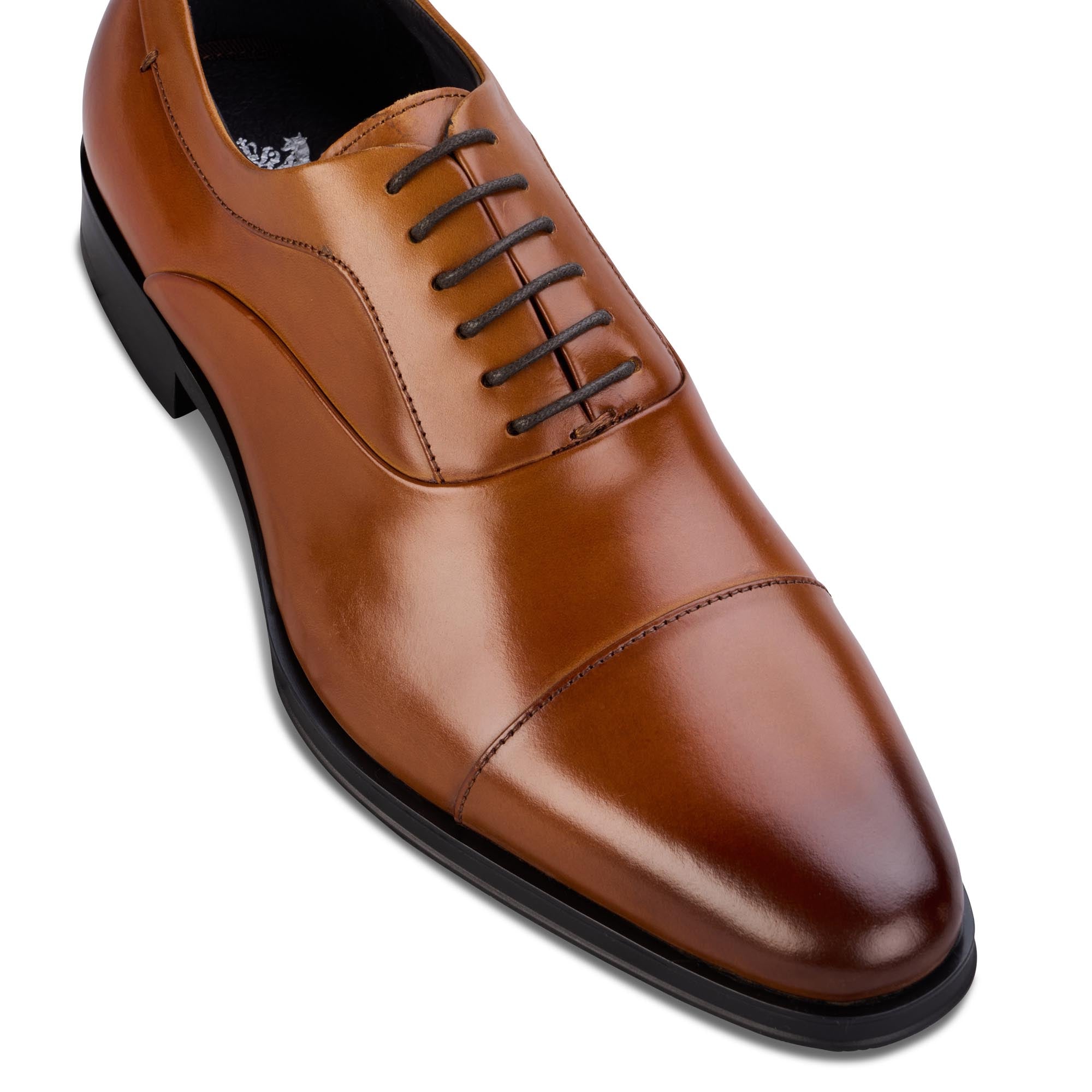
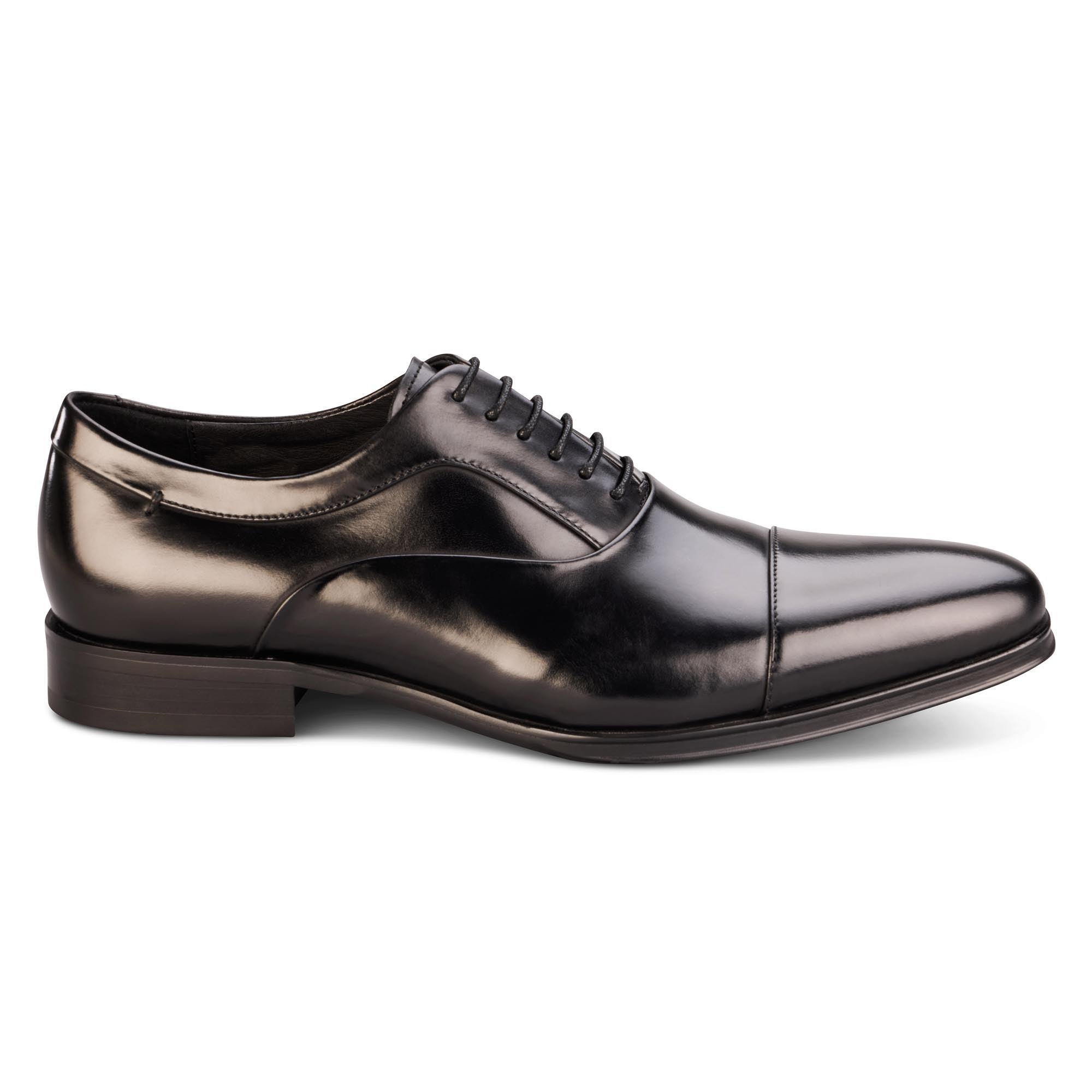
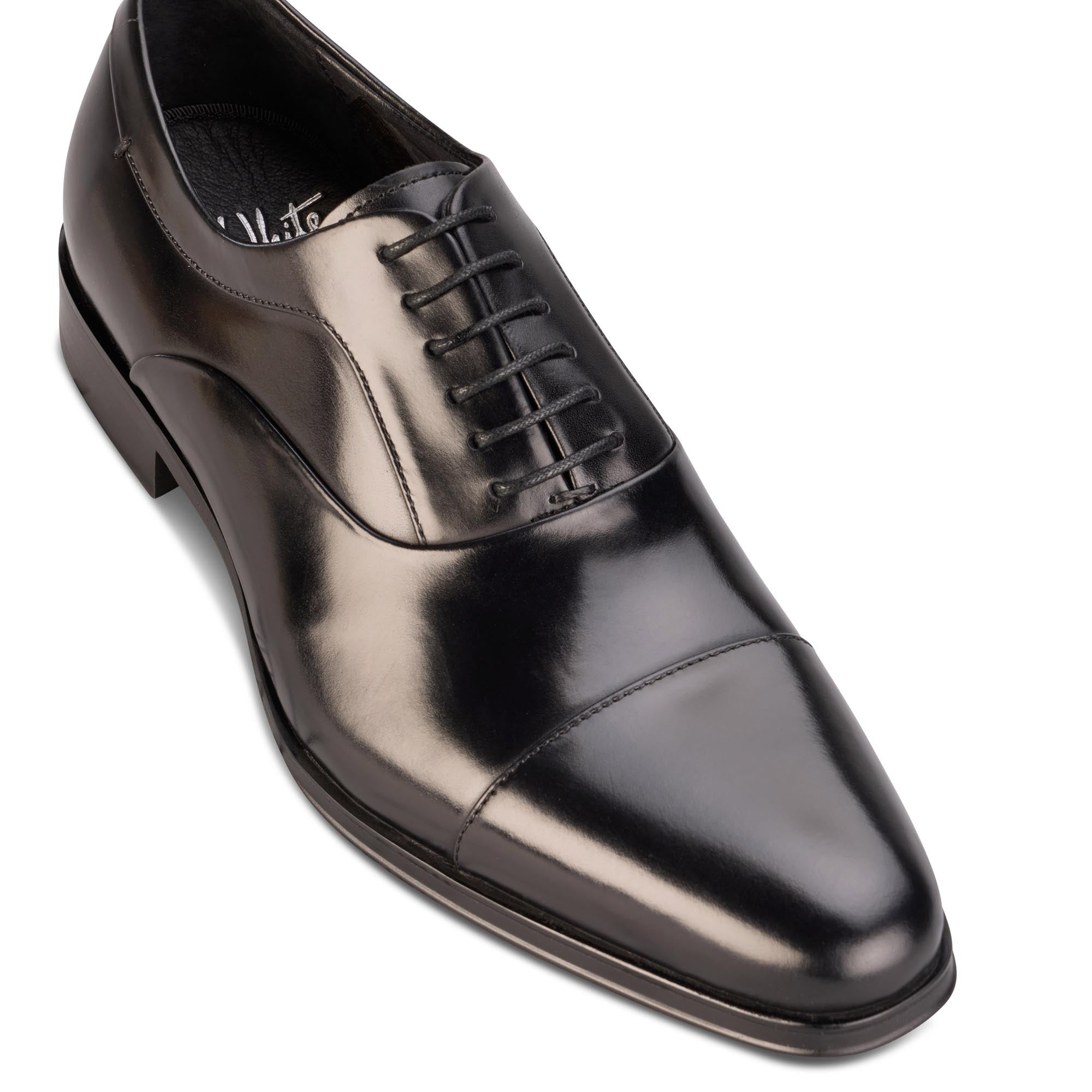
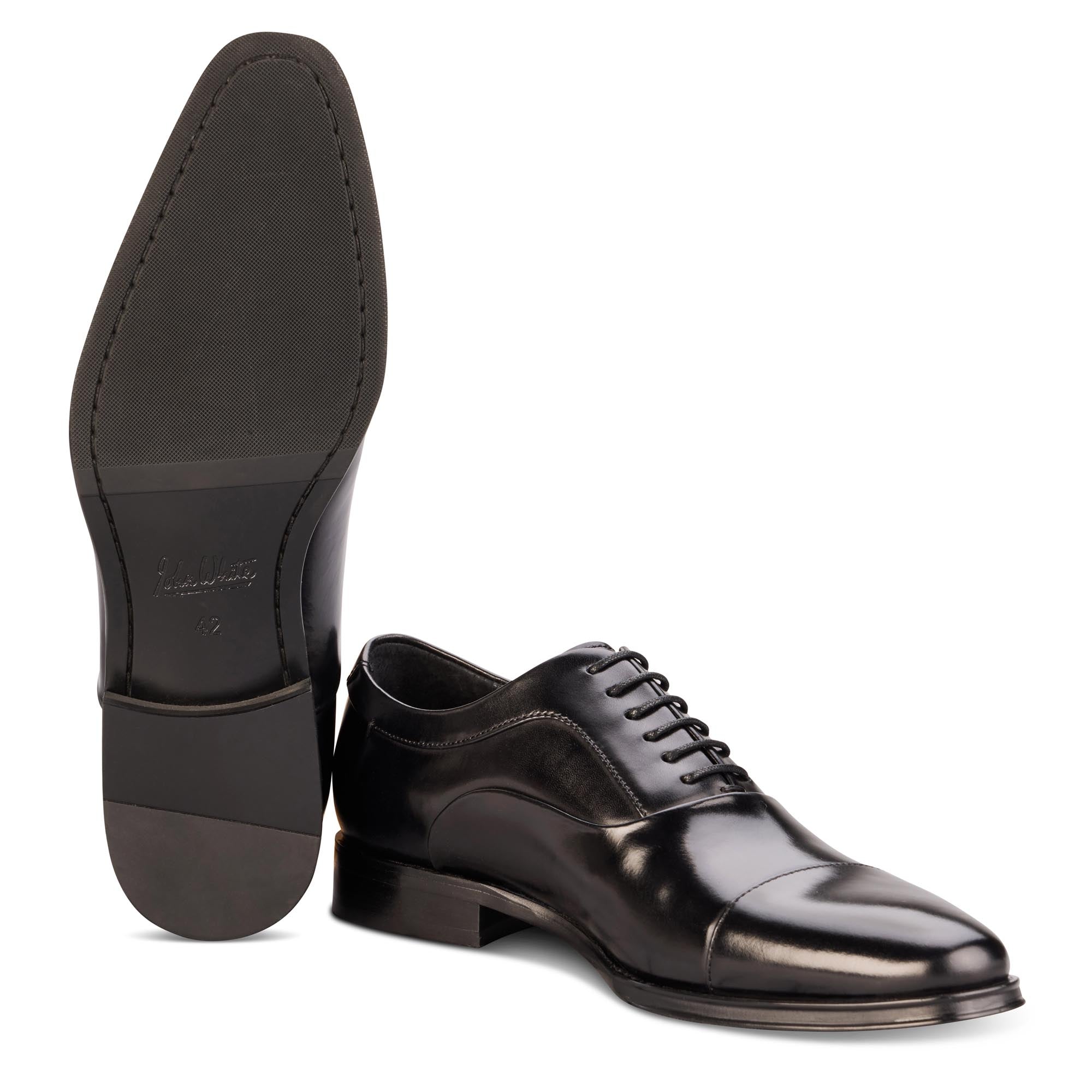
The Oxford is a closed-lacing shoe, defined by its construction: the quarters — the rear panels from which the eyelets extend — are stitched beneath the vamp, the front section of the upper. When laced, the quarters pull together cleanly, creating a tight, unbroken silhouette with minimal visible excess leather.
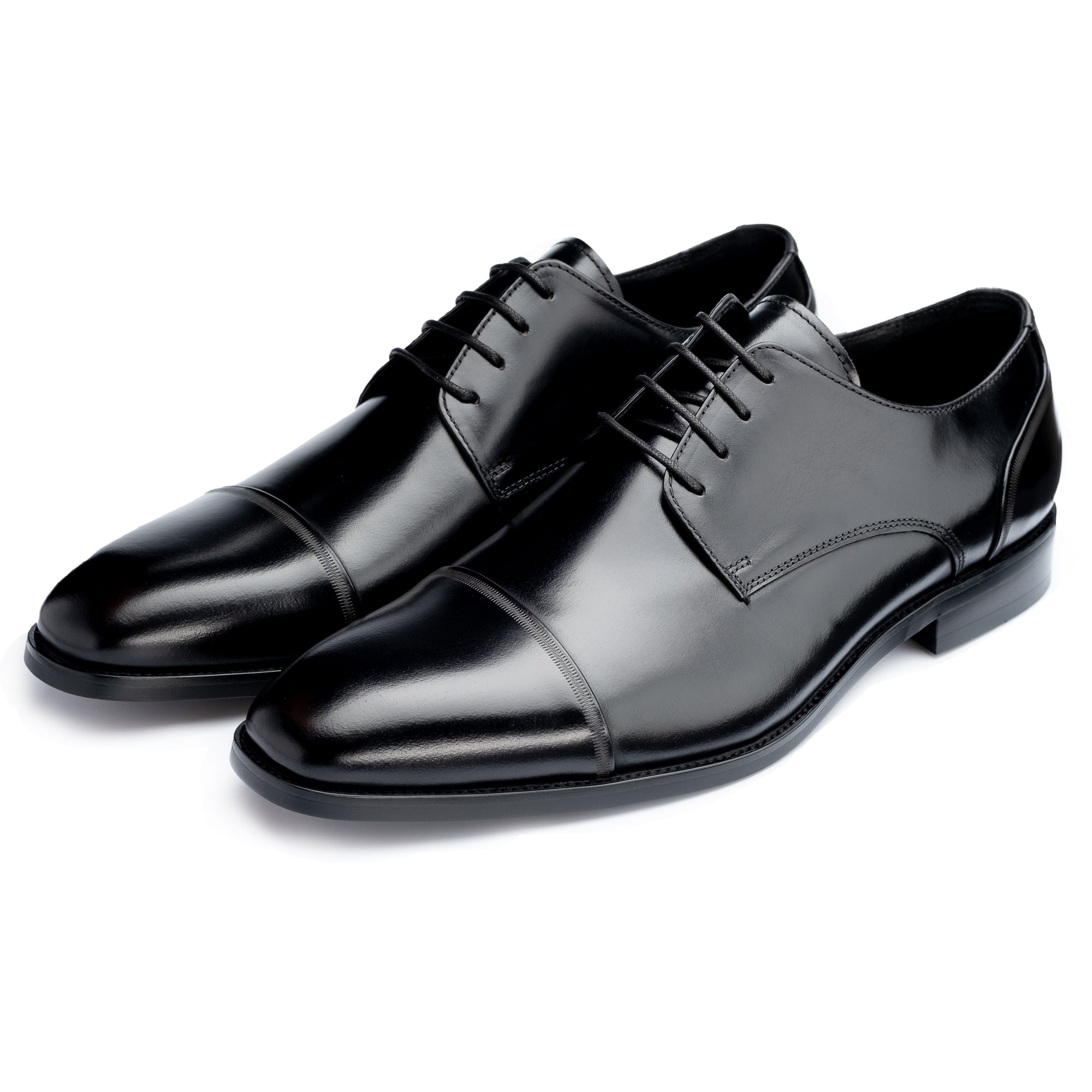
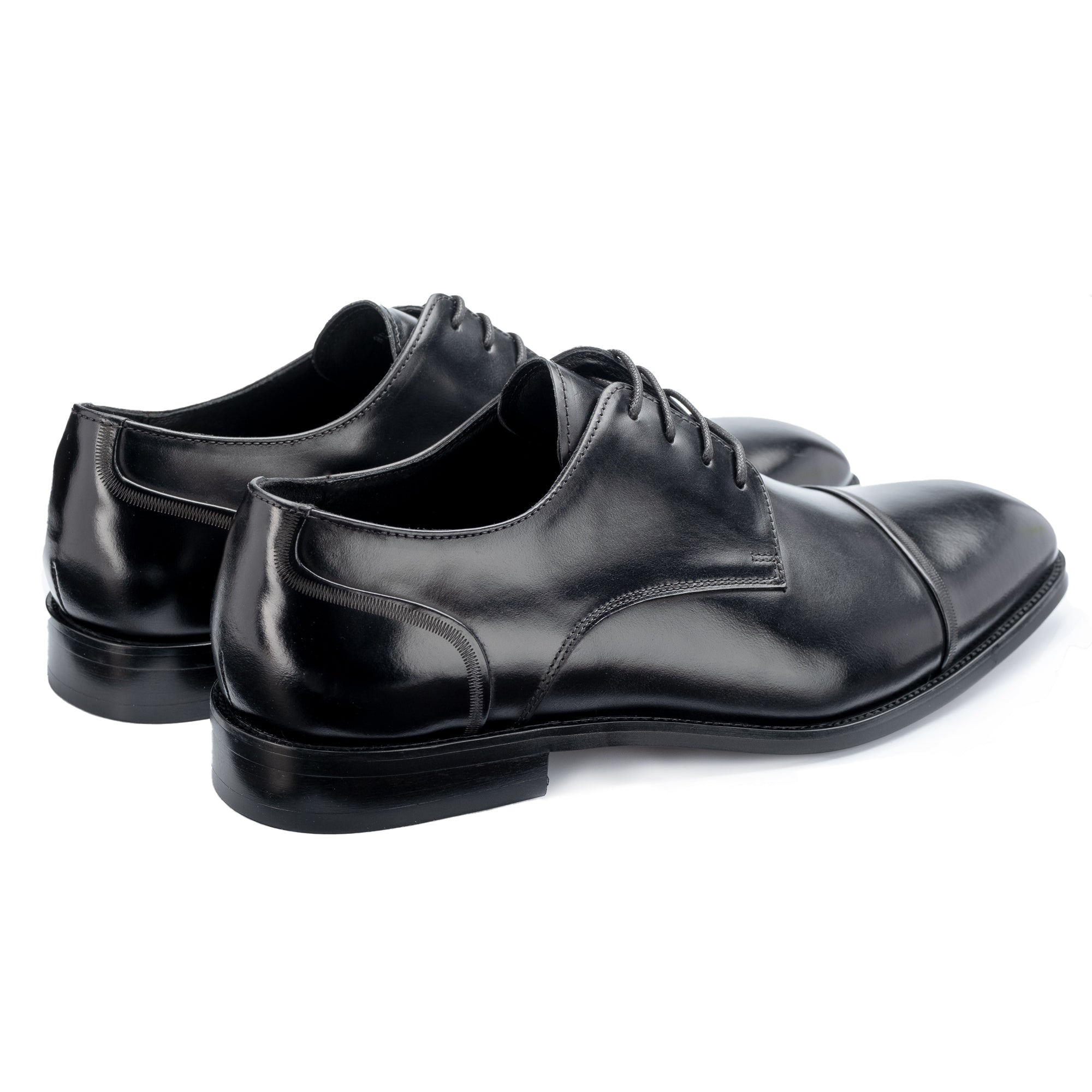
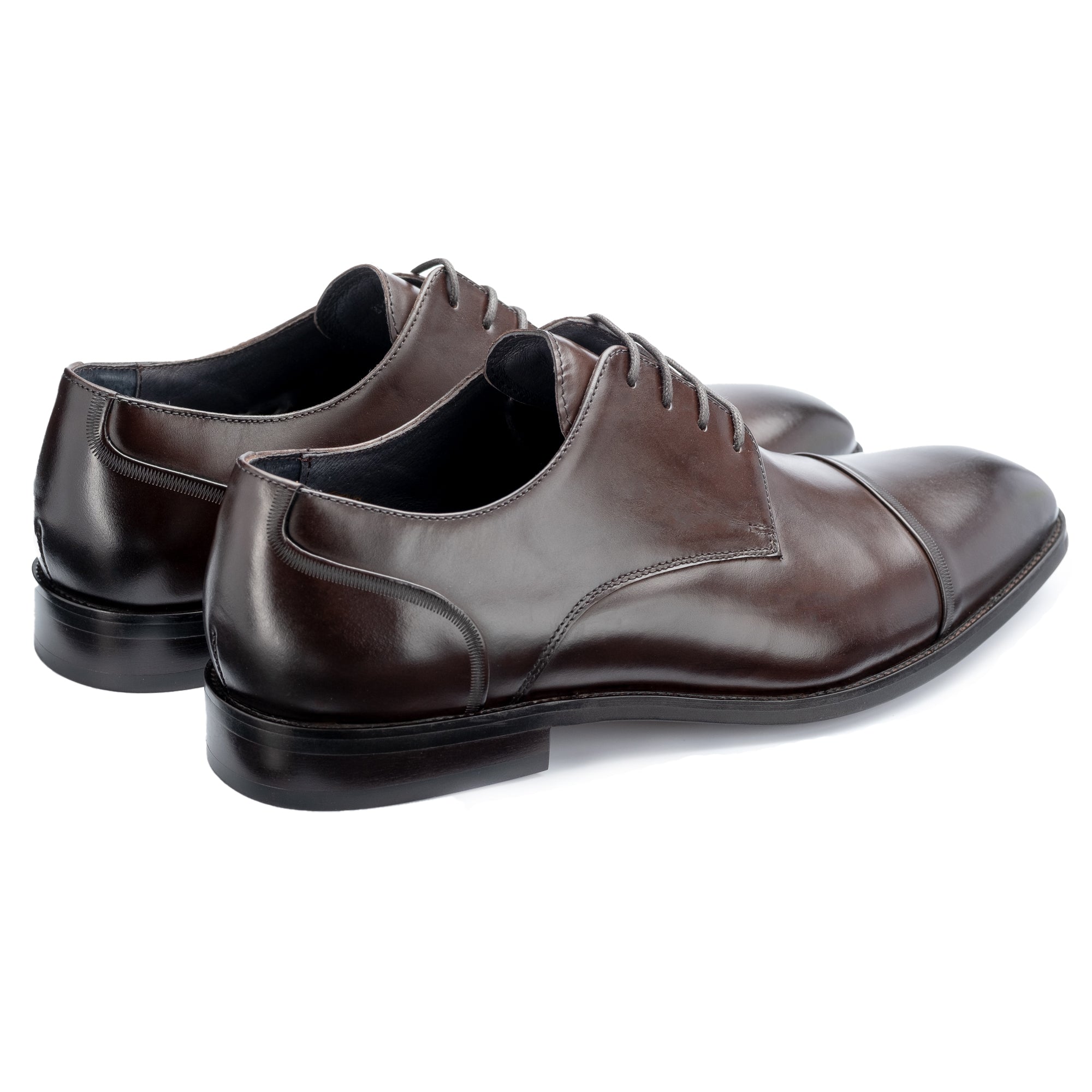
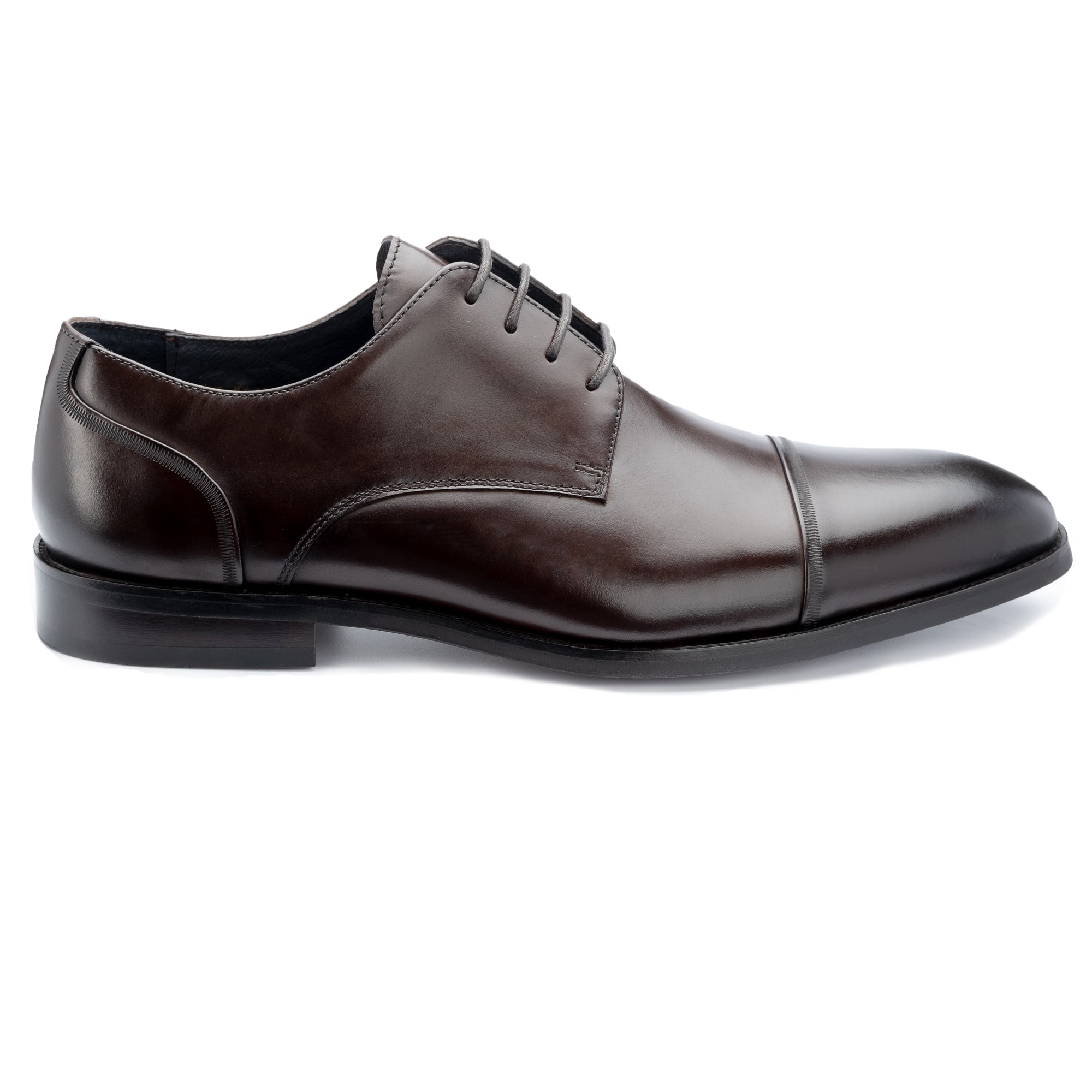
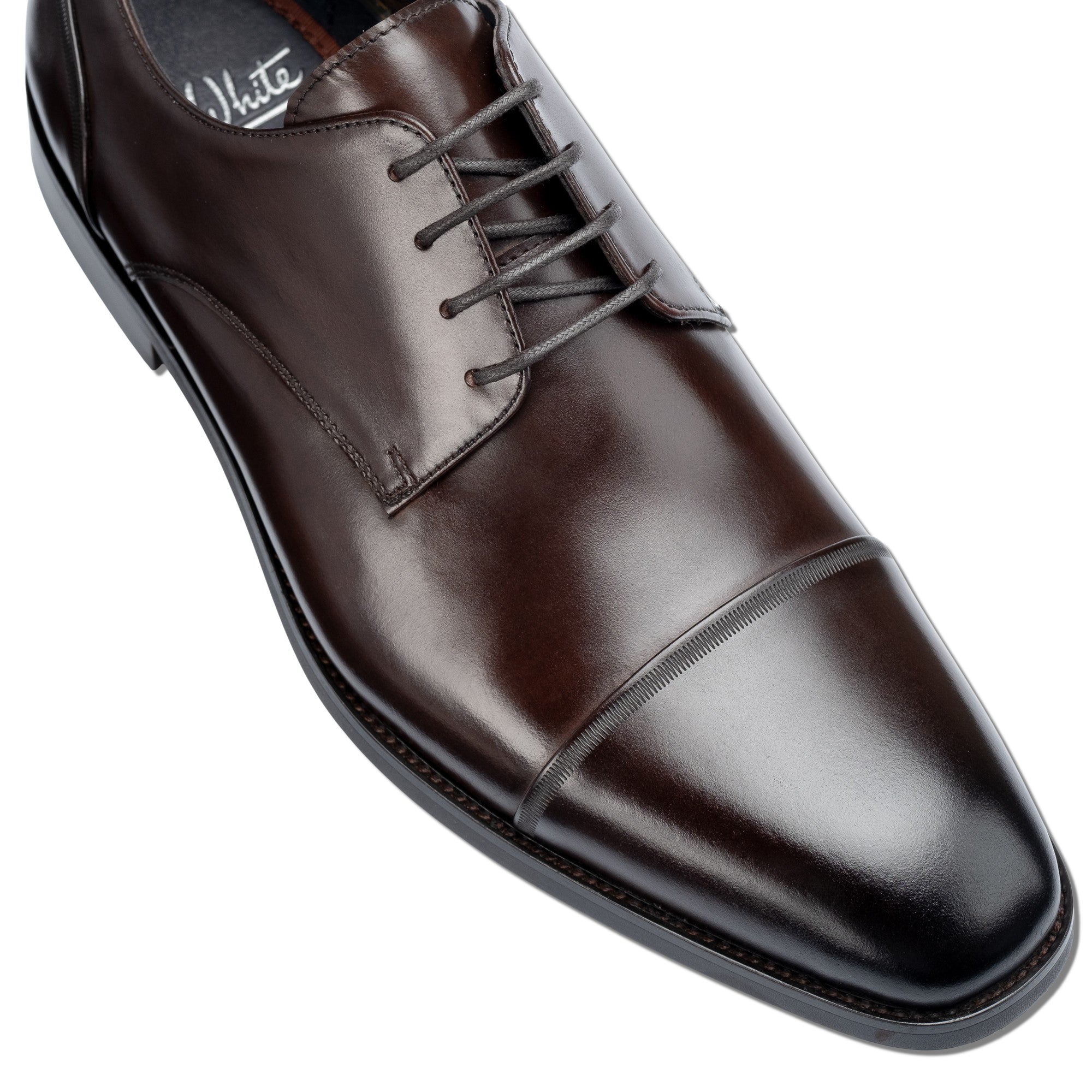
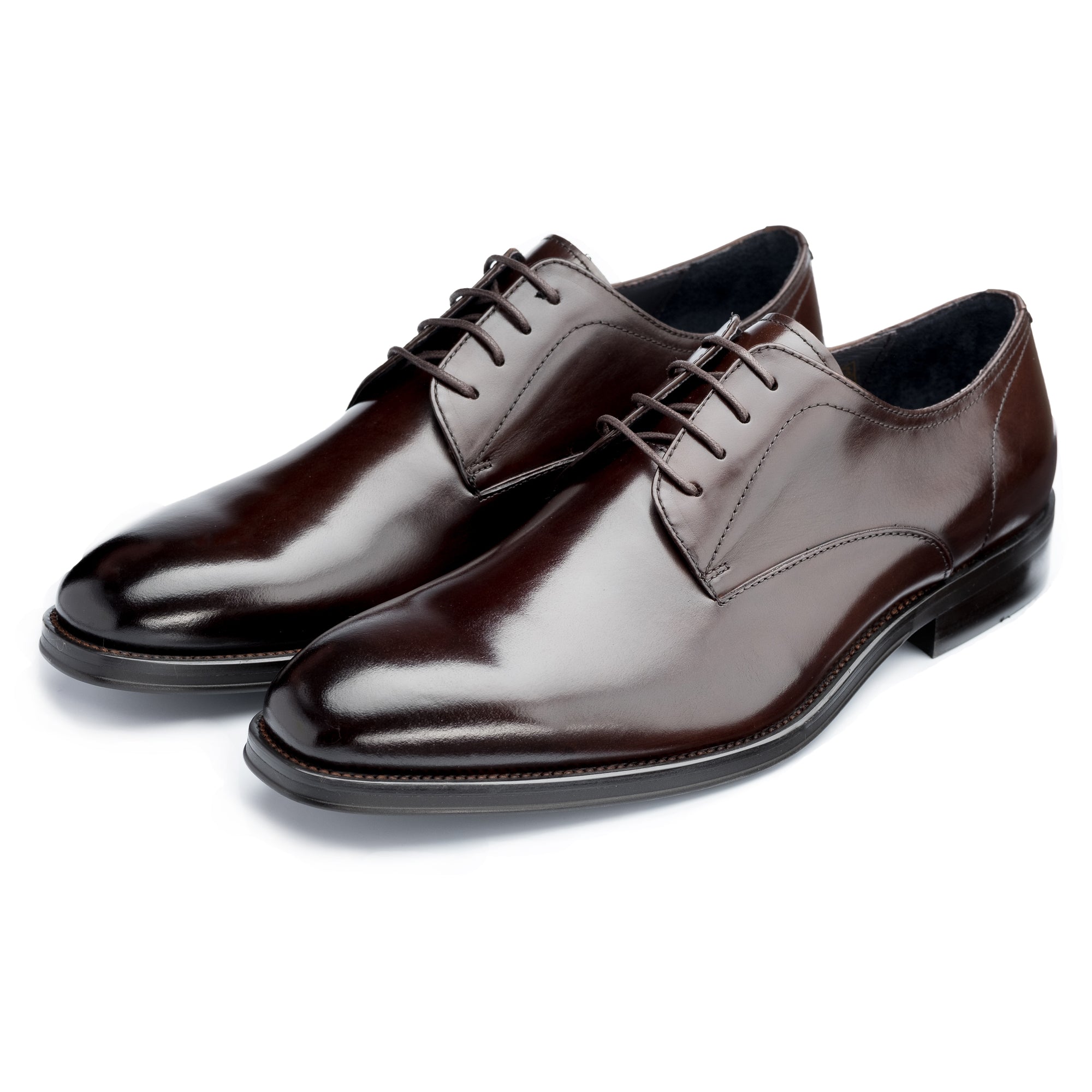
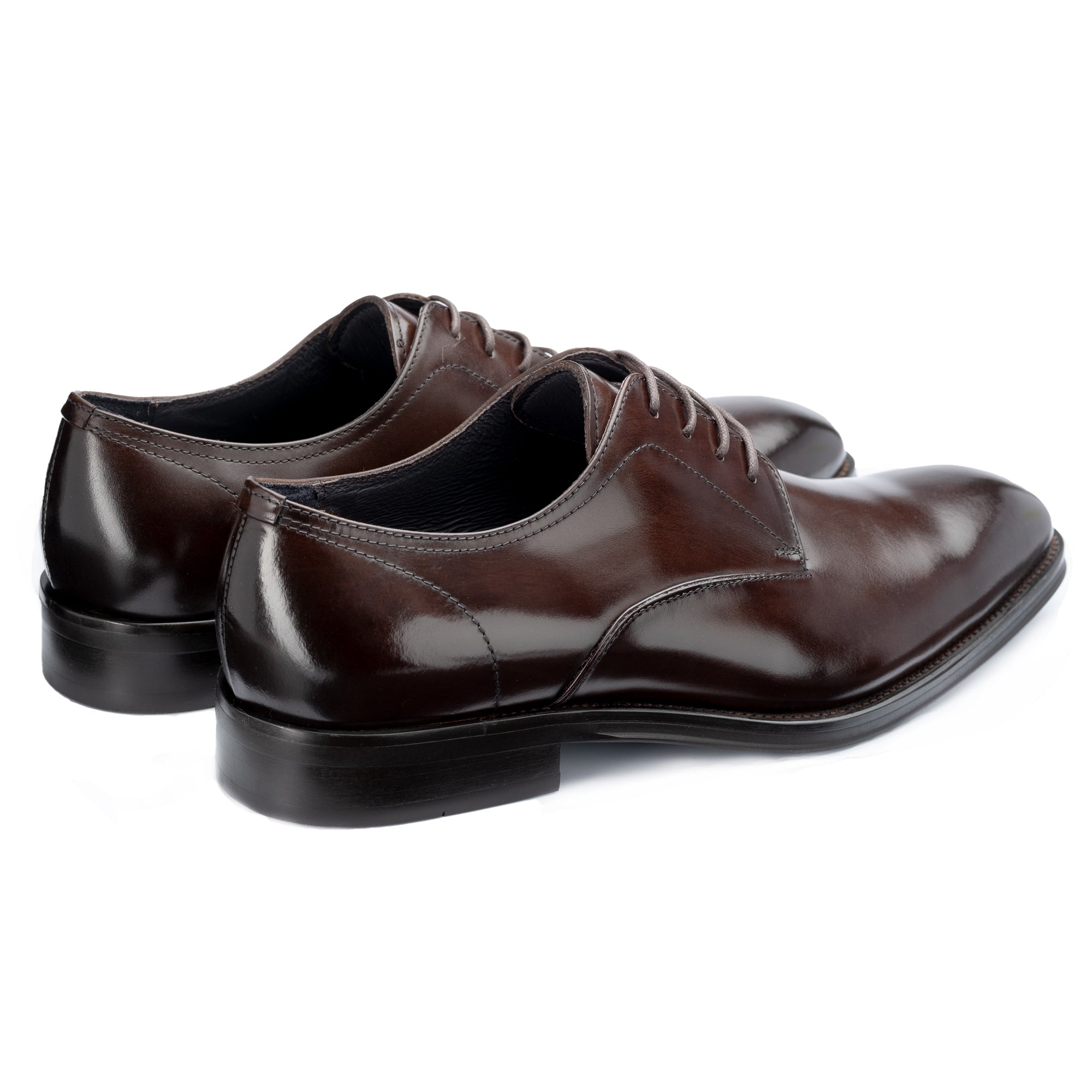
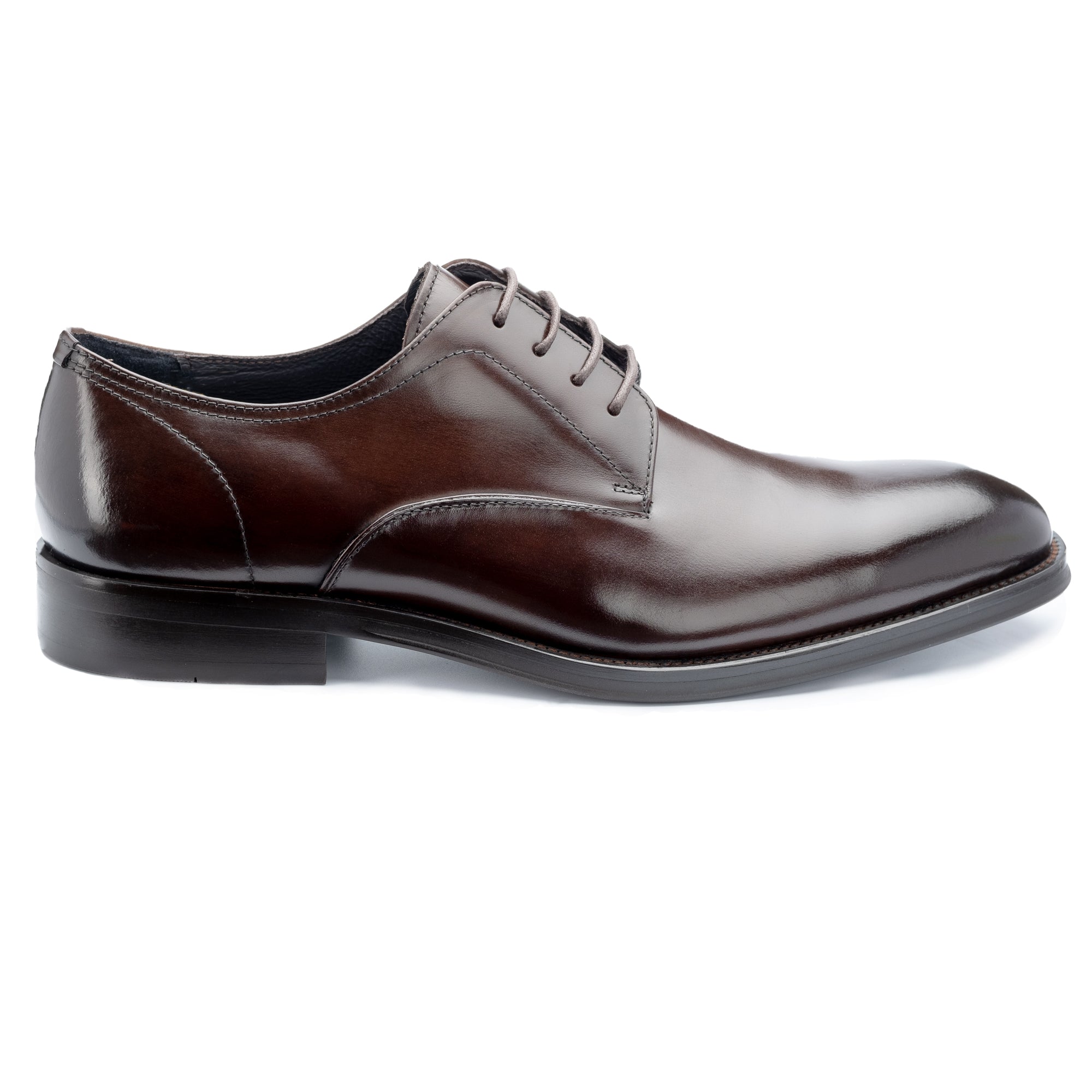
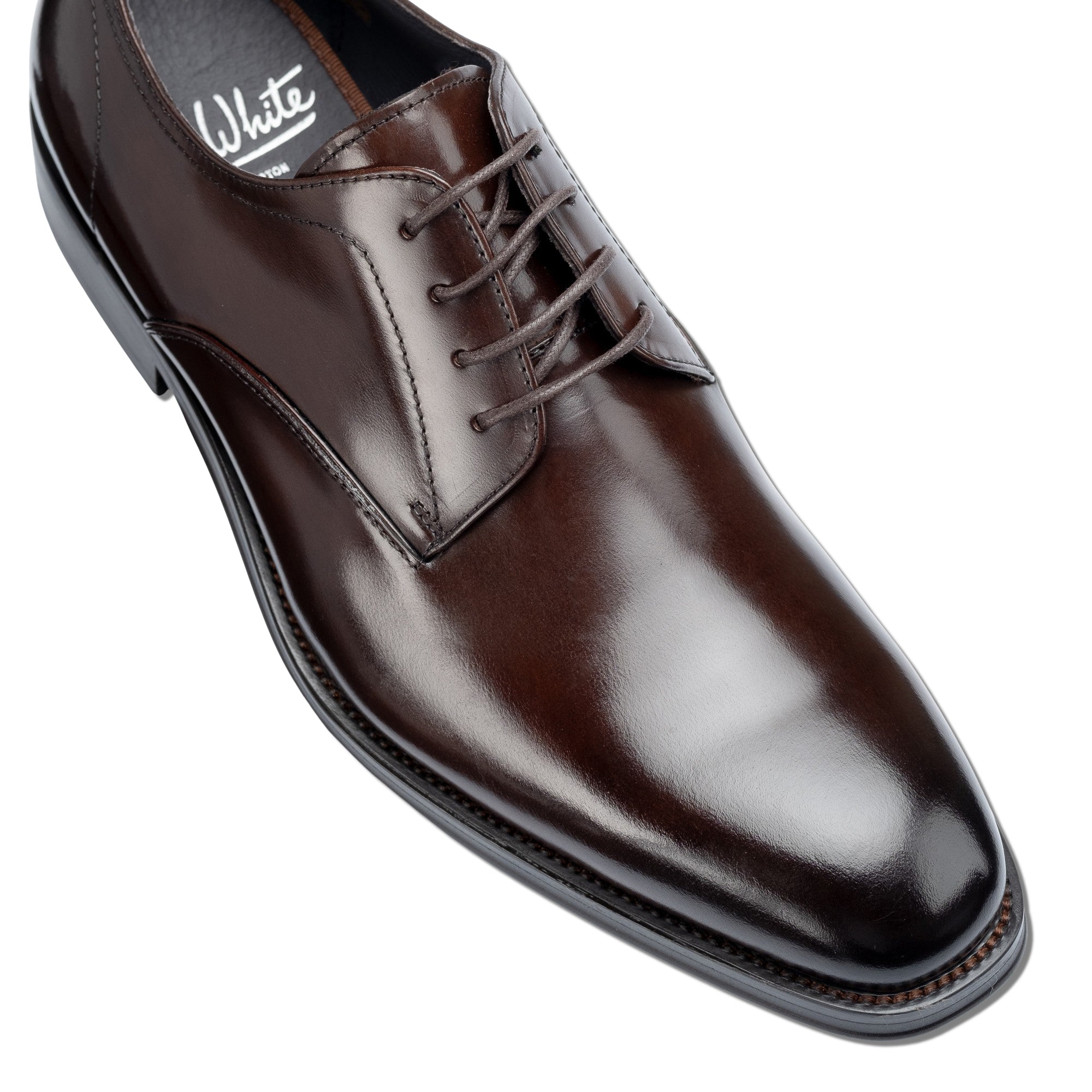
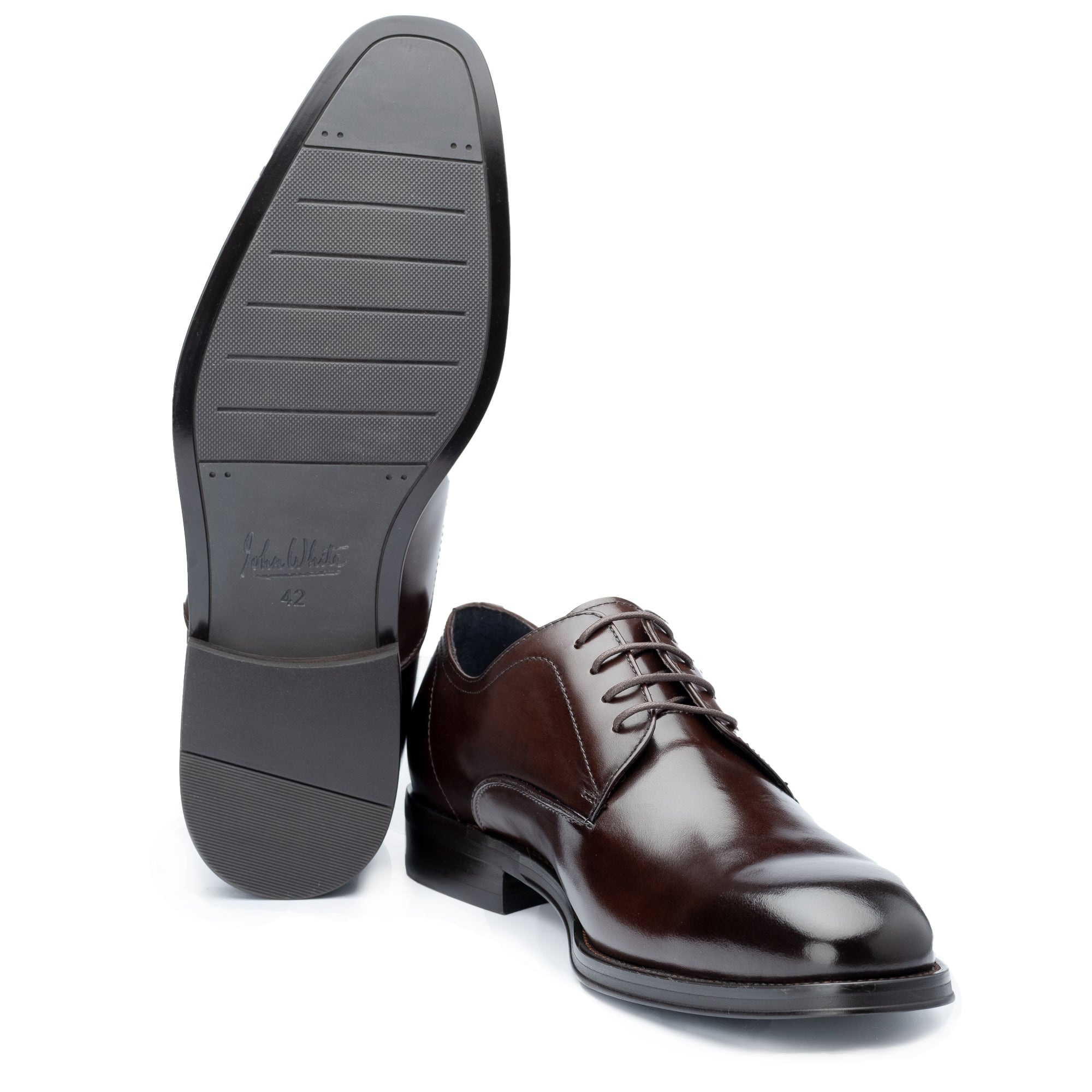
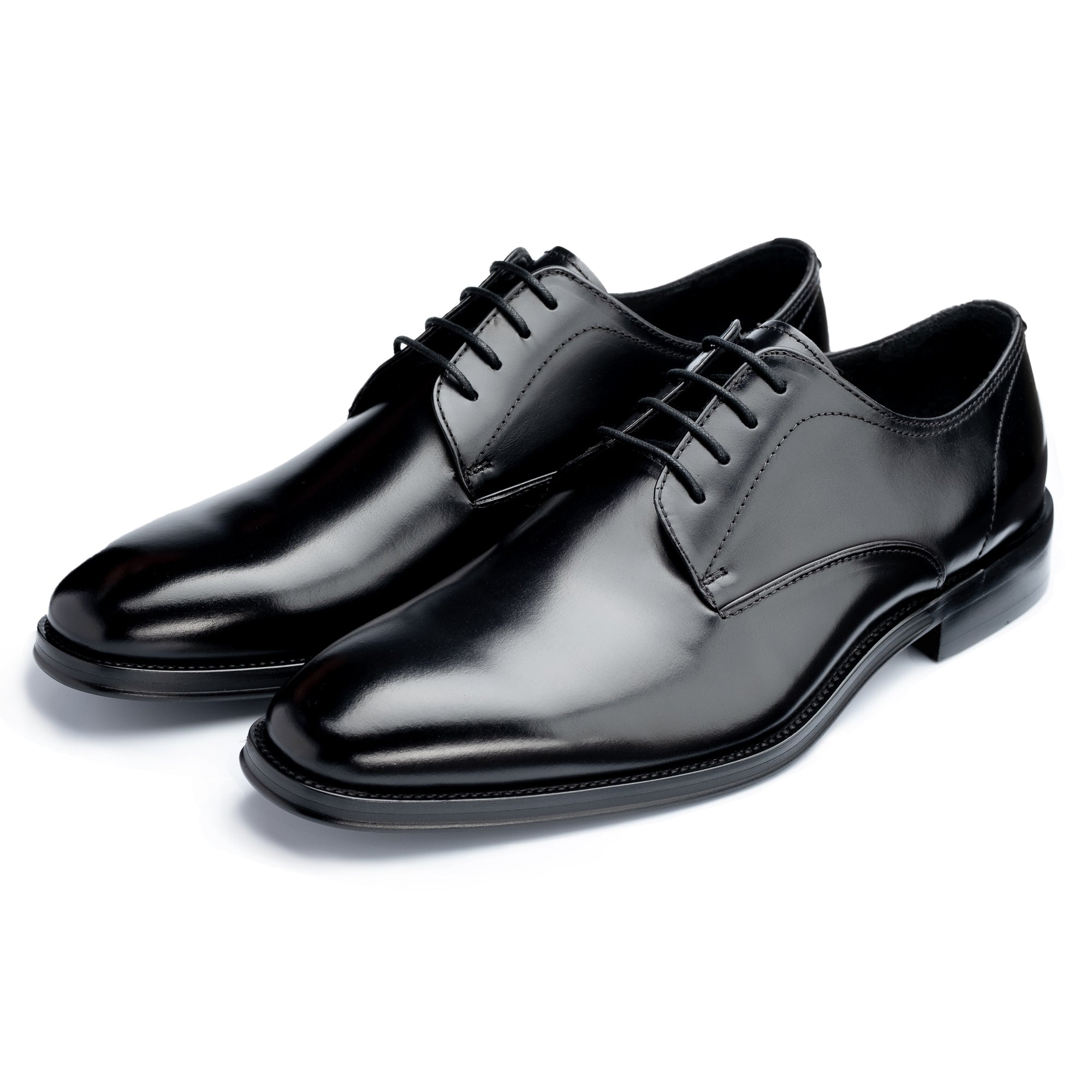
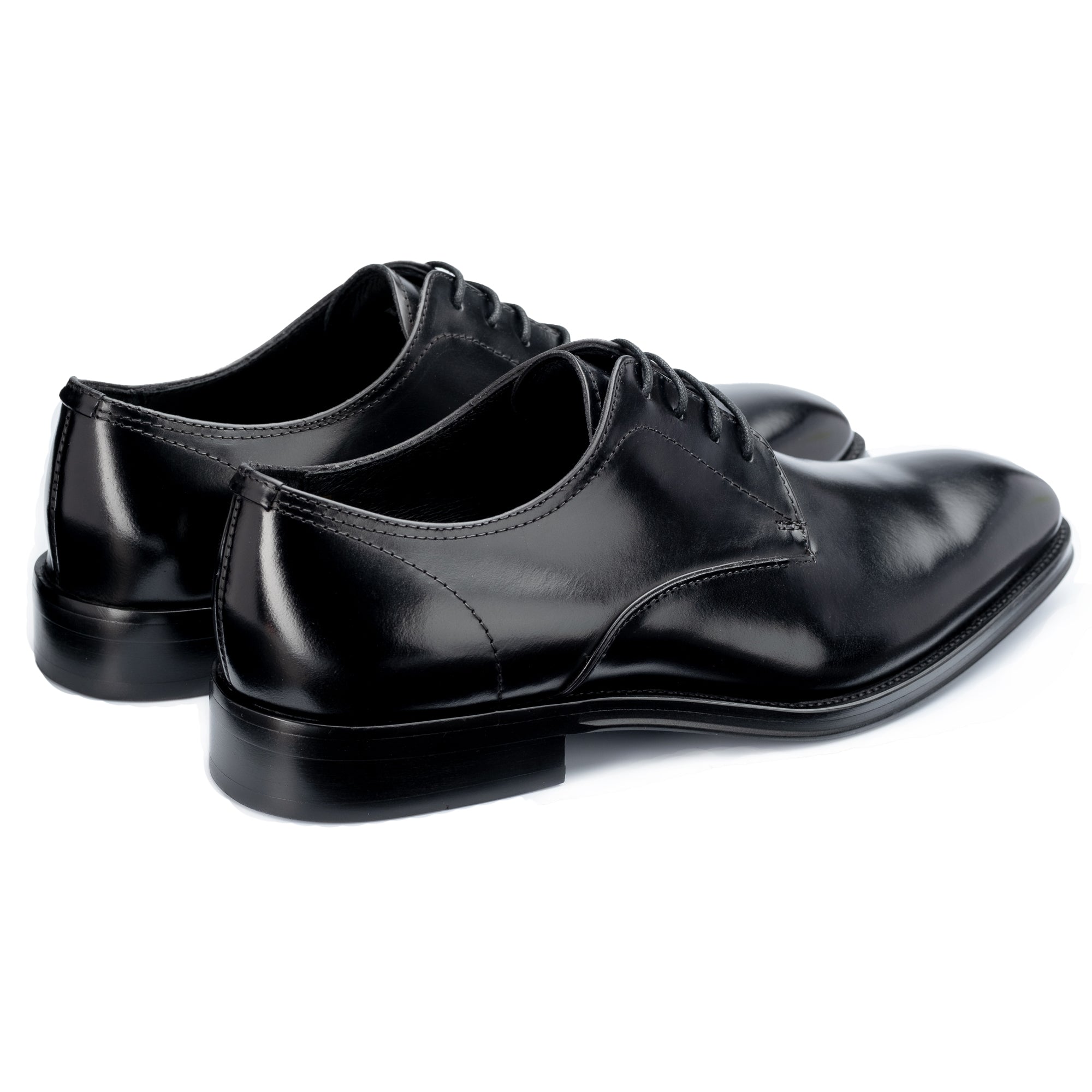
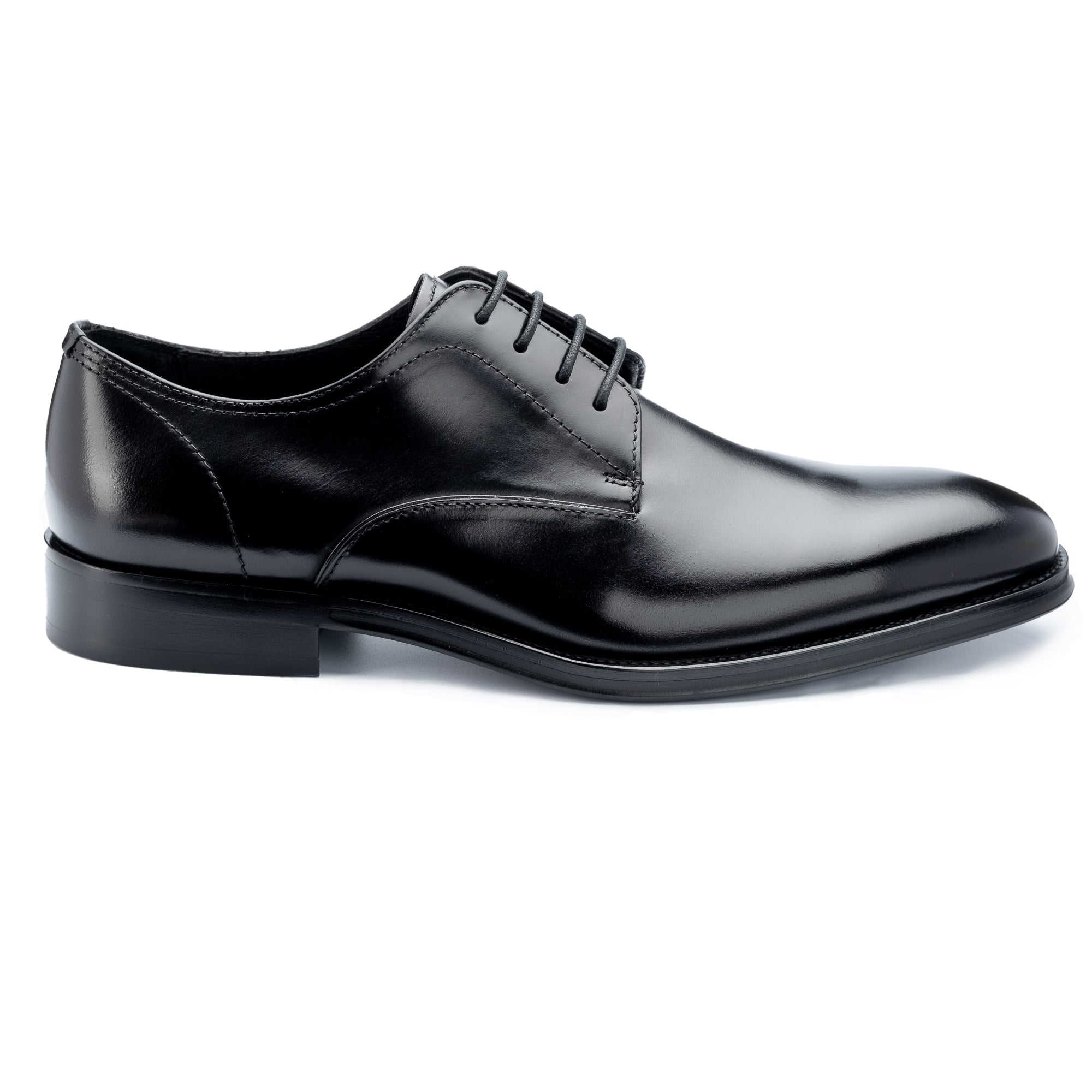
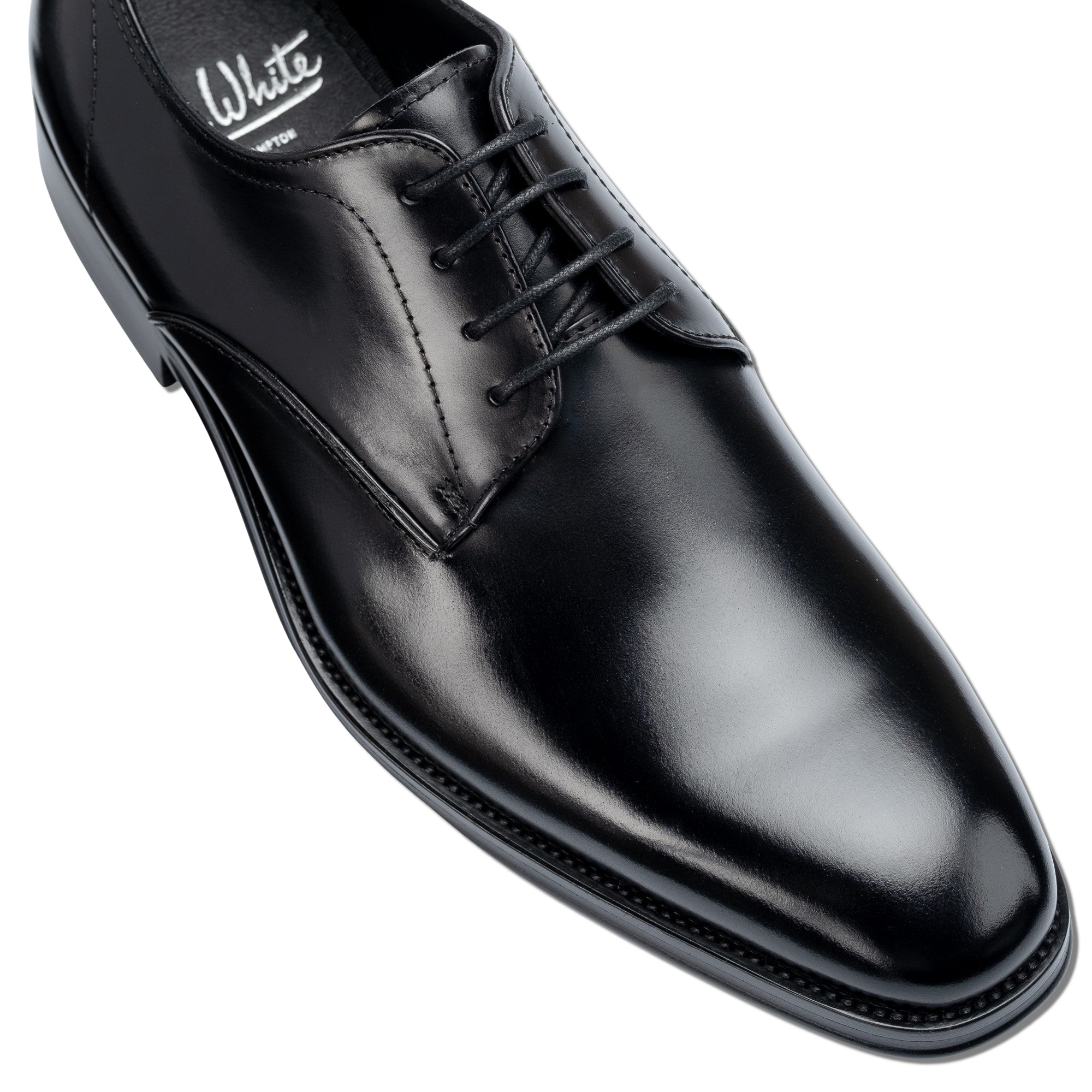
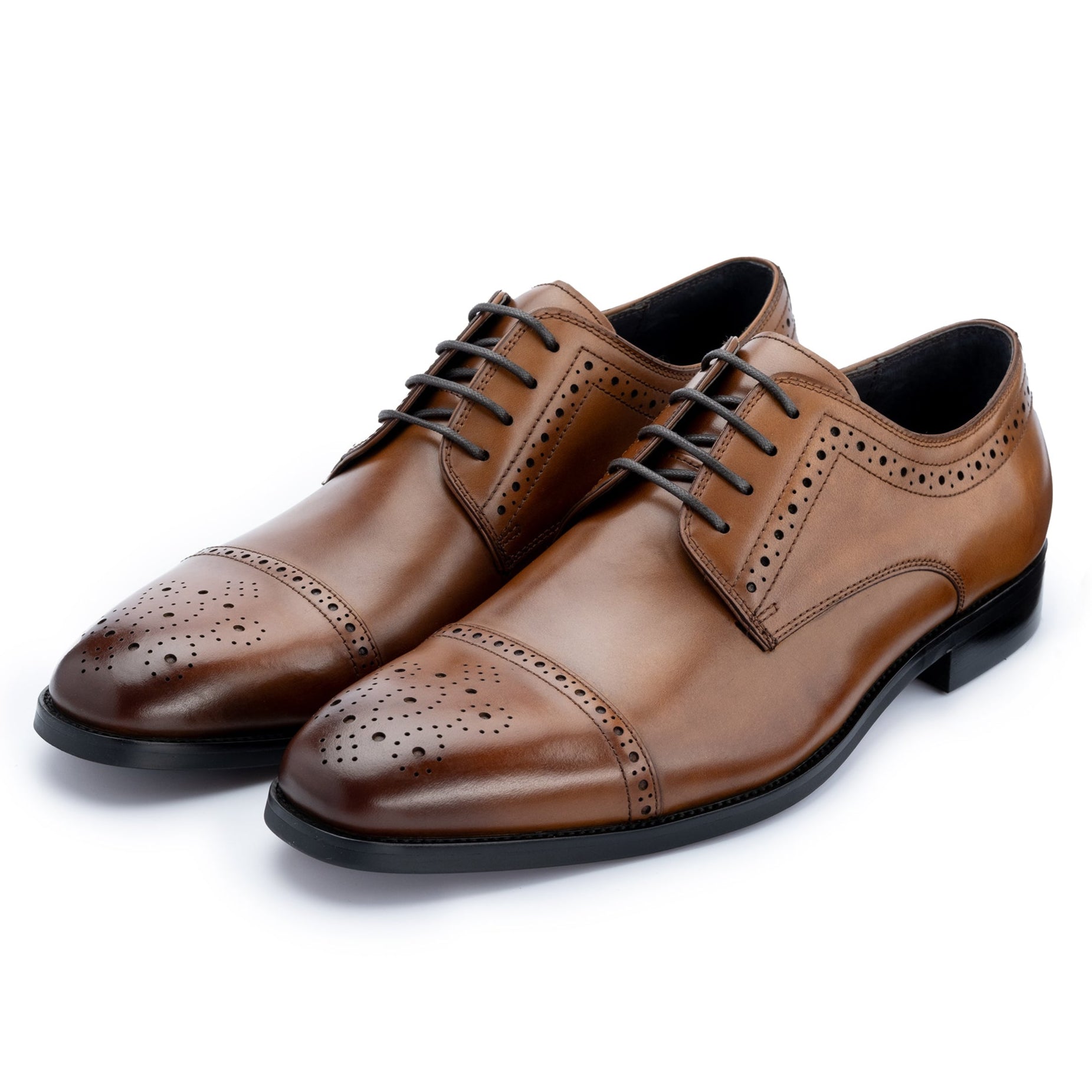
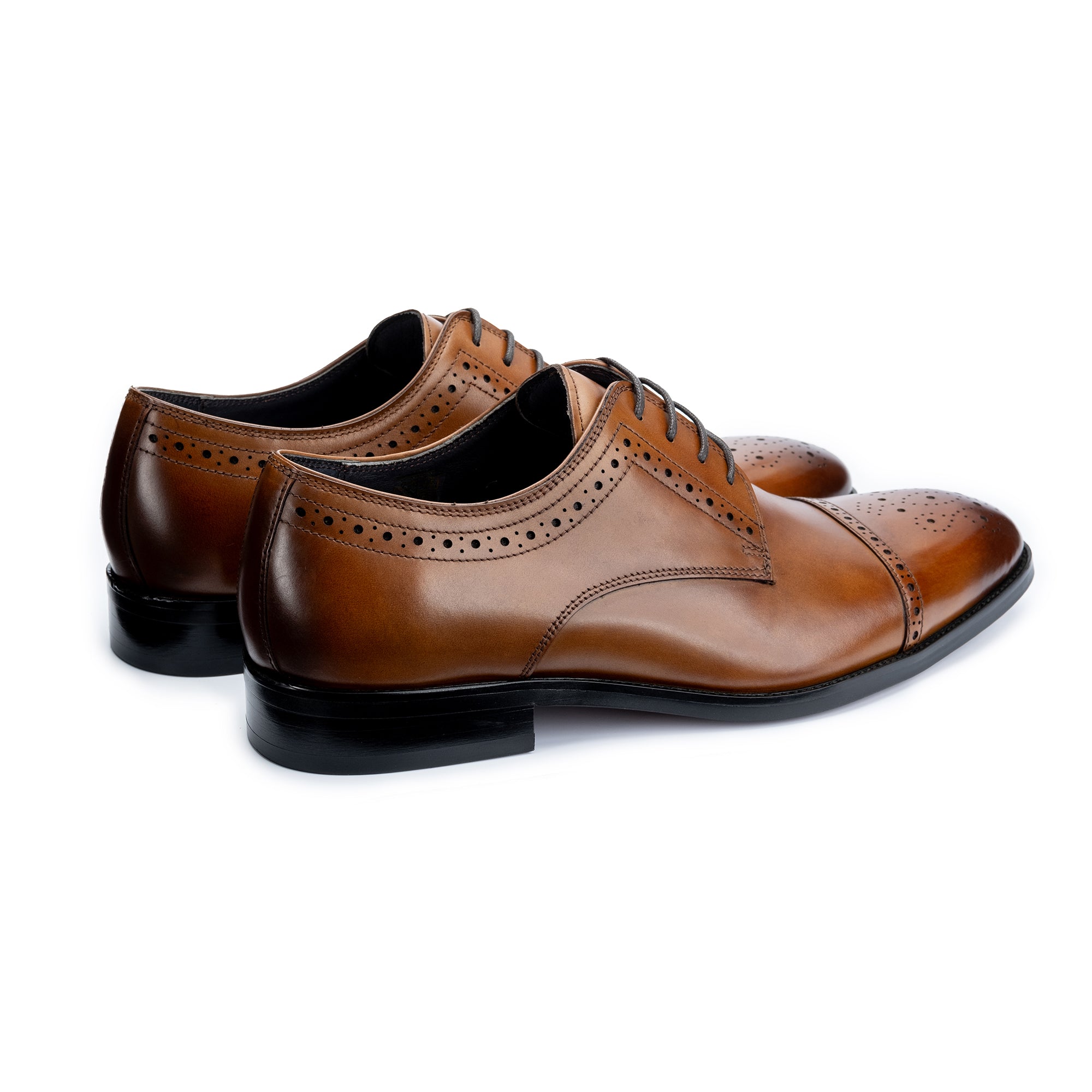
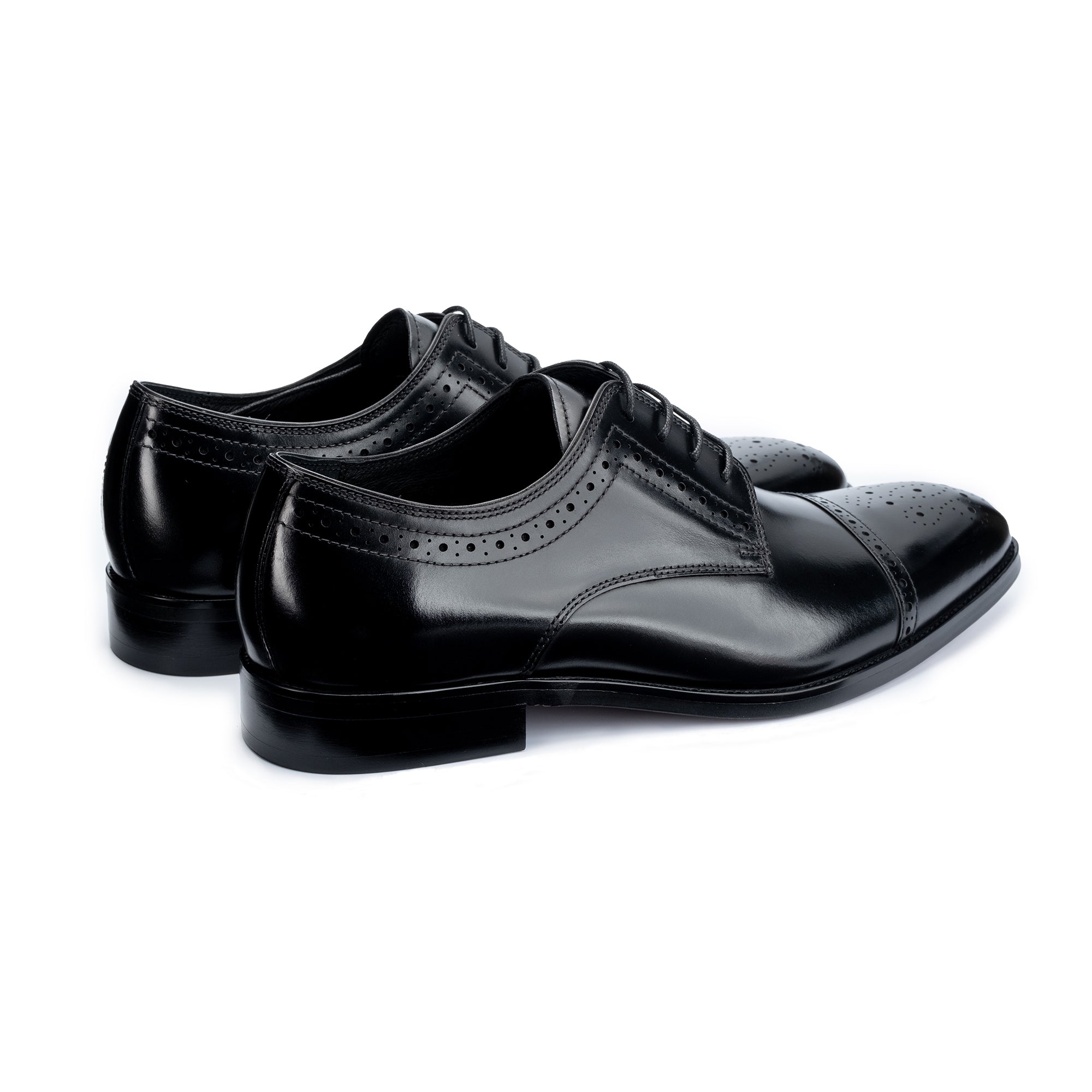
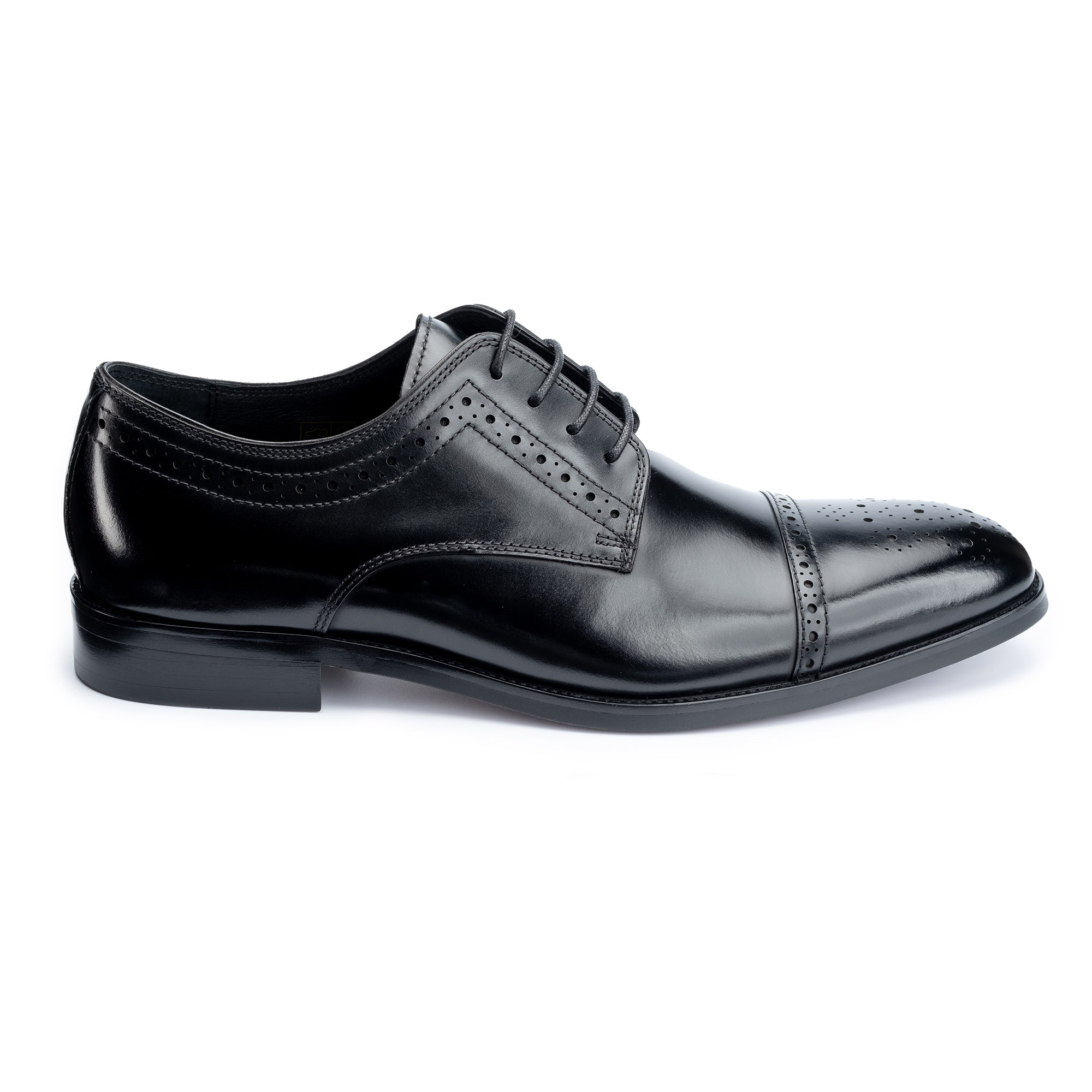
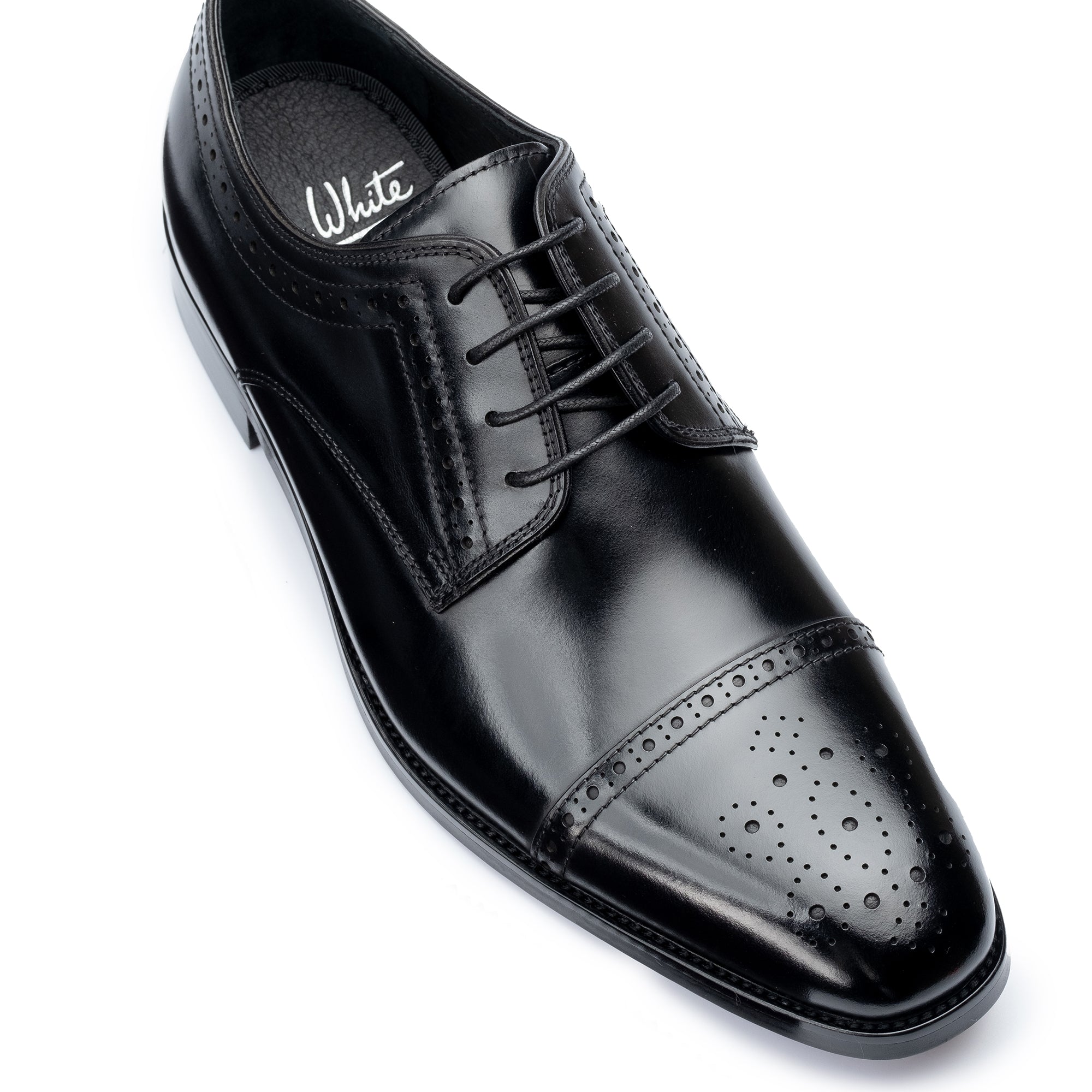
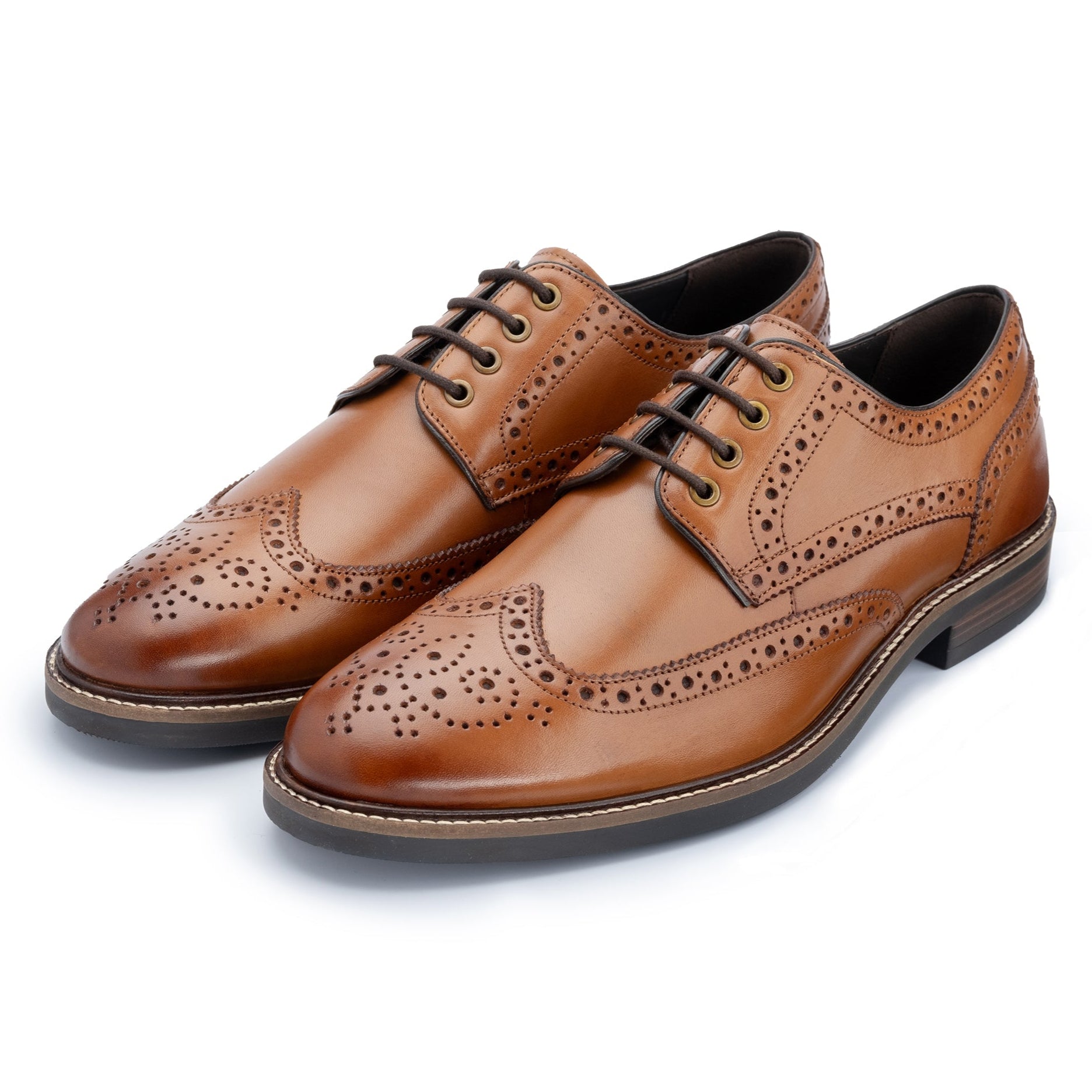
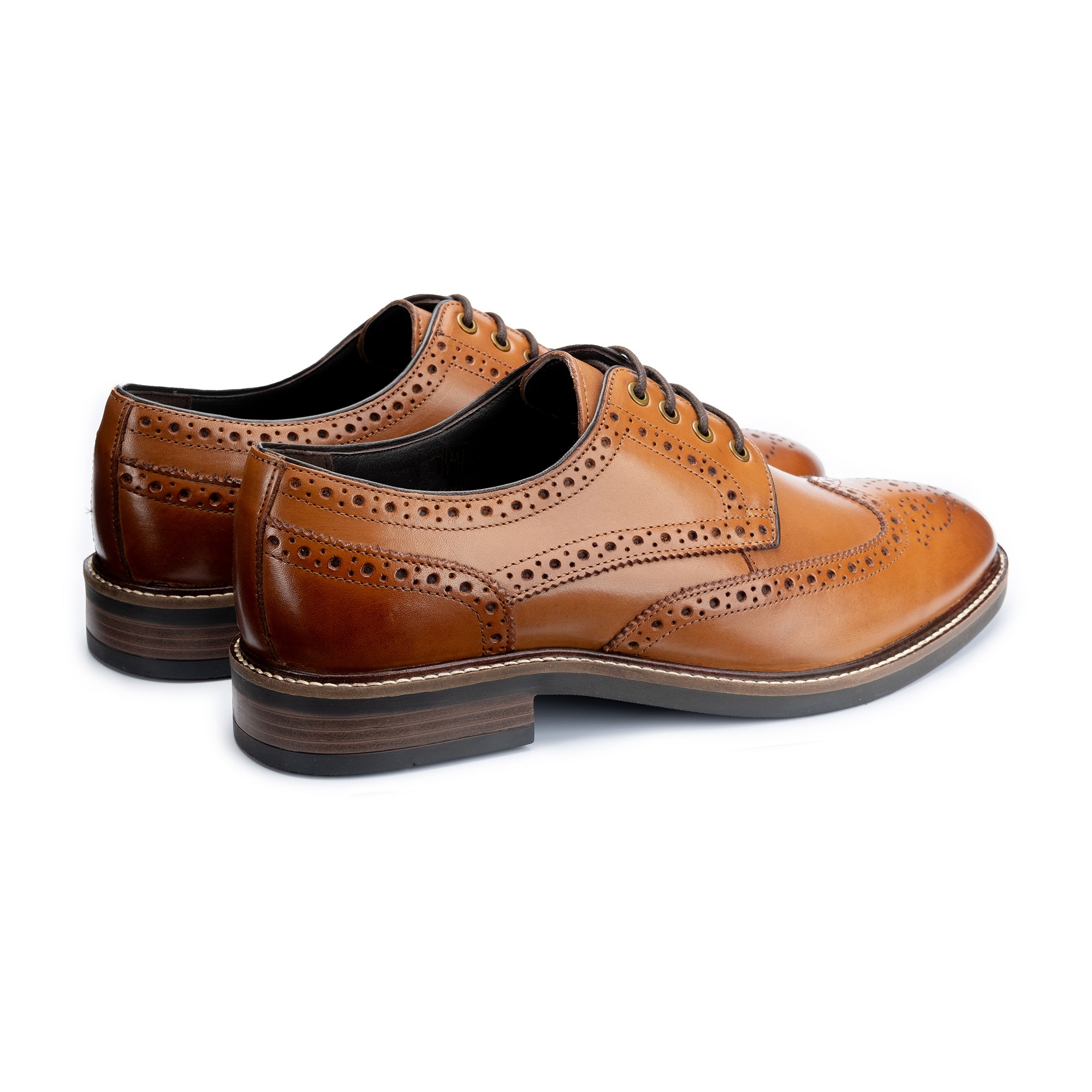
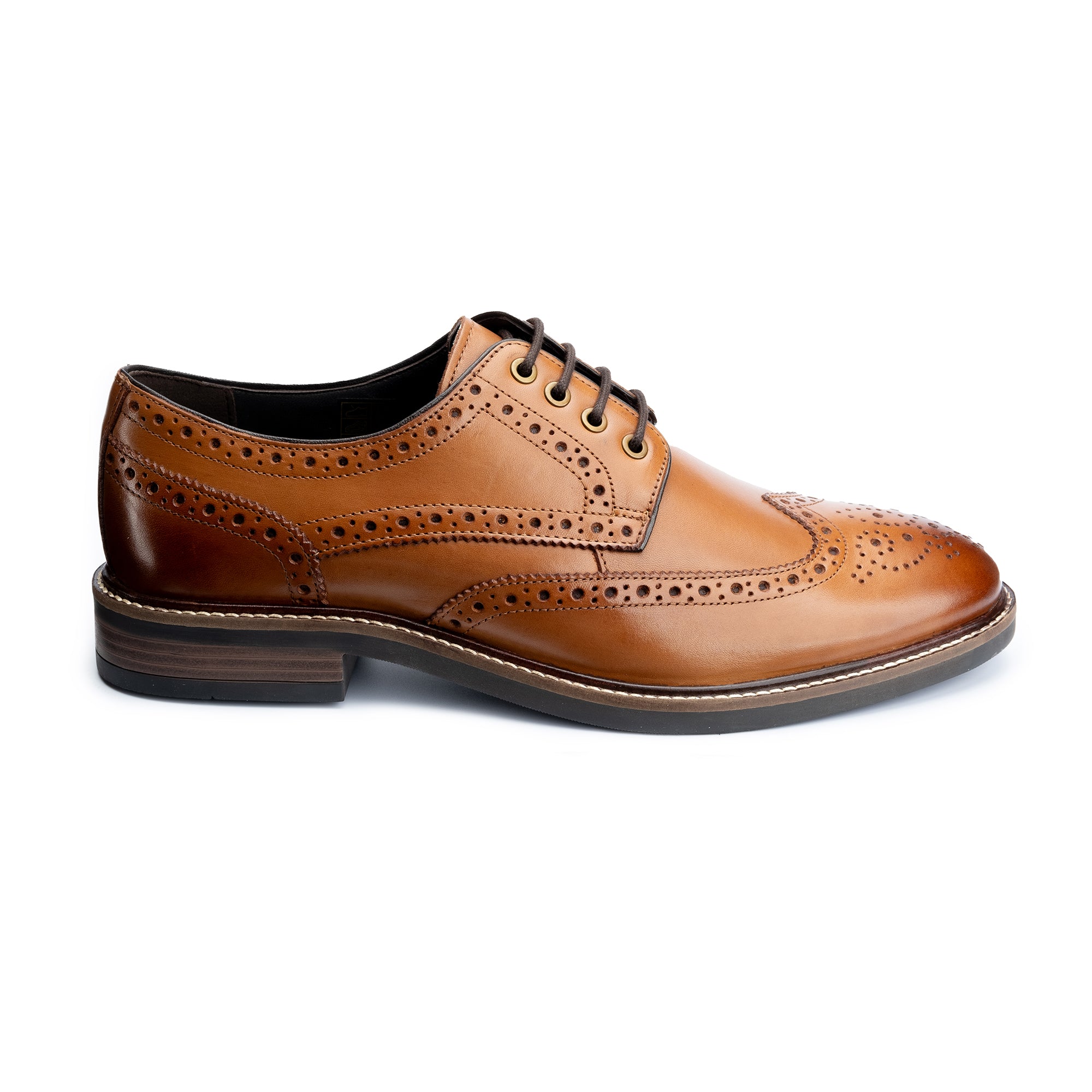
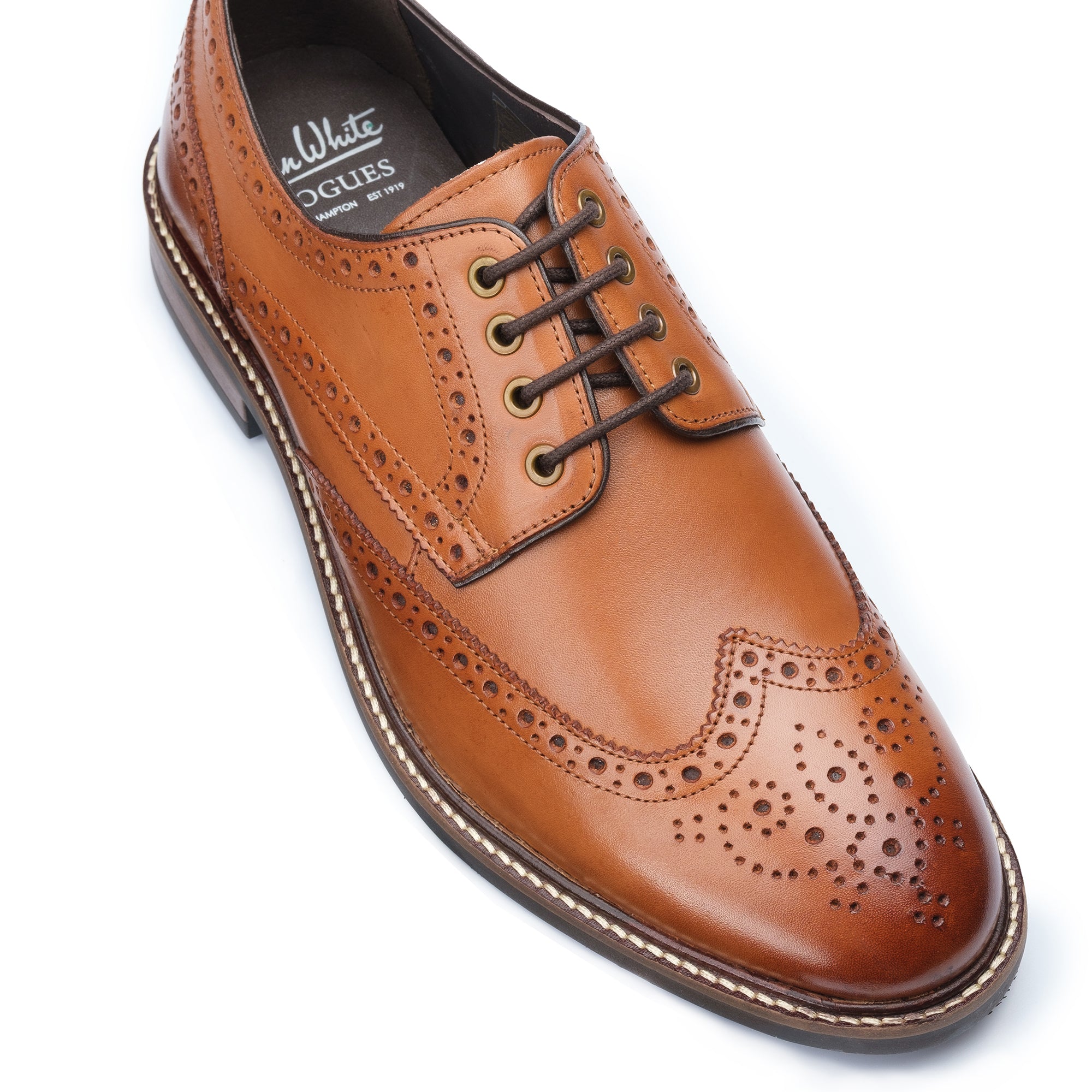
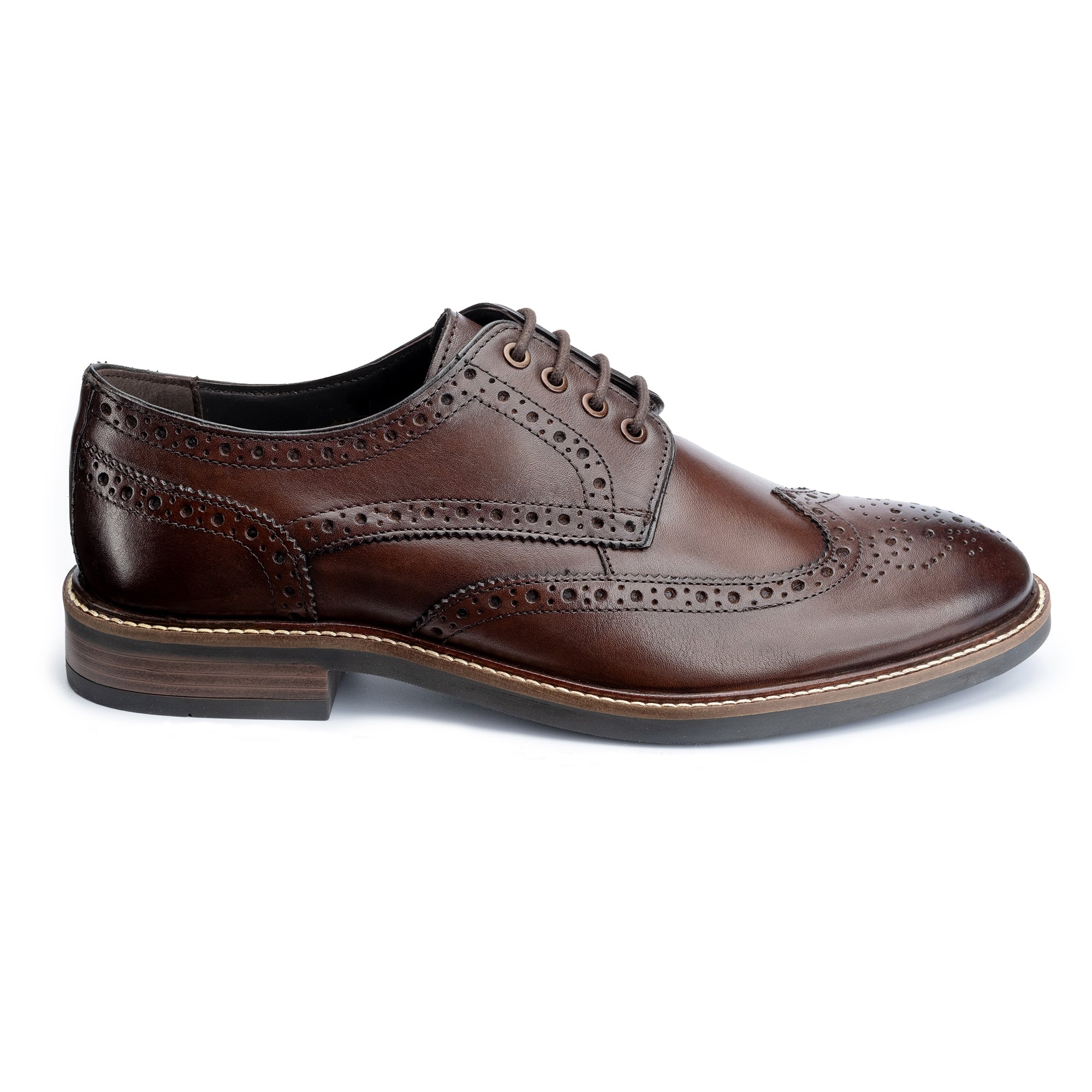
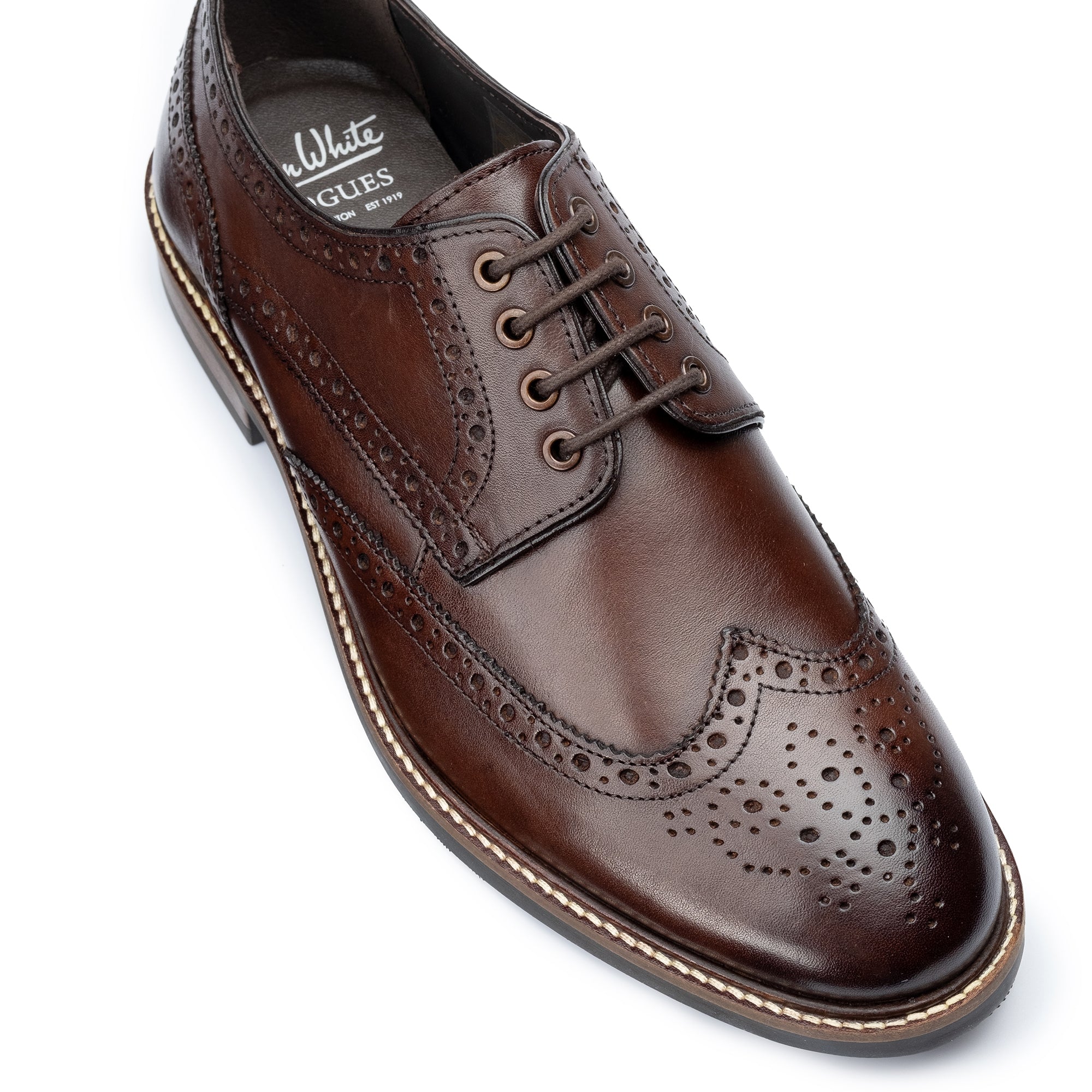
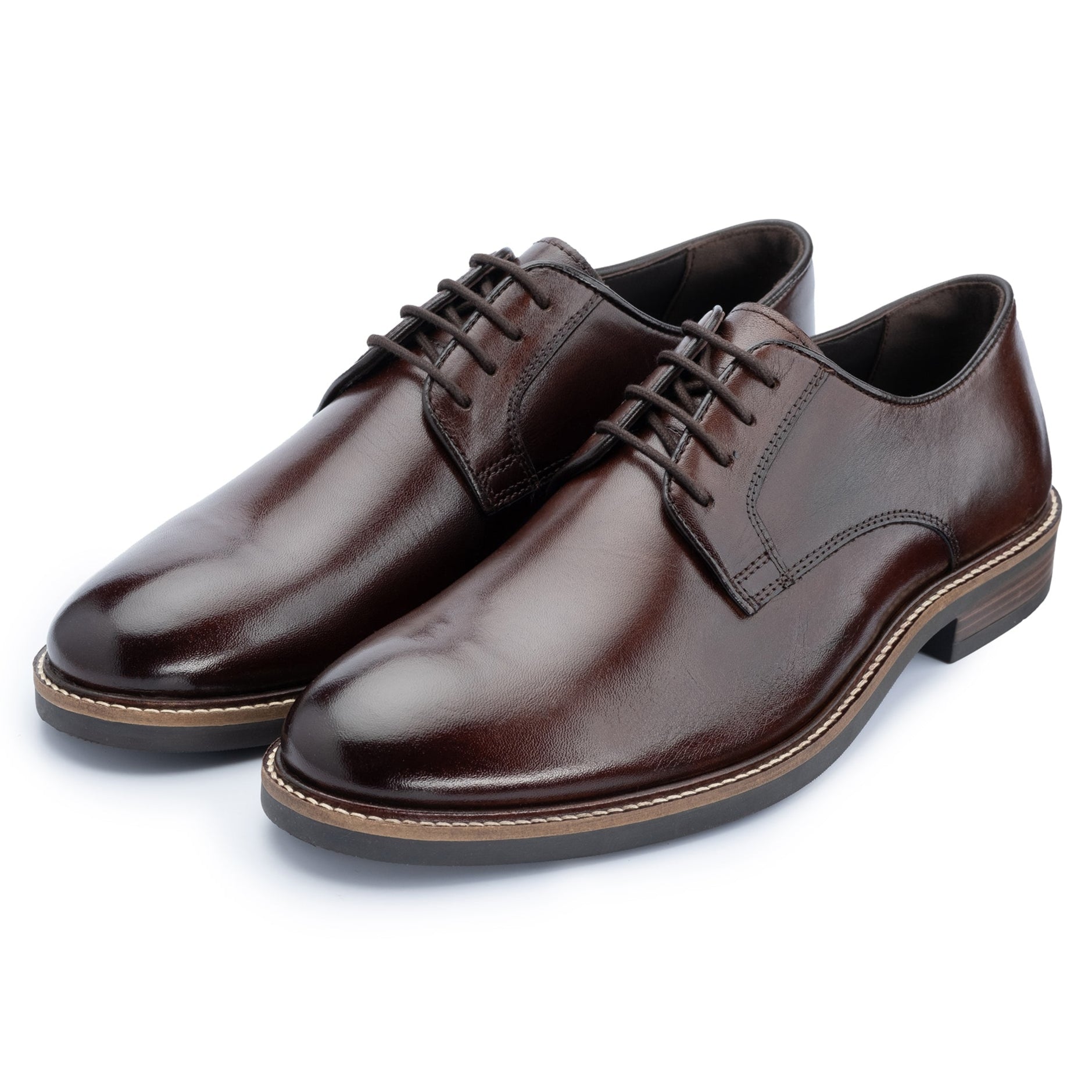
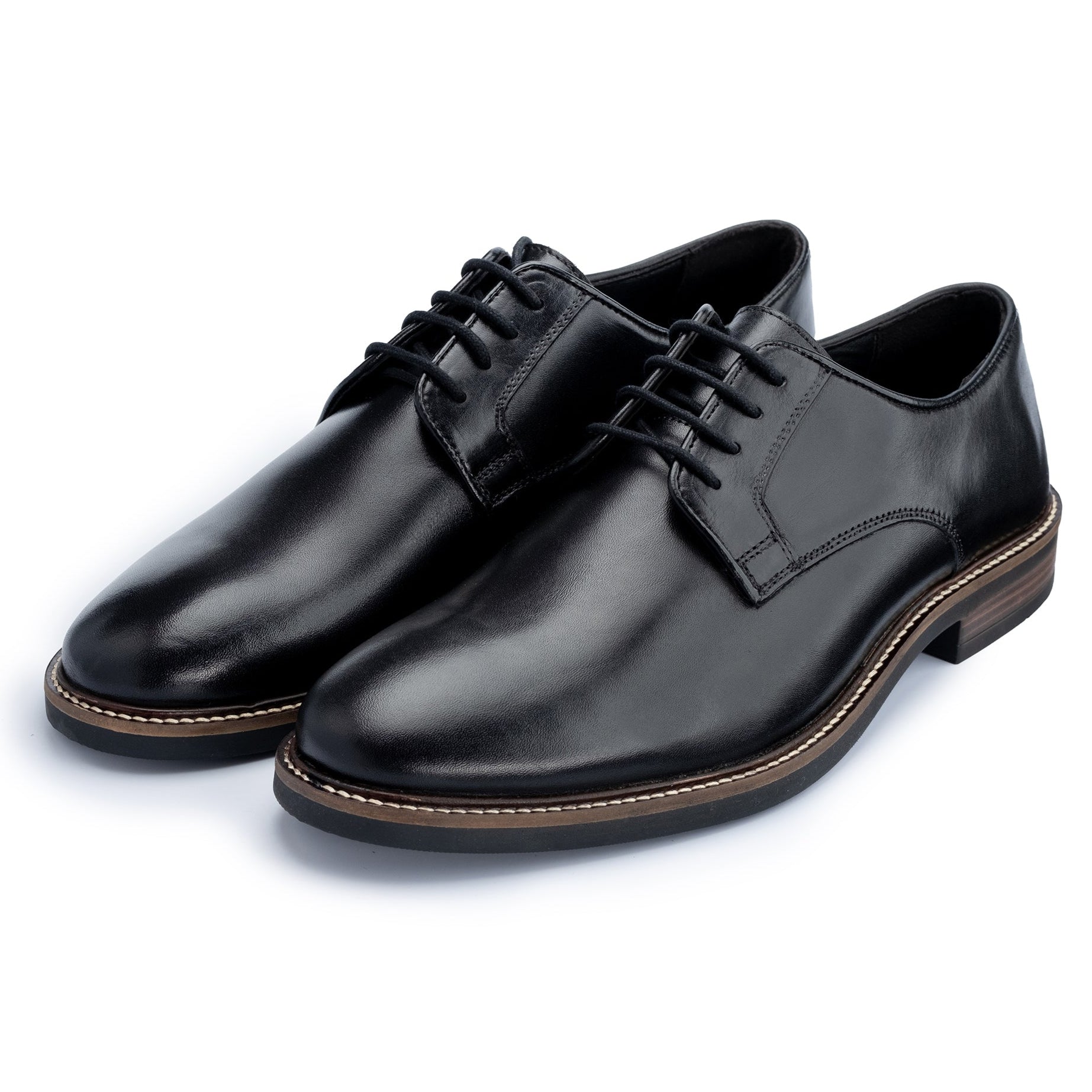
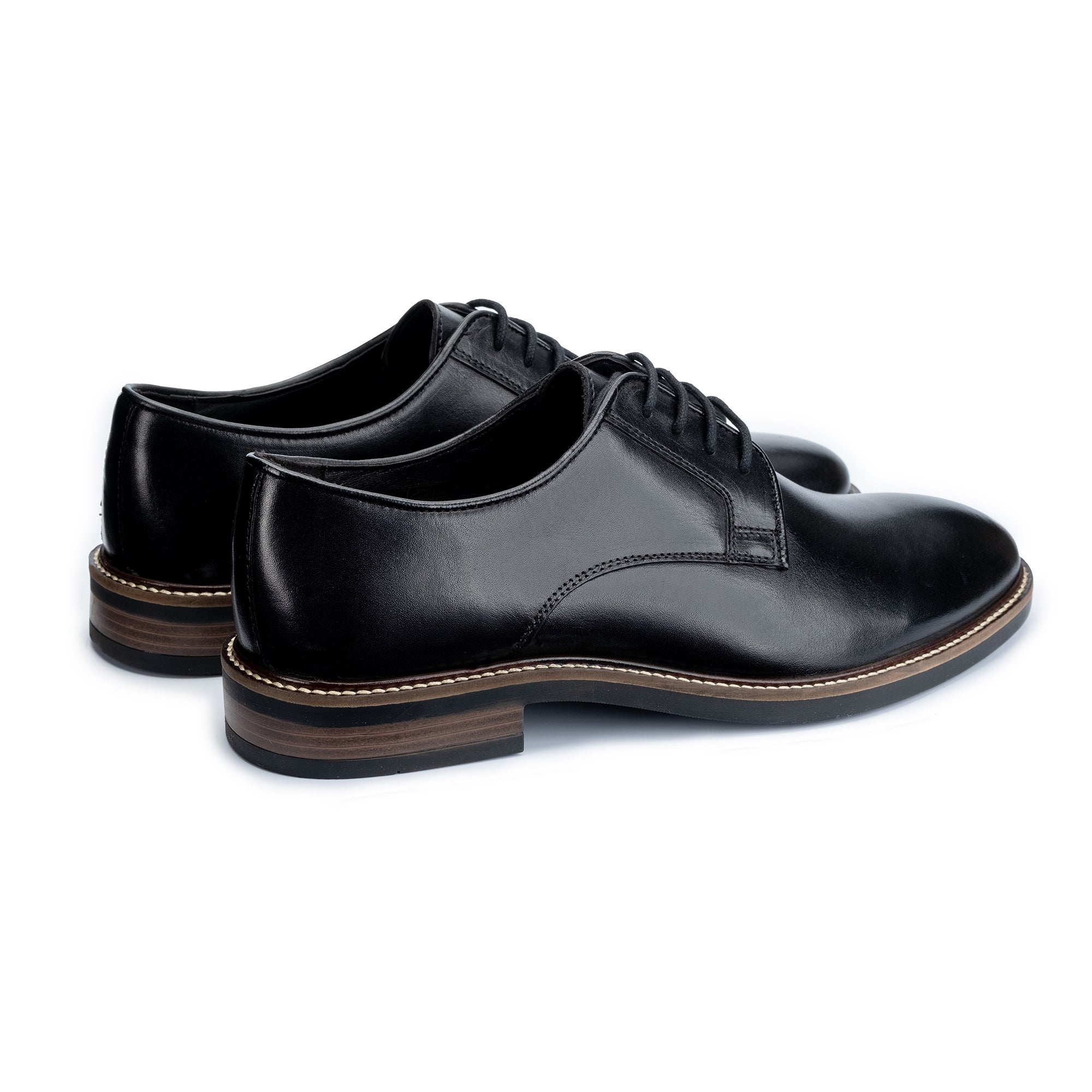
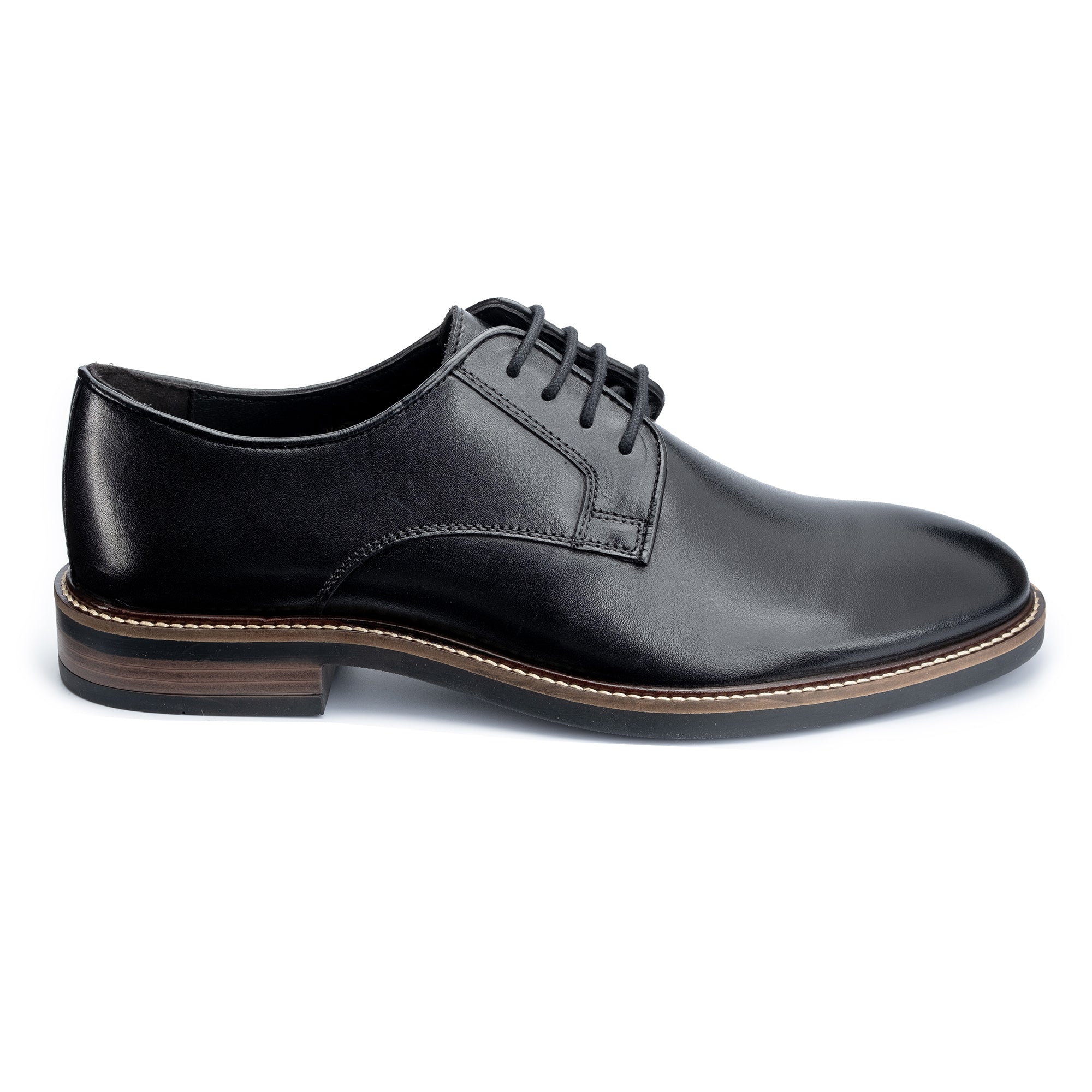
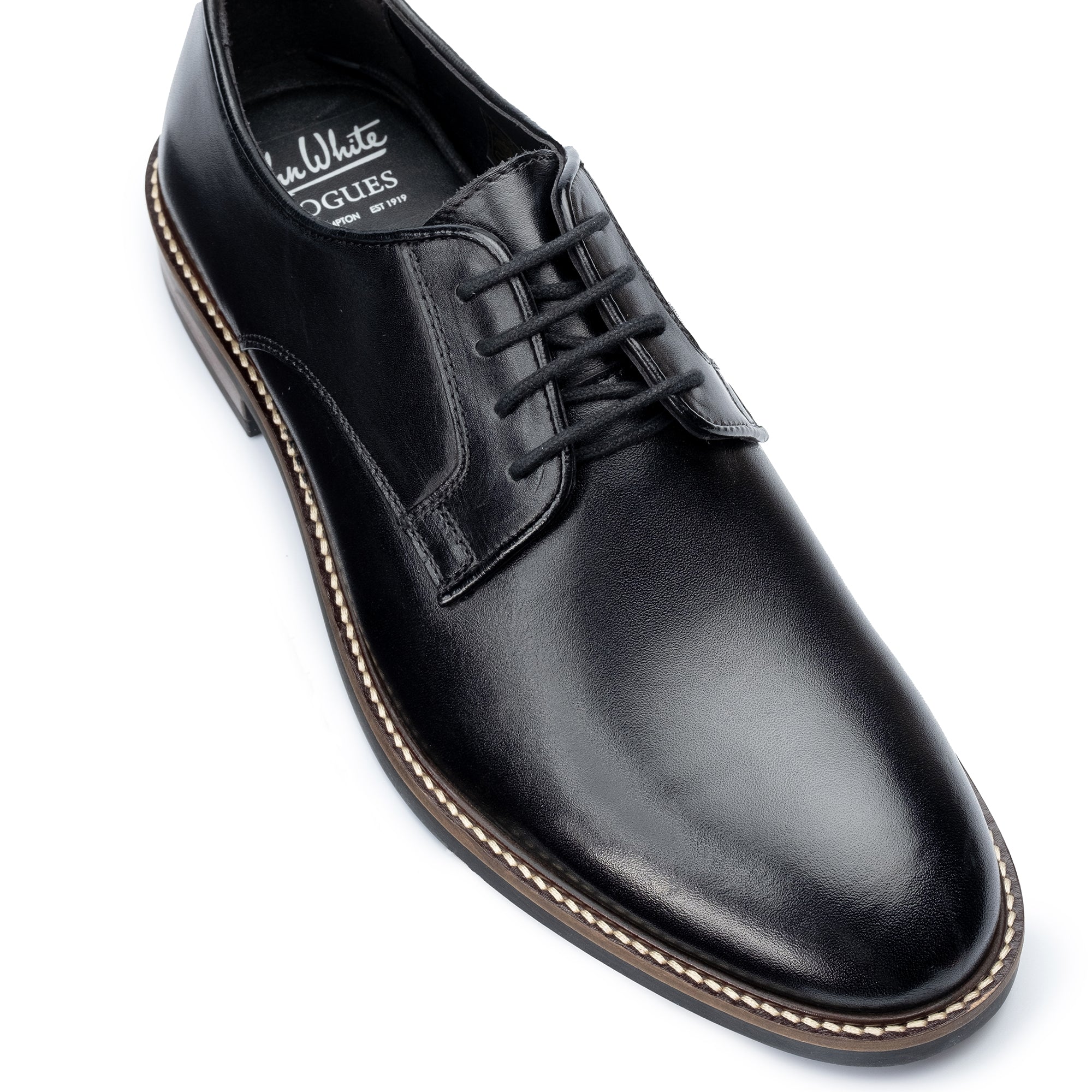
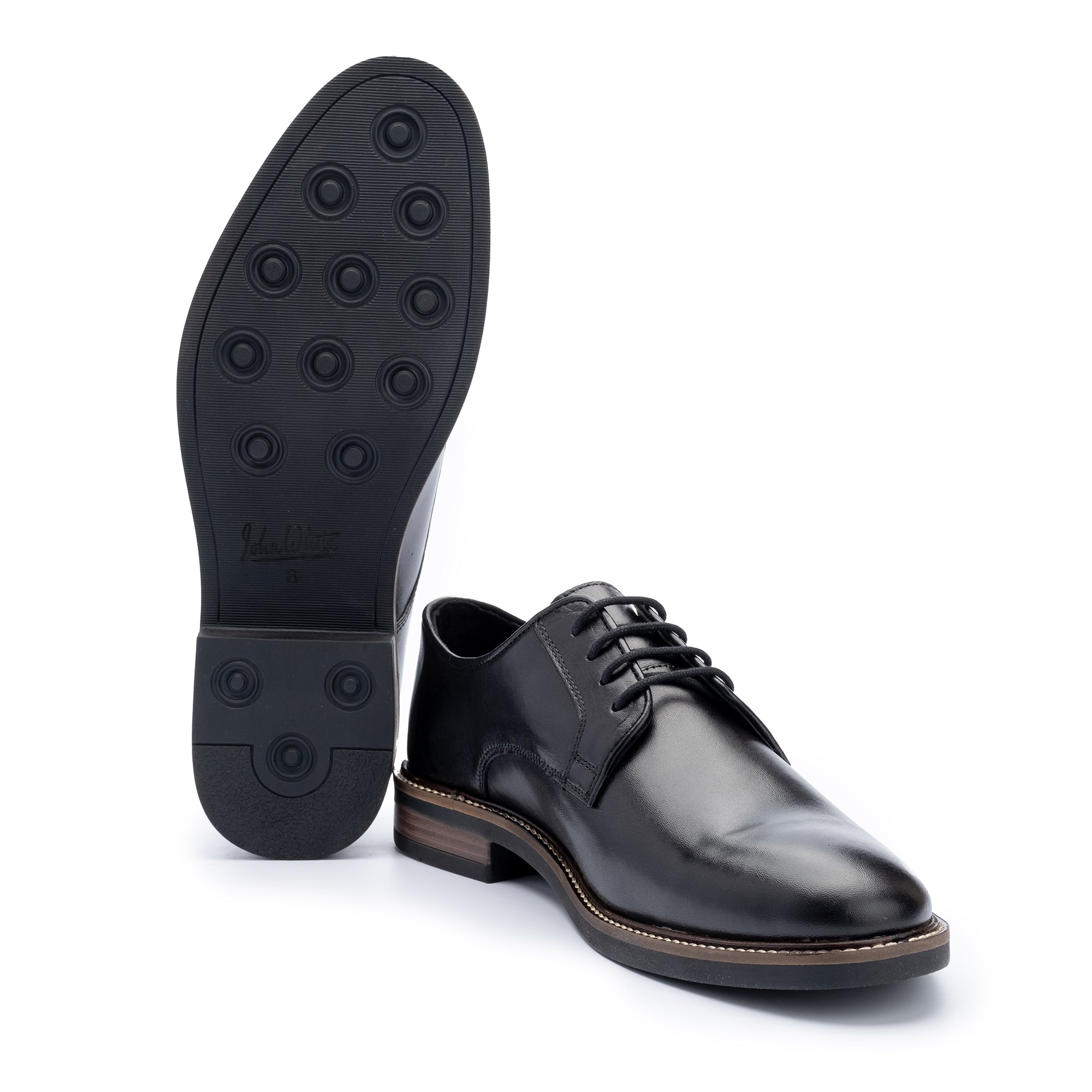
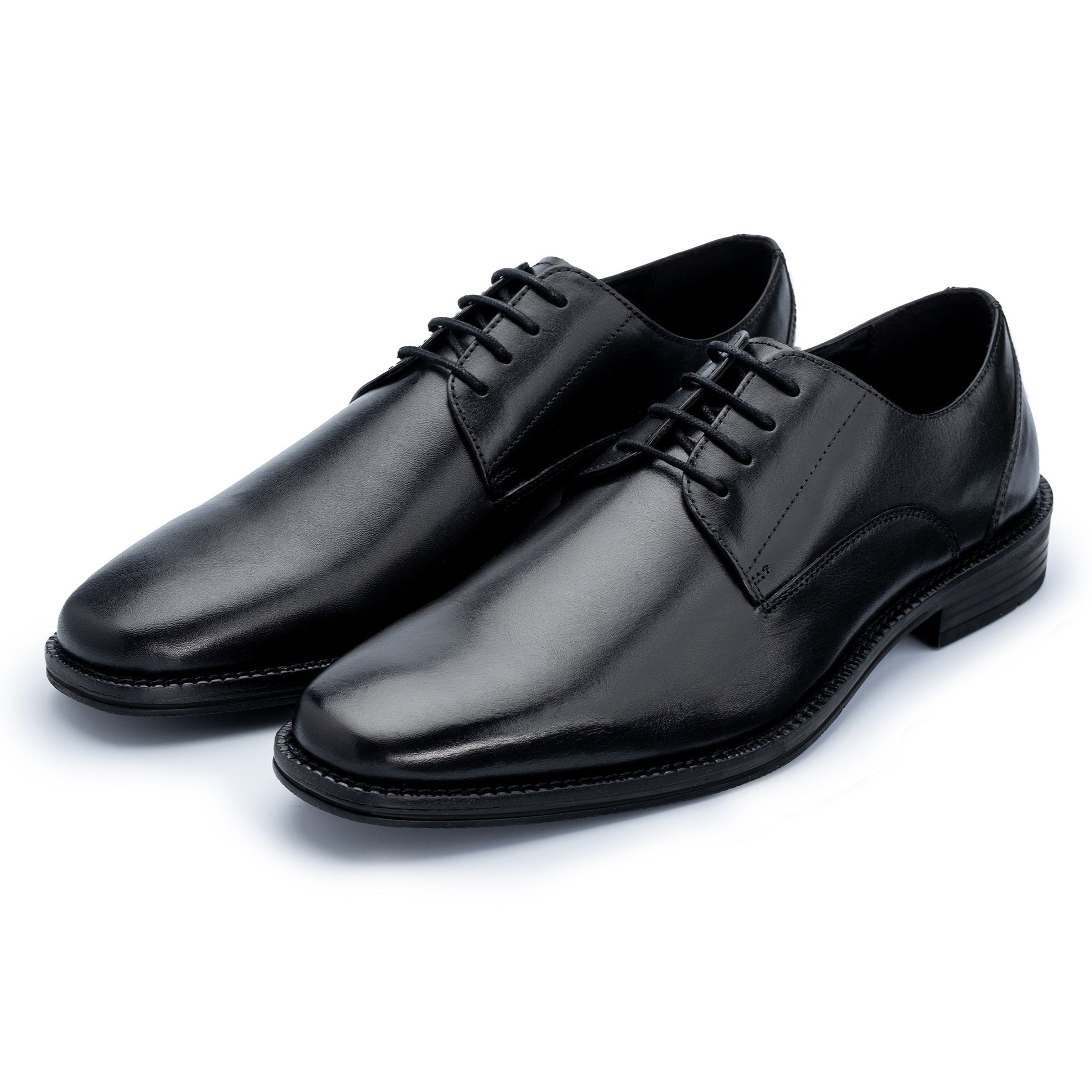
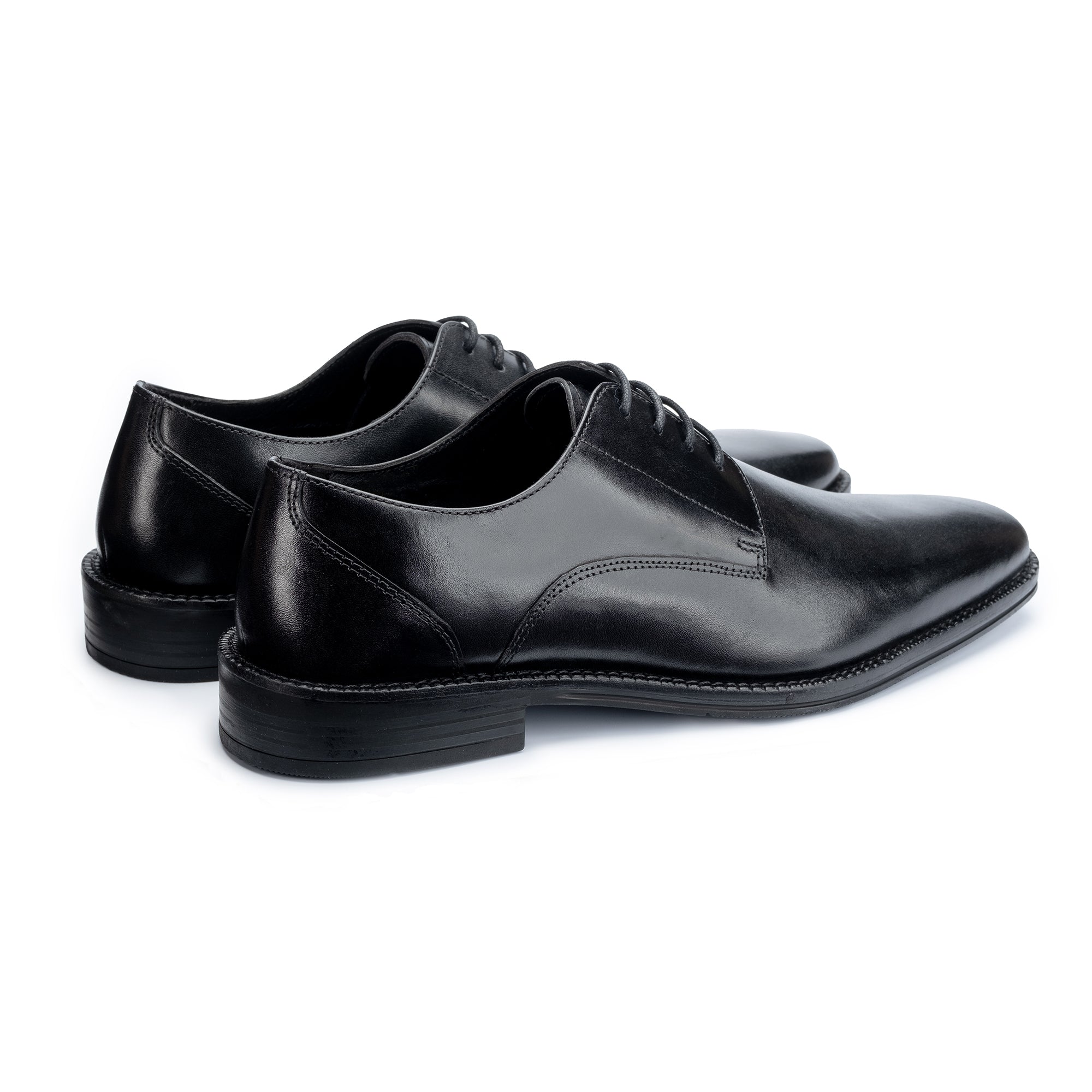
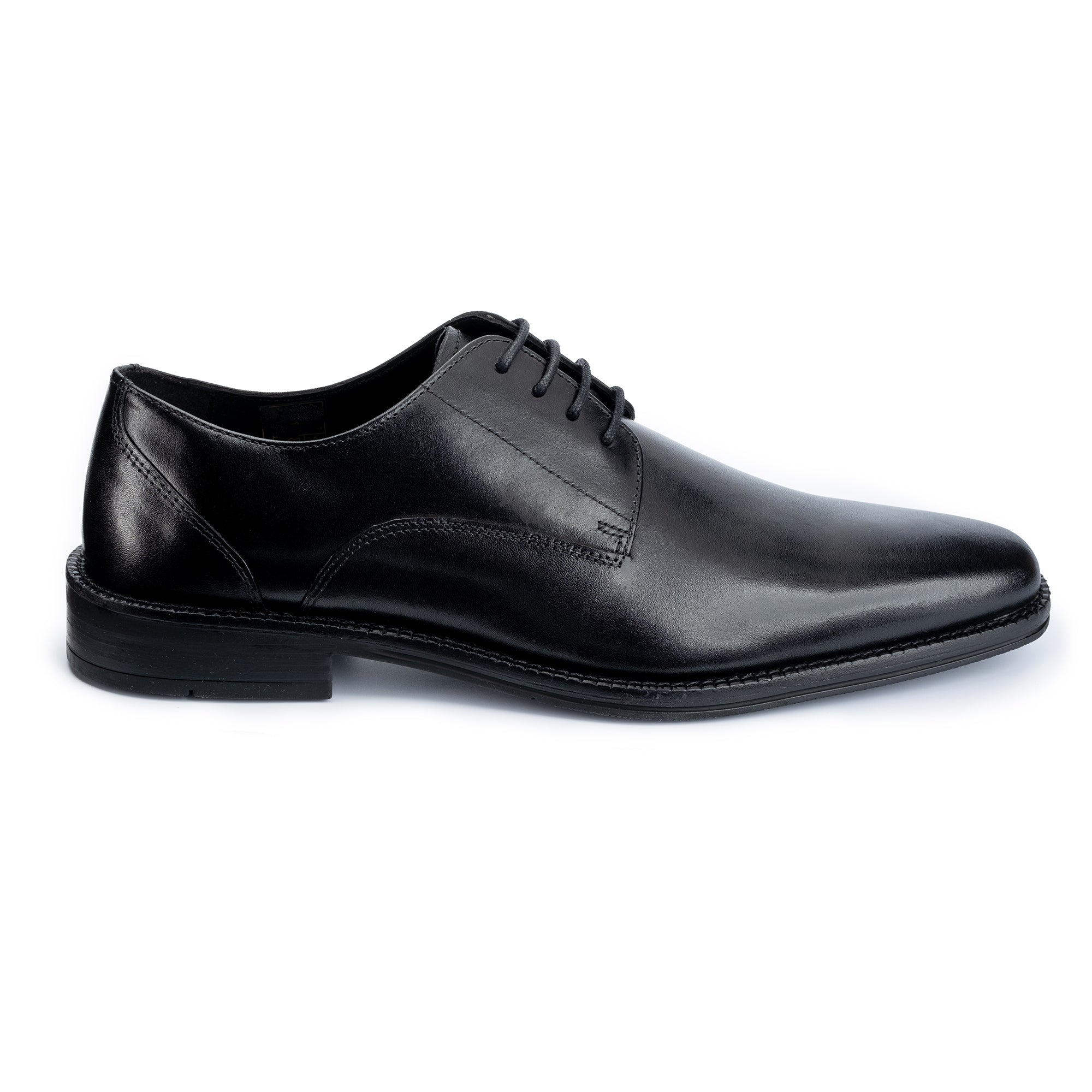
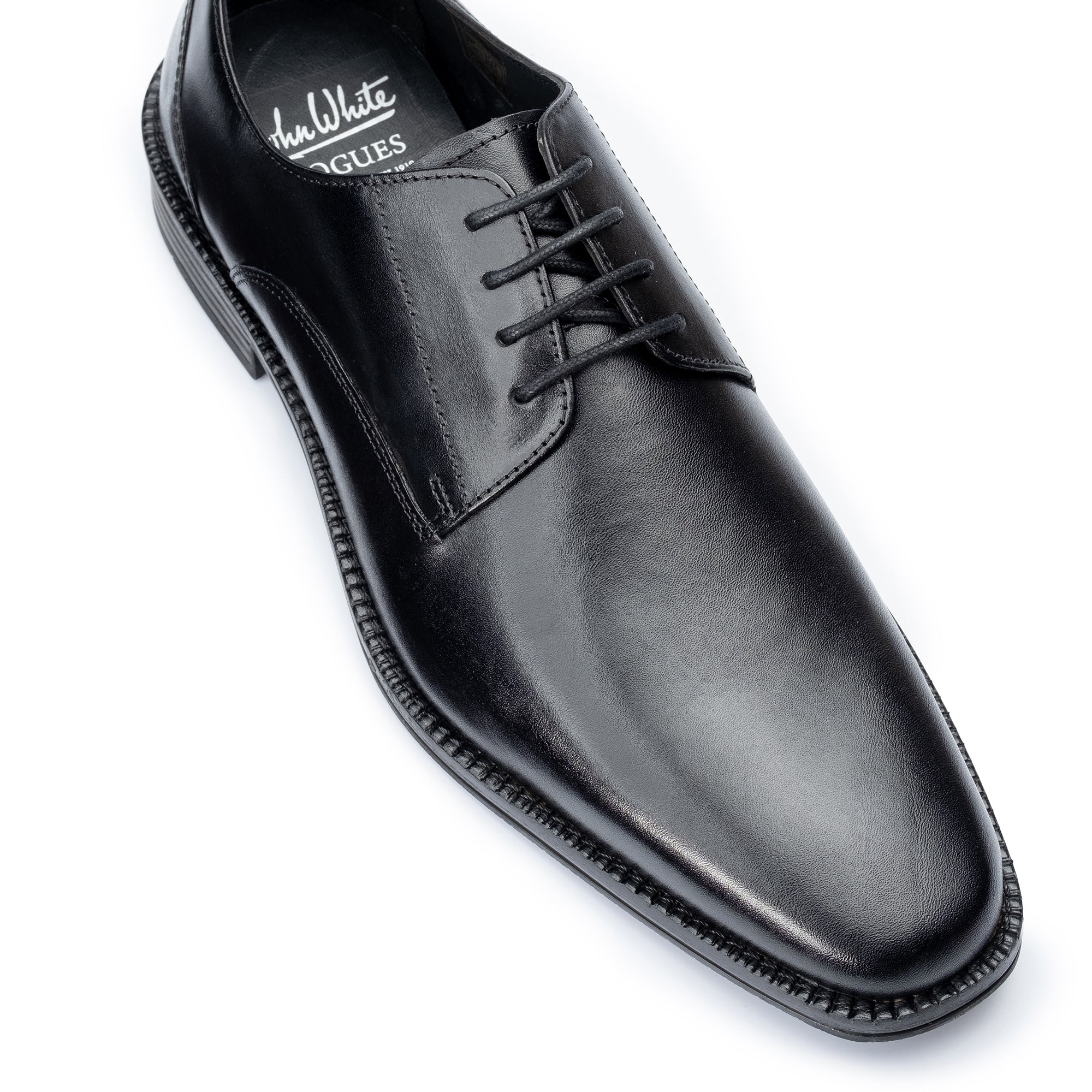
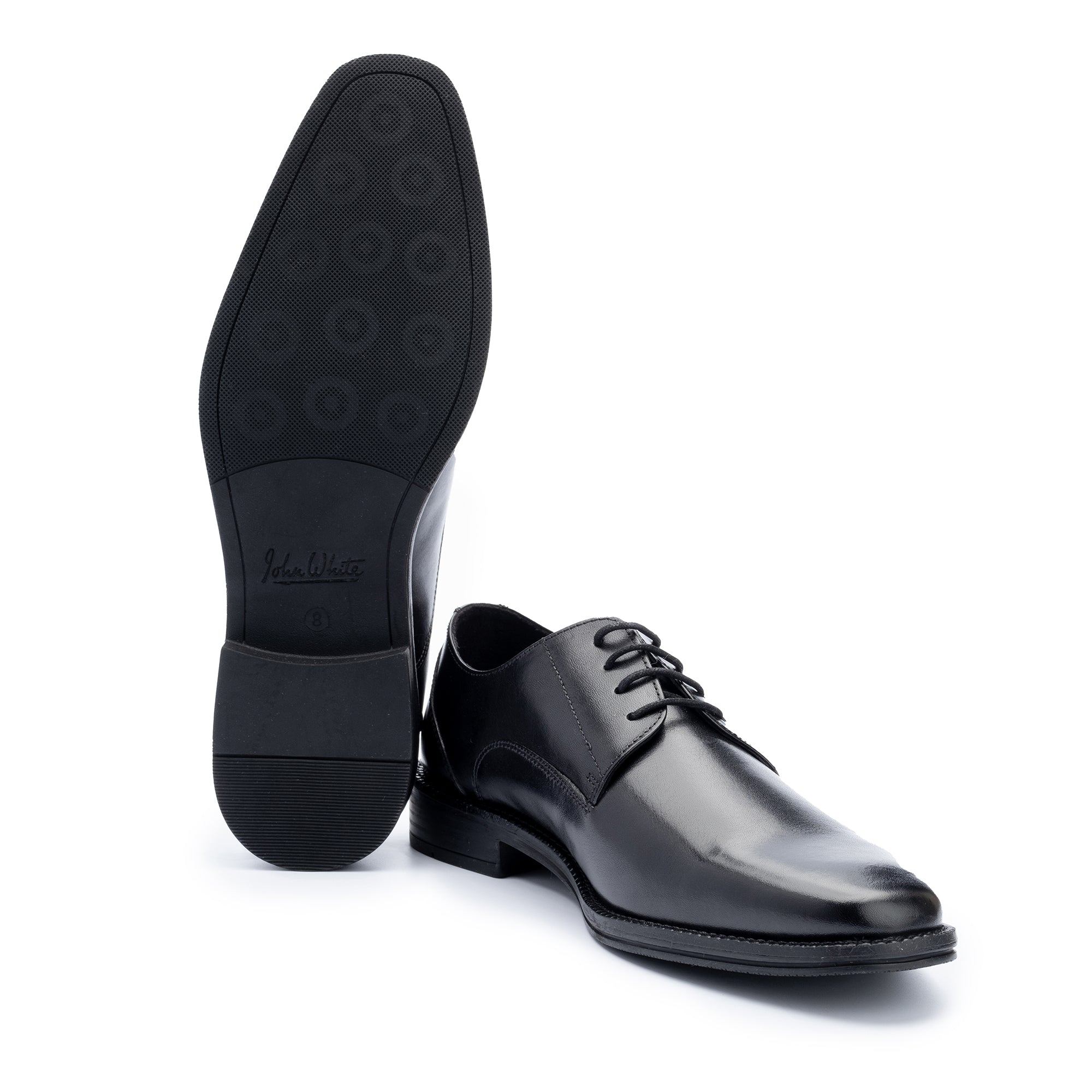
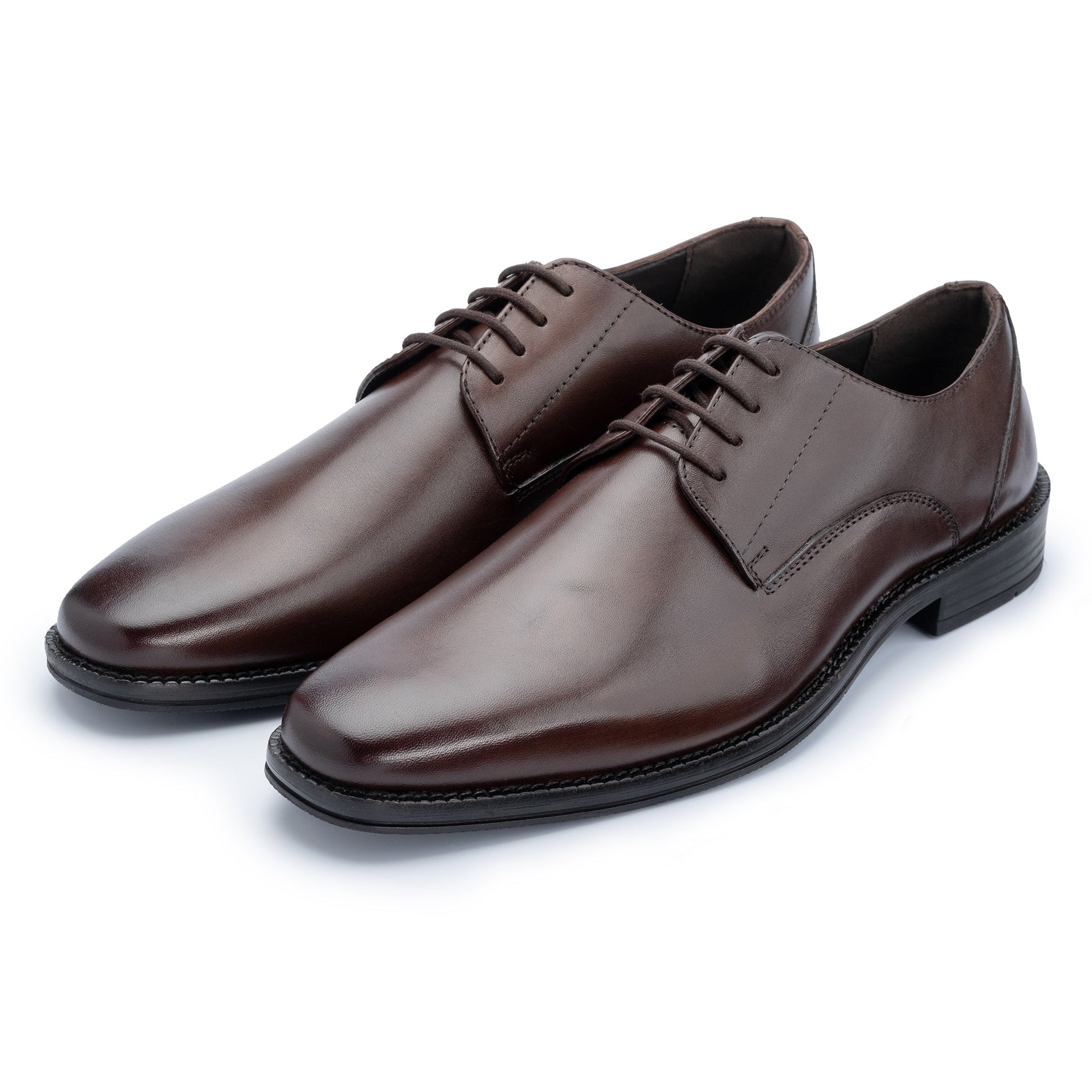
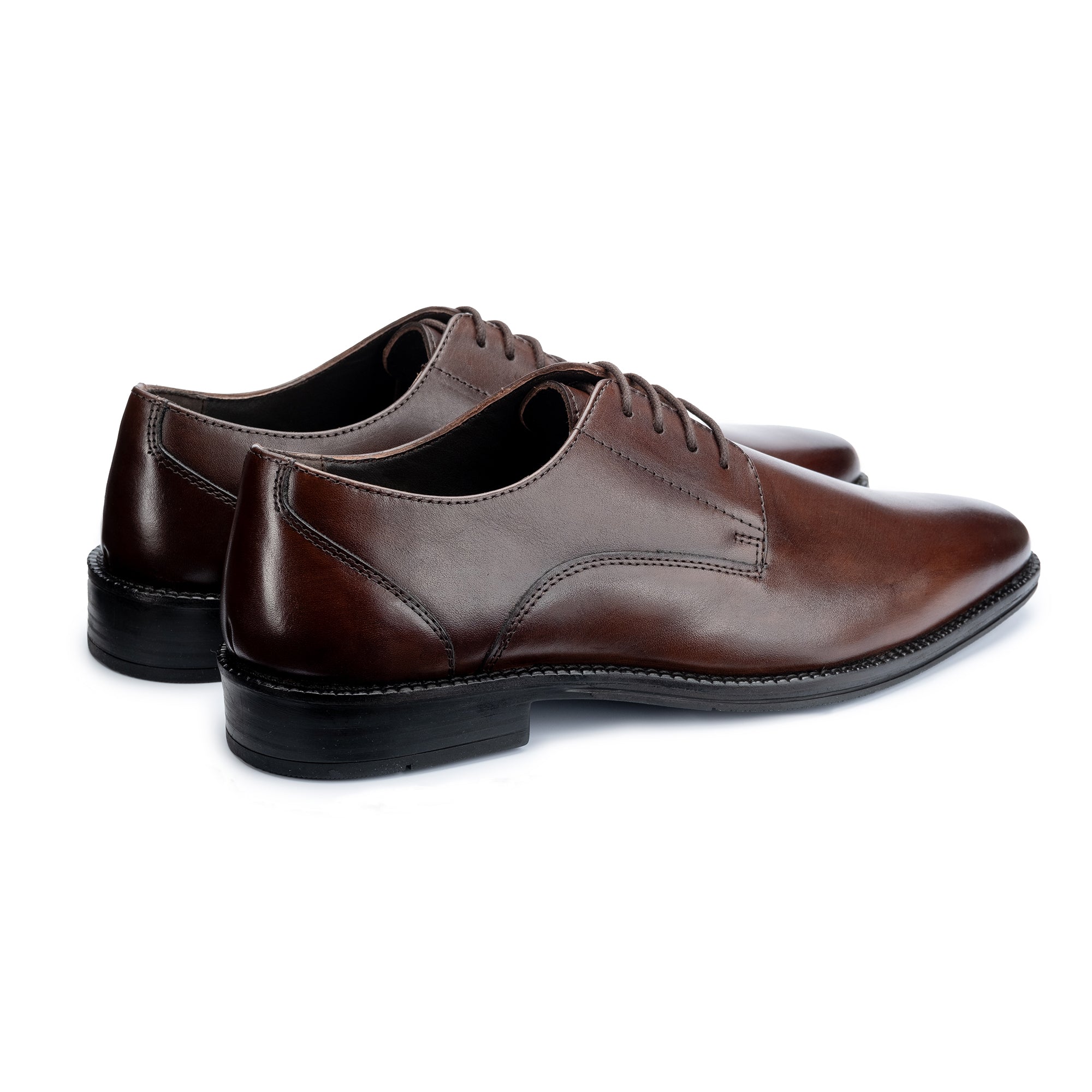
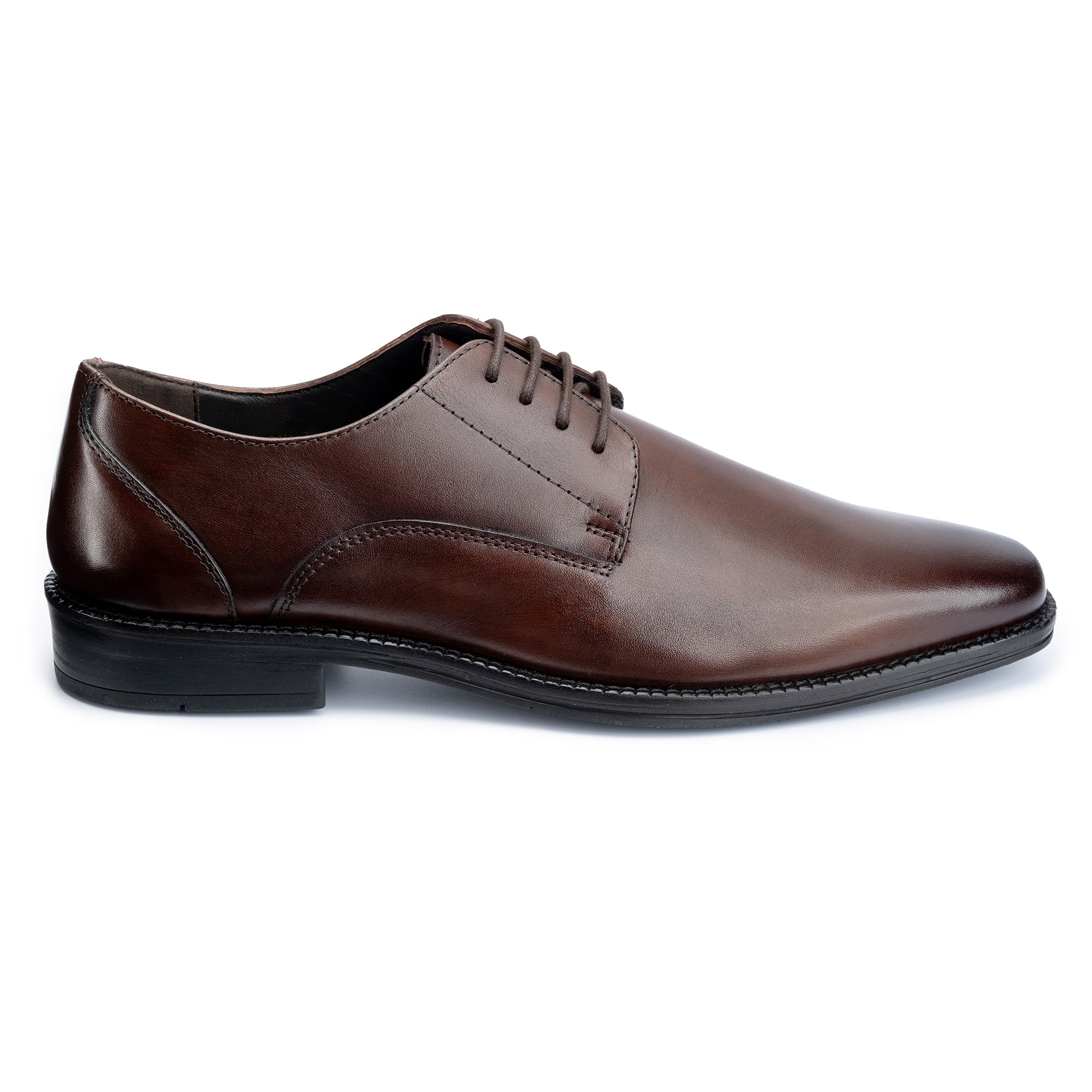
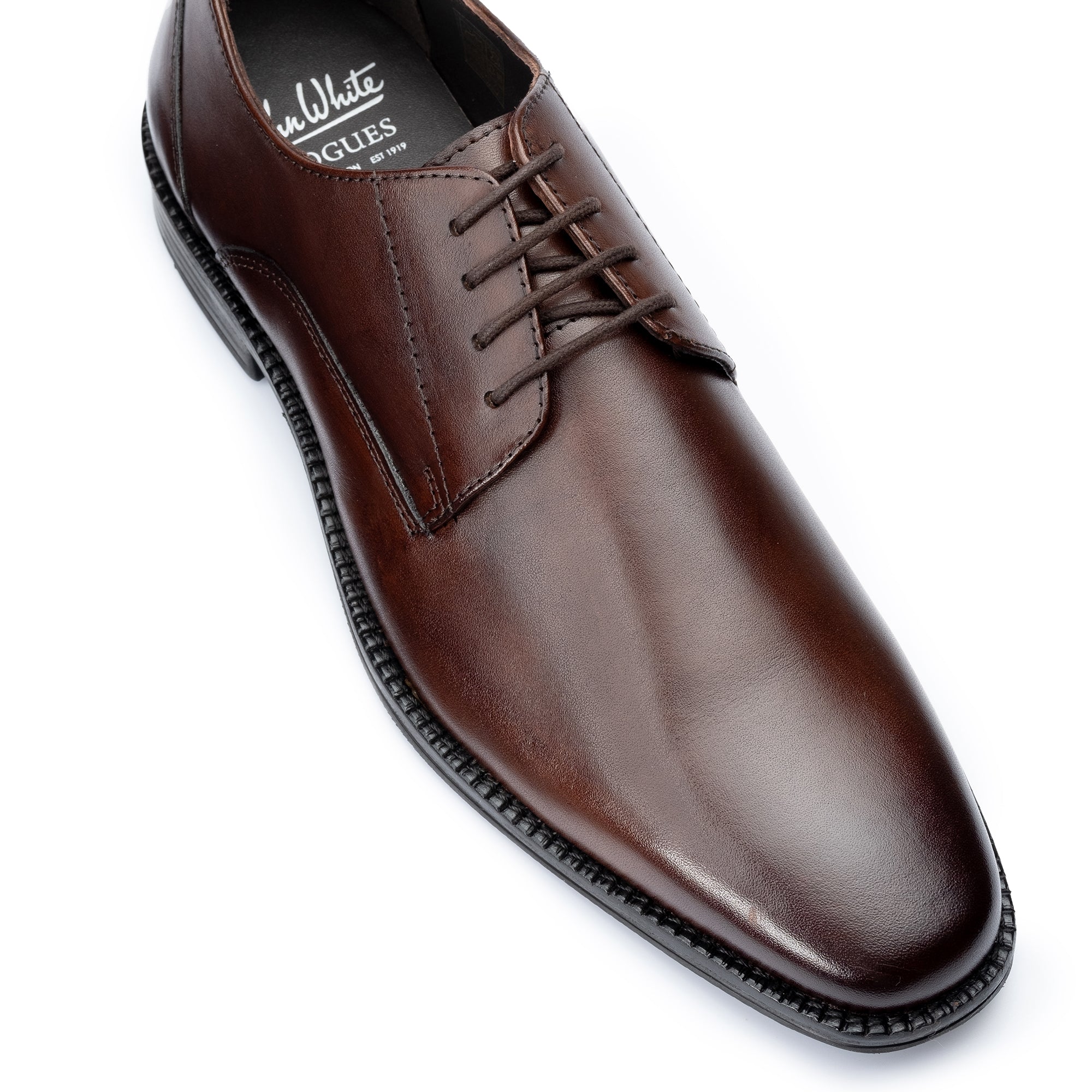
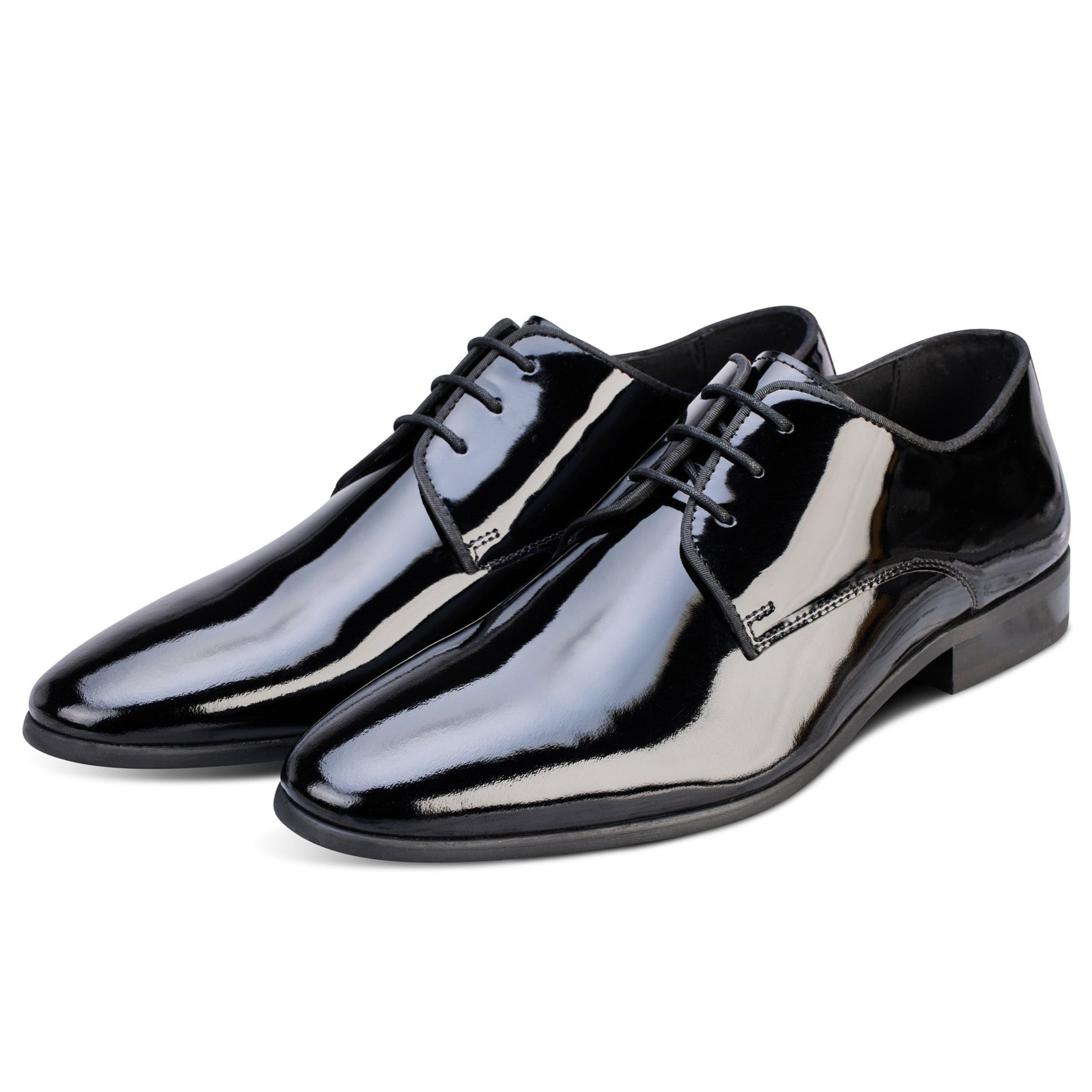
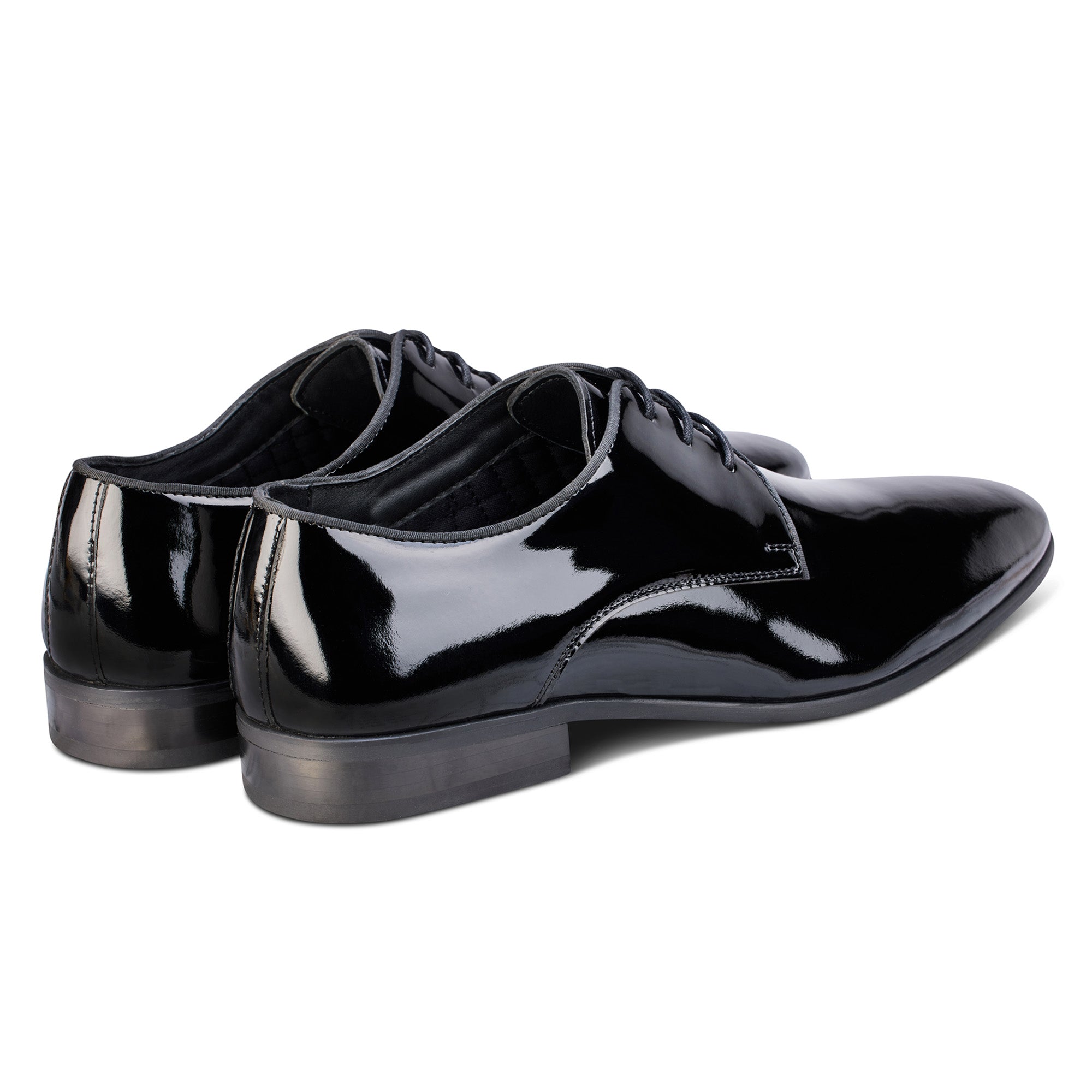
The Derby is an open-lacing shoe. Its quarters are stitched over the vamp, leaving them free to splay open when unlaced. This makes the Derby easier to put on, more forgiving of wider feet, and marginally more relaxed in its overall profile even when fully laced.
The distinction sounds minor. In practice, it determines where the shoe sits on the formality spectrum, how it interacts with different foot shapes, and how naturally it pairs with different dress codes. As we explained in detail in our guide to Oxford vs Derby shoes: the key differences, this single construction choice is what separates the two styles fundamentally.
The defining difference between a Derby and an Oxford is the lacing system — closed on the Oxford, open on the Derby — and this structural choice determines everything from formality to fit.Which Is More Formal — Derby or Oxford?
The Oxford is the more formal shoe. Its closed lacing produces a cleaner, more restrained silhouette, and it has been the pre-eminent dress shoe in British professional dress since the late Victorian era. According to the Worshipful Company of Cordwainers — the City of London livery company with oversight of the British footwear trade since the twelfth century — the Oxford became the standard for formal dress precisely because of its structured, closed lacing and uninterrupted upper line.
The Derby sits one step below on the formality ladder. It handles business attire, smart weddings, and considered eveningwear with composure, but it does not reach the formal register of a plain Oxford. This is not a shortcoming — it is simply a different point on the spectrum, and for most modern professional dress codes, that point is precisely where everyday life sits.
For a full picture of how both shoes rank against other styles, our Formality Spectrum: A Definitive Ranking of Men's Dress Shoes places every lace-up in its correct hierarchy.
The Oxford consistently outranks the Derby in formal dressing — but for smart-casual and business-casual occasions, the gap between the two is negligible.Derby vs Oxford: A Direct Comparison
| Feature | Oxford | Derby |
|---|---|---|
| Lacing system | Closed (quarters stitched under vamp) | Open (quarters stitched over vamp) |
| Formality level | Formal to business formal | Business casual to smart |
| Best occasions | Black tie, court, City offices, formal weddings | Business meetings, smart-casual events, daily wear |
| Foot width | Best for standard to narrow feet | More accommodating for wider feet |
| Daily versatility | Formal-specialist | Broader across dress codes |
| First purchase for | Formal and professional dress requirements | Smart-casual and mixed lifestyle wardrobes |
Who Should Buy an Oxford First?
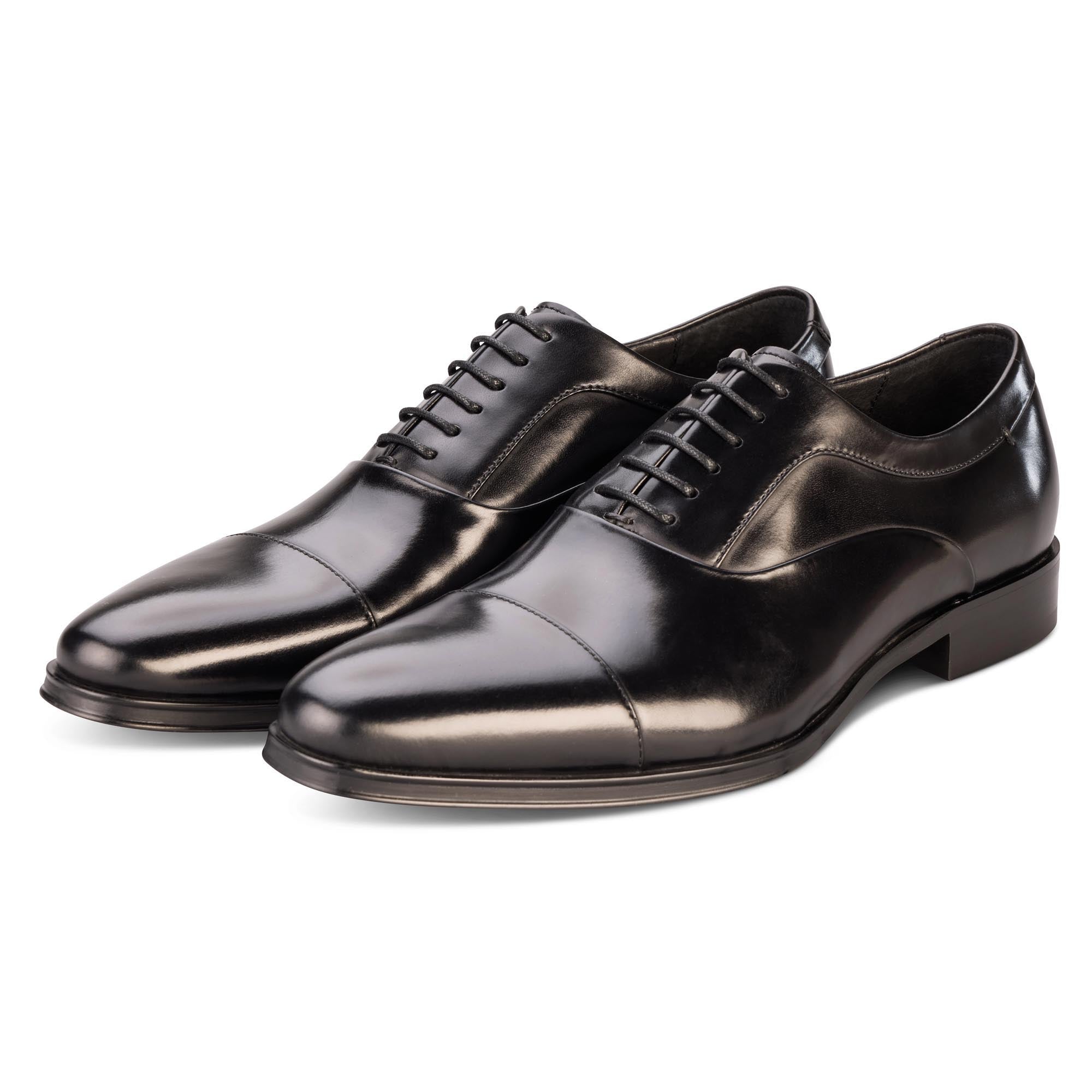
The Oxford is the correct first lace-up for men whose working environment demands formal dress: those in law, finance, architecture presenting to clients, or any profession where a suit is daily and dress codes are observed strictly. It is also the right starting point for men who attend black-tie events, formal weddings, or ceremonial occasions with any regularity.
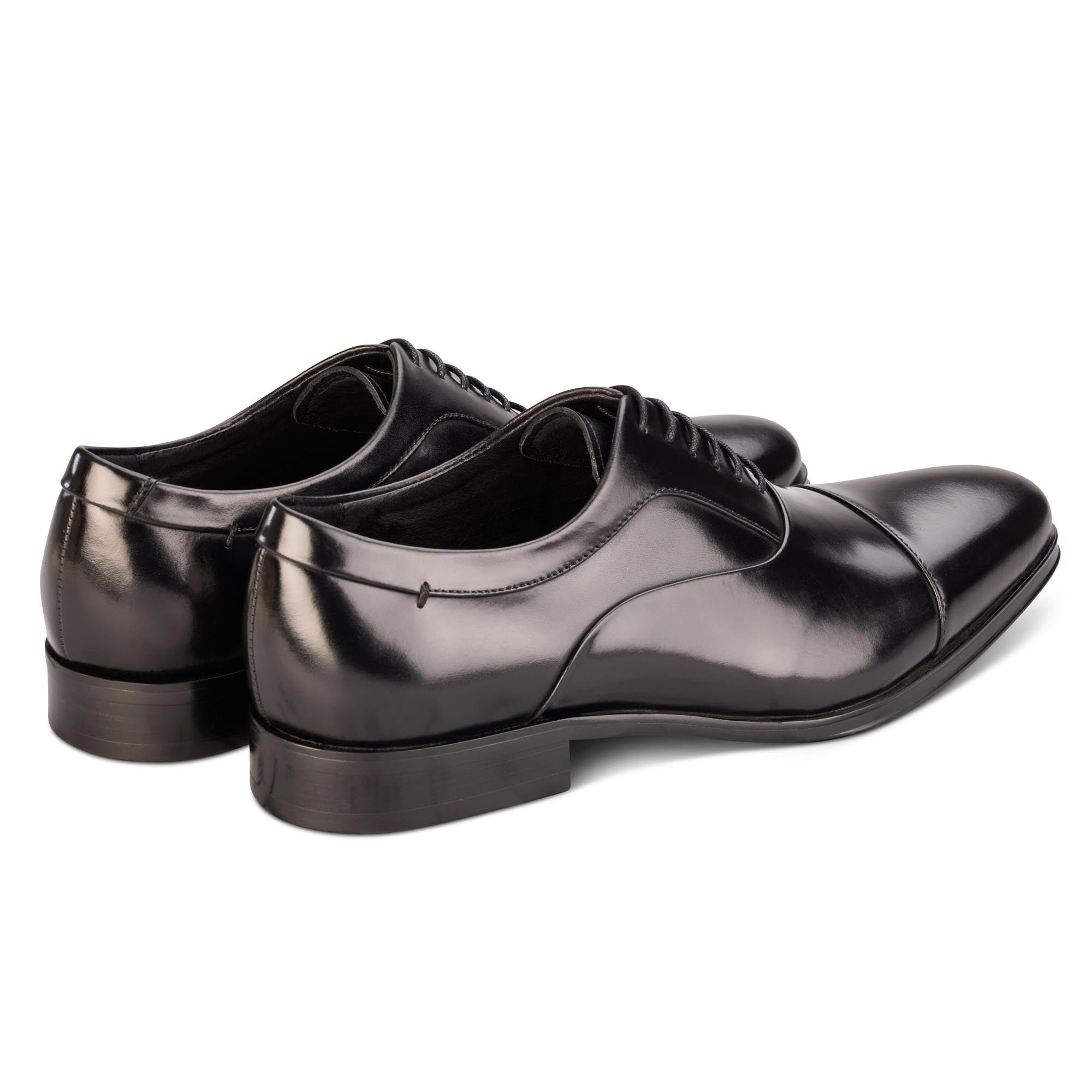
A plain-toe or cap-toe Oxford in black is the closest thing men's footwear has to a universal formal solution. It will not look out of place at any formal occasion you are likely to attend across a lifetime of wearing good shoes. Brands such as Loake, Barker, Church's, Crockett & Jones, and Grenson have built significant reputations on the Oxford — and John White Shoes' lace-up collection holds the same conviction: the Oxford is where a serious shoe wardrobe begins.
If your work or social calendar regularly requires you to dress to a formal standard, the Oxford is not a luxury — it is a necessity. Every other lace-up purchase flows from this foundation.
Any man who dresses formally for work or attends formal occasions regularly should purchase an Oxford before any other lace-up style.Who Should Buy a Derby First?
The Derby is the right first lace-up for men whose daily lives are predominantly smart-casual: those working in creative industries, technology, education, or any environment where formal dress is occasional rather than habitual. It is also the more practical choice for men with wider feet, since the open lacing accommodates a broader forefoot without the restriction a closed Oxford can impose.
A 2024 survey by YouGov for the British Fashion Council found that more than half of UK professional men aged 35–54 now describe their typical workday dress code as smart-casual, with formal dress required only occasionally. For the majority of men in this bracket, a well-chosen Derby will log significantly more daily use than a dedicated Oxford.
The Derby also transitions more naturally to relaxed contexts. Worn with chinos, dark denim, or a blazer without a tie, a quality Derby reads as deliberate and considered rather than overdressed. Our guide to wearing Derby shoes from smart to casual covers the full styling range.
For men in smart-casual environments, the Derby offers superior day-to-day versatility and is the more practical first lace-up purchase.What Colour Should Your First Lace-Up Be?
Black is the only correct colour for a first Oxford. It covers every formal dress code, pairs without conflict with charcoal, navy, and black suits, and carries no interpretive risk at an interview, a funeral, a City office, or a black-tie dinner.
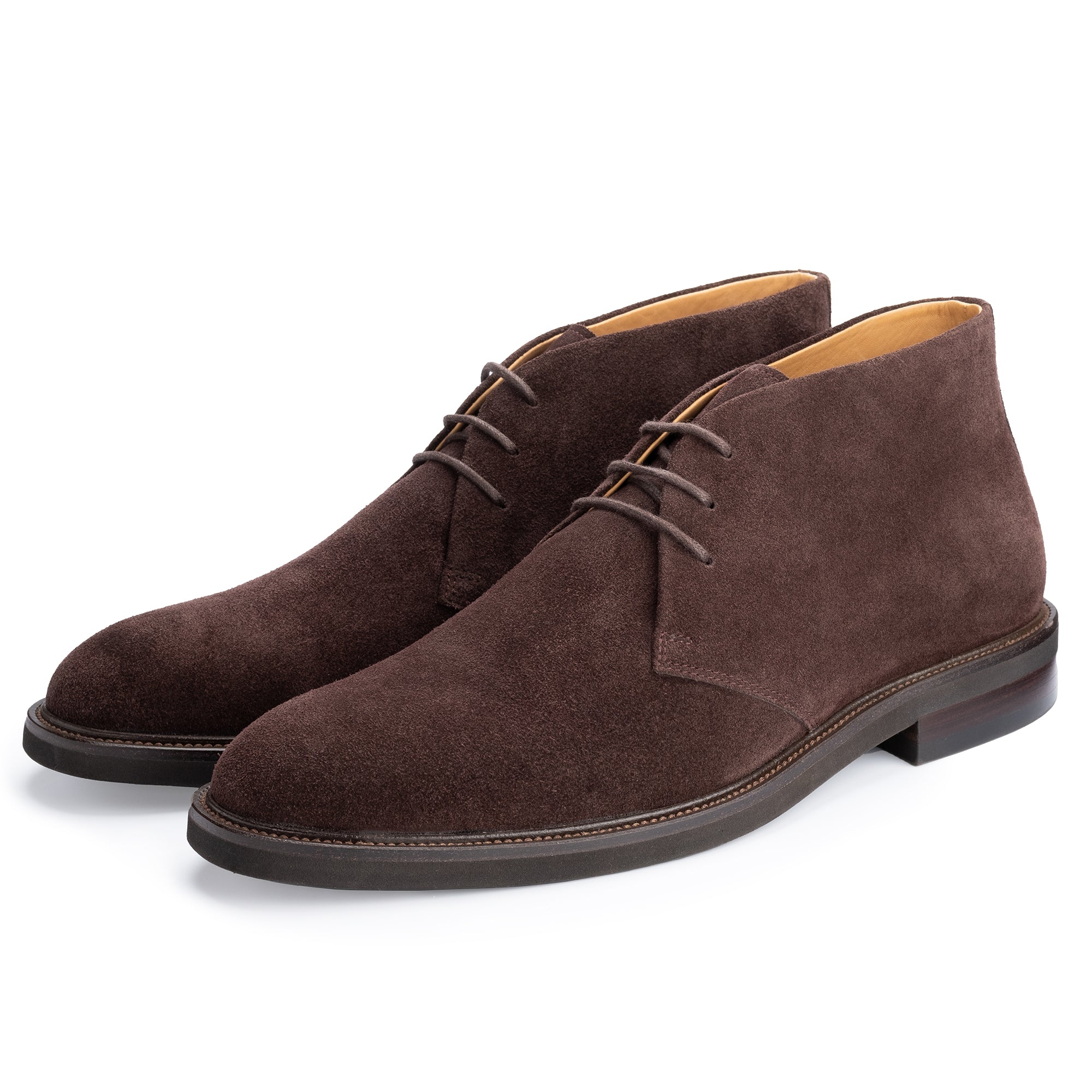
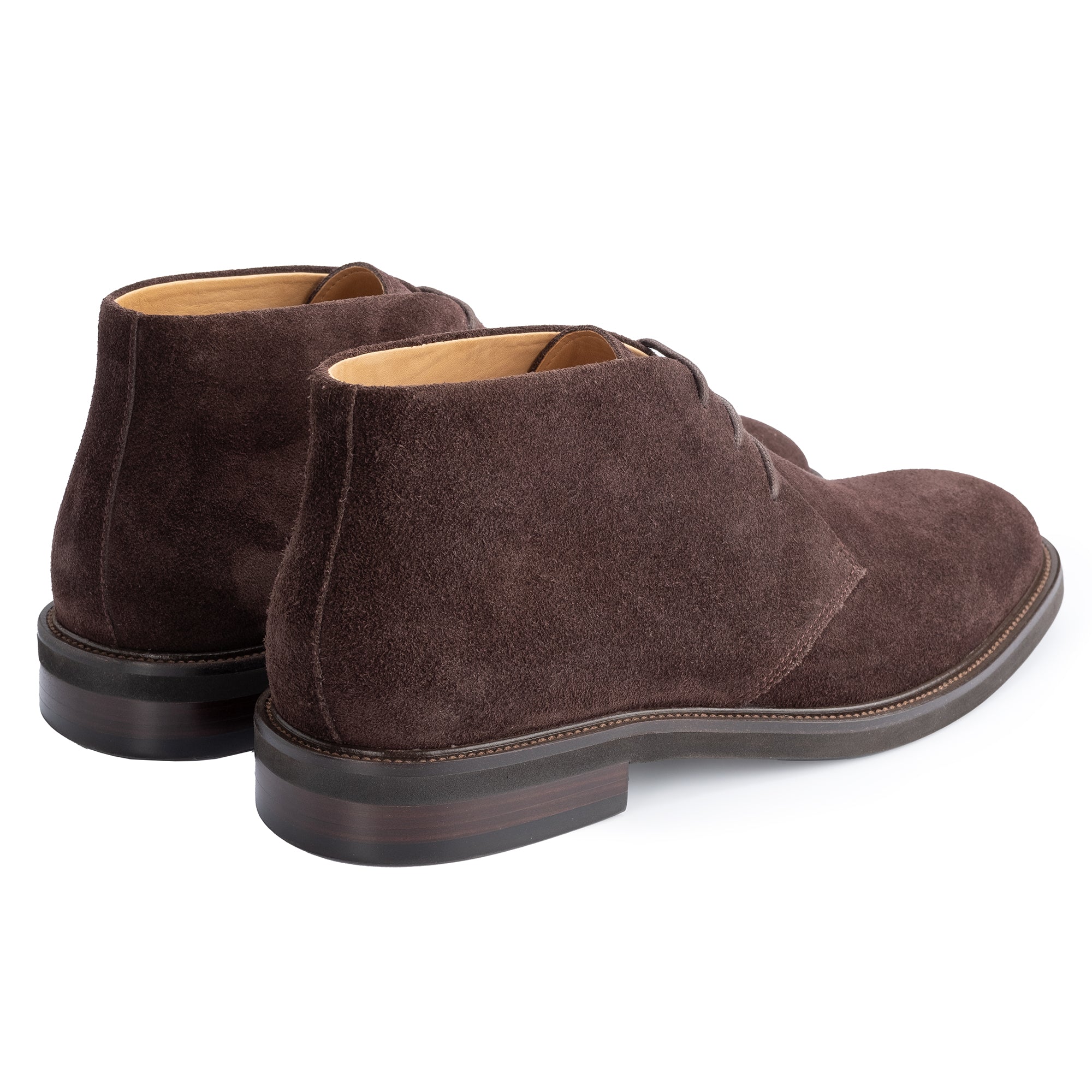
For a first Derby, dark tan or mid-brown is the more versatile starting point — it works across suits, smart chinos, and casual trousers with equal ease, and introduces warmth and character that a black shoe cannot provide. Burgundy is a strong second choice: distinctive, increasingly prevalent in business-casual settings, and sophisticated enough to carry with a grey or navy suit. We examined the full logic of colour selection in The Core Collection: Choosing Between Black, Brown, and Burgundy Leather Shoes.
How Does Broguing Affect the Decision?
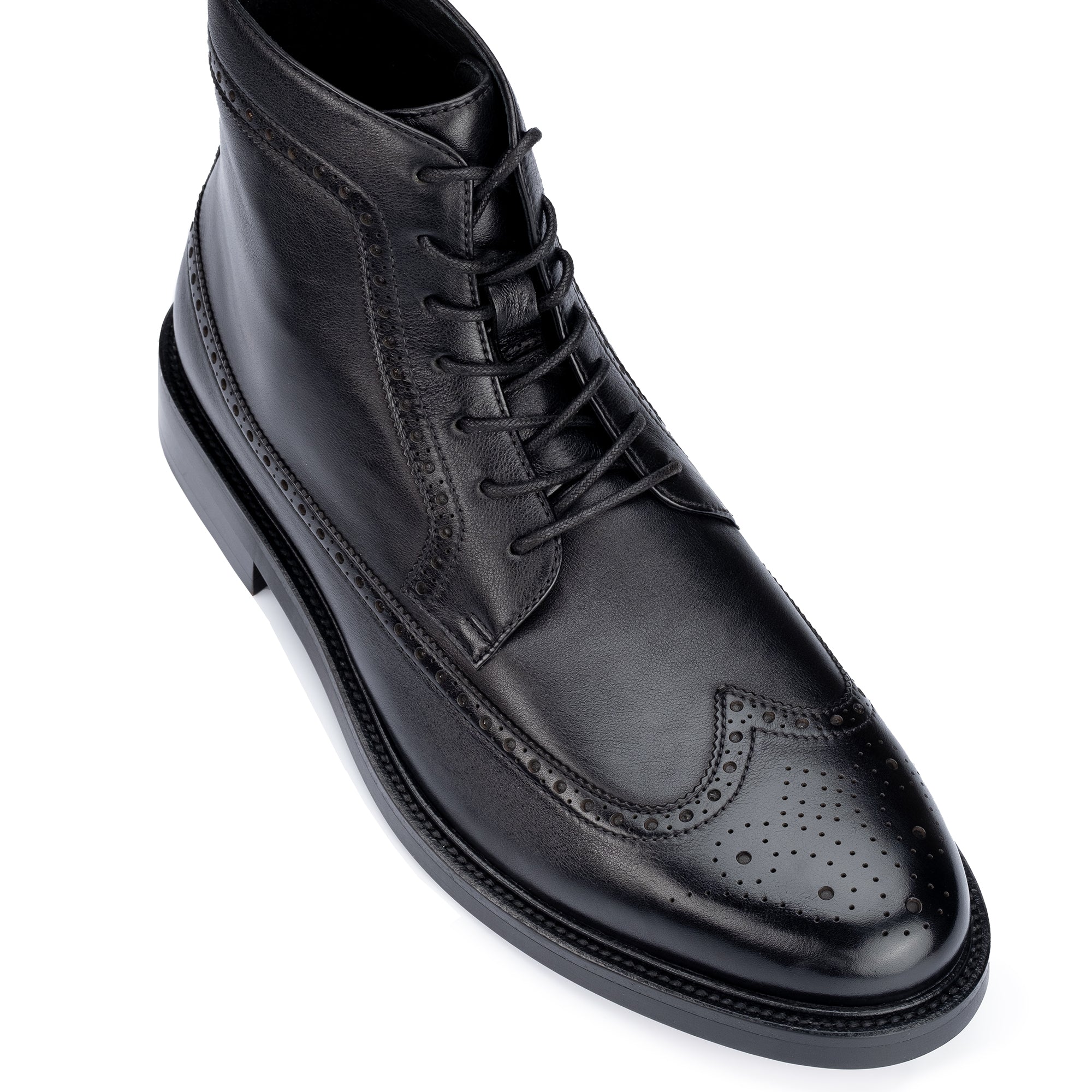
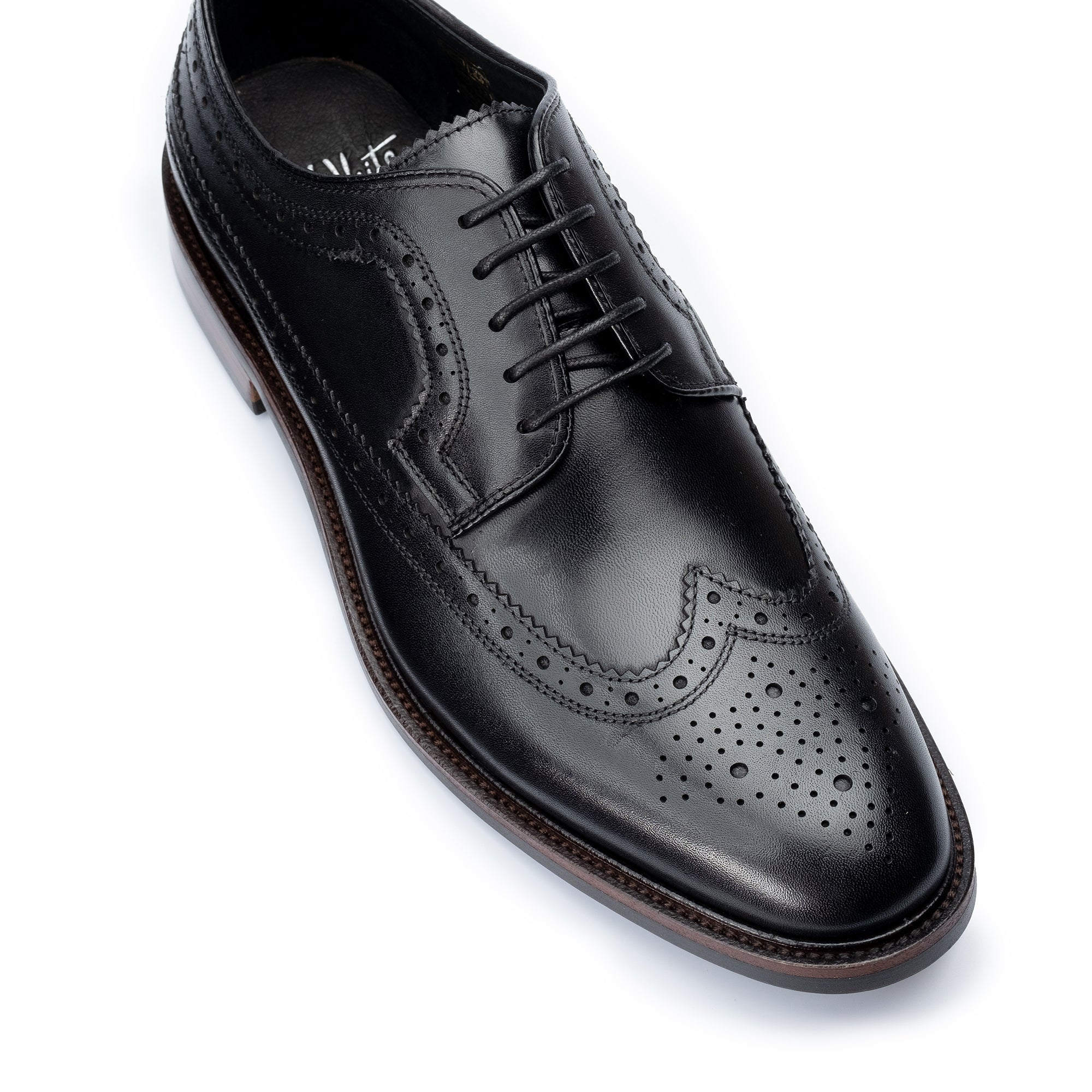
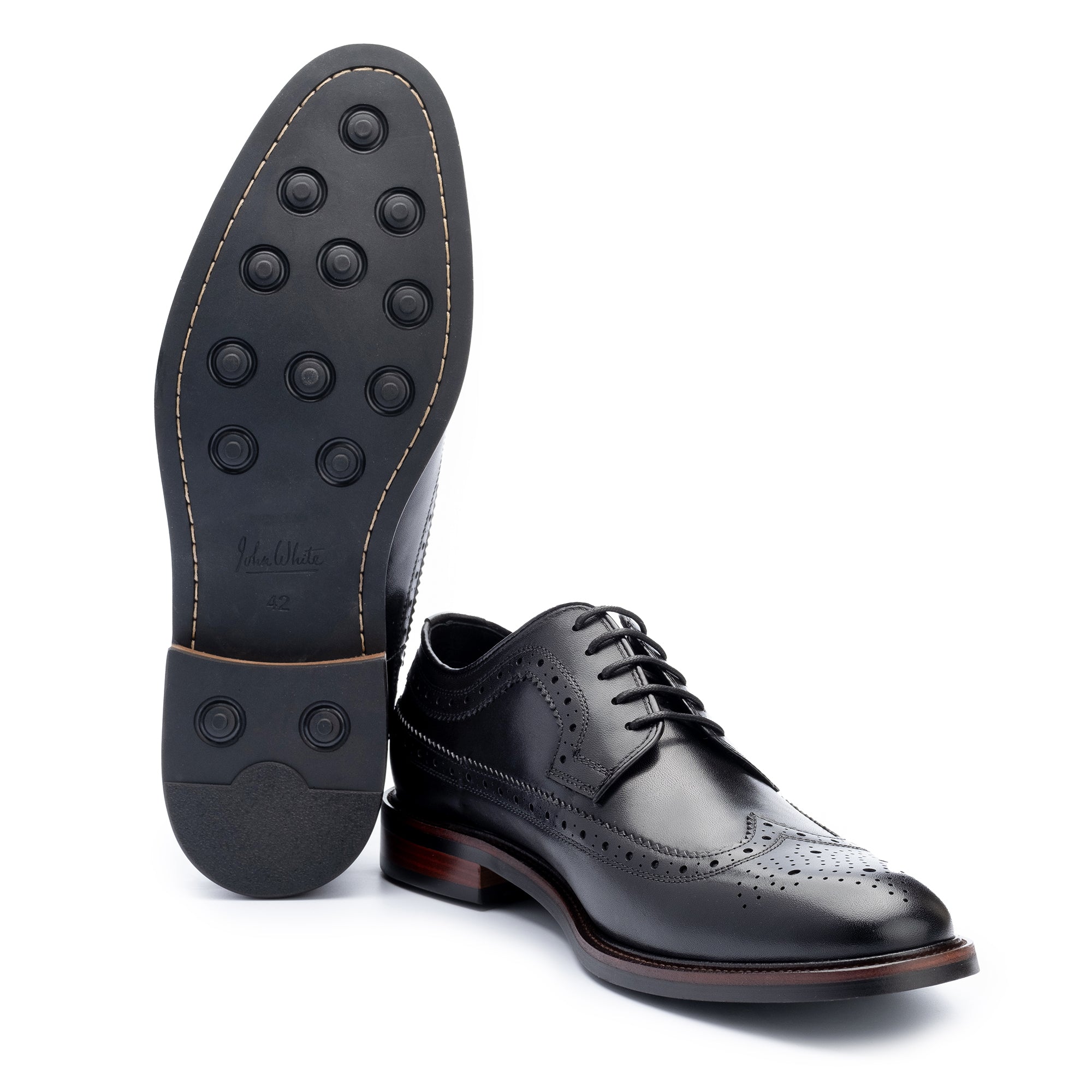
Broguing reduces formality on any shoe, regardless of whether it is a Derby or an Oxford. A plain or cap-toe Oxford is the most formal option available in the lace-up category. A full-brogue Oxford — the wingtip — sits considerably lower on the formality scale. A full-brogue Derby lower still.
If your first Oxford is intended for professional and formal use, choose a plain toe or cap toe. If you want a Derby to anchor both smart and smart-casual contexts, a semi-brogue adds considered detail without undermining the shoe's formality. Our Full Brogue vs. Semi-Brogue guide examines where each level of decoration becomes appropriate.
Keep your first Oxford plain or cap-toed — broguing is the fastest way to reduce the formality of a lace-up, and a formal shoe requires a formal specification.Does Construction Matter When Choosing Between the Two?
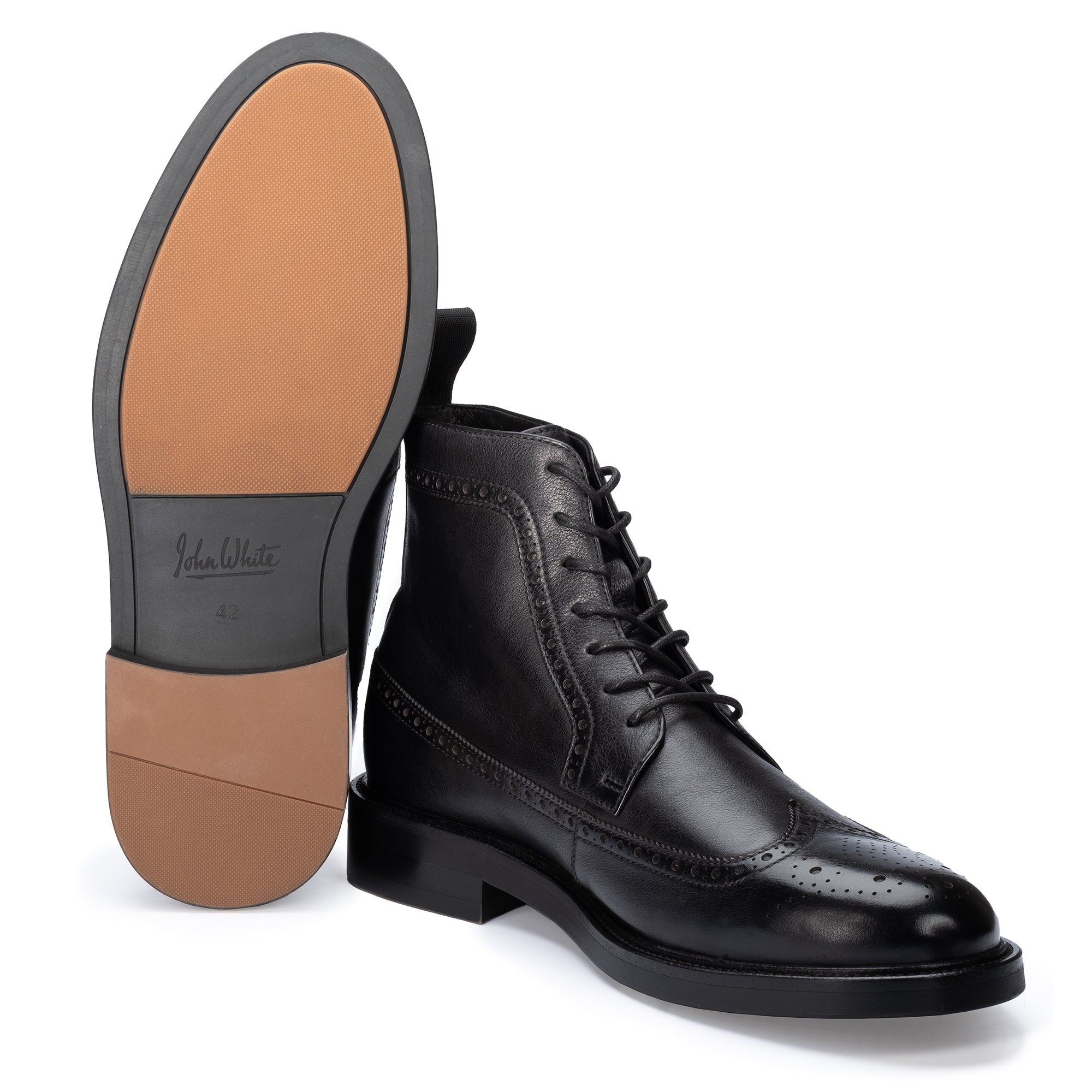
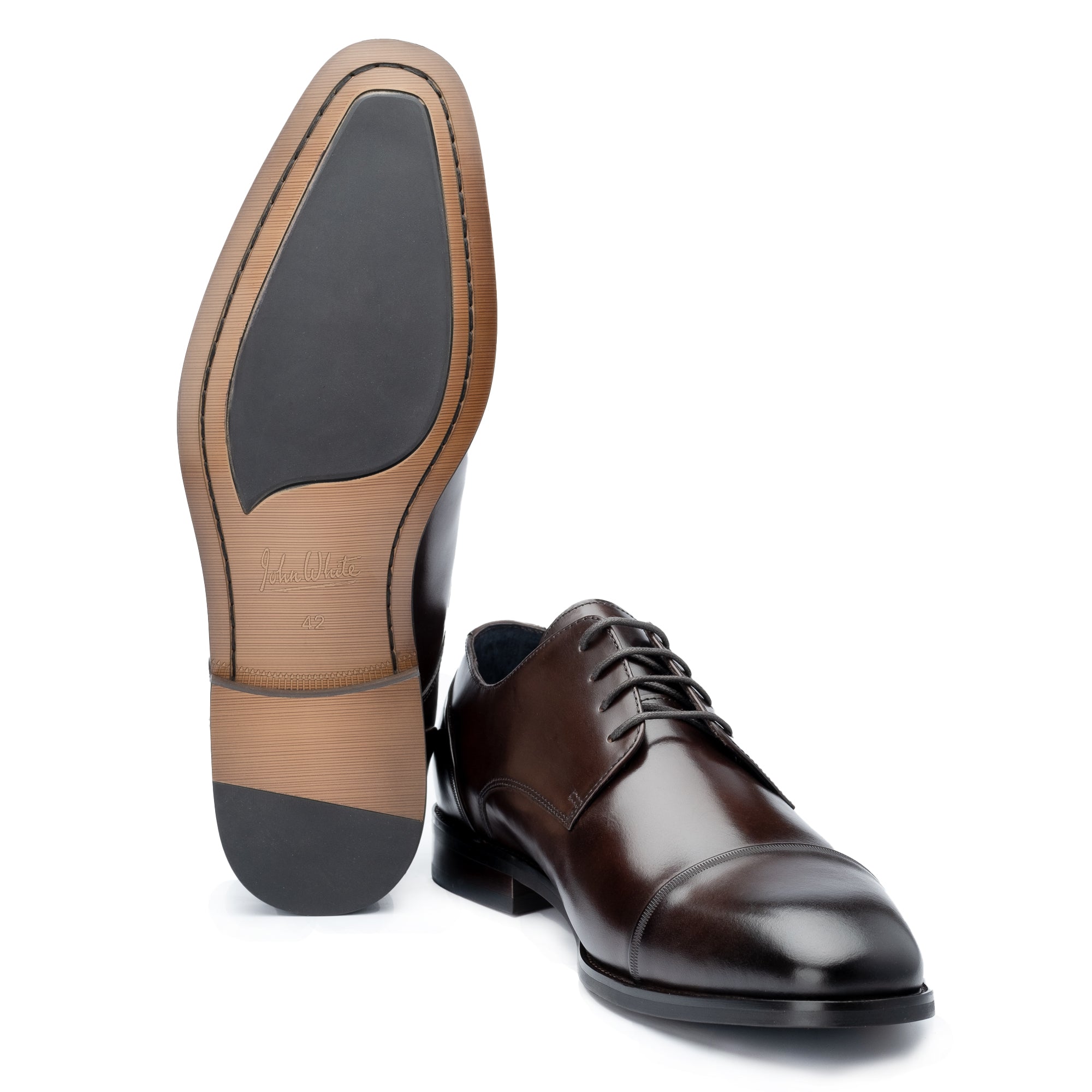
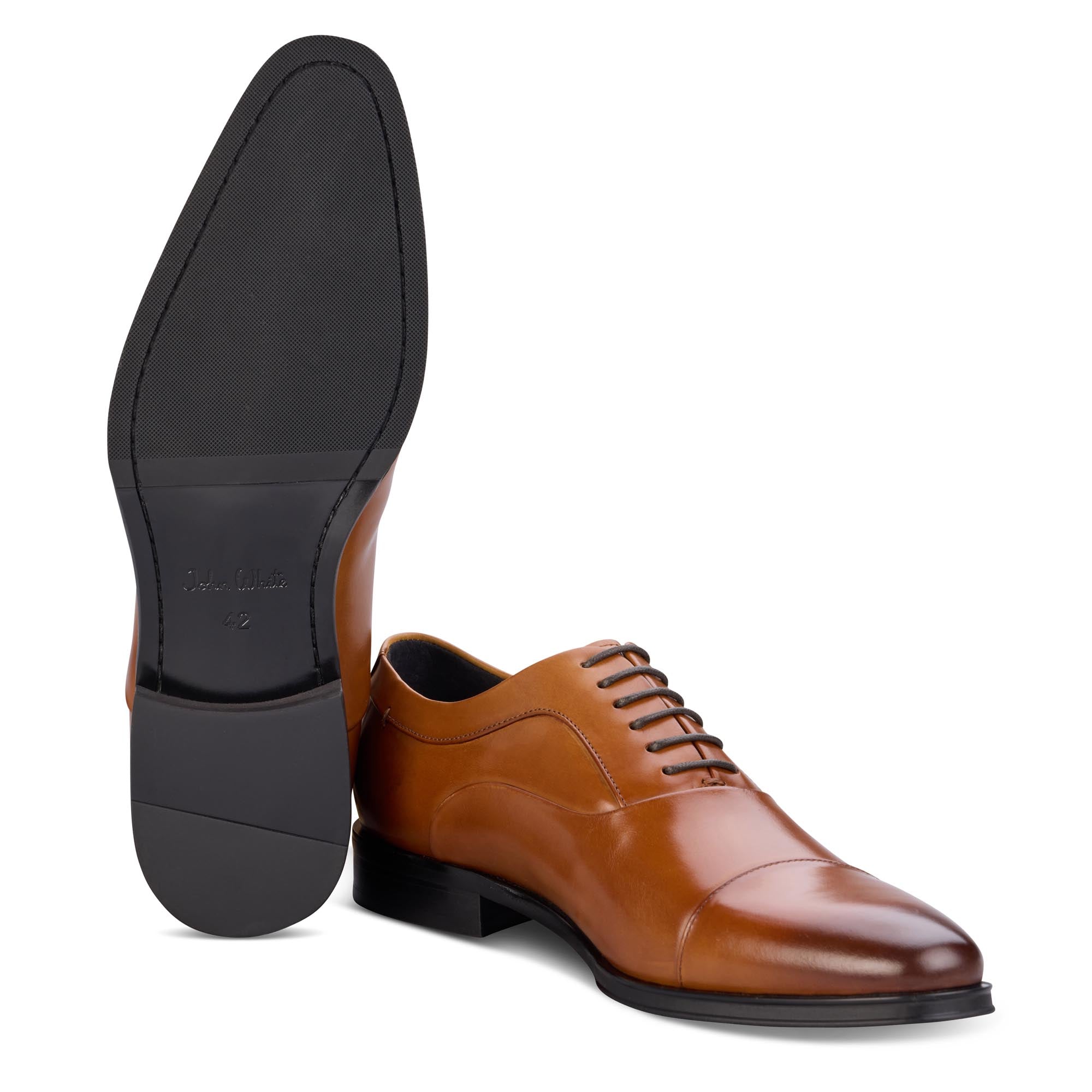
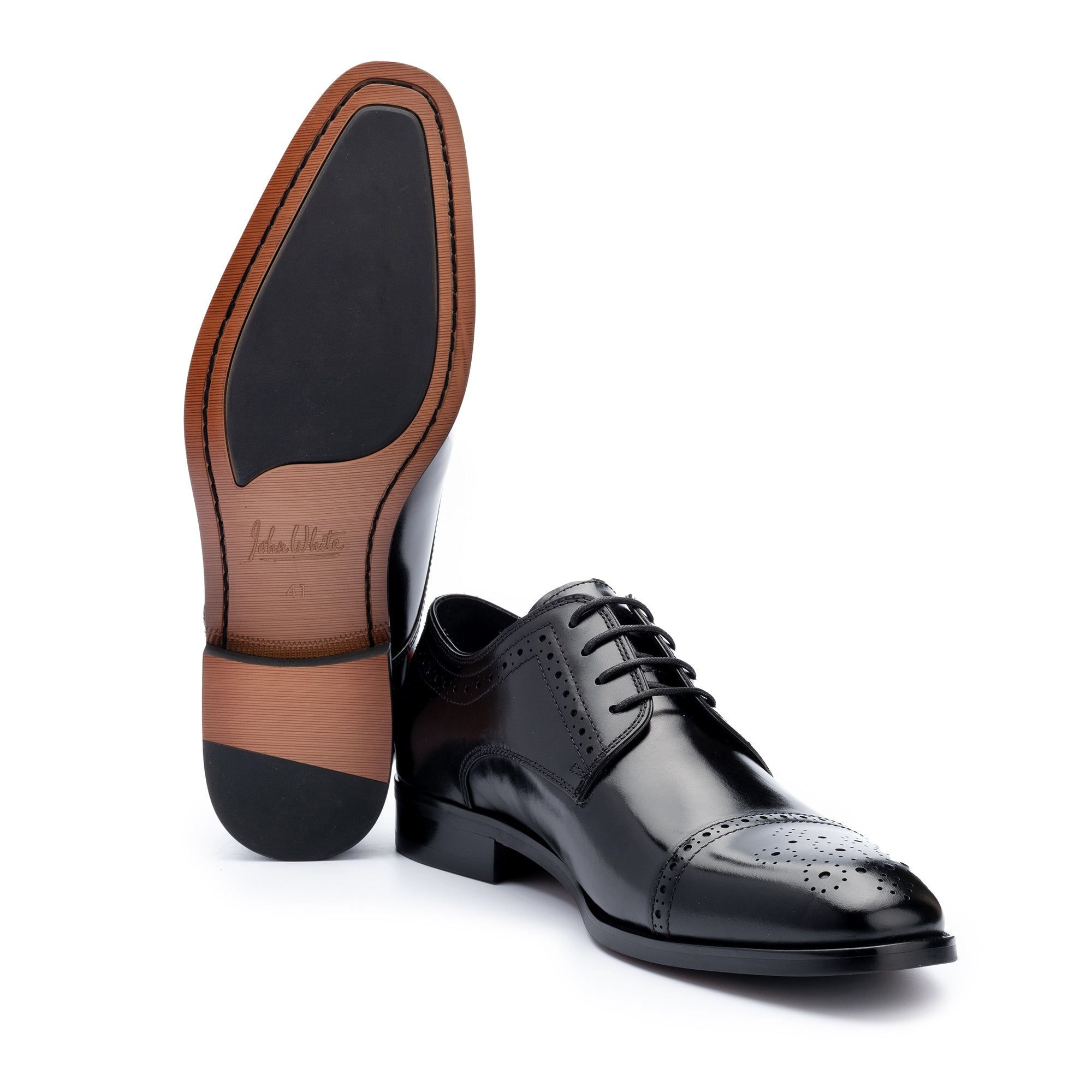
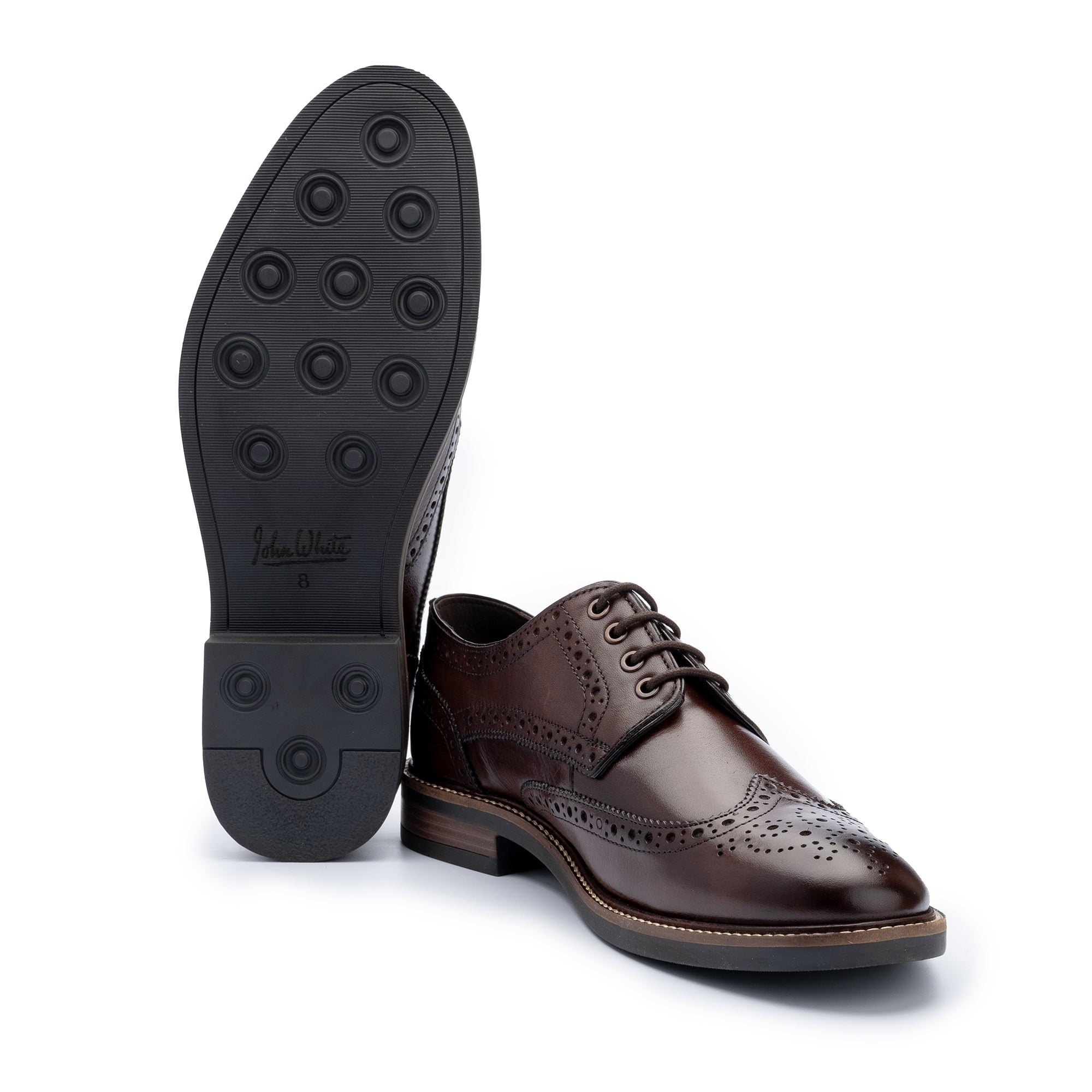
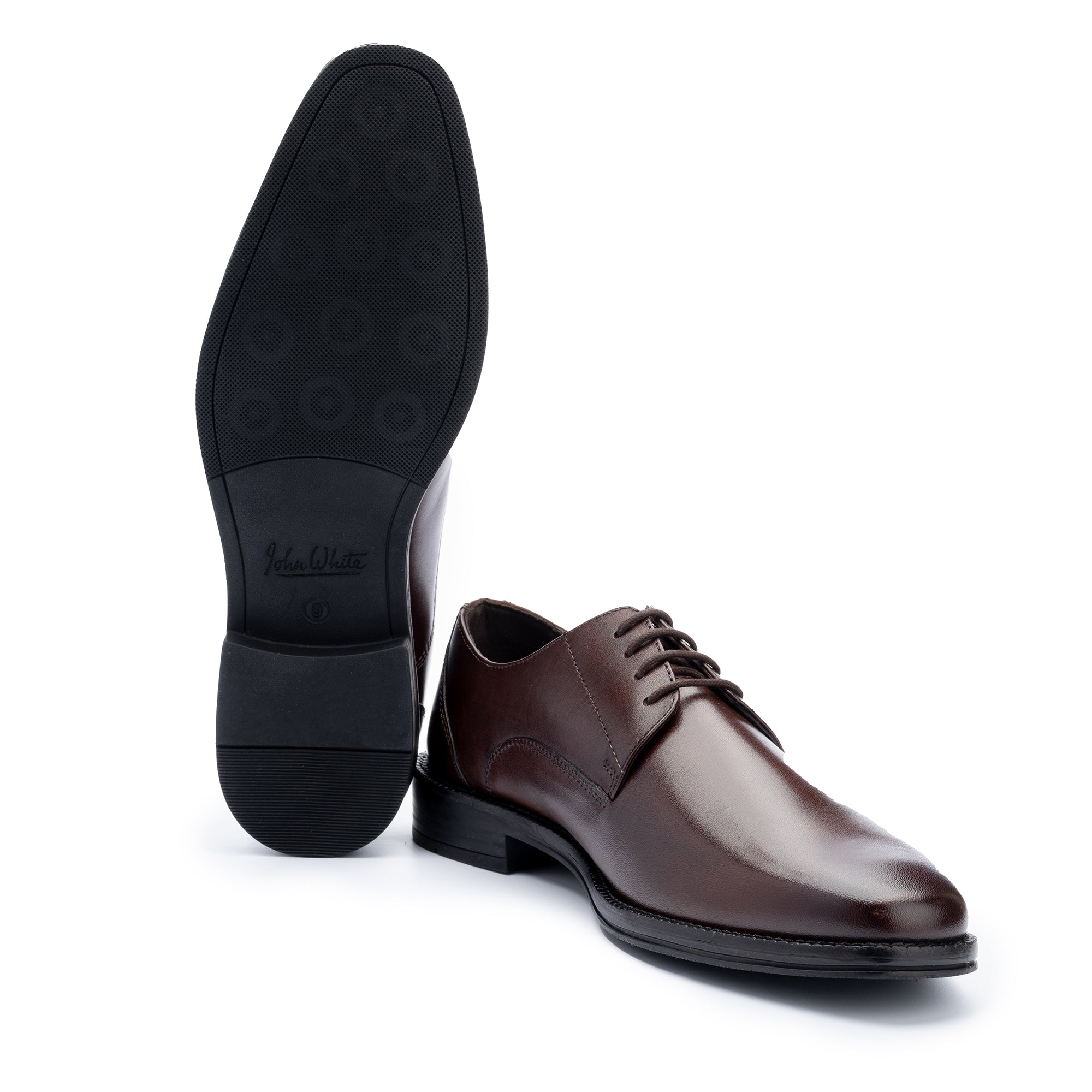
Both Derbies and Oxfords are available in Goodyear welt, Blake stitch, and cemented constructions. Construction does not determine which style to choose first, but it determines how long whichever shoe you buy will last.
According to the Society of Master Shoe Repairers, a Goodyear welted shoe can be resoled between three and five times over its service life — extending a quality pair to twenty years or beyond with disciplined care and rotation. For a first quality lace-up, whether Derby or Oxford, Goodyear welt construction is the standard to insist upon. It is the only construction that makes the investment argument coherent over time.
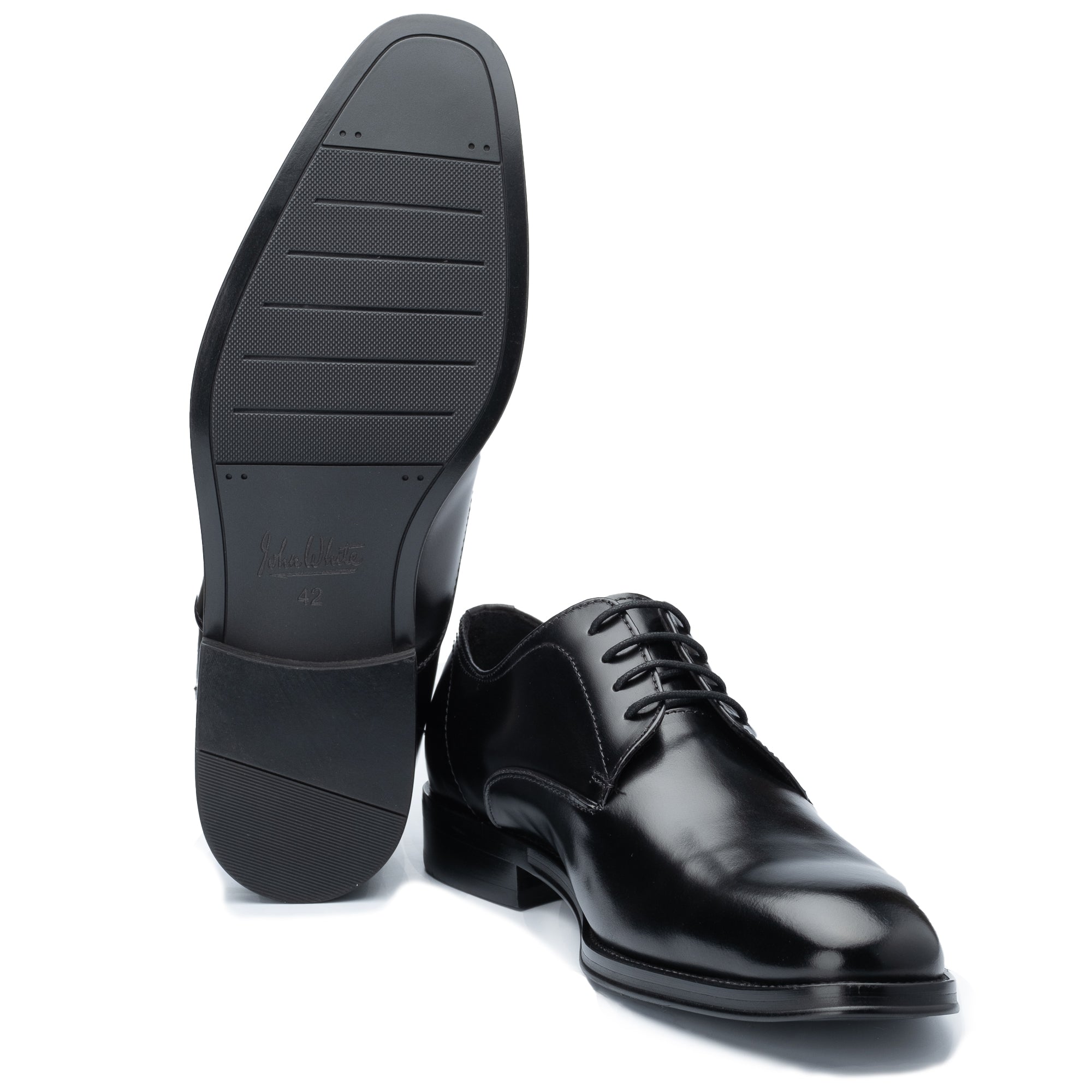
John White Shoes' lace-up range is built to this standard. Browse the full selection to find the construction, toe shape, and colour that fits your wardrobe and your working life.
Related Guides
- The Complete Guide to Men's Dress Shoes — our comprehensive guide
- The Formality Spectrum: A Definitive Ranking of Men's Dress Shoes
- How to Wear Oxford Shoes: Dress Up or Down with Classic Lace-Ups
- Full Brogue vs. Semi-Brogue: A Guide to Choosing Your Next Pair
TL;DR
The Oxford is the more formal lace-up — defined by its closed lacing and clean, uninterrupted silhouette — and is the correct first purchase for men who dress formally for work or attend regular formal occasions. The Derby, with its open lacing and greater versatility across dress codes, is the smarter first purchase for men whose daily life is smart-casual. In either case, choose Goodyear welt construction, select the correct colour for your wardrobe foundation, and resist broguing on any shoe intended for strictly formal use.
Frequently Asked Questions
Is an Oxford or Derby shoe smarter?
The Oxford is the smarter of the two. Its closed lacing system produces a tighter, more formal silhouette that reads as professional at any dress code level. The Derby sits one rung below in formality but handles the vast majority of professional and social occasions with equal composure.
Can you wear a Derby to a formal occasion?
Yes, with qualification. A plain or semi-brogue Derby in black or dark brown is appropriate for weddings, formal dinners, and business-formal meetings. It is not correct for black-tie events, where a plain Oxford is the expected standard.
Is an Oxford too formal for everyday wear?
Not inherently. A plain Oxford in brown or tan wears naturally in smart-casual contexts, particularly with chinos or an open-collar shirt. The perception that Oxfords are too formal for daily wear is largely a function of colour and detailing — black plain-toe Oxfords read formal; brown or tan versions, considerably less so.
Which lace-up is better for wider feet — Derby or Oxford?
The Derby. Its open lacing allows the quarters to spread, accommodating a wider forefoot without restriction. Men with wider feet who purchase an Oxford may find the closed lacing feels constrictive, particularly during extended wear. For advice on selecting the right fit, our guide to choosing the correct shoe width covers the full range of considerations.