
Chelsea Boot vs Chukka Boot: Which Should Be Your Next Investment?
The Chelsea boot and the chukka boot are the two most versatile ankle boots in a man's wardrobe — but they serve different purposes. The Chelsea covers more formality ground, pairing with suits and smart-casual dressing alike; the chukka excels from smart-casual downwards. For most wardrobes, the Chelsea boot delivers the greater return on investment. If your wardrobe skews casual, the chukka earns its place on its own considerable merits.
In This Guide
- What Is the Difference Between a Chelsea Boot and a Chukka Boot?
- How Do Chelsea and Chukka Boots Compare in Formality?
- Which Boot Offers Greater Versatility?
- How Does Construction Determine Long-Term Investment Value?
- Which Leather Works Best for Each Boot?
- Chelsea Boot vs Chukka Boot: At a Glance
- Chelsea Boot or Chukka Boot: Which Should You Buy First?
- Related Guides
- Frequently Asked Questions
Chelsea boot vs chukka boot: the question arises whenever a man decides it is time to invest properly in ankle footwear. Both sit at ankle height. Both work across a range of occasions. The difference lies in silhouette, formality range, and the type of wardrobe each serves most naturally — and understanding that difference is what separates a confident purchase from an expensive mistake.
What Is the Difference Between a Chelsea Boot and a Chukka Boot?
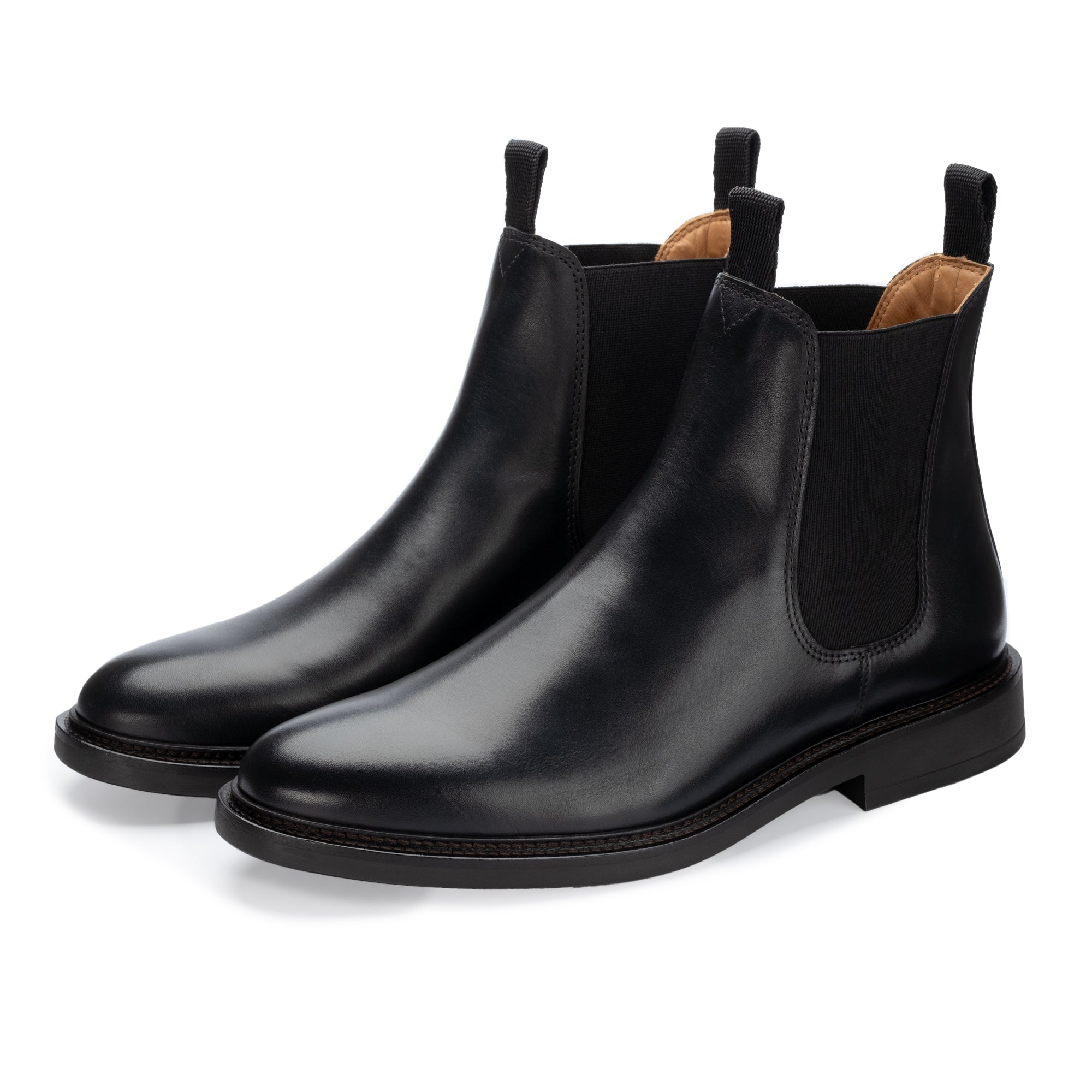
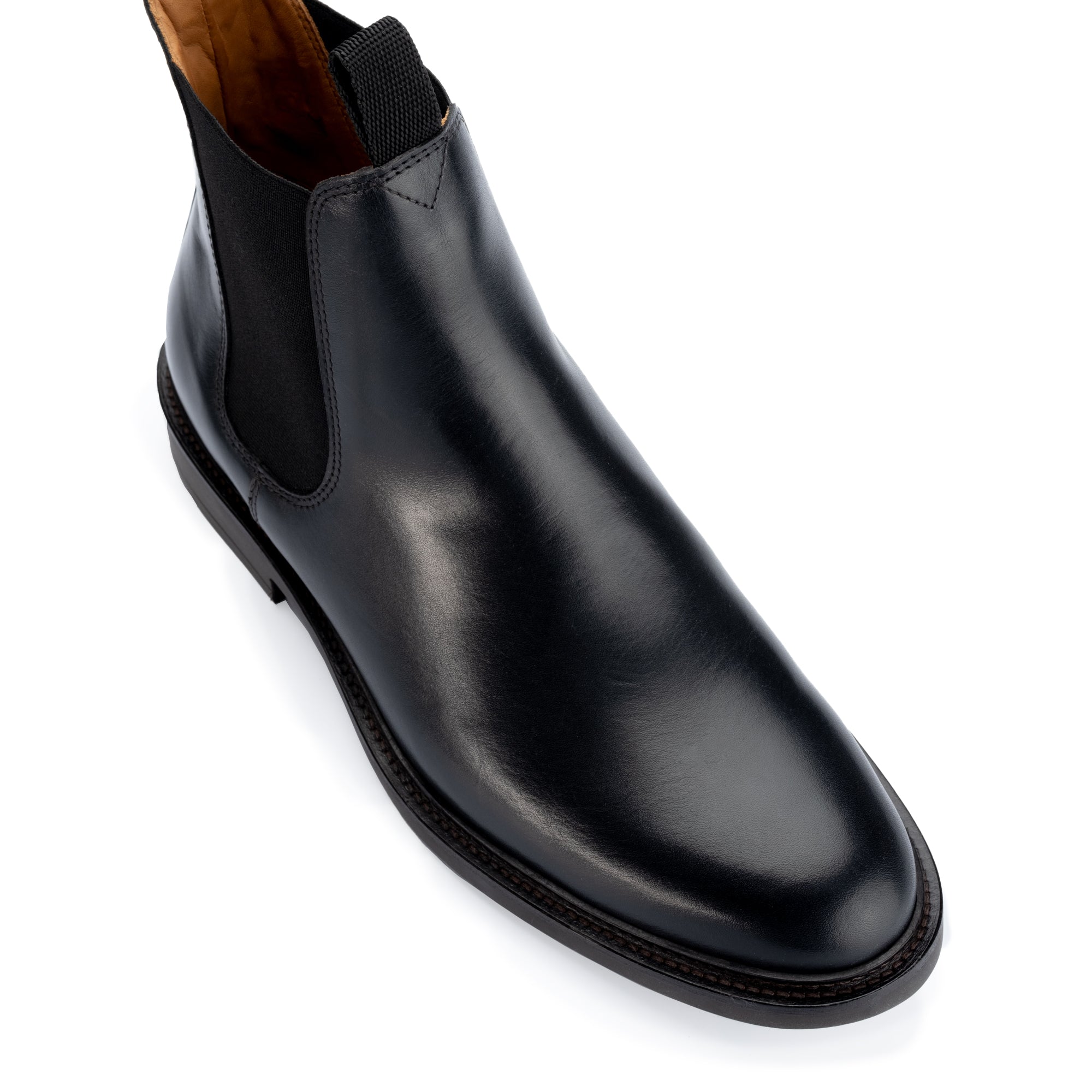
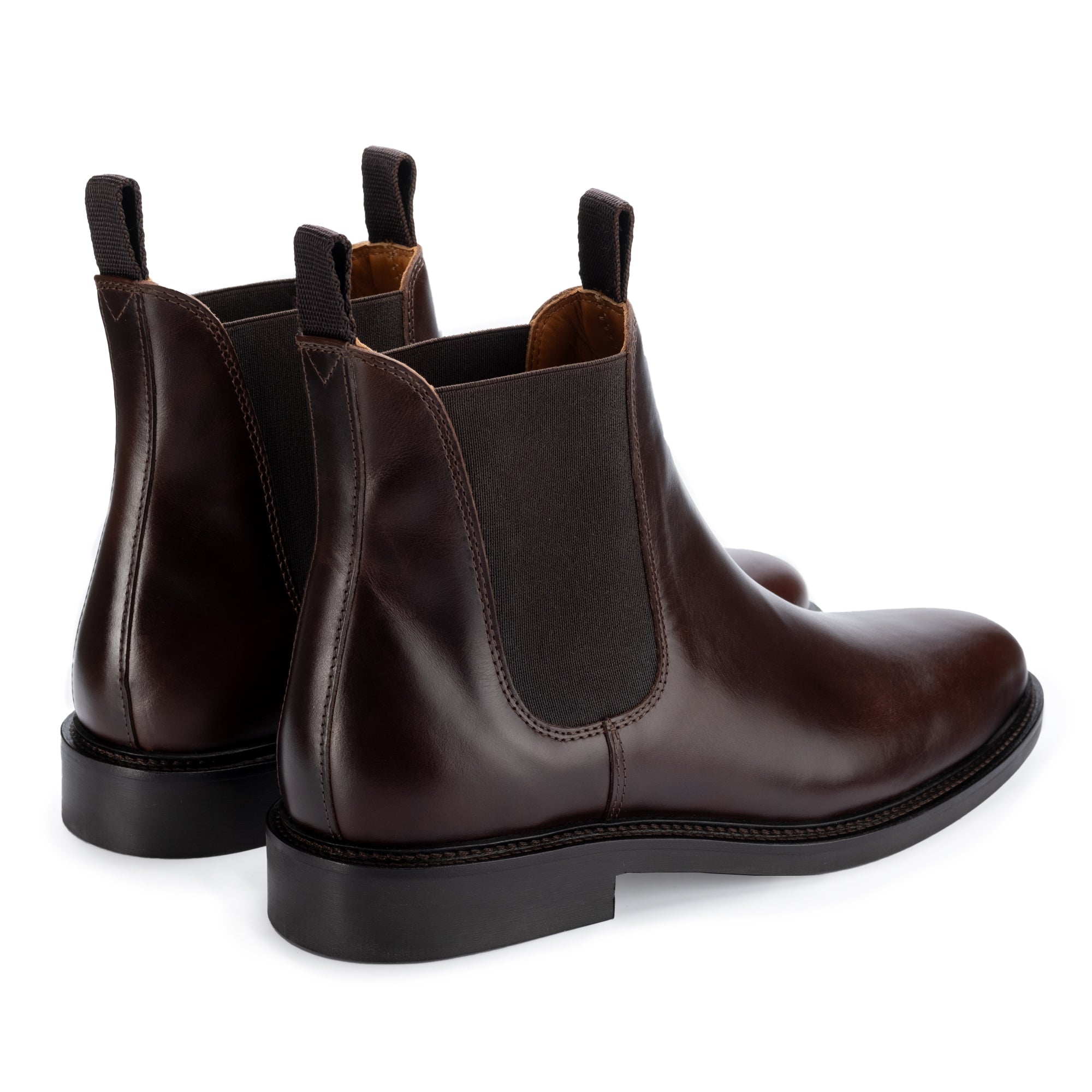
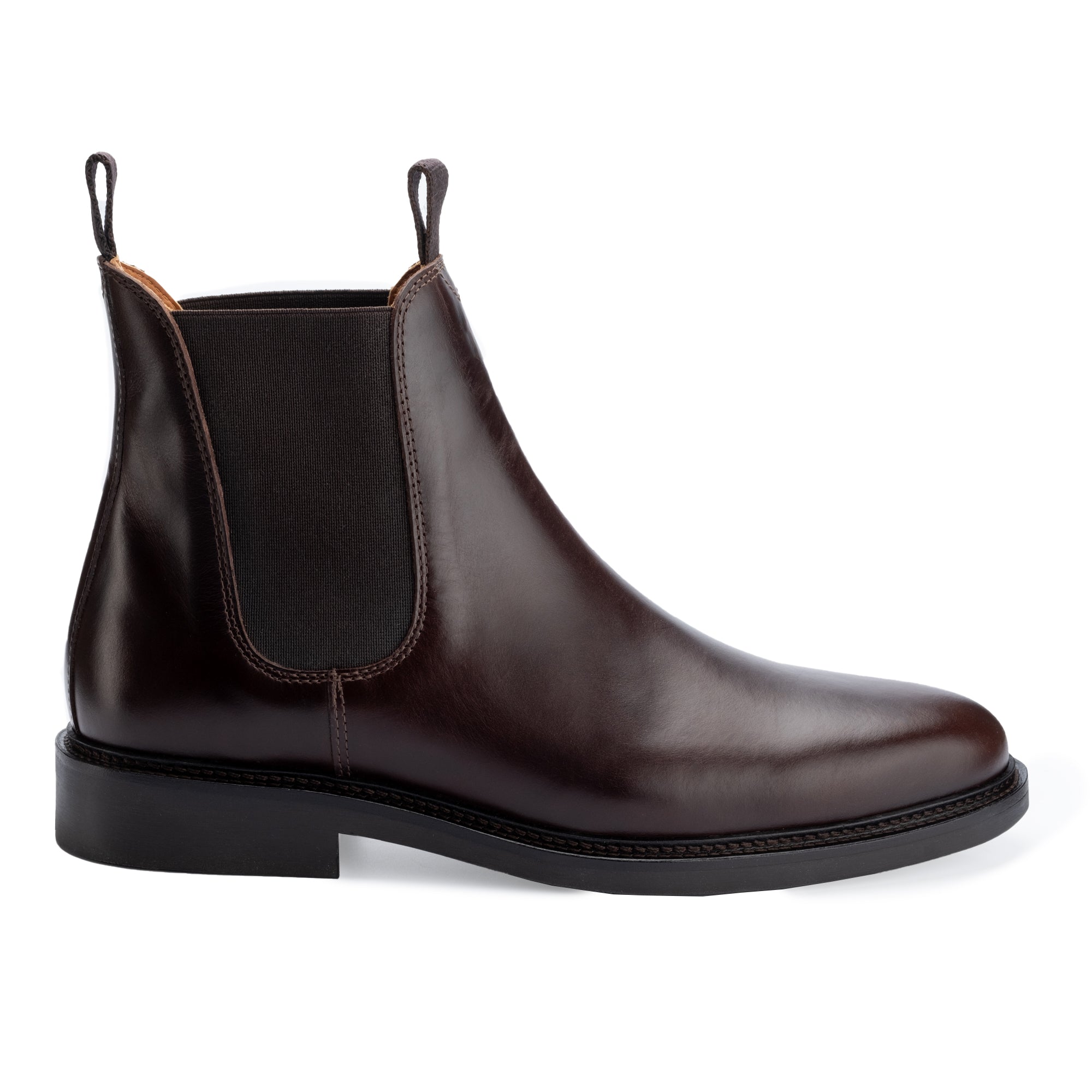
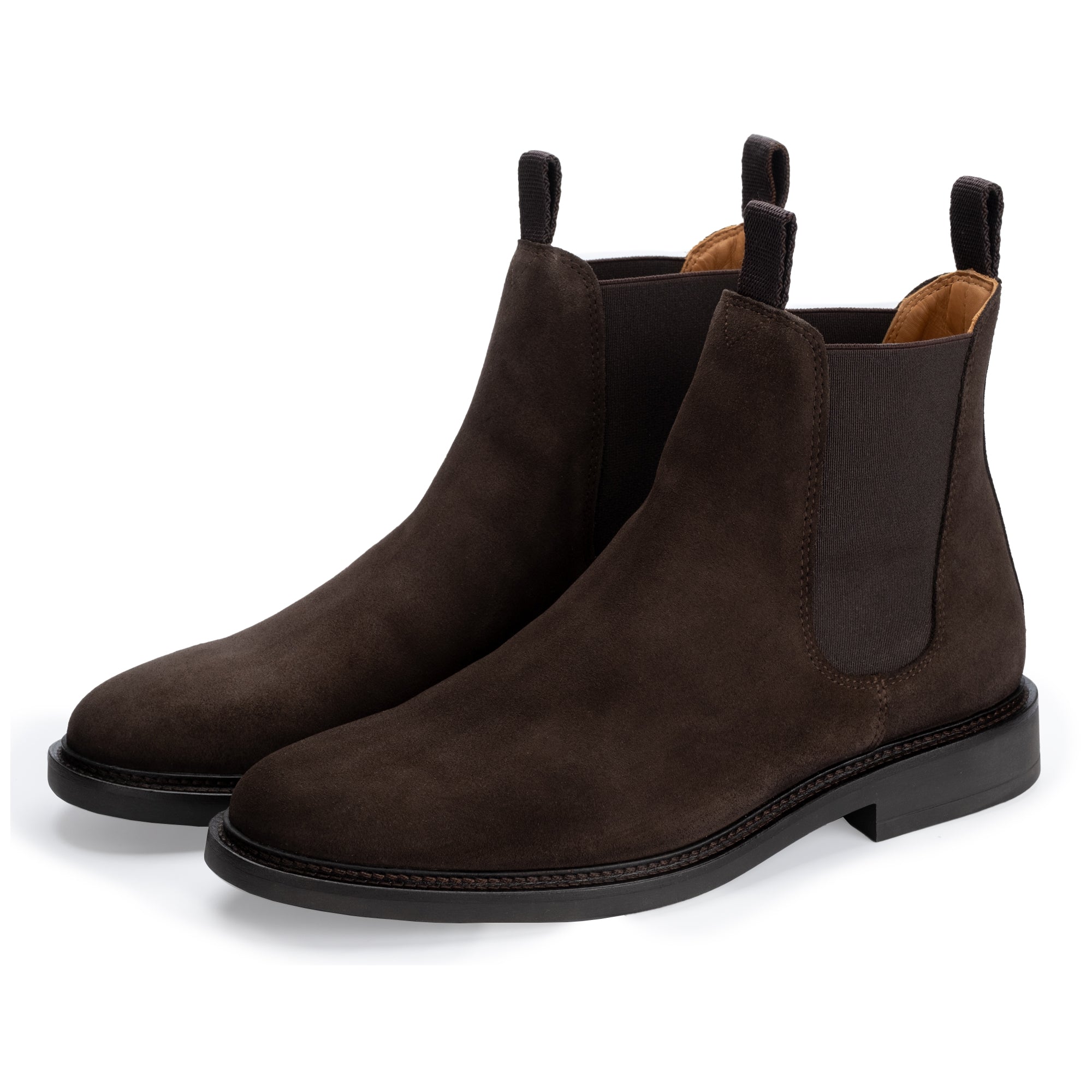
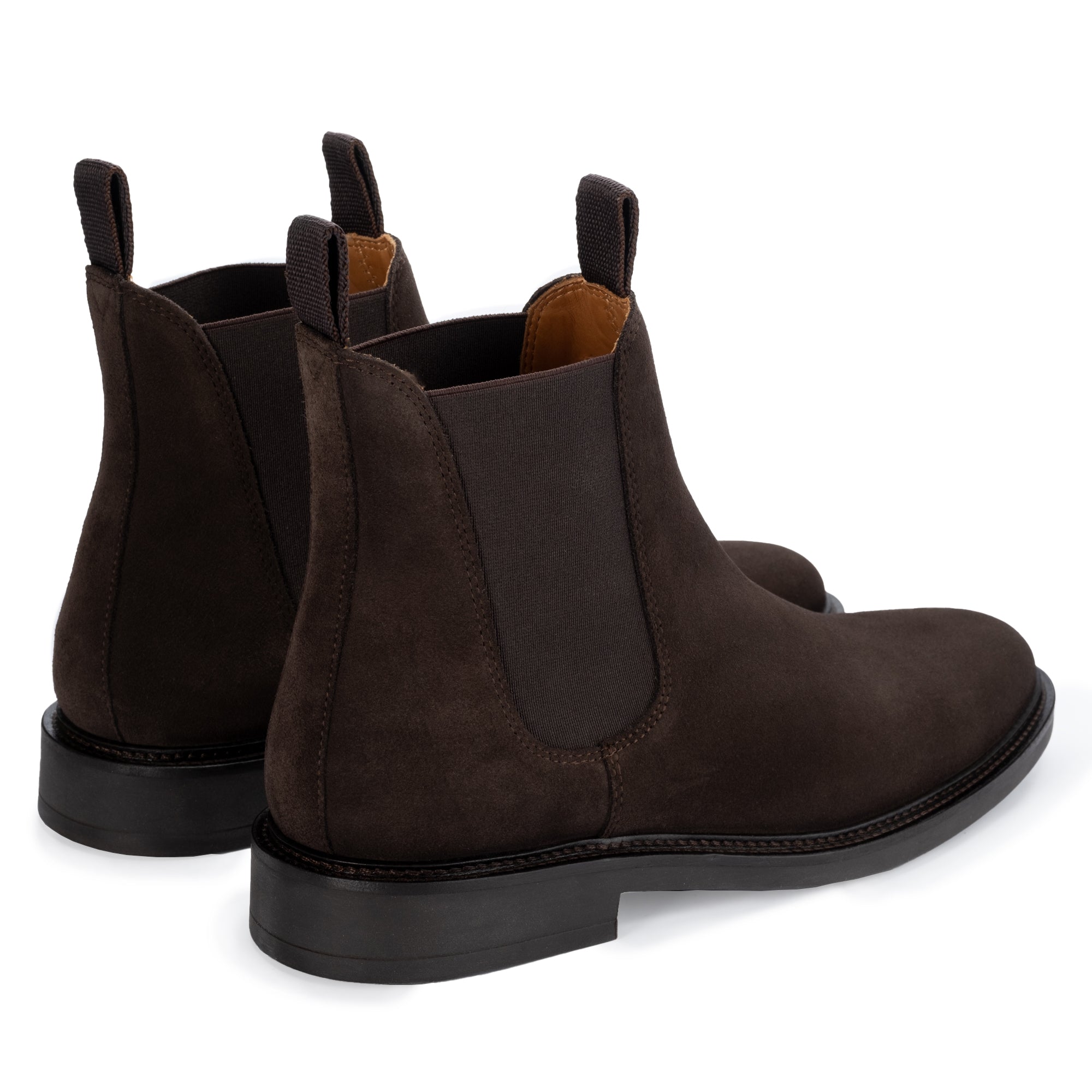
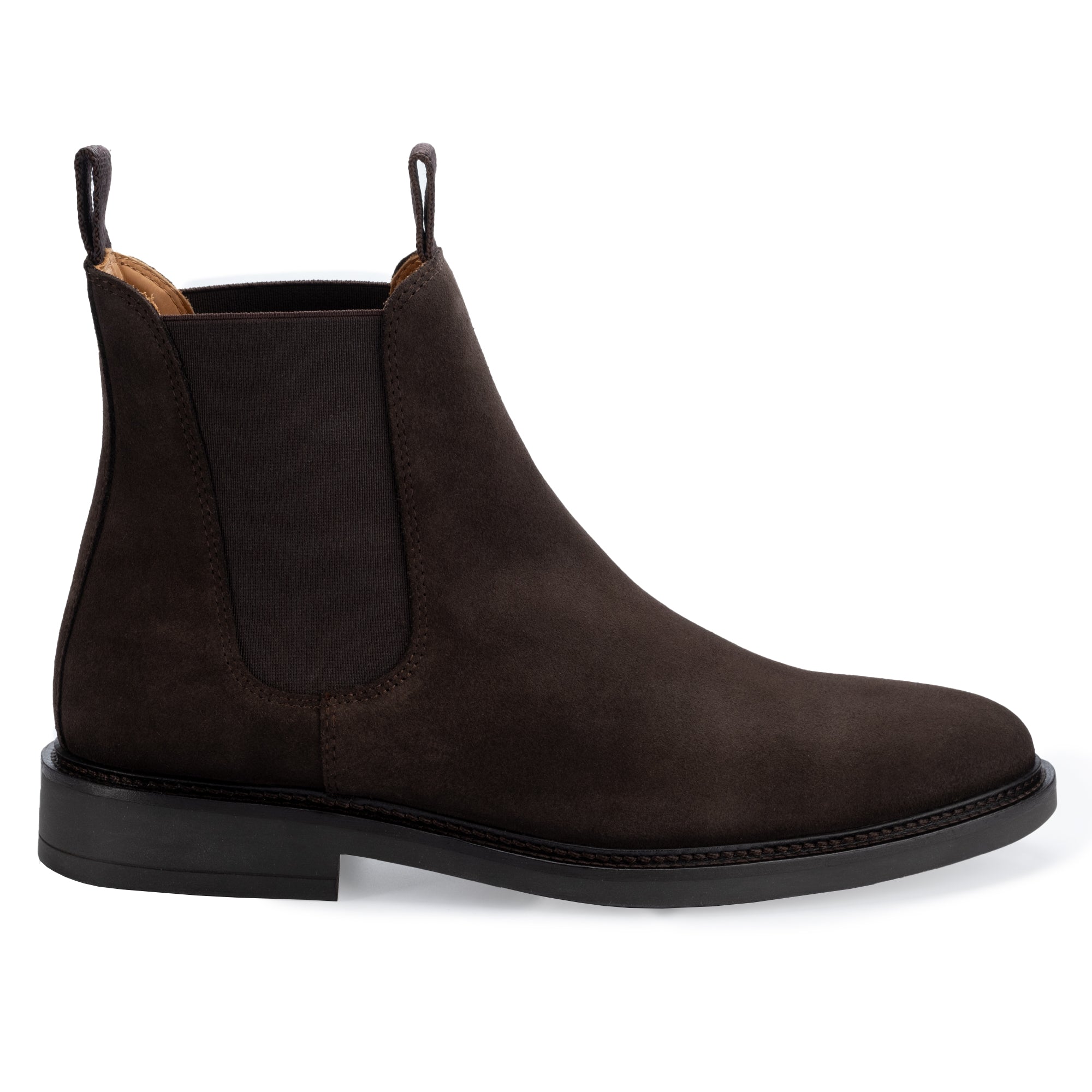
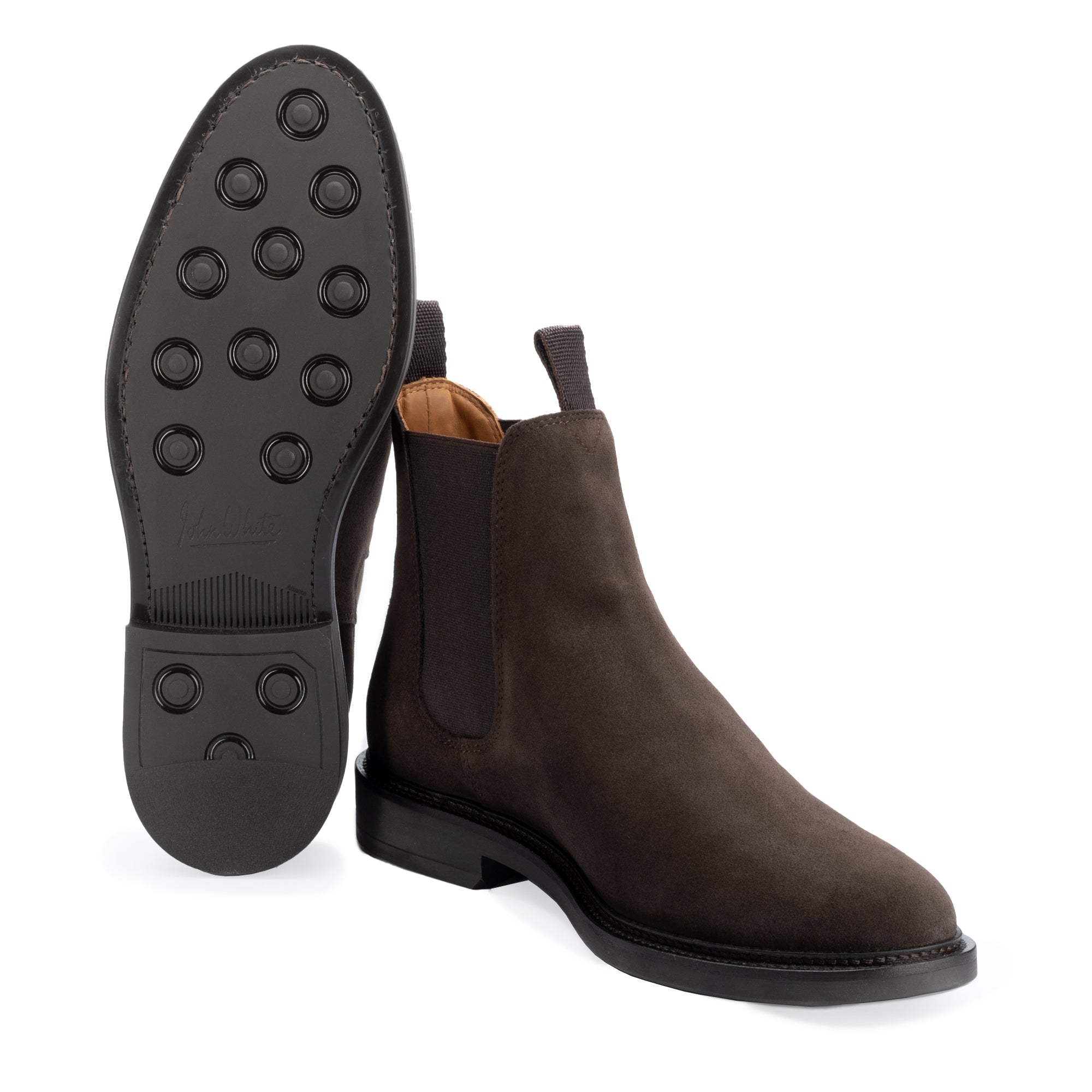
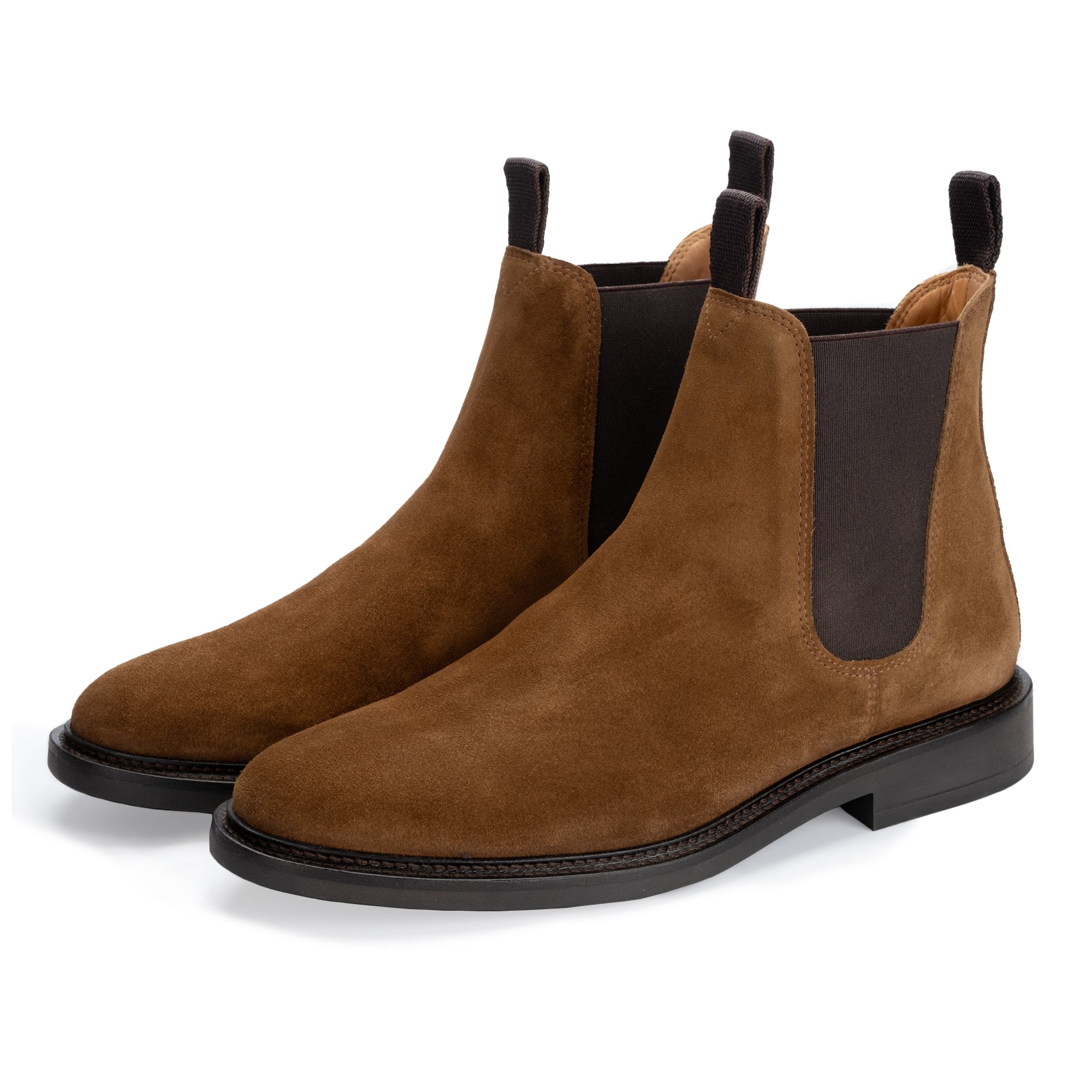
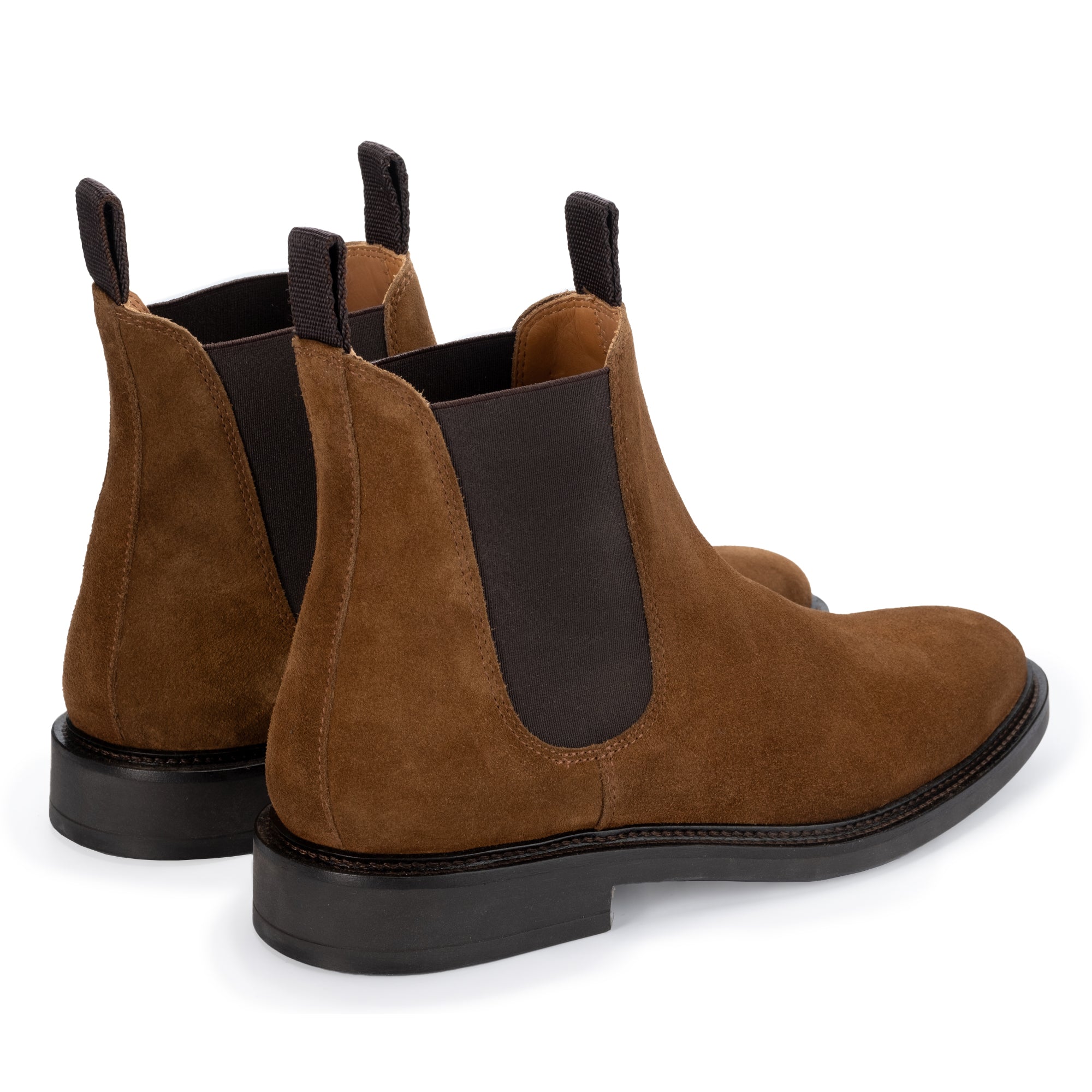
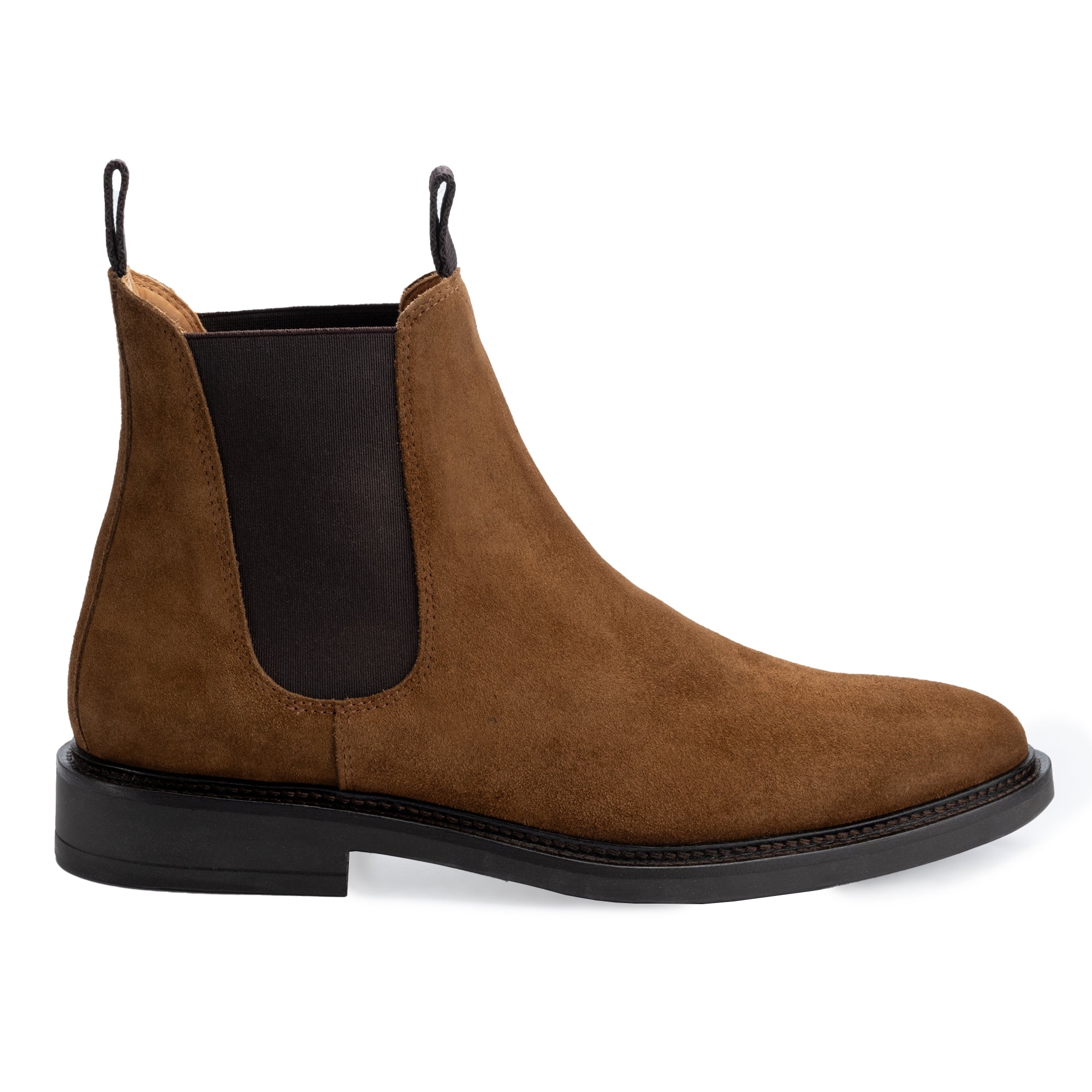
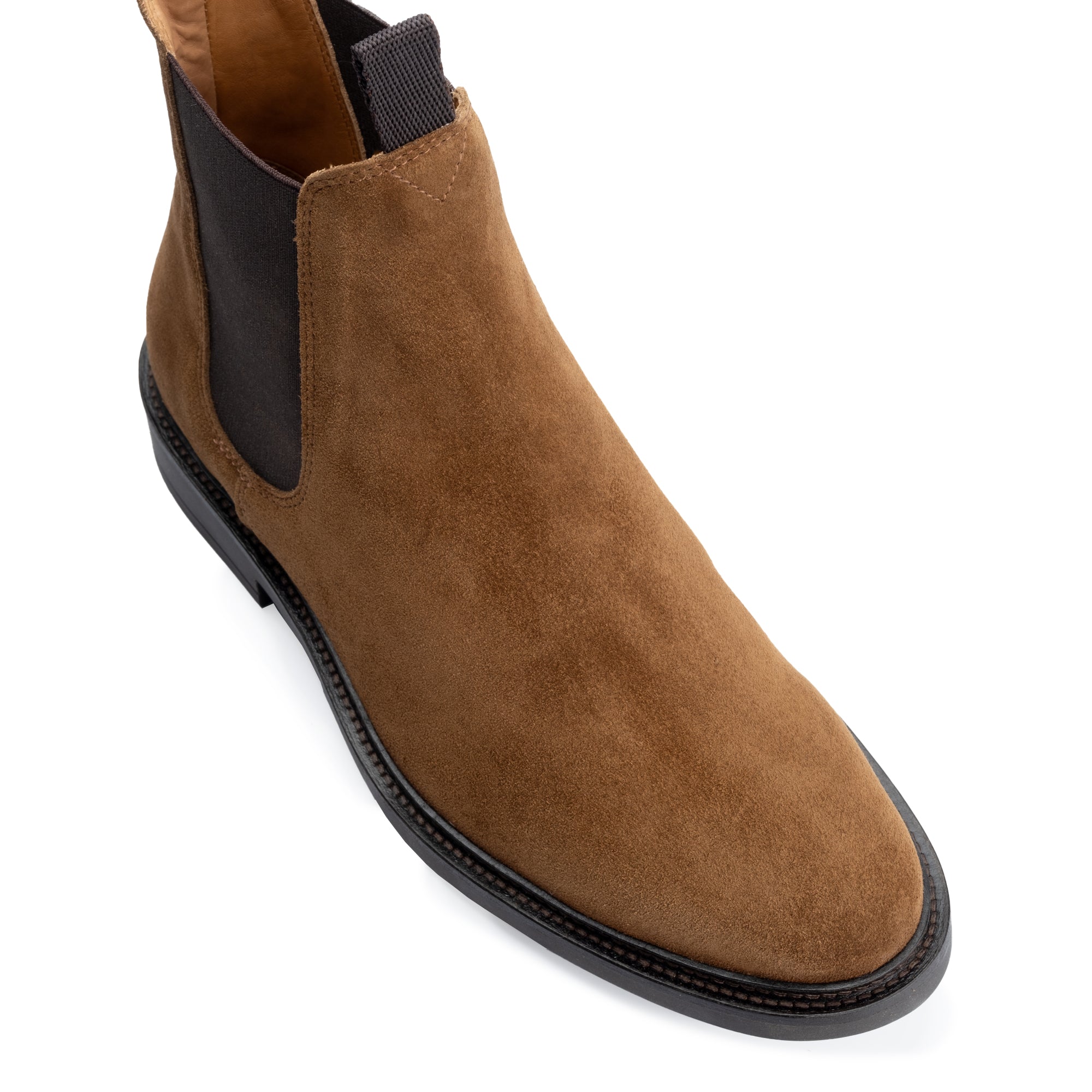
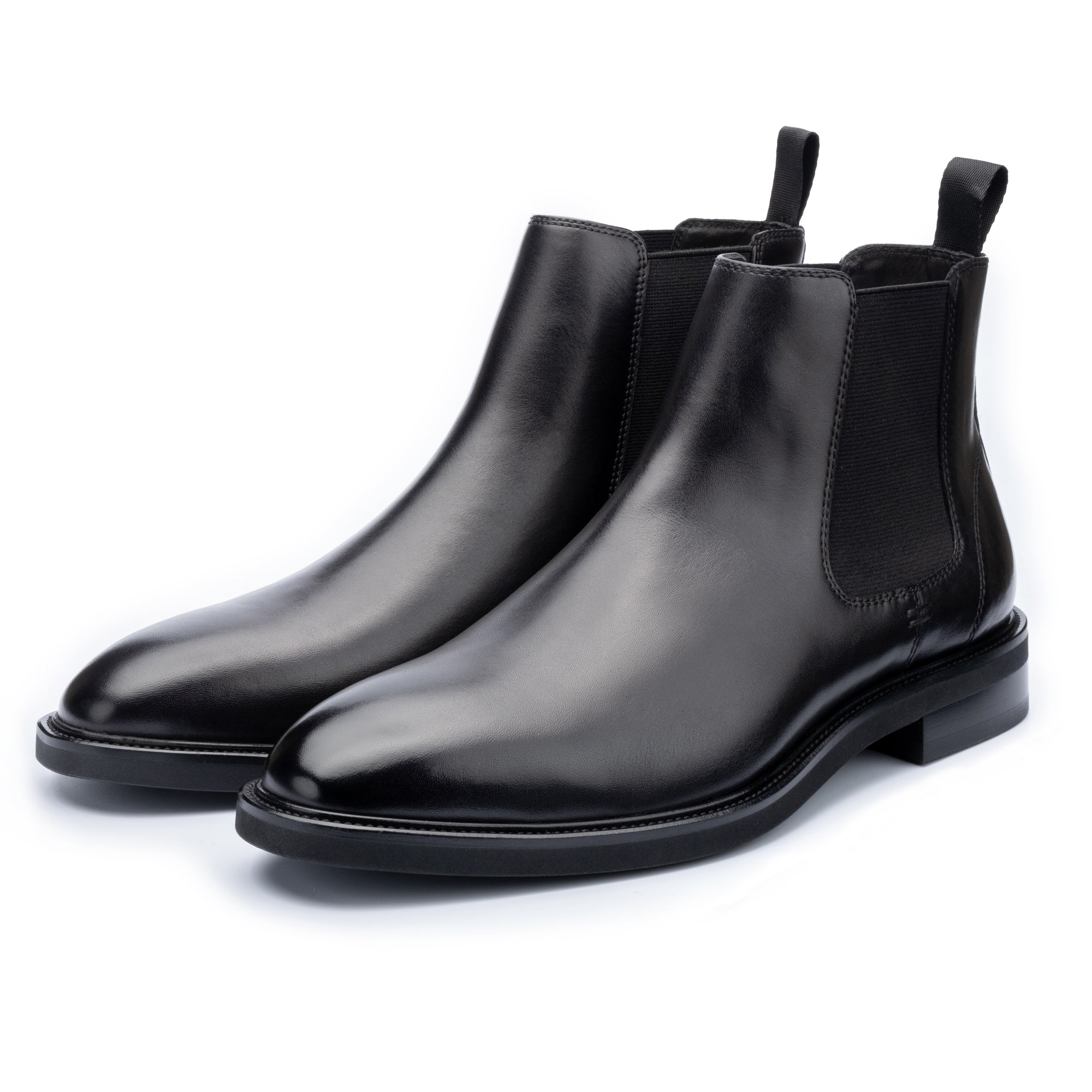
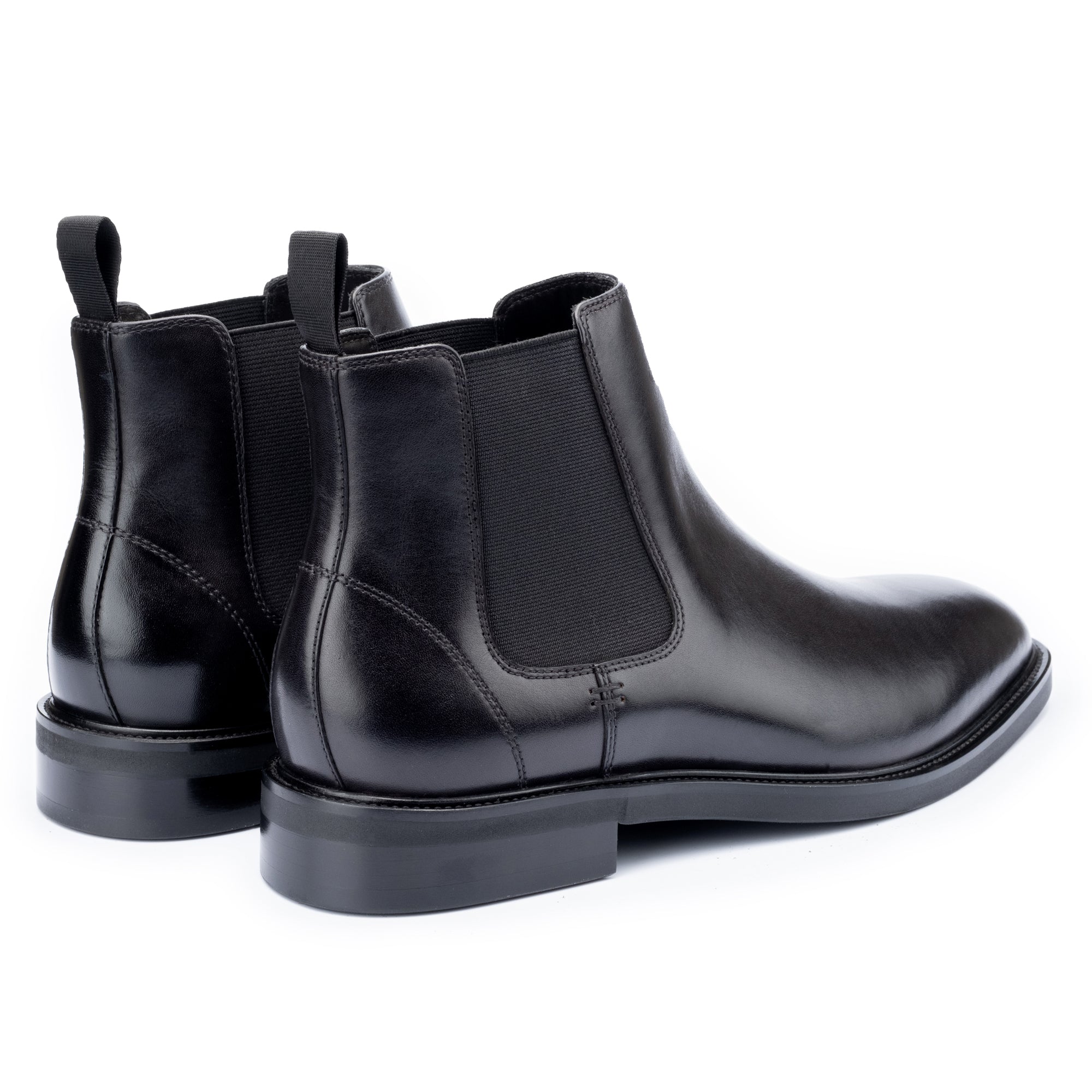
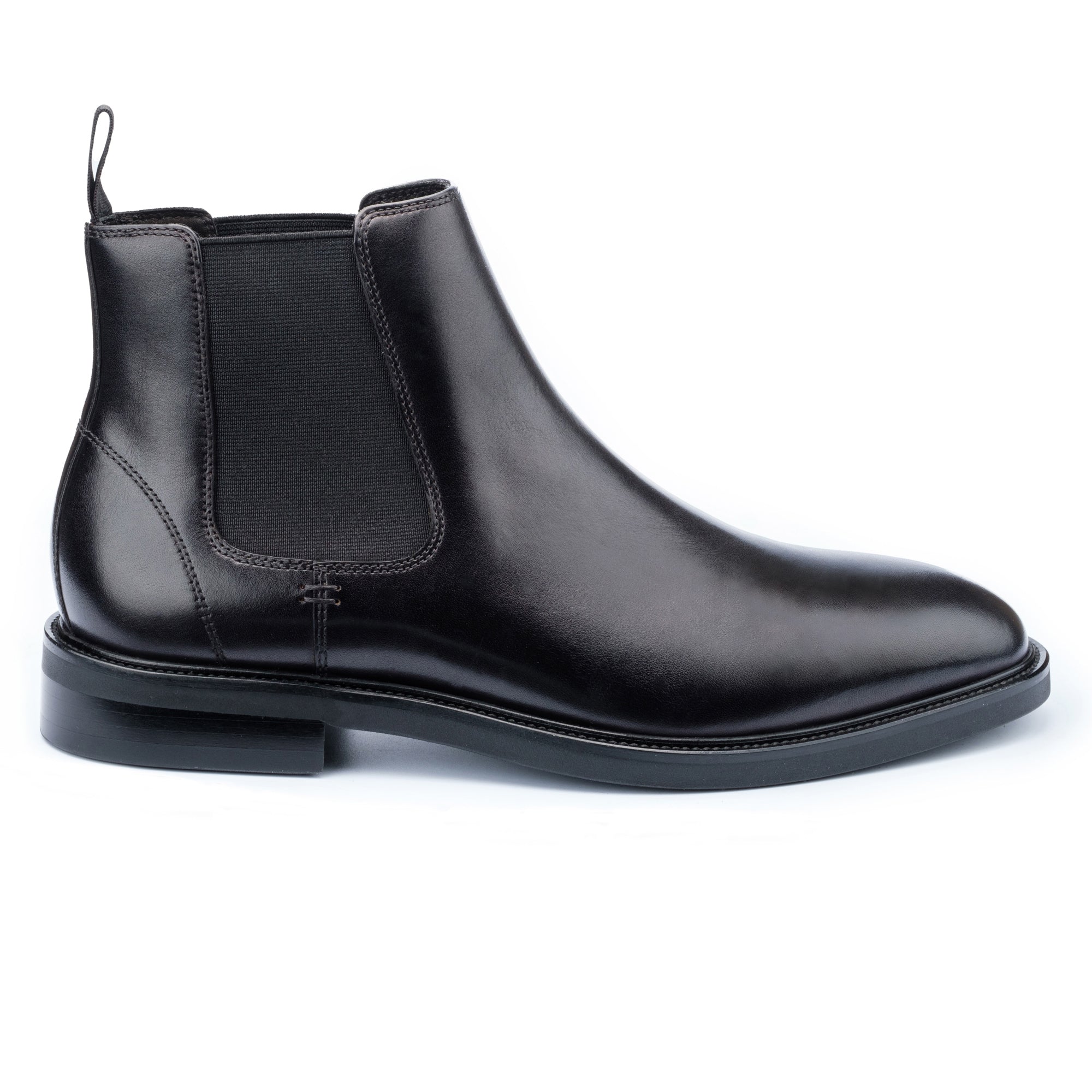
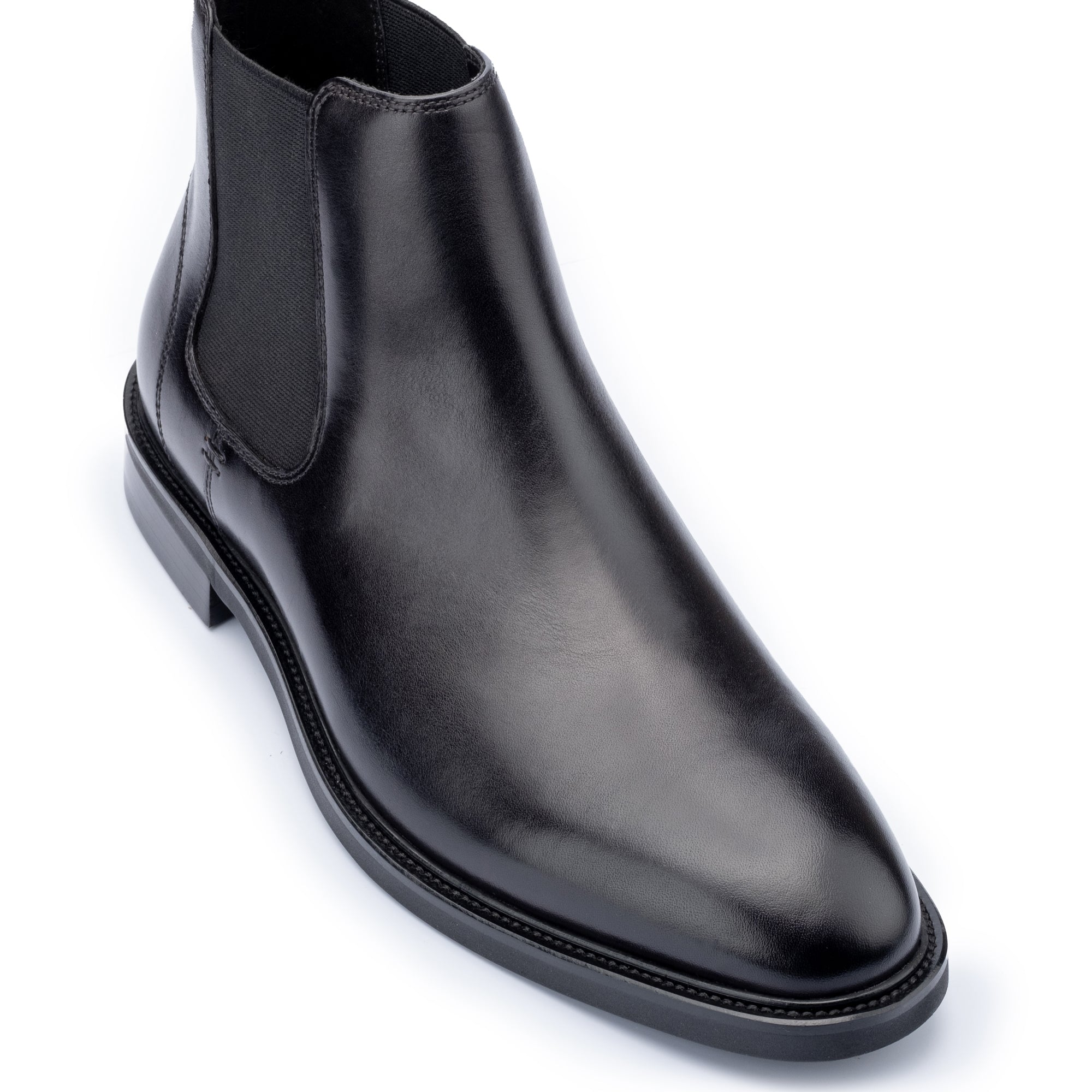
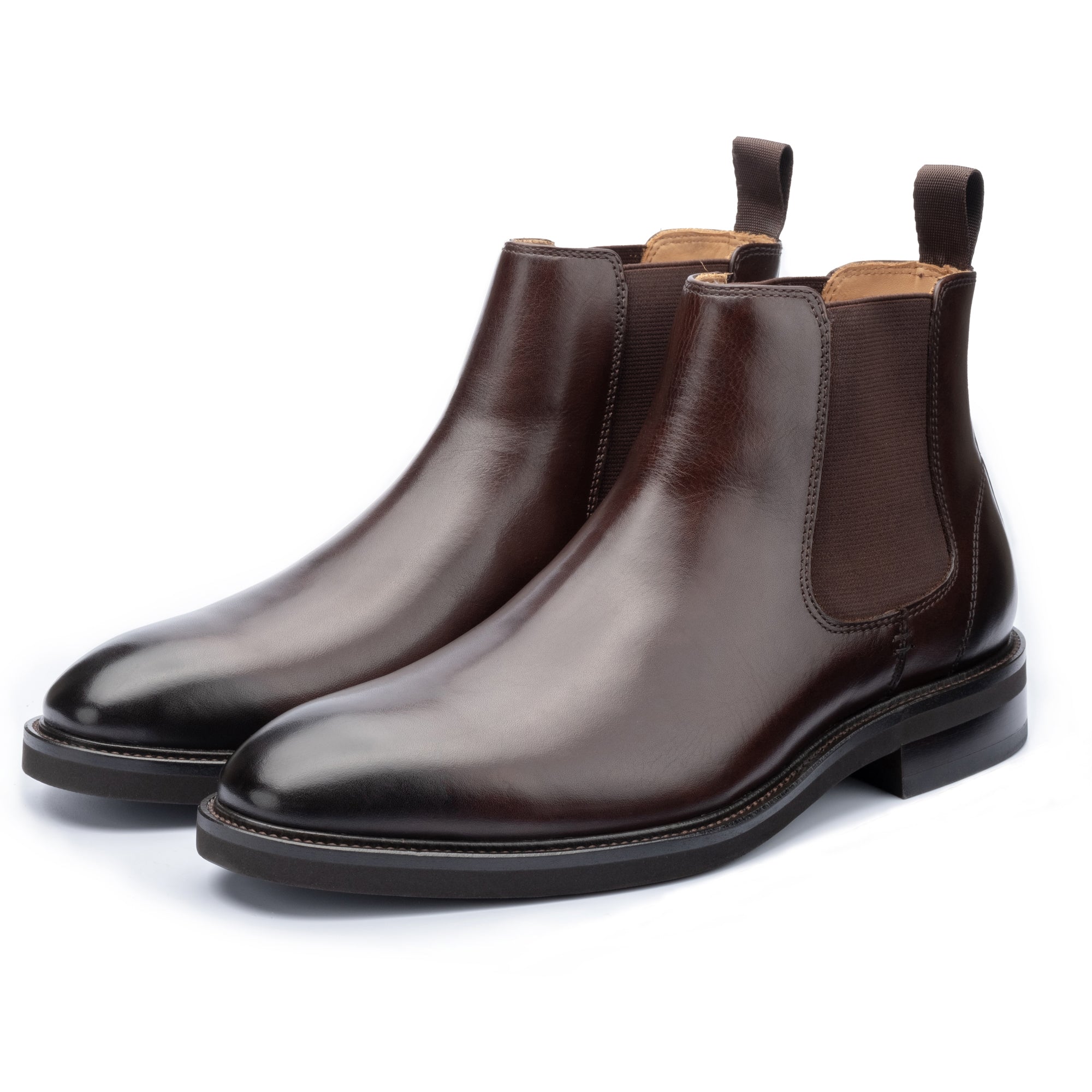
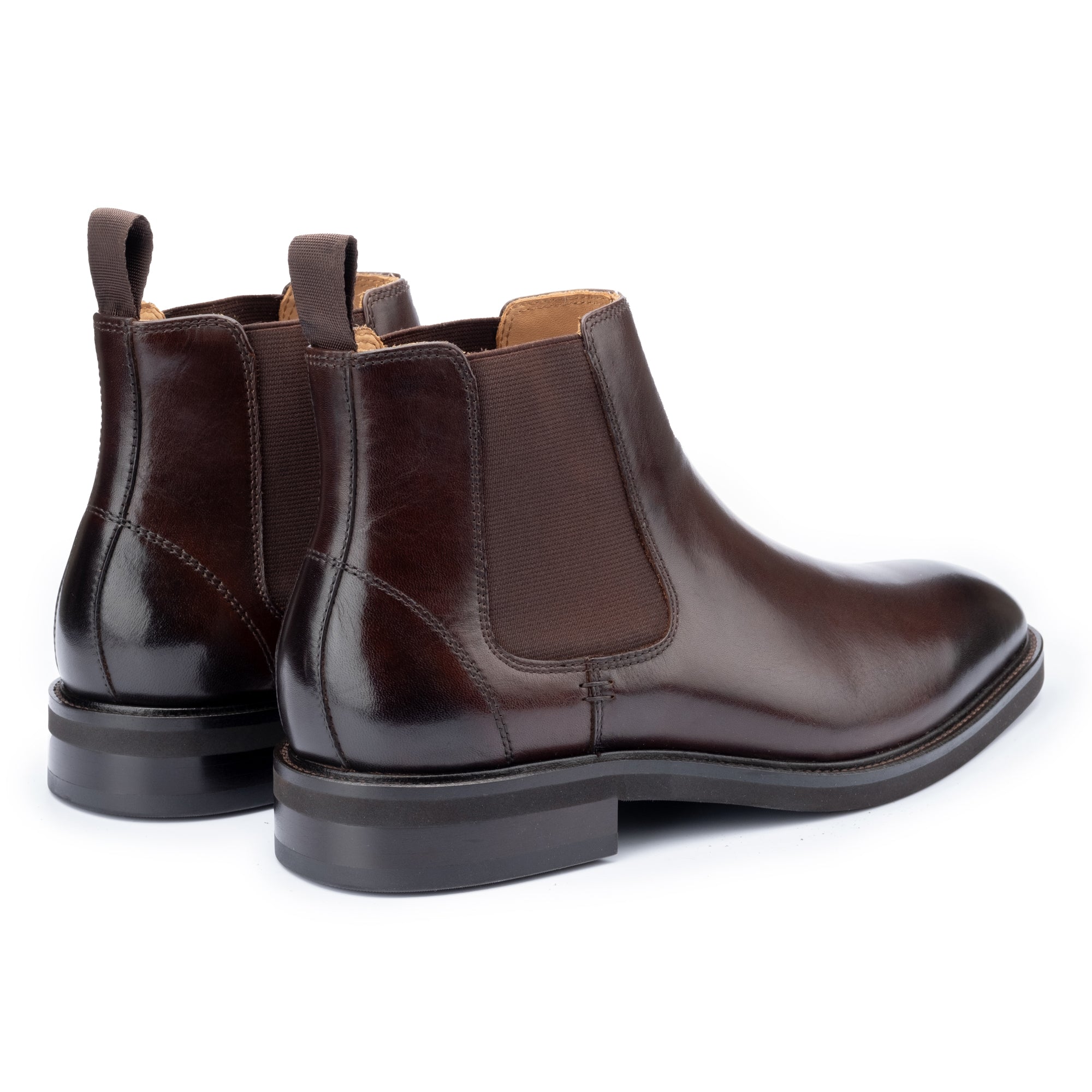
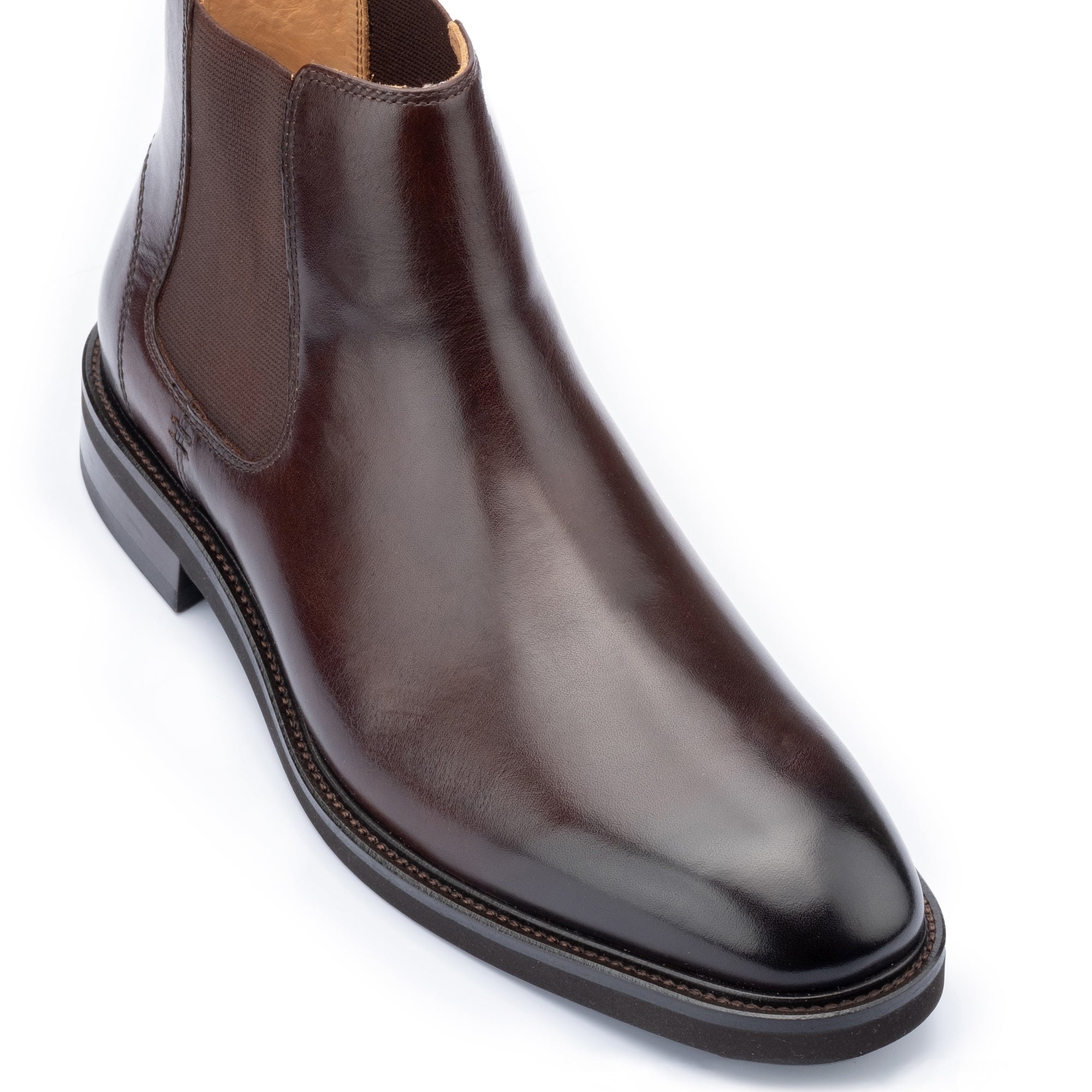
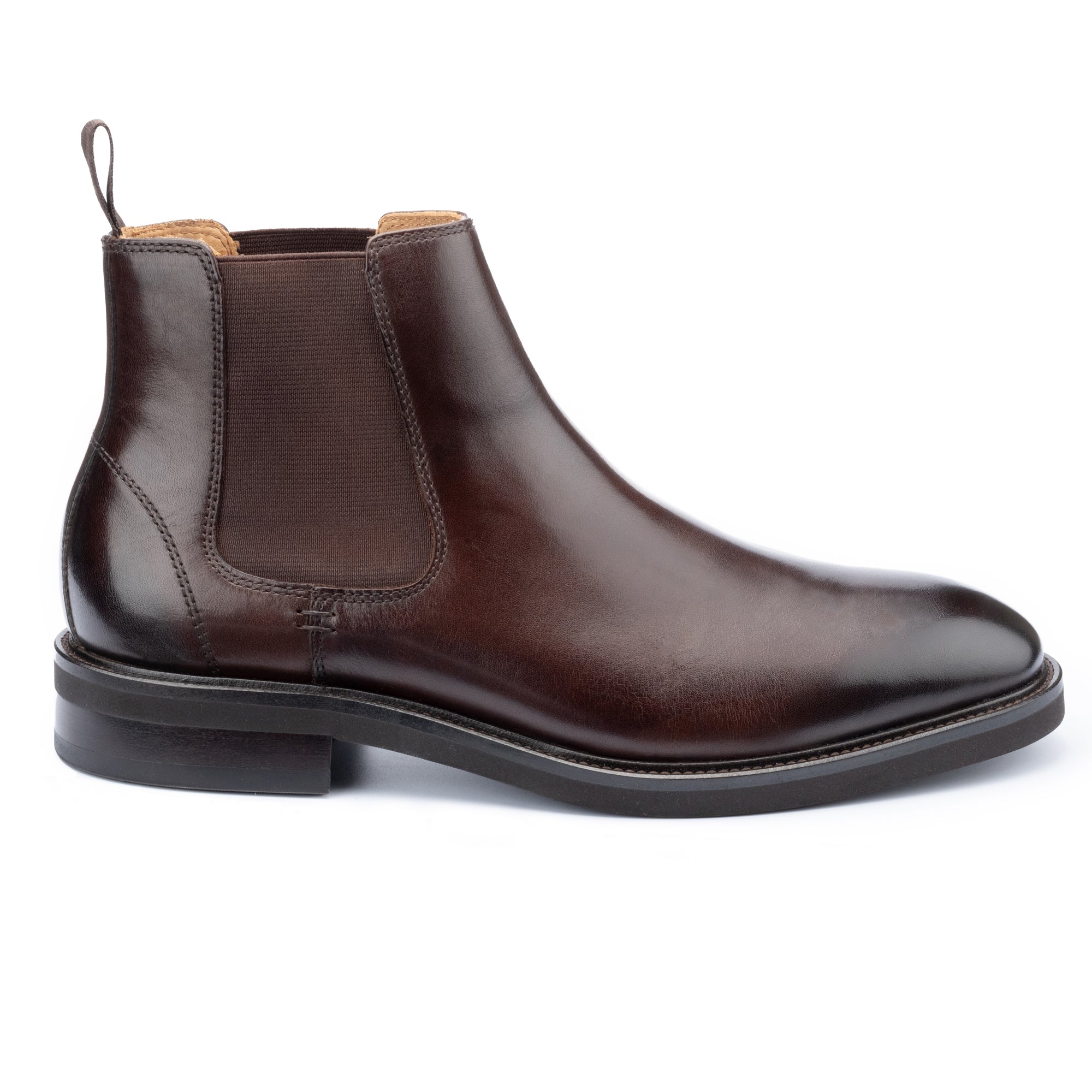
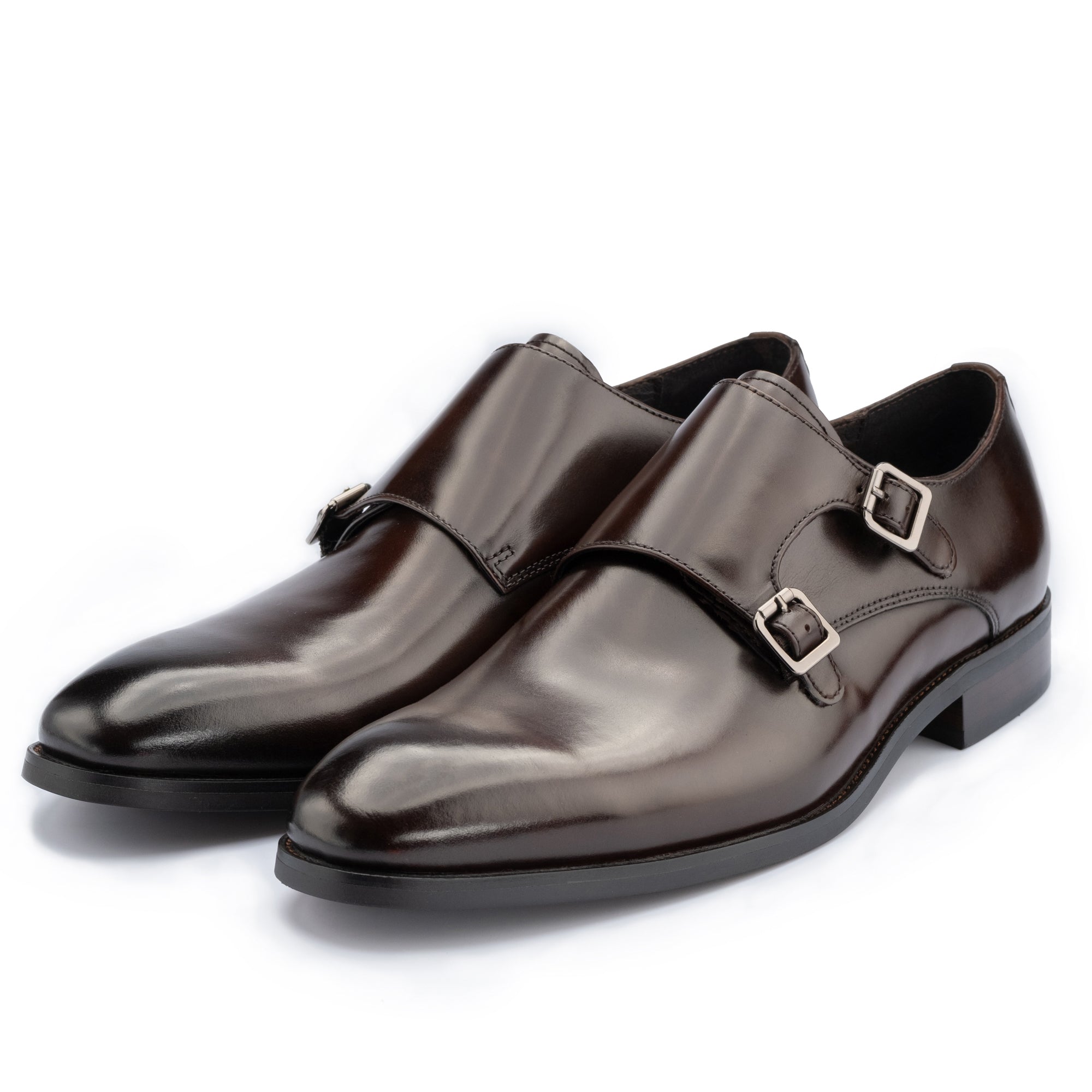
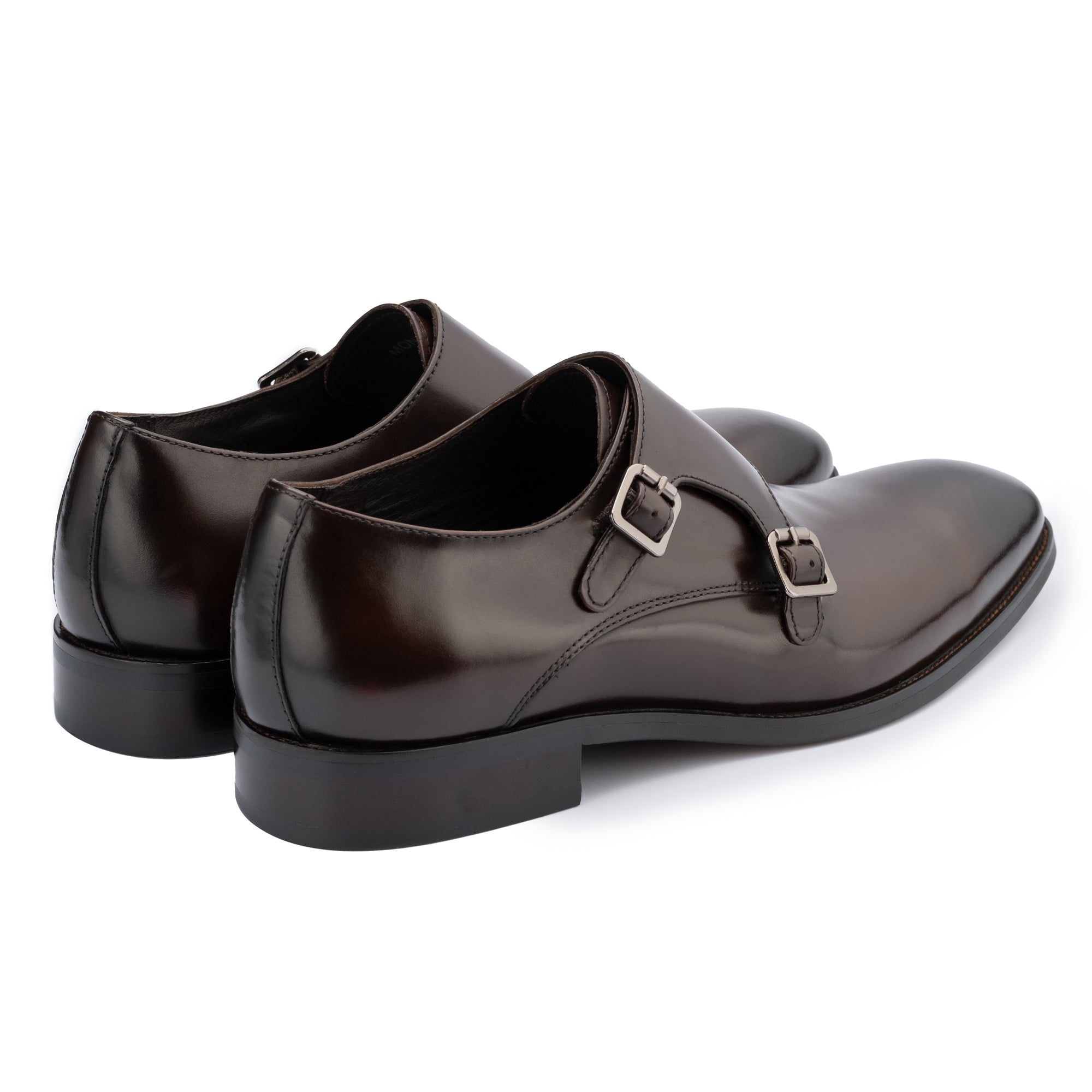
The Chelsea boot is a close-fitting, pull-on ankle boot defined by elastic side panels and an upper entirely free of lacing. Its origins trace to Victorian England: bootmaker J. Sparkes-Hall is credited with supplying the style to Queen Victoria in the 1850s. The uninterrupted surface of the upper — no laces, no tongue, no open tab — gives the Chelsea its characteristic clean, refined silhouette.
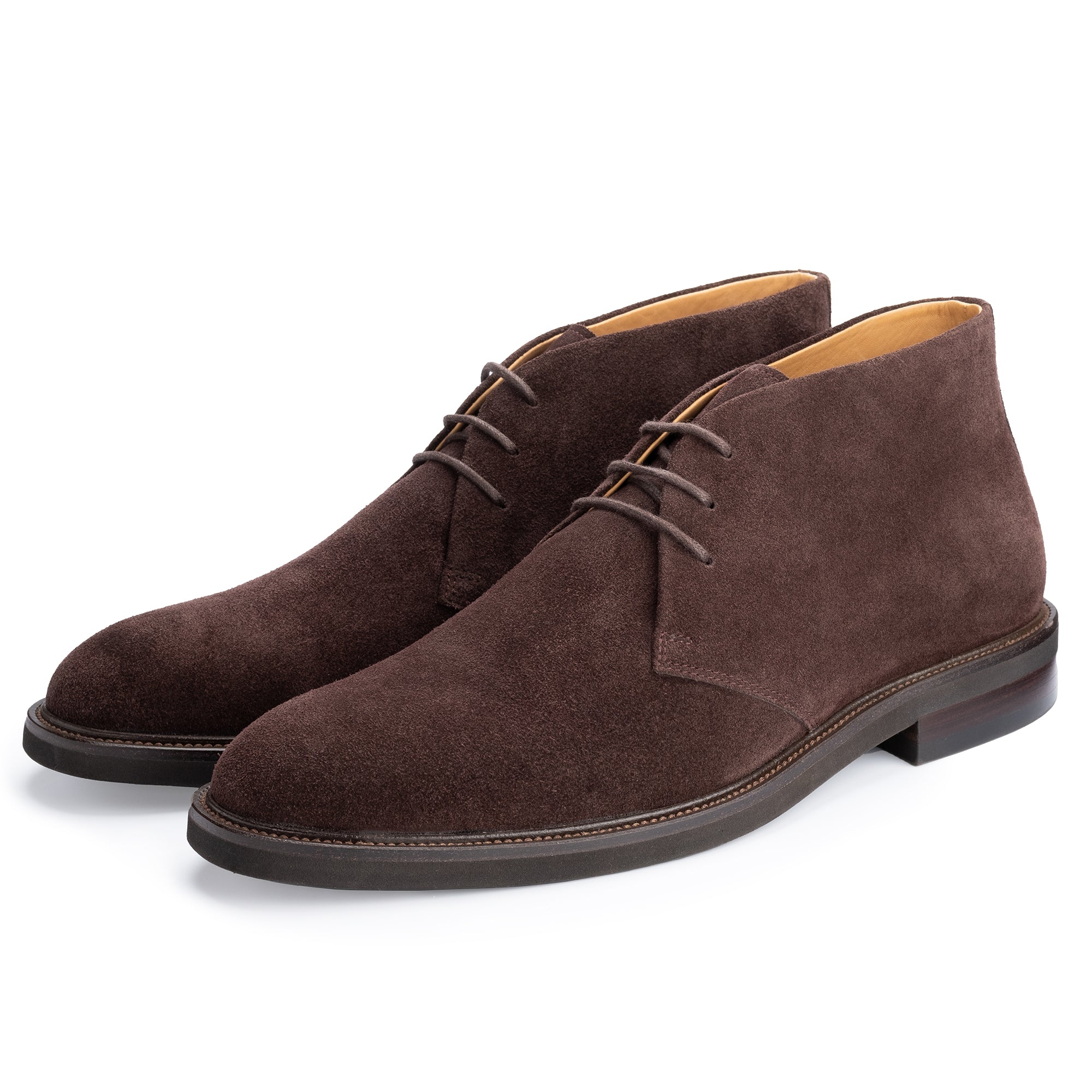
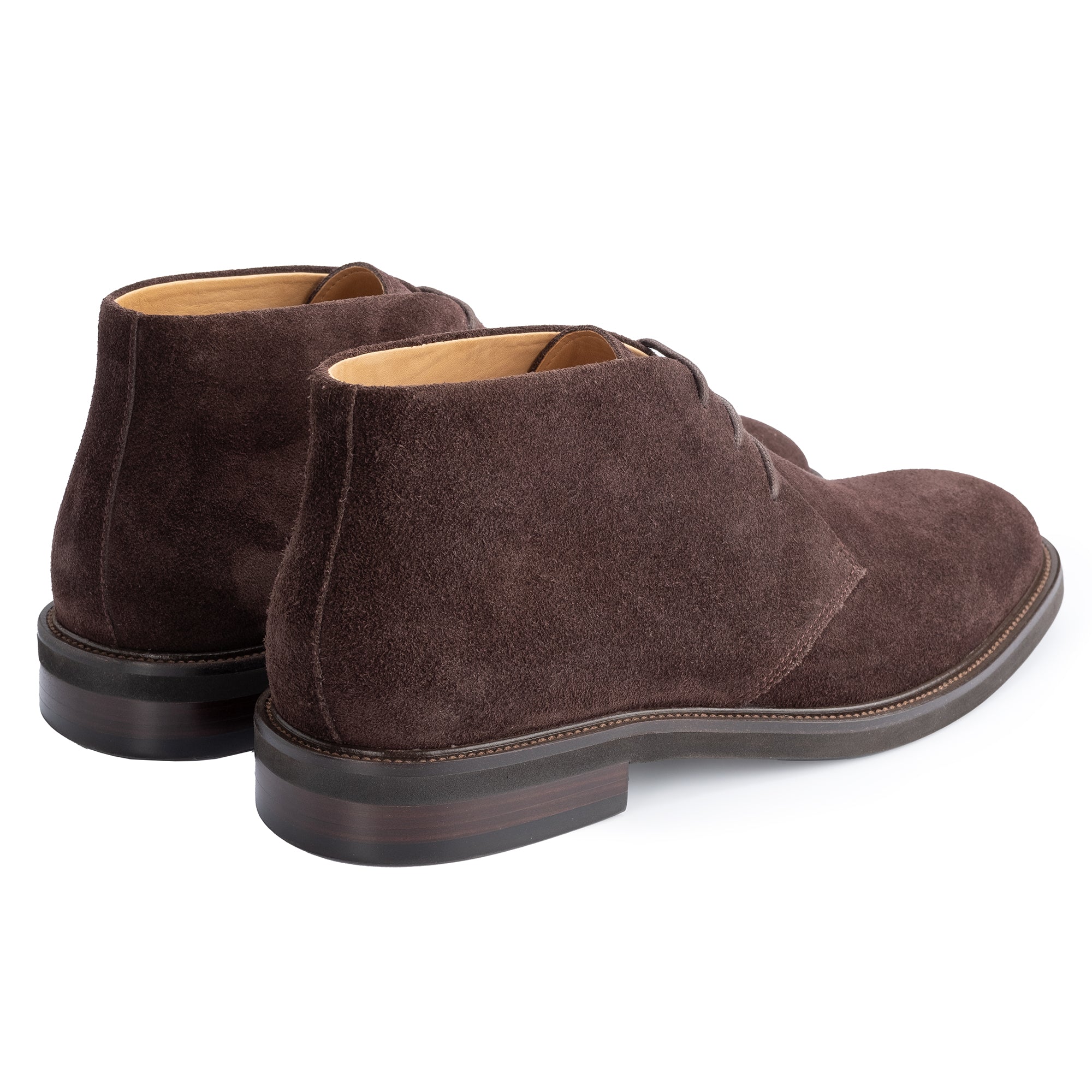
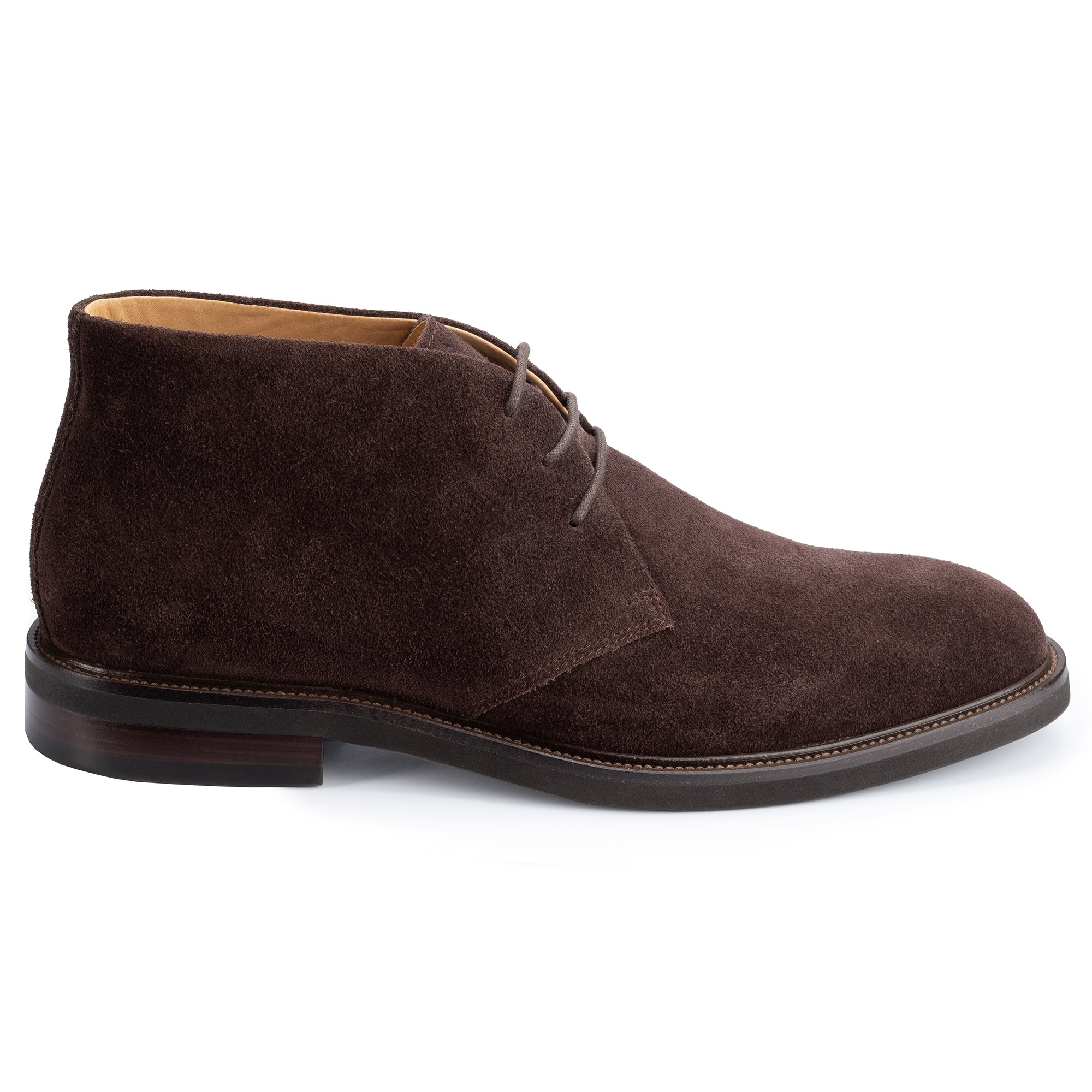
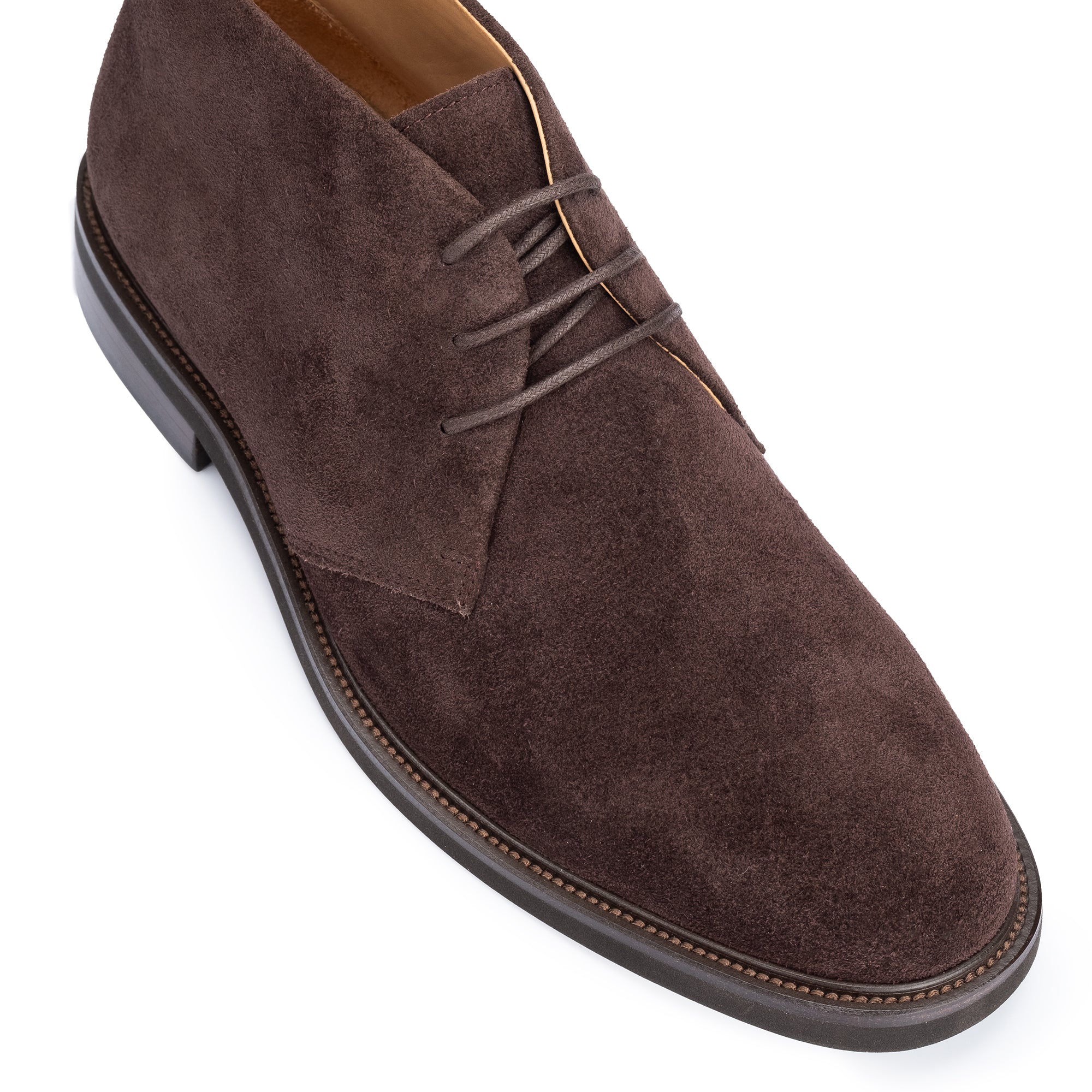
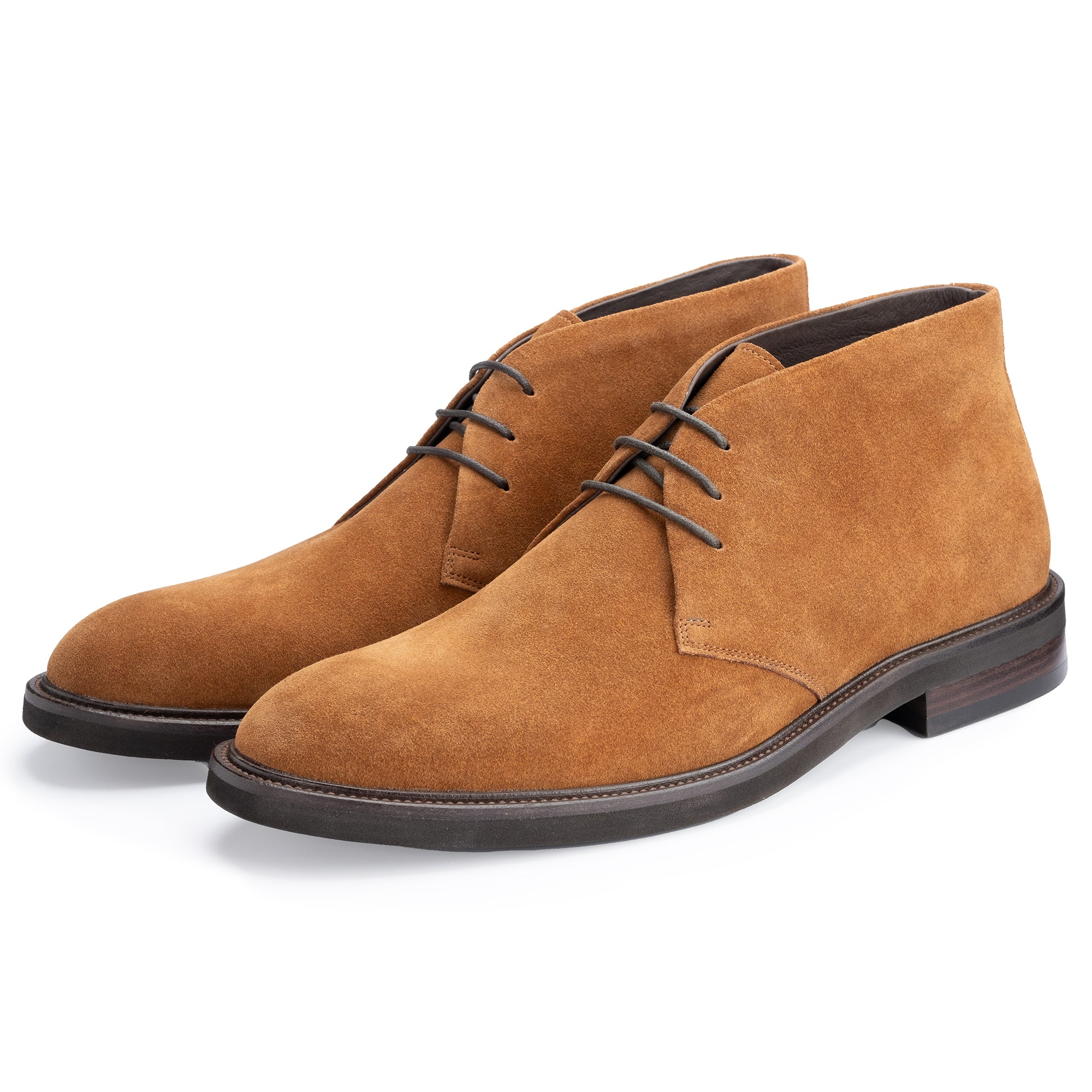
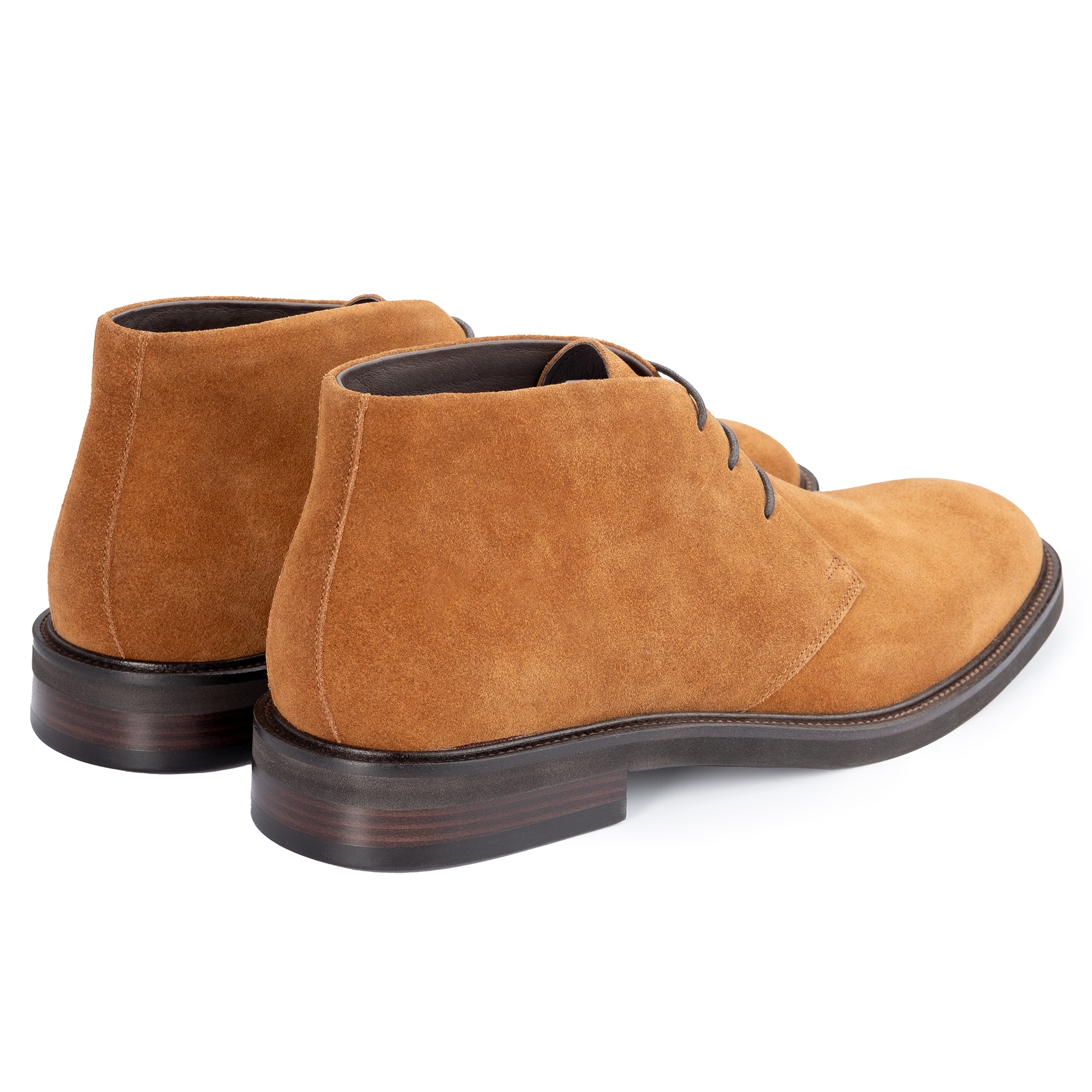
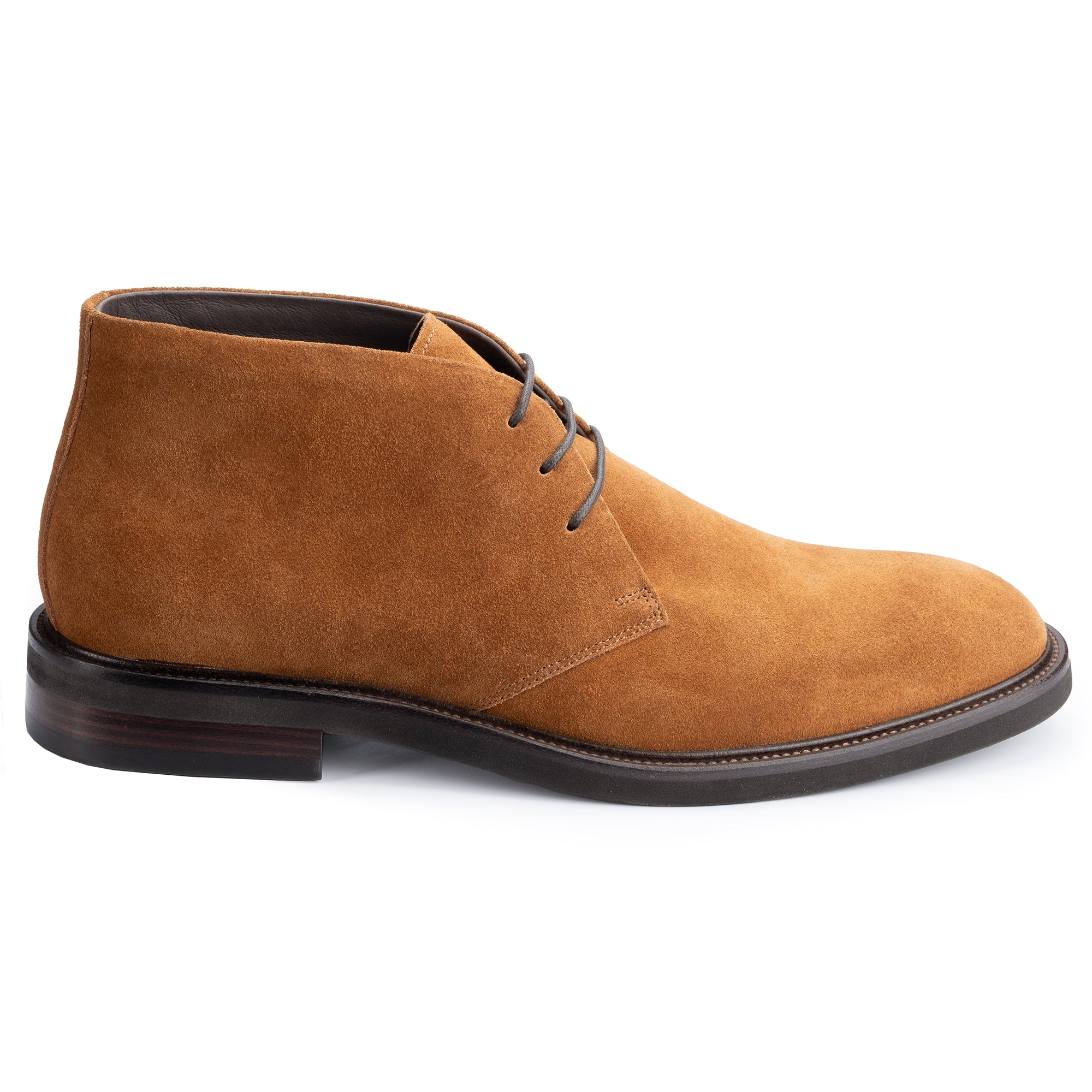
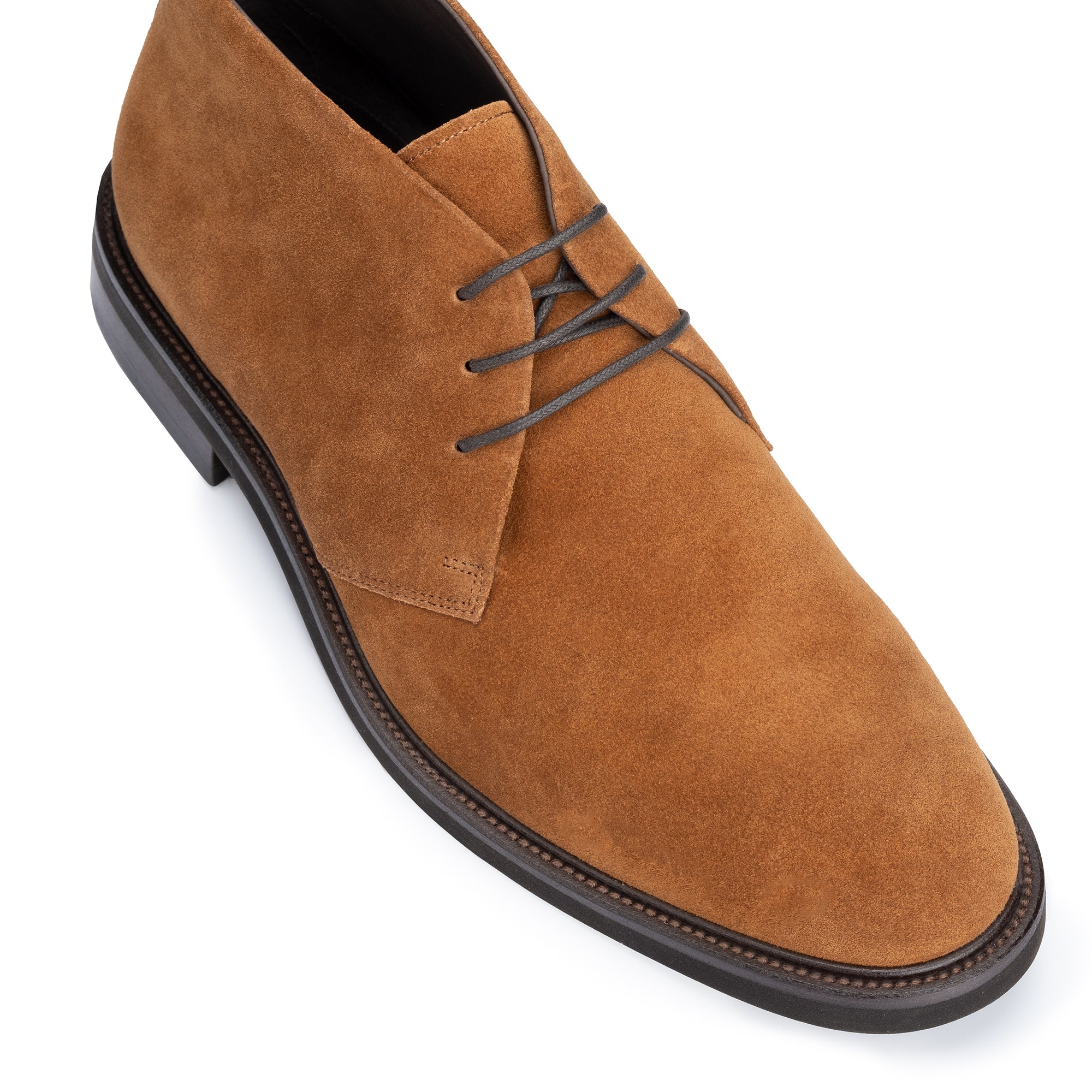
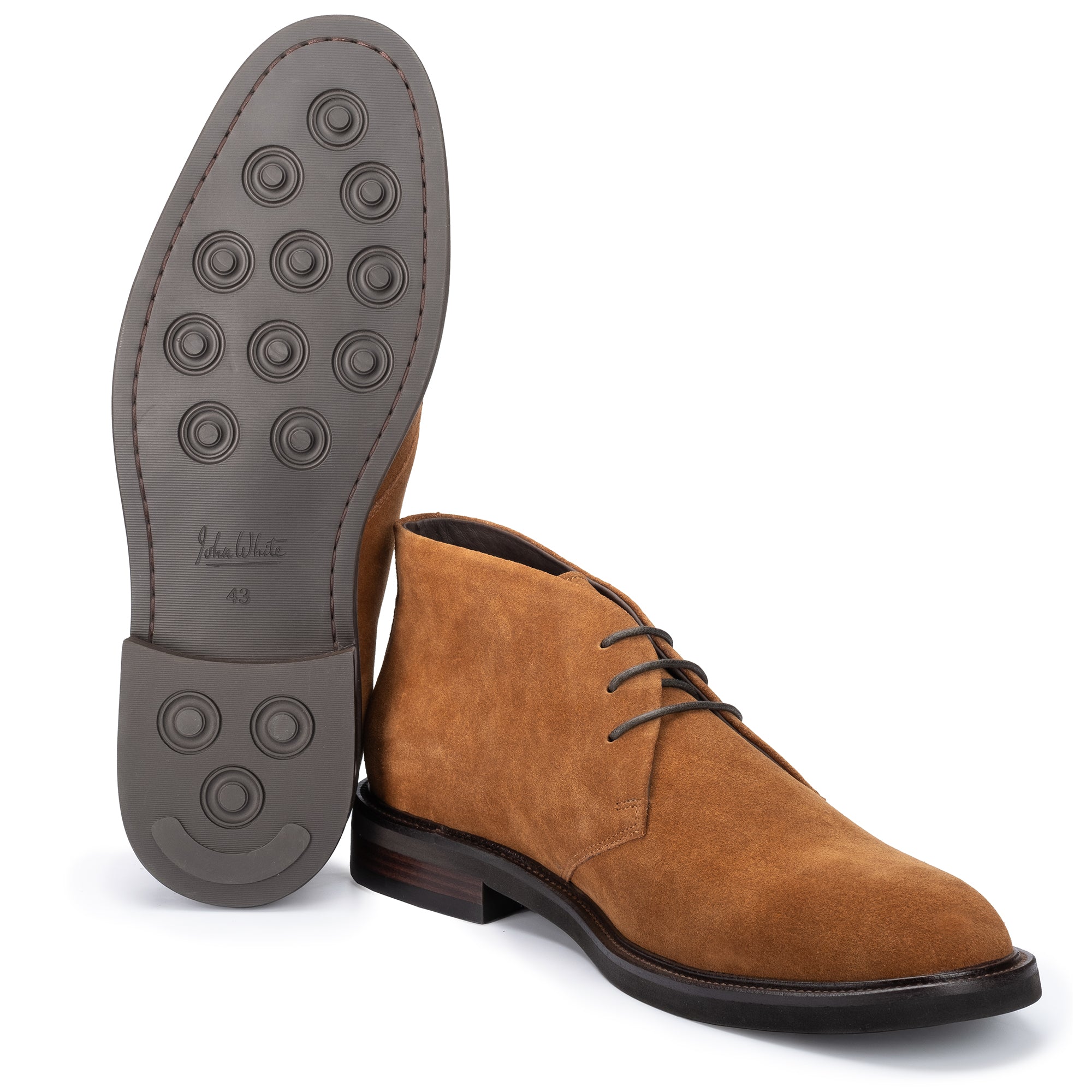
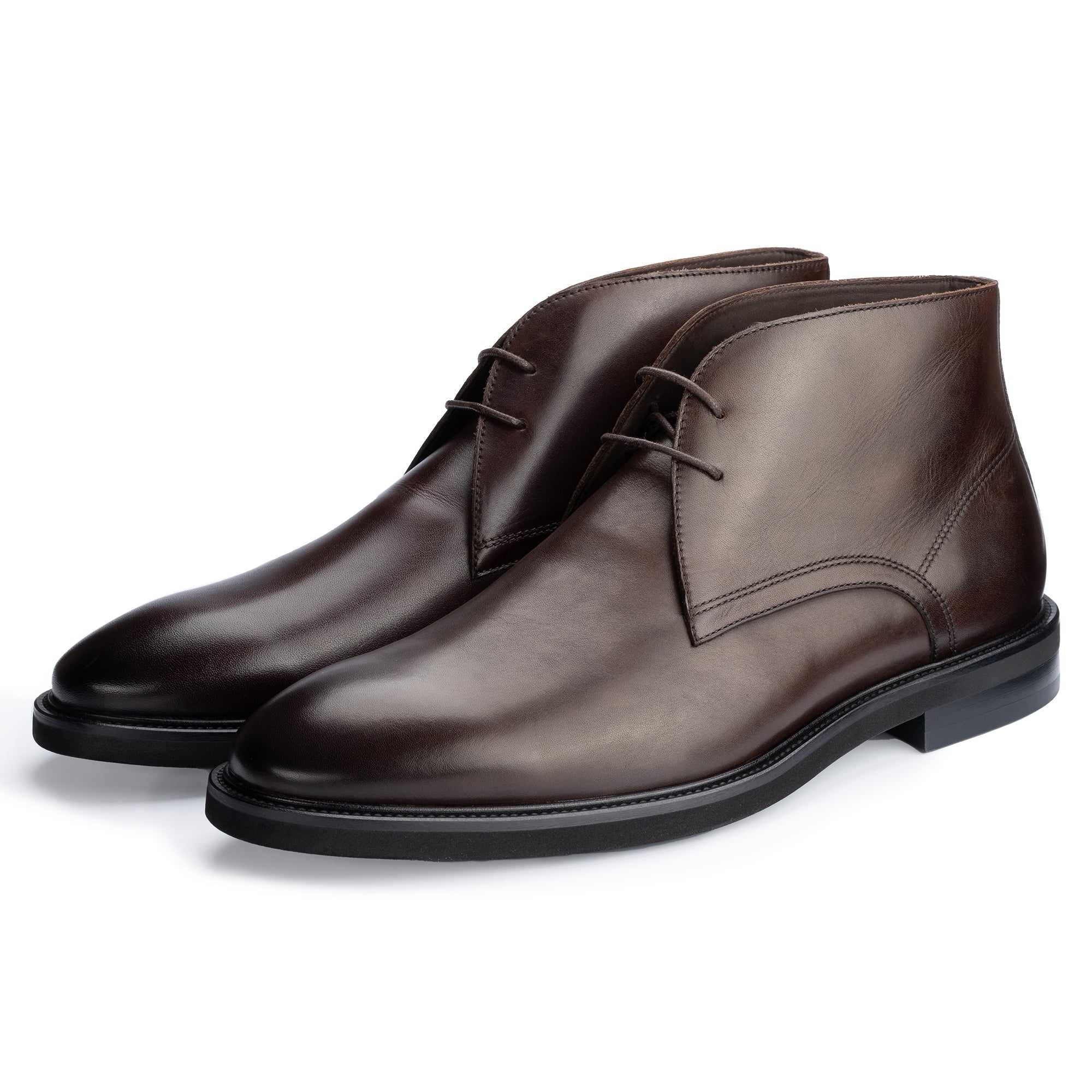
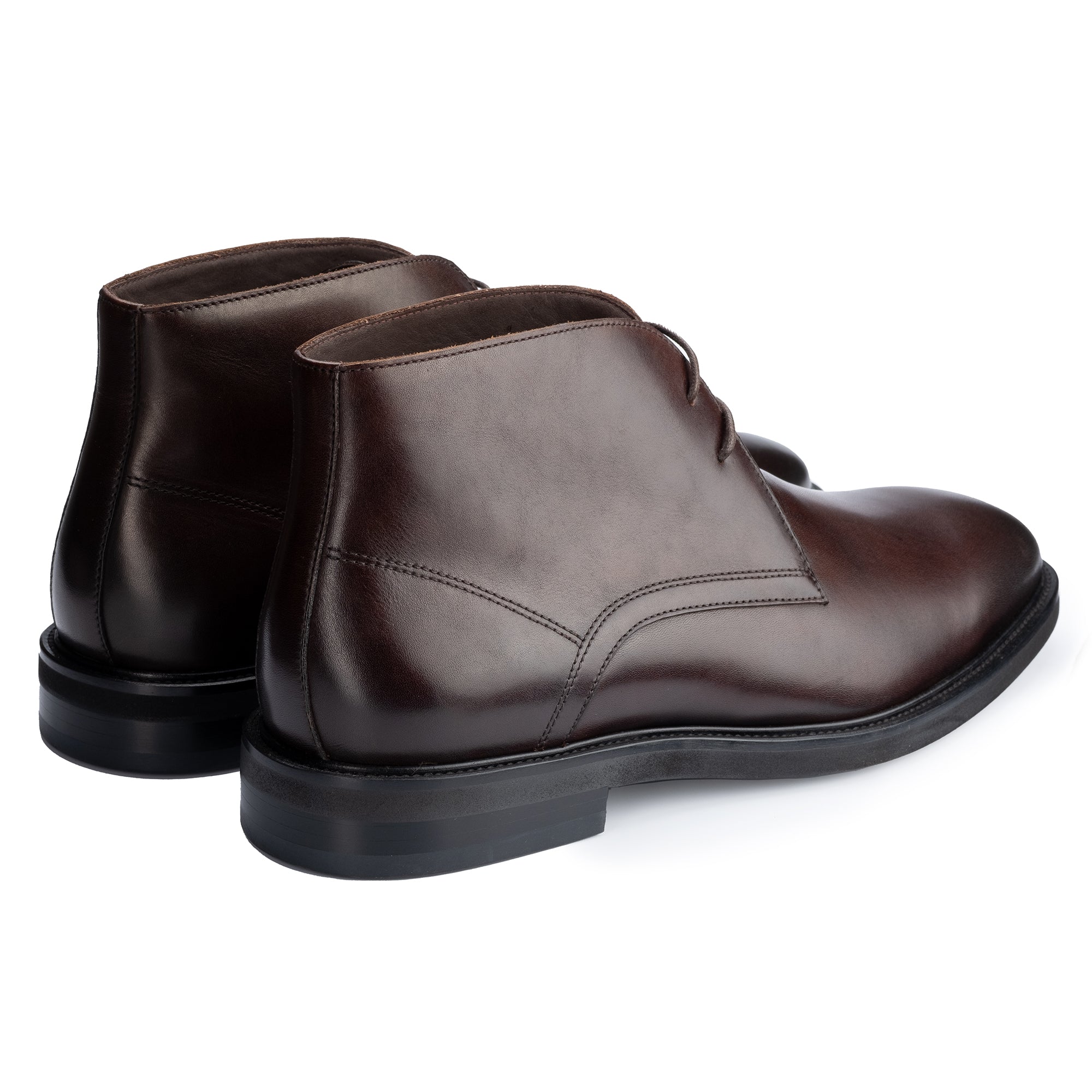
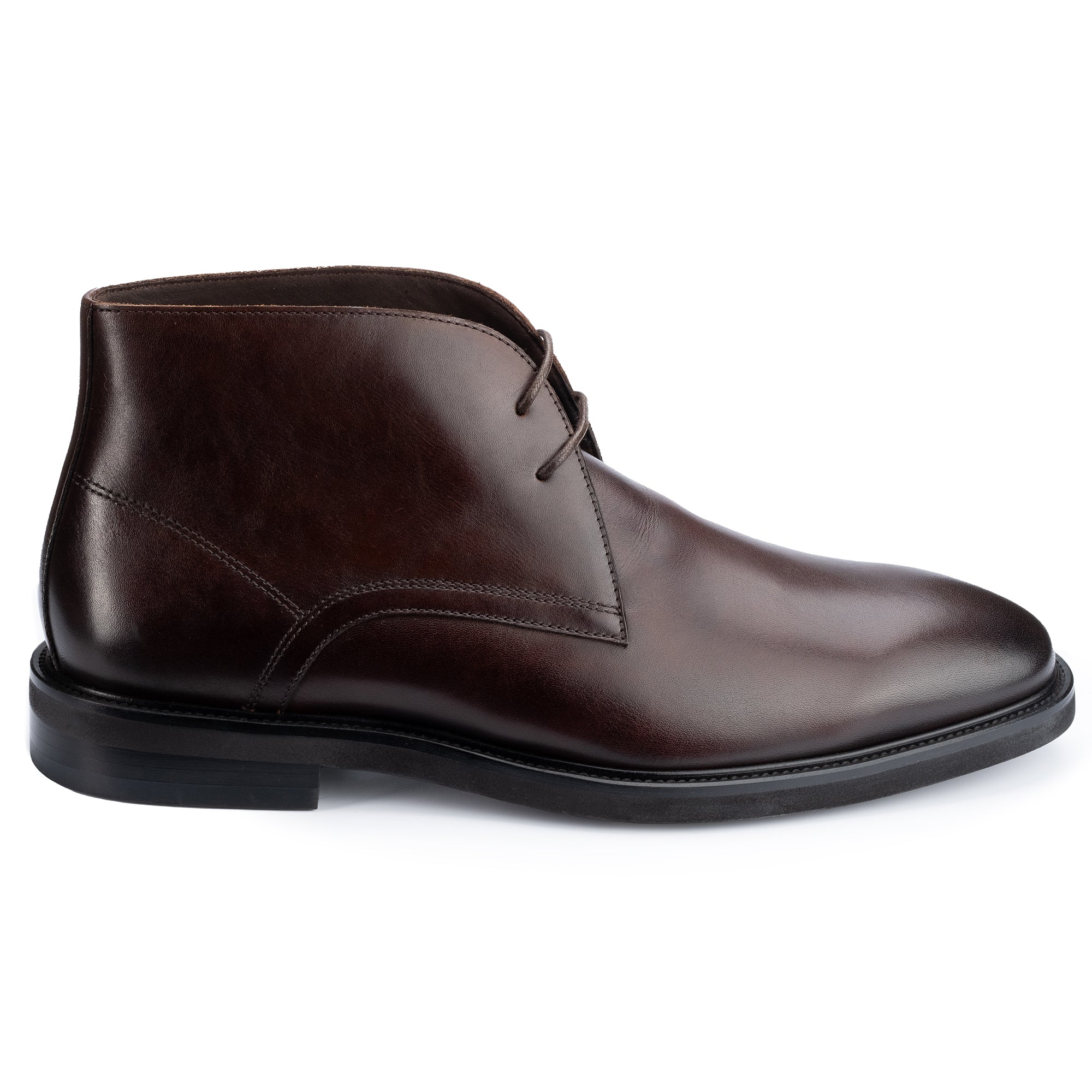
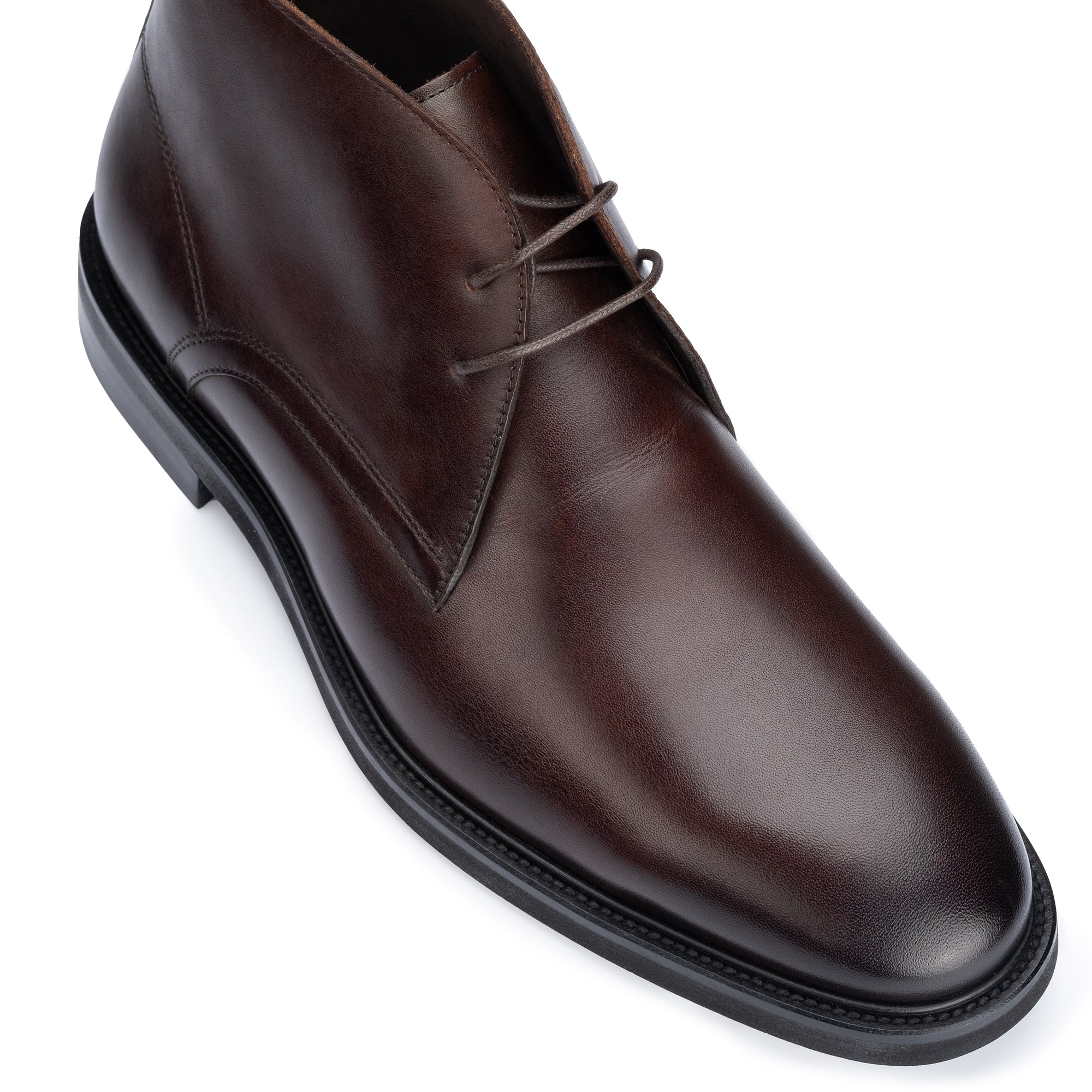
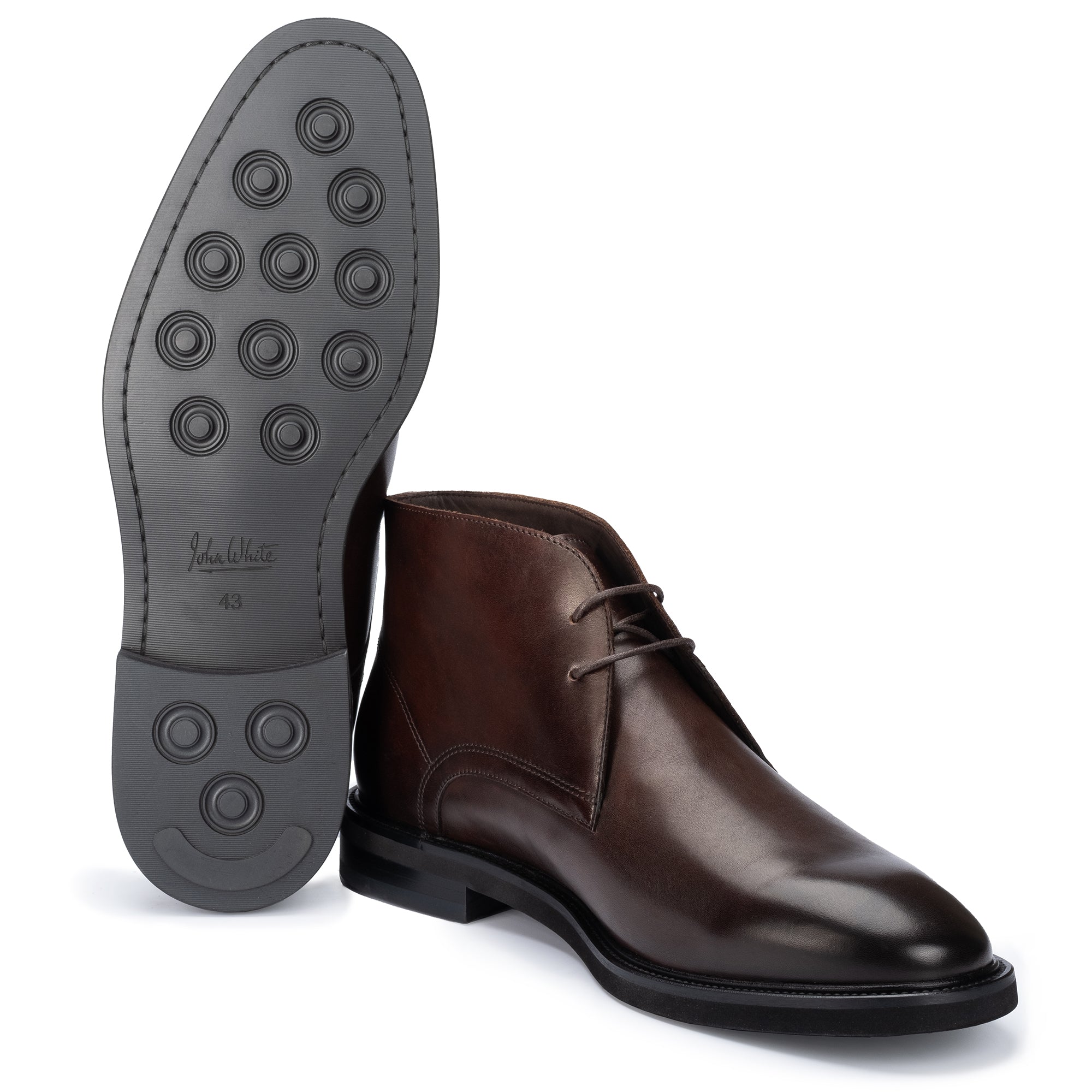
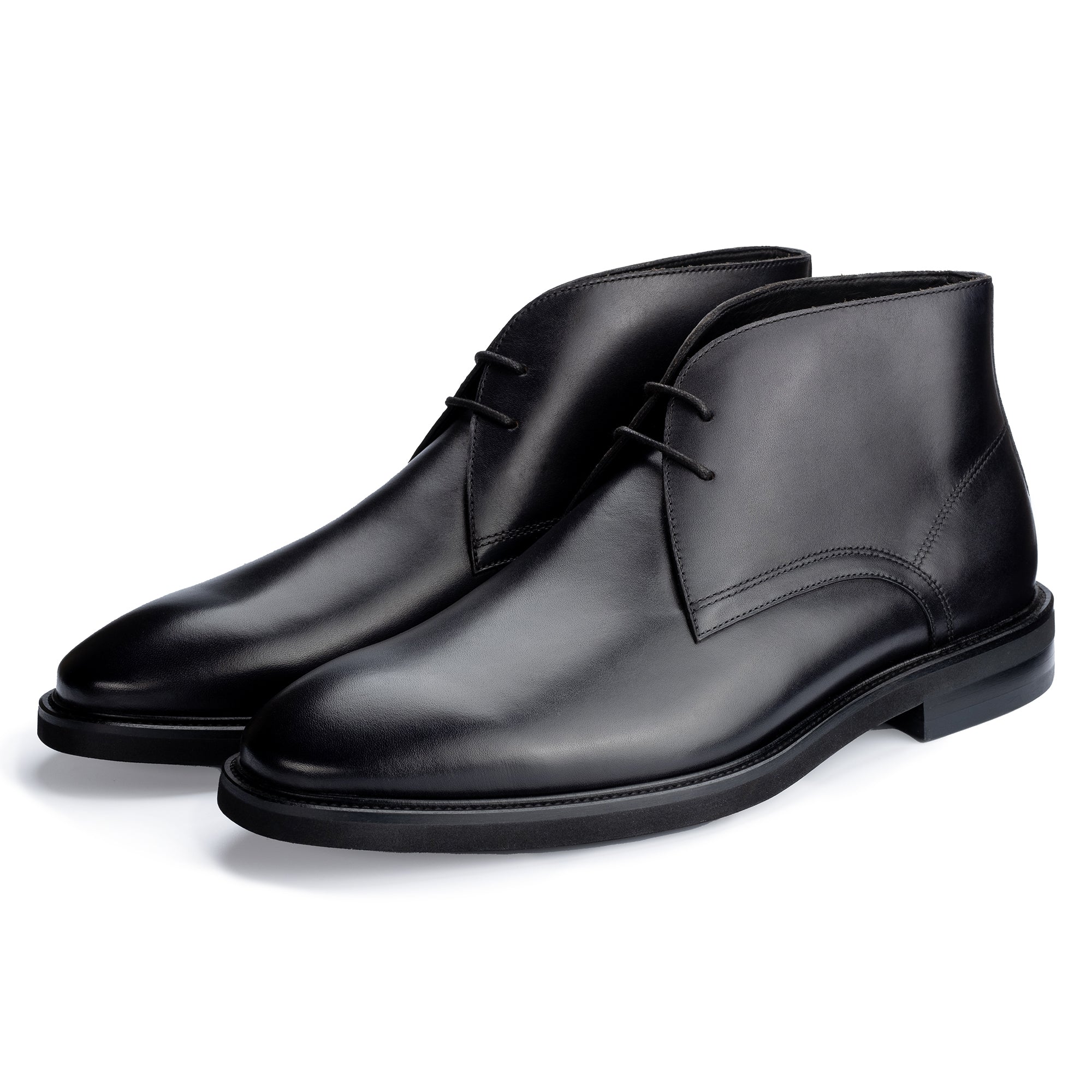
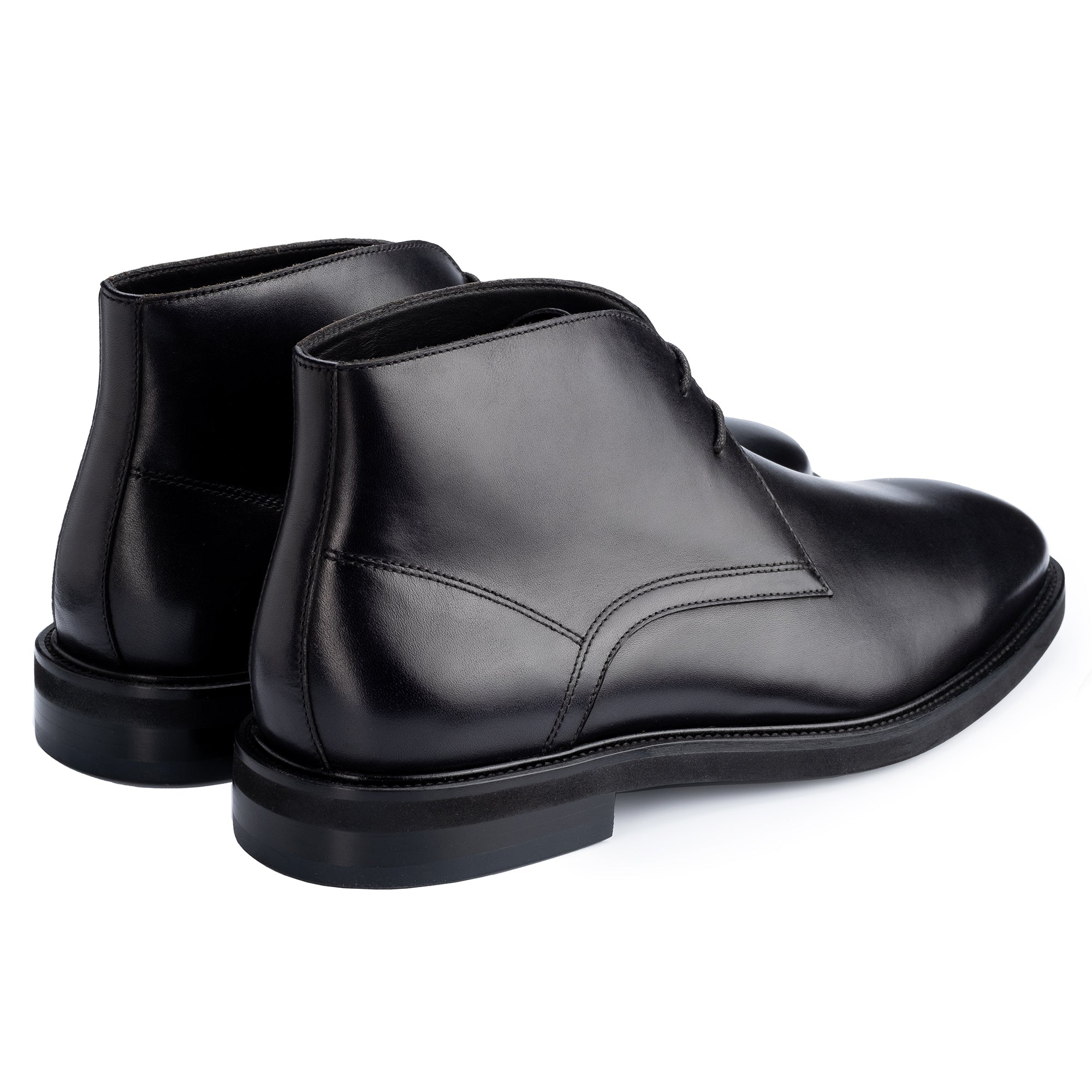
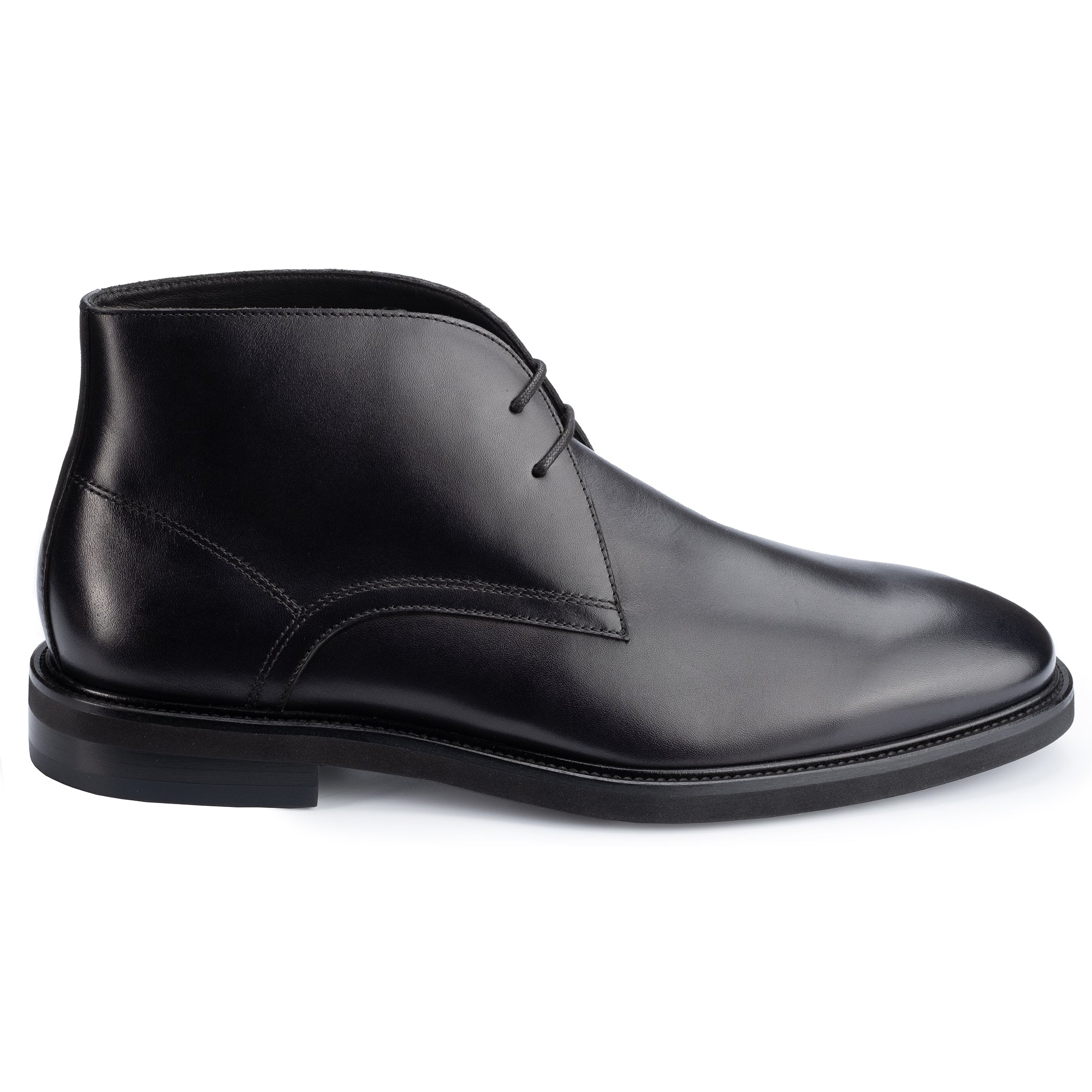
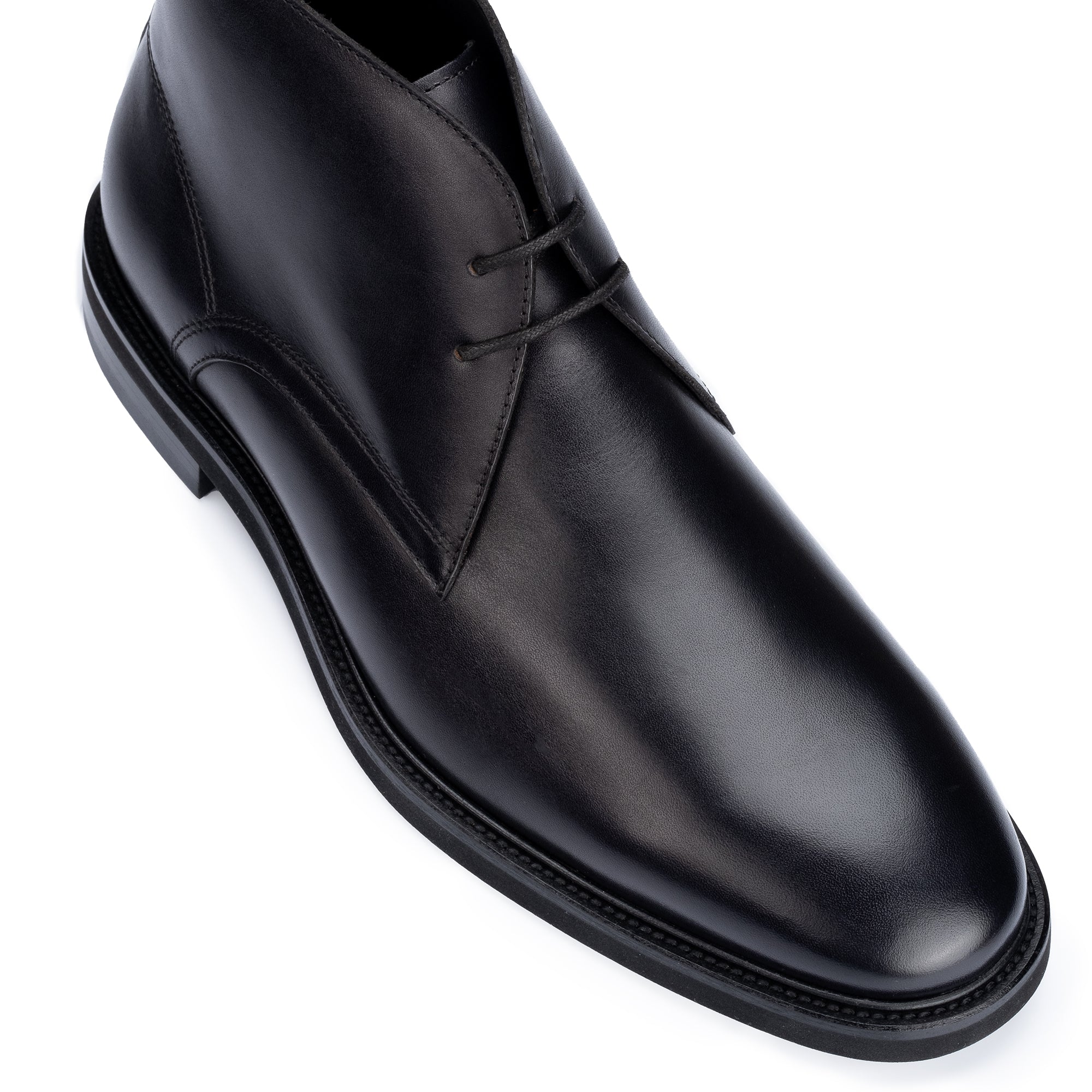
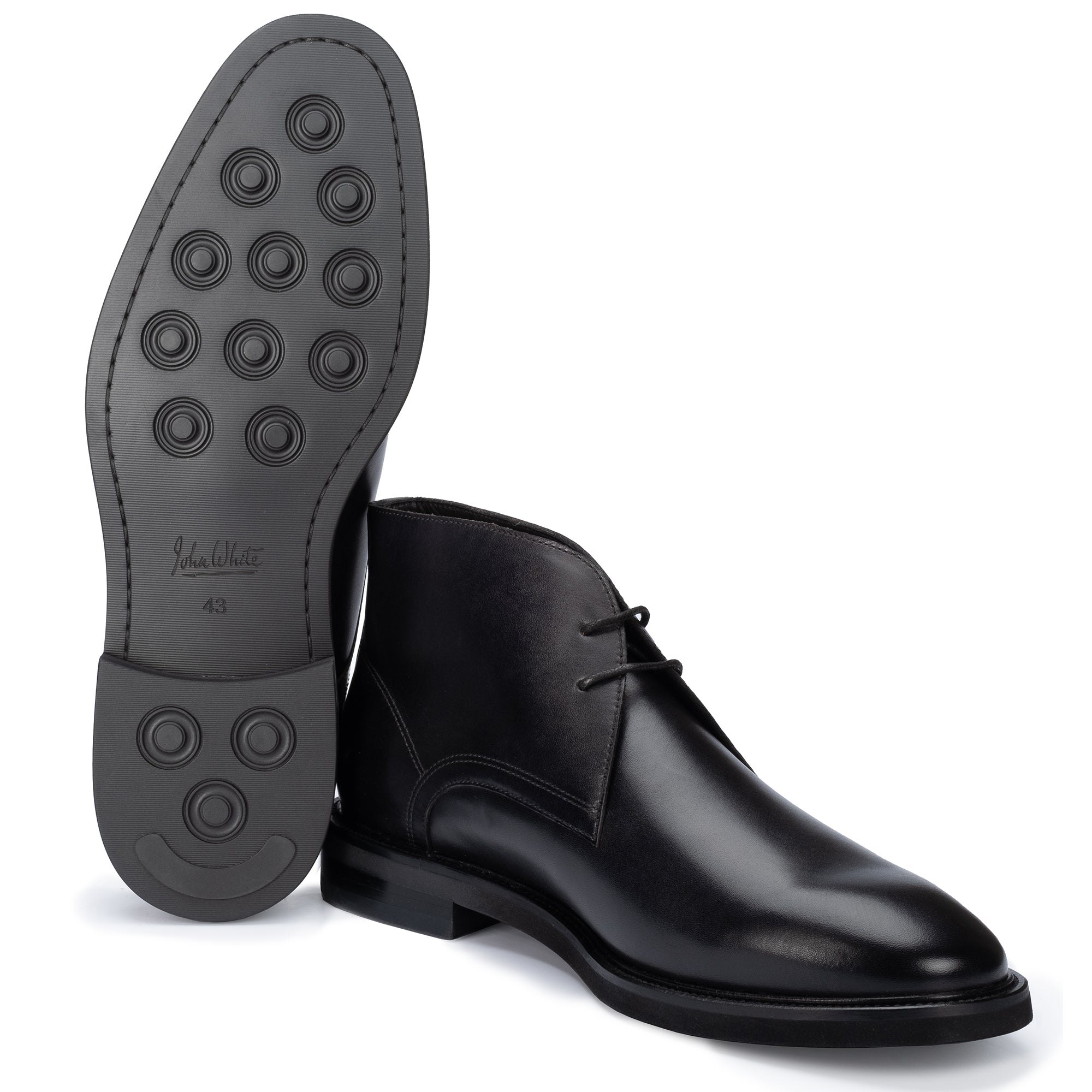
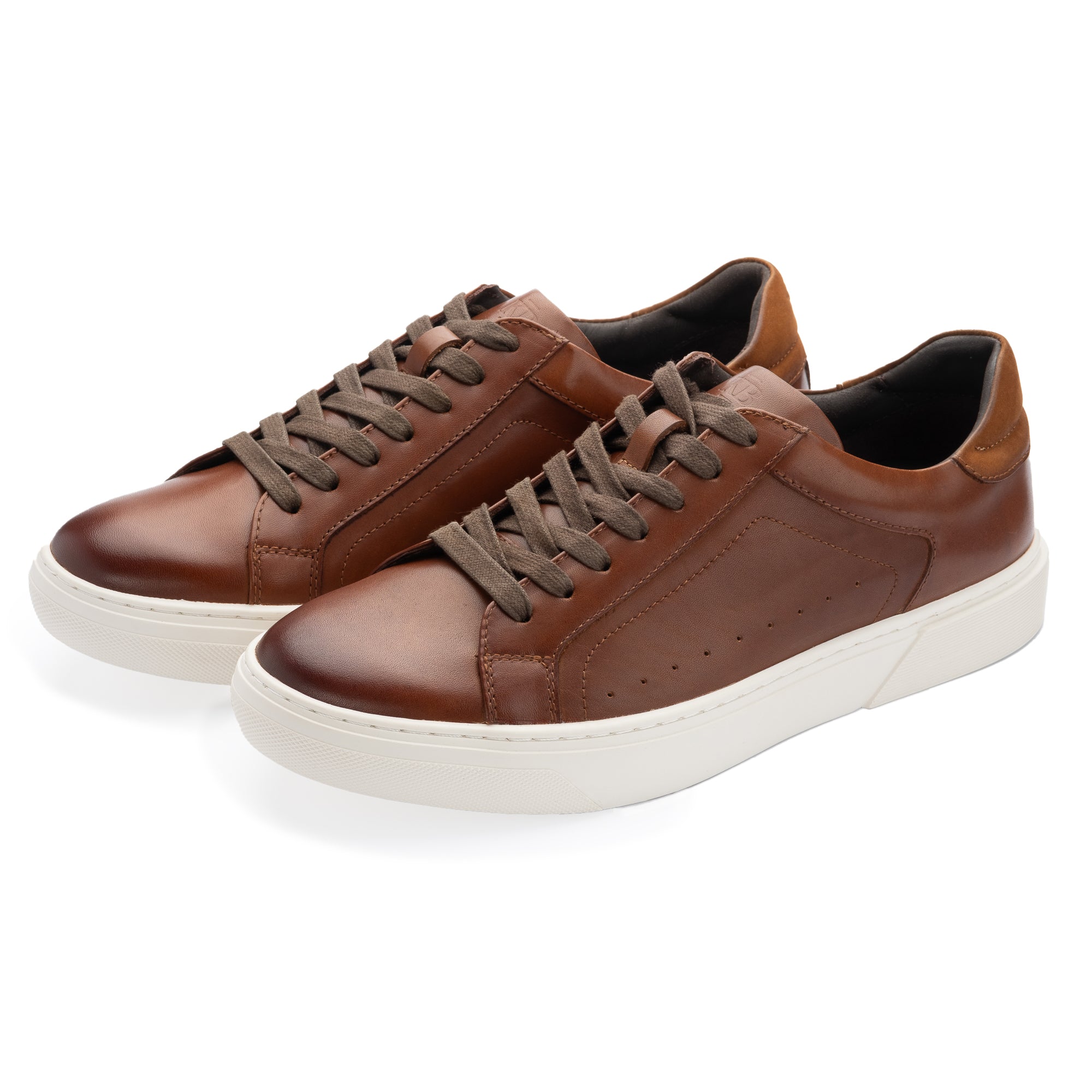
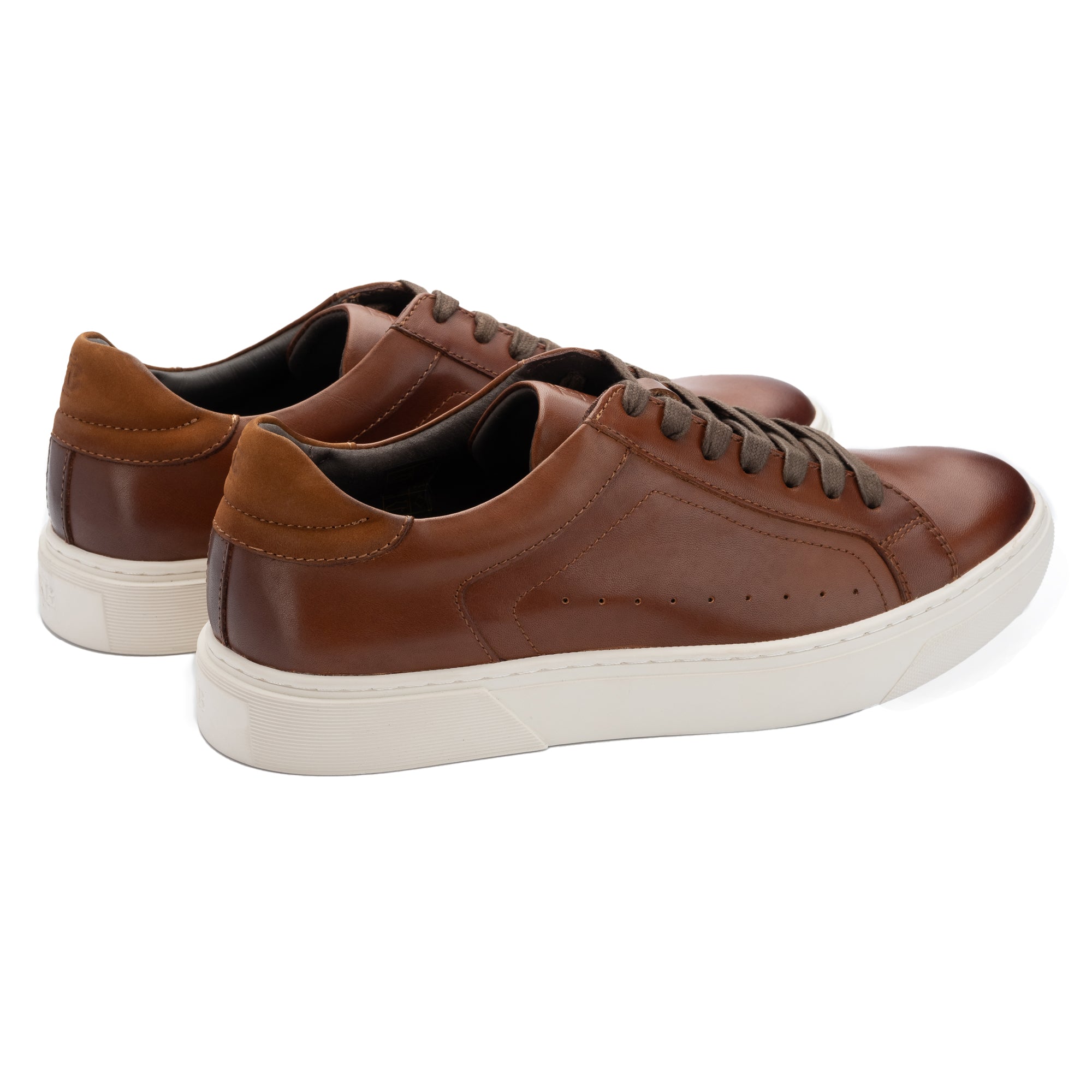
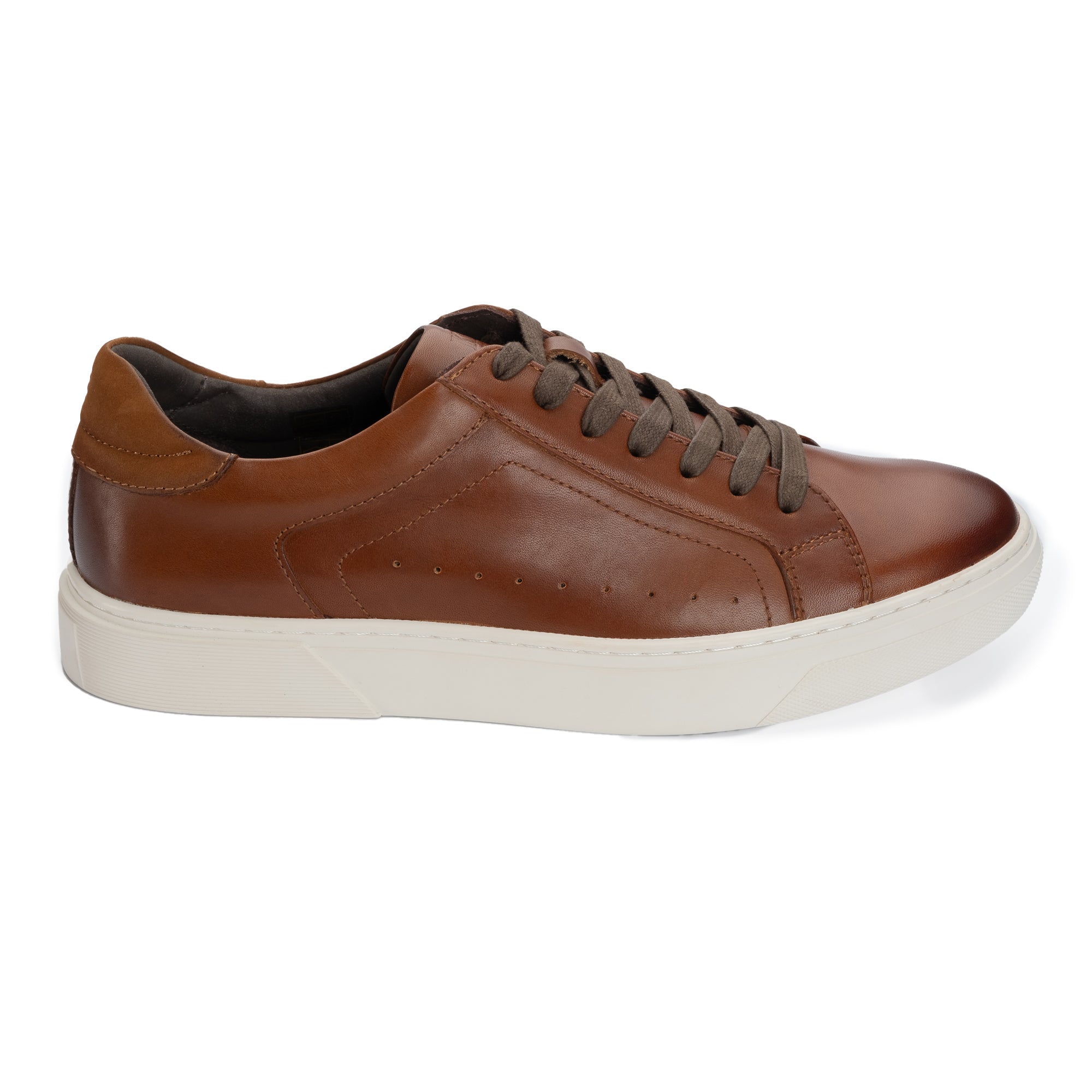
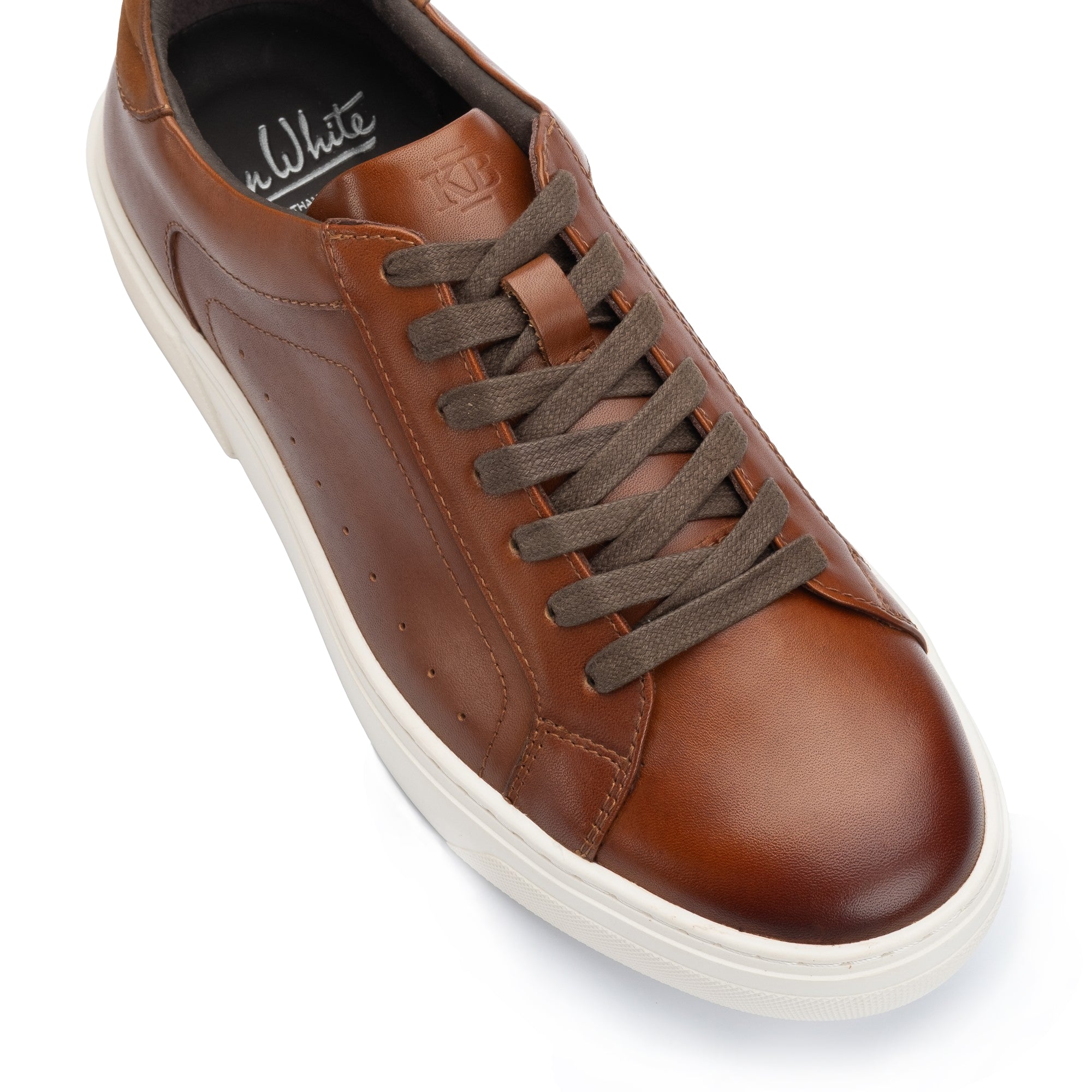
The chukka boot is an ankle-height lace-up with two or three eyelets and an open lacing tab that extends above the ankle. The name derives from the chukka, a timed period of play in polo, and the style was adopted widely by British officers during the North African campaign in the Second World War. Its open construction gives the chukka an inherently relaxed quality that the Chelsea, by design, does not share.
The defining distinction: the Chelsea boot is laceless with elastic panels; the chukka is laced with an open tab — a structural difference that determines the formality range and styling breadth of each style.
How Do Chelsea and Chukka Boots Compare in Formality?
Formality in footwear is determined by silhouette, material, and the signals the construction sends. On all three measures, the Chelsea boot ranks higher.
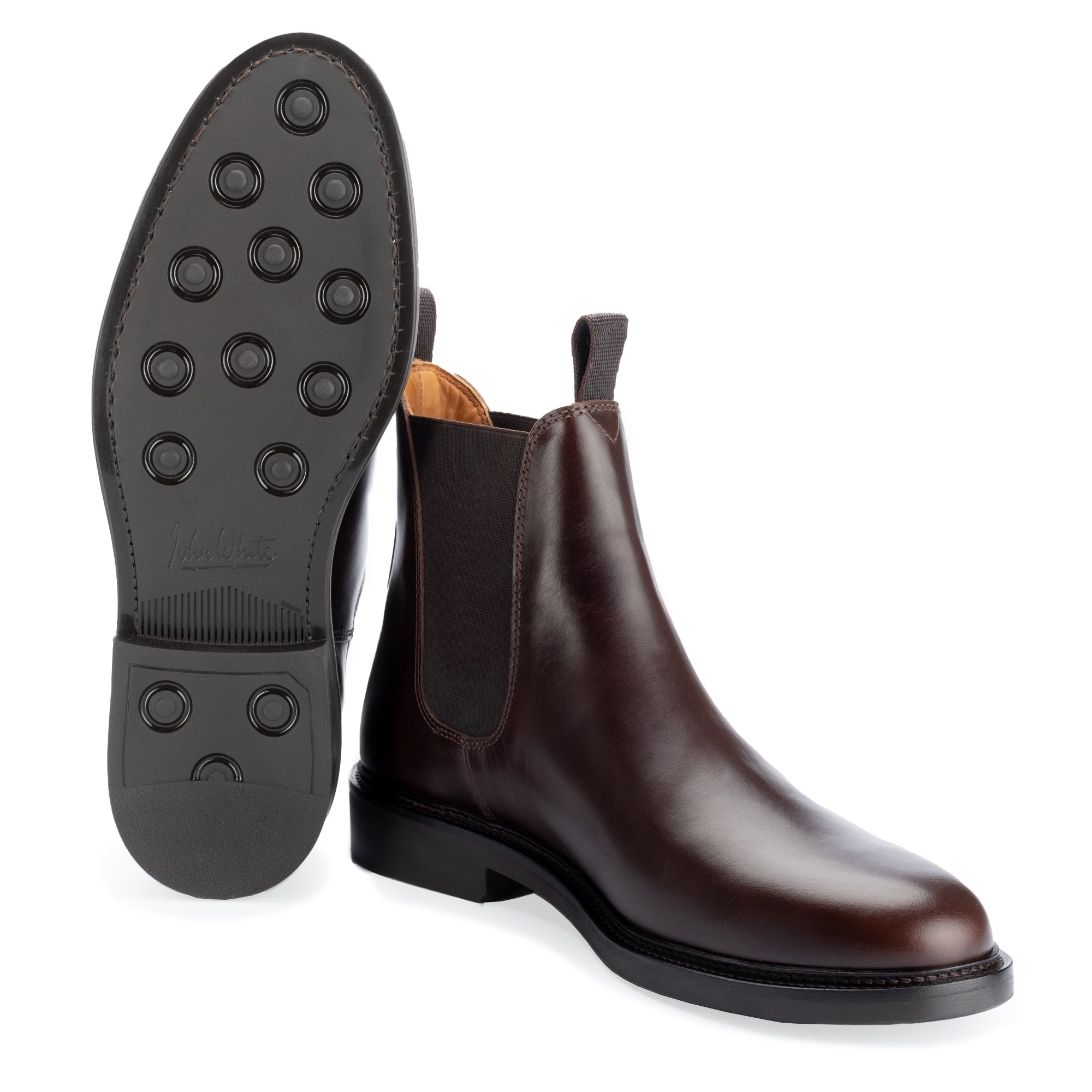
A black calfskin Chelsea boot on a leather or Dainite sole sits comfortably alongside a lounge suit, a business dress code, and most smart-casual occasions. The closed upper reads as deliberate and precise. In suede, the same boot drops into smart-casual territory naturally — transitioning from desk to weekend without incongruity.
The chukka operates in a narrower band. Its open lacing and relaxed tab introduce a casualness that suits chinos, denim, and cord trousers well, but which places it below the suit threshold. A chukka worn with tailoring can work in informal creative environments, but it is not the default choice for business dress.
For a full mapping of where each boot style sits across the dress code spectrum, our dress boot formality guide covering Balmoral, brogue, and Chelsea provides a complete breakdown.
The Chelsea boot spans from smart-casual to business formal; the chukka boot is best positioned from casual to smart-casual — a meaningful difference for any man who dresses across multiple contexts.
Which Boot Offers Greater Versatility?
Versatility is the key metric when evaluating a footwear investment. A boot that works across five outfit categories outperforms one that works across two, regardless of individual quality.
The Chelsea boot's natural range includes:
- Lounge suits and tailored trousers — calfskin in black or dark tan
- Smart-casual separates — blazer and chinos, wool trousers and knitwear
- Denim — slim or straight cut, cuffed above the ankle
- Heritage outerwear — waxed cotton jackets, wool overcoats, tweed
The chukka boot's natural range includes:
- Chinos — tan, navy, or olive
- Denim — relaxed or straight cut
- Cord trousers — the chukka's most traditional pairing
- Smart-casual knitwear, overshirts, and casual tailoring
Our detailed chukka boot styling guide covers the full range of occasions and seasonal combinations in depth. For the Chelsea, our guide to styling Chelsea boots for any occasion explores its breadth across every dress code.
How Does Construction Determine Long-Term Investment Value?
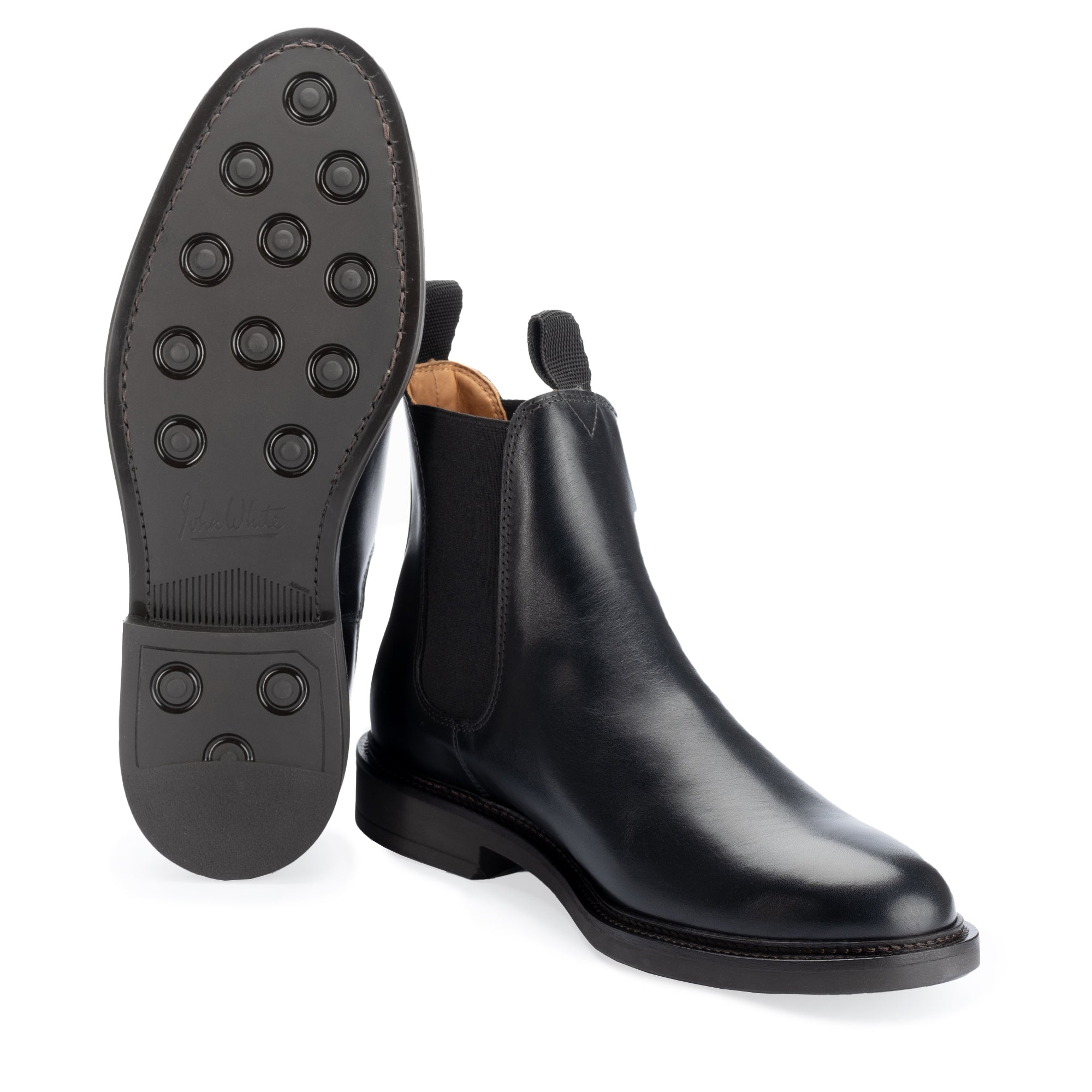
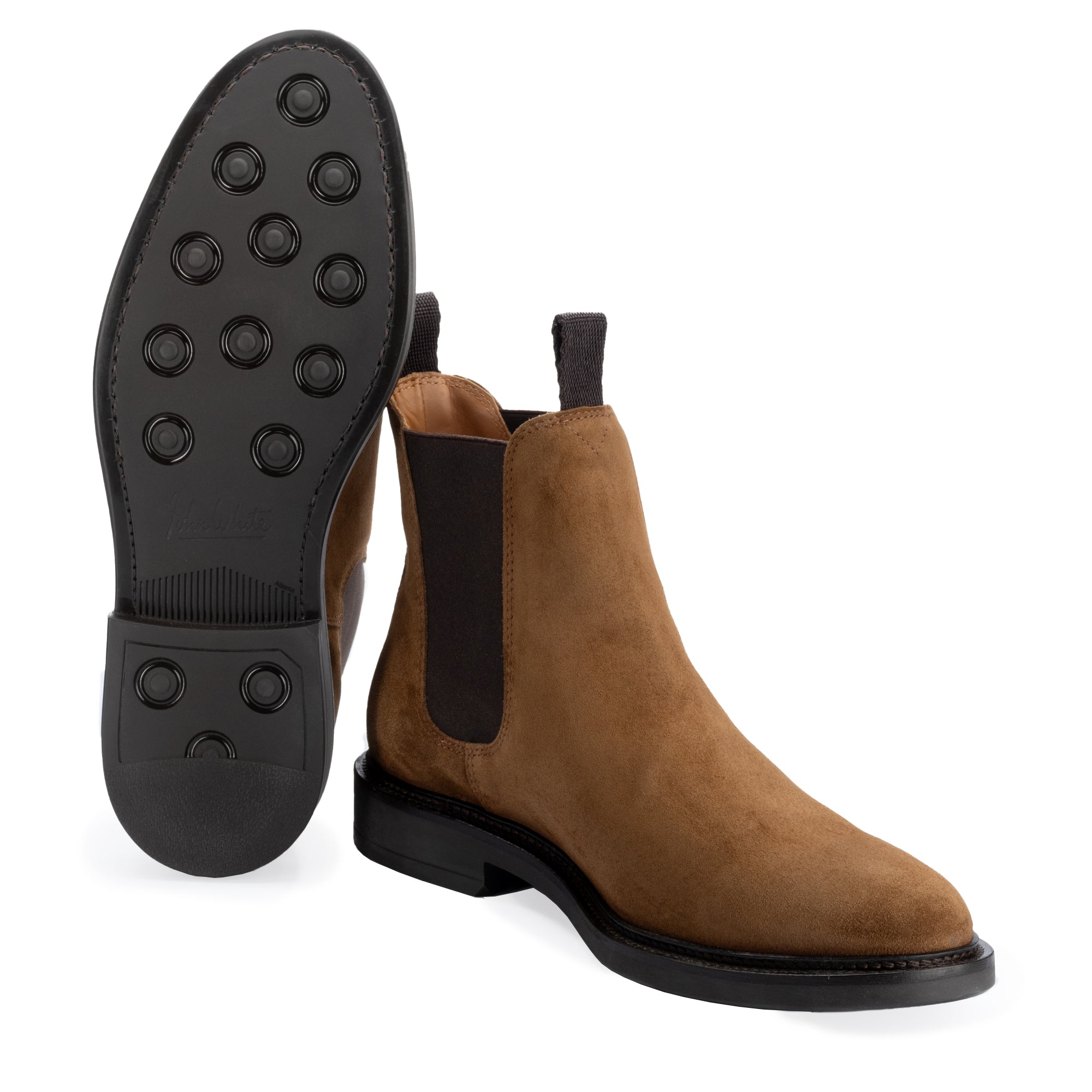
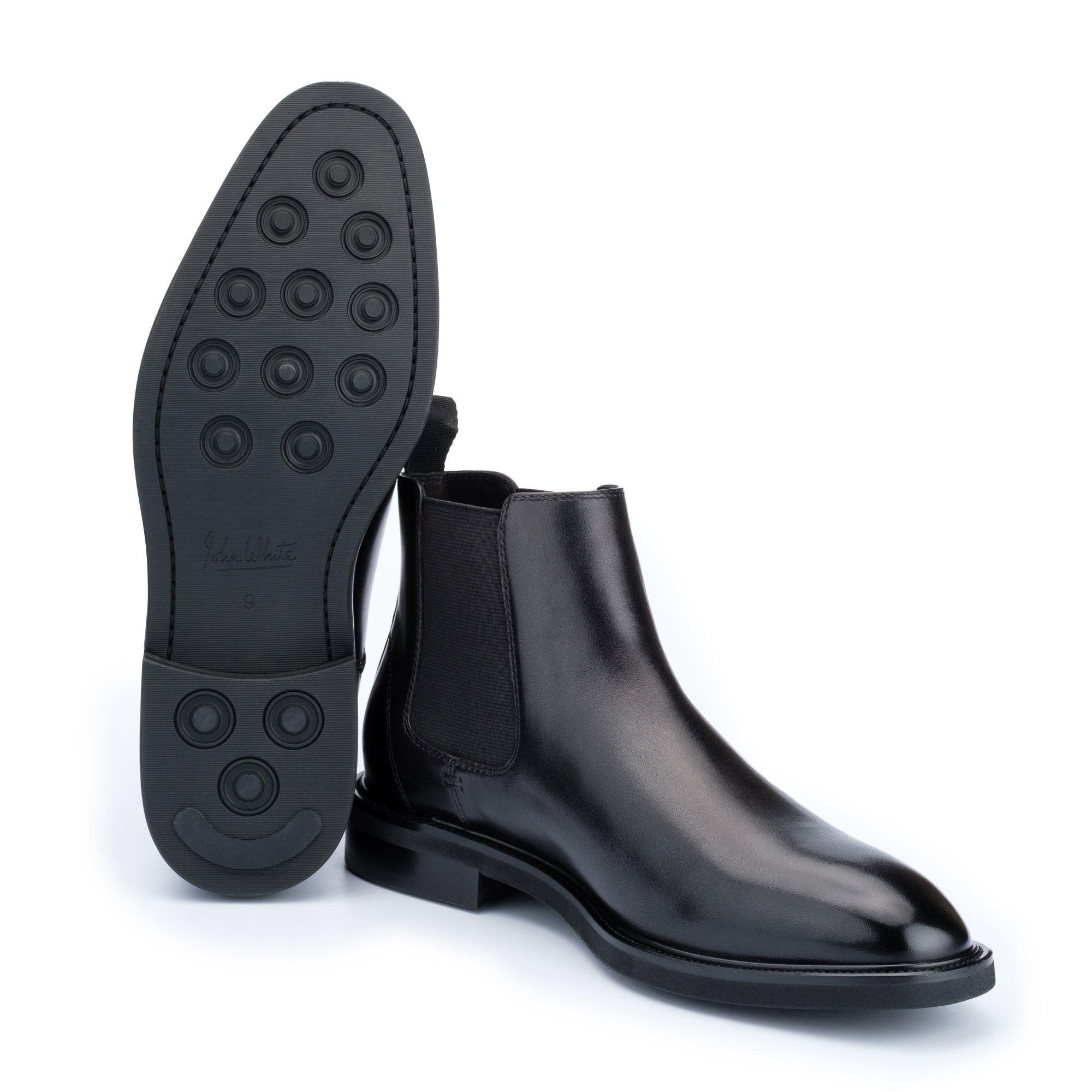
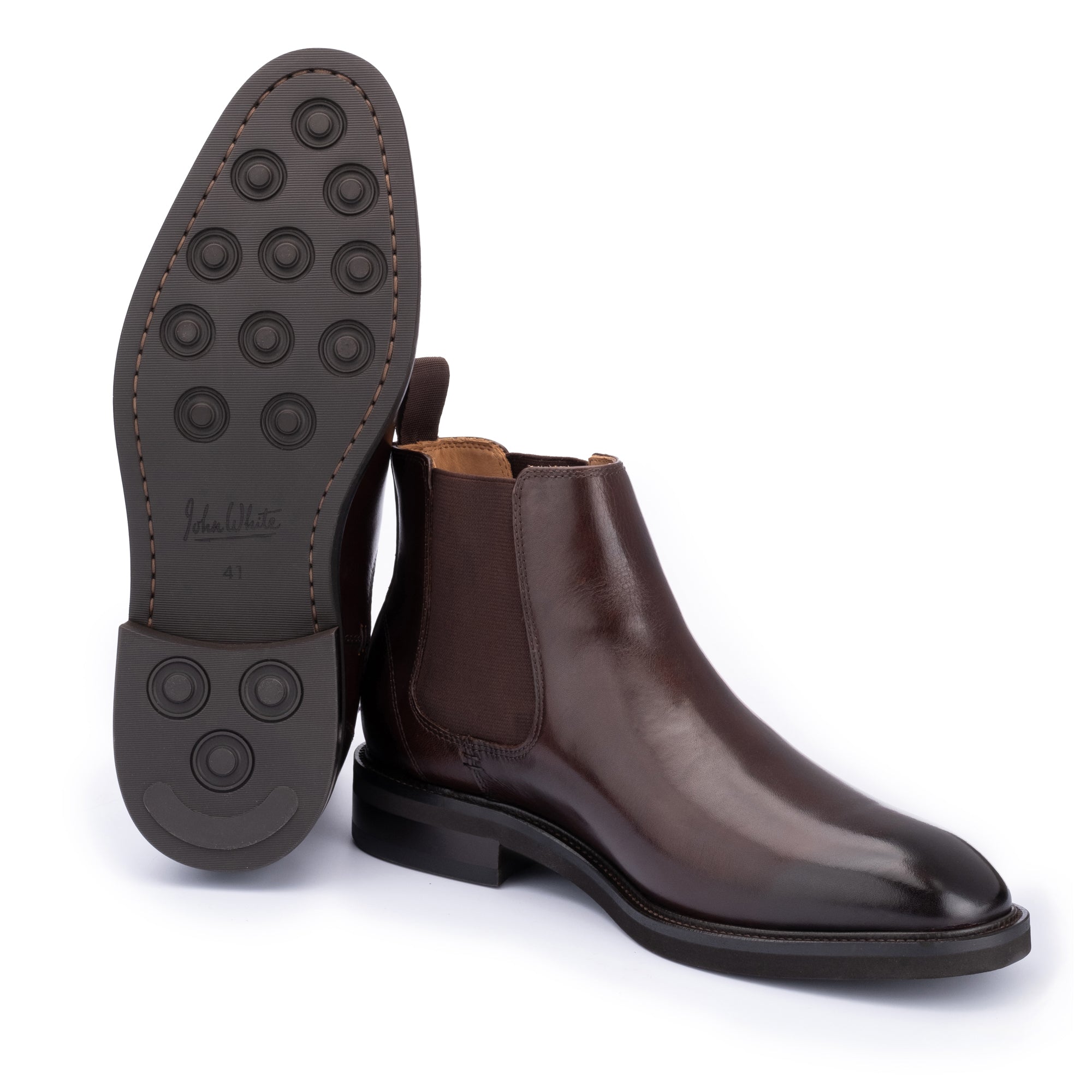
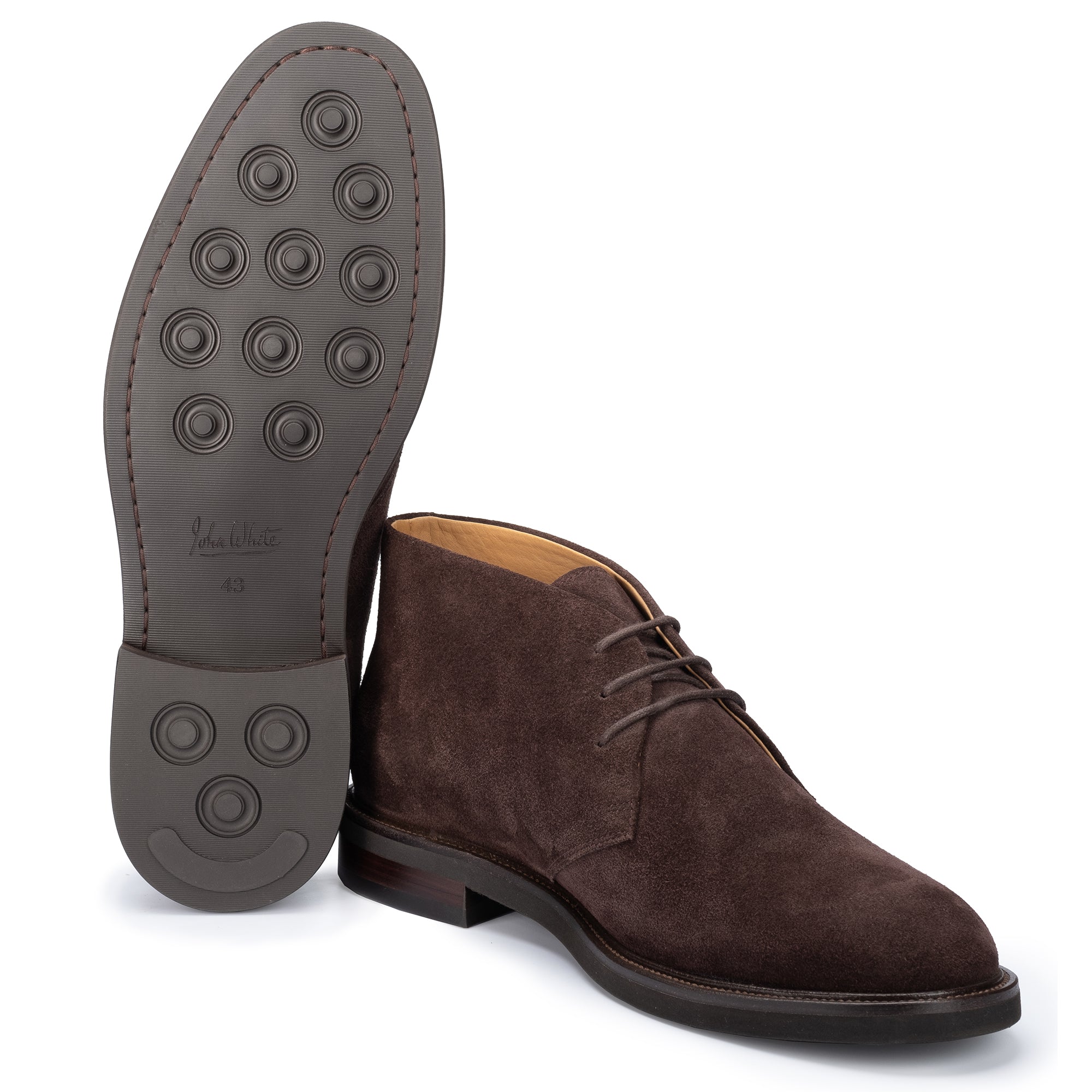
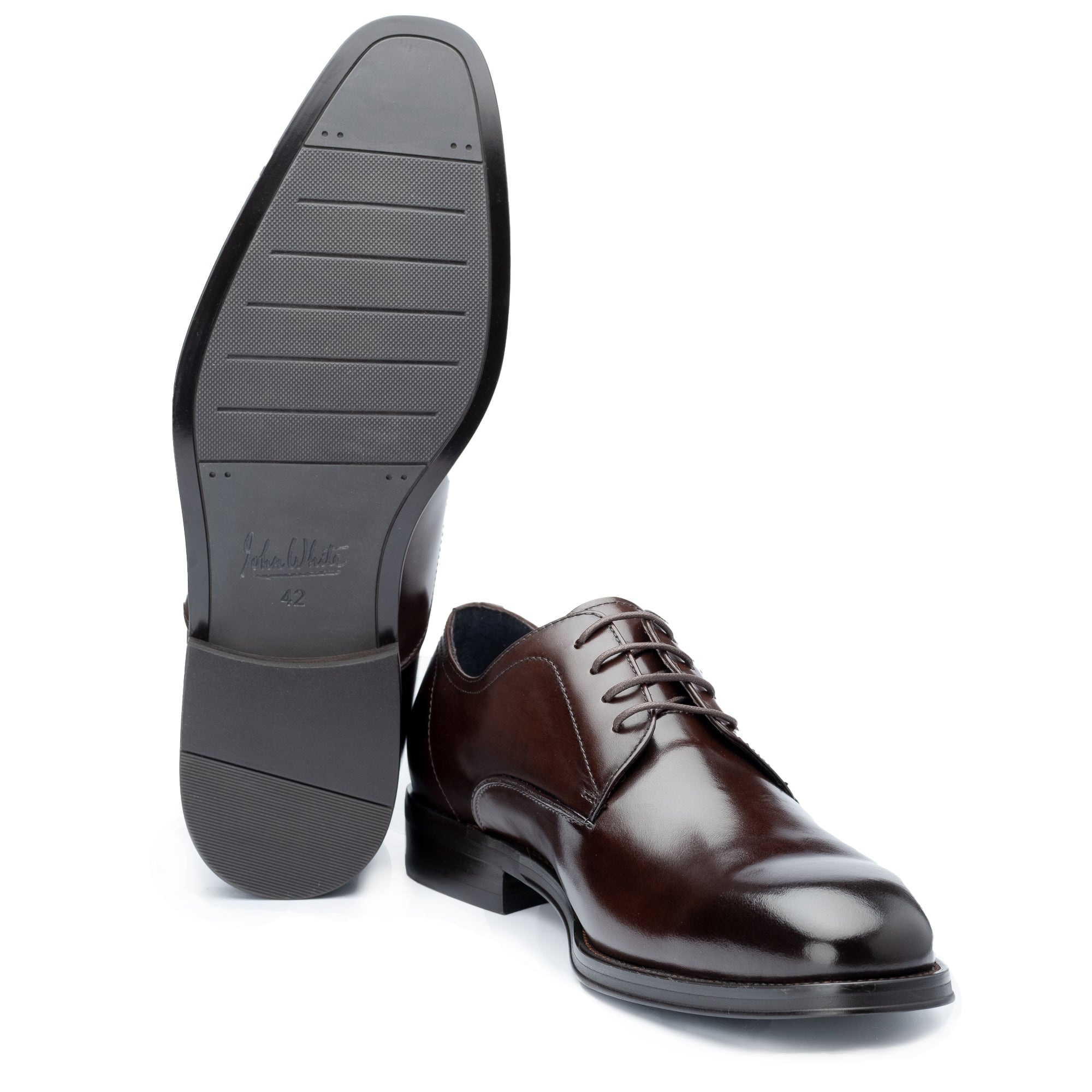
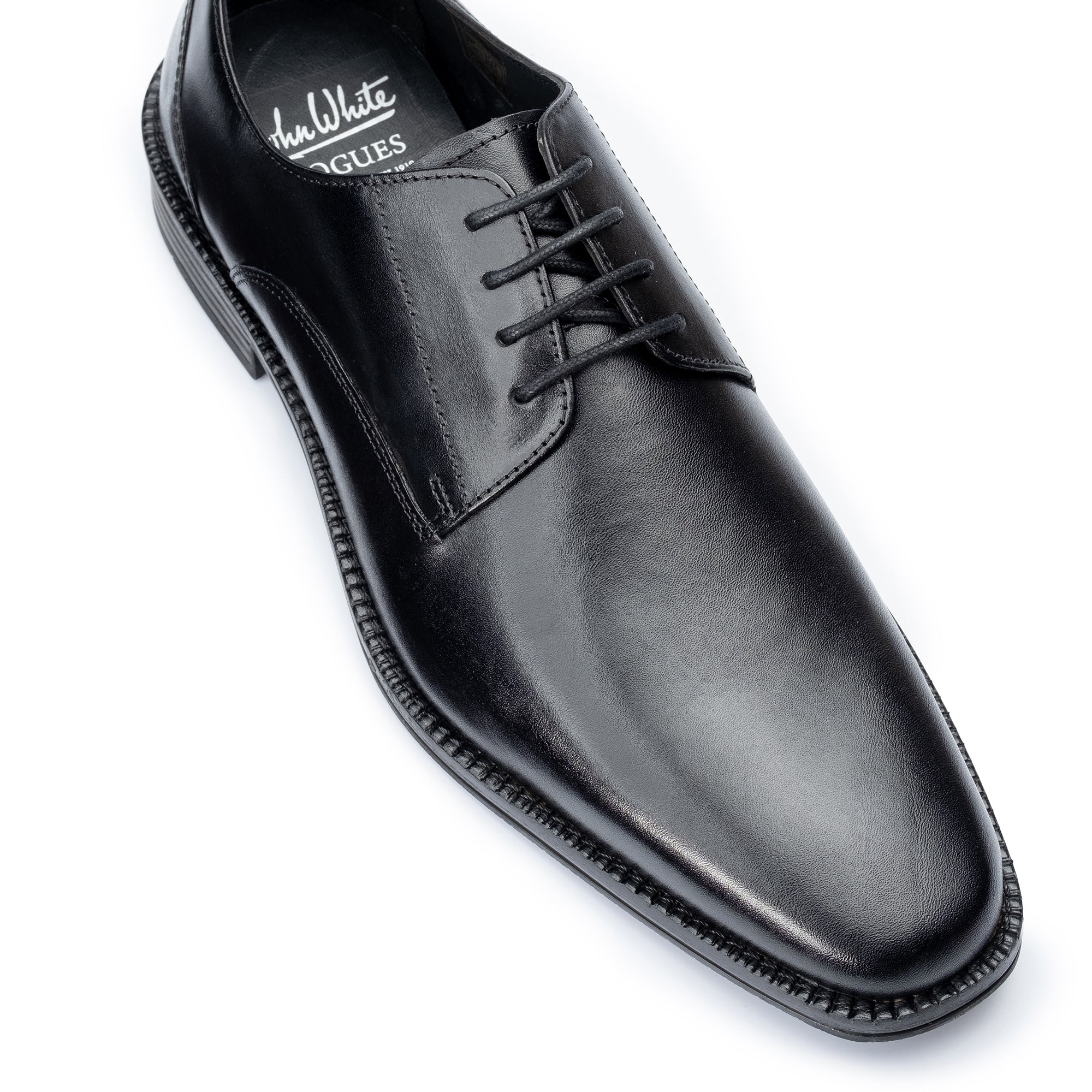
Construction is the factor that separates a footwear purchase from a footwear investment. A Goodyear welted boot — in which the upper, welt, and sole are joined by two independent rows of stitching — can be resoled repeatedly without compromising the structural integrity of the upper or insole beneath.
According to the Society of Master Shoe Repairers, a Goodyear welted boot can sustain four to six resoles across its service life, extending wearable use to twenty years or more with correct maintenance. This places it in a fundamentally different category to a cemented or Blake-stitched boot, which cannot be economically resoled and is typically replaced every two to three years.
According to research published by the British Footwear Association, regularly maintained leather footwear has an average service life four to five times longer than footwear worn without professional care or conditioning. Over a twenty-year horizon, the financial case for welted construction is unambiguous — this is the reasoning behind our full guide to cost per wear as an investment argument.
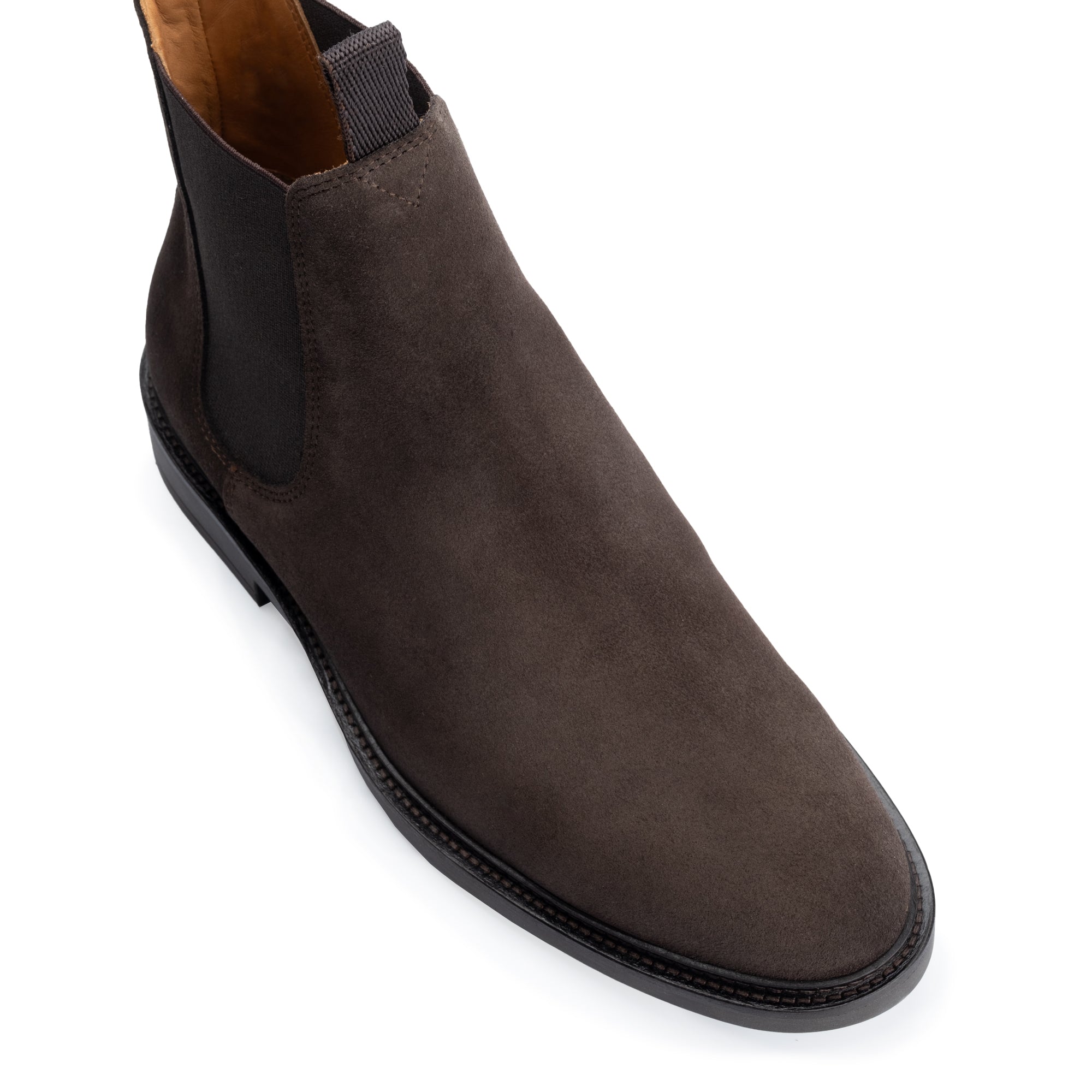
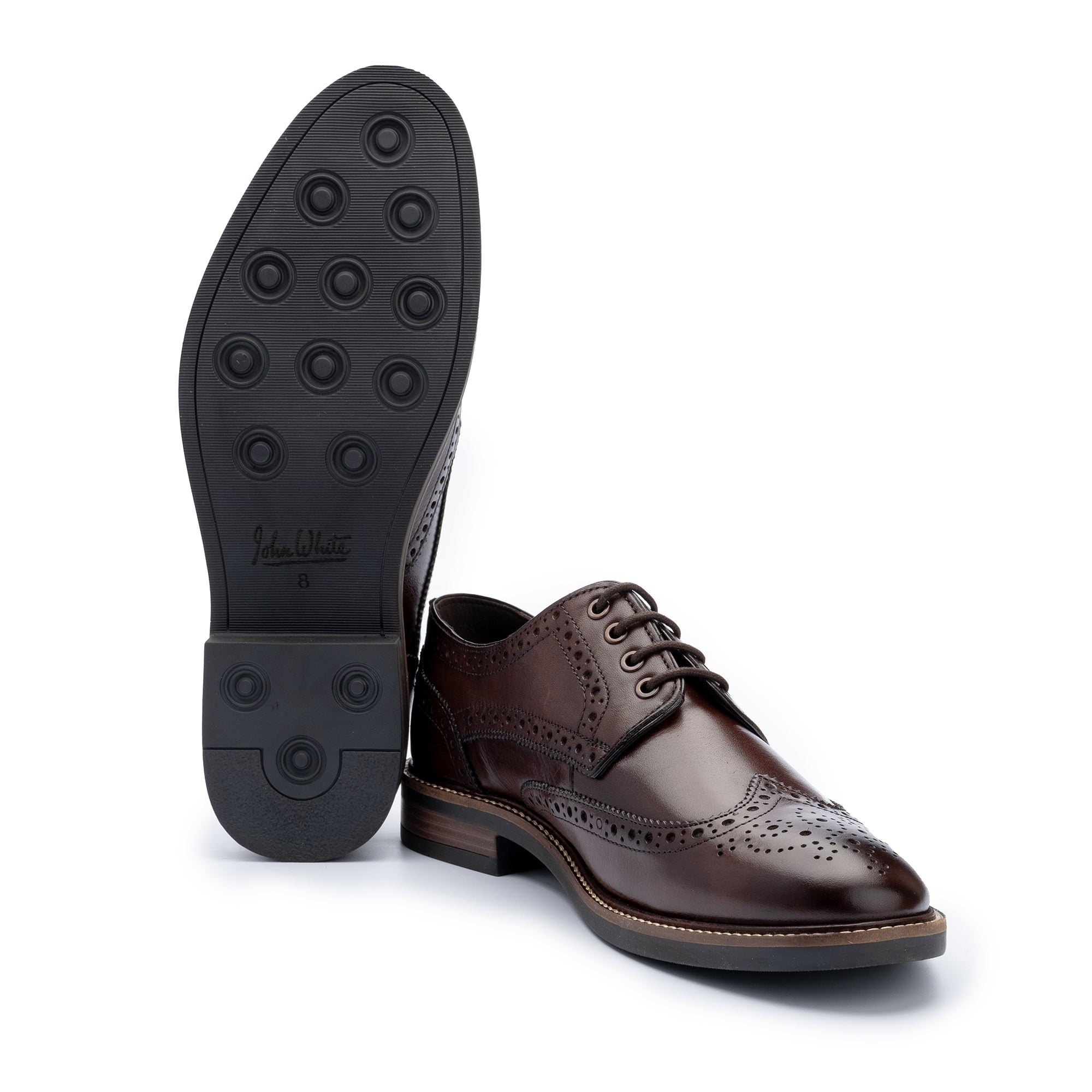
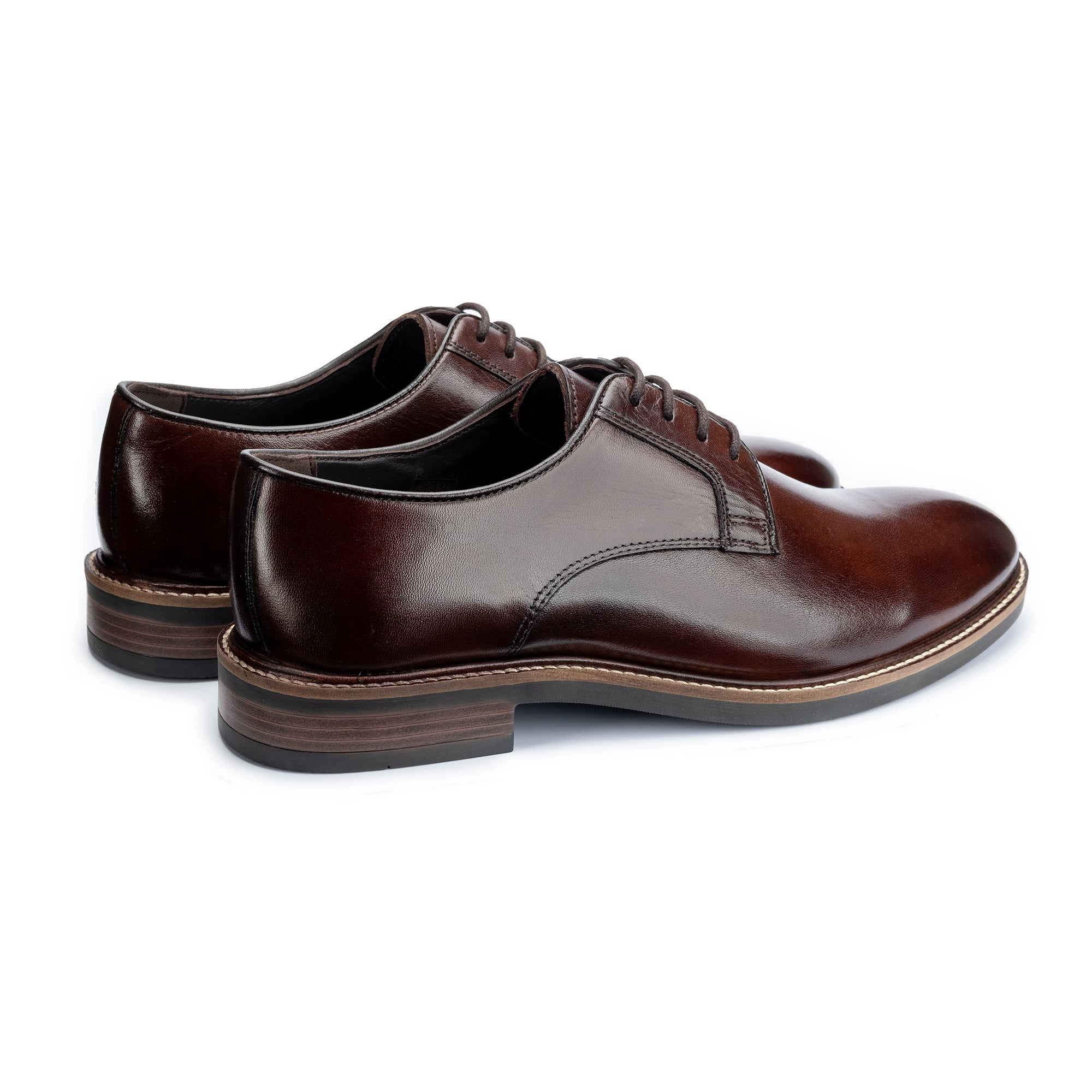
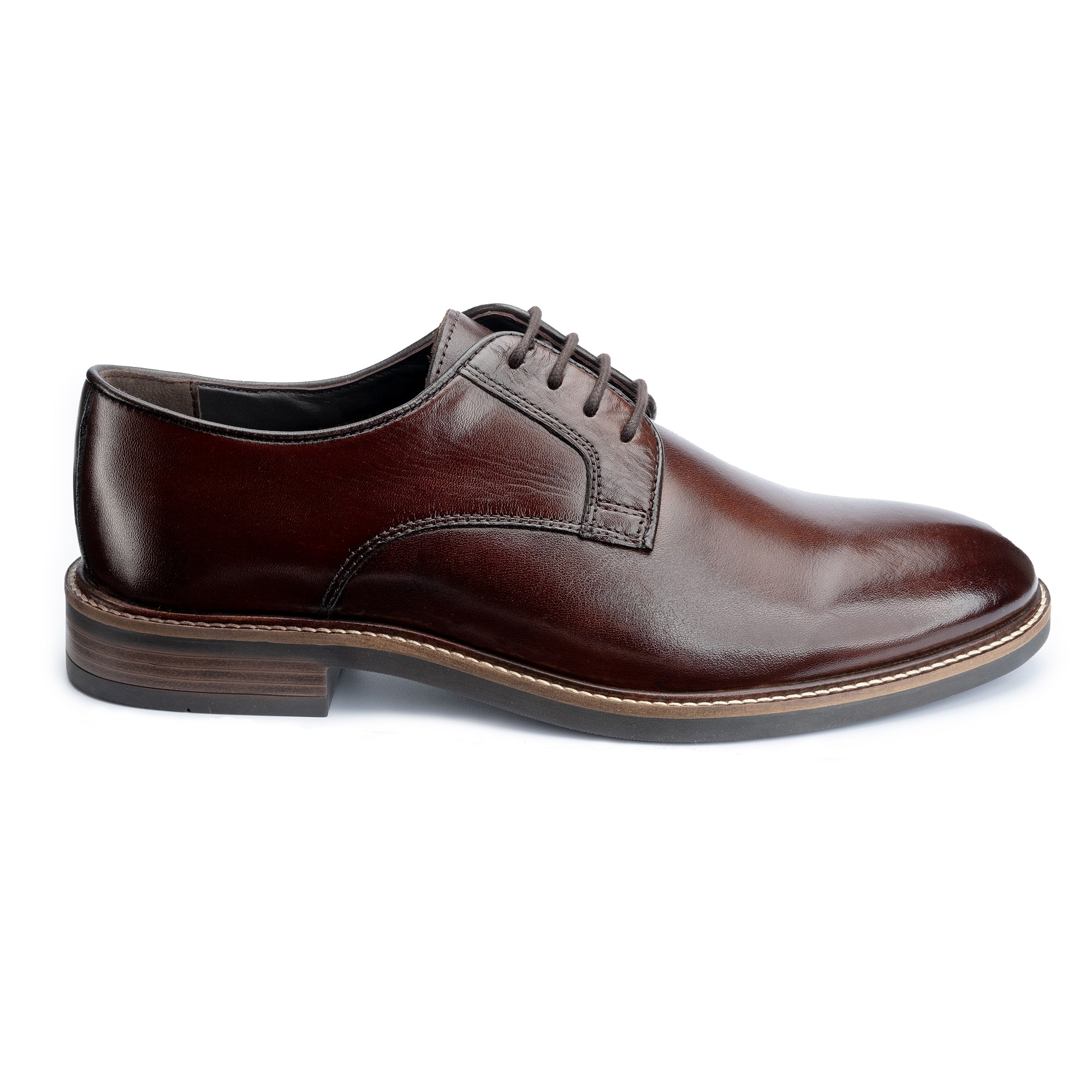
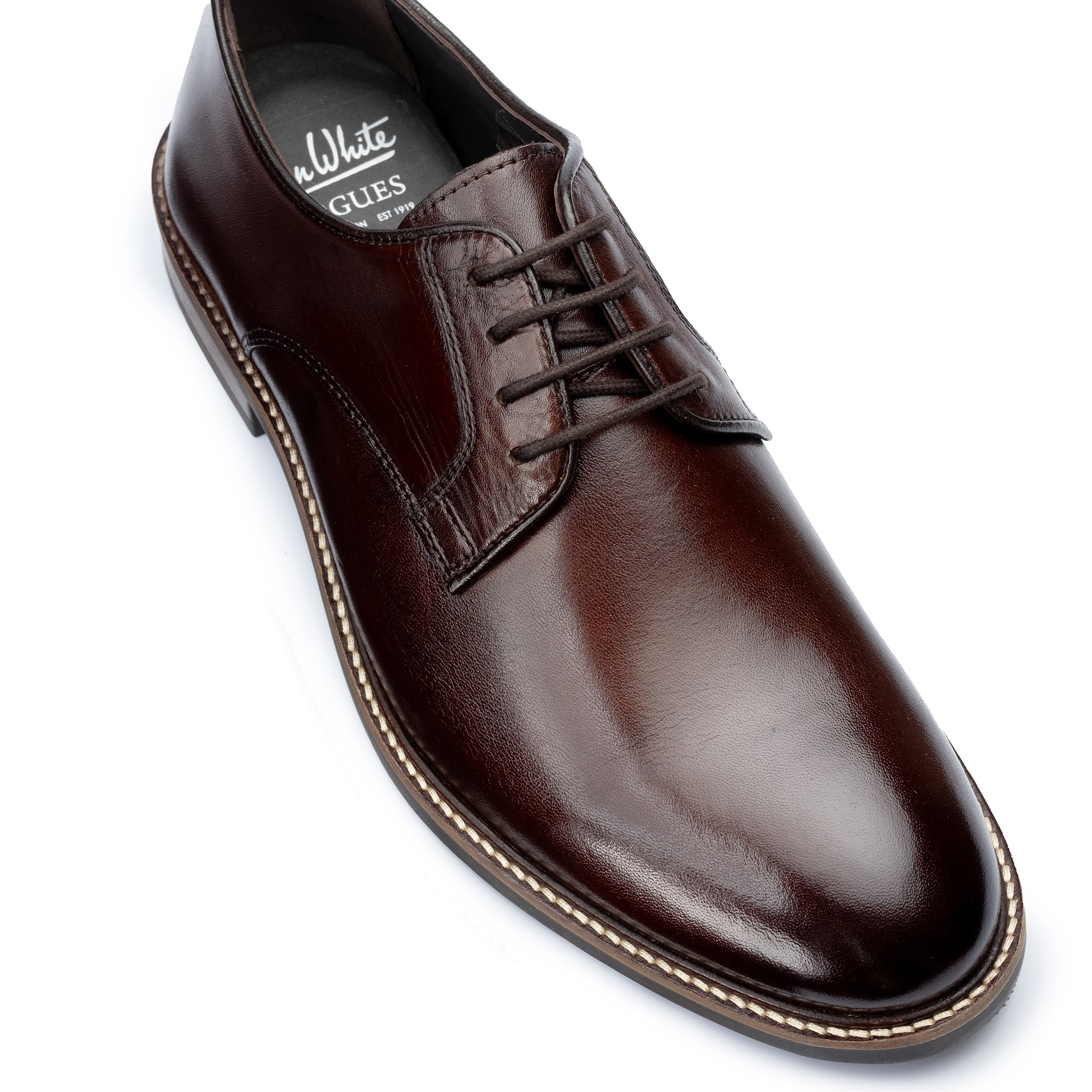
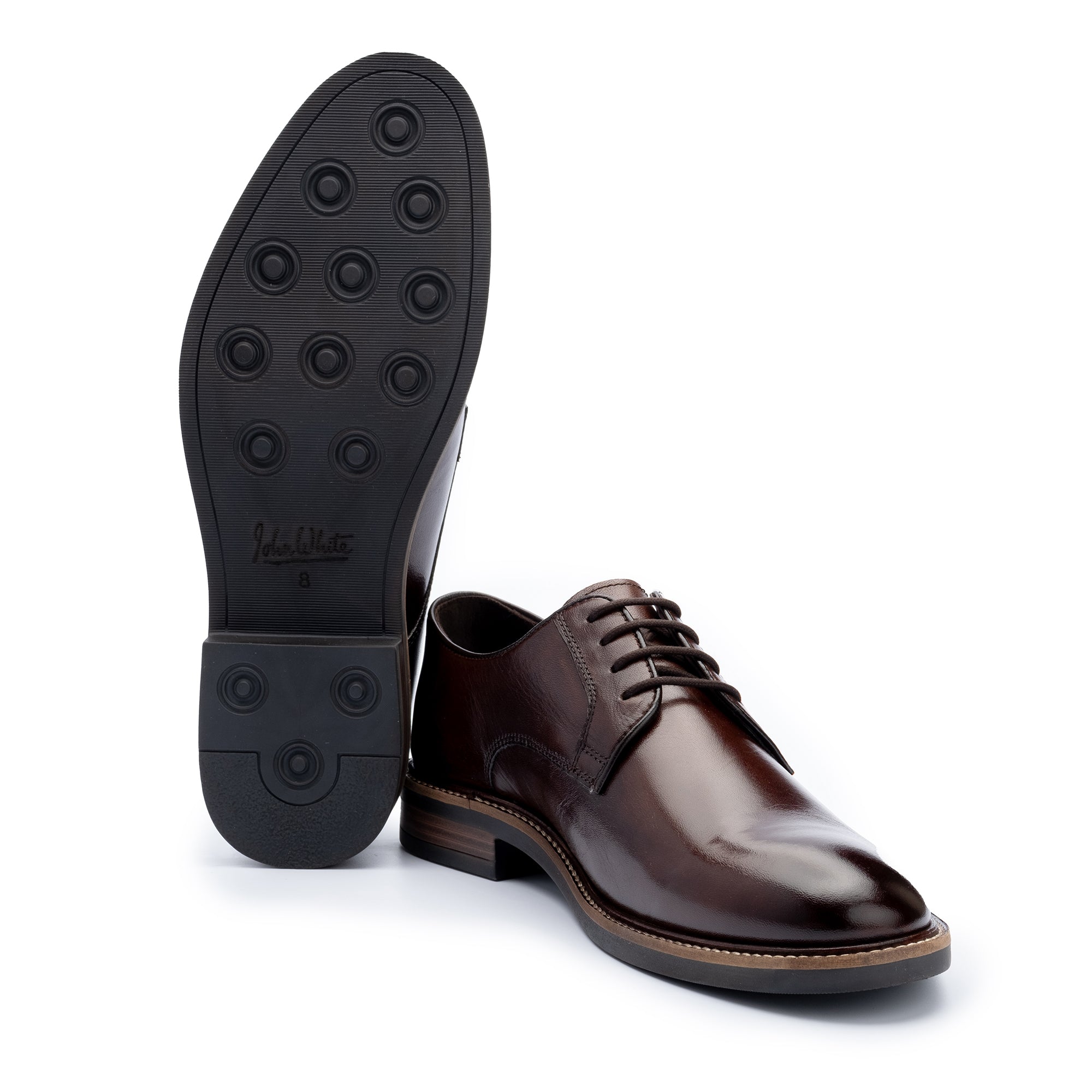
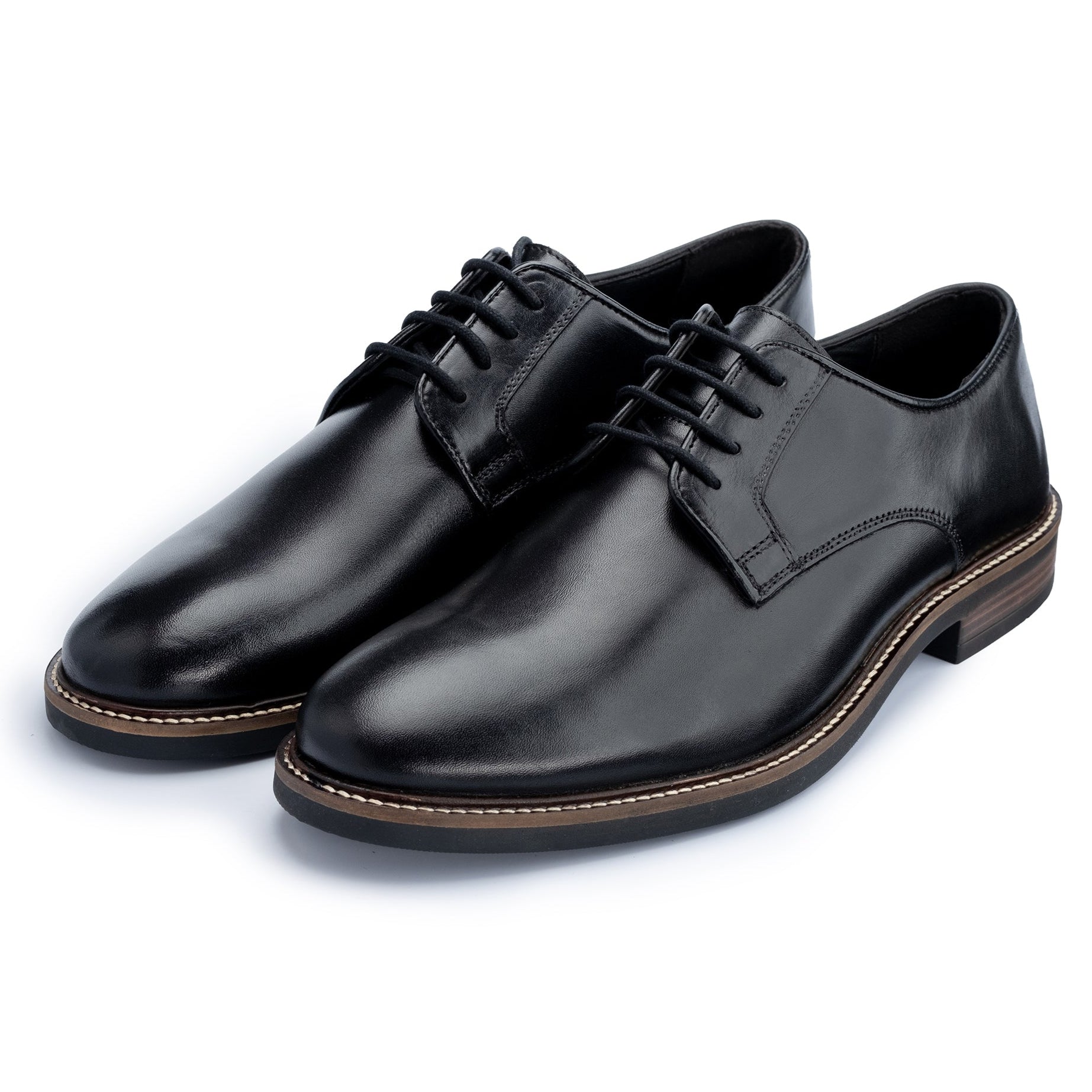
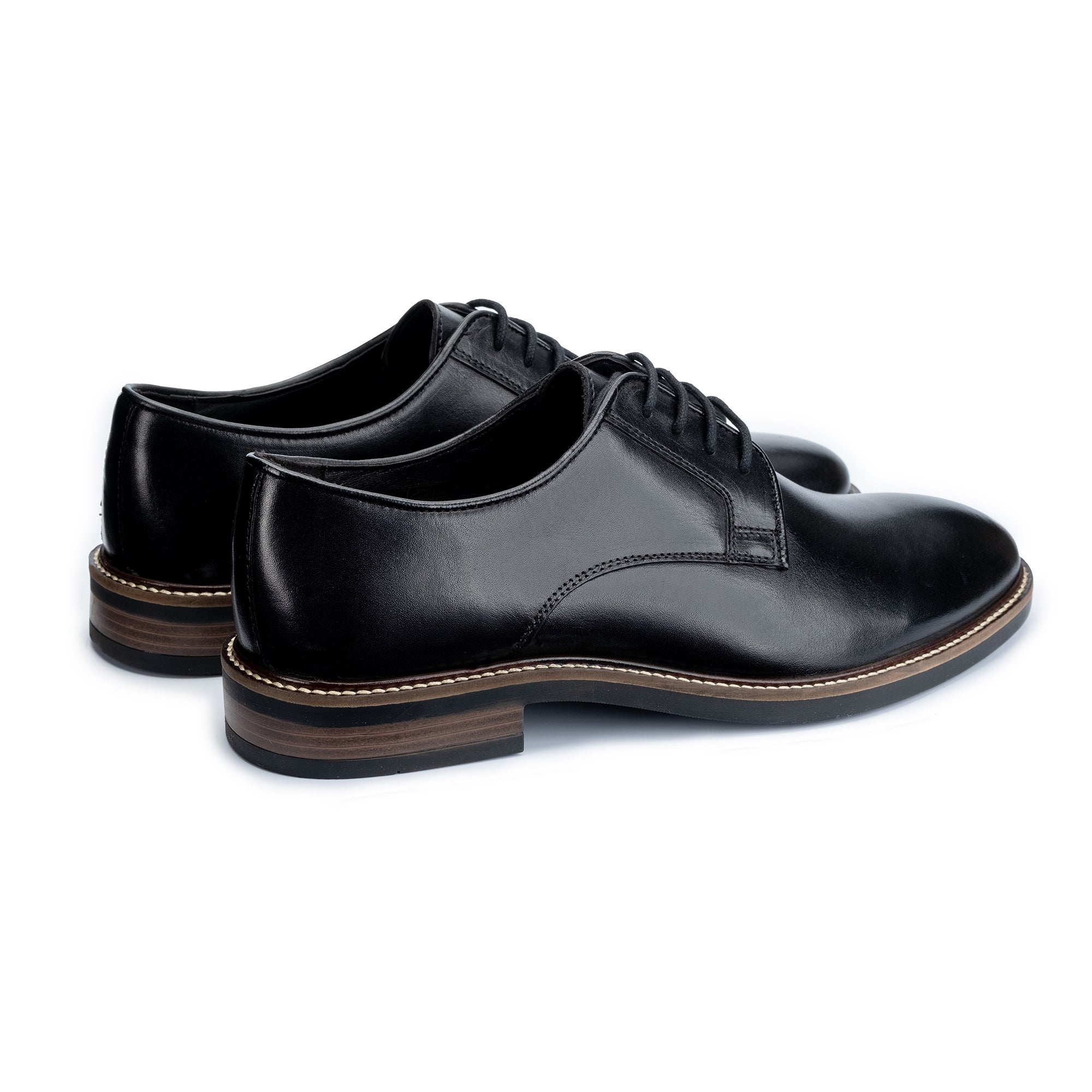
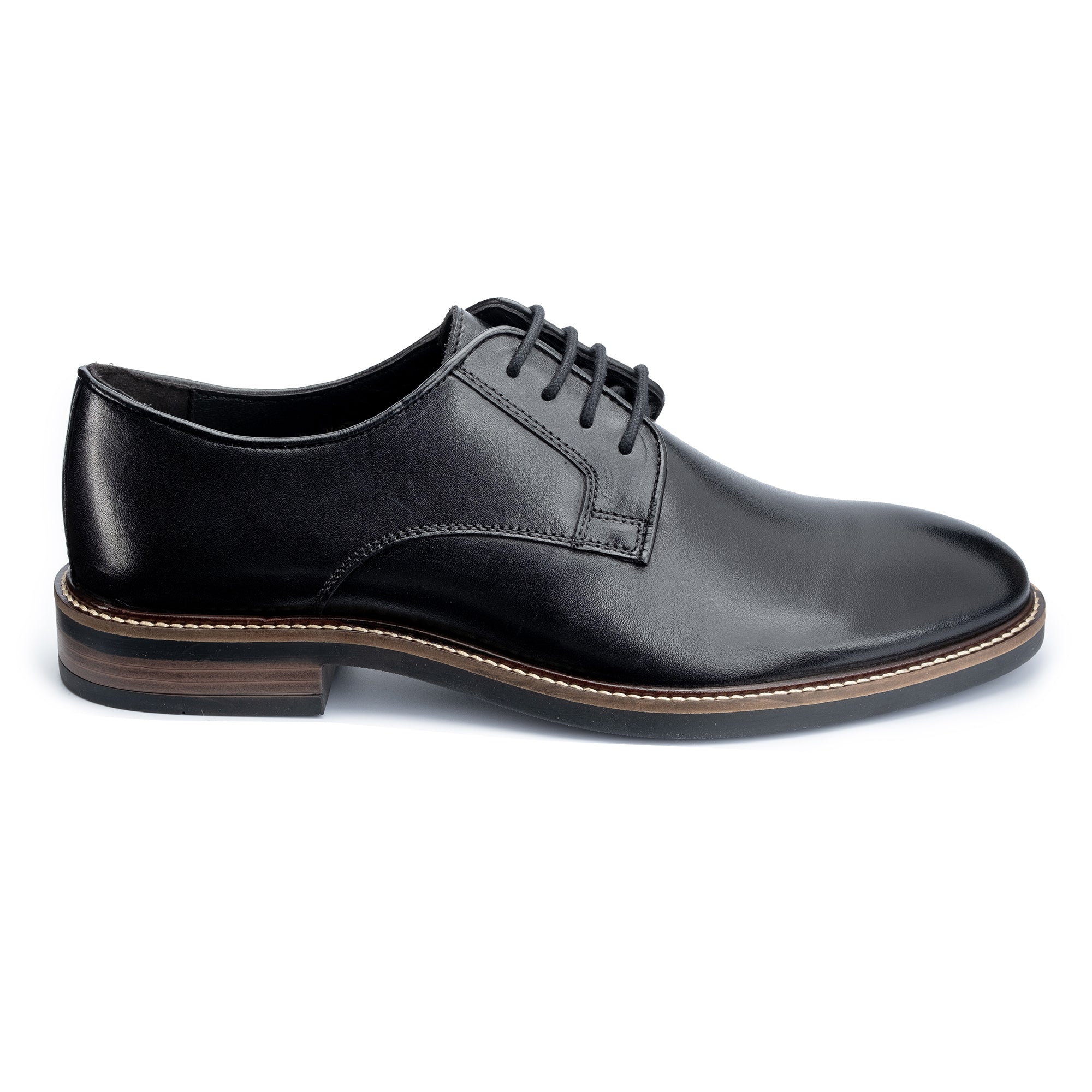
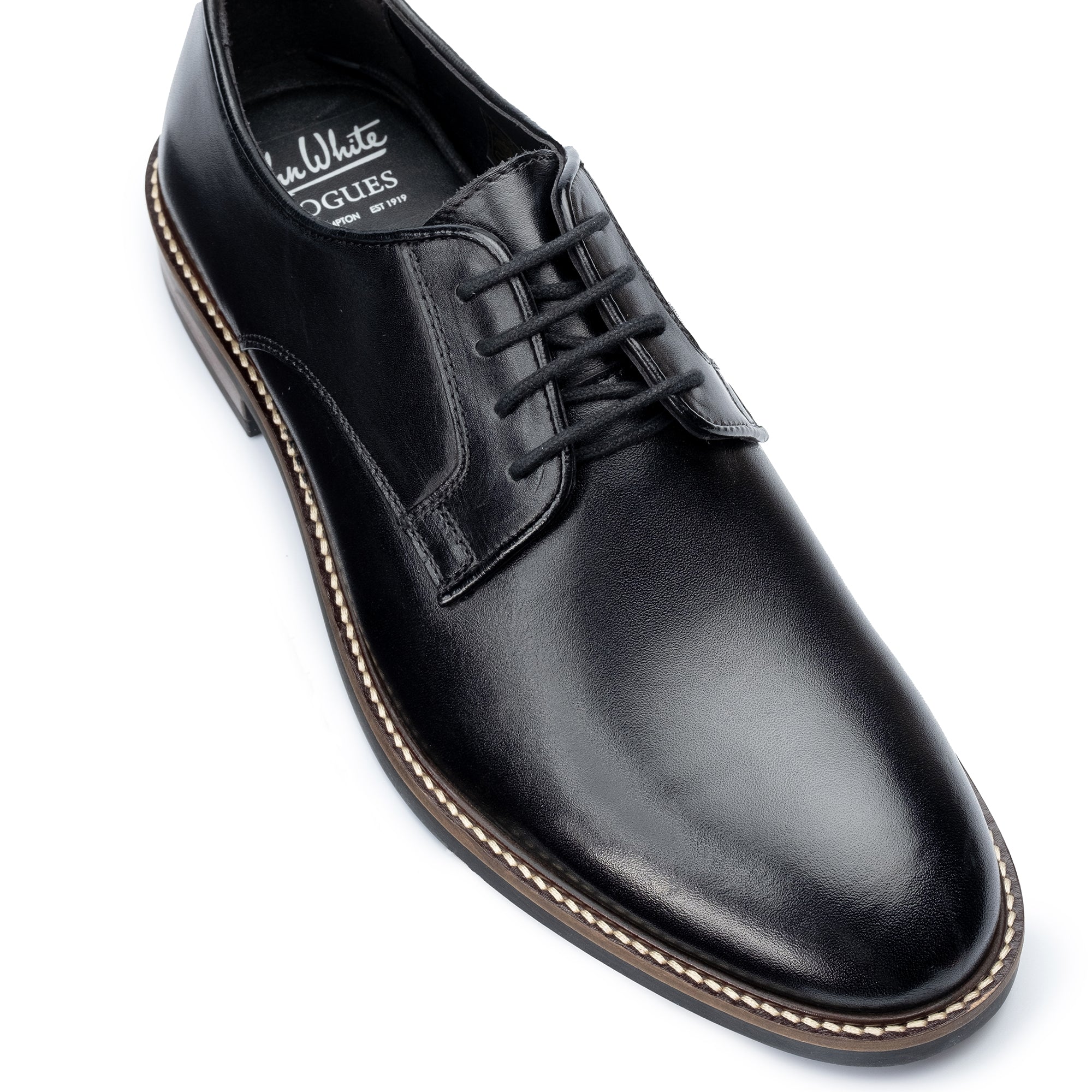
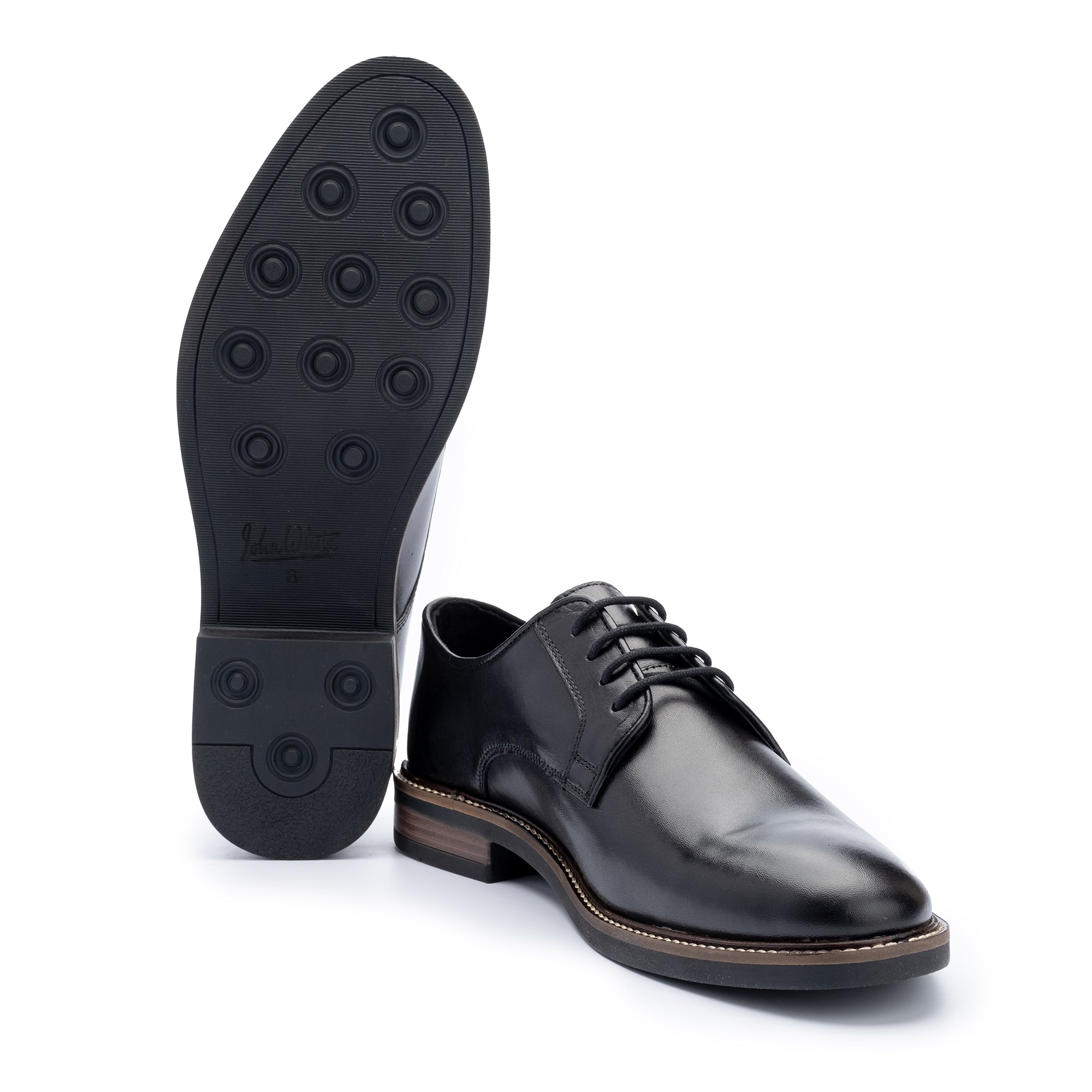
Both Chelsea and chukka boots can be since 1919 construction — but not all are. When purchasing either style, examine the welt seam at the junction of the upper and outsole. A visible, uniform stitch line running the full perimeter is the mark of genuine welted construction.
Heritage houses including Loake, Barker, Grenson, Church's, and Crockett & Jones, alongside John White Shoes, build their boot ranges on welted construction as standard — a shared commitment that distinguishes serious footwear from volume product that cannot be rebuilt.
A Goodyear welted boot resoled four to six times over twenty years costs a fraction of replacing cemented boots every two to three years — the investment case is structural, not sentimental.
Which Leather Works Best for Each Boot?
Material choice affects formality register, longevity, and the care demands of each boot across British weather conditions.
For the Chelsea boot:
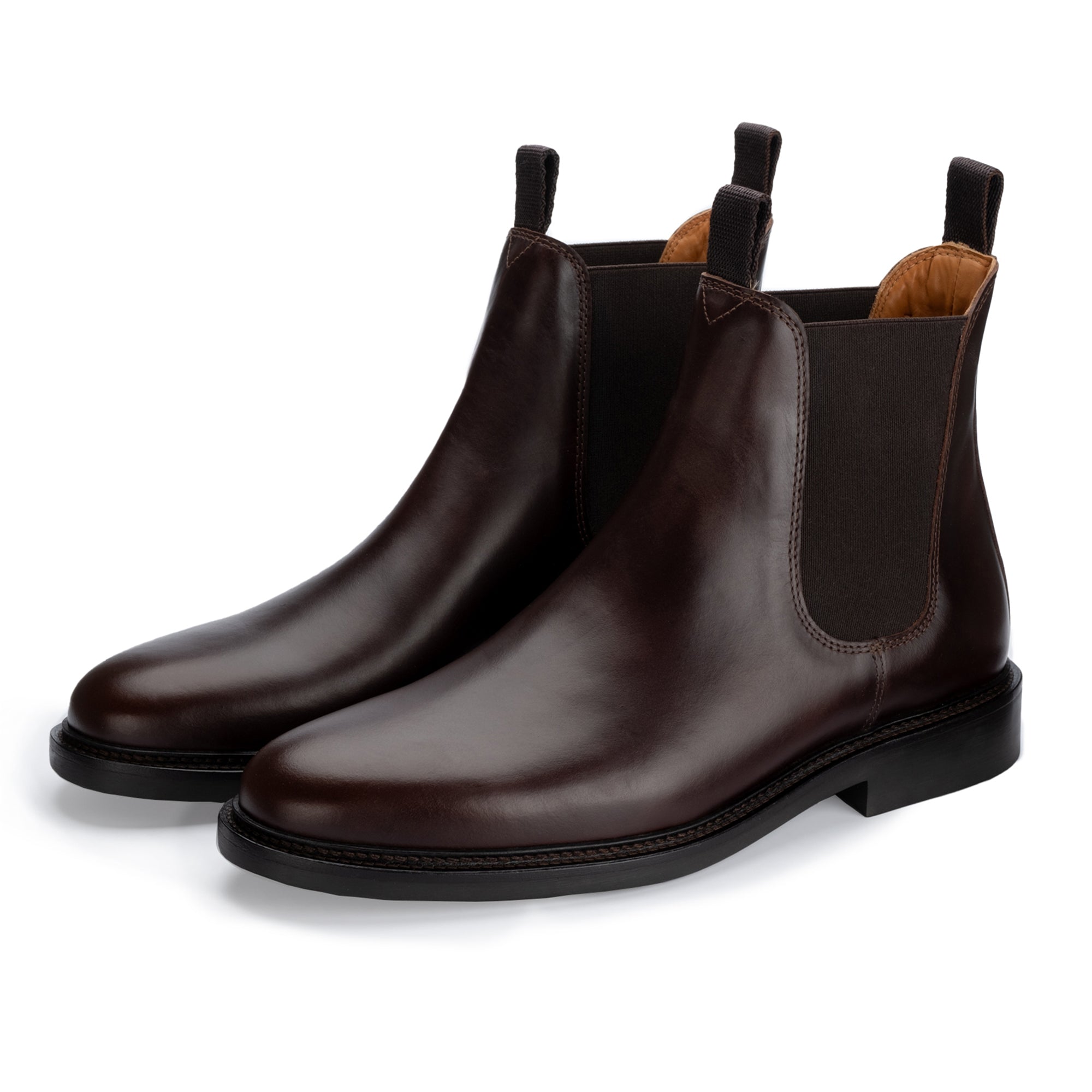
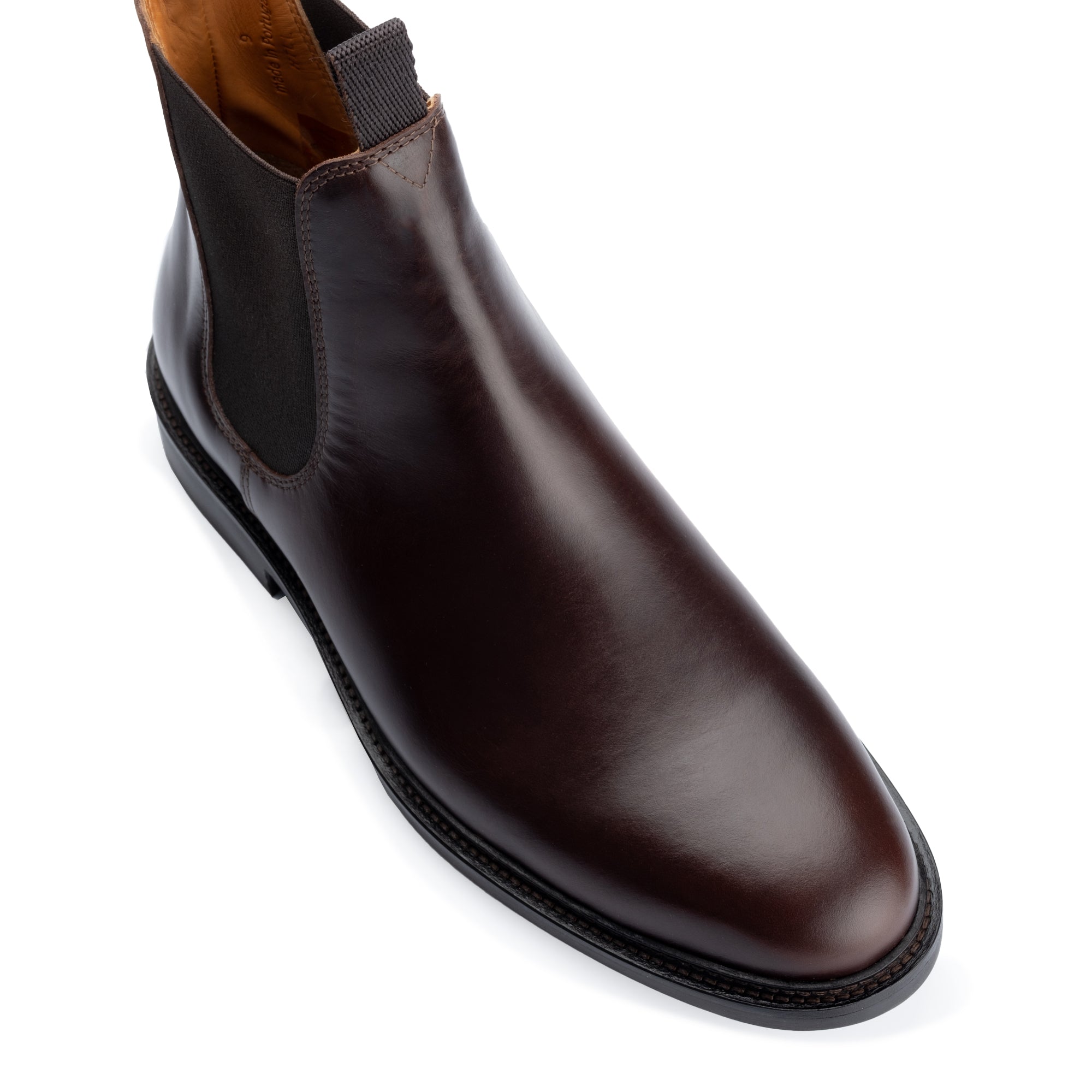
- Smooth calfskin — the most formal and weather-resistant option. Takes polish readily, develops a rich patina over years of wear, and extends the boot's formality range furthest. Black calfskin for professional contexts; dark tan or oxblood for smart-casual.
- Suede — the natural choice for weekend and smart-casual wear. Requires a waterproofing spray before first wear and regular brushing through autumn and winter to maintain the nap.
For the chukka boot:
- Suede — the traditional and defining material. Sand, mid-tan, or snuff suede is the heritage choice; these shades integrate naturally with chinos, cord, and casualwear across the cooler months.
- Smooth calfskin — a less common but valid alternative that extends the chukka's register slightly, particularly in dark chocolate or black.
The Leather Conservation Centre recommends conditioning calfskin footwear every six to eight weeks under regular use to maintain fibre integrity and prevent surface cracking. For suede boots worn through British winters, our guide to caring for suede Chelsea boots in winter covers the correct seasonal care protocol in full.
As footwear historian June Swann, whose scholarship on Northampton bootmaking remains the authoritative record of the craft, observed: lasting value in a boot derives not from surface finish alone, but from the quality of leather selected at the outset — a principle that applies equally to calfskin and suede, Chelsea and chukka alike.
For a deeper comparison of how each upper material performs across British conditions, our guide to leather vs suede uppers for British weather covers the trade-offs in detail.
Chelsea Boot vs Chukka Boot: At a Glance
| Feature | Chelsea Boot | Chukka Boot |
|---|---|---|
| Fastening | Elastic side panels, pull-on | Two or three eyelets, laced |
| Silhouette | Clean, uninterrupted | Open tab, relaxed |
| Formality range | Smart-casual to business formal | Casual to smart-casual |
| Traditional material | Smooth calfskin | Suede |
| Works with suits | Yes (calfskin) | No |
| Works with jeans and chinos | Yes | Yes |
| Goodyear welt compatible | Yes | Yes |
| Ease of wear | Slip-on, no lacing required | Laced, slightly more involved |
| Heritage origin | Victorian England, 1850s | British polo culture and military |
Chelsea Boot or Chukka Boot: Which Should You Buy First?
The decision rests on one honest question: what does the majority of your wardrobe require?
If you wear suits regularly, move between professional and casual environments, or want a single boot that works across the widest range of occasions, the Chelsea boot is the stronger first investment. Its cleaner silhouette, greater formality range, and slip-on ease give it an edge in daily utility without sacrificing refinement. A black calfskin Chelsea on a leather or Dainite sole is the most versatile boot a man can own.
If your wardrobe is predominantly smart-casual — chinos, denim, relaxed tailoring — the chukka boot is a more natural fit. Its open construction and traditional suede heritage integrate effortlessly with casual dressing, and a quality pair develops character over years in a way that rewards long ownership.
For most wardrobes: buy the Chelsea first. Add the chukka second, when the Chelsea has proved its range. Both deserve a place in a considered collection — the question is simply which earns priority.
Explore our complete range of men's boots or browse the full men's shoes collection at John White Shoes.
Related Guides
- The Definitive Guide to Men's Boots
- The Dress Boot Formality Guide: Choosing Between Balmoral, Brogue, and Chelsea
- How to Wear Chukka Boots: Men's Styling Guide for Every Occasion
- How to Style Chelsea Boots for Any Occasion
TL;DR: The Chelsea boot covers more formality ground than the chukka — from business dress to weekend casual — making it the stronger first investment for most wardrobes. The chukka boot excels in smart-casual settings, particularly in suede, and rewards long ownership through character and comfort. Both represent genuine long-term investments when since 1919 construction with quality leather or suede uppers and maintained correctly throughout their service life.
Frequently Asked Questions
What is the main difference between a Chelsea boot and a chukka boot?
A Chelsea boot is a pull-on ankle boot with no lacing and elastic side panels, producing a clean, uninterrupted silhouette. A chukka boot is a laced ankle boot with two or three eyelets and an open tab above the ankle, giving it a more relaxed construction. The Chelsea reads as more formal; the chukka as inherently more casual.
Are Chelsea boots more formal than chukka boots?
Yes. The Chelsea boot's laceless upper and closed silhouette allow it to pair credibly with lounge suits and business dress. The chukka is best suited to smart-casual and casual outfits — its open lacing places it below the suit threshold in most professional contexts.
Can you wear a Chelsea boot with a suit?
A black or dark tan calfskin Chelsea boot on a leather or Dainite sole is appropriate with a lounge suit in business and smart-casual settings. Choose smooth calfskin rather than suede for formal occasions. A chukka boot is generally not suited to tailored suiting.
How long should a quality Chelsea or chukka boot last?
A Goodyear welted boot, correctly maintained and resoled as required, can last twenty years or more. According to the Society of Master Shoe Repairers, welted boots can sustain four to six resoles across their service life. The upper is the lasting investment; the sole is the serviceable, replaceable component.