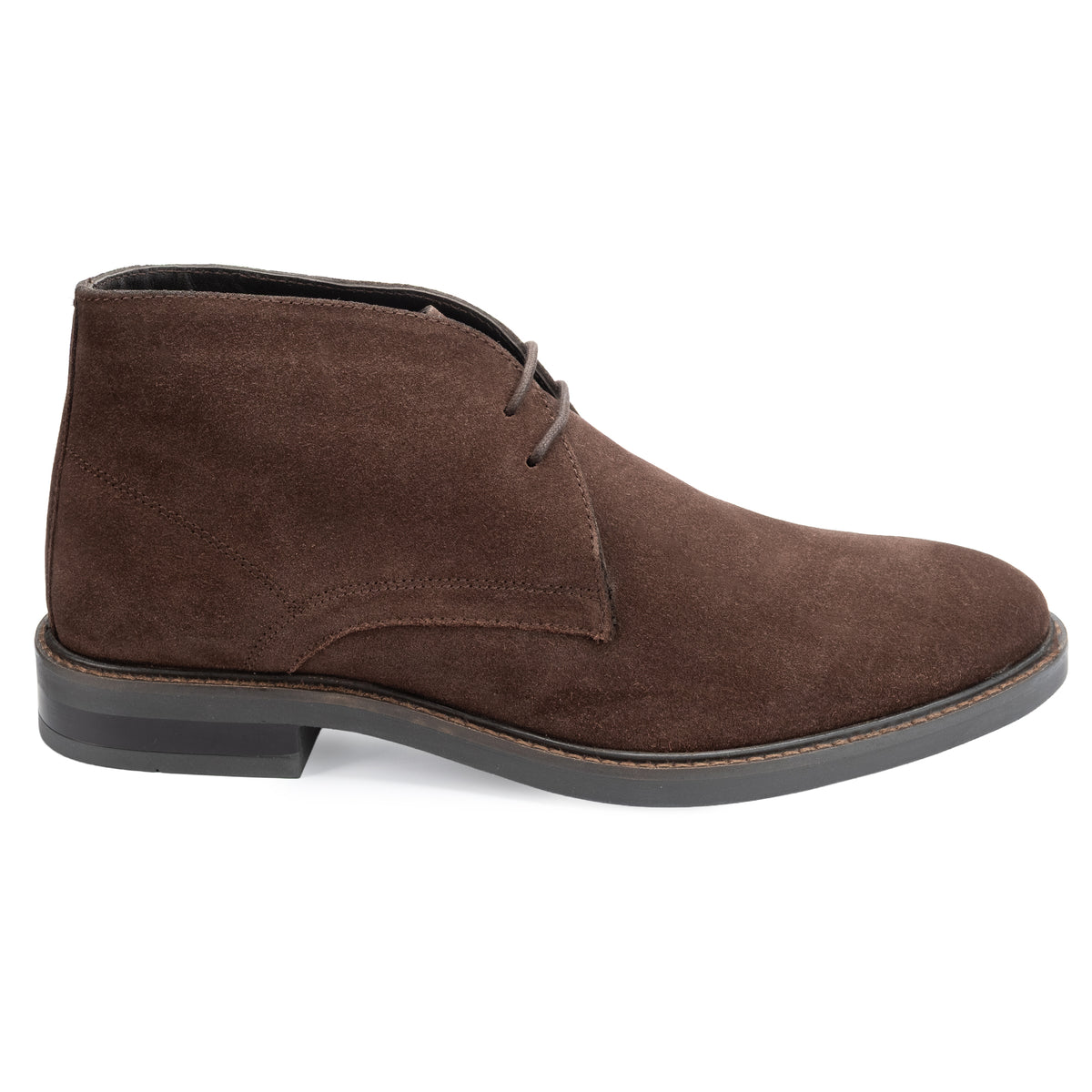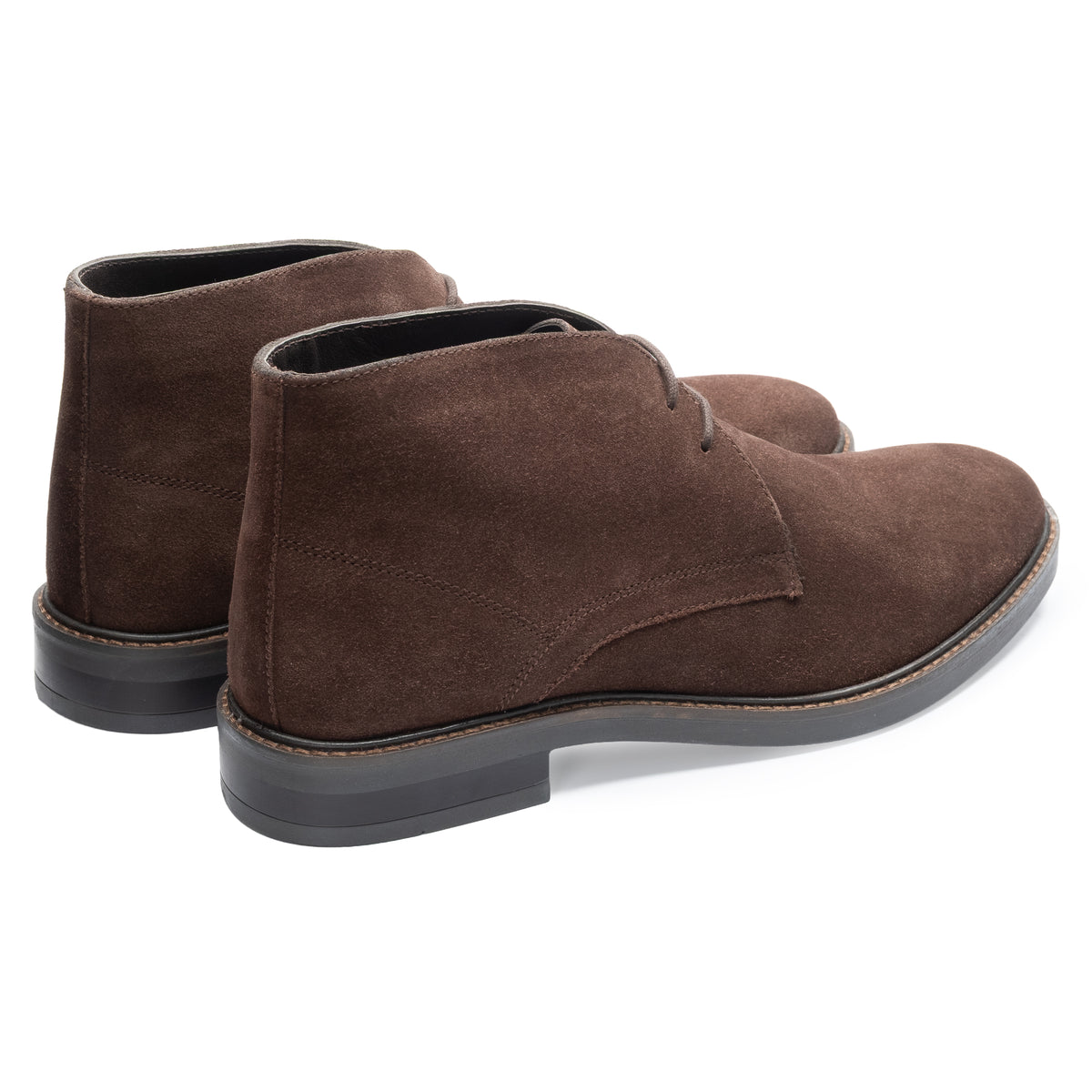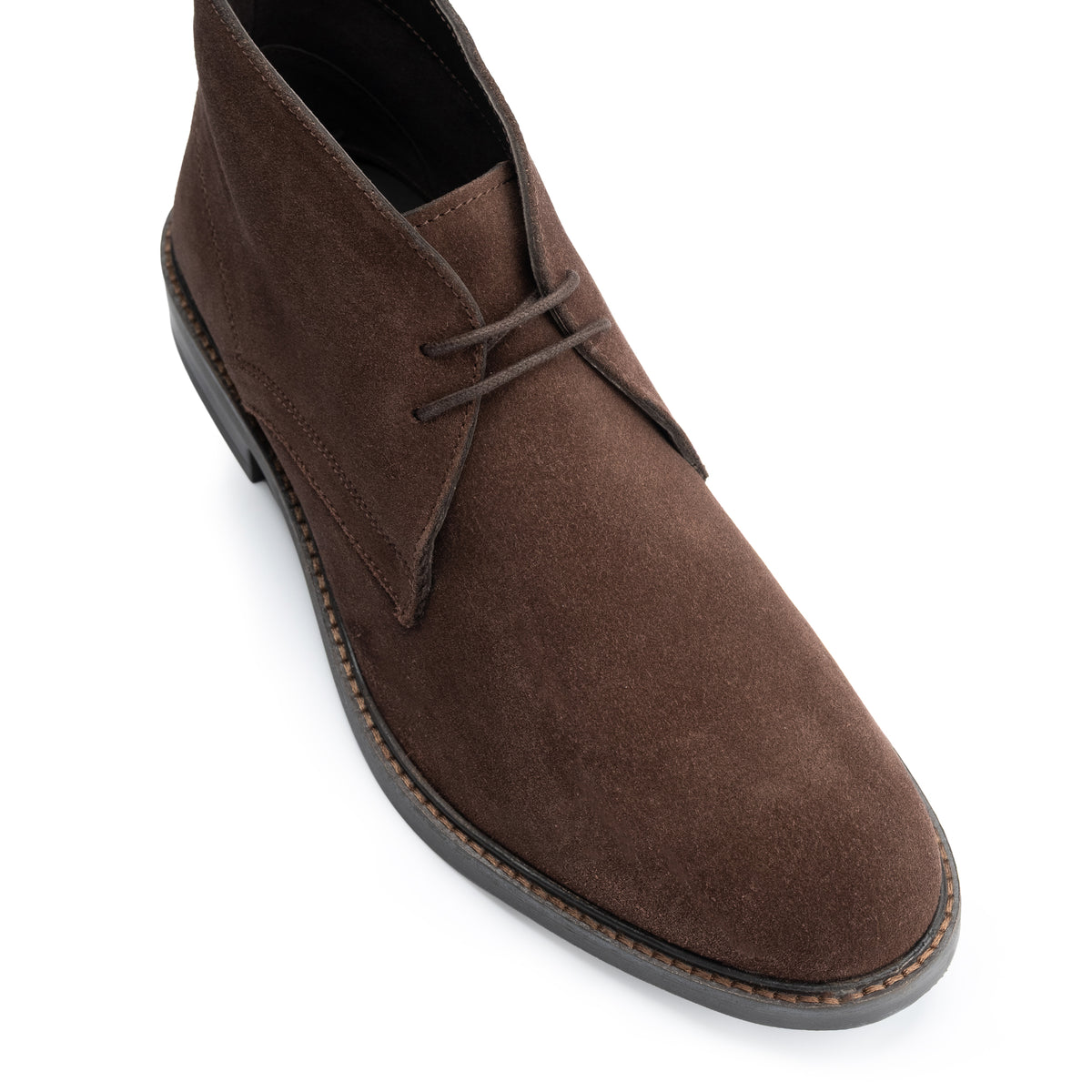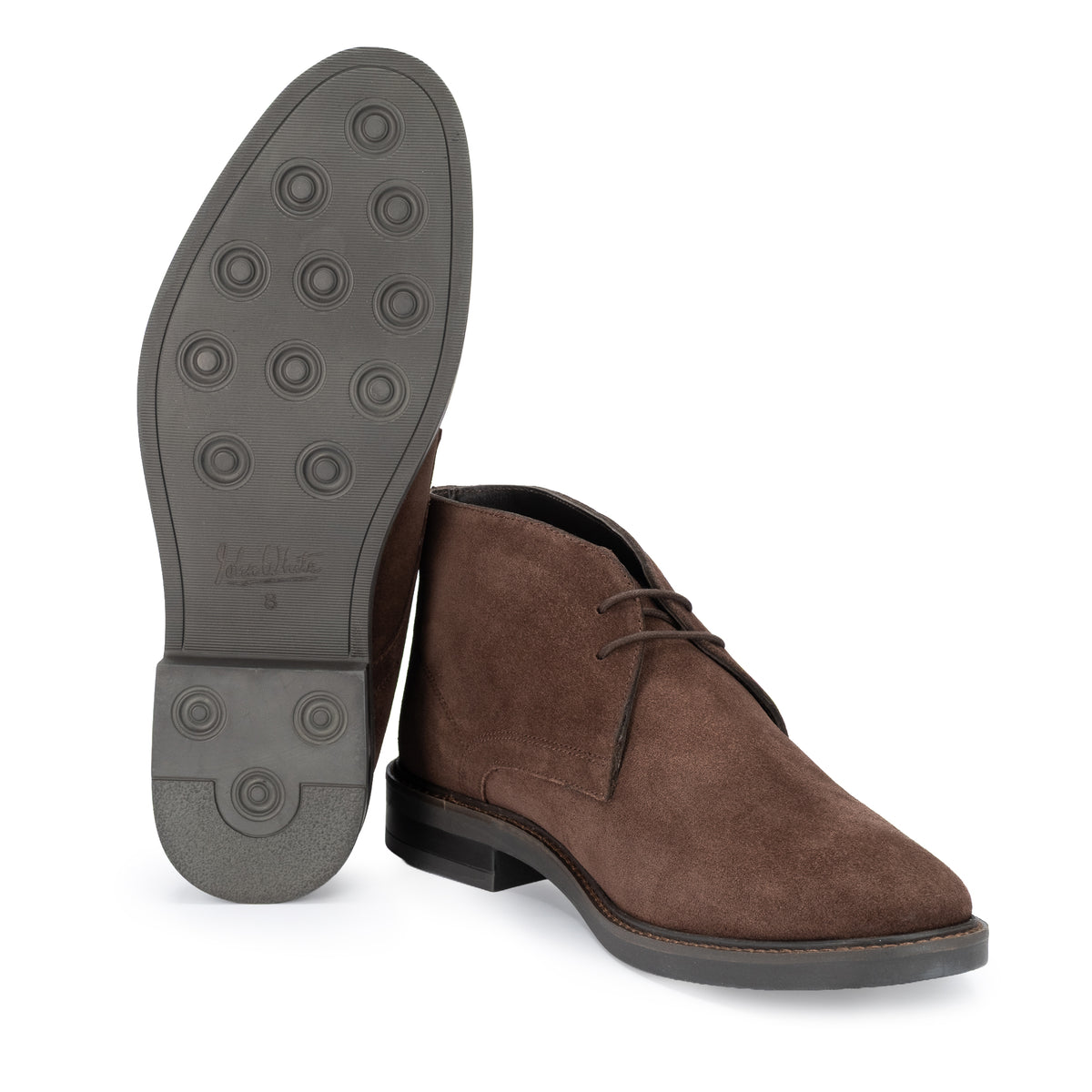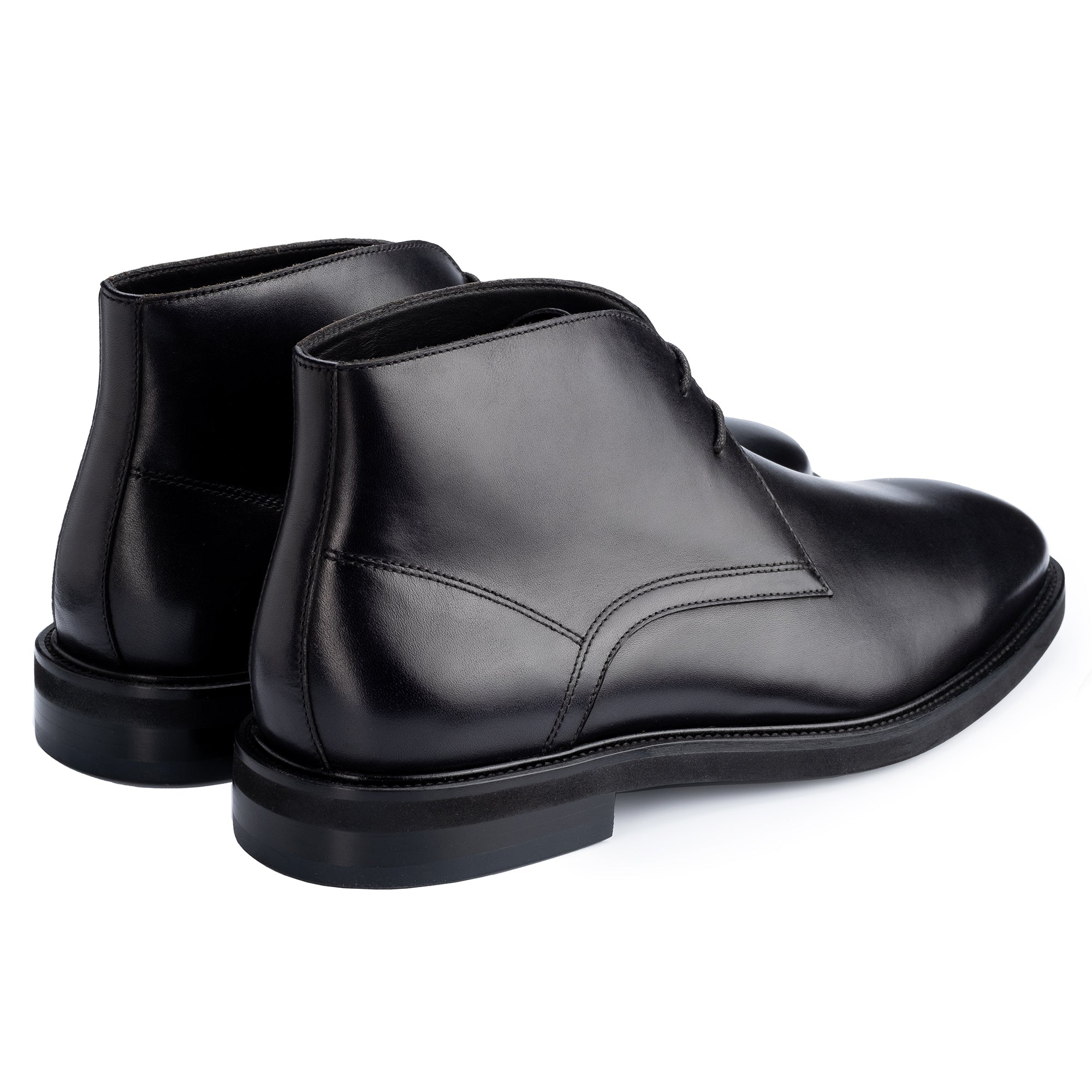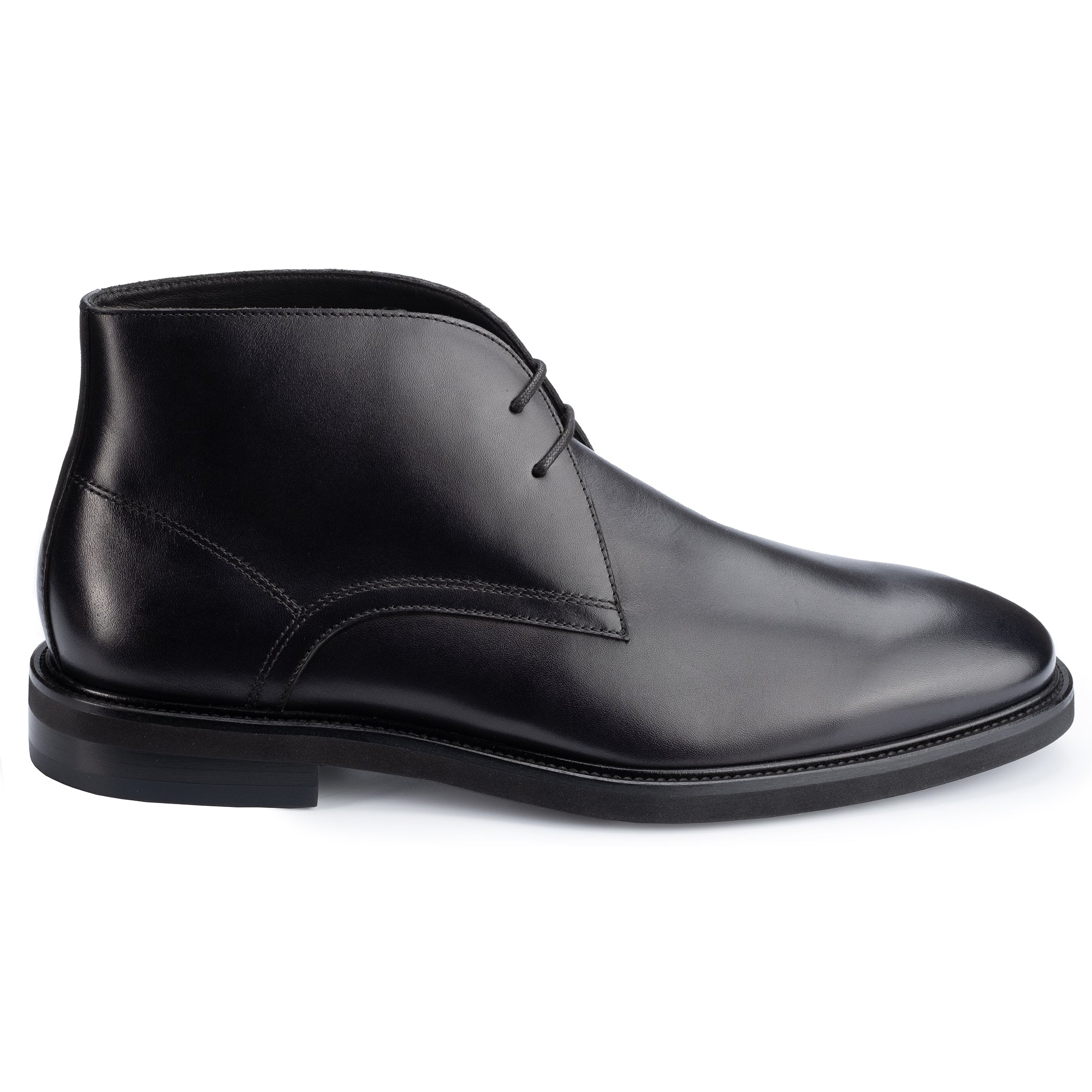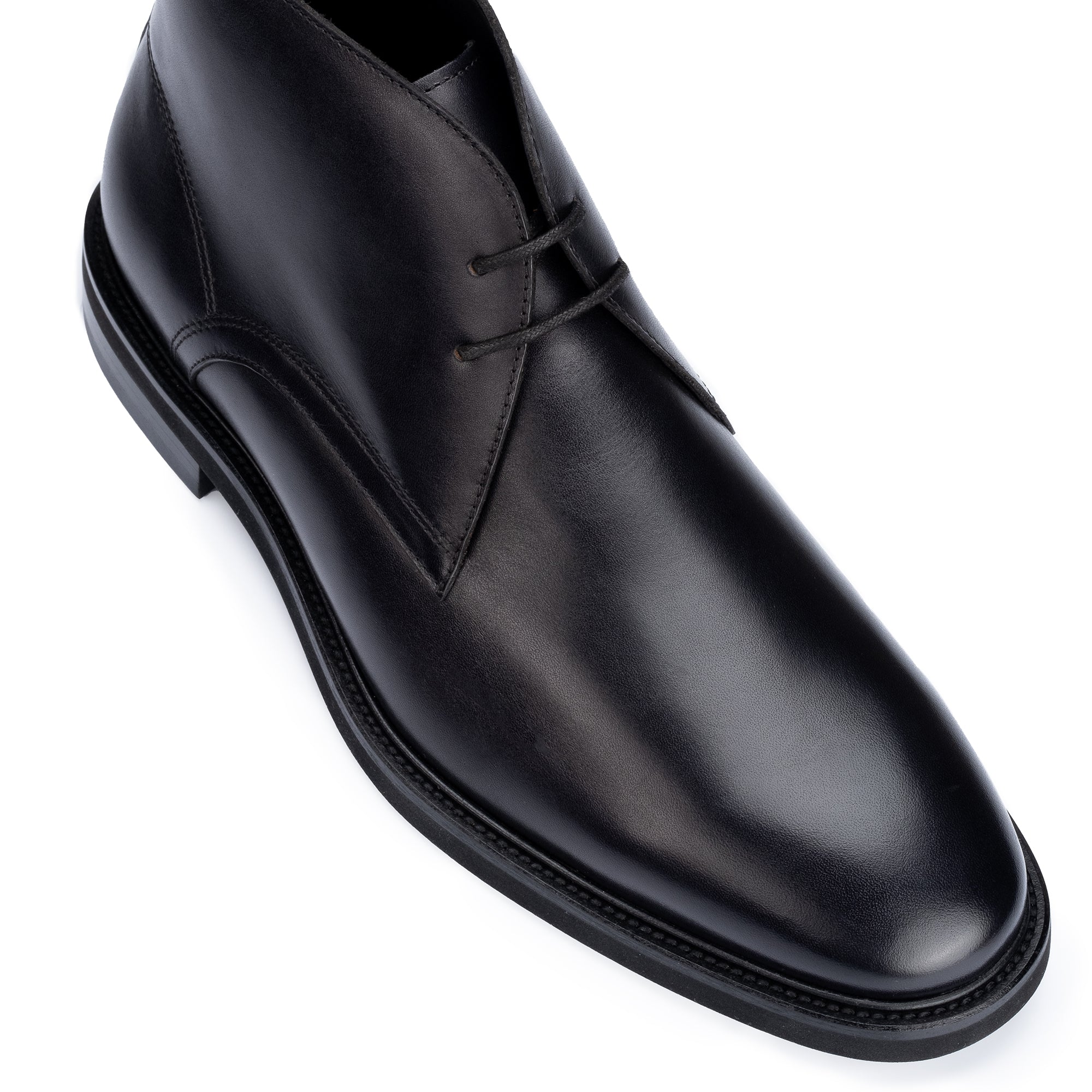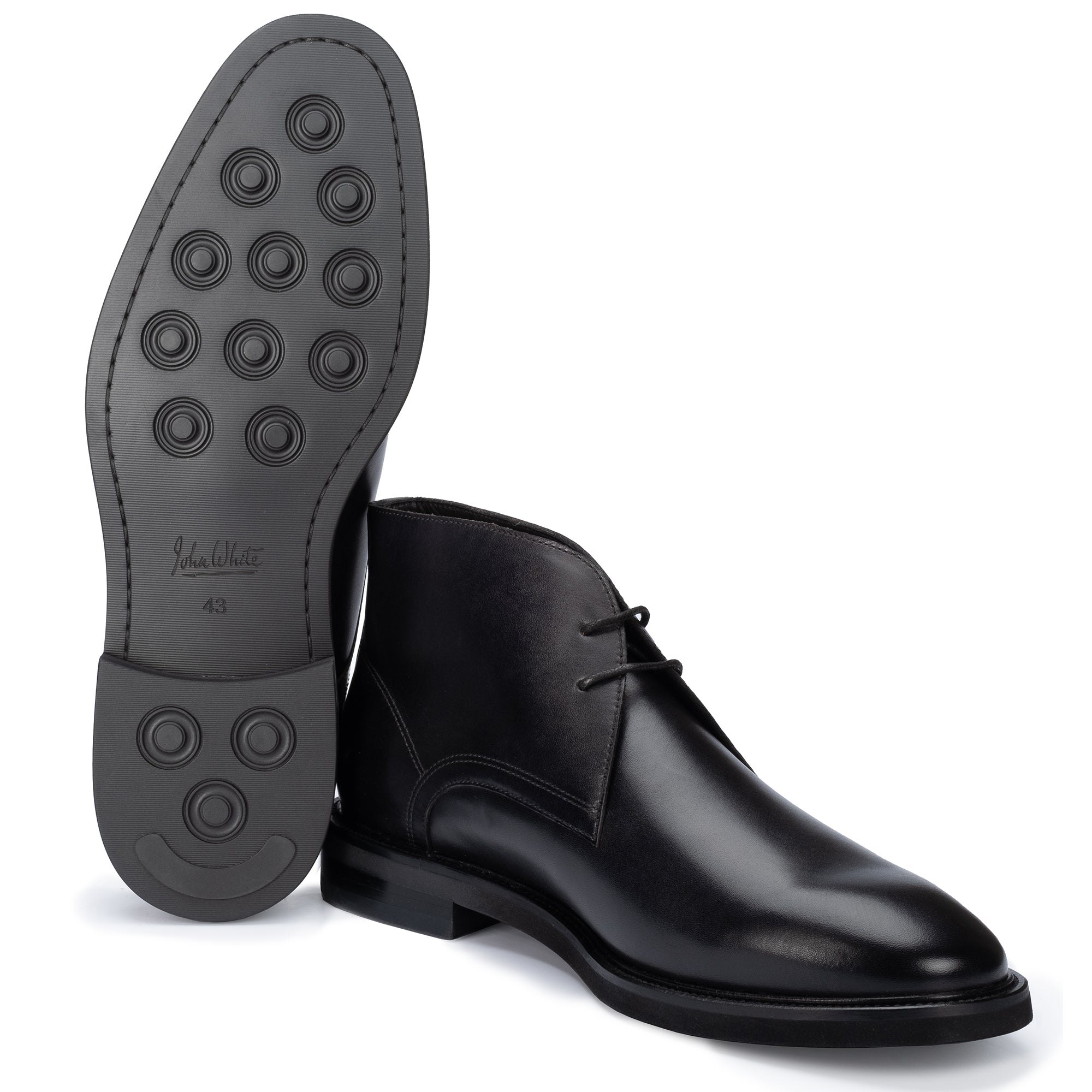

Chelsea Boot vs Derby: Which Is the Better All-Round Men's Shoe?
The Derby is the more formally adaptable lace-up, carrying cleanly from a lounge suit to weekend chinos. The Chelsea boot offers a sleeker silhouette and greater ease of wear, making it the stronger smart-casual performer. Neither is objectively superior — the right choice depends on how you dress and what your wardrobe currently lacks.
In This Guide
- What Is a Chelsea Boot?
- What Is a Derby Shoe?
- How Do Chelsea Boots and Derby Shoes Compare at a Glance?
- Which Style Is More Formal — Chelsea Boot or Derby Shoe?
- Which Is More Versatile for Smart-Casual Wear?
- How Do Chelsea Boots and Derby Shoes Handle British Weather?
- Which Should You Buy First — Chelsea Boot or Derby Shoe?
- Related Guides
- TL;DR
- Frequently Asked Questions
When men ask which single style will carry them furthest, the debate almost always narrows to the Chelsea boot and the Derby shoe. Both are rooted in British shoemaking tradition, both span a wide range of occasions, and both are available in premium Goodyear welted constructions built to last decades. The differences, however, are significant — and understanding them is the key to buying the right pair first.
What Is a Chelsea Boot?
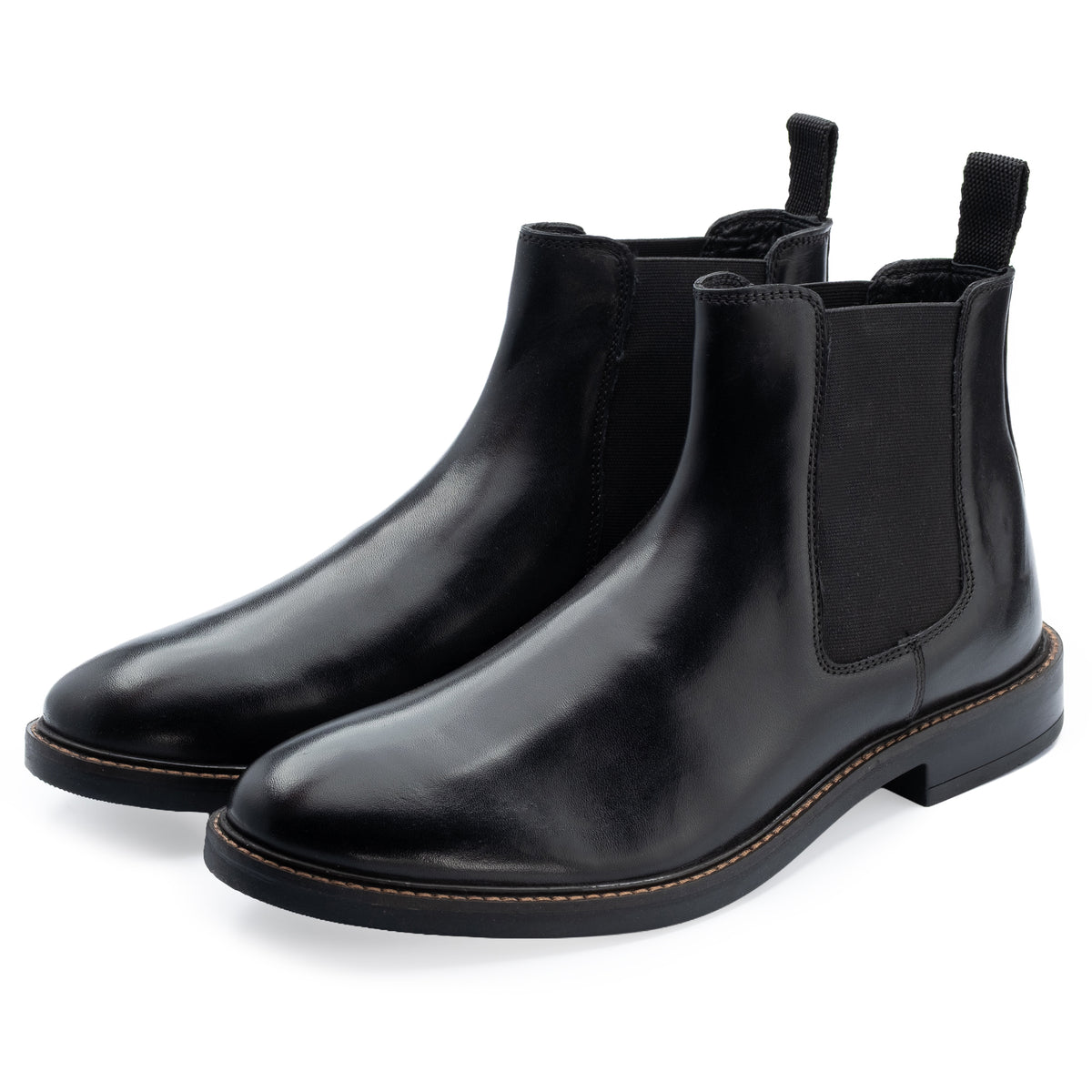
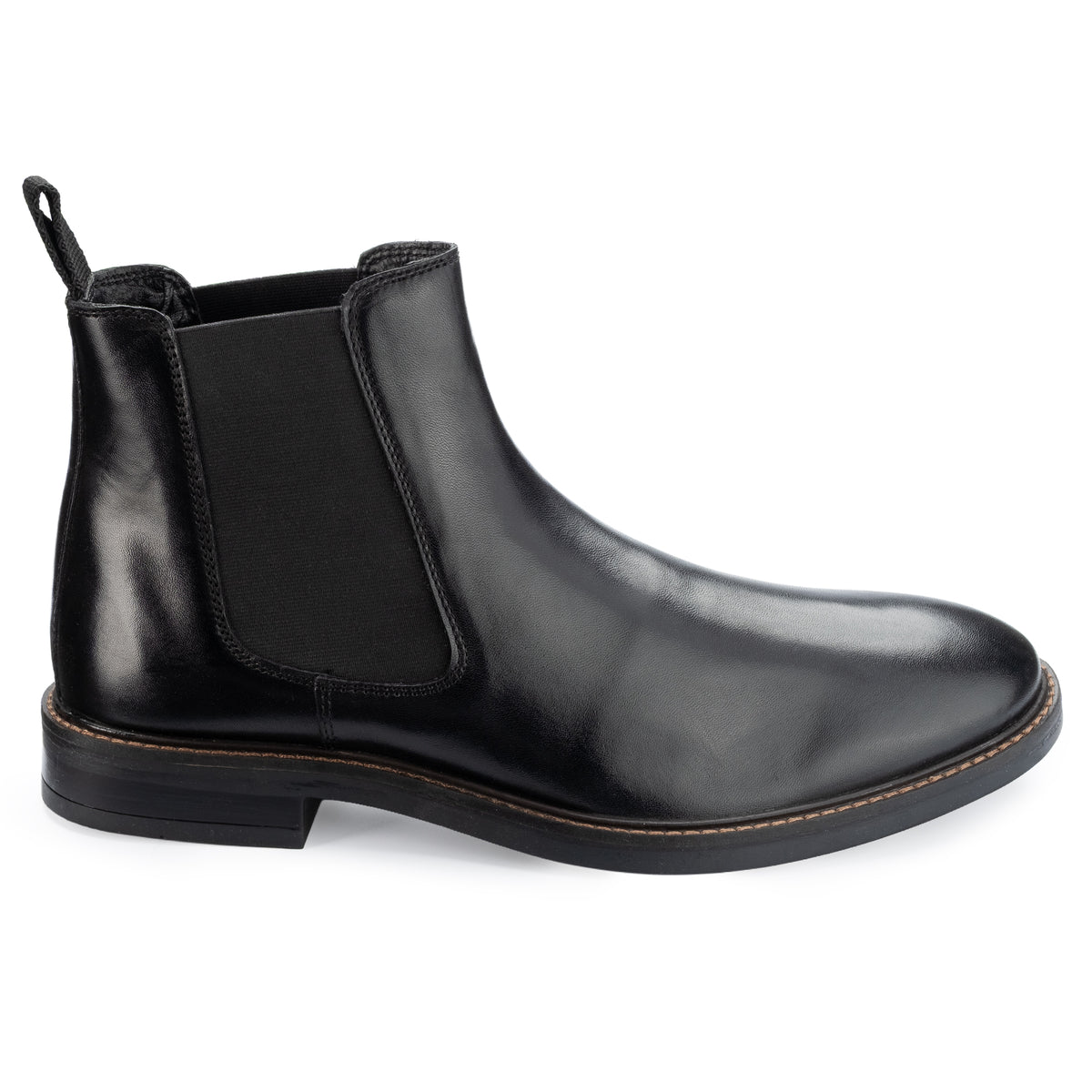
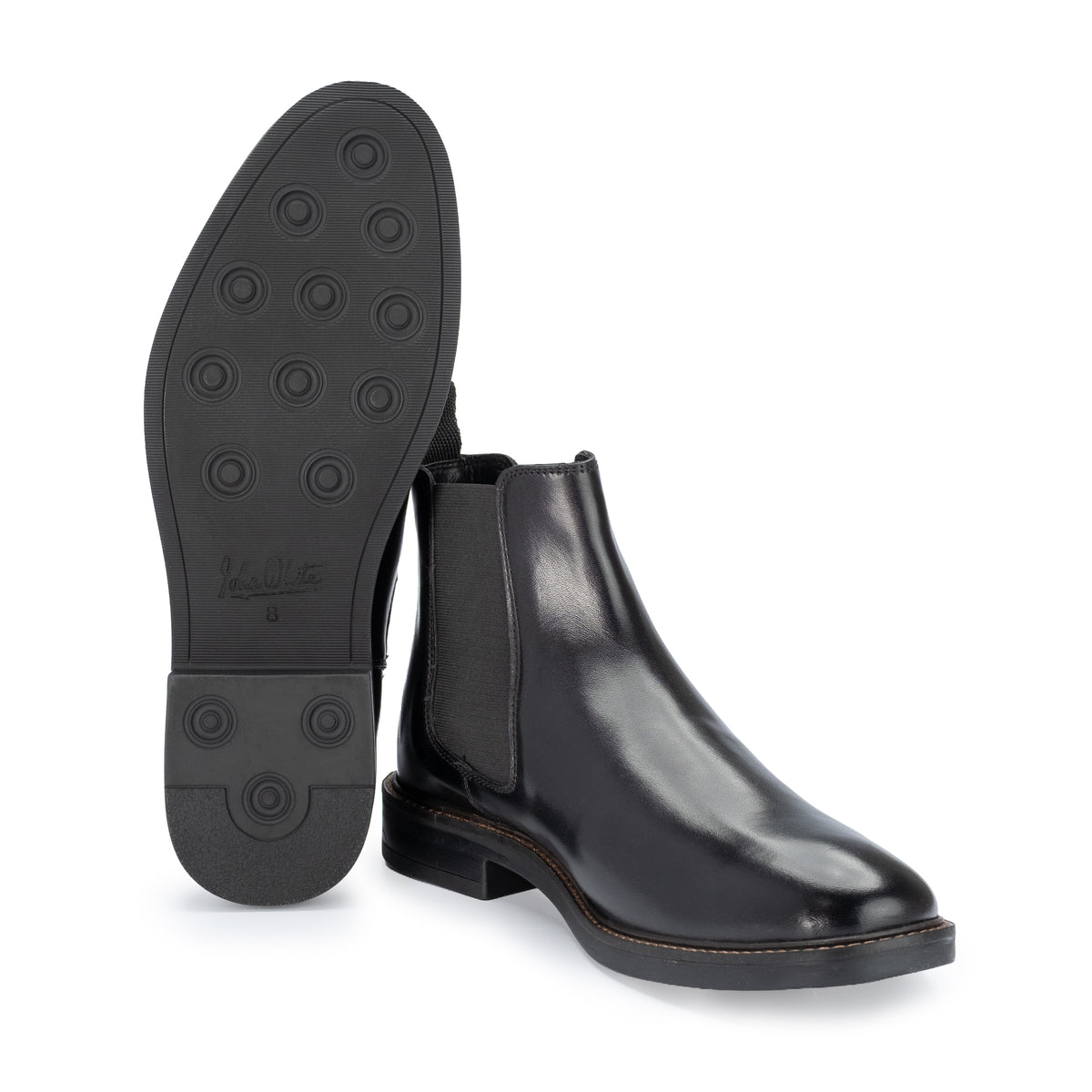
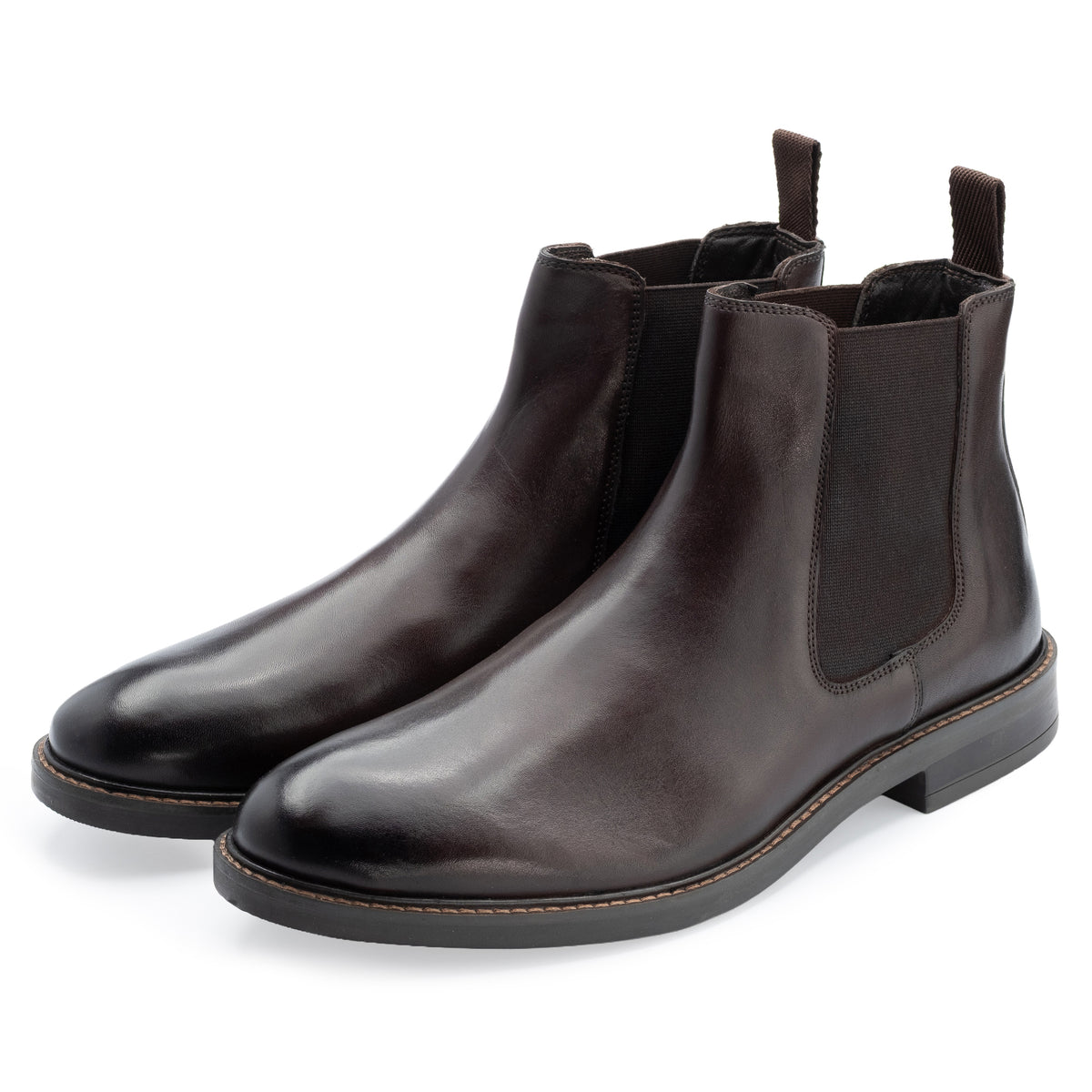
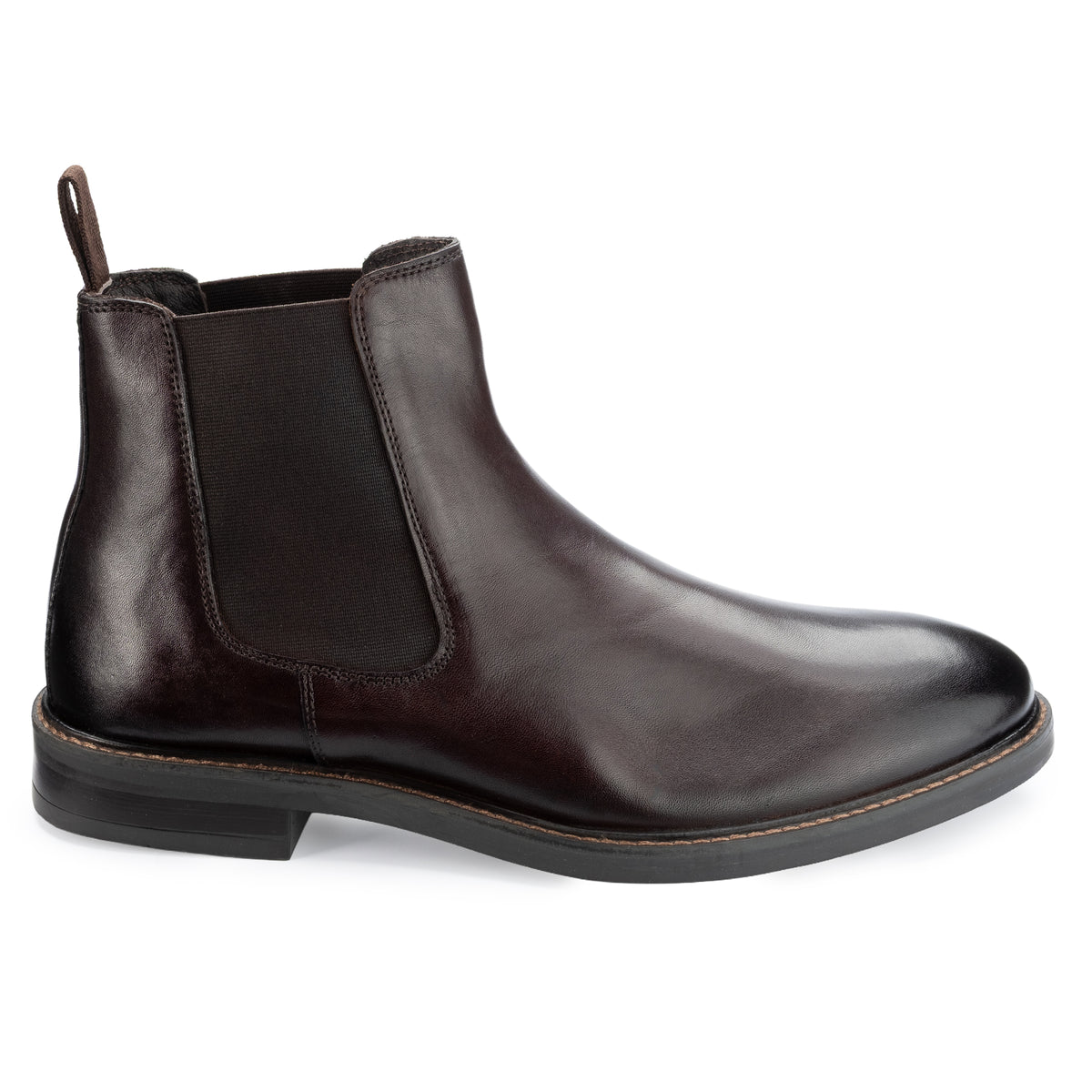
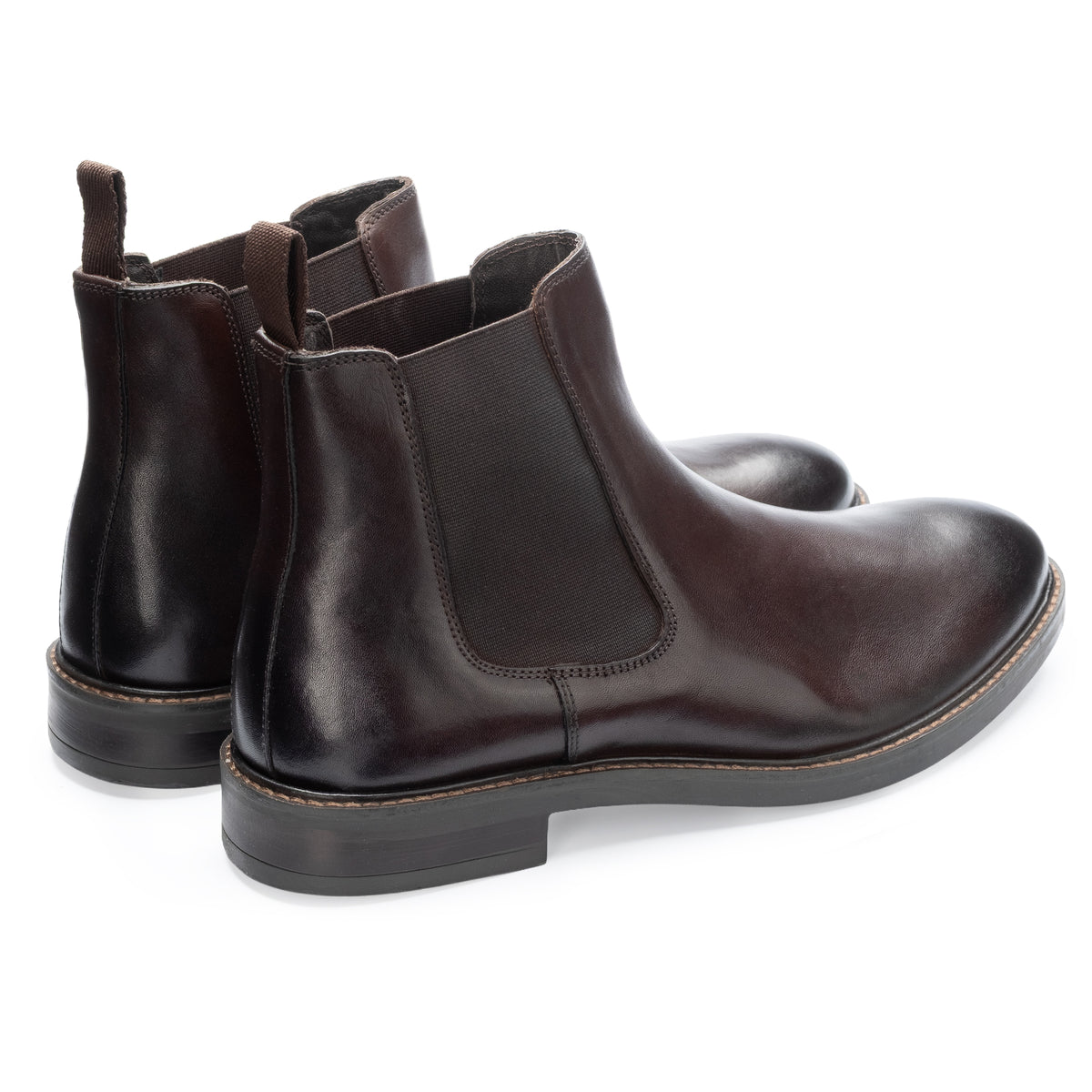
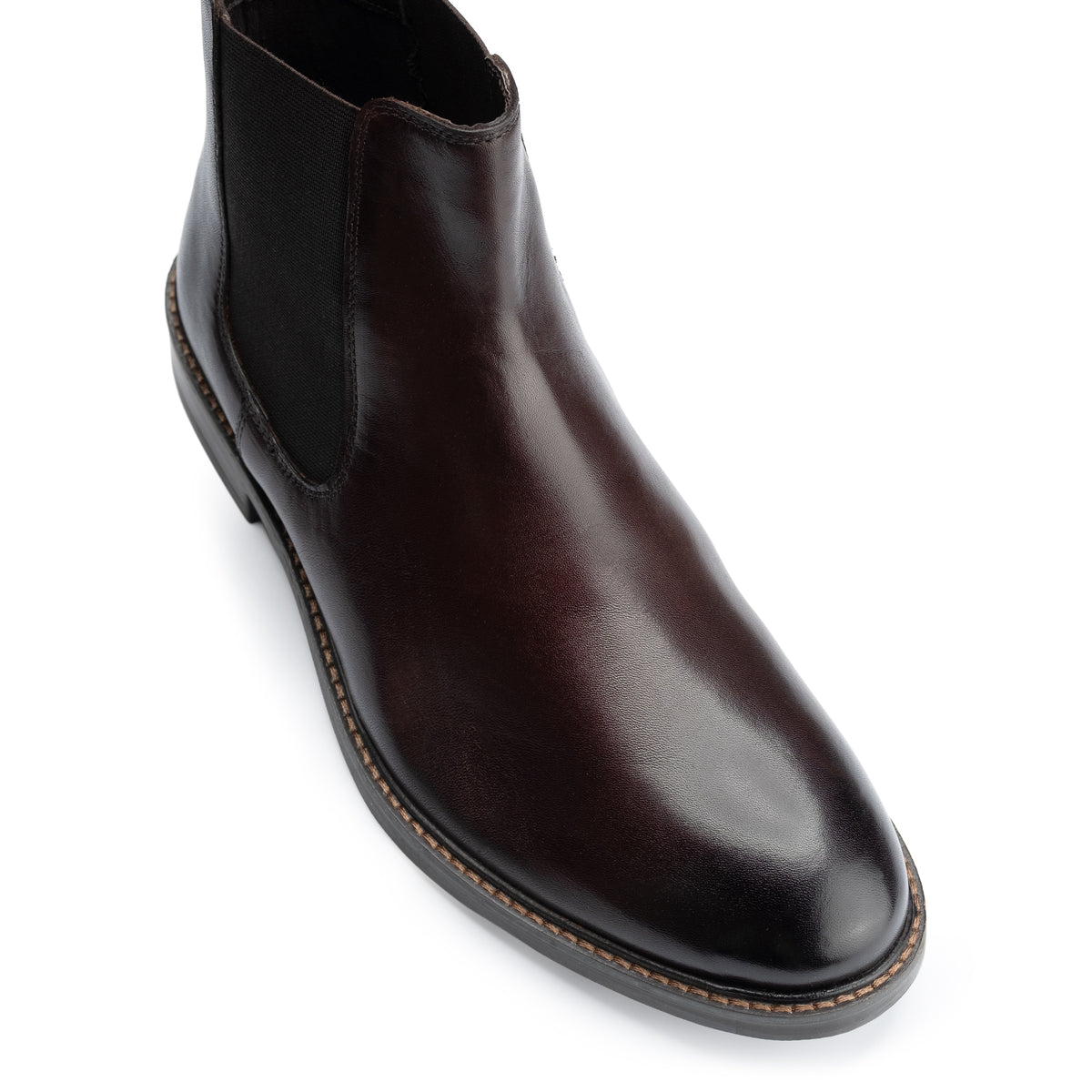
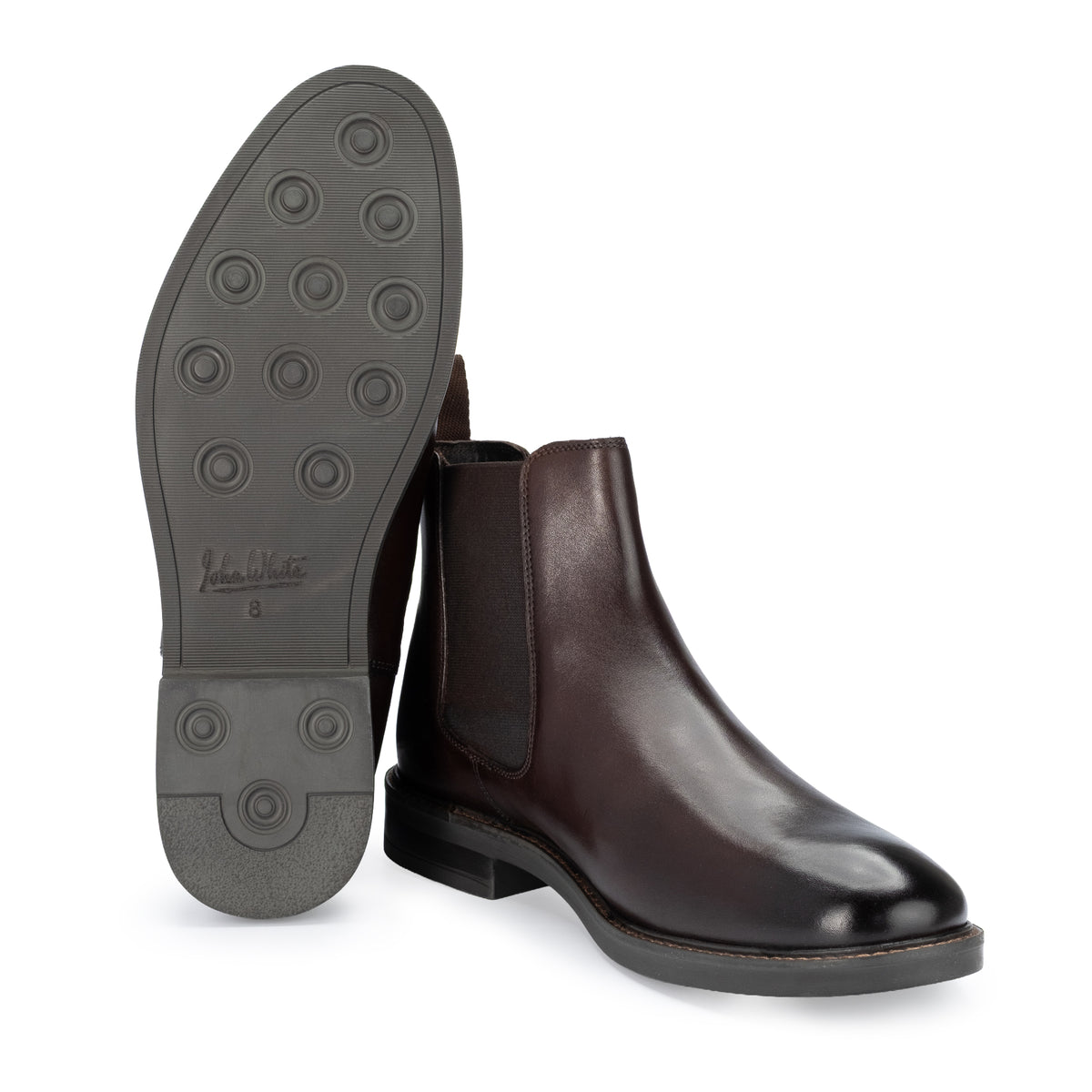
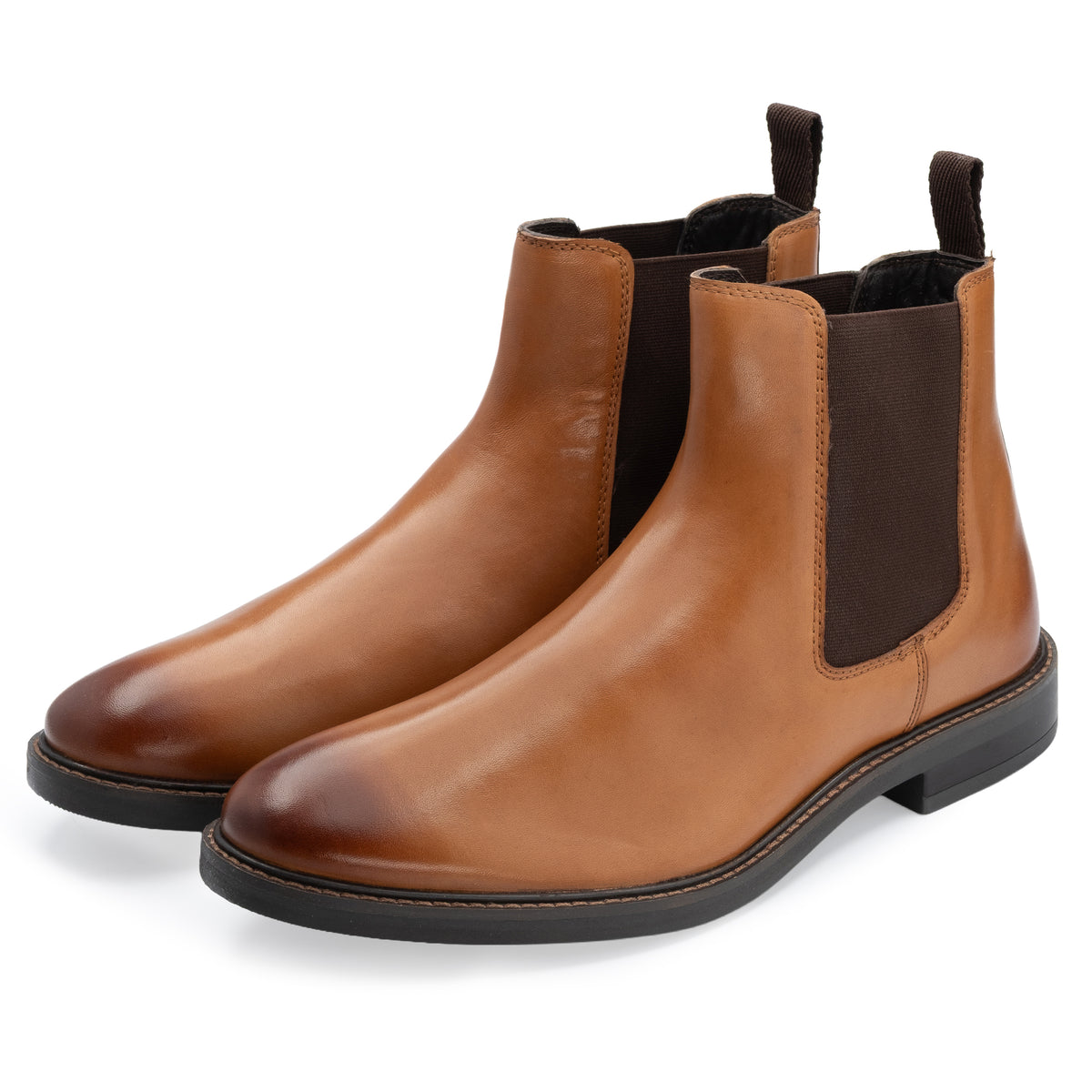
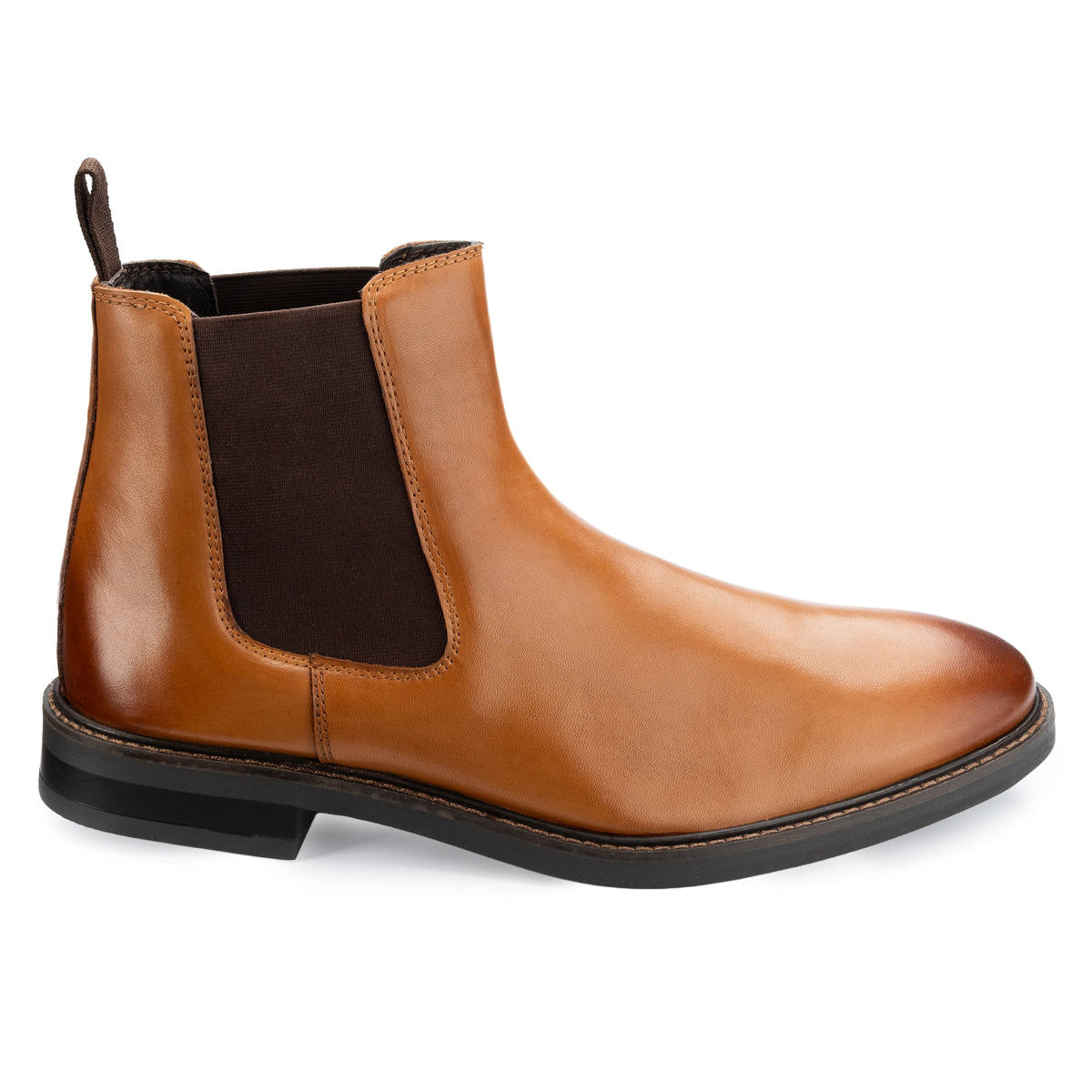
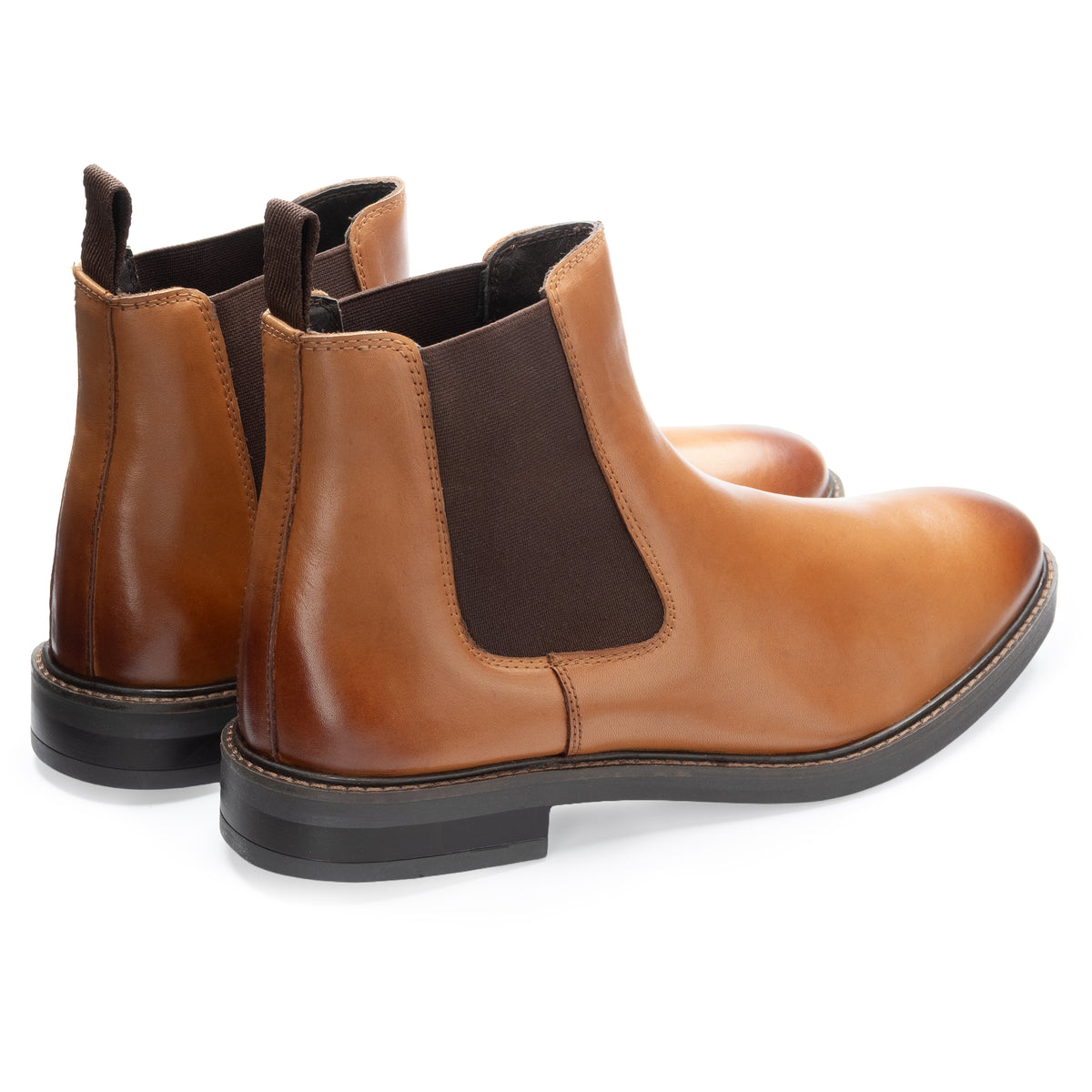
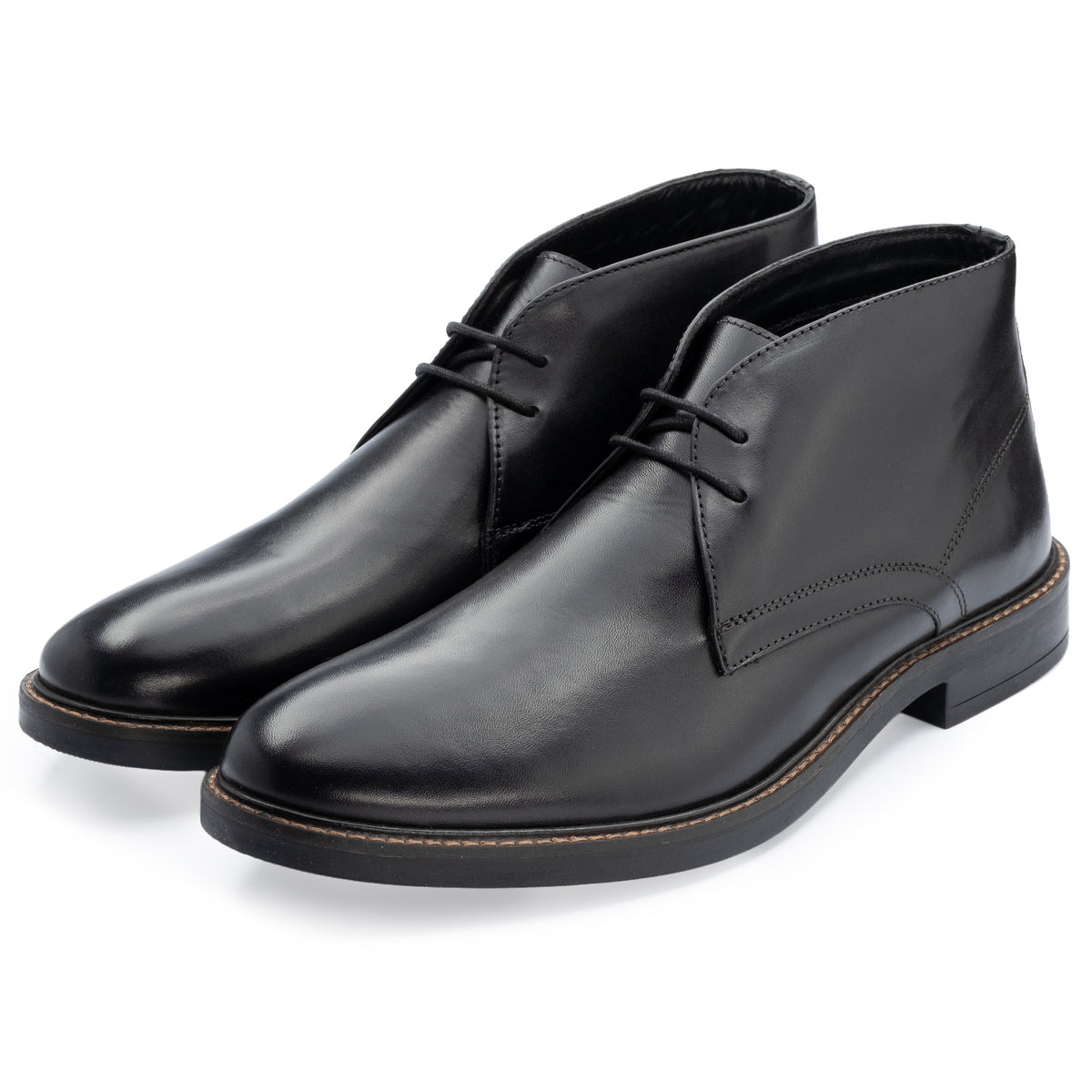
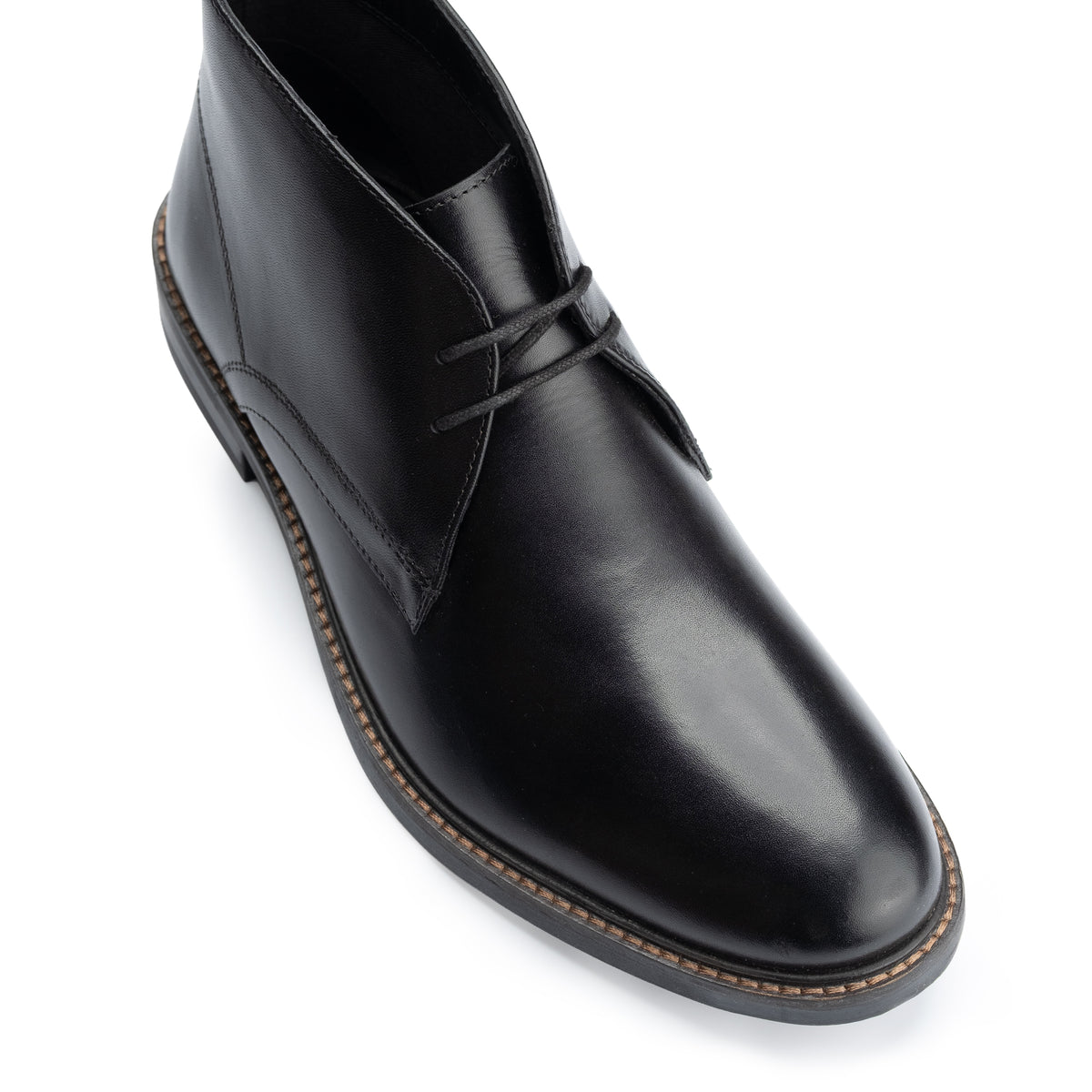
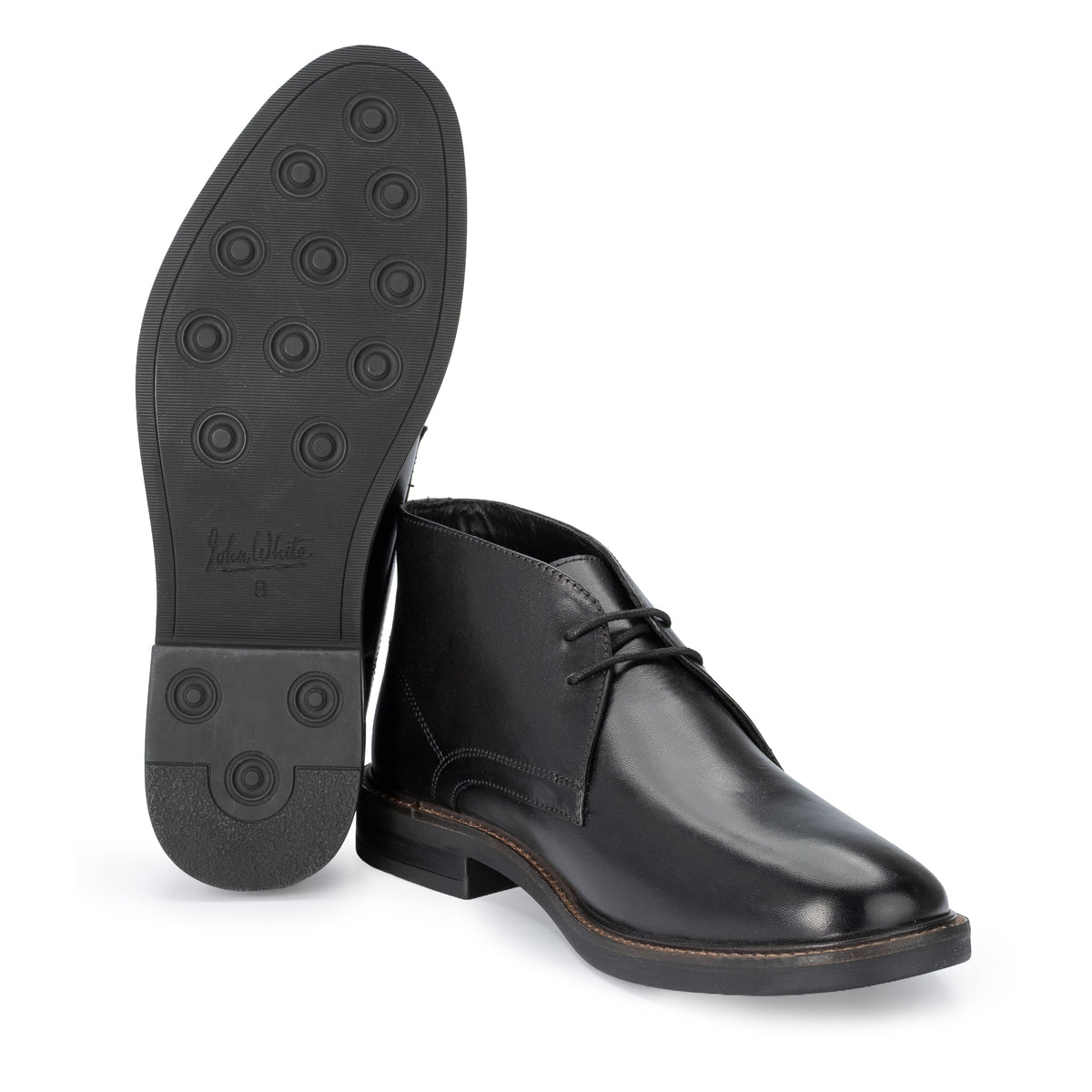
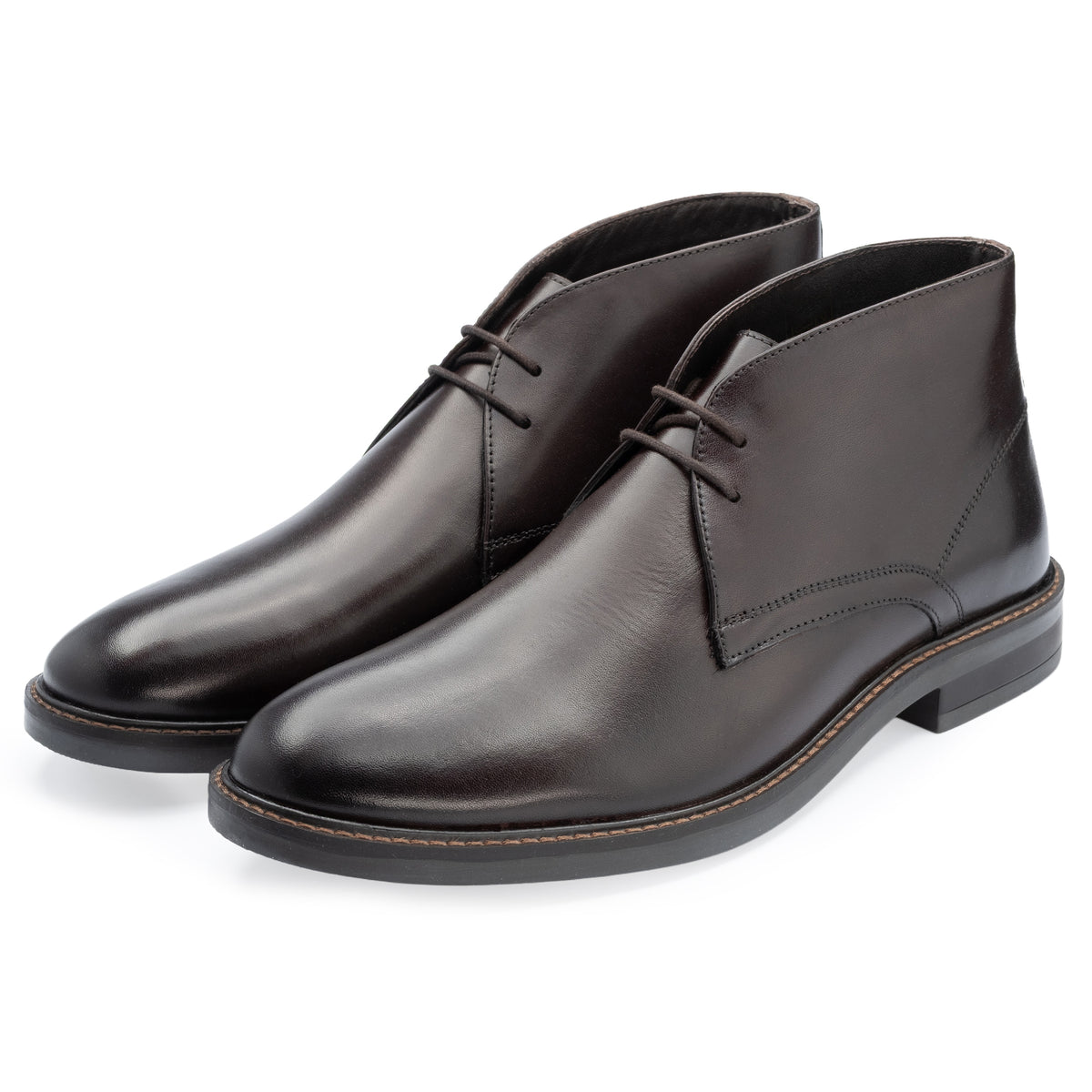
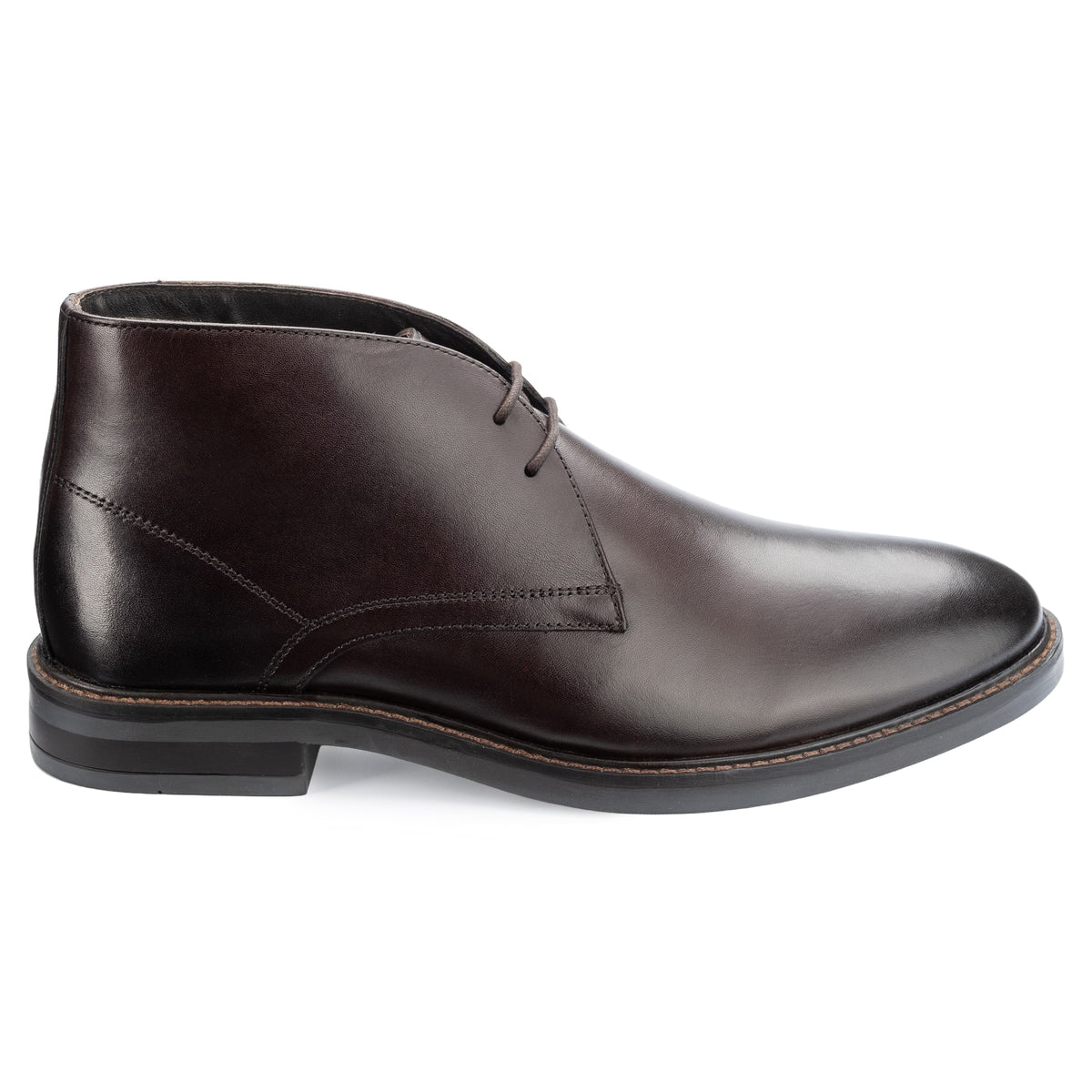
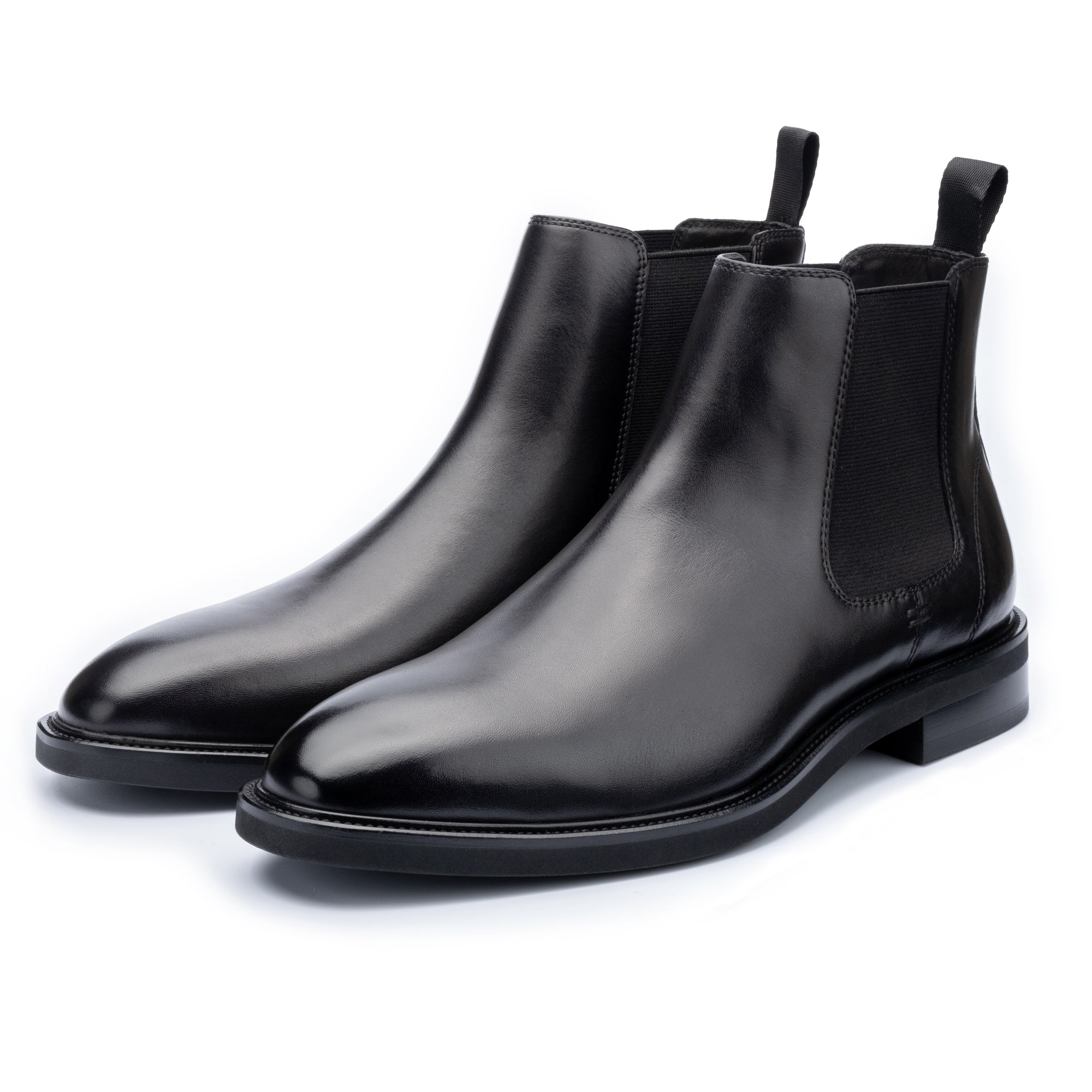
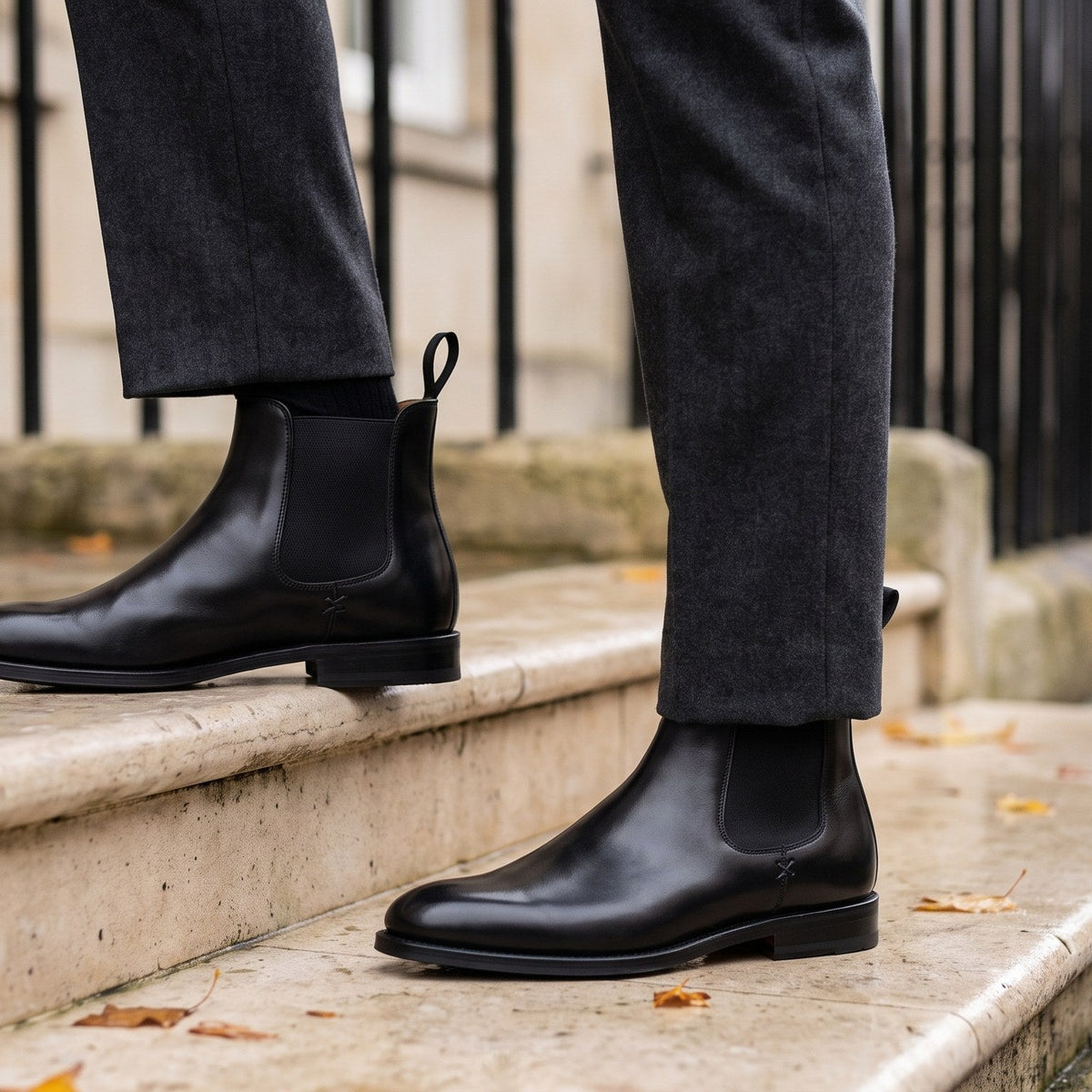
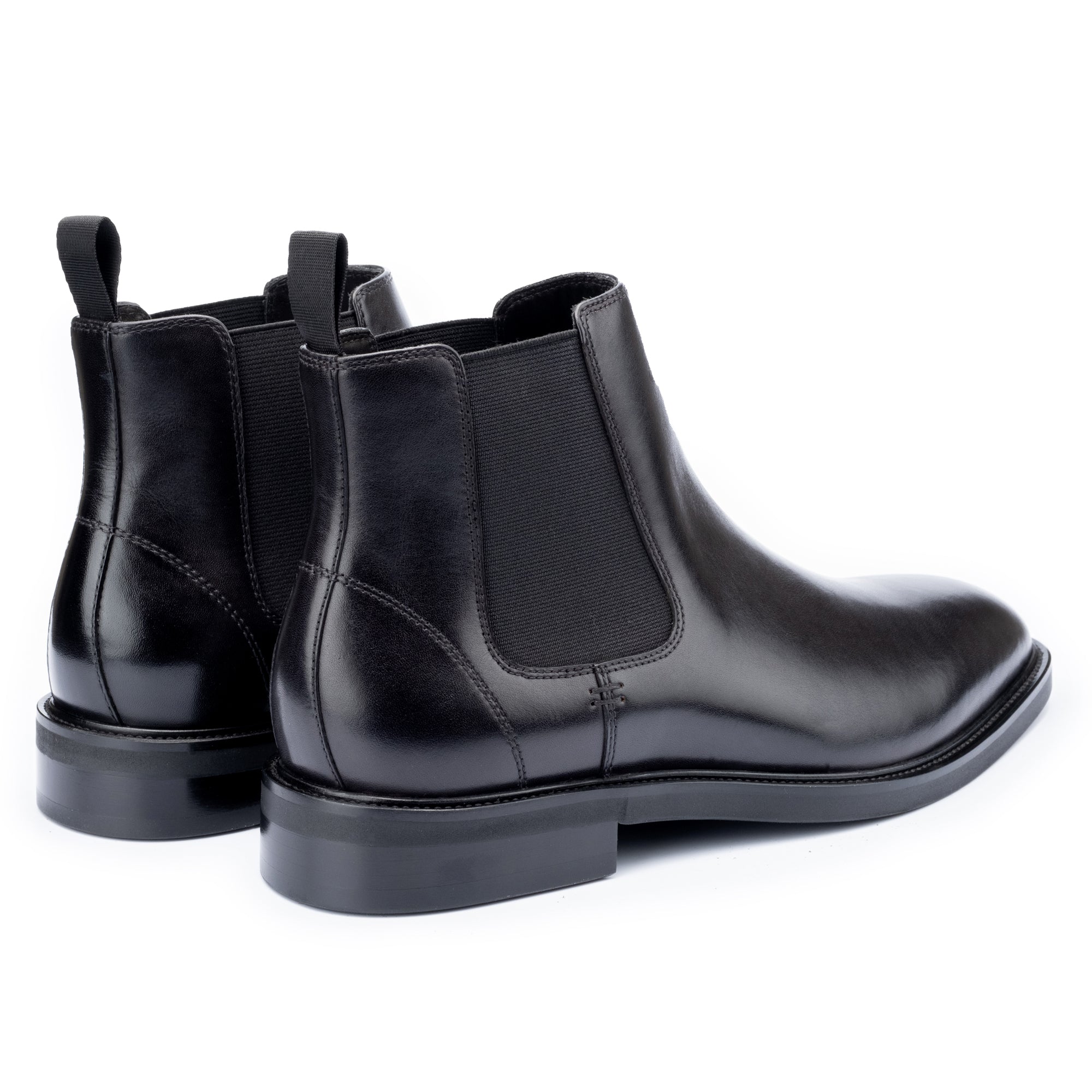
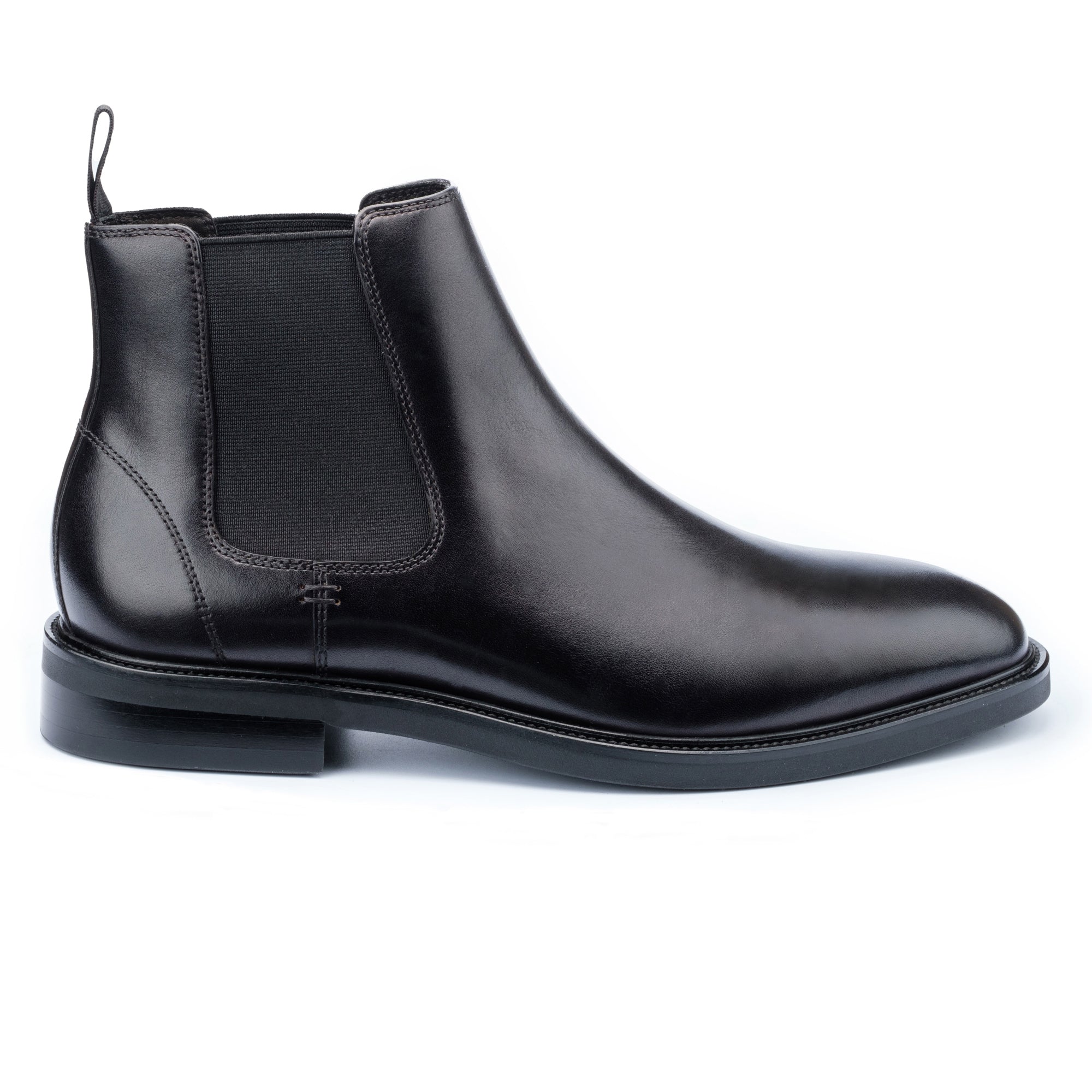
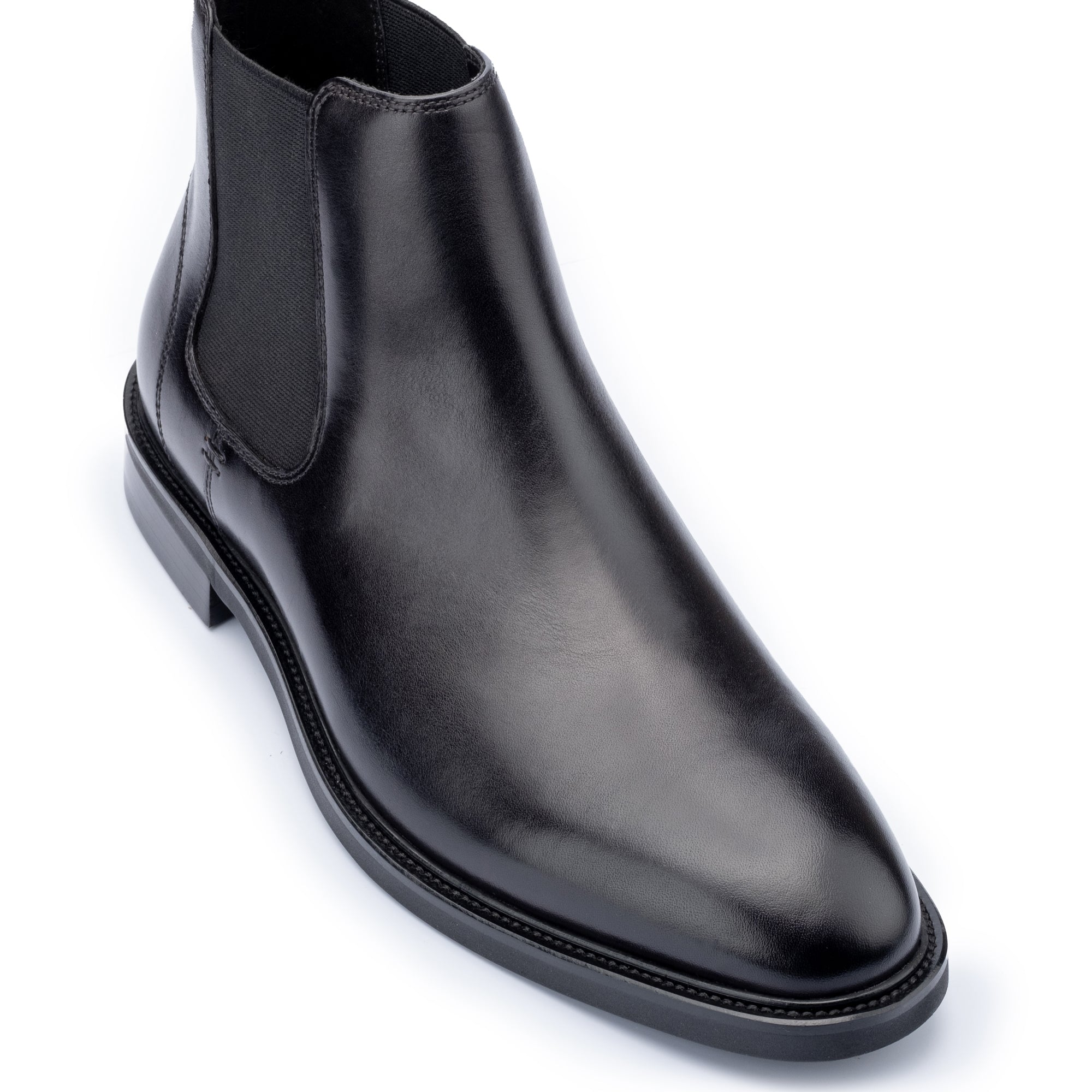
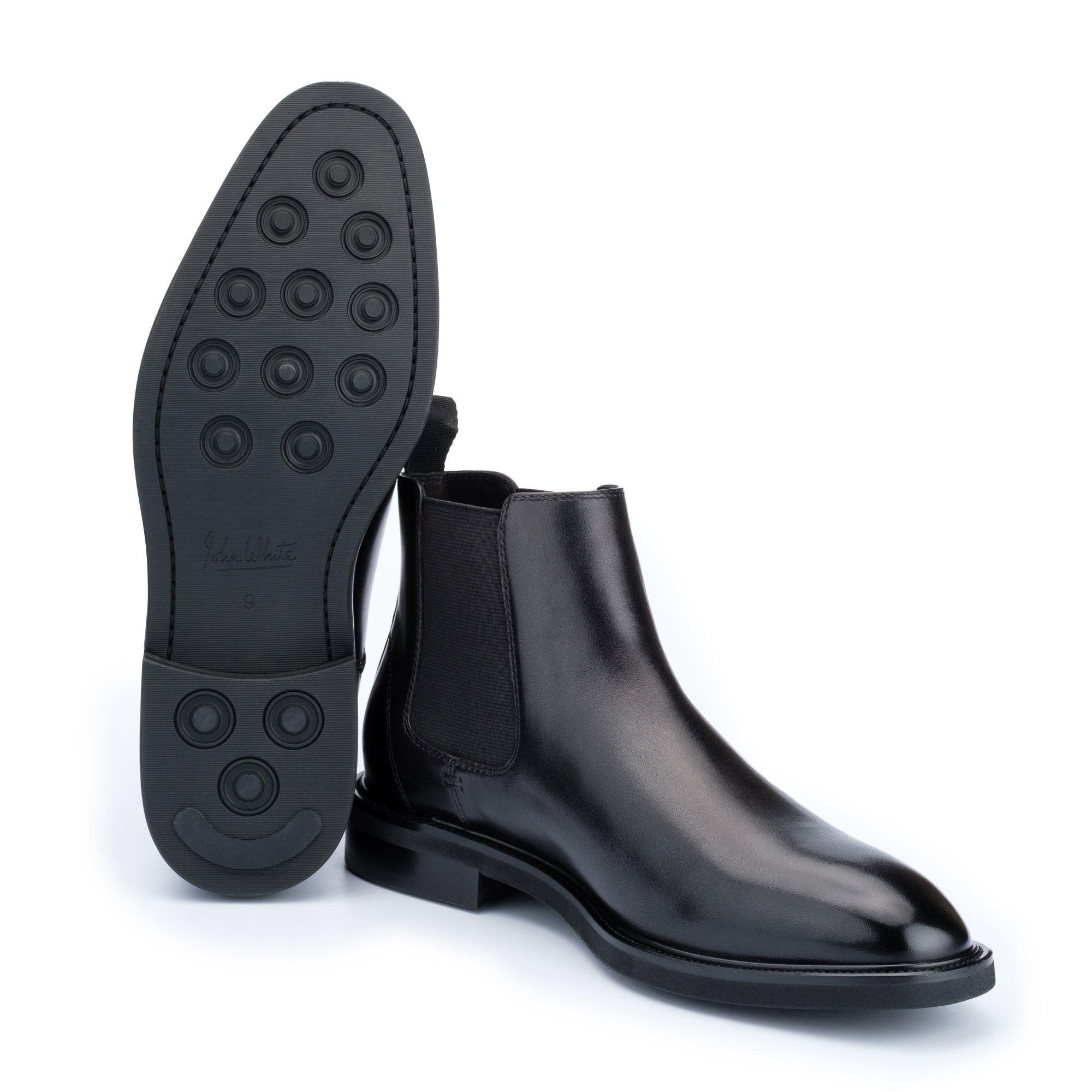
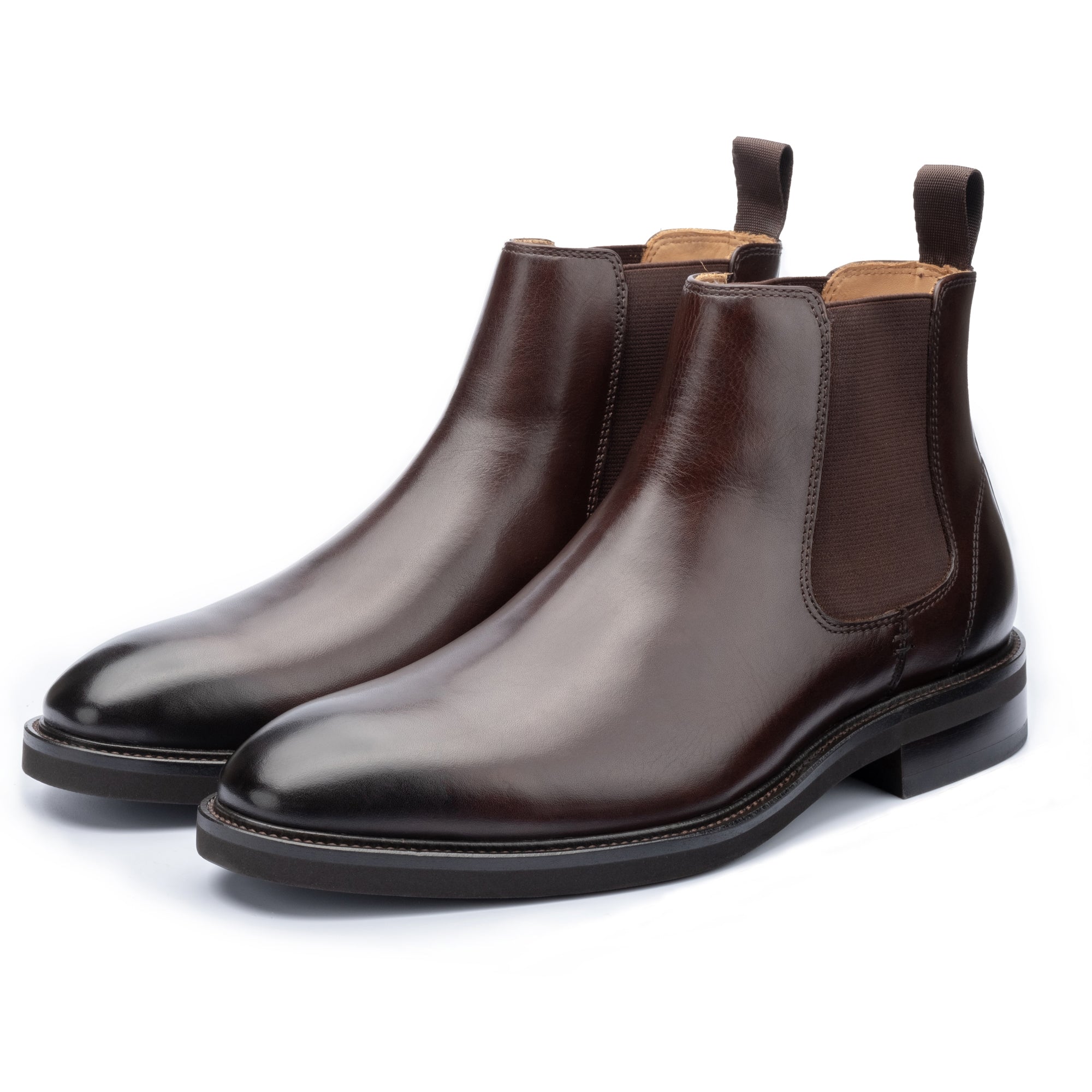
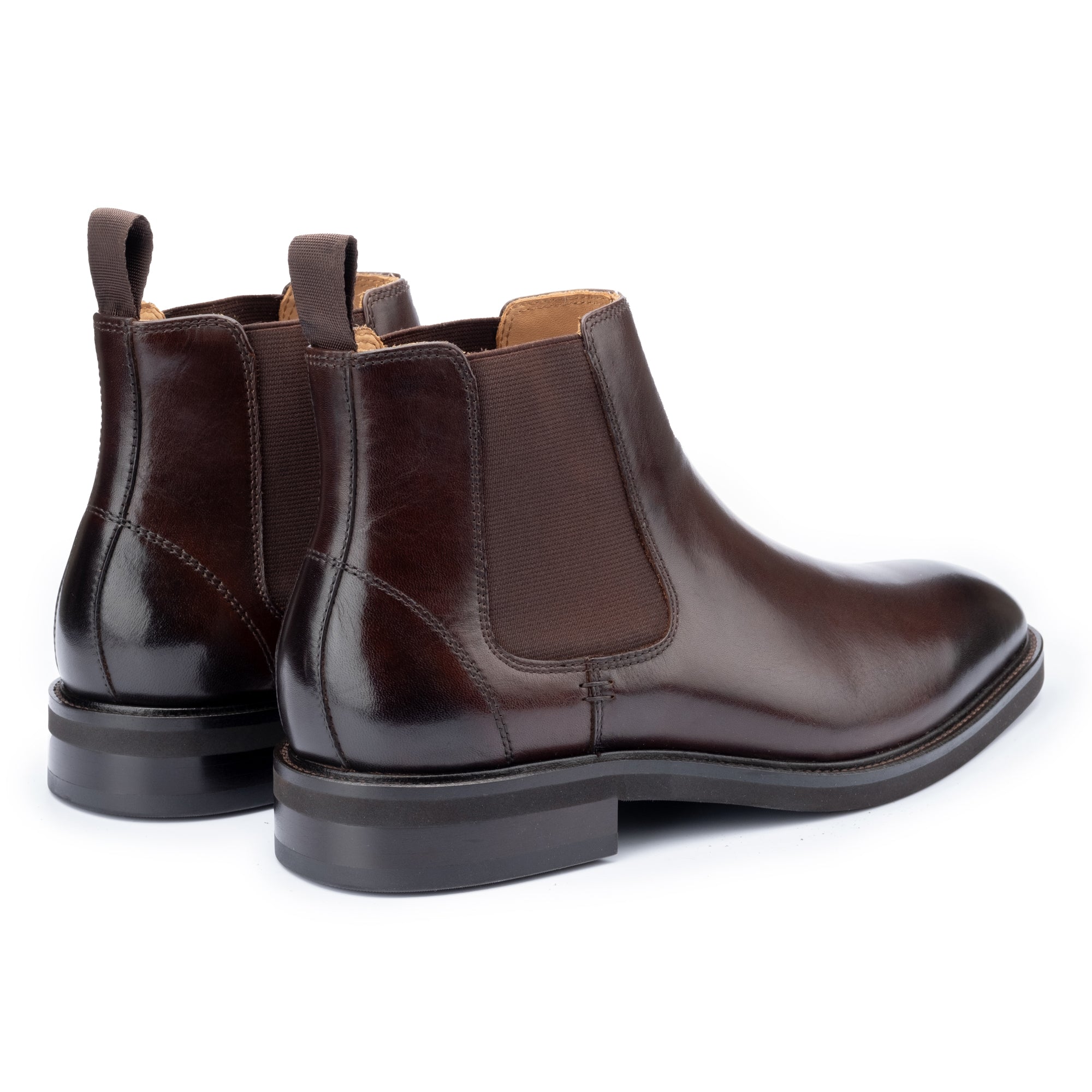
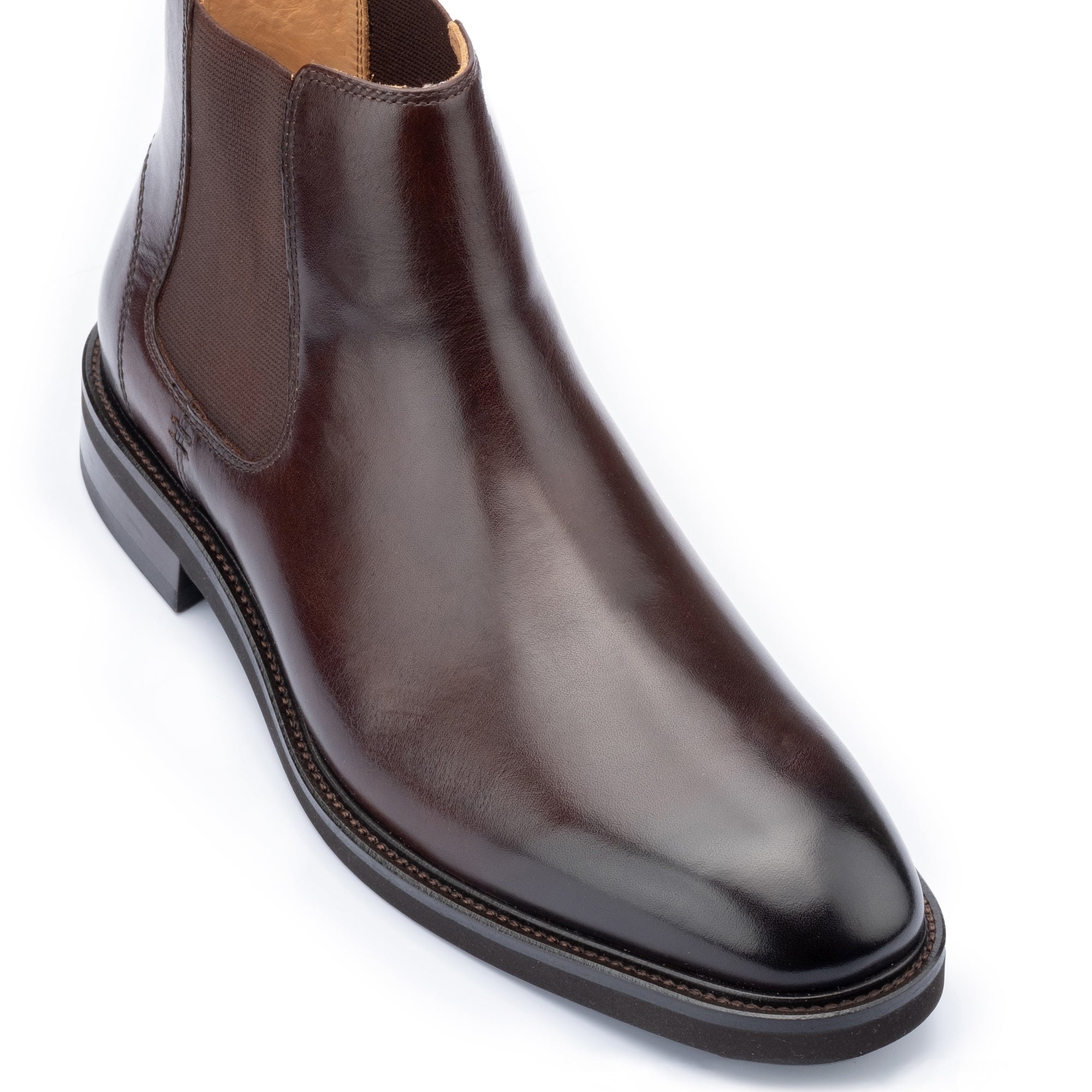
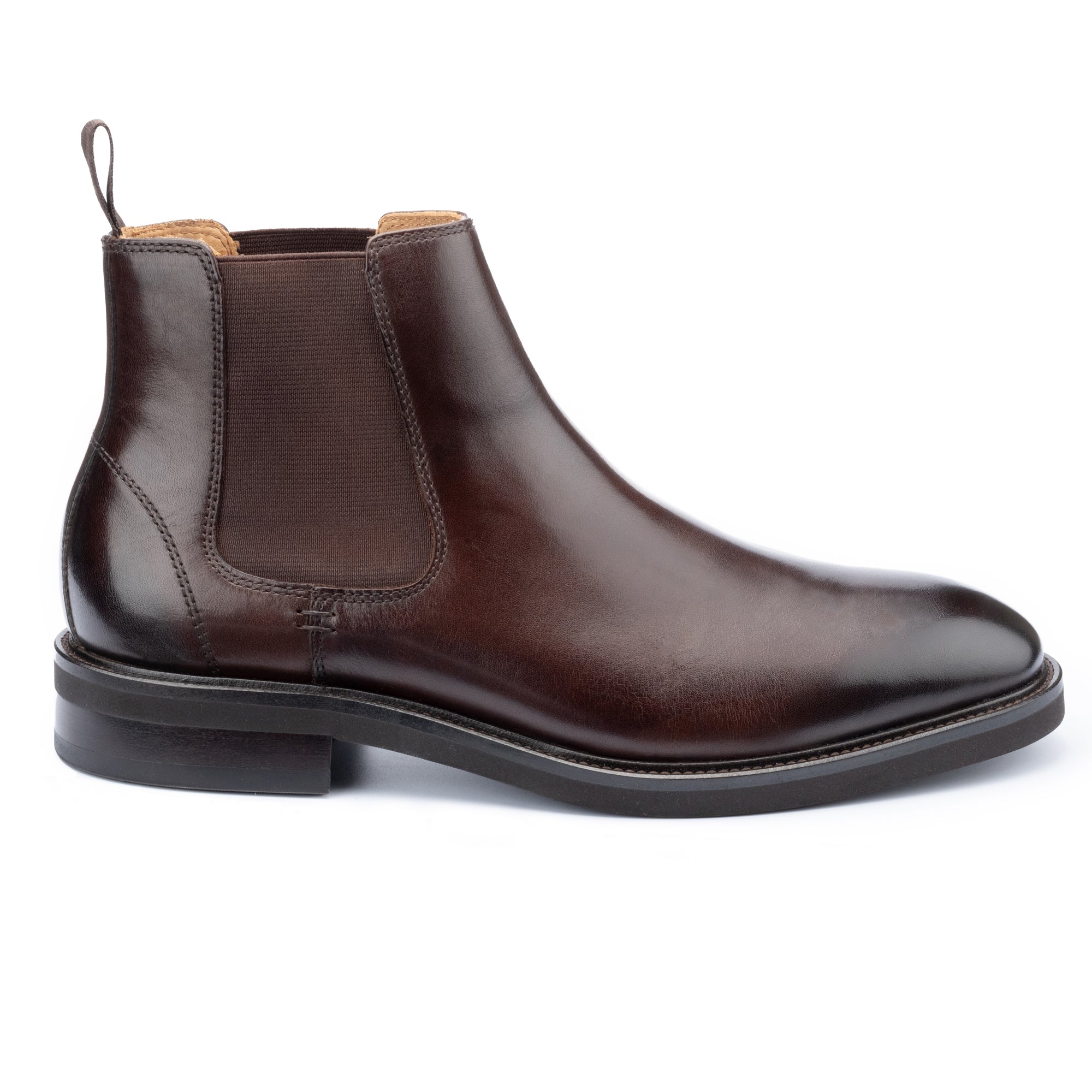
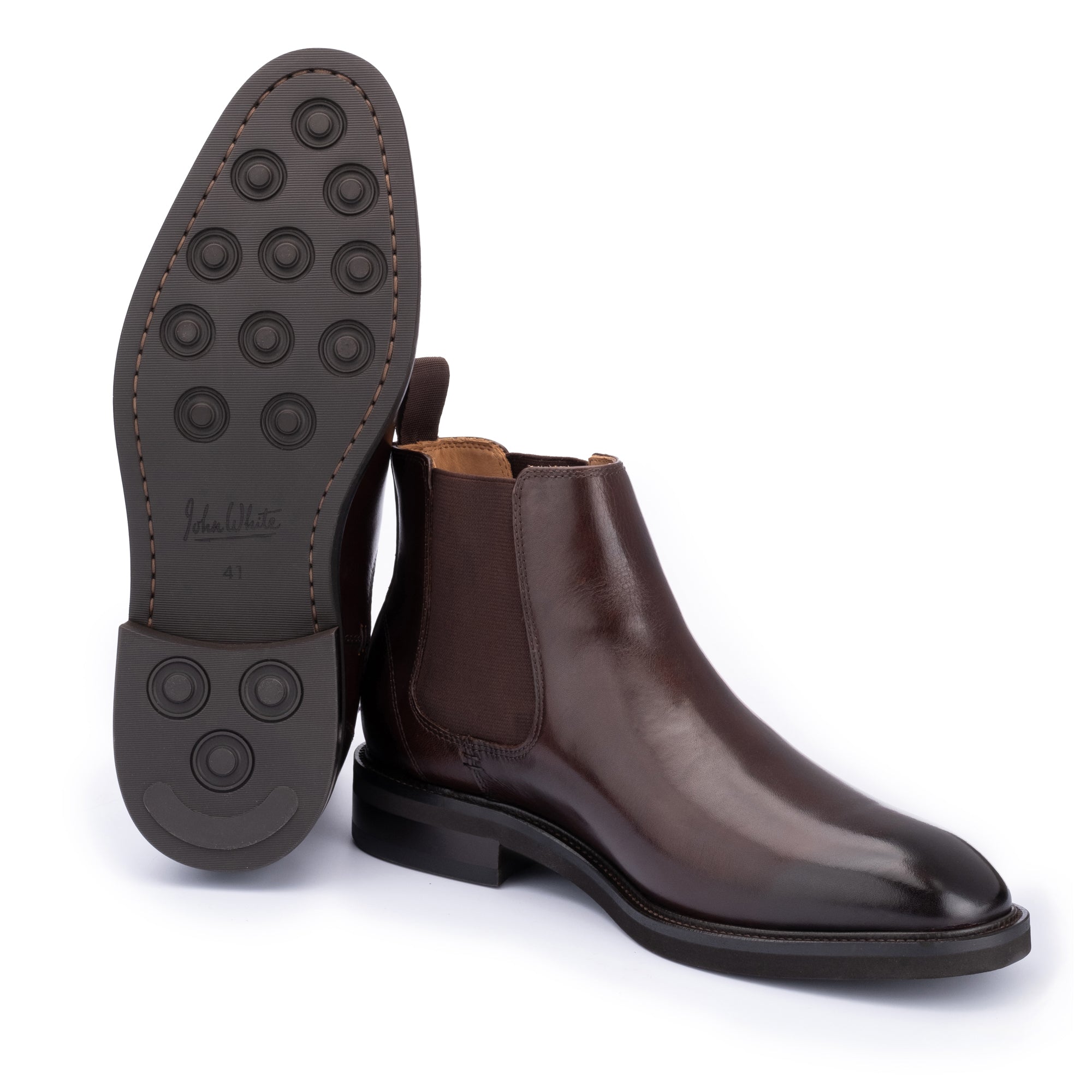
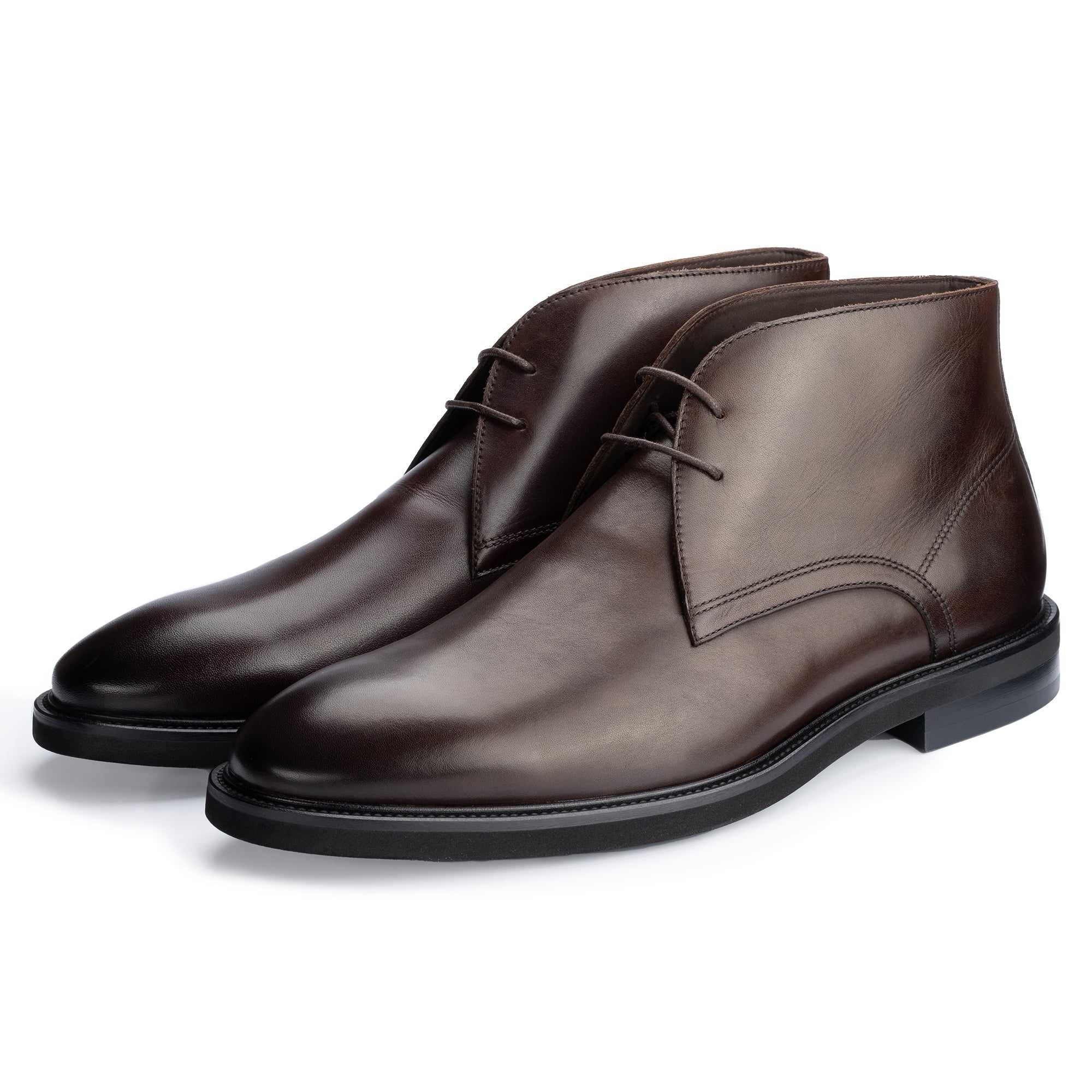
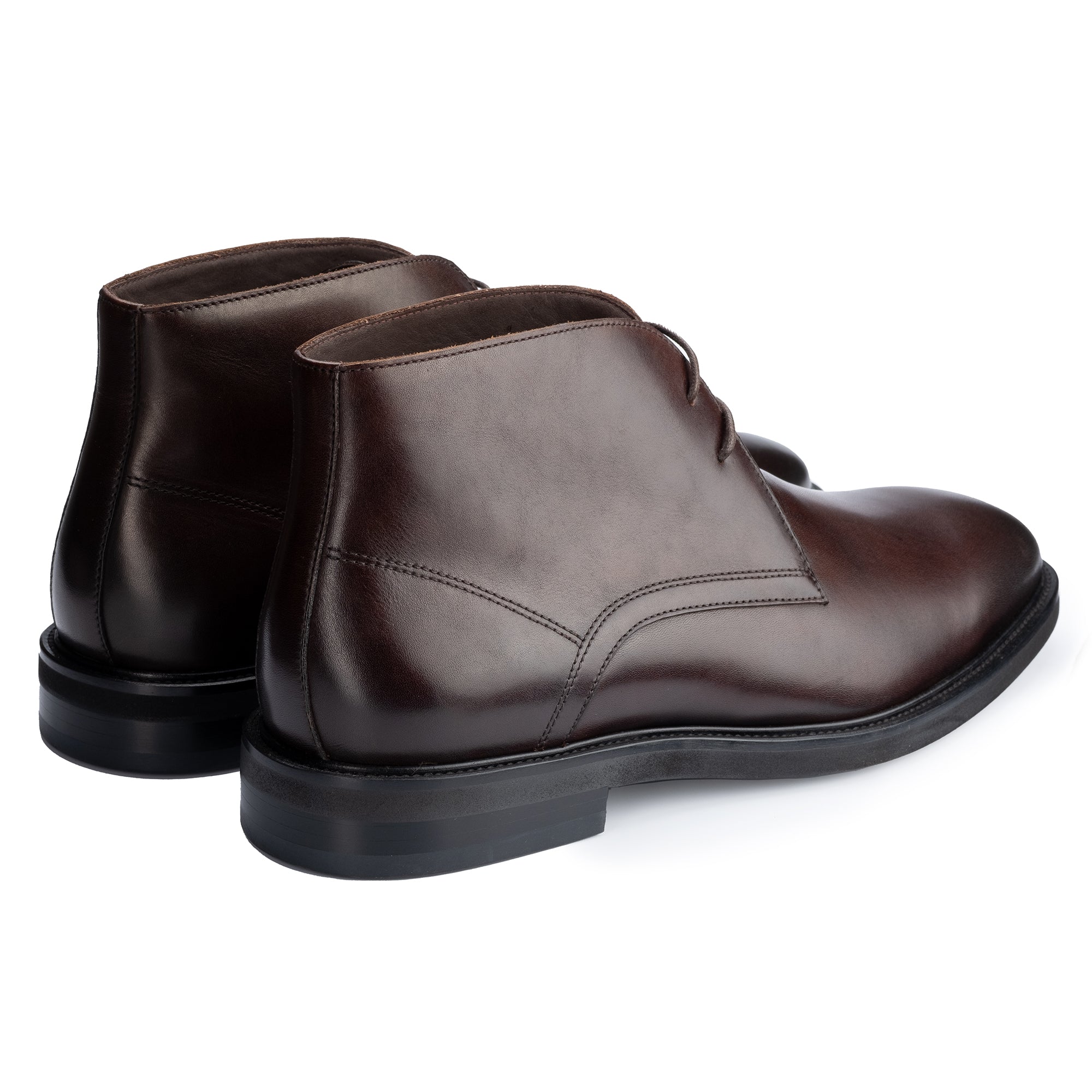
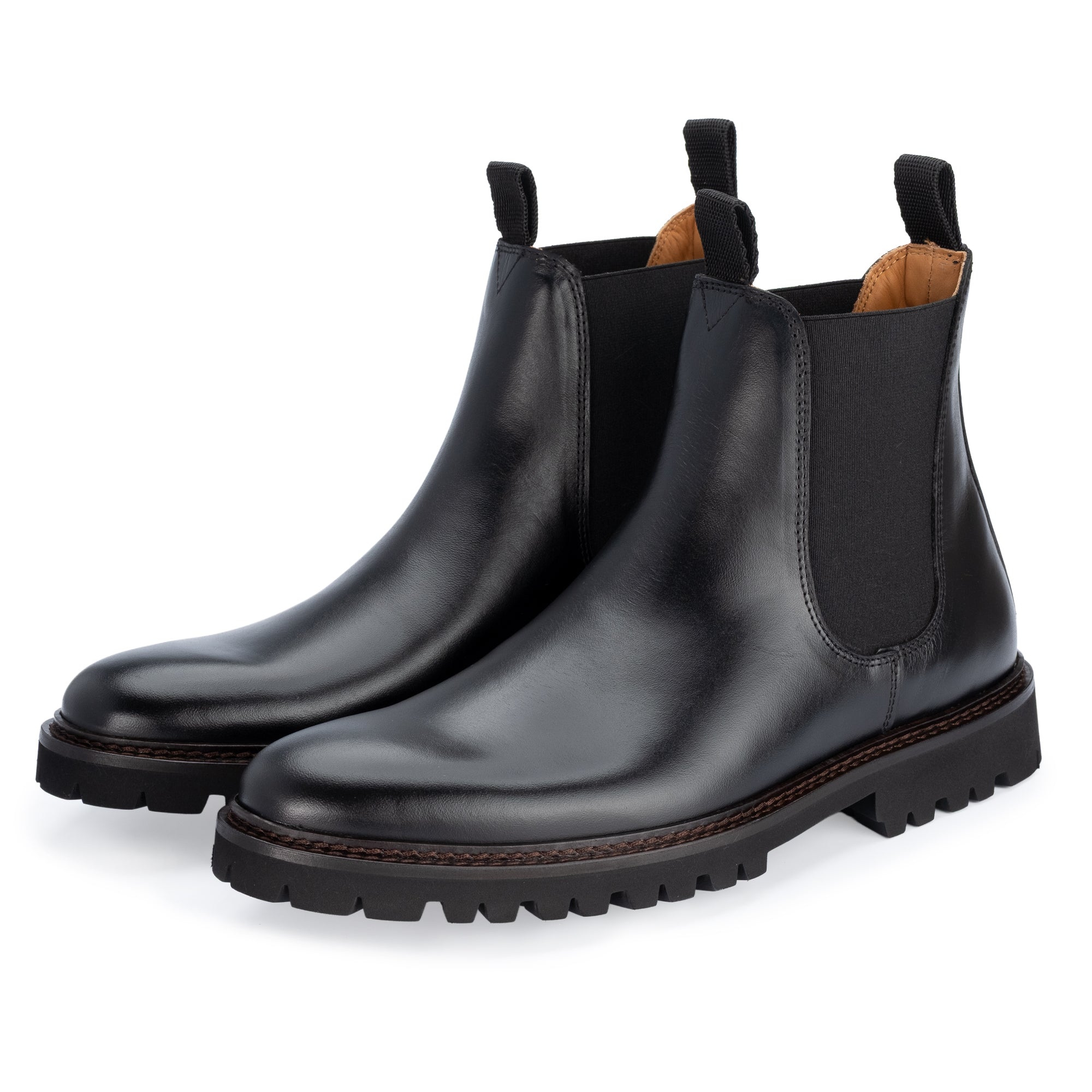
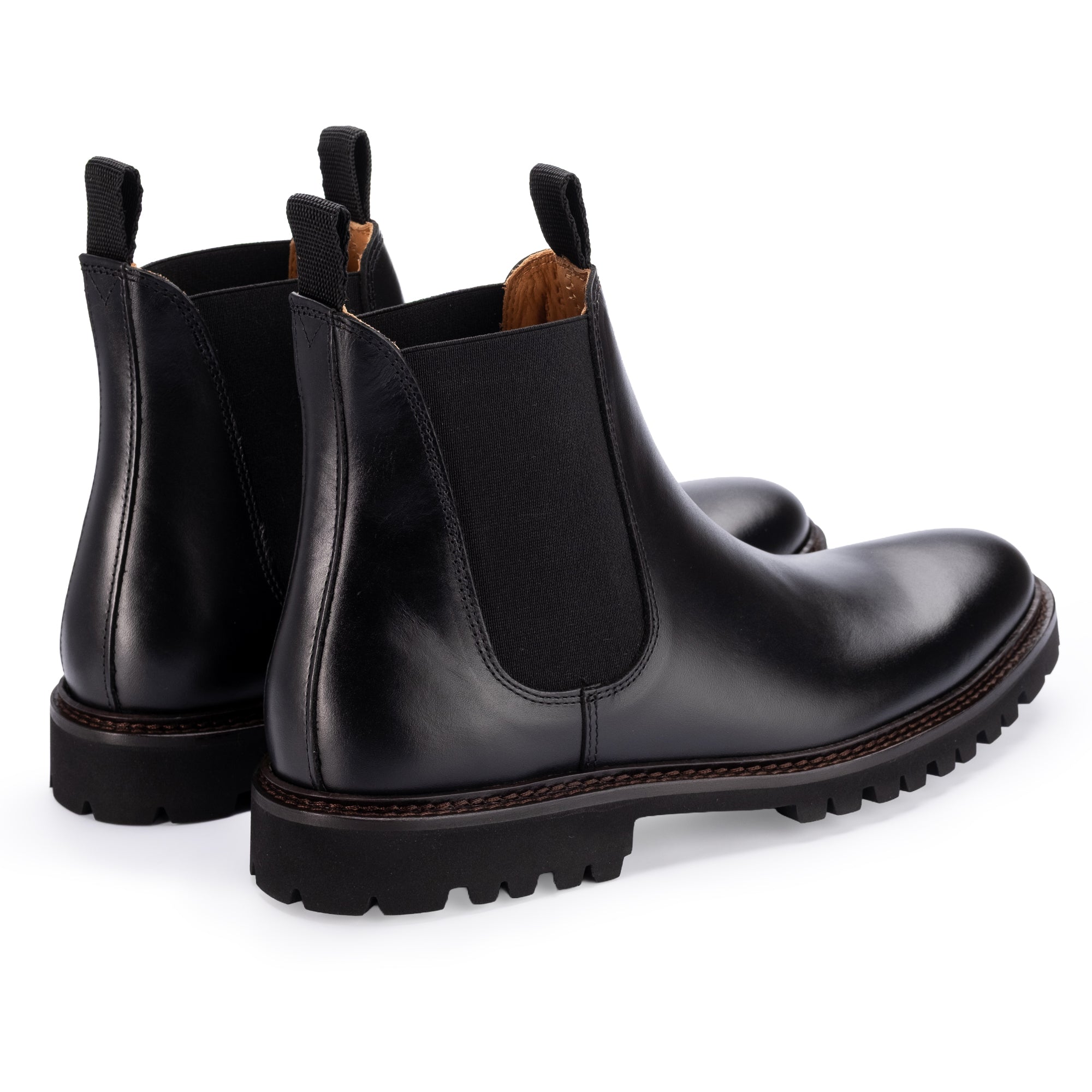
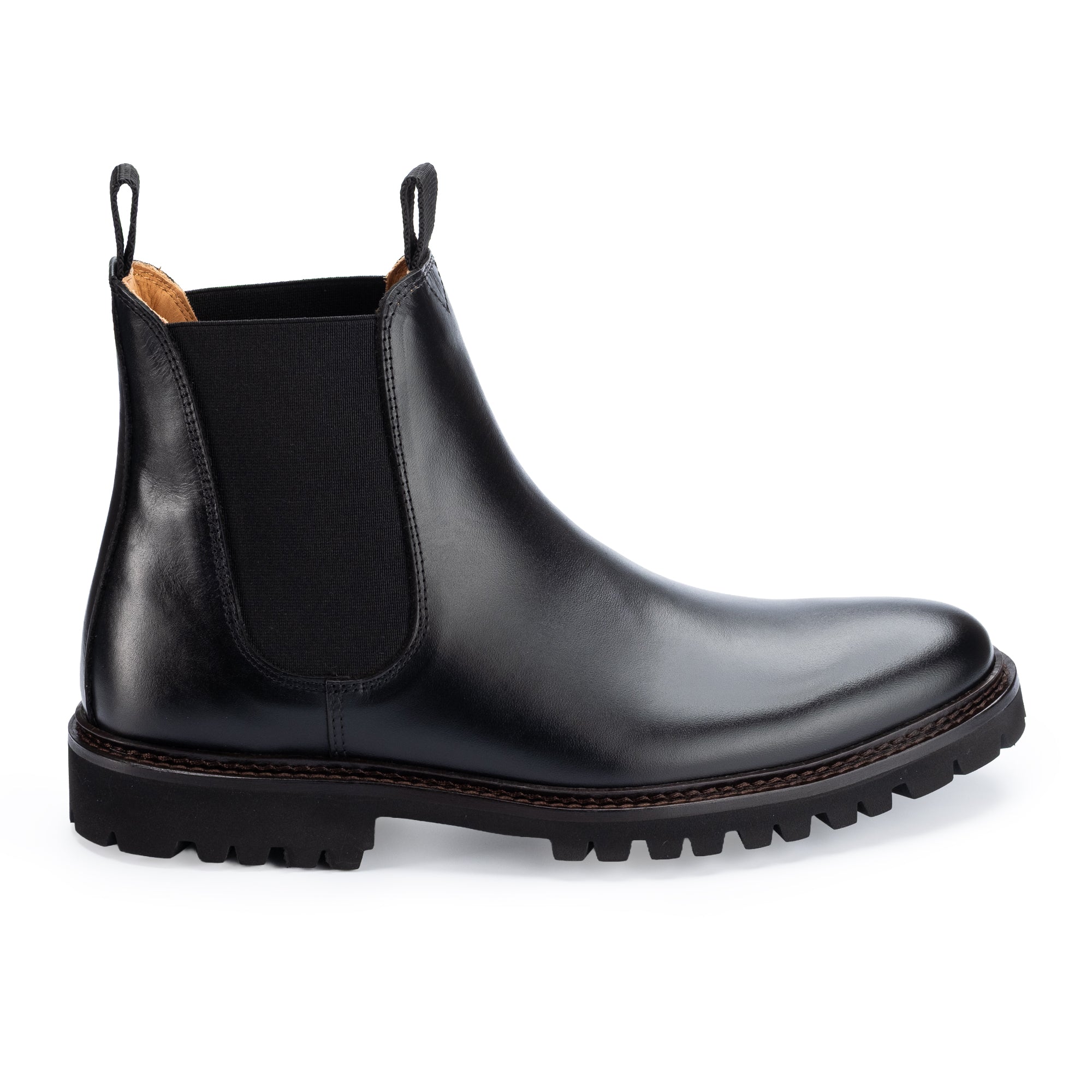
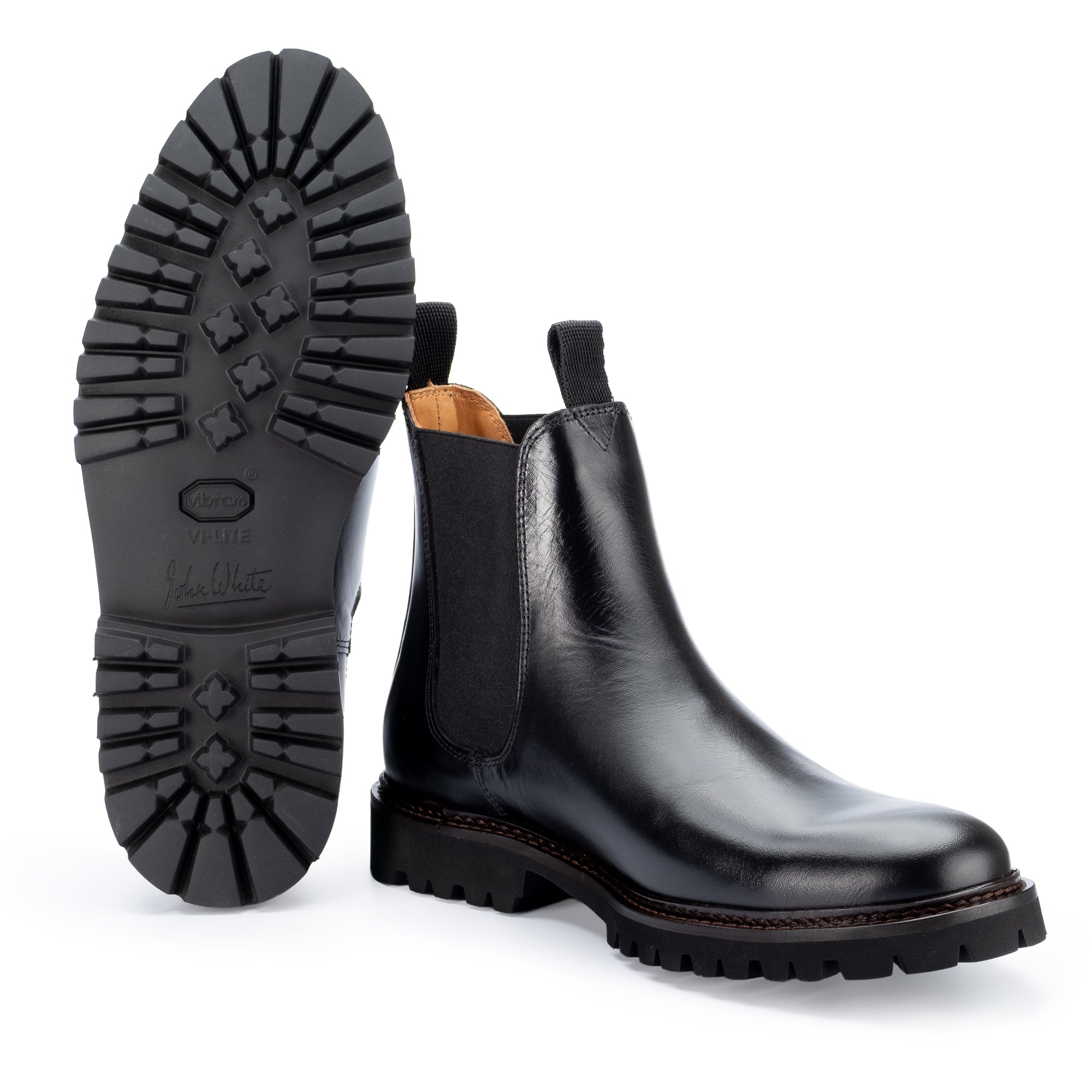
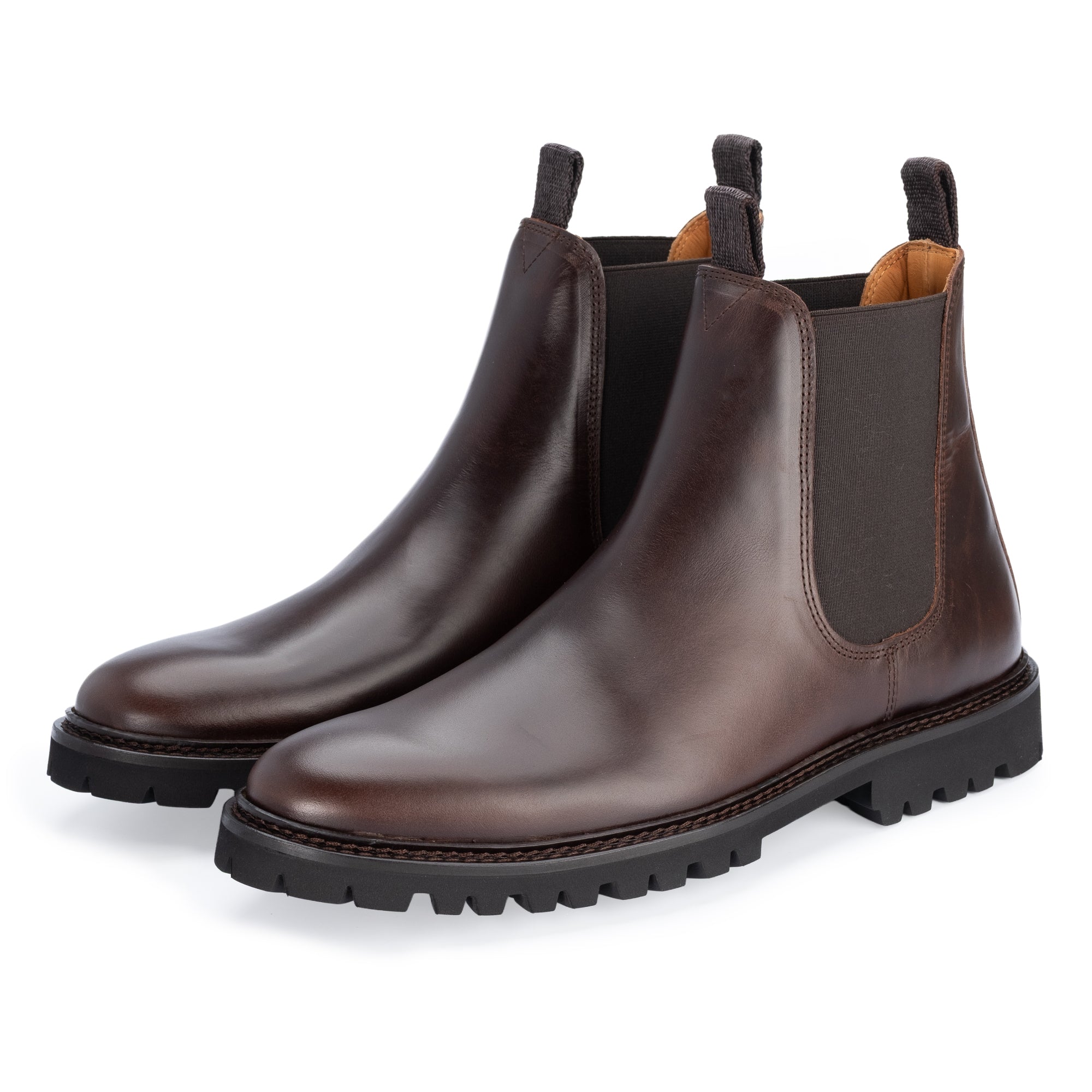
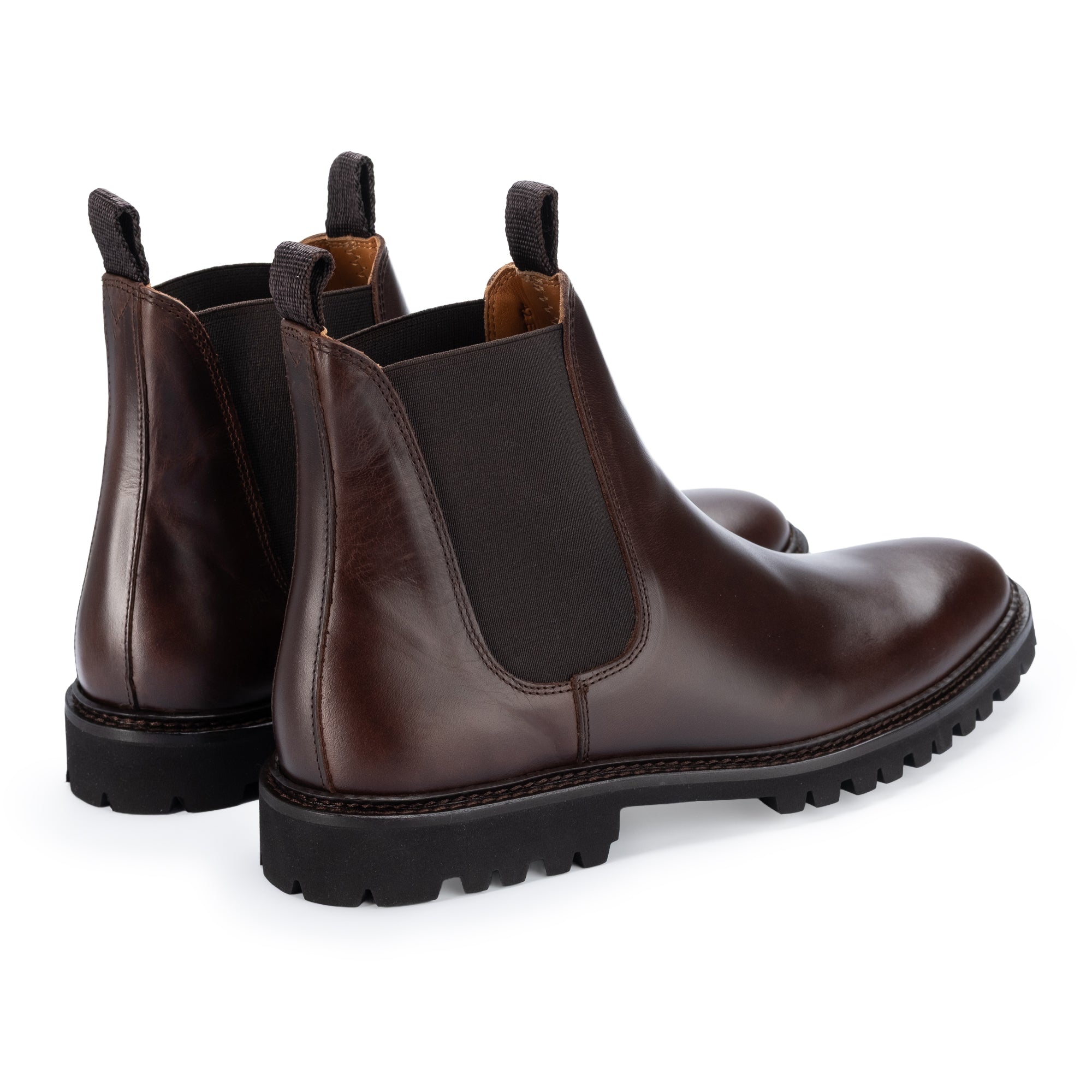
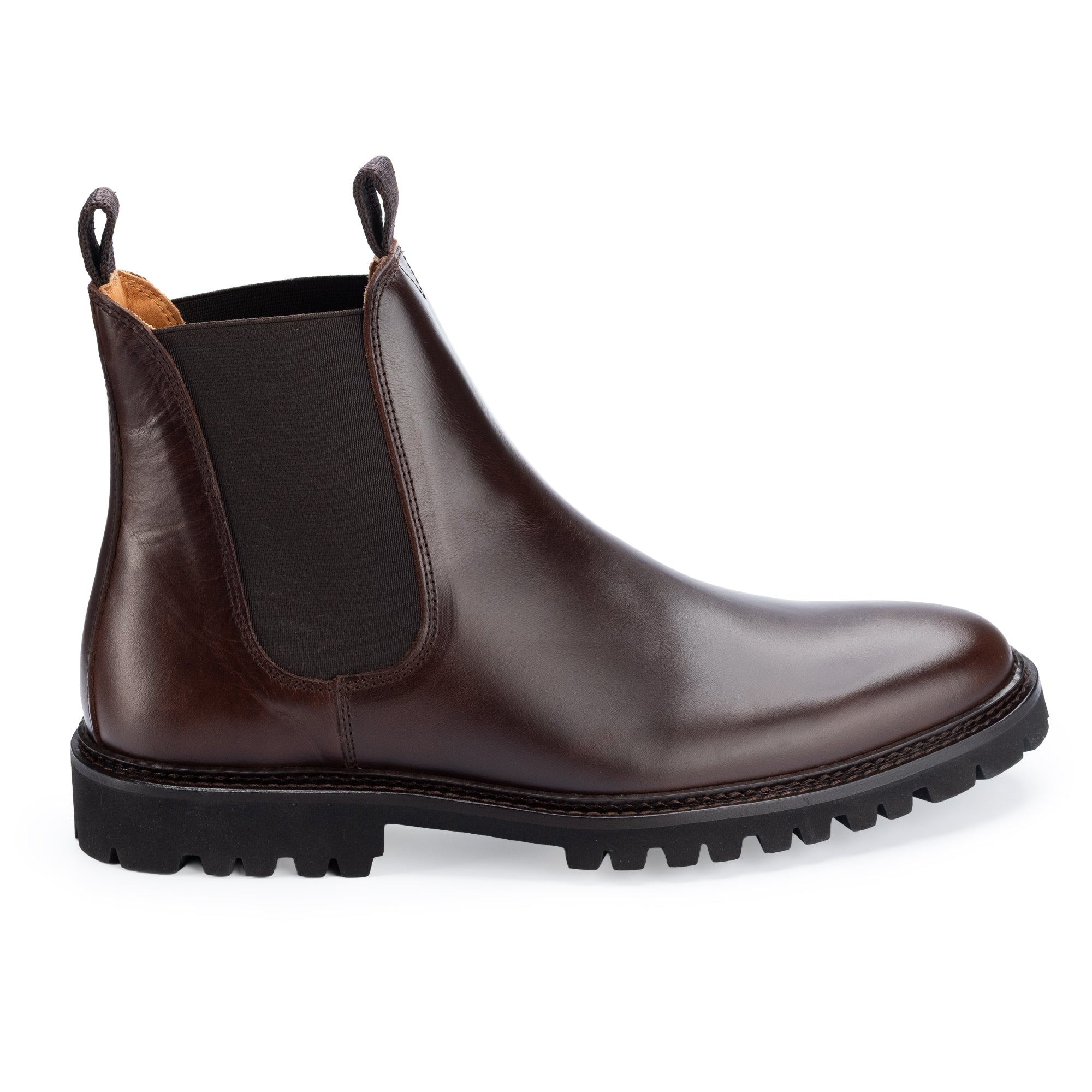
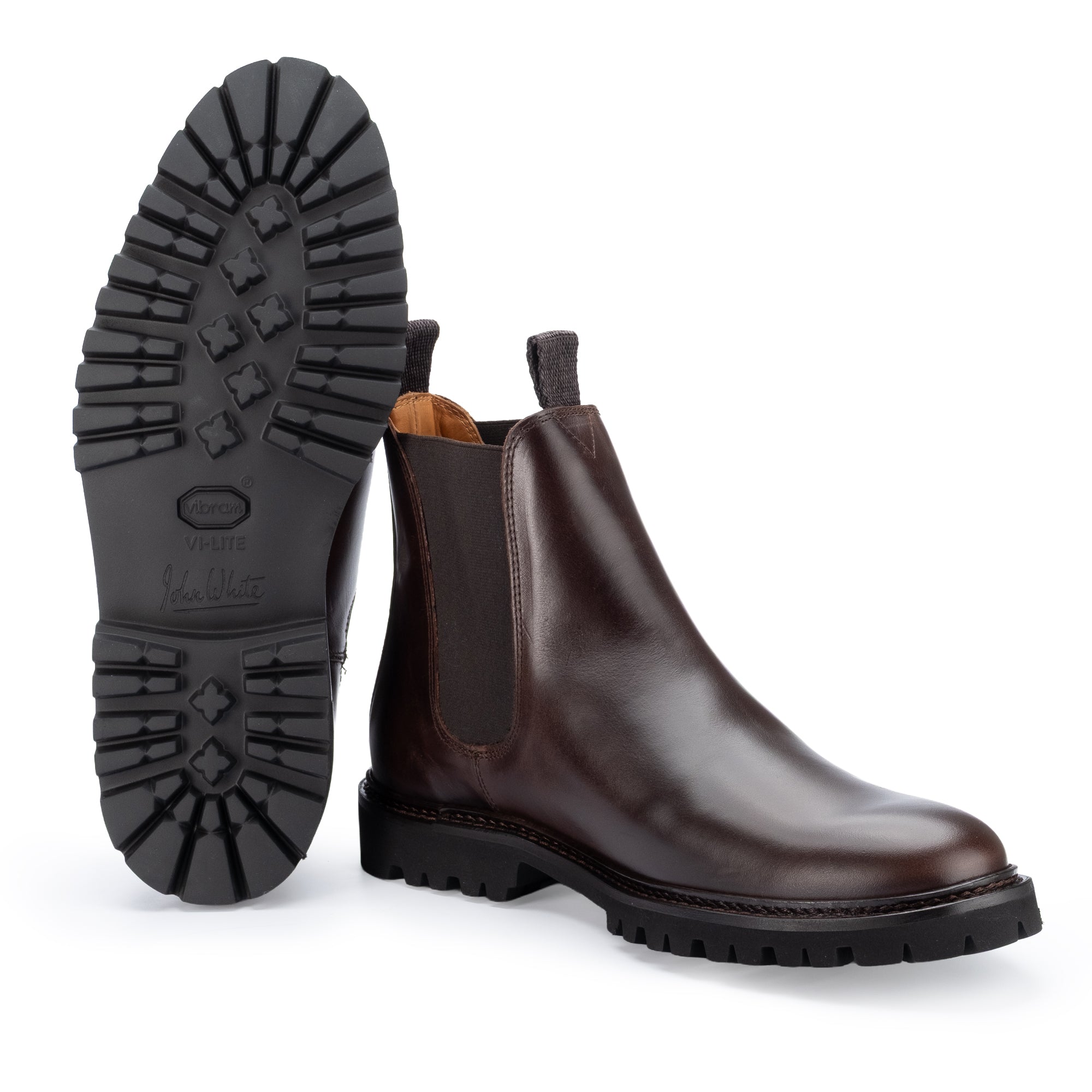
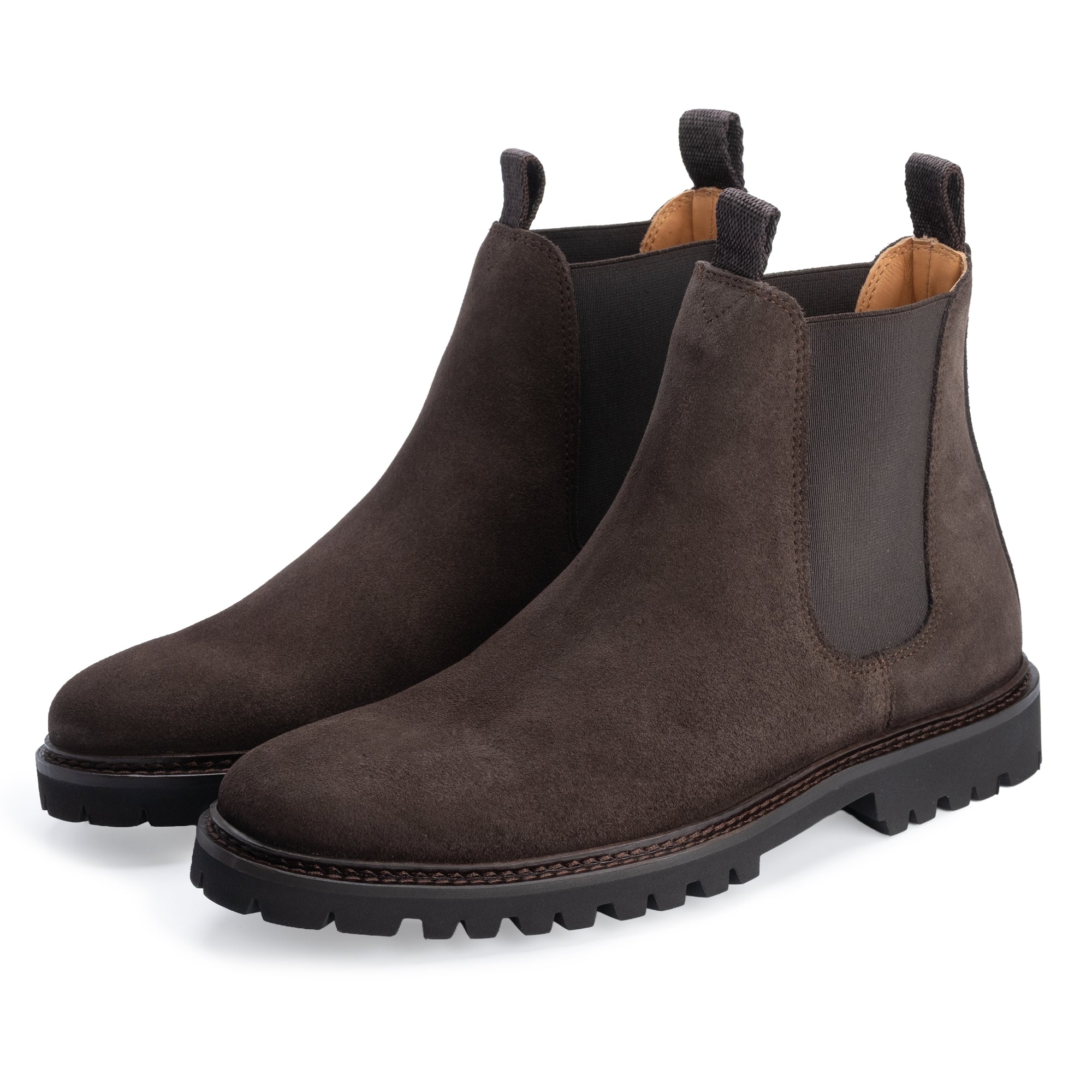
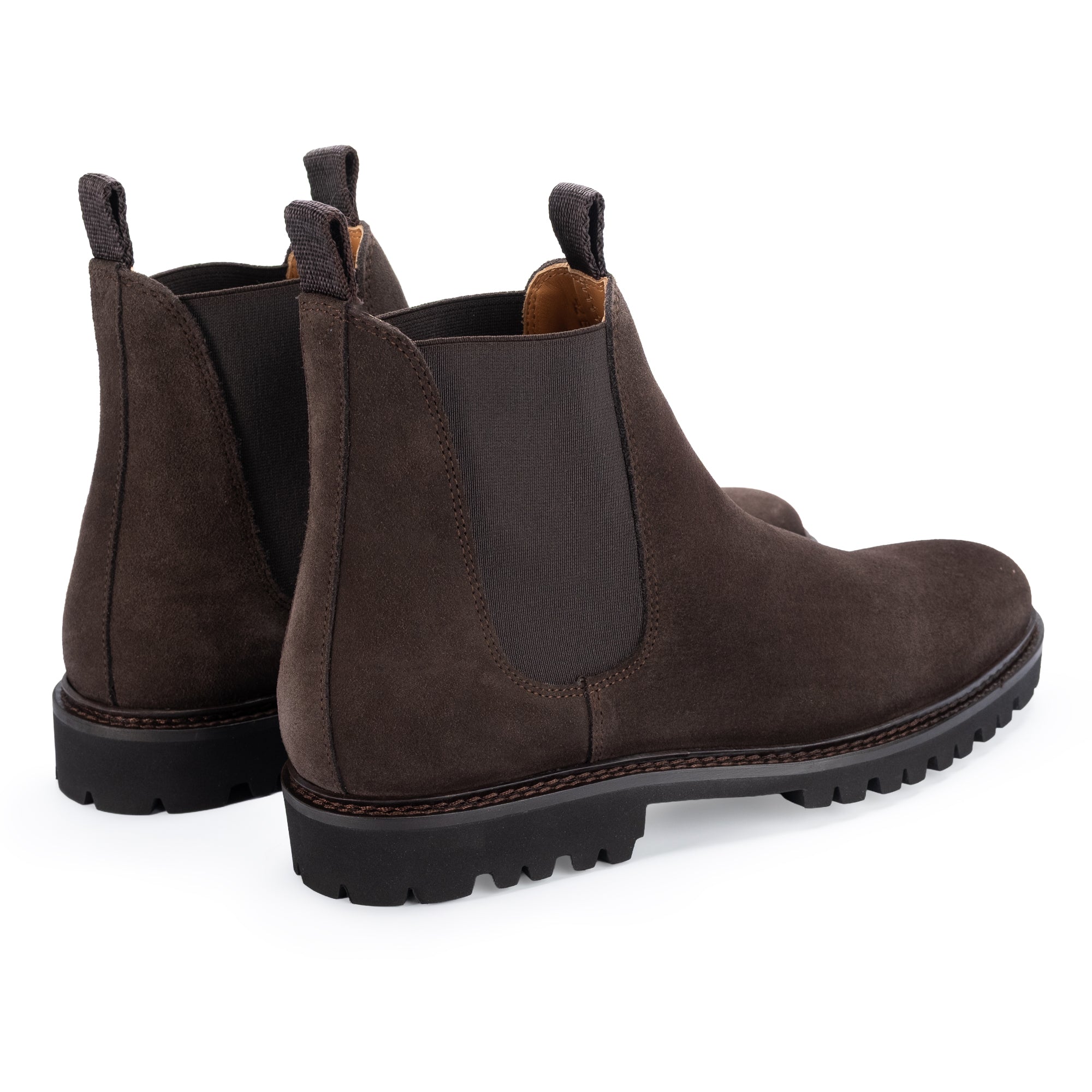
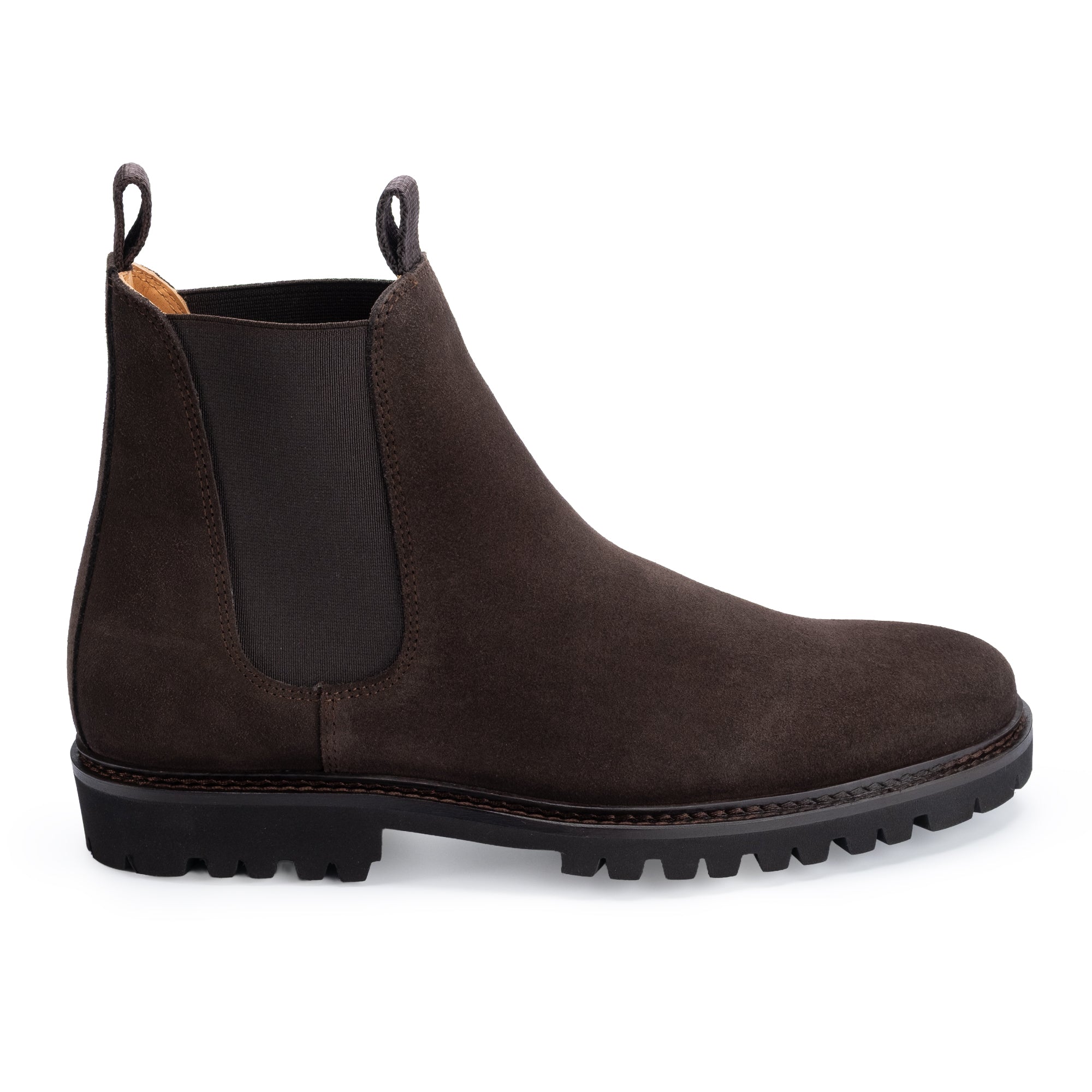
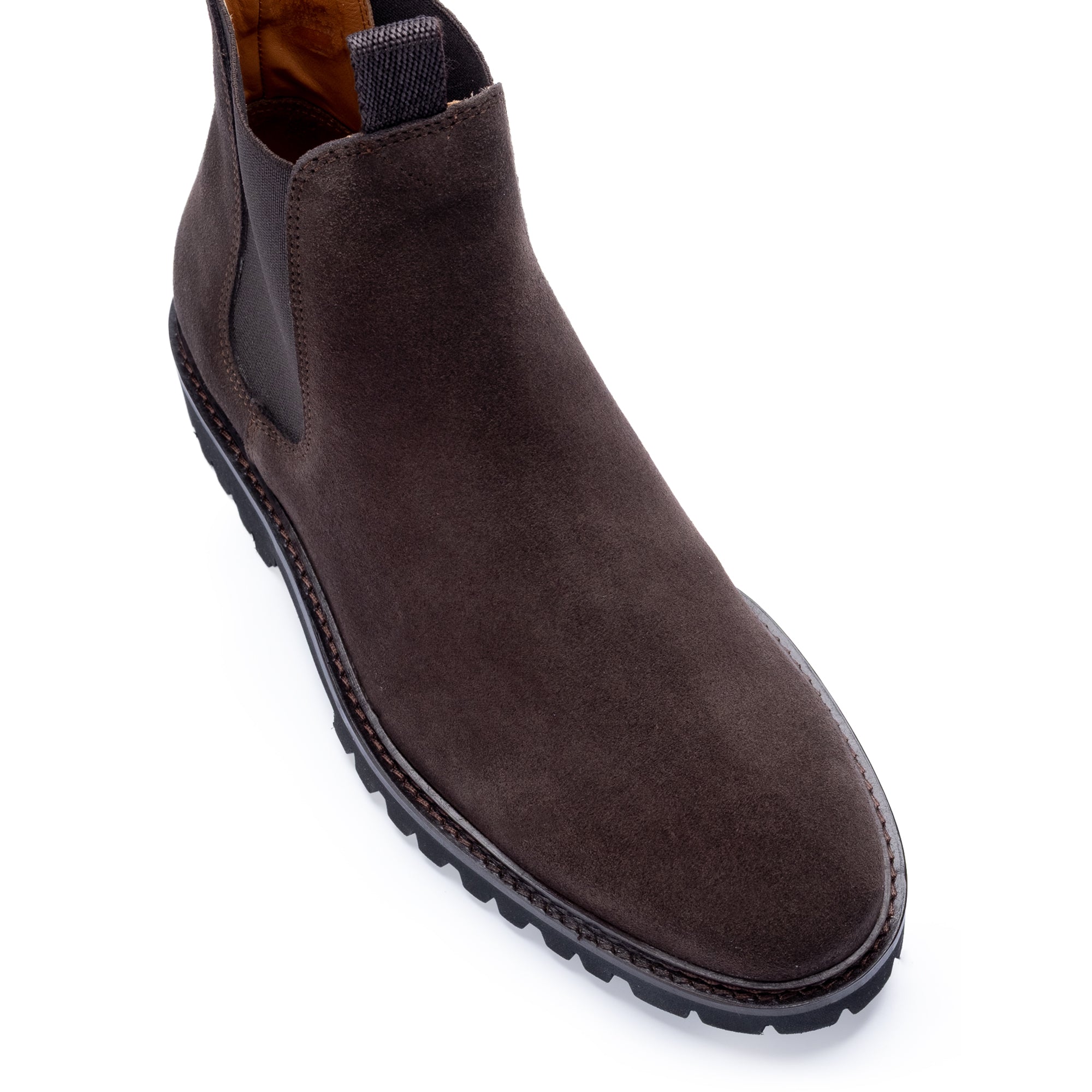
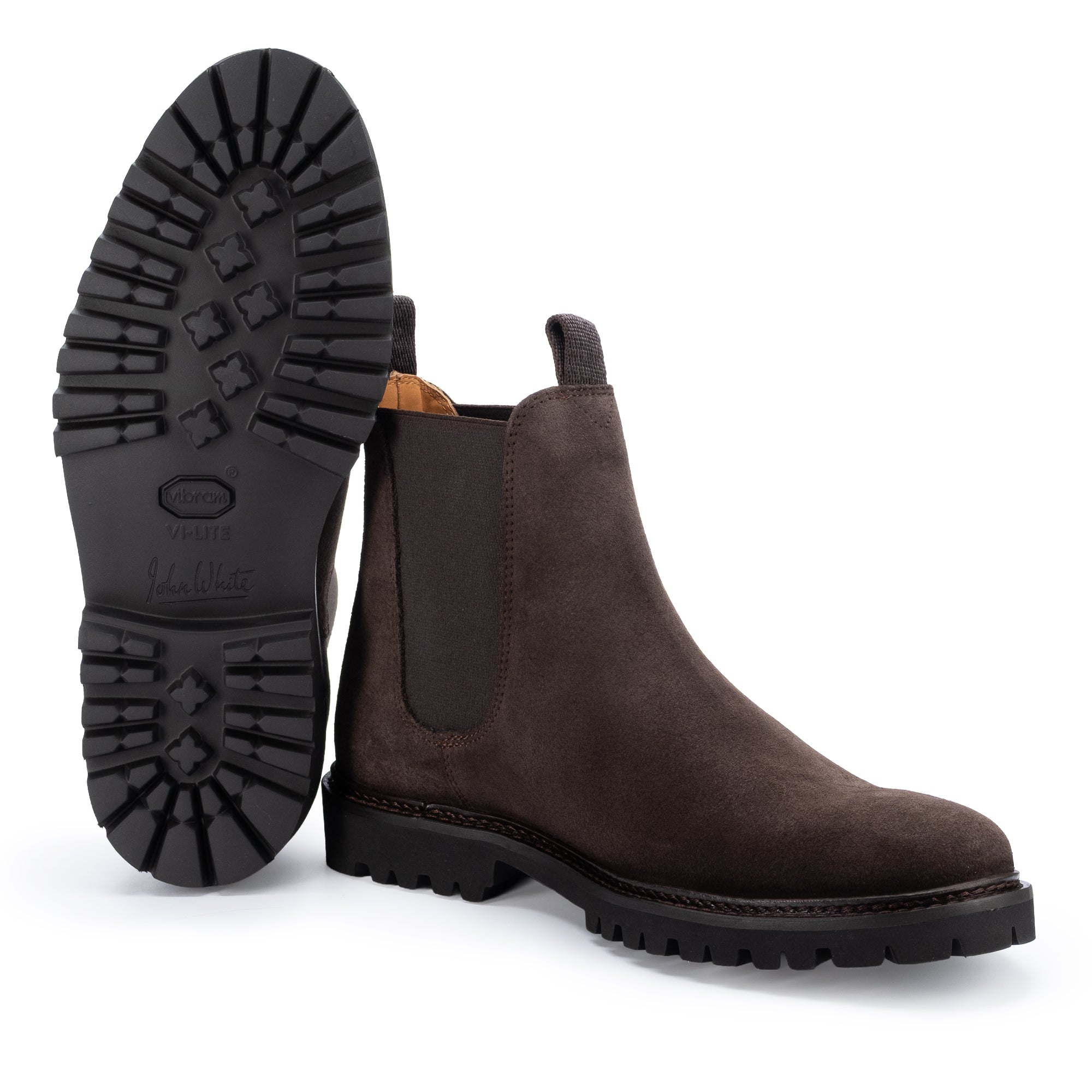
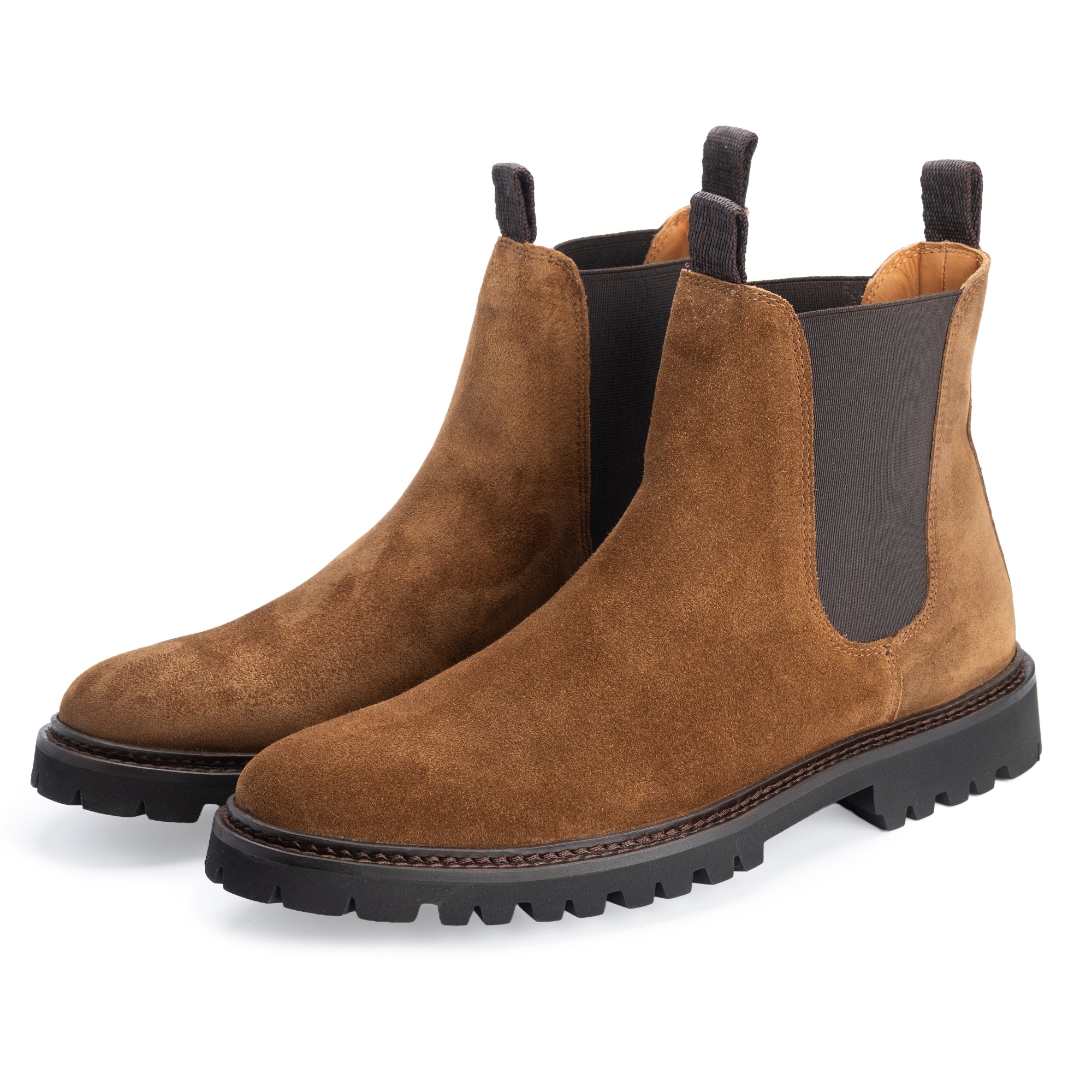
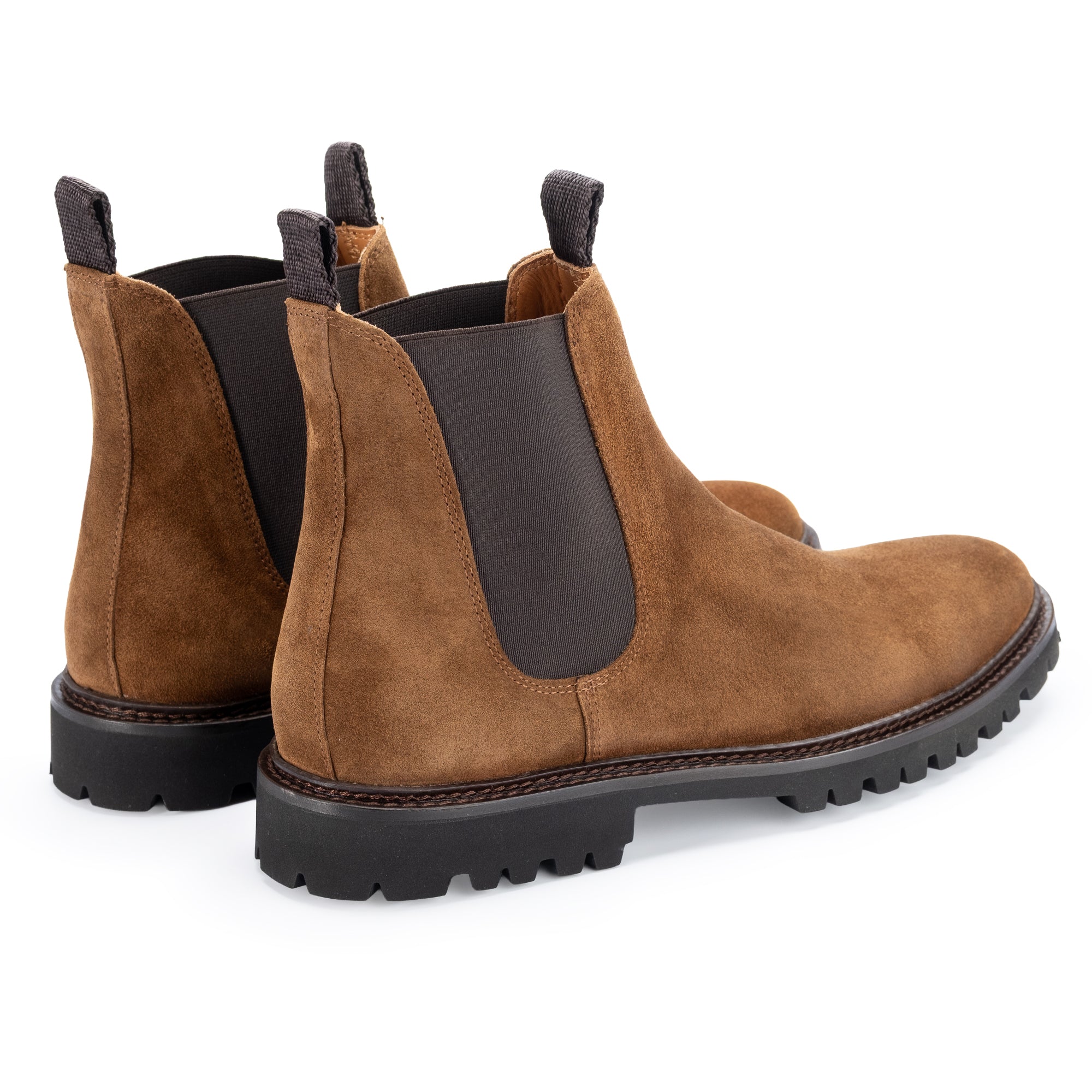
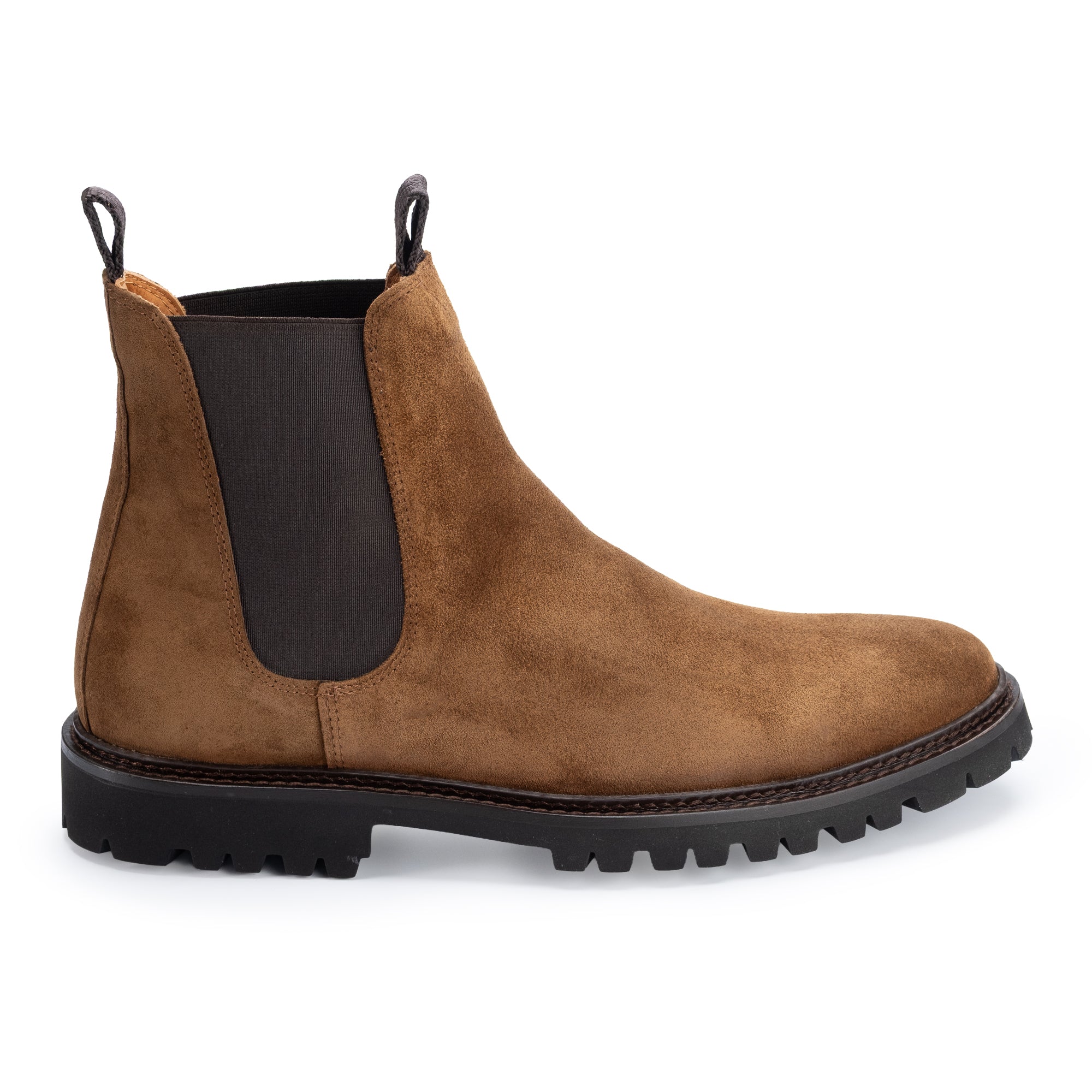
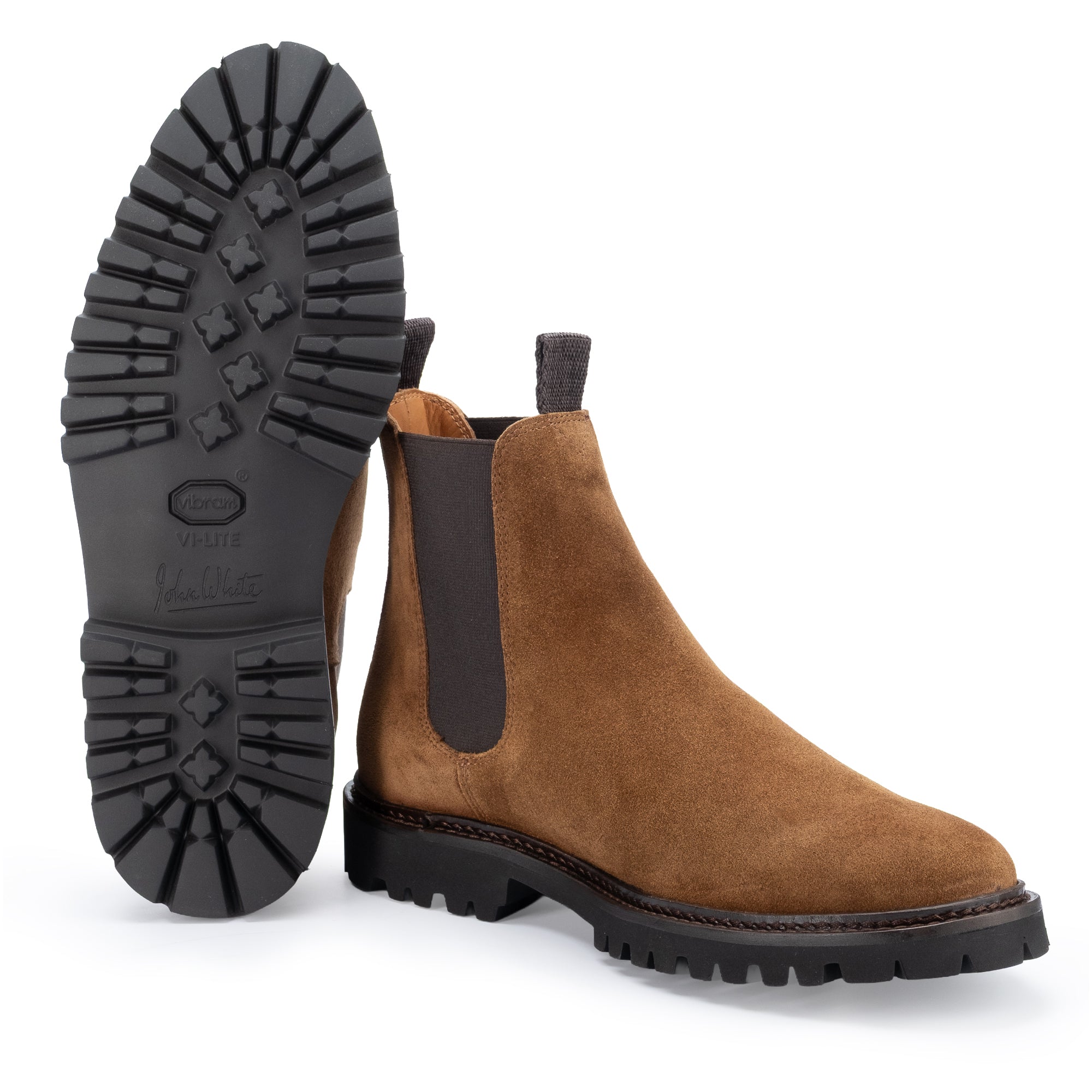
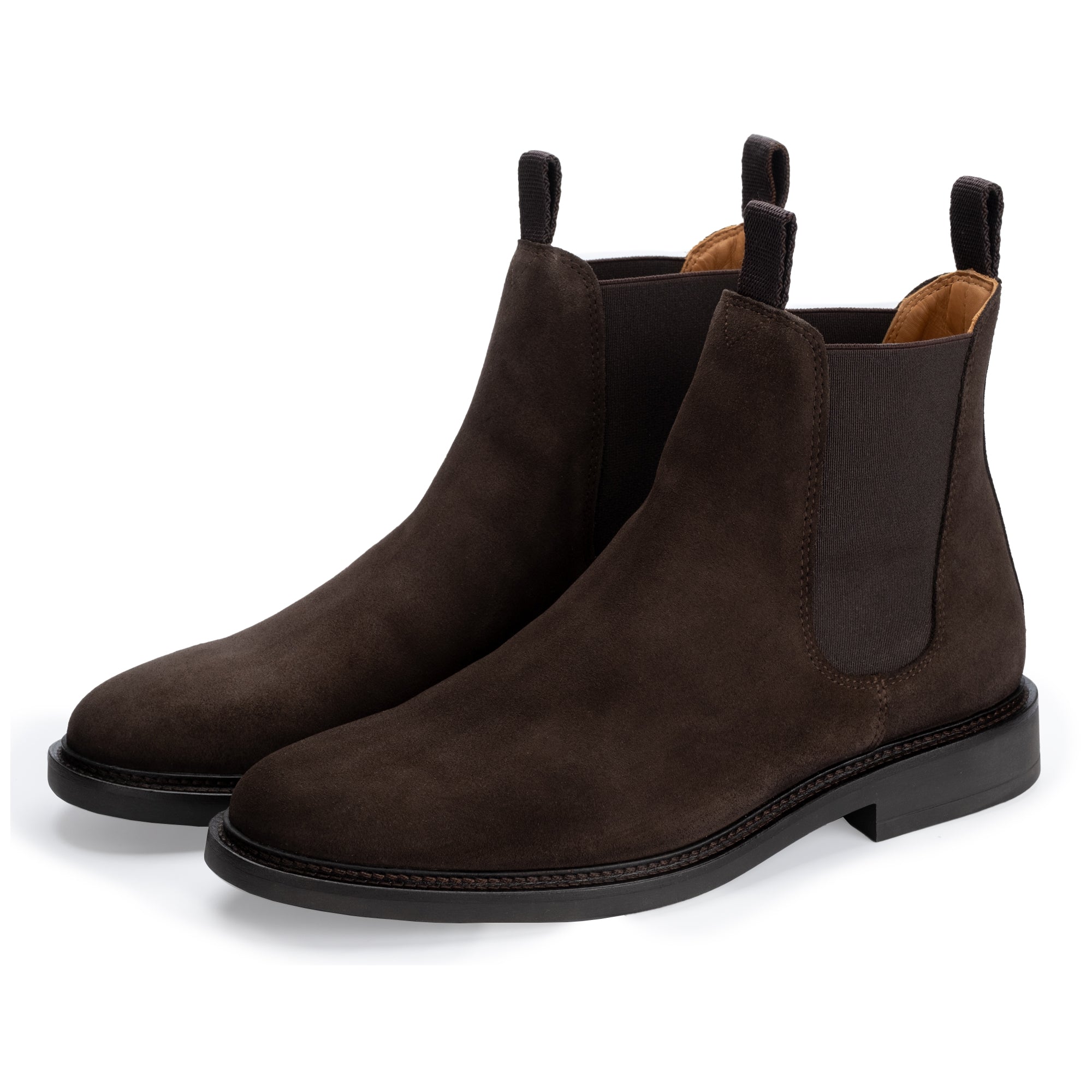
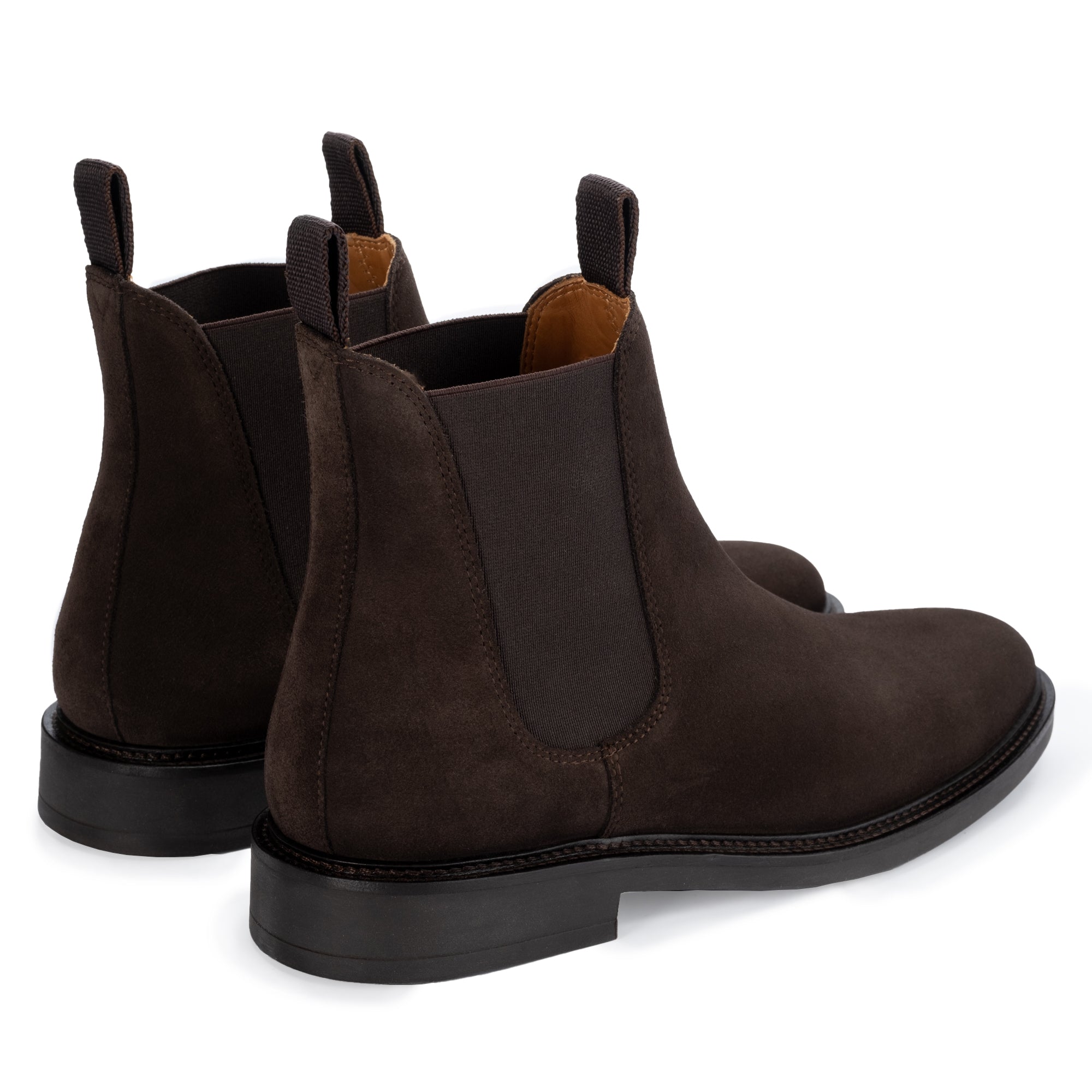
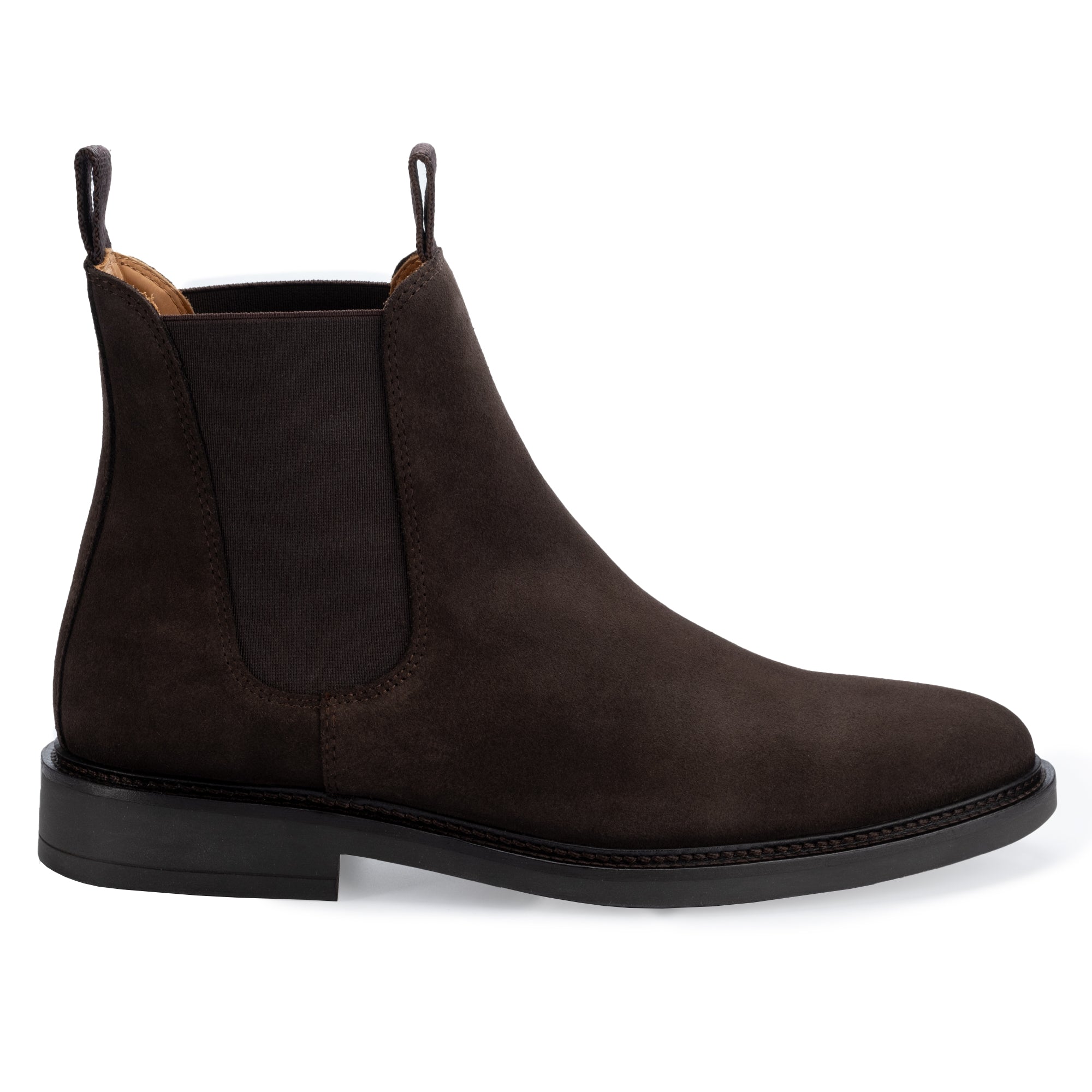
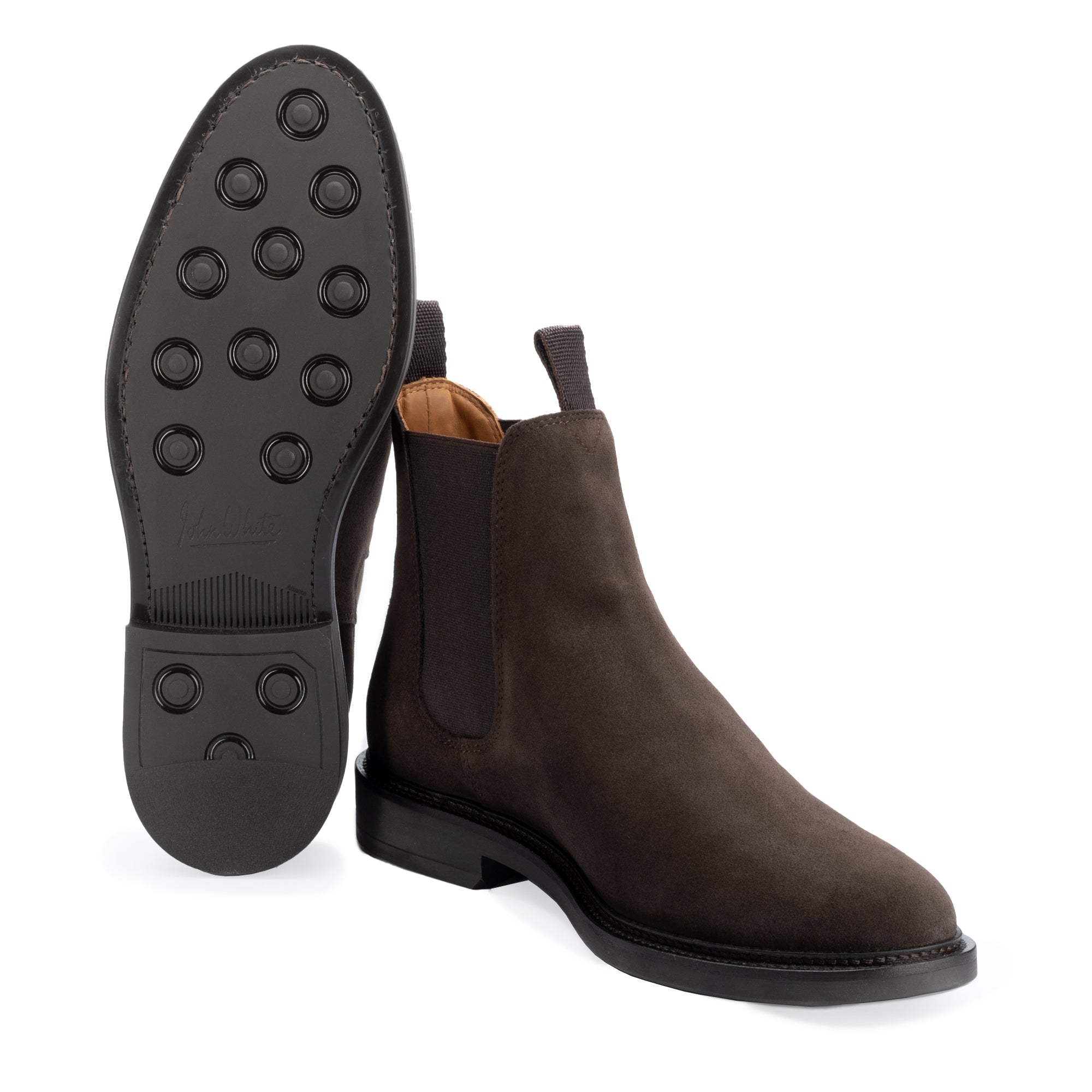
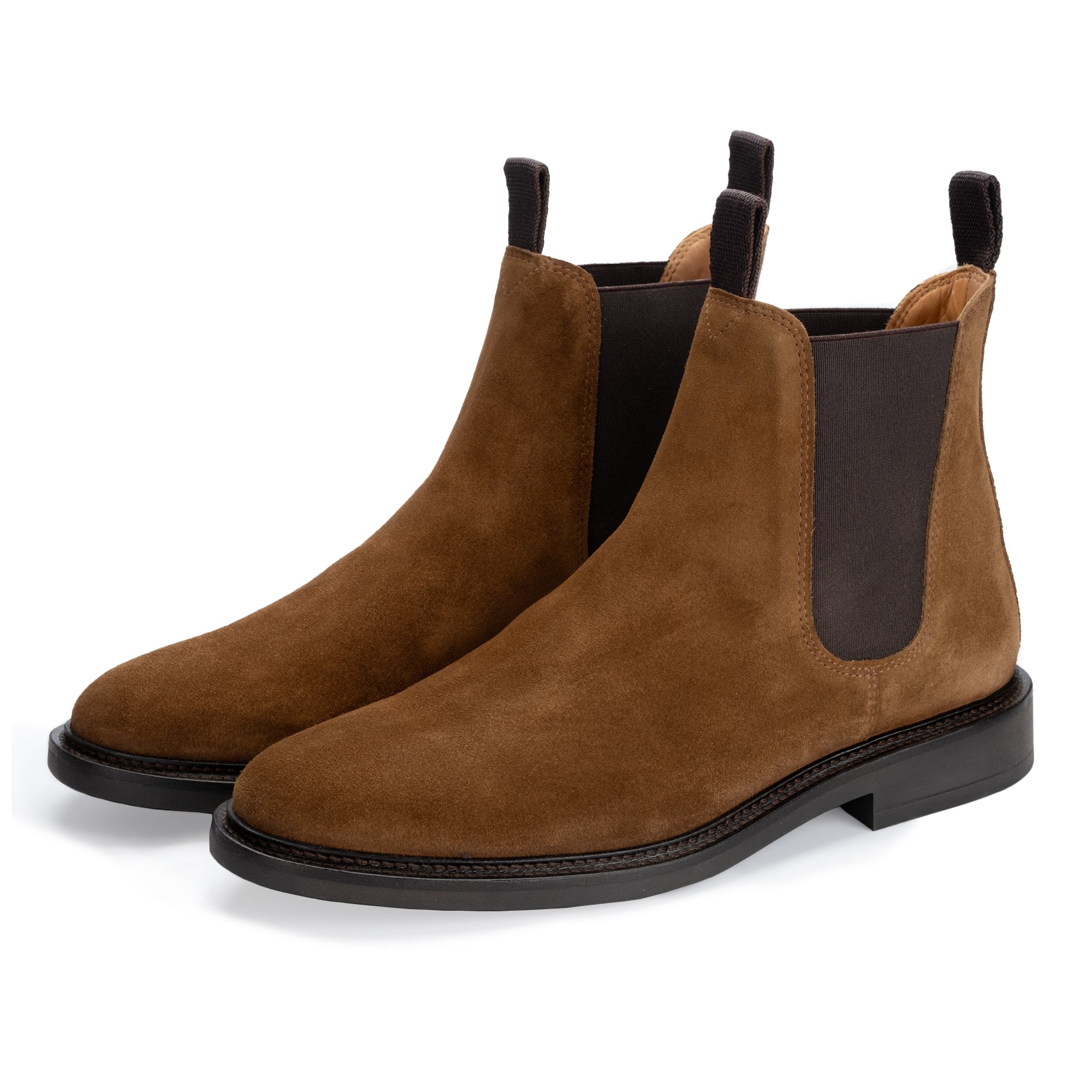
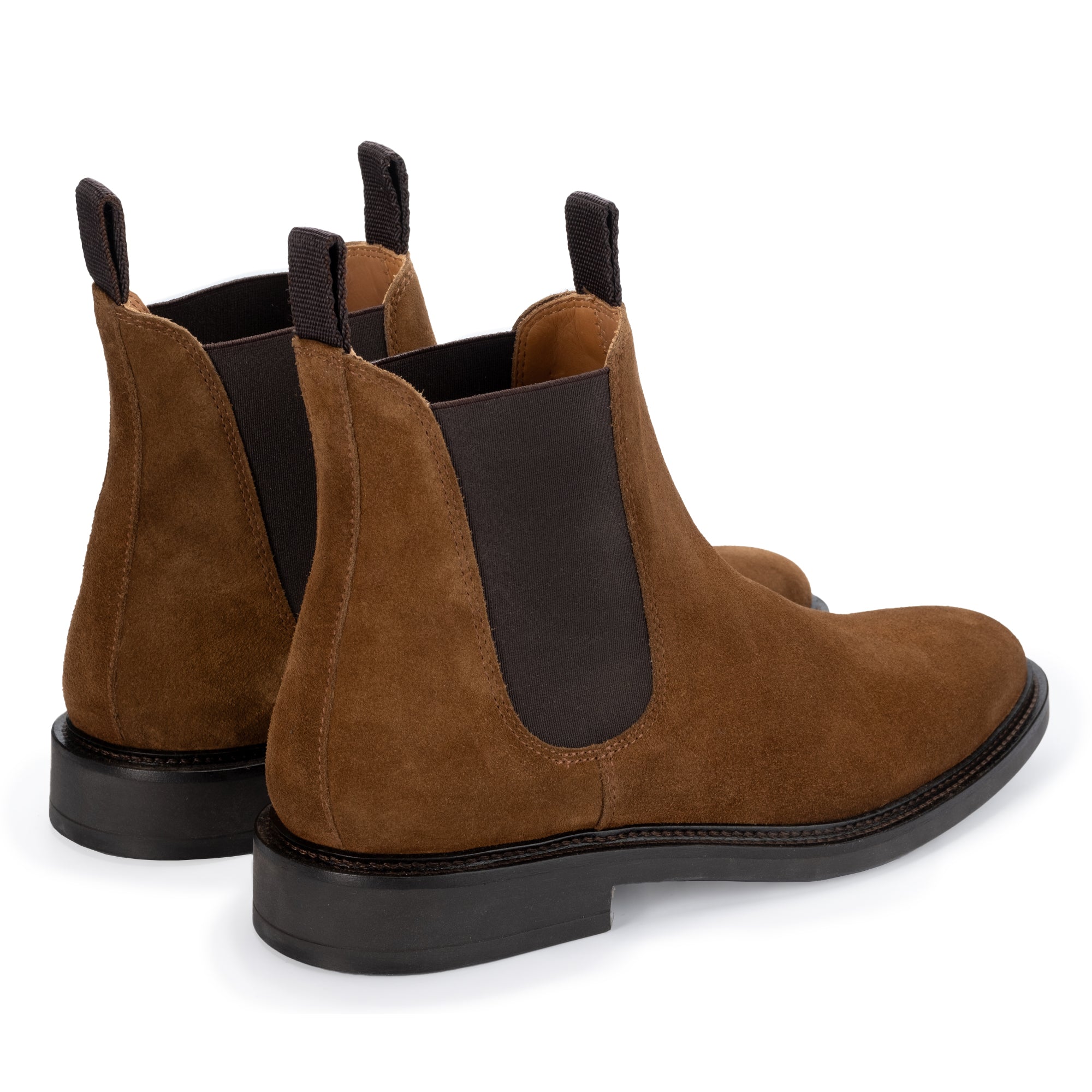
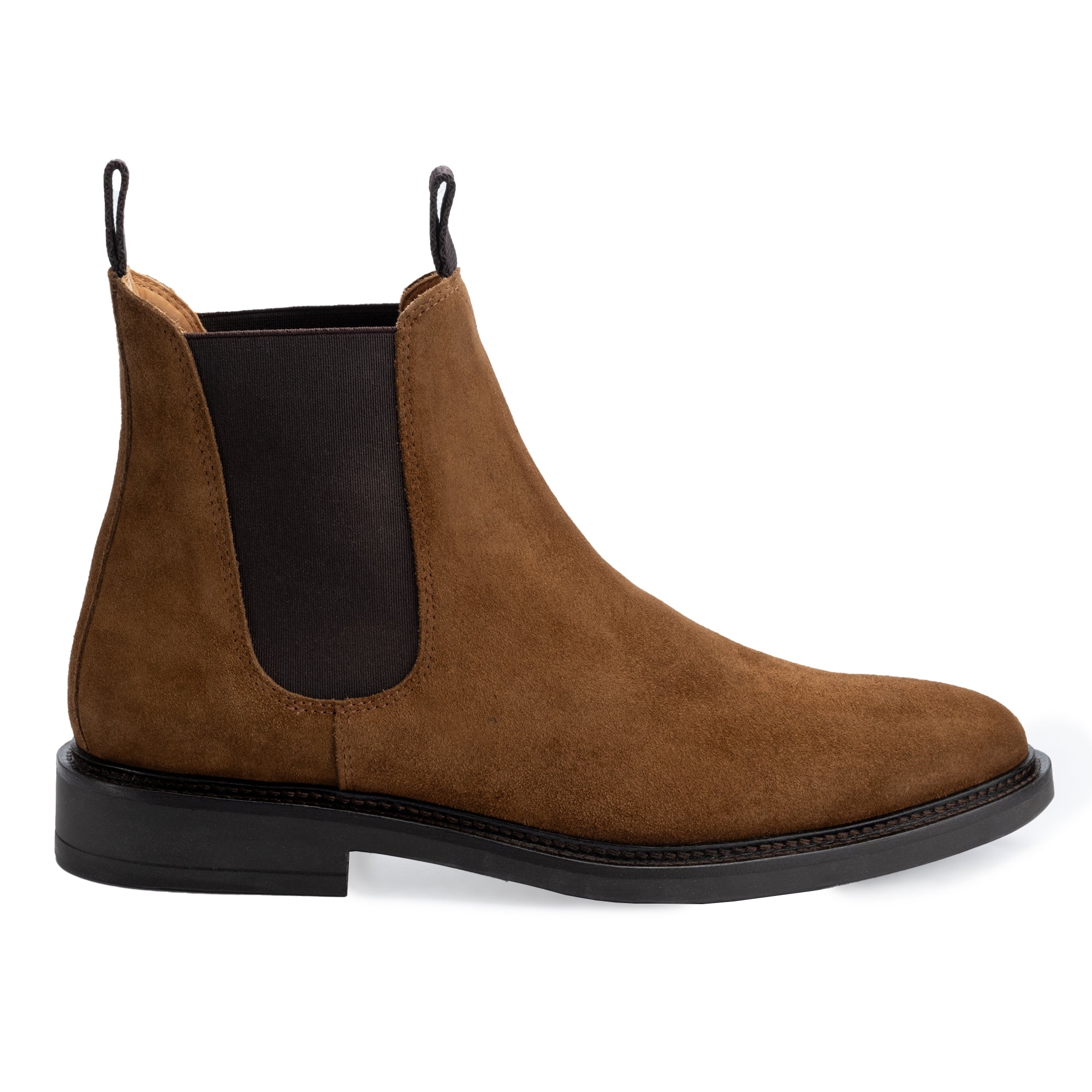
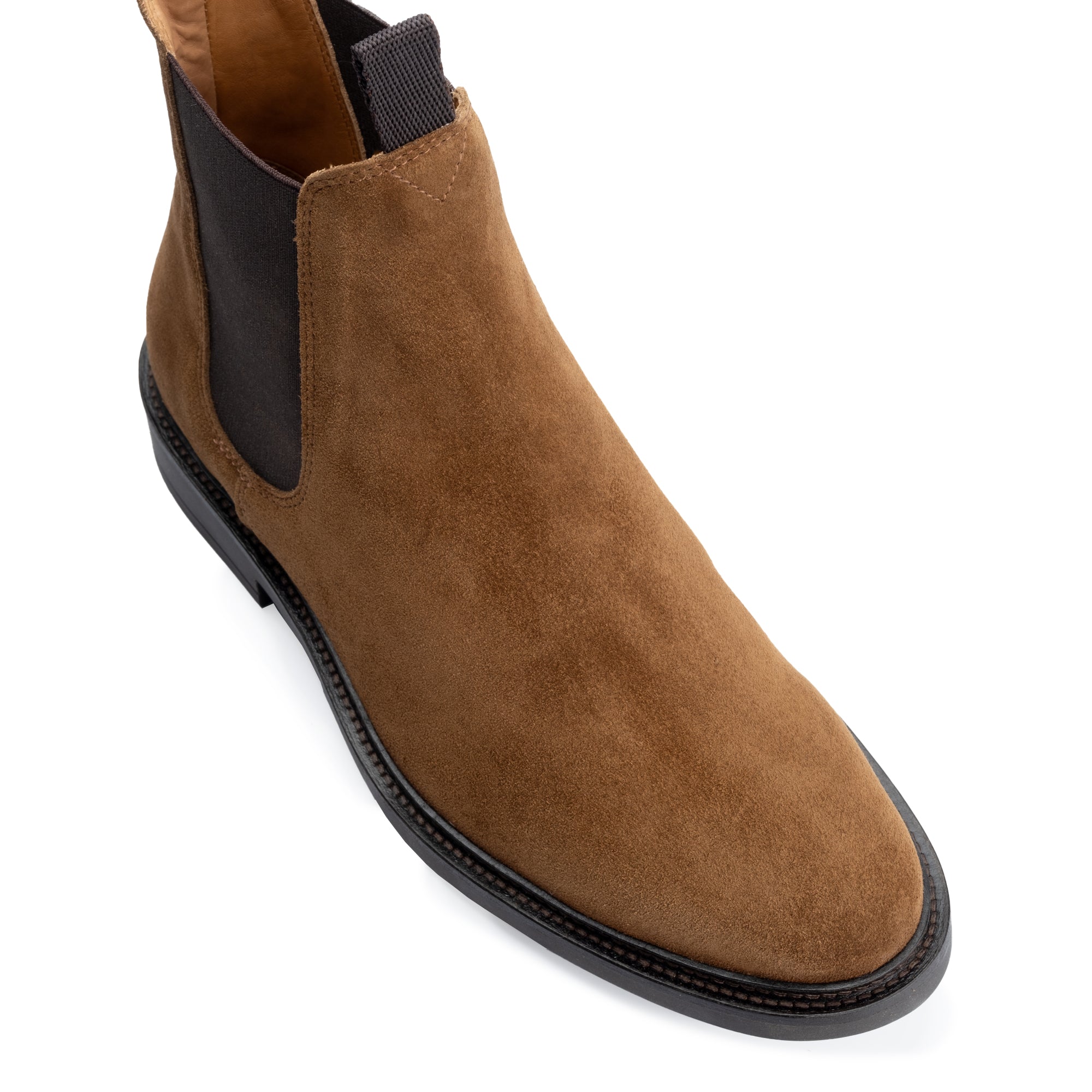
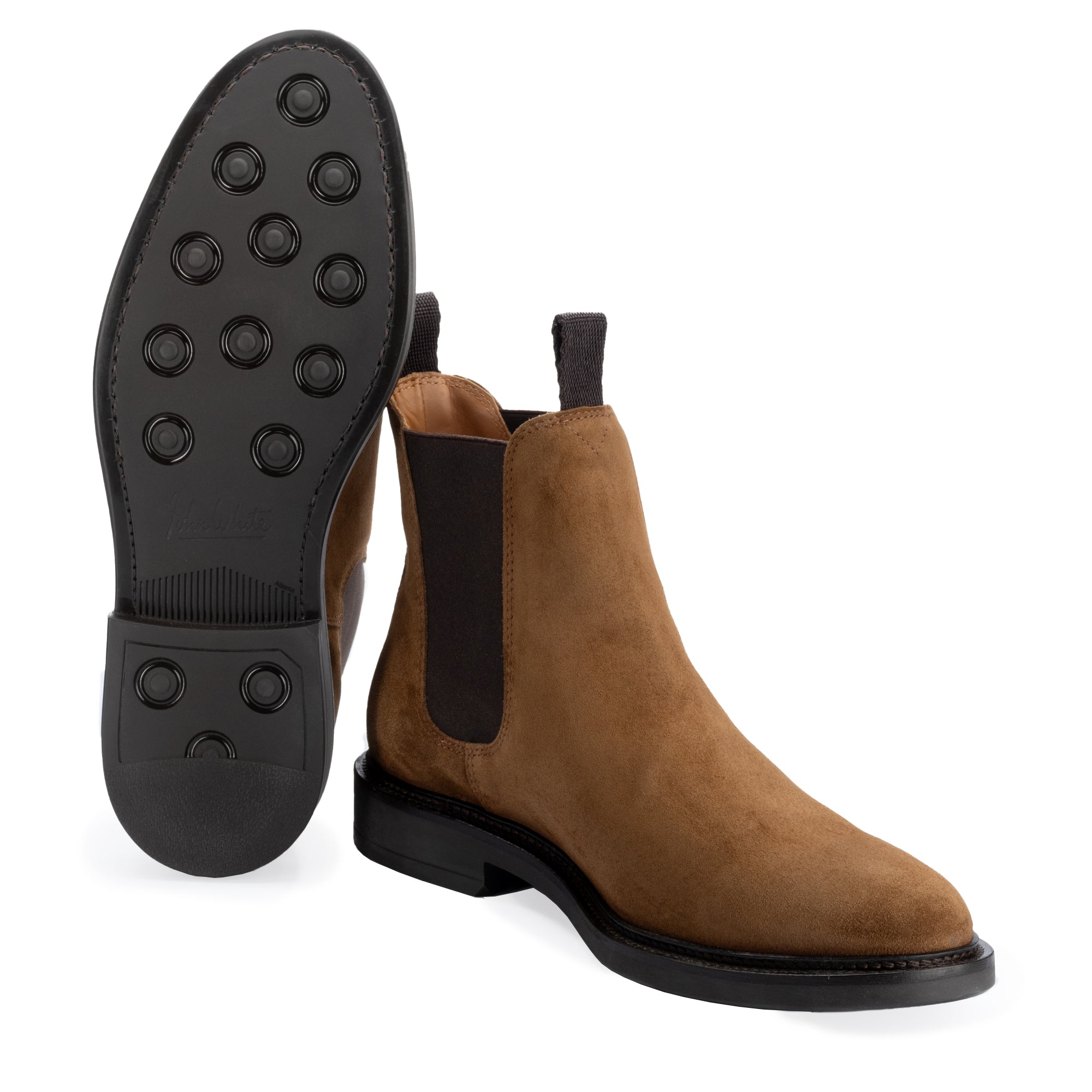
The Chelsea boot is an ankle-height boot defined by its elasticated side panels and complete absence of external fastenings. The design is widely attributed to J. Sparkes-Hall, bootmaker to Queen Victoria, with the Victoria and Albert Museum documenting the elastic-sided ankle boot's origins in the 1850s. It was conceived for ease of removal on horseback and became a staple of equestrian dress before crossing into everyday British fashion.
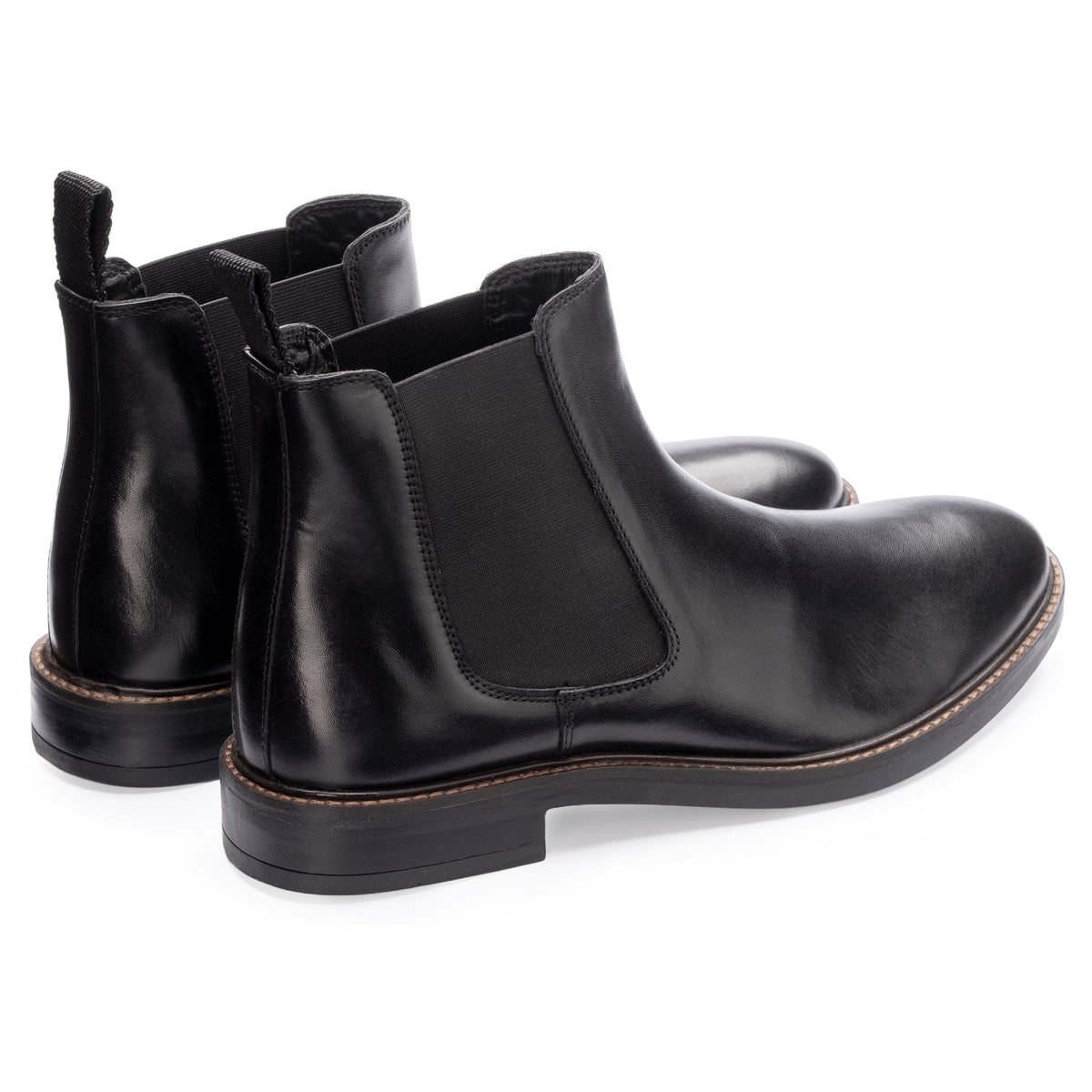
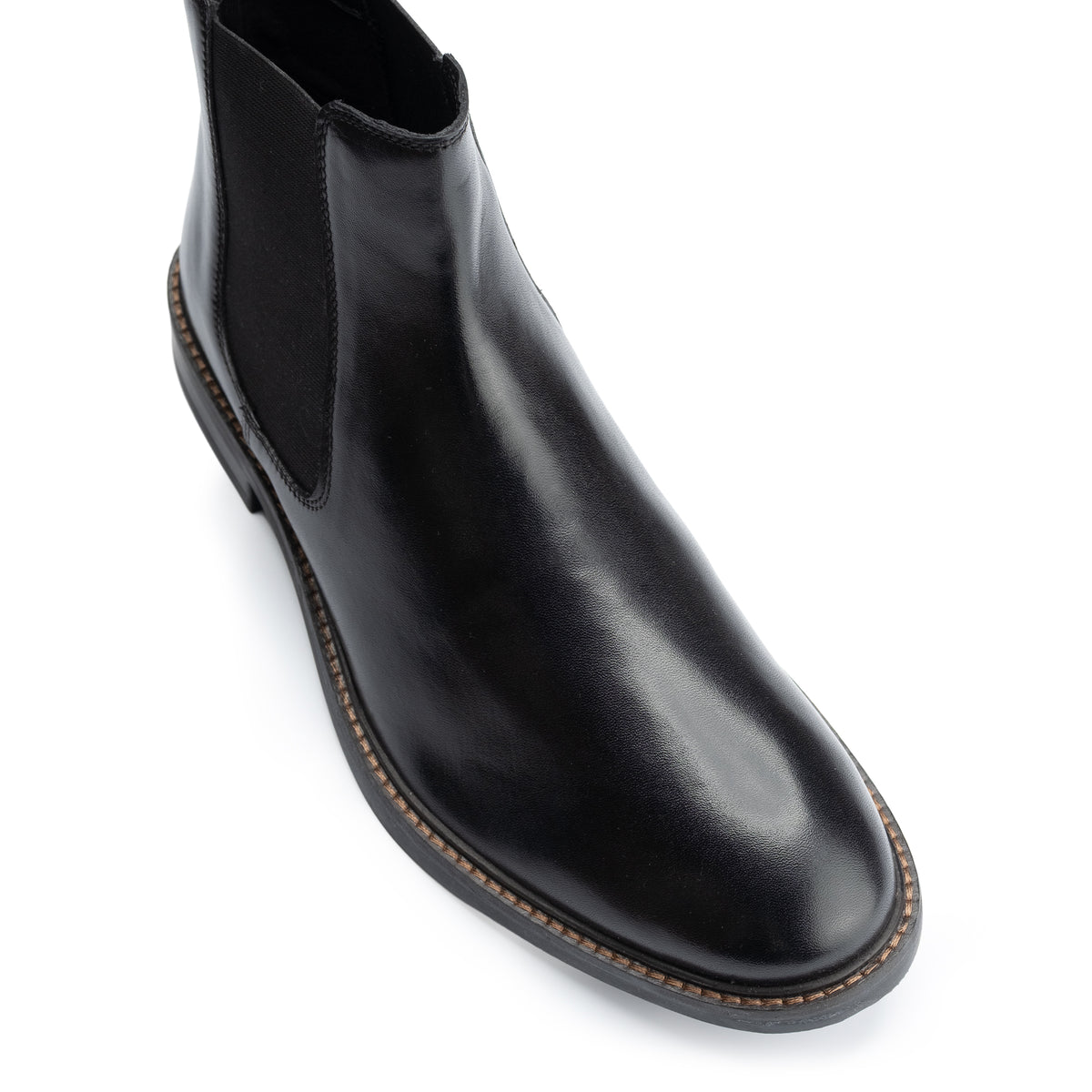
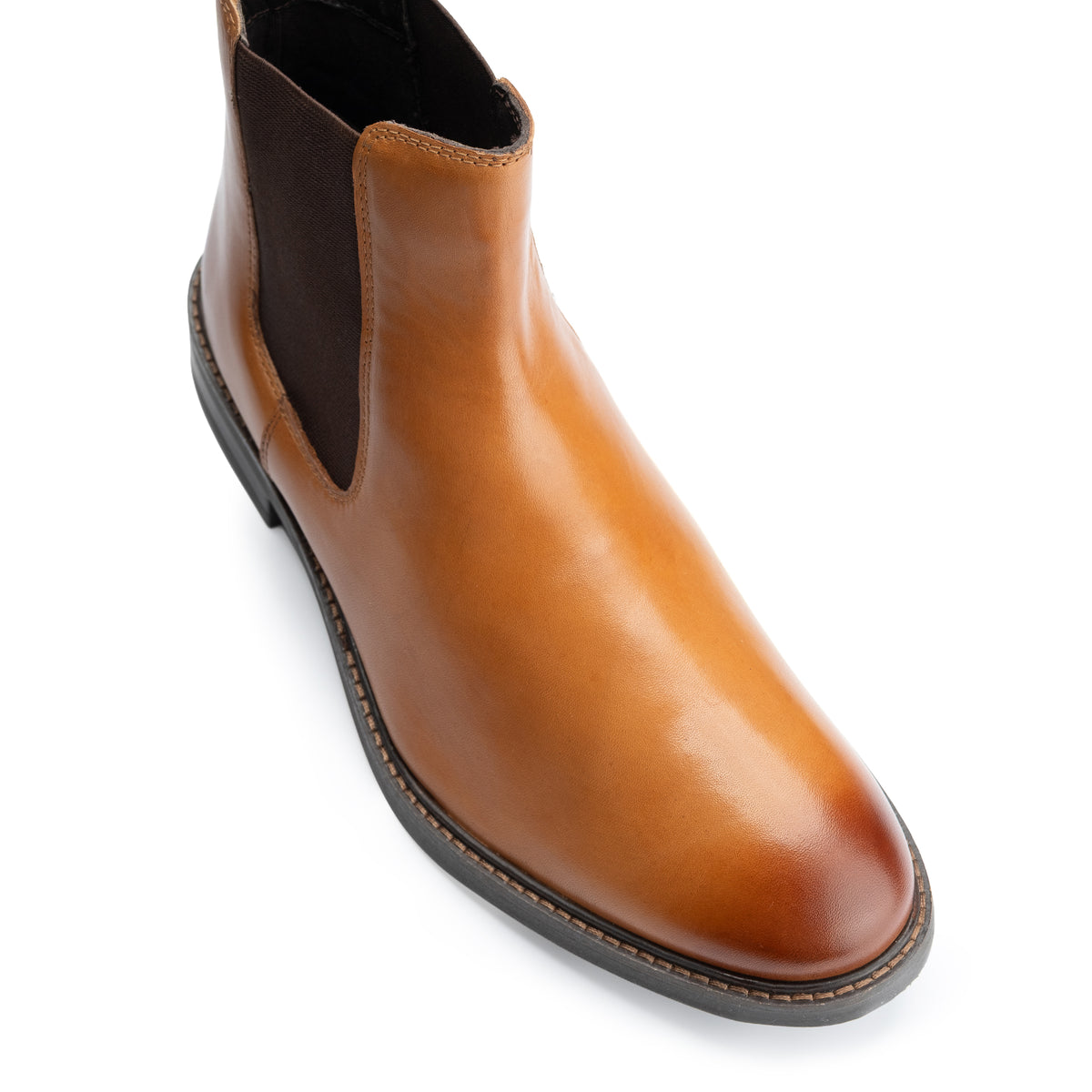
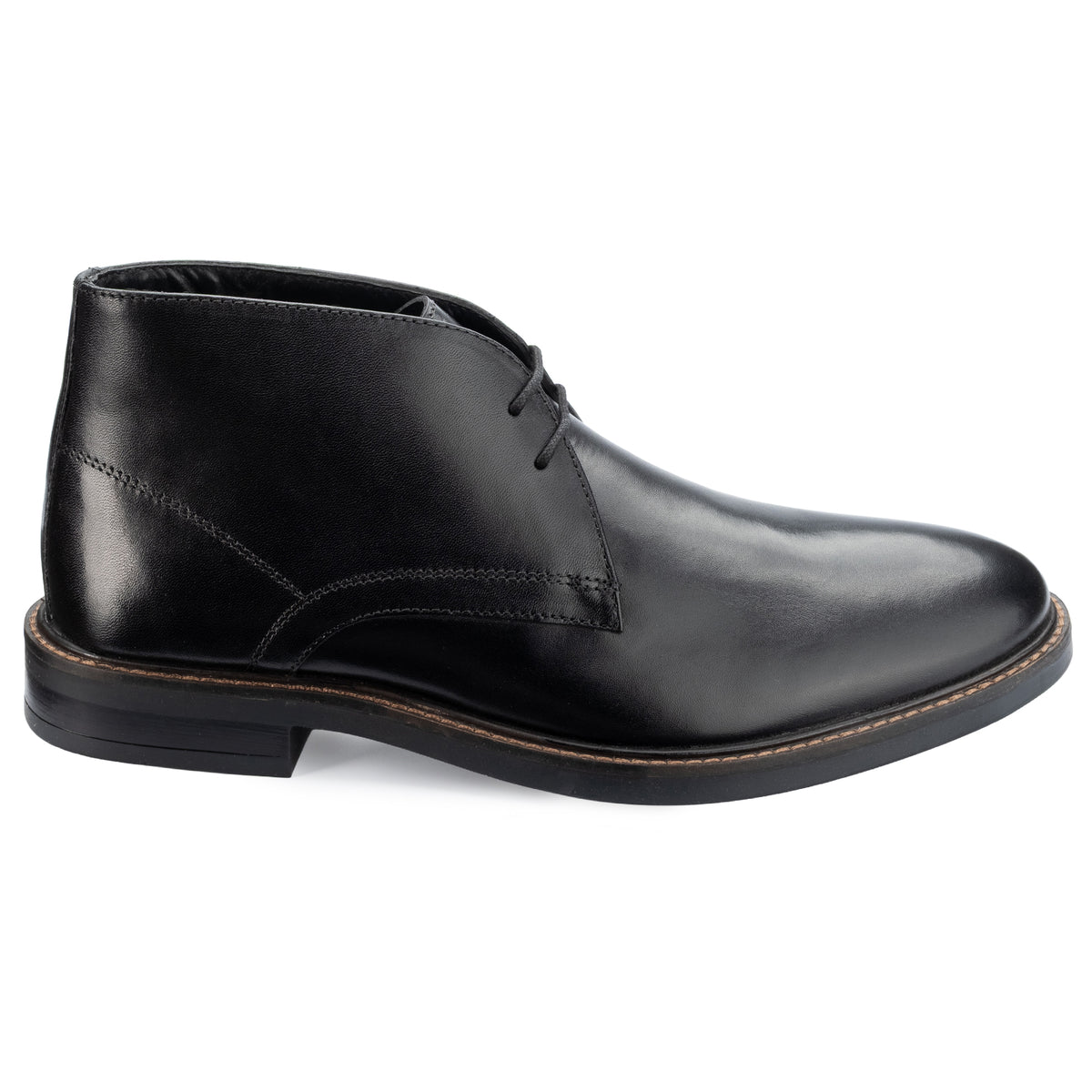
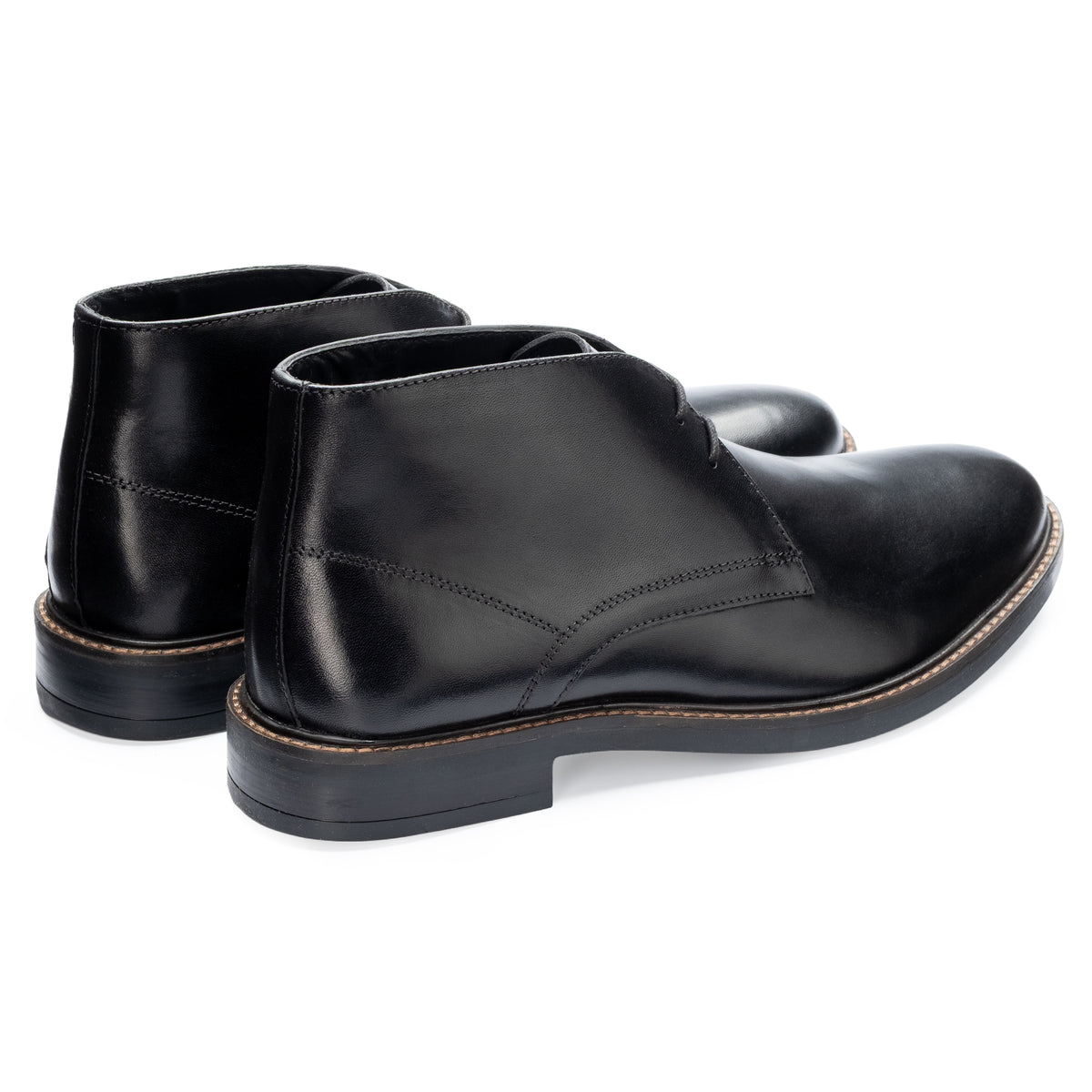
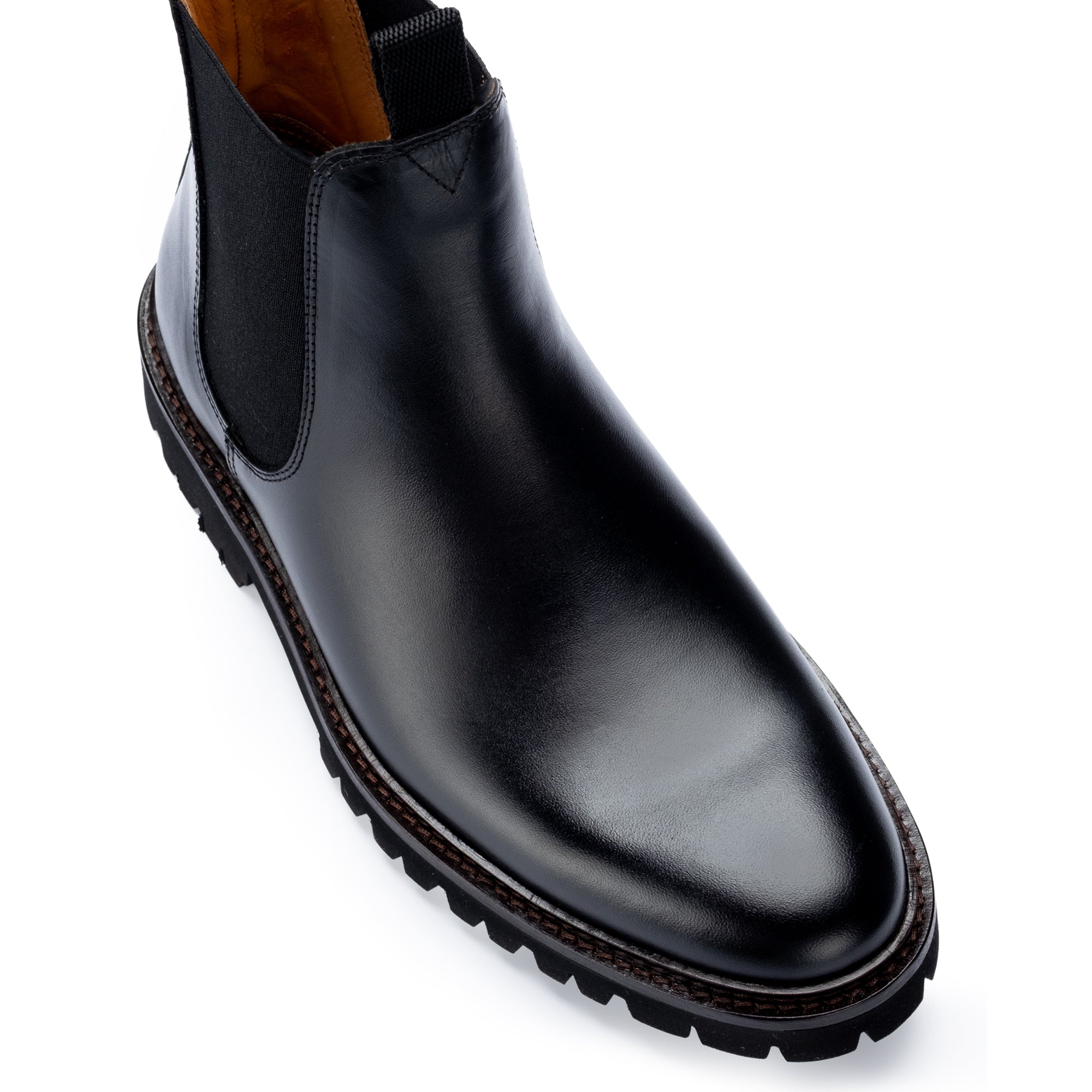
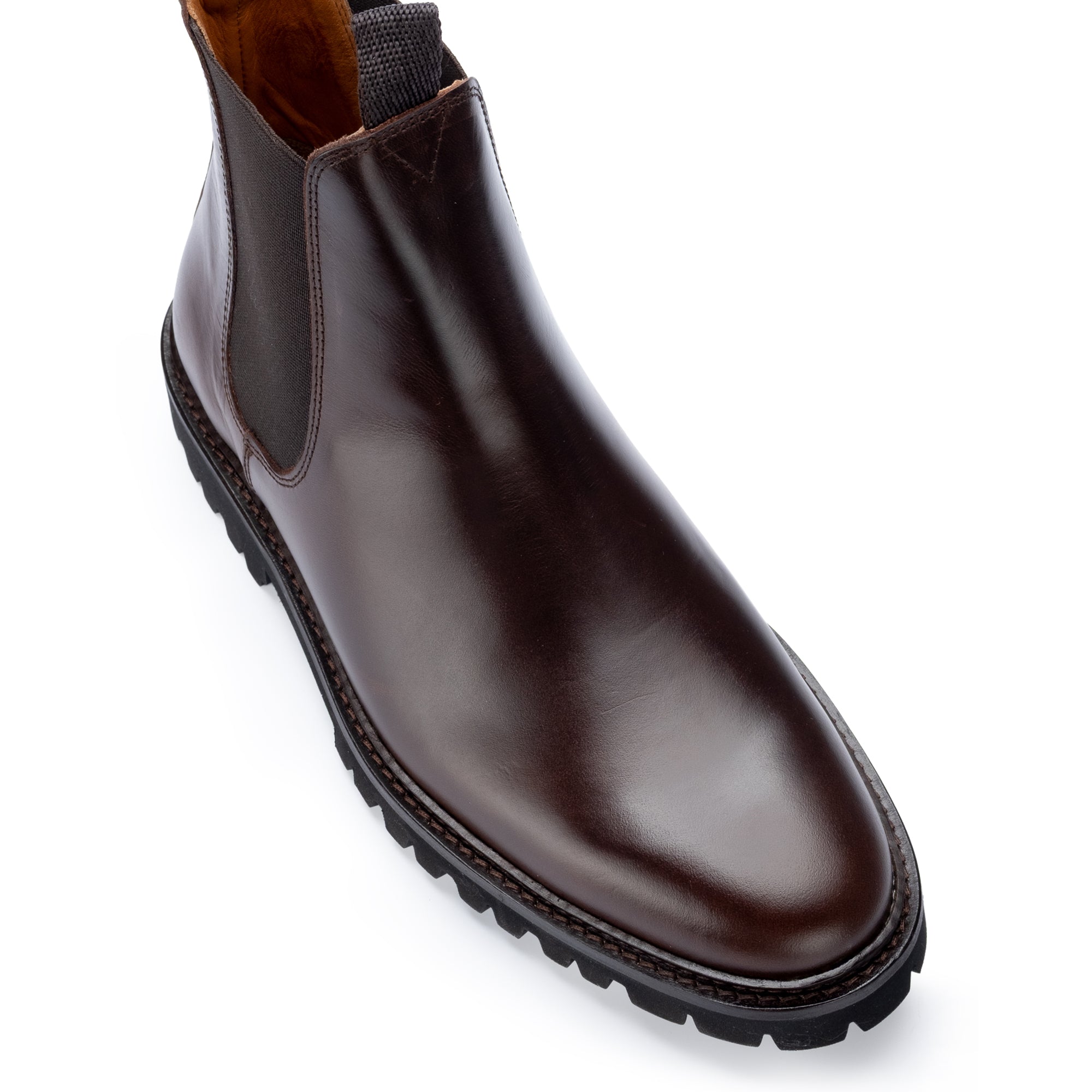
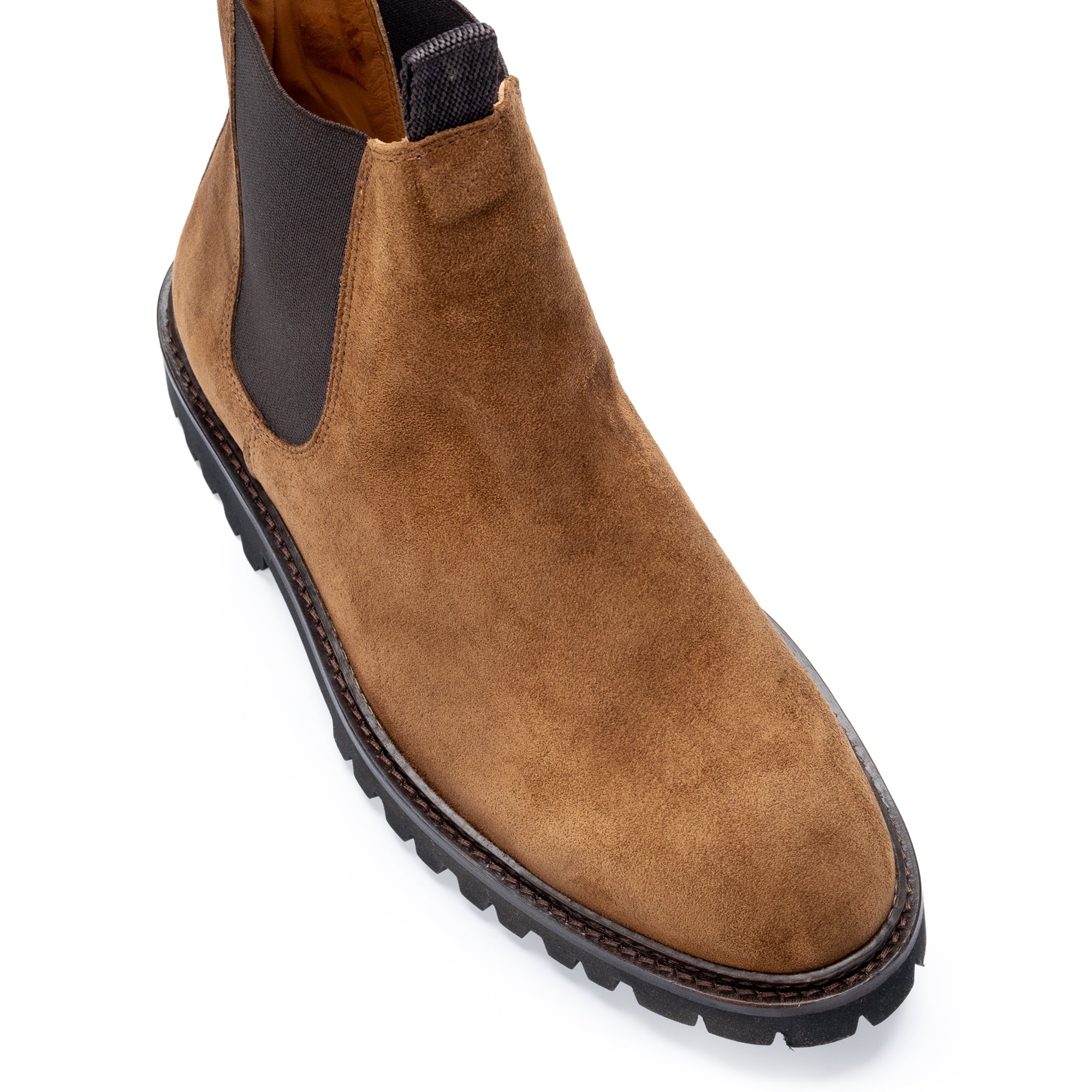
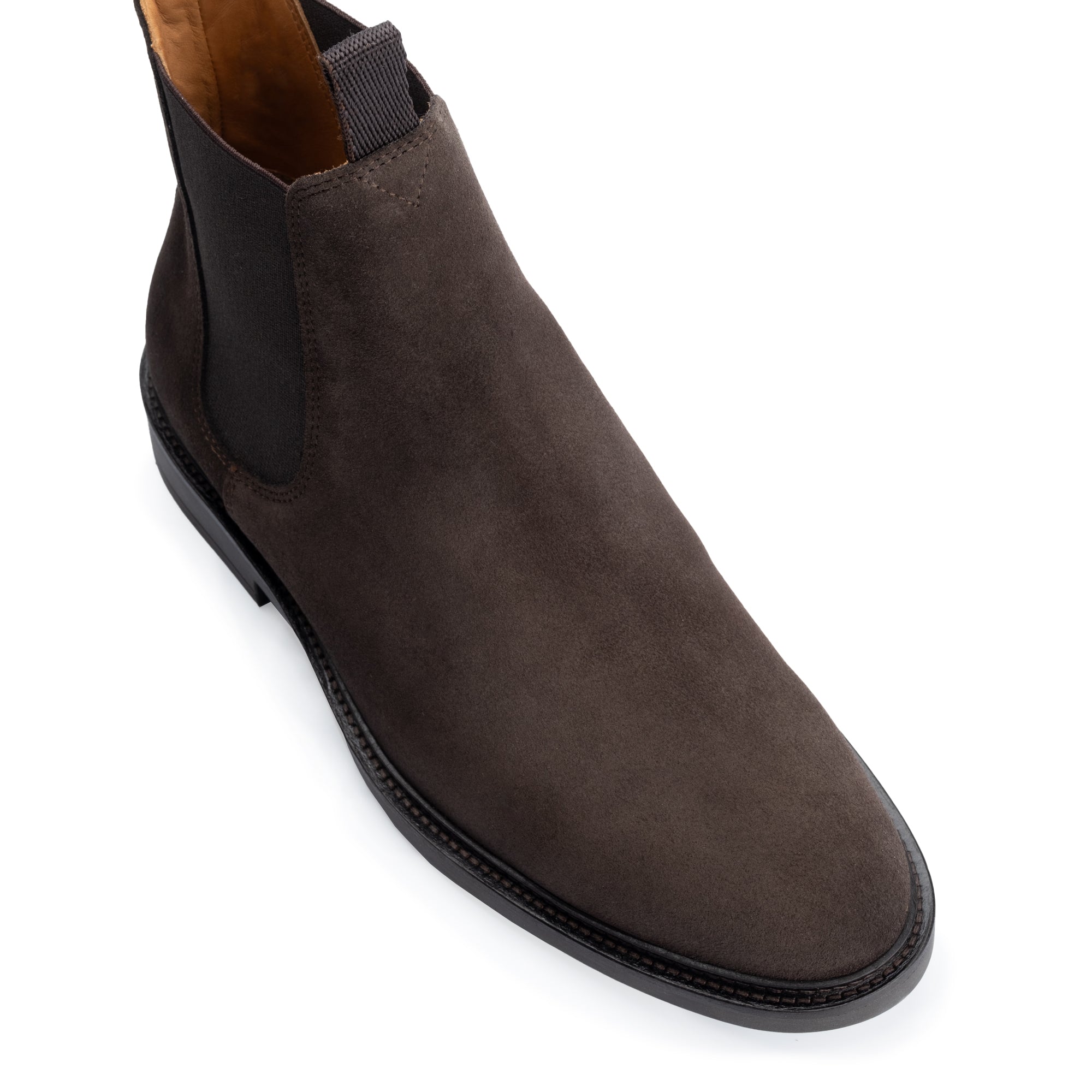
The Chelsea's defining characteristic is its clean, uninterrupted silhouette. With no laces, eyelets, or buckles to break the upper, the eye travels from toe to ankle without distraction. This gives the style a naturally refined quality that reads as considered from across a room — and makes it one of the most versatile boot profiles in the classic repertoire.
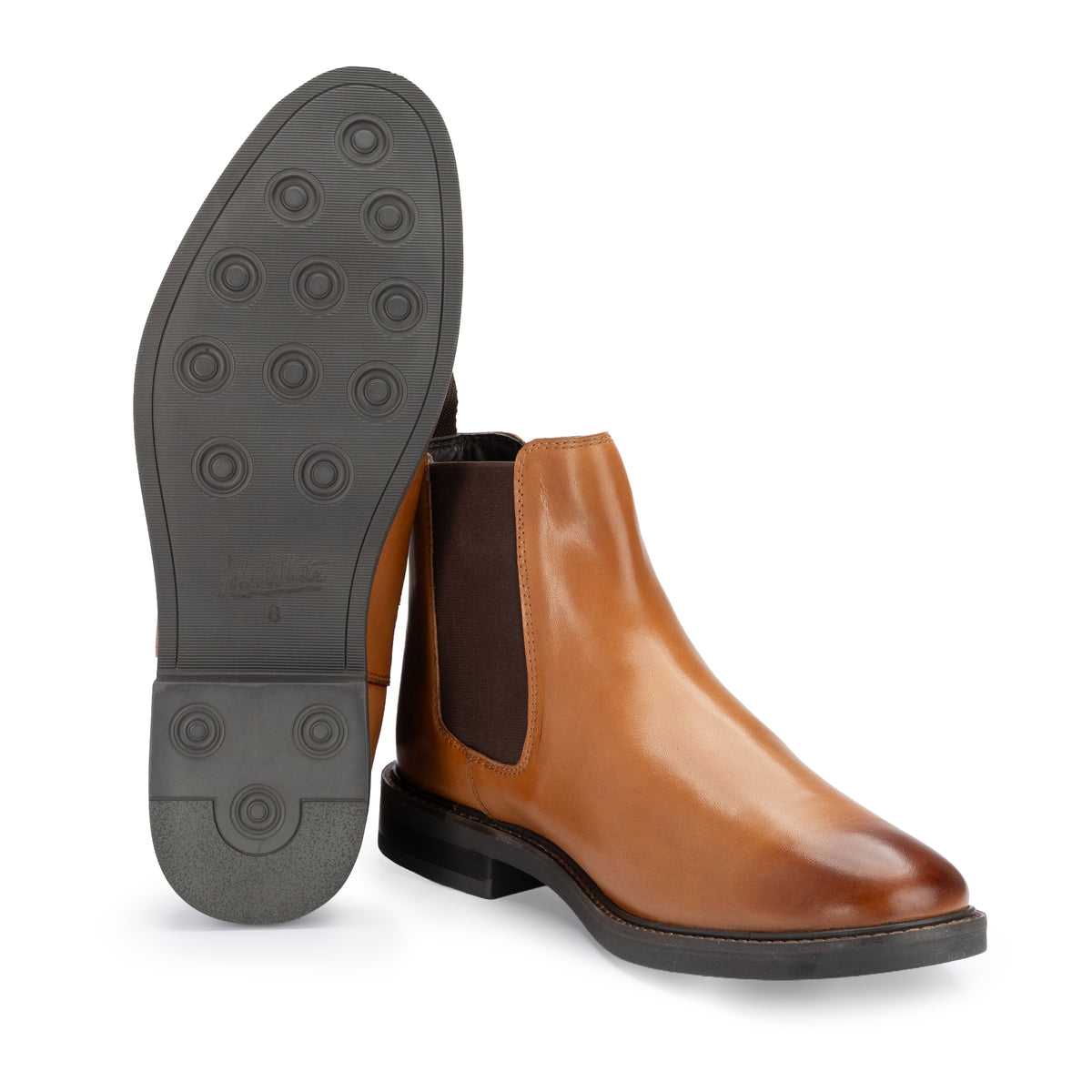
The Chelsea is available in smooth calfskin, burnished leather, and suede, and suits both round and chisel toe profiles equally well. Explore the full range in our men's boots collection.
The Chelsea boot's elasticated construction and unbroken silhouette make it the fastest-dressing premium boot in a man's wardrobe.What Is a Derby Shoe?
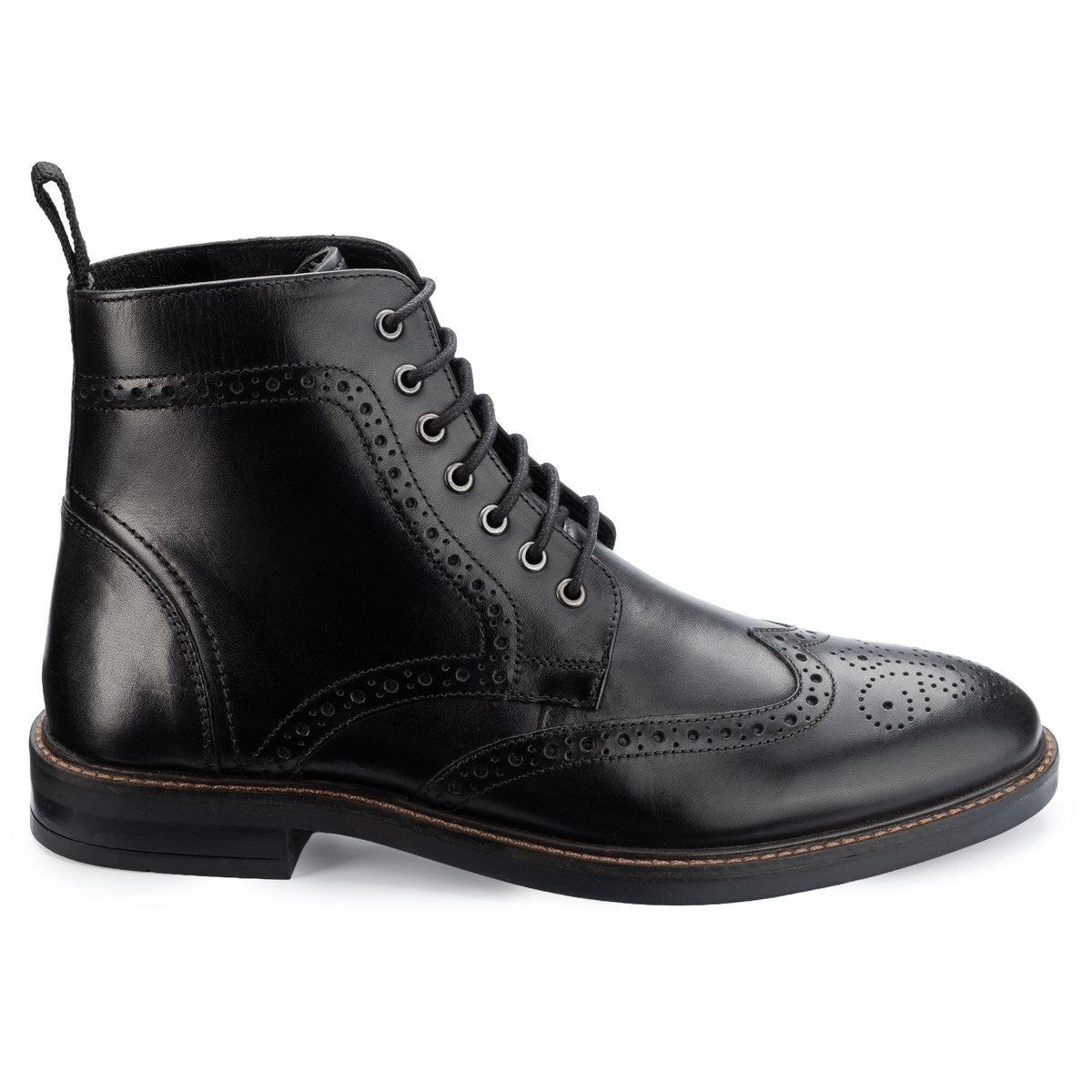
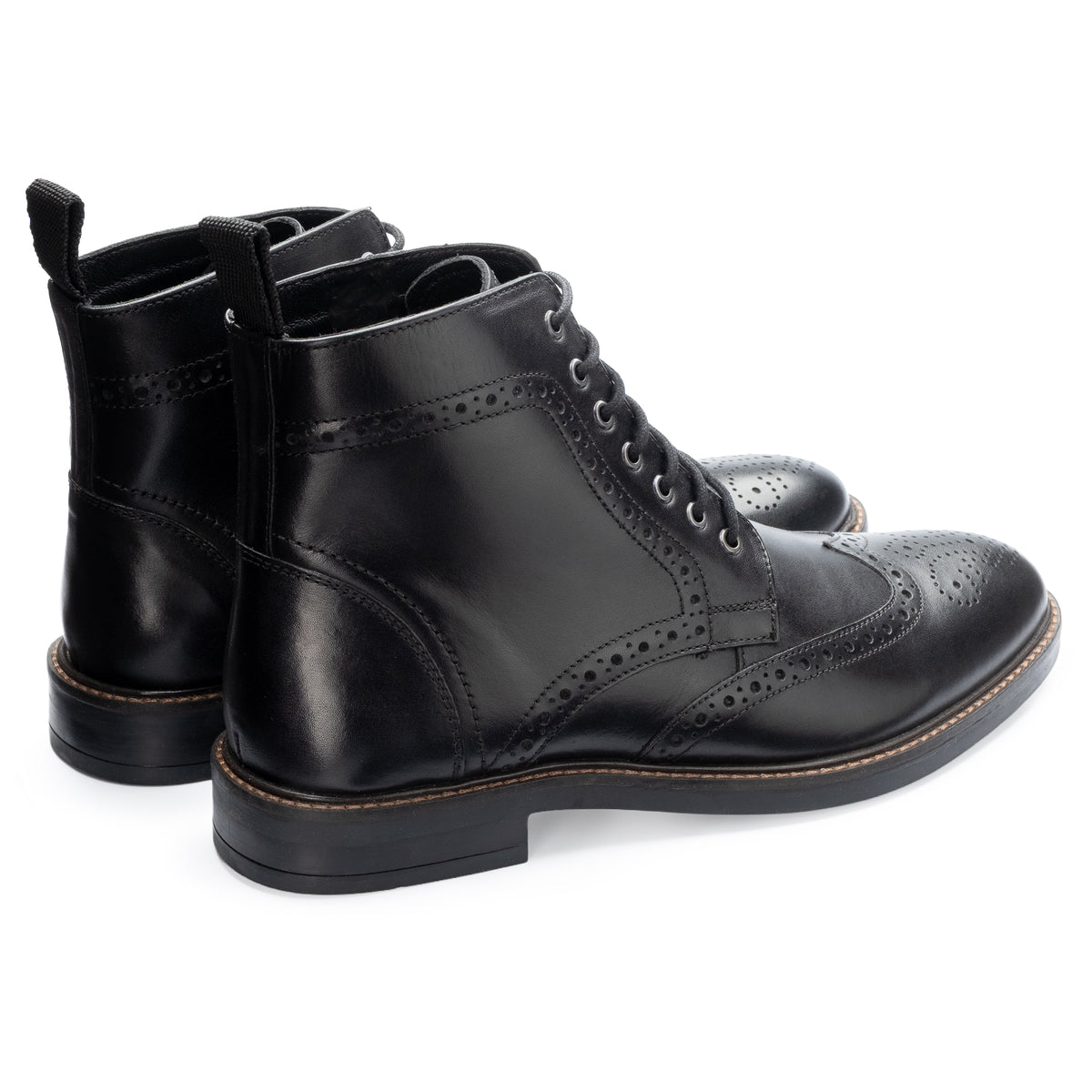
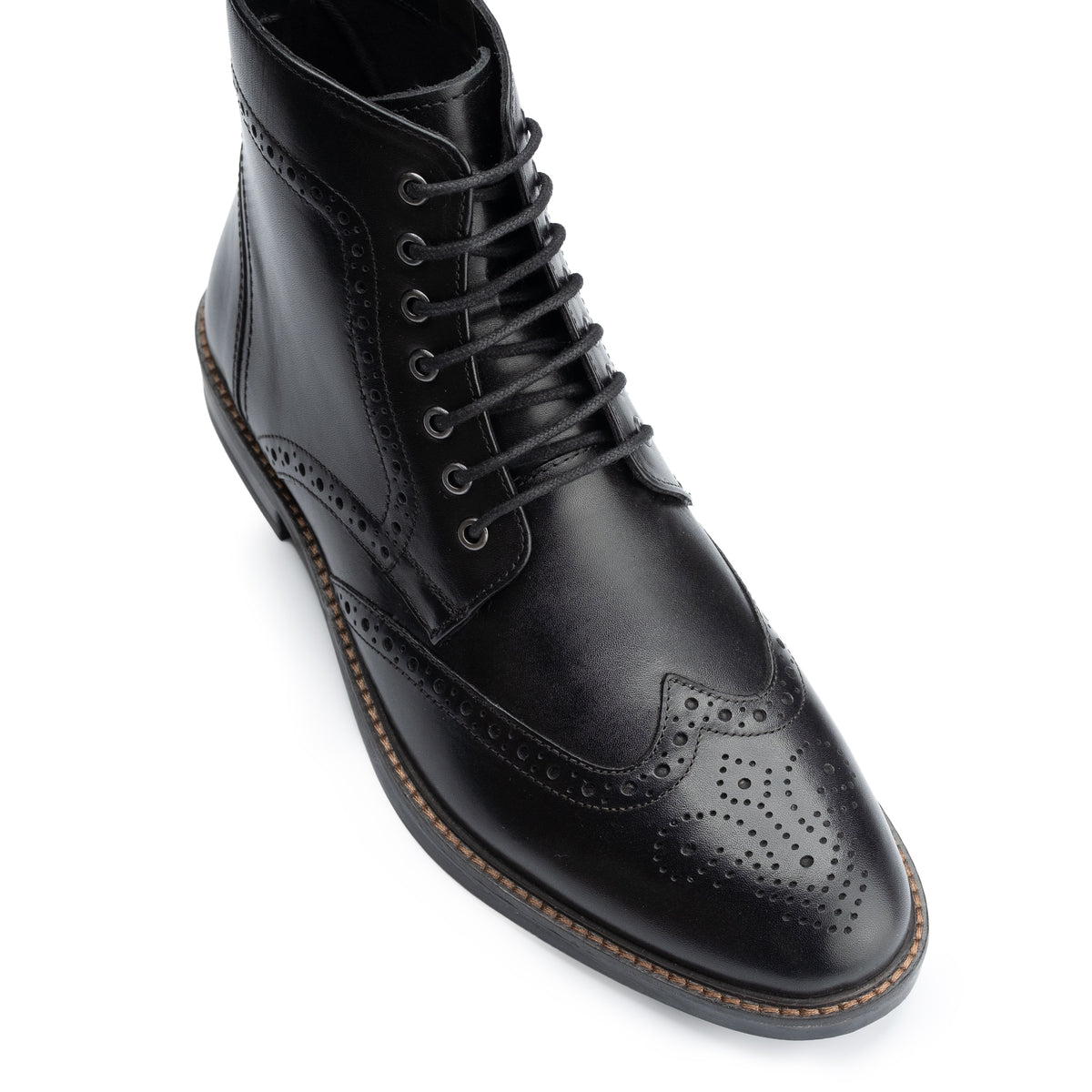
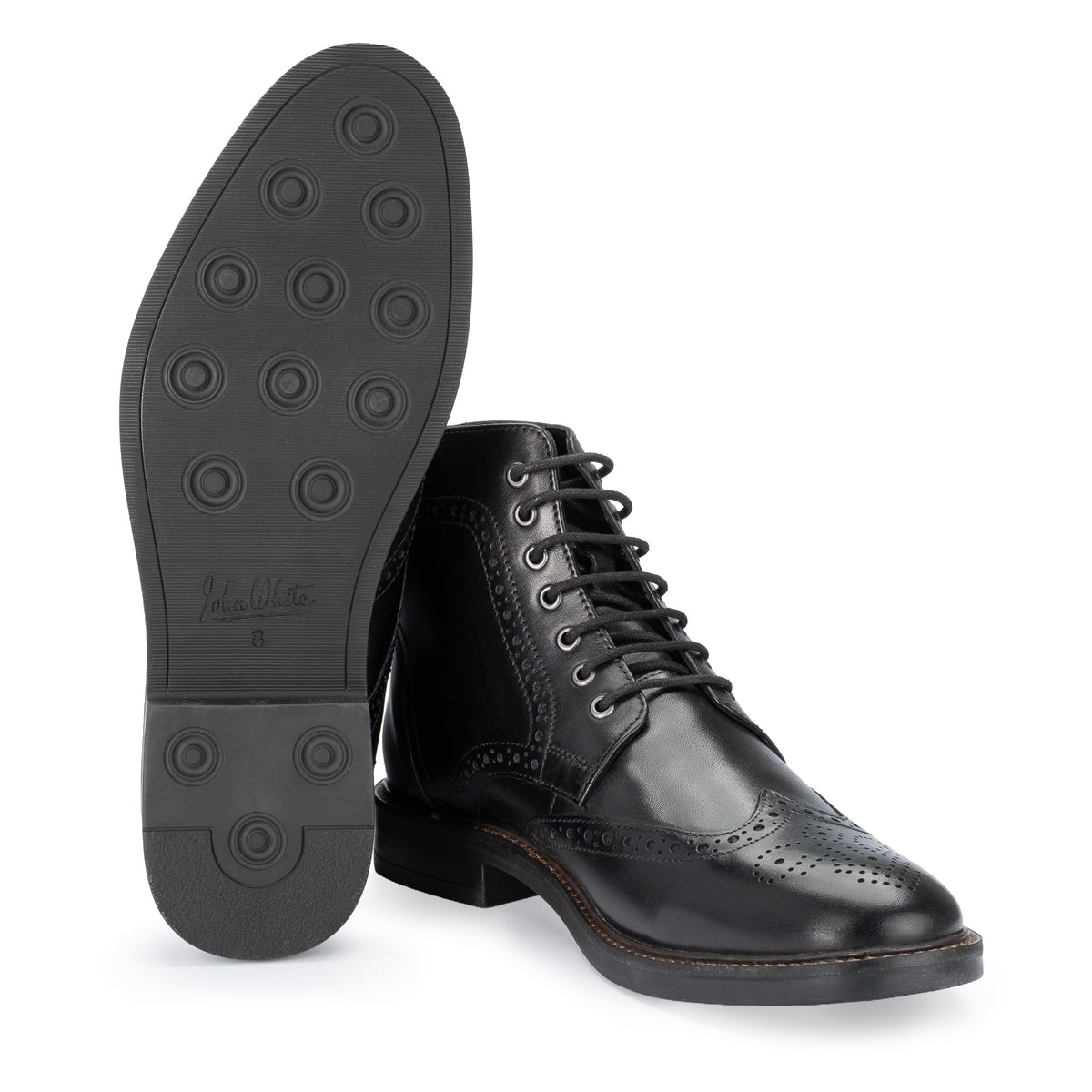
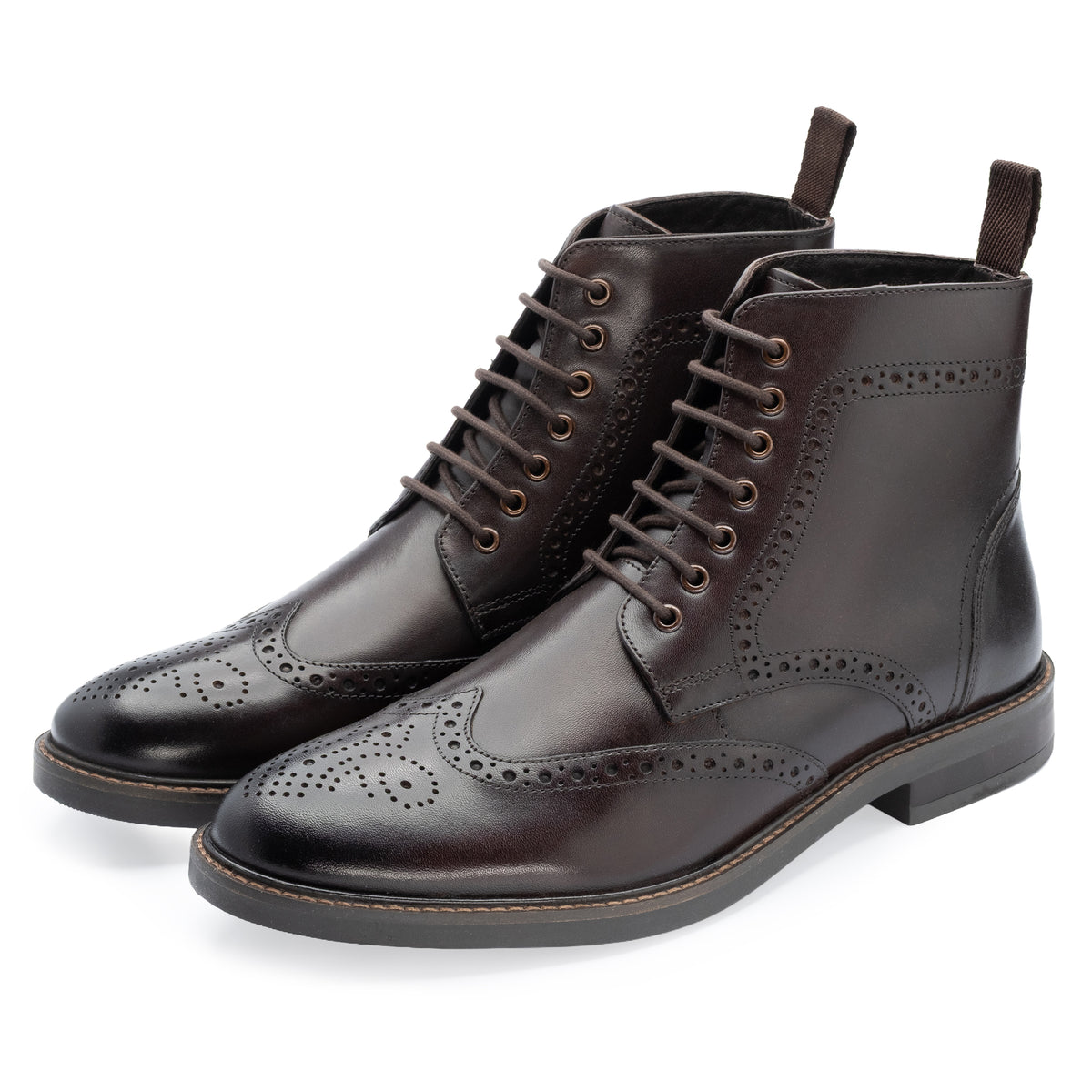
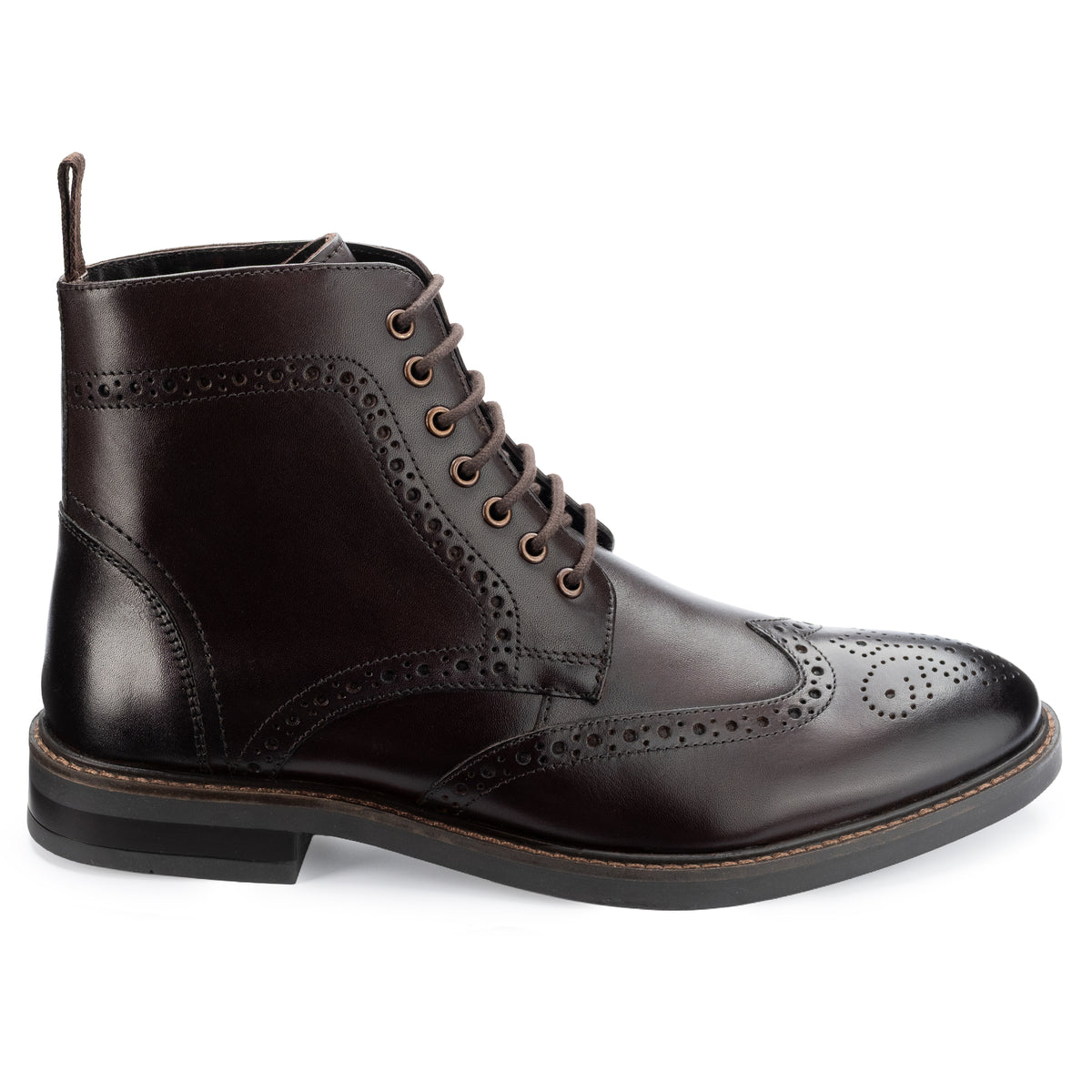
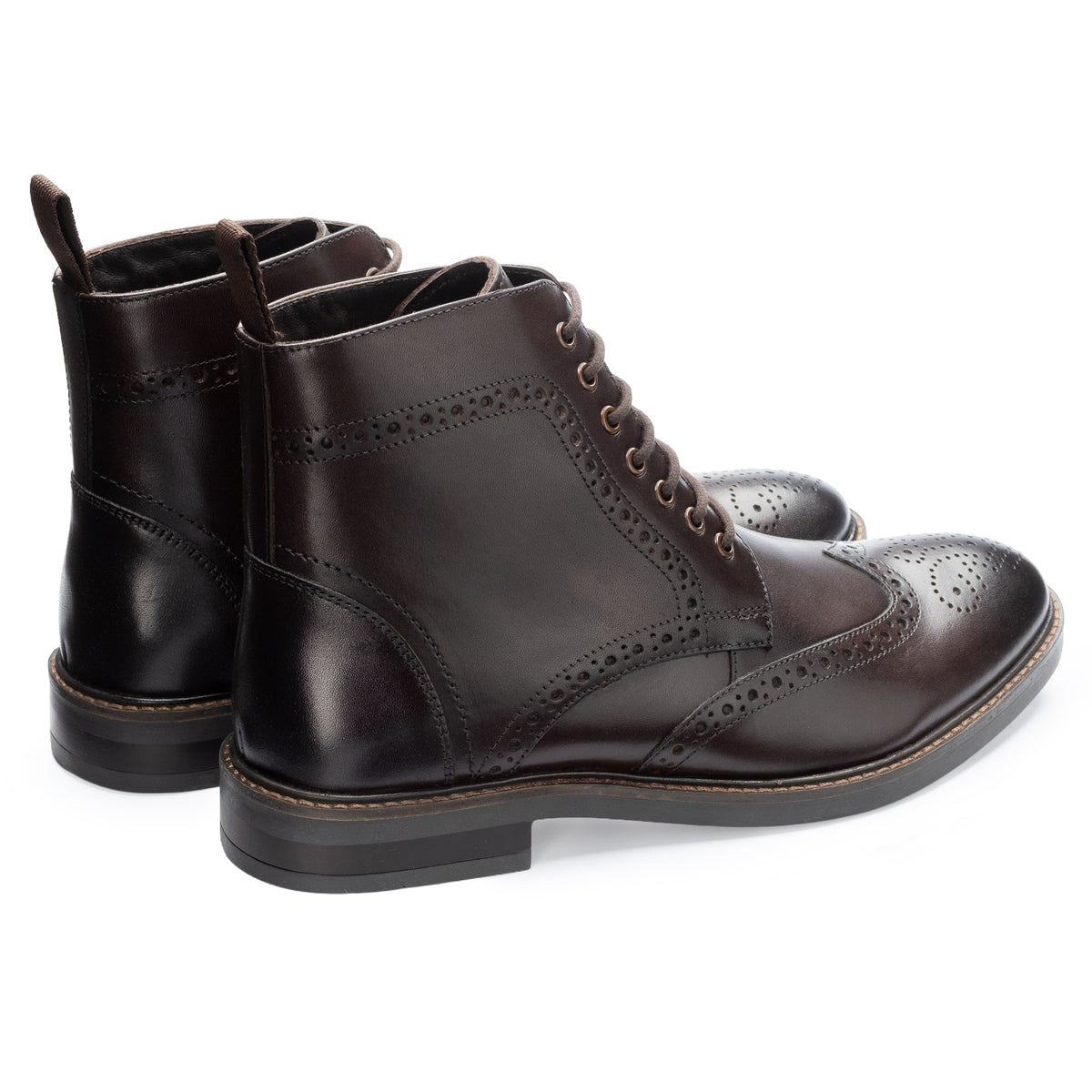
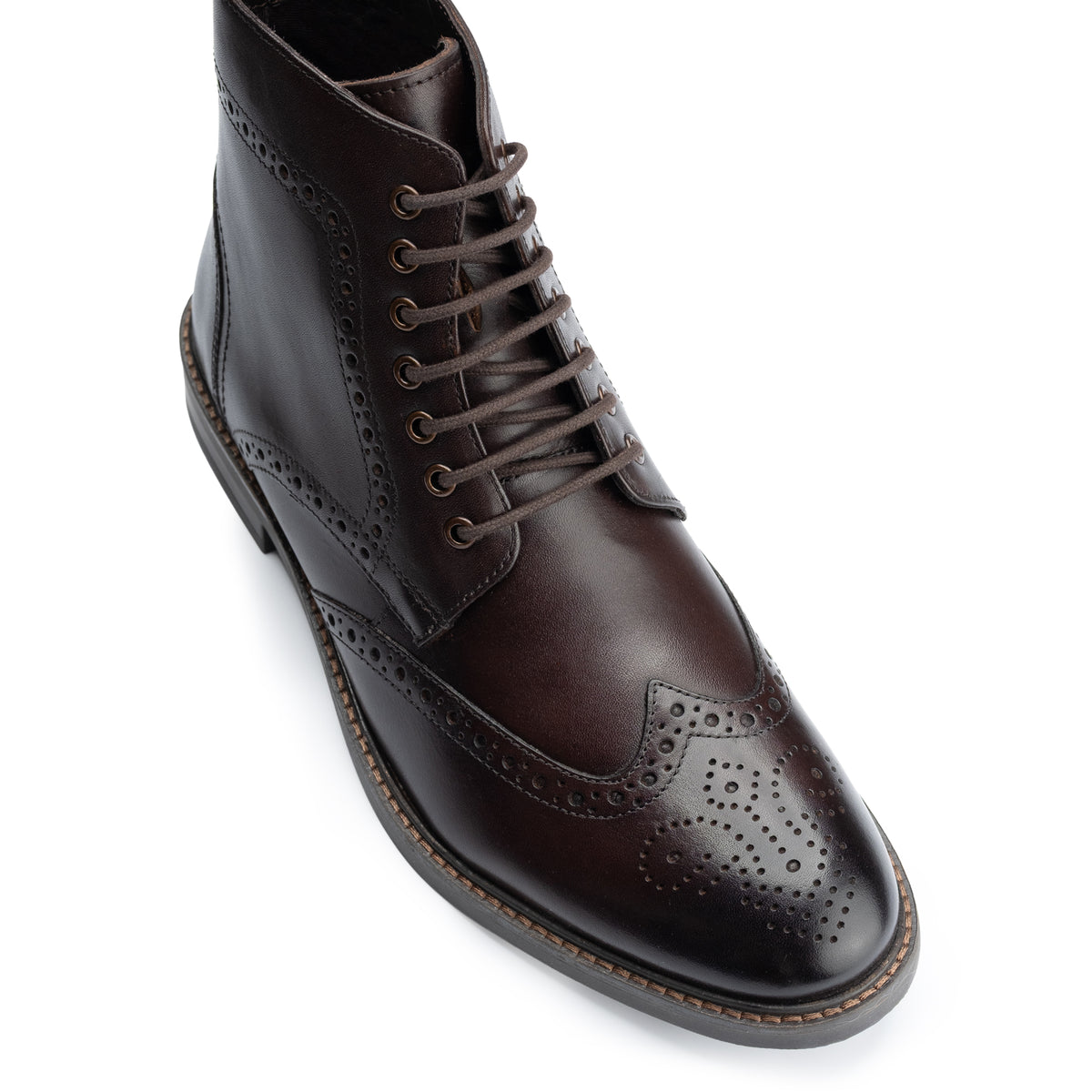
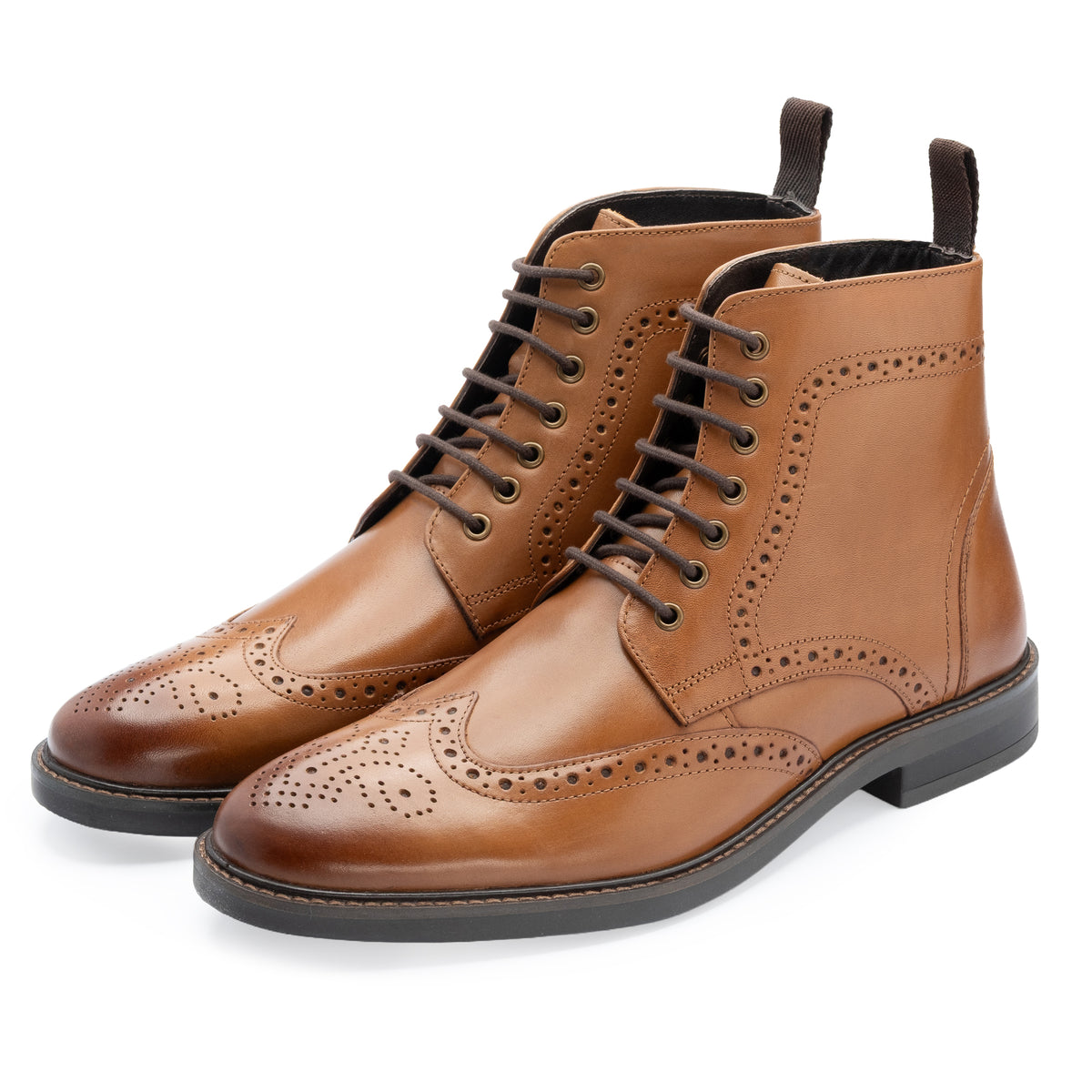
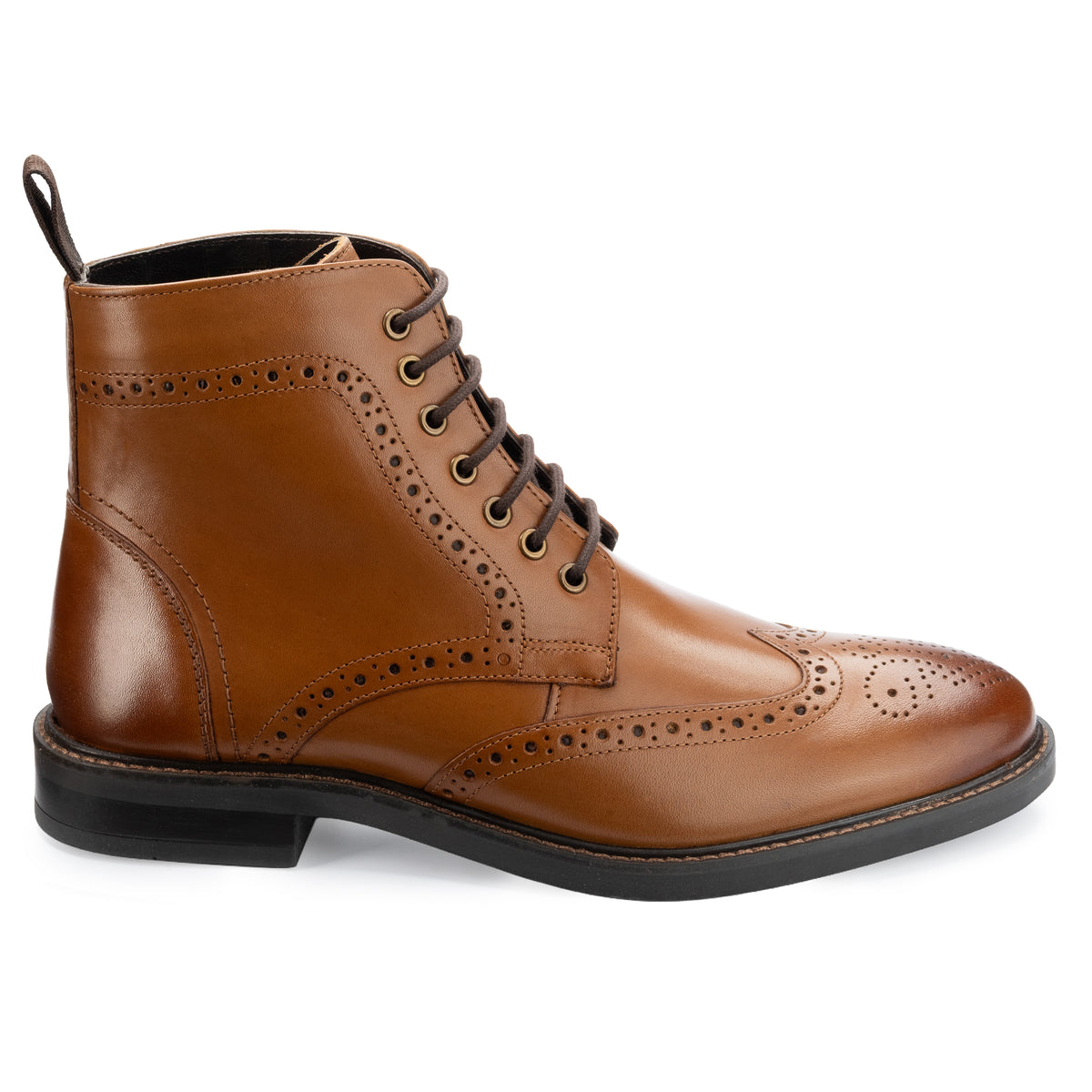
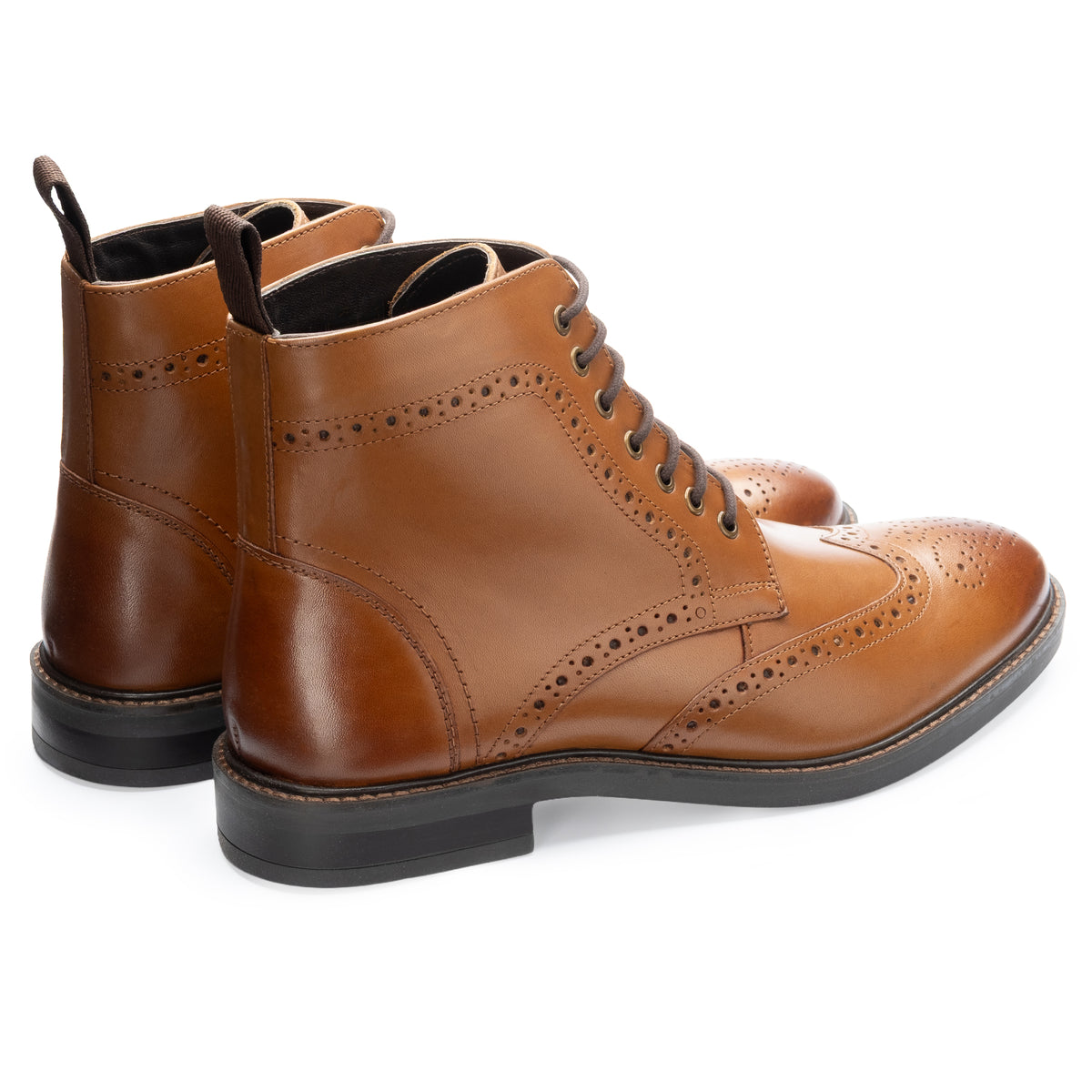
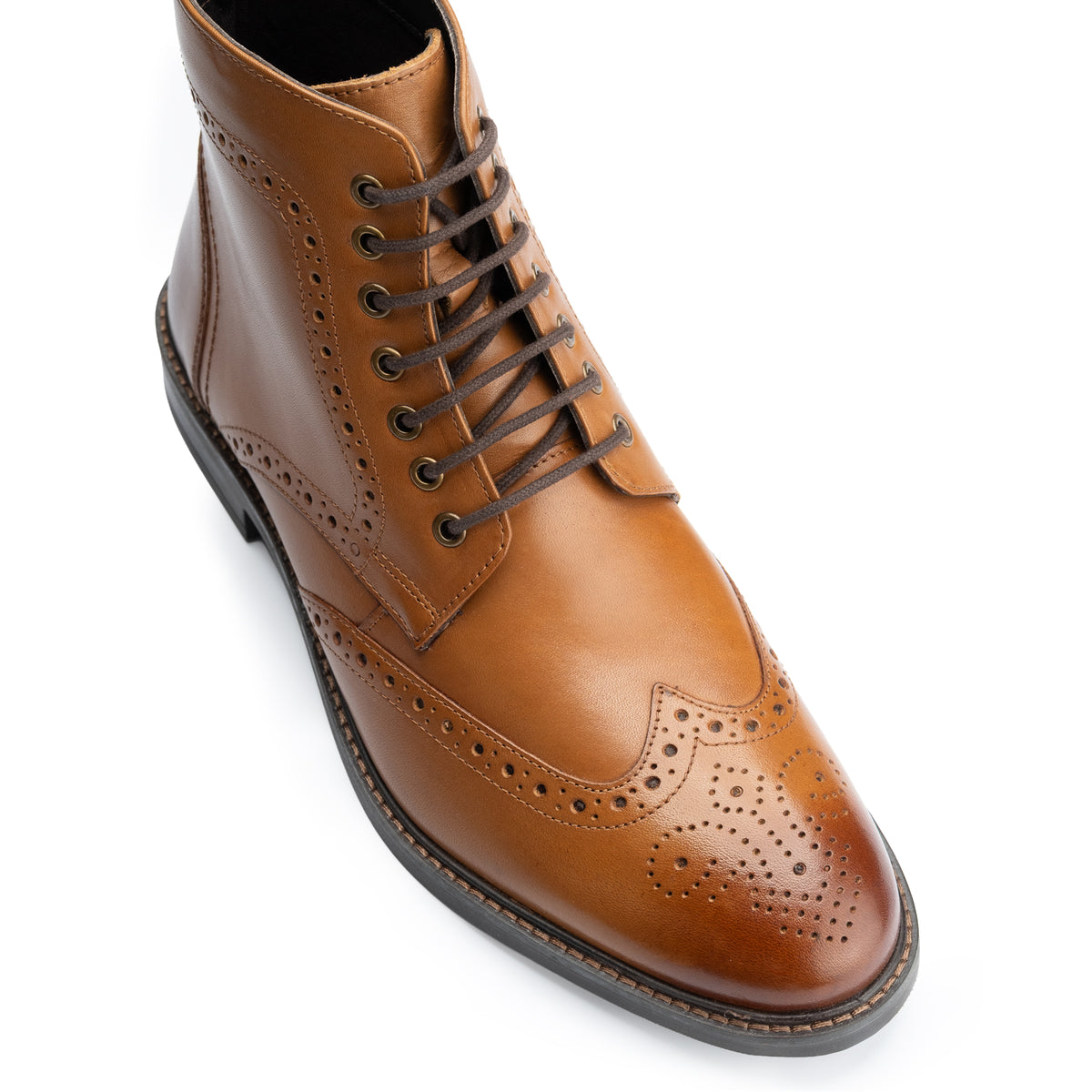
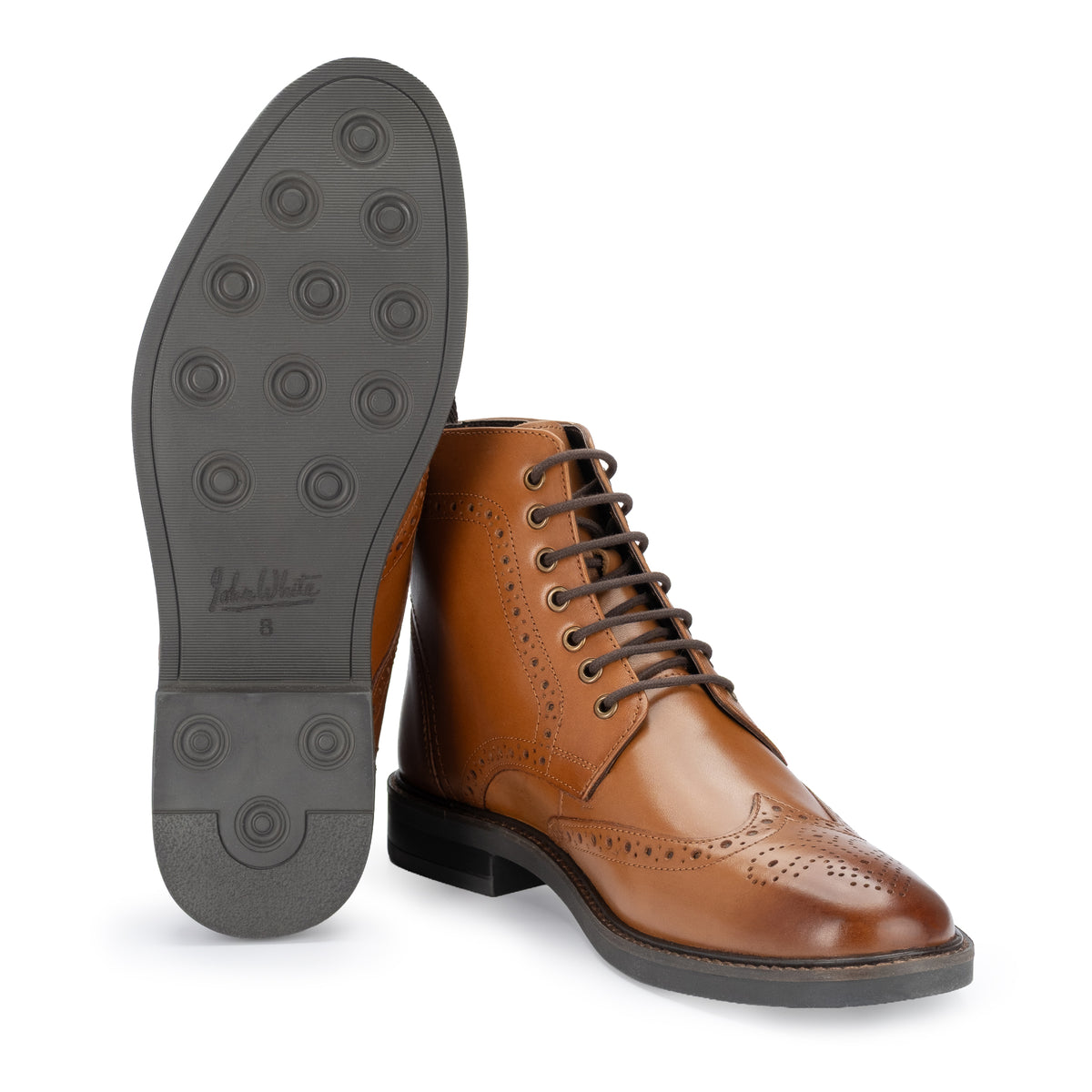
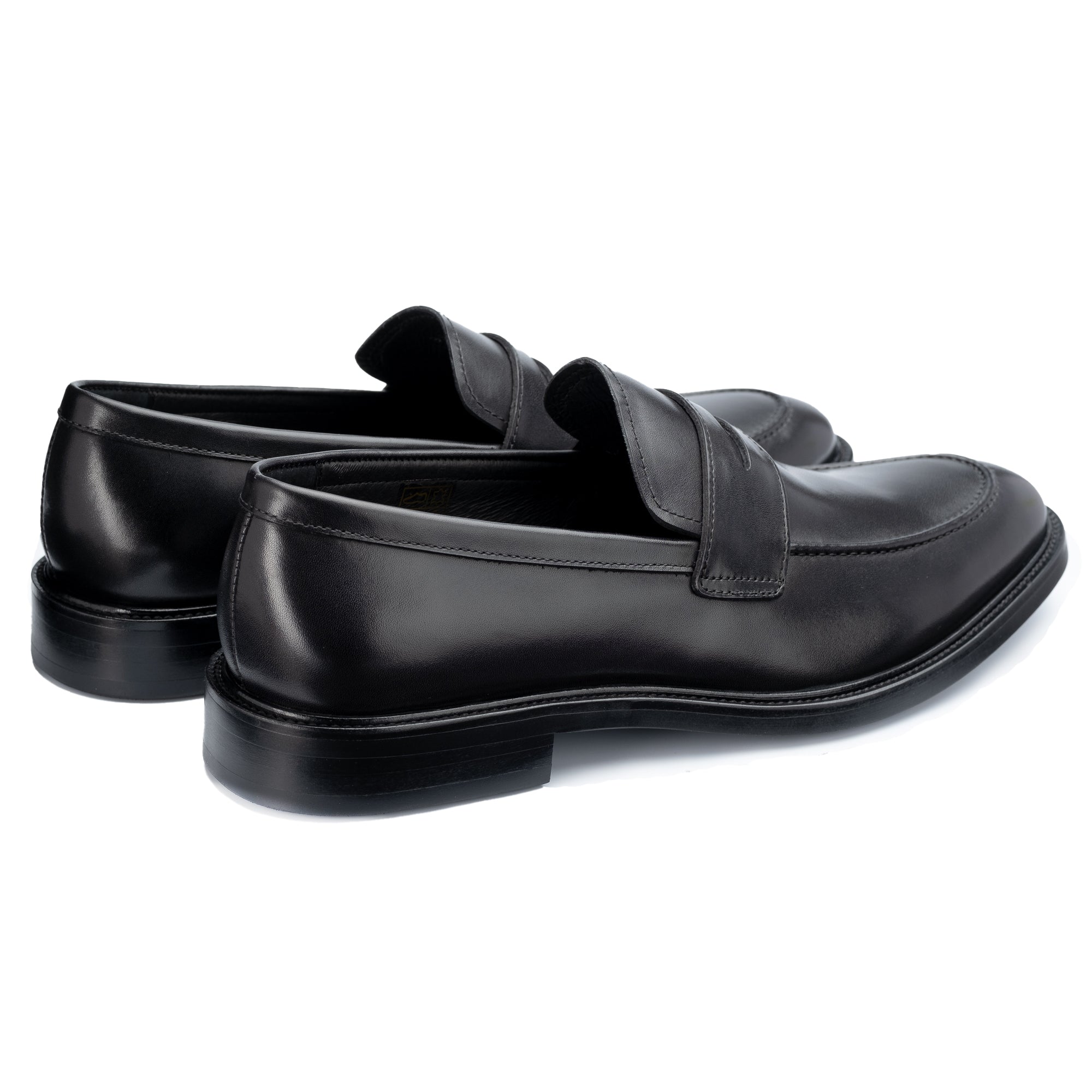
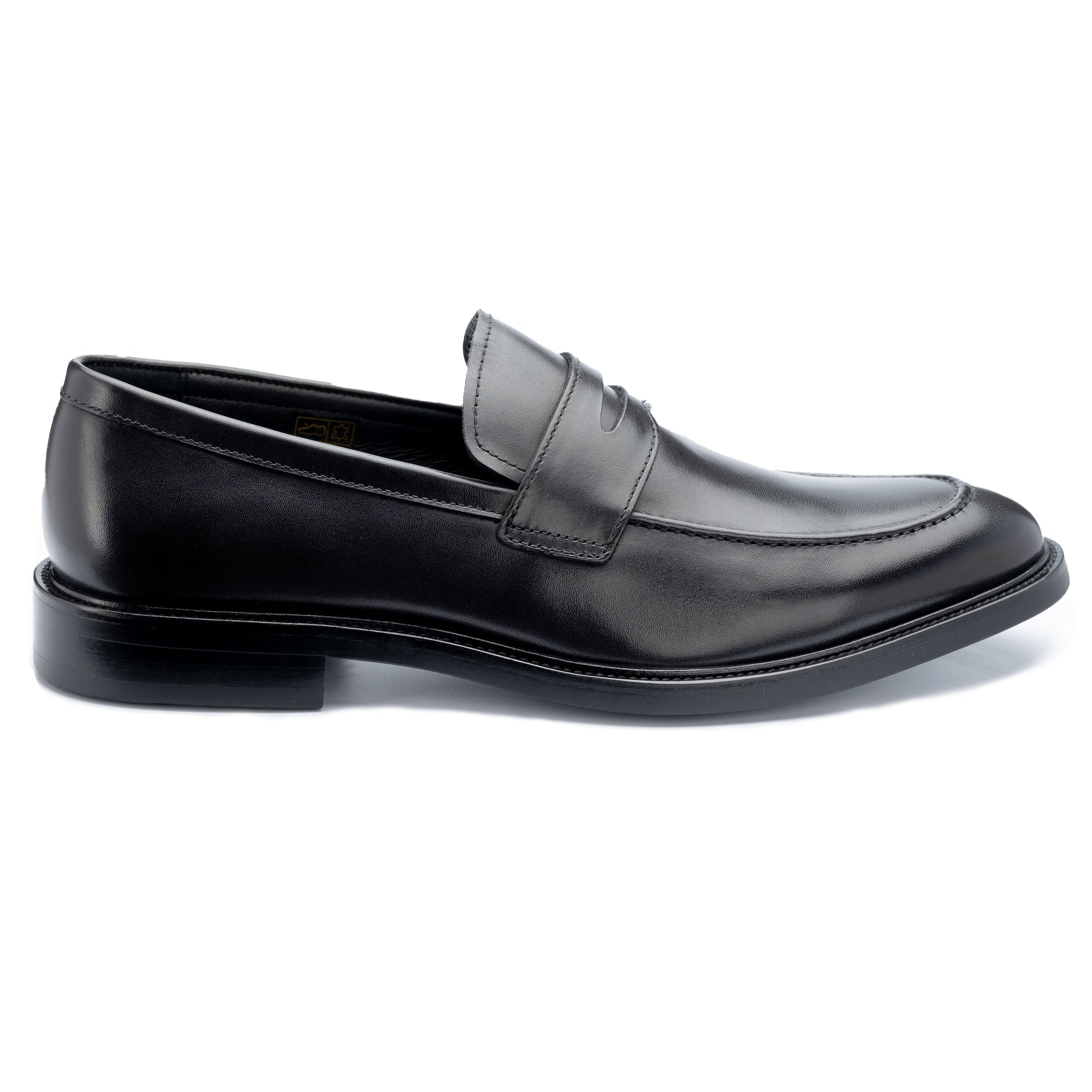
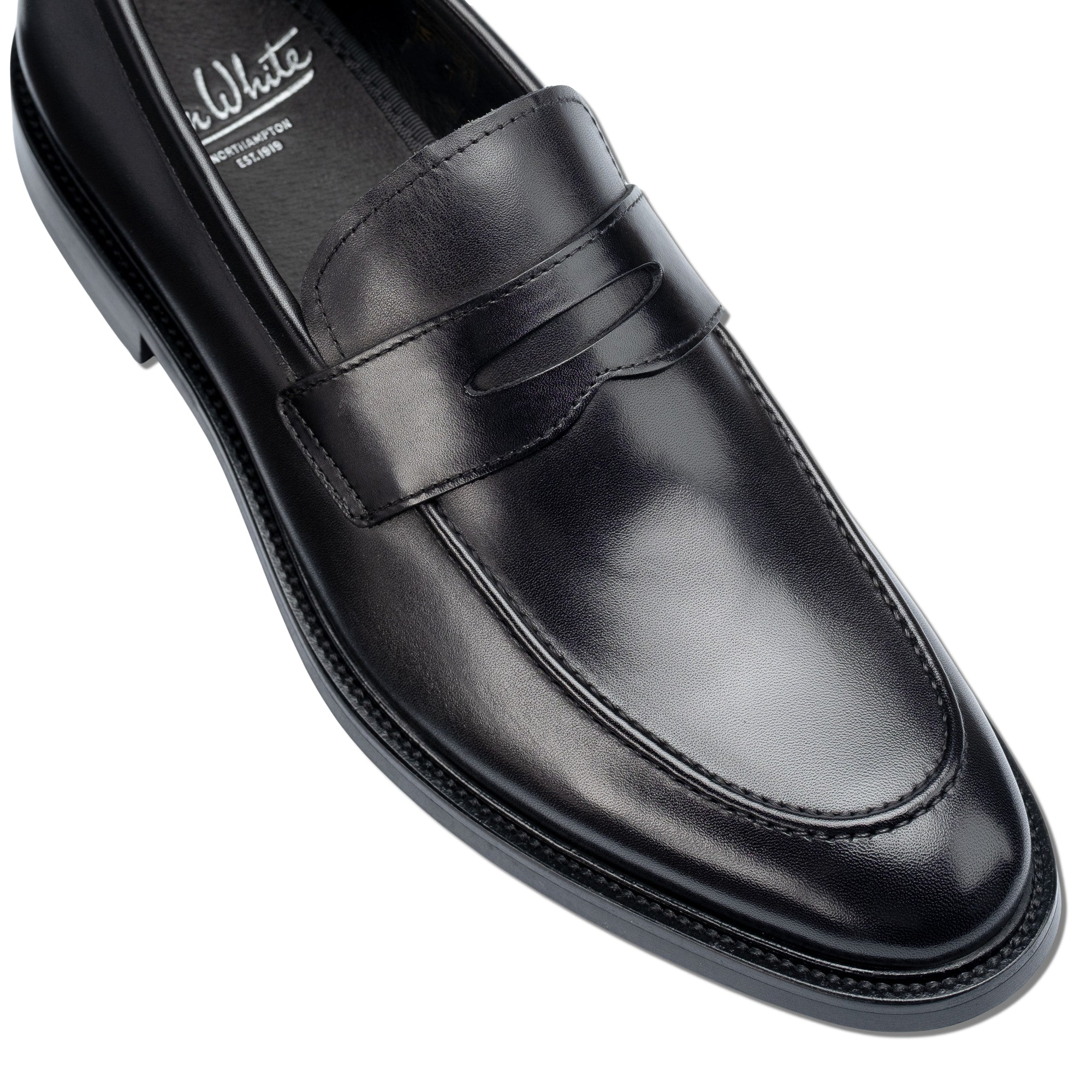
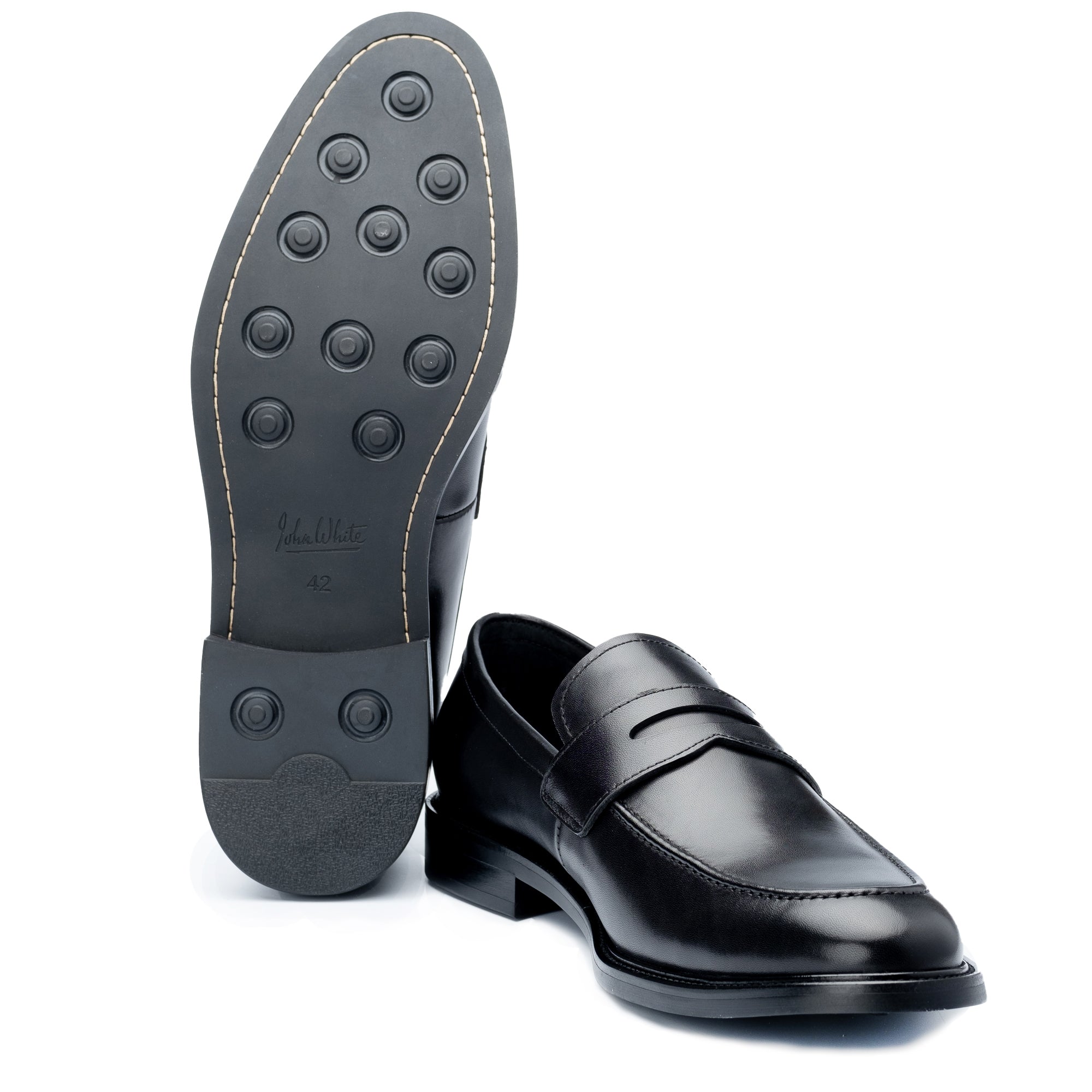
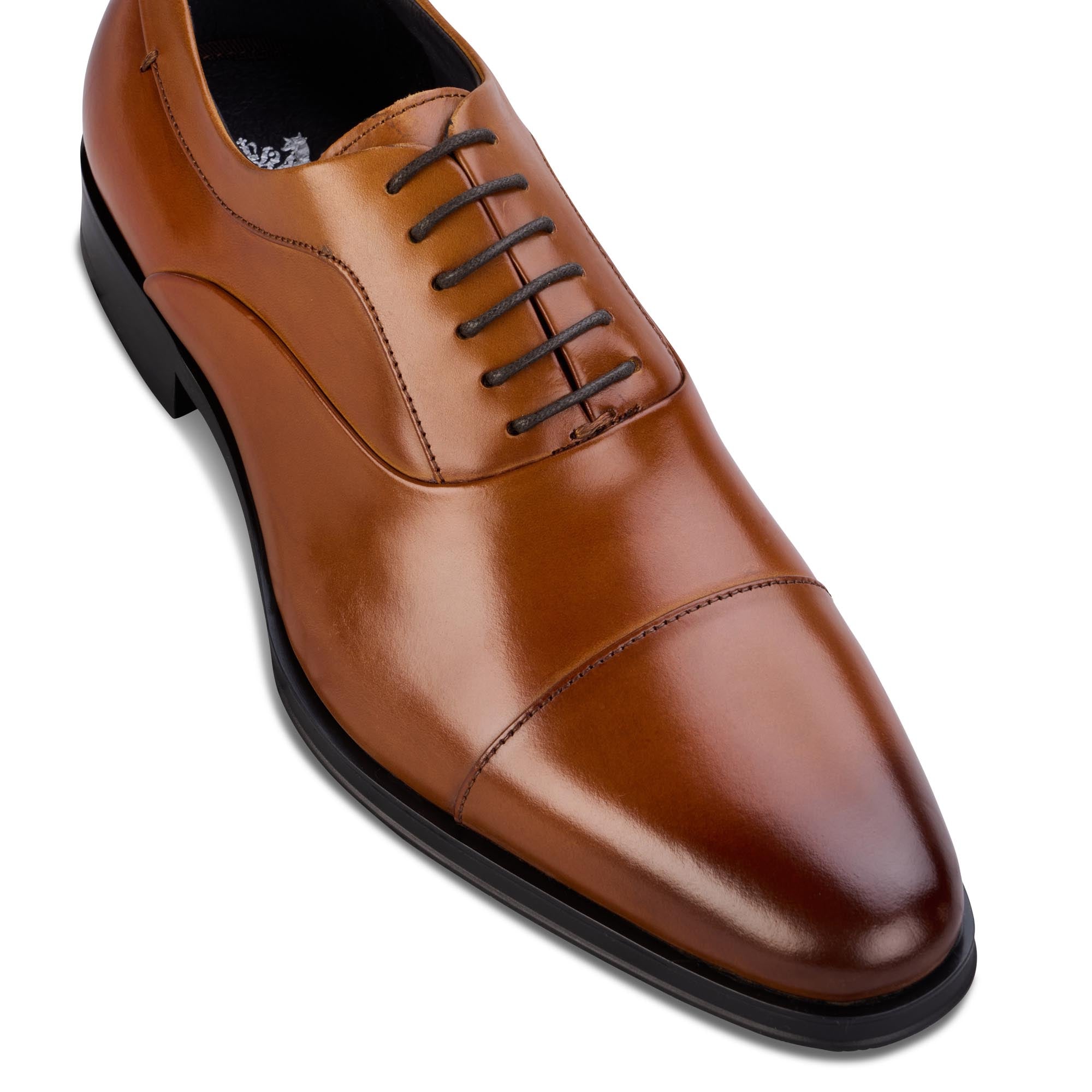
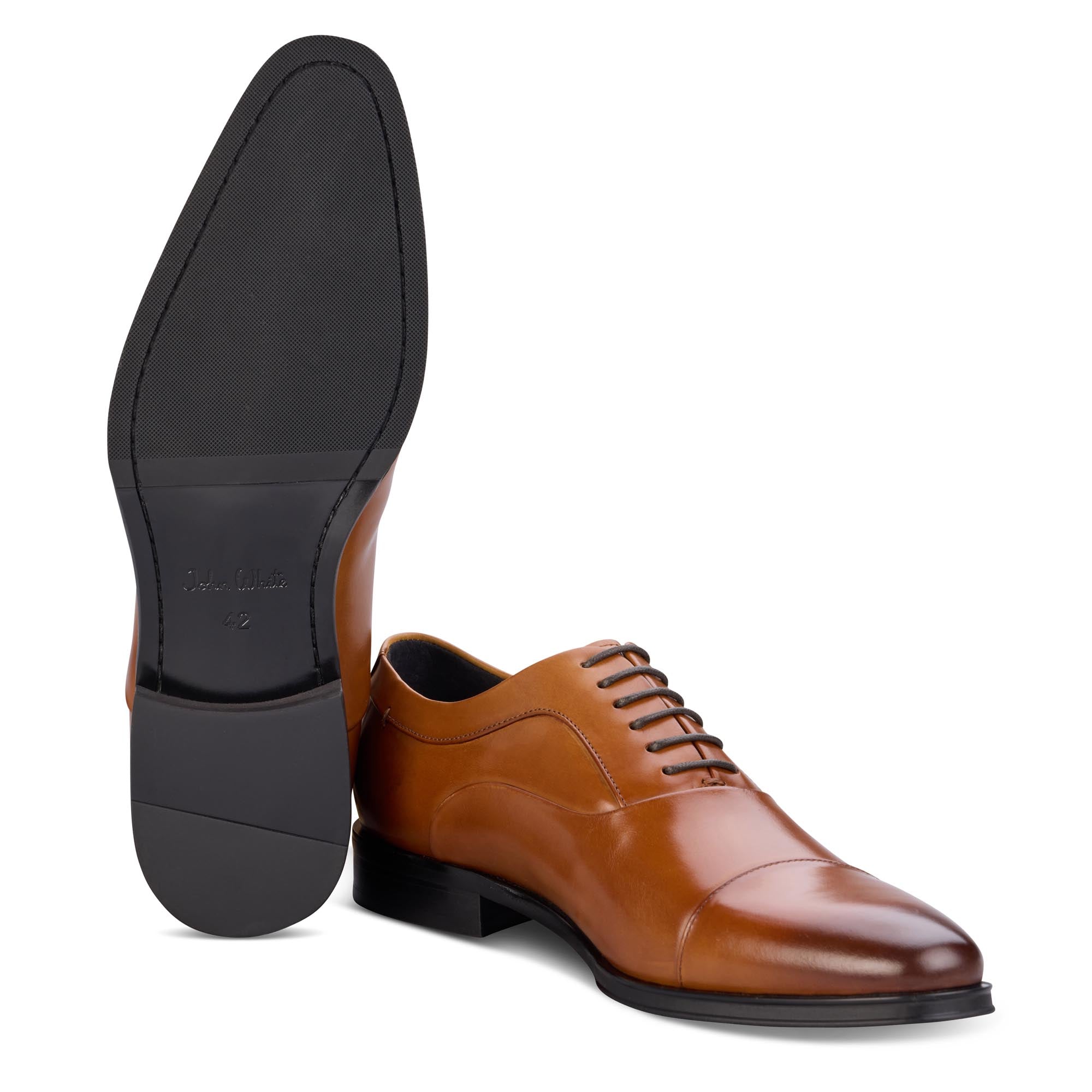
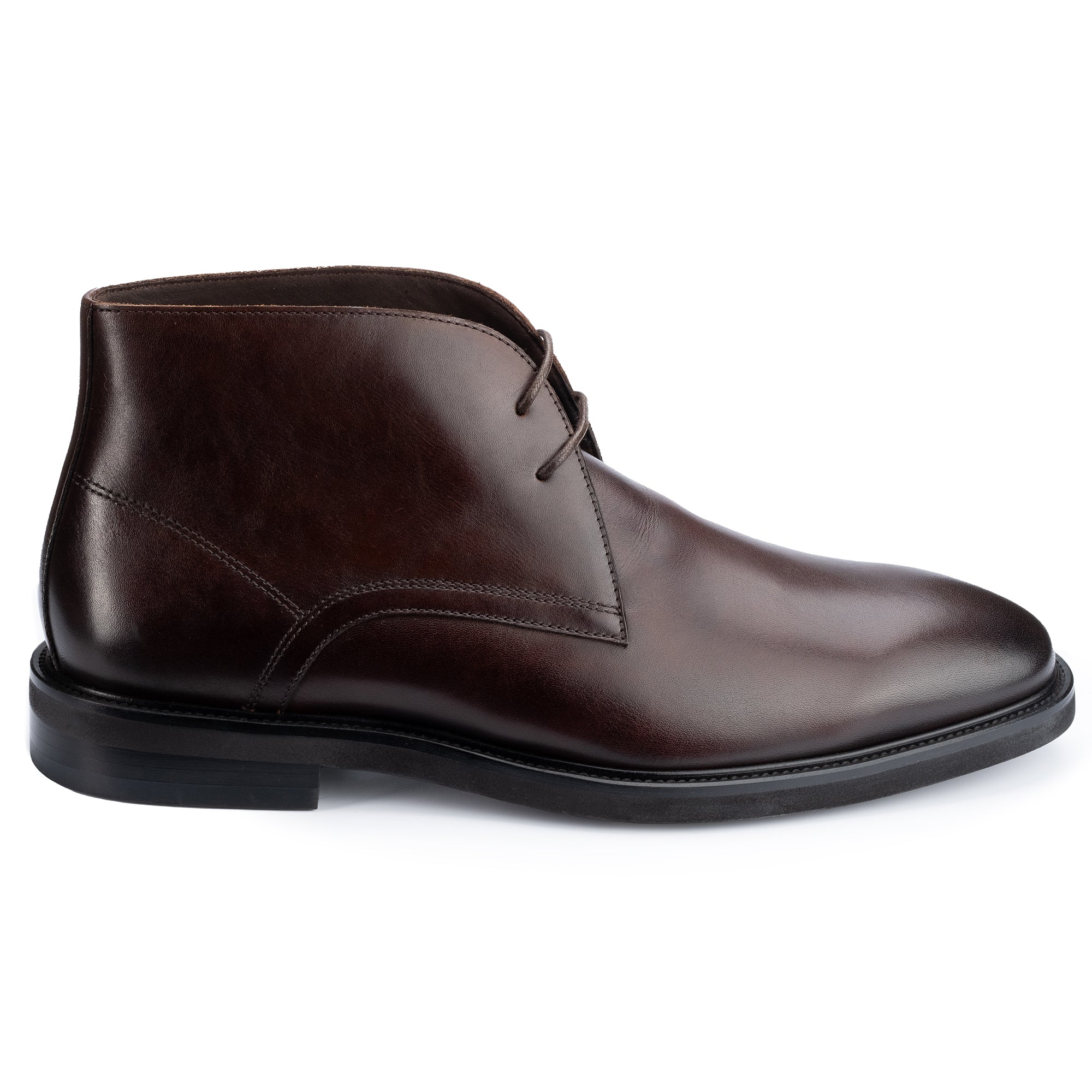
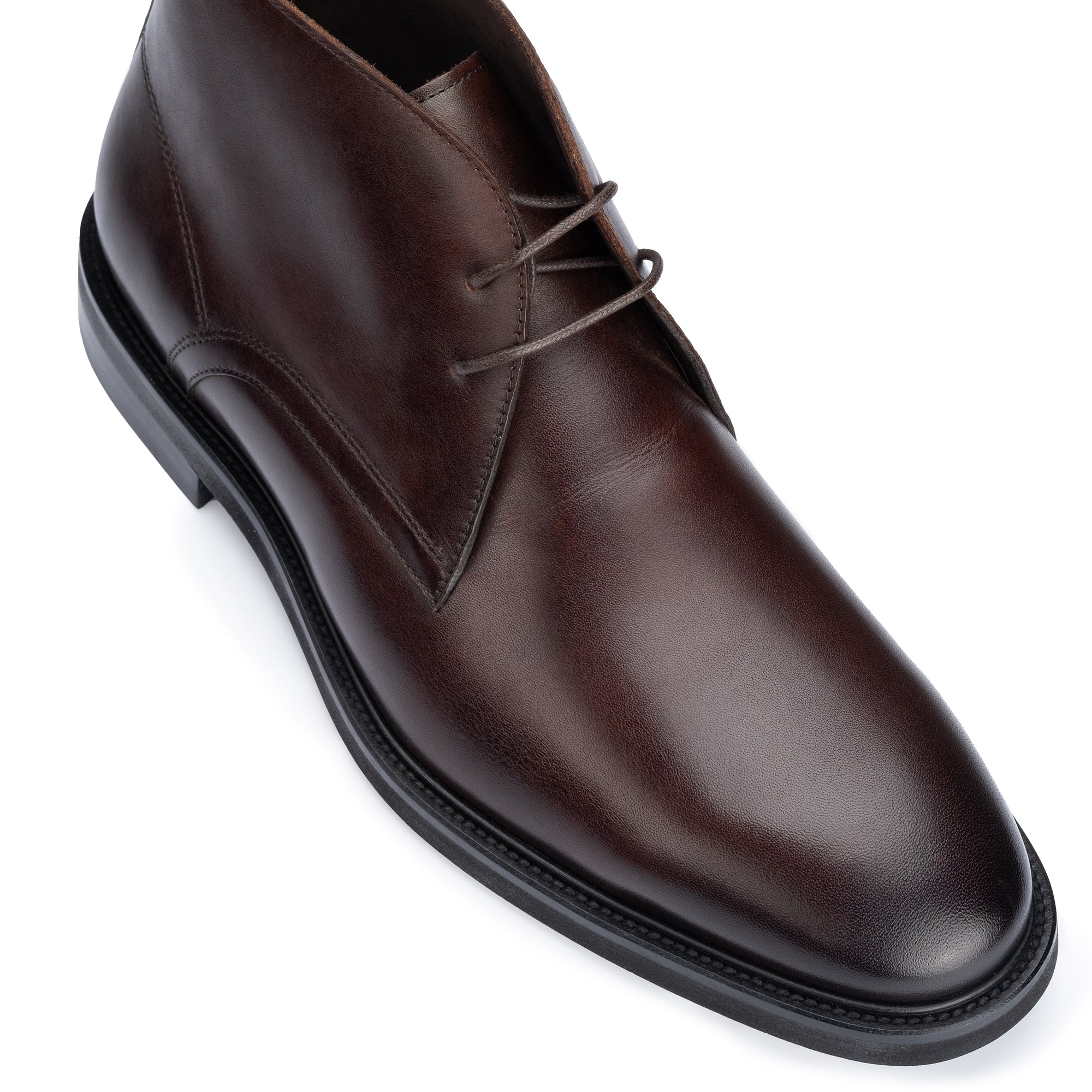
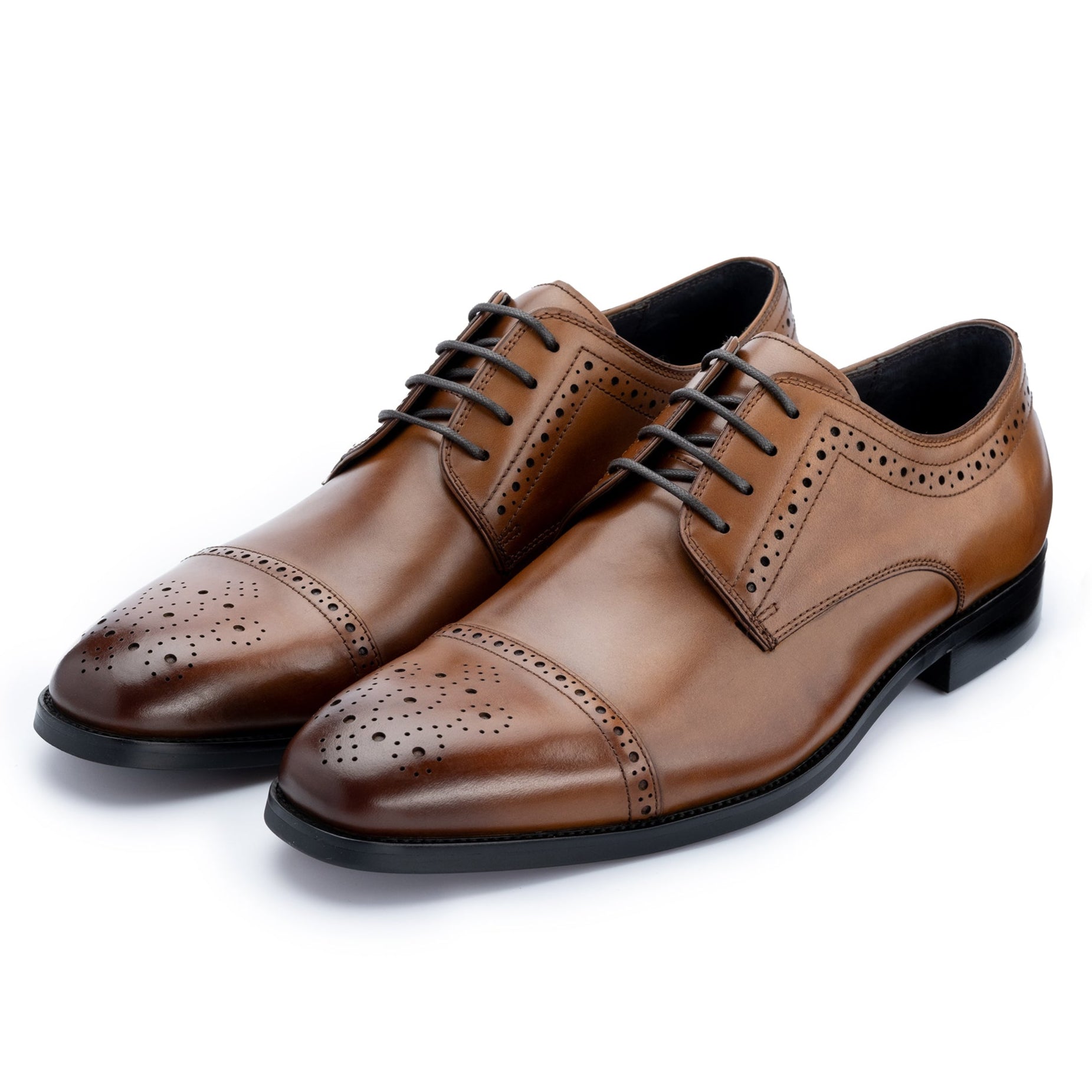
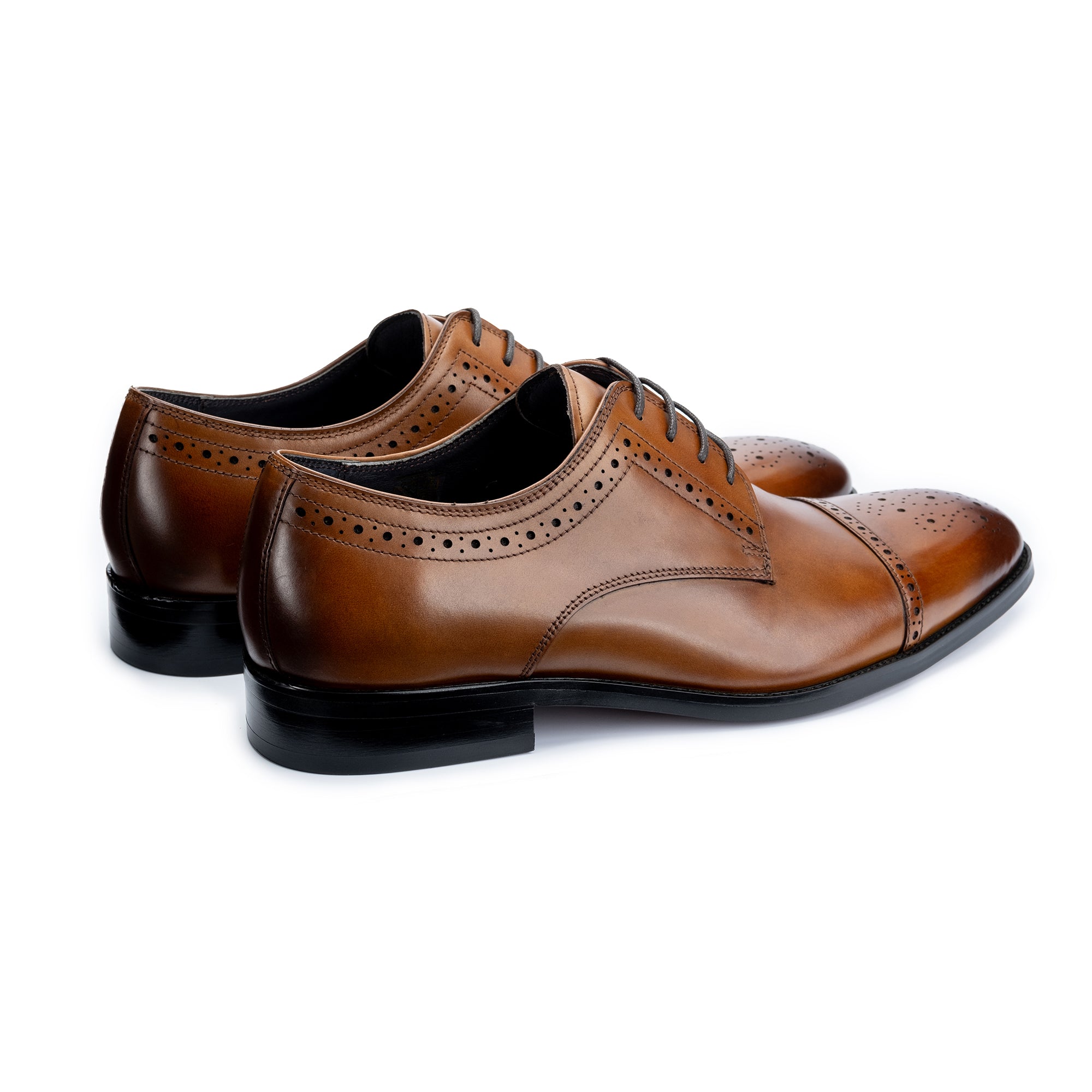
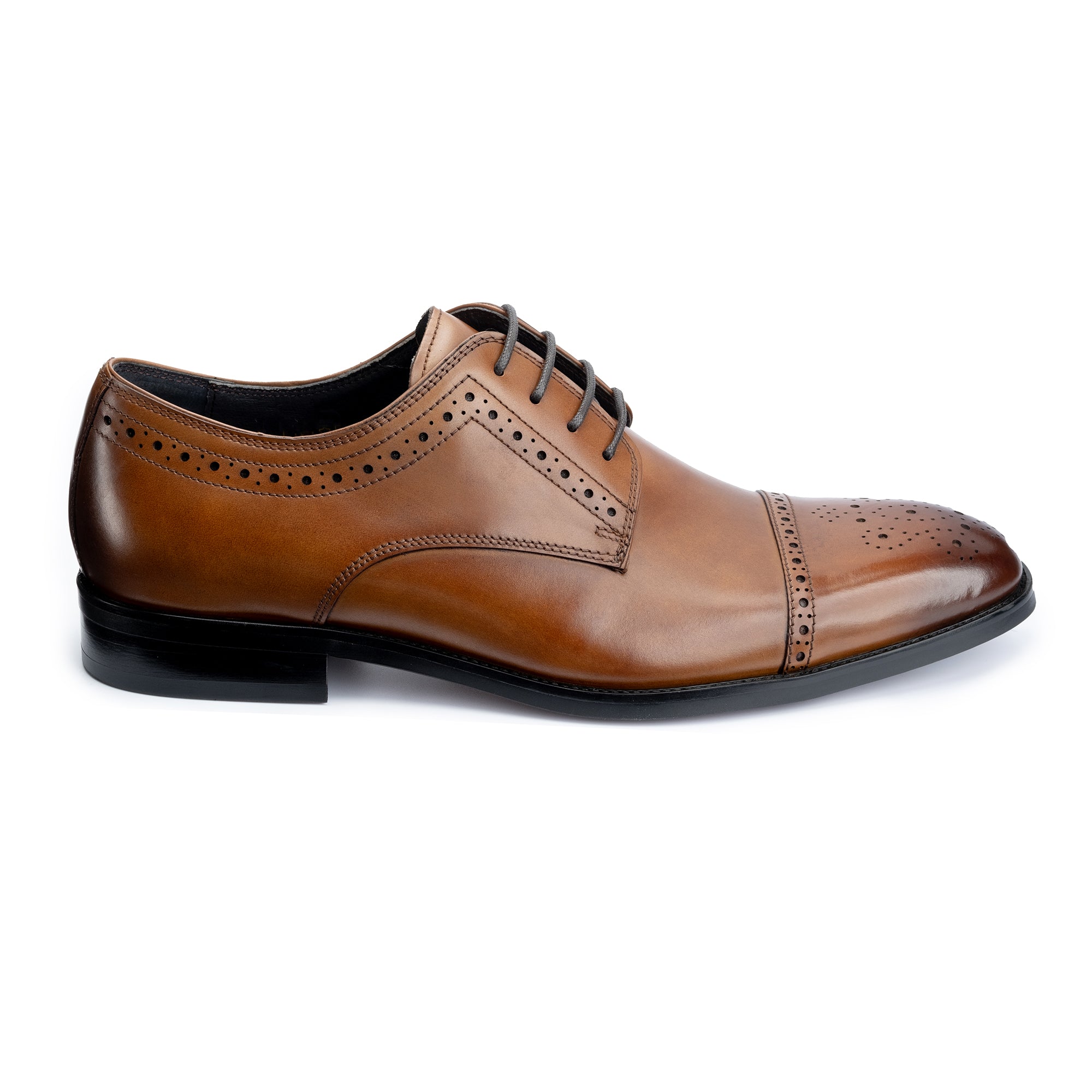
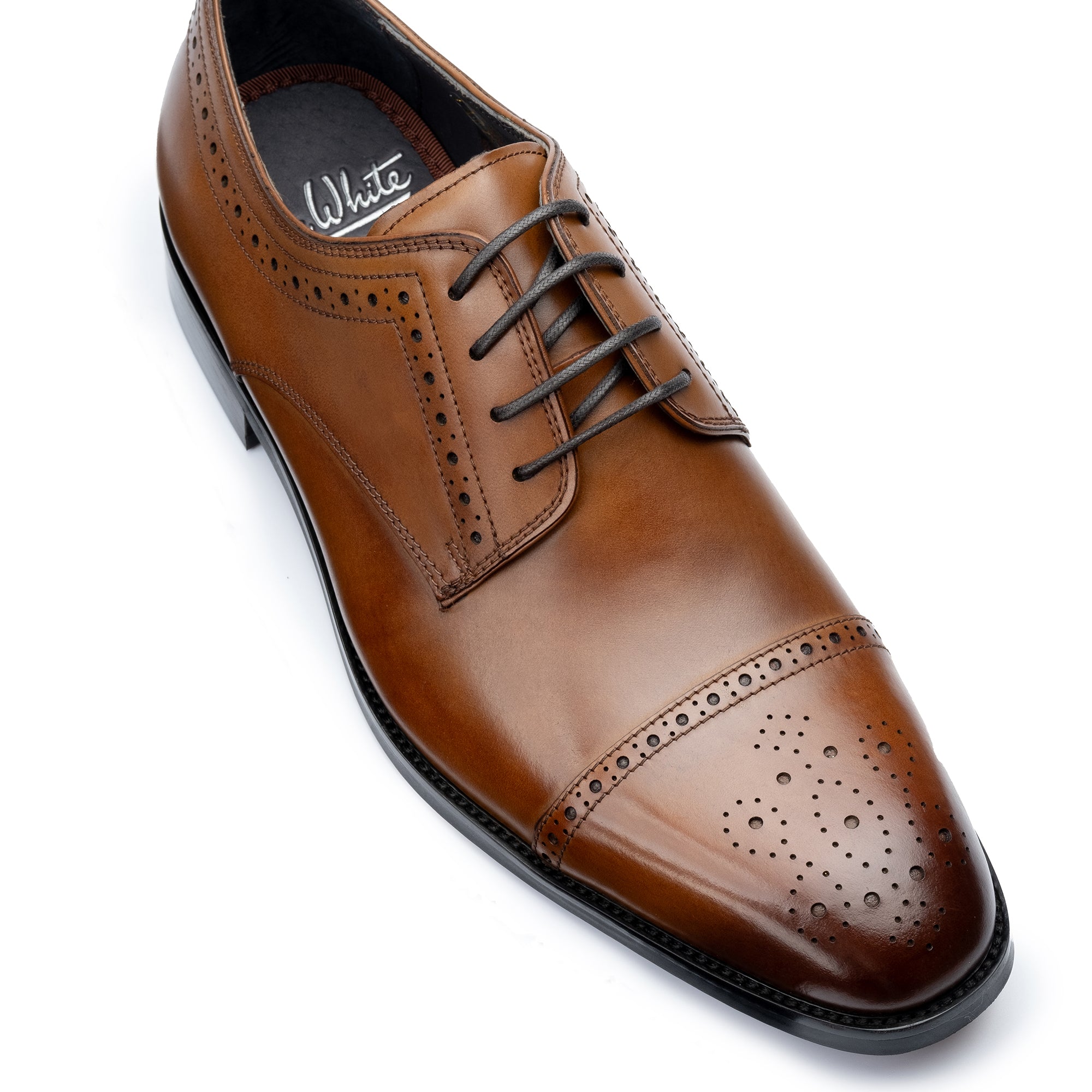
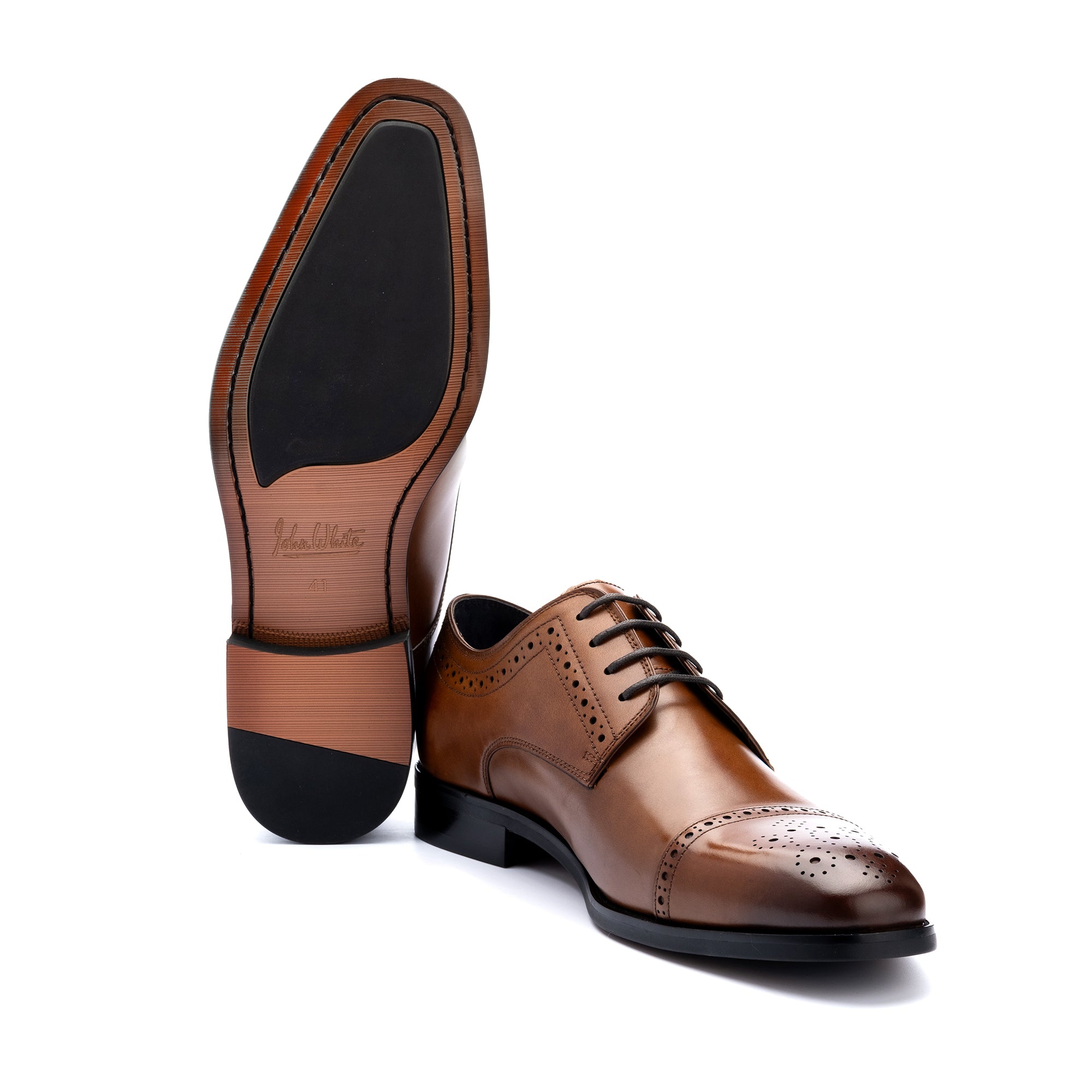
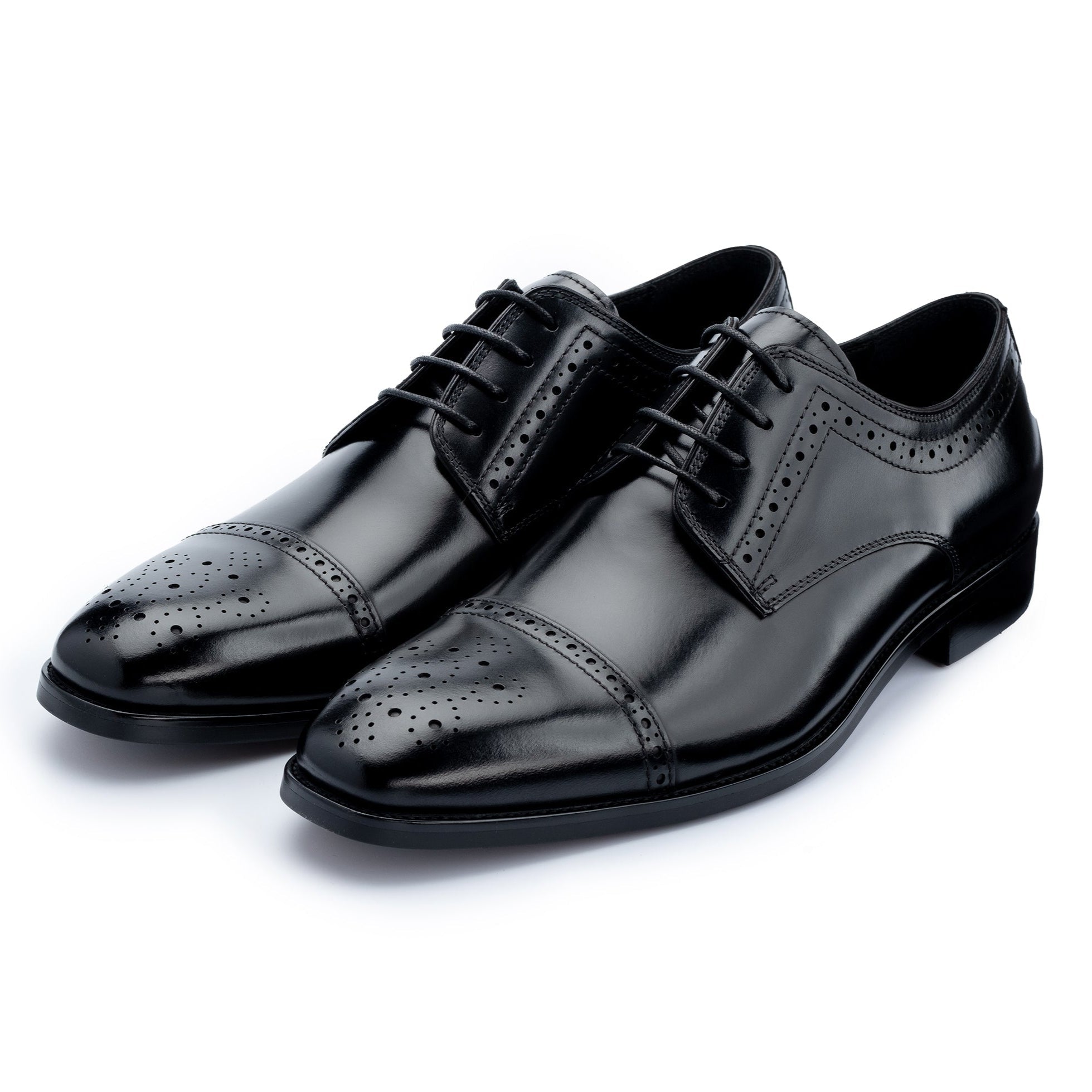
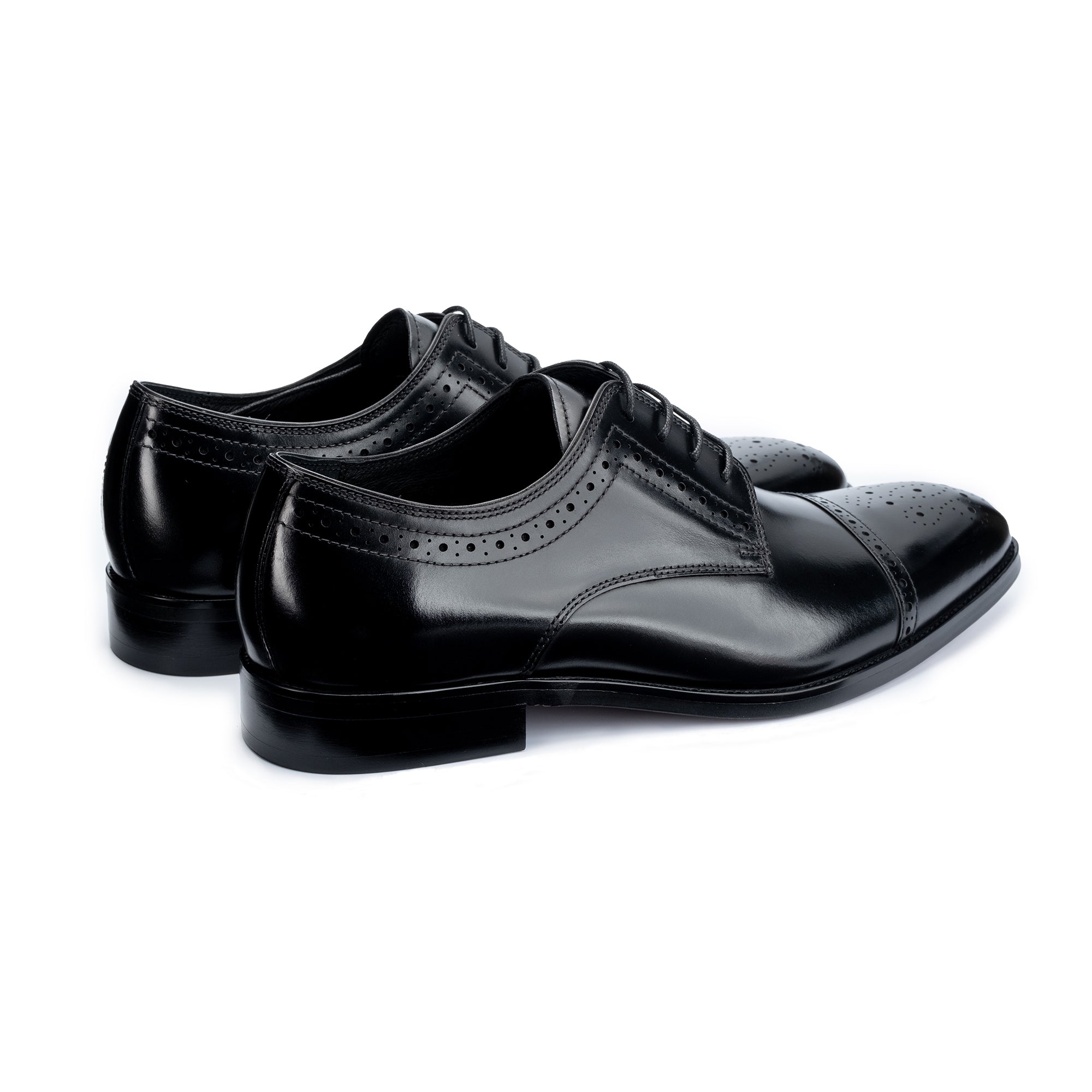
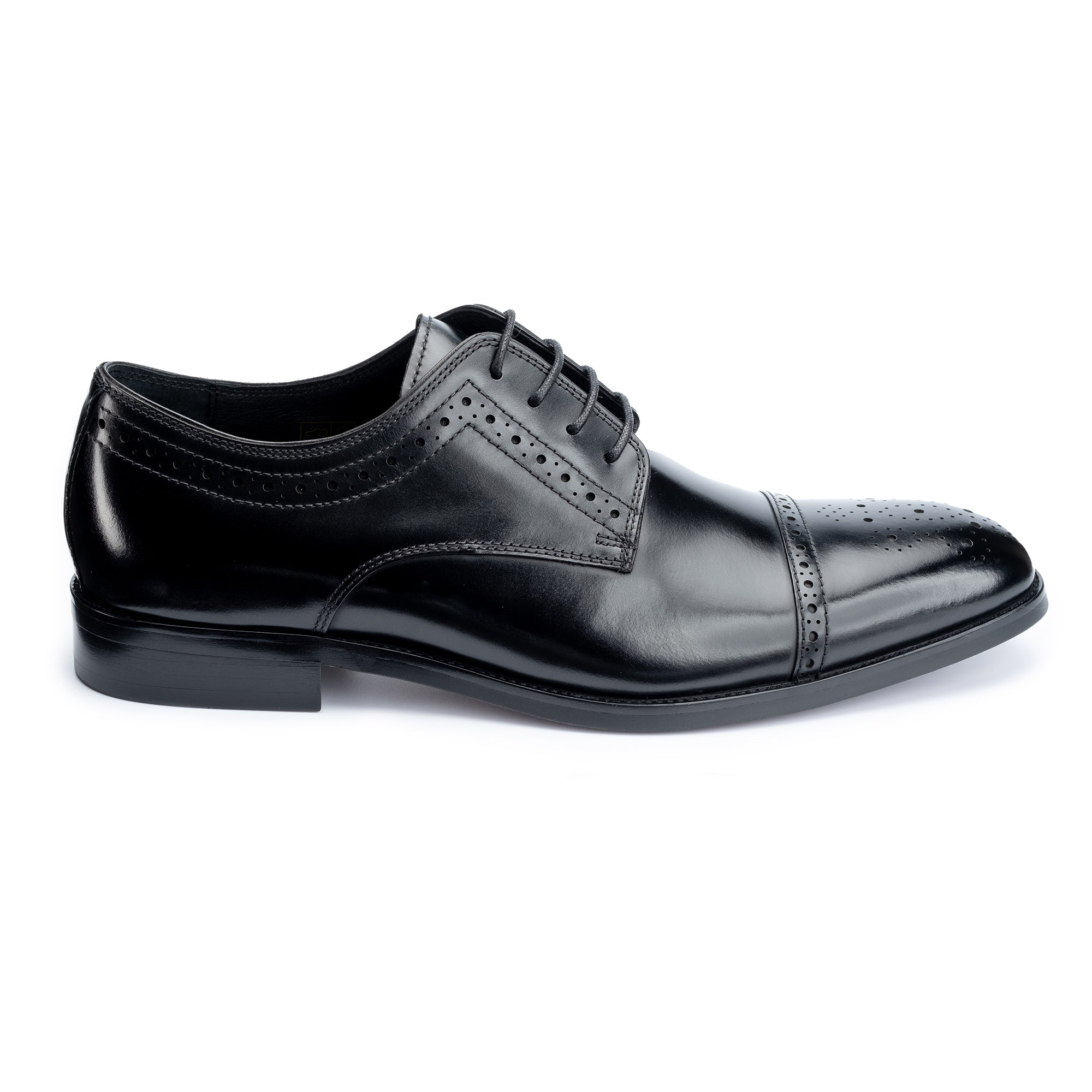
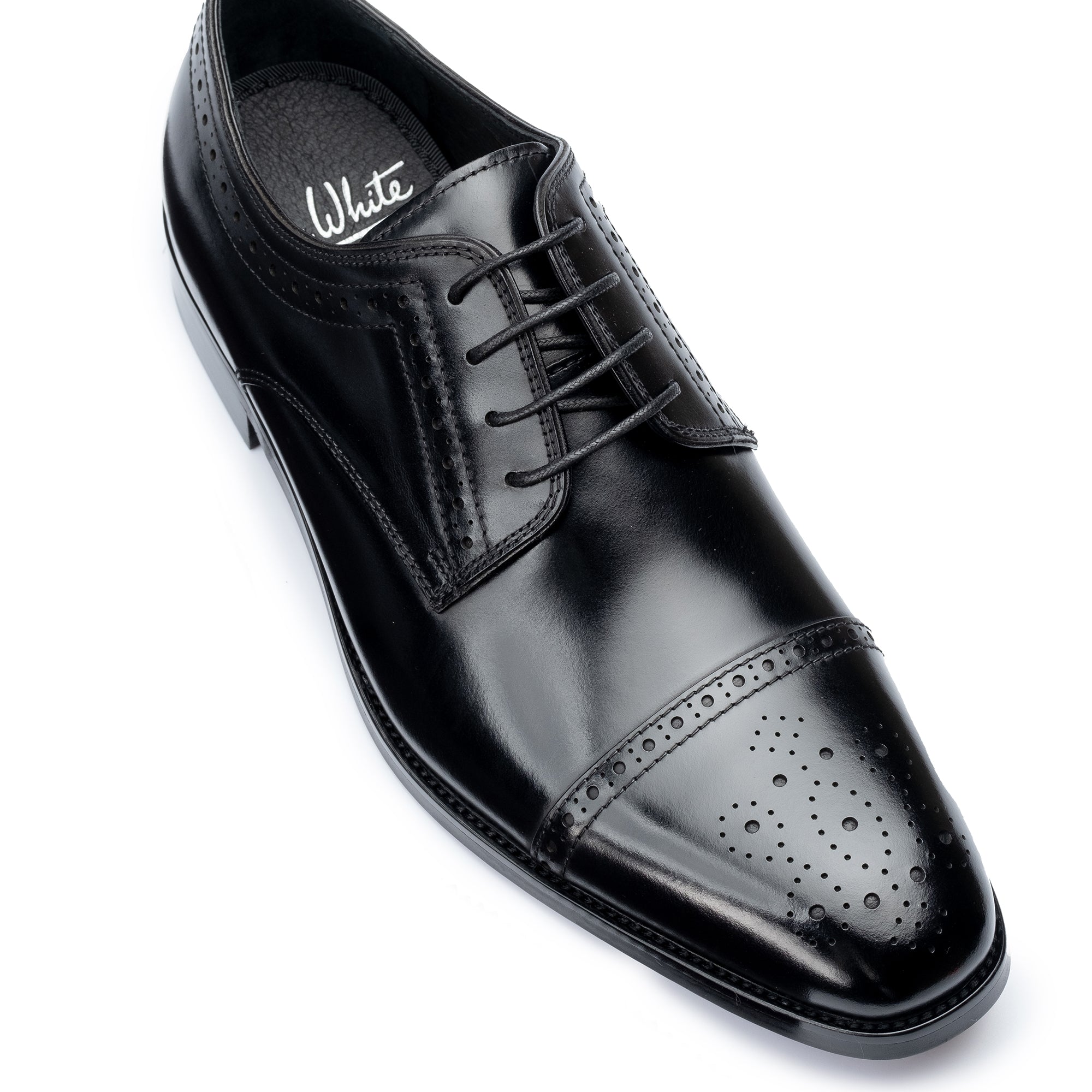
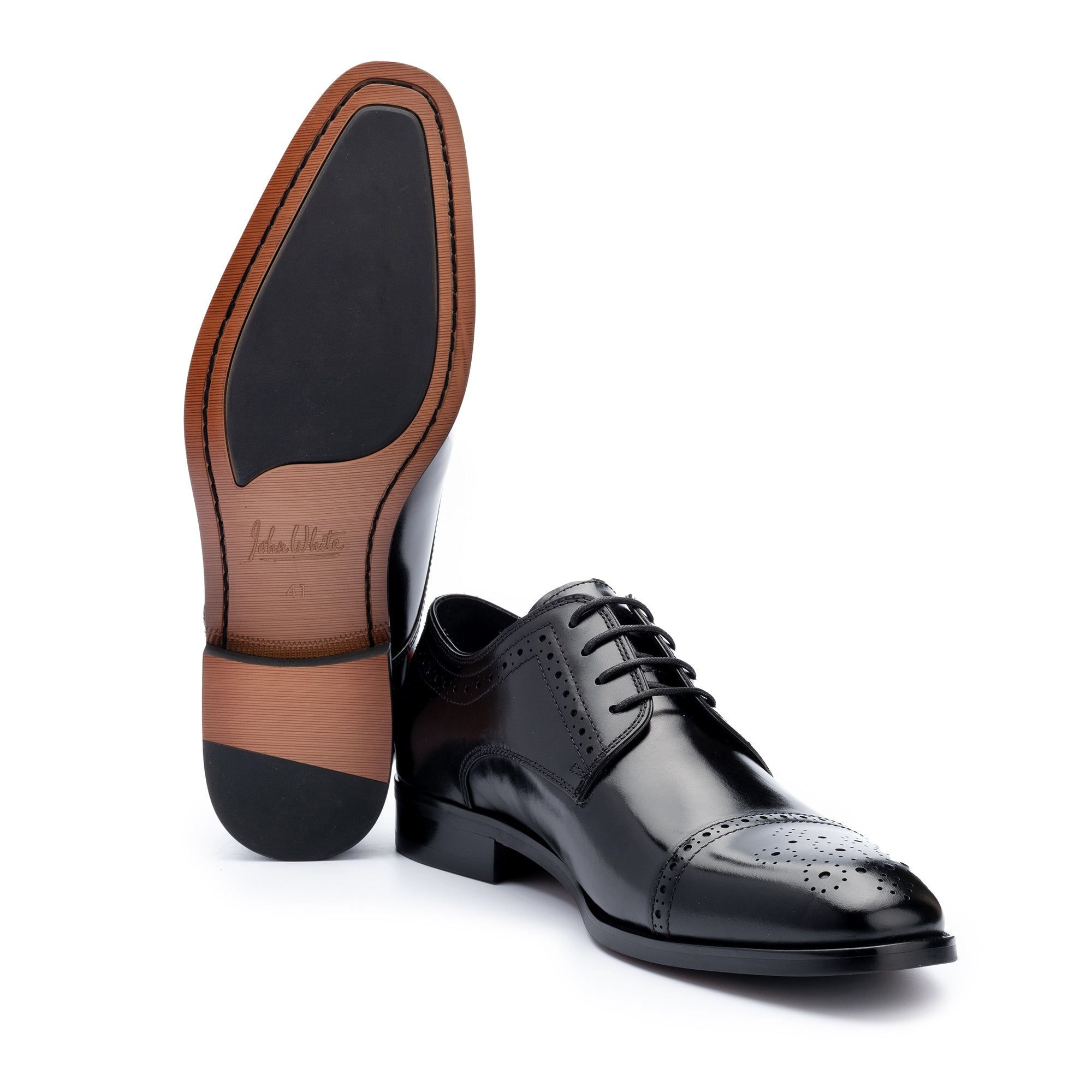
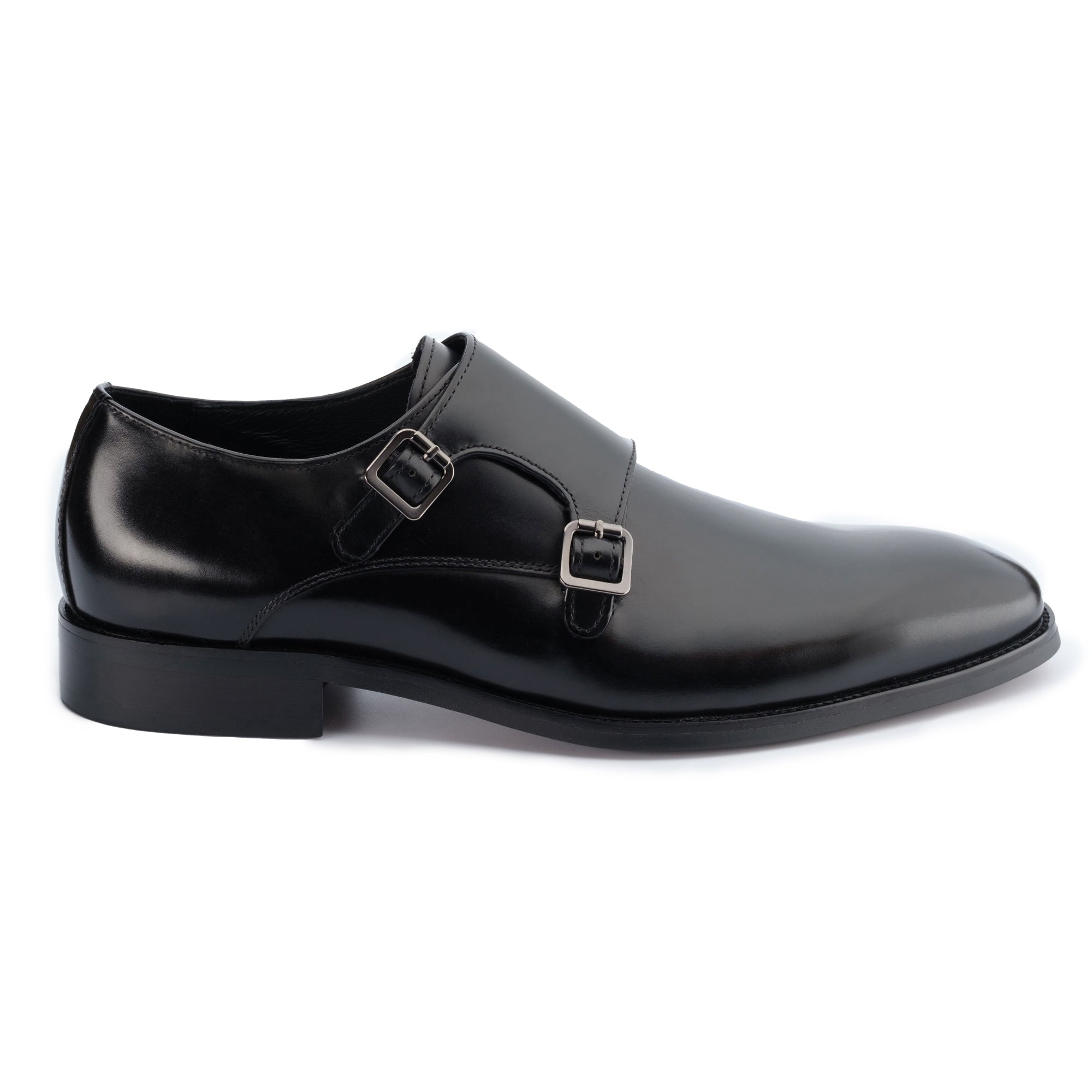
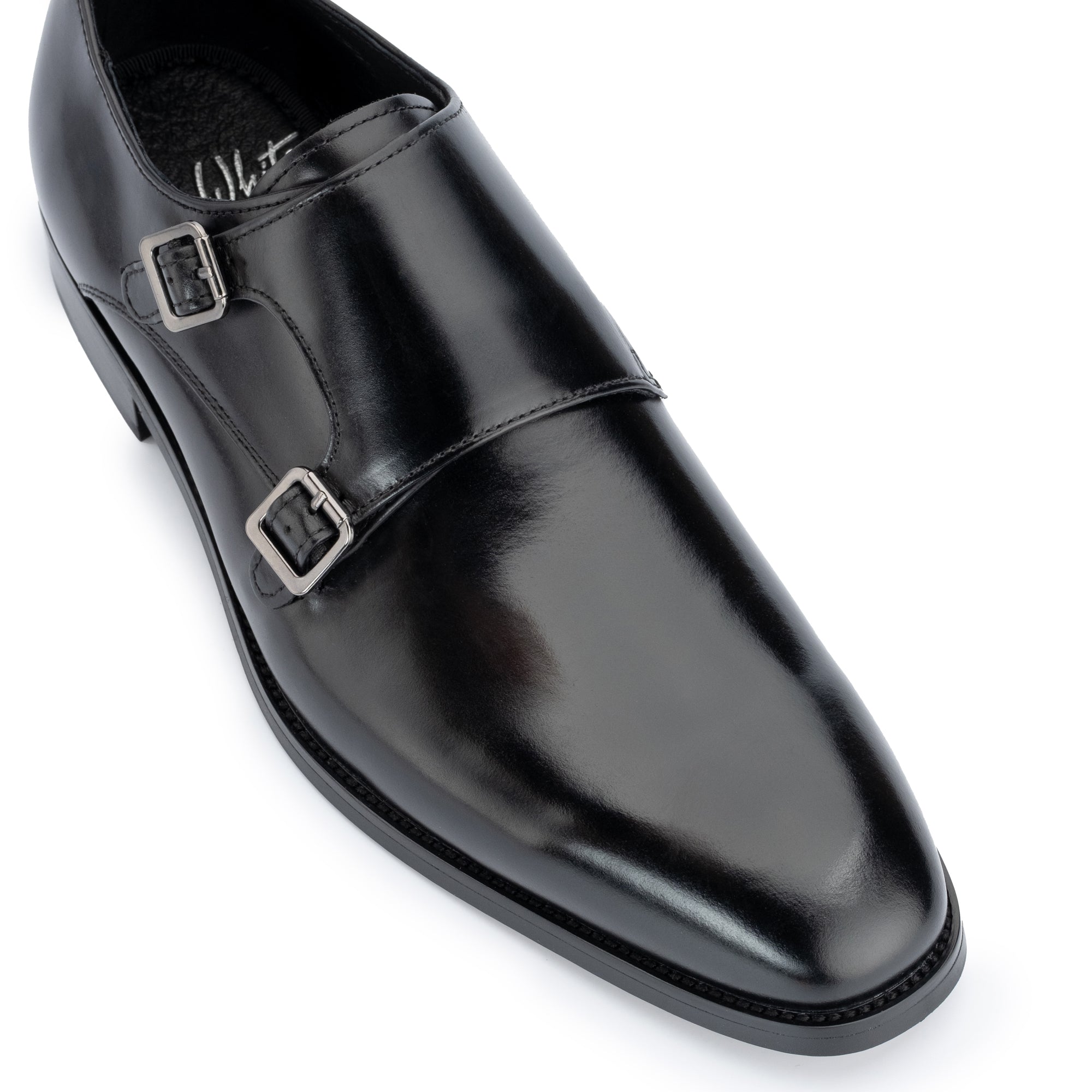
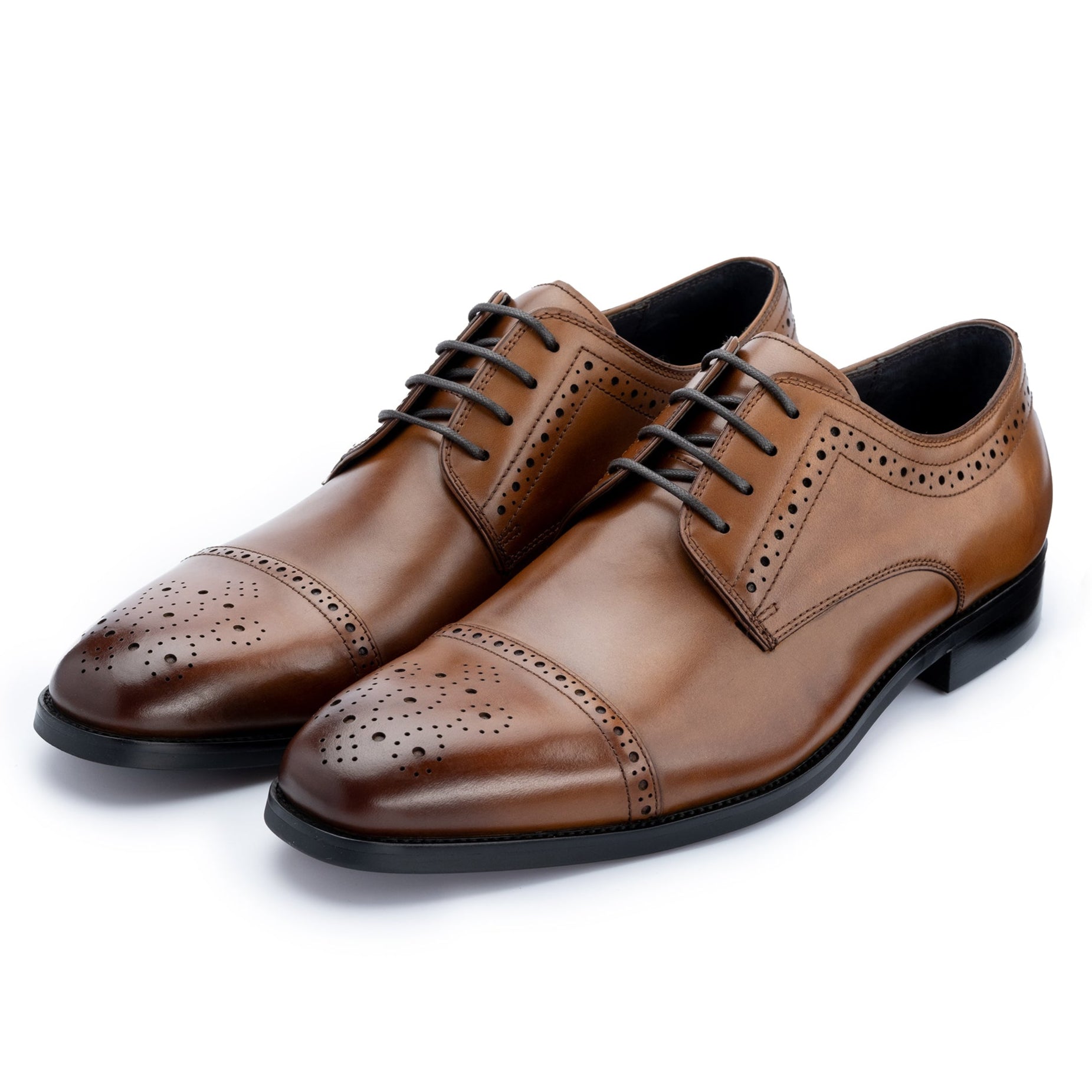
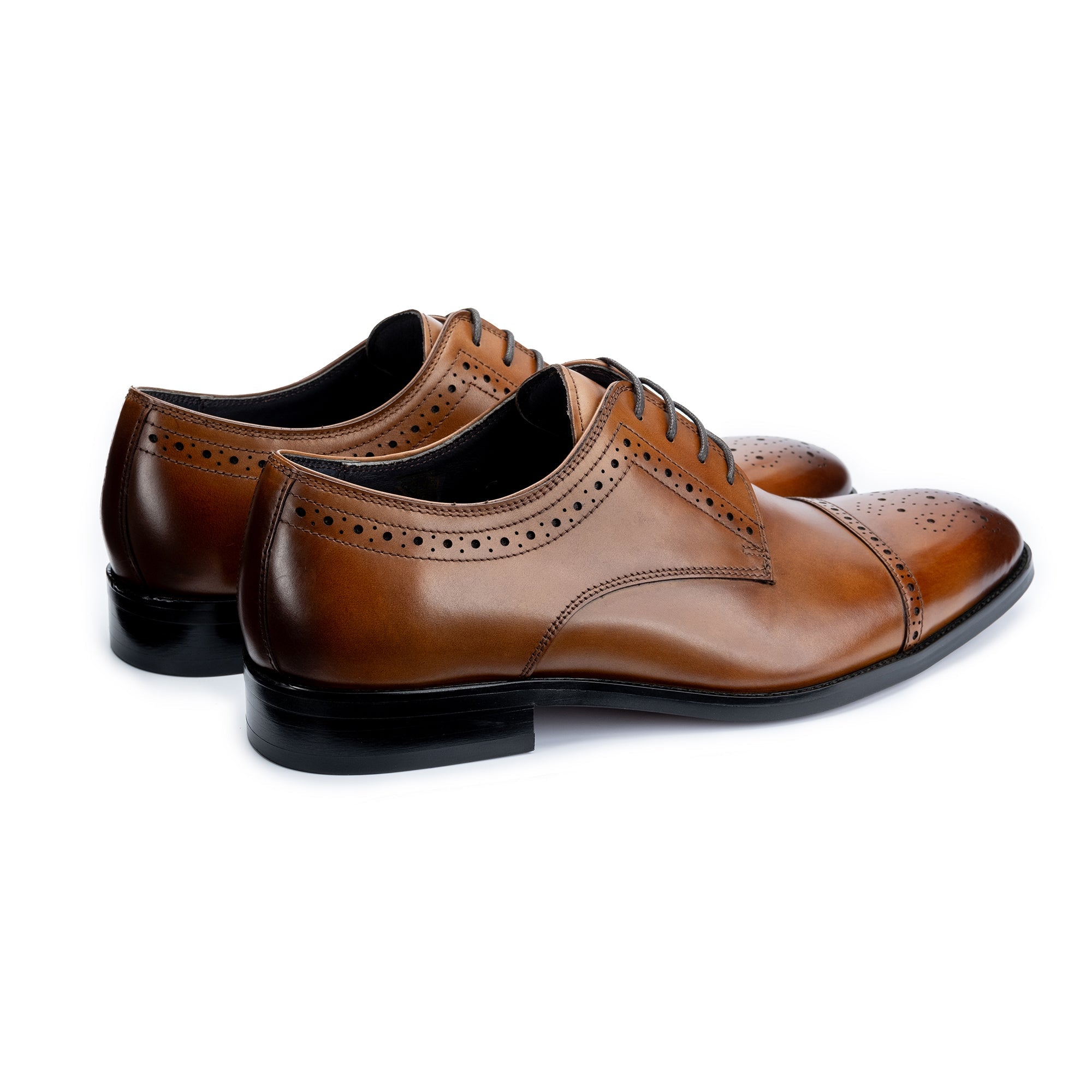
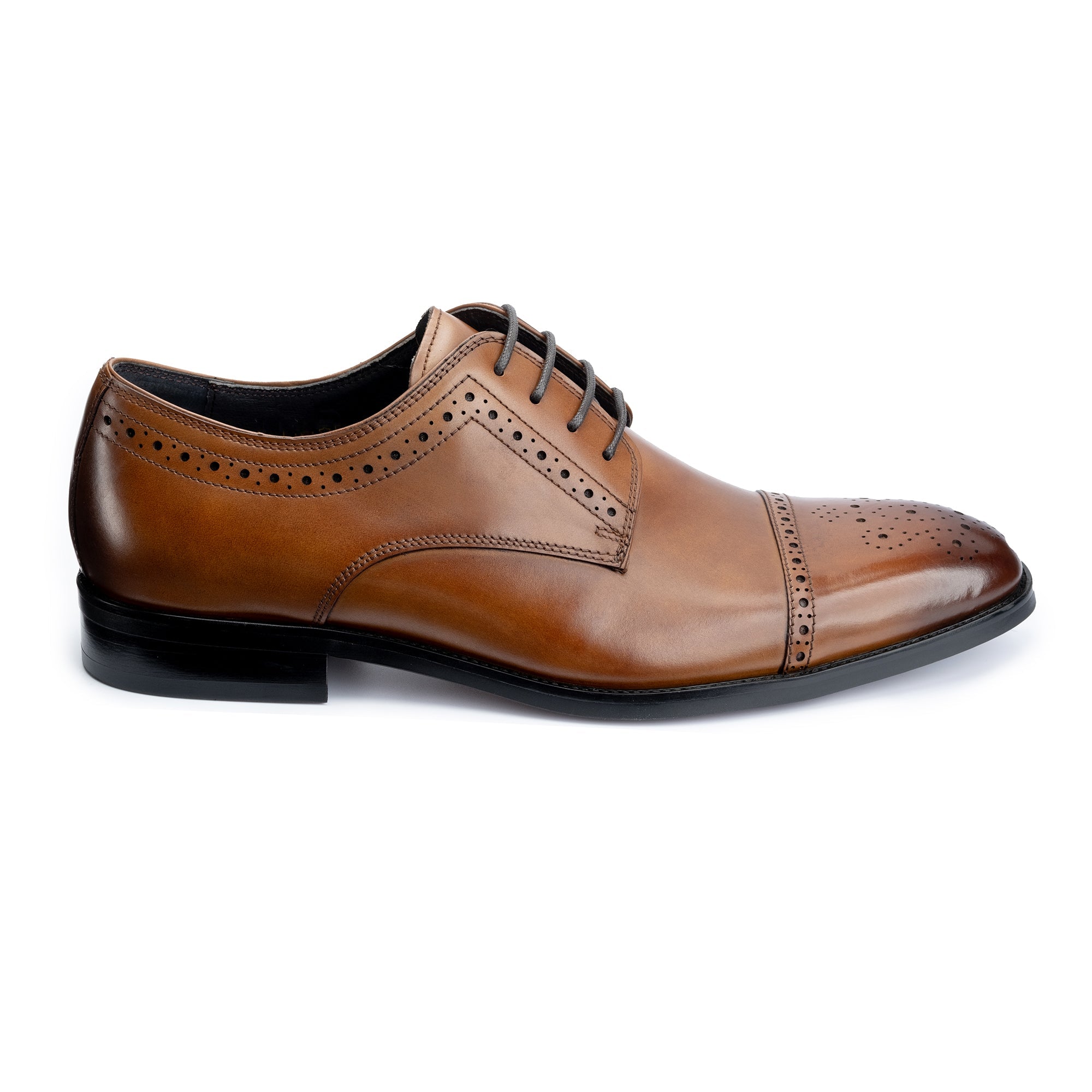
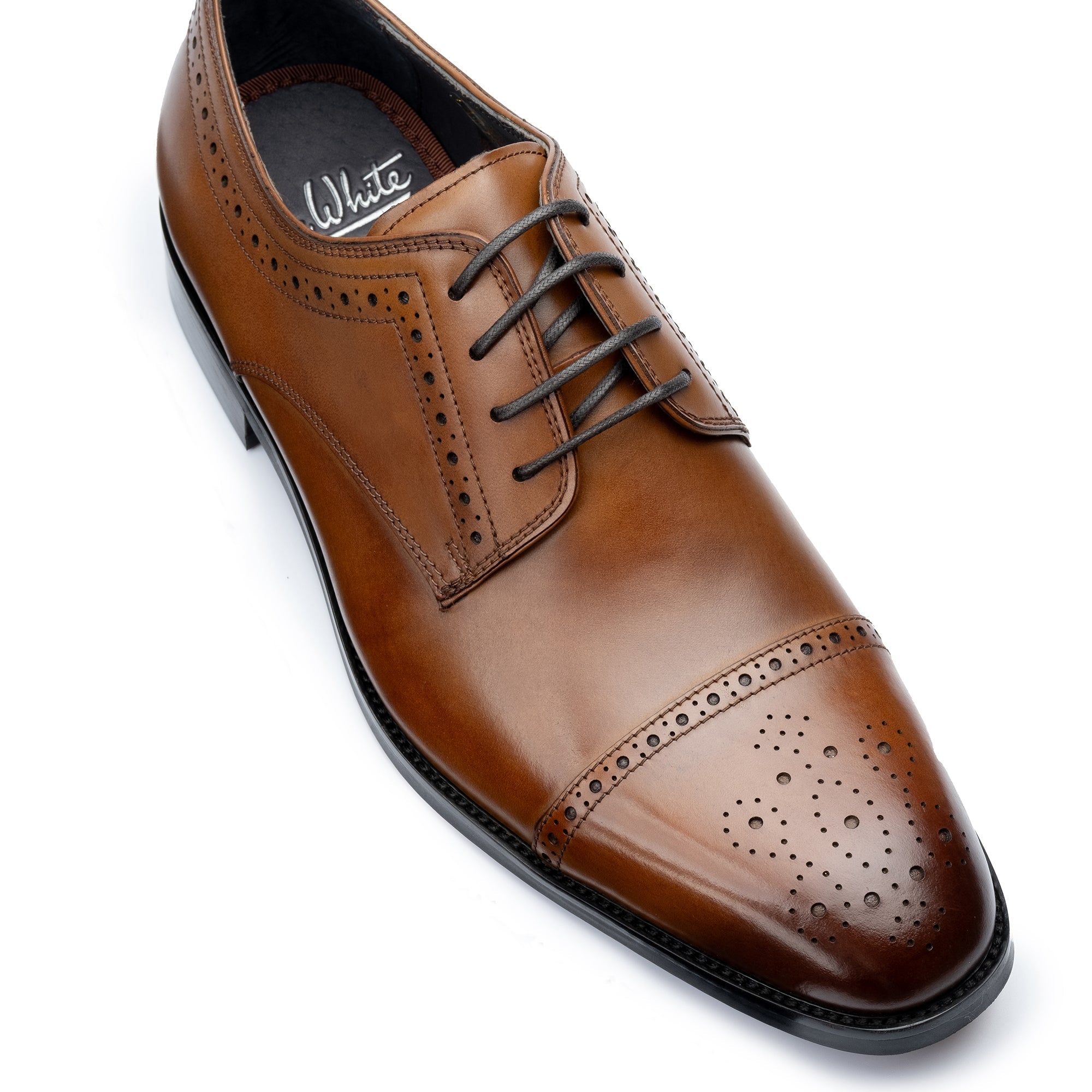
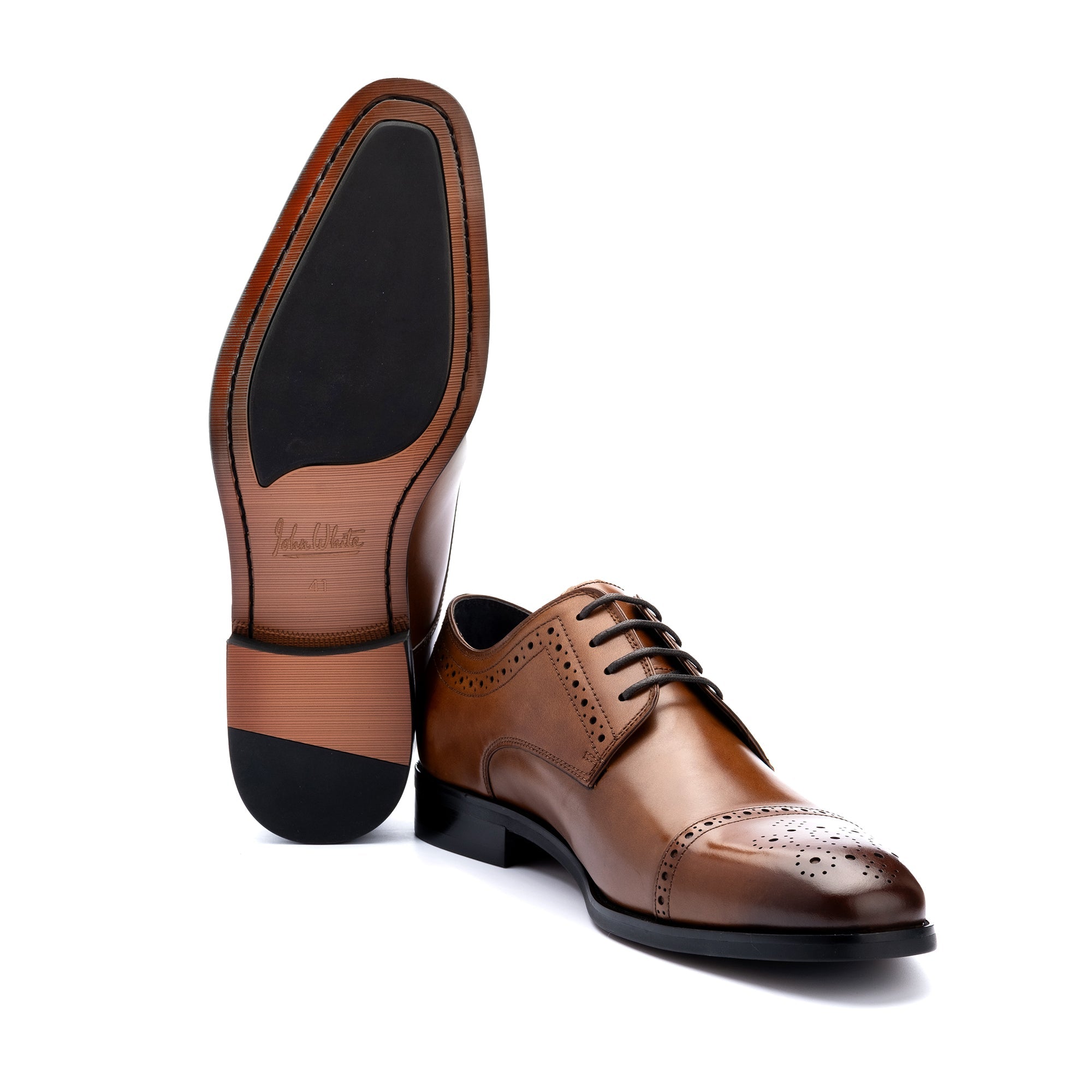
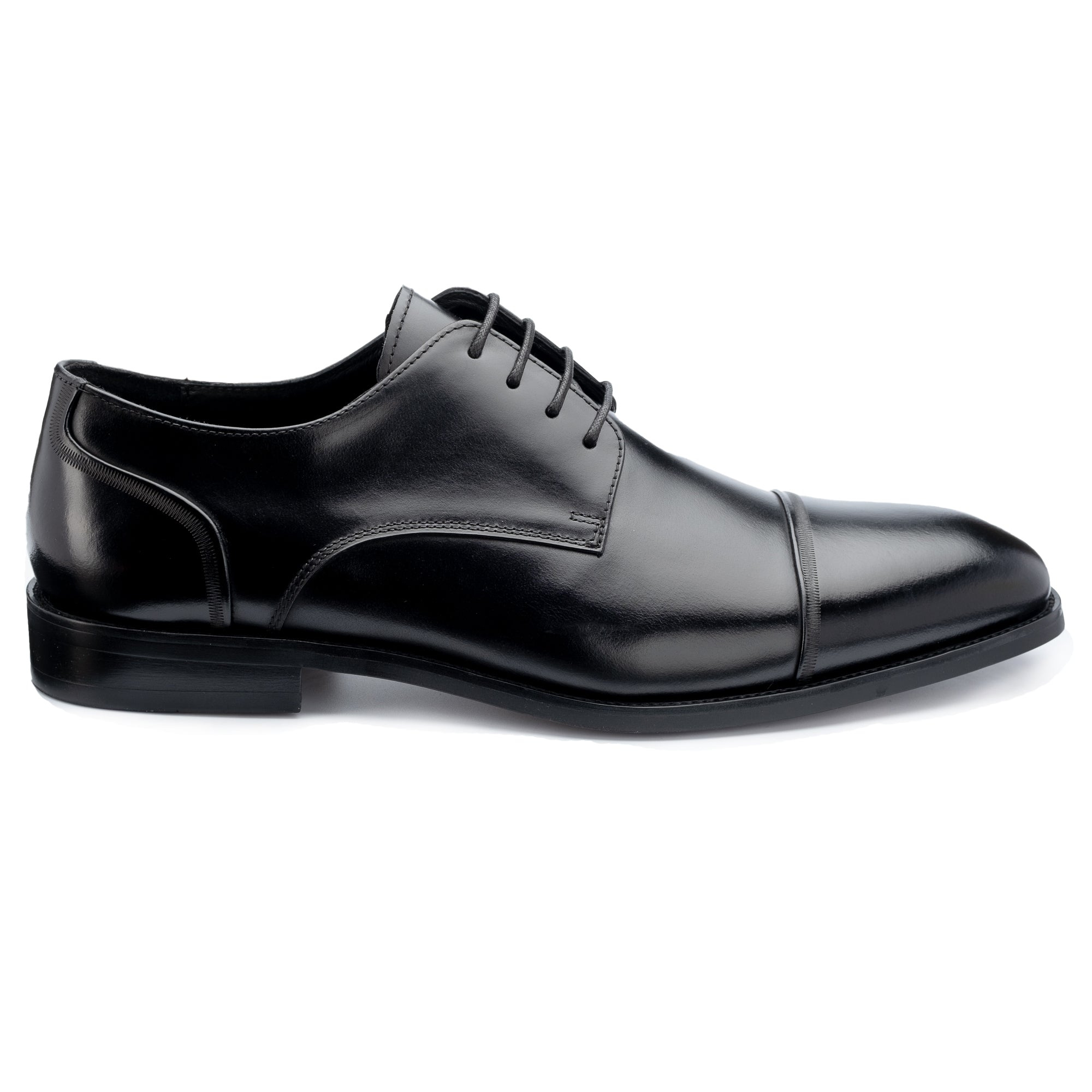
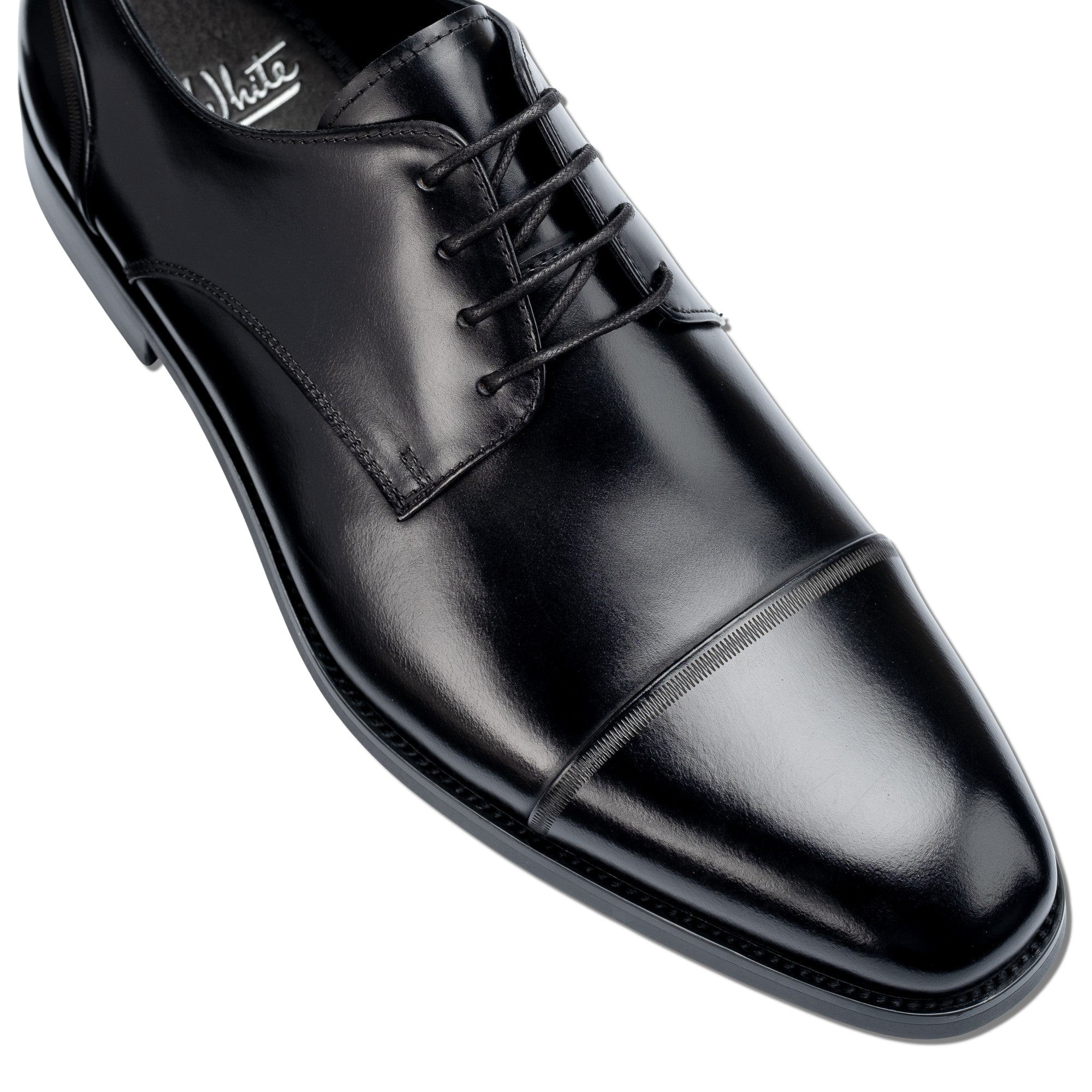
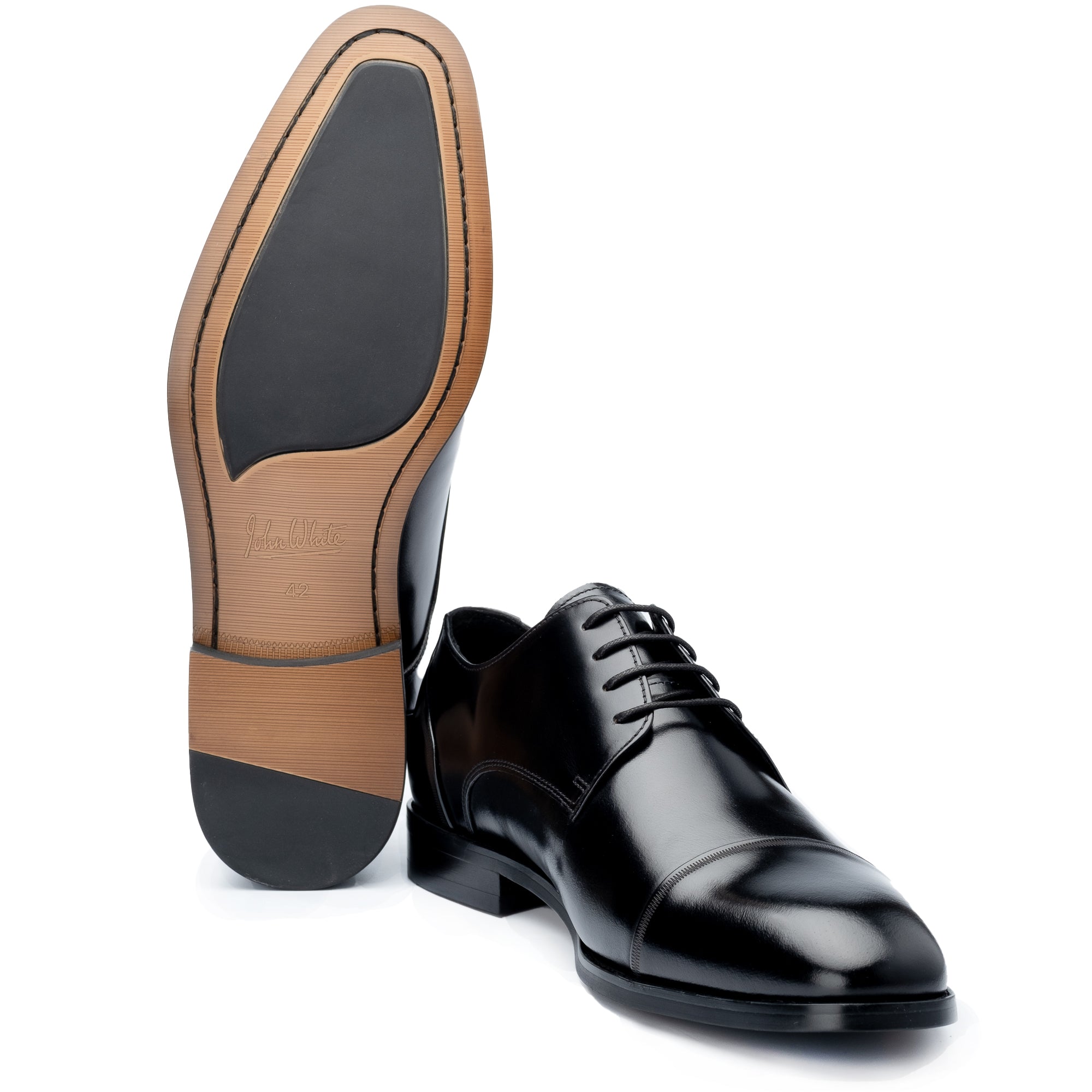
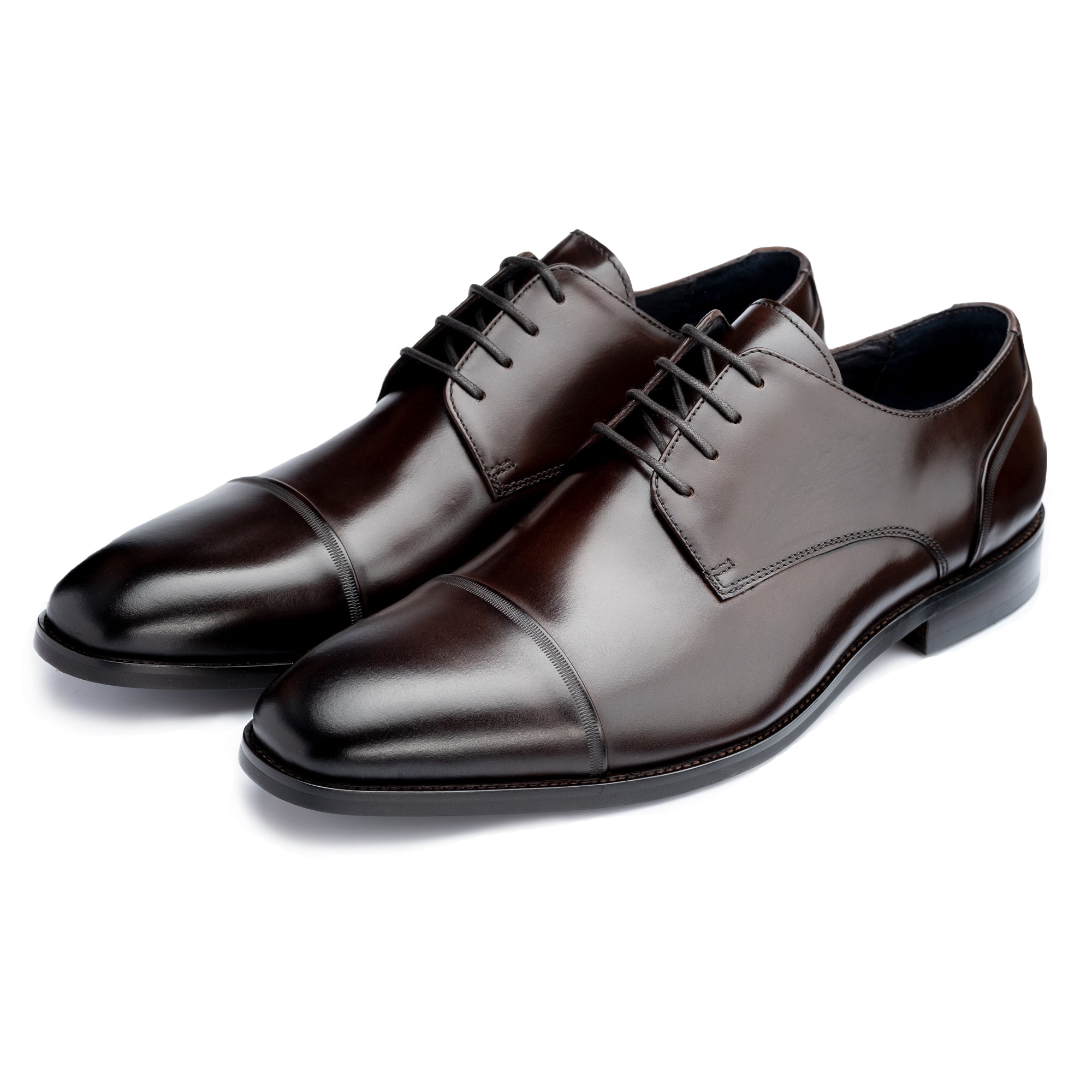
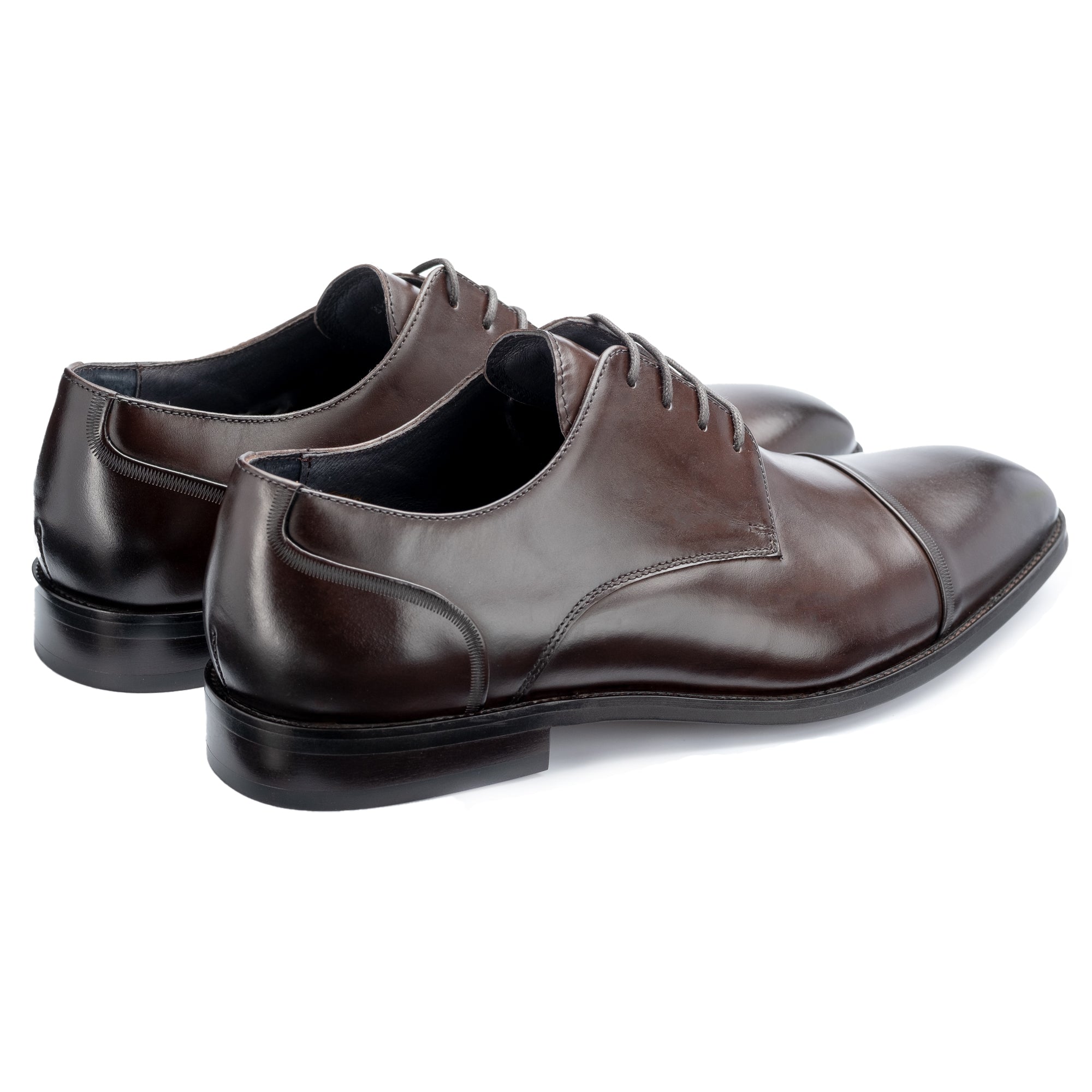
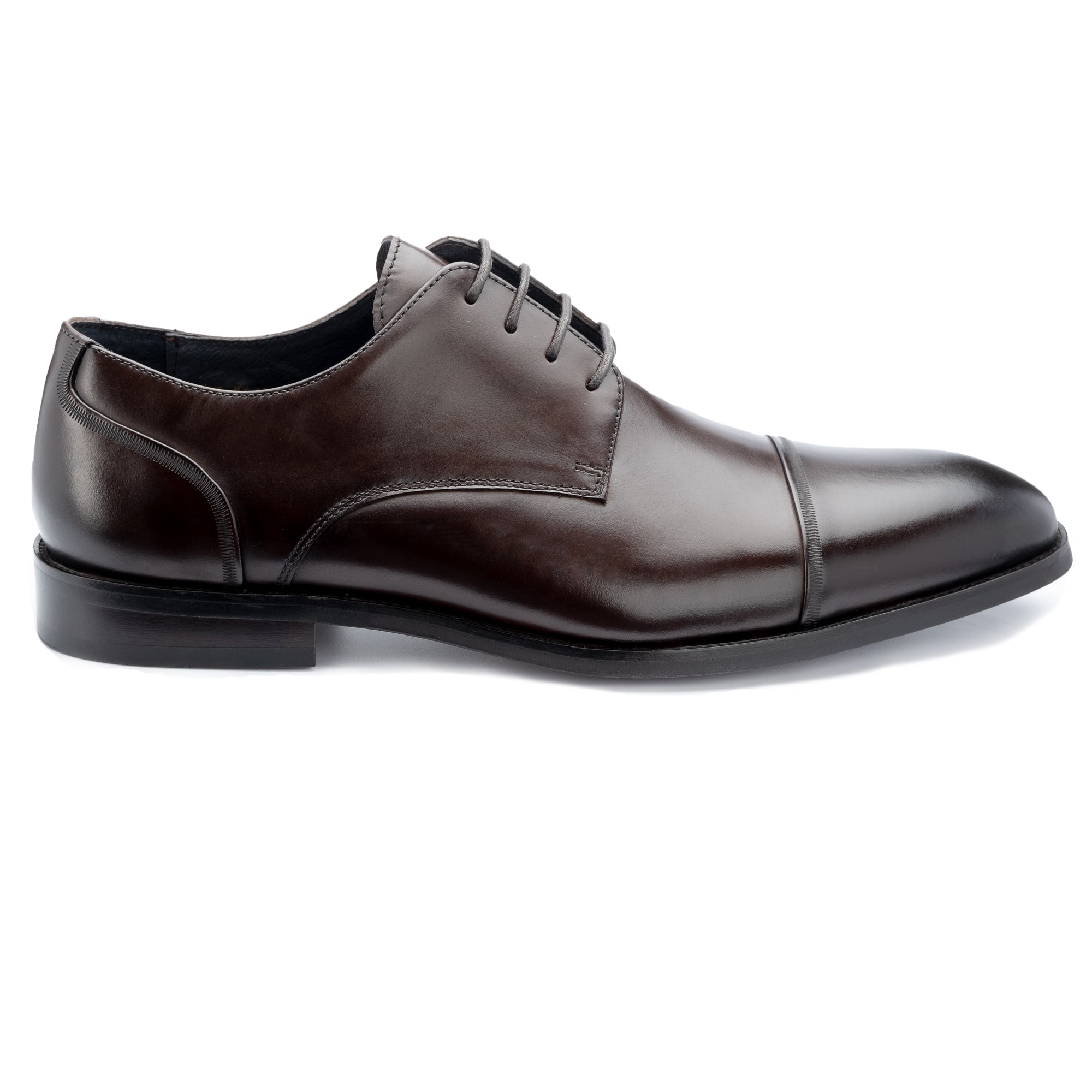
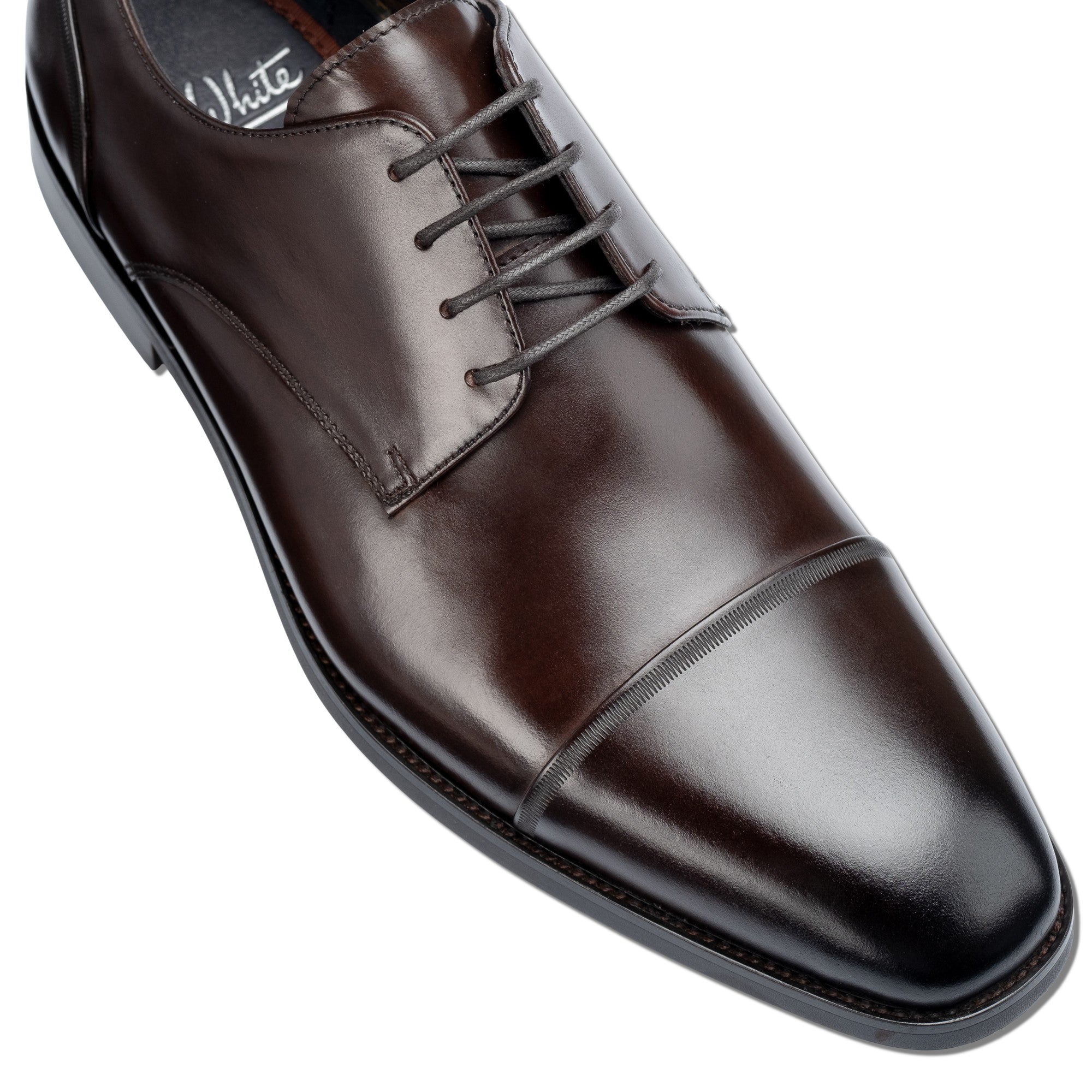
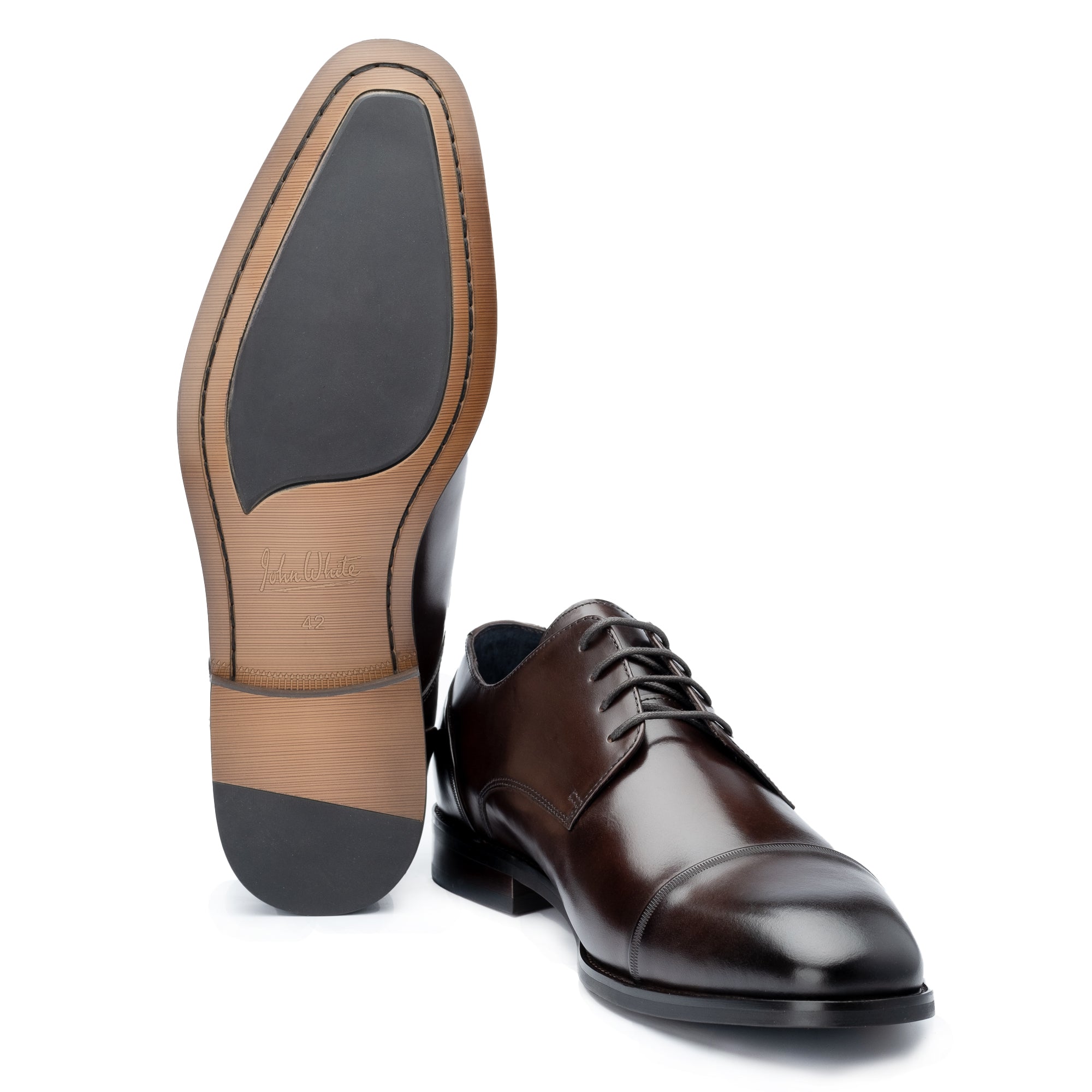
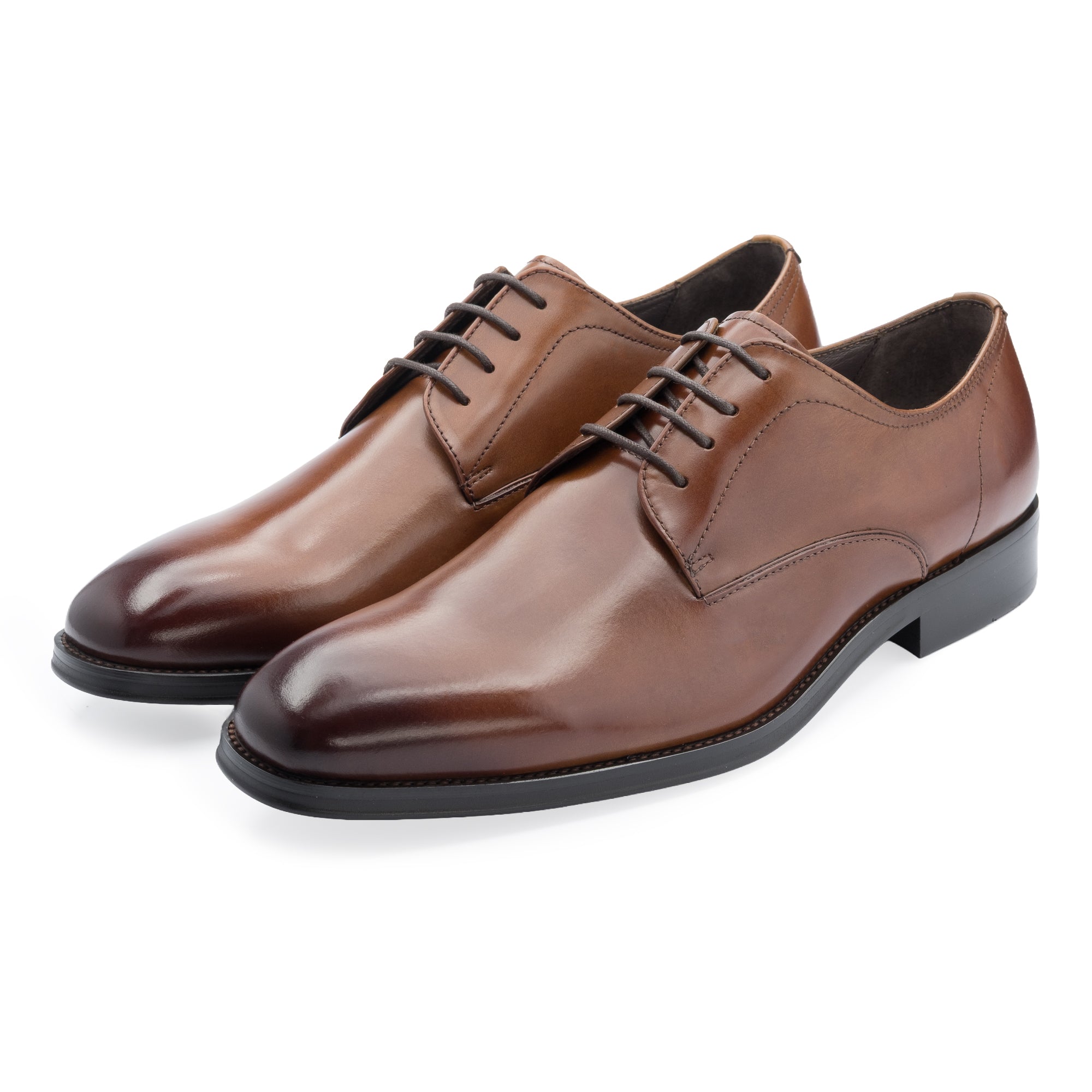
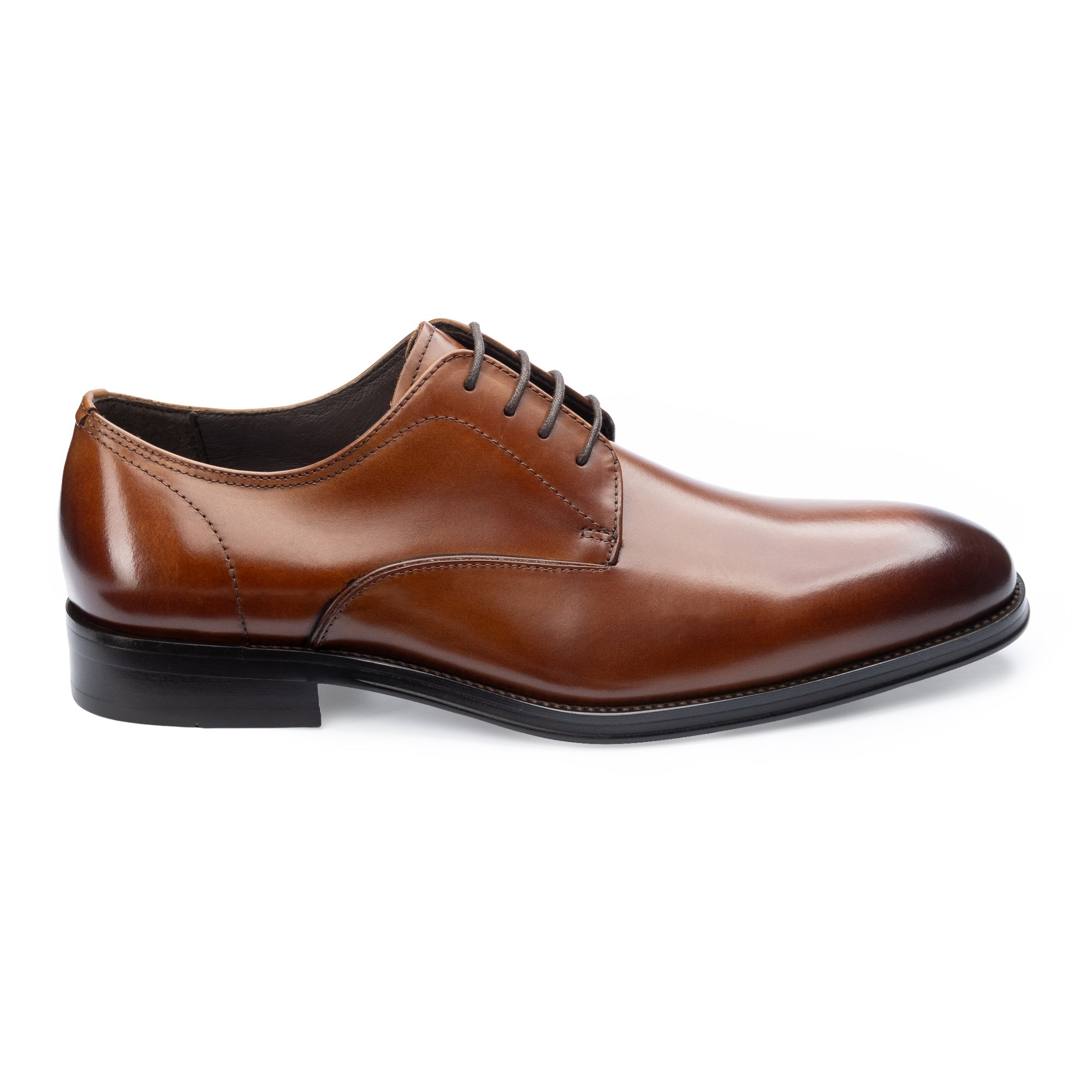
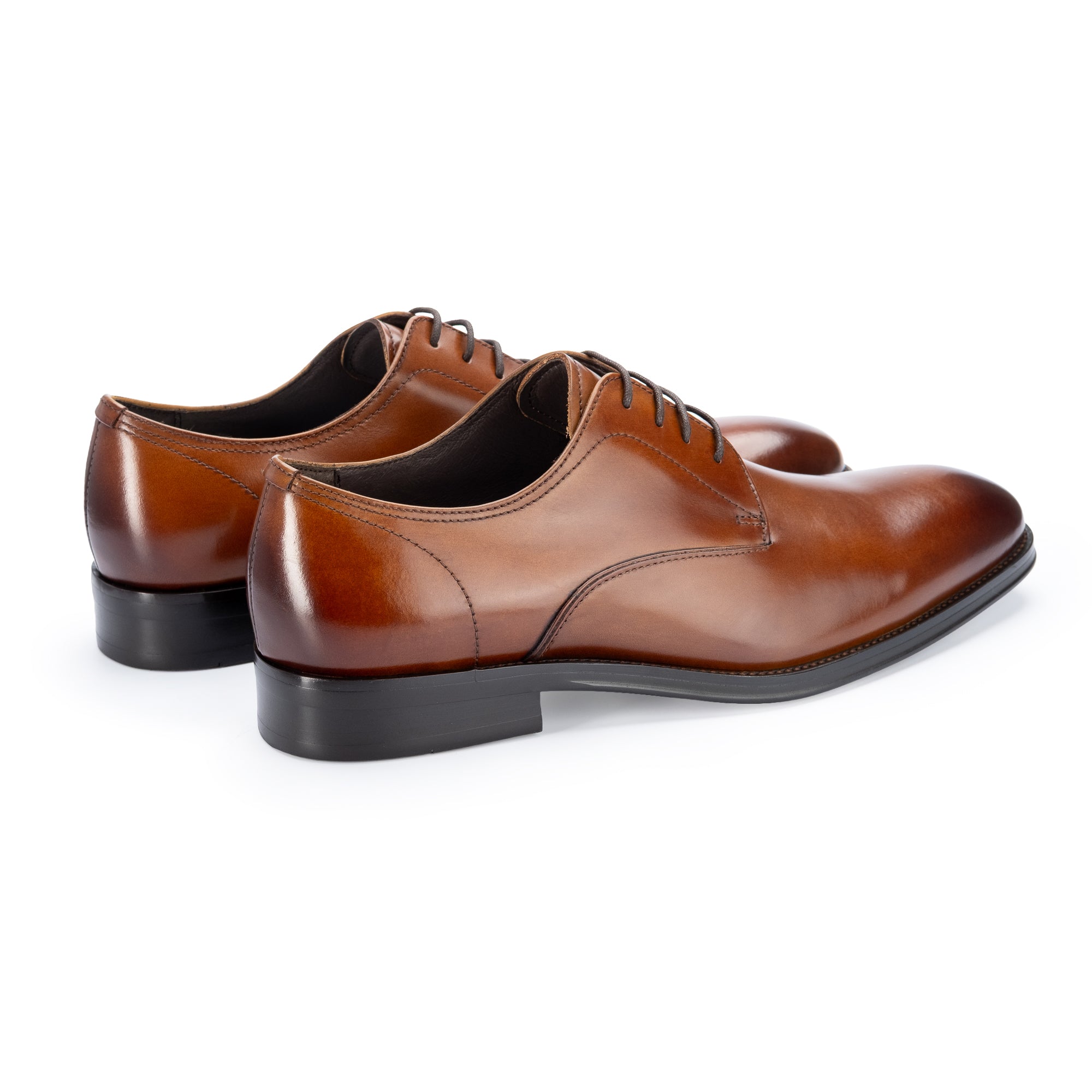
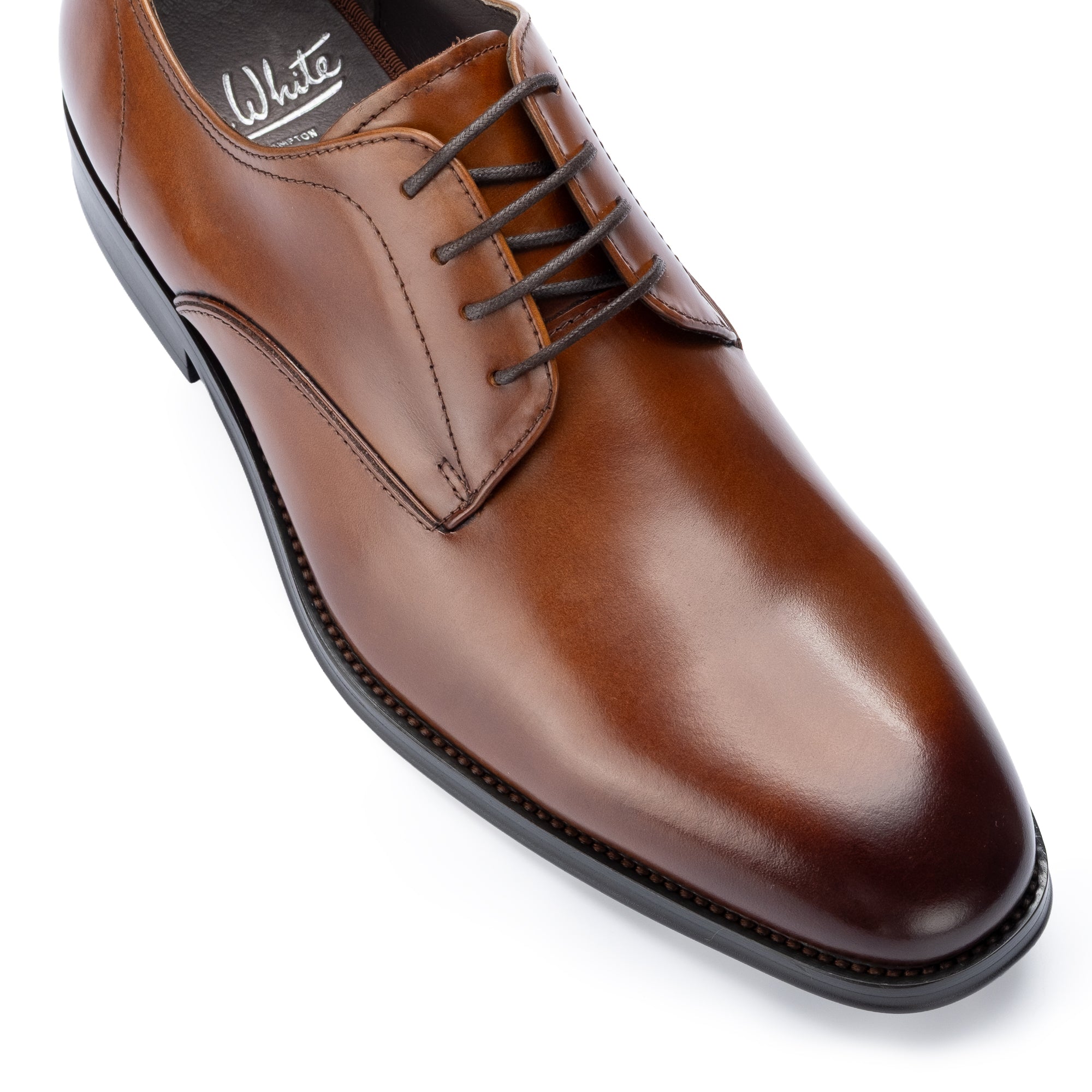
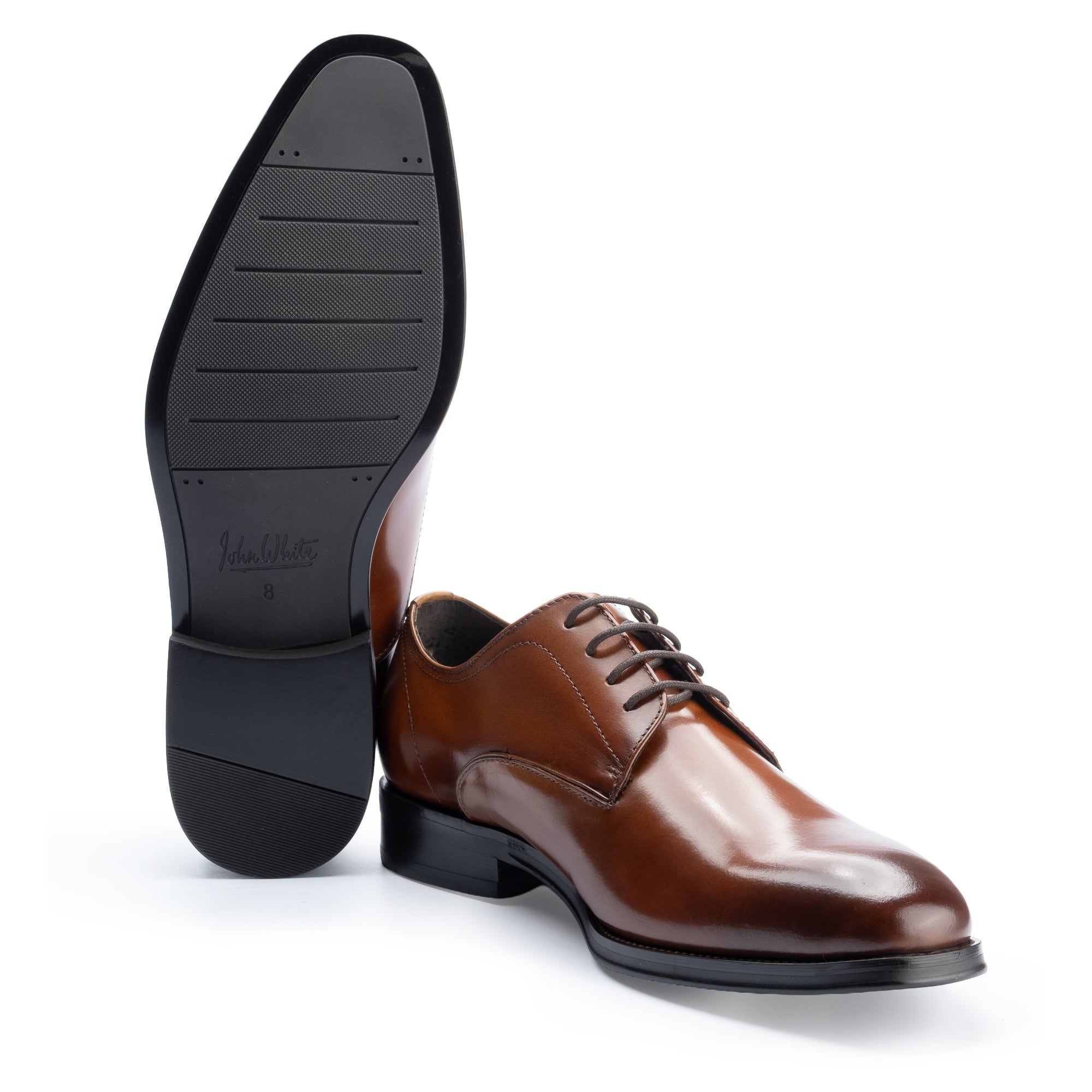
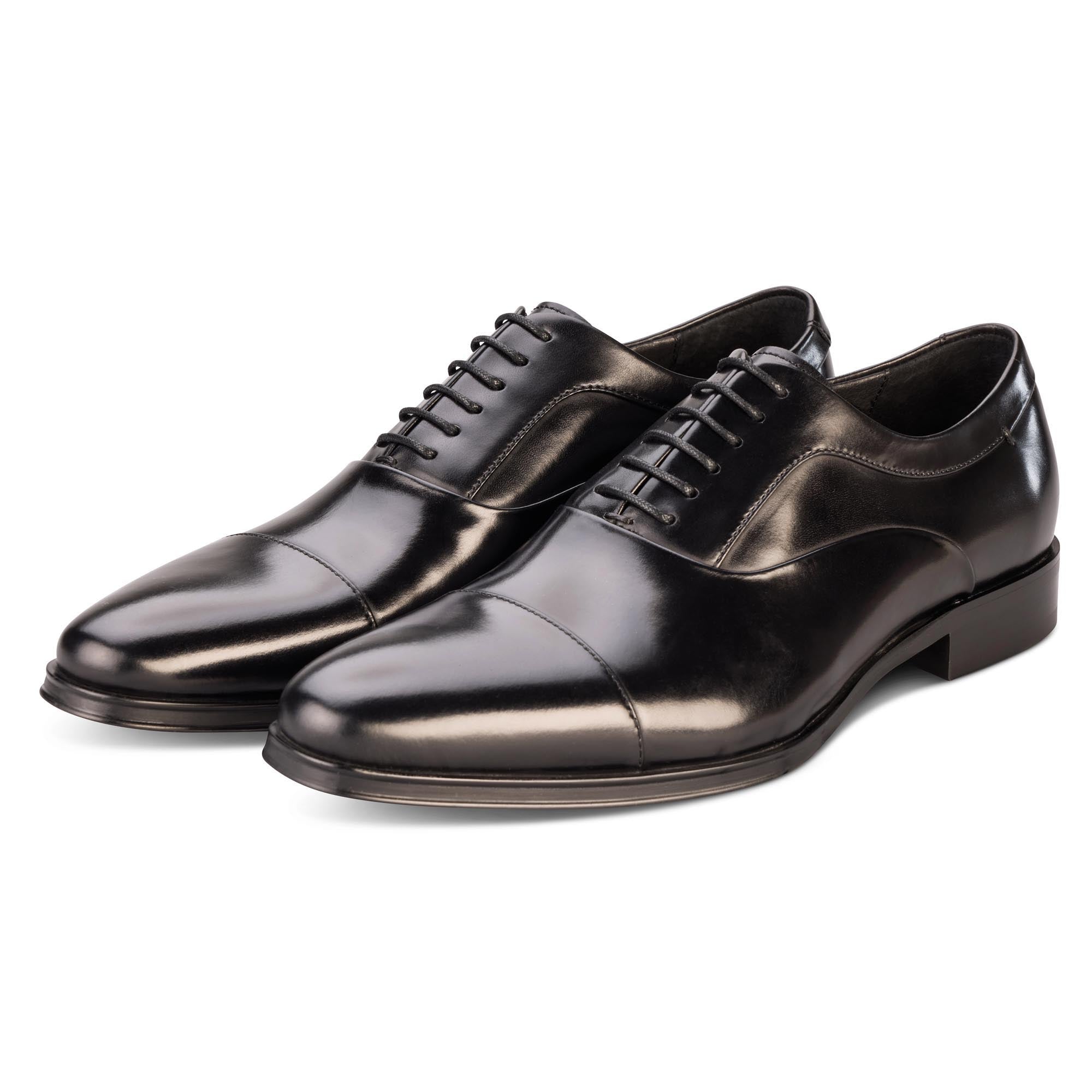
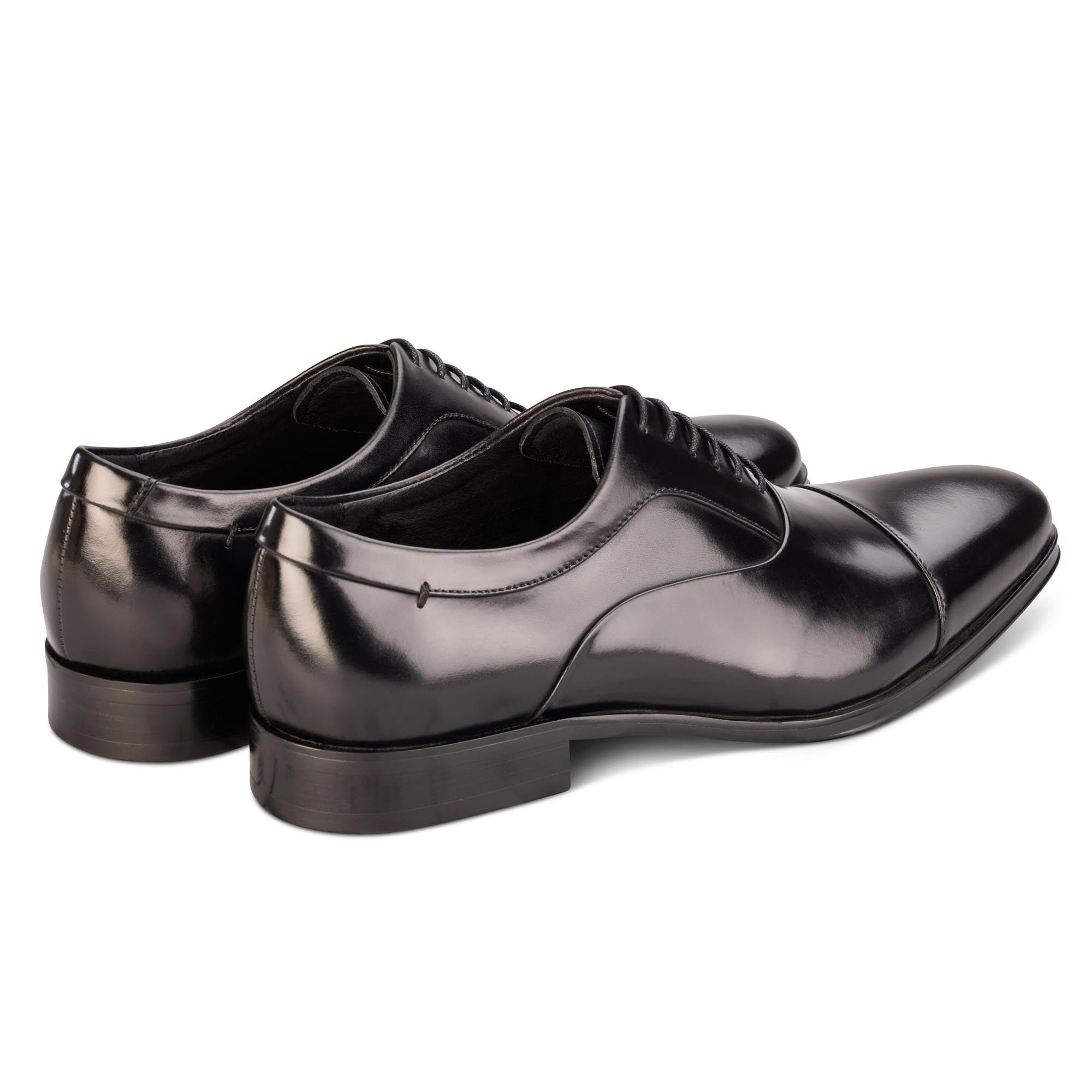
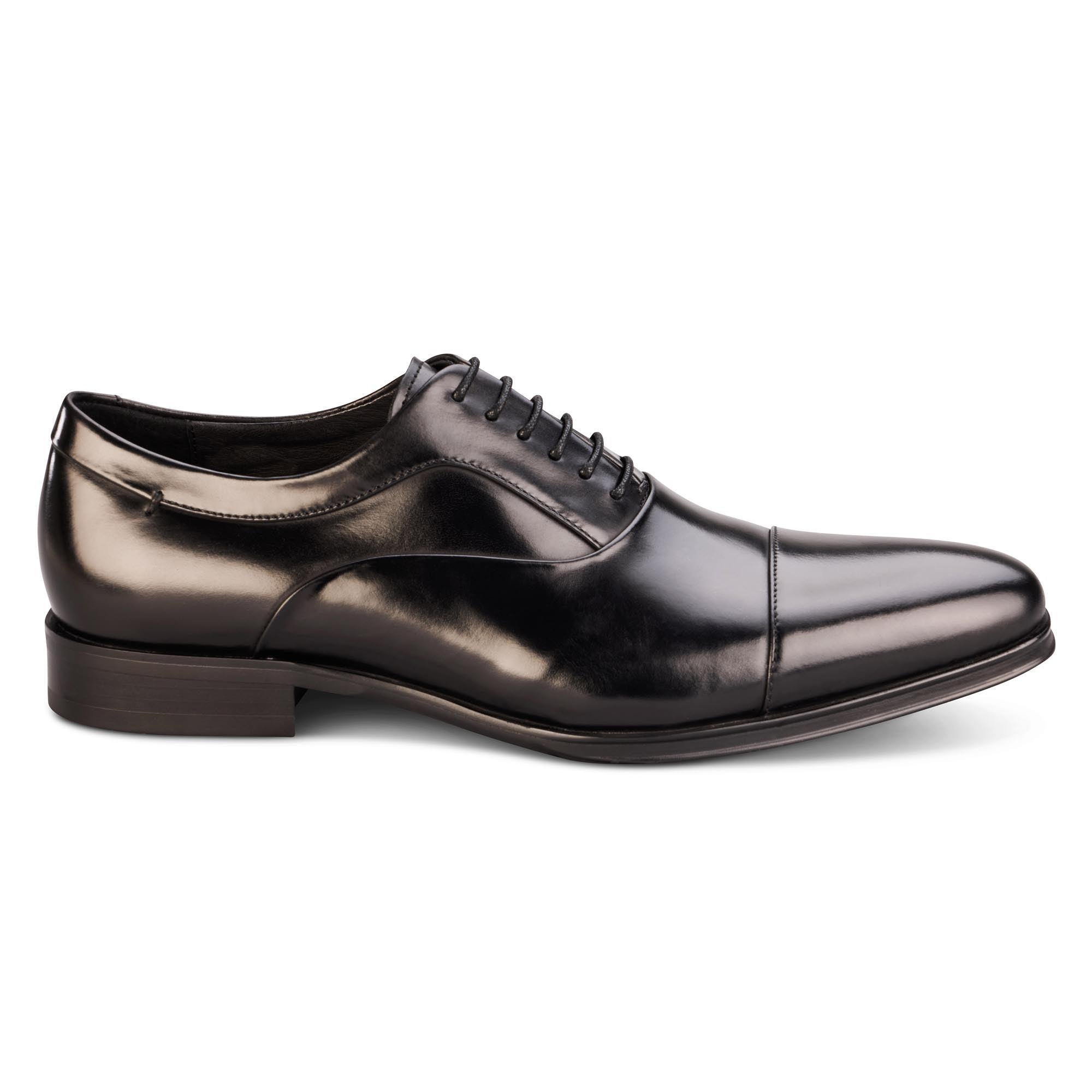
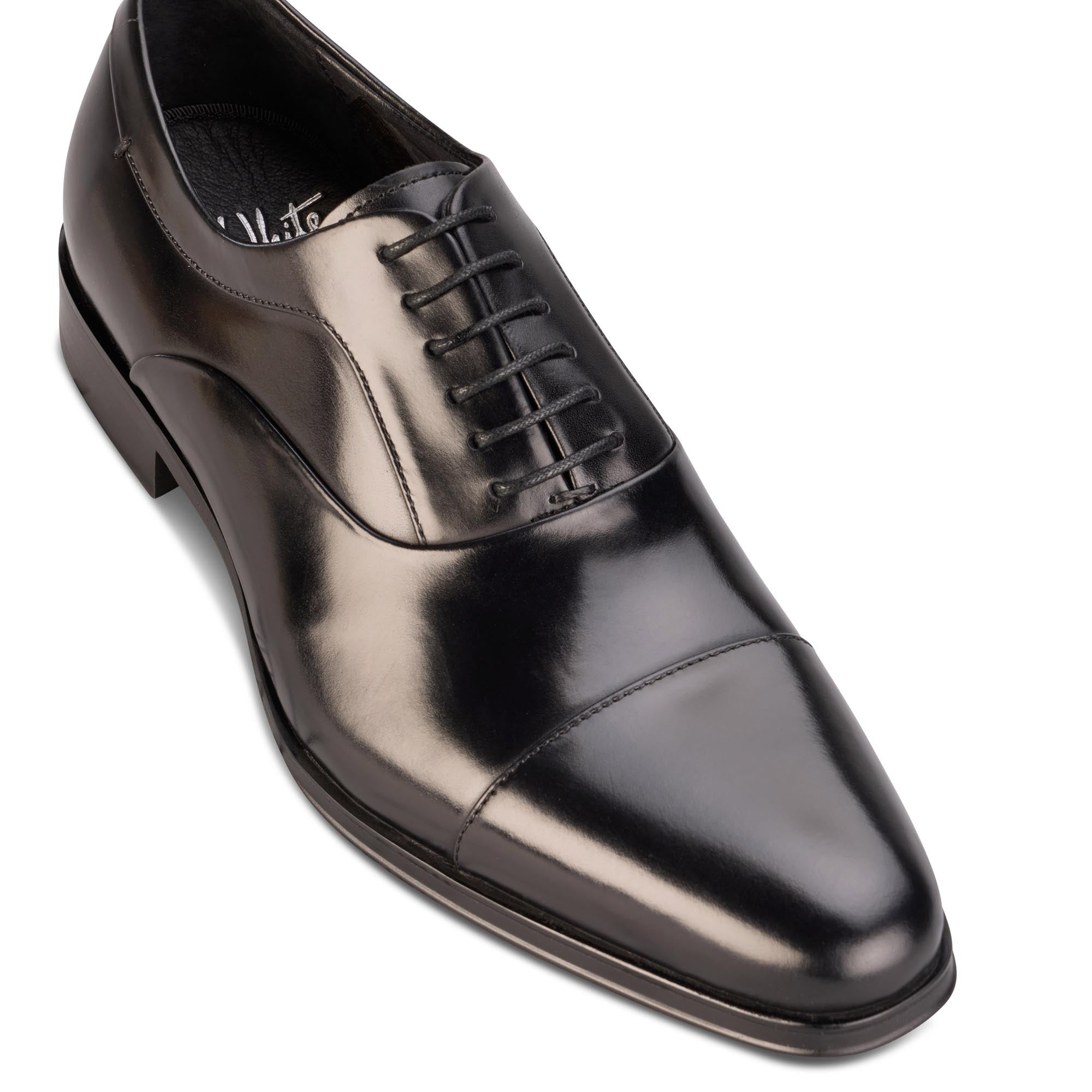
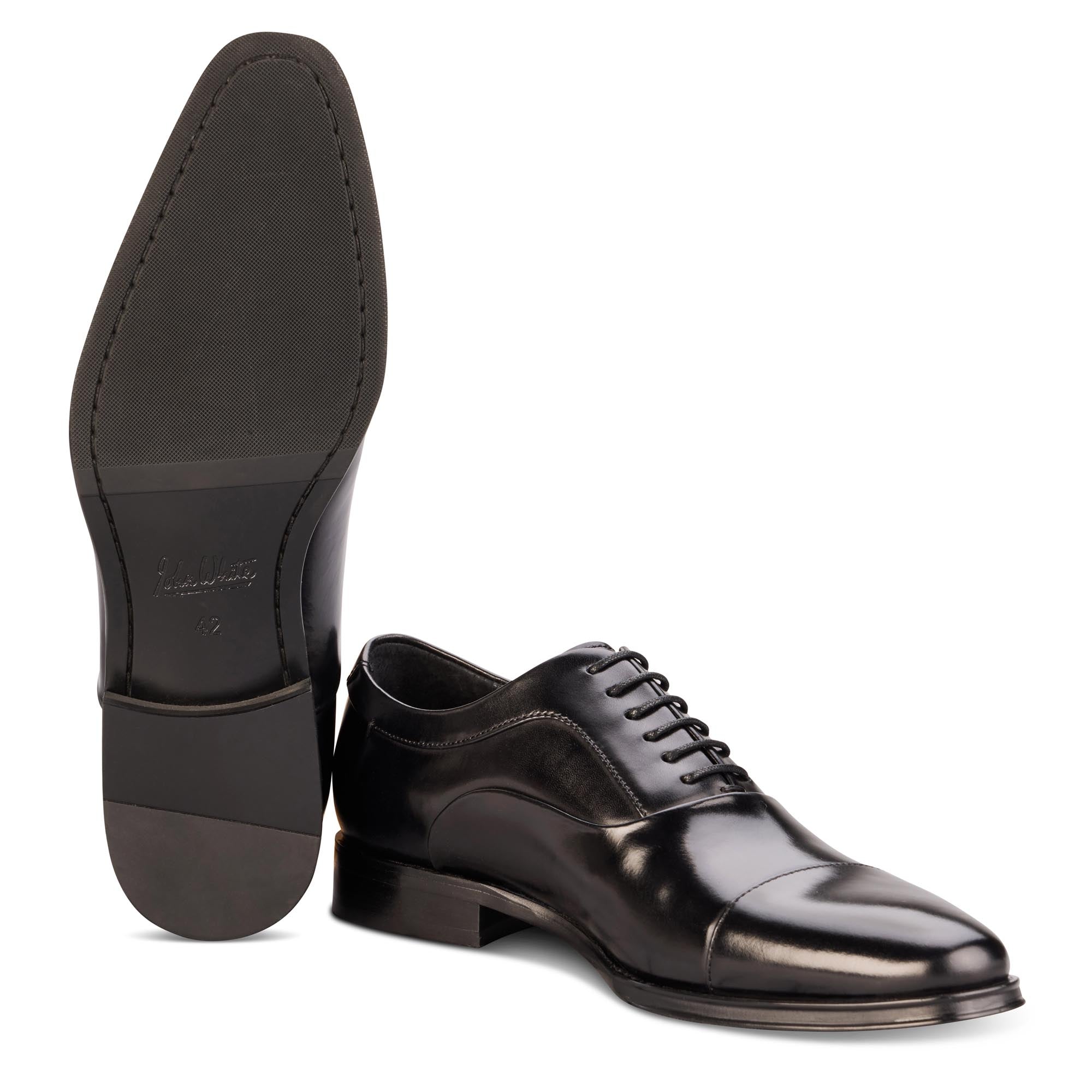
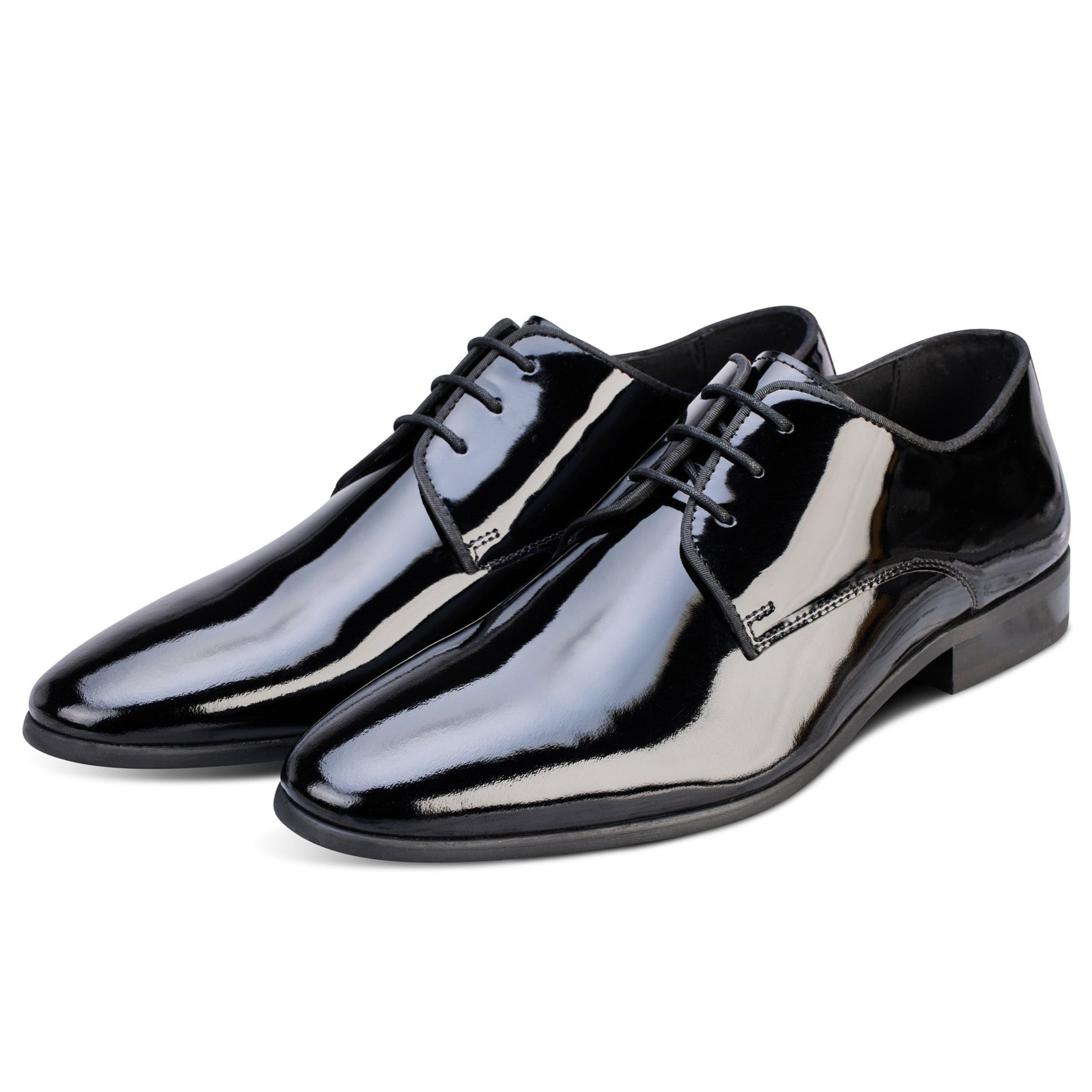
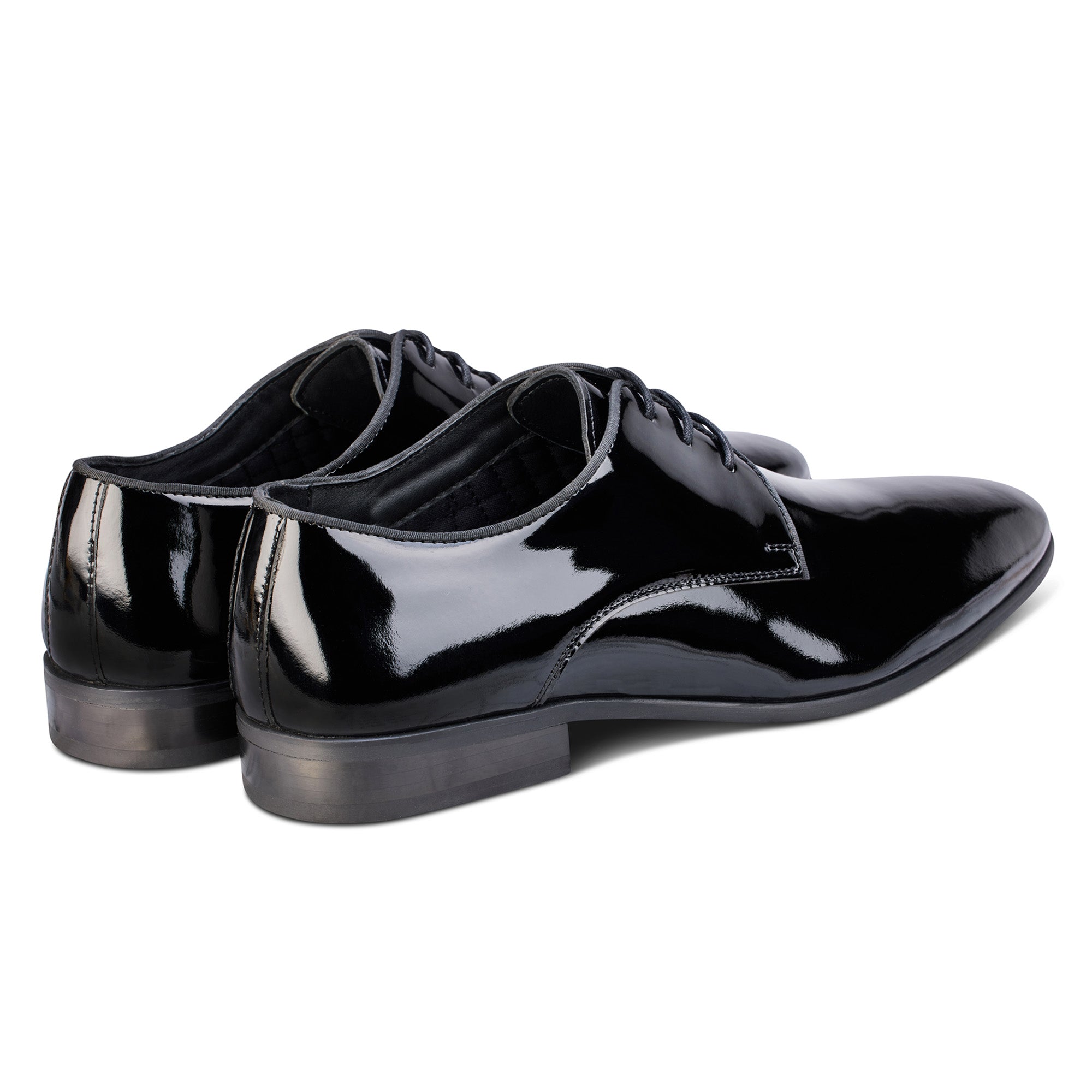
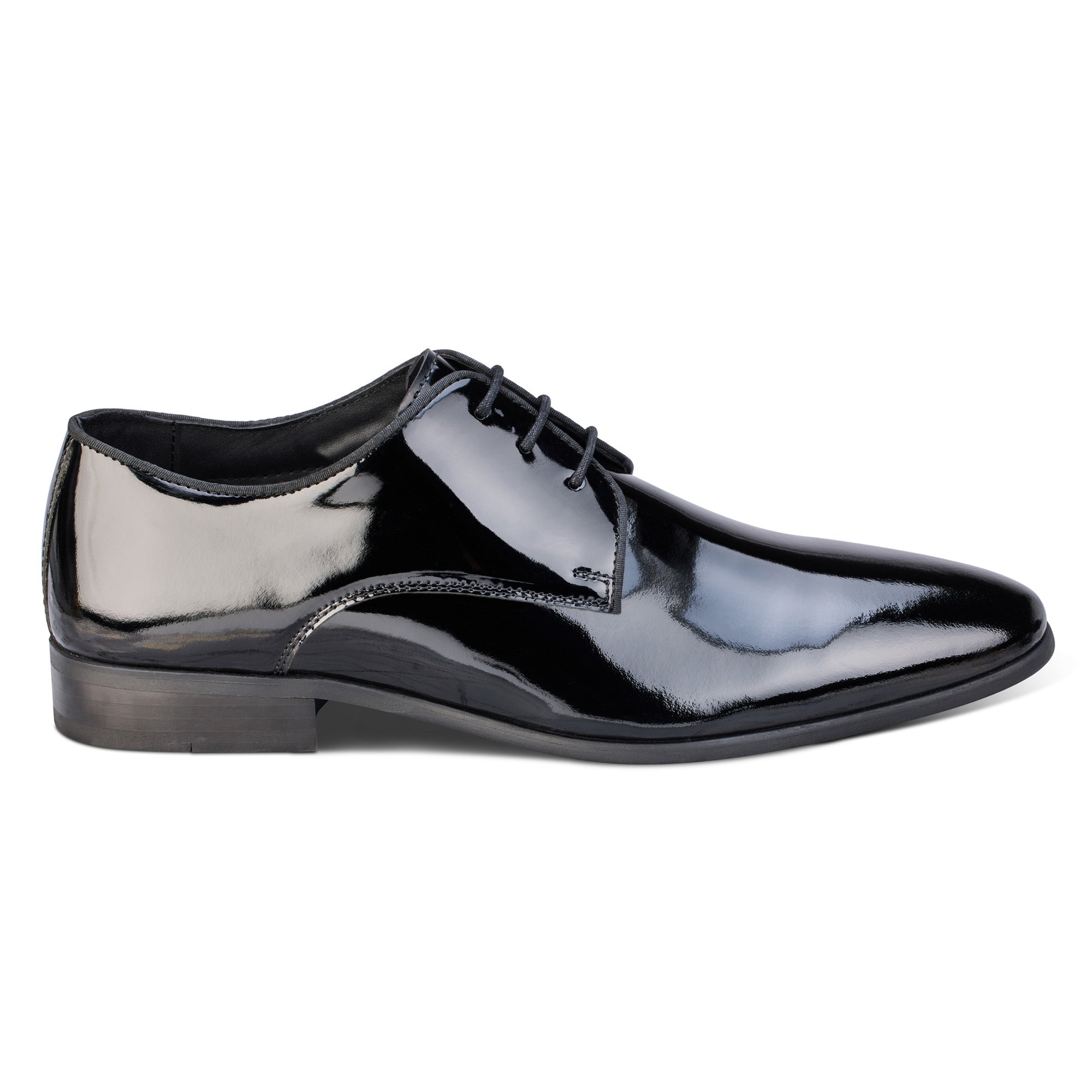
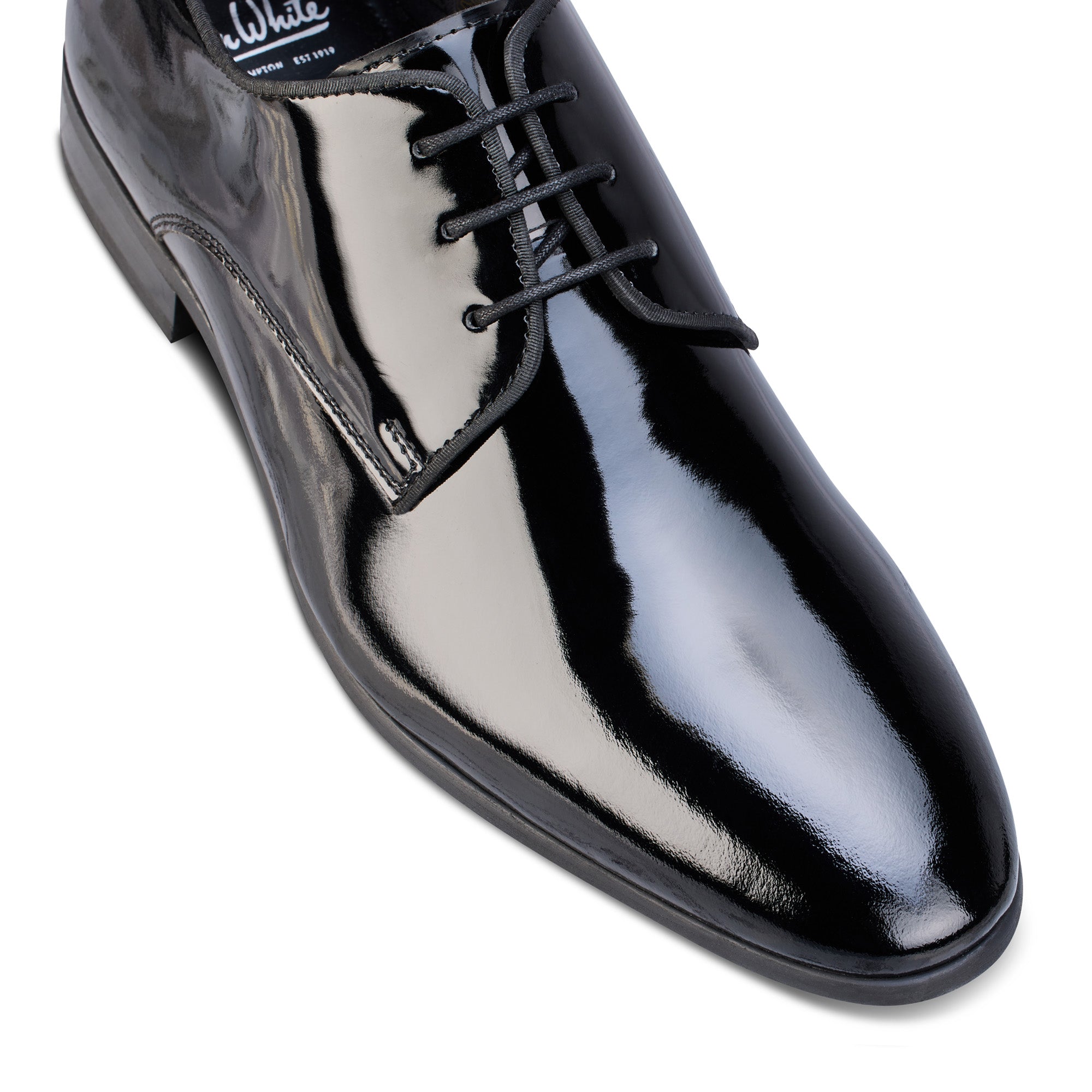
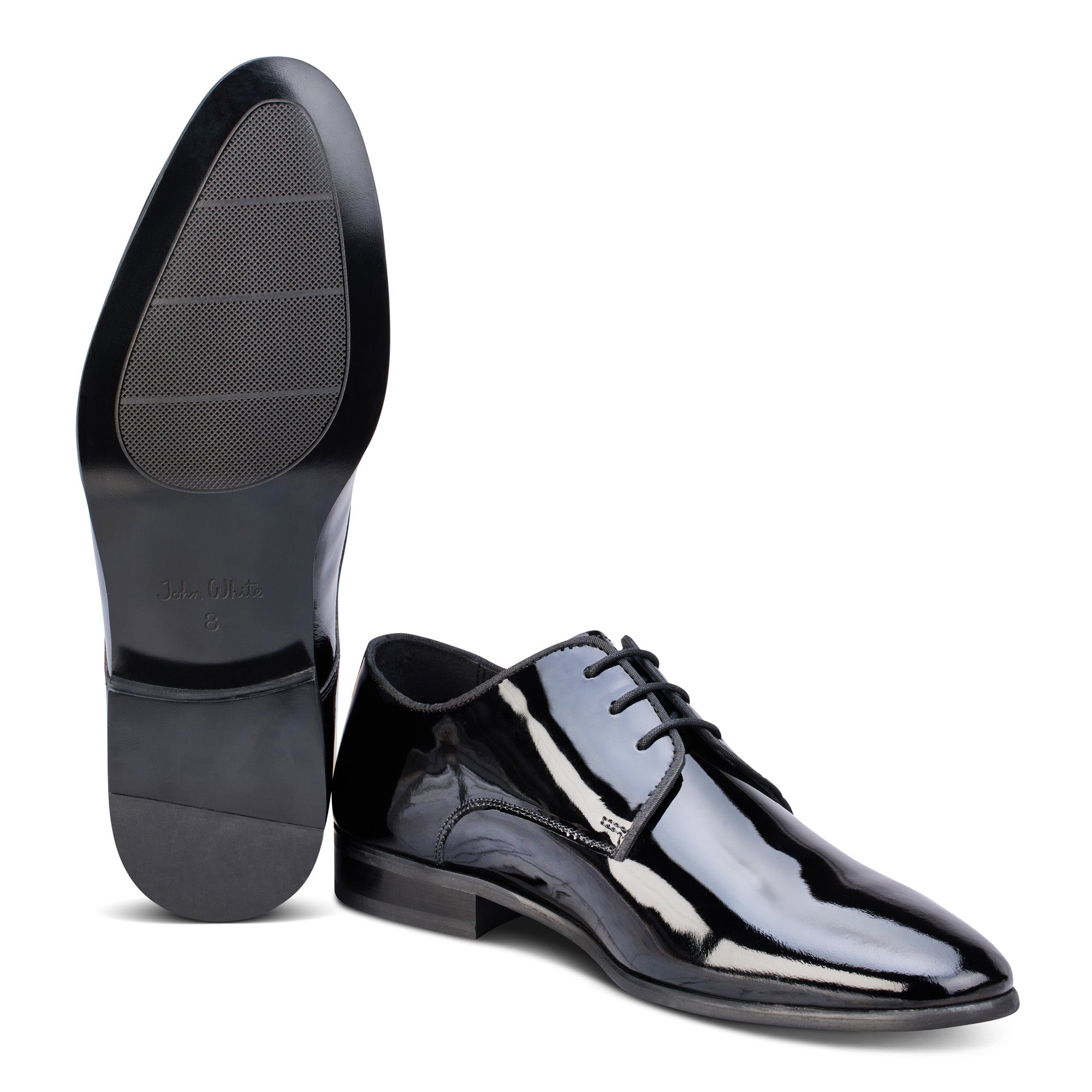
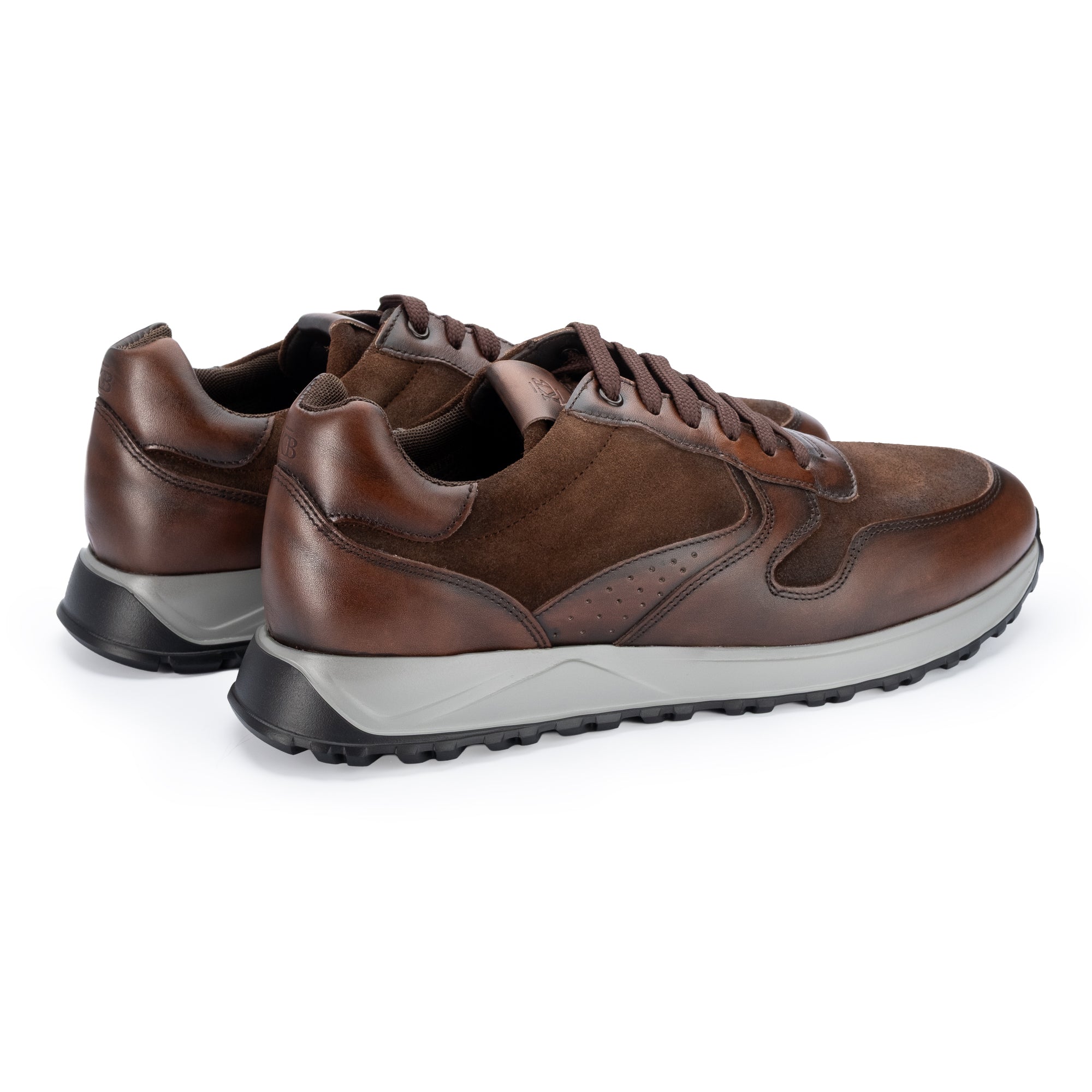
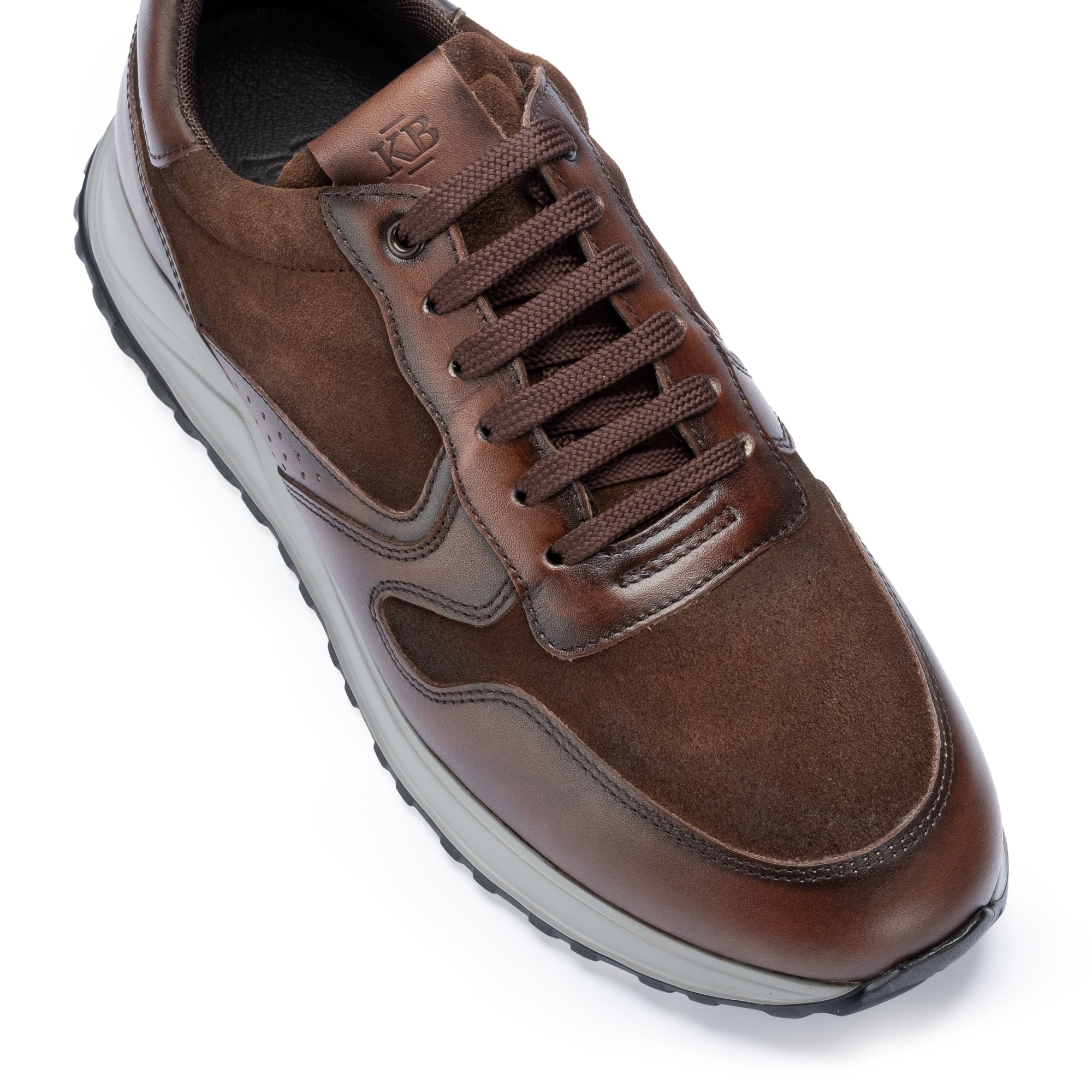
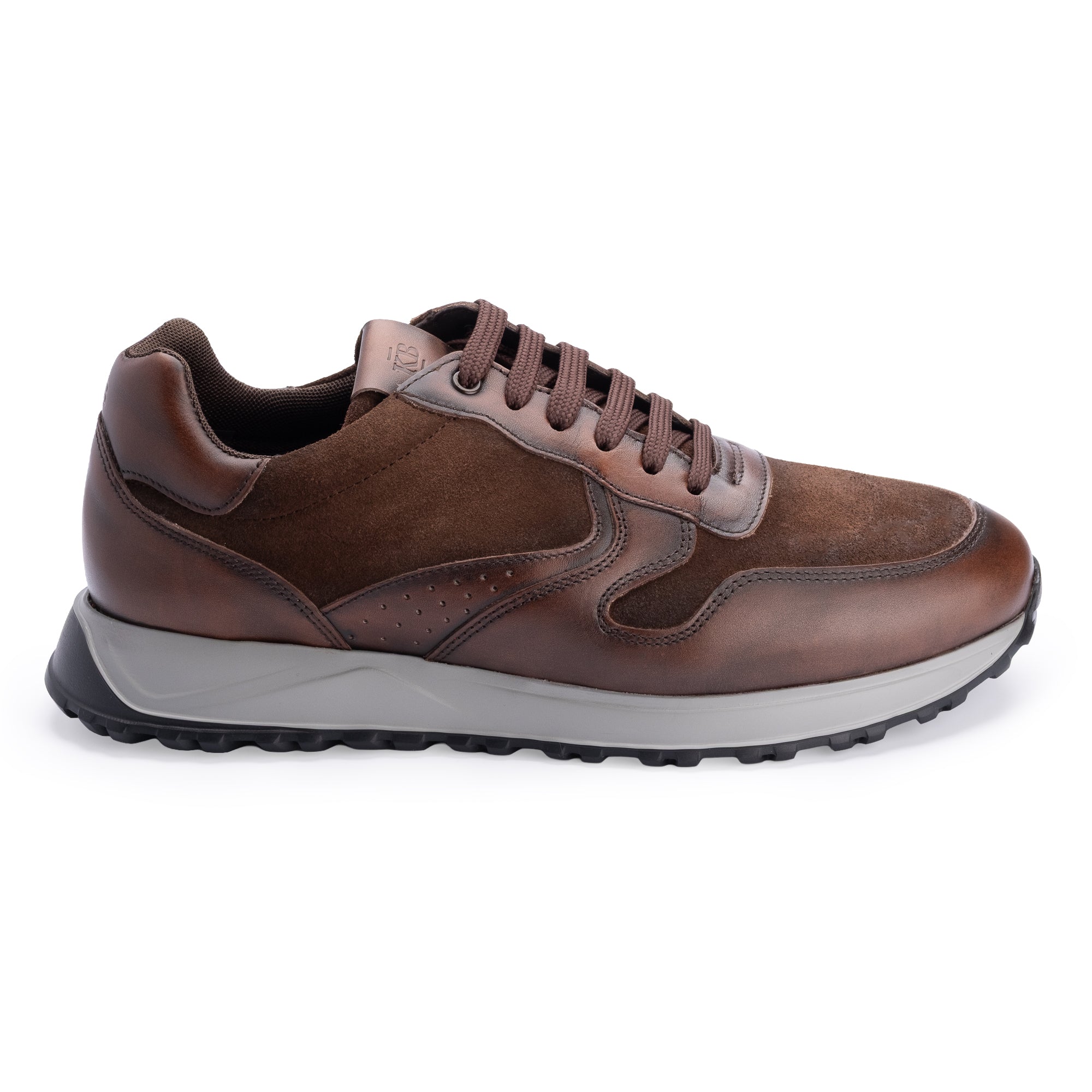
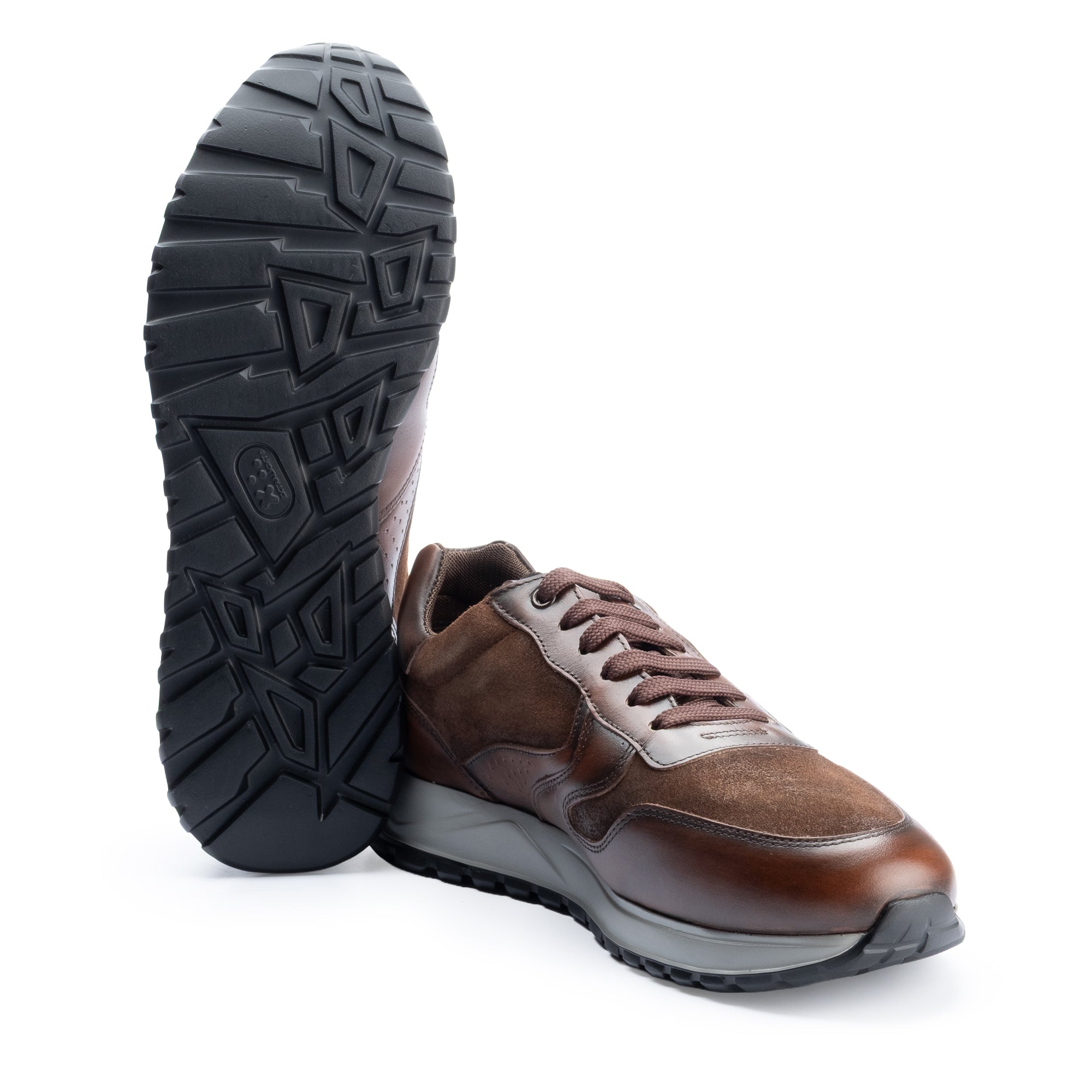
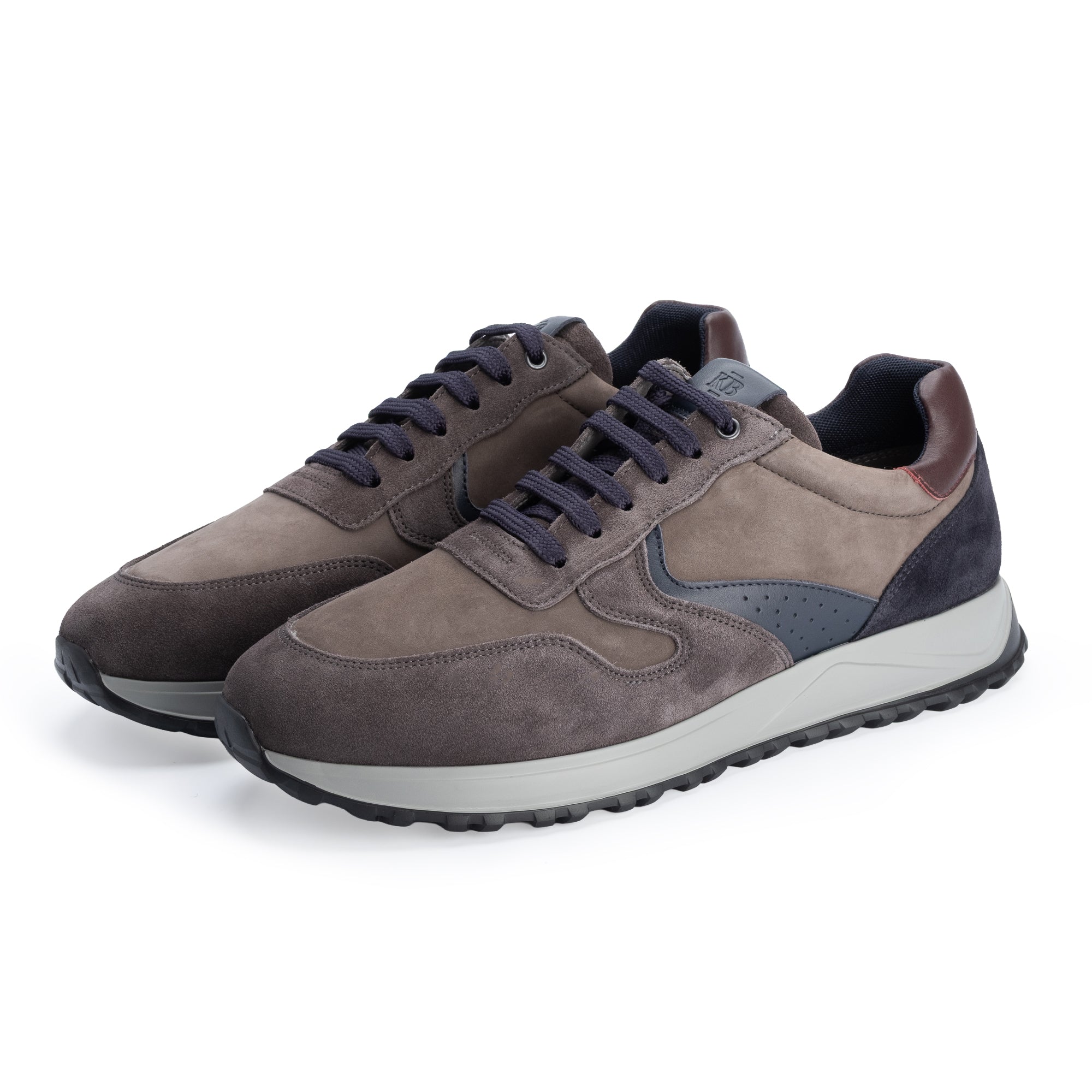
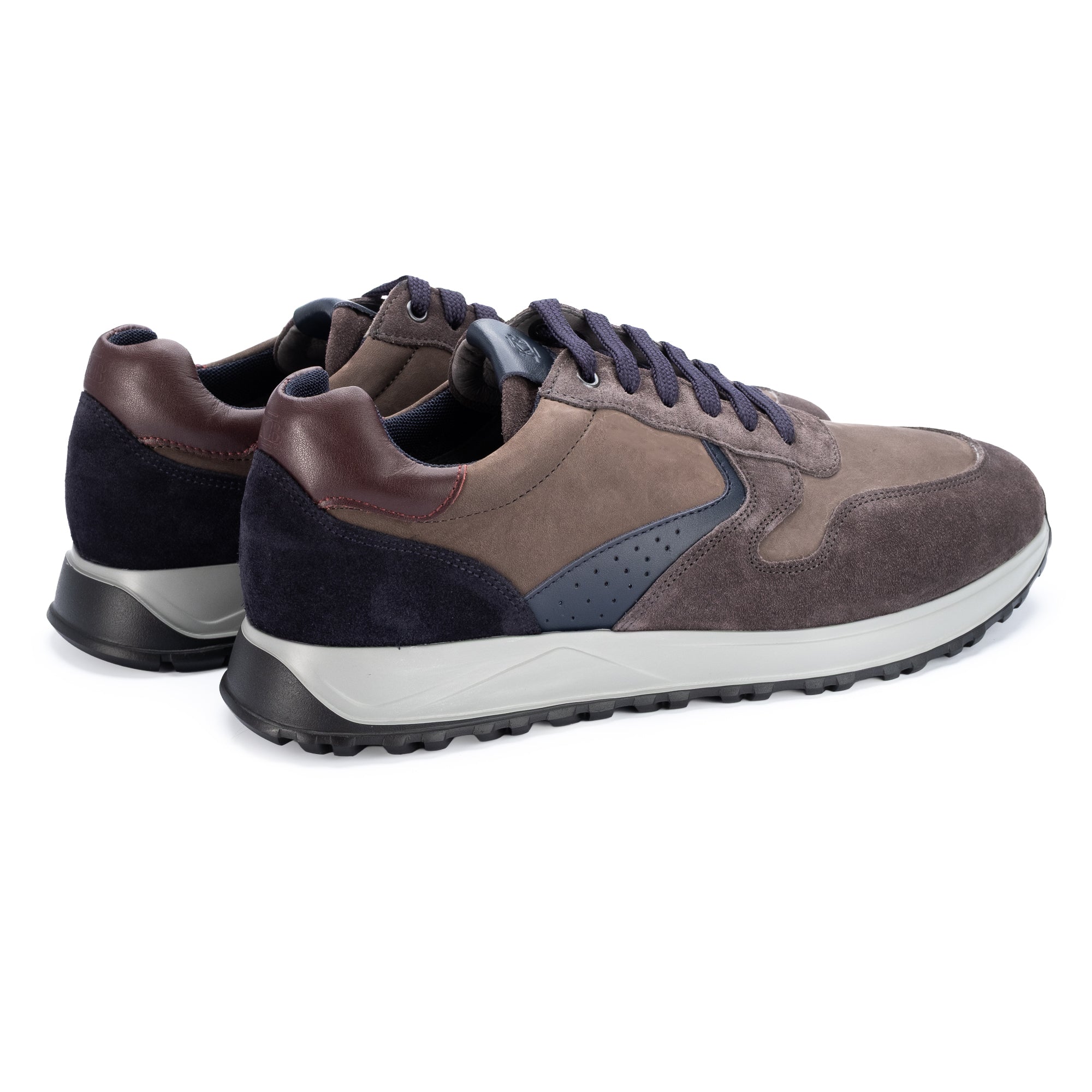
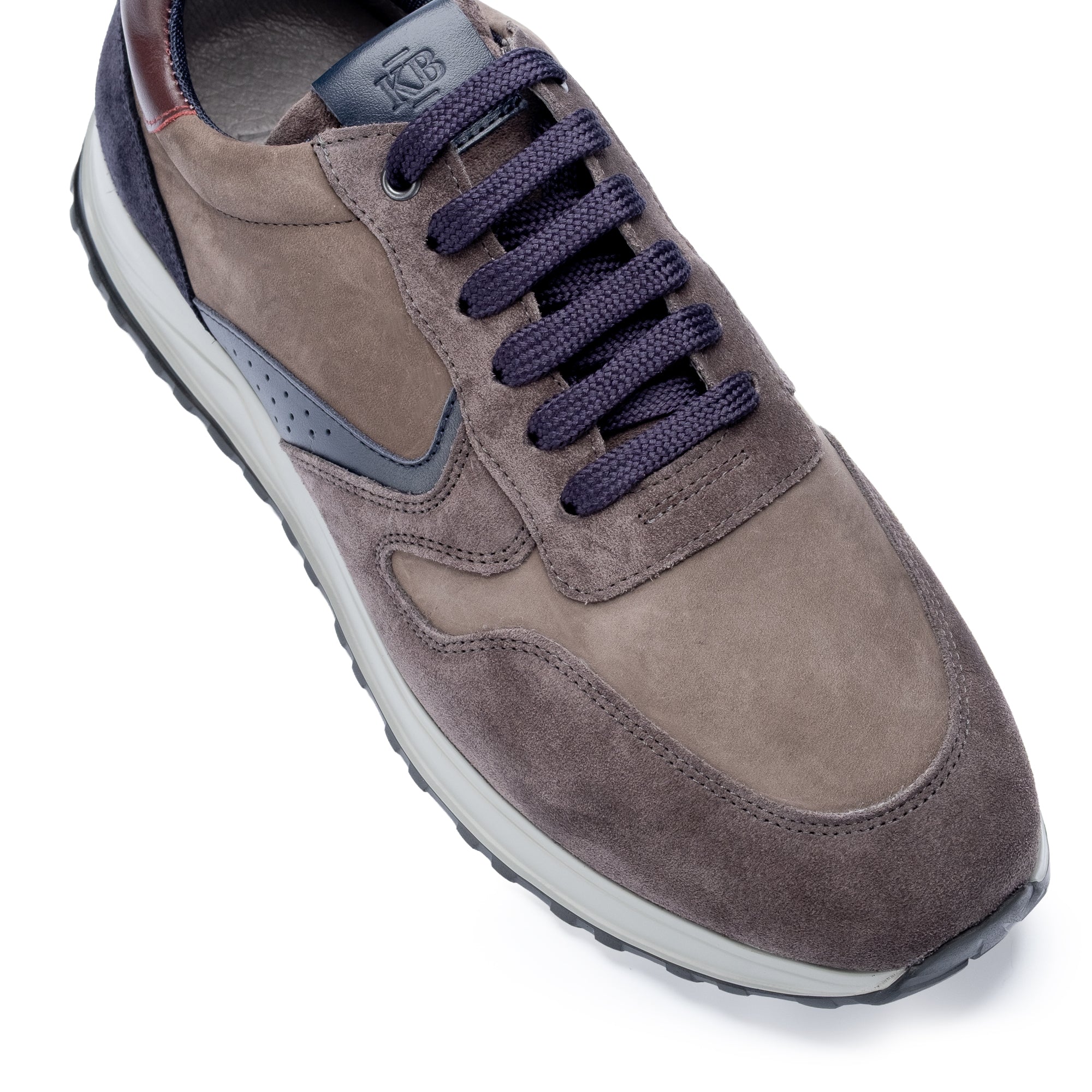
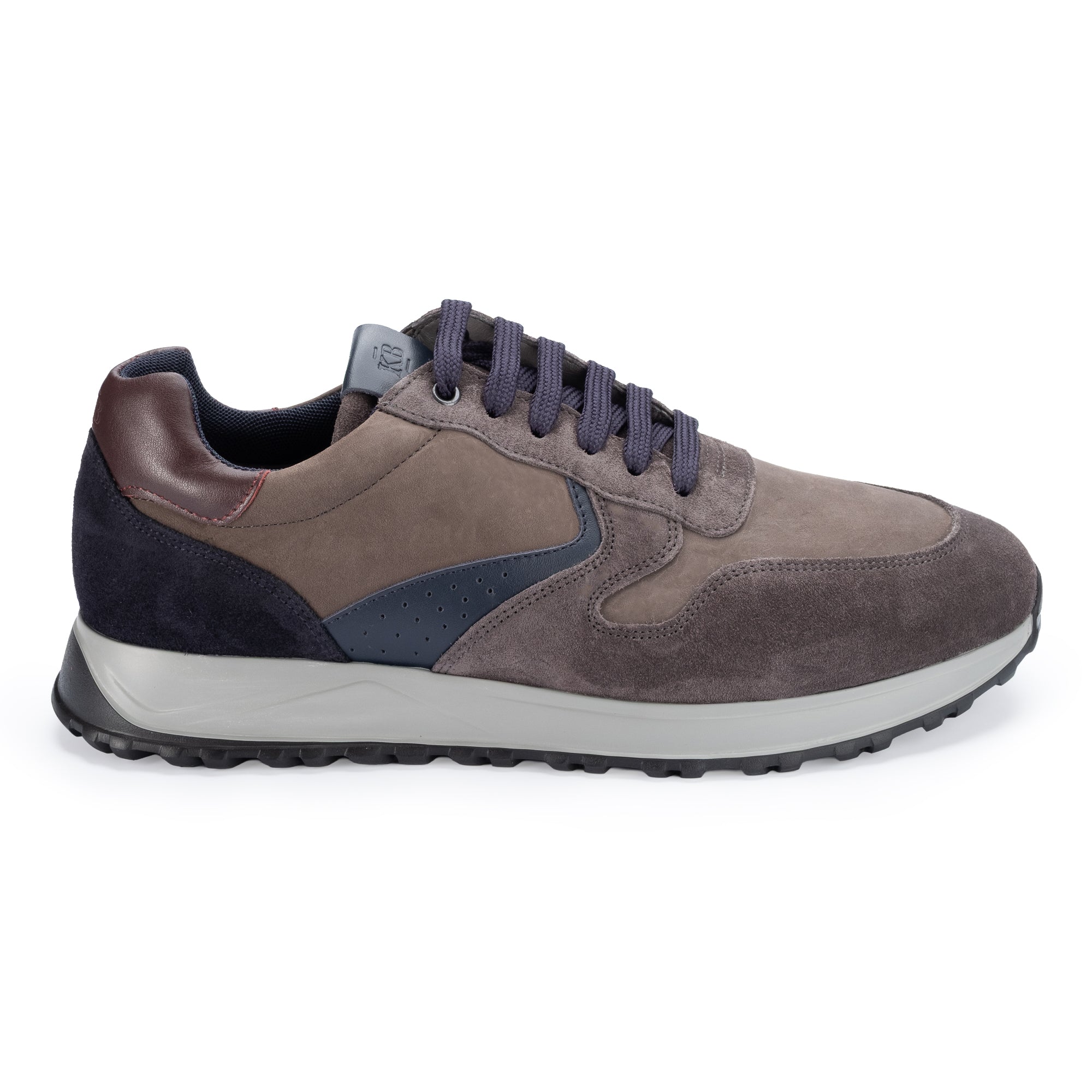
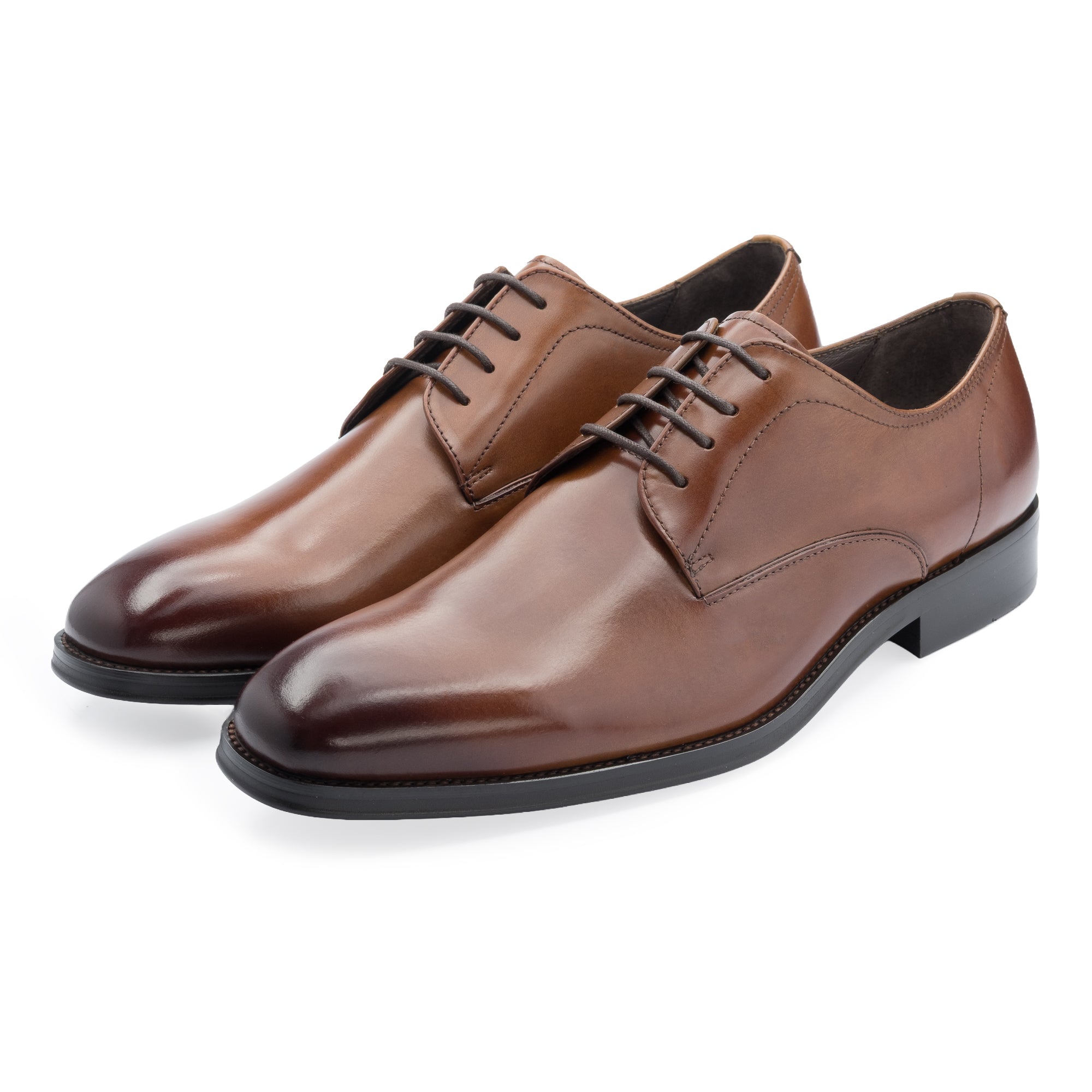
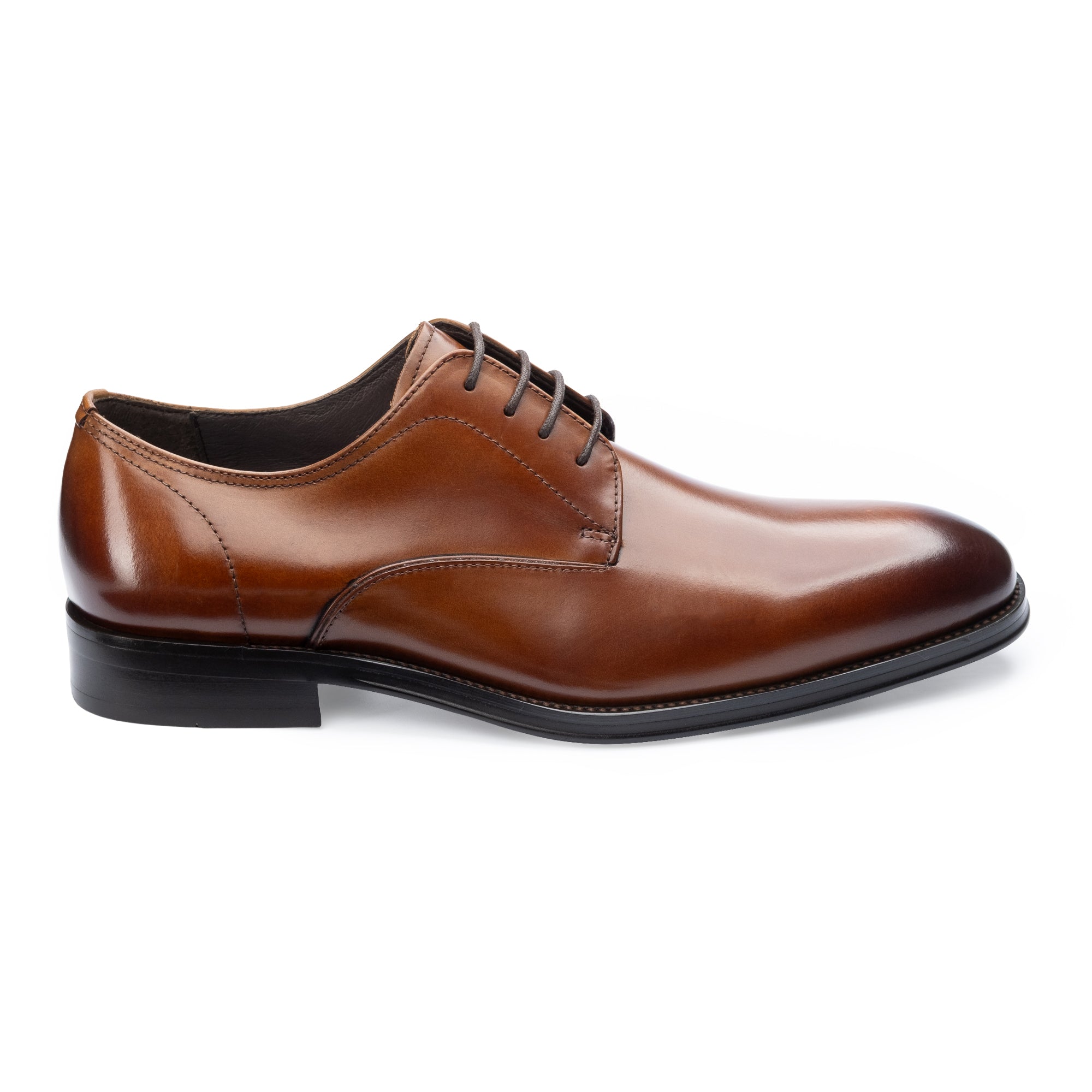
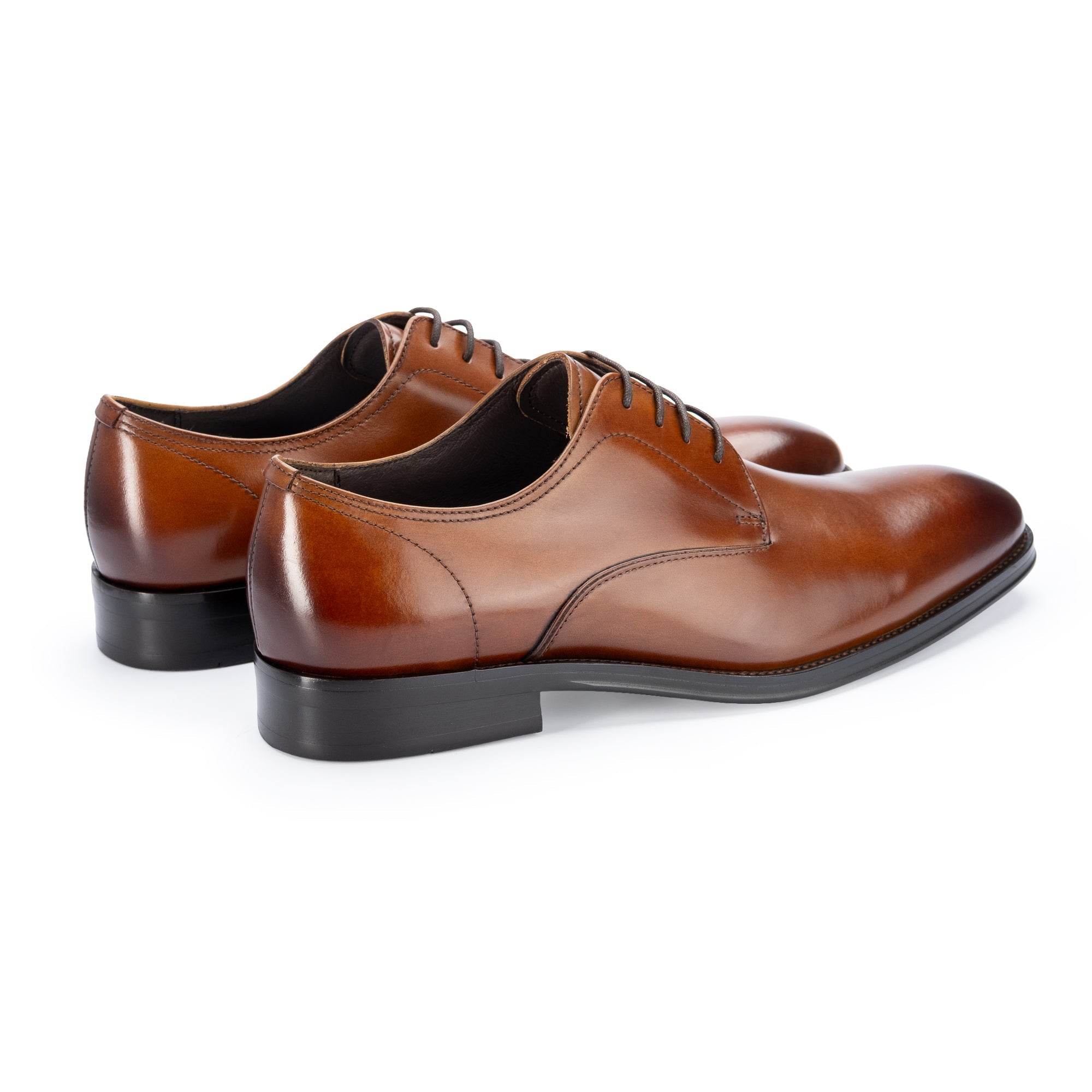
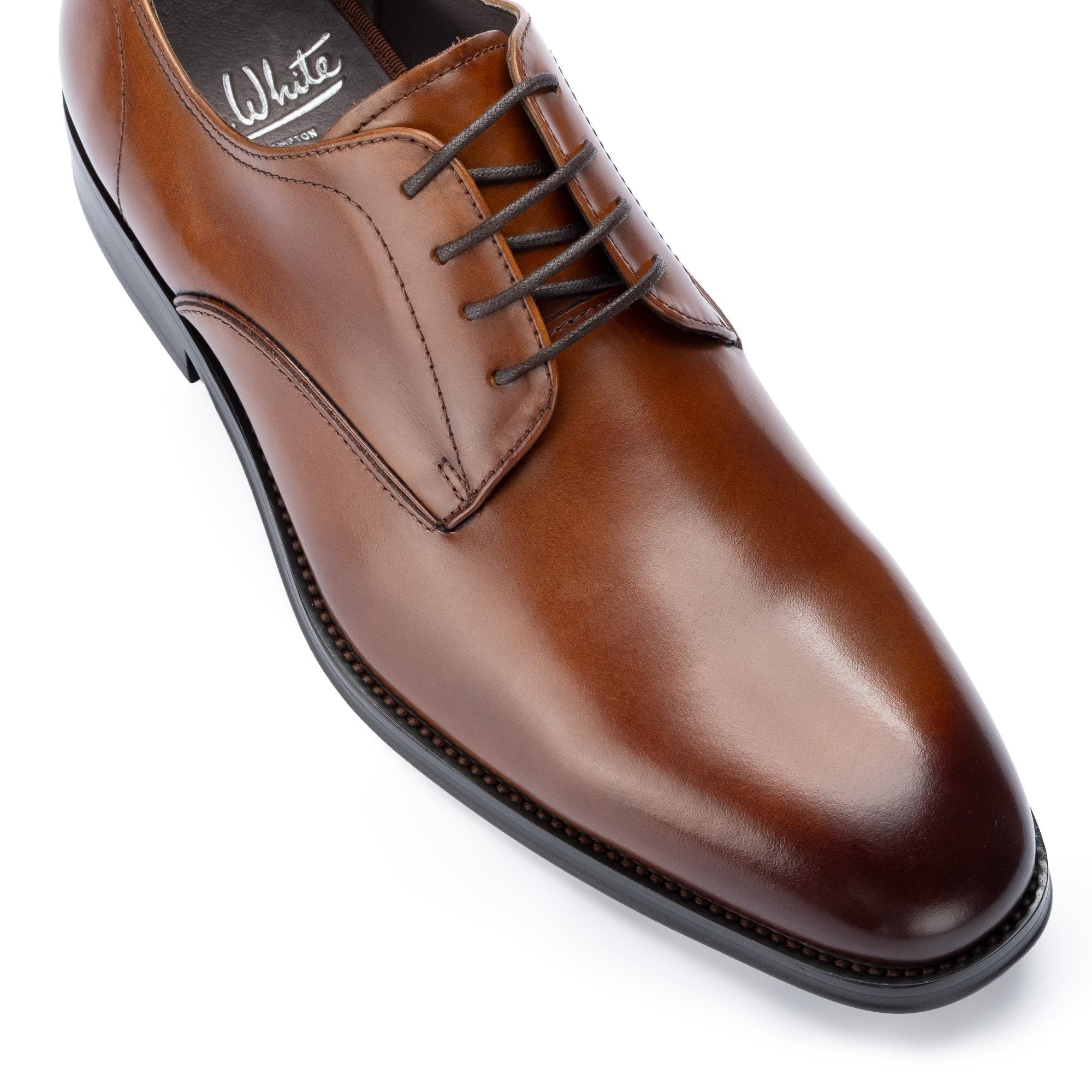
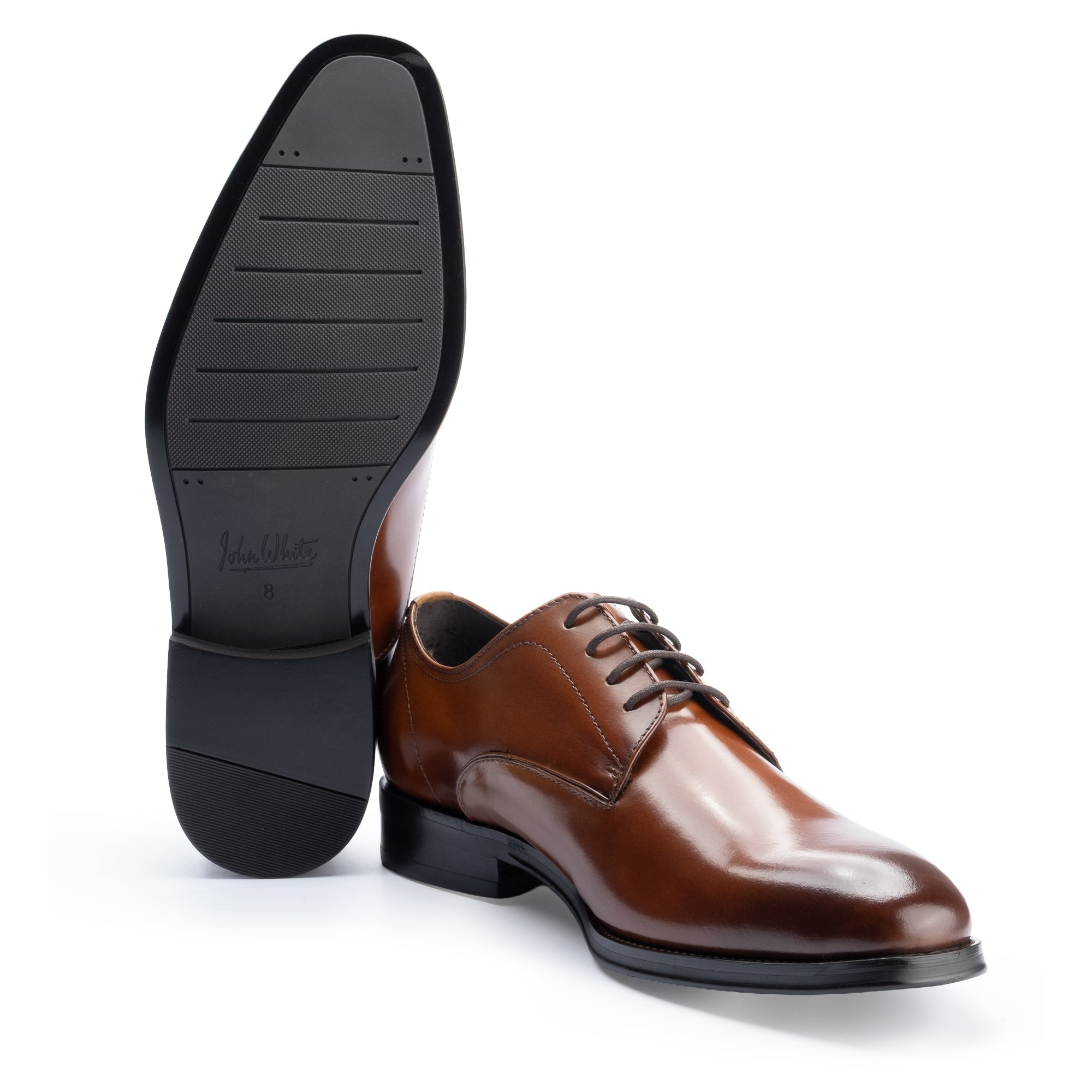
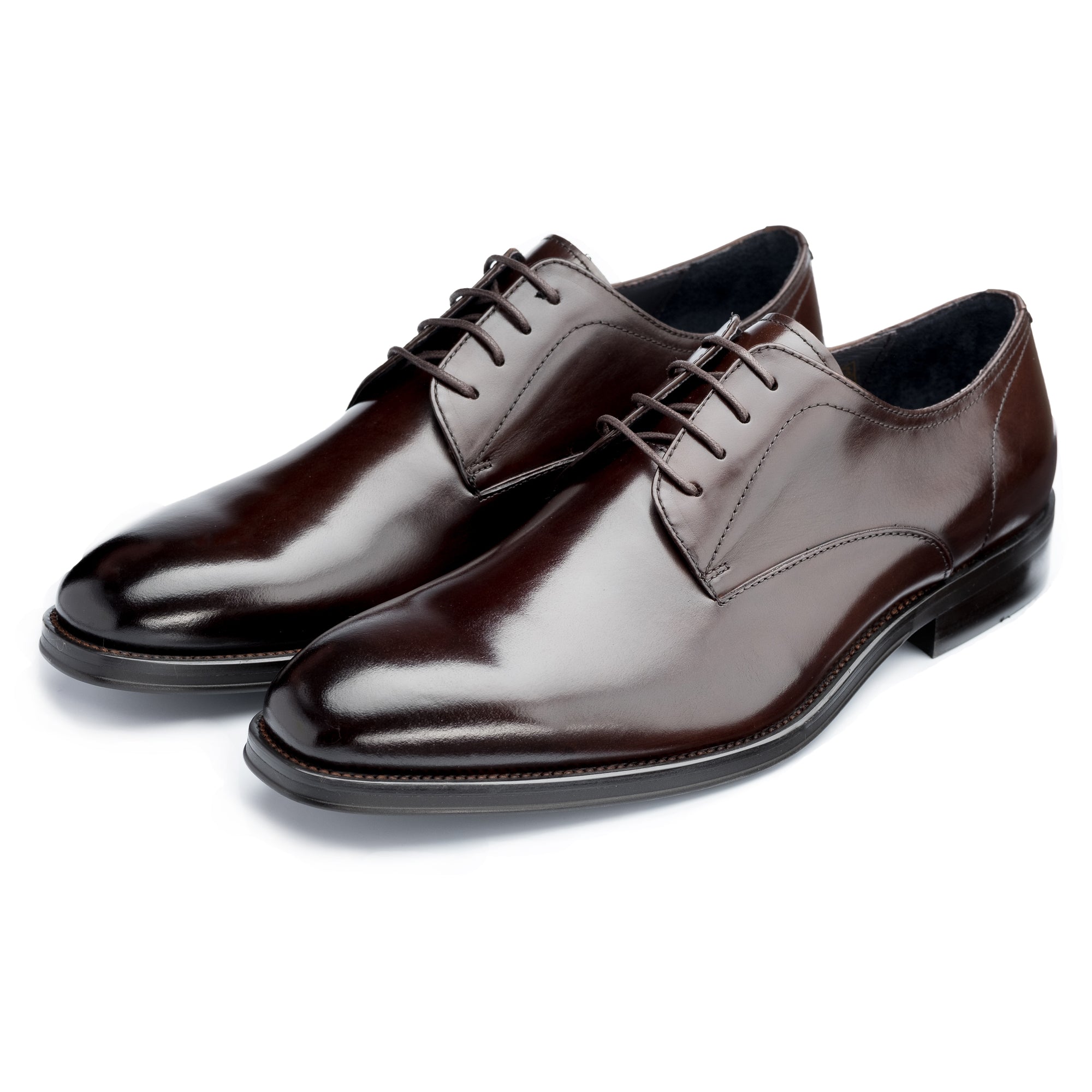
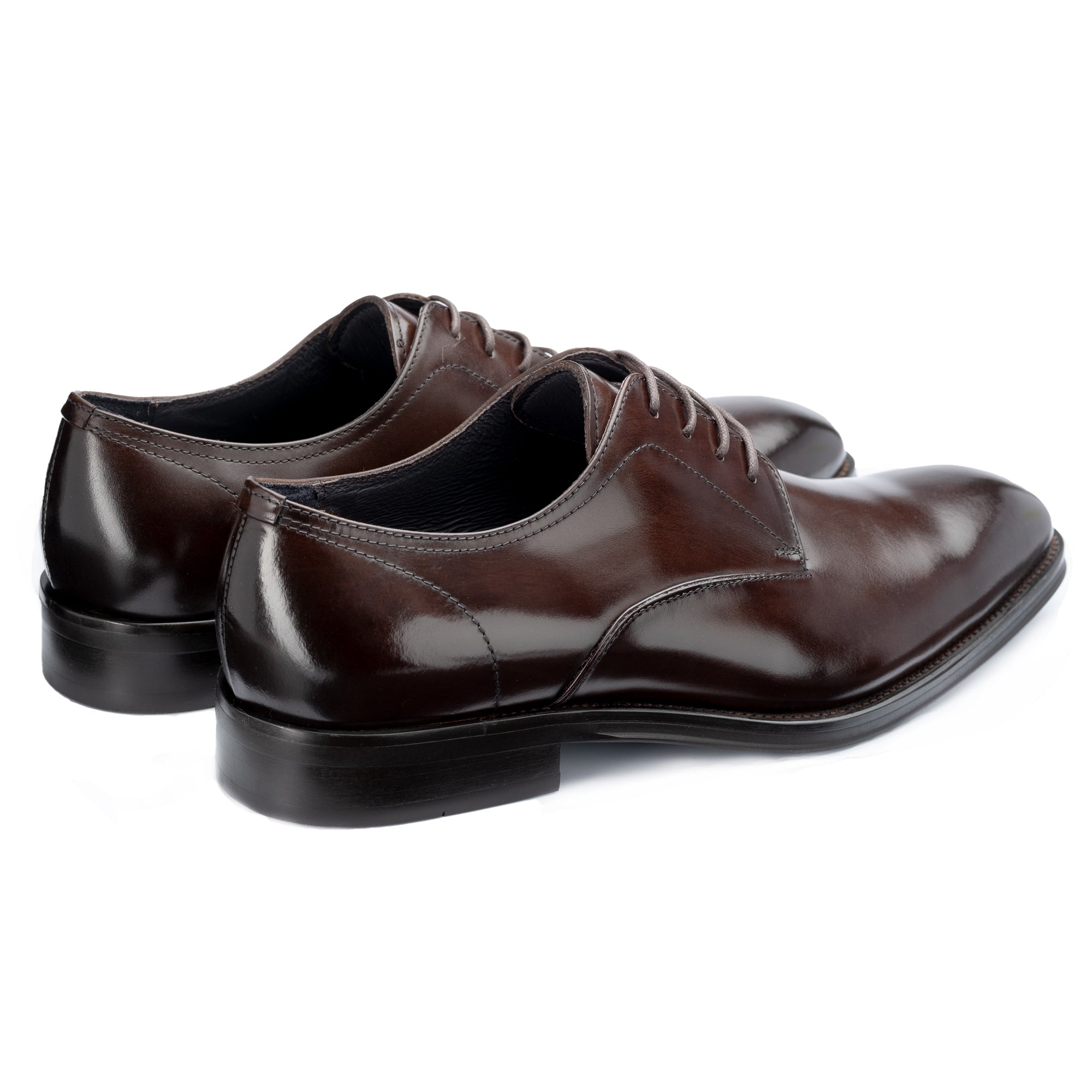
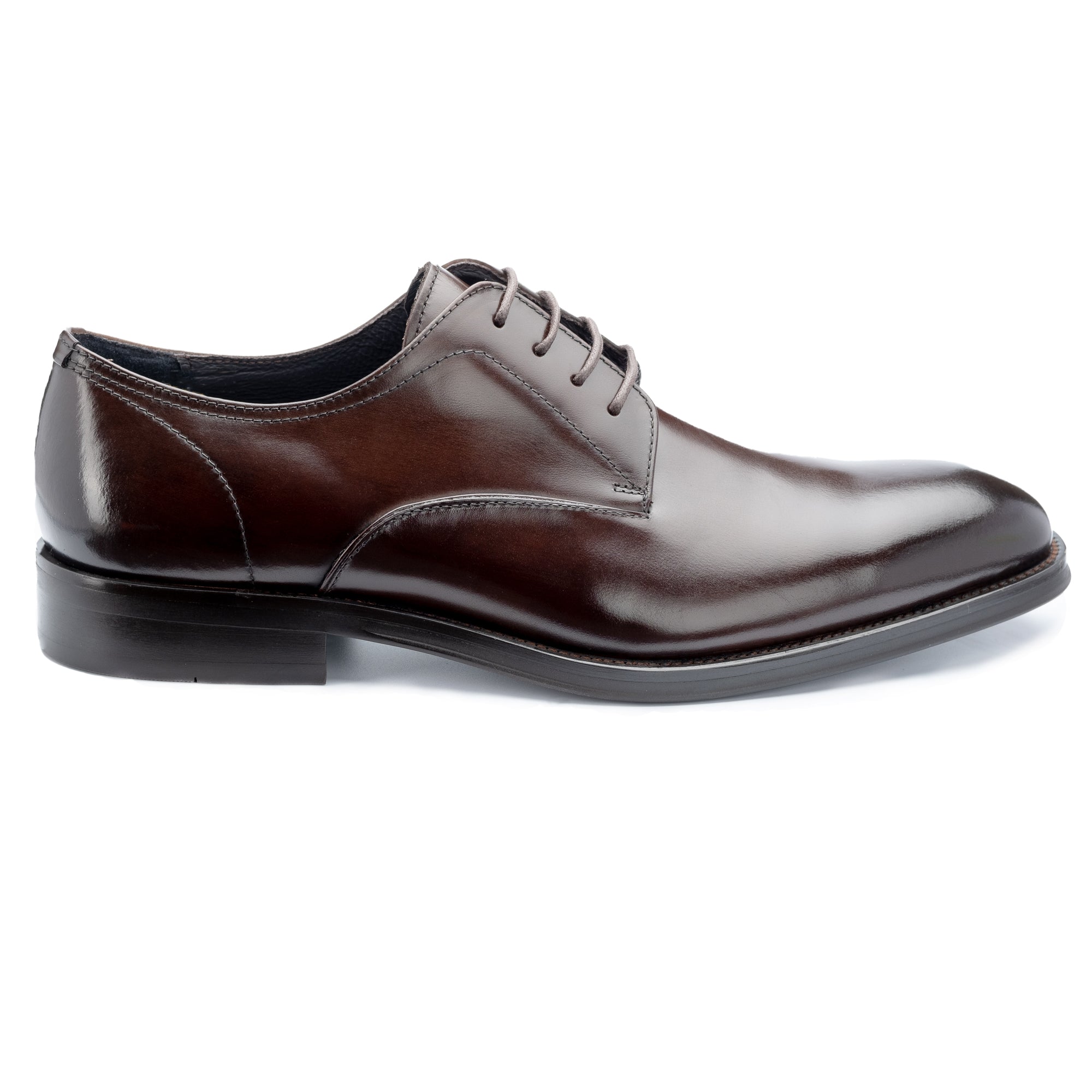
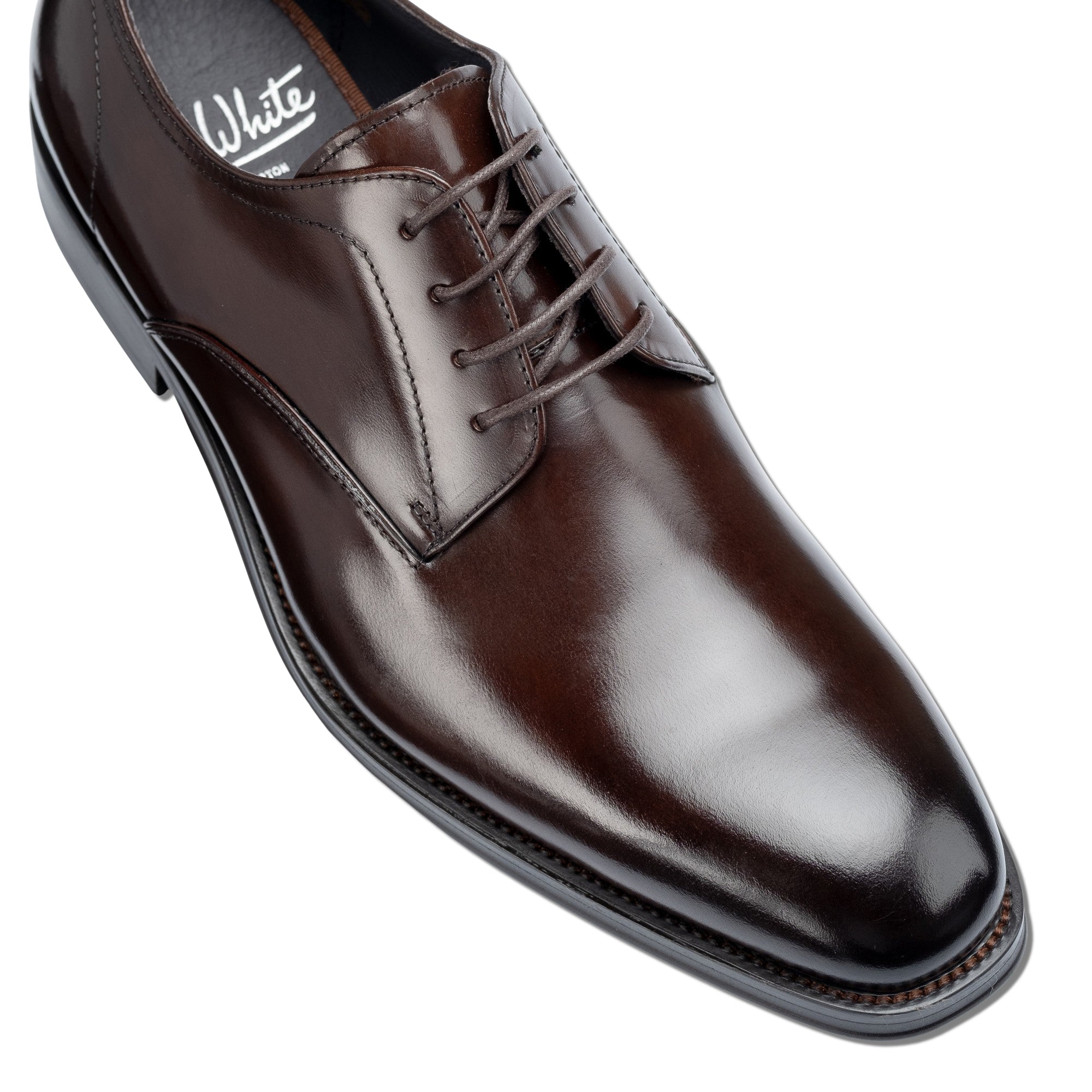
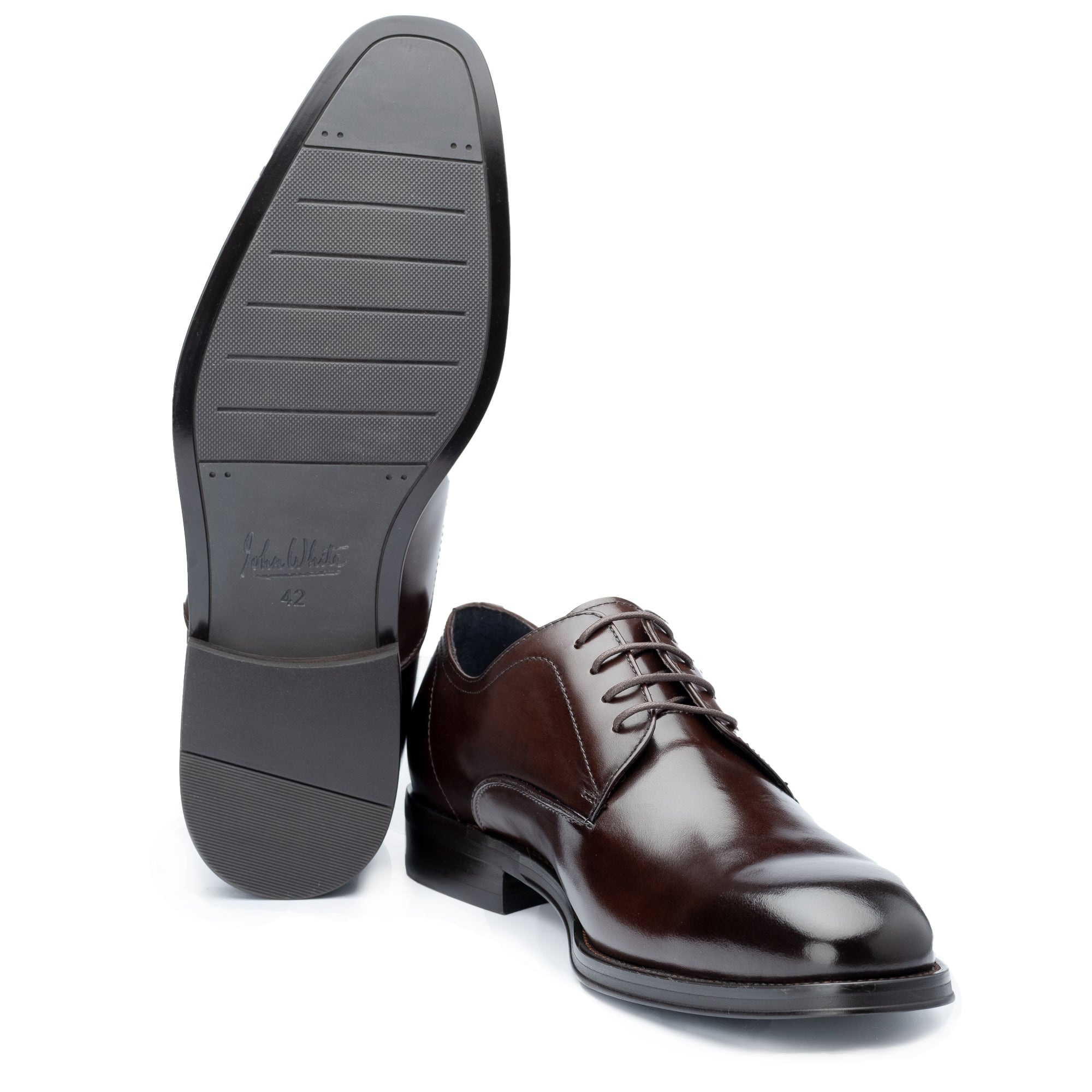
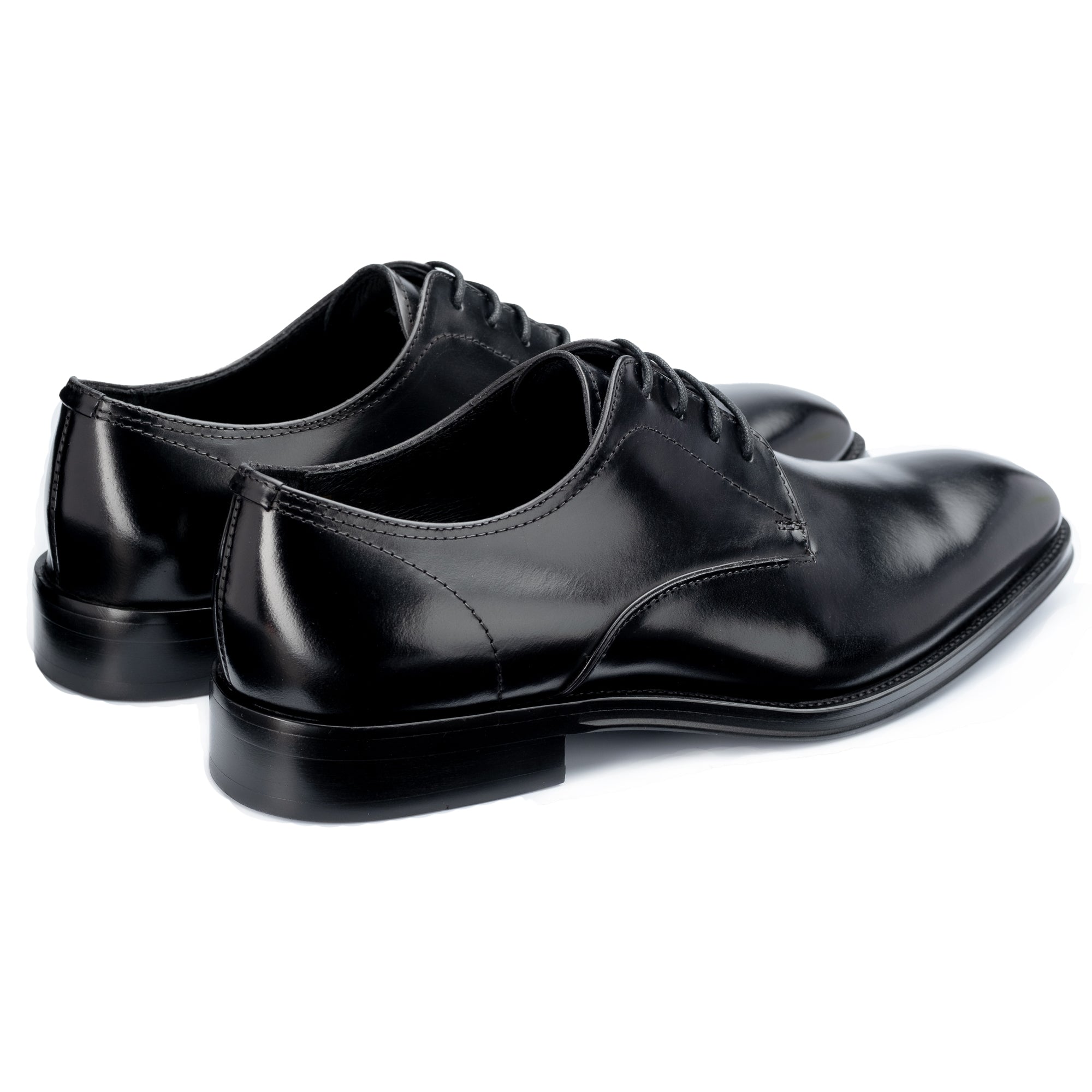
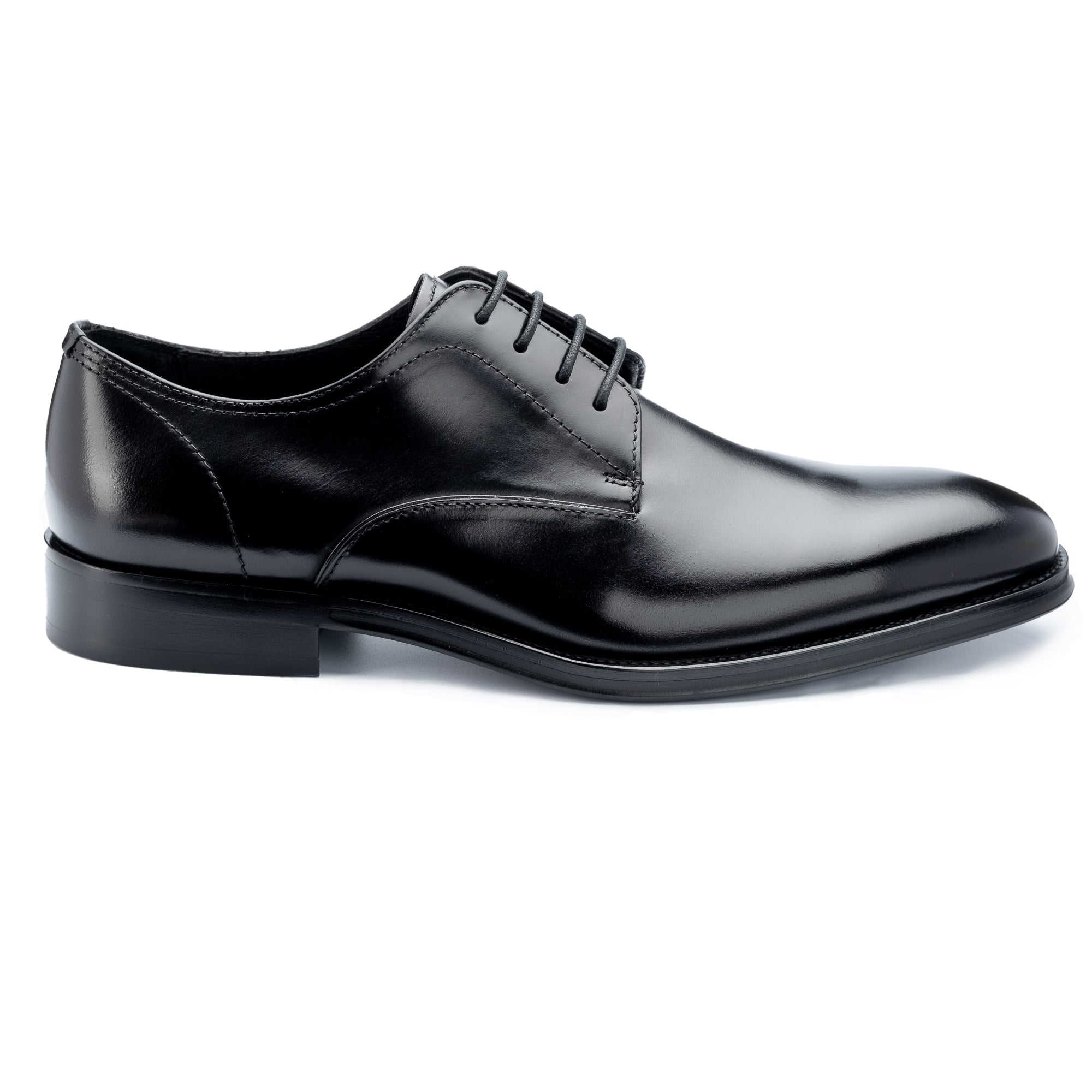
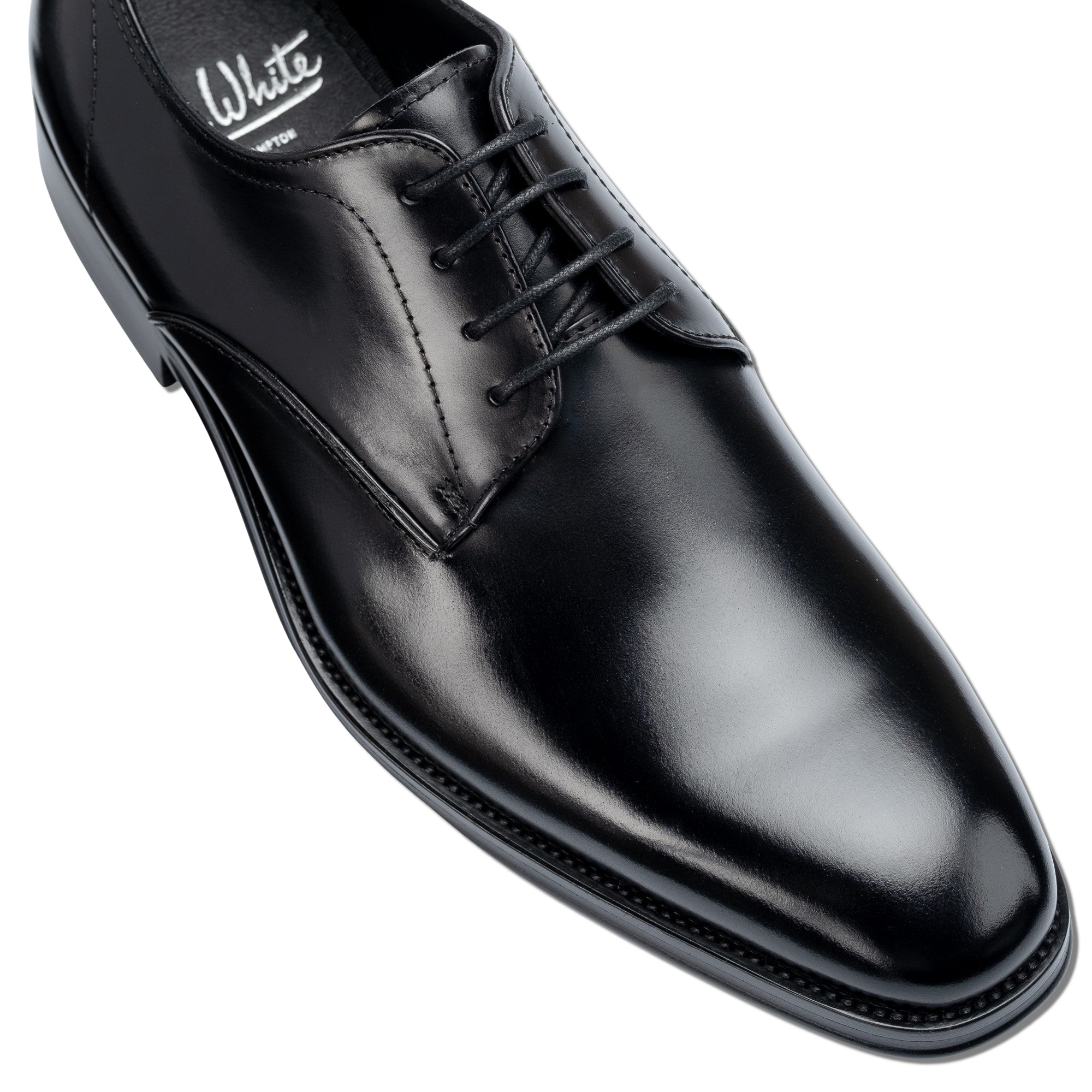
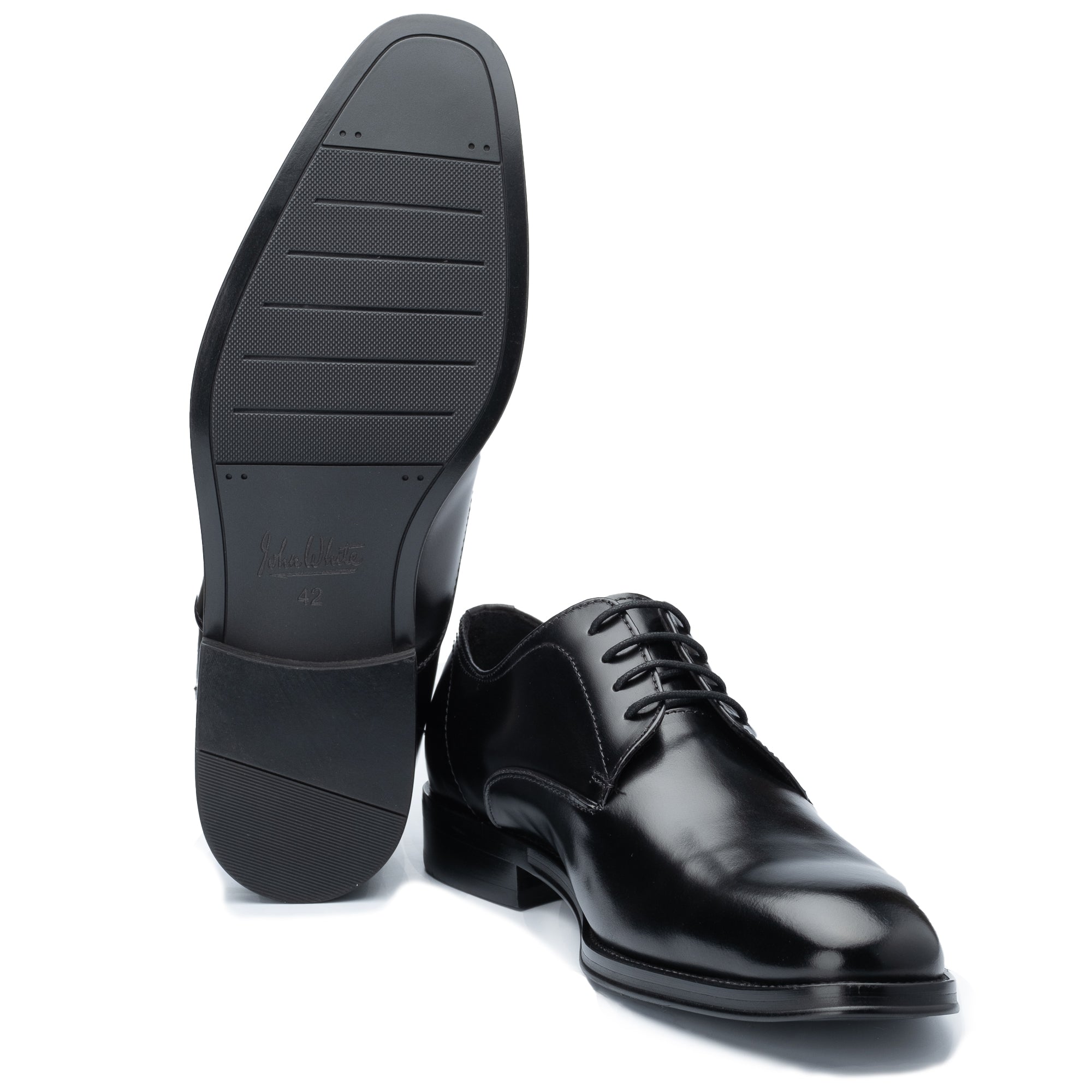
The Derby shoe is a lace-up defined by its open-lacing system, in which the two eyelet-bearing quarters are sewn on top of the vamp rather than beneath it. This single construction decision distinguishes the Derby from the Oxford and has meaningful practical consequences: the quarters can splay open, accommodating a wider range of foot shapes and instep profiles with greater ease.
According to Northampton Museum and Art Gallery, which holds one of the world's most significant footwear collections, the Derby's open-lacing construction has been a consistent feature of British men's footwear since at least the mid-nineteenth century. The style's adaptability across formal and casual contexts has kept it in continuous production through every shift in menswear since.
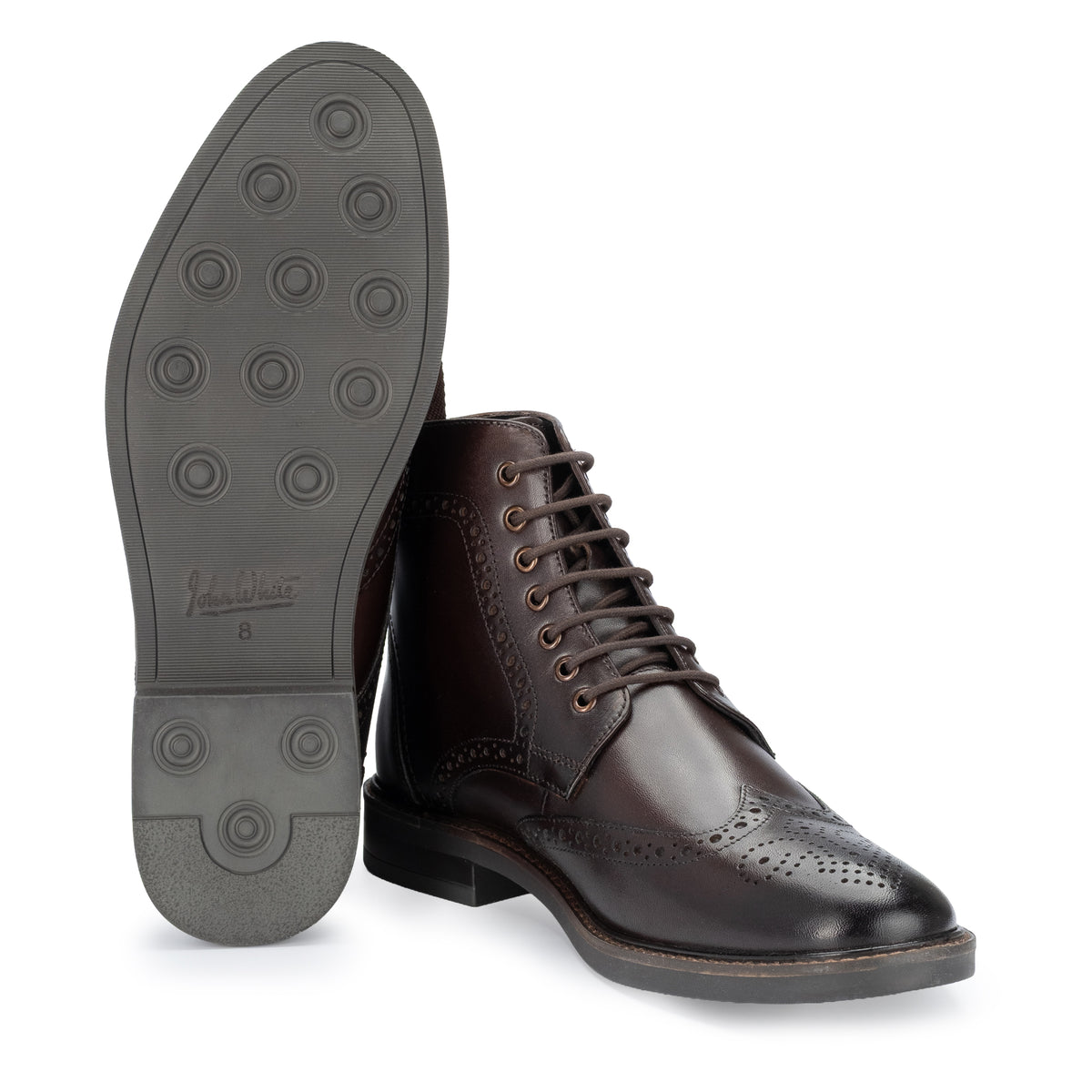
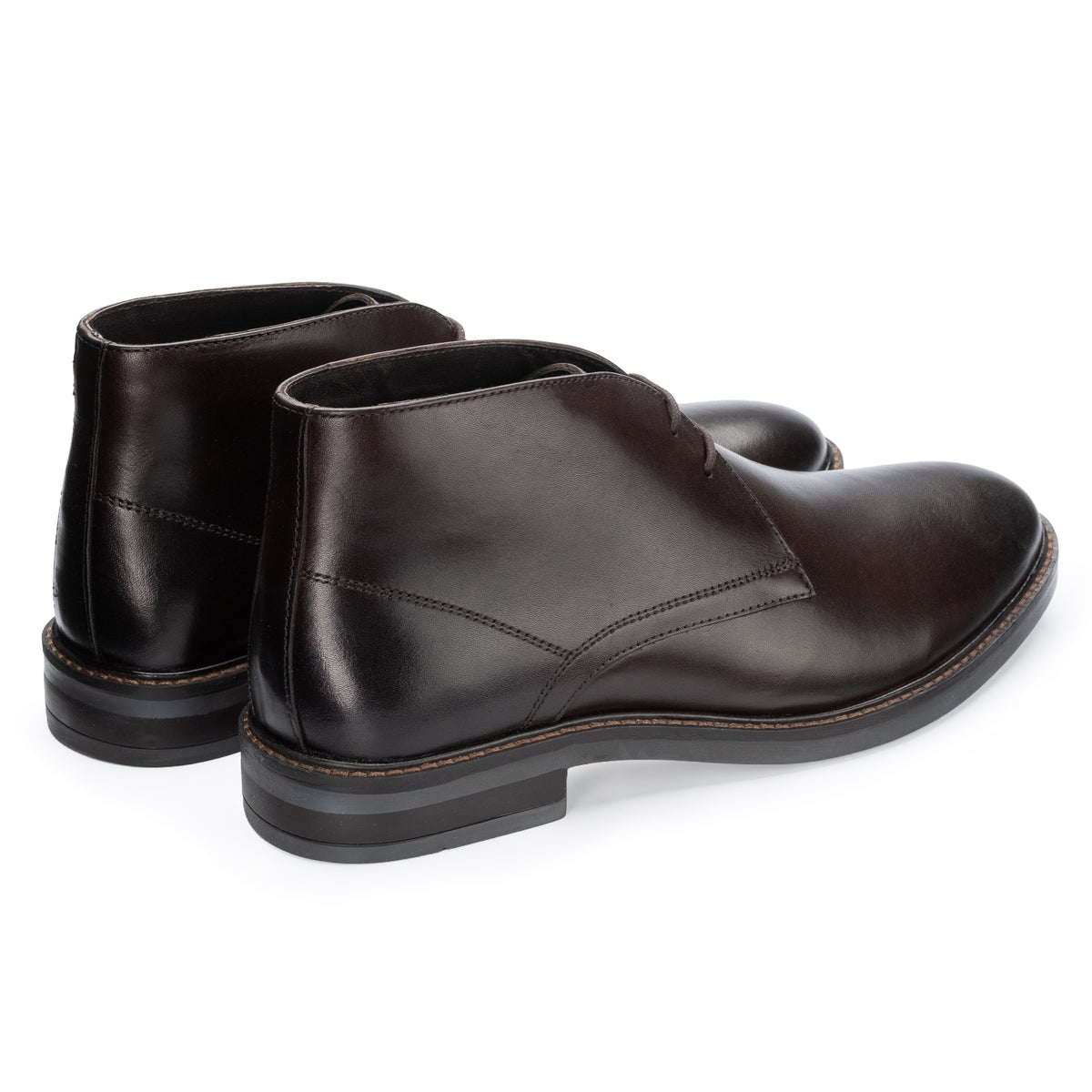
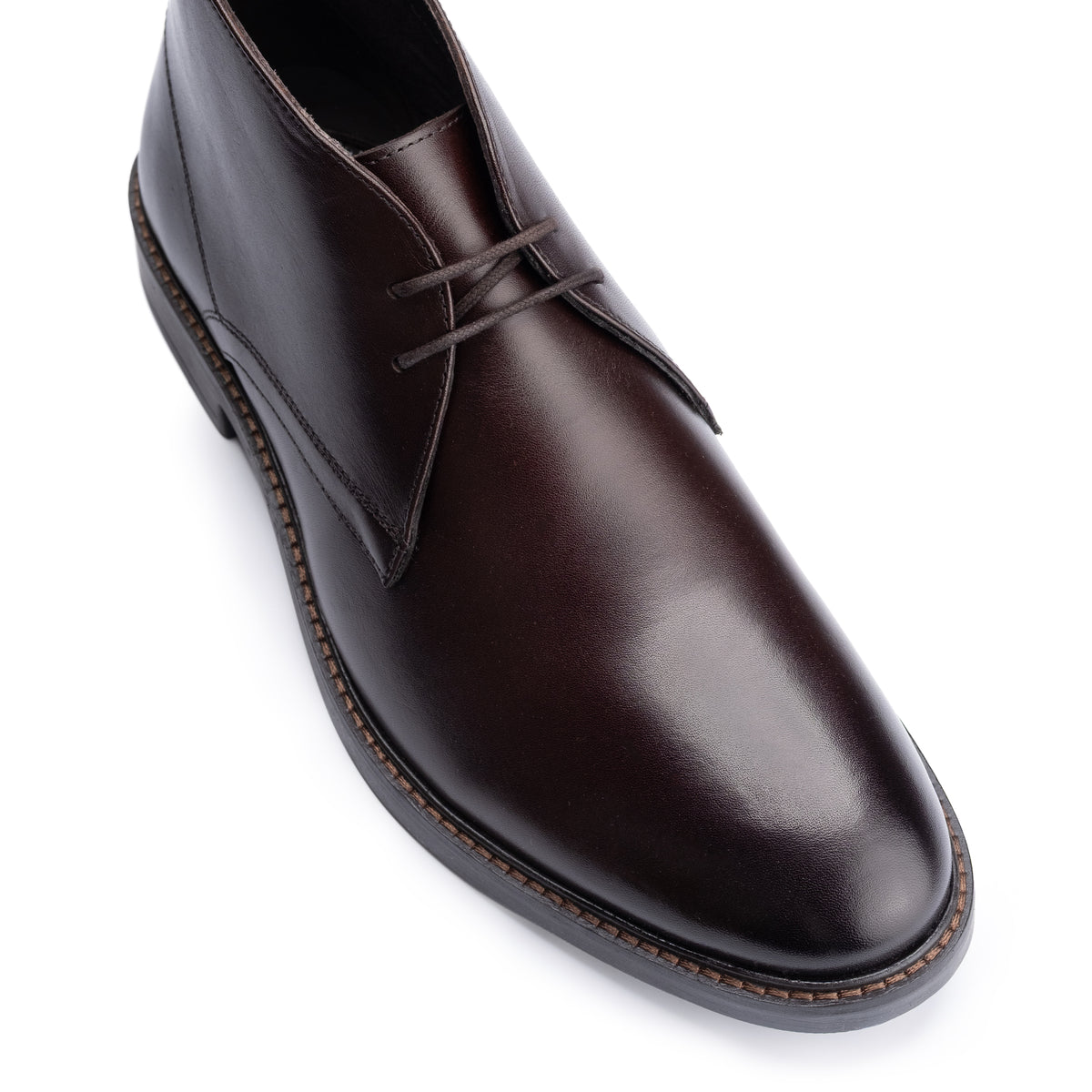
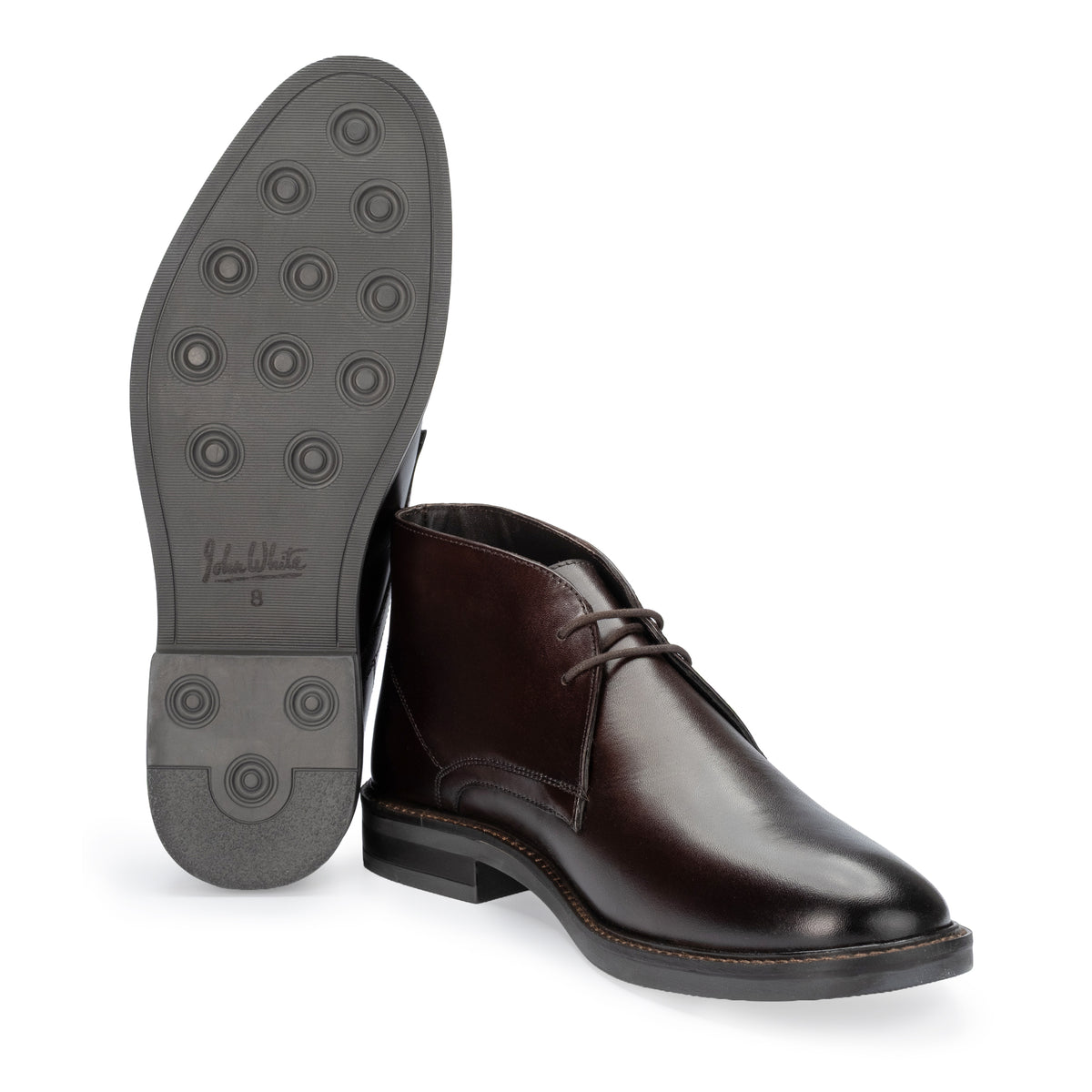
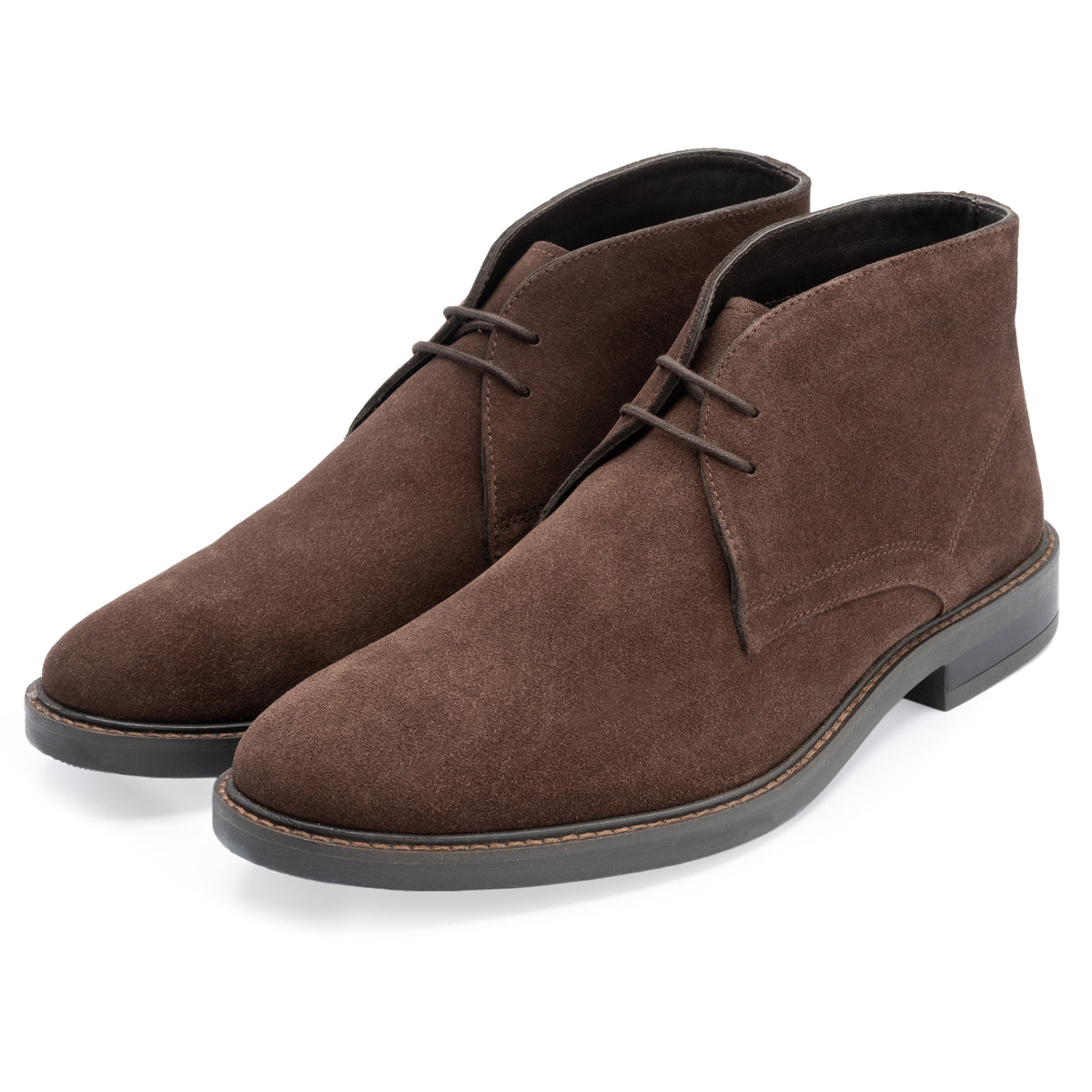
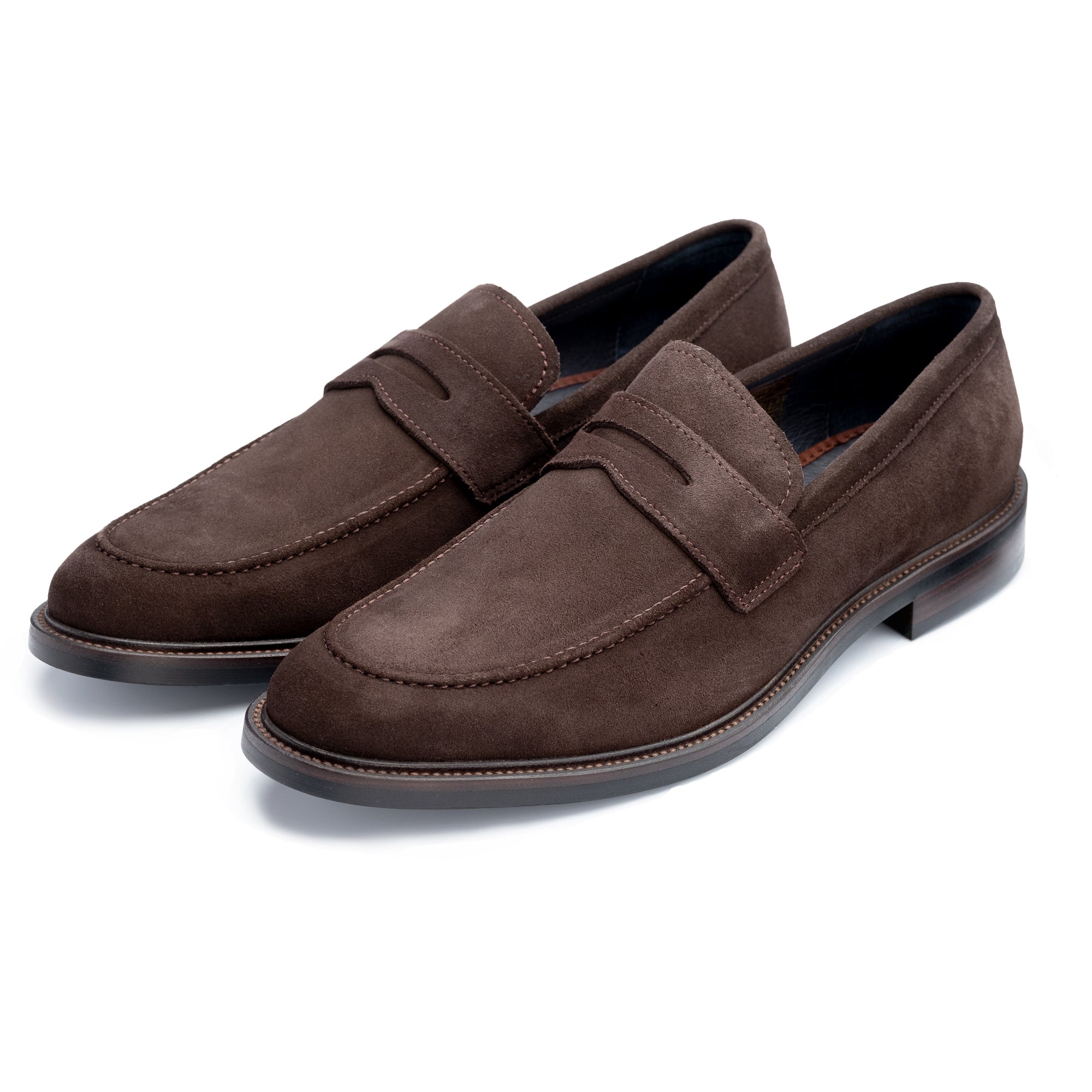
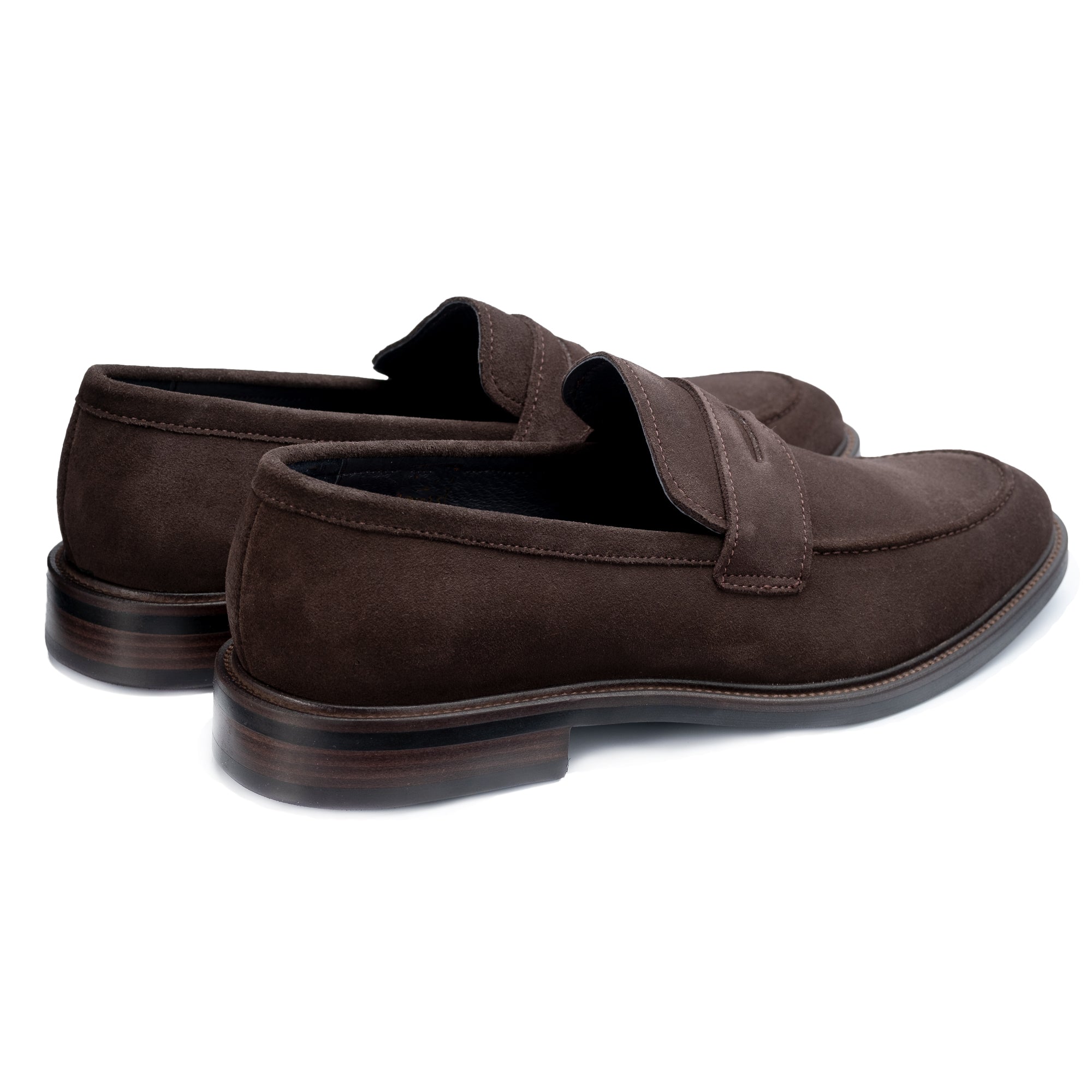
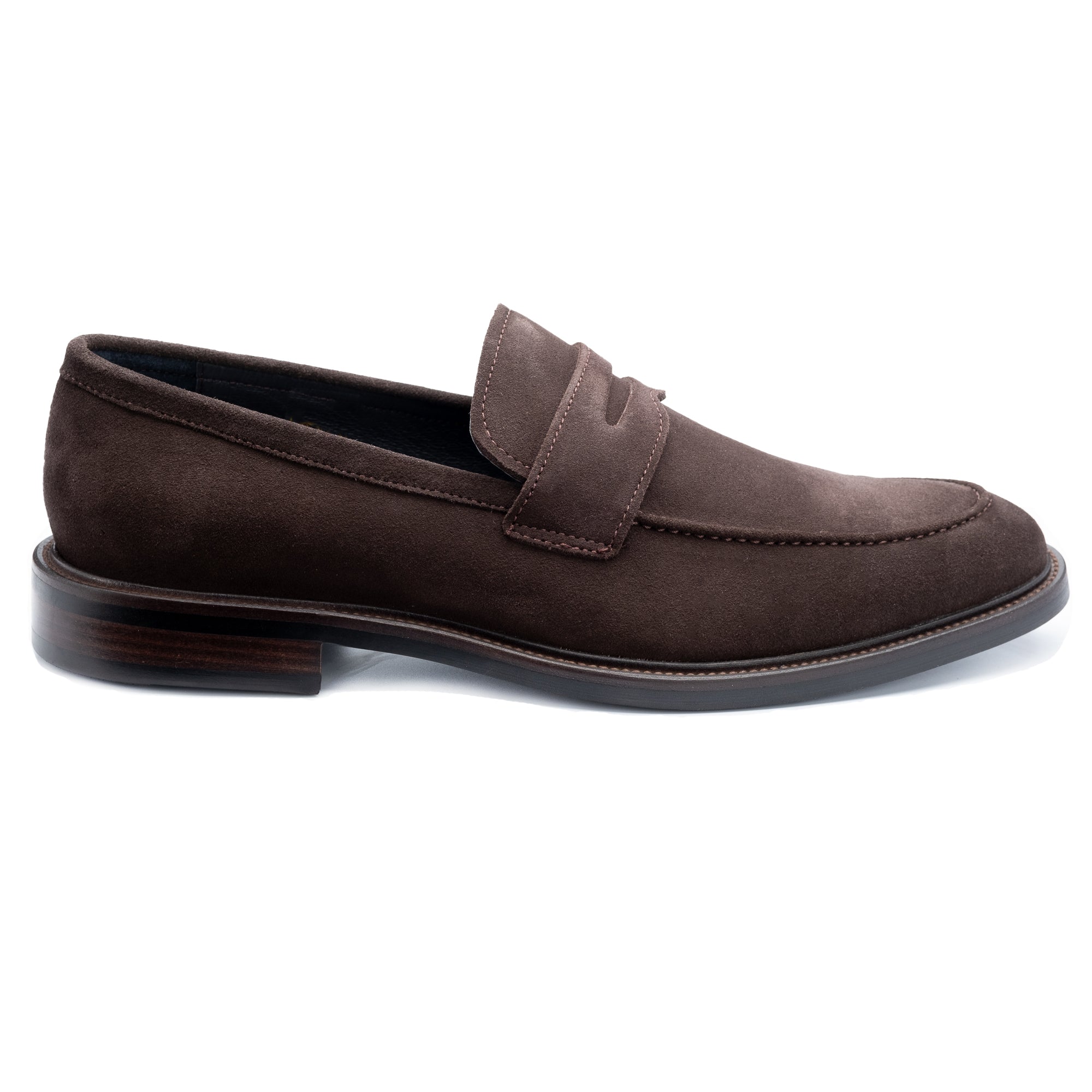
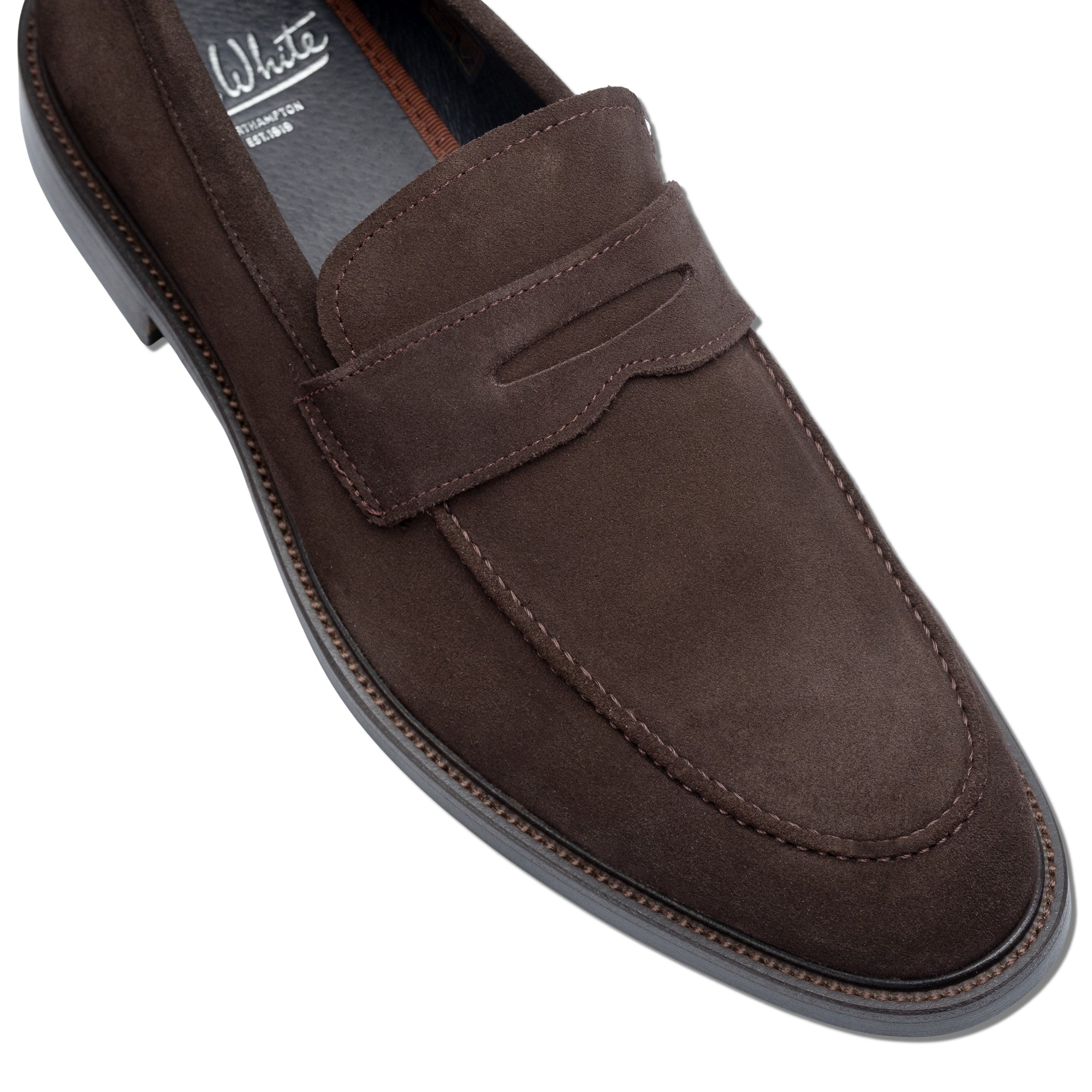
Because the Derby sits slightly lower in formality than the Oxford, it occupies a broad middle ground between business dress and weekend wear. In plain-toe form it reads as near-formal; in full brogue it sits comfortably with dark jeans. That range is its primary strength. Browse our men's shoes collection to see Derby styles across toe profiles and leather finishes.
The Derby's open-lacing system gives it a wider fit range and a broader formality span than almost any other classic men's shoe style.How Do Chelsea Boots and Derby Shoes Compare at a Glance?
| Attribute | Chelsea Boot | Derby Shoe |
|---|---|---|
| Fastening | Elasticated side panels, no lacing | Open lace-up, adjustable fit |
| Formality range | Smart-casual to business formal | Smart-casual to near-formal |
| Best worn with | Jeans, chinos, slim suits, tailoring | Suits, chinos, trousers, dark jeans |
| Ease of wear | Slip-on; no adjustment required | Lace-up; requires daily tying |
| Ankle coverage | Yes — ankle-height upper | No — cuts below the ankle bone |
| British weather suitability | Good — sealed ankle, higher upper | Moderate — ankle and hem exposed |
| Fit adjustability | Fixed once elastic is sized correctly | Fully adjustable via lacing tension |
| Resolability | Yes, when Goodyear welted | Yes, when Goodyear welted |
Which Style Is More Formal — Chelsea Boot or Derby Shoe?
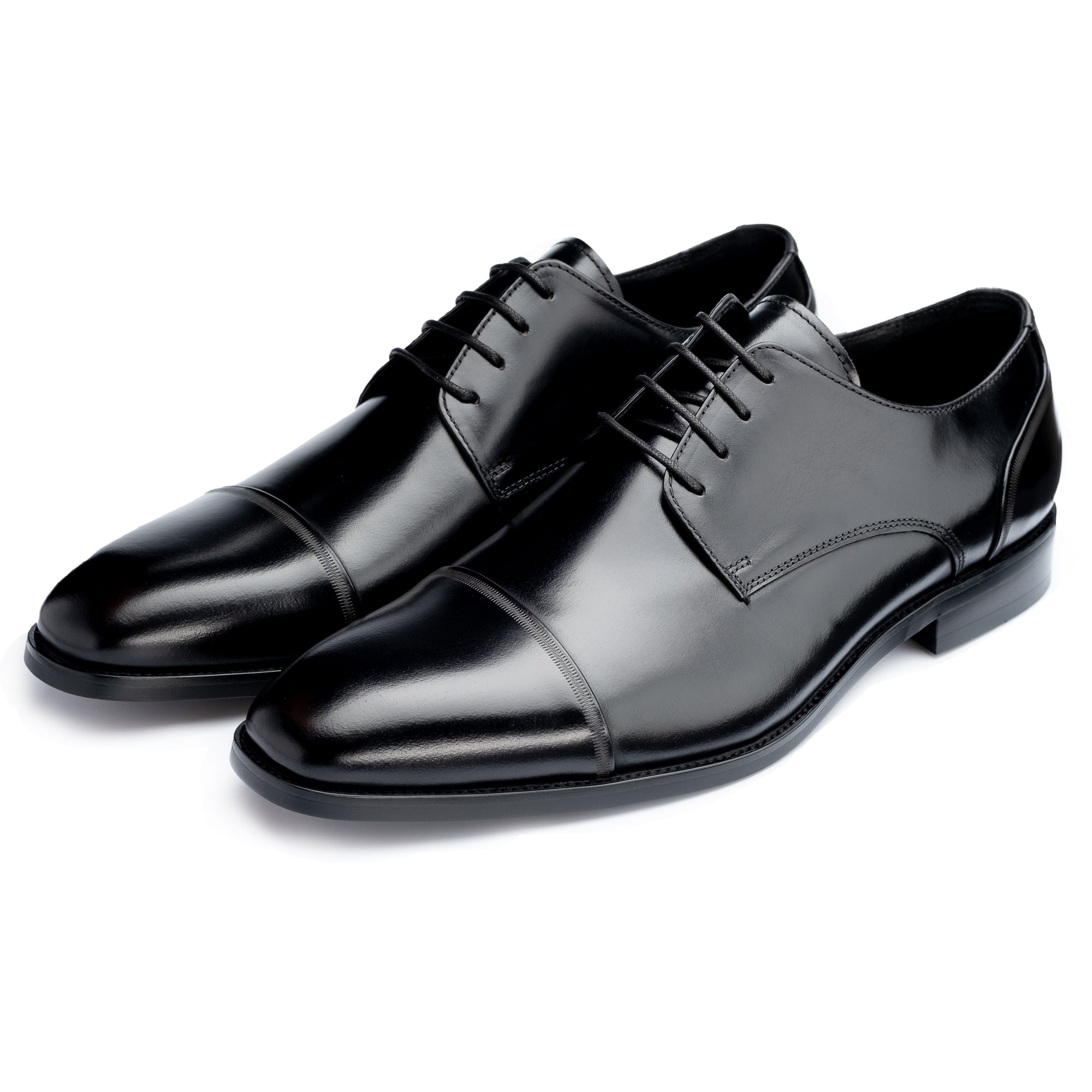
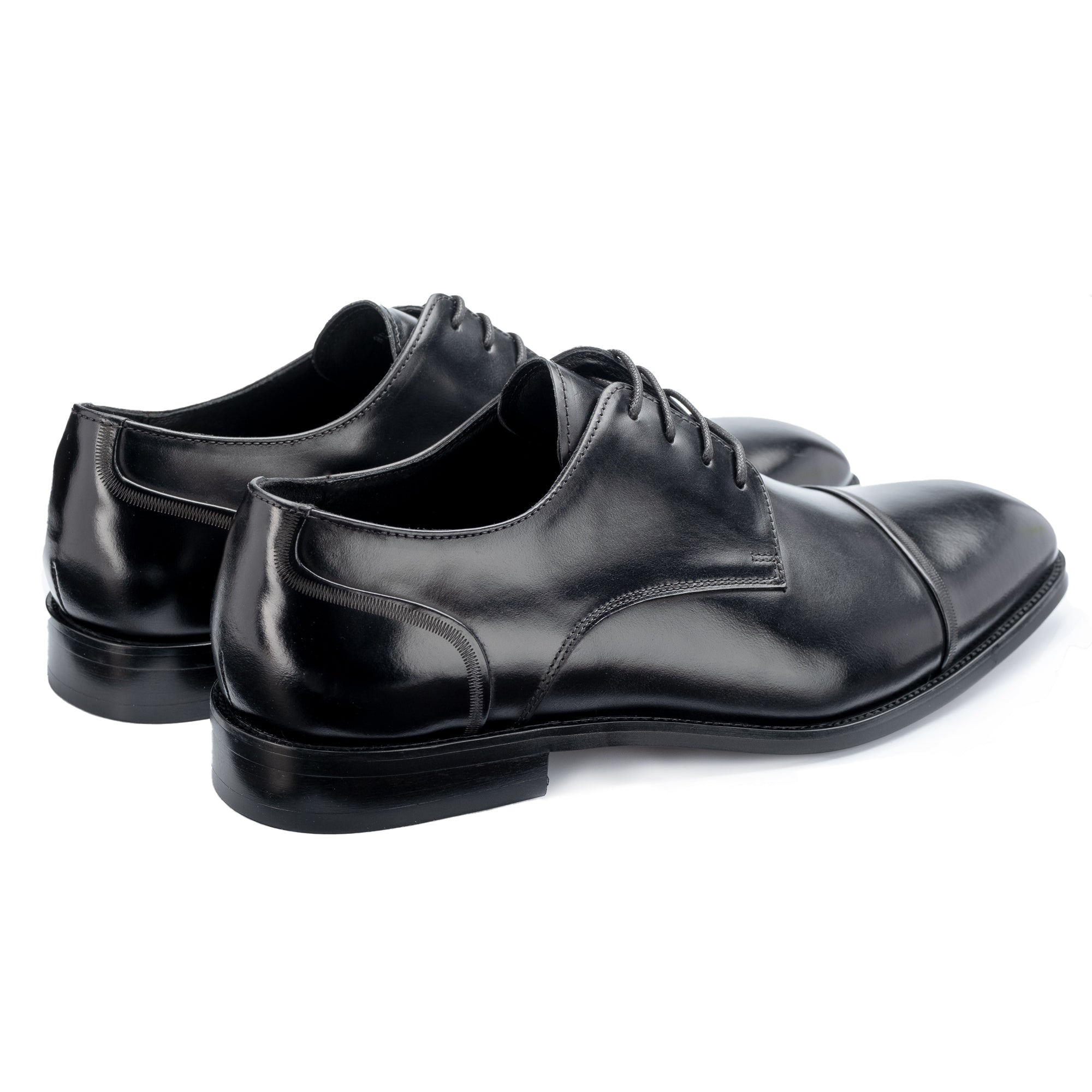
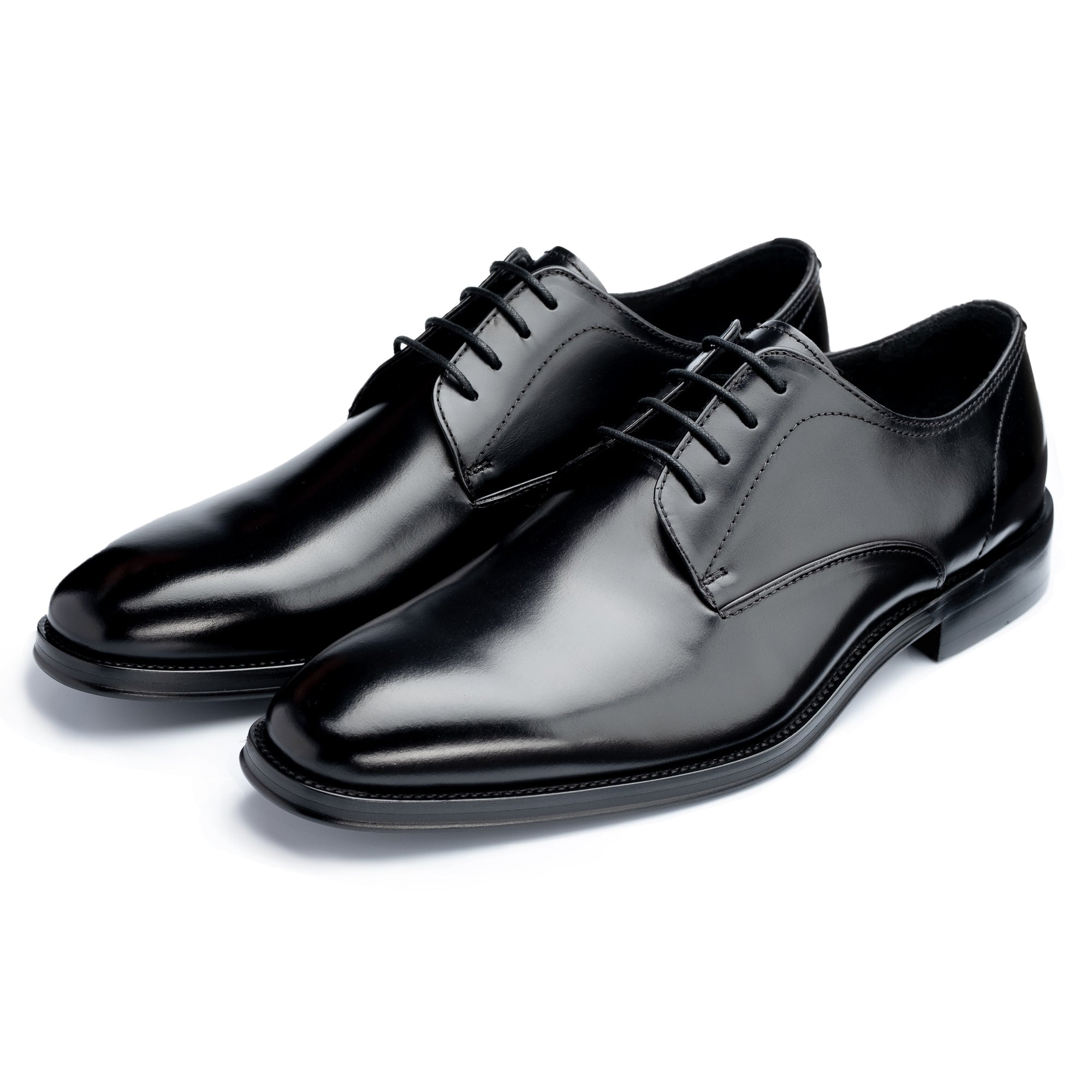
At the top of the formality scale, the Derby holds a clear advantage. A plain-toe Derby in black polished calfskin accompanies a lounge suit or business formal attire with complete authority. The Chelsea boot, despite its clean silhouette, carries a residual trace of its equestrian and 1960s bohemian associations — it is rarely the first choice for the most formal professional contexts or occasions that demand traditional black-shoe etiquette.
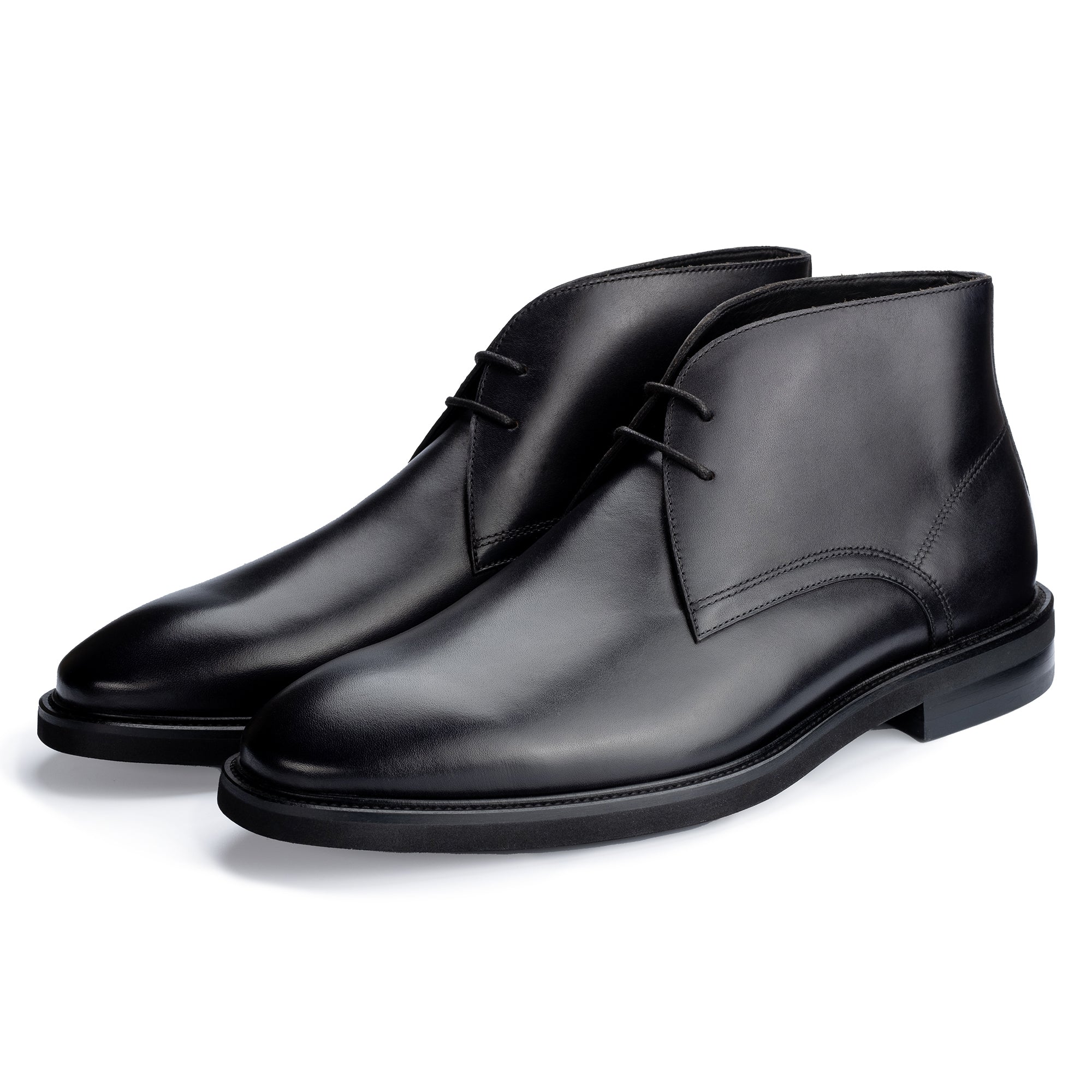
Makers such as Loake, Barker, Grenson, Church's, and Crockett & Jones — alongside John White Shoes — each produce plain-toe Derby styles calibrated specifically for business and occasion wear. The consensus across the premium British market is that the Derby in black or dark oxblood leather is the safer formal choice when occasion demands precision.
That said, the Chelsea boot in smooth black leather performs comfortably across the majority of smart-casual and business settings. It is only at the extremes — black-tie or the most conservative City environments — that its limits become apparent. For a full breakdown of where each boot style sits relative to formal occasions, our dress boot formality guide maps the complete spectrum.
For formal business and occasion wear, the plain-toe Derby in polished black leather is the more dependable and conventionally correct choice.Which Is More Versatile for Smart-Casual Wear?
In the smart-casual register — which accounts for the majority of daily dressing for most professional men — the Chelsea boot holds a meaningful edge. Its clean, unbroken profile works equally well with slim trousers, rolled chinos, and dark jeans worn with a structured jacket. The absence of lacing keeps the silhouette lean, and the ankle coverage adds a visual cohesion that low-cut shoes can lack when paired with certain trouser lengths.
The Derby is not without versatility here. A semi-brogue Derby in tan or mid-brown leather is an excellent smart-casual shoe, and the open lacing lends a slightly relaxed quality that suits informal settings well. But it demands more considered pairing to avoid reading as either overdressed or nonchalant — the Chelsea requires less effort to achieve an intentional result.
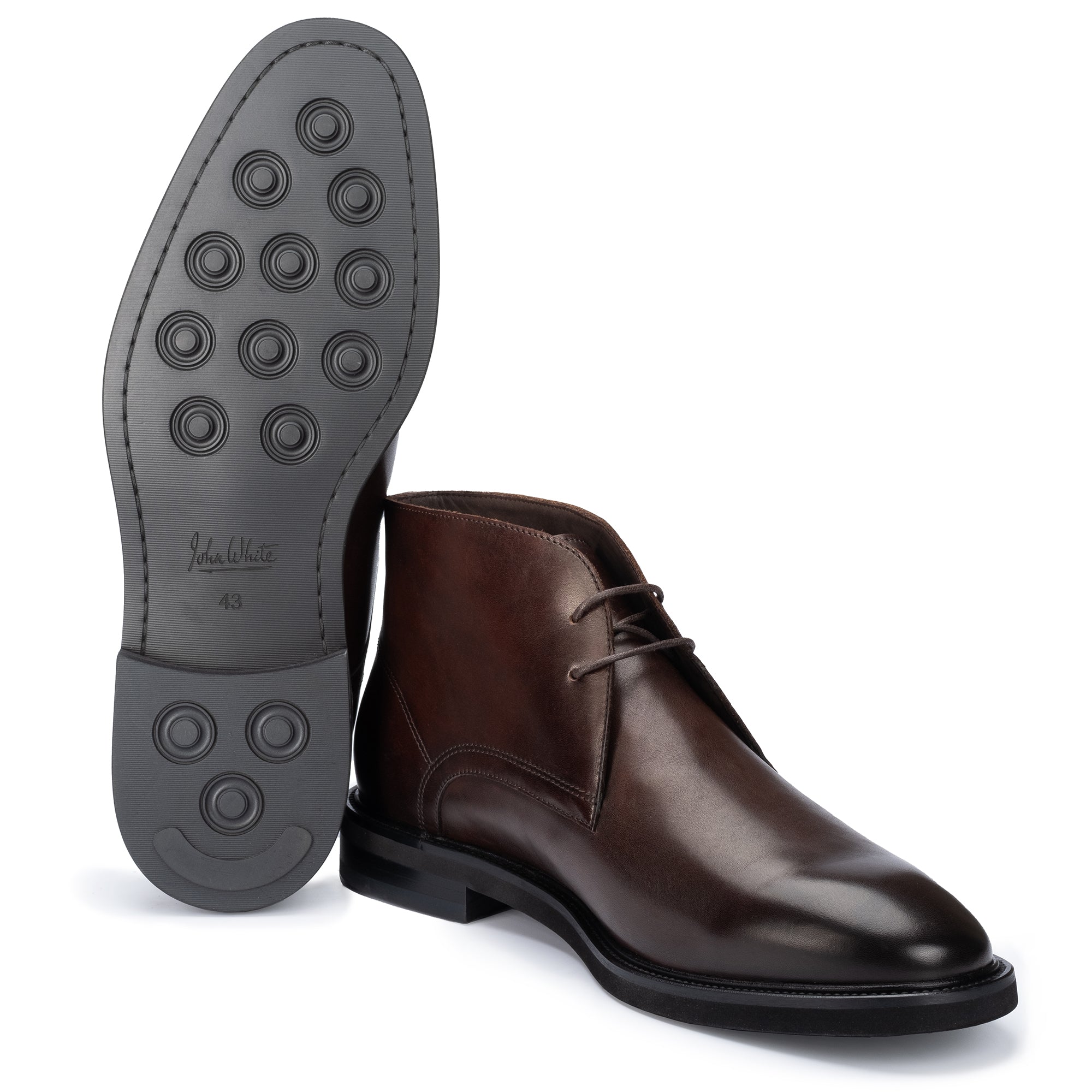
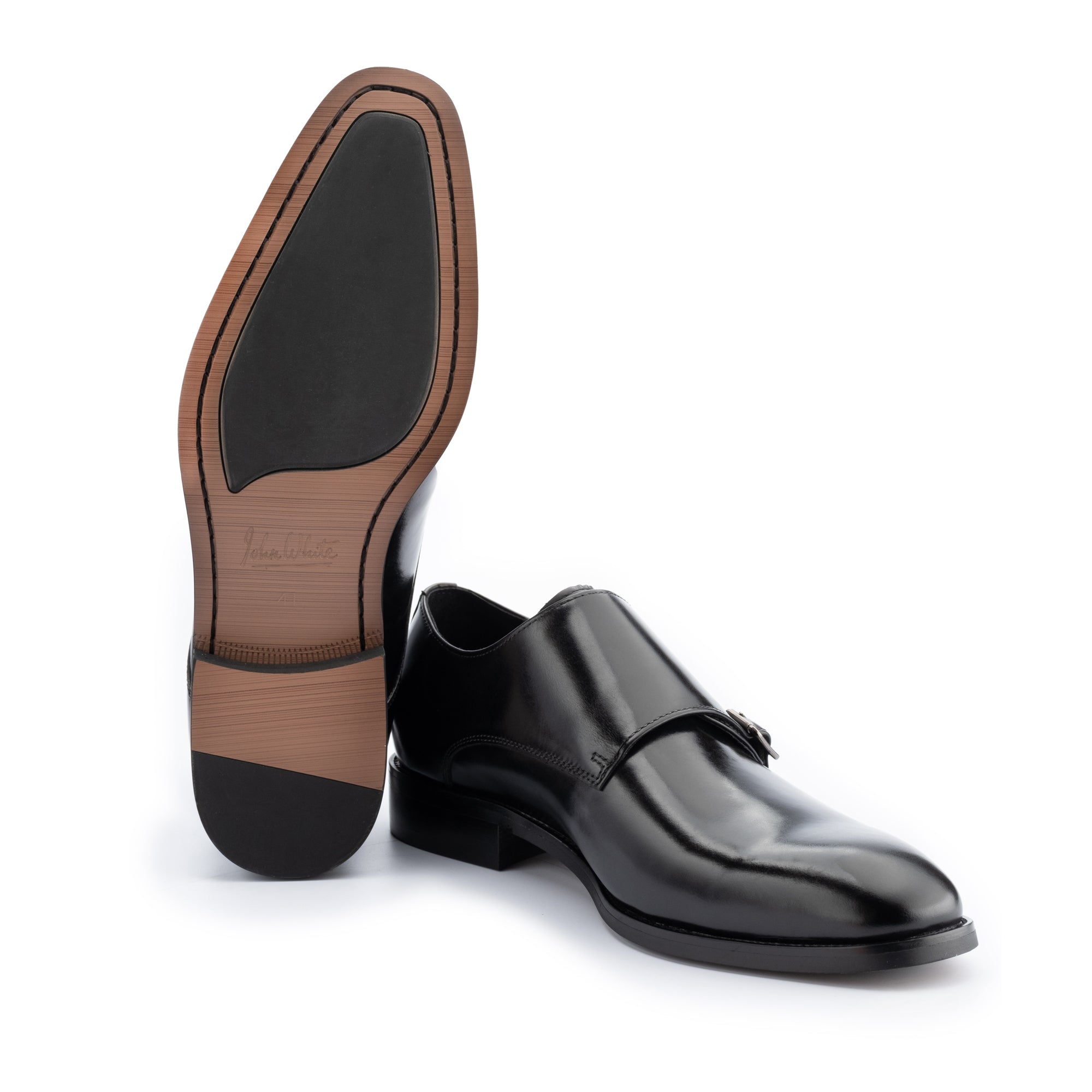
According to the Society of Master Shoe Repairers, a well-maintained Goodyear welted boot can be resoled up to seven times, giving it a potential service life of over two decades. That long-term durability case applies equally to both styles — provided the construction is Goodyear welted rather than cemented. For a detailed guide to dressing with Derby shoes across the formality range, see our complete guide to wearing Derby shoes from smart to casual.
For smart-casual dressing, the Chelsea boot requires less outfit calibration to achieve a polished, considered result.How Do Chelsea Boots and Derby Shoes Handle British Weather?
British weather is a practical consideration that receives less attention in styling guides than it deserves. The Chelsea boot has a genuine advantage in this respect: the elasticated panels create a near-sealed ankle enclosure, and the boot-height upper keeps trouser hems clear of wet pavements and shallow puddles. In smooth leather with a Dainite or leather sole, a well-made Chelsea boot is a significantly more weather-capable choice than an equivalent Derby.
The Leather Conservation Centre recommends treating leather footwear with a quality water-resistant conditioner at the start of autumn and again in mid-winter. Applied consistently, this maintains both styles through British conditions without compromising the leather's natural character or finish. The Chelsea simply requires this protection over less surface area that is directly exposed to the elements.
The Derby's low profile leaves the ankle unprotected and the lower trouser unshielded. On a wet commute or damp country walk, this is a genuine limitation rather than a styling abstraction. For a full guide to autumn and winter footwear, our review of the best winter boots for men covers sole and upper choices for every condition.
For autumn and winter use in Britain, the Chelsea boot's ankle coverage and sealed upper give it a clear practical advantage over the Derby.Which Should You Buy First — Chelsea Boot or Derby Shoe?
If your wardrobe leans towards smart-casual — jeans, chinos, and occasional tailoring — the Chelsea boot should come first. It delivers immediate versatility across the register you use most often, and its ease of wear means it will be reached for rather than deliberated over. In black or dark brown smooth leather, it earns its place in a wardrobe within days of arrival.
If your working life requires regular formal dressing — suits, client-facing meetings, business occasions — buy the Derby first. A plain-toe Derby in black polished calfskin will carry you through business formal, smart-casual, and into the weekend without a change of shoes. It is the more formally certain of the two.
For most professional men building a considered collection, both styles are eventually essential. They occupy different positions on the formality spectrum, perform differently in British weather, and serve different daily functions. The question is not which is better — it is which gap in your current wardrobe is larger. View the full range of men's shoes and men's boots to find the right starting point.
Buy the Chelsea boot first for a smart-casual wardrobe; buy the Derby first if formal business wear is a regular requirement.Related Guides
- From Northampton to the World: The Story Behind British Shoemaking — our comprehensive guide
- The Definitive Guide to Men's Boots — a complete overview of every boot style worth owning
- Derby vs Oxford: Which Lace-Up Should You Buy First? — how the Derby compares to its more formal counterpart
- The Dress Boot Formality Guide: Choosing Between Balmoral, Brogue, and Chelsea — where each boot style sits on the formality spectrum
TL;DR
The Chelsea boot and the Derby shoe are both enduring classics with genuine all-round credentials, but they serve different primary functions. The Chelsea excels in smart-casual contexts, dresses quickly, and handles British weather better. The Derby spans a wider formal range, accommodates more foot shapes, and is the more correct choice for formal business and occasion dressing. Most men need both; the question is which to buy first.
Frequently Asked Questions
Is a Chelsea boot more formal than a Derby shoe?
No. The Derby sits higher on the formality spectrum, particularly in plain-toe form. The Chelsea boot in smooth leather is appropriate for most business and smart-casual settings, but the Derby in polished black calfskin is the more formally correct choice for traditional professional or occasion contexts.
Can you wear Chelsea boots with a suit?
Yes. A Chelsea boot in smooth black or dark brown leather pairs well with a lounge suit, slim-cut tailoring, or business casual attire. Avoid heavily grained leathers or suede for formal suit pairings — smooth calfskin carries the necessary refinement. For very formal suits, a plain-toe Derby or Oxford remains the safer choice.
Are Derby shoes suitable for everyday wear?
Yes — the Derby is one of the most practical everyday shoes in a professional man's wardrobe. Its open-lacing system provides a comfortable, adjustable fit for long days on foot, and its formality range covers most office-to-evening transitions without requiring a change. A Goodyear welted Derby will hold its shape and structure across years of regular use.
Which is easier to wear with jeans — a Chelsea boot or Derby shoe?
The Chelsea boot. Its clean silhouette and ankle height pair naturally with jeans in a way that low-cut lace-ups require more effort to achieve. The boot's upper fills the gap between trouser and floor with confidence, whereas a Derby can look indeterminate depending on jeans cut and trouser break. For dark slim jeans, the Chelsea boot is the more refined default choice.