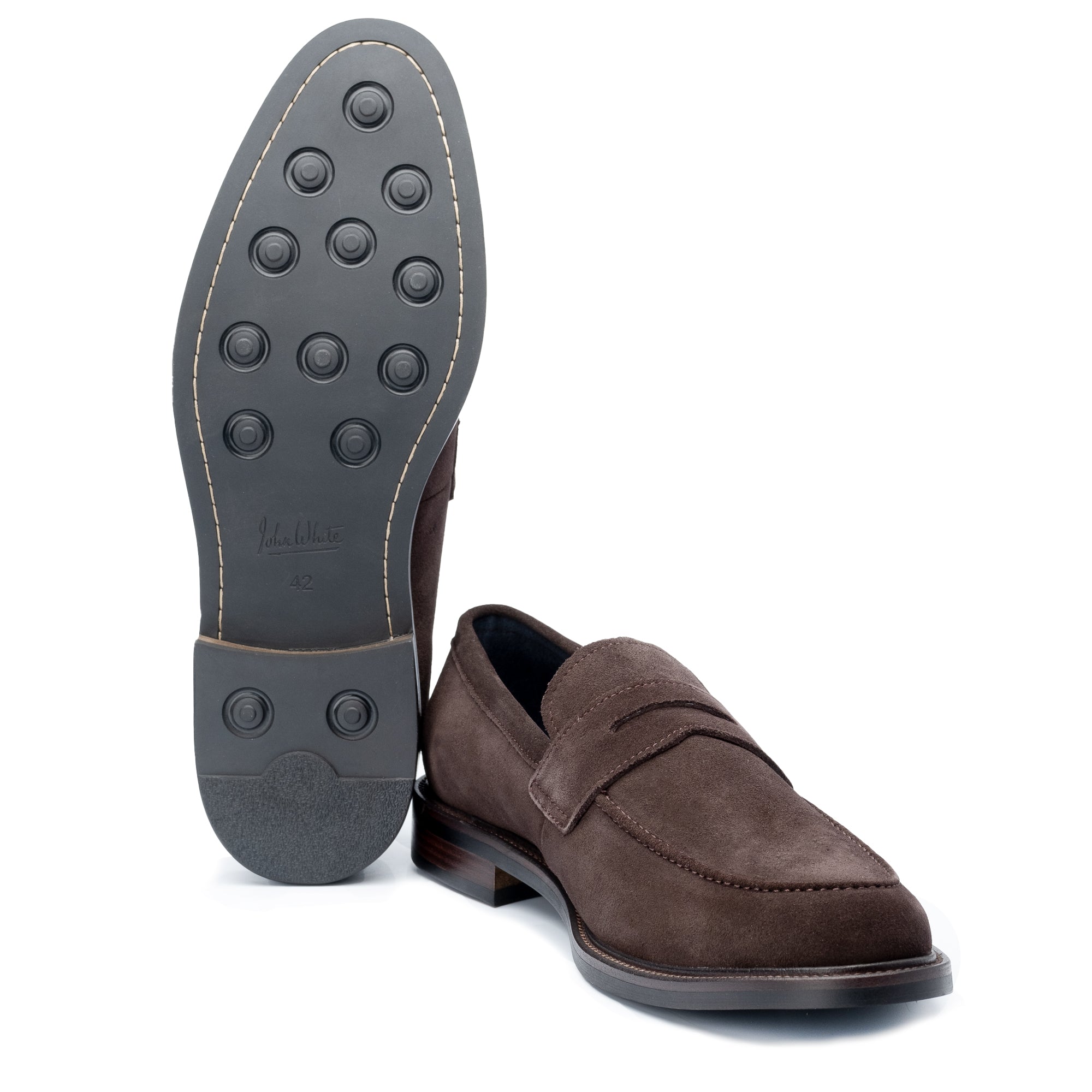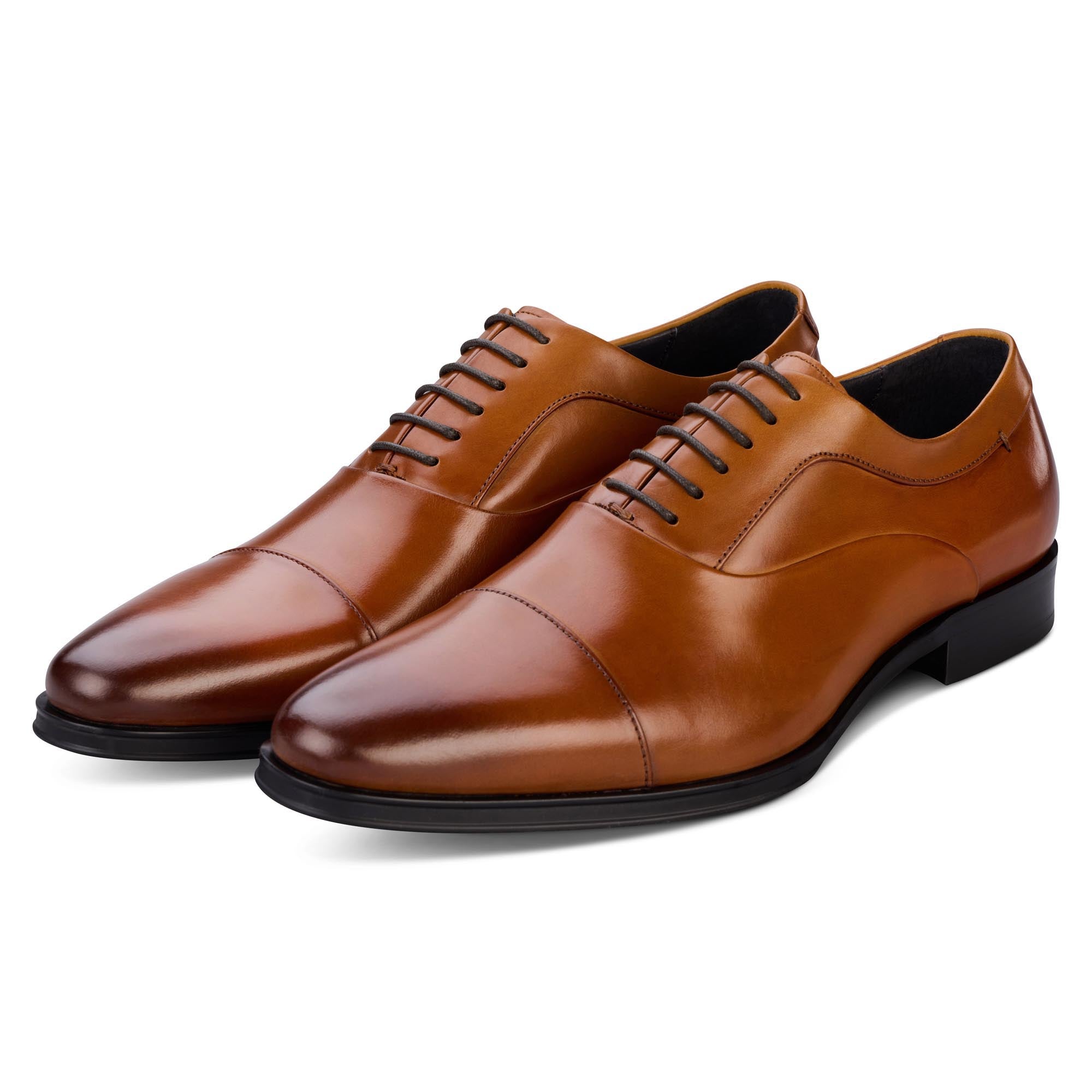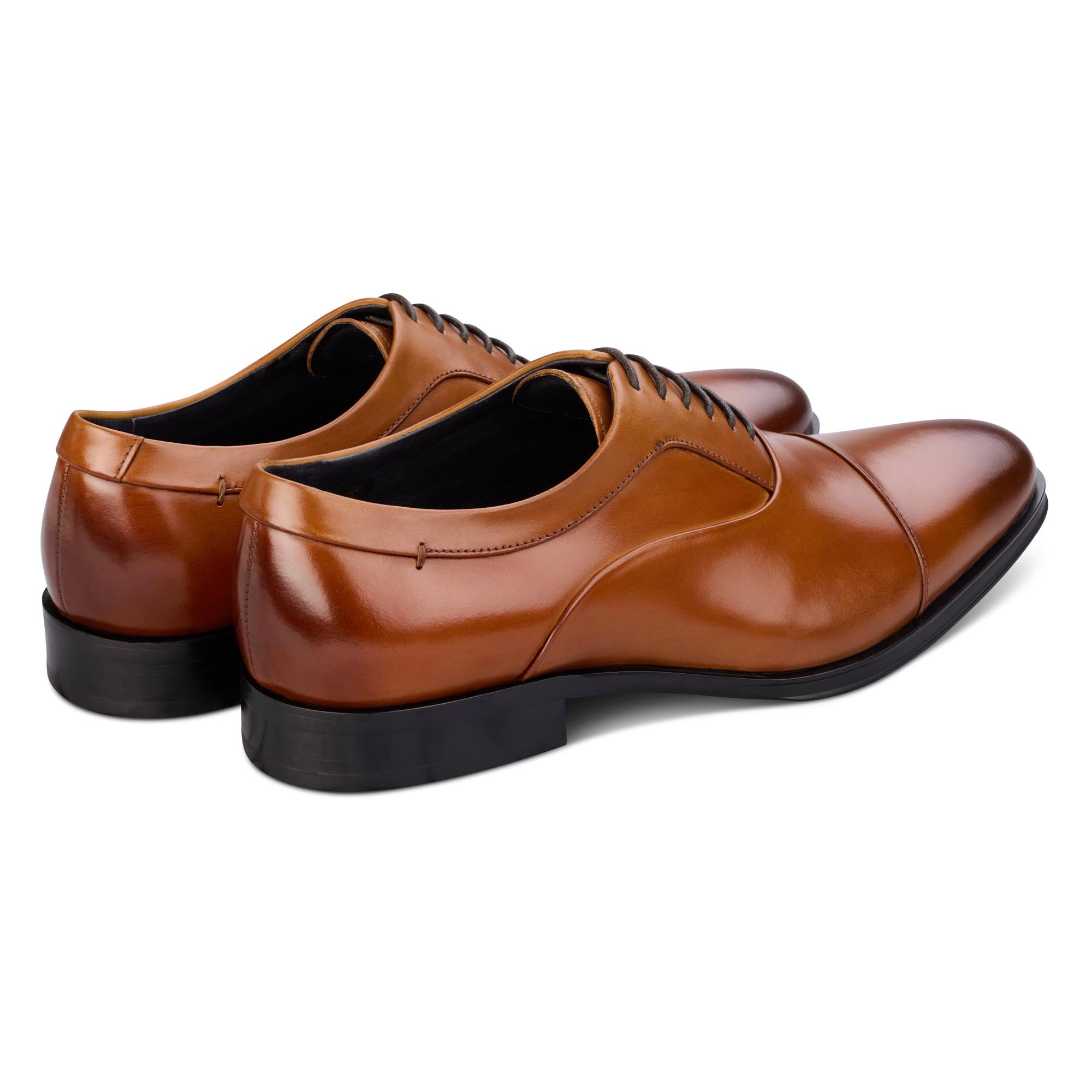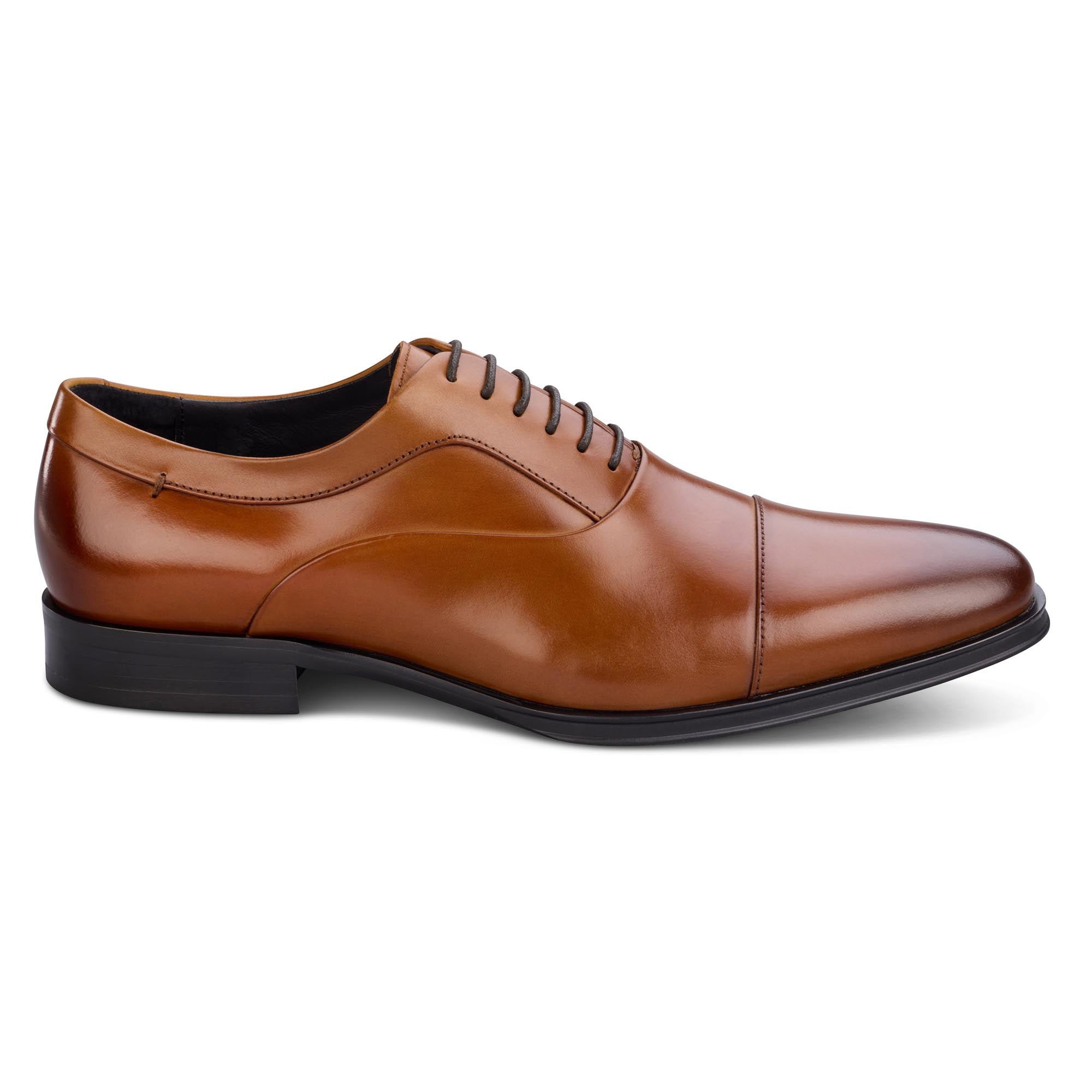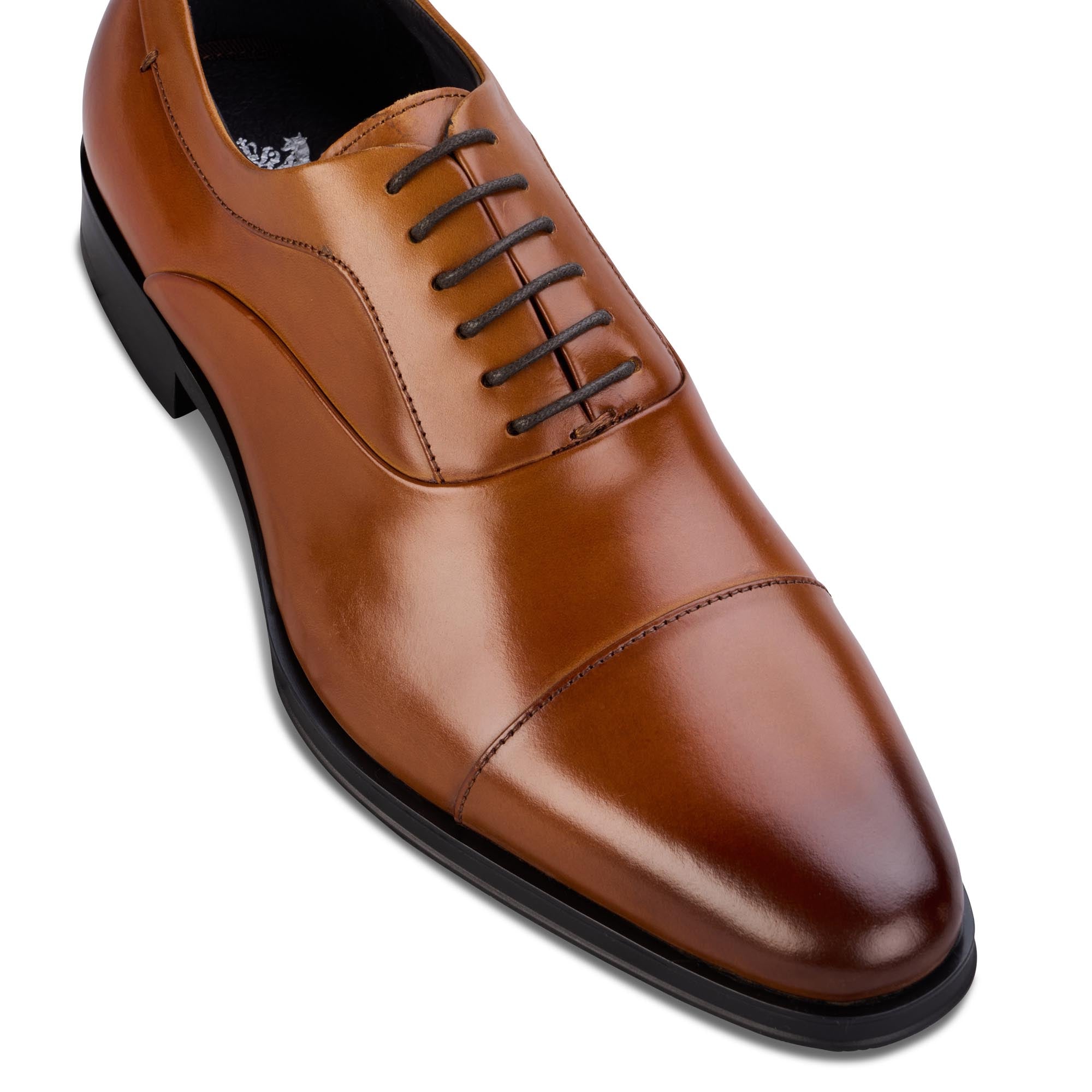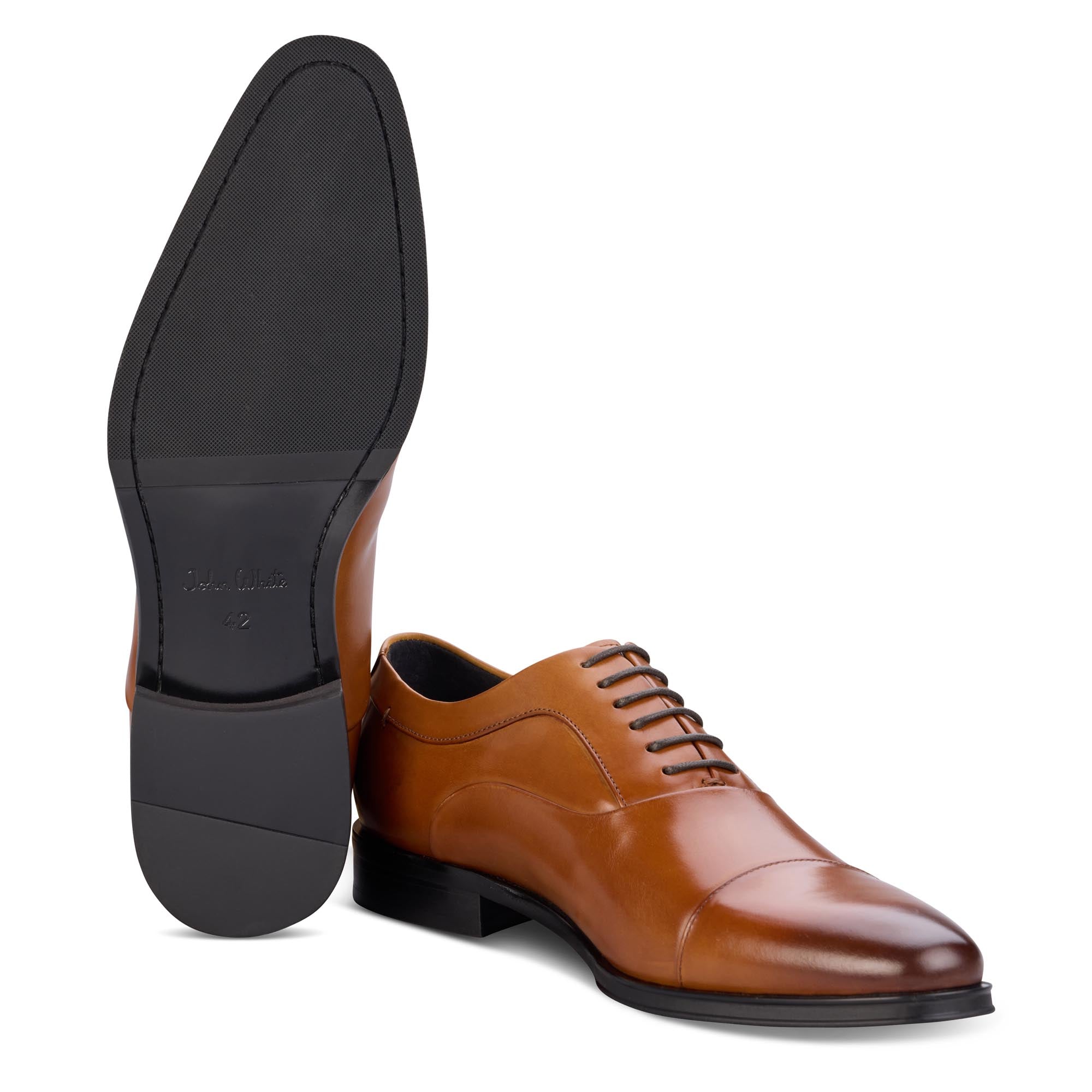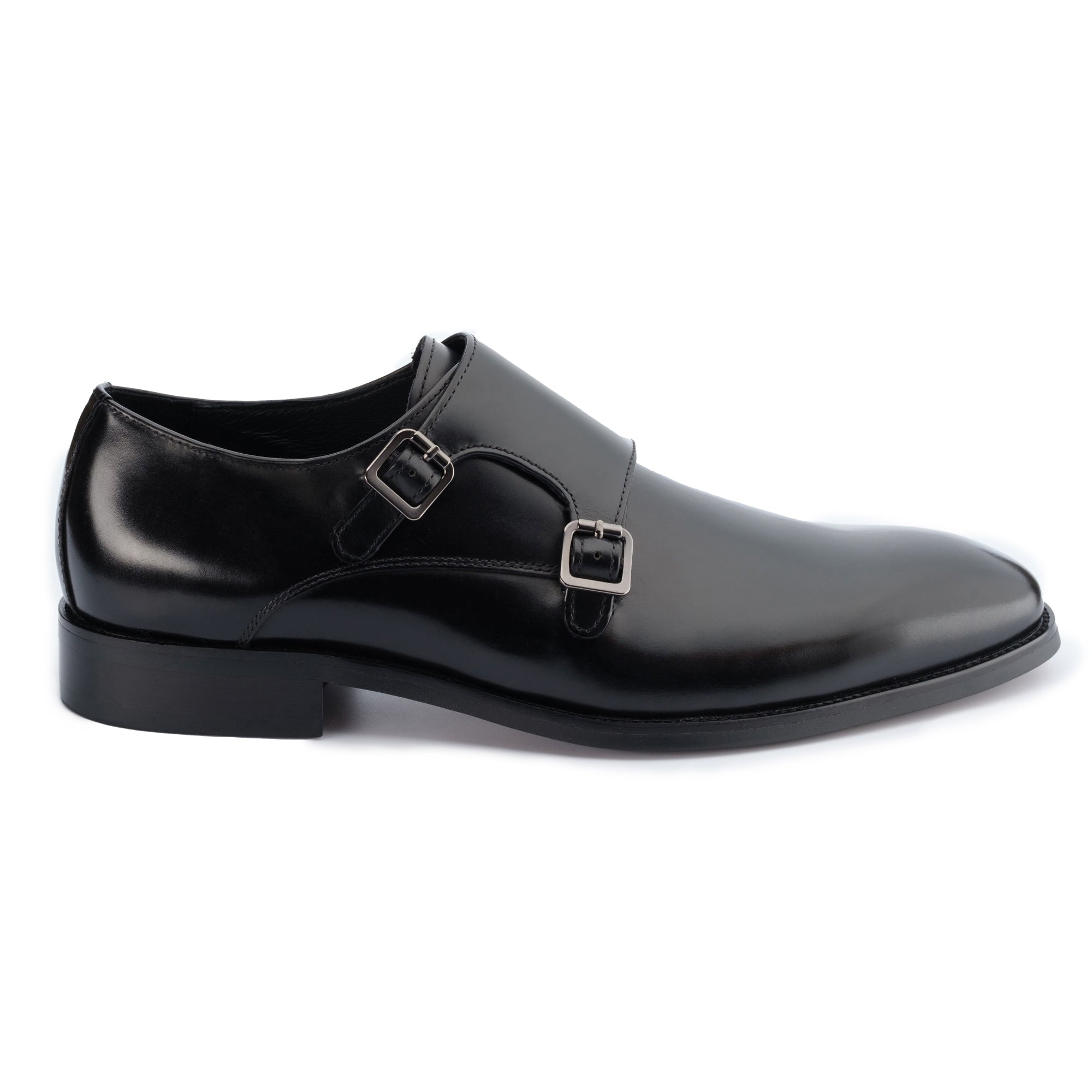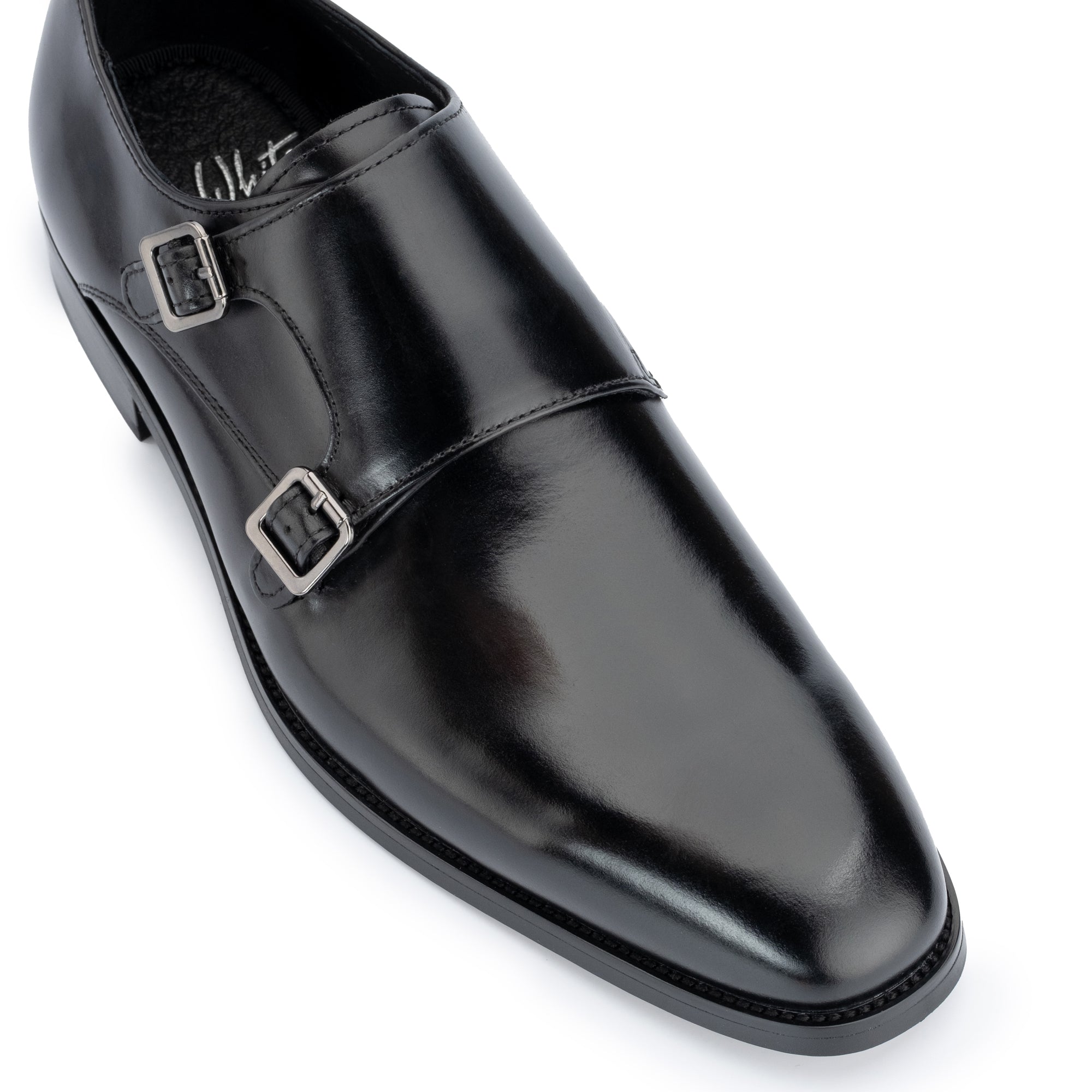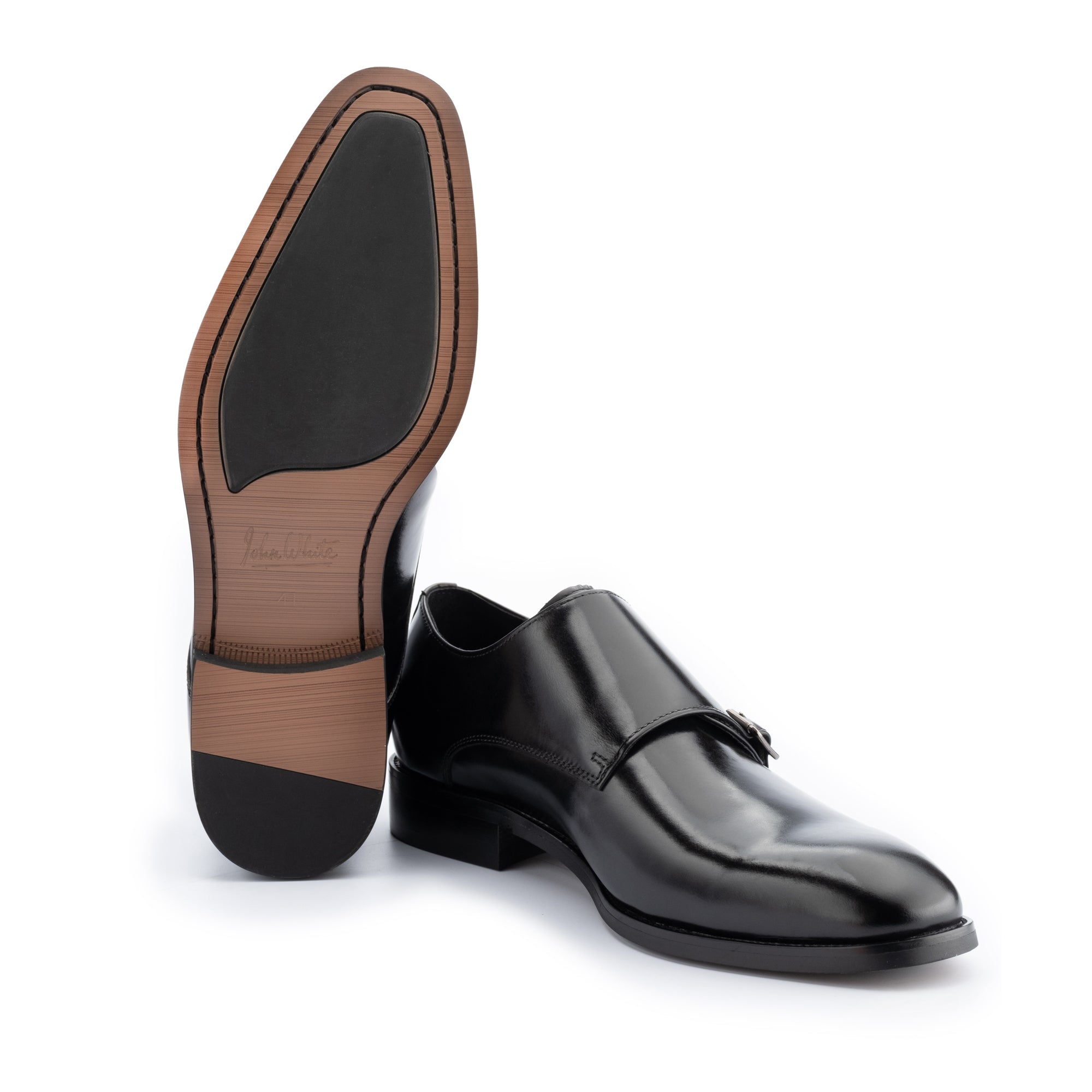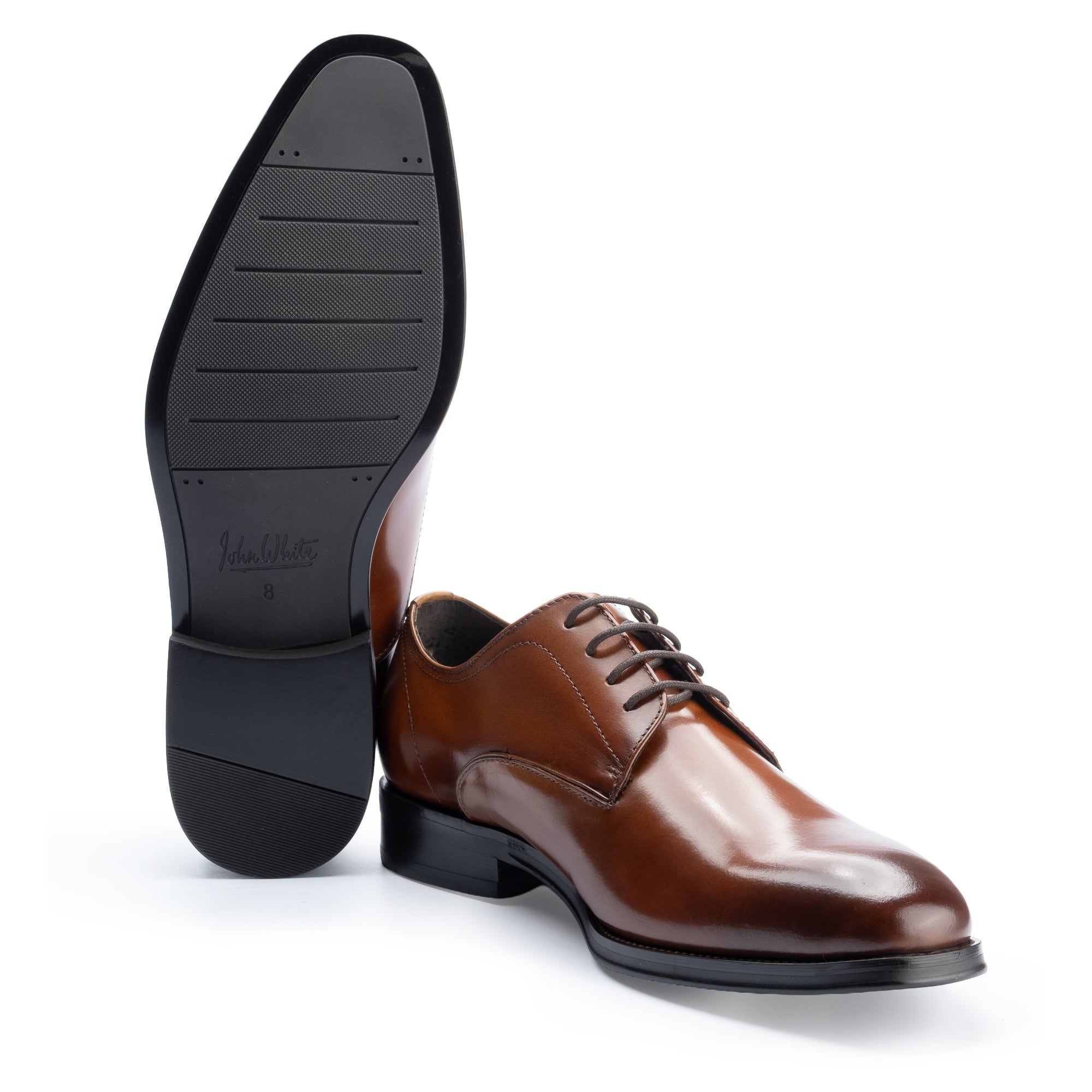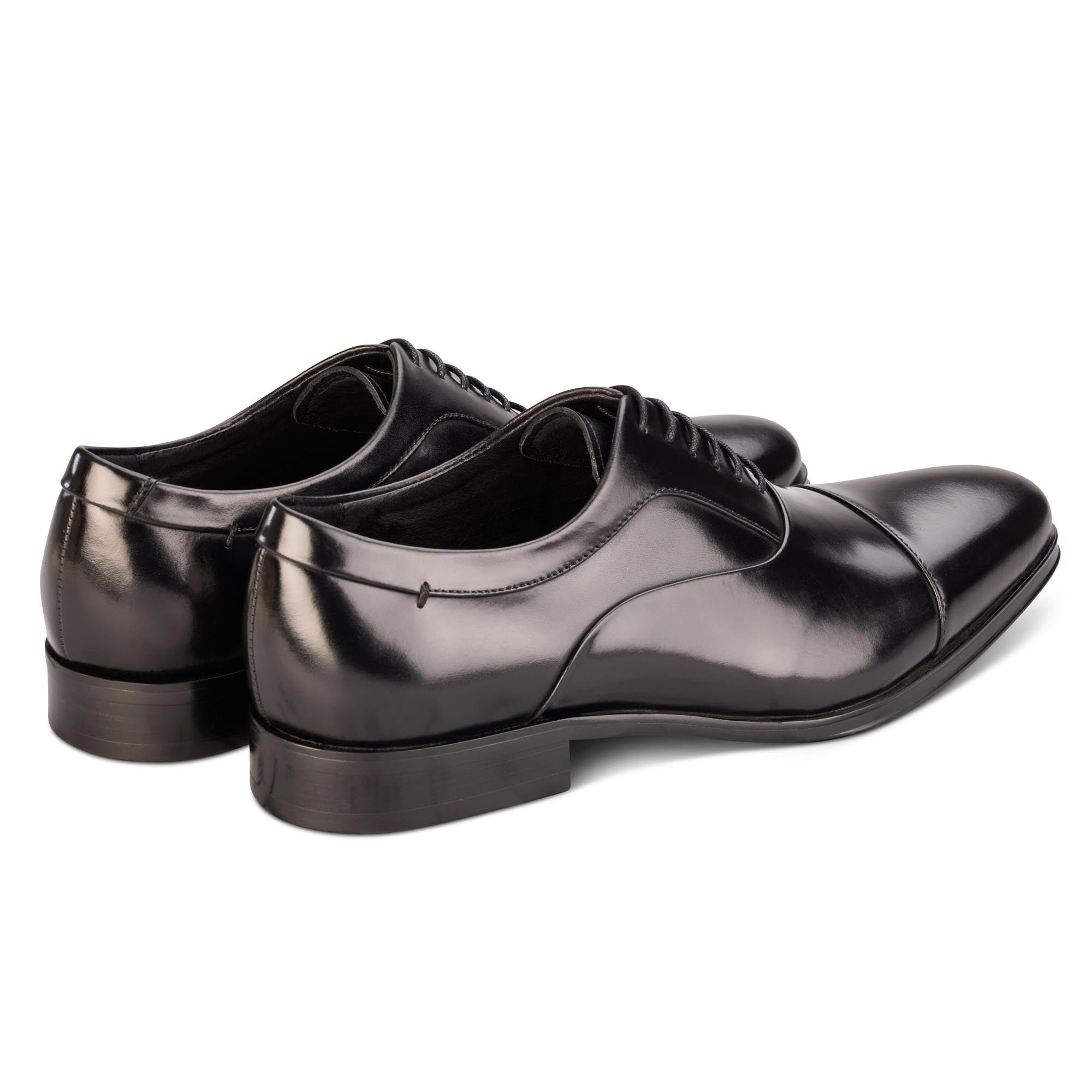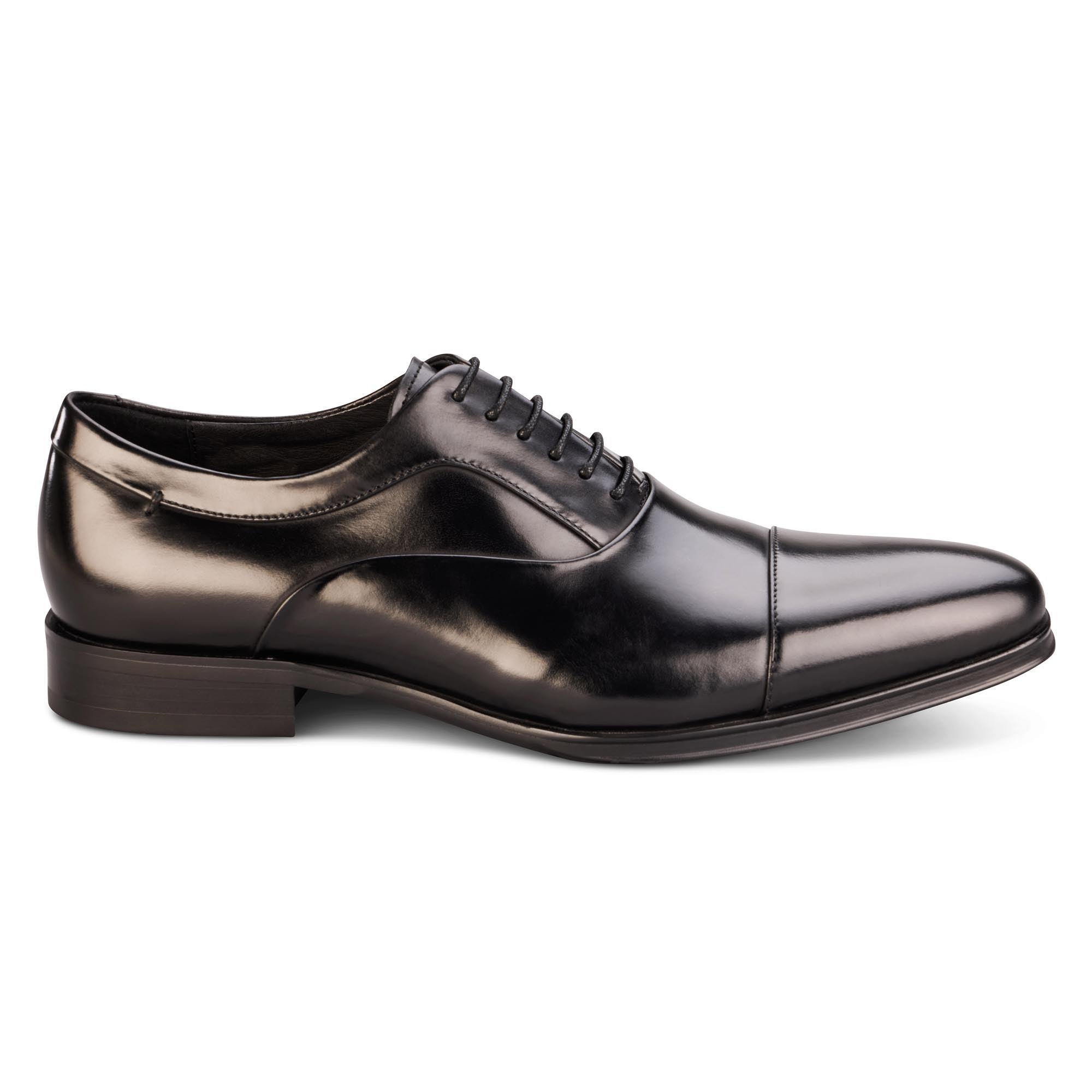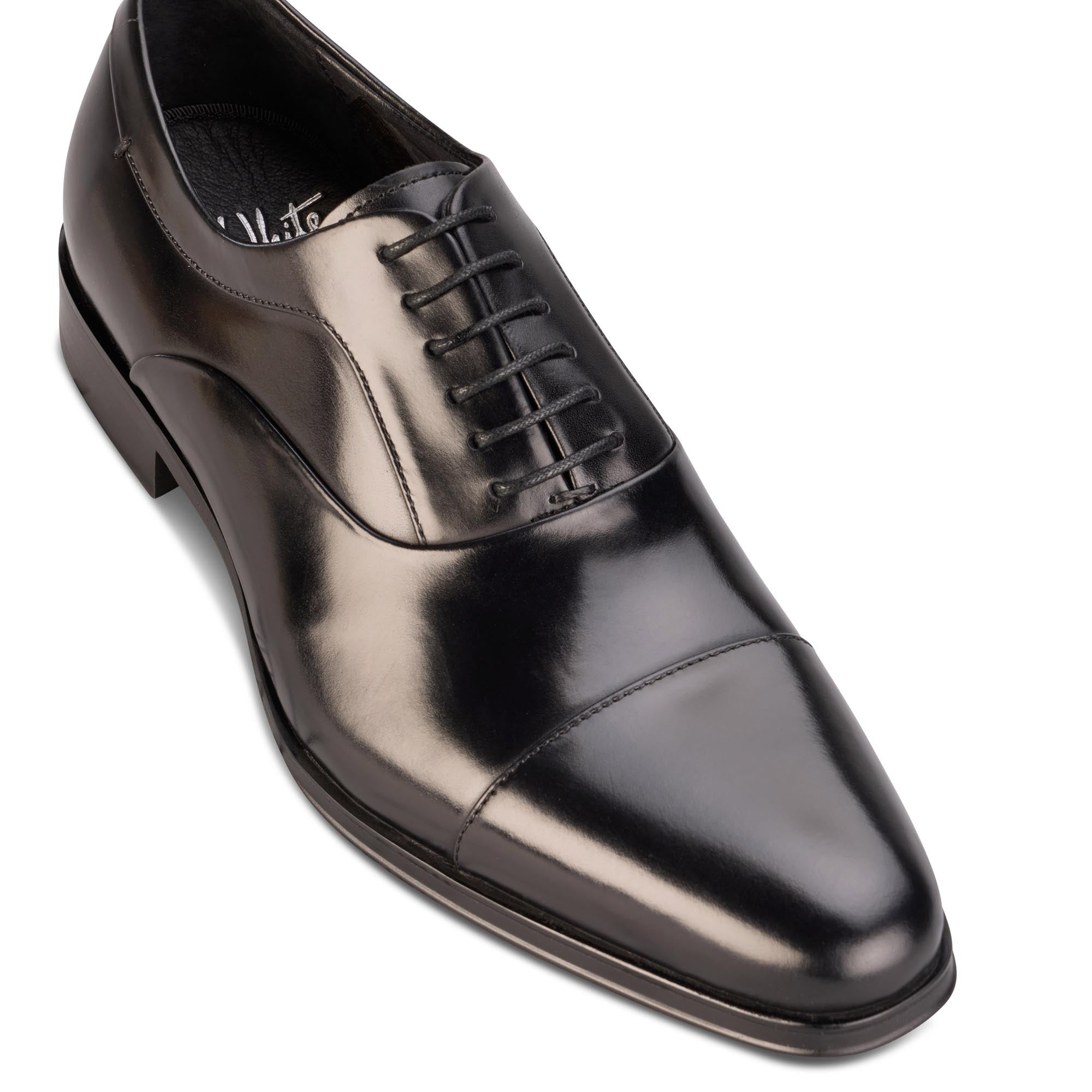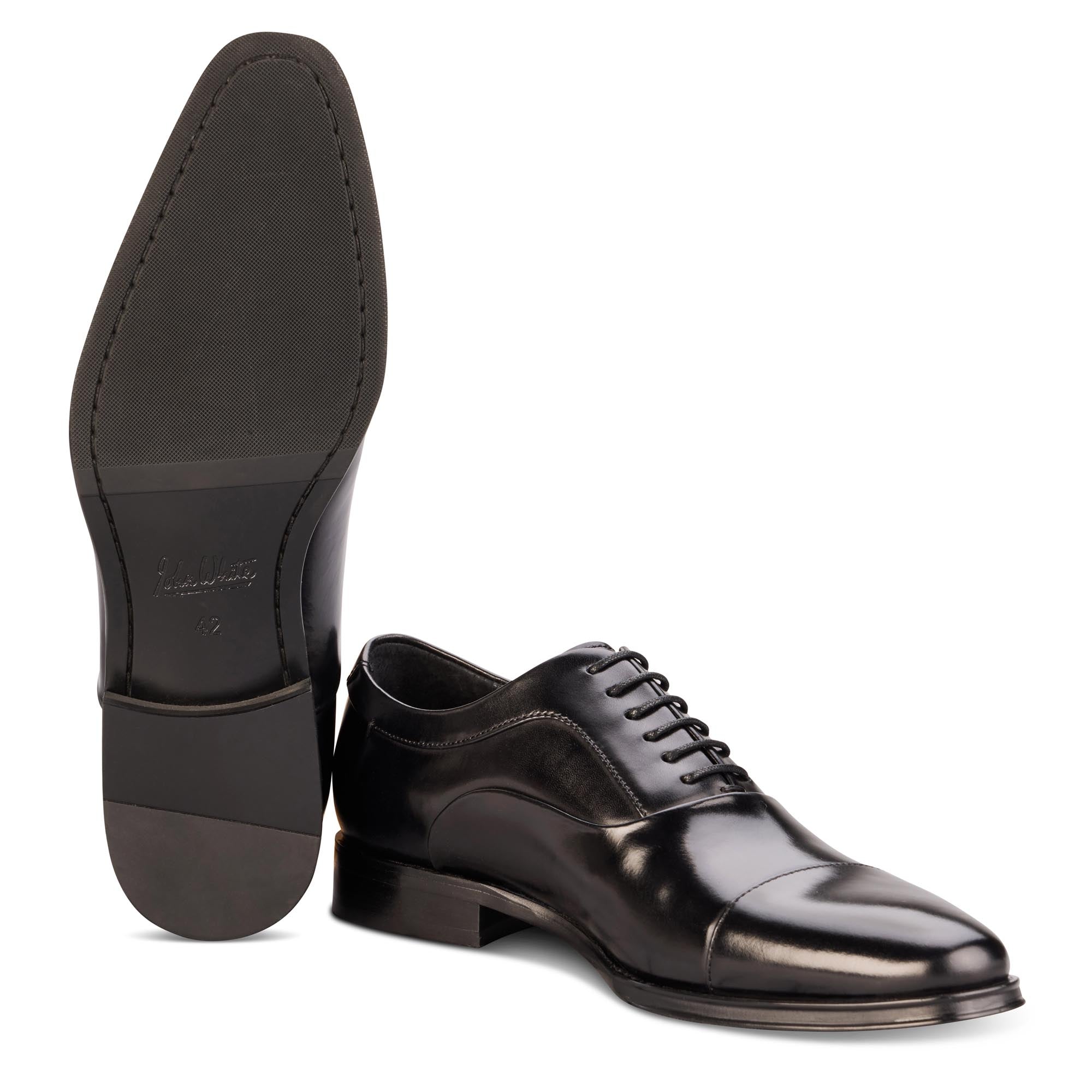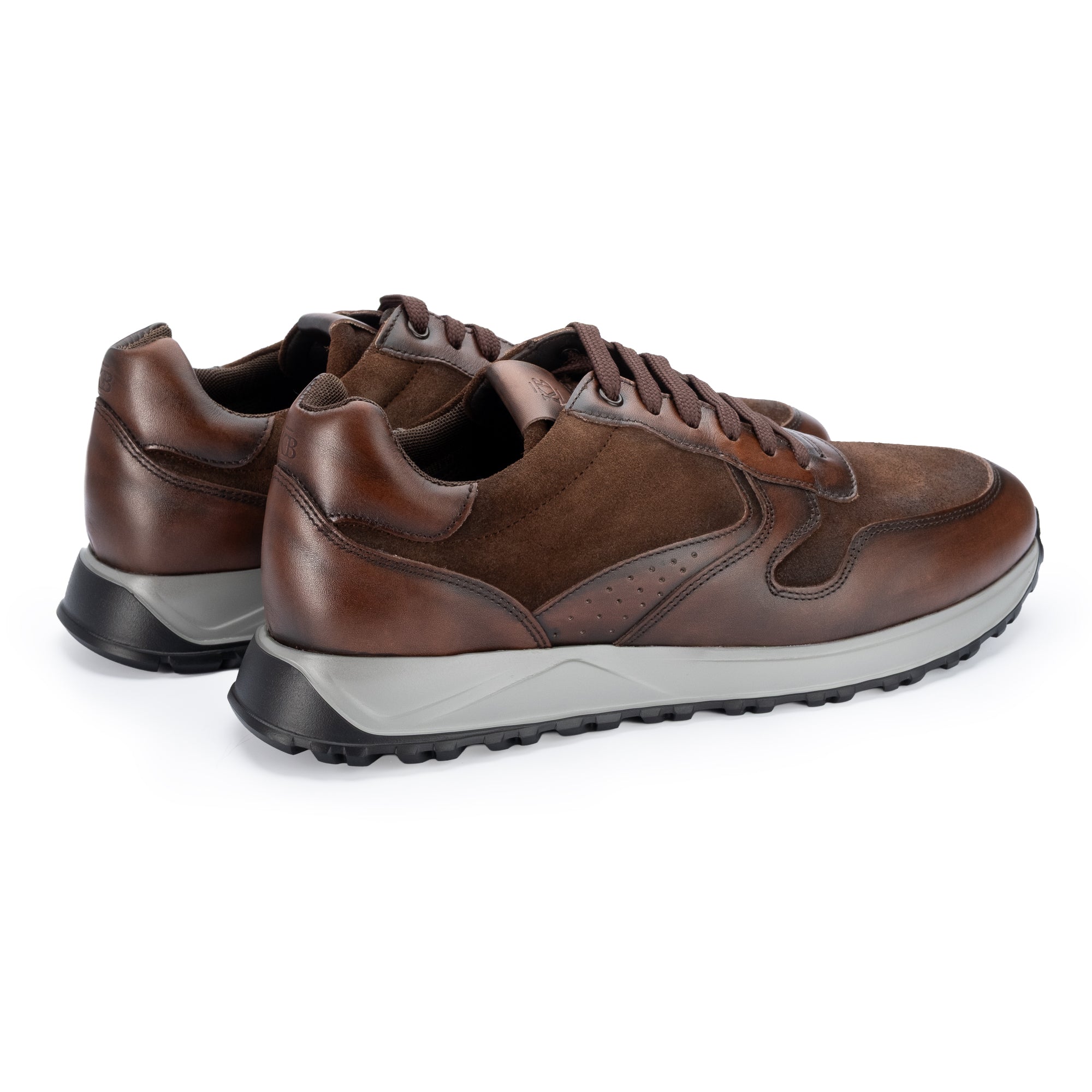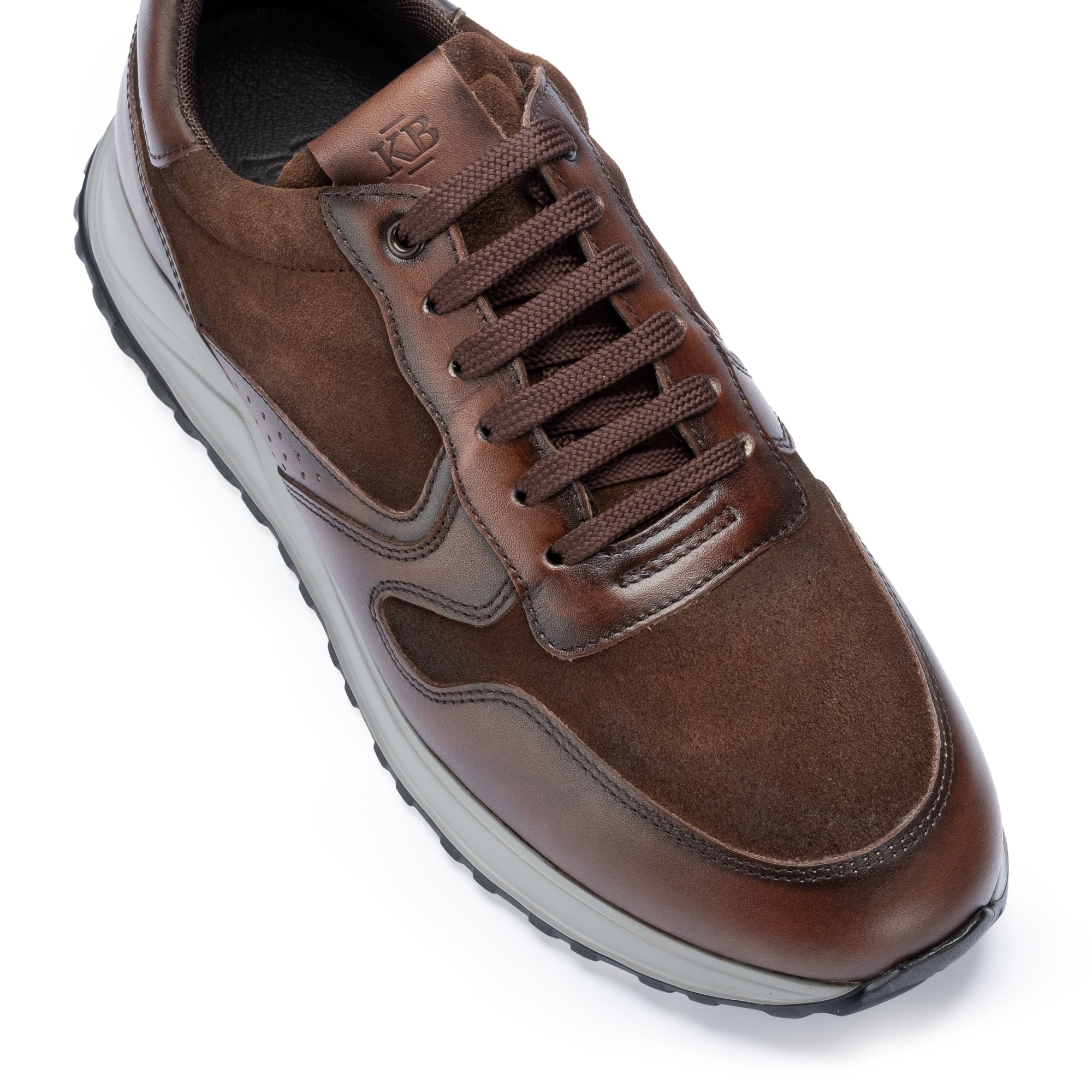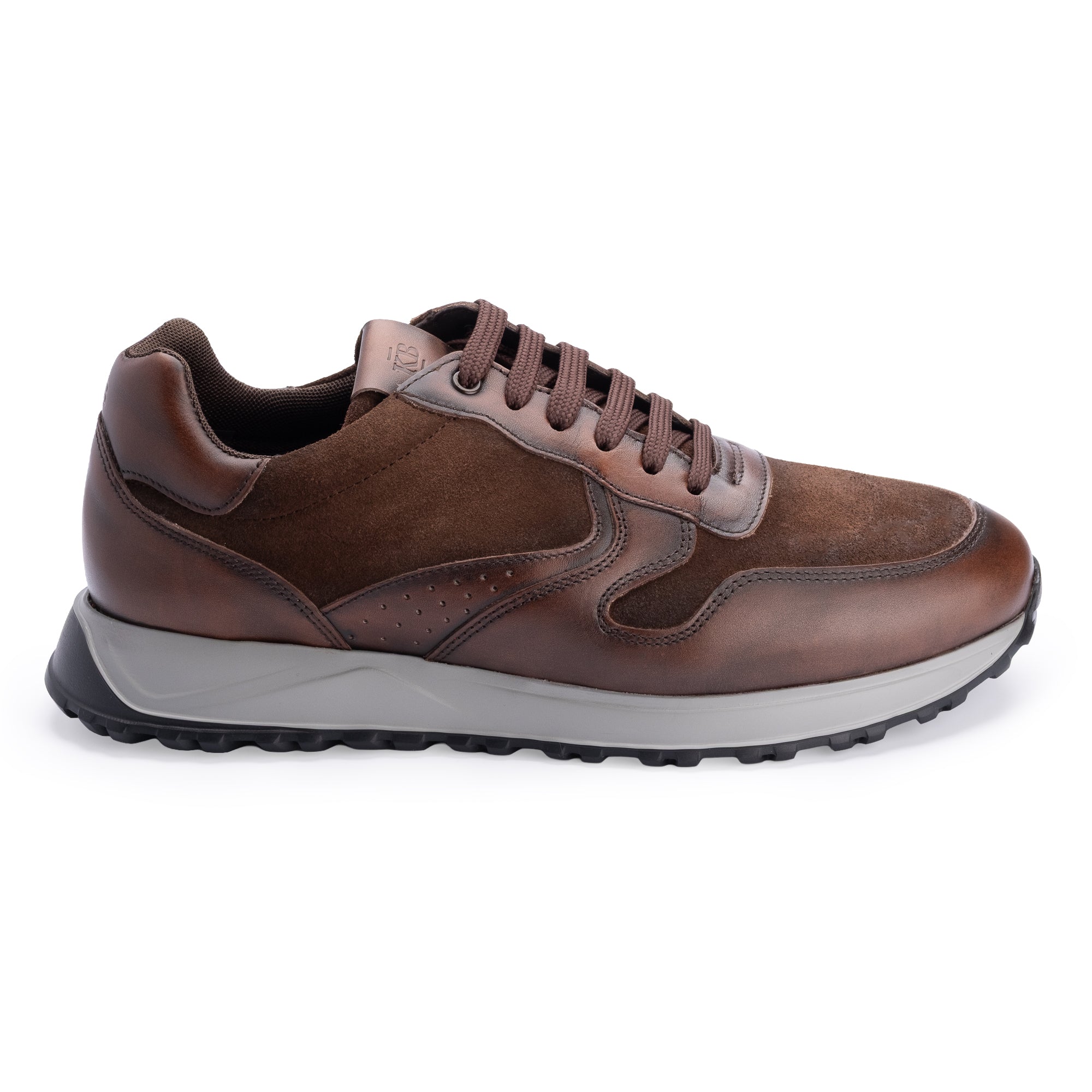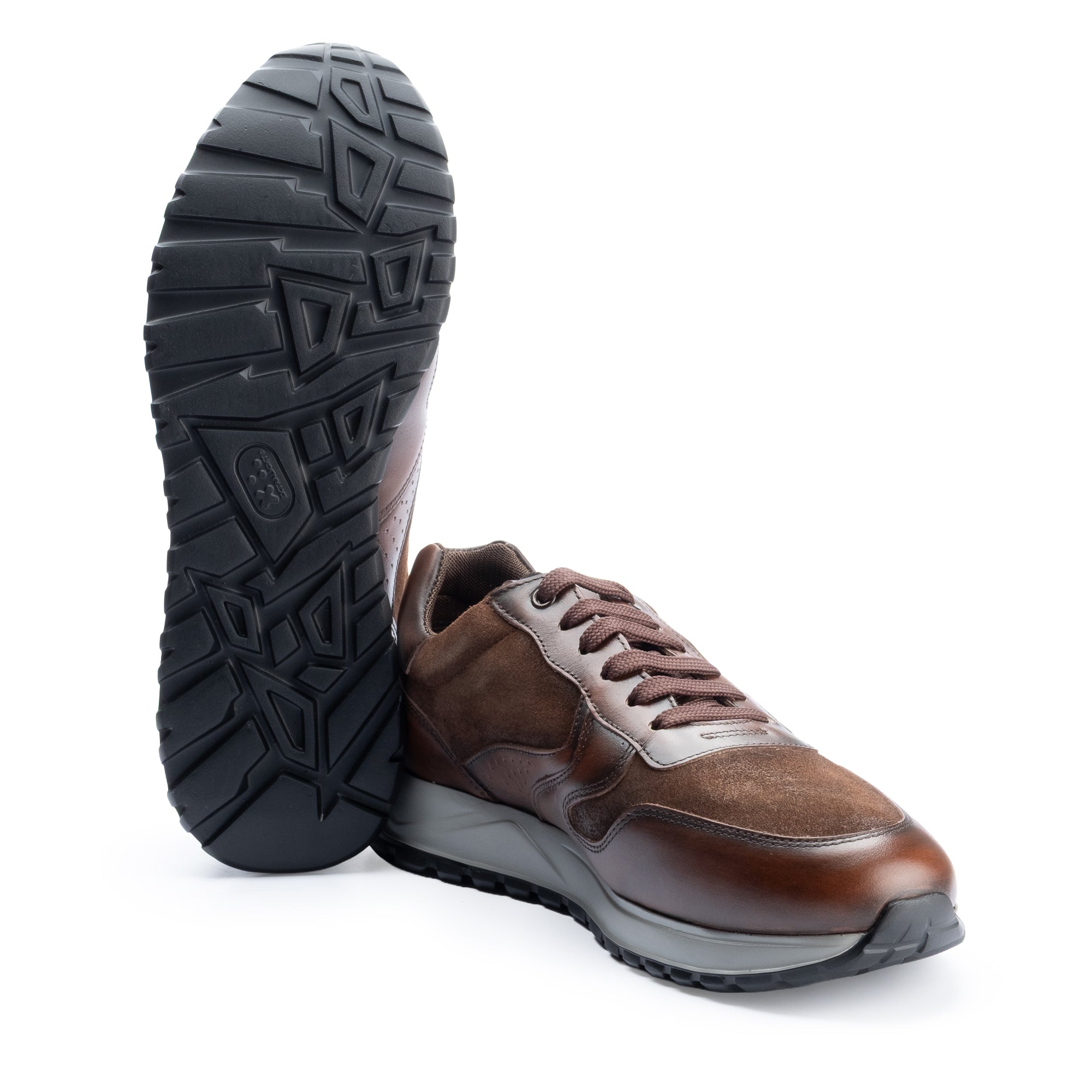

The Best Winter Boots for Men: When to Wear Them and How to Choose
The best winter boots for men combine weather resistance, ankle coverage, and a silhouette that works across multiple settings. Chelsea boots, chukka boots, and brogue boots are the three styles that reliably deliver all three. For wet conditions, choose full-grain leather over suede; for cold but dry days, suede adds texture and warmth without sacrificing style.
Winter demands more from your footwear than any other season. Between November and March, UK temperatures average 3–7°C — before you factor in rain, frost, and the occasional sleet. The right boot keeps you warm, dry, and composed in any setting. The wrong one will have you sliding across a pavement or soaking your socks by 9am.
This guide covers the best men's boots for winter, when to wear each style, and how to choose the right pair for your wardrobe.
Related Guides
- The Definitive Guide to Men's Boots — our comprehensive guide
- How to Wear Brogue Boots: Men's Styling Guide for Every Season
- How to Wear Chukka Boots: Men's Styling Guide for Every Occasion
- The Spring Shoe Edit: What to Wear When the Weather Finally Turns
What Makes a Good Winter Boot for Men?
Not all boots are built for winter. There are four things to evaluate when choosing a pair that will perform from October through to March.
- Upper material — Full-grain leather is the most weather-resistant option. It repels moisture naturally and, when treated with wax polish, forms a reliable barrier against the elements. Suede is more vulnerable to water damage, though it remains a strong choice in colder, drier conditions.
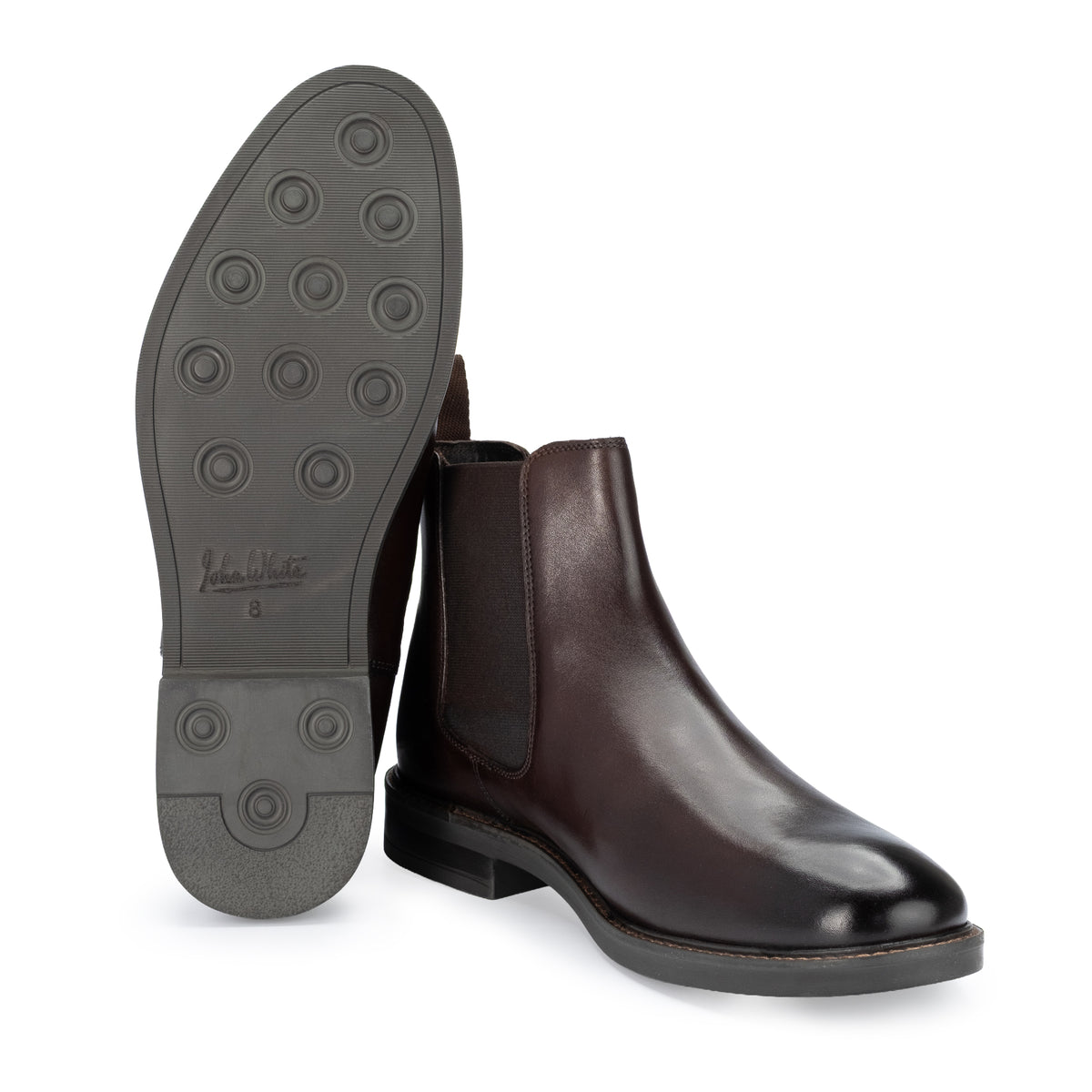
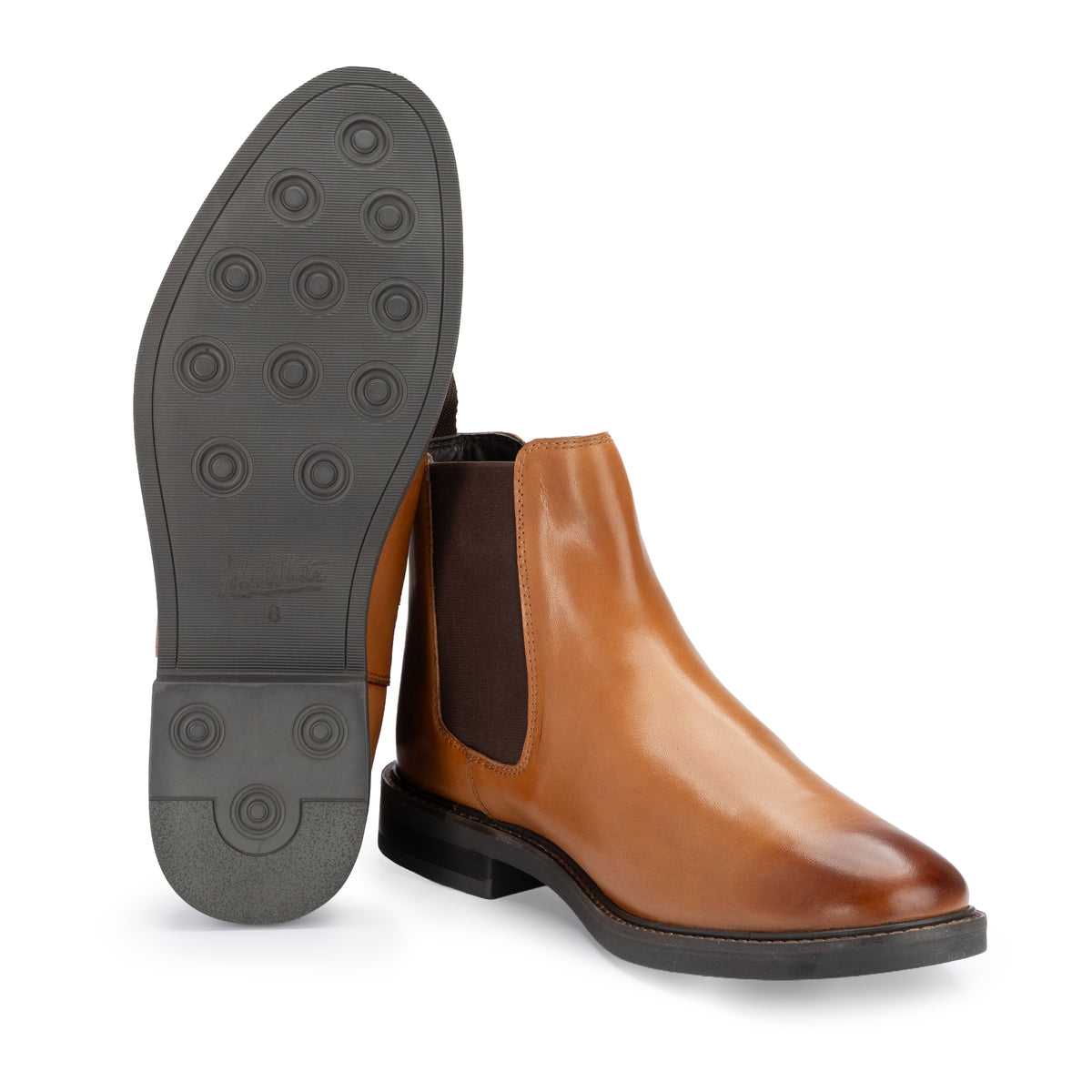
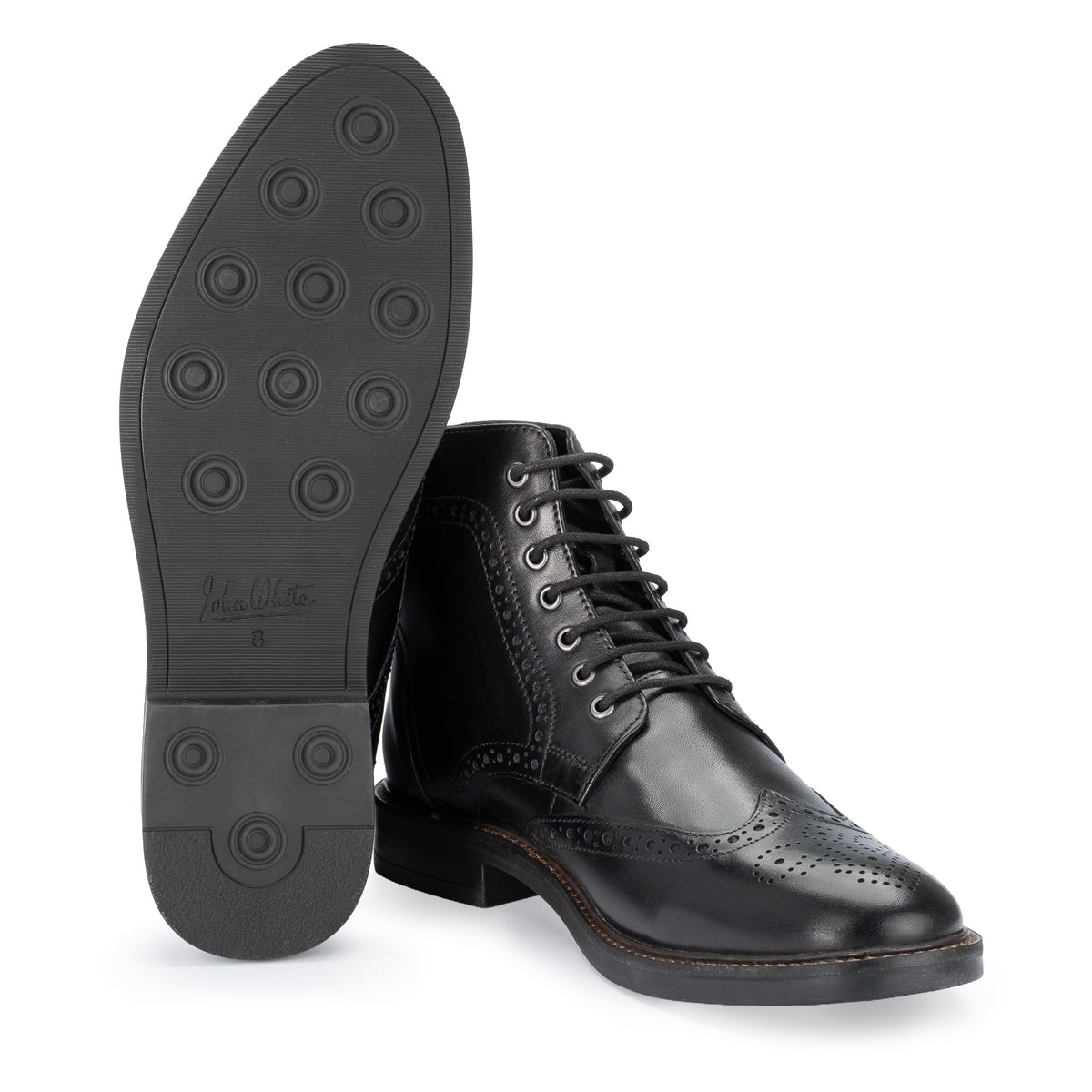
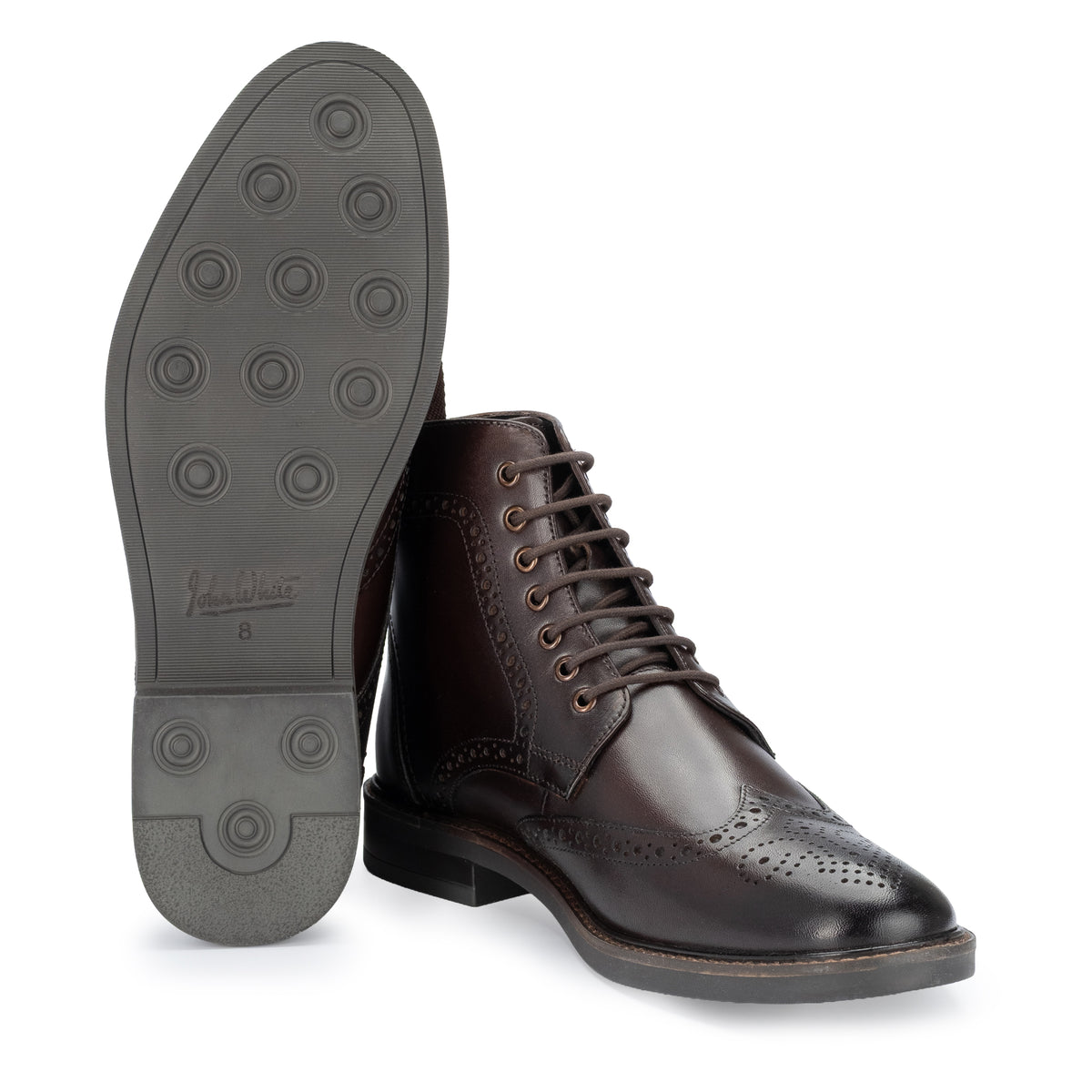
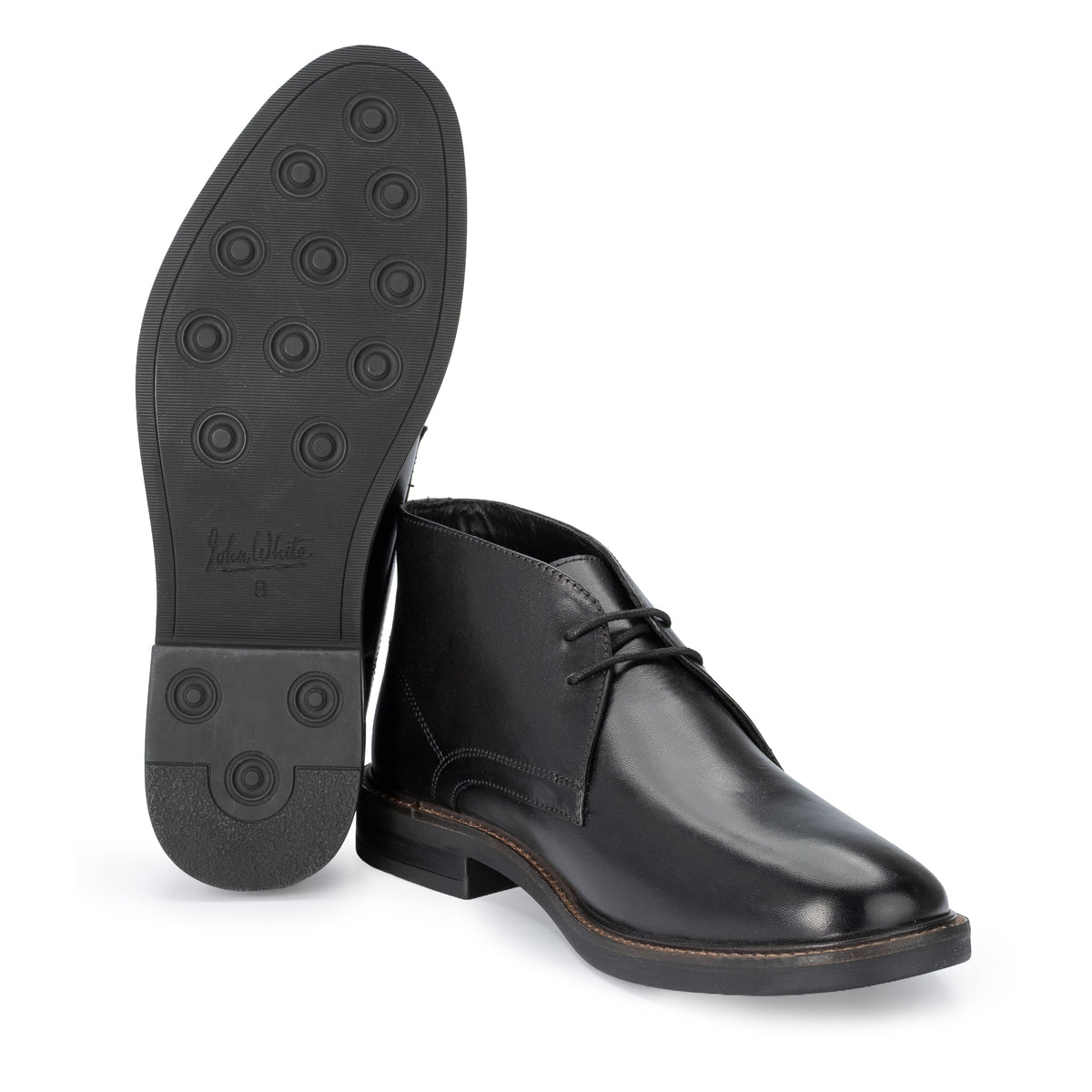
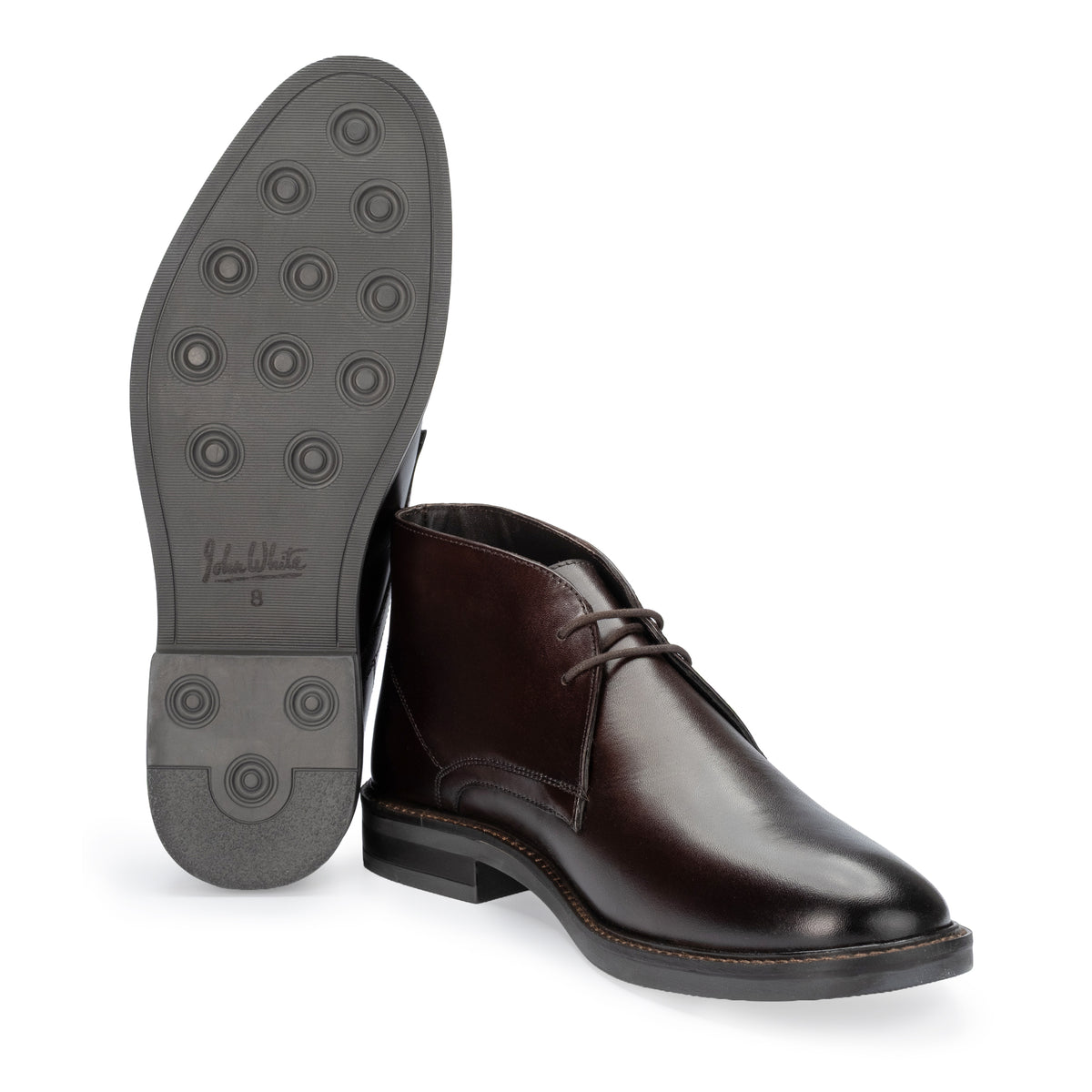
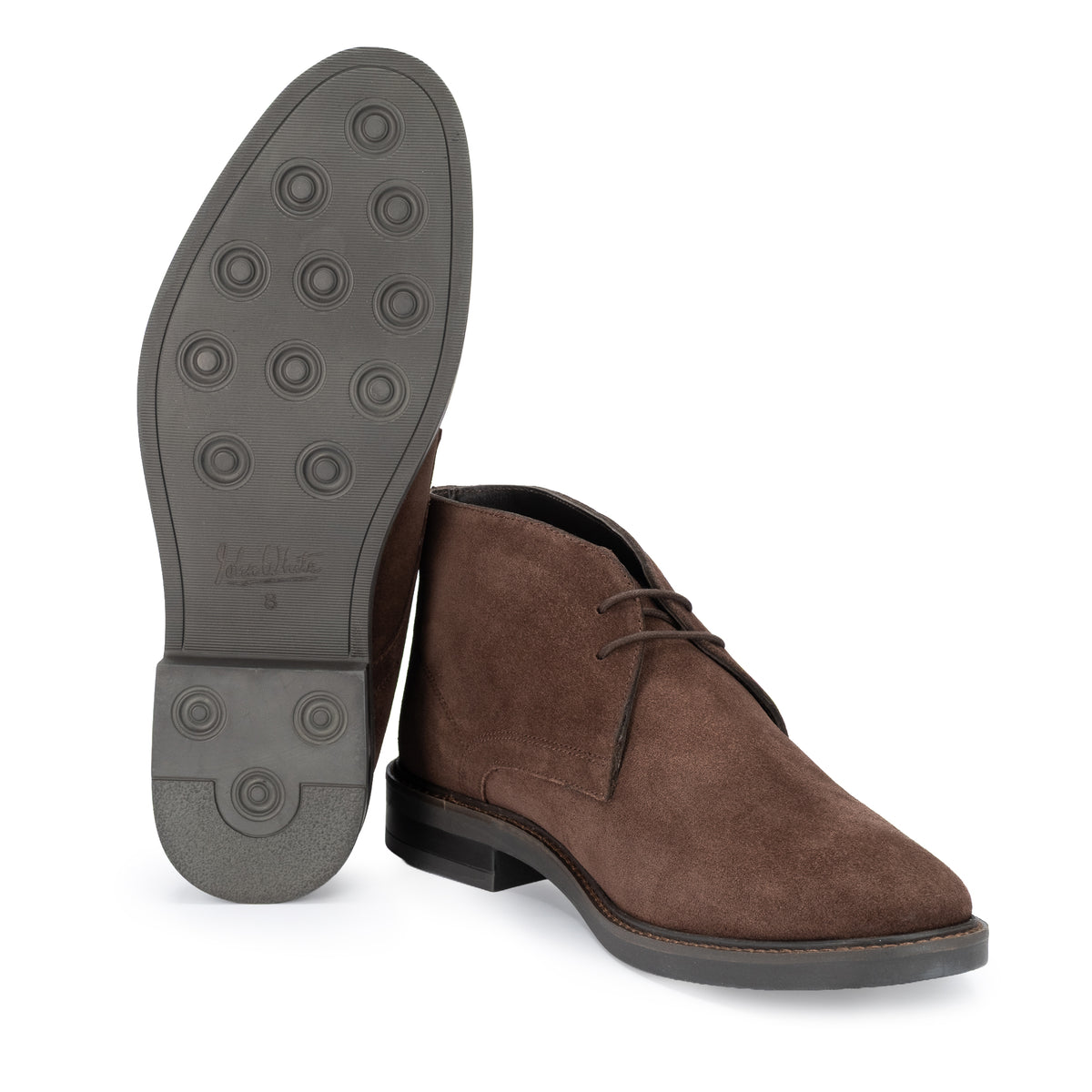
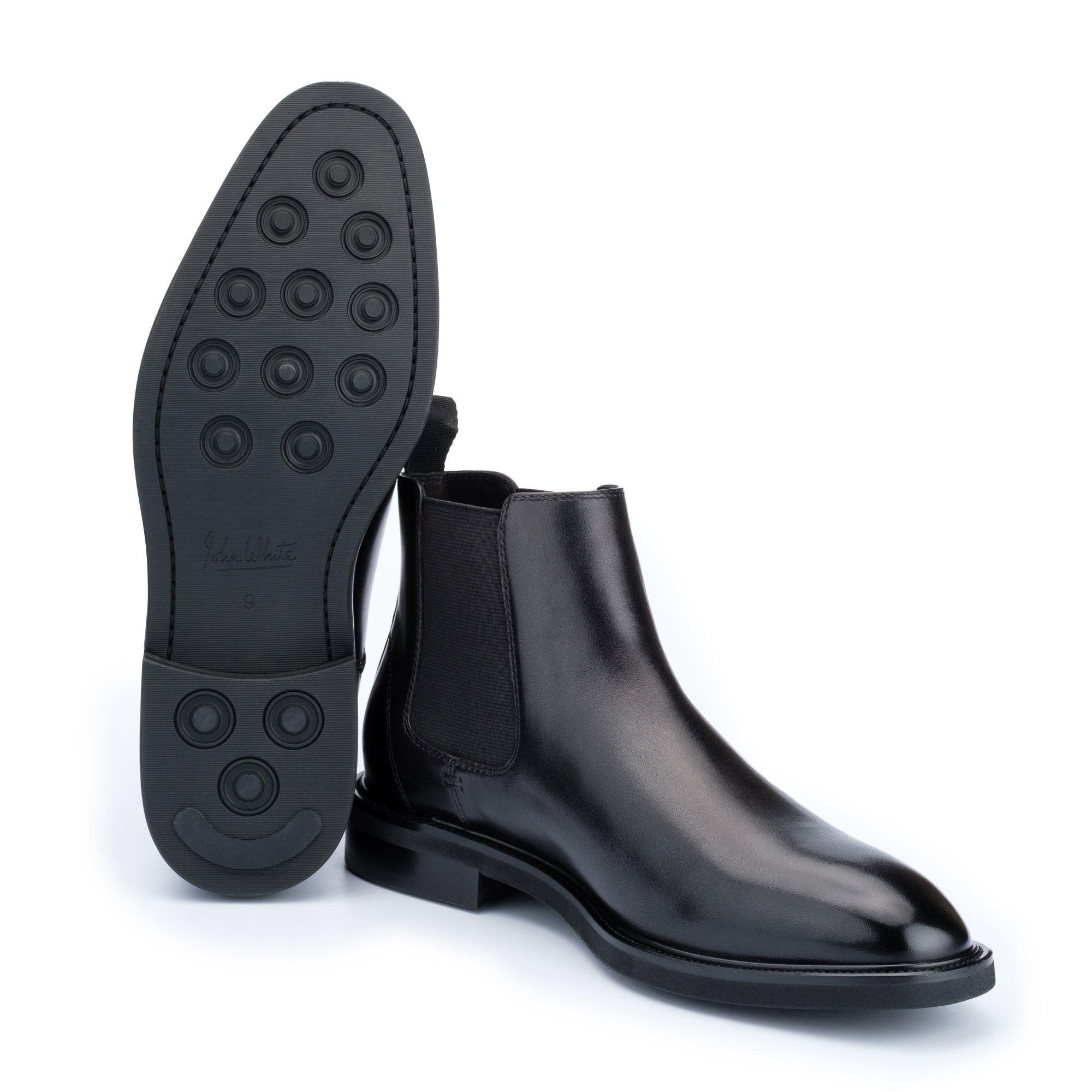
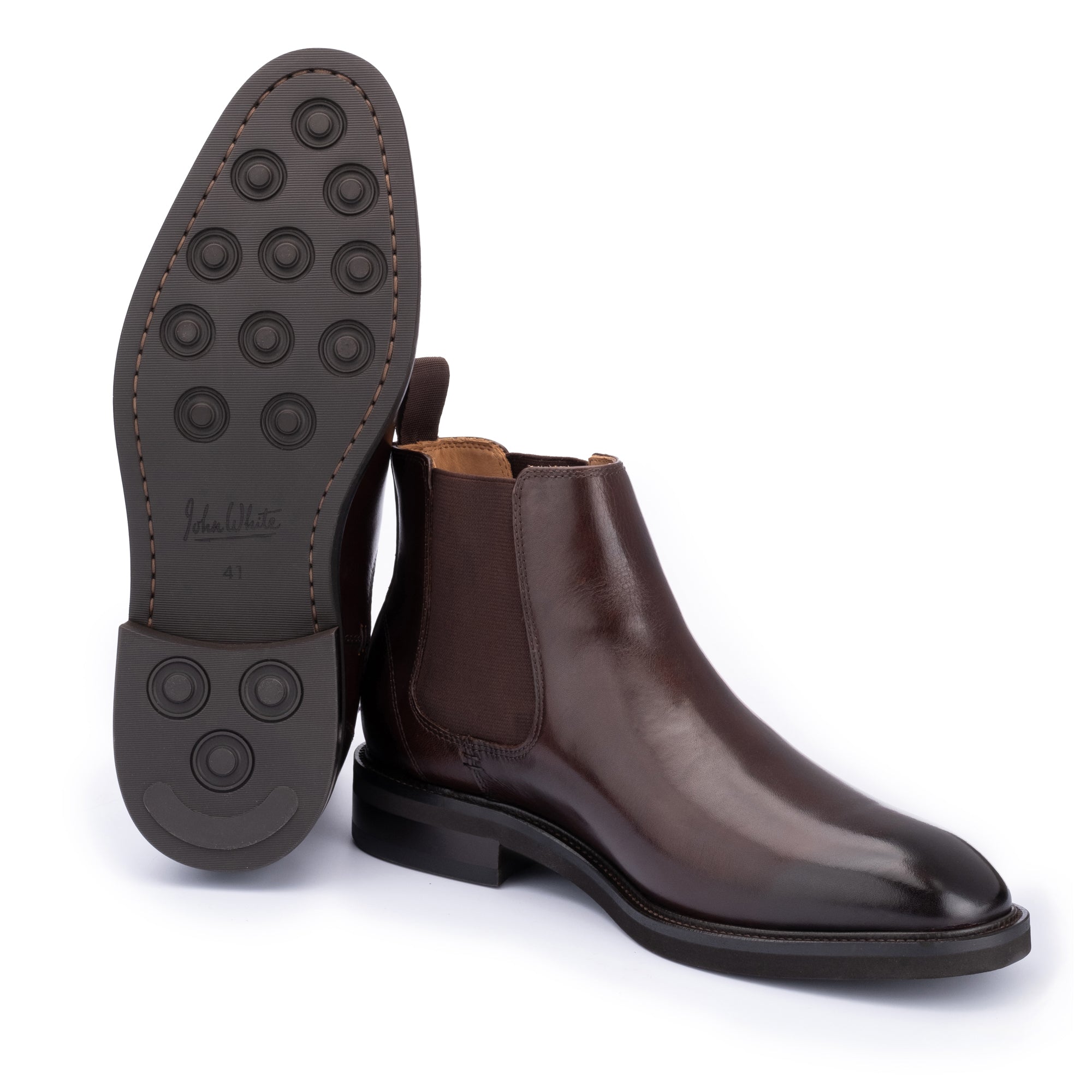
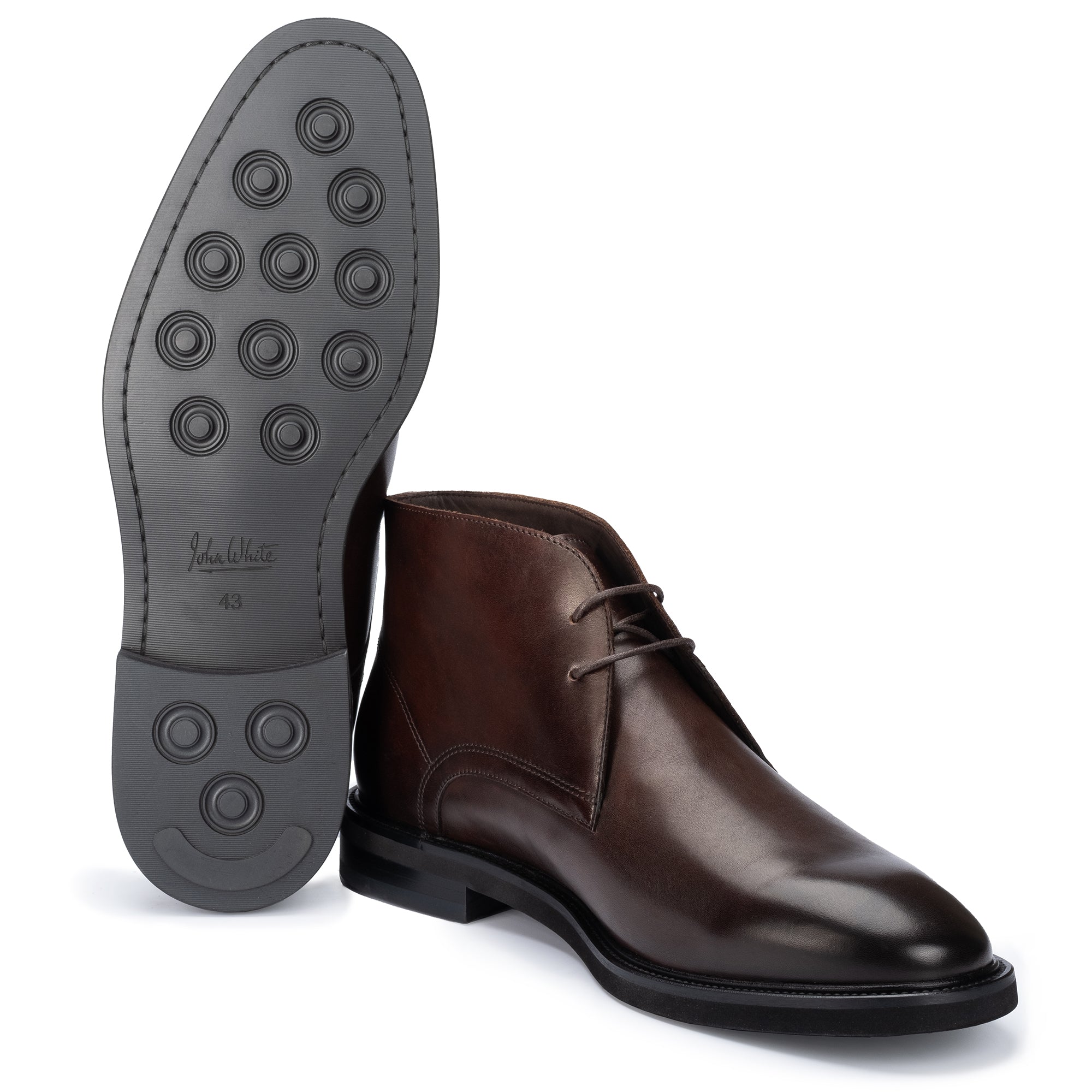
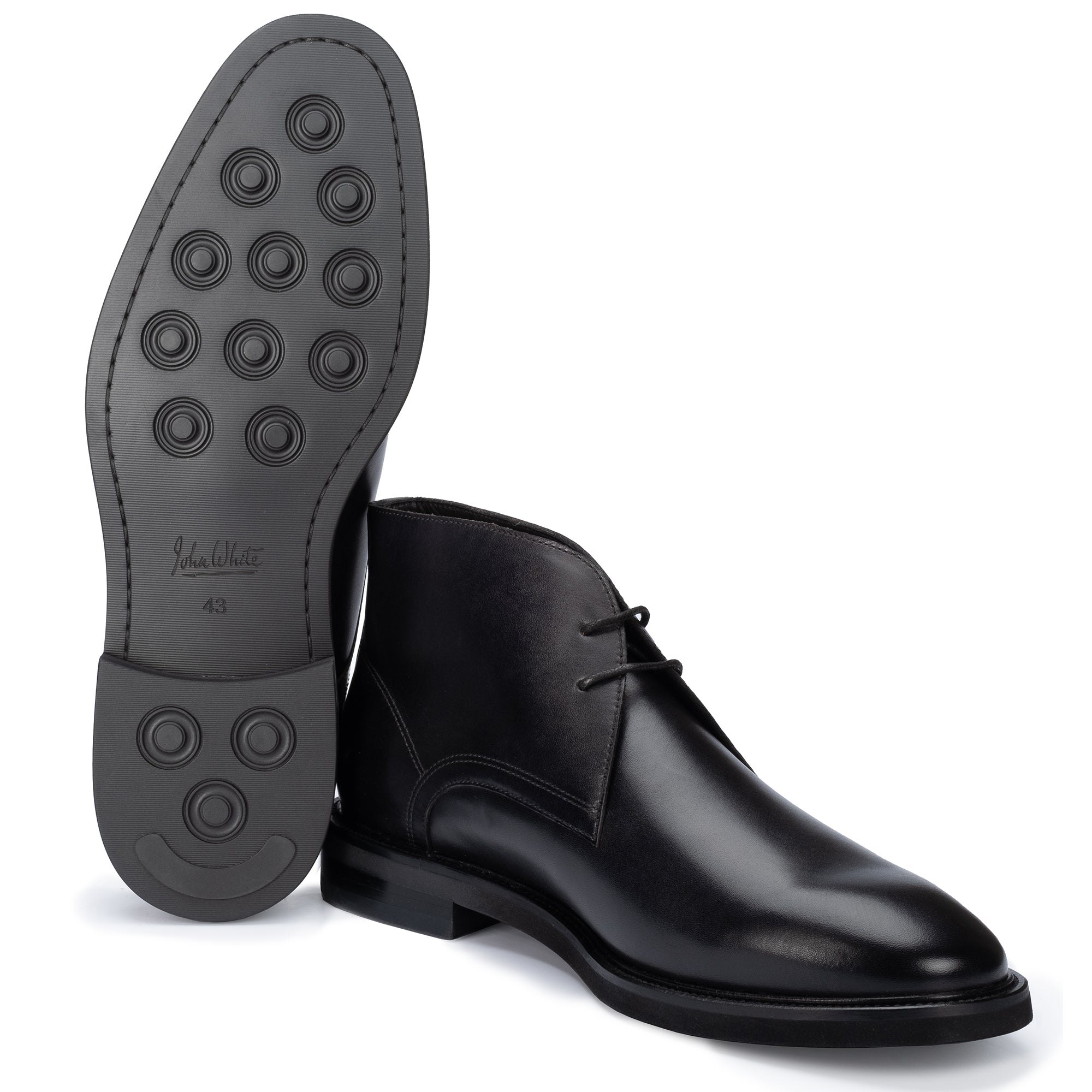
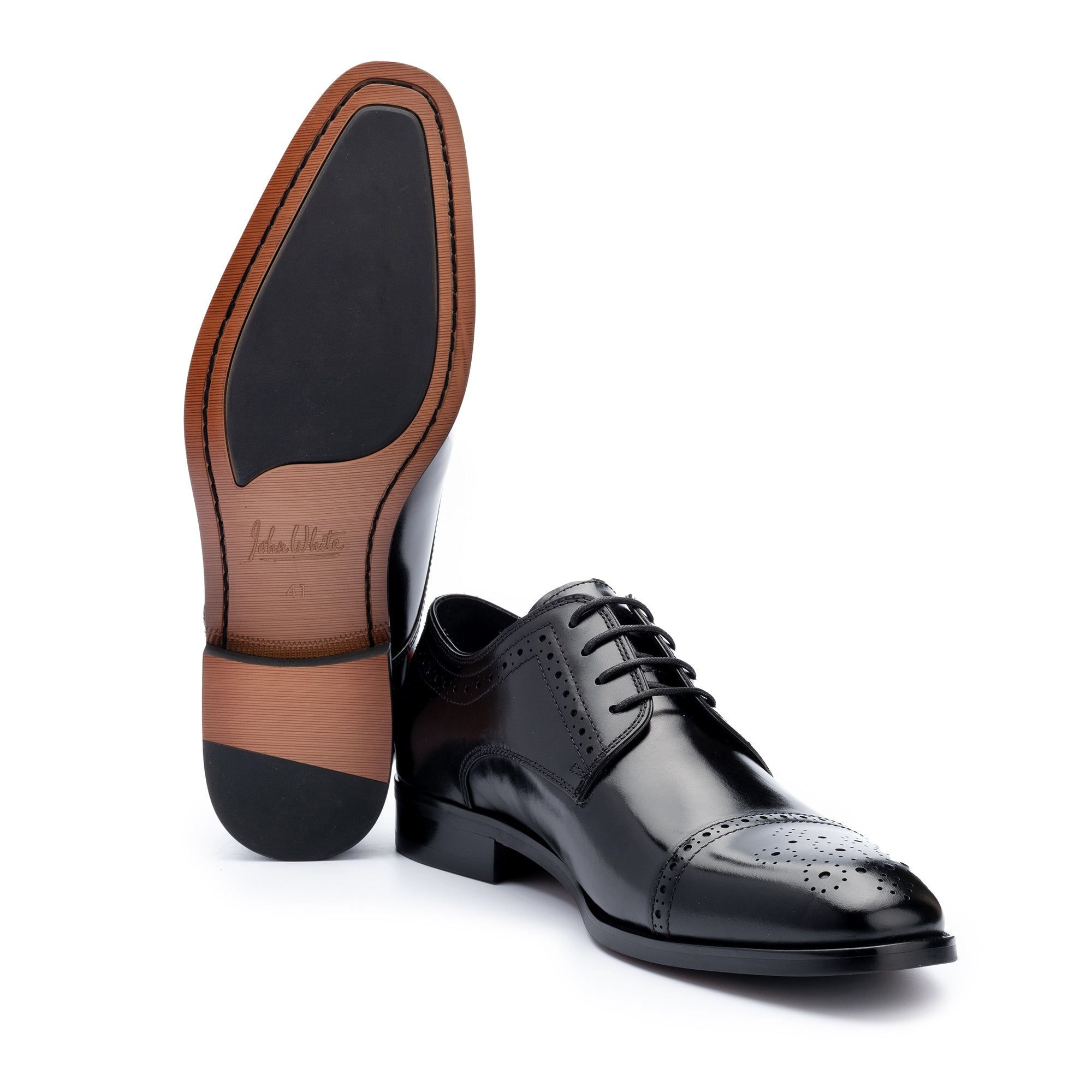
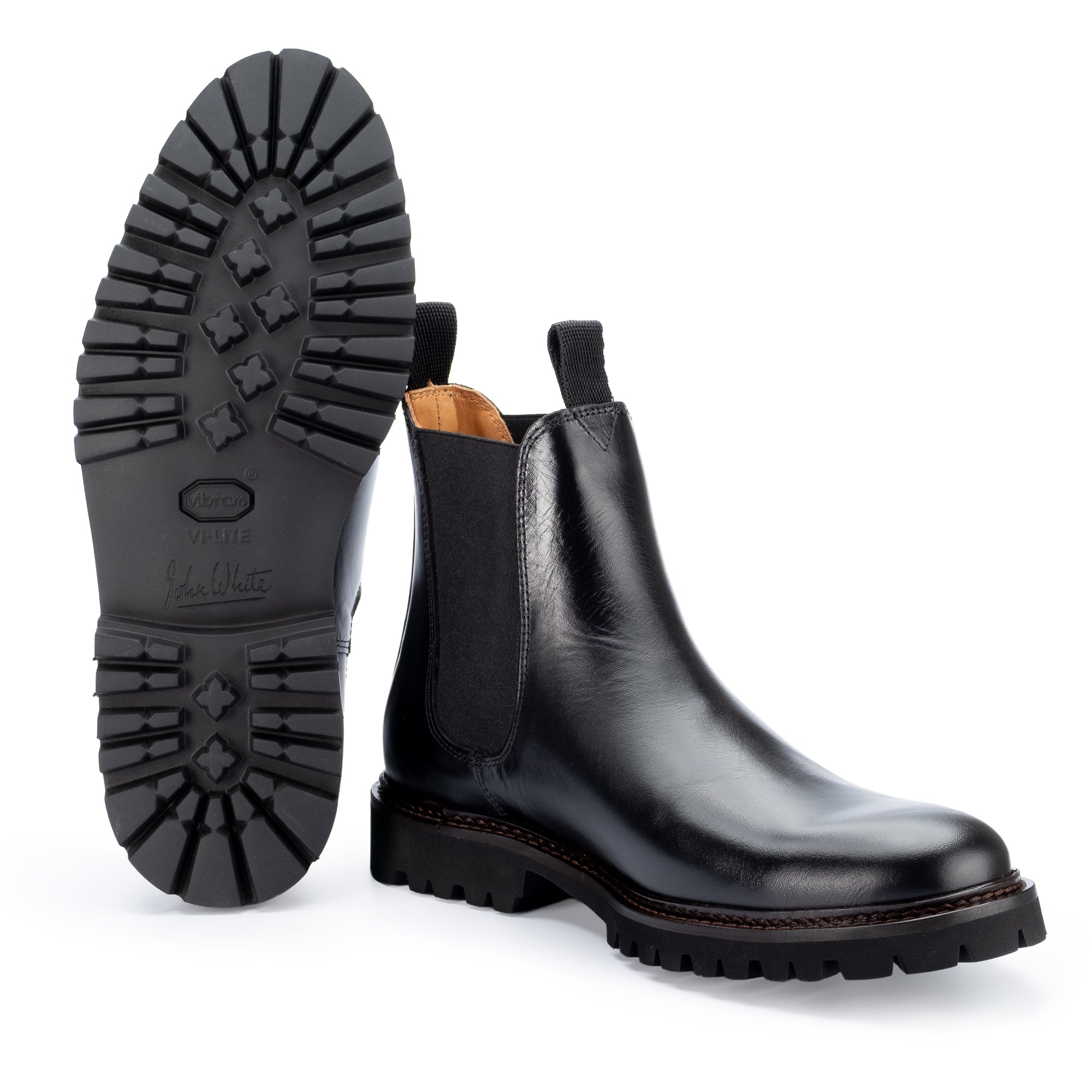
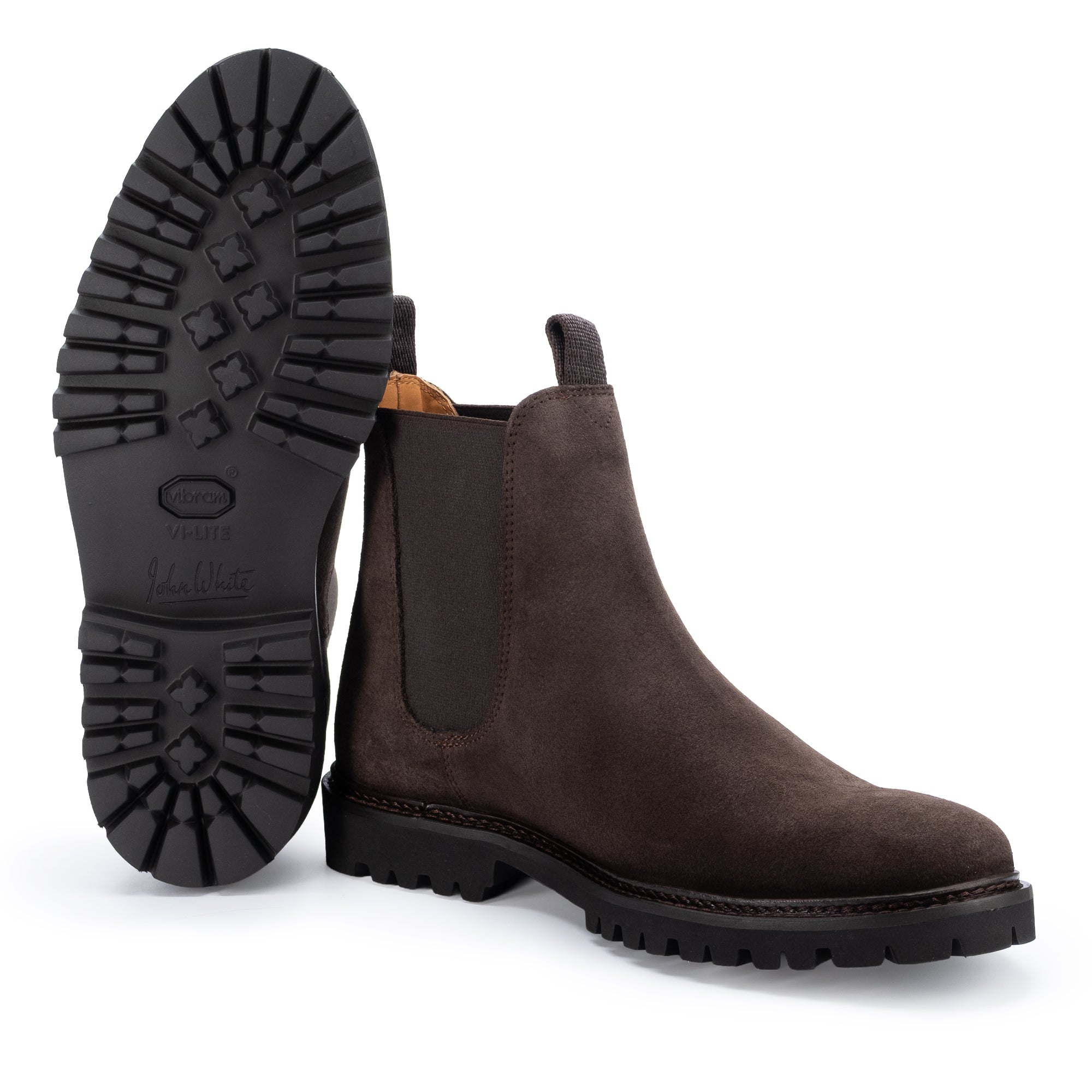
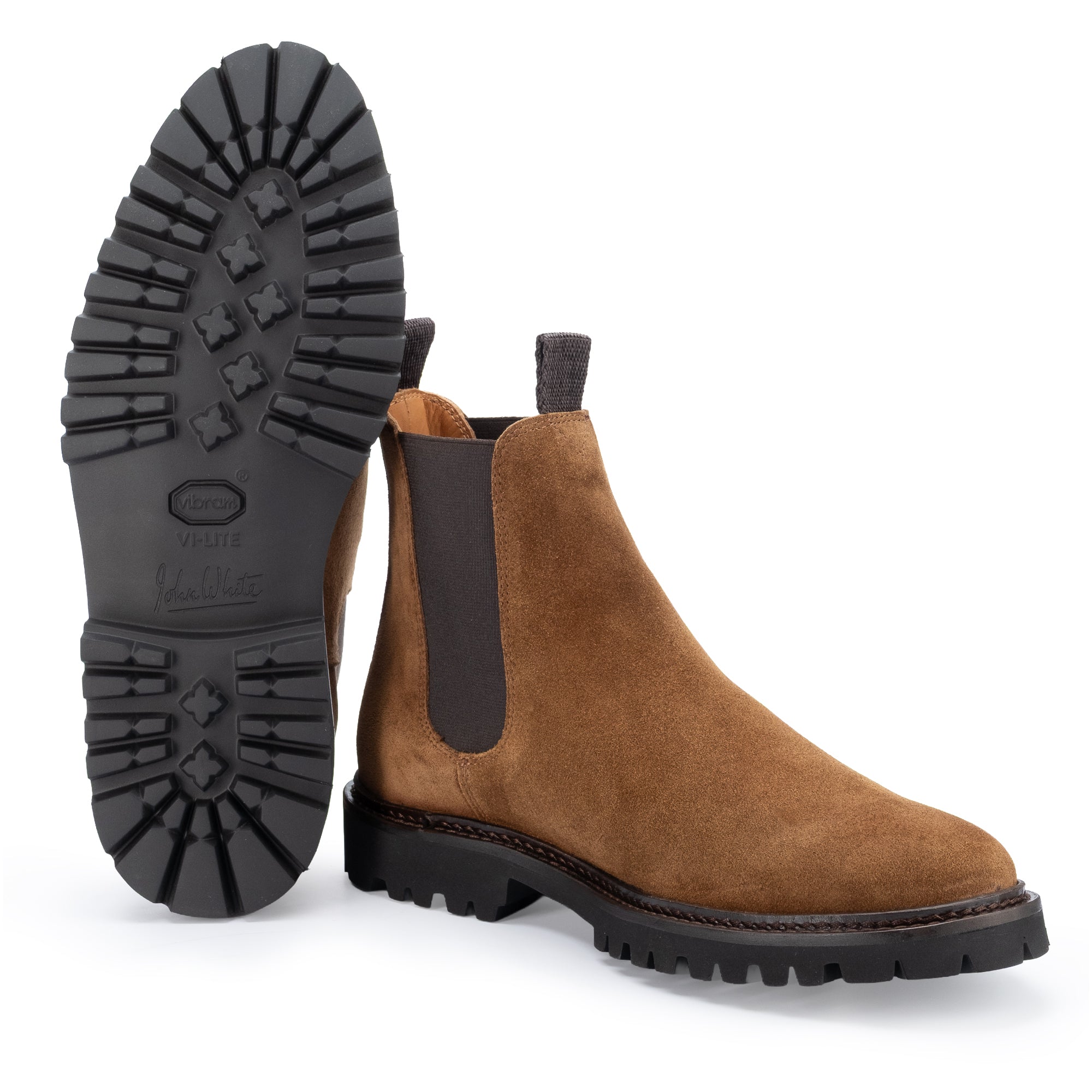
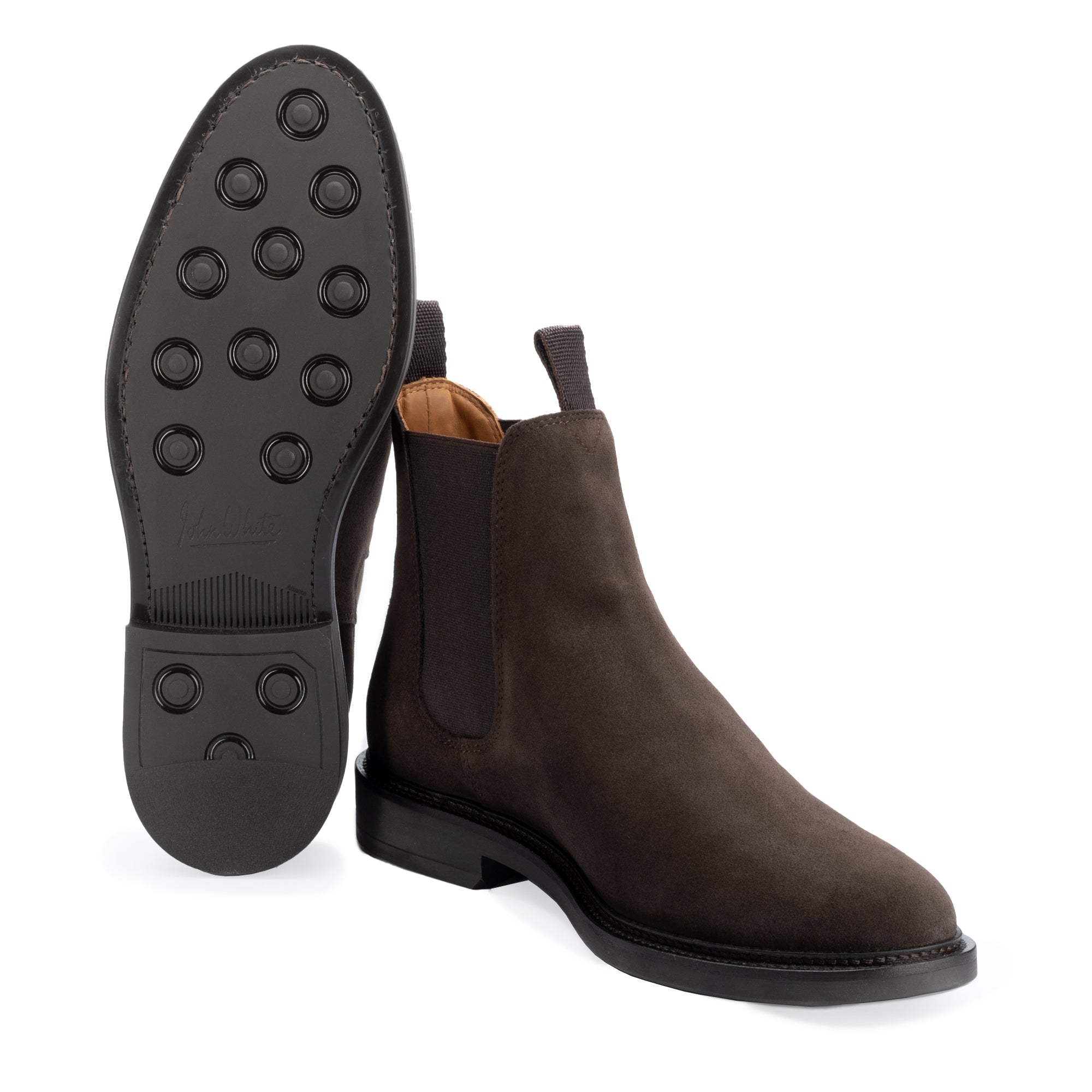
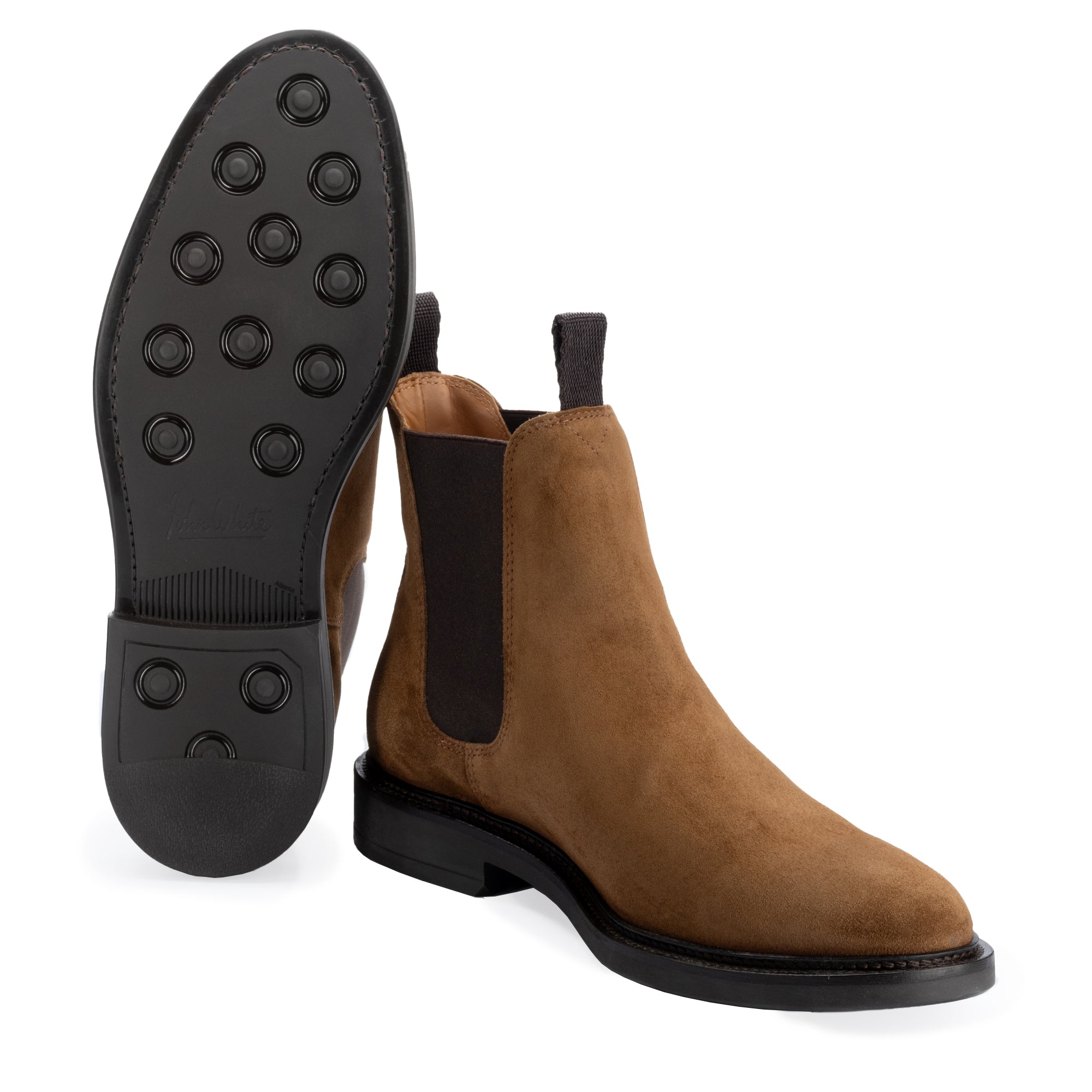
- Sole construction — A rubber or commando sole provides significantly better grip on wet and icy surfaces than a traditional leather sole. Look for defined tread and a sole that wraps slightly around the upper.
- Ankle coverage — Boots that sit above the ankle provide better warmth and support. Chelsea, chukka, and brogue boots all clear this threshold comfortably.
- Fit with winter socks — Winter socks are thicker than summer ones. Try any boot you're buying for winter wear with a mid-weight wool sock — a half size too small becomes noticeably uncomfortable in cold weather.
According to the British Footwear Association, poor fit is one of the leading causes of foot discomfort in men over 30, a problem compounded in winter when thicker socks alter the internal fit of the shoe.
Which Types of Boot Work Best in Winter?
Are Chelsea Boots Good for Winter?
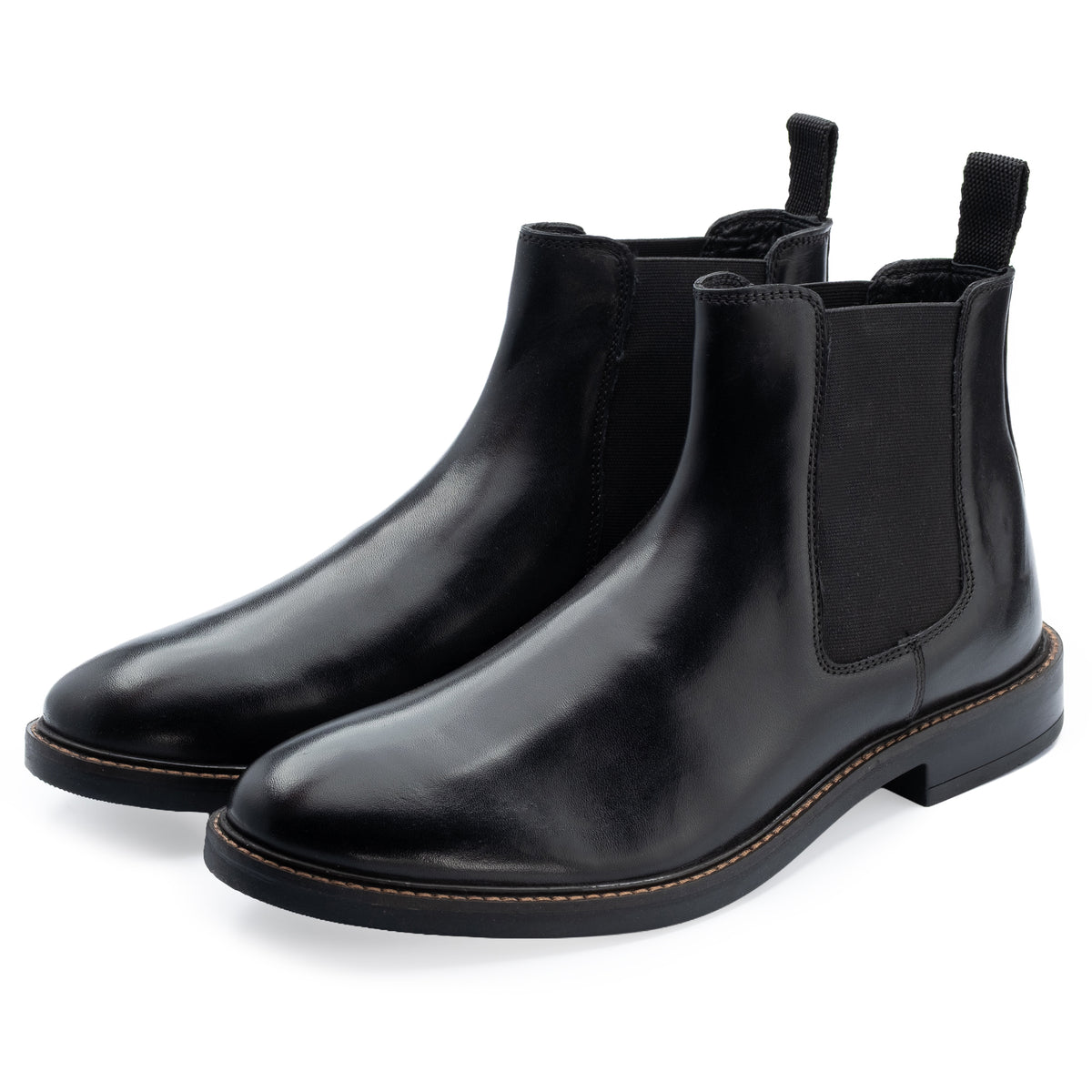
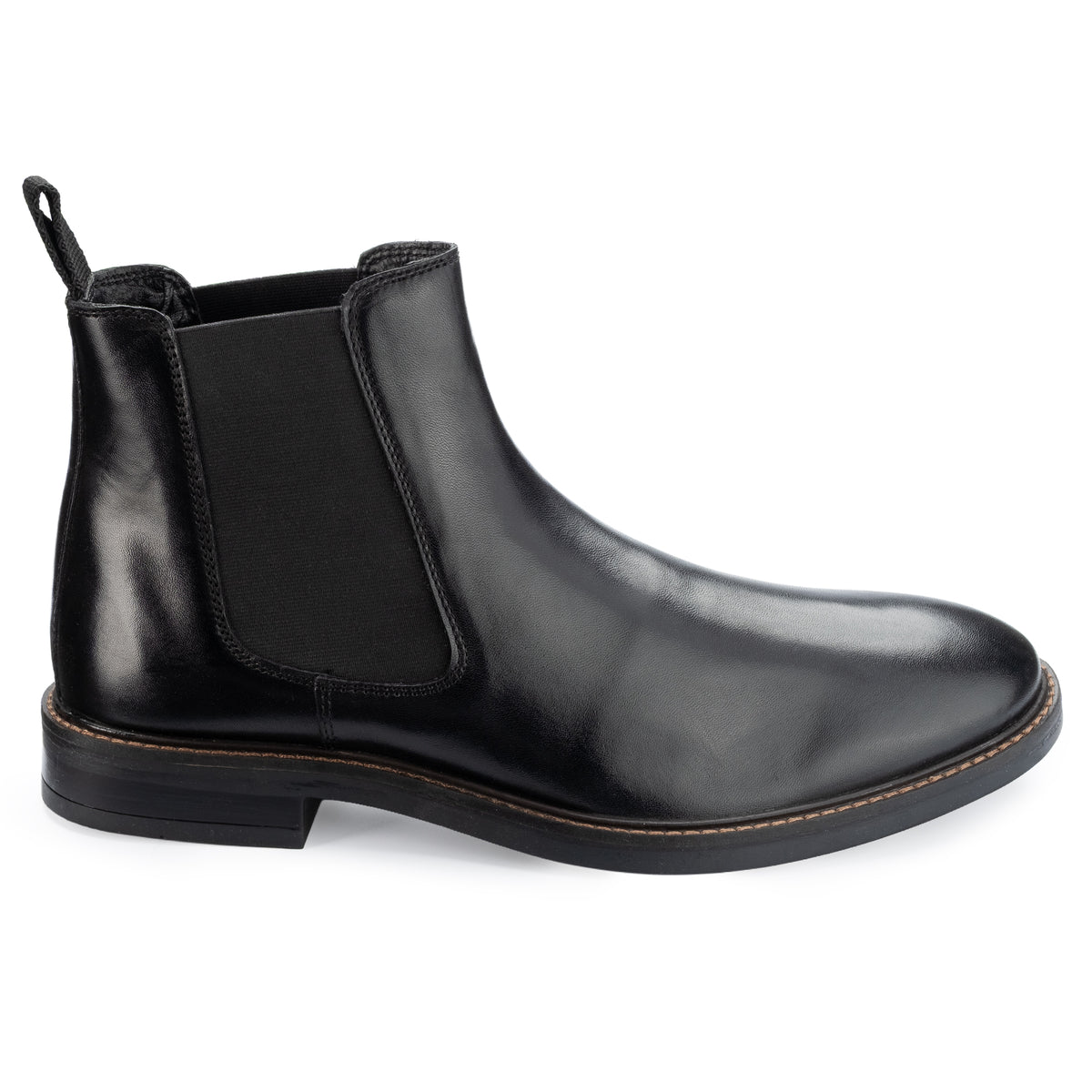
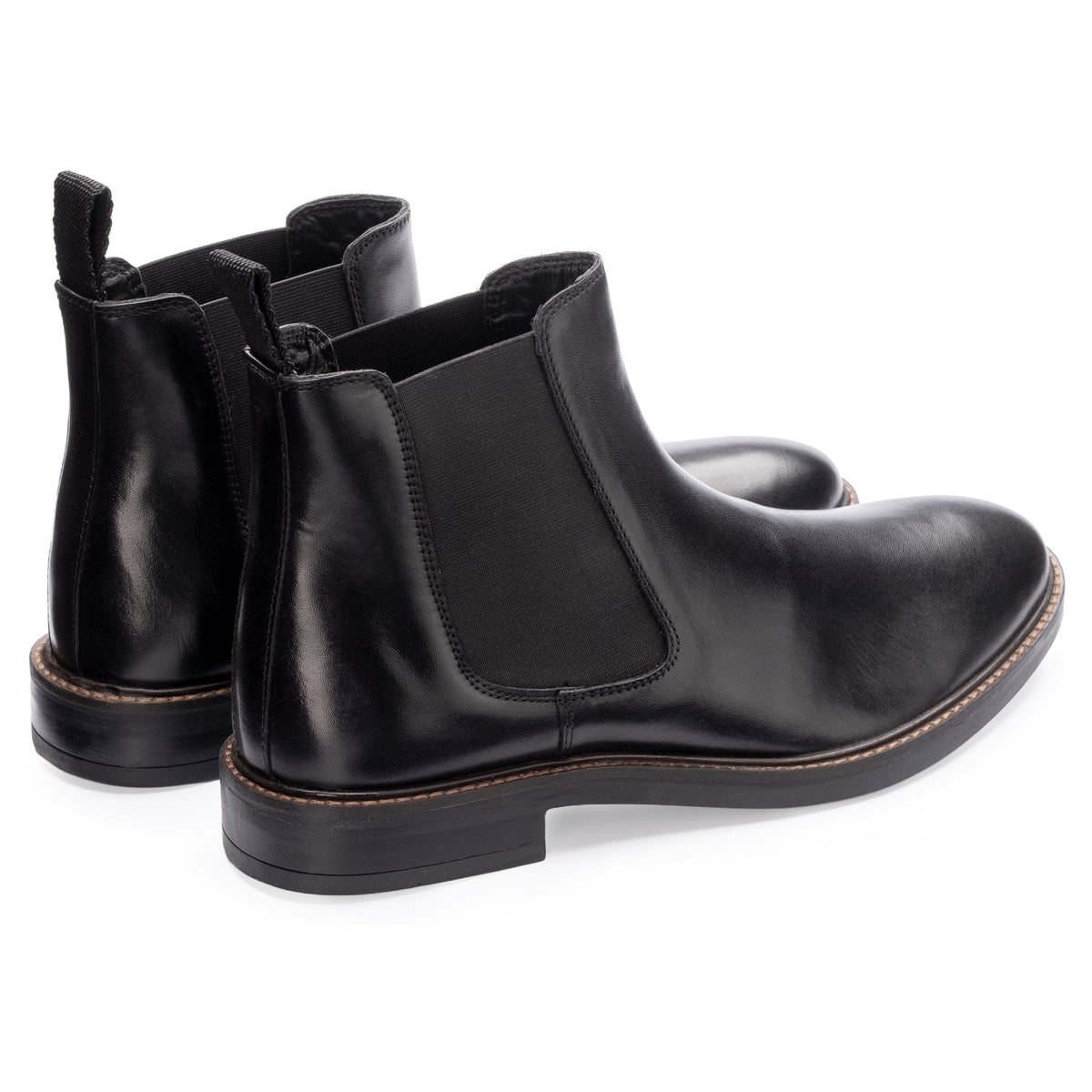
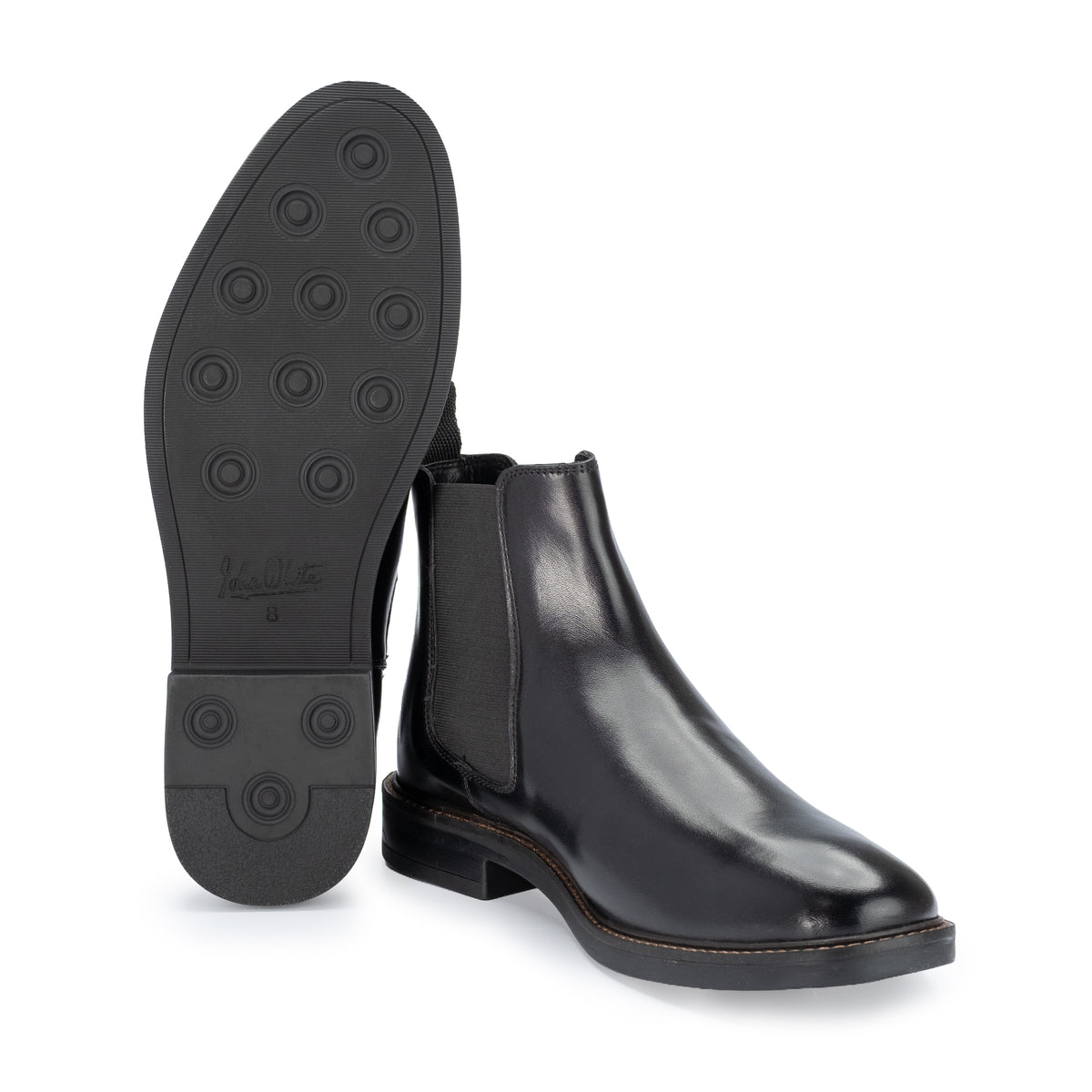
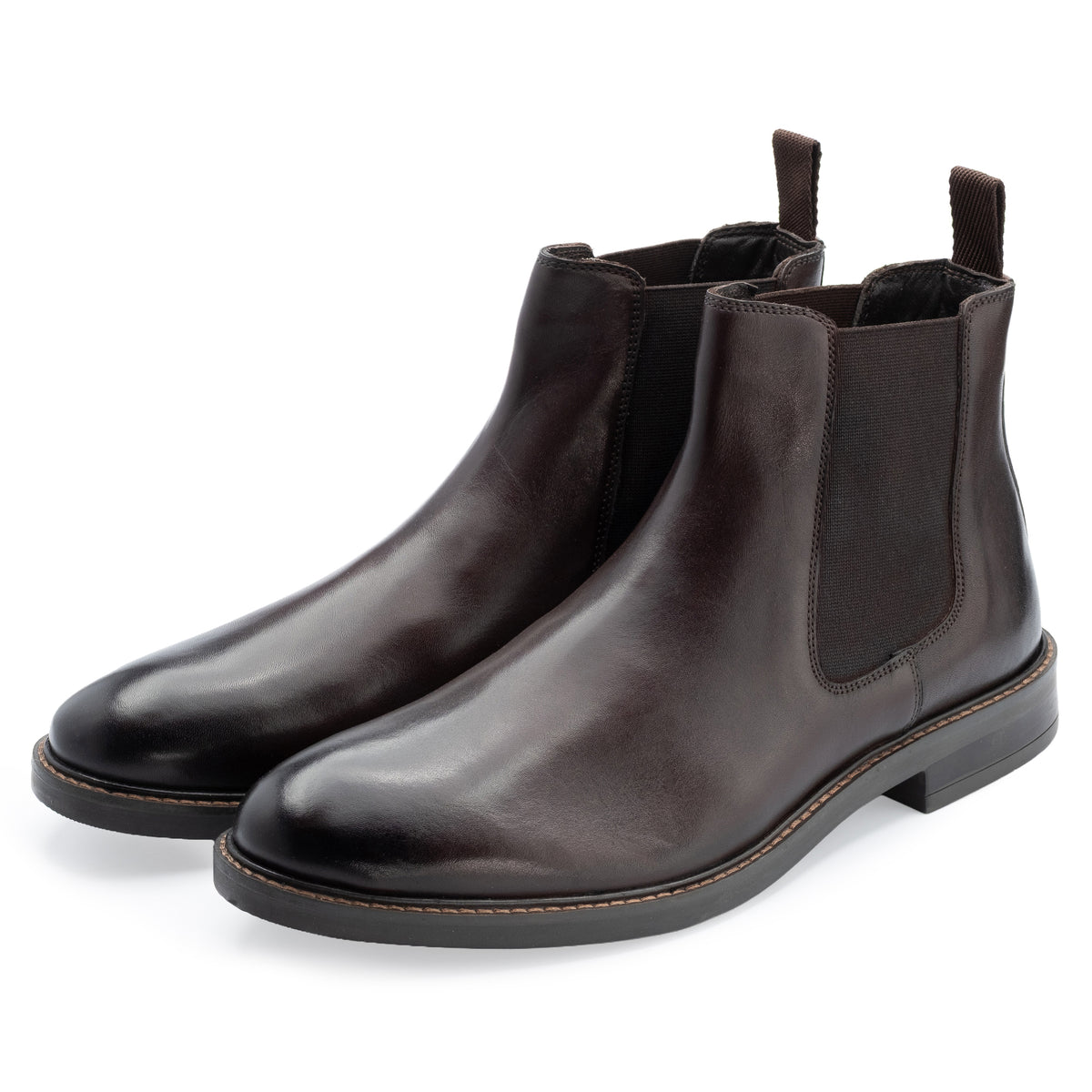
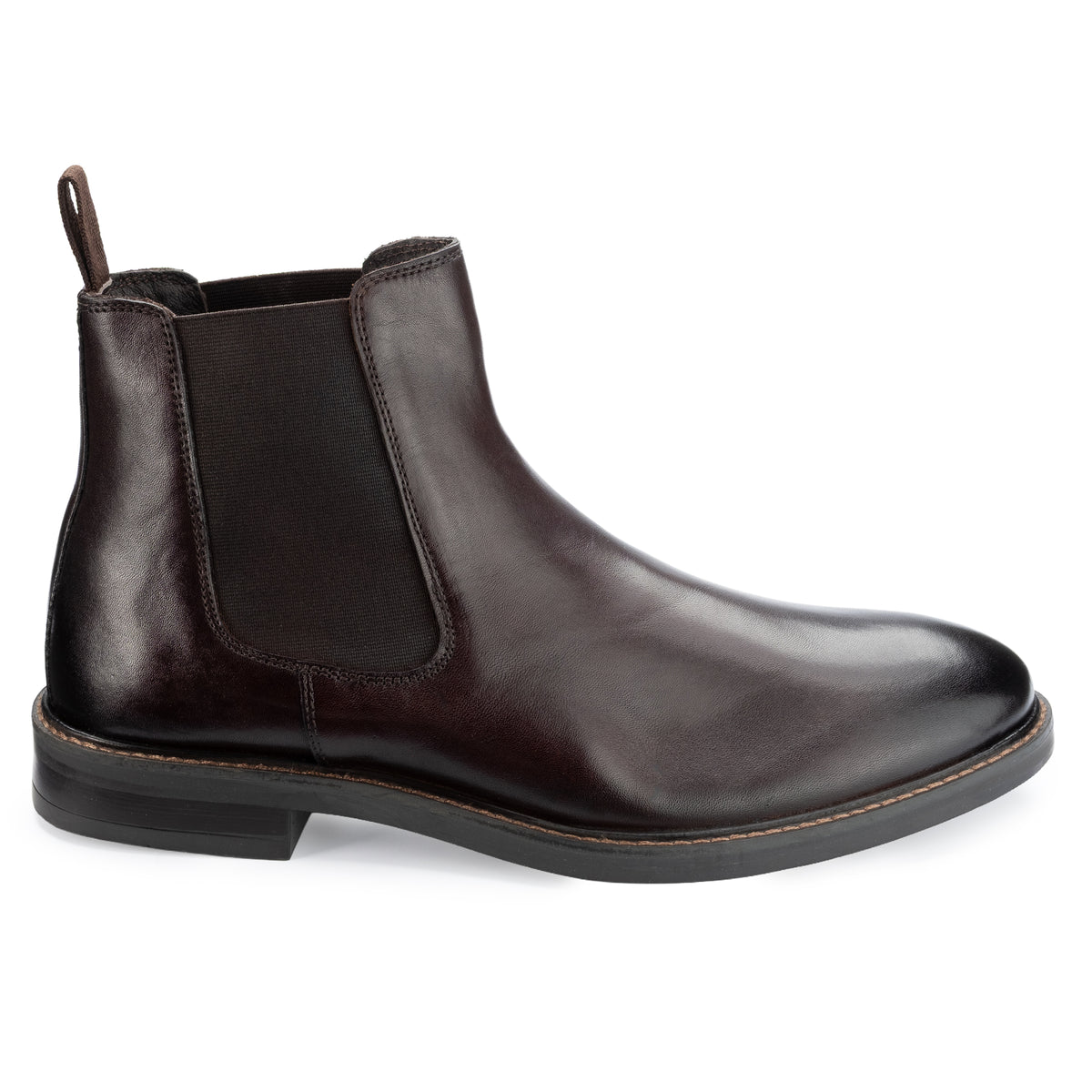
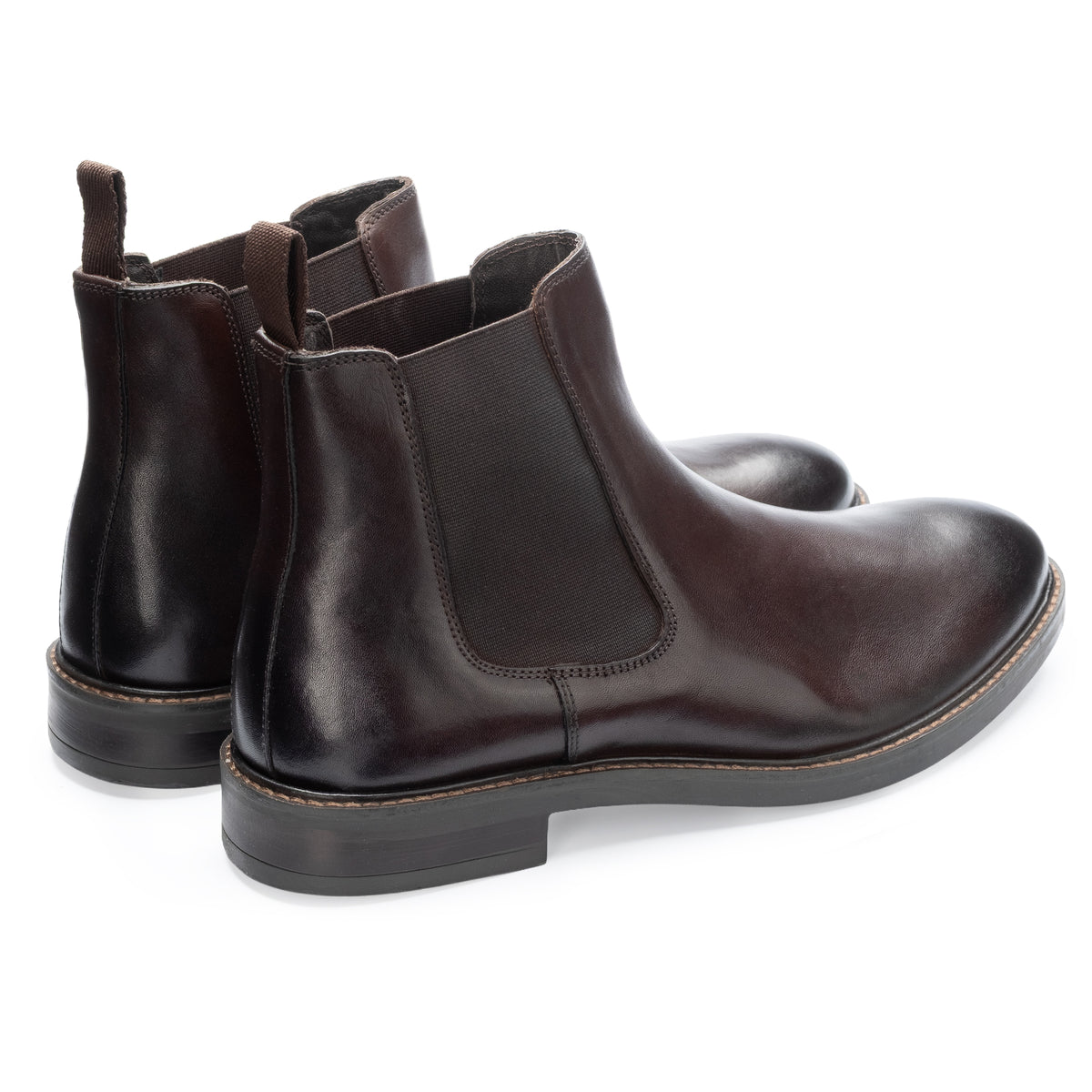
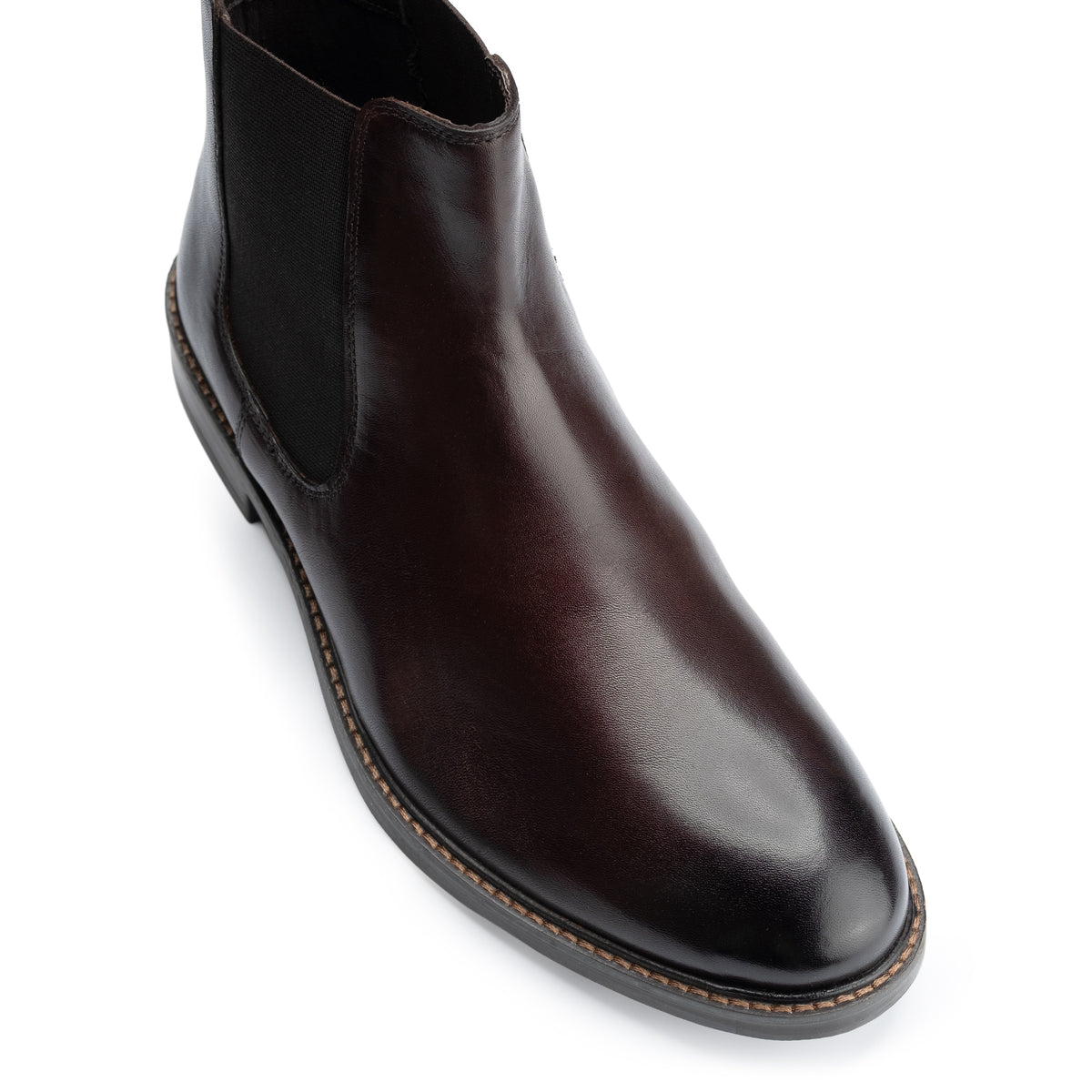
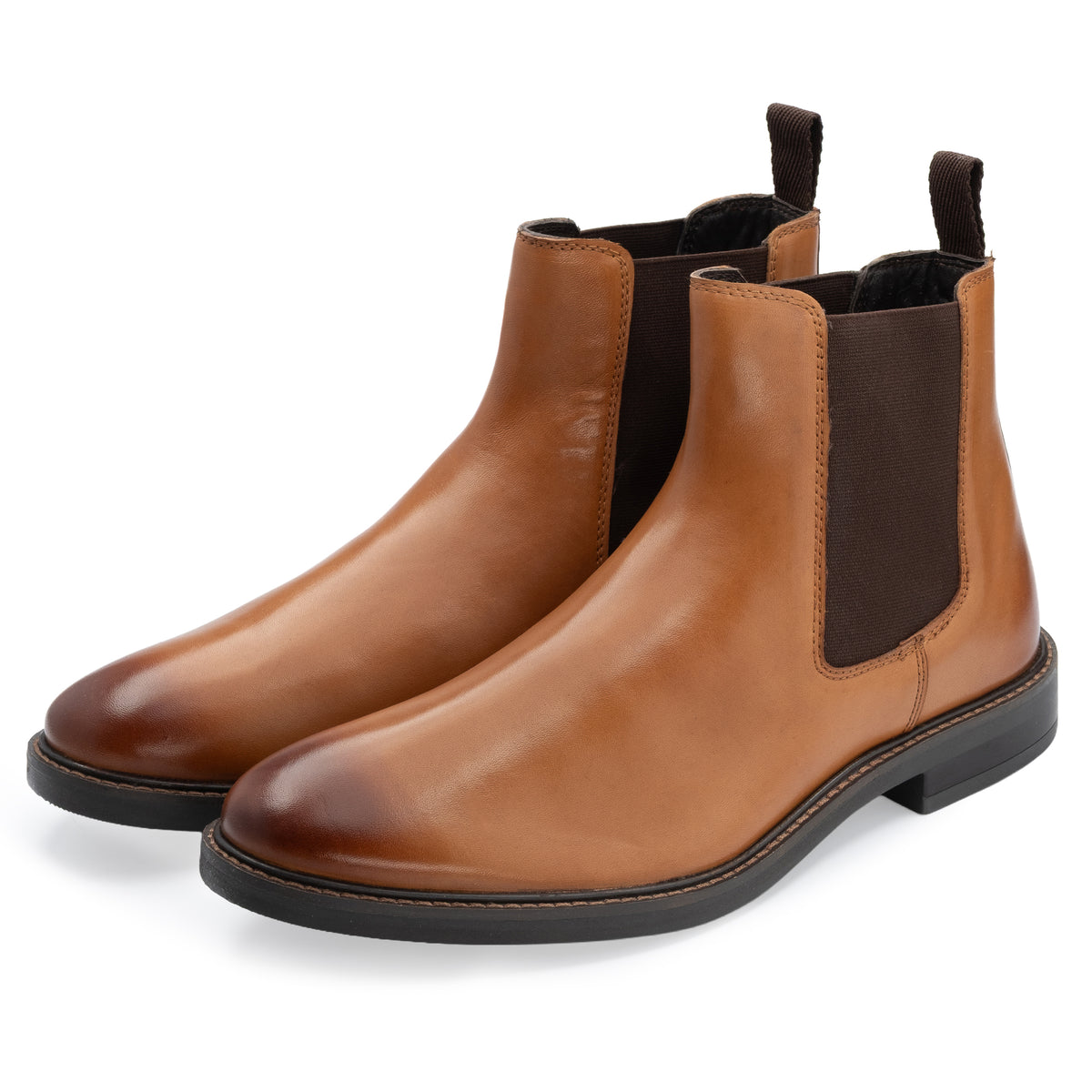
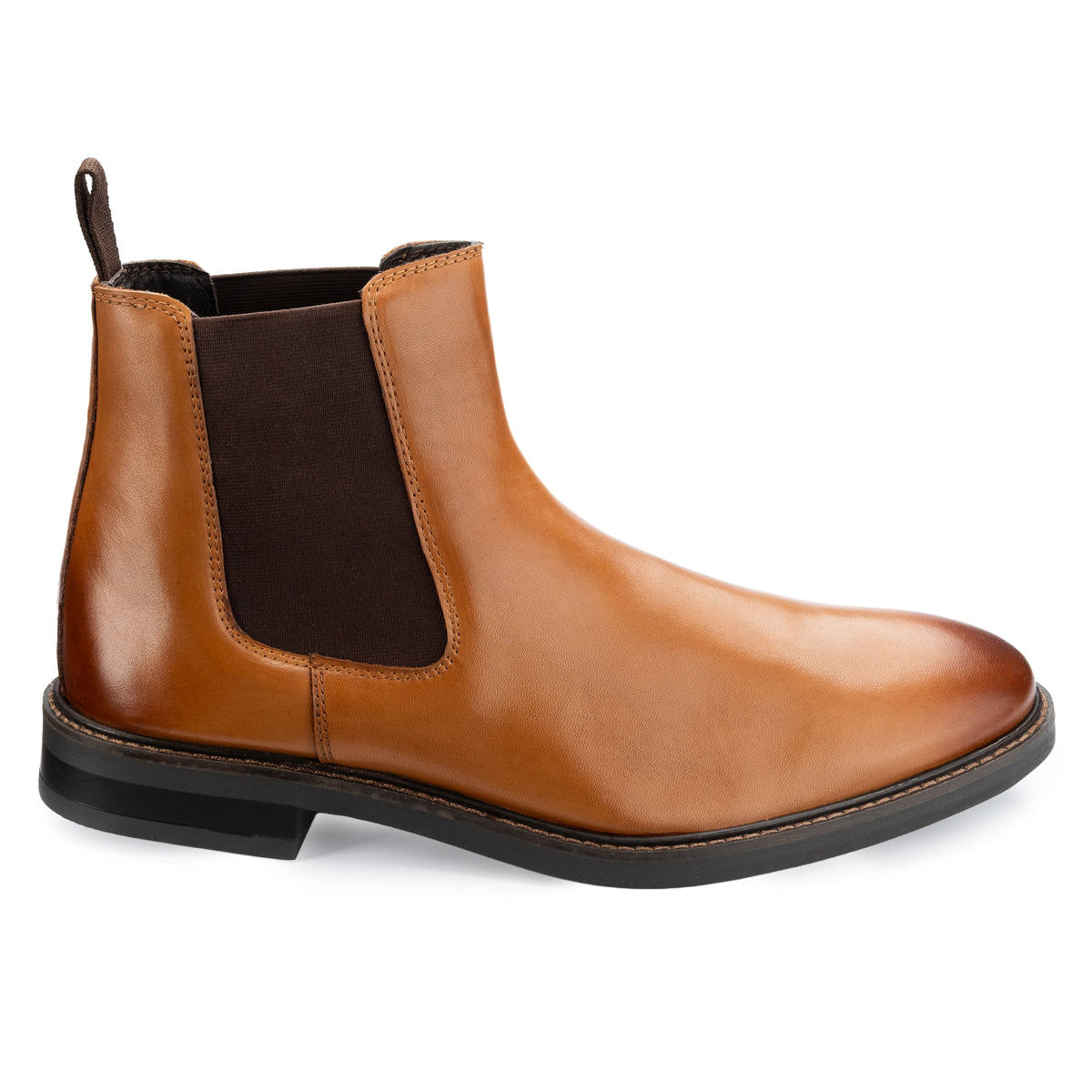
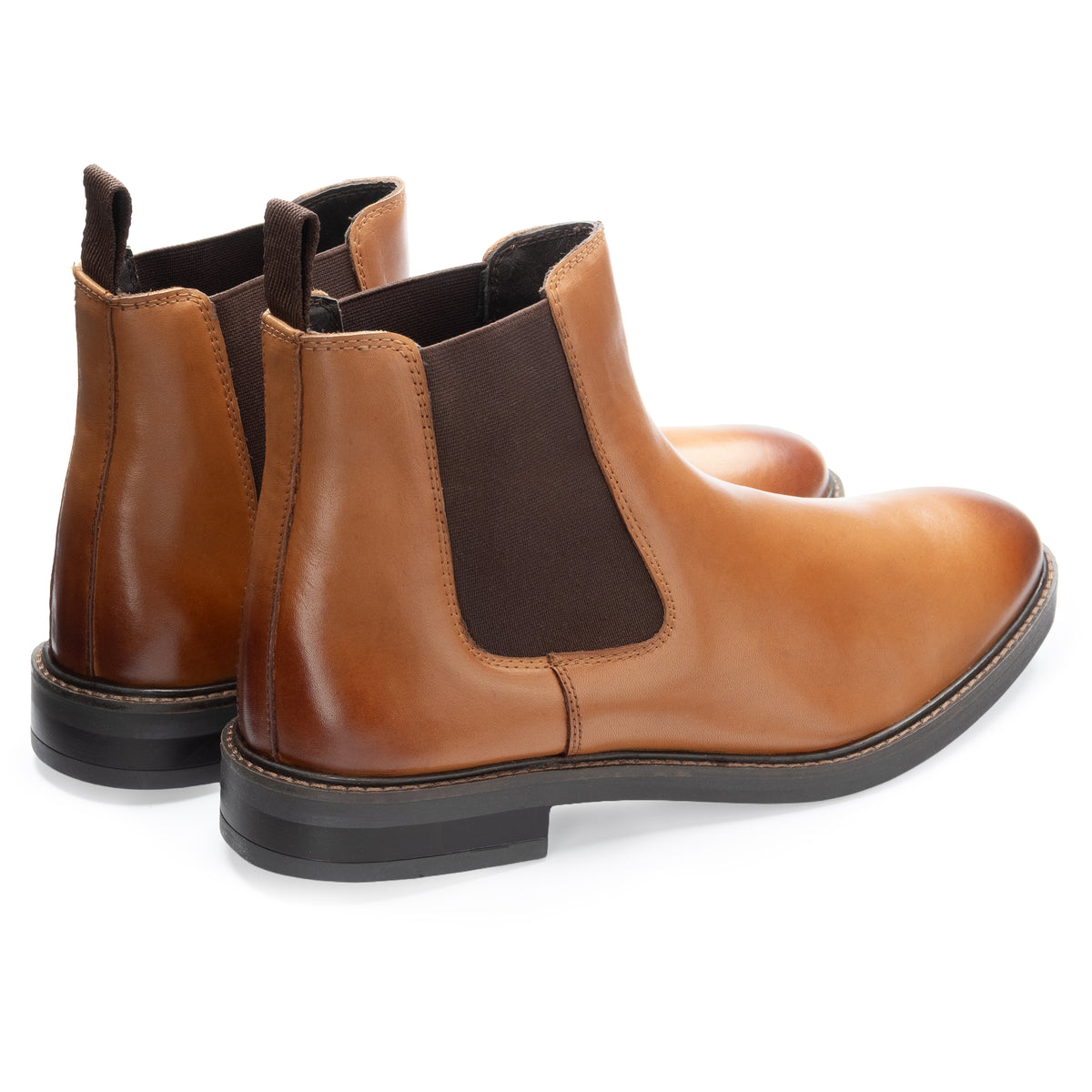
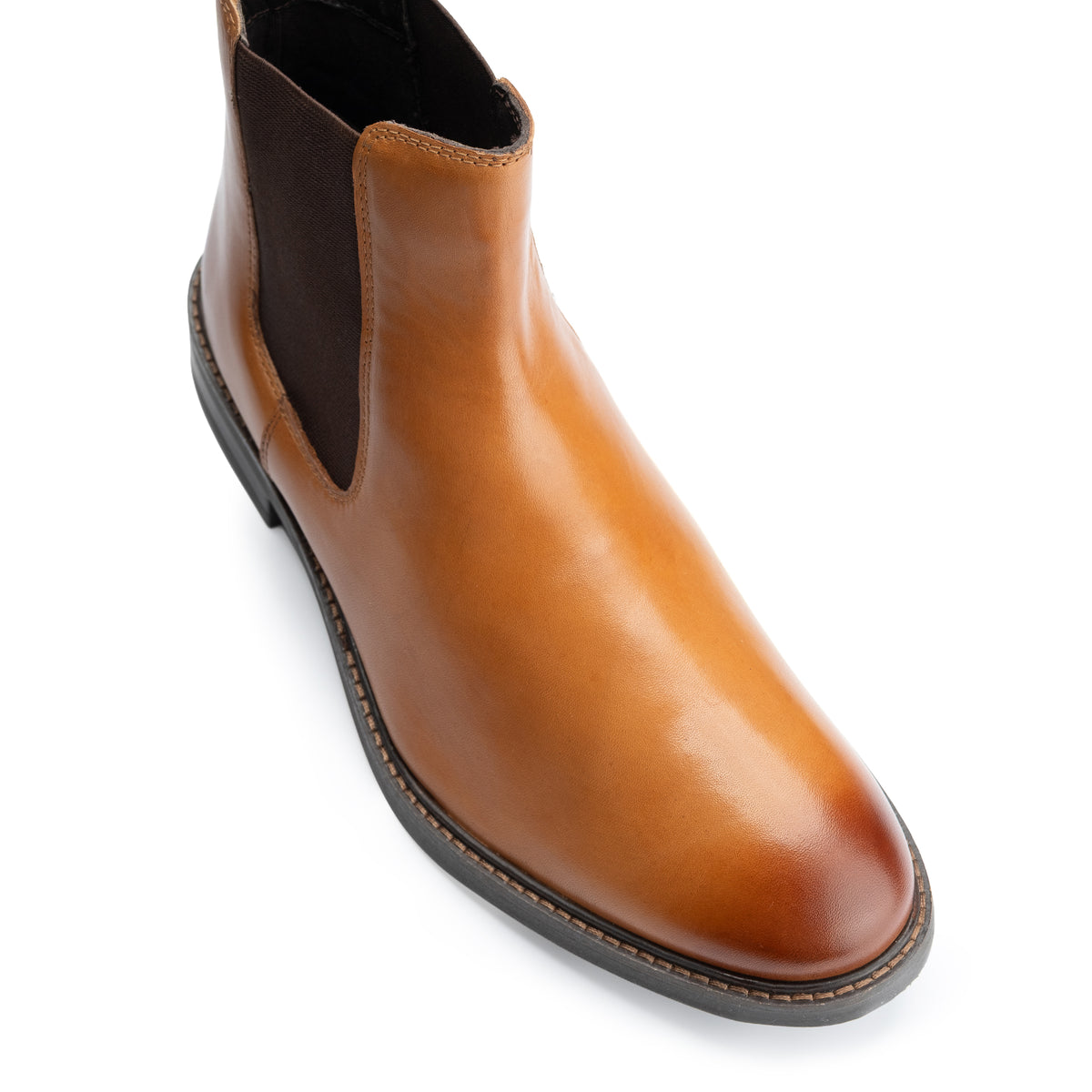
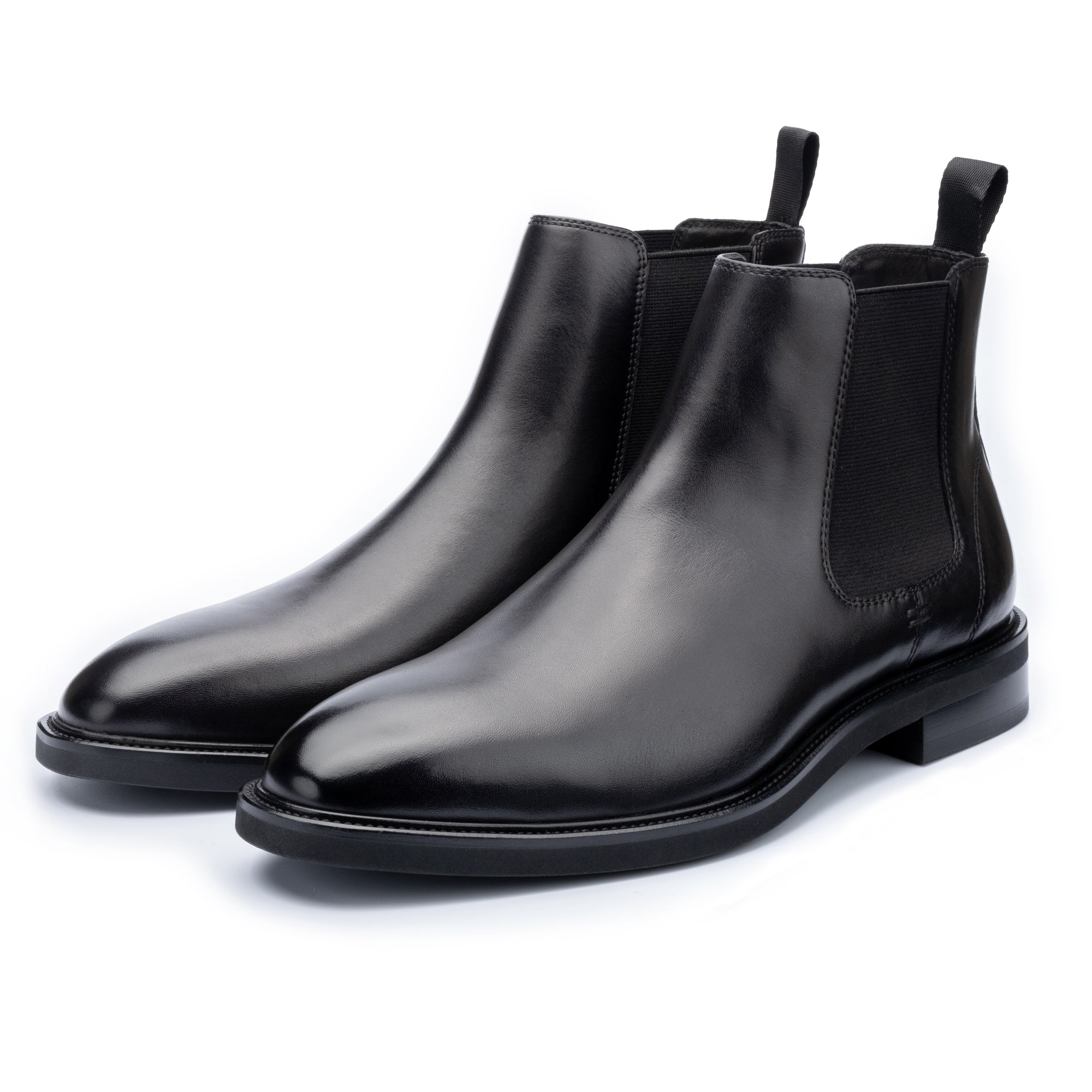
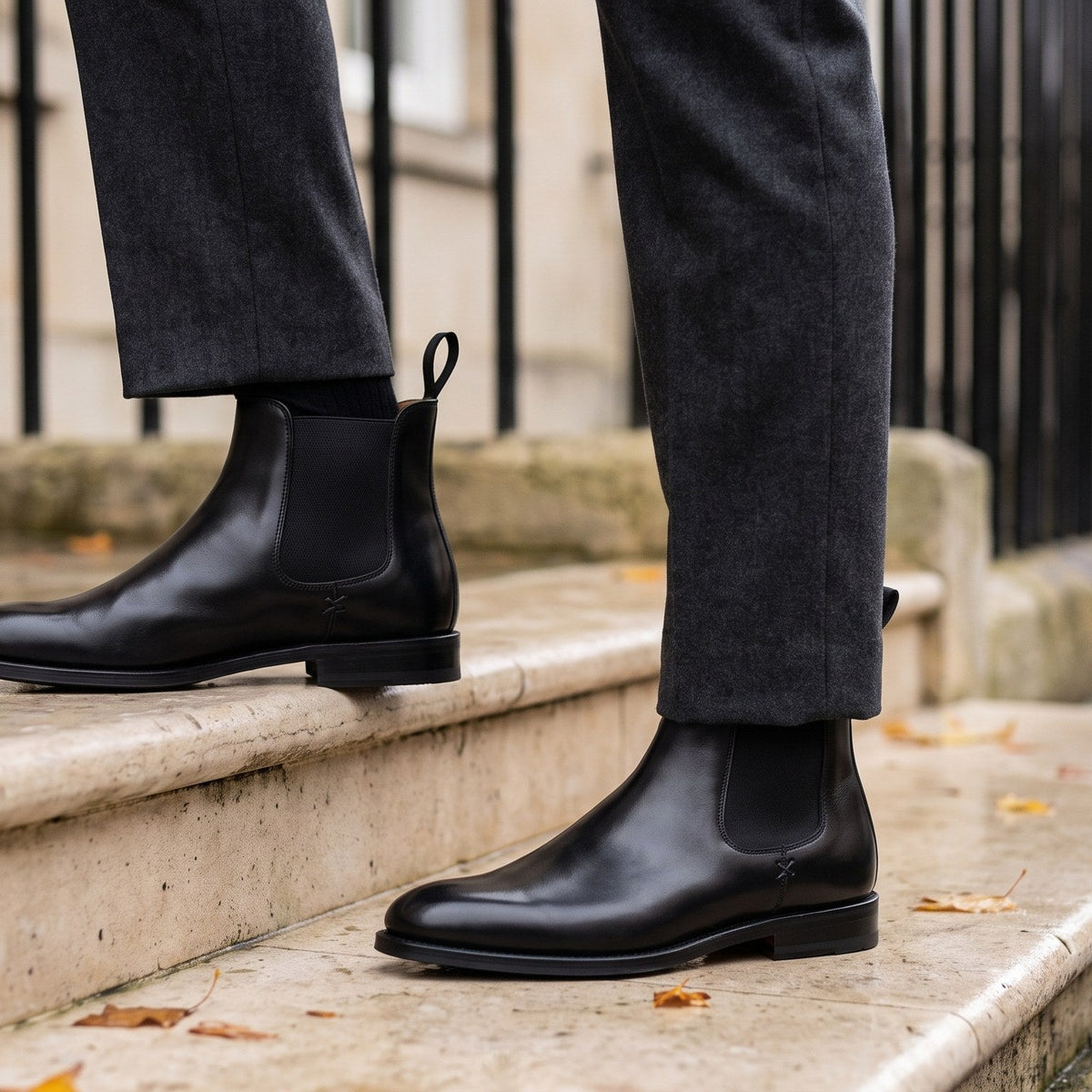
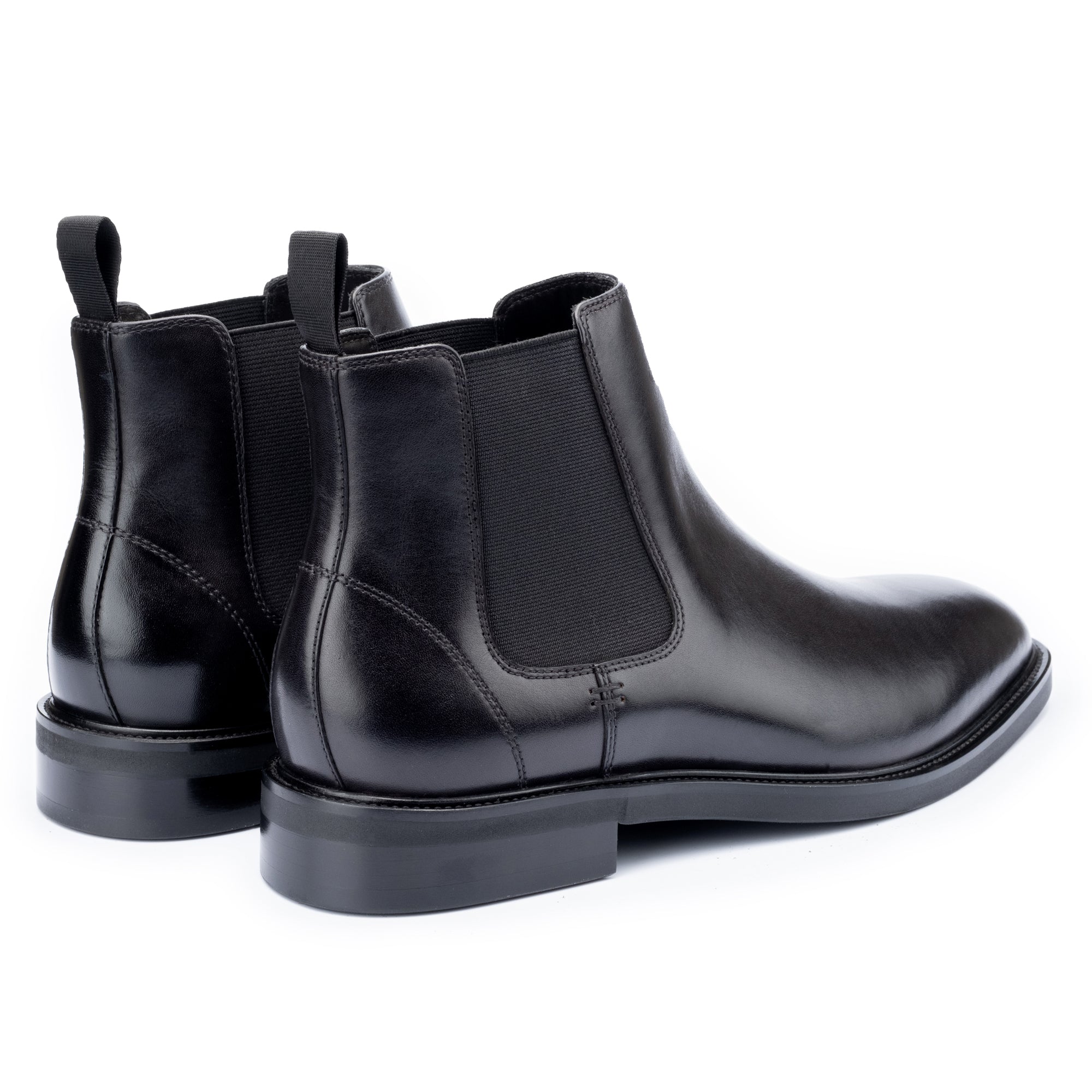
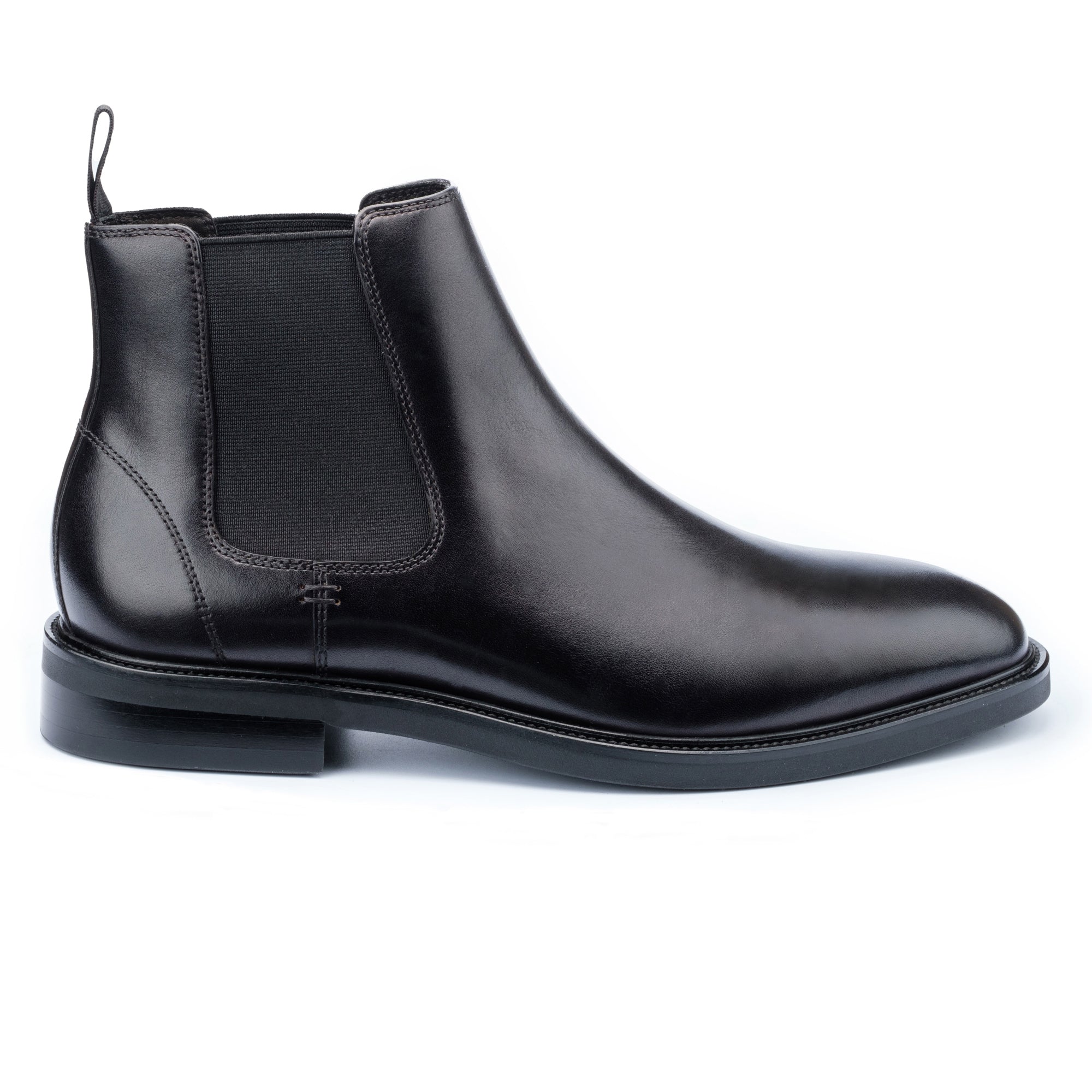
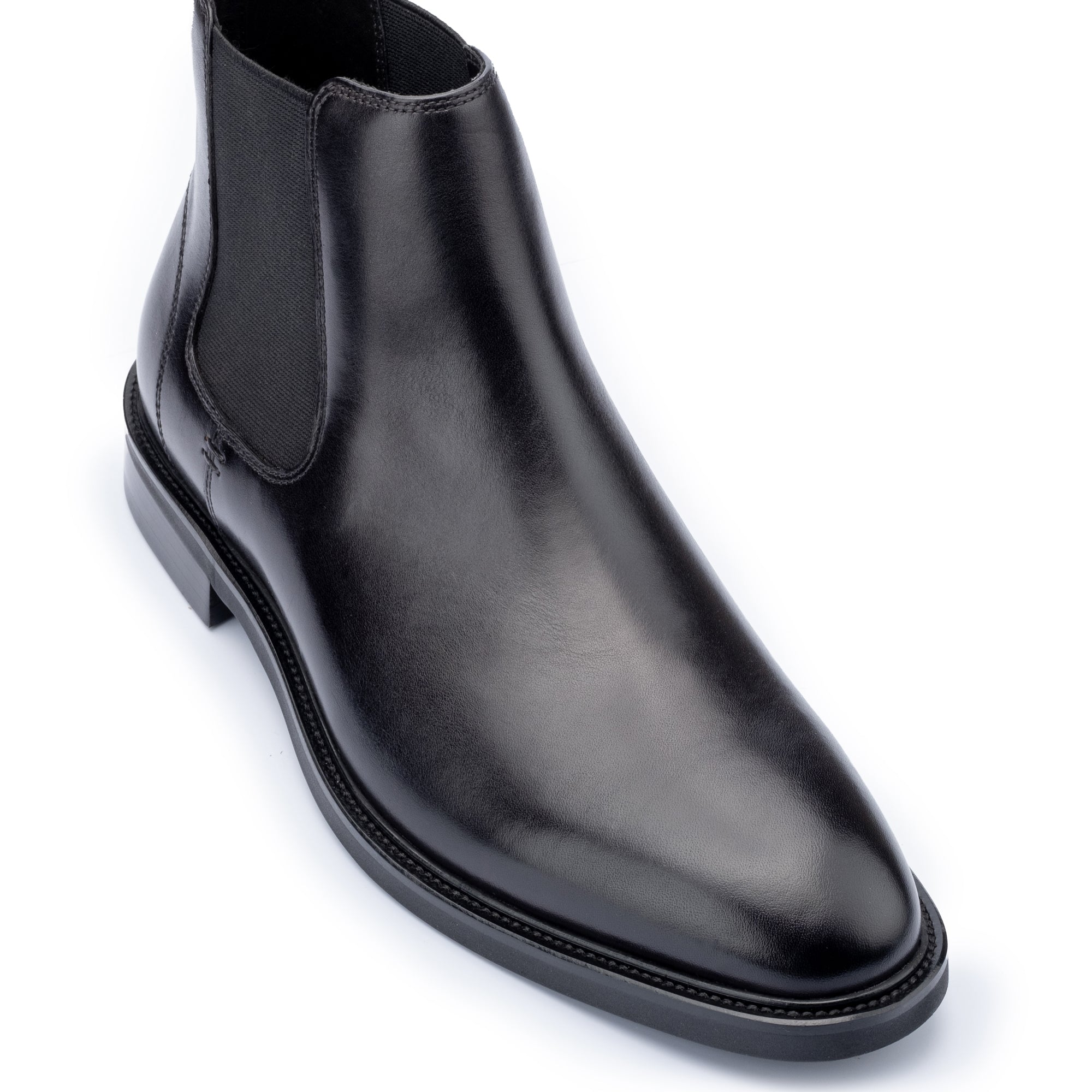
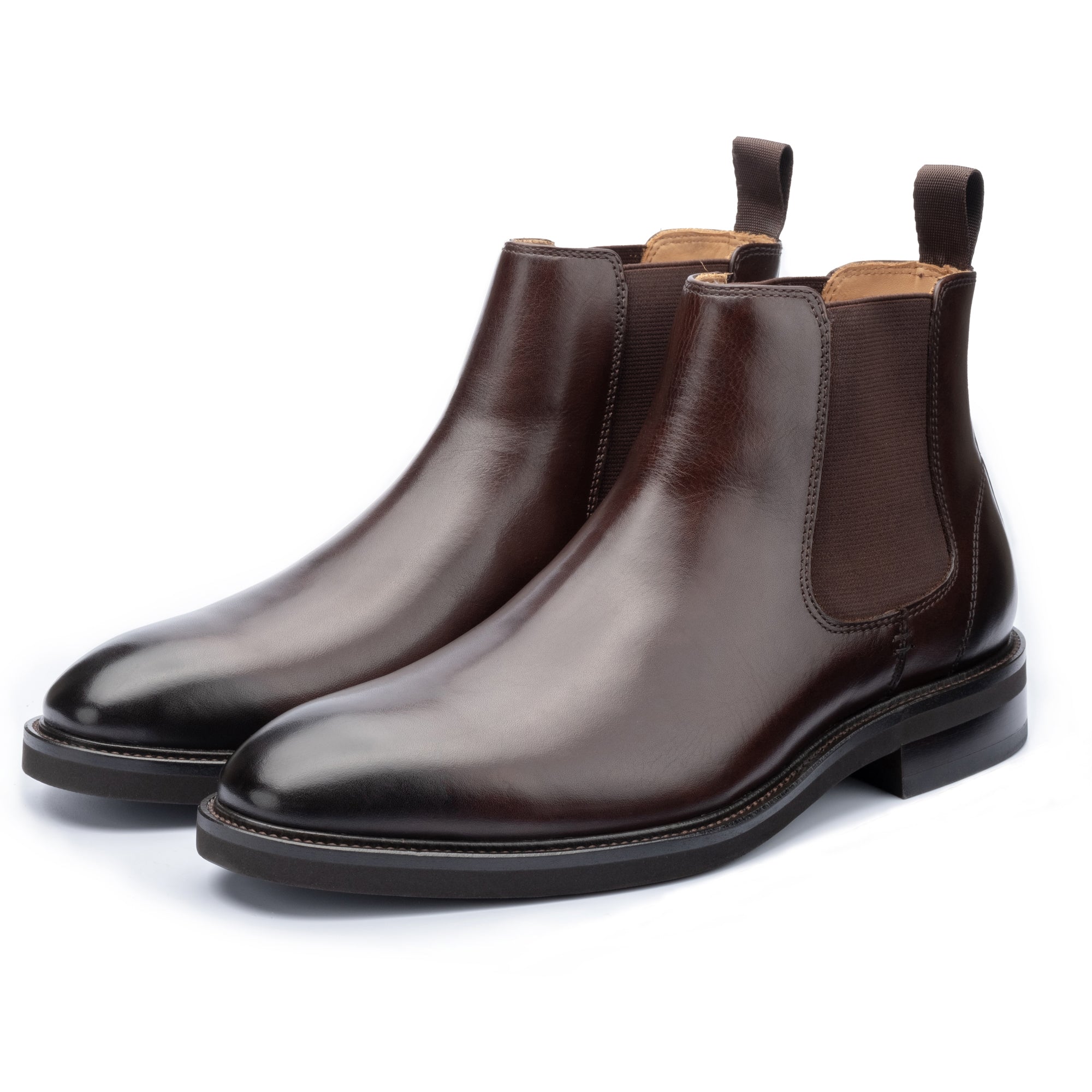
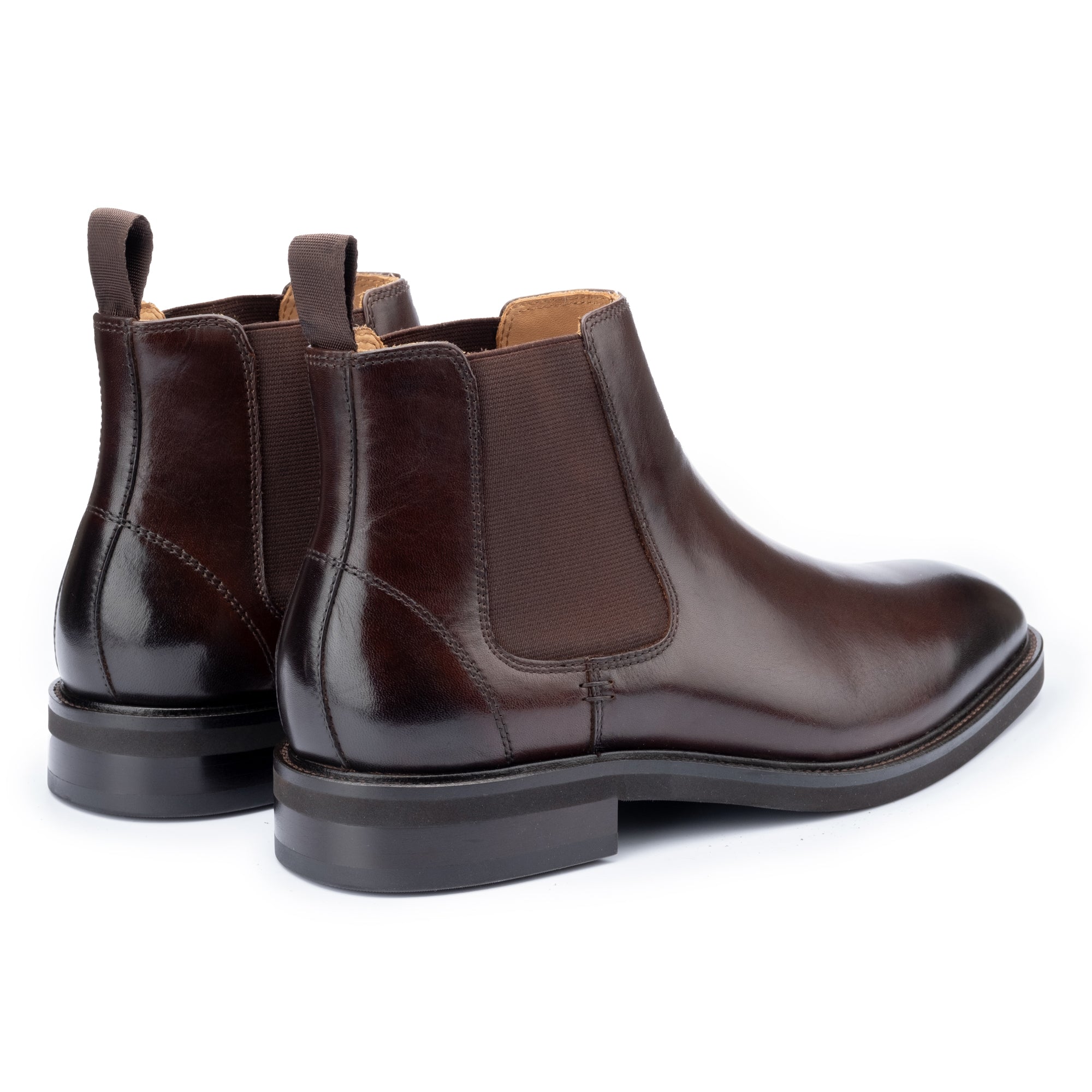
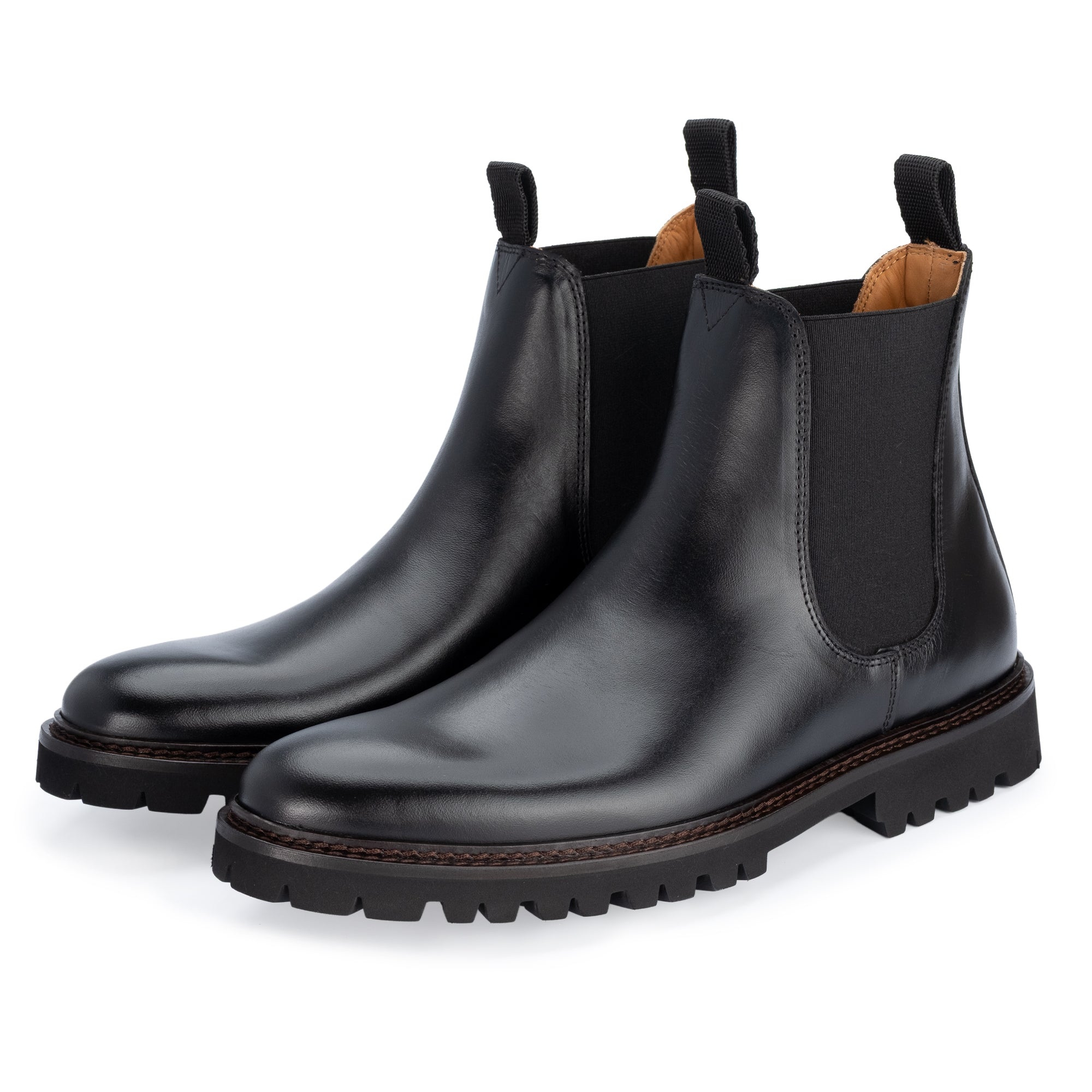
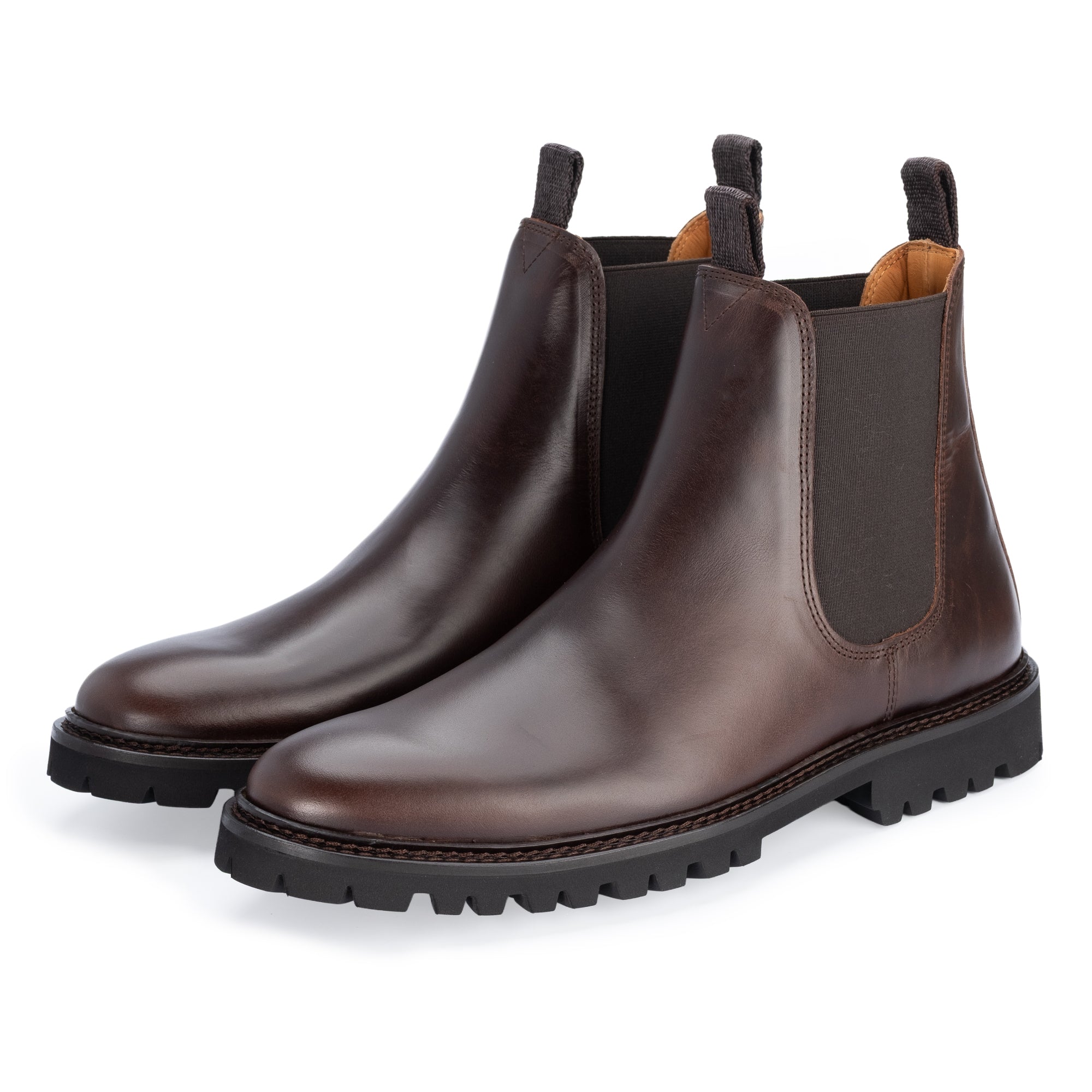
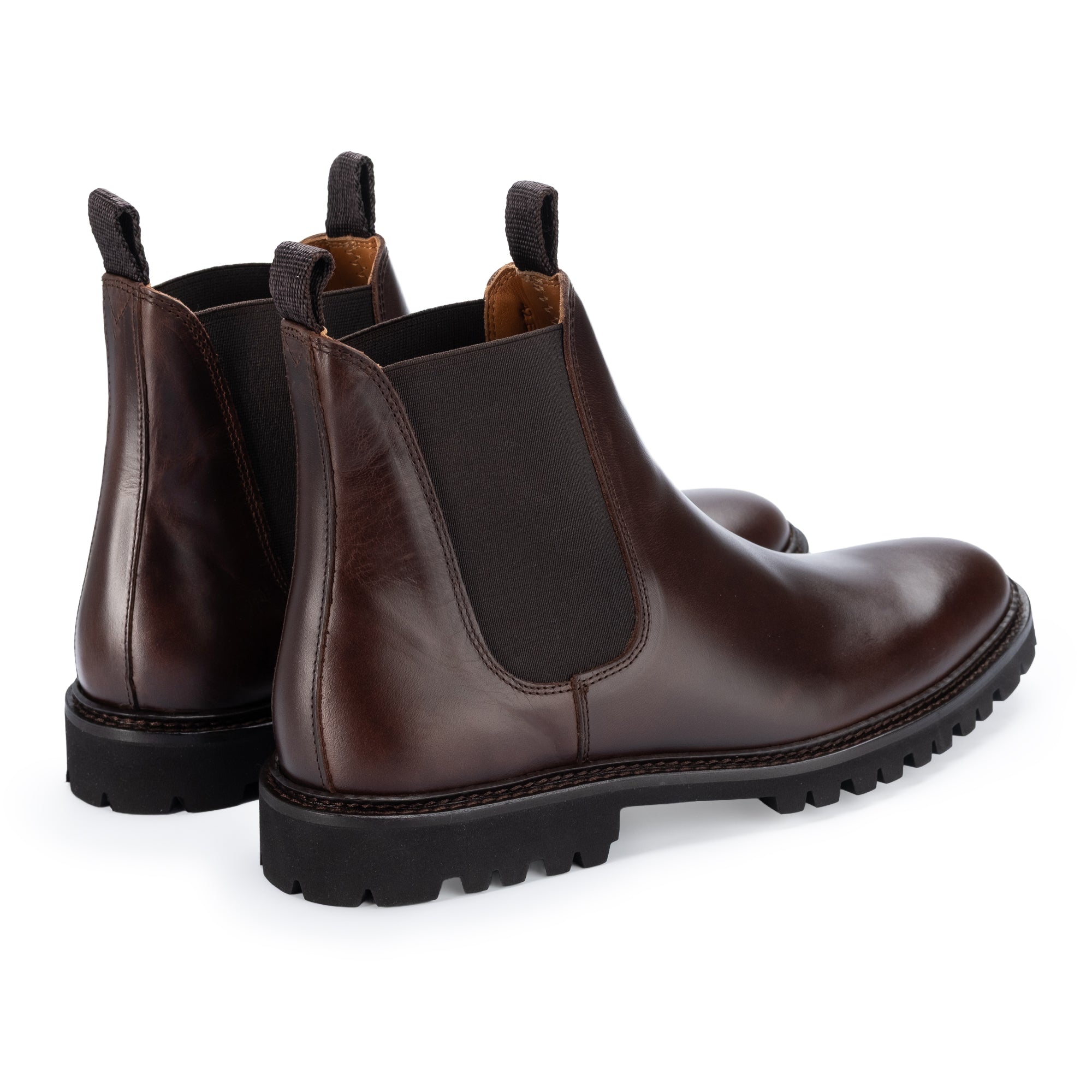
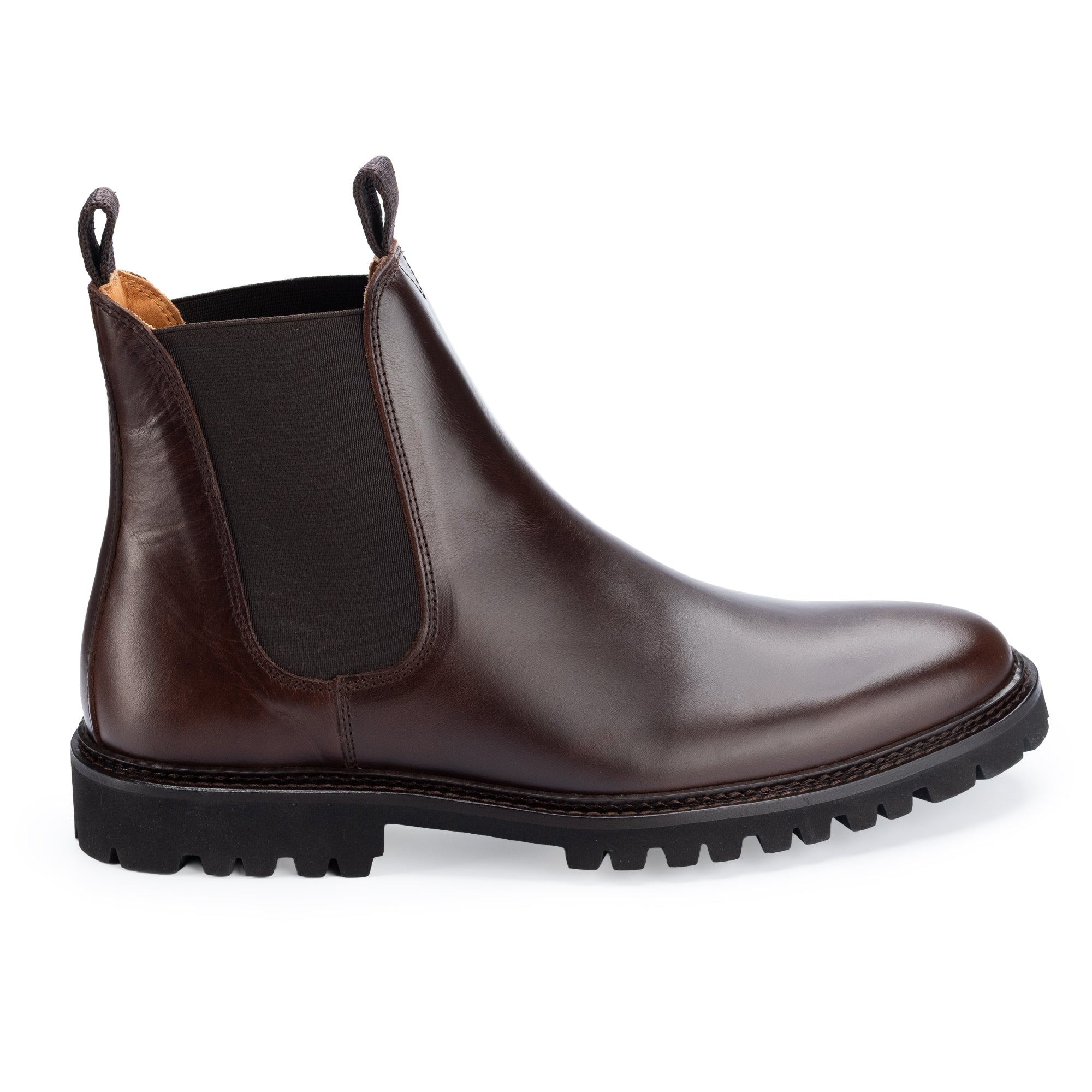
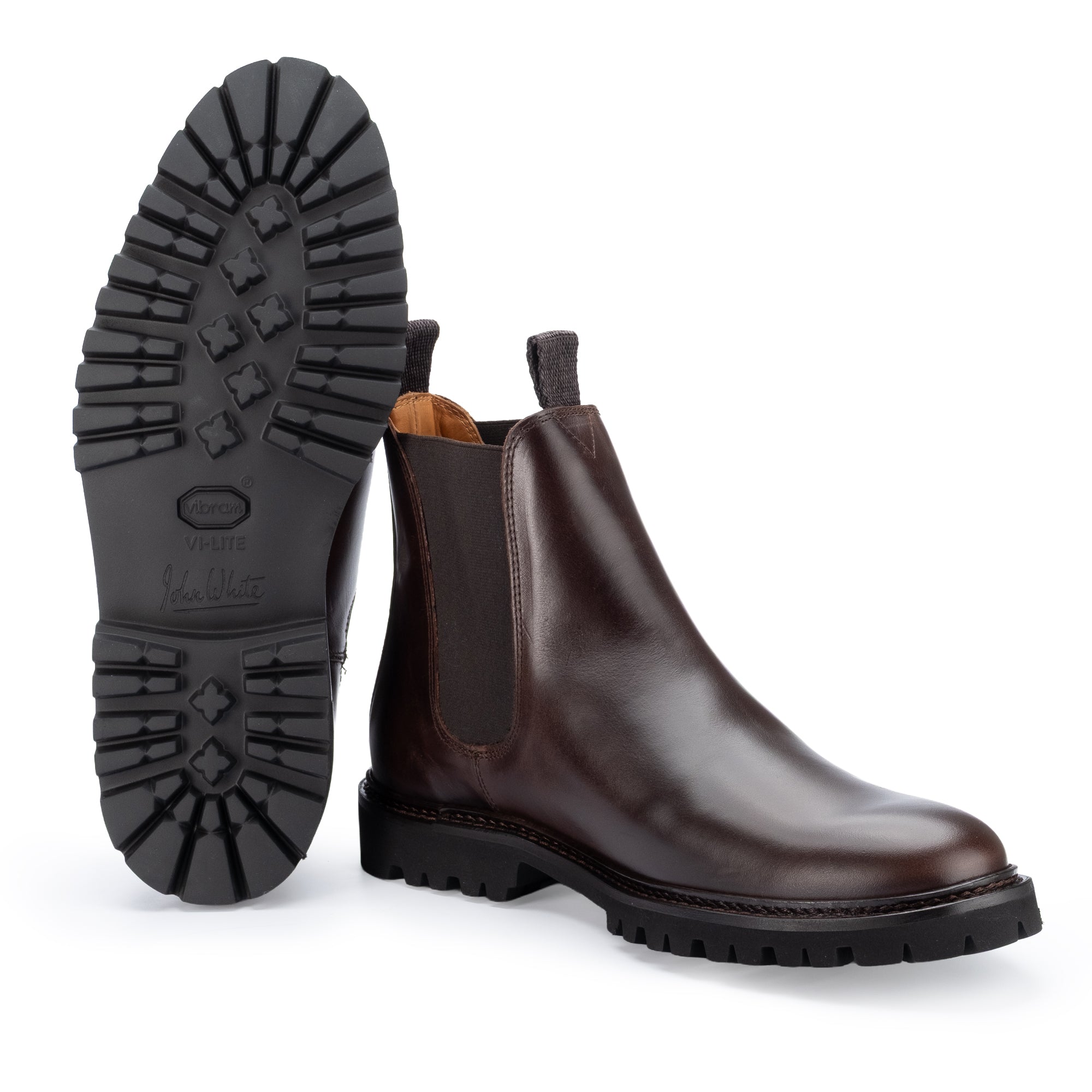
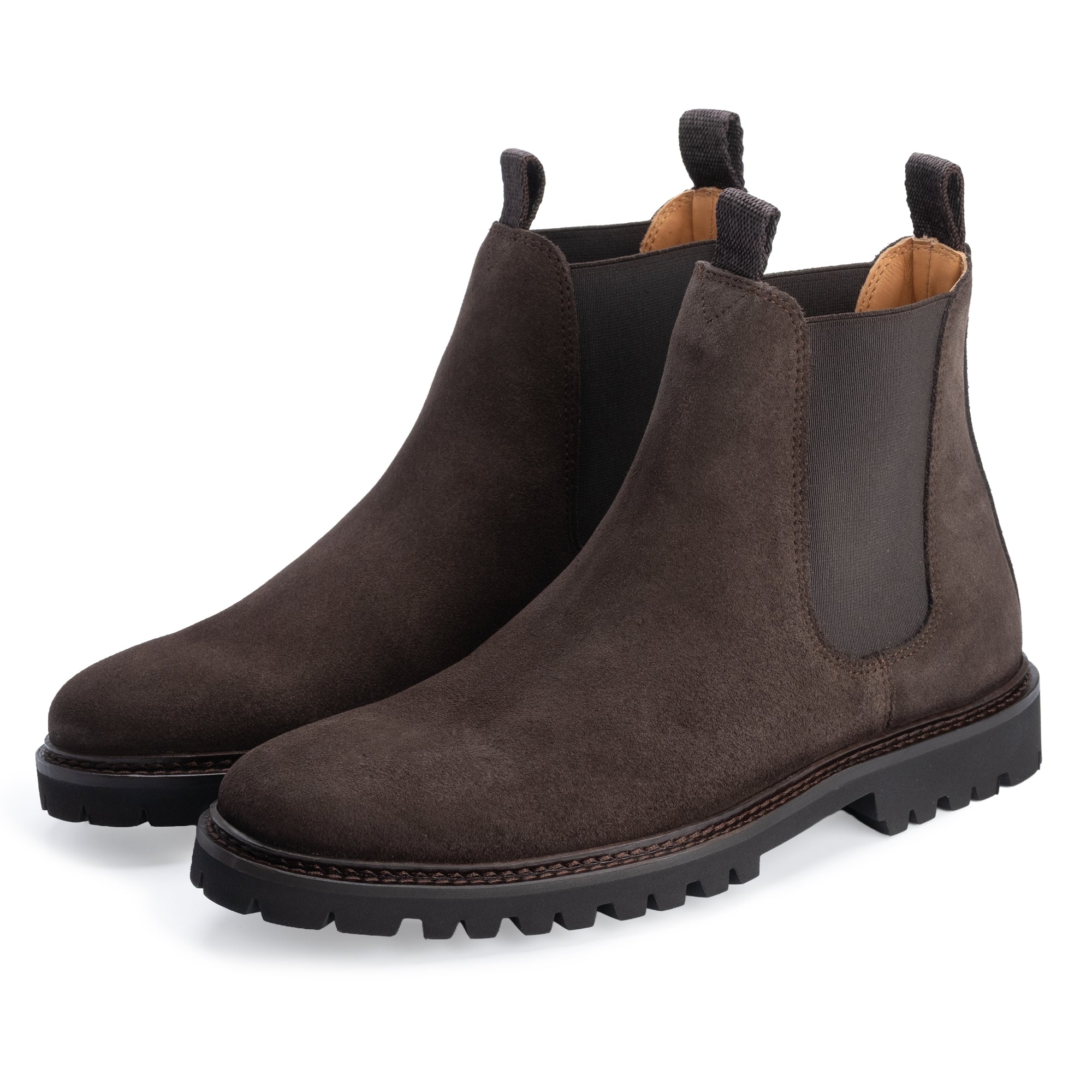
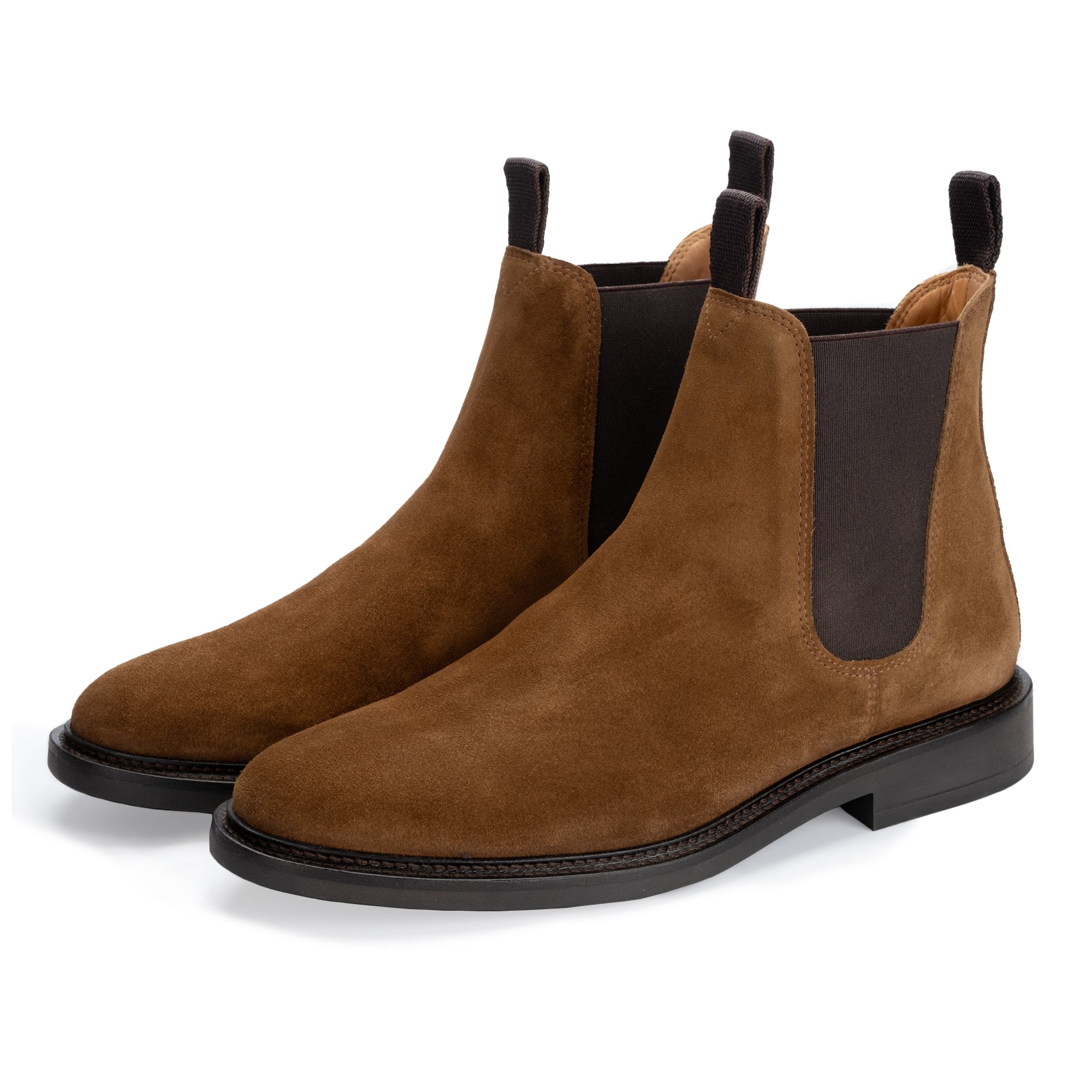
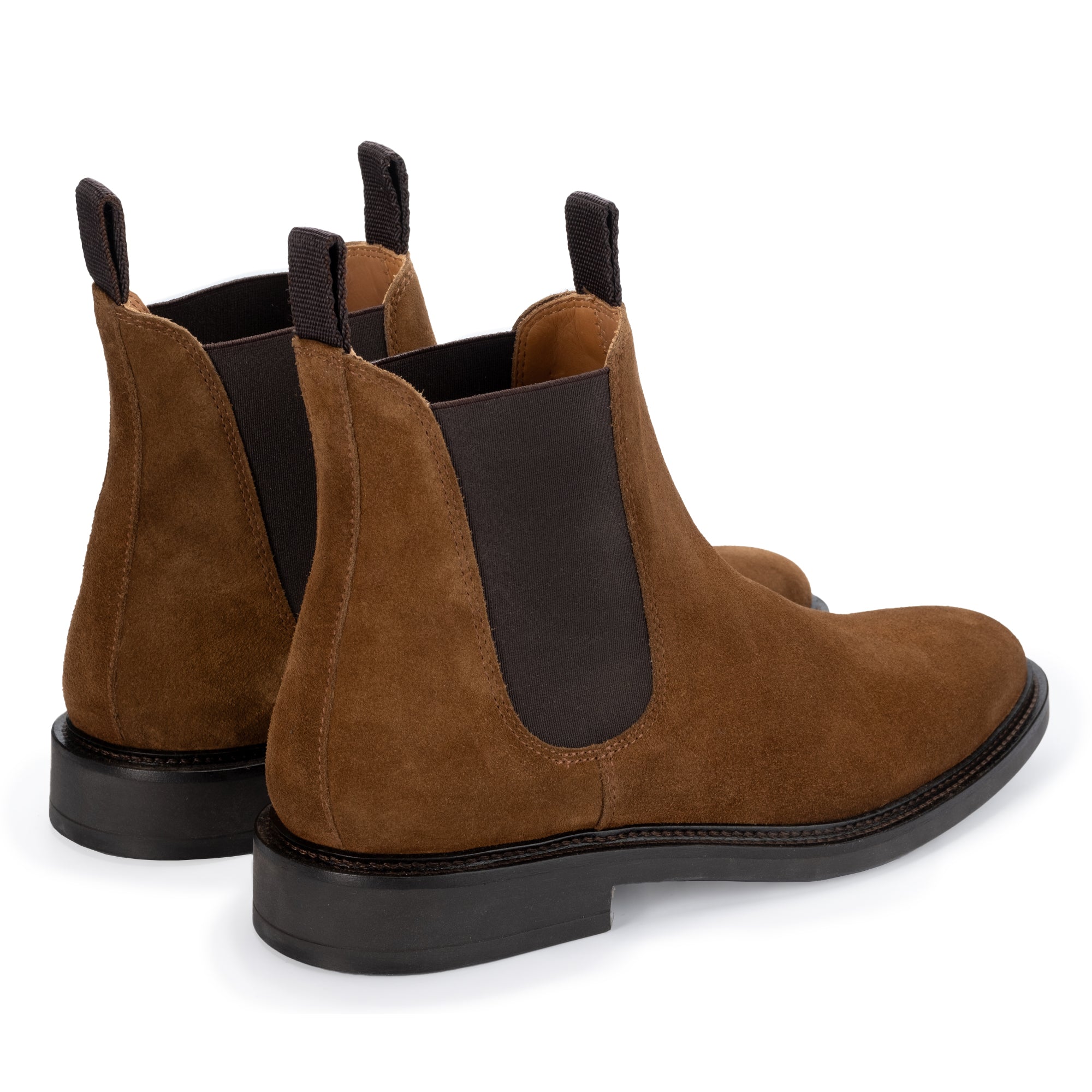
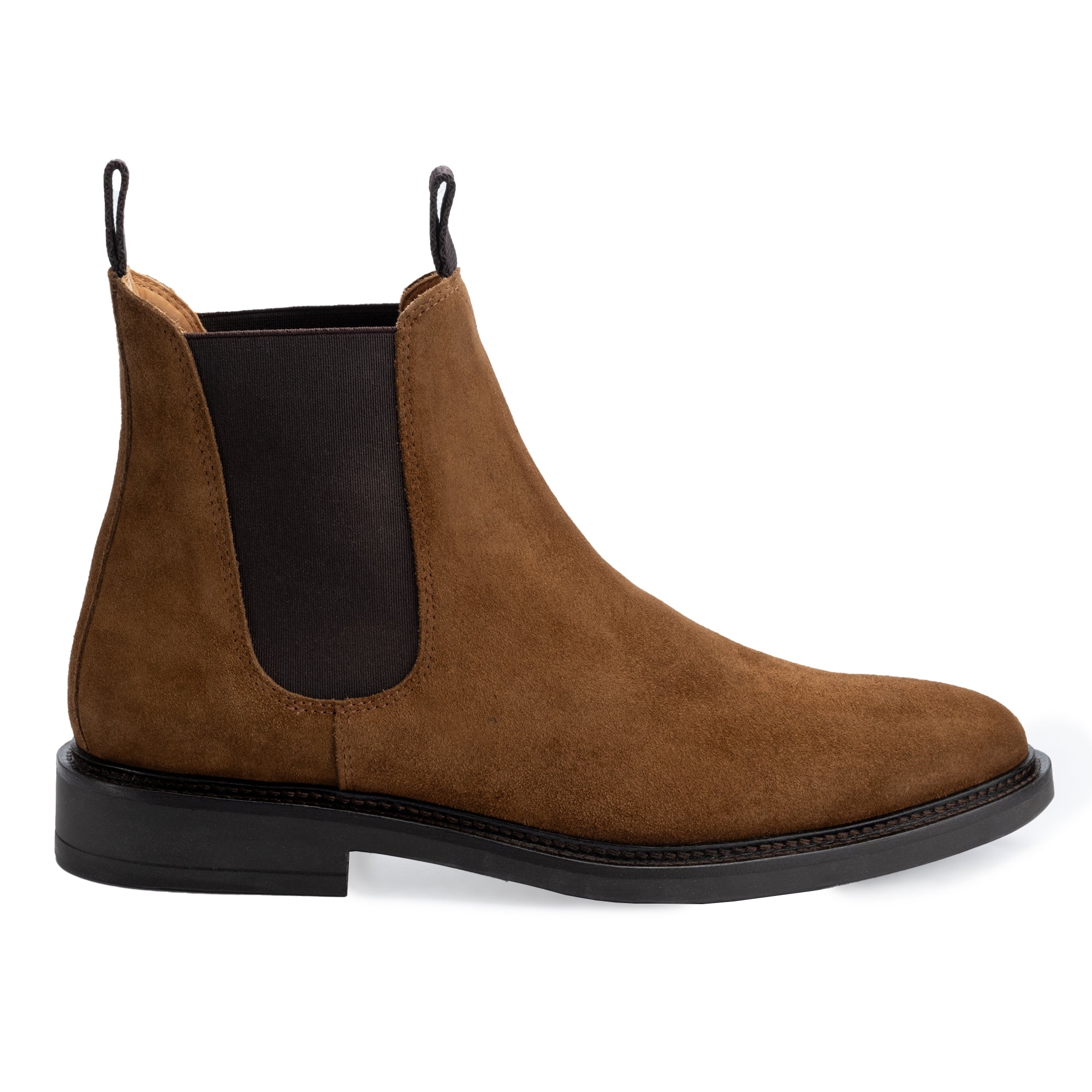
Yes — Chelsea boots are among the most versatile winter boots you can own. The pull-on silhouette, ankle coverage, and clean profile mean they work equally well with tailored trousers, dark jeans, and casual weekend wear.
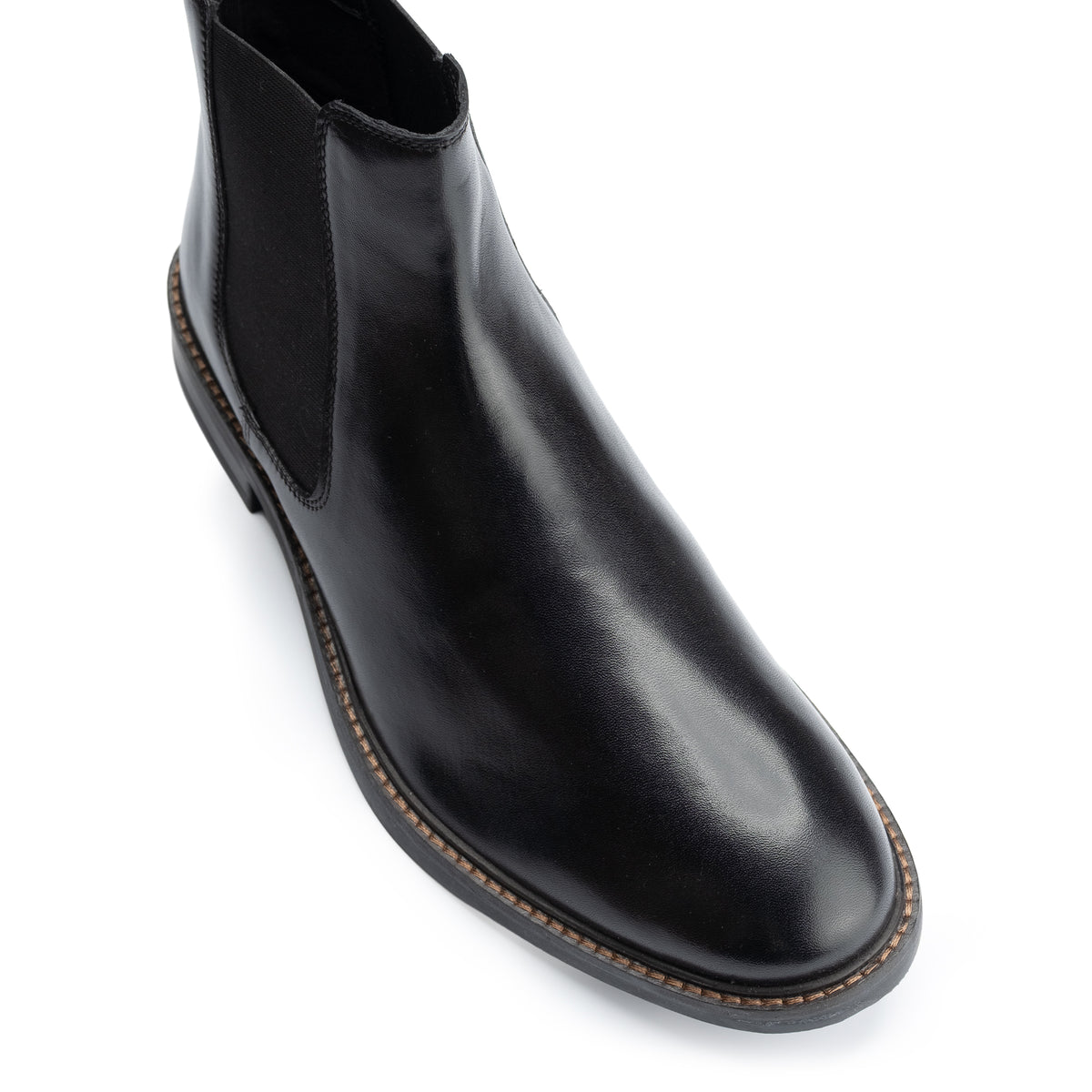
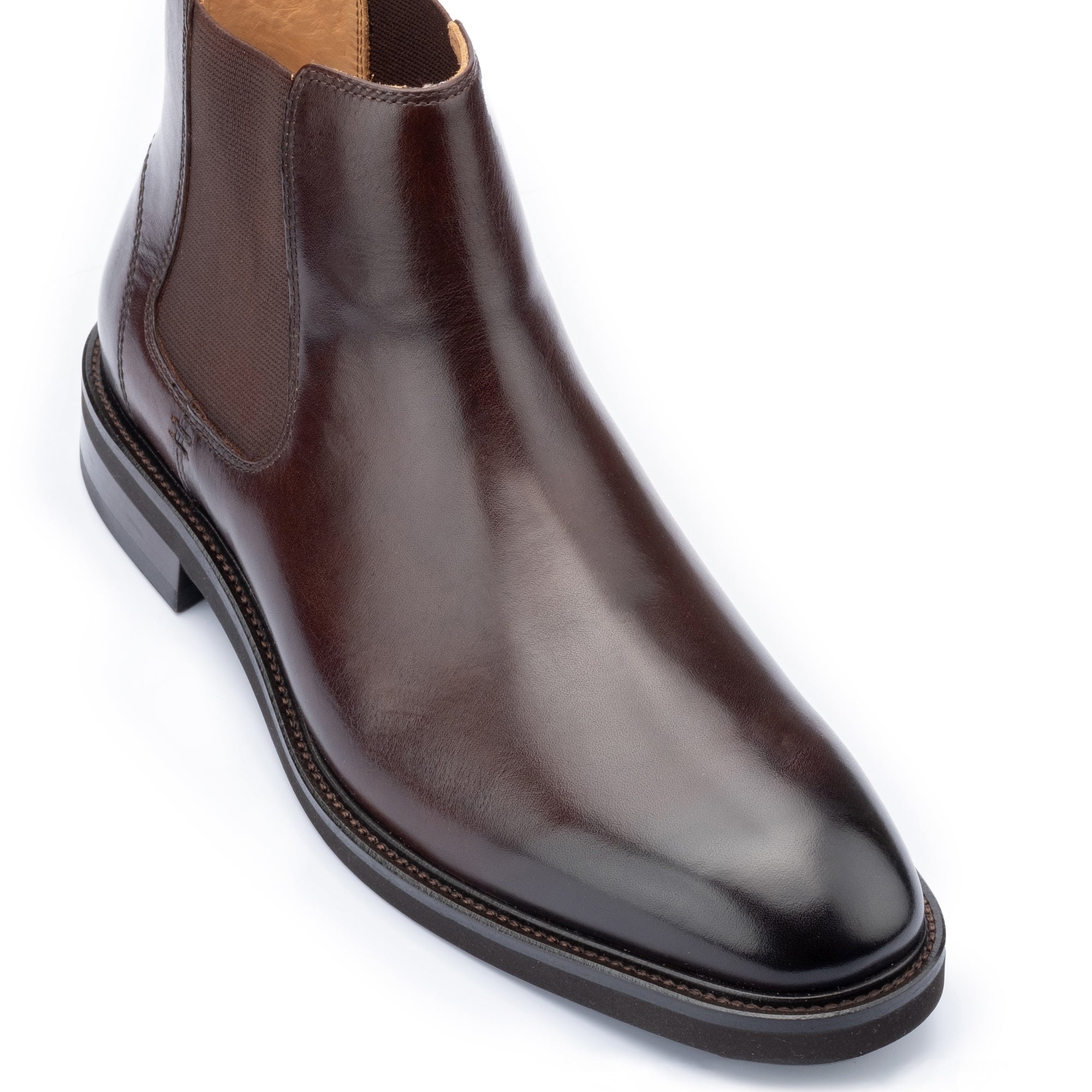
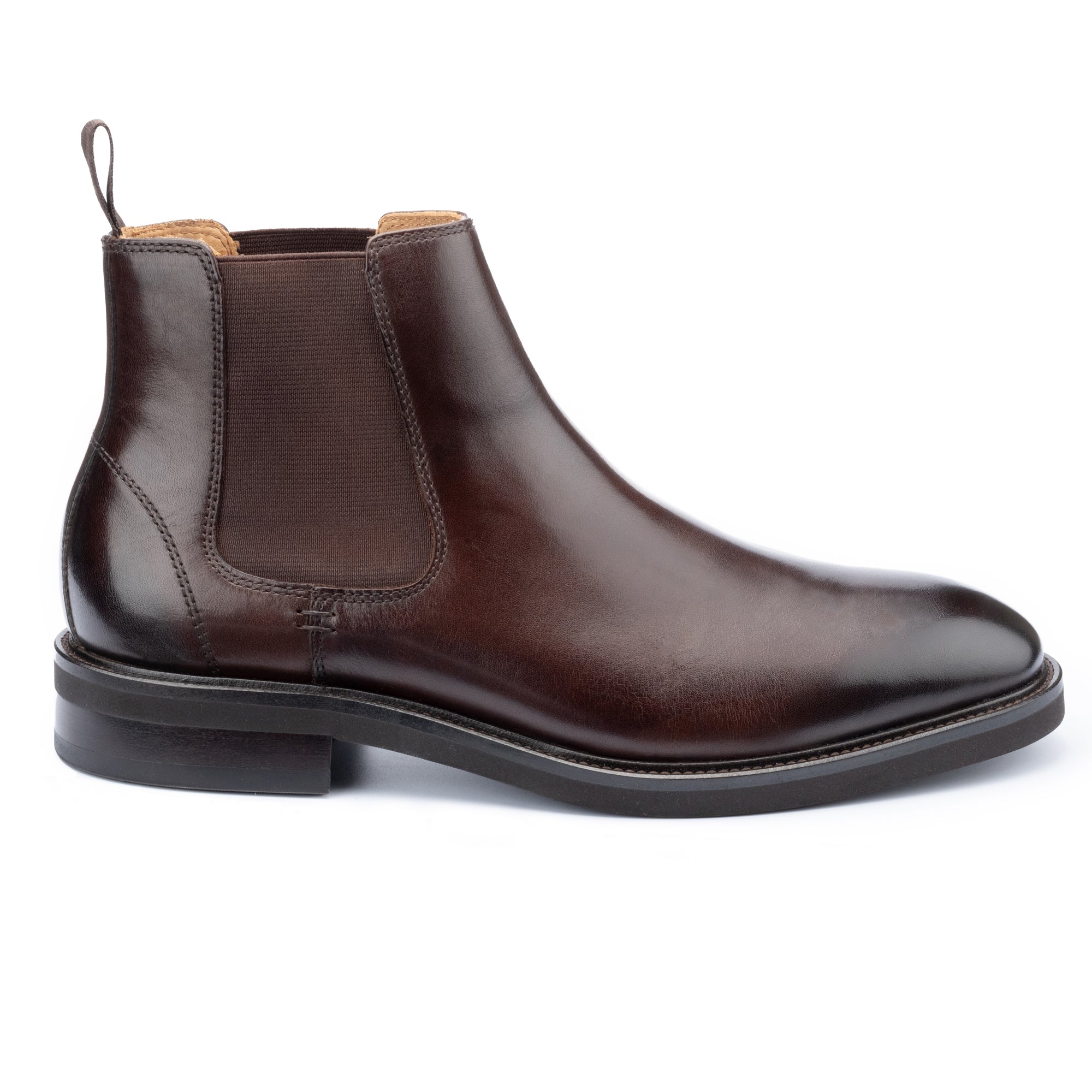
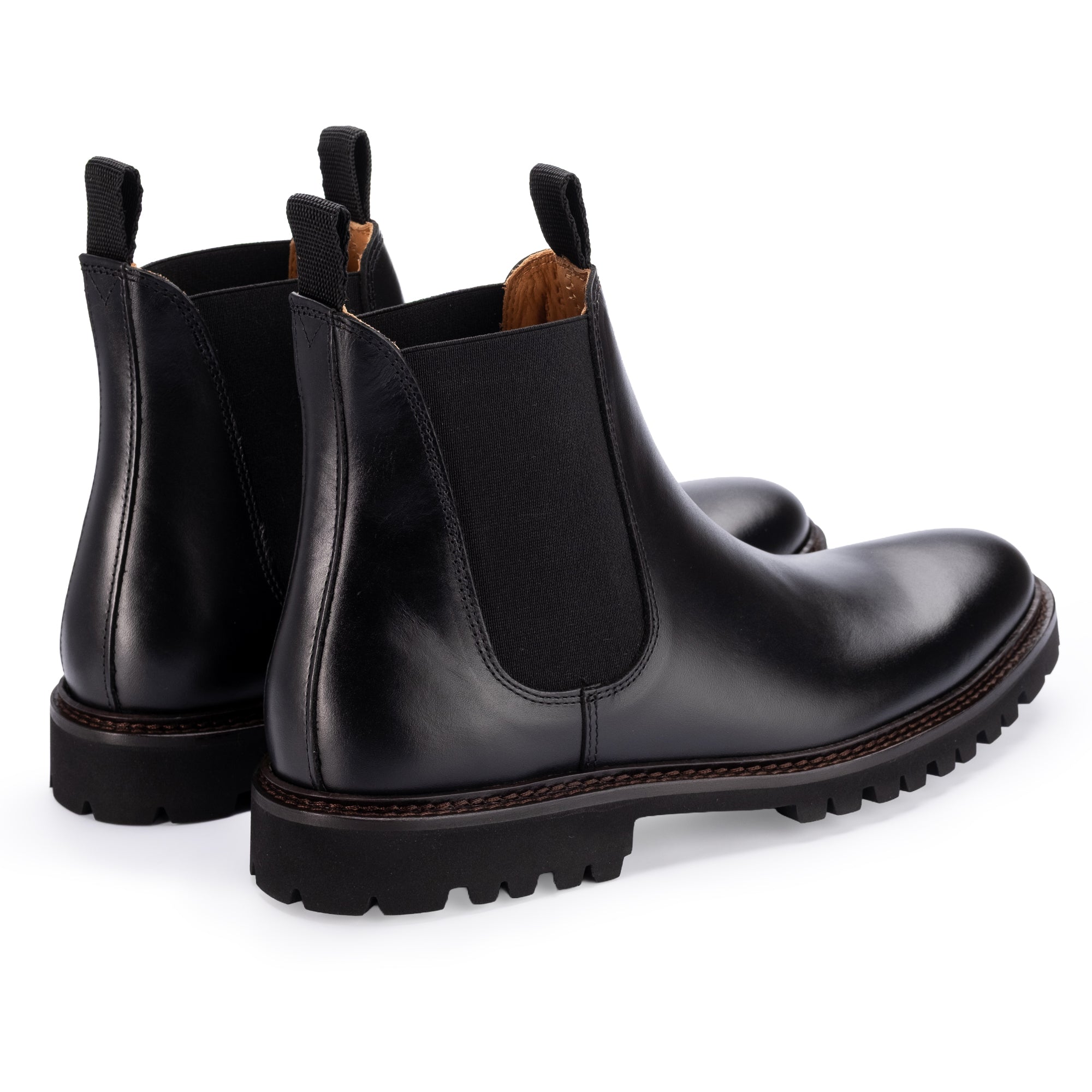
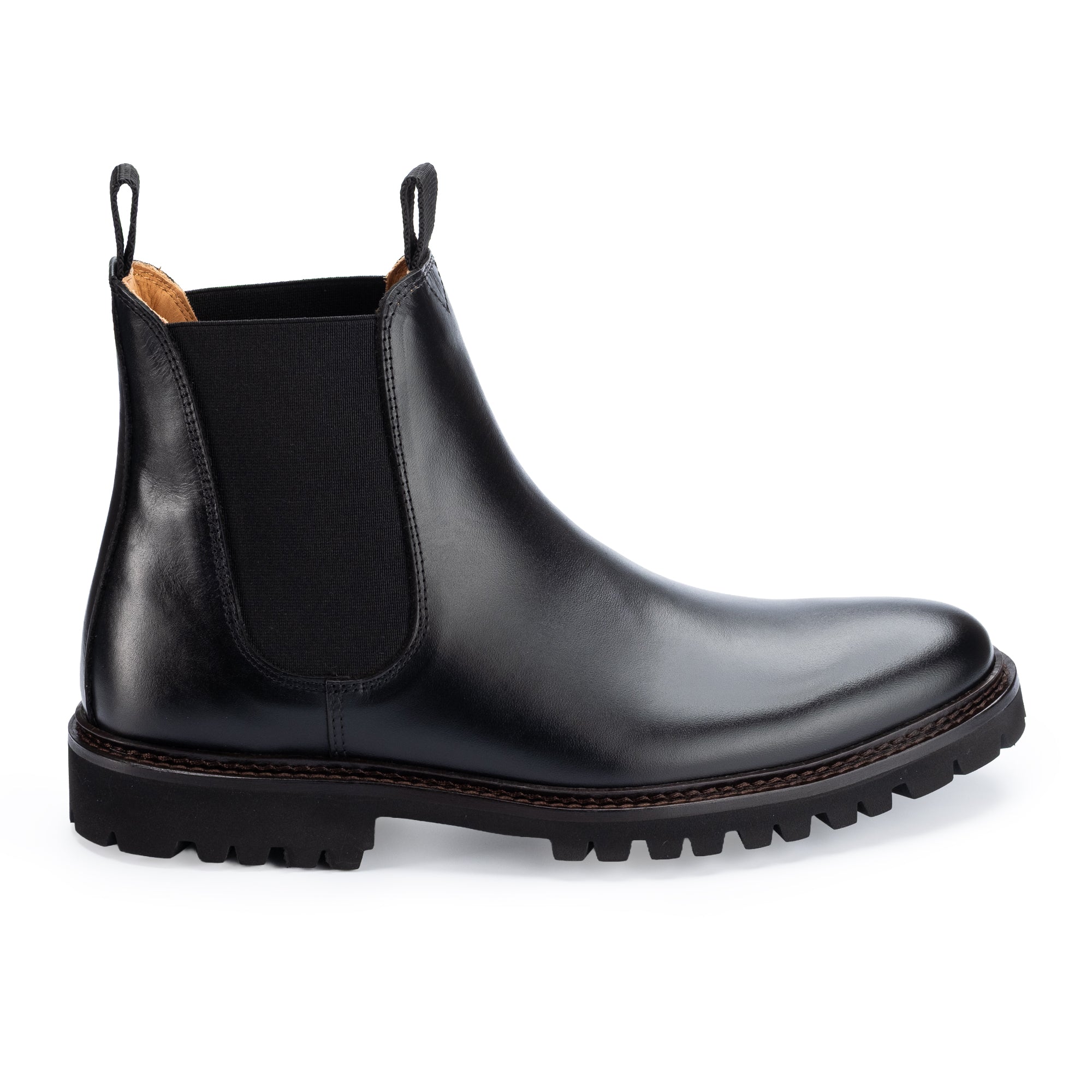
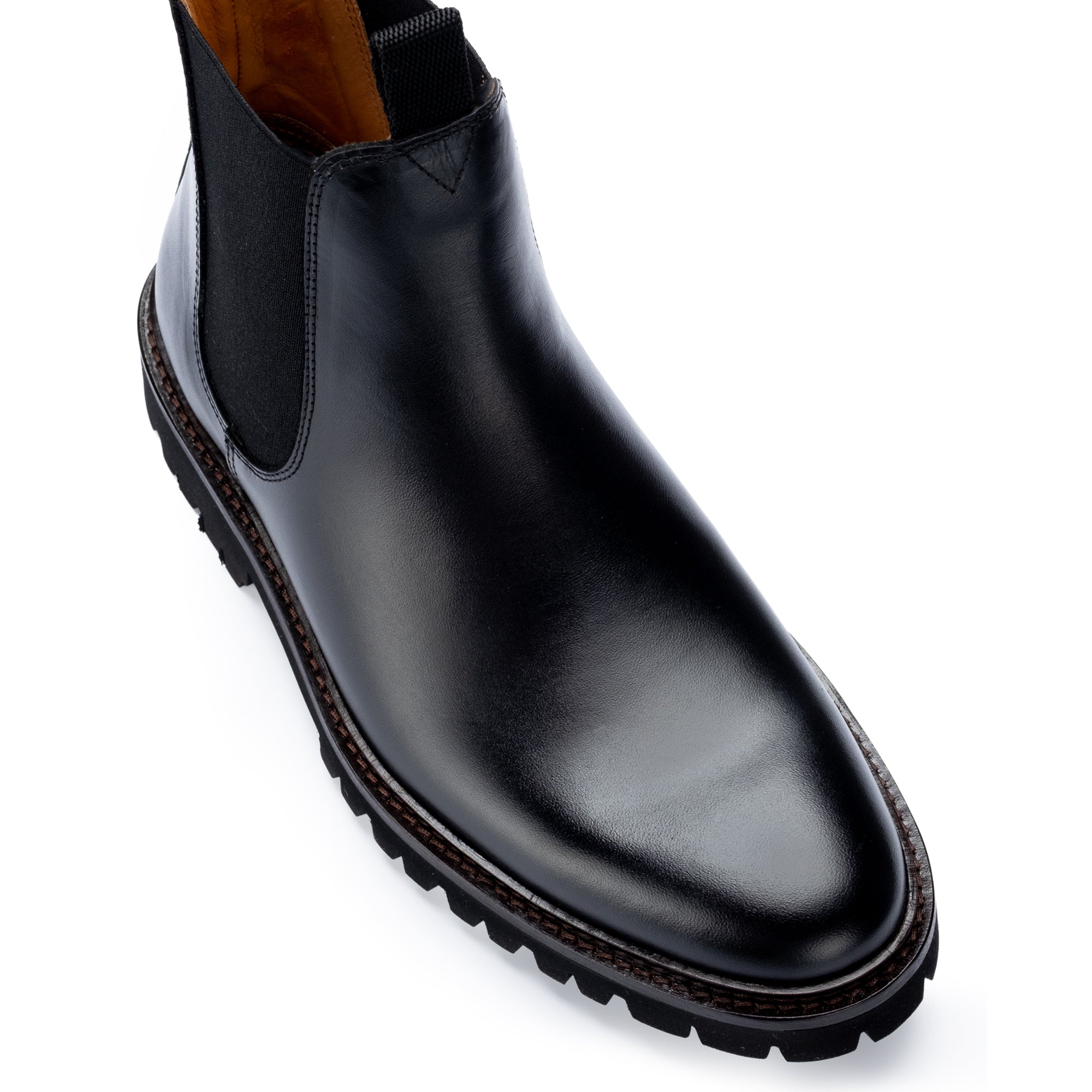
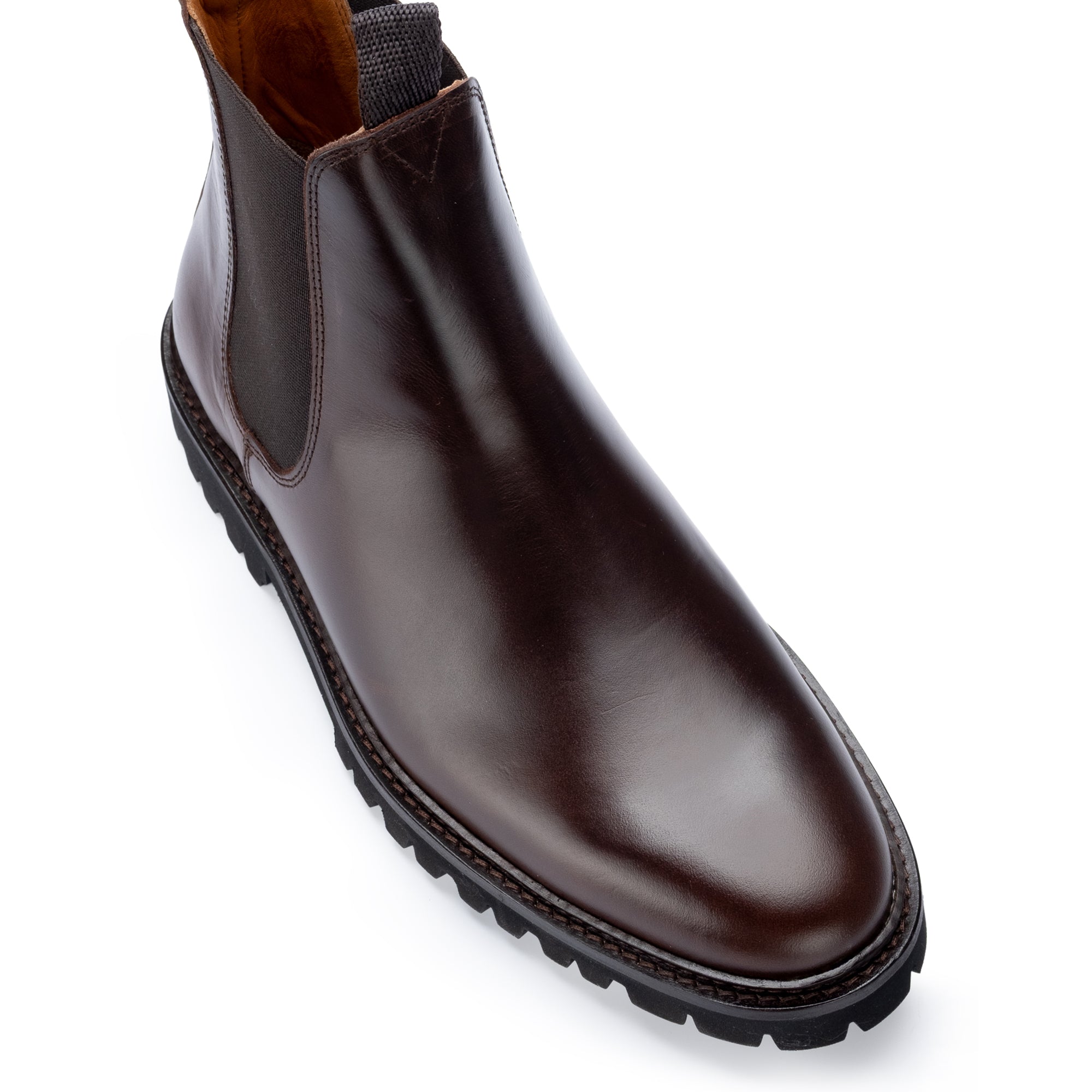
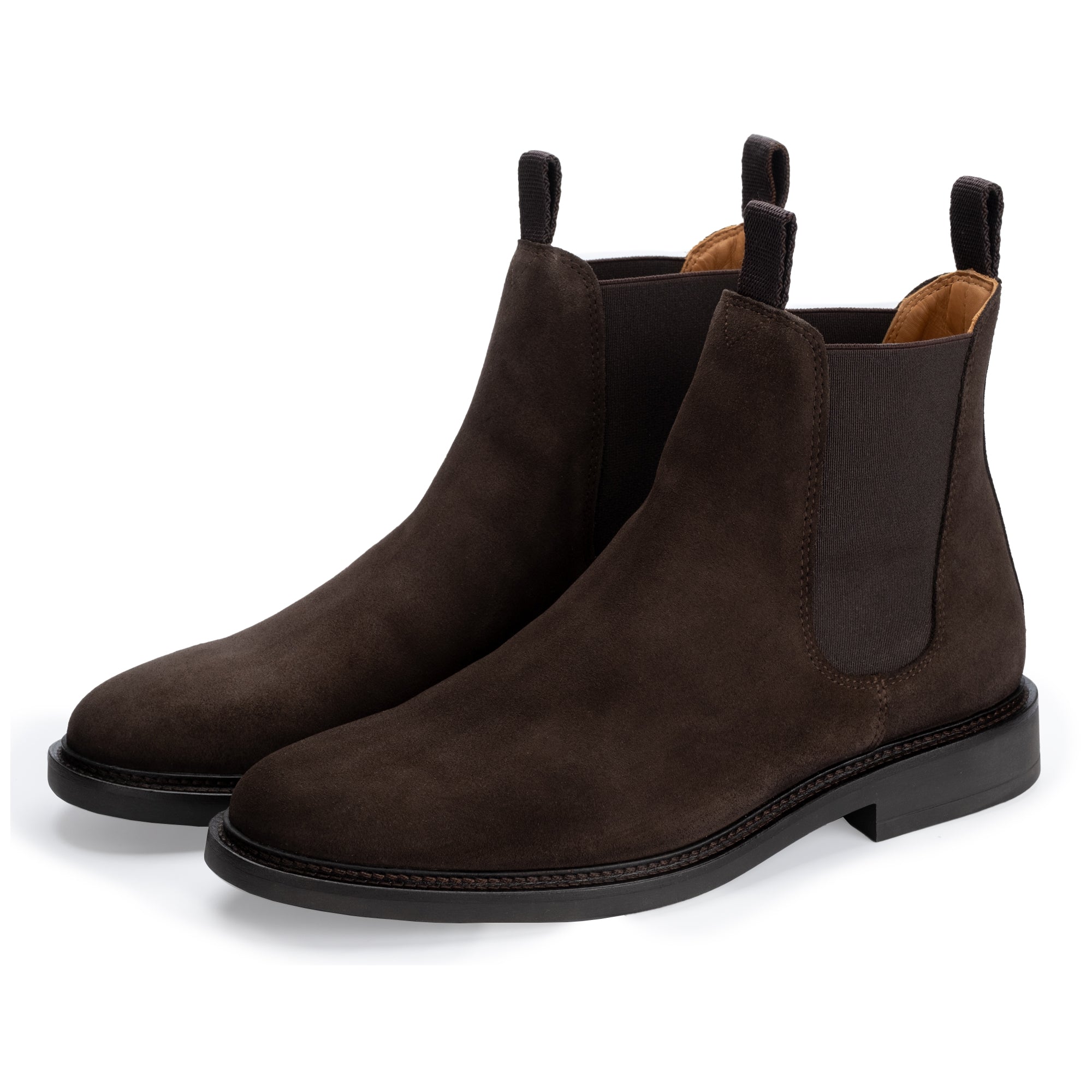
For wet or persistently cold conditions, choose a leather Chelsea over suede. The Brecon Chelsea Boot, available in black and brown, features a leather upper that responds well to regular waxing — building a protective layer that sheds rain effectively. The Hill Chelsea Boot, also available in black and brown, offers the same versatility in a clean, understated profile.
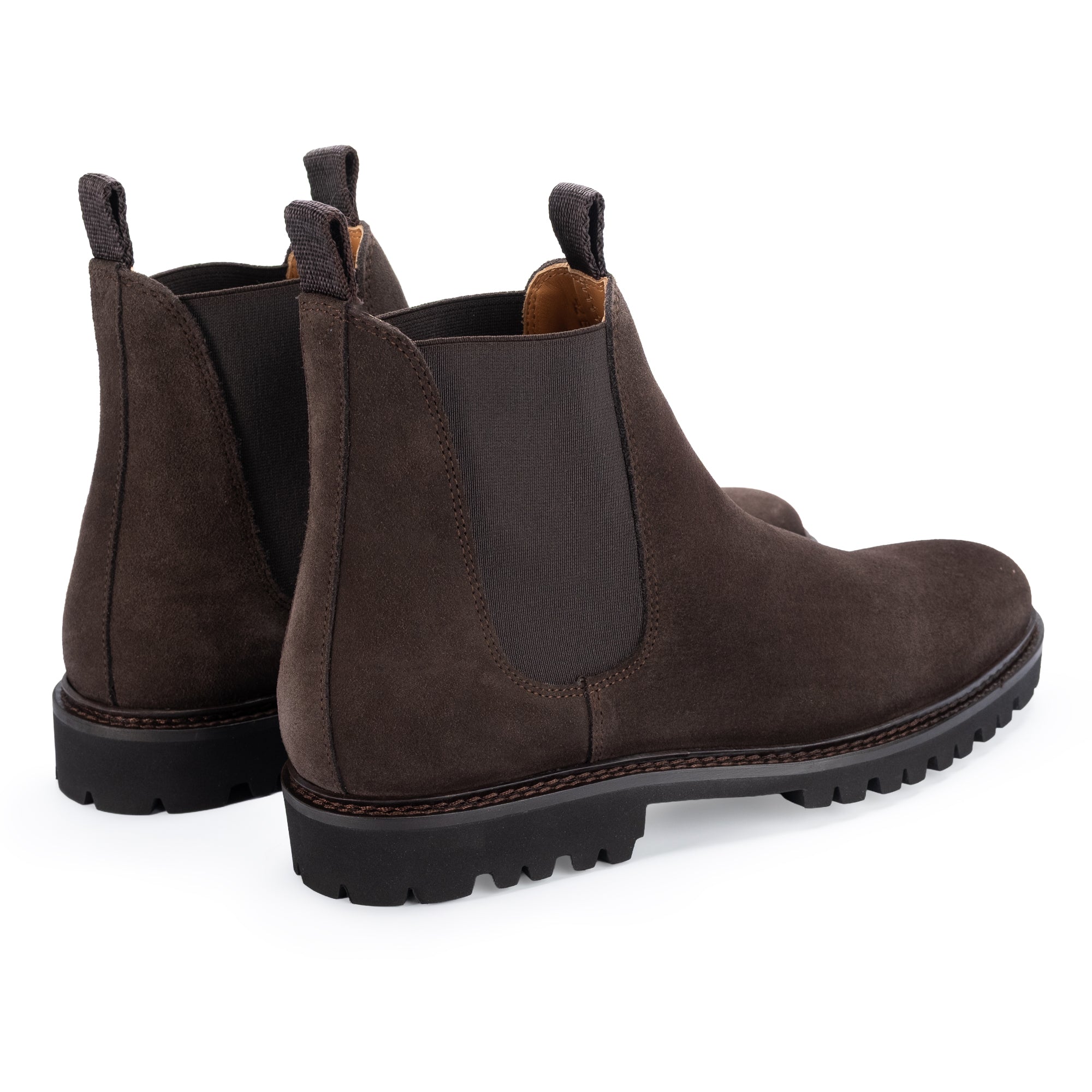
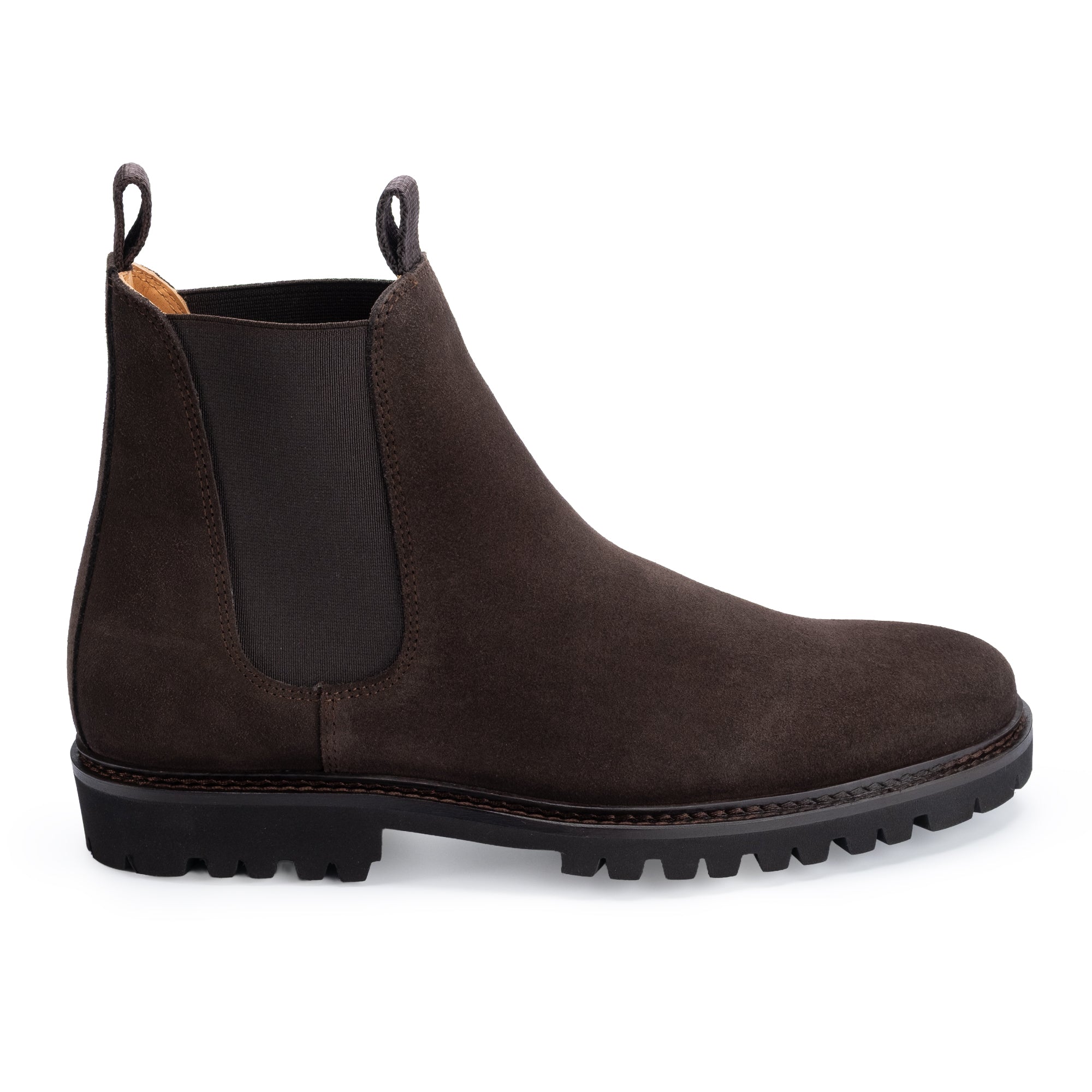
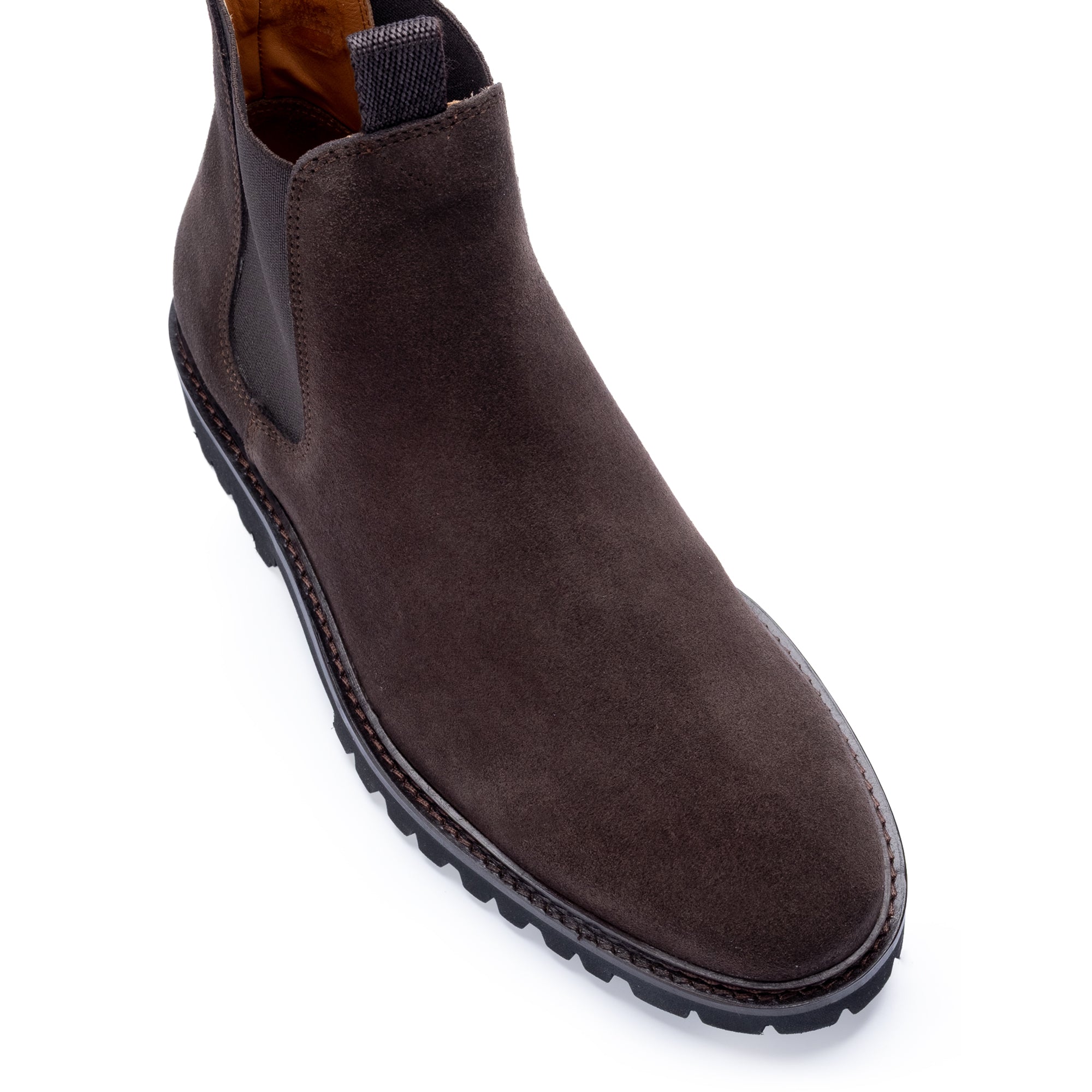
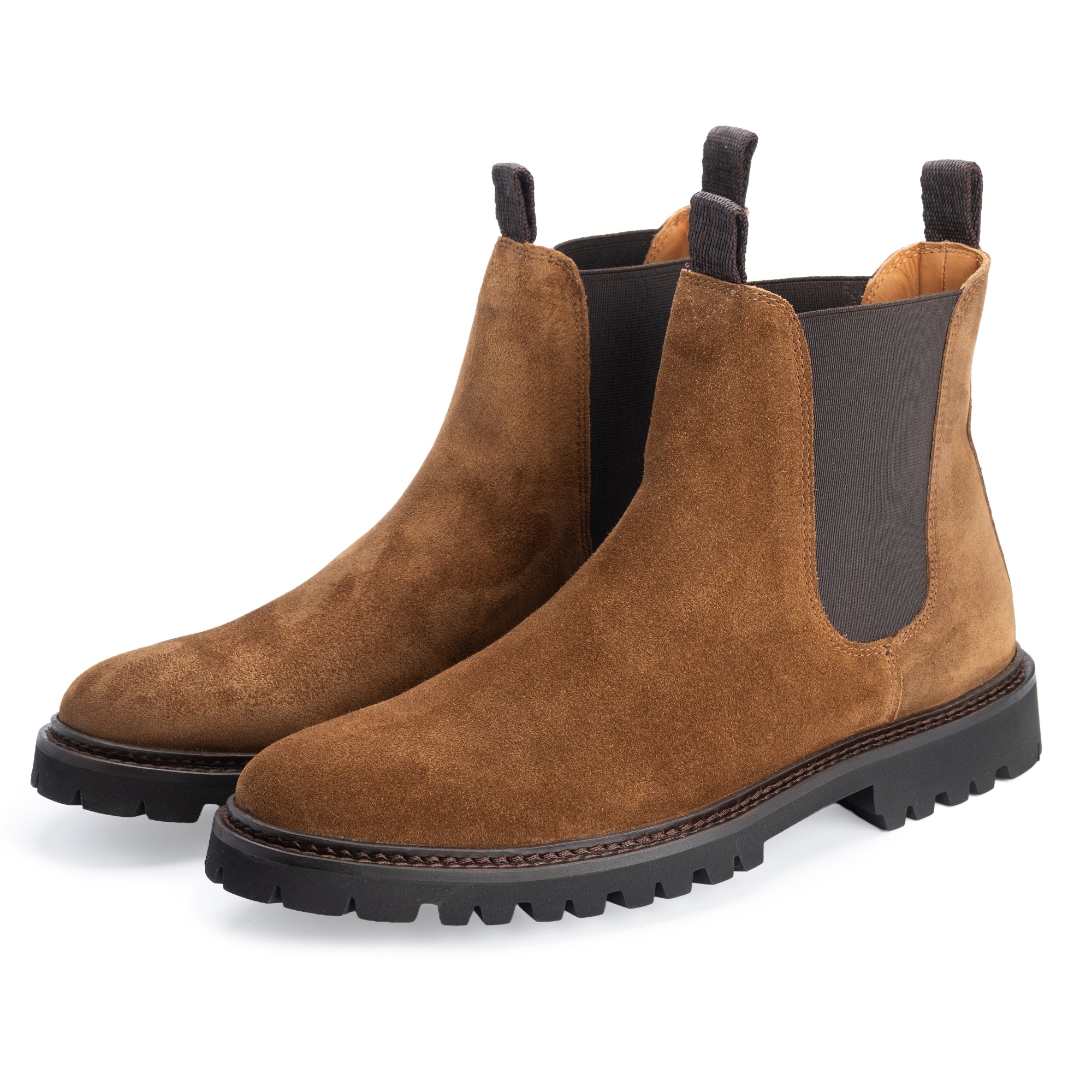
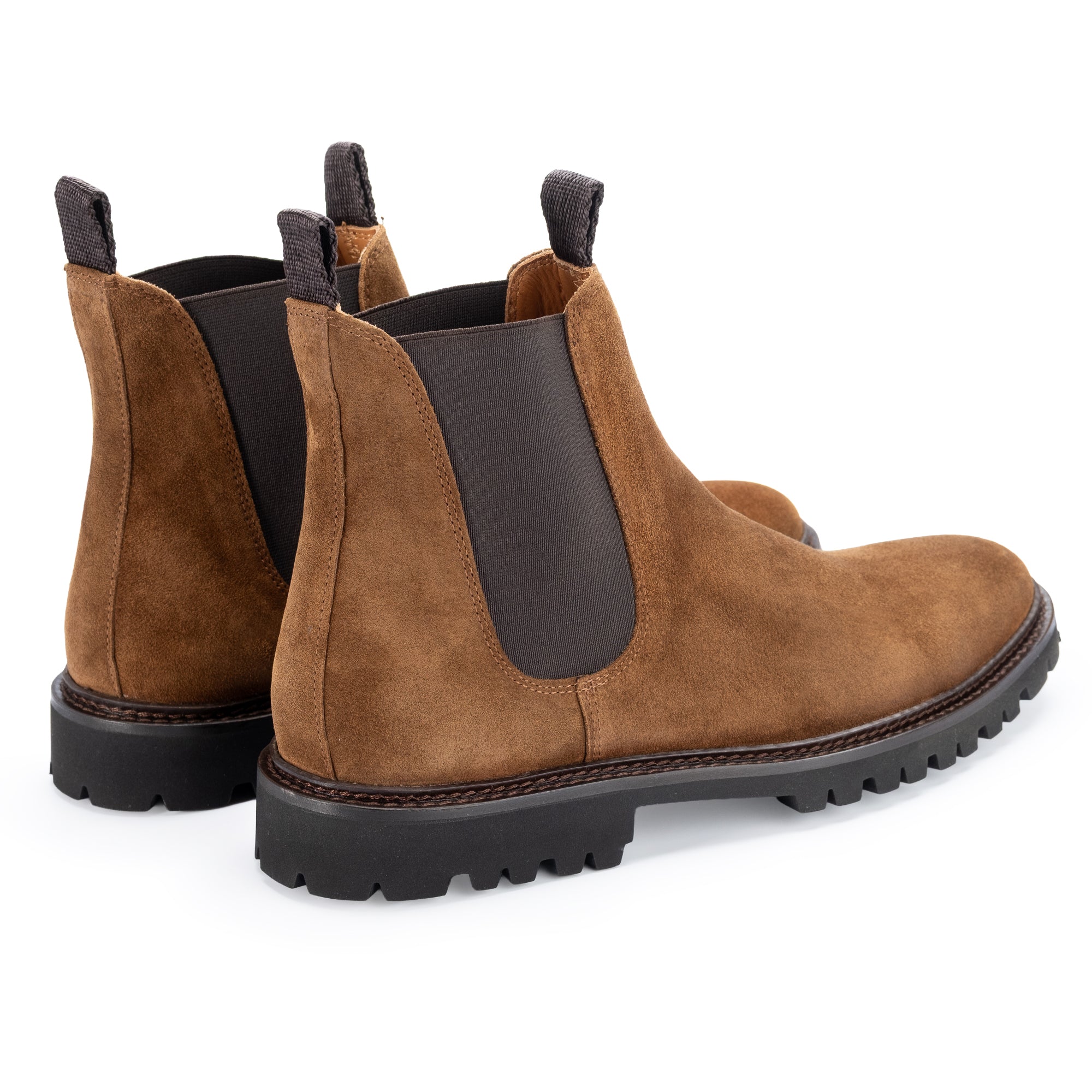
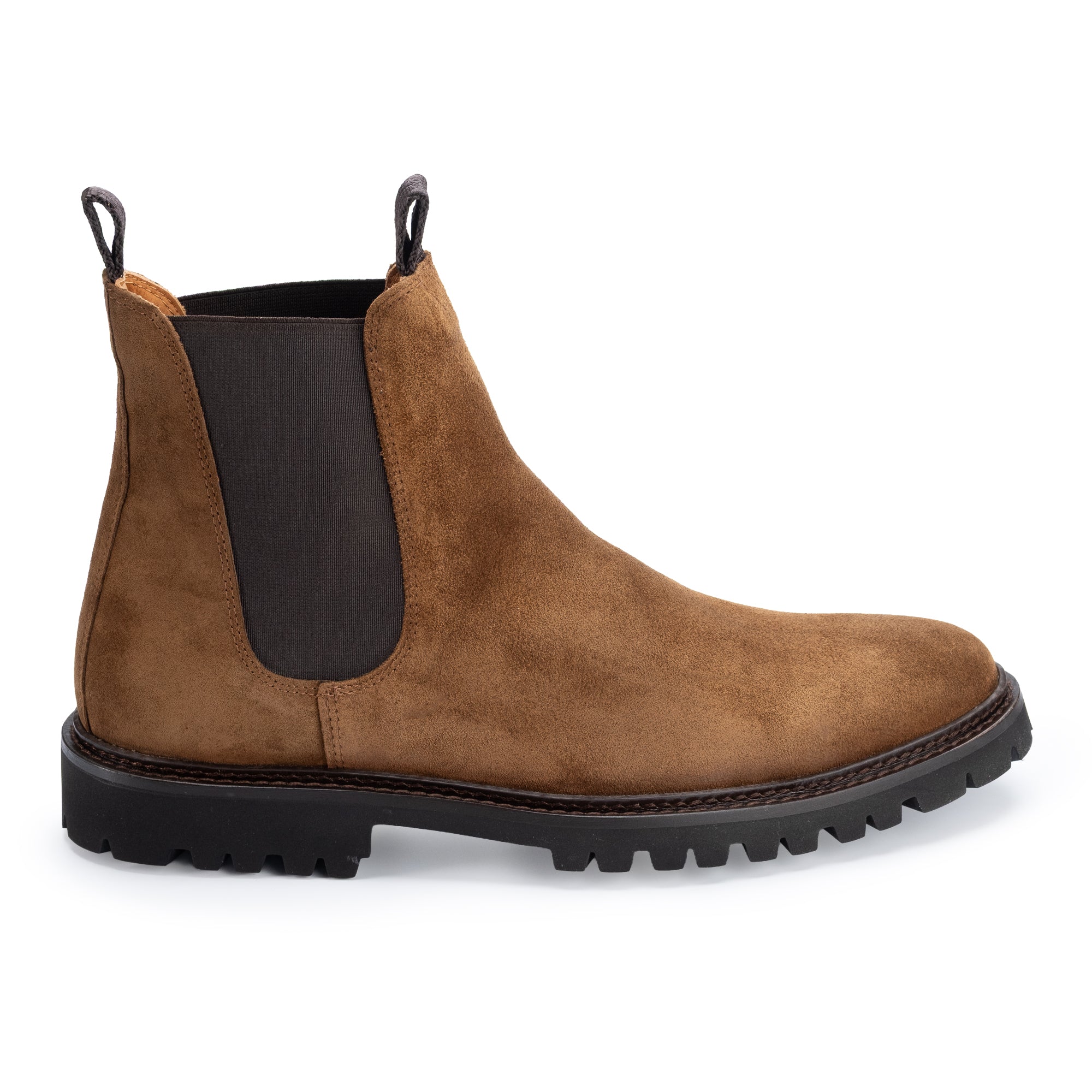
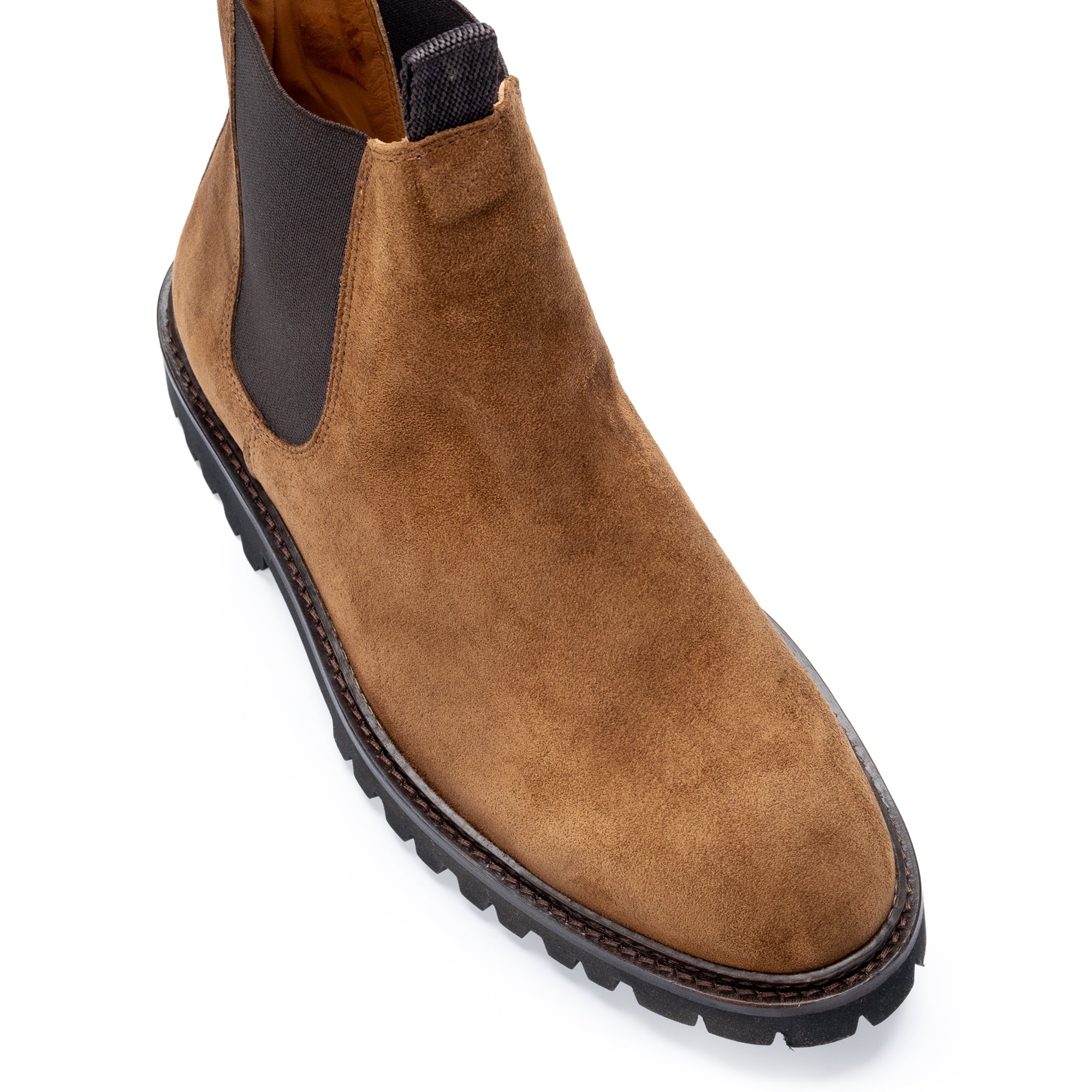
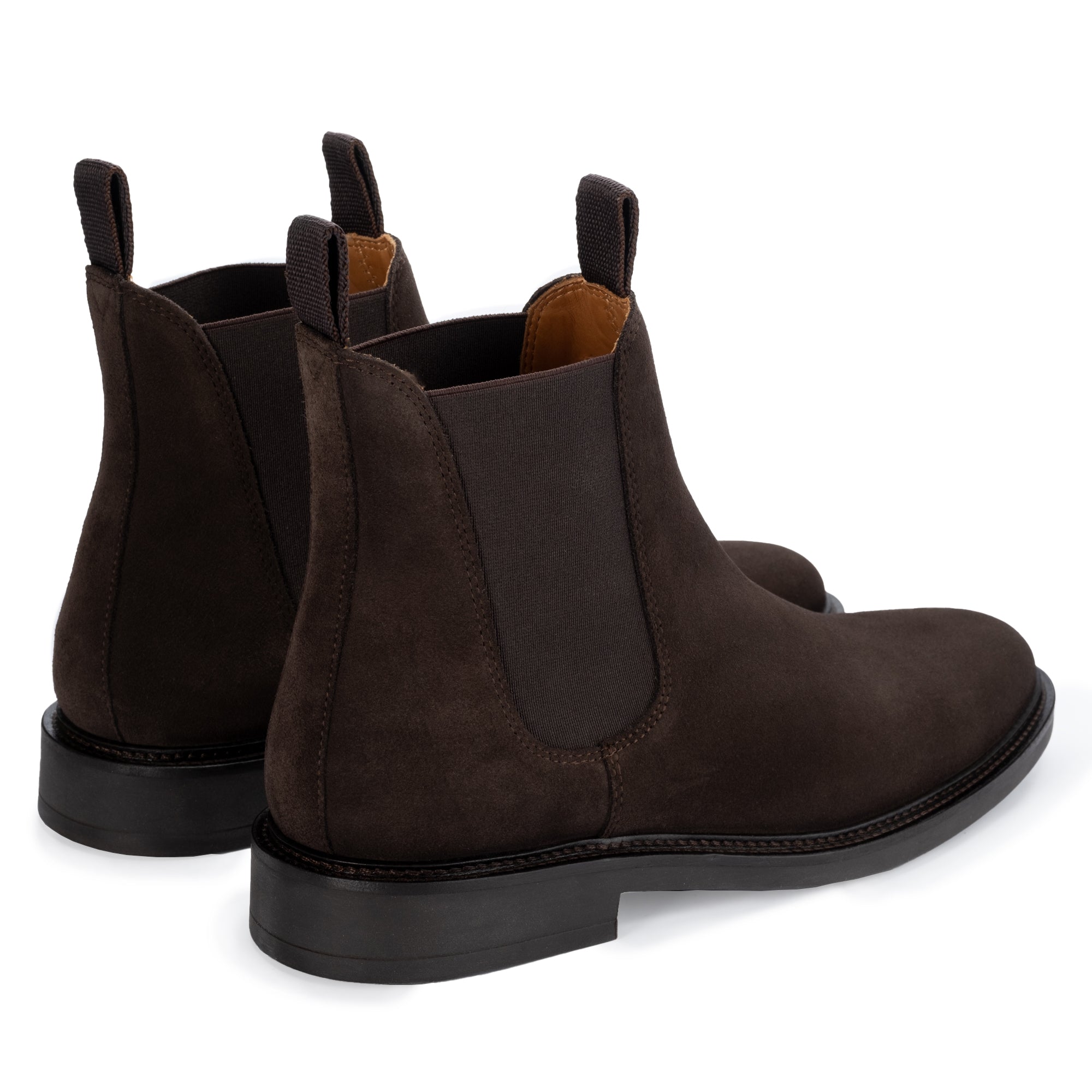
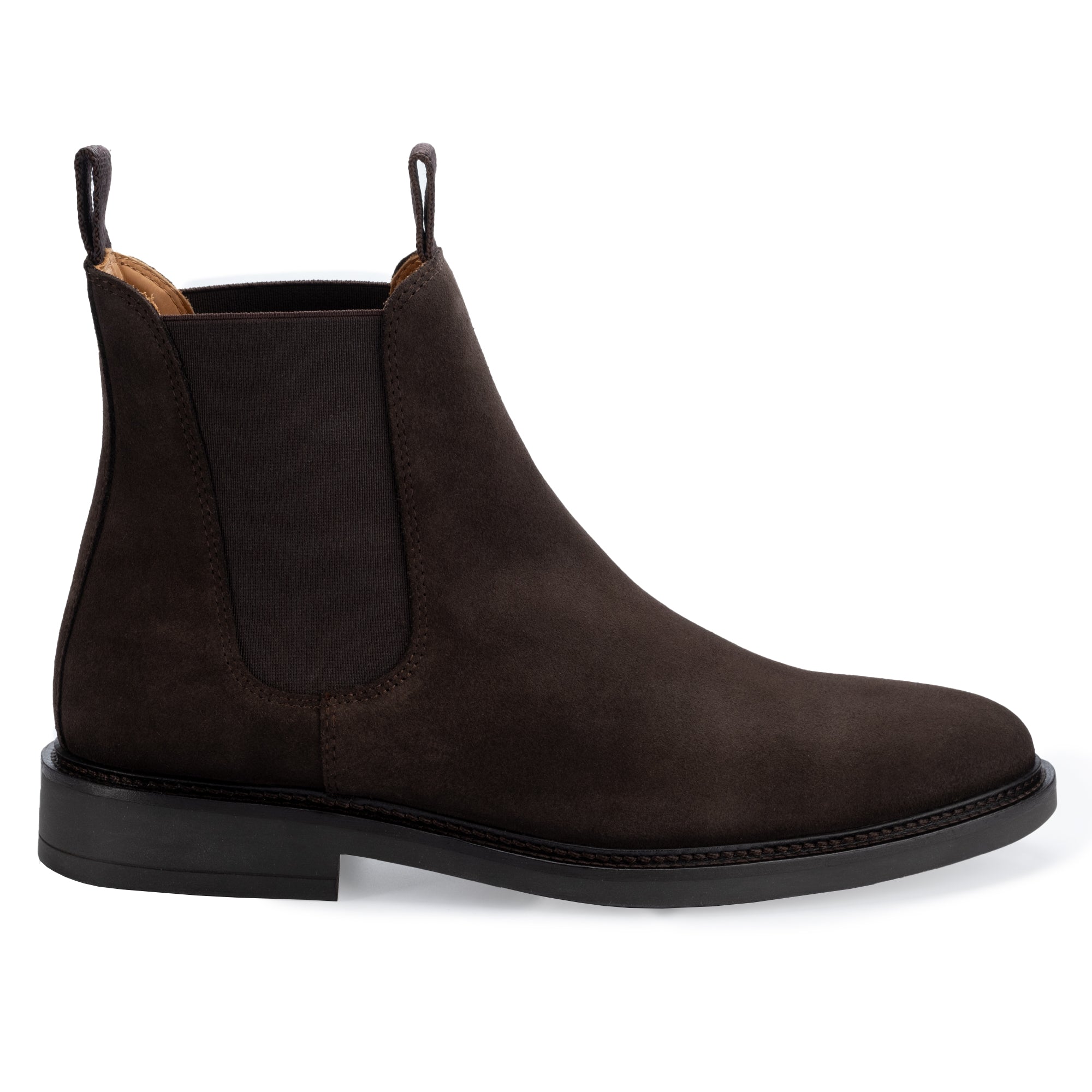
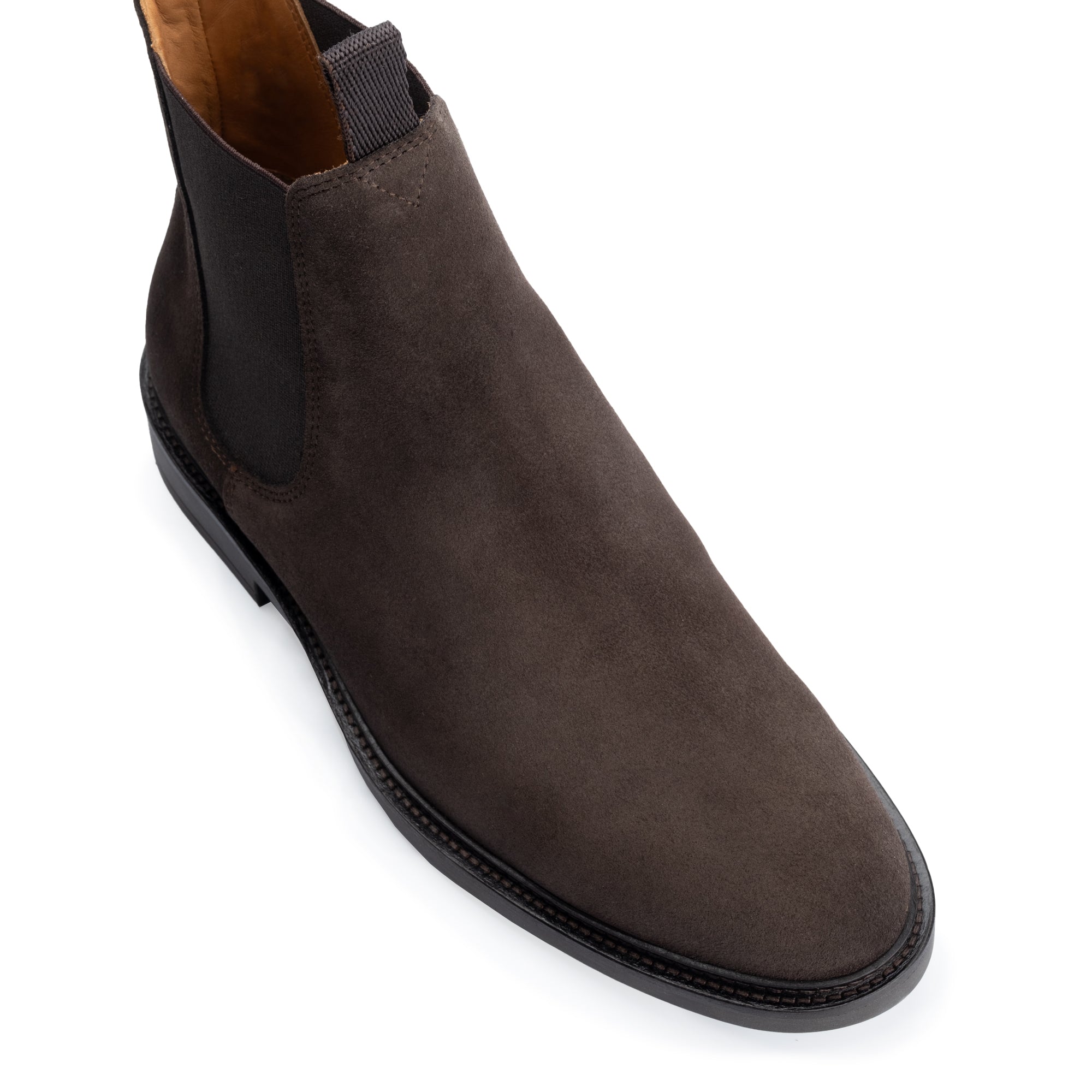
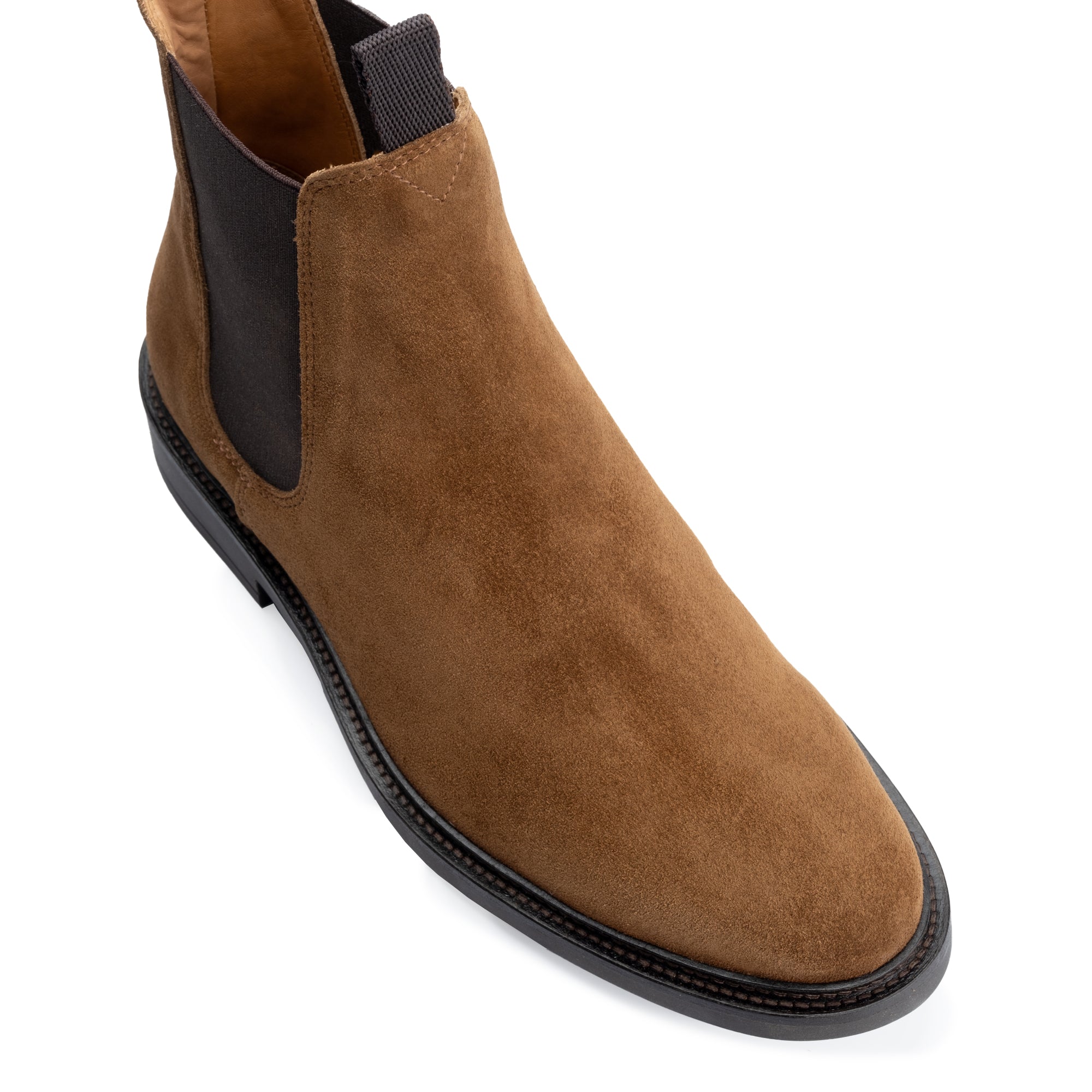
If conditions are drier — crisp frost rather than persistent rain — the Hill Chelsea Suede Boot, in brown suede or cognac suede, is an excellent choice. Suede adds texture and warmth to winter outfits without sacrificing style. Apply a suede protector spray before the first wear and reapply every four to six weeks through the season.
A quality leather Chelsea boot, properly maintained, will comfortably outlast 10 years of regular wear — making it one of the best value investments in a man's winter wardrobe.
Are Chukka Boots Good for Winter?
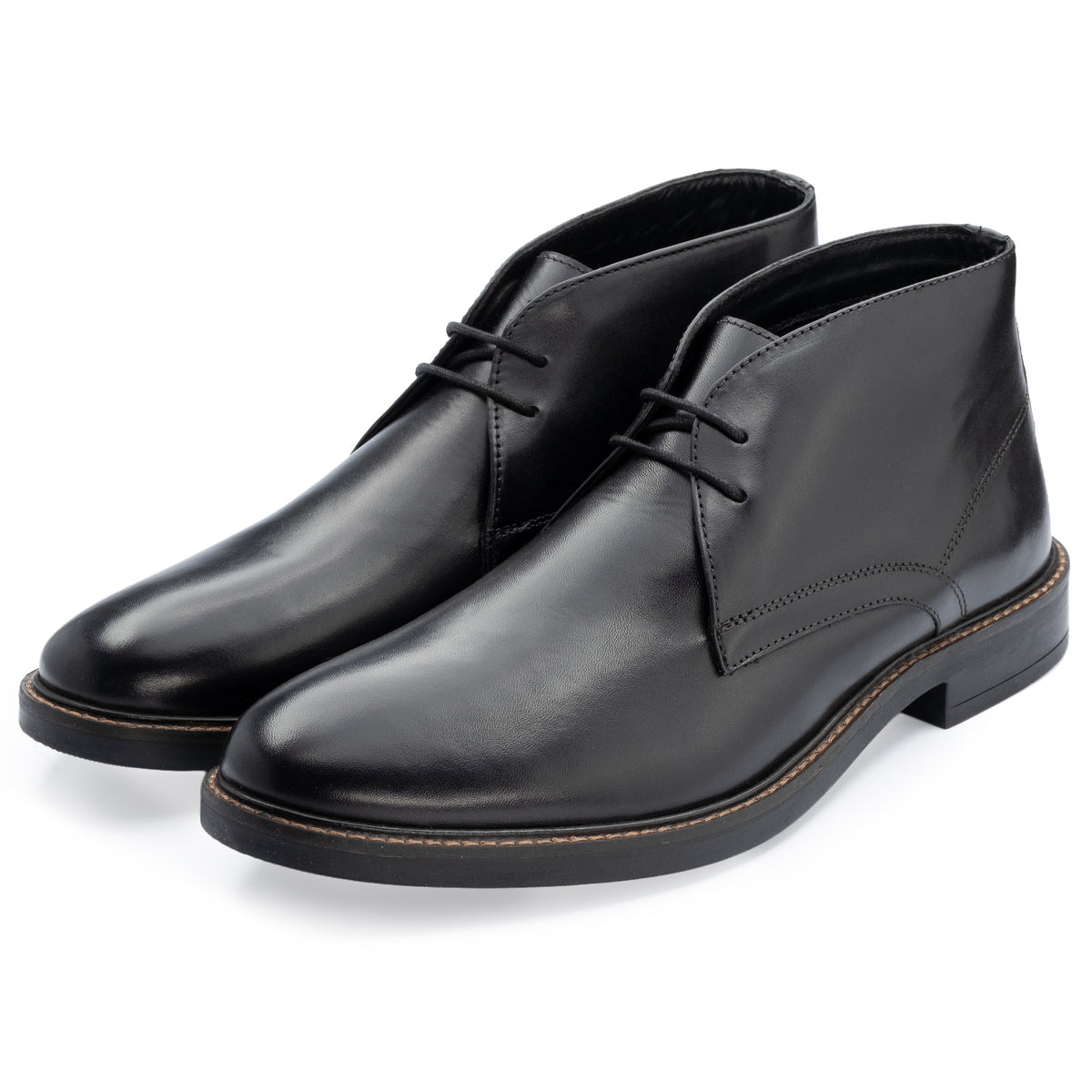
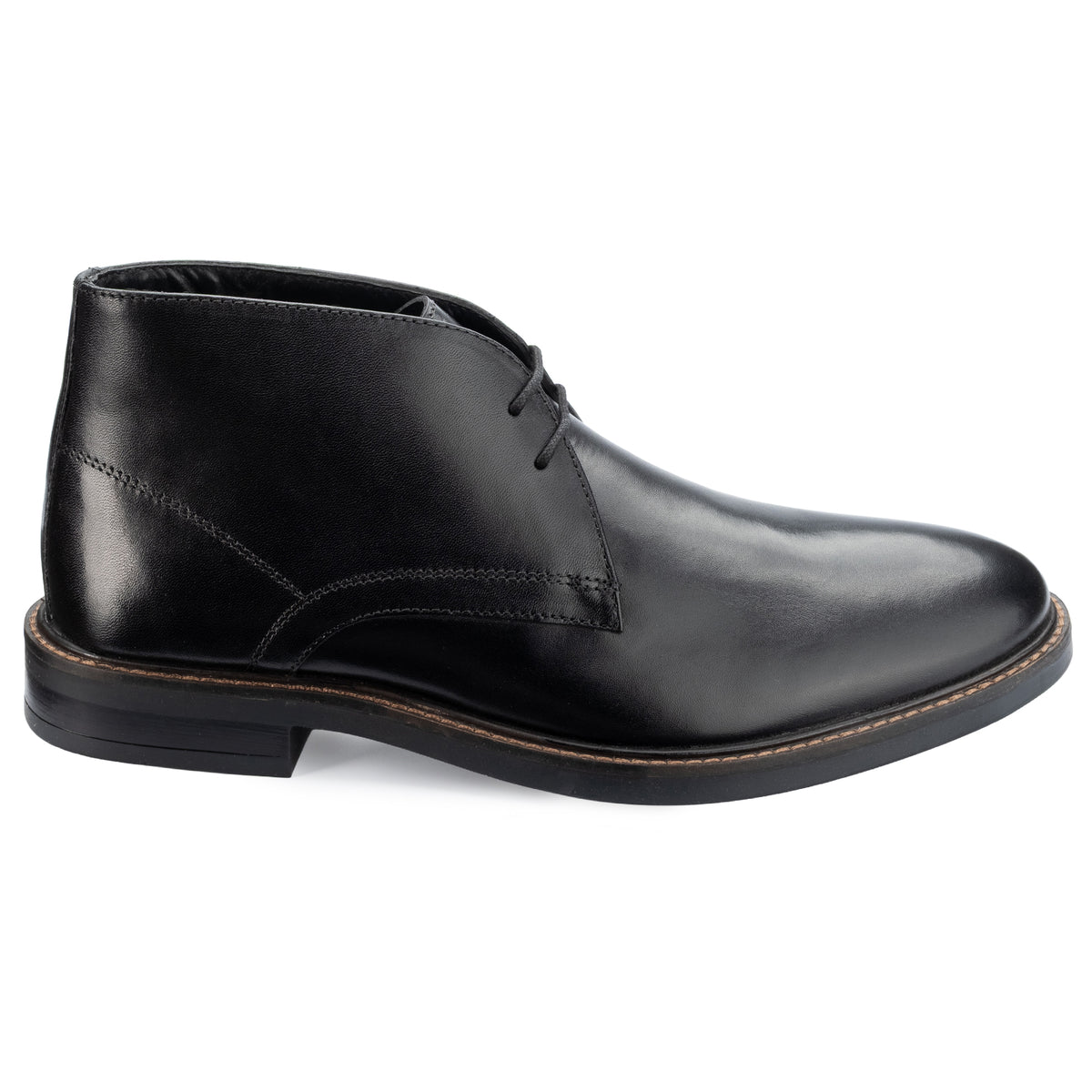
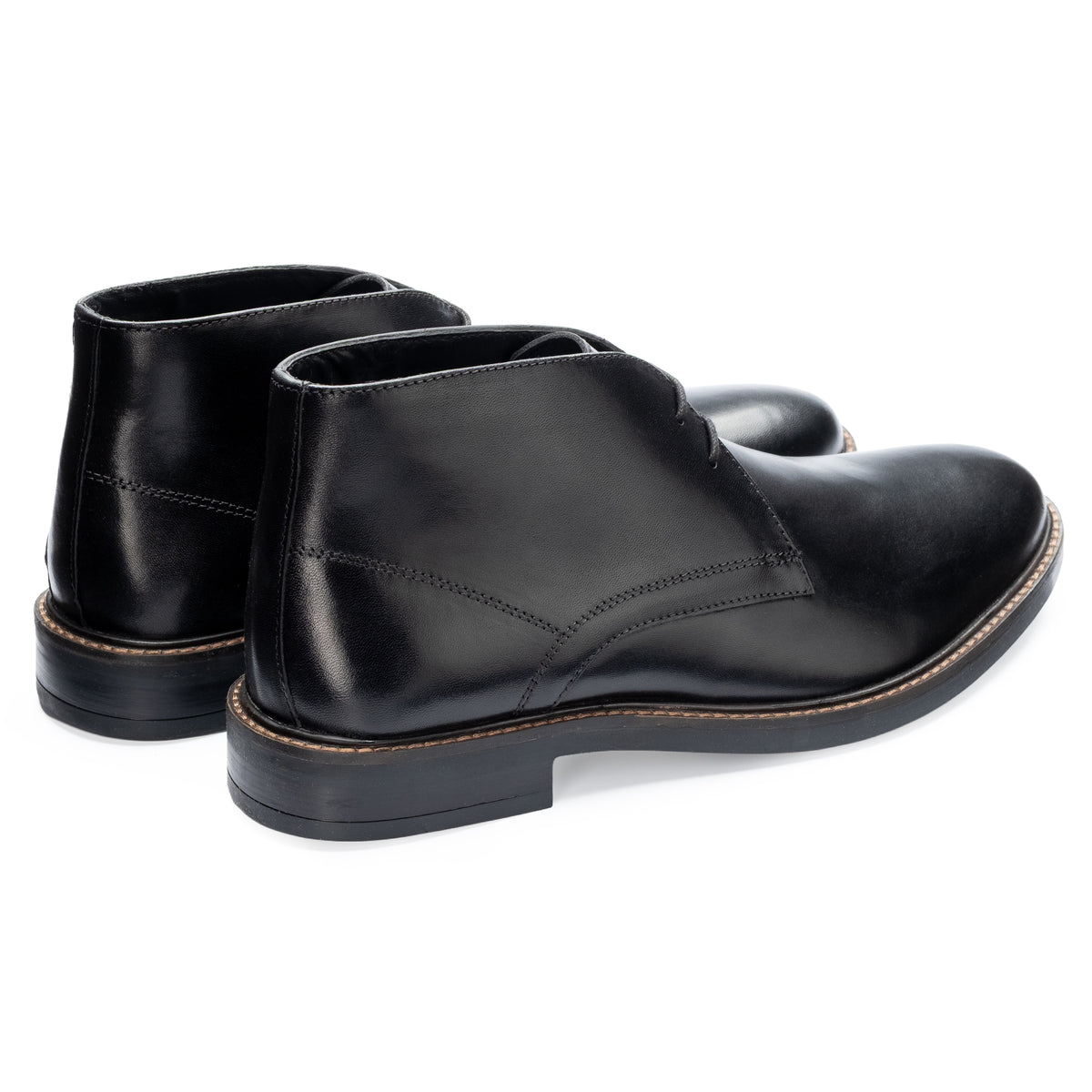
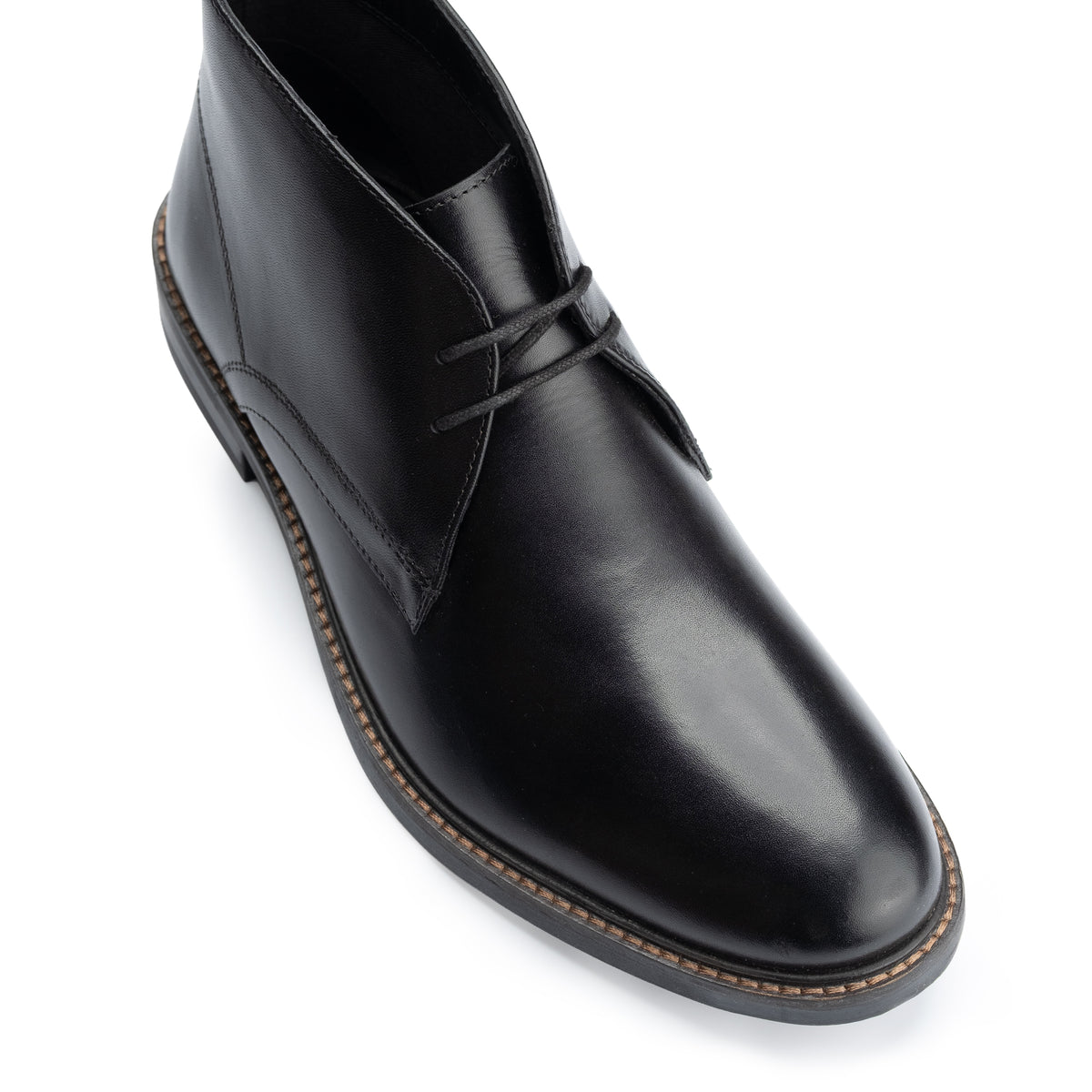
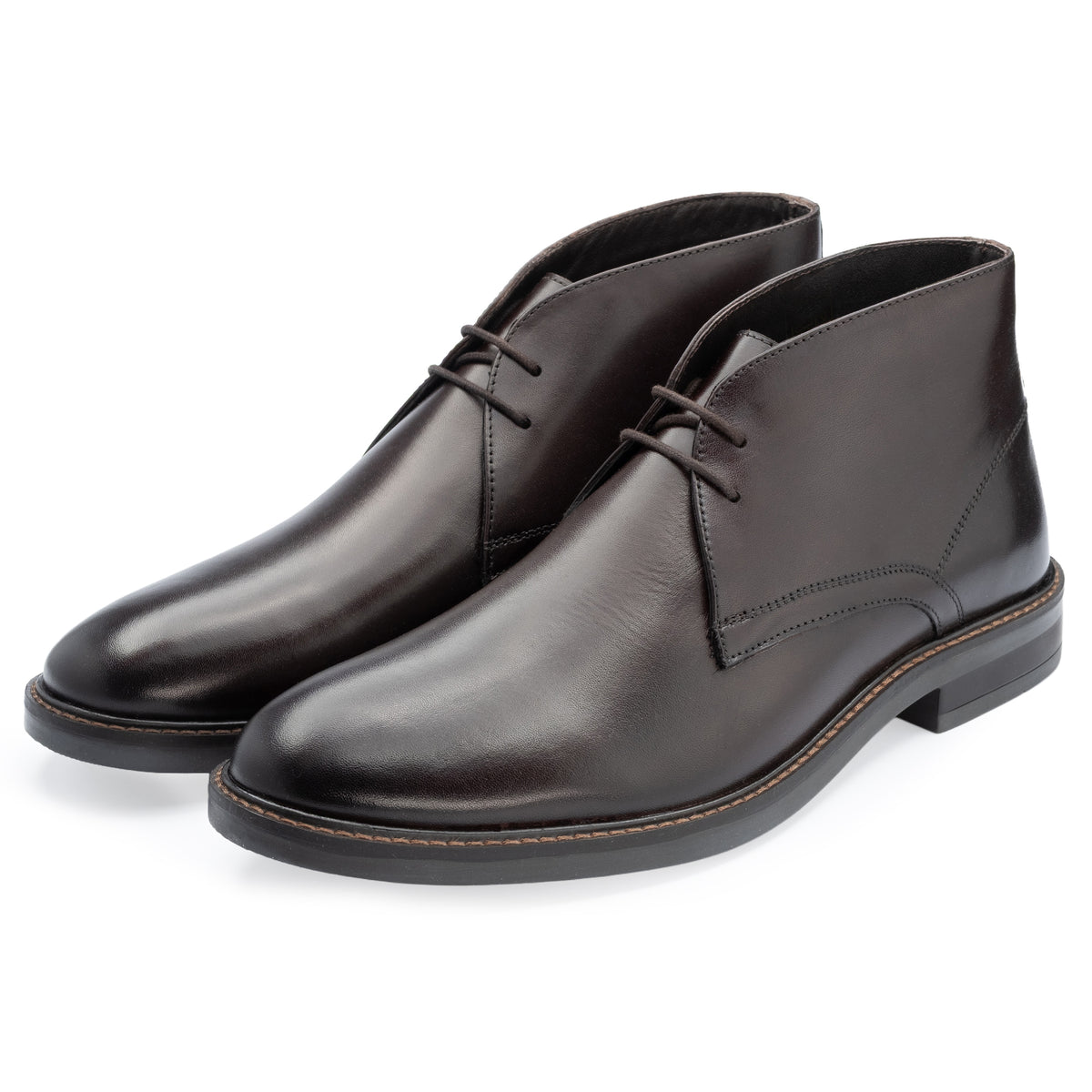
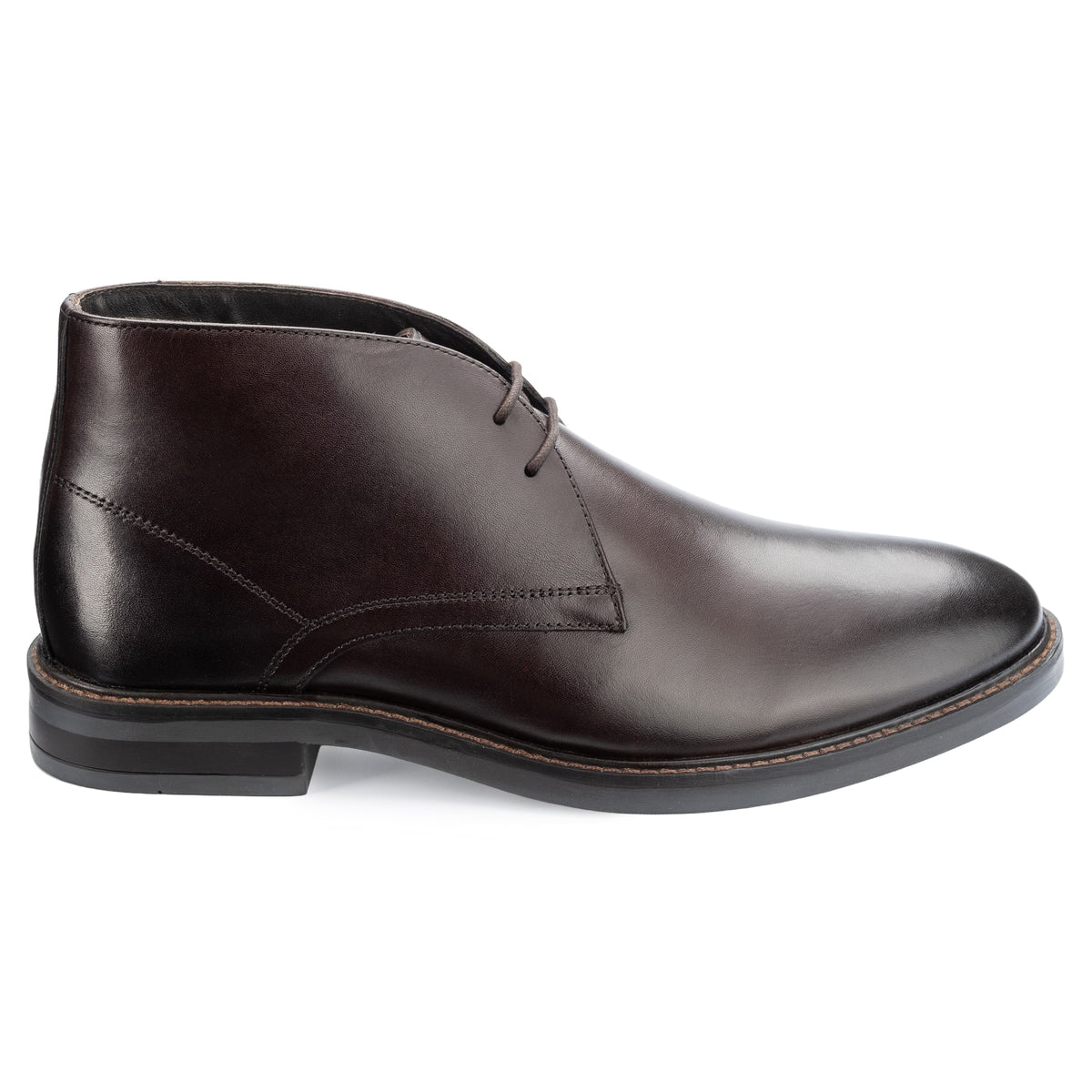
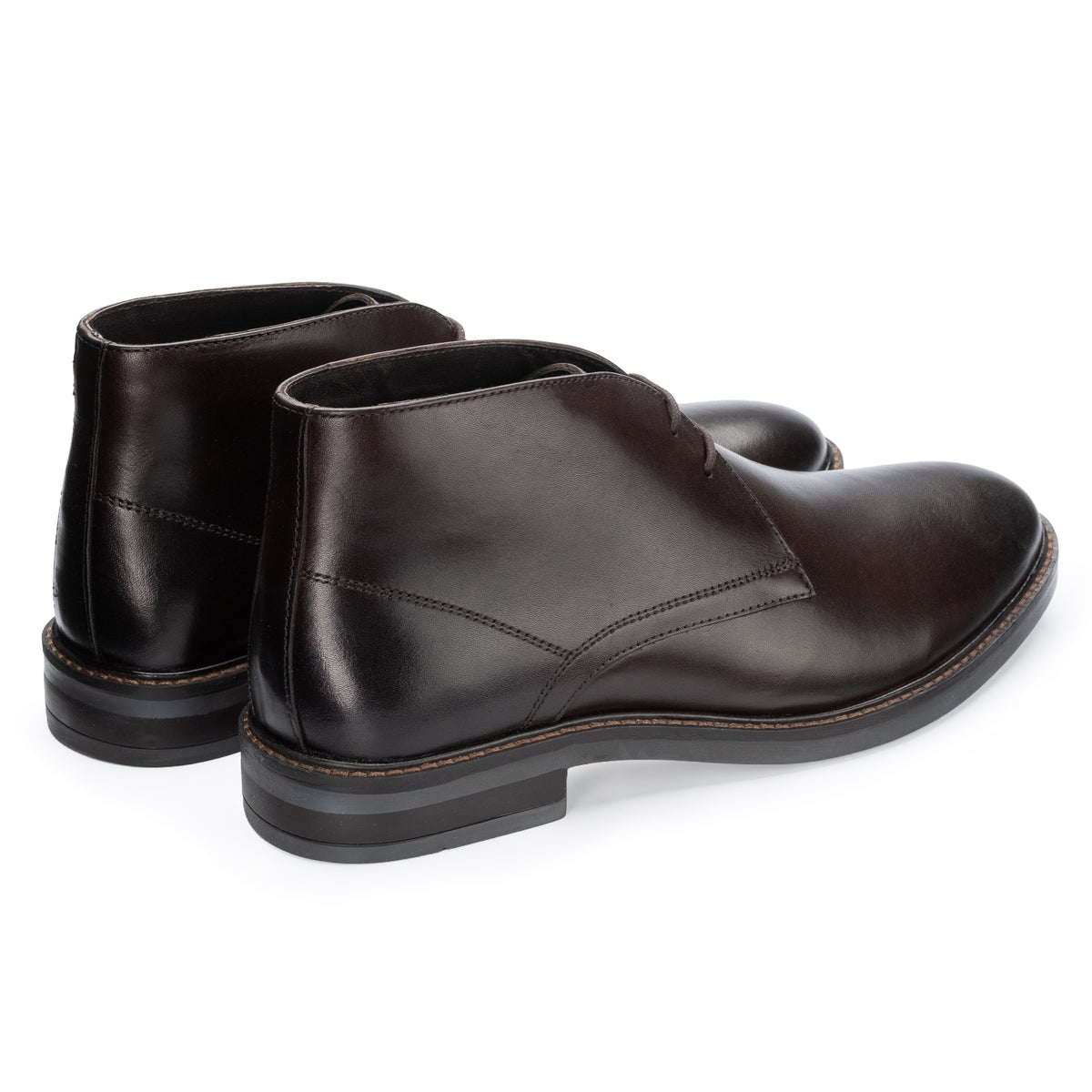
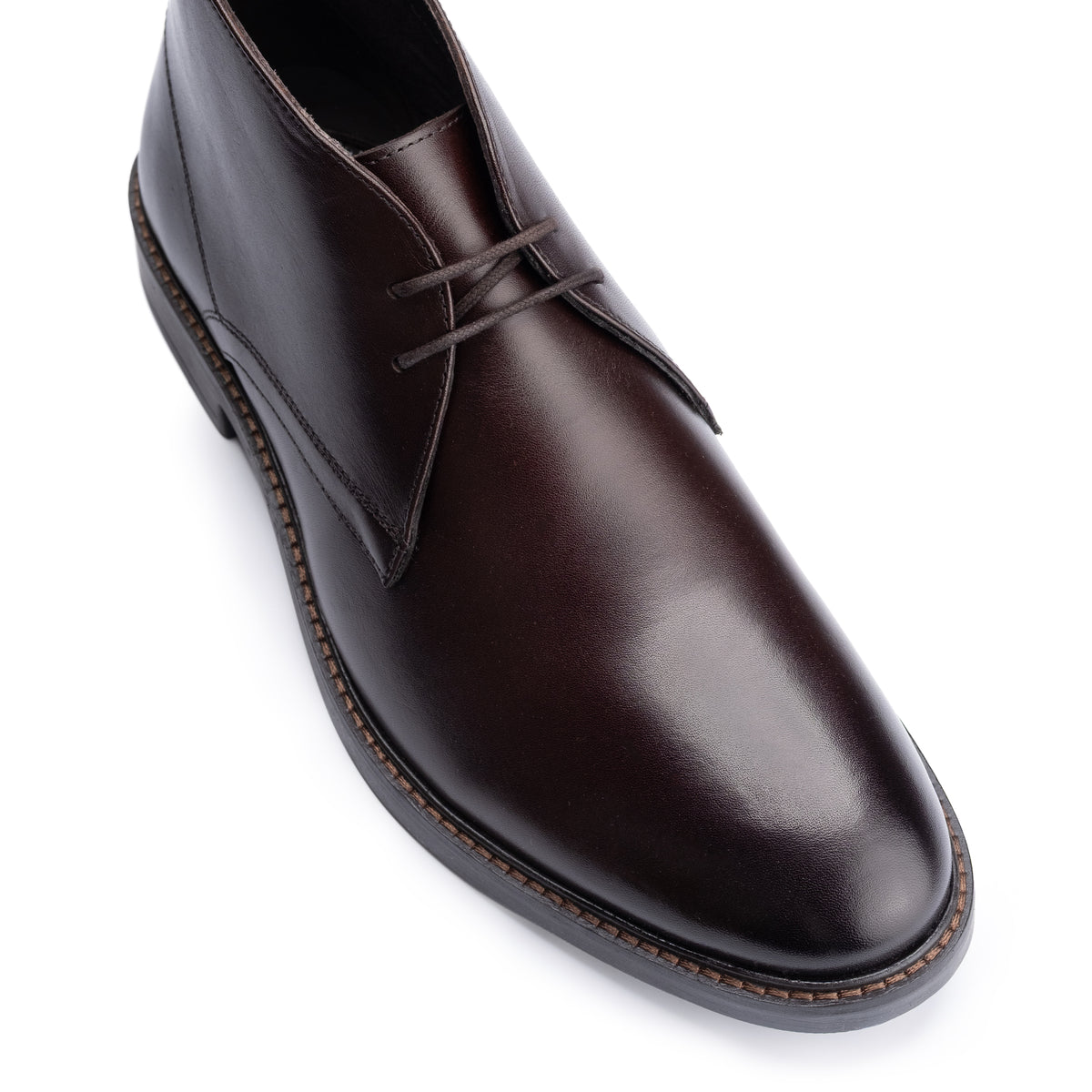
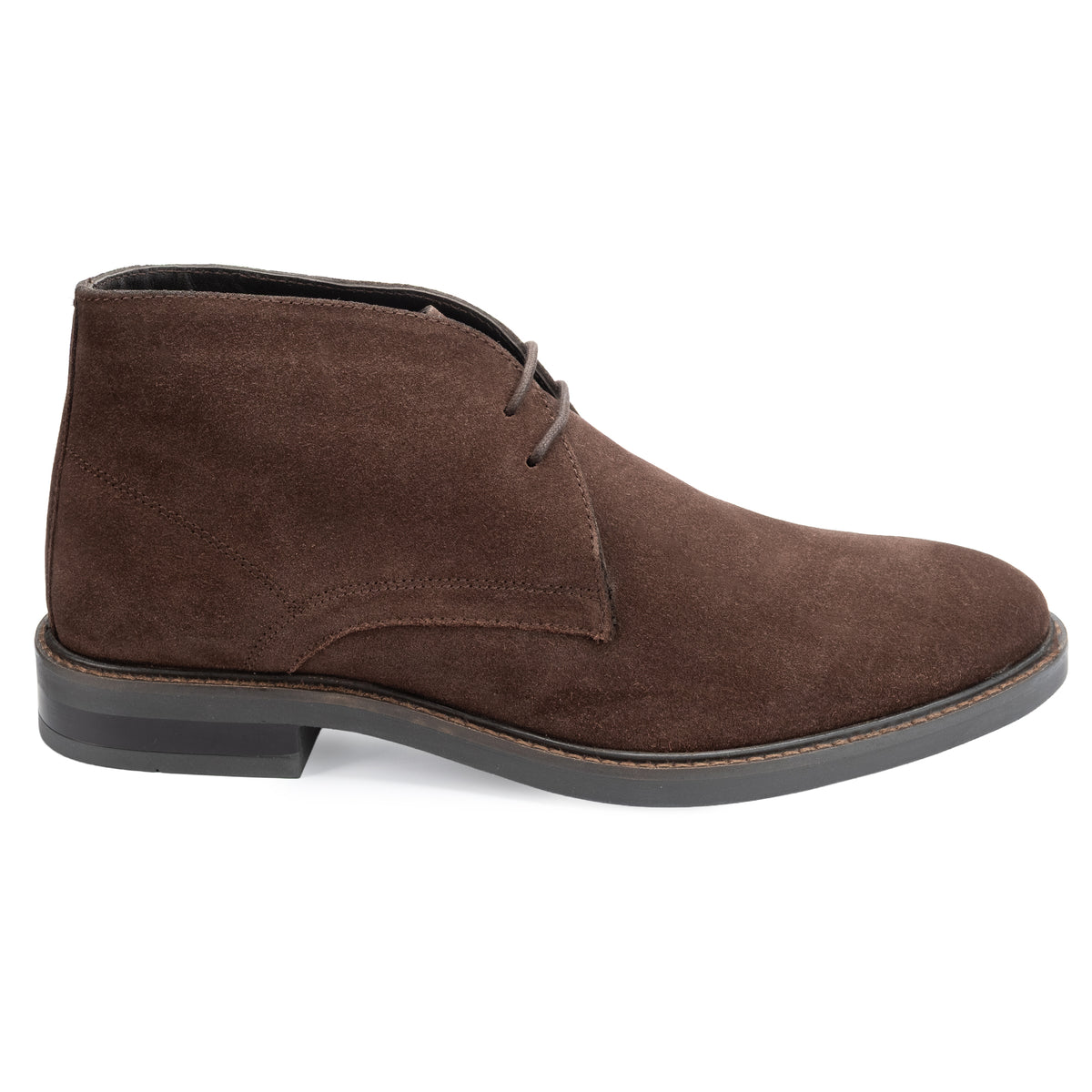
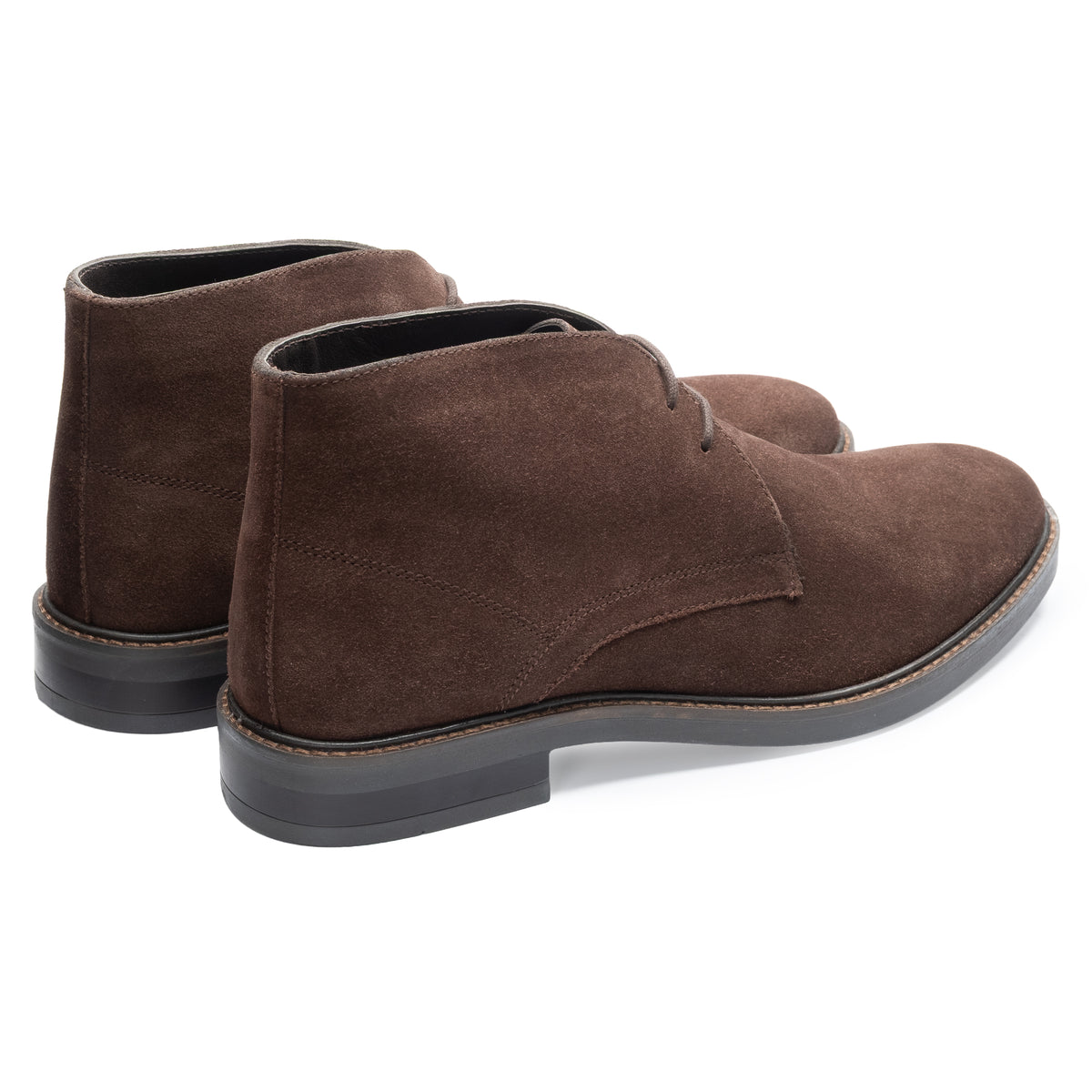
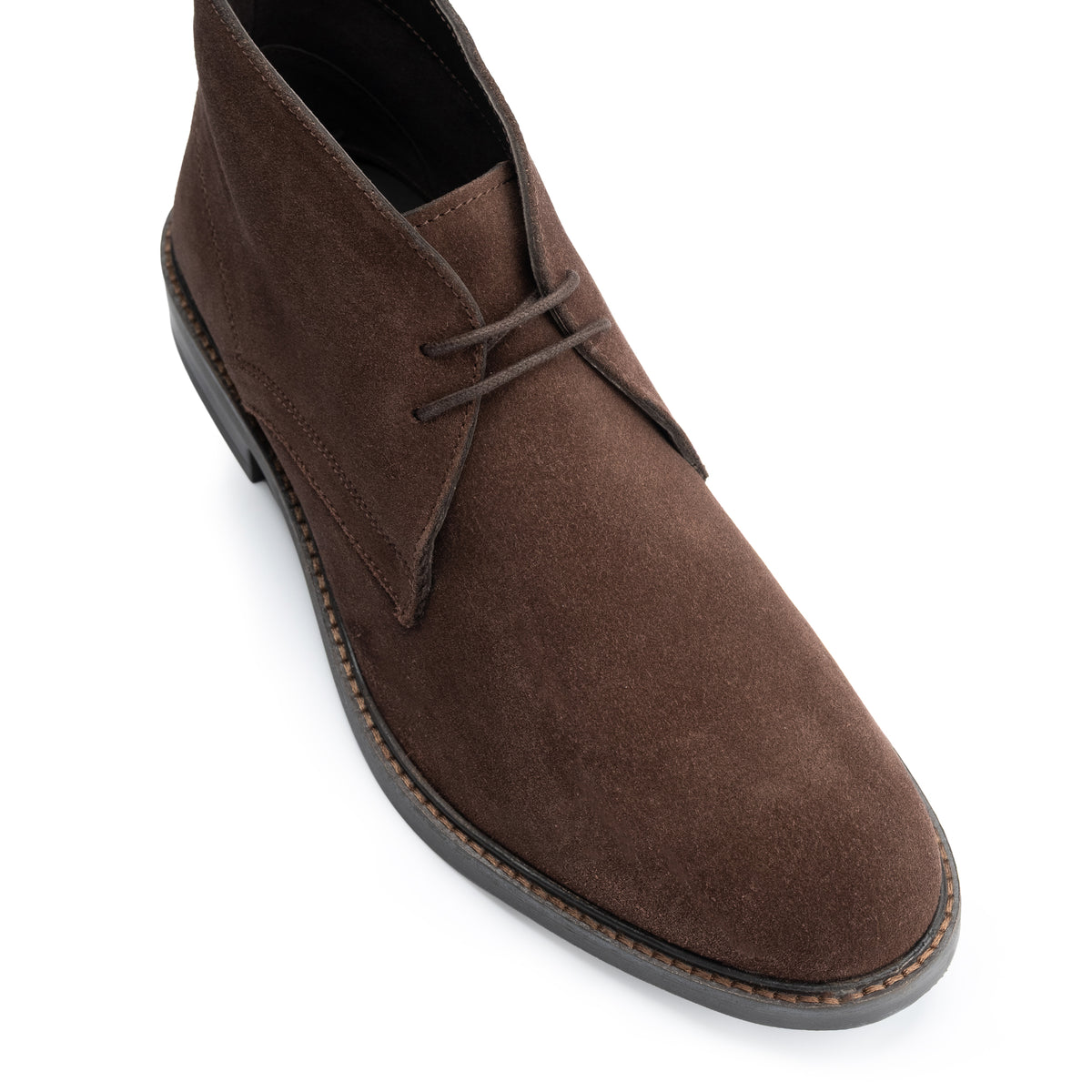
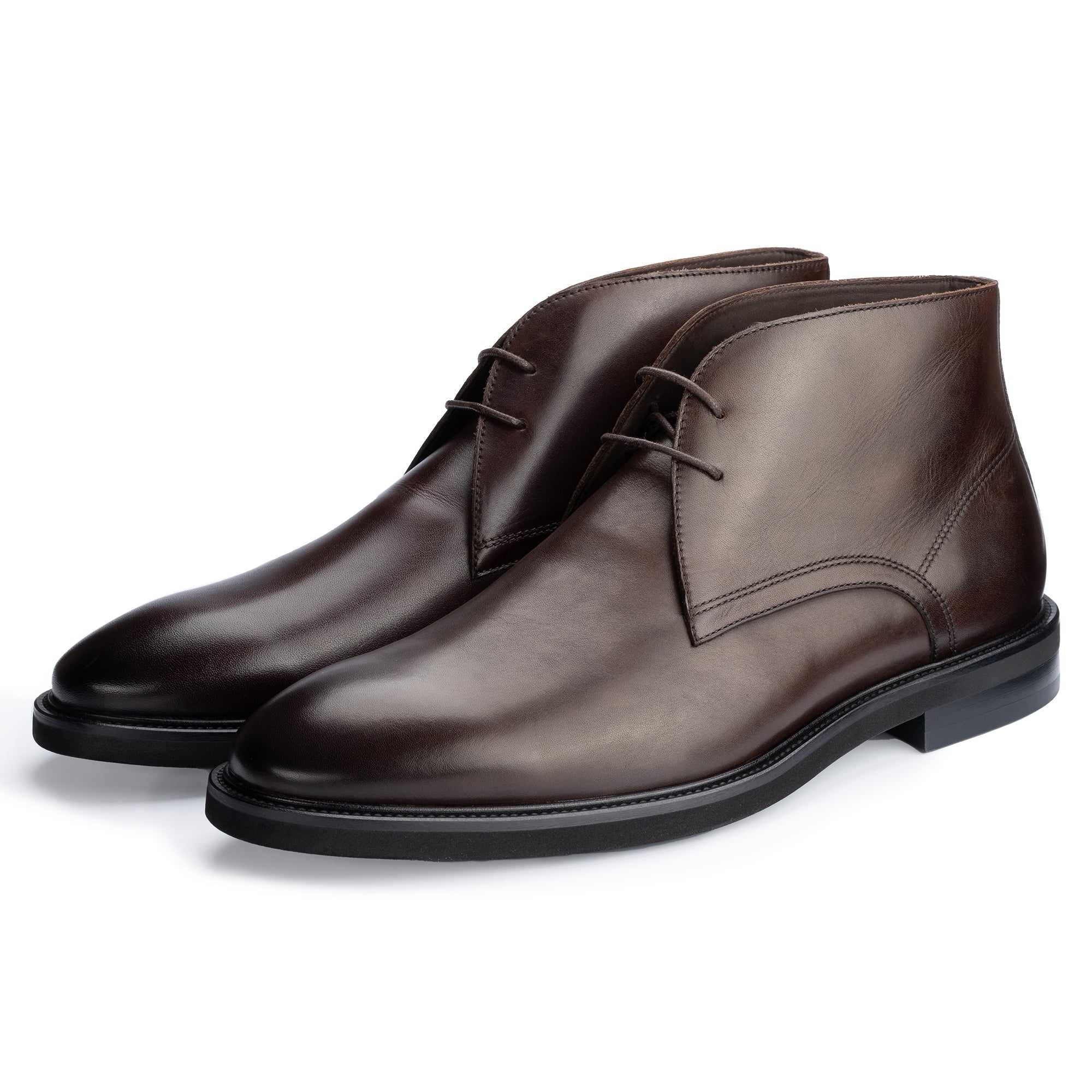
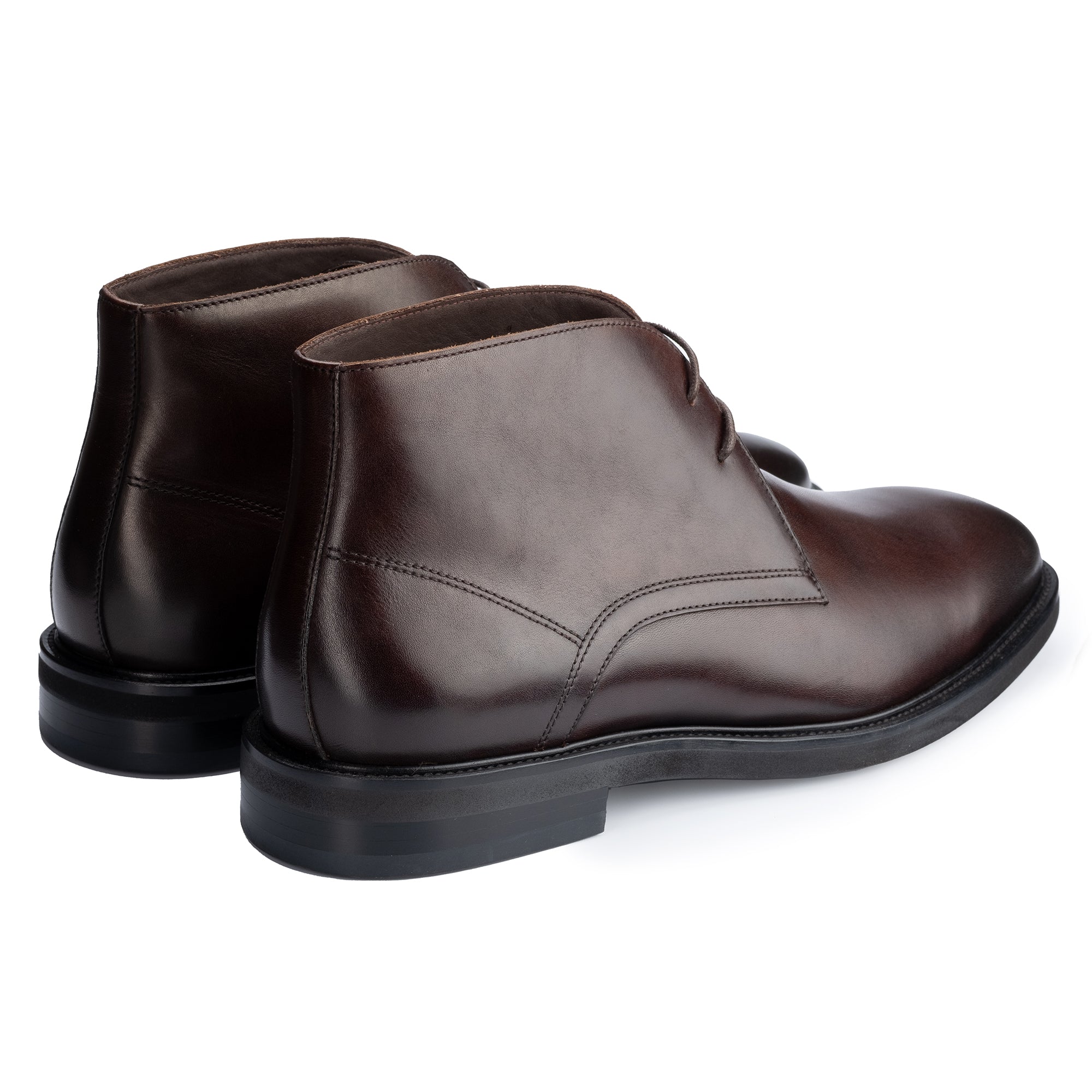
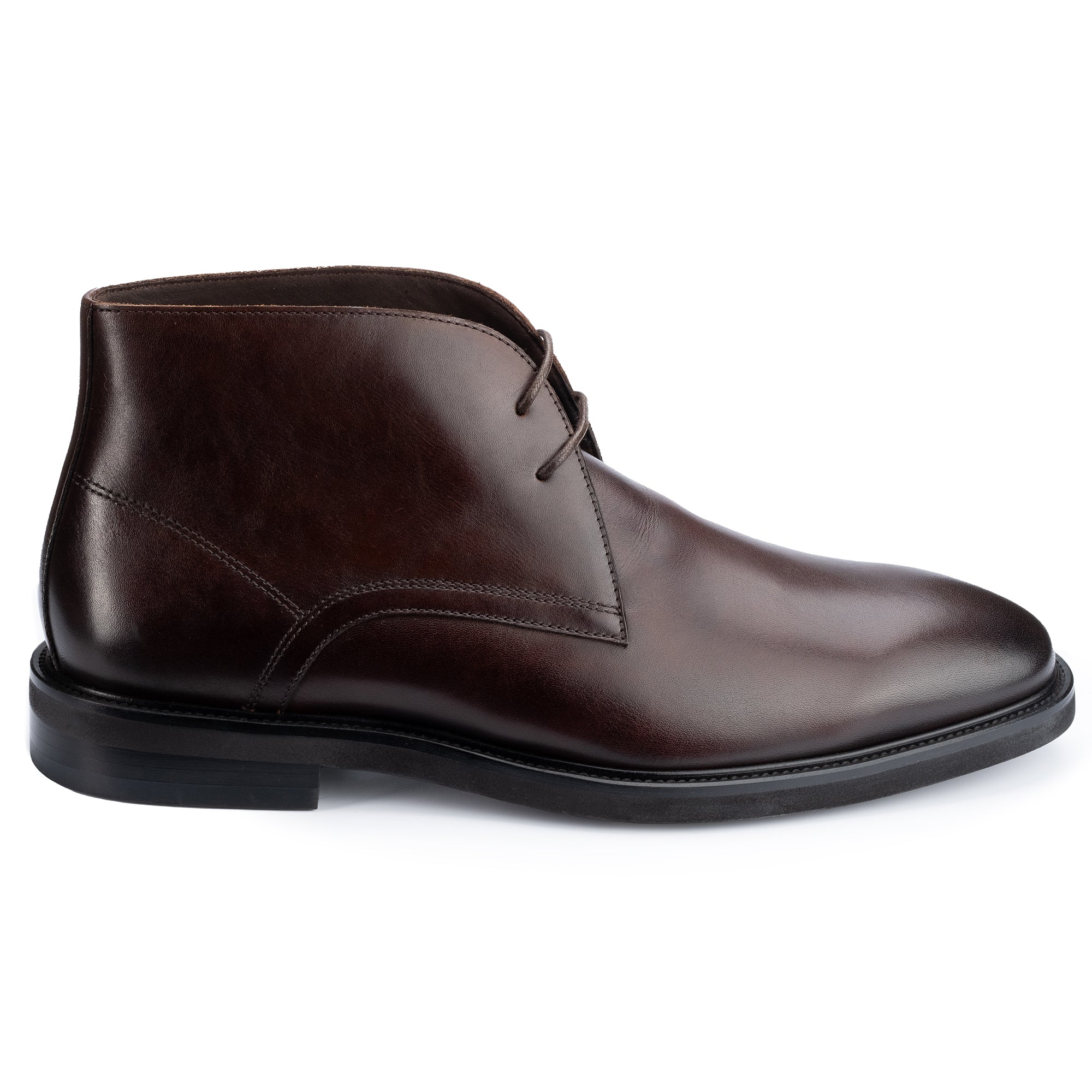
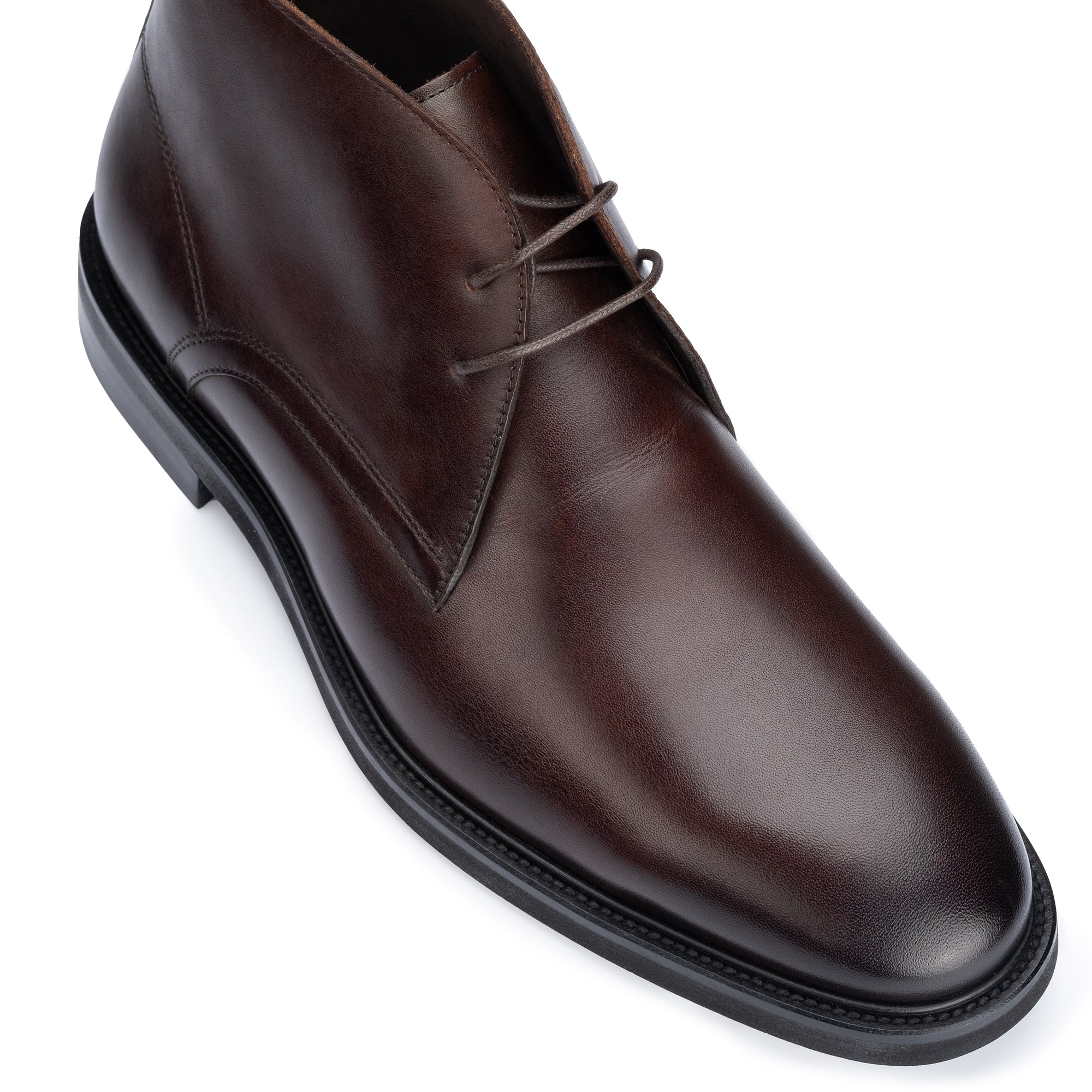
Chukka boots are well-suited to winter — particularly in urban settings where you're moving between indoors and outdoors regularly. The two-eyelet lace closure and ankle-length silhouette provide a more secure fit than a Chelsea in uneven conditions, making them a solid choice on days when grip and stability matter.
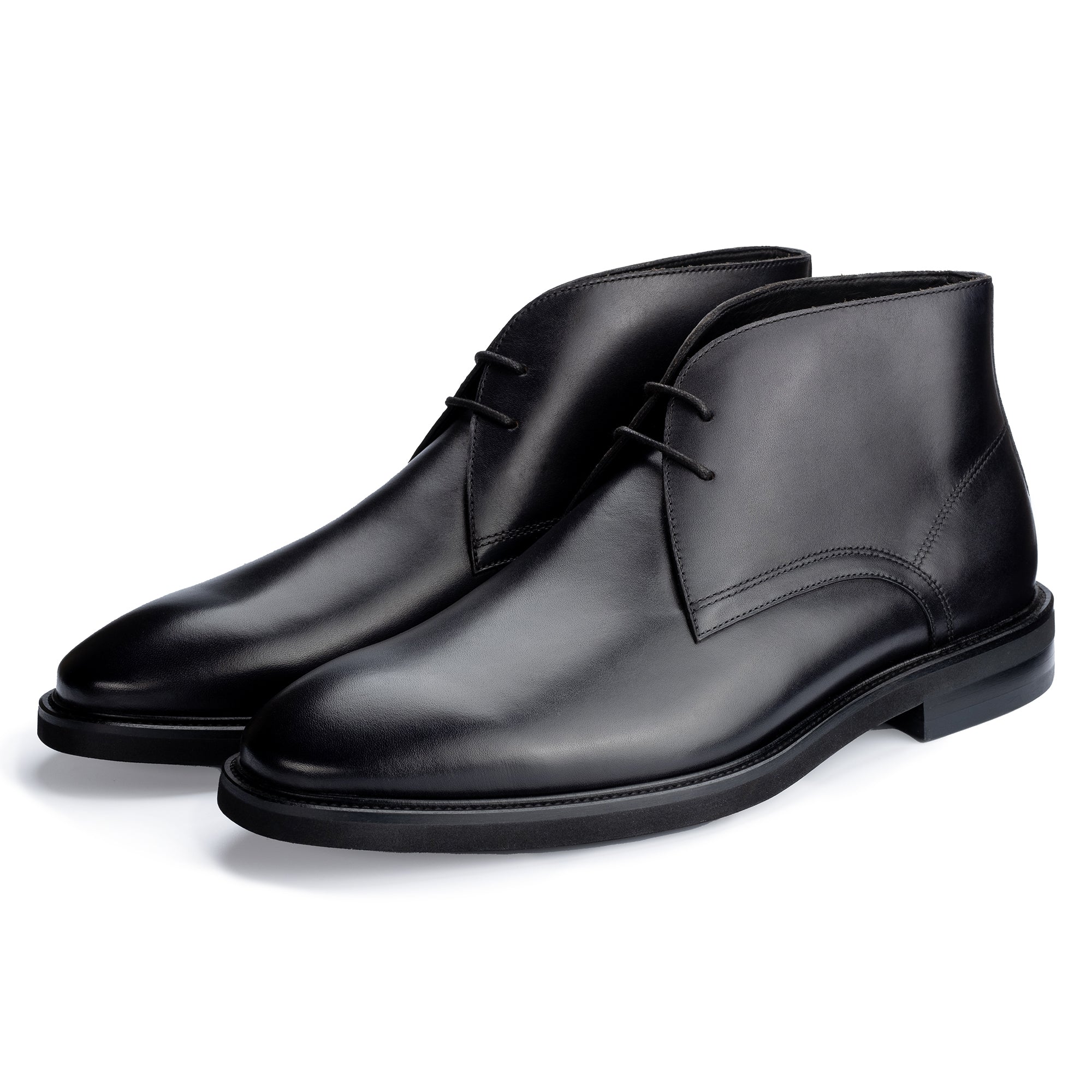
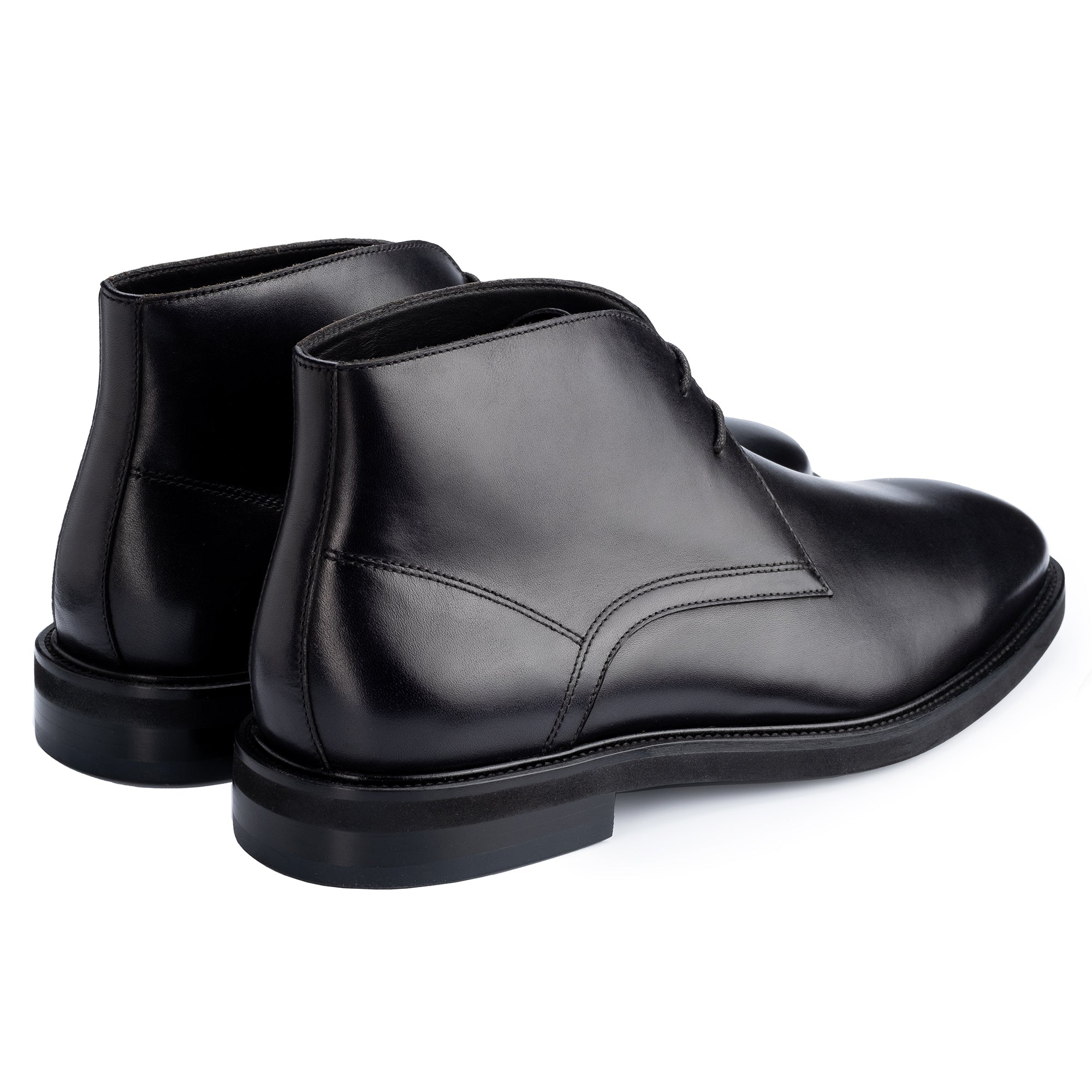
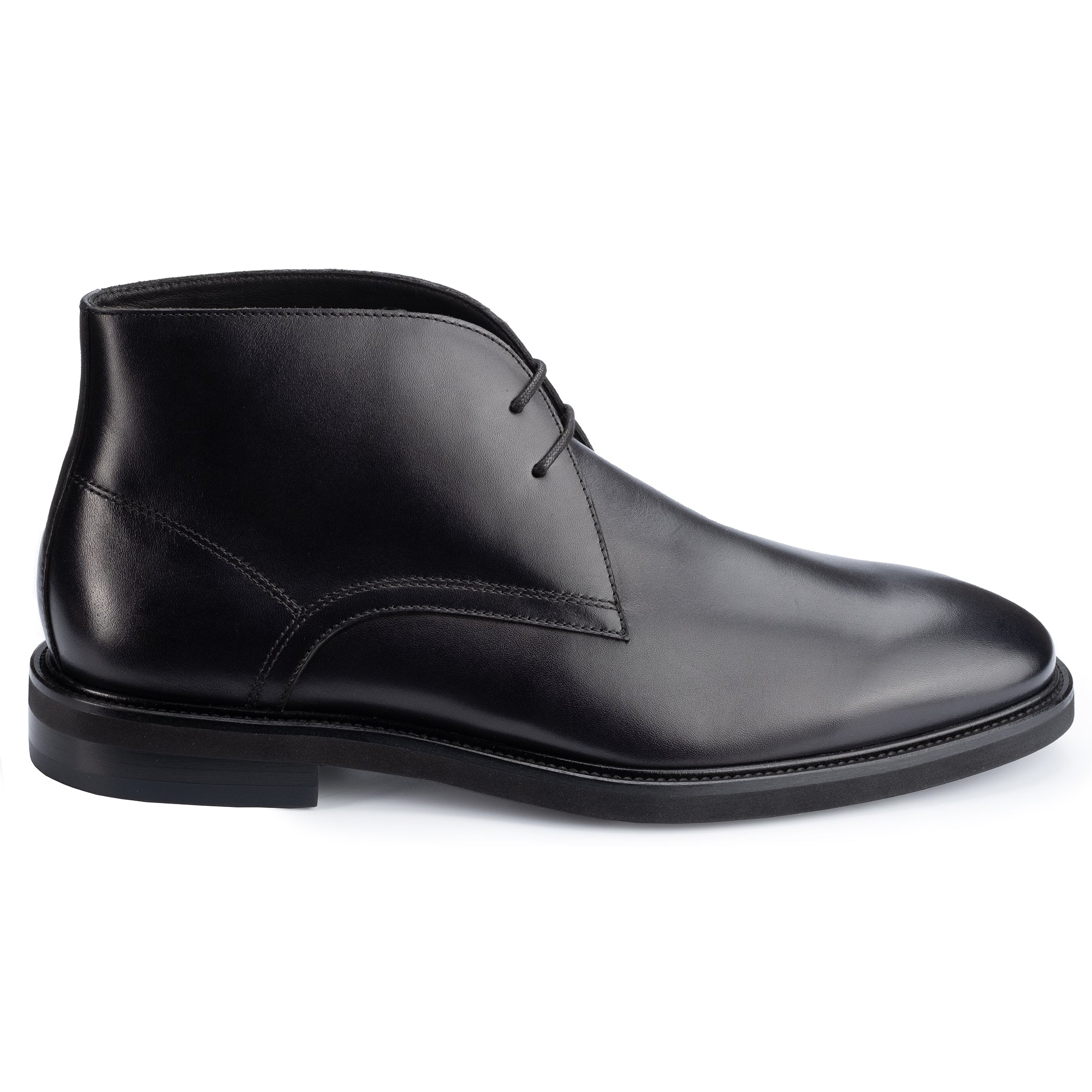
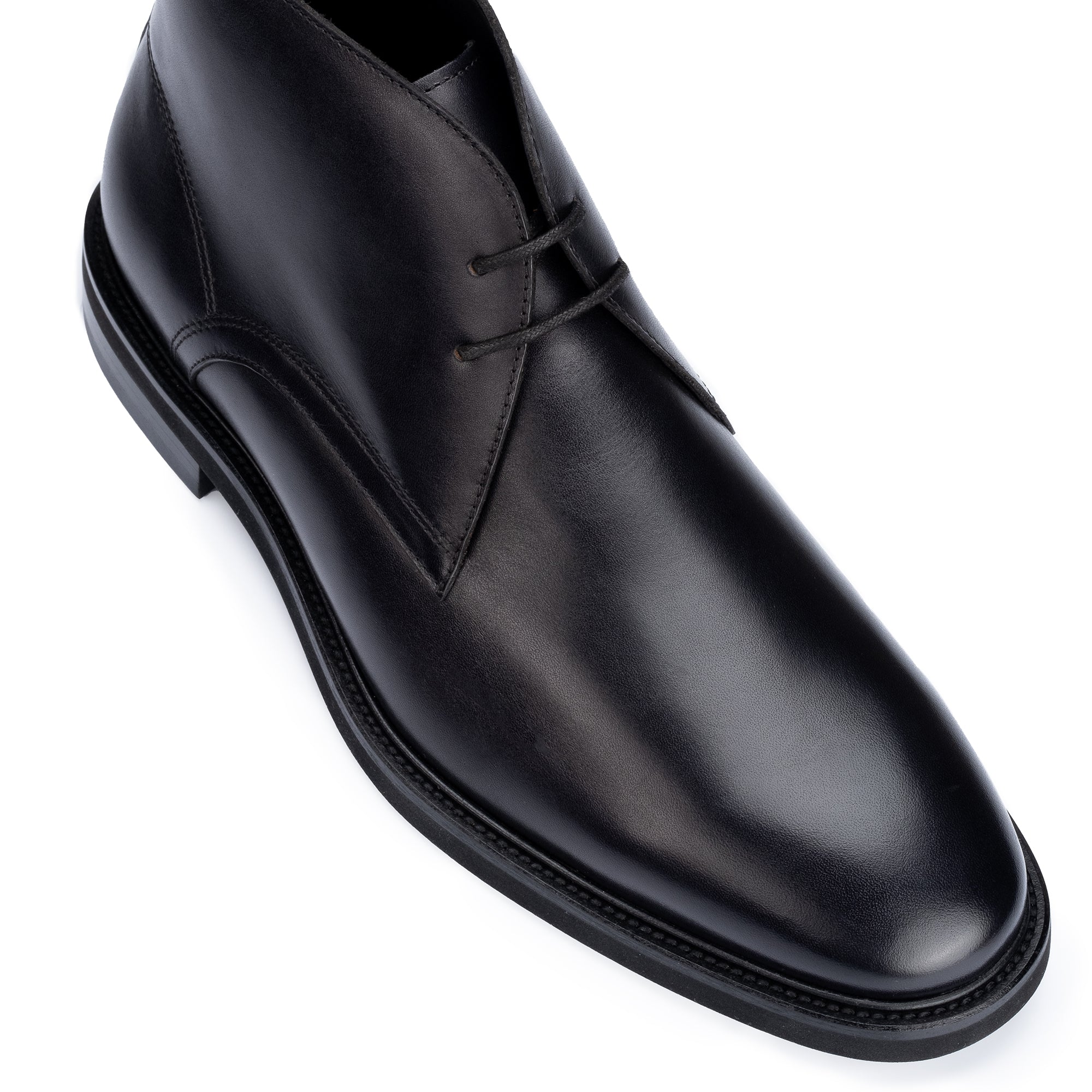
The Castle Chukka Boot, in black or brown leather, is built for exactly this kind of wear. Pair it with slim chinos, corduroy trousers, or dark jeans for a smart-casual look that handles a cold commute without appearing casual.
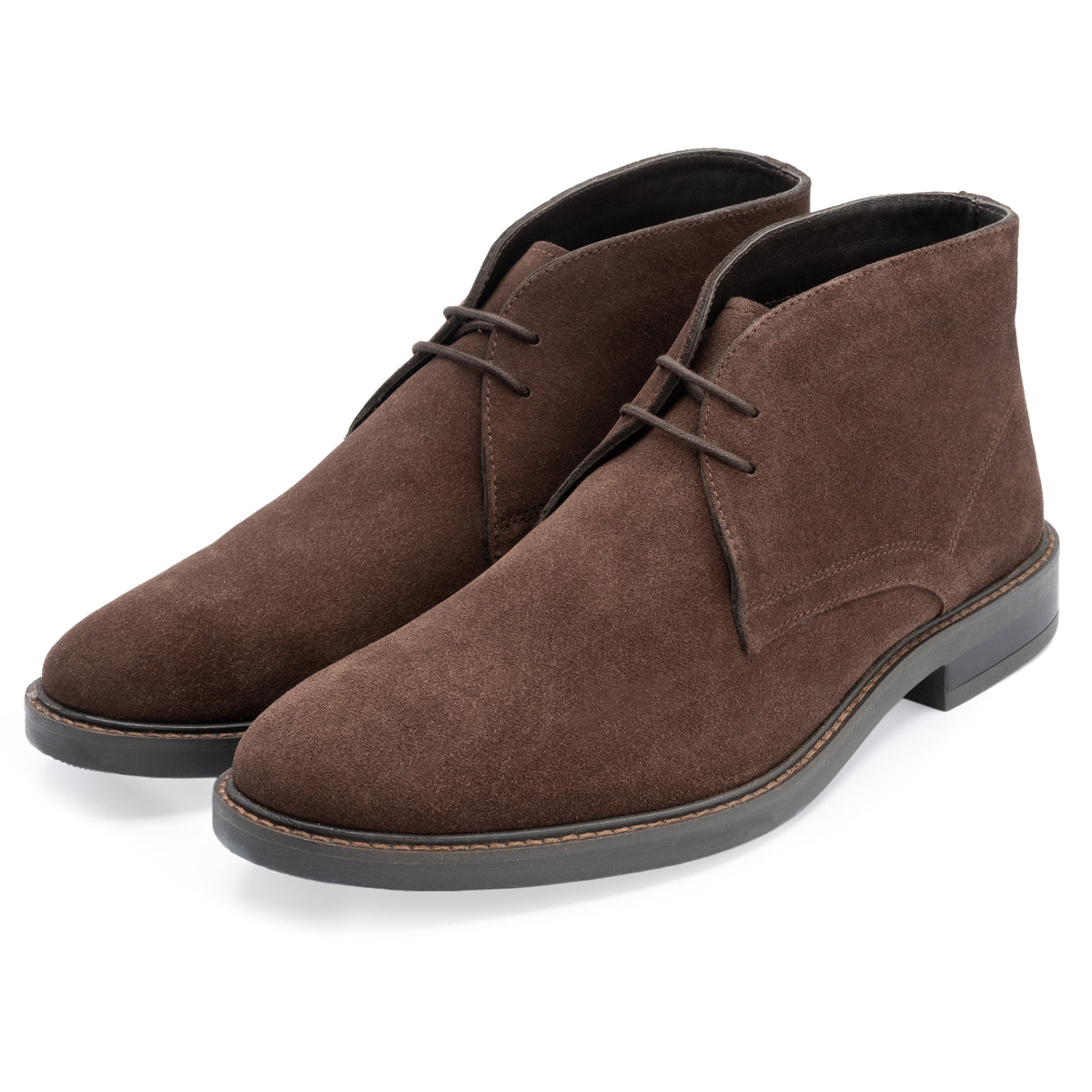
The Wessex Chukka Suede Boot, available in brown or cognac, is the stronger option for weekends when conditions are cold but dry. Suede chukkas pair particularly well with heavy-weight wool trousers and knitwear — a natural complement to the texture of the upper.
Chukka boots are best worn with trousers that sit just above the ankle — slim or cropped cuts that expose the boot's silhouette rather than burying it under excess fabric.
Are Brogue Boots Worth Wearing in Winter?
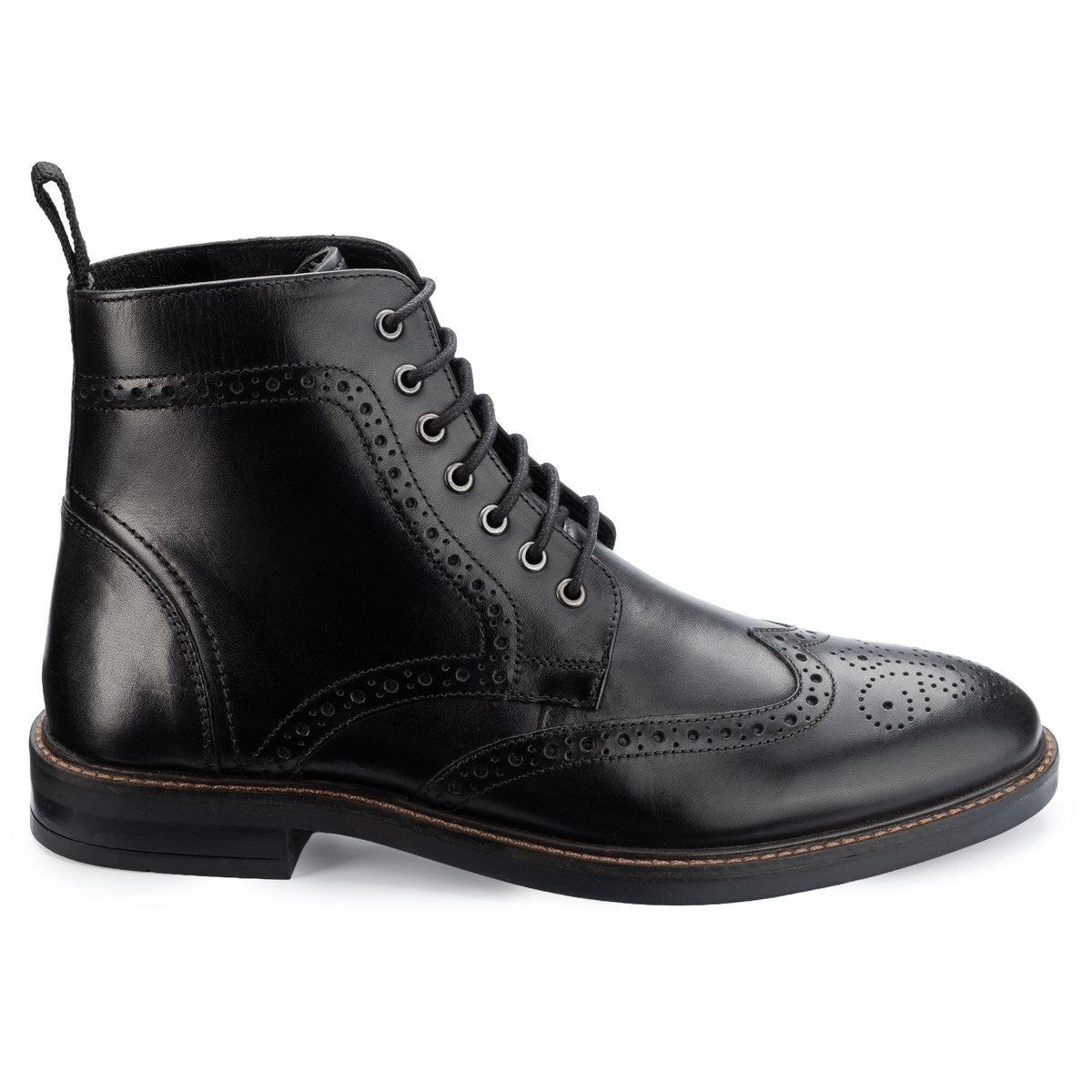
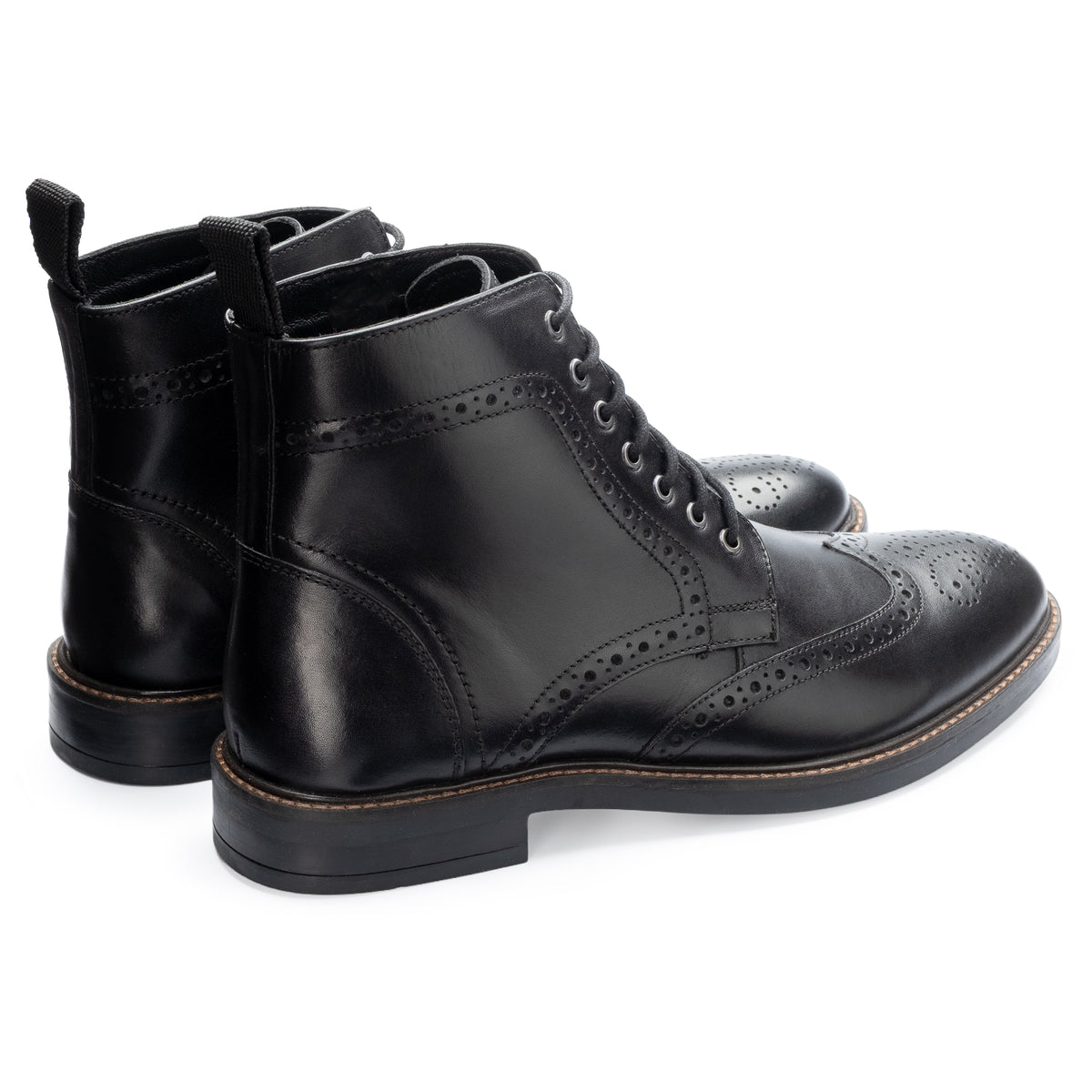
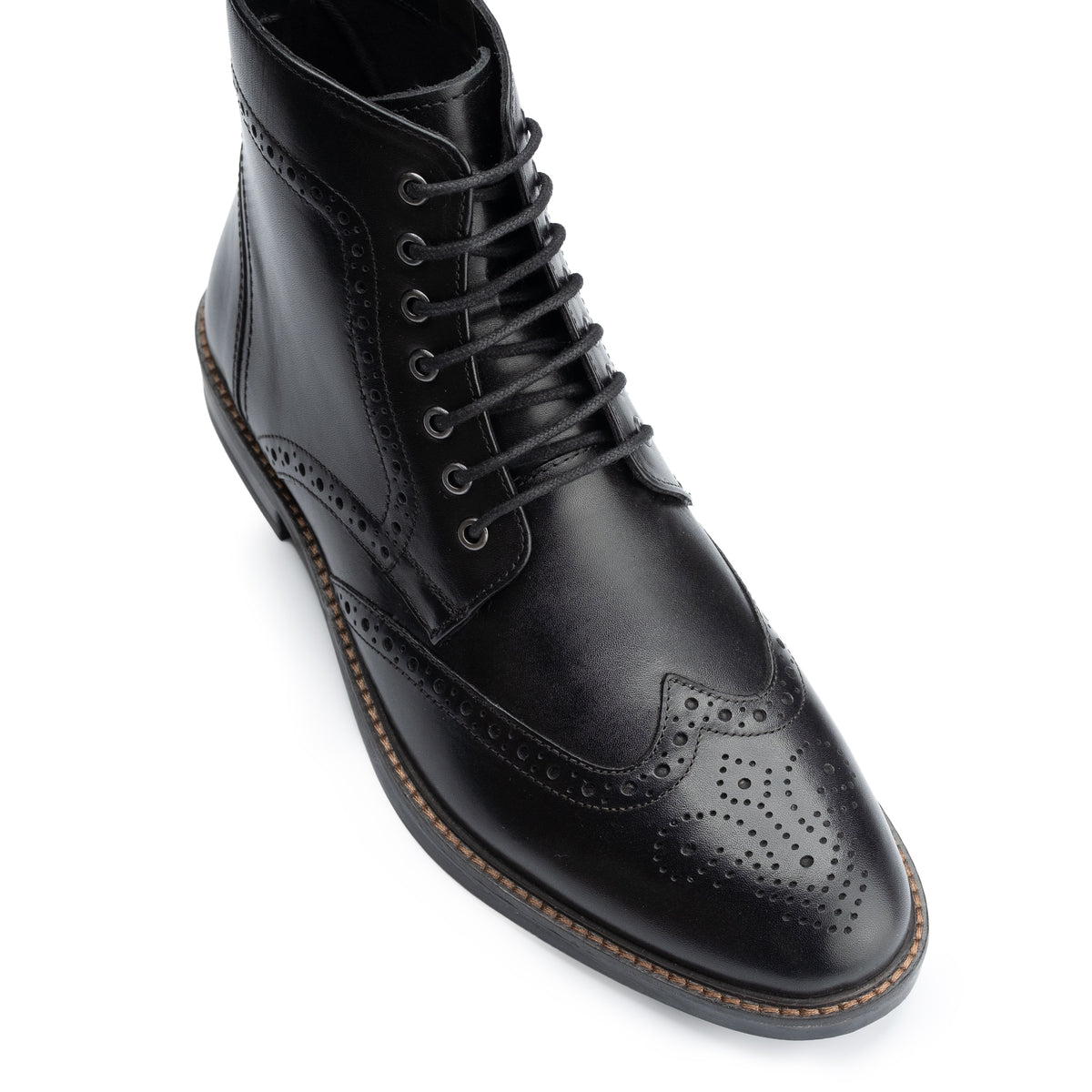
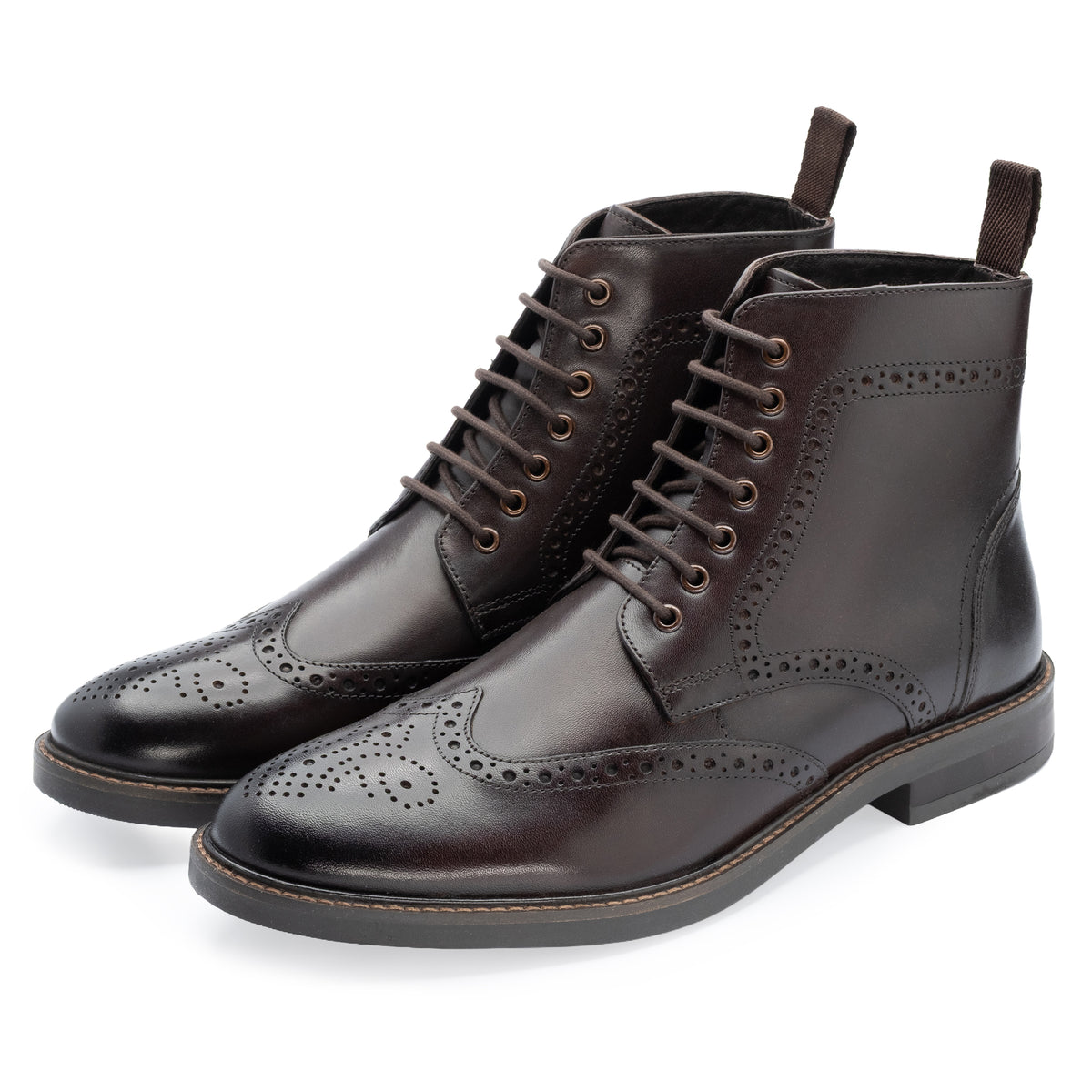
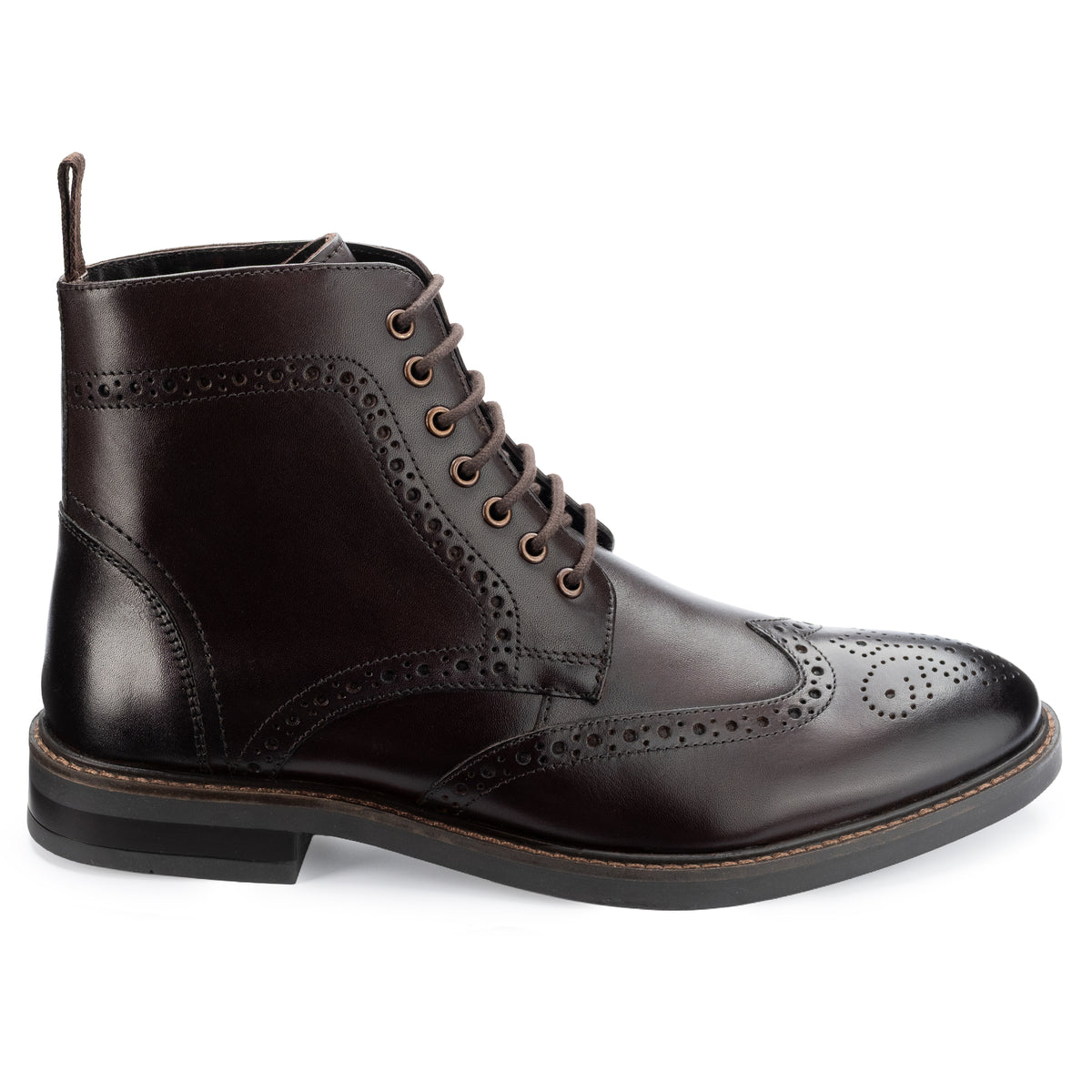
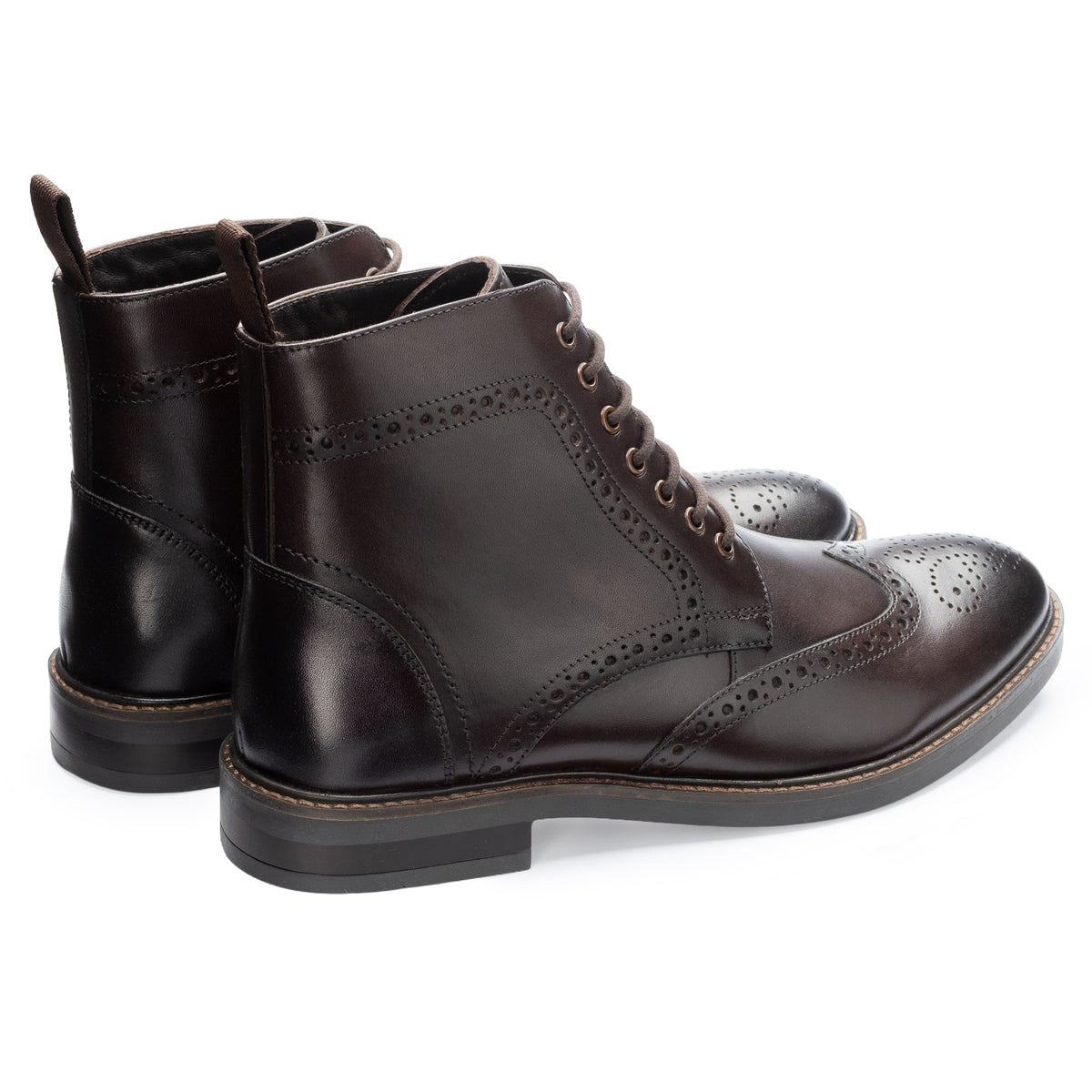
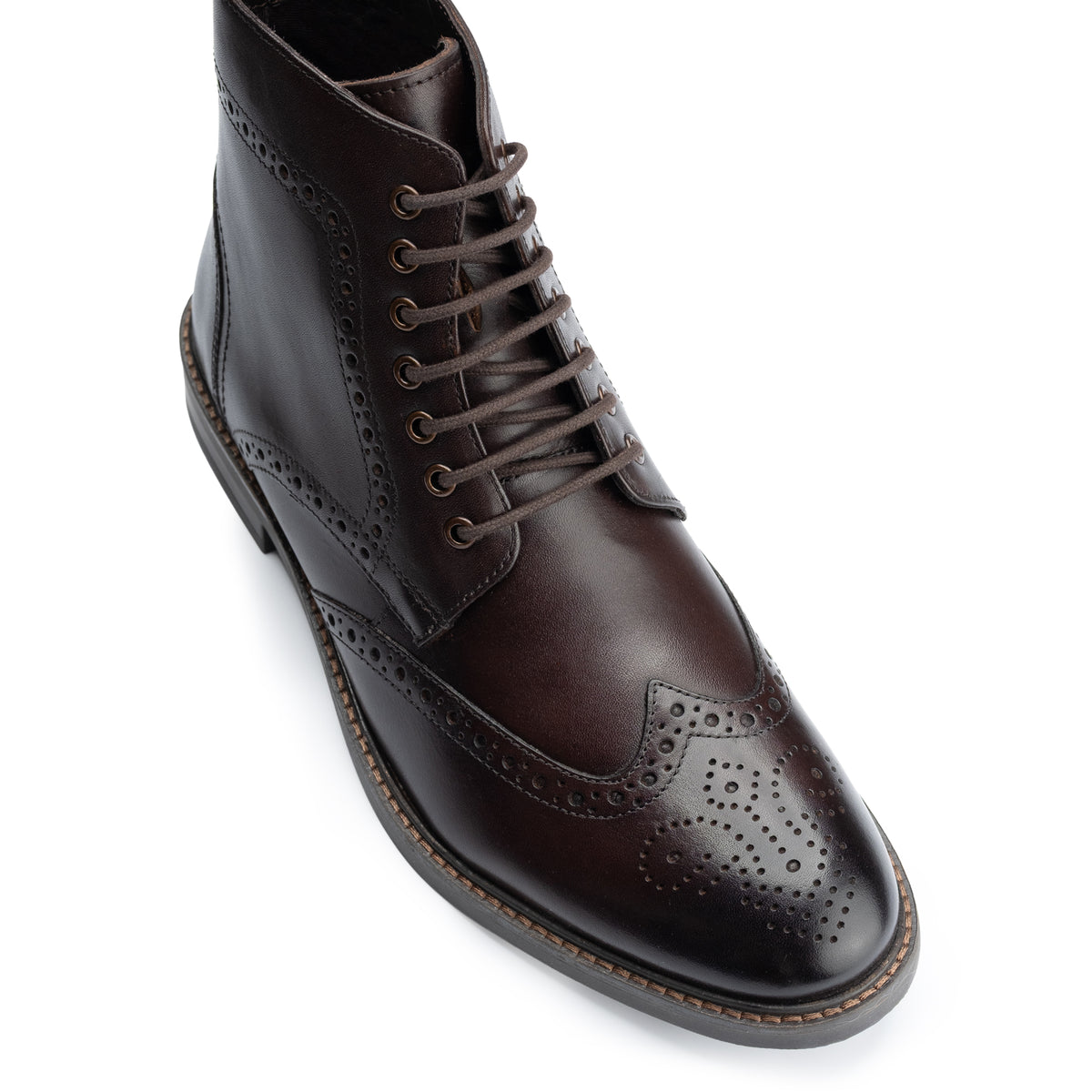
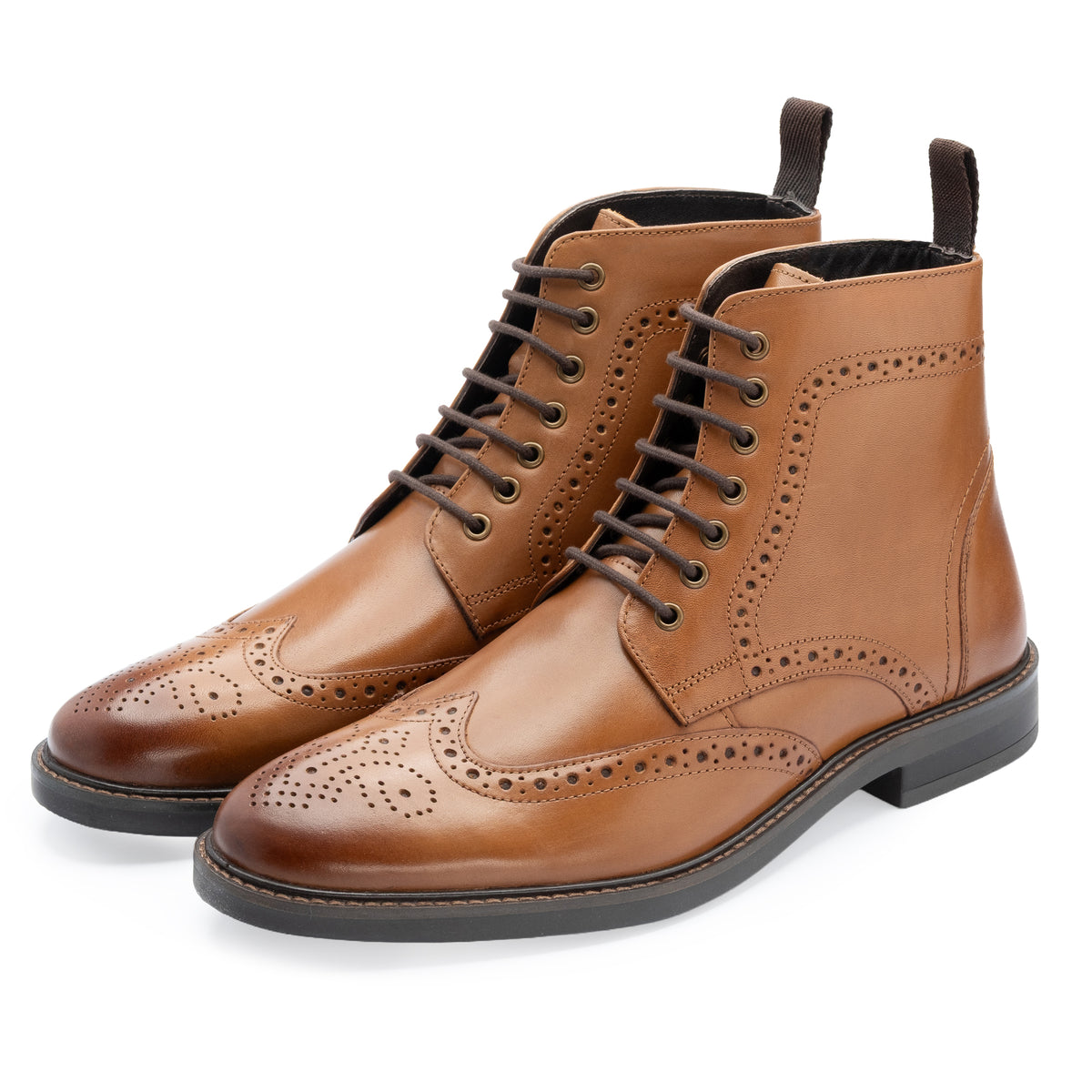
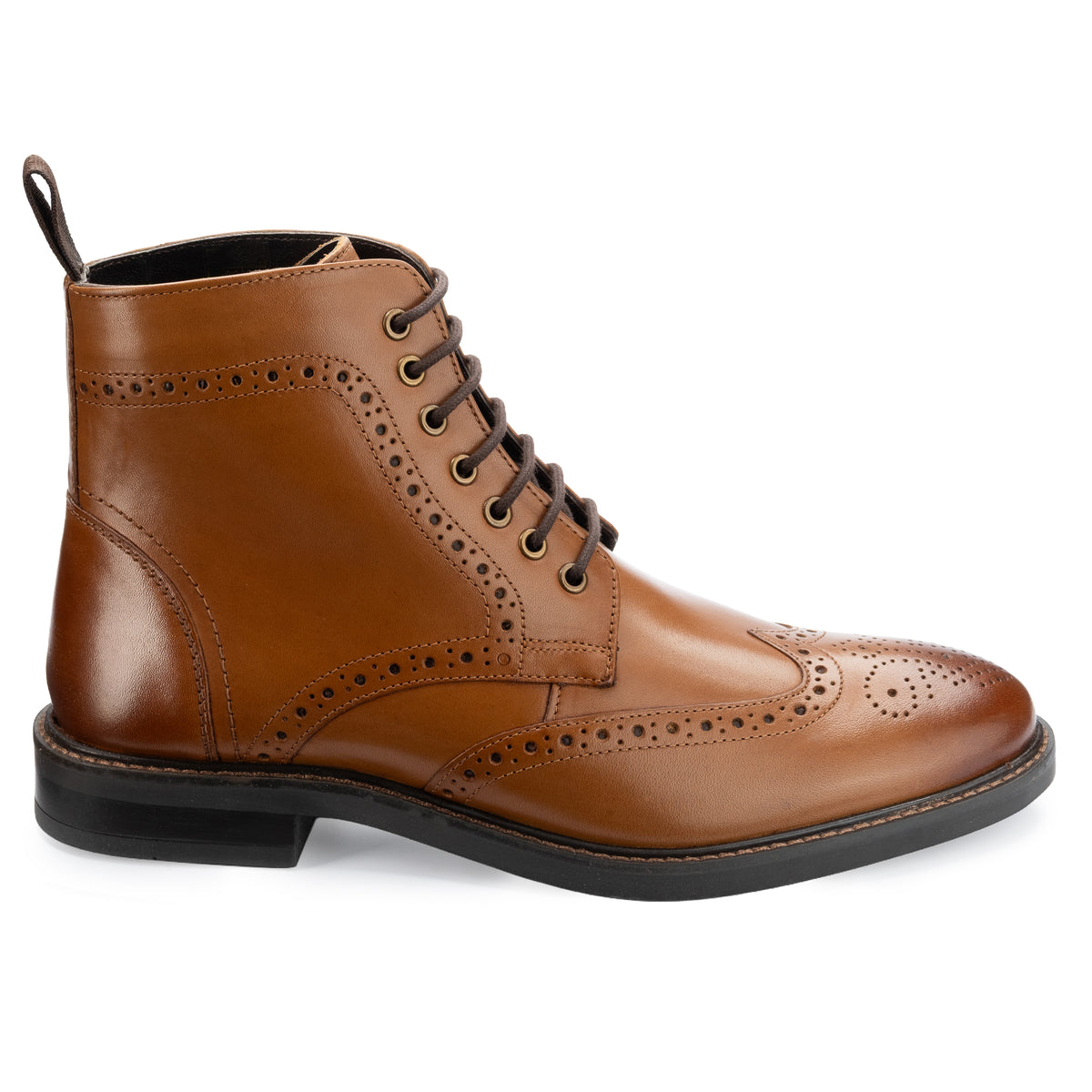
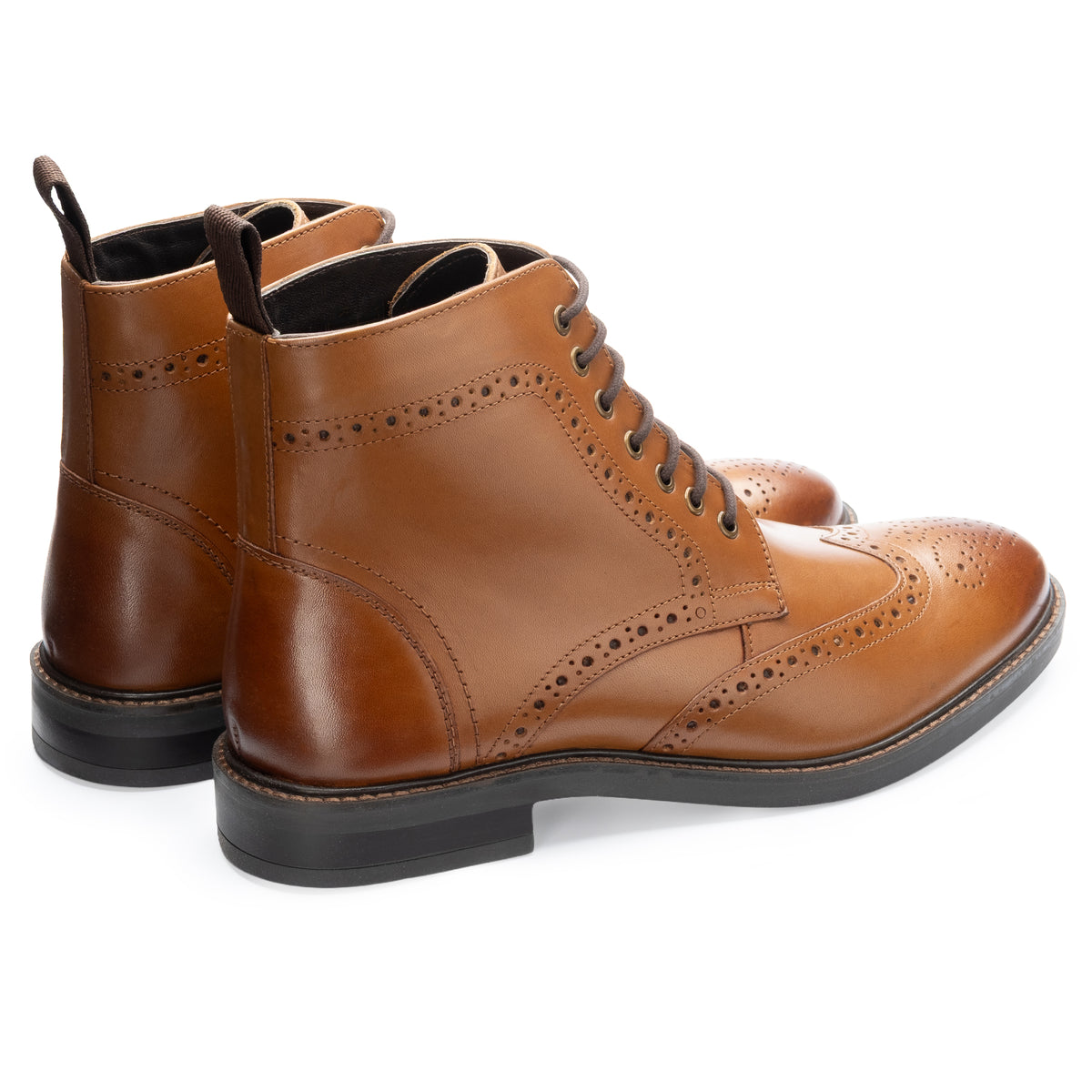
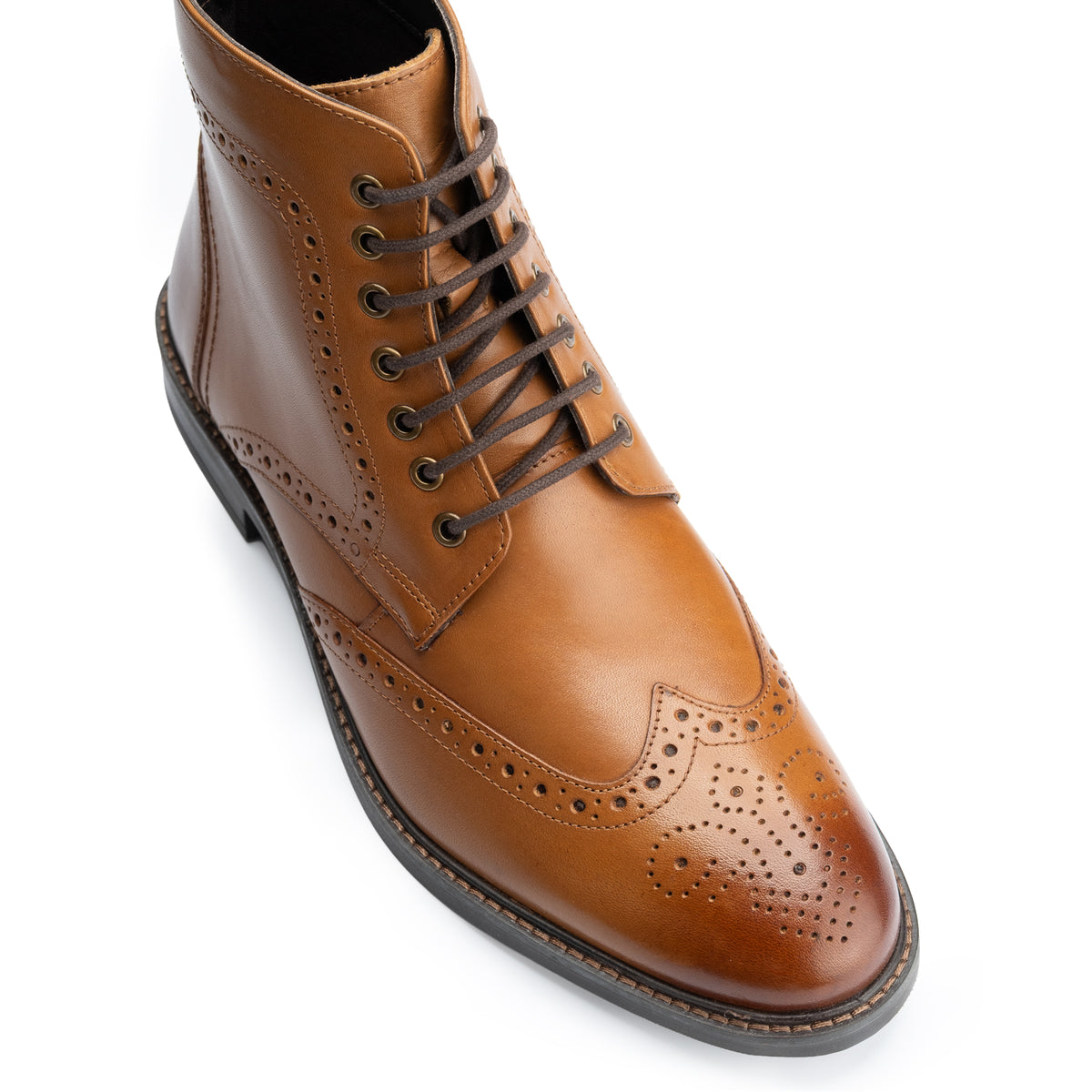
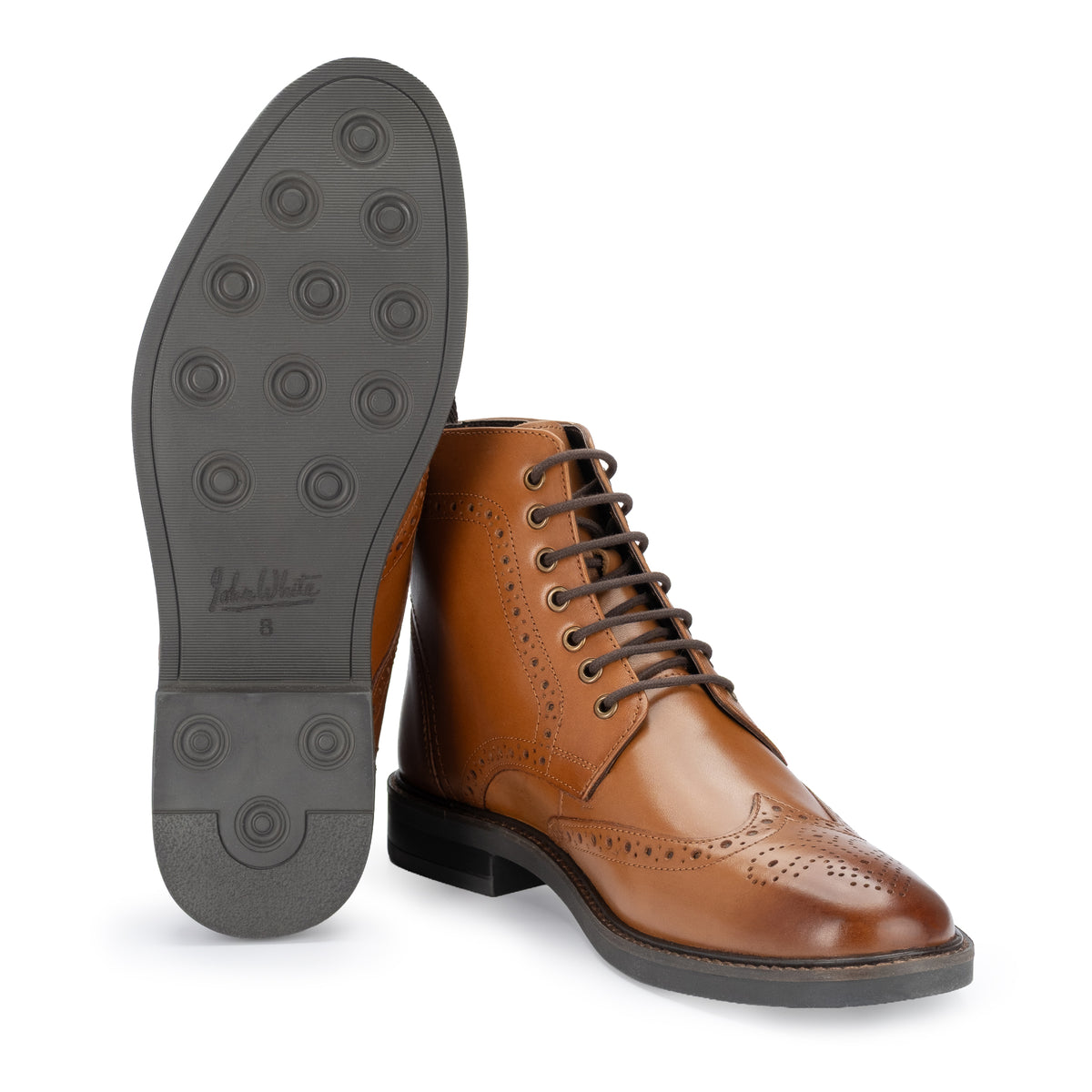
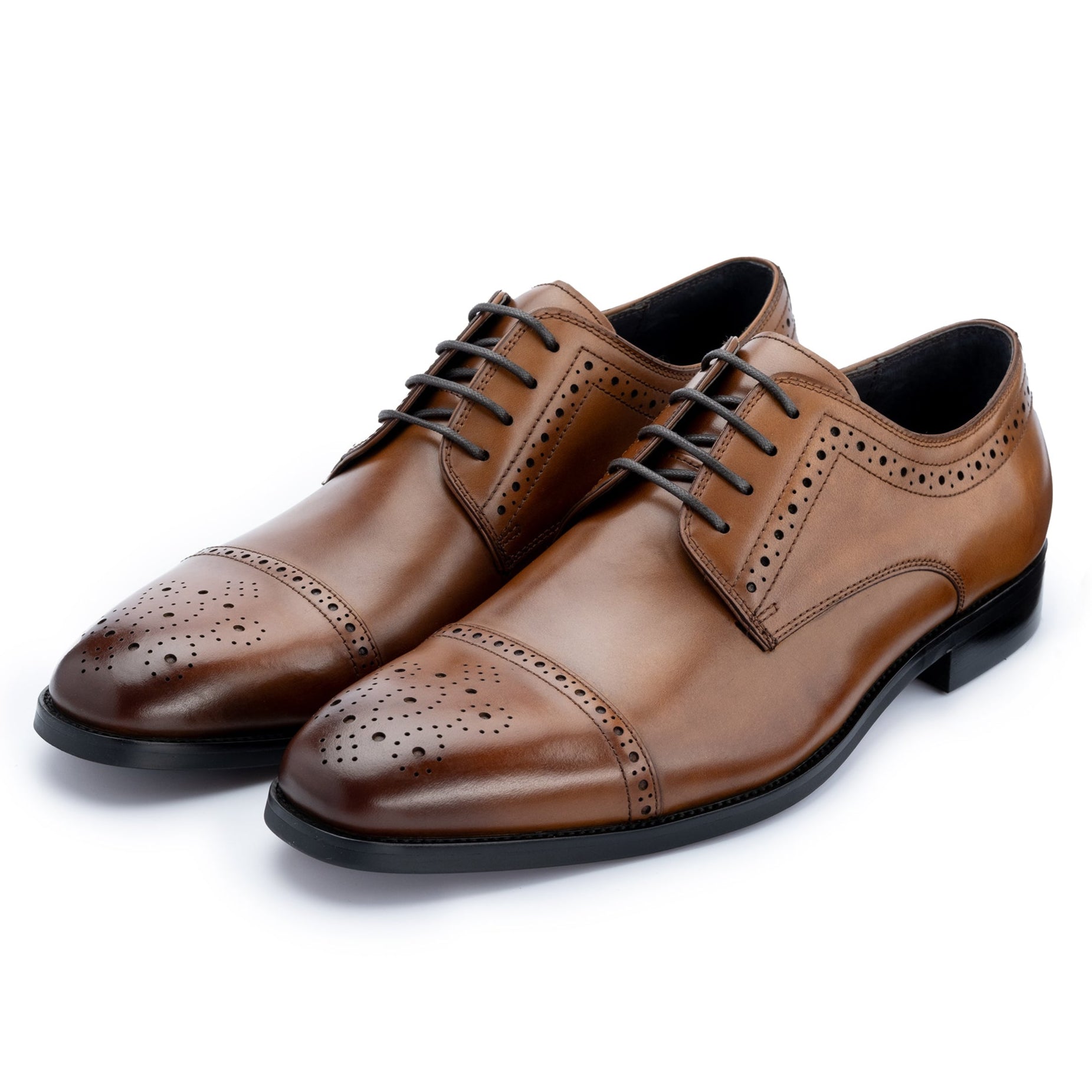
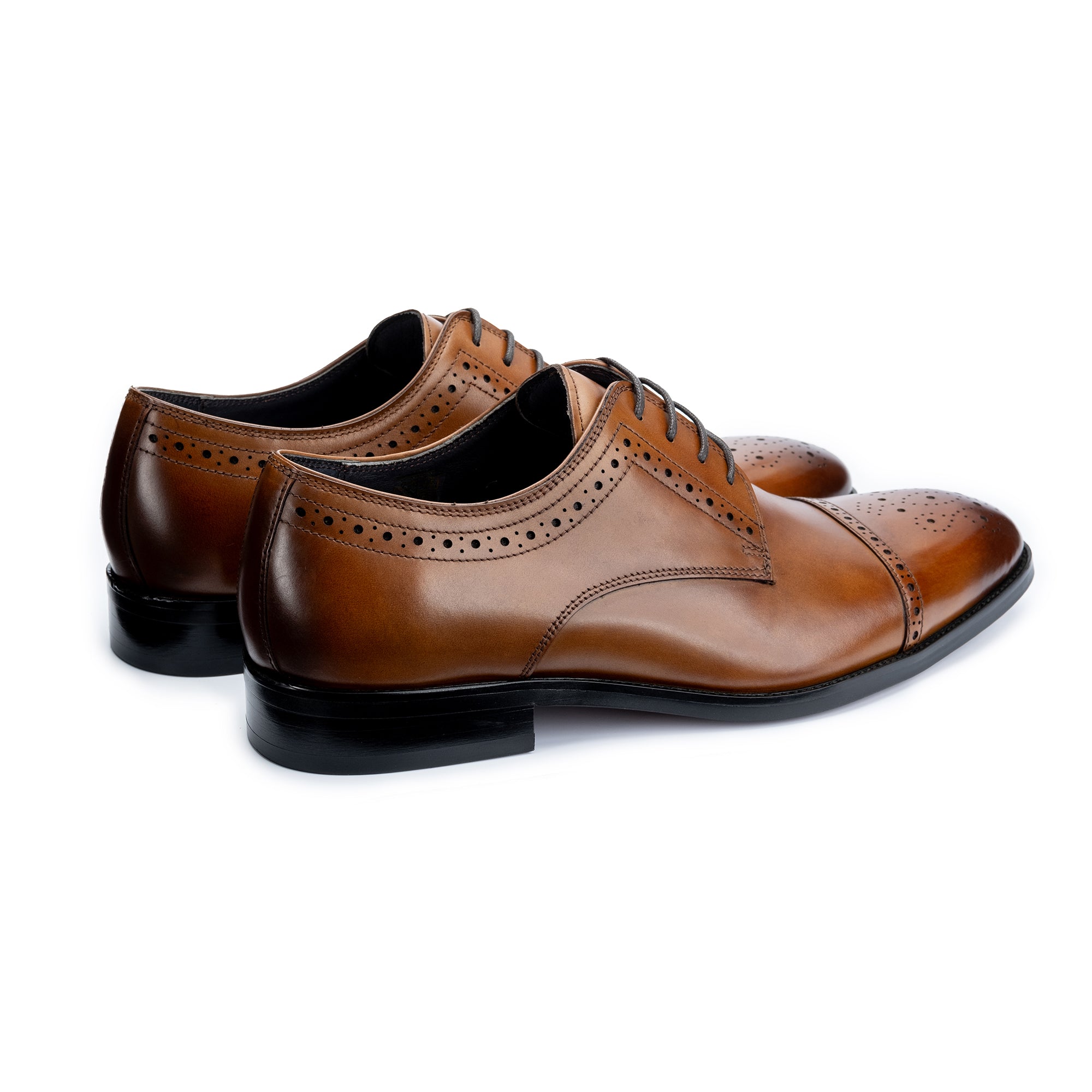
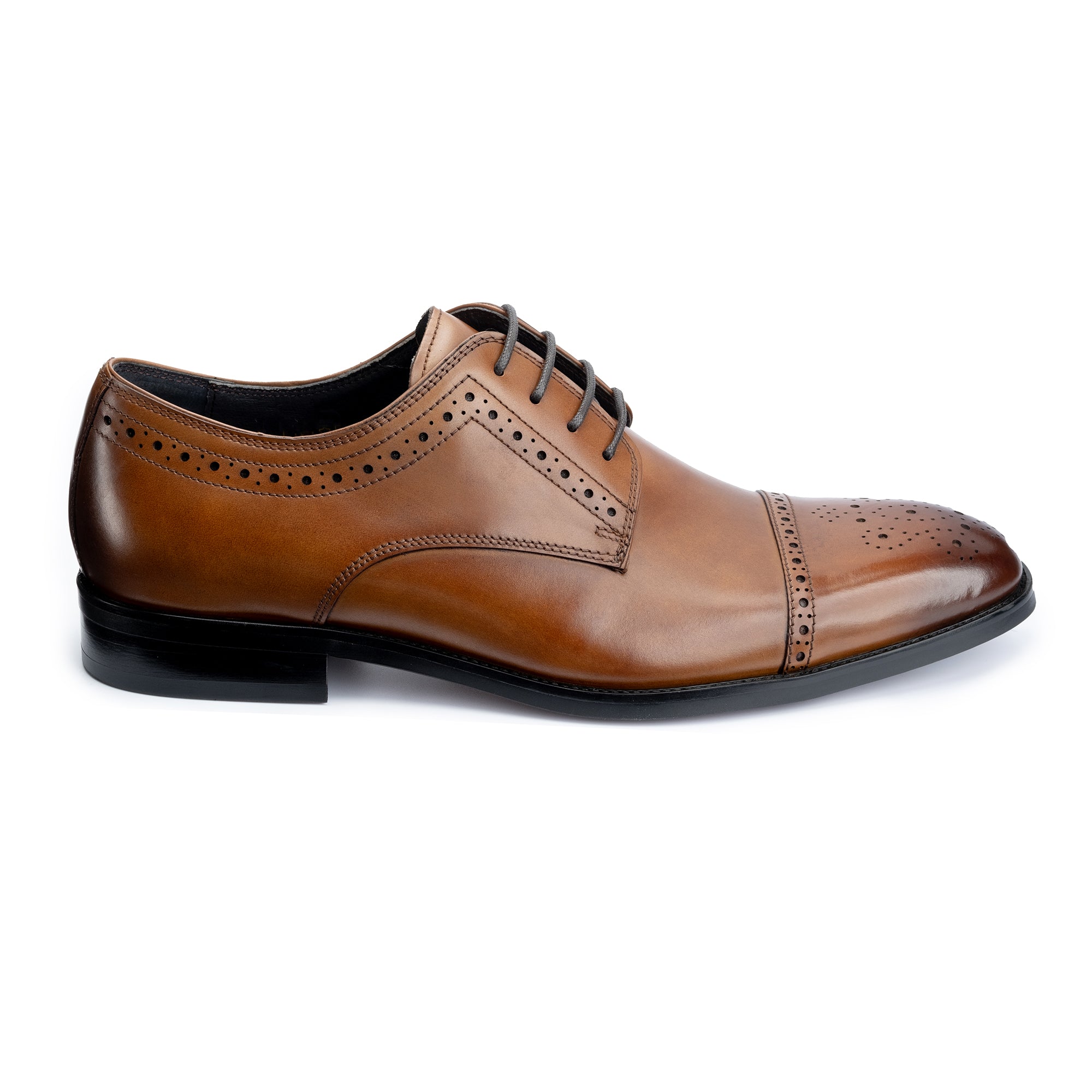
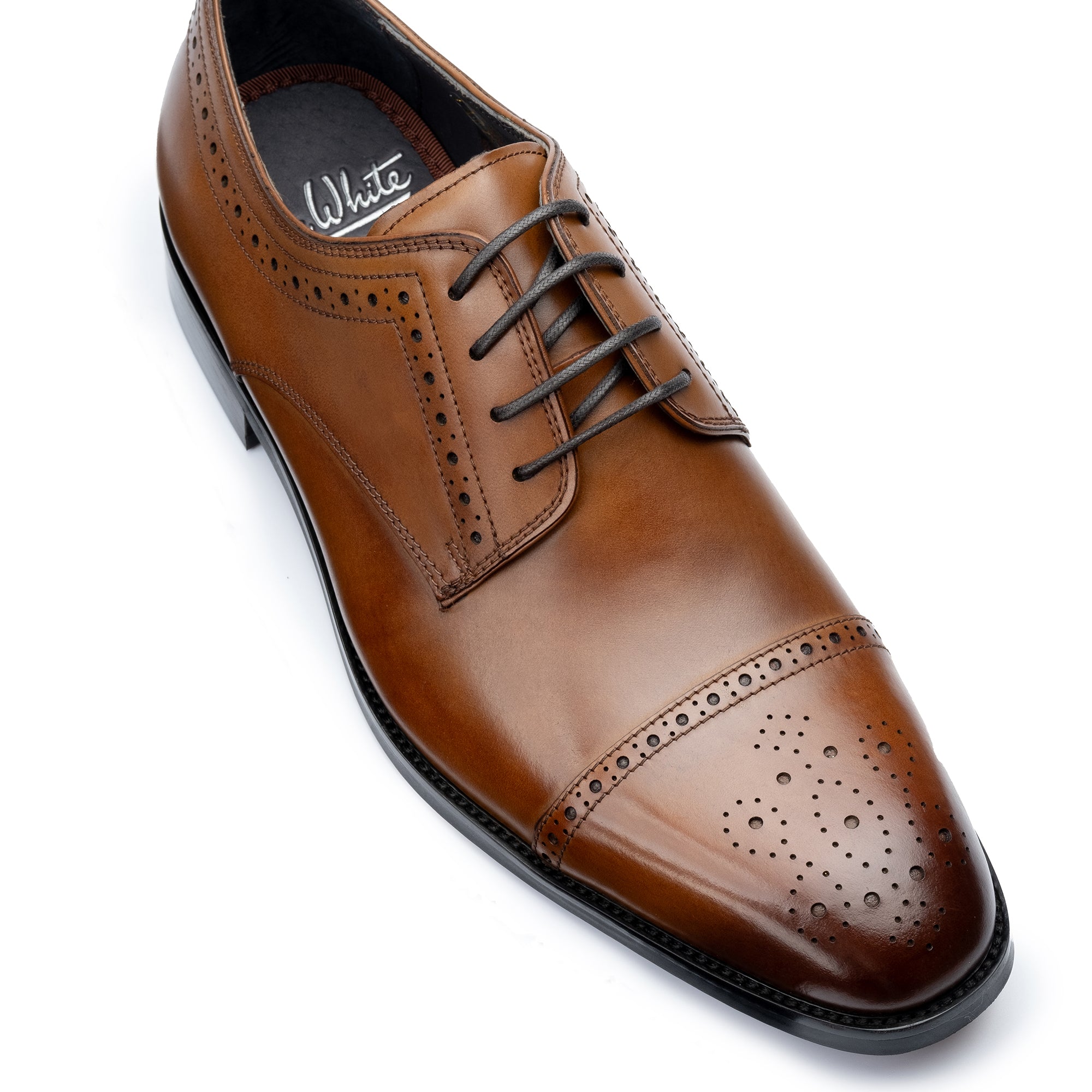
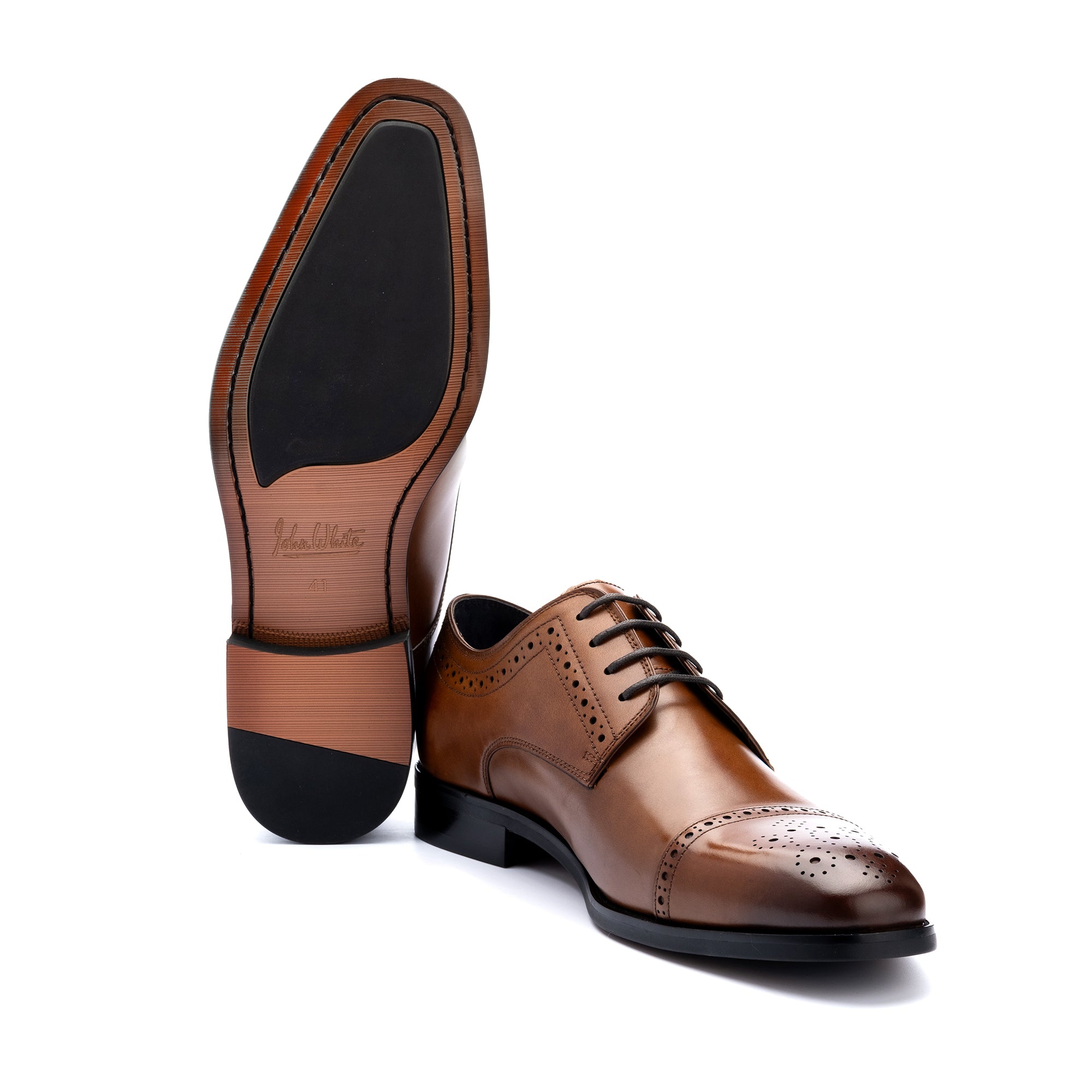
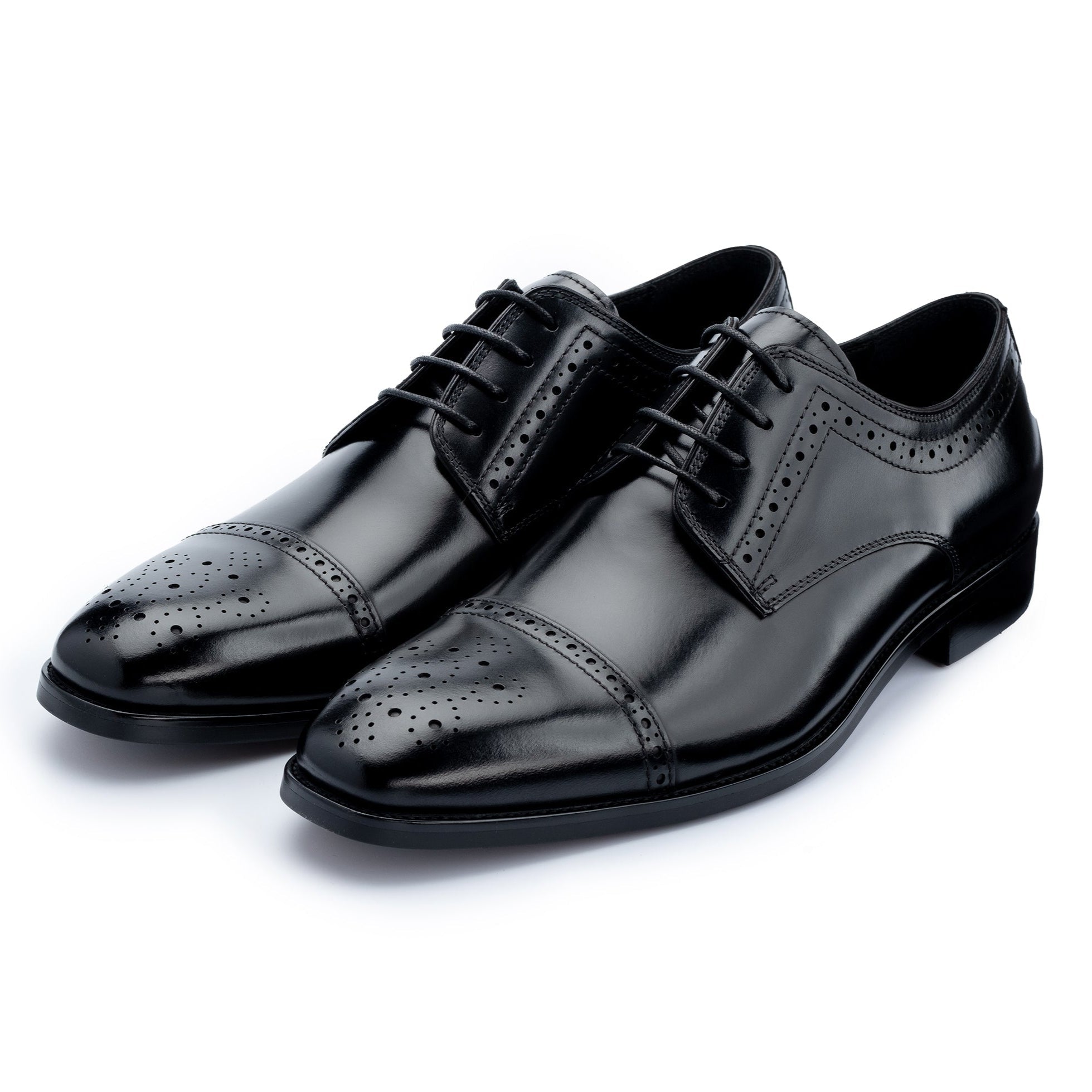
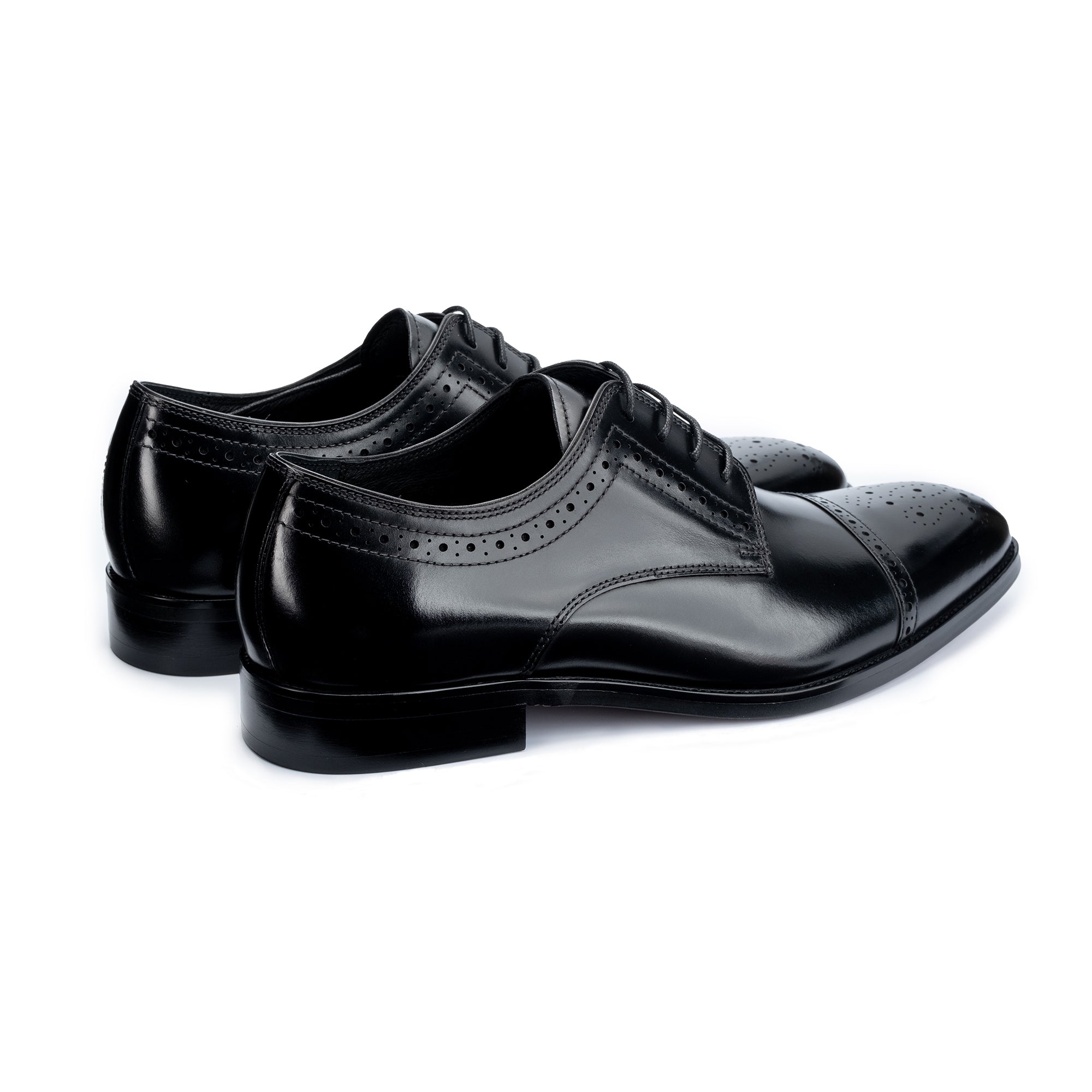
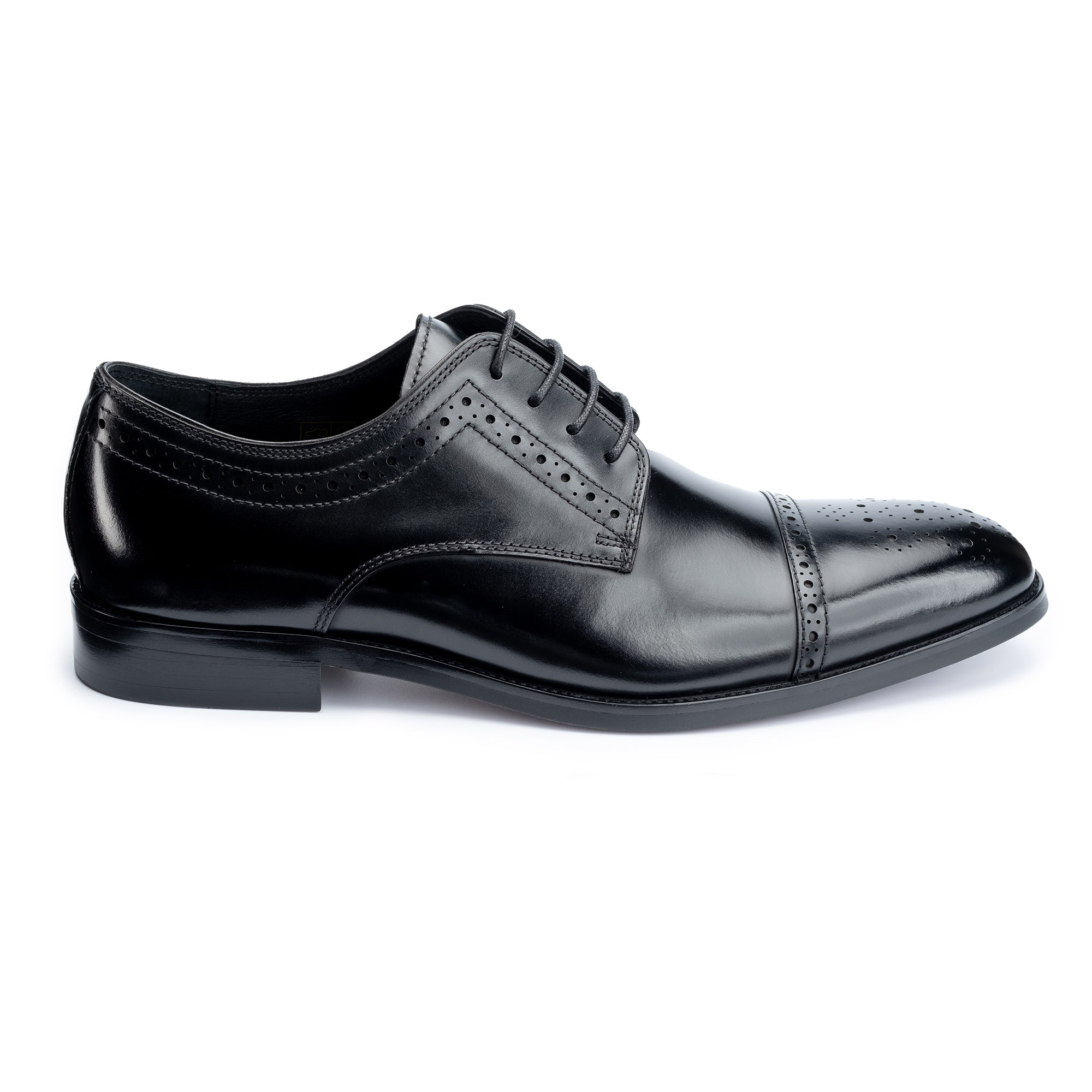
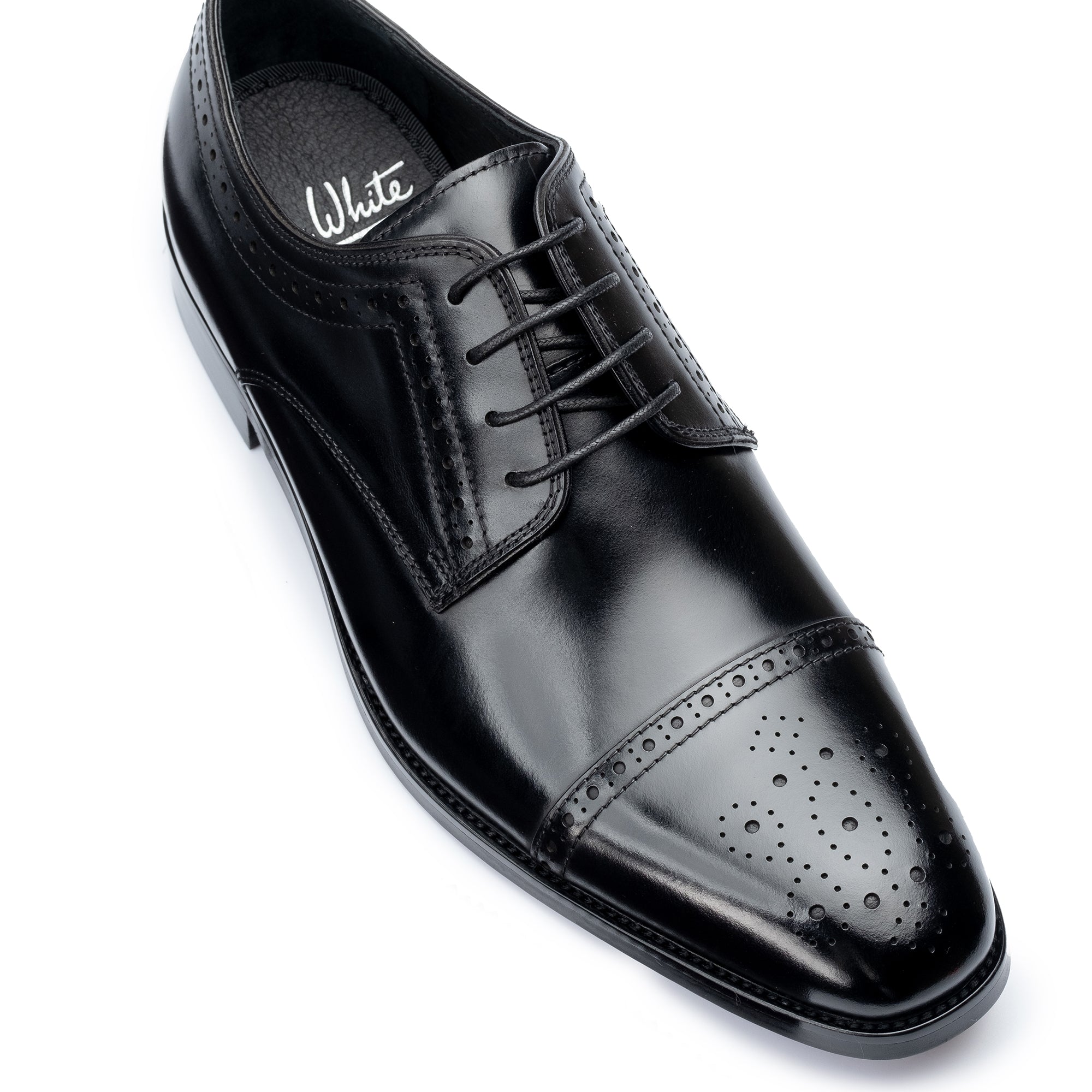
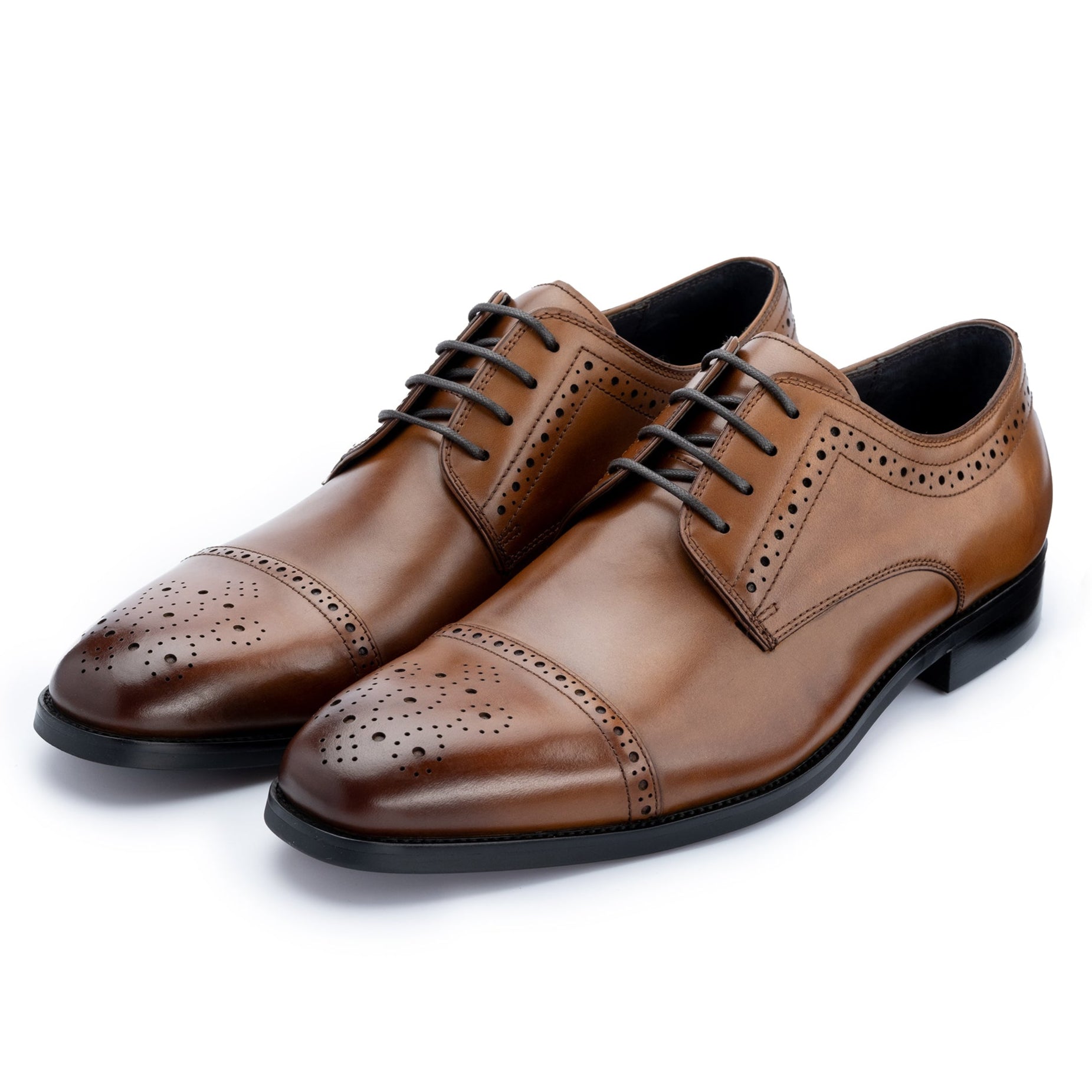
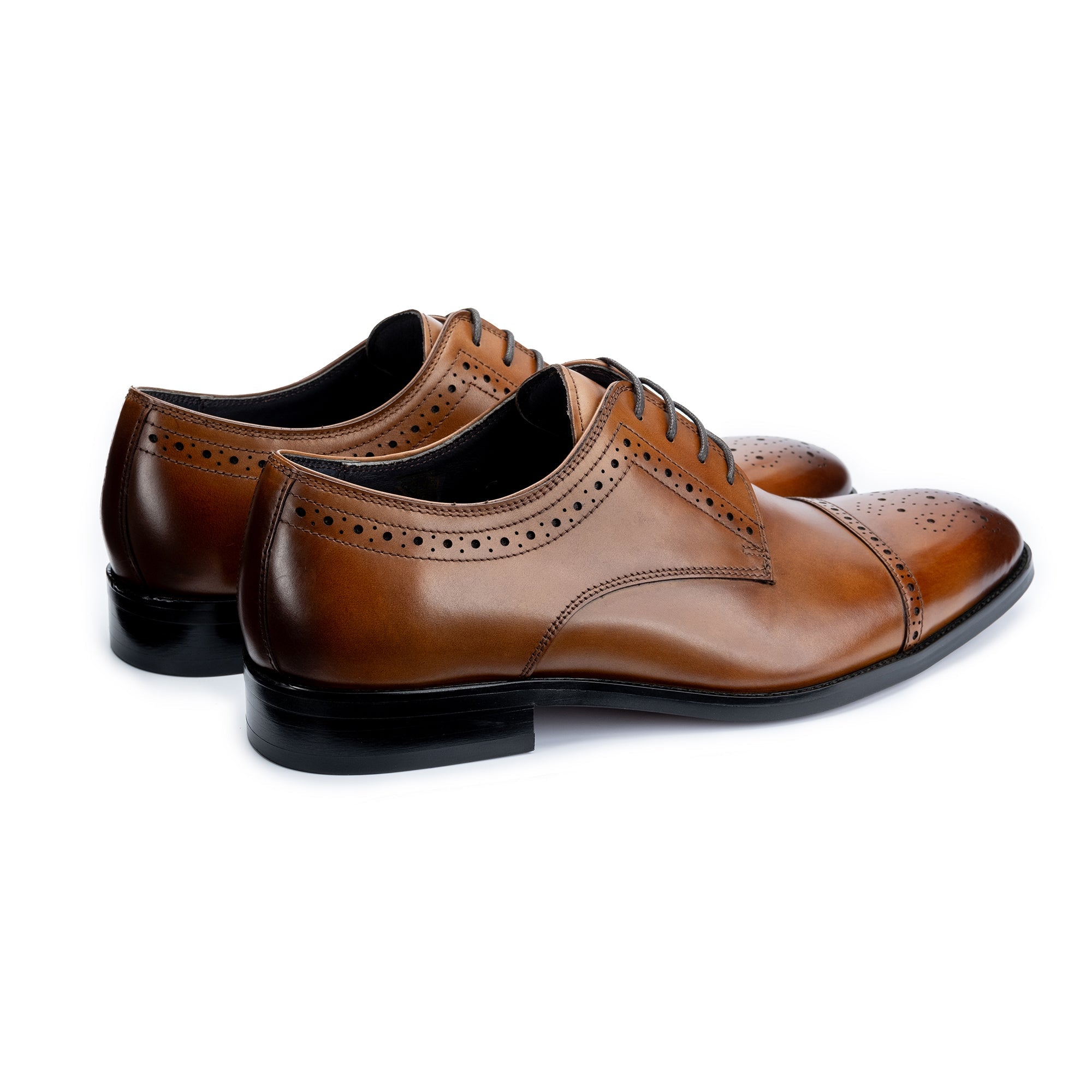
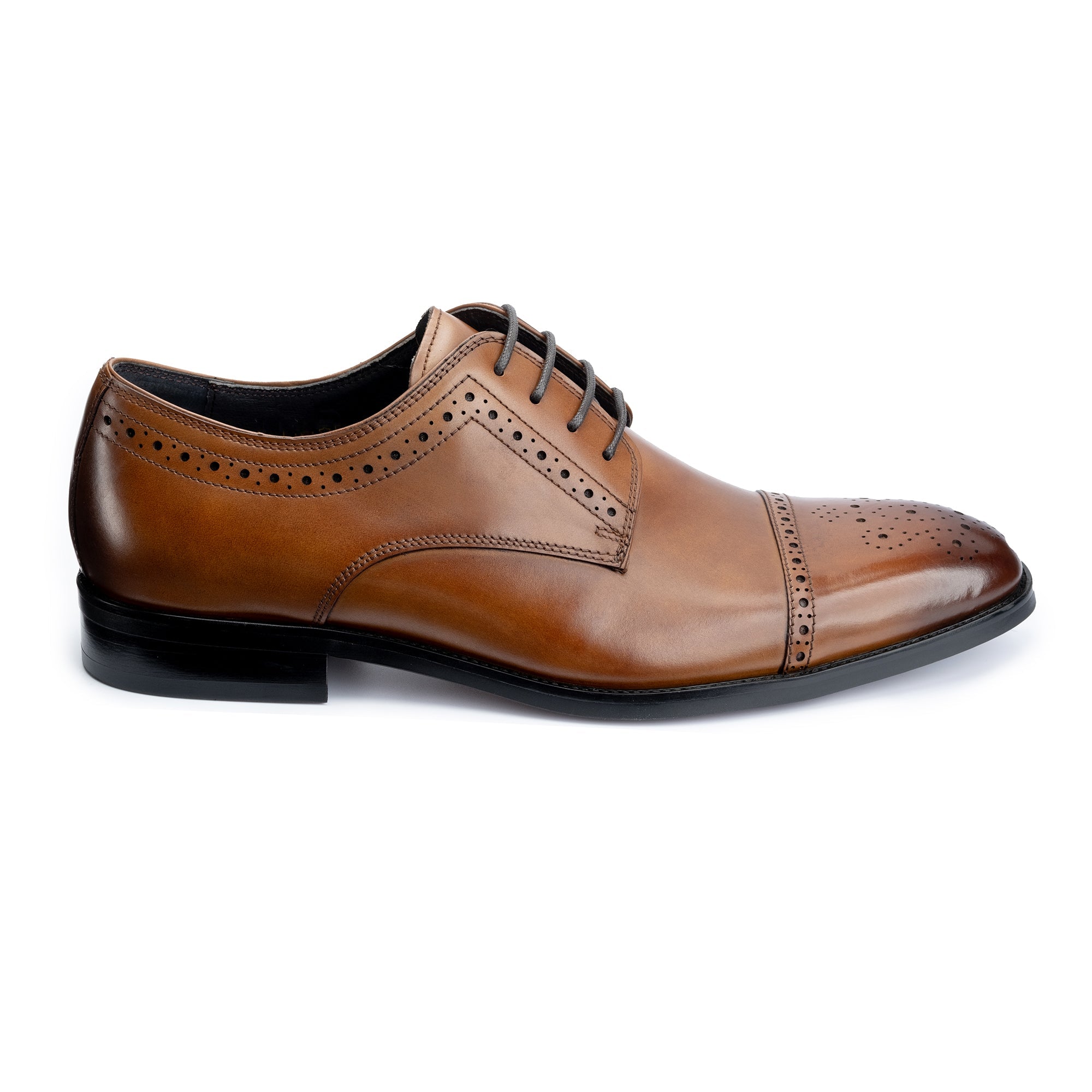
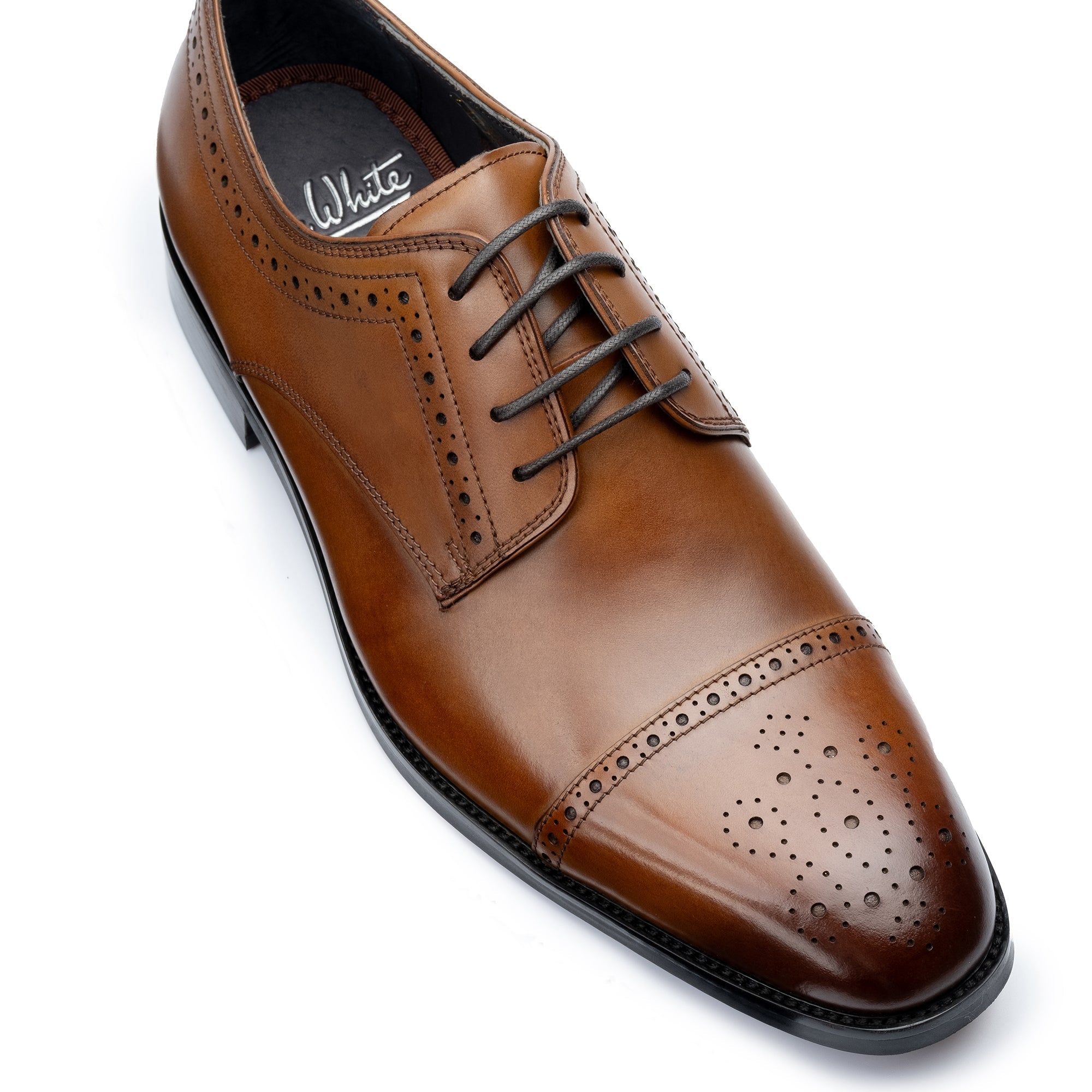
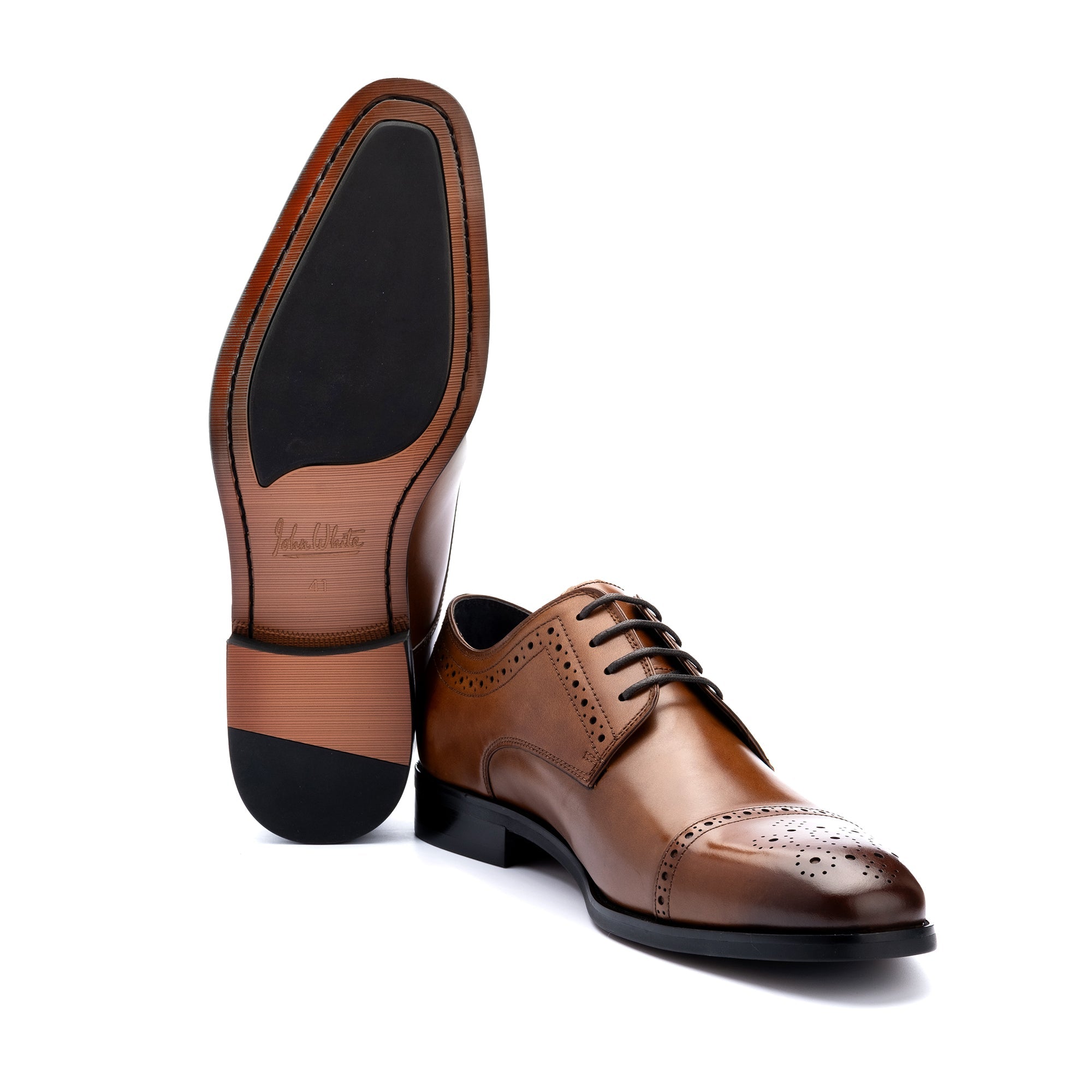
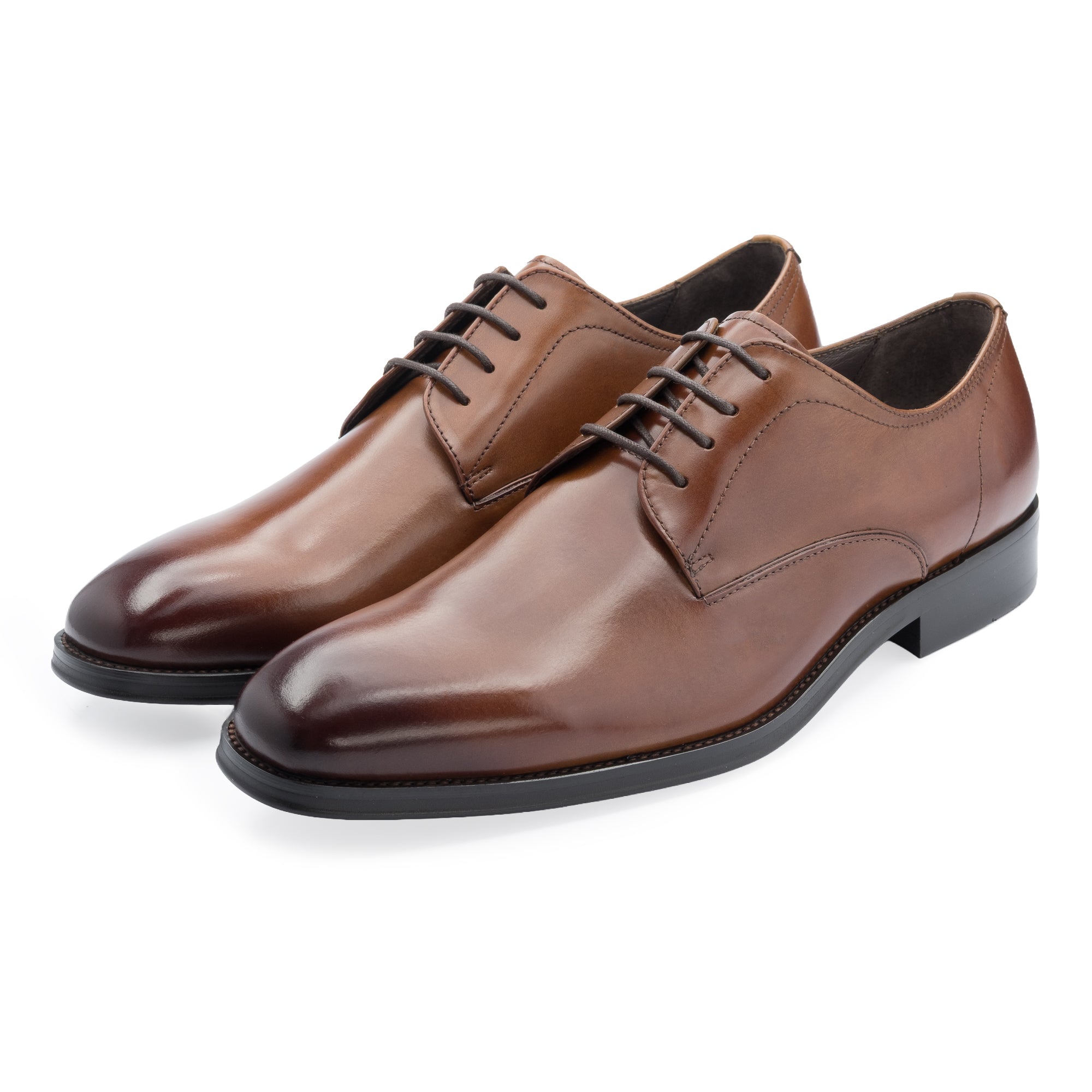
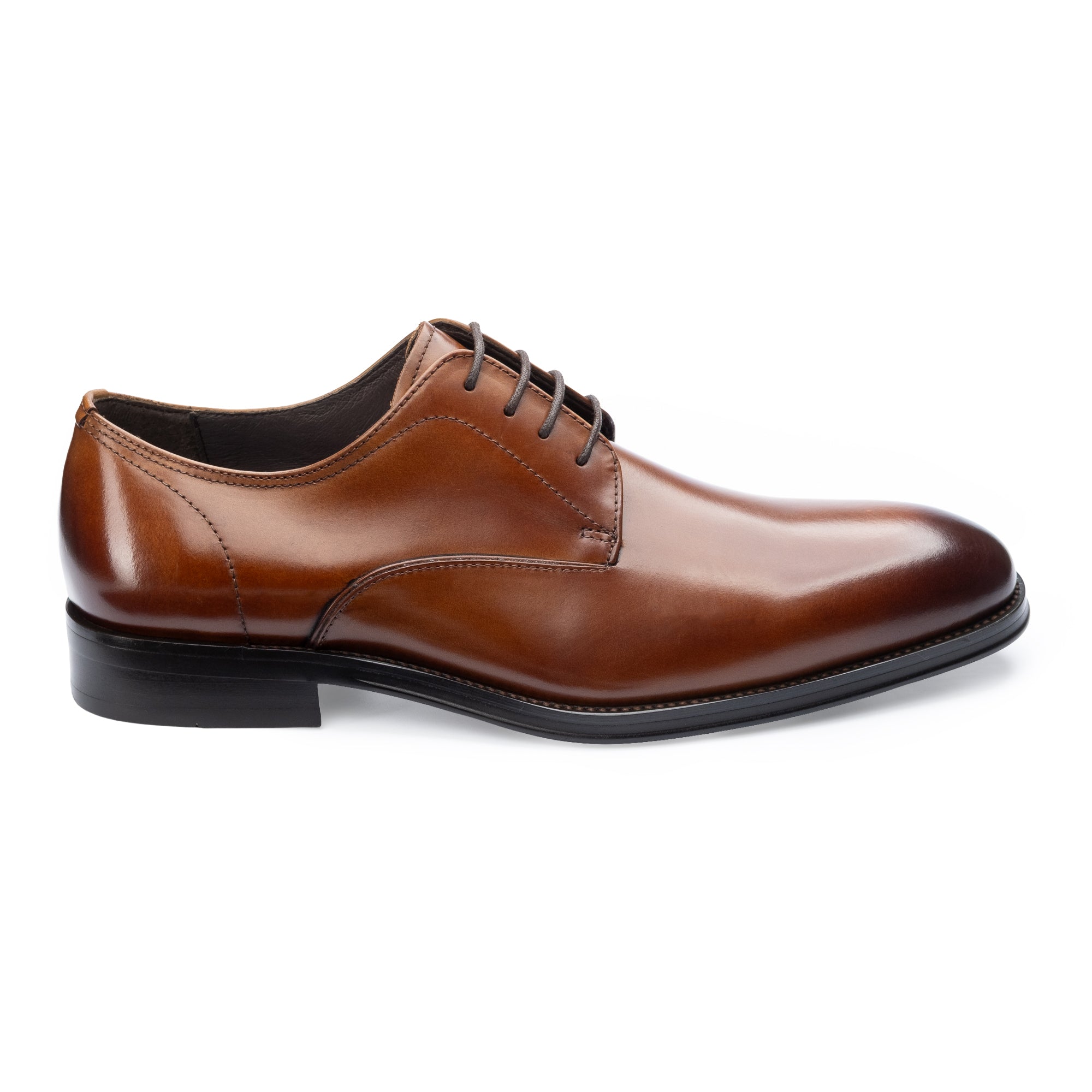
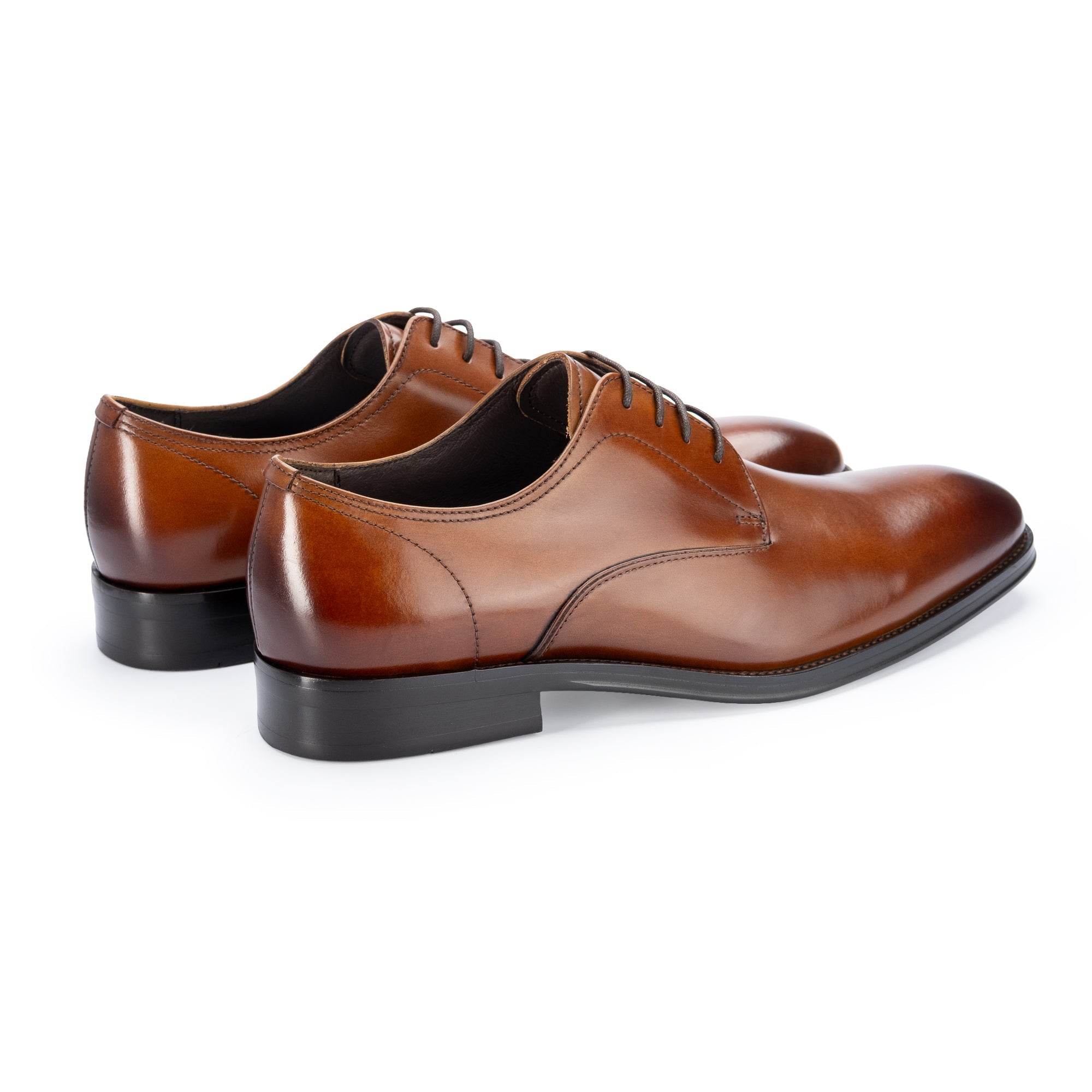
Brogue boots offer more structure and character than Chelsea or chukka styles, and they hold their own in winter when the weather calls for something with more heft. The detailing — perforations, medallion toe, wingtip stitching — makes them distinctly smarter than a plain leather boot while remaining thoroughly practical.
The Falcon Brogue Boot, available in black and brown, transitions from a business meeting to a winter walk without missing a beat. The full brogue detailing is bold enough to anchor an outfit built around solid separates — heavy wool trousers, a donkey jacket, a rollneck.
One caveat: avoid wearing heavily perforated brogues in persistent rain. The decorative holes are not sealed, and prolonged exposure to wet conditions will allow moisture to penetrate the upper. On genuinely wet winter days, opt for a plain leather Chelsea or chukka instead.
When Should You Wear Each Type of Winter Boot?
| Occasion | Best Style | Recommended Pick |
|---|---|---|
| Office / smart-casual | Chelsea or Brogue Boot | Brecon Chelsea Boot, Falcon Brogue Boot |
| Weekend / casual | Chukka or Chelsea | Castle Chukka Boot, Hill Chelsea Boot |
| Cold but dry days | Suede Chelsea or Suede Chukka | Hill Chelsea Suede Boot, Wessex Chukka Suede Boot |
| Formal / evening | Chelsea Boot (black) | Brecon Chelsea Boot in Black |
| Country / outdoor | Brogue Boot or Chukka | Falcon Brogue Boot, Castle Chukka Boot |
How Do You Choose Between Black and Brown Winter Boots?
Black boots are the more formal choice — better if you're wearing them primarily for work or evenings. They pair cleanly with navy, charcoal, and grey — the core colours of a winter wardrobe — and require less coordination effort than brown.
Brown boots are more versatile across casual and smart-casual settings. They add warmth to an outfit and pair naturally with earth tones, camel, olive, and rust — colours that dominate winter dressing. If you're building a boot wardrobe for the first time, a medium-to-dark brown is arguably the better starting point.
Cognac shades, as offered in the Hill Chelsea Suede Boot and Wessex Chukka Suede Boot, occupy a lighter register — excellent for weekend wear, less suited to formal settings.
The simplest rule: match the formality of the boot colour to the formality of the occasion.
How Should You Care for Winter Boots?
Winter is the hardest season on leather. Salt from gritted roads, rain, mud, and repeated temperature changes all accelerate wear and surface cracking. A consistent maintenance routine will extend the life of your boots considerably.
- Clean after each wear — Use a soft brush or damp cloth to remove dirt and salt deposits before they dry into the leather. Salt, in particular, draws moisture out and causes cracking if left untreated.
- Condition regularly — Apply a leather conditioner every four to six weeks during winter to replace the natural oils that cold, dry air depletes from the upper.
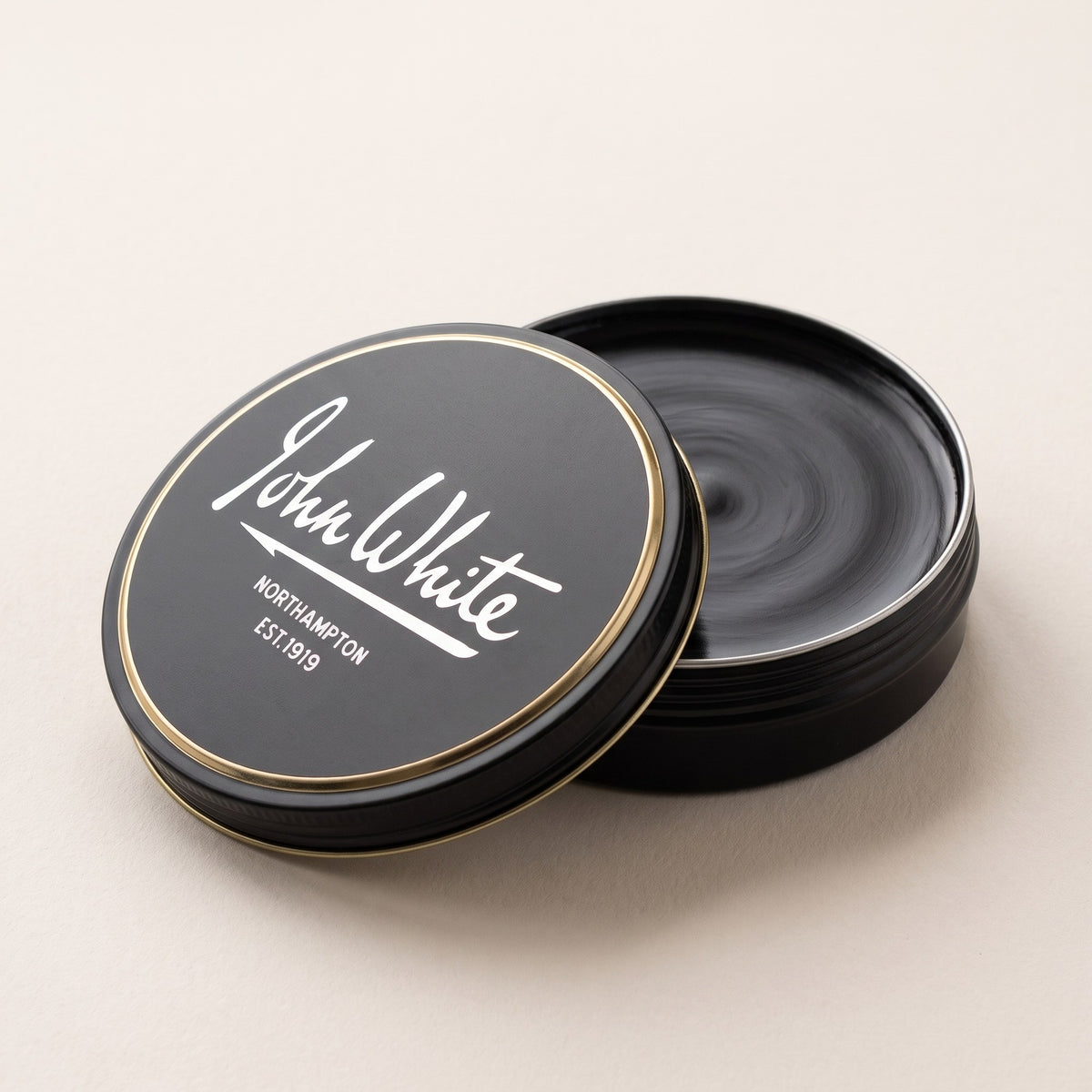
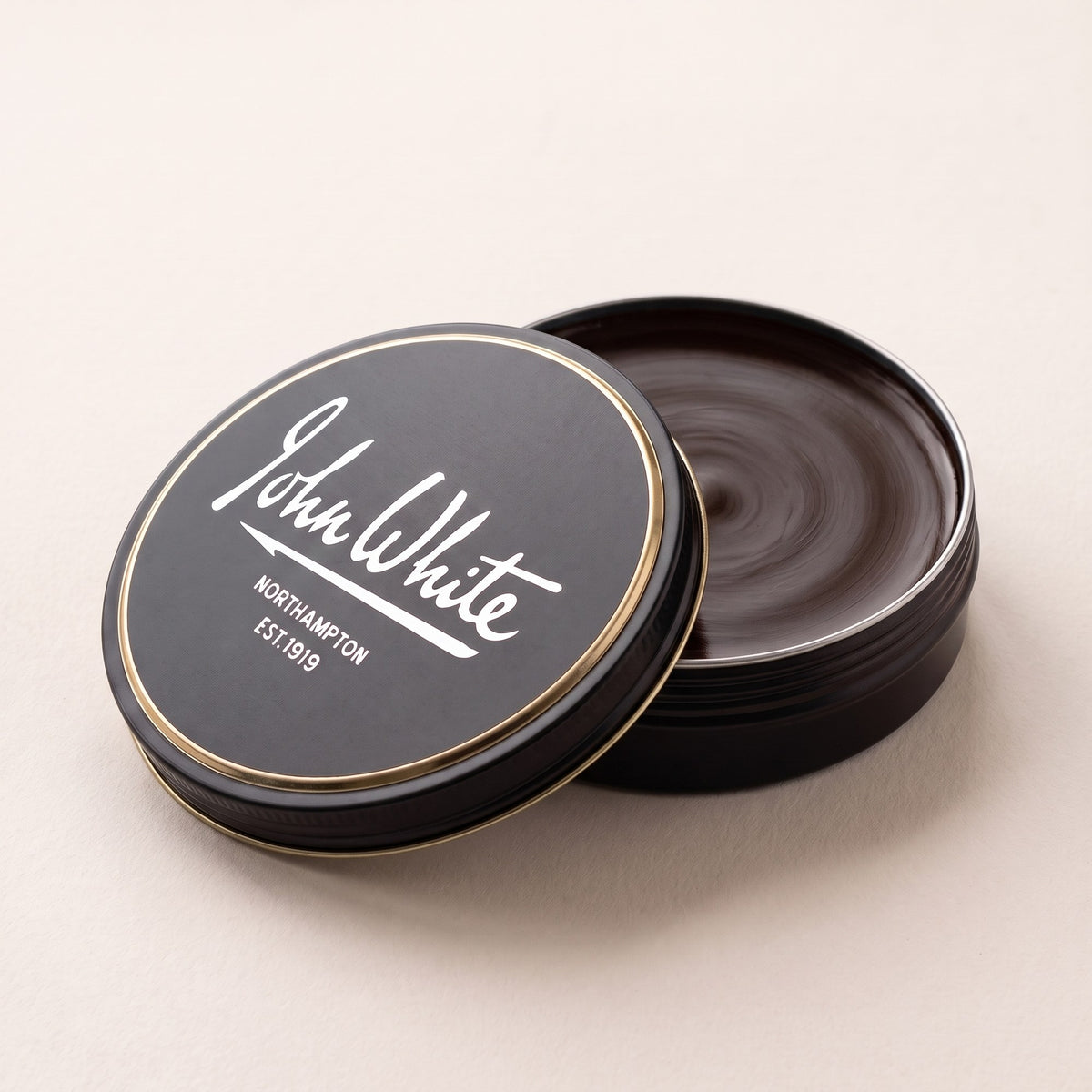
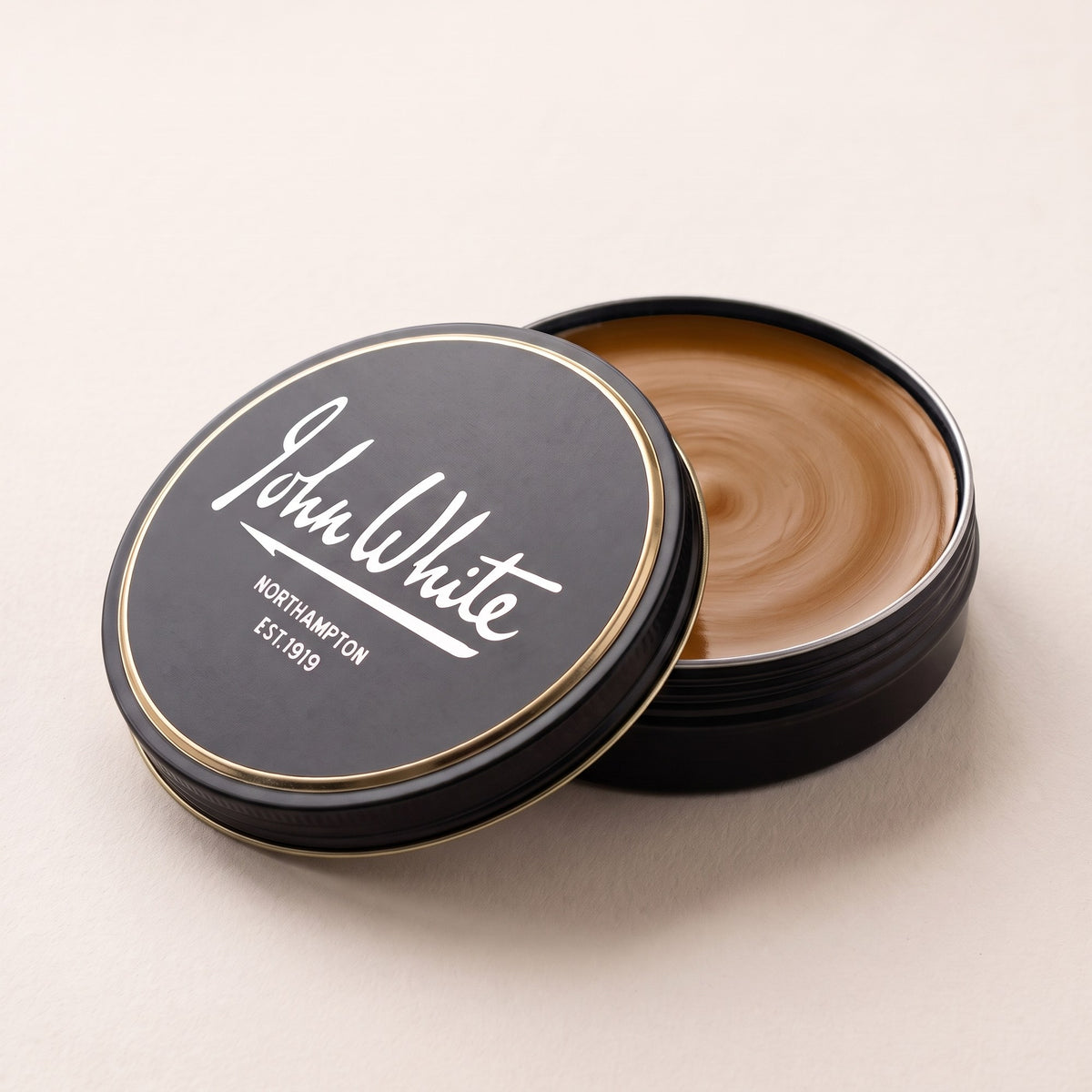
- Polish and protect — JW Premium Wax Polish applied every three to four weeks builds a weather-resistant finish and restores surface colour. Buff to a shine and allow to dry fully before wearing.
- Dry naturally — Never use direct heat to dry wet leather boots. Allow at least 24 hours at room temperature before wearing again. Insert cedar shoe trees immediately after removing boots to maintain shape and draw out residual moisture.
- Rotate between pairs — Wearing the same boots daily in winter accelerates wear considerably. Alternating between two pairs allows each to dry thoroughly and recover between wears.
According to the Leather Conservation Centre, regular conditioning is the single most effective step you can take to extend the lifespan of a leather boot — particularly in winter, when natural oils are depleted most rapidly.
Frequently Asked Questions
What are the warmest boots for men in winter?
Leather ankle boots with a snug fit and rubber sole provide the best warmth. The insulating effect comes primarily from fit — a well-fitted boot worn with a mid-weight wool sock traps warmth effectively without requiring internal lining. Full-grain leather uppers retain heat better than suede and offer superior weather resistance through the colder months.
Can you wear Chelsea boots in winter?
Yes. Chelsea boots are one of the best all-round winter boot choices for men. Their ankle-length coverage and clean profile make them practical in cold weather, and they transition easily from casual to smart-casual settings. Opt for a leather Chelsea in black or brown for wet conditions, and treat regularly with wax polish to maintain weather resistance throughout the season.
Are suede boots suitable for winter?
Suede boots are suitable for dry, cold conditions but are not ideal in persistent rain or slush. Treat with a suede protector spray before the first wear and reapply monthly. Avoid suede on days with heavy rain or heavily salted pavements — the salt residue is particularly damaging to suede fibres and difficult to remove once it dries.
How often should you polish leather boots in winter?
Every three to four weeks is the recommended minimum during winter. In harsh conditions — repeated rain, salt exposure, or daily wear — increase this to fortnightly. Use a quality product such as JW Premium Wax Polish to restore the protective layer and maintain the leather's condition through the season.
Browse the full range of men's boots, explore all men's shoes, or check the sale collection to find the right pair for the colder months ahead.