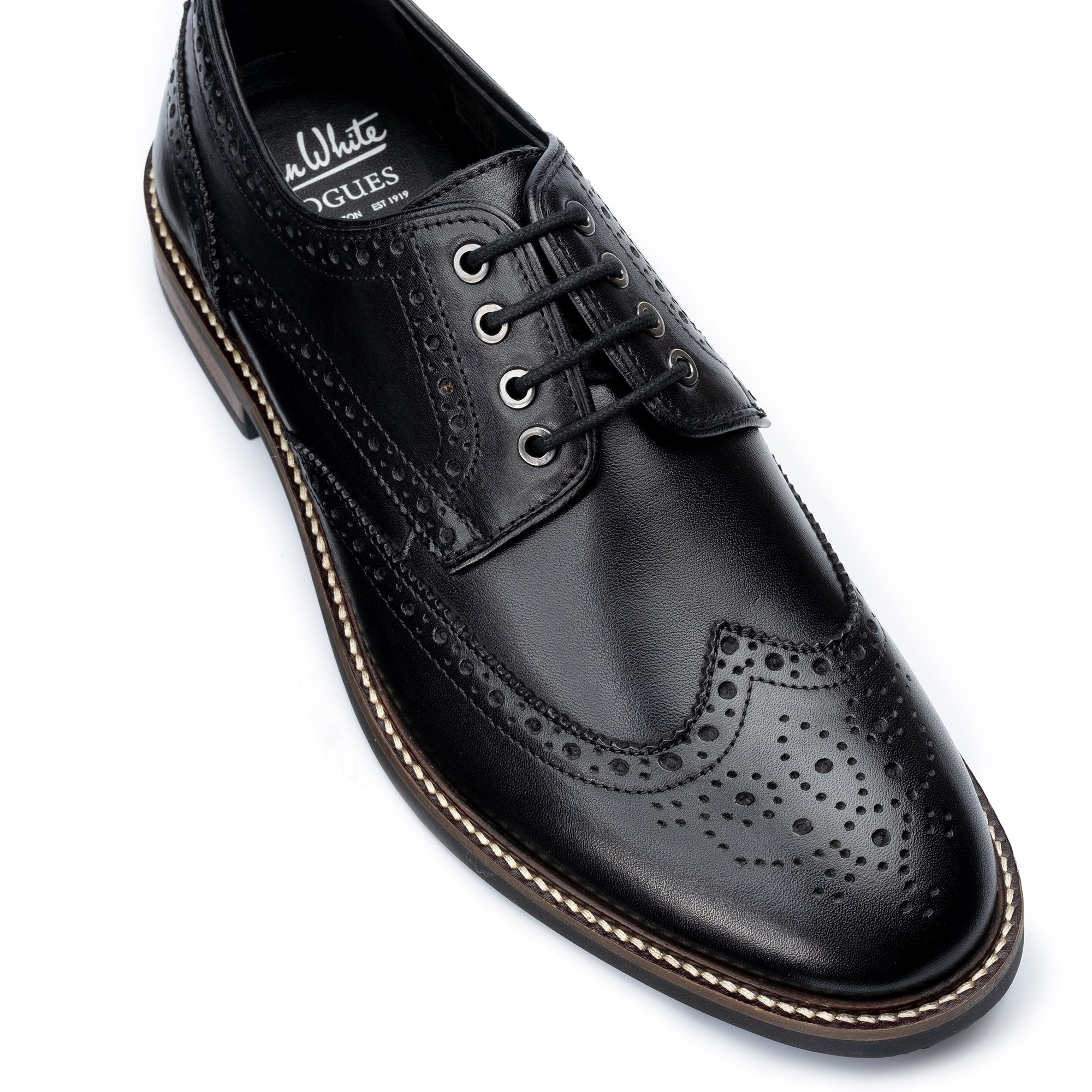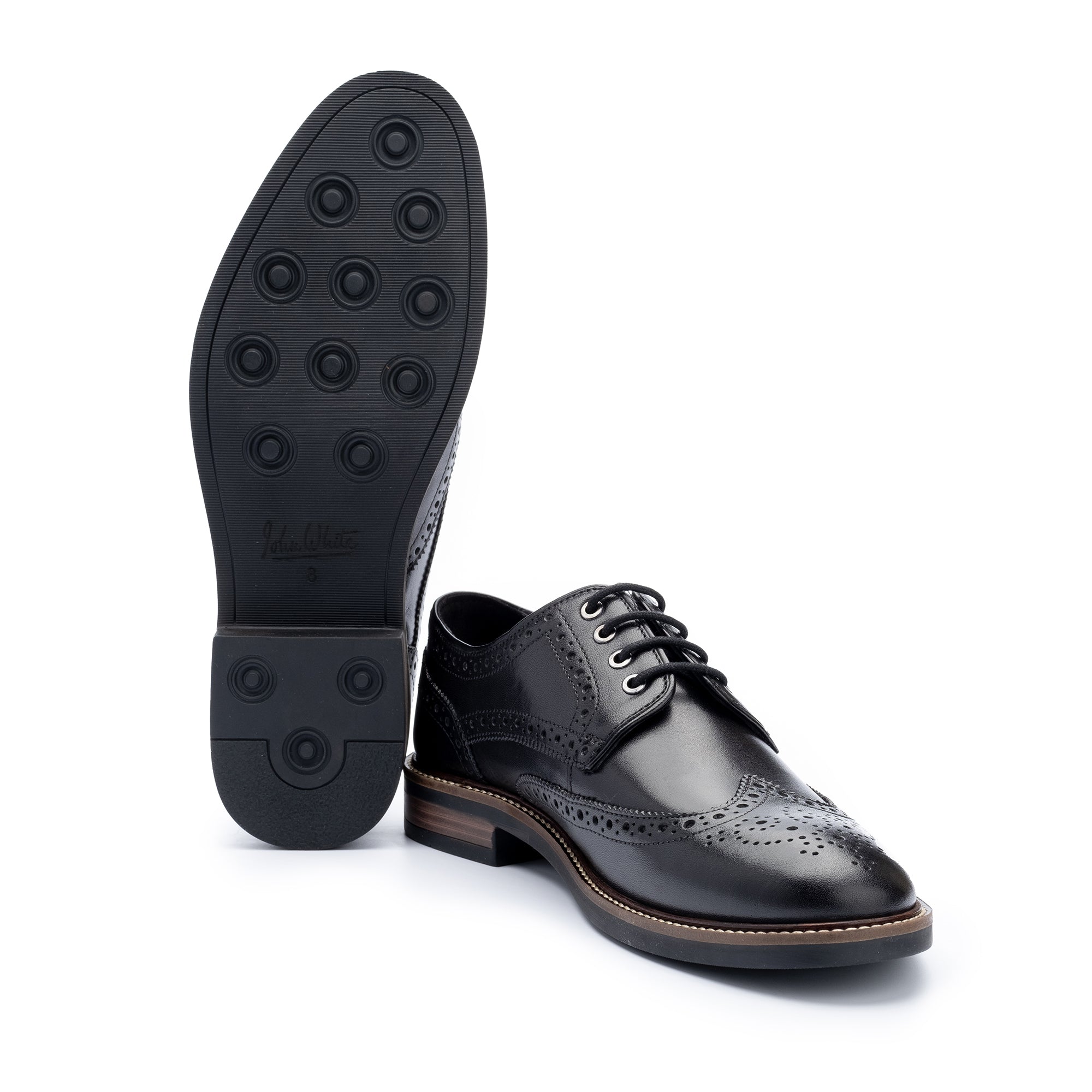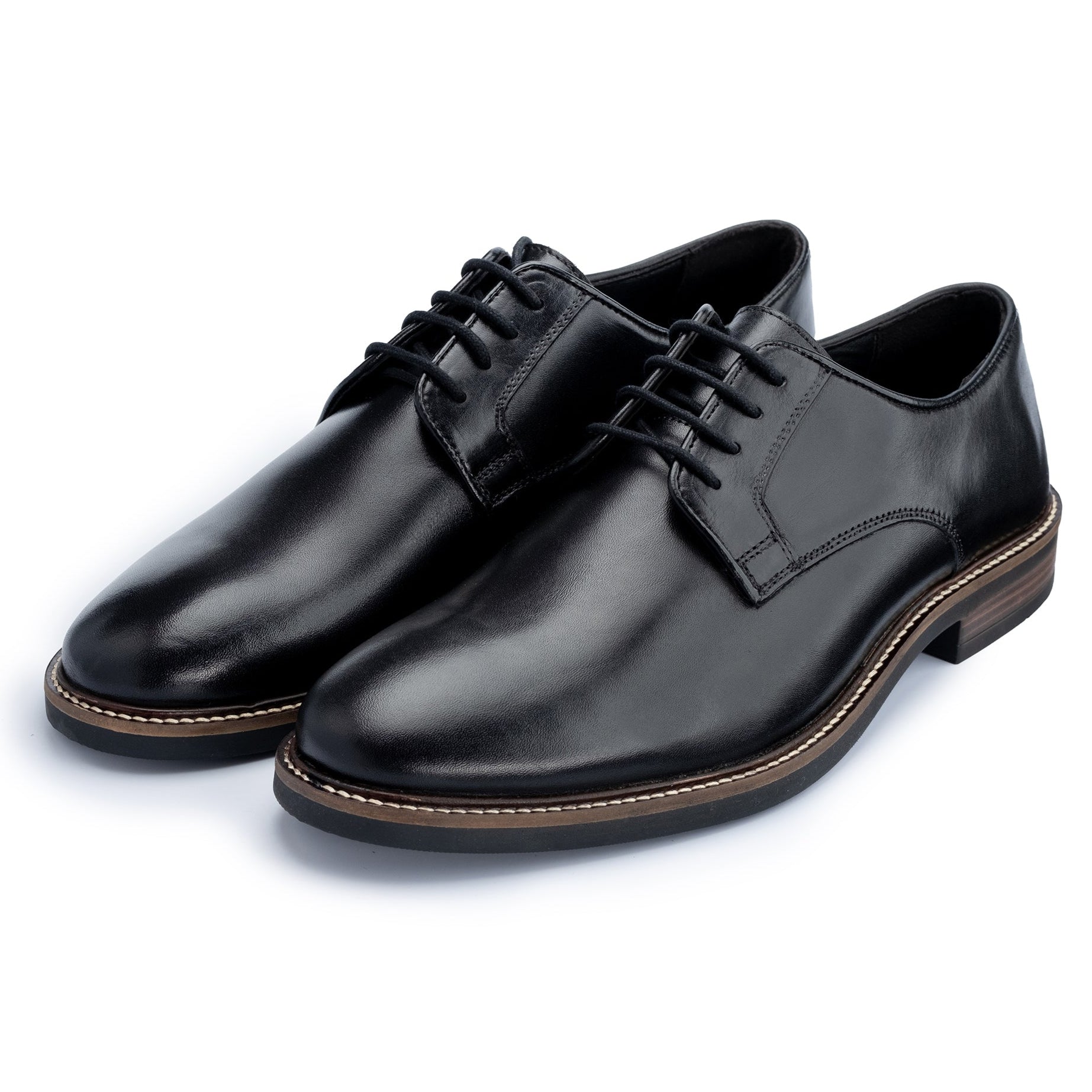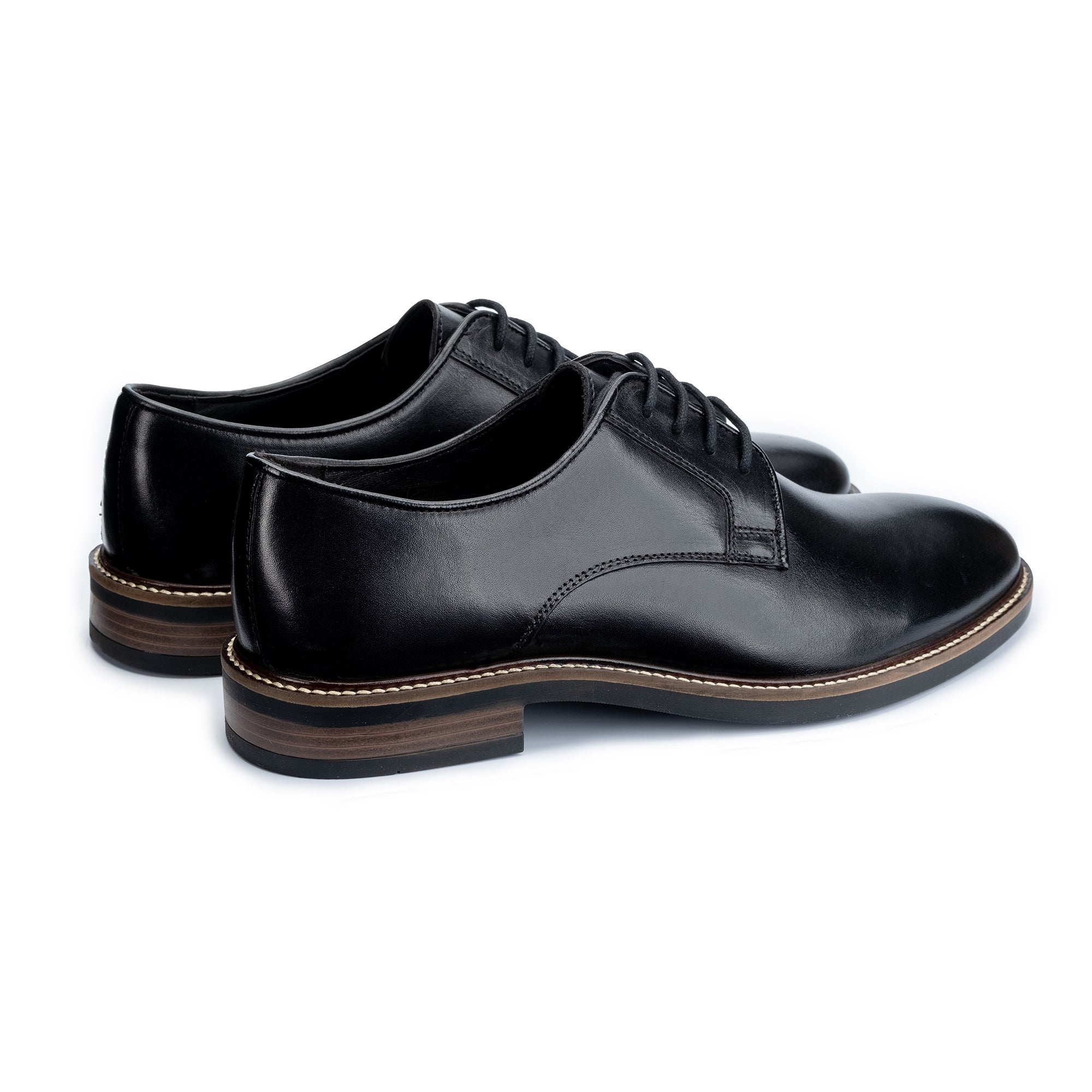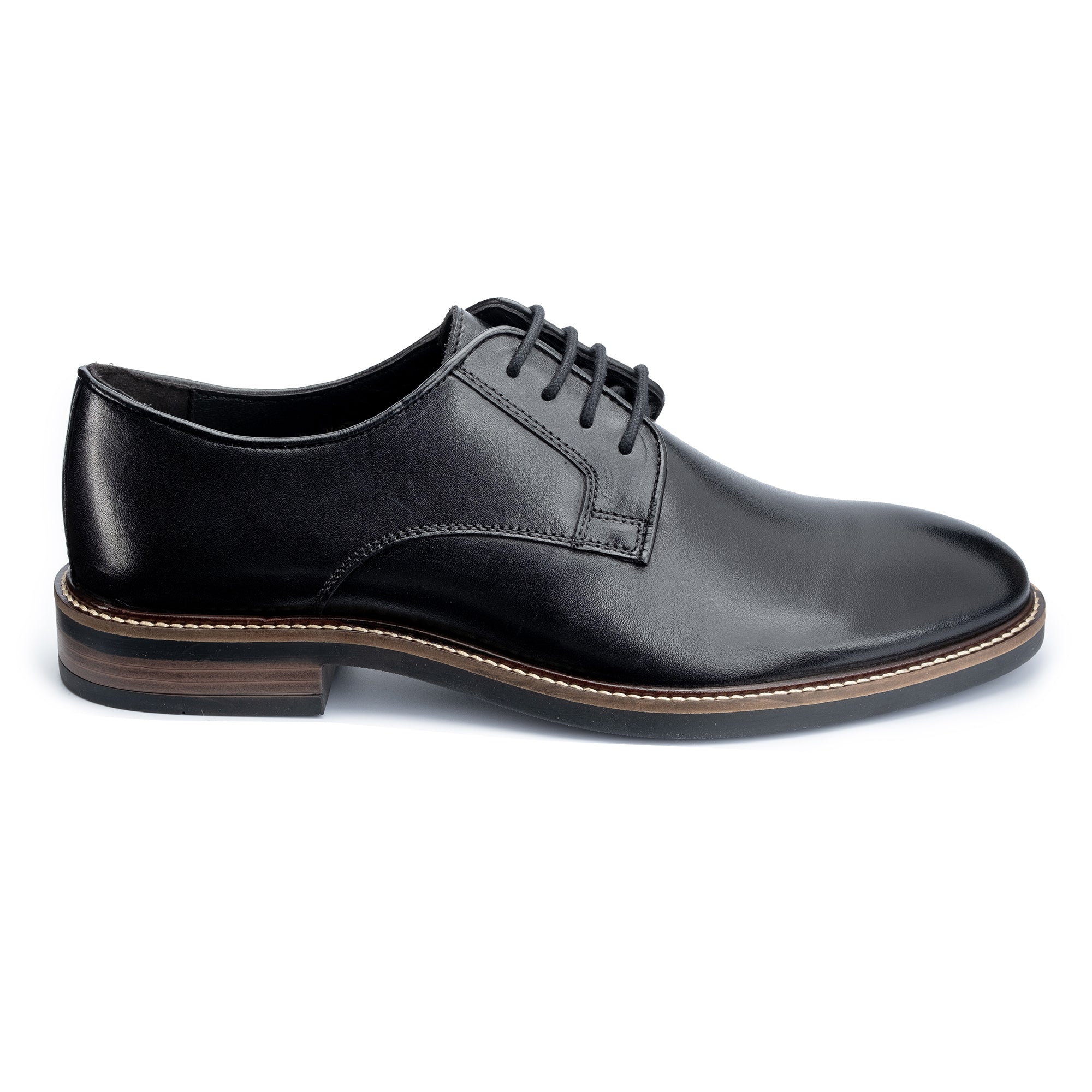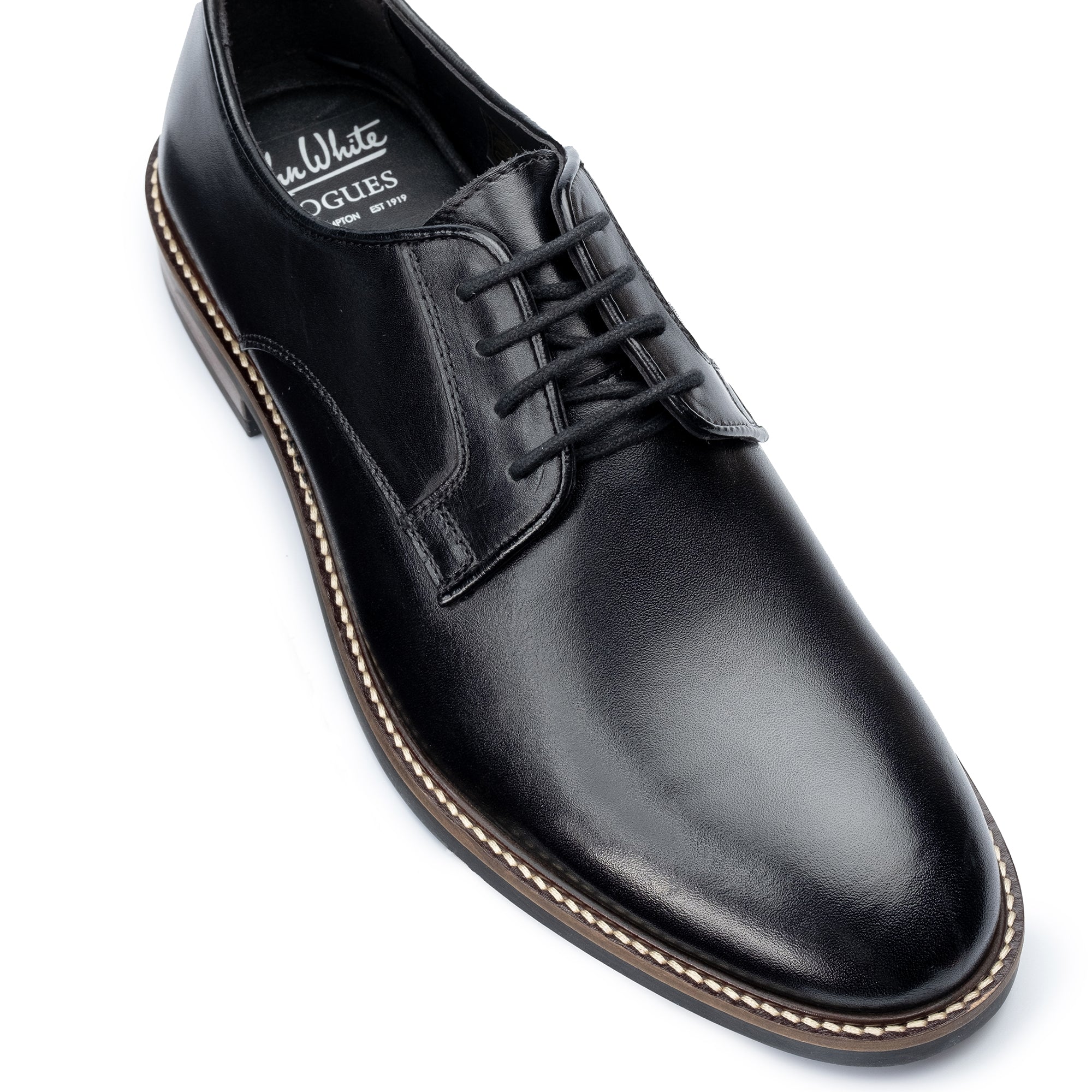

Burnished vs. Antiqued Leather: A Comparative Guide to Premium Finishes
Burnished and antiqued leather are two distinct finishing techniques that add character and depth to premium footwear. Burnishing uses friction and heat to create a localised, high-shine lustre on areas like the toe and heel. Antiquing, by contrast, uses dyes and creams to create a more uniform, aged patina across the entire shoe for a vintage appearance.
In This Guide
The finish of a leather shoe communicates its character long before the silhouette is fully appreciated. It’s the subtle play of light and shadow across the vamp, the deepening colour at the toe cap, and the rich, lived-in quality that separates a standard shoe from a truly exceptional one. While a shoe's construction provides its foundation, the finish is its soul.
The Northamptonshire shoemaking tradition, which has influenced footwear design for over a century, has seen artisans from many historic brands, including Church's and Loake, employ various finishing techniques to distinguish their collections. This heritage of artistry inspires the curation of finishes that provide depth and individuality. Understanding the difference between two of the most popular methods—burnishing and antiquing—is key to selecting a shoe that aligns perfectly with your personal style.
This guide offers a direct comparison, helping you identify these premium finishes and care for them correctly.
What Is a Burnished Leather Finish?
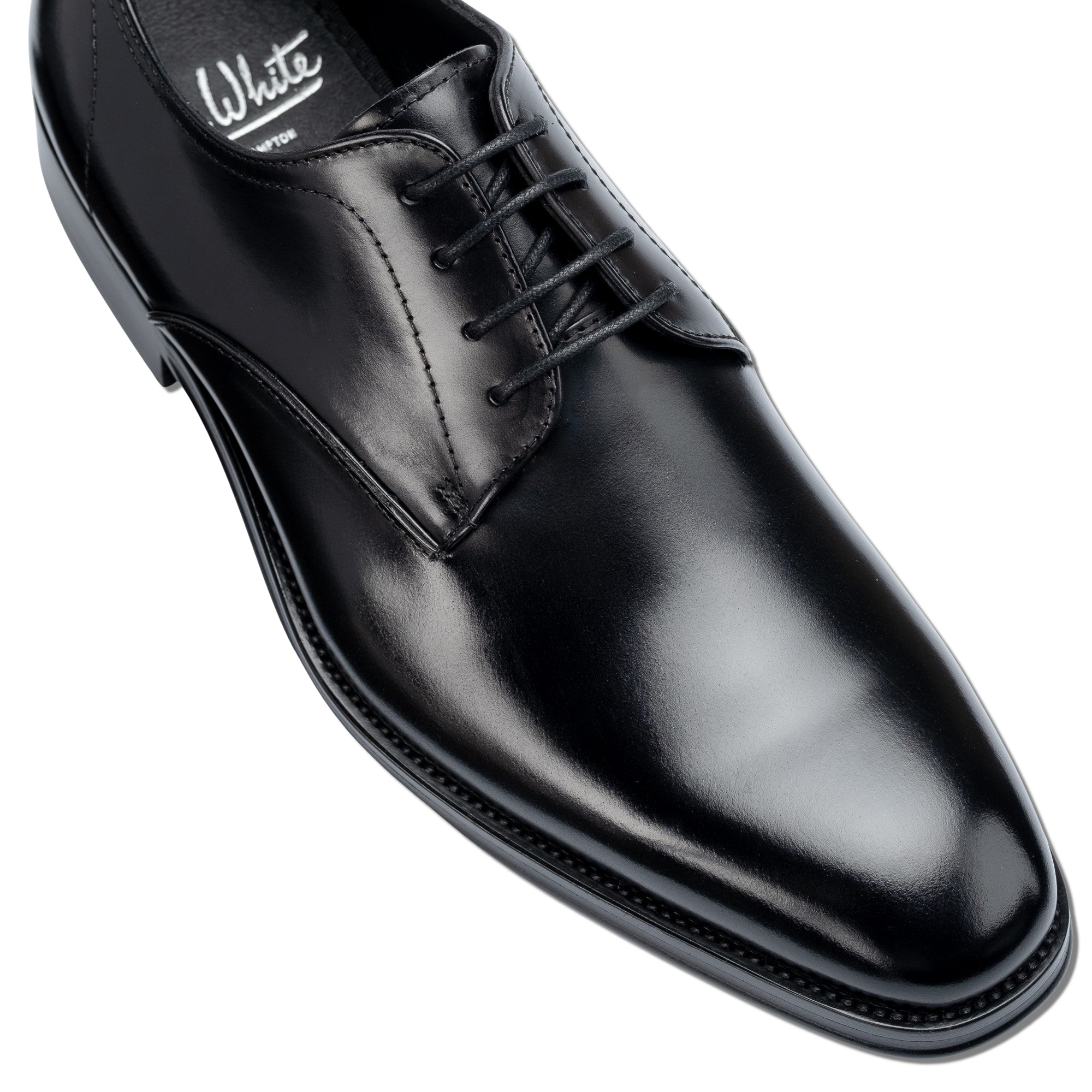
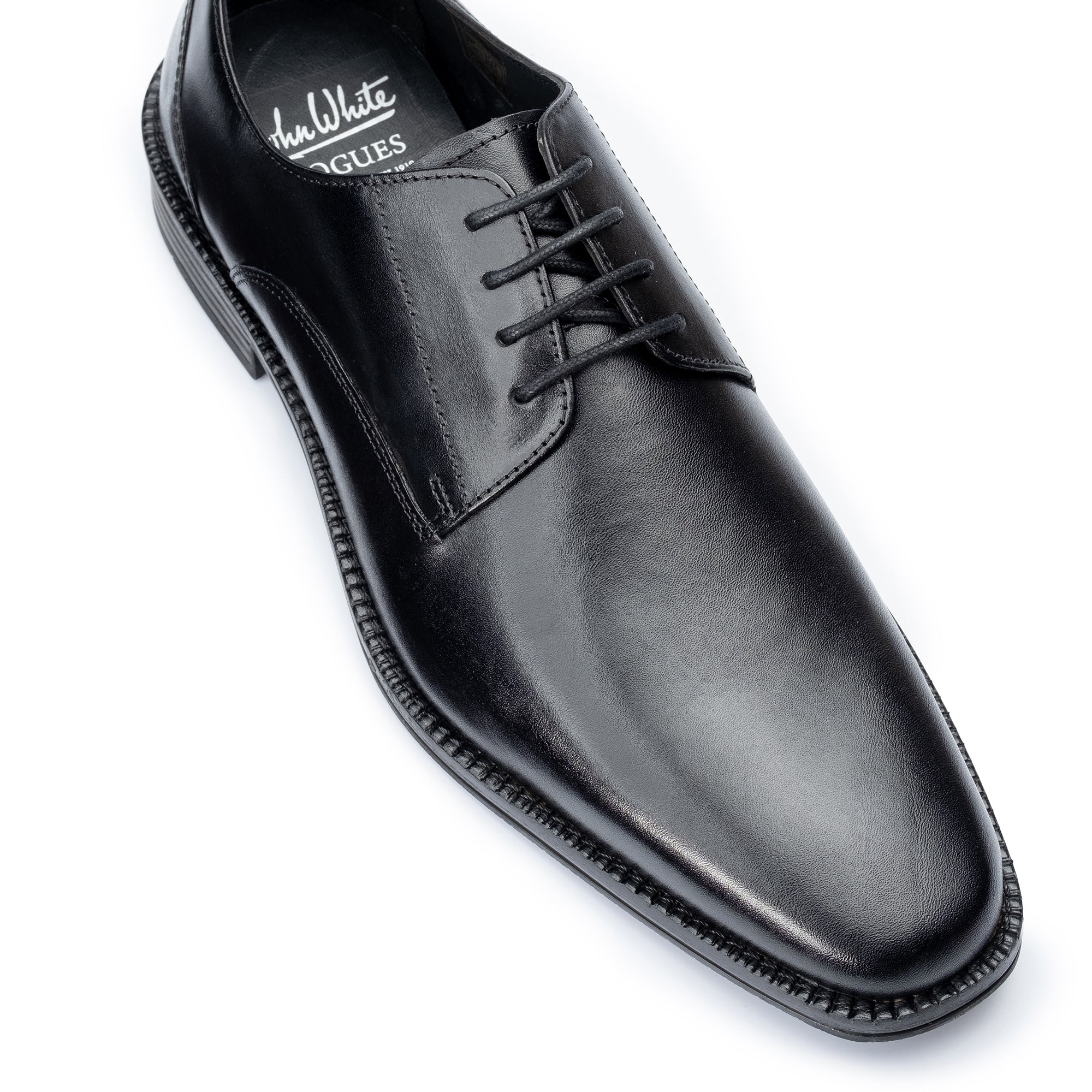
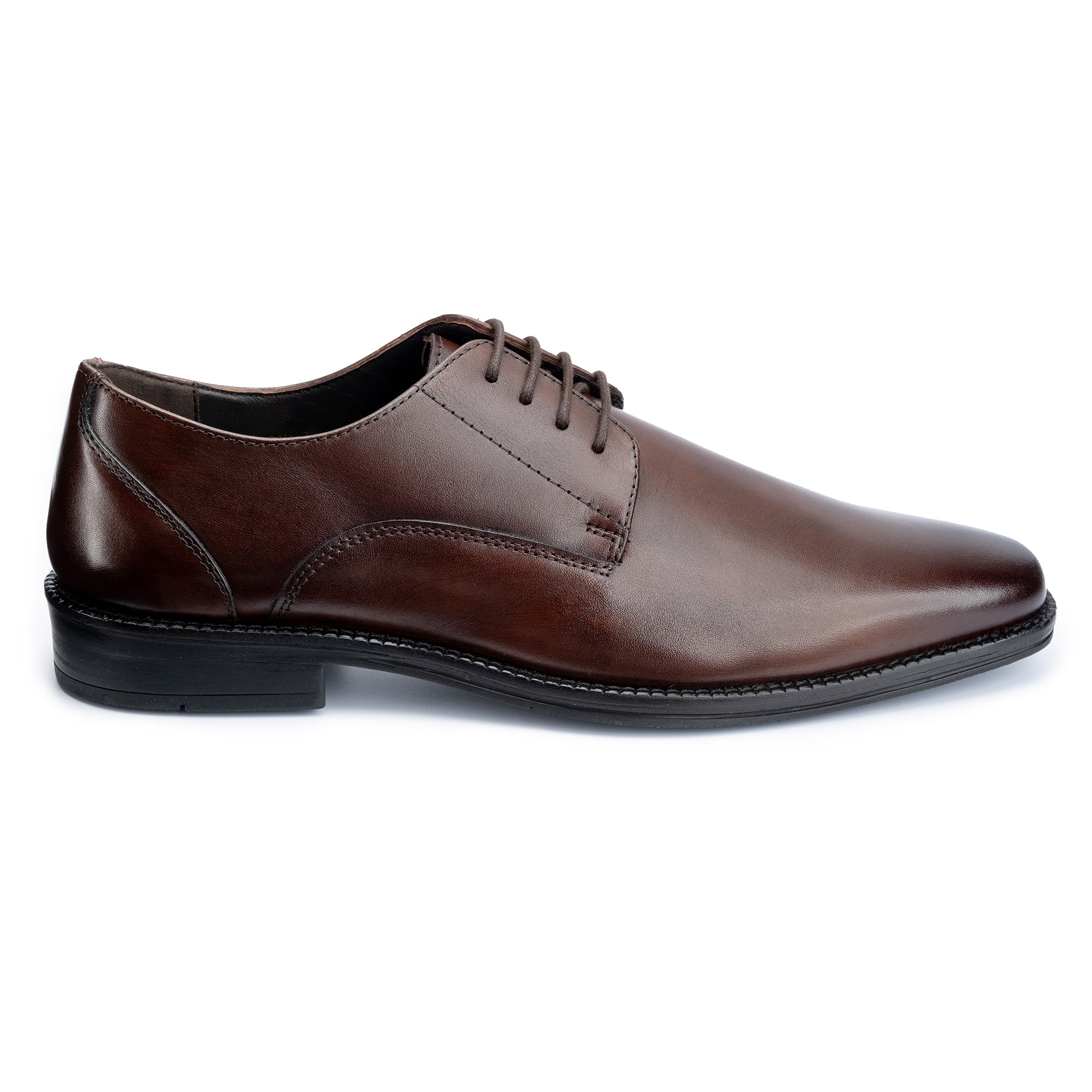
A burnished leather finish is a detail achieved through a specific process of friction and pressure. It is not an overall treatment but a targeted application of heat and wax to create areas of high shine and darker, graduated colour. Think of it as a form of hand-polishing, but one executed at a much higher speed and temperature before the shoe ever reaches the box.
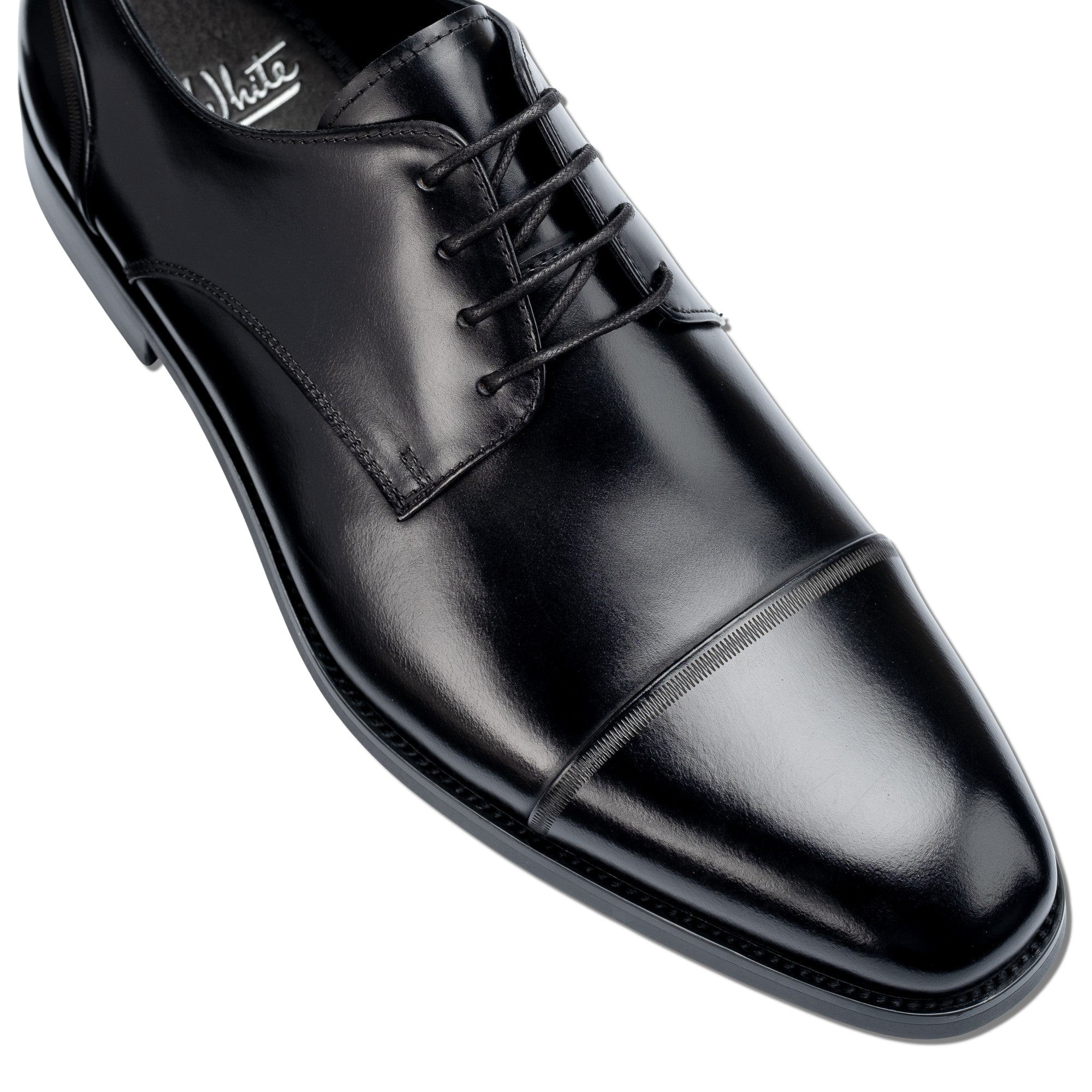
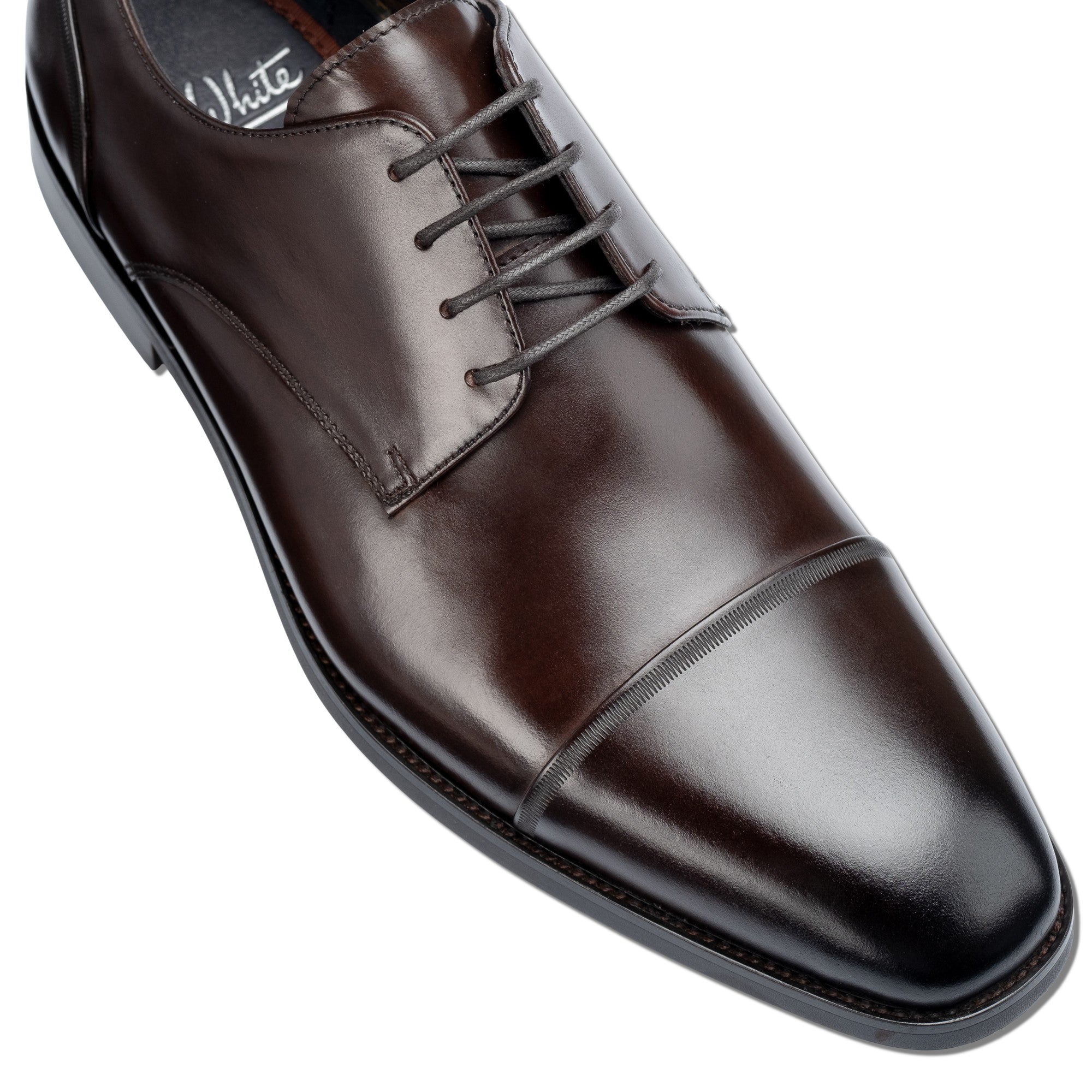
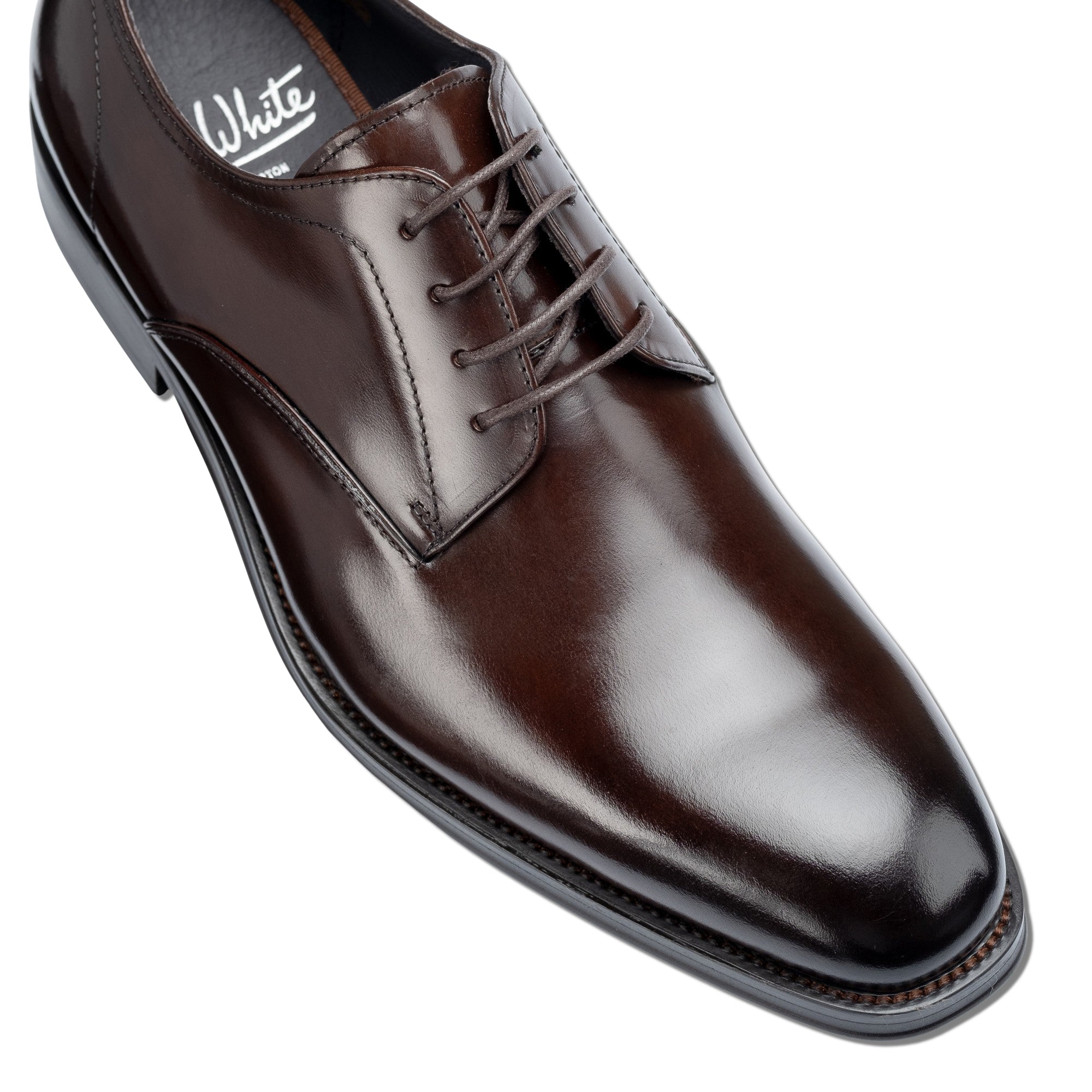
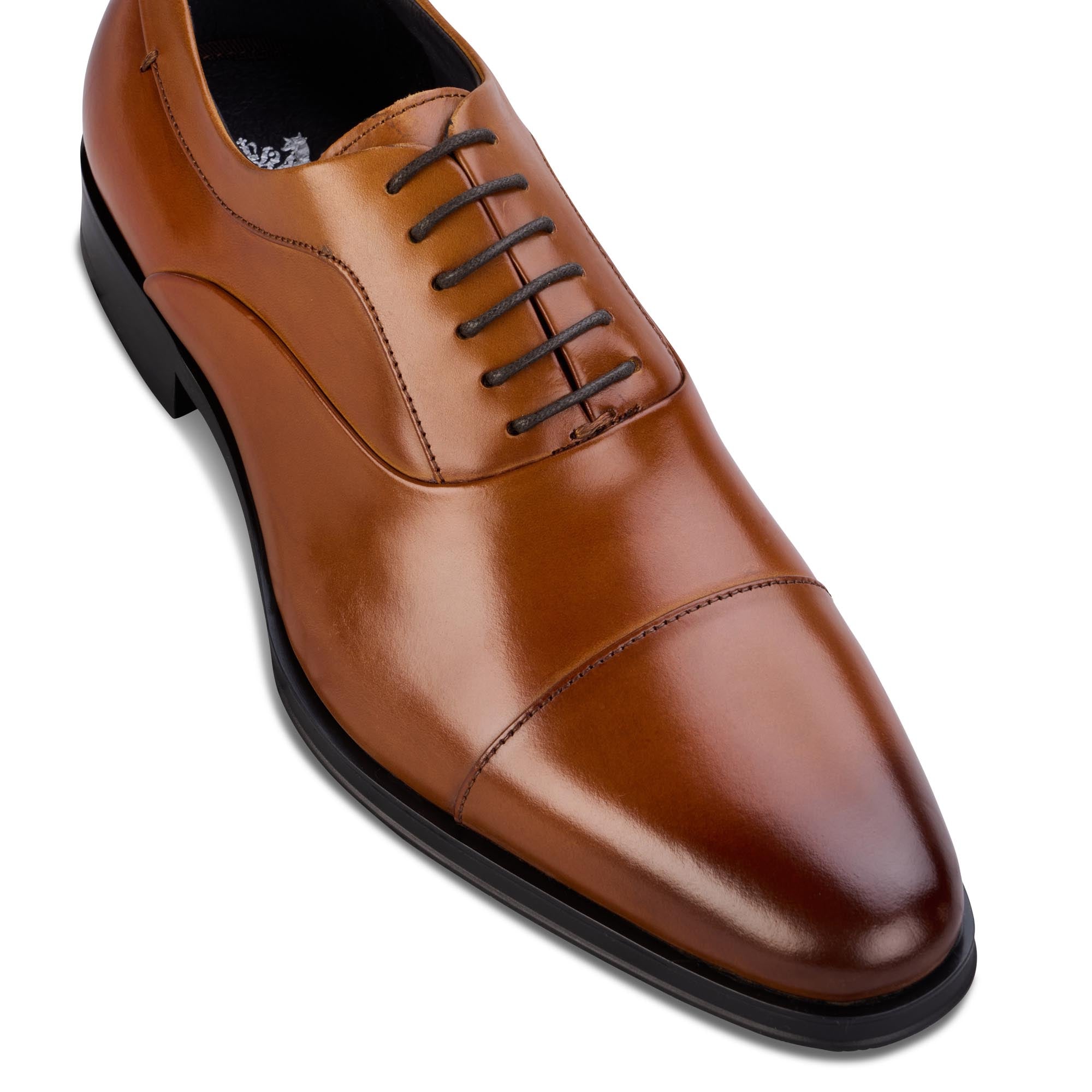
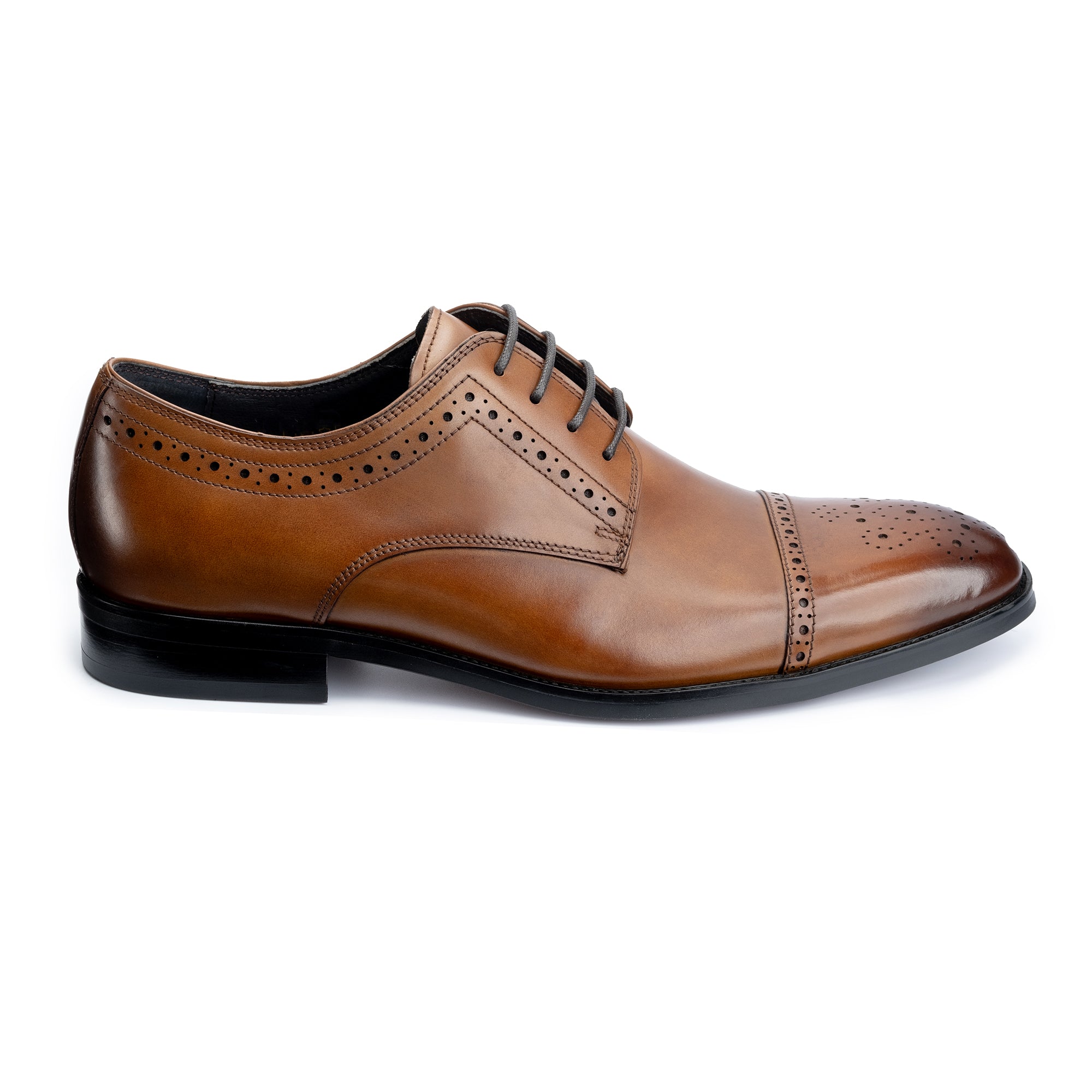
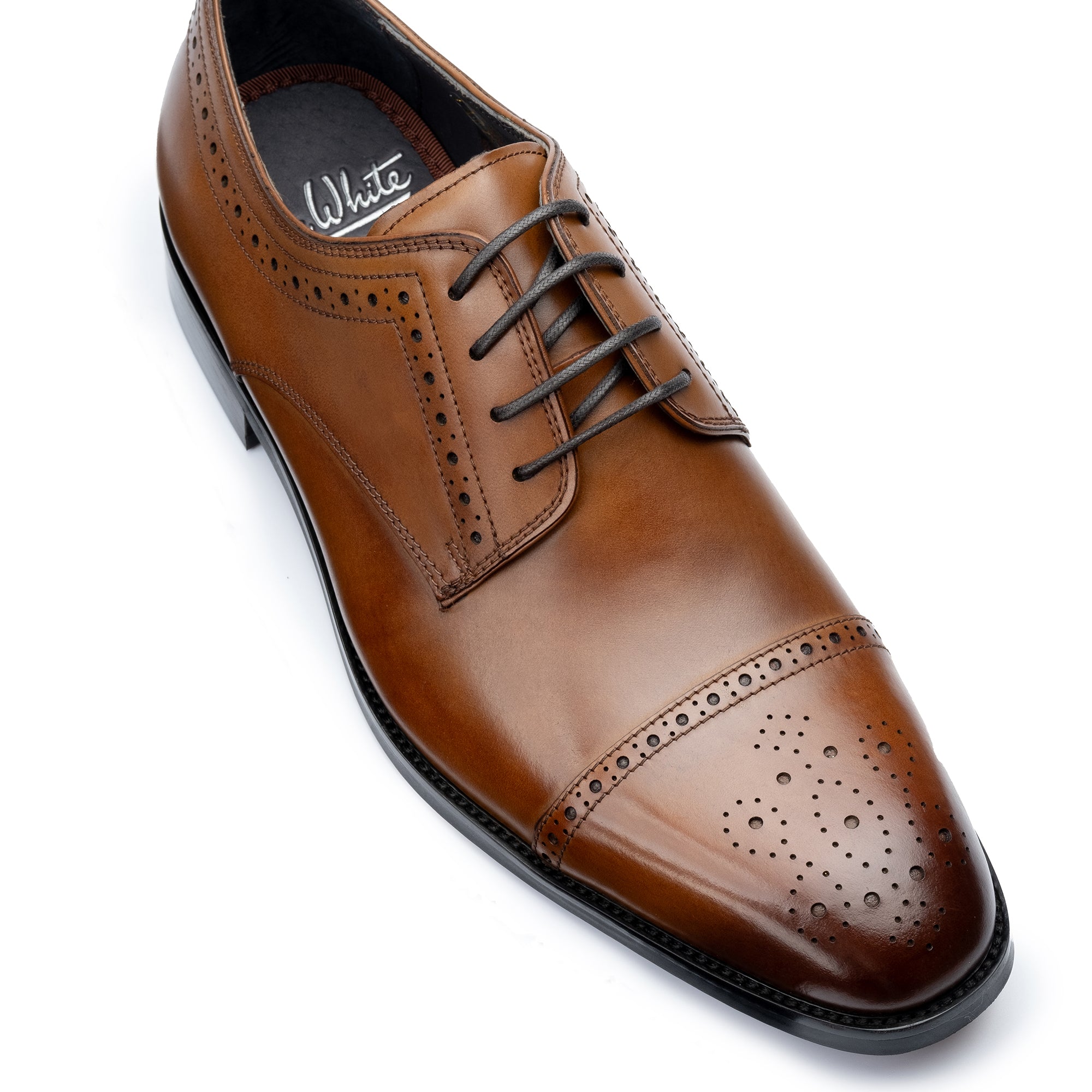
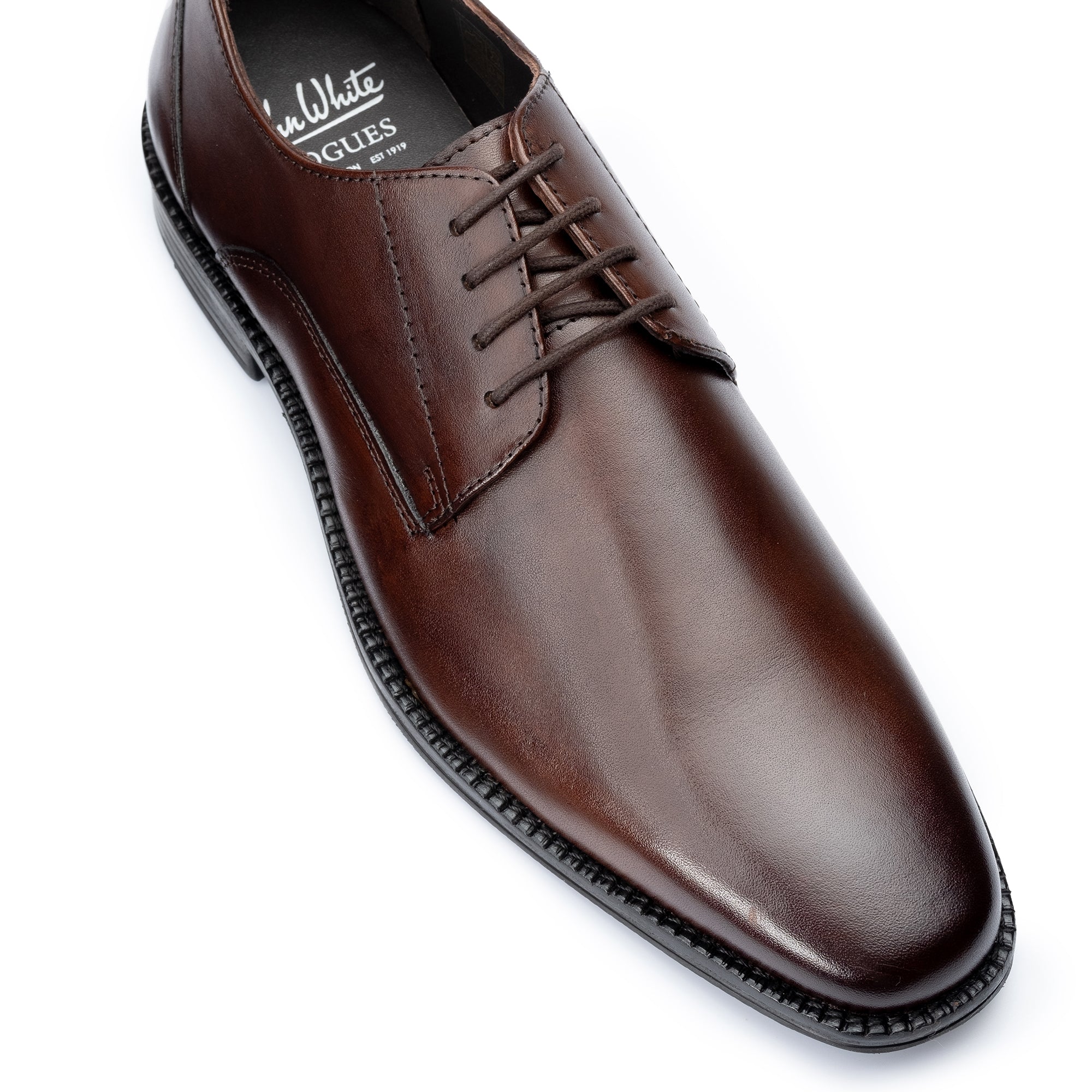
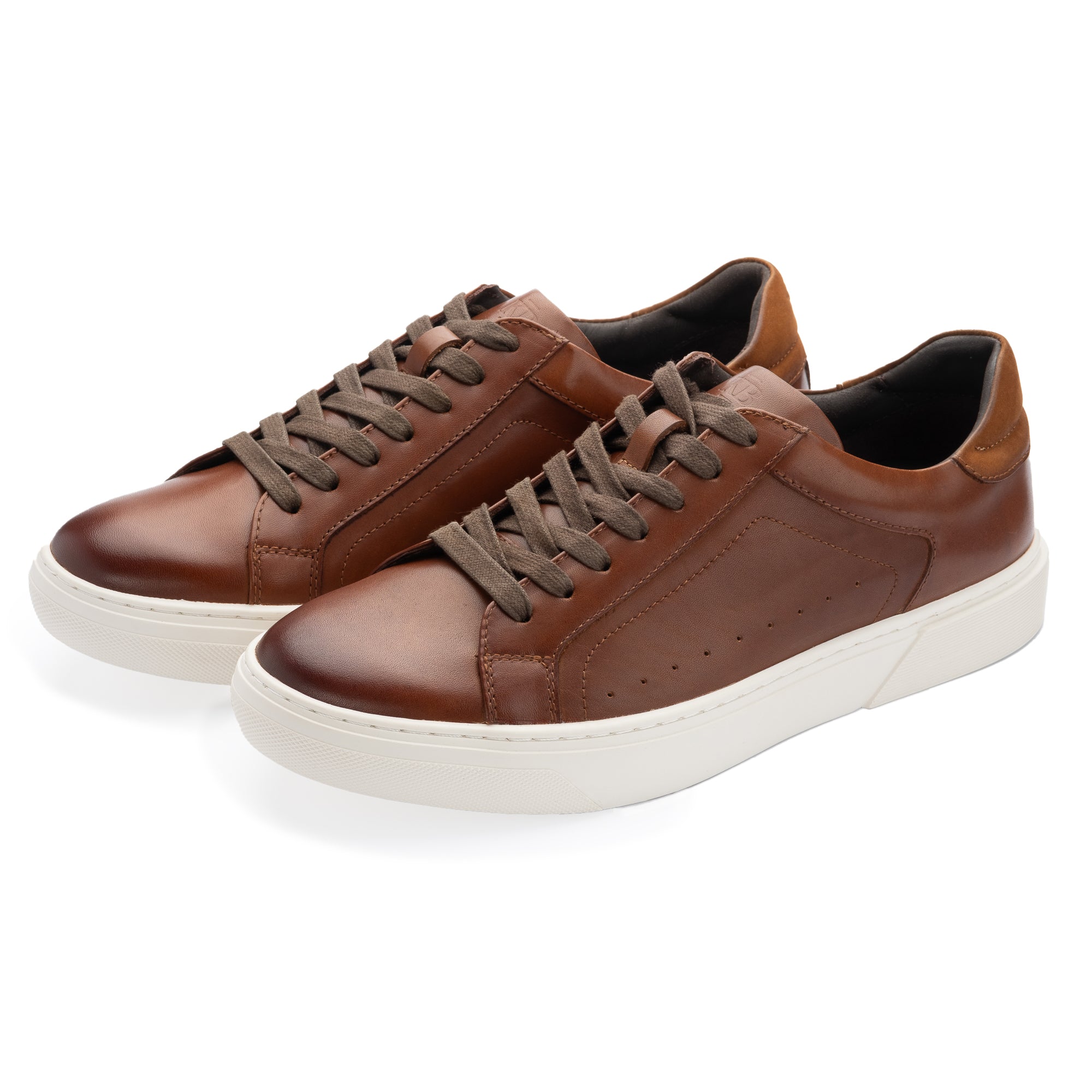
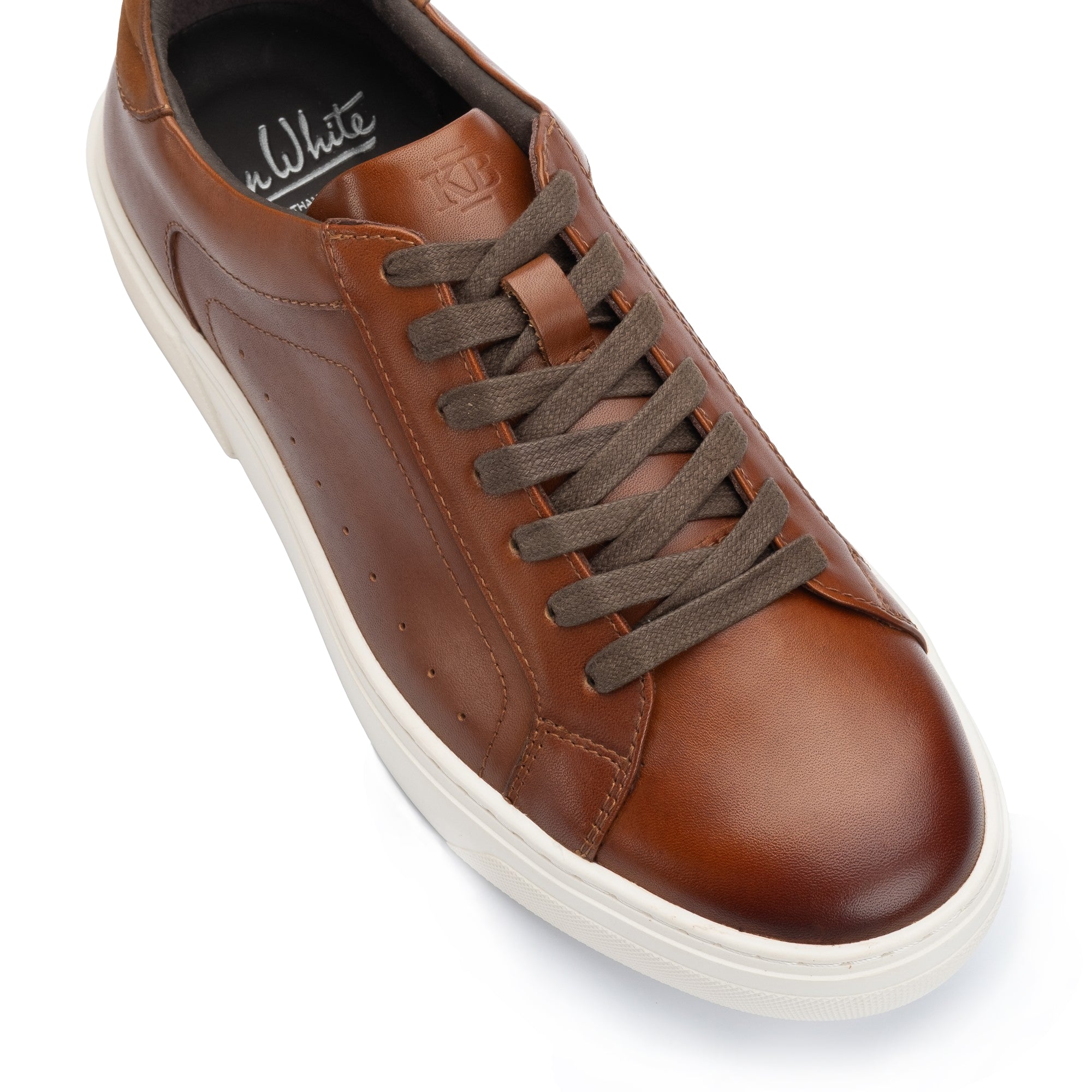
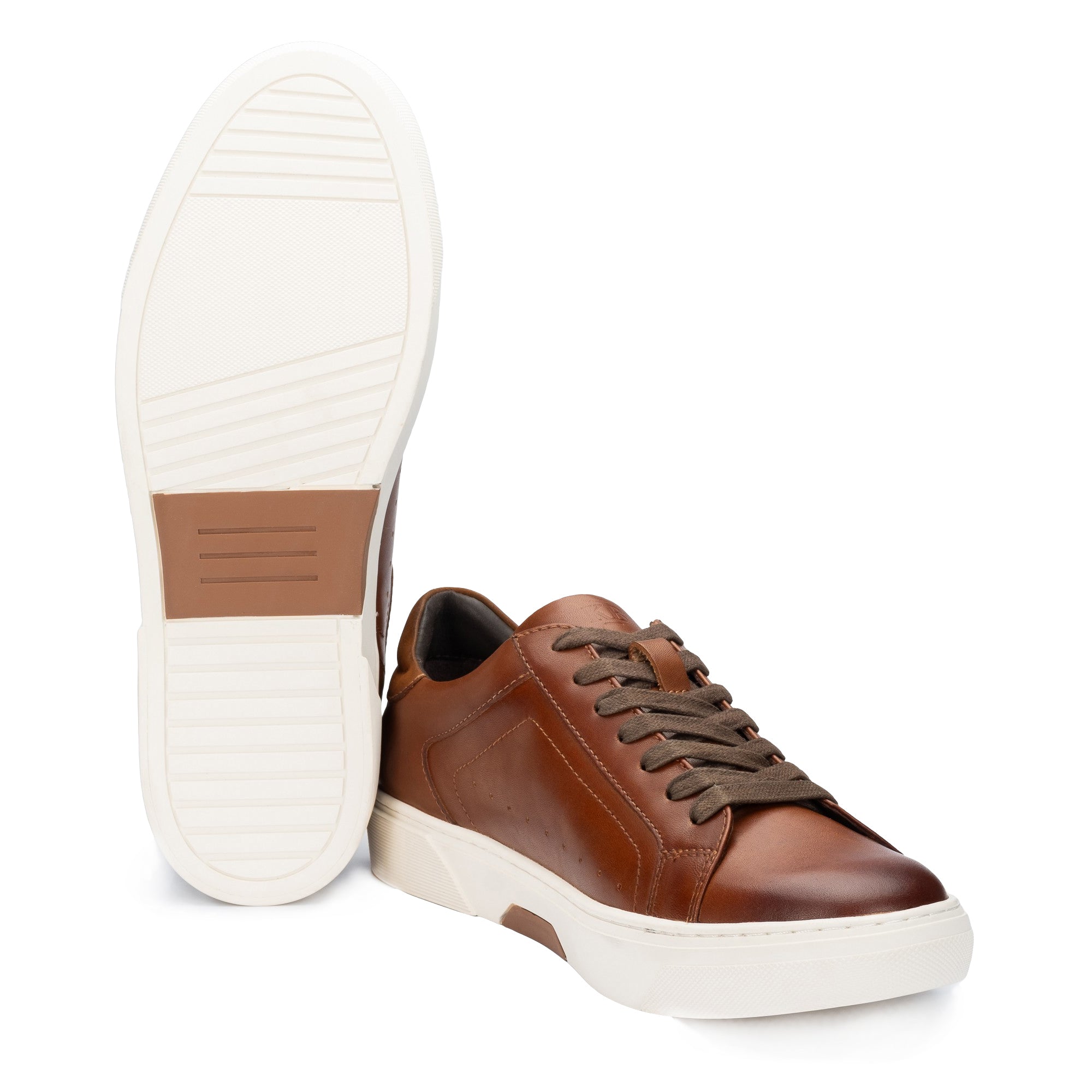
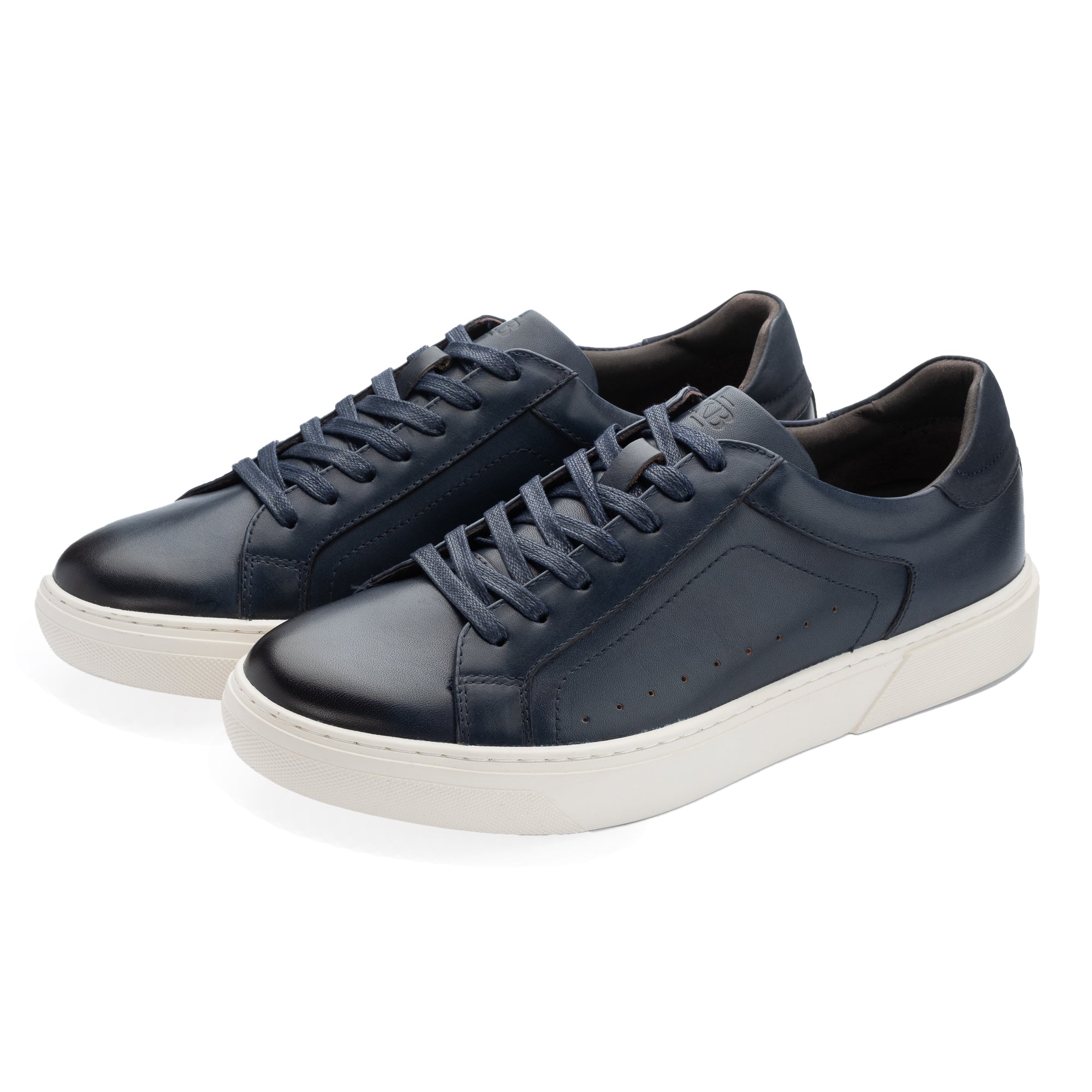
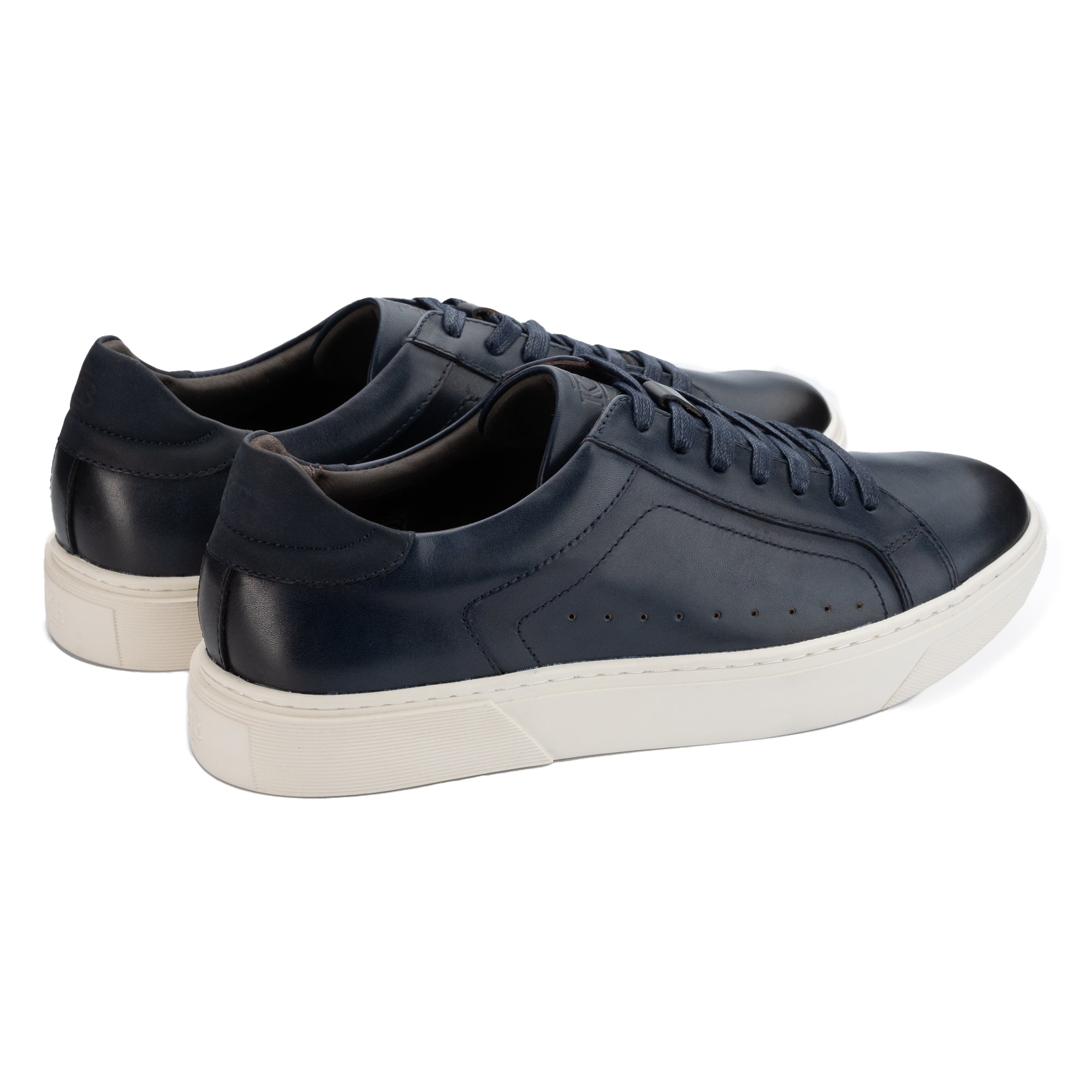
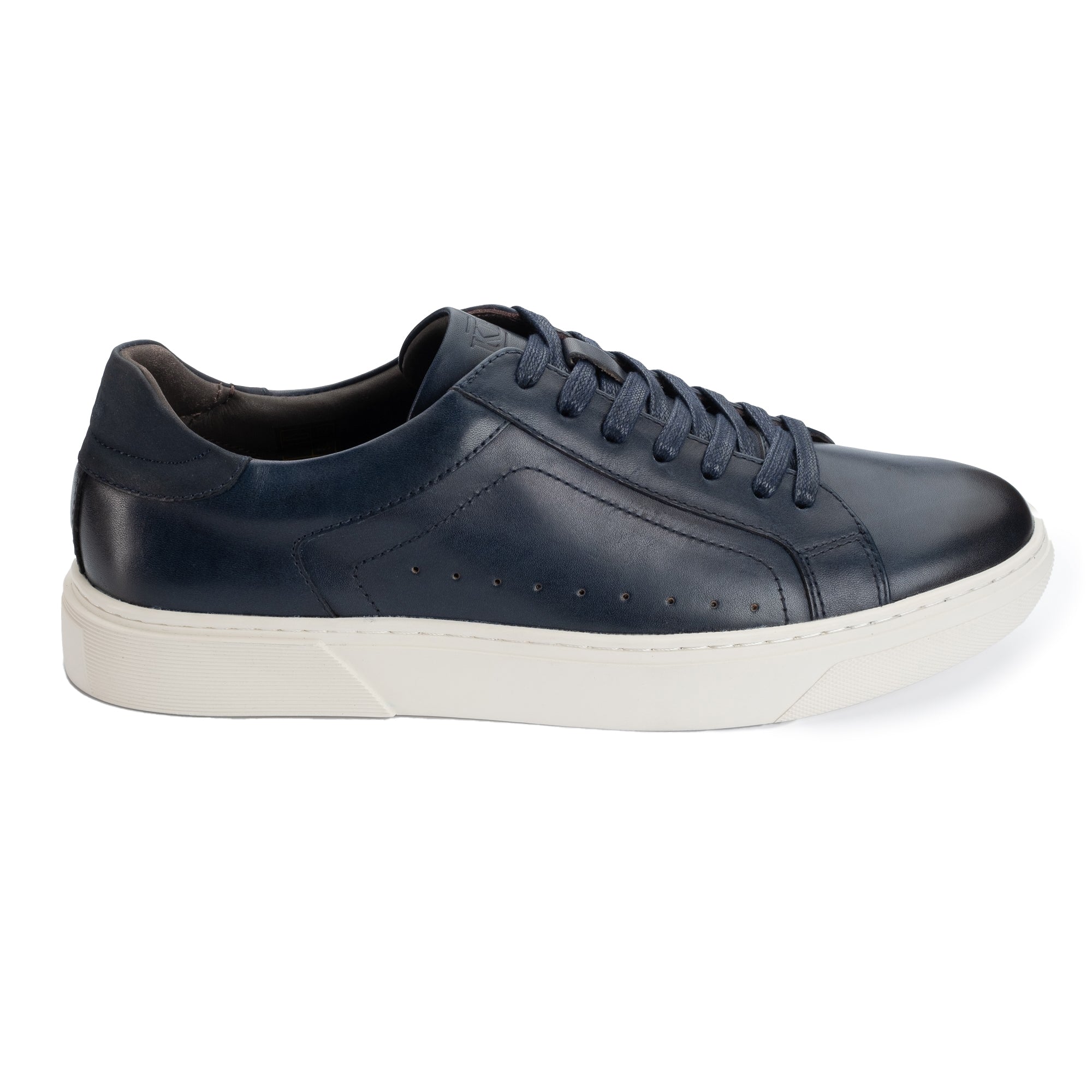
Finishing specialists use fast-spinning mops, wheels, and specialised waxes to work on specific parts of the shoe, typically the toe cap and the heel counter. The friction generates heat, which melts the wax and darkens the leather's pores, creating a distinctive two-tone effect. The result is a sleek, almost glassy finish in the burnished areas that contrasts beautifully with the softer lustre of the surrounding leather.
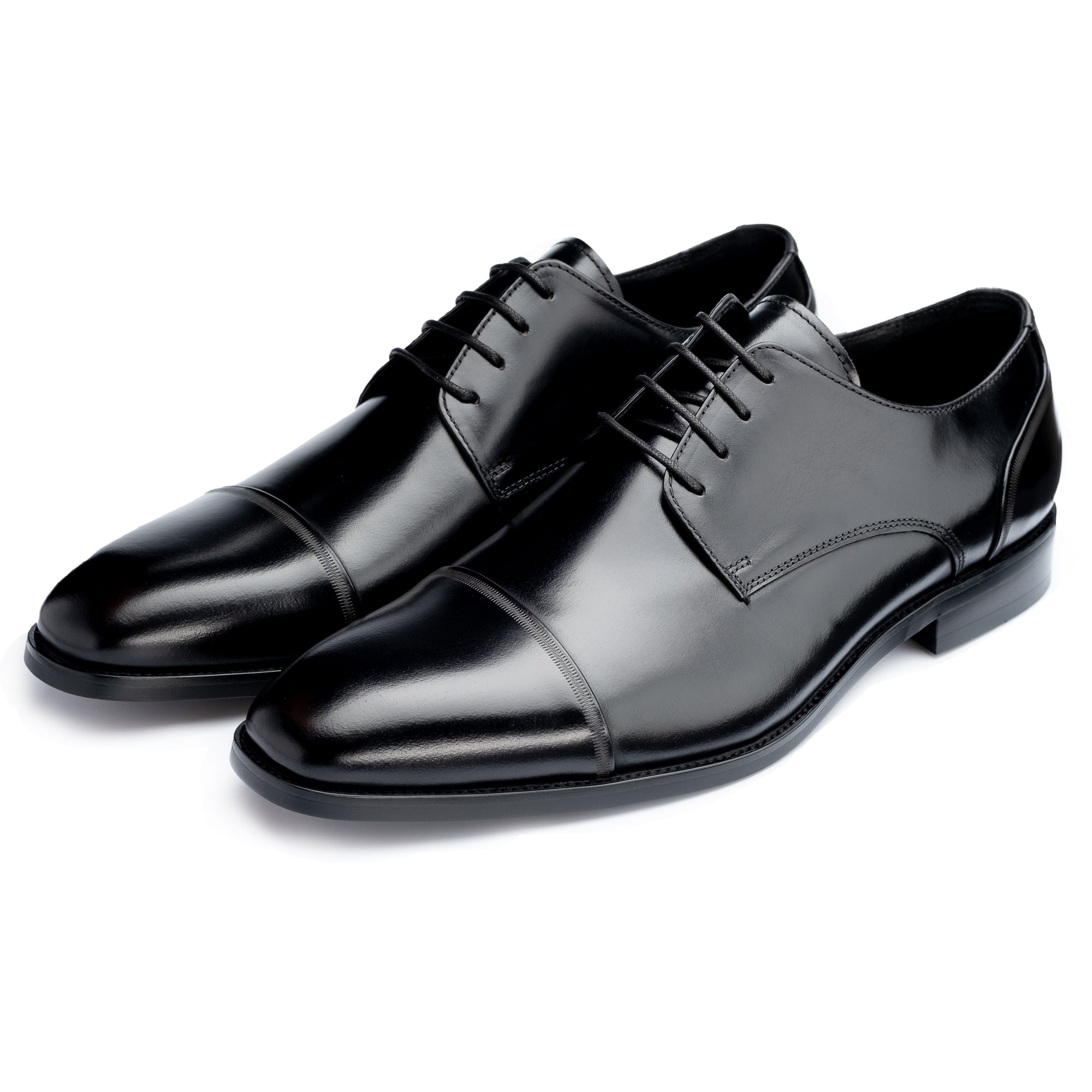
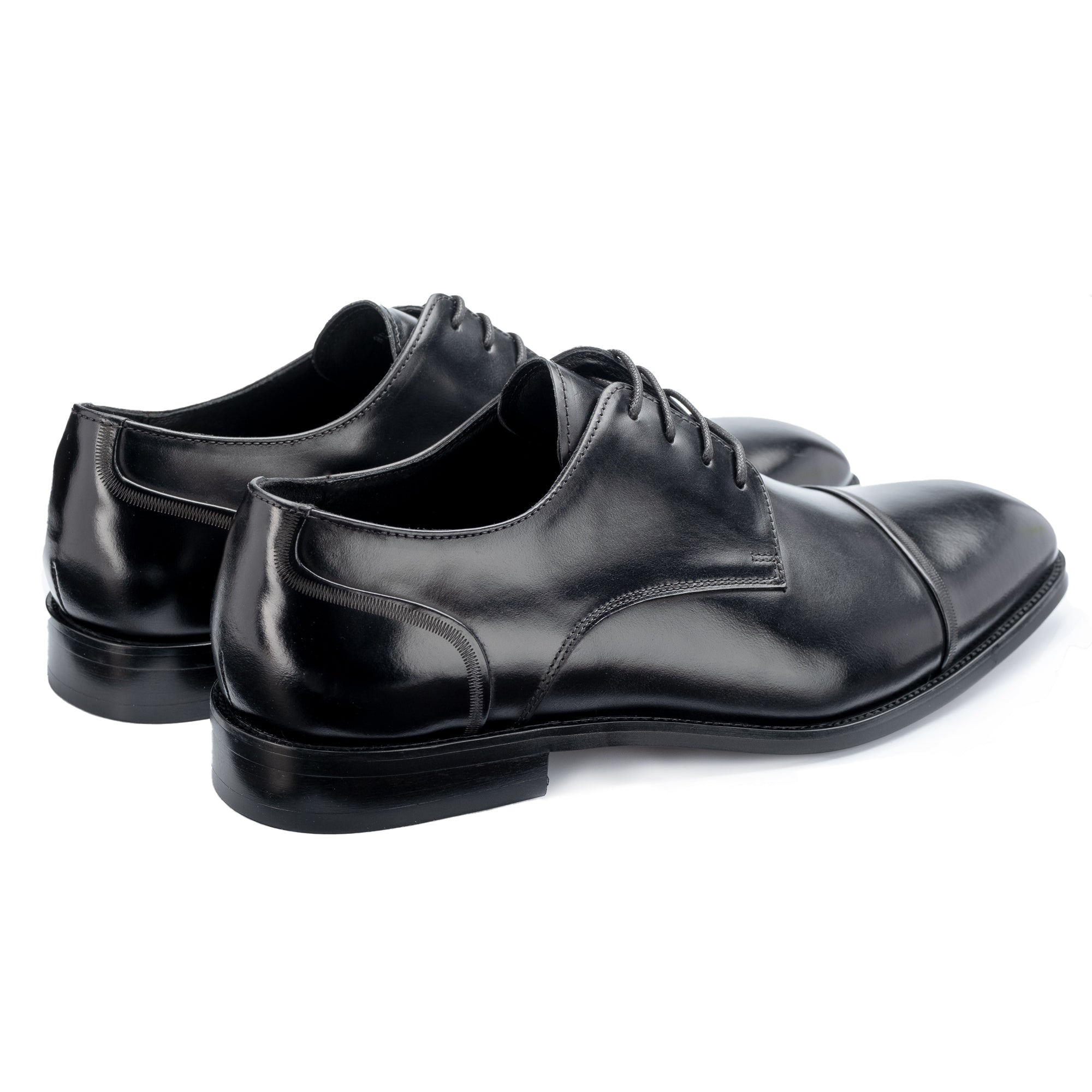
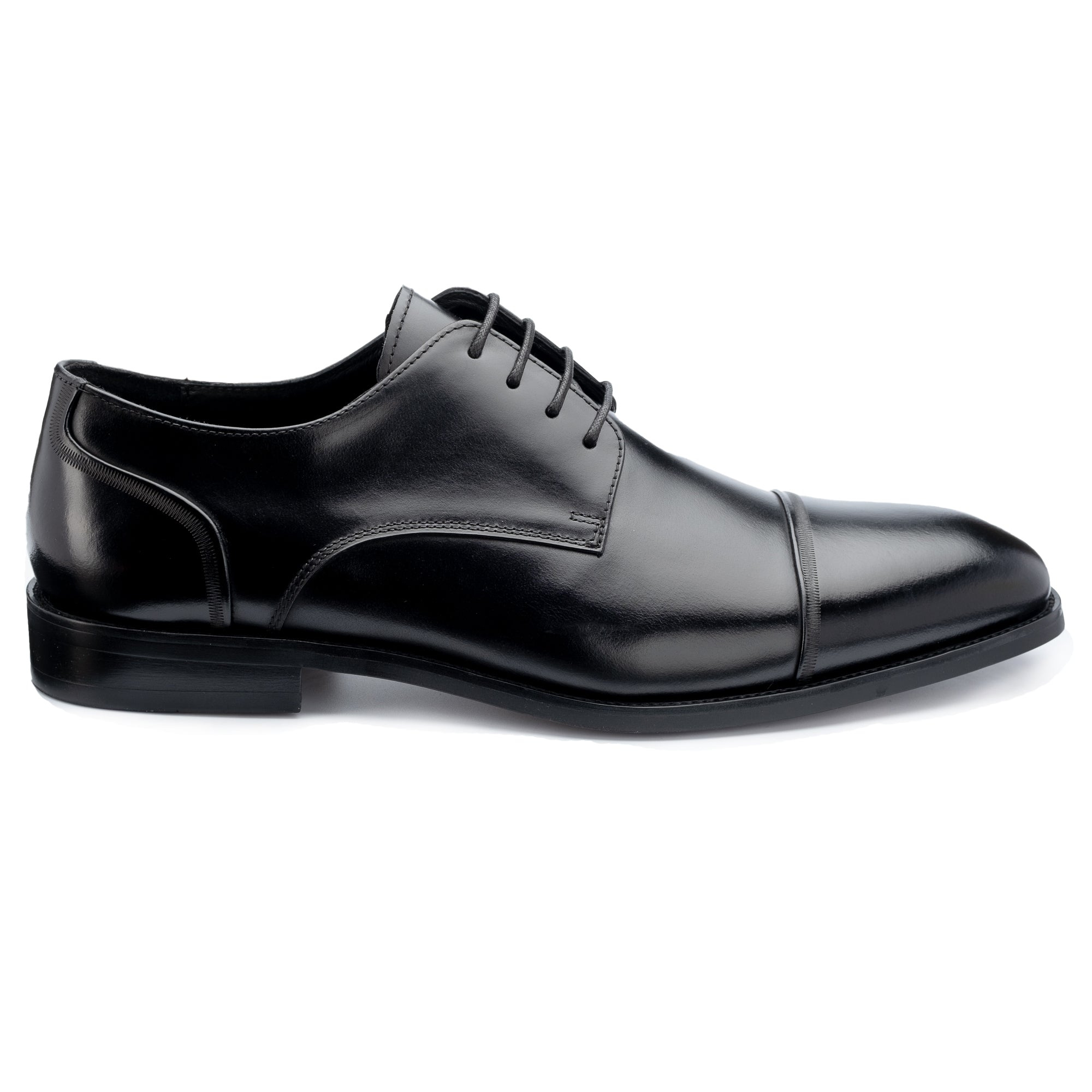
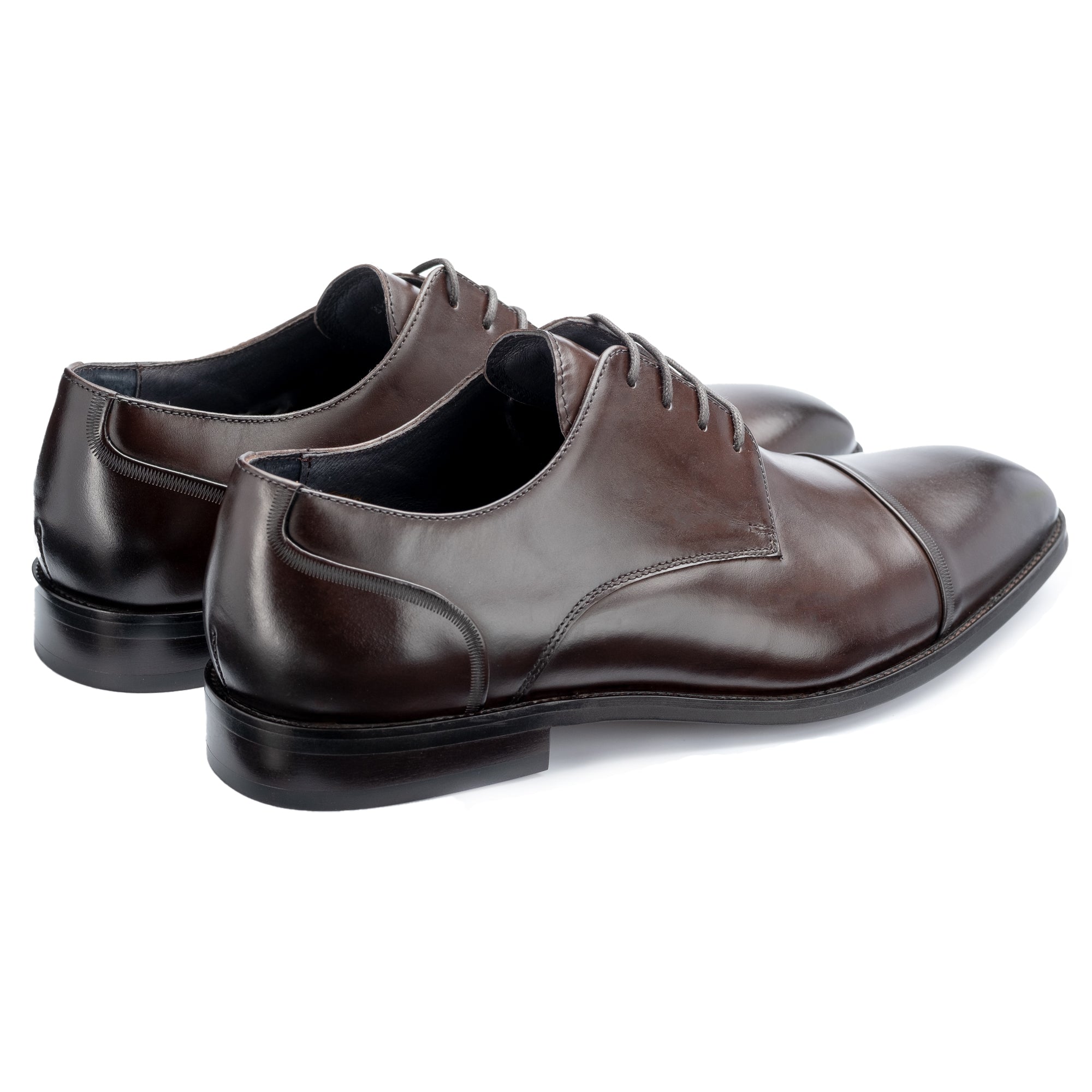
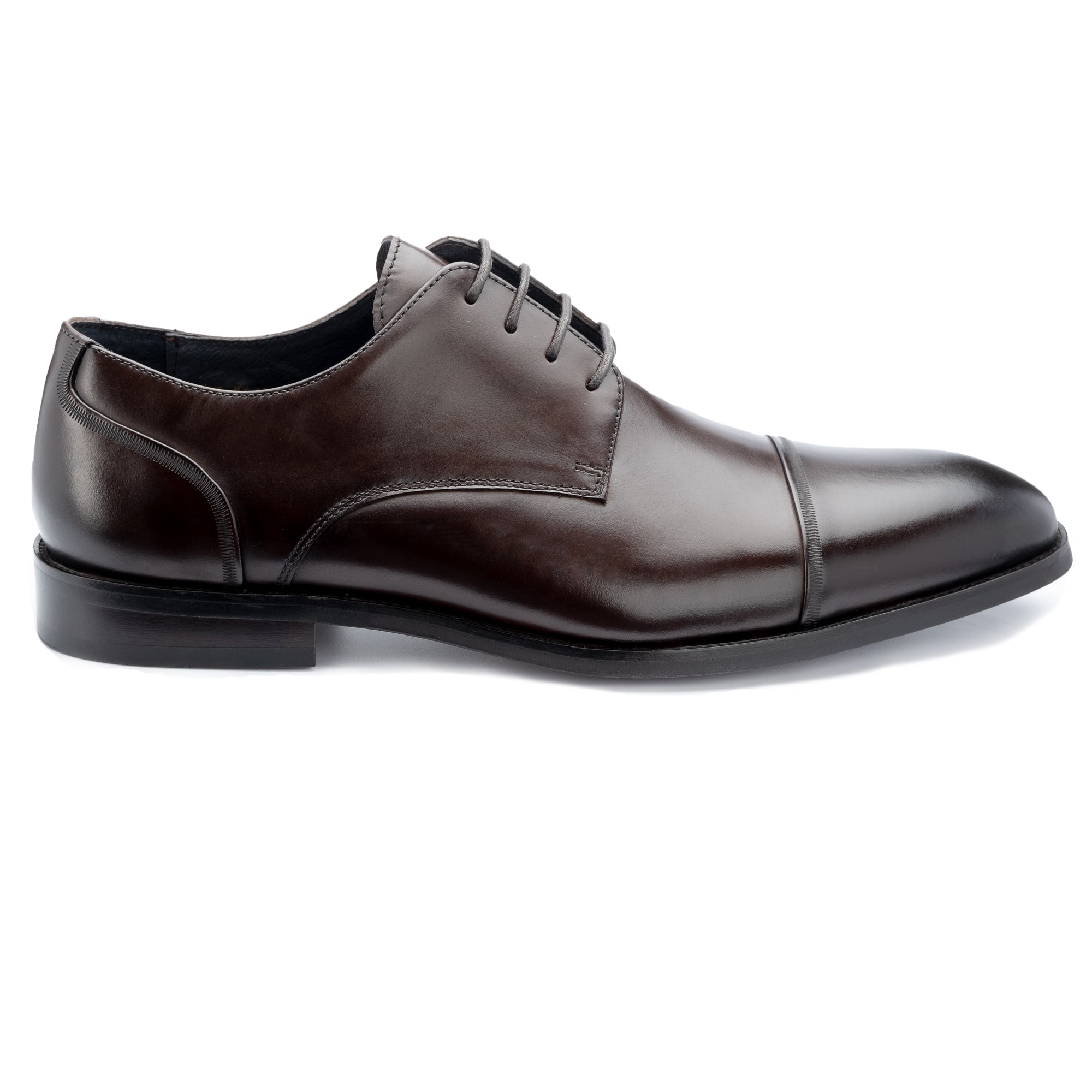
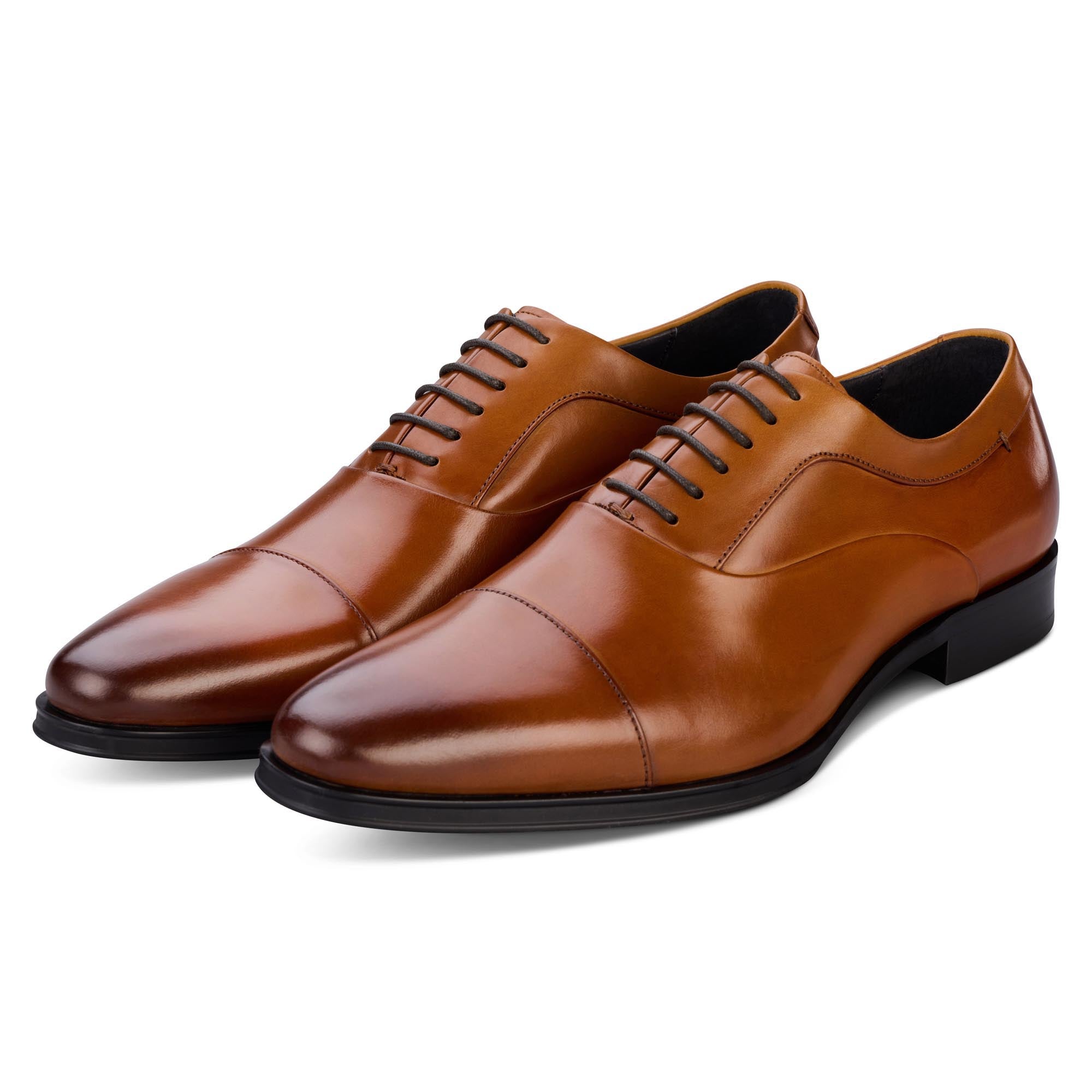
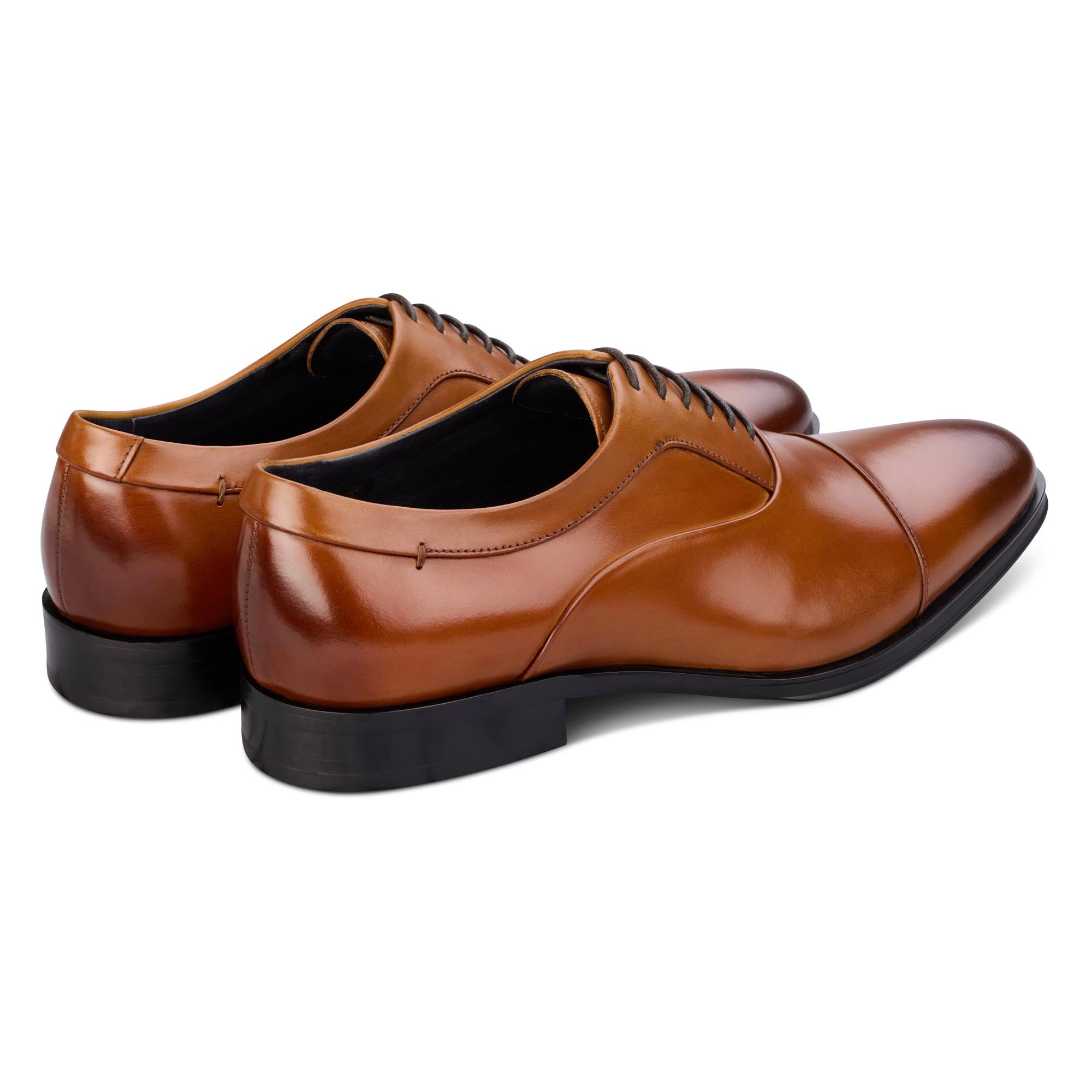
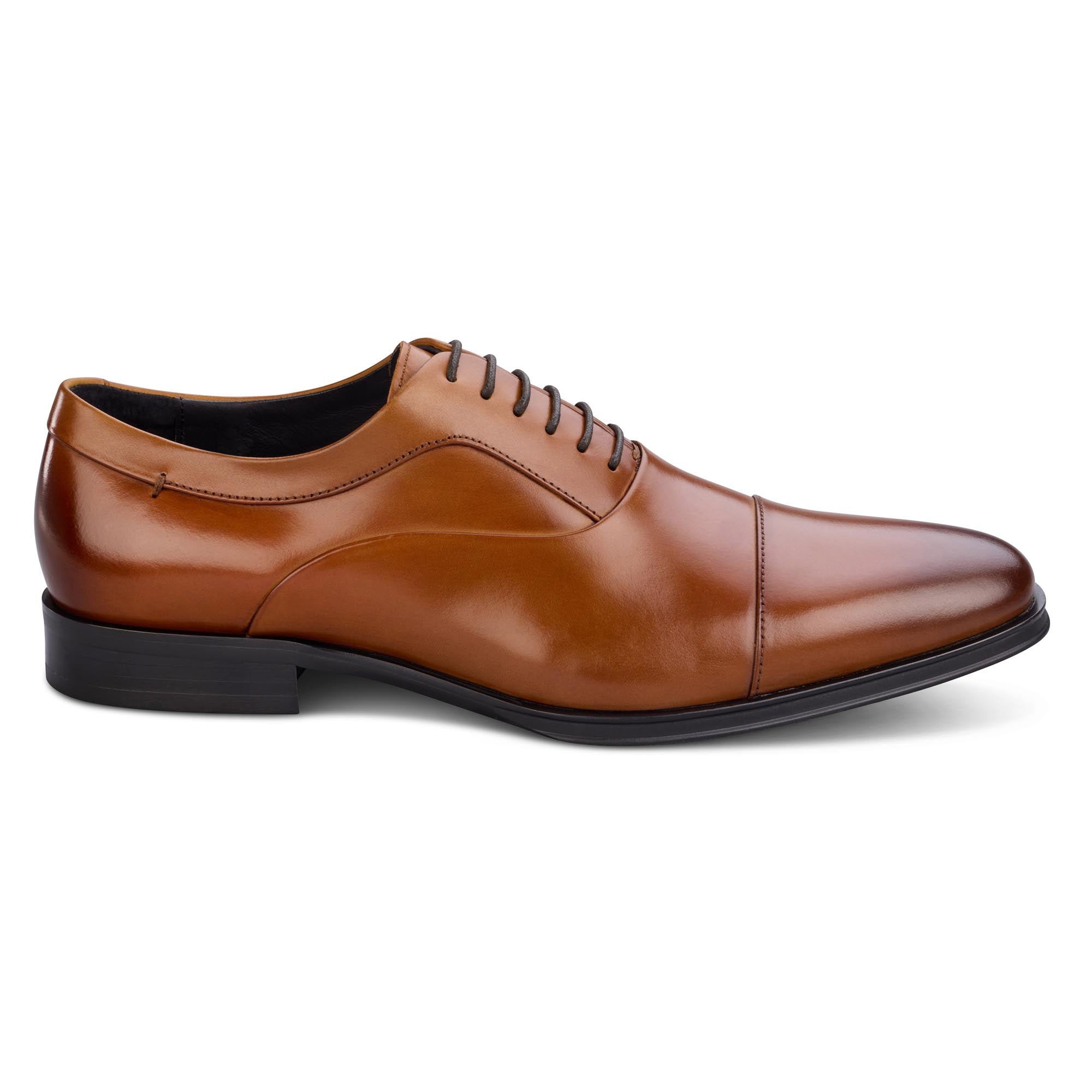
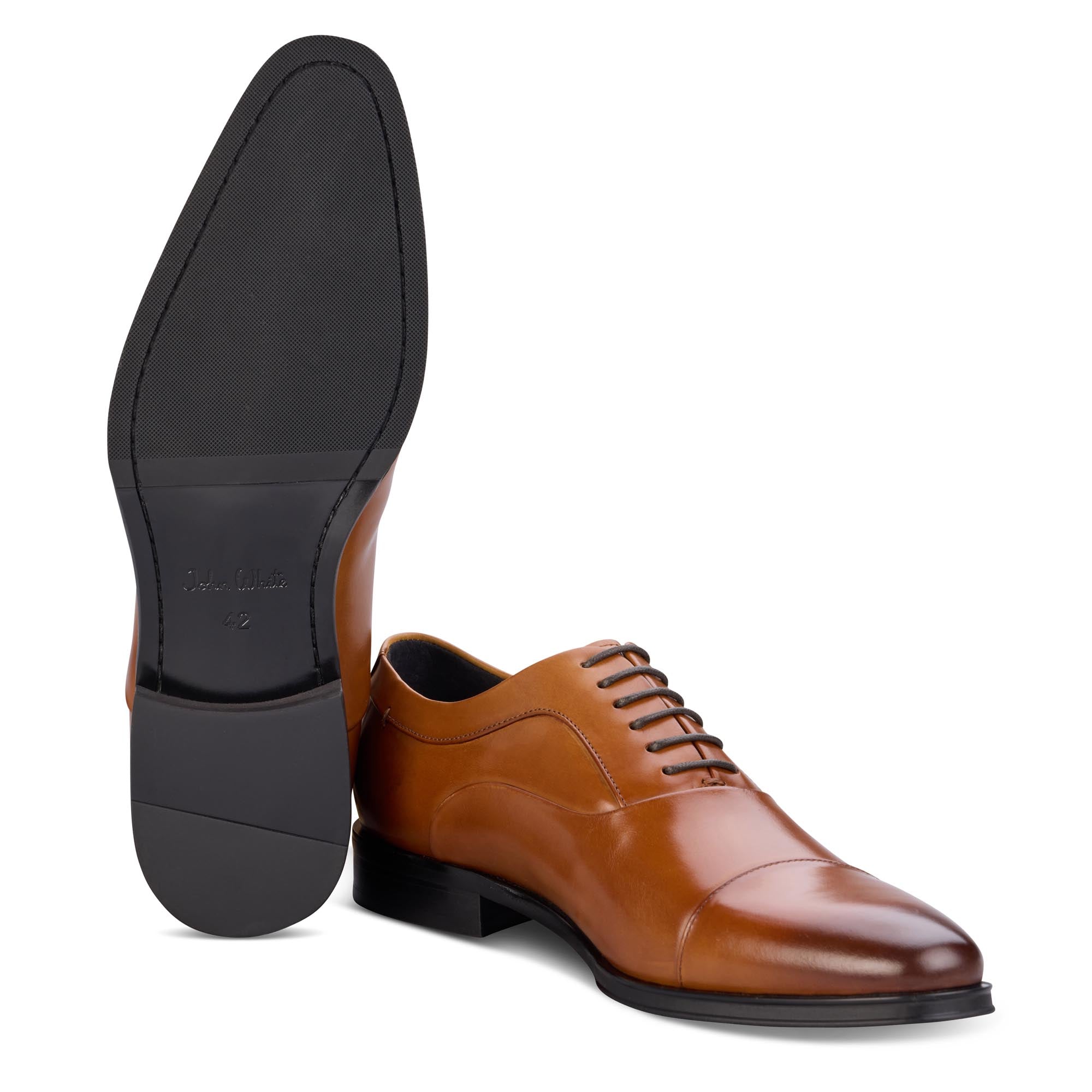
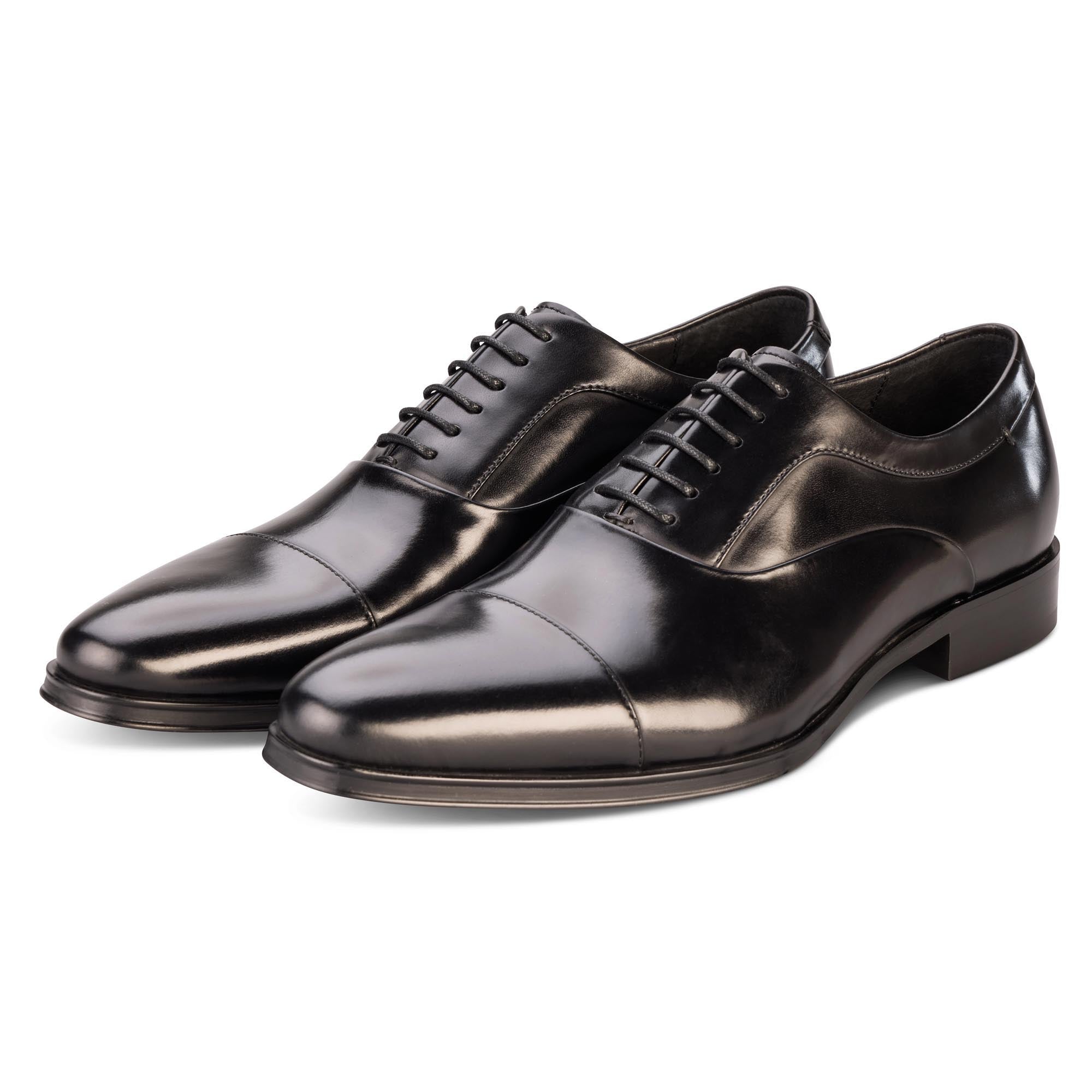
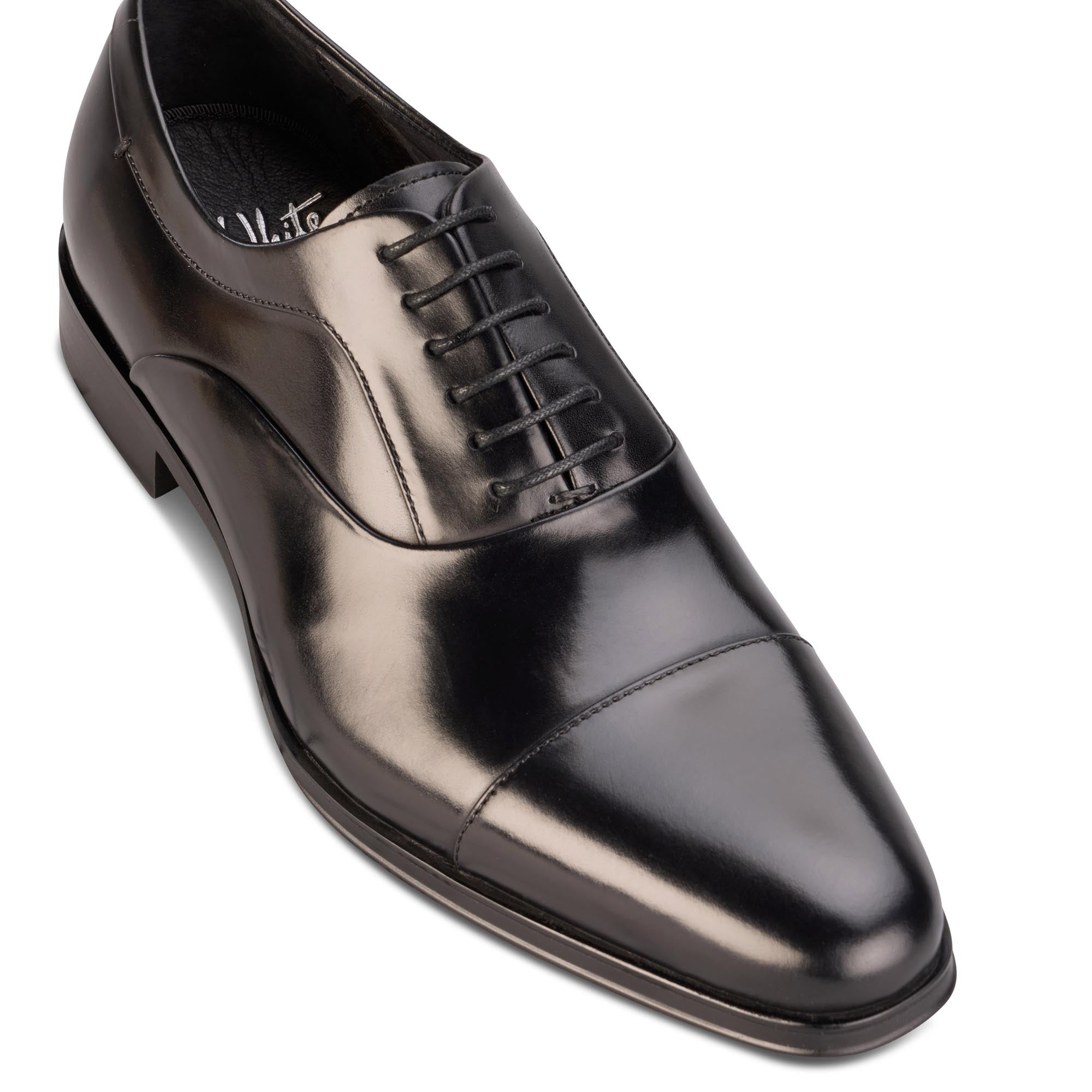
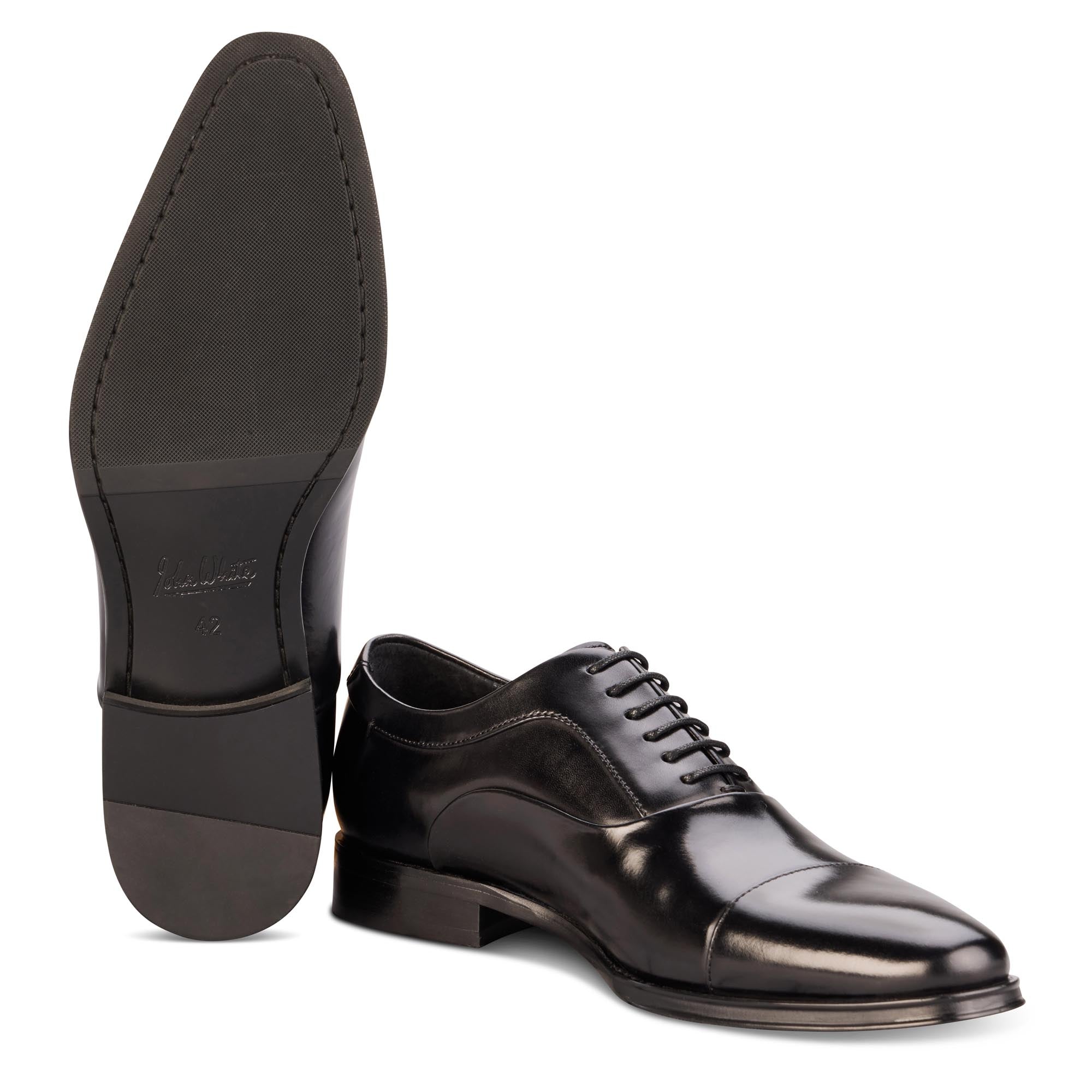
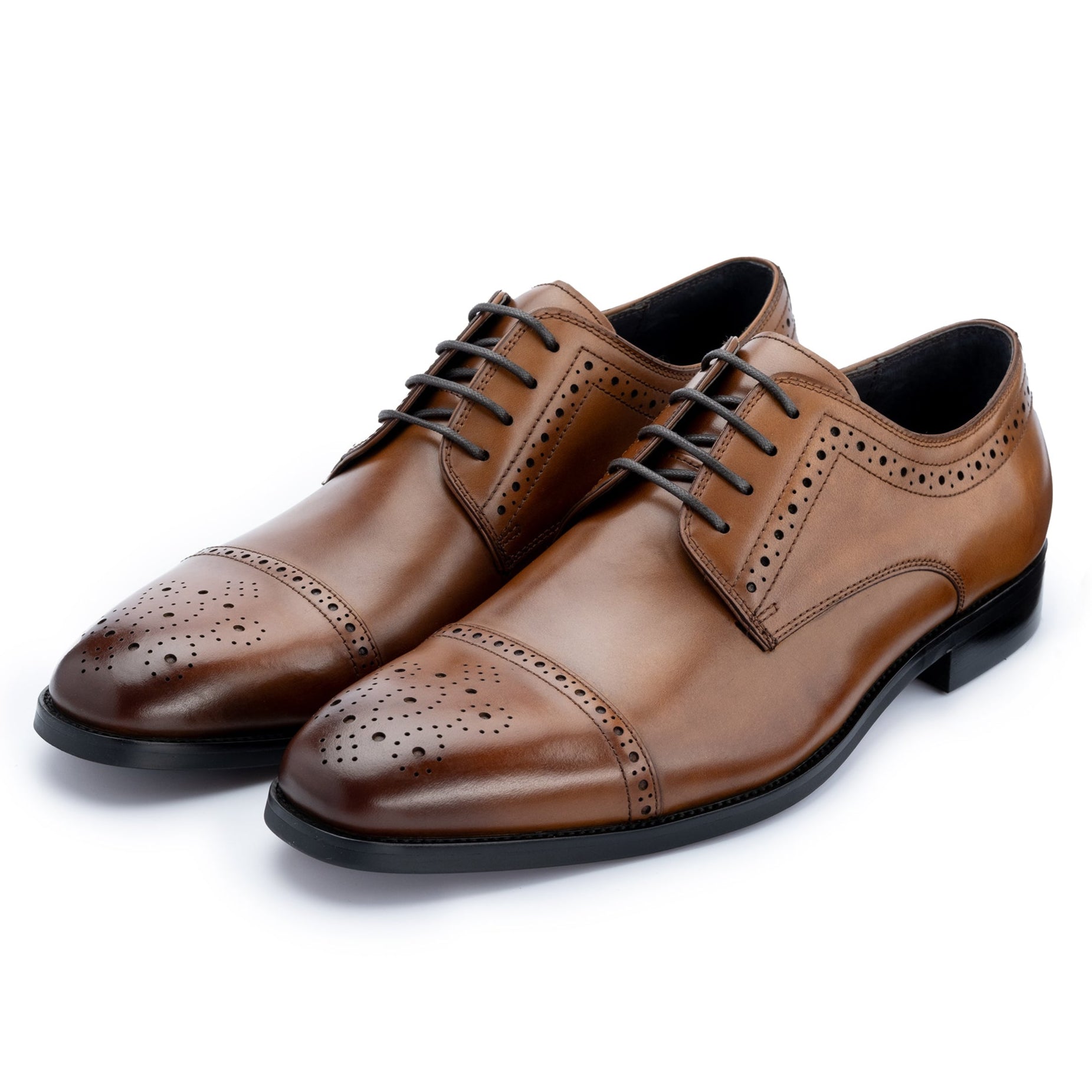
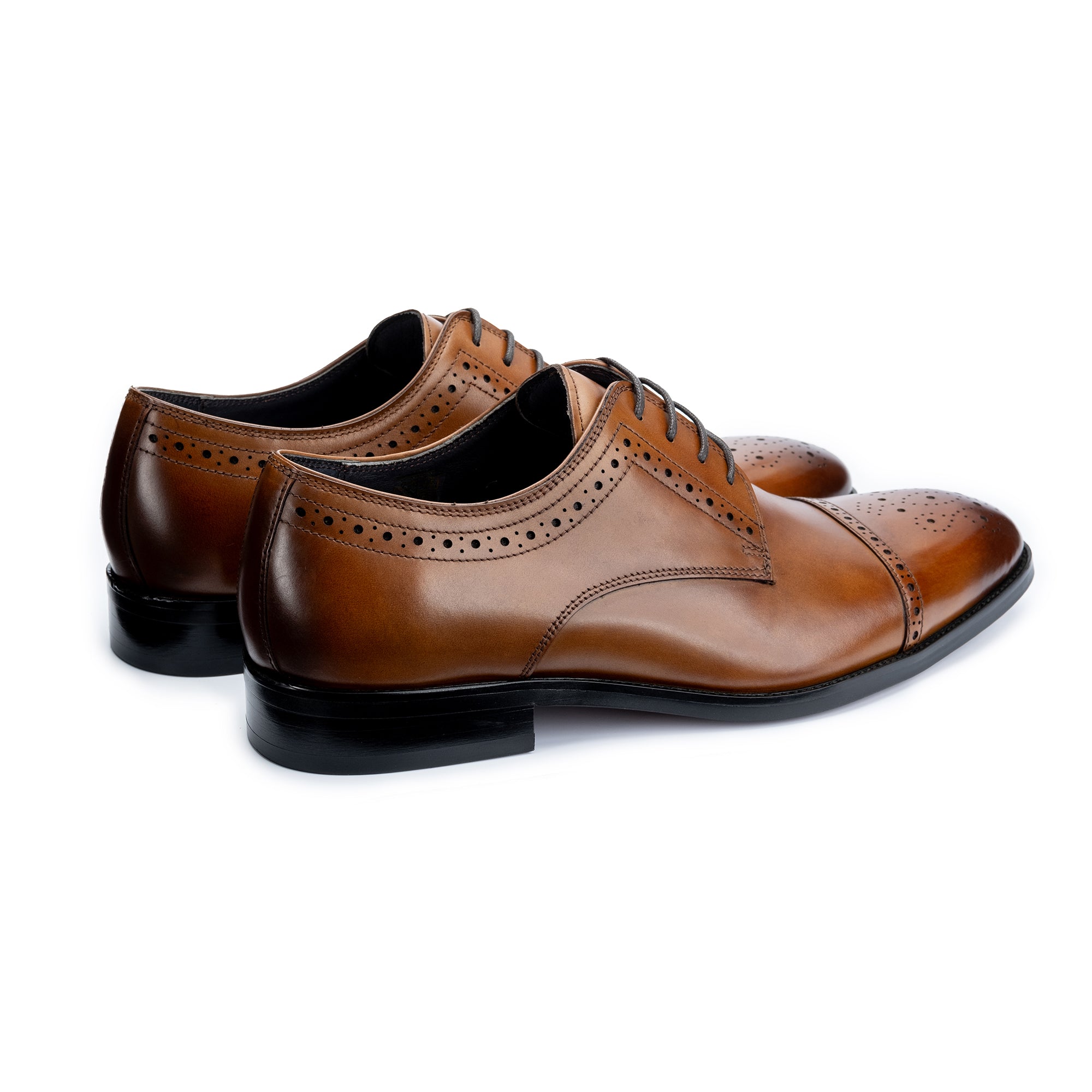
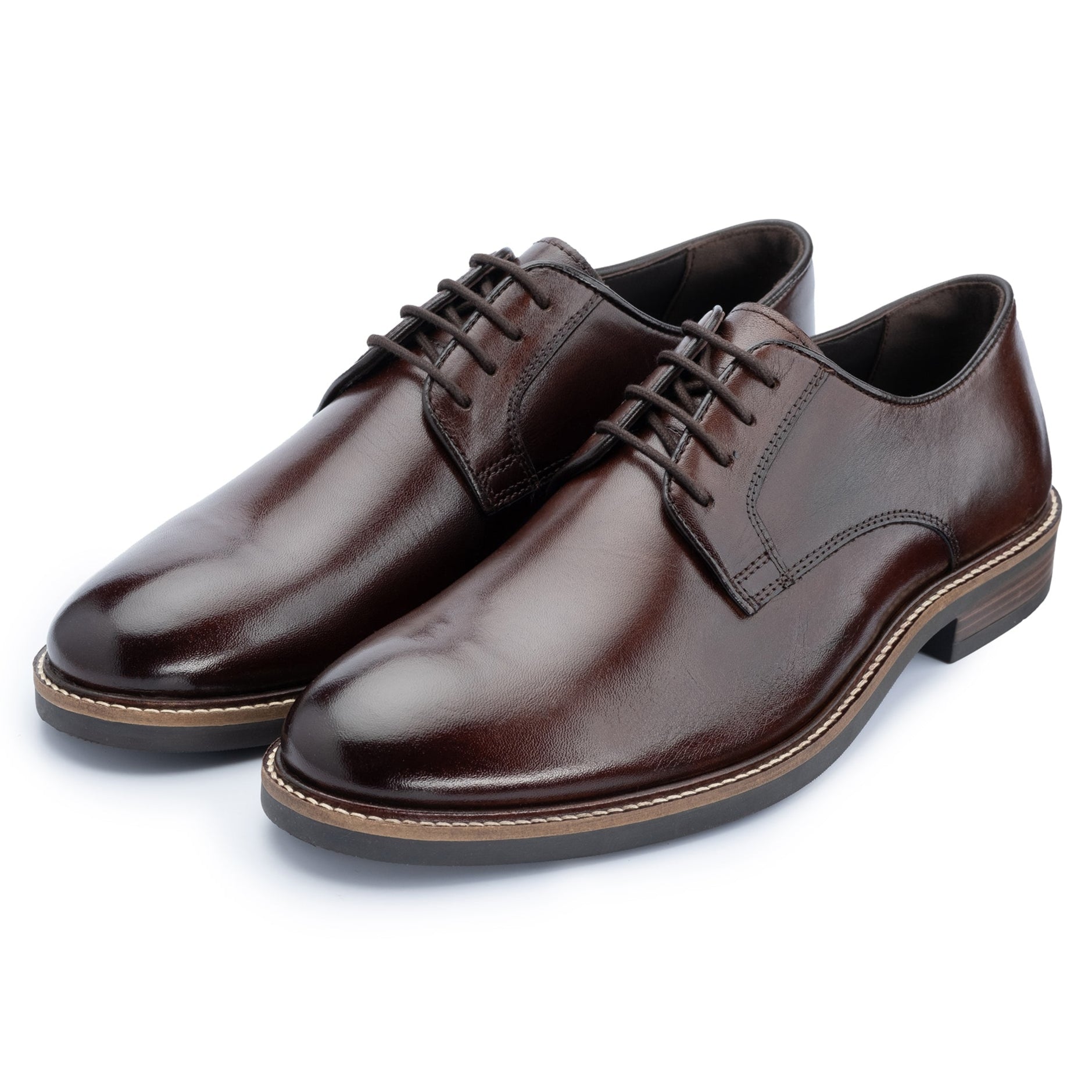
This technique gives shoes a sharp, refined appearance, adding visual interest without the need for broguing or other embellishments. Our Guildhall Capped Oxfords in Tan exemplify this, where the burnishing on the toe cap draws the eye and creates an elegant focal point.
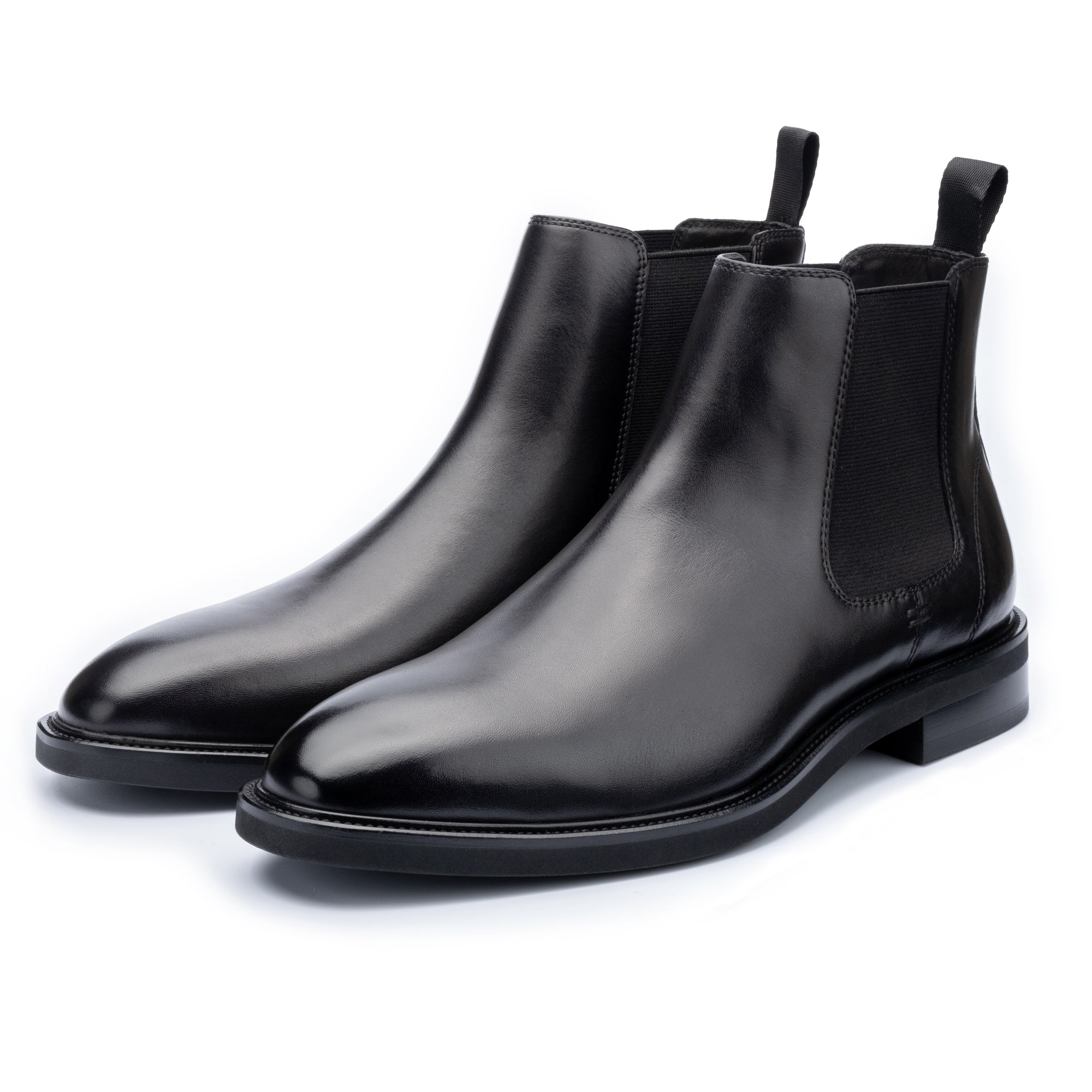
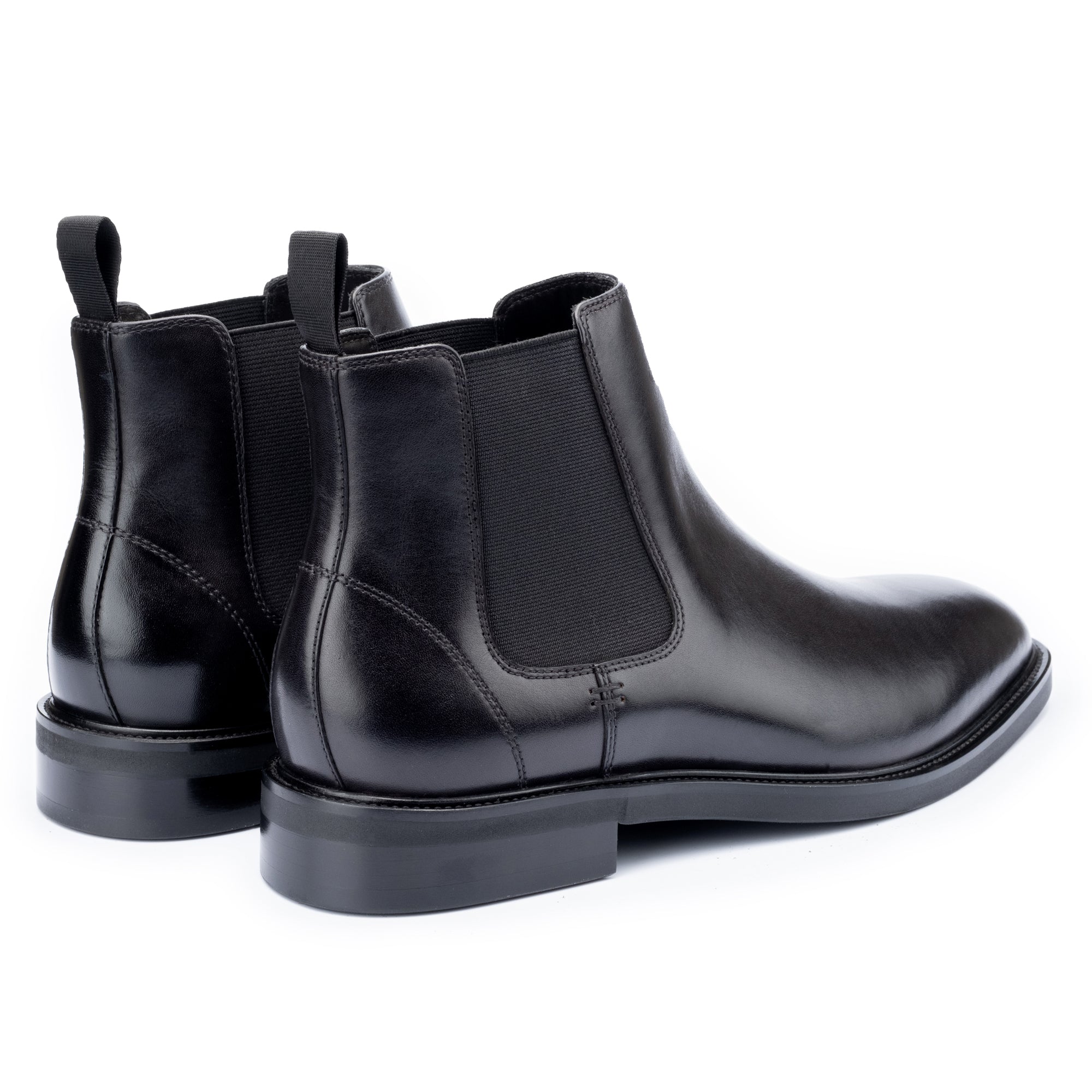
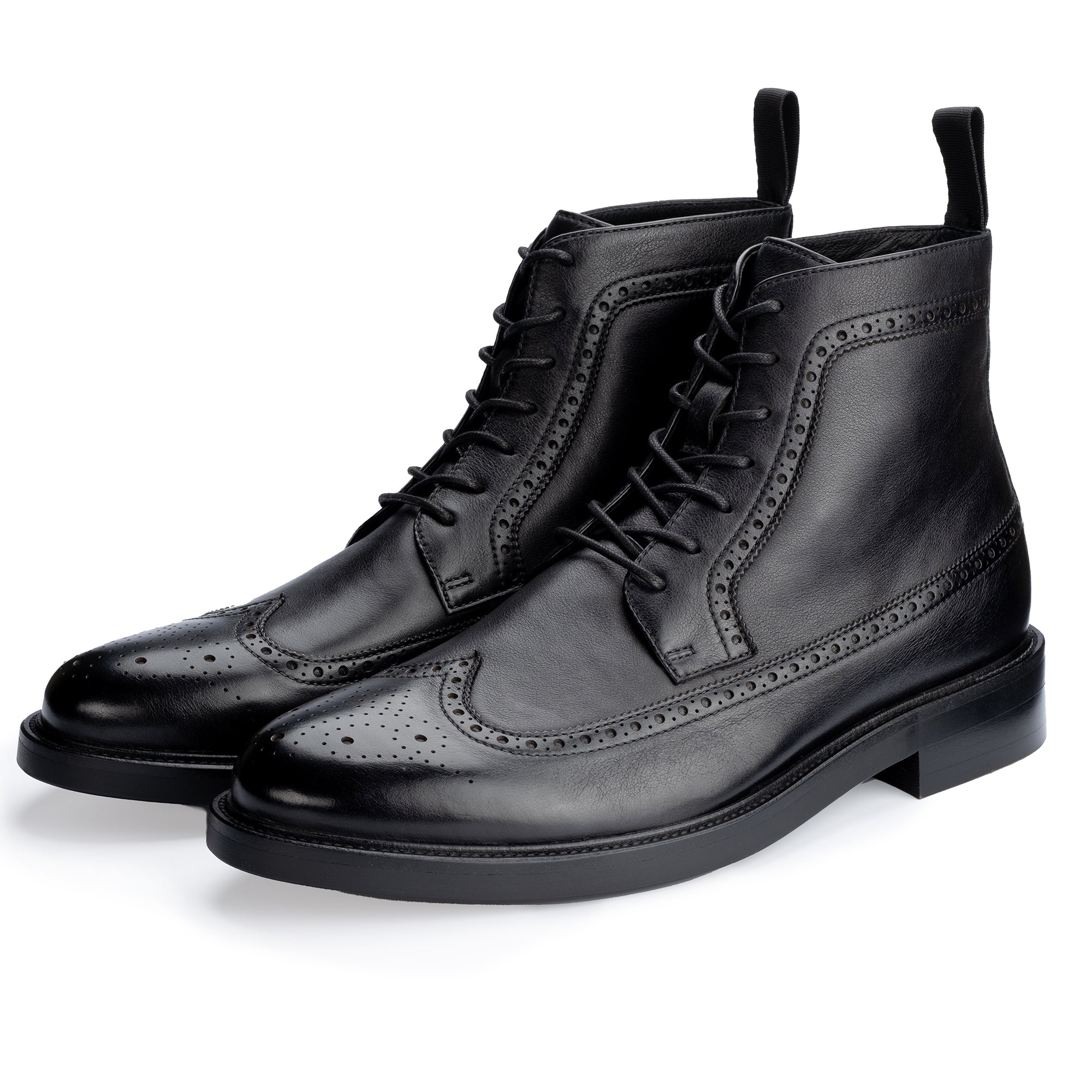
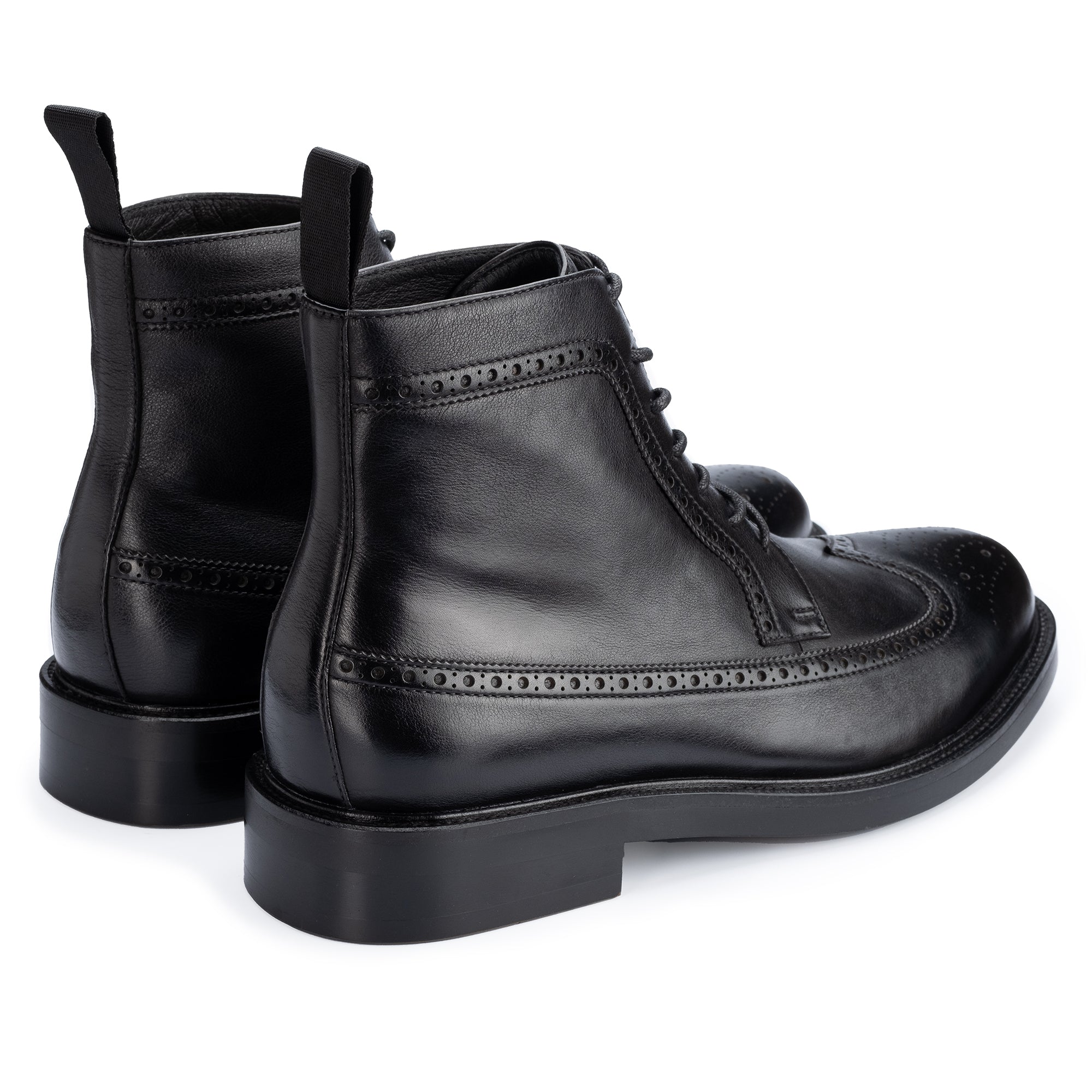
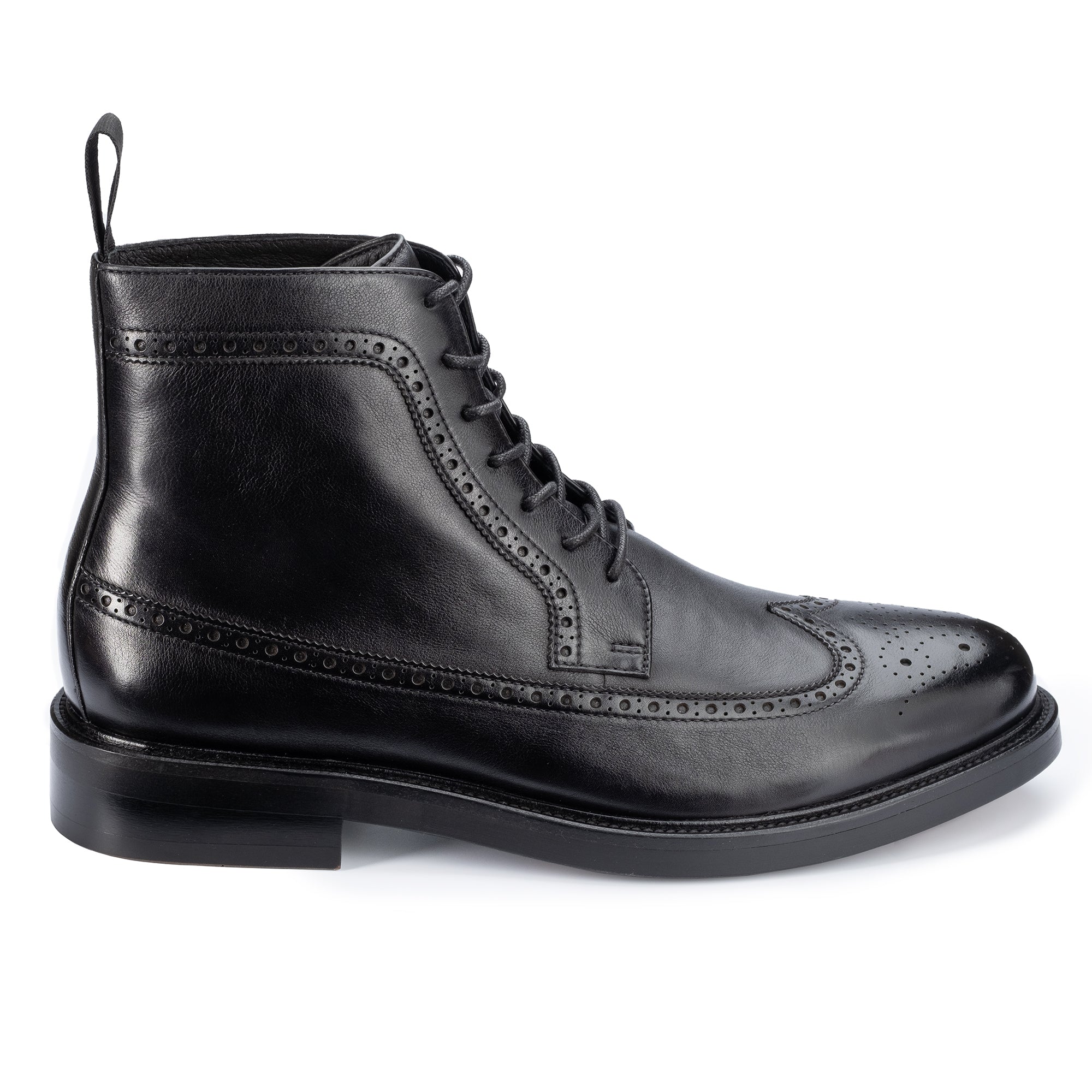
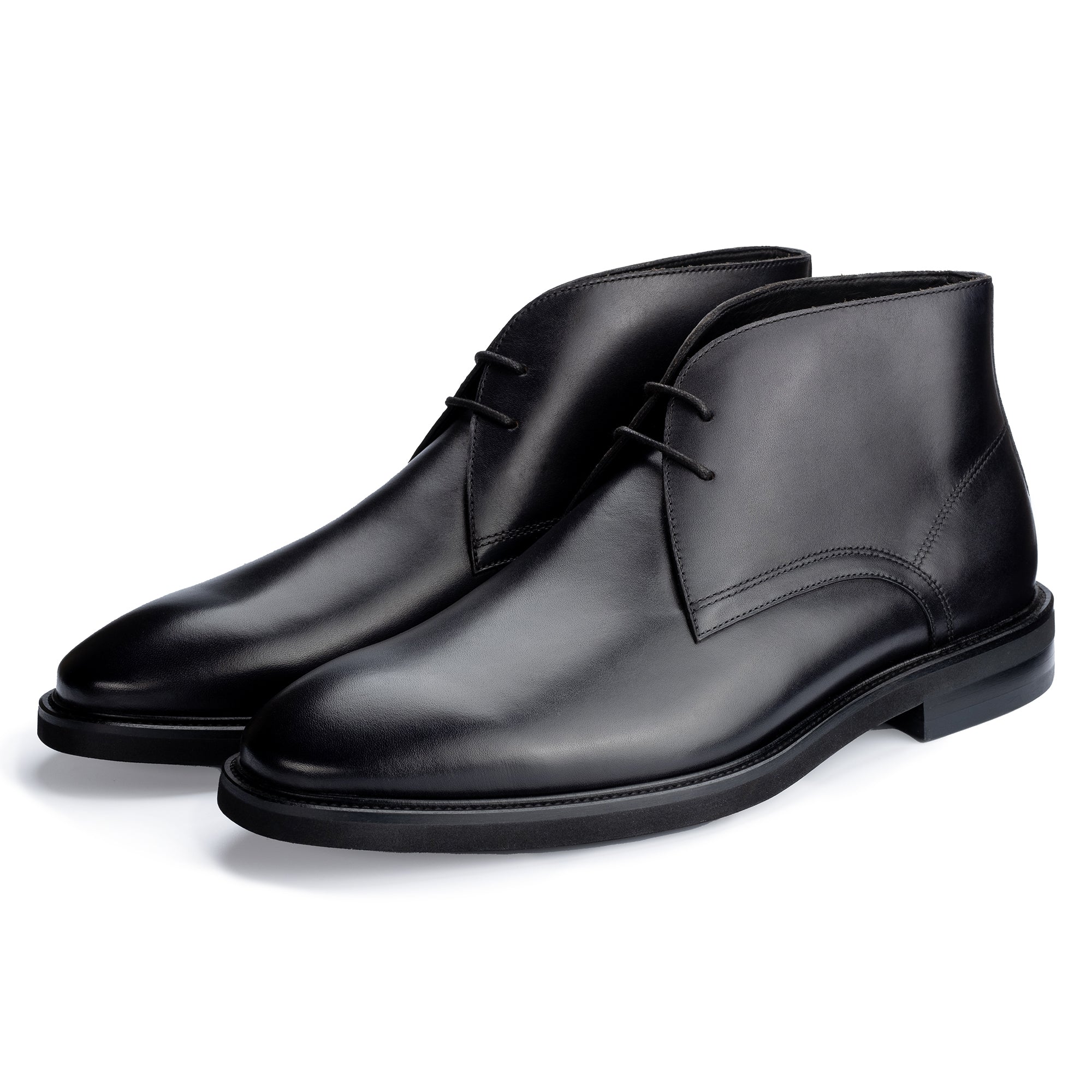
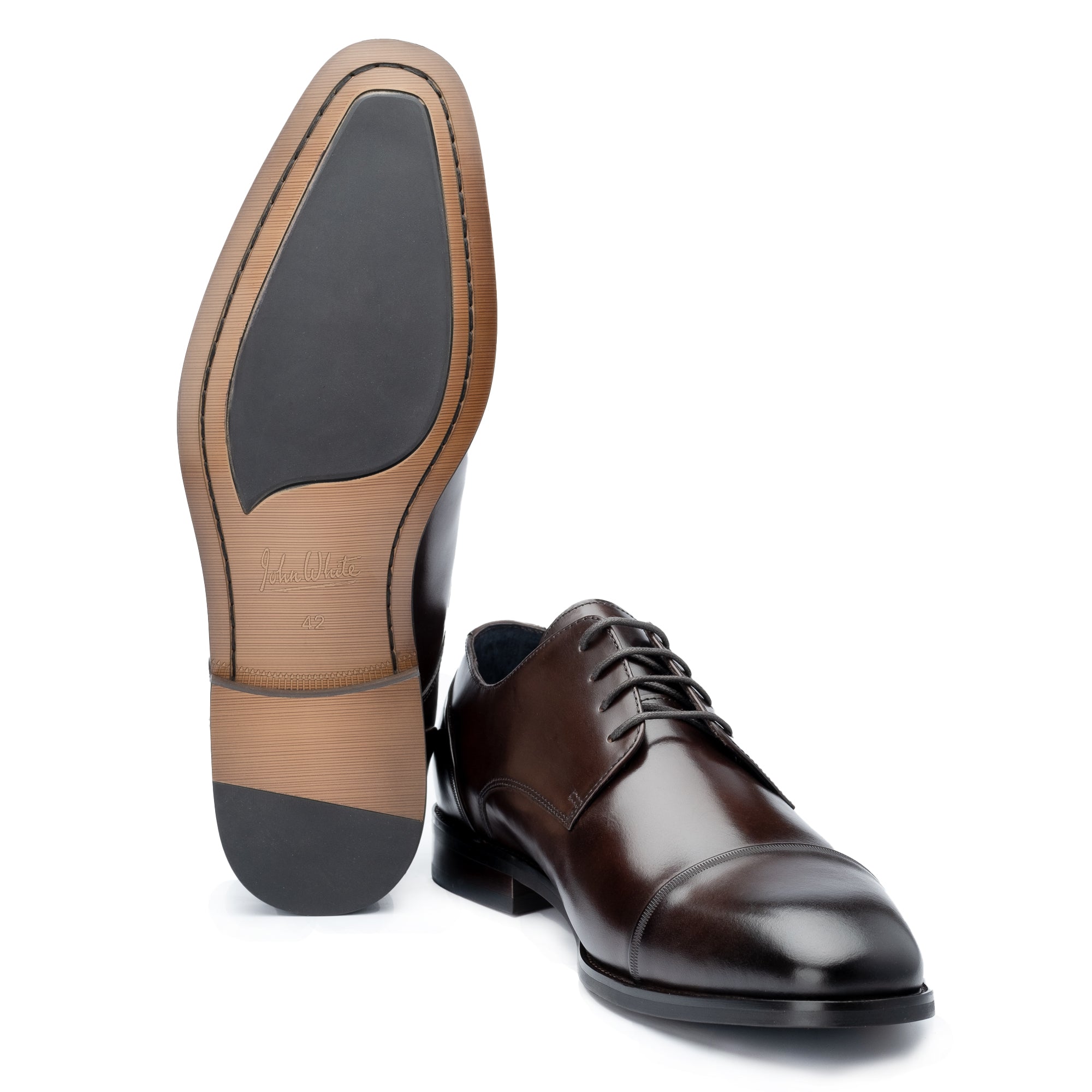
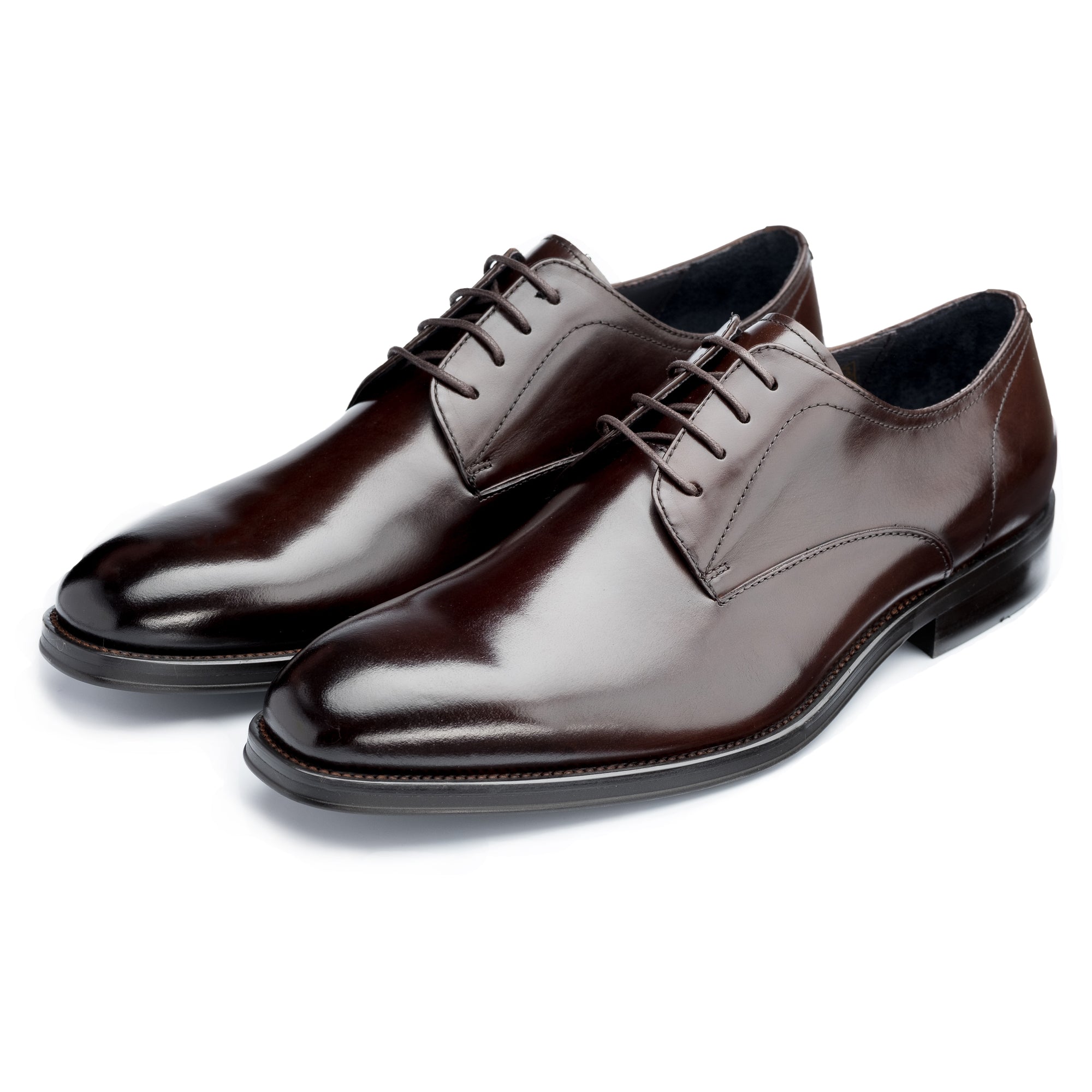
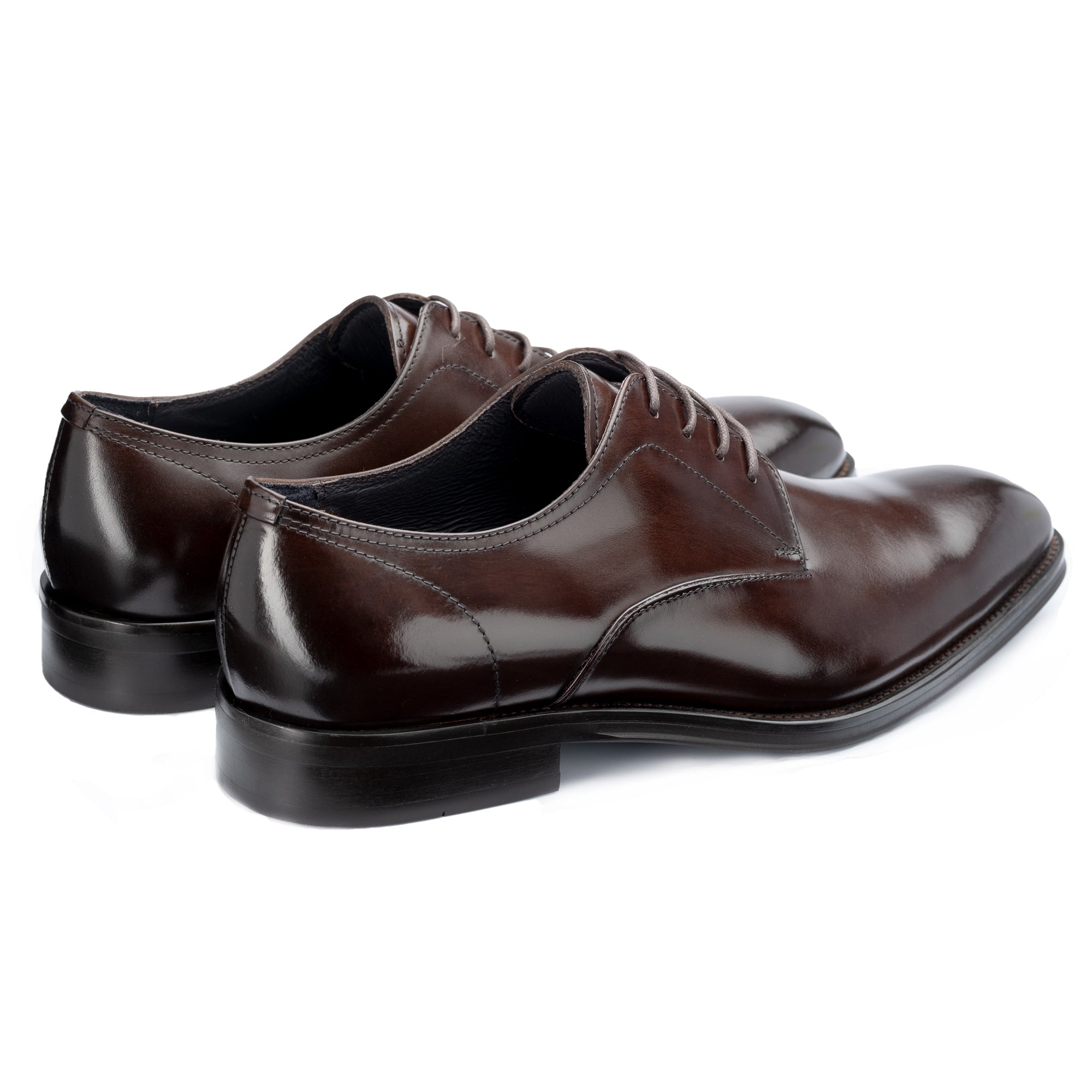
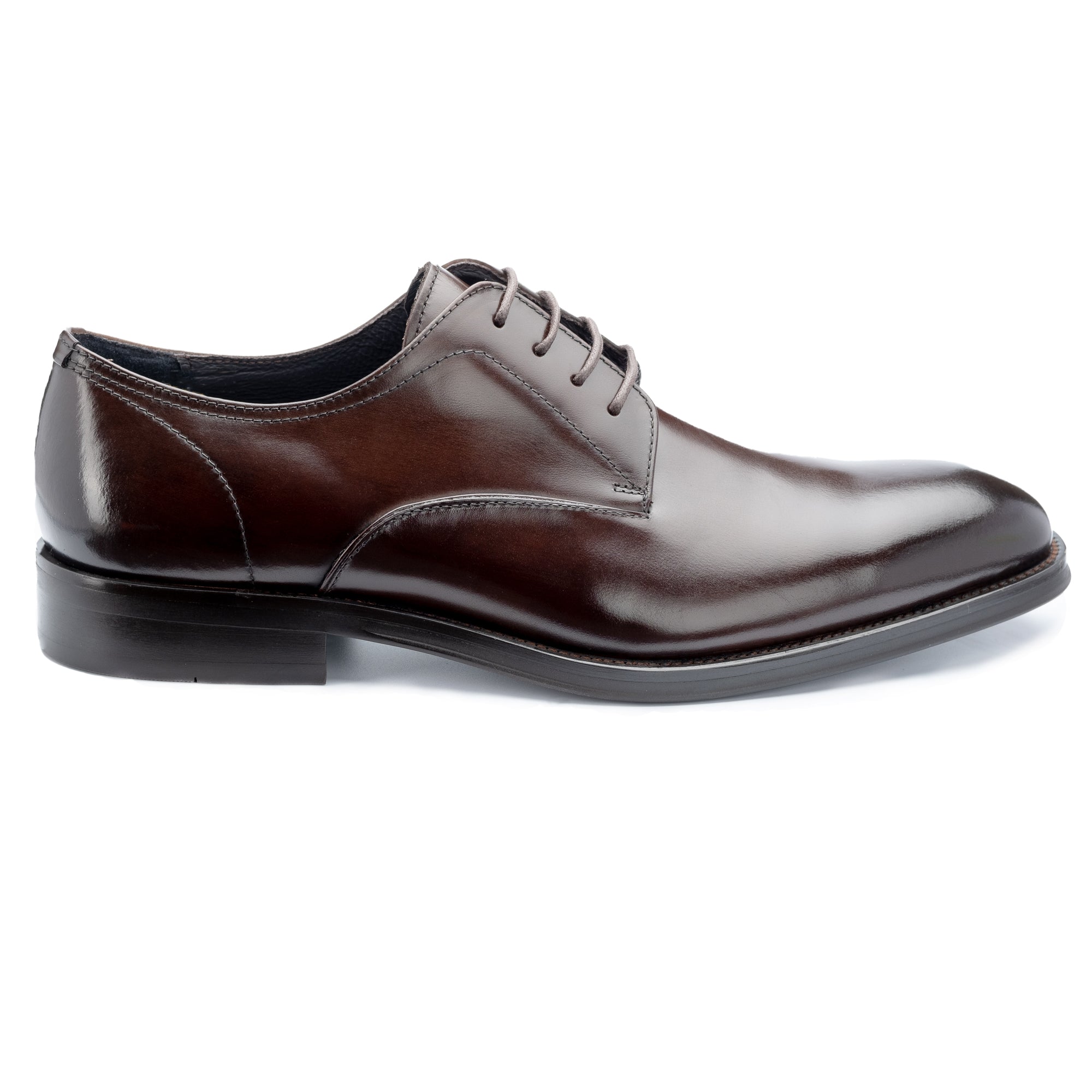
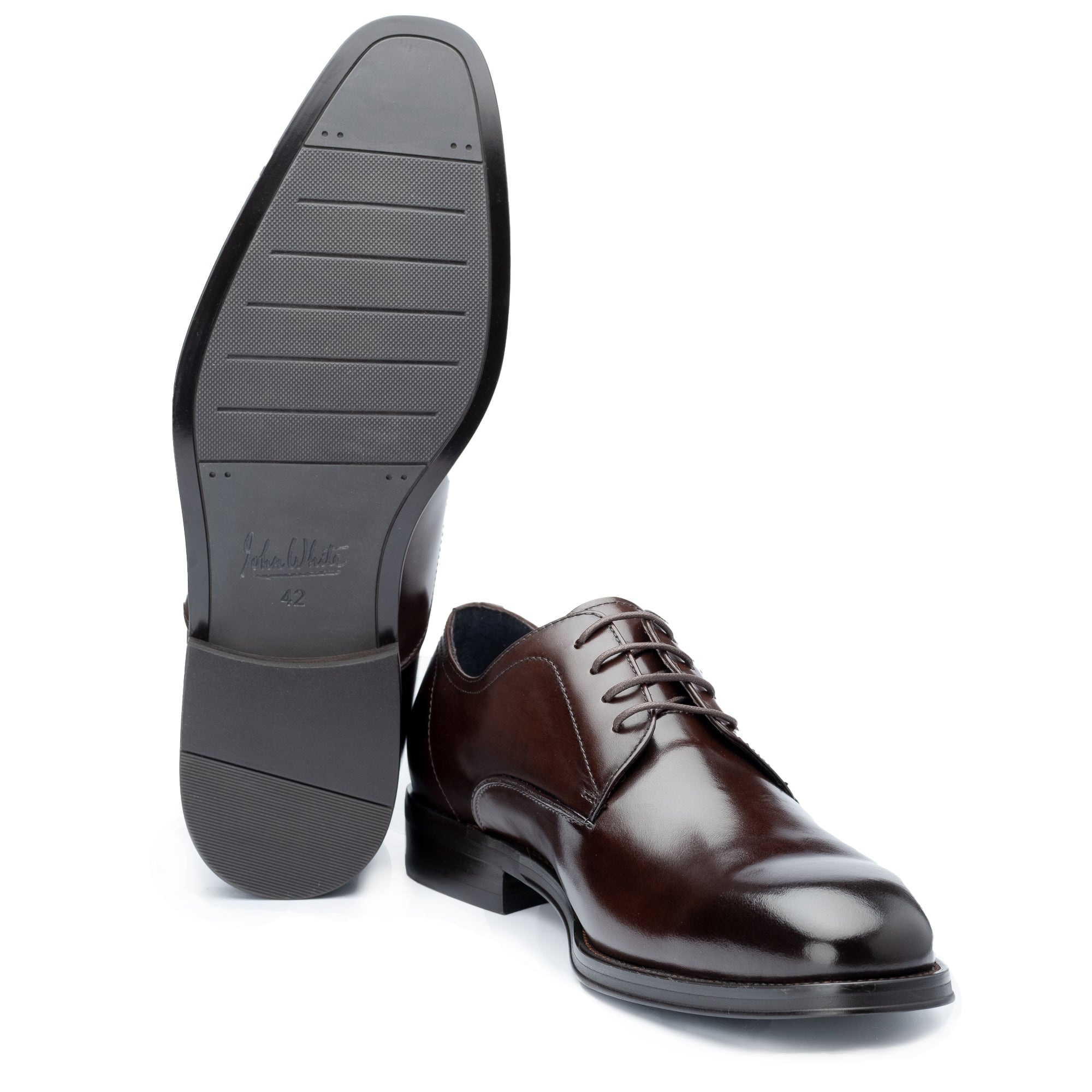
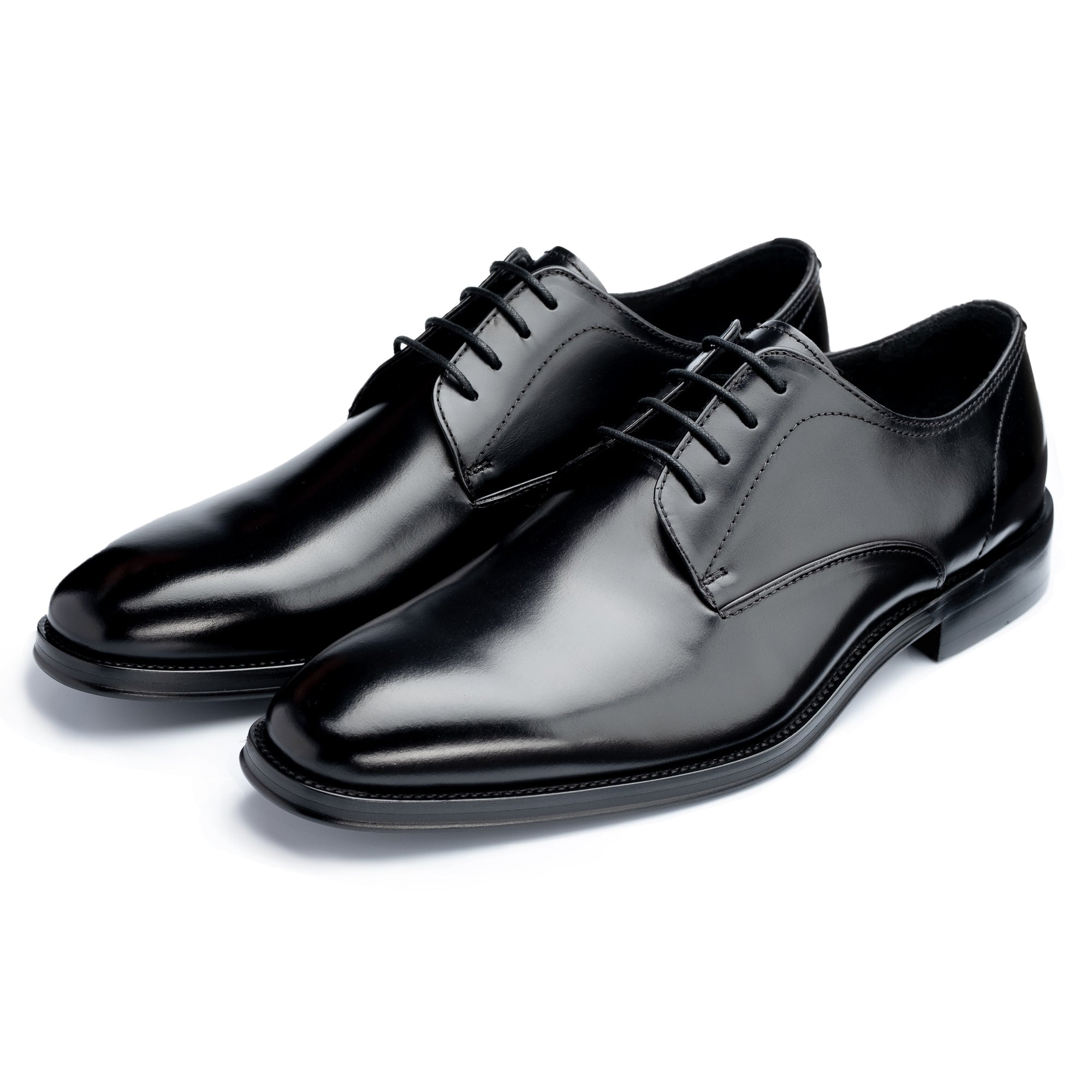
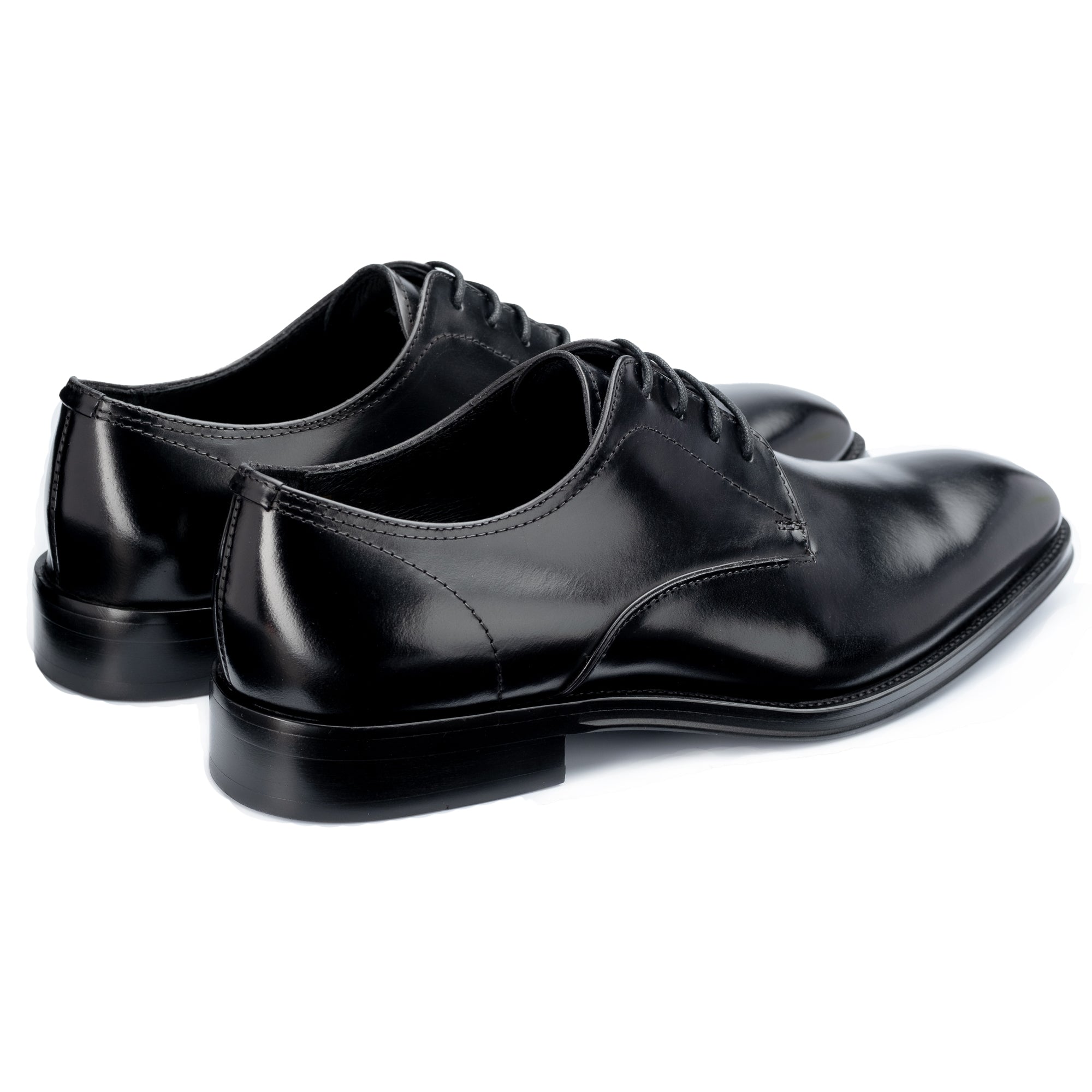
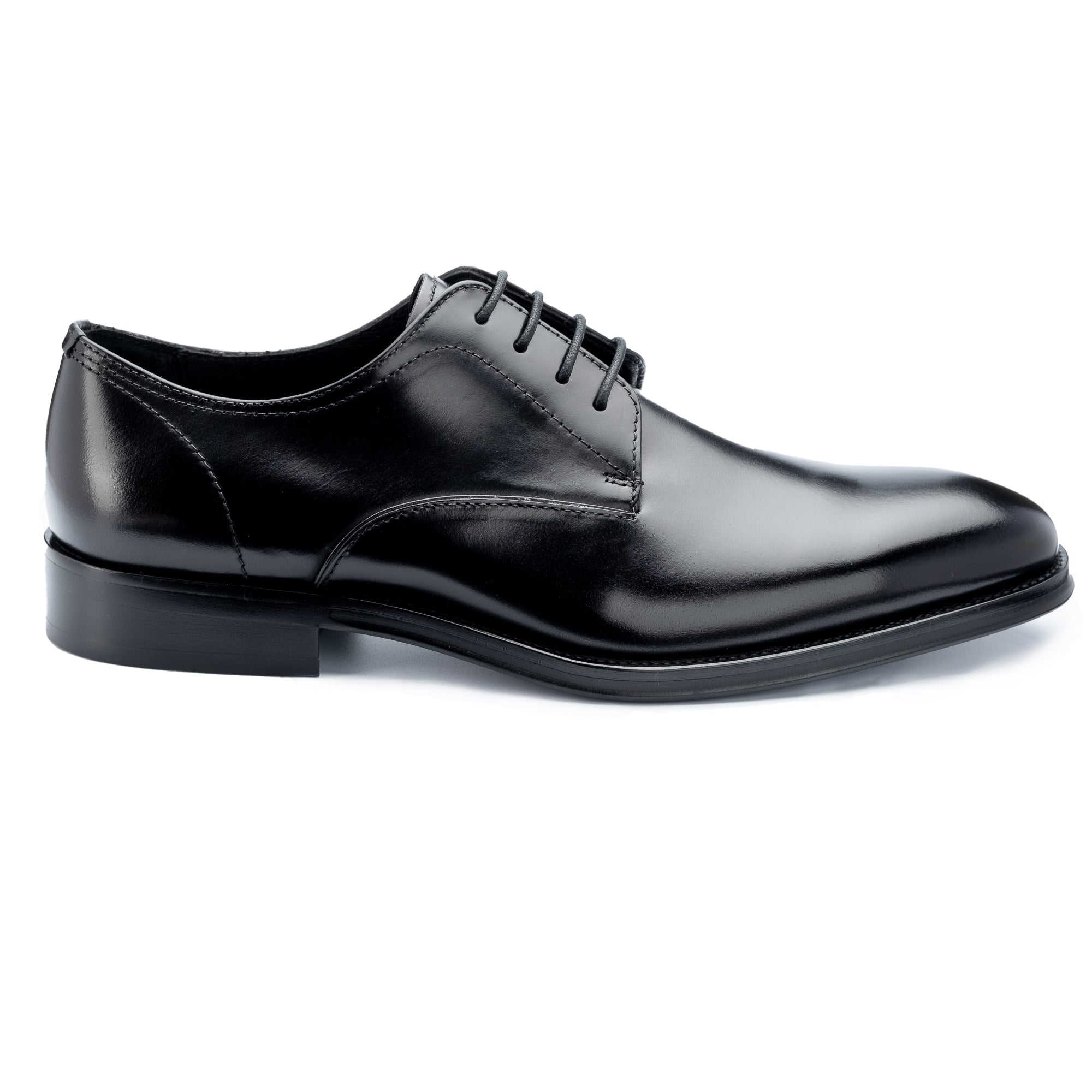
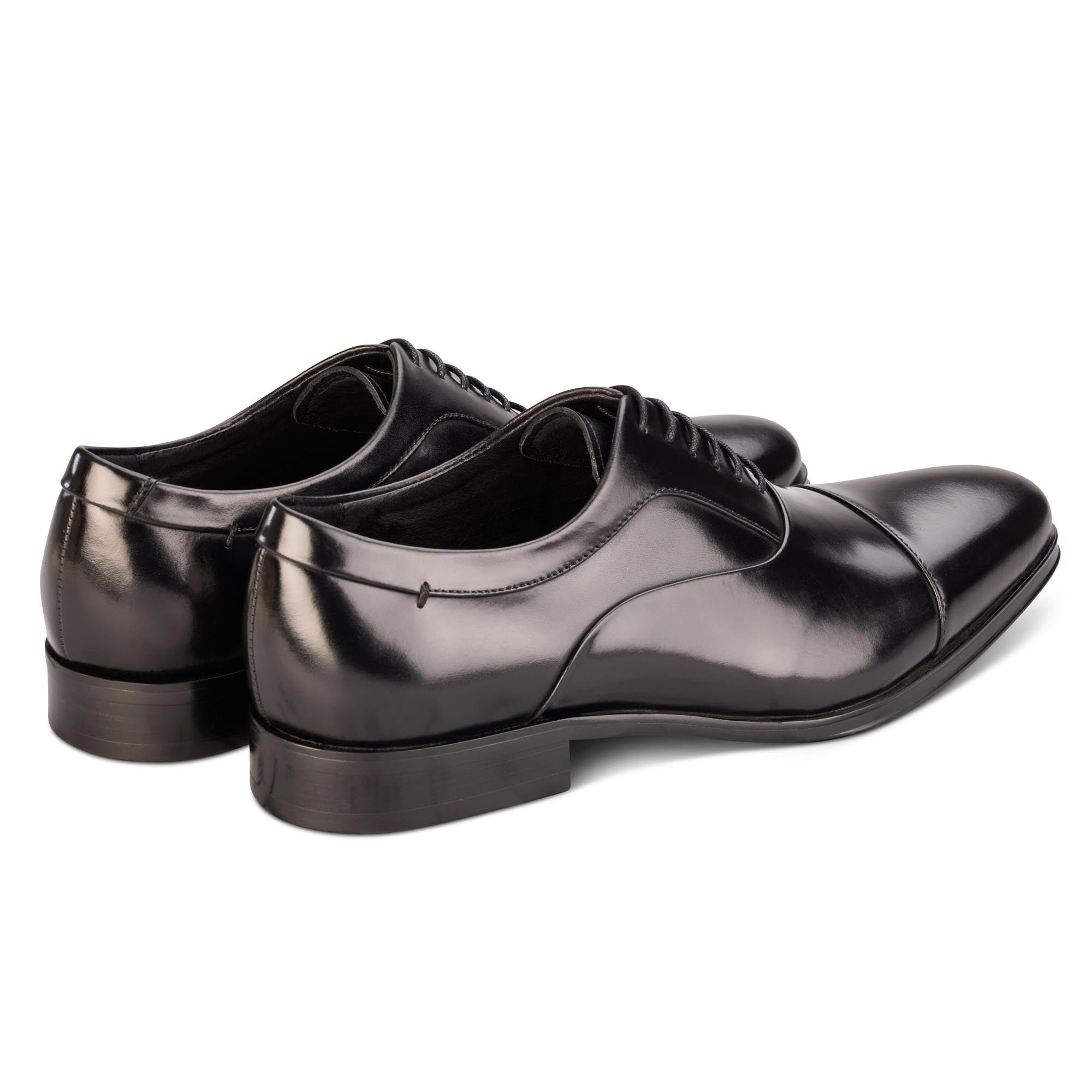
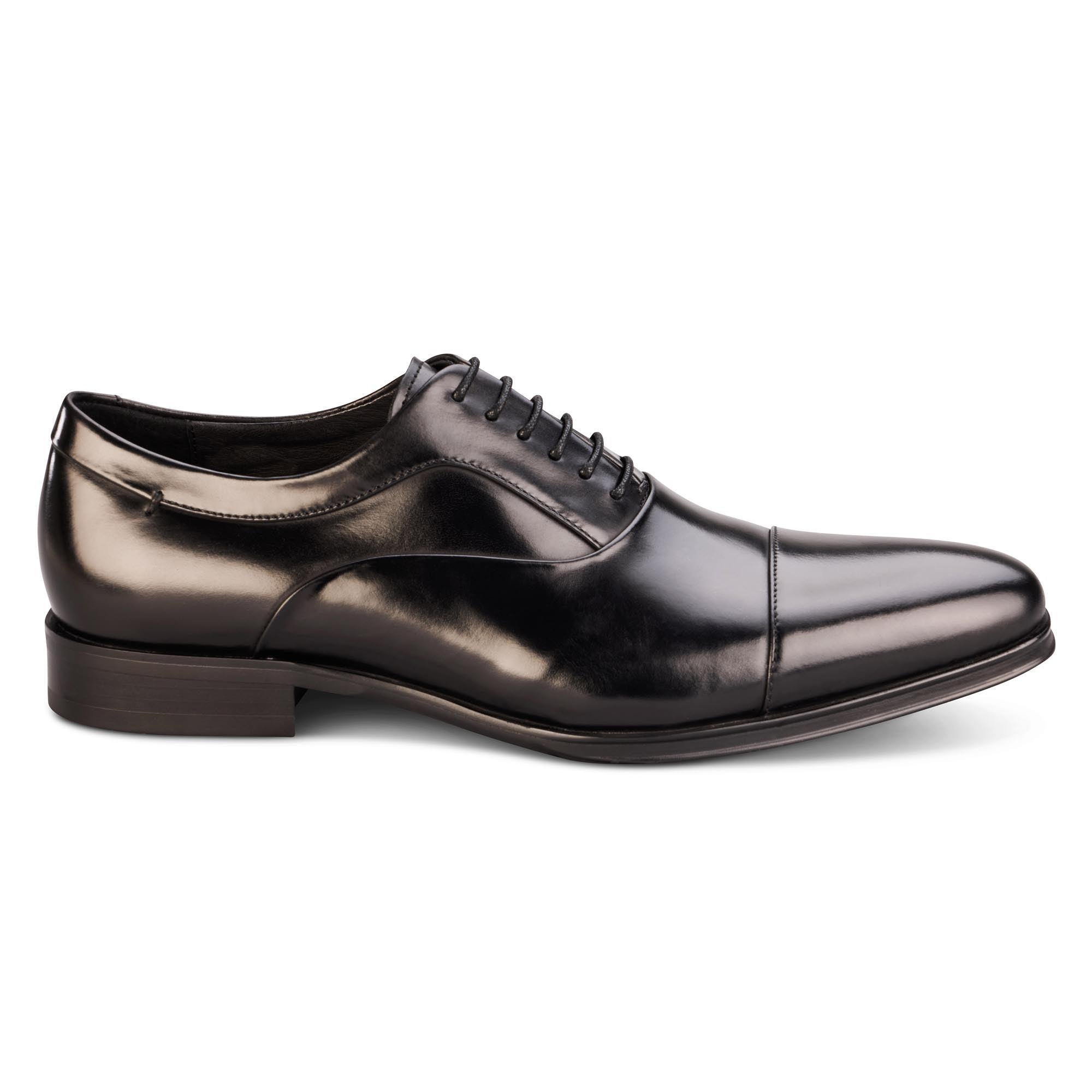
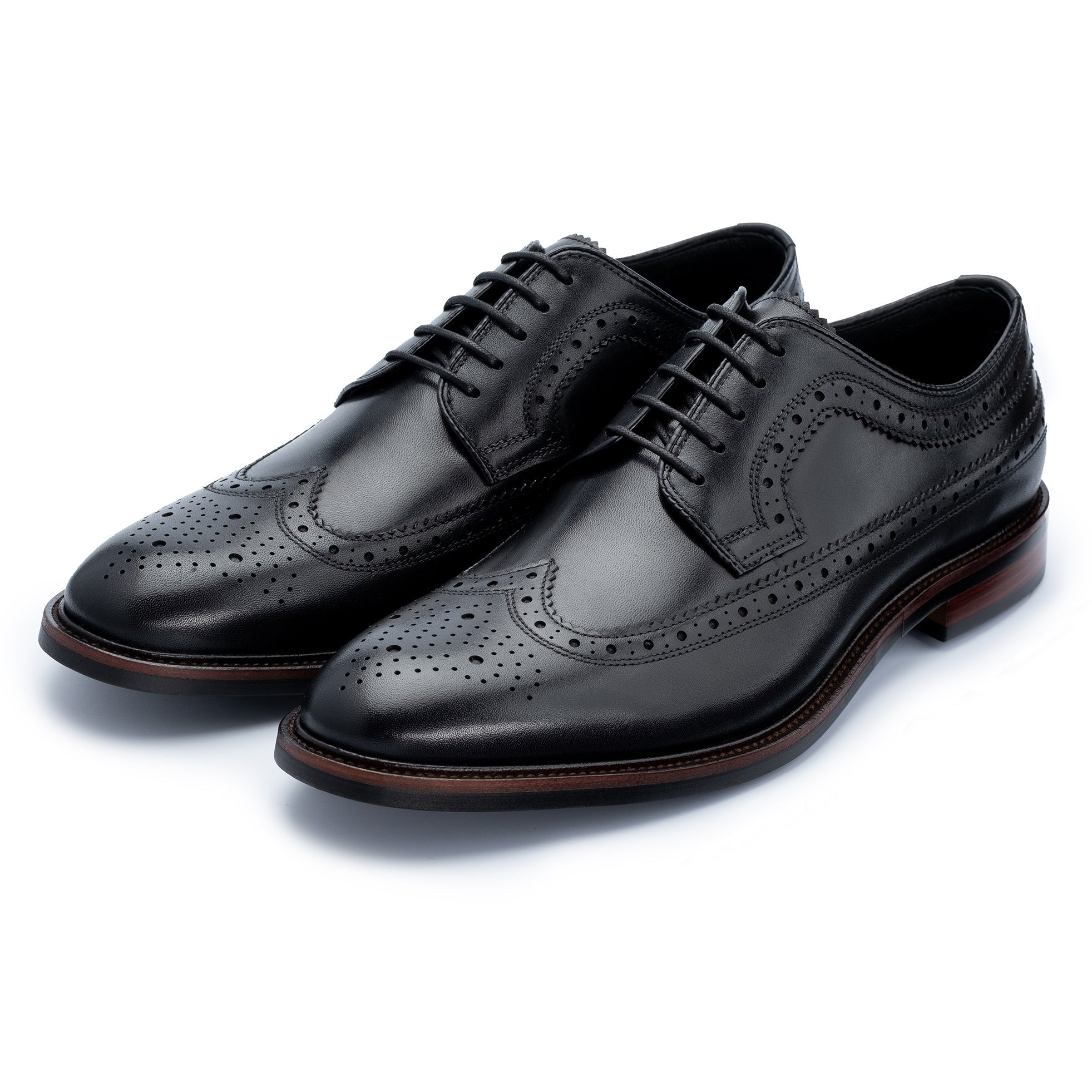
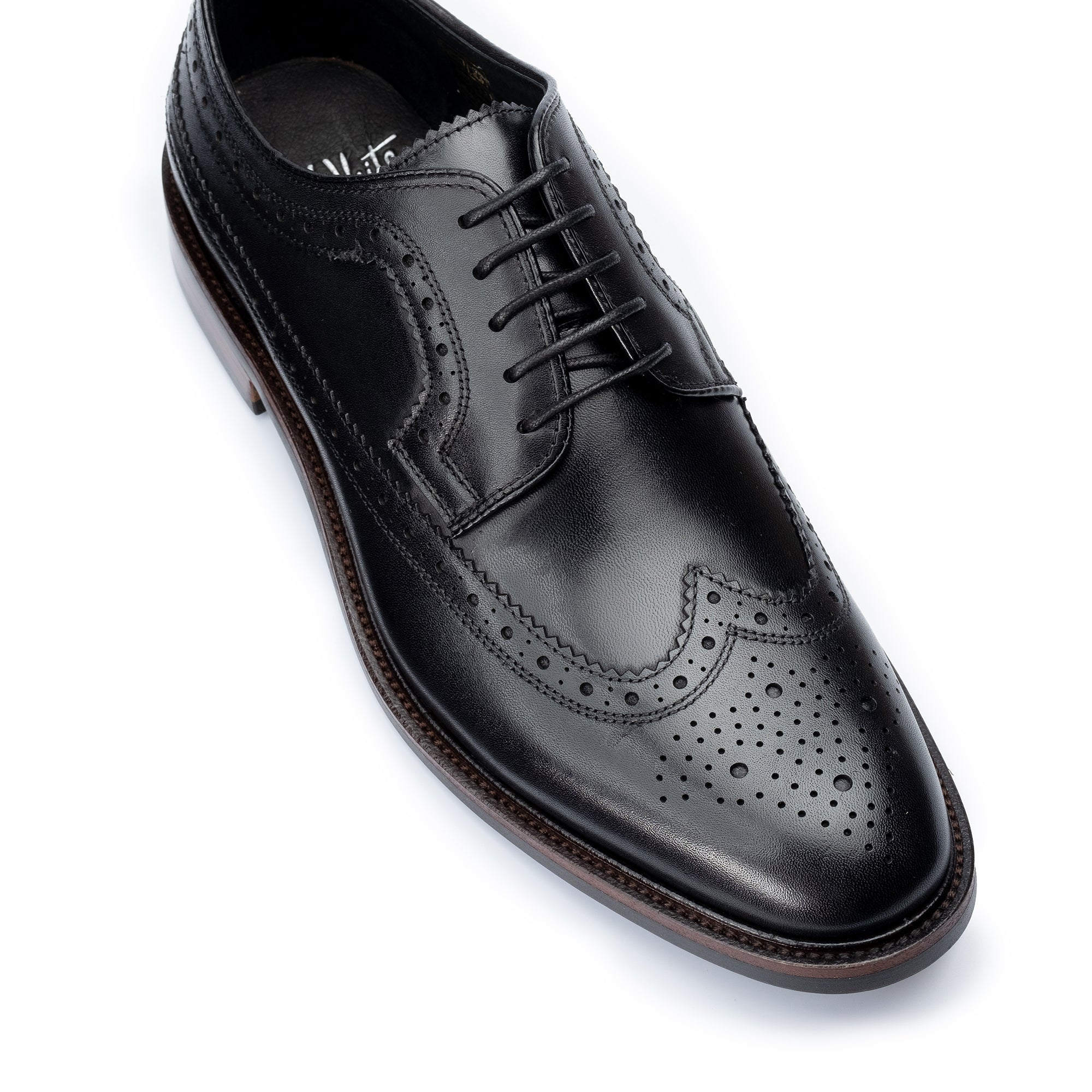
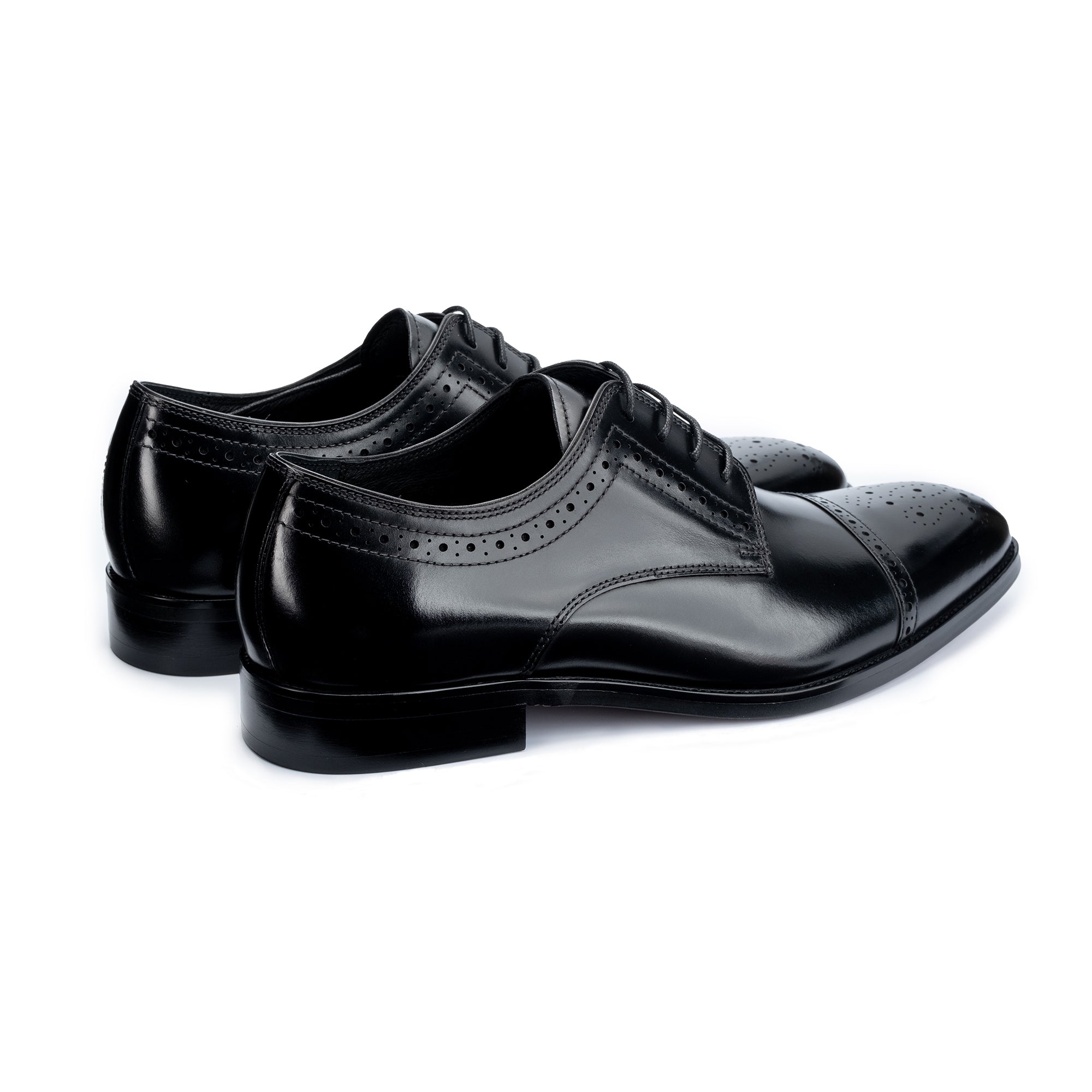
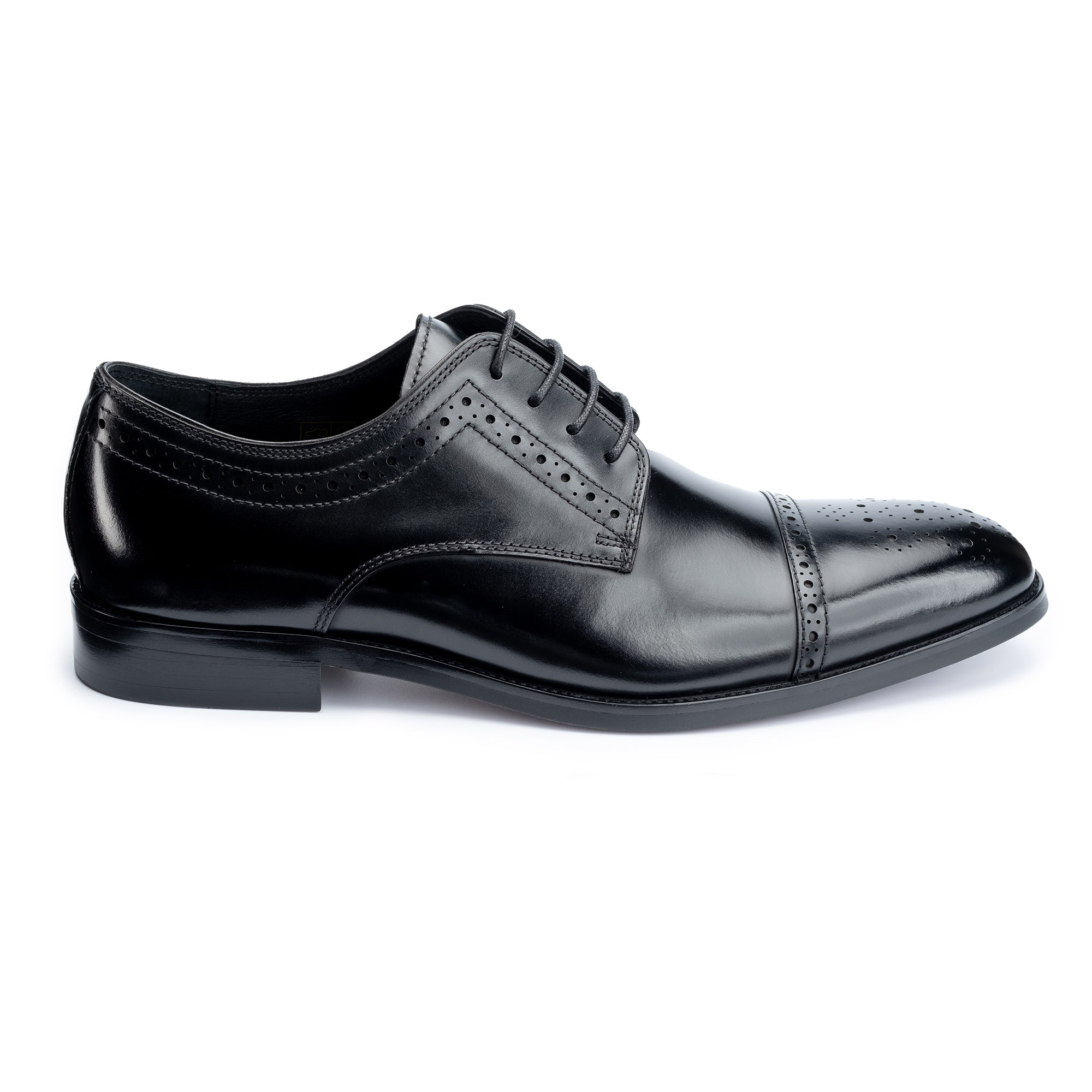
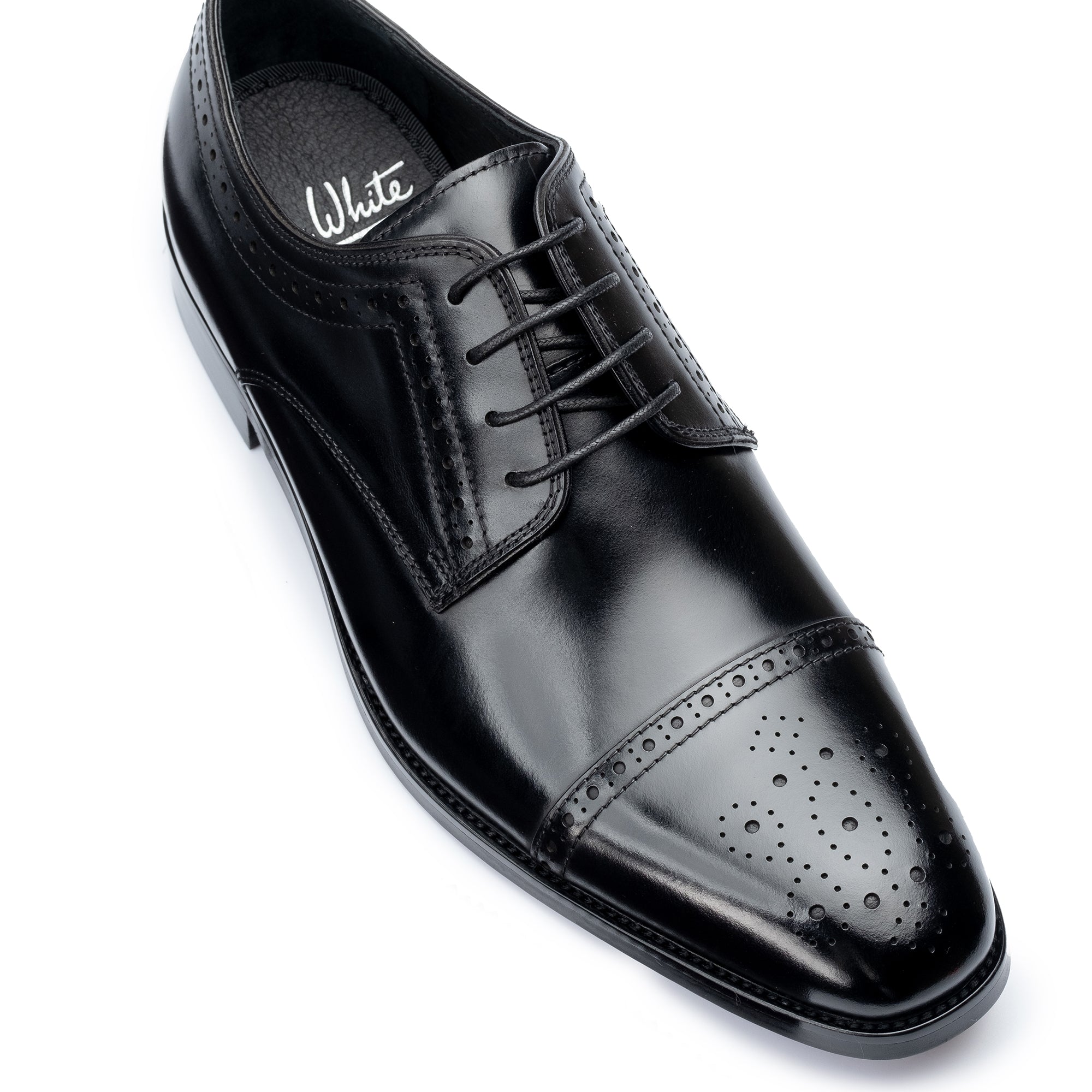
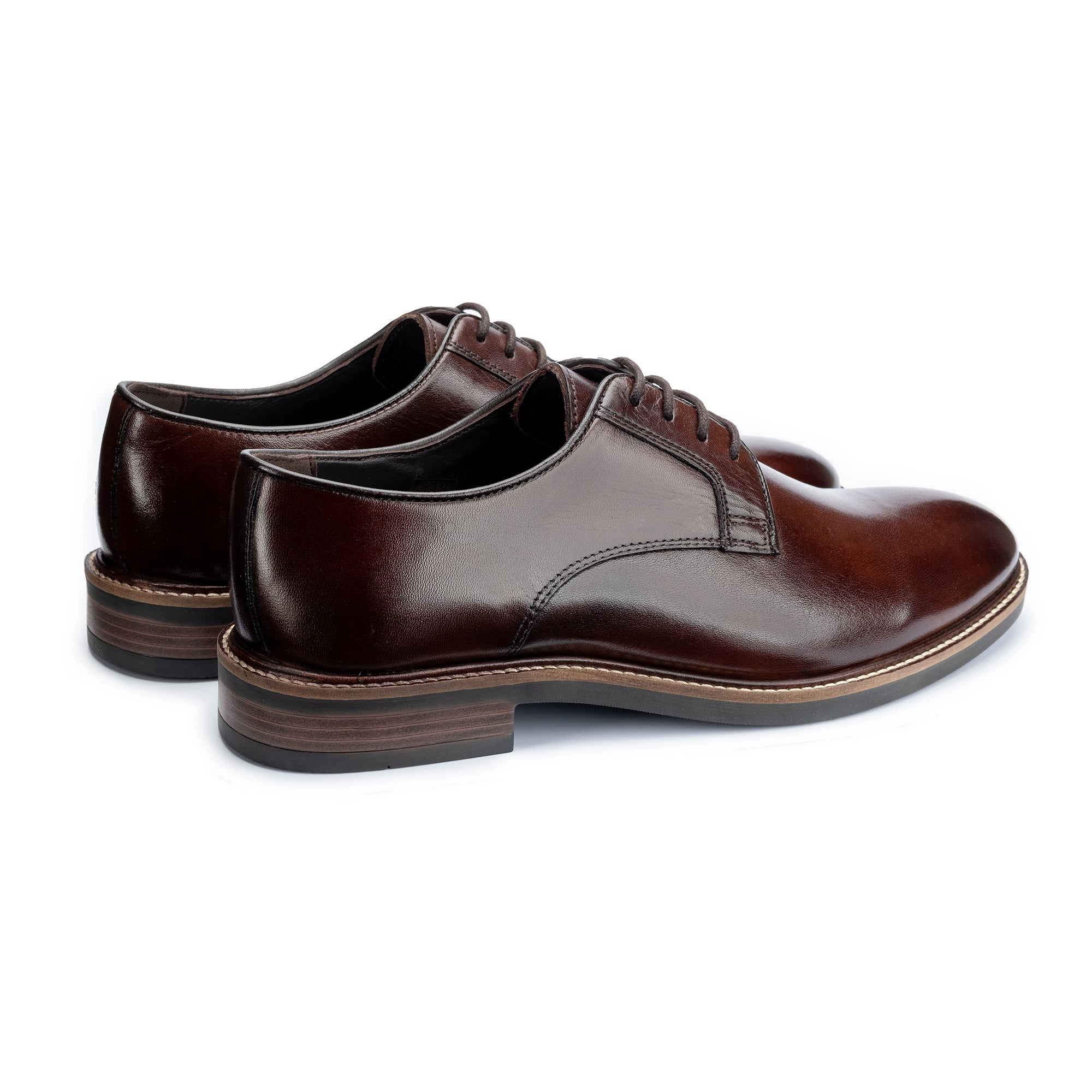
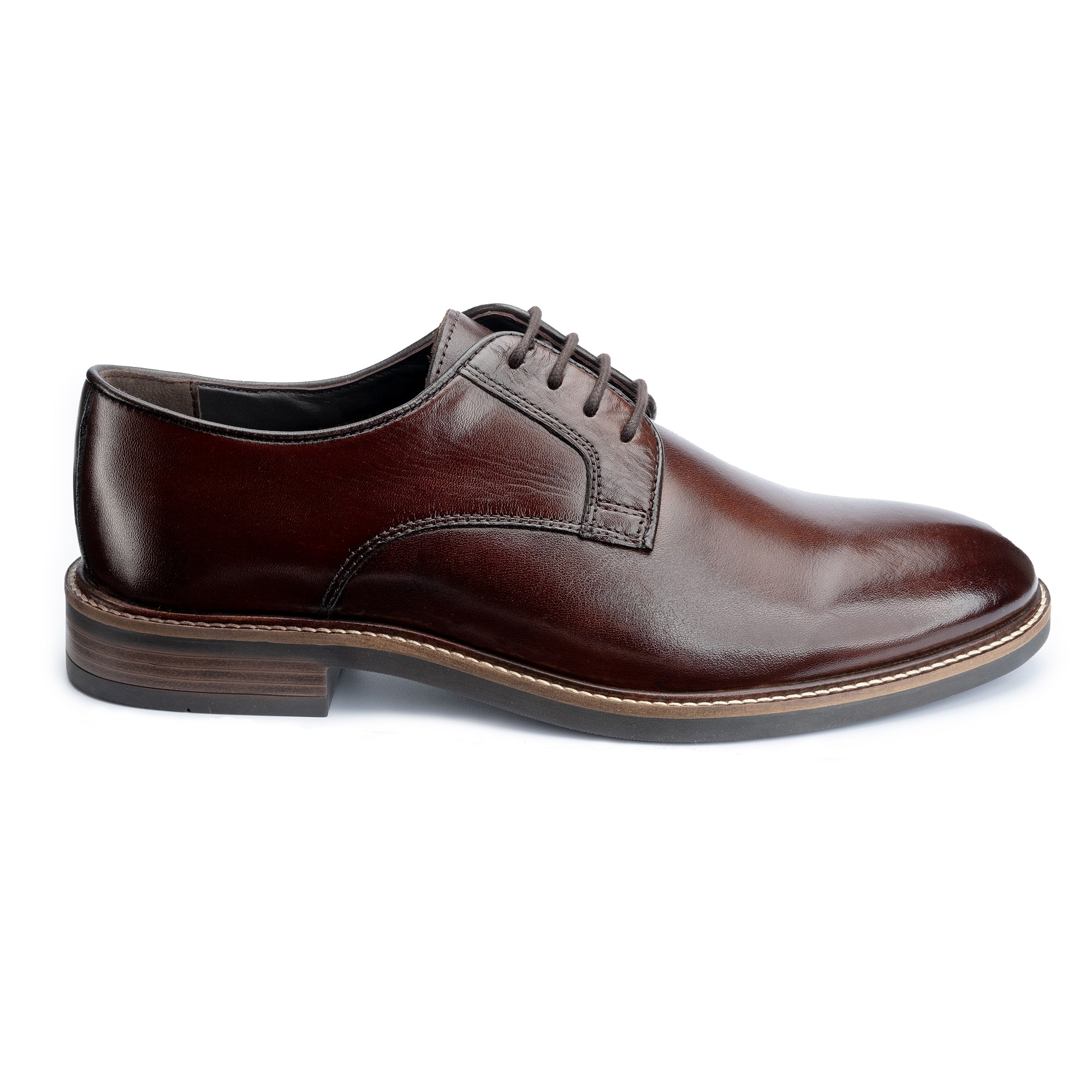
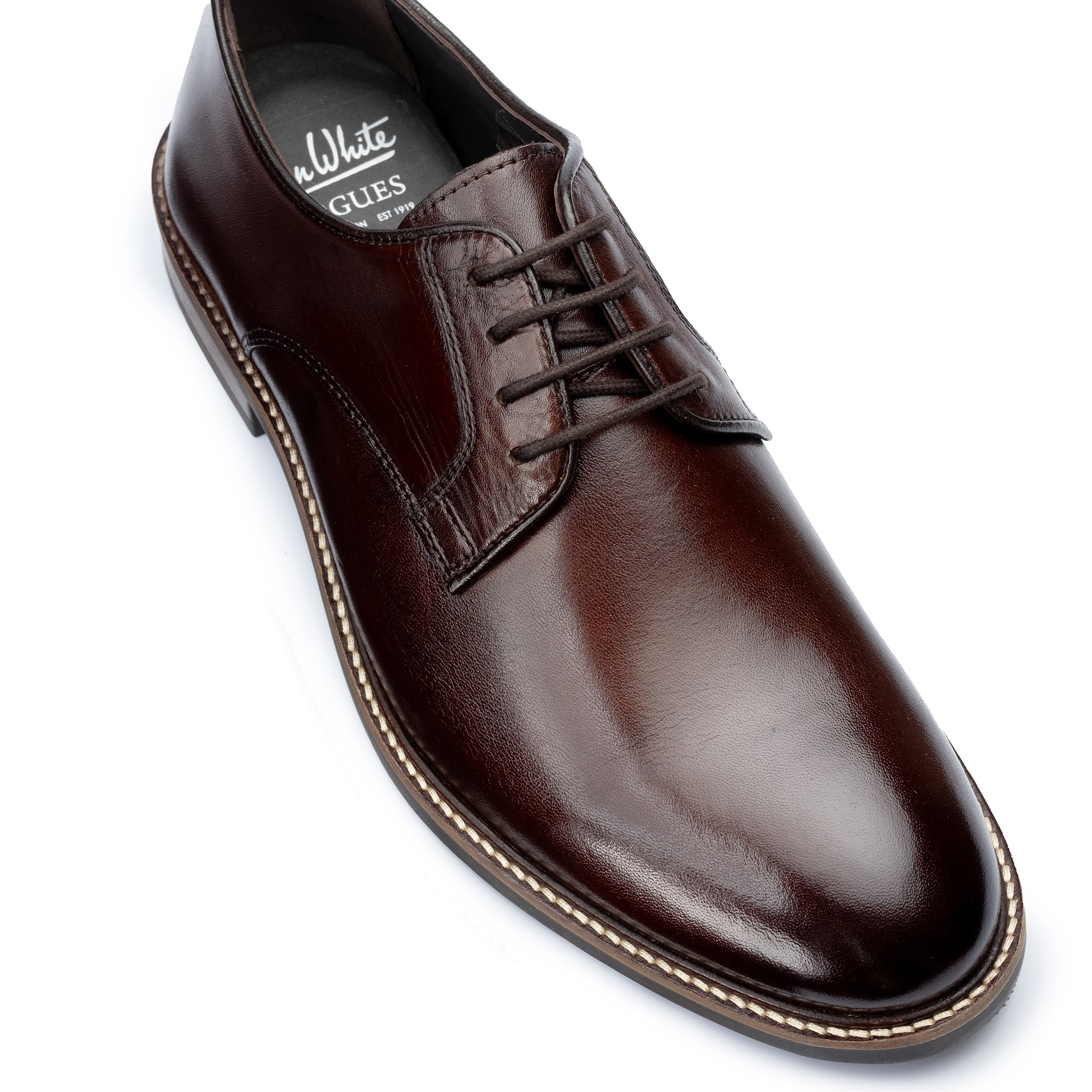
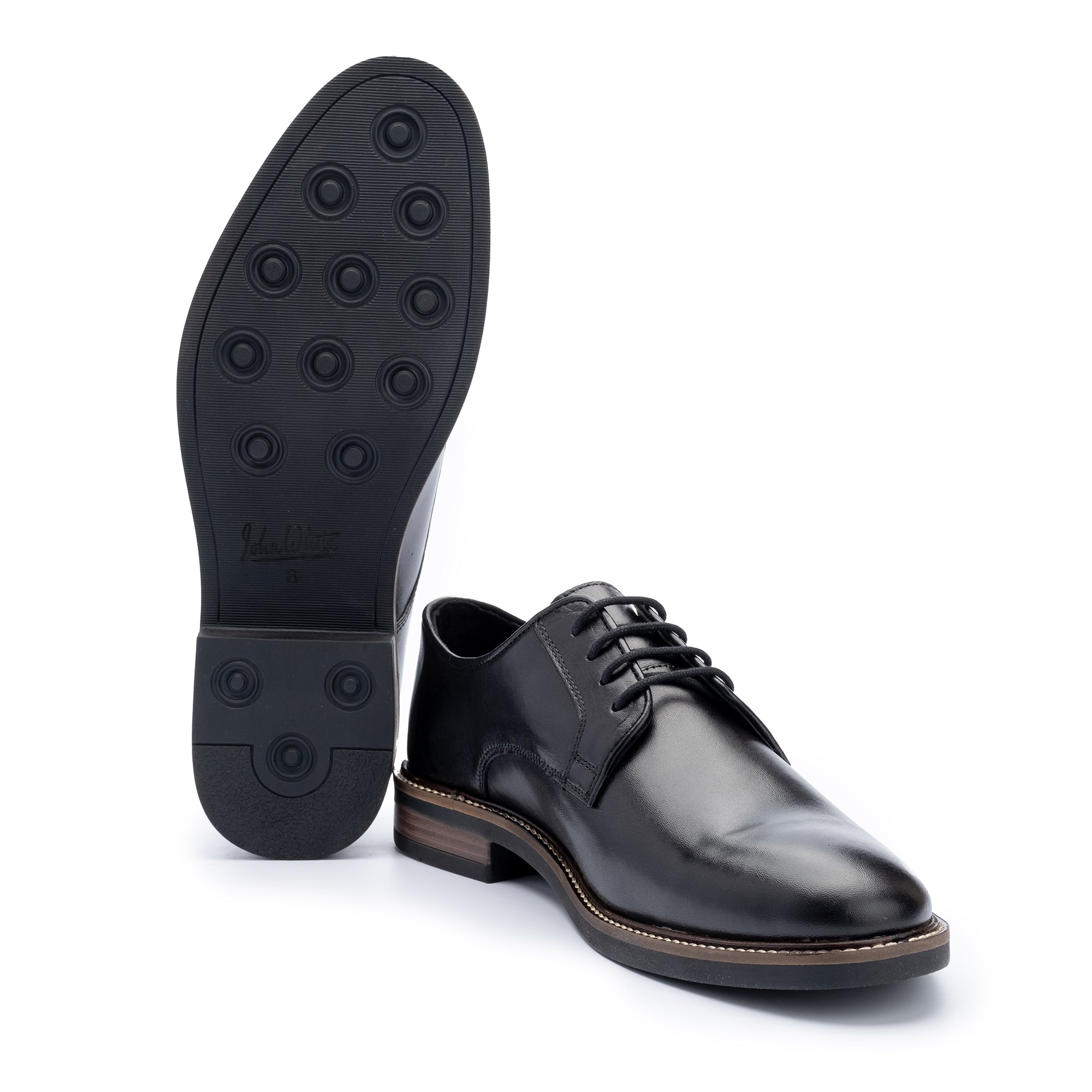
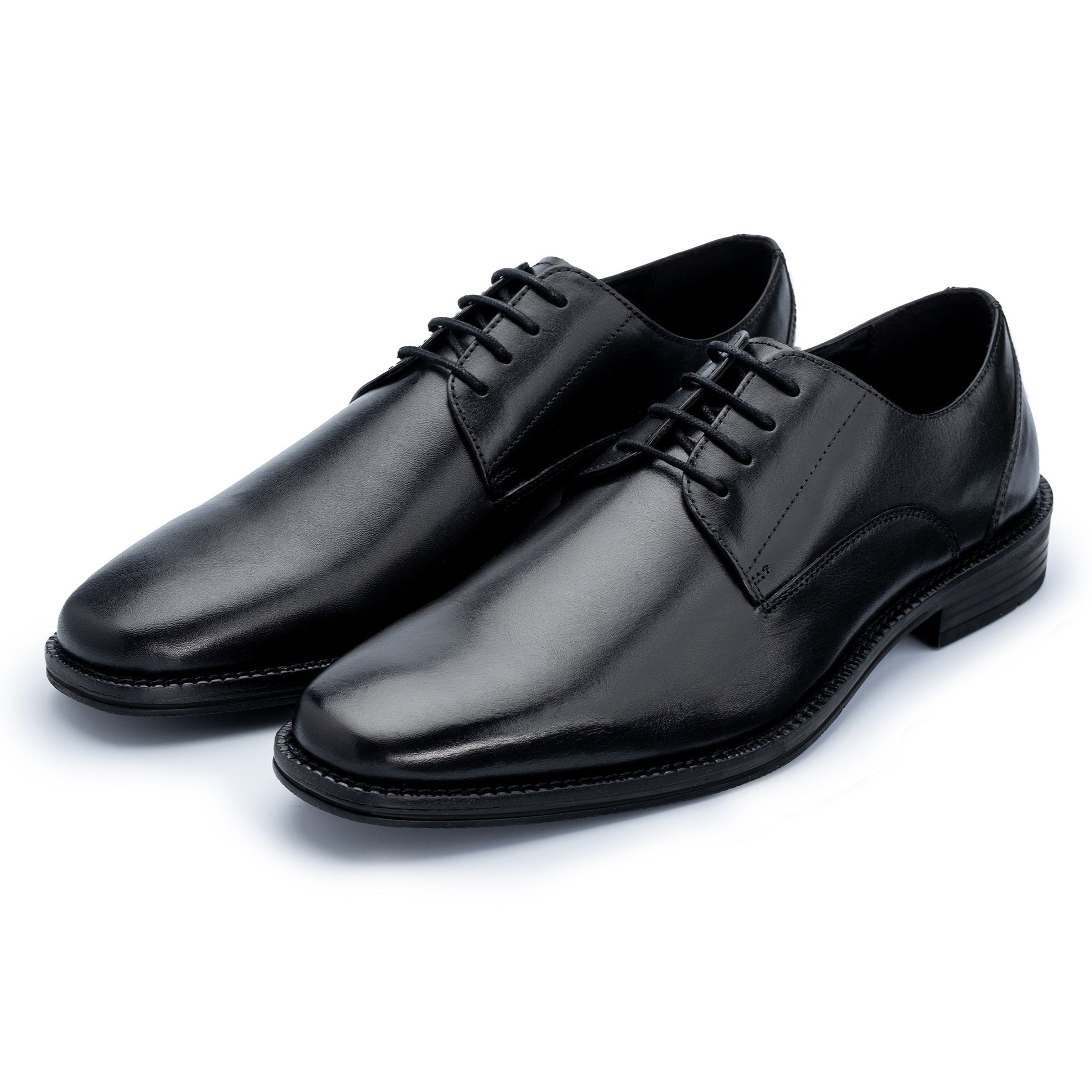
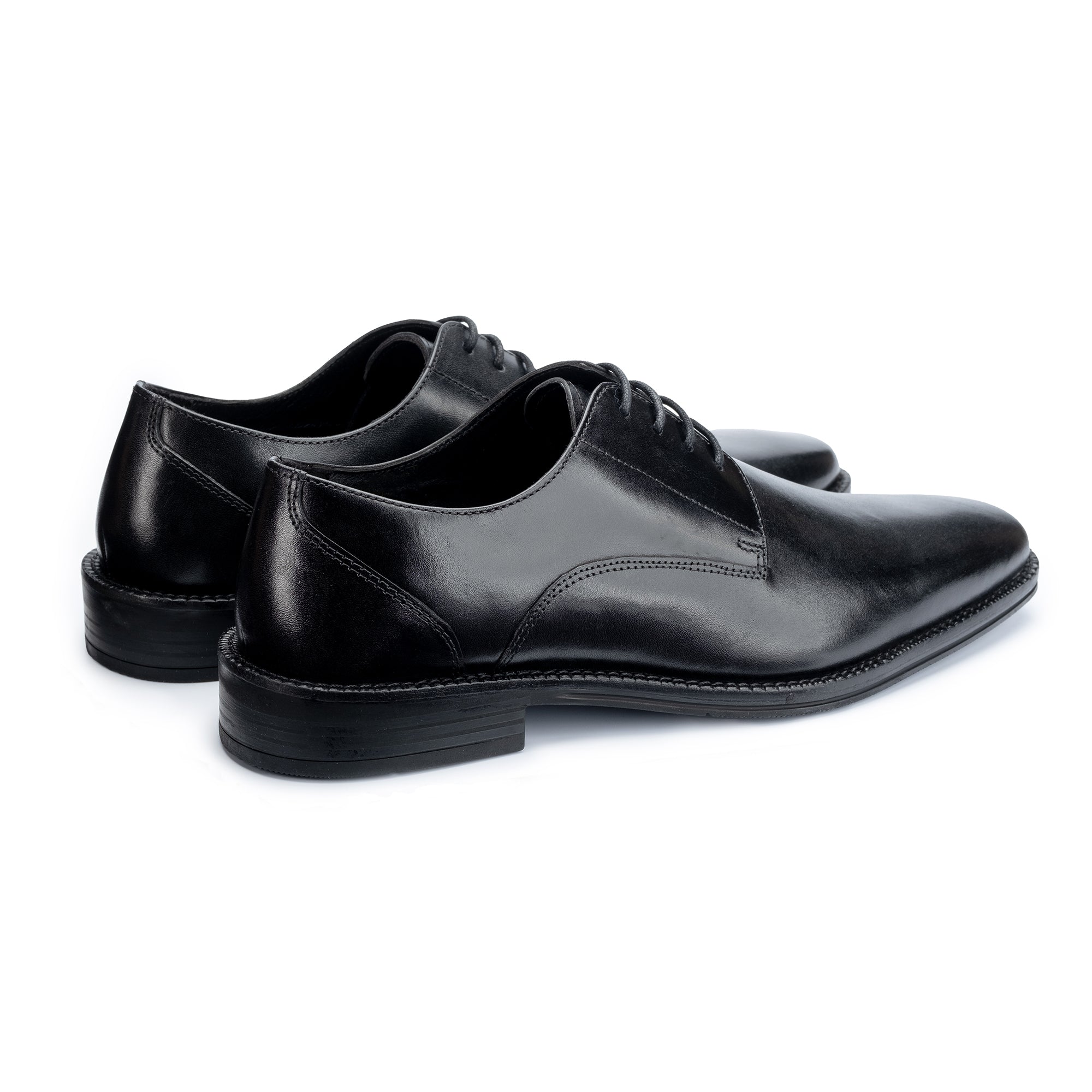
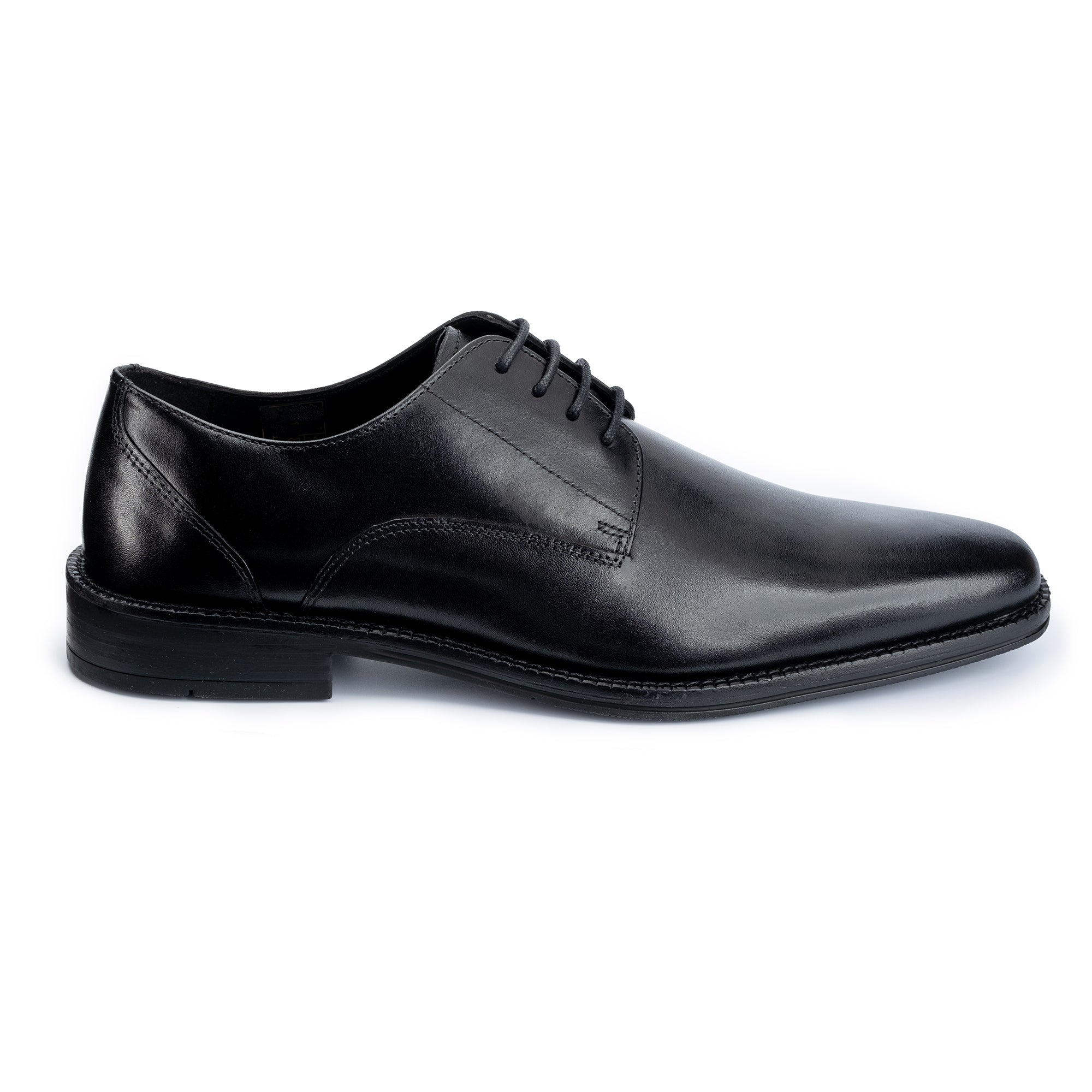
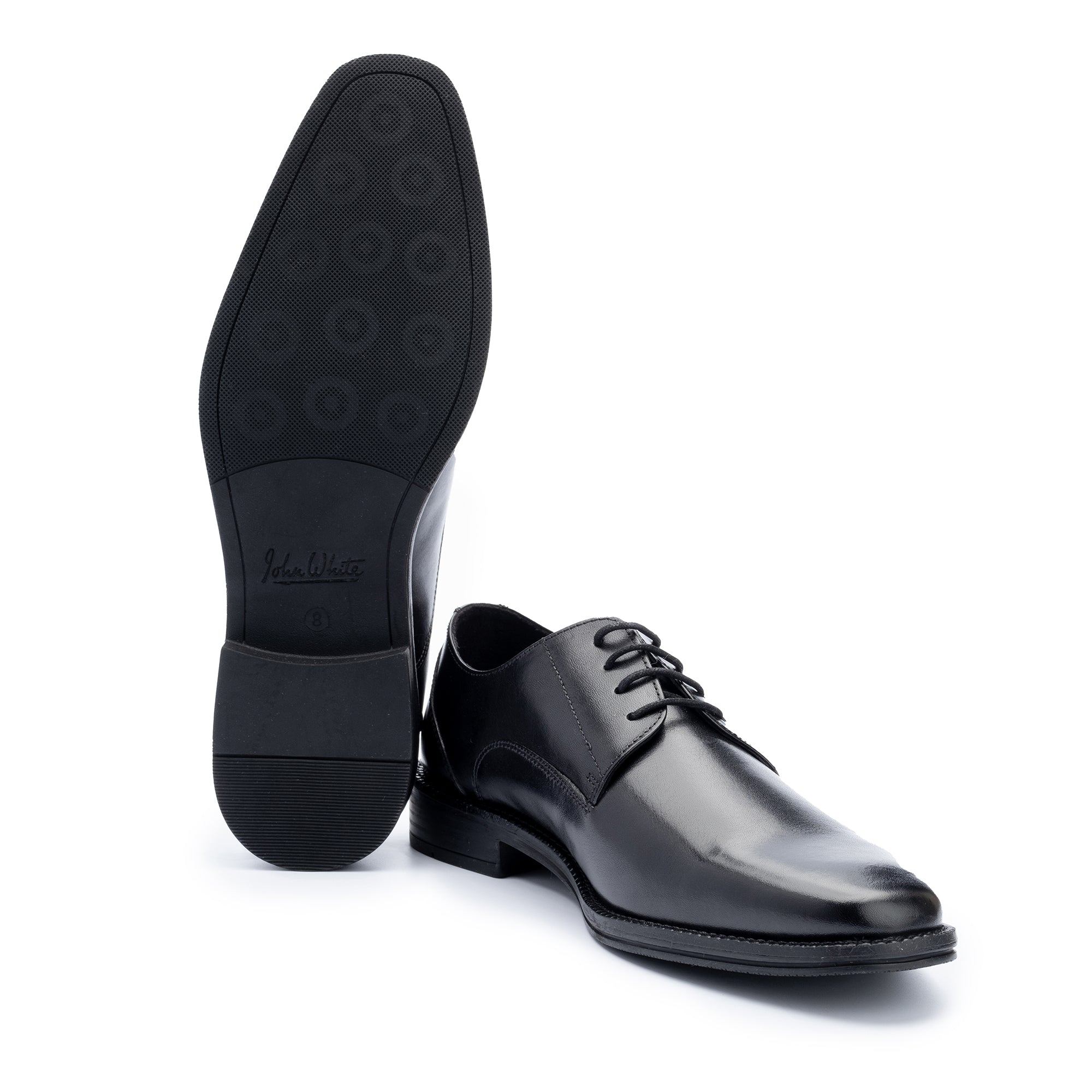
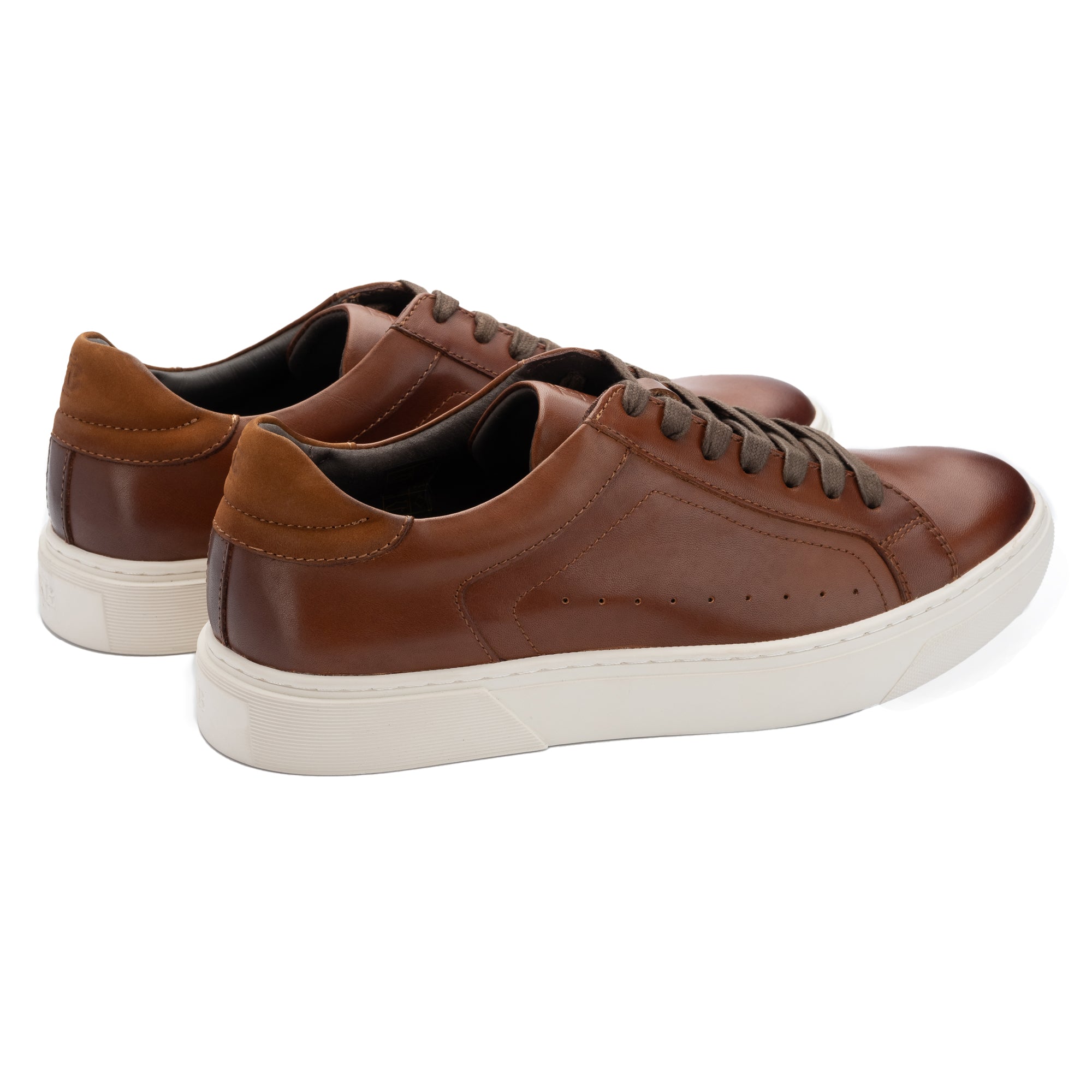
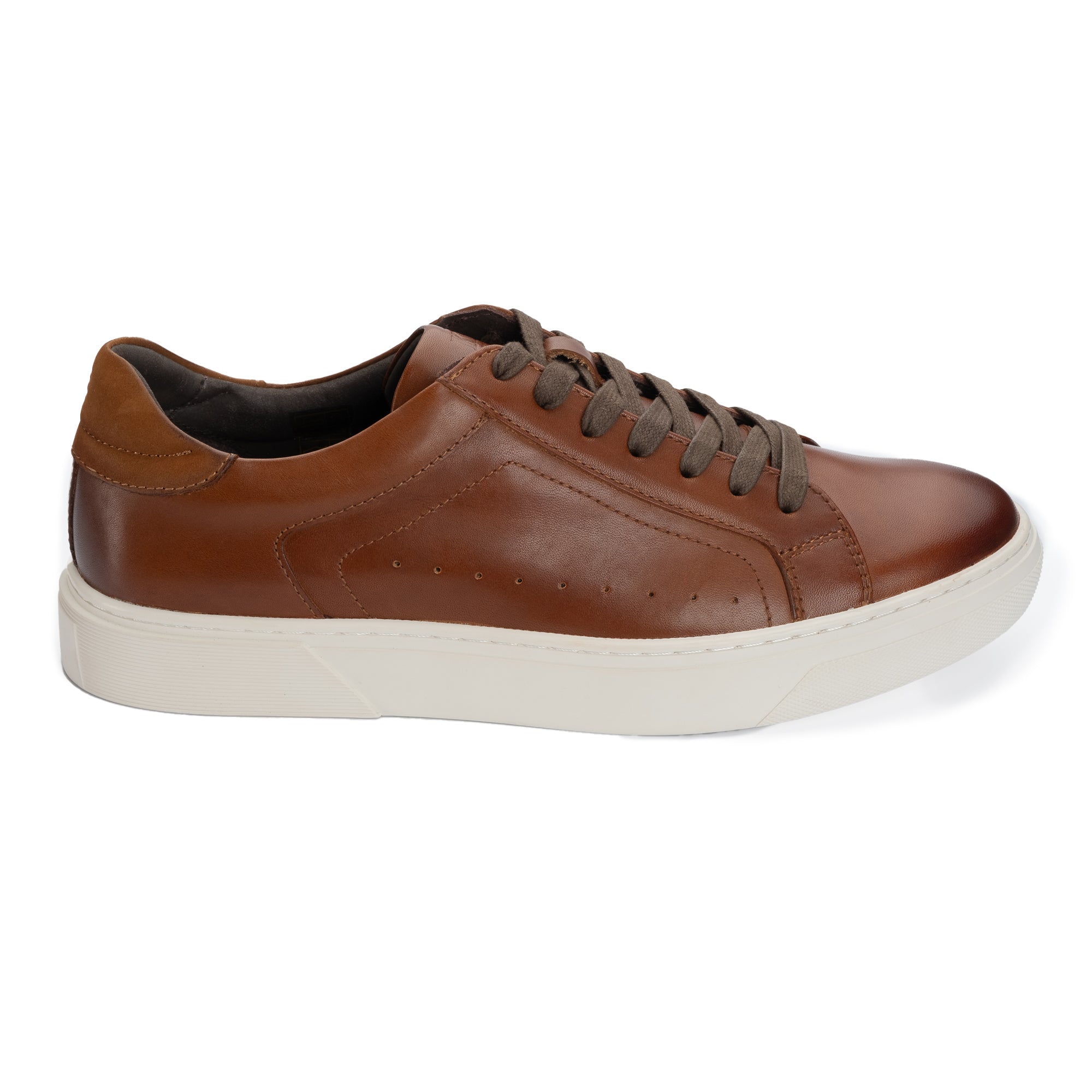
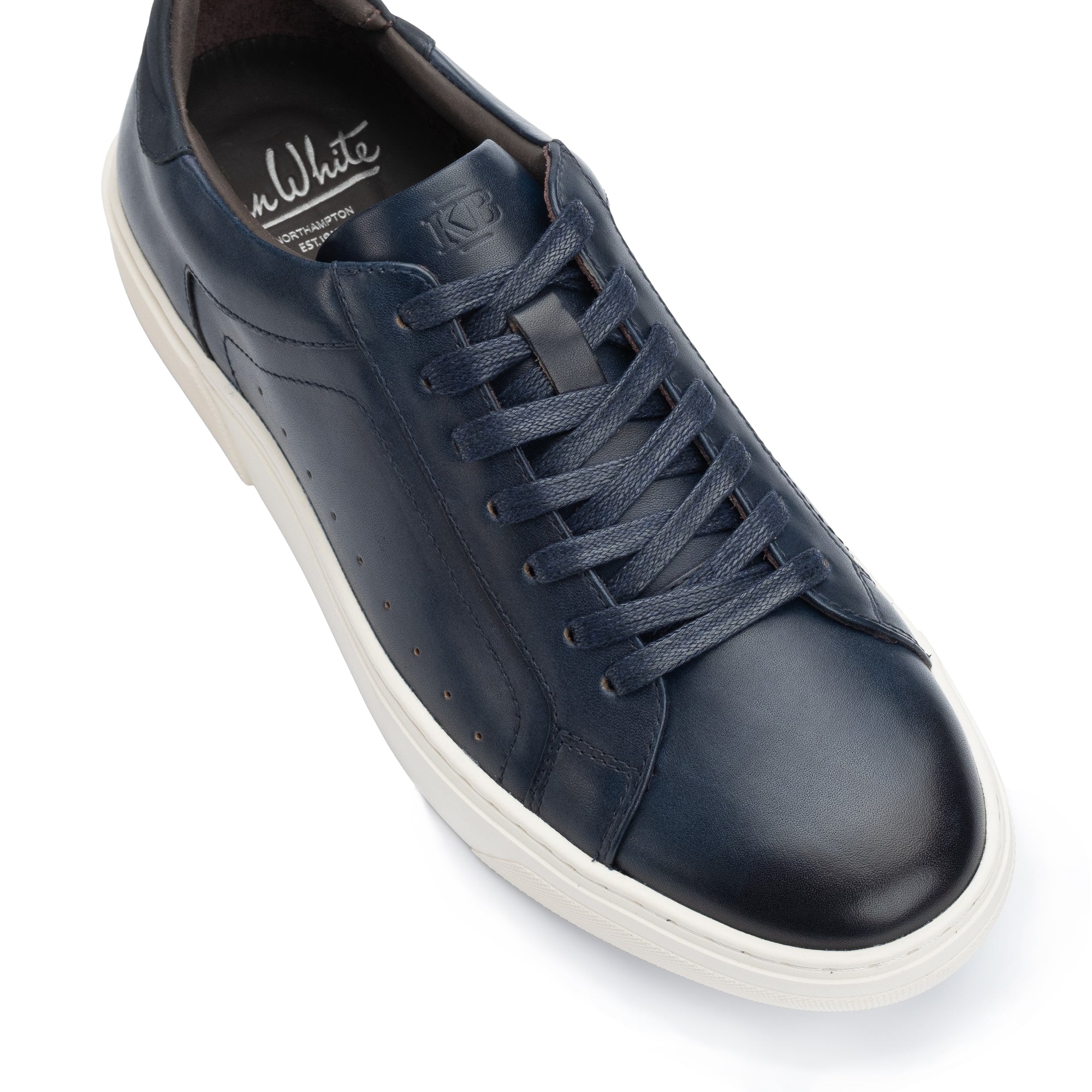
A burnished finish provides a sharp, contemporary lustre by darkening and polishing specific areas of the shoe.
What Is an Antiqued Leather Finish?
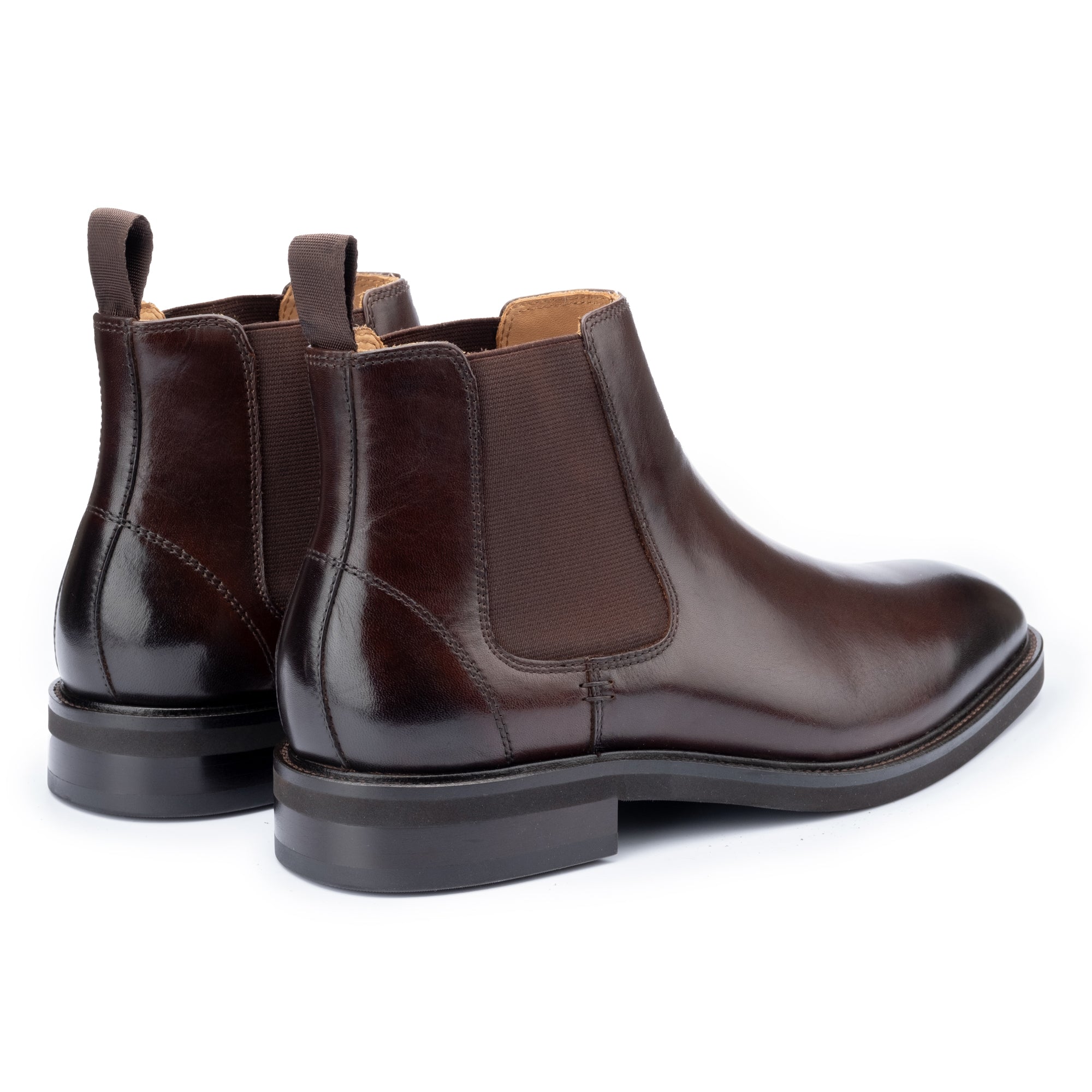
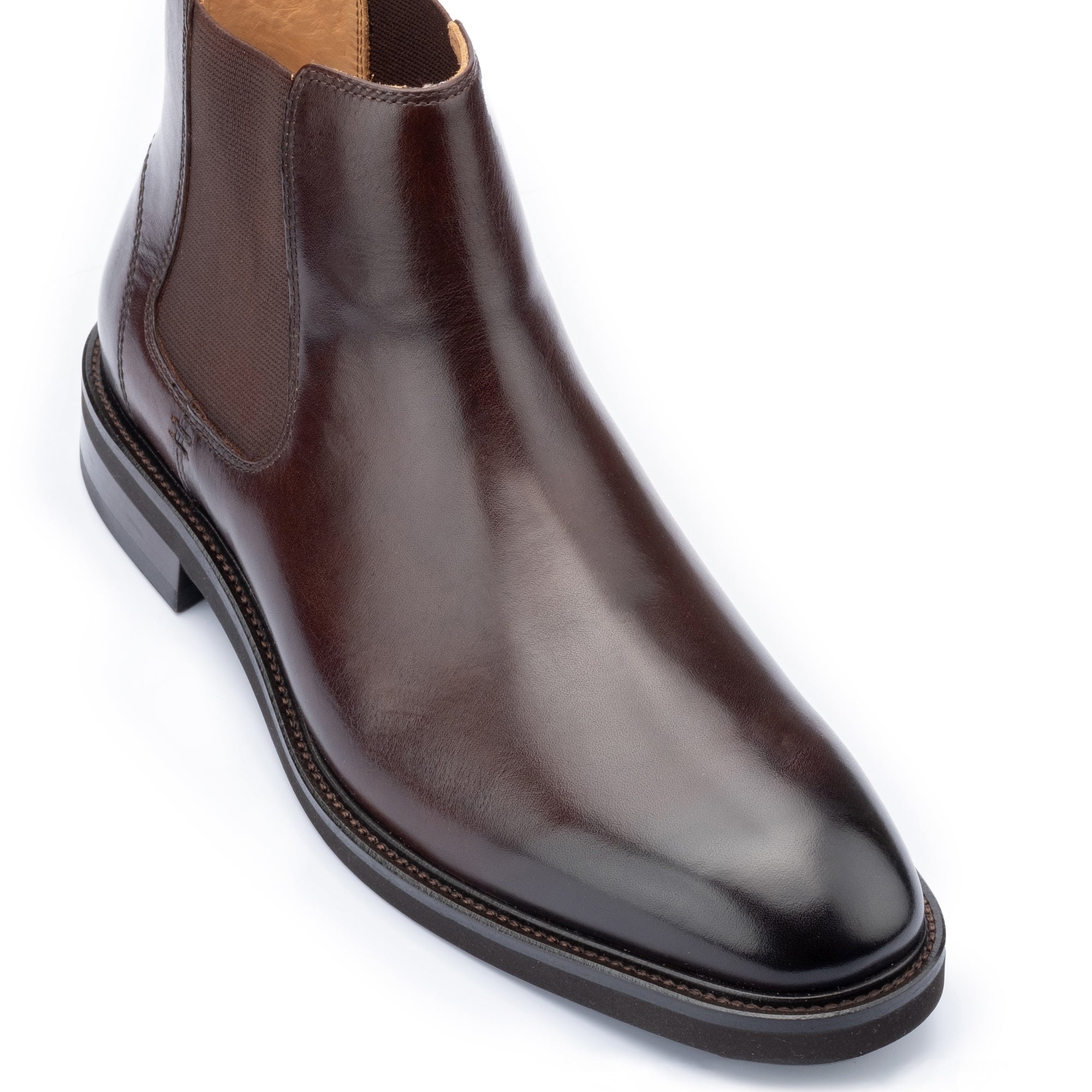
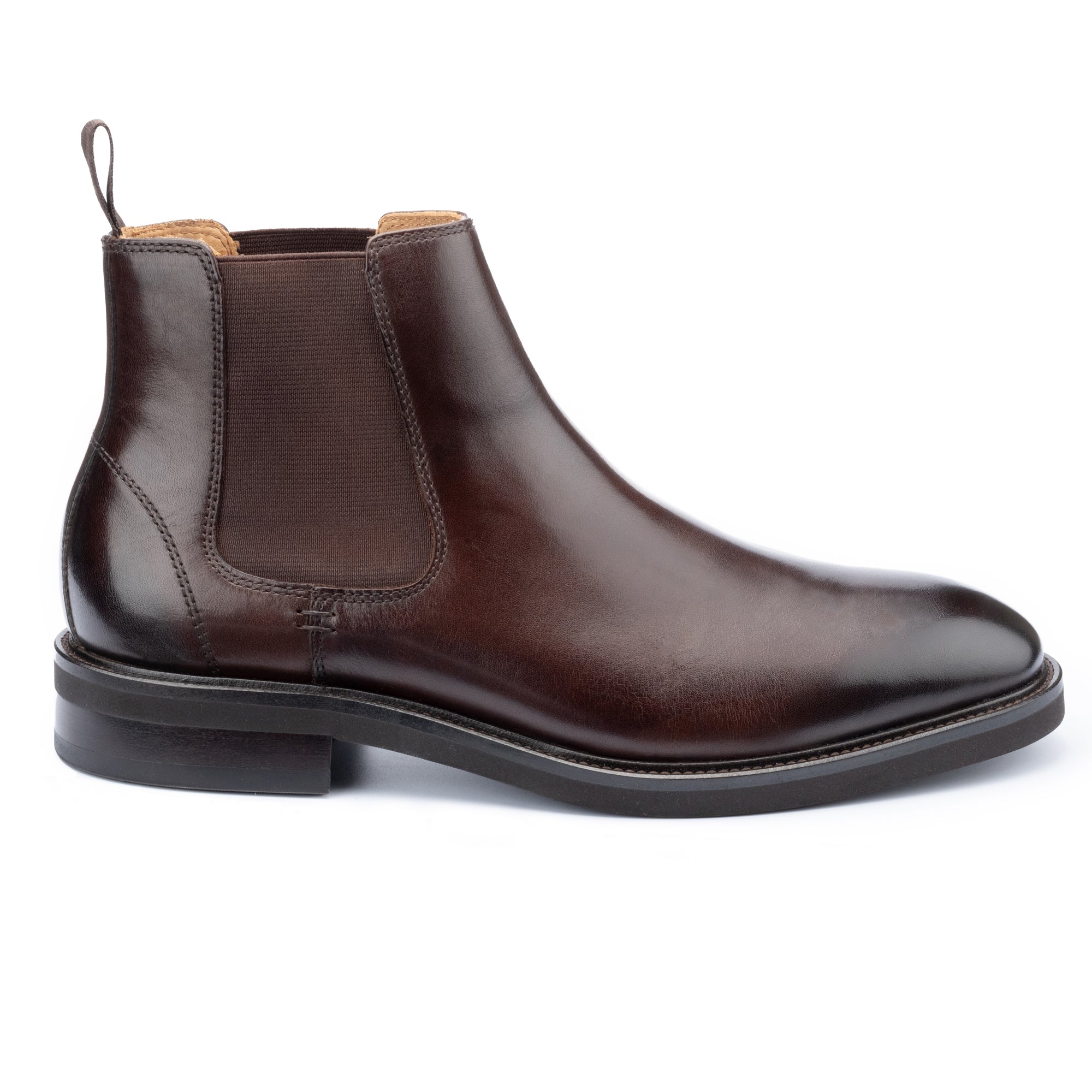
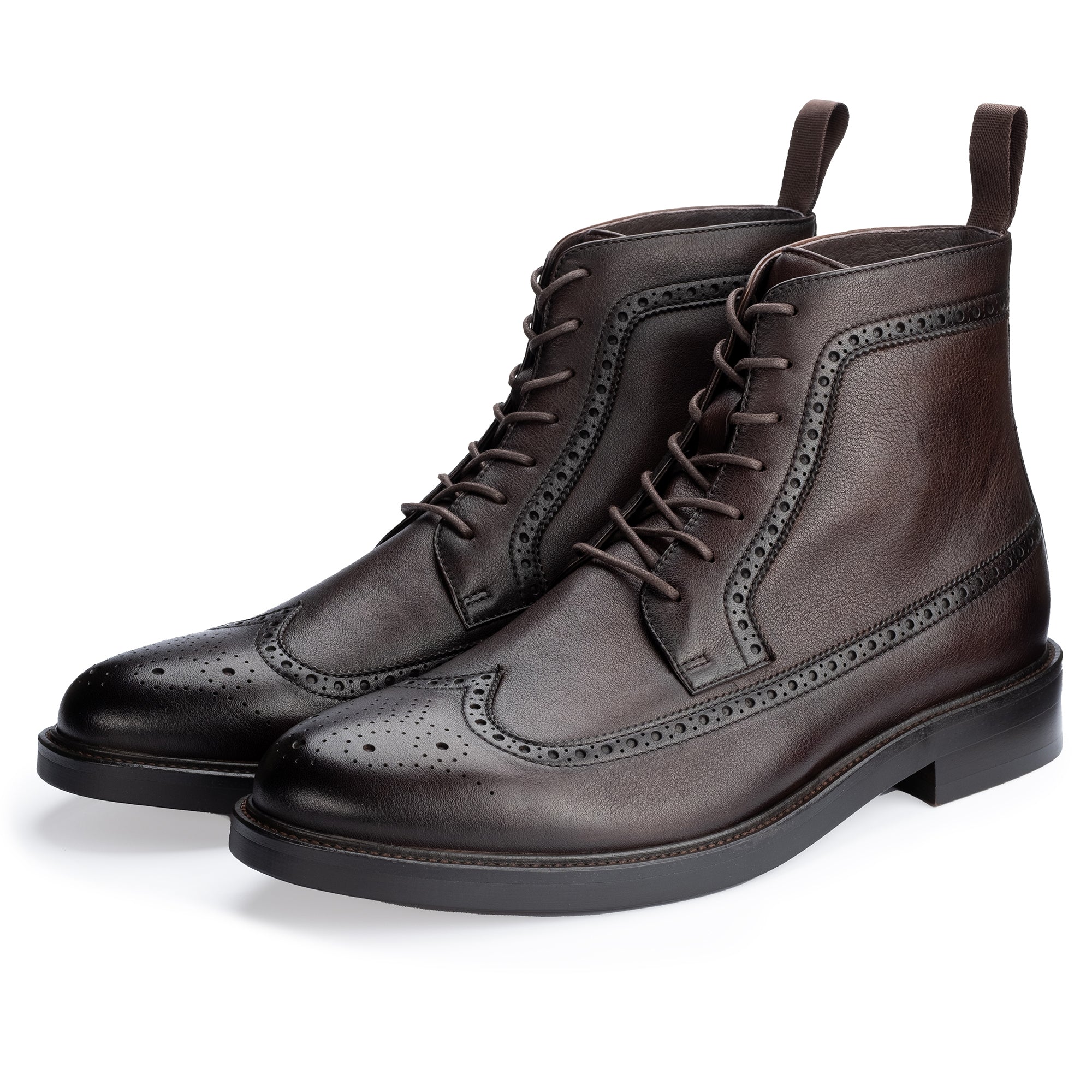
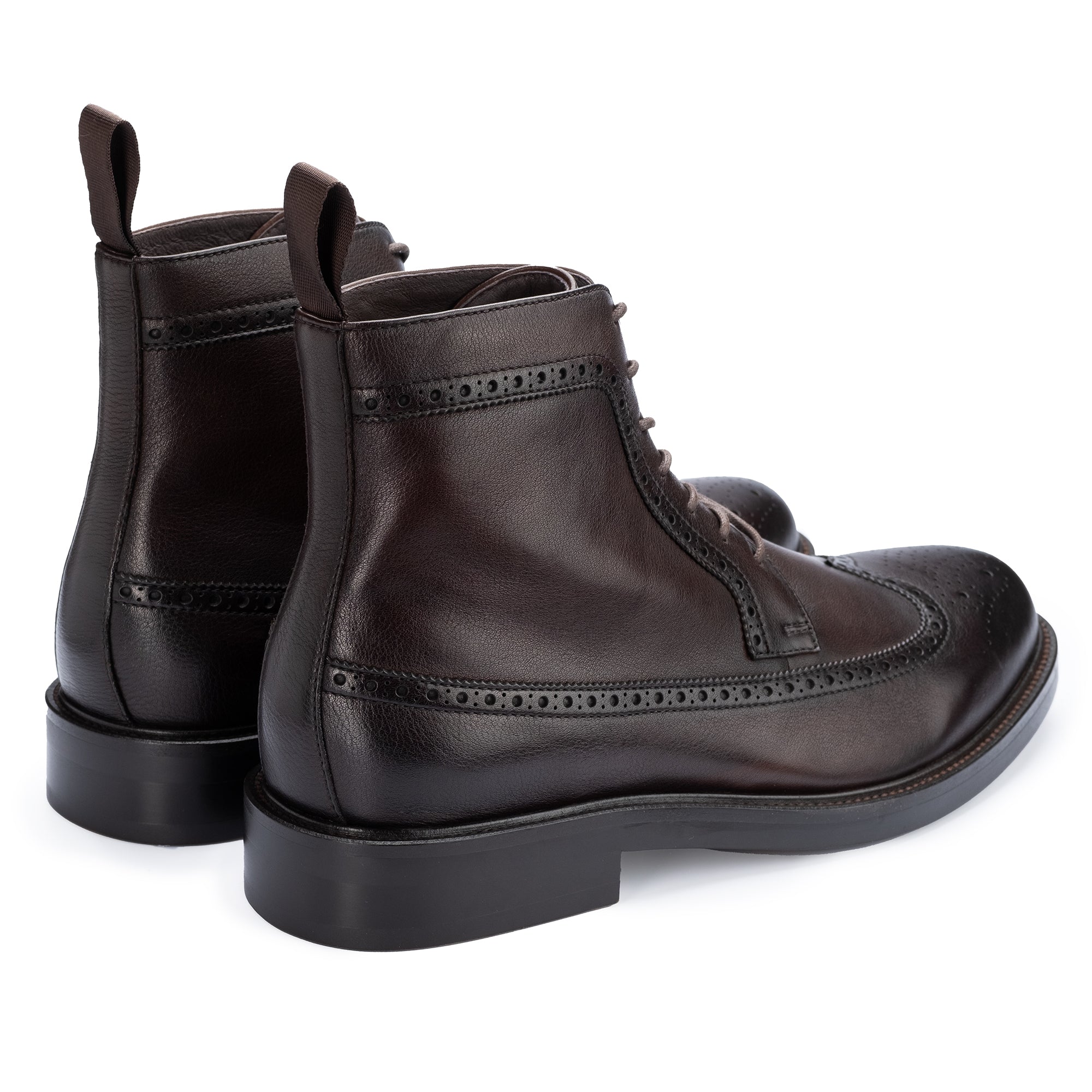
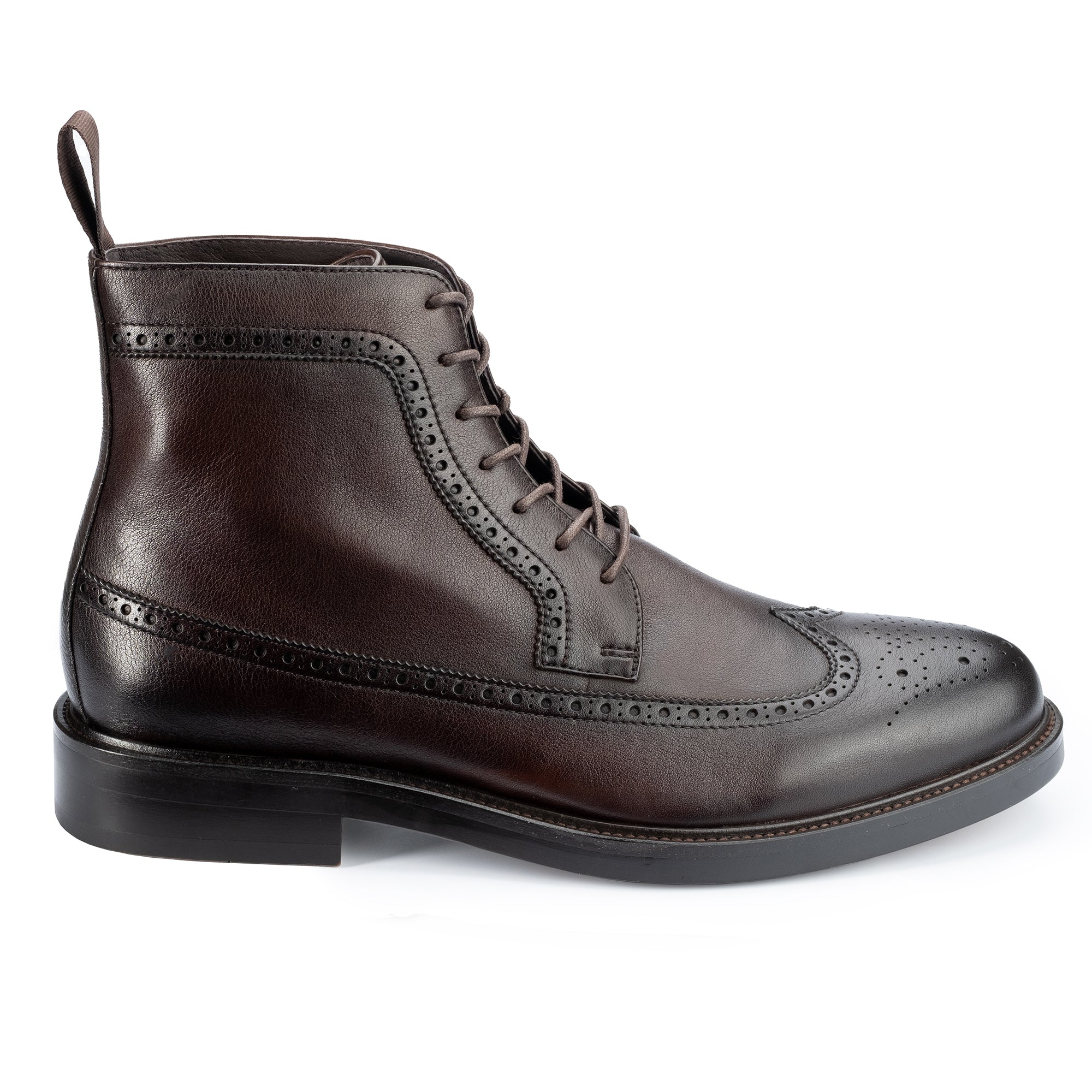
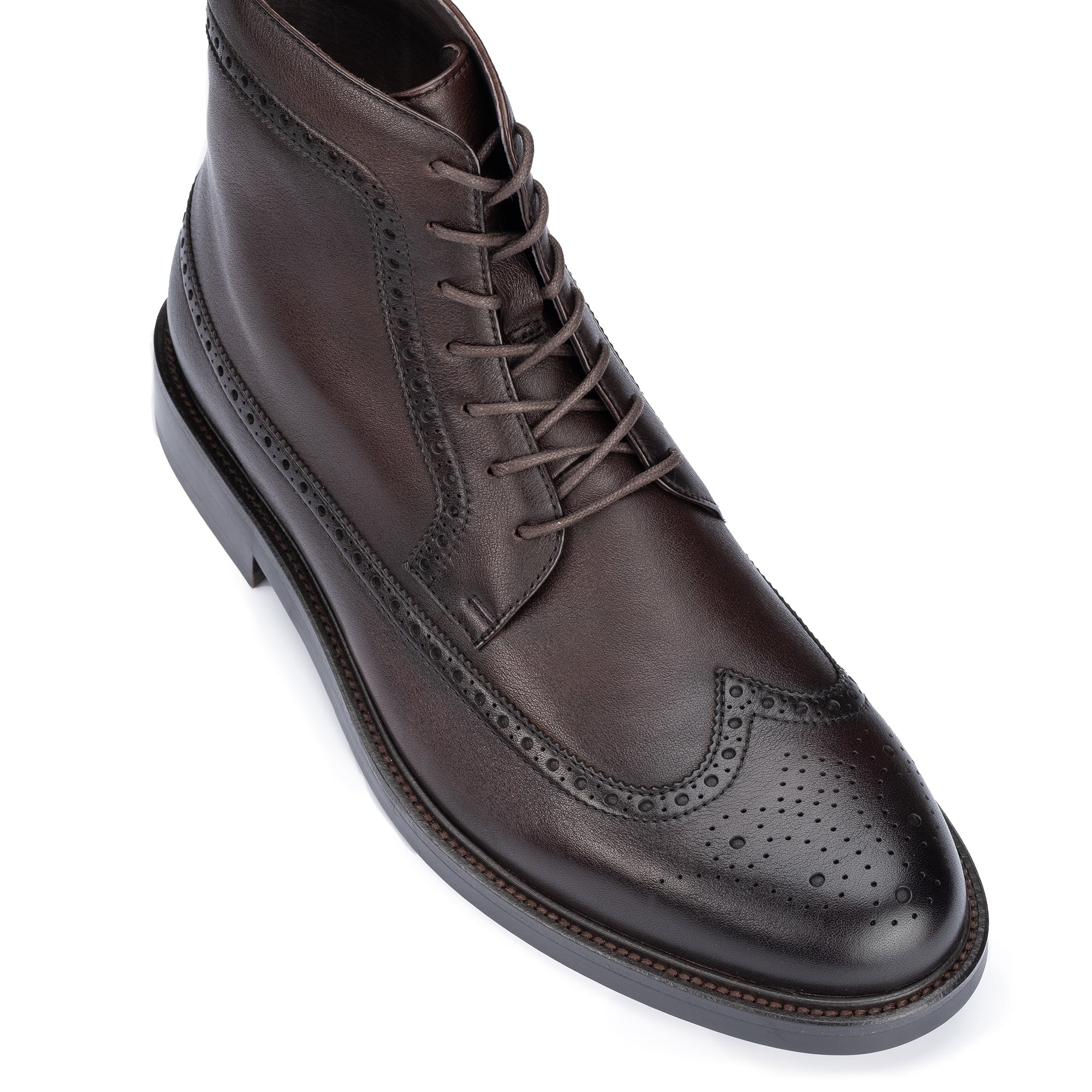
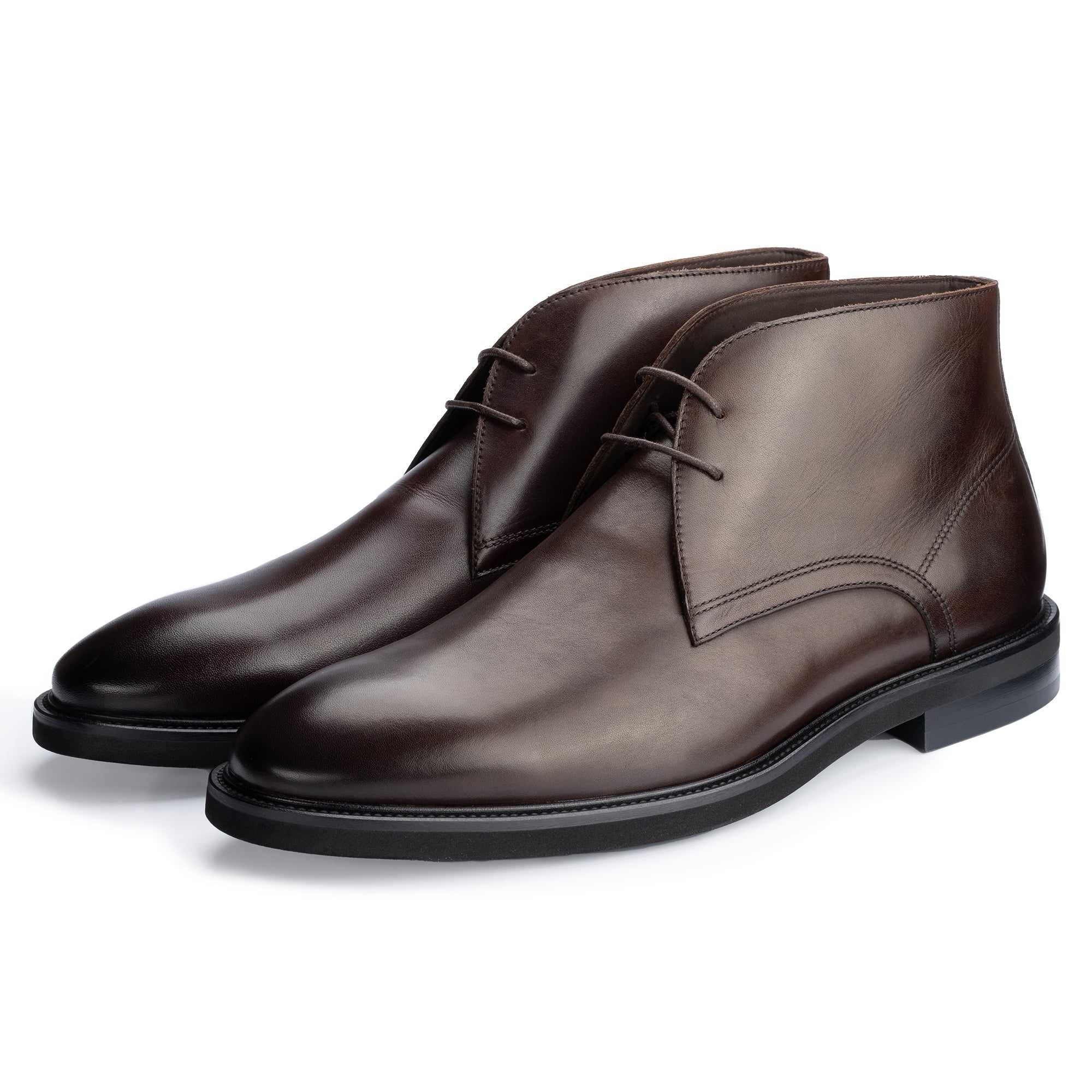
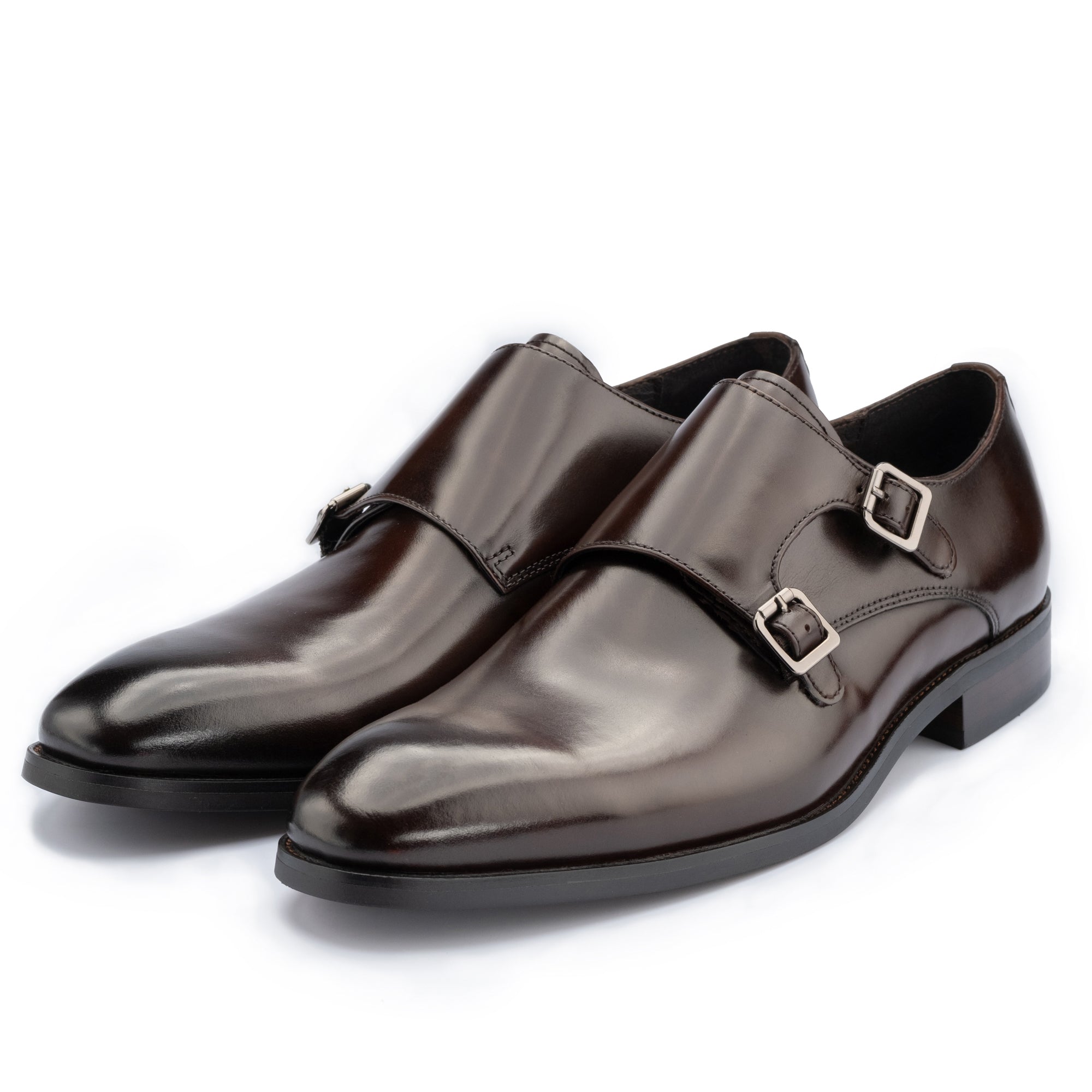
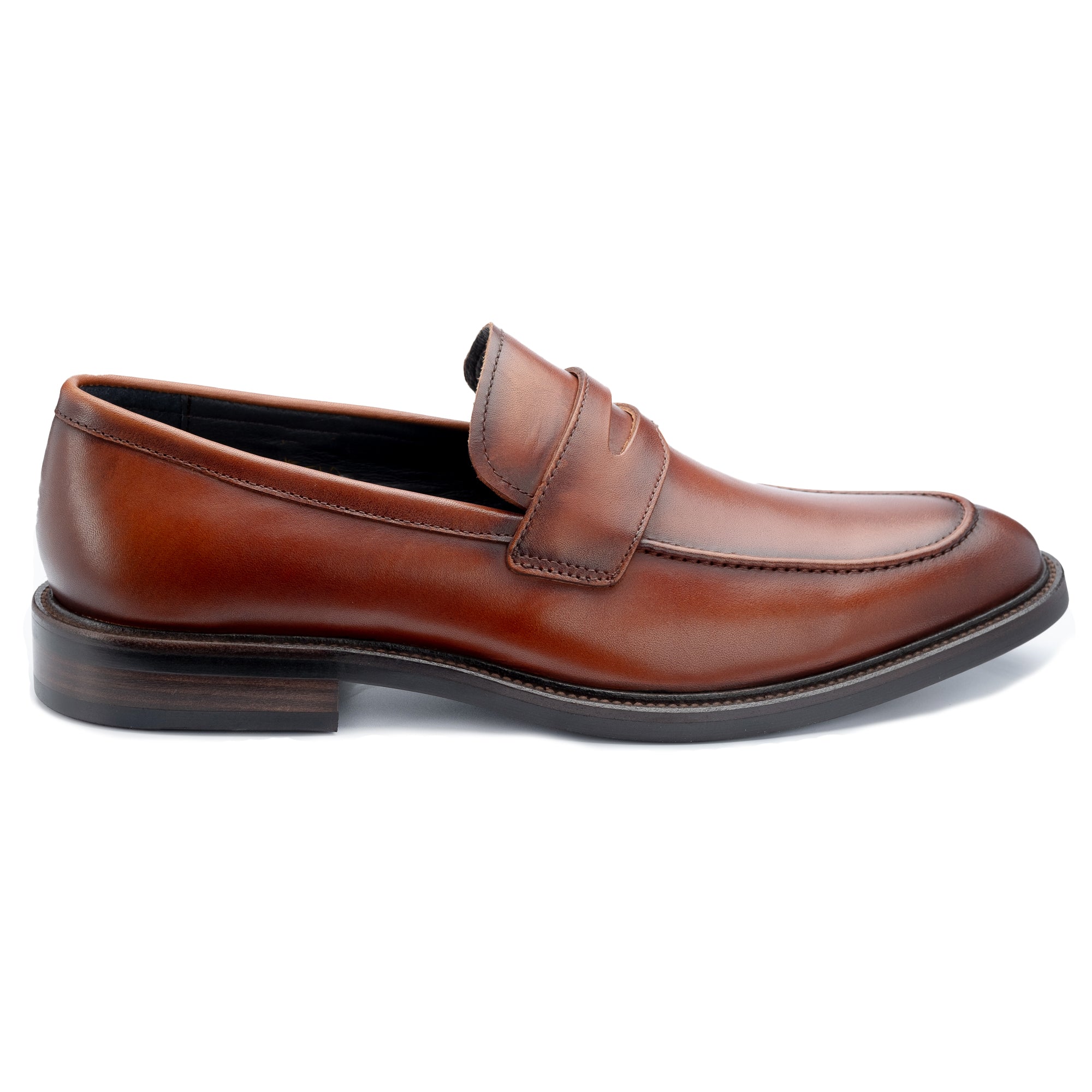
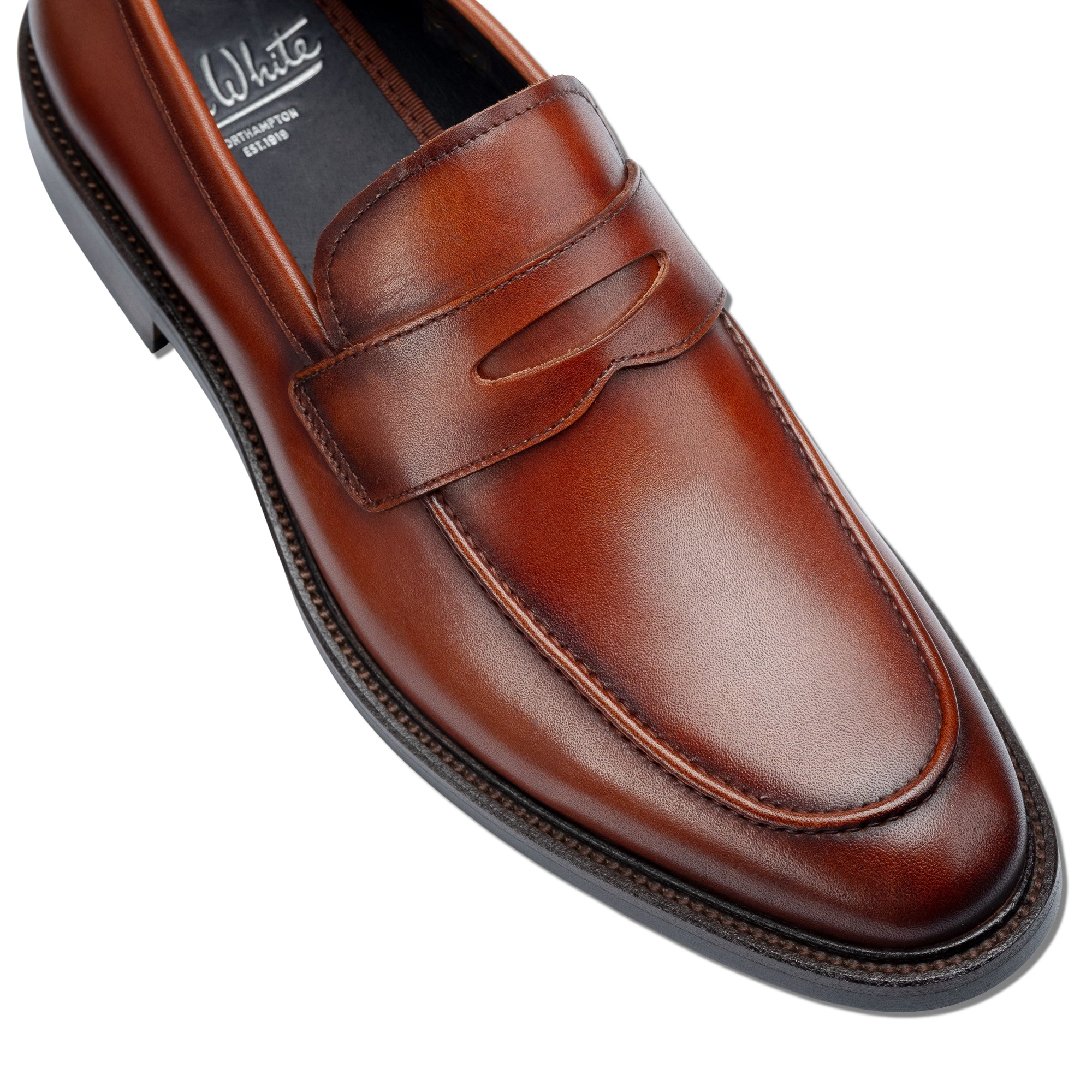
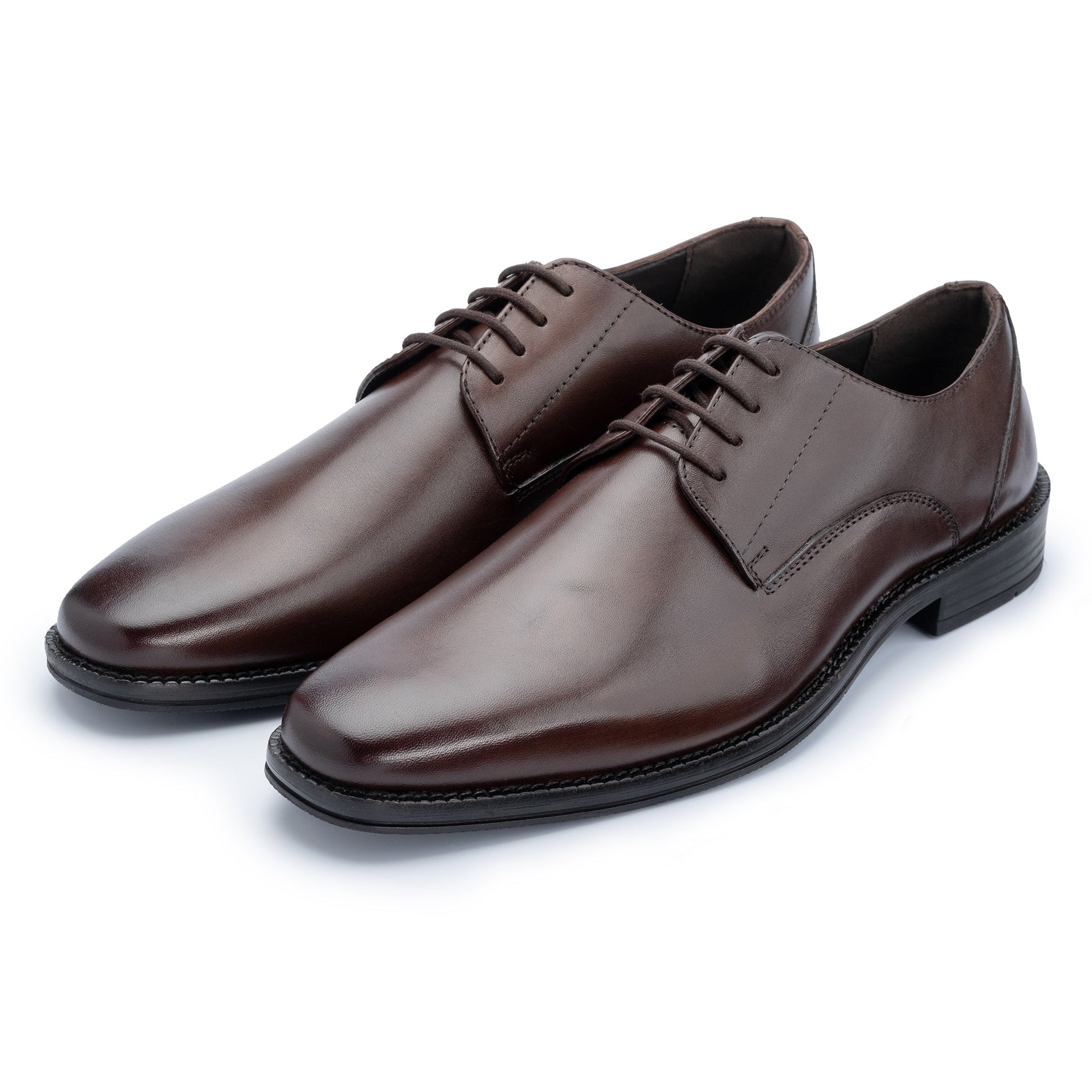
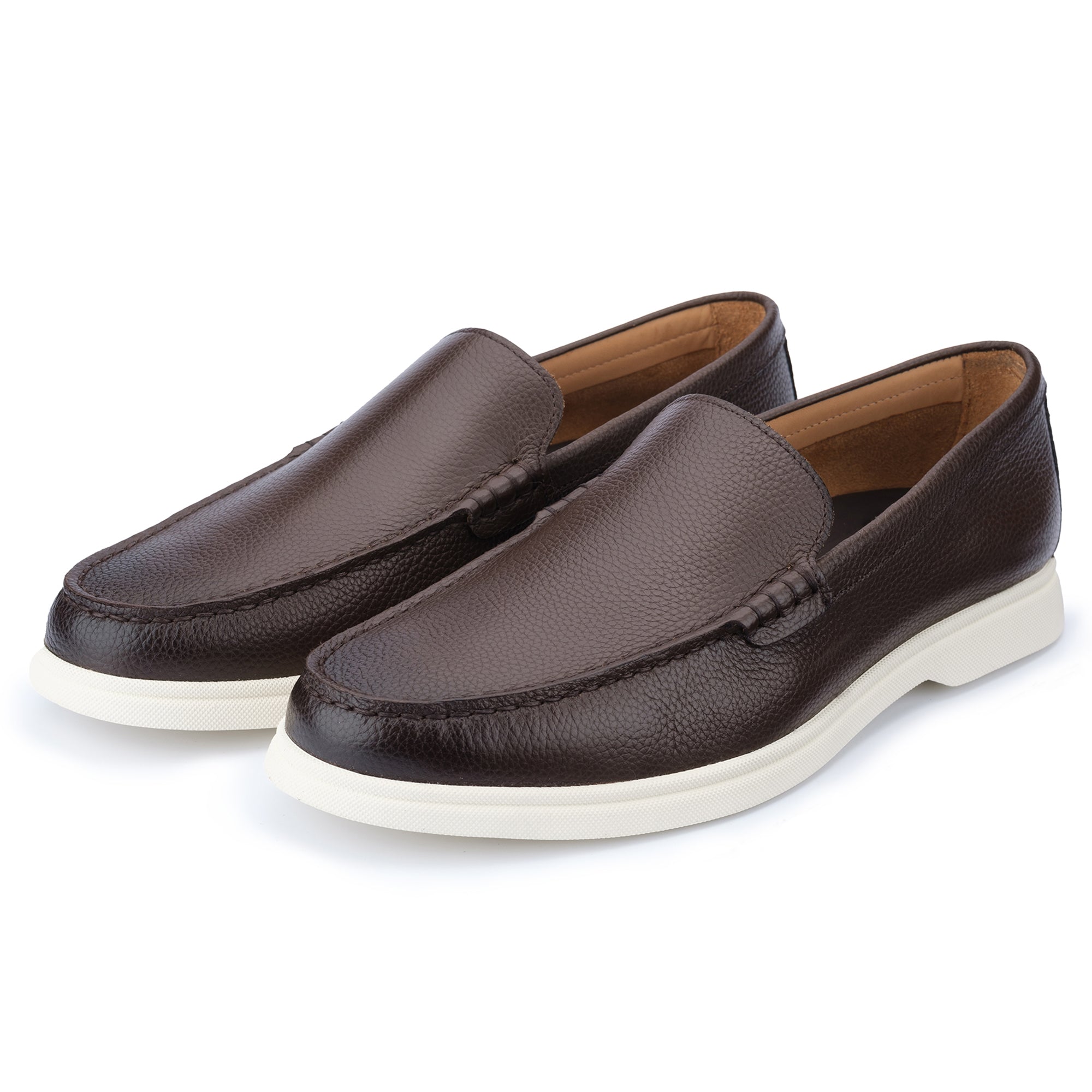
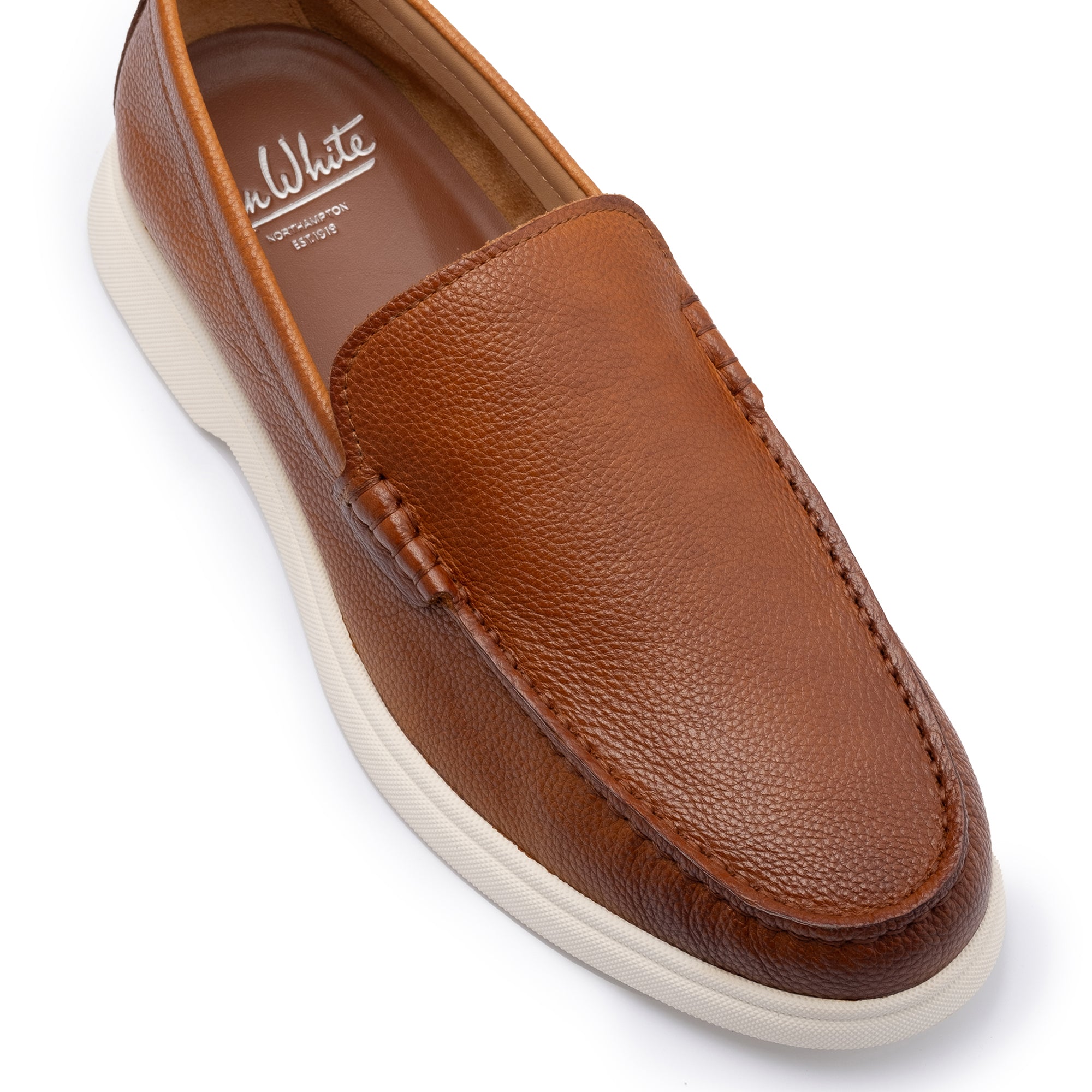
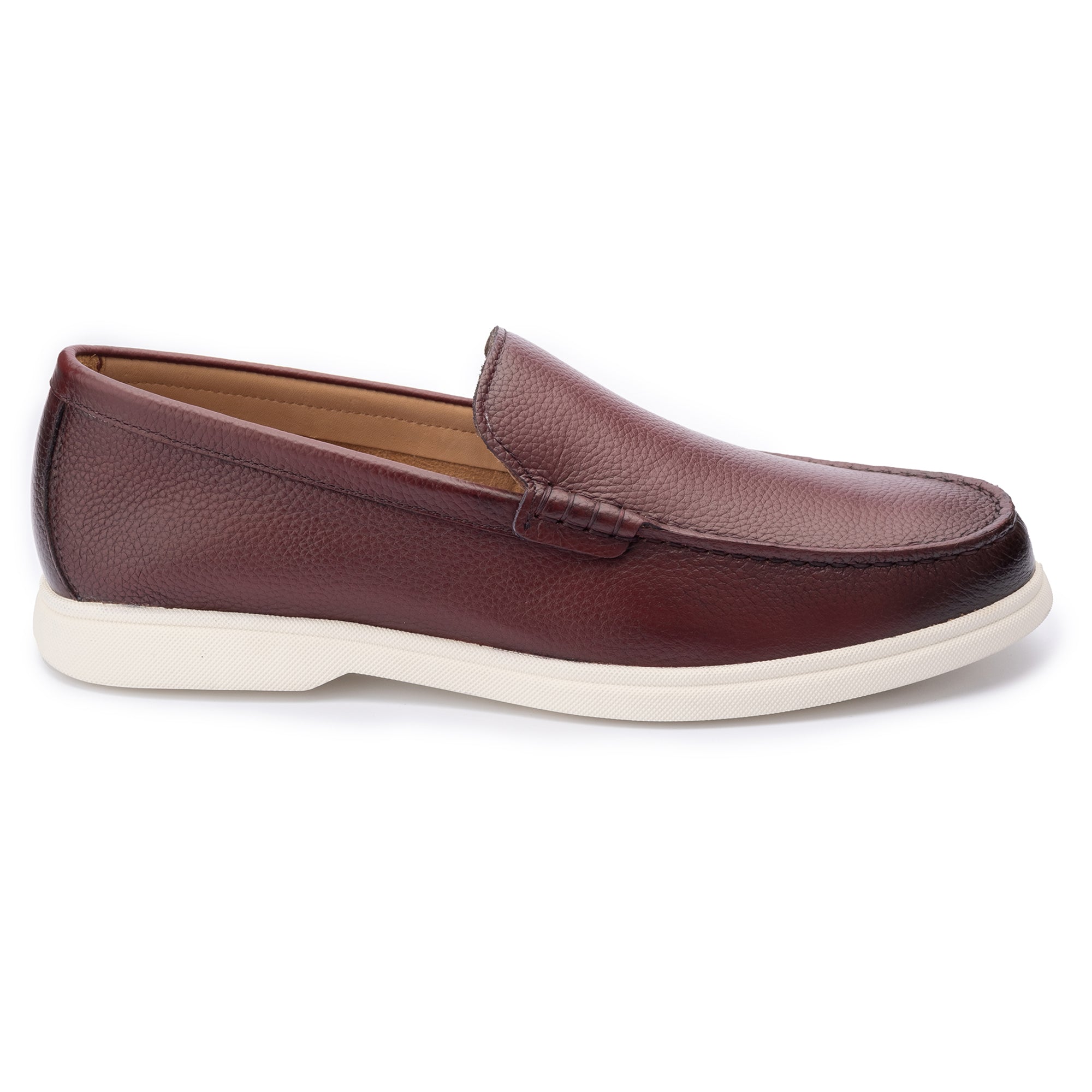
An antiqued leather finish is a technique designed to give a new shoe the distinguished appearance of a well-maintained, vintage pair. Unlike burnishing, which is about creating contrast and shine, antiquing is about achieving a consistent and subtle depth of colour that evokes a natural patina developed over years of wear and care.
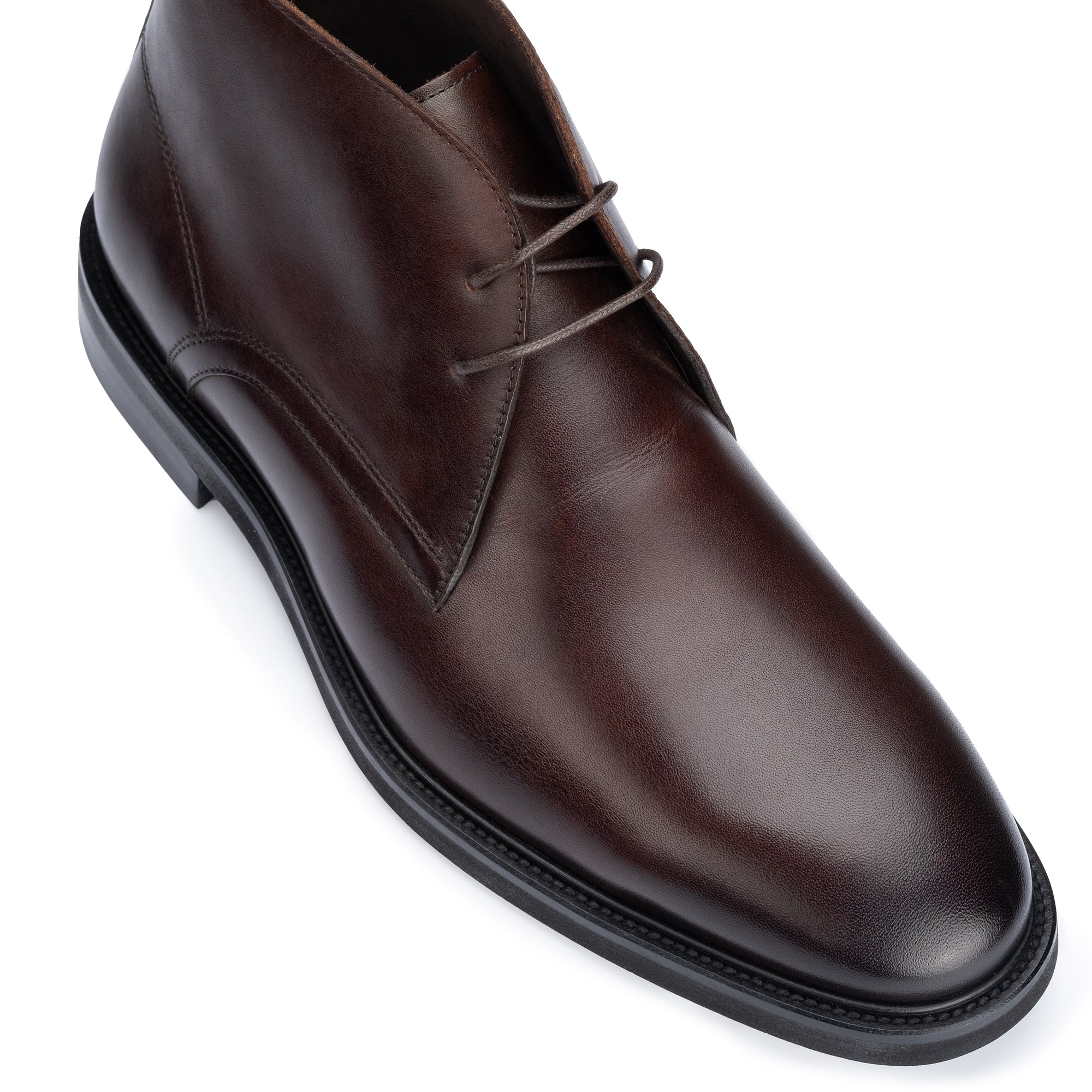
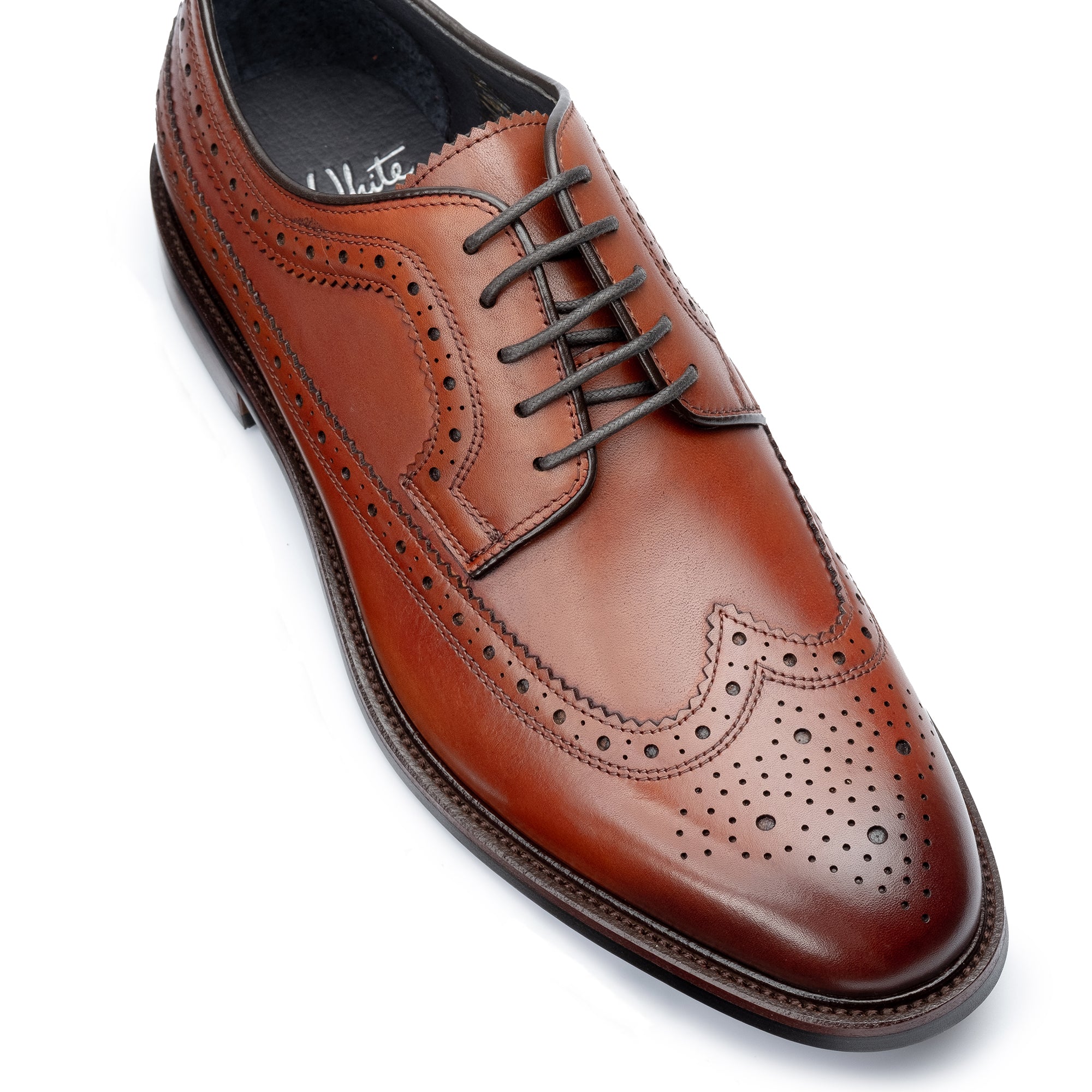
The process involves the careful application of darker creams or dyes over a lighter base colour. This darker layer is then meticulously rubbed away by hand, allowing it to remain in the leather’s subtle creases and grain. This creates soft, nuanced tonal variations across the entire surface of the shoe, mimicking the way leather naturally ages. According to the Leather Conservation Centre, such finishes were historically used in bookbinding to give new volumes an "air of establishment." The same principle applies to footwear, lending it immediate heritage appeal.
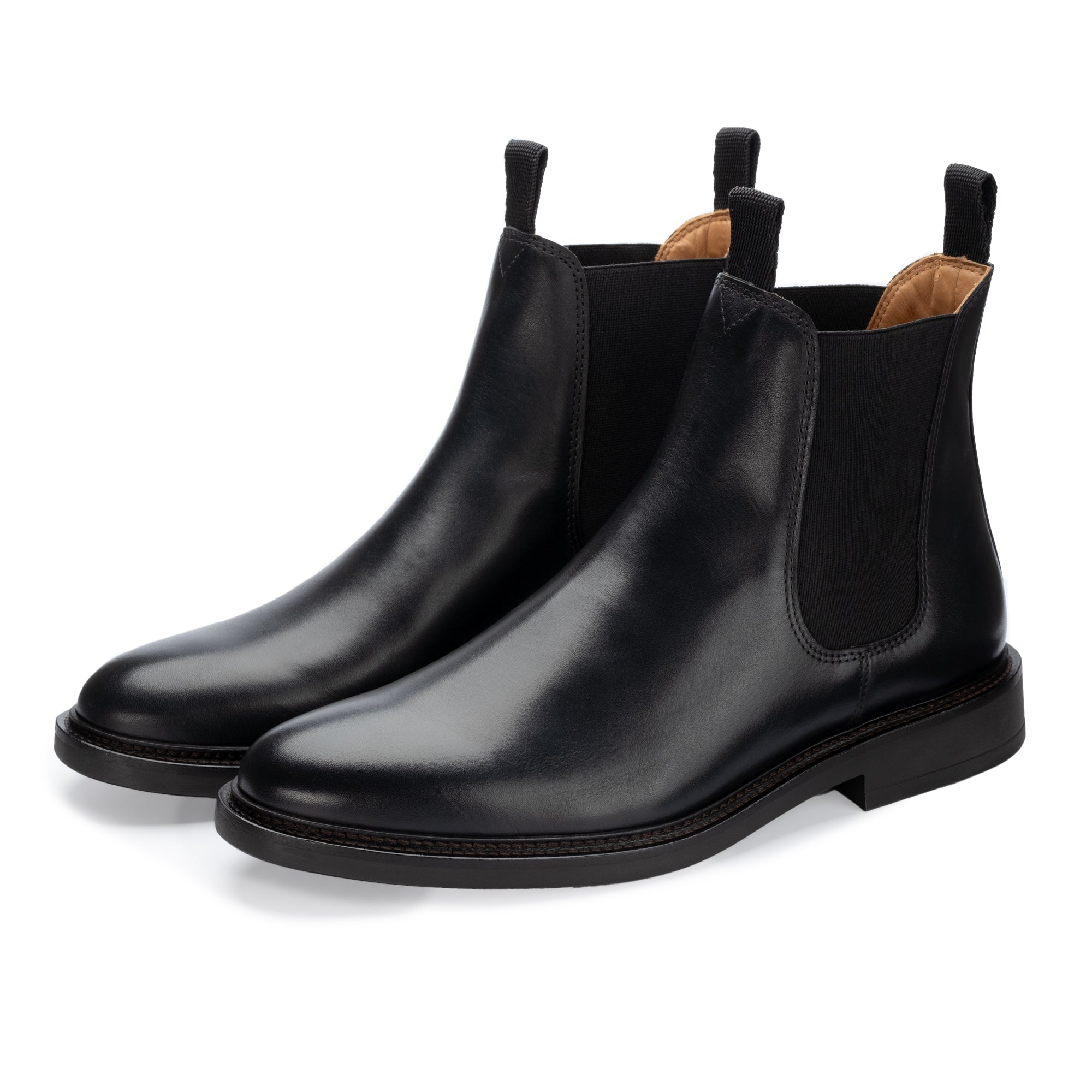
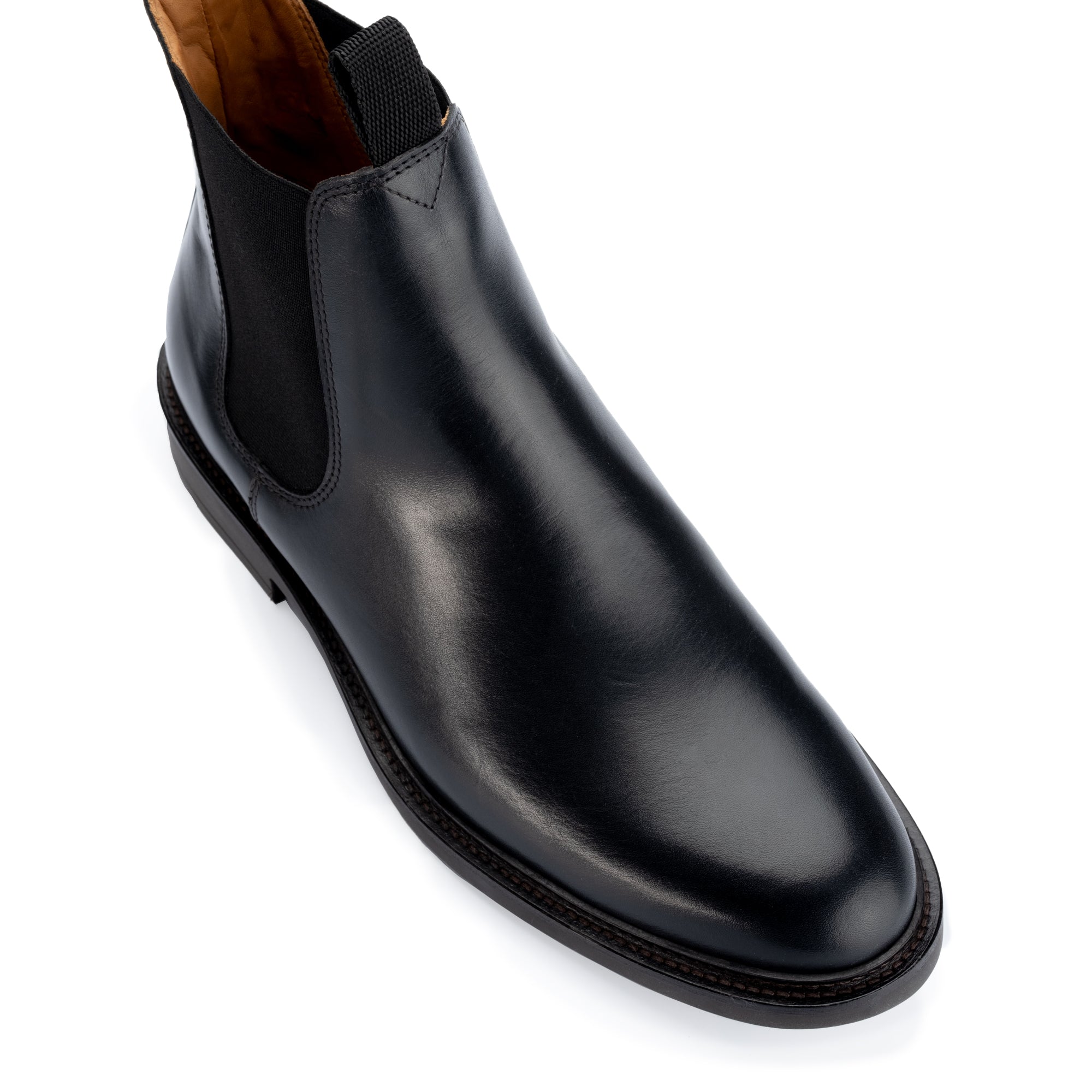
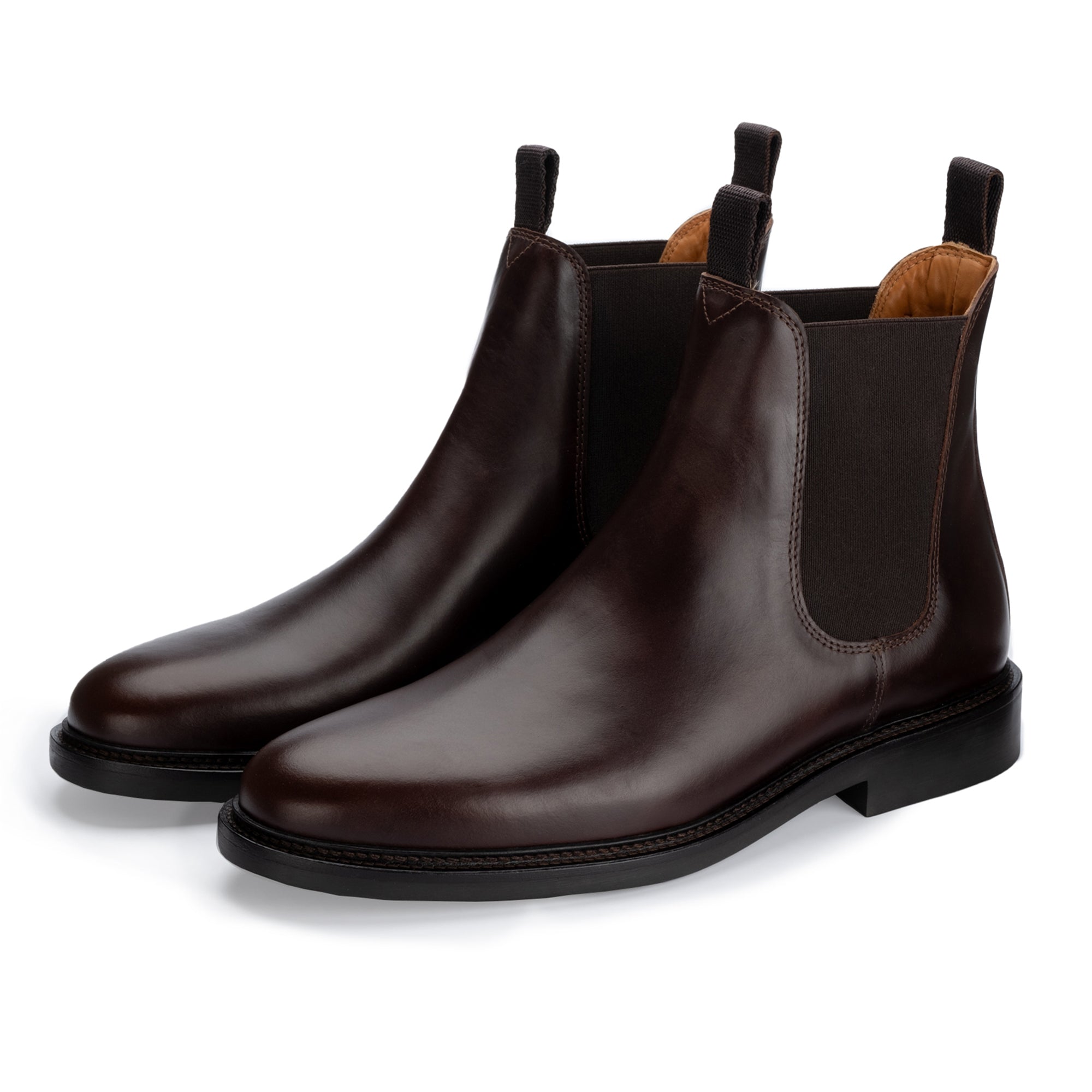
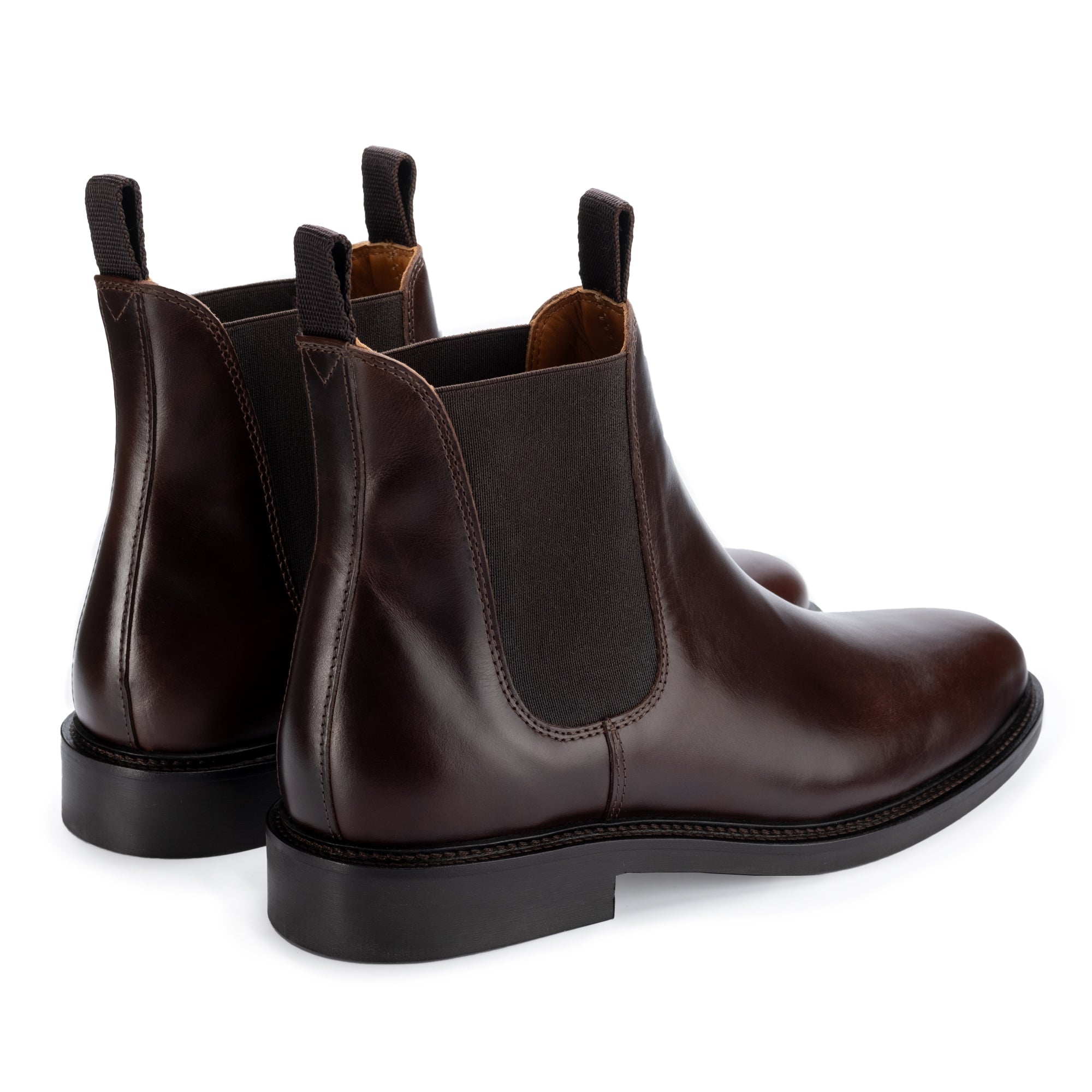
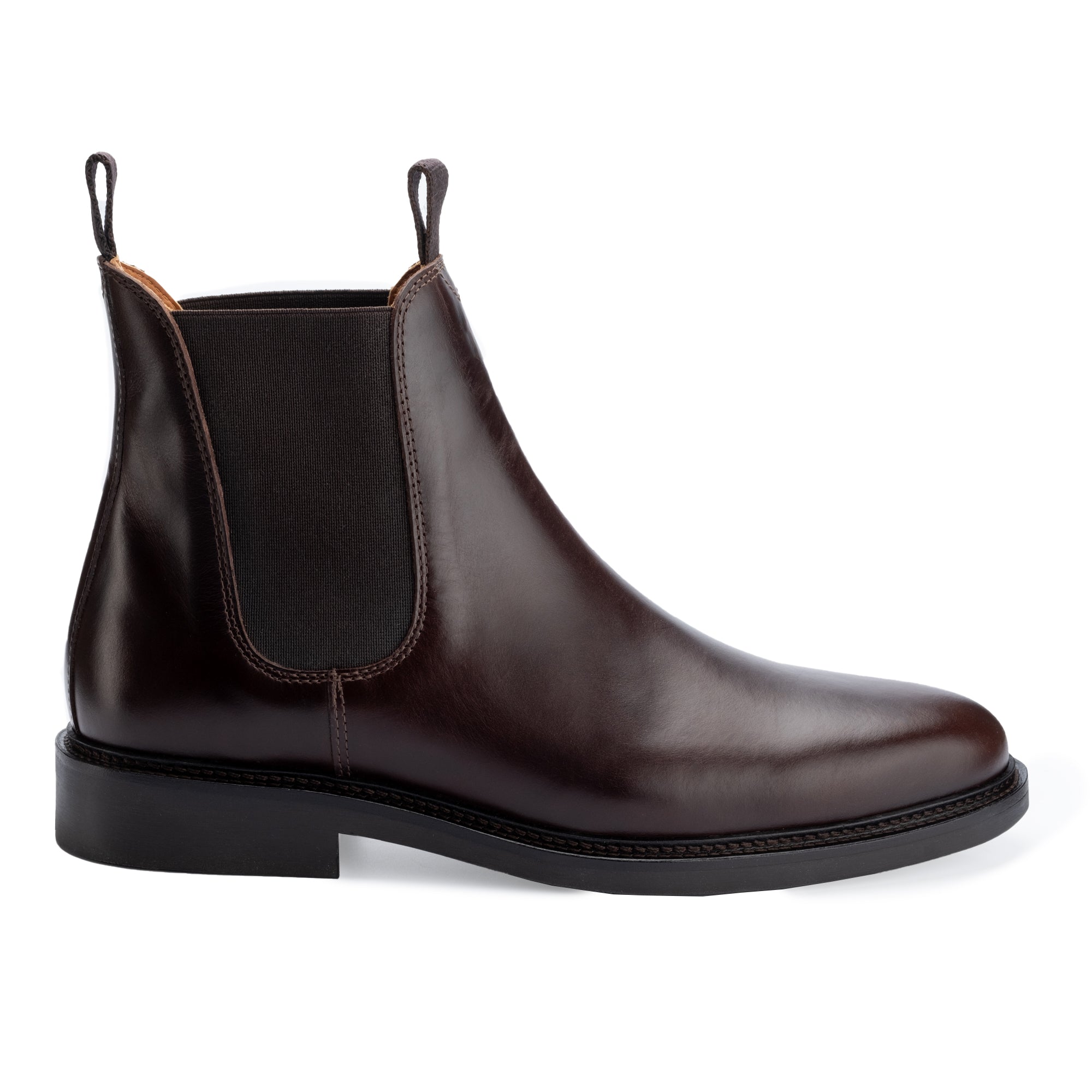
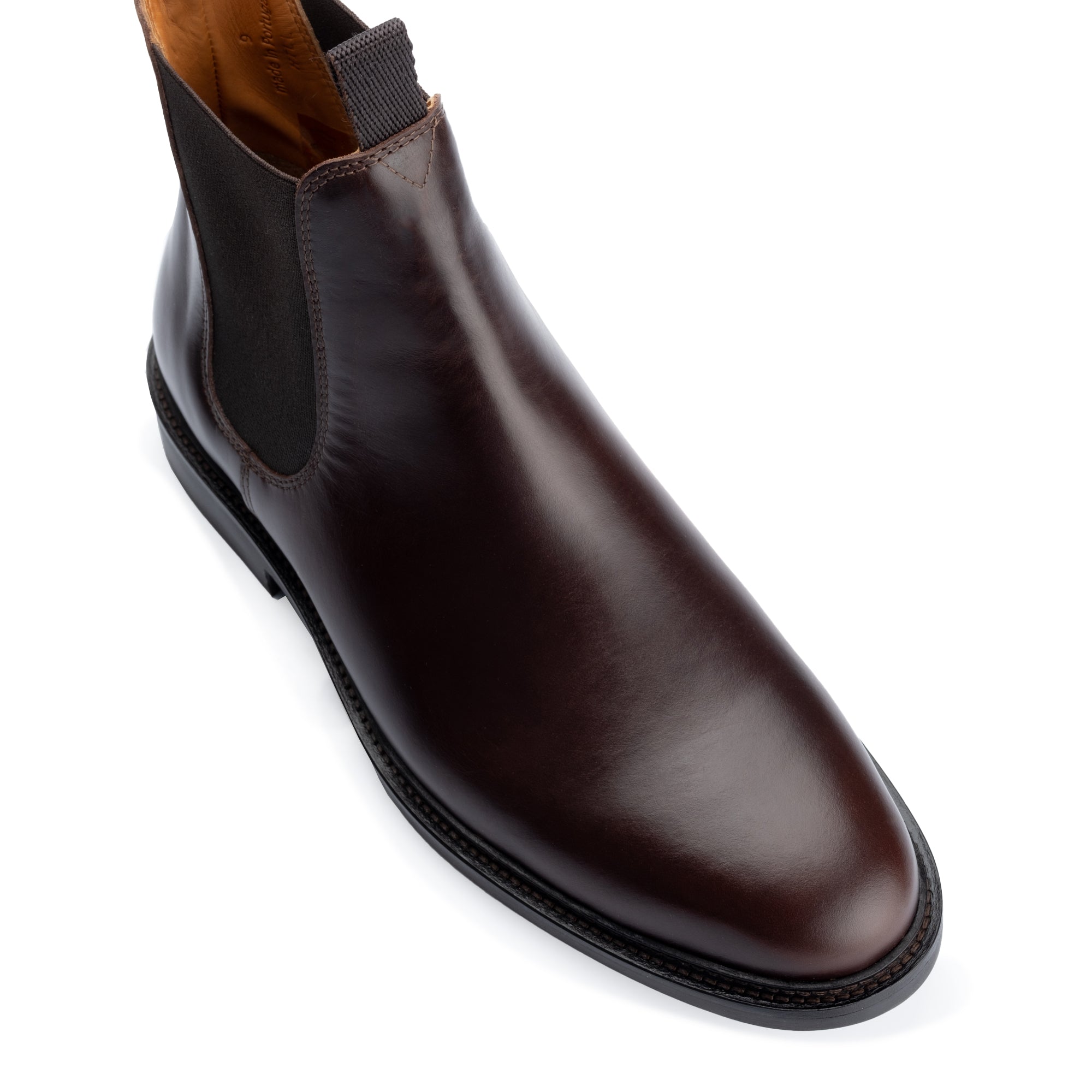
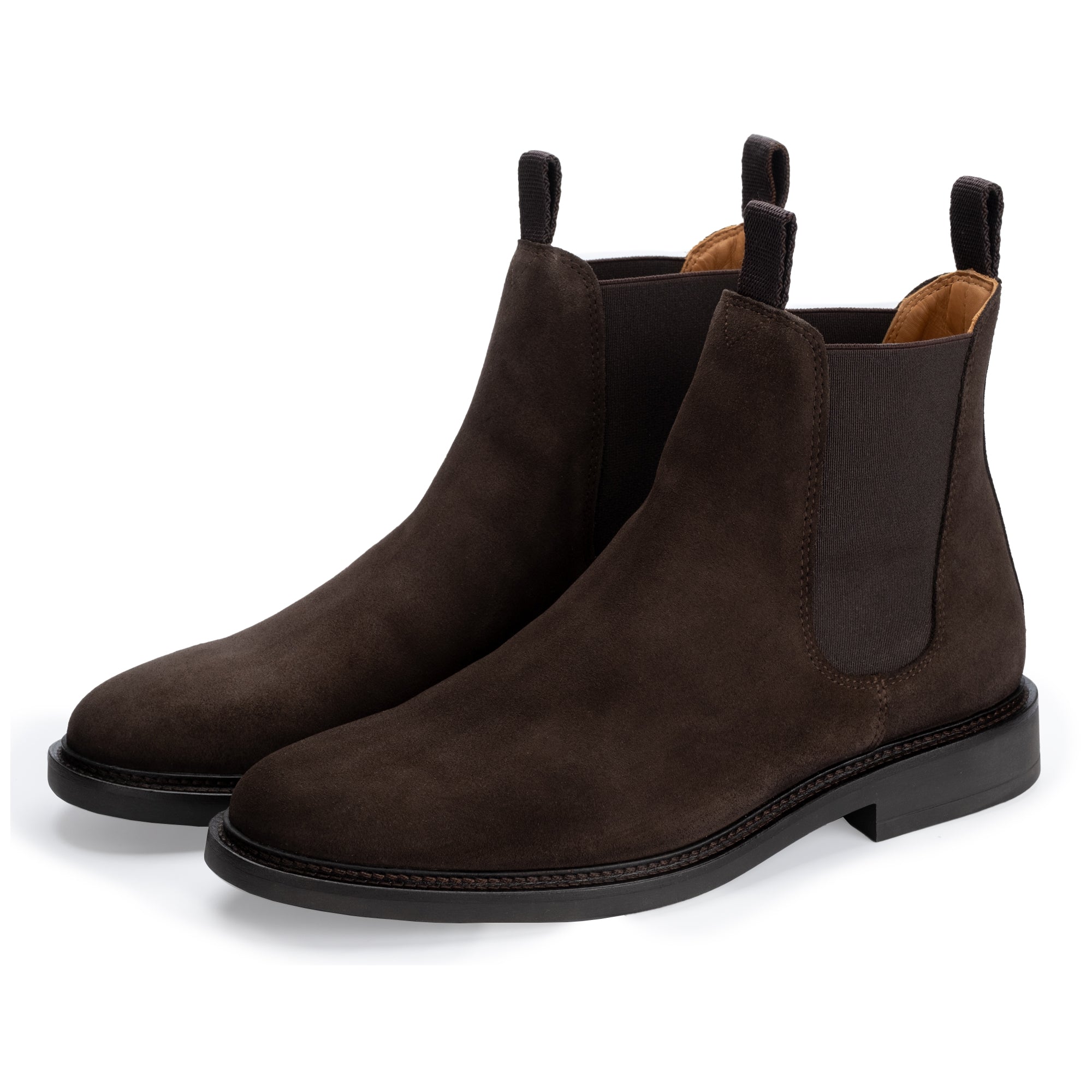
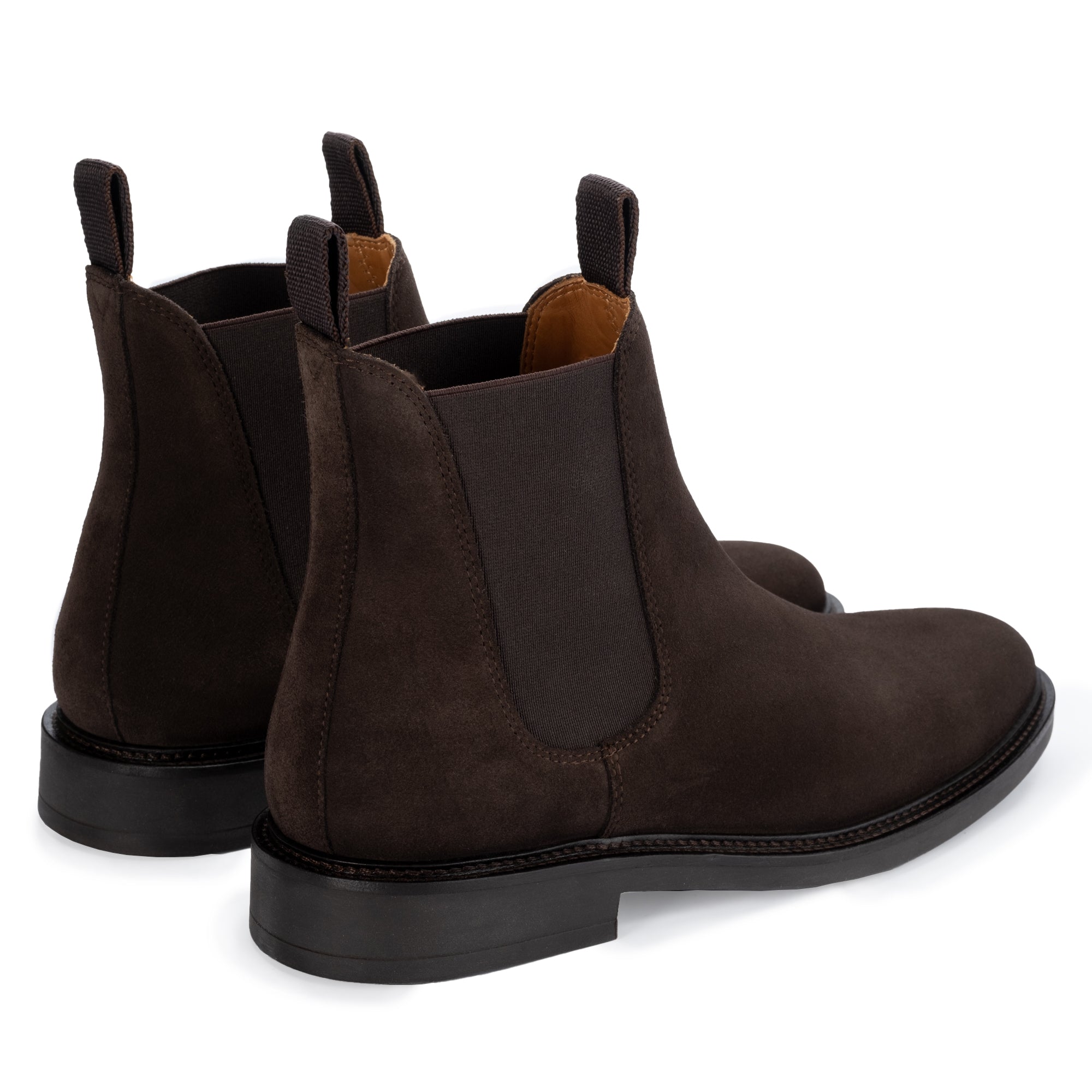
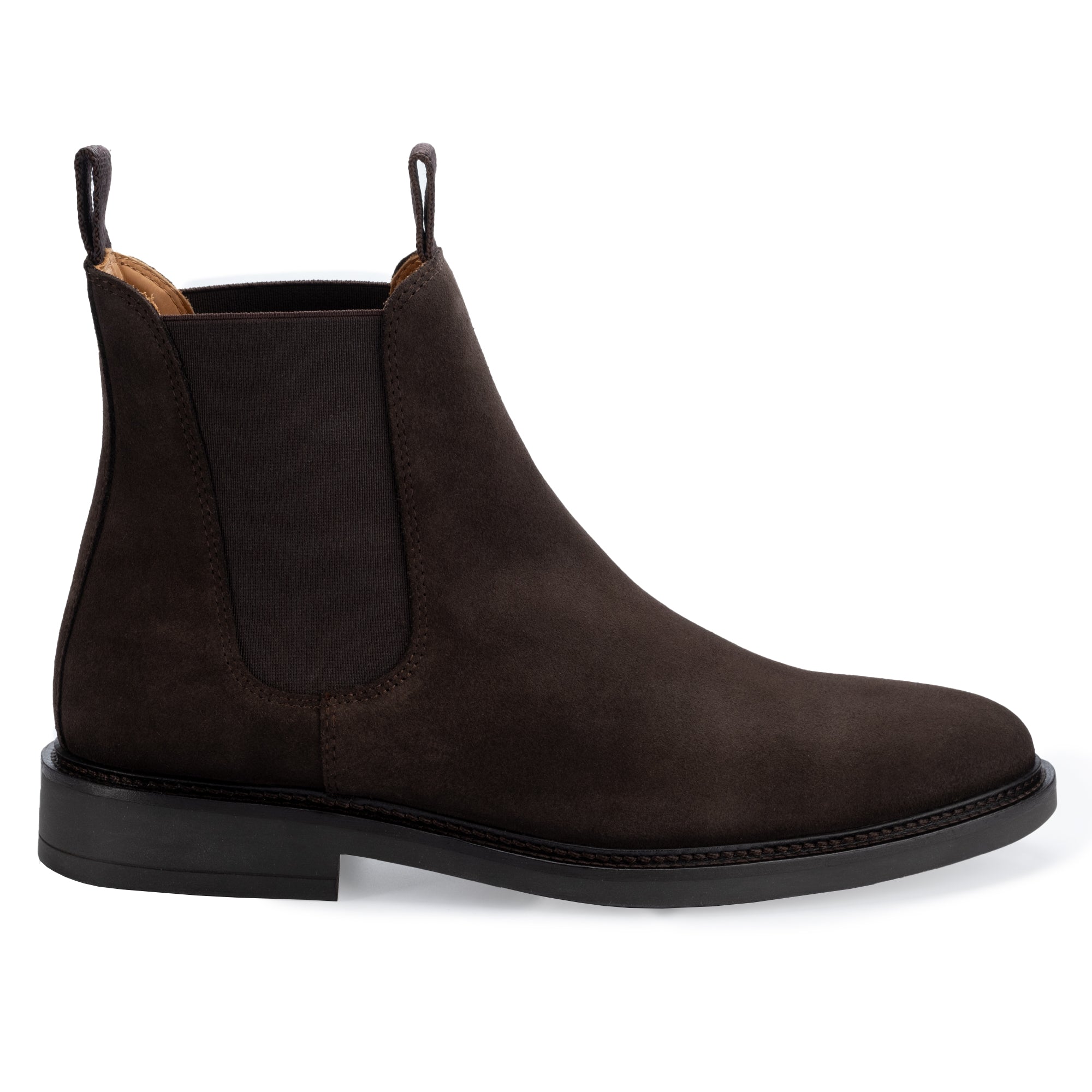
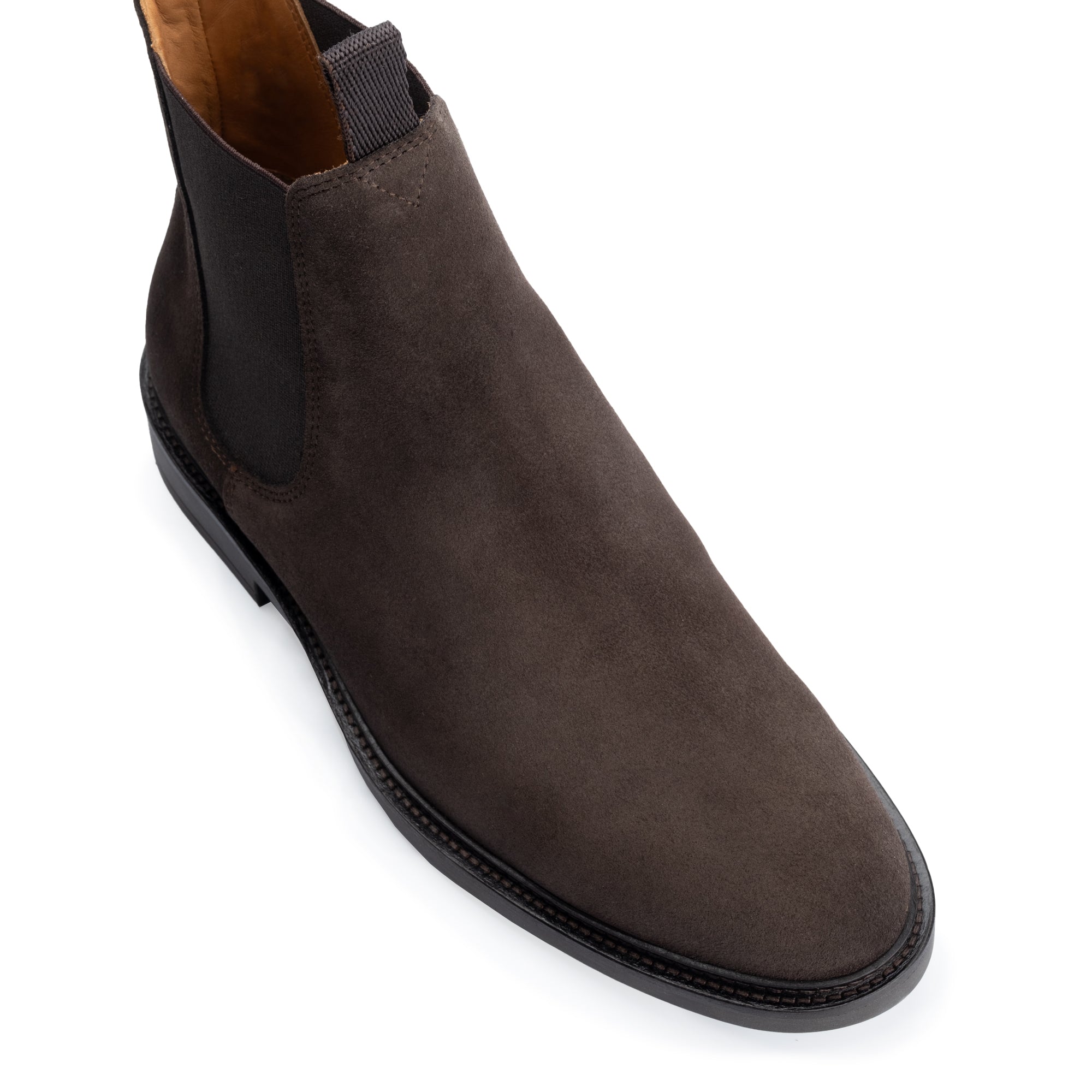
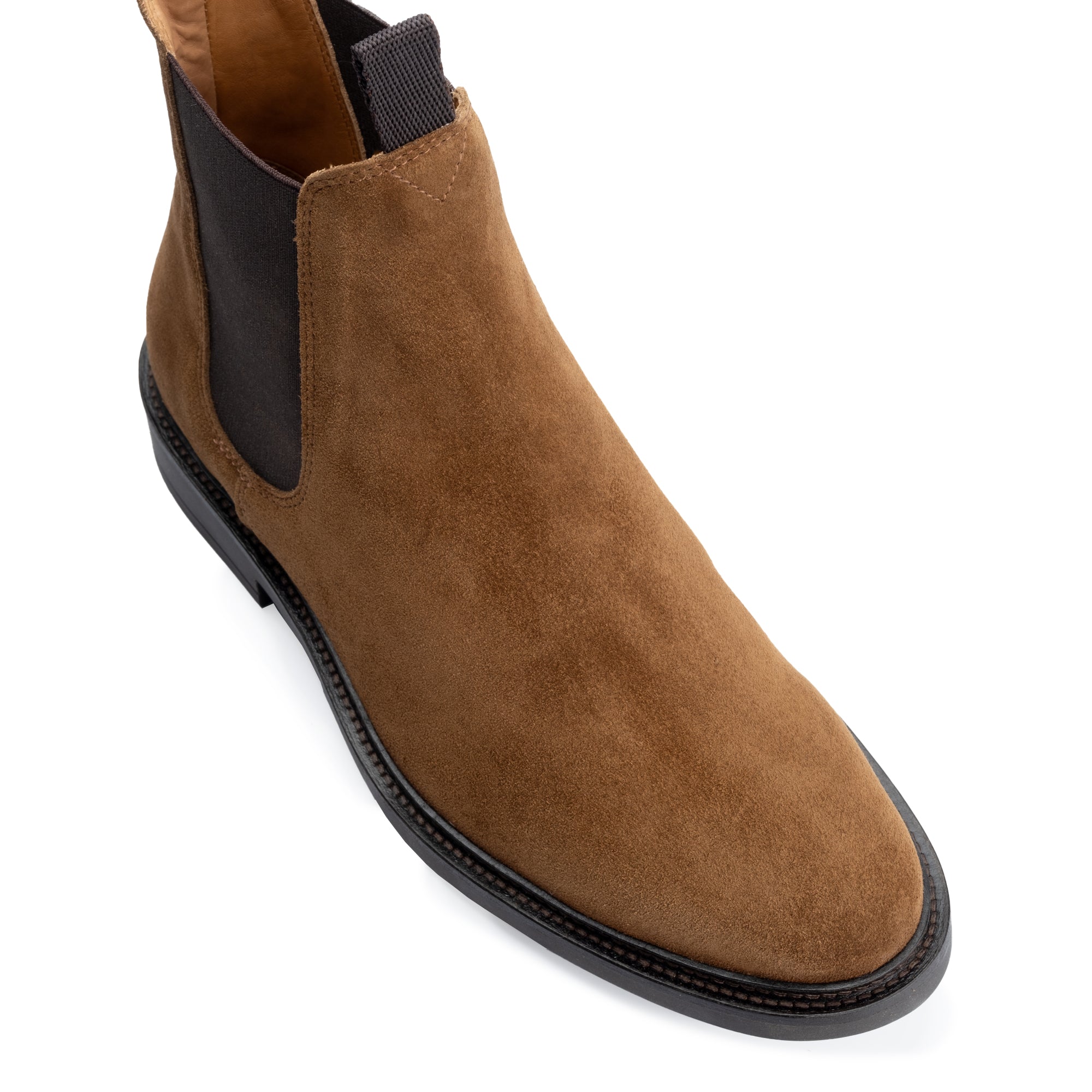
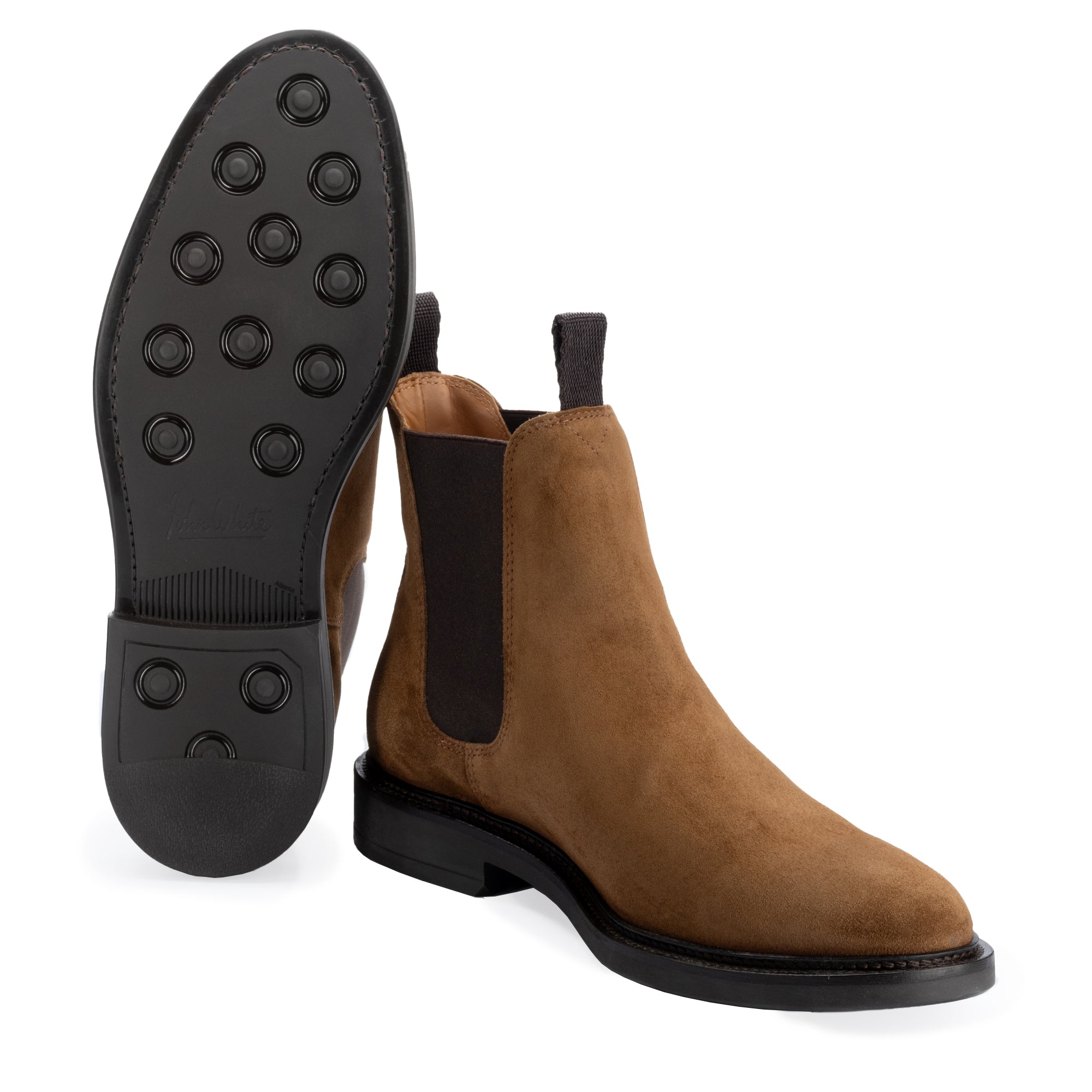
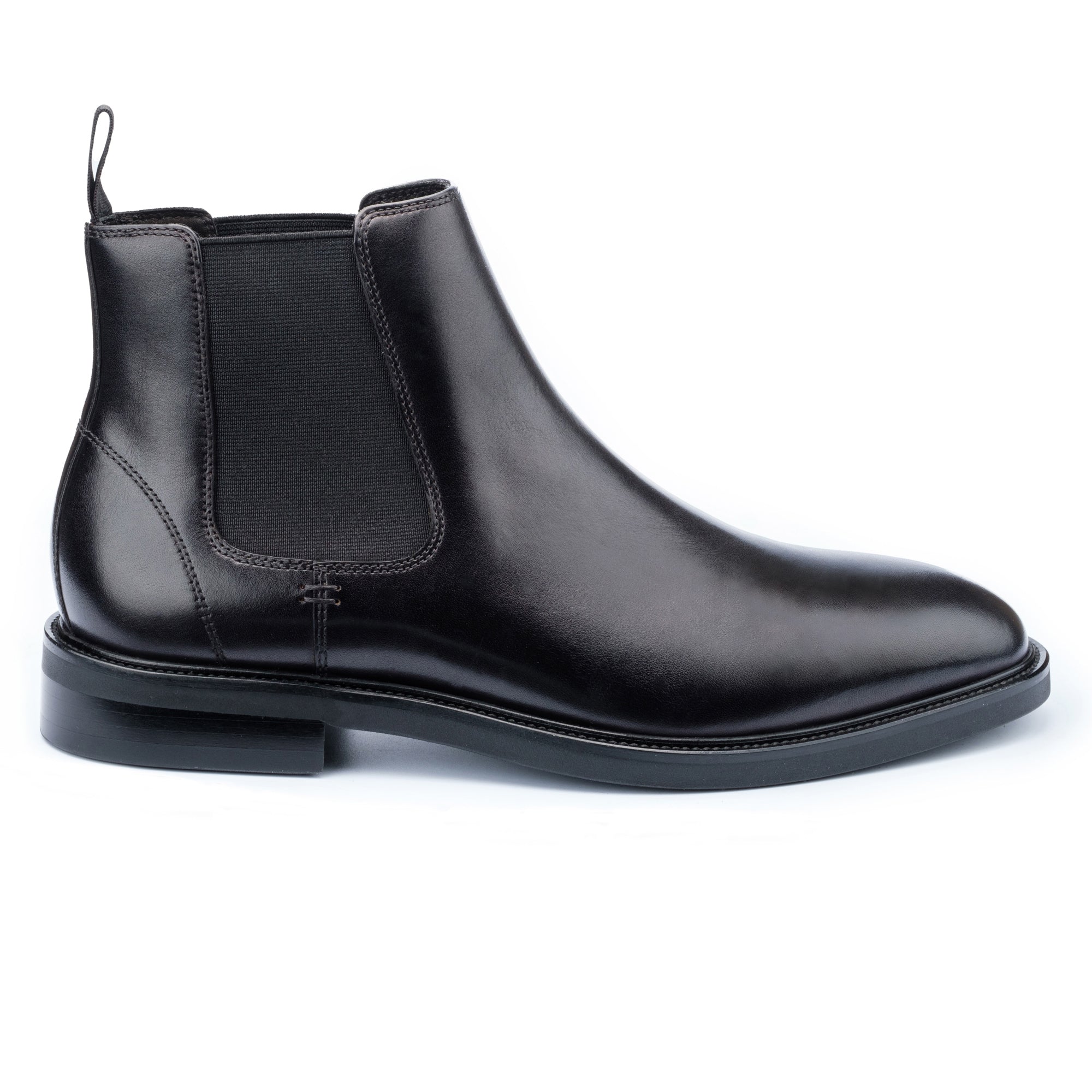
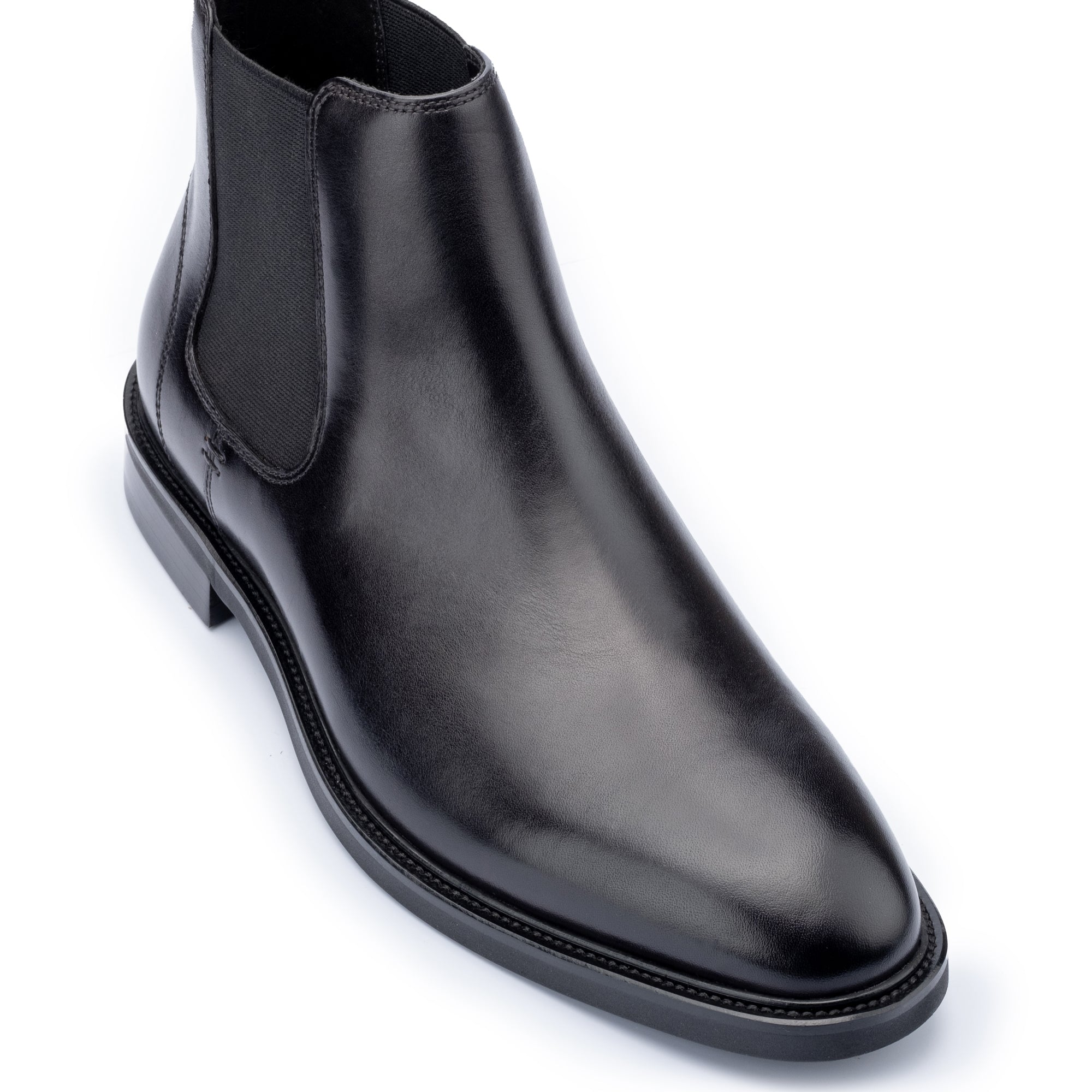
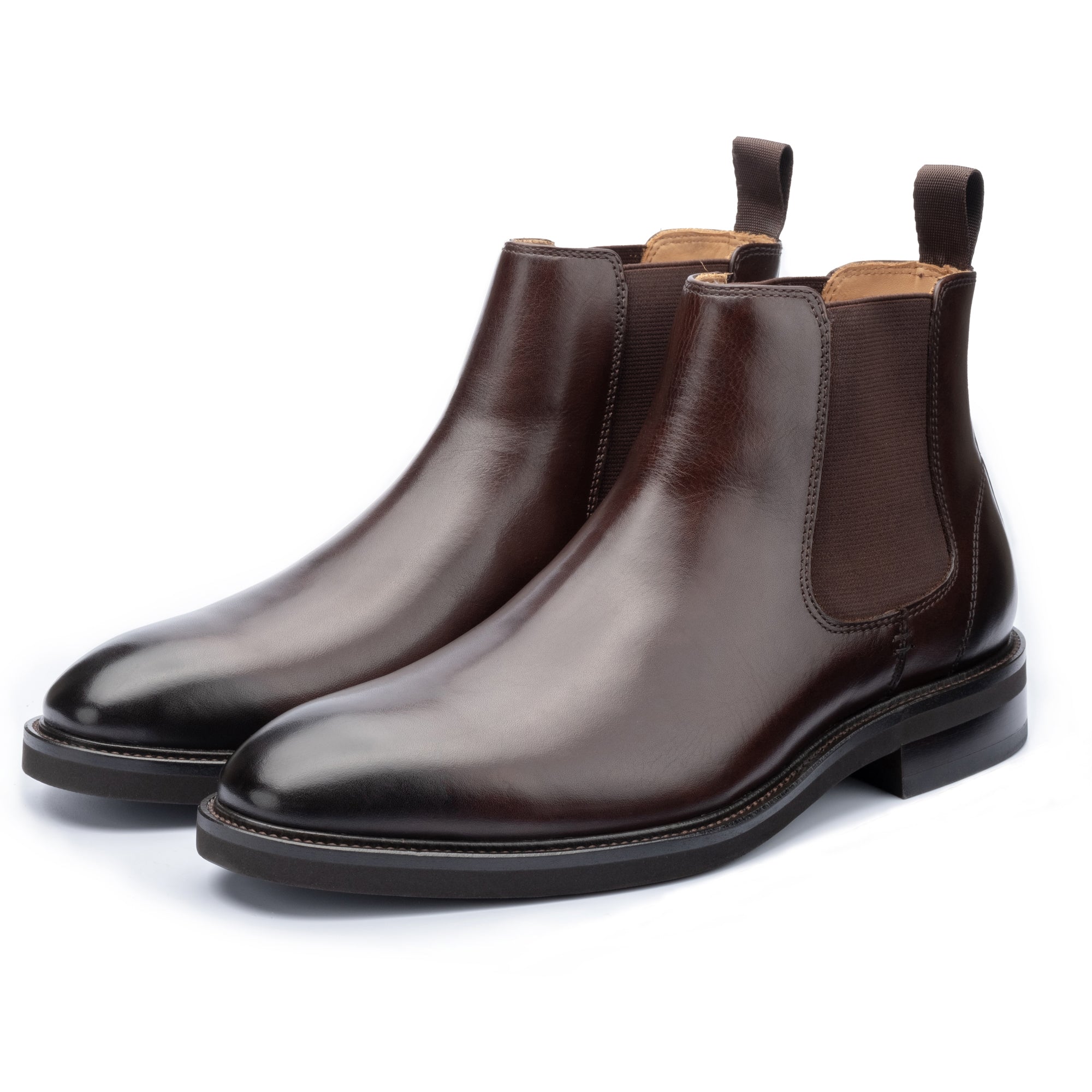
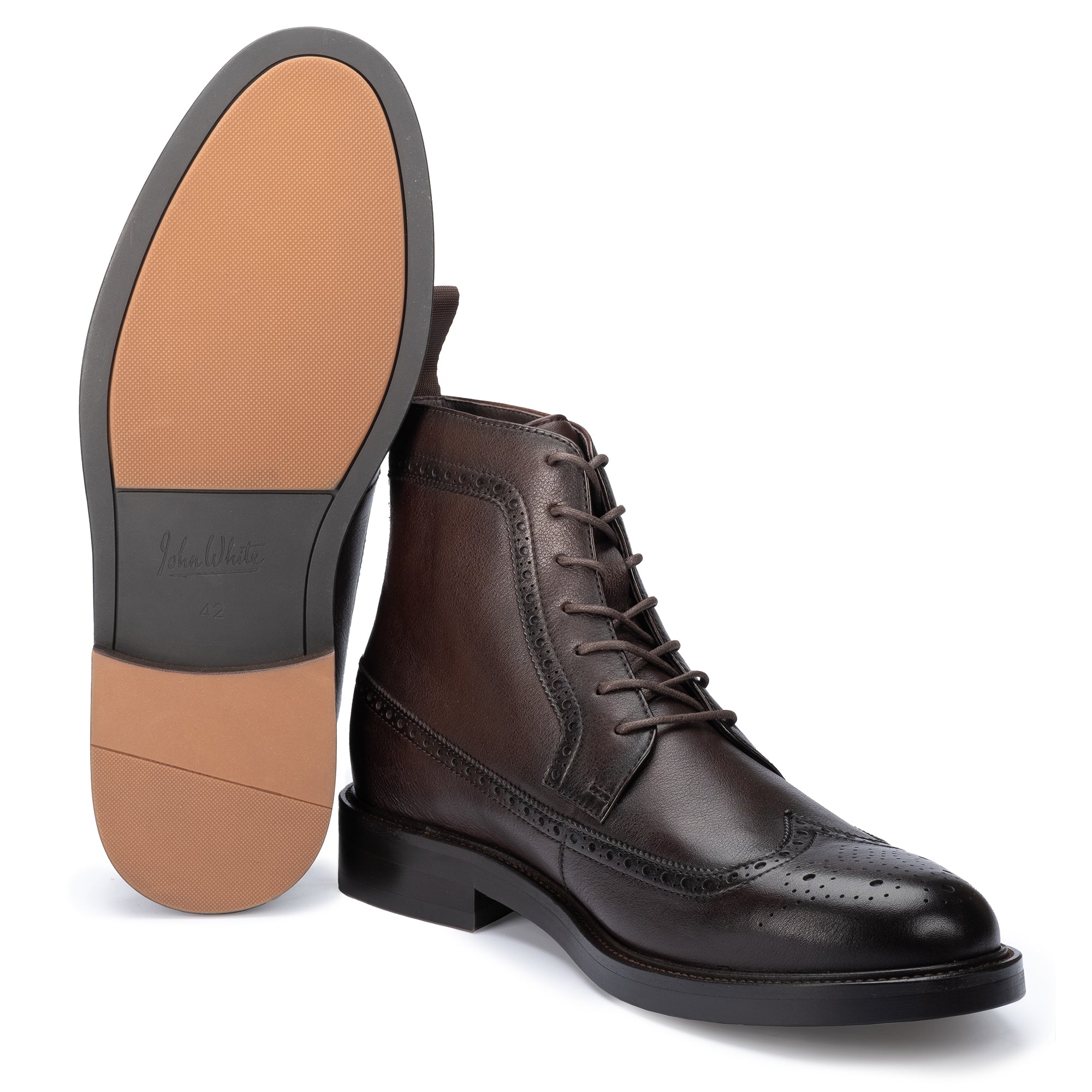
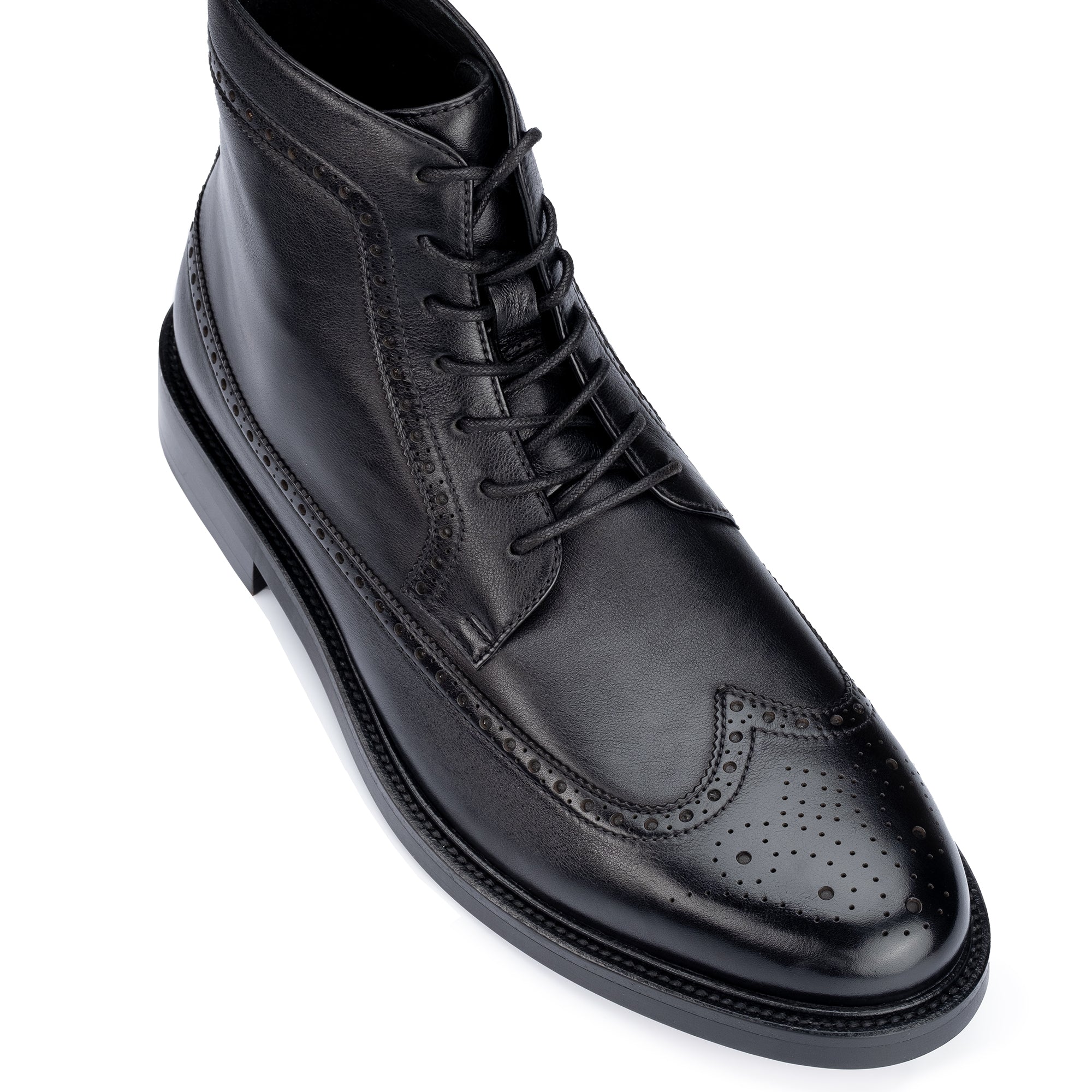
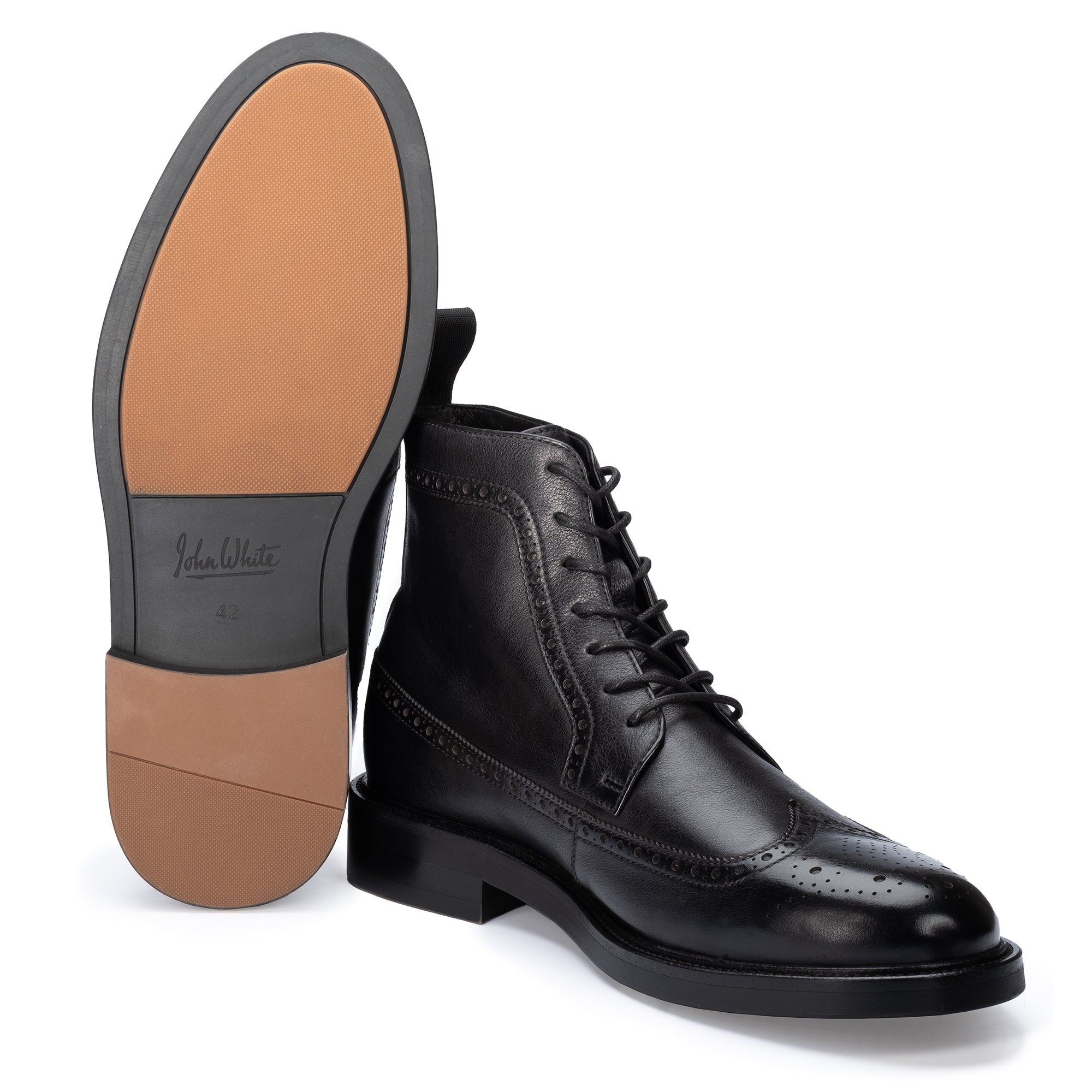
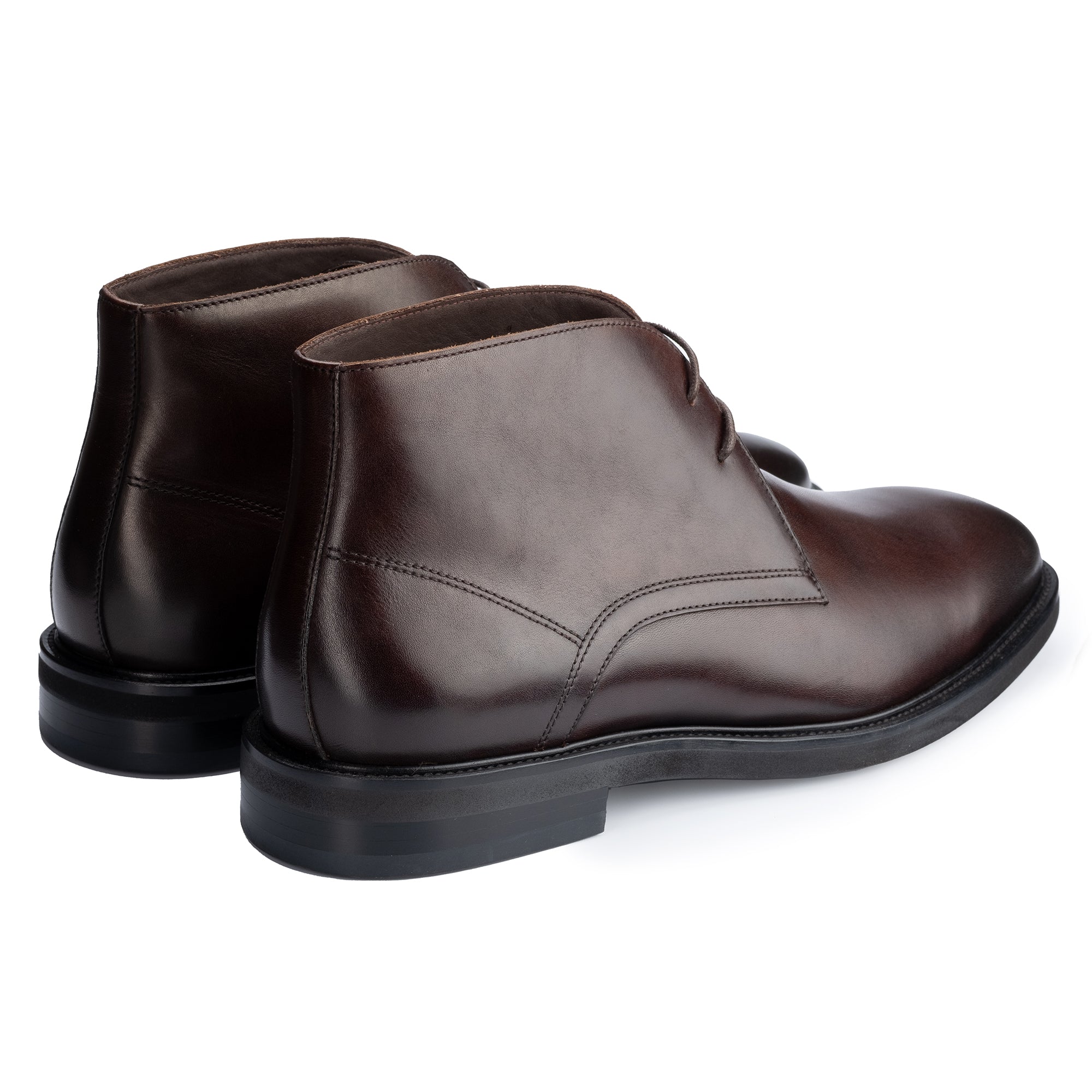
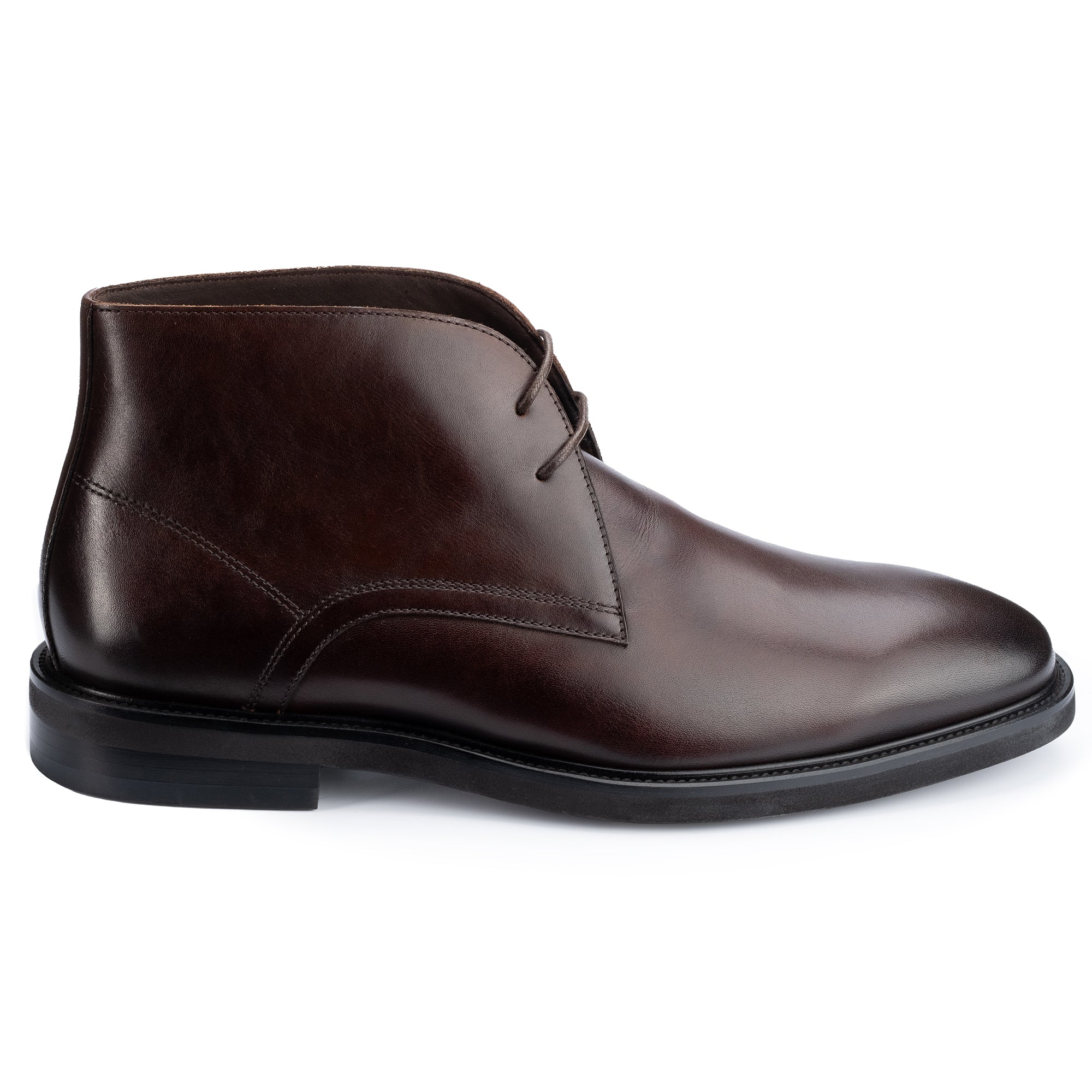
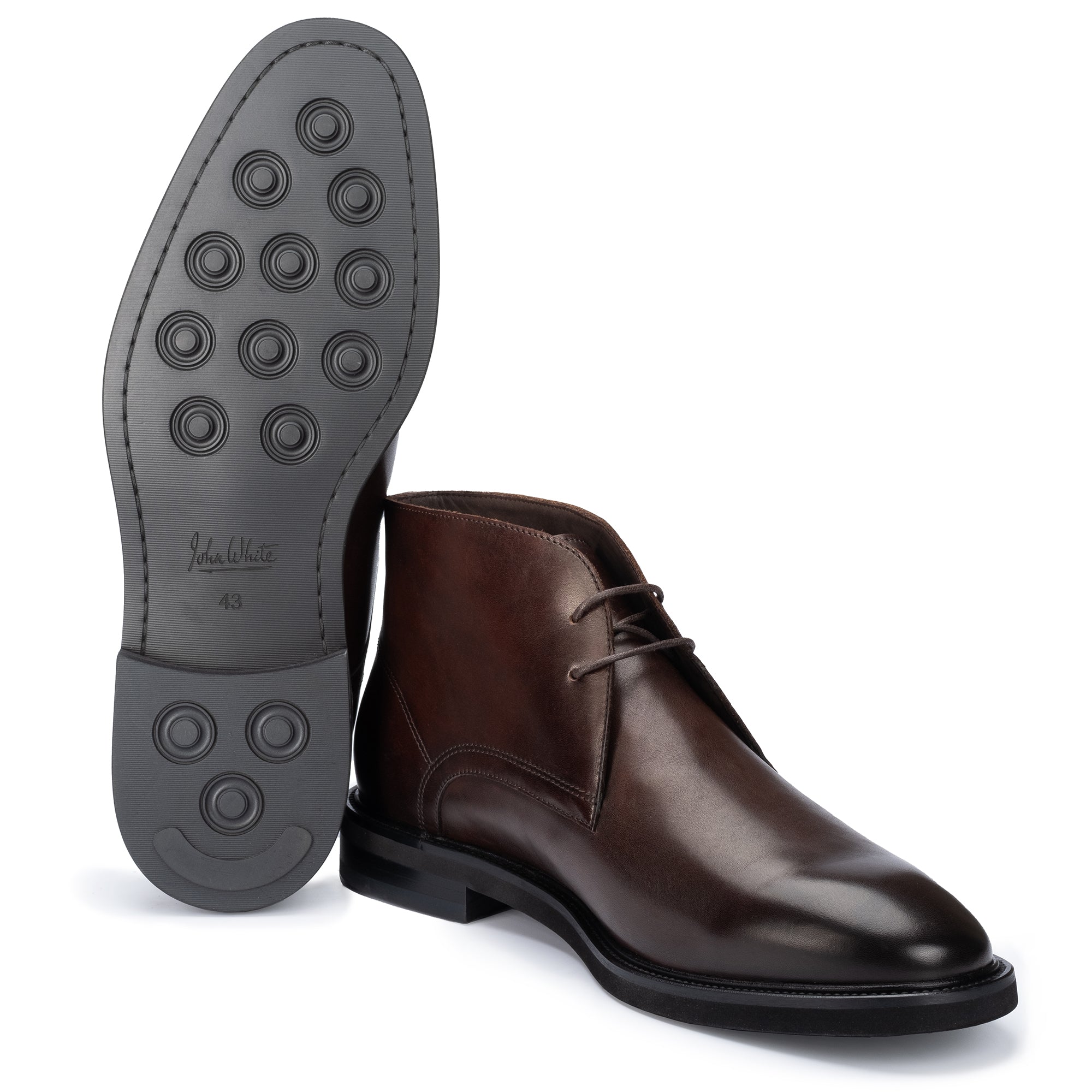
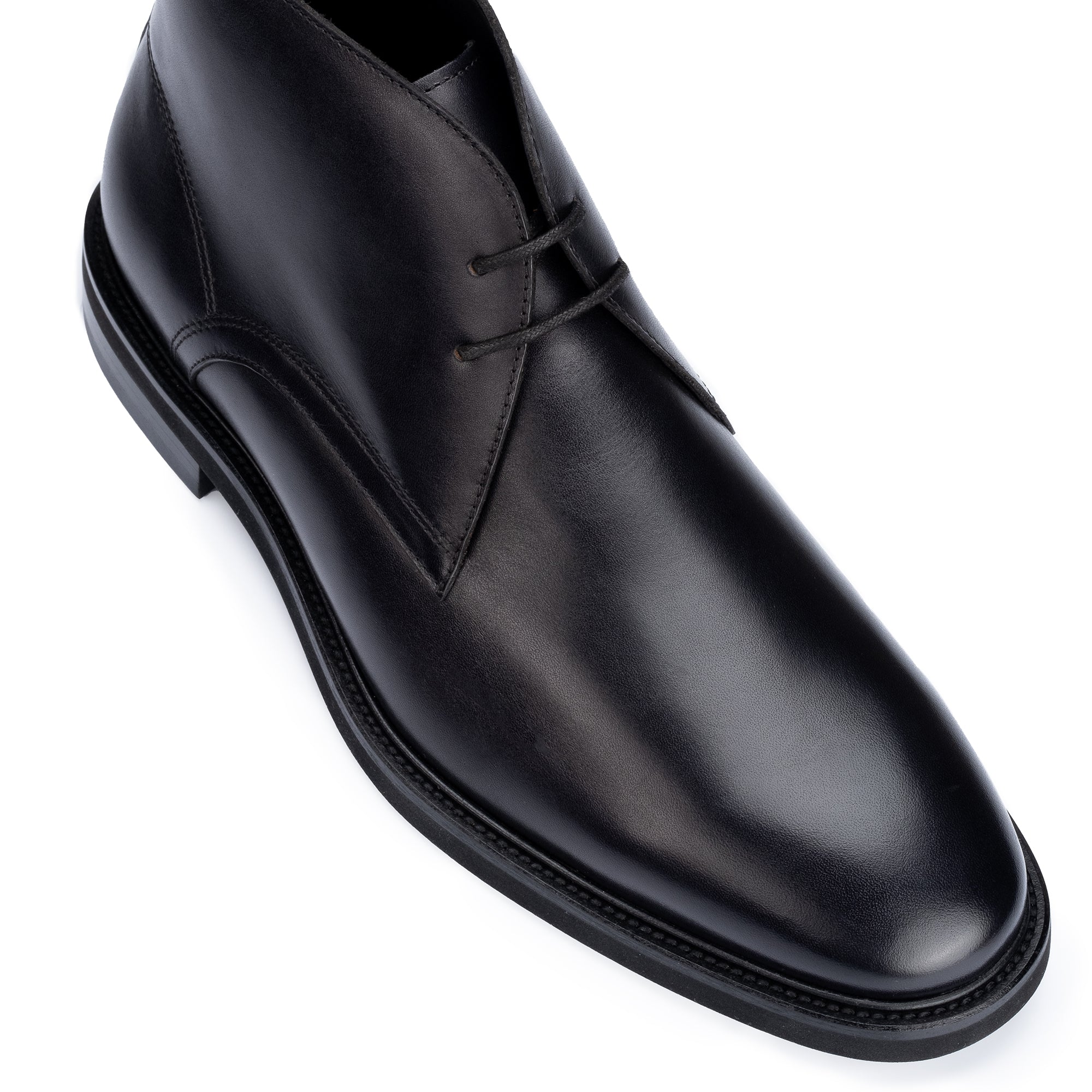
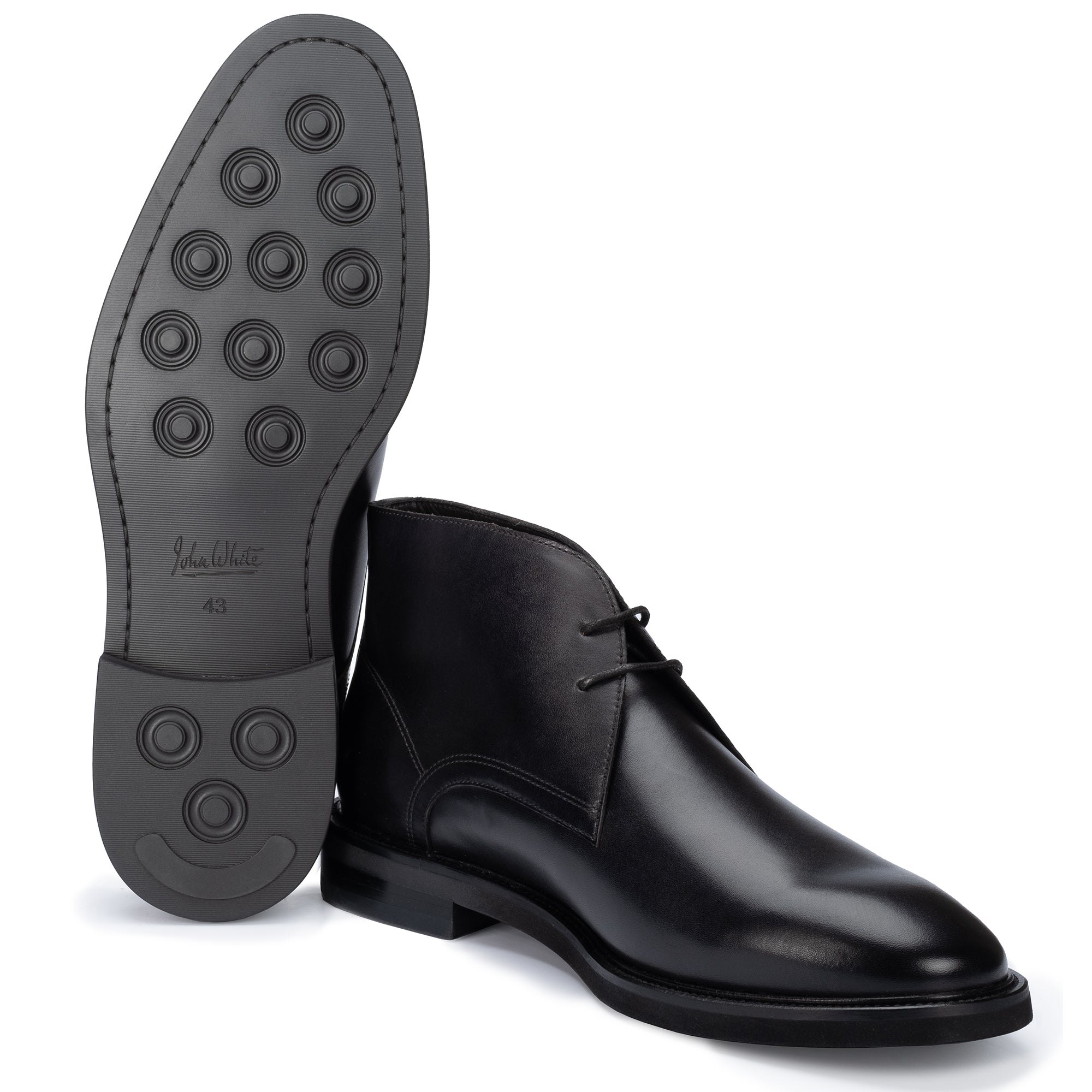
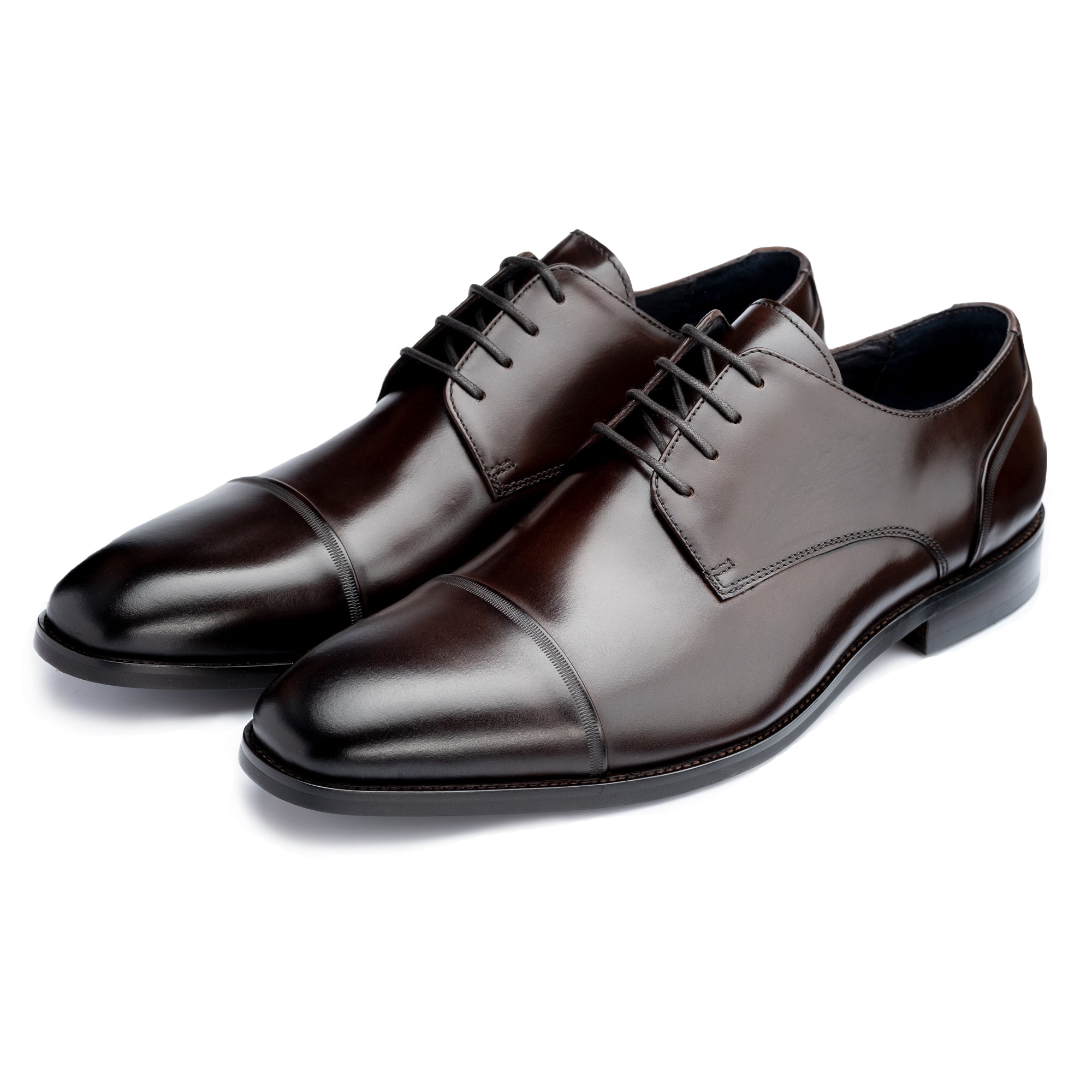
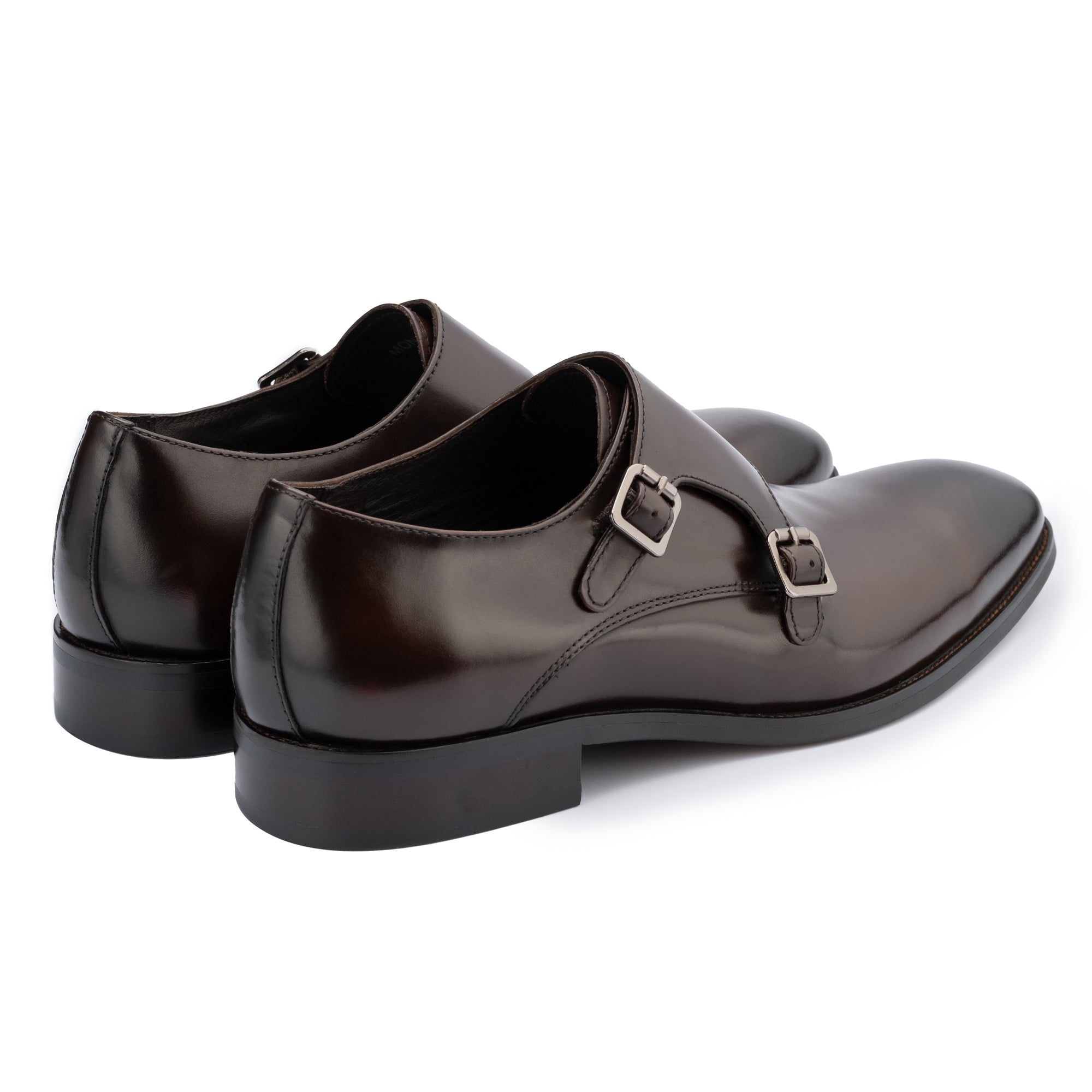
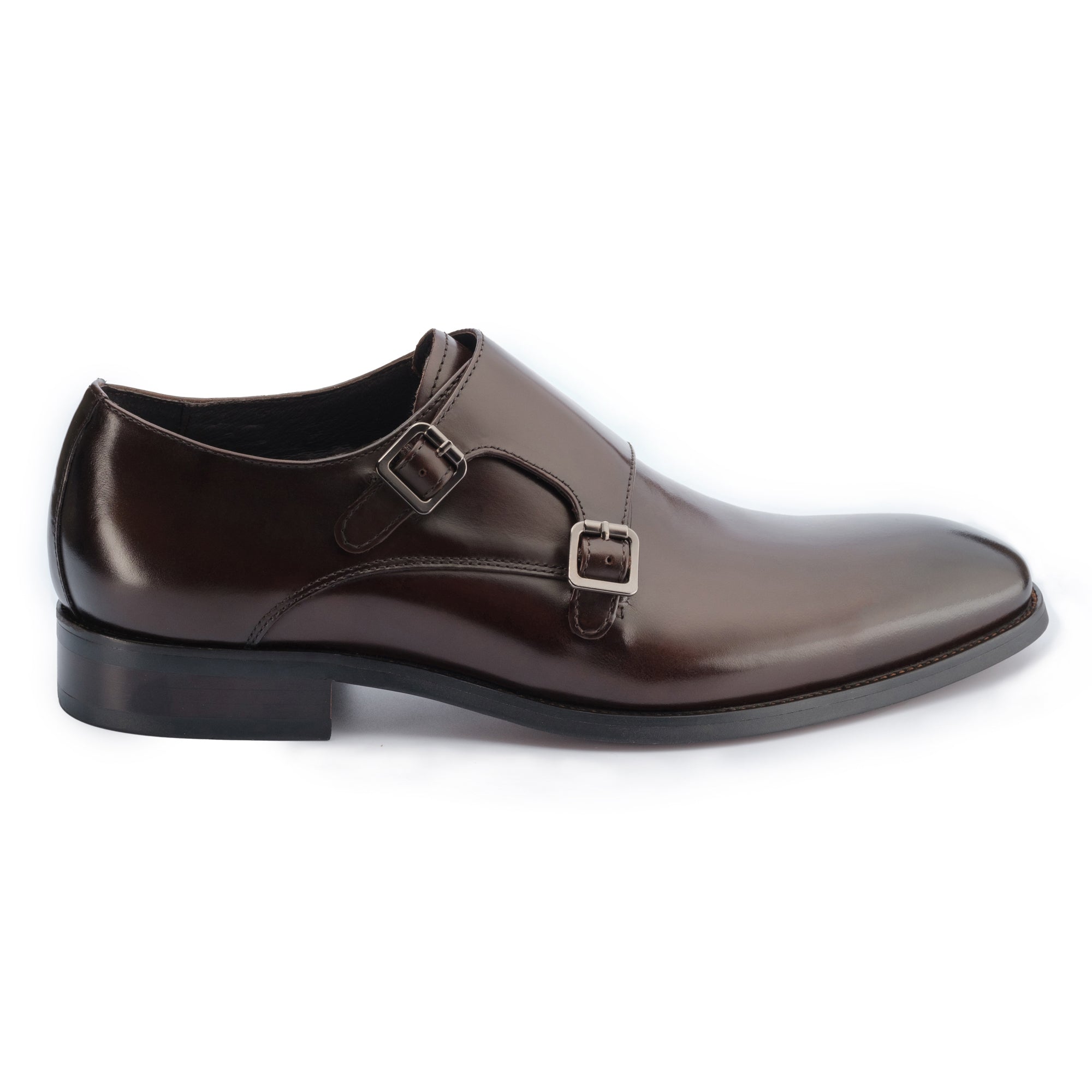
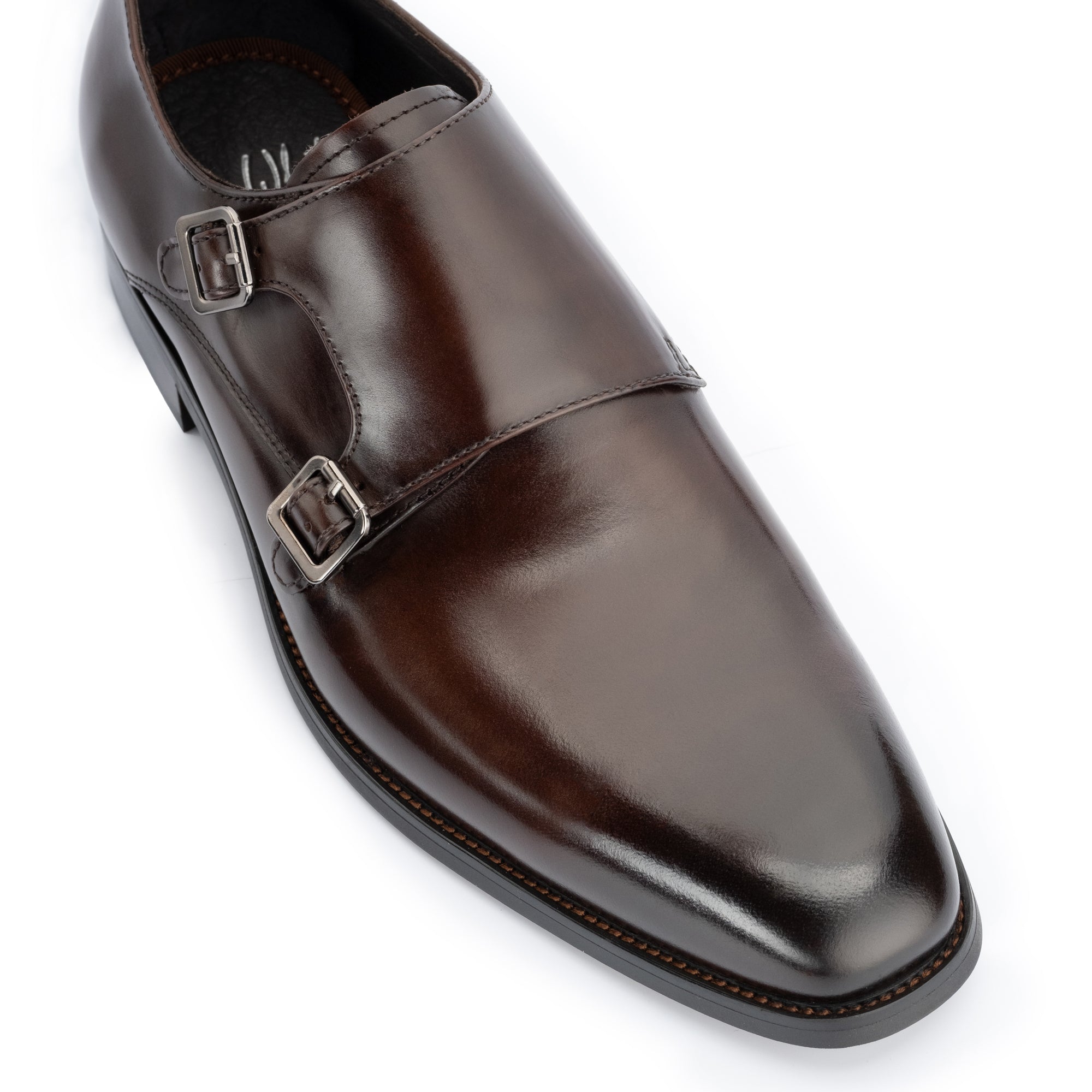
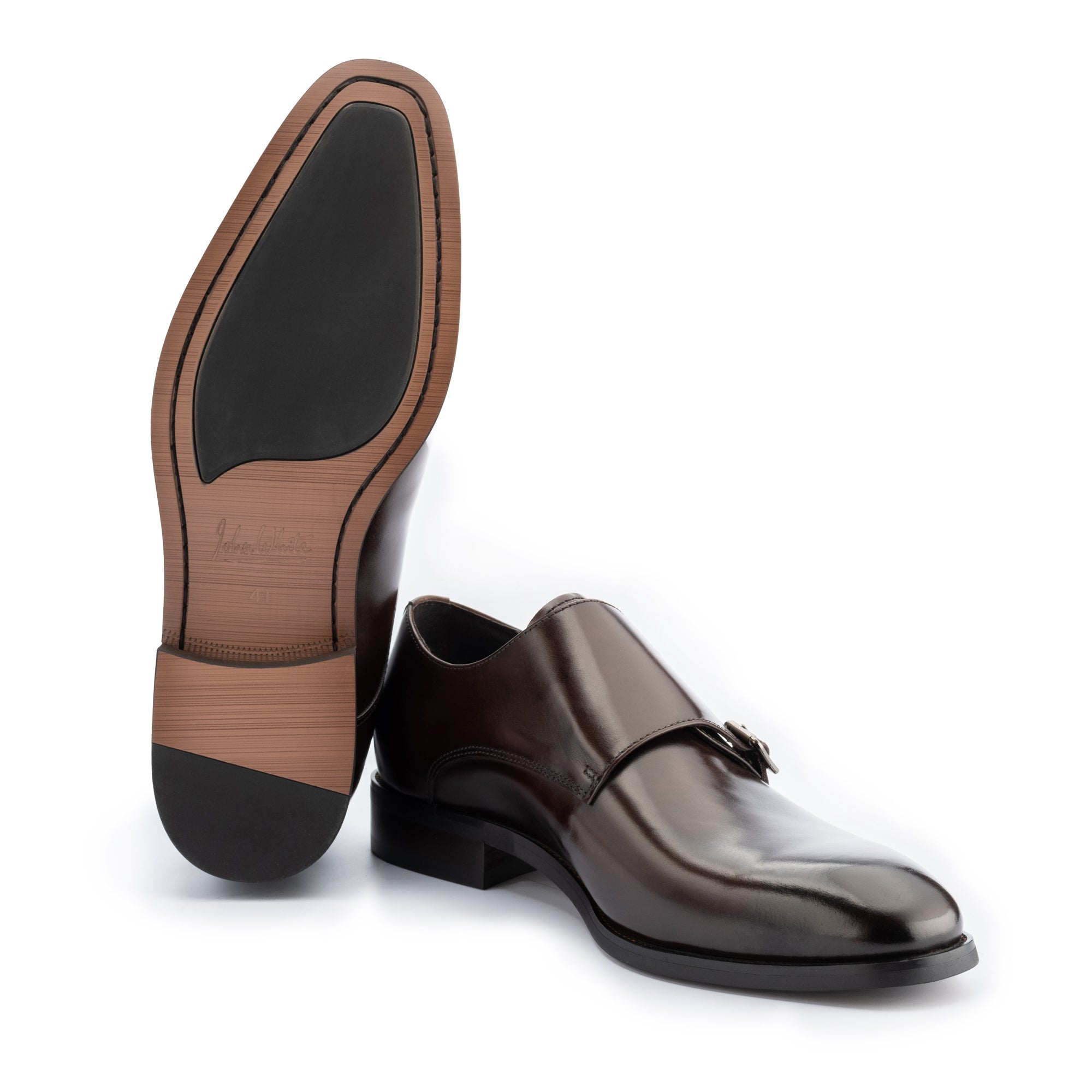
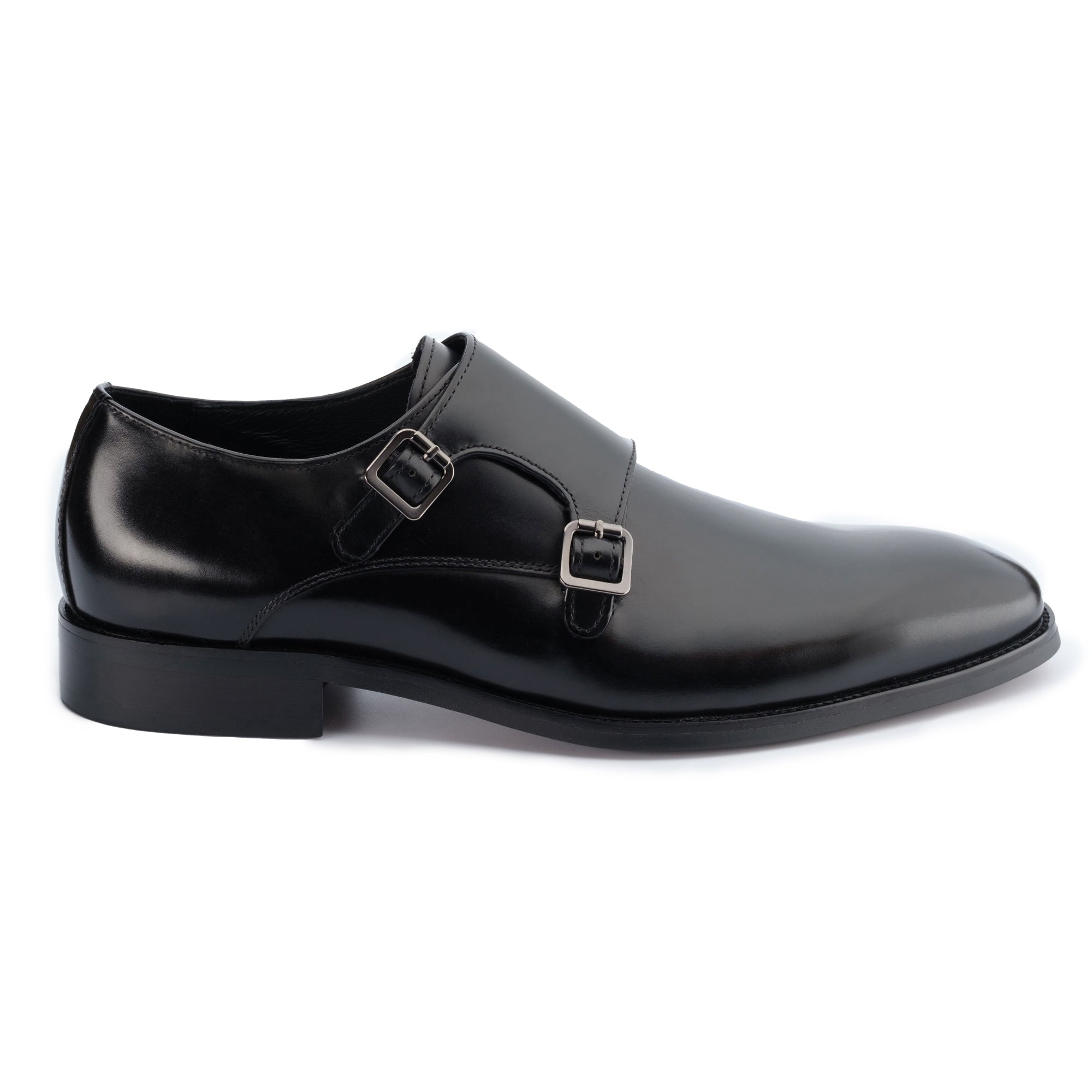
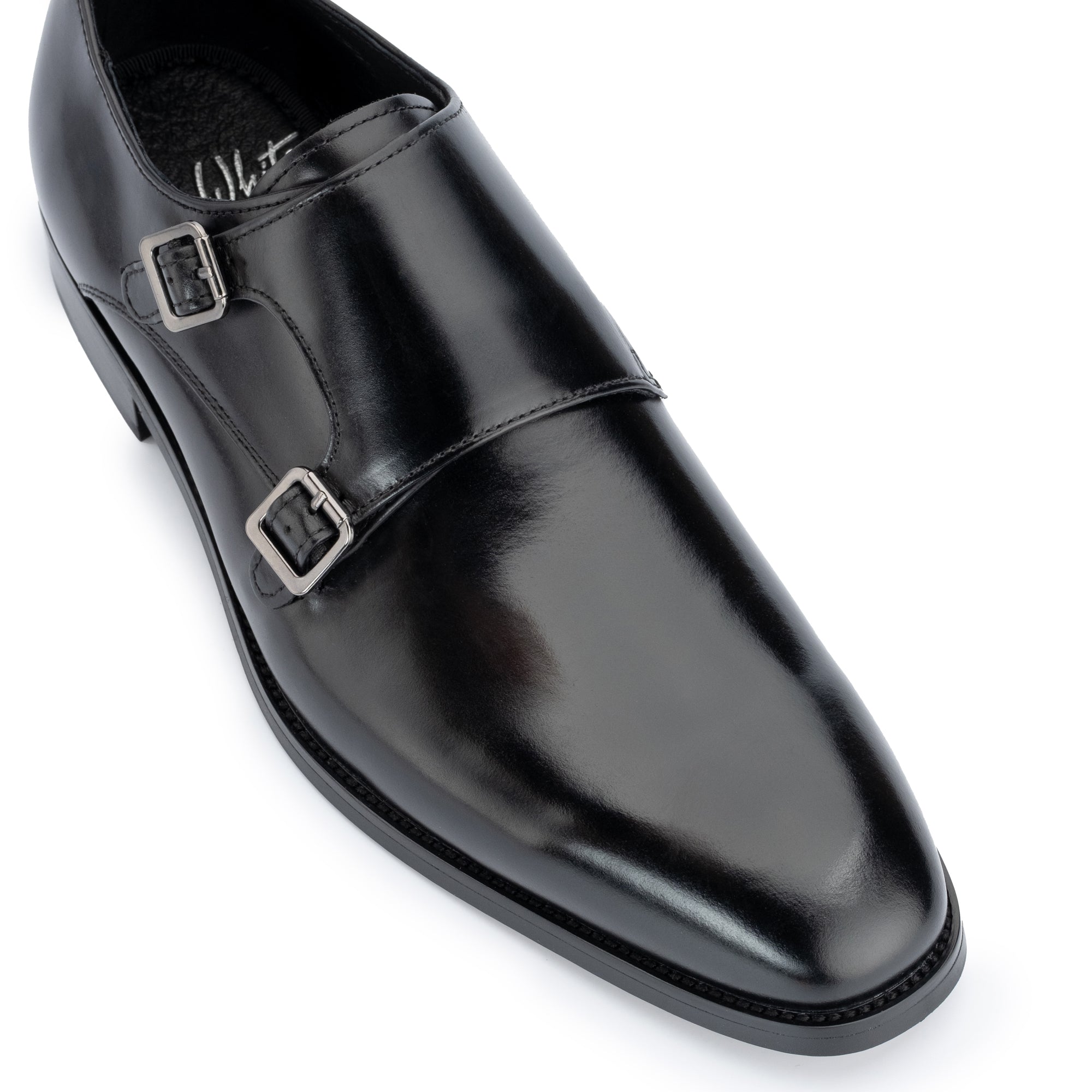
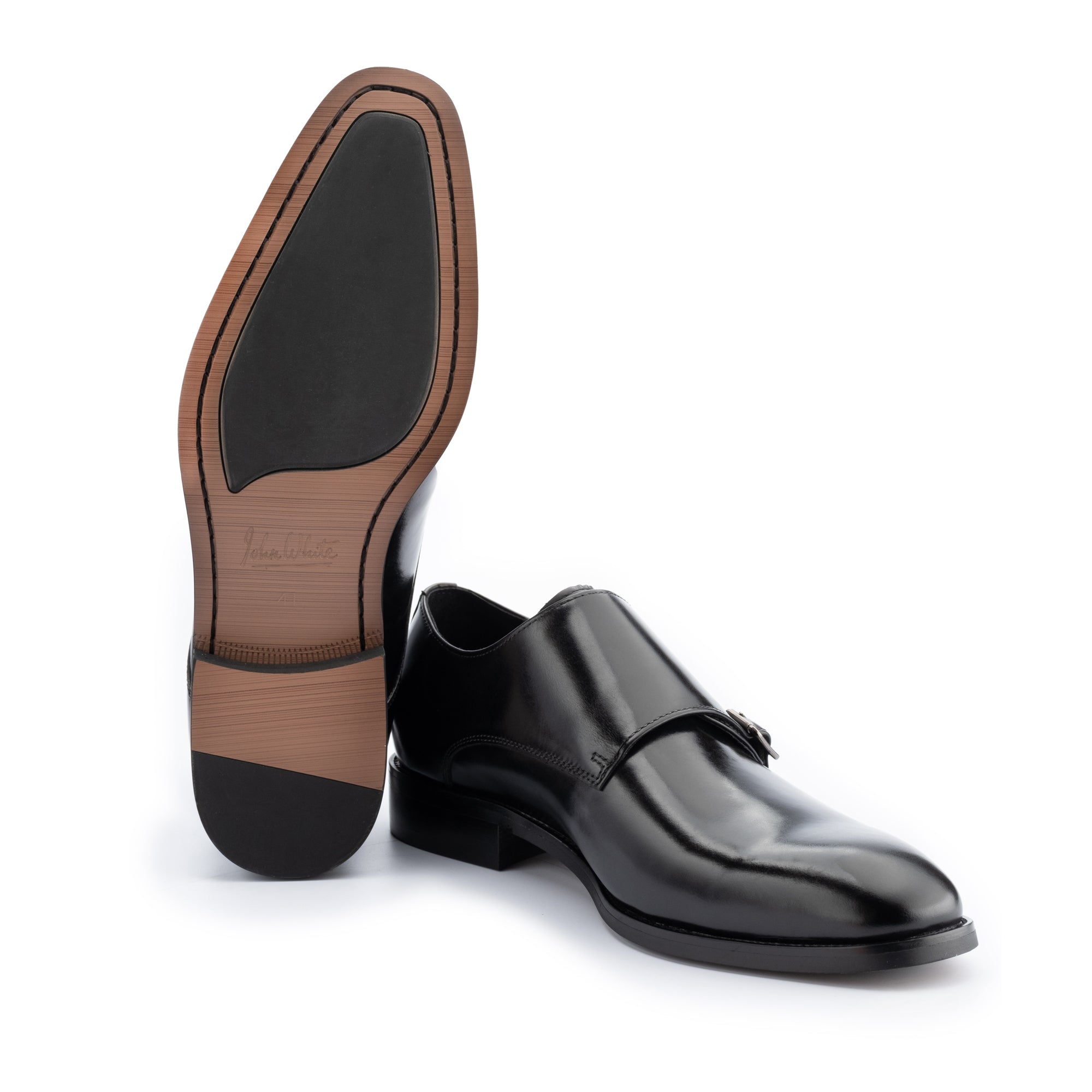
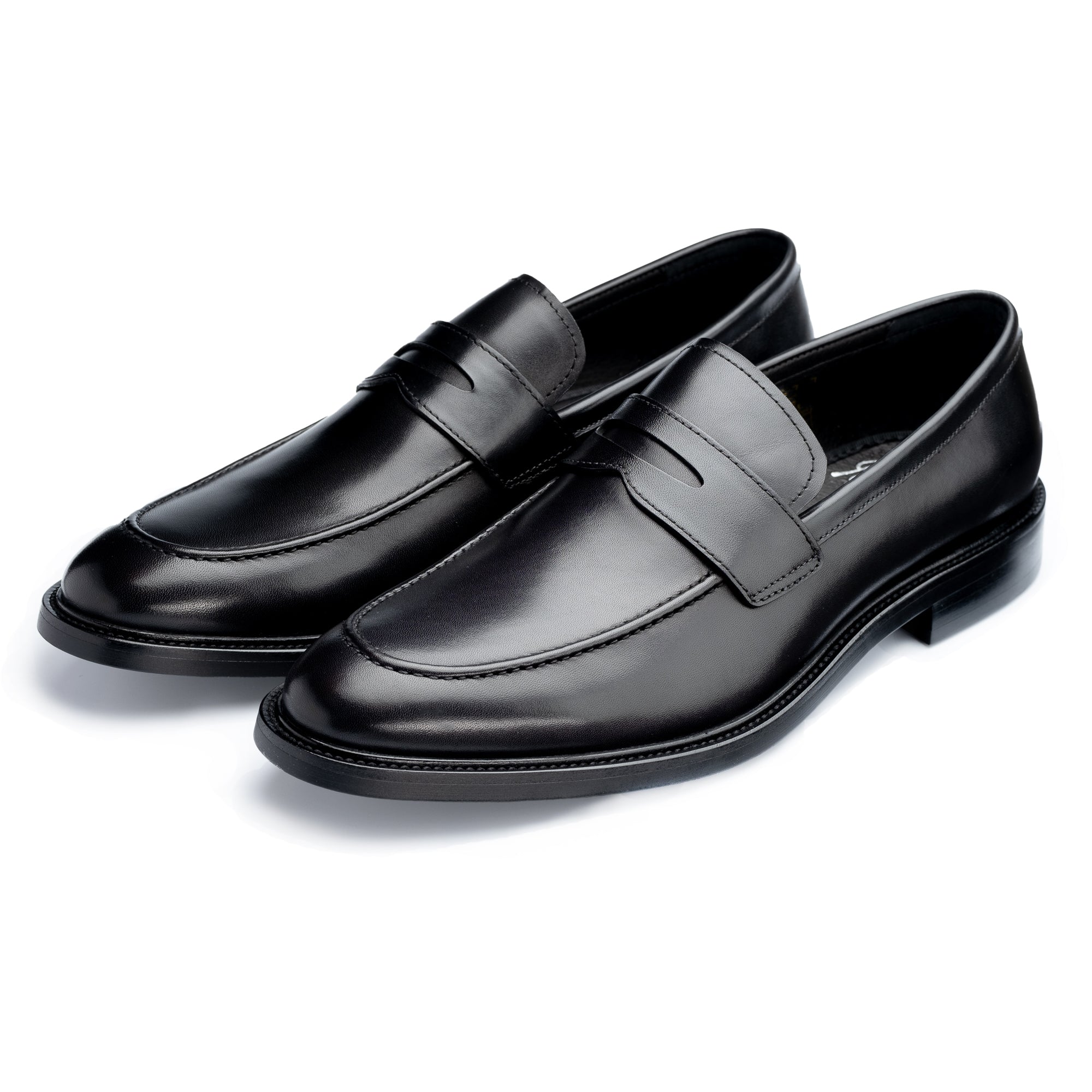
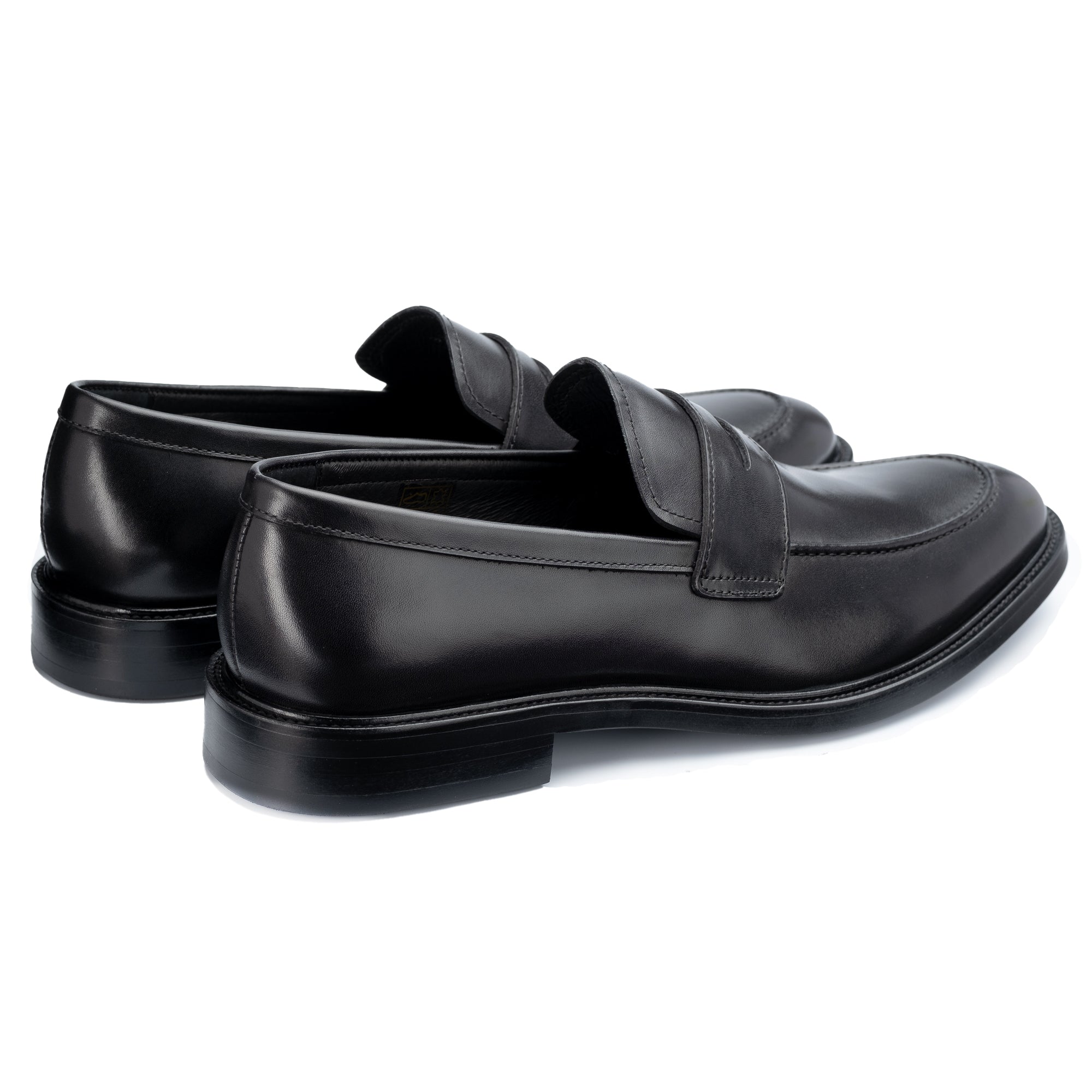
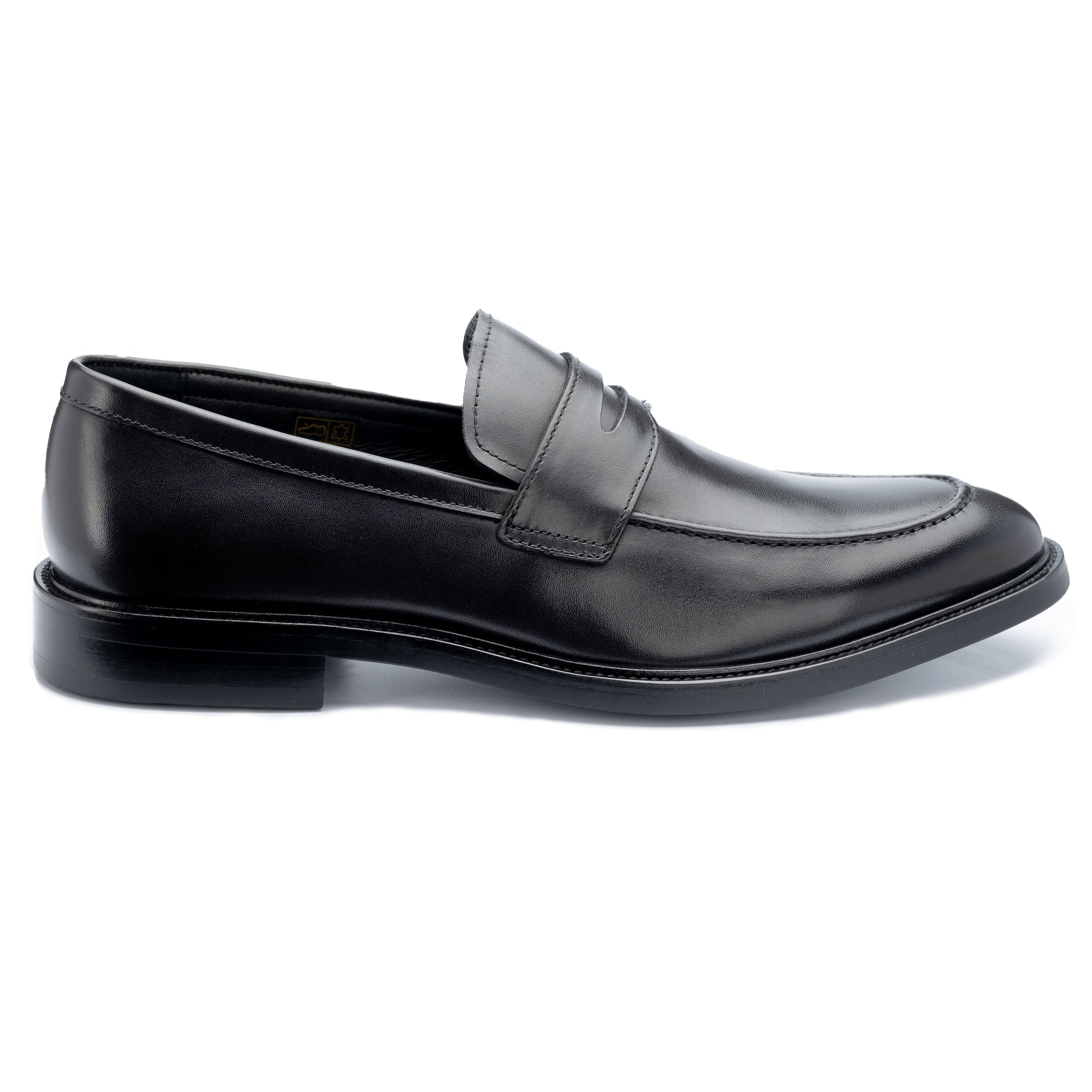
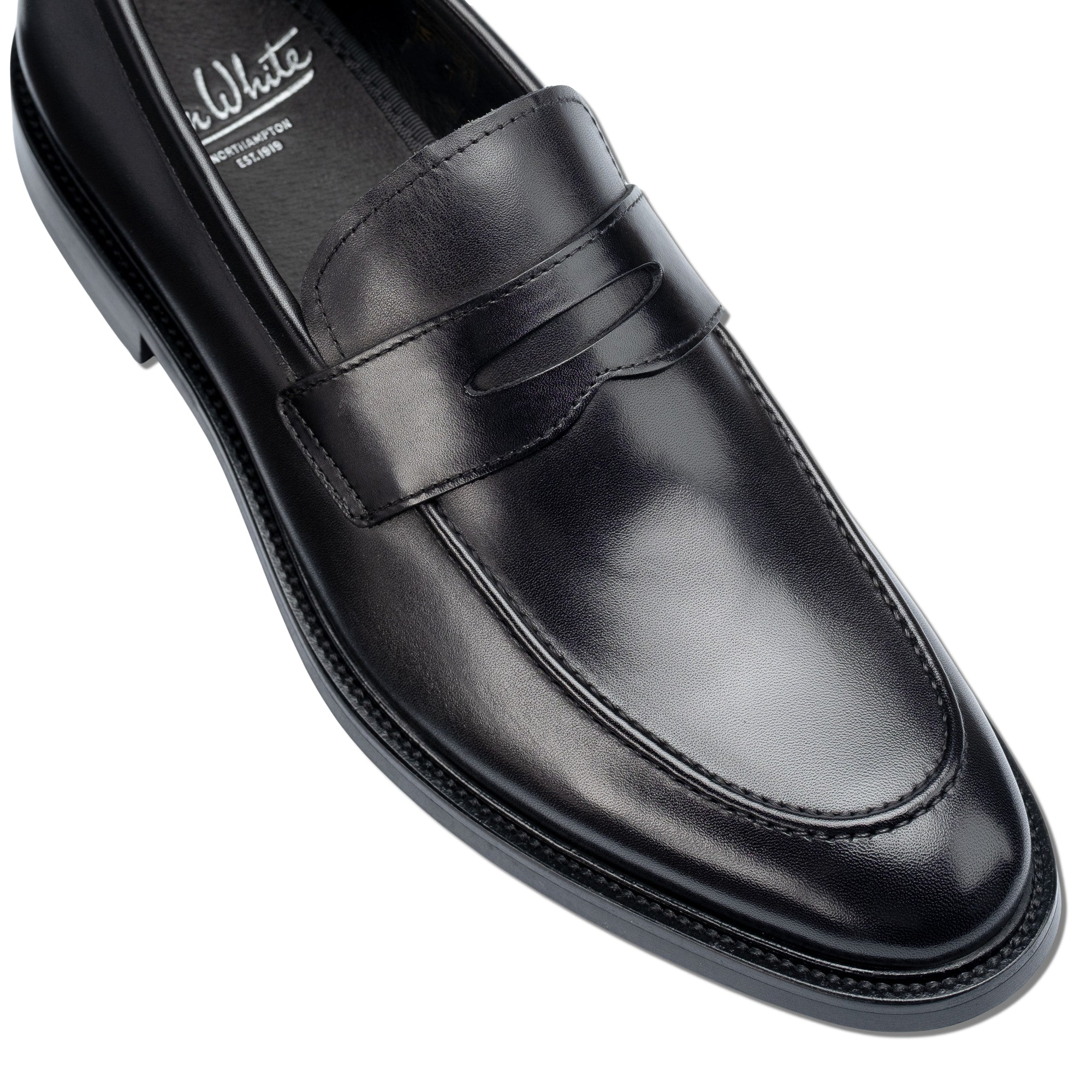
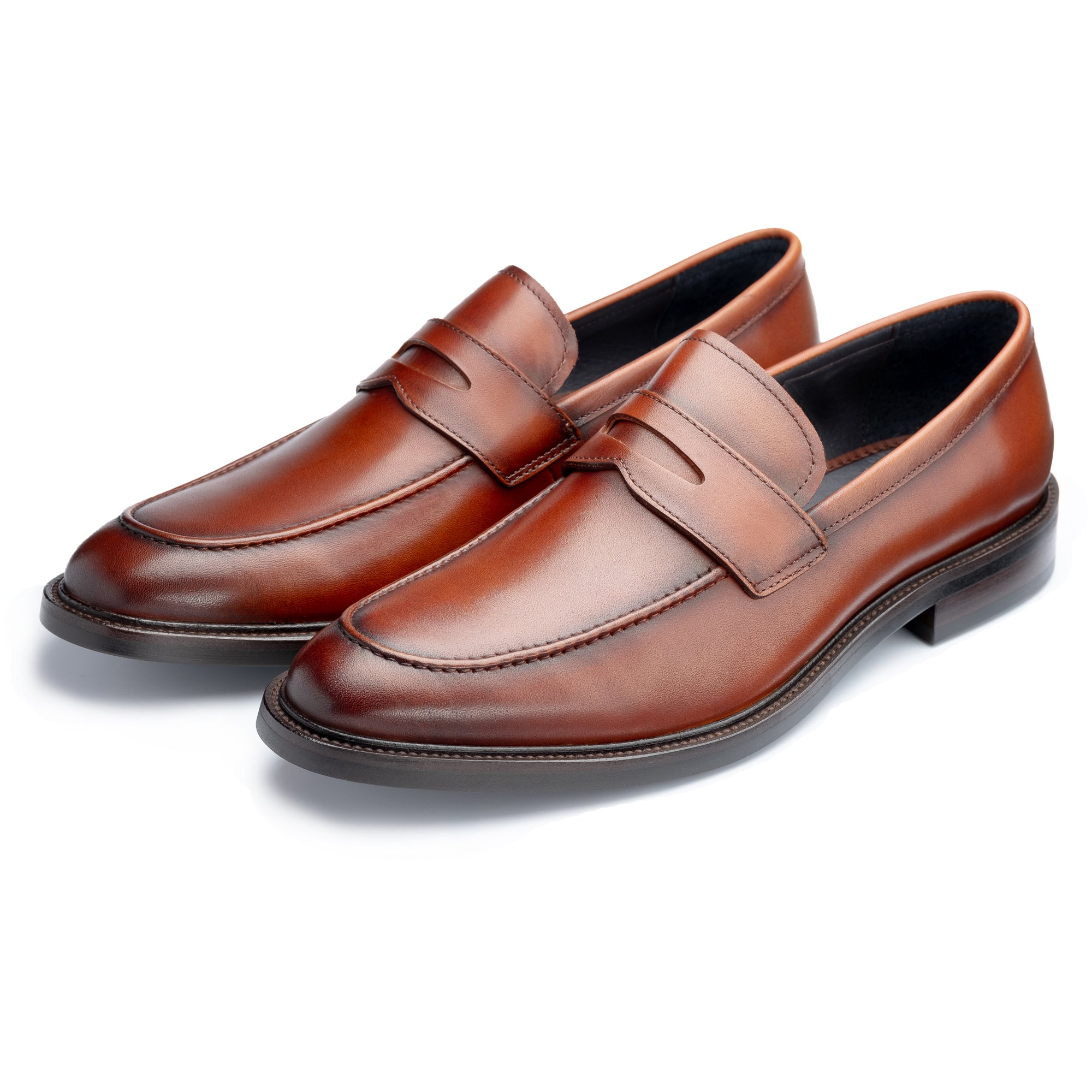
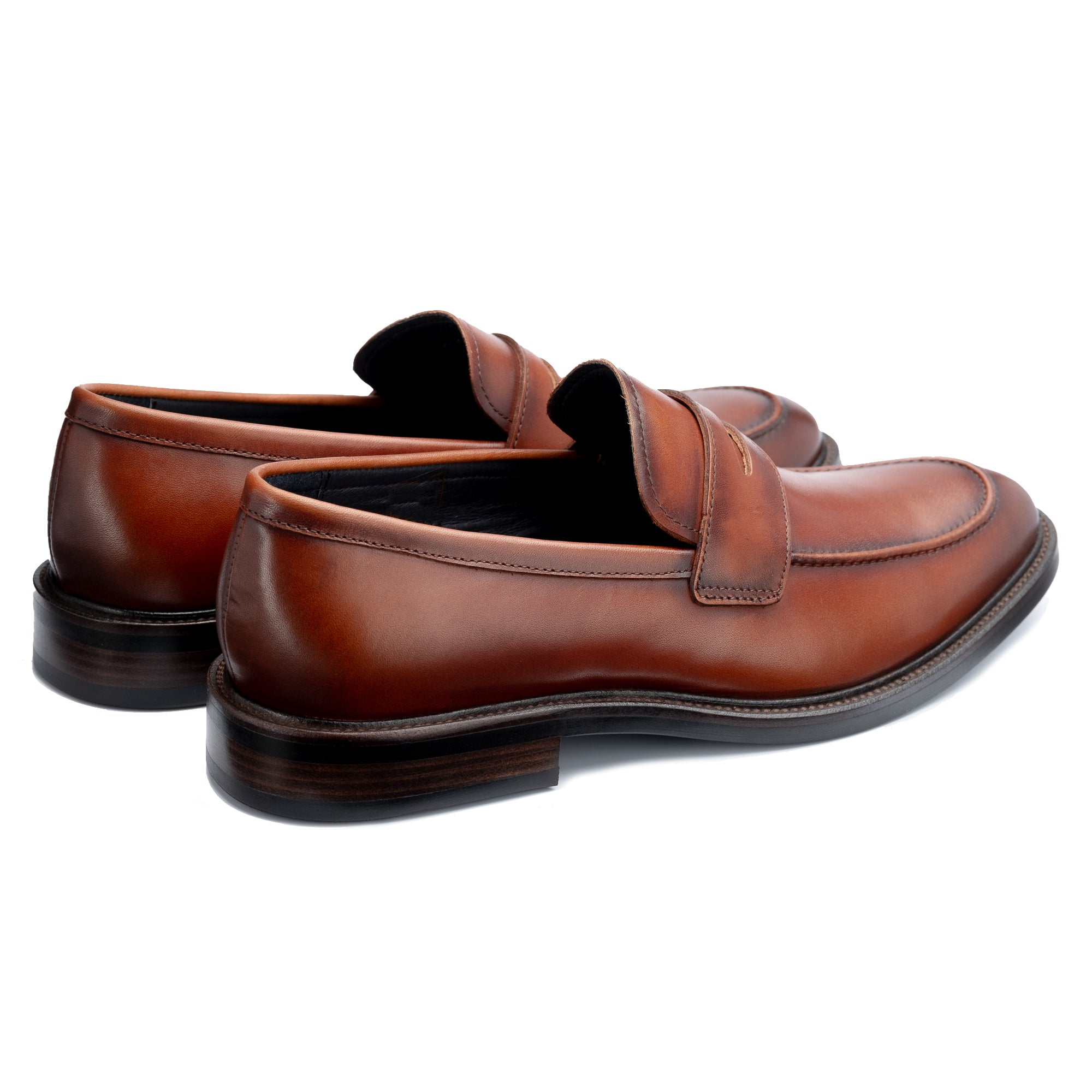
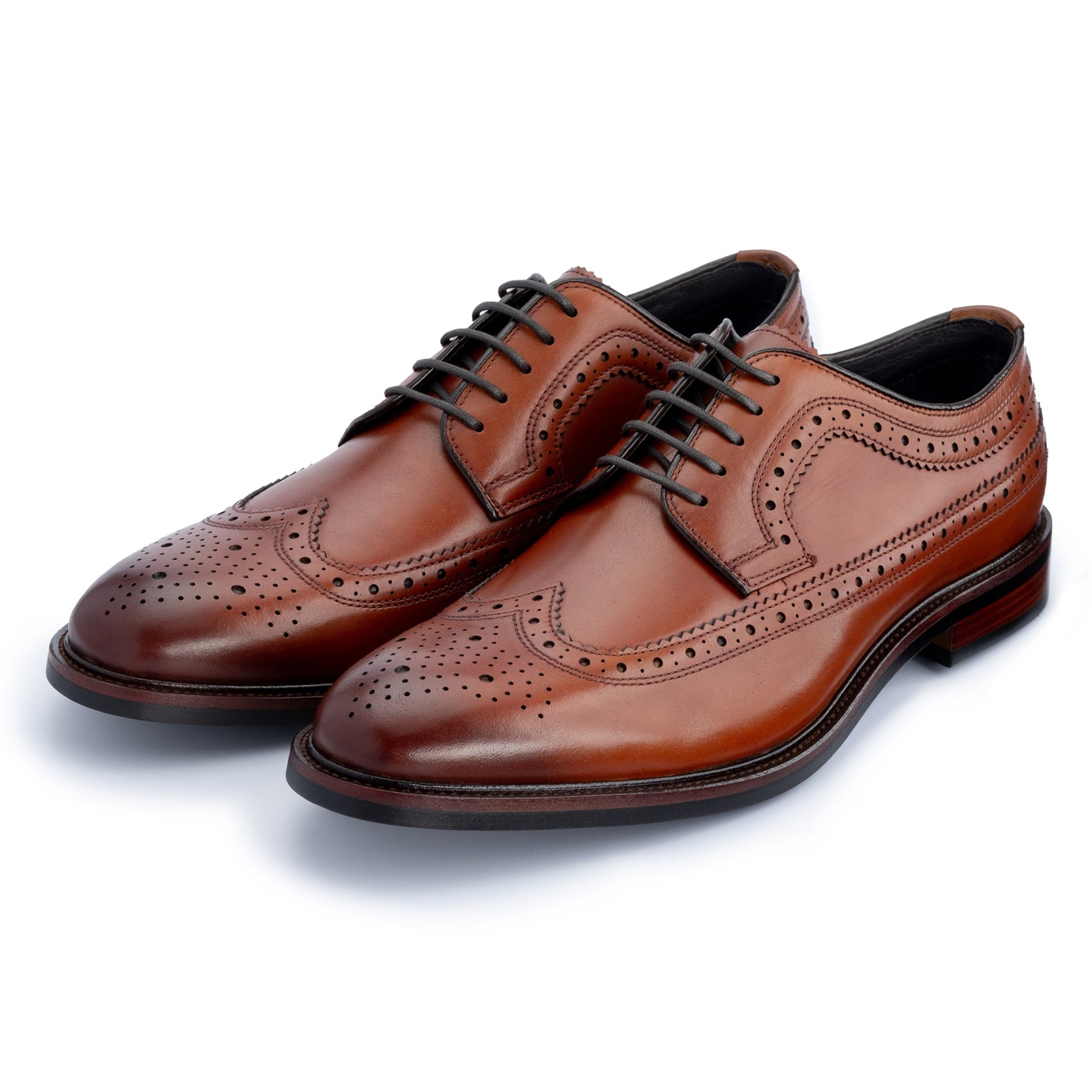
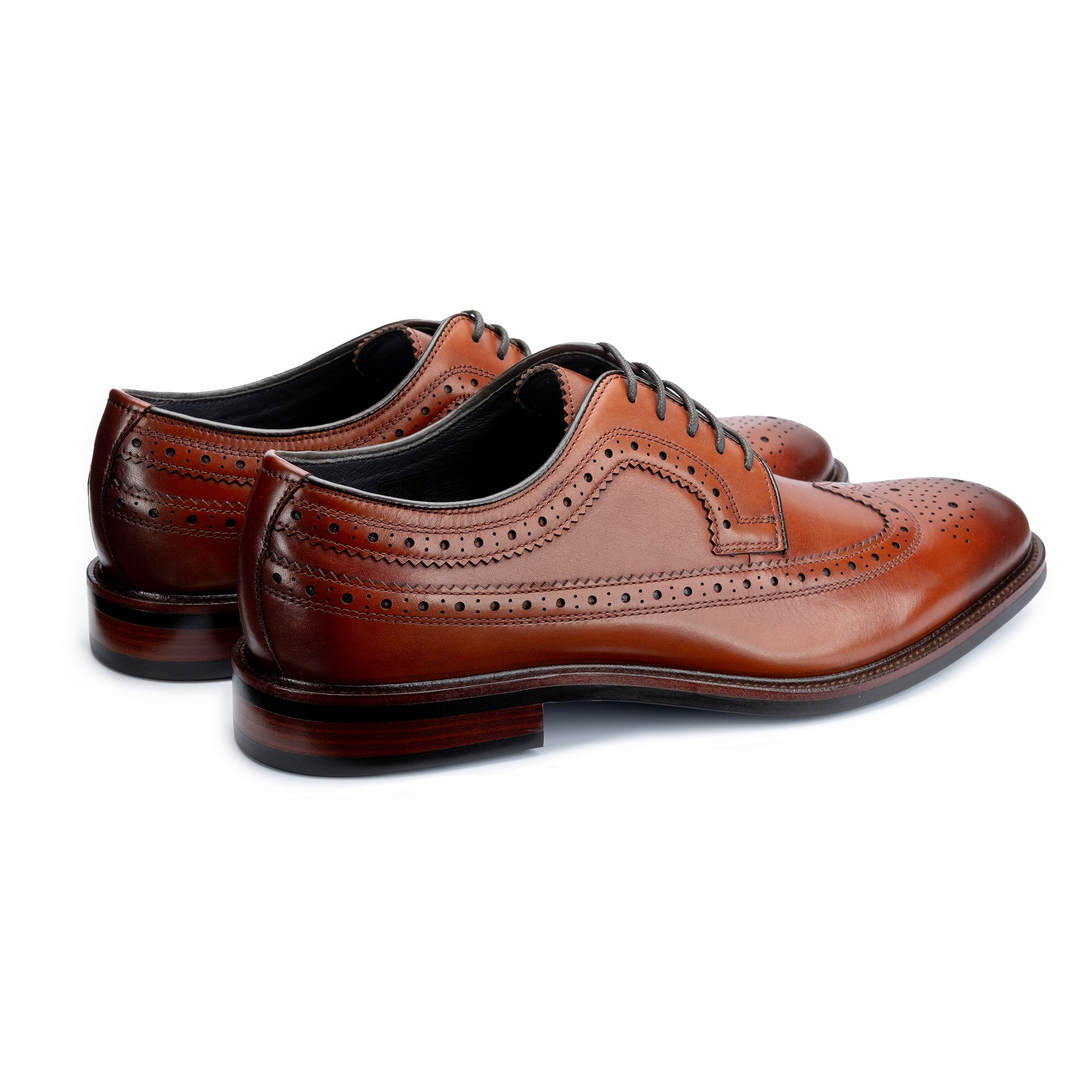
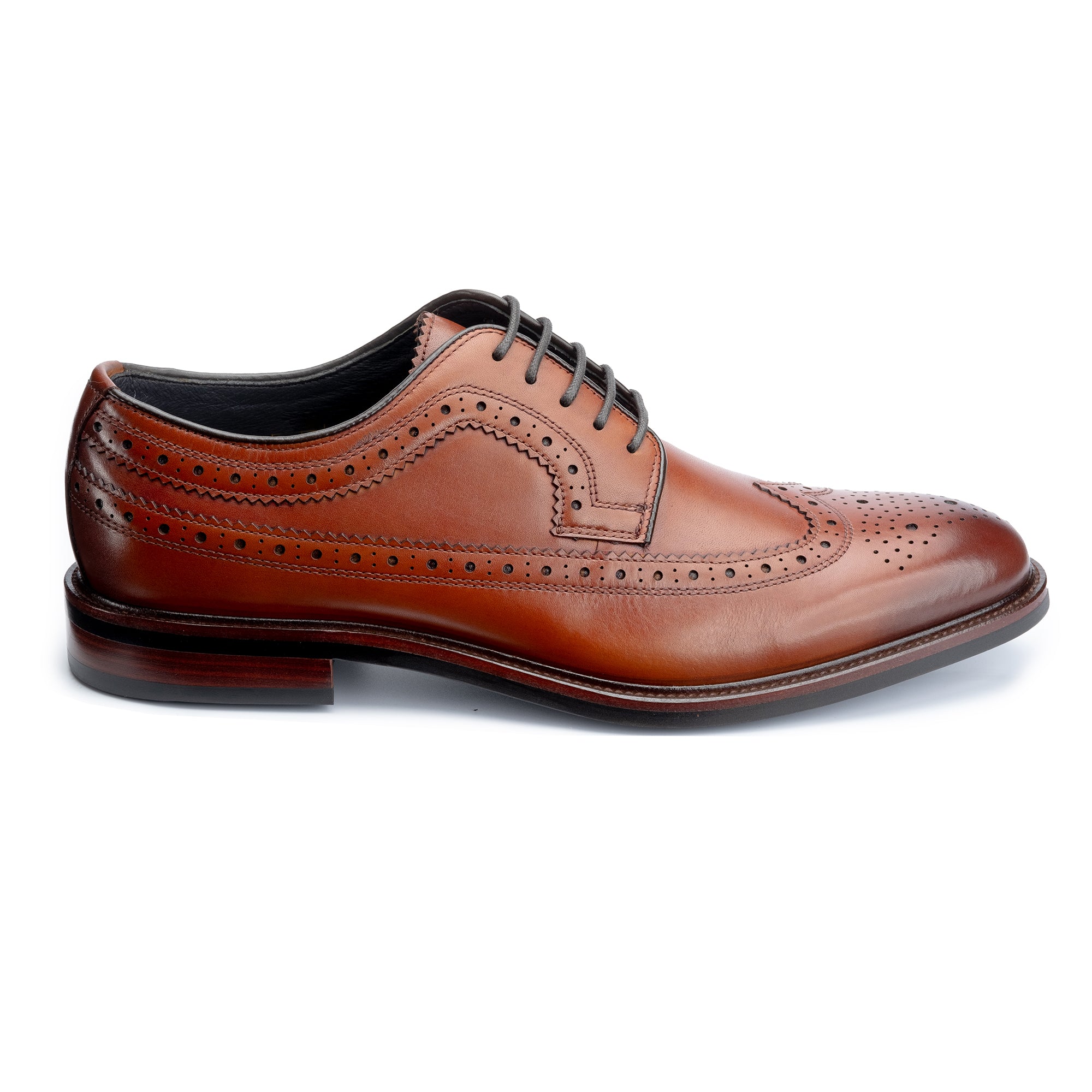
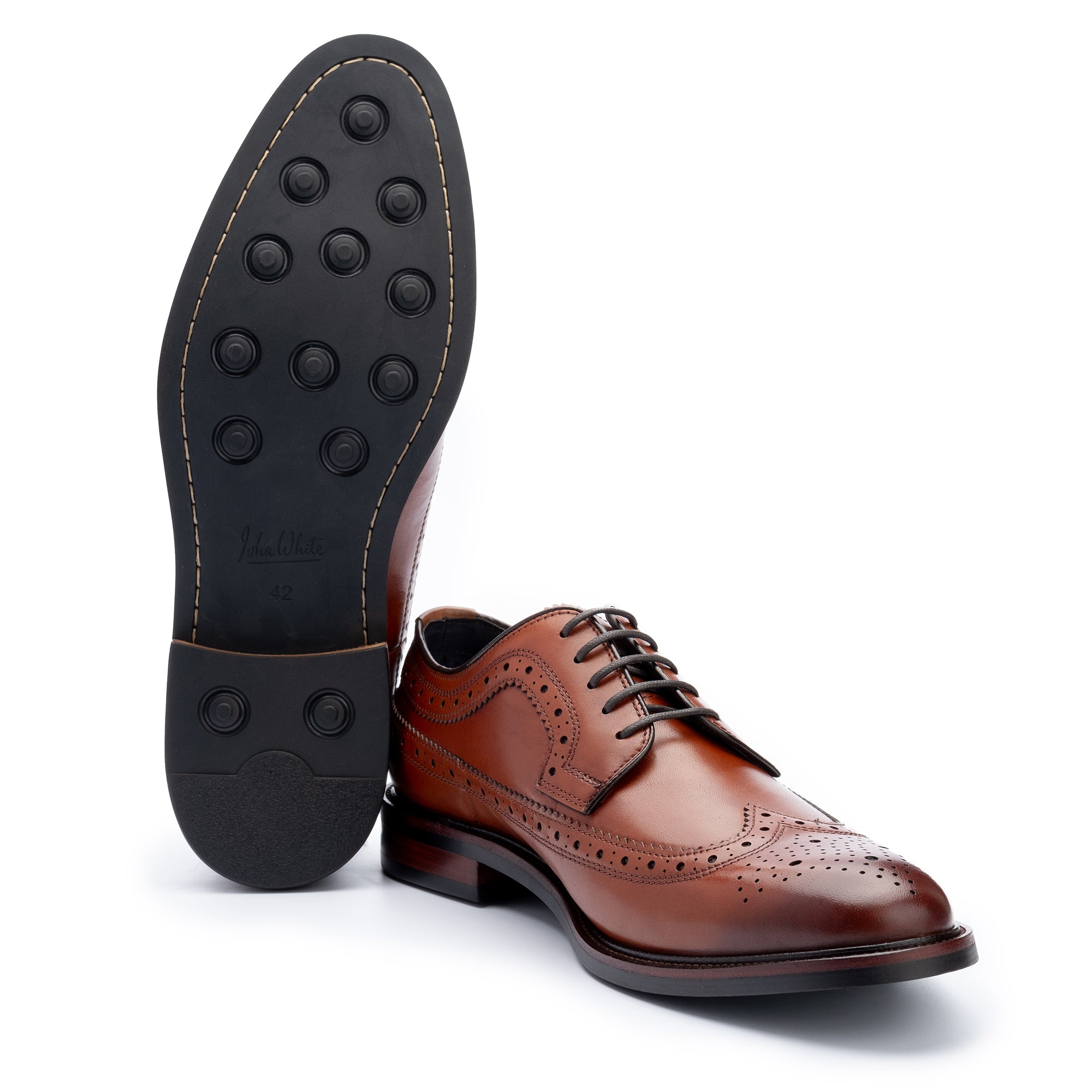
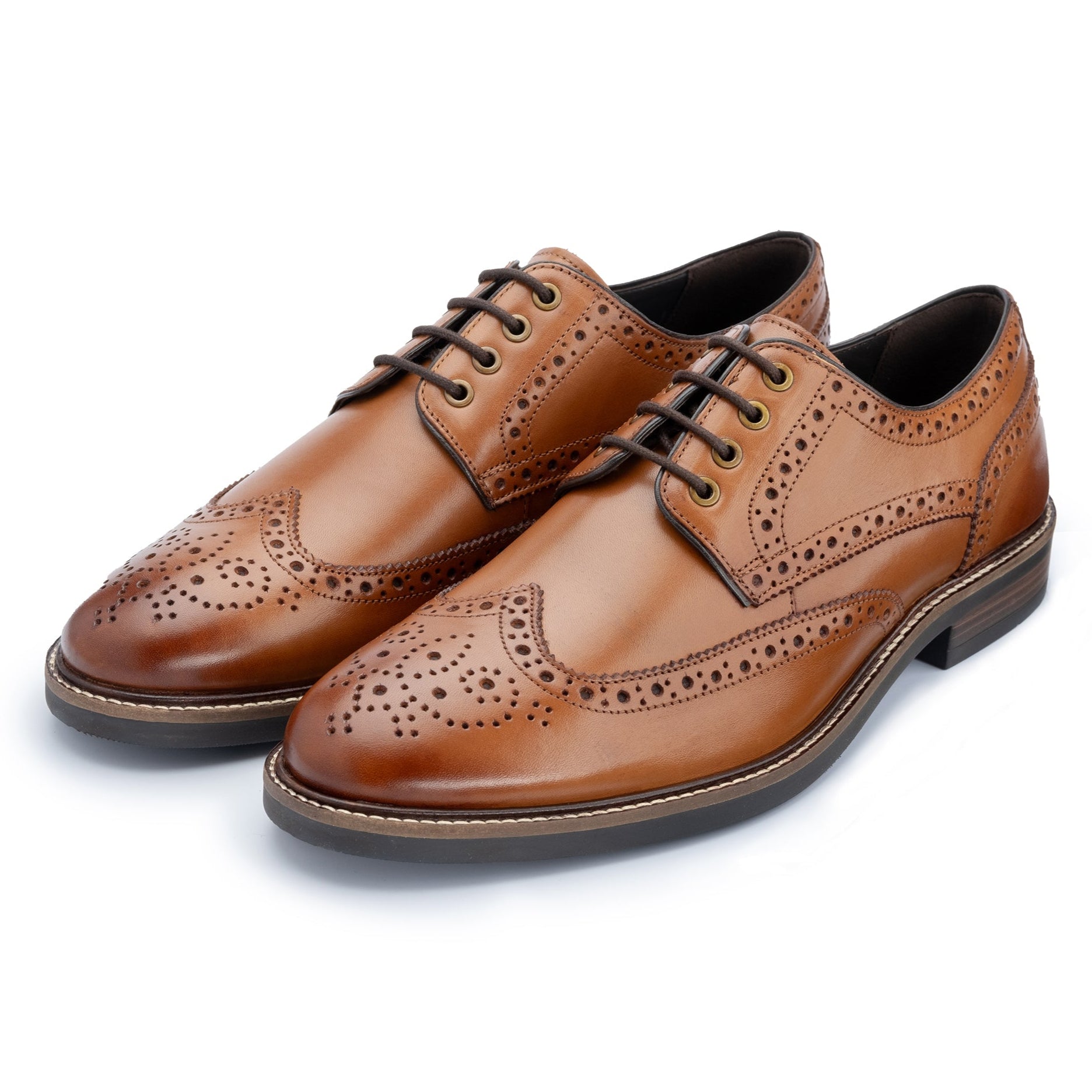
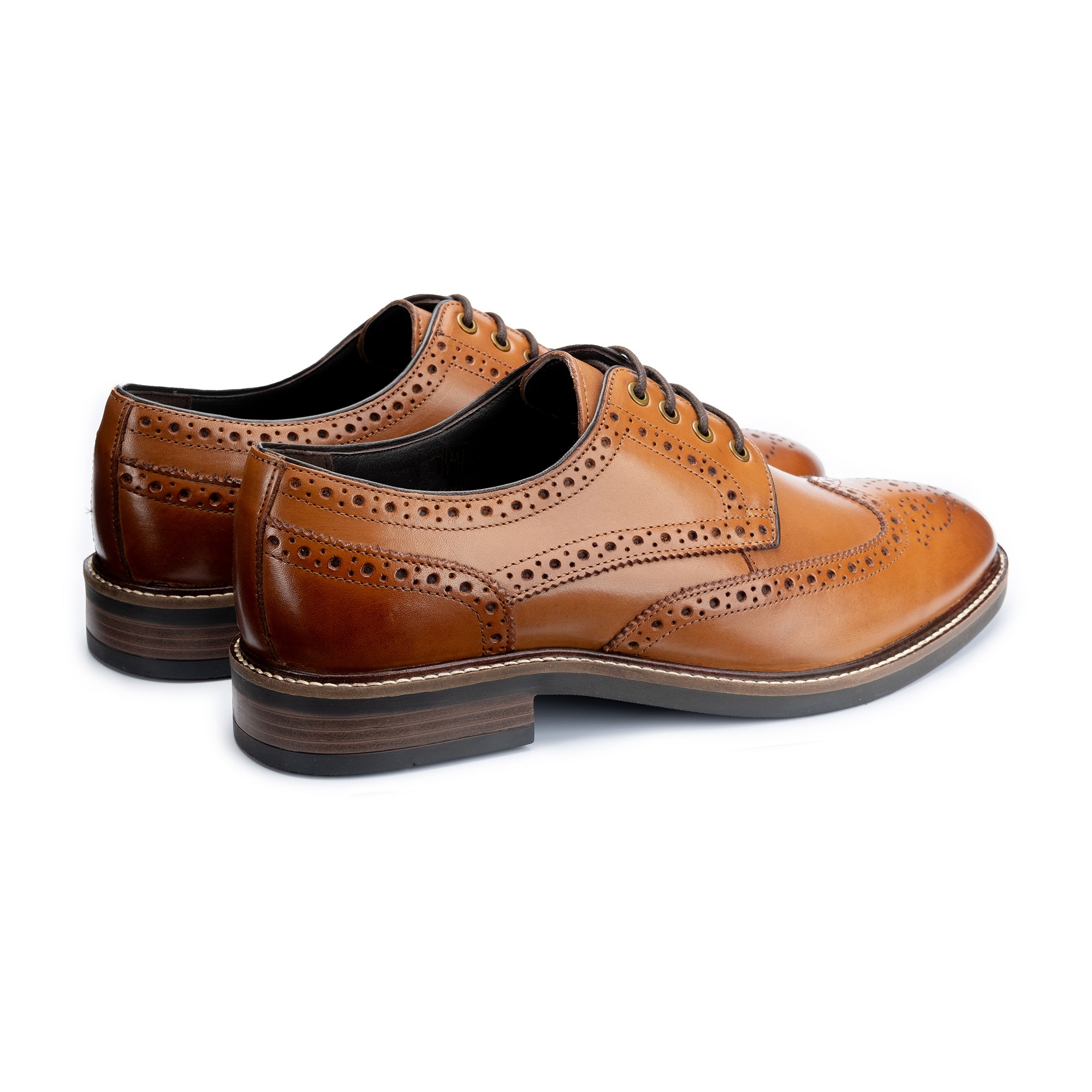
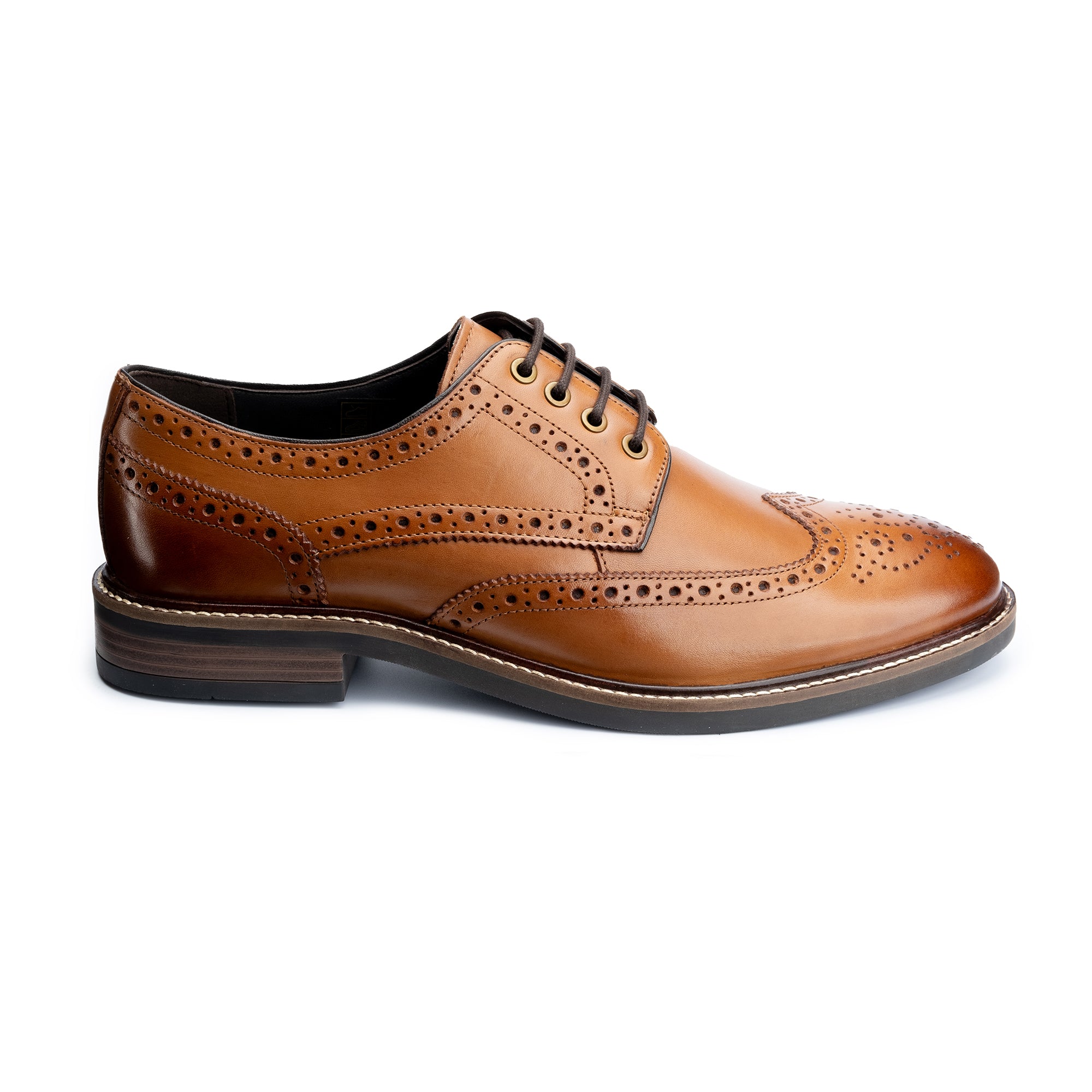
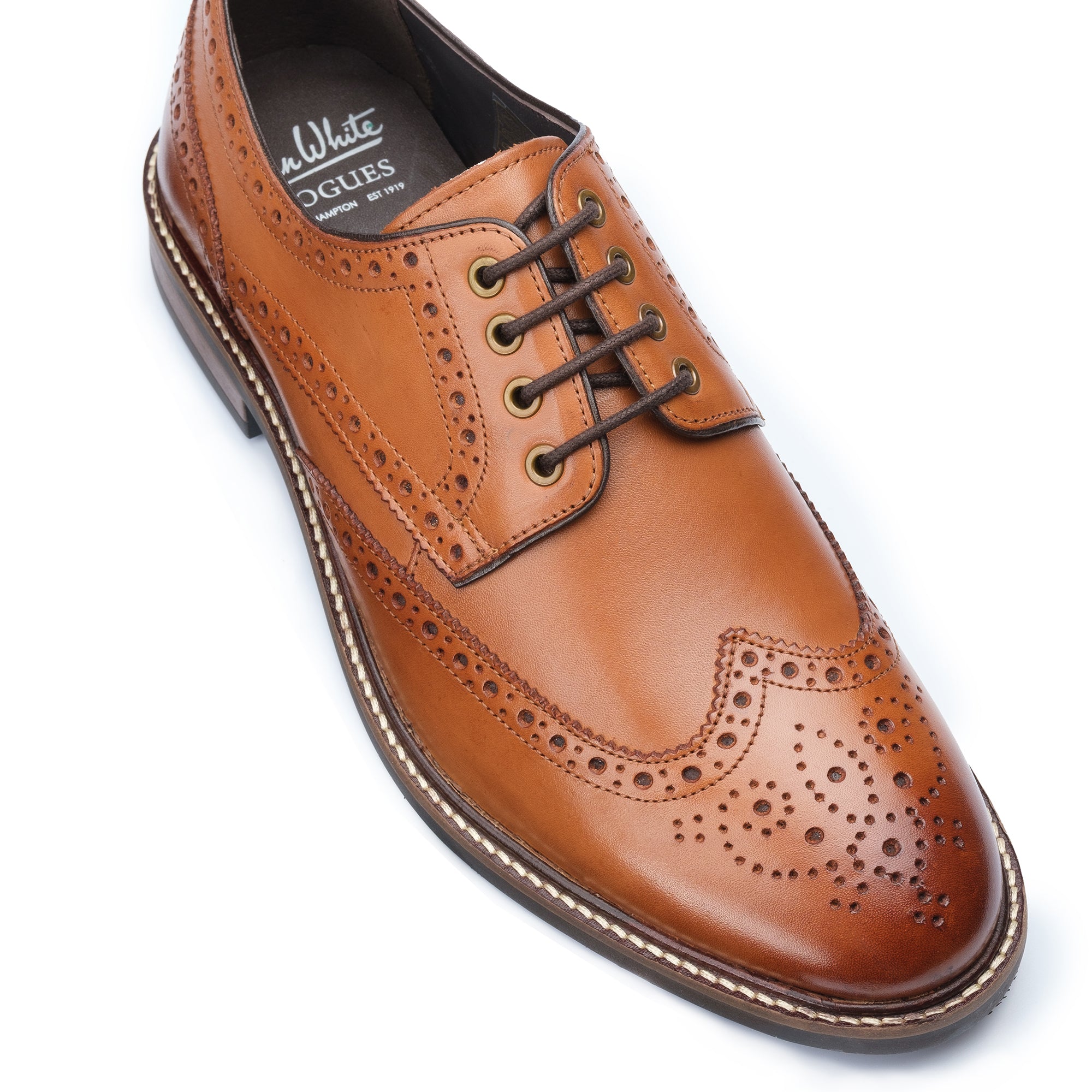
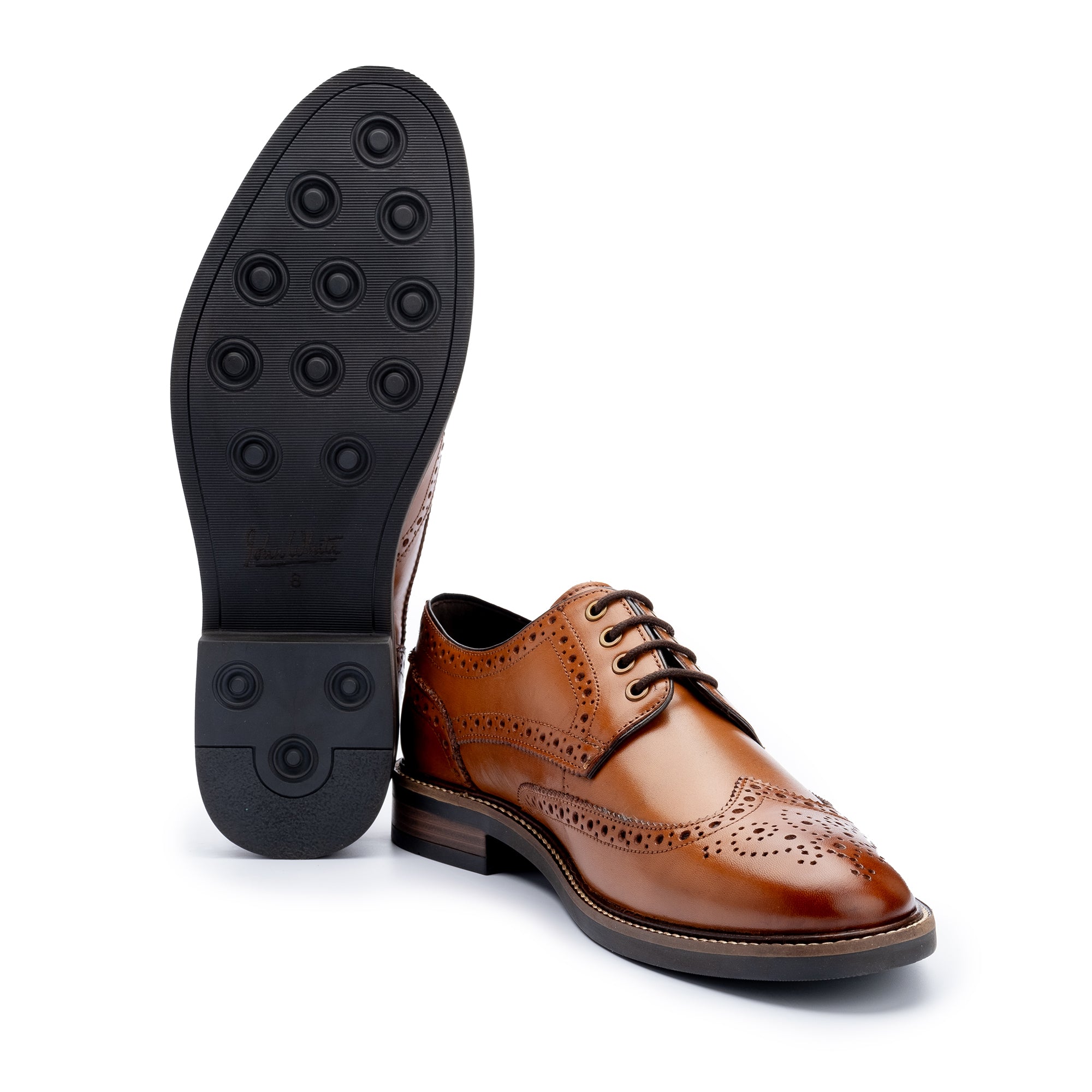
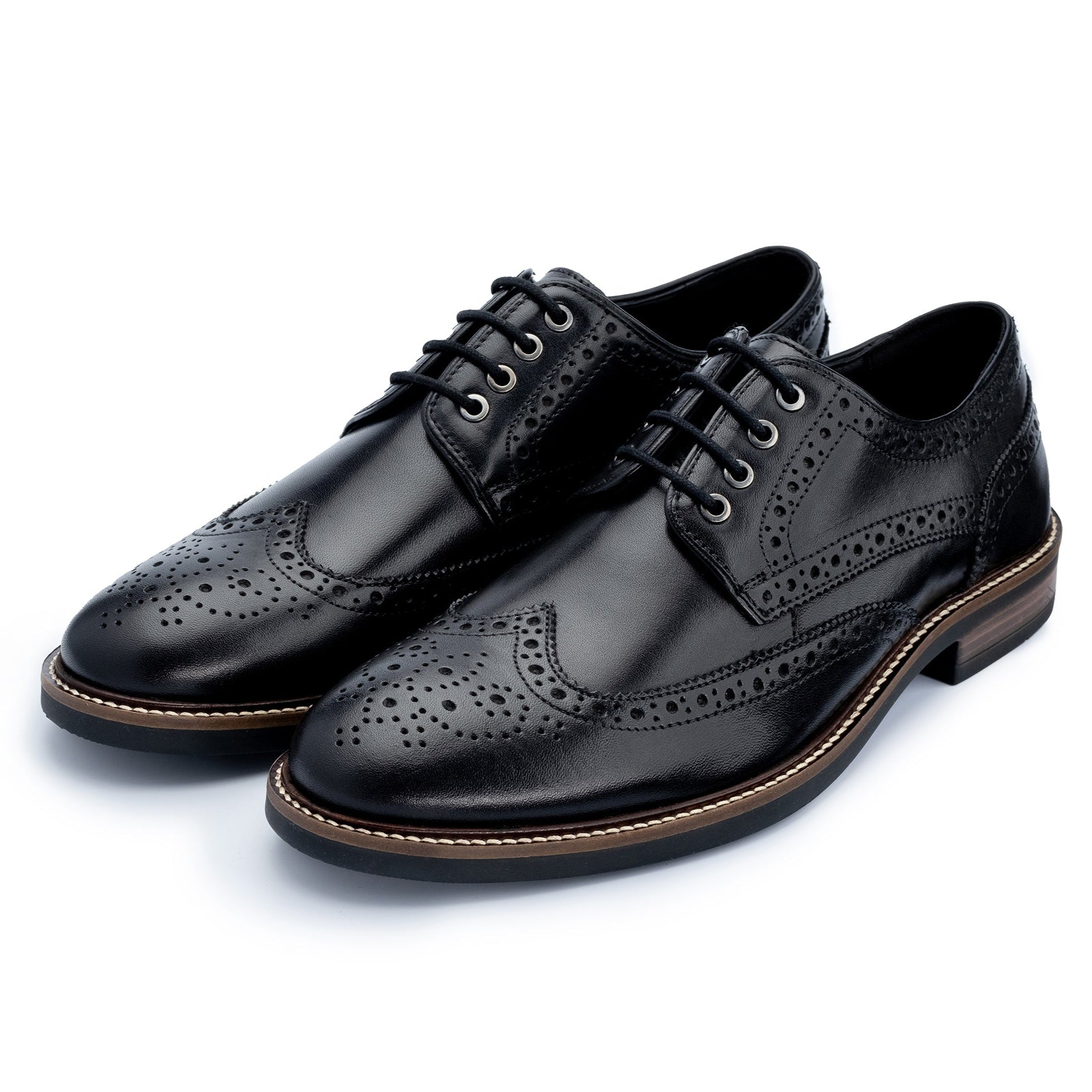
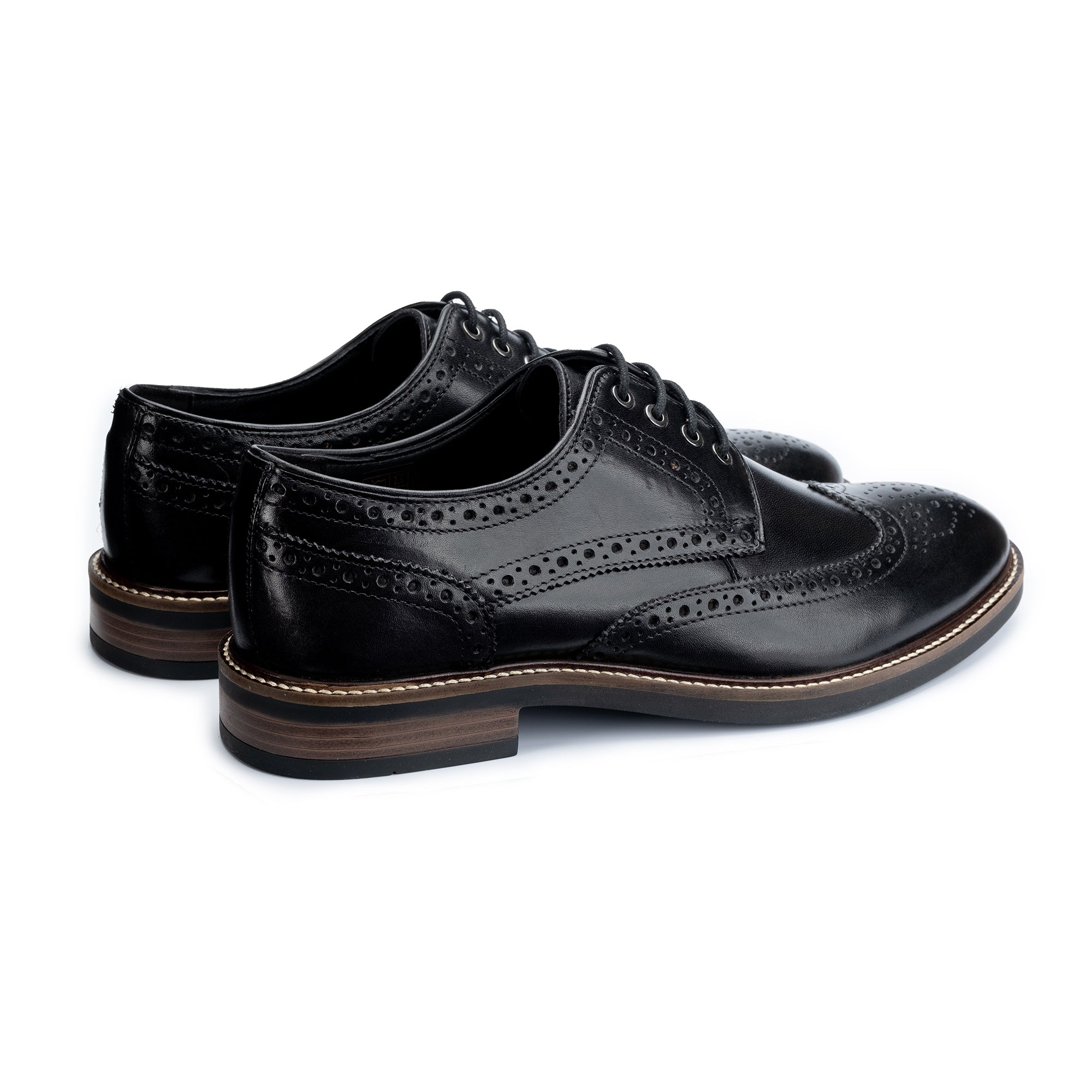
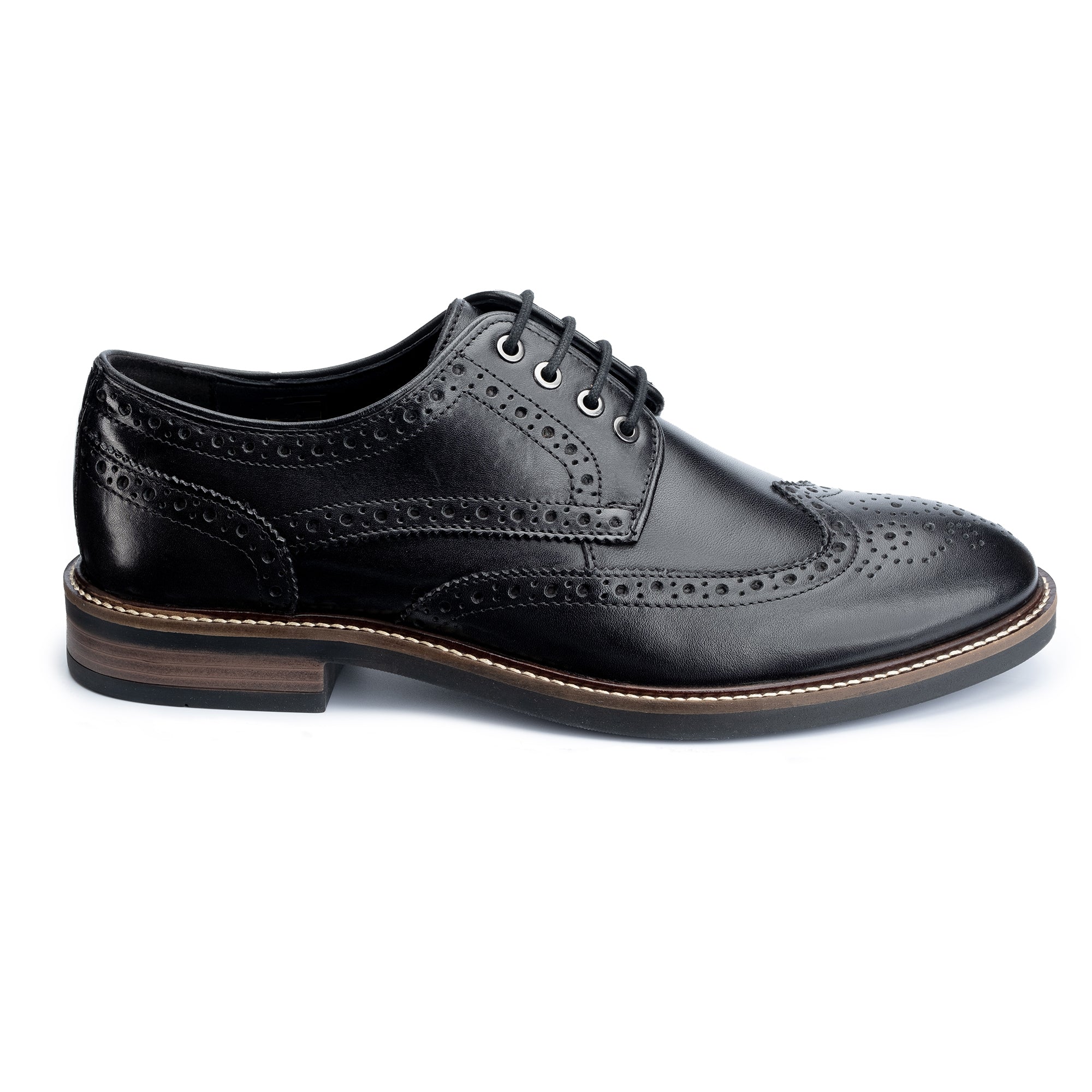
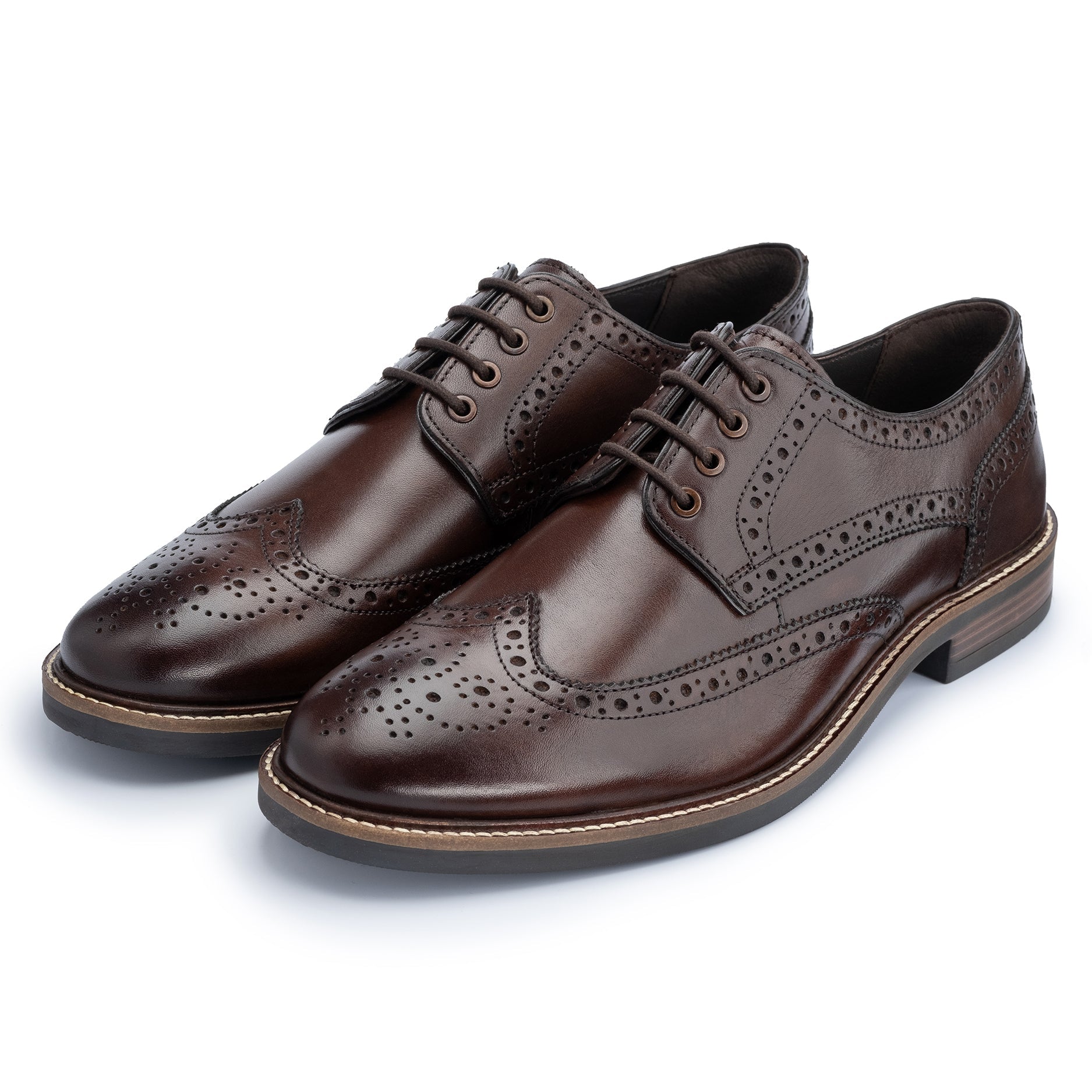
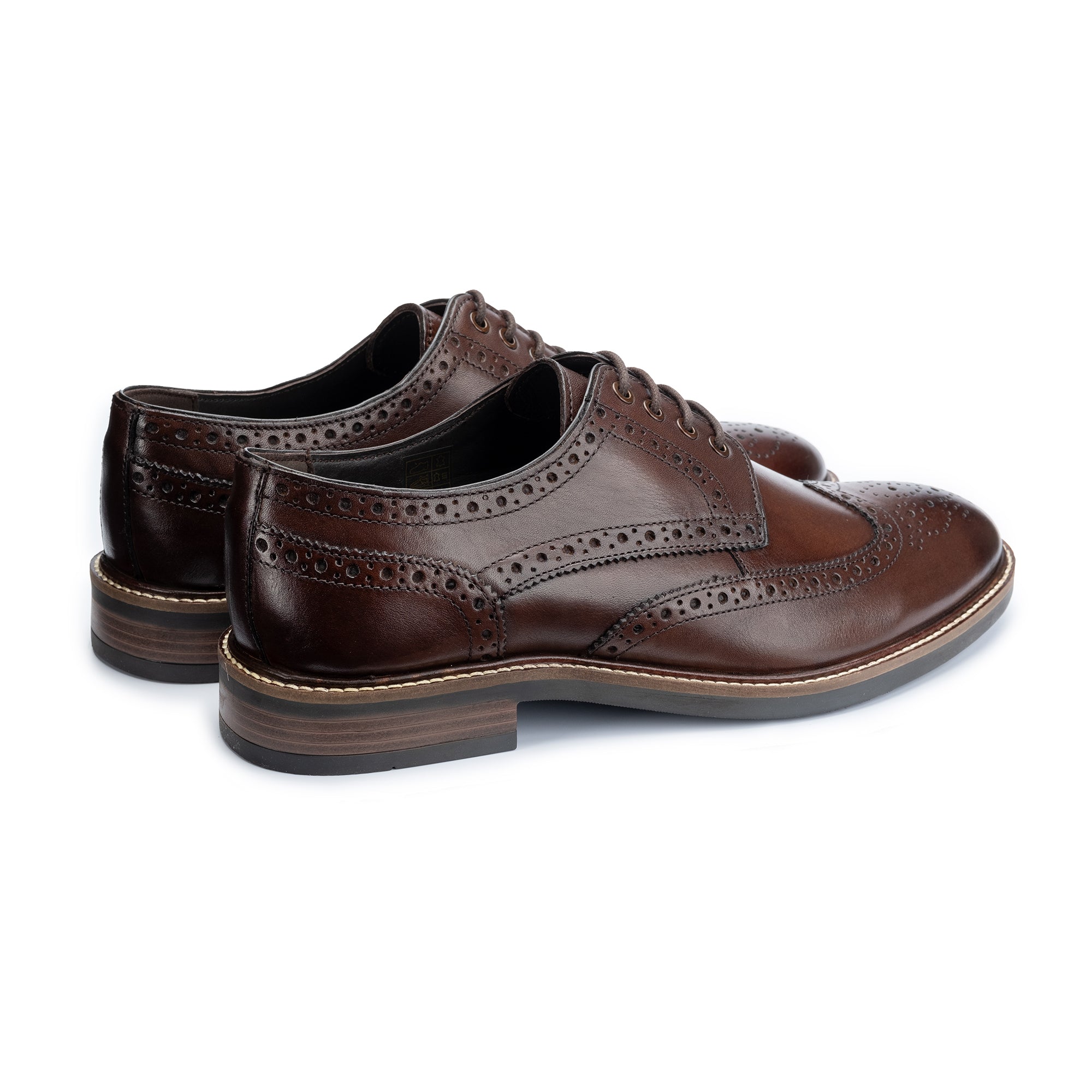
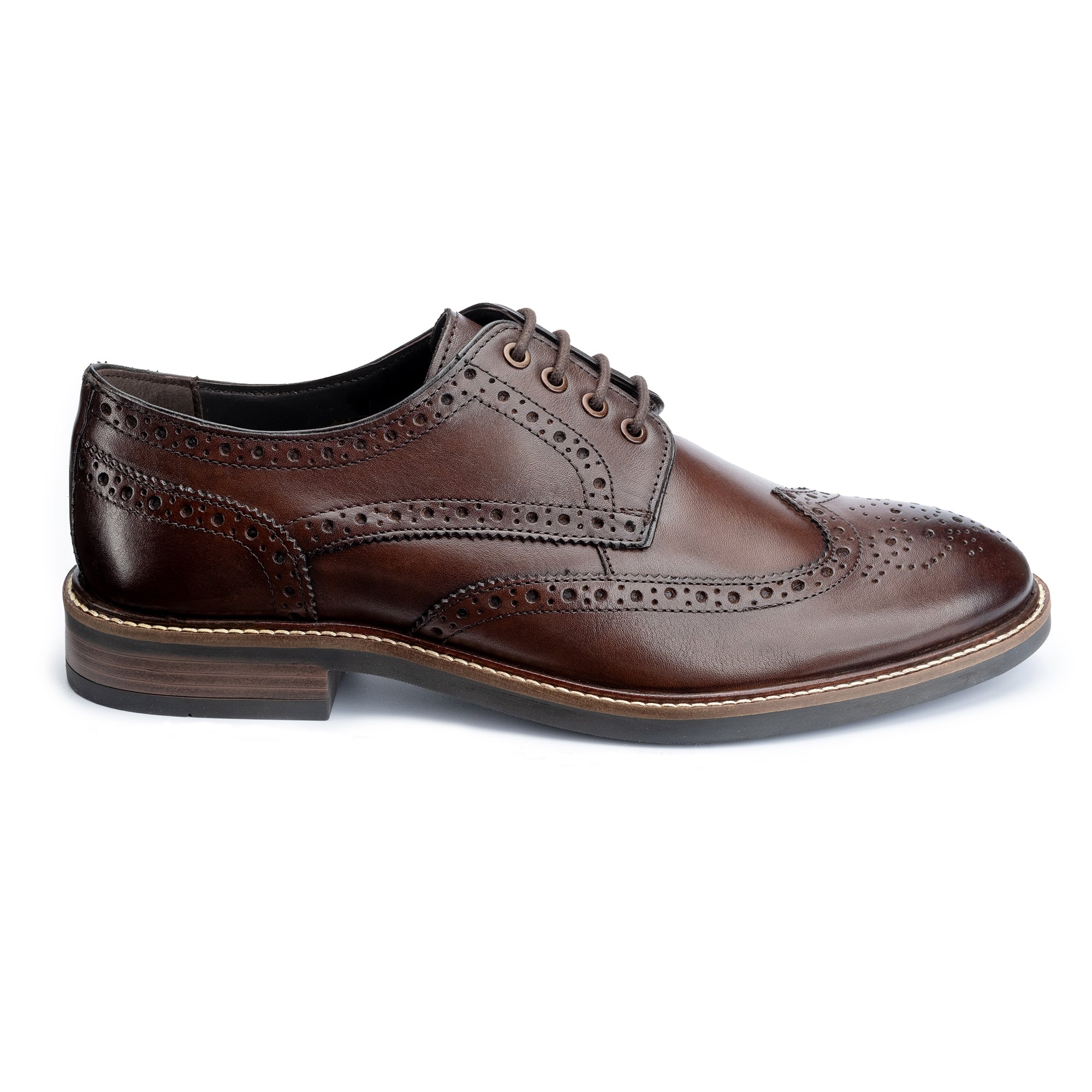
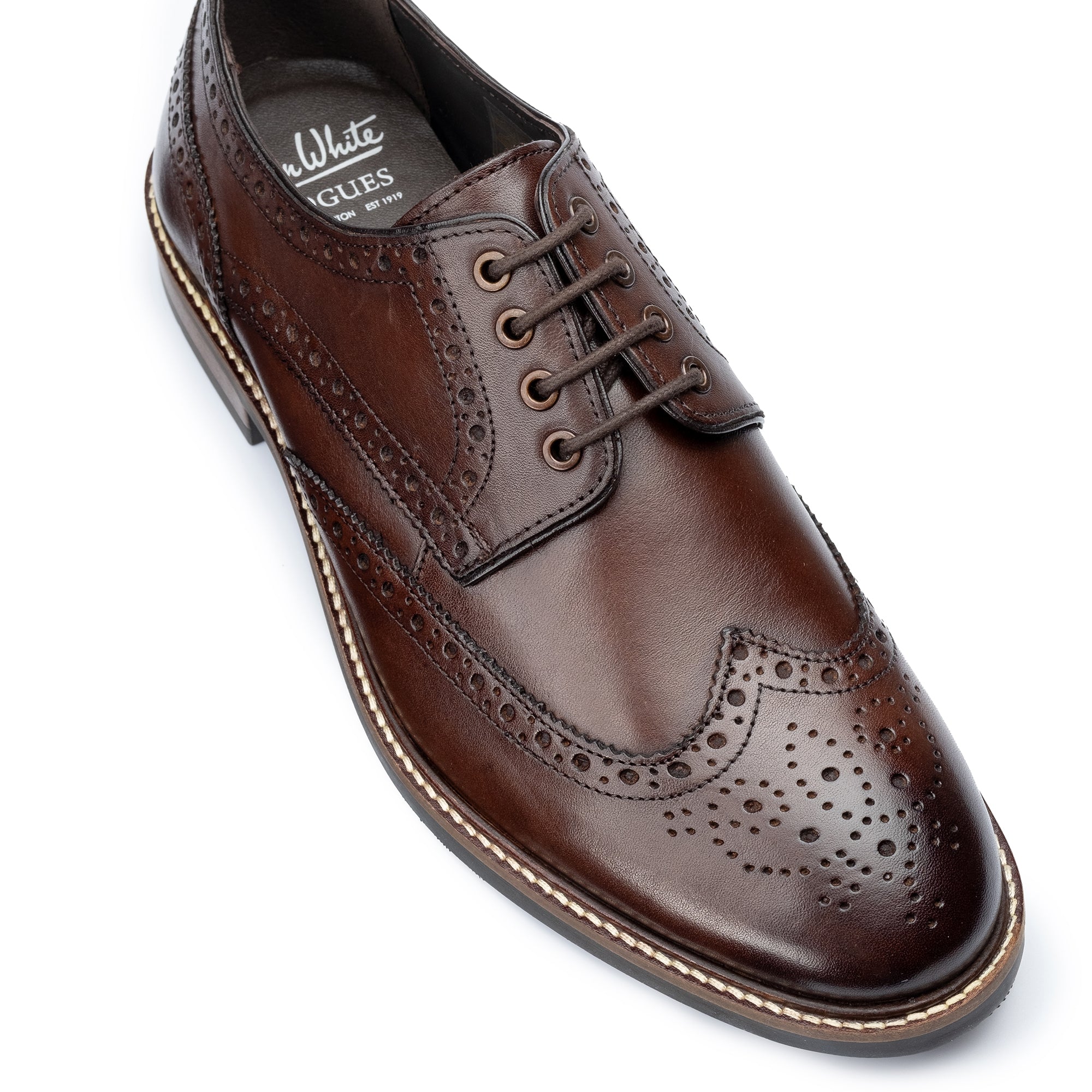
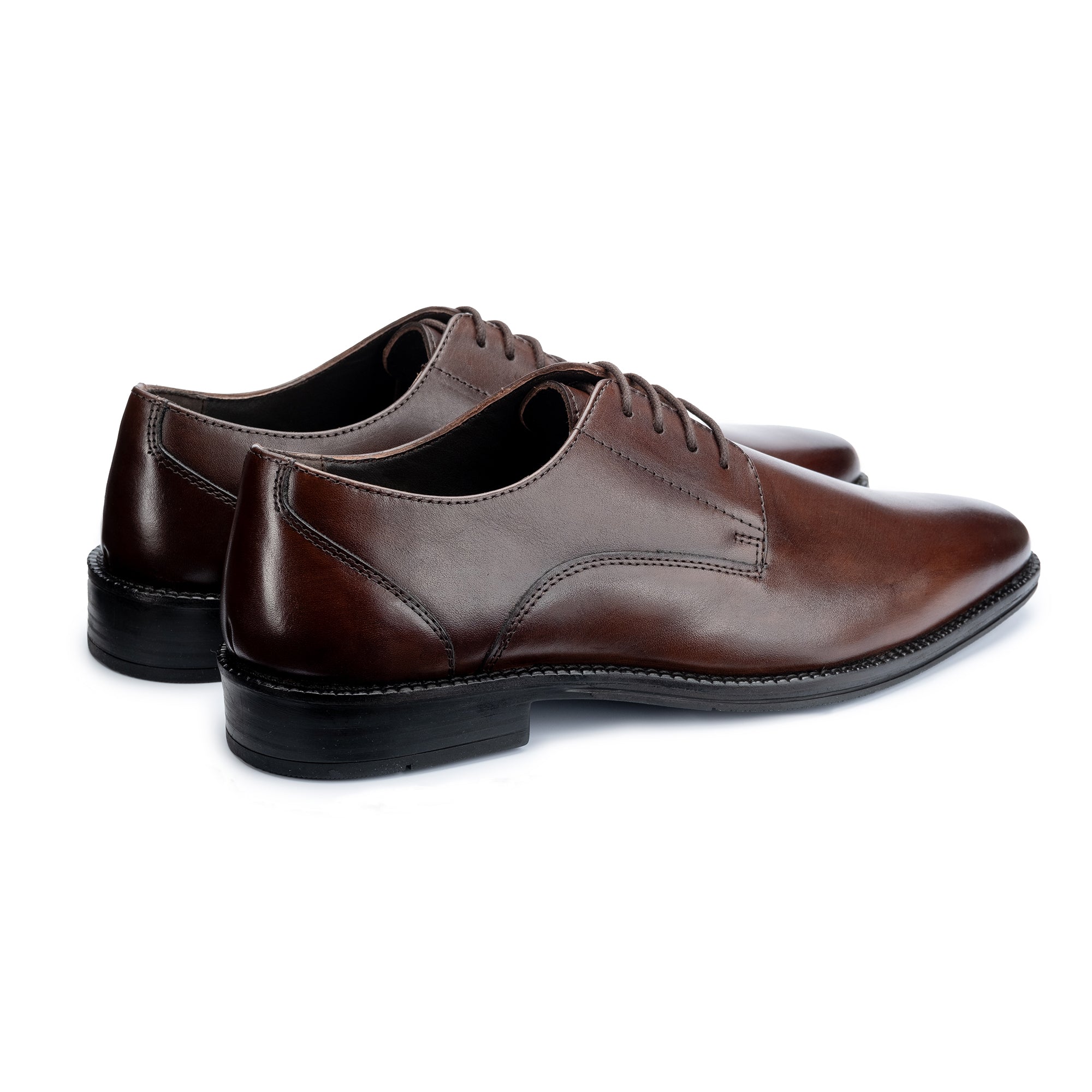
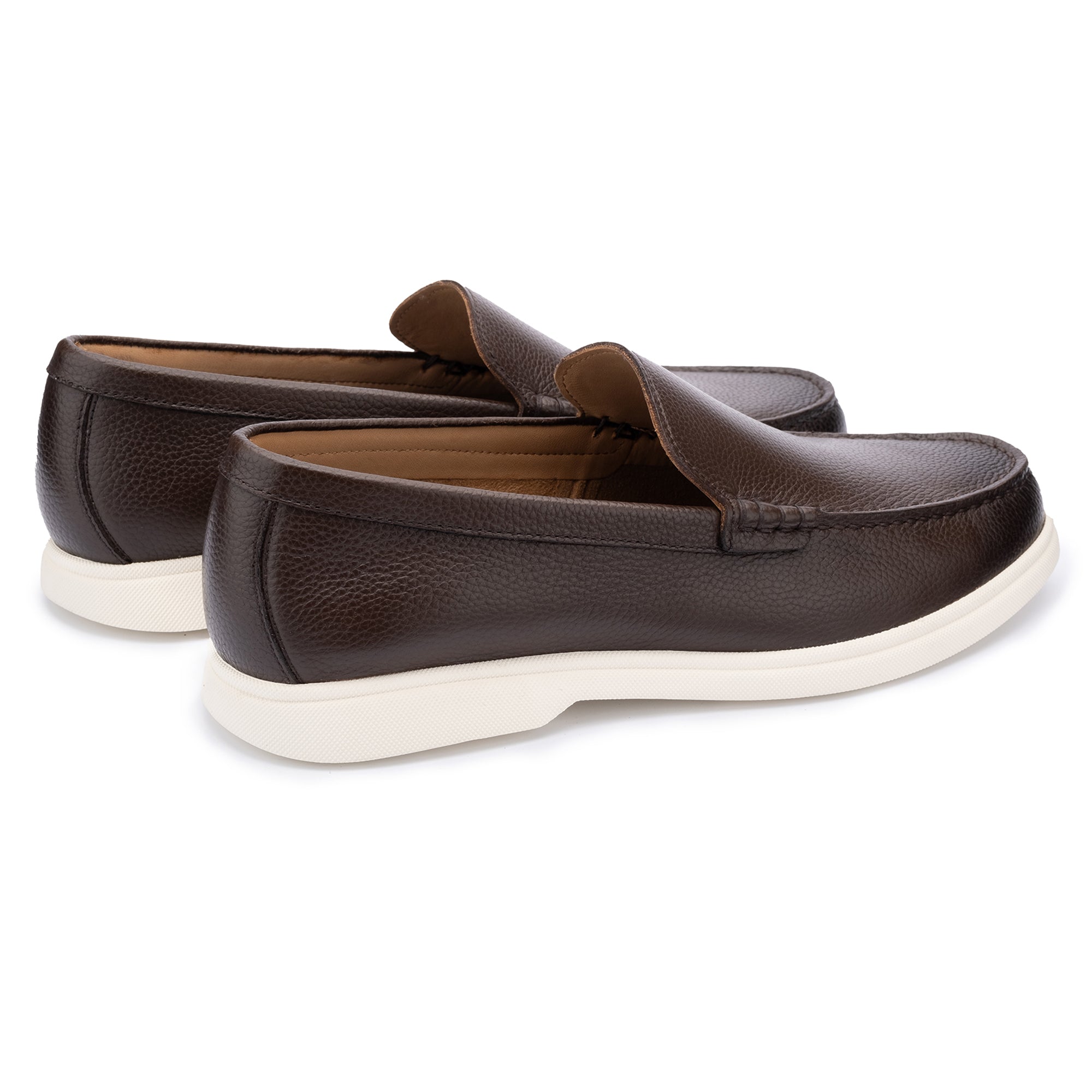
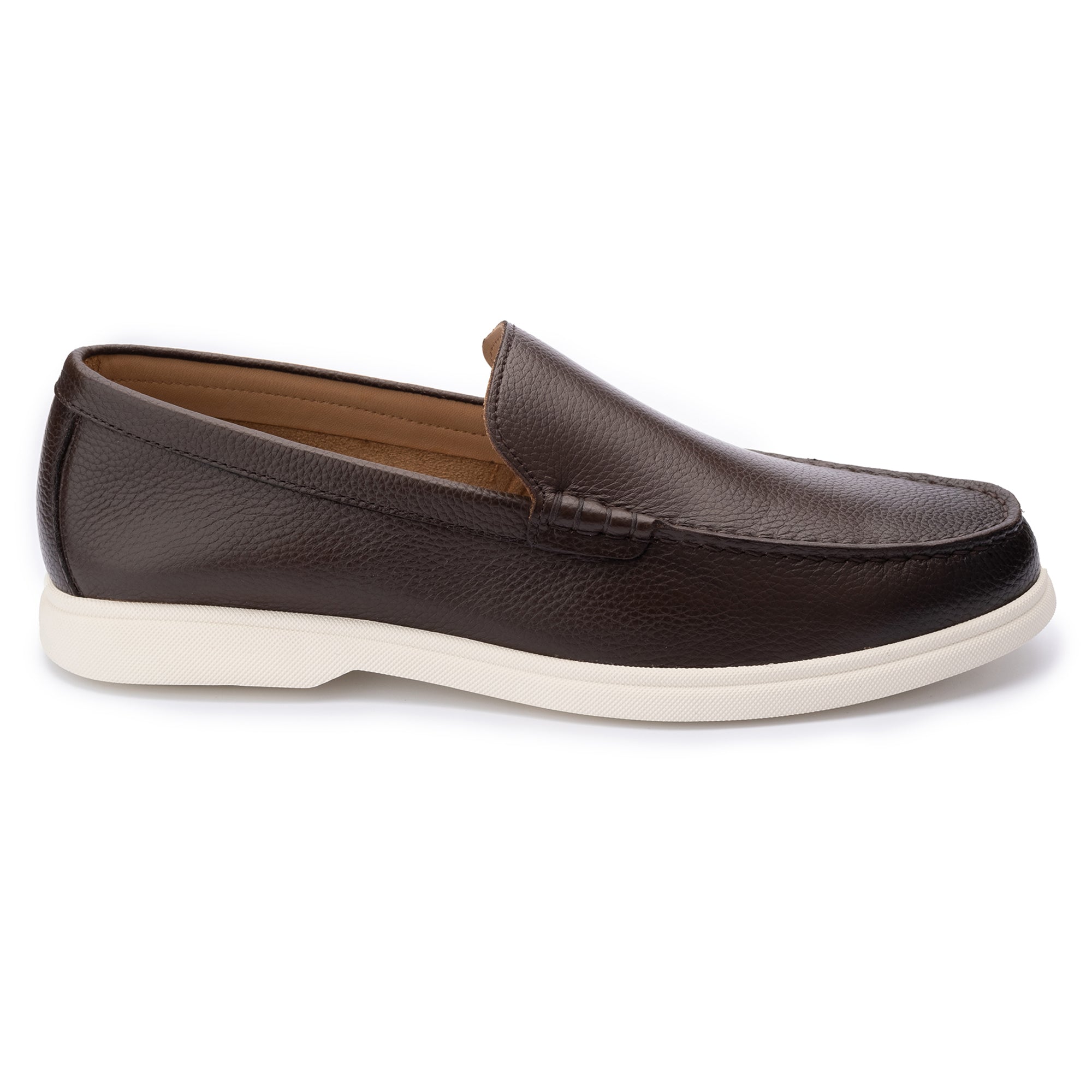
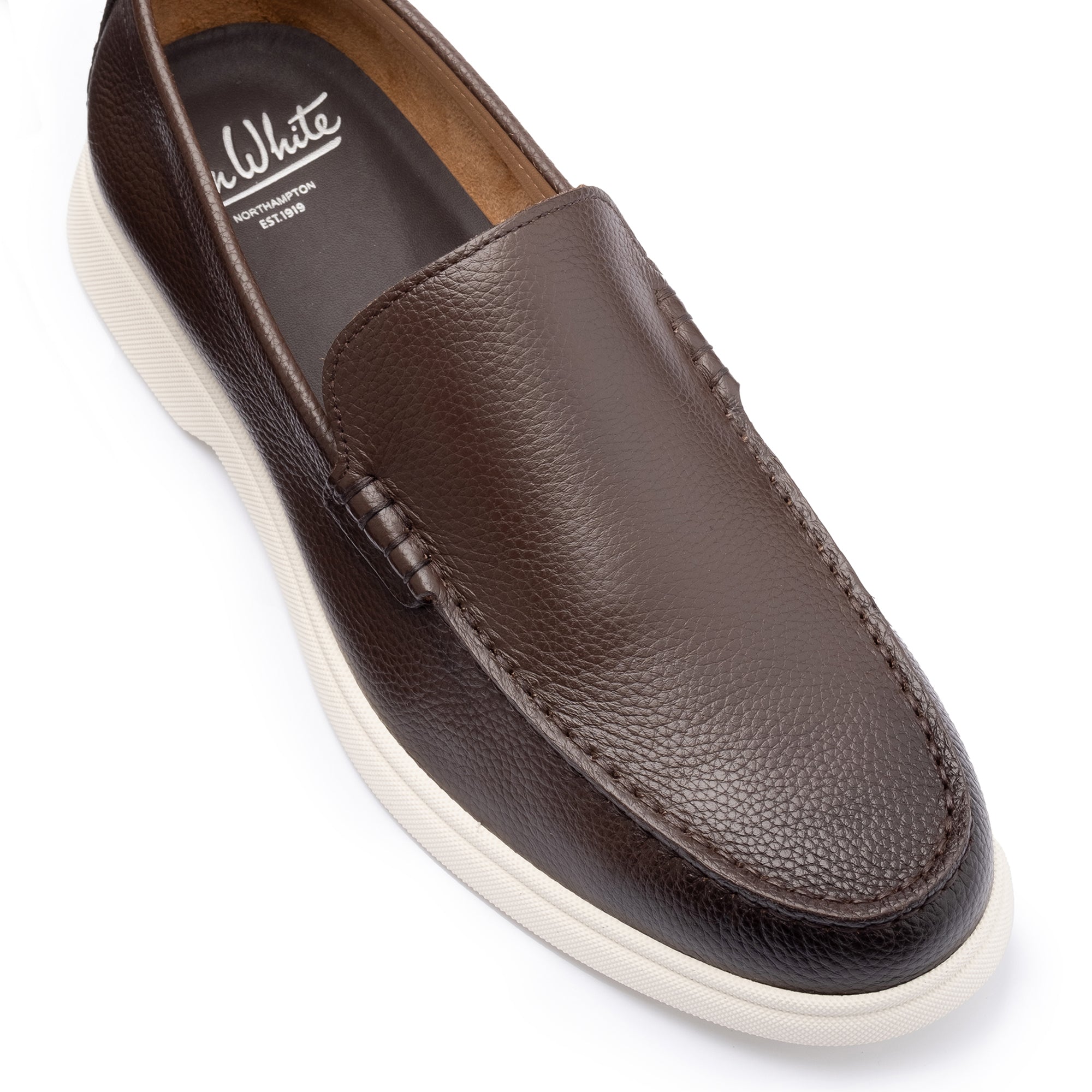
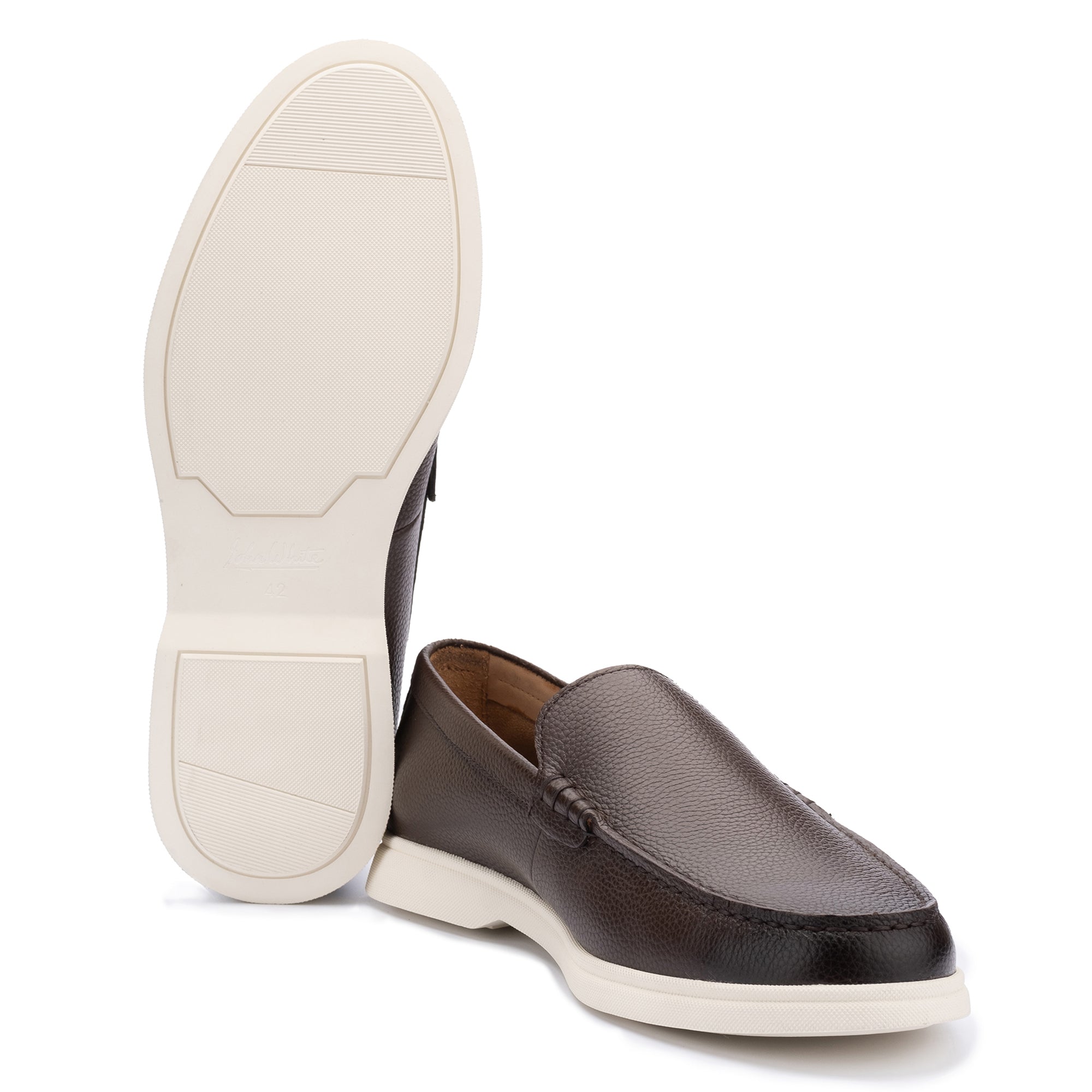
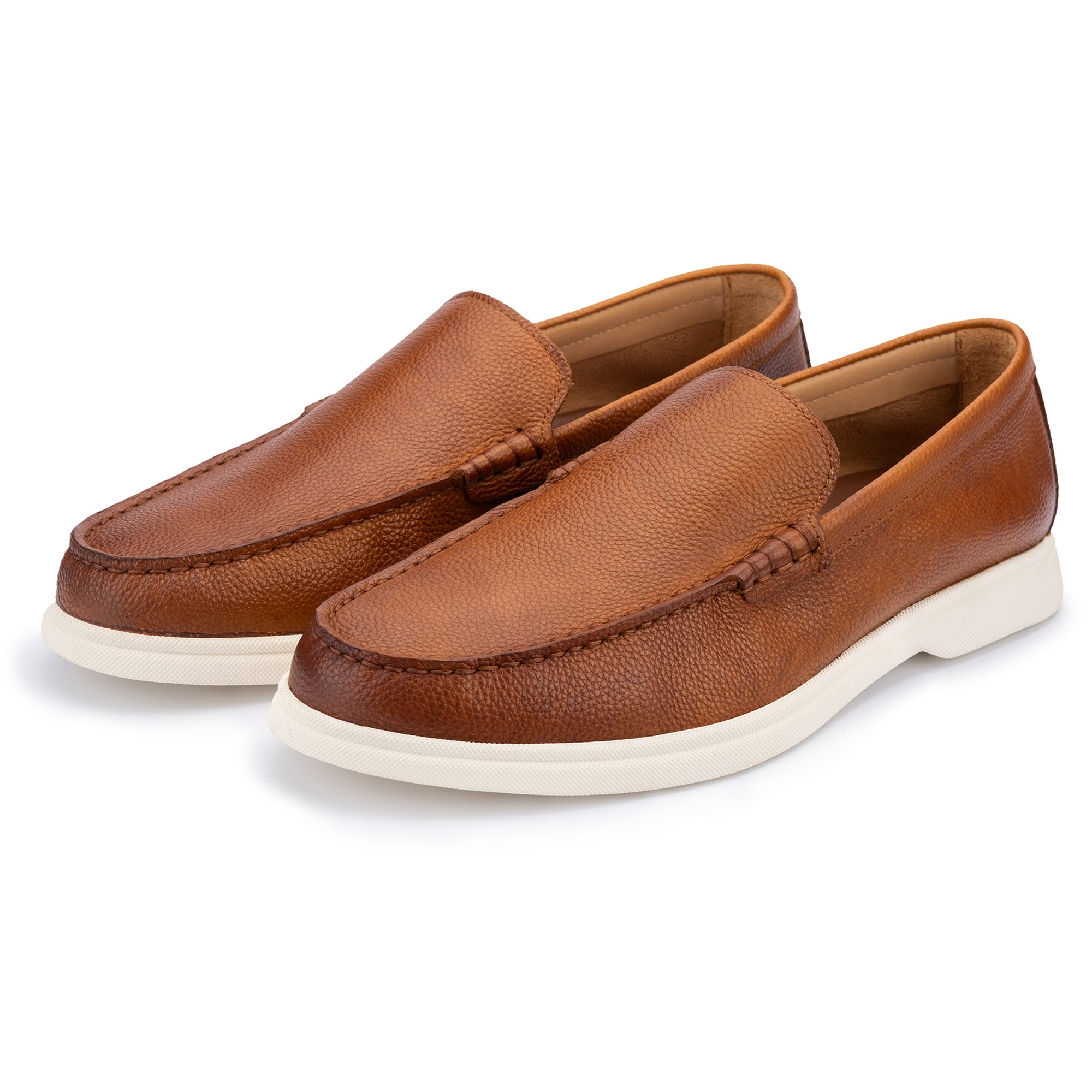
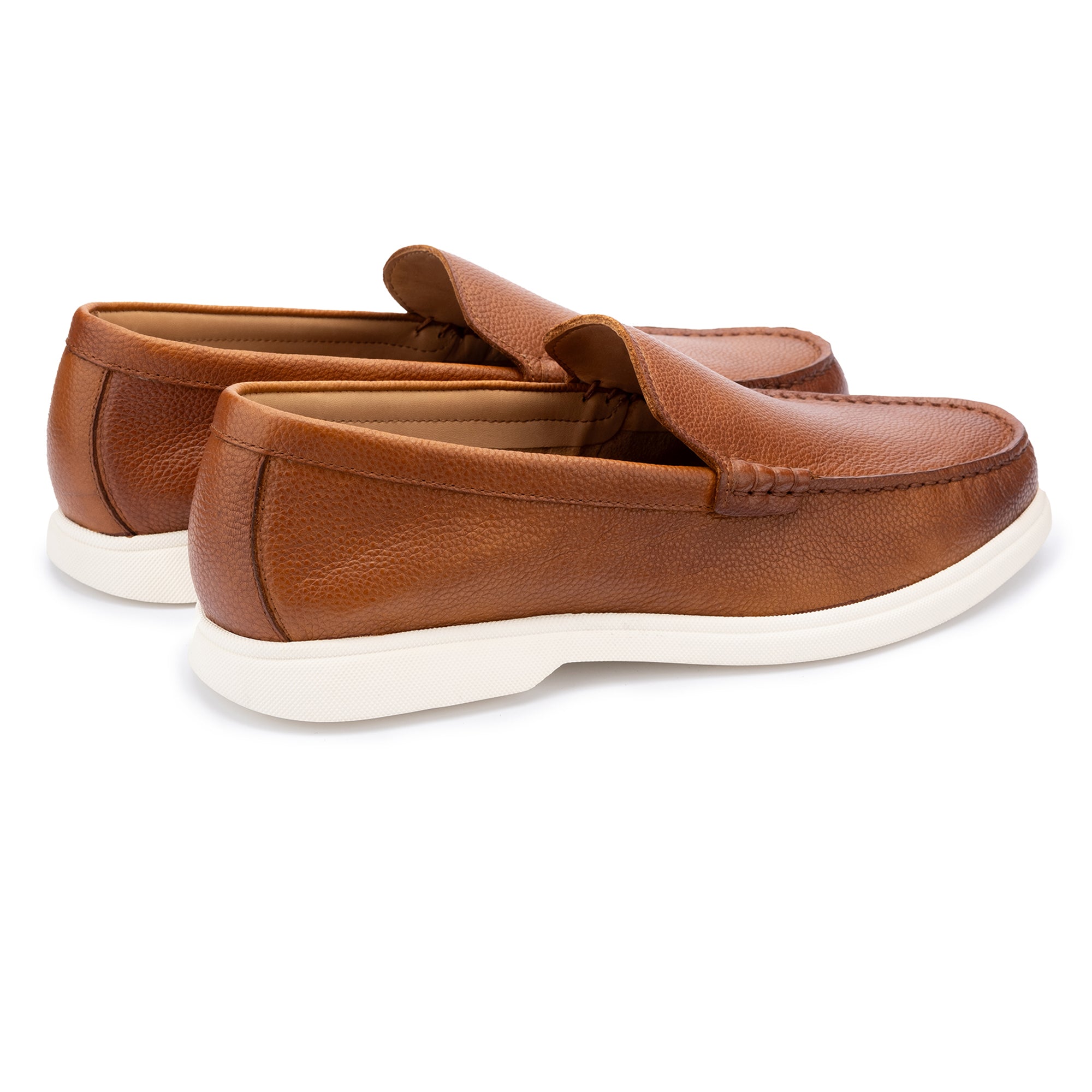
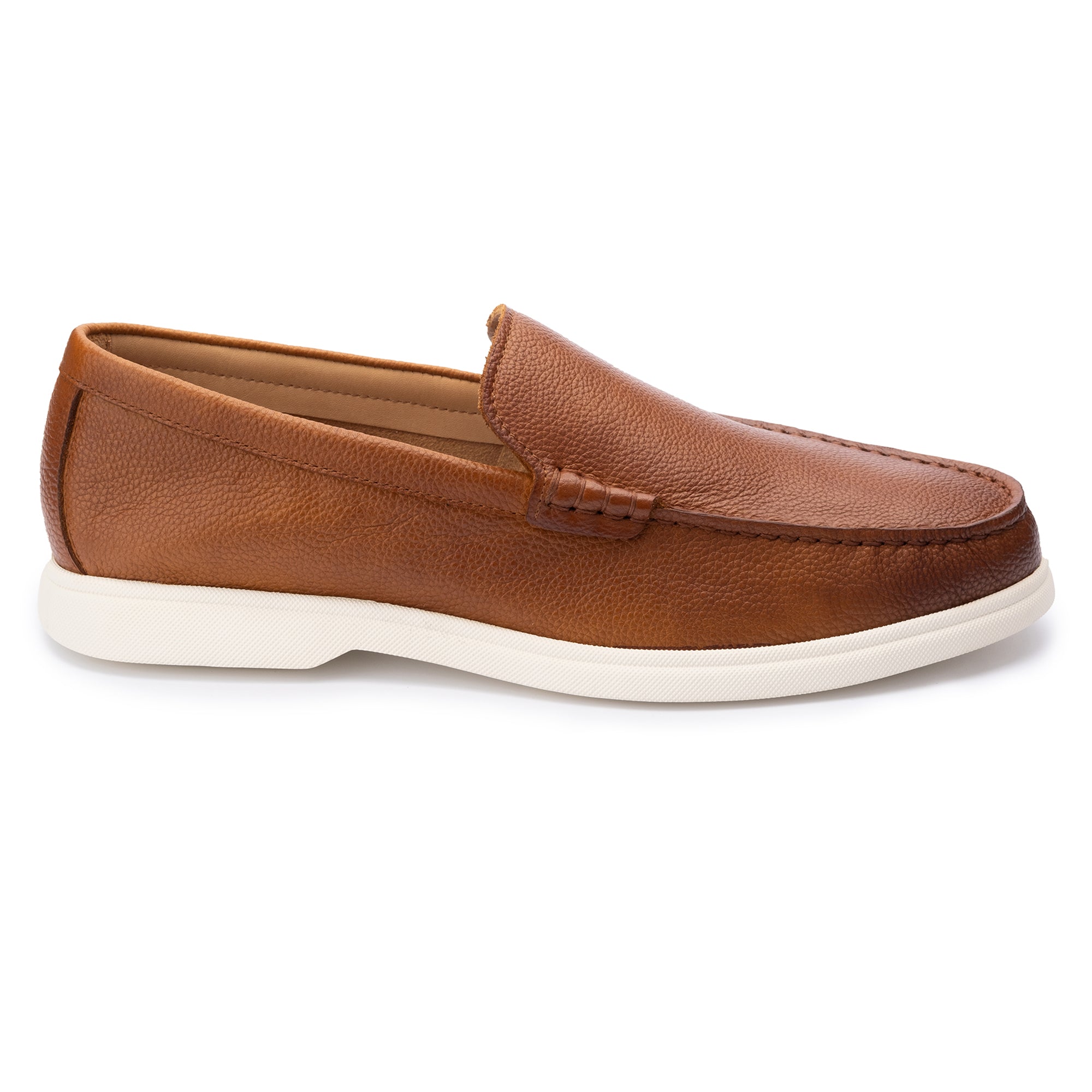
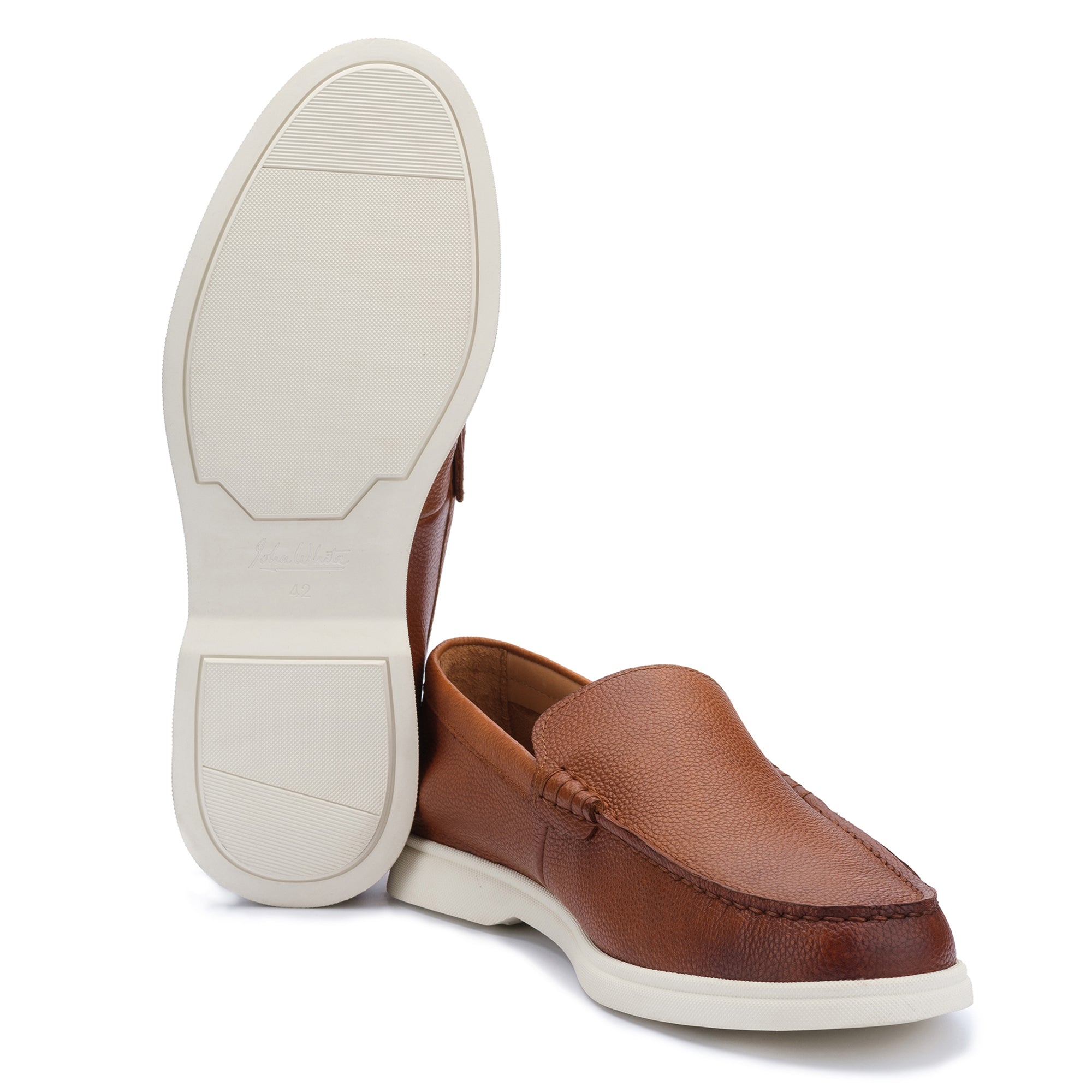
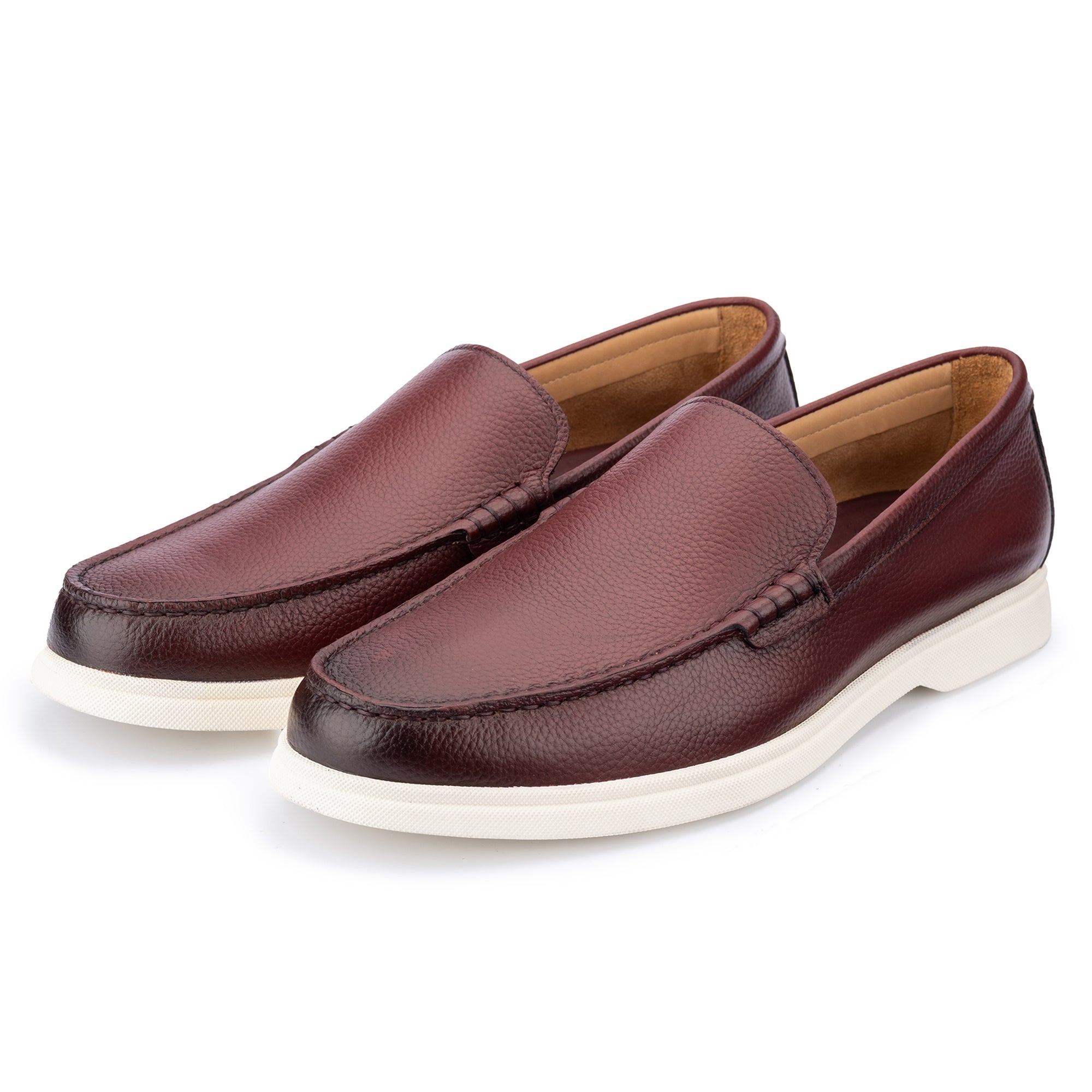
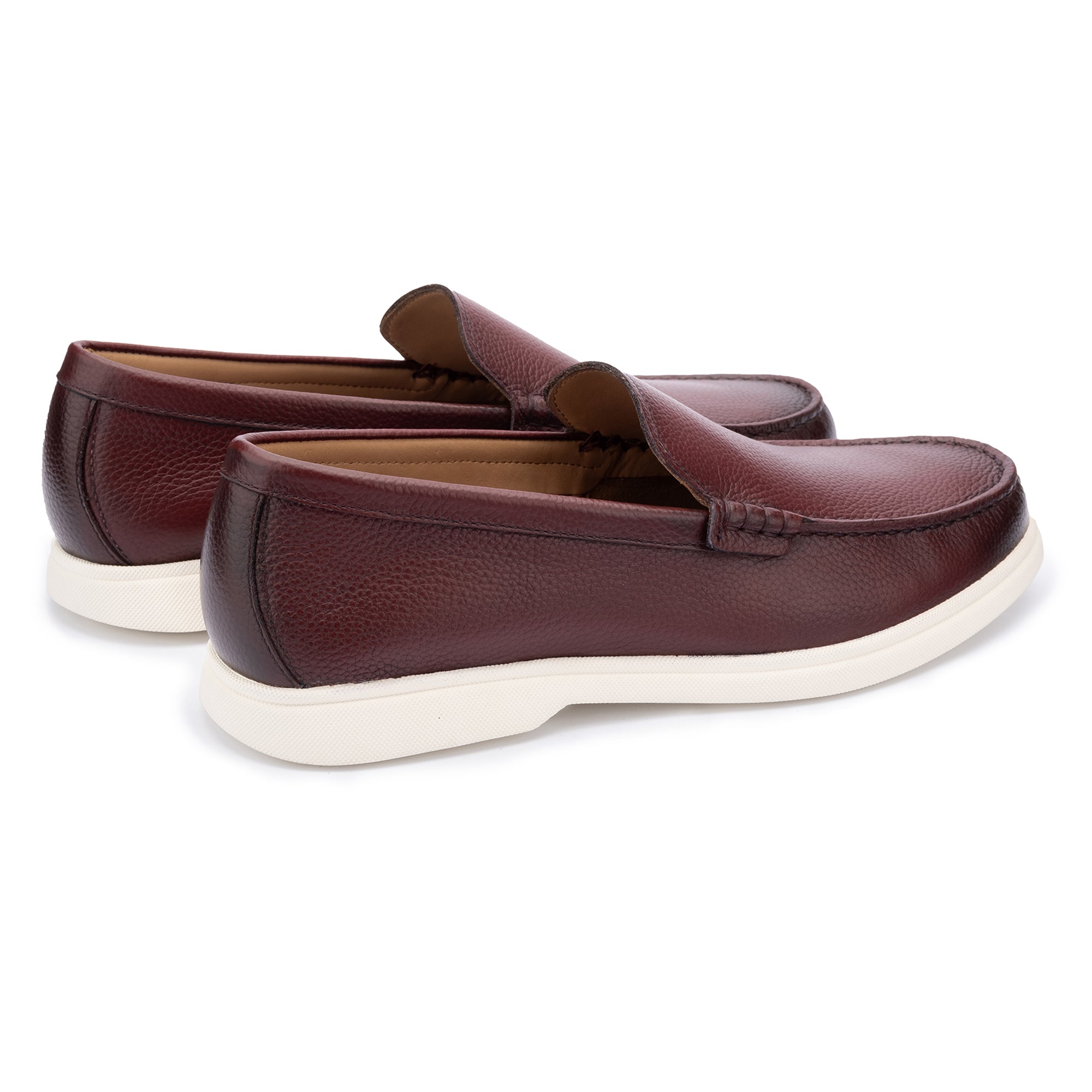
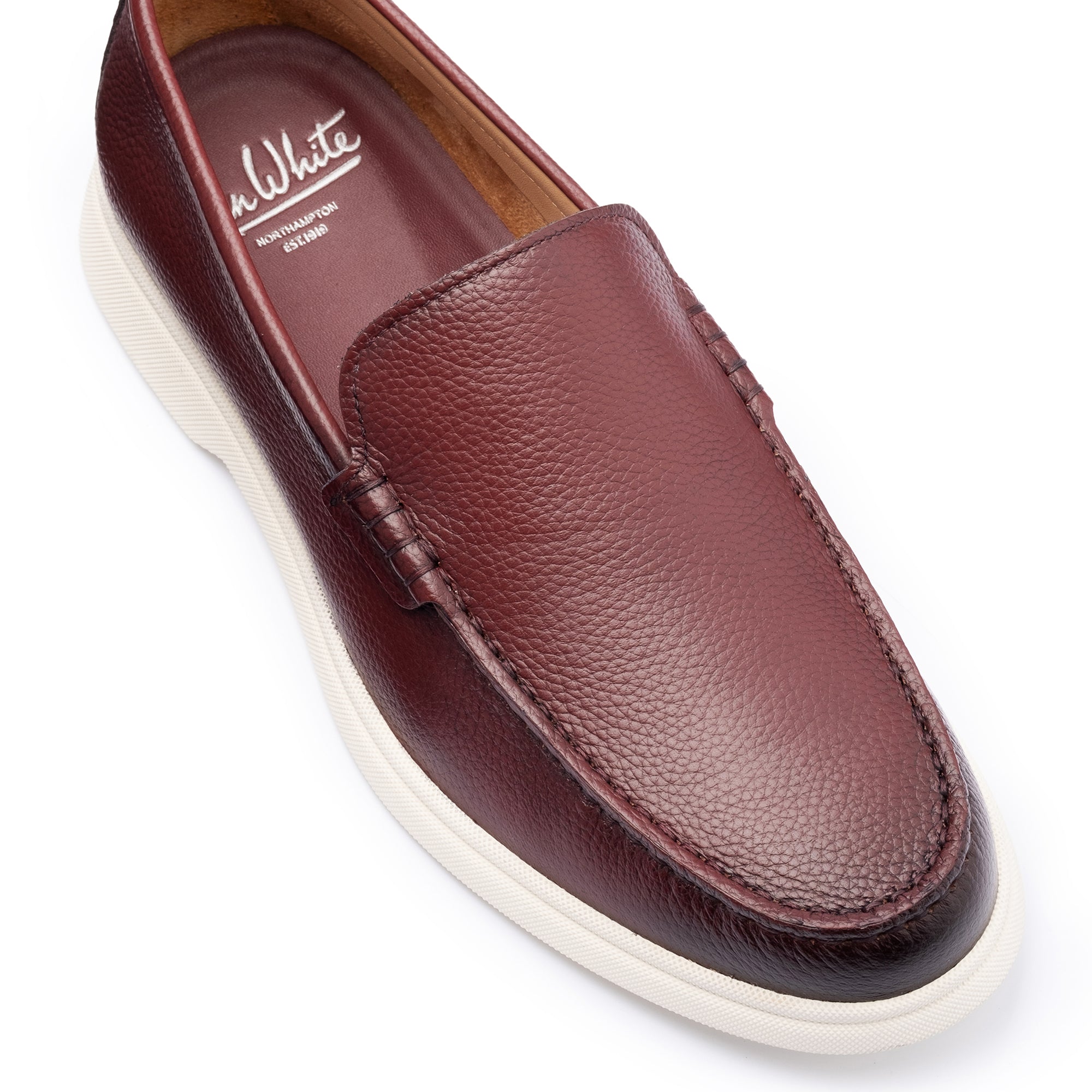
An antiqued finish imparts a warm, rich character. It's less about high-gloss shine and more about understated depth. You can see this effect in the rich colour of our Monkton Double Monk Shoes, which have a mature, sophisticated appearance straight from the box.
An antiqued finish uses layered colour to create the consistent, mellow patina of a well-aged shoe.
What Are the Key Differences Between Burnished and Antiqued Leather?
While both finishes elevate a shoe beyond a simple, flat colour, their methods and resulting aesthetics are entirely different. Understanding these distinctions is crucial for the discerning gentleman.
| Feature | Burnished Finish | Antiqued Finish |
|---|---|---|
| Process | Mechanical friction and heat applied with waxes to specific areas (toe, heel). | Manual application of dyes/creams across the shoe, which are then partially removed. |
| Visual Effect | High-gloss, graduated colour contrast. Creates sharp highlights. | Softer, mellow, and consistent patina. Creates subtle depth and lowlights. |
| Common Application | Oxfords, formal Derby shoes, and dress boots where a sharp, polished look is desired. | Loafers, brogues, and Chelsea boots. Ideal for adding character to smart-casual styles. |
| Aesthetic | Modern, sharp, polished, and formal. | Classic, vintage, understated, and worldly. |
How Should You Choose Between a Burnished and Antiqued Finish?
Your choice depends entirely on the context and your personal style. Neither is inherently superior; they simply serve different purposes.
- Choose a burnished finish for formality and sharpness. A burnished shoe is an excellent choice for business suits, formal trousers, and occasions that demand a polished appearance. The high shine on the toe cap complements a crisp trouser crease and adds a final, deliberate touch to a formal ensemble.
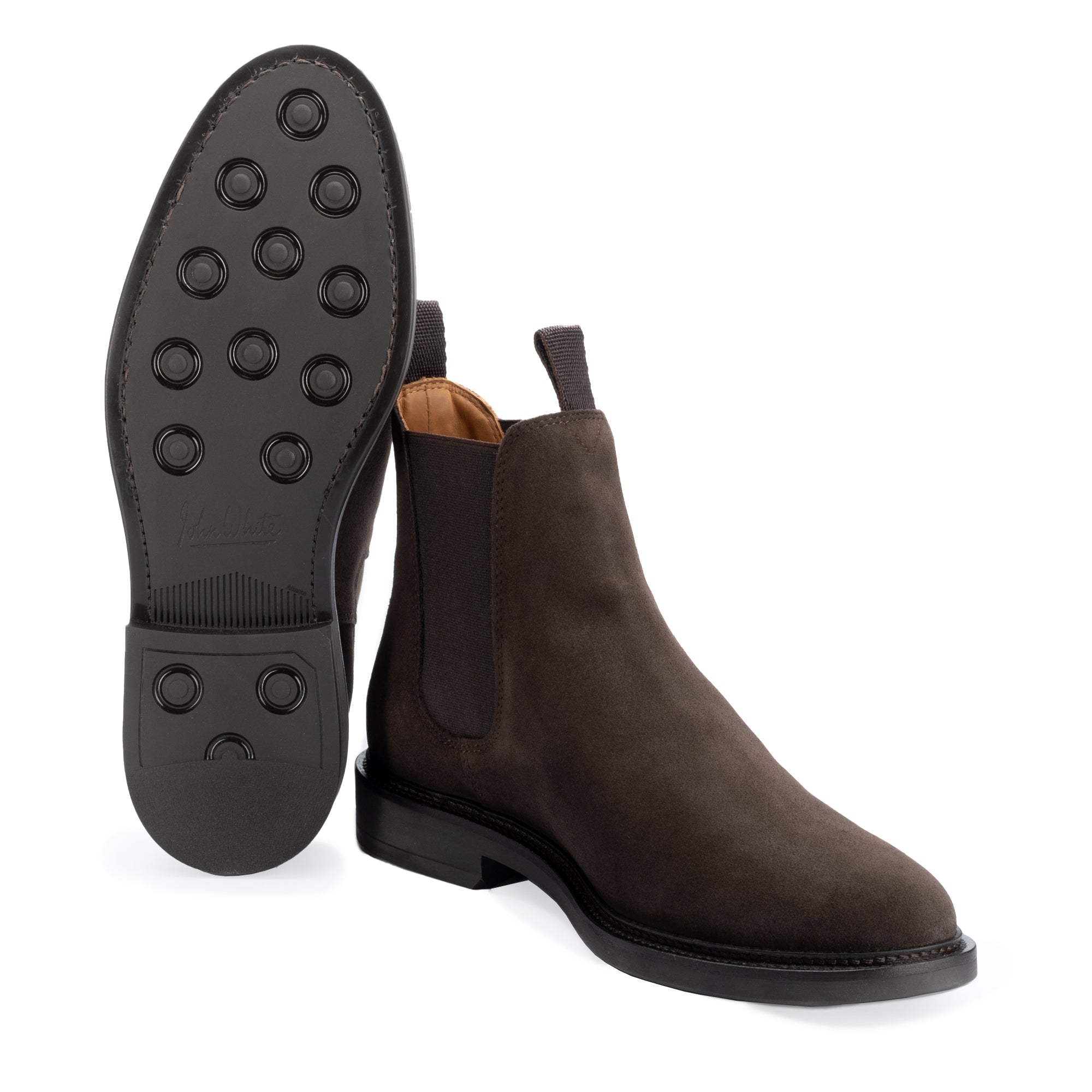
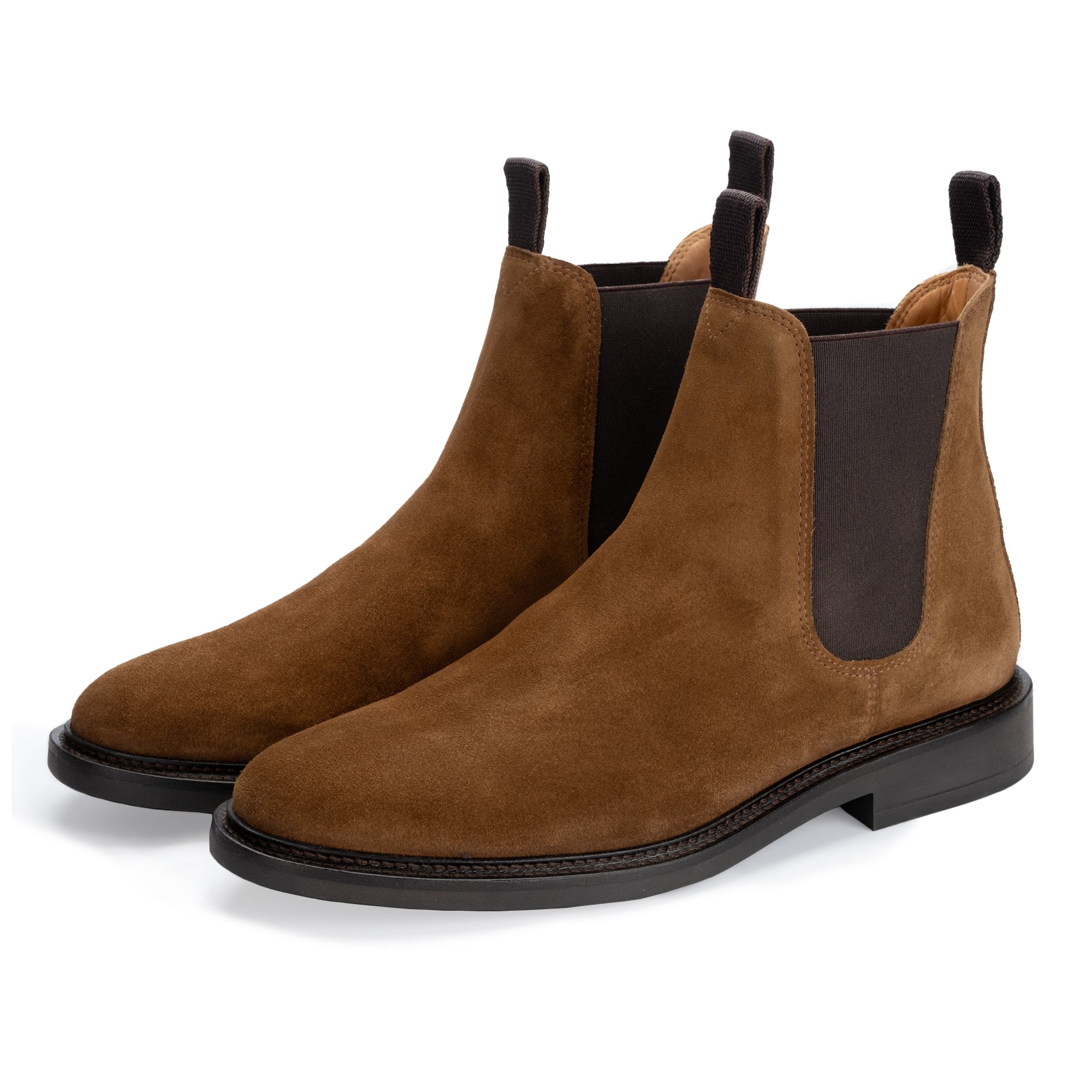
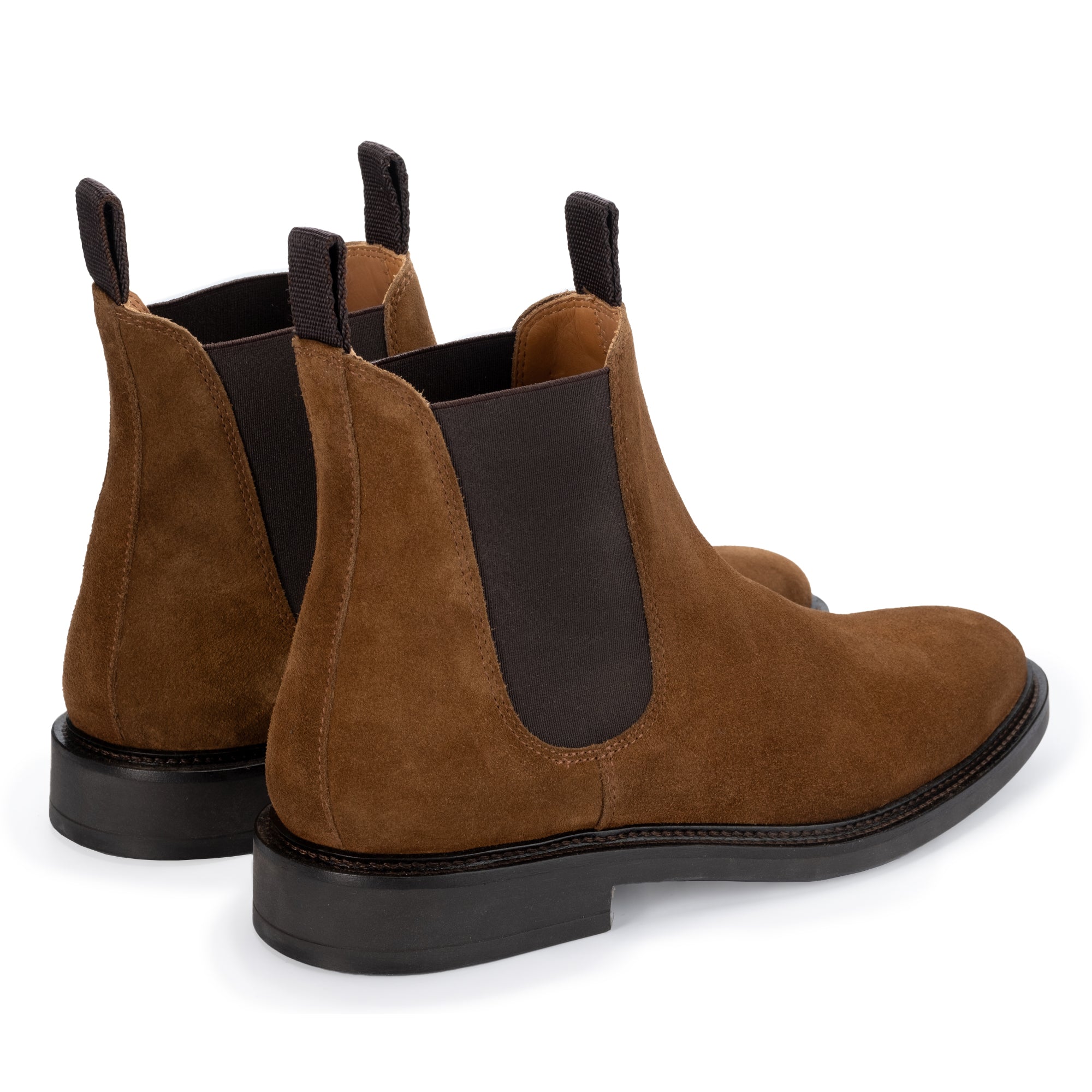
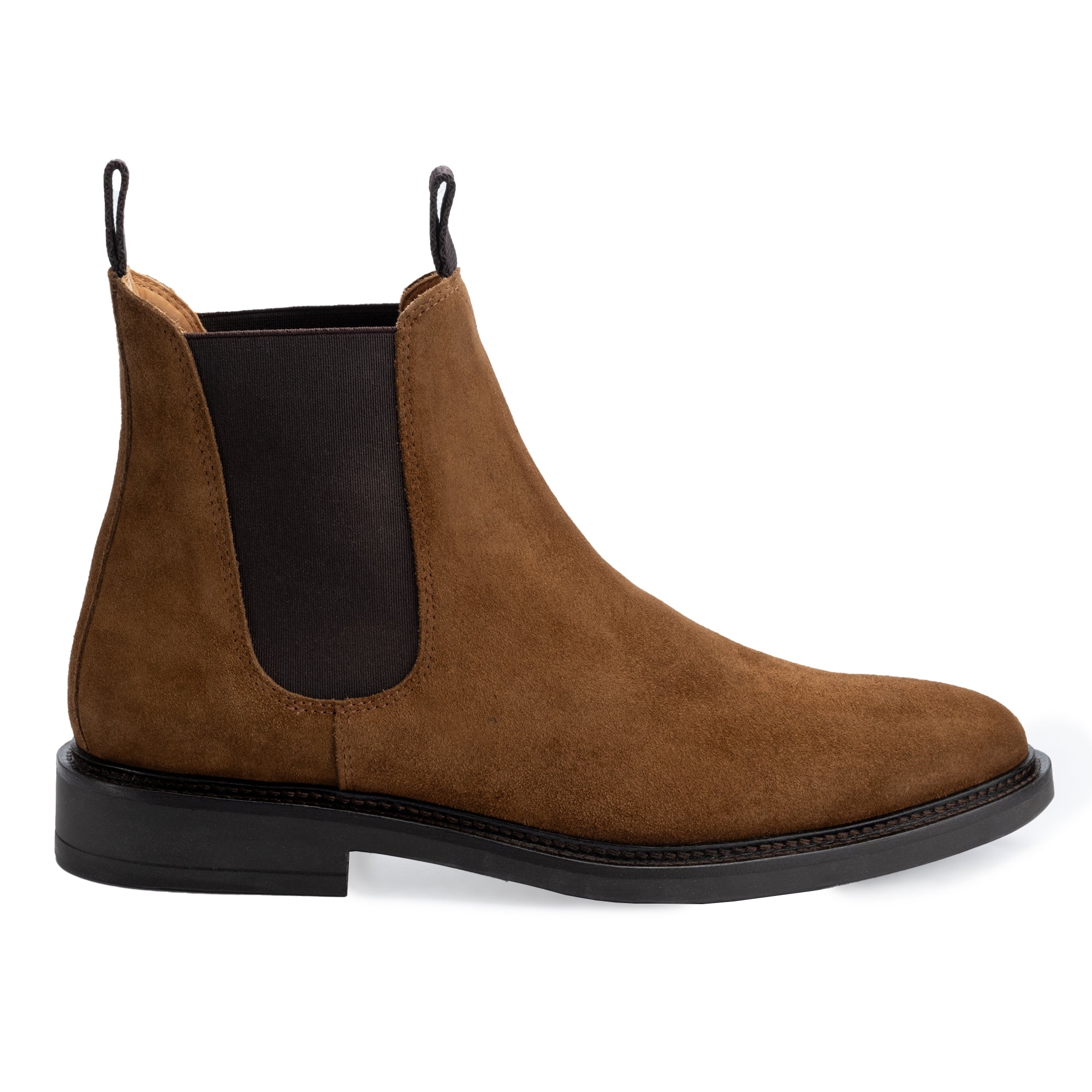
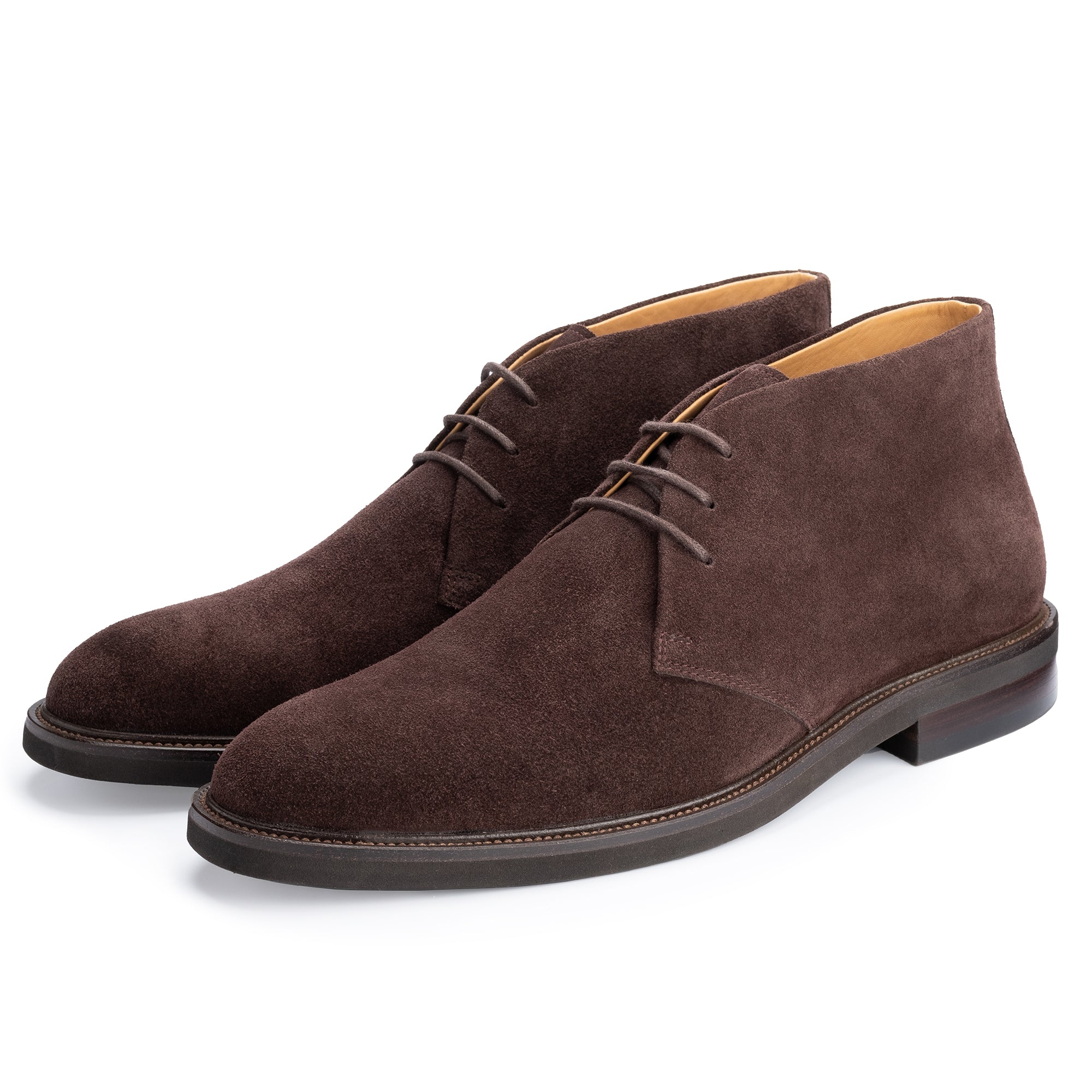
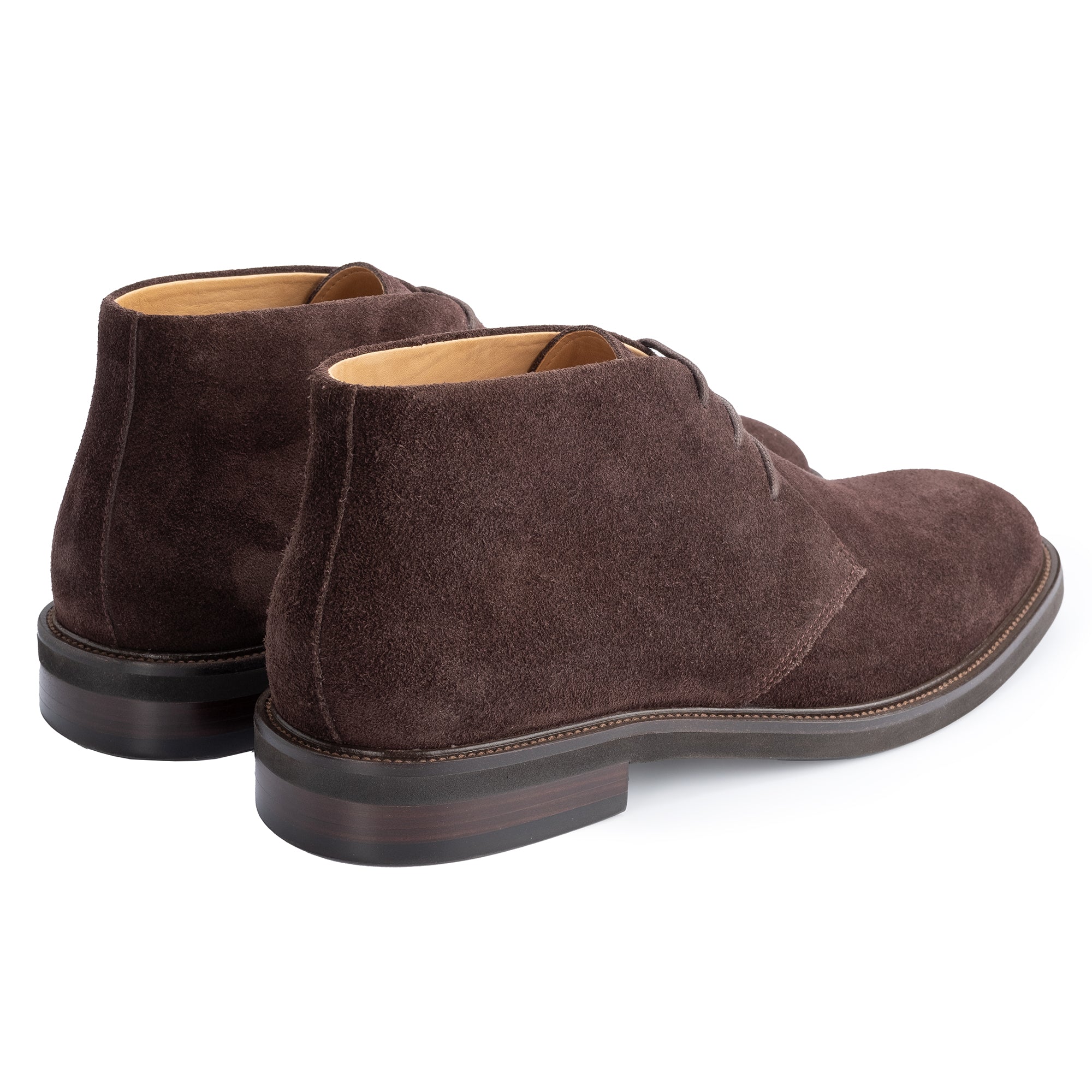
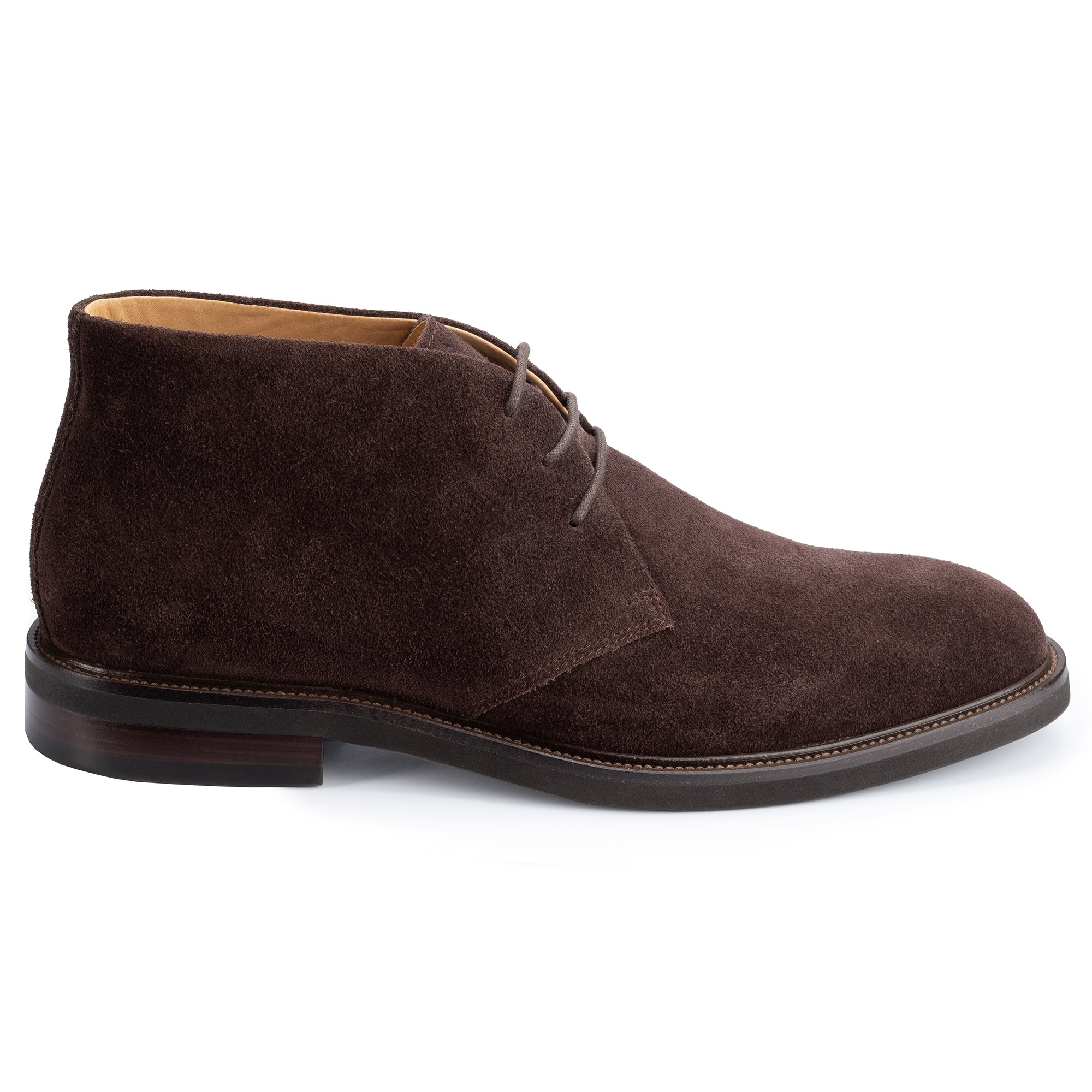
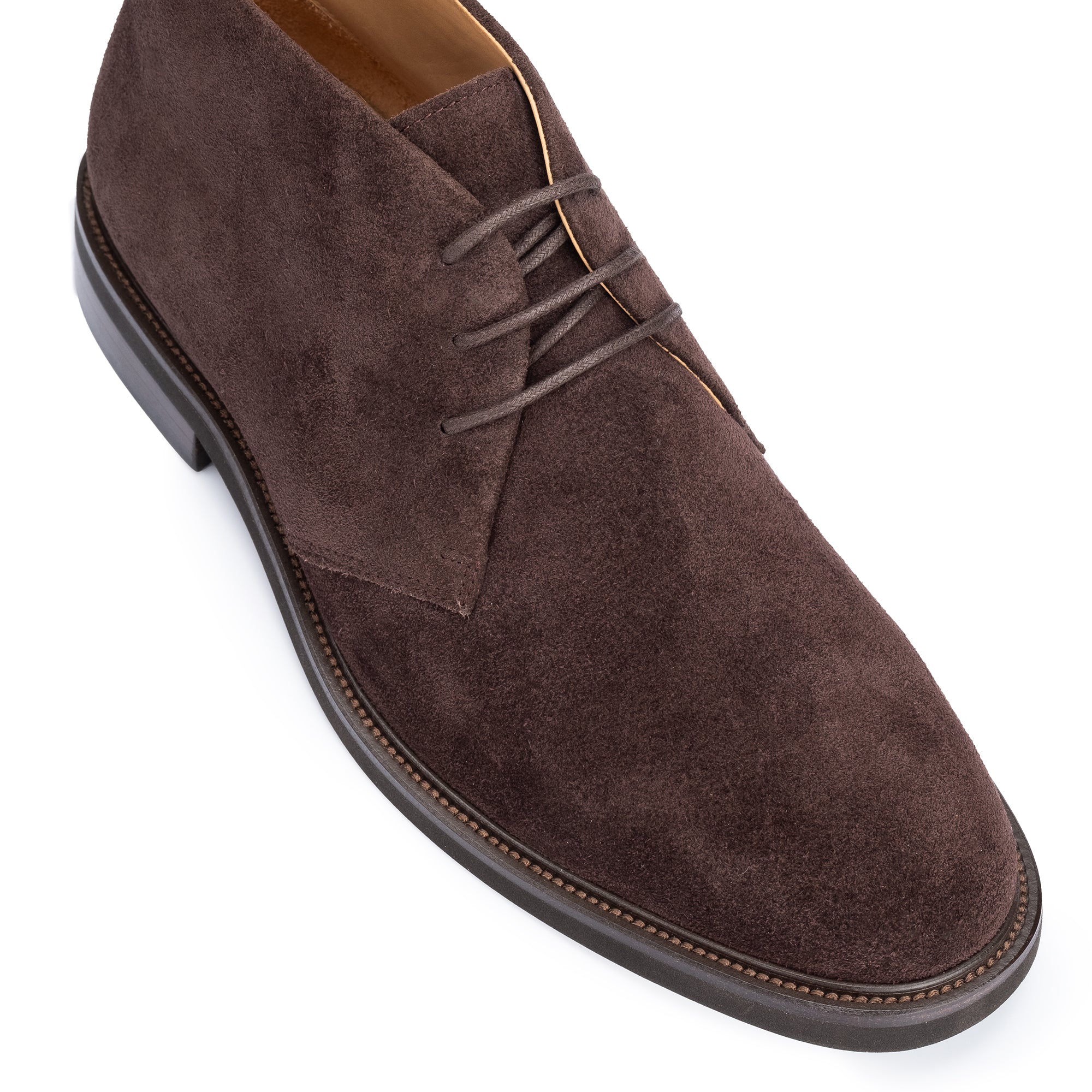
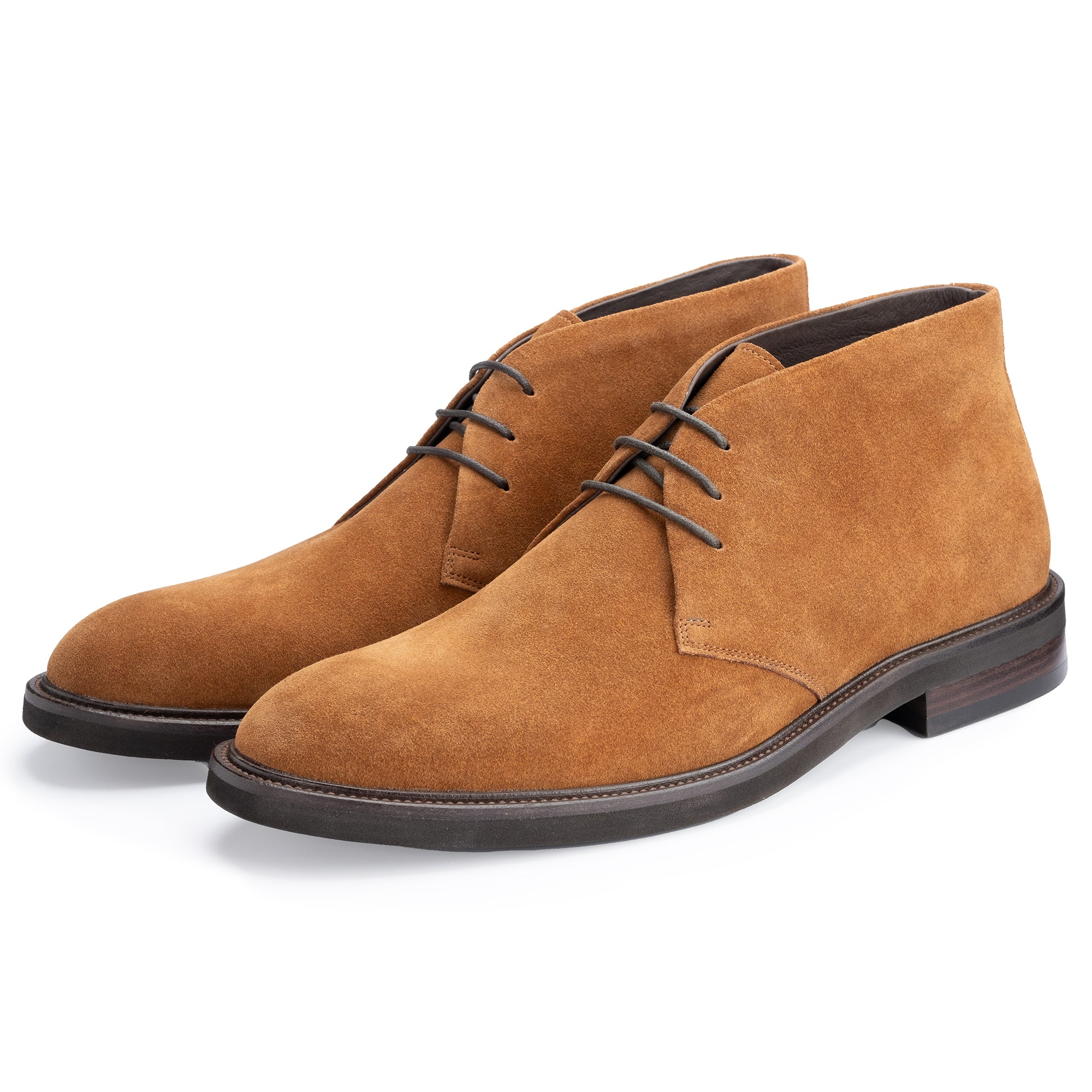
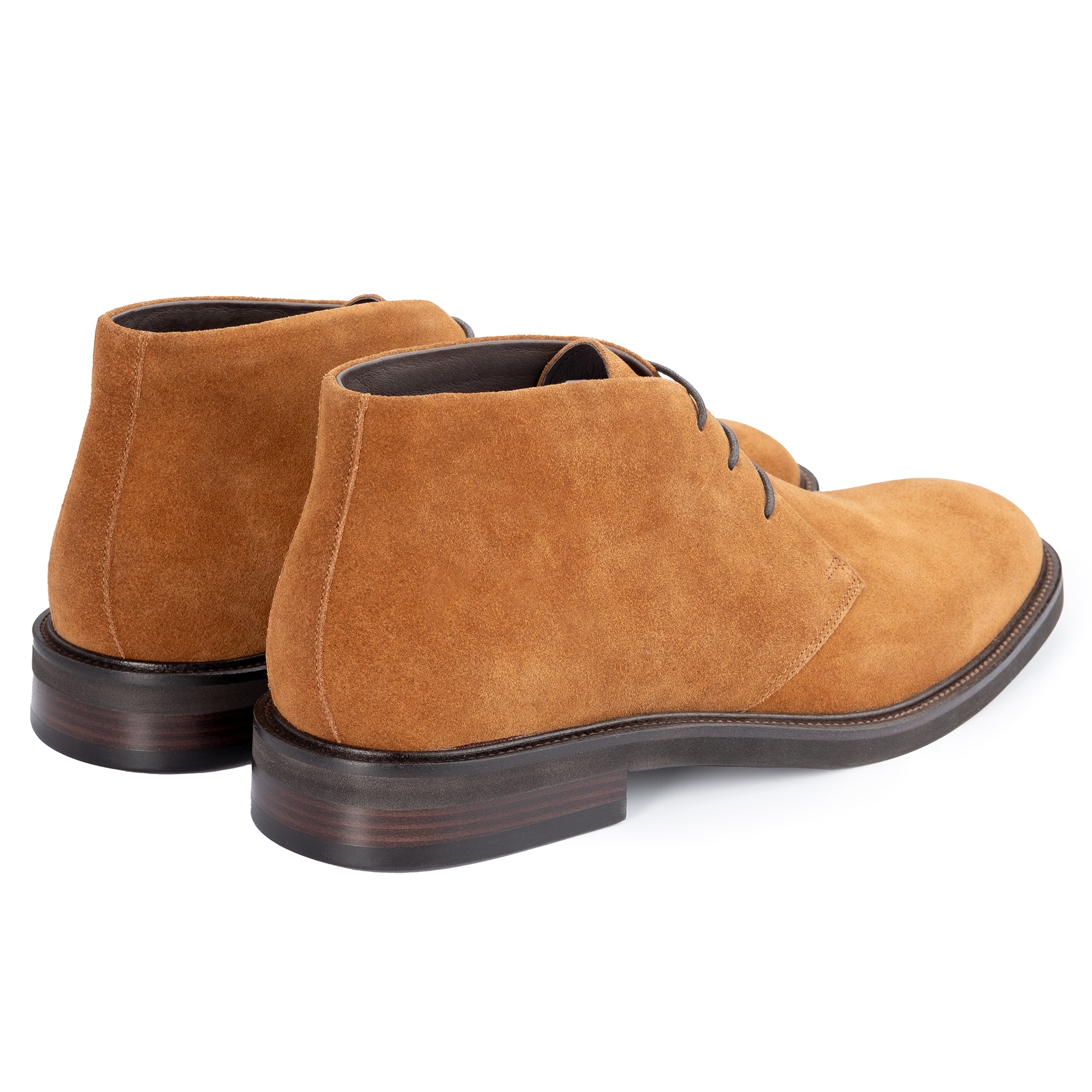
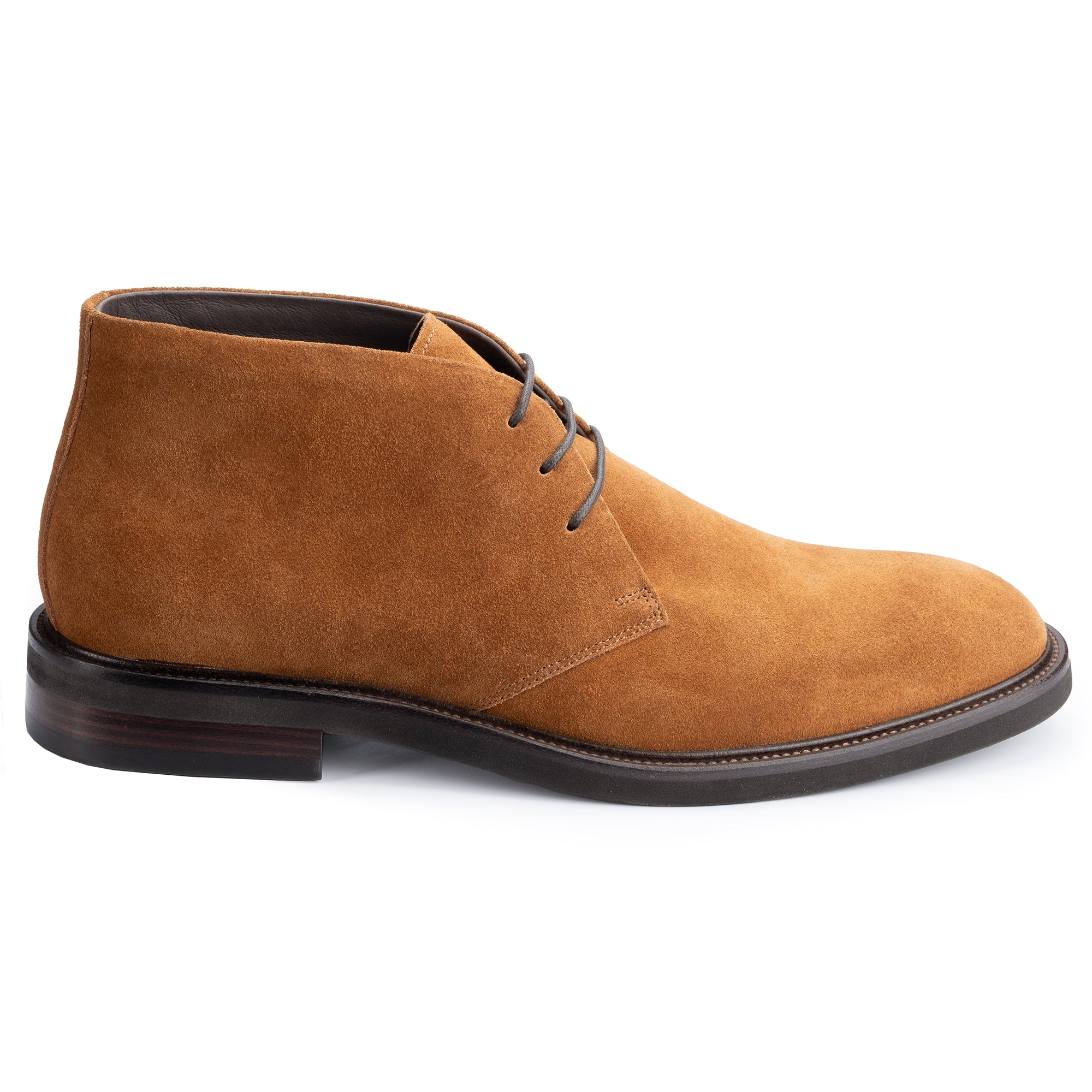
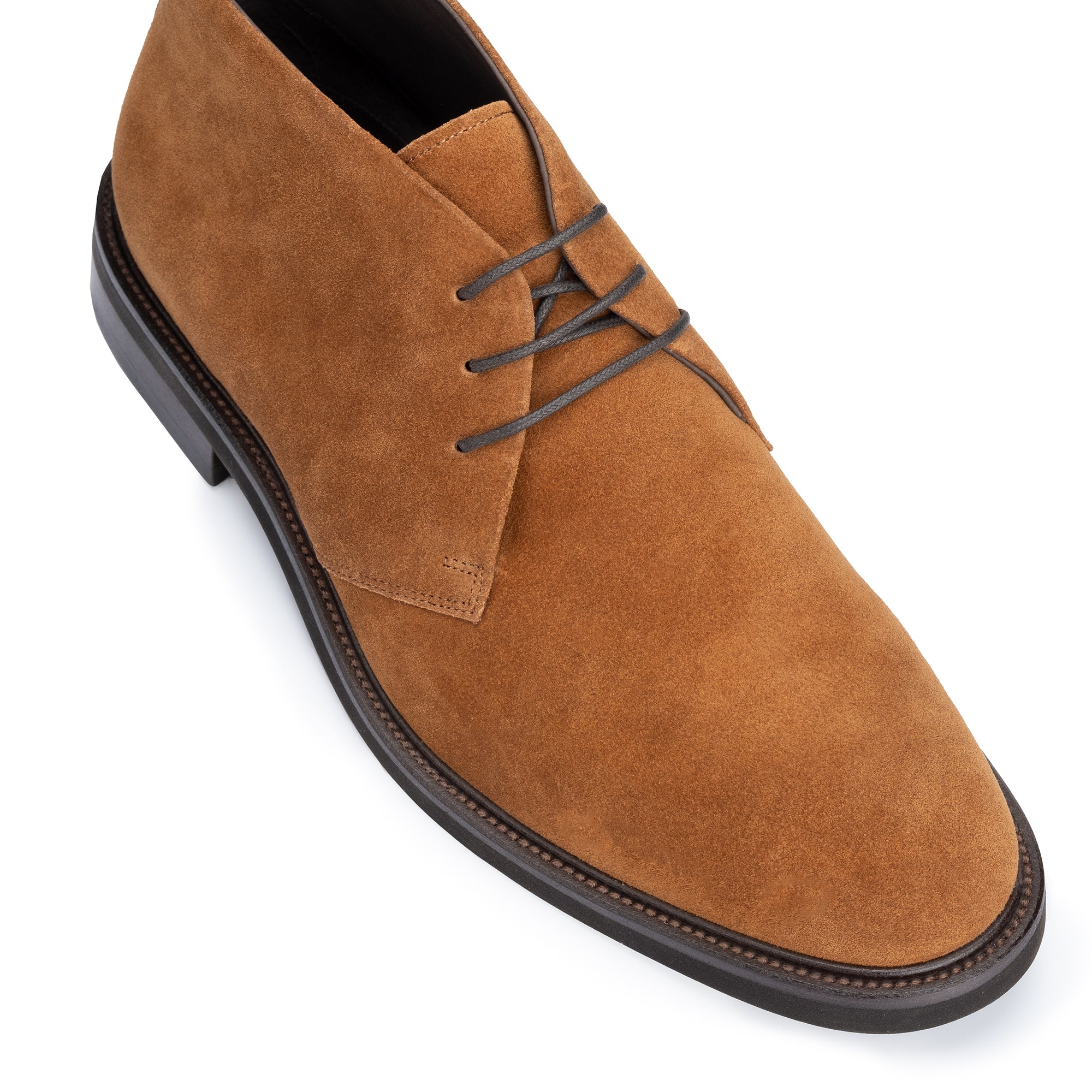
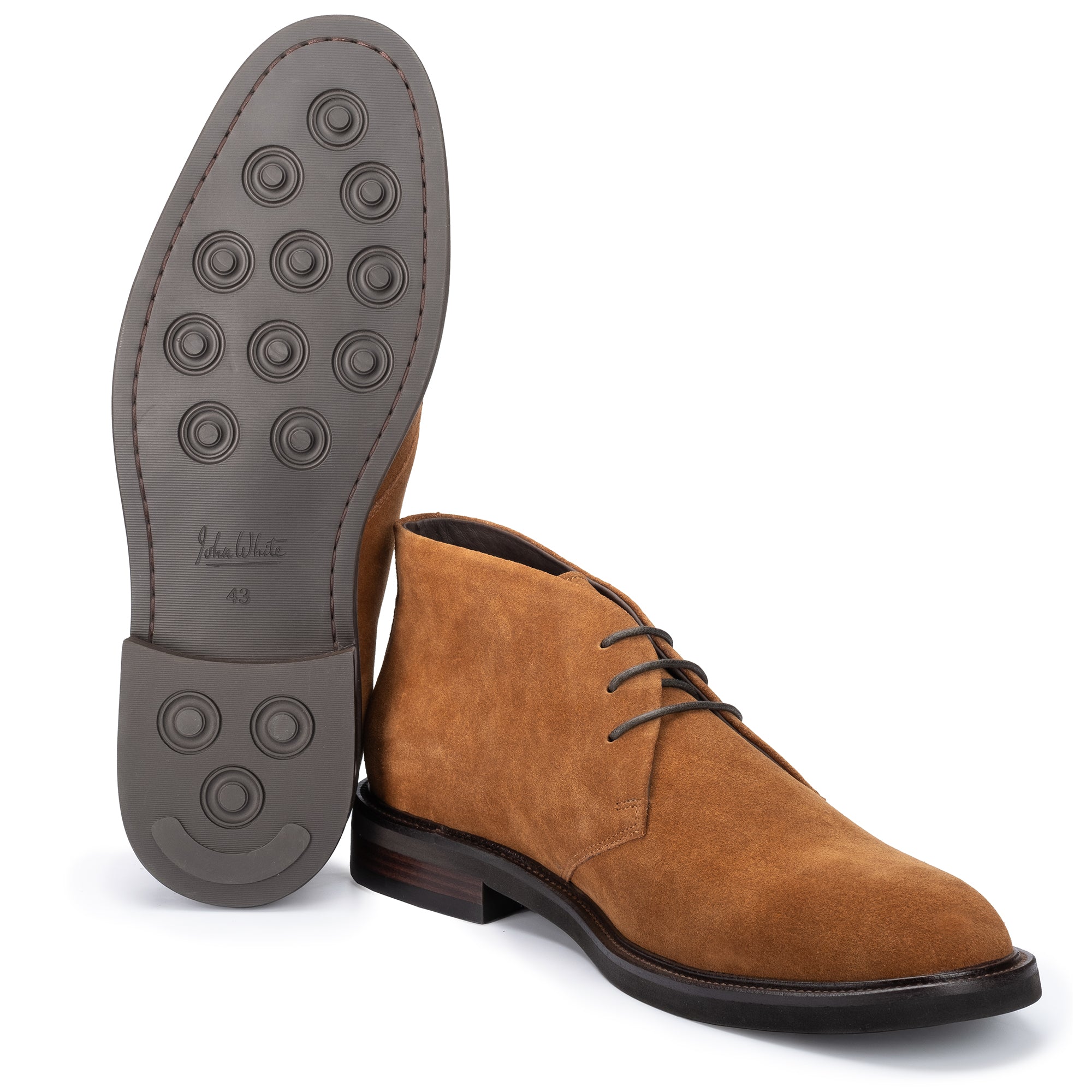
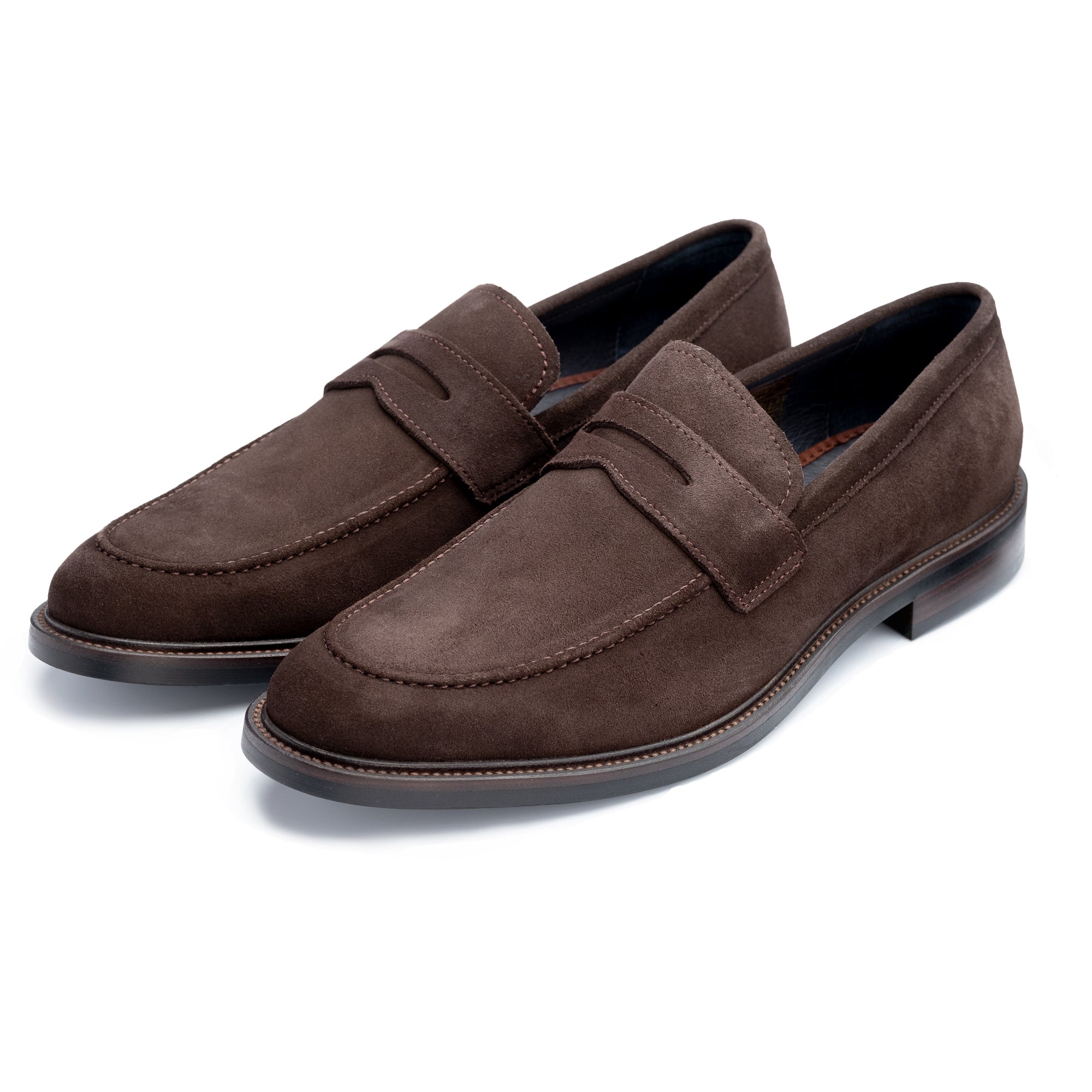
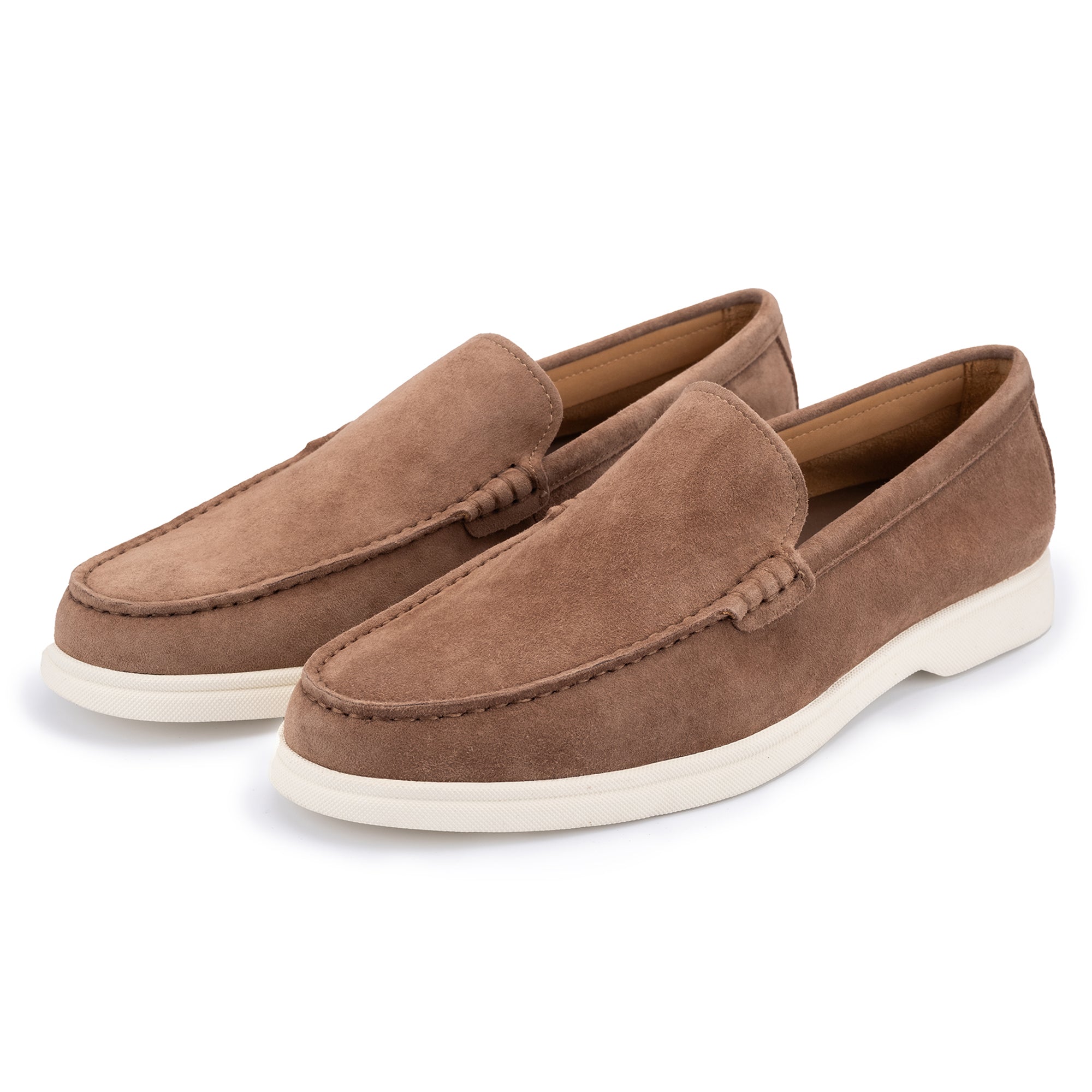
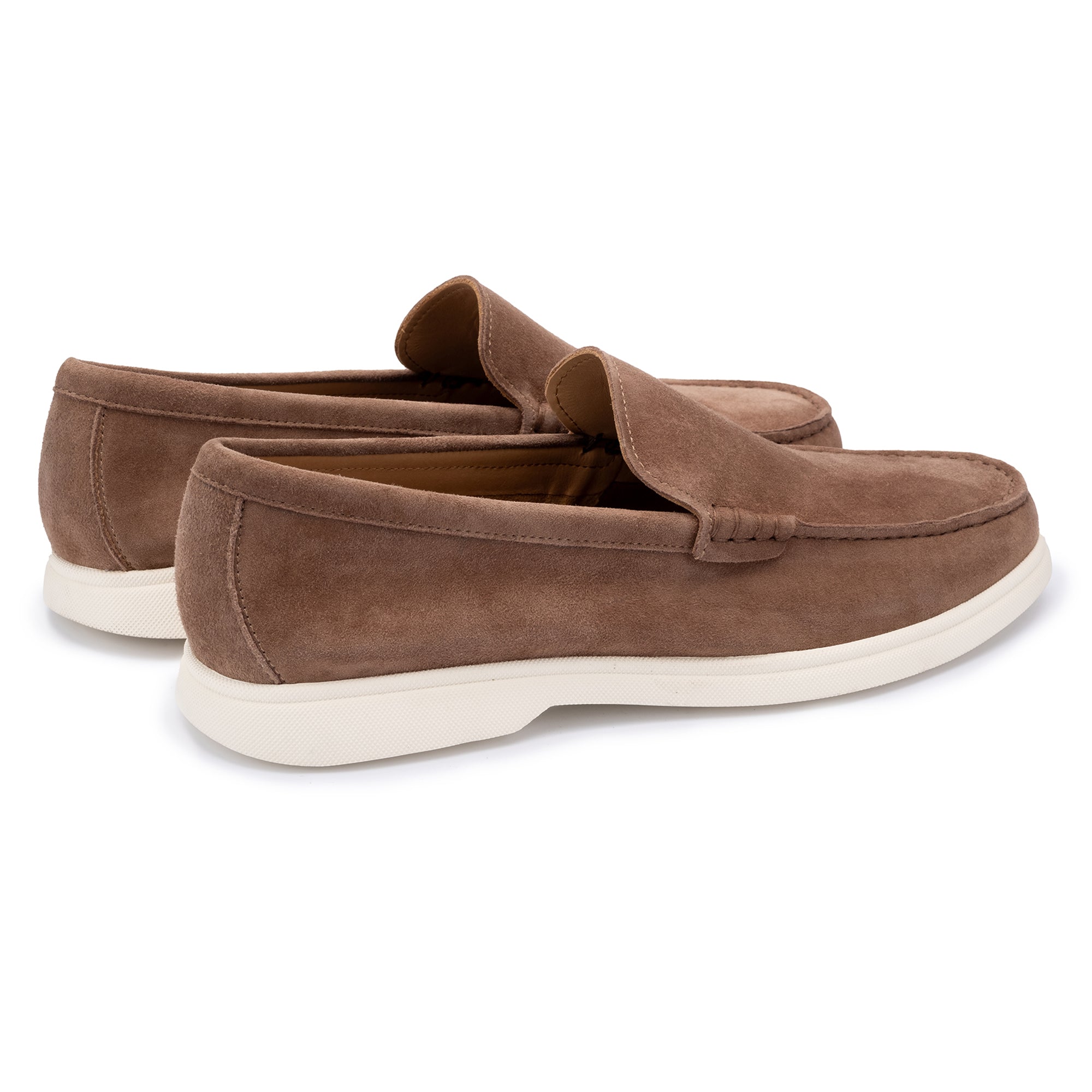
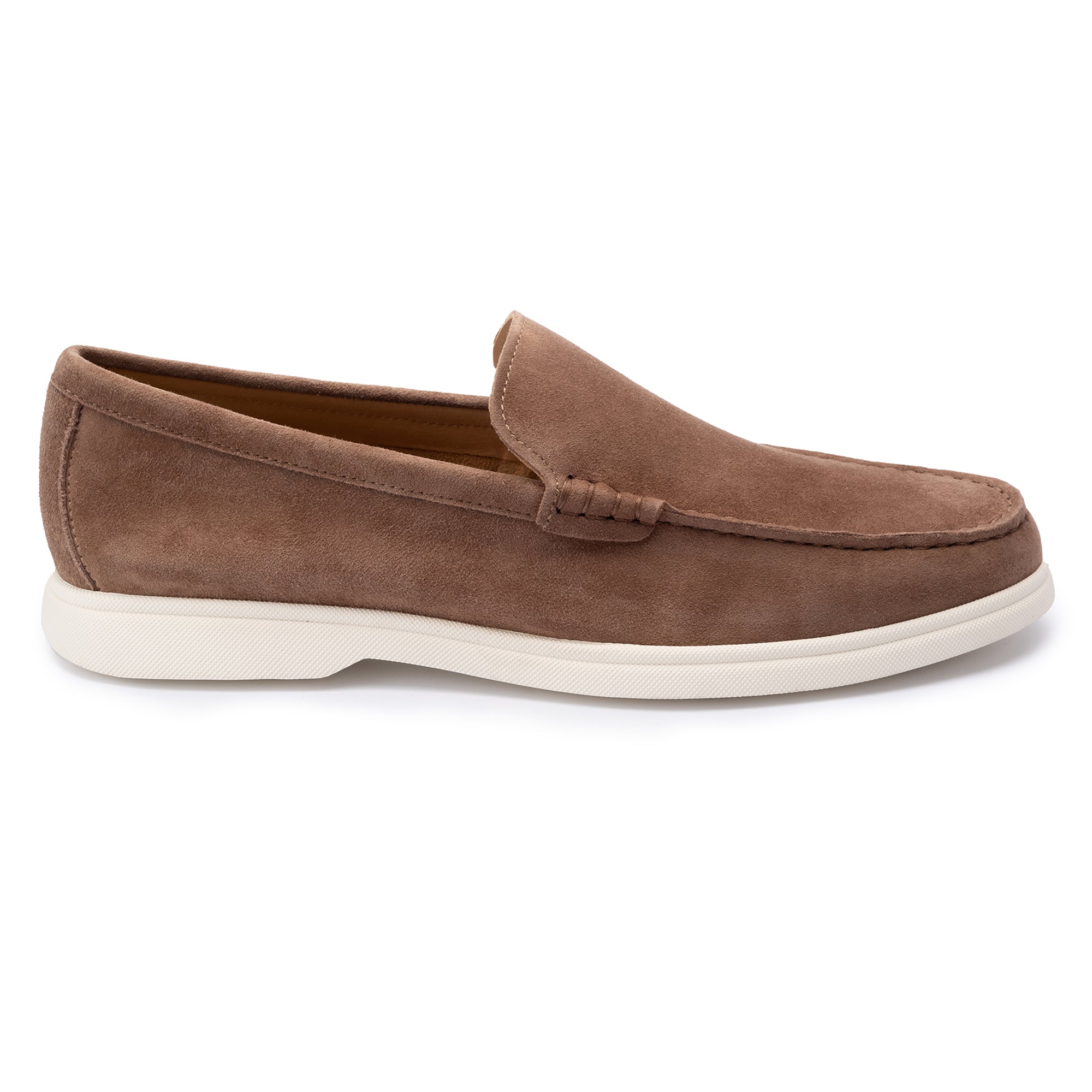
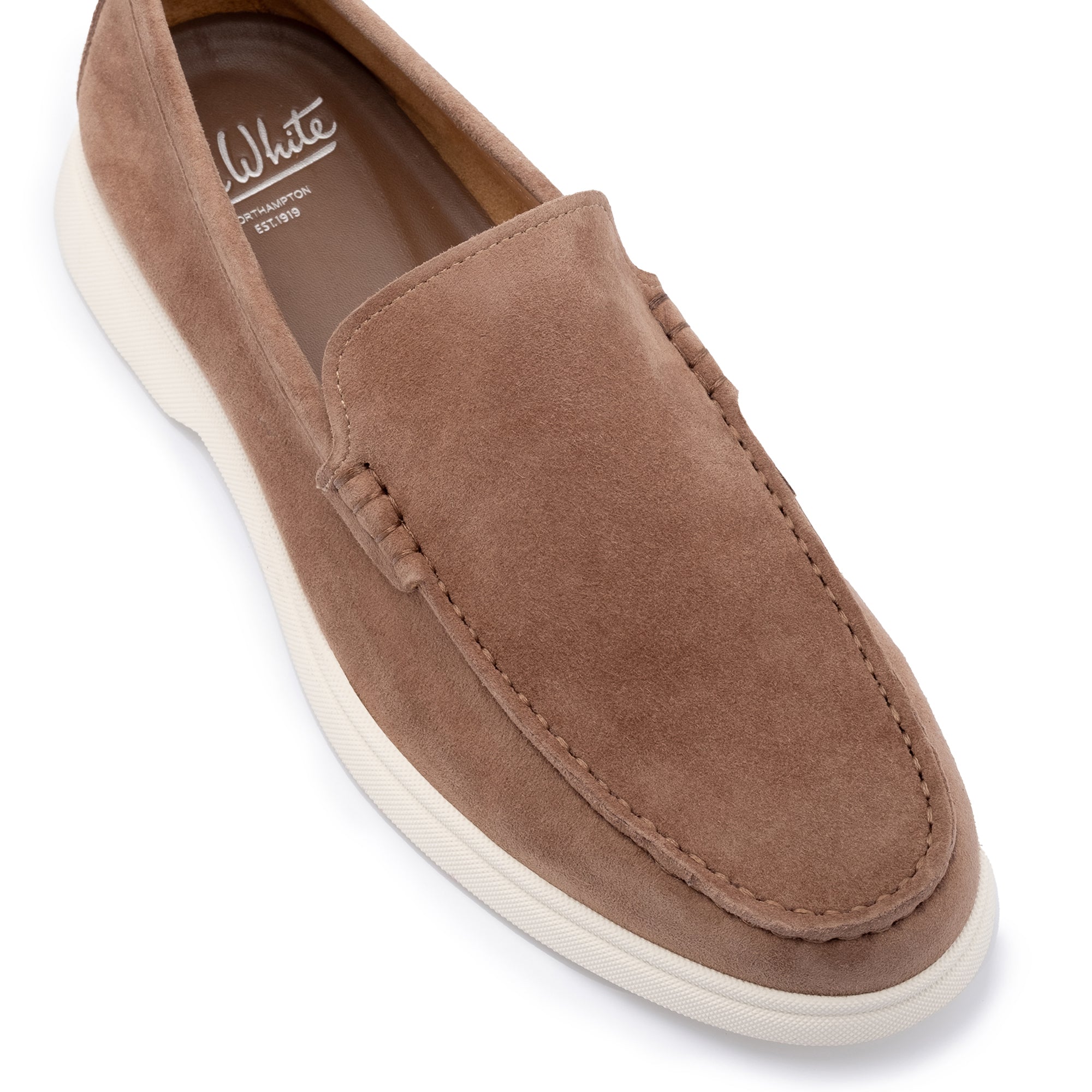
- Choose an antiqued finish for character and versatility. An antiqued shoe pairs exceptionally well with smart-casual attire. The rich, patinated appearance looks superb with chinos, tweed, flannel trousers, and dark denim. It suggests a story and a relaxed confidence, perfect for a weekend away or a creative office environment. The Wessex Chukka Suede Boot in Cognac achieves a similar depth through the texture of its suede.
As we detailed in The Formality Spectrum: A Definitive Ranking of Men's Dress Shoes, details like the finish play a significant role in a shoe's position on the scale from casual to formal.
How Do You Care for Burnished and Antiqued Leather Shoes?
Proper maintenance is essential to preserve these specialised finishes. Using the wrong products can strip away the intended effect, particularly on antiqued leather. A recent survey by the Society of Master Shoe Repairers found that over 60% of damage to premium leather finishes comes from using overly aggressive cleaning agents or mismatched polish colours.
Follow this simple, three-step process:
- Clean Gently: Always start by removing surface dirt and dust with a soft horsehair brush. For more stubborn marks, use a slightly damp cloth and allow the shoes to dry naturally, away from direct heat.
- Condition Sparingly: Both finishes benefit from a high-quality leather conditioner, but use it sparingly. Apply a neutral, wax-free conditioning cream every few months to keep the leather supple without altering the colour.
- Polish with Precision: This is the most critical step. For burnished shoes, use a Premium Wax Polish that closely matches the shoe's lightest base colour for general polishing. Use a slightly darker polish only on the burnished toe and heel to enhance the effect. For antiqued shoes, always use a neutral wax polish. Using a coloured polish can ruin the delicate, multi-tonal patina.
For a complete overview of products and techniques, consult our comprehensive guide to The Complete Guide to Leather Shoe Care.
Related Guides
- From Bench to Box: The Traditional Process of Finishing a Leather Shoe
- Full-Grain vs Corrected-Grain Leather: How to Spot Quality in Men's Shoes
- The Essential Valet Box: An Authoritative Guide to Your Shoe Care Arsenal
TL;DR Summary
Burnishing creates a high-shine, two-tone effect on specific areas like the toe and heel using friction, lending a sharp, formal look. Antiquing uses layers of cream or dye to create a consistent, mellow, and aged patina across the whole shoe for a vintage, versatile character. Care for burnished shoes with colour-matched polish and antiqued shoes with neutral polish to preserve their unique finishes.
Frequently Asked Questions
Can a shoe be both burnished and antiqued?
While technically possible, it's uncommon. The two techniques achieve different aesthetic goals. Burnishing aims for sharp contrast and high shine, whereas antiquing seeks a softer, more uniform aged appearance. A shoe will typically feature one or the other as its dominant finishing style.
Does burnishing damage the leather?
No. When performed correctly by skilled finishers, burnishing is a surface-level treatment that works with the oils and waxes on the leather. It doesn't weaken the hide's structure; it simply alters its appearance in a controlled way to create a desirable aesthetic effect.
How can I restore a faded burnished finish at home?
You can partially restore a faded burnish with vigorous polishing. Apply a small amount of a slightly darker wax polish to the toe cap or heel, then buff it briskly with a clean, soft cloth. The friction and heat you generate will help recreate some of the original high-shine, darkened effect.
Are these finishes only for formal shoes?
Not at all. While burnishing is often found on formal Oxford and Derby shoes, it can also add a polished touch to a dress boot. Antiquing is extremely versatile and is commonly applied to a wide range of styles, from brogues and monk straps to our collection of premium men's boots.
The choice between burnished and antiqued leather is a matter of taste and occasion. By understanding the artistry behind each finish, you can make a more informed decision and build a collection that is as versatile as it is refined. Explore our full collection of premium men's shoes to see these finishes for yourself.