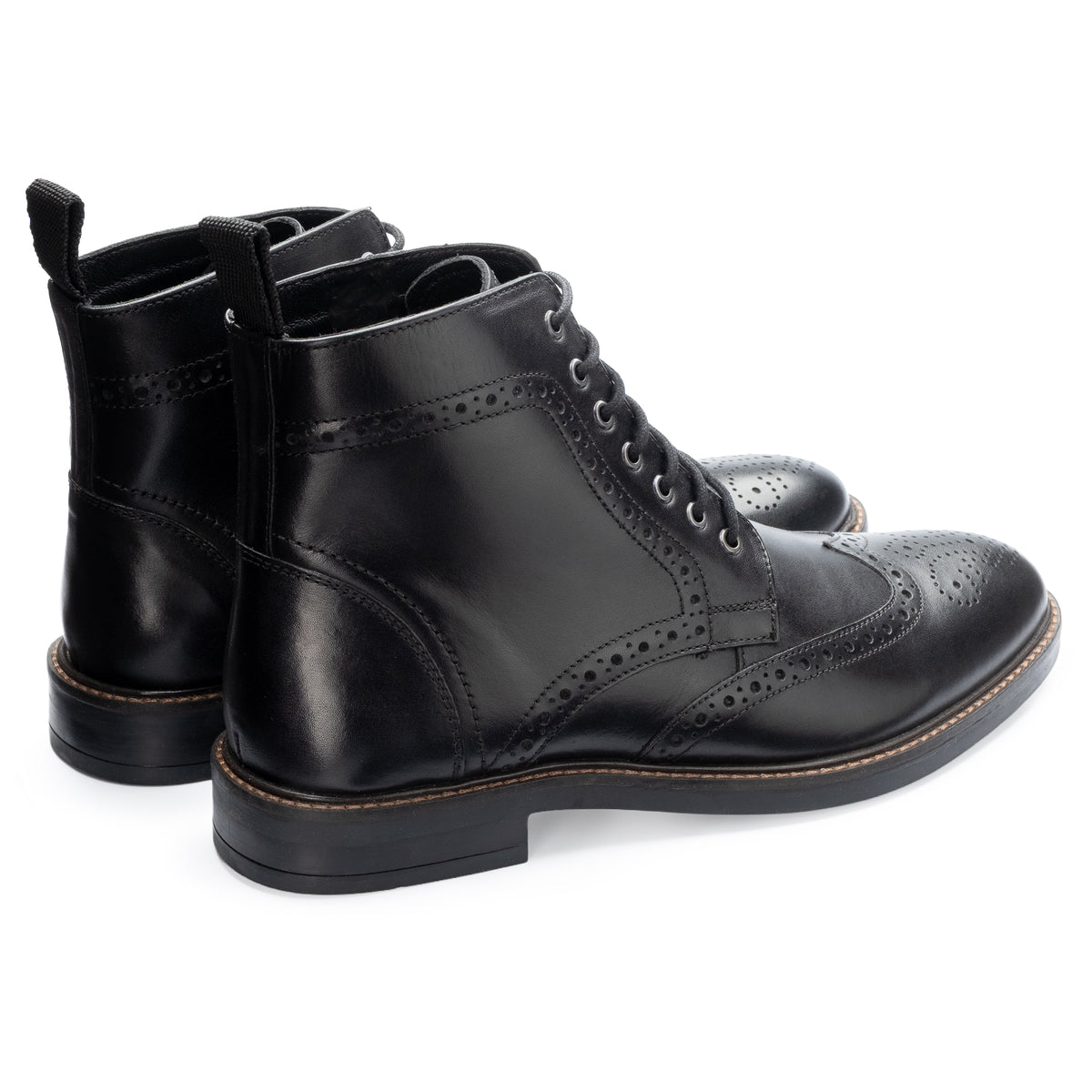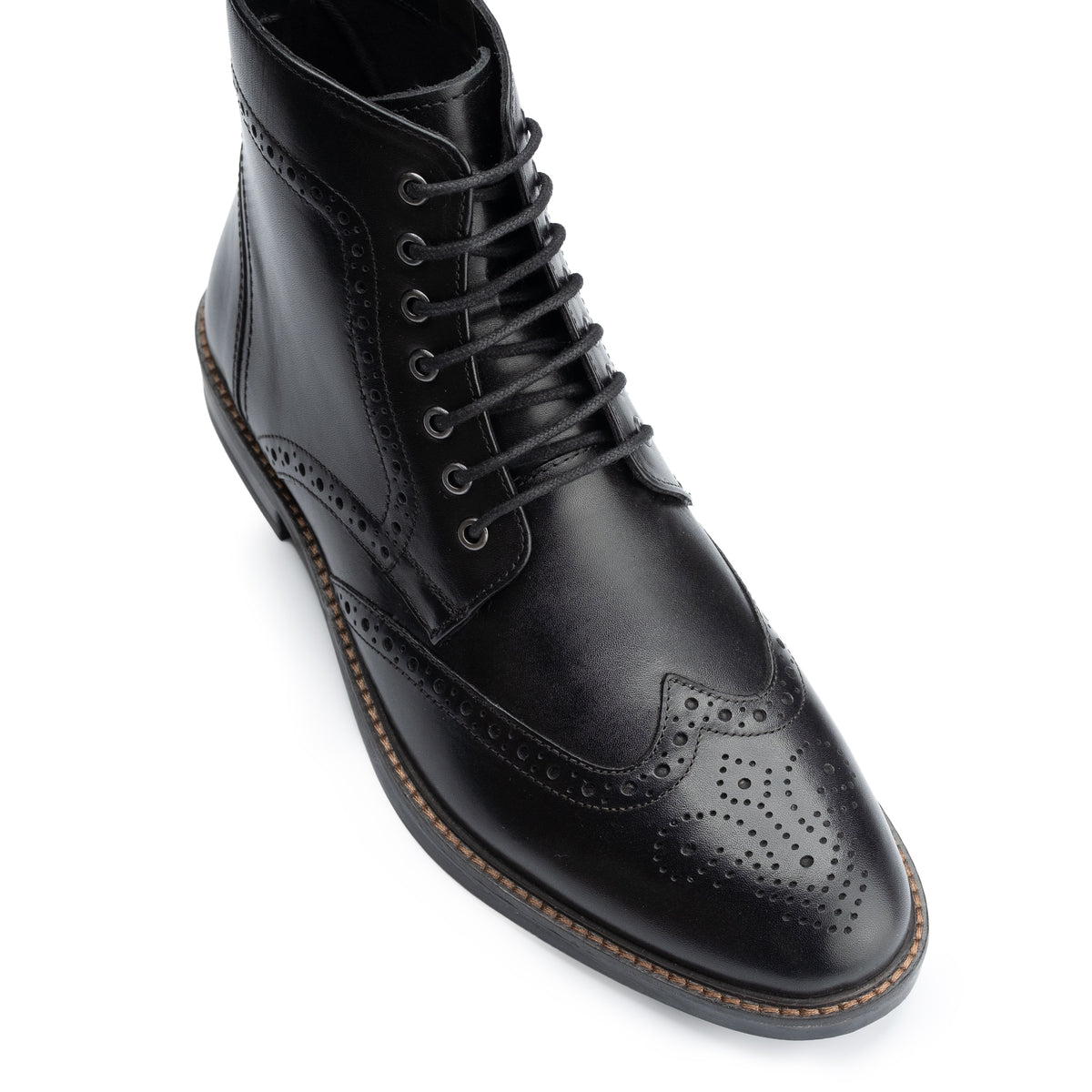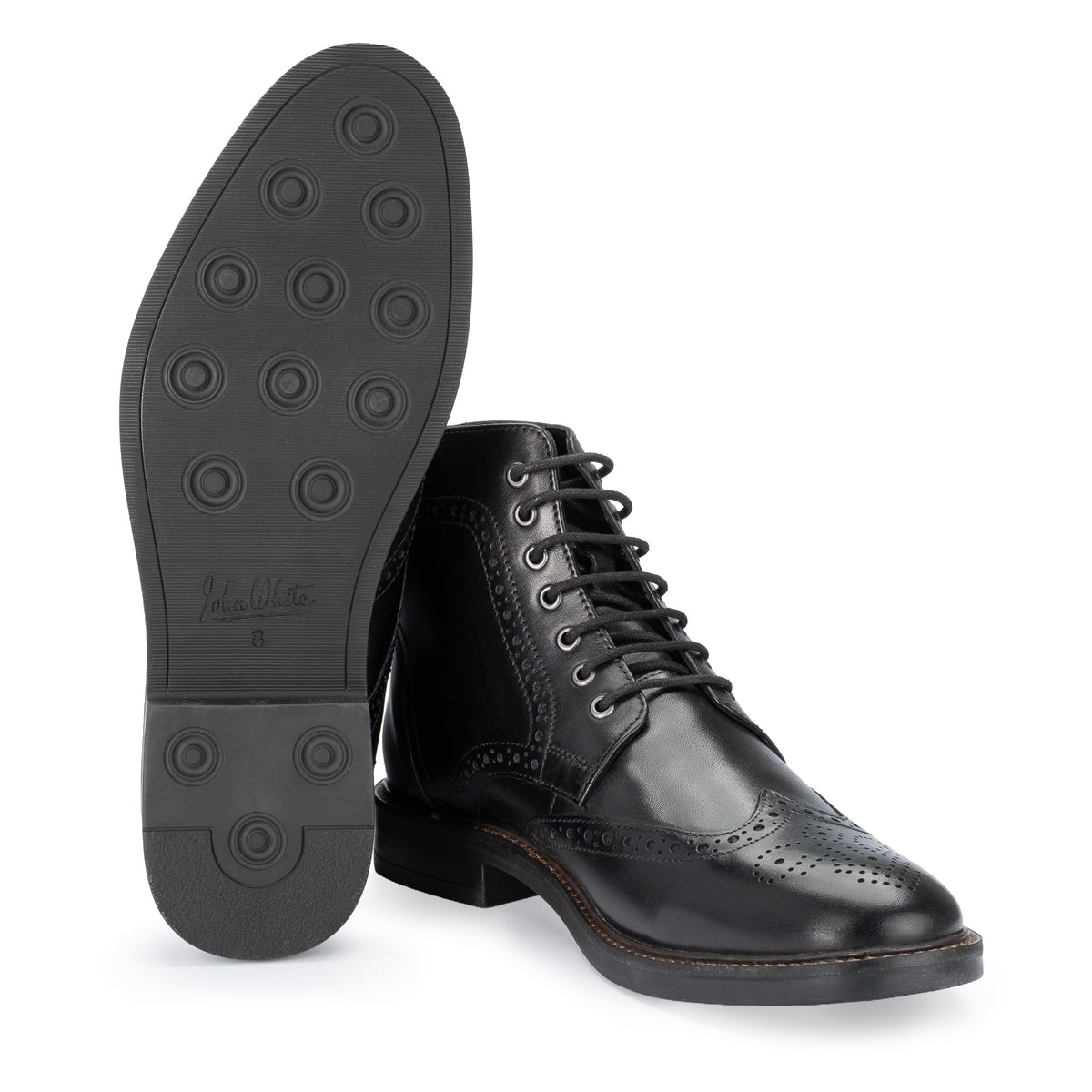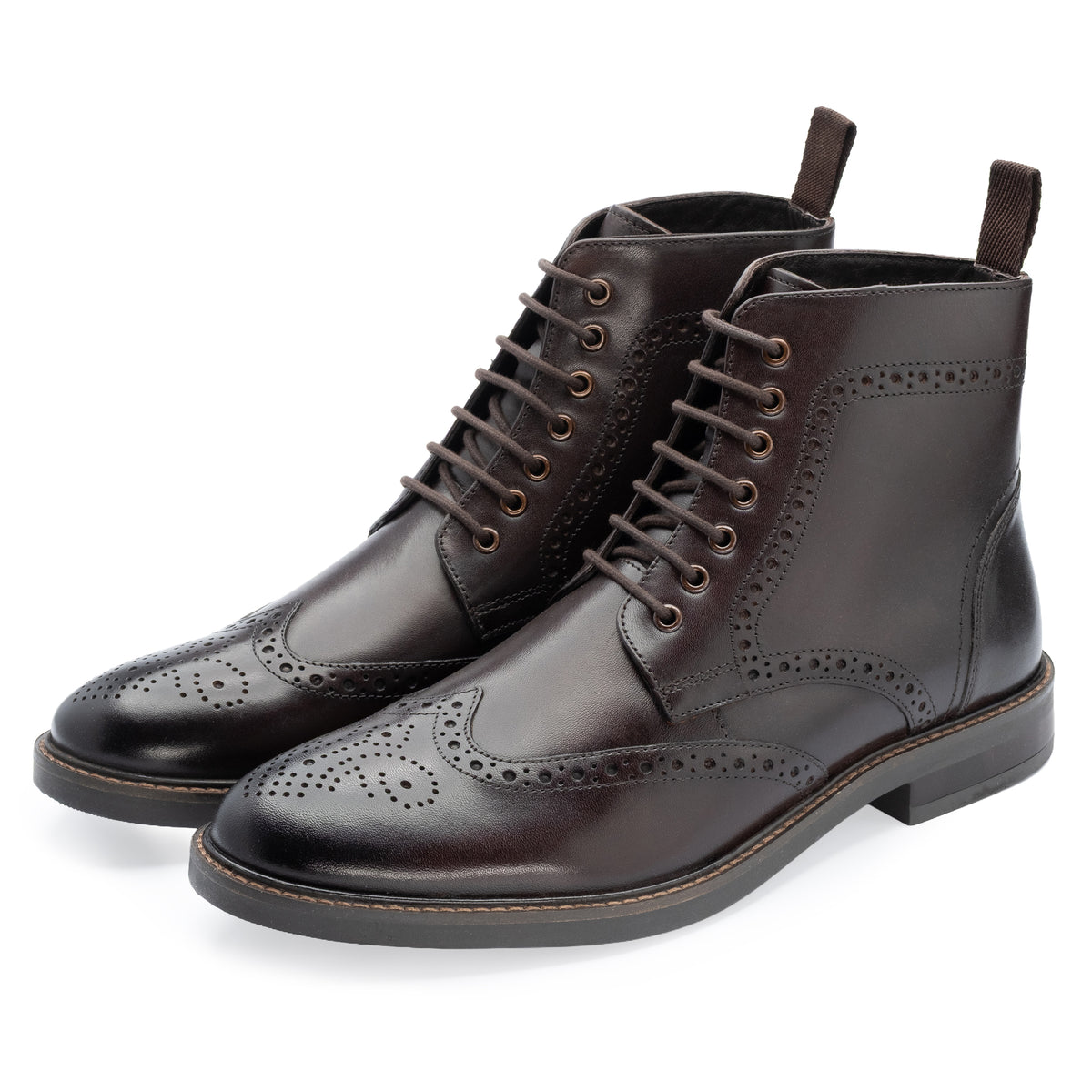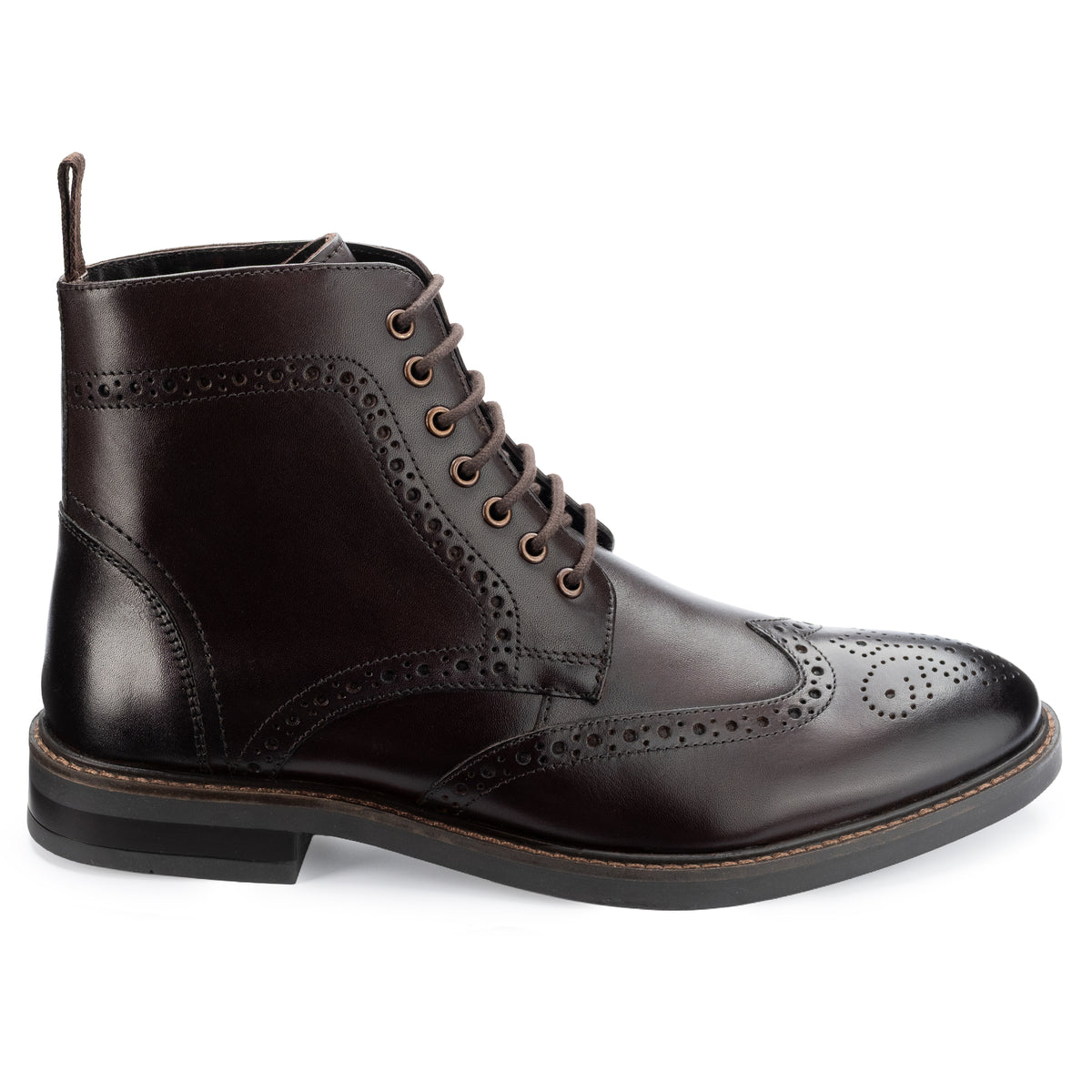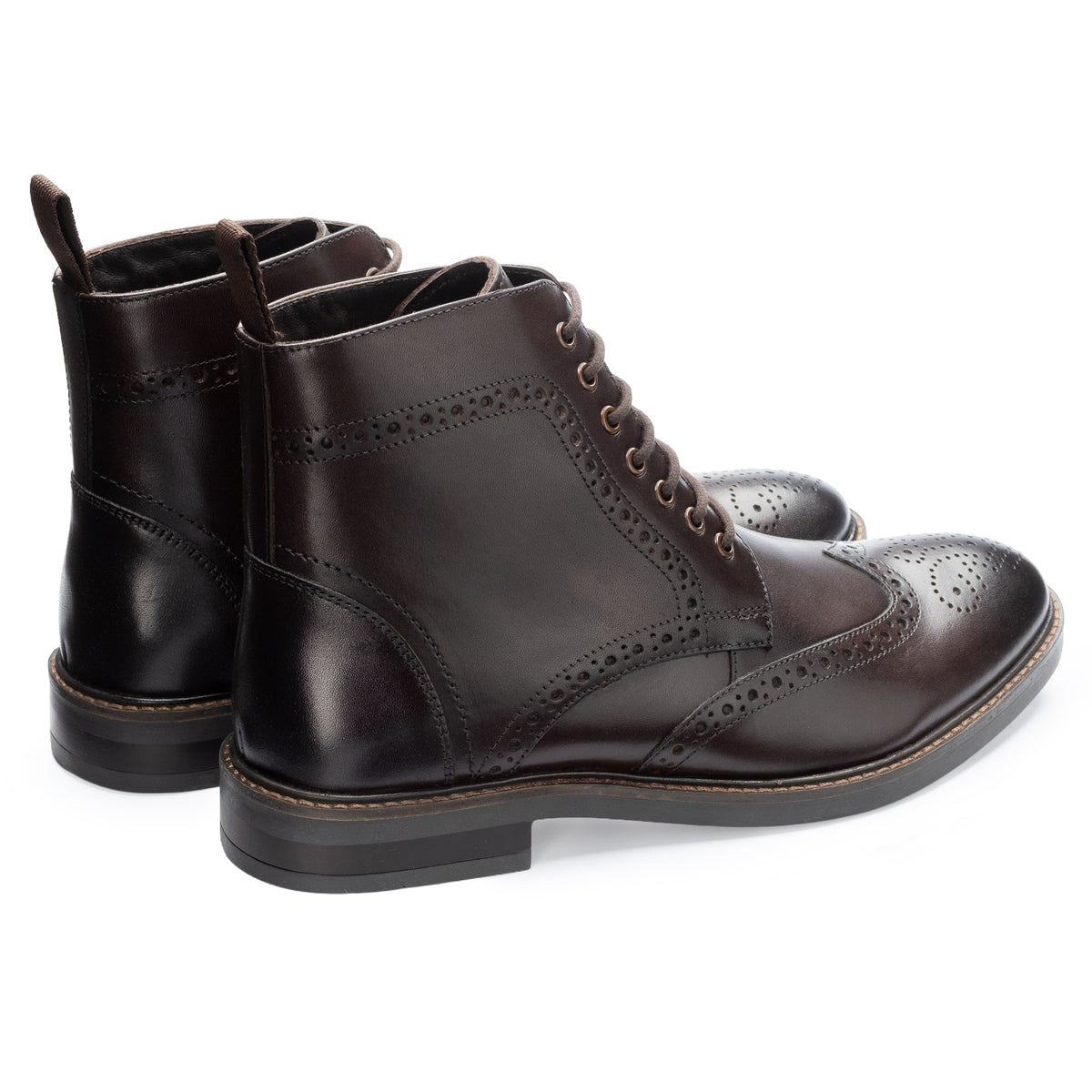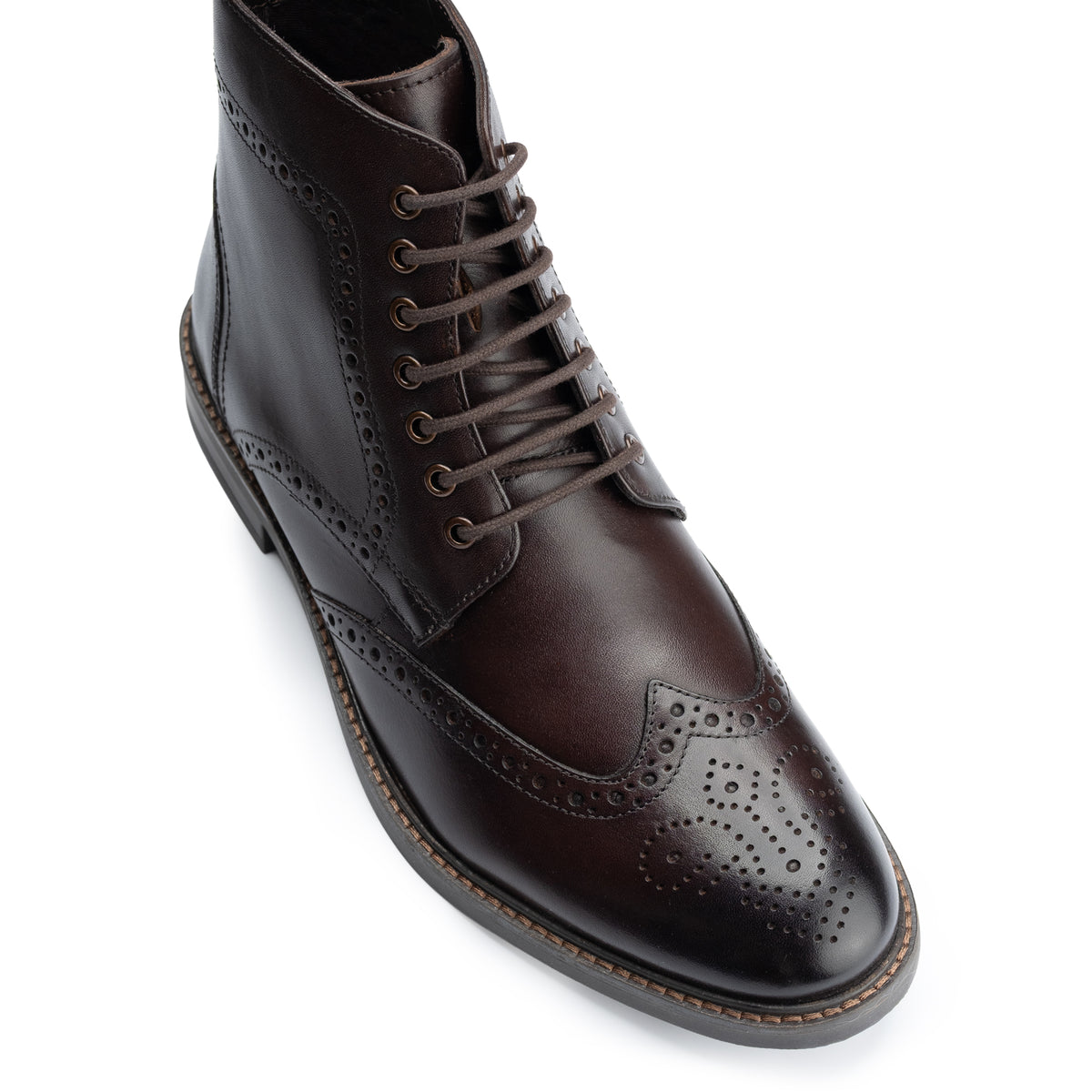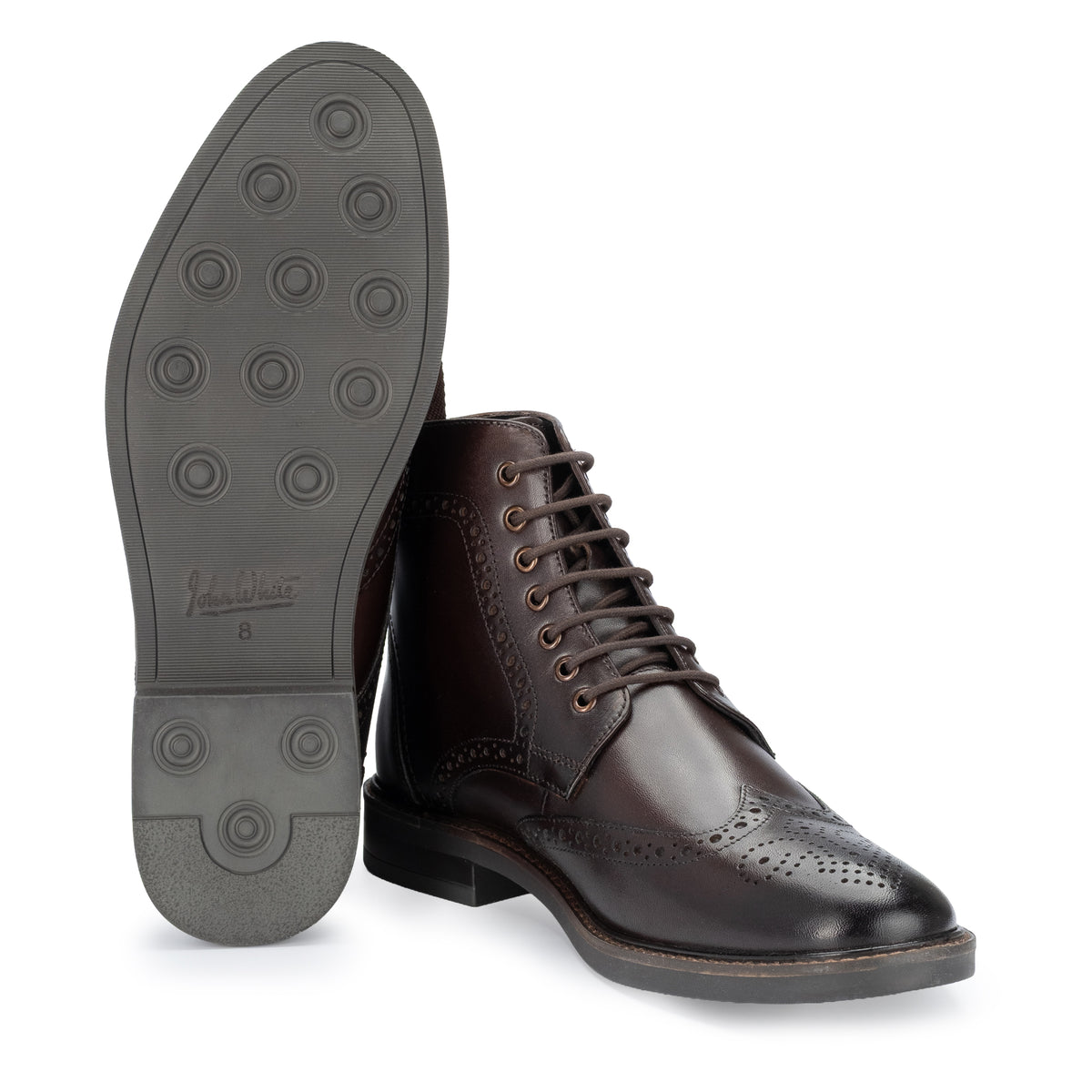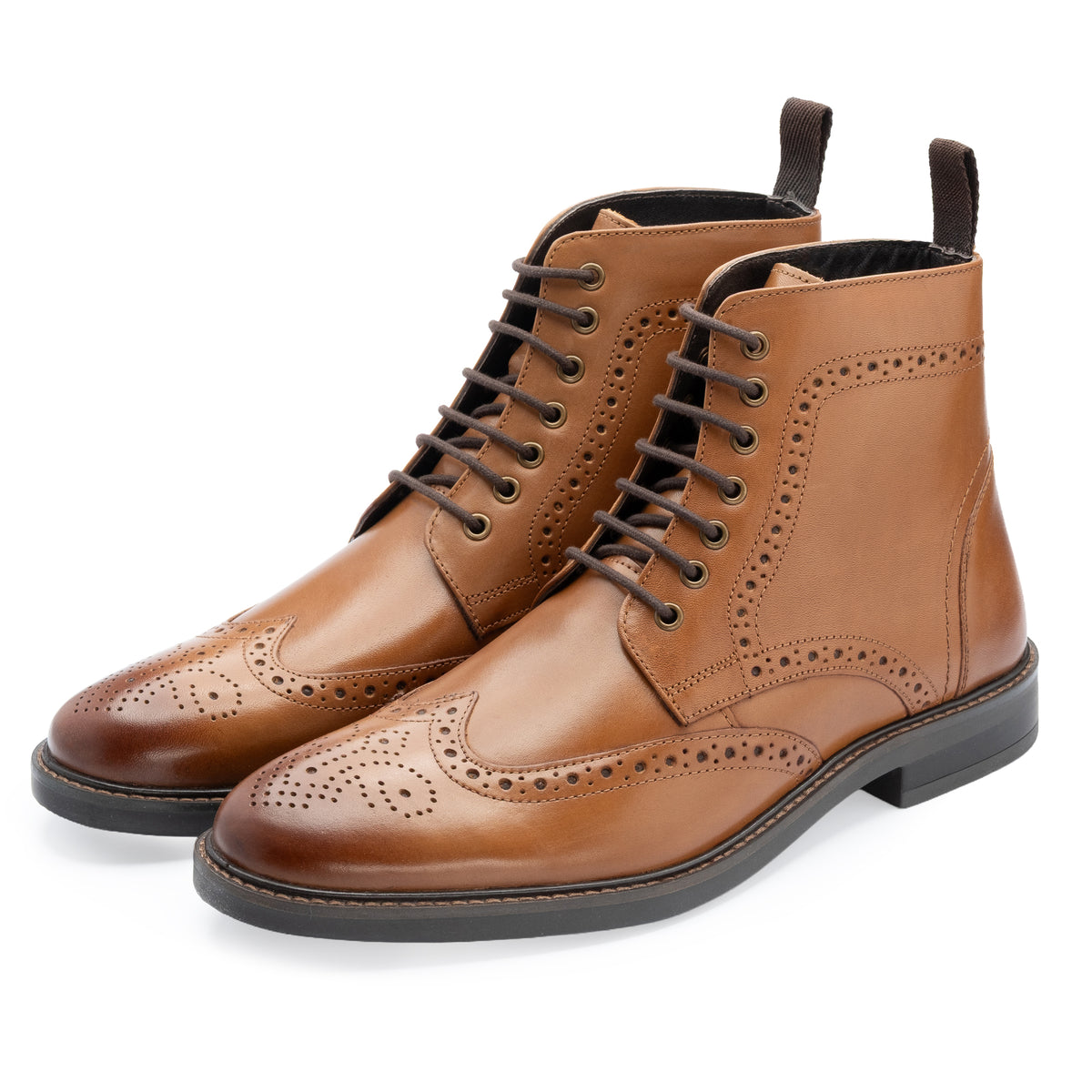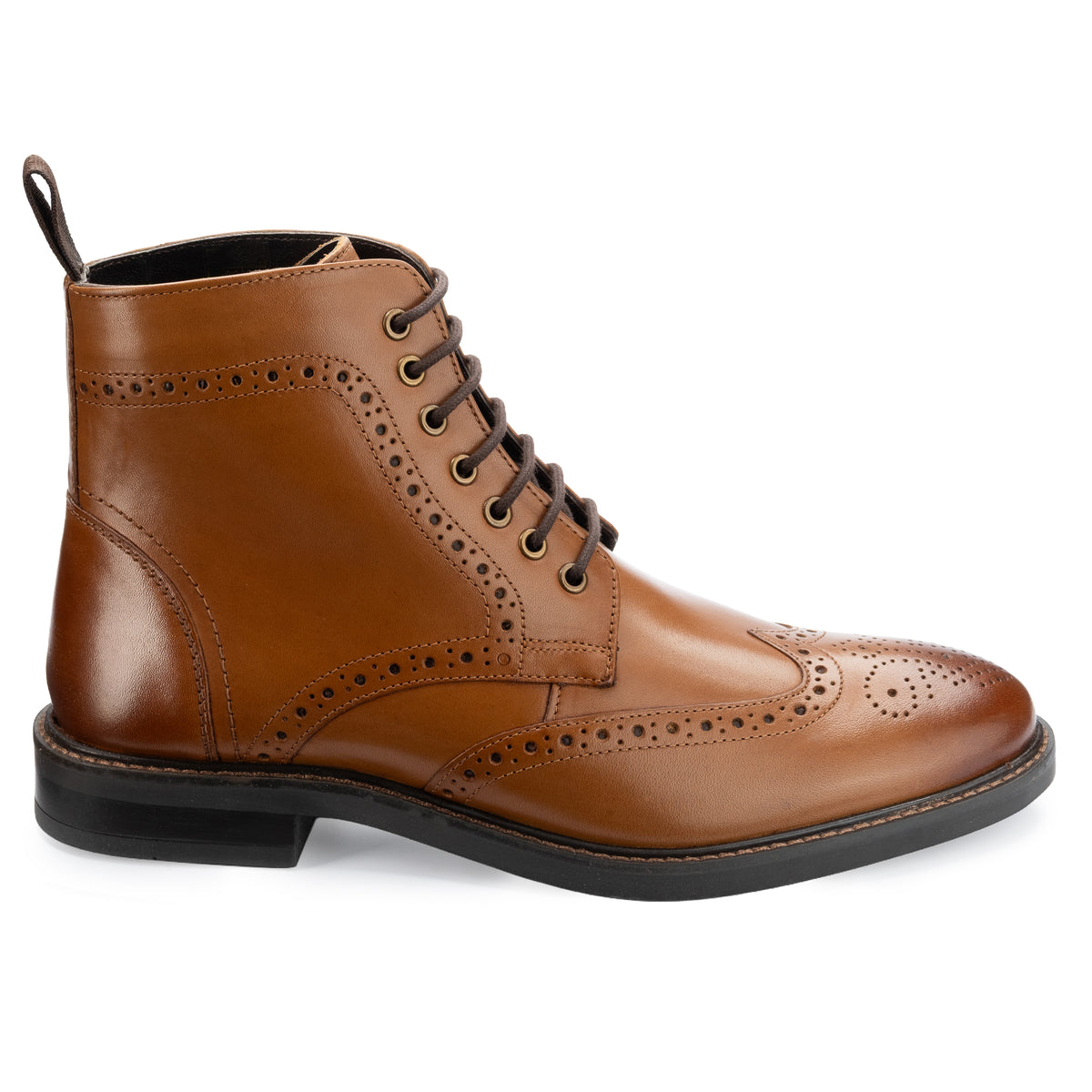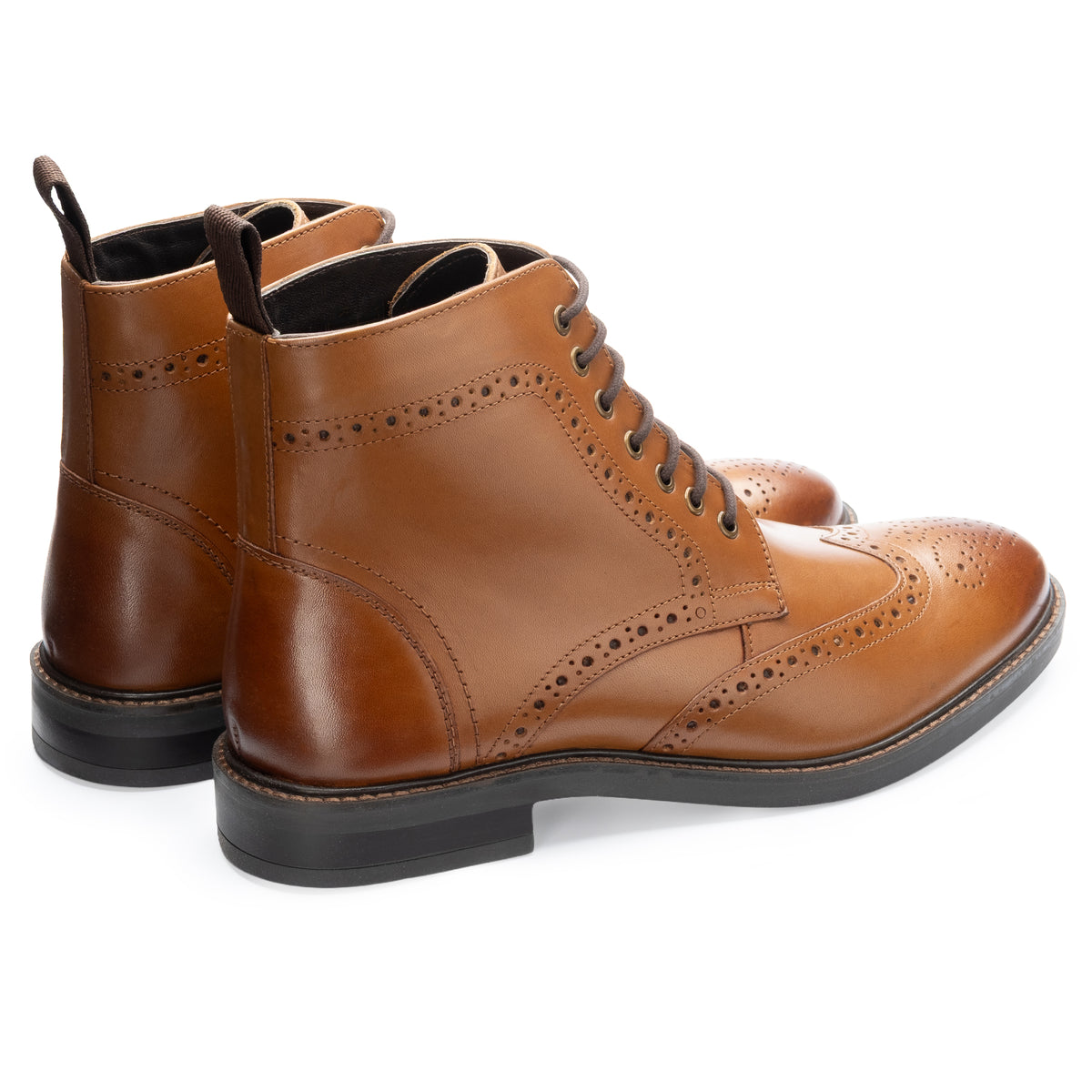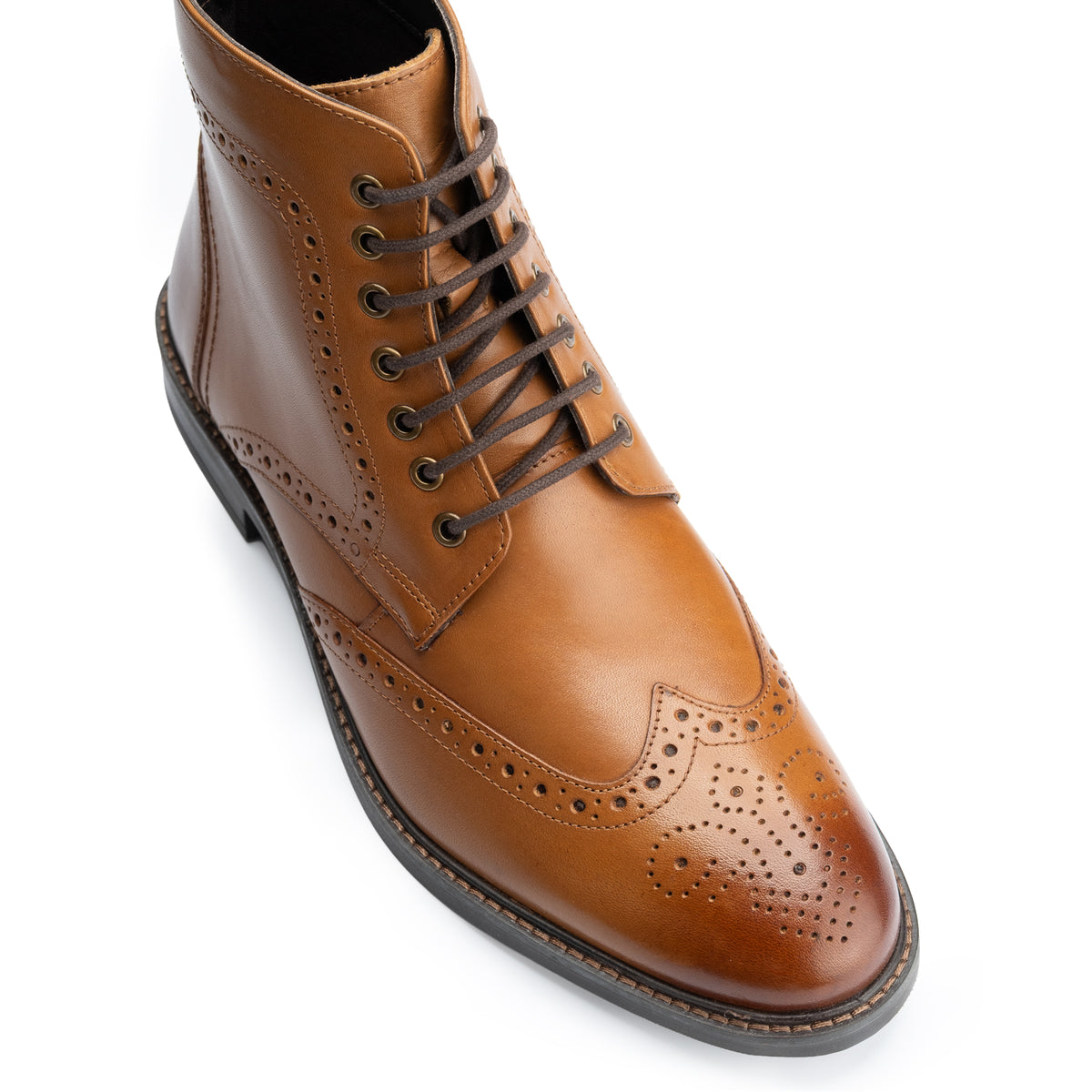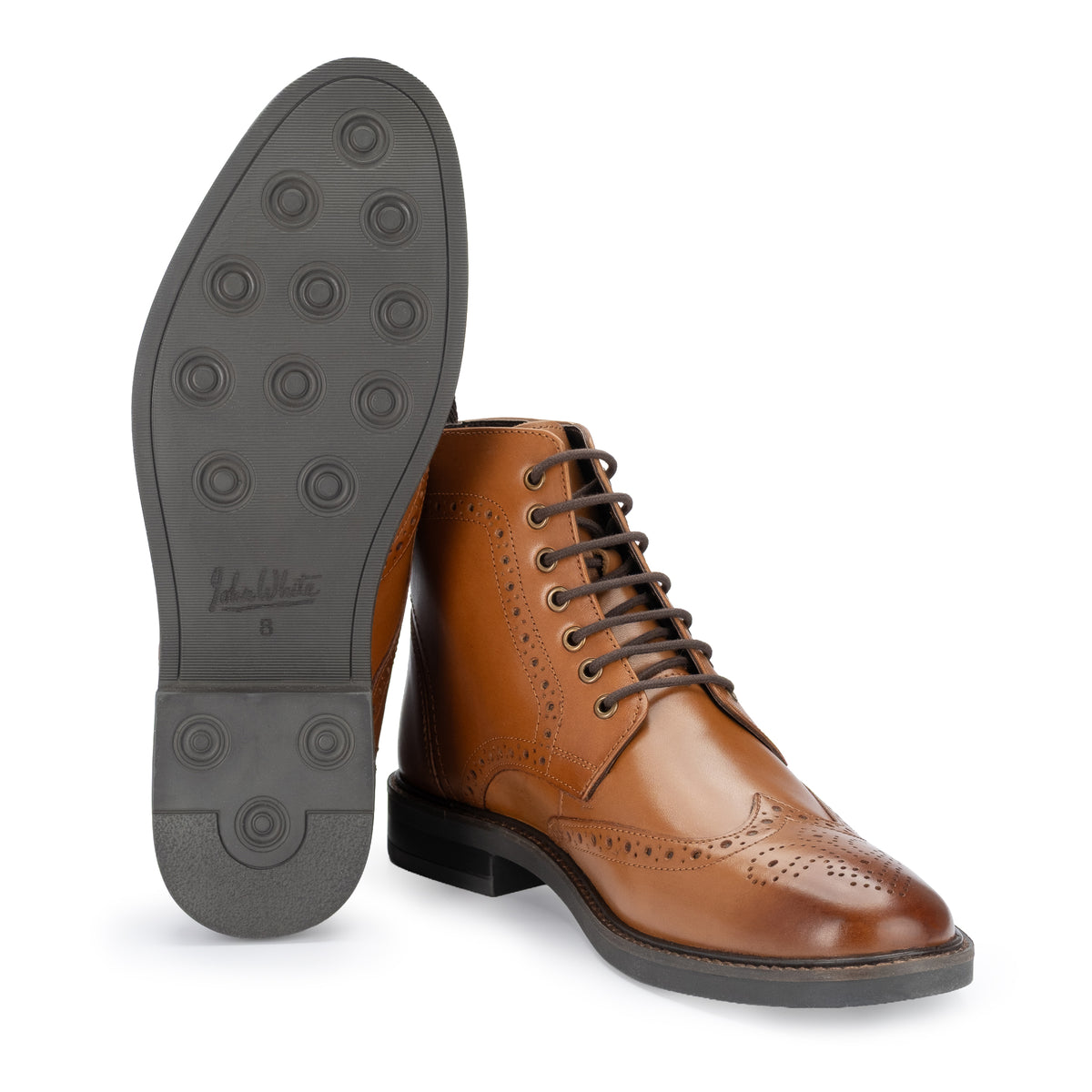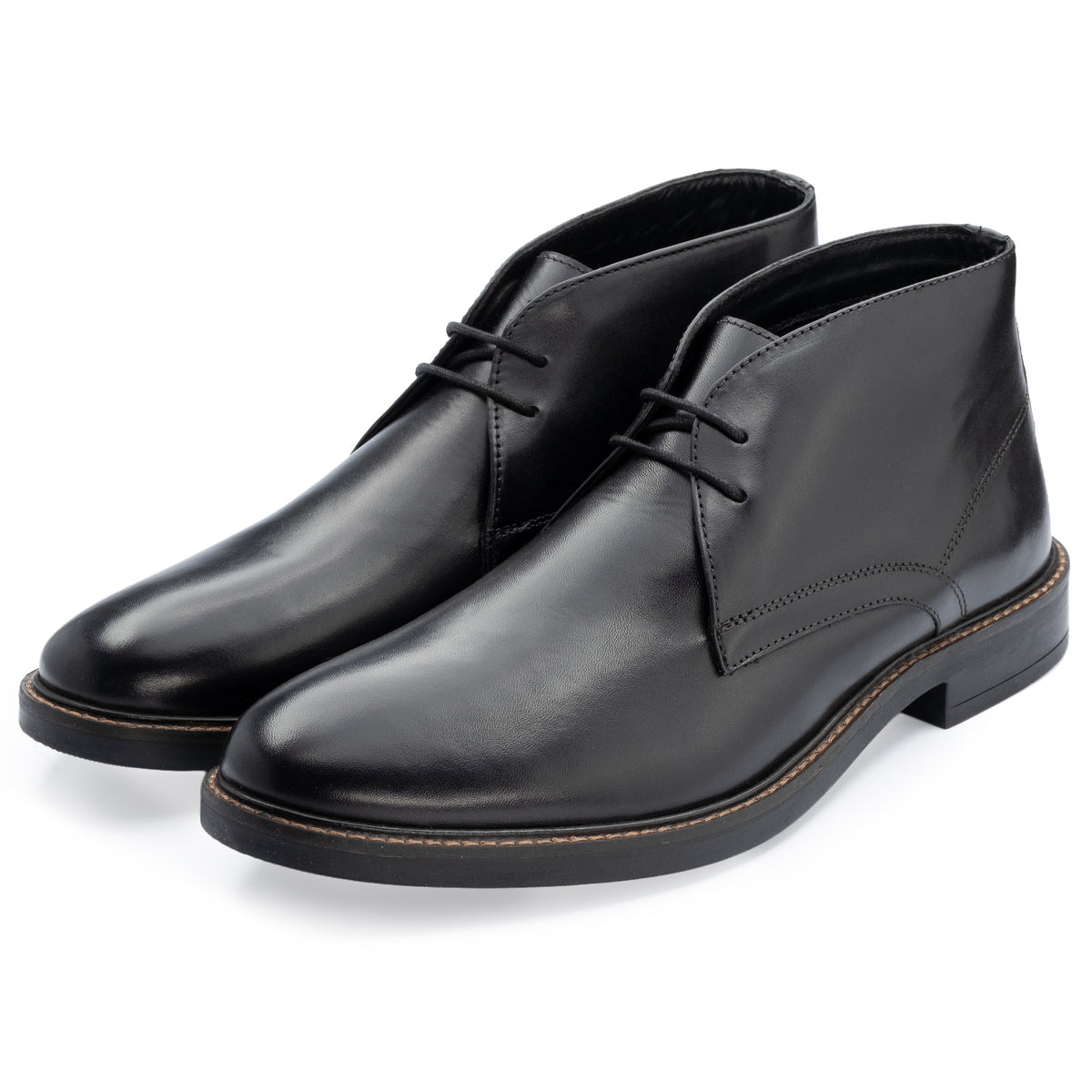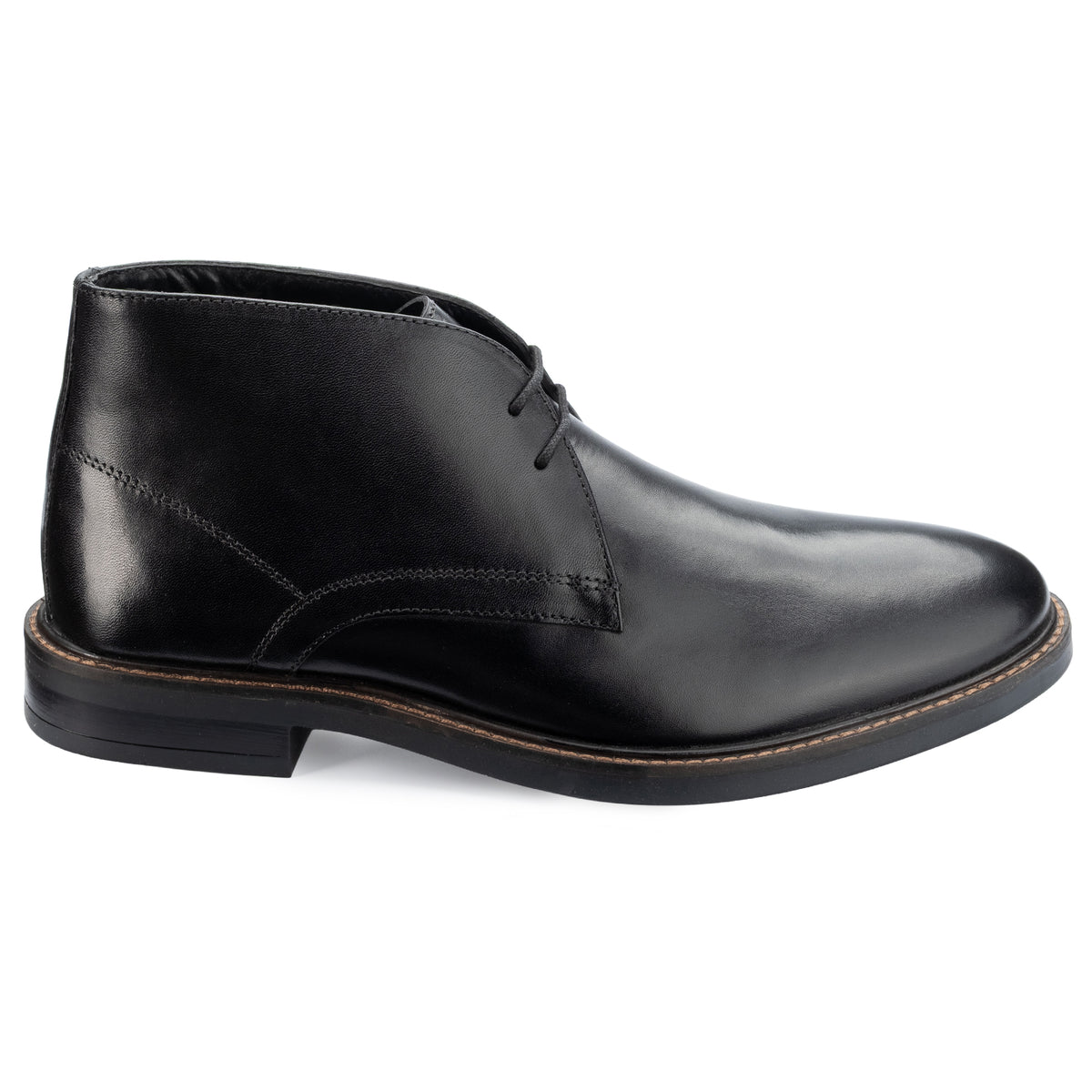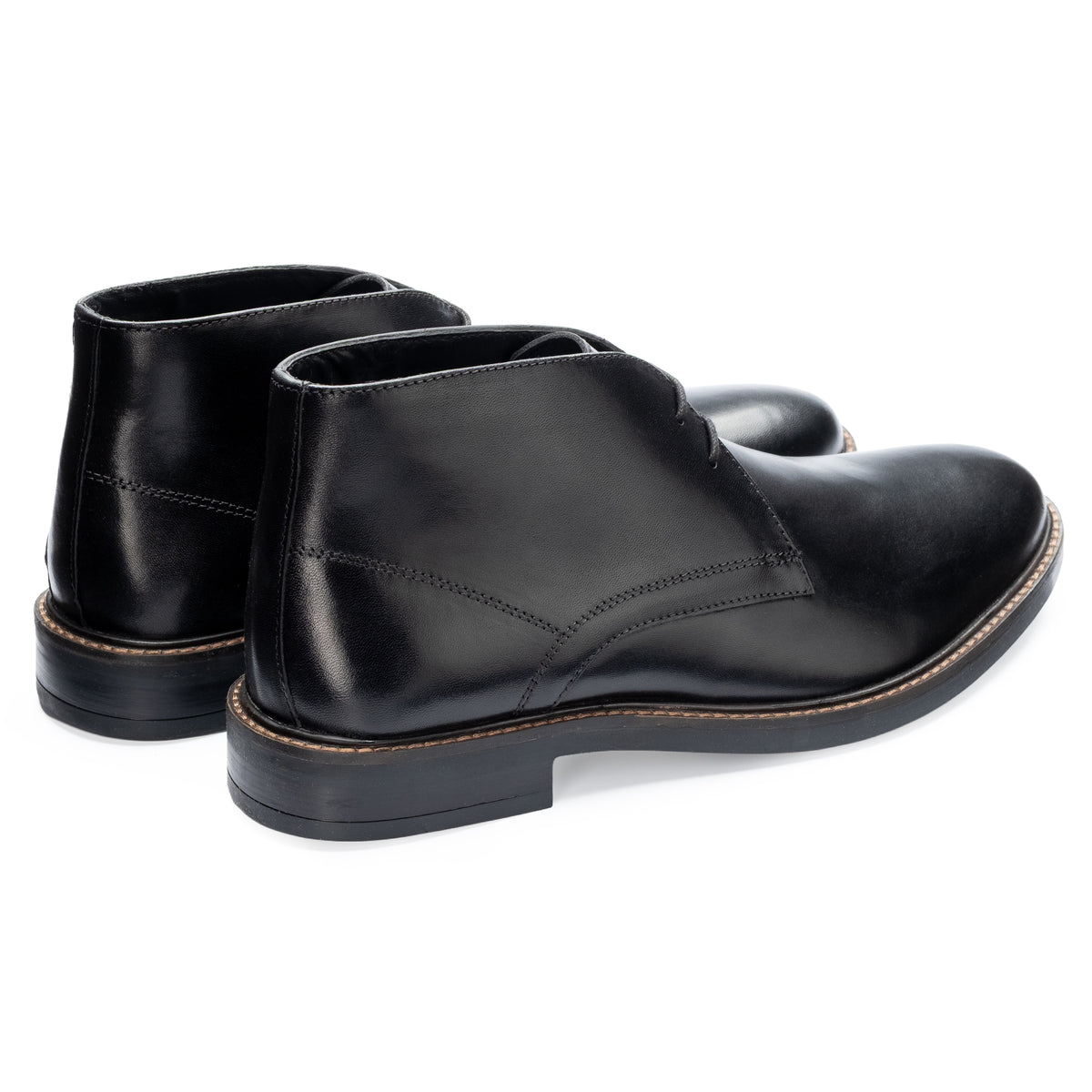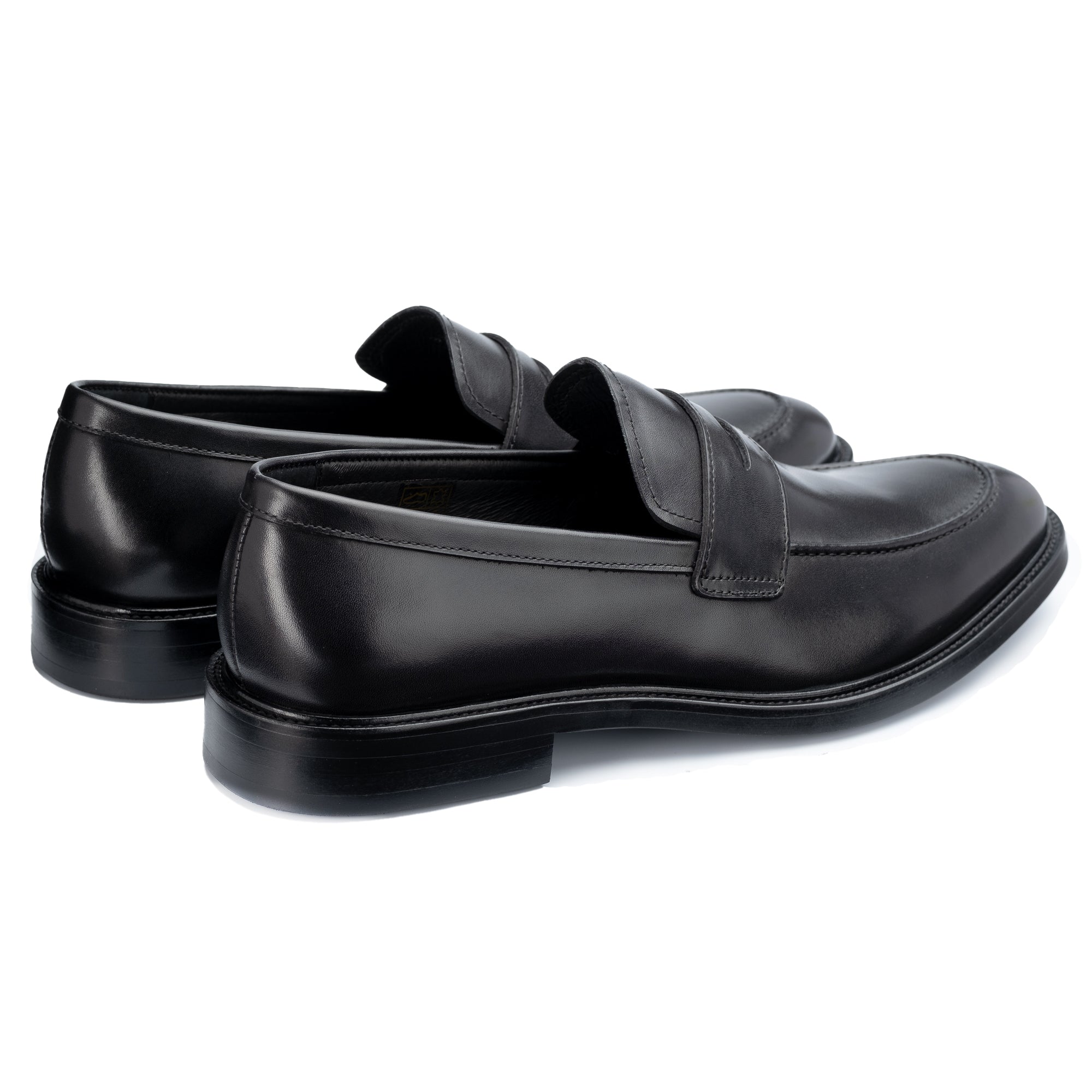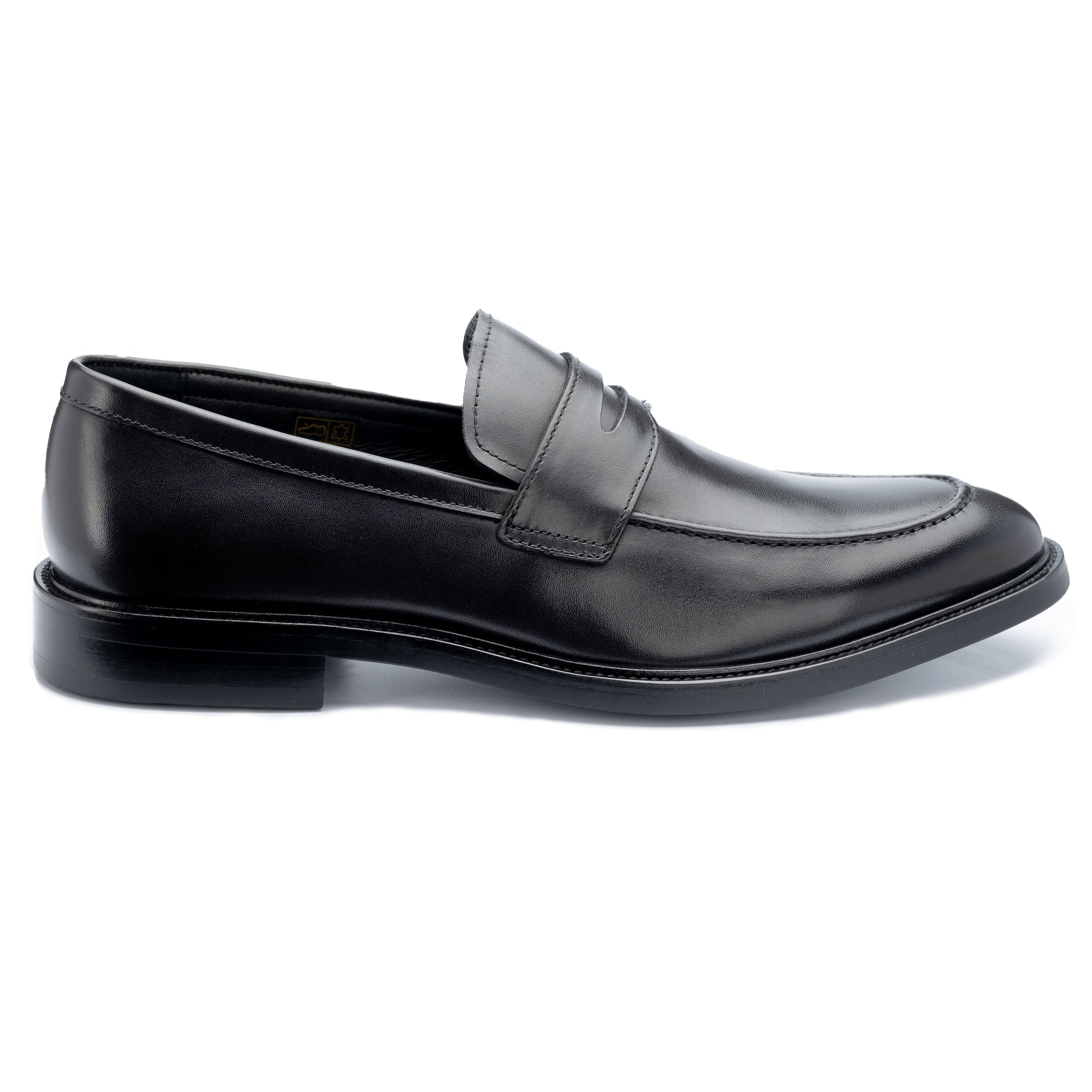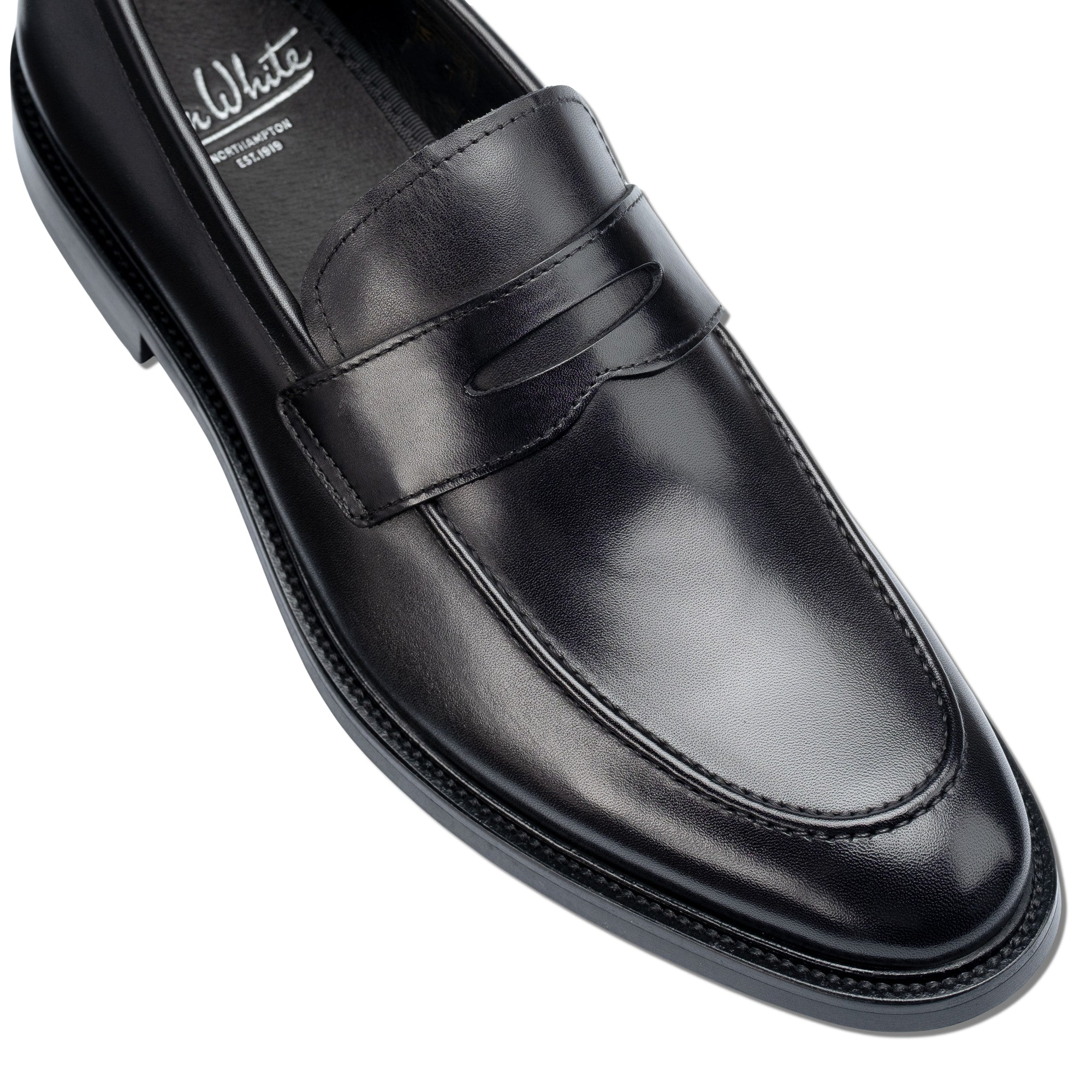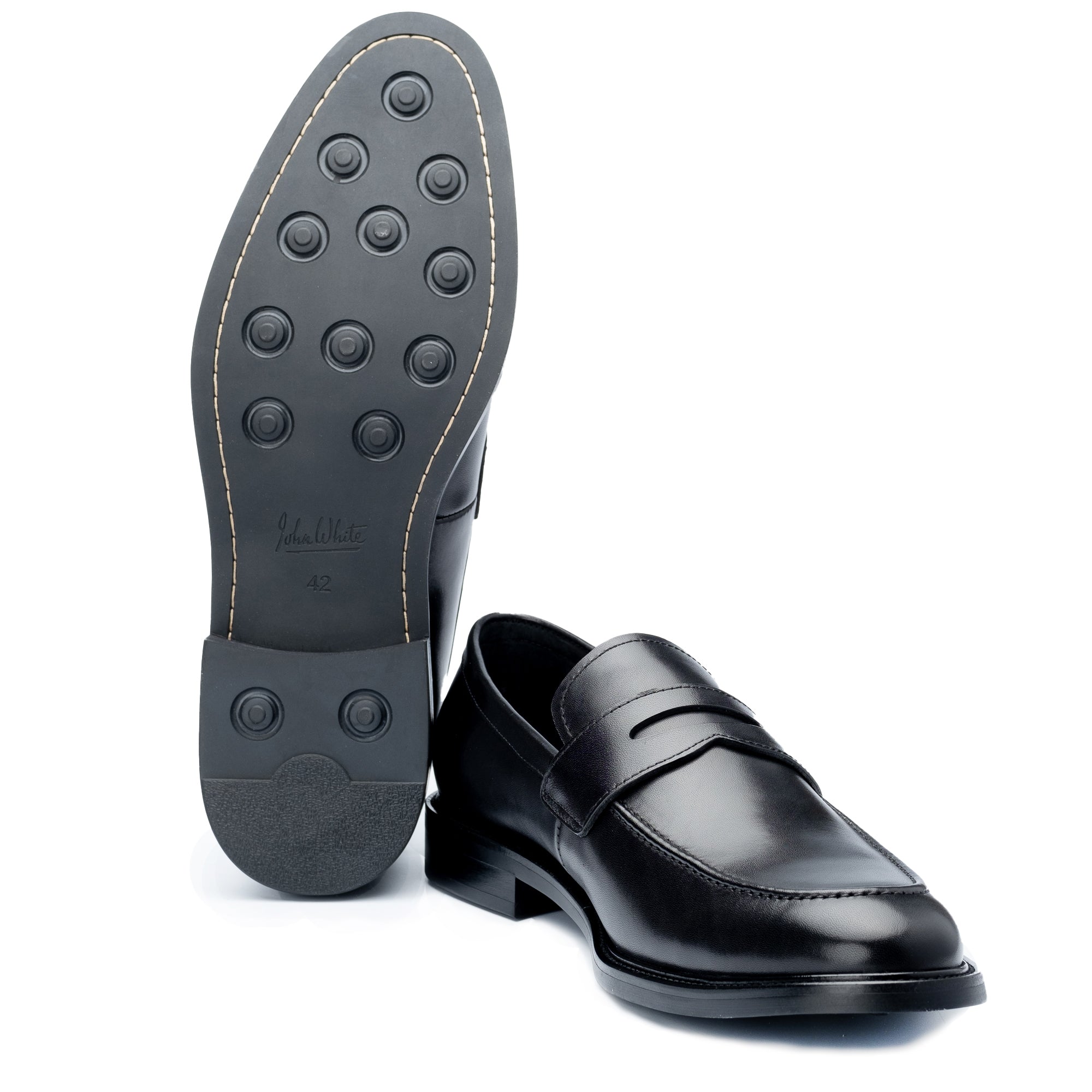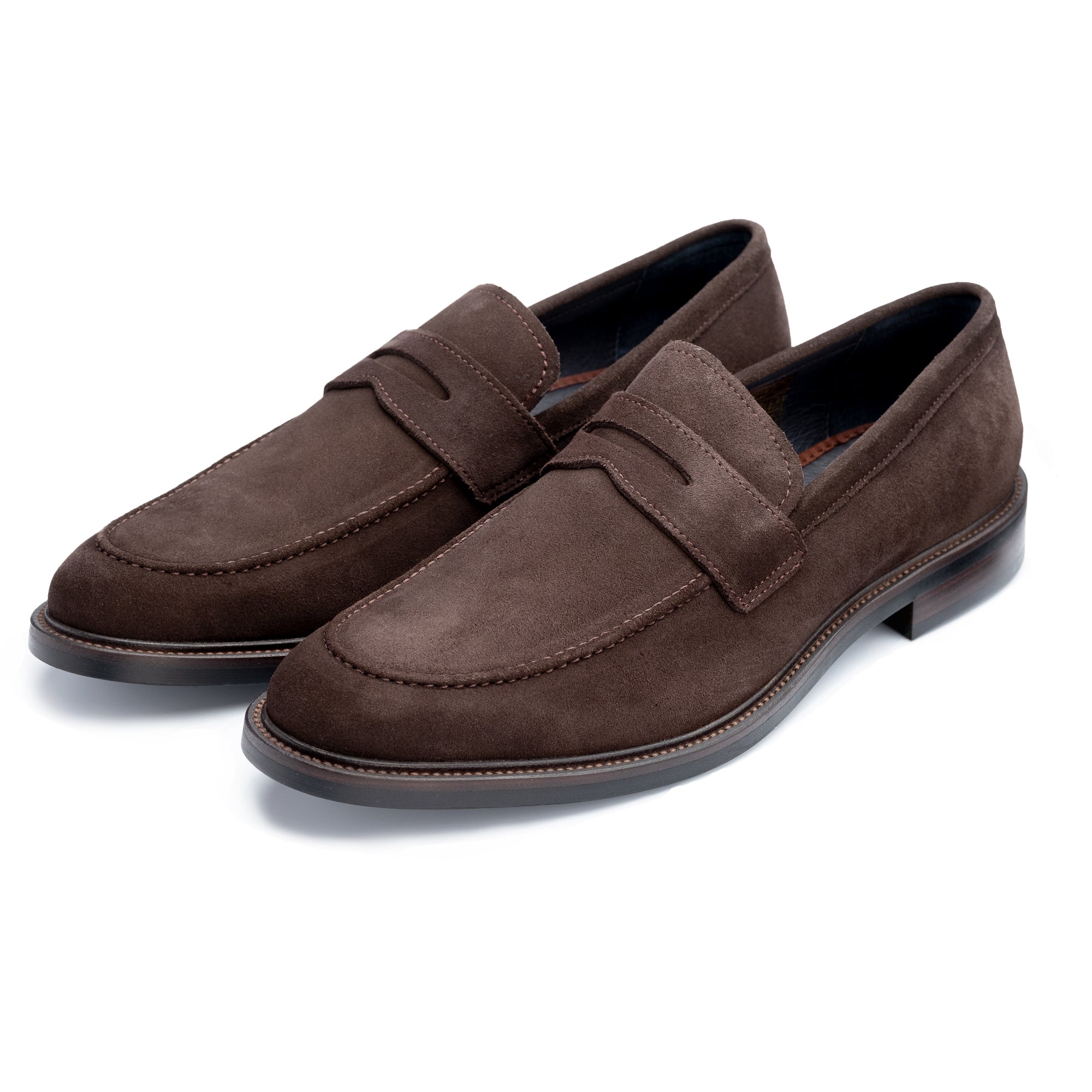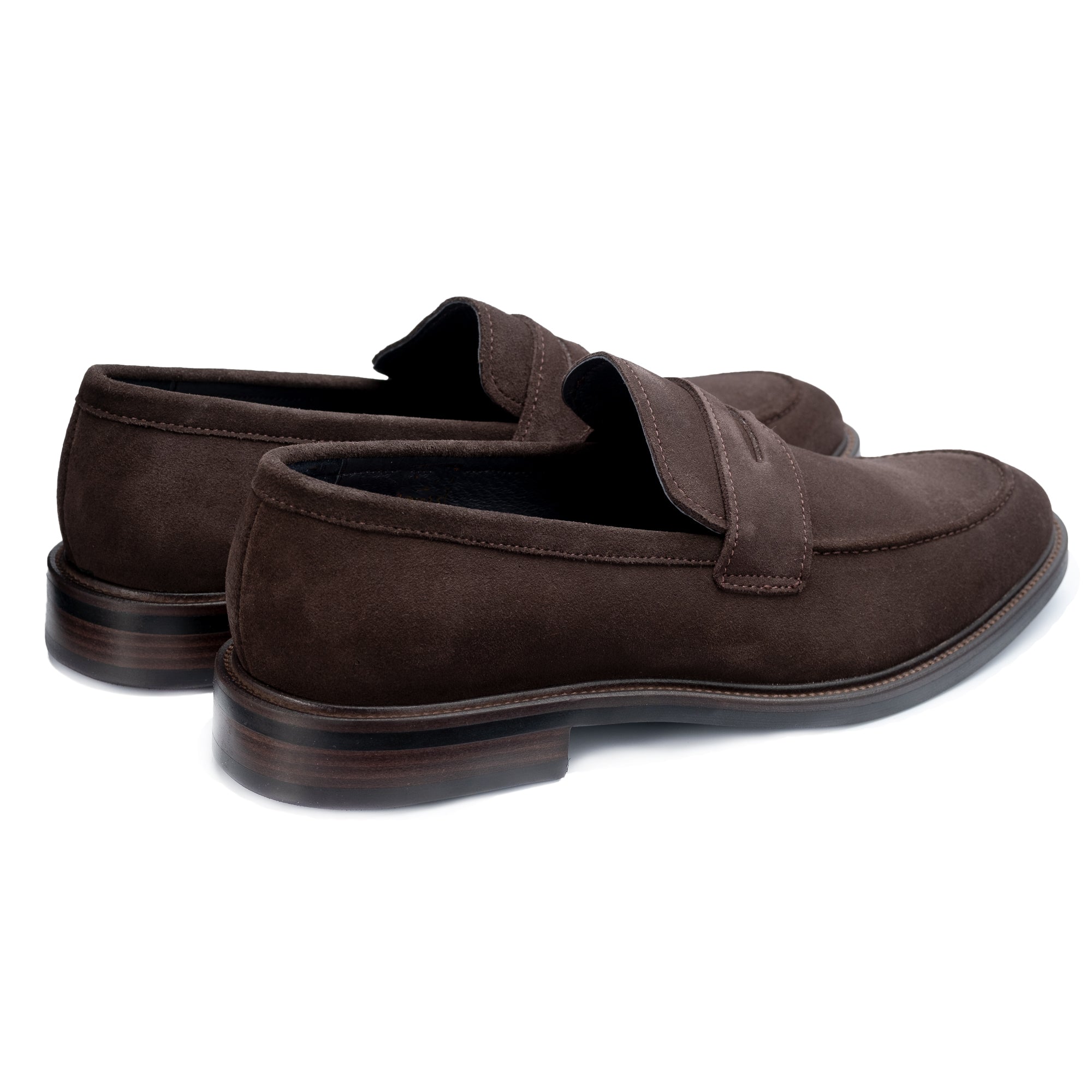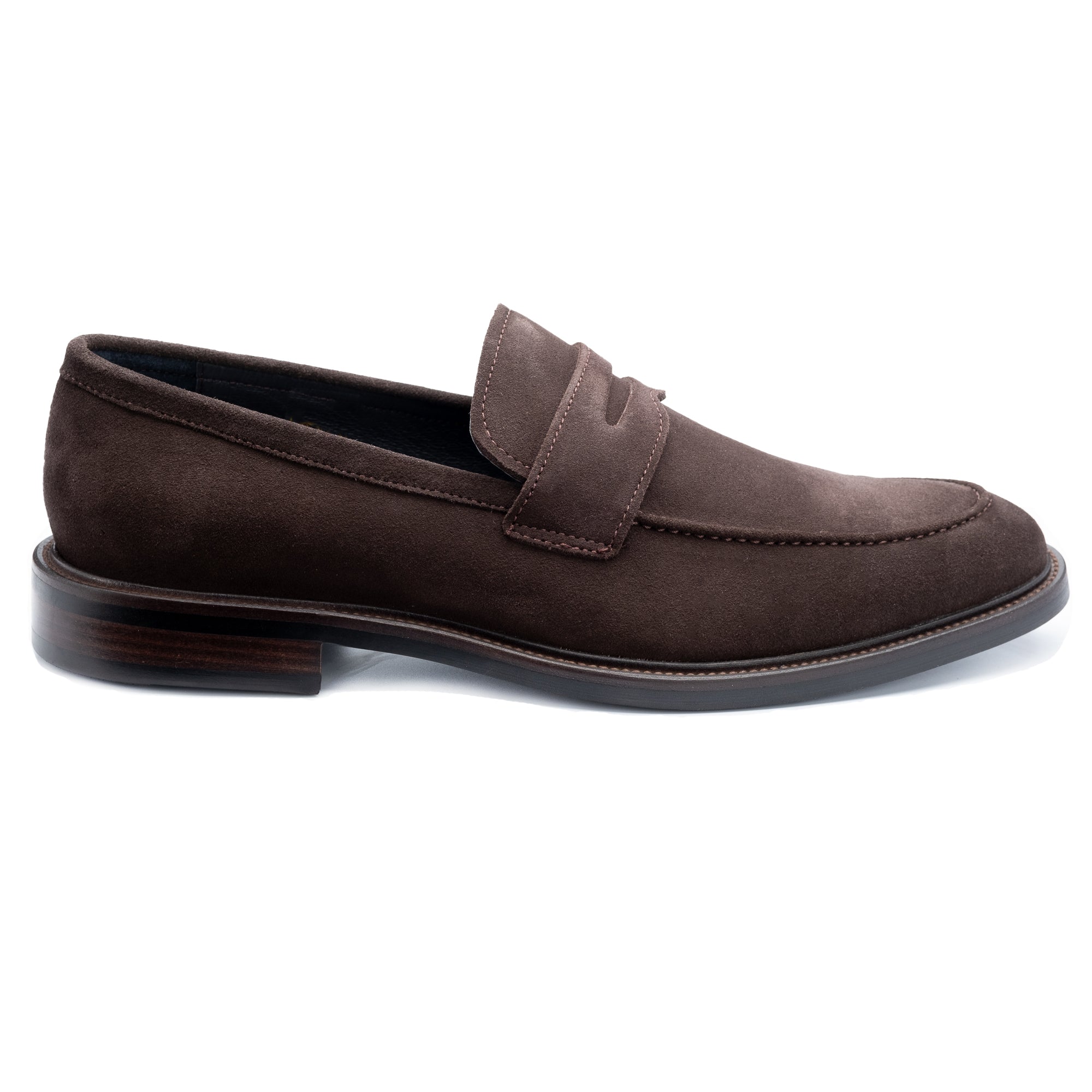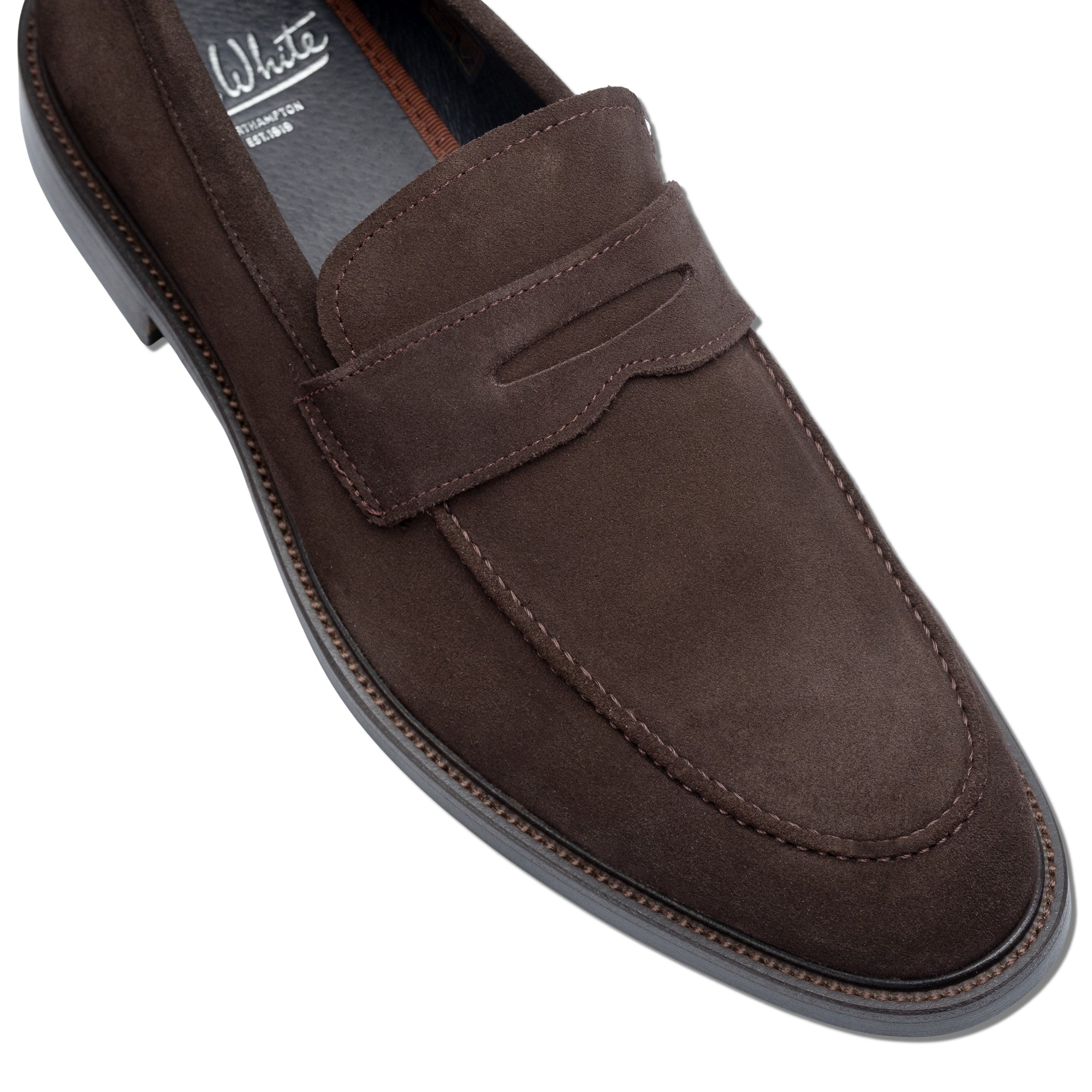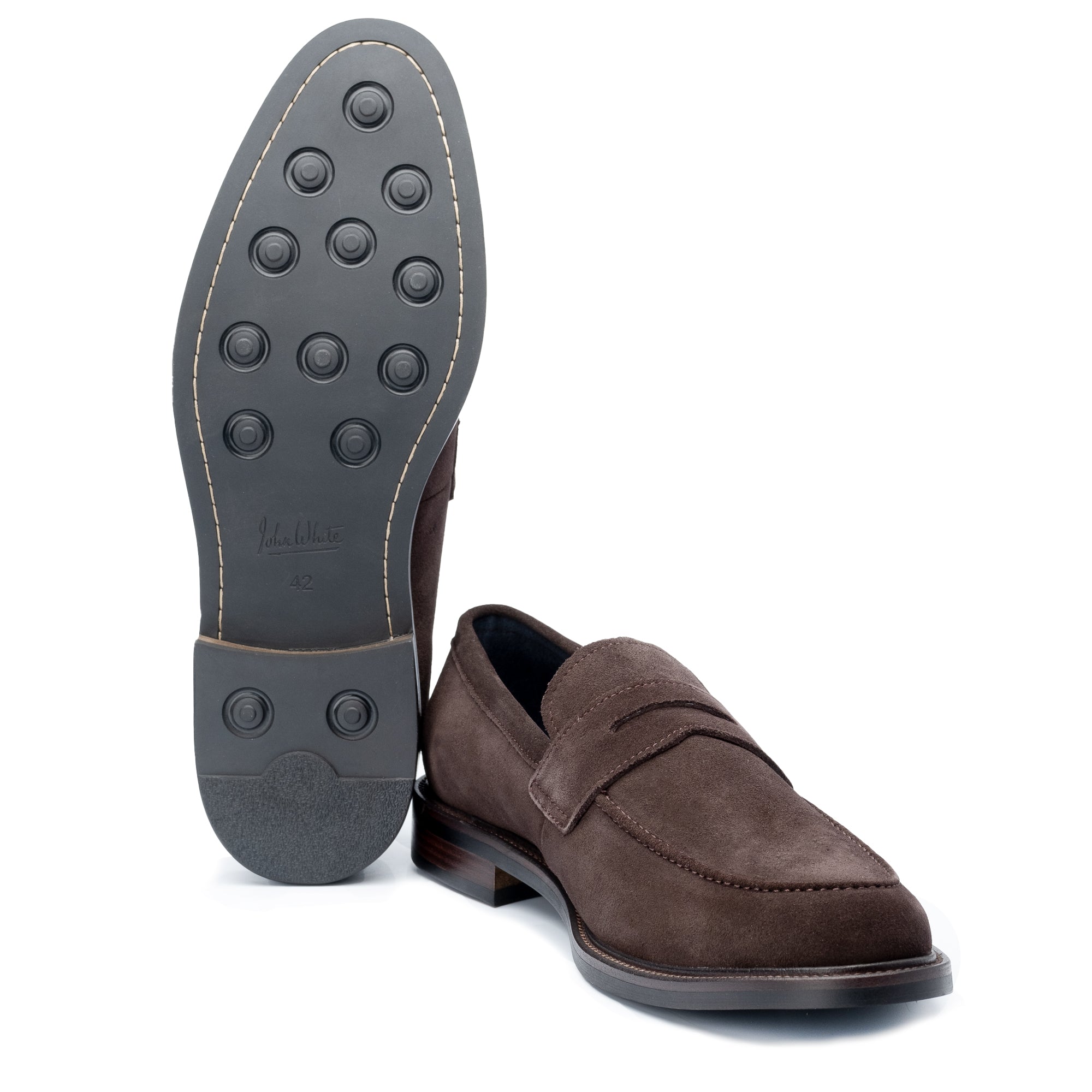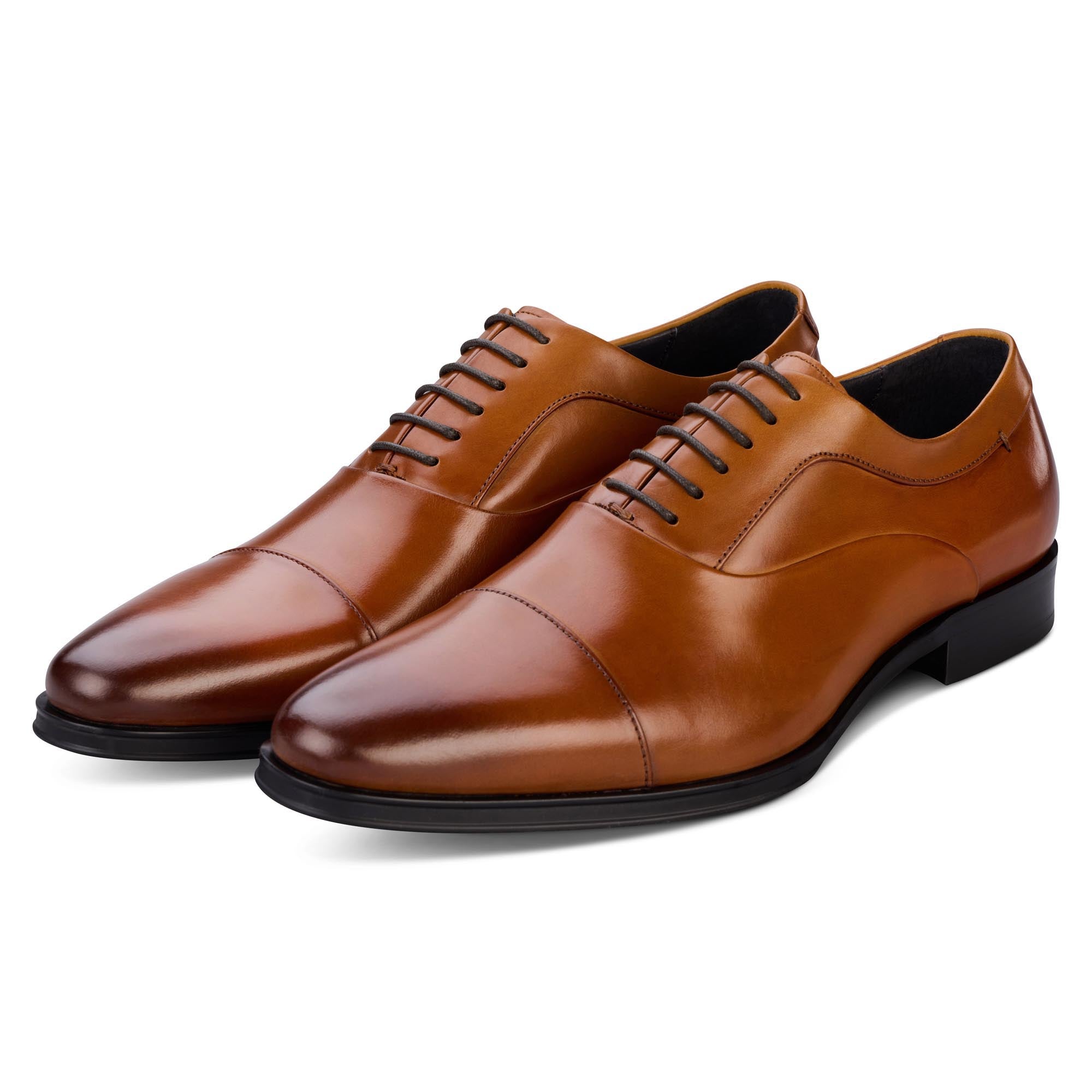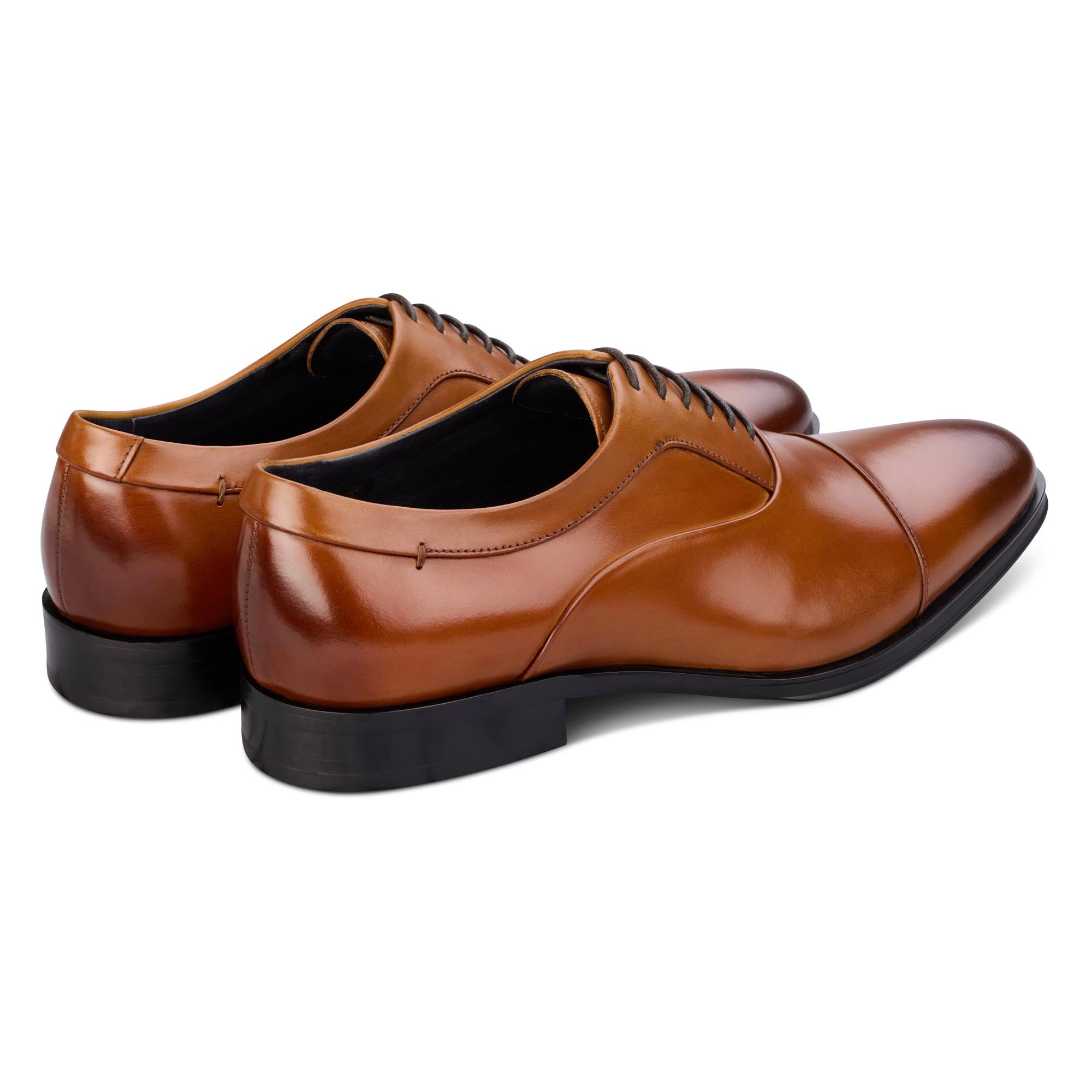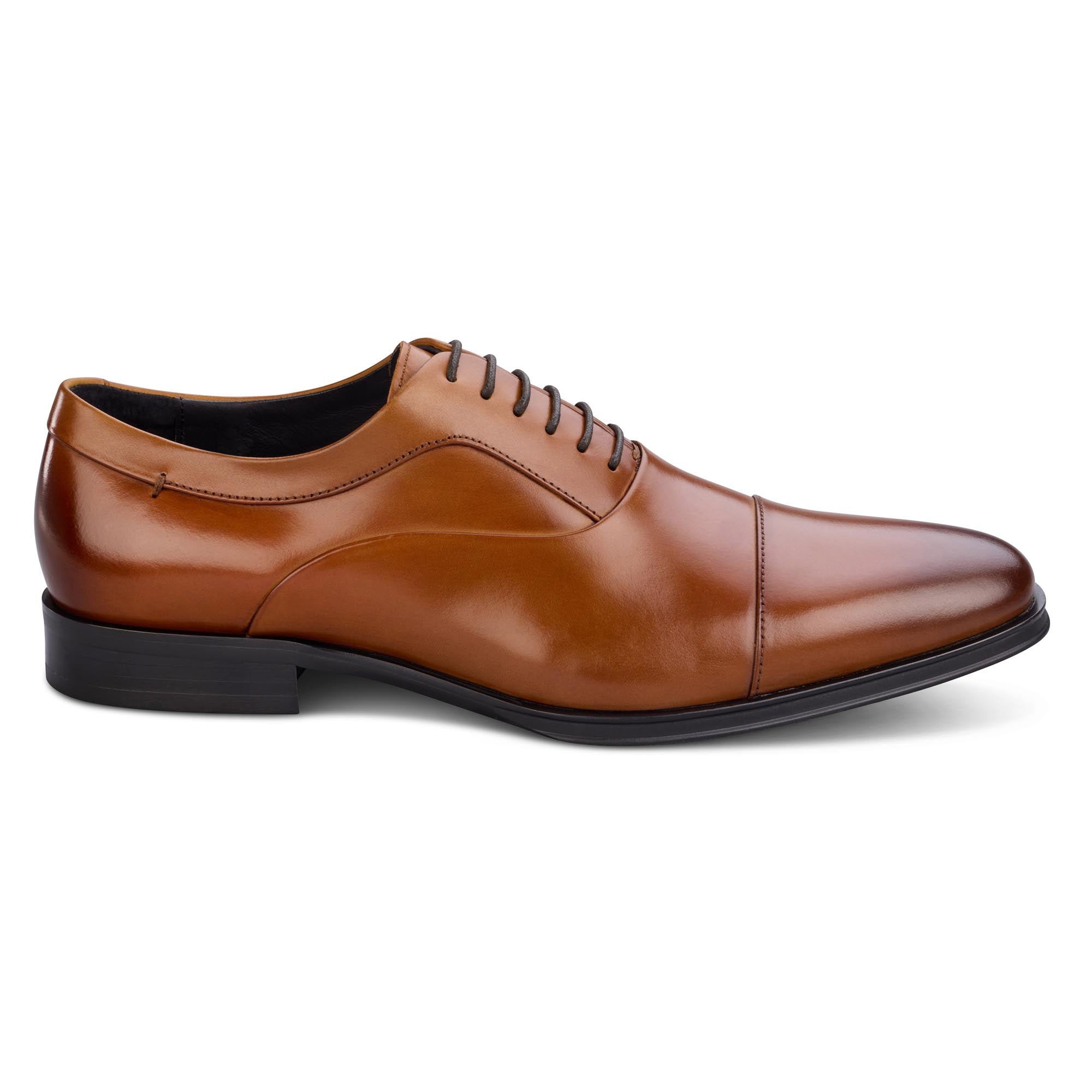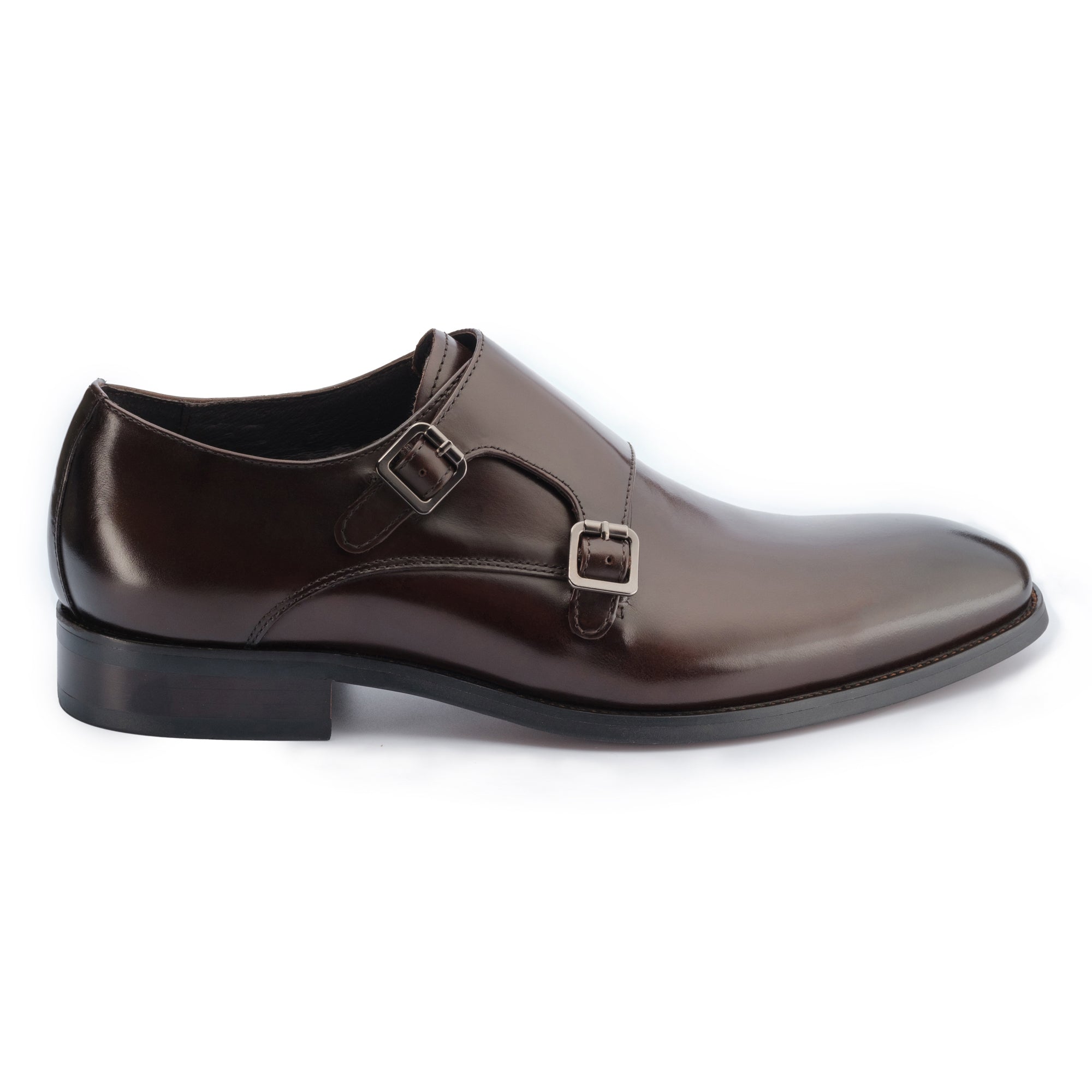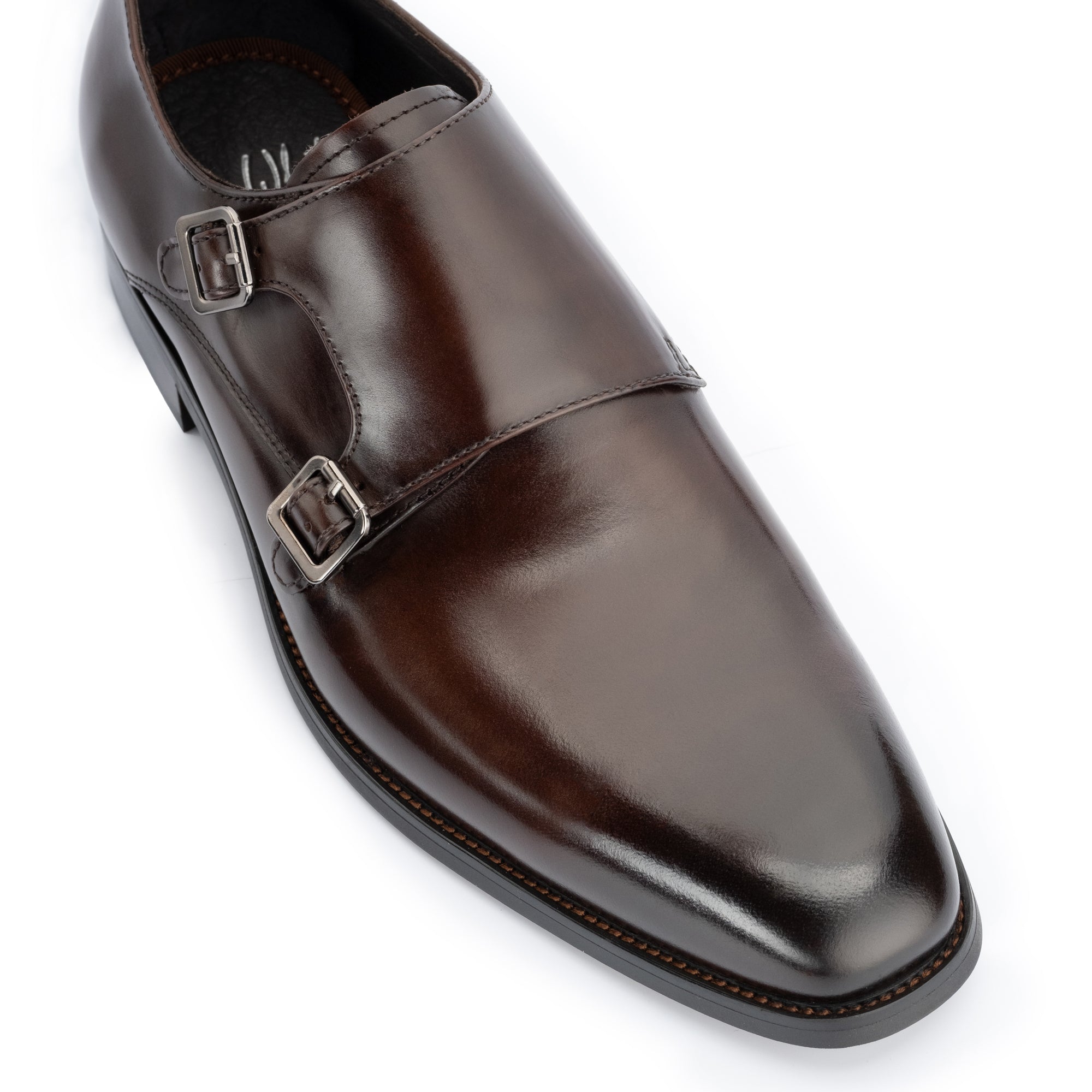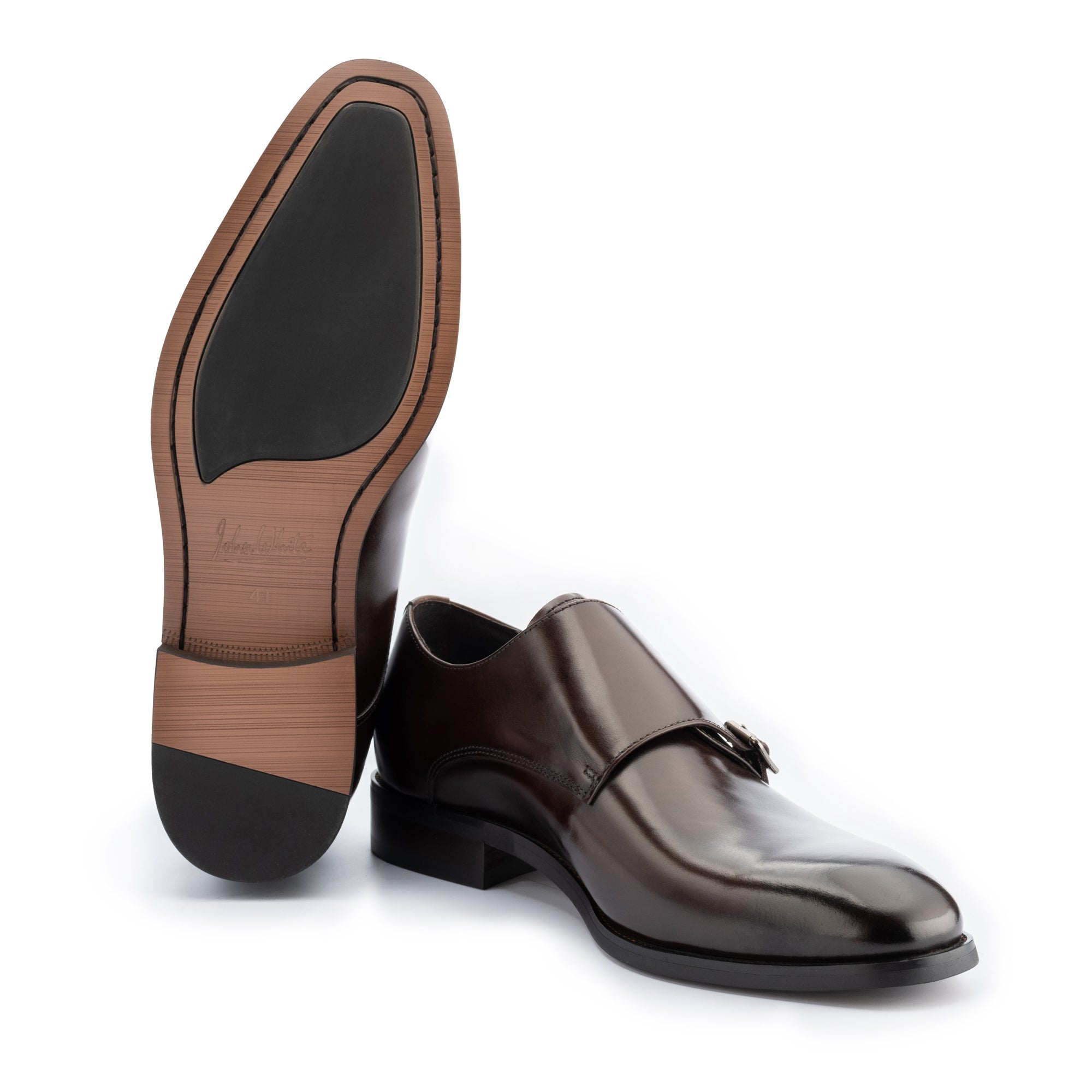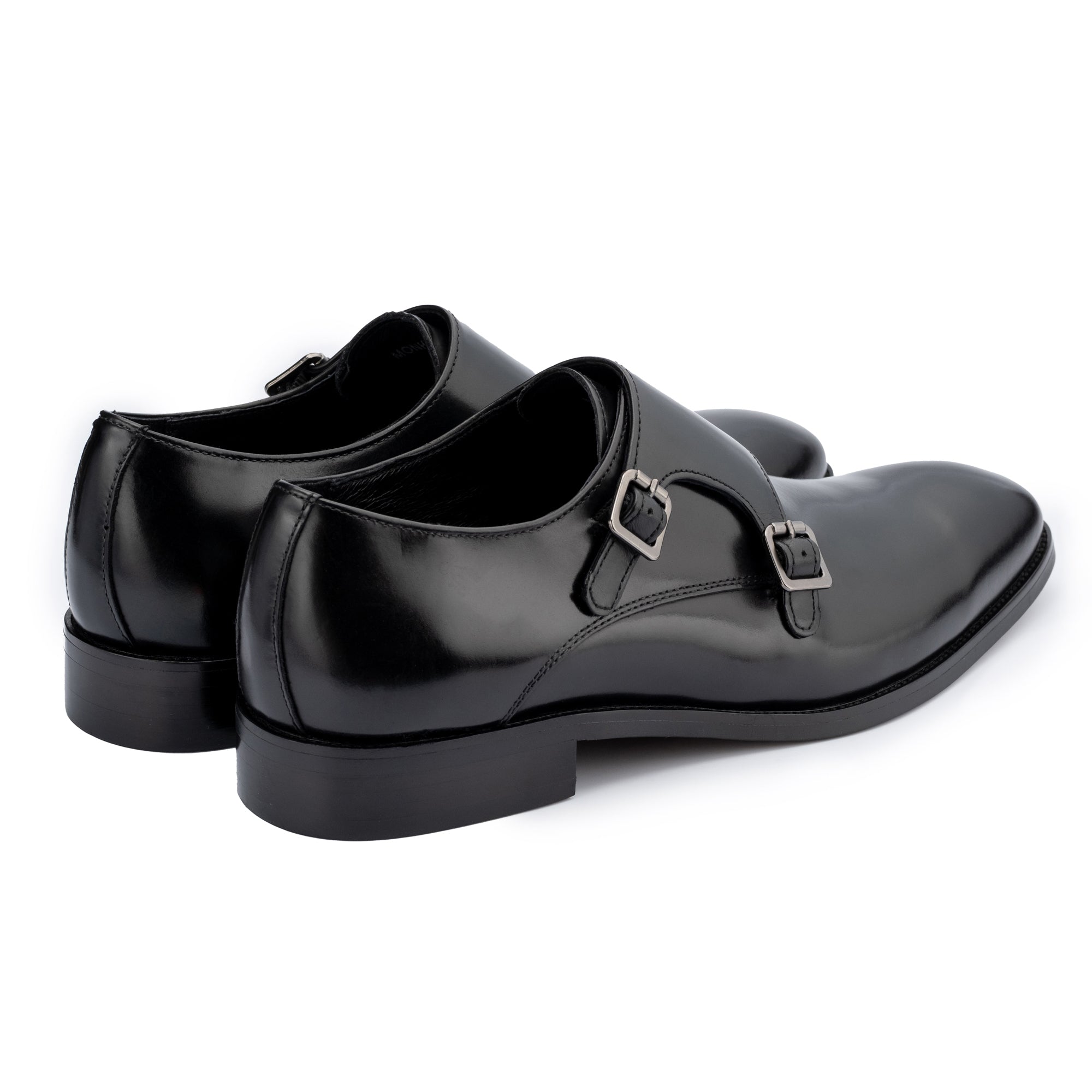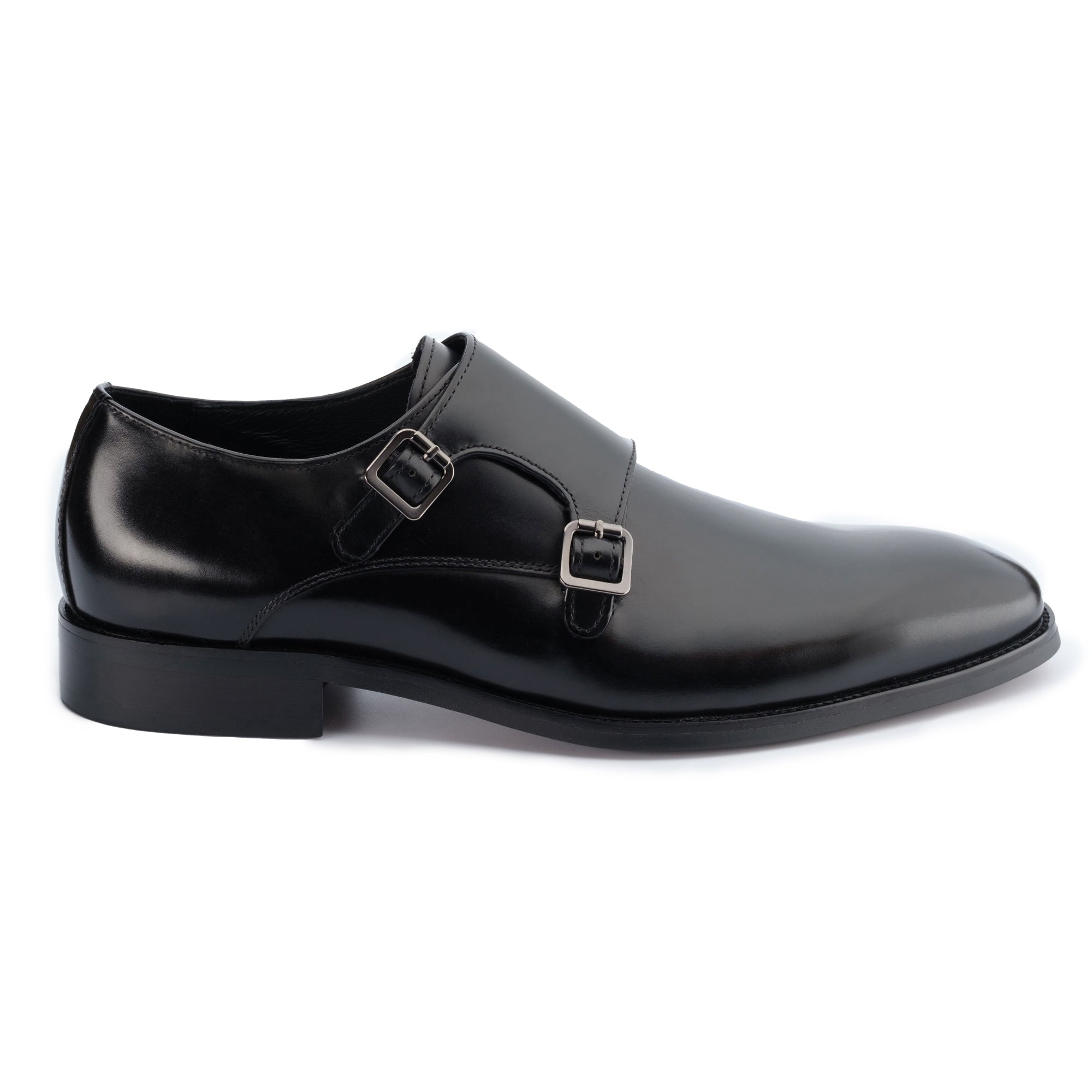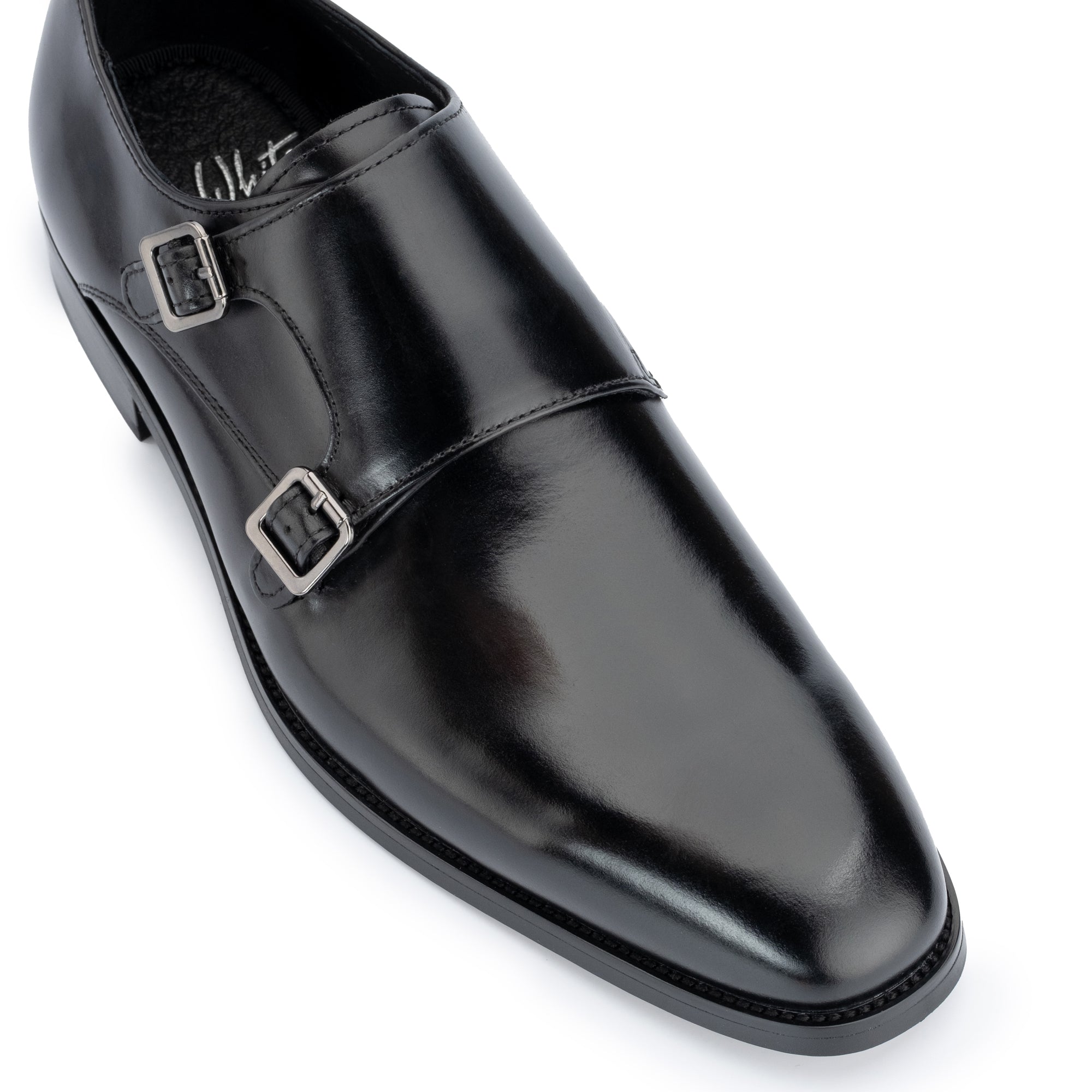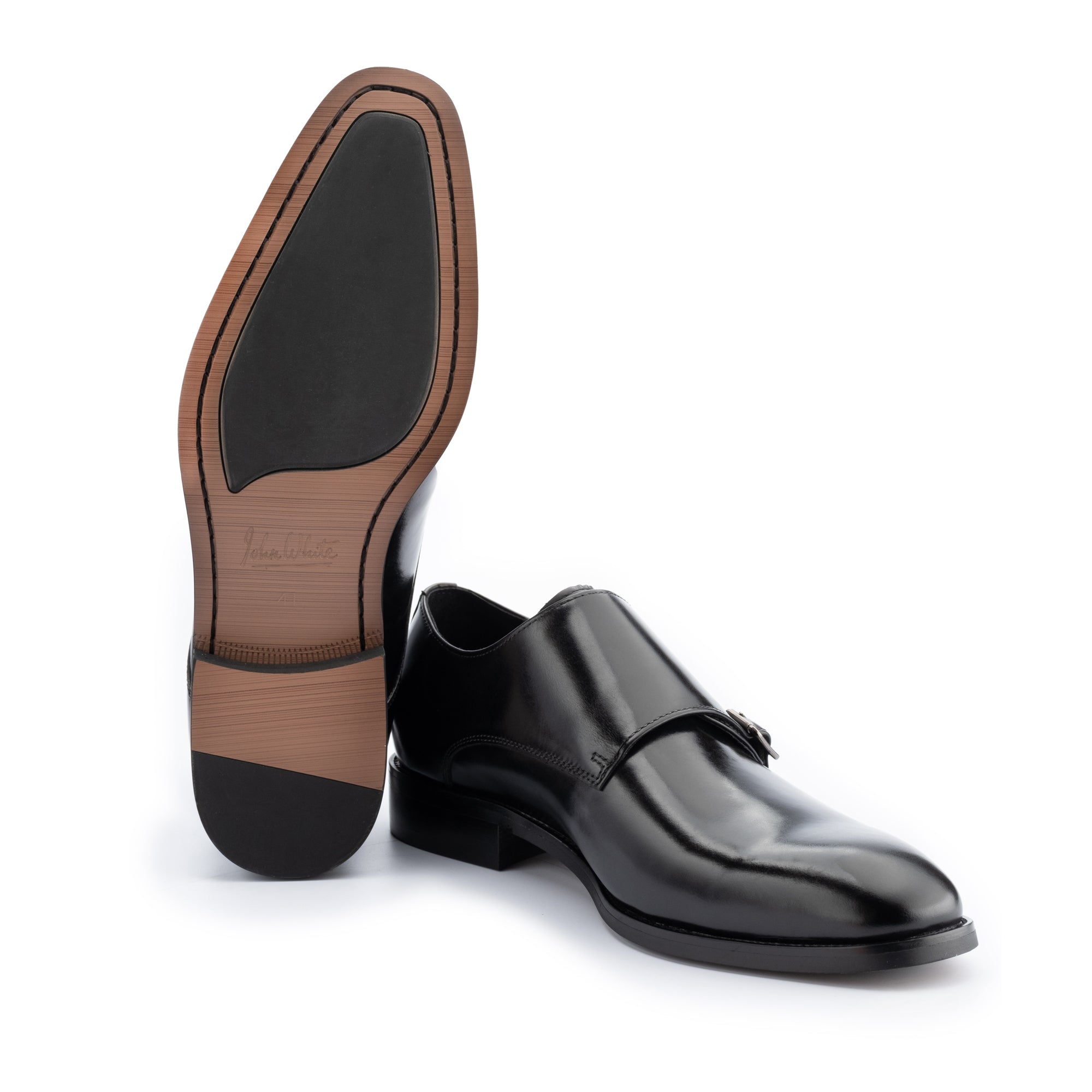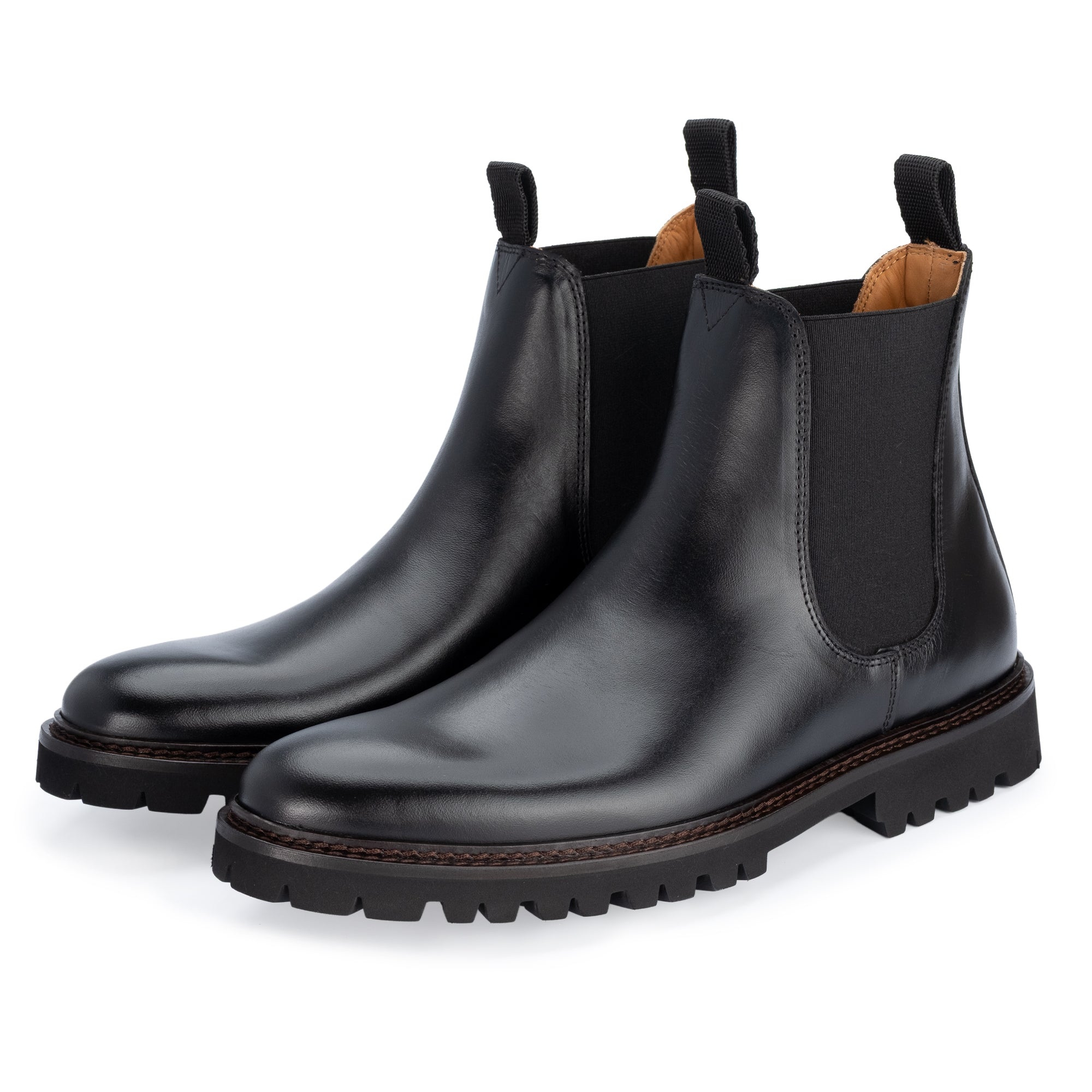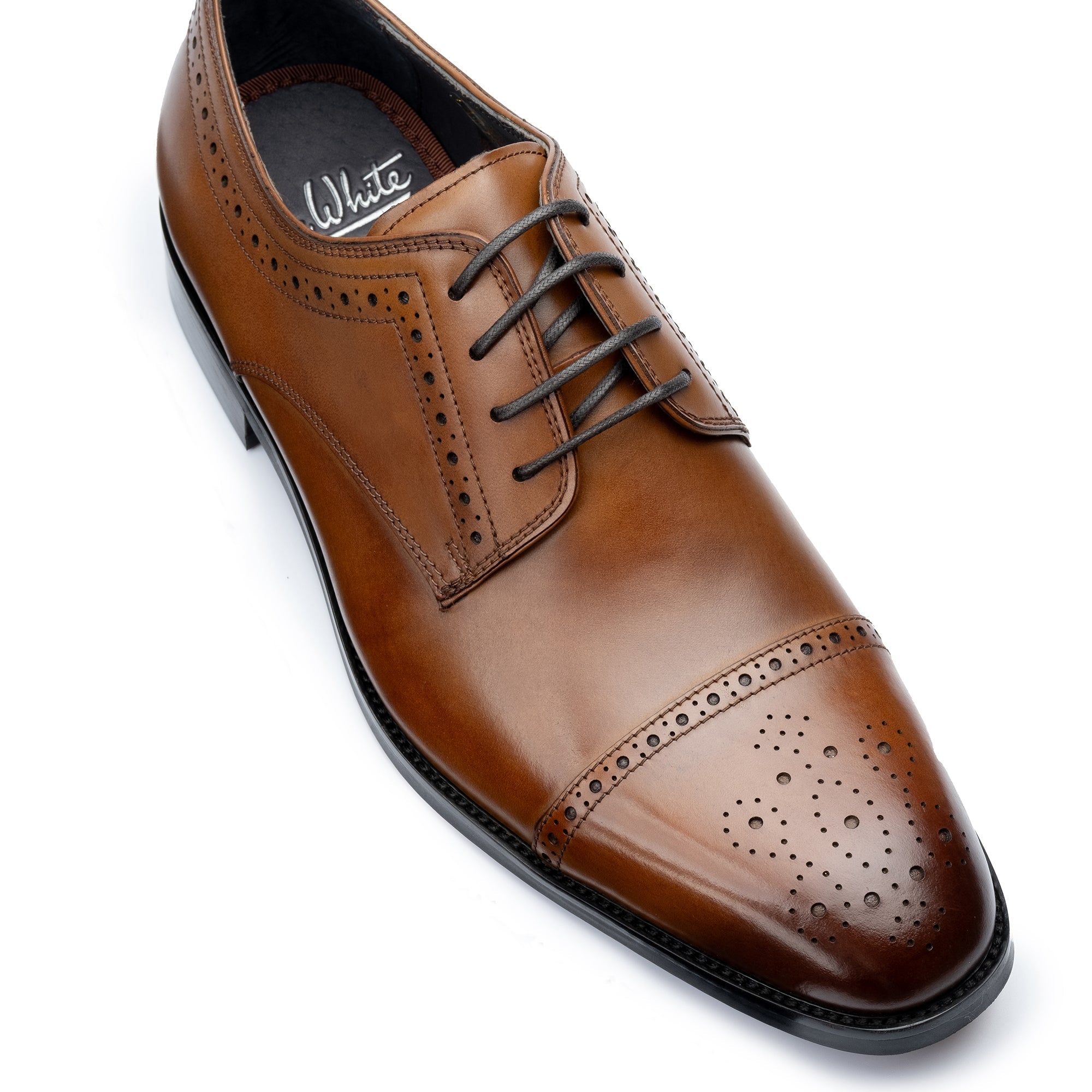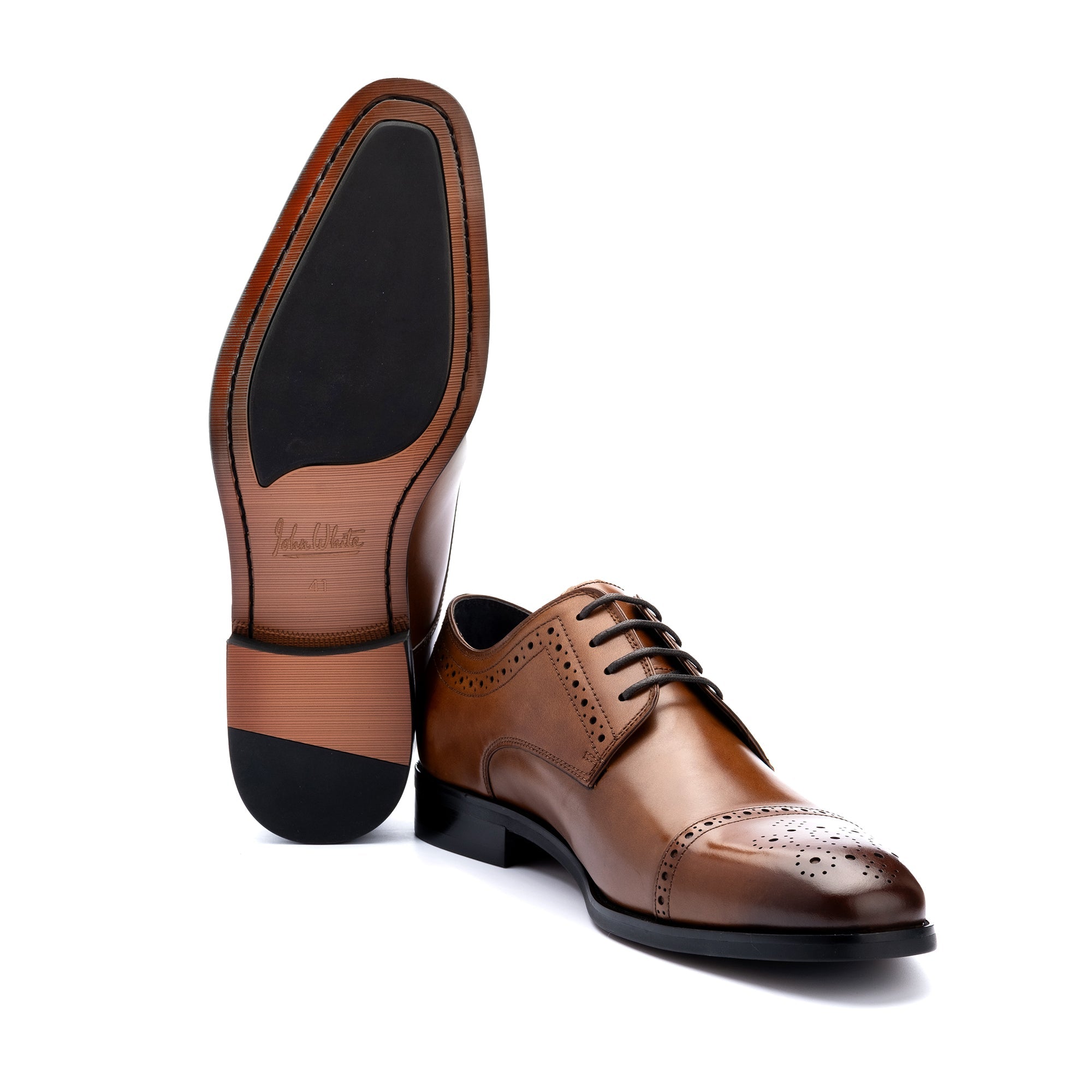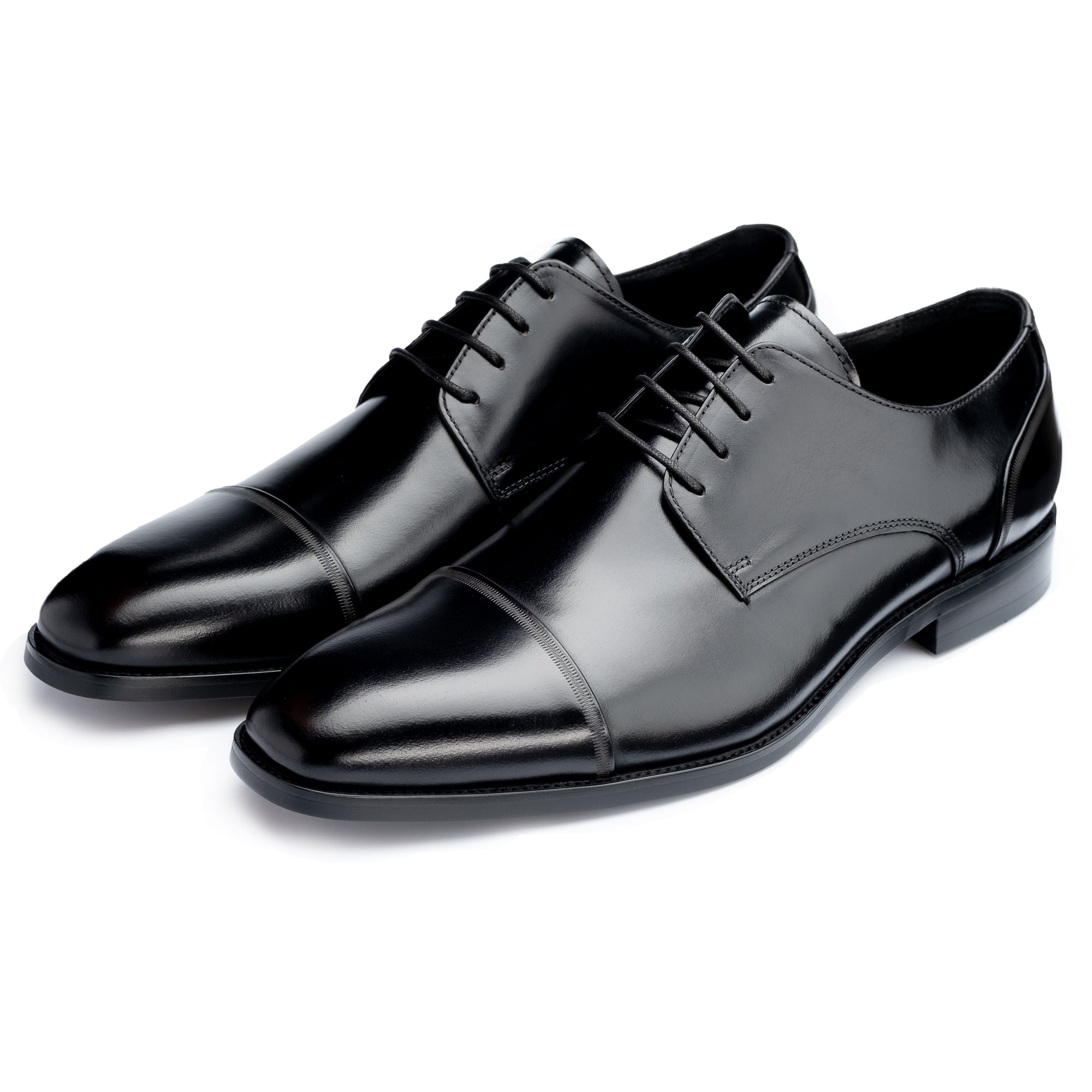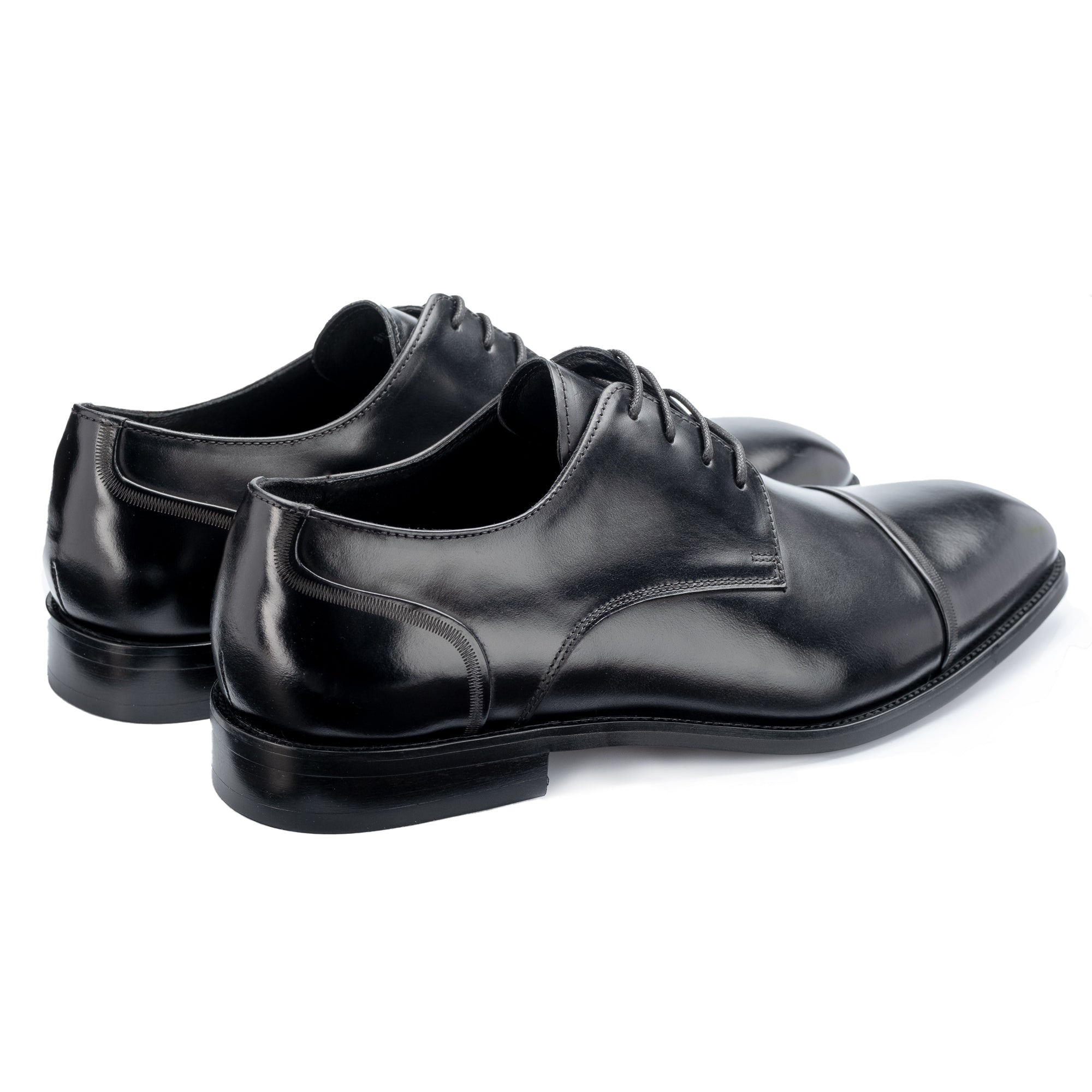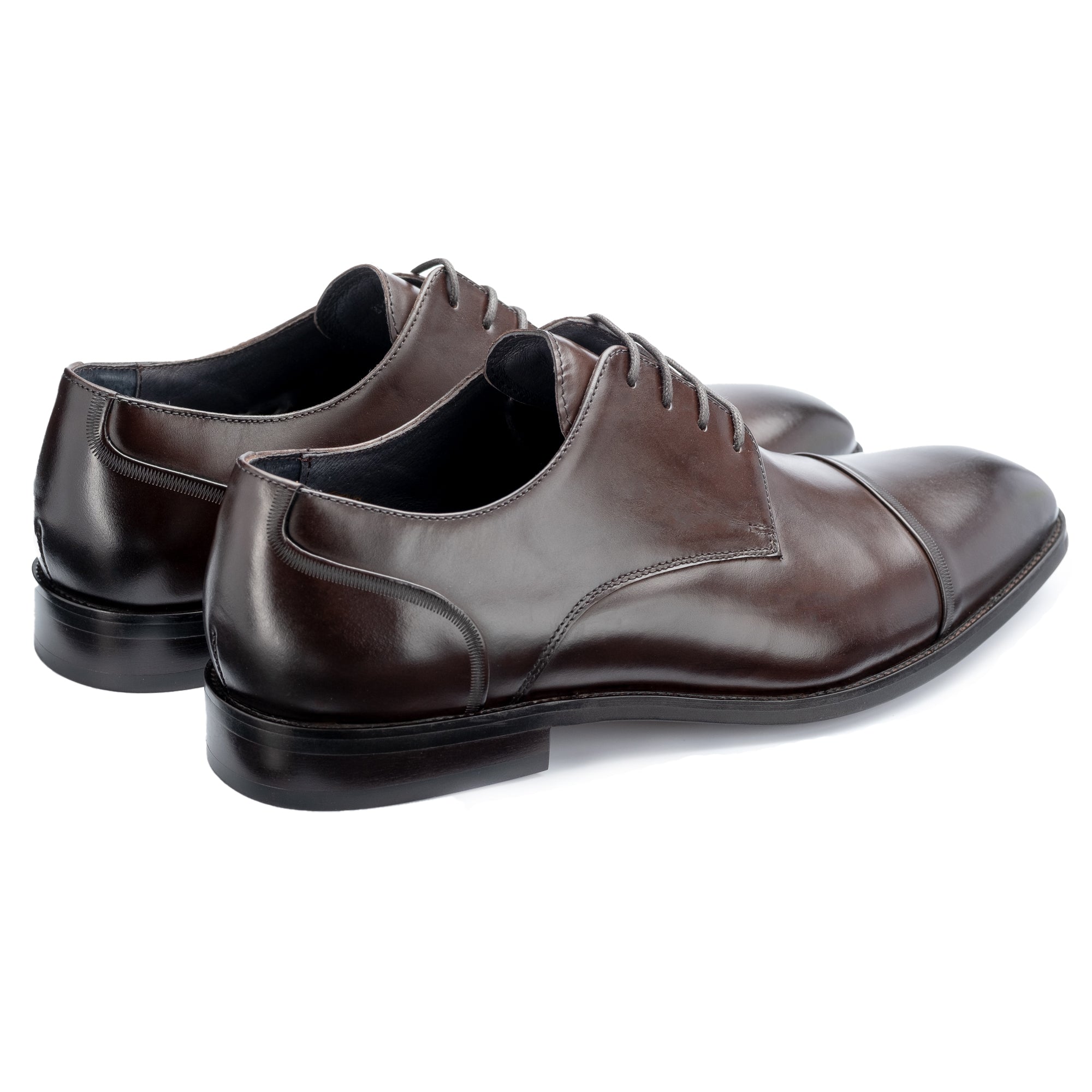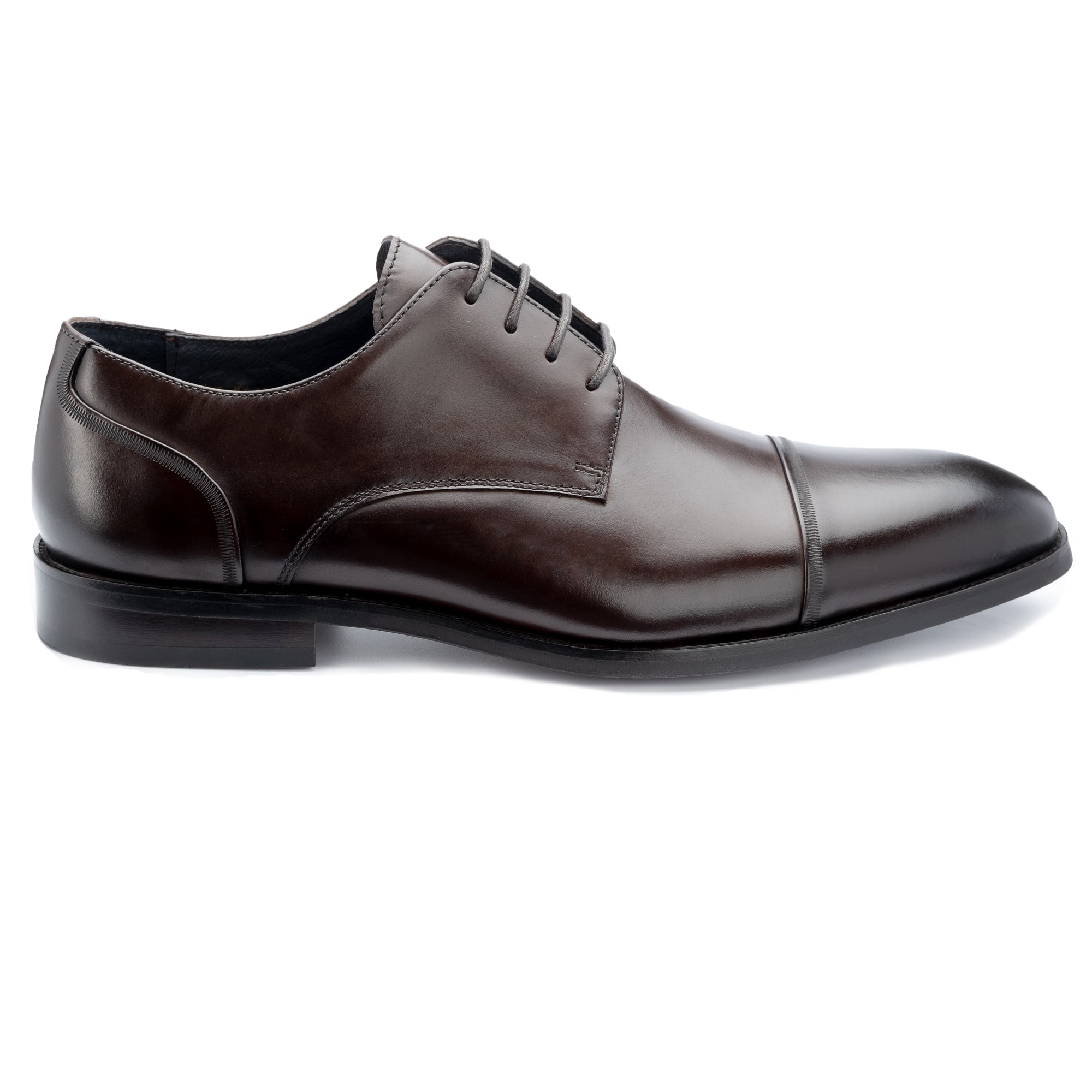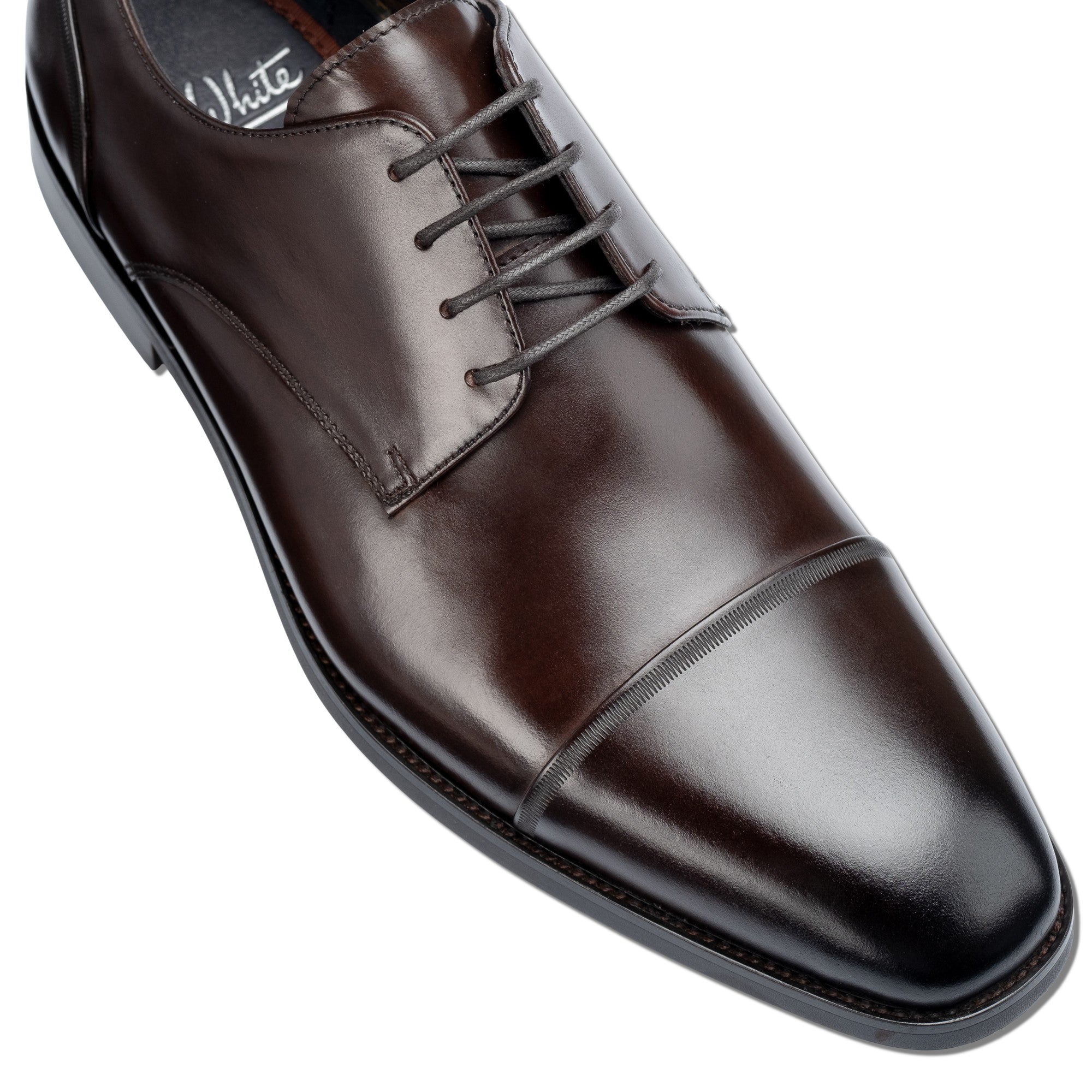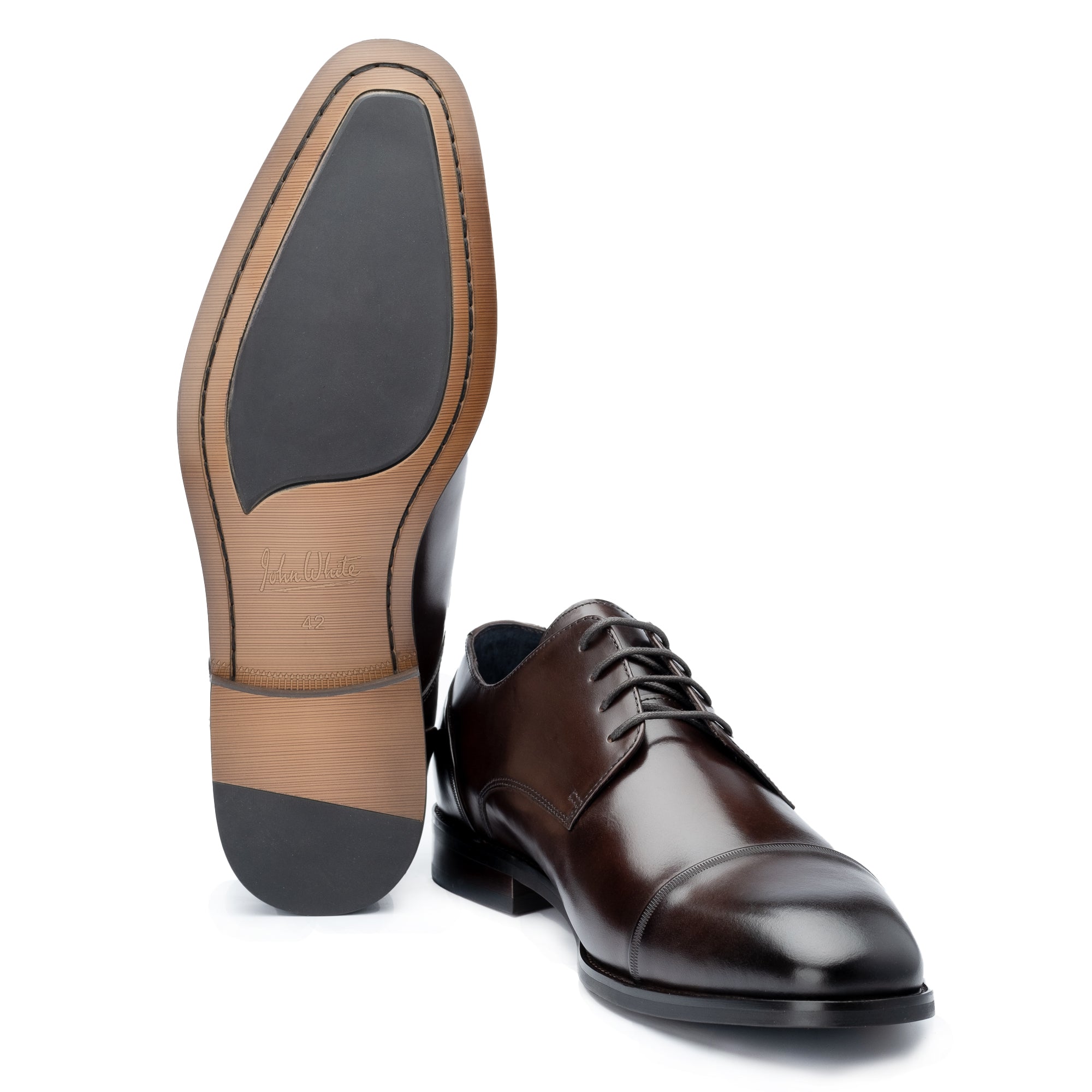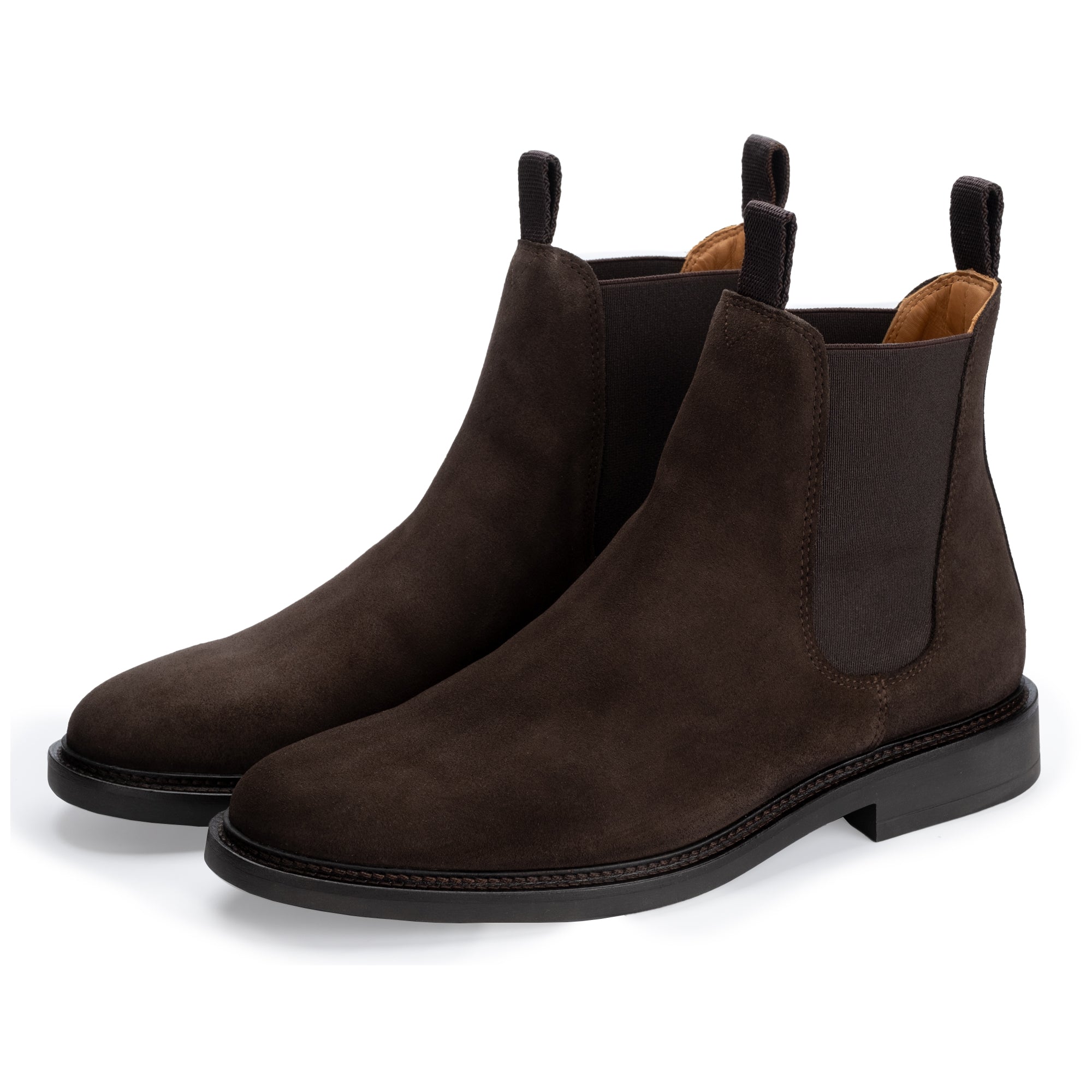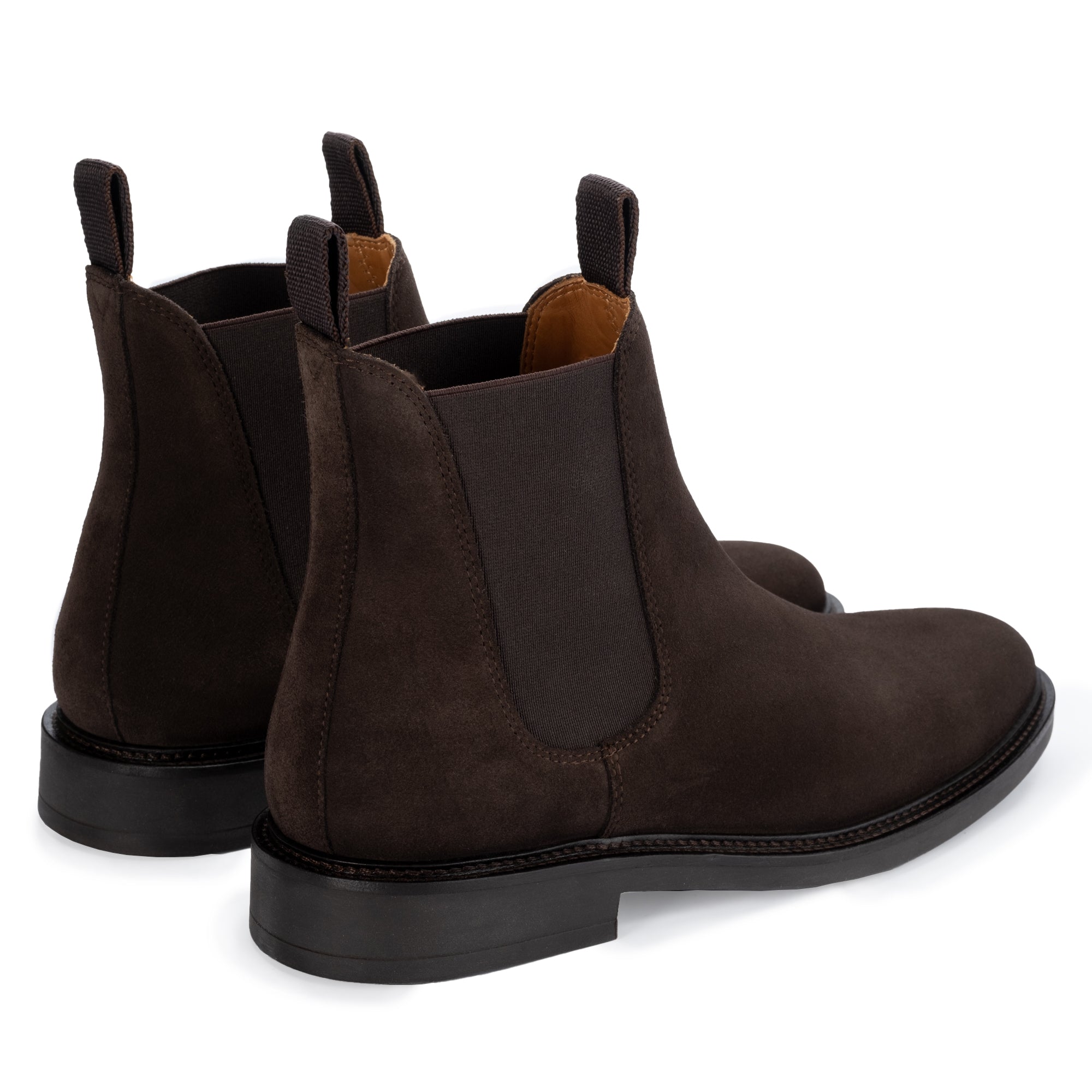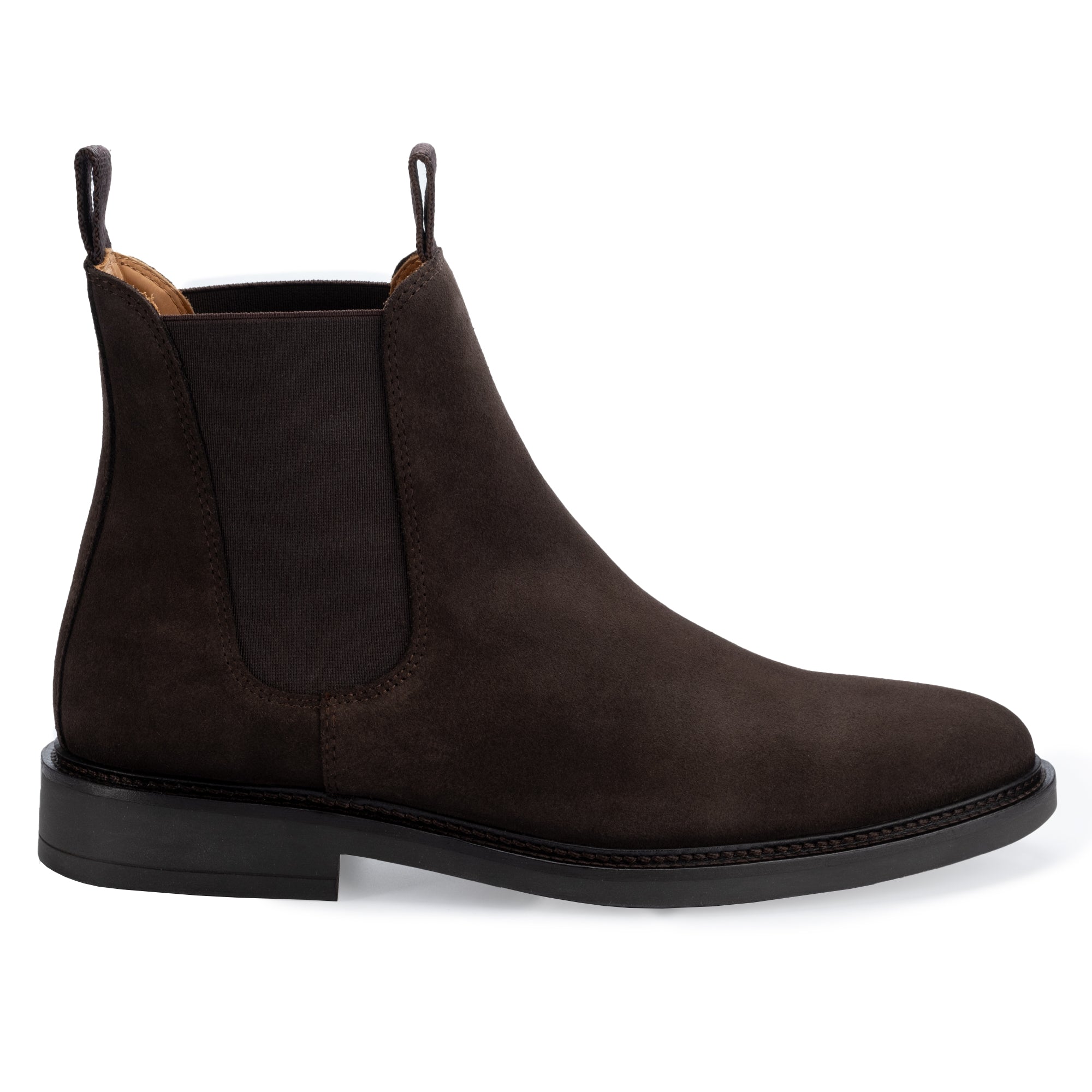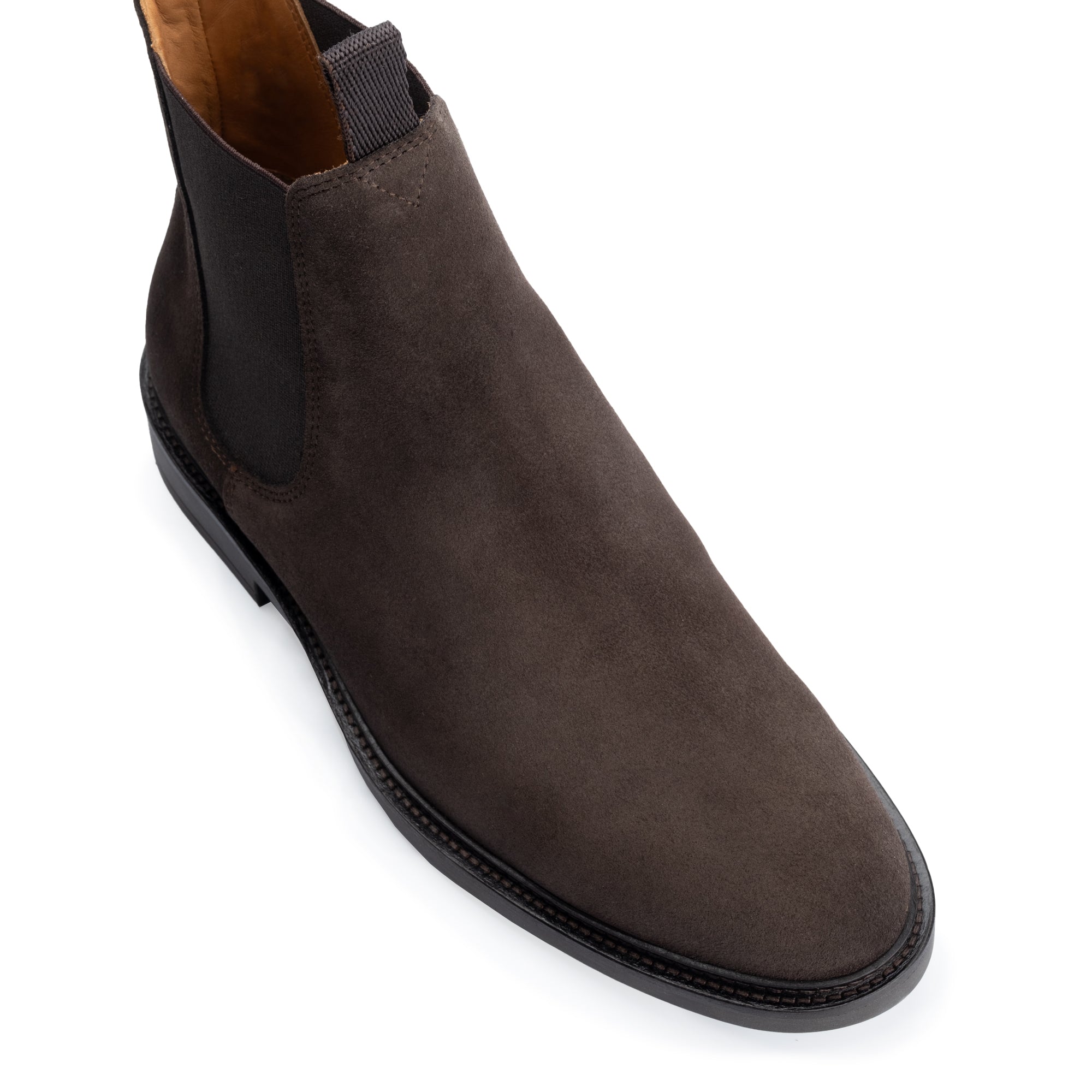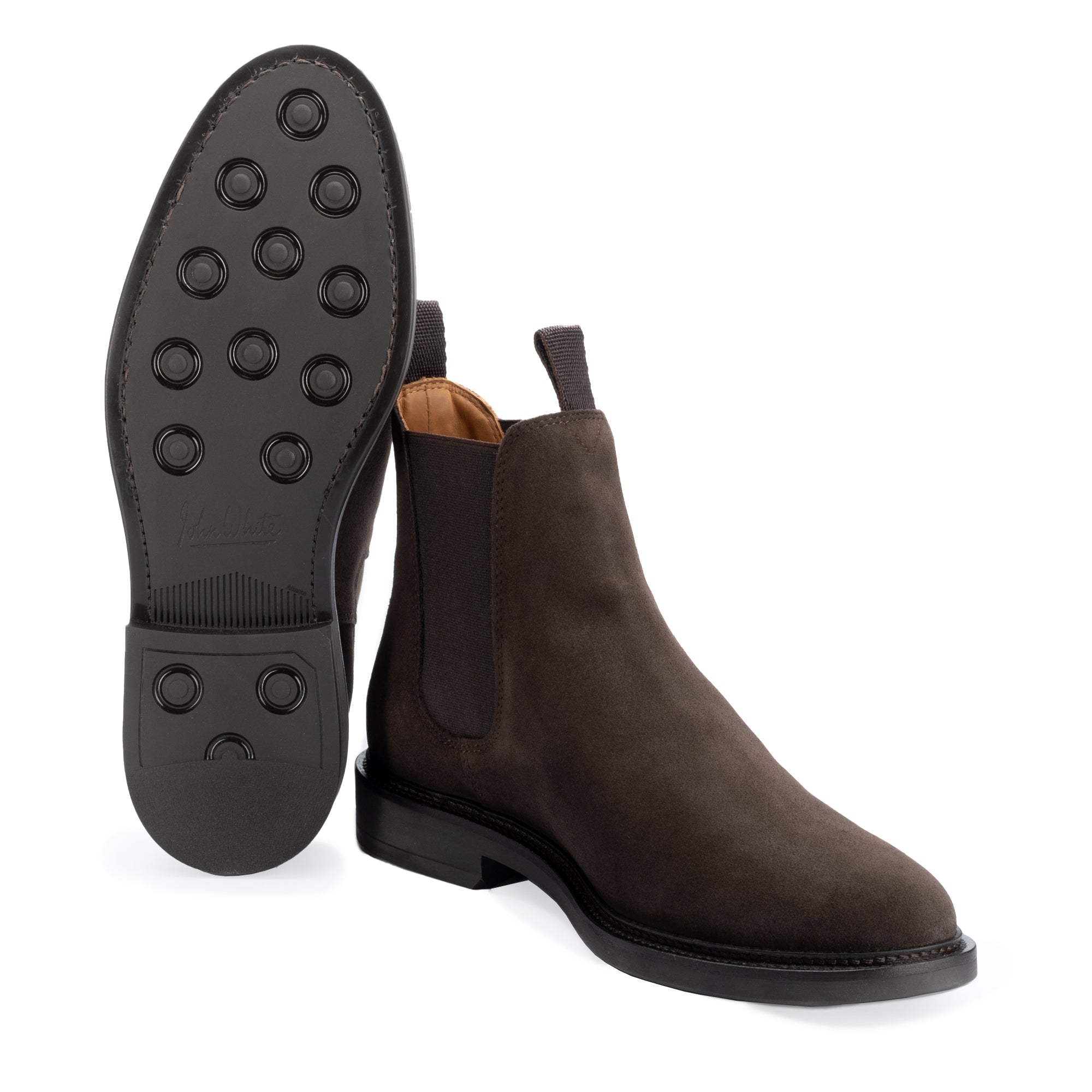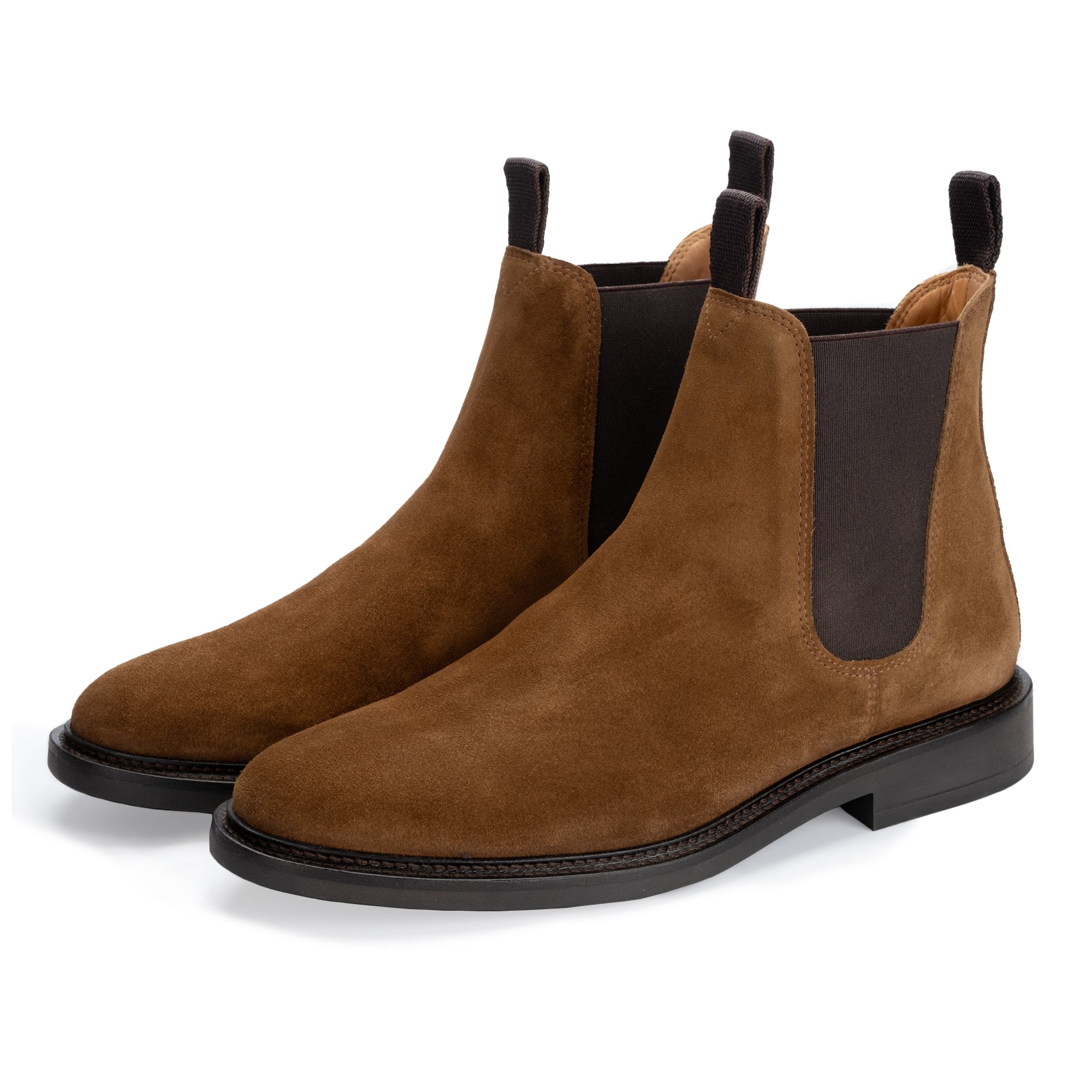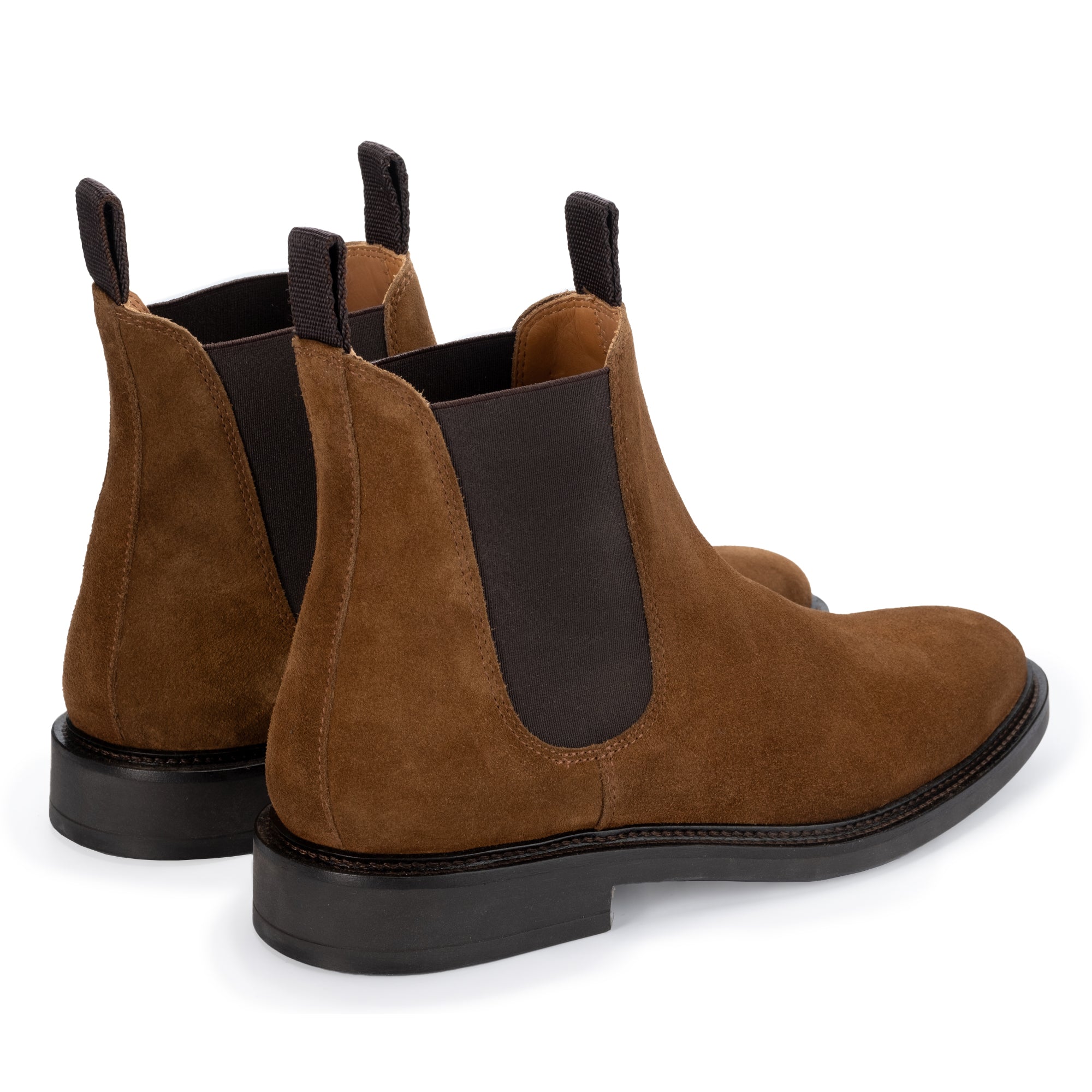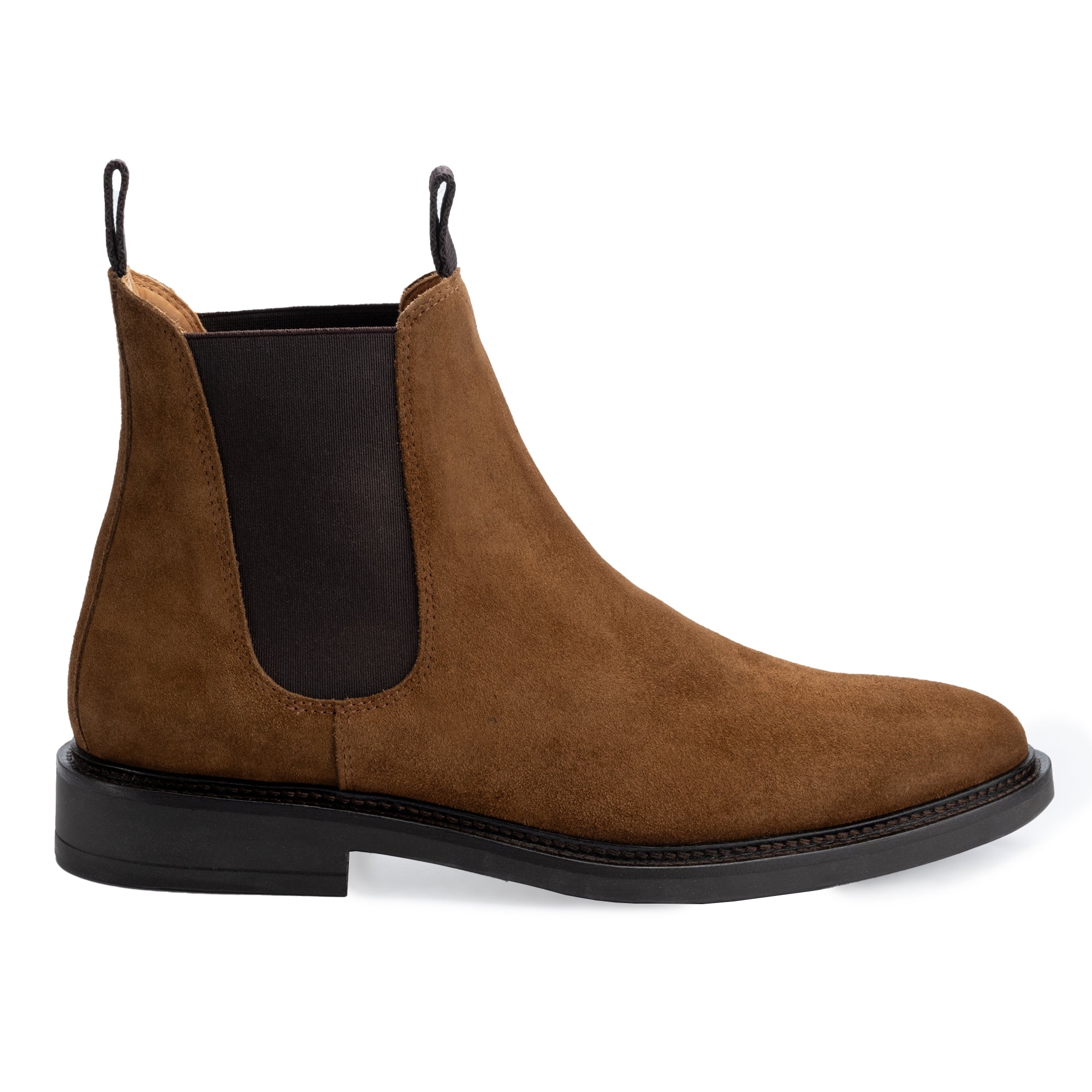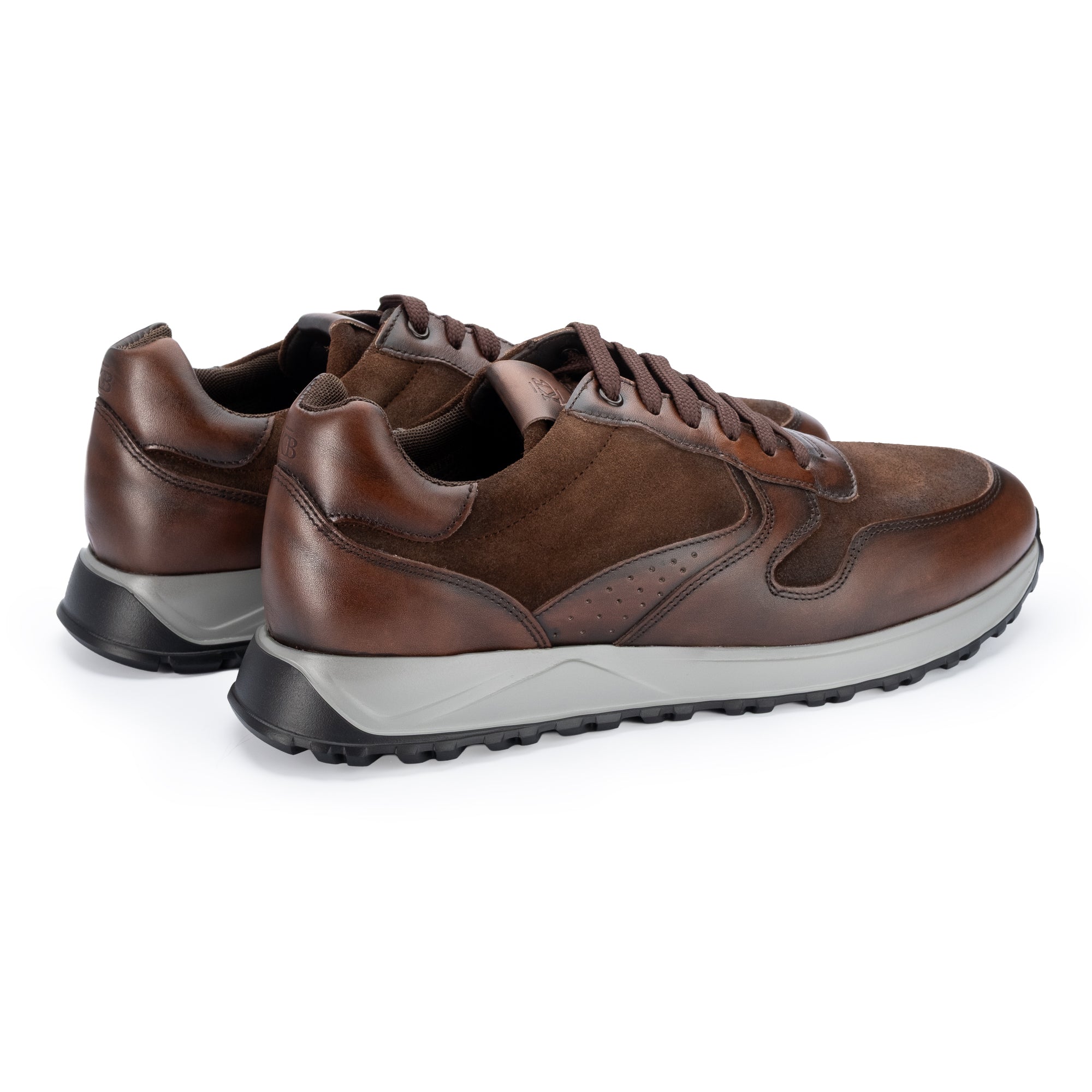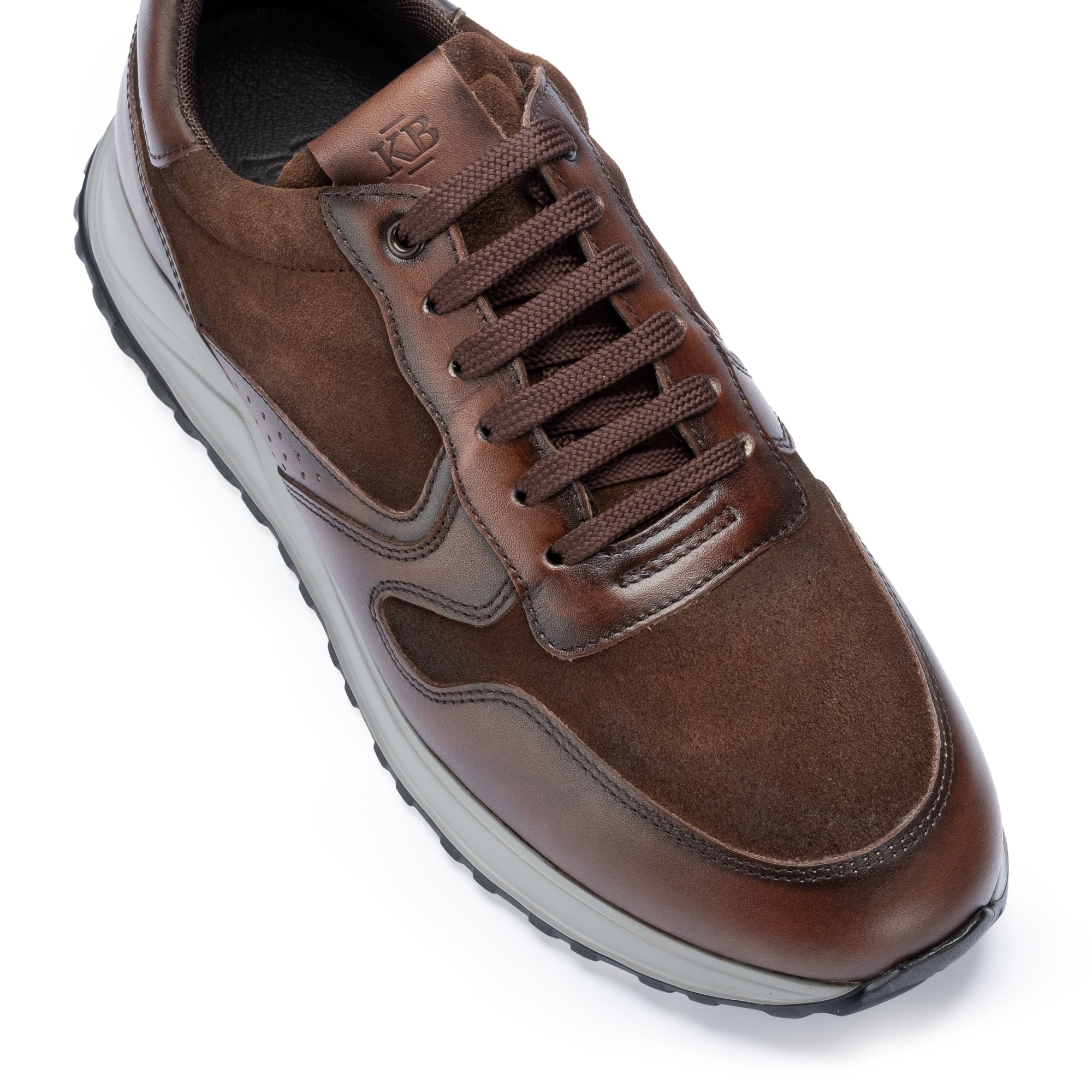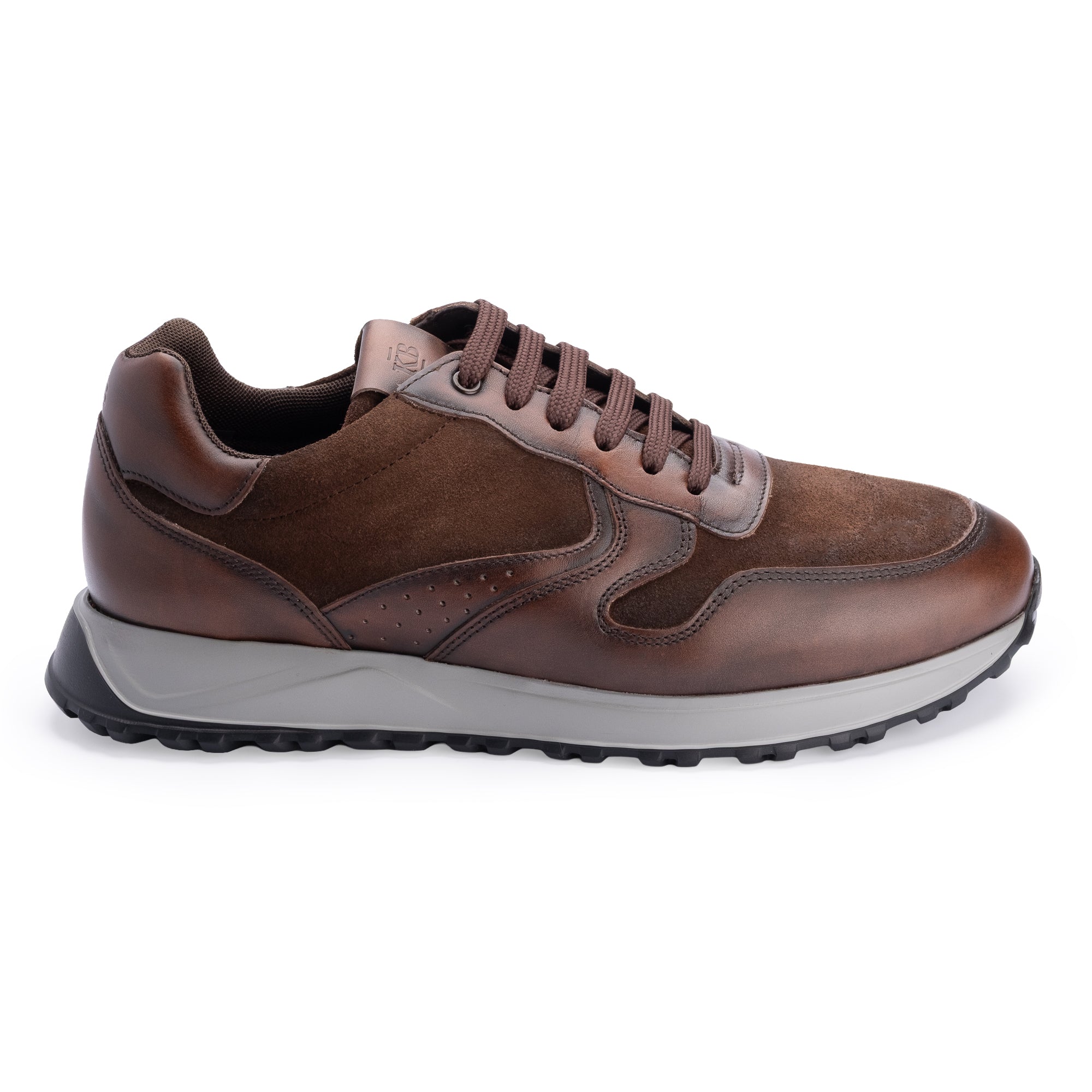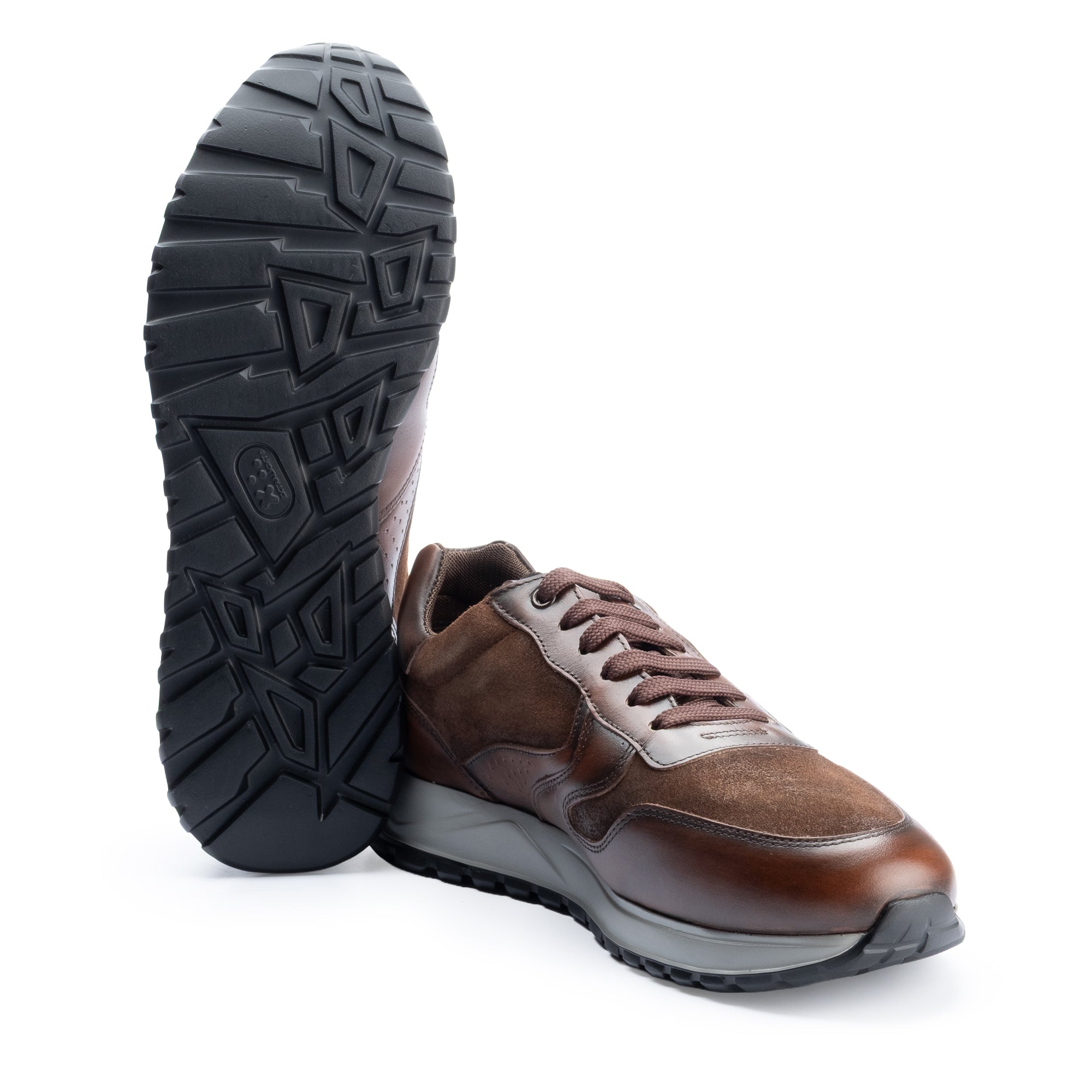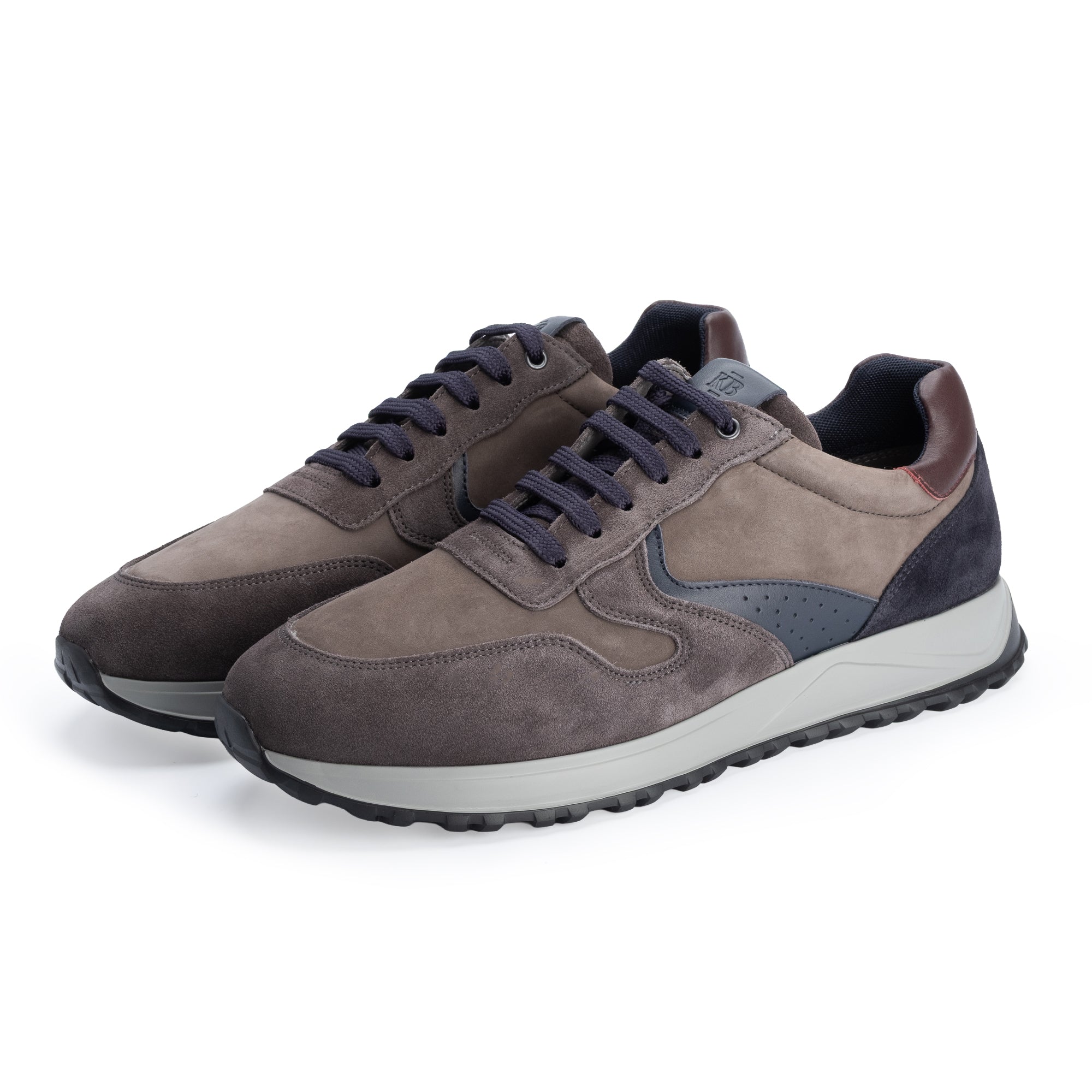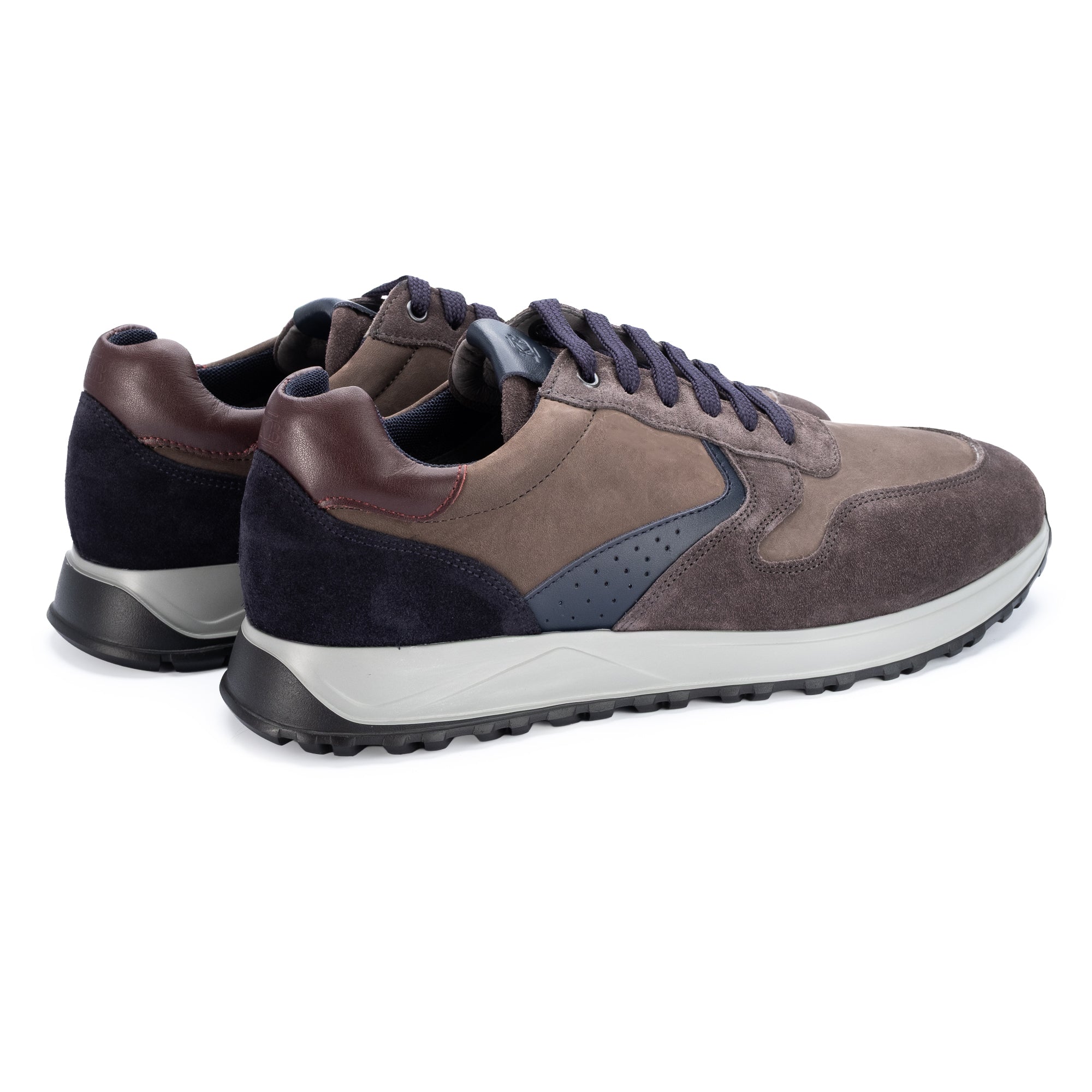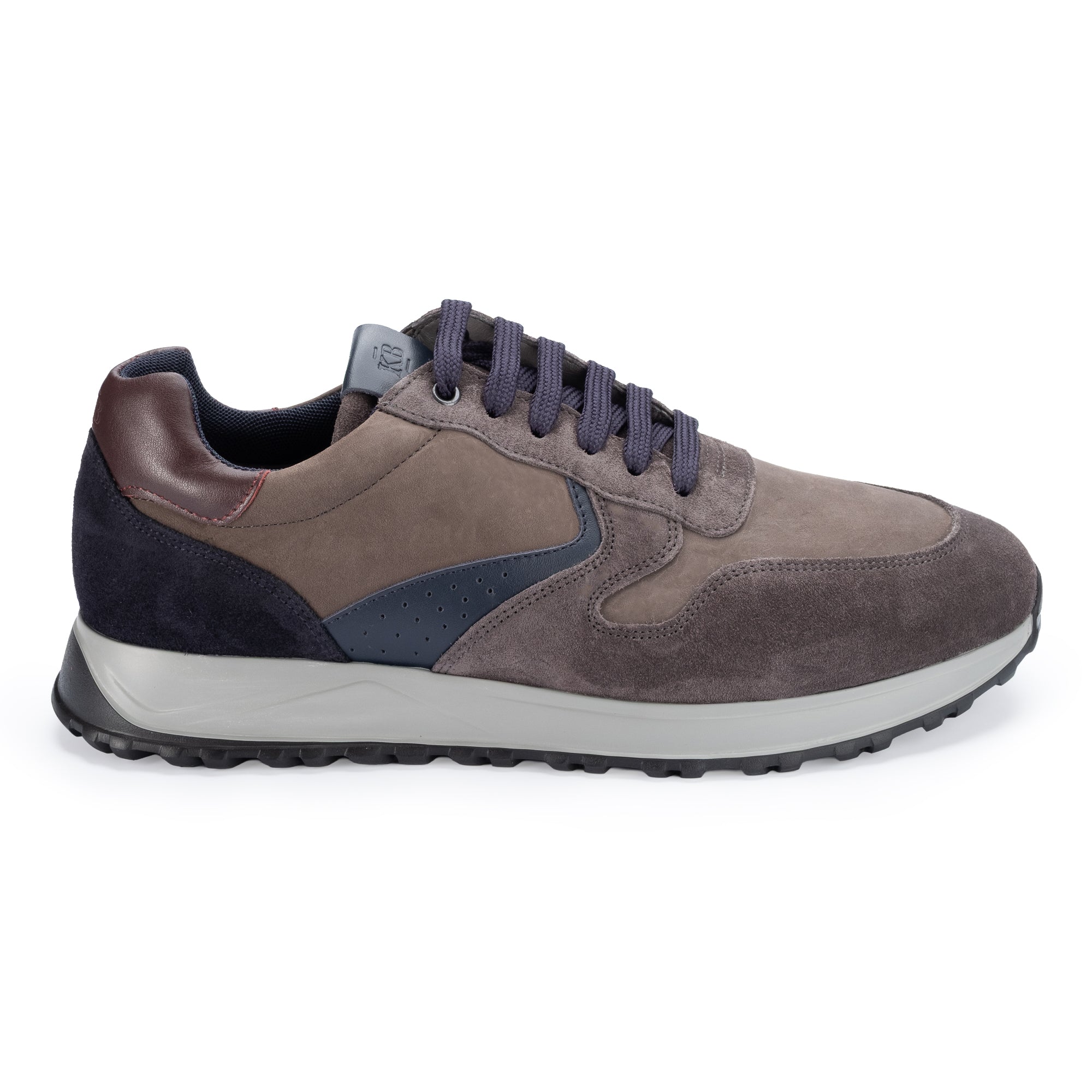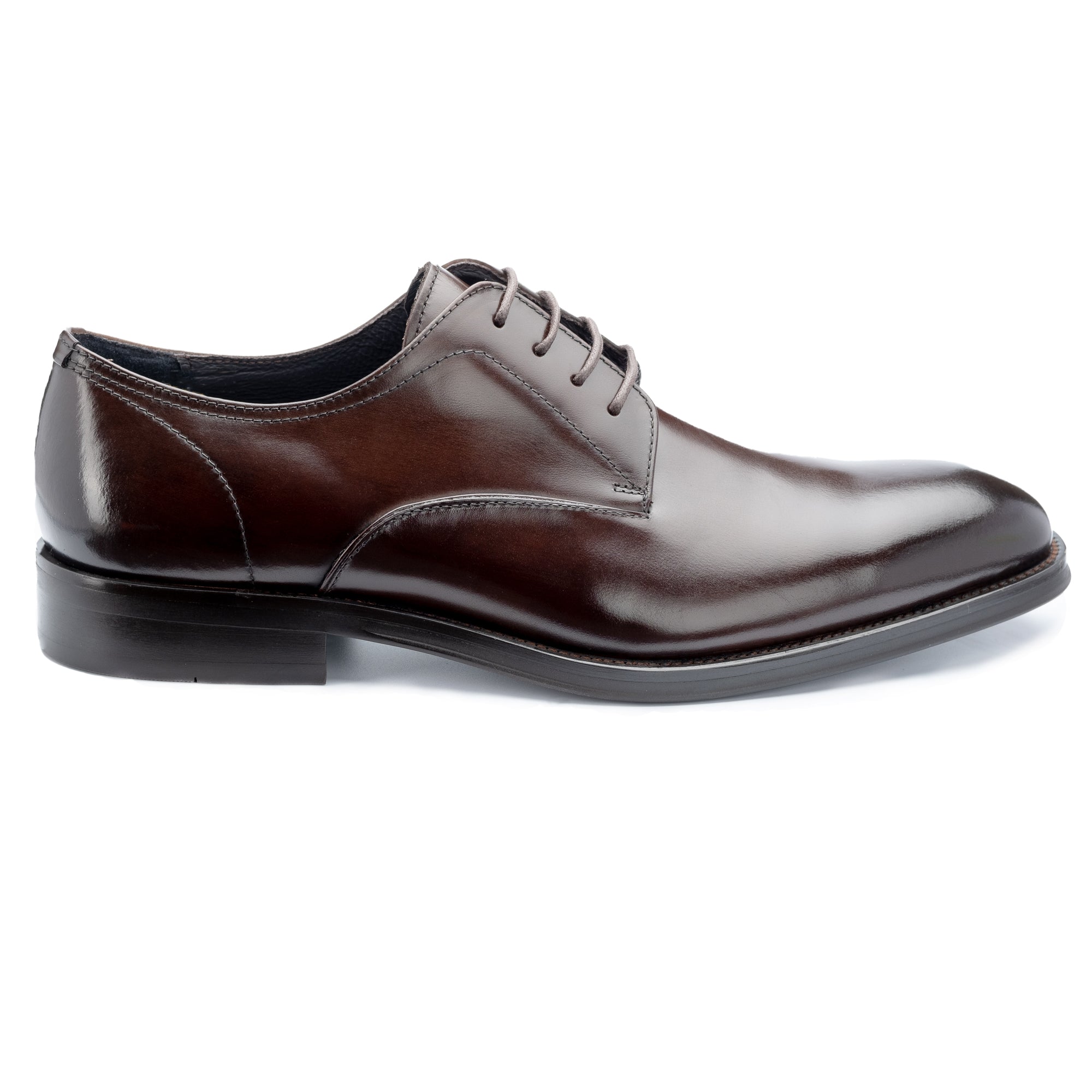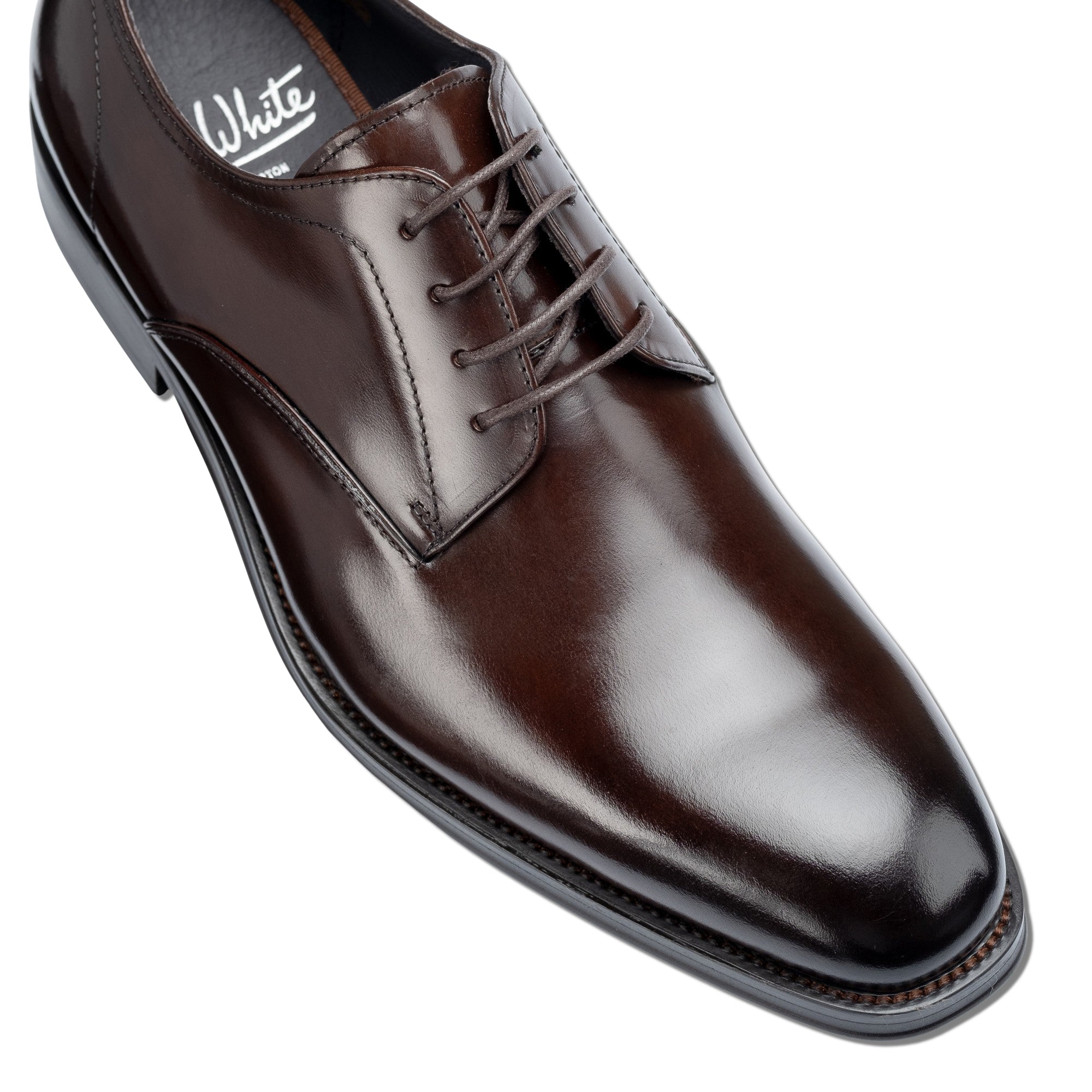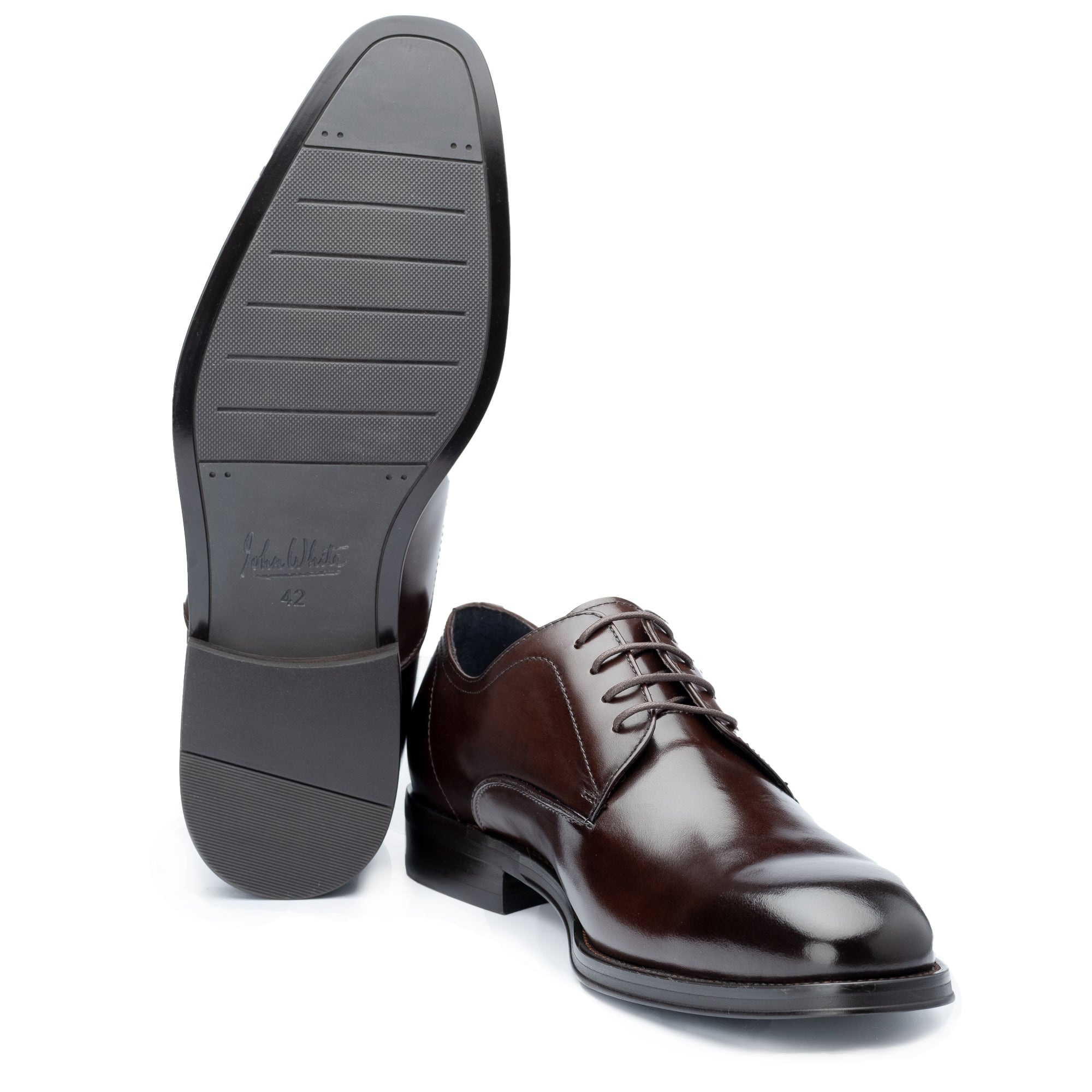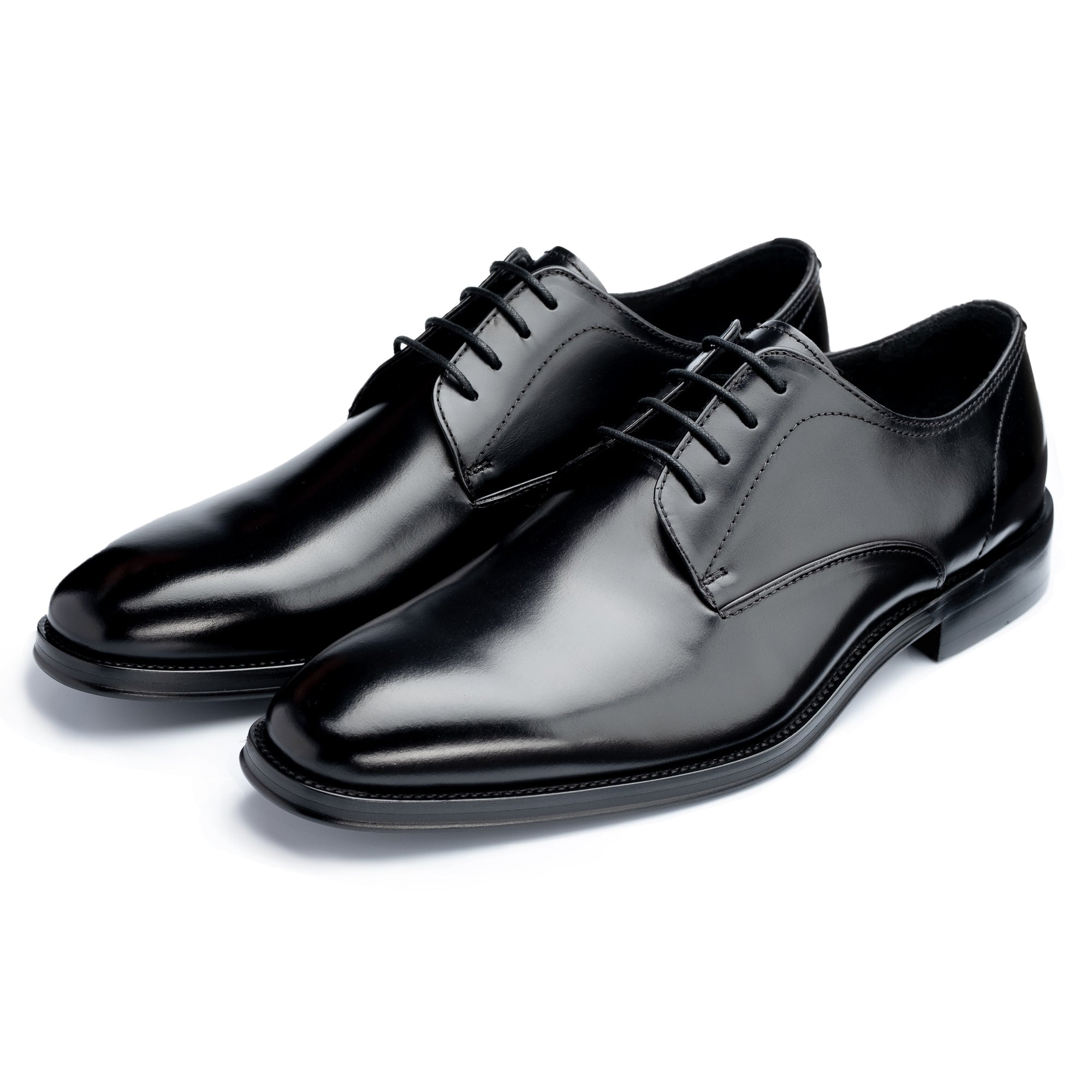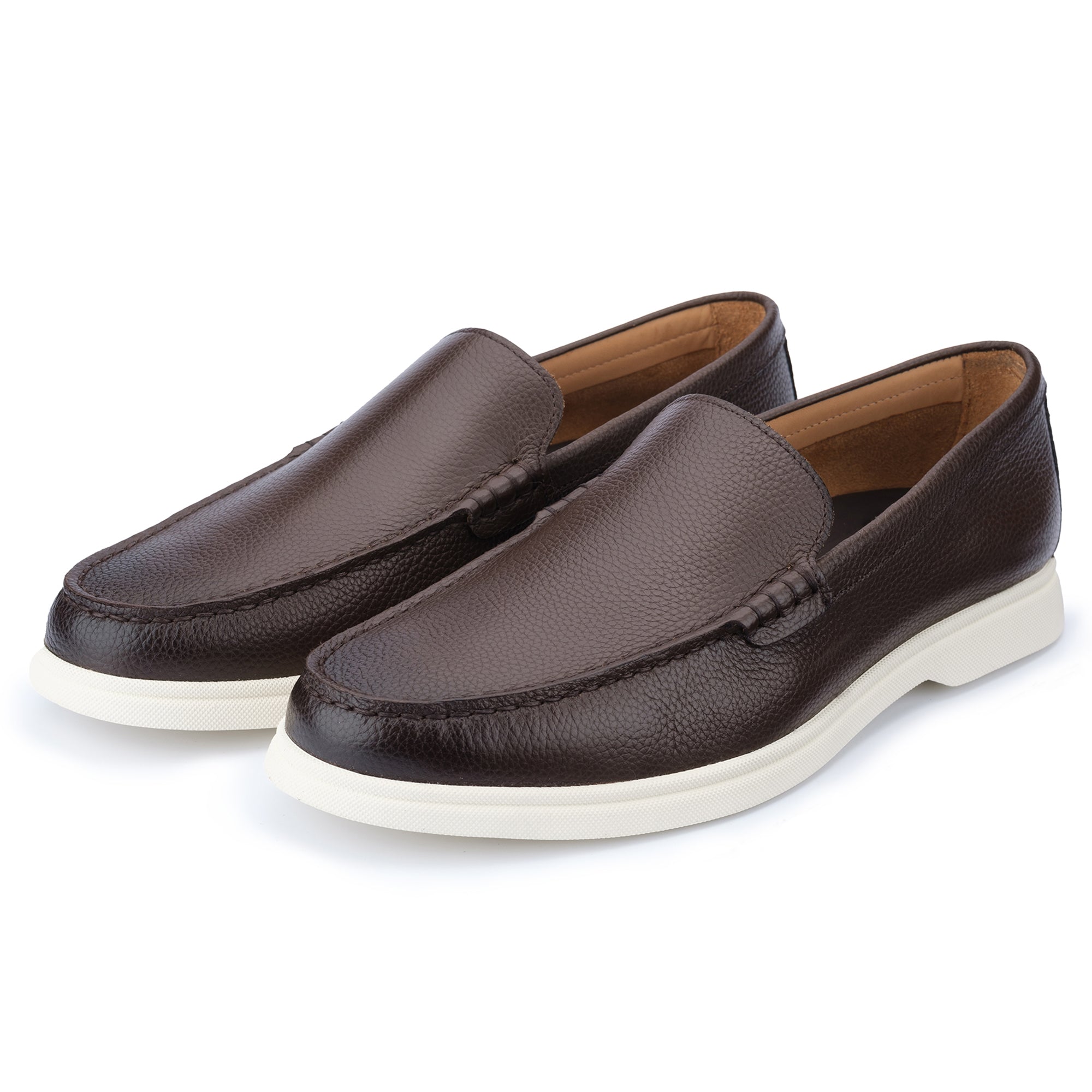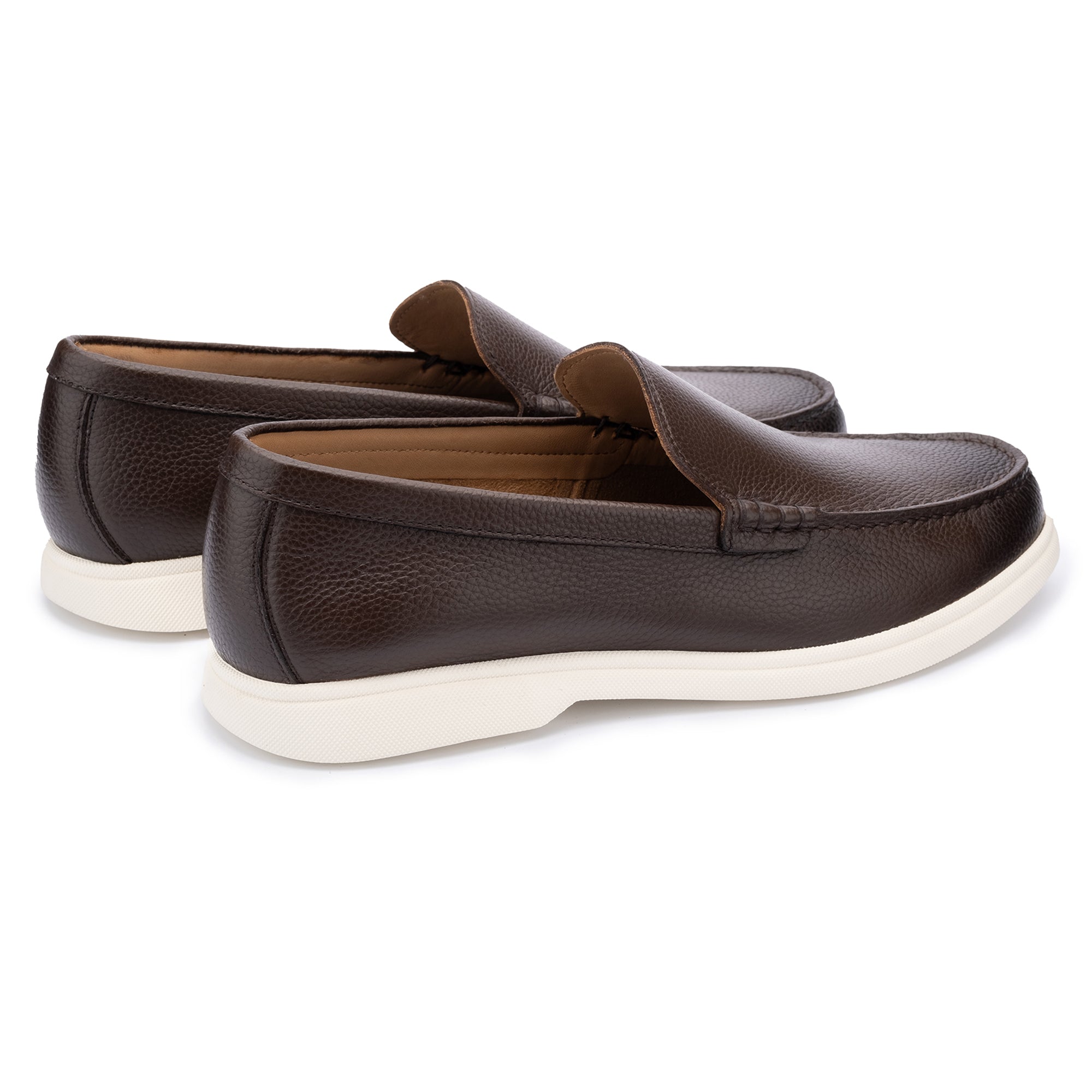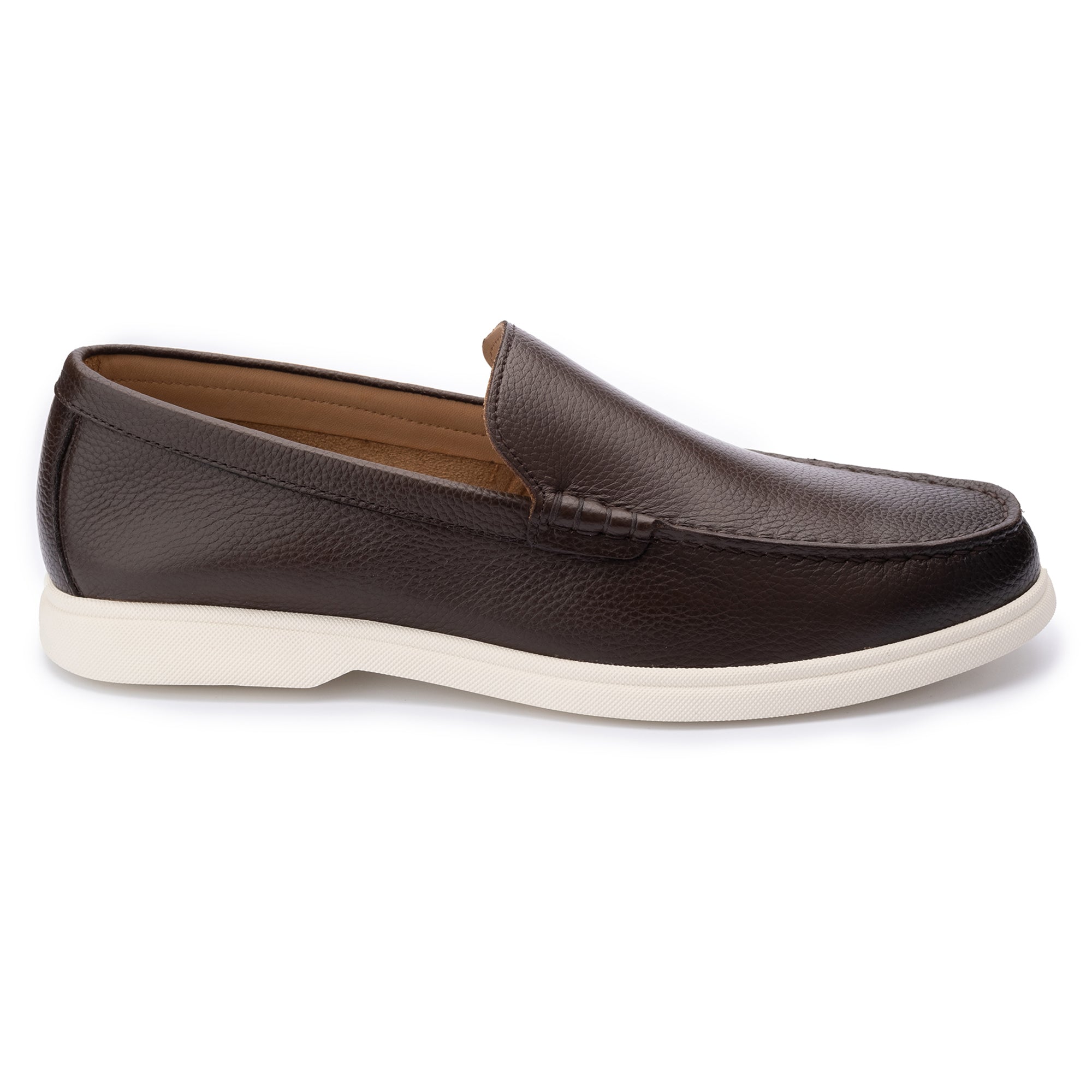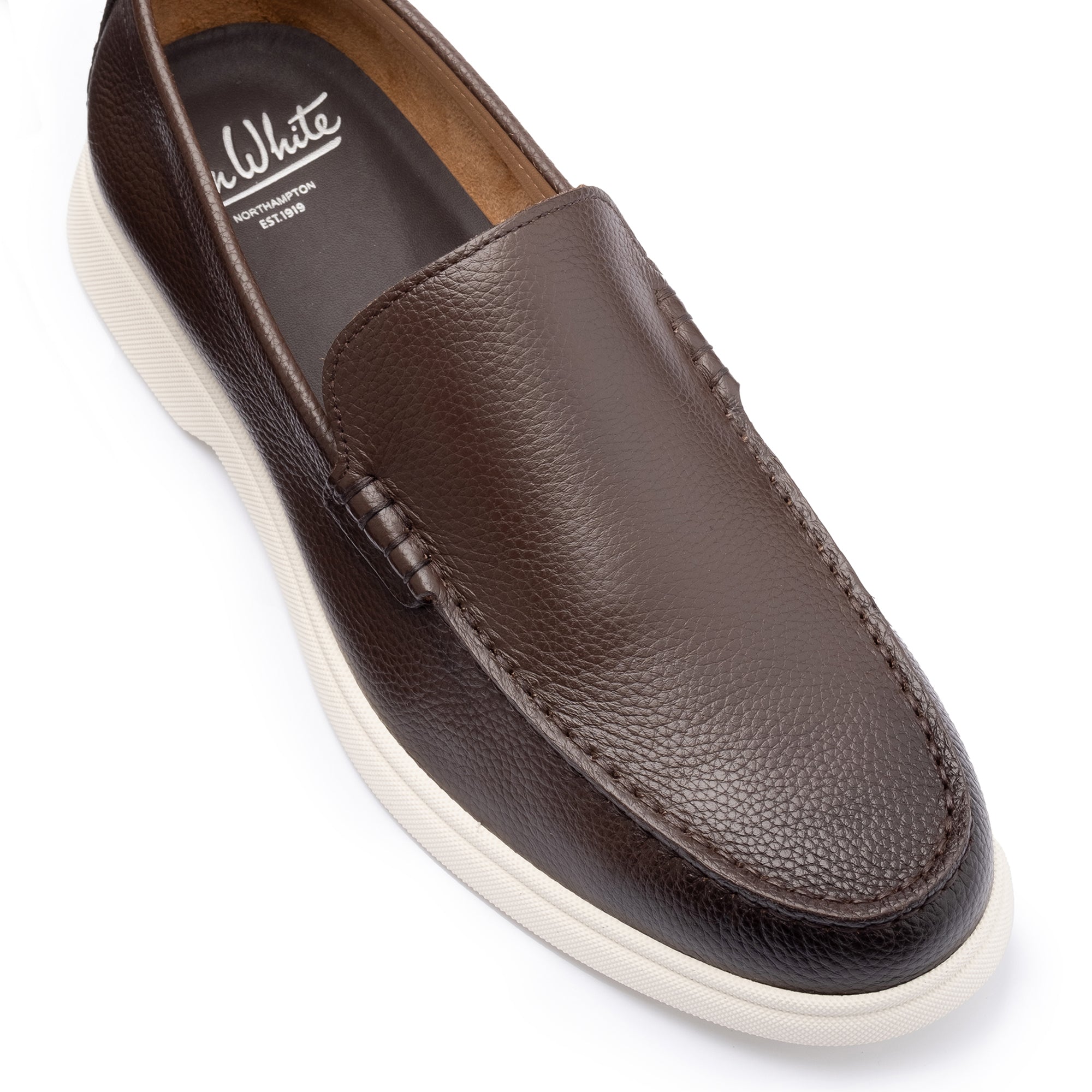

The Complete Guide to Leather Sneakers for Men
Quick Answer: A leather sneaker is a casual lace-up shoe that uses genuine leather — rather than canvas, mesh, or synthetic material — as its primary upper. Leather sneakers last significantly longer than fabric alternatives, develop a refined patina with age, and occupy the rare wardrobe position between a trainer and a smart-casual shoe. One well-chosen pair in white, tan, or navy will carry you through more situations than most men expect.
In This Guide
- What Makes a Leather Sneaker Different from a Regular Trainer?
- What Types of Leather Are Used in Sneakers?
- How Do You Choose a Quality Leather Sneaker?
- How Do Leather Sneakers Fit Into a British Wardrobe?
- How Do You Care for Leather Sneakers?
- The Hemsworth Leather Sneaker
- Related Guides
- TL;DR
- Frequently Asked Questions
Most men own trainers and dress shoes. Fewer own the piece that sits between them. The leather sneaker fills that gap — a shoe built to the casual silhouette of a trainer, finished in genuine leather that polishes, ages, and endures. It's not a compromise. It's a considered choice.
This guide covers everything you need to know: what separates quality leather sneakers from inferior alternatives, how to maintain them, which colours work hardest, and how to get the most from a pair that's built to last.
What Makes a Leather Sneaker Different from a Regular Trainer?
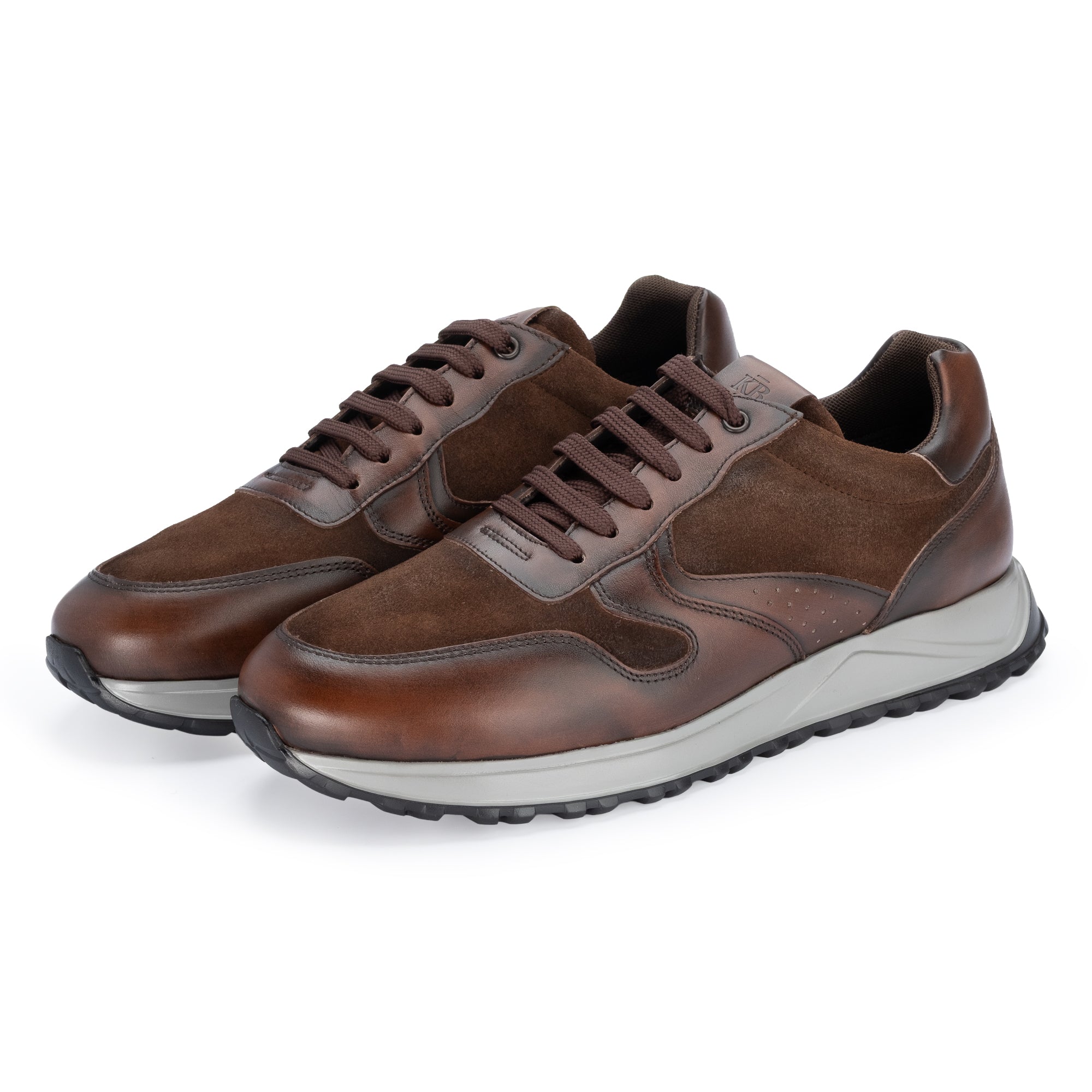
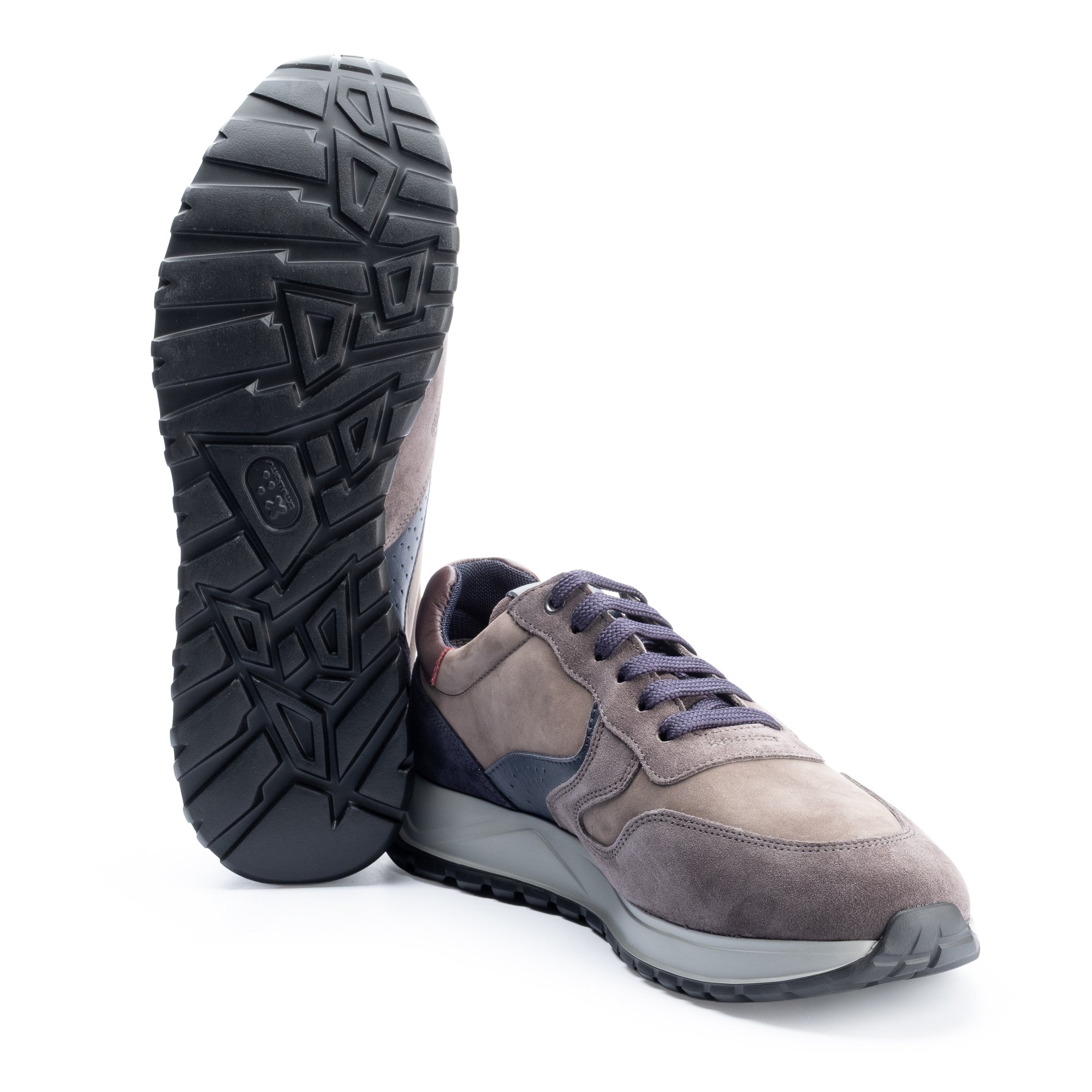
A leather sneaker is defined by its upper material. Where a standard trainer uses canvas, knit fabric, or synthetic mesh, a leather sneaker uses genuine animal hide — most commonly full-grain calf leather, corrected-grain leather, or nubuck. That material distinction isn't cosmetic.
Leather regulates temperature, moulds to the foot over time, and builds a patina that fabric simply can't replicate. It also responds to care in a way synthetics don't. According to the Leather Conservation Centre, properly maintained leather footwear can remain in active service for ten years or more — compared to the 12–18 month lifespan typical of fabric trainers at similar wear frequency.
You're not paying more for a leather sneaker. You're paying less over time.
What Types of Leather Are Used in Sneakers?
Leather type determines how a sneaker ages, how it responds to care, and how long it endures. The main options differ significantly in both performance and character:
| Leather Type | Appearance | Durability | Care Demand | Best For |
|---|---|---|---|---|
| Full-grain | Natural grain, ages with character | Highest | Moderate | Long-term investment, daily wear |
| Corrected-grain | Uniform, buffed finish | Good | Low | Consistent appearance, easier upkeep |
| Nubuck | Velvety, fine-grained texture | Moderate | Higher | Texture contrast, dry-season wear |
| Suede | Soft, brushed surface | Lower | High | Style-led choices, dry conditions |
Full-grain is the benchmark for a leather sneaker you intend to wear regularly. It's the outermost layer of the hide — the tightest fibre structure — and it develops character rather than deteriorating over time. For a deeper look at reading leather quality, our guide to full-grain vs corrected-grain leather and how to spot quality in men's shoes covers the subject thoroughly.
How Do You Choose a Quality Leather Sneaker?
The leather sneaker market is large and inconsistent. Knowing what to inspect separates a shoe that lasts a decade from one that fails within two seasons.
What Should You Check in the Upper?
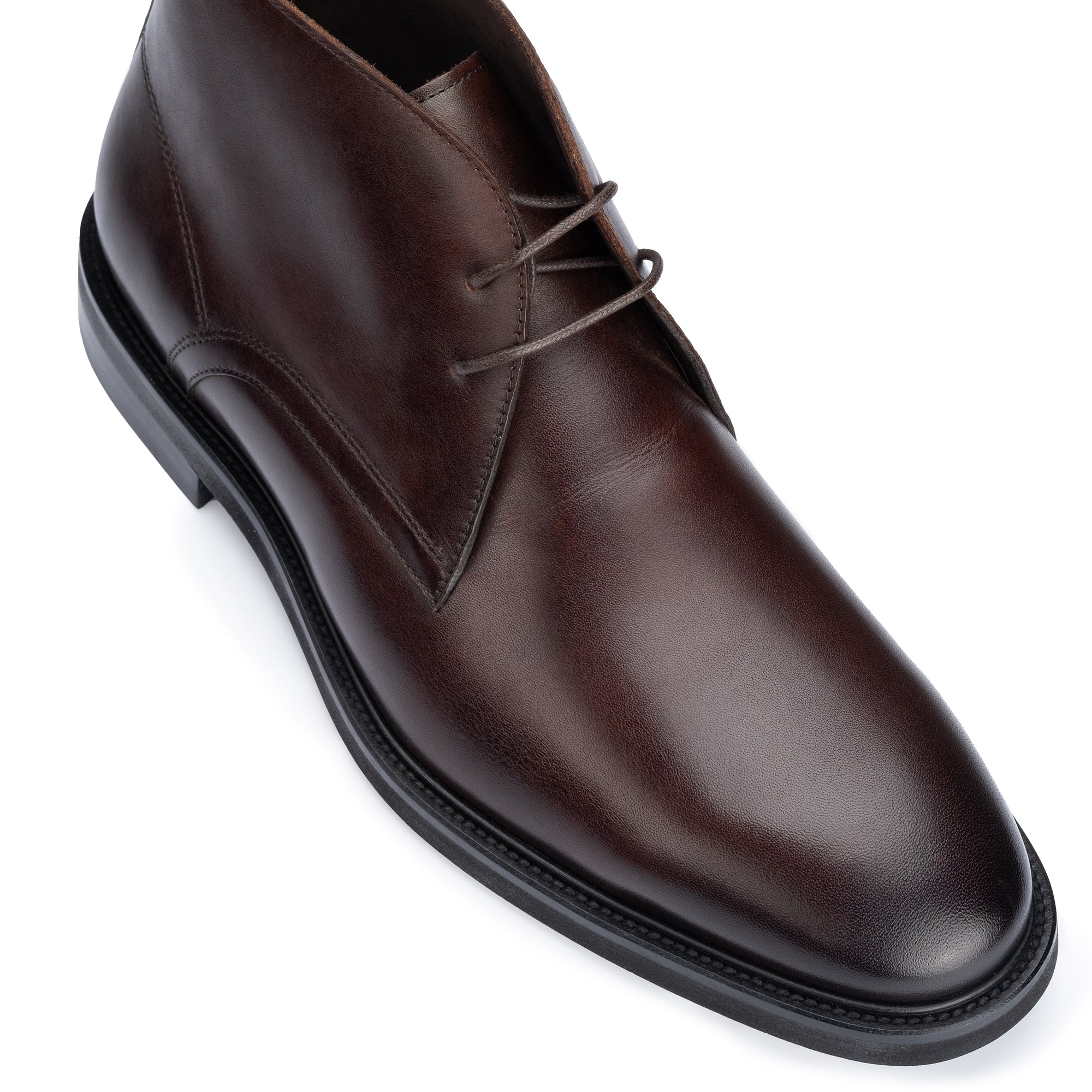
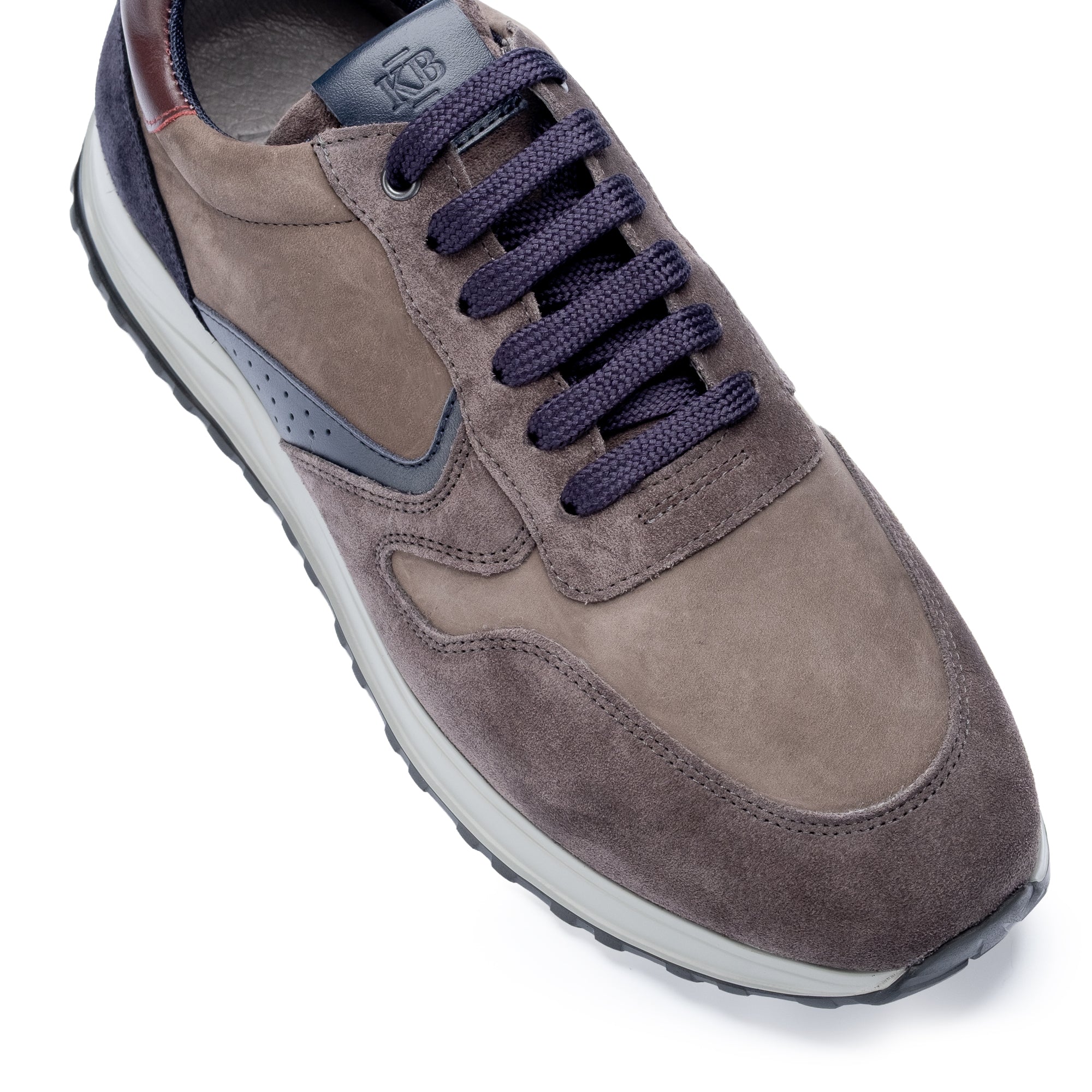
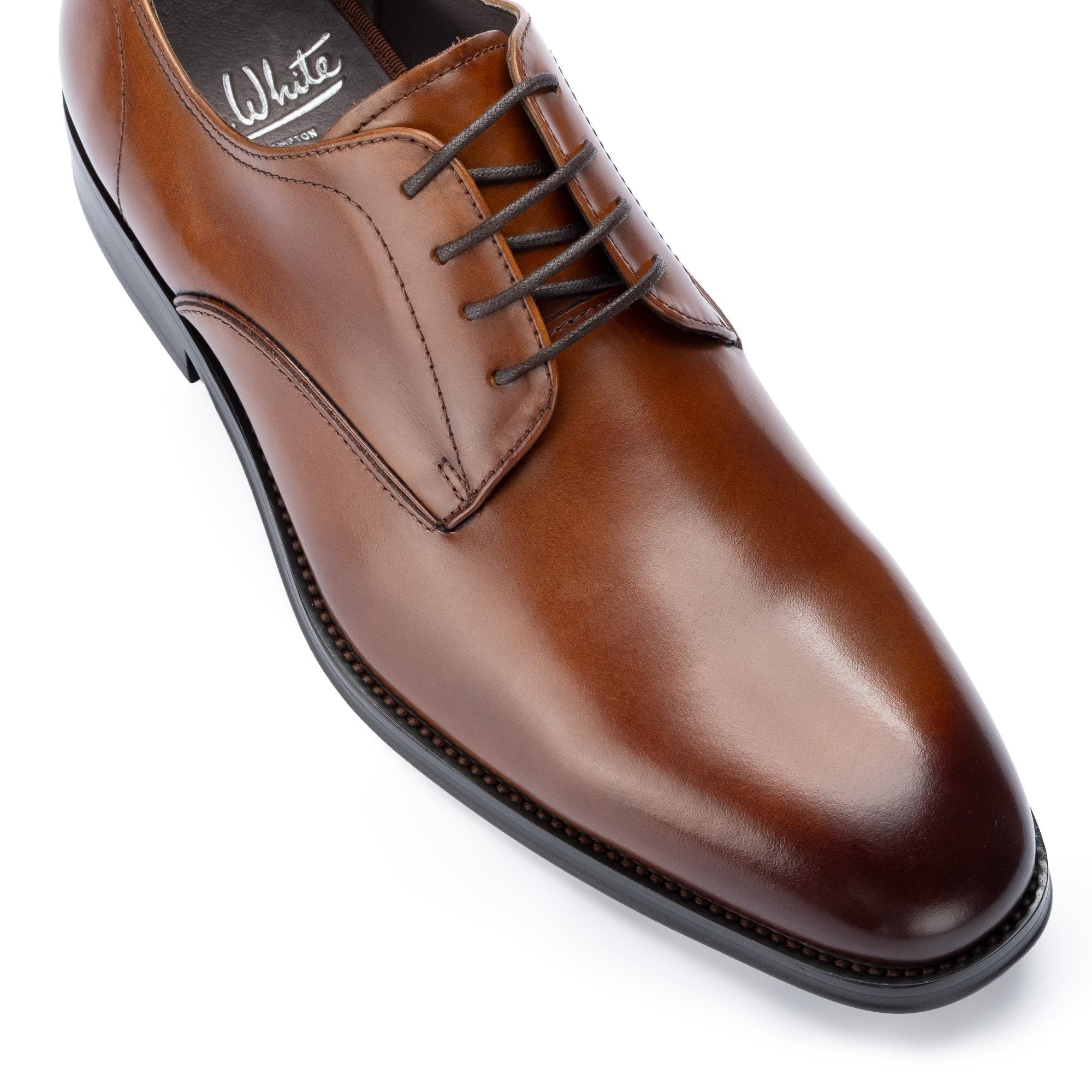
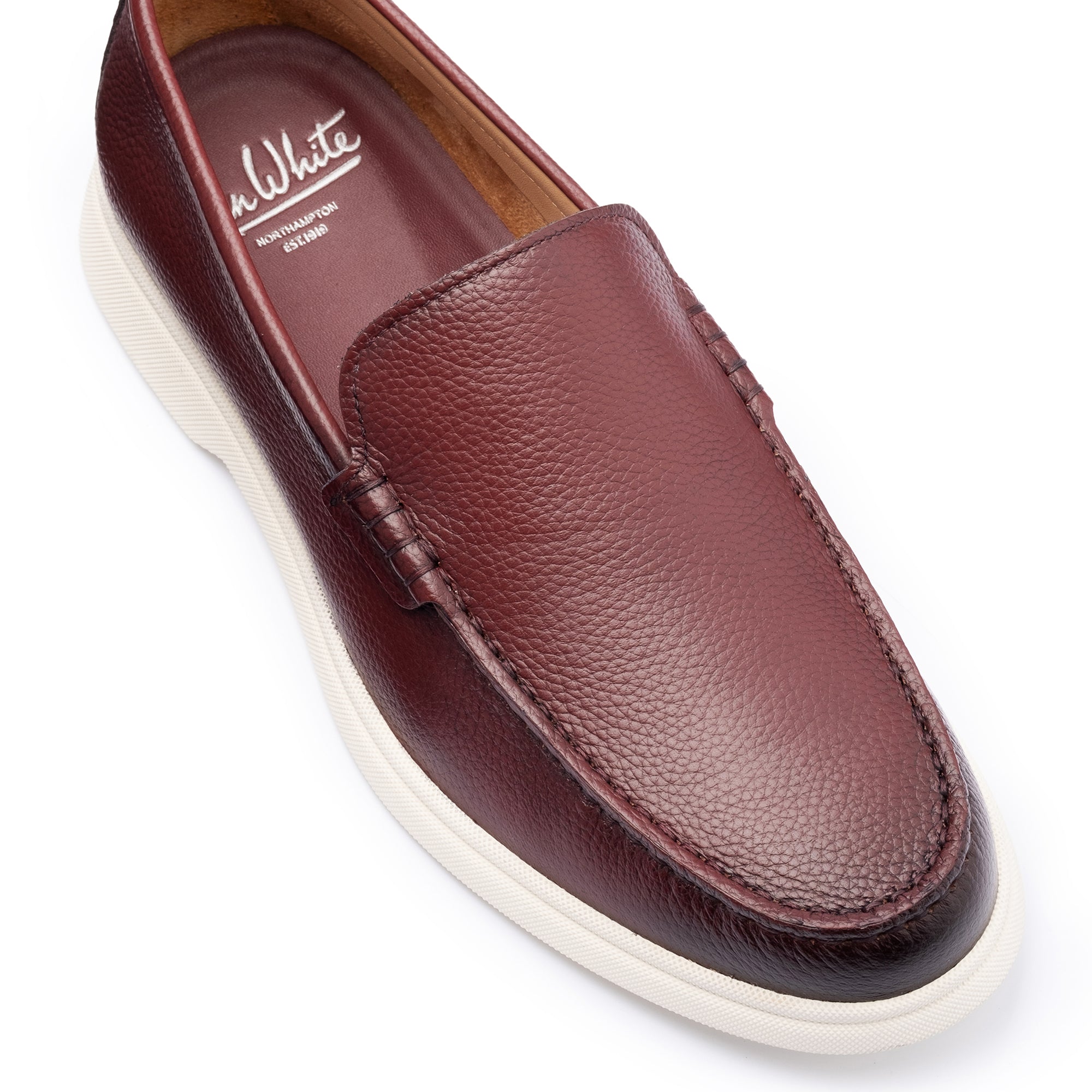
Inspect the grain of the leather closely. Full-grain has subtle natural variation and visible pore structure. Corrected-grain is flatter and more uniform — acceptable, but a grade below full-grain in longevity. What you're avoiding is bonded leather or PU-coated fabric, which is layered material rather than genuine hide. It peels, it doesn't condition, and it can't be restored.
Check how the upper meets the sole. The bond should be clean and even, with no visible gaps along the welt line. Press the heel counter firmly — it should be rigid and spring back immediately. A soft, collapsible heel counter signals poor construction regardless of how well the leather looks.
What Sole Construction Is Standard in Leather Sneakers?
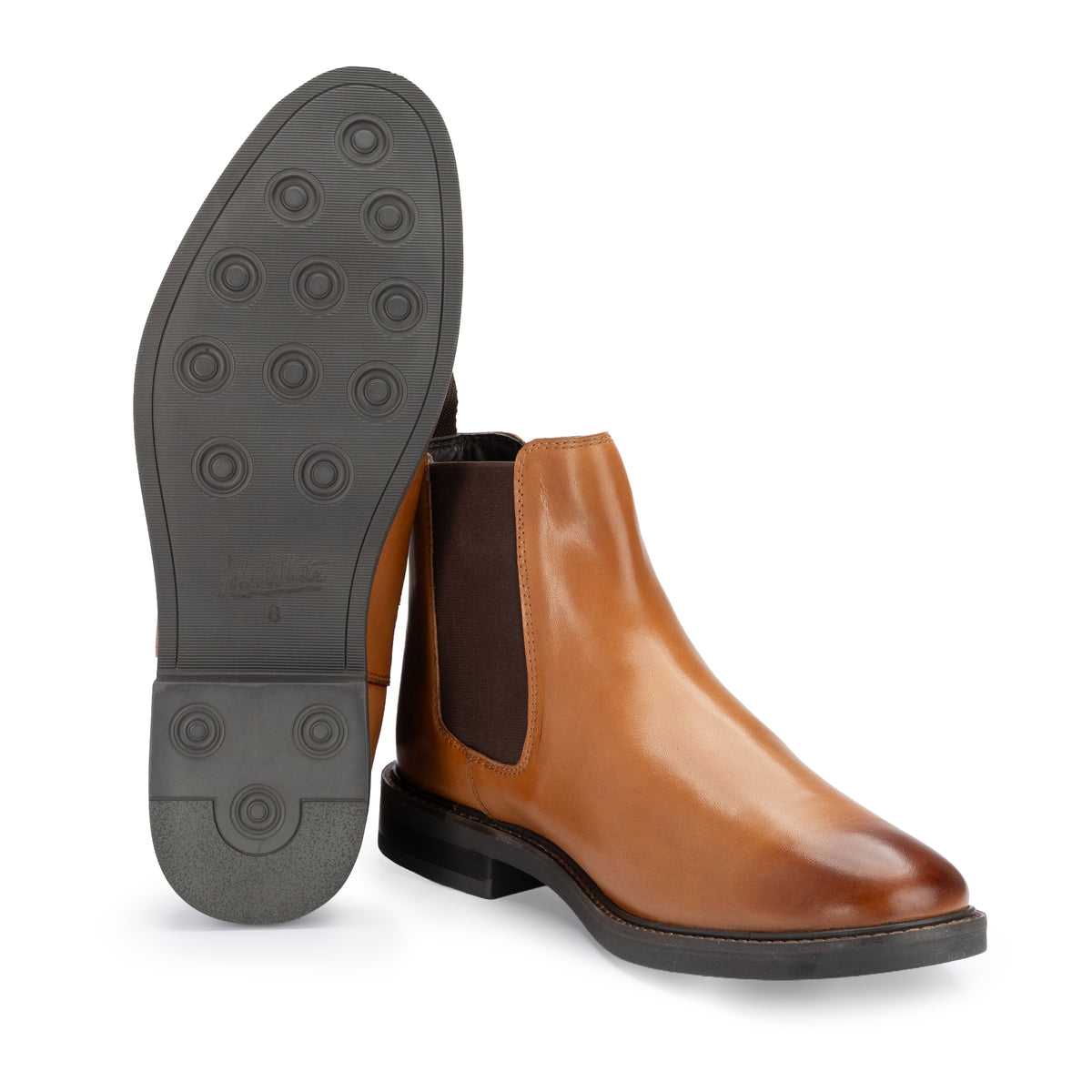
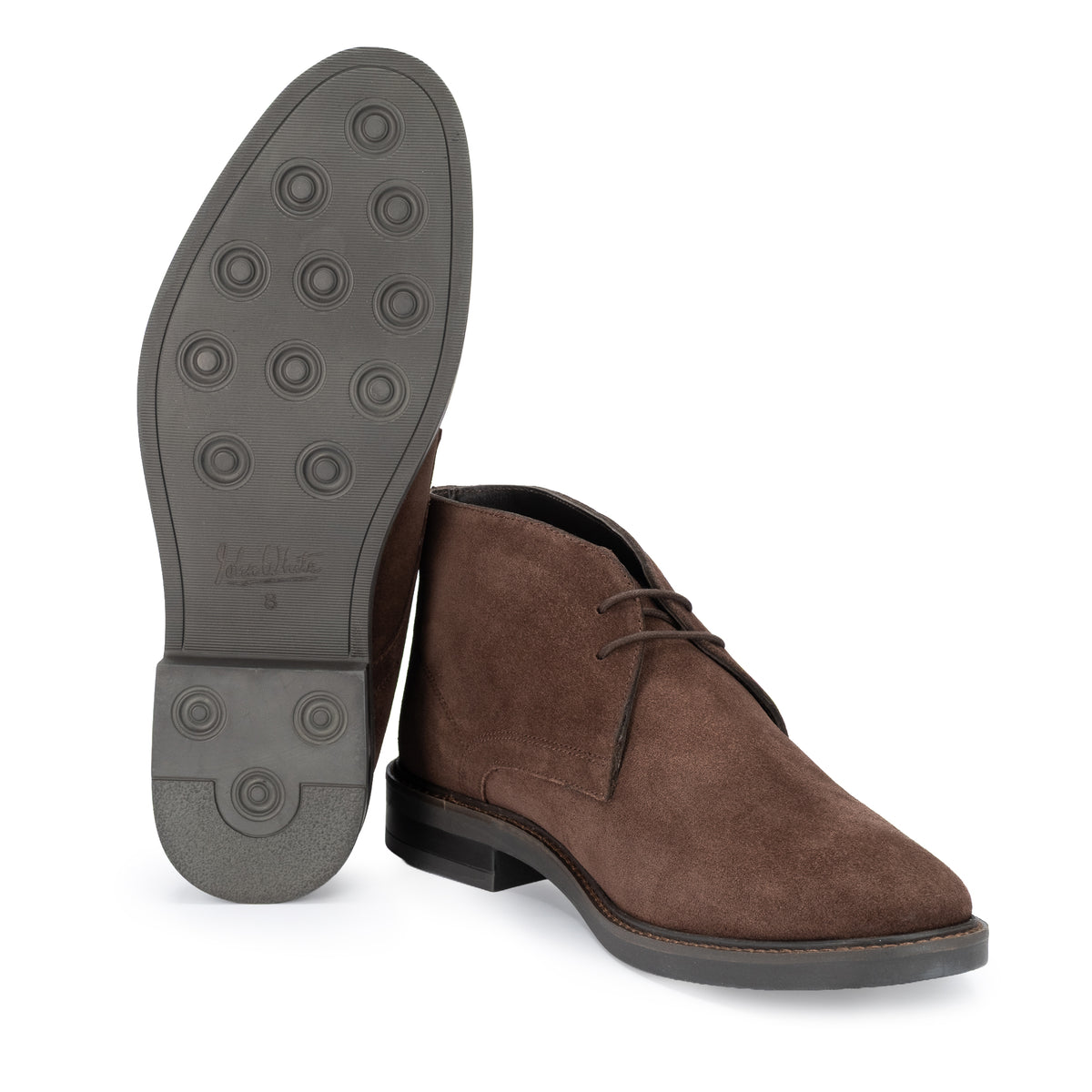
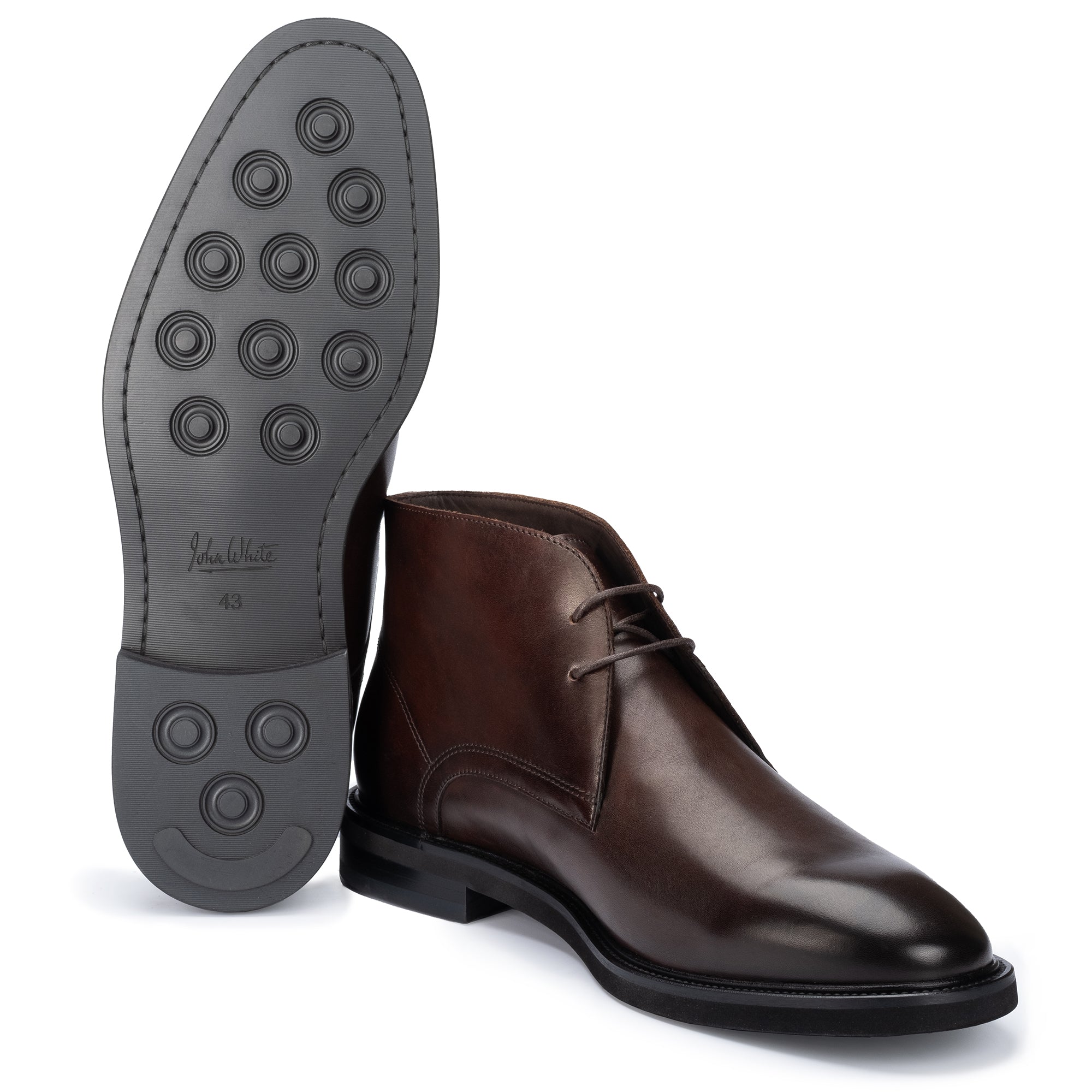
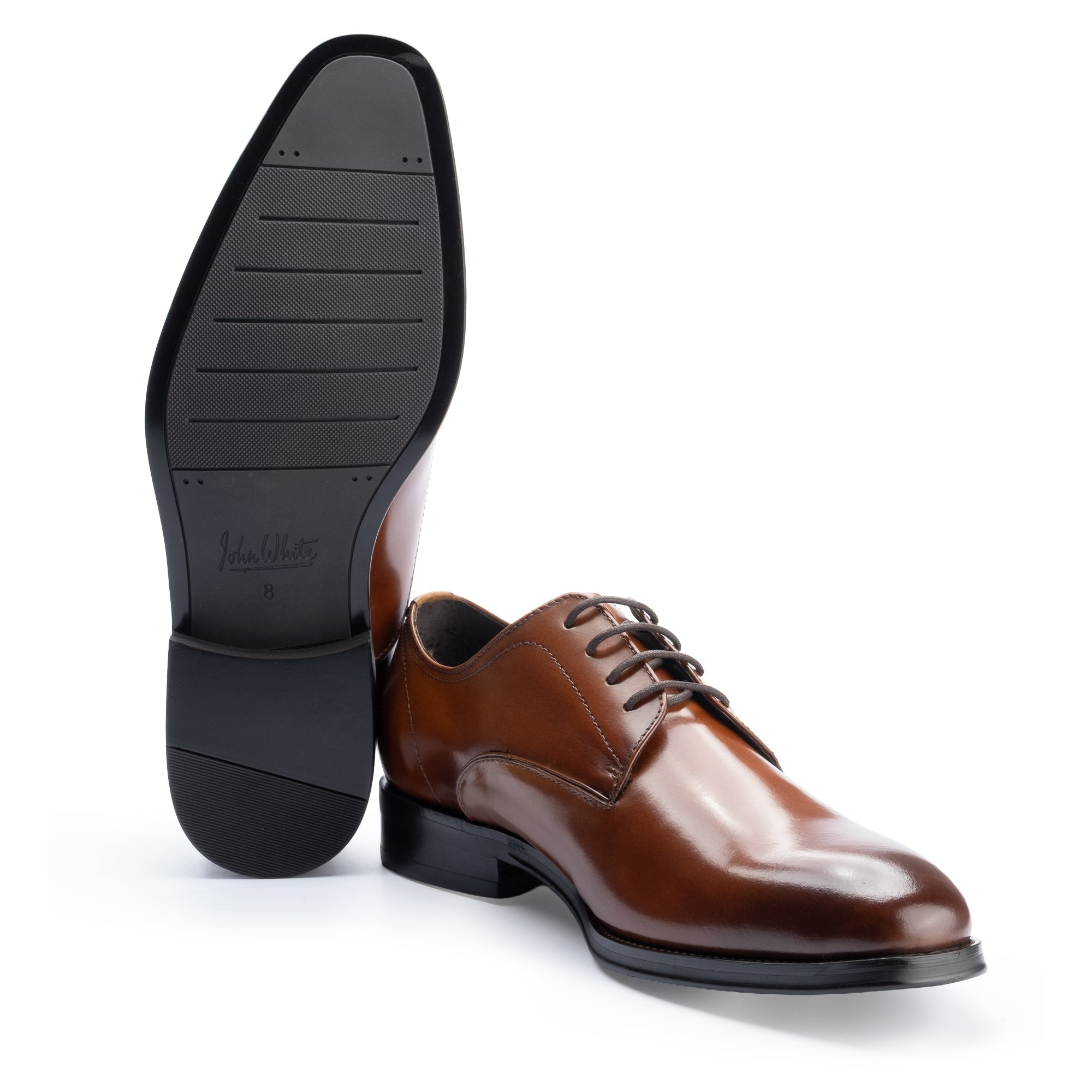
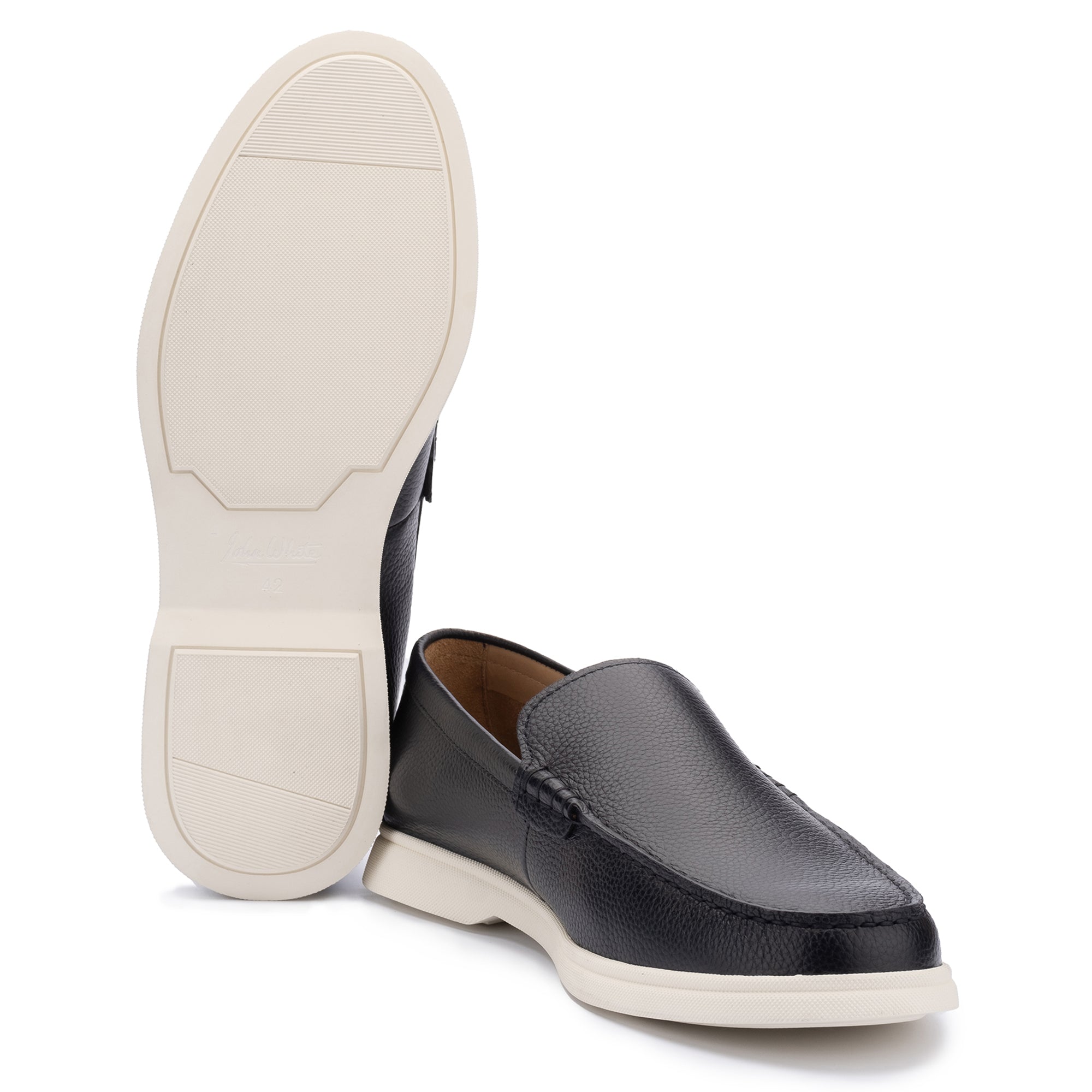
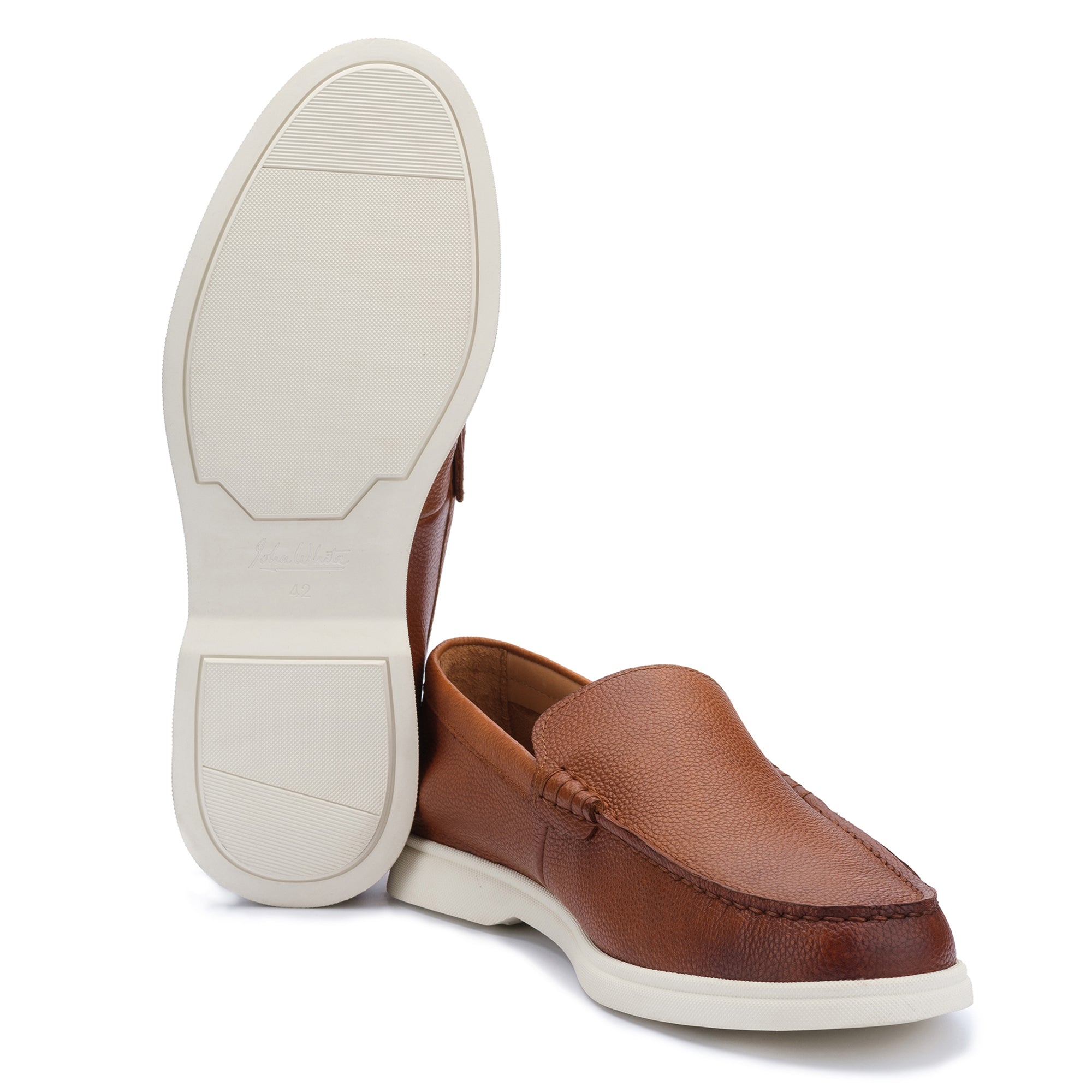
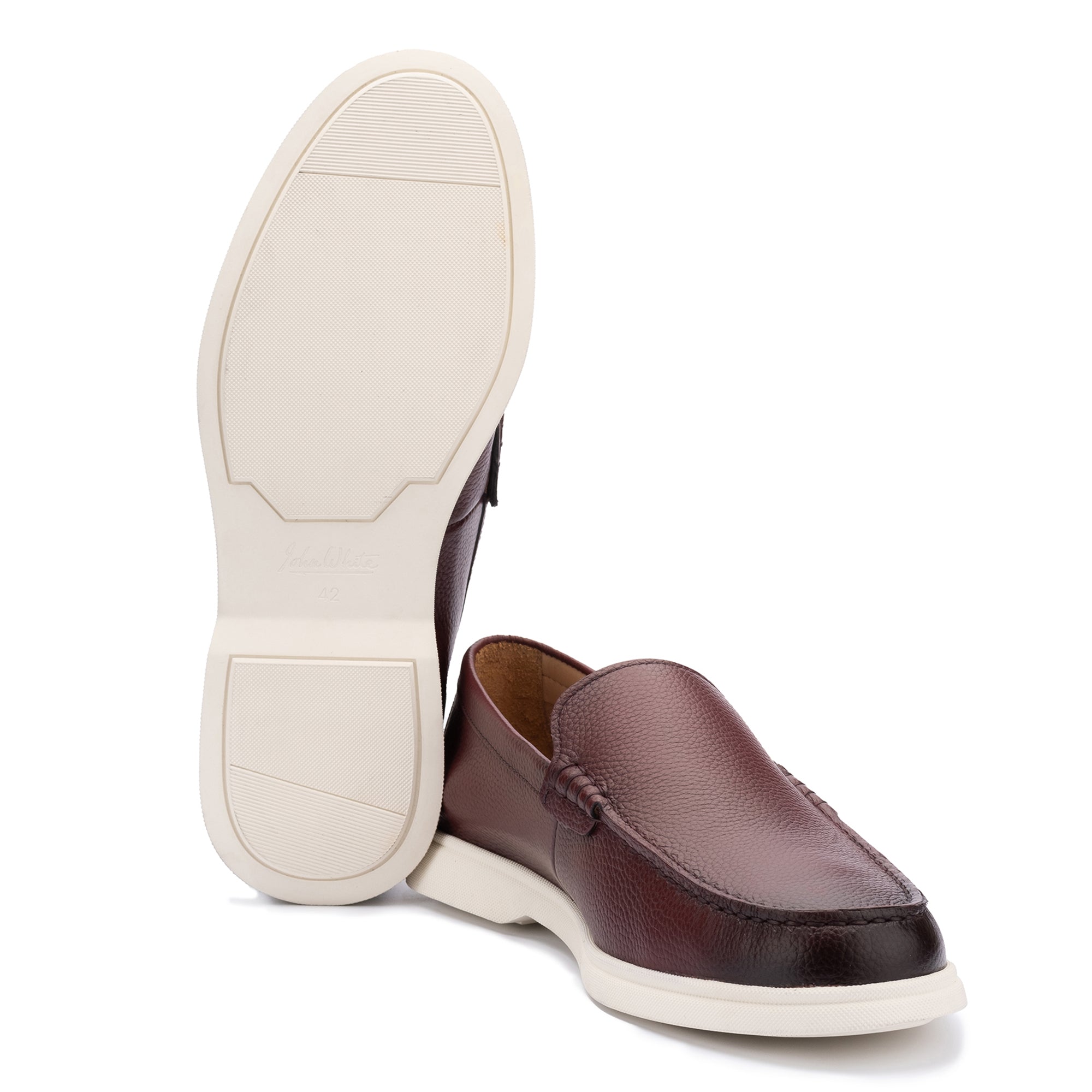
Most leather sneakers use cemented construction — the upper is bonded to a rubber or EVA sole using high-strength adhesive. This is the standard for casual footwear globally, and it produces a lighter, more flexible shoe suited to the demands of everyday casual wear.
The Society of Master Shoe Repairers notes that the quality of the adhesive bond — rather than the construction method itself — is the determining factor in how long a cemented sole lasts. A well-executed cemented construction, using premium bonding agents, is entirely appropriate for a leather sneaker. For casual footwear, cemented construction is the correct choice — what matters is the quality of materials and the standard of finish, not the joining method.
Which Colour Should You Buy First?
White is the most versatile starting point. A clean white leather sneaker pairs with everything from jeans to tailored chinos to an unstructured blazer. It shows wear readily, which makes maintenance non-negotiable — but that care habit keeps the shoe looking sharp and extends its life considerably.
Tan is the second-most useful choice. It reads warmer than white, works particularly well with navy, grey, and earth tones, and develops a deeper character with conditioning over time. Navy is the bolder option — polished and distinctive, with more specific outfit requirements but a strong return for men who dress in a consistent palette.
How Do Leather Sneakers Fit Into a British Wardrobe?
British heritage footwear houses — Loake, Barker, Church's, Crockett & Jones — built their reputations on formal and smart construction. John White Shoes, established in Northamptonshire in 1919, has always understood that a well-curated wardrobe needs footwear across every register. The leather sneaker serves the casual end without surrendering the standards that define quality British footwear.
The occasions where a leather sneaker earns its place:
- Smart-casual: with tailored trousers, chinos, or dark denim and a clean overshirt
- Business casual: with an unstructured blazer, open-collar shirt, and no tie
- Weekend: with jeans and a casual jacket or minimal outerwear
- Travel: structured enough for a business trip, comfortable enough for a full day on foot
For outfit-specific guidance across all of these scenarios, our dedicated guide to wearing leather sneakers with smart-casual outfits covers every combination in detail.
How Do You Care for Leather Sneakers?
Leather sneakers respond to the same care principles as any quality leather shoe. The main difference is context — casual shoes often encounter more varied conditions than formal pairs, particularly wet pavements, dust, and irregular wear patterns.
What's the Core Maintenance Routine?
- Remove surface dirt — use a soft brush or damp cloth after each wear, paying attention to the sole edge where grime accumulates
- Clean the leather — apply a pH-neutral leather cleaner every few weeks to lift embedded oils and dirt; avoid household detergents, which strip the natural oils from the hide
- Condition regularly — the Leather Conservation Centre recommends conditioning leather footwear in regular rotation every 6–8 weeks; conditioning replenishes natural oils, prevents surface cracking, and maintains suppleness through temperature changes
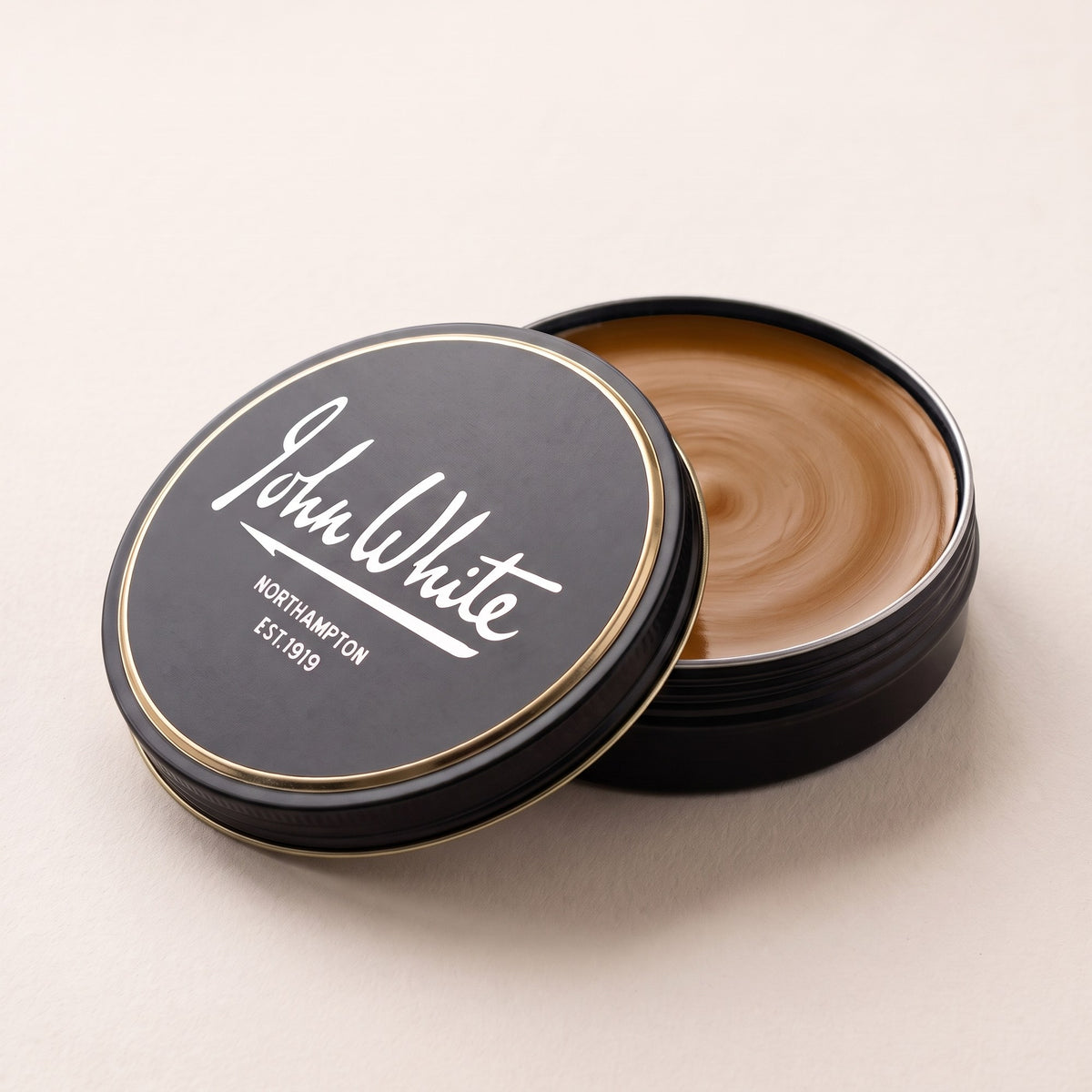
- Protect the surface — a neutral wax polish adds a water-resistant barrier and a restrained sheen; for white leather specifically, use a specialist white shoe cream rather than a tinted polish
- Store correctly — cedar shoe trees maintain form and absorb moisture between wears; keep leather sneakers away from direct sunlight and heat sources, both of which accelerate surface drying
Our complete leather shoe care guide covers the full maintenance process in depth, including how to restore leather that's been neglected.
How Do You Clean White Leather Sneakers Without Causing Damage?
White leather is unforgiving. Marks show immediately, and the wrong cleaning agent can cause yellowing that's very difficult to reverse. Work in small sections with a pH-neutral cleaner and a soft cloth, using light circular motions. Wipe clean with a damp cloth and allow to dry naturally at room temperature — never next to a radiator or in direct sun.
Finish with a thin application of white shoe cream to restore colour depth. Avoid bleach, melamine foam erasers, and all-purpose household cleaners — these remove the leather's protective surface coating and leave it vulnerable. The single most effective habit for white leather sneakers is a brief wipe-down after every wear — two minutes of cleaning prevents the accumulation that requires aggressive intervention later.
The Hemsworth Leather Sneaker
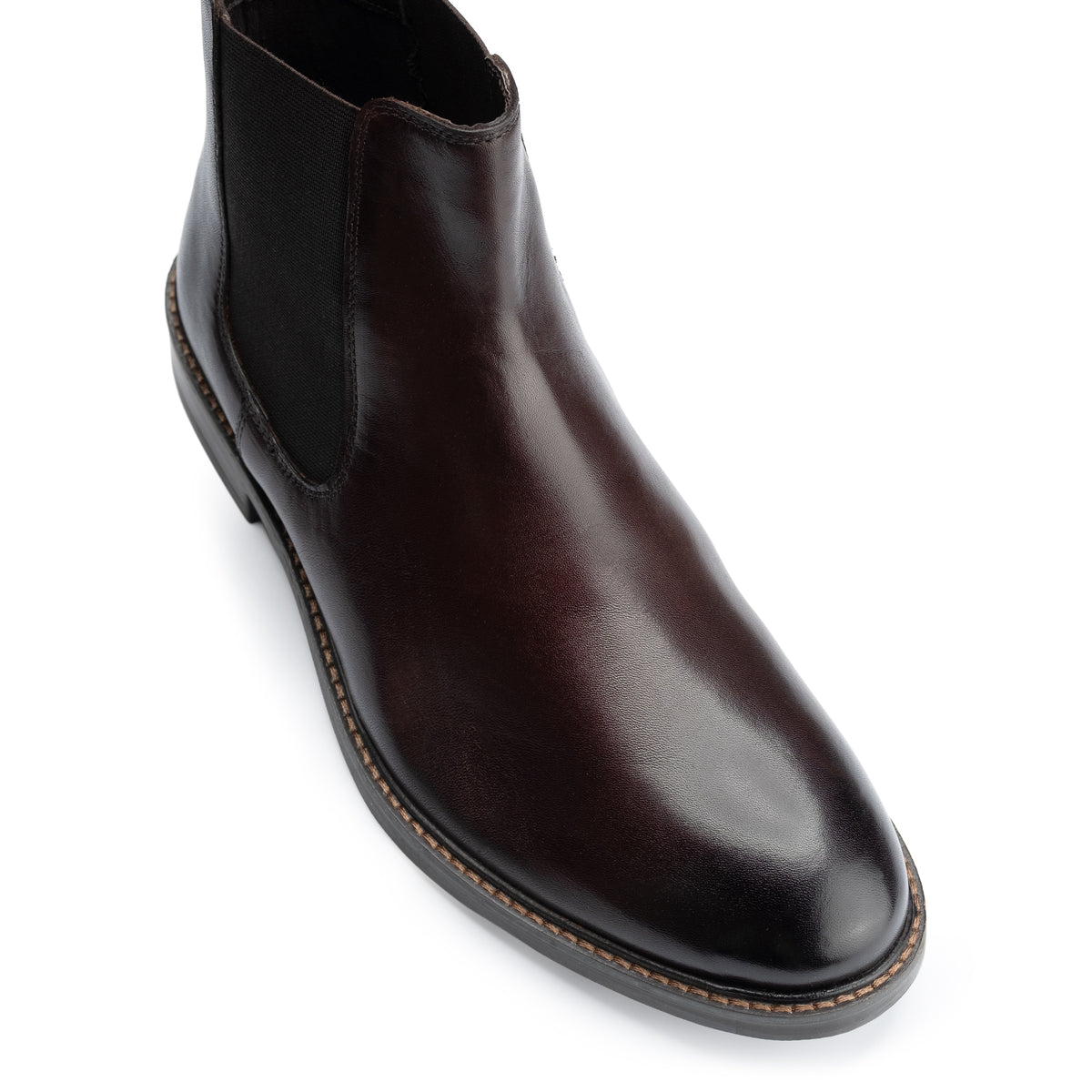
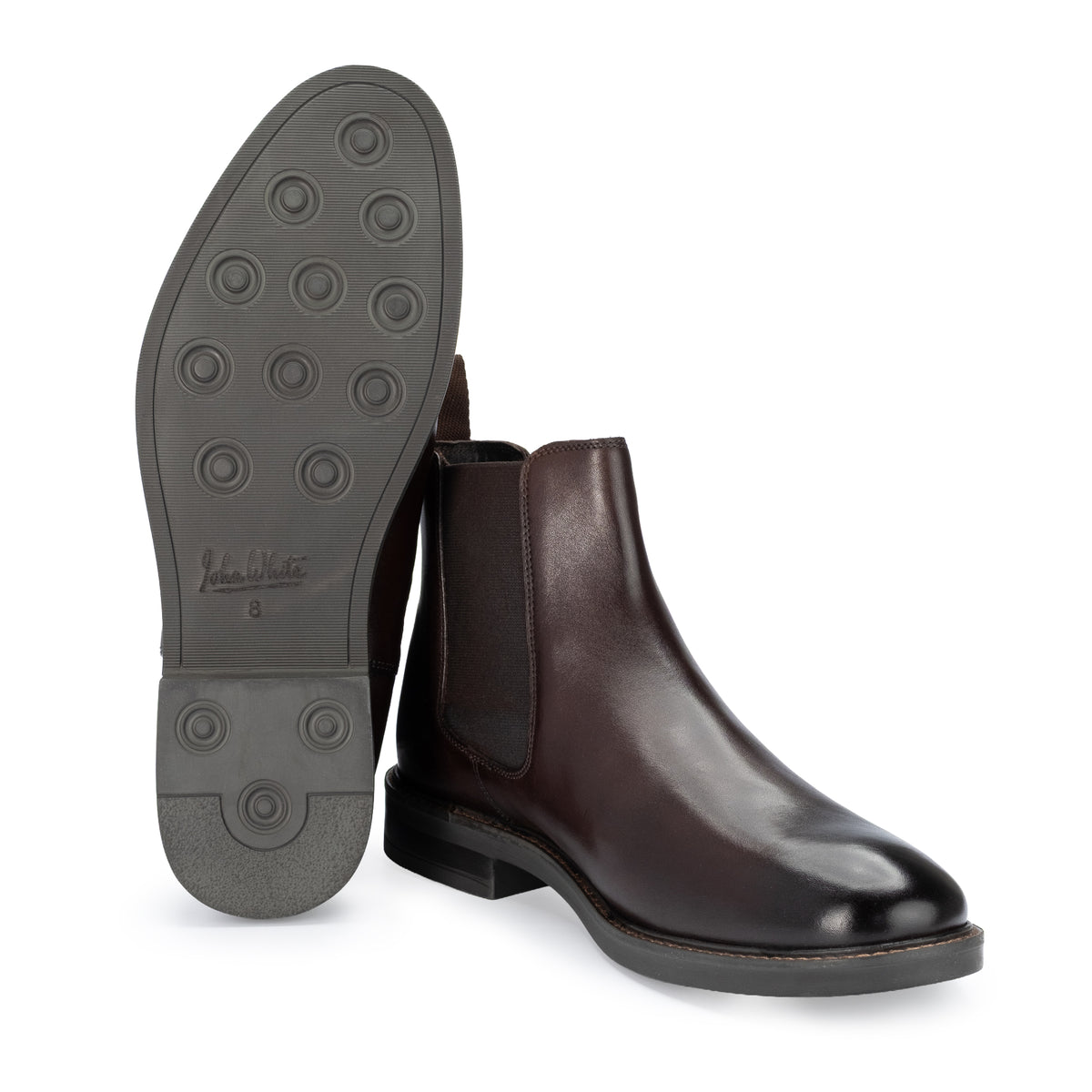
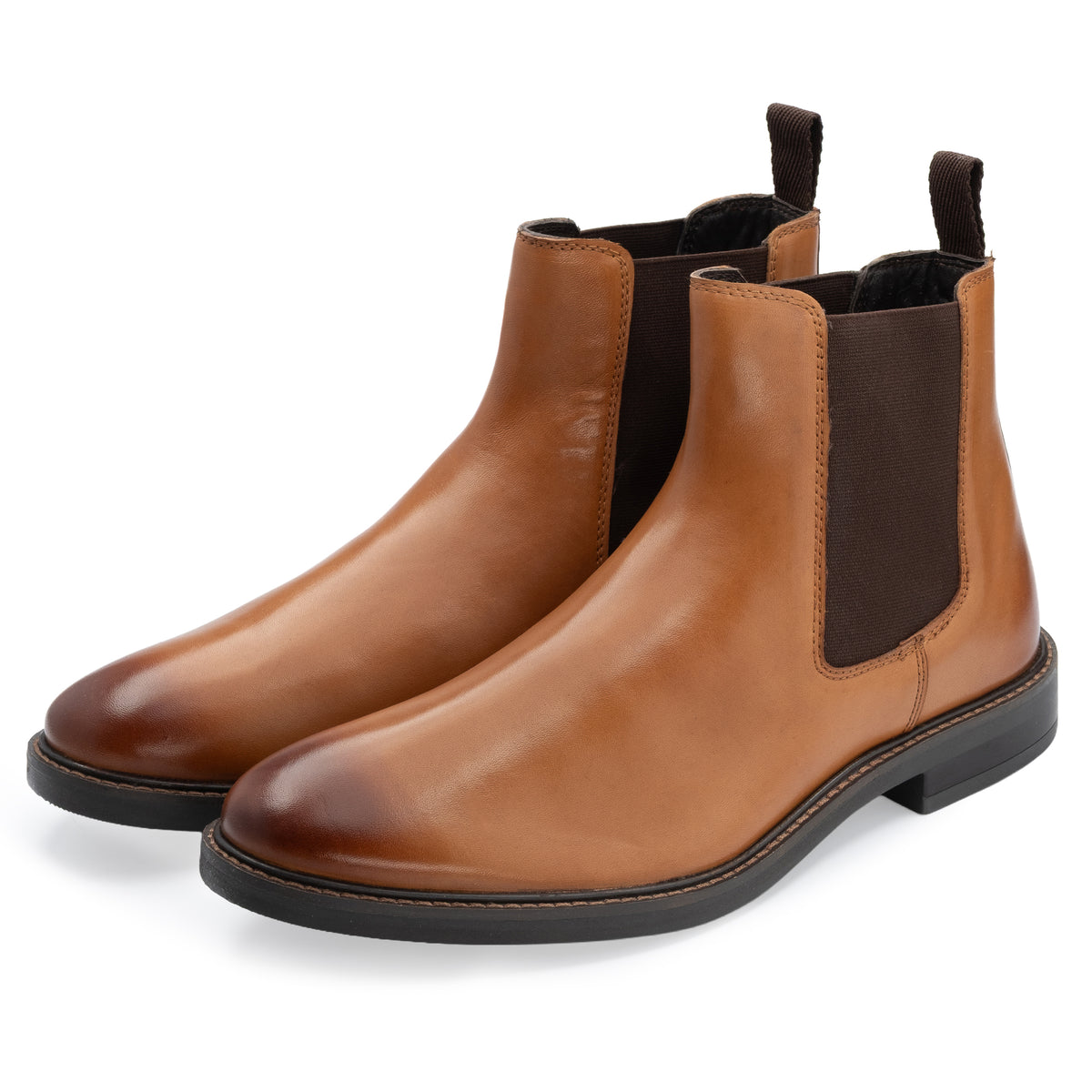
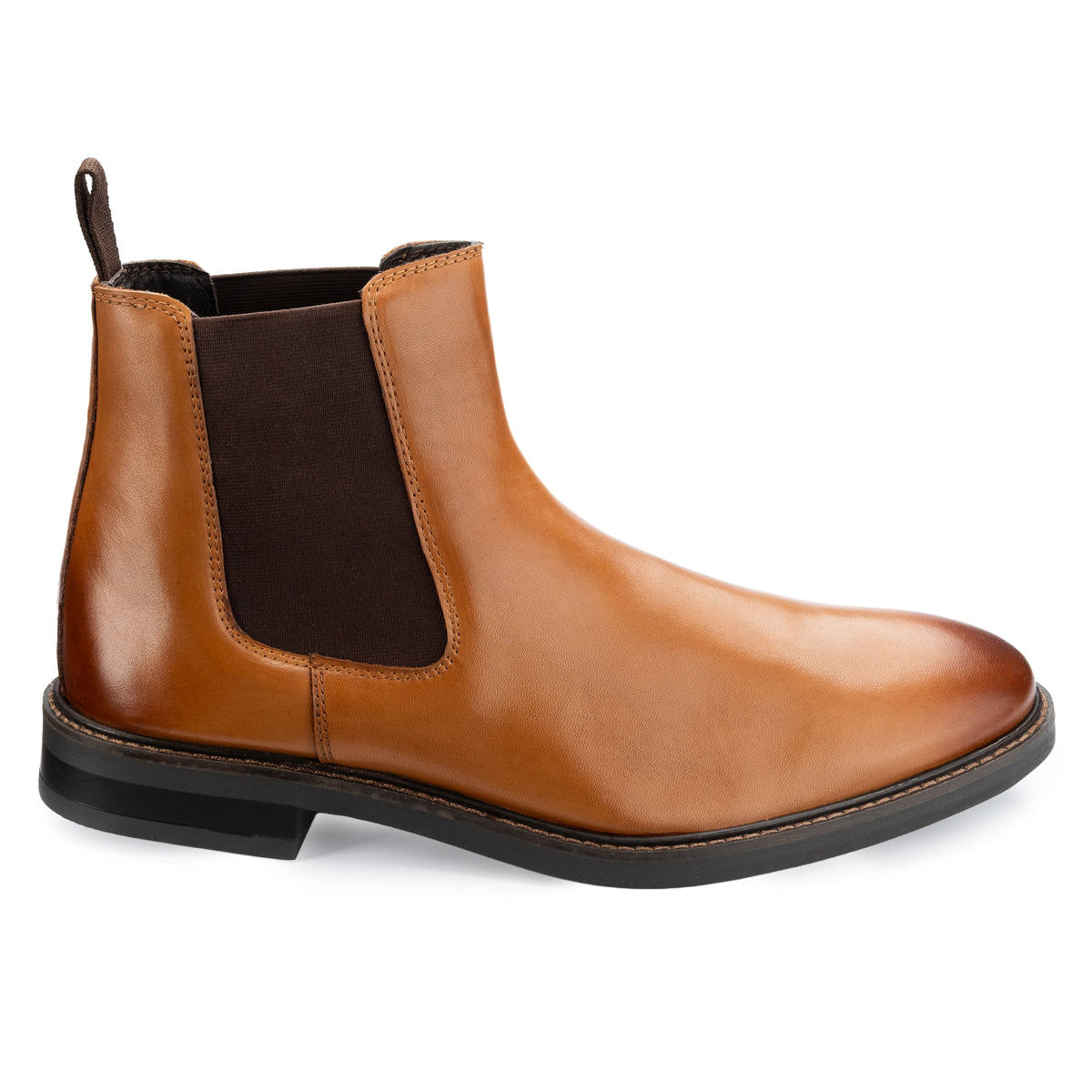
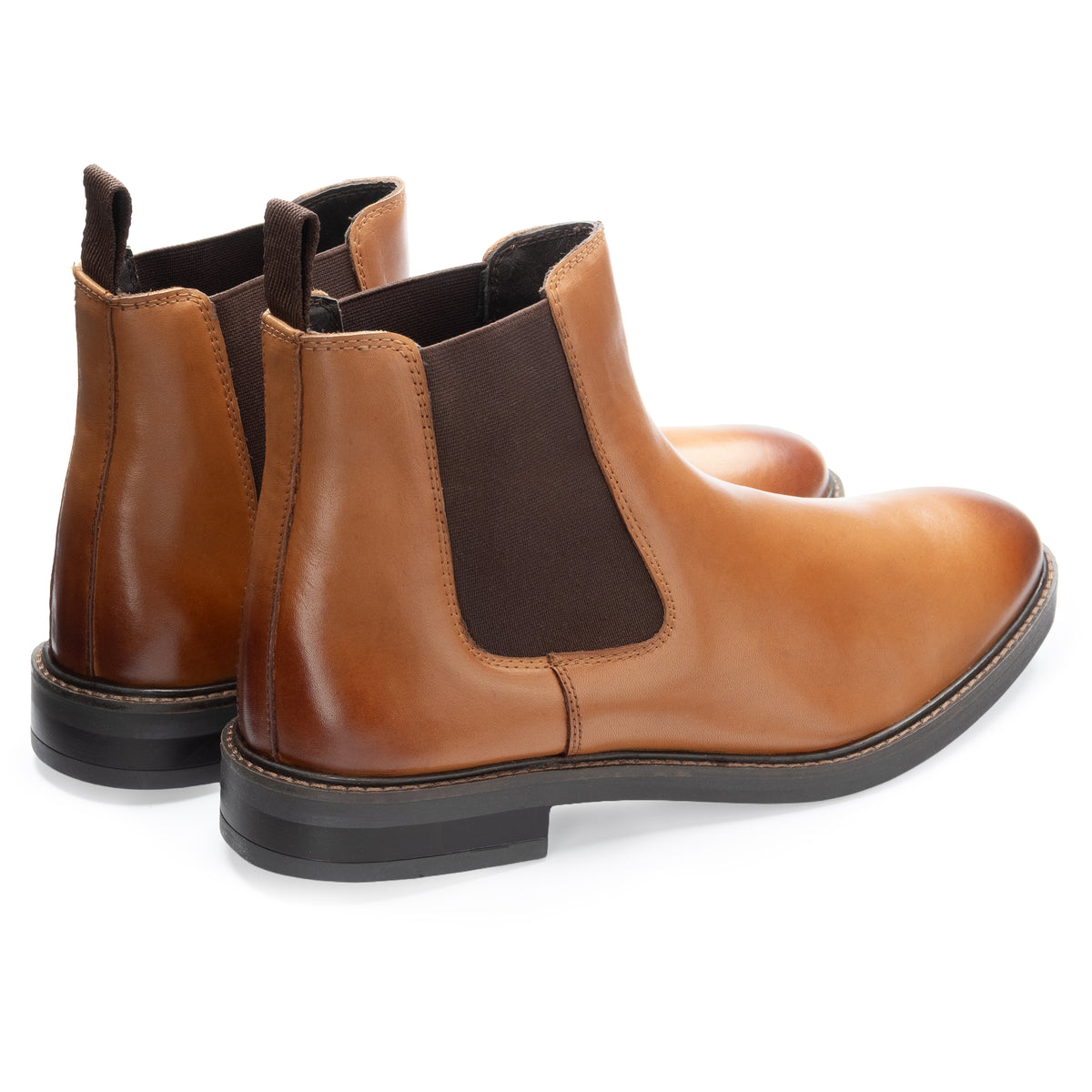
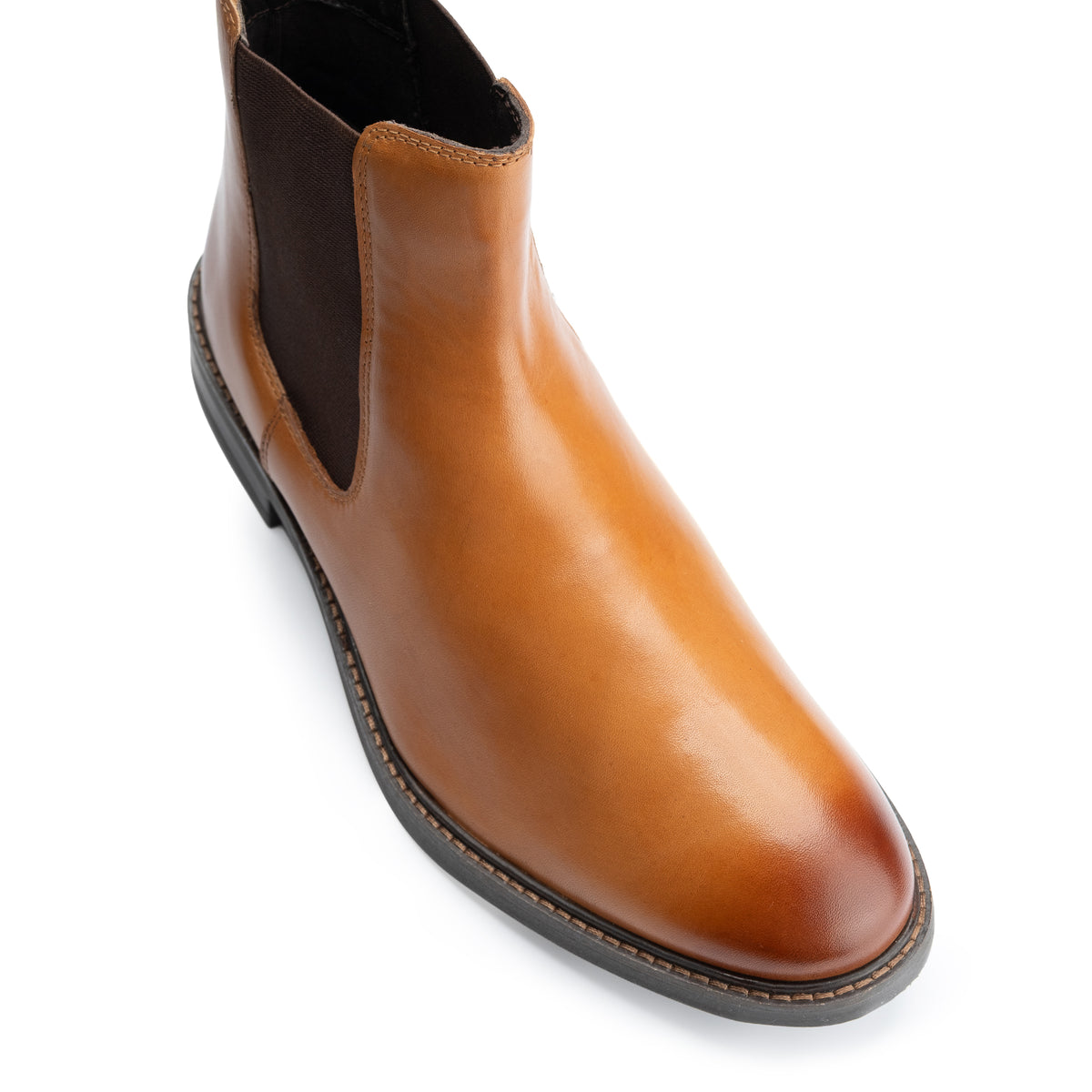
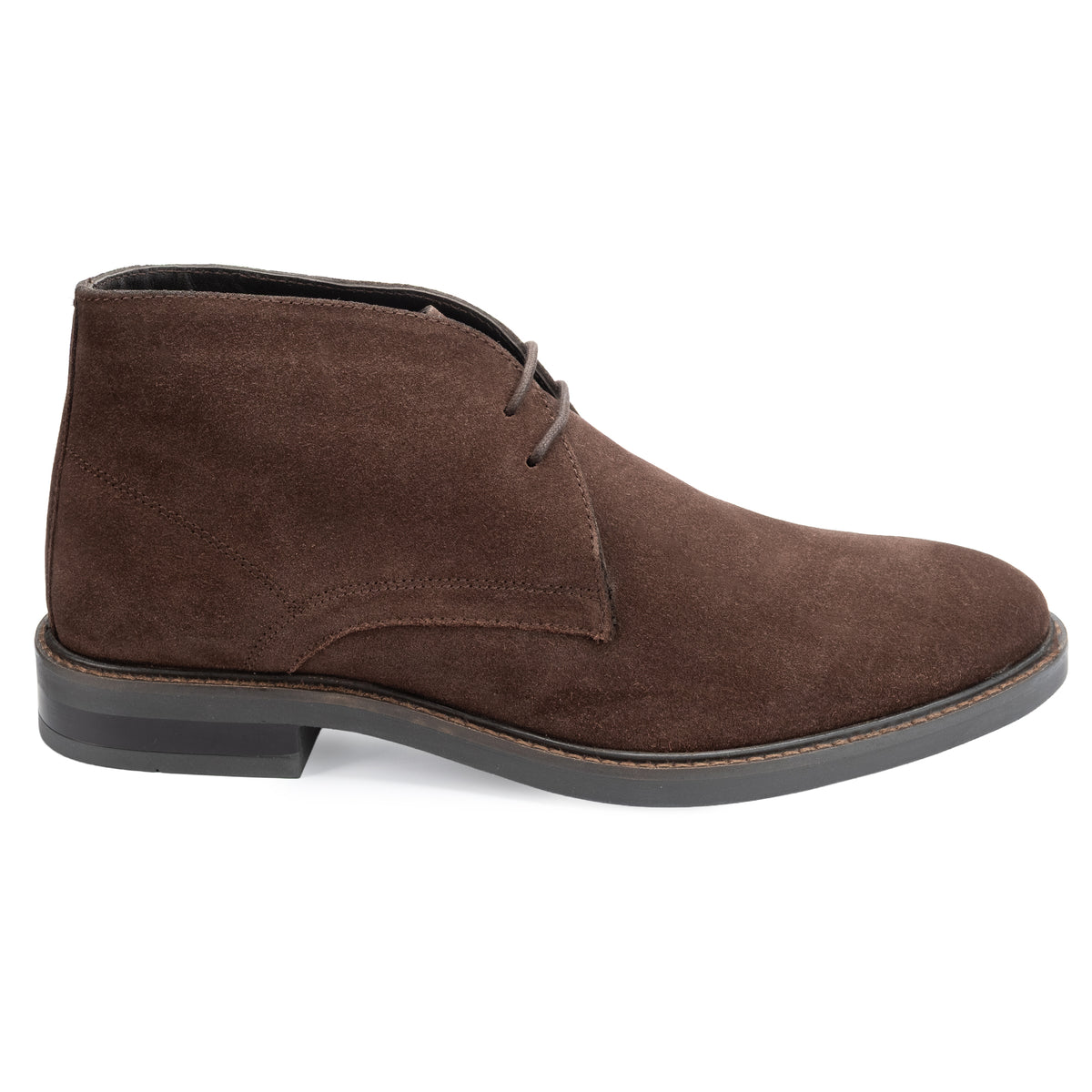
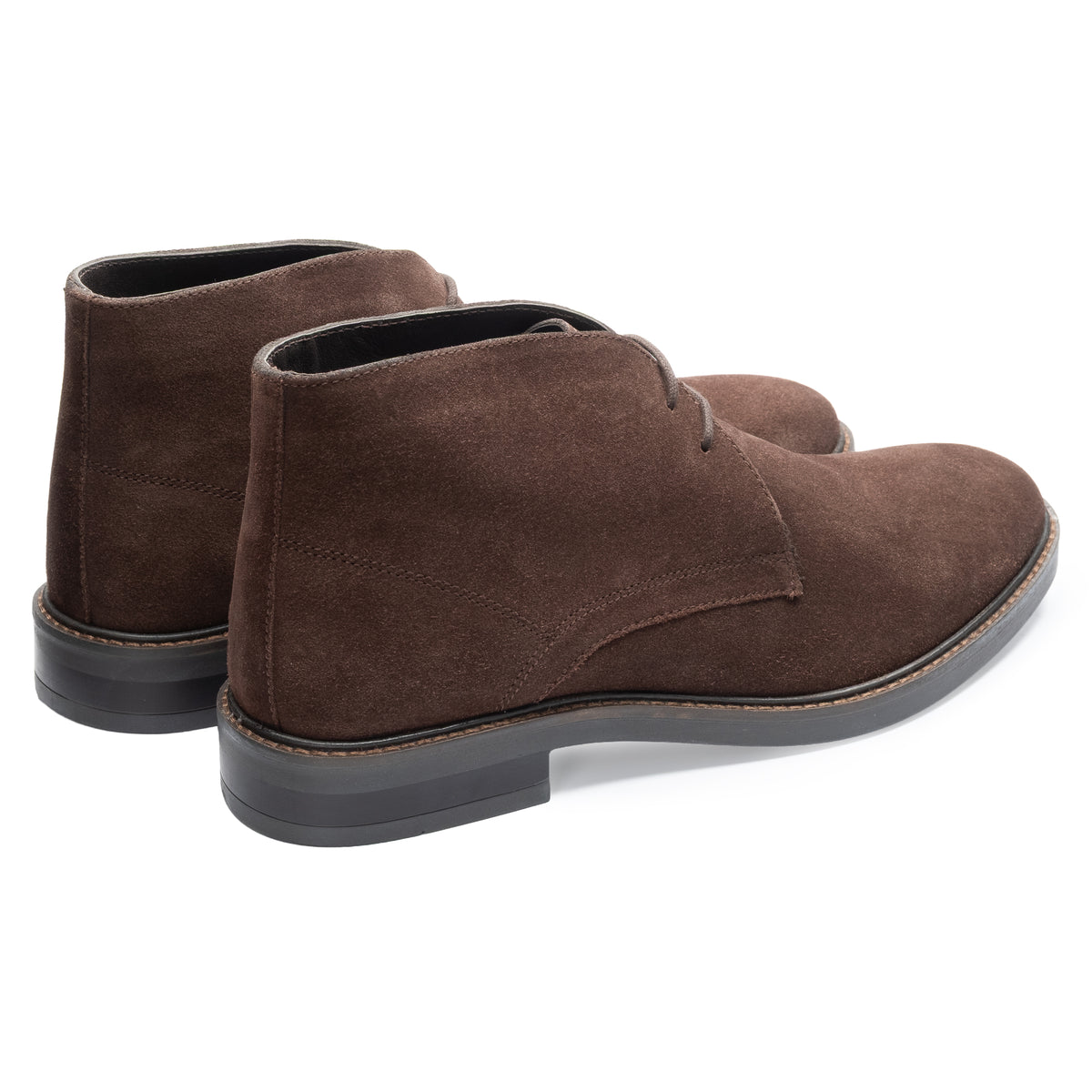
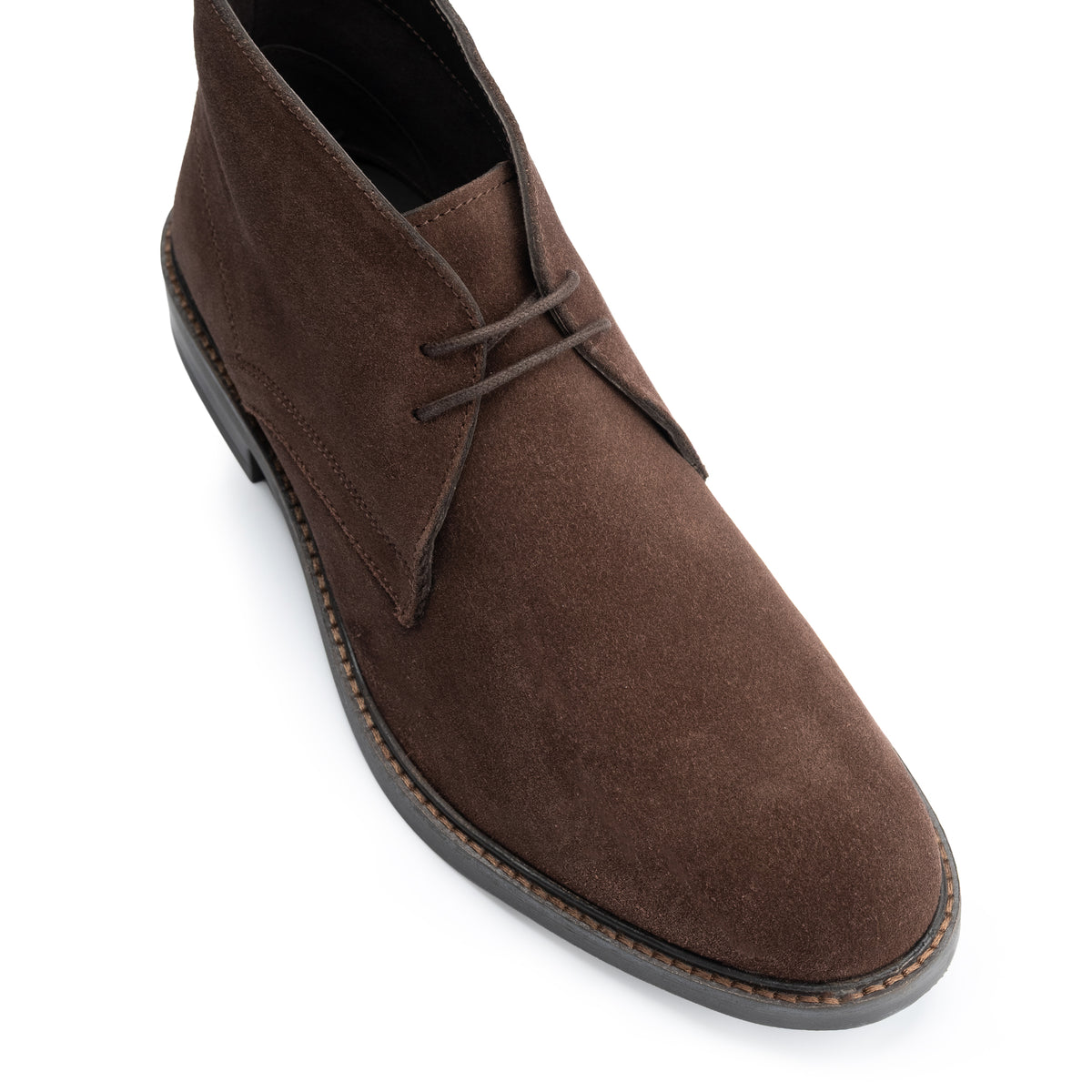
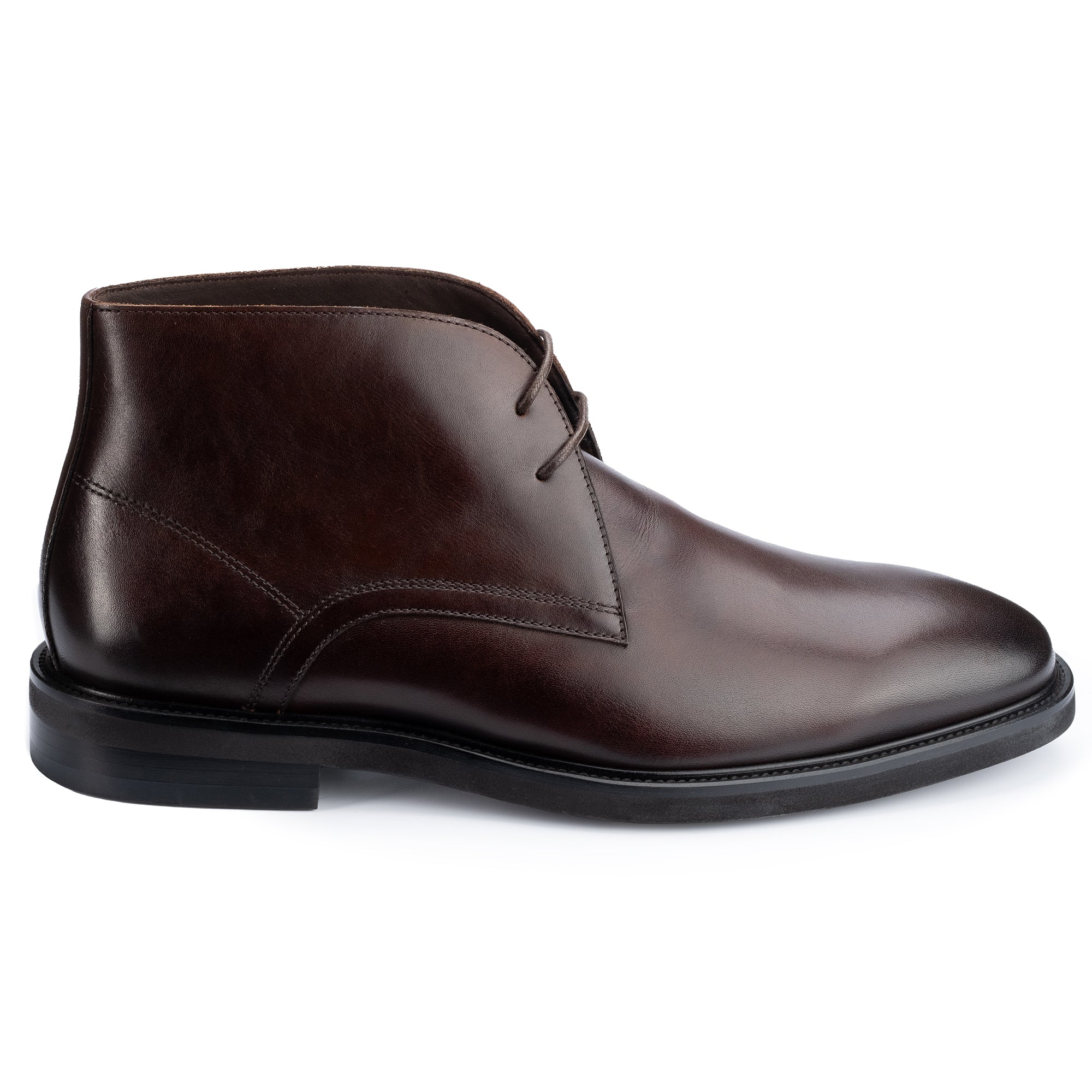
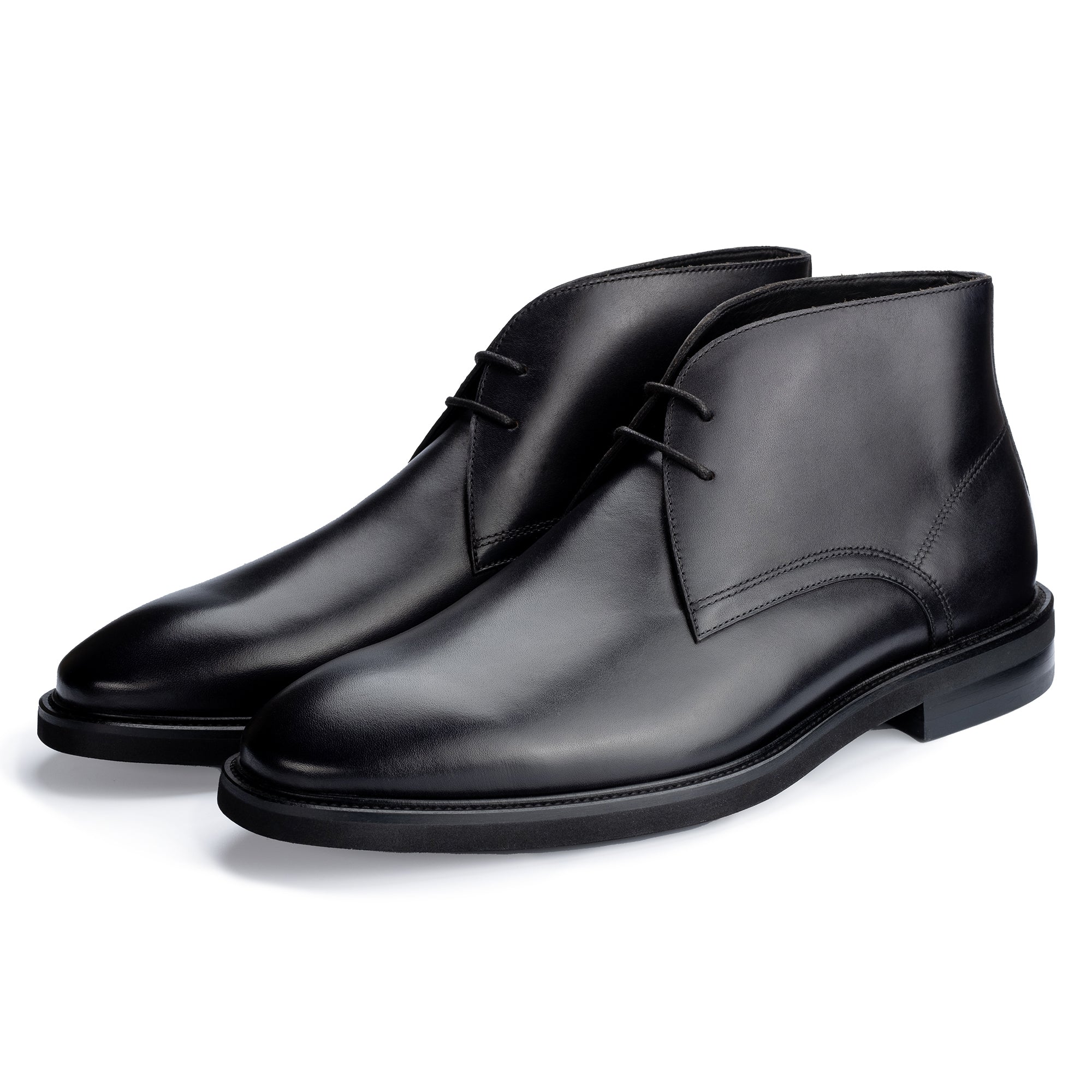
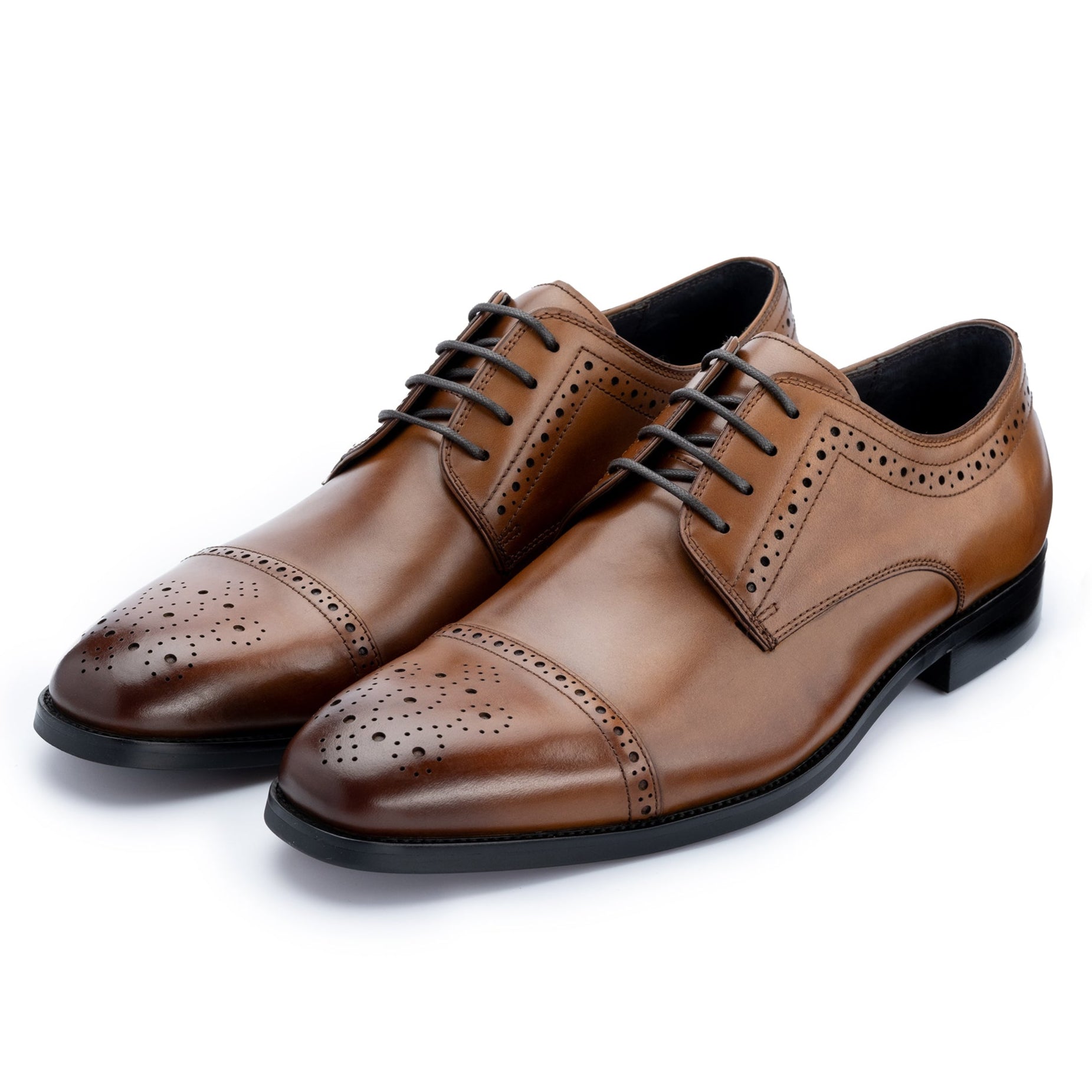
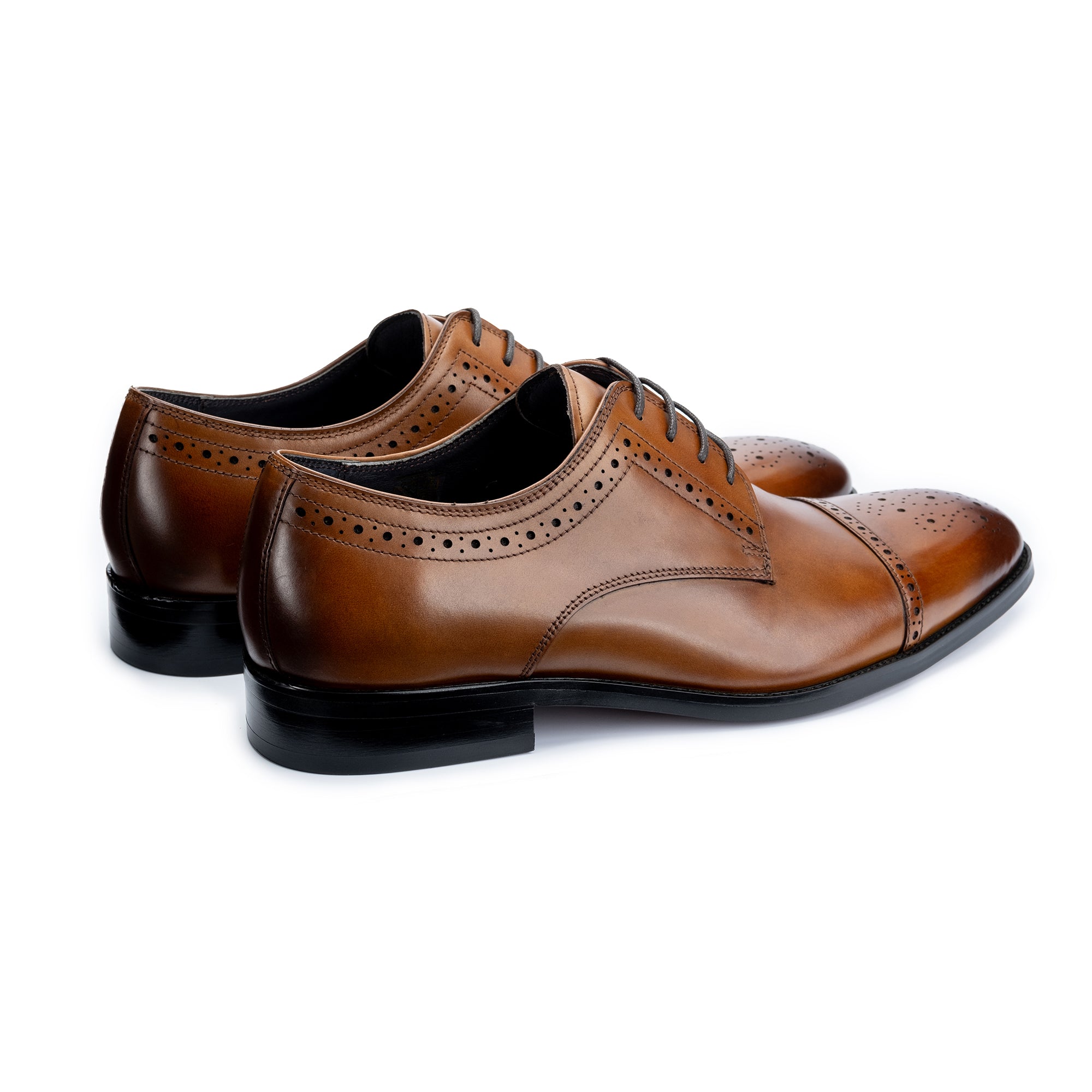
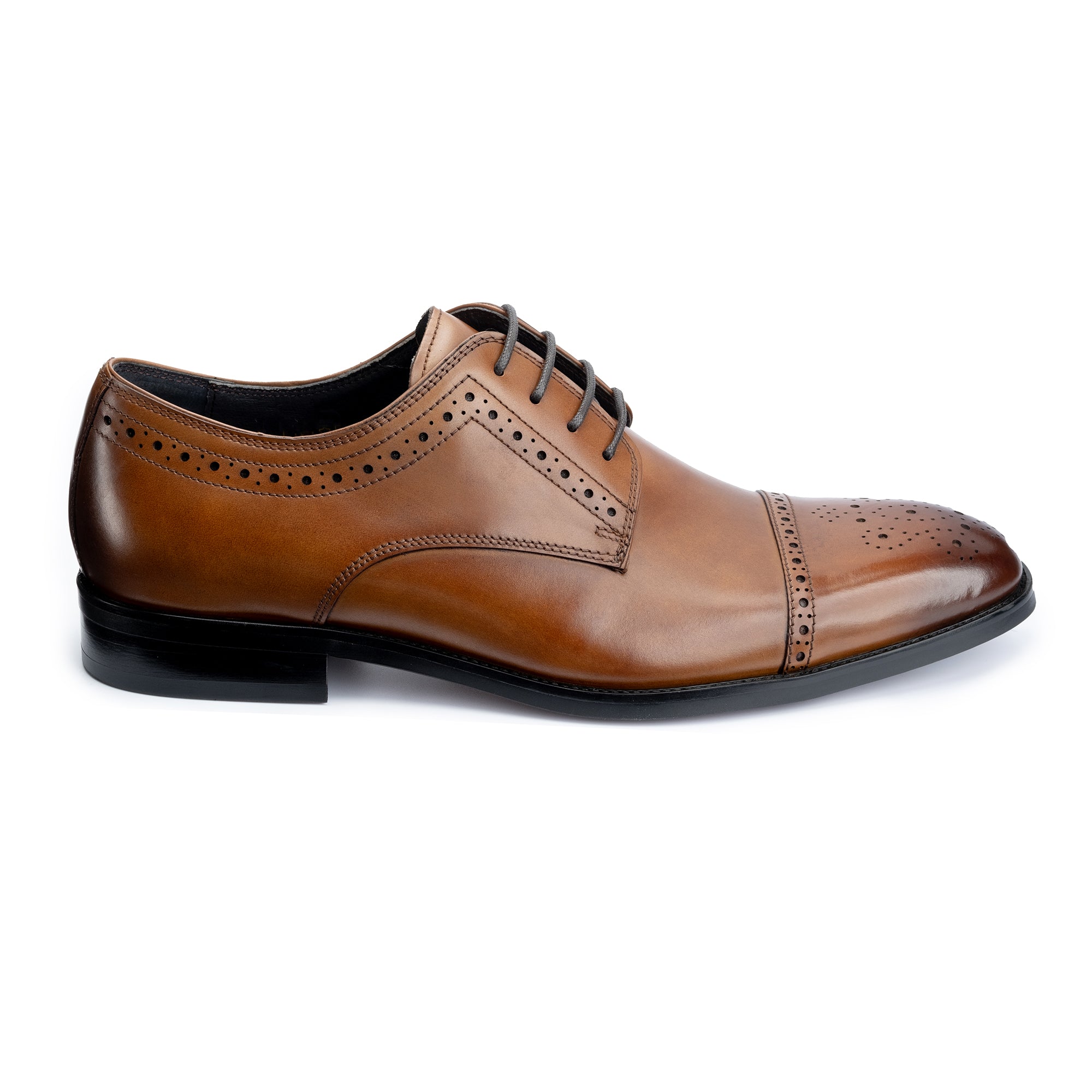
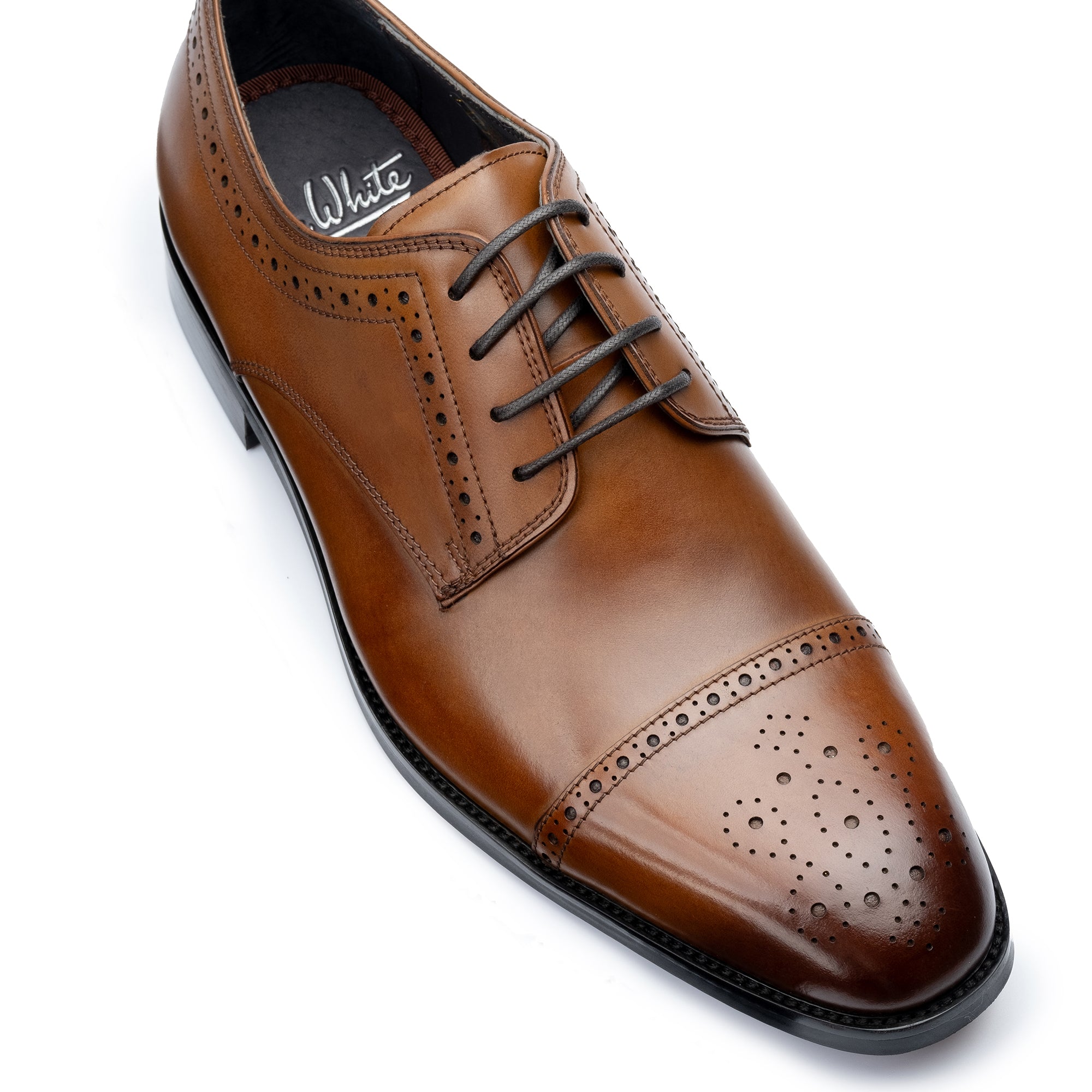
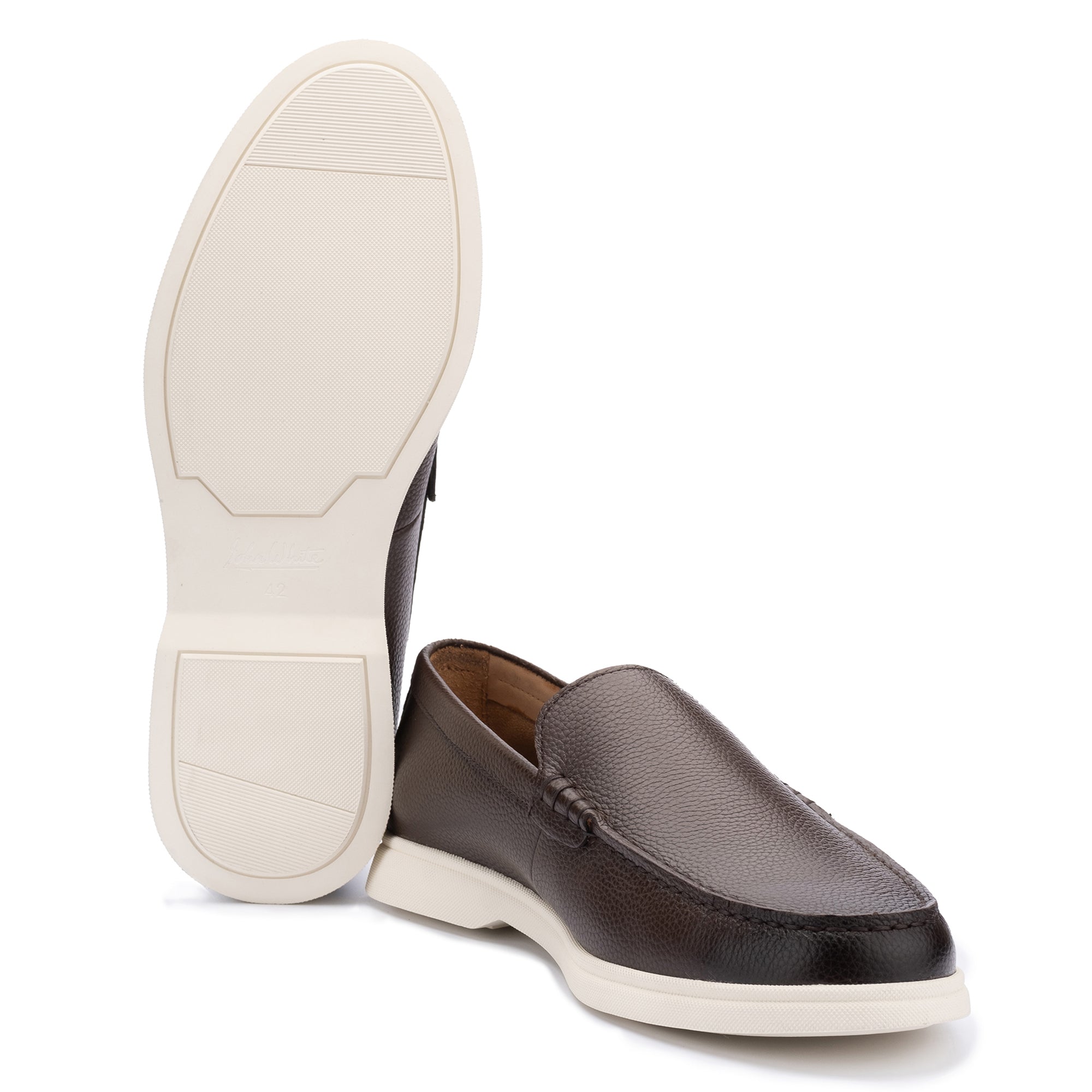
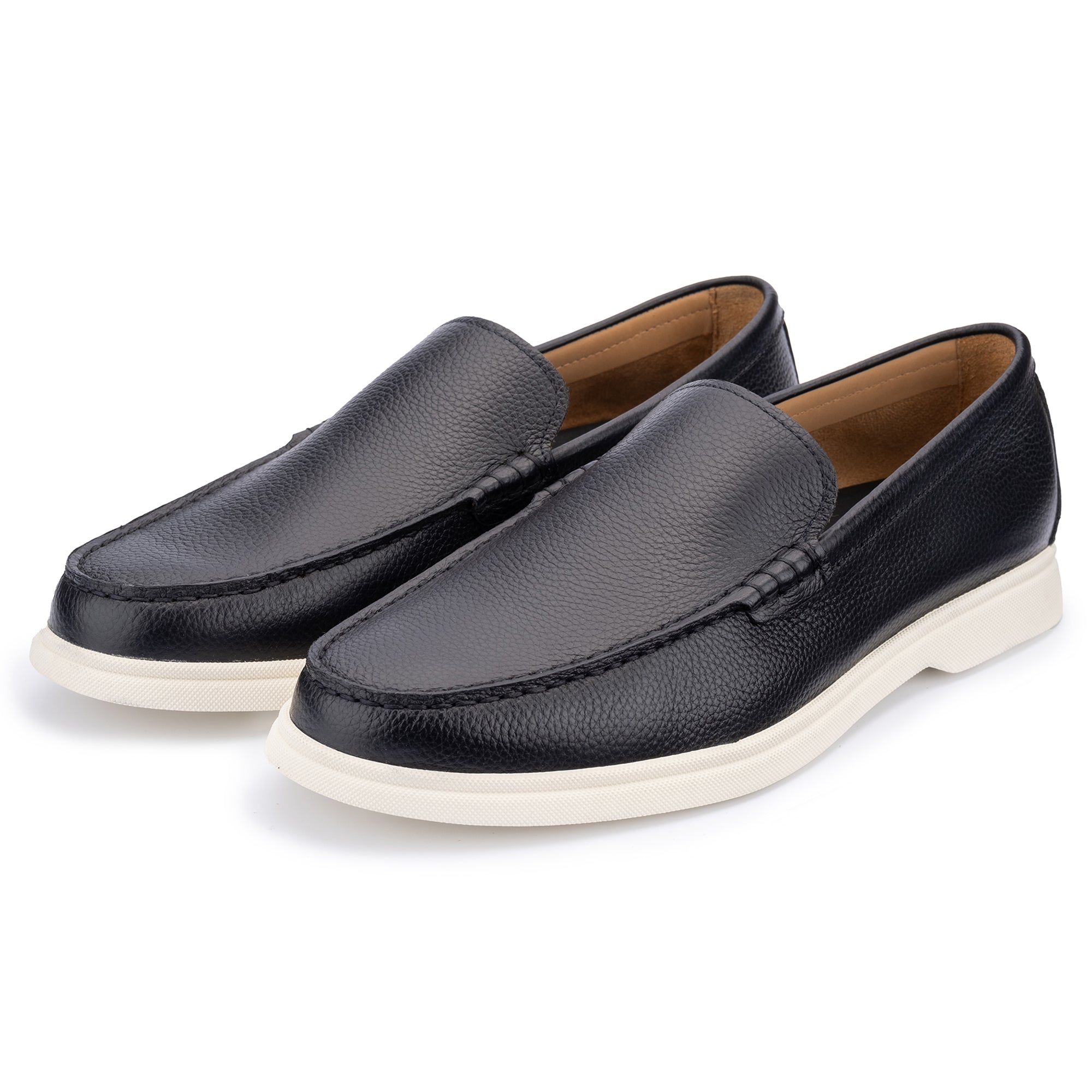
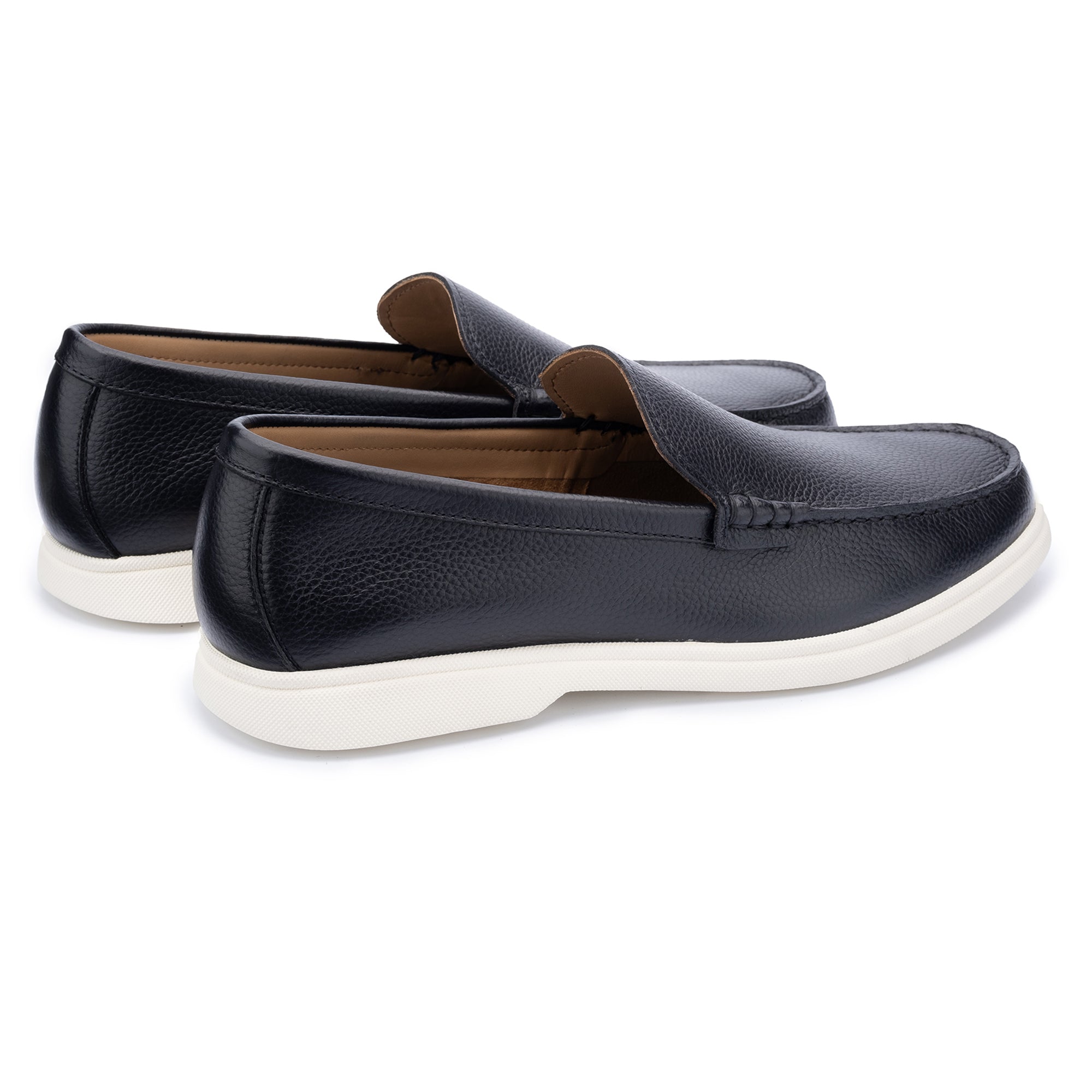
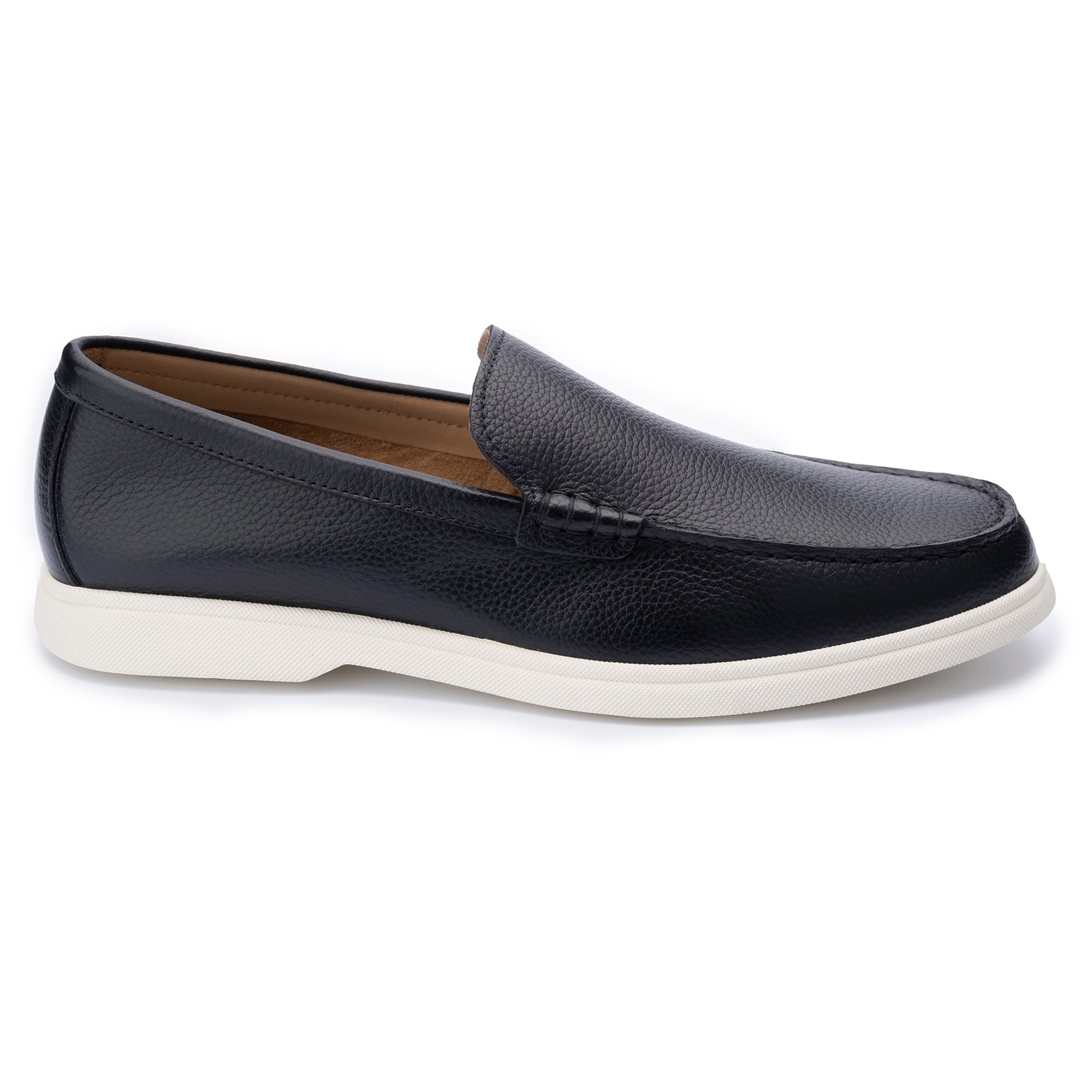
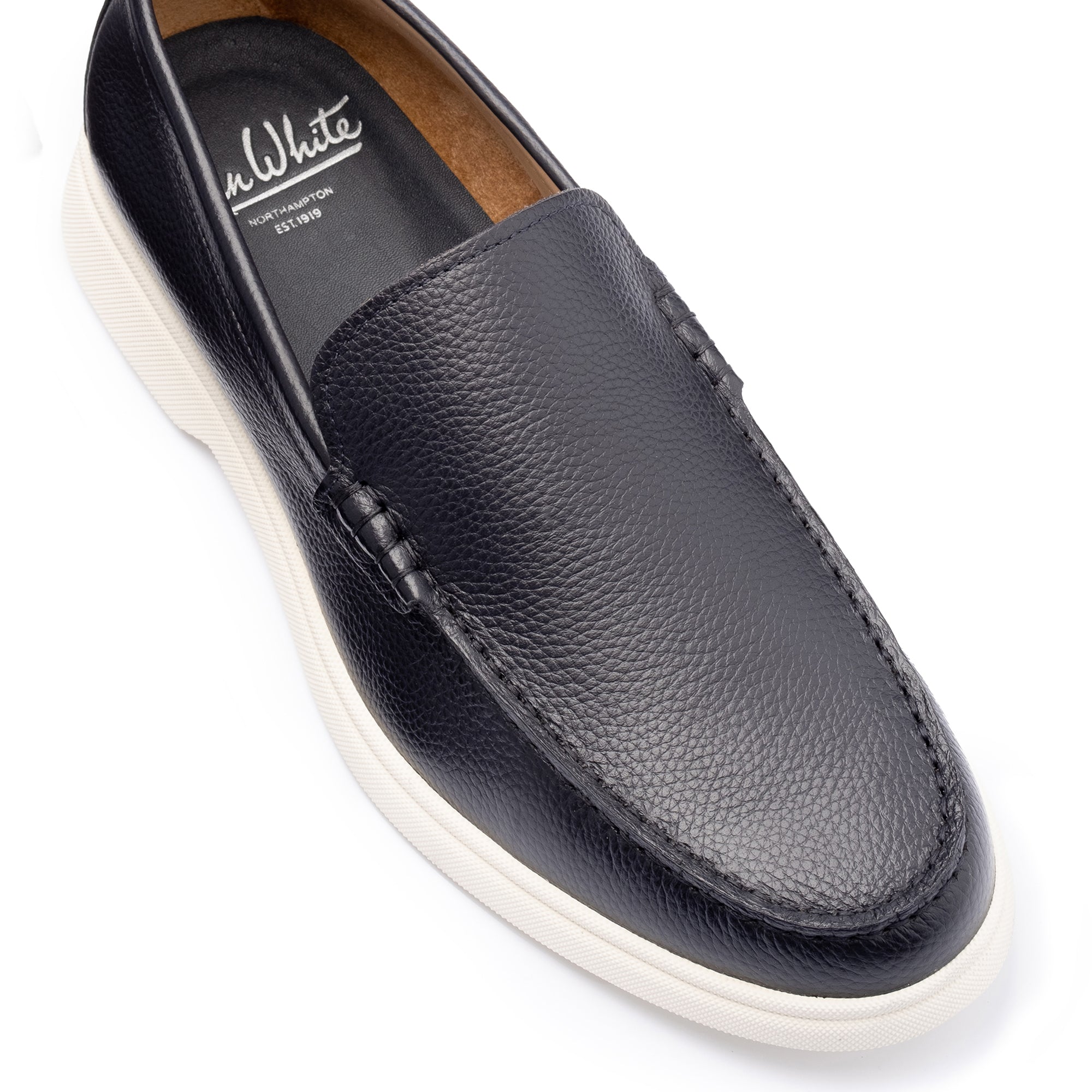
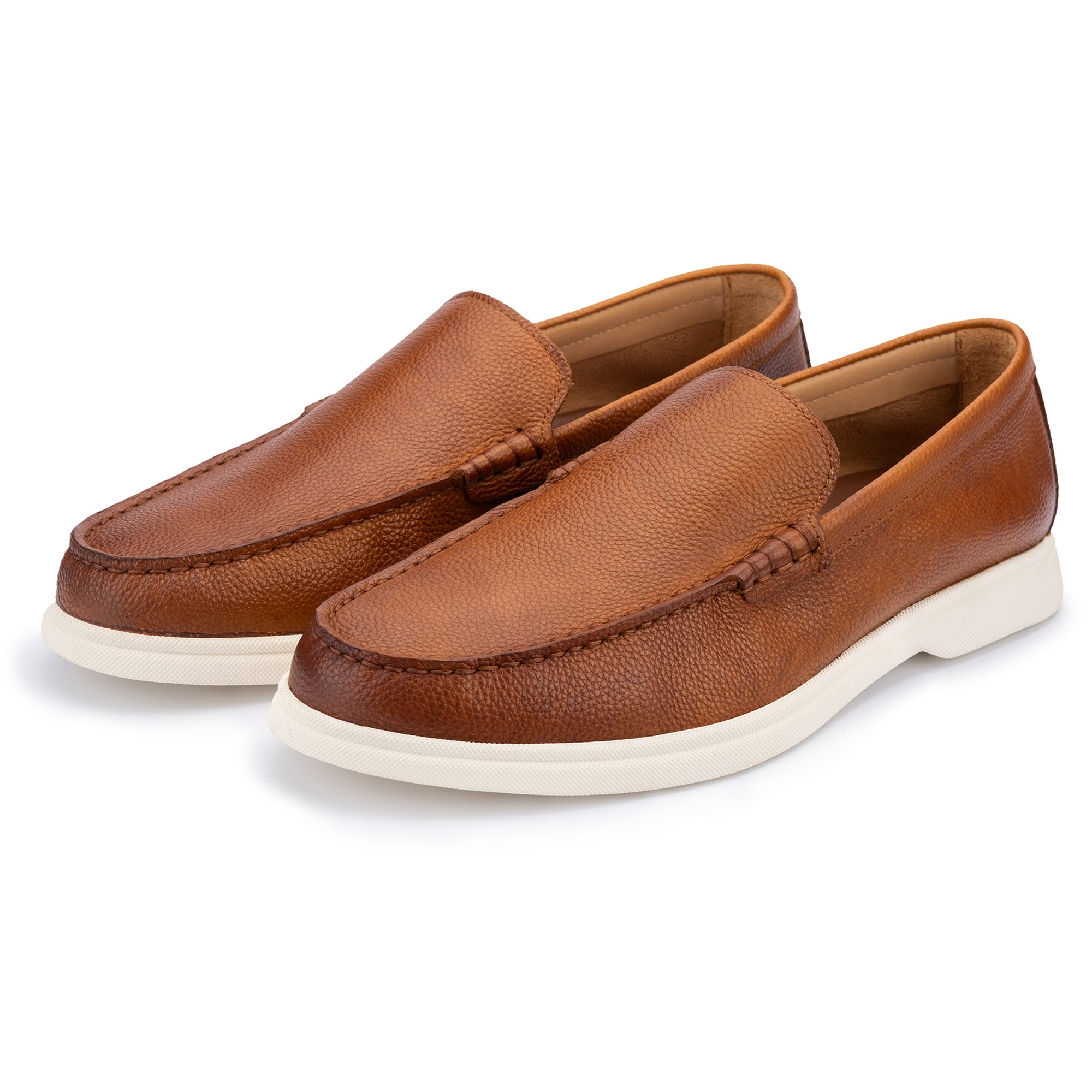
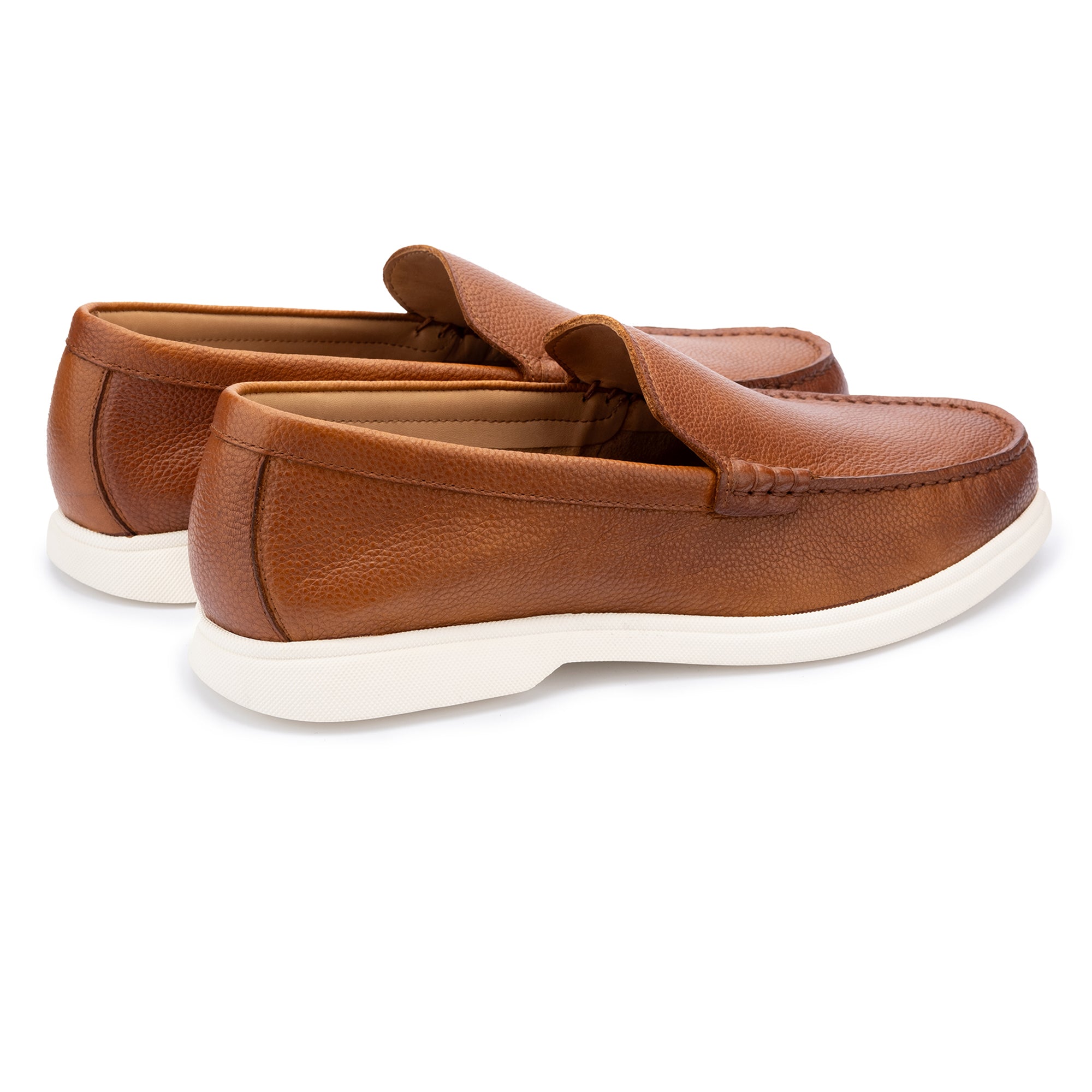
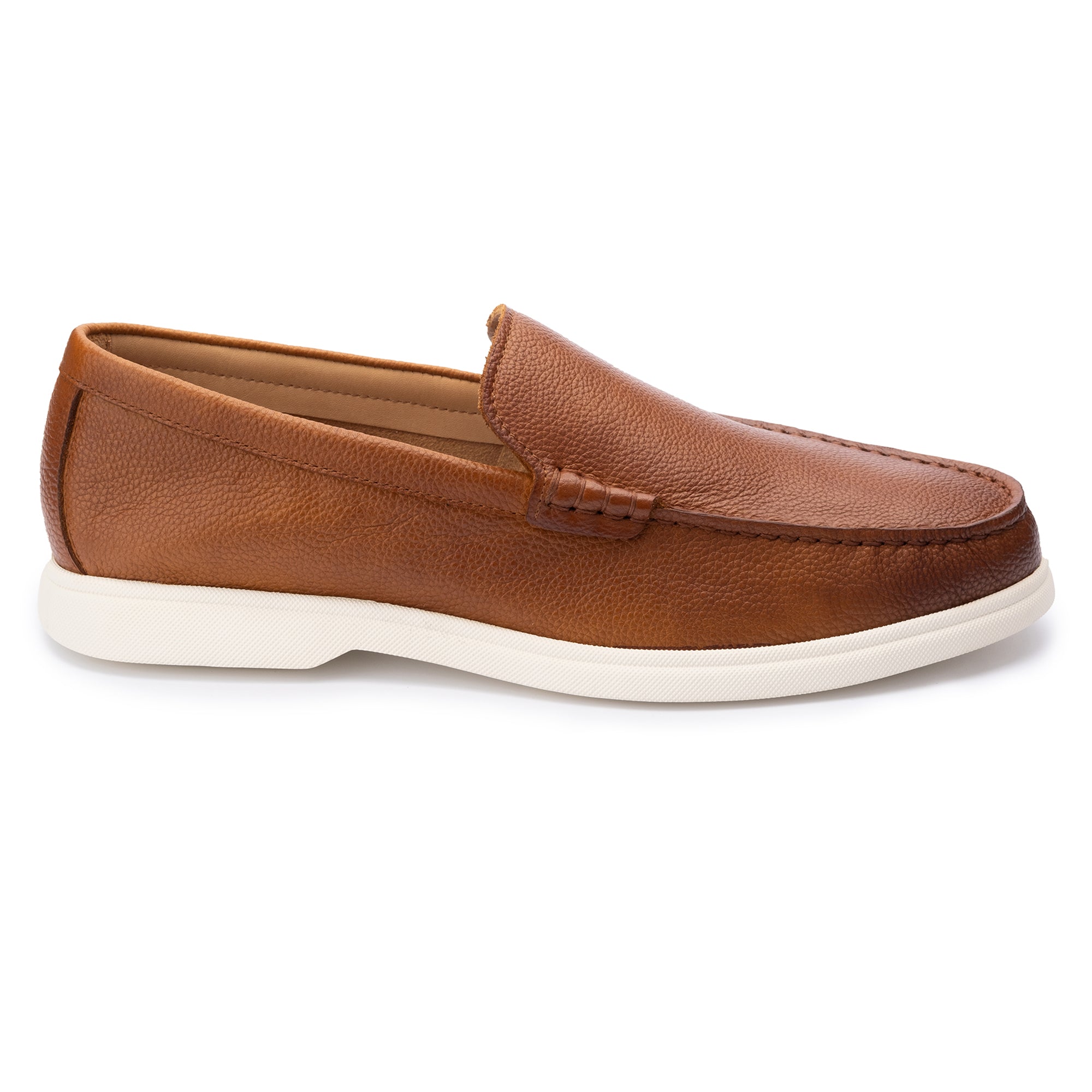
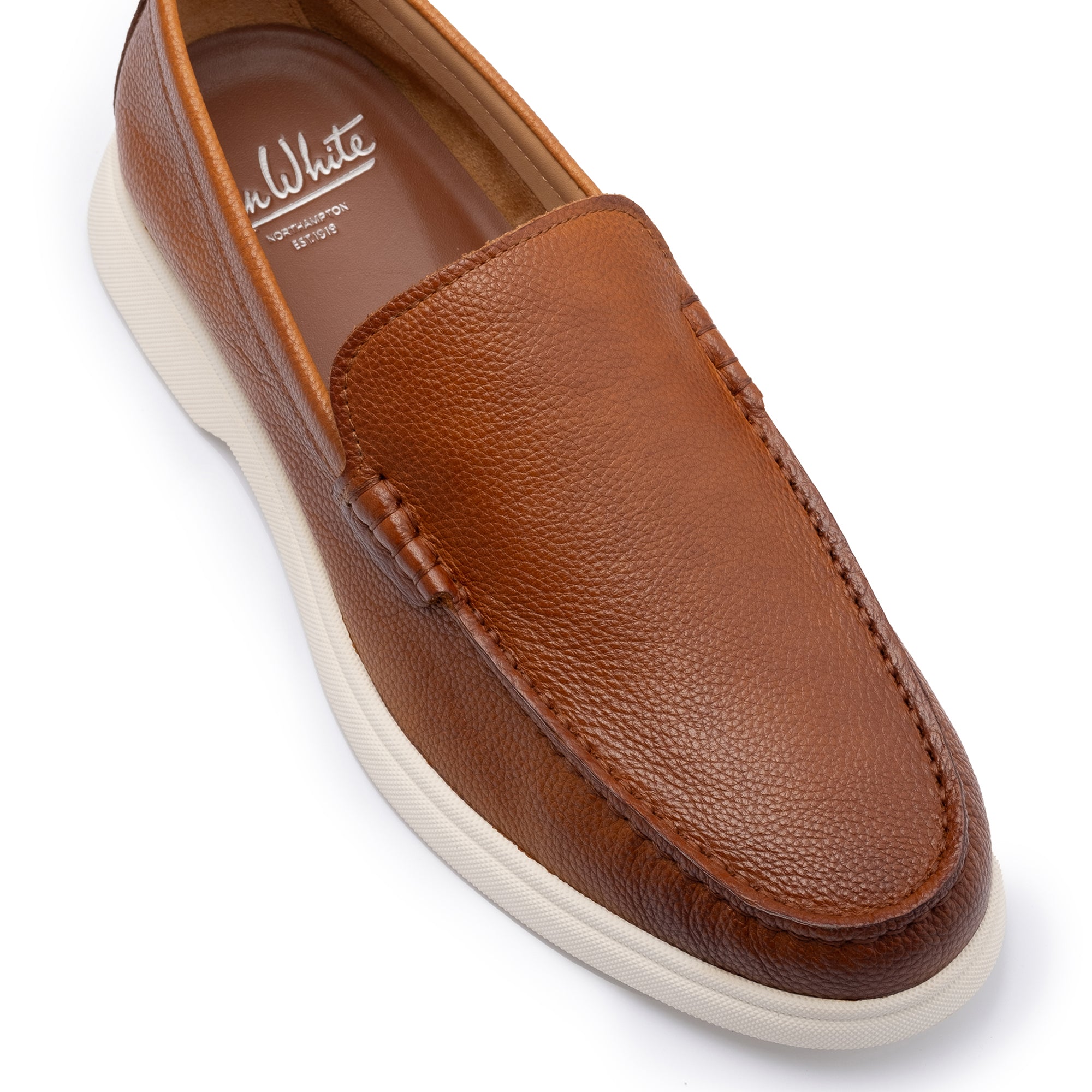
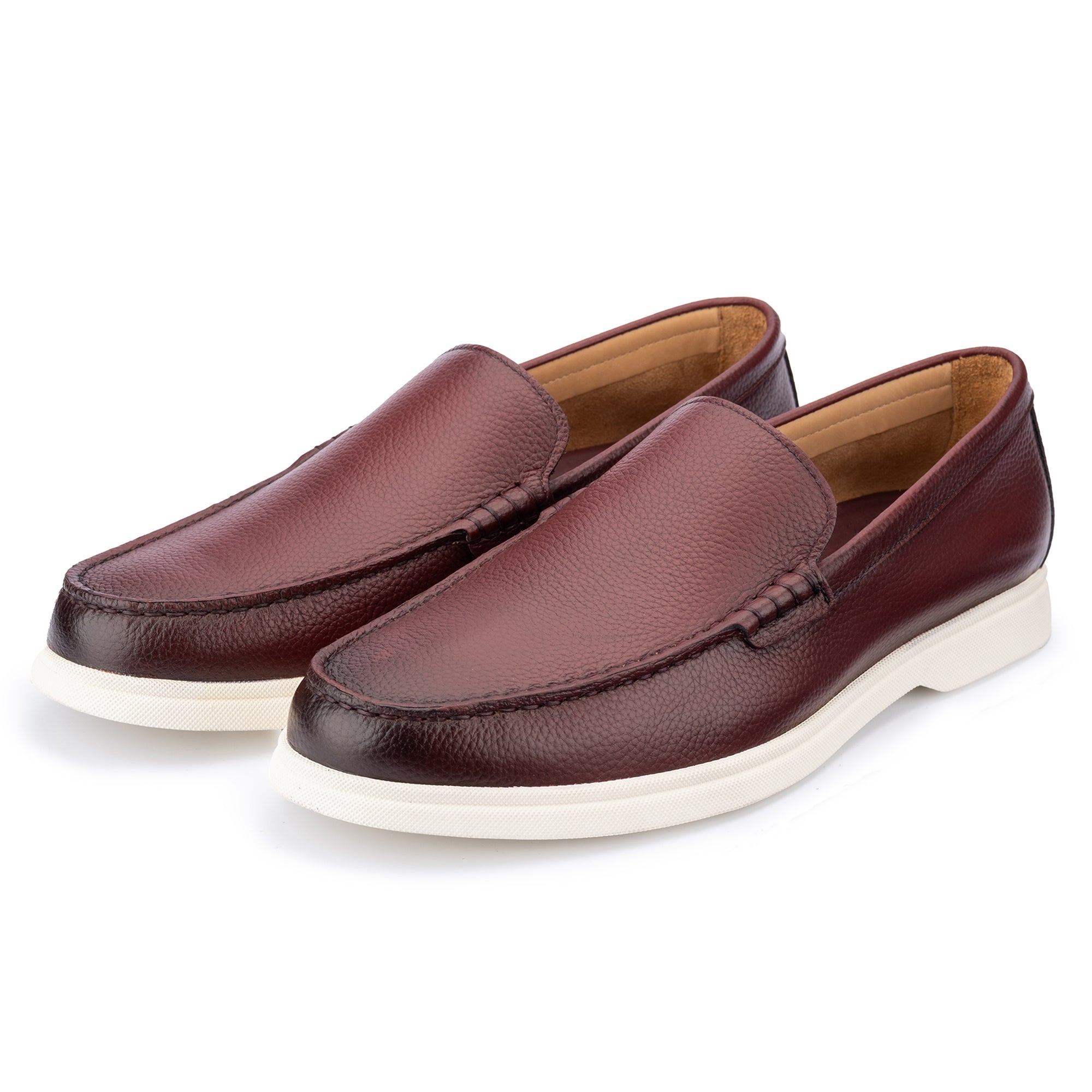
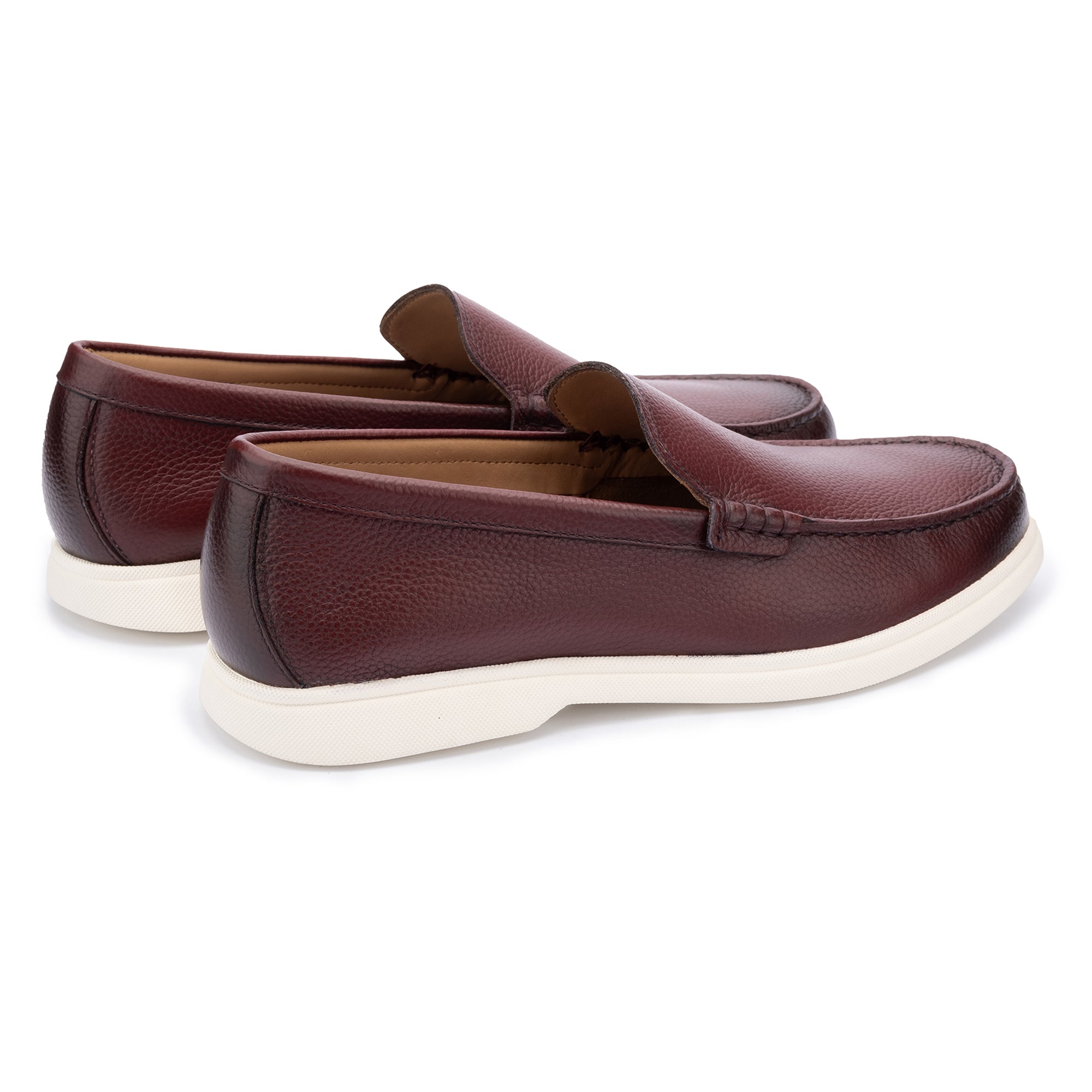
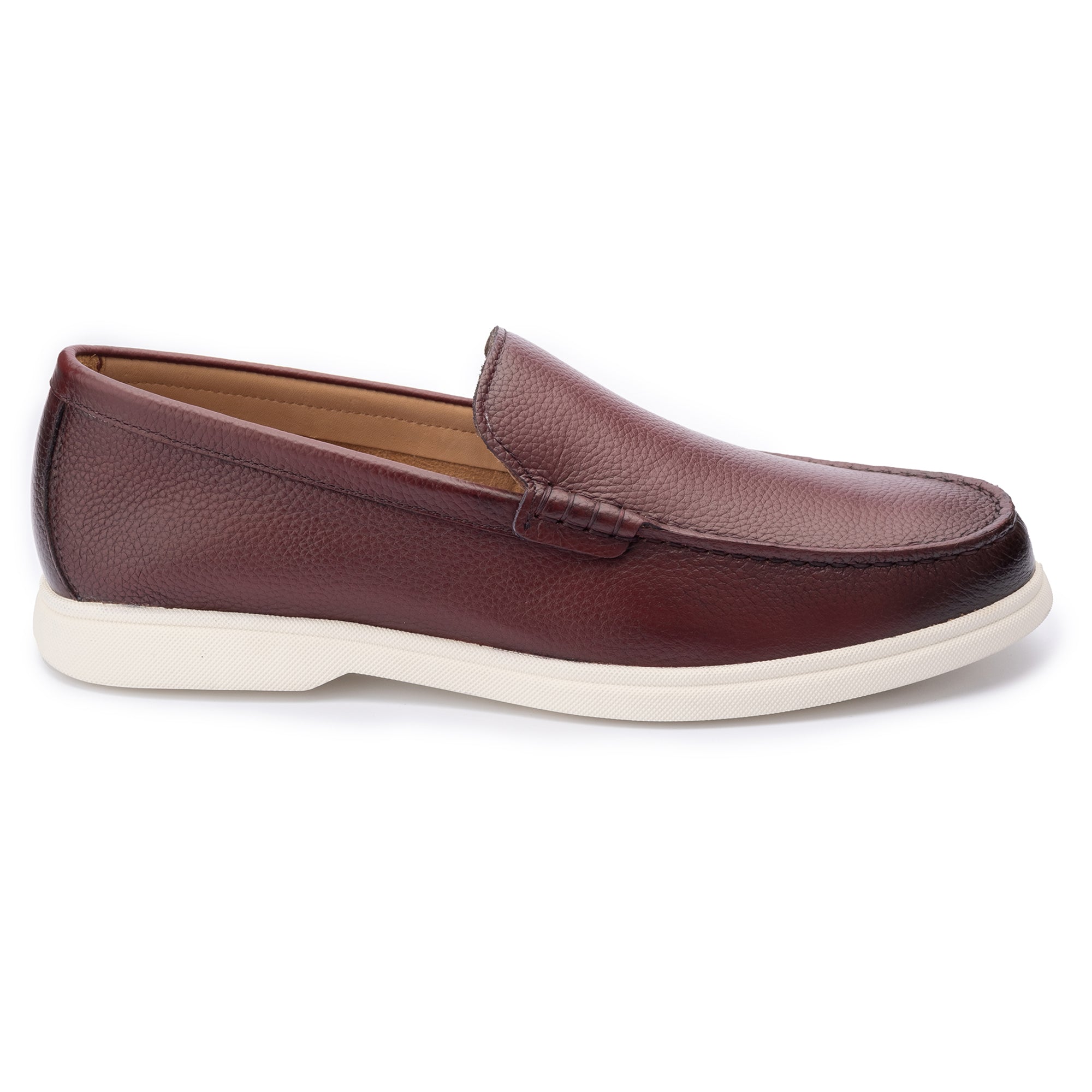
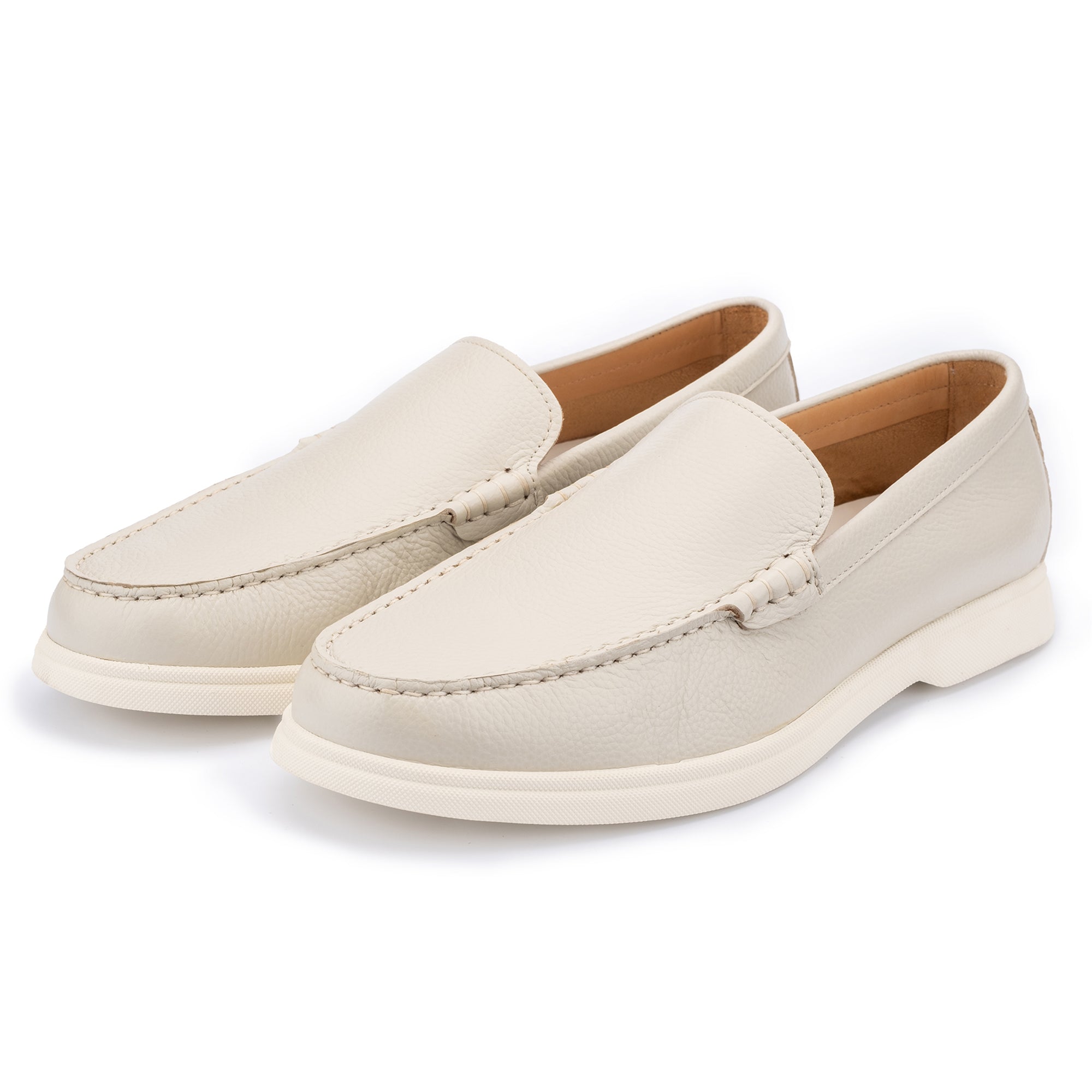
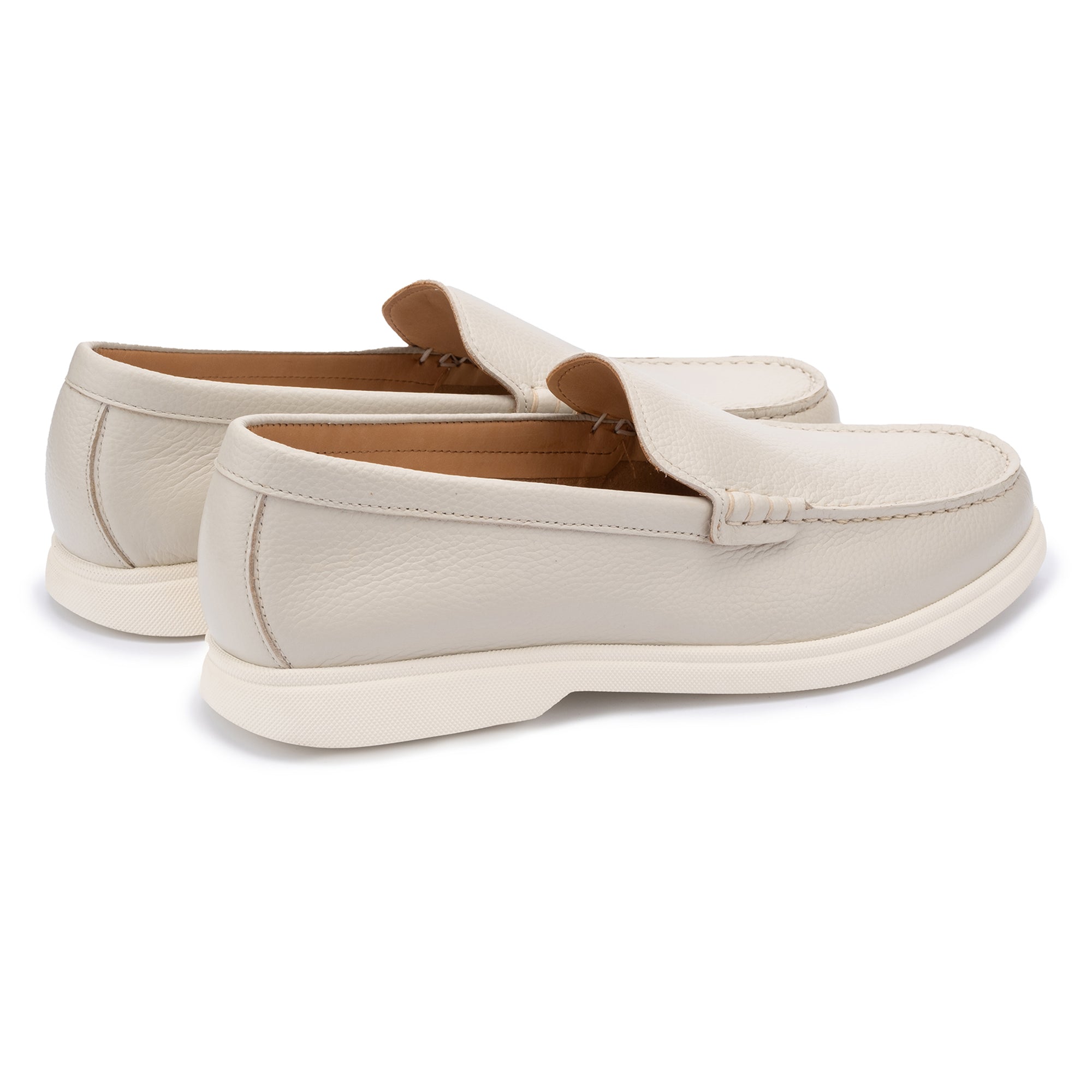
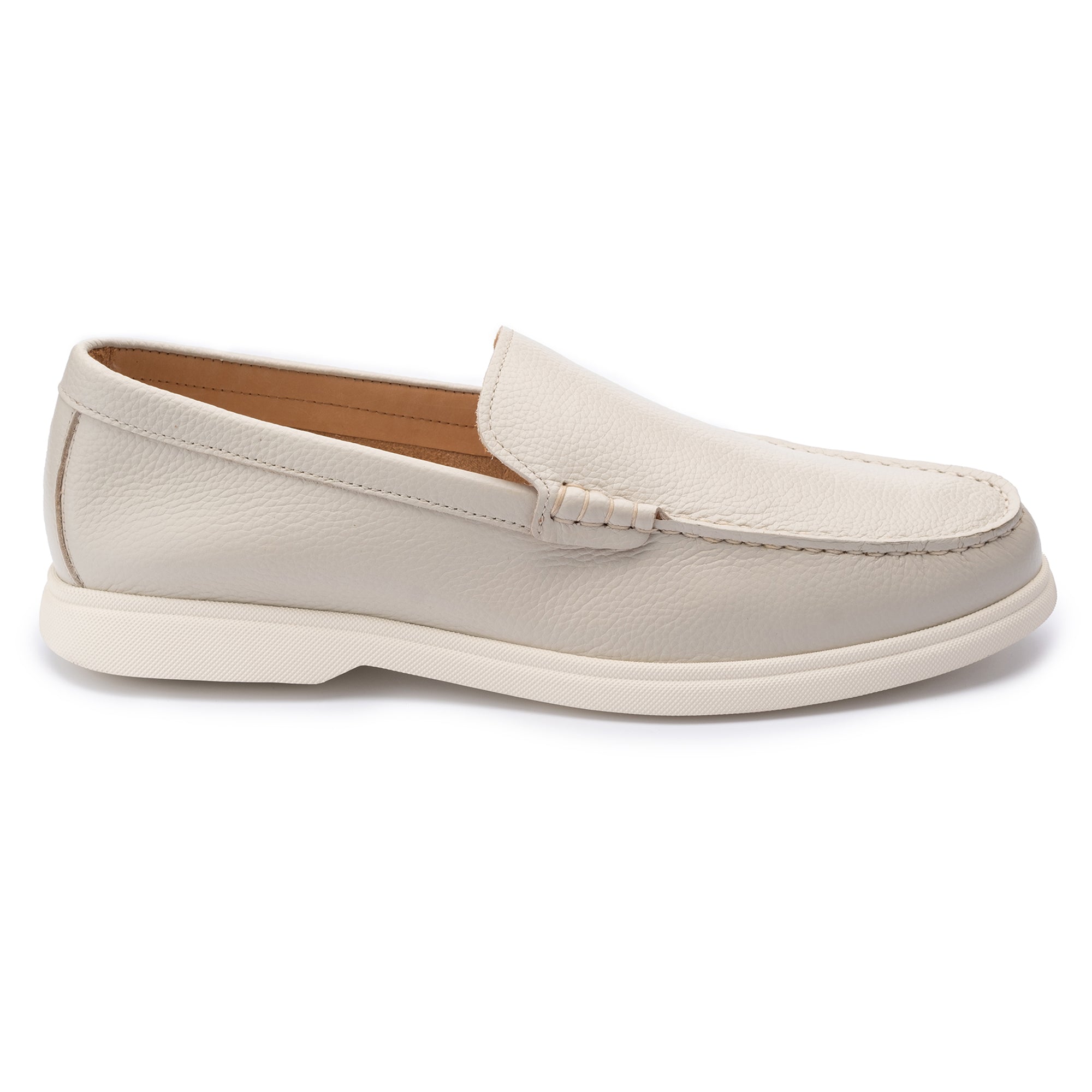
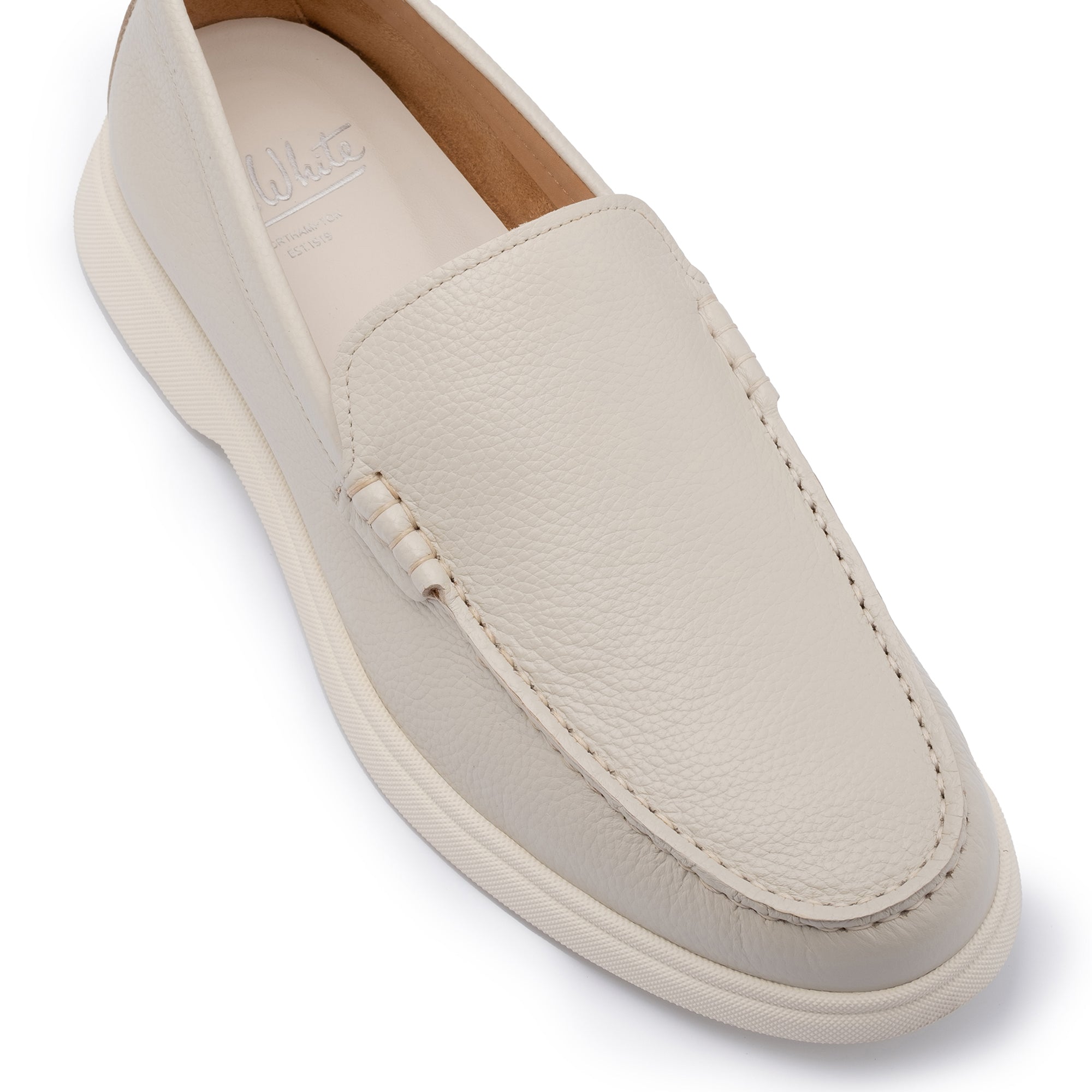
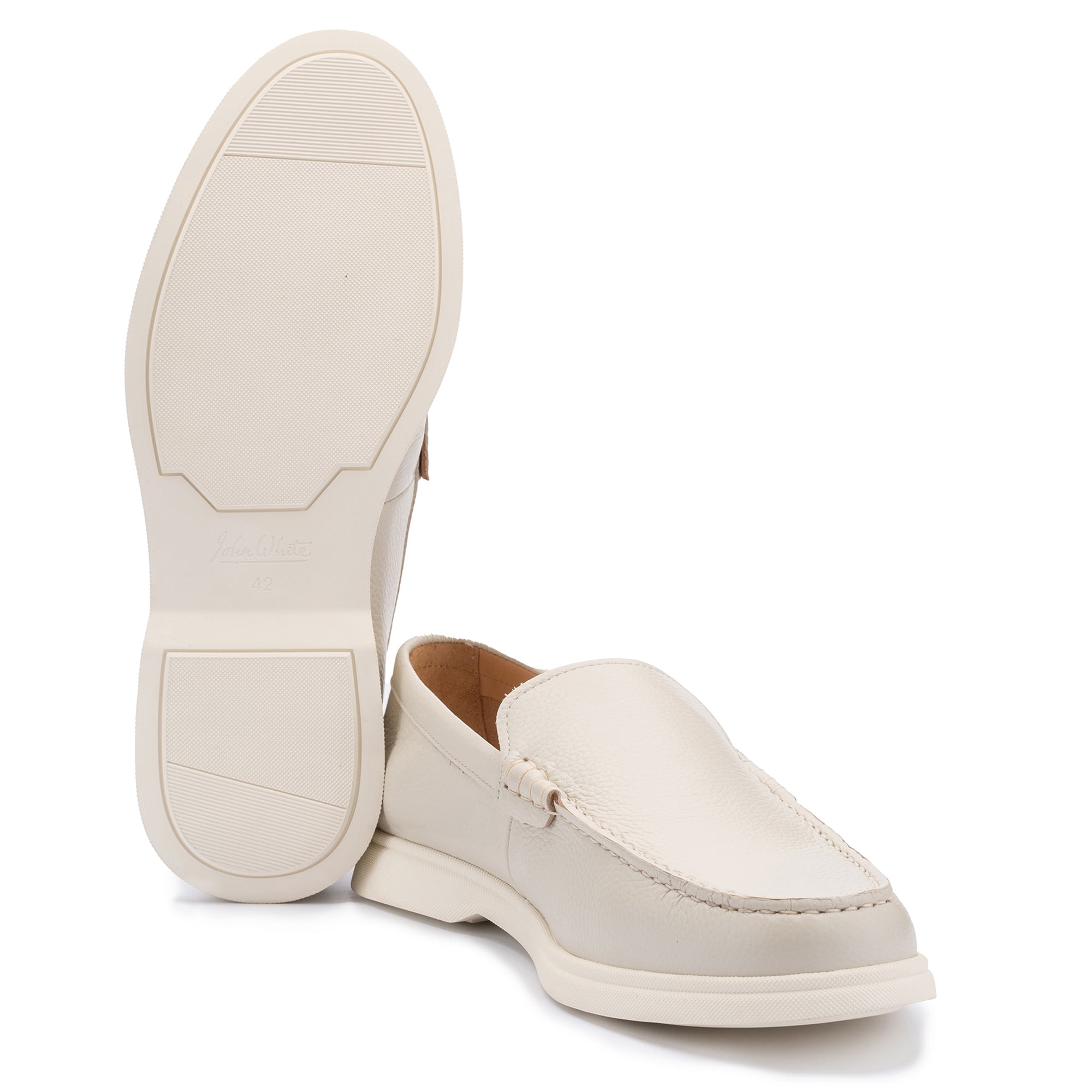
The Hemsworth Sneaker is the John White Shoes approach to the leather sneaker: a clean, minimal silhouette with no oversized branding and a low-profile construction that pairs as readily with tailored clothing as it does with denim. Available in White, Navy, and Tan, it covers the three most useful positions in a casual wardrobe.
The White does the most consistent work. The Tan suits men who dress in warmer tones and want a sneaker with character. The Navy is the choice for those who want a leather sneaker that's clearly considered rather than neutral.
Browse the full men's shoe collection for the complete range — from formal Oxfords to smart loafers and everything between.
Related Guides
- Leather Shoe Care: The Definitive Guide — our comprehensive guide
- How to Wear Leather Sneakers: Smart-Casual Outfit Ideas for Men
- Full-Grain vs Corrected-Grain Leather: How to Spot Quality in Men's Shoes
- The Complete Guide to Leather Shoe Care
TL;DR
A leather sneaker is a casual lace-up shoe with a genuine leather upper — full-grain, corrected-grain, or nubuck — rather than fabric or synthetic material. Leather sneakers outlast fabric trainers by years when properly maintained, bridge the smart-casual gap more effectively than any other single shoe, and respond to conditioning and polishing in ways that extend their useful life significantly. White is the most versatile first purchase; tan and navy offer warmer and bolder alternatives. The Hemsworth Sneaker from John White Shoes, established 1919 in Northamptonshire, is available in all three colourways.
Frequently Asked Questions
Are leather sneakers worth the extra cost compared to fabric trainers?
For regular use, yes. Leather sneakers age better, clean more easily, and last significantly longer than fabric alternatives when properly maintained. The cost-per-wear across a five-to-eight-year lifespan is typically lower than replacing fabric trainers every 12–18 months.
Can you wear leather sneakers in the rain?
Yes, with preparation. Apply a wax-based water-repellent conditioner before wet-weather wear, and dry leather naturally afterwards — stuffed with newspaper or fitted with shoe trees — rather than near direct heat. Suede and nubuck leather sneakers are more vulnerable to water and are better reserved for dry conditions.
How often should you condition leather sneakers?
Every 6–8 weeks for shoes in regular rotation, in line with the Leather Conservation Centre's guidance on leather footwear maintenance. If the leather looks dry or creases more sharply than usual, condition immediately regardless of your regular schedule.
What's the difference between a leather sneaker and a leather Oxford?
Construction and context. An Oxford has a closed lacing system and a structured, formal silhouette suited to suits and tailored trousers. A leather sneaker has a more relaxed last, a lower-profile rubber or EVA sole, and an open lacing system — placing it firmly in smart-casual and casual territory. Both use leather uppers; the silhouette and sole determine where each belongs in a wardrobe.