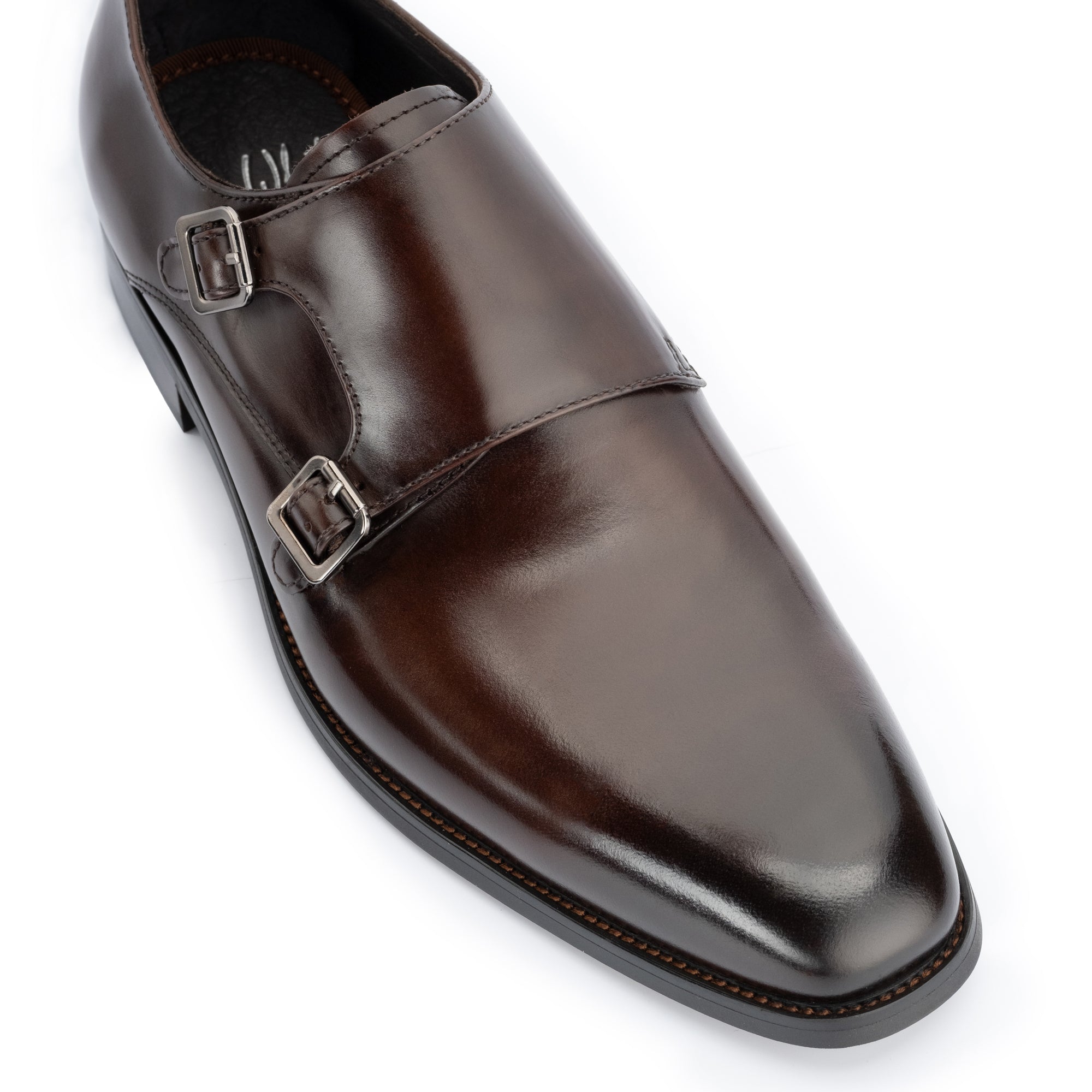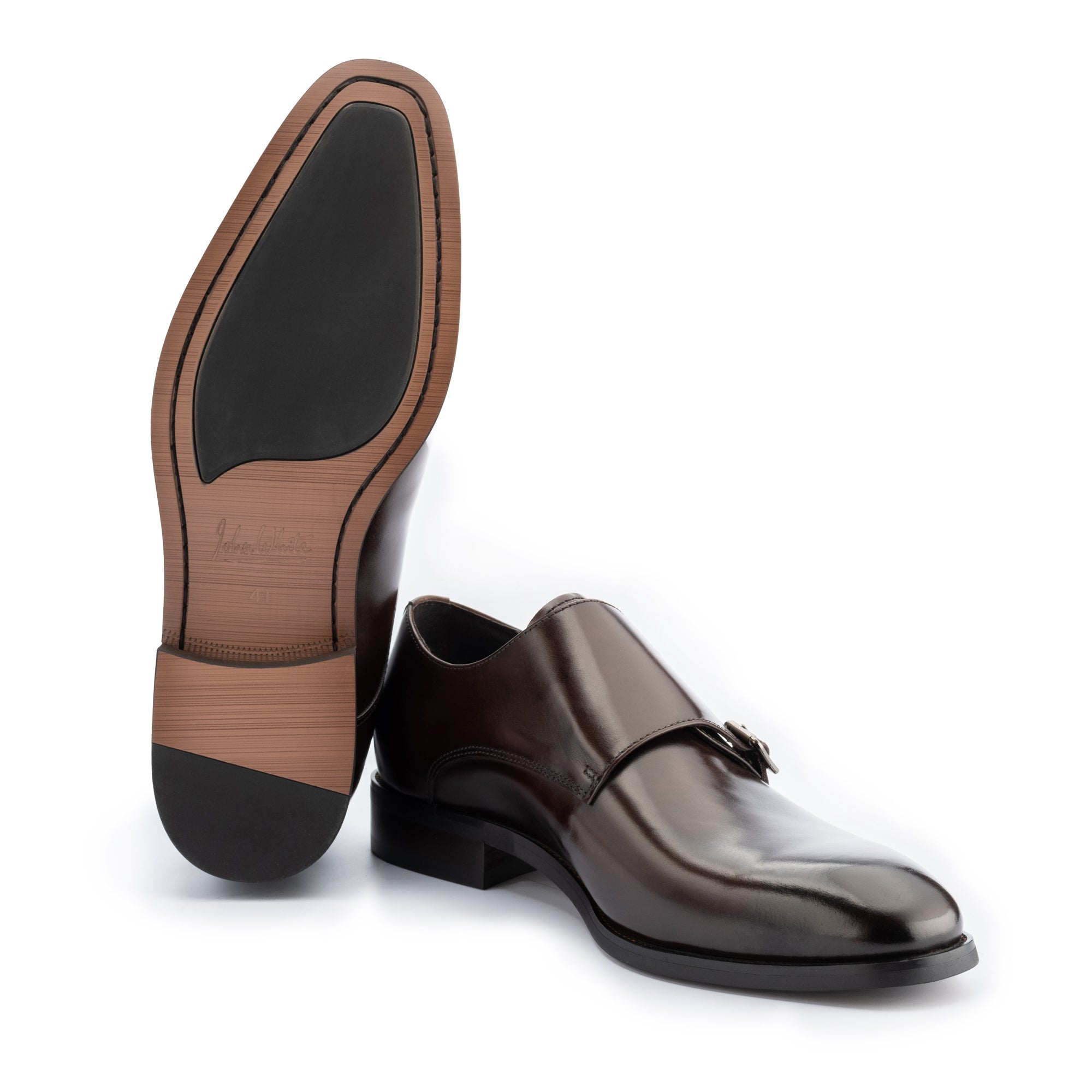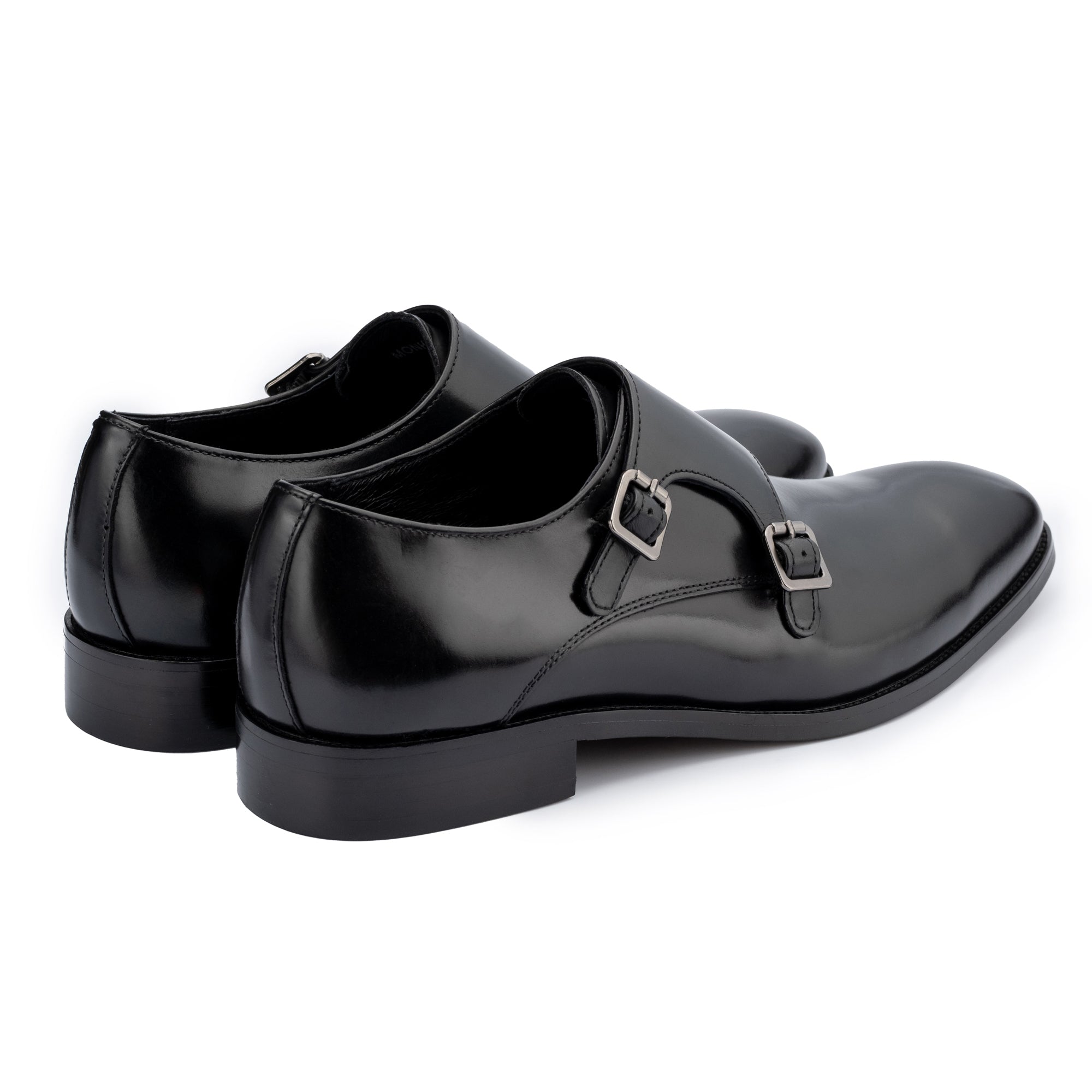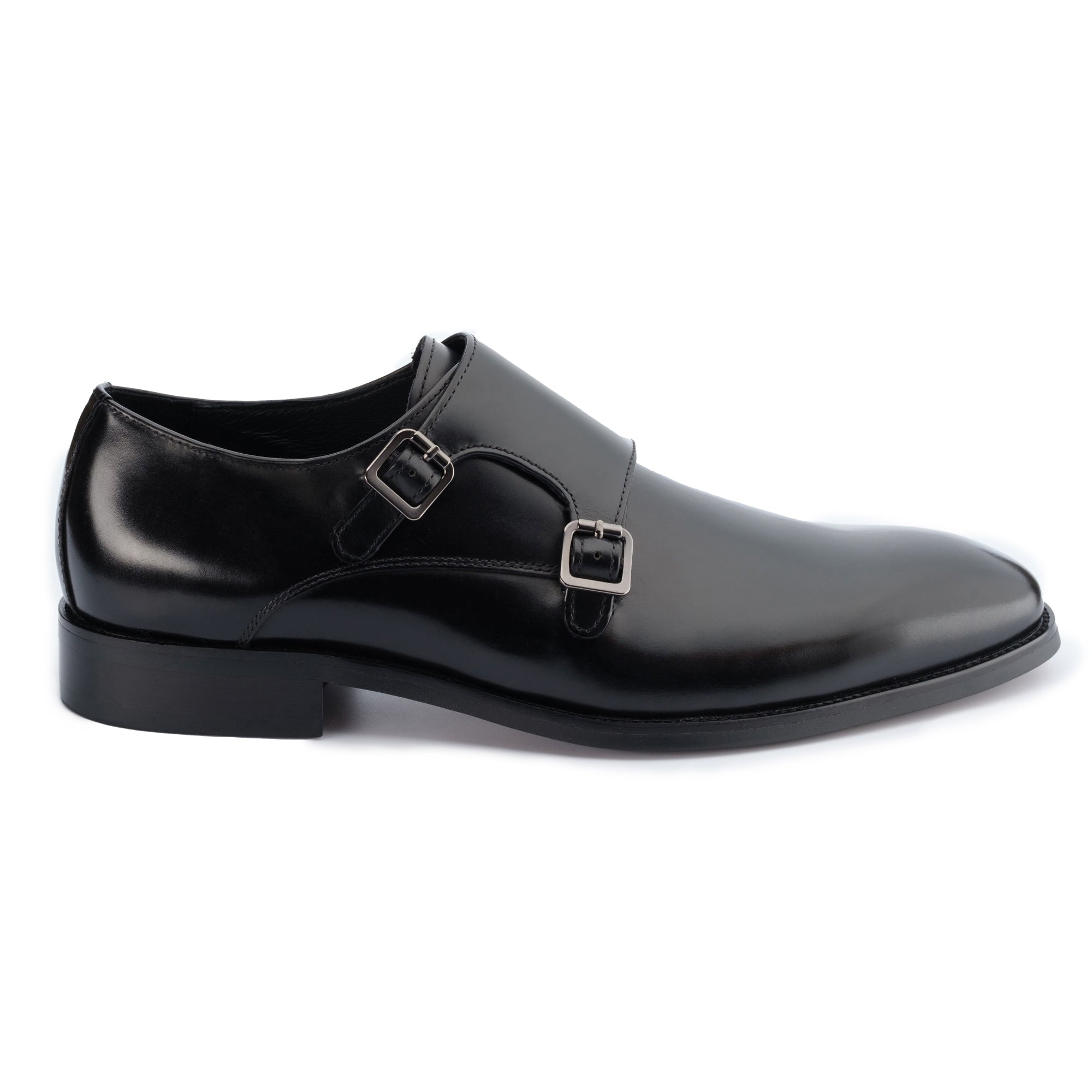

From Military Commission to Civilian Classic: The Unseen History of the Derby Shoe
The Derby shoe is a cornerstone of the modern man’s wardrobe, prized for its exceptional versatility and comfort. It moves with ease from the boardroom to the weekend, its understated form a hallmark of refined, practical style. Yet, its origins lie not in the polished halls of society, but on the mud-strewn battlefields of 19th-century Europe, a history that defines its enduring character.
The Derby shoe’s defining feature, its open-lacing system, was a military innovation from the Napoleonic Wars. Designed for Prussian soldiers, this practical construction allowed for a more accommodating fit and faster removal, a functional heritage that underpins its transition into an enduring civilian classic.
In This Guide
What Defines the Construction of a Derby Shoe?
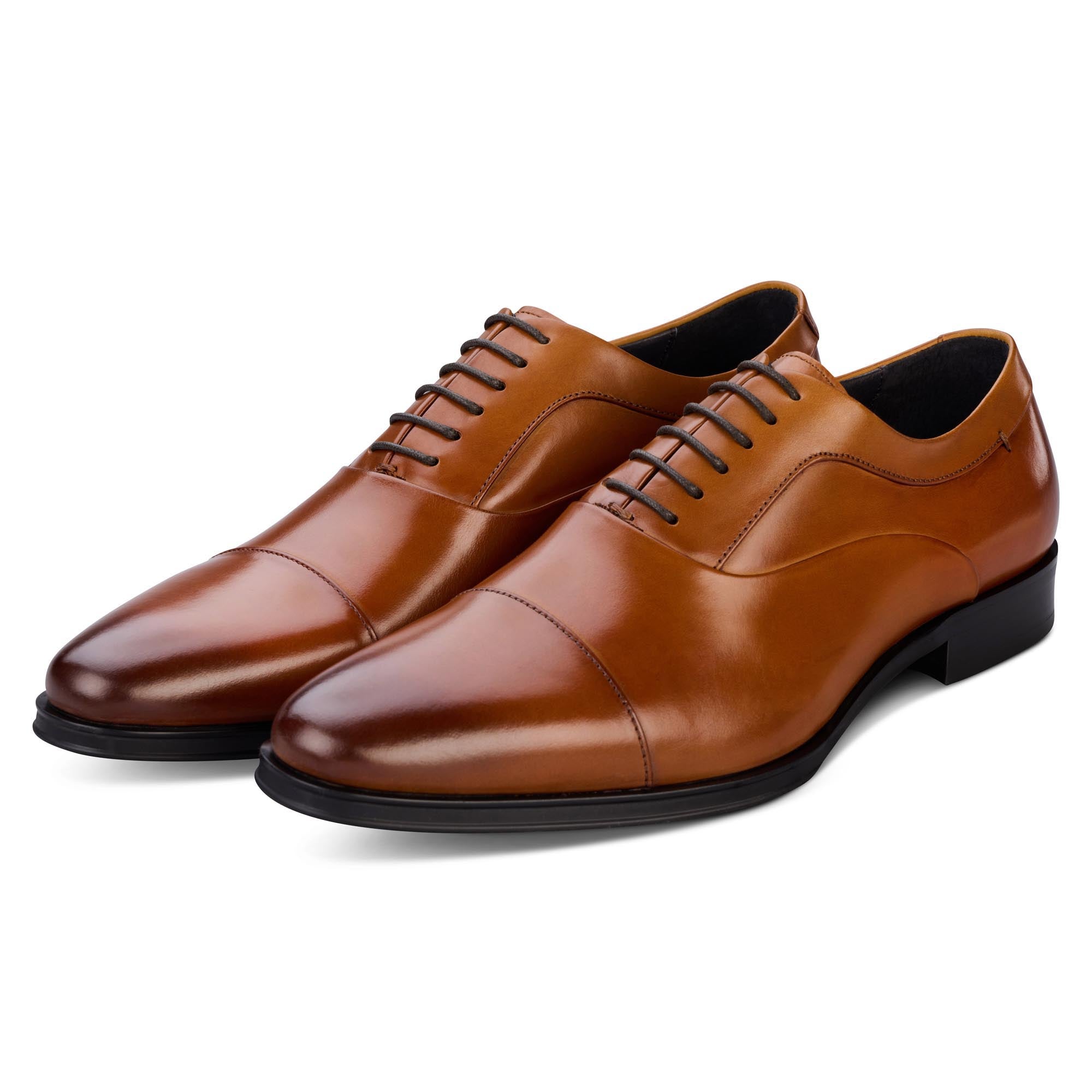
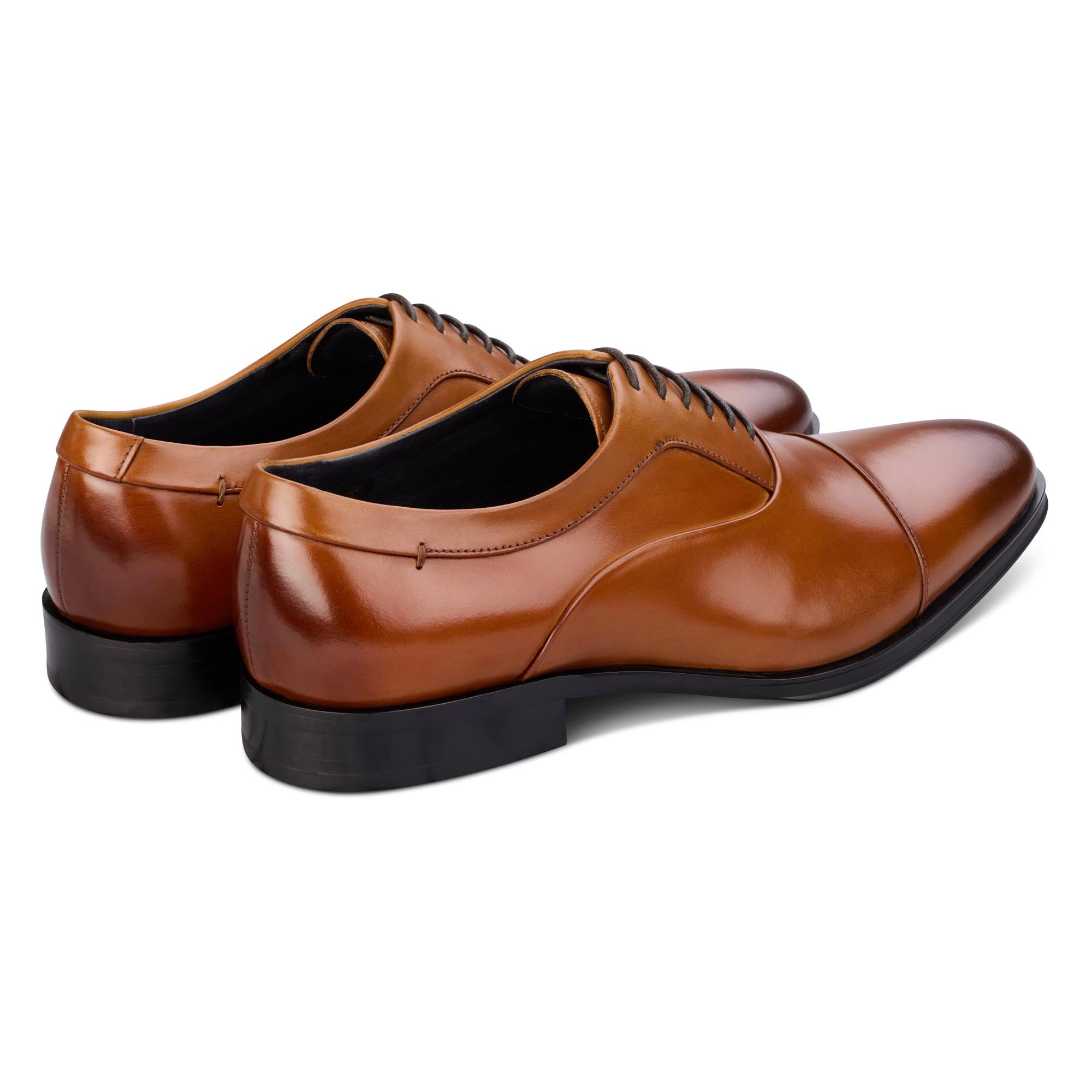
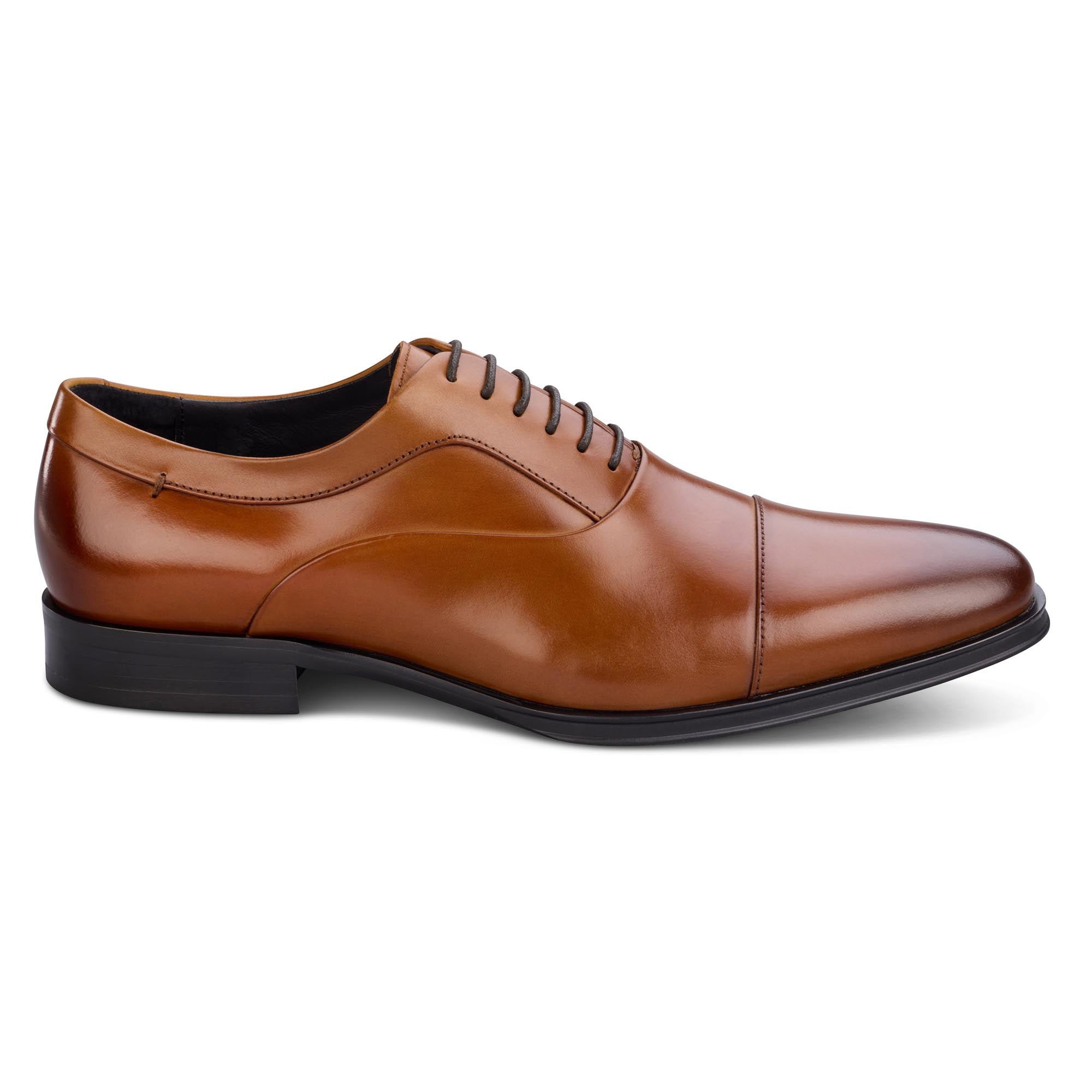
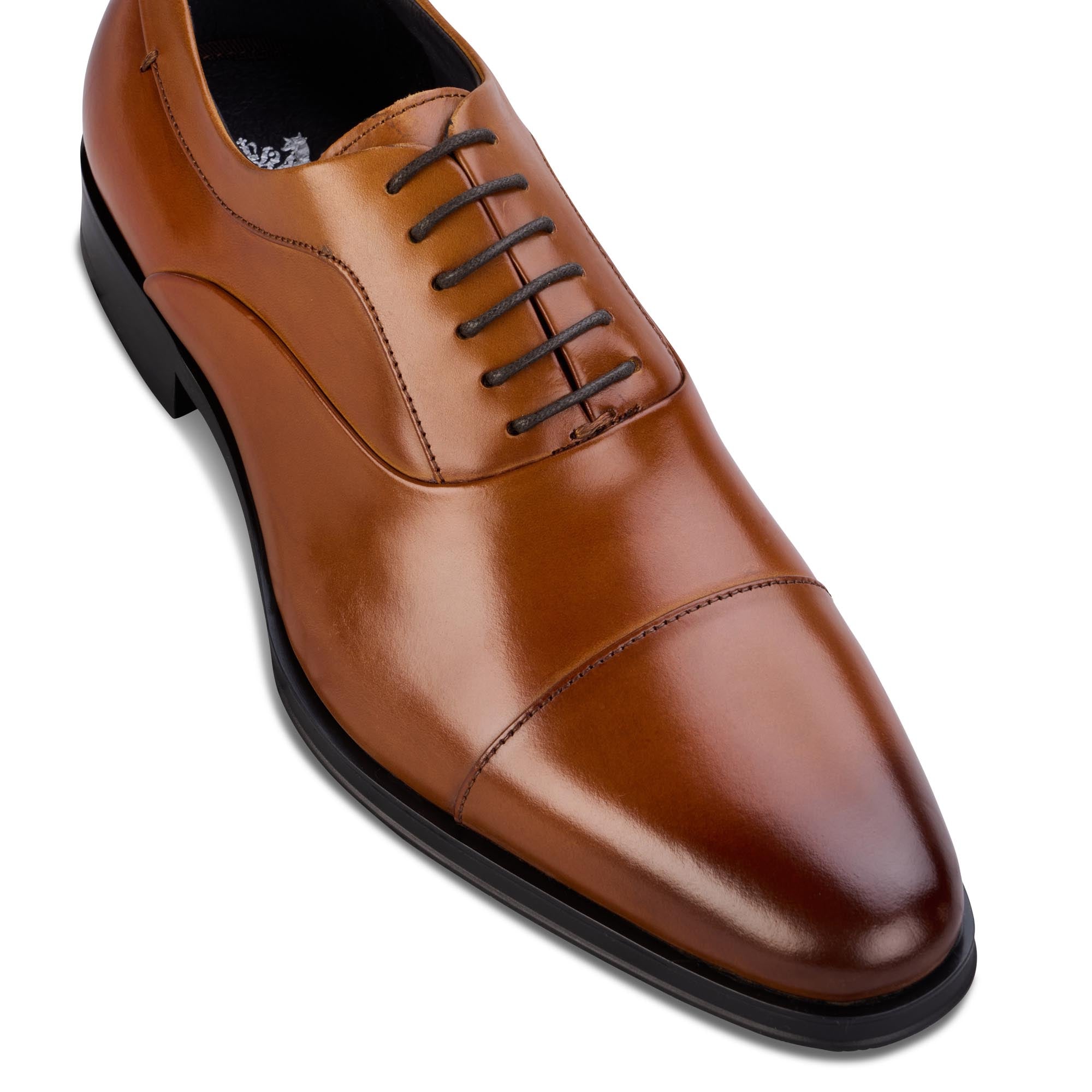
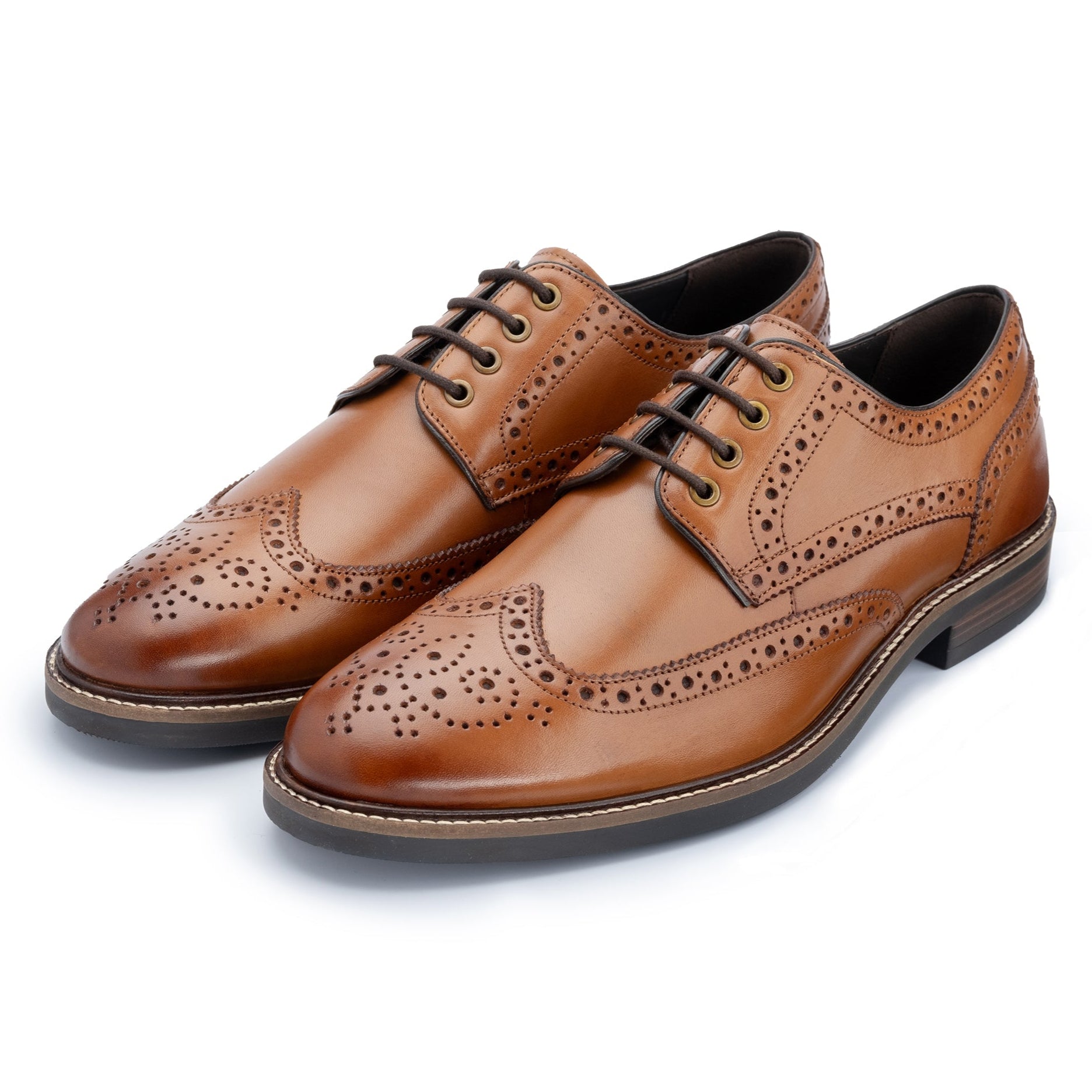
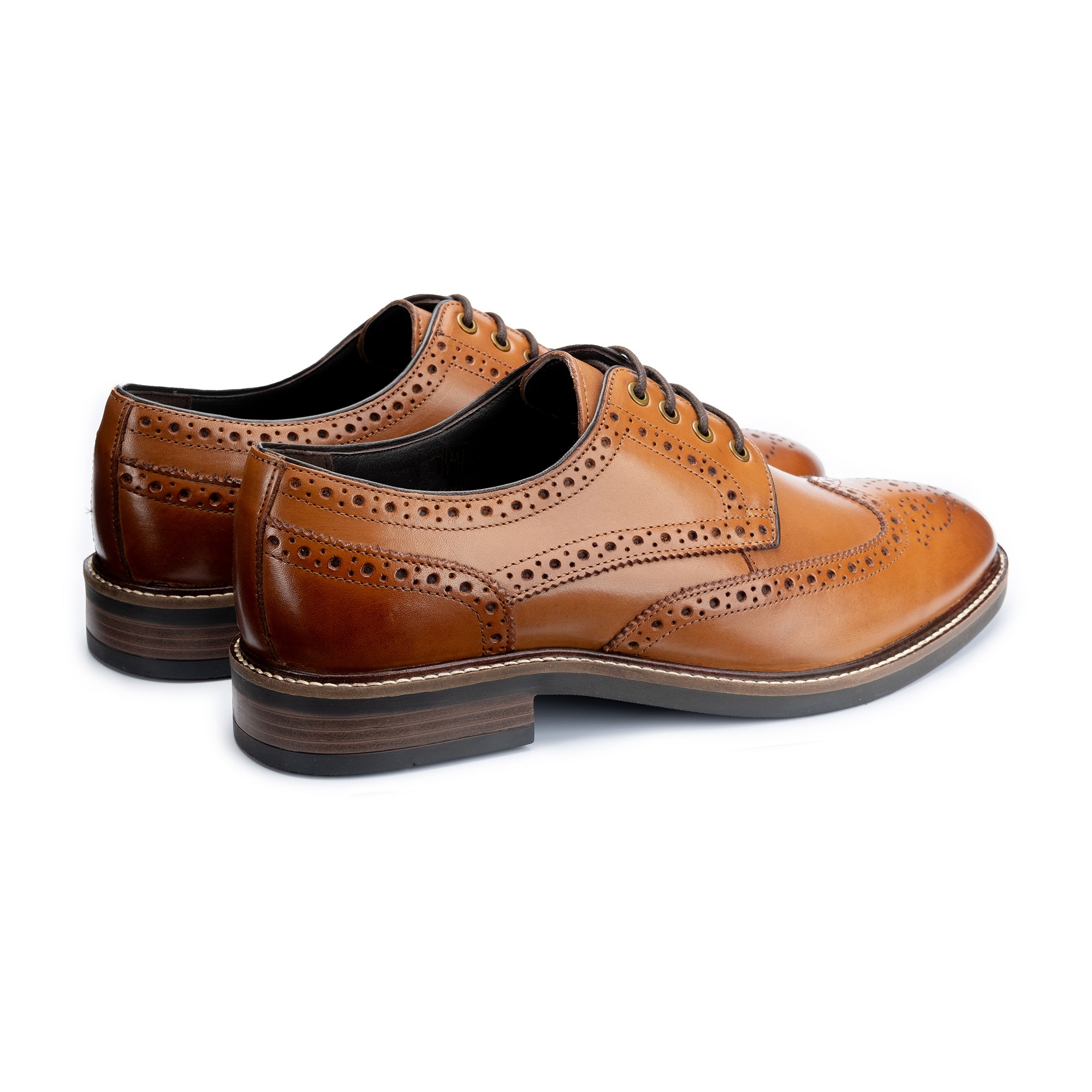
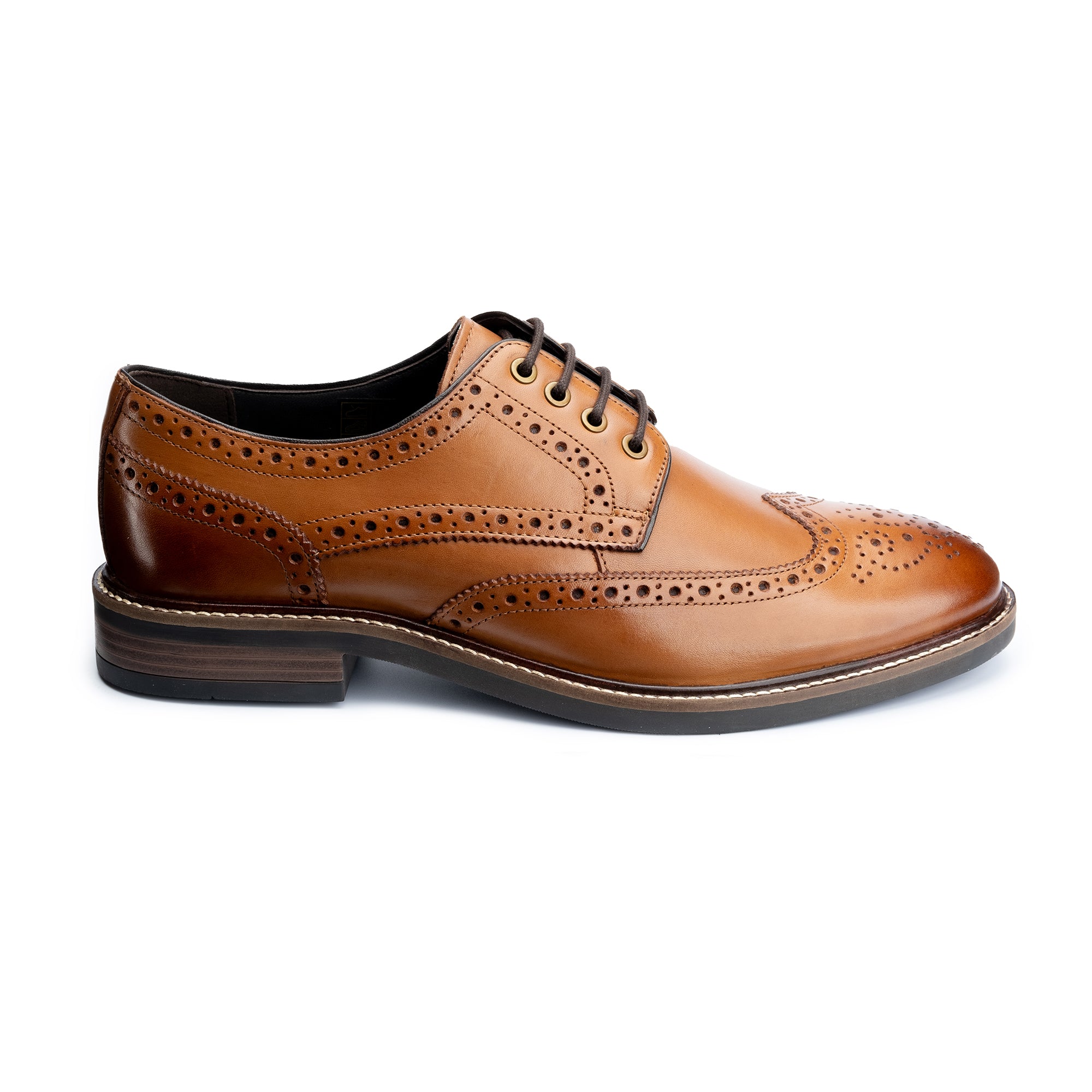
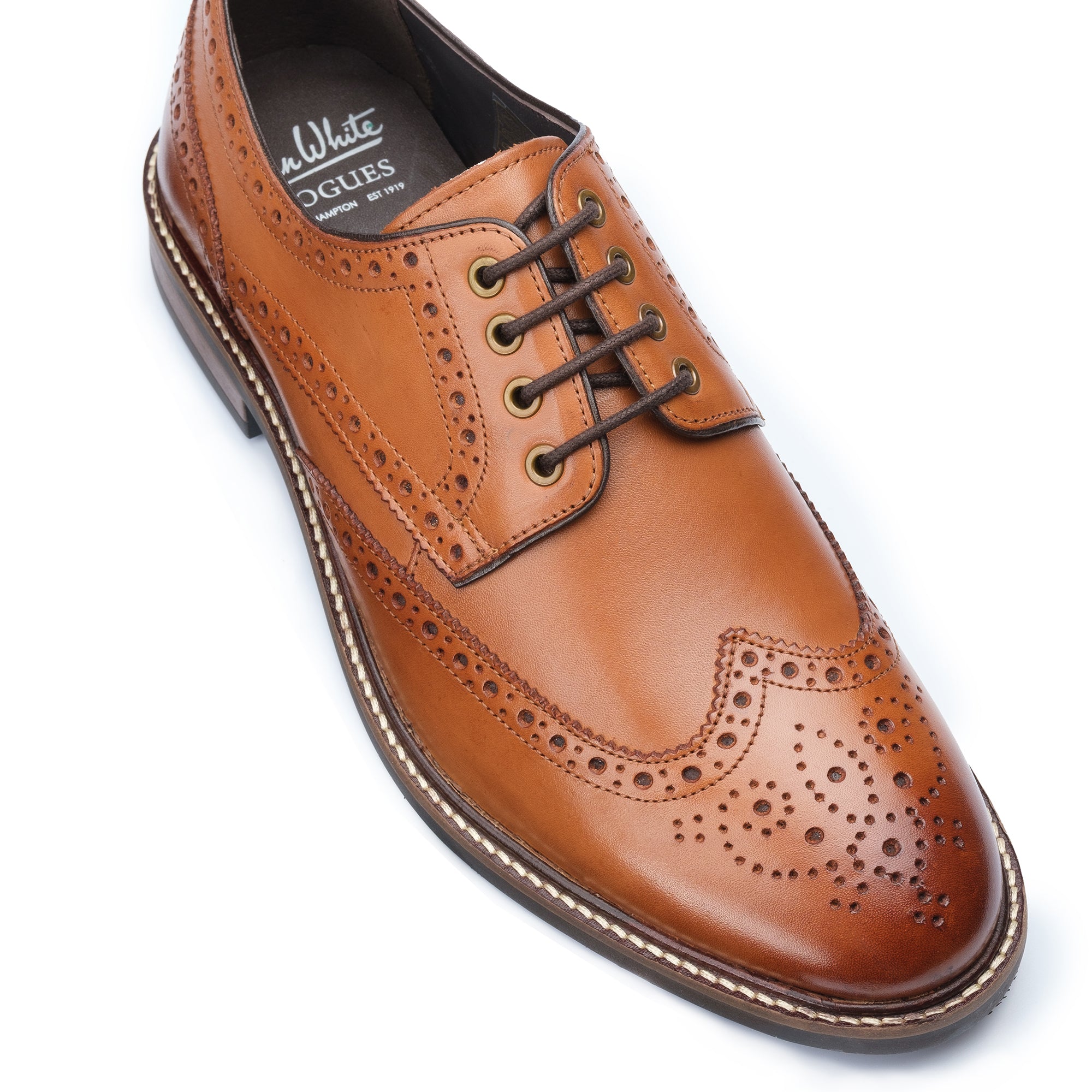
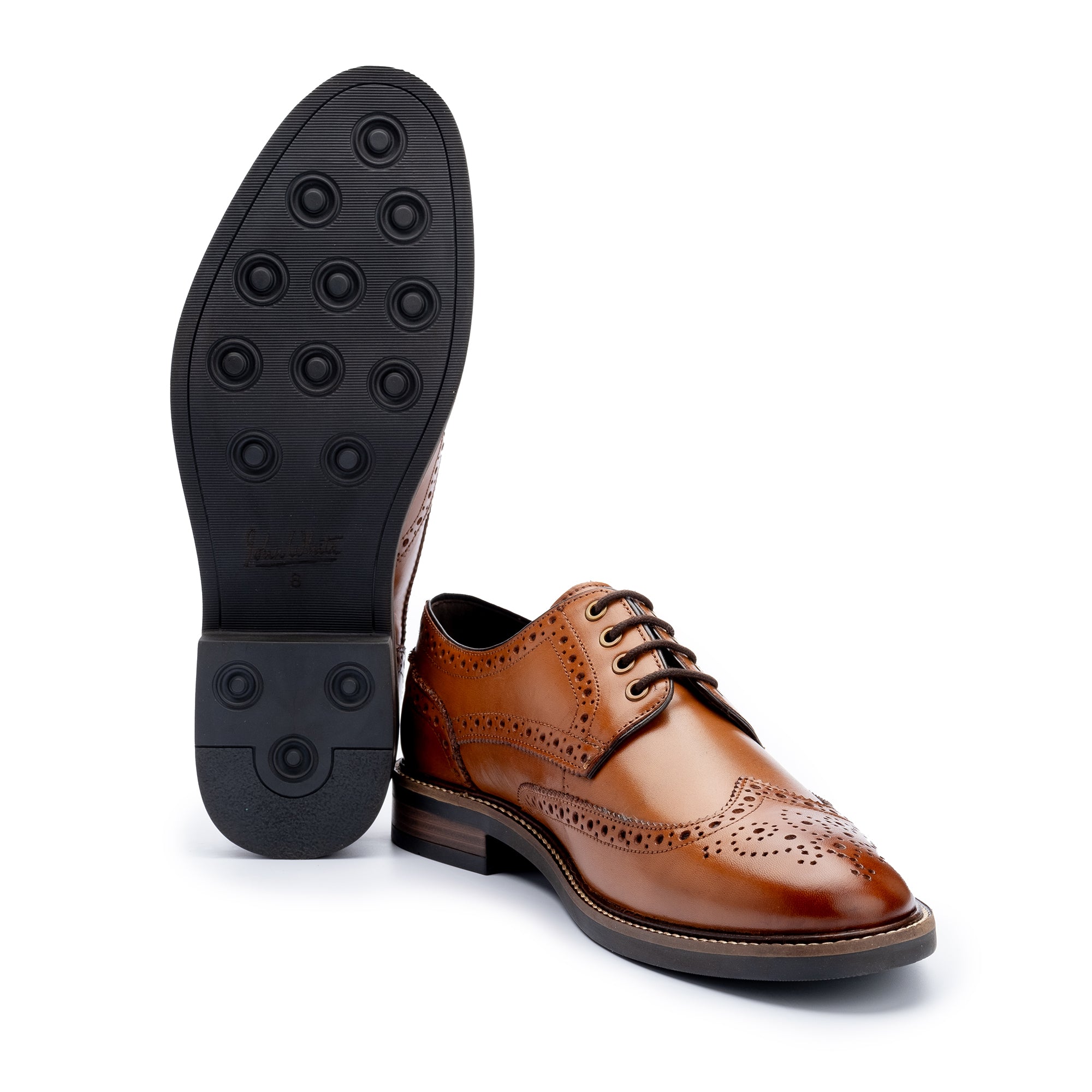
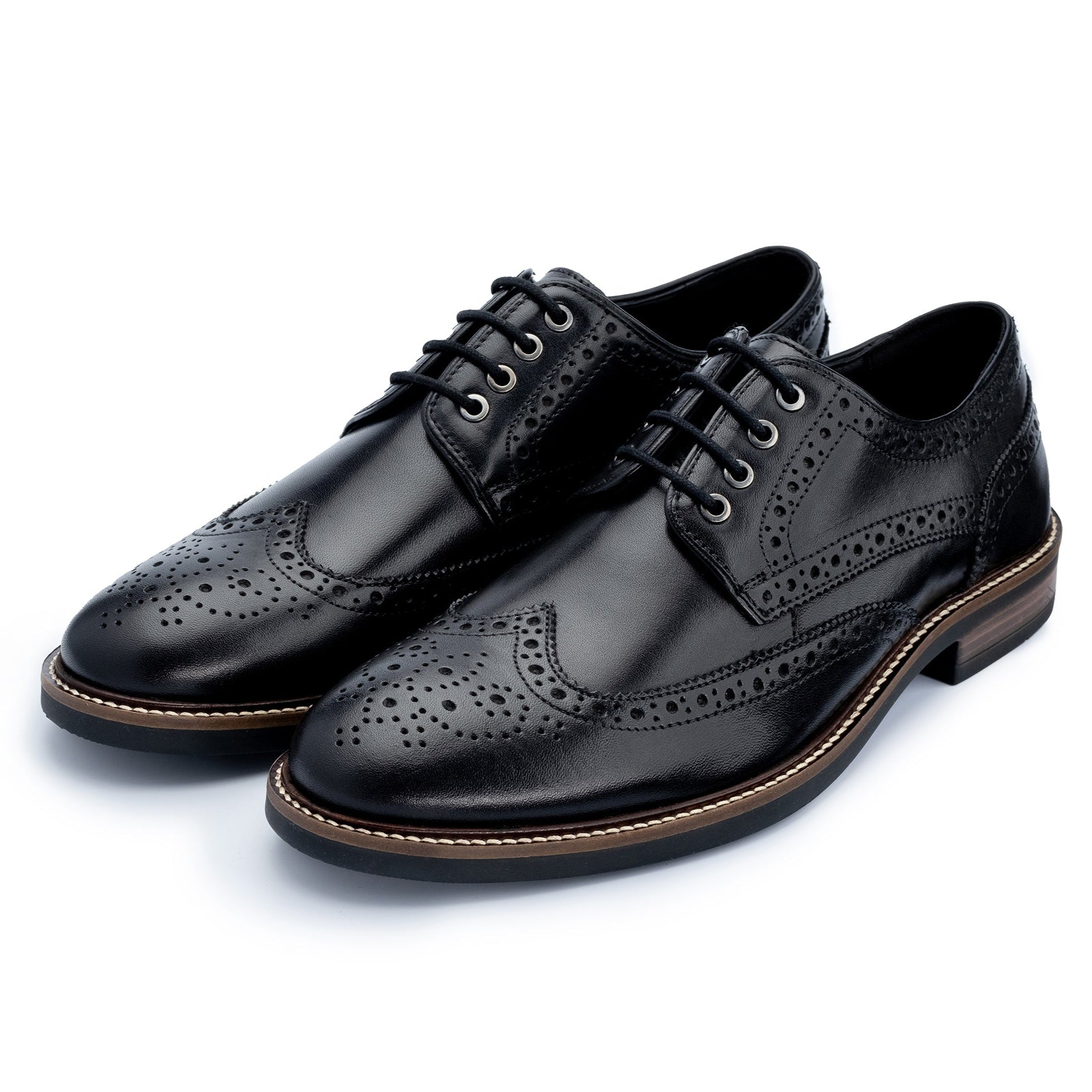
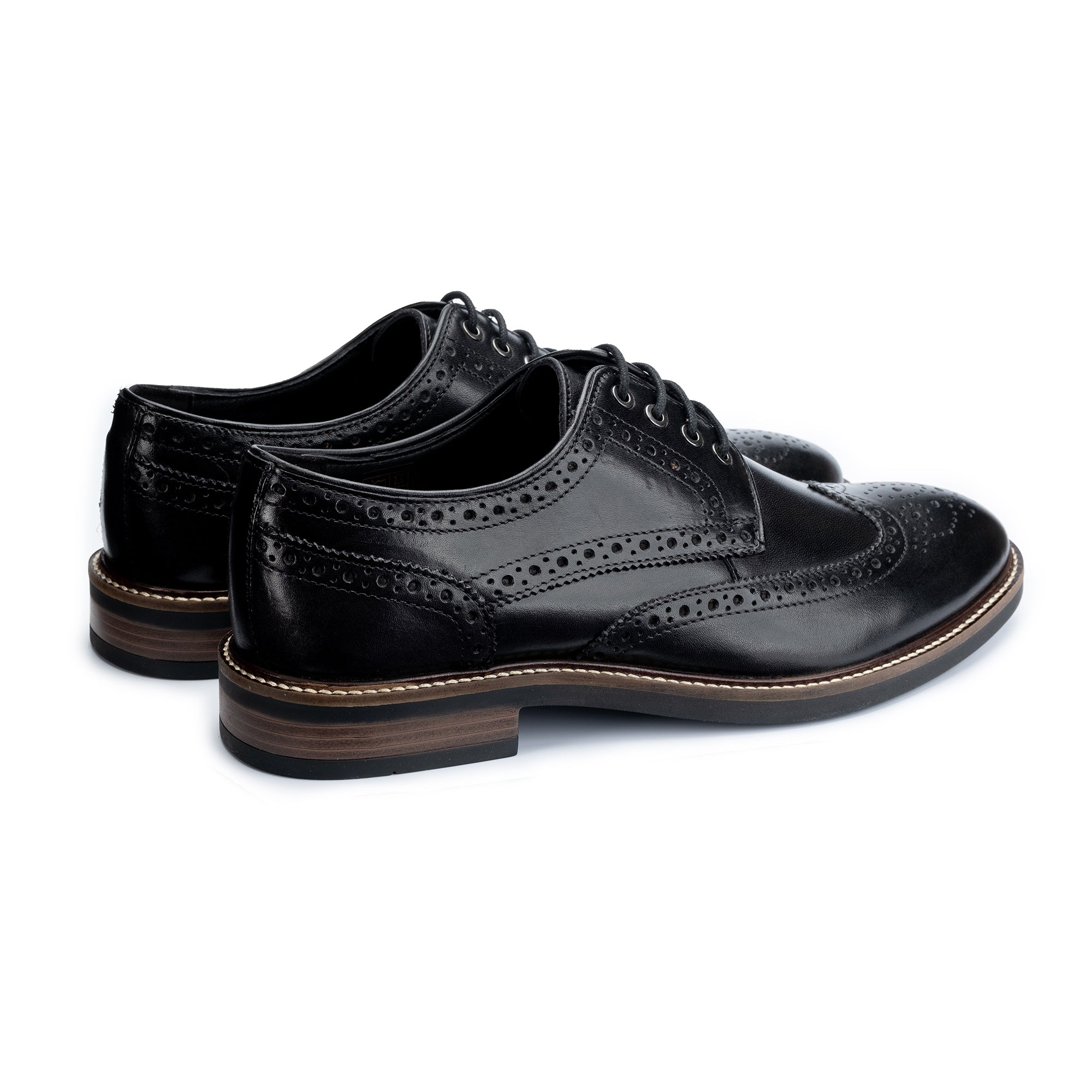
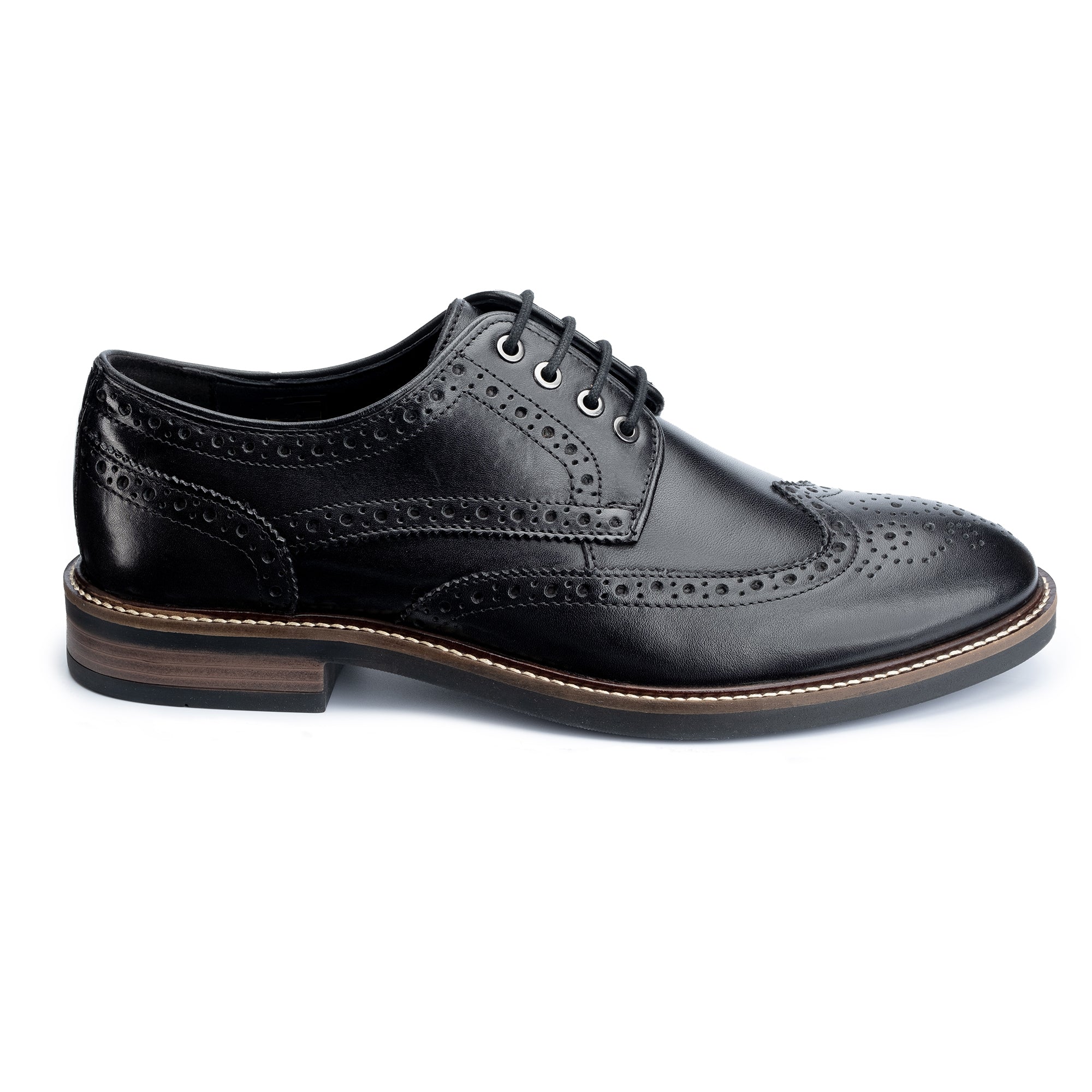
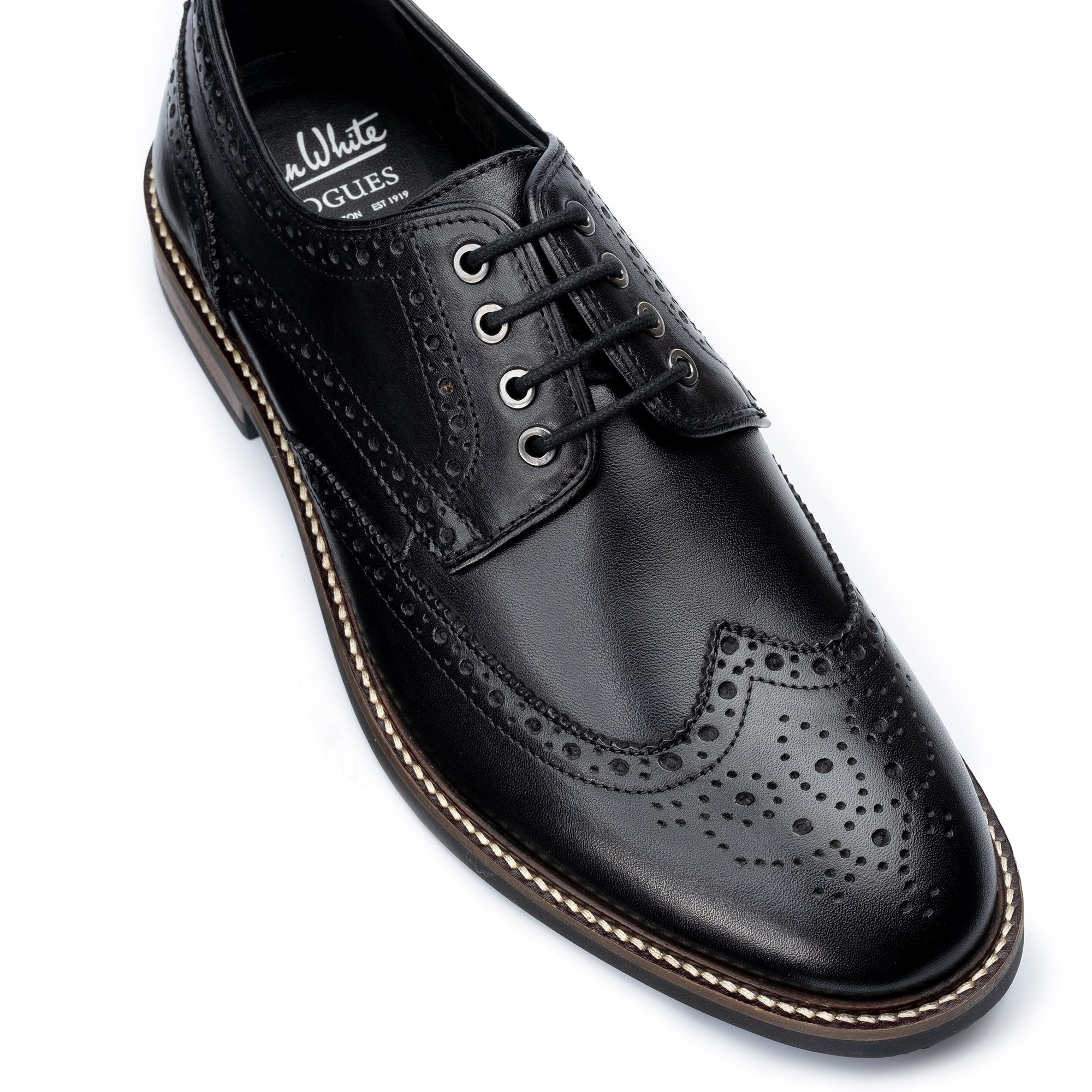
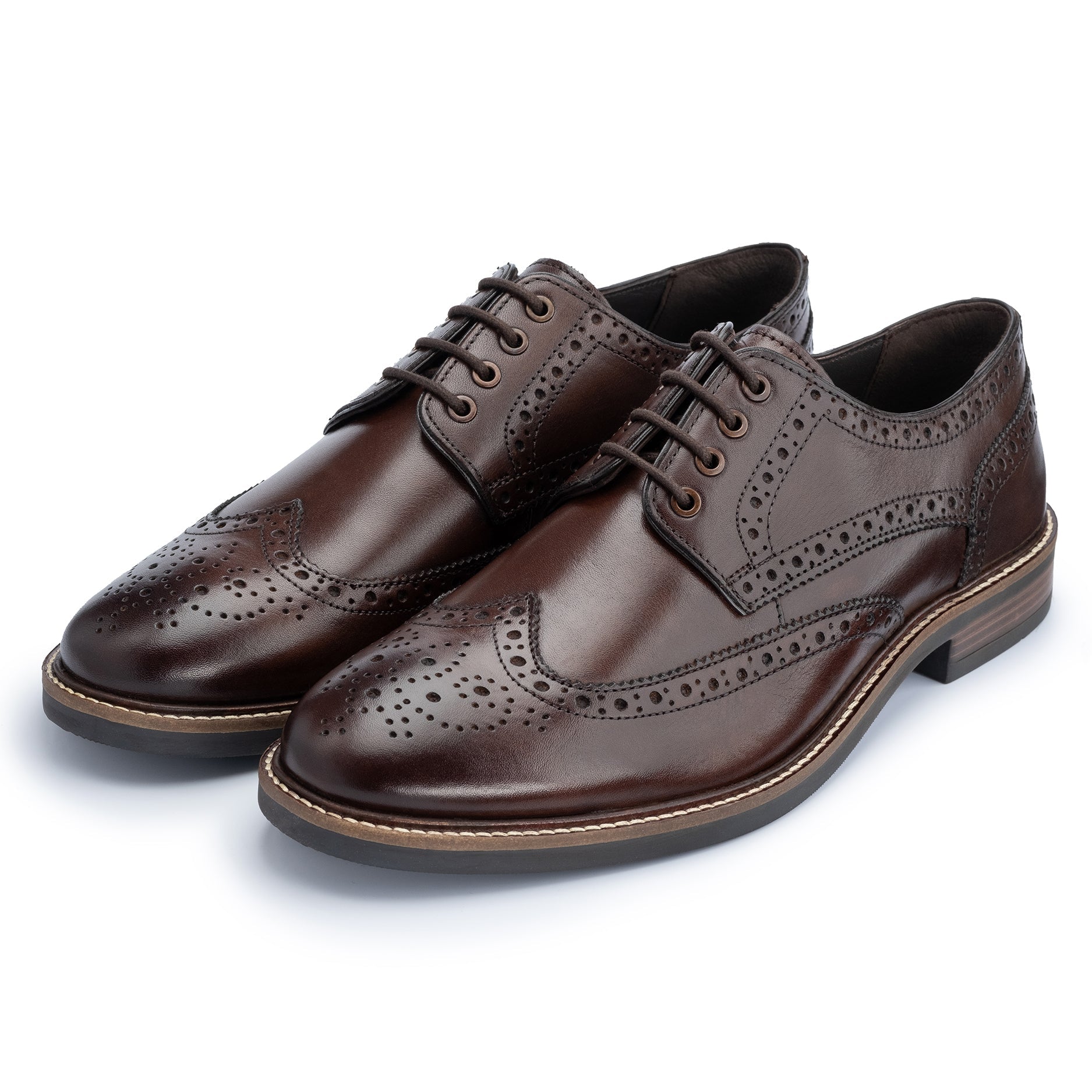
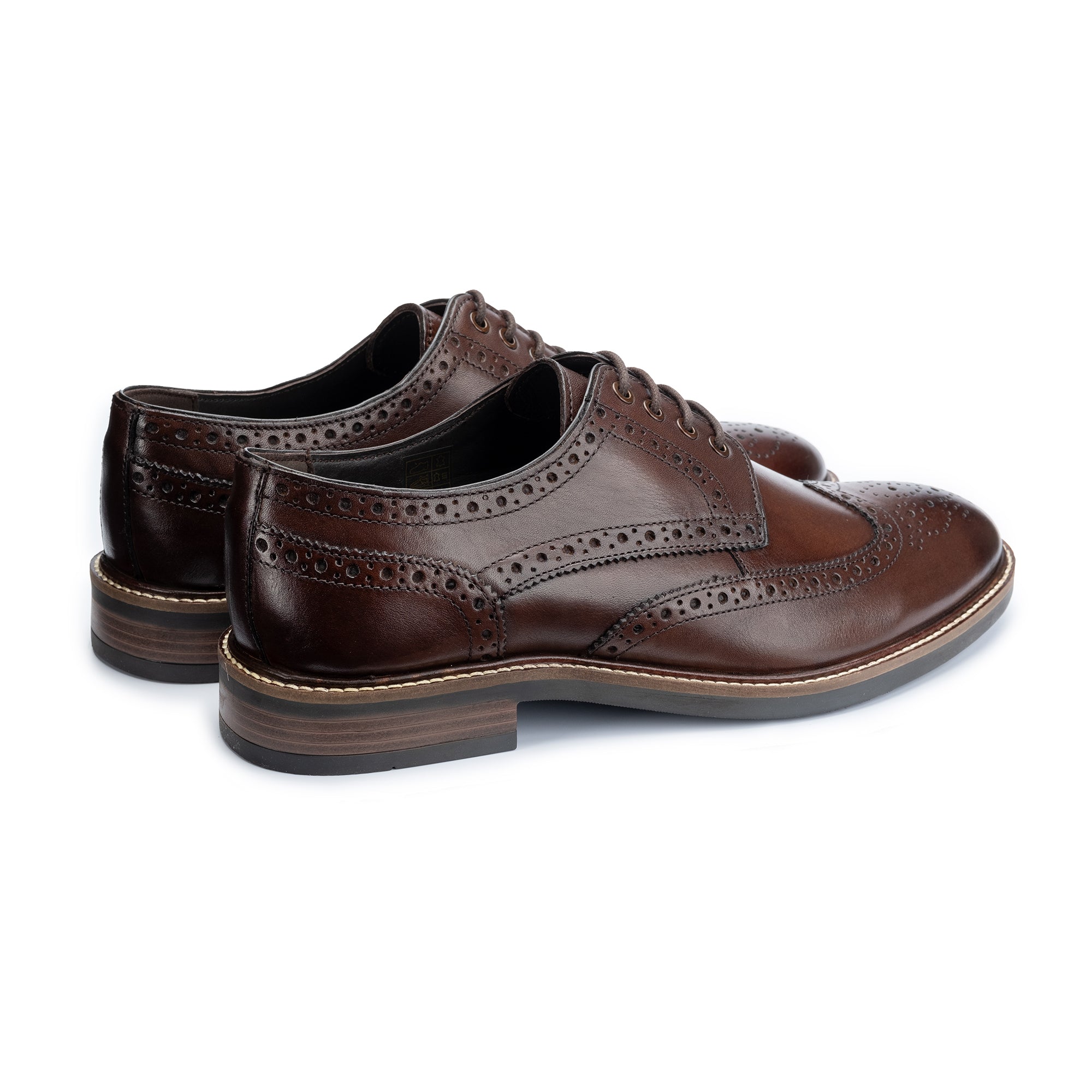
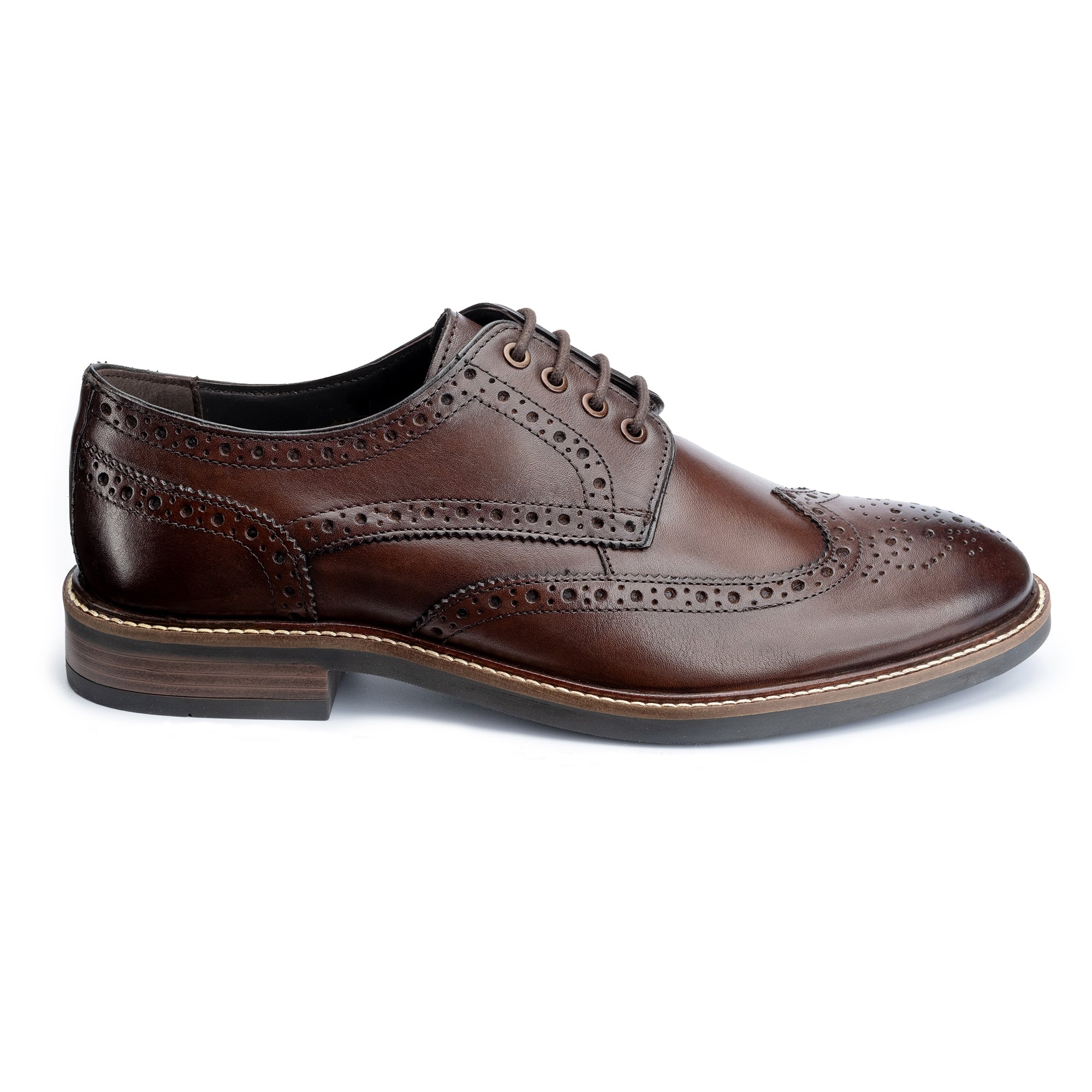
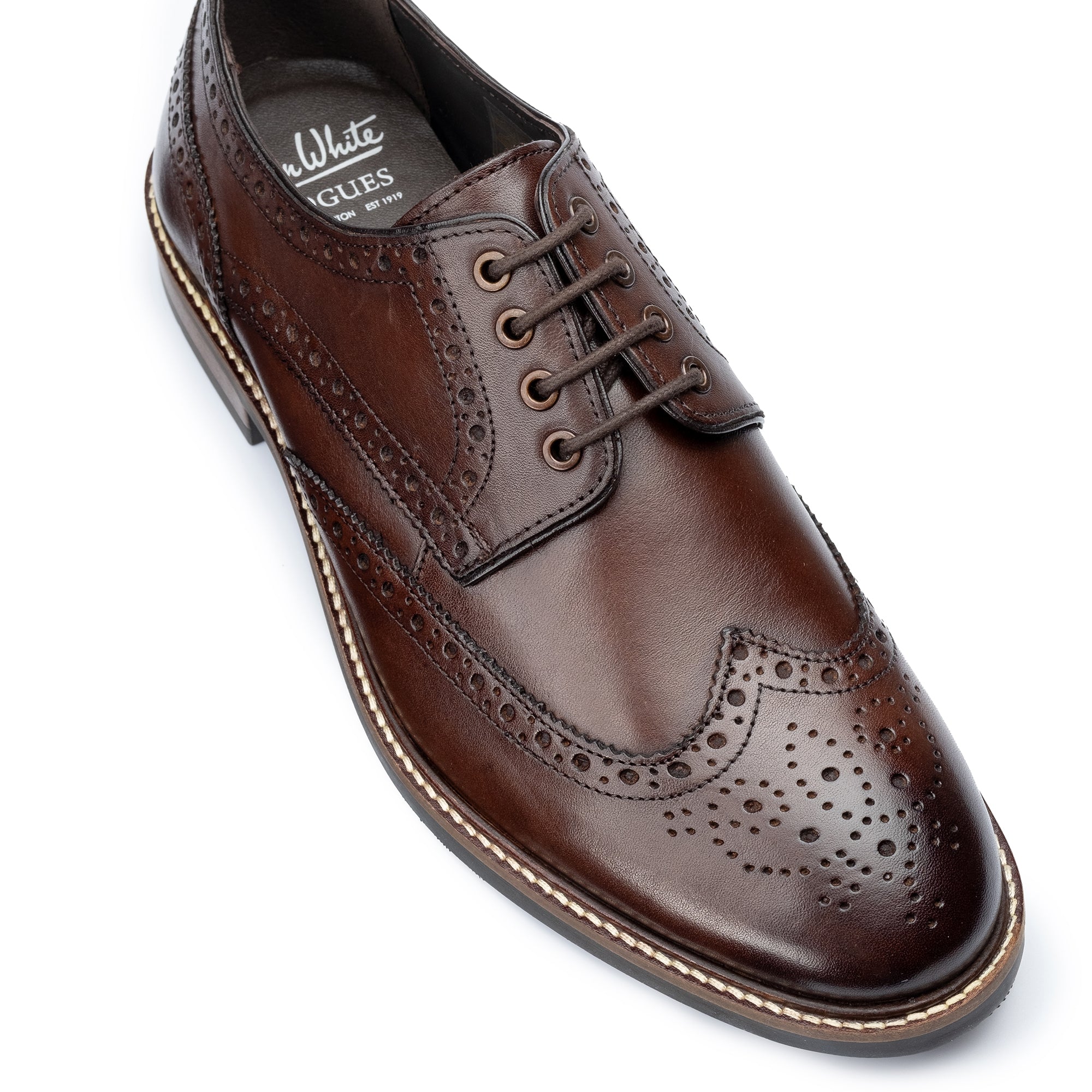
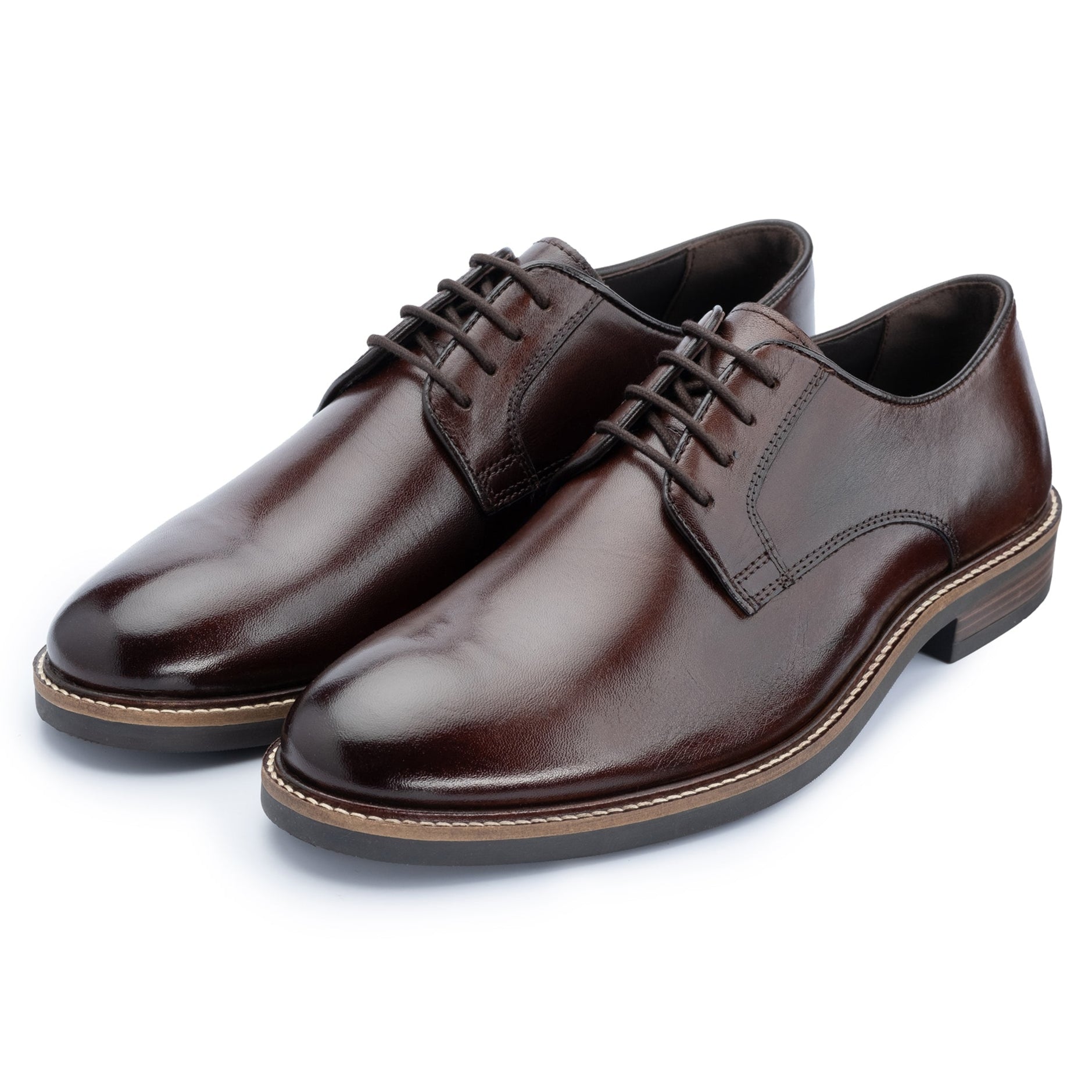
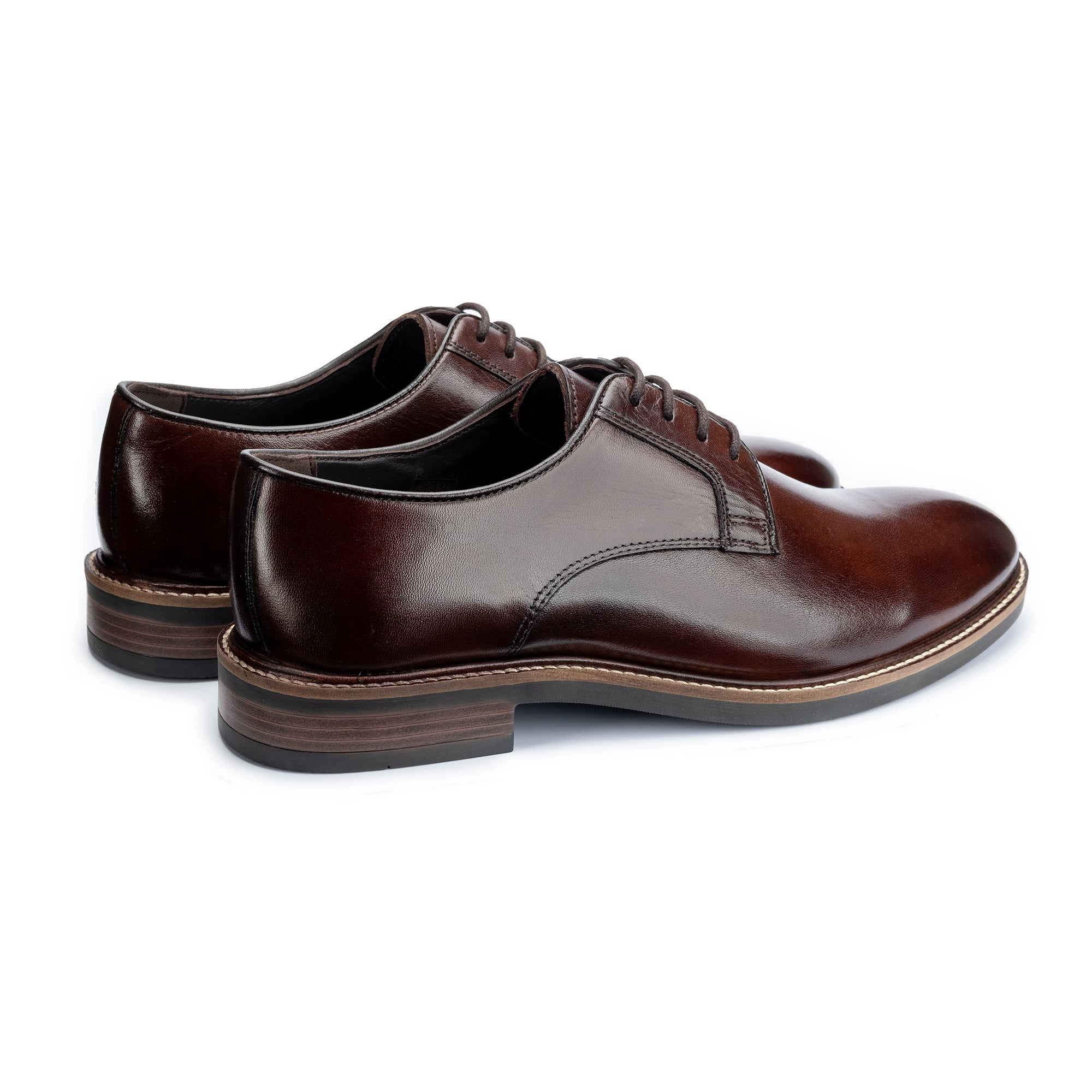
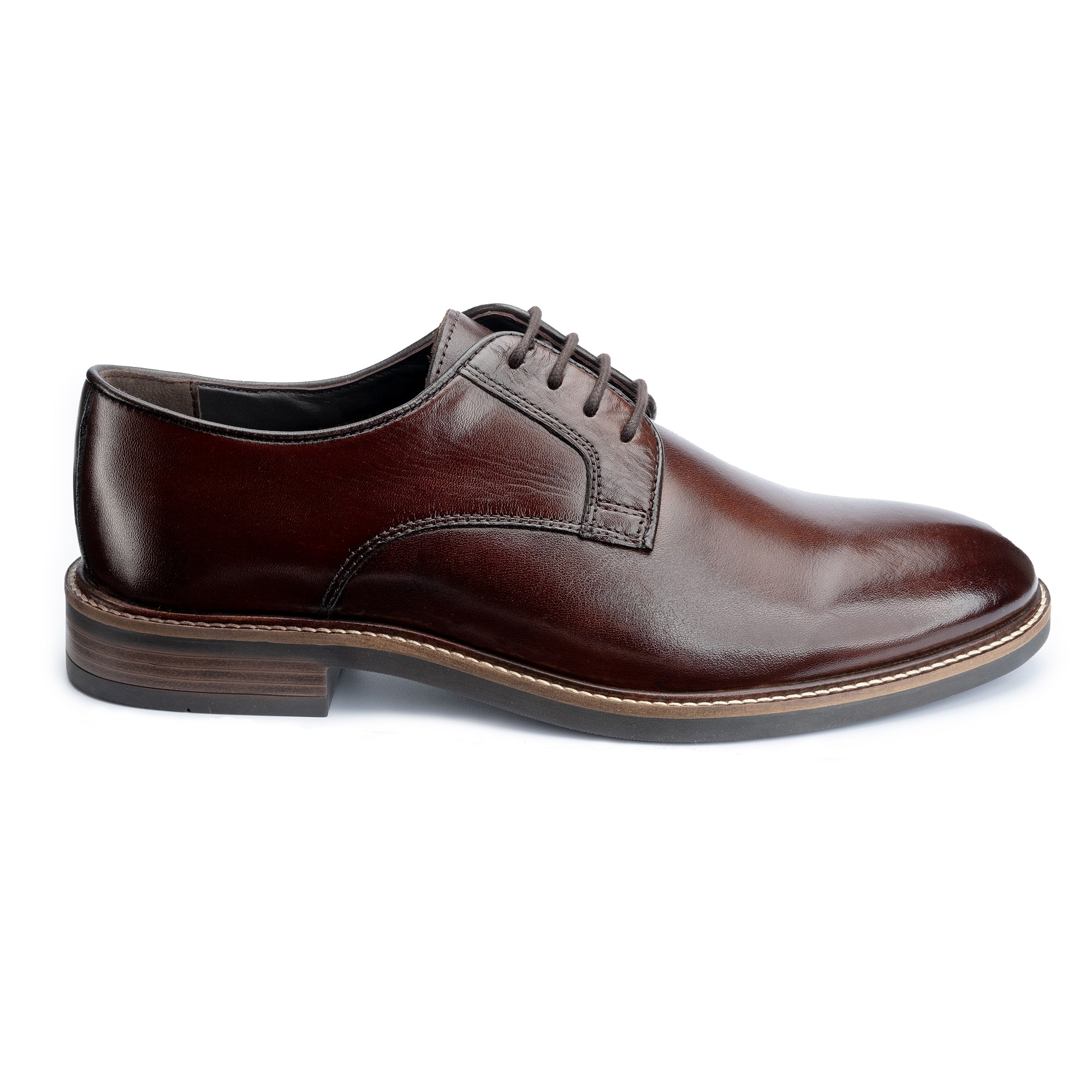
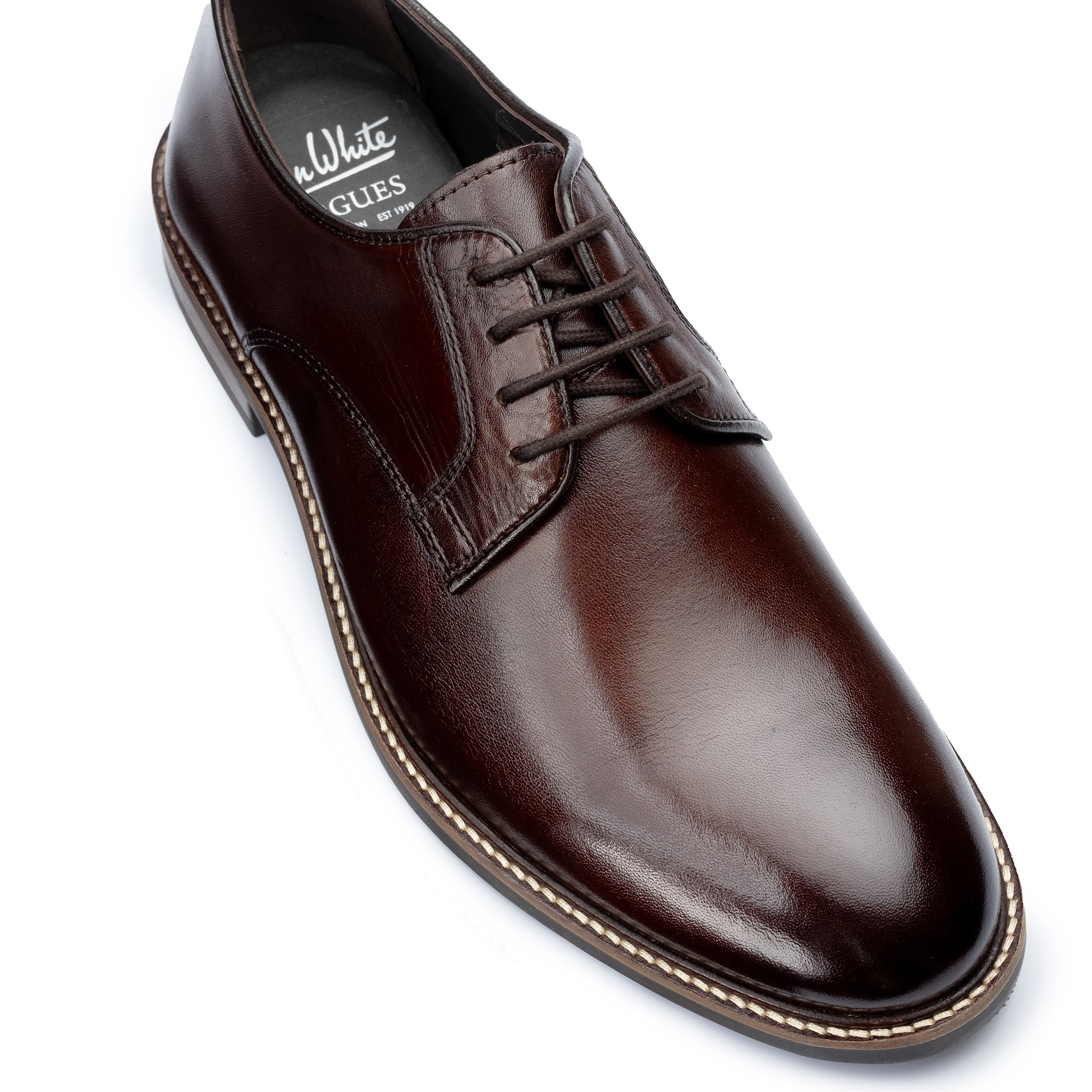
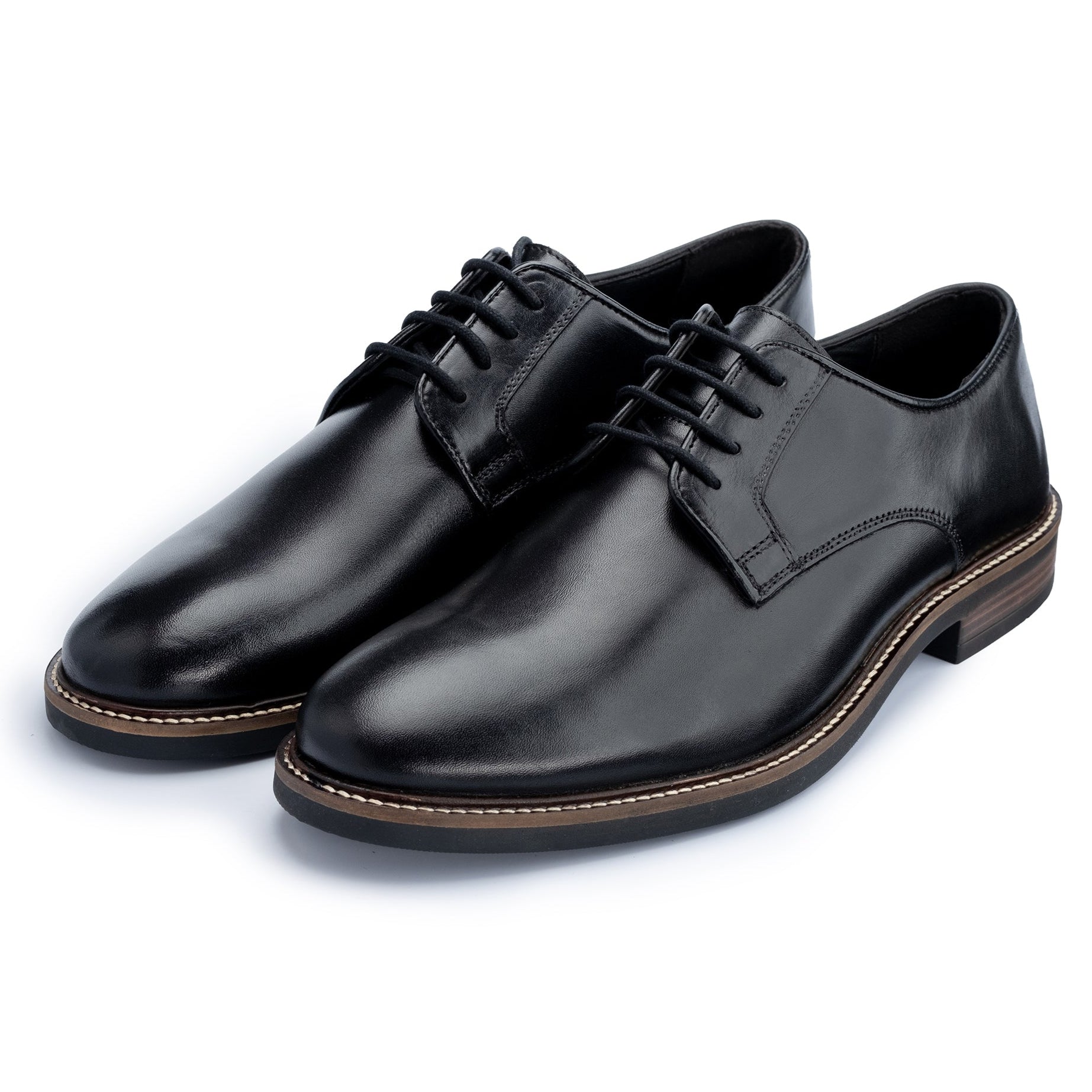
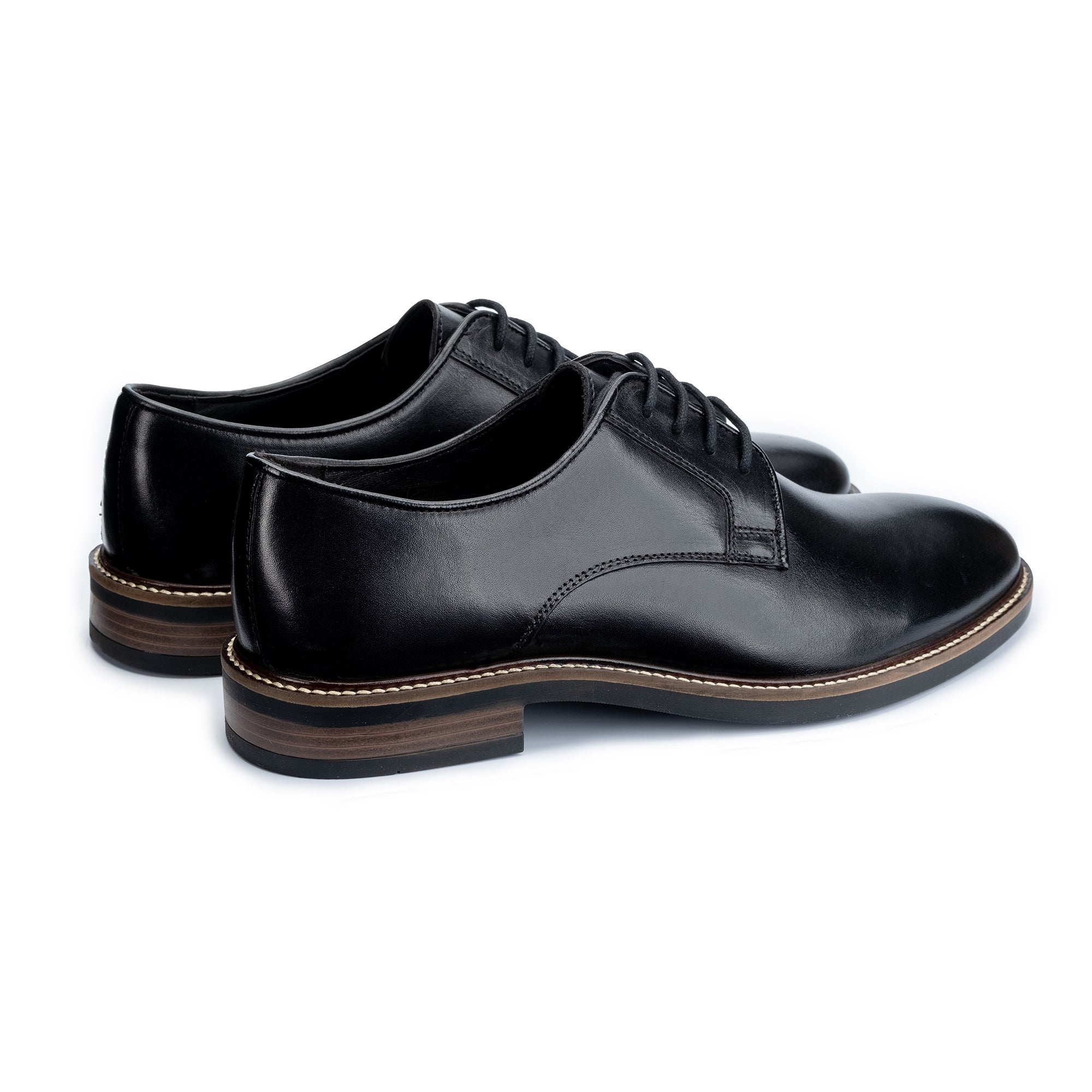
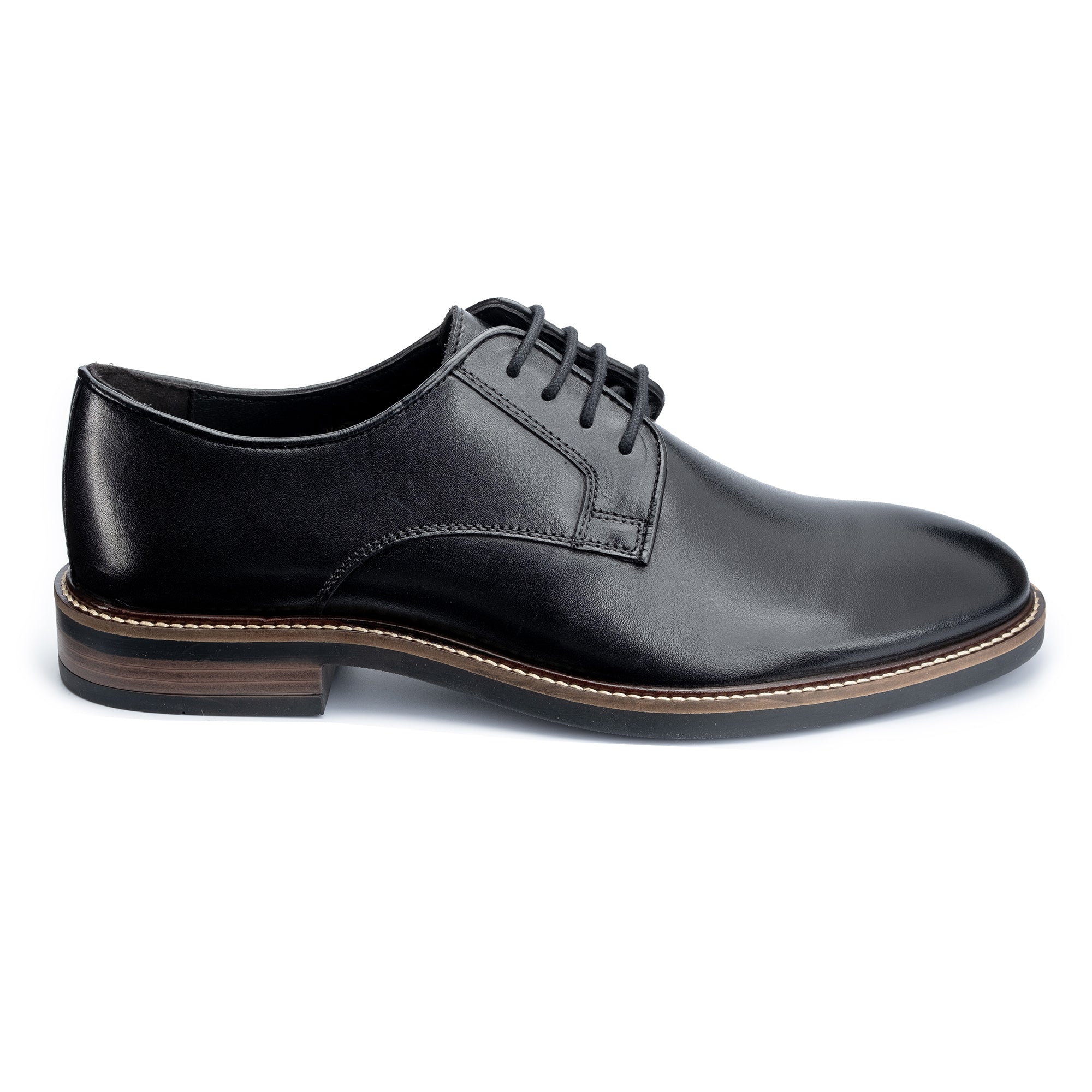
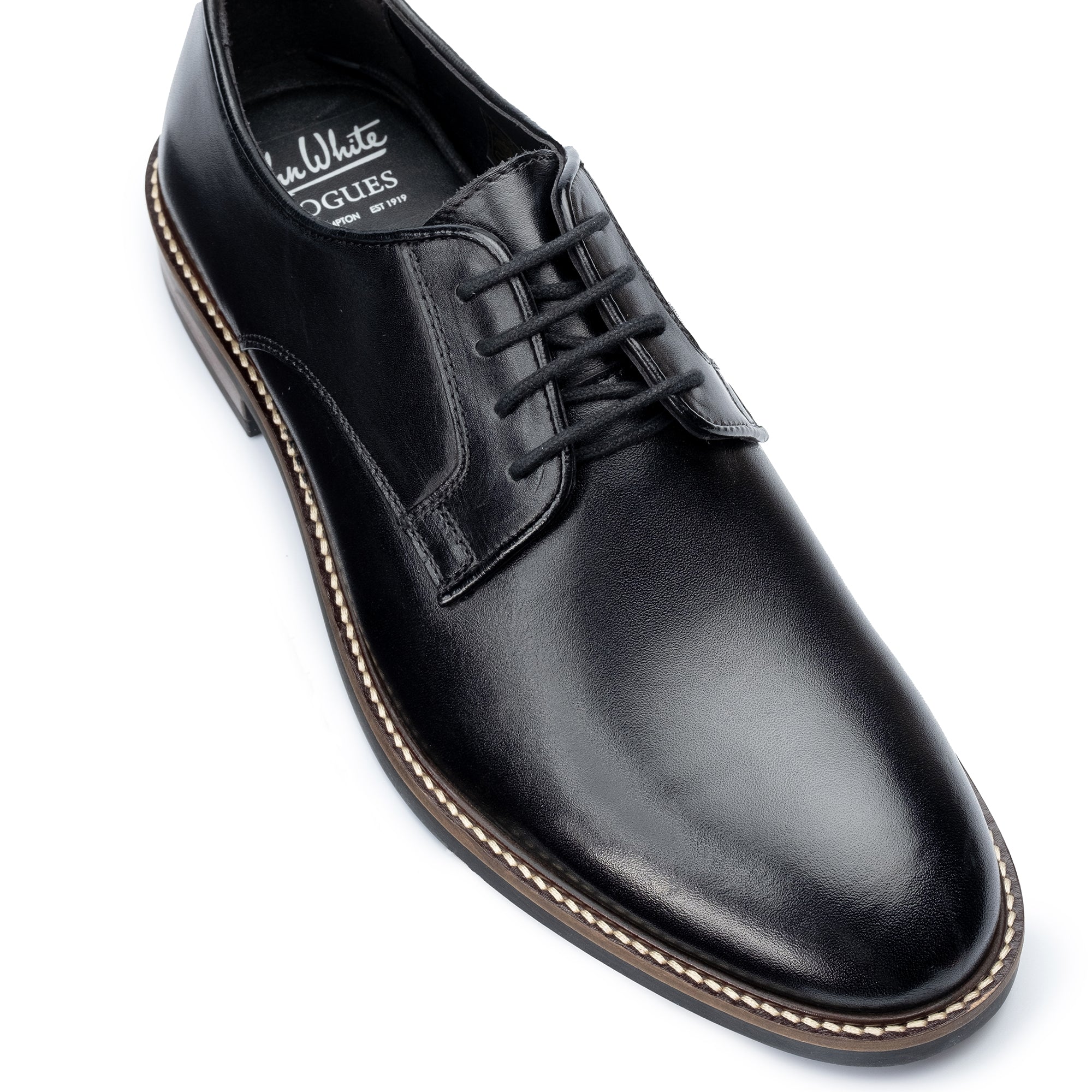
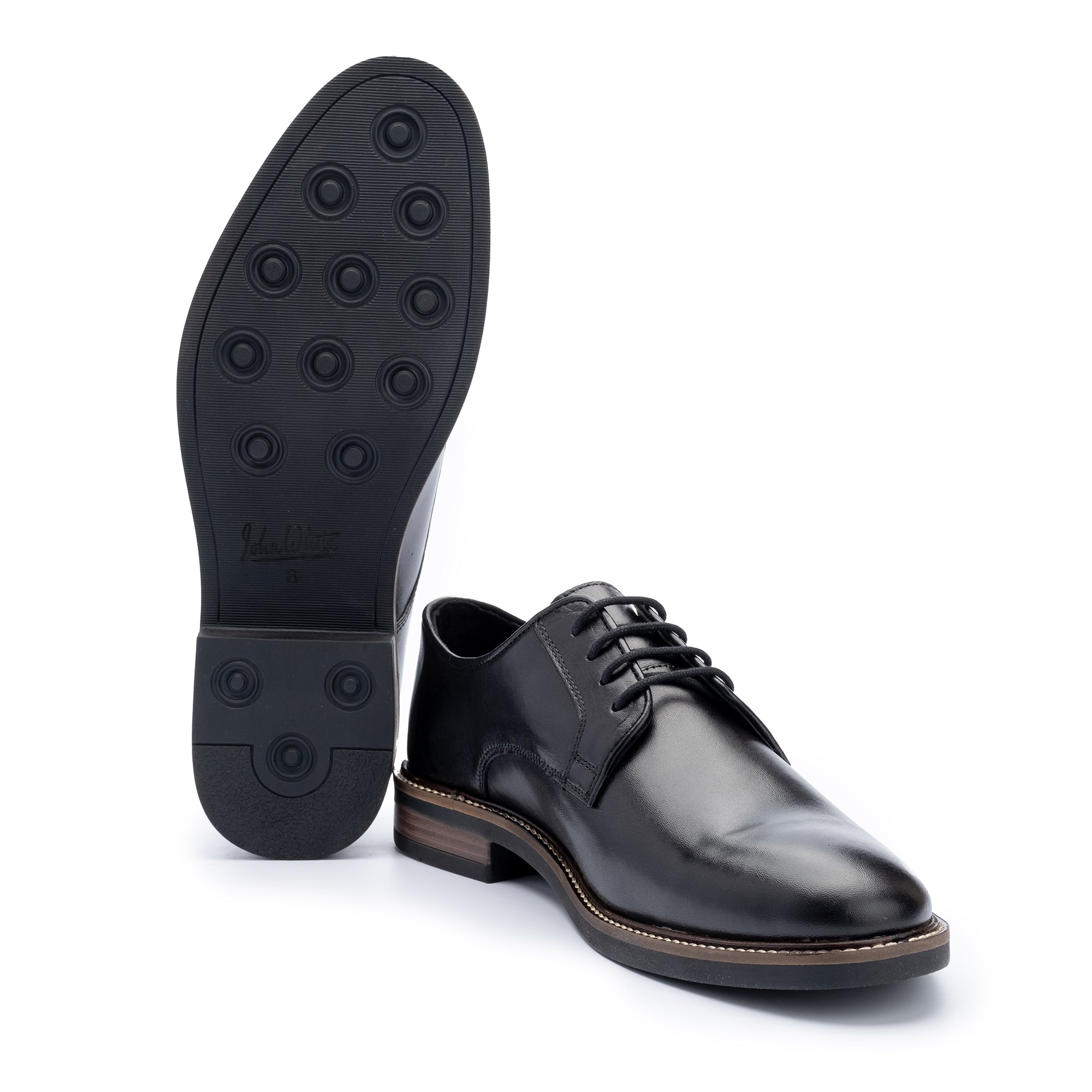
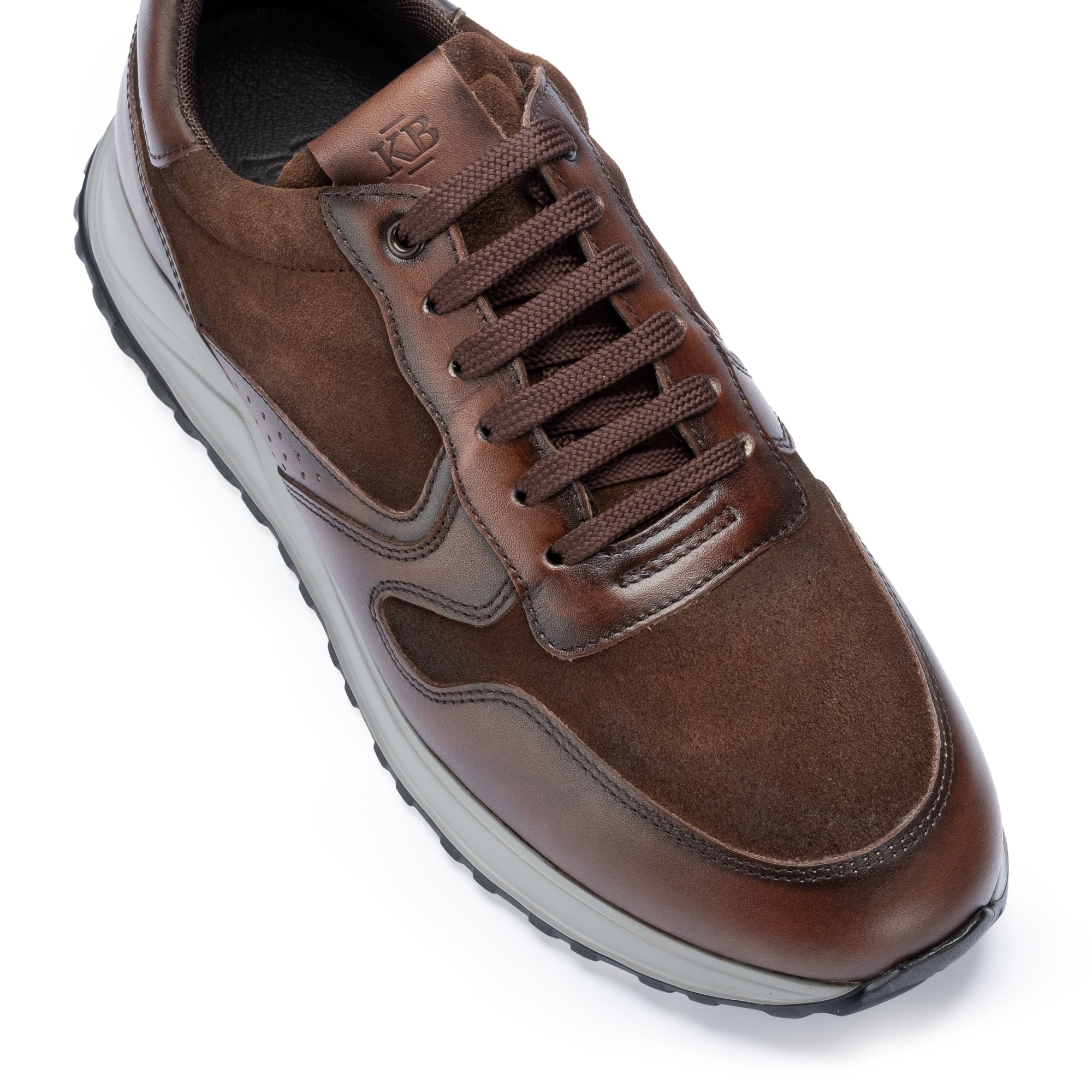
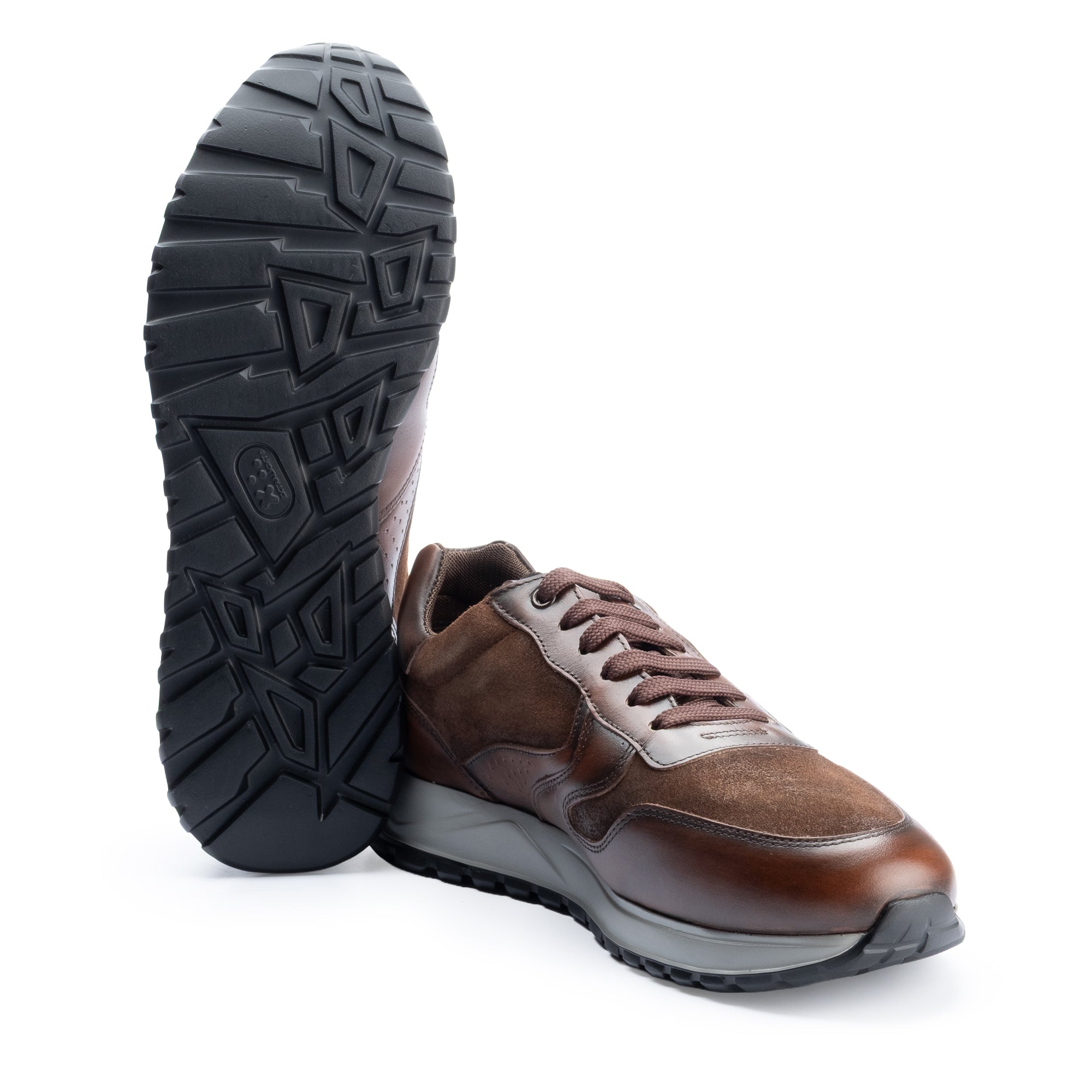
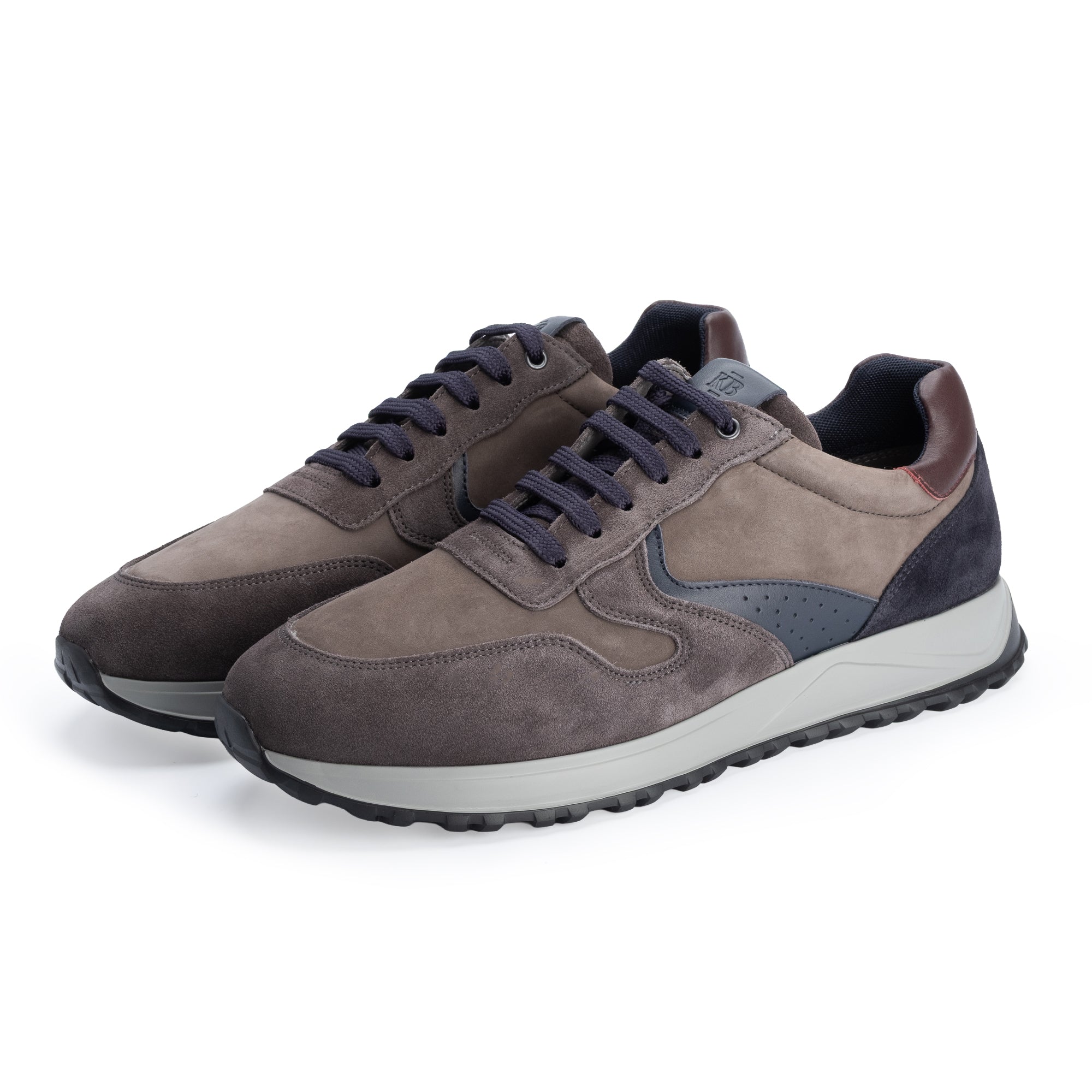
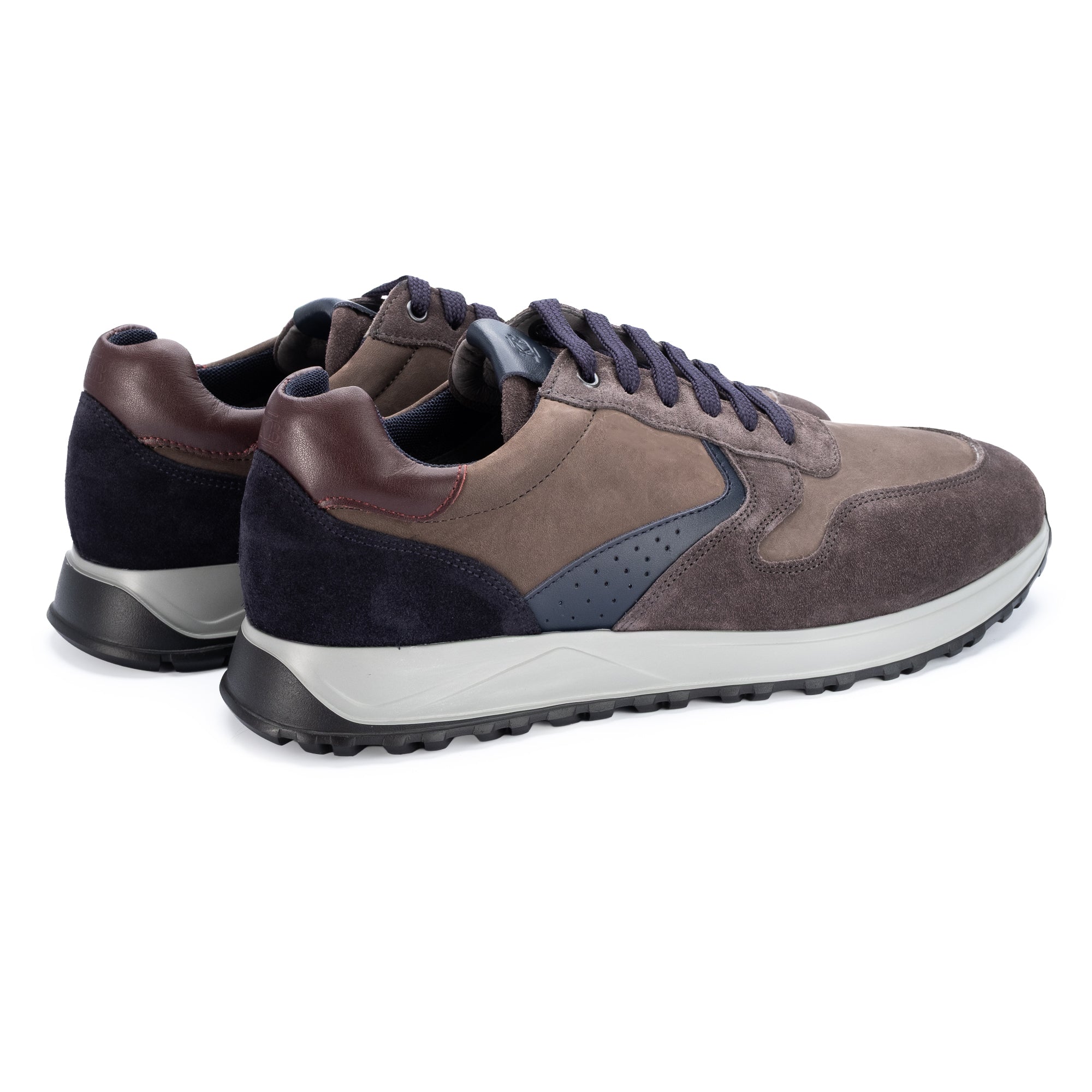
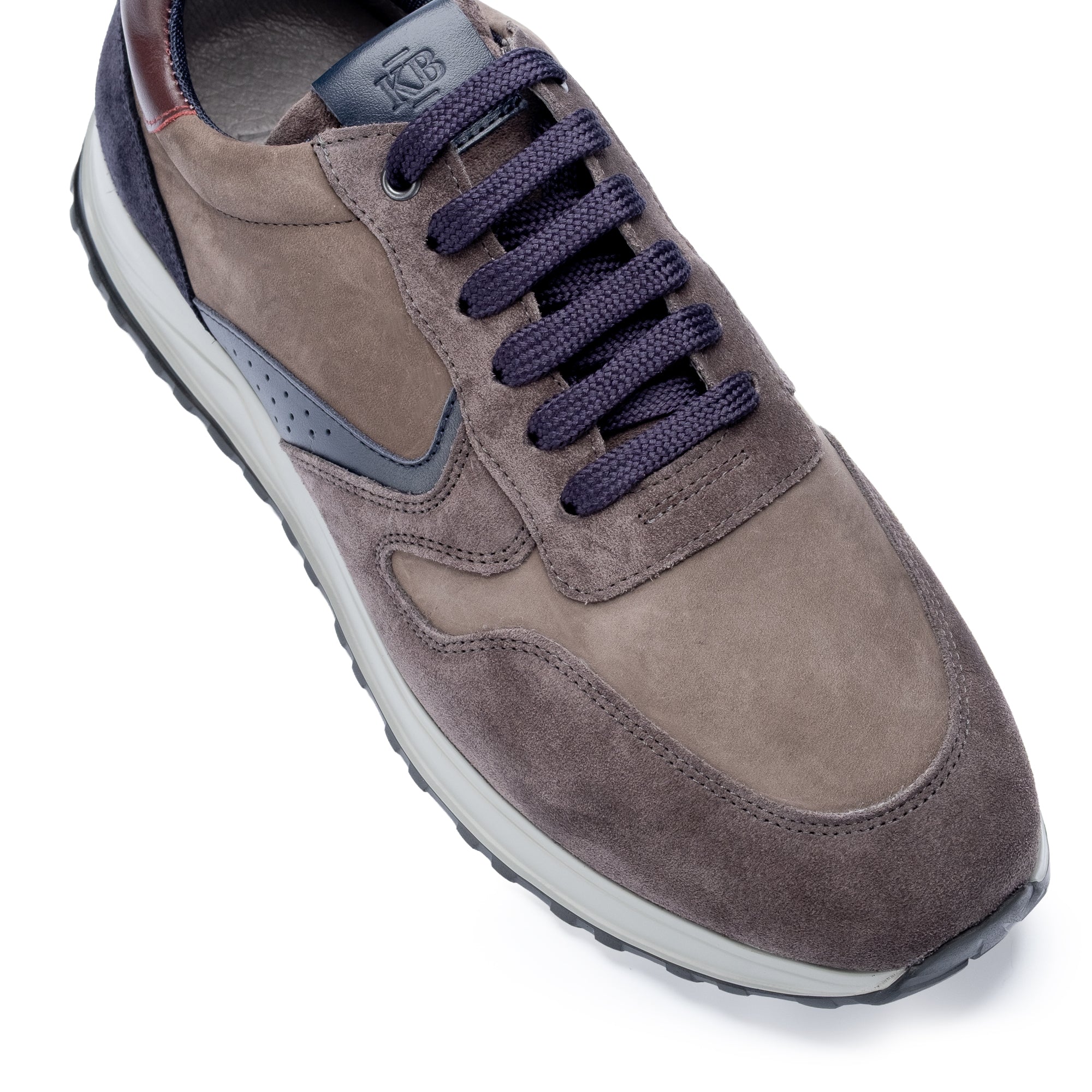
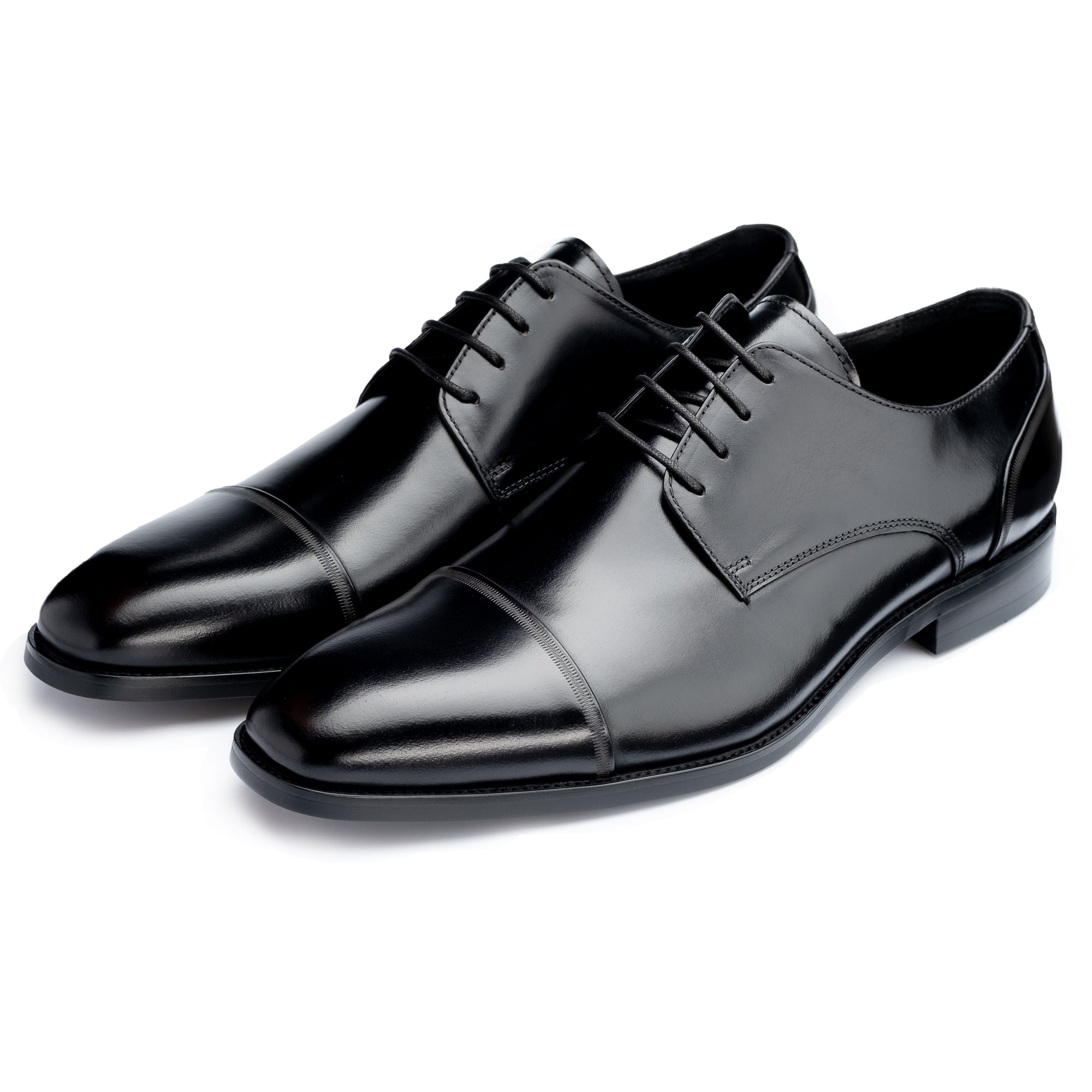
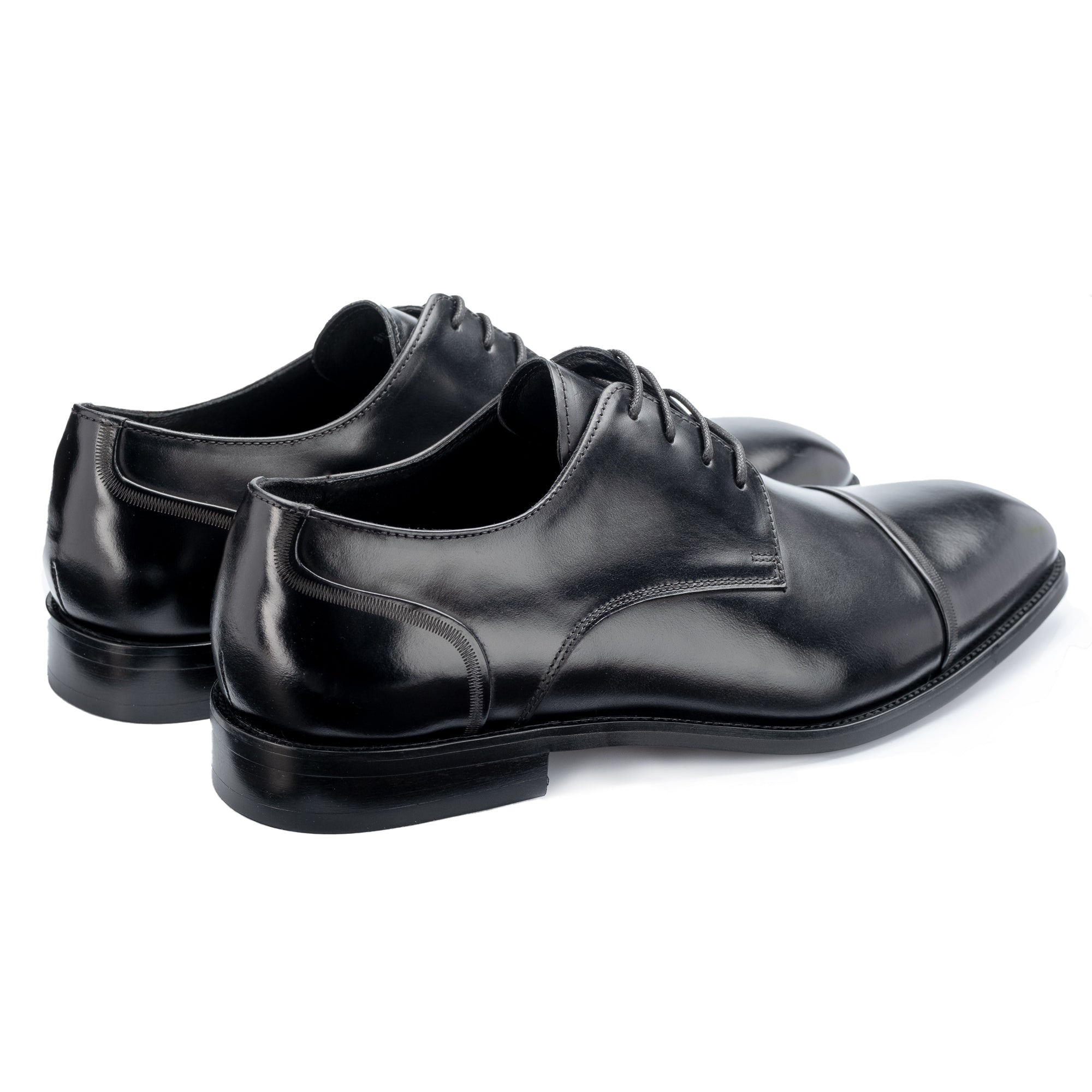
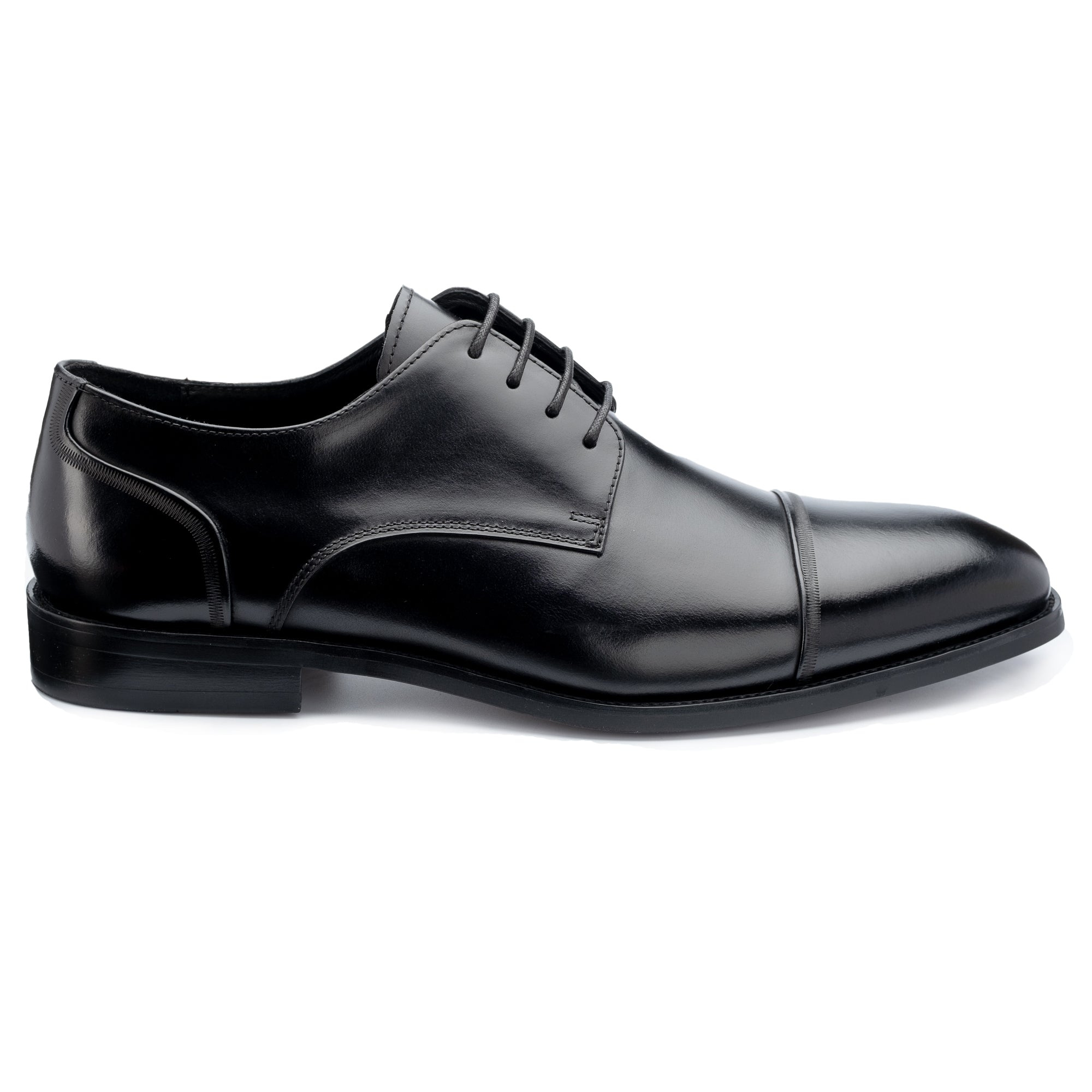
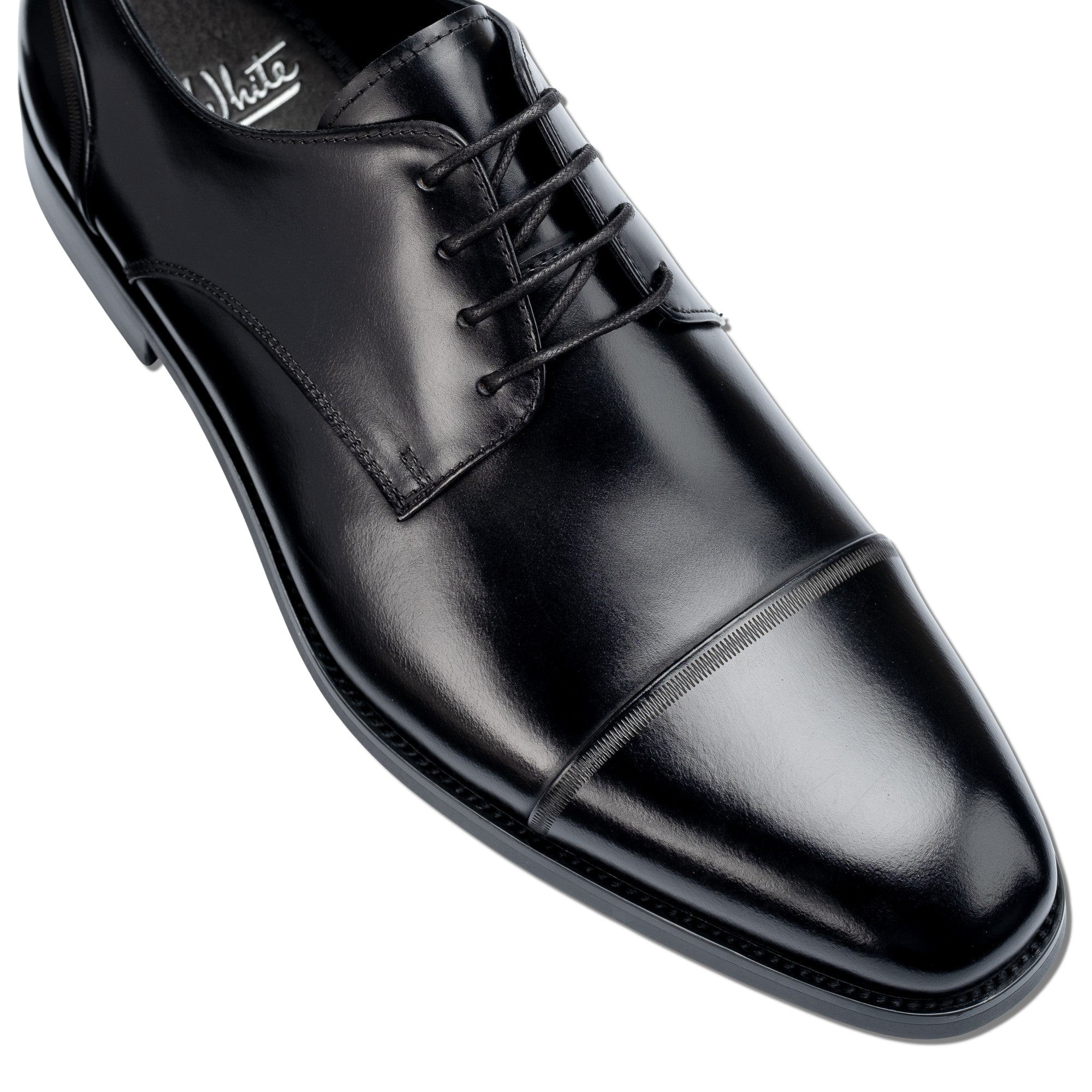
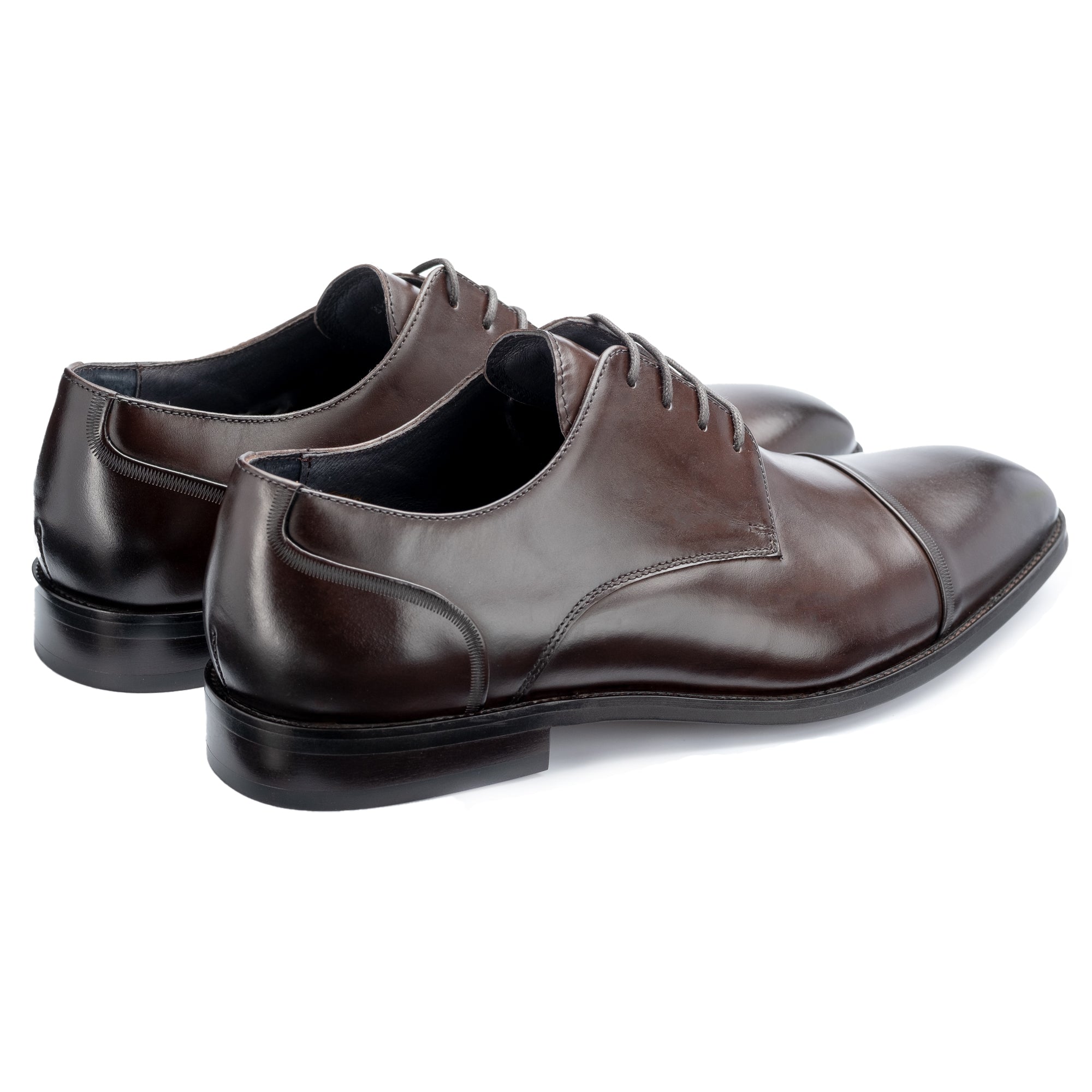
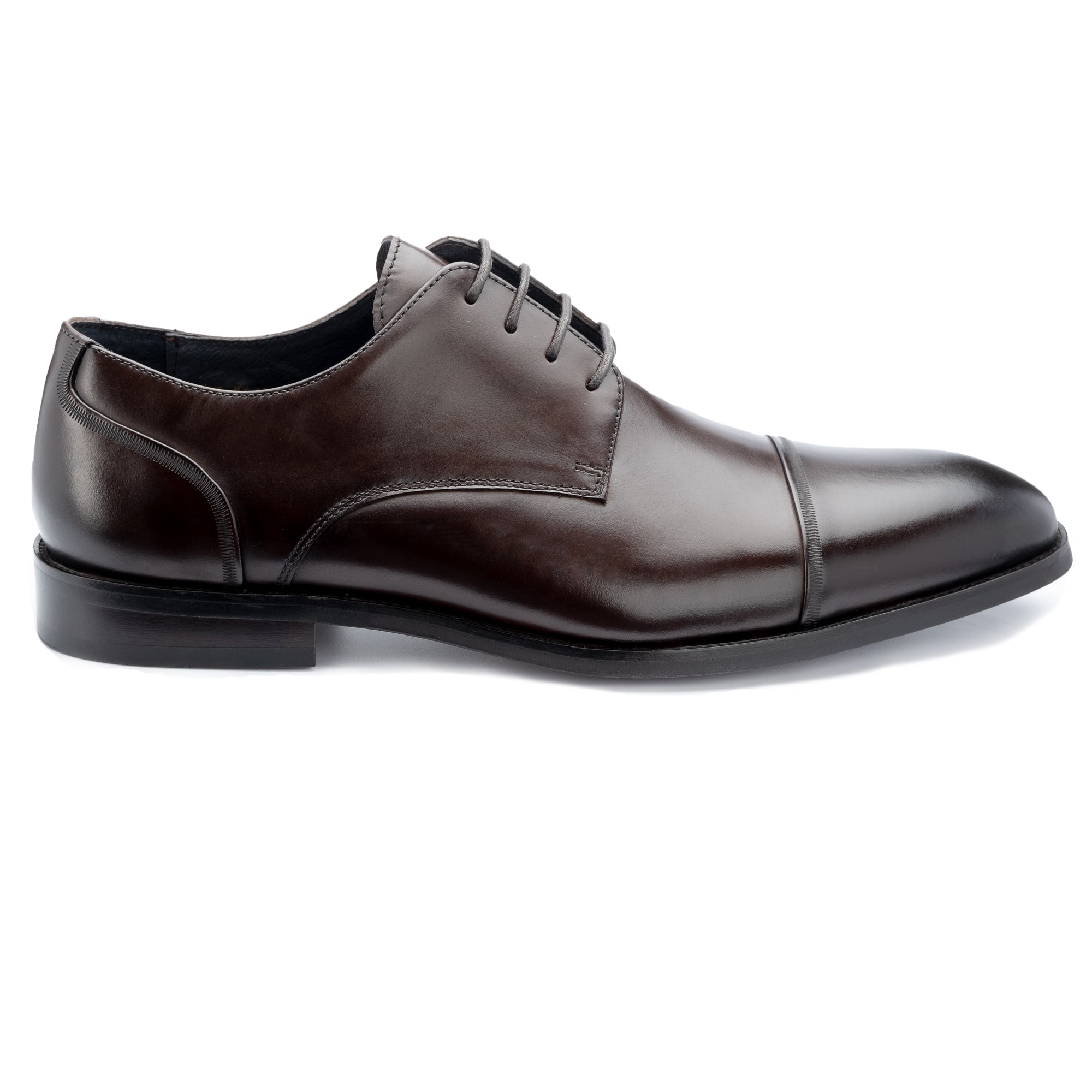
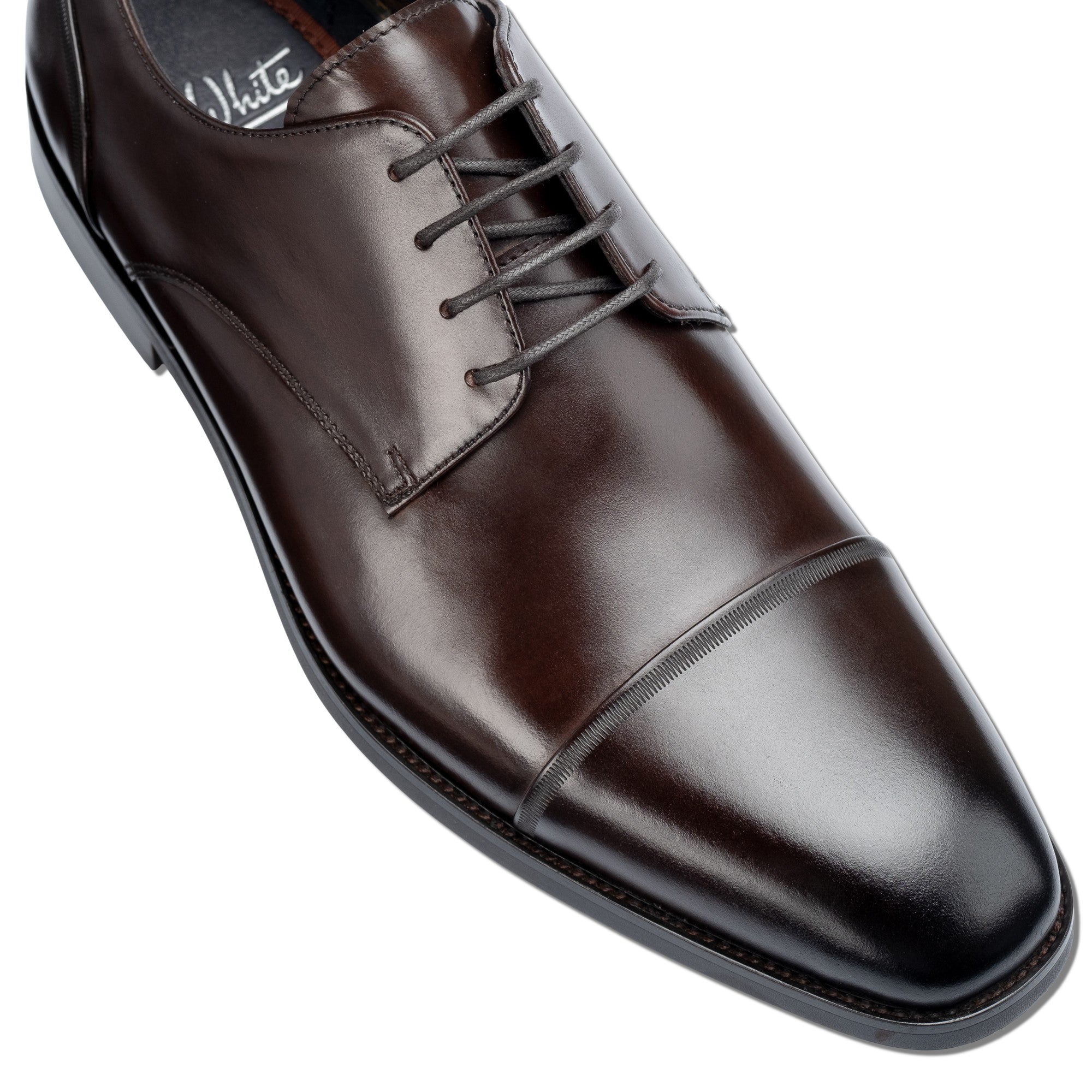
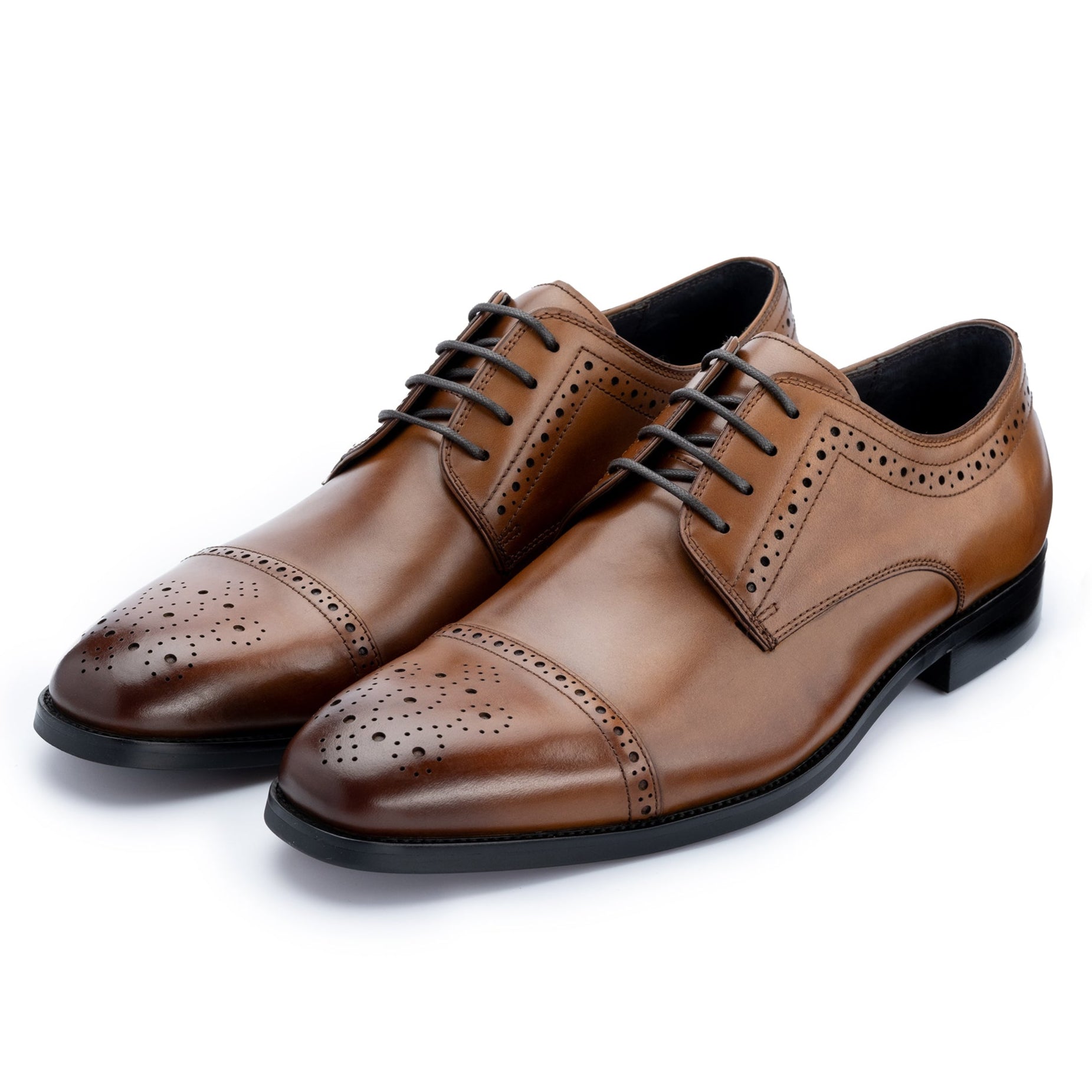
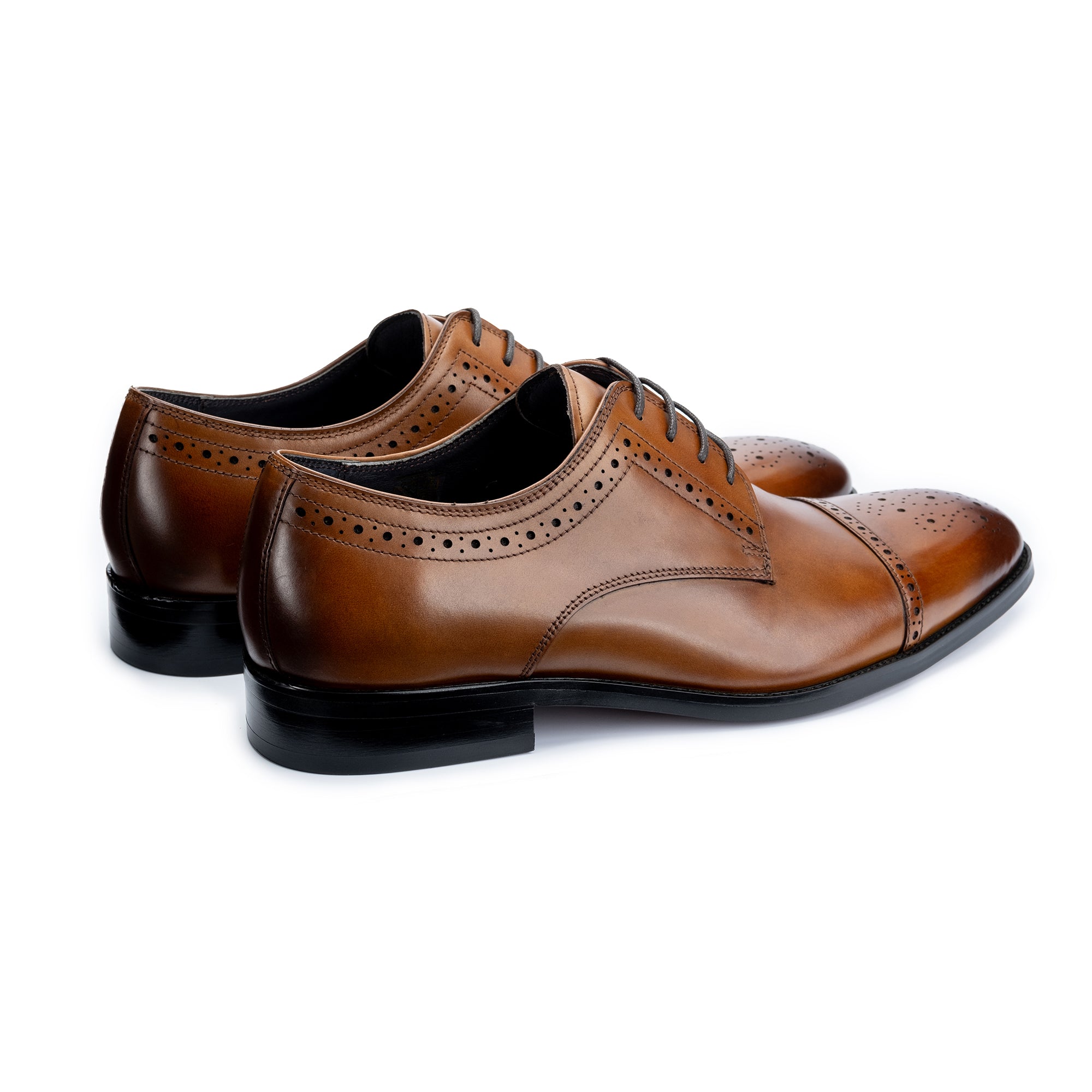
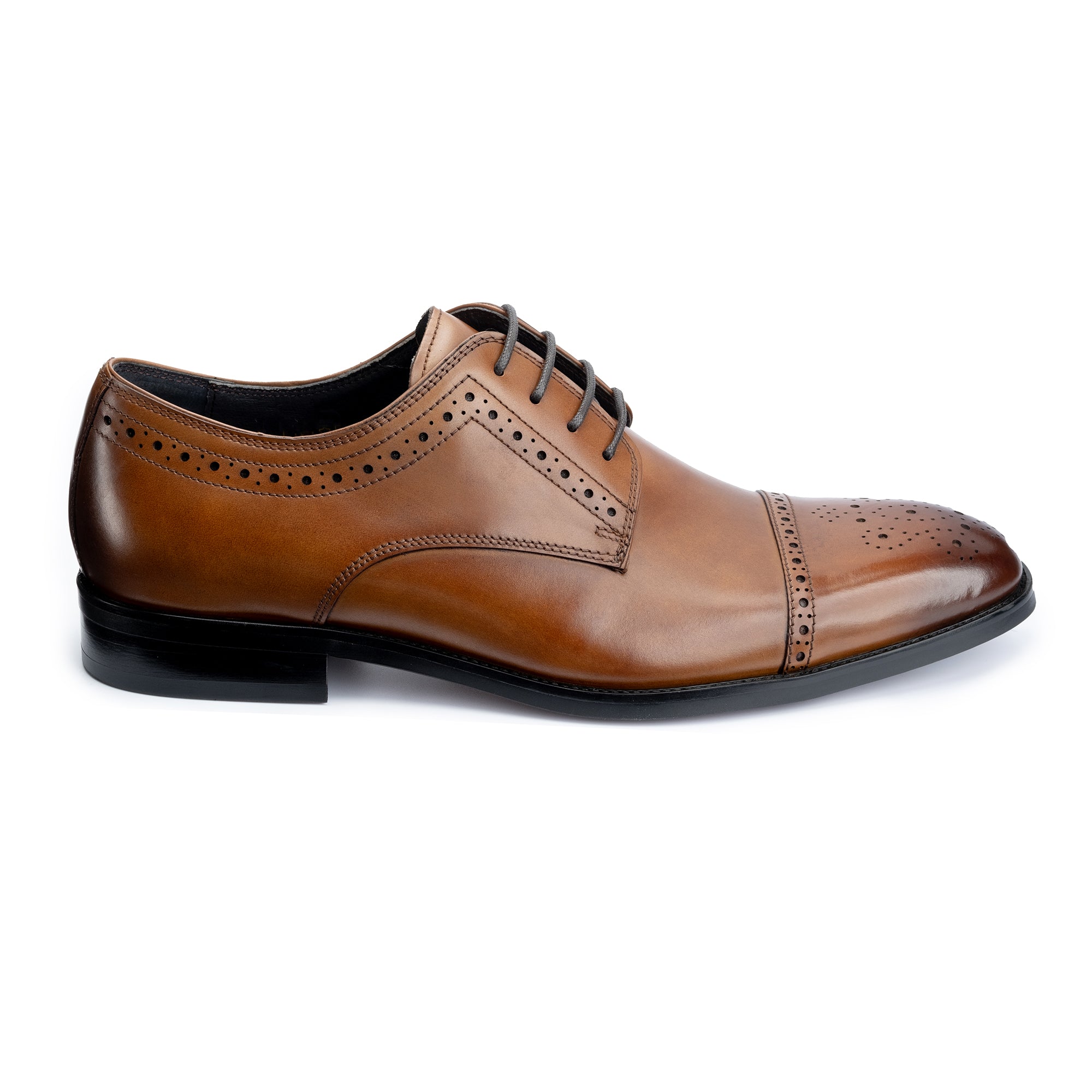
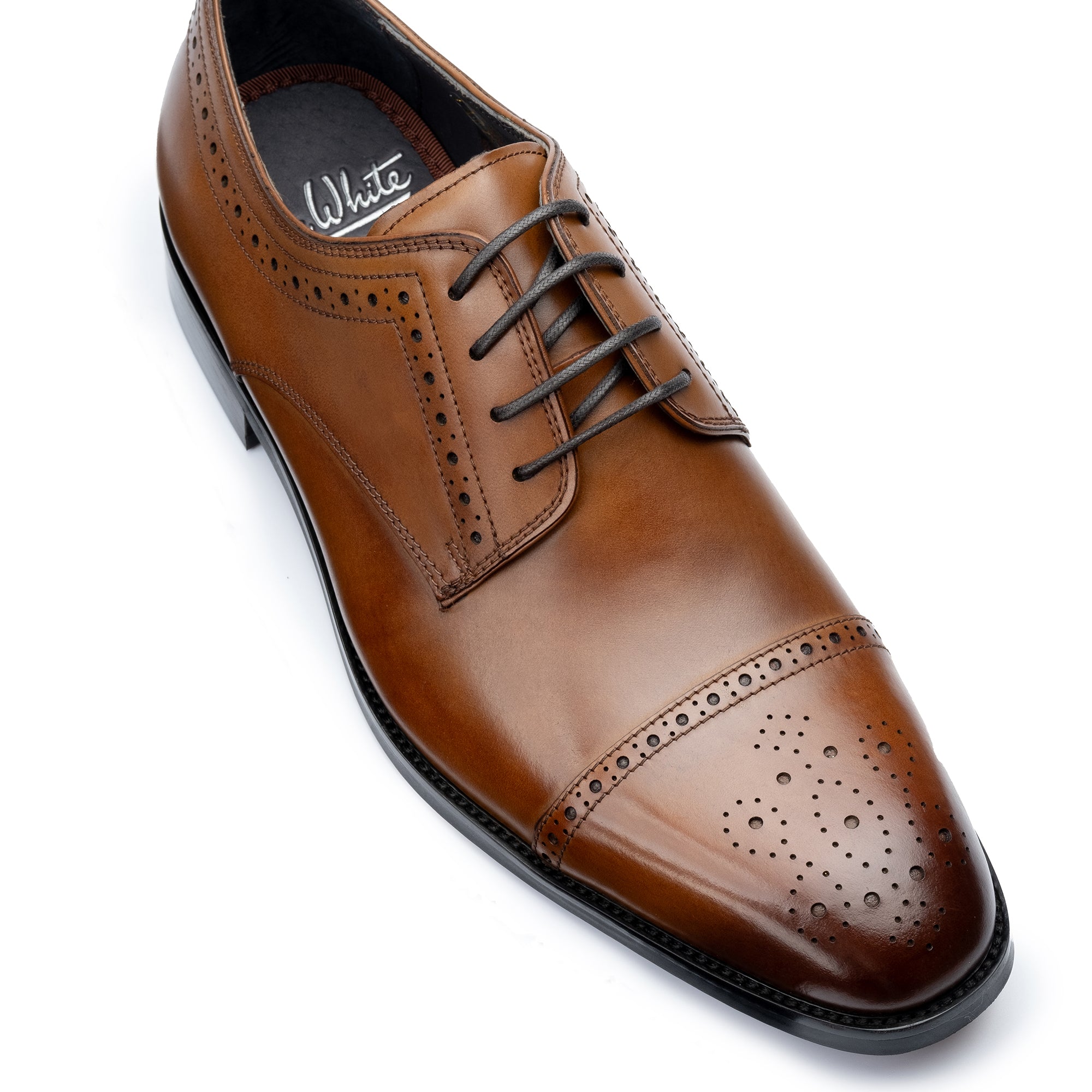
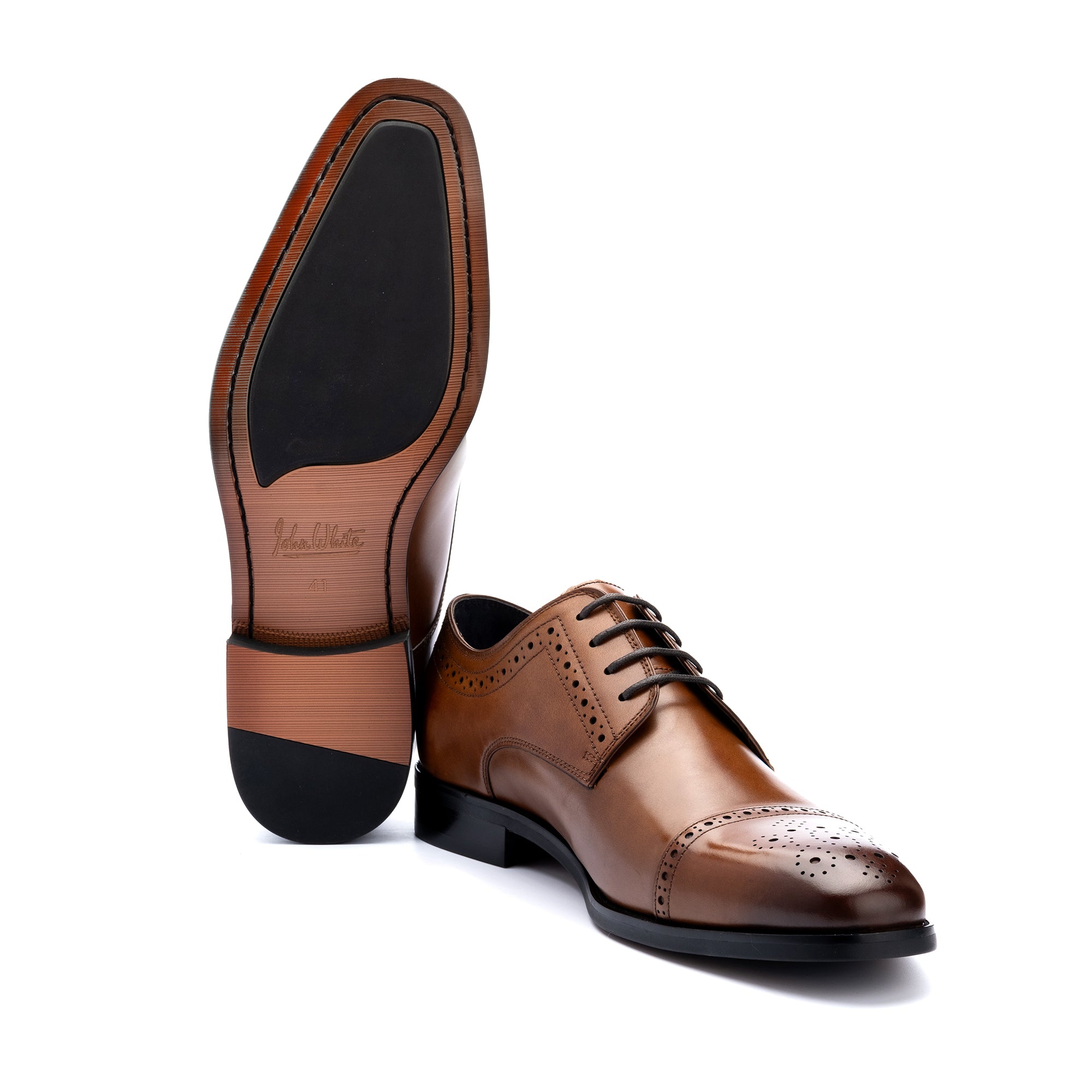
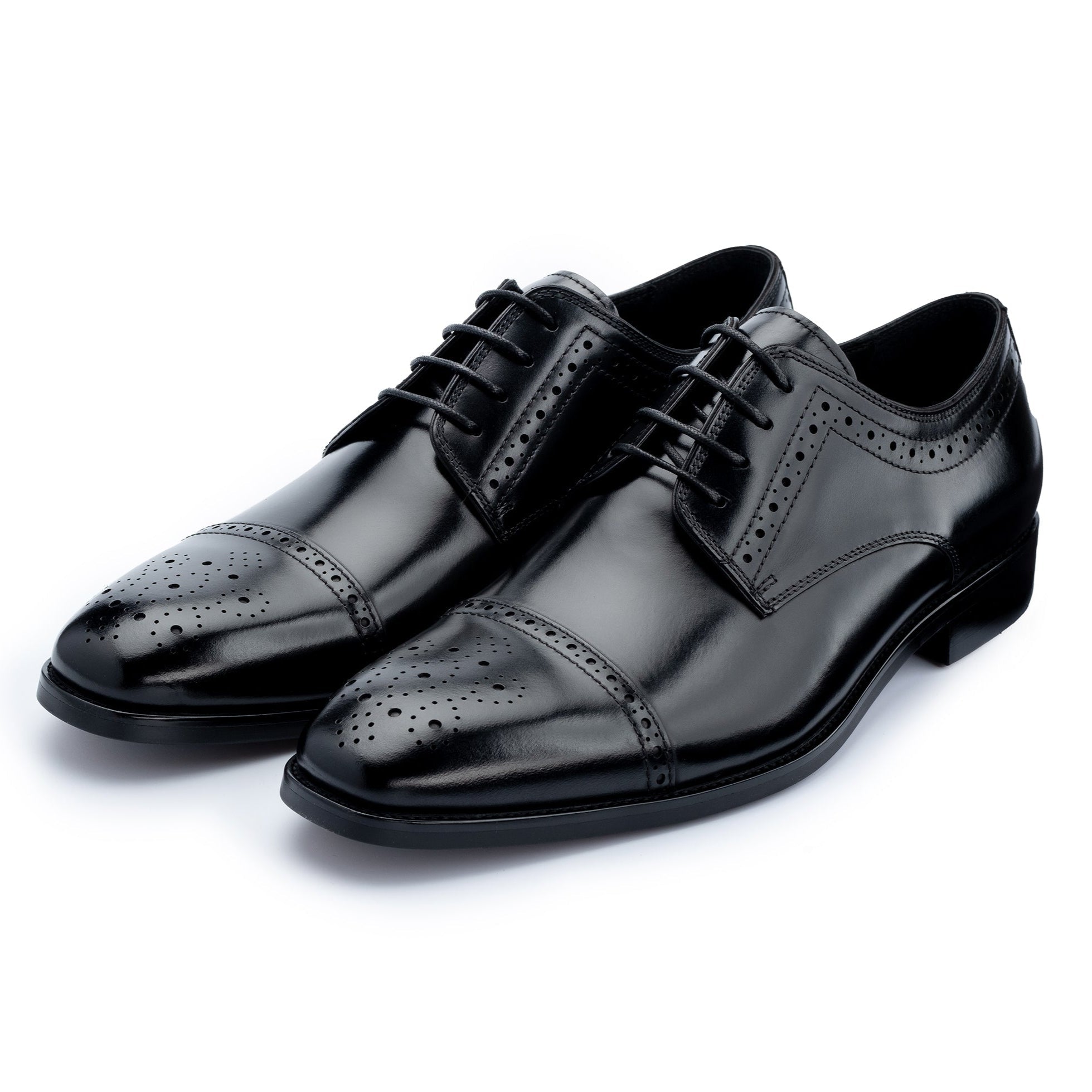
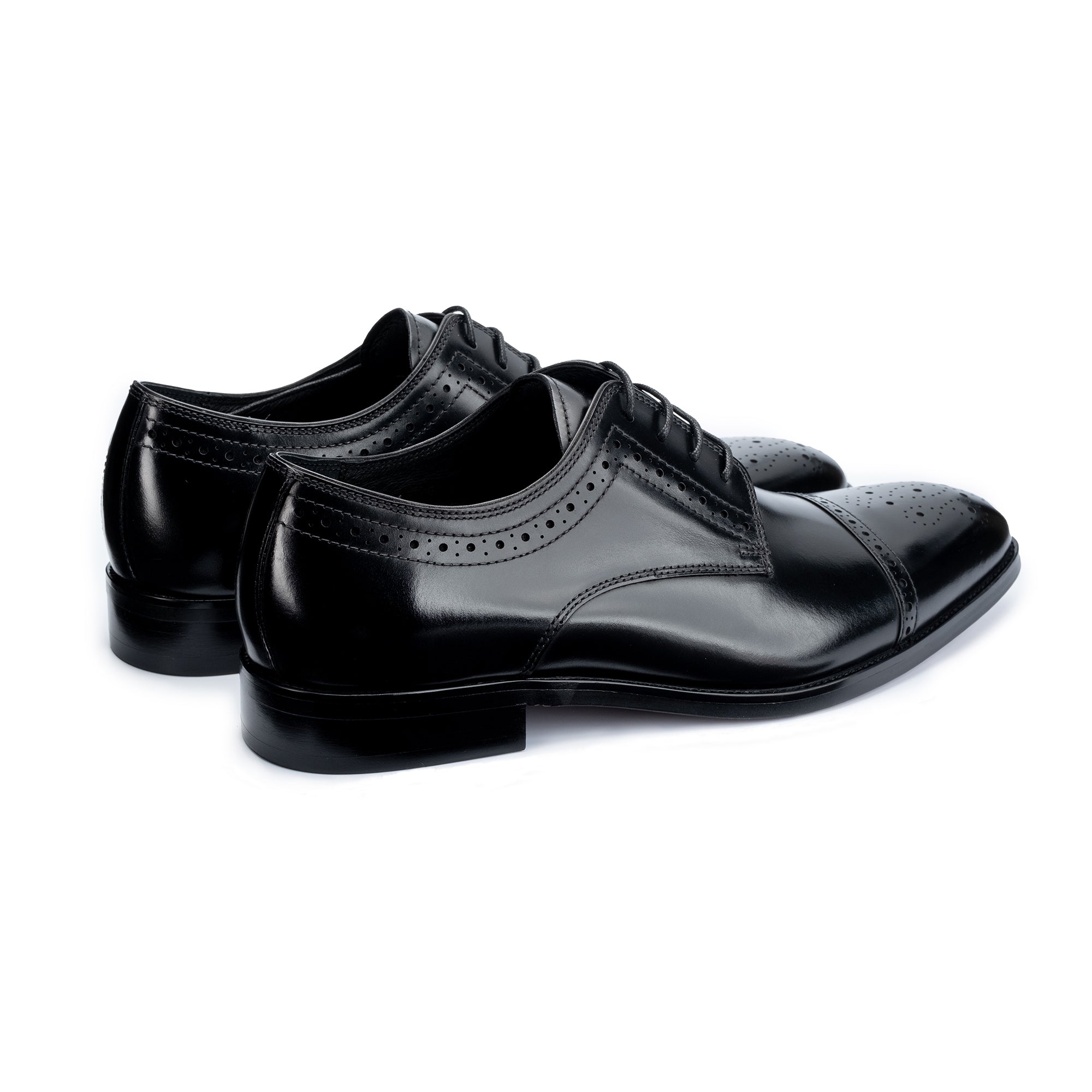
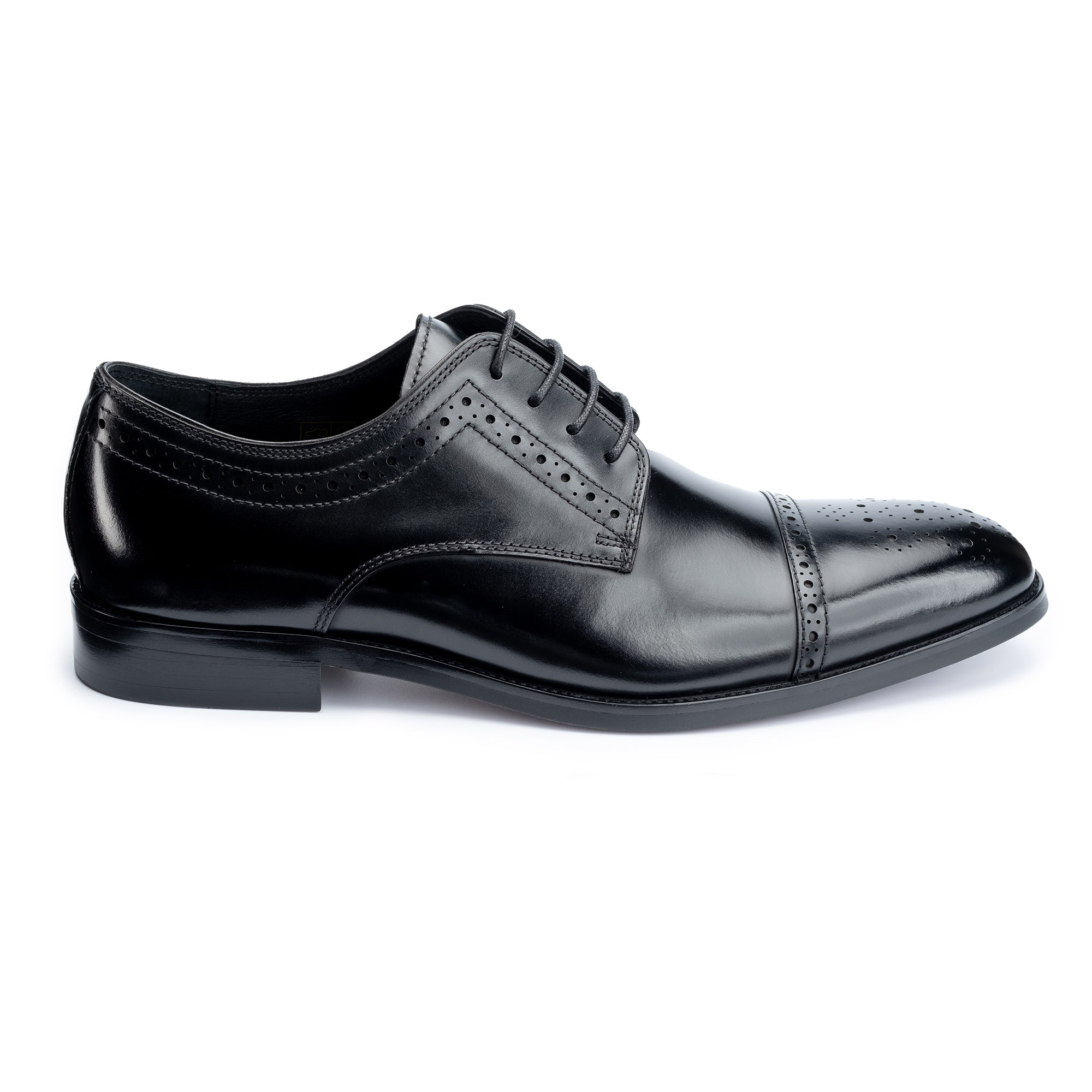
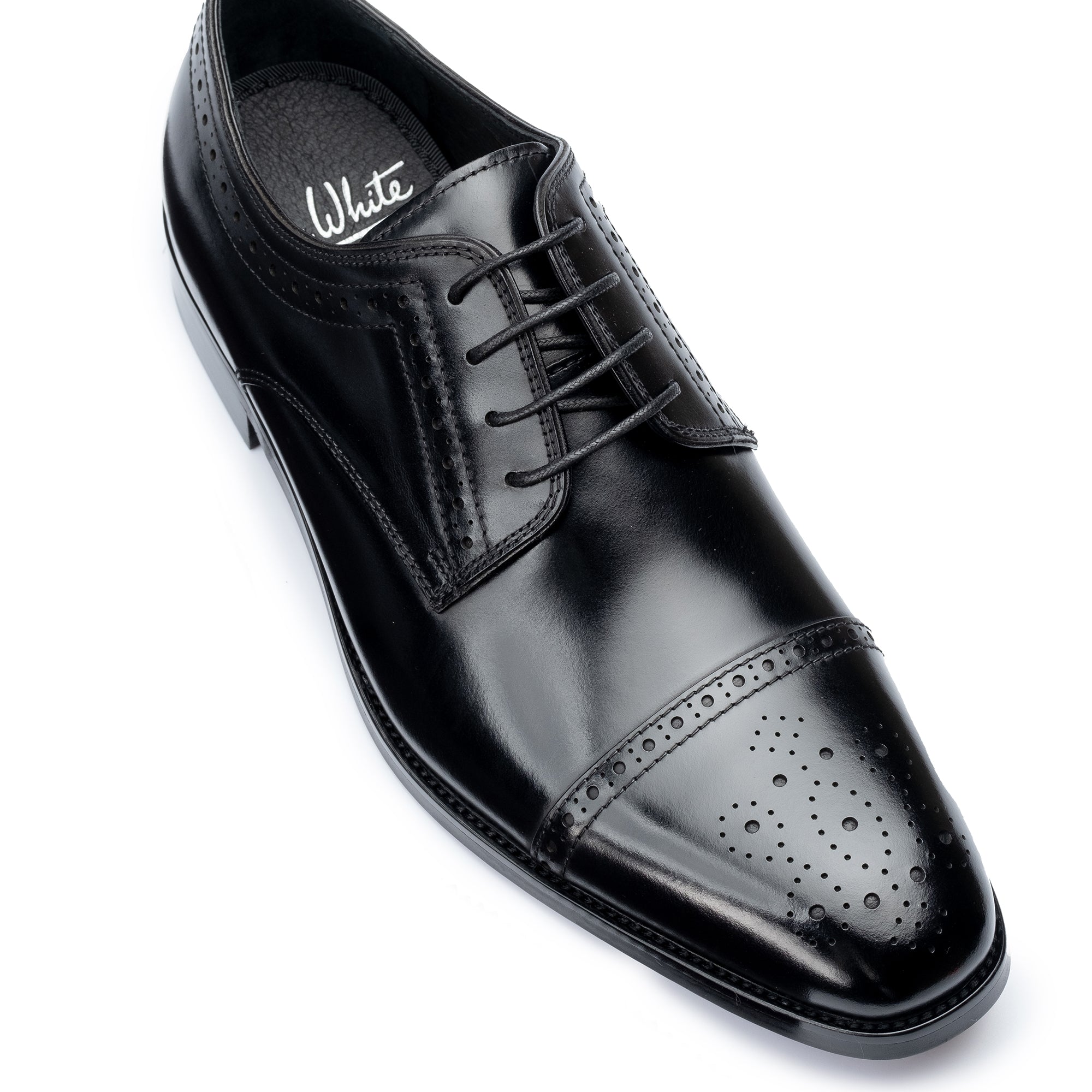
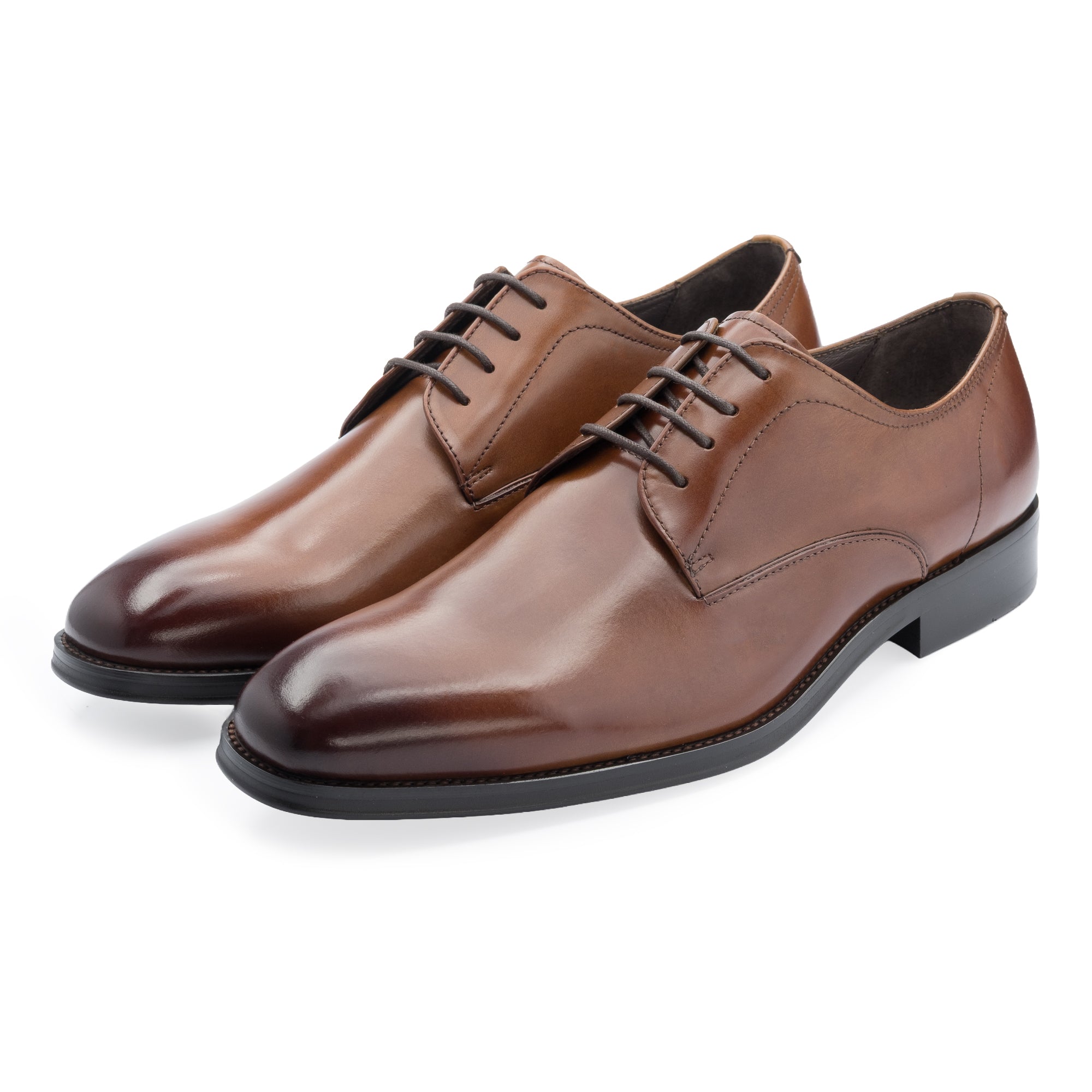
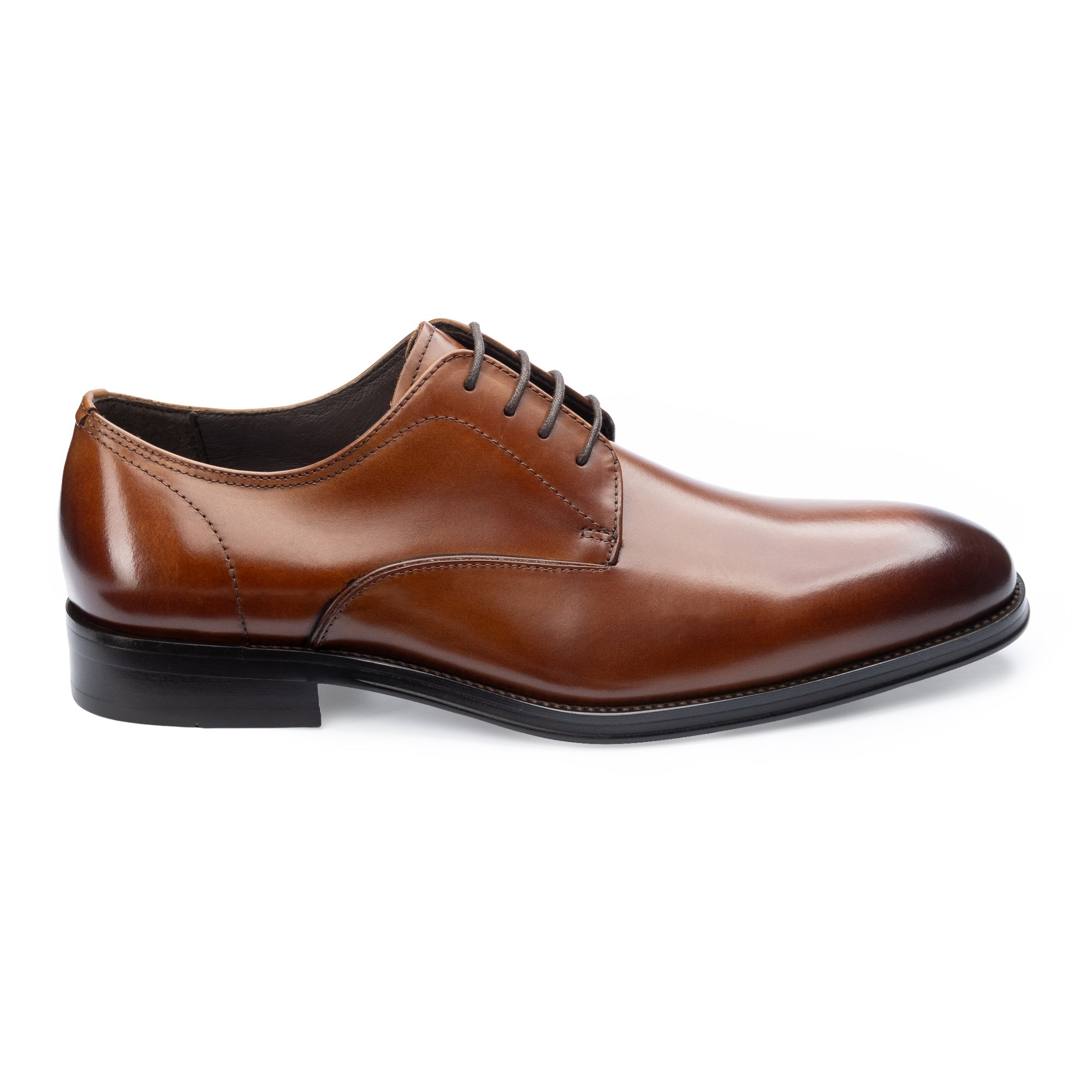
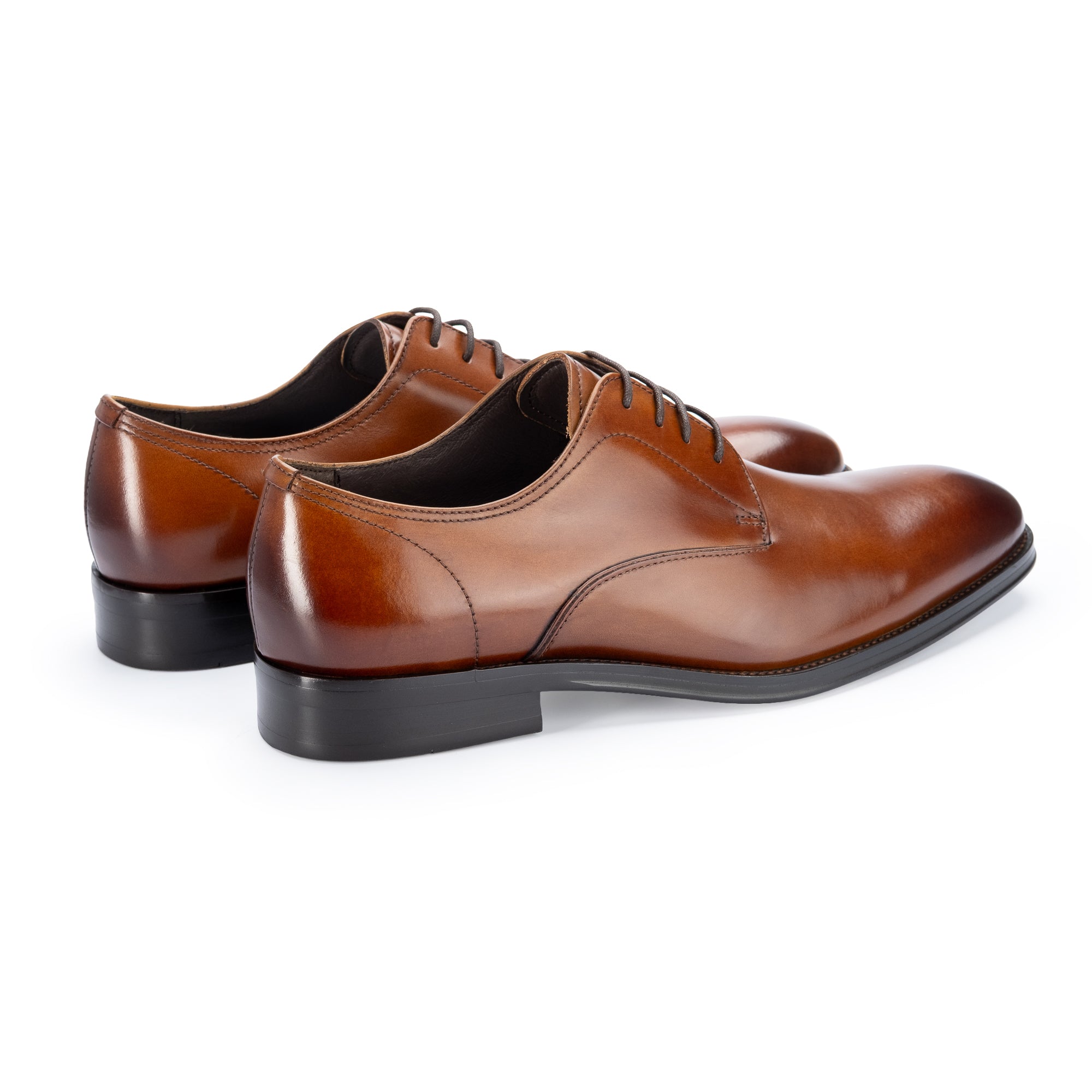
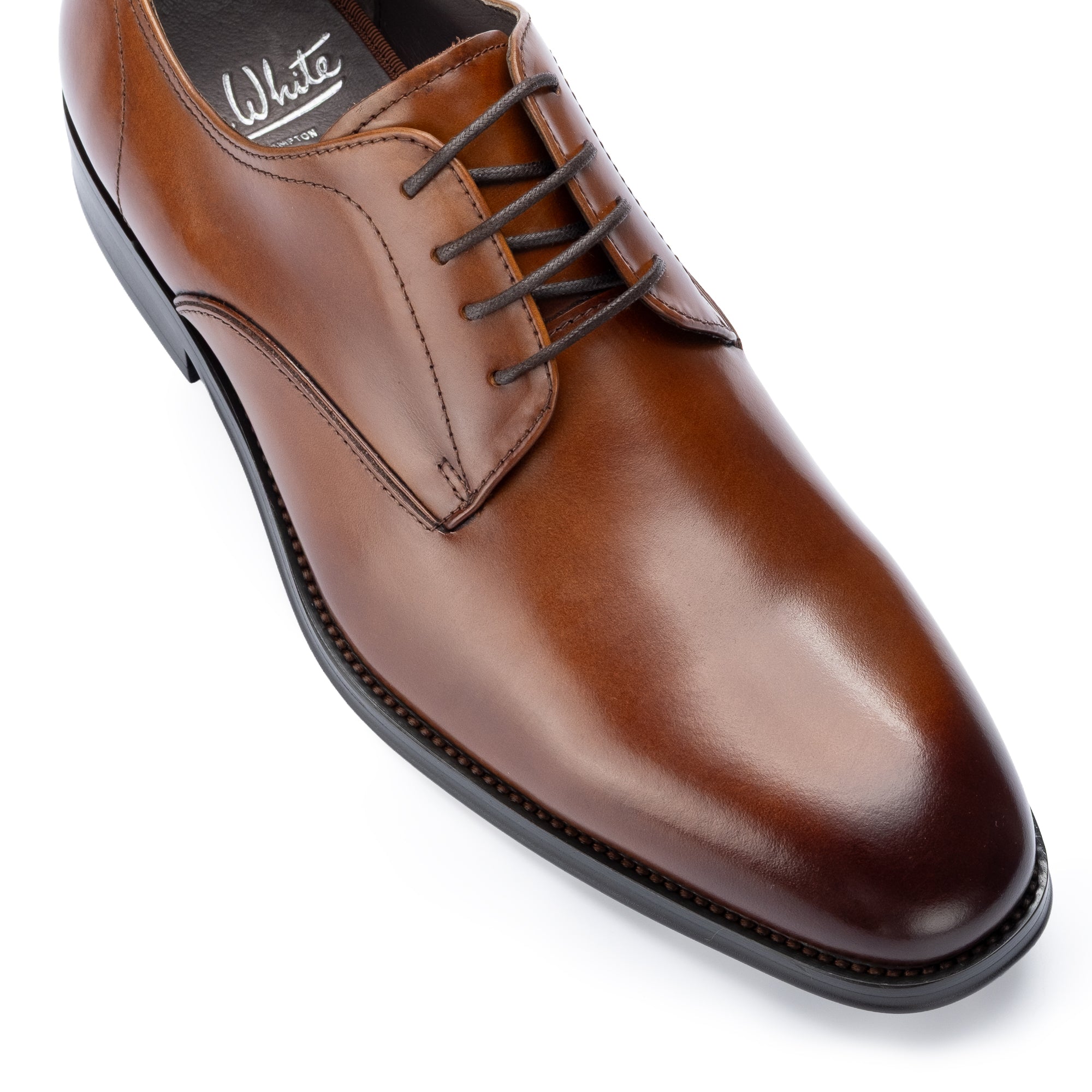
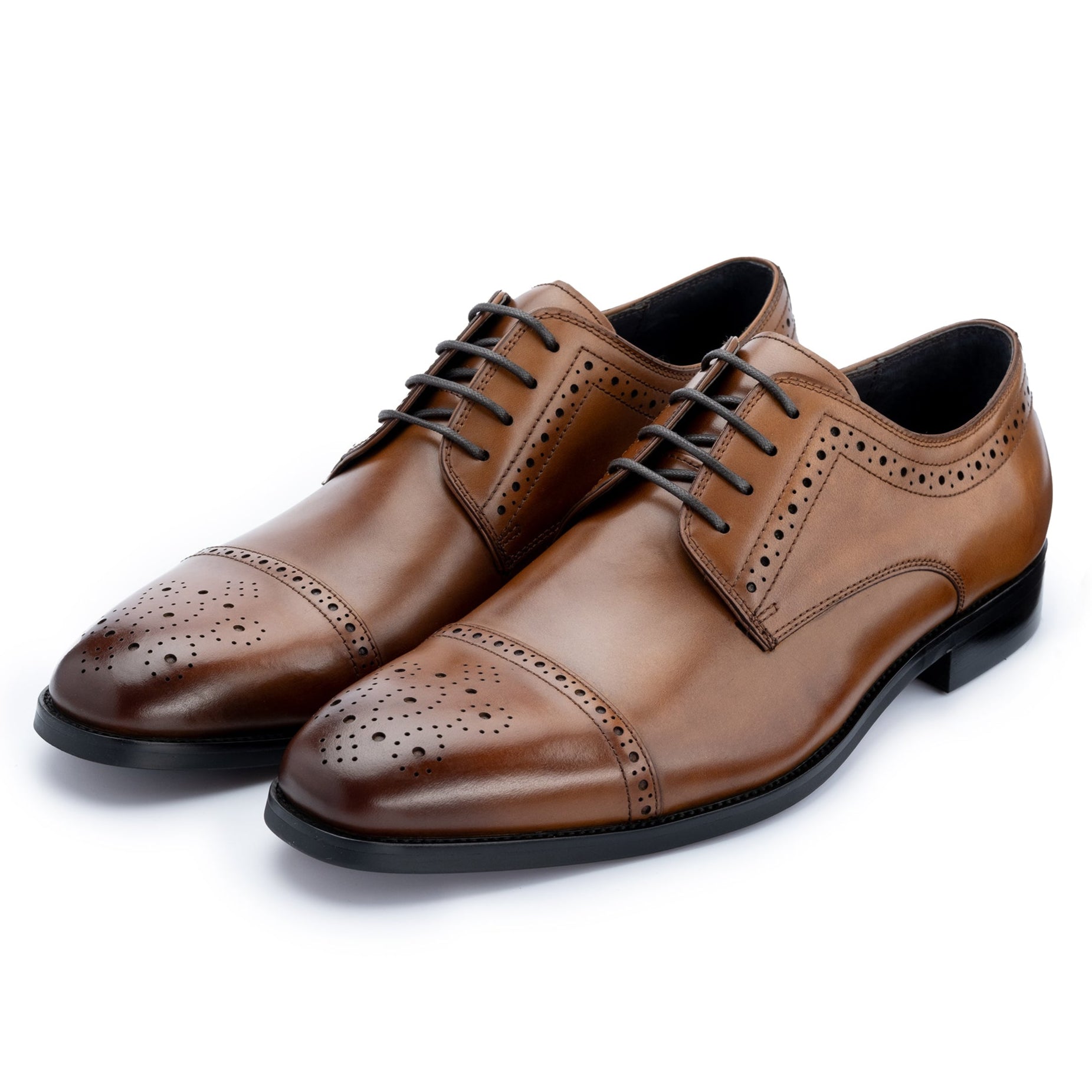
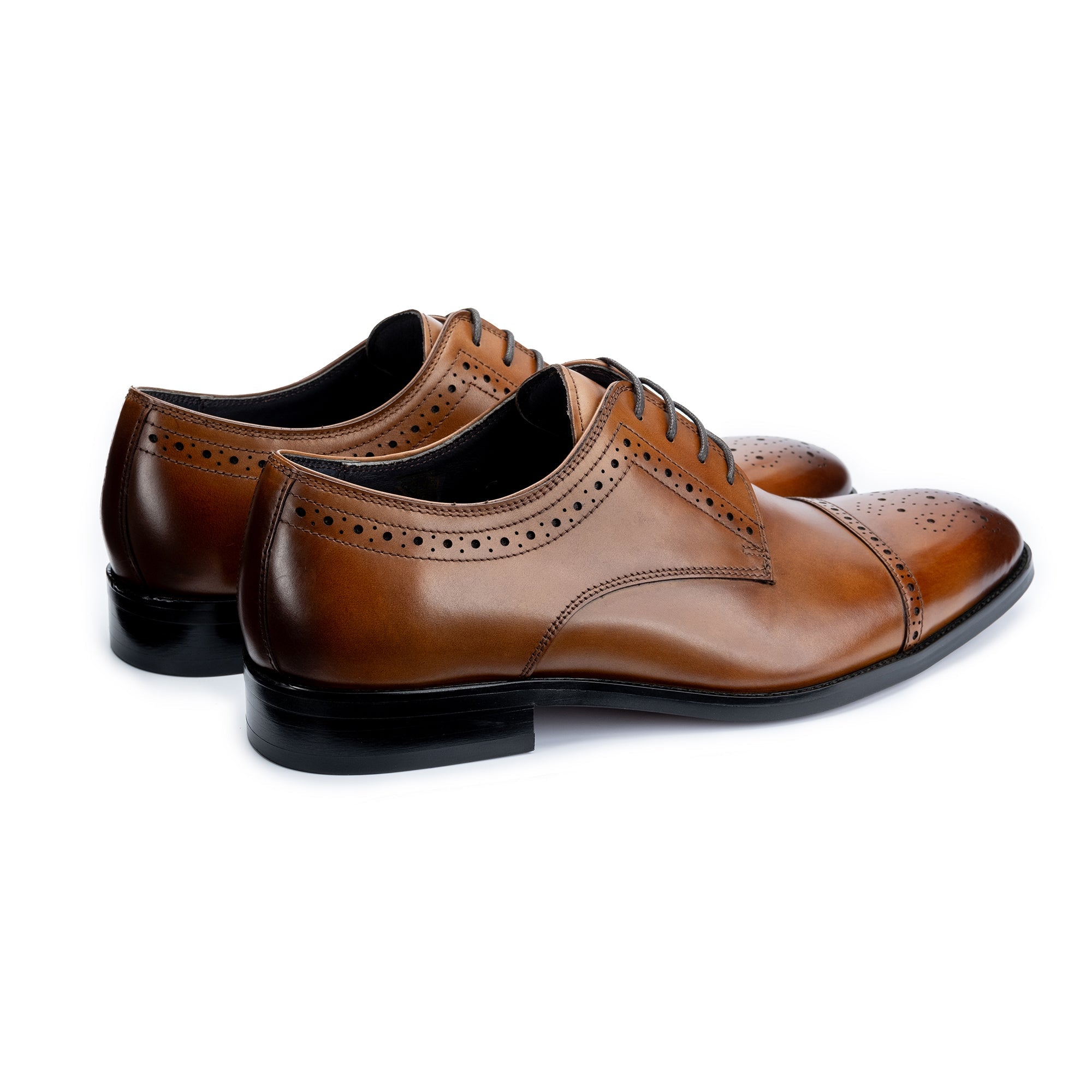
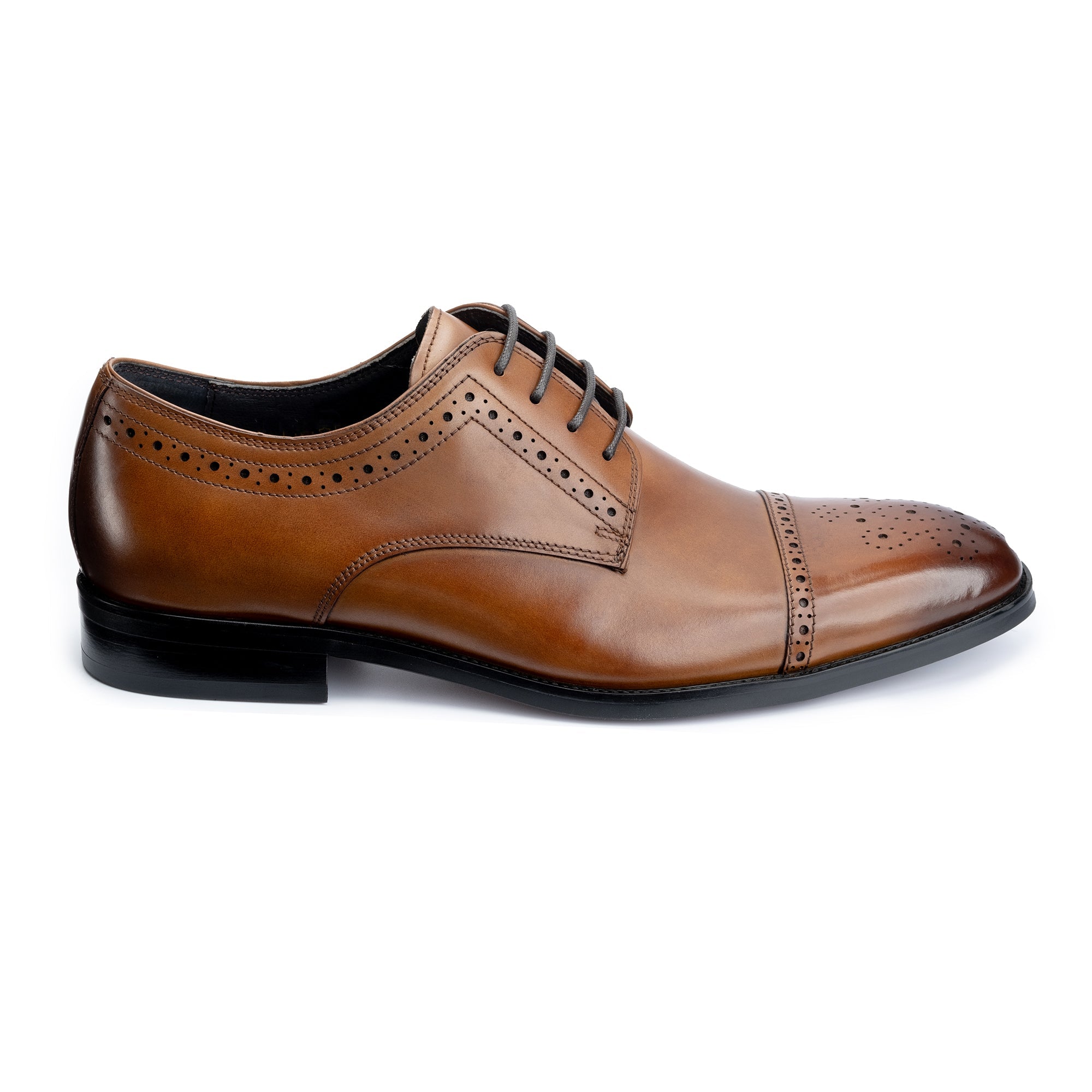
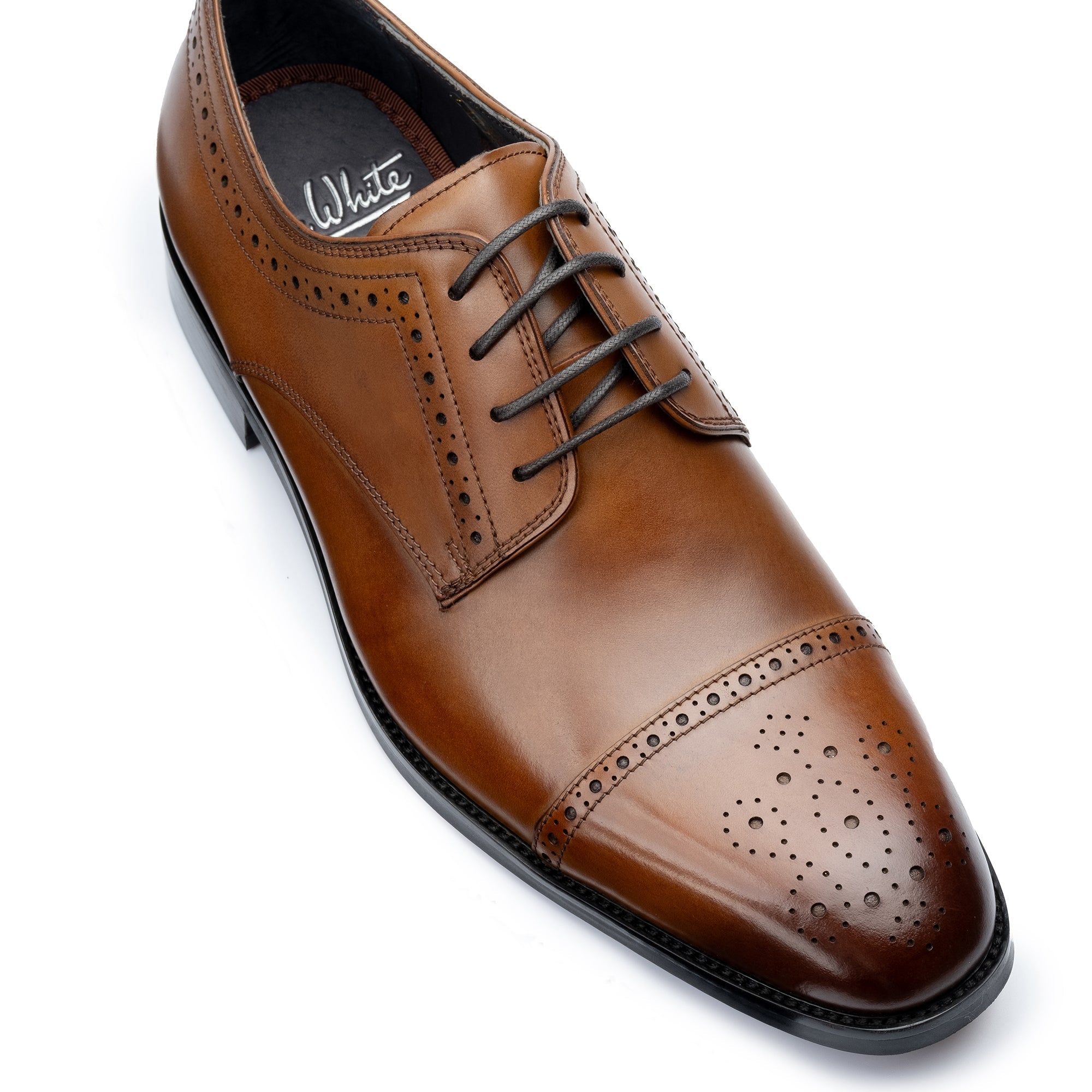
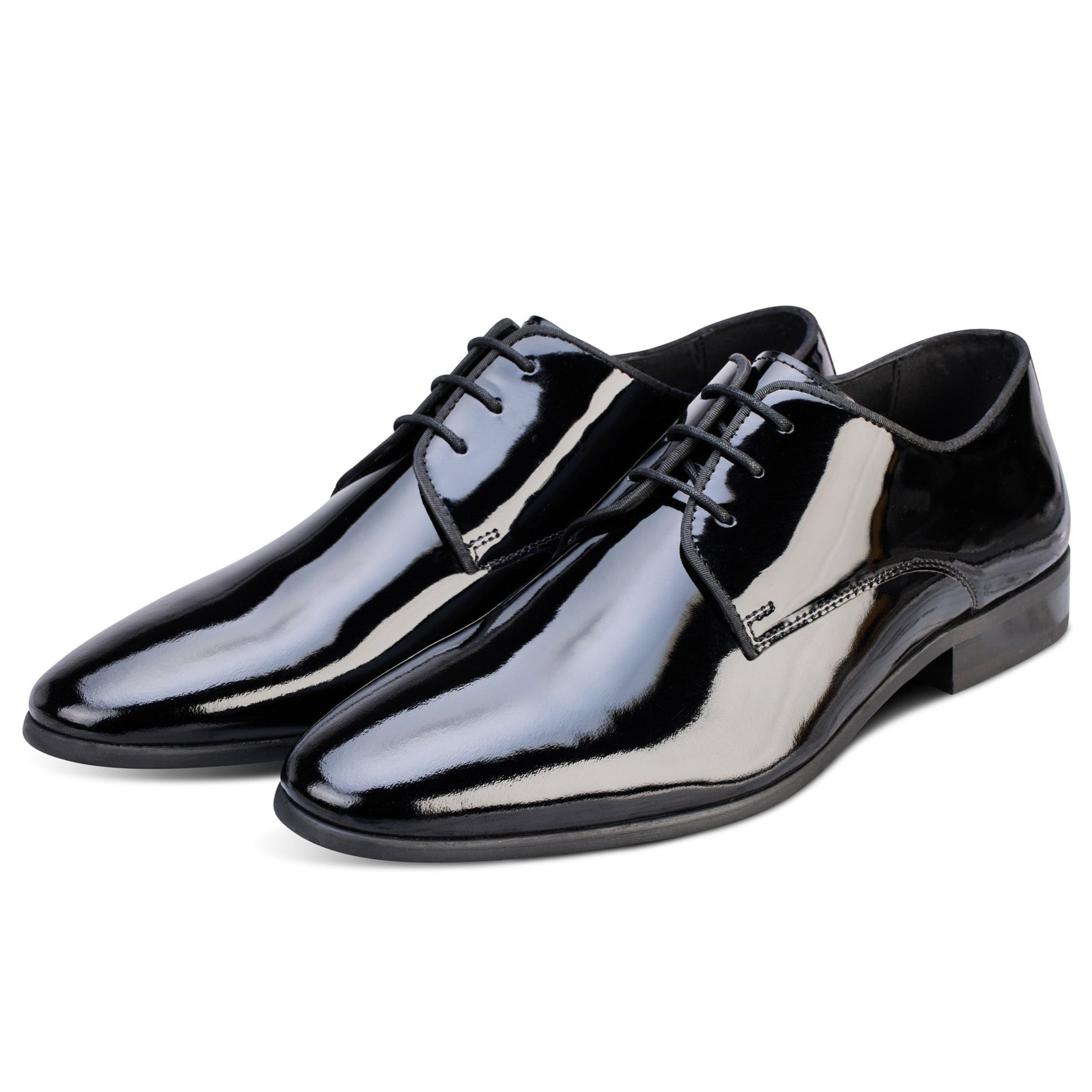
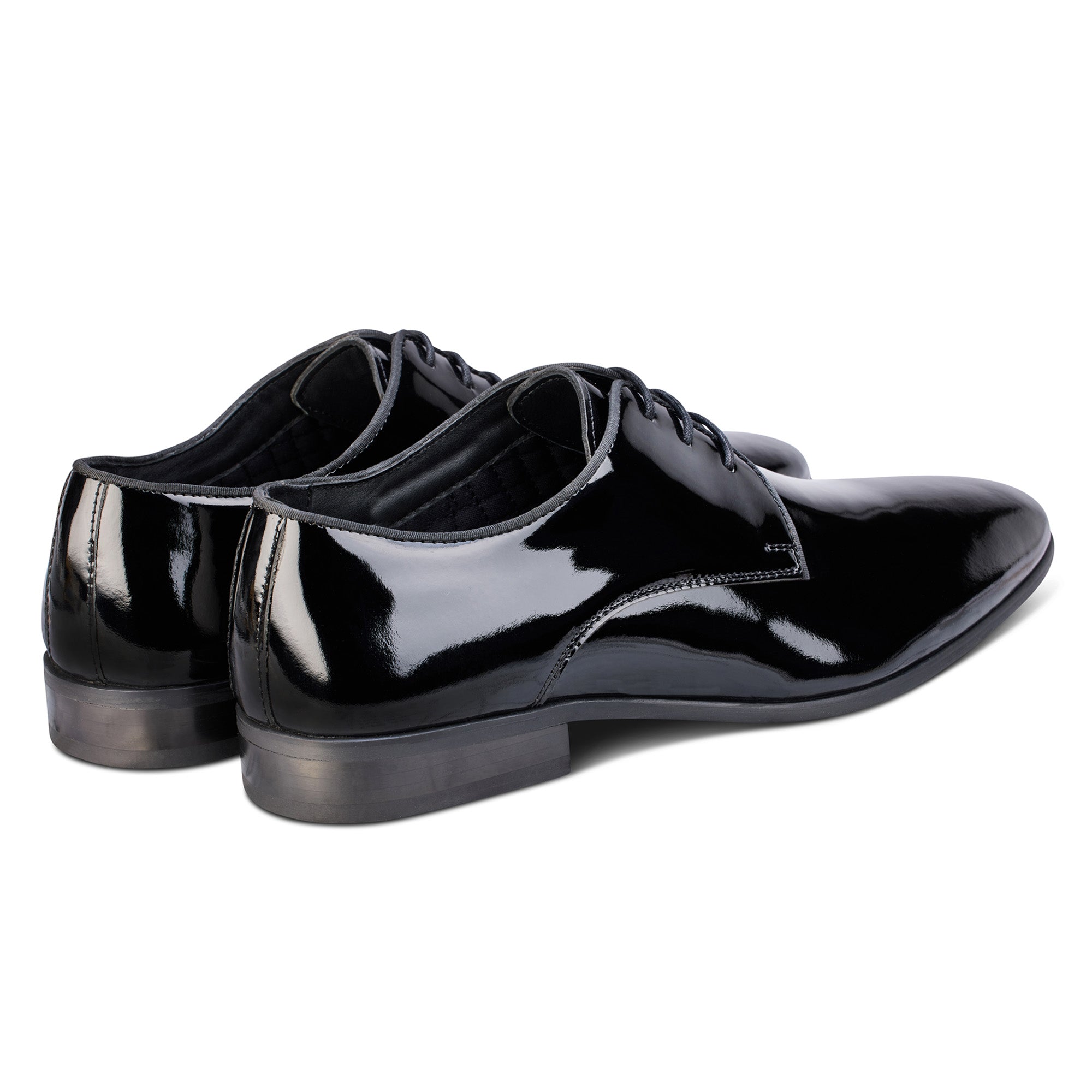
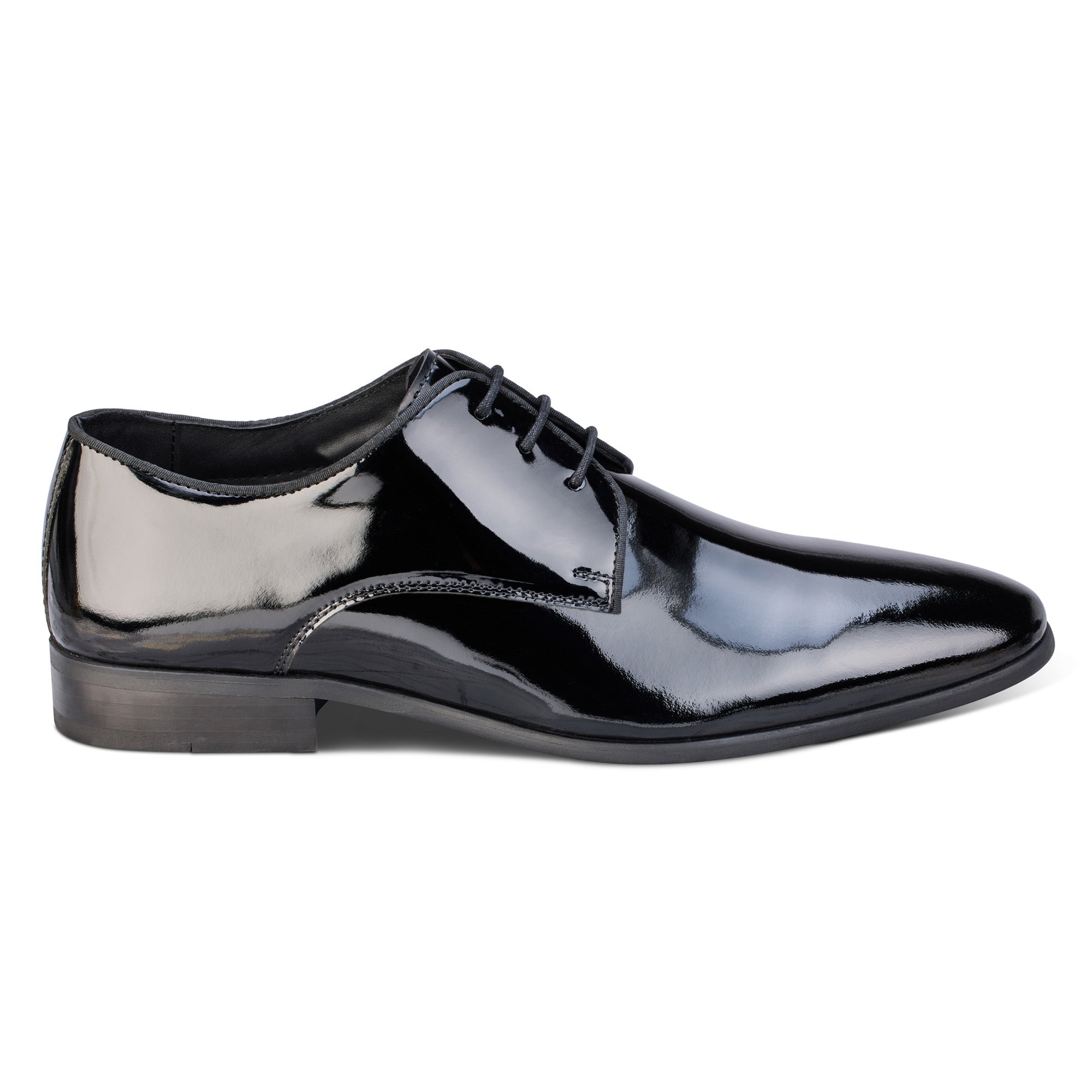
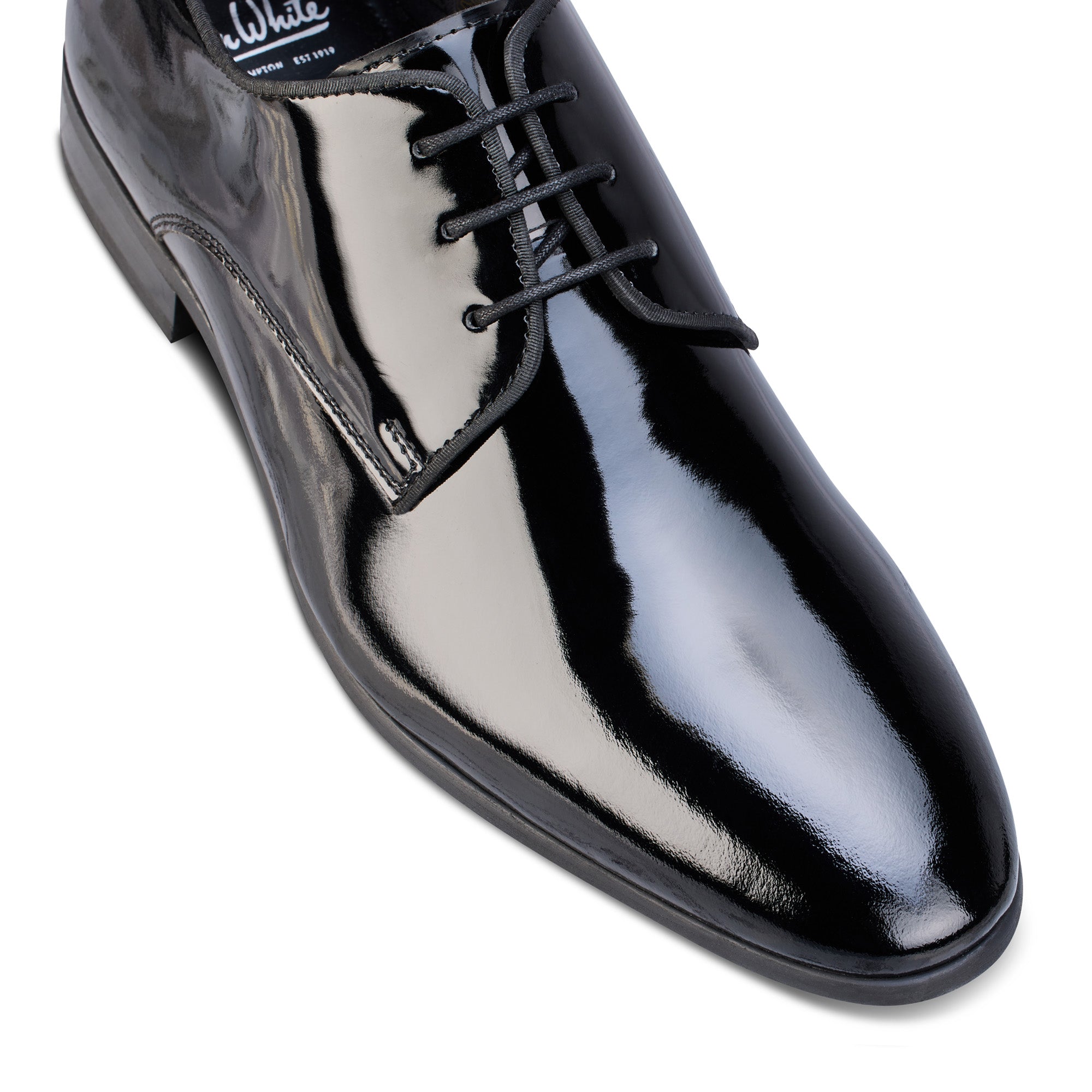
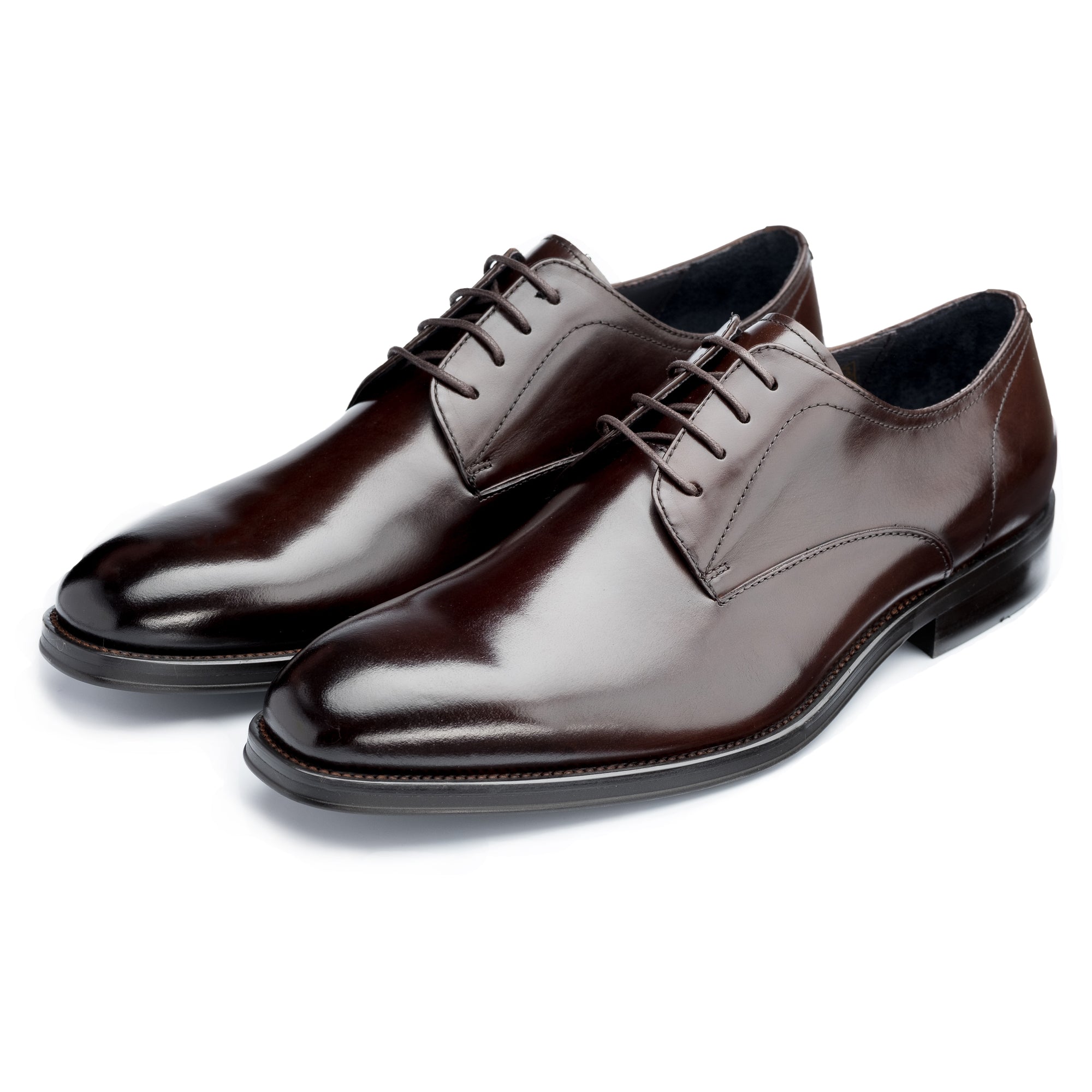
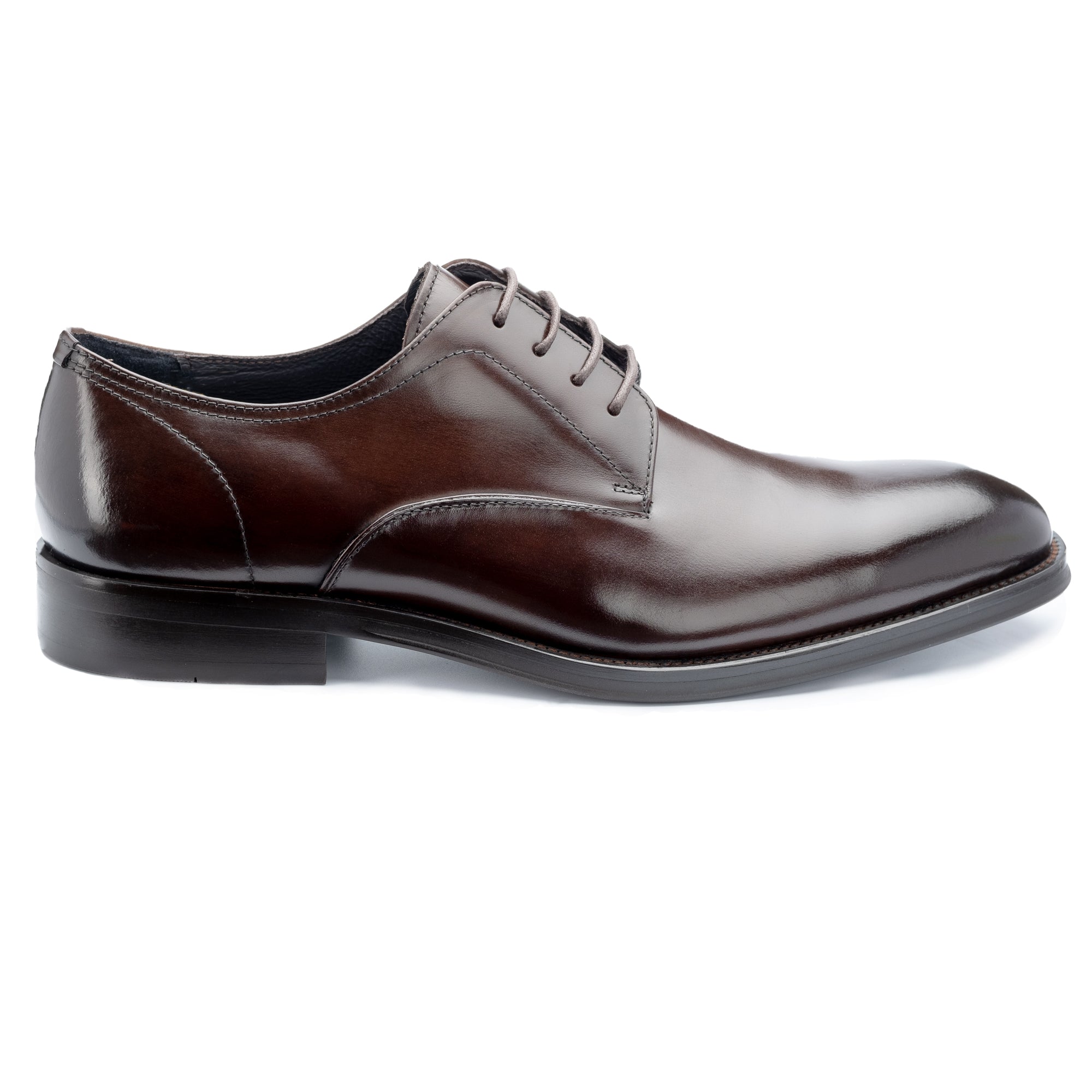
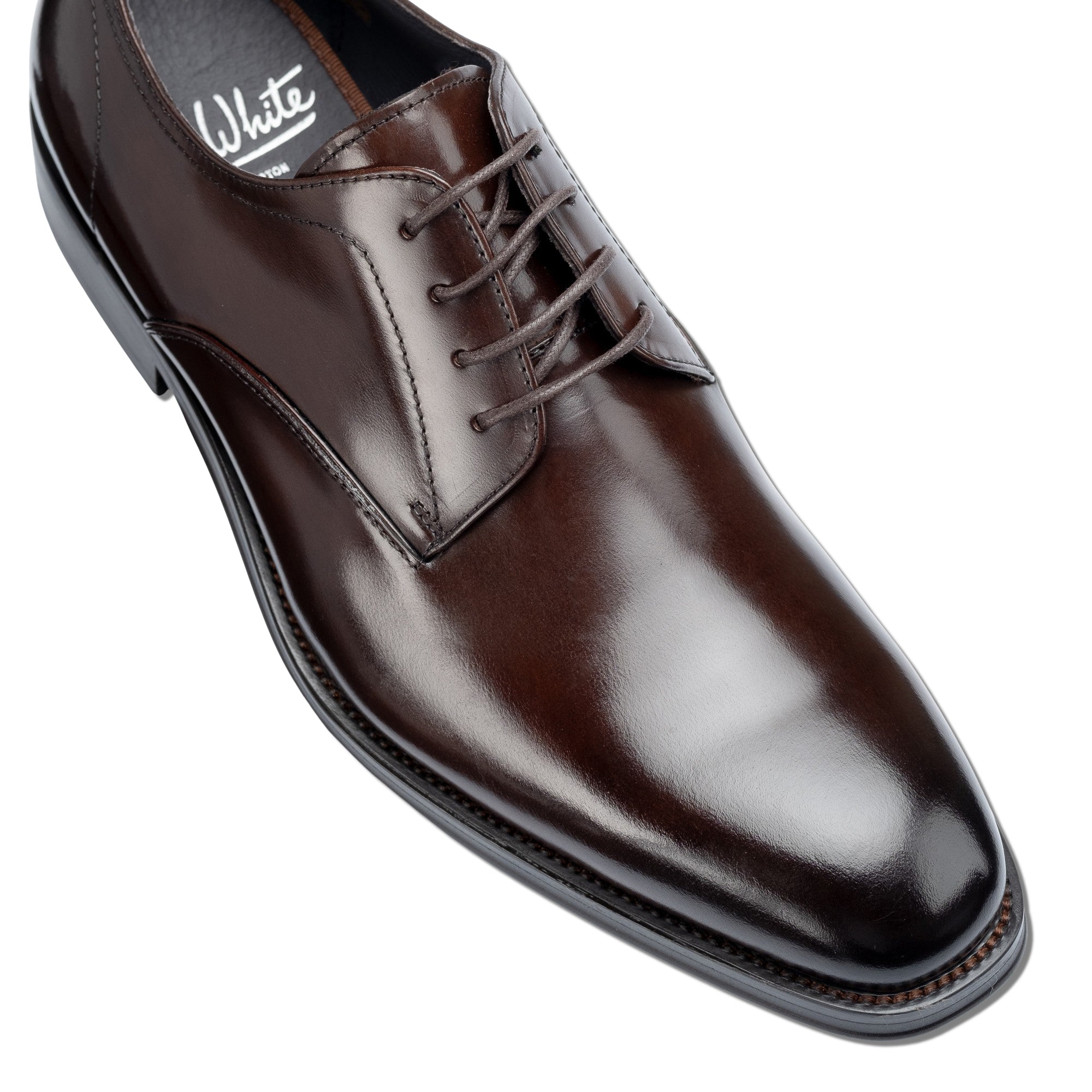
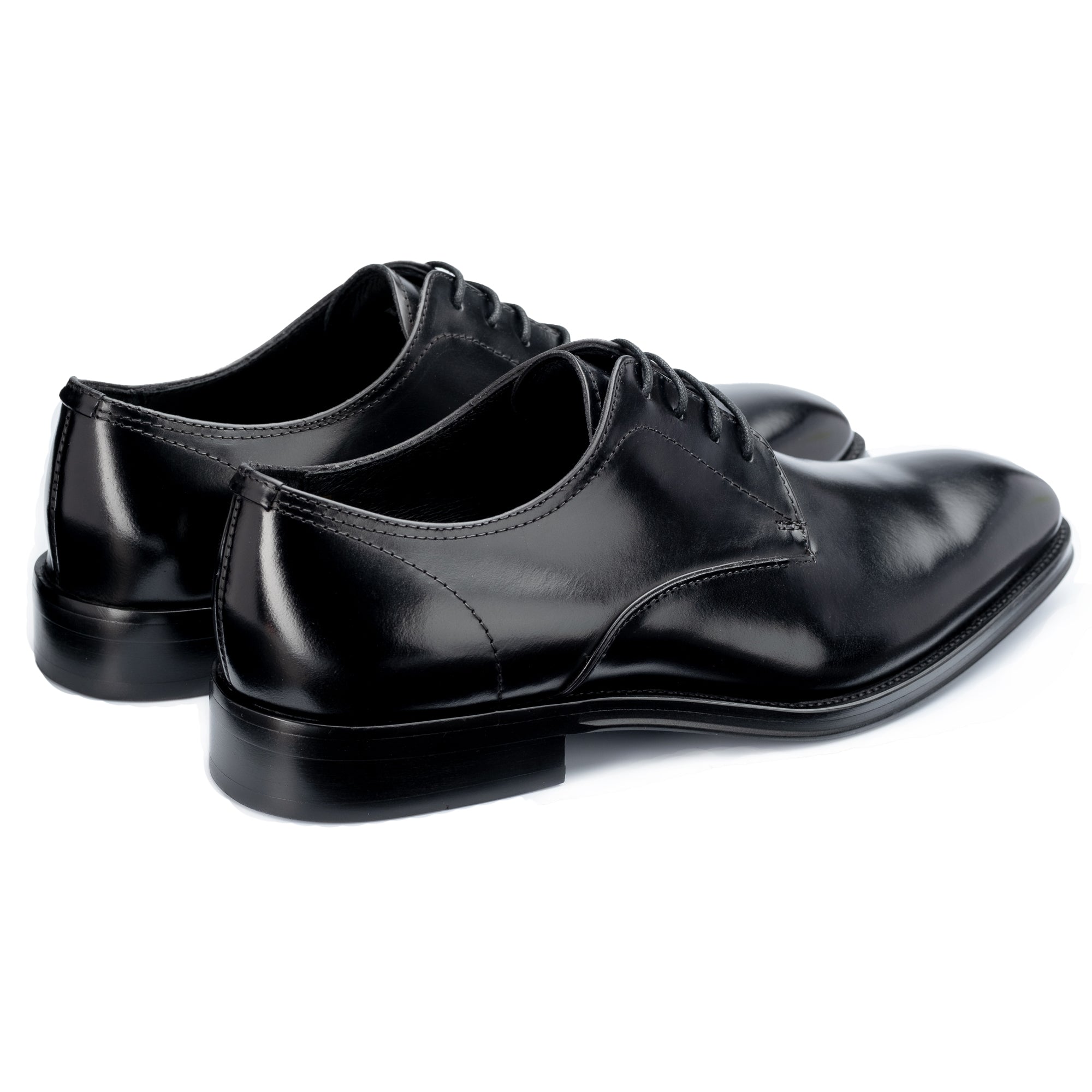
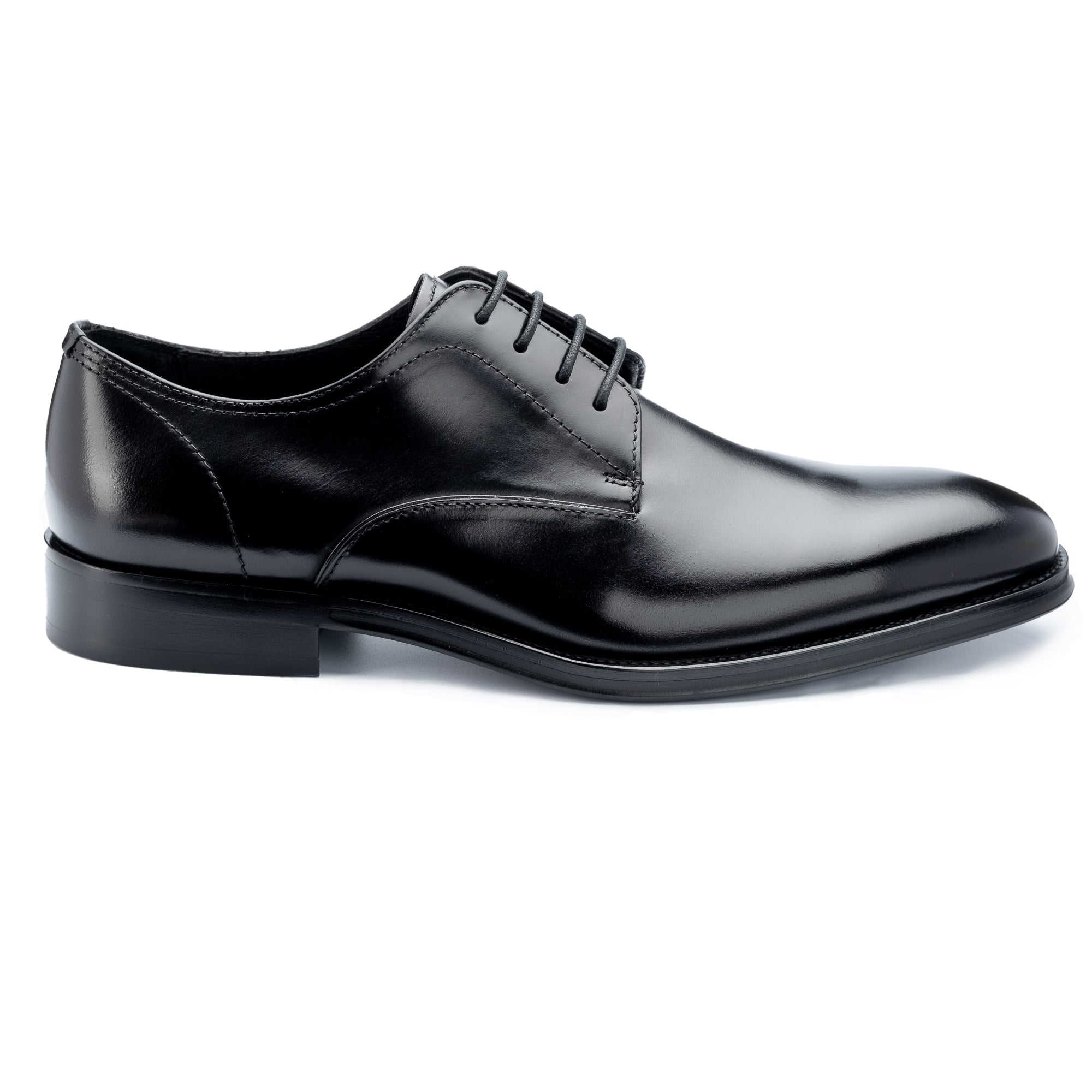
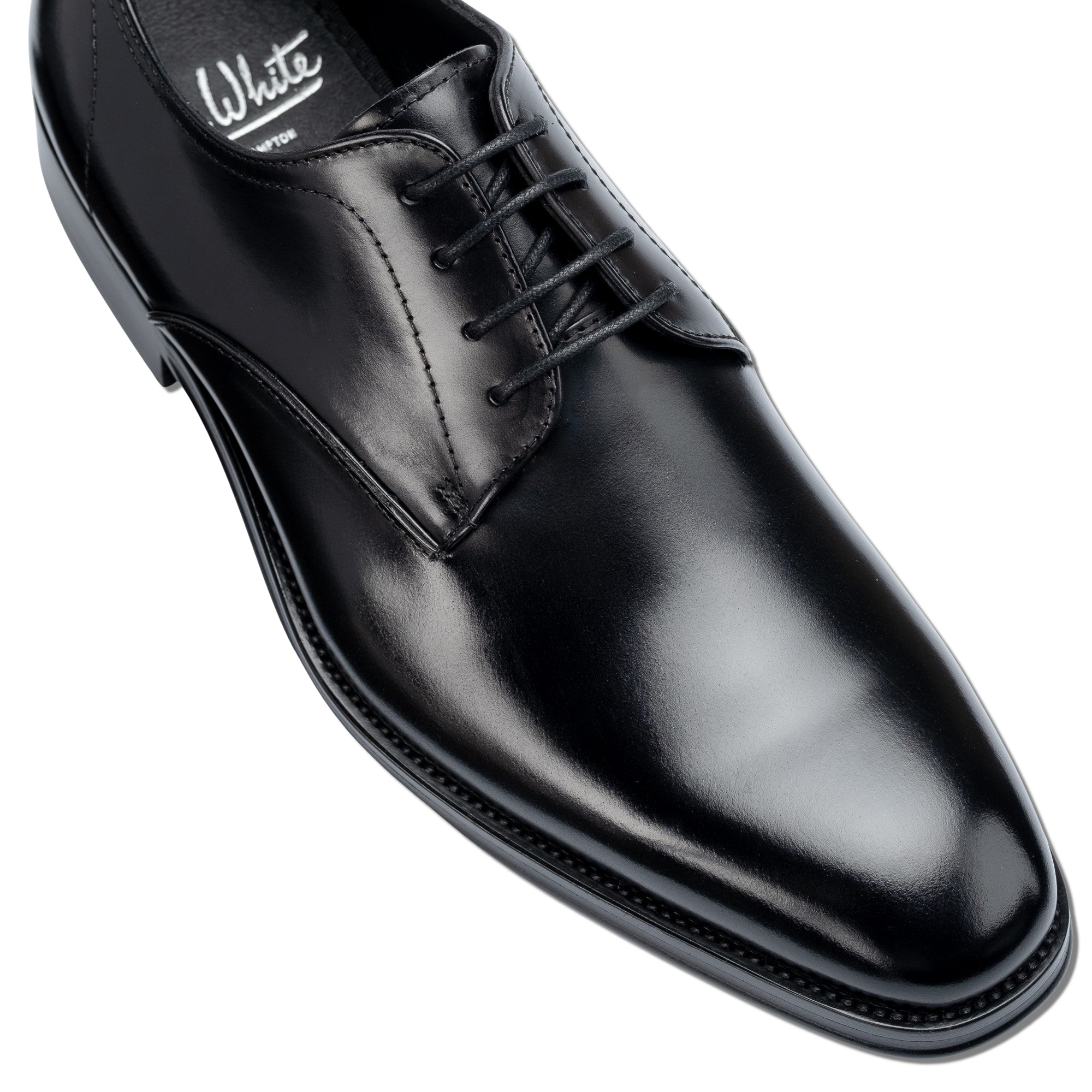
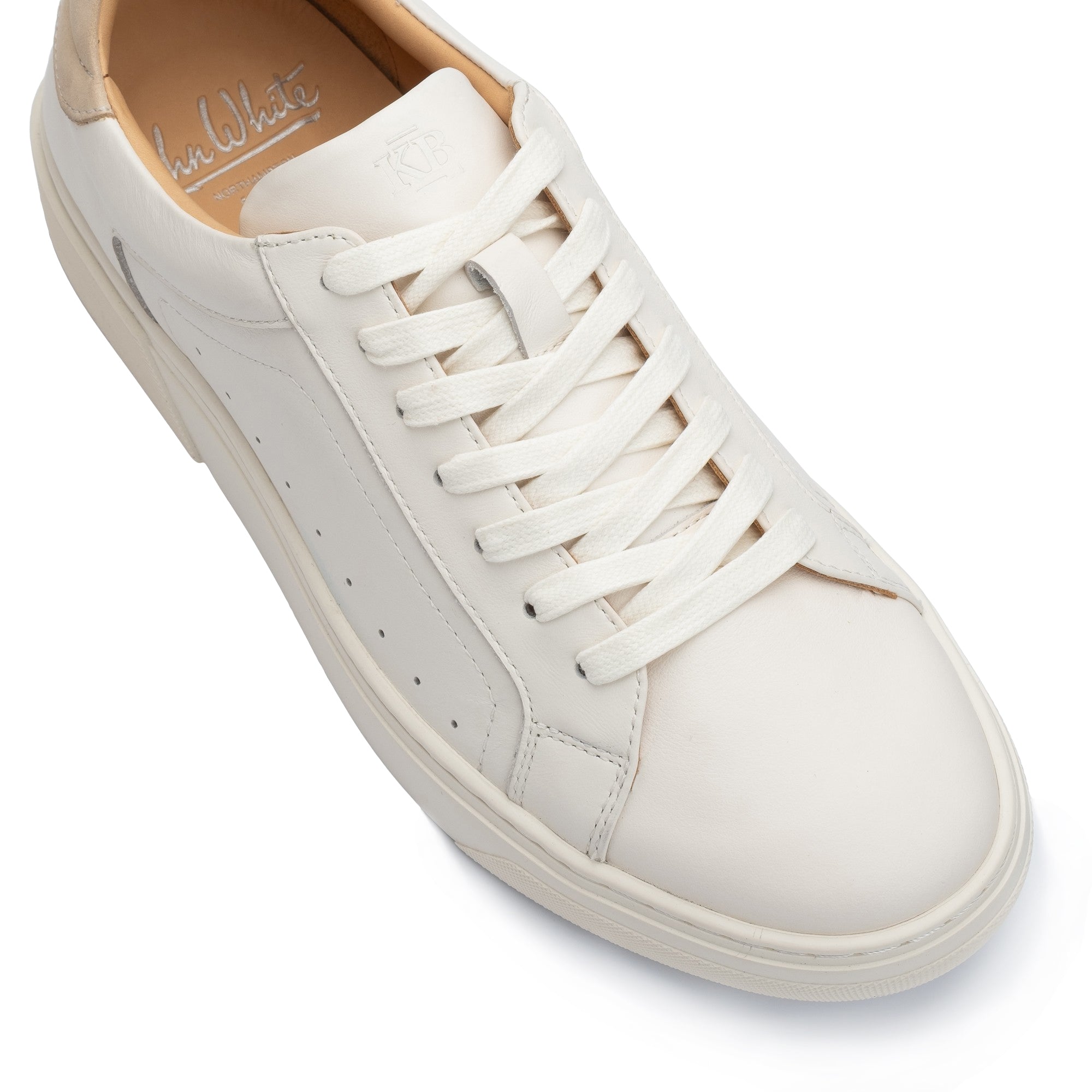
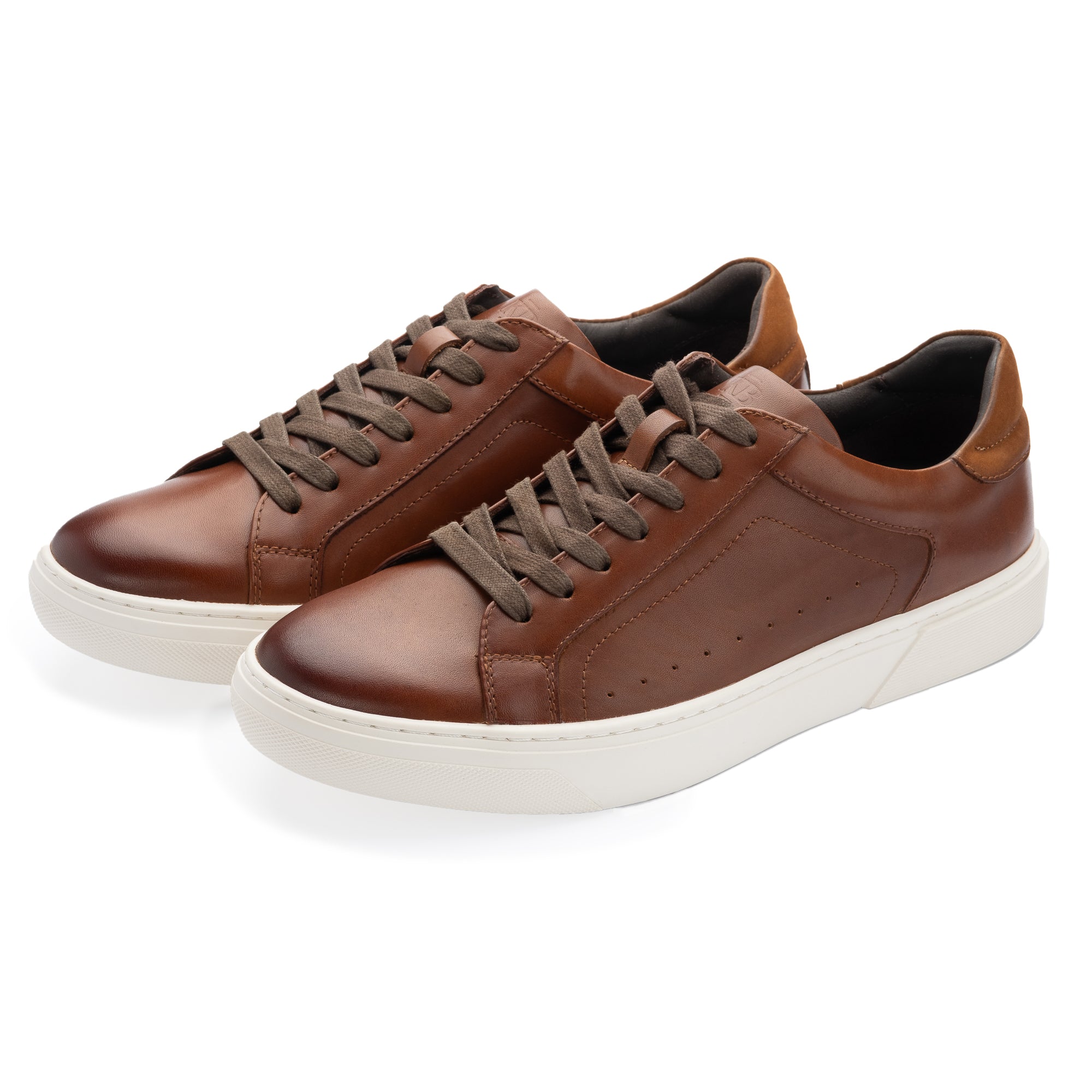
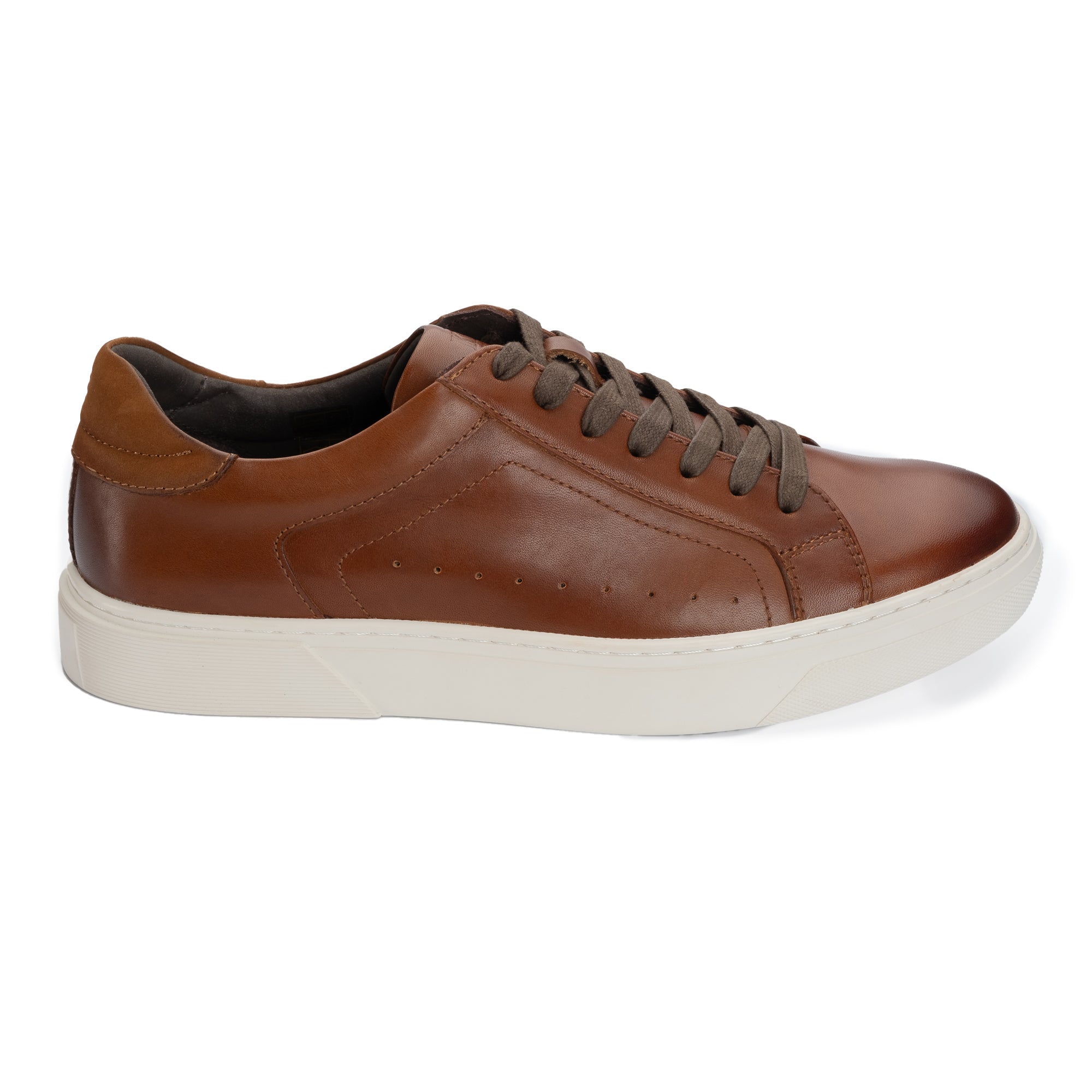
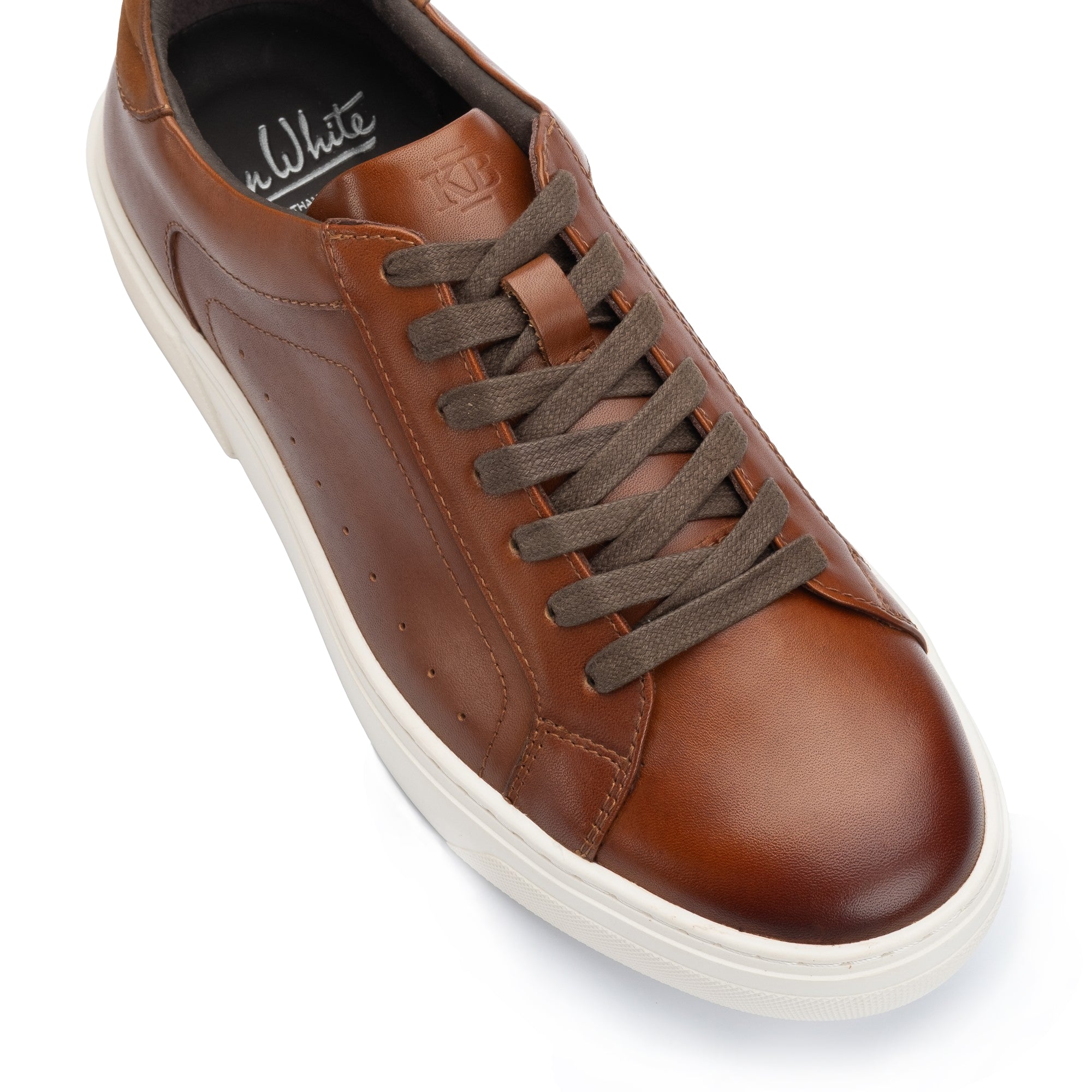
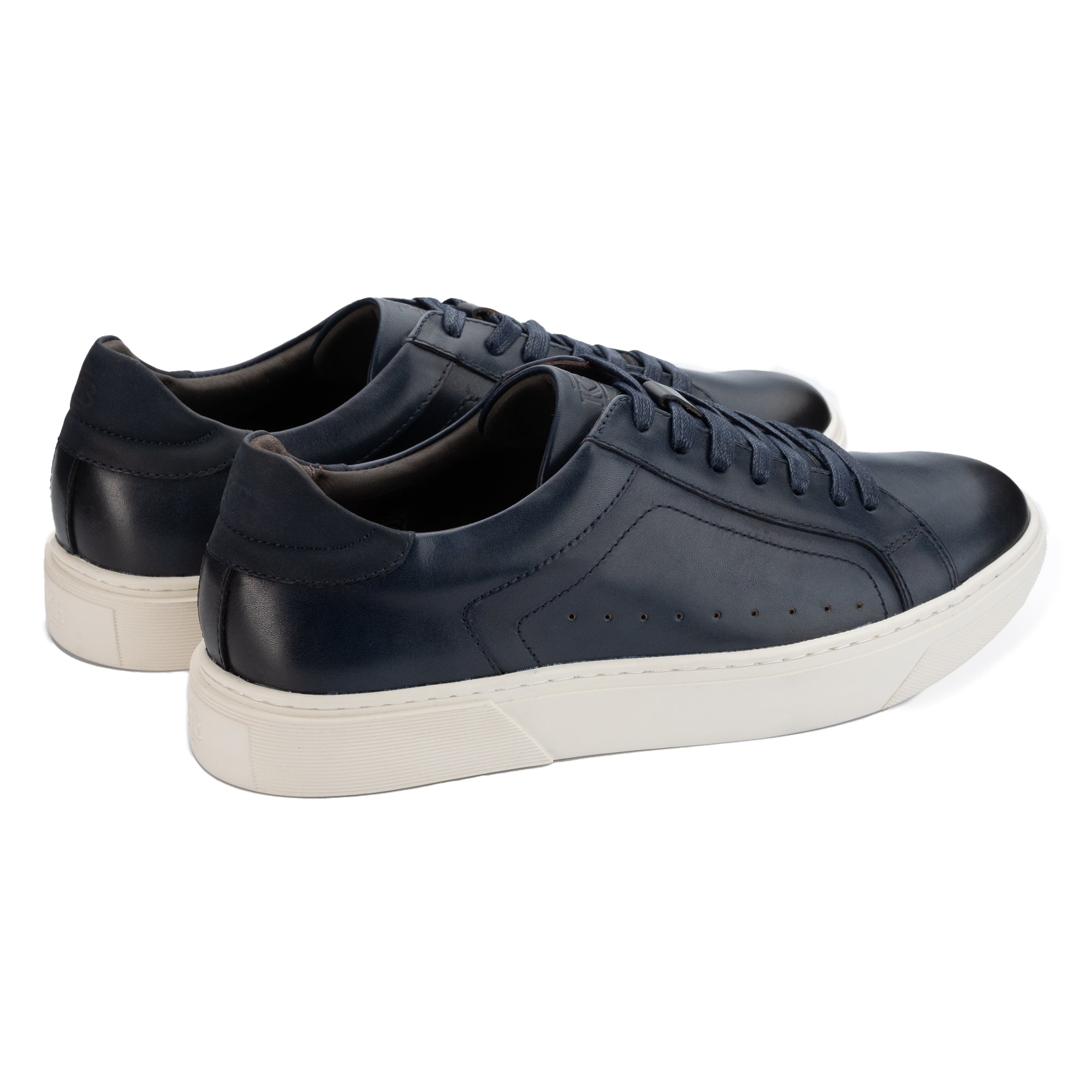
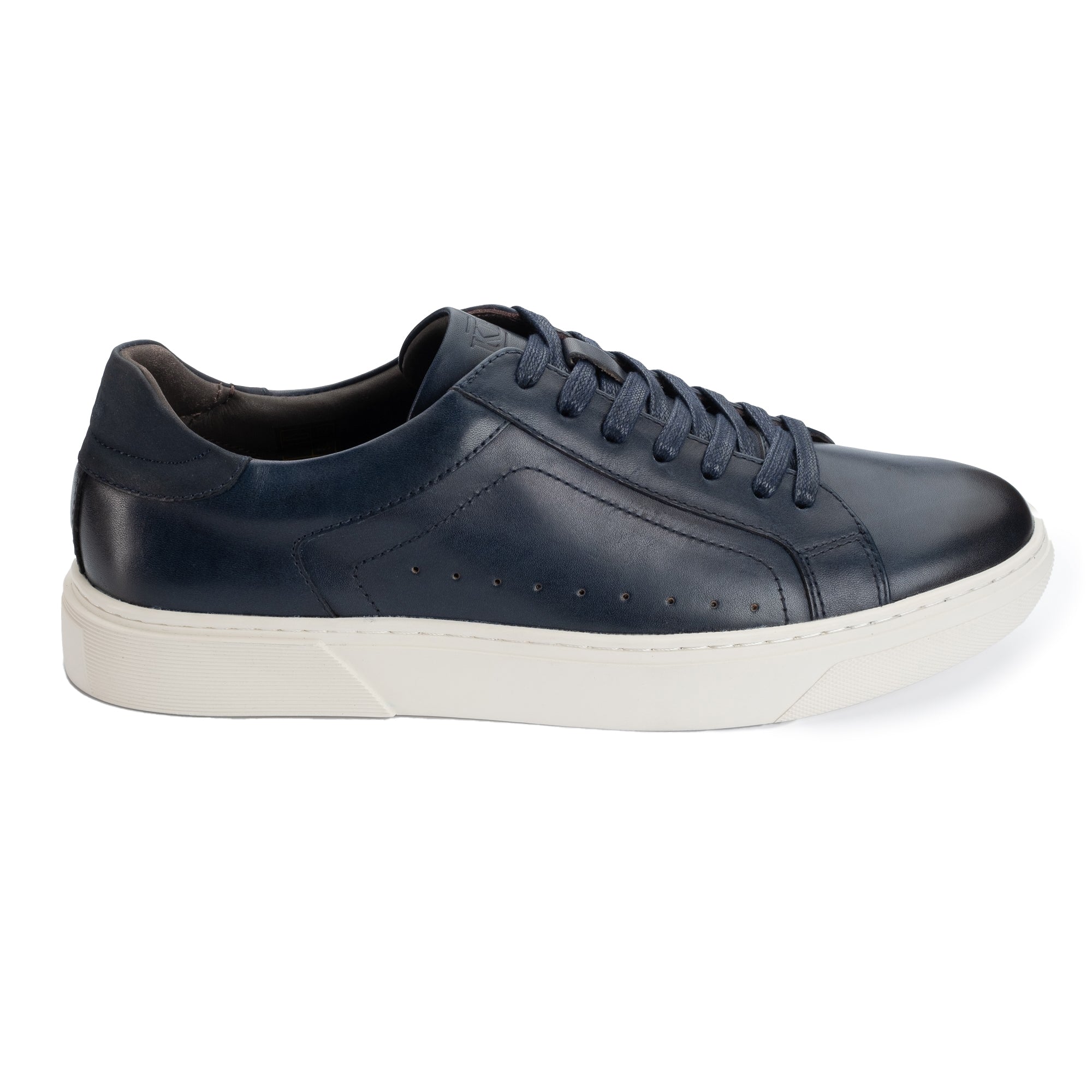
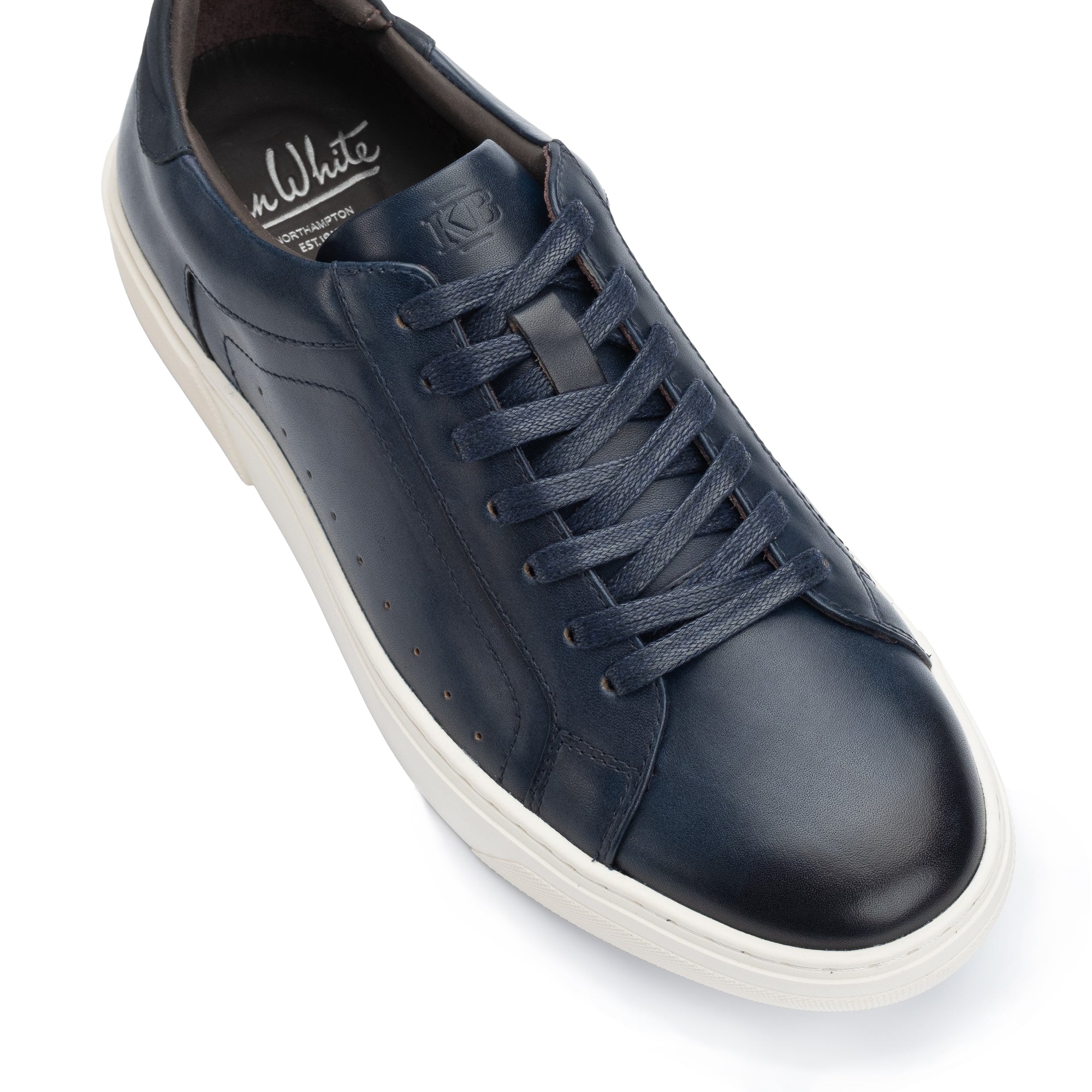
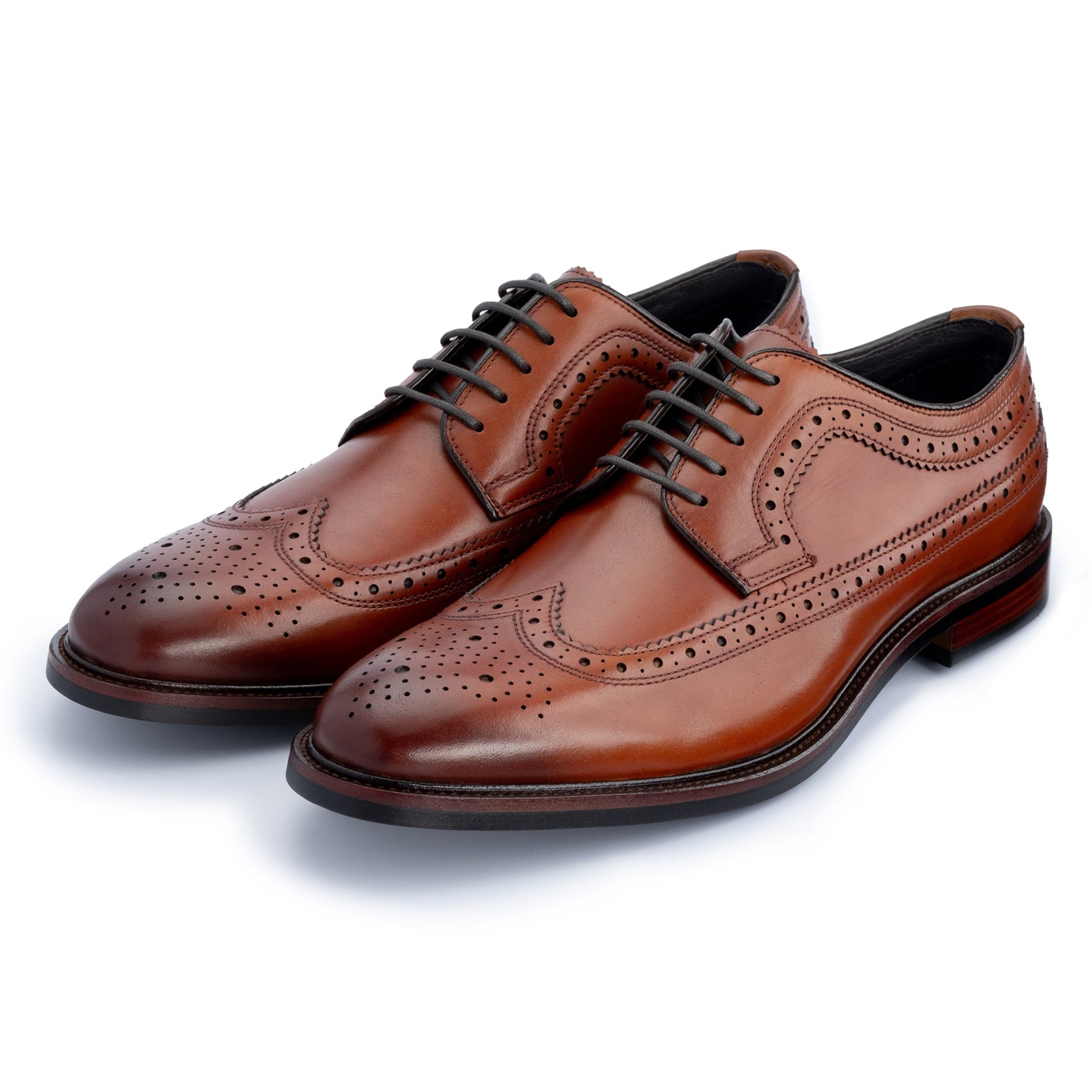
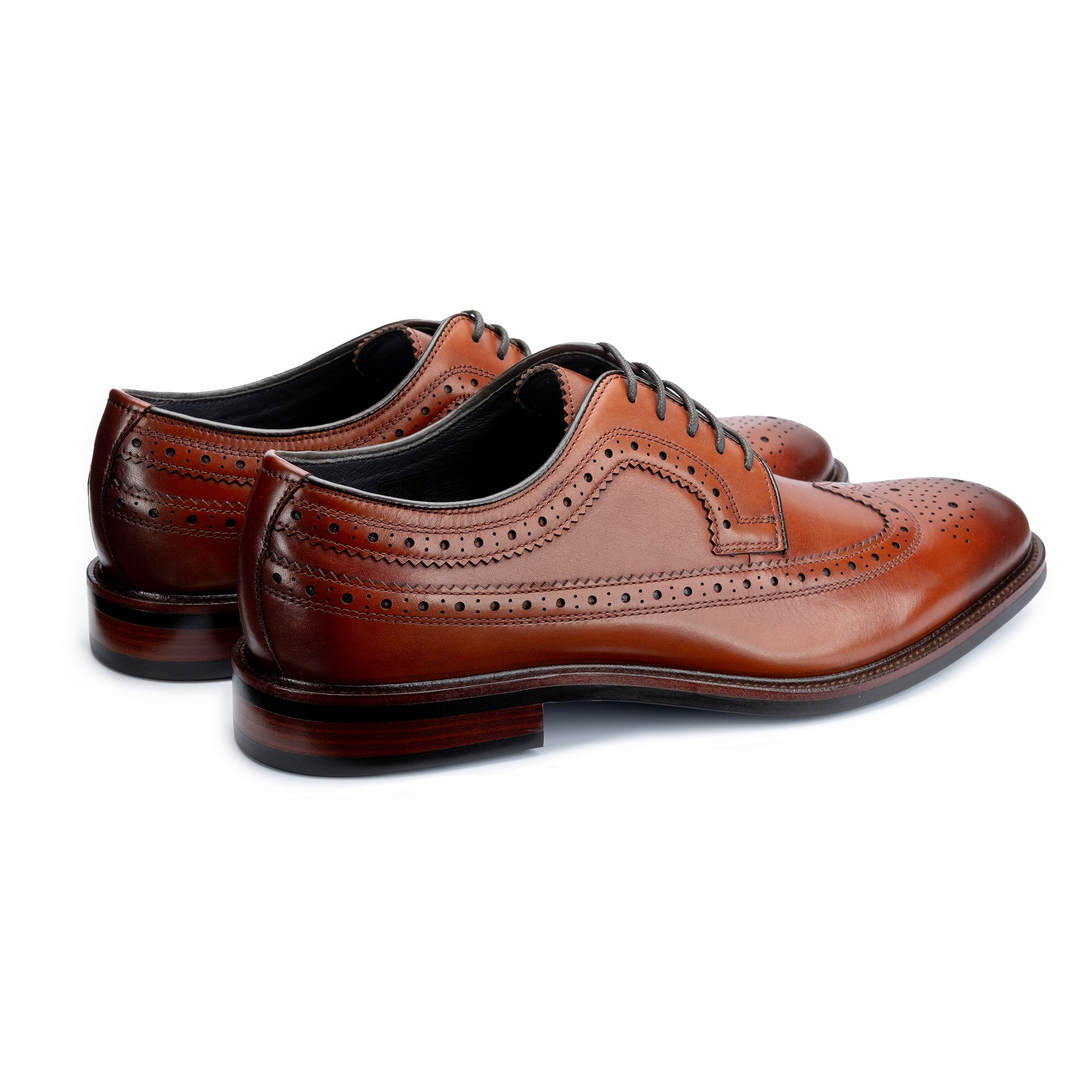
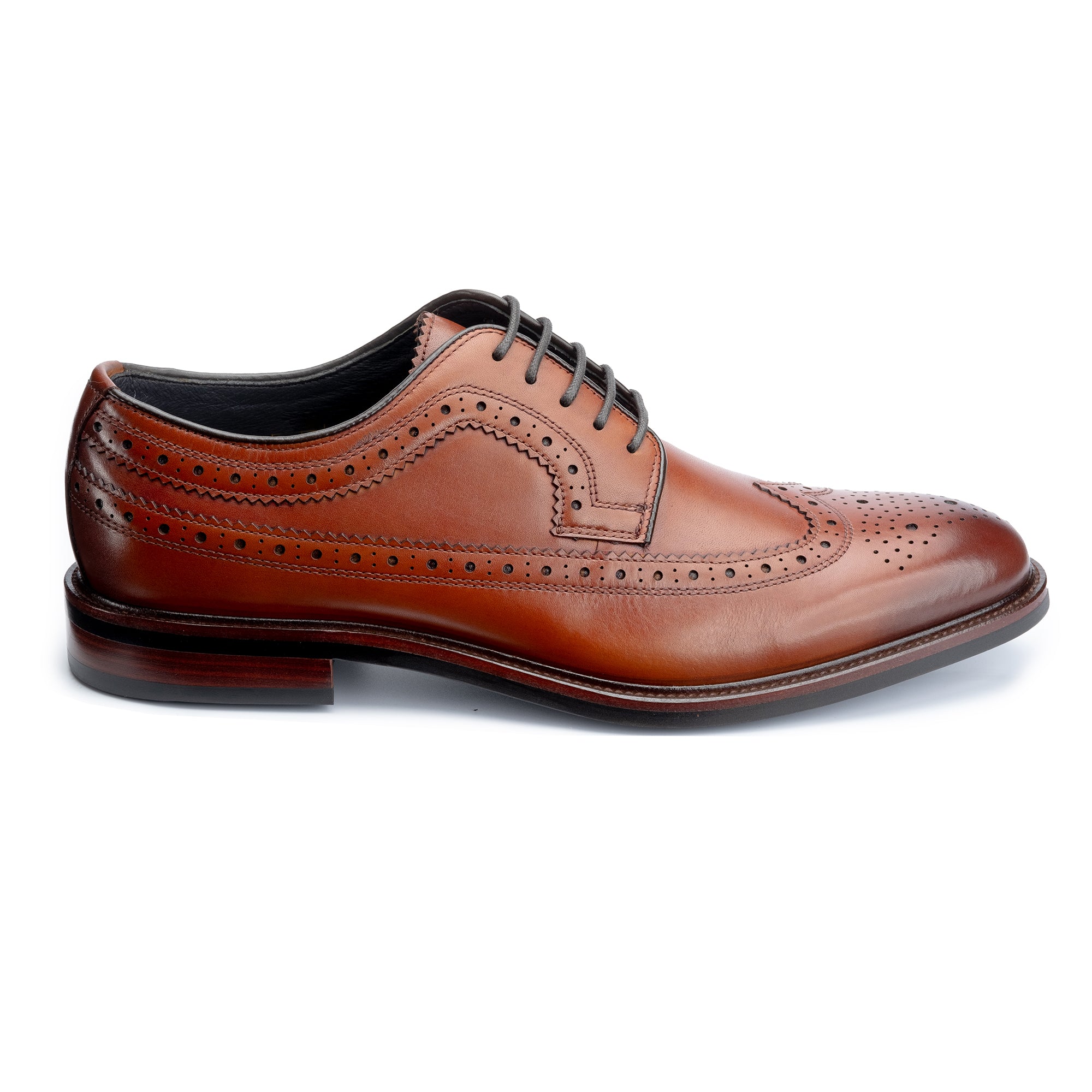
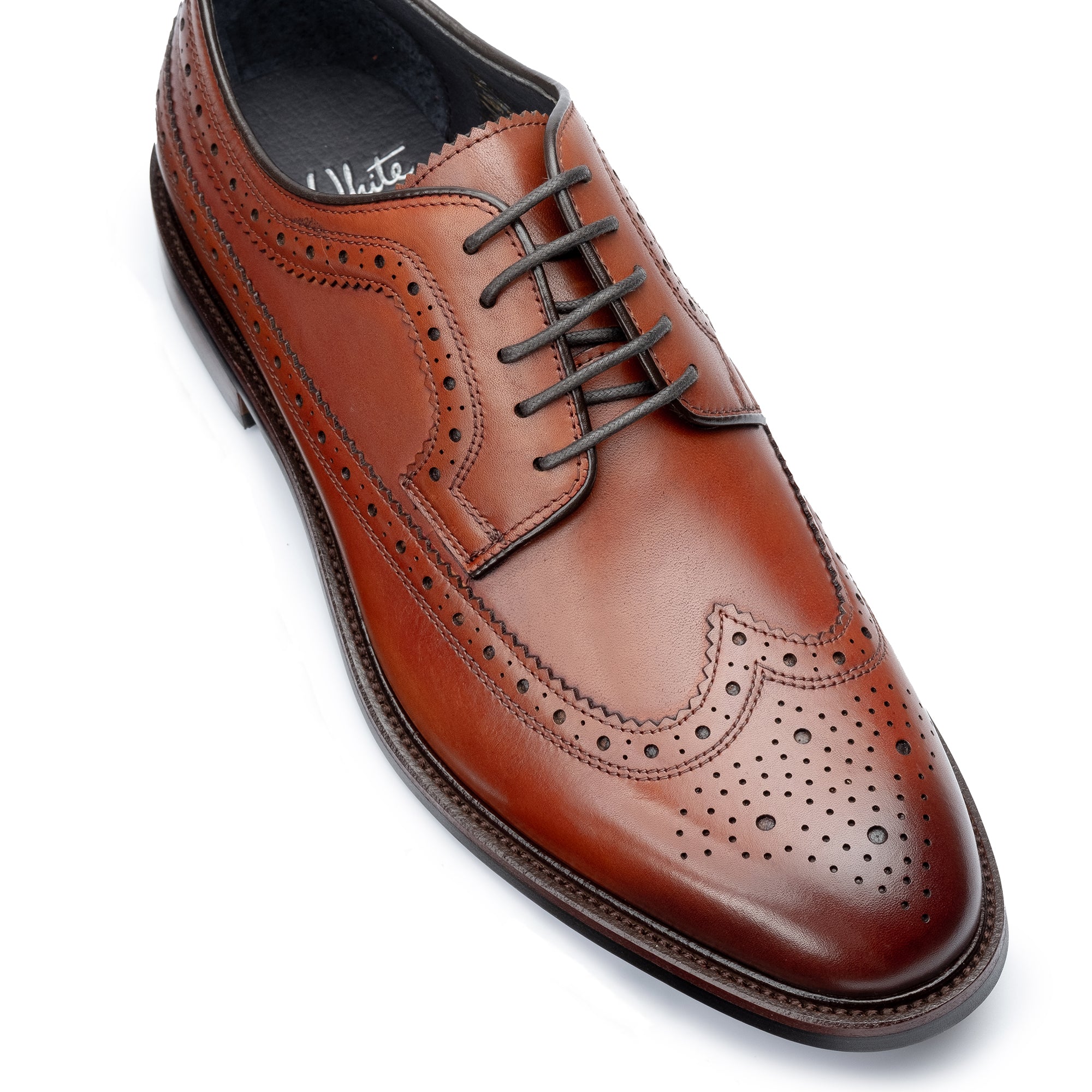
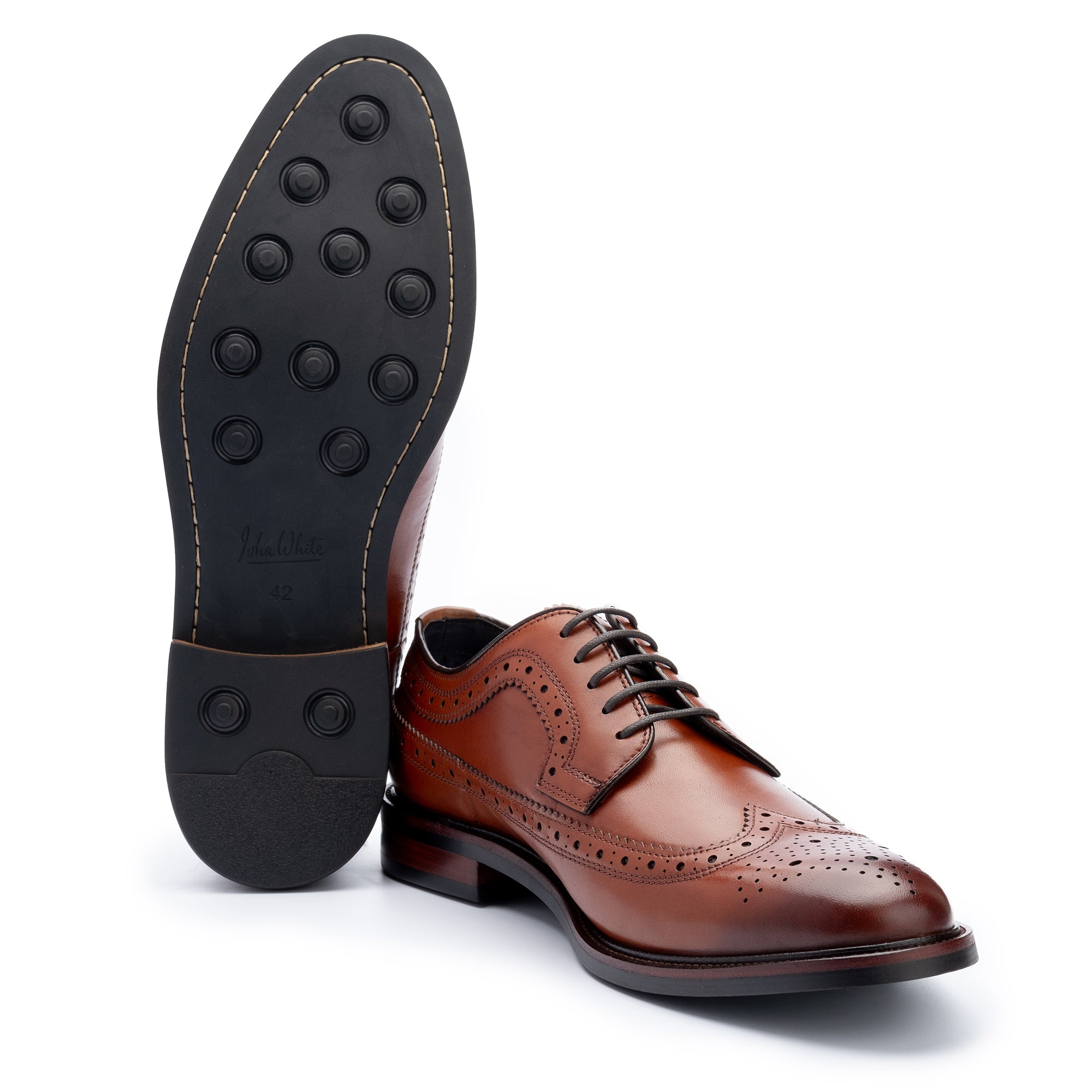
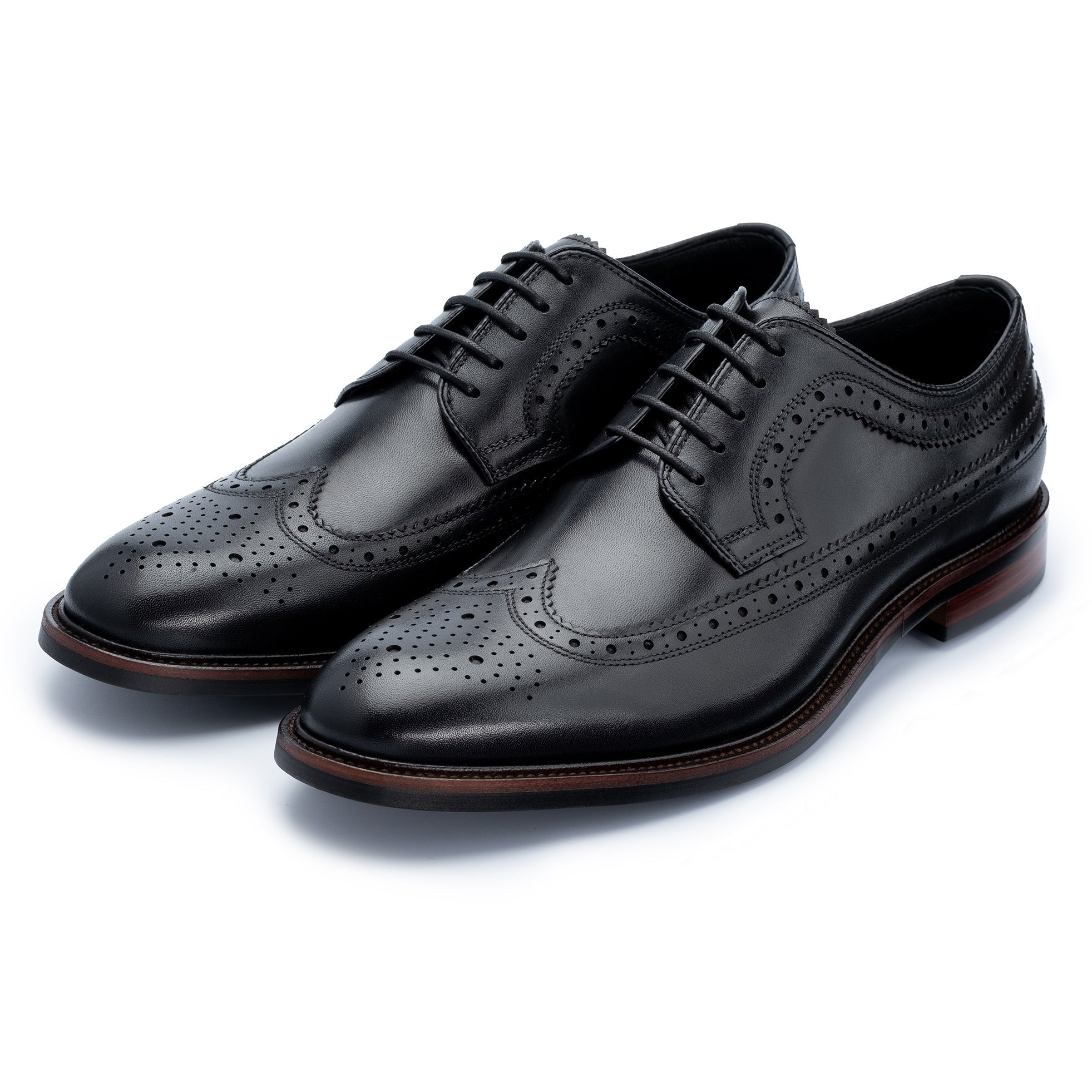
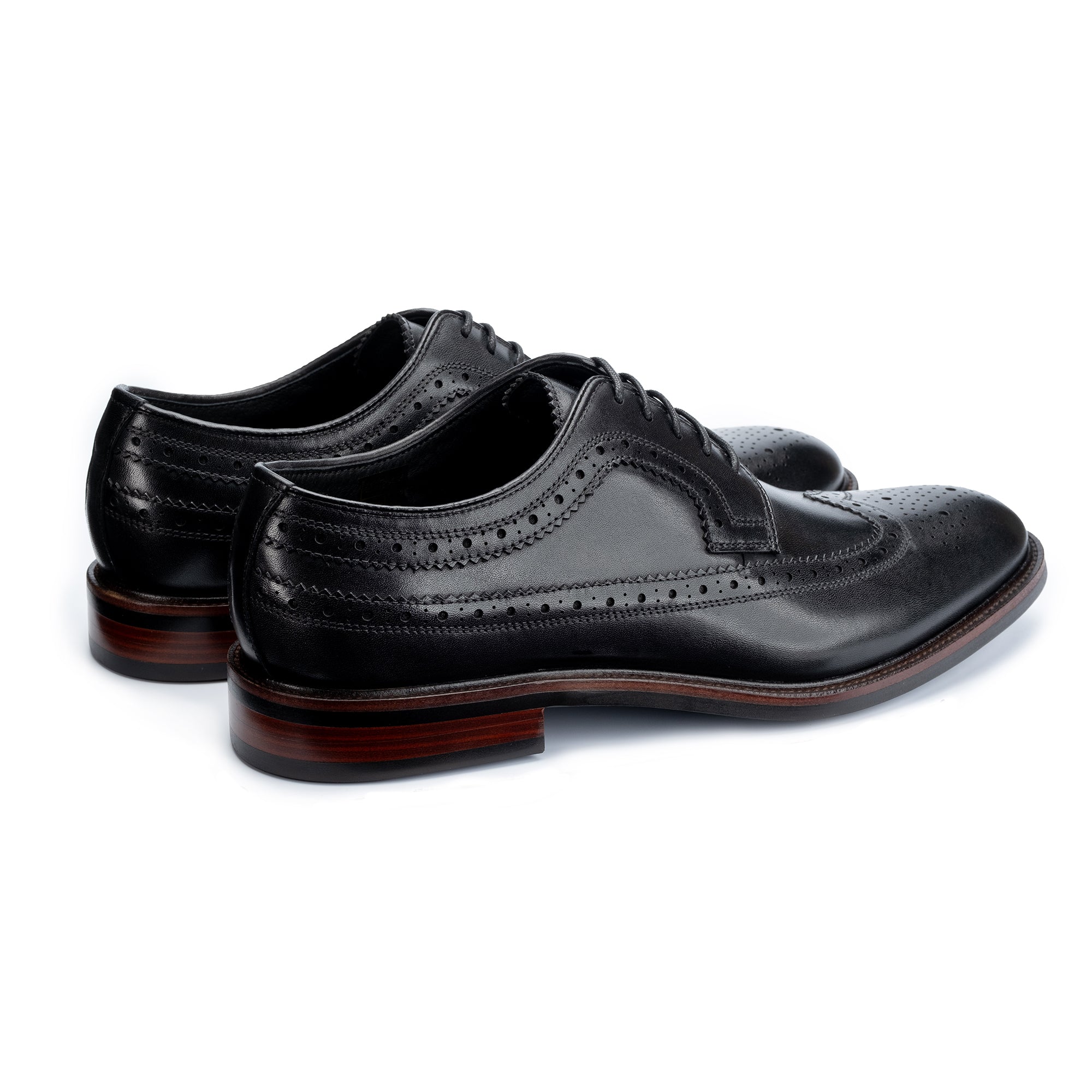
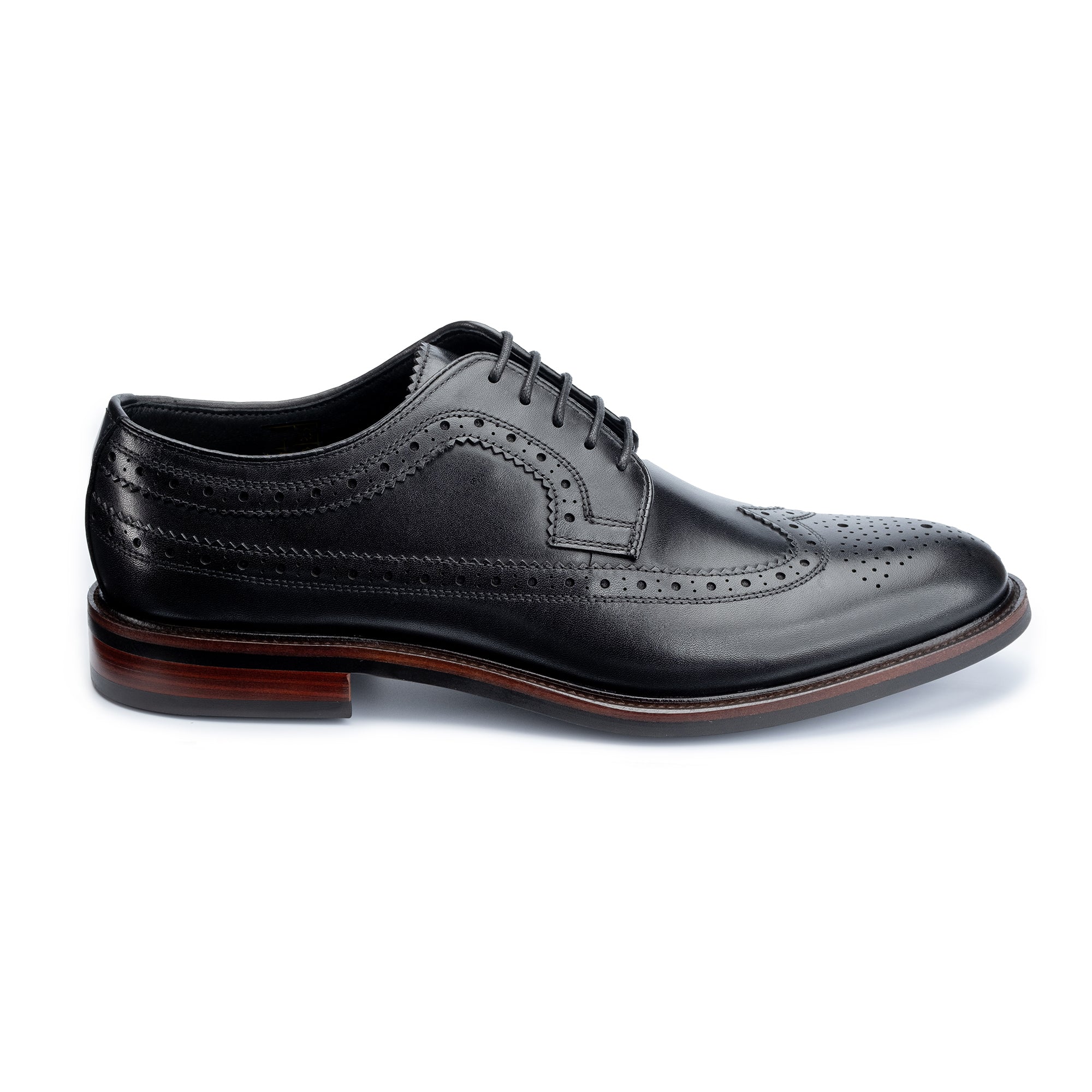
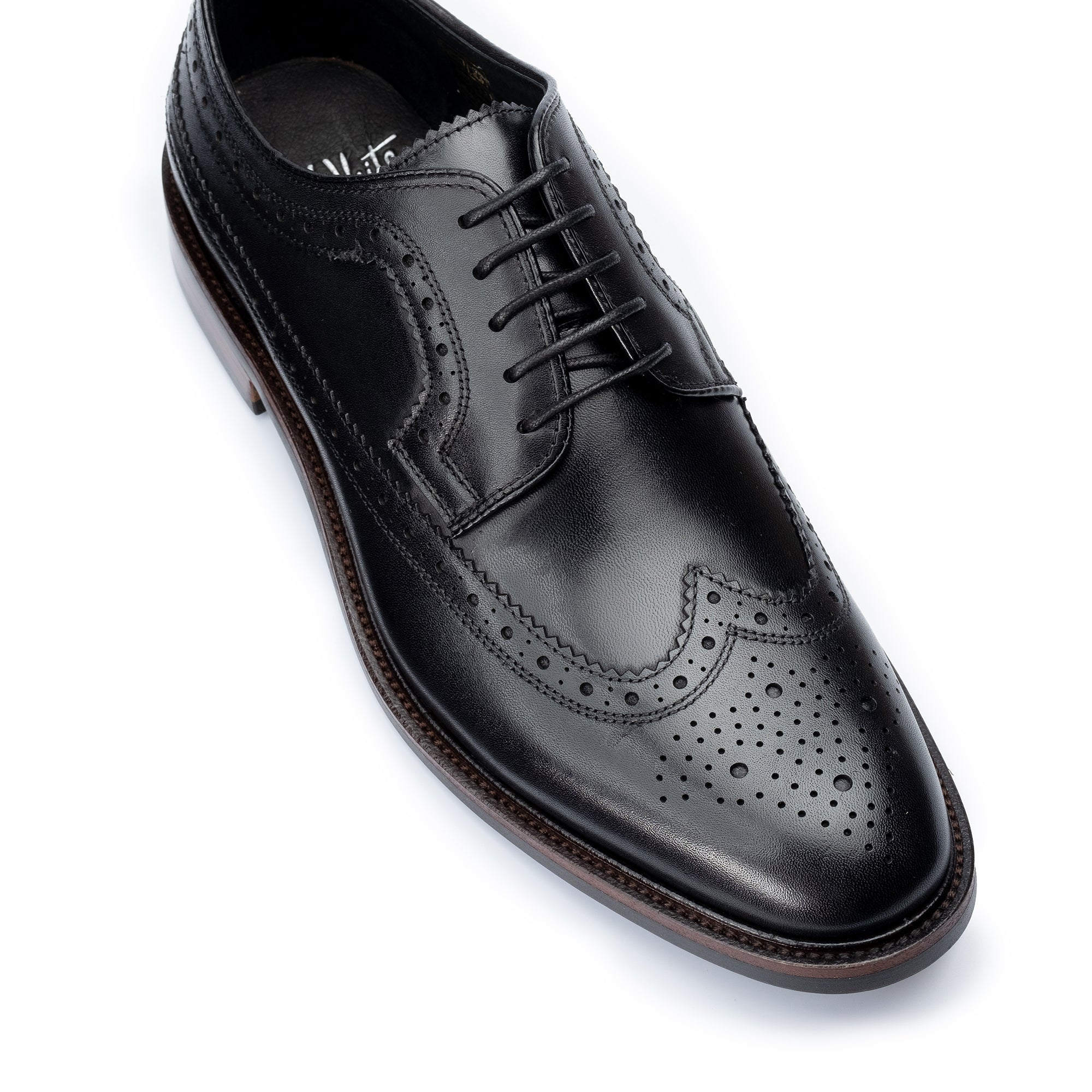
The Derby shoe is a style of lace-up shoe characterised by its open-lacing construction. This means the quarters—the side panels of leather containing the eyelets—are sewn on top of the vamp, which is the front section of the shoe.
This method creates two flaps of leather that can be pulled apart, allowing for a wider opening to insert the foot. It is this single, defining detail that separates it from its more formal counterpart, the Oxford, which features a closed-lacing system where the quarters are stitched underneath the vamp.
- Open Lacing: The eyelet tabs are stitched on top of the vamp, allowing for greater adjustability.
- Accommodating Fit: It is particularly well-suited for gentlemen with a higher instep or wider feet.
- Inherent Versatility: The robust, practical construction lends itself to both formal and smart-casual contexts.
This design is not merely an aesthetic choice; it is a direct legacy of the shoe's functional origins. Understanding this construction is the first step in appreciating its remarkable journey. For a direct comparison of these two essential styles, explore our guide on the differences between Derby vs Oxford shoes.
The Derby’s construction is a masterclass in functional design, providing a superior range of motion and comfort that directly informed its military and civilian success.
What Are the Military Origins of the Derby Shoe?
The history of the Derby shoe begins not with an aristocrat, but with a soldier: Gebhard von Blücher, a celebrated Prussian Field Marshal. During the Napoleonic Wars, armies swelled to unprecedented sizes. According to military historian David Chandler, Napoleon's Grande Armée exceeded 600,000 men at its peak, creating an immense logistical challenge for equipping soldiers with durable, practical uniforms and footwear.
Standard-issue boots of the era were notoriously difficult to put on and take off, a critical flaw in the fast-moving reality of a campaign. Blücher commissioned a new boot design featuring an open-lacing system with two leather flaps below the ankles. This innovation allowed his troops to don their boots more quickly and provided a more forgiving fit for feet that would swell after days of marching.
This new footwear, known as the 'Blücher', proved vastly superior on the battlefield. Its practicality and comfort were instrumental, and the design was soon adopted by armies across Europe. The Blücher boot was a piece of military engineering, born from necessity and proven in conflict.
The Derby shoe's lineage is therefore not one of aristocratic leisure, but of military pragmatism, designed for endurance and efficiency under the most demanding conditions.
How Did the Derby Transition from Battlefield to Boardroom?
The Derby's journey into civilian life began in the latter half of the 19th century. Initially, its robust and practical nature saw it adopted as a country and sporting shoe. It was considered too informal for city wear, a rugged counterpart to the sleek, formal Oxford shoe that dominated the urban landscape.
However, as the 20th century dawned, notions of dress began to relax. The very comfort and practicality that made the Blücher a success on the battlefield made the Derby an appealing choice for everyday life. It was a gradual transition, but its superior fit and understated style could not be denied. By the 1920s, the Derby was an established and respectable option for town wear, perfectly complementing the tweed suits and heavier fabrics of the era.
The table below outlines the core distinctions that facilitated this transition, highlighting how a shoe designed for function found its place in fashion.
| Feature | Derby (Blücher) | Oxford |
|---|---|---|
| Lacing System | Open (Quarters over vamp) | Closed (Quarters under vamp) |
| Original Purpose | Military/Sporting | Formal/Court |
| Perceived Formality | Less Formal | More Formal |
| Ideal For | Higher insteps, smart-casual wear | Narrower feet, business/formal attire |
This evolution cemented the Derby's status as a quintessential piece of British heritage footwear, equally at home in the city as it is in the countryside. John White Shoes continues this tradition, crafting Derbies that honour this balance of rugged heritage and refined style.
The Derby’s acceptance in civilian wardrobes was a victory for practical design, proving that comfort and versatility are timeless measures of quality.
Why Does the Derby Remain a Cornerstone of Men's Footwear?
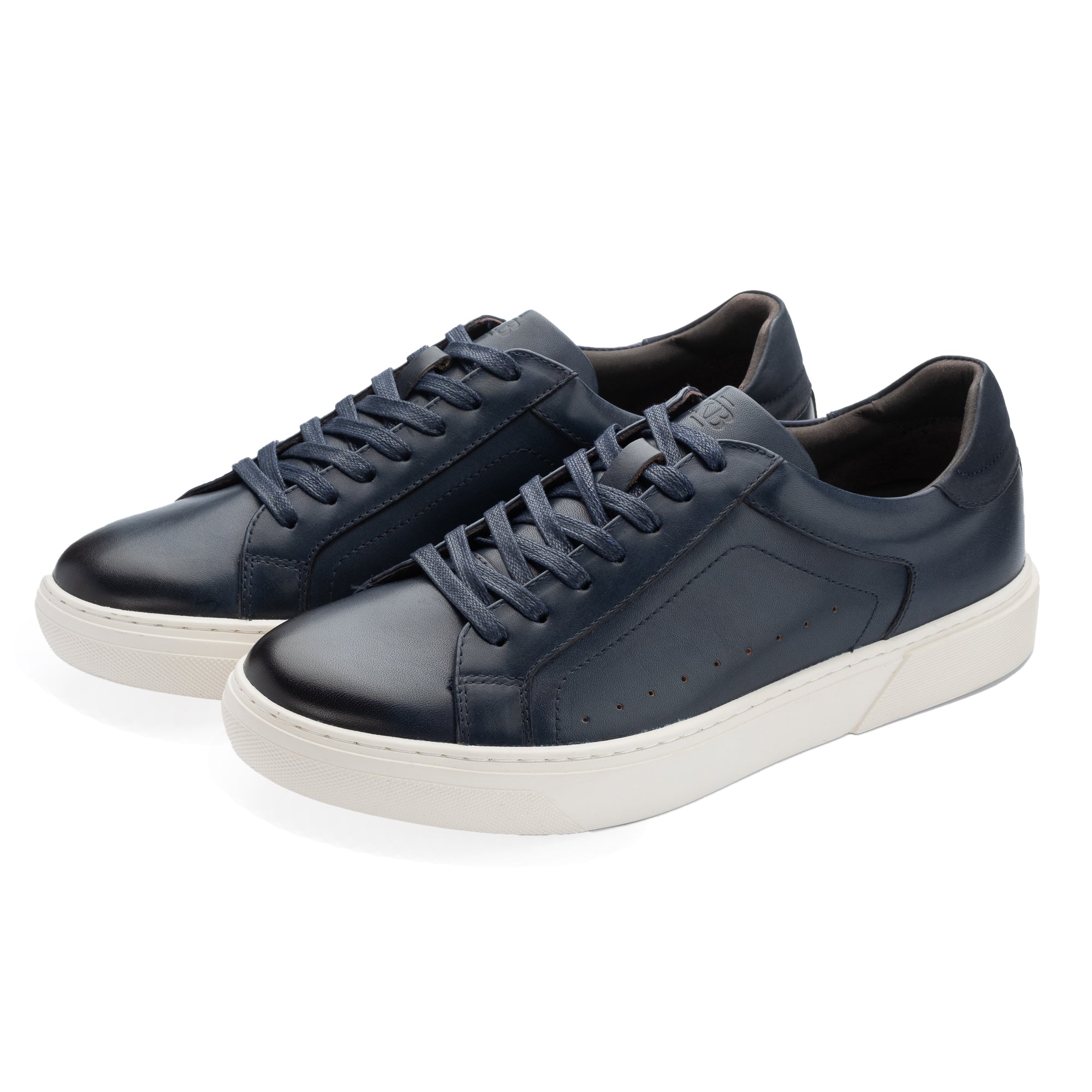
The Derby's enduring appeal lies in its unparalleled versatility. It is a single style that can anchor a vast range of outfits, making it an indispensable asset in any well-curated shoe collection. Its clean lines and robust profile allow it to adapt to its surroundings with confidence.
Consider the possibilities:
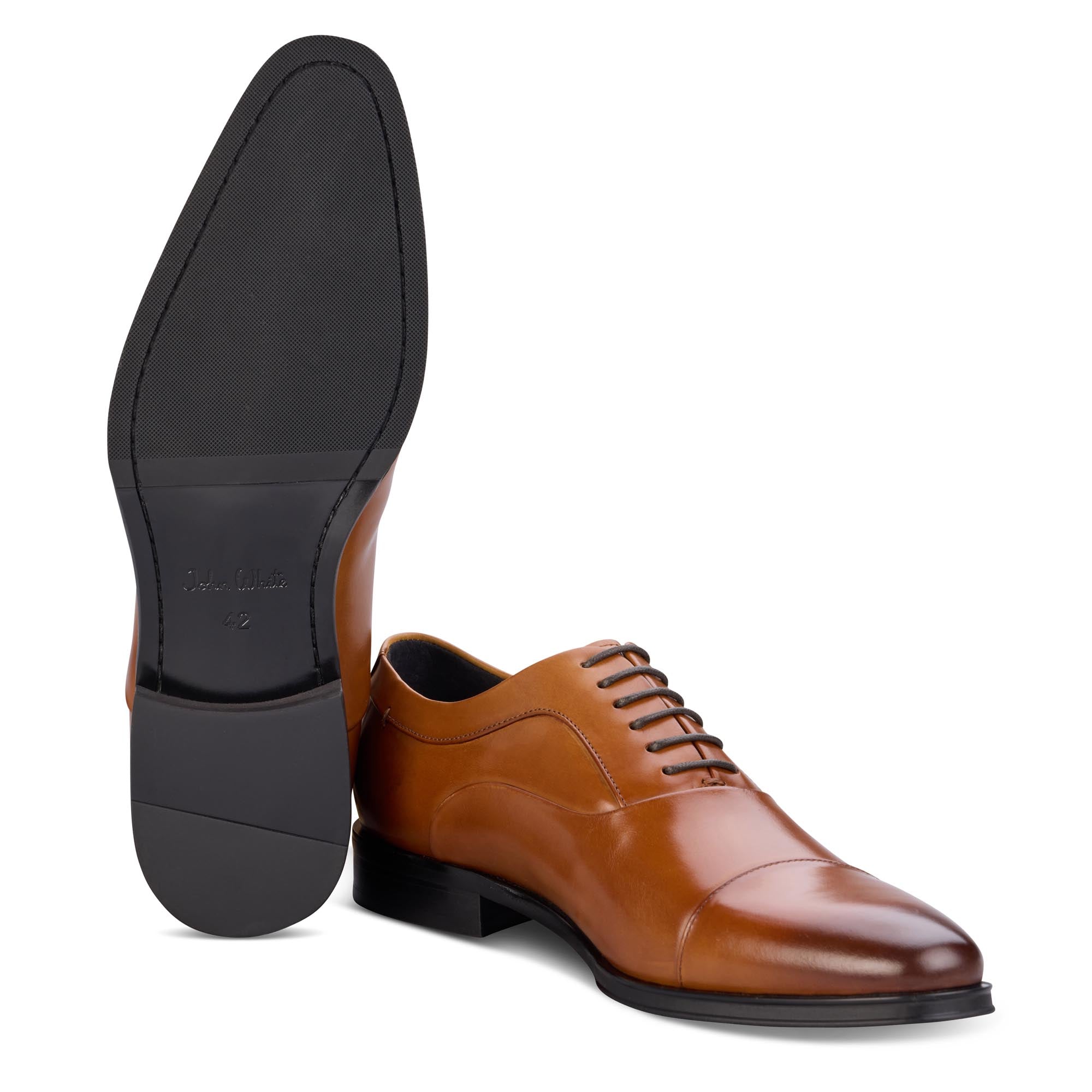
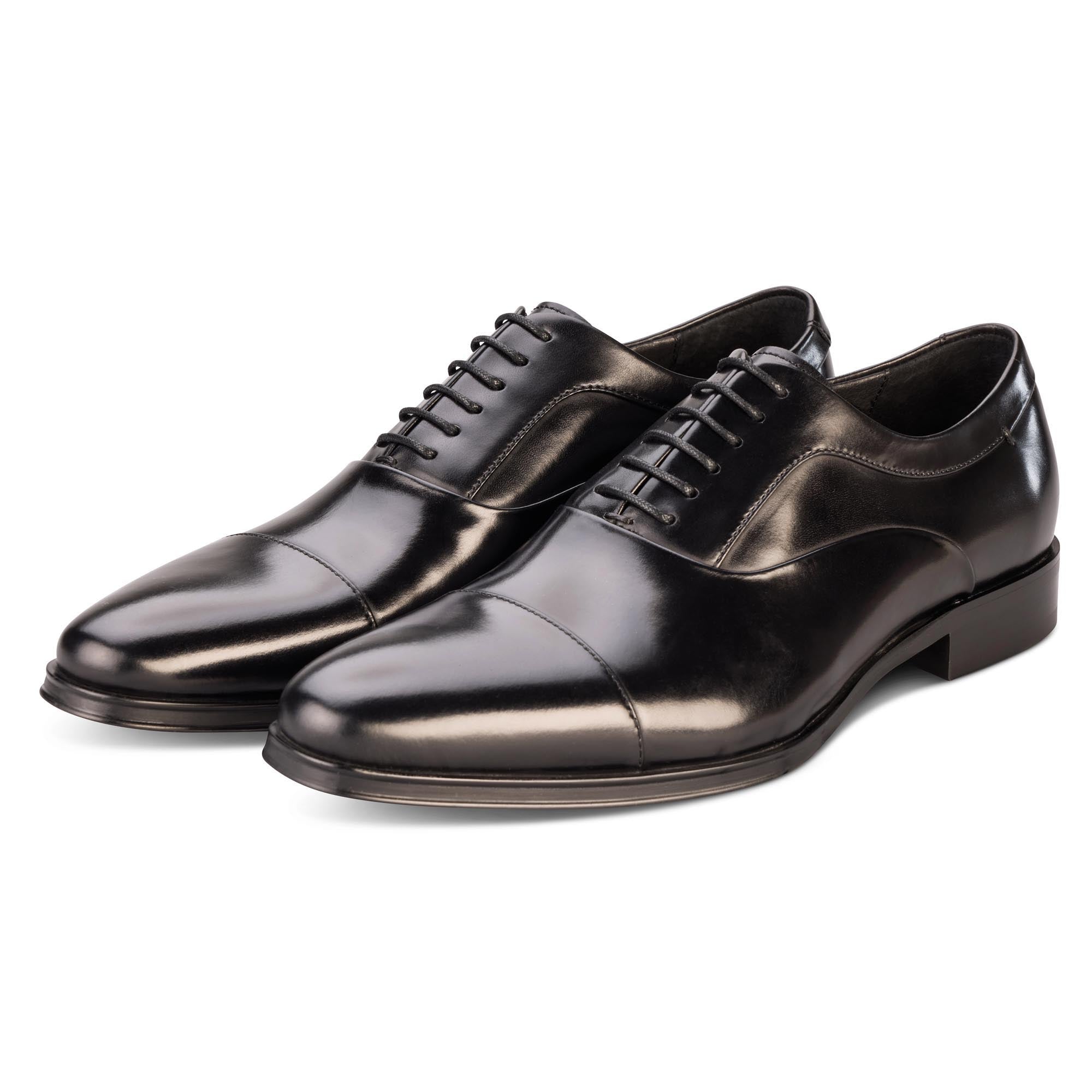
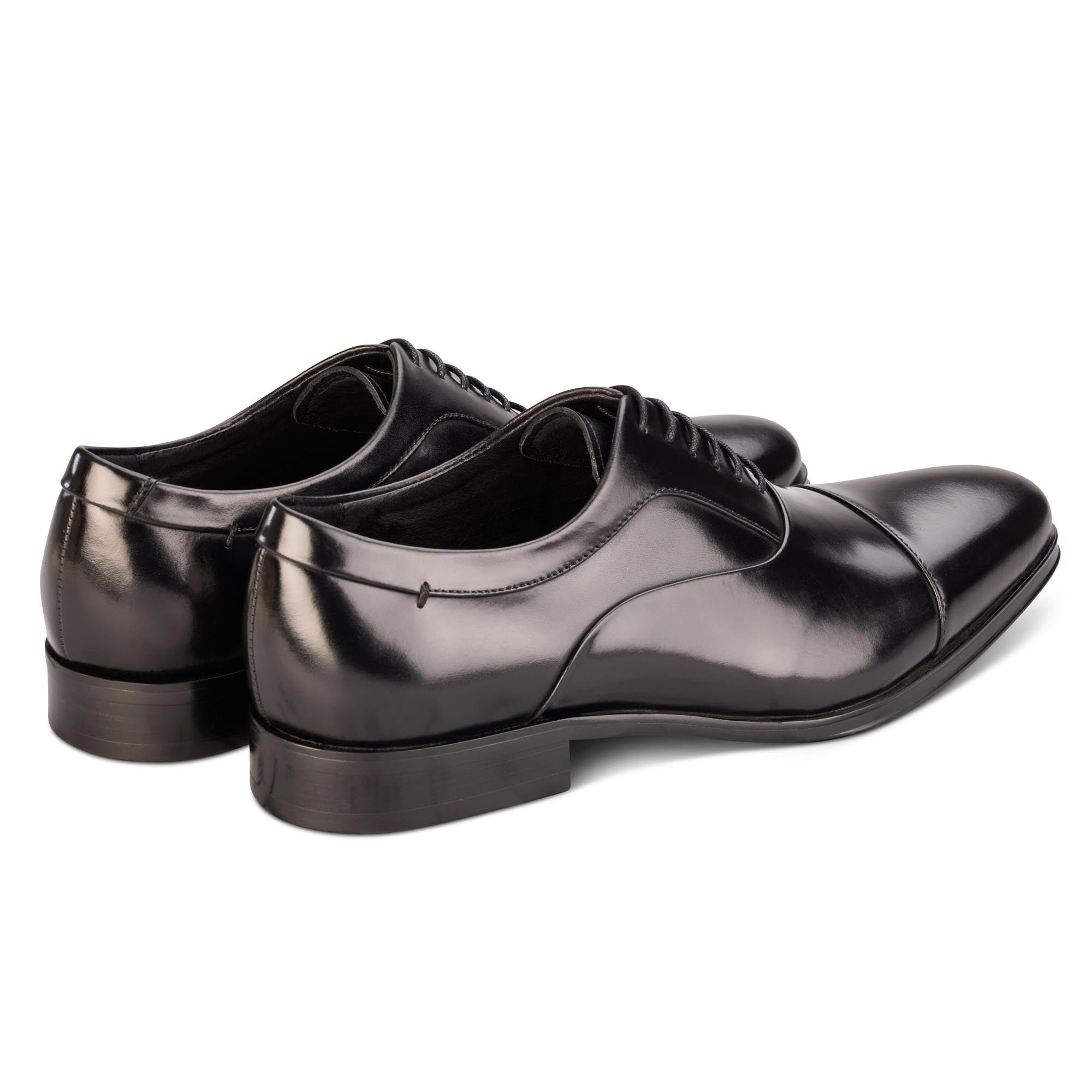
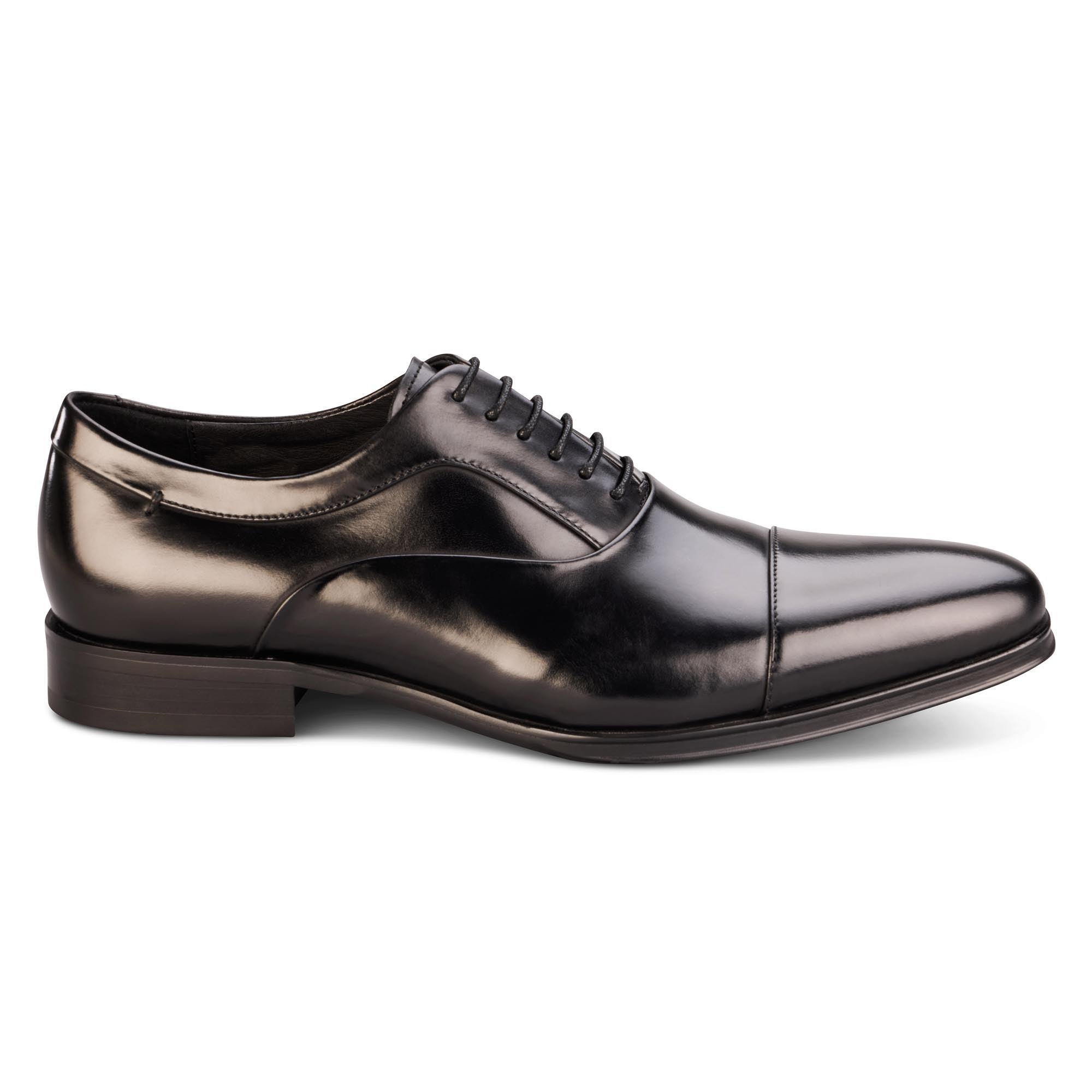
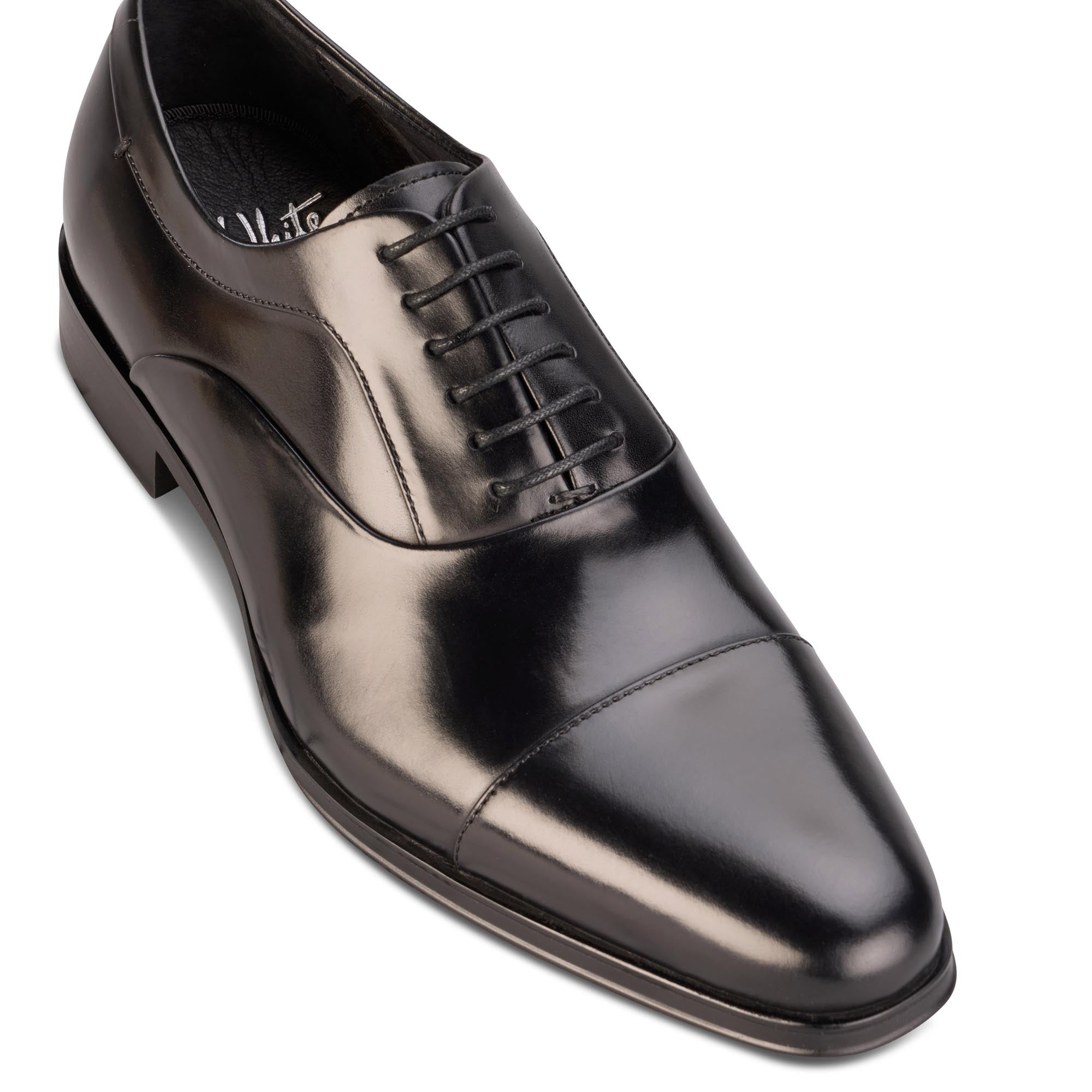
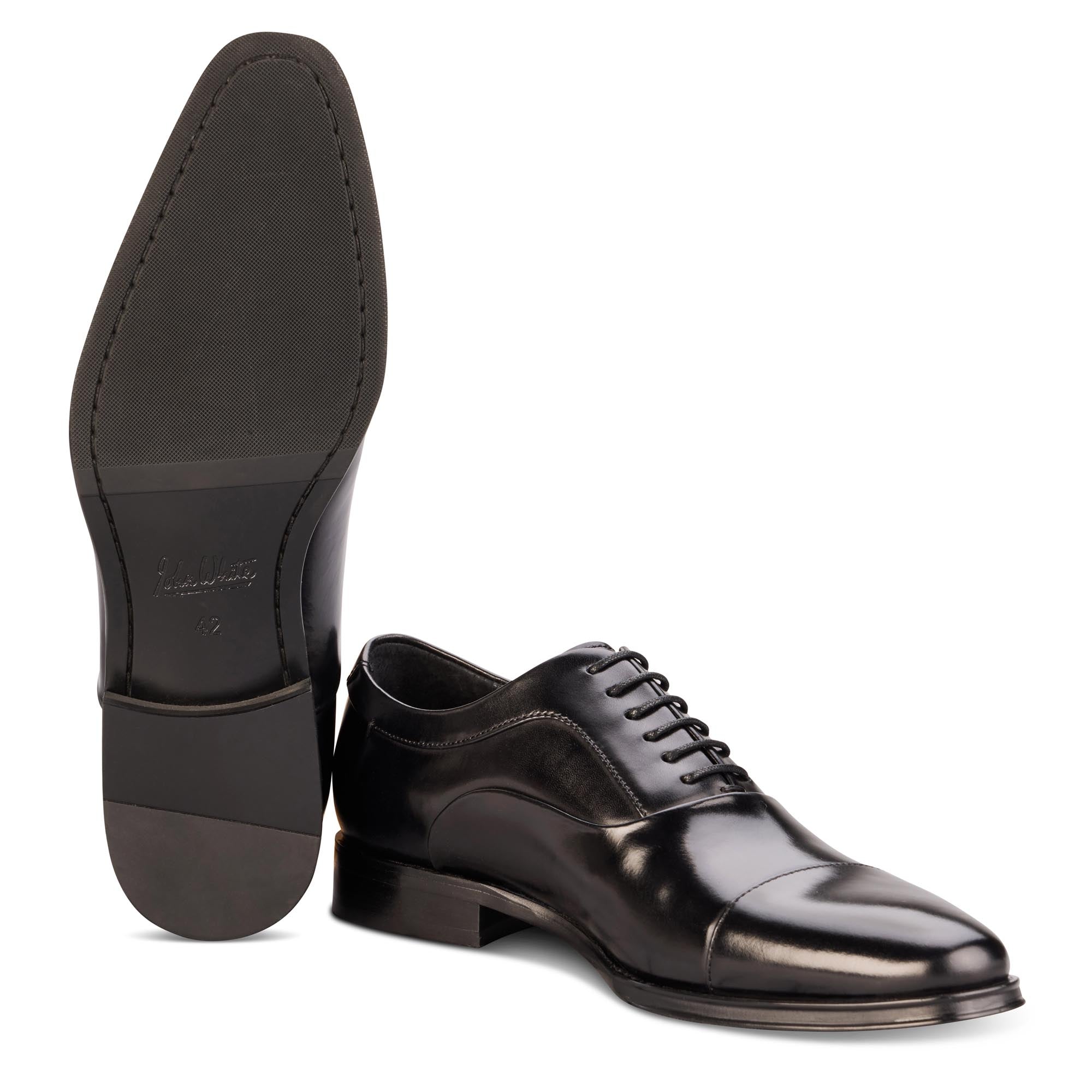
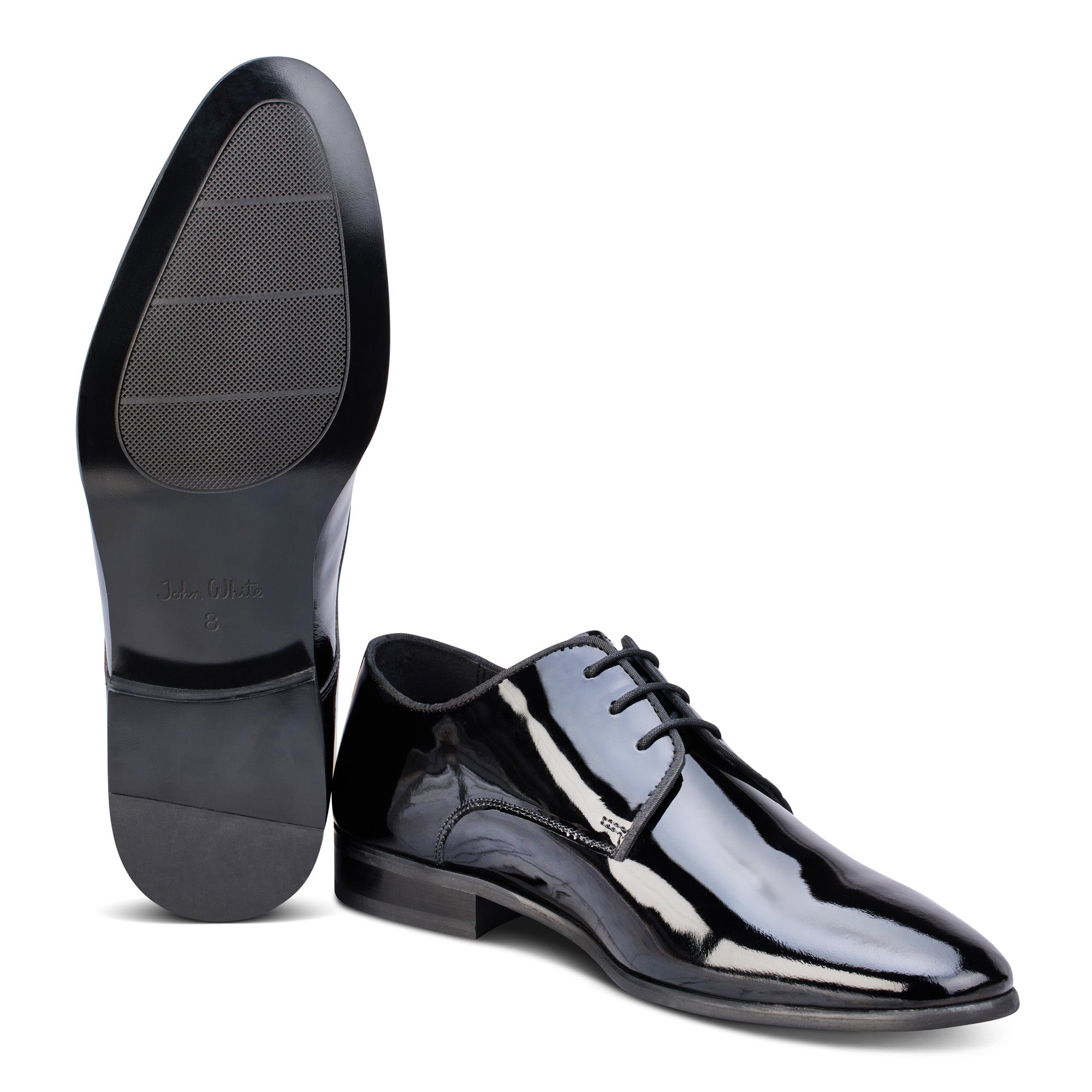
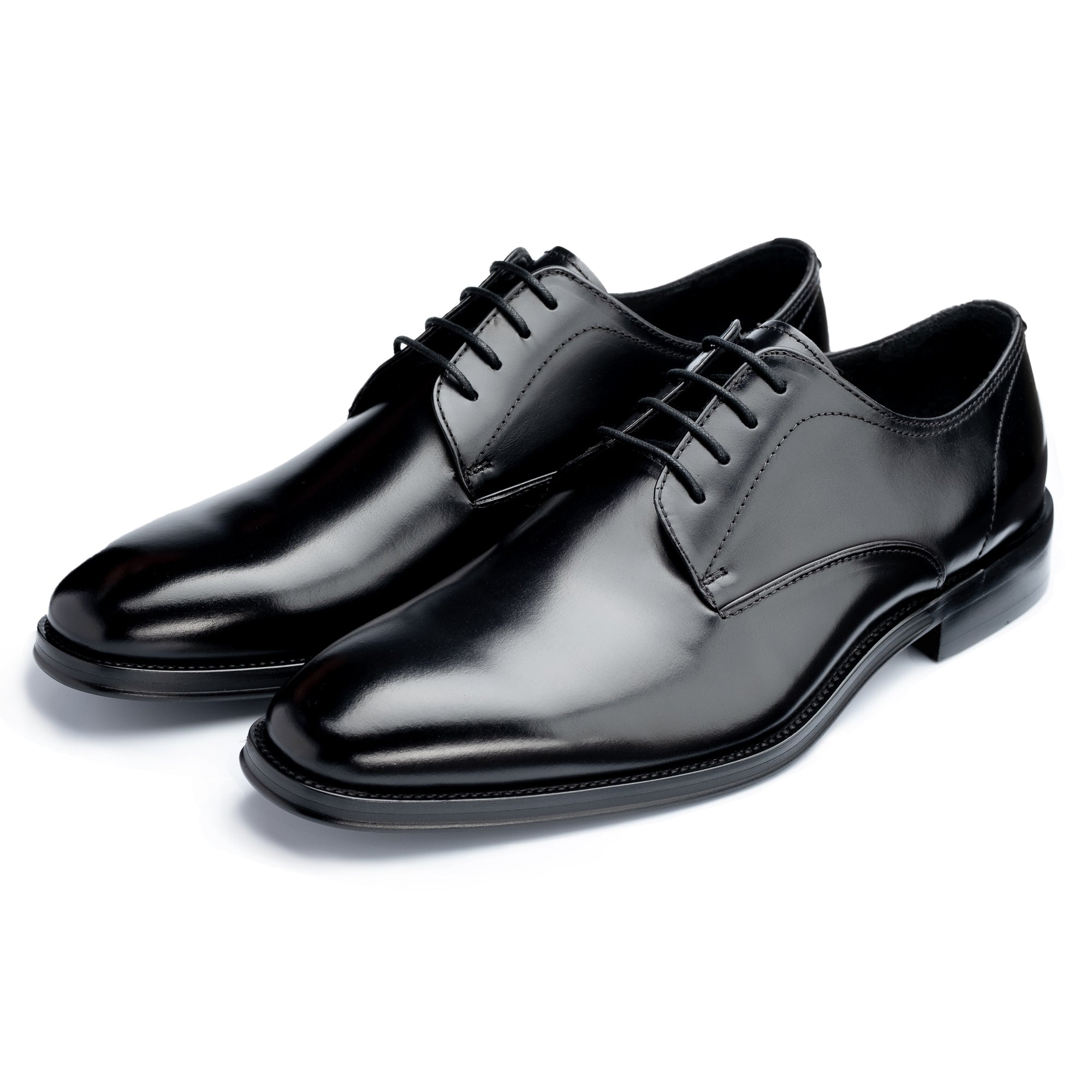
- A polished Hurricane II Derby in Black Calf lends a modern, authoritative edge to a charcoal or navy suit.
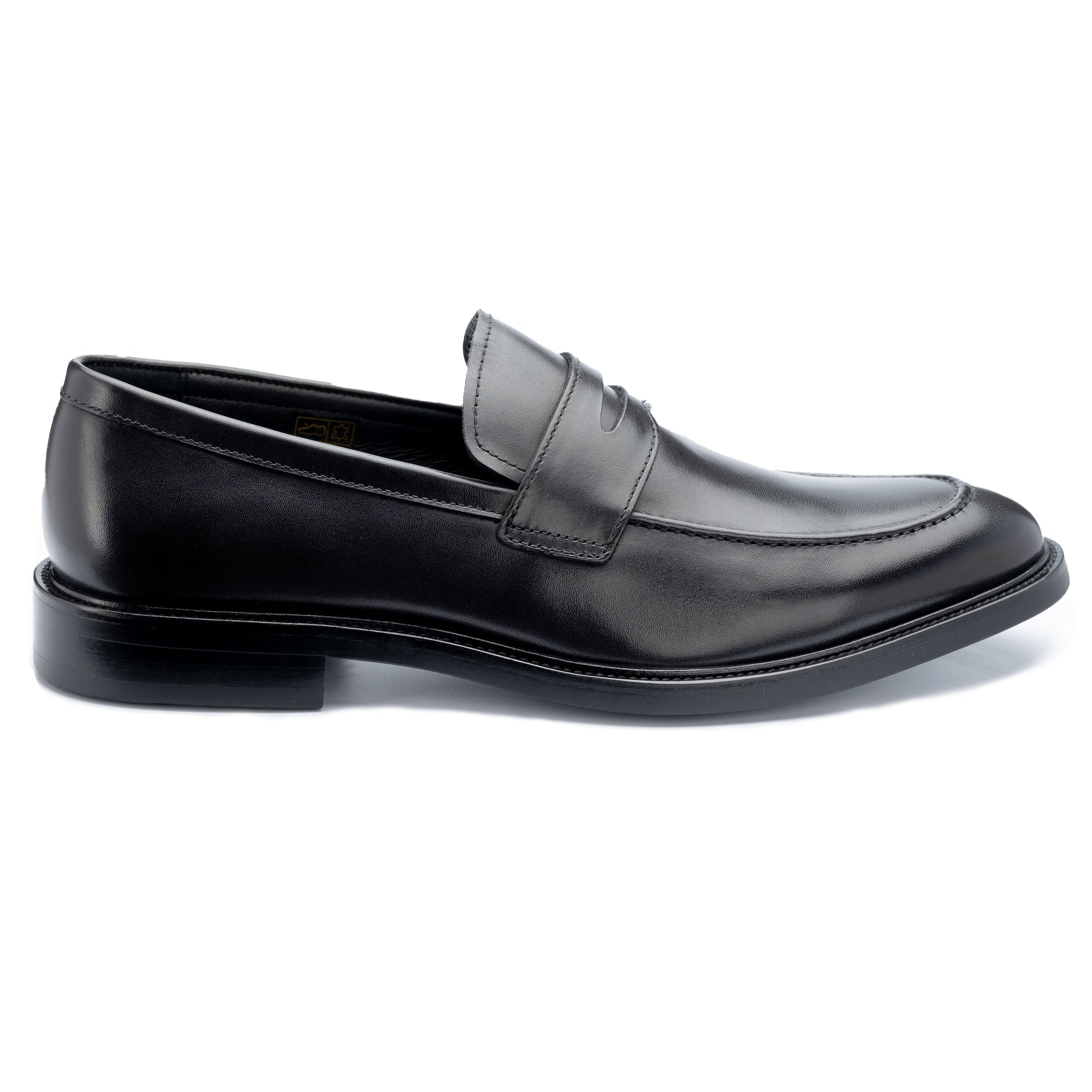
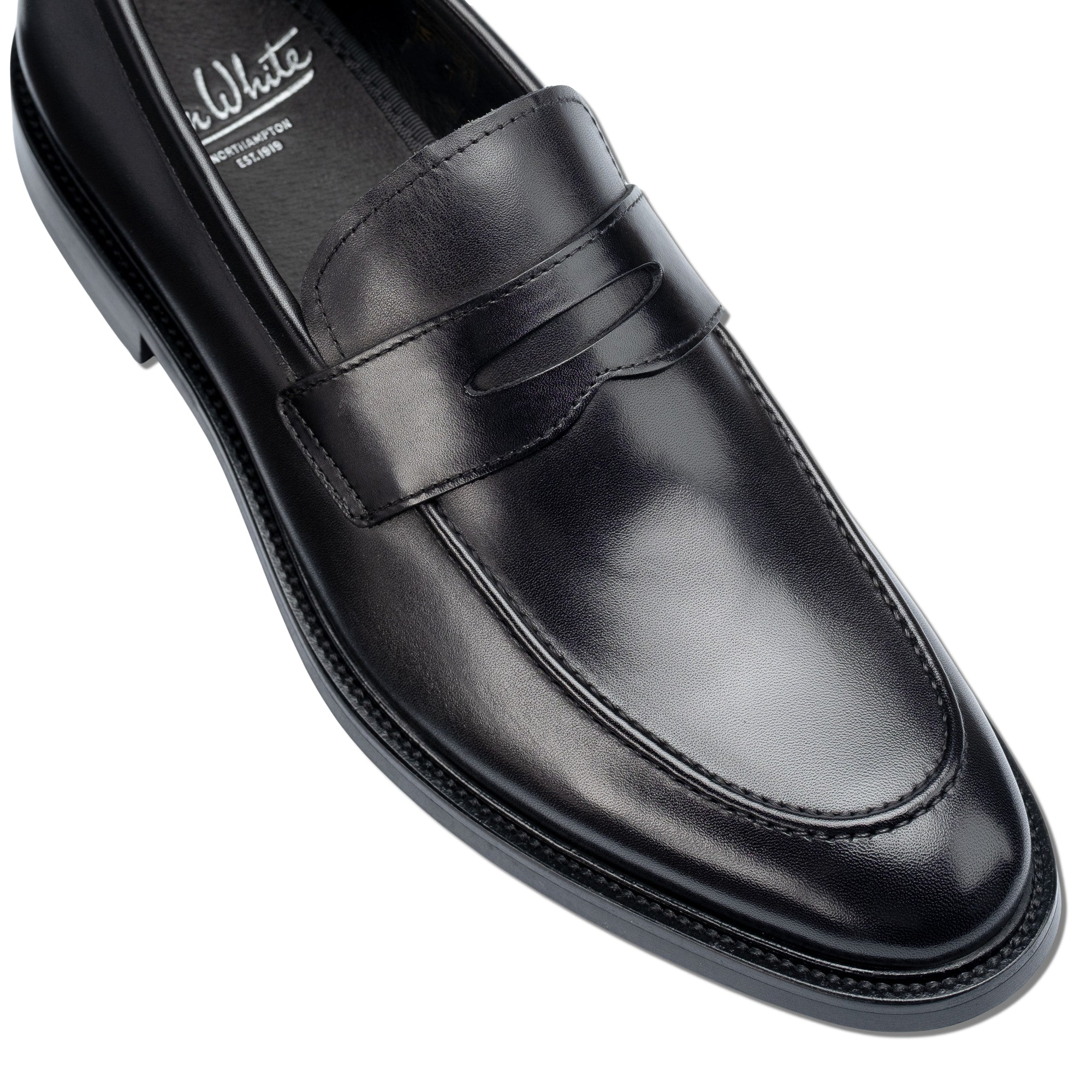
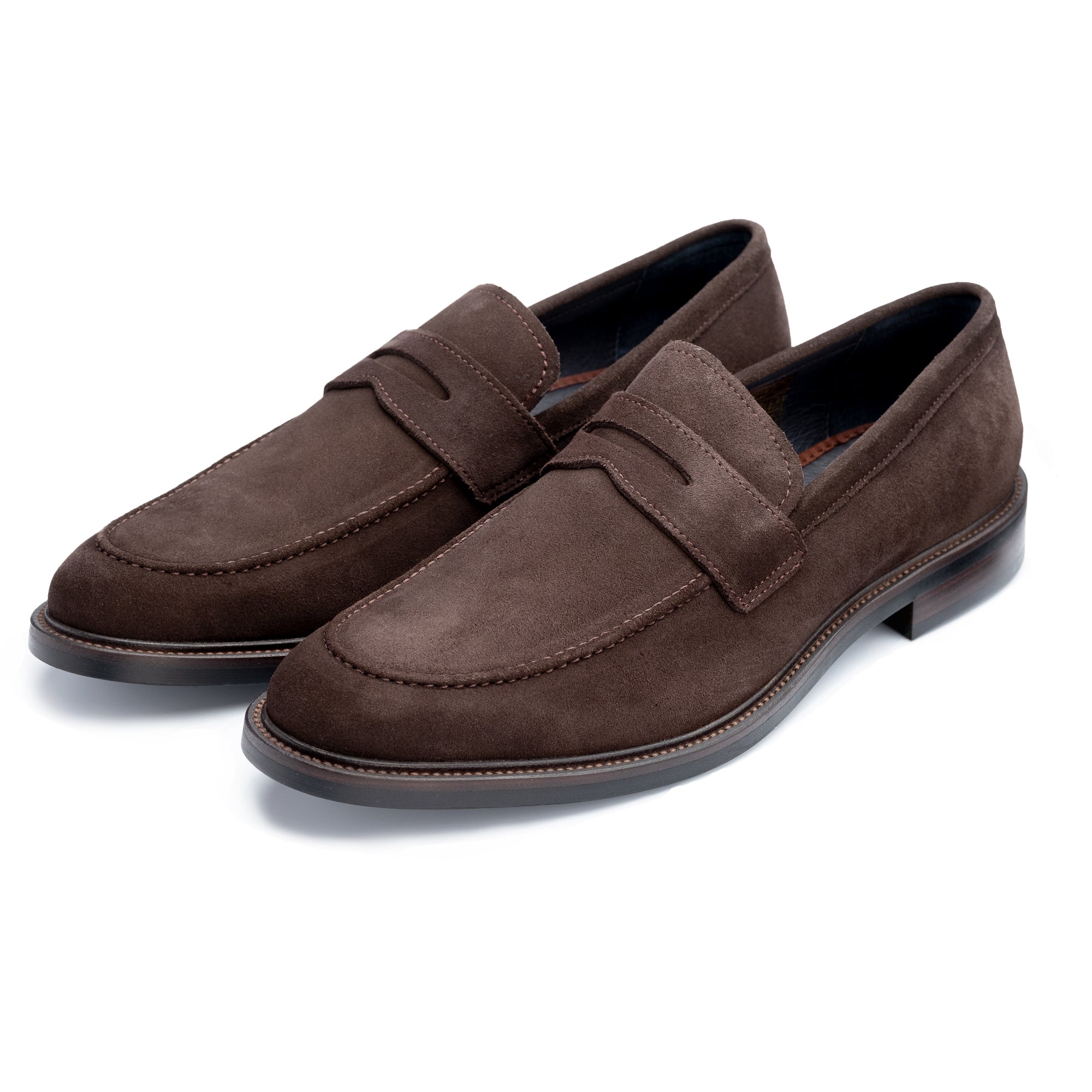
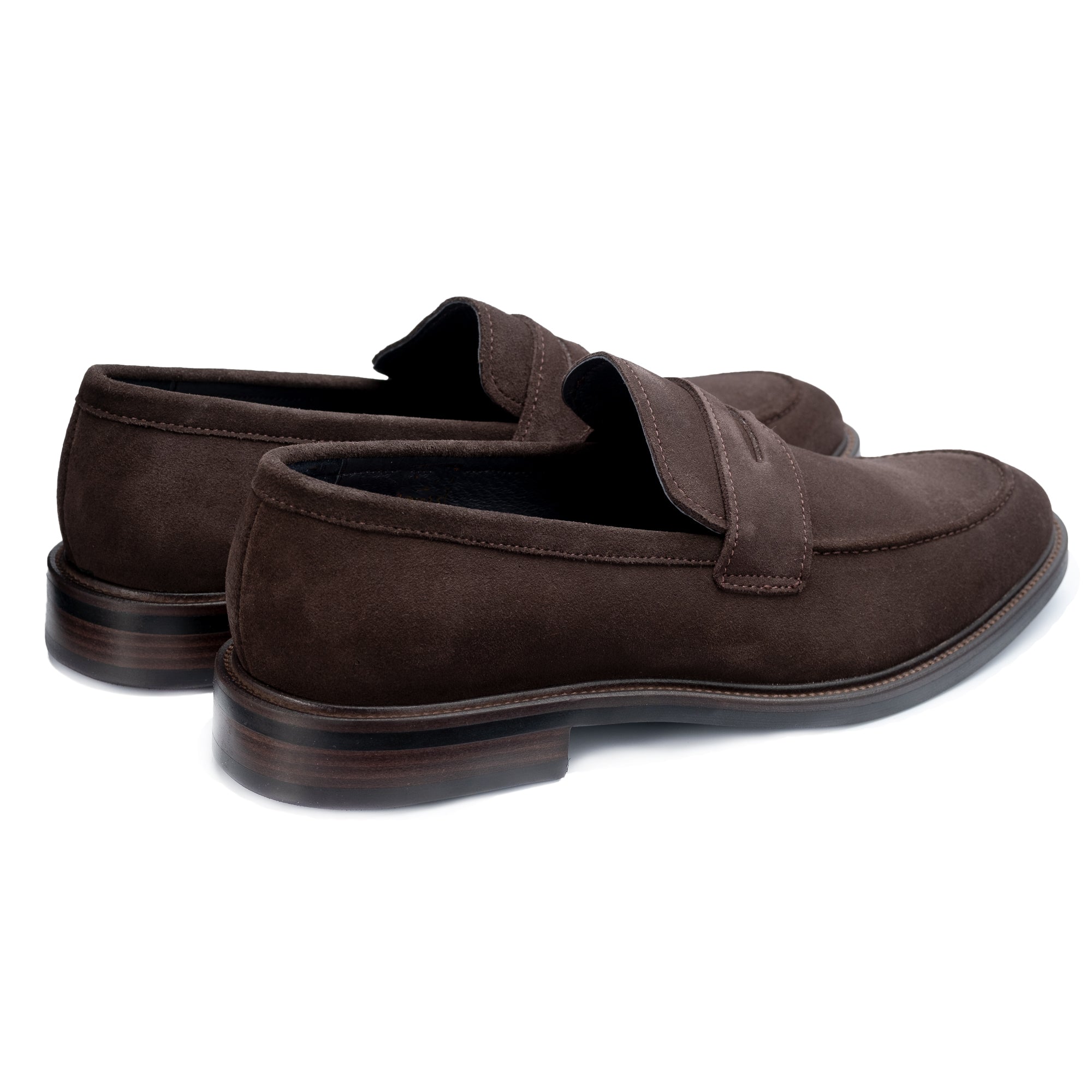
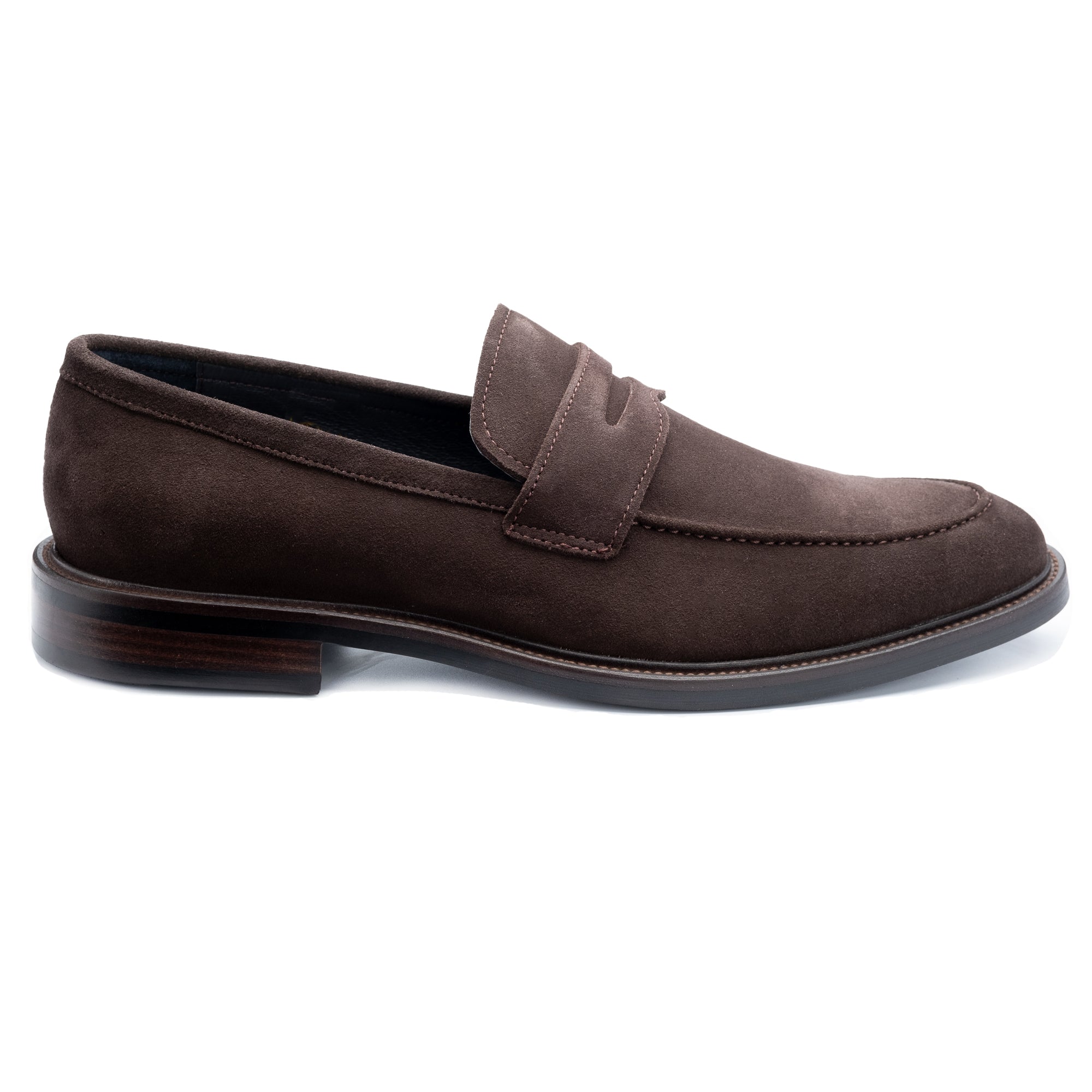
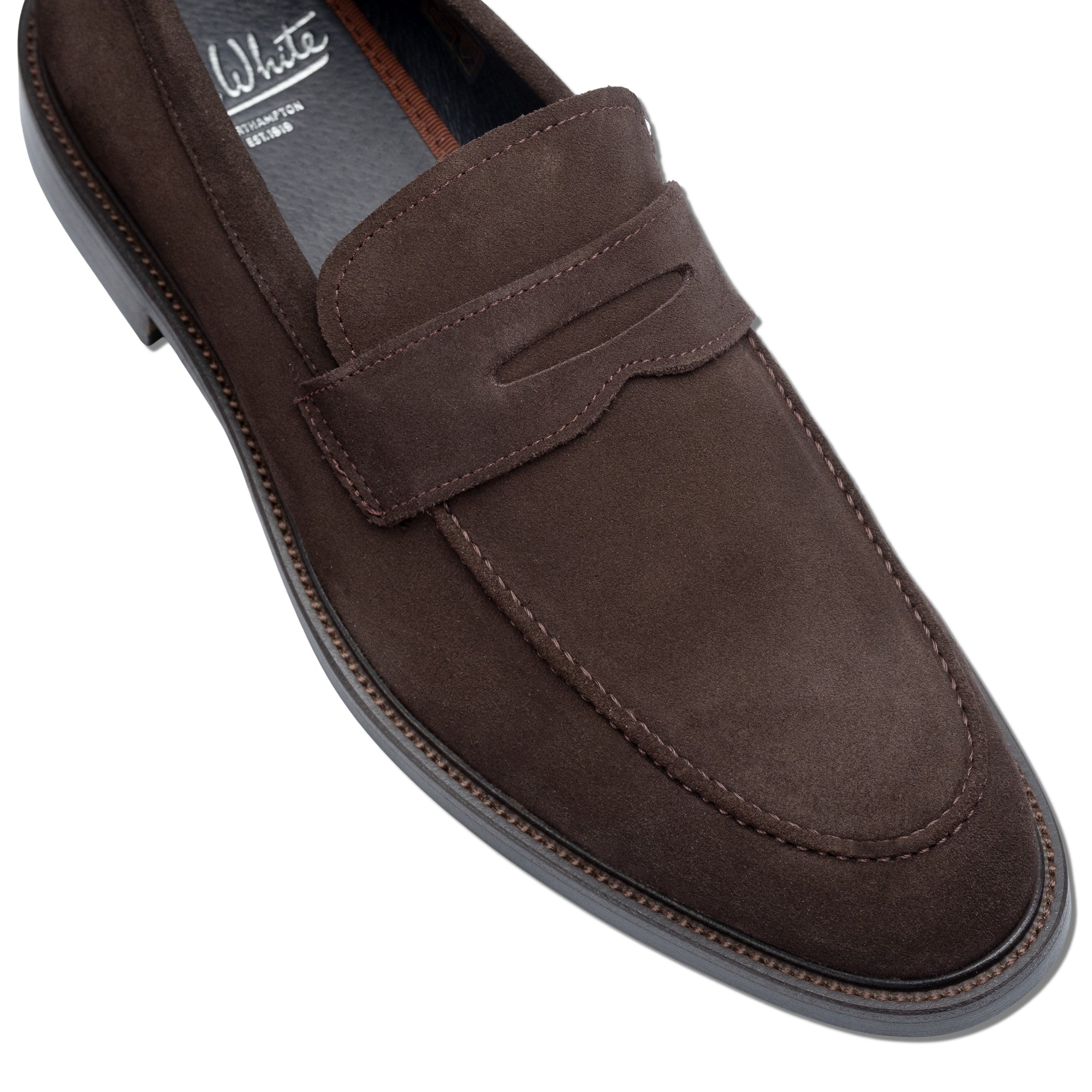
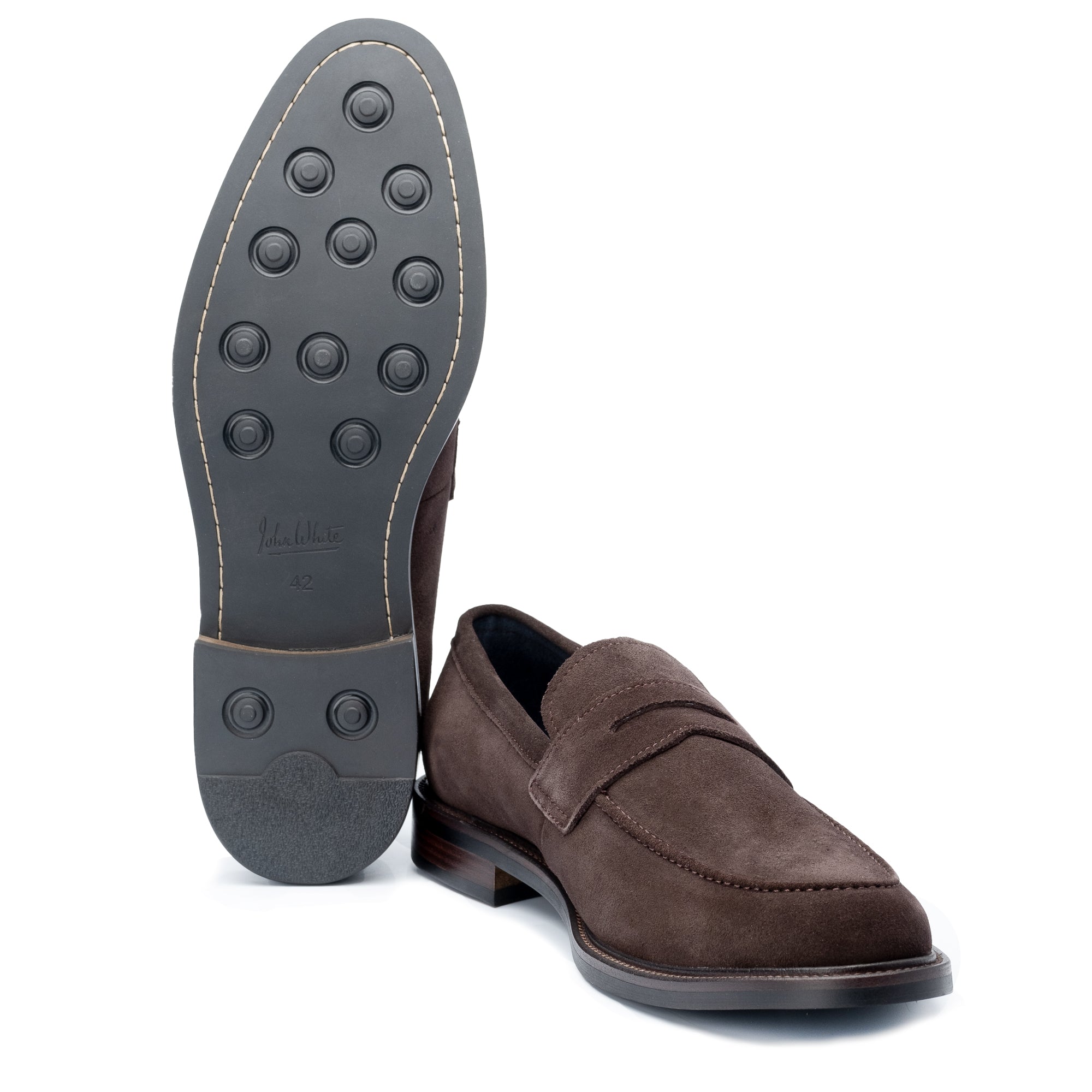
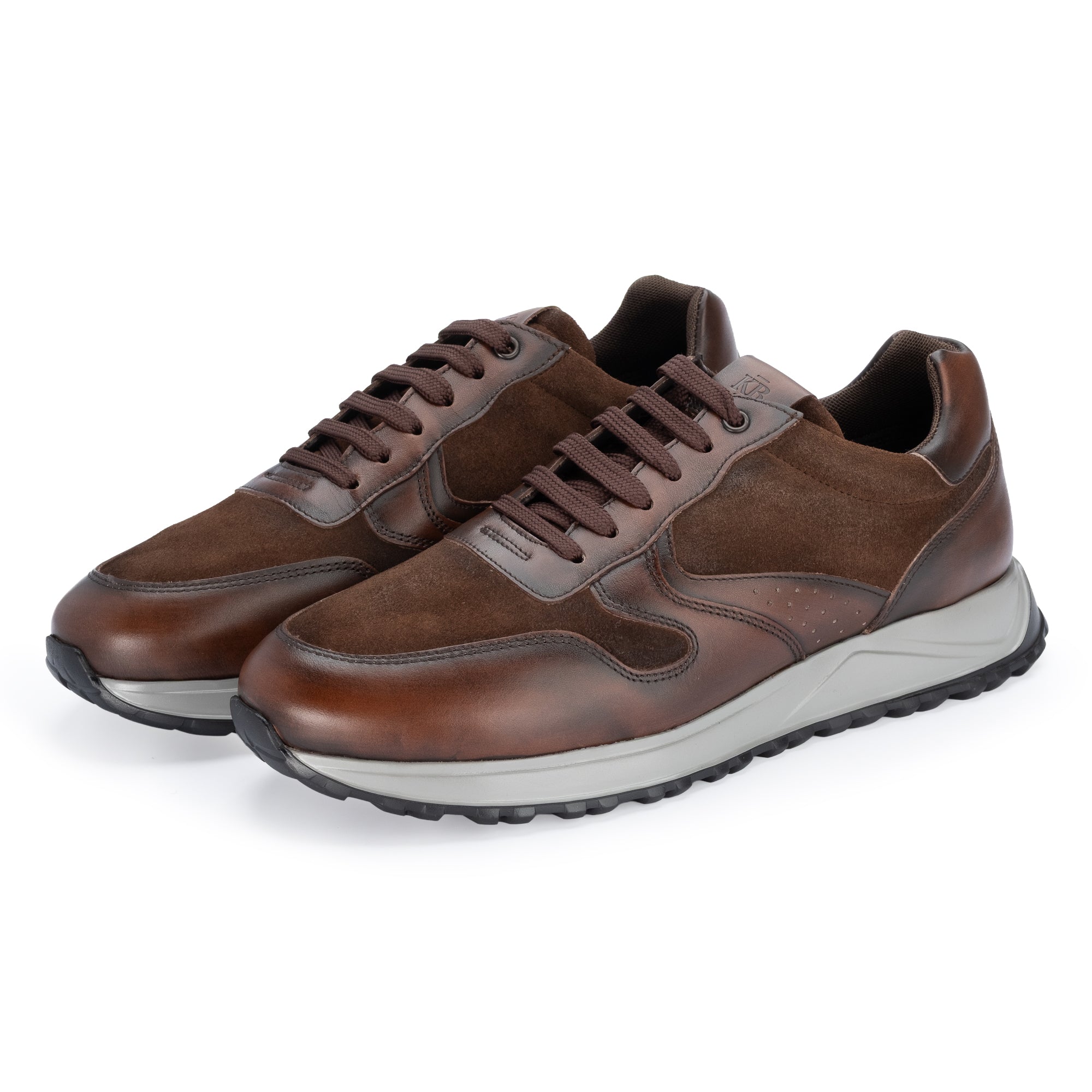
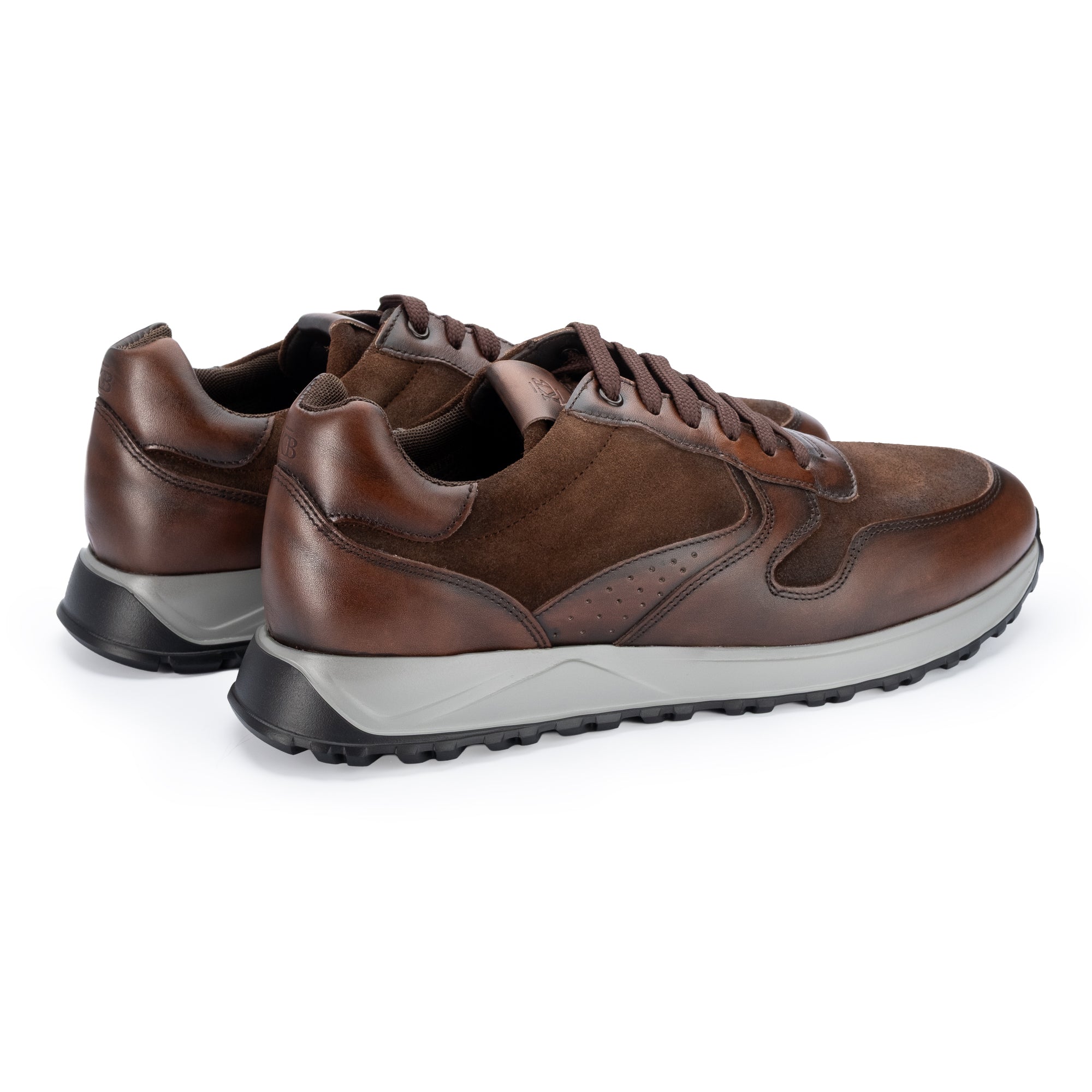
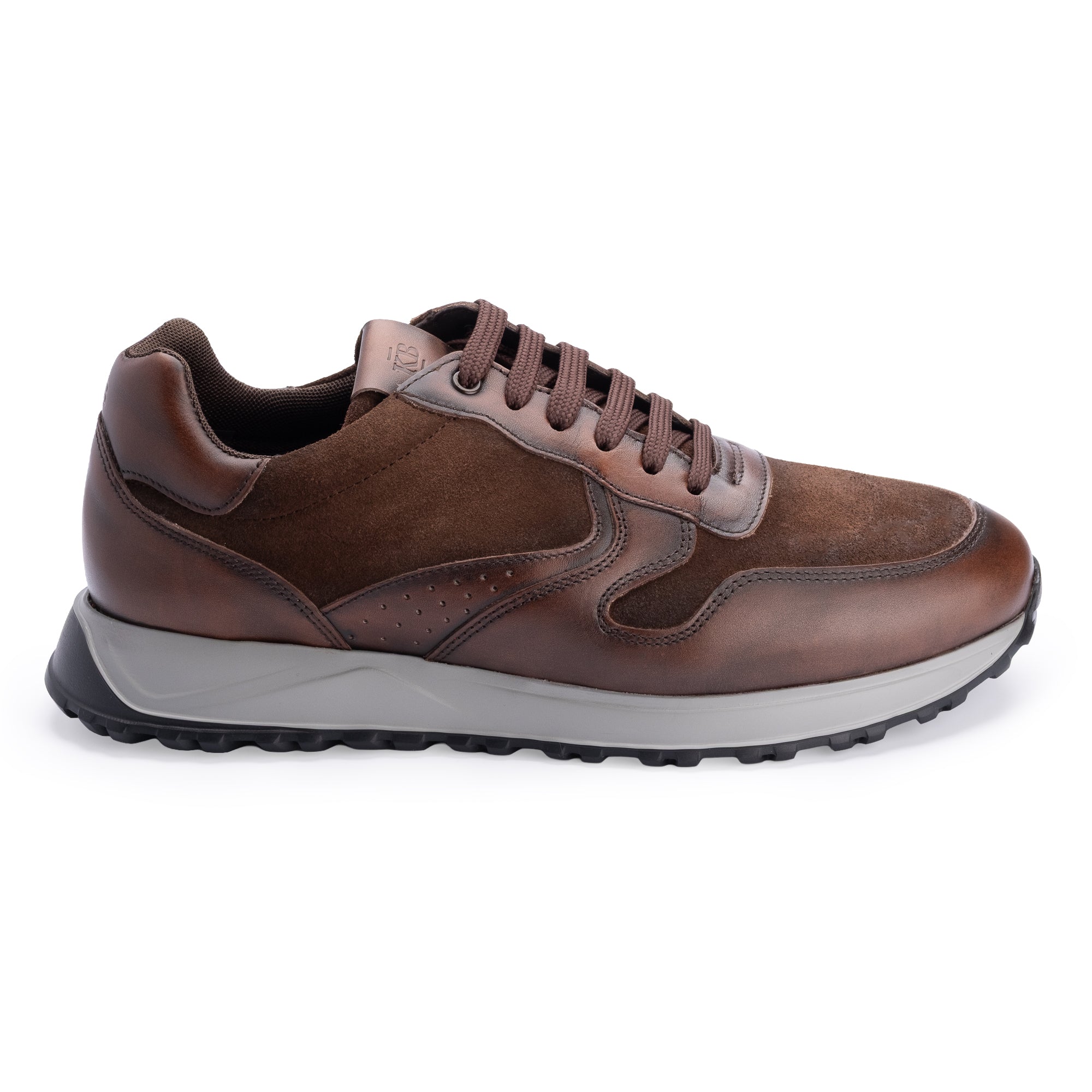
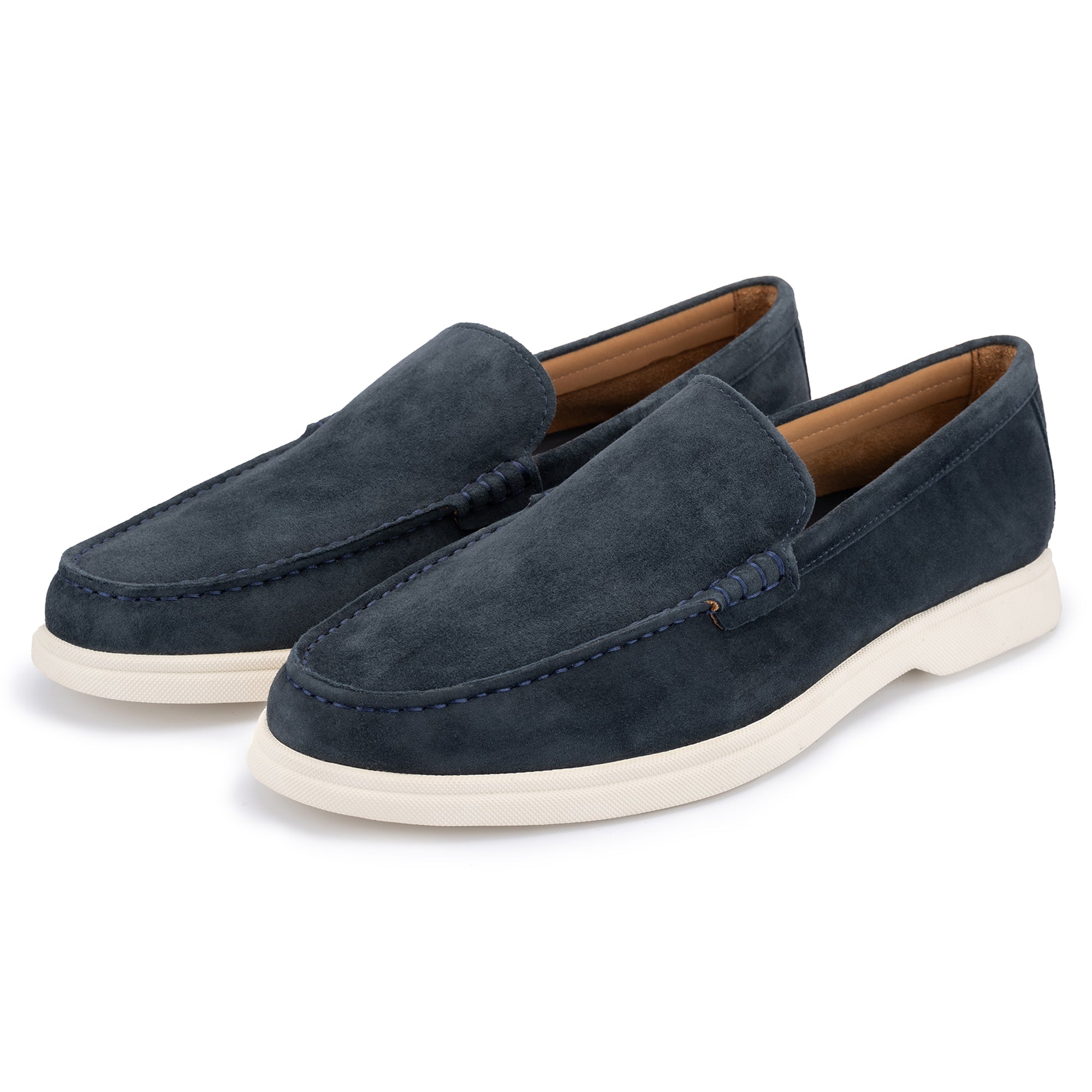
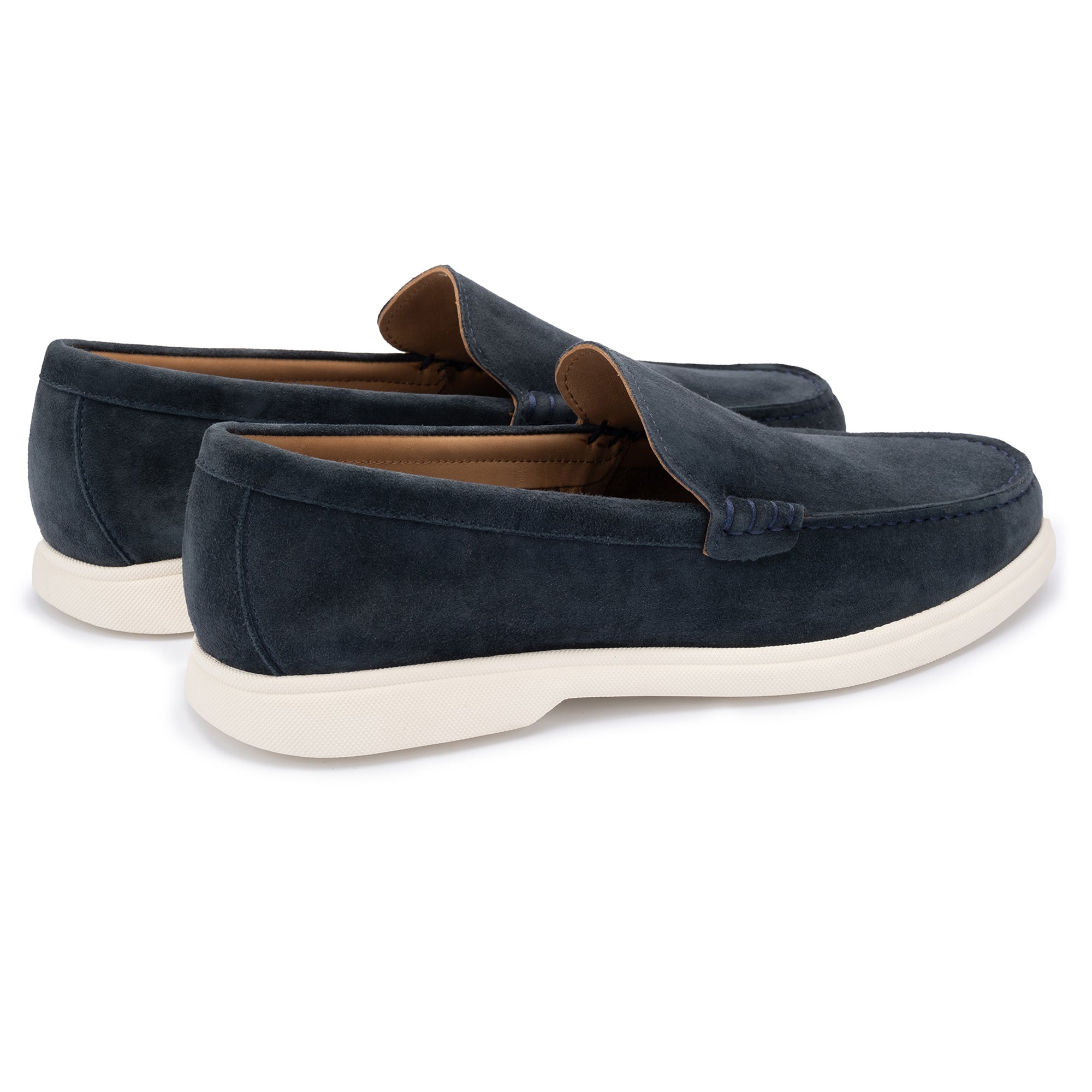
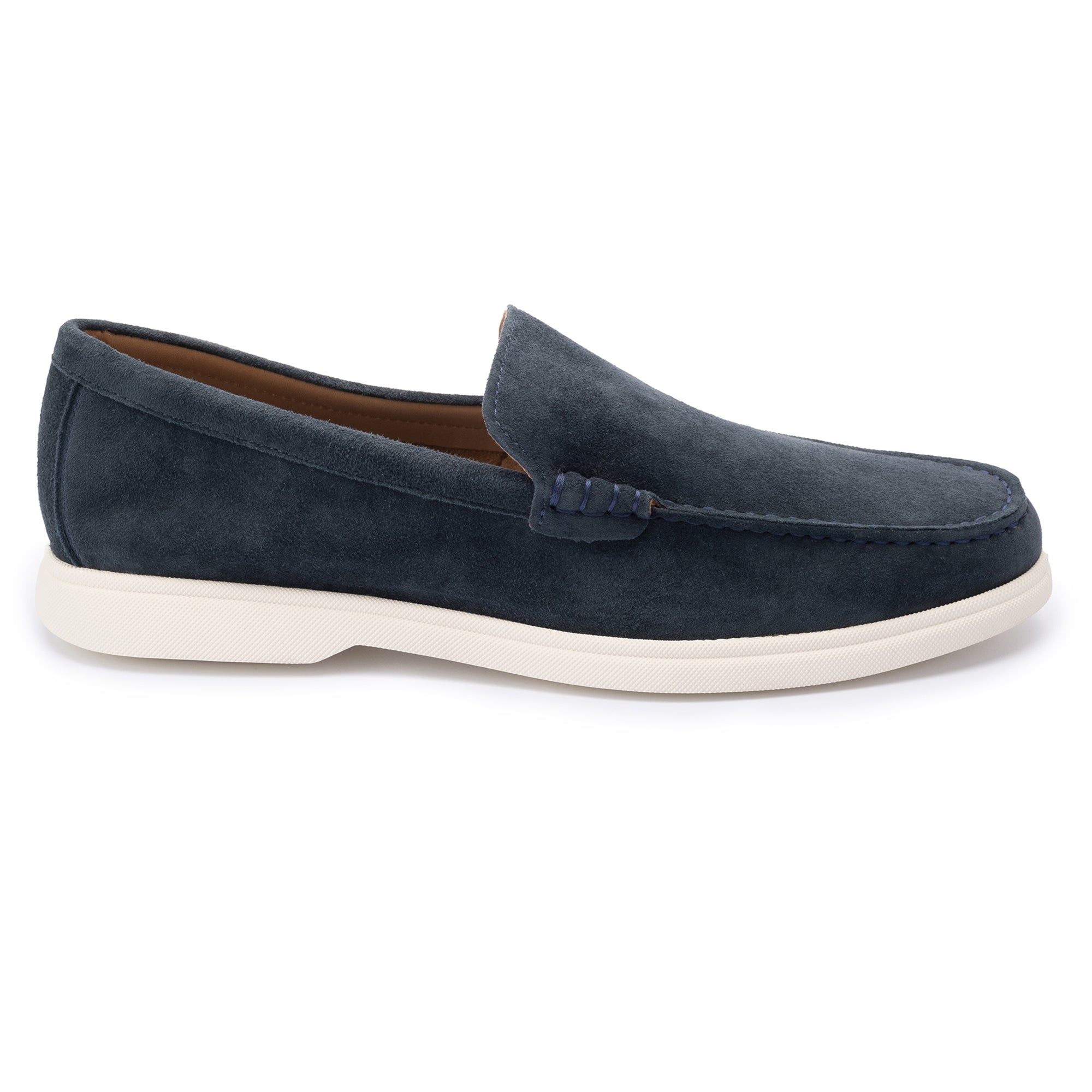
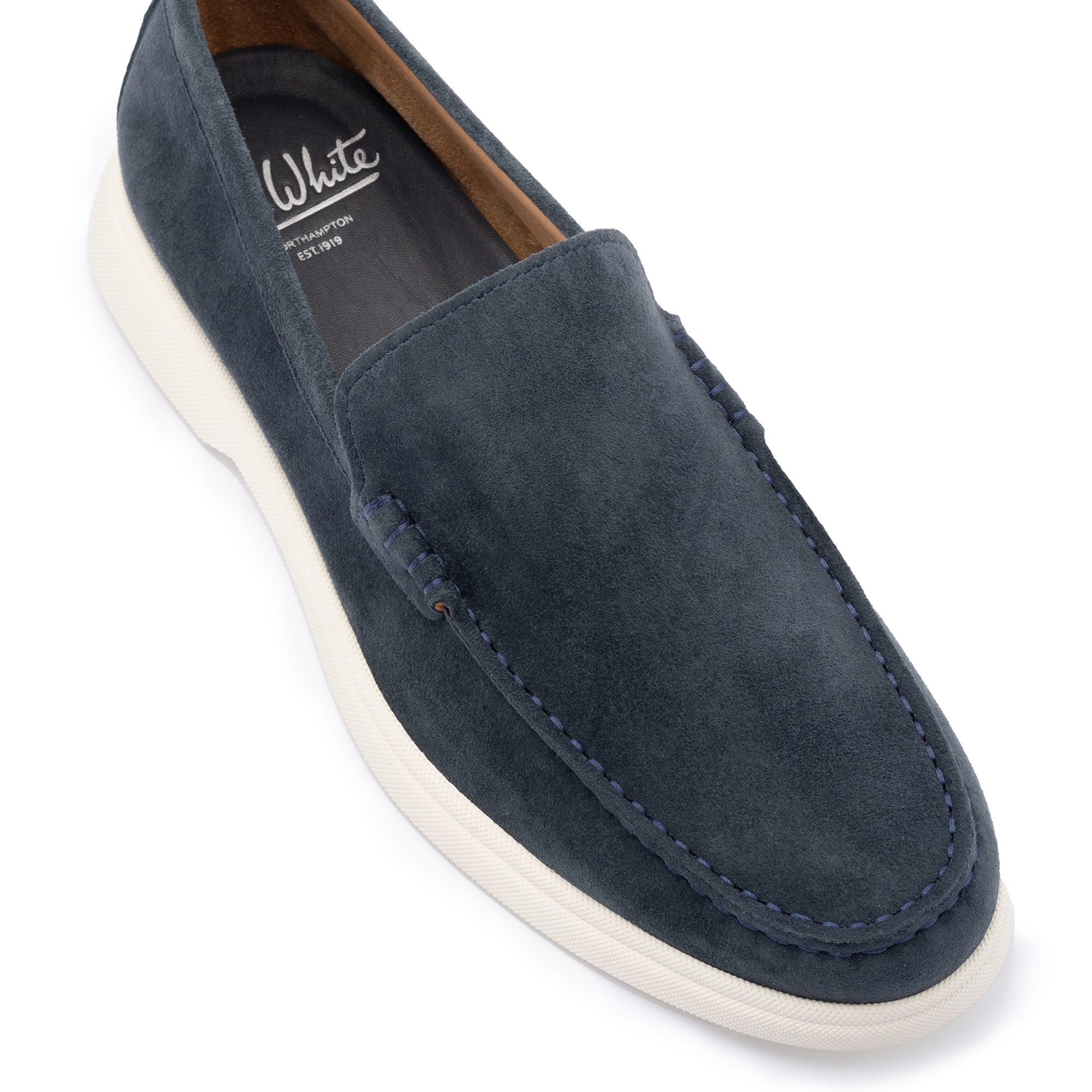
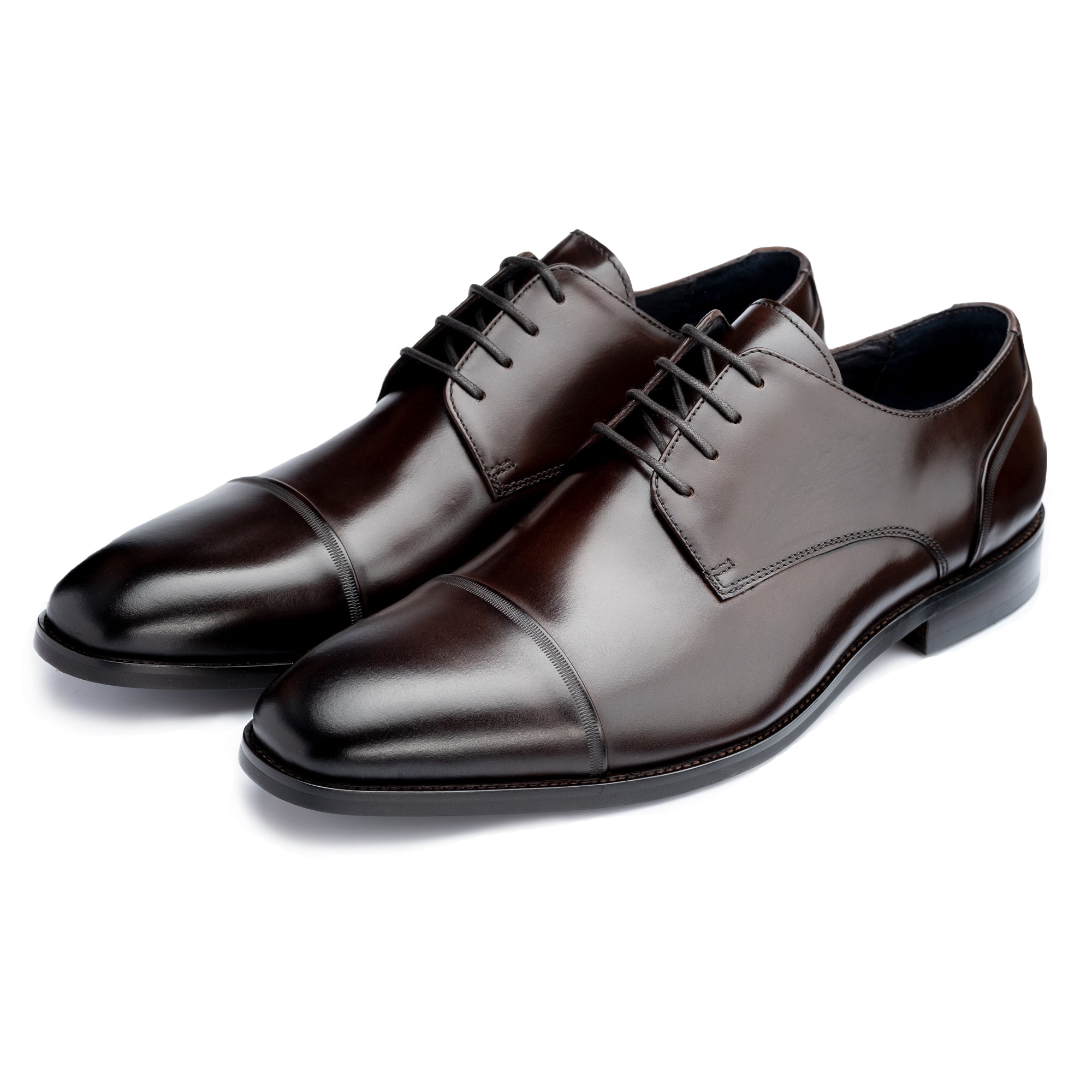
- A Derby in dark brown or burgundy suede pairs impeccably with chinos, cords, or tailored trousers for a sophisticated smart-casual look.
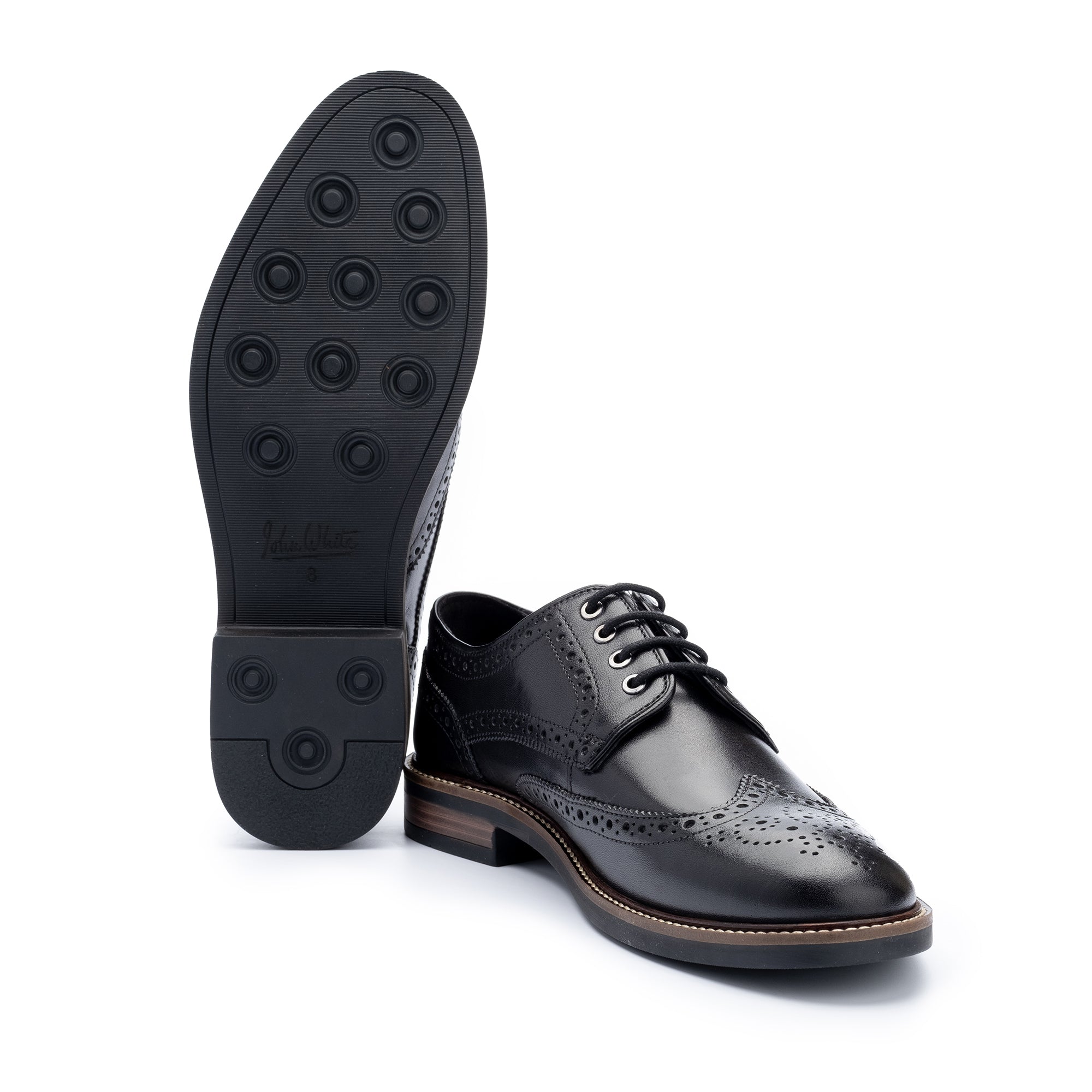
- A pebble-grain Derby with a durable Dainite sole is the perfect companion for tweed jackets and heavier flannel trousers in the autumn and winter.
The foundational design is so strong that it has remained a constant for over a century. While heritage British shoemakers such as Church's, Crockett & Jones, and John White Shoes have developed unique lasts and interpretations, the core functionality of the open-lacing system is unchanged. Our guide on how to style Derby shoes offers further insight into maximising this versatility.
The Derby endures because it solves a problem, offering a refined silhouette that does not compromise on fit or comfort.
What Should You Look for in a Premium Derby Shoe?
Investing in a quality Derby shoe is an investment in longevity and style. The construction and materials are paramount, as these are the elements that separate a fine shoe from a disposable one. A premium Derby should be viewed as a piece of enduring craftsmanship.
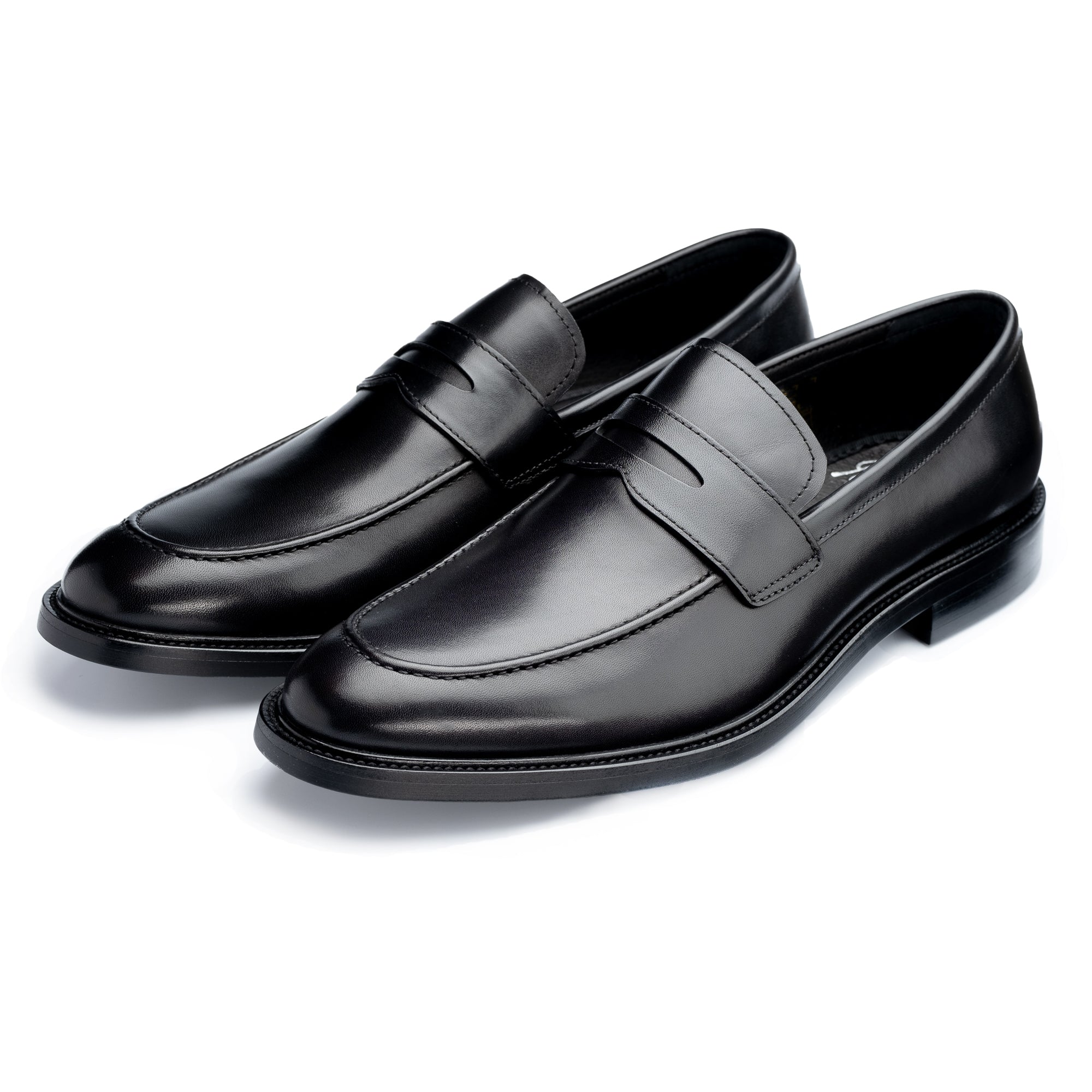
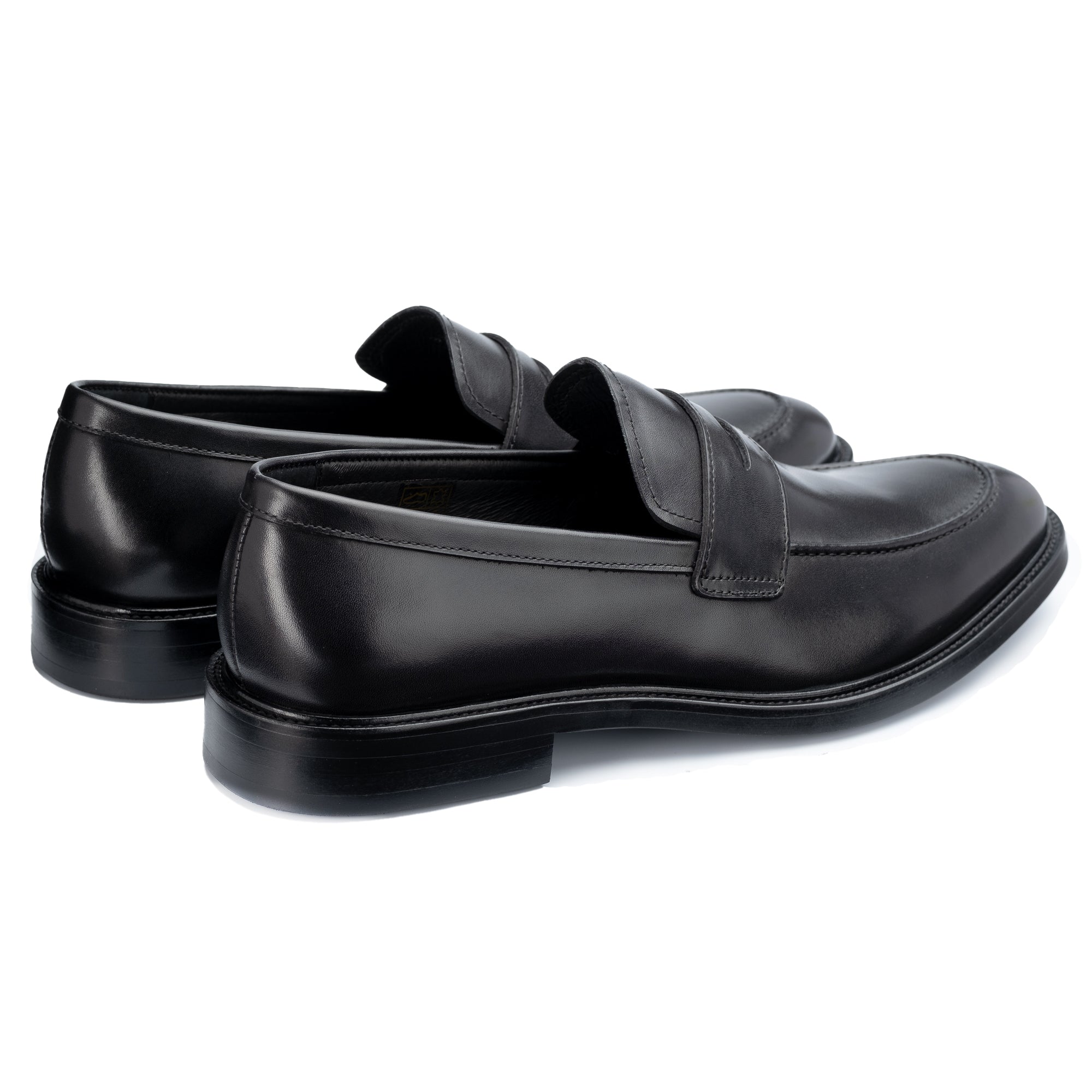
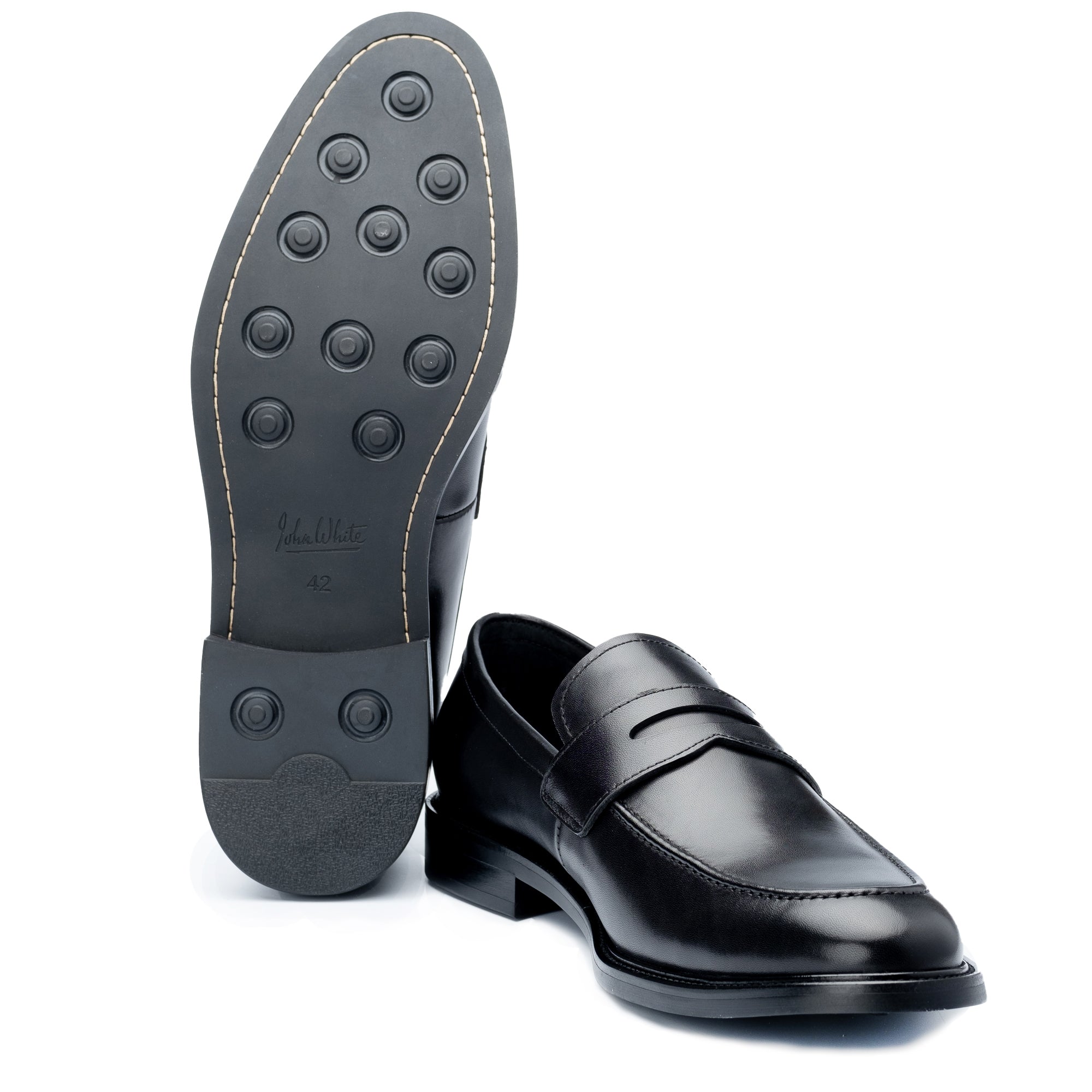
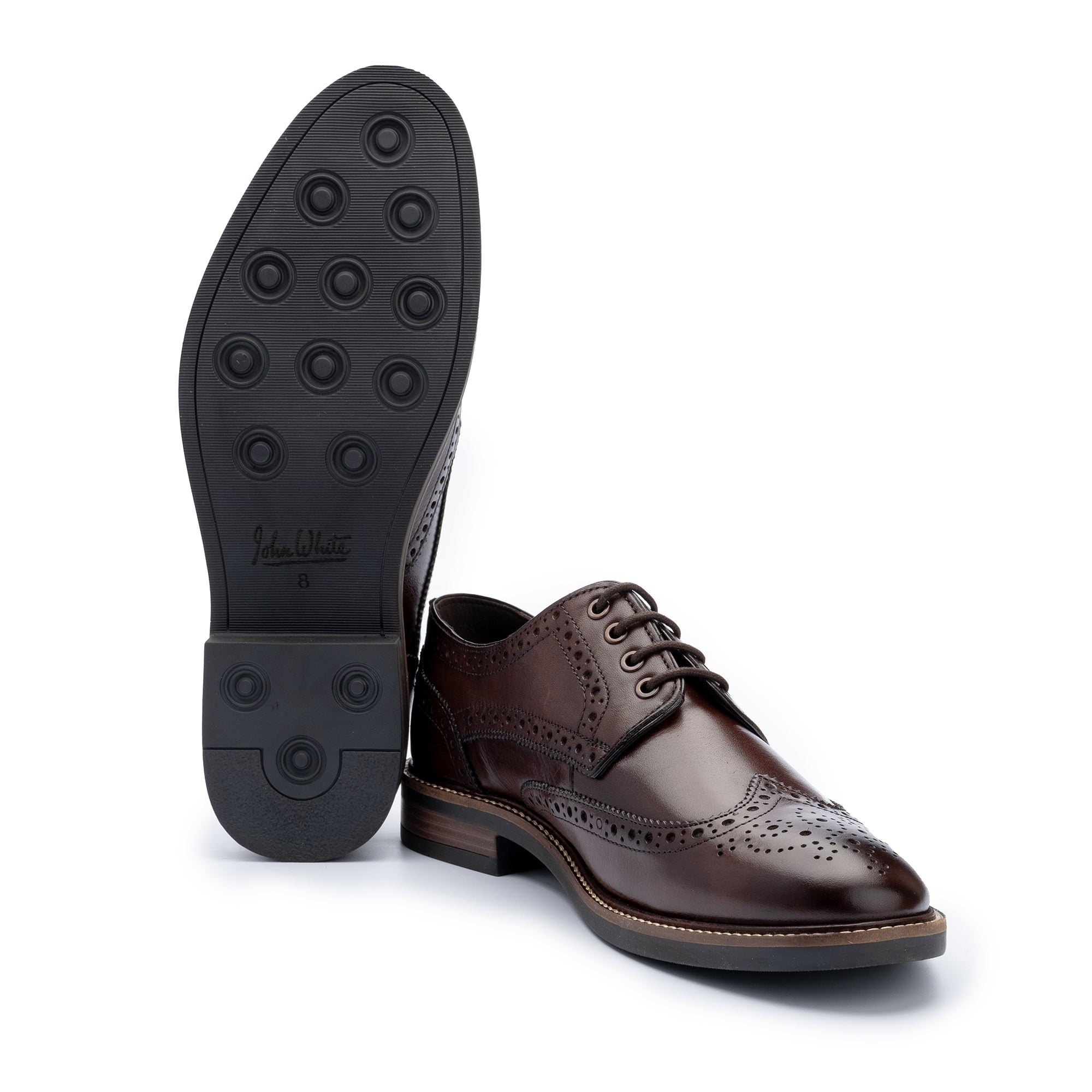
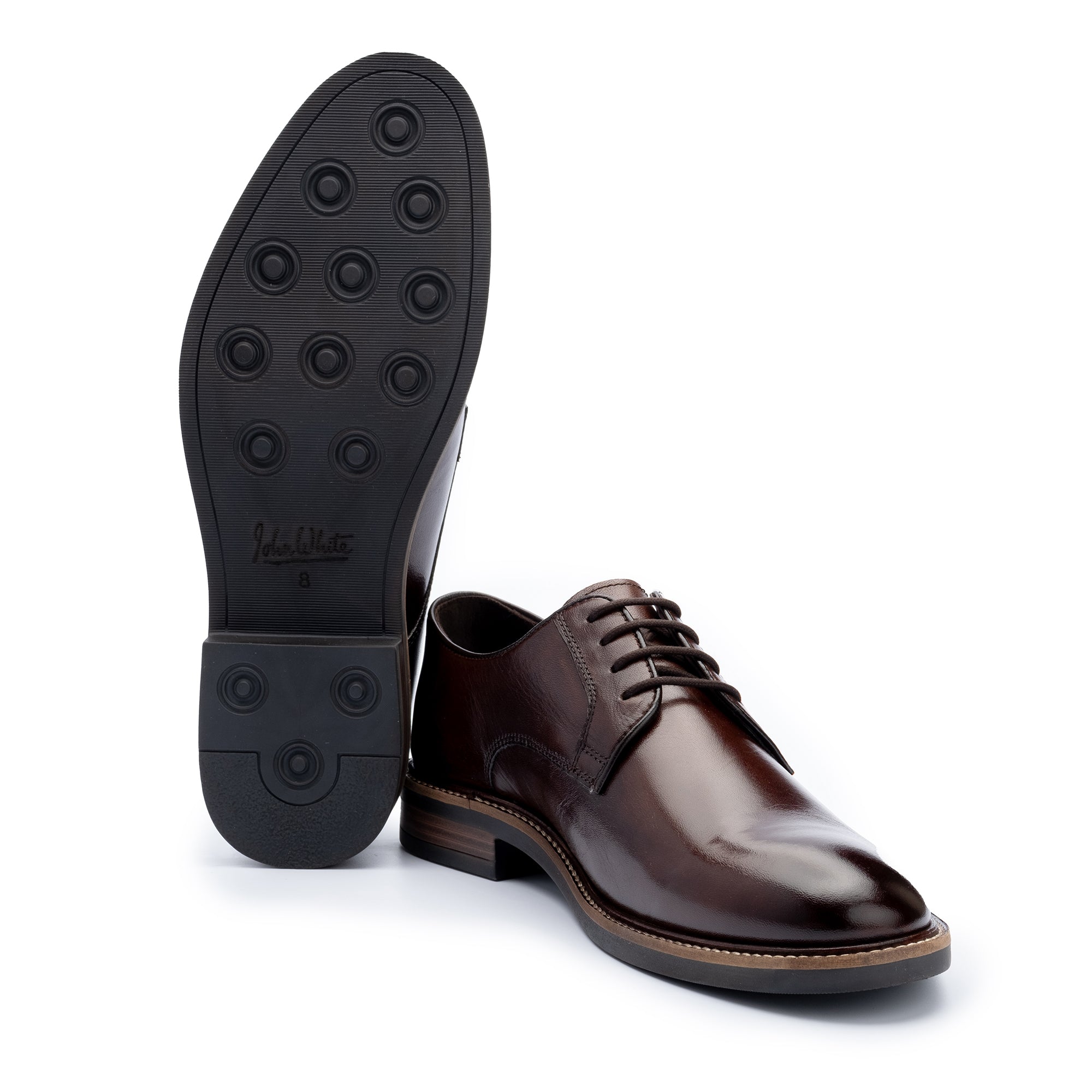
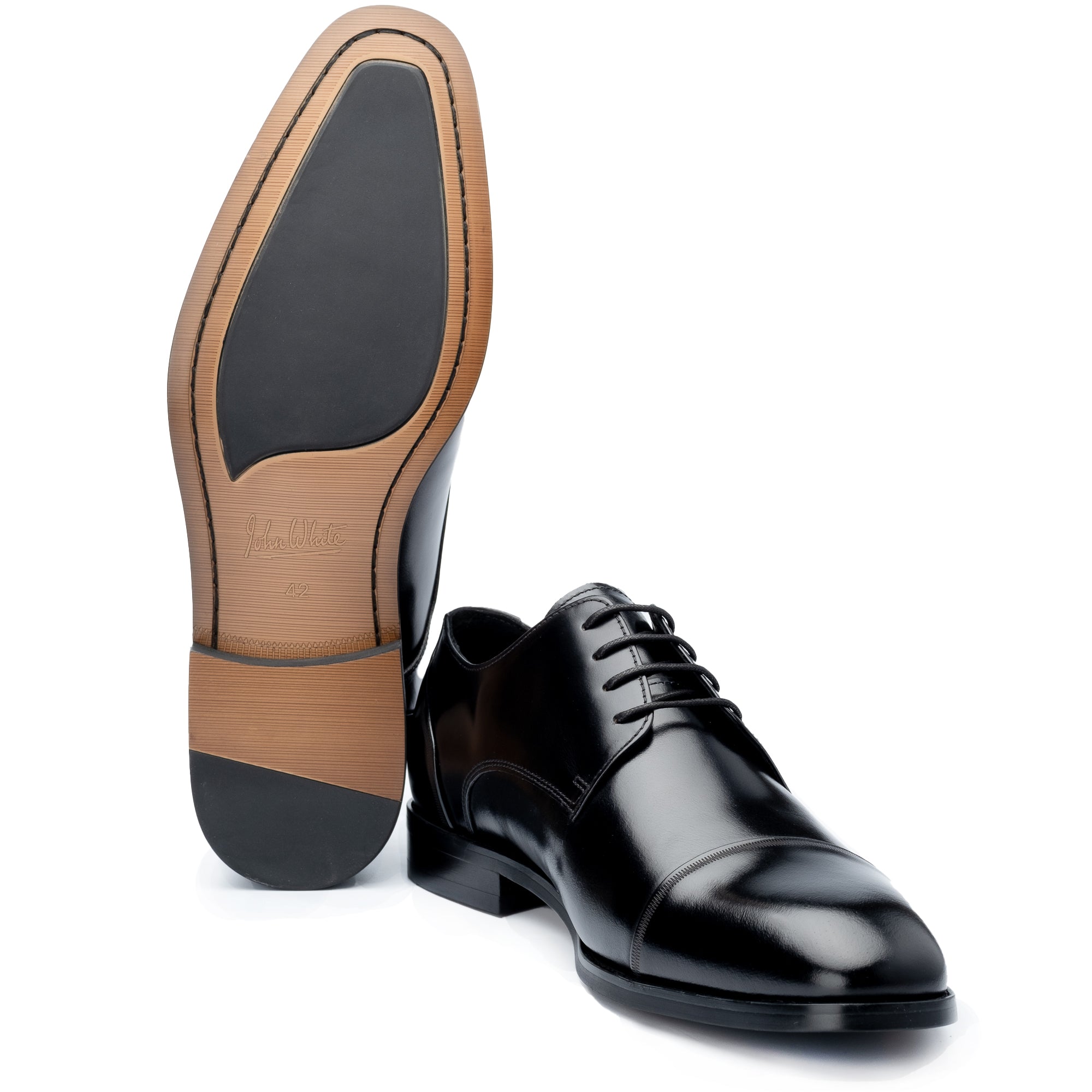
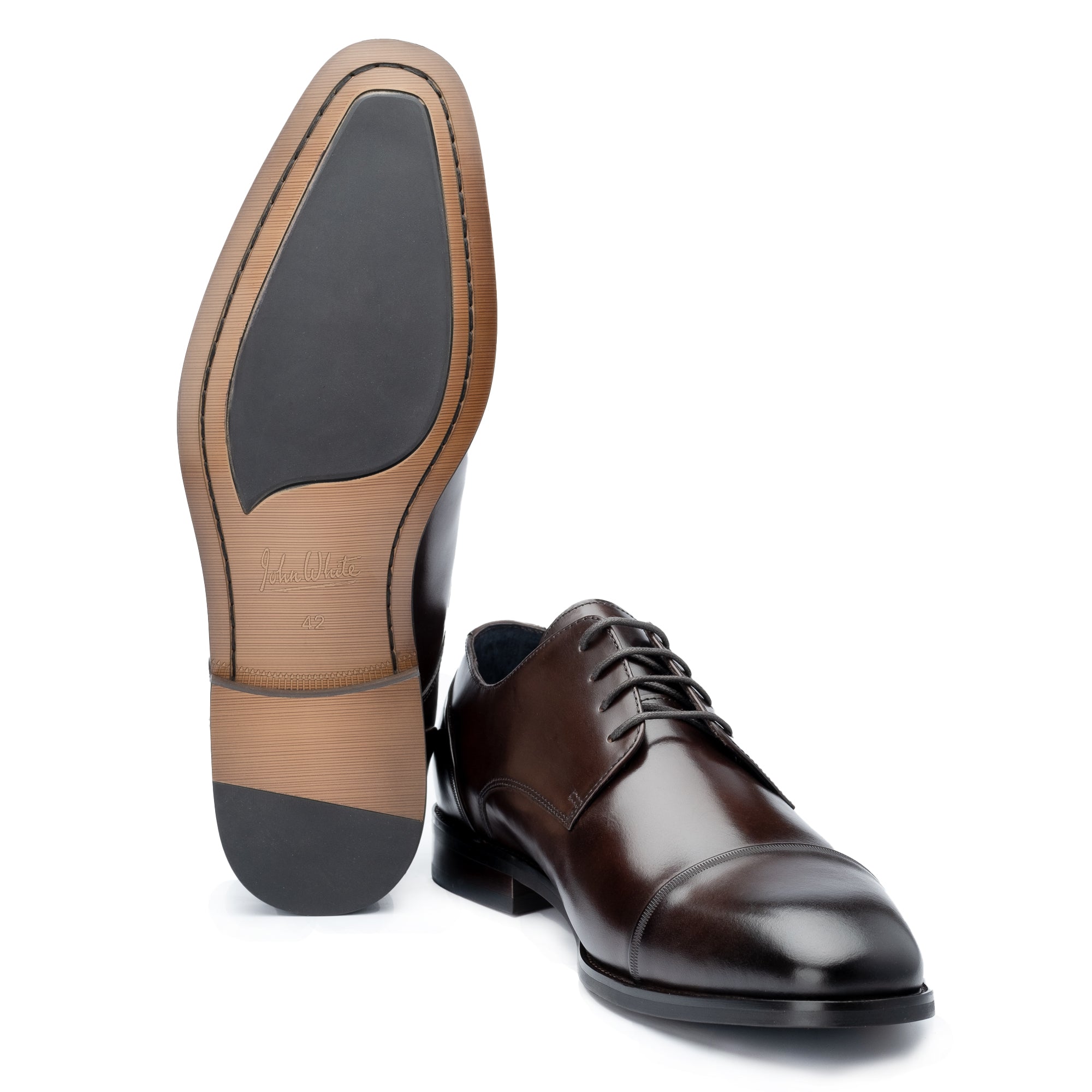
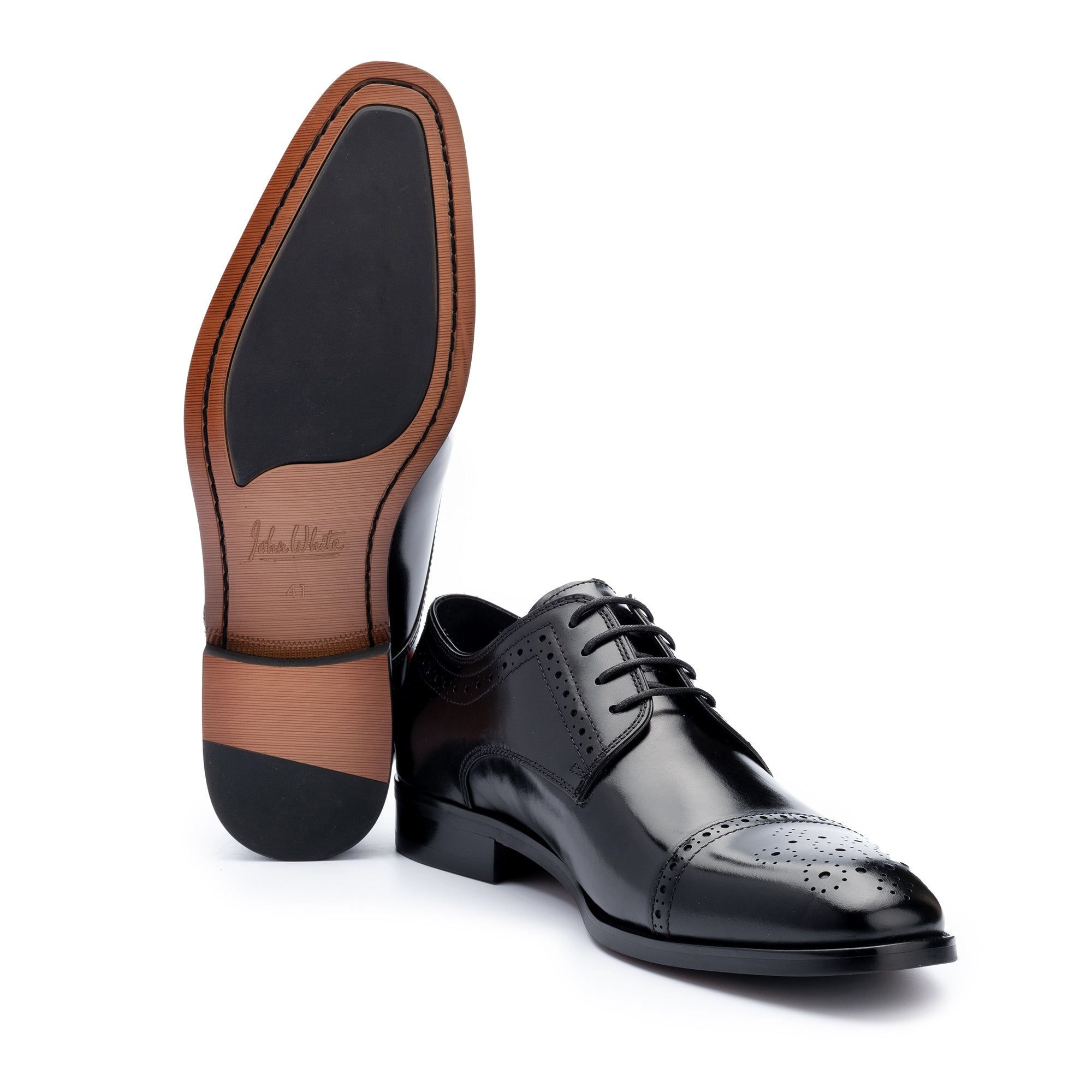
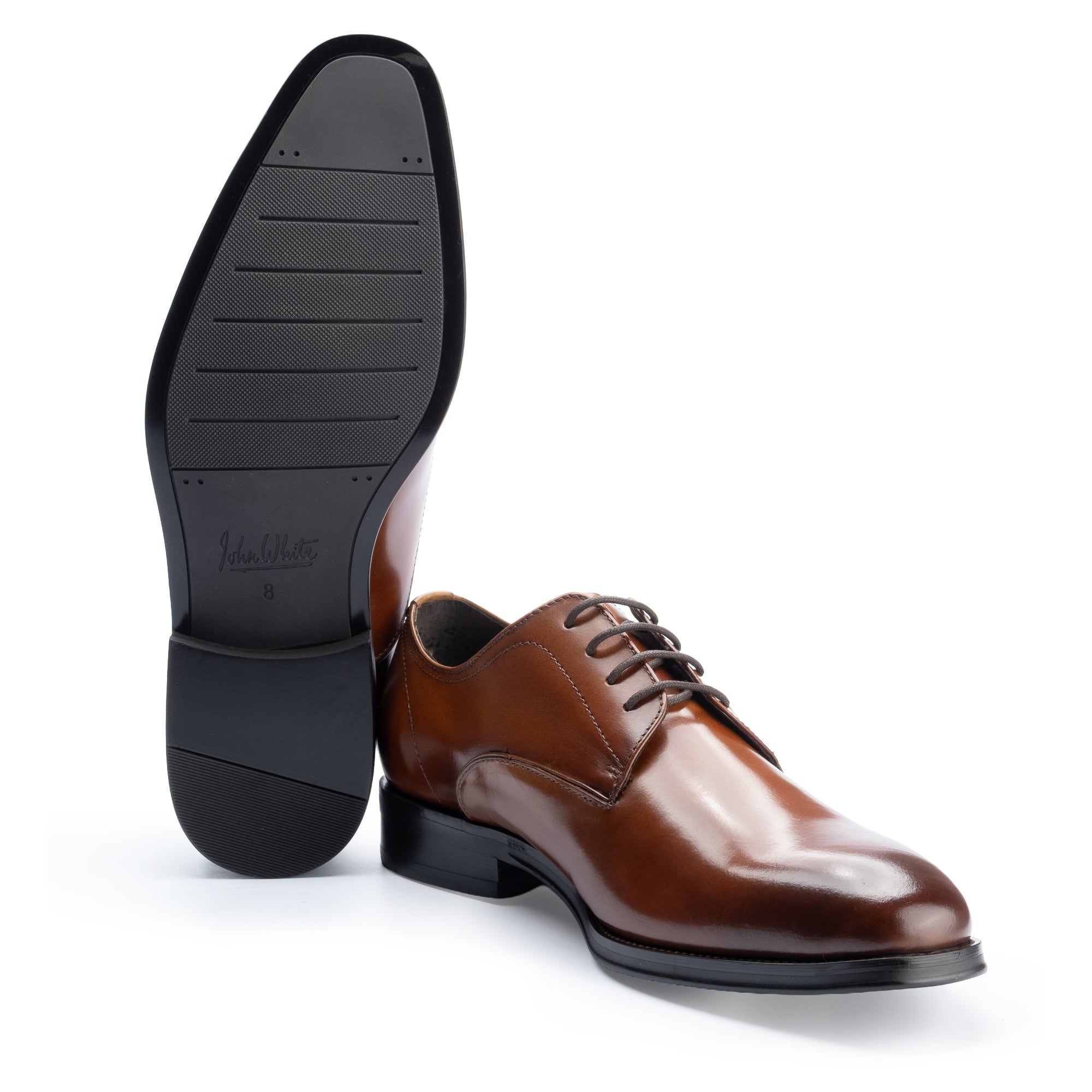
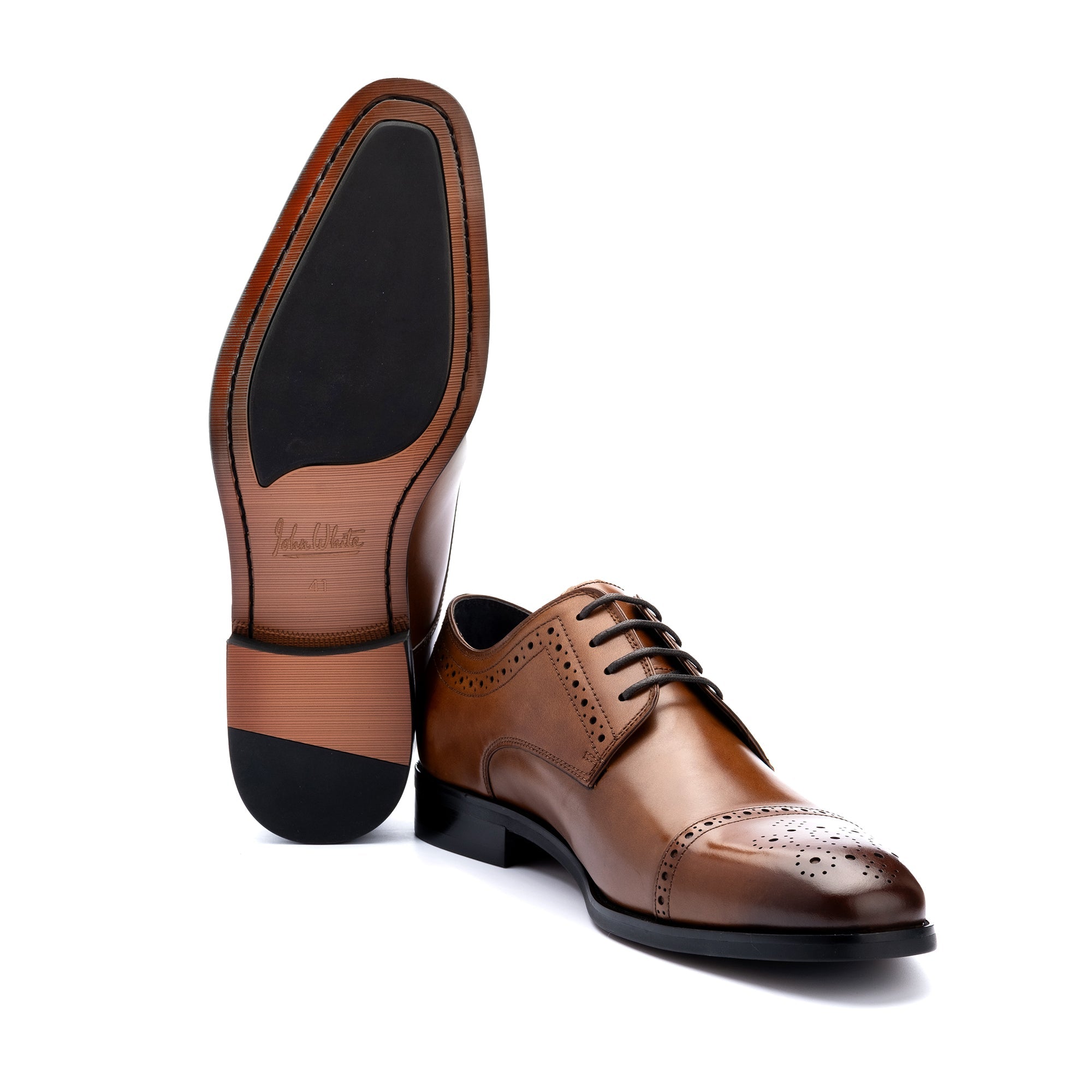
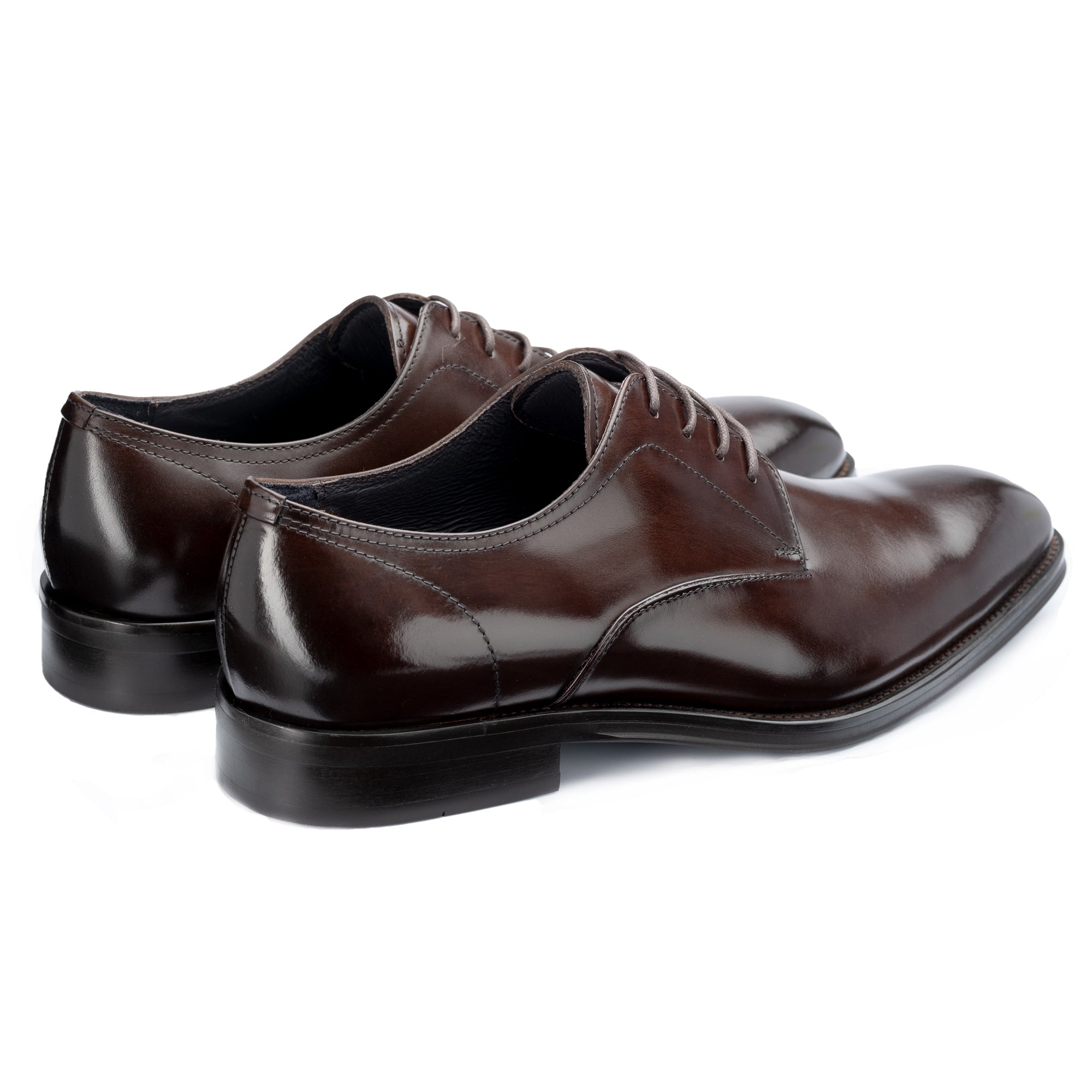
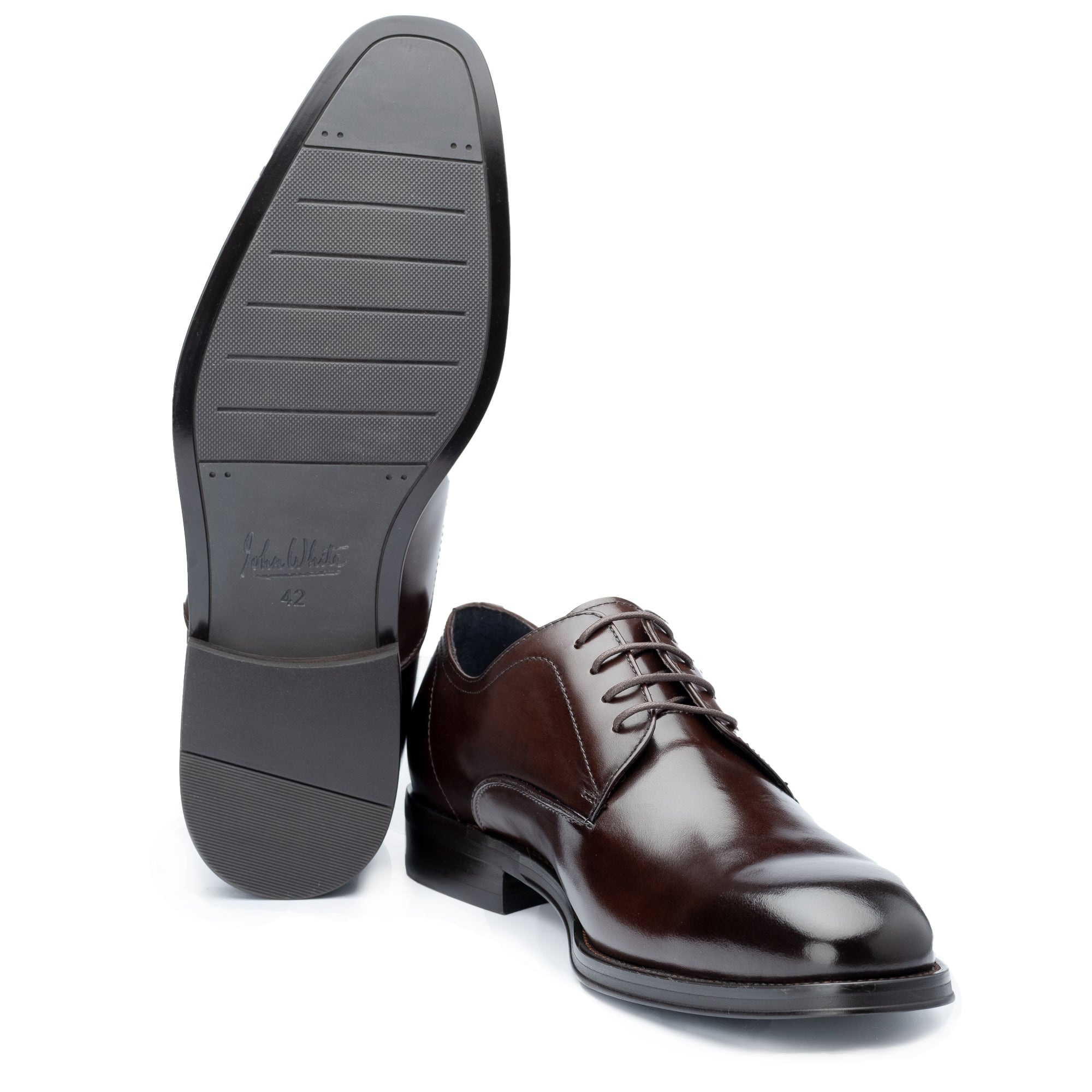
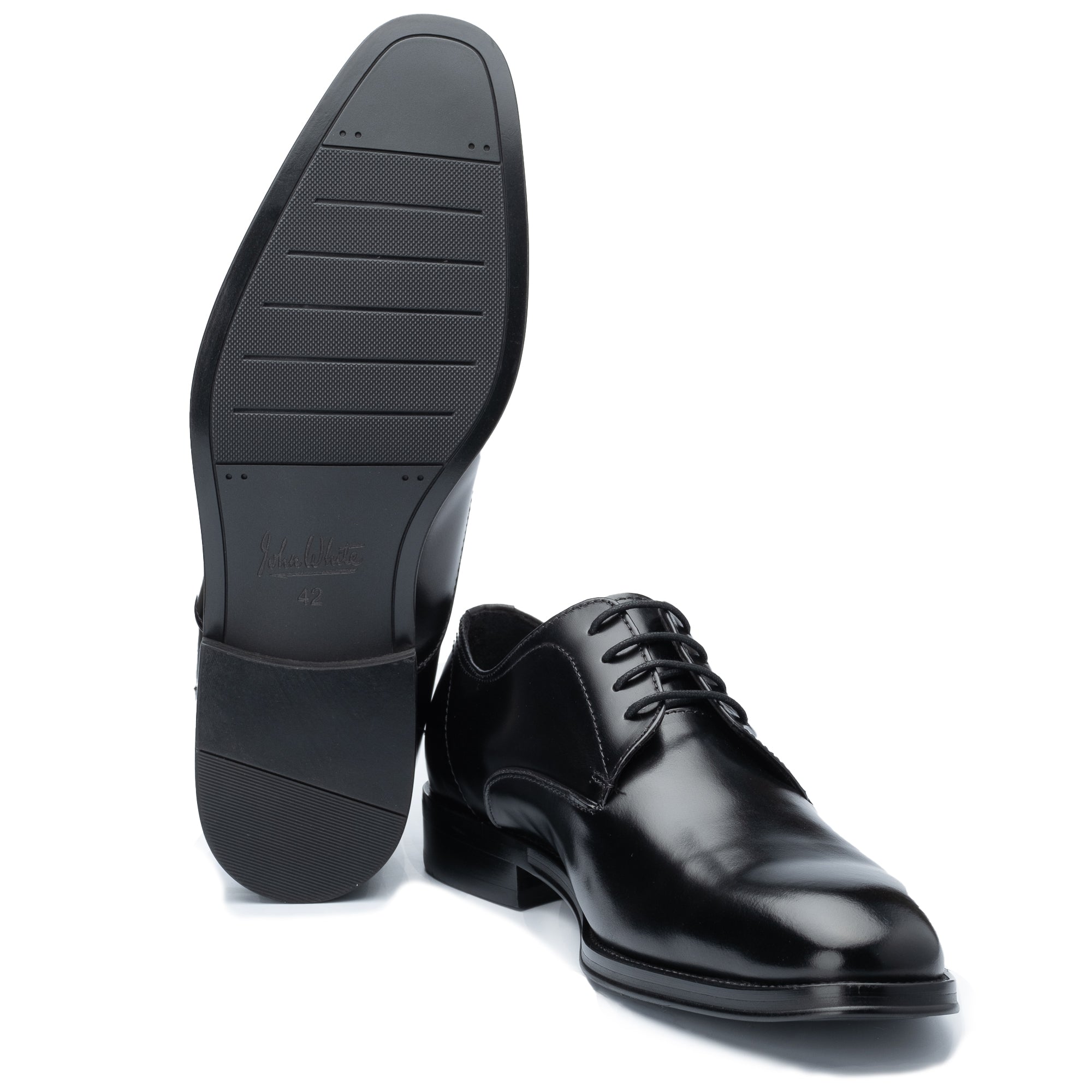
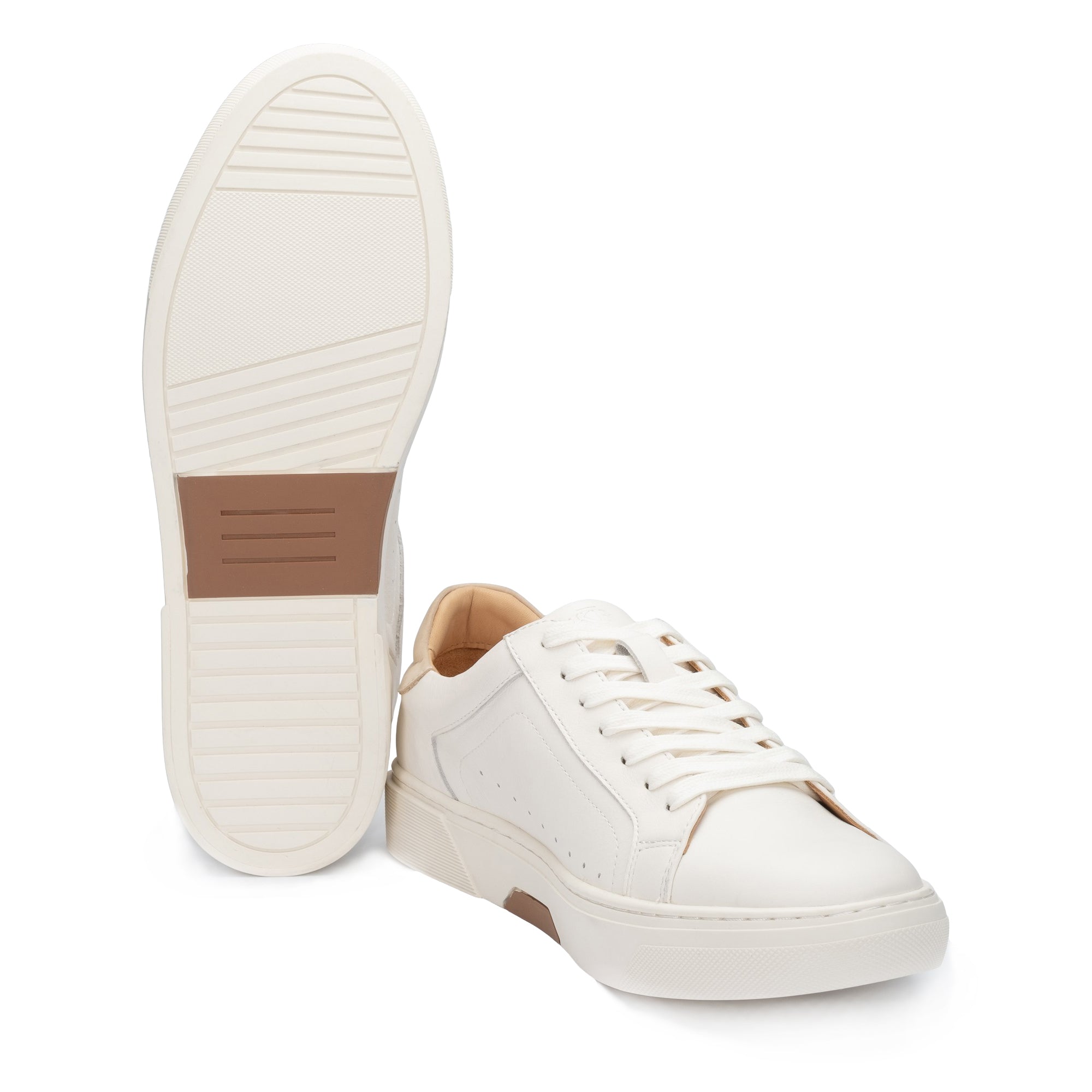
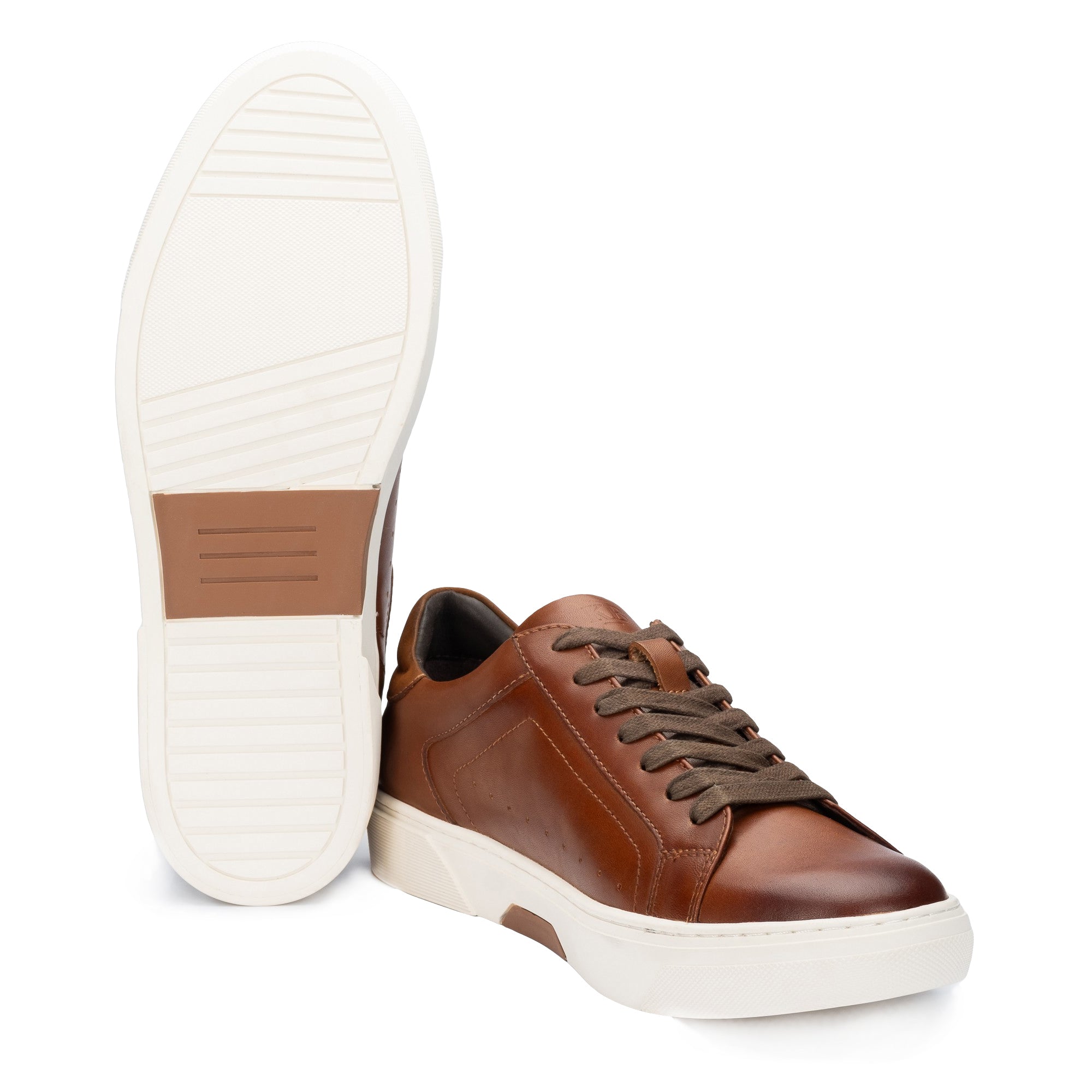
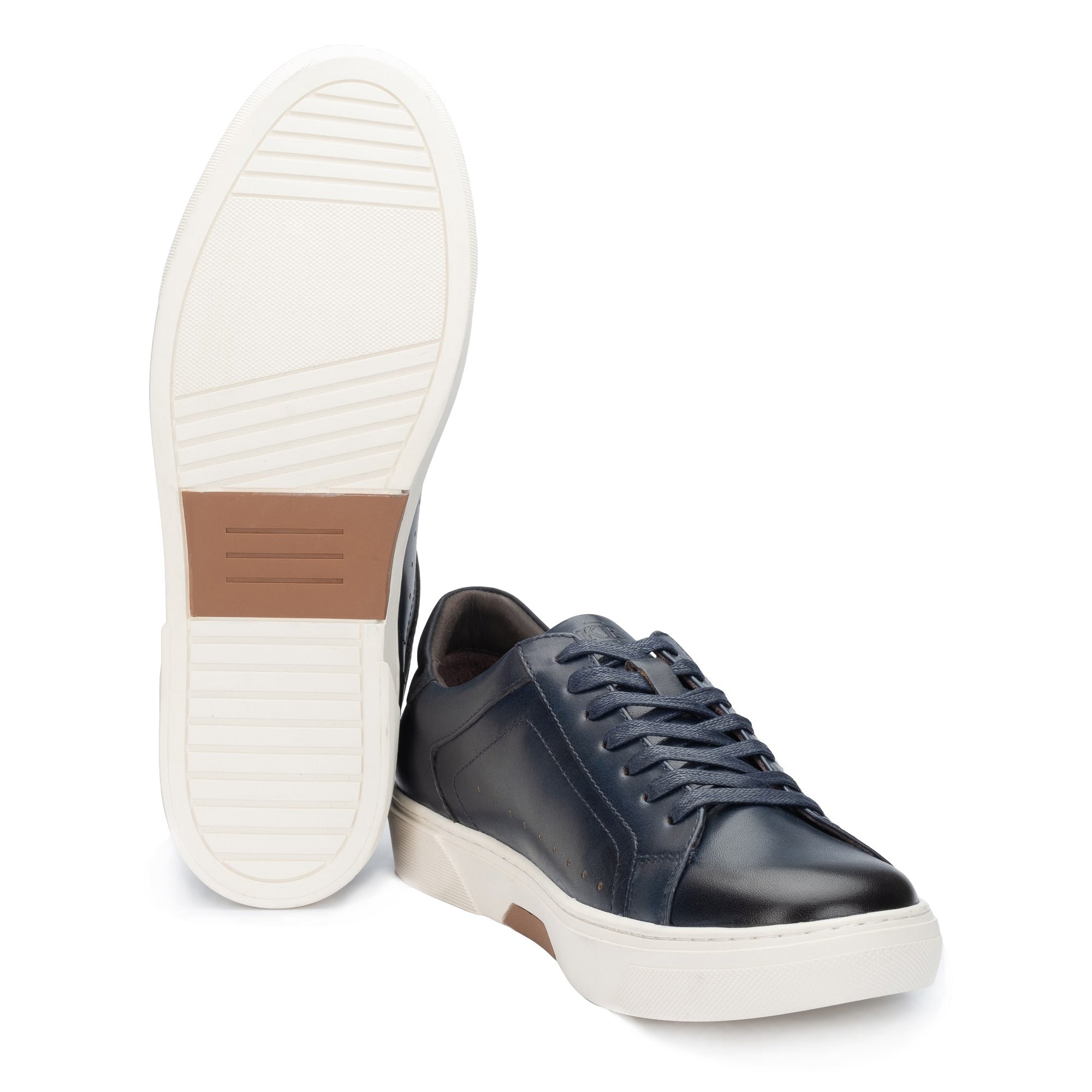
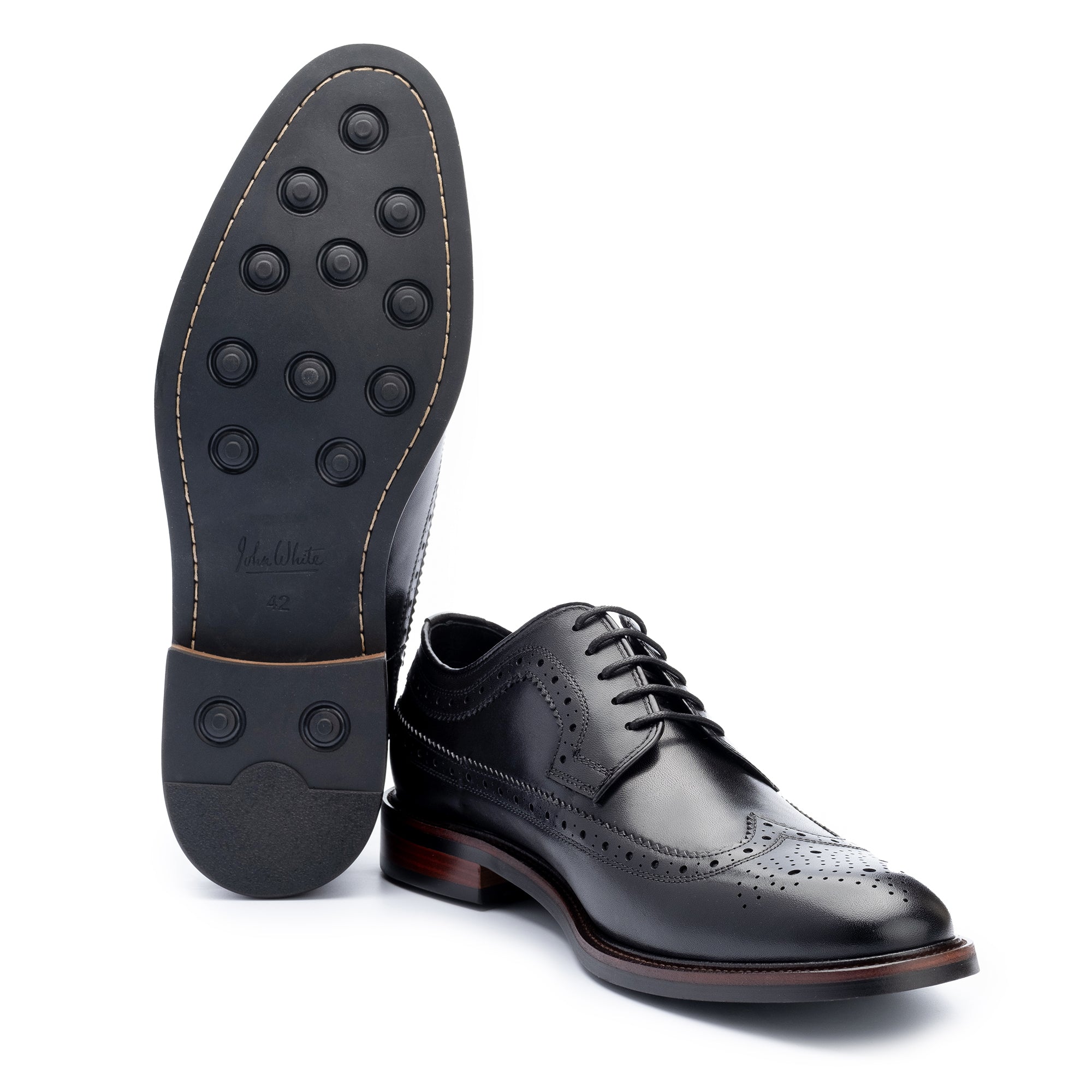
The non-negotiable mark of quality is a Goodyear welted construction. This traditional method stitches the upper to the sole via a leather 'welt', creating a durable, water-resistant, and fully repairable shoe. It is a hallmark of British shoemaking heritage that allows a trusted cobbler to resole the shoe multiple times, extending its life for decades.
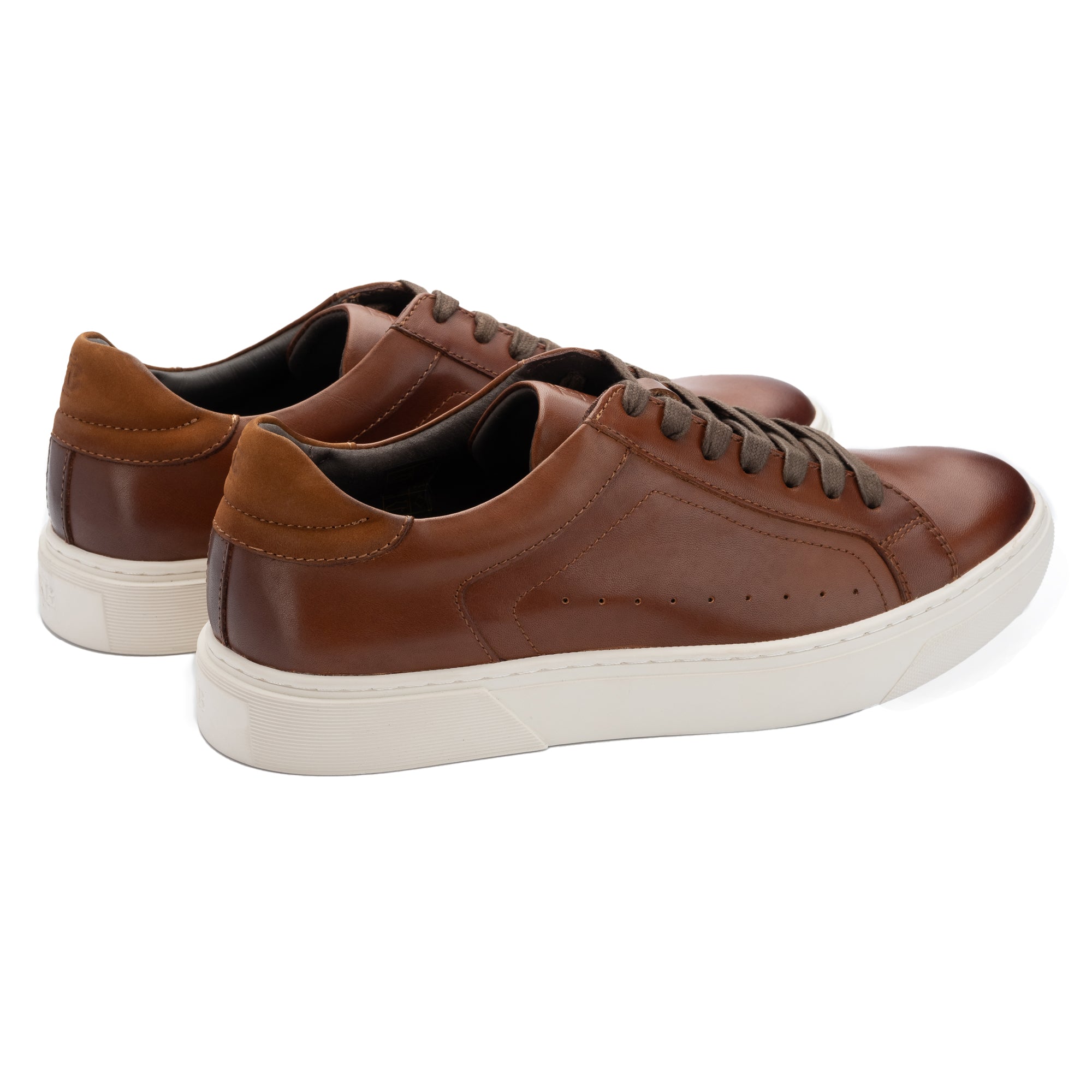
Equally important are the materials. Look for full-grain calf leather or suede for the uppers, as this is the highest quality hide, retaining its natural strength and character. Internally, a full leather lining is essential, as detailed in our guide on why a full leather lining is a non-negotiable mark of quality. This allows the foot to breathe and provides unparalleled comfort and durability.
A well-made Derby is defined by its construction and materials, embodying a tradition of quality designed to last a lifetime.
TL;DR: The Derby's Journey
The Derby shoe originated as the 'Blücher' boot, a military commission for the Prussian army during the Napoleonic Wars. Its innovative open-lacing system provided a superior, more accommodating fit for soldiers. After the wars, it was adopted as a civilian sporting and country shoe before its comfort and versatility saw it accepted as a smart-casual and business staple, a role it continues to fulfil today.
Related Guides
- From Northampton to the World: The Story Behind British Shoemaking — our comprehensive guide
- Derby vs Oxford: Which Lace-Up Should You Buy First?
- The Formality Spectrum: A Definitive Ranking of Men's Dress Shoes
- How to Wear Derby Shoes: Smart to Casual Styling Guide for Men
Frequently Asked Questions
Is a Derby shoe formal or casual?
The Derby sits in the smart to smart-casual space. While a highly polished black calf Derby can be worn with a suit, it is generally considered less formal than an Oxford. Its versatility is its greatest strength, making it ideal for business-casual offices, weekend events, and everything in between.
Can you wear Derby shoes with a suit?
Yes, particularly in less formal business settings. A sleek Derby in black or dark brown leather pairs well with most suits. For more conservative or formal occasions, such as black tie events or critical business meetings, a classic Oxford is the more traditional choice.
Are Derby shoes more comfortable than Oxfords?
Many men, especially those with a high instep or wider feet, find the Derby's open-lacing system more comfortable and less restrictive than the Oxford's closed lacing. The ability to adjust the fit more widely provides superior comfort for all-day wear.
What is a 'Blücher' shoe?
A 'Blücher' is the original name for the Derby shoe, named after Field Marshal Gebhard von Blücher who commissioned the design. In modern shoemaking, the terms are often used interchangeably, though some purists reserve 'Blücher' for designs where the eyelet tabs are smaller and integrated directly into single-piece quarters.
From the battlefields of Europe to the wardrobes of discerning gentlemen, the Derby shoe's history is a testament to timeless, functional design. It is a shoe that has earned its place through sheer practicality and understated elegance.
Explore our curated collection of premium leather Derby shoes and discover a cornerstone of British footwear heritage.