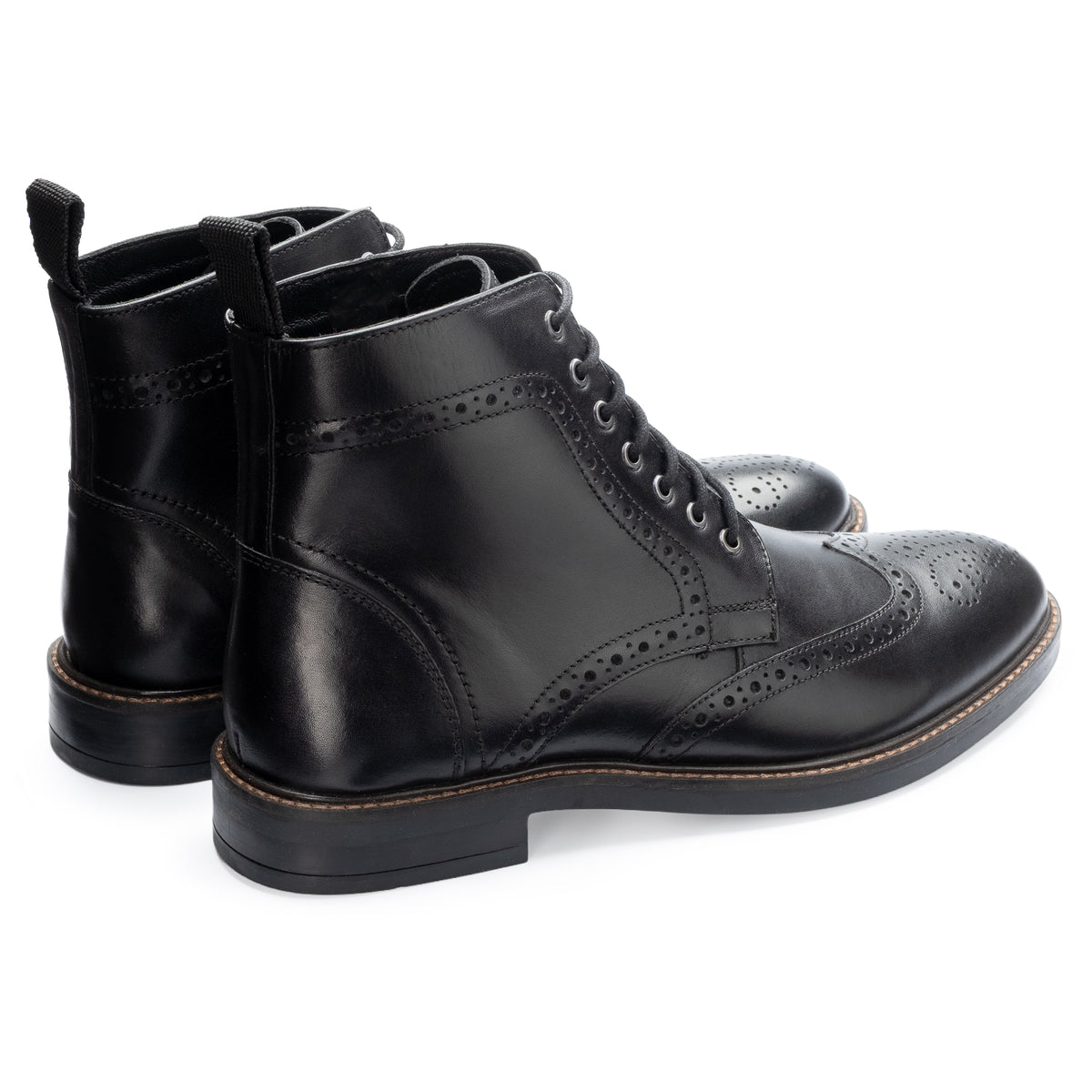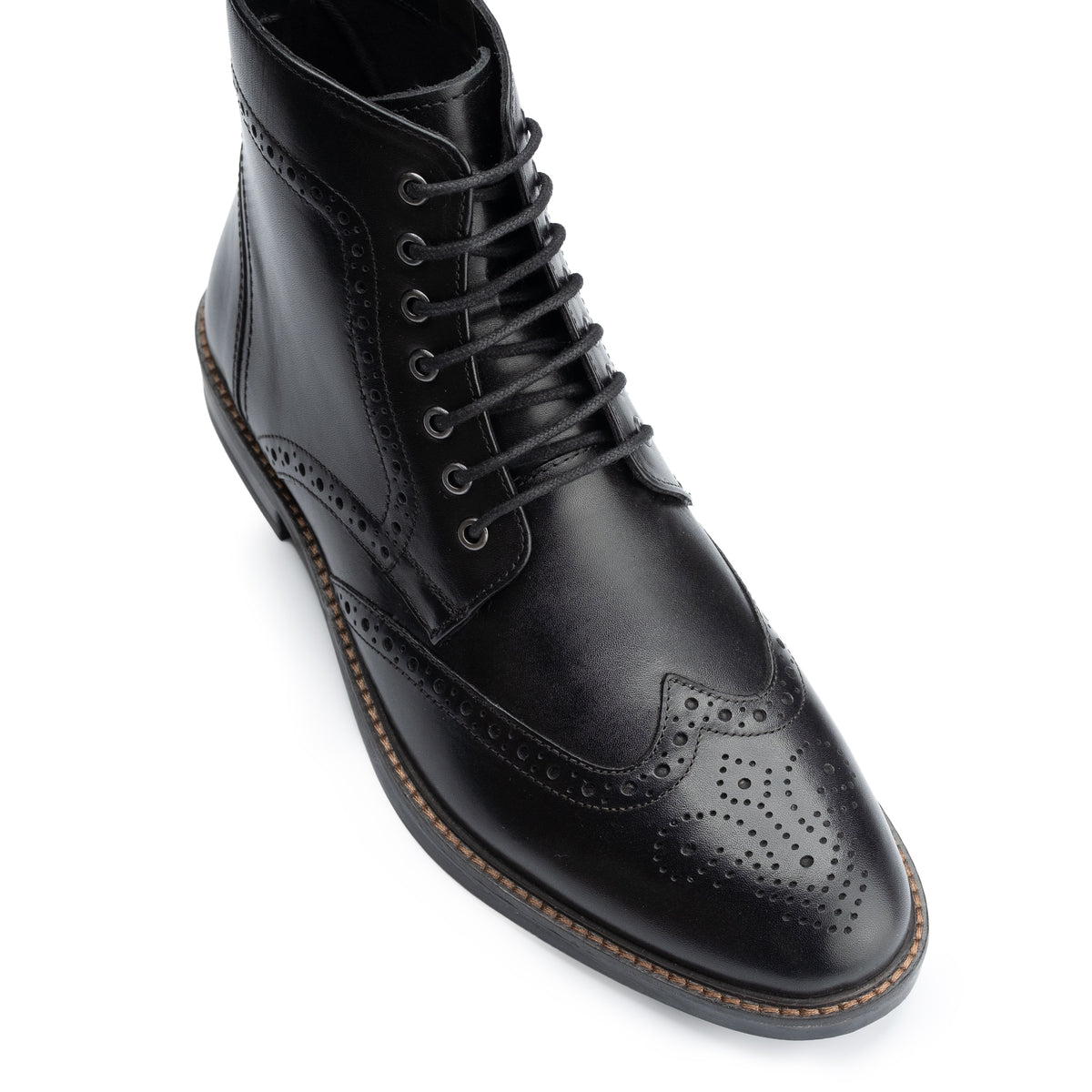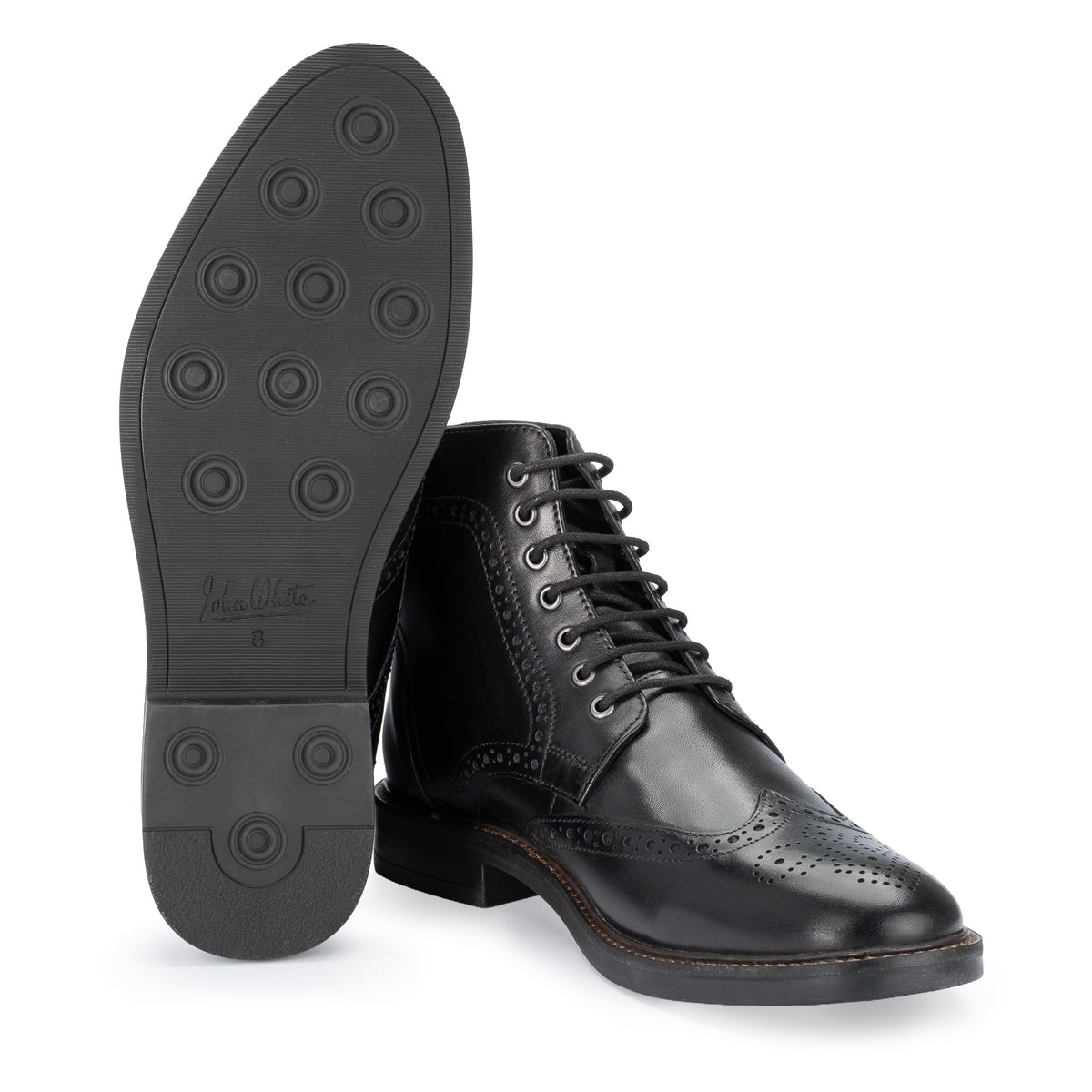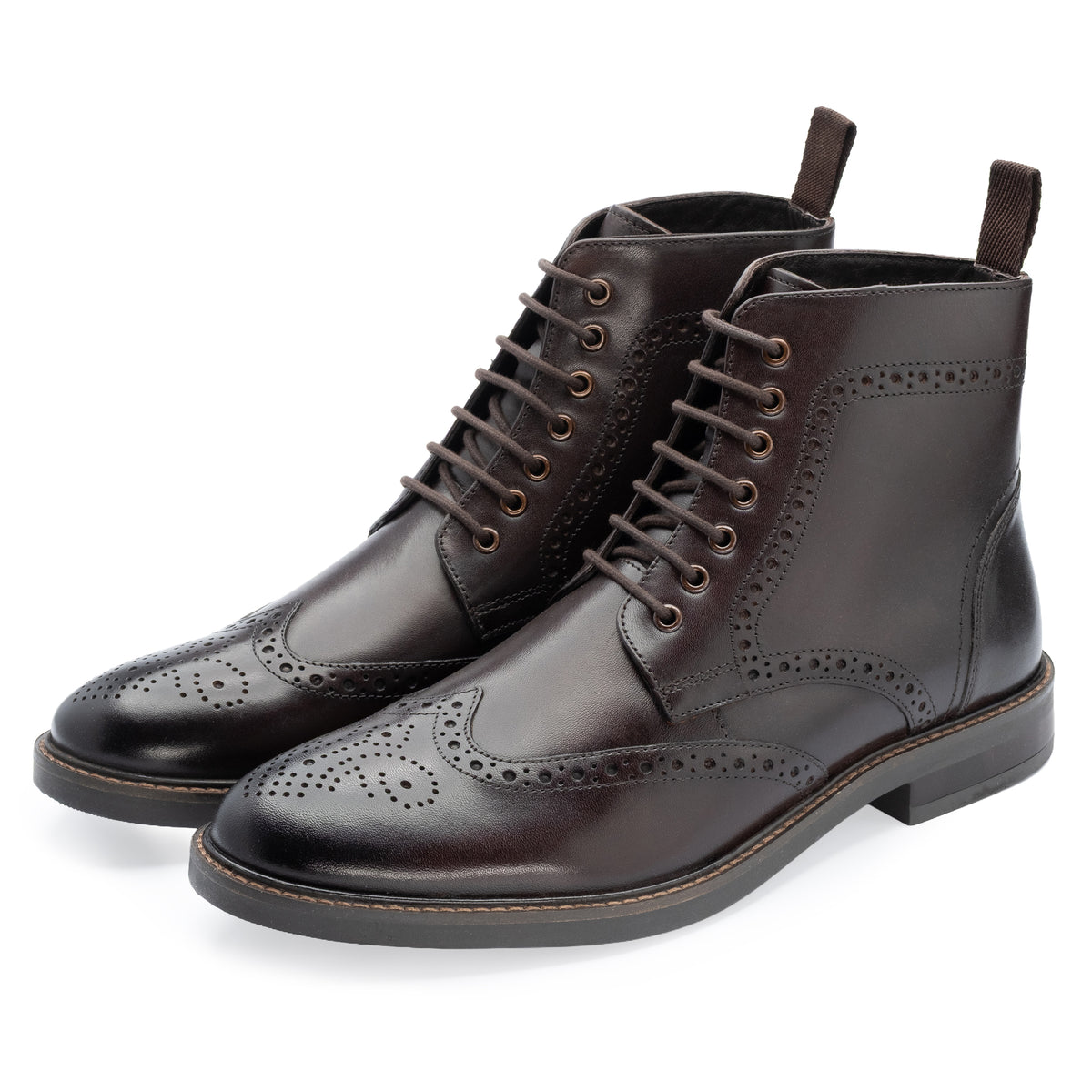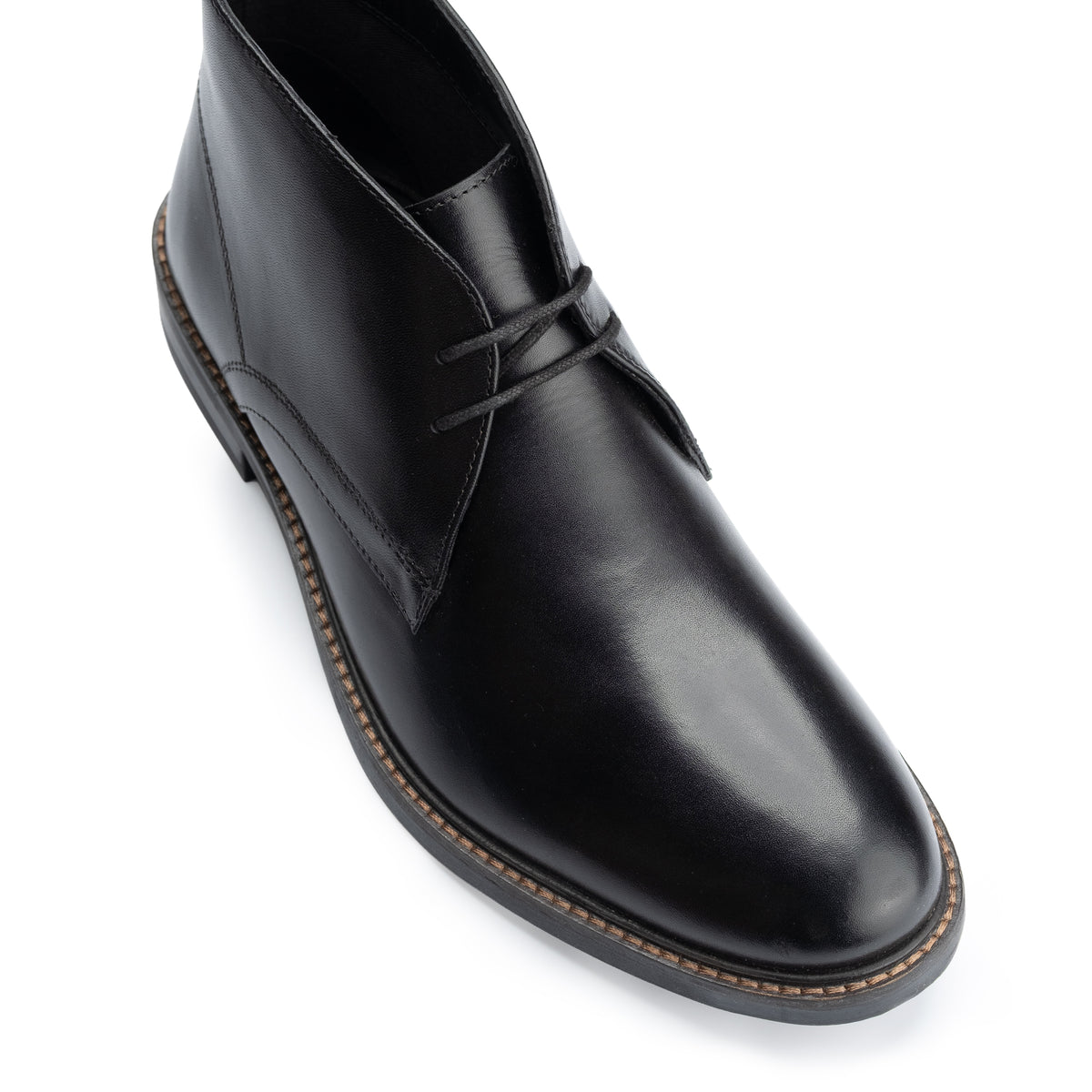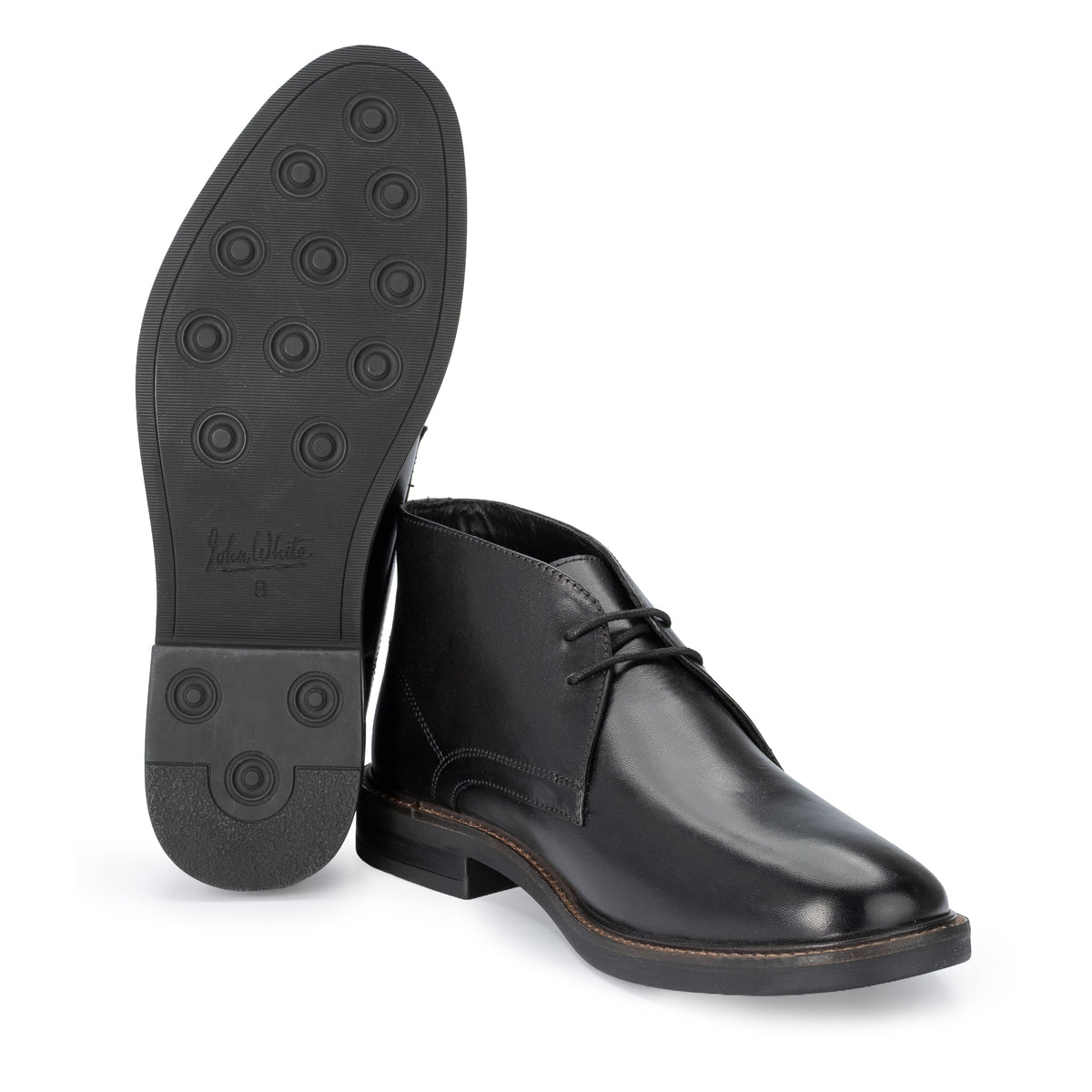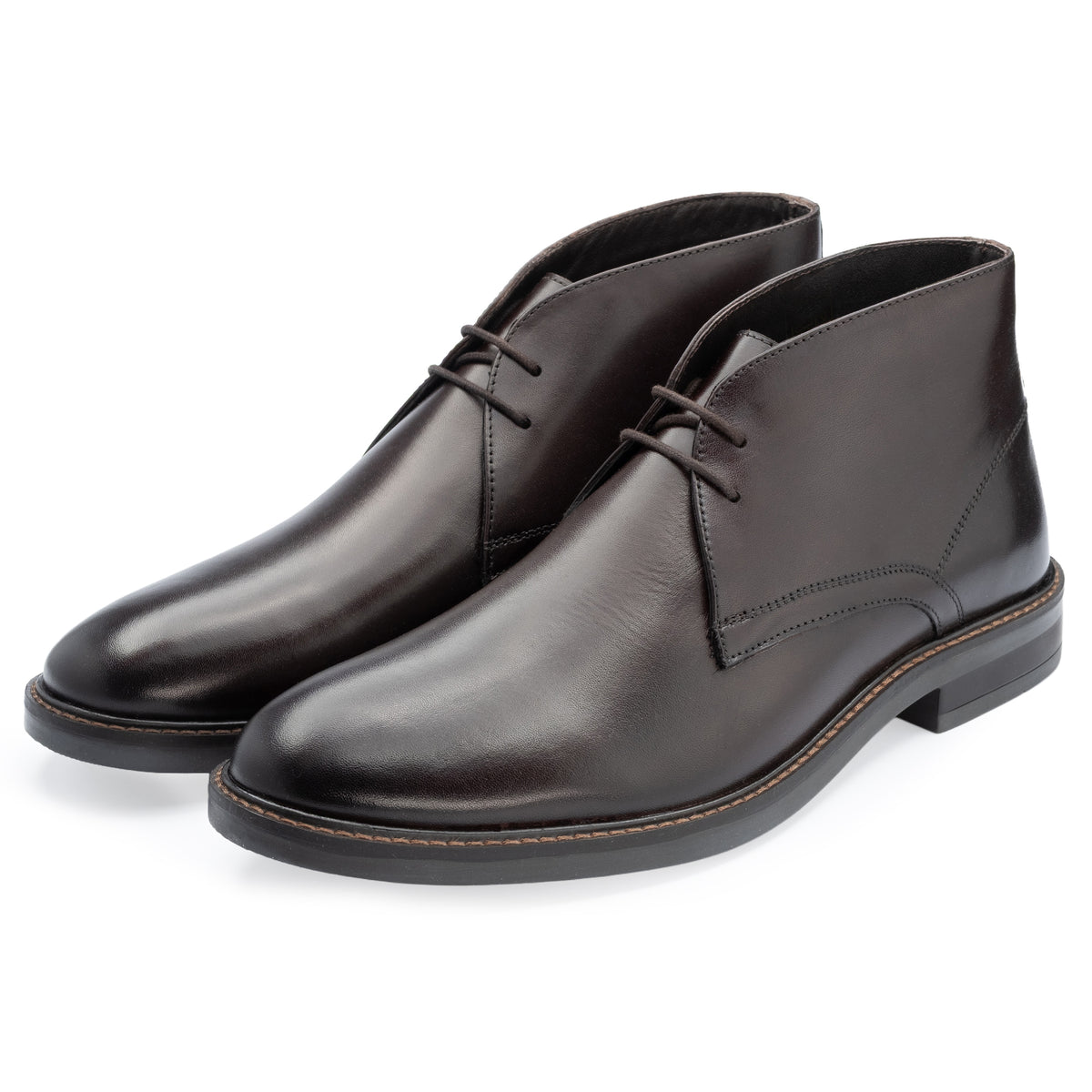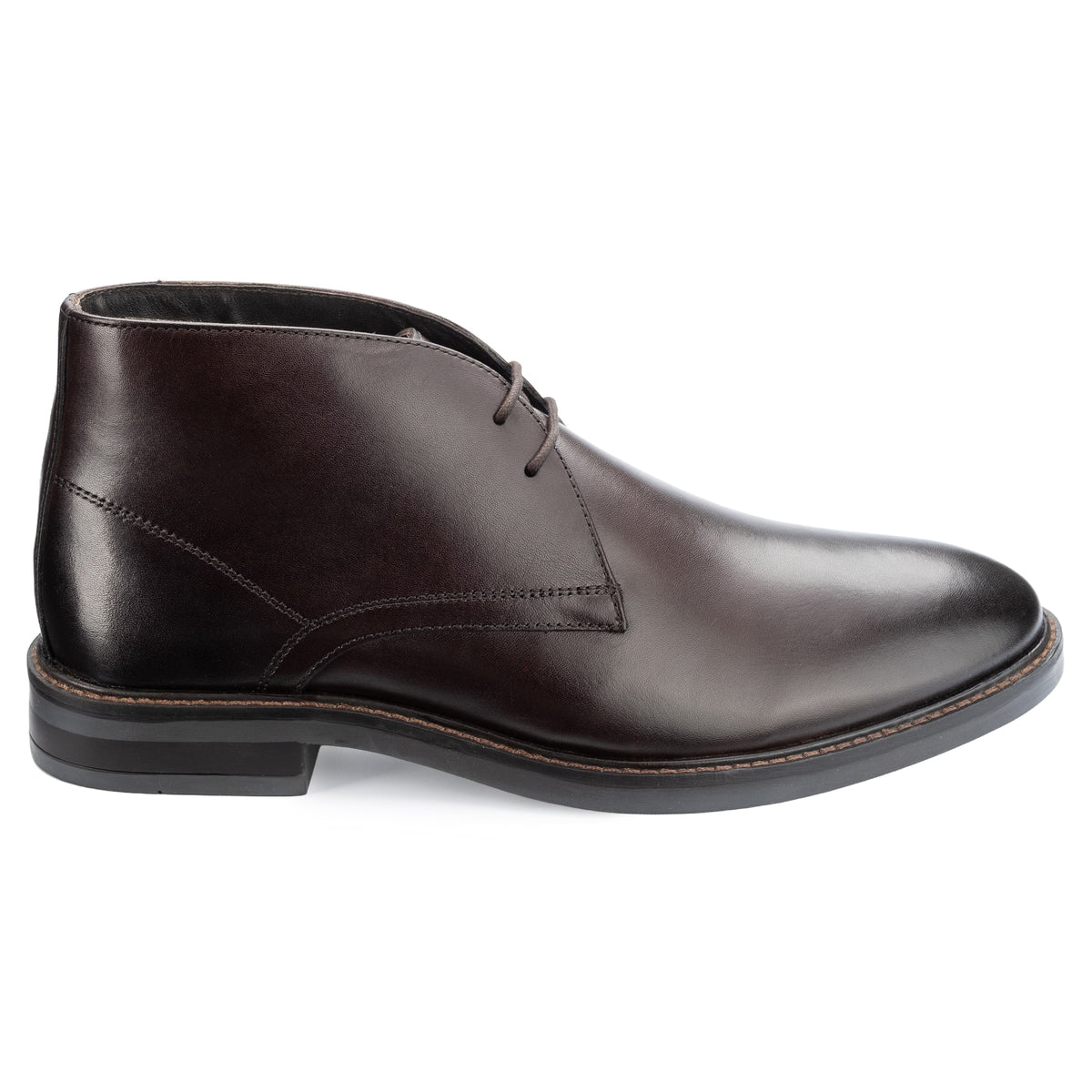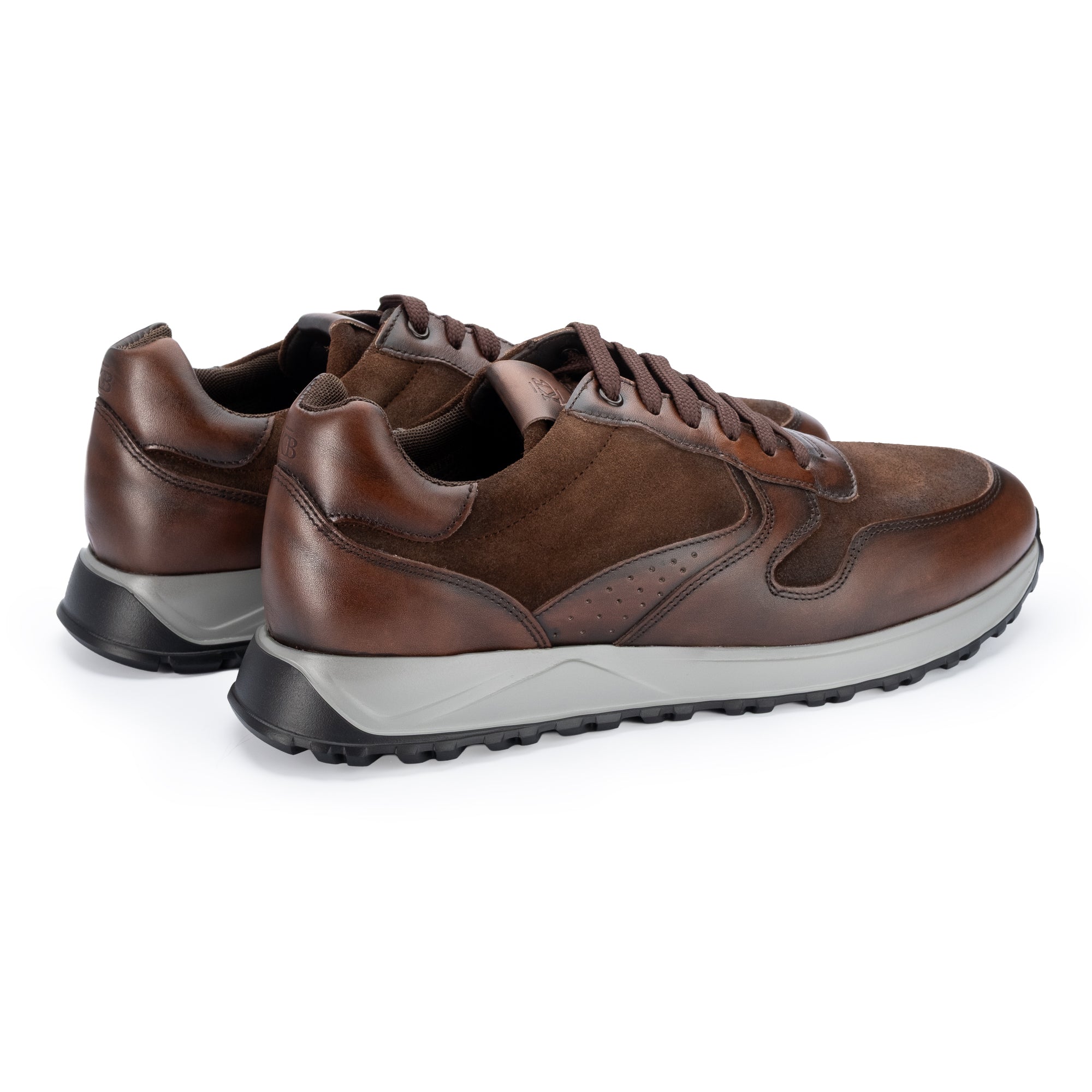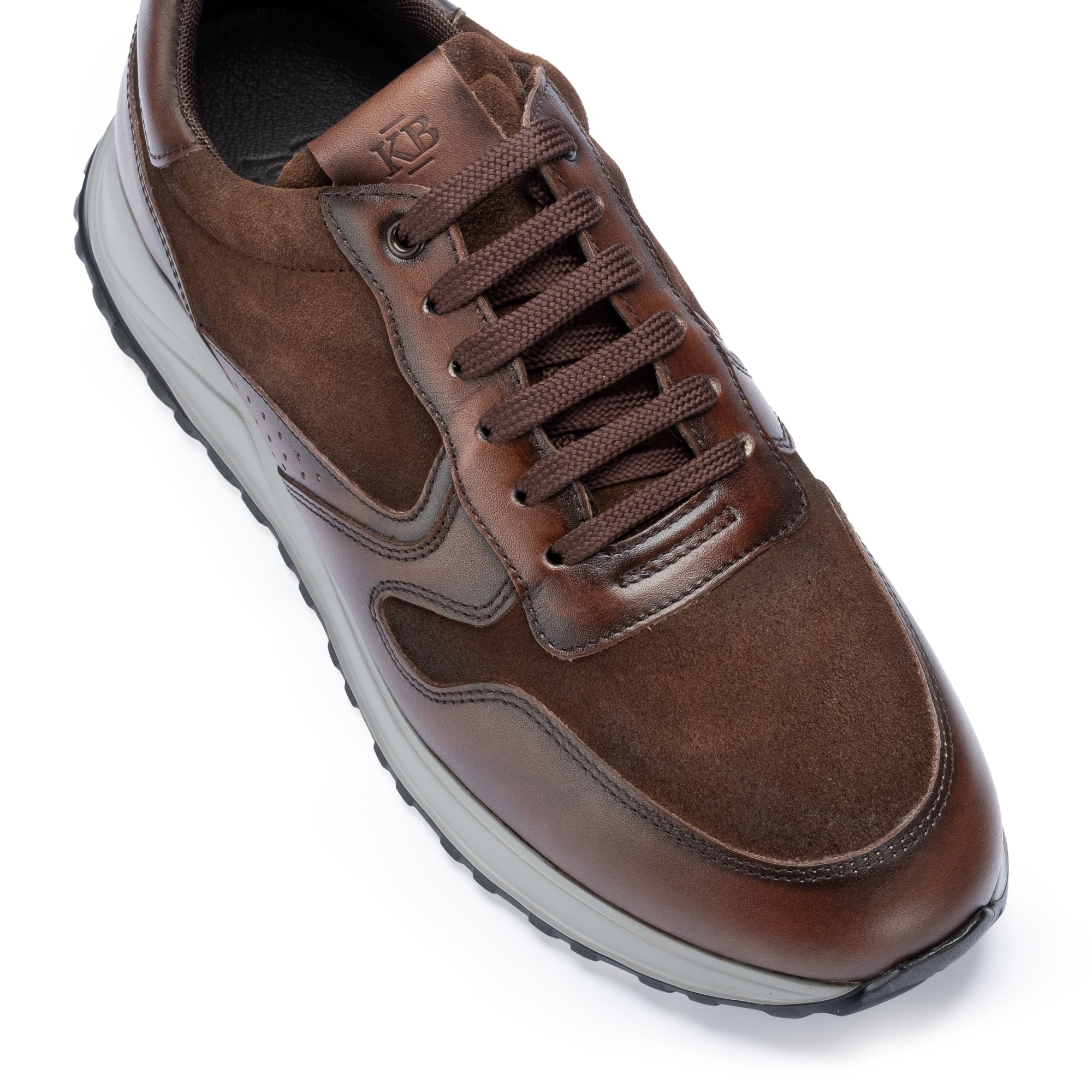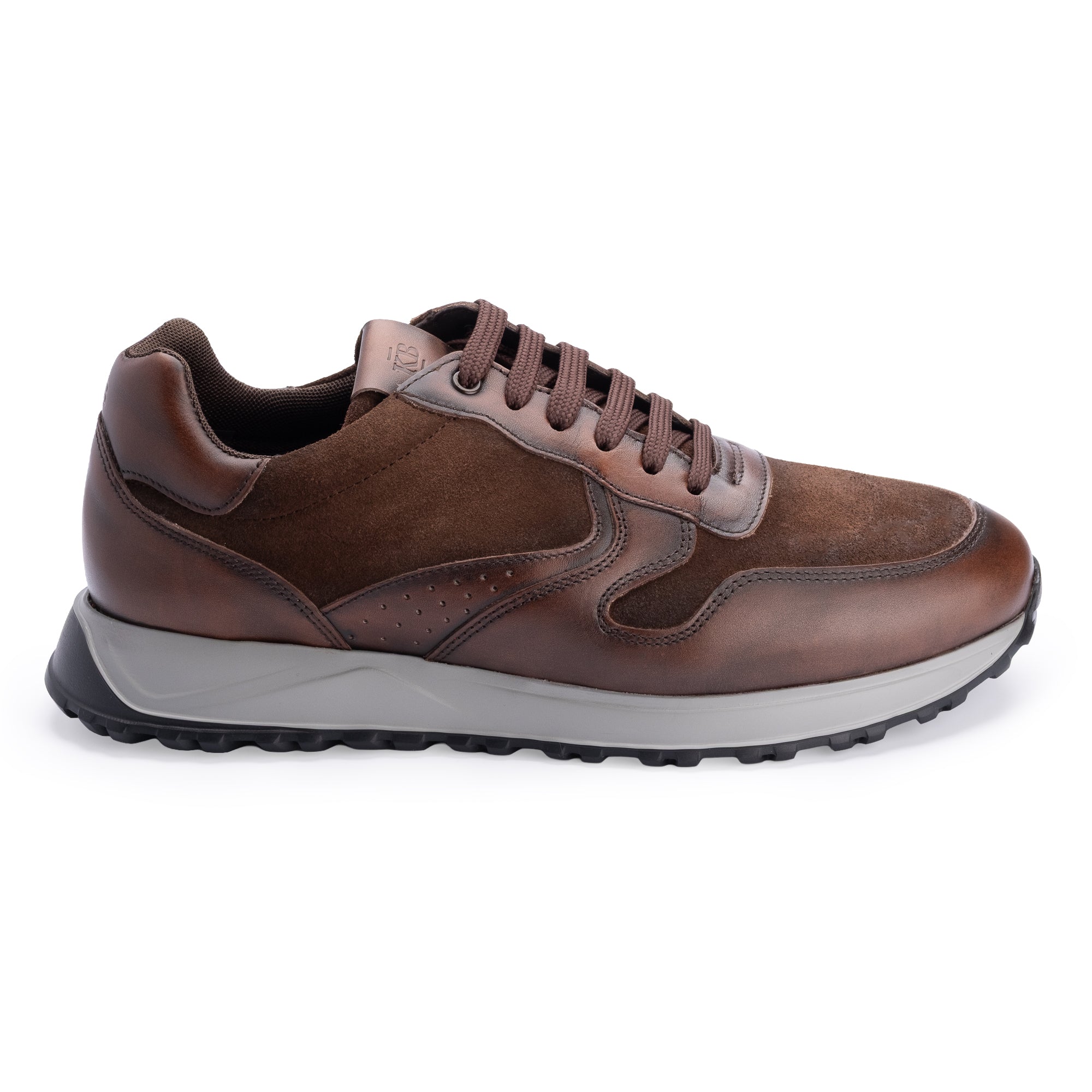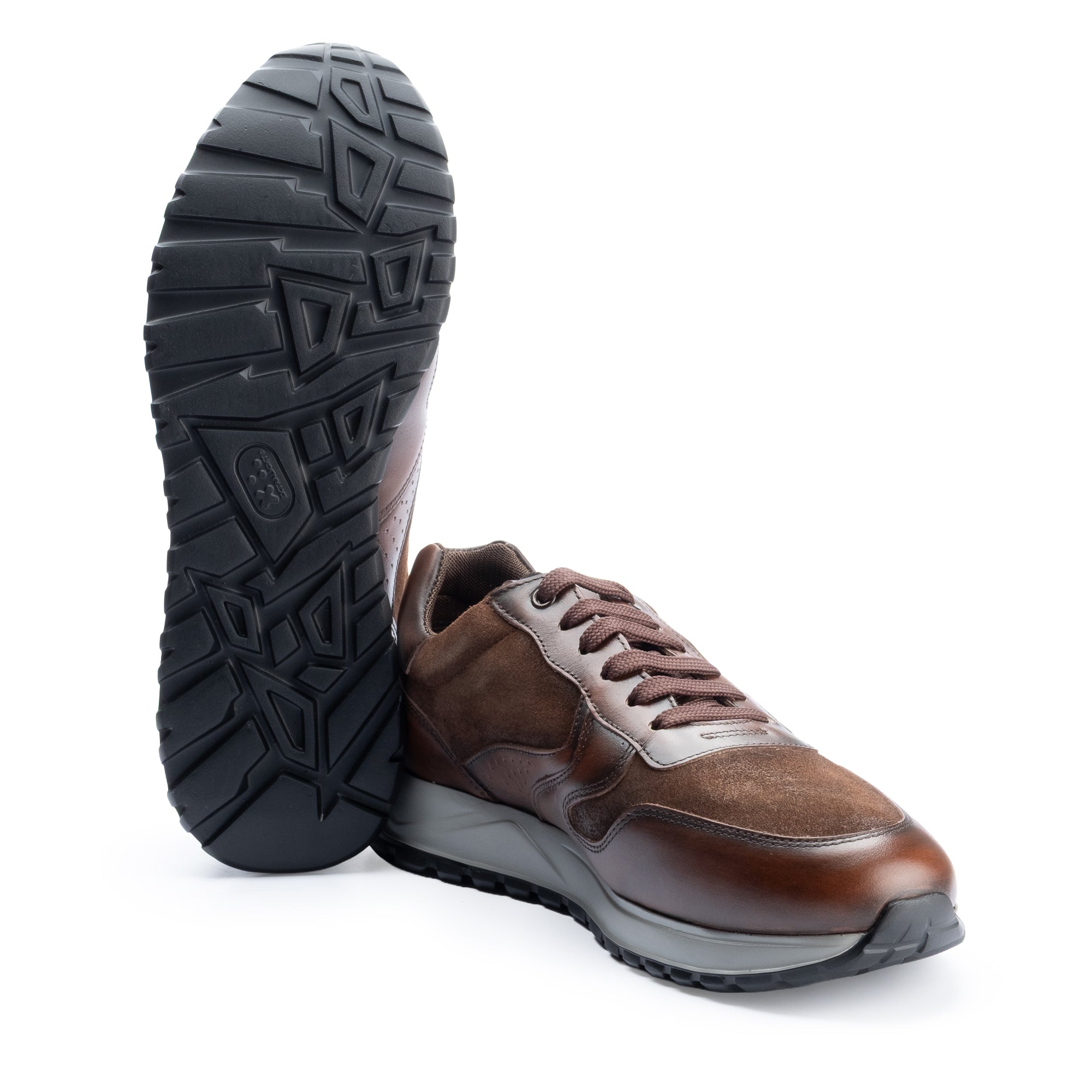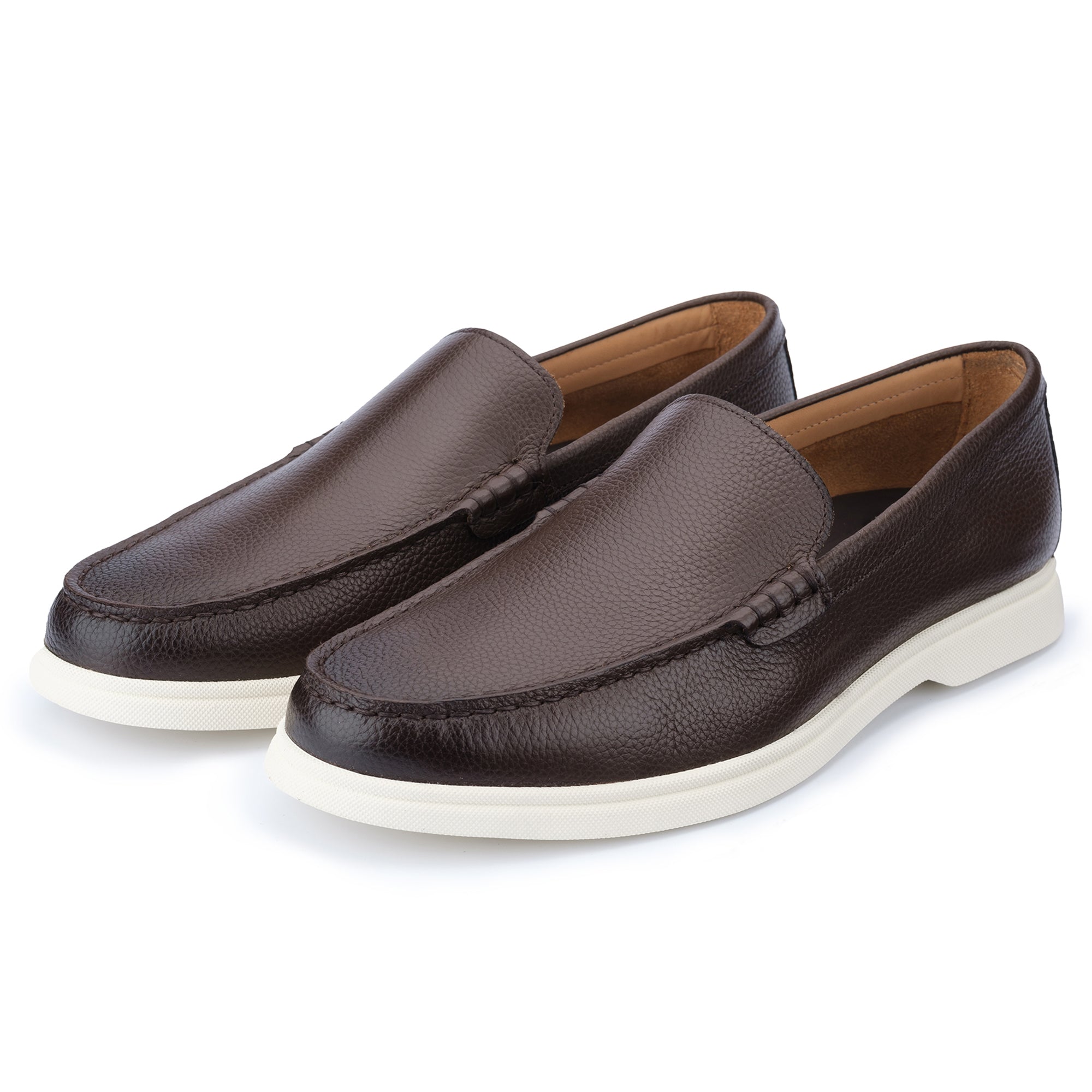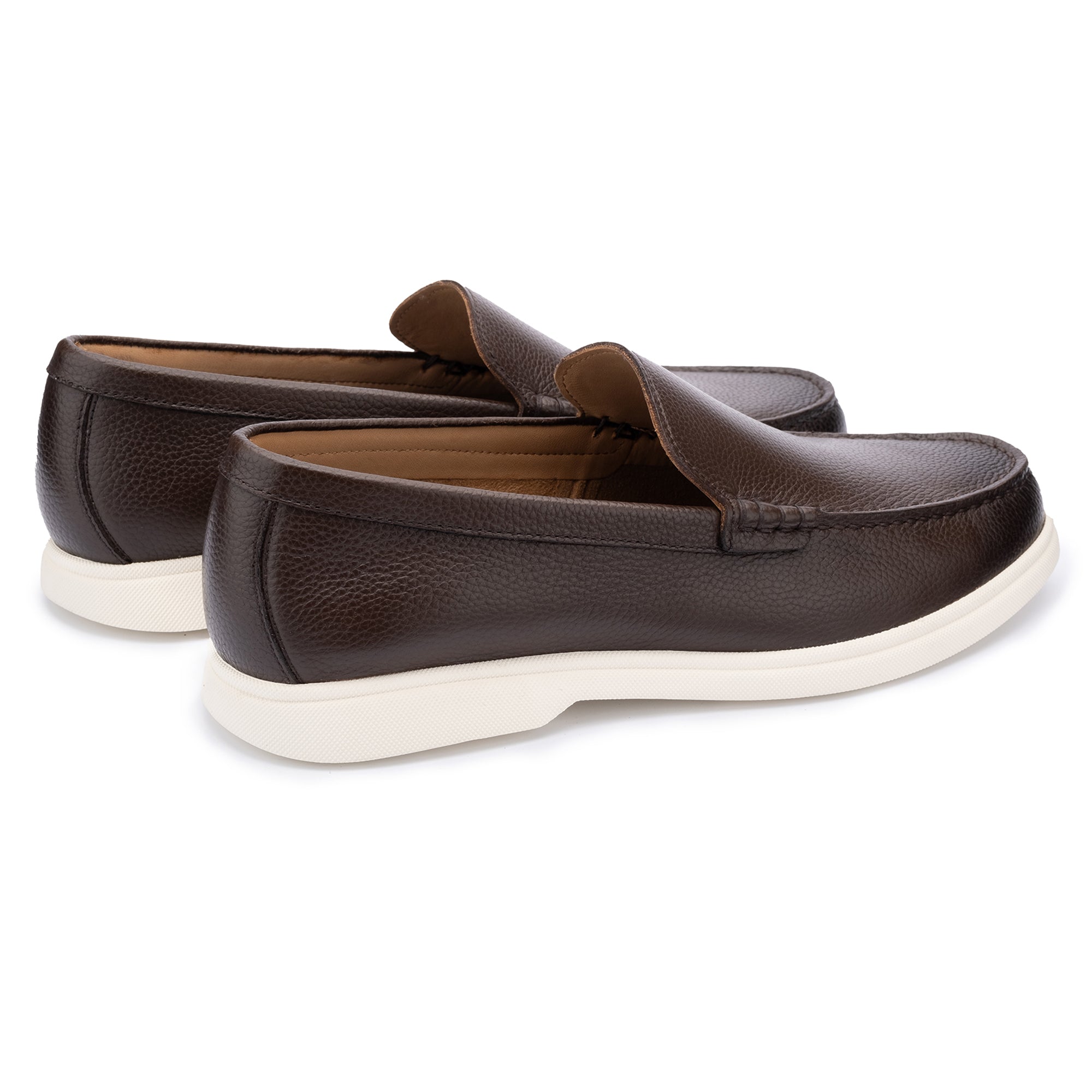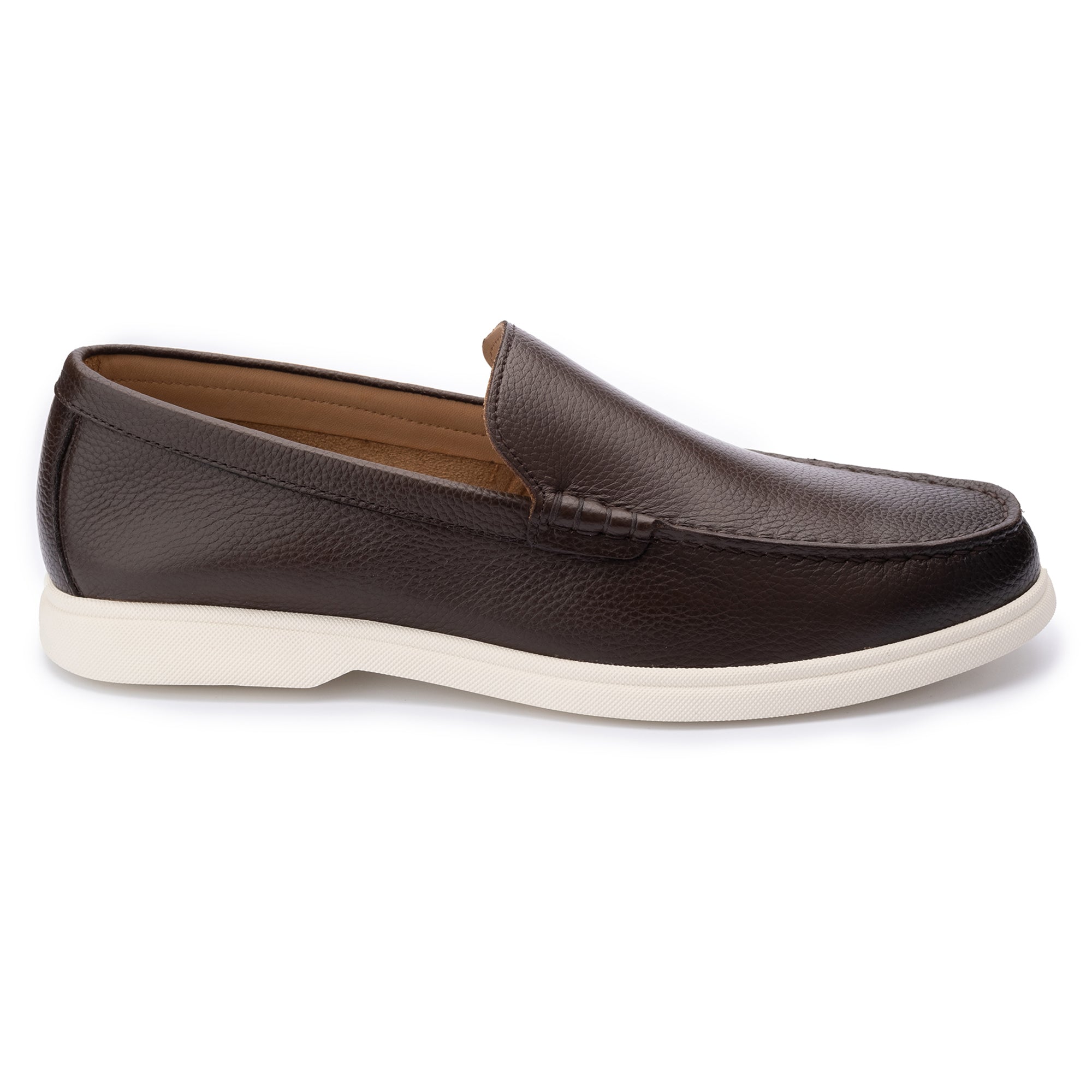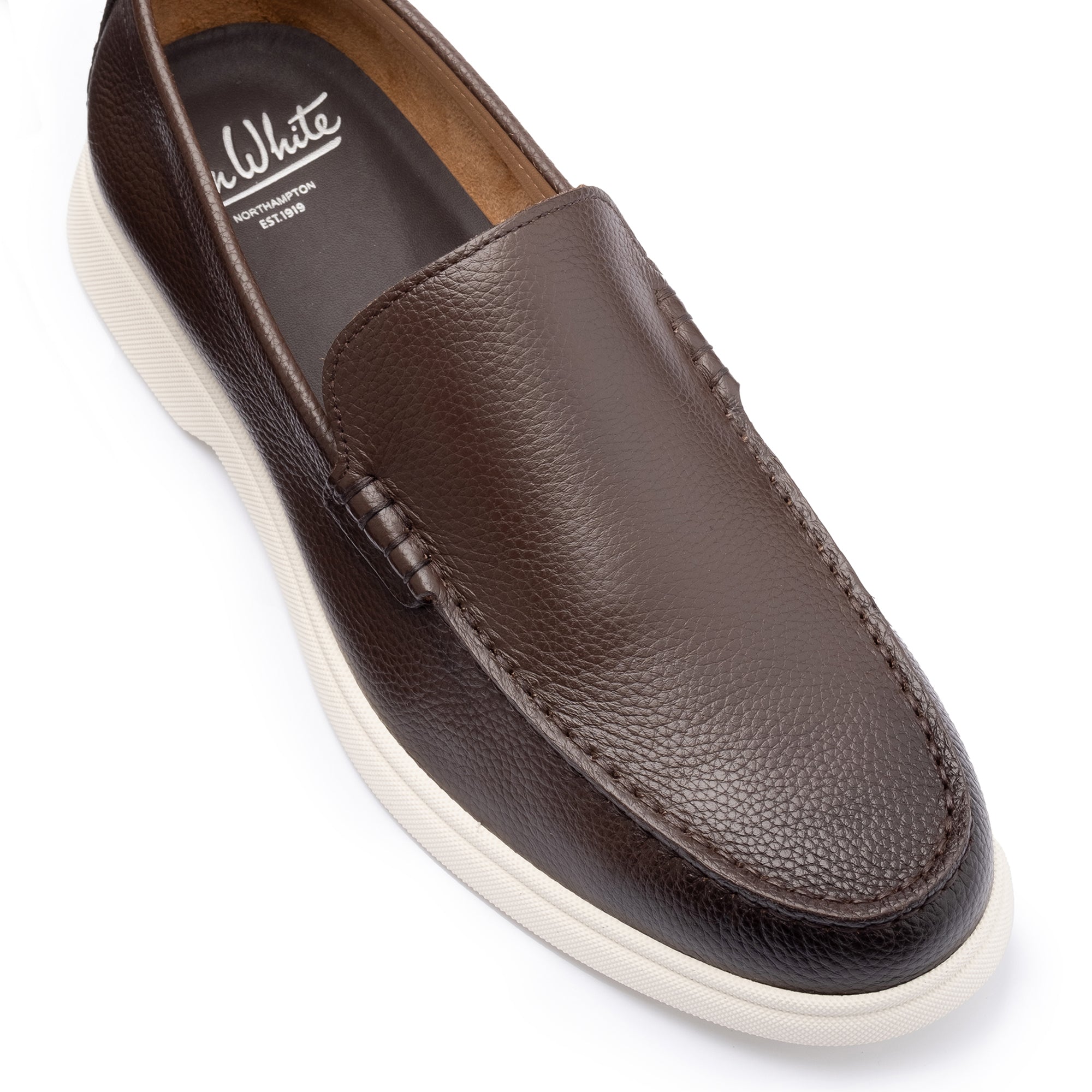

Late August is when professional wardrobes get quietly audited. Summer trips have pushed the suits to the back, commuter shoes have spent two months idle, and somewhere between the last Saturday of August and the first Monday of September, most men rediscover exactly what state their office rotation is in.
In This Guide
This is not a bad moment to intervene.
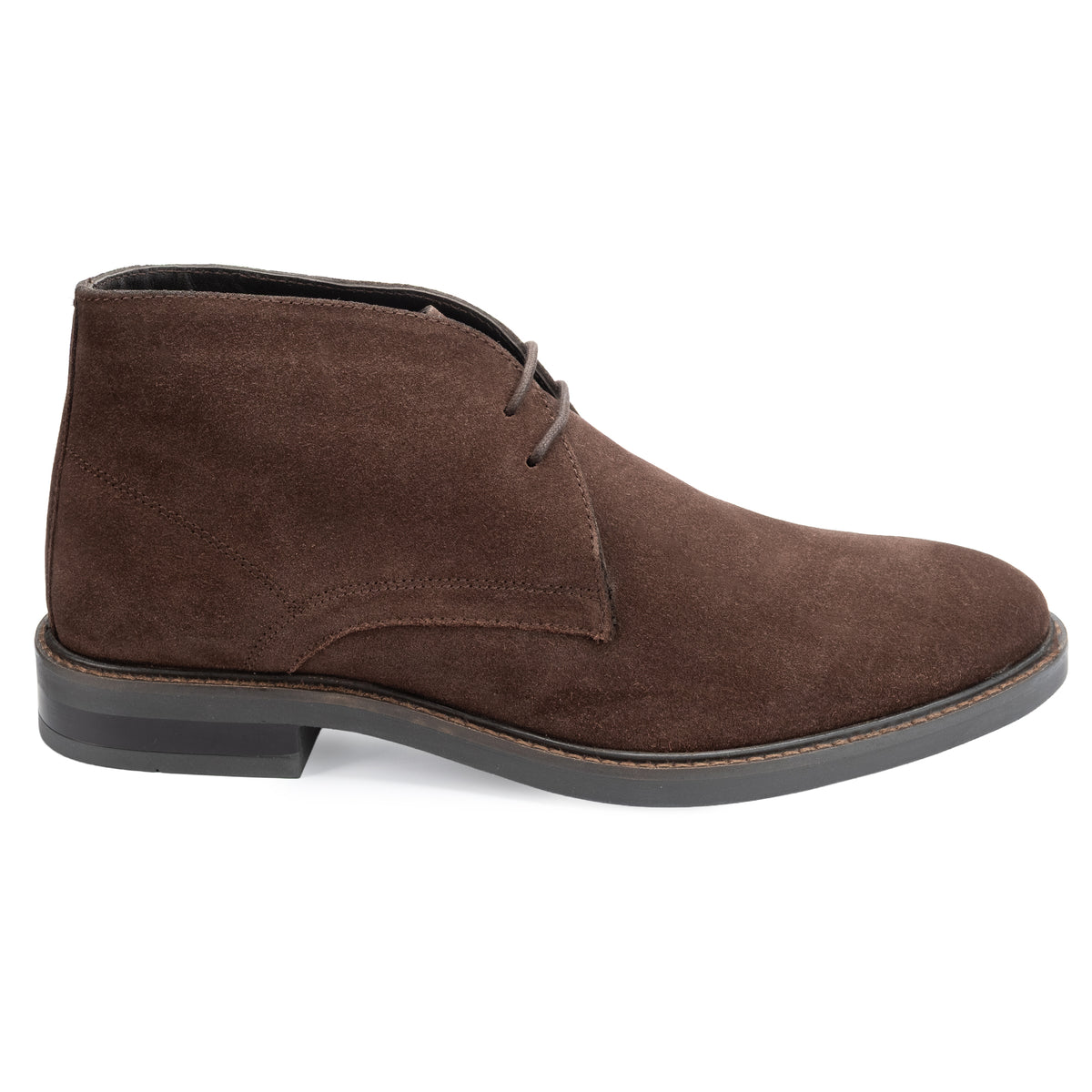
Choosing office shoes is, in practice, a simpler decision than most men make it. The formality level of your workplace sets the frame; from there, three silhouettes cover almost every scenario. The question is which ones your wardrobe currently has — and which it needs. What follows is a practical briefing for anyone building, refreshing, or finally completing a professional shoe rotation before September arrives.
Reading Your Office Correctly
Not every professional environment demands the same shoe. The most common mistake is buying for the wrong tier — purchasing a cap-toed Oxford for a smart-casual office that will never require it, or arriving in a plain-toe loafer at a City law firm where every visual signal carries weight. Read your environment accurately before spending.
The Formal Office — City, Legal, Financial
Suit on most days, formal register enforced, client-facing interactions frequent. This tier requires shoes that read as intentional: cap-toed Oxfords, plain Derbies, or conservative monk straps. Black is the working currency here. Brown is permitted with the right suit colour — navy and mid-grey are its natural partners — but black carries no ambiguity.
Business Professional
Jacket and trousers on most days, occasional suit for client meetings, jacket-off not unusual on a quiet afternoon. This tier gives you genuine range: Derbies, monk straps, and a well-chosen semi-brogue all belong here. Black for important meetings; brown and tan when the register drops slightly toward Friday.
Smart-Casual
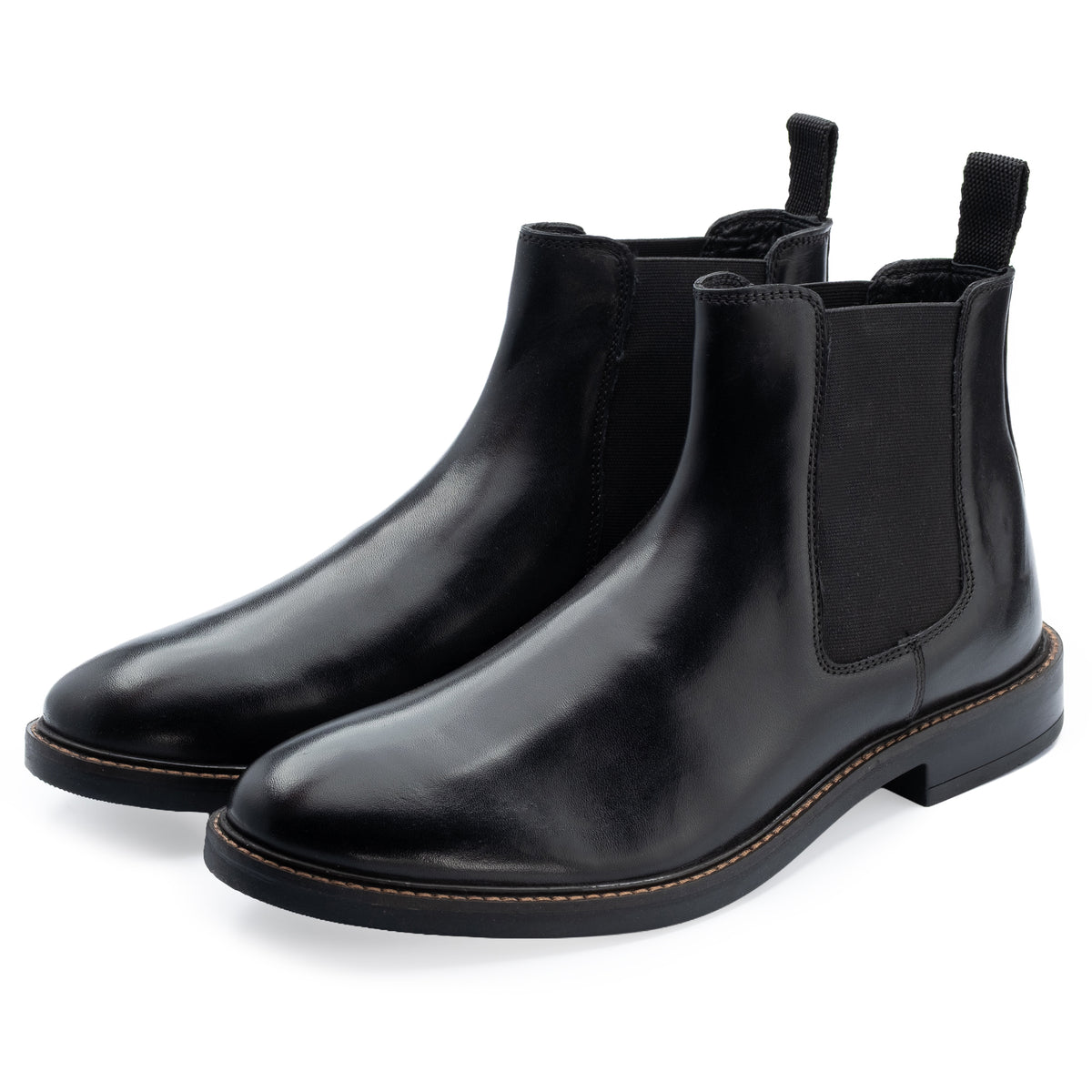
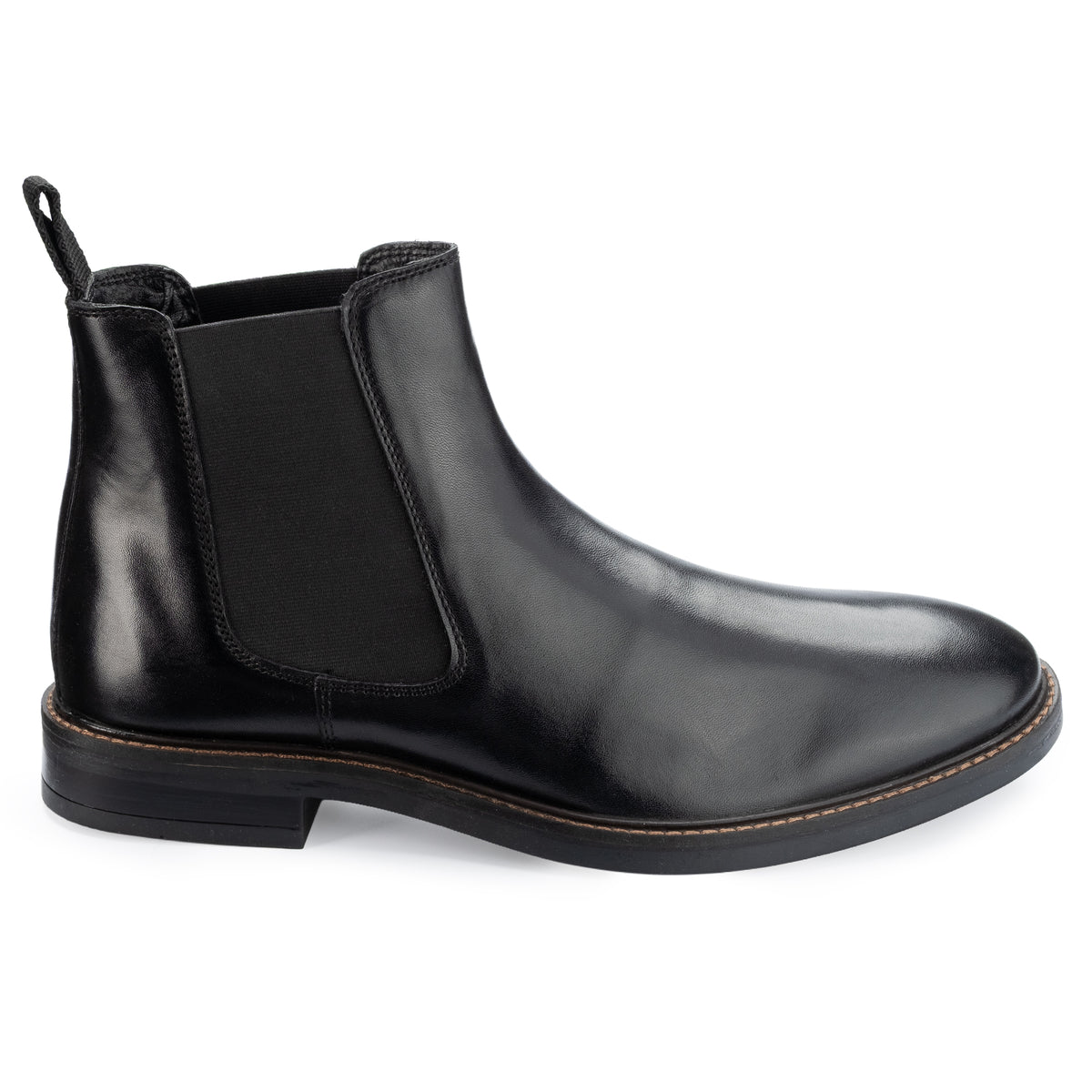
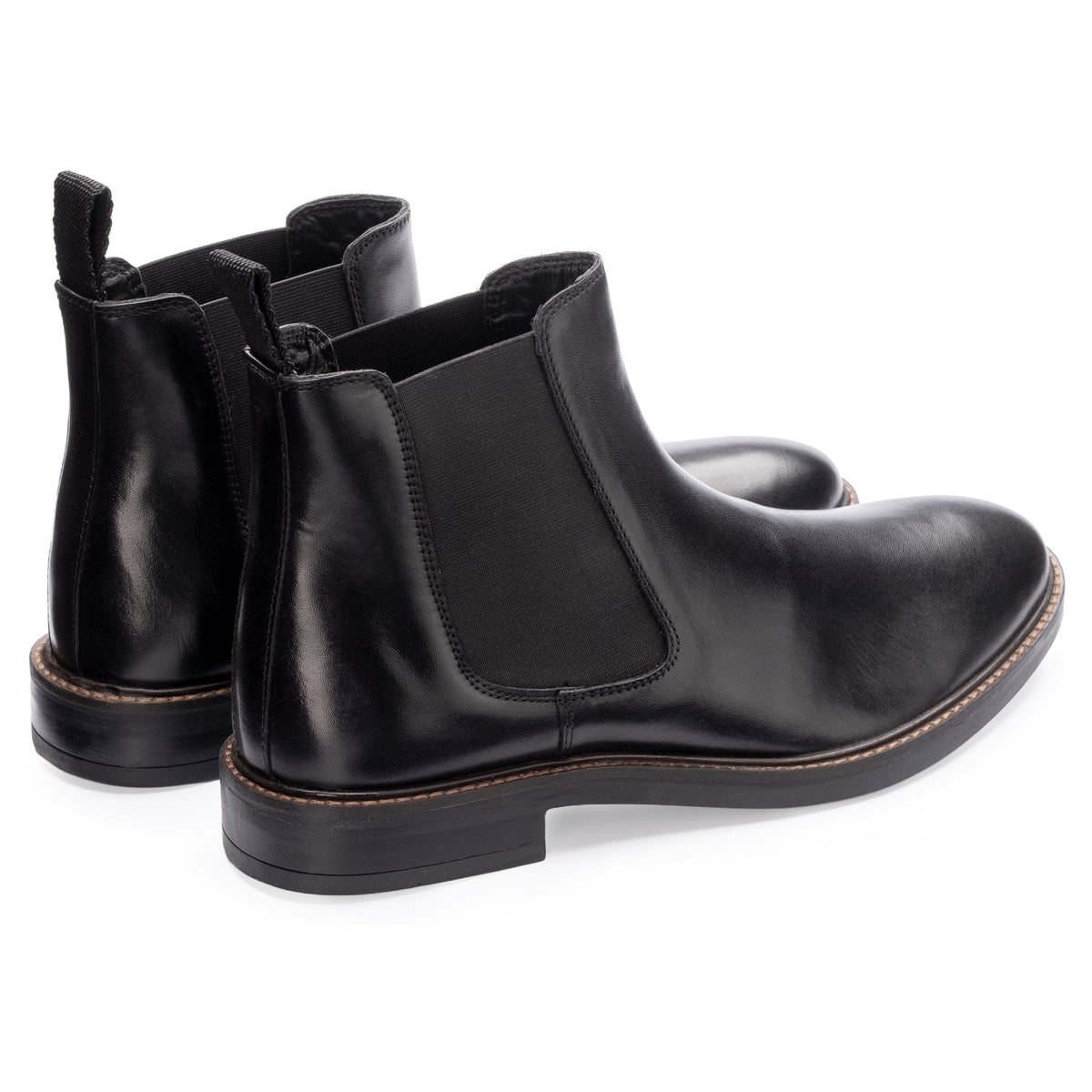
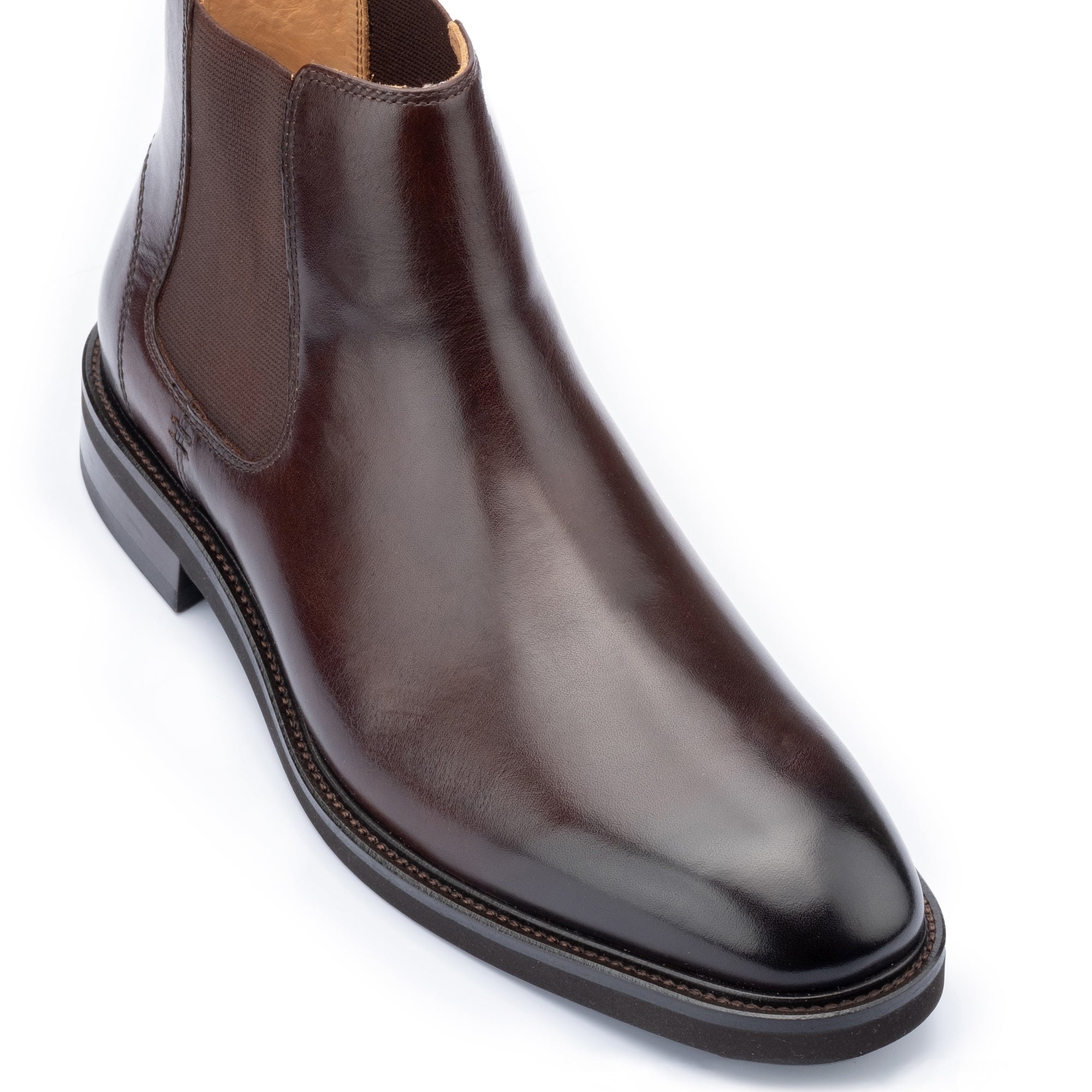
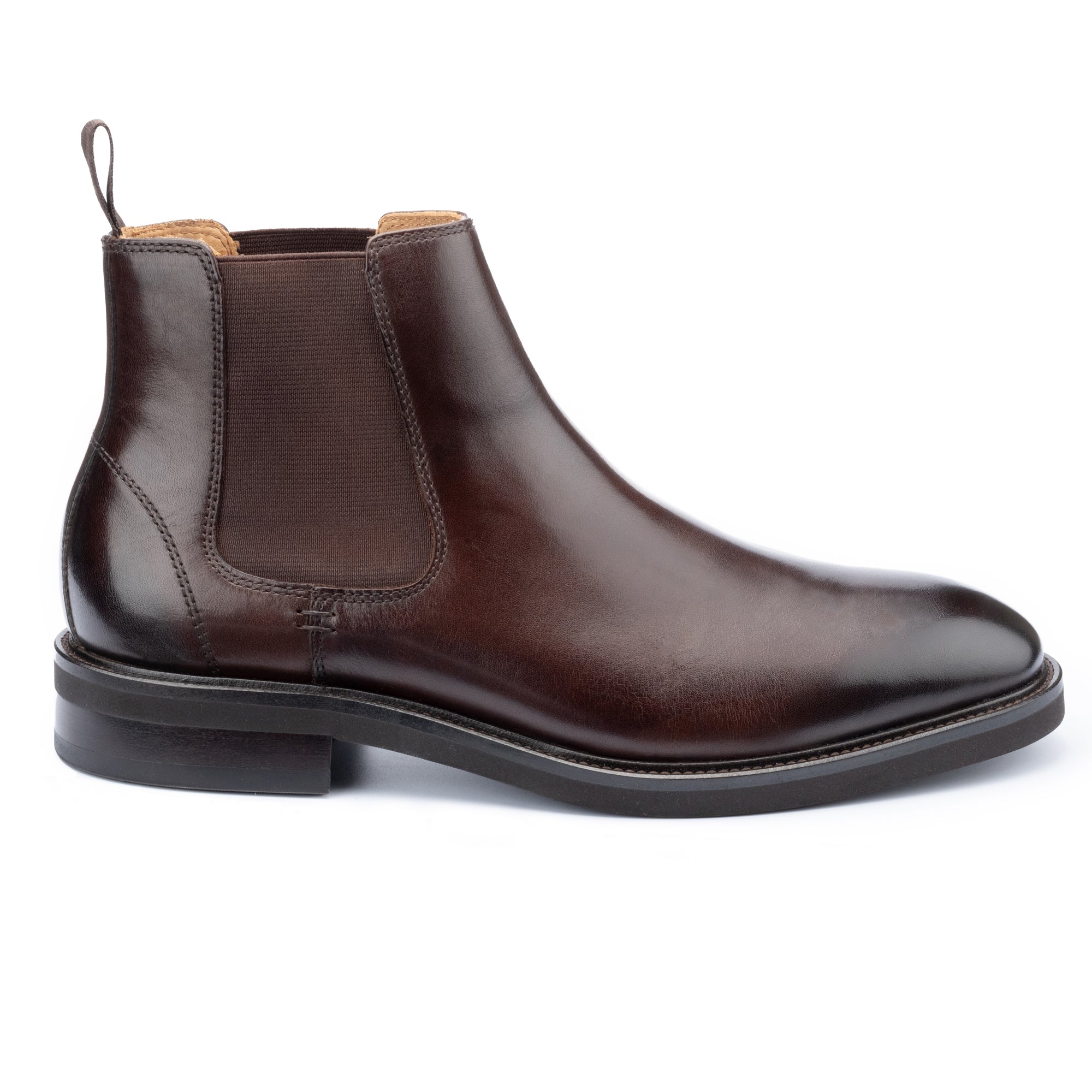
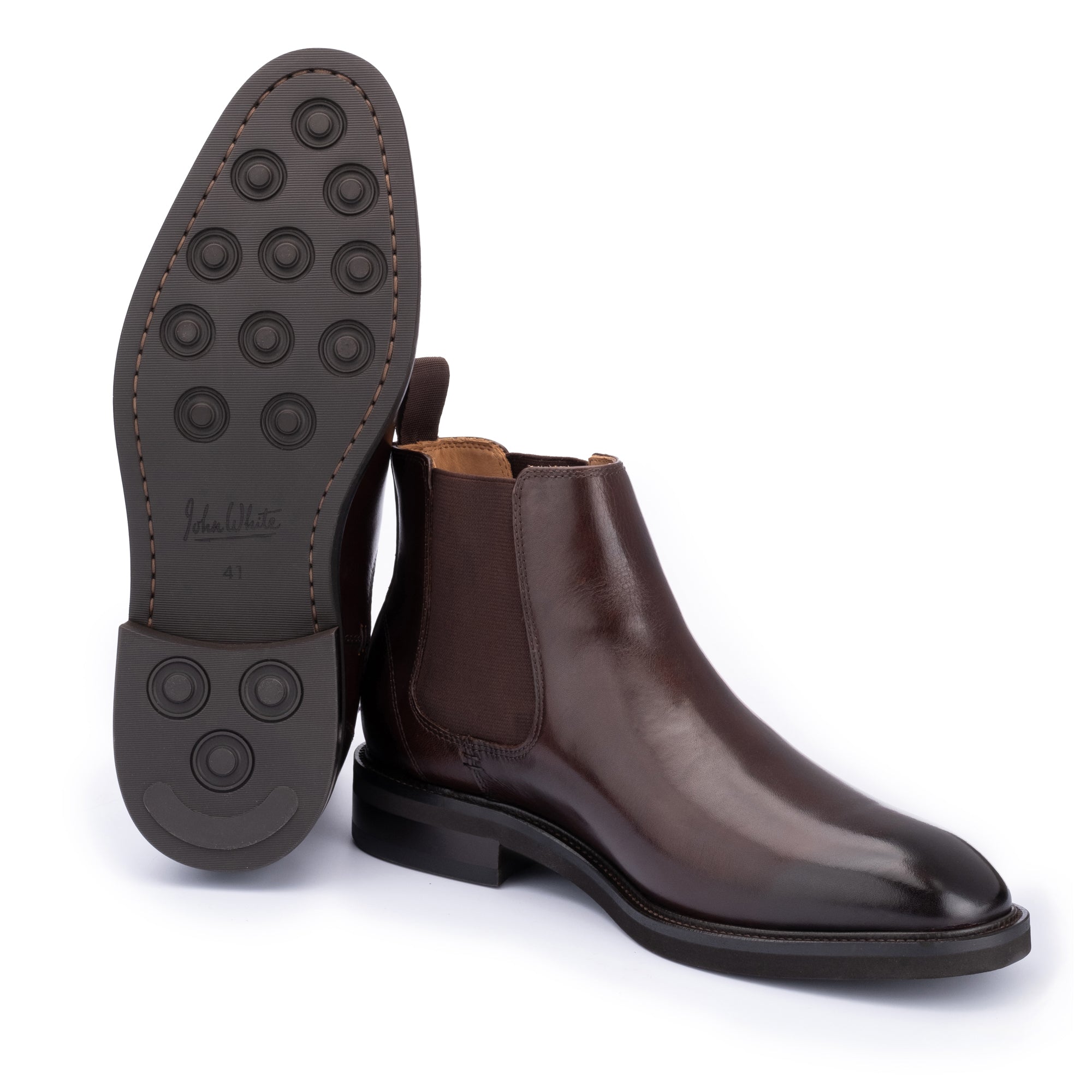
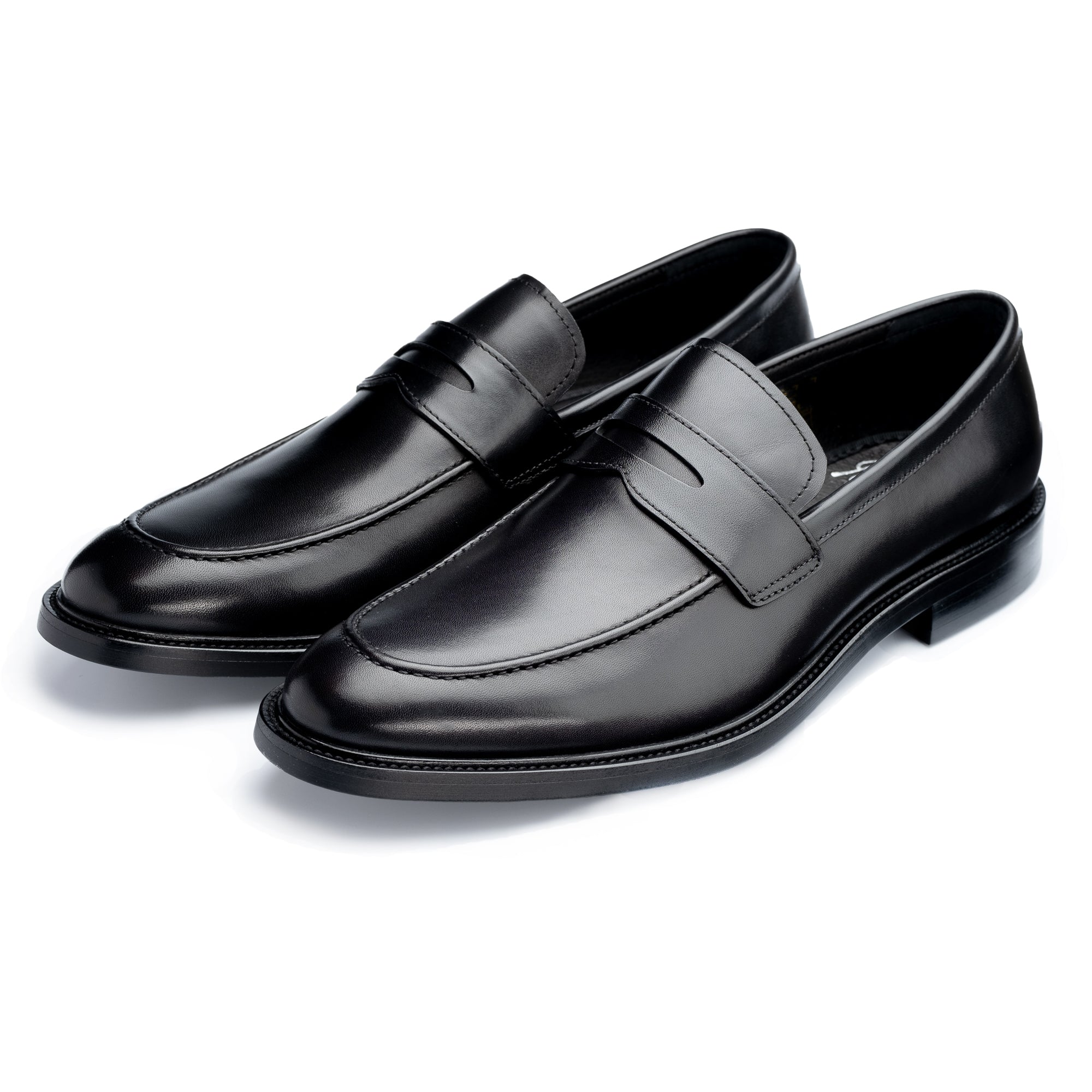
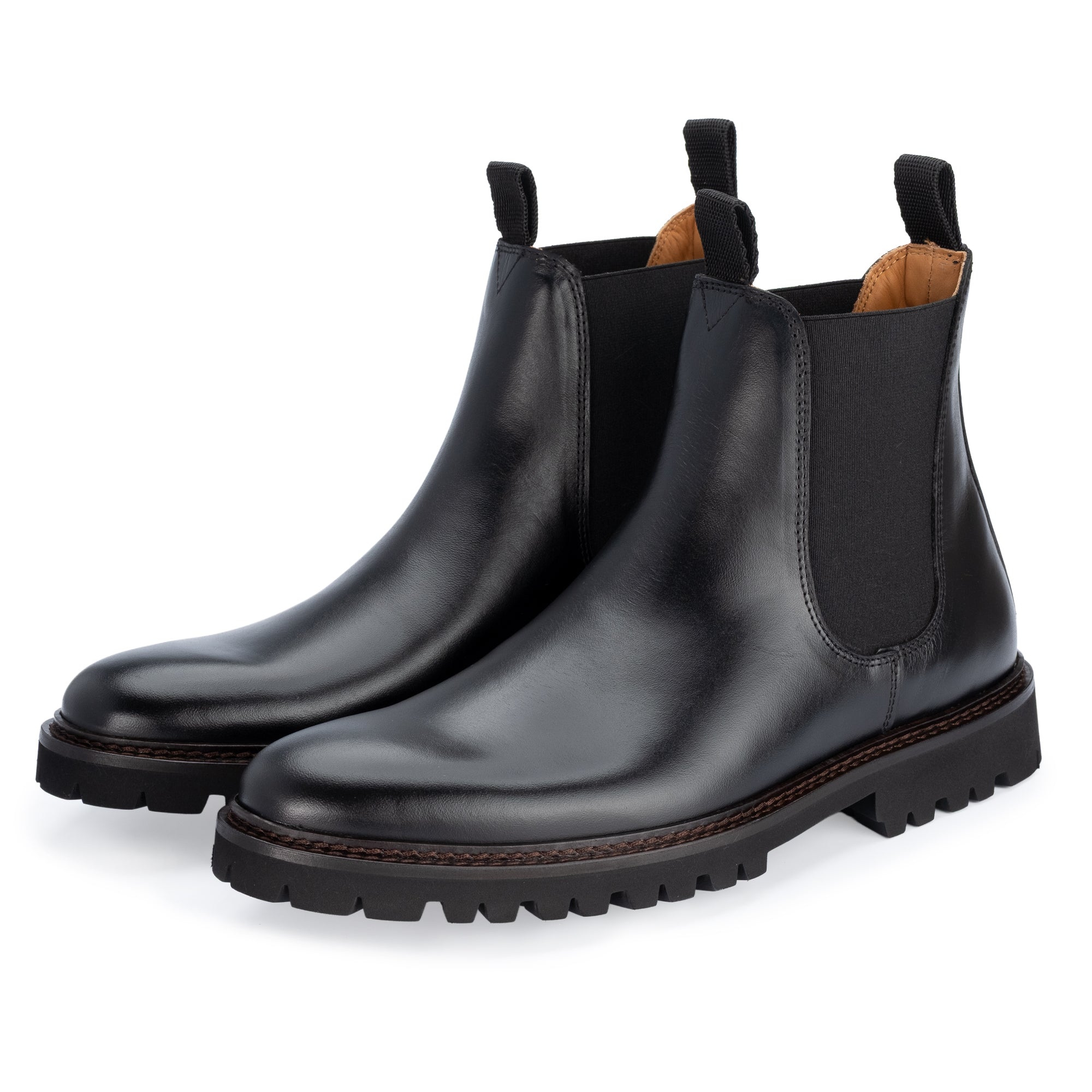
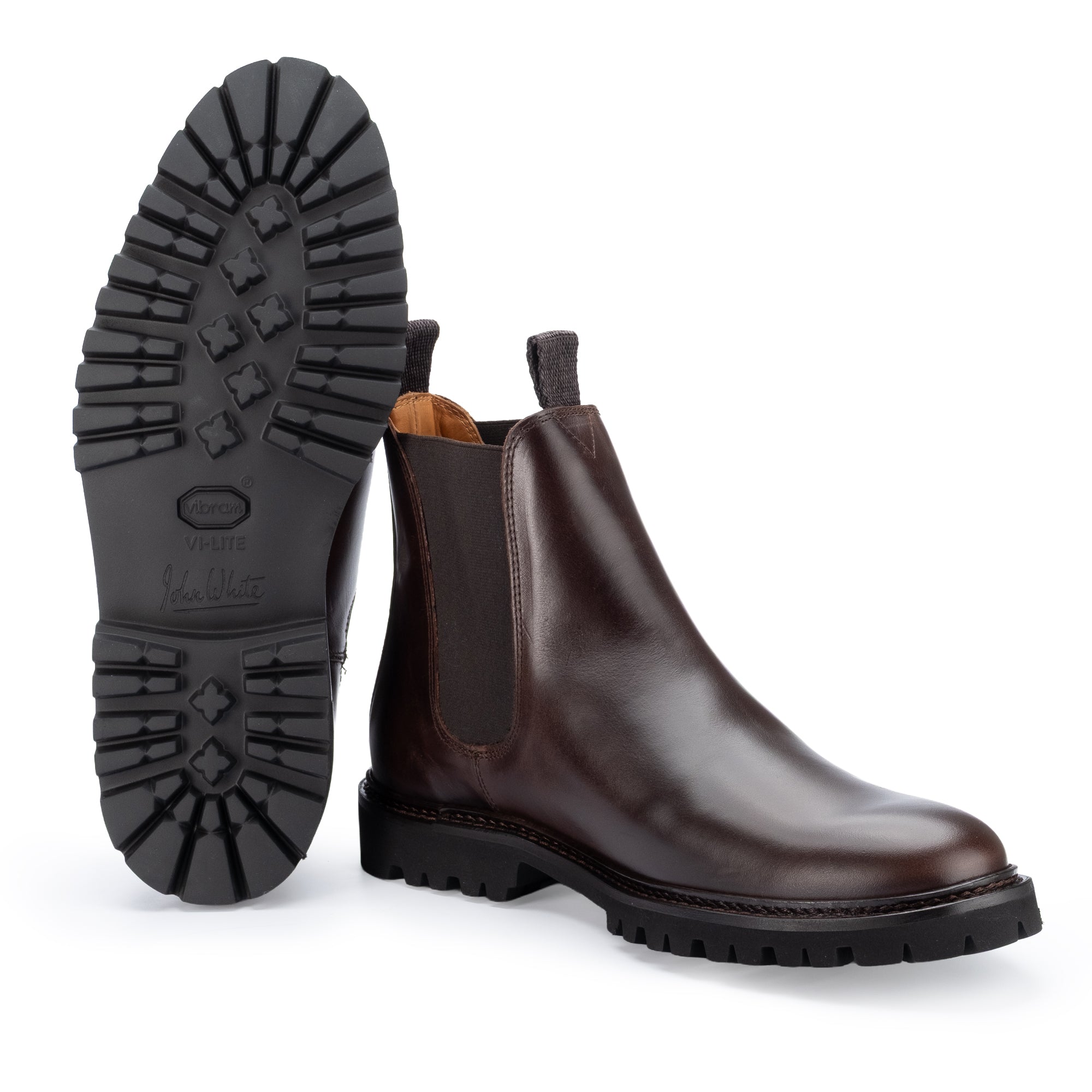
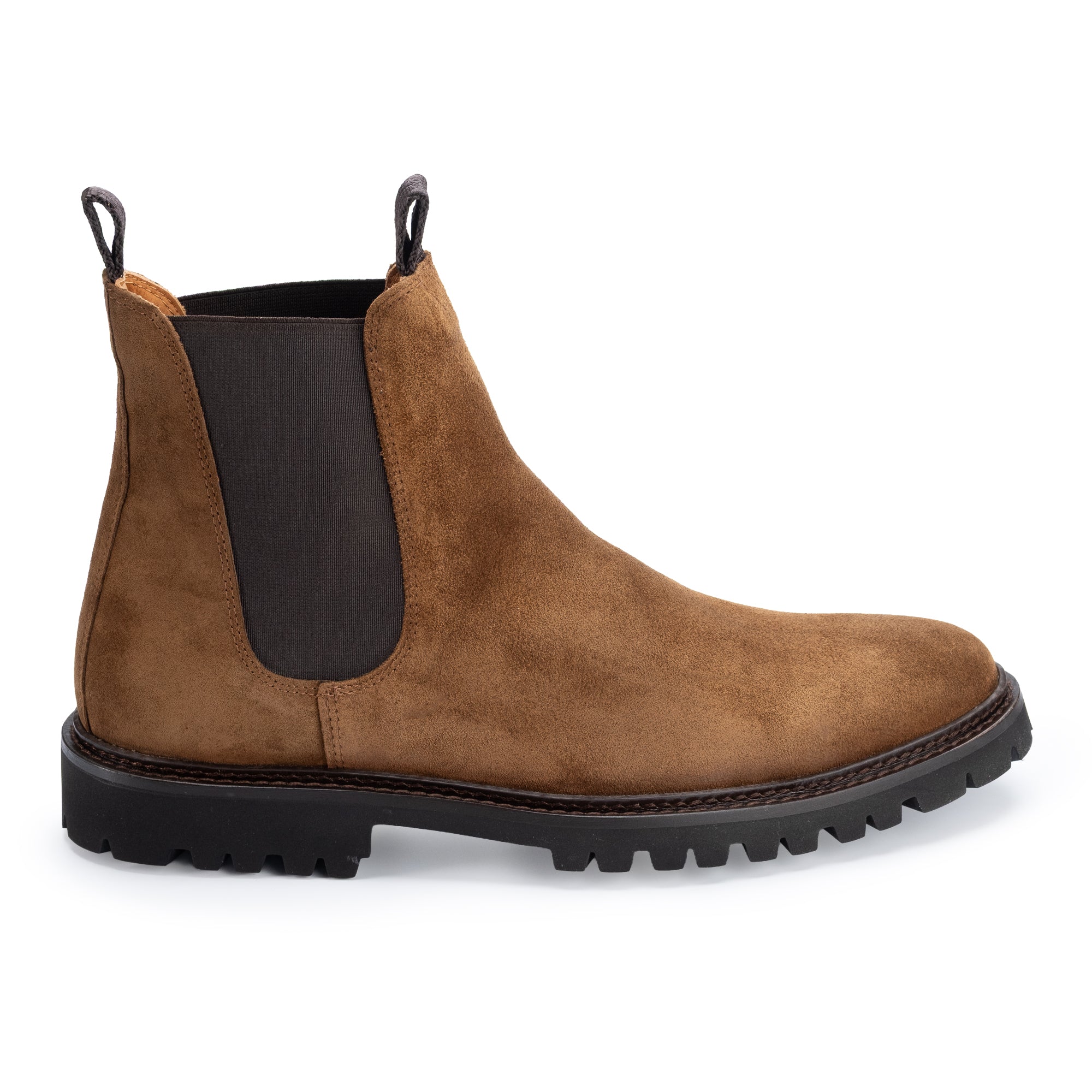
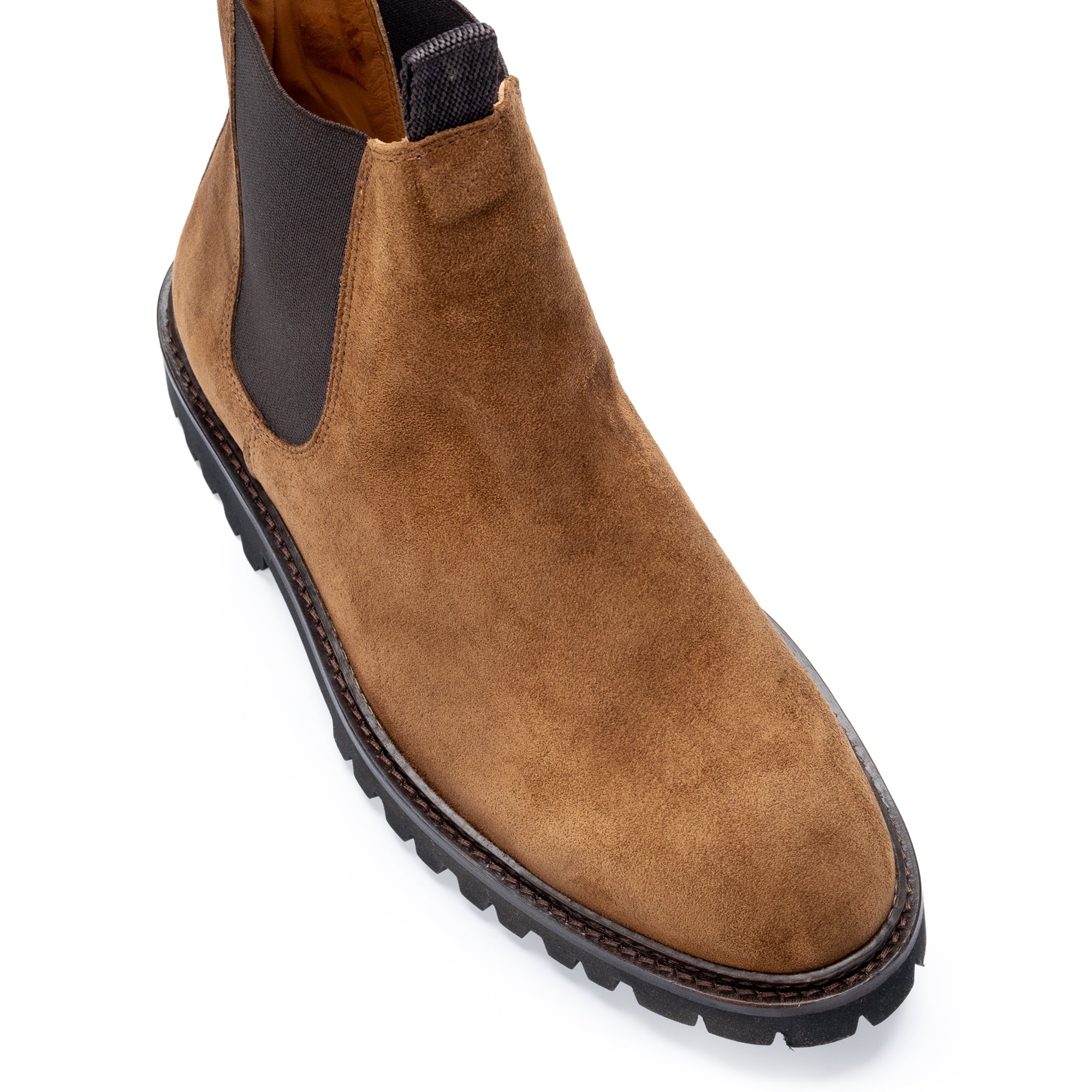
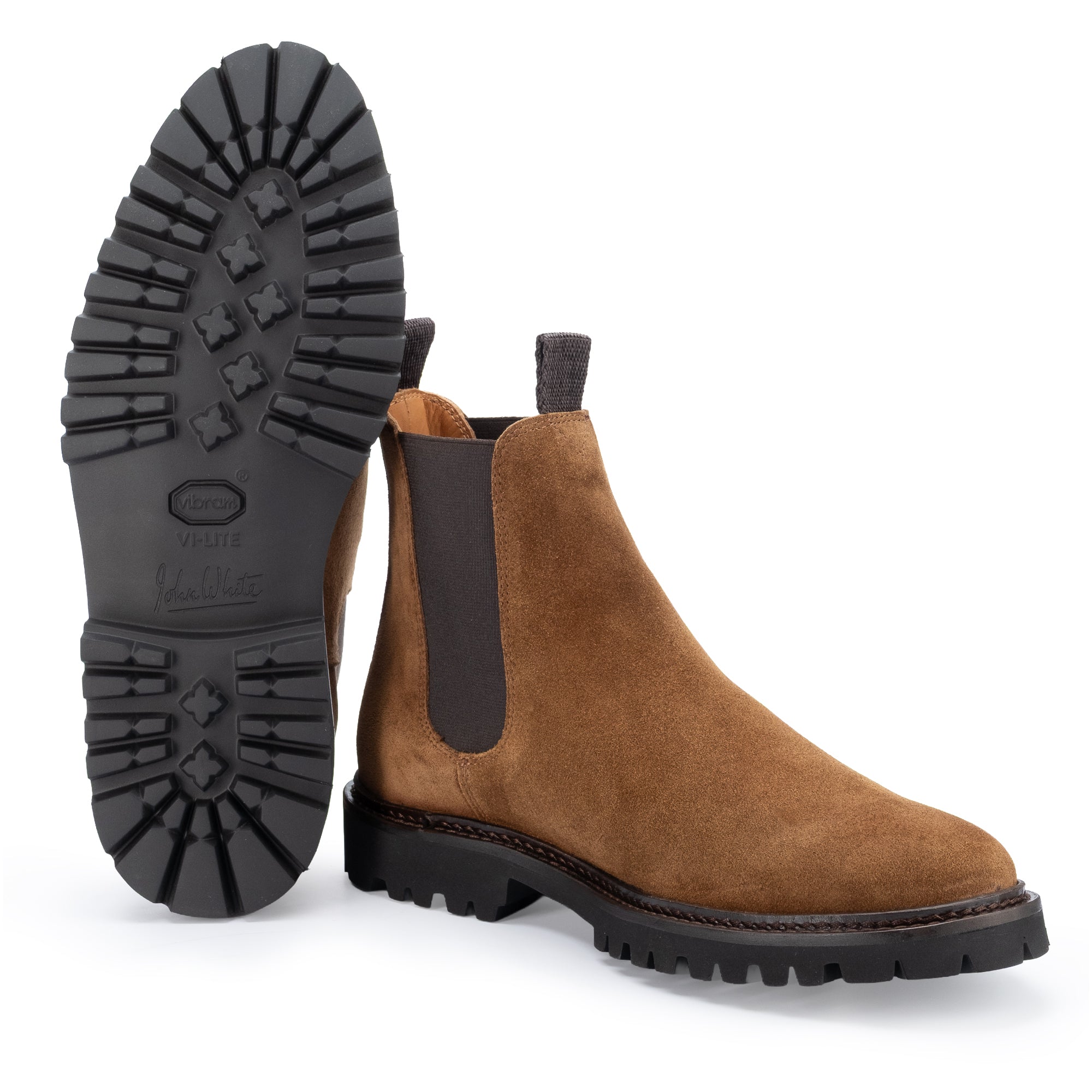
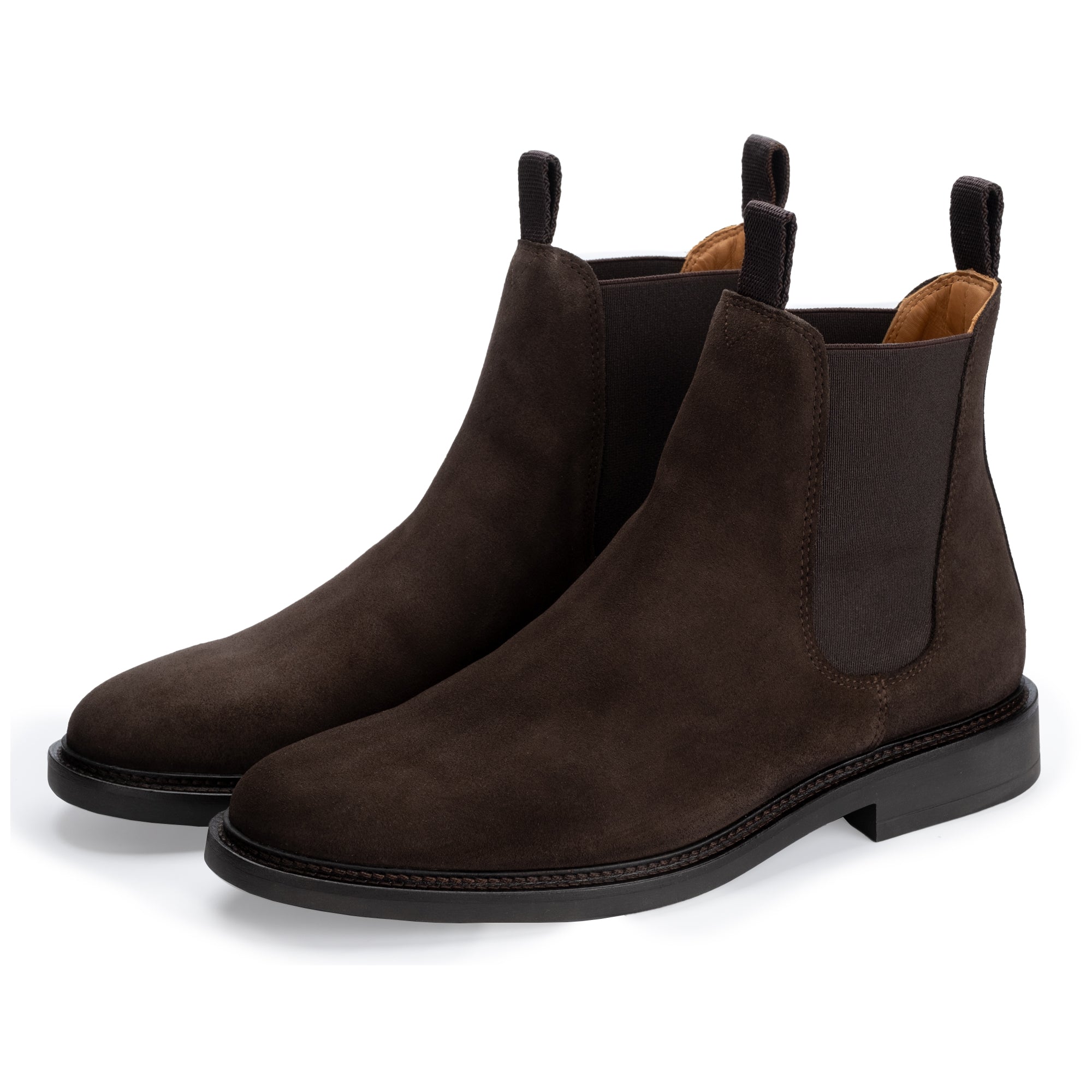
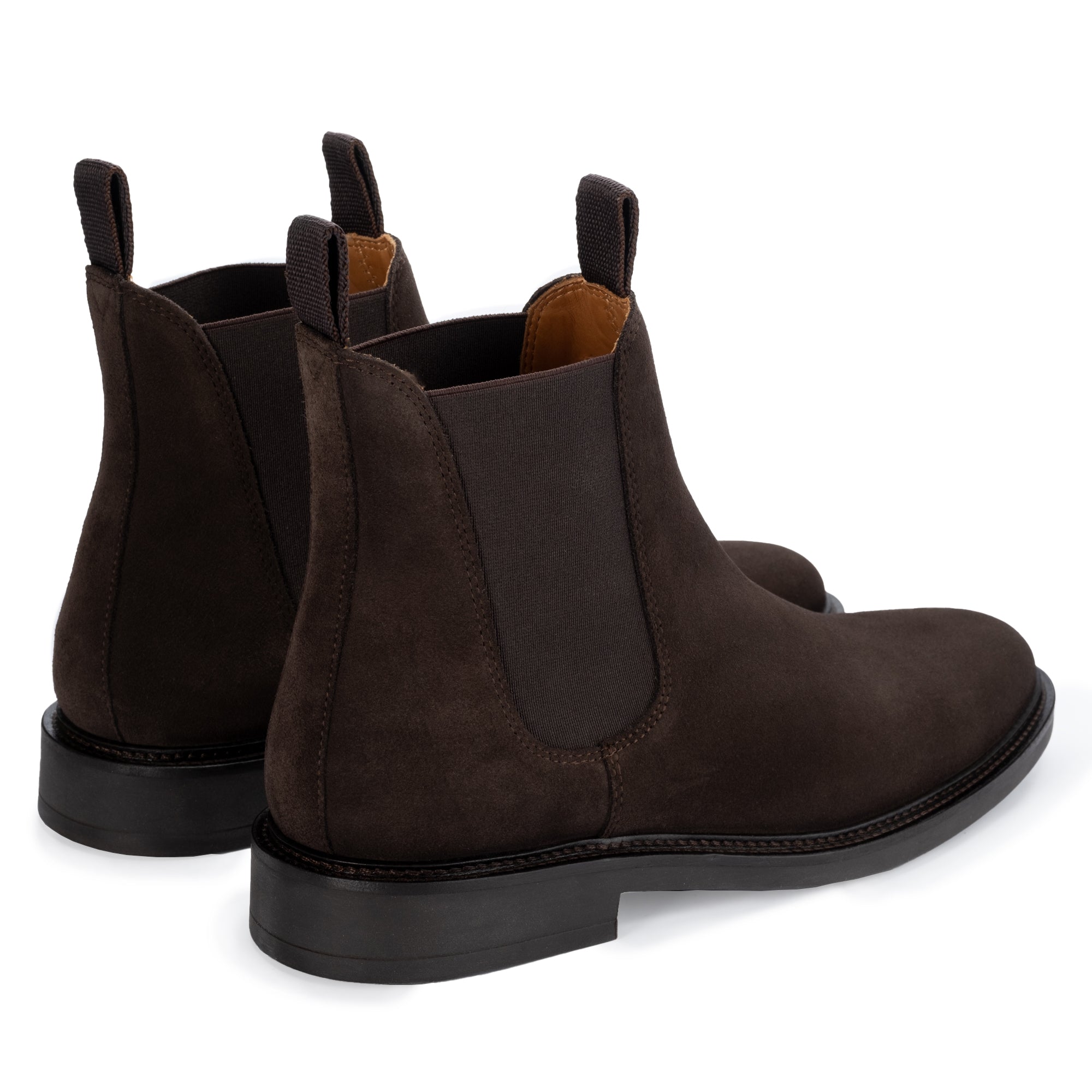
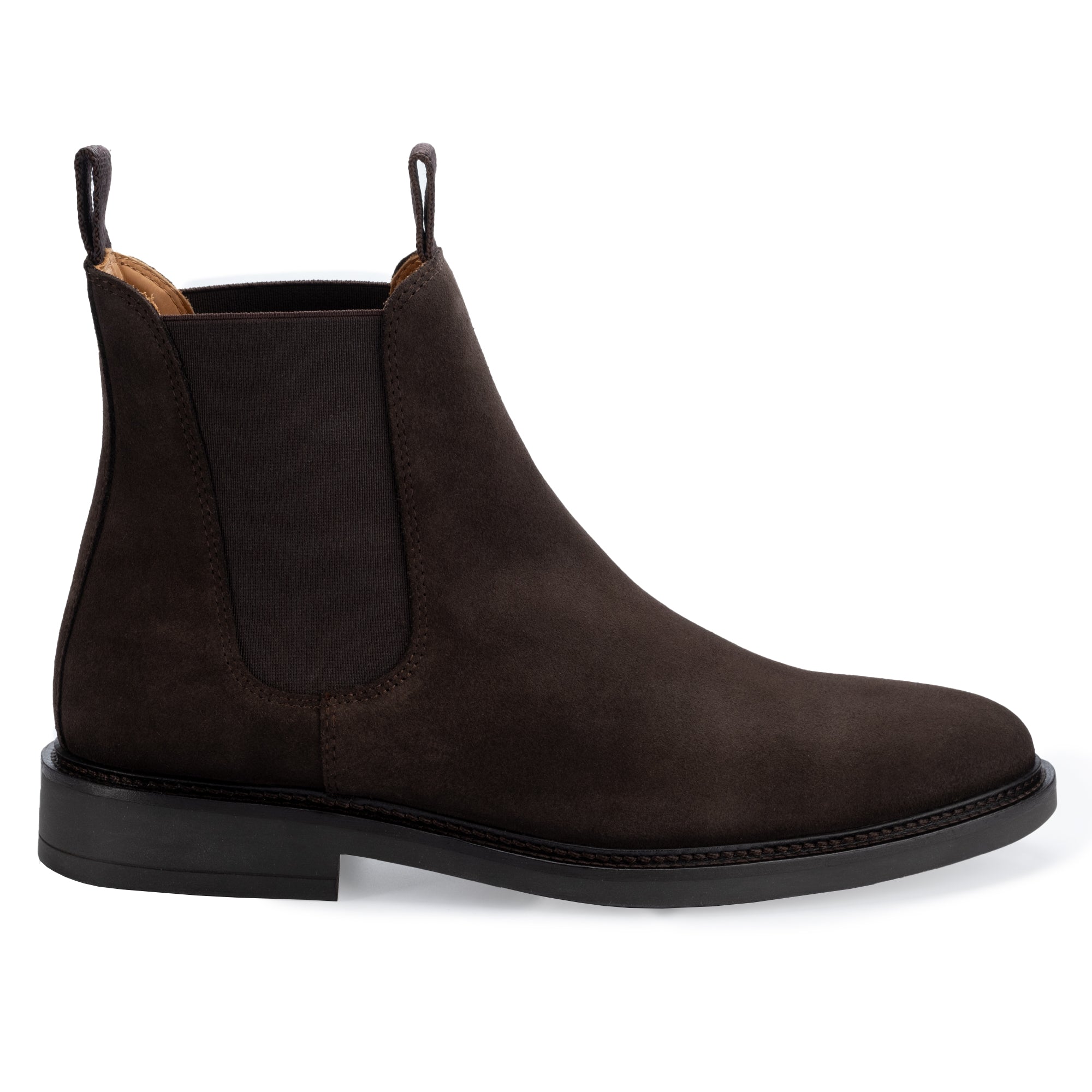
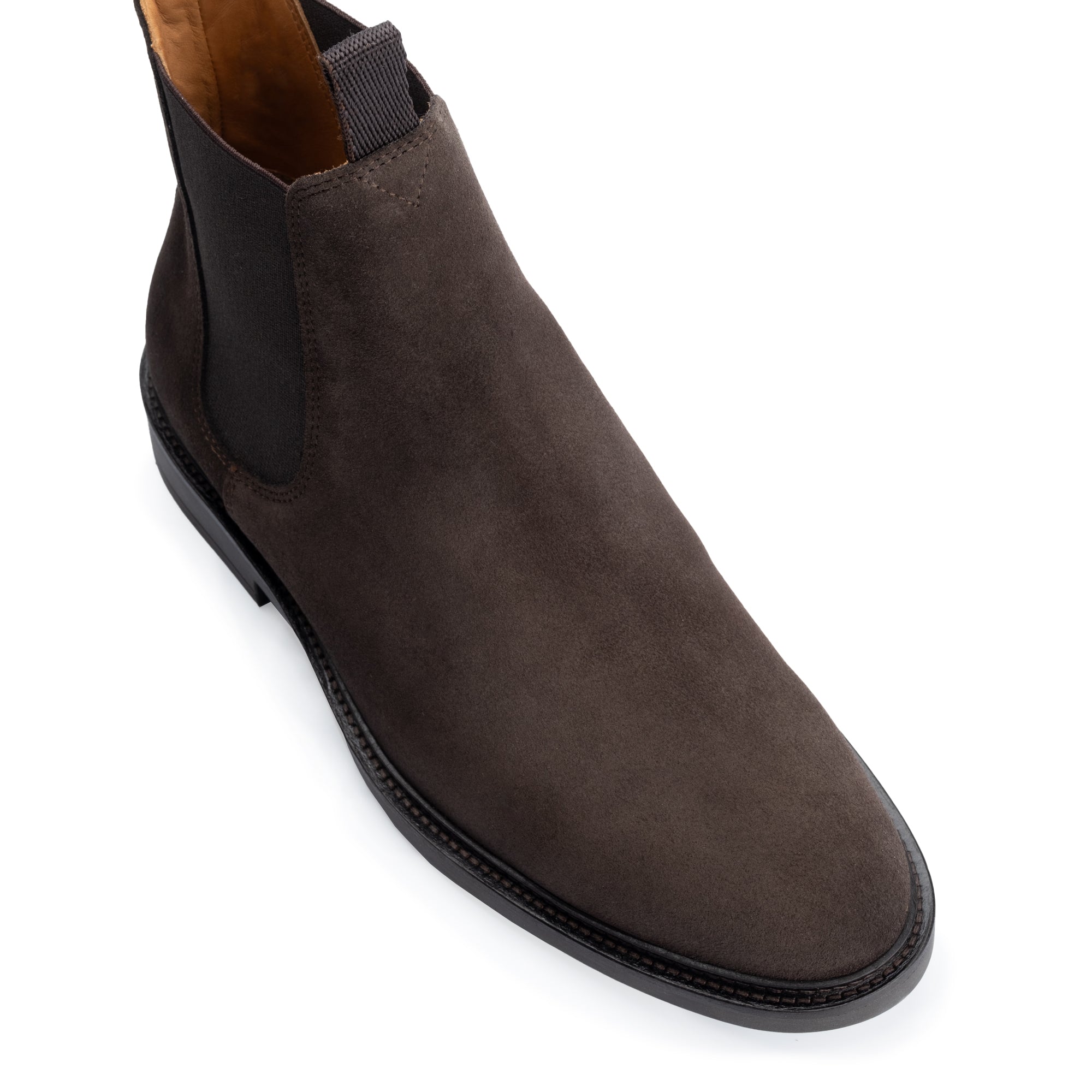
No suit required, but “trainers and chinos” is the lower limit, not the aim. This tier suits a Derby, a loafer, or a Chelsea boot. The objective is looking considered without the architecture of formality. Even so, quality signals matter — worn-out soles and collapsed uppers undermine the effect regardless of the shoe’s design.
The Oxford — The Professional First Choice
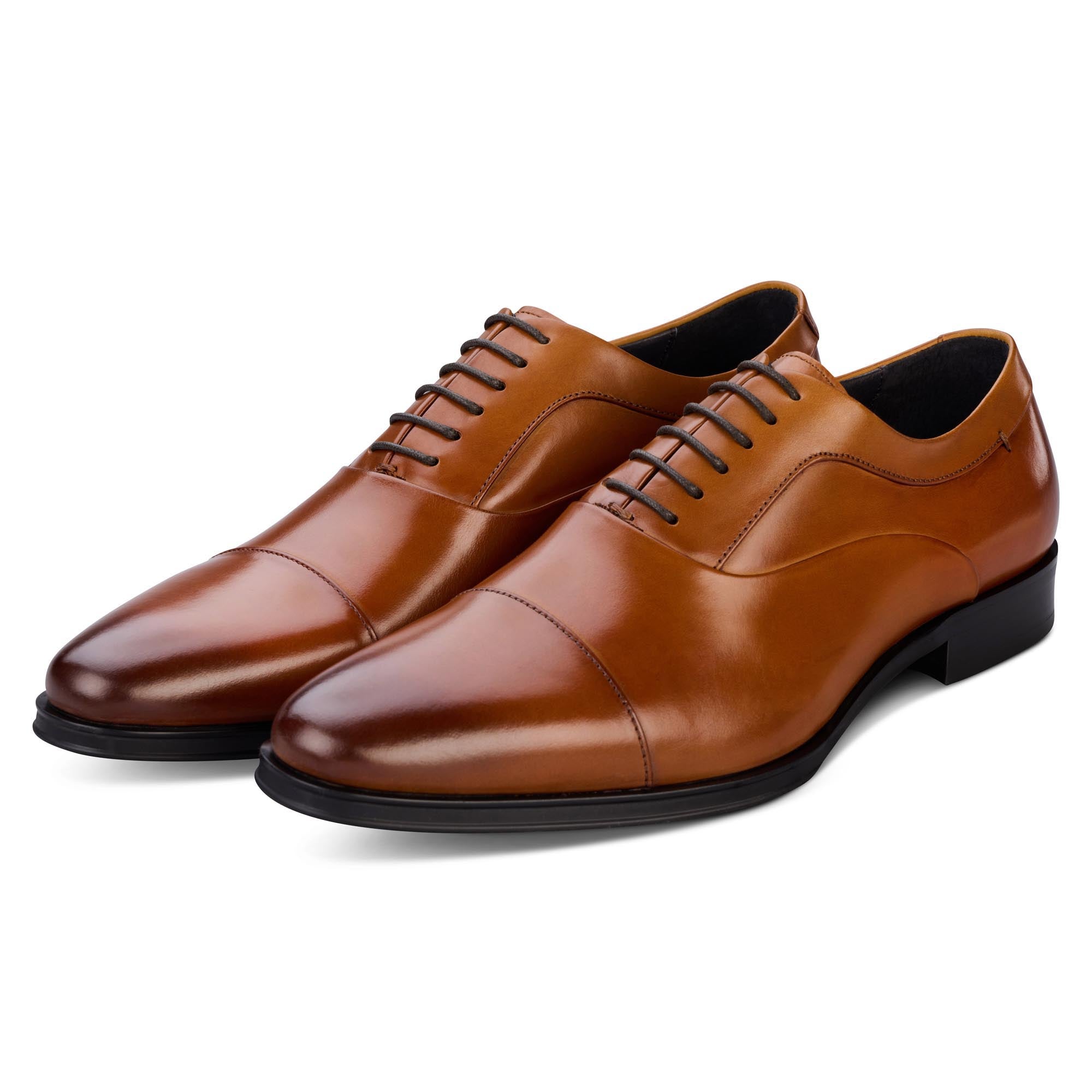
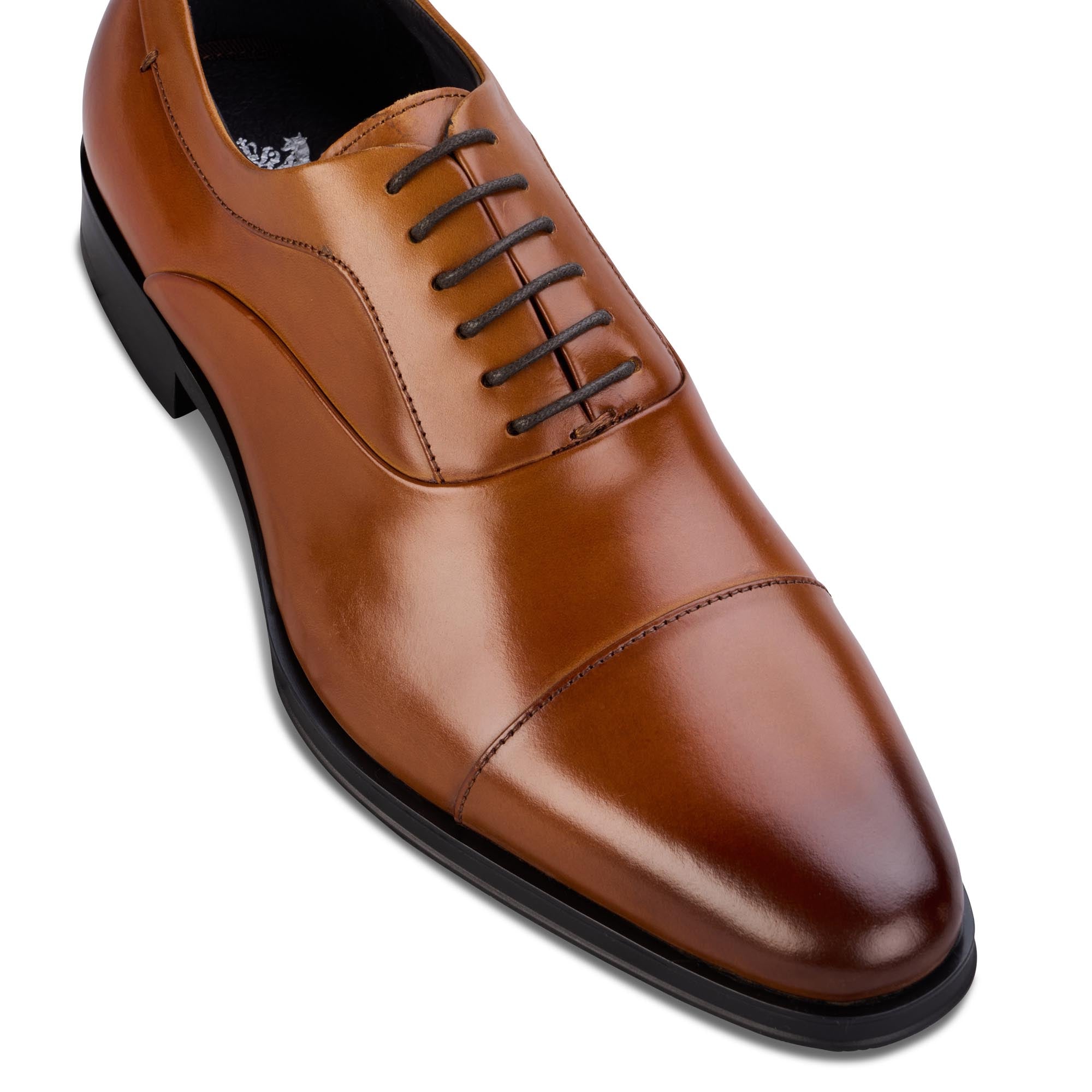
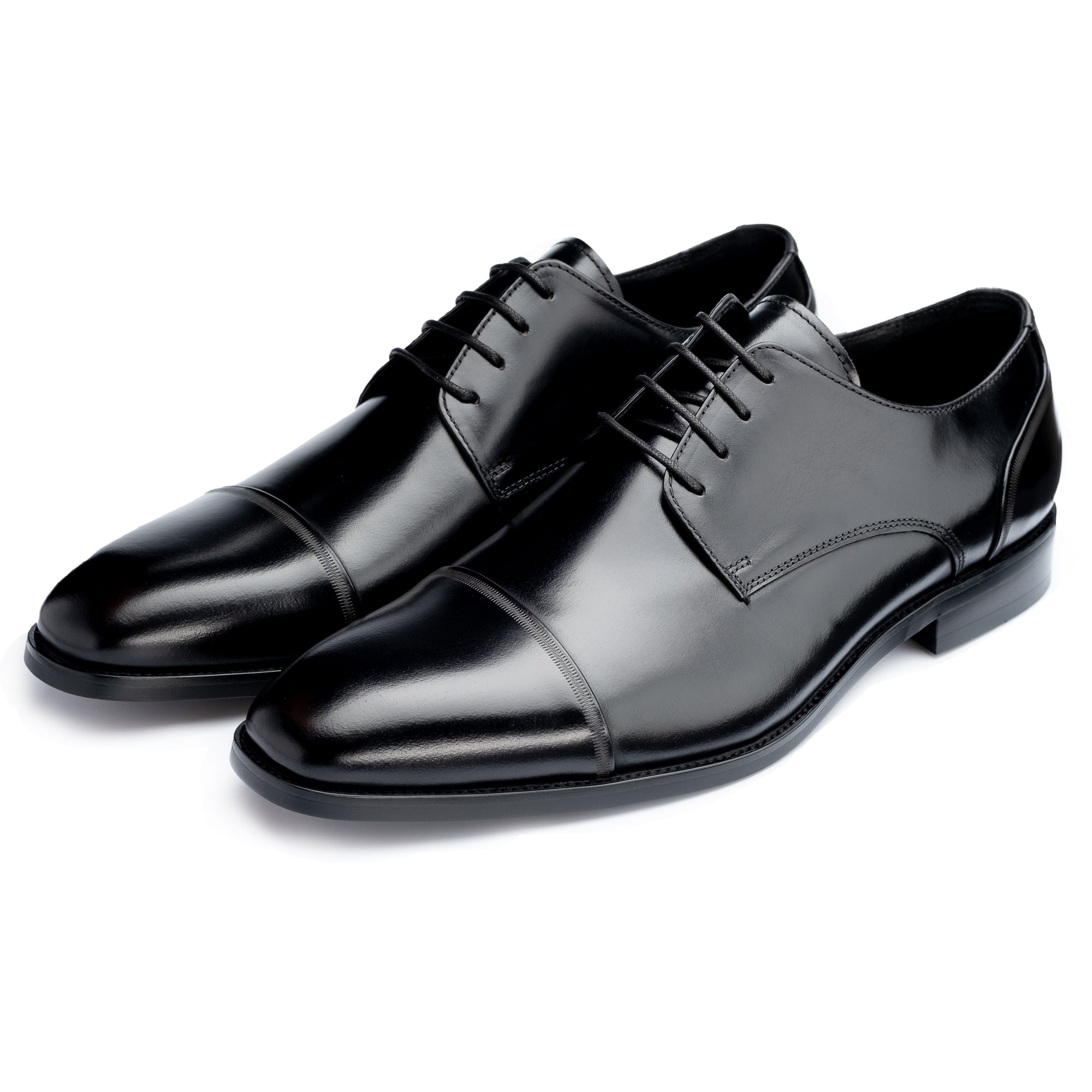
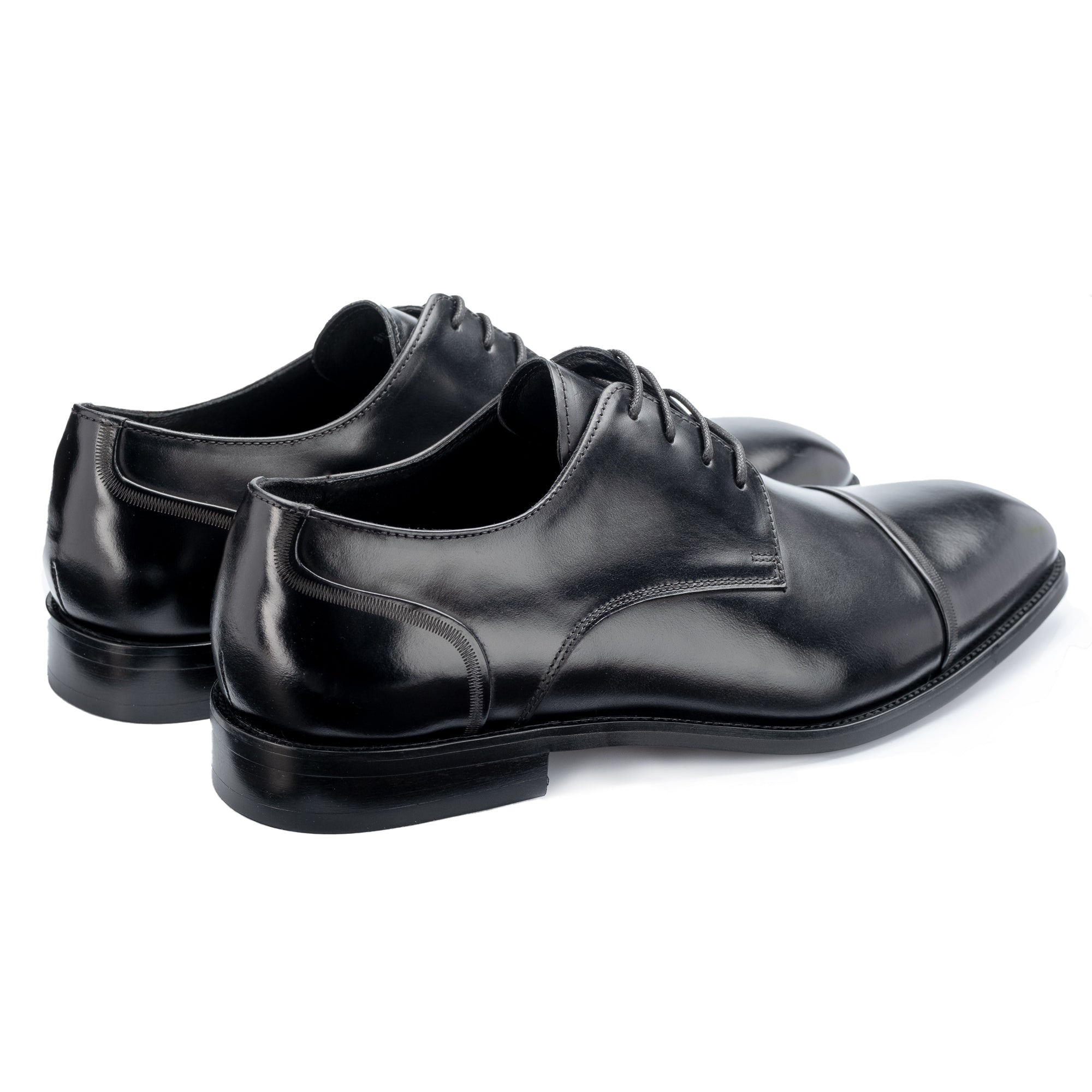
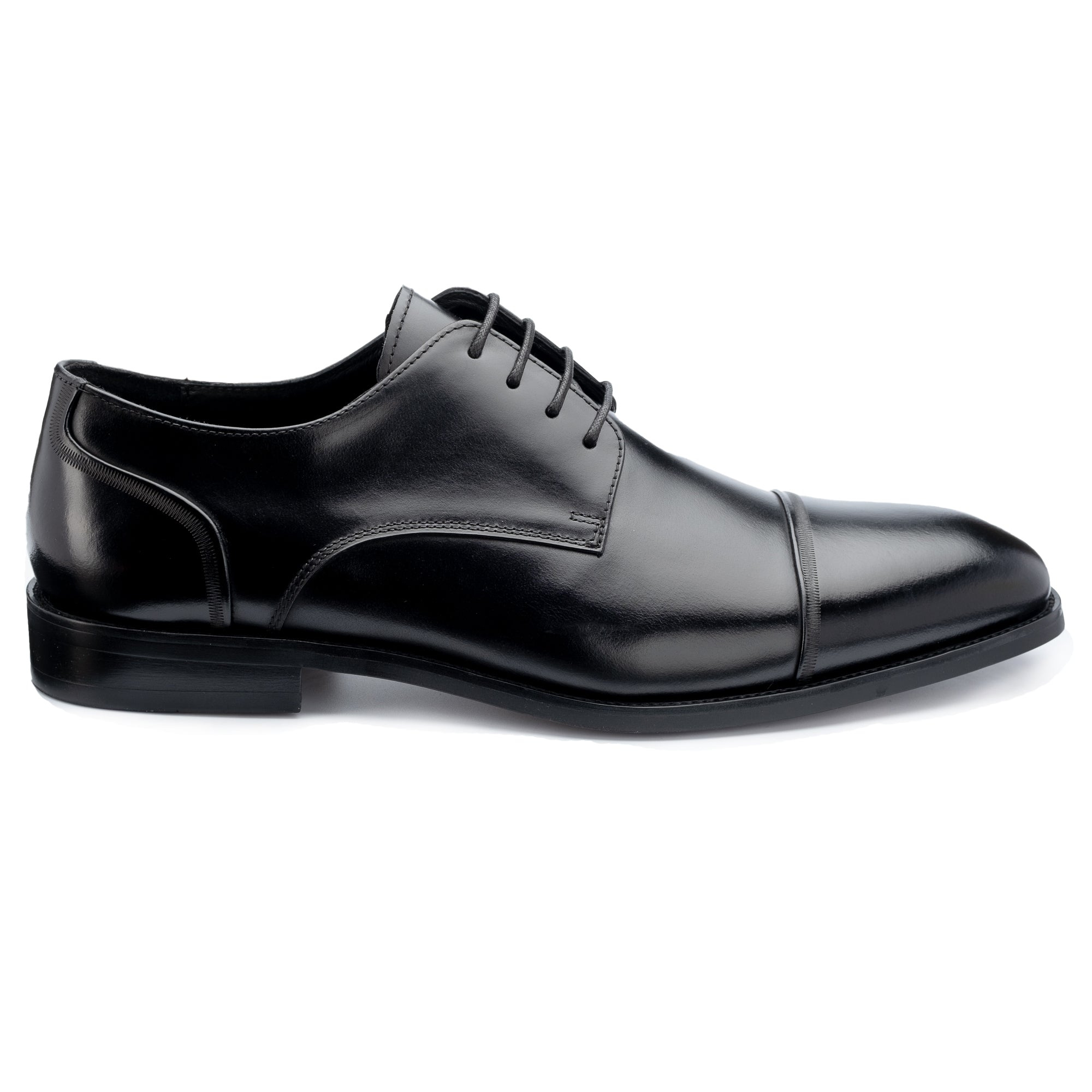
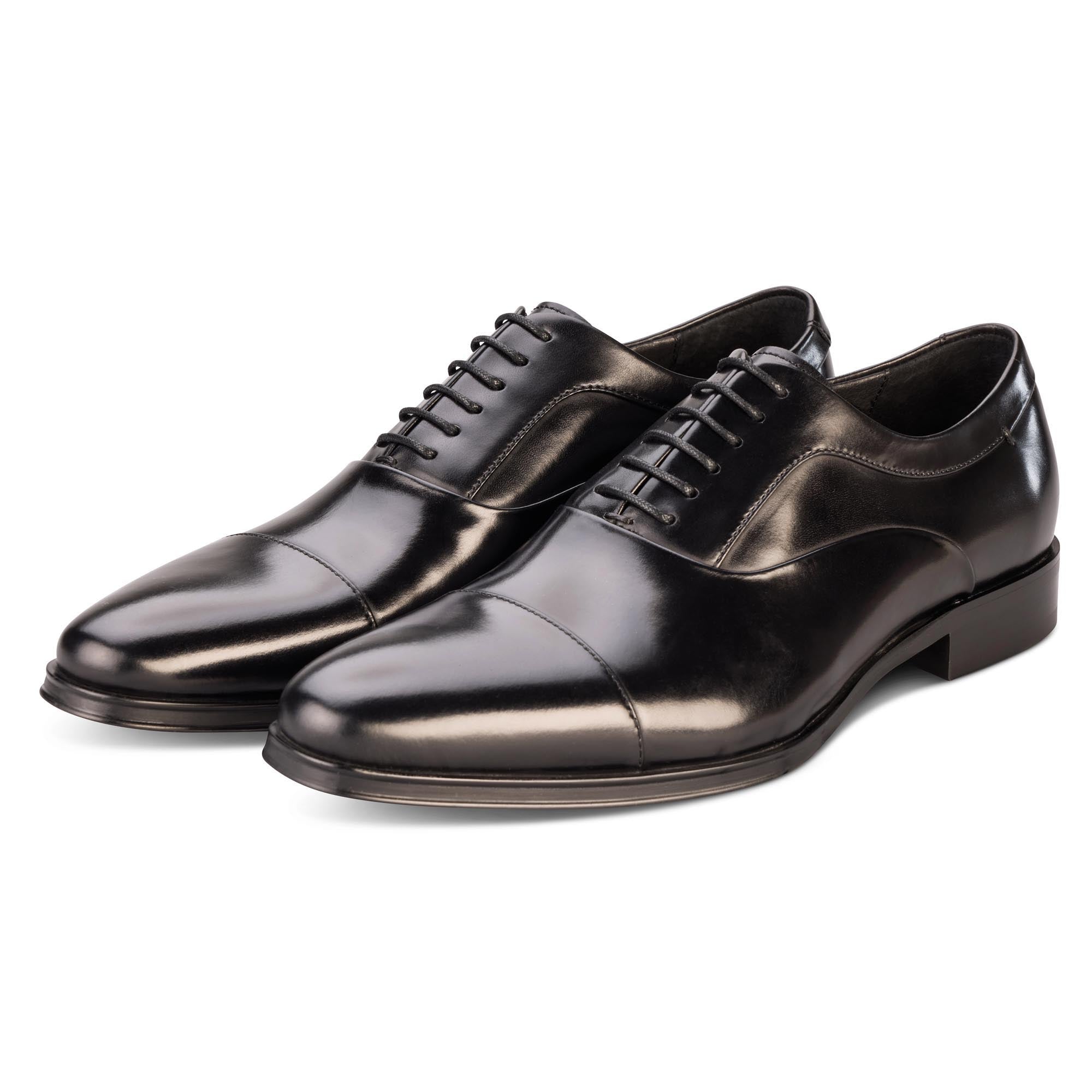
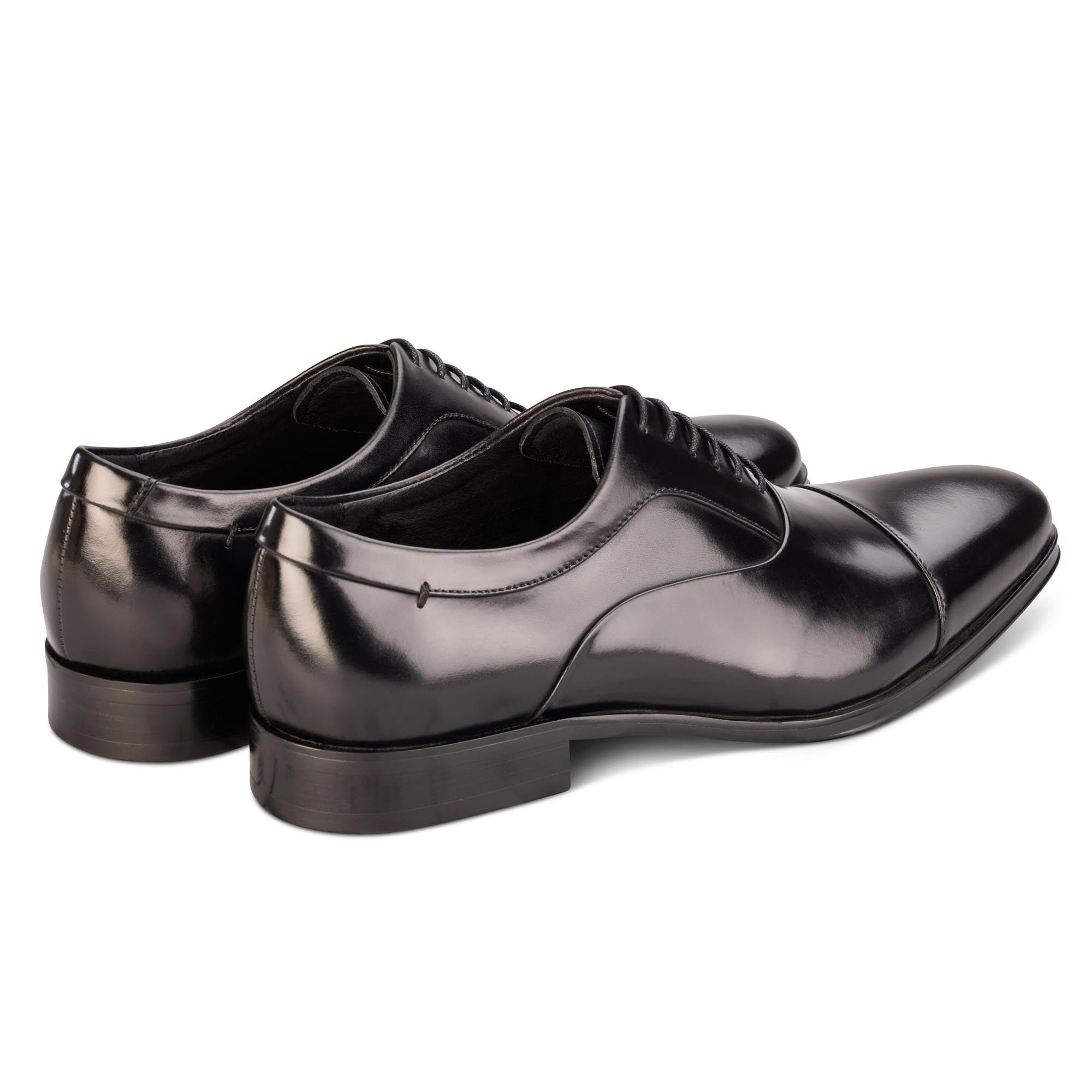
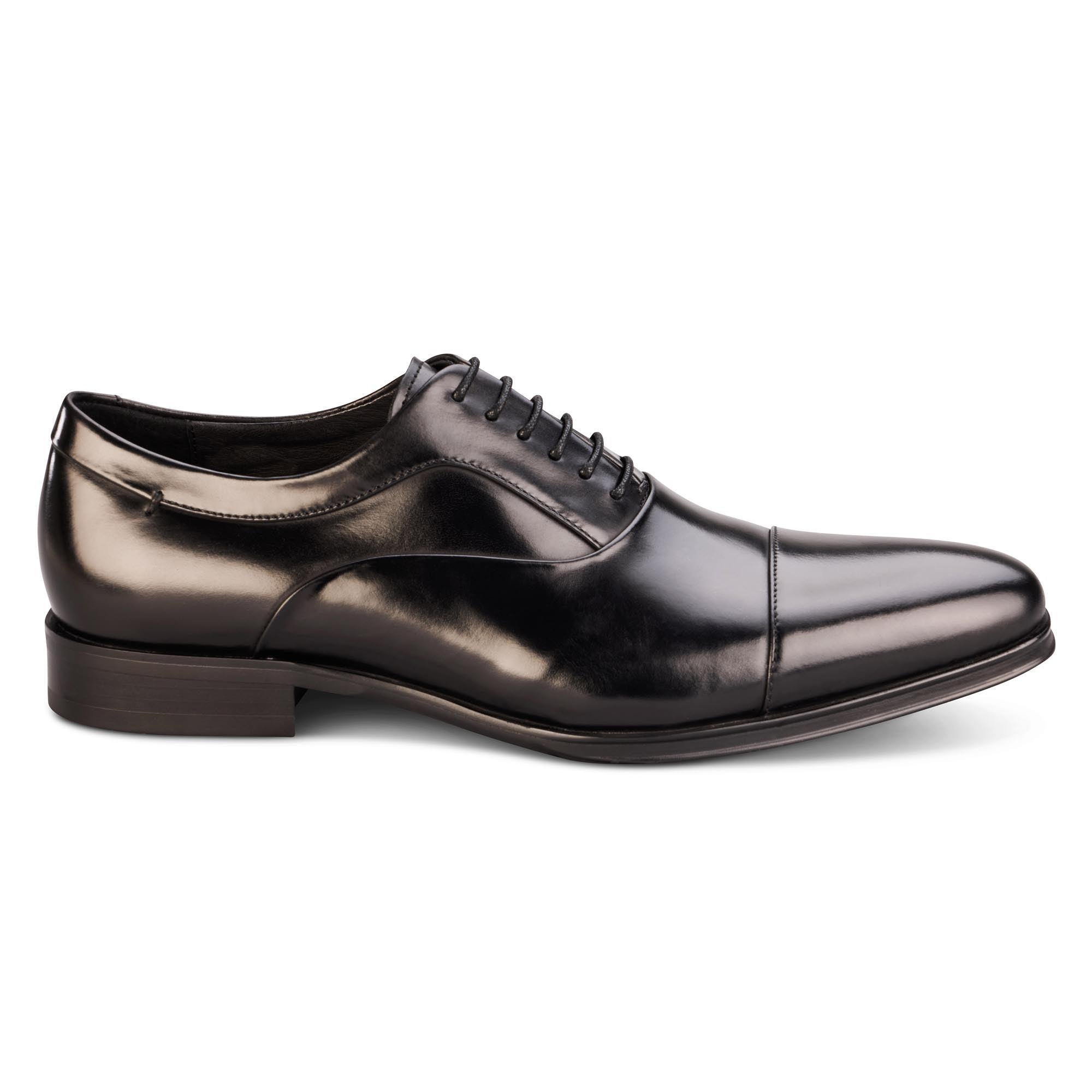
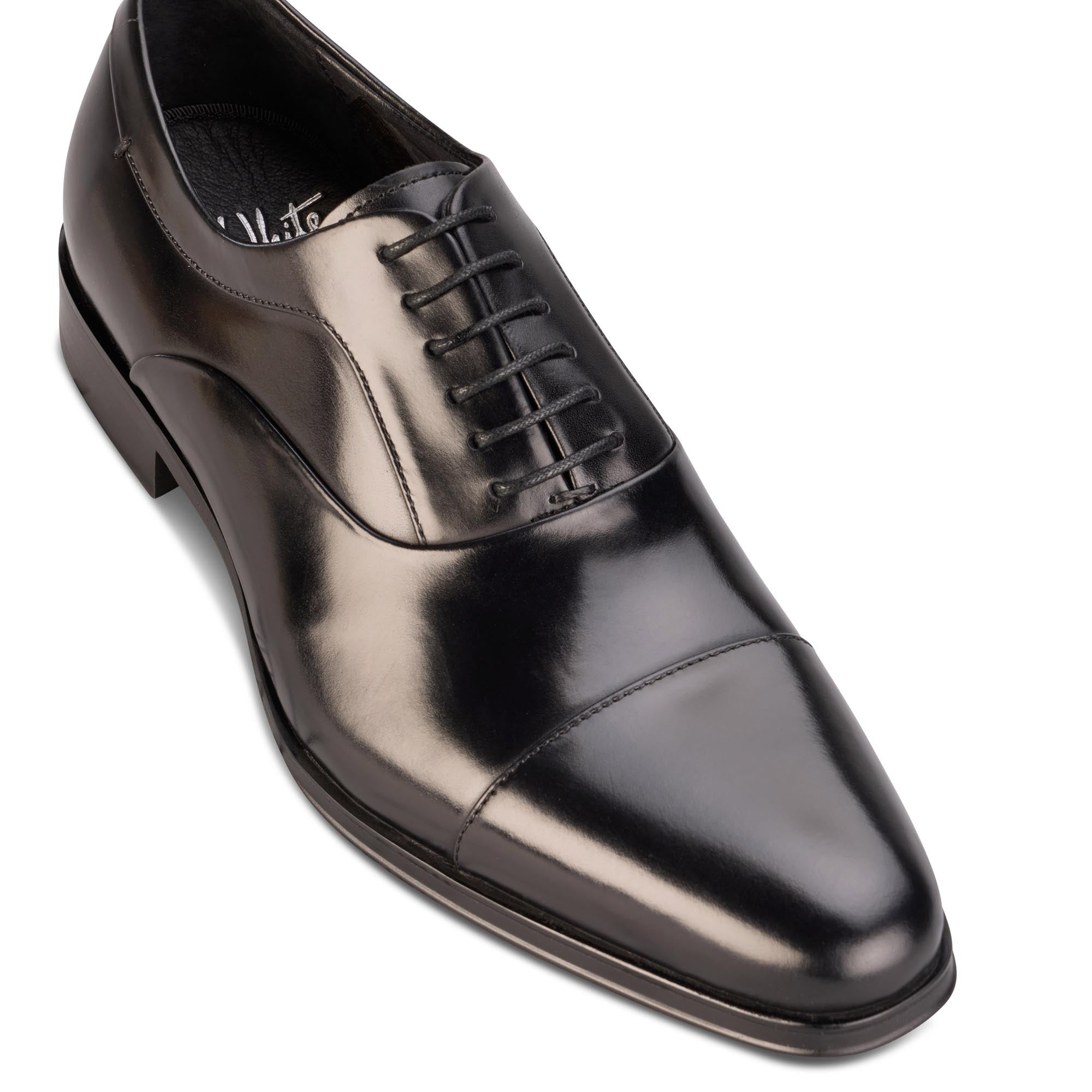
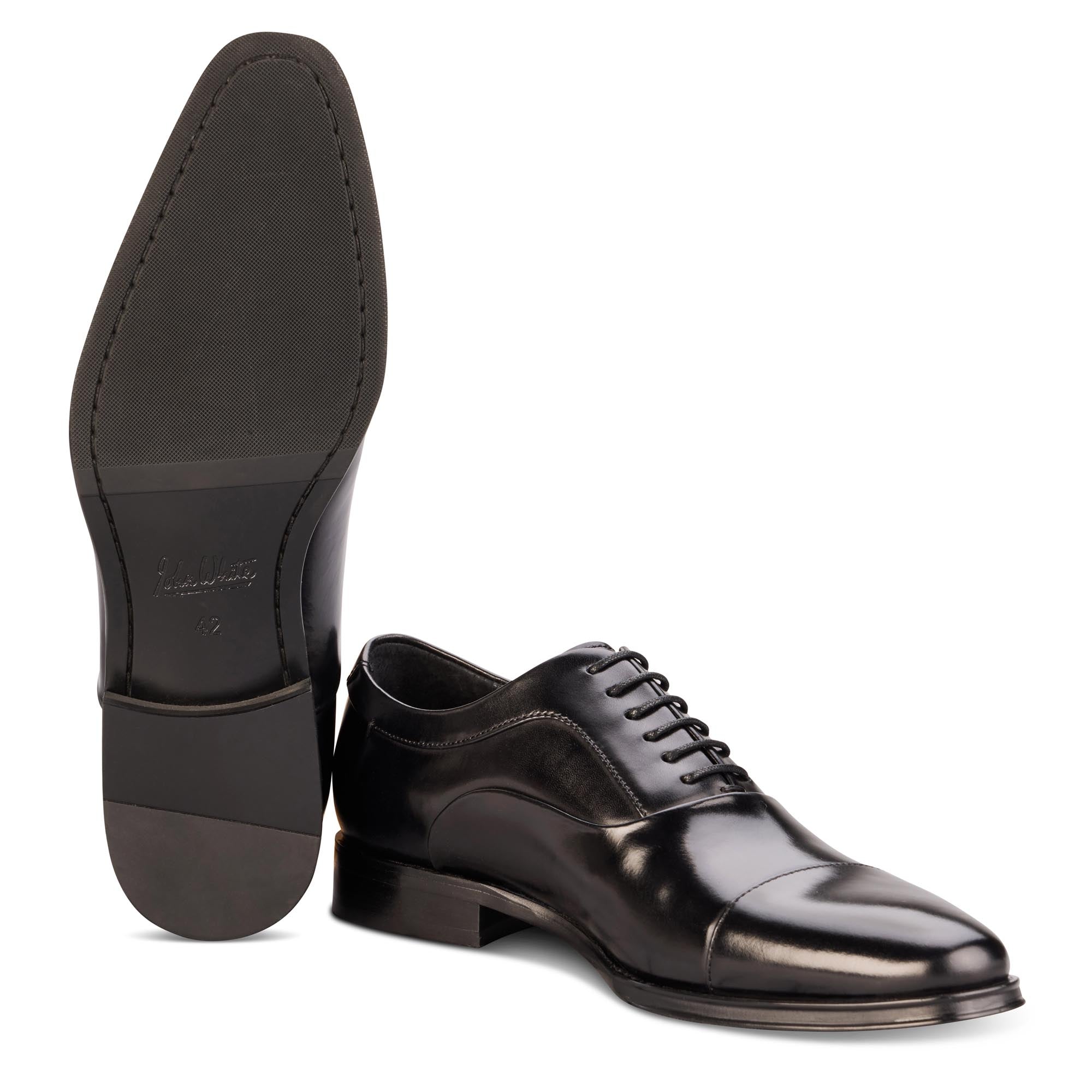
The Oxford is the correct answer to the formal office because it offers nothing extraneous. The closed-lacing system — where the quarters stitch underneath the vamp — produces a low, clean profile that sits neatly under a trouser break without competing for attention. There is a reason the Oxford has been the default formal shoe for a century: it does its job quietly.
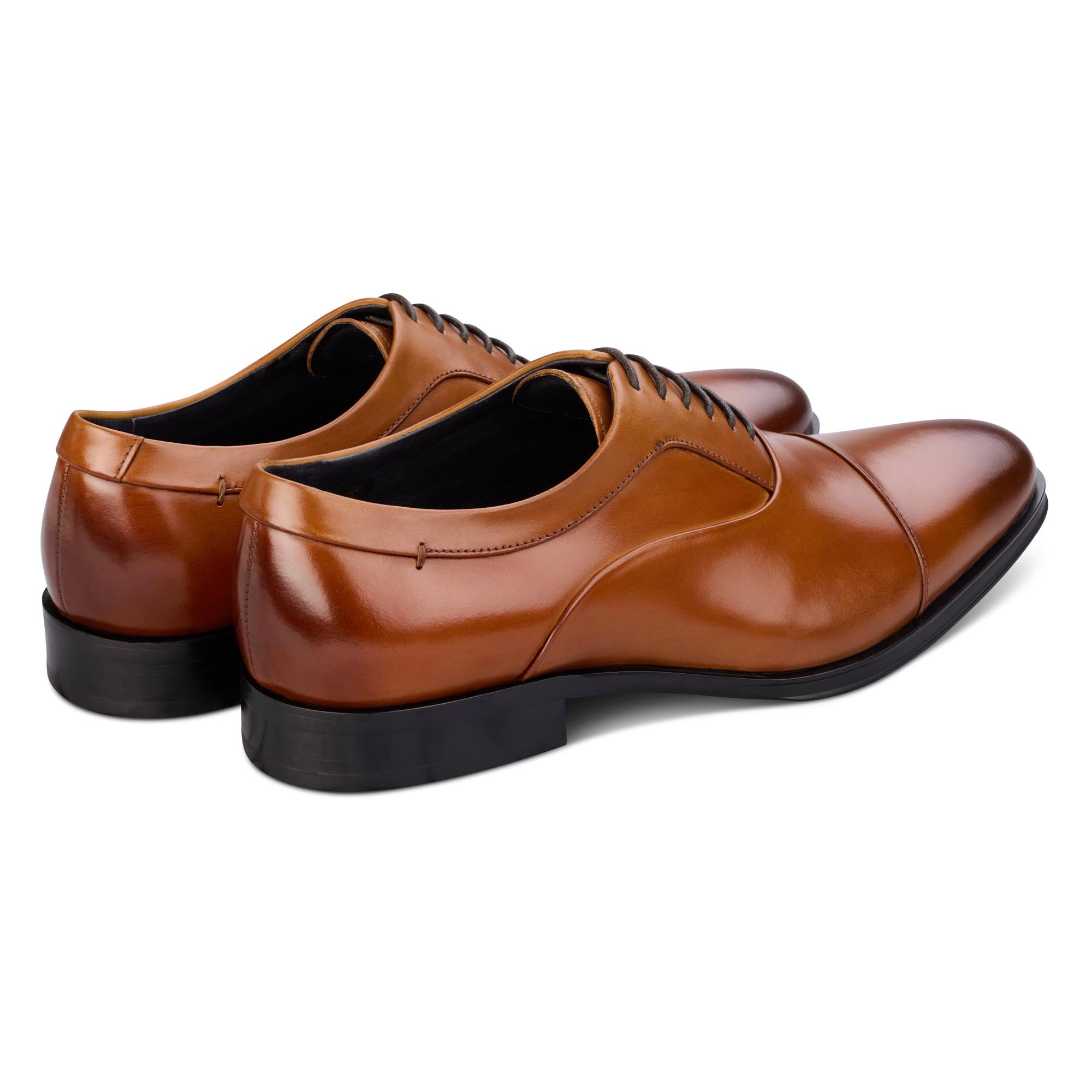
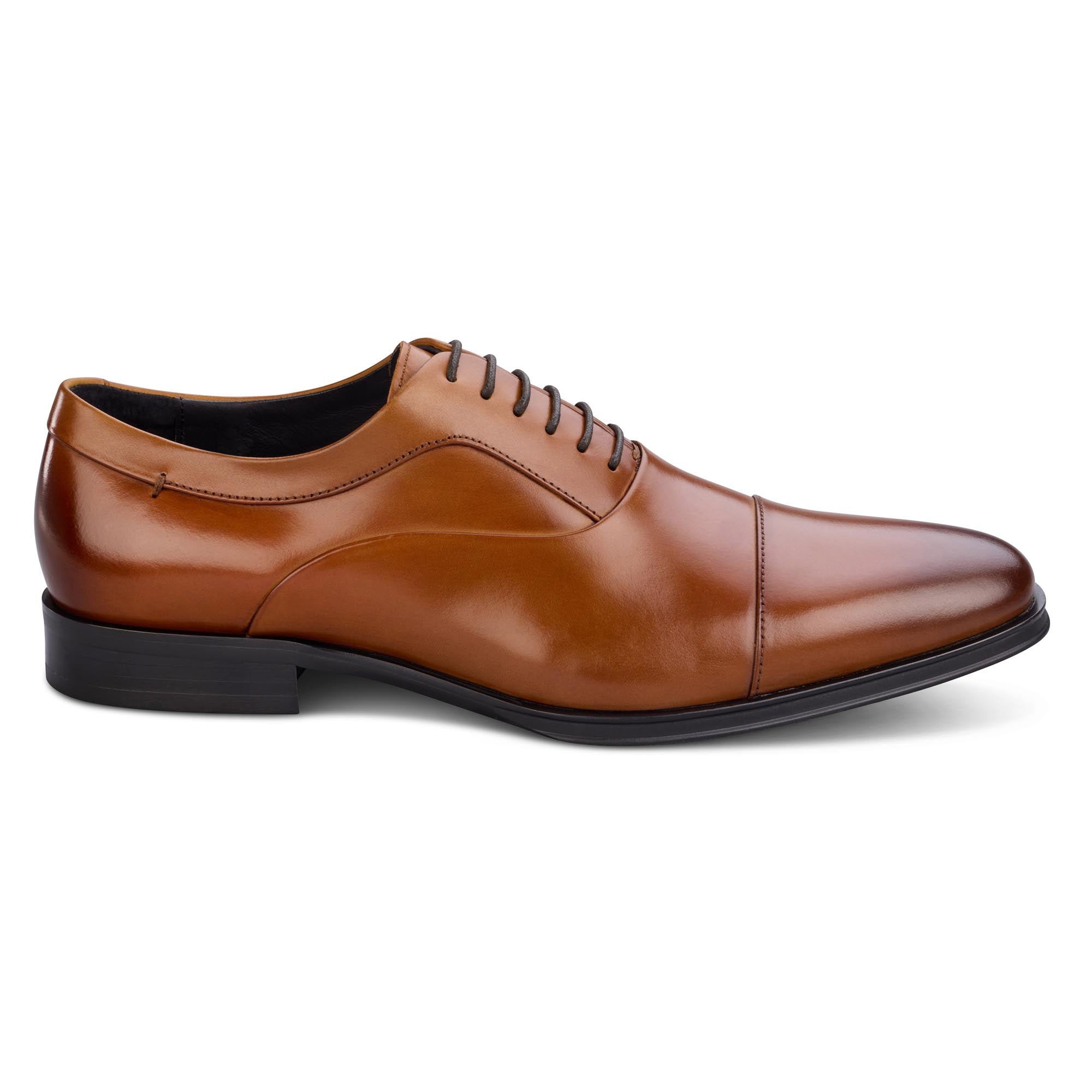
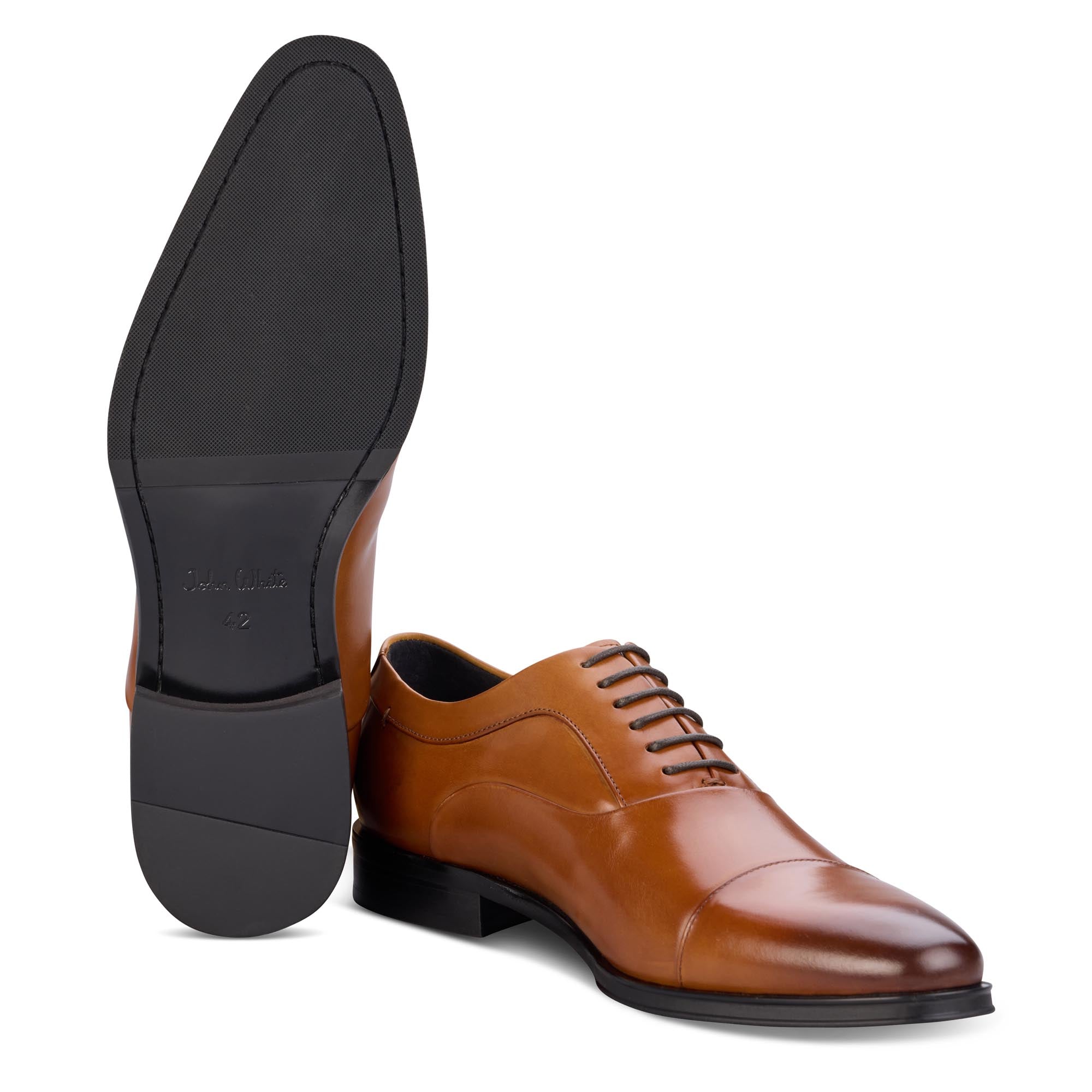
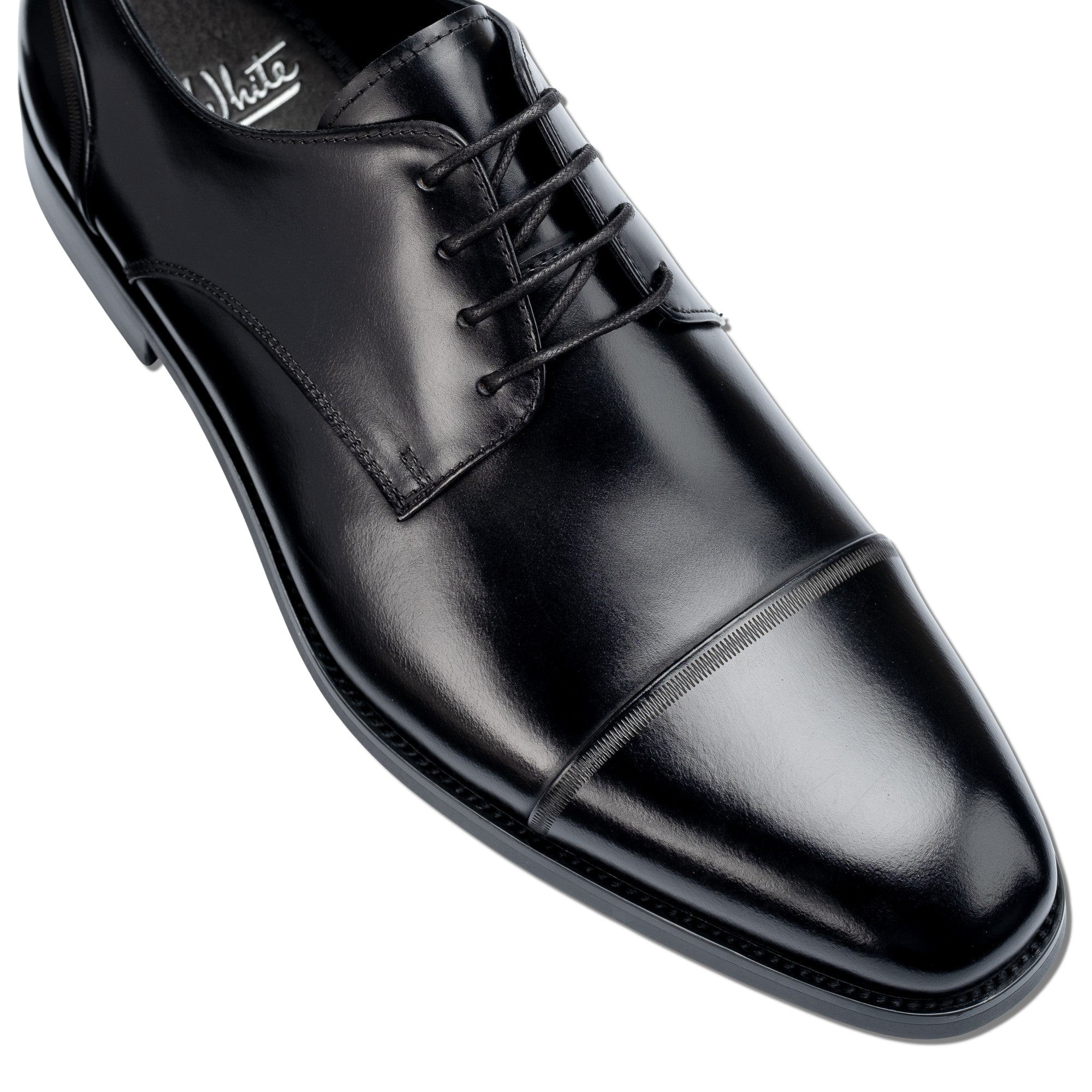
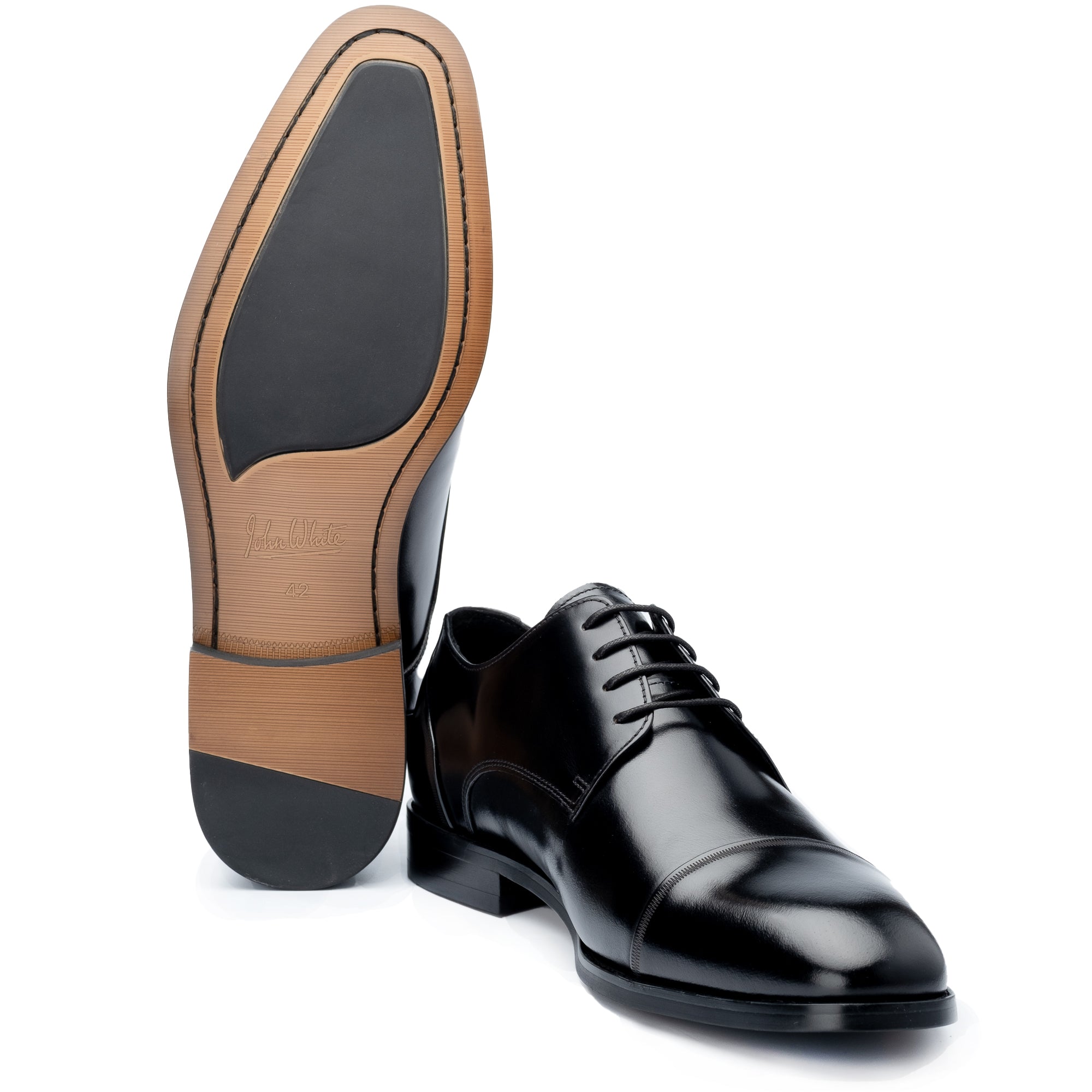
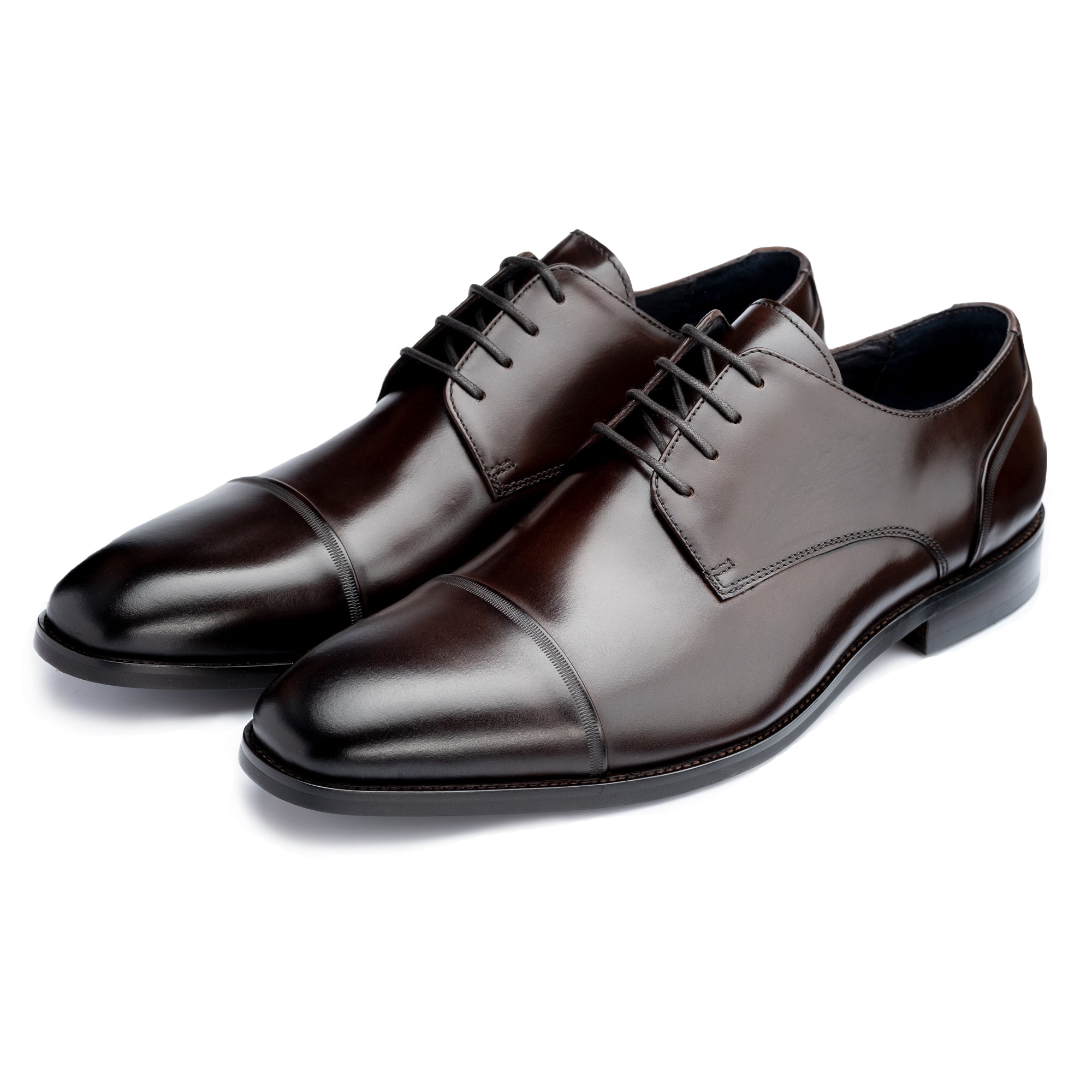
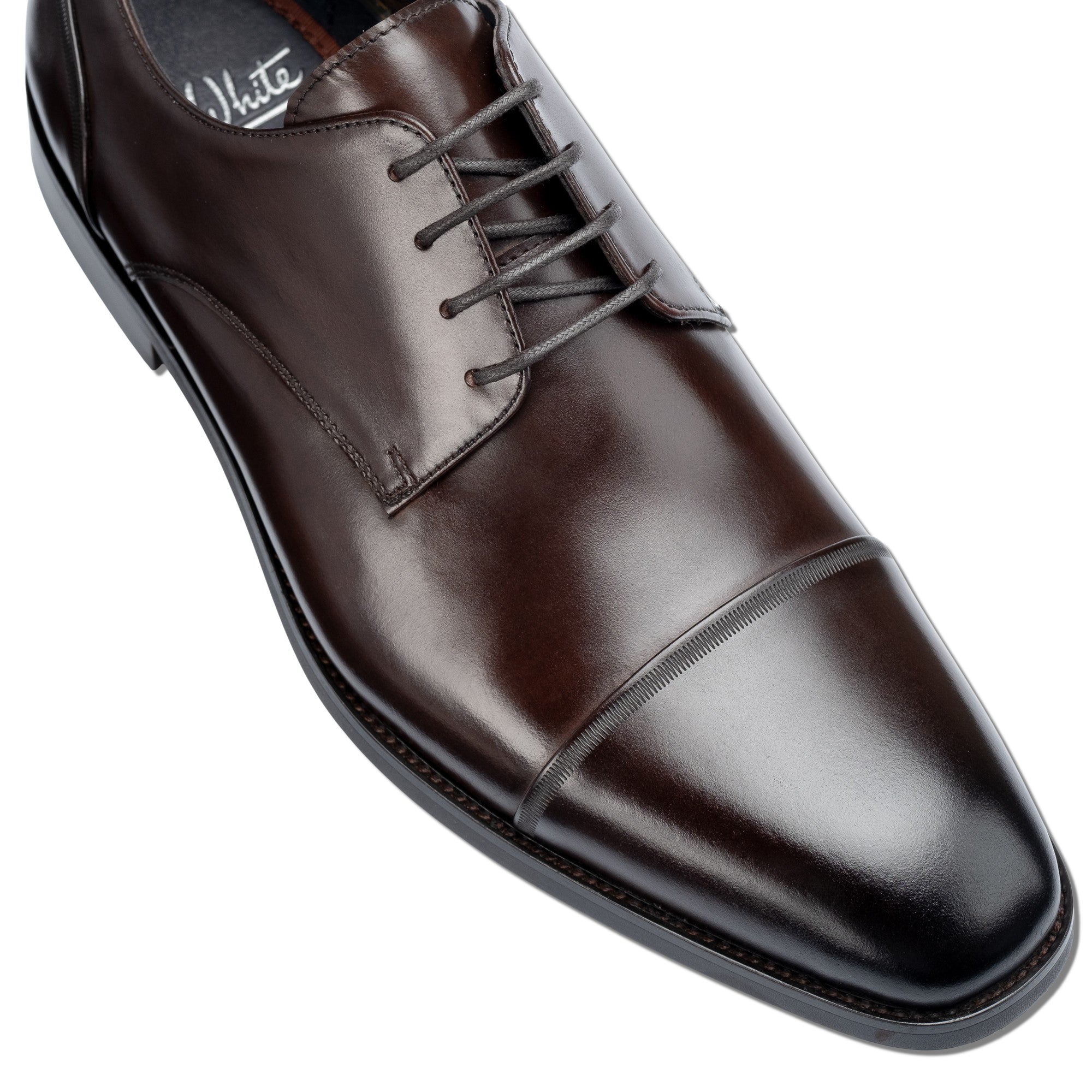
The Guildhall Capped Oxfords in Black are the straightforward working choice. Browse the full Oxford shoe range if you want to compare the Black and Tan colourways before deciding. The cap toe — a separate leather piece stitched horizontally across the toe — adds visual weight that reads as deliberate without ornamentation. It is a detail the formal office understands immediately.
For the business professional tier, the Guildhall in Tan is worth considering alongside the Black. A tan cap-toe Oxford worn with a charcoal or navy suit is one of the more underrated professional pairings — warm, distinct, and correctly calibrated without being conspicuous.
If you’re uncertain whether a Derby or Oxford suits your wardrobe better, the Derby vs Oxford guide covers the structural and practical differences in full — it is a five-minute read that will sharpen every future shoe decision.
The Derby — The Working Wardrobe Workhorse
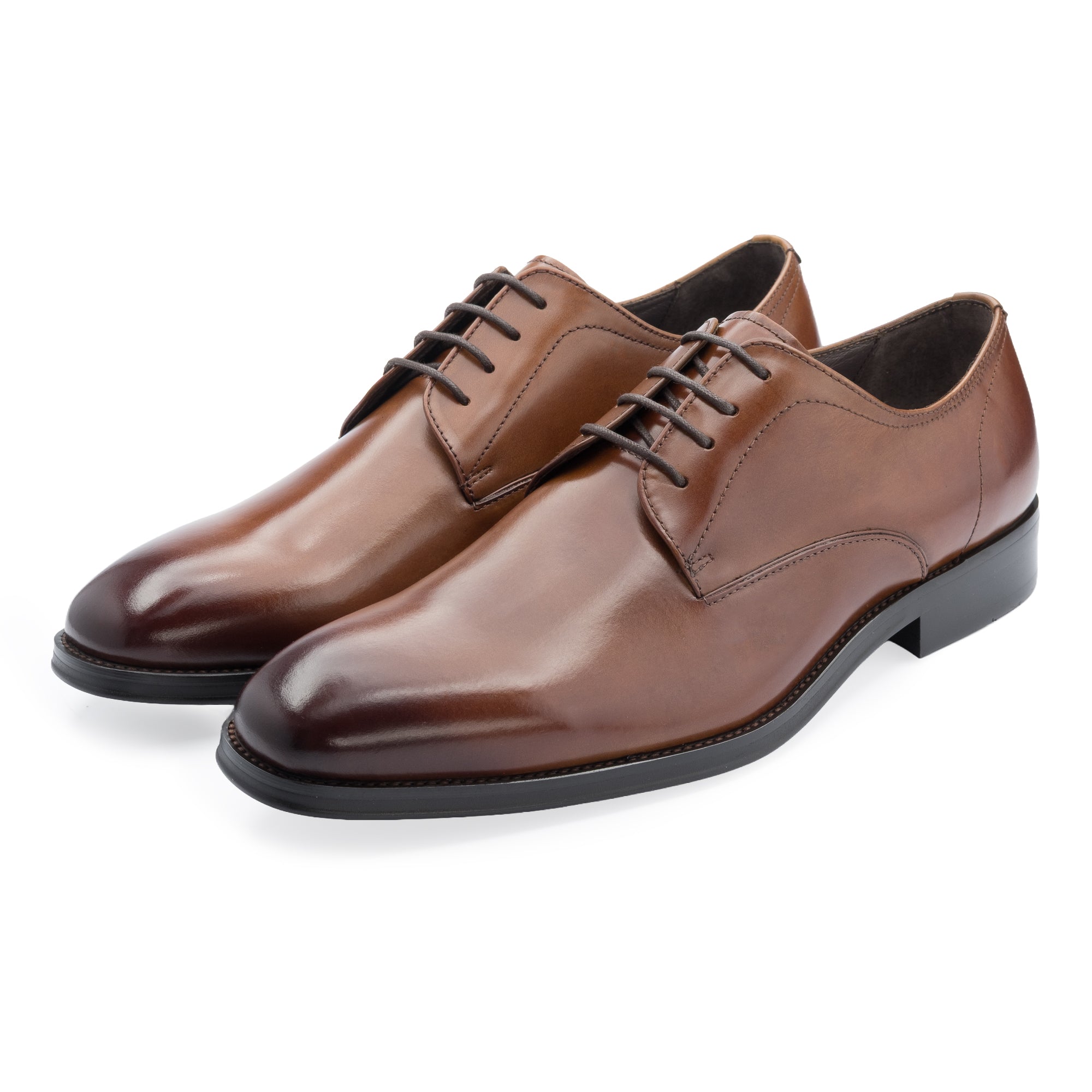
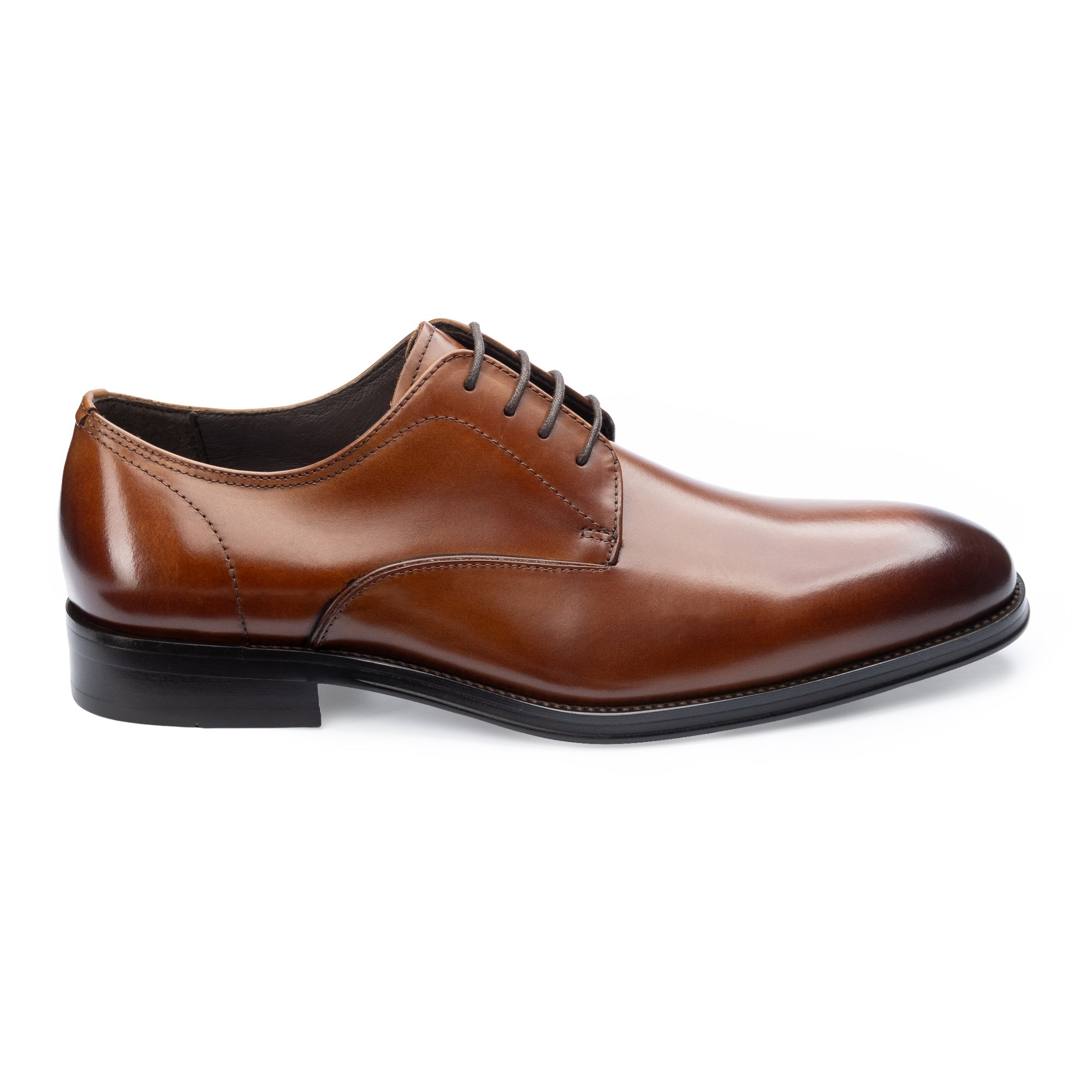
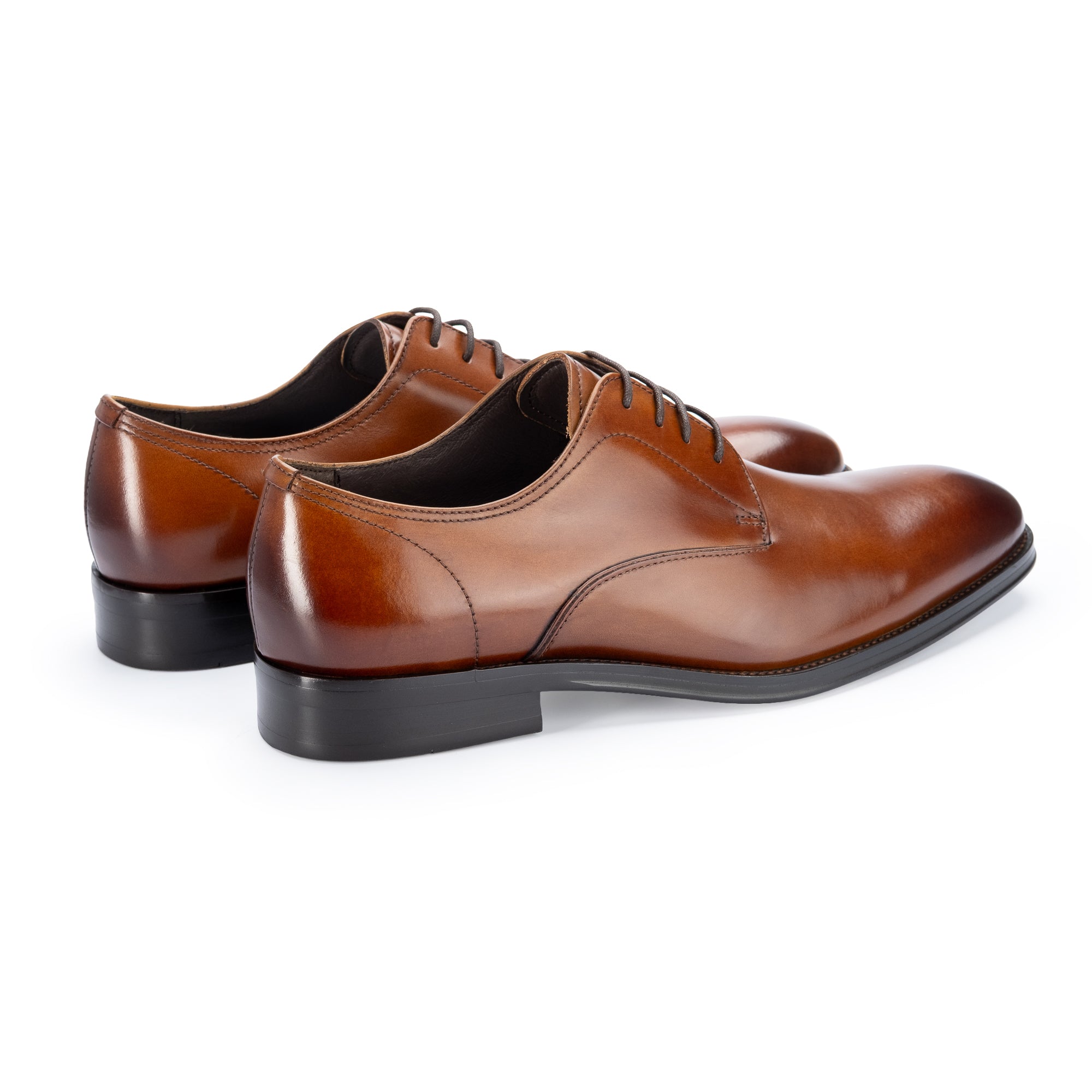
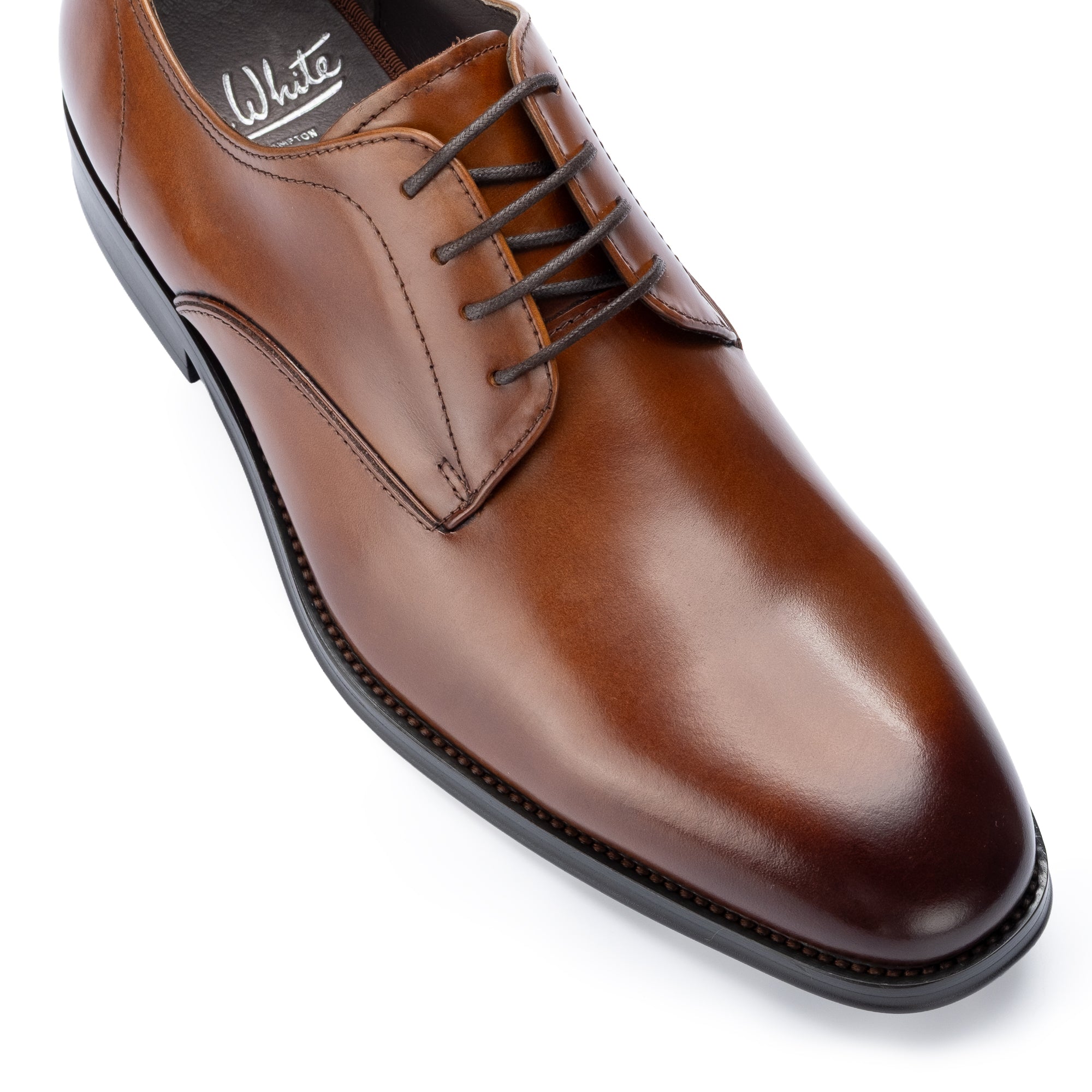
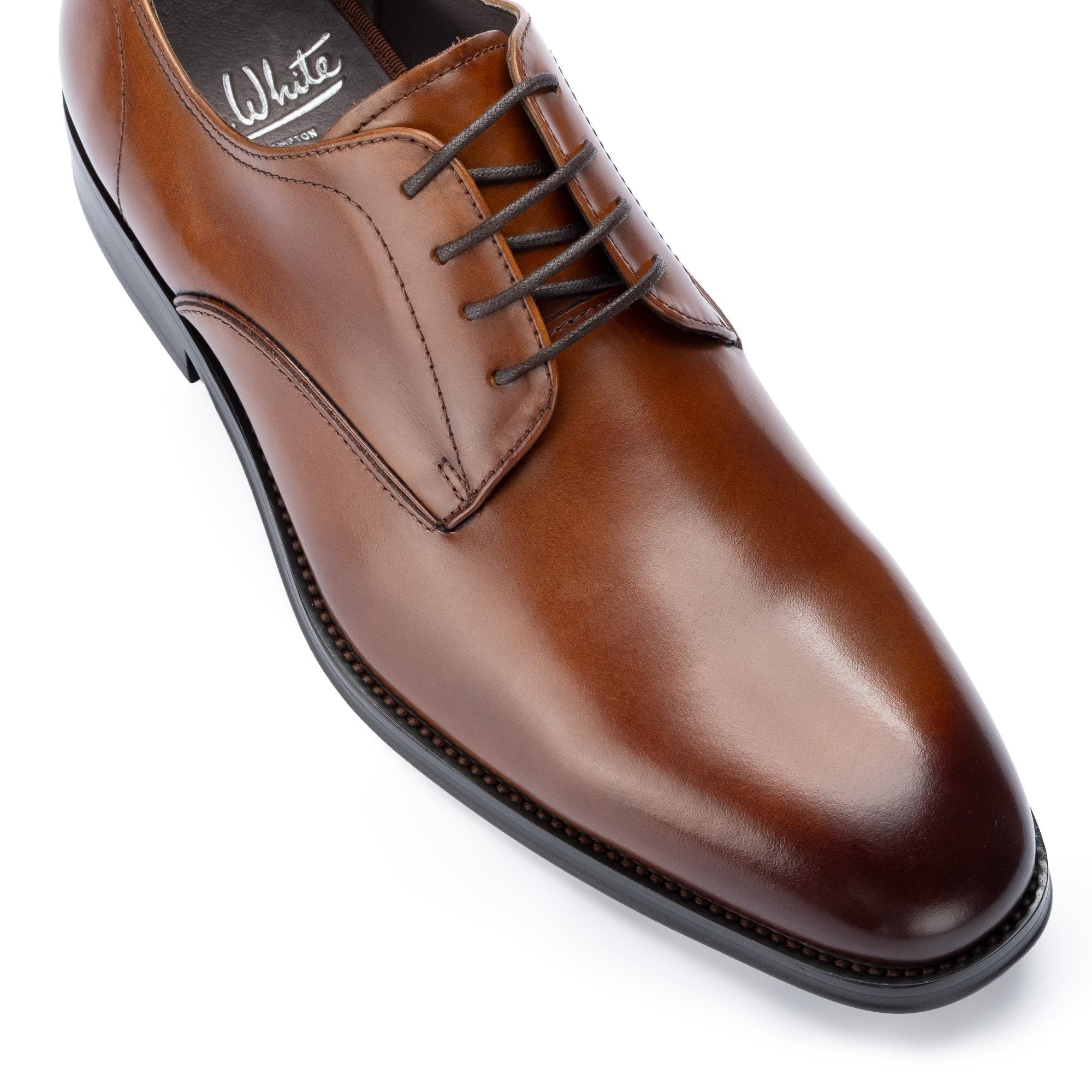
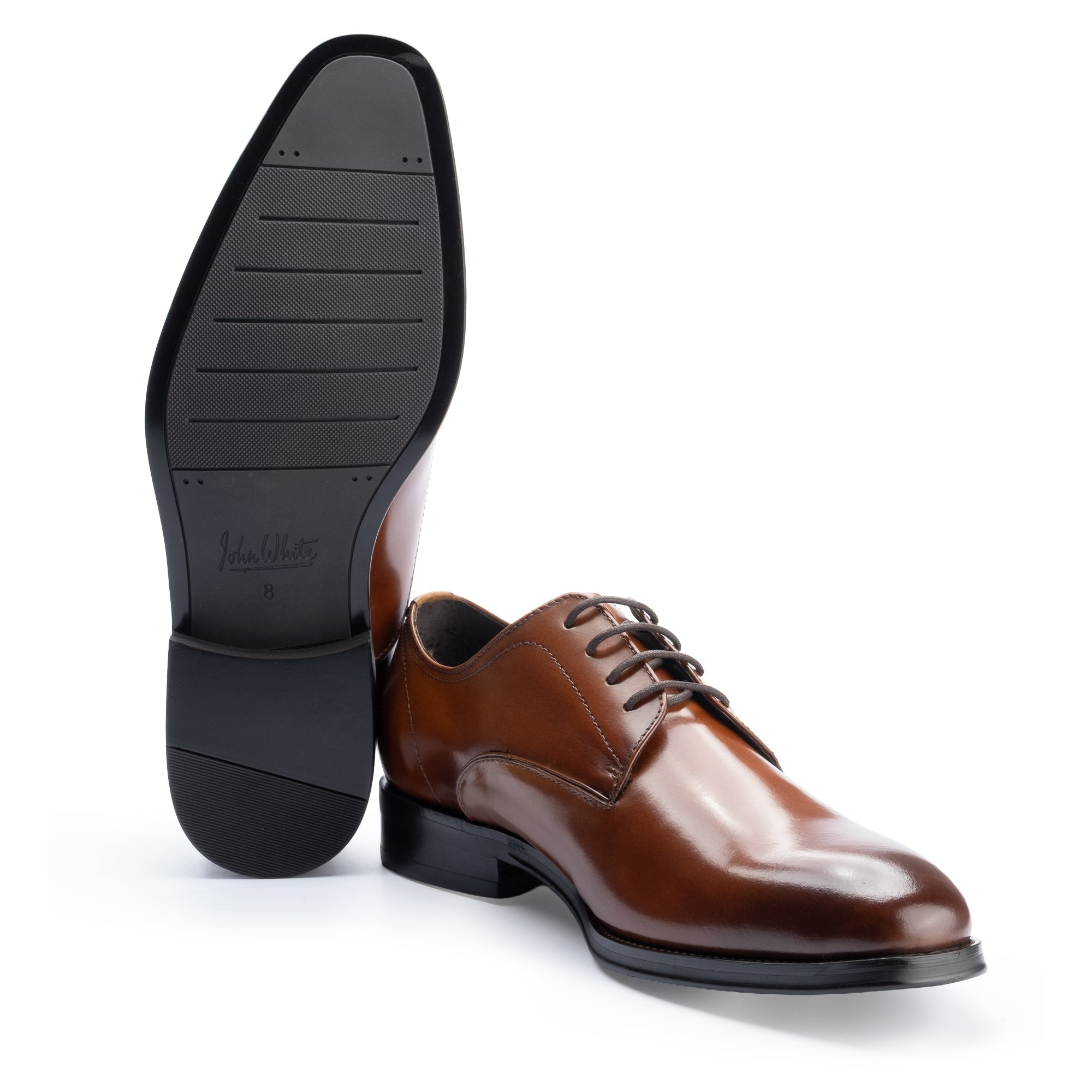
The Derby is the pragmatic sibling of the Oxford: the quarters stitch on top of the vamp, which opens the fit slightly at the ankle and makes the shoe marginally easier to put on and take off. It also reads as one degree less formal, which in practice is an advantage in most modern offices — even those that require a jacket.
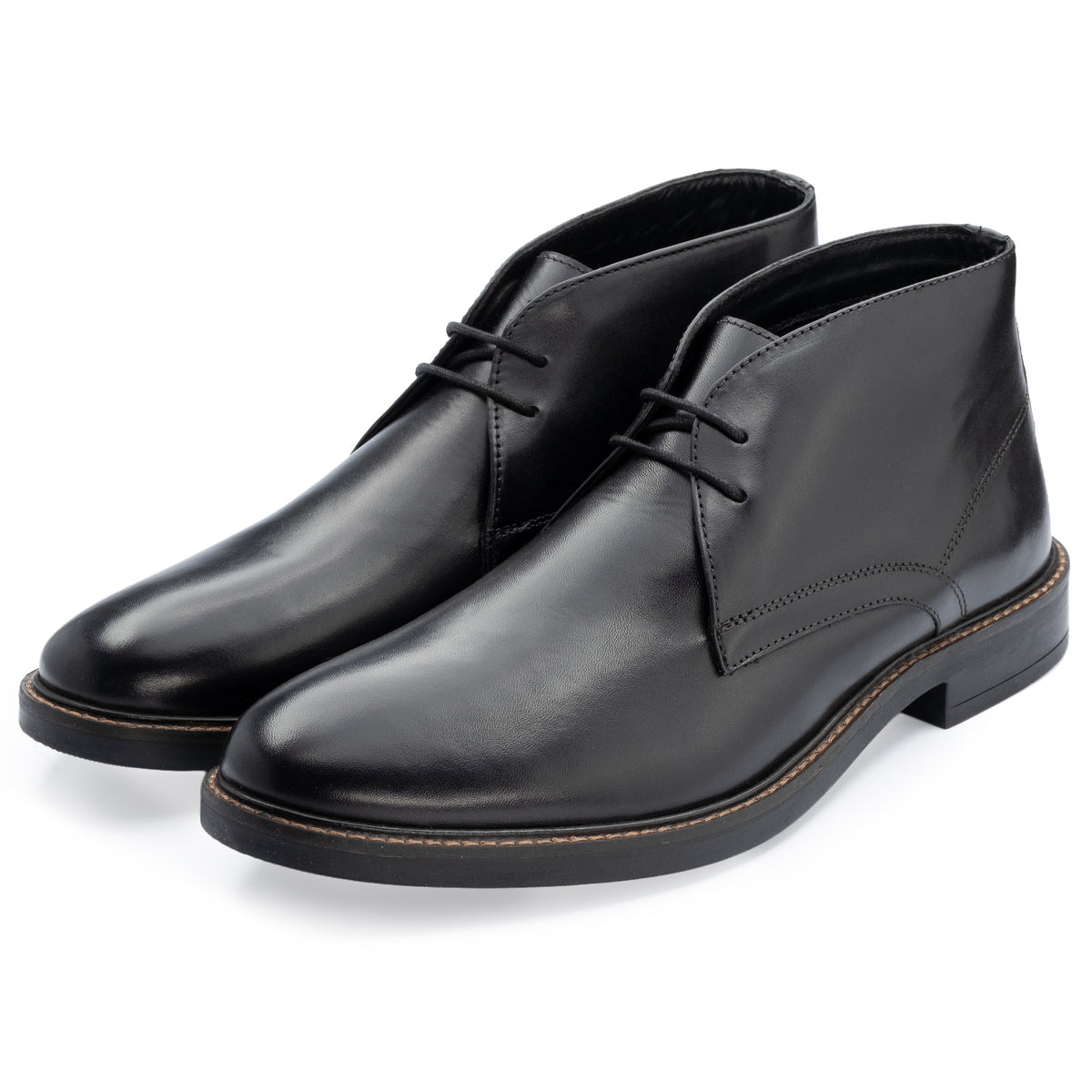
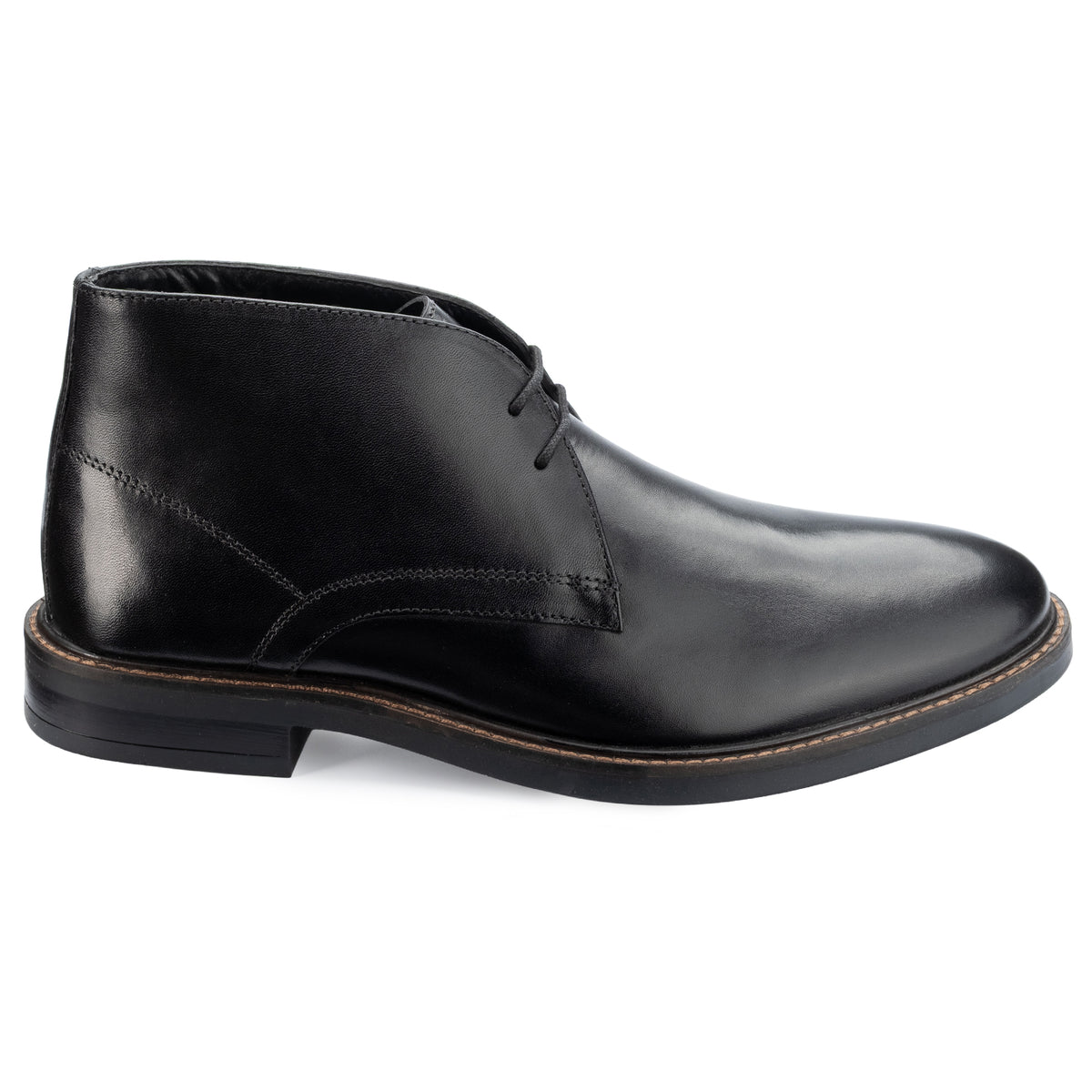
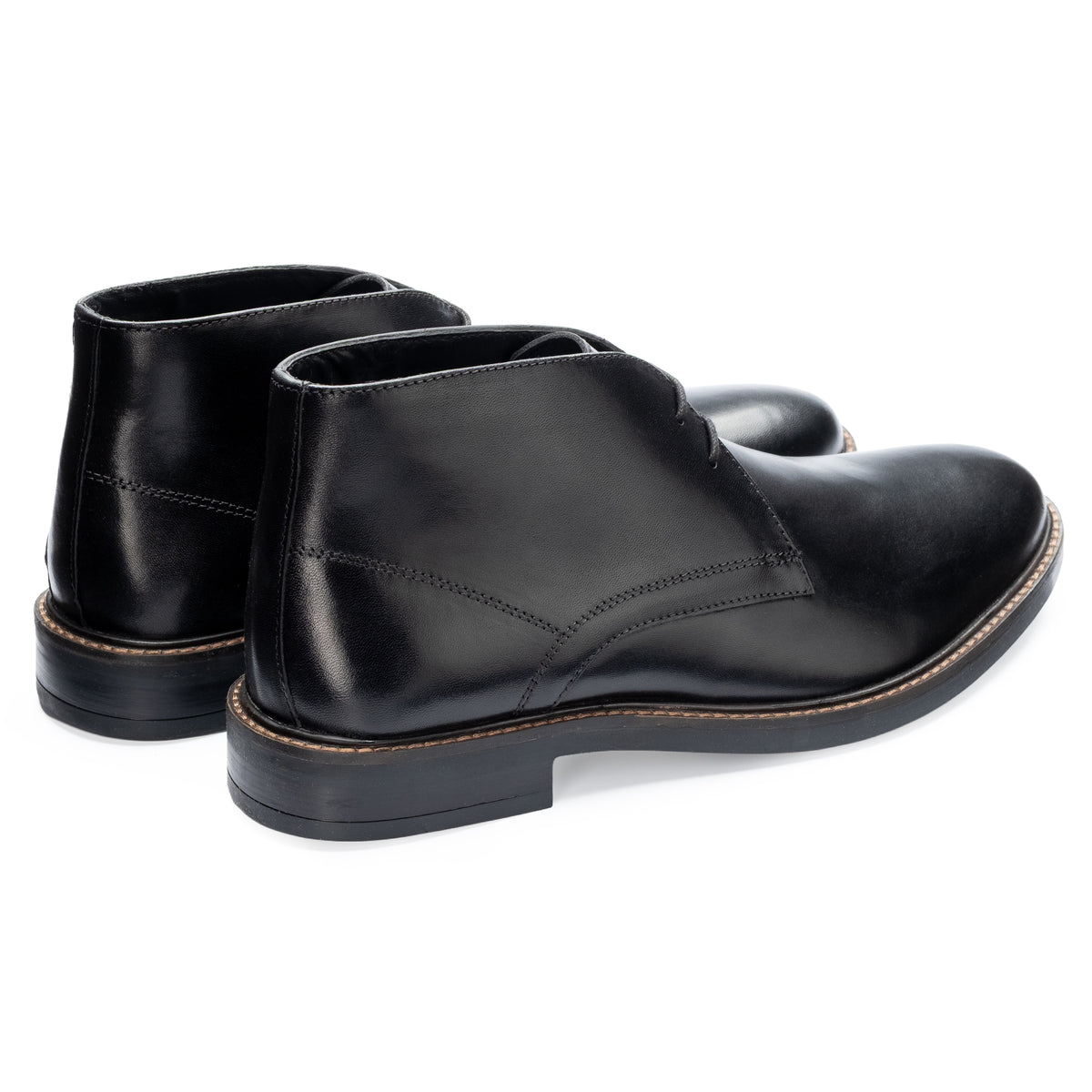
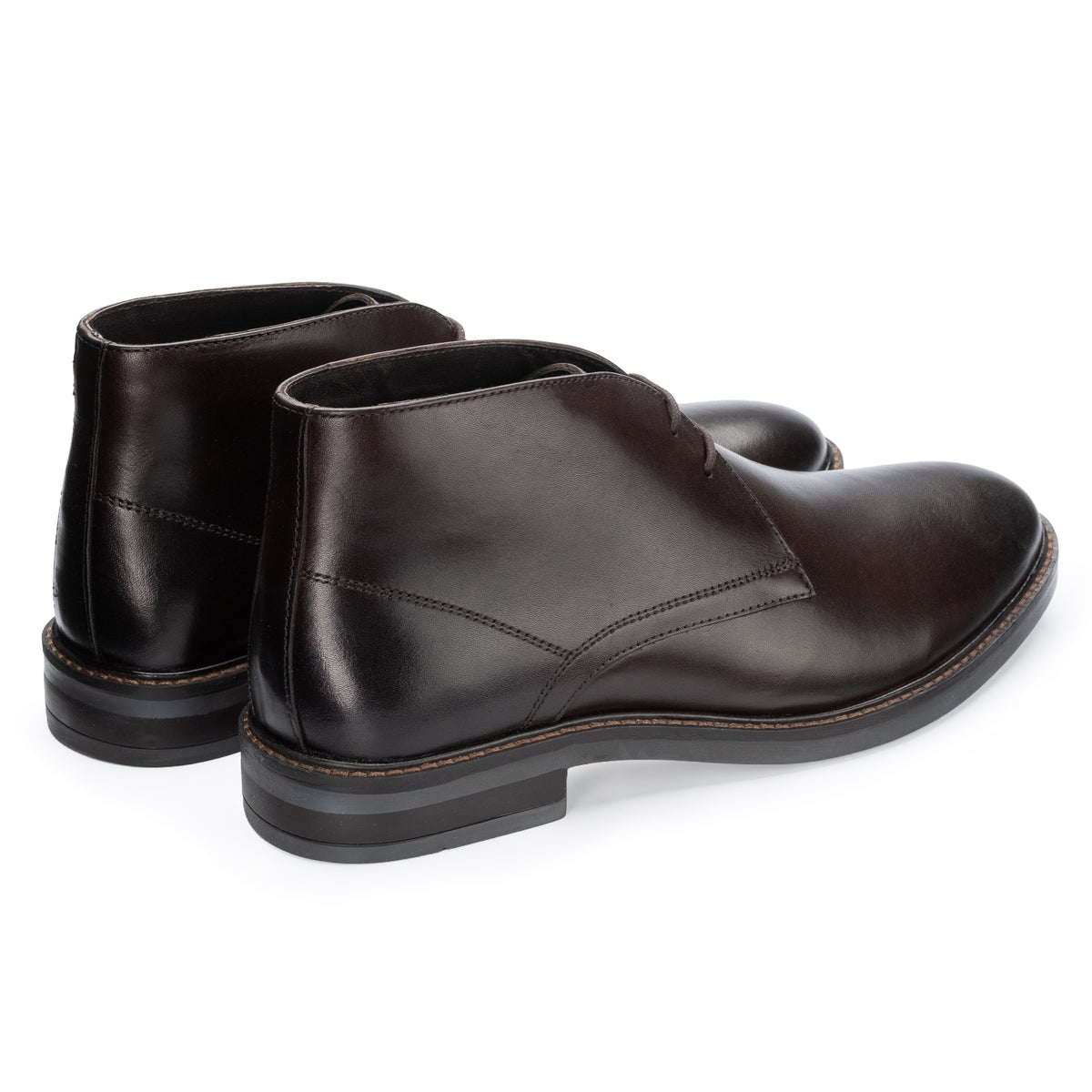
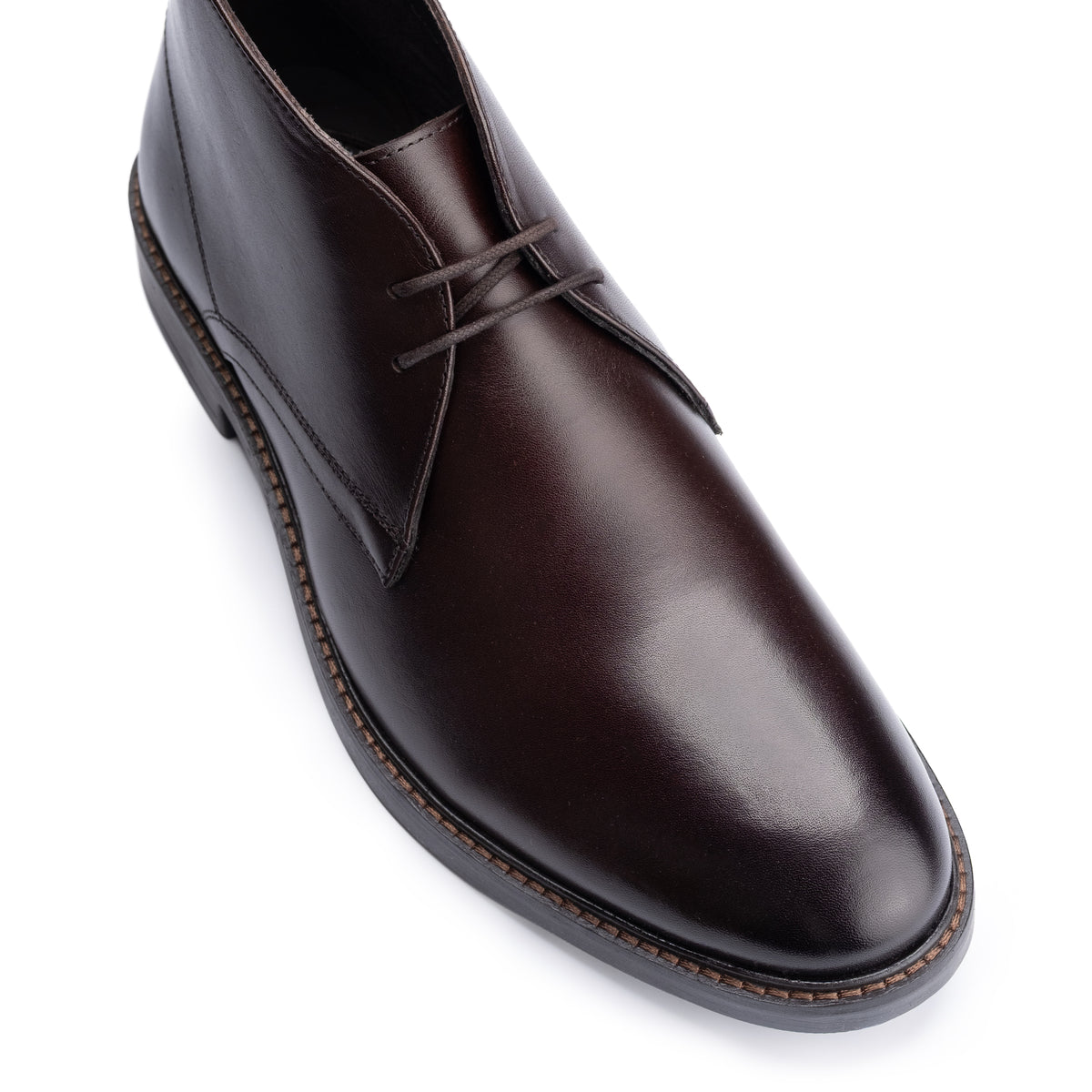
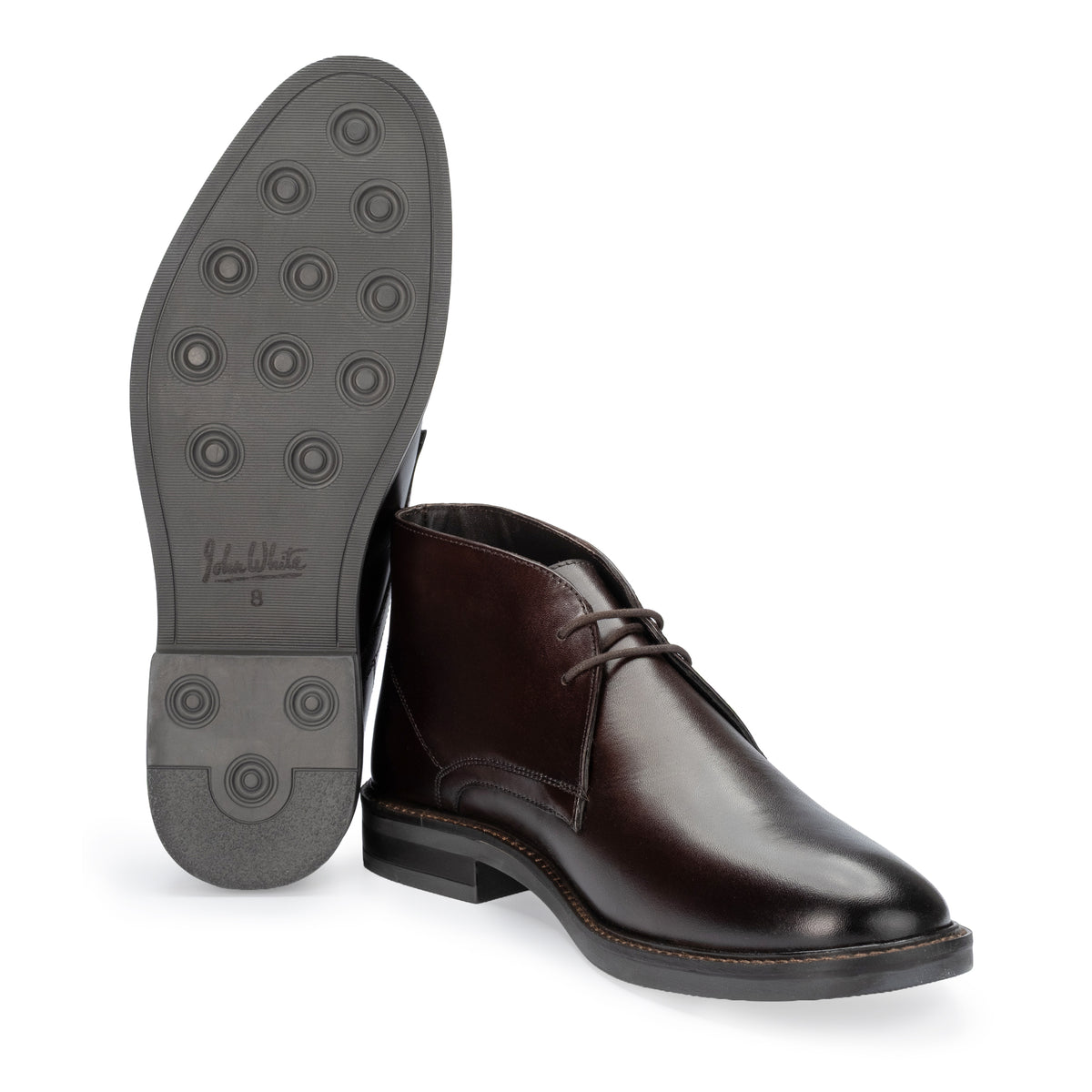
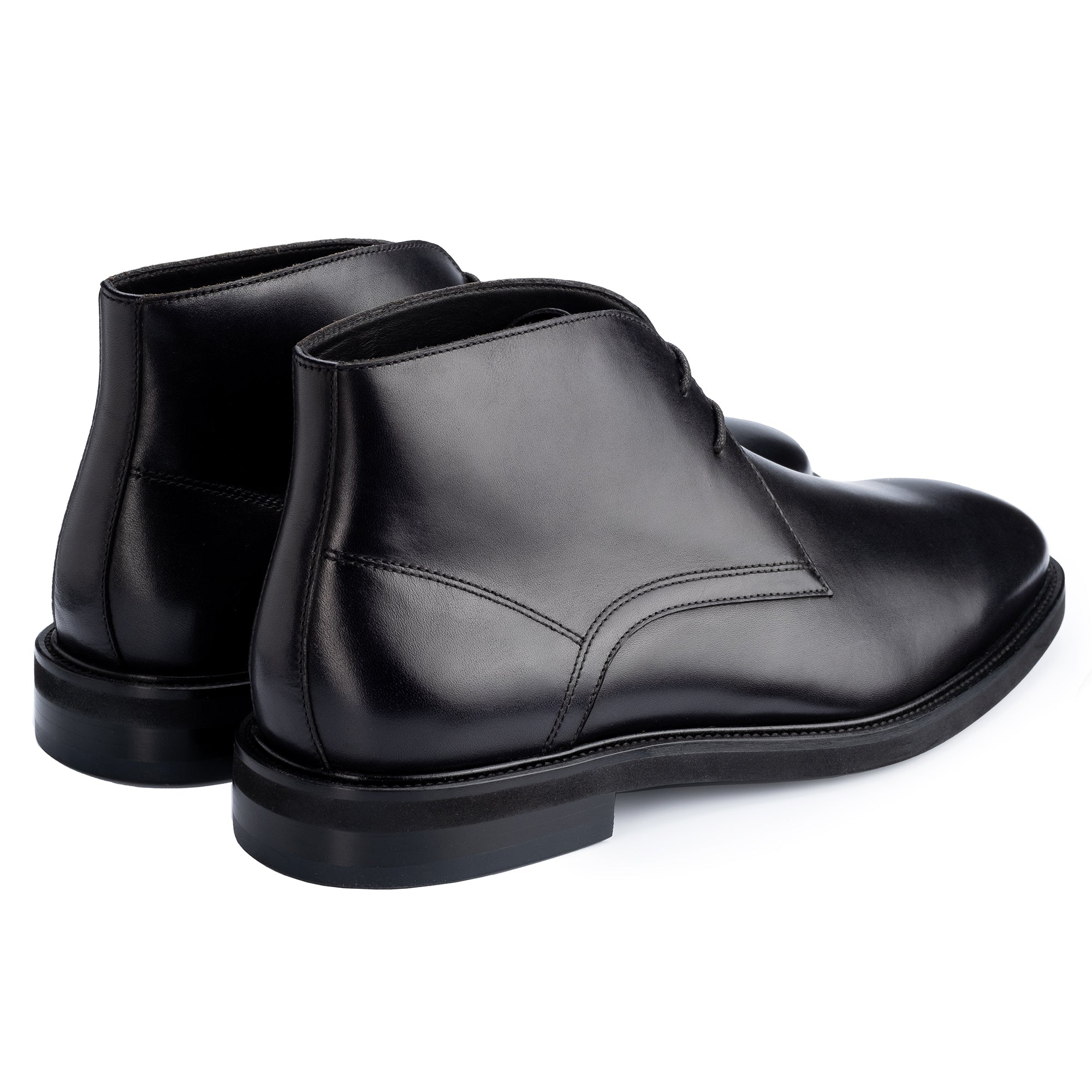
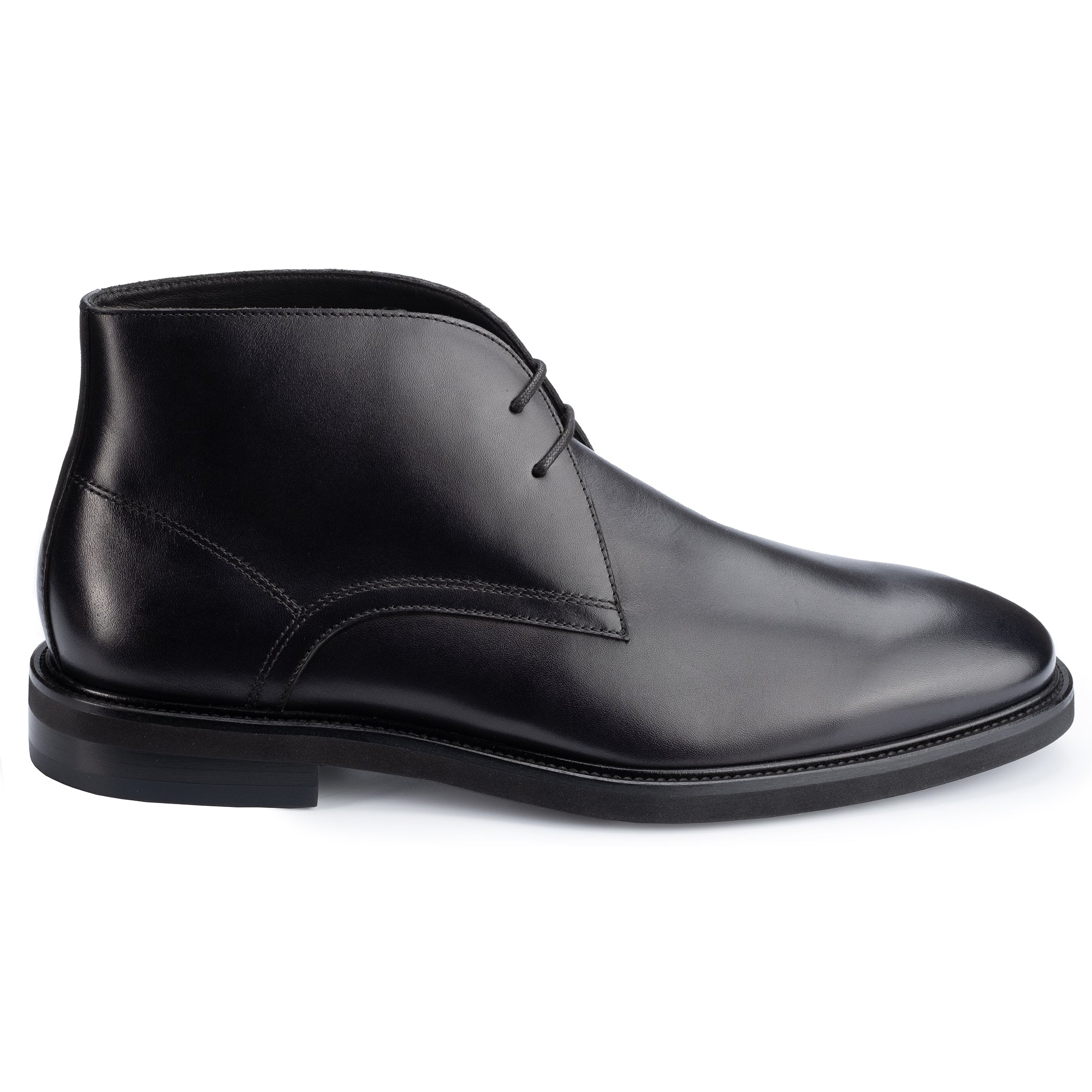
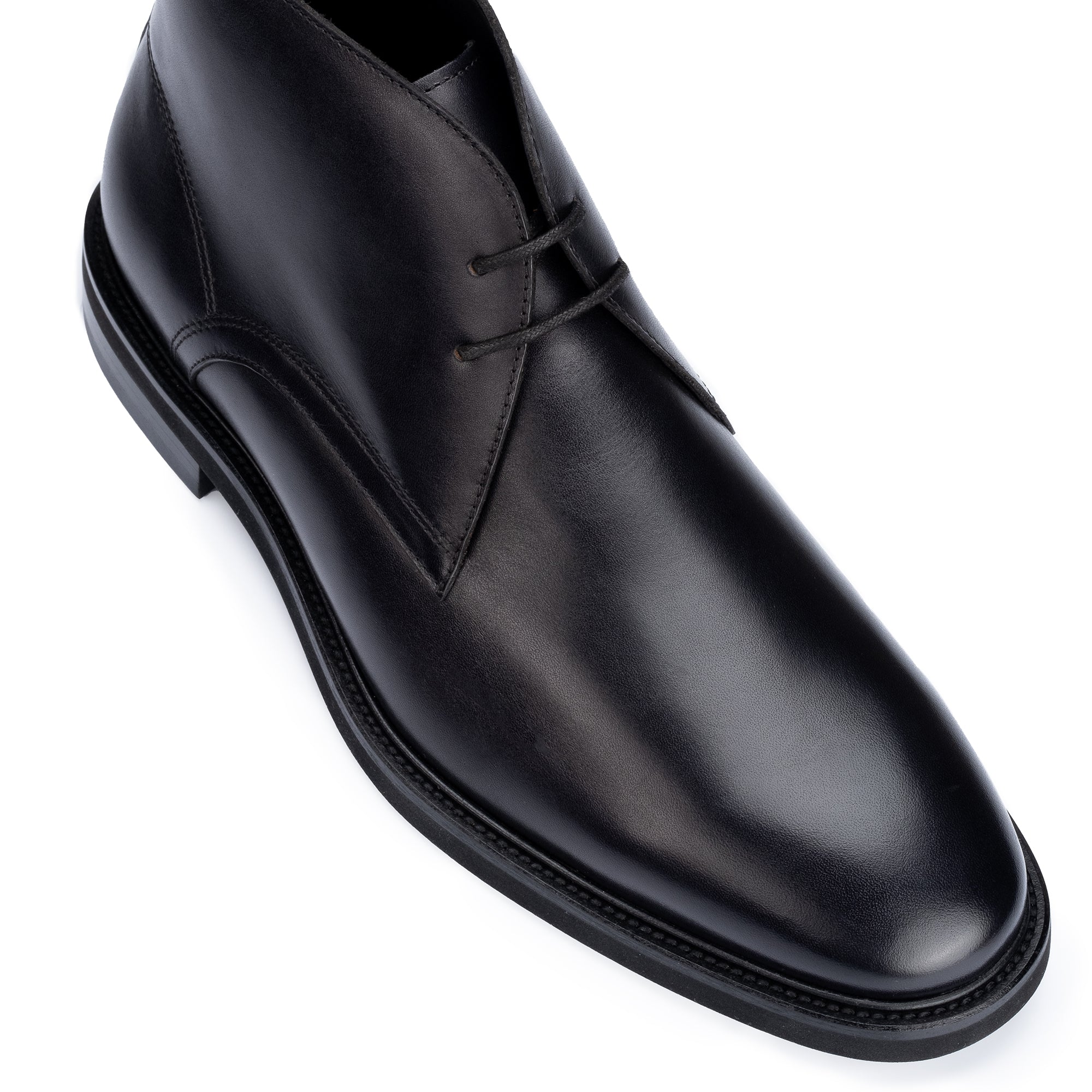
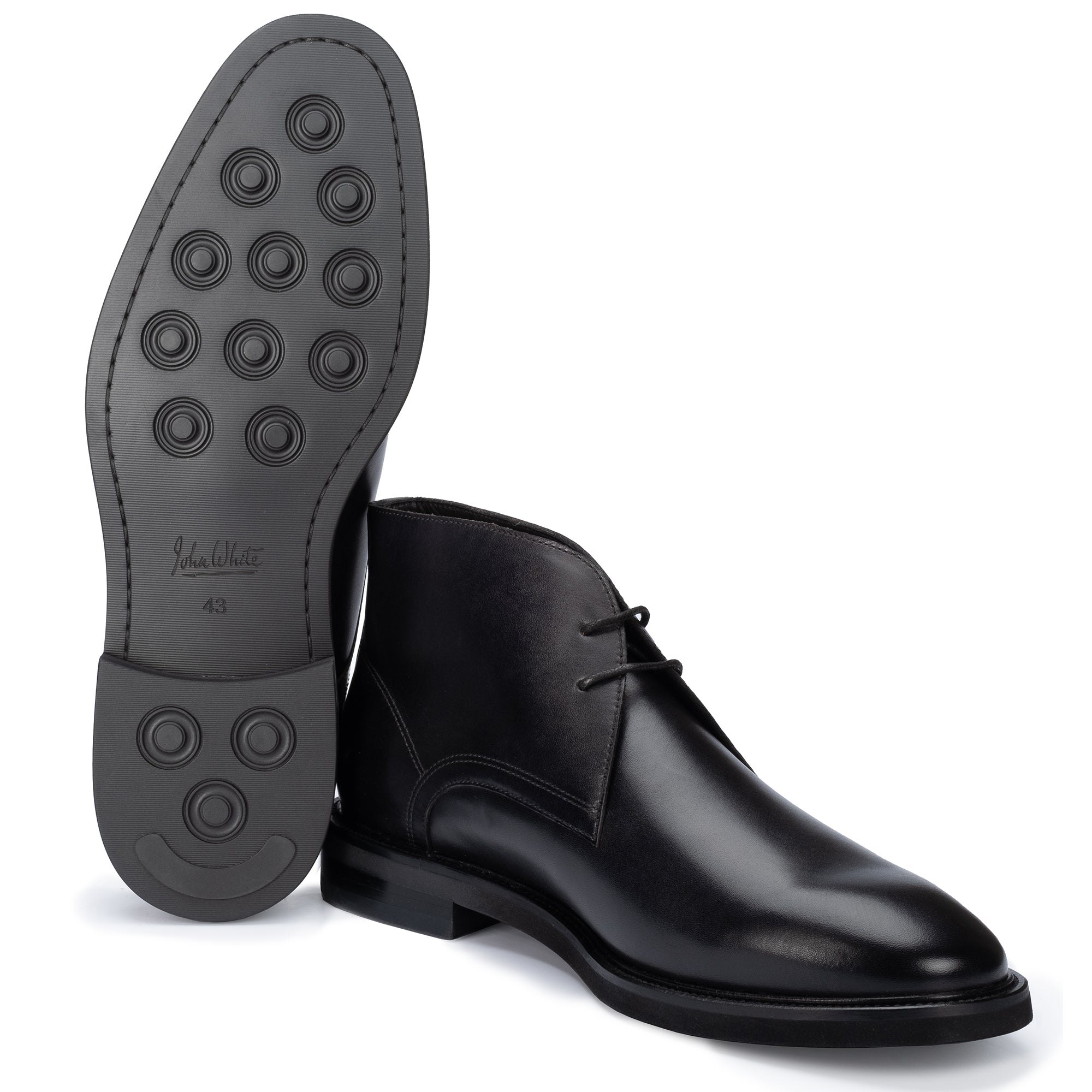
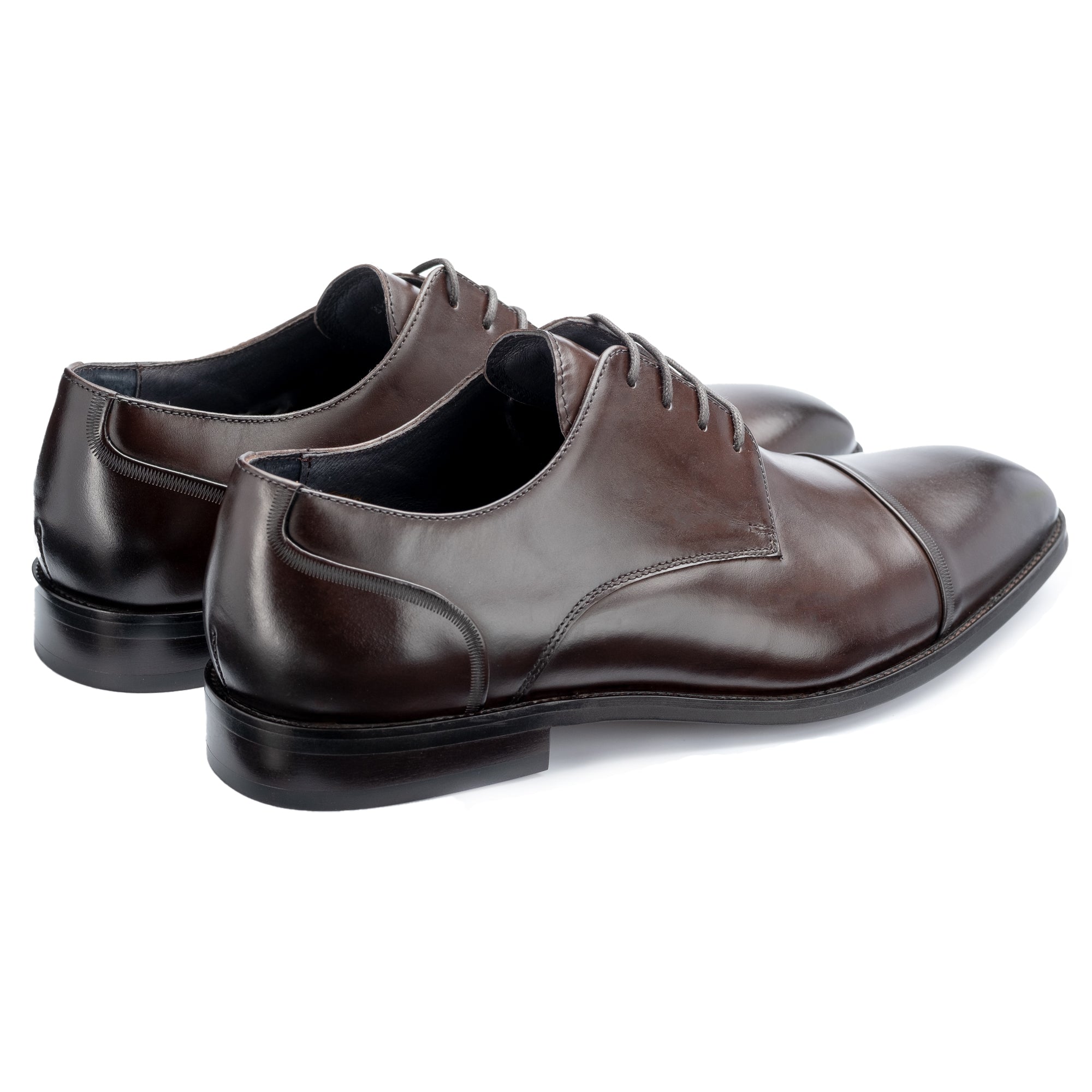
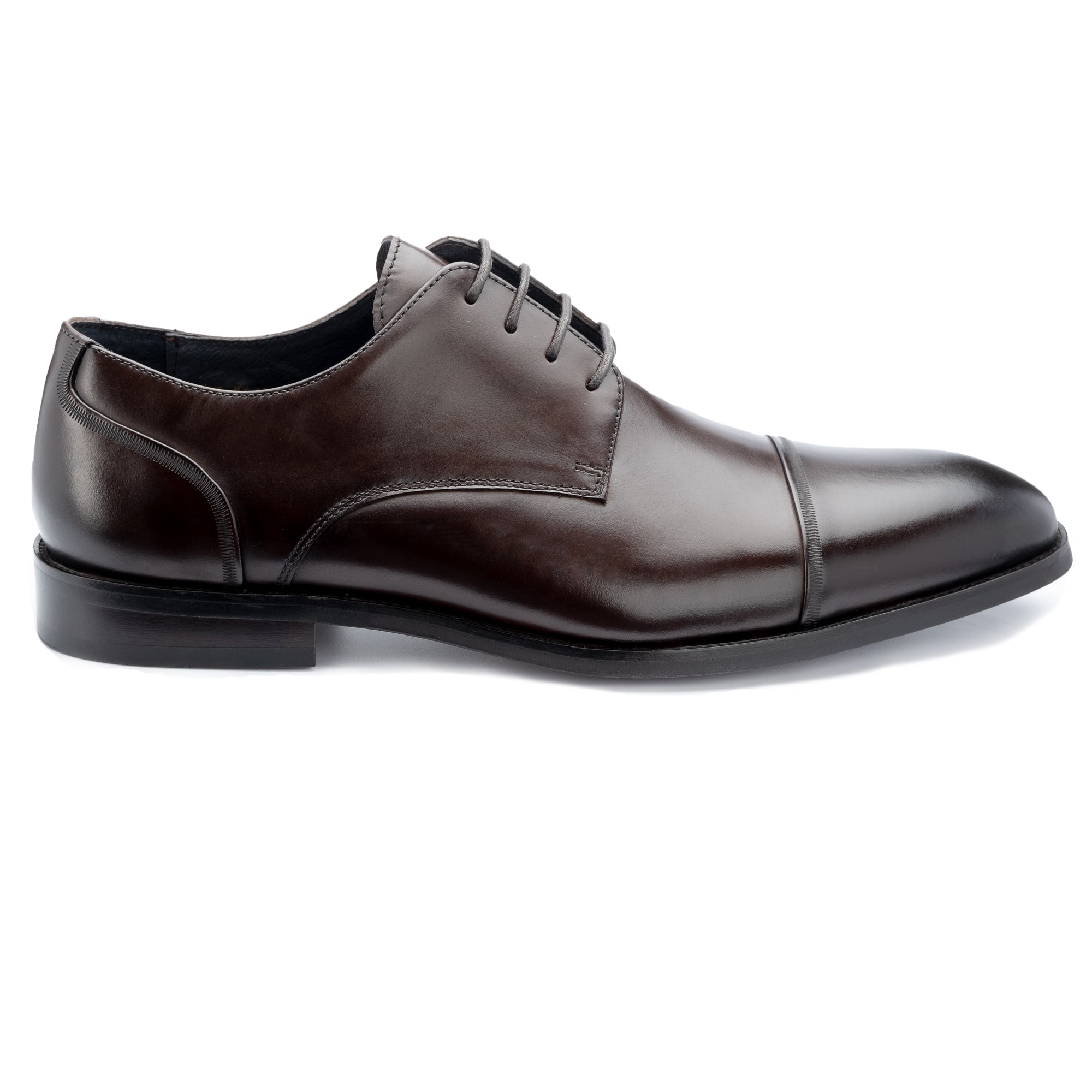
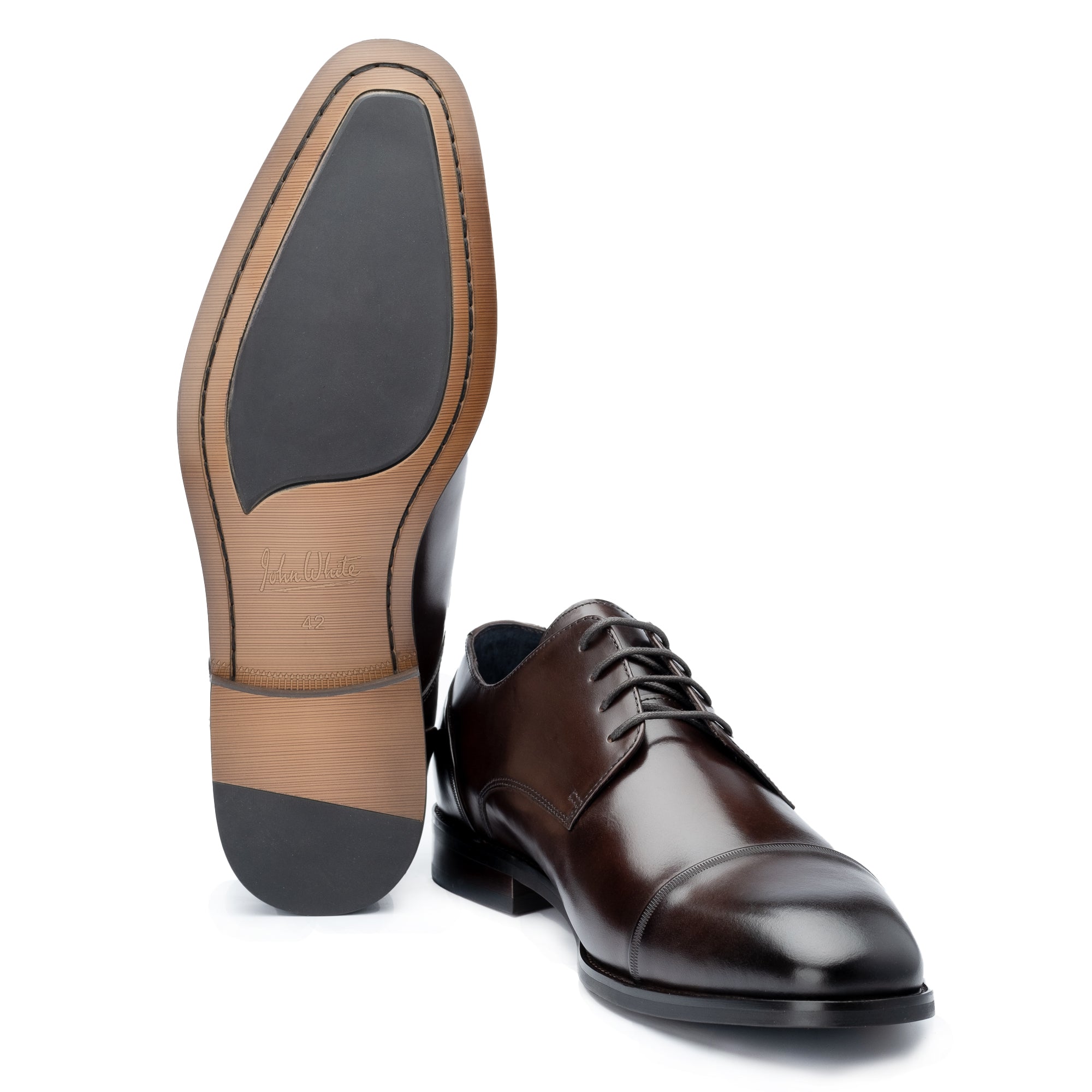
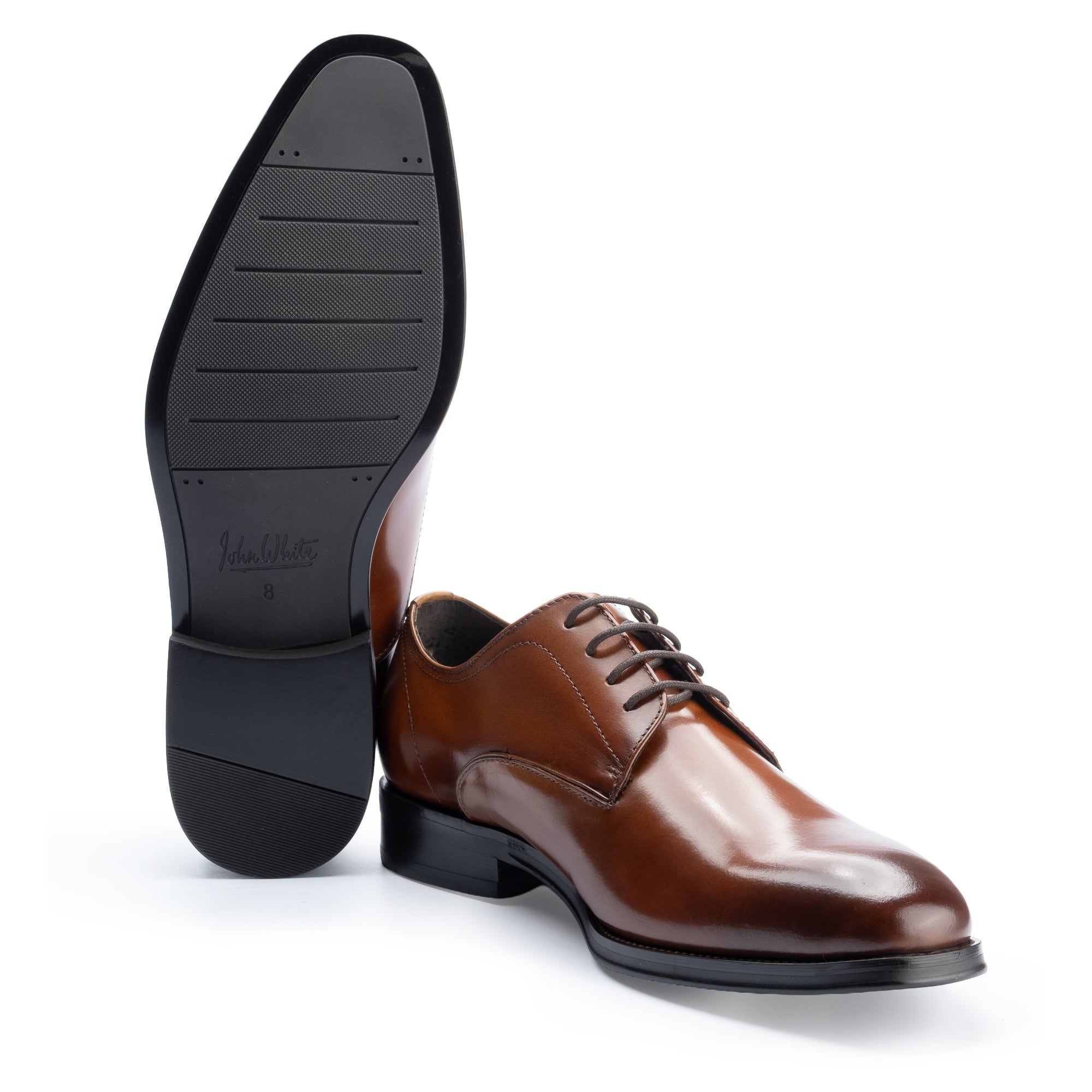
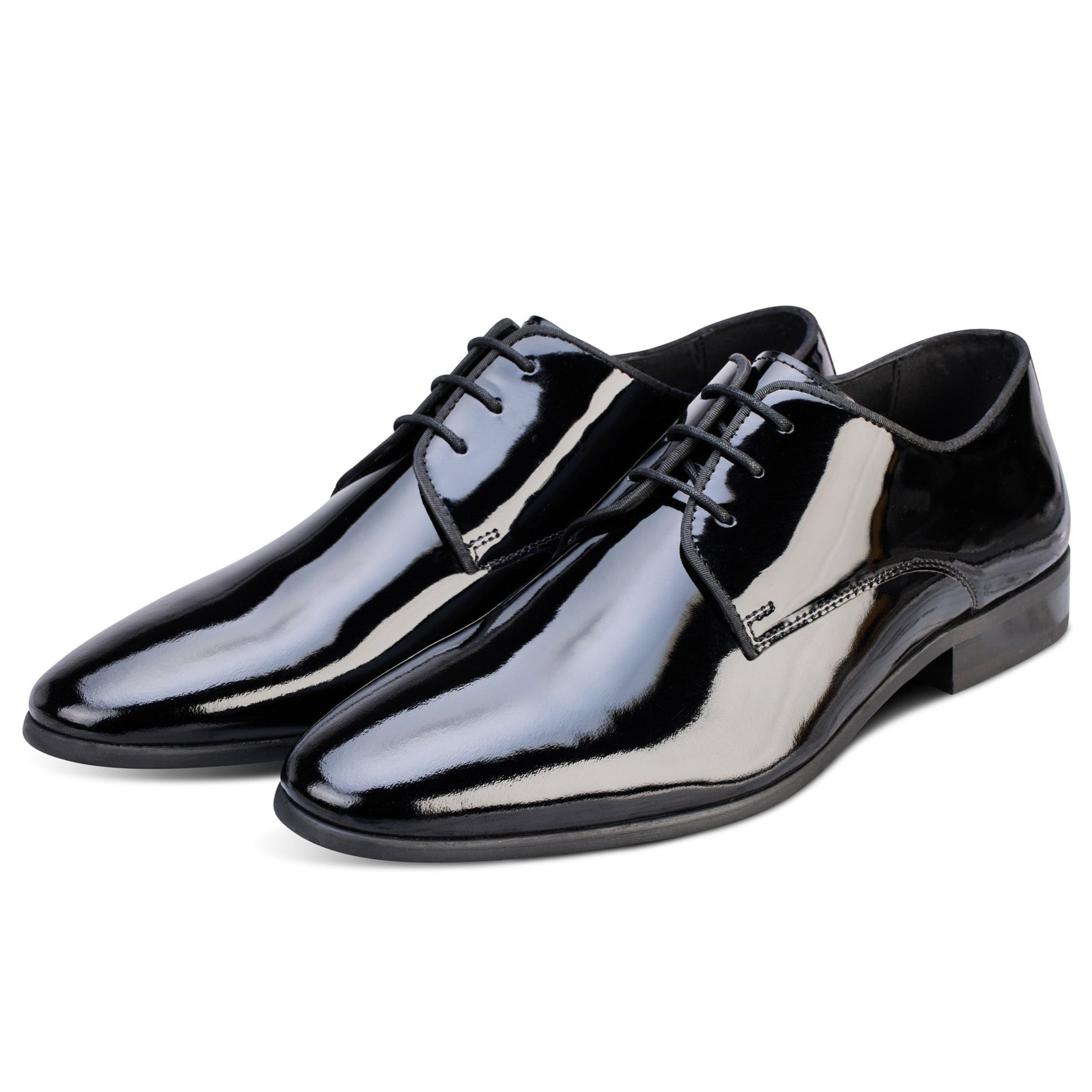
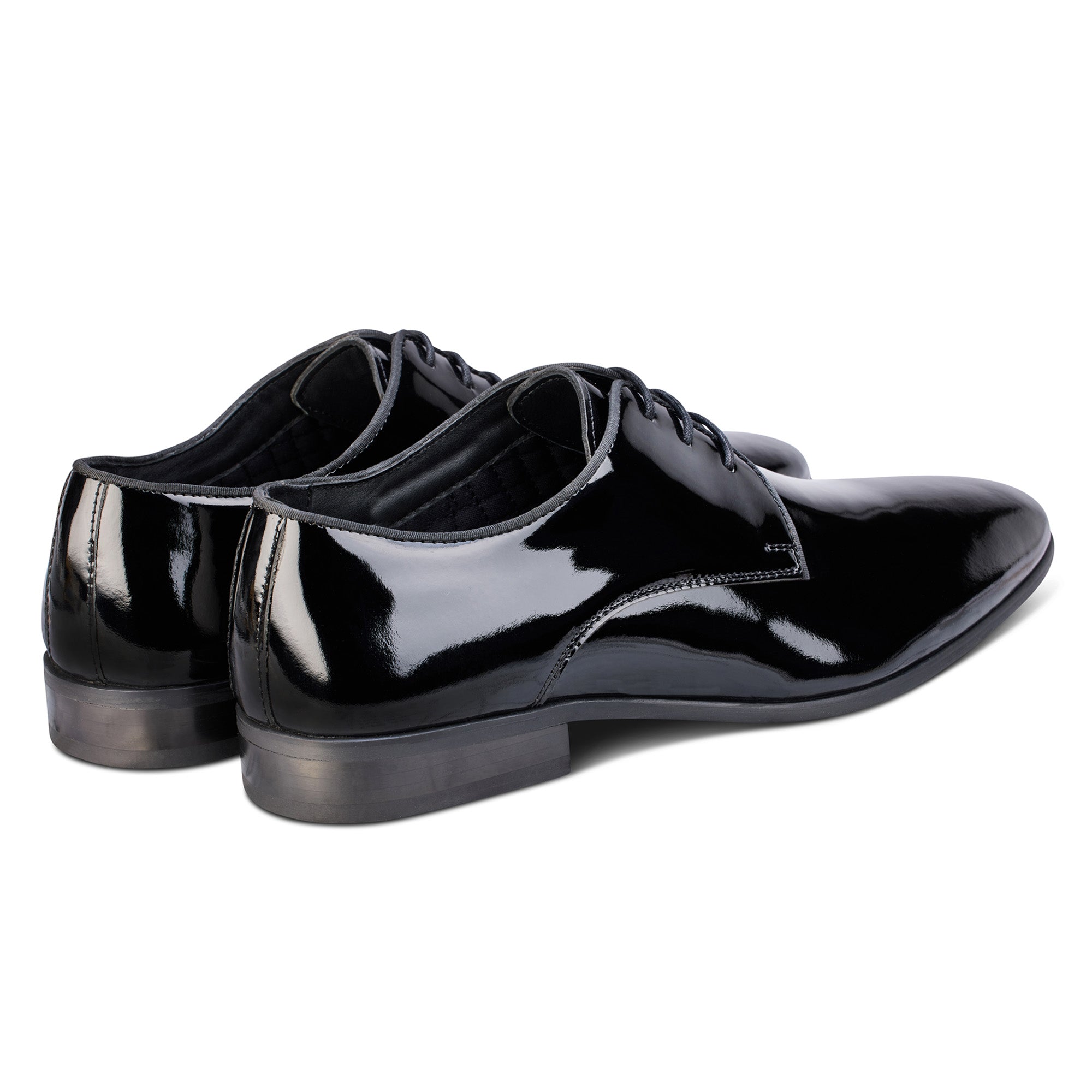
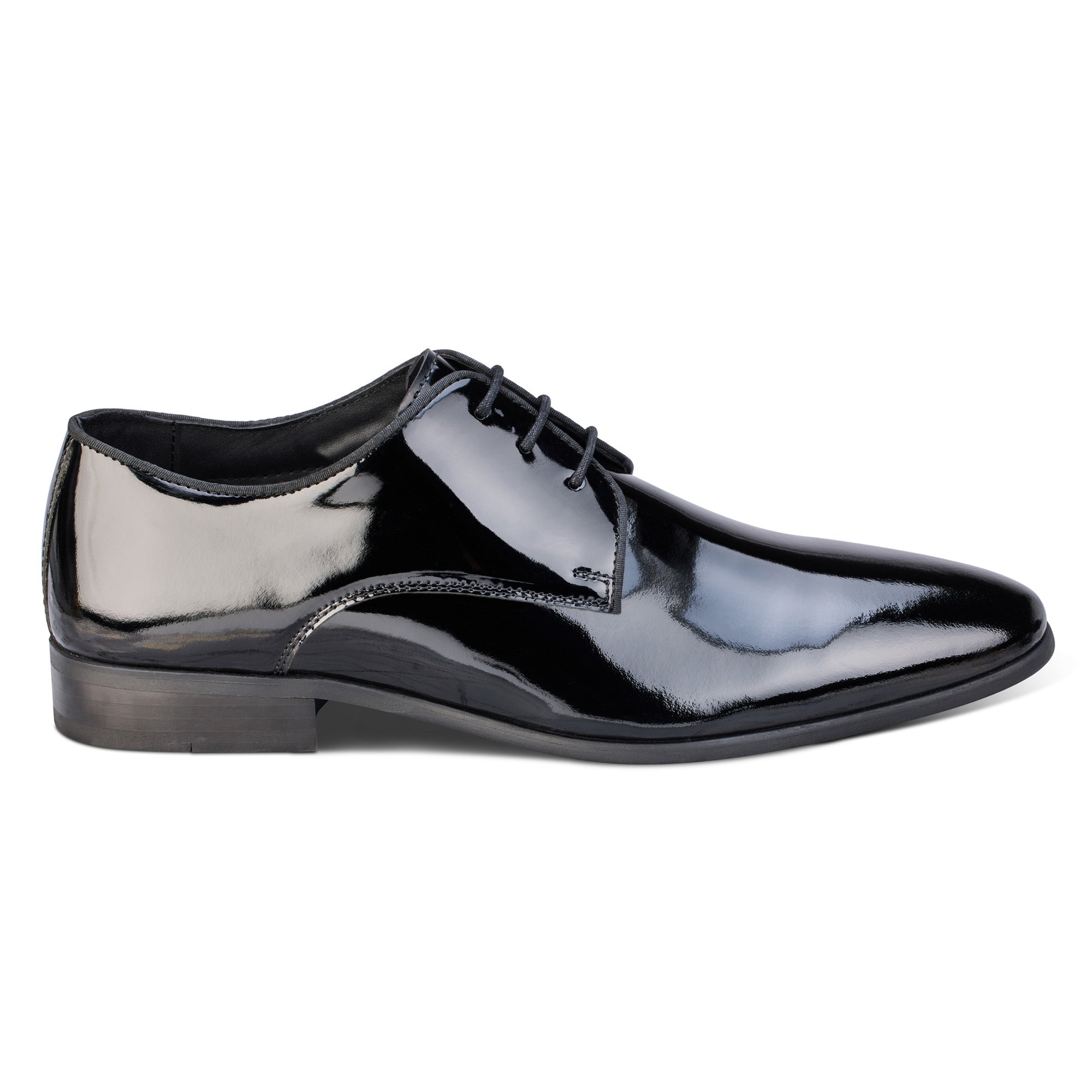
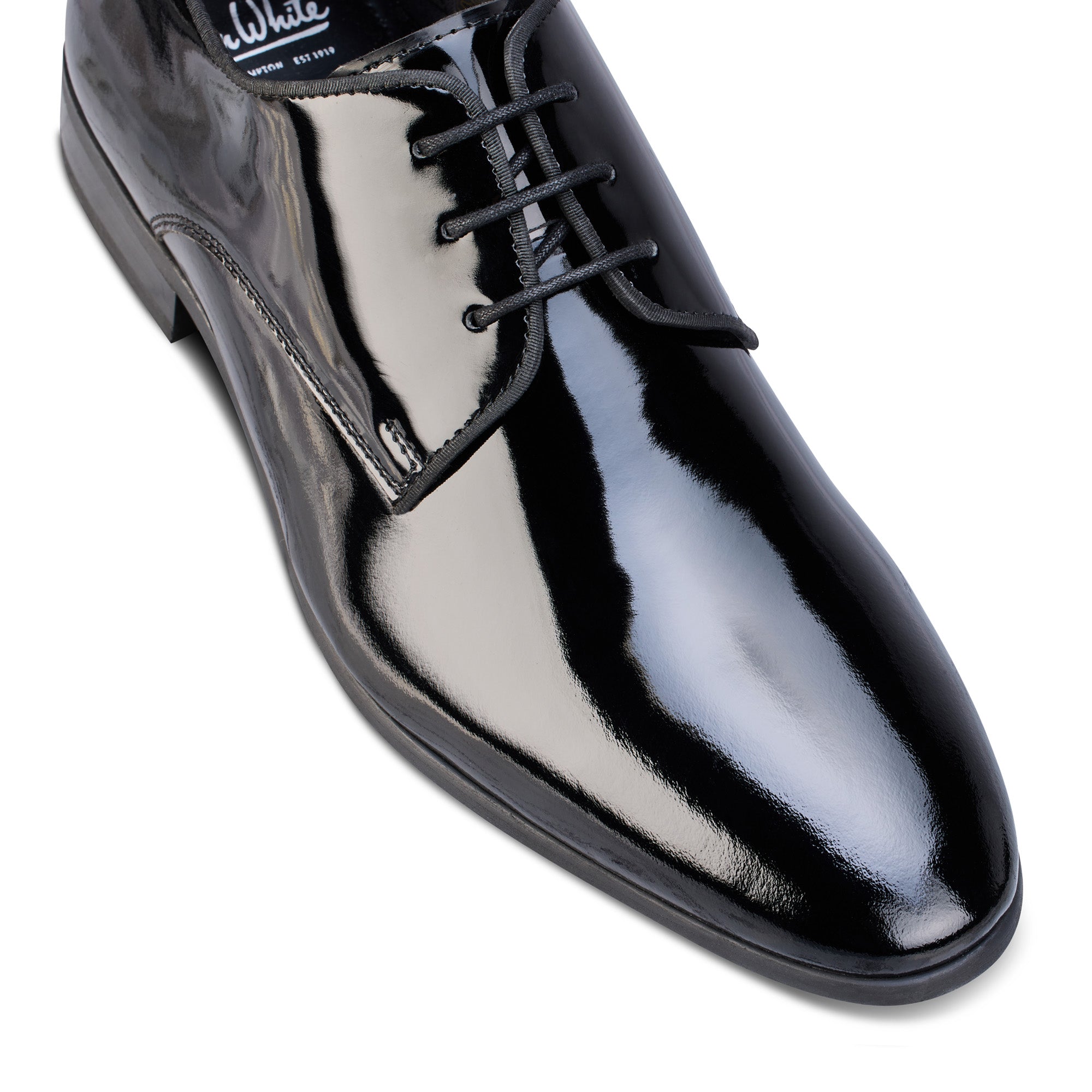
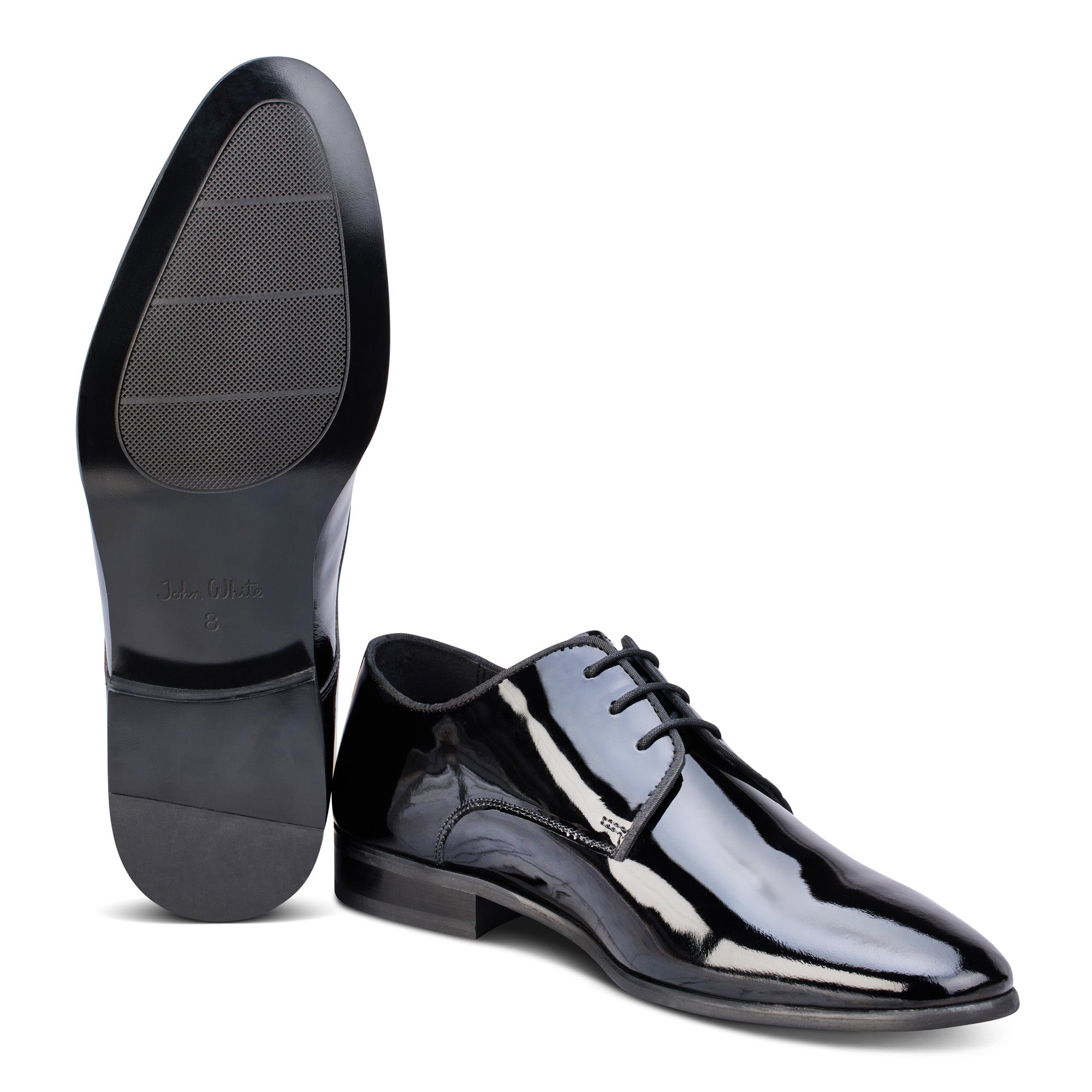
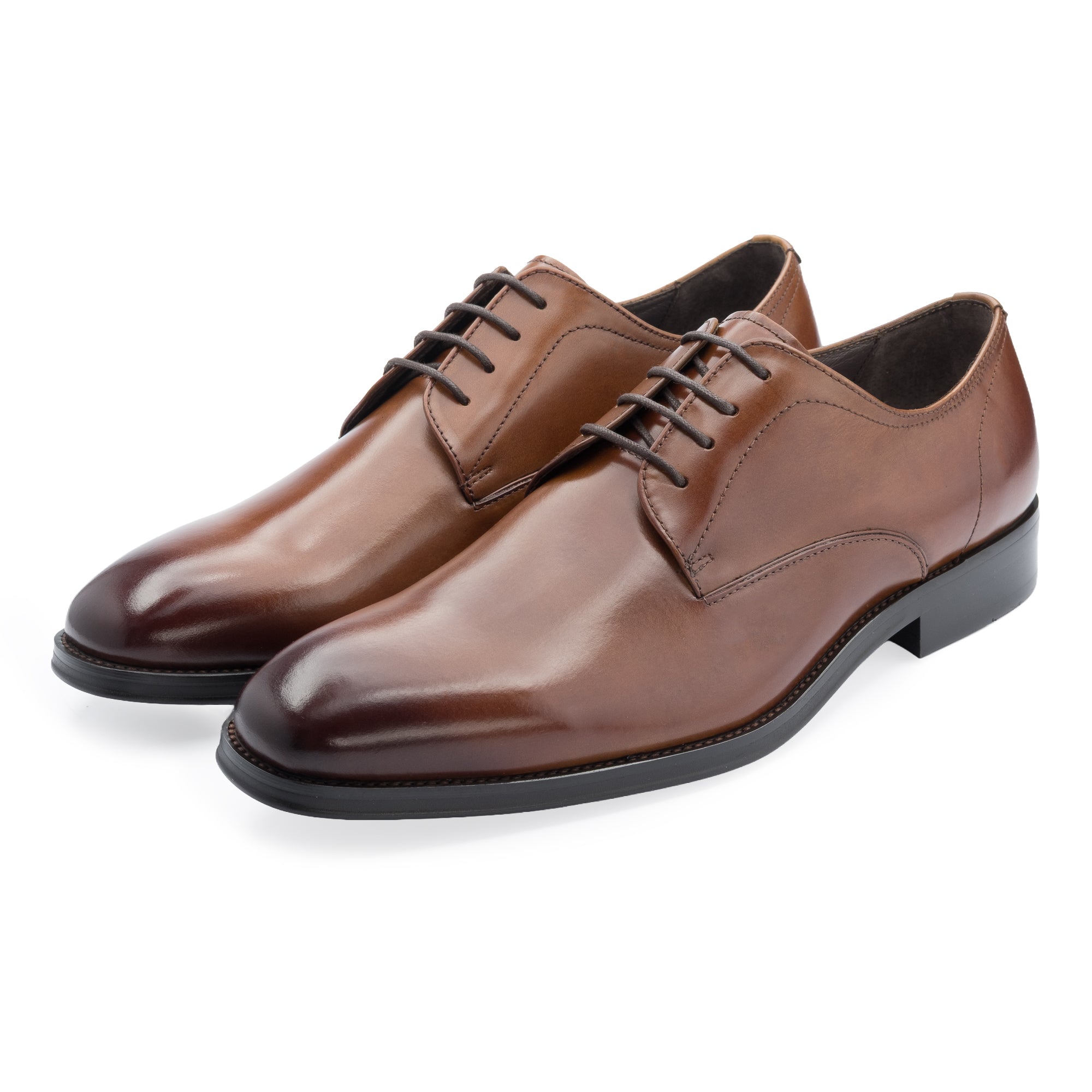
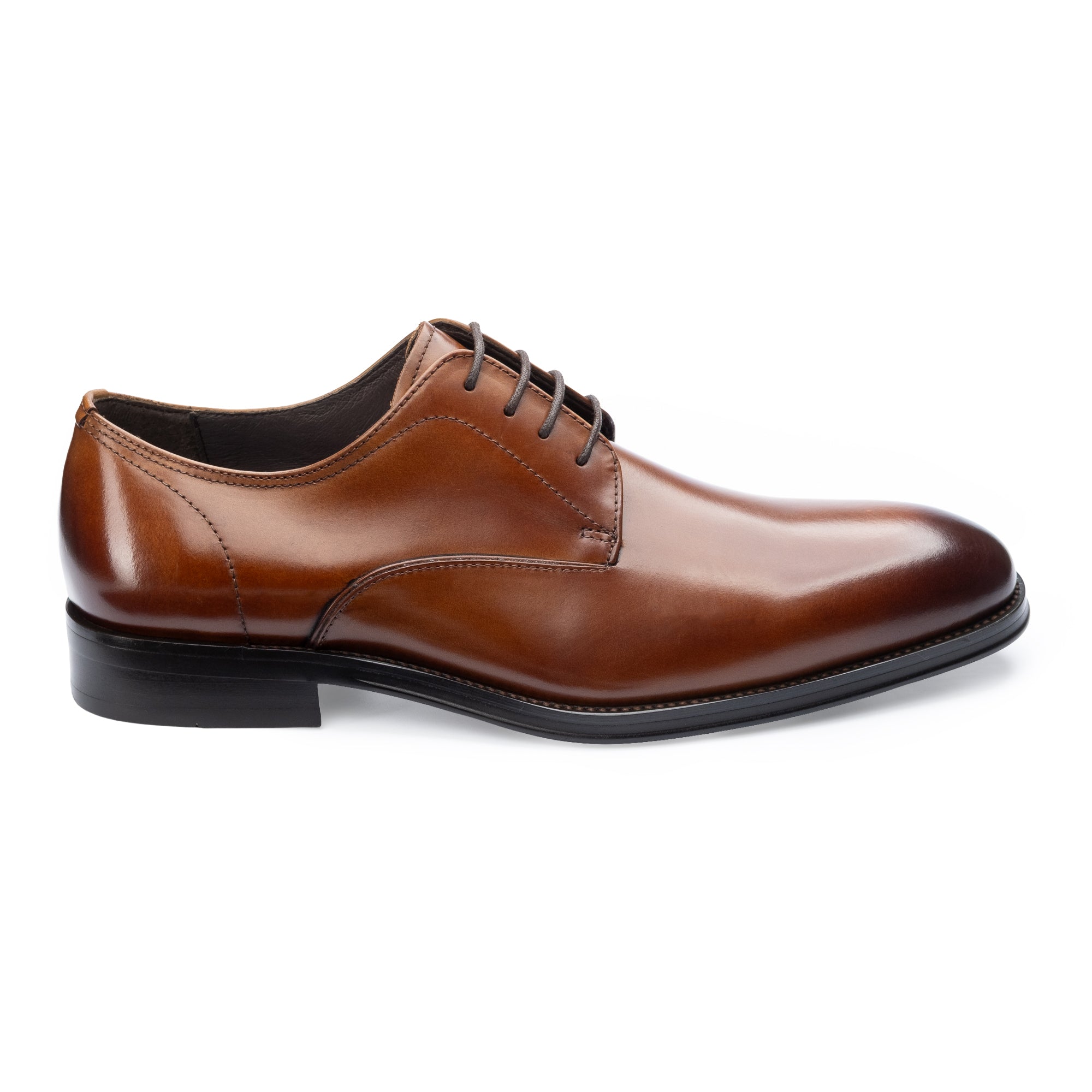
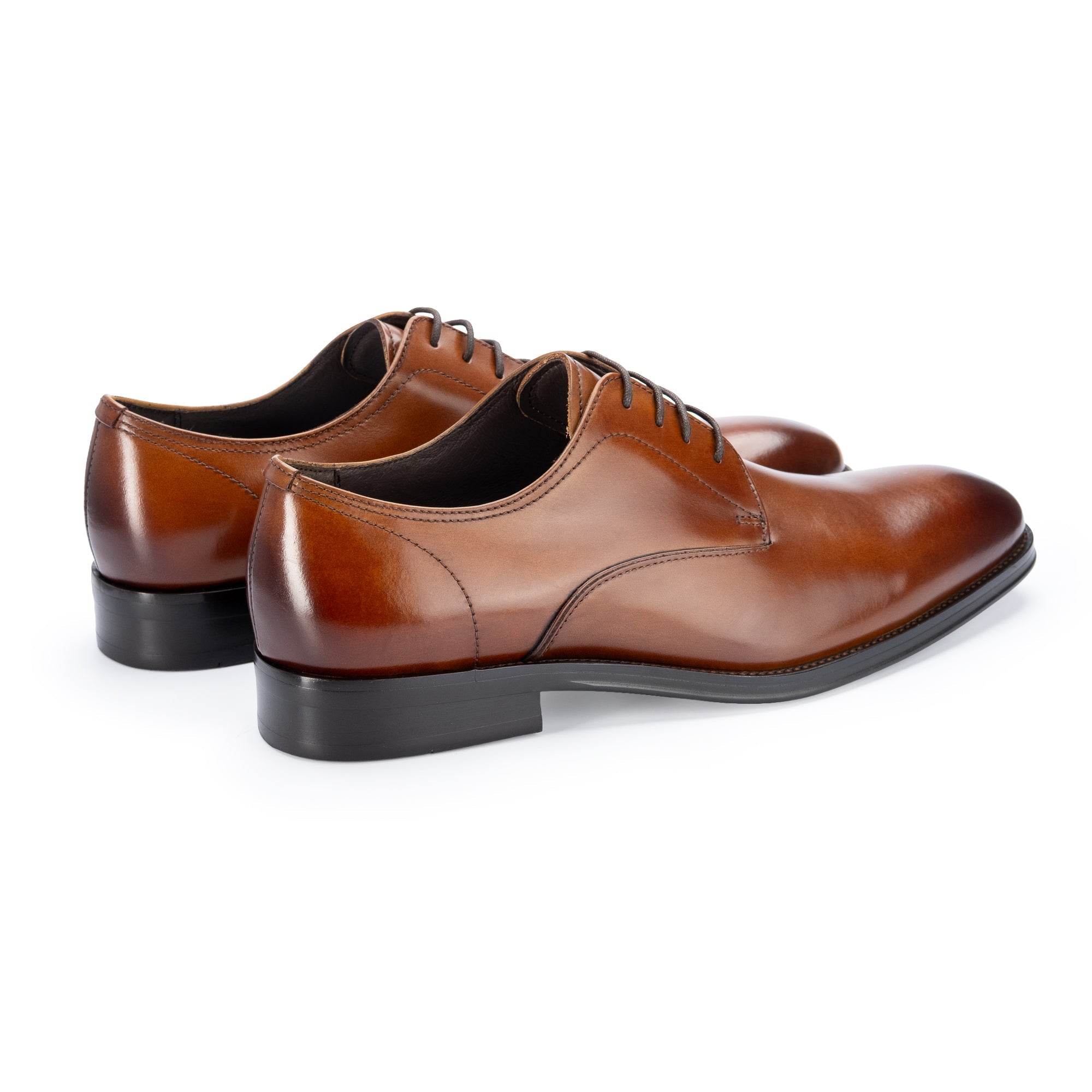
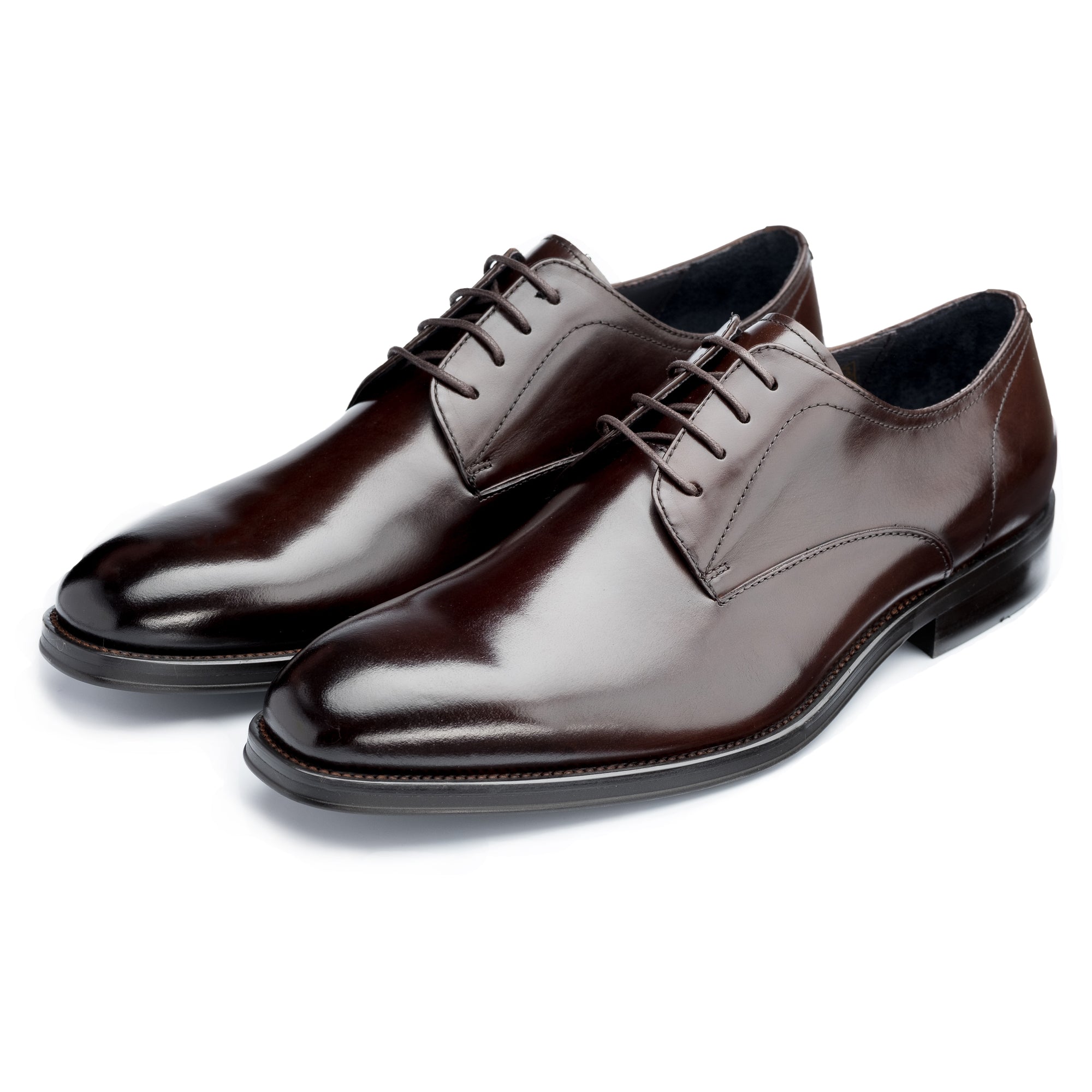
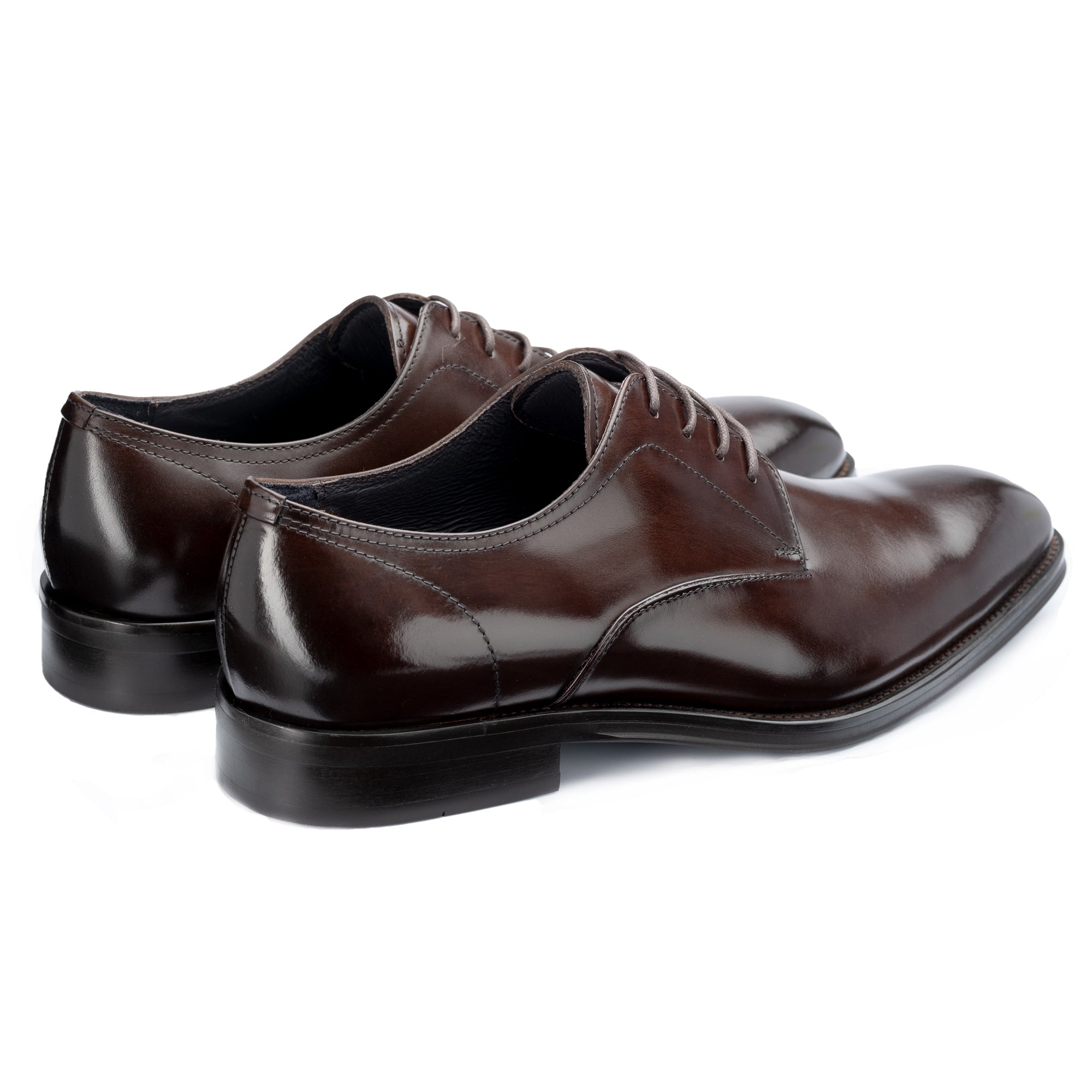
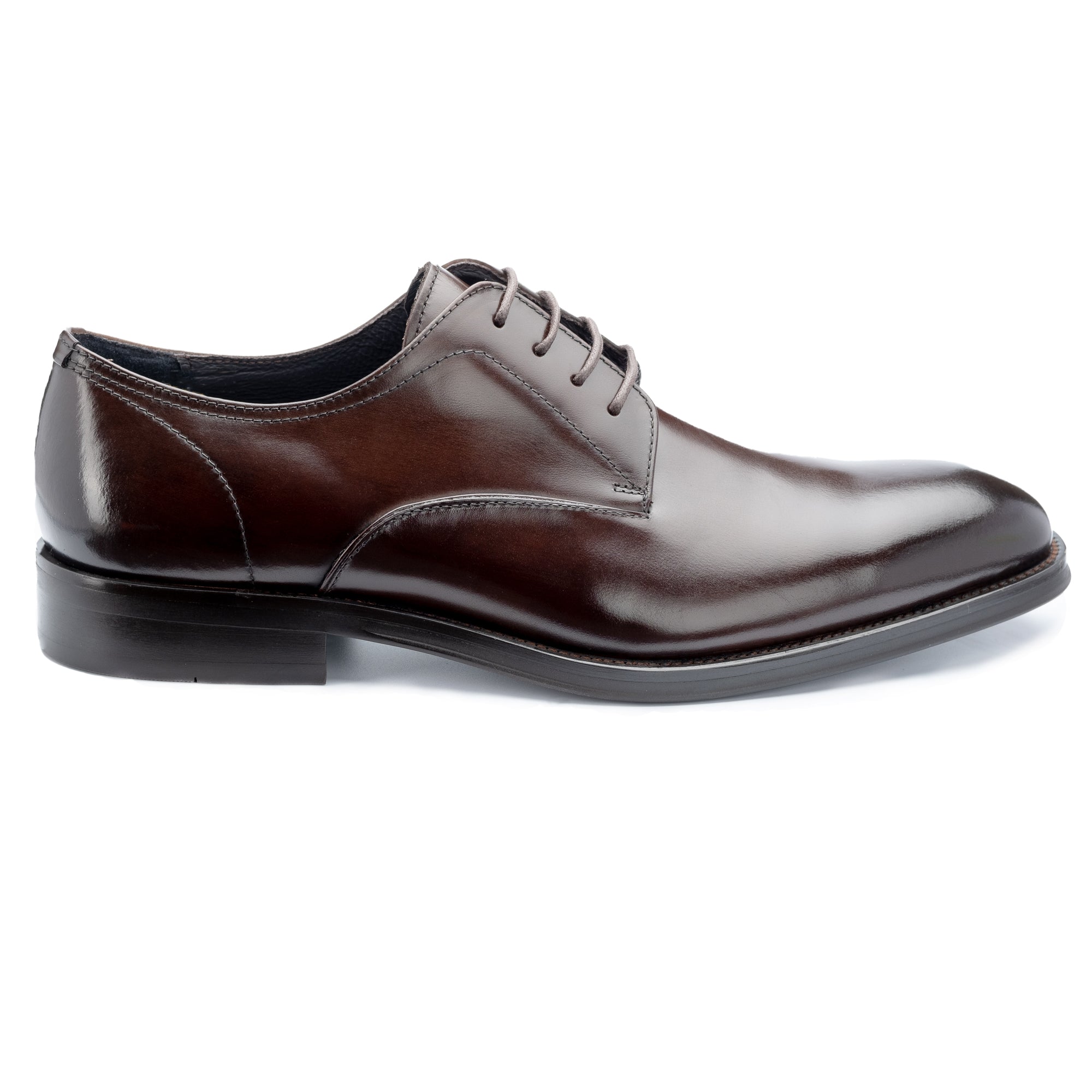
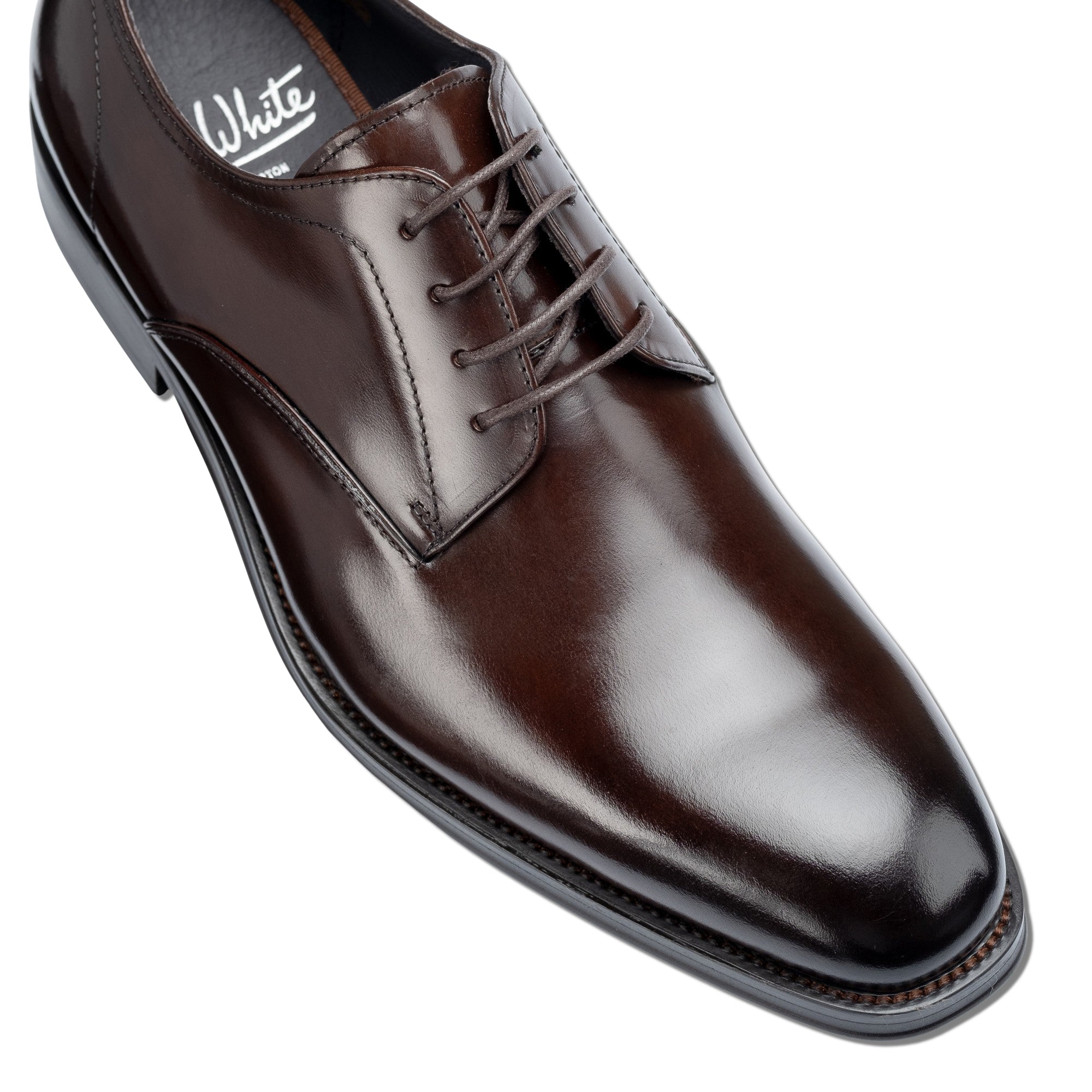
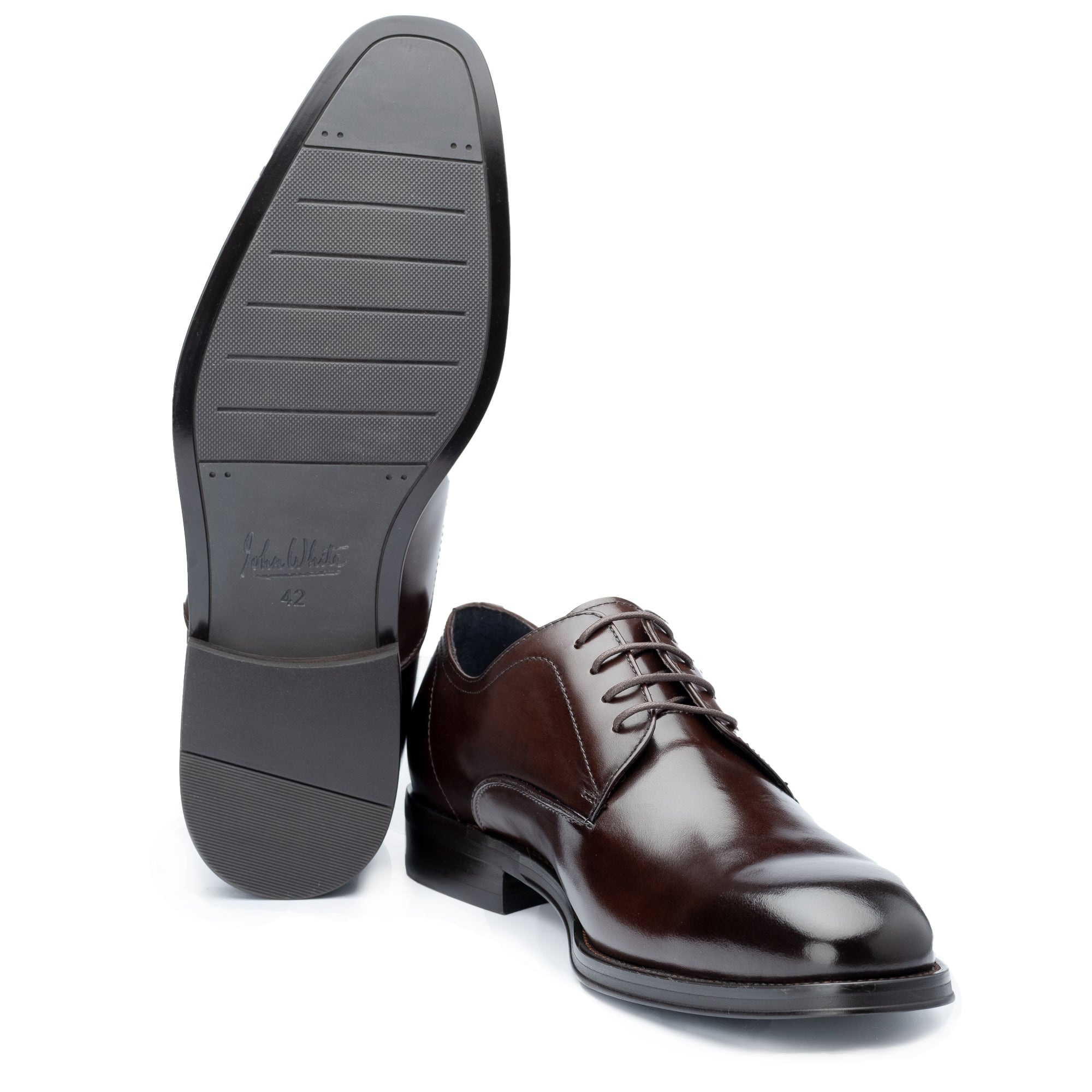
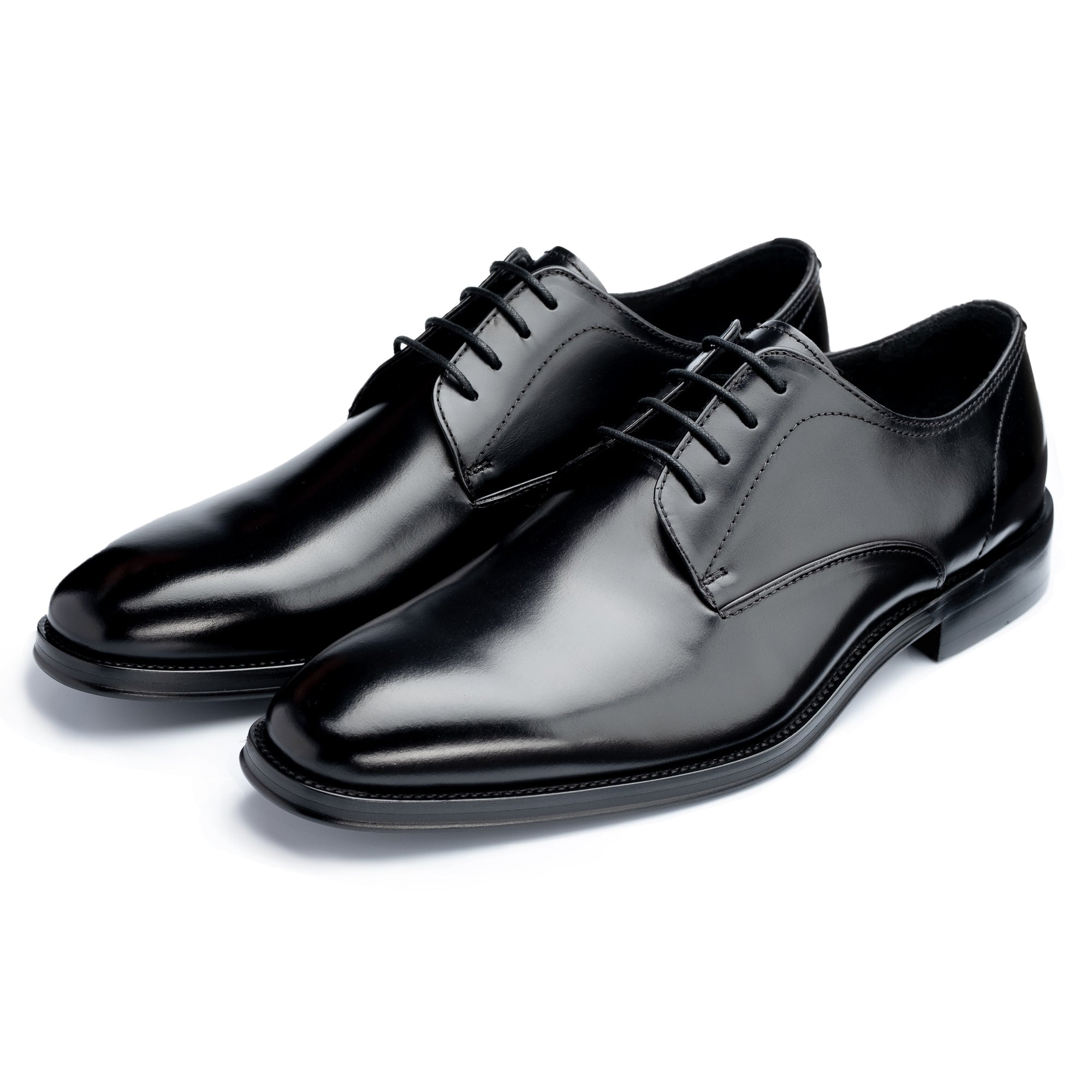
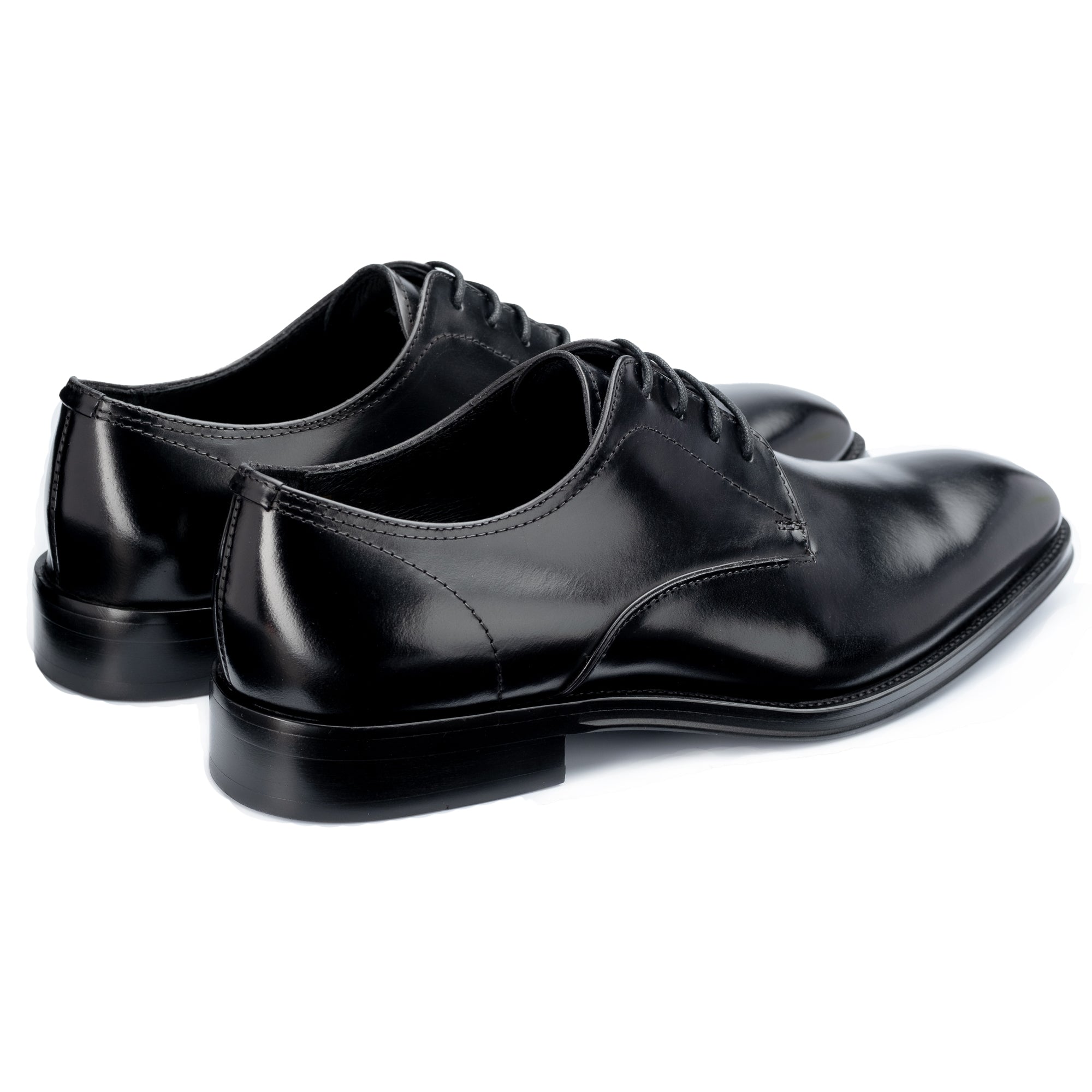
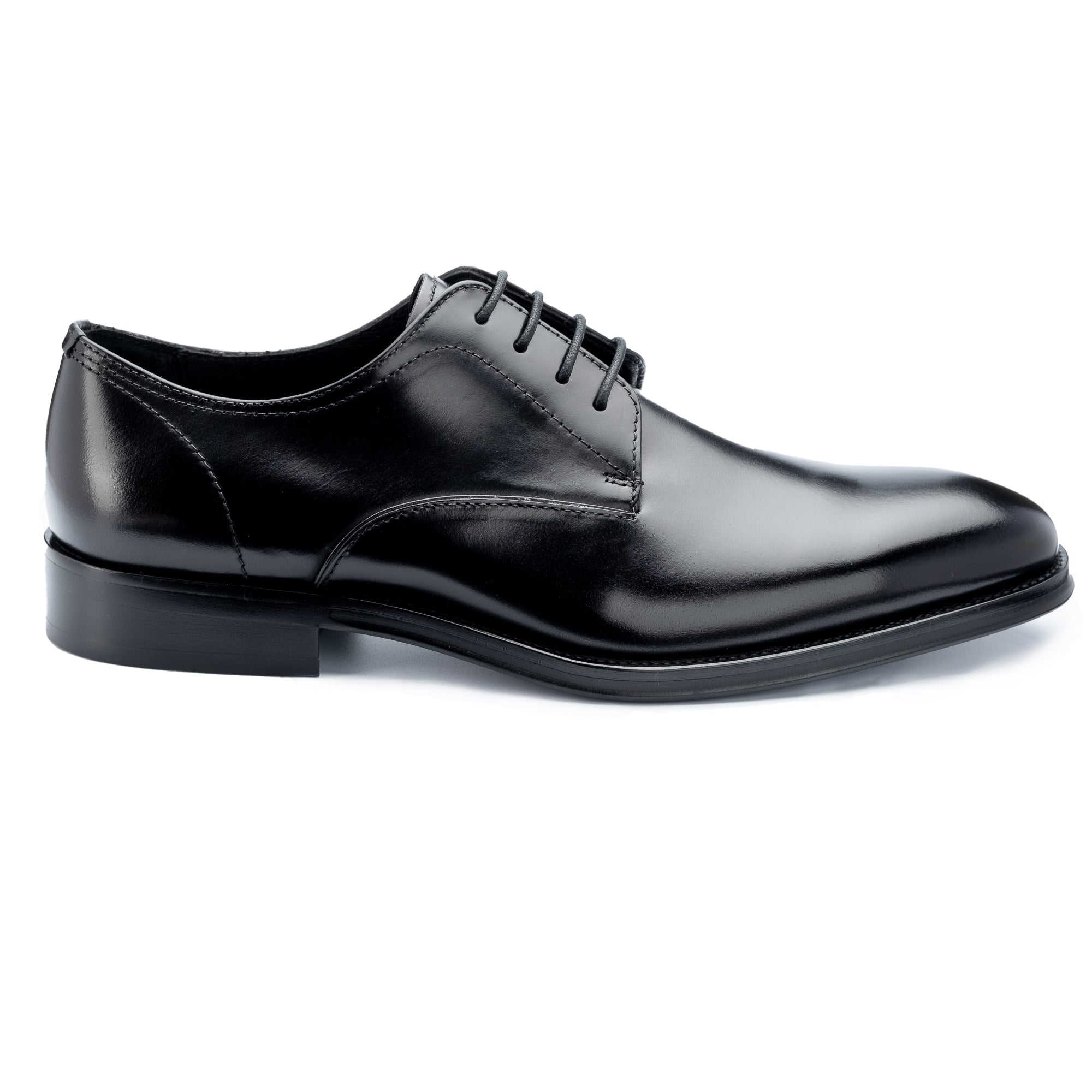
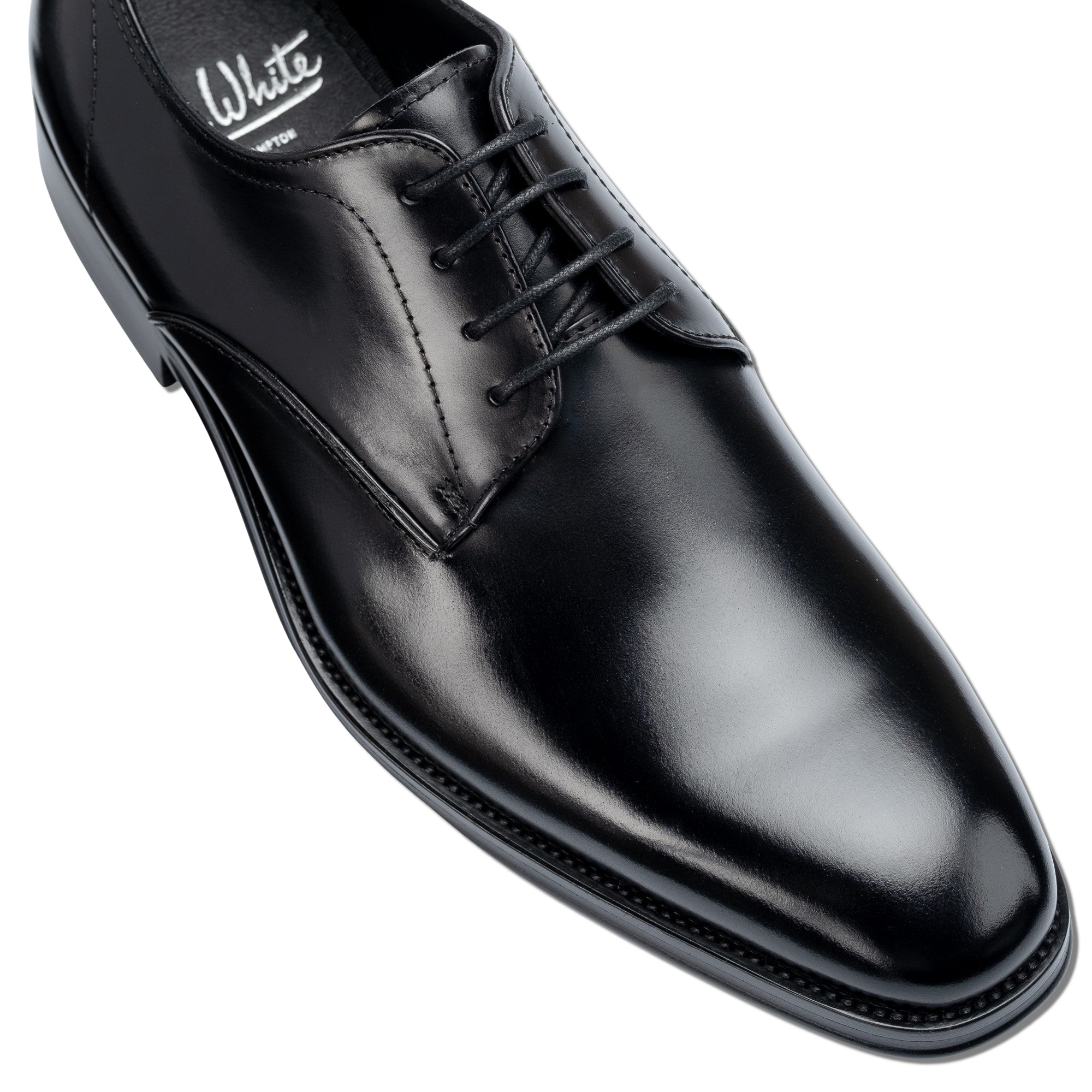
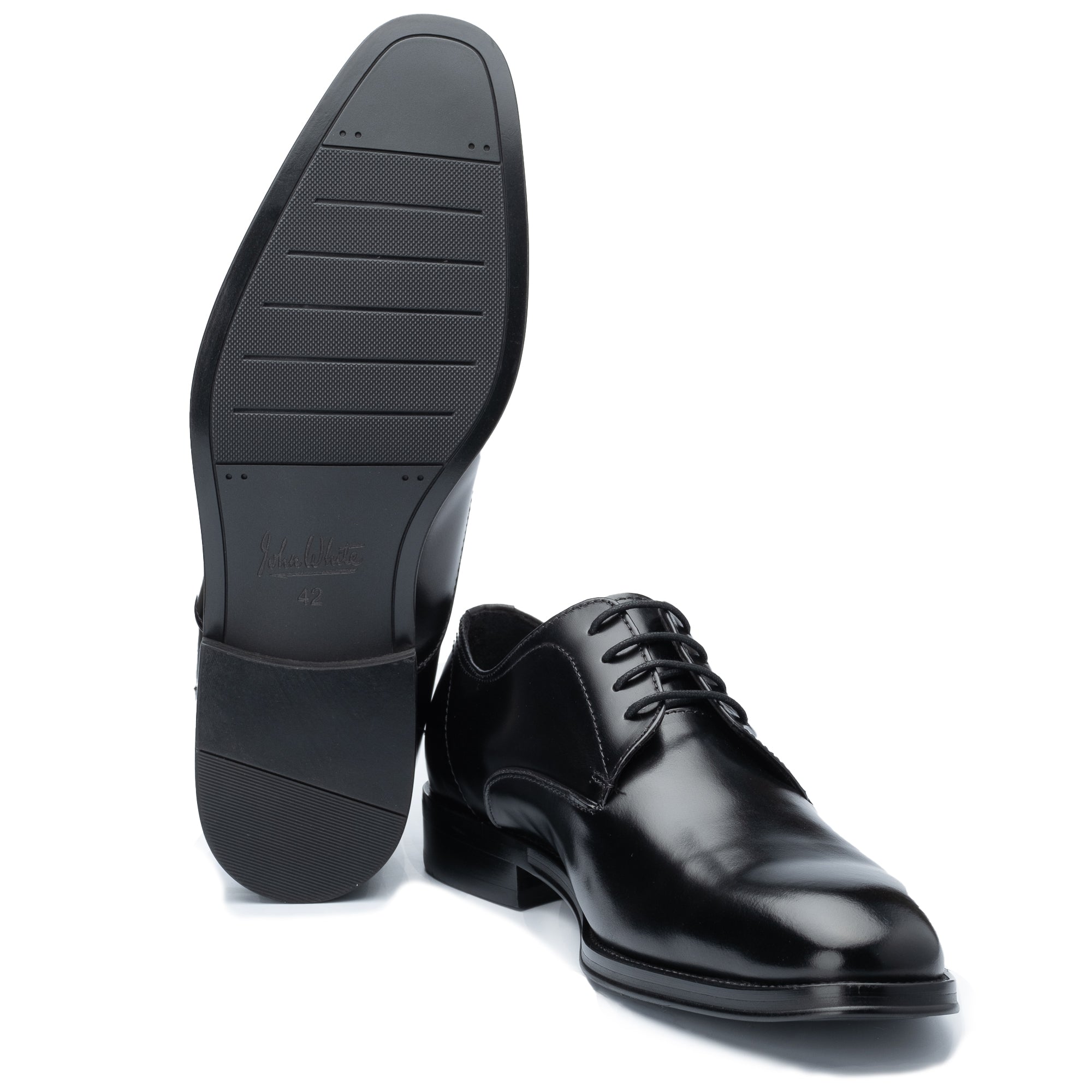
The Tanner Derby Shoes in Black are the most versatile professional shoe in the range. The plain toe keeps the formality register high despite the more open lacing; the slim last reads as considered. In Brown, the Tanner sits comfortably across both business professional and smart-casual contexts — making it the single shoe most likely to earn consistent daily rotation.
The Broad Derby Shoes in Black offer a slightly roomier fit across the toe box, which is worth knowing if you find the Tanner’s last restrictive through a long working day. Same formality register, different geometry. Both sit equally well under a suit trouser or tailored trousers; the choice between them comes down to fit rather than occasion.
If you are building a professional shoe rotation from nothing and can only start with one pair, a black Derby is the correct first choice. It covers the widest possible range of office situations without conceding anything on quality or finish.
The Monk Strap — The Week-to-Week Break from Protocol
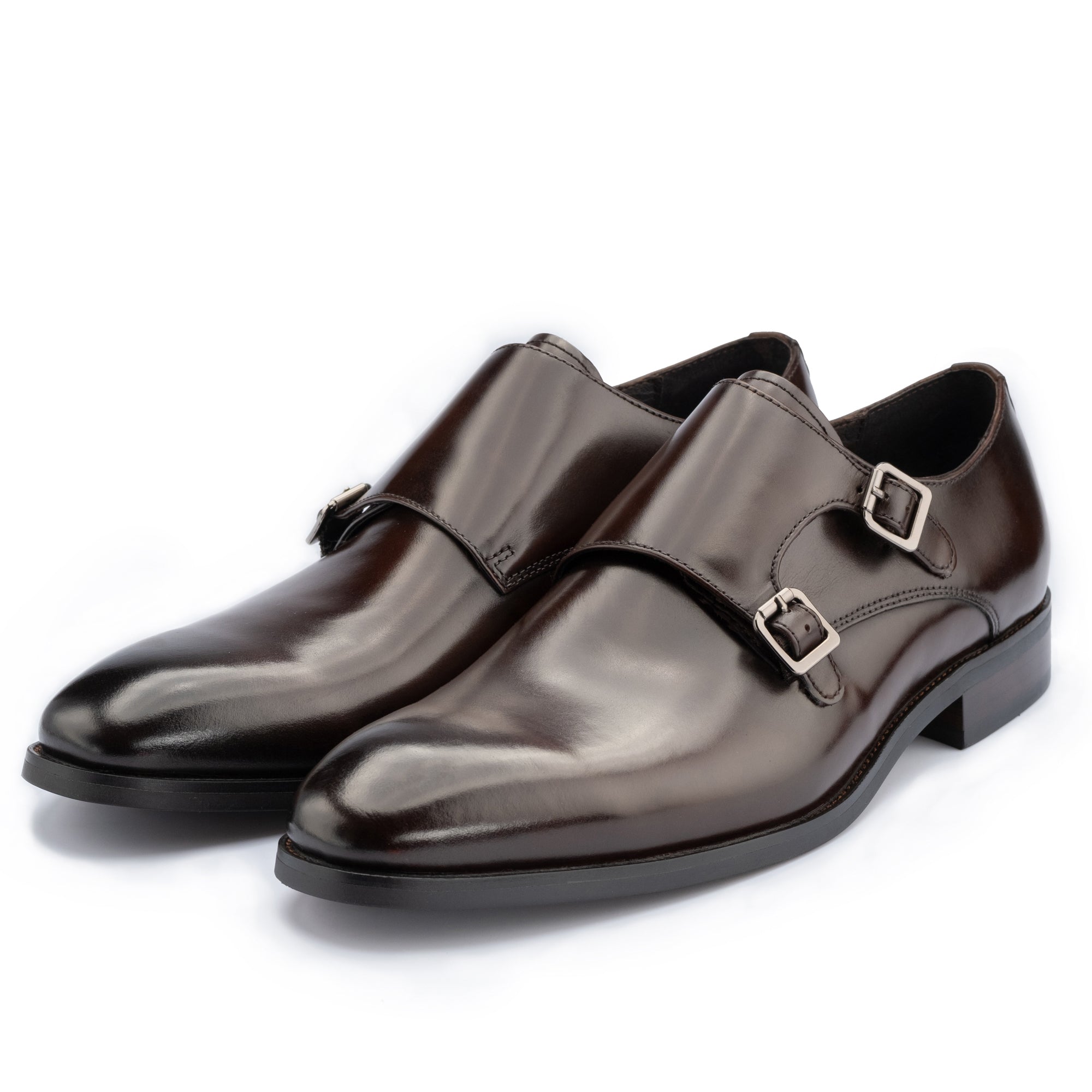
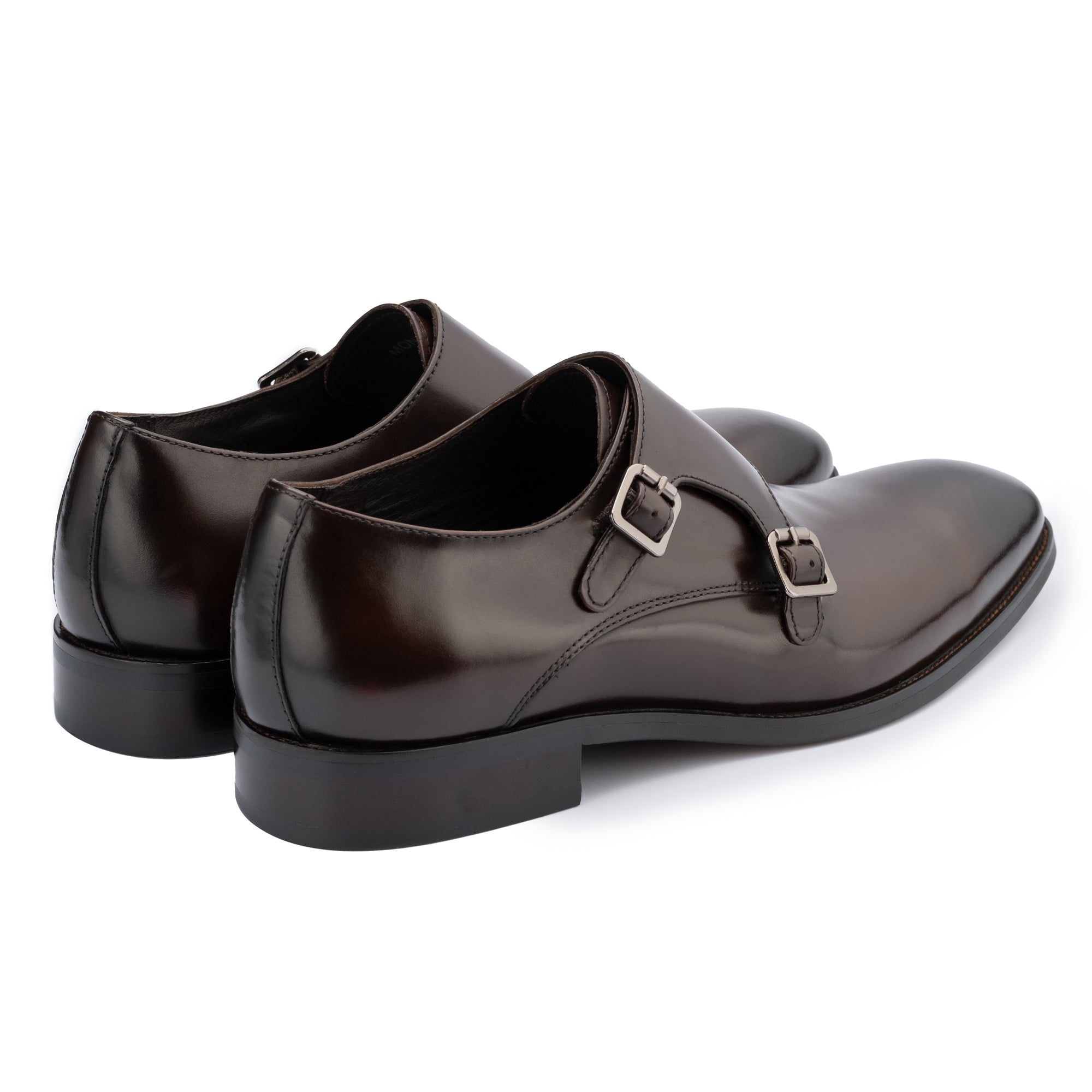
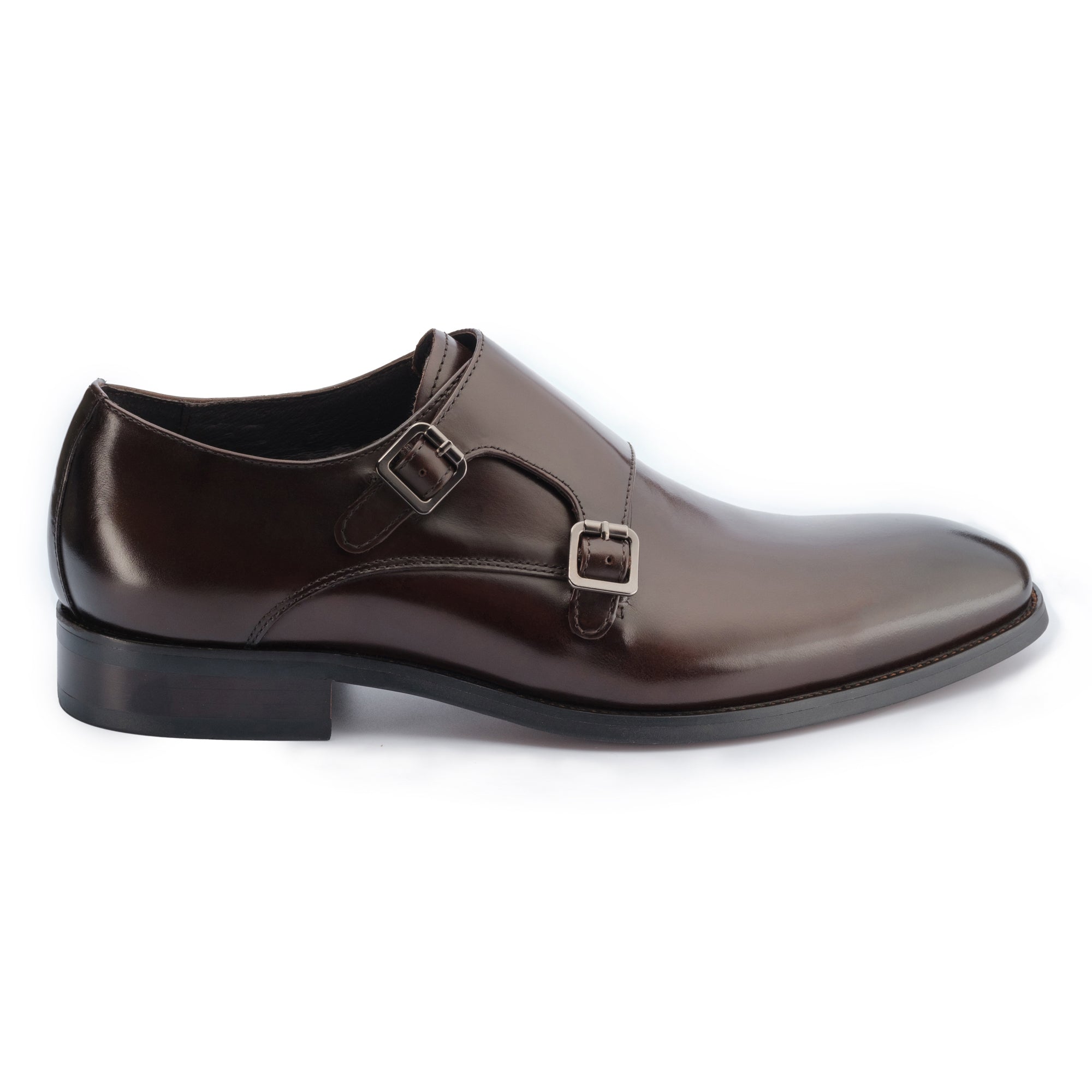
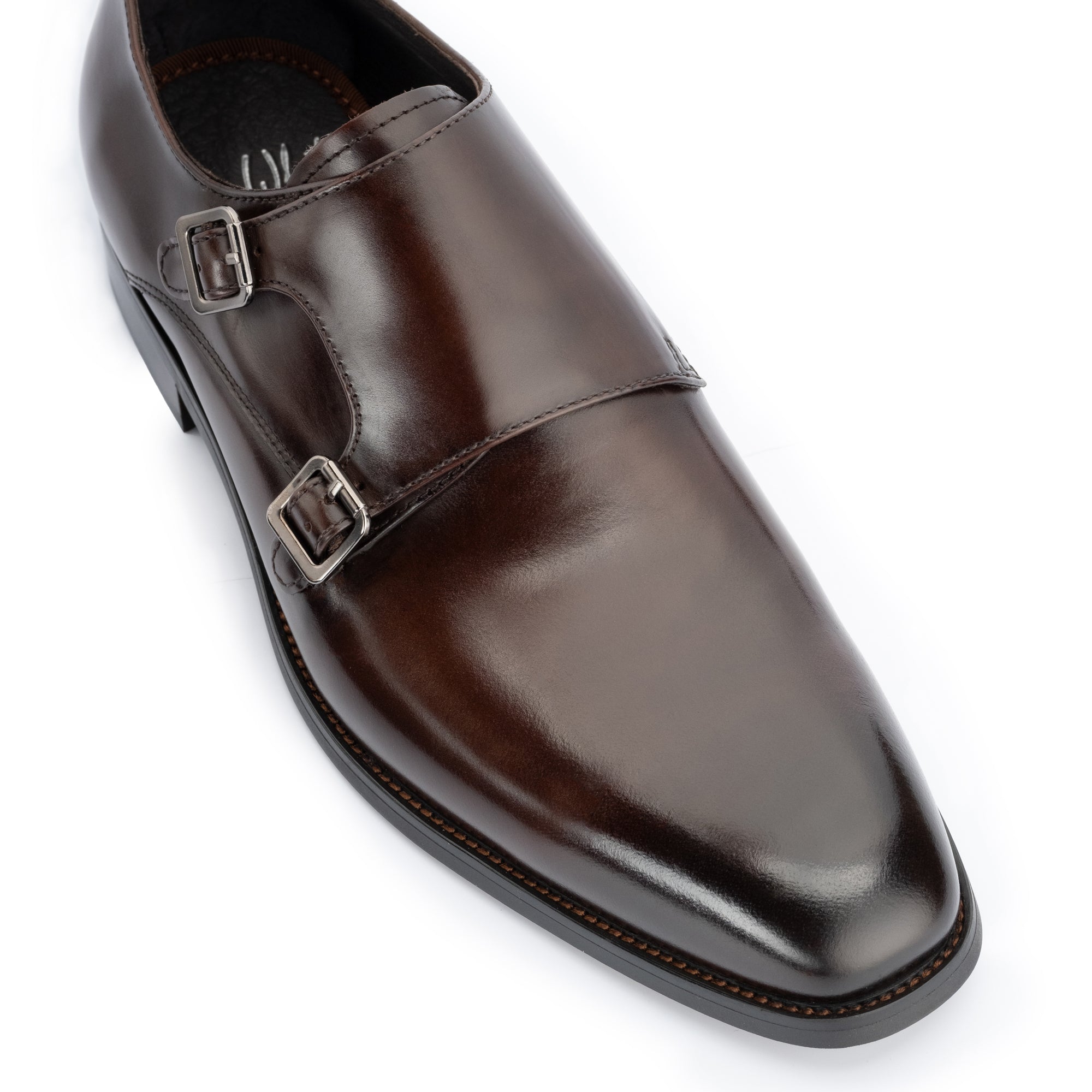
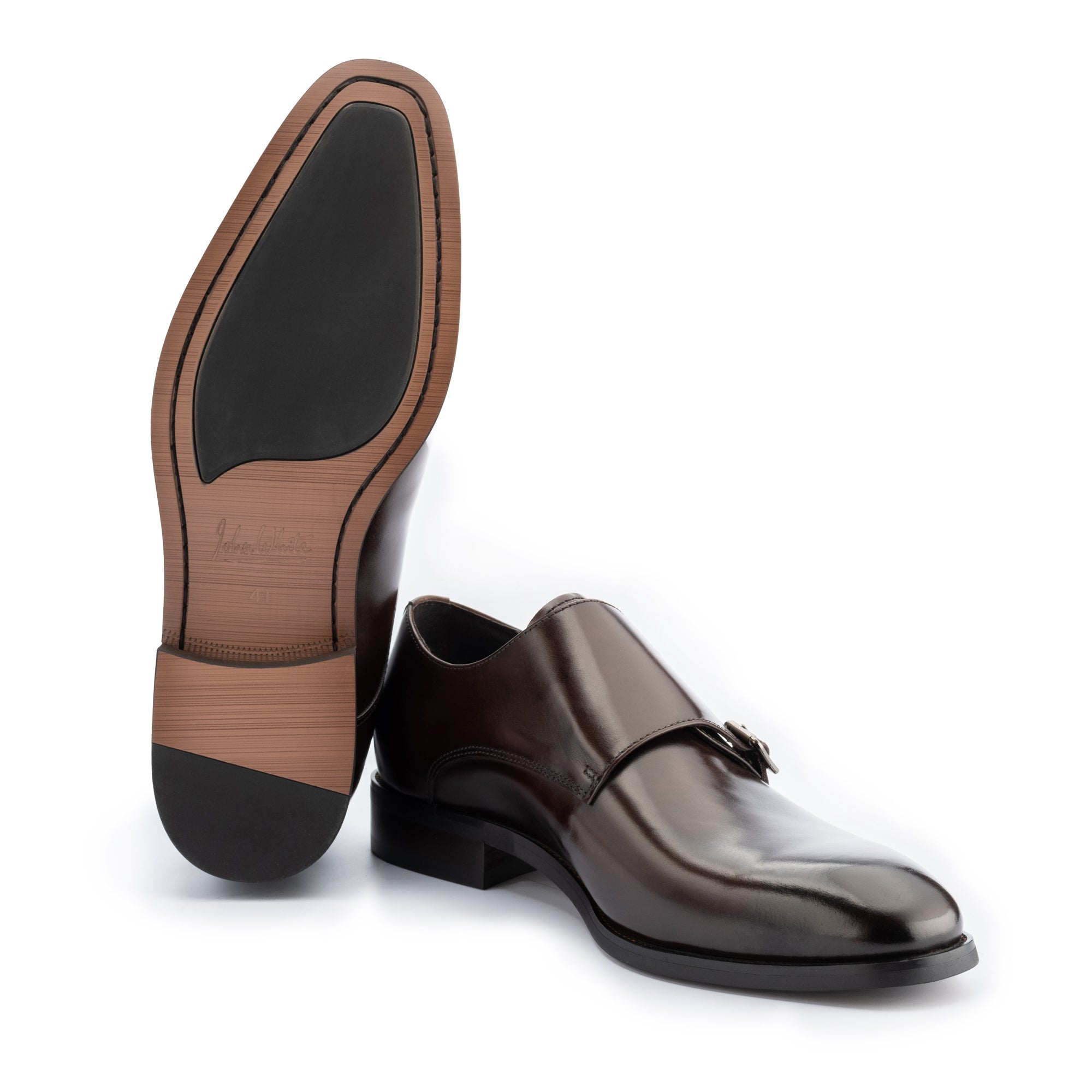
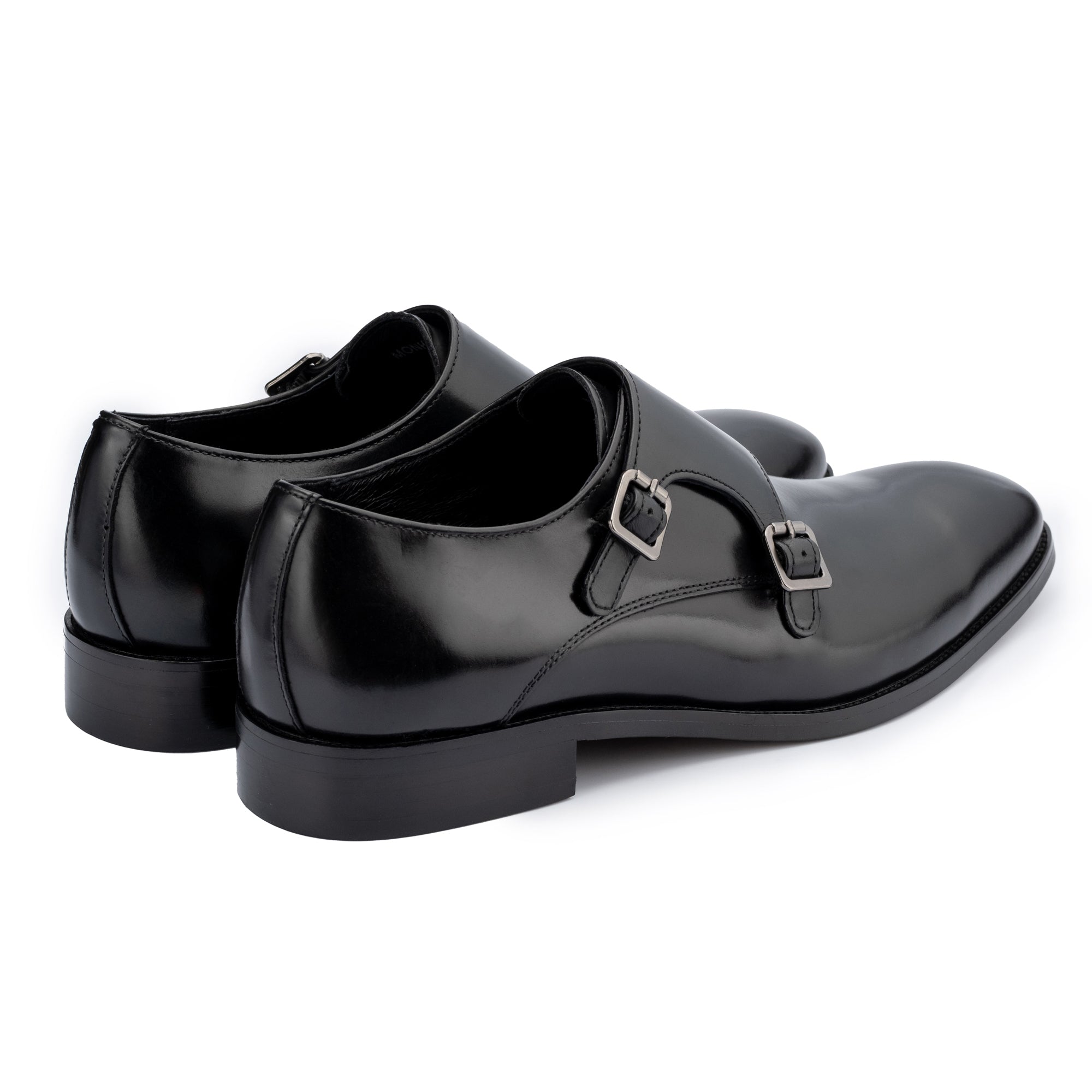
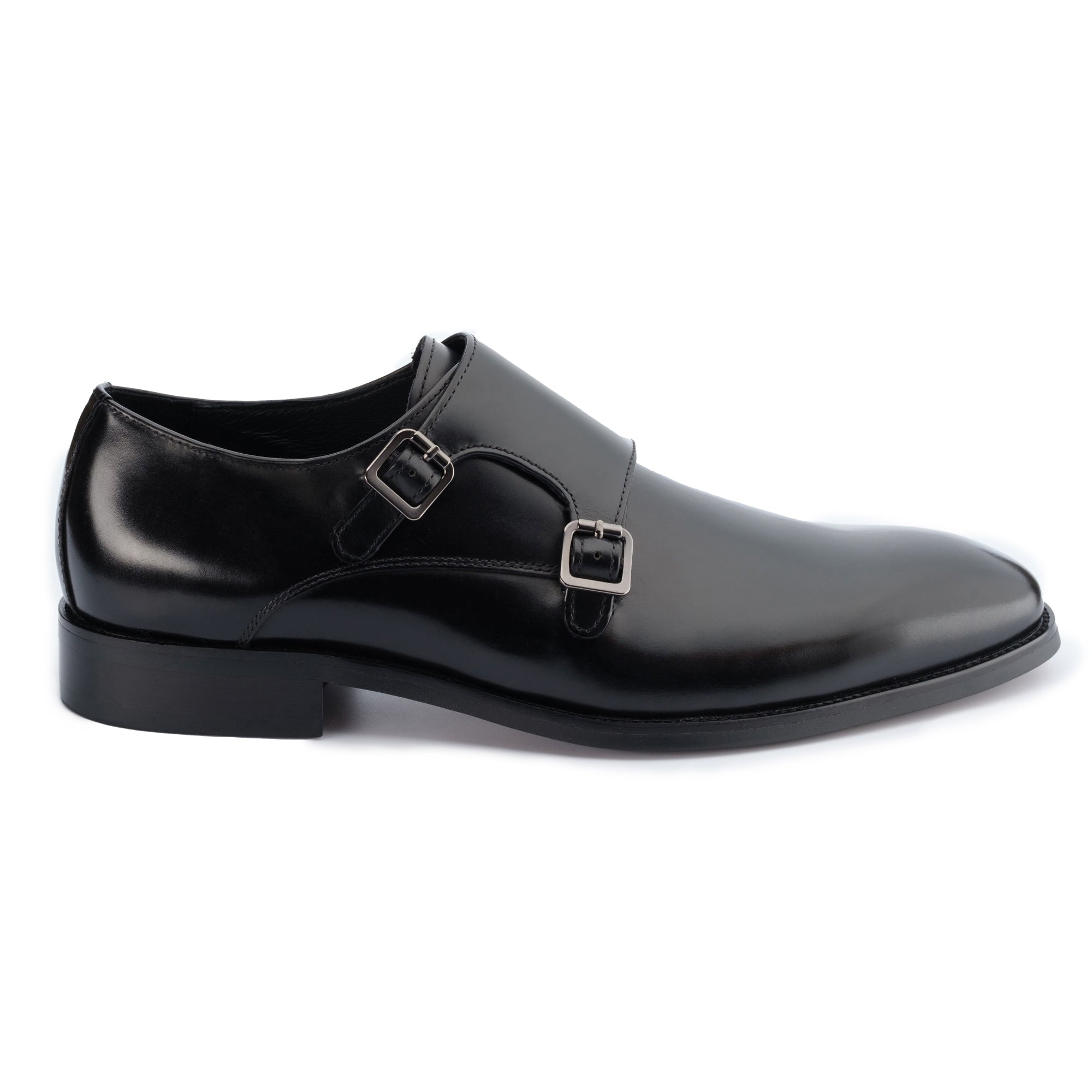
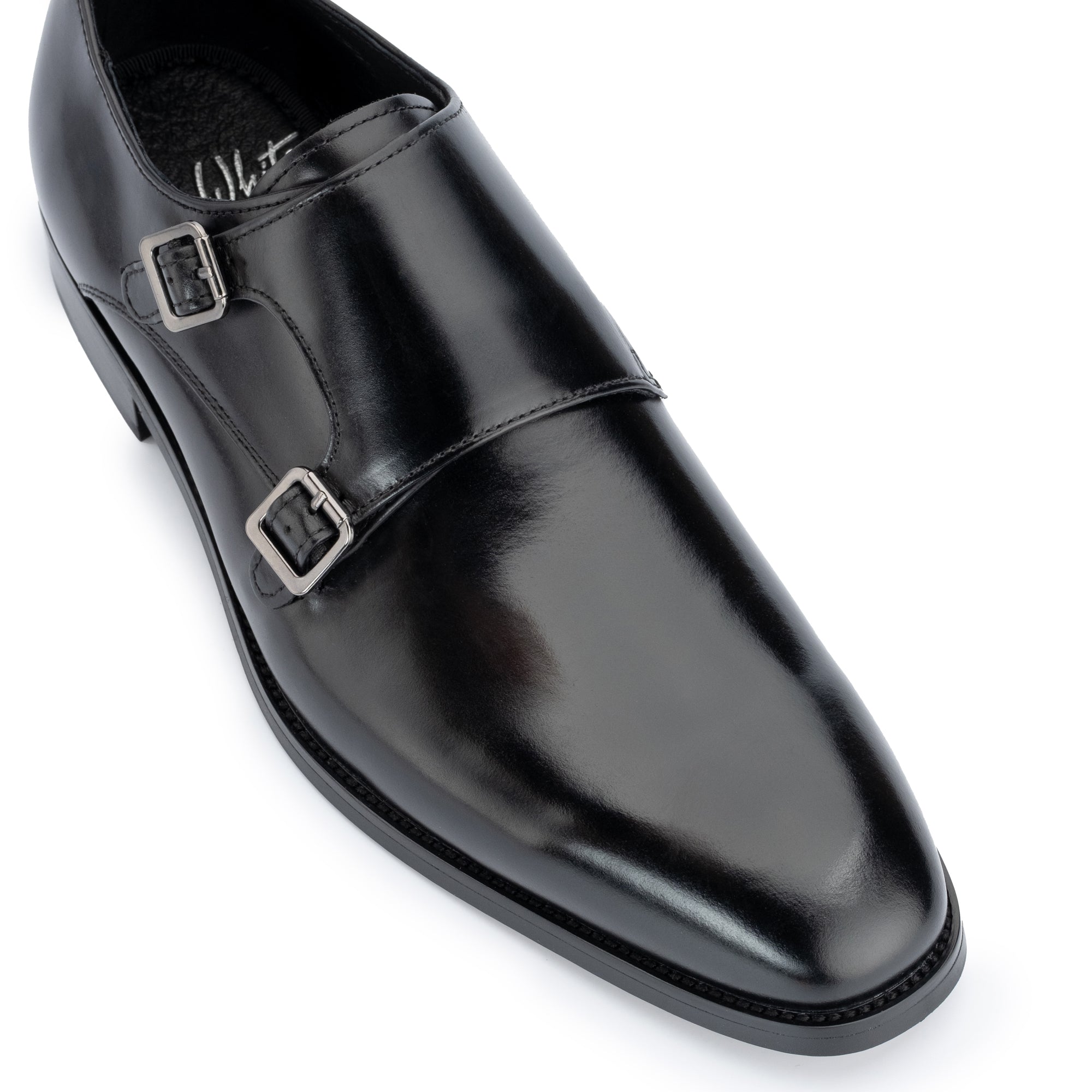
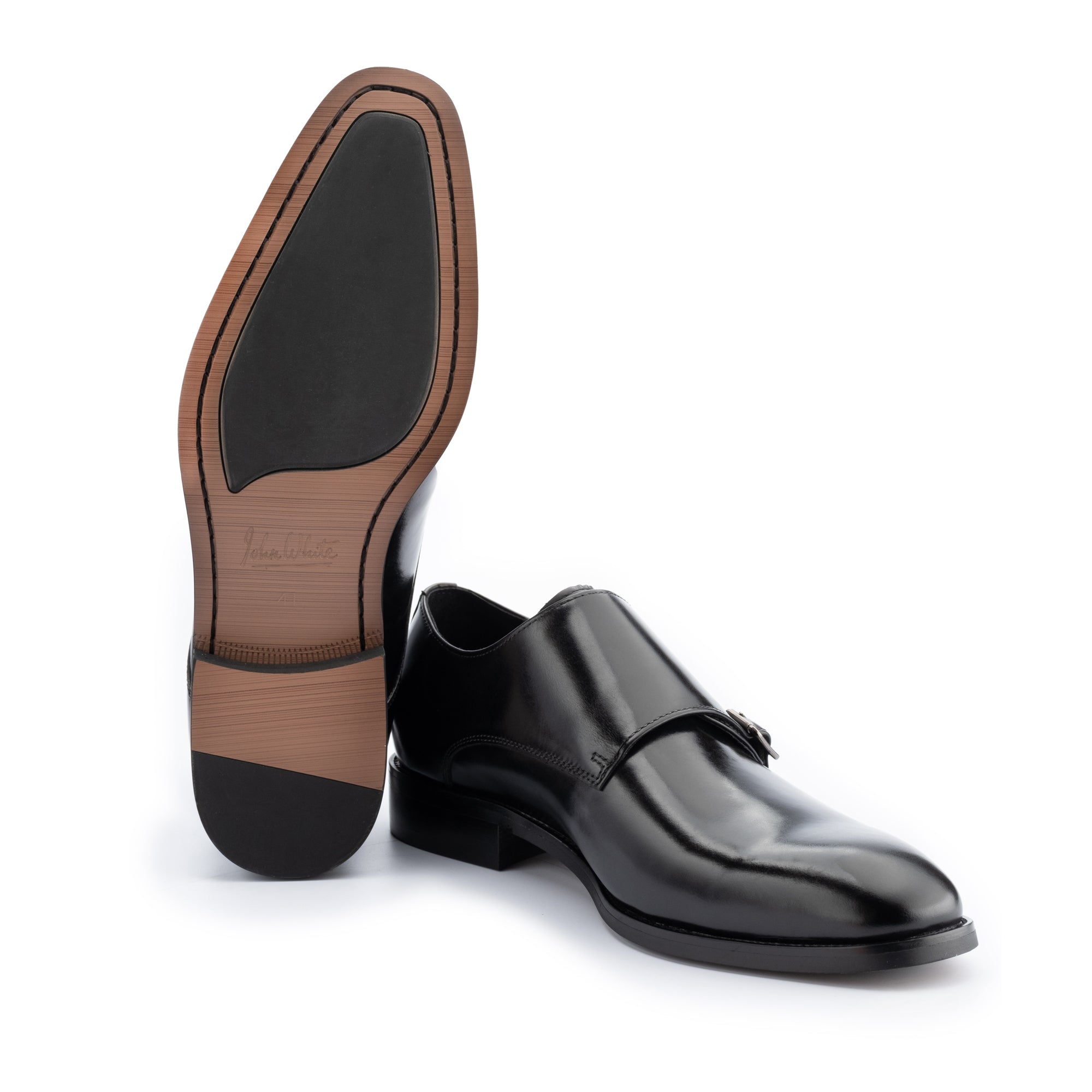
The double monk is not an eccentric choice. It is a formal shoe with hardware — the buckled strap replaces the lace without altering the shoe’s register in any meaningful way. In Black, it reads as slightly less austere than an Oxford; in Brown, it steps into territory the business professional office accepts without question.
The Monkton Double Monk Shoes offer both options. Black for formal days; Brown for the more relaxed end of the business professional week. The double buckle is distinctive without being eccentric, which is precisely the point — it gives the professional wardrobe variety without requiring any change in register.
The monk strap also responds well to suit weight. With a heavier wool suit in charcoal, the hardware adds visual interest. With a lighter mid-grey in a textured weave, it sits cleanly. September suits — typically in the 280–340g range — are natural partners for both colourways.
When the Semi-Brogue Earns Its Place
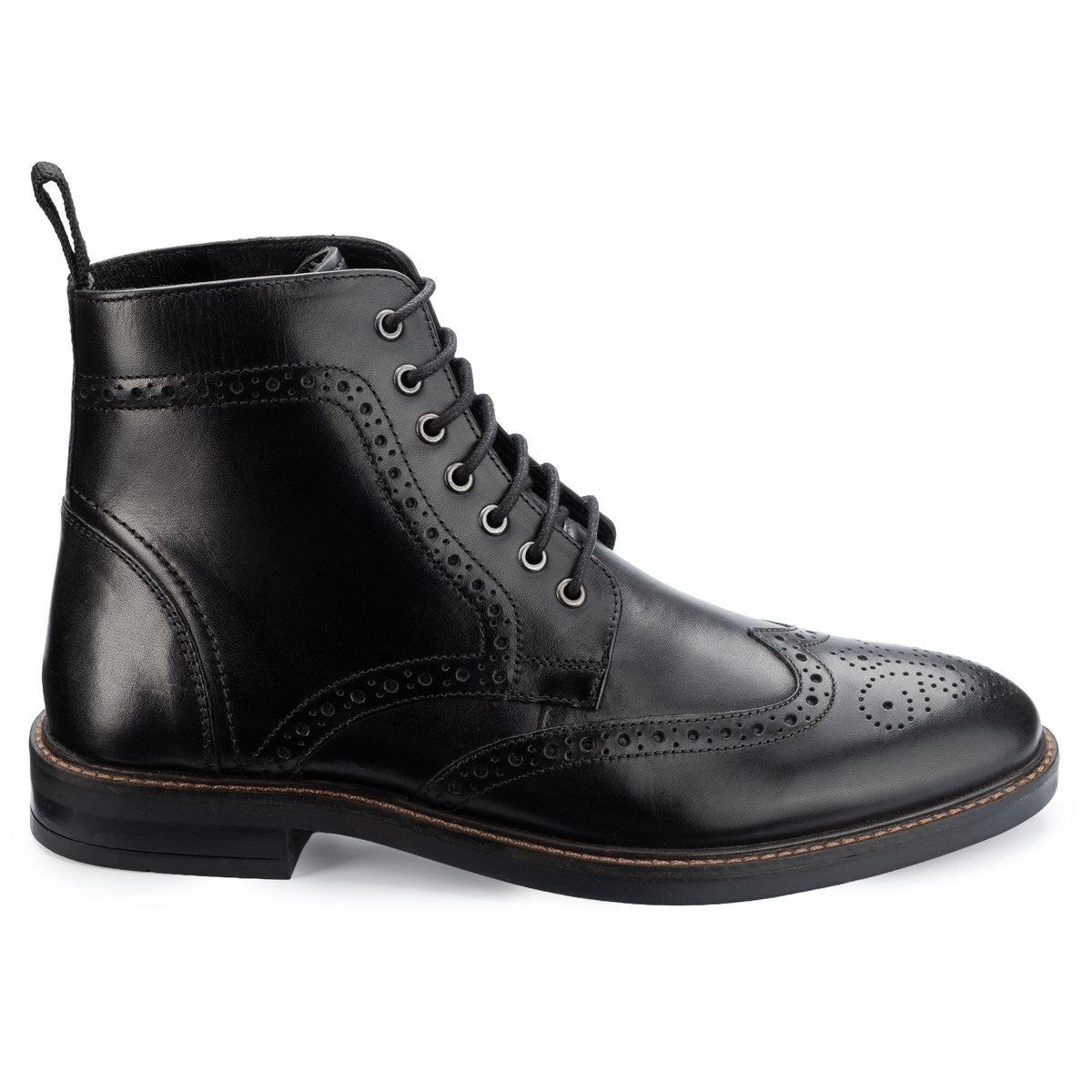
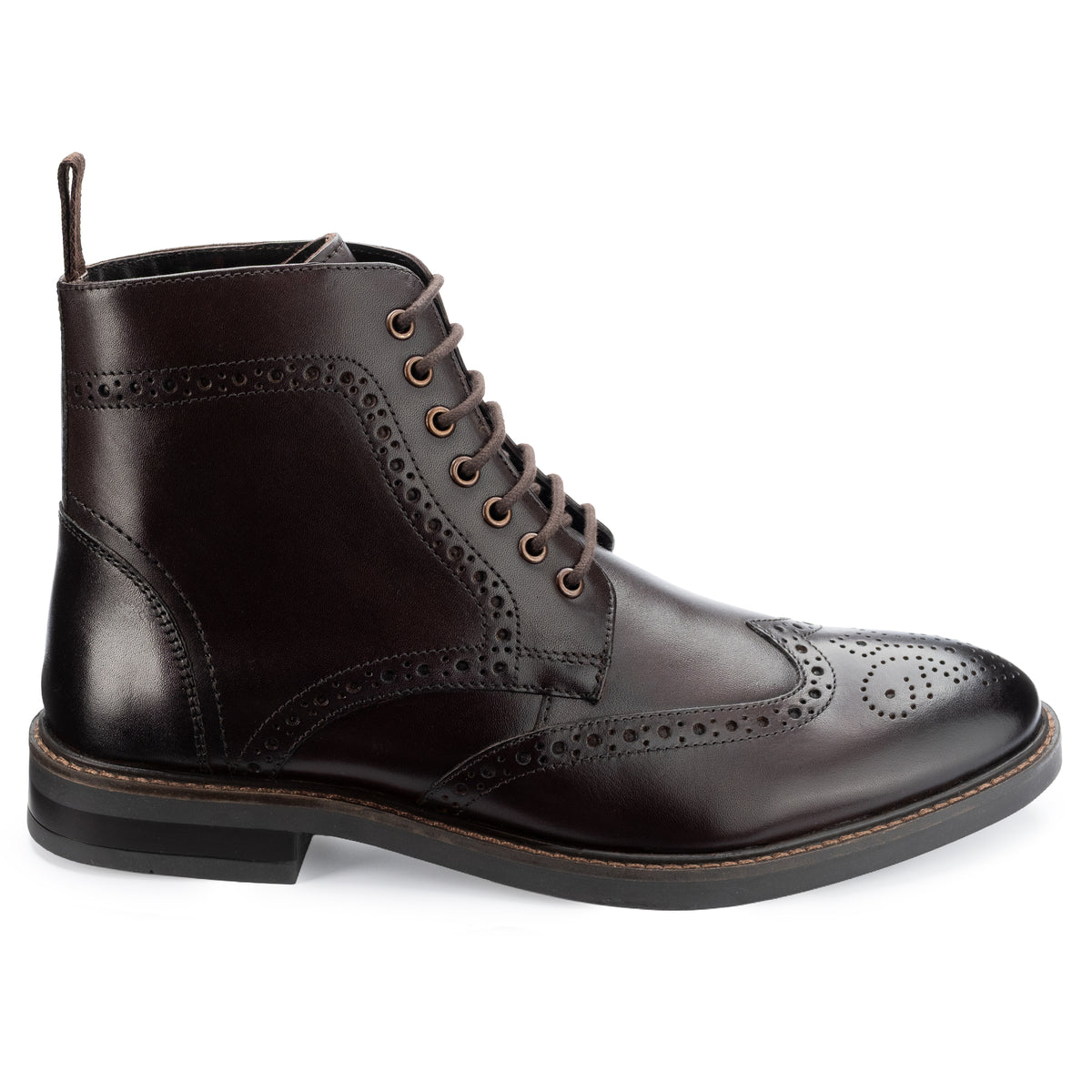
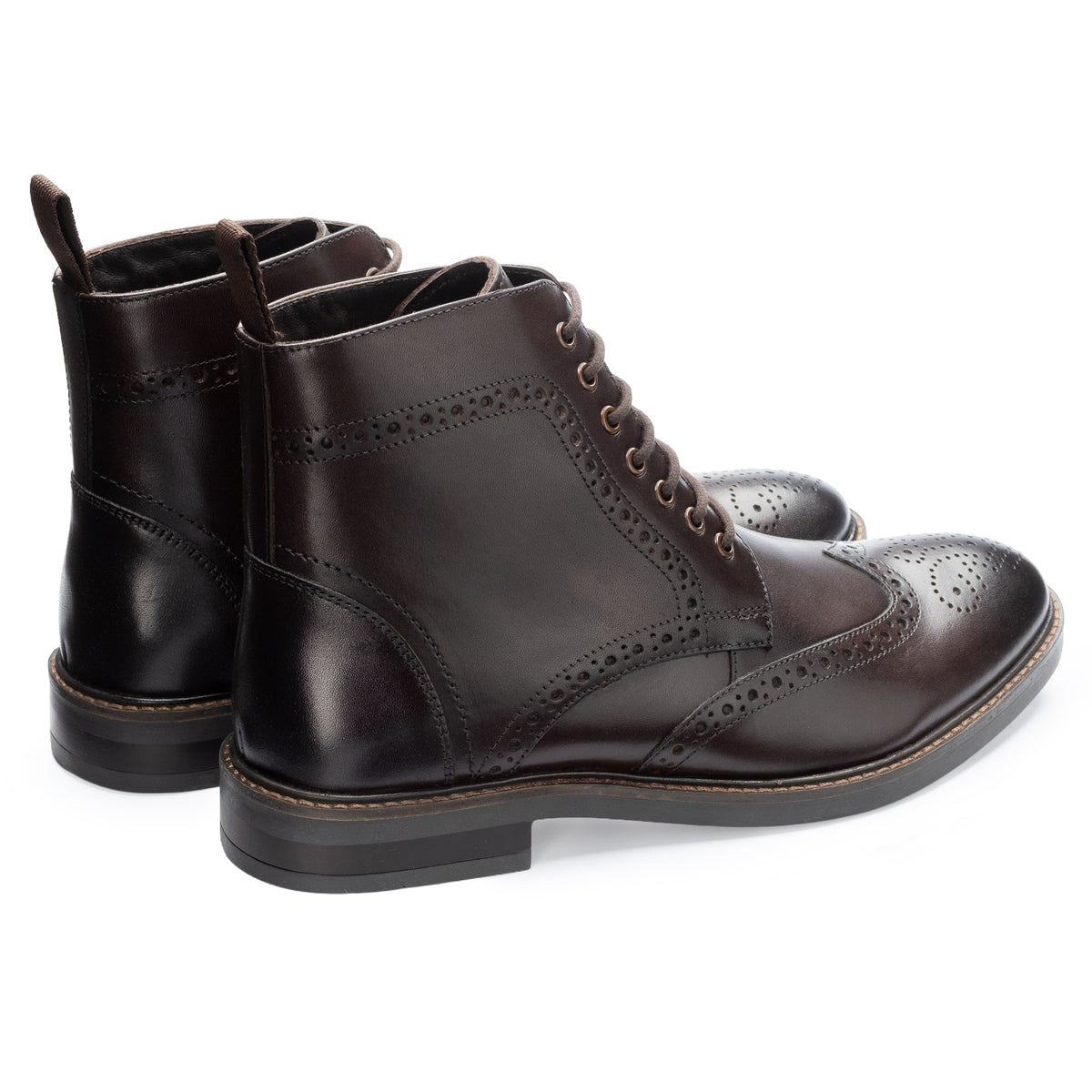
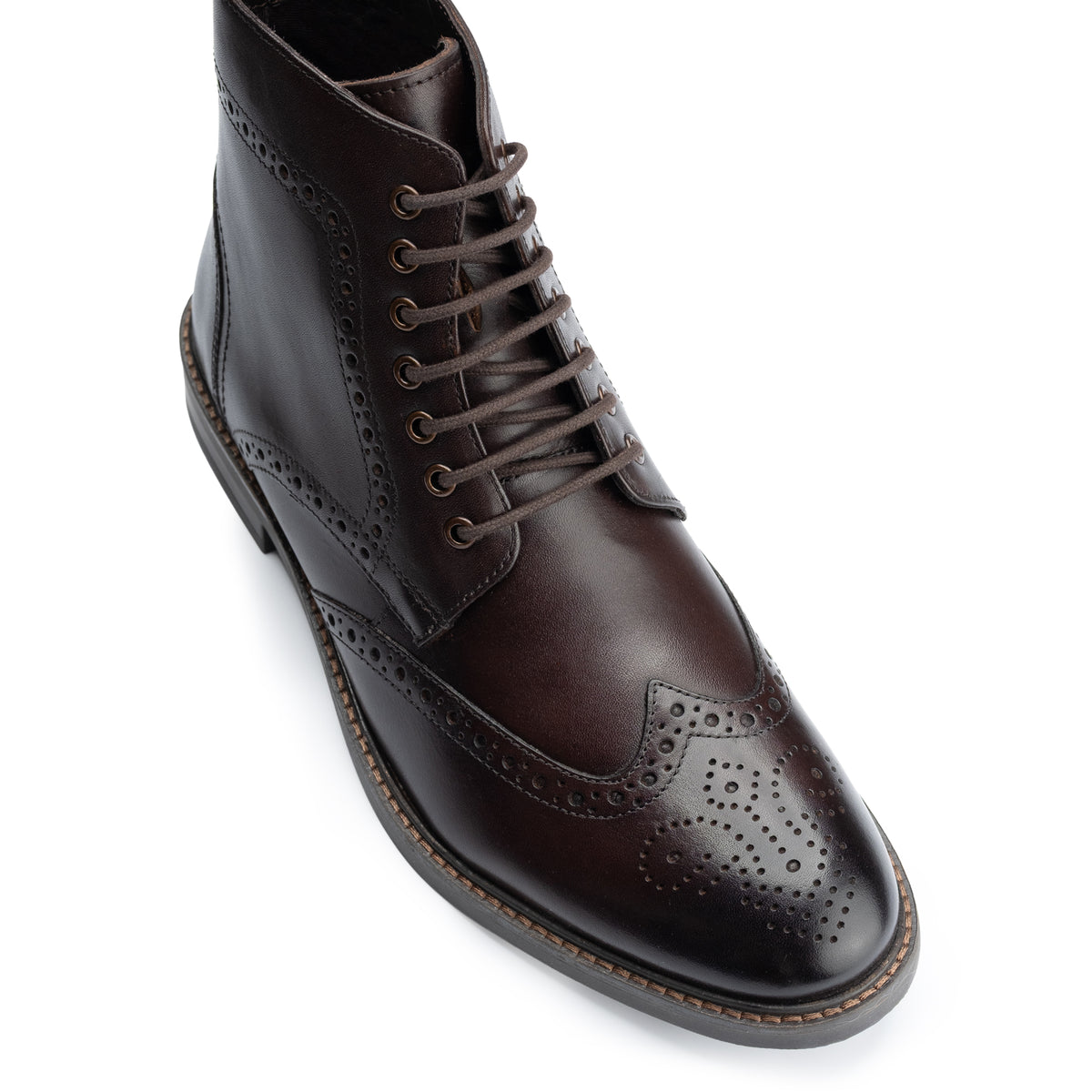
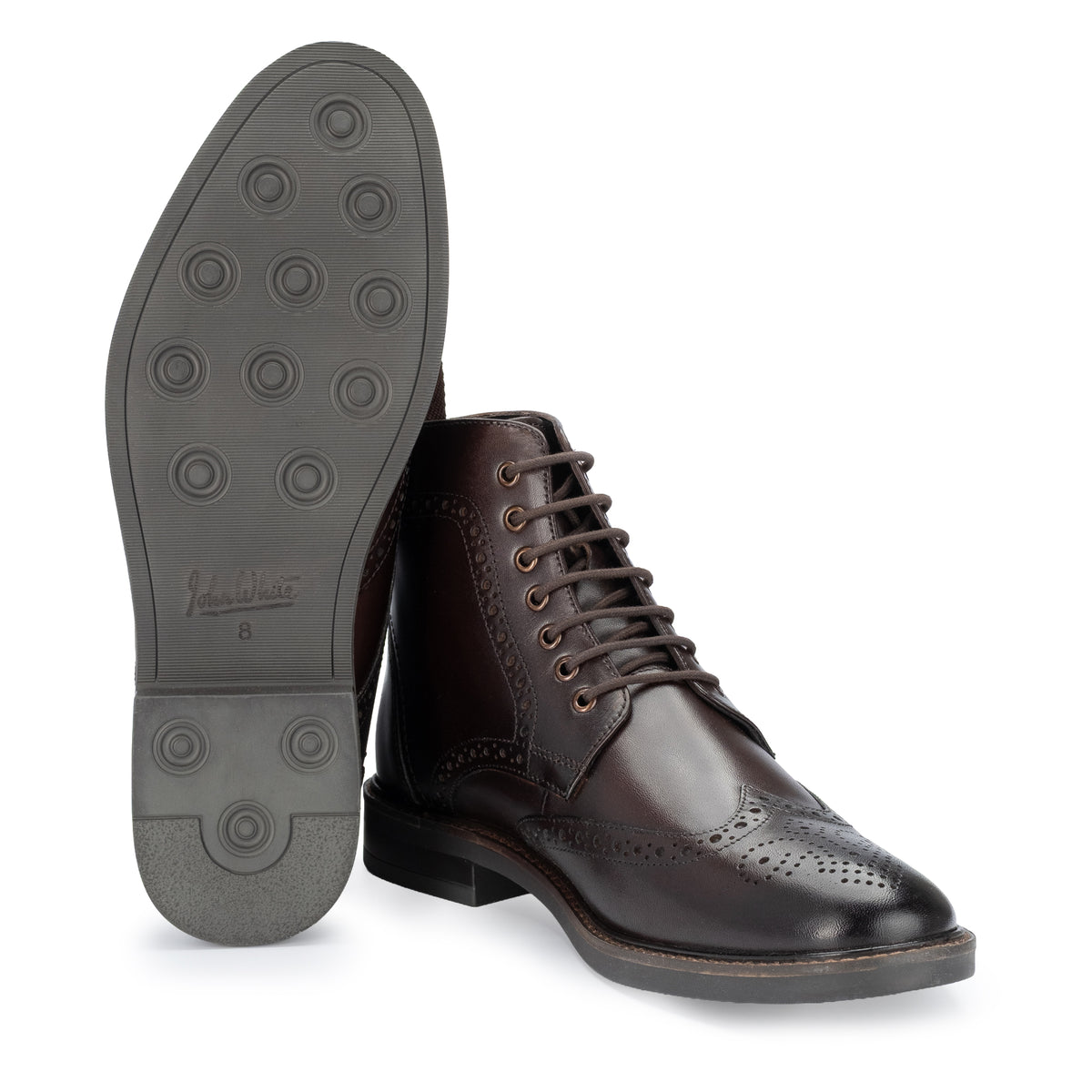
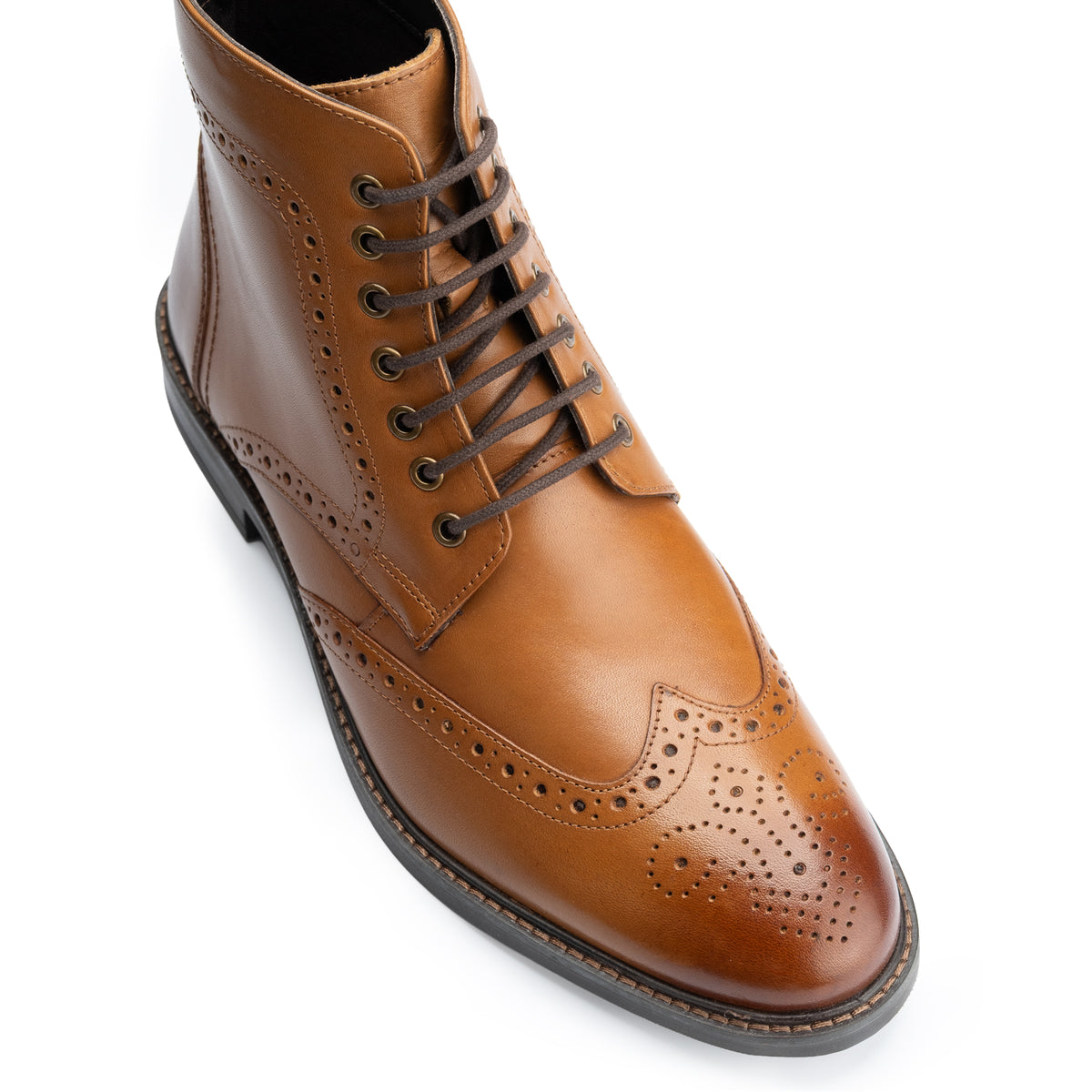
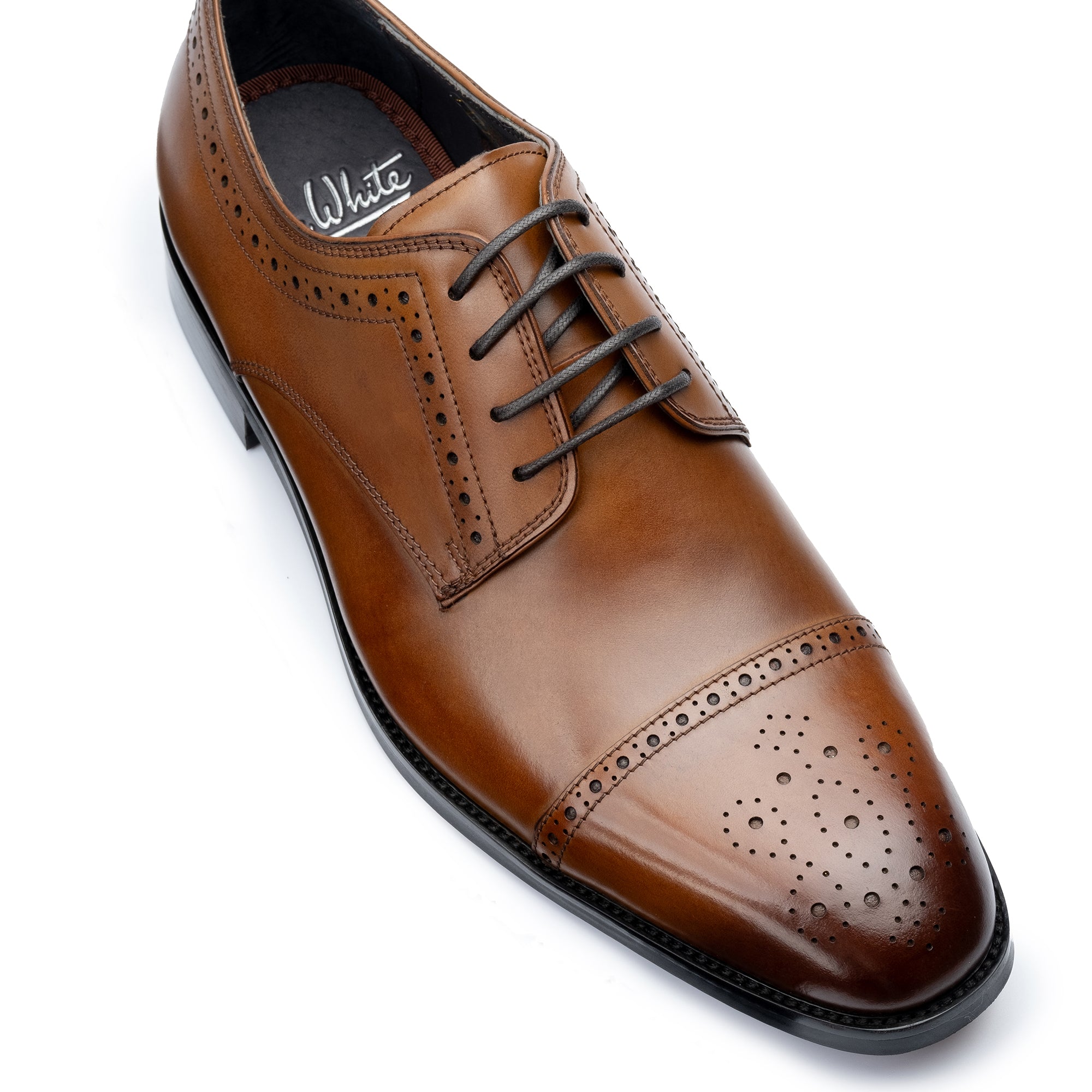
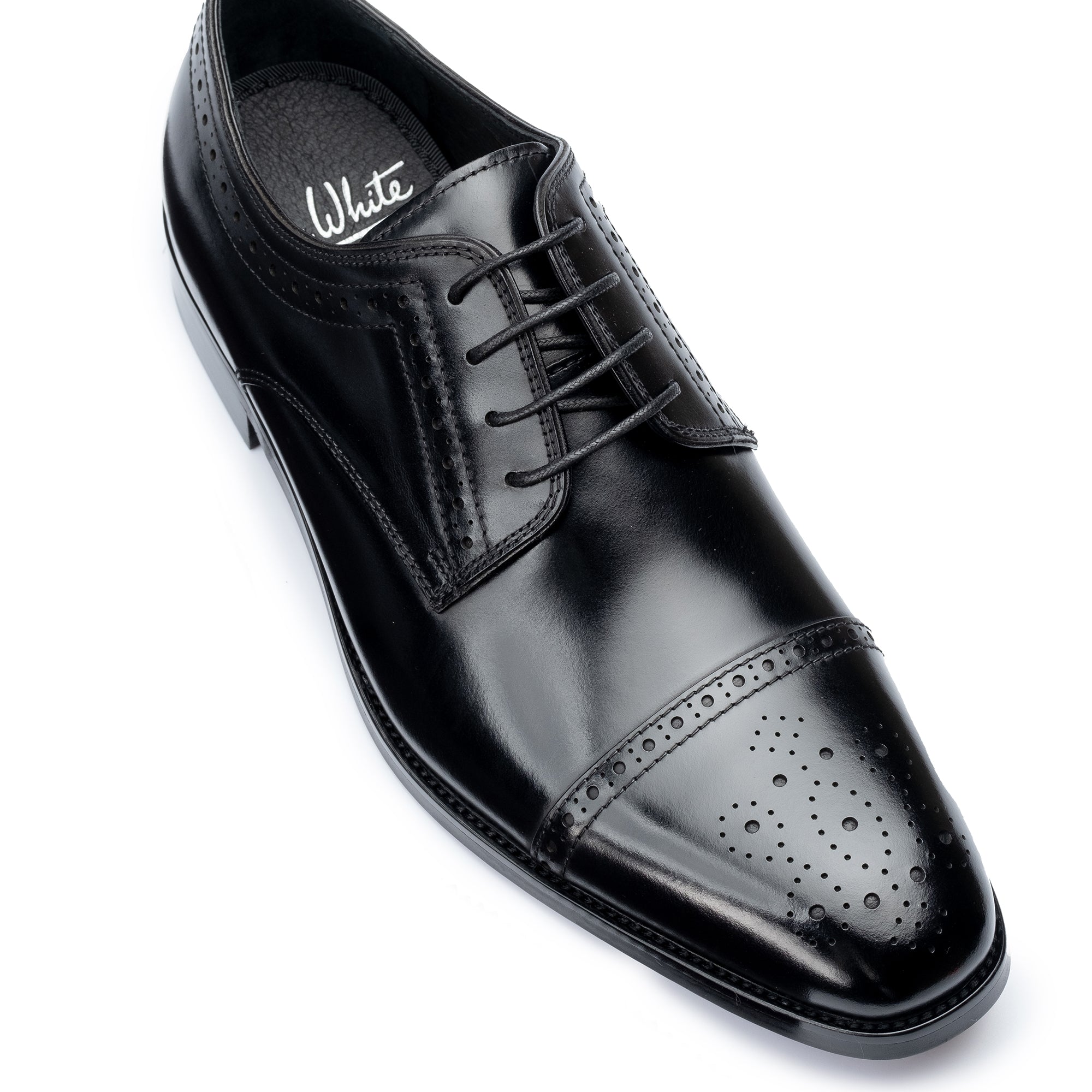
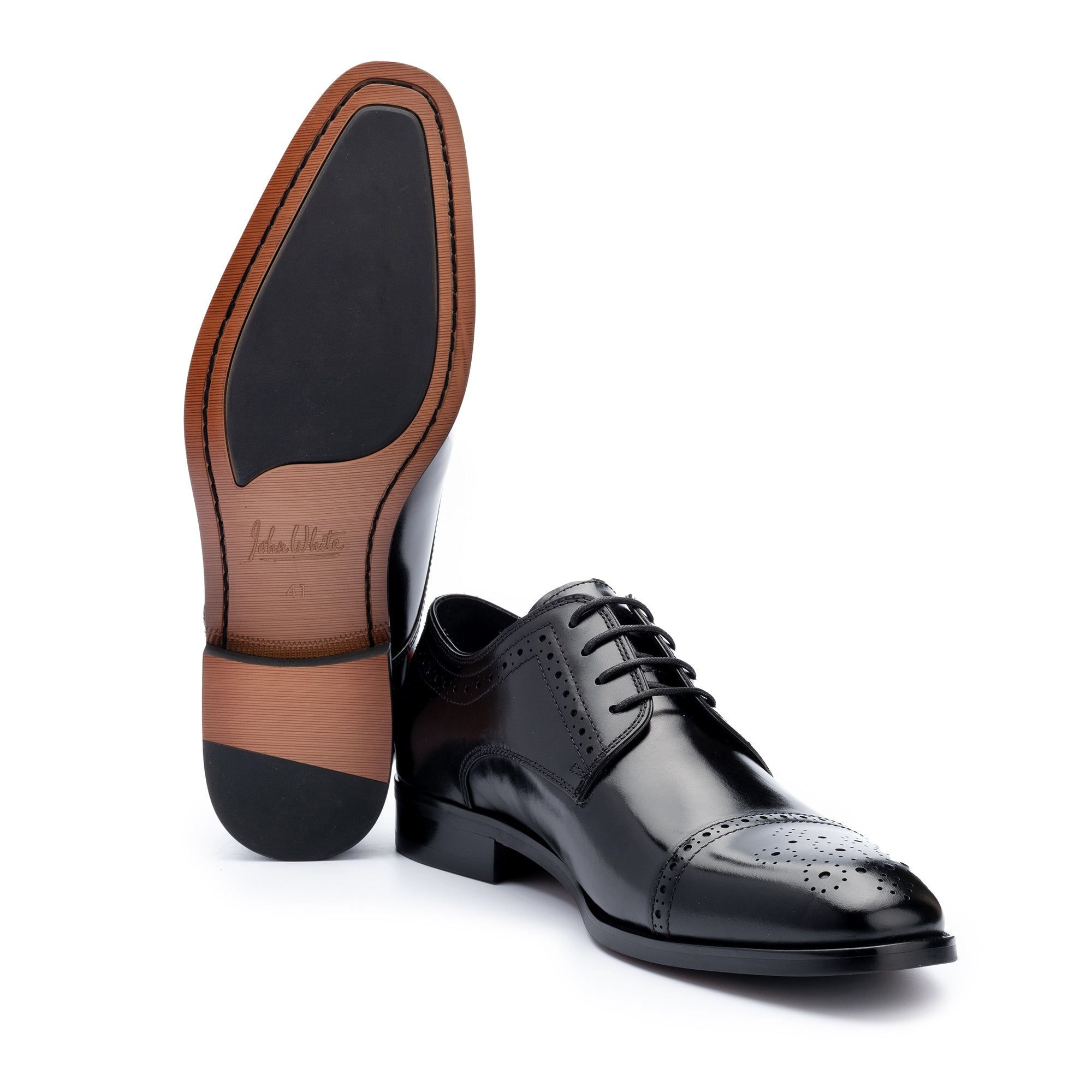
Brogue decoration — the punched and pinked leather ornamentation applied to toe caps and occasionally along seams — lowers a shoe’s formality register by one step for every level of decoration added. Understanding where each level sits is the key to using brogues confidently in a professional context. The full brogue vs semi-brogue guide maps this out in precise detail.
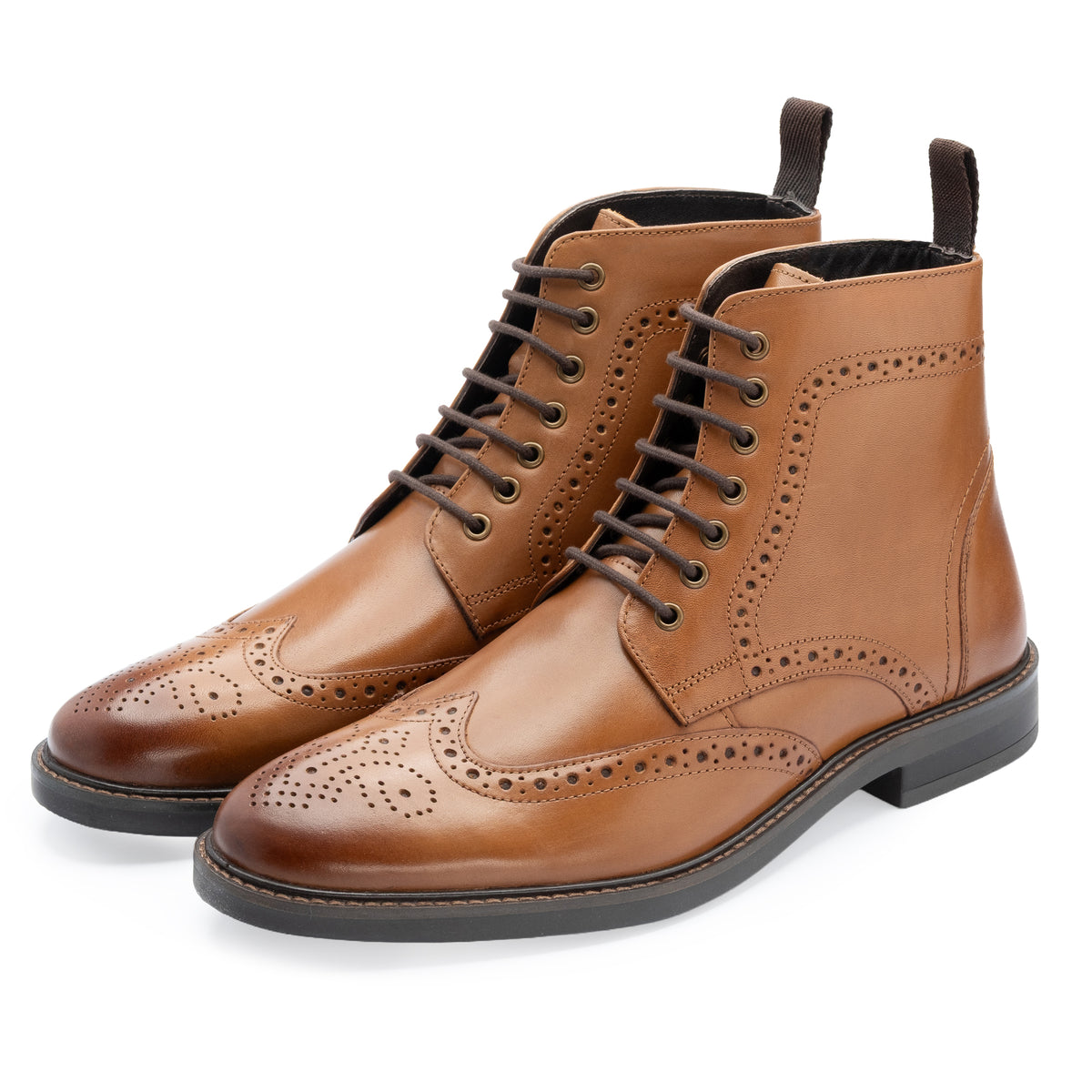
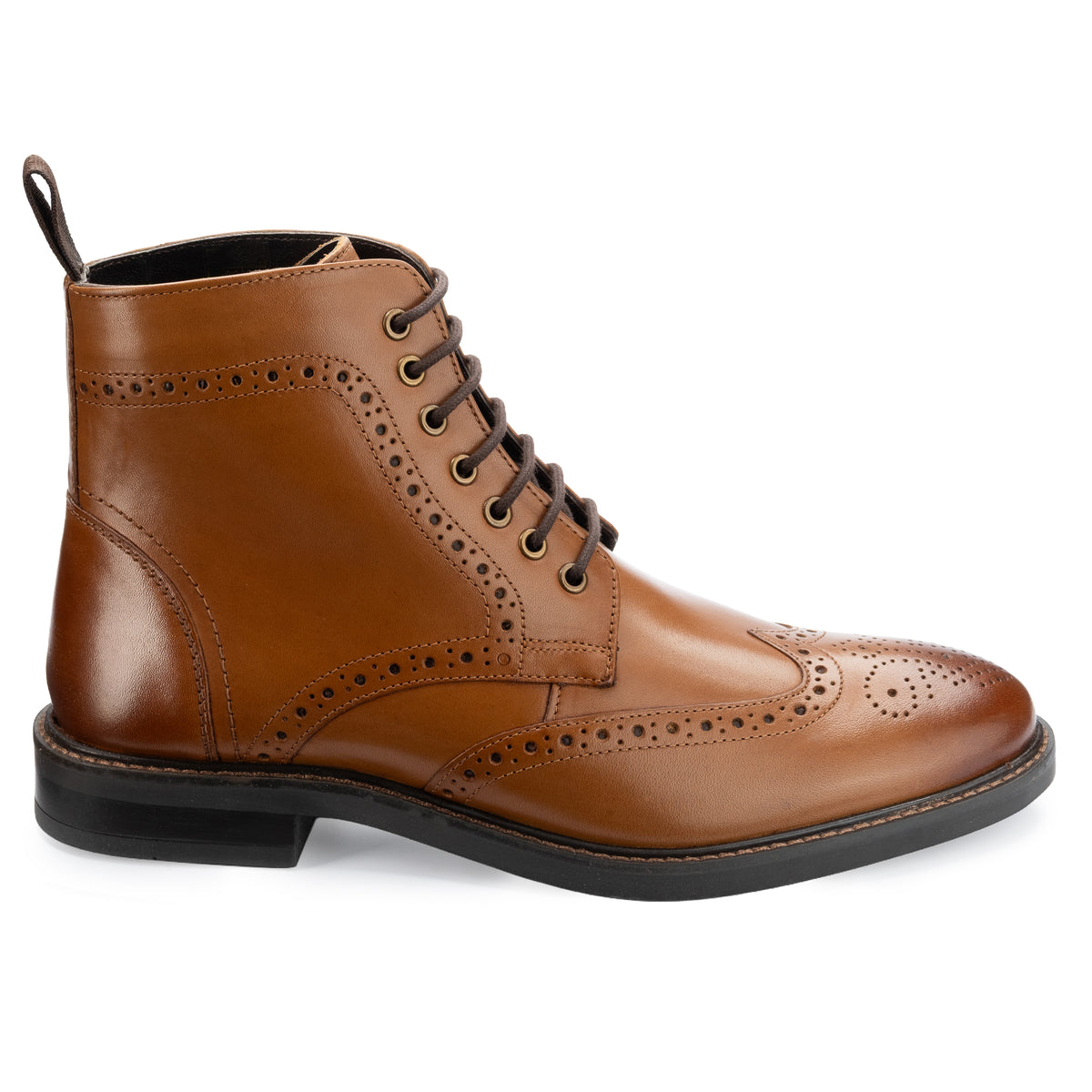
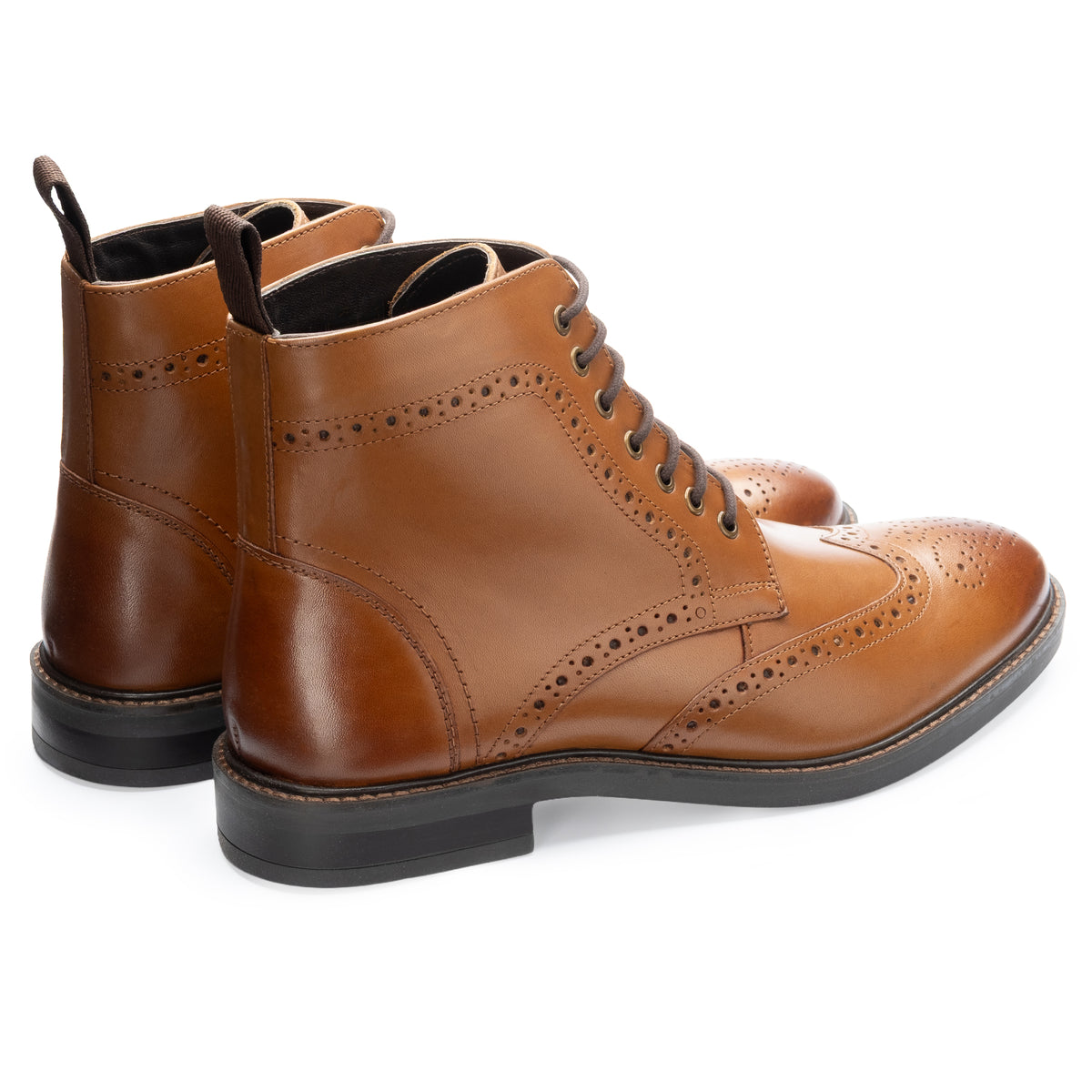
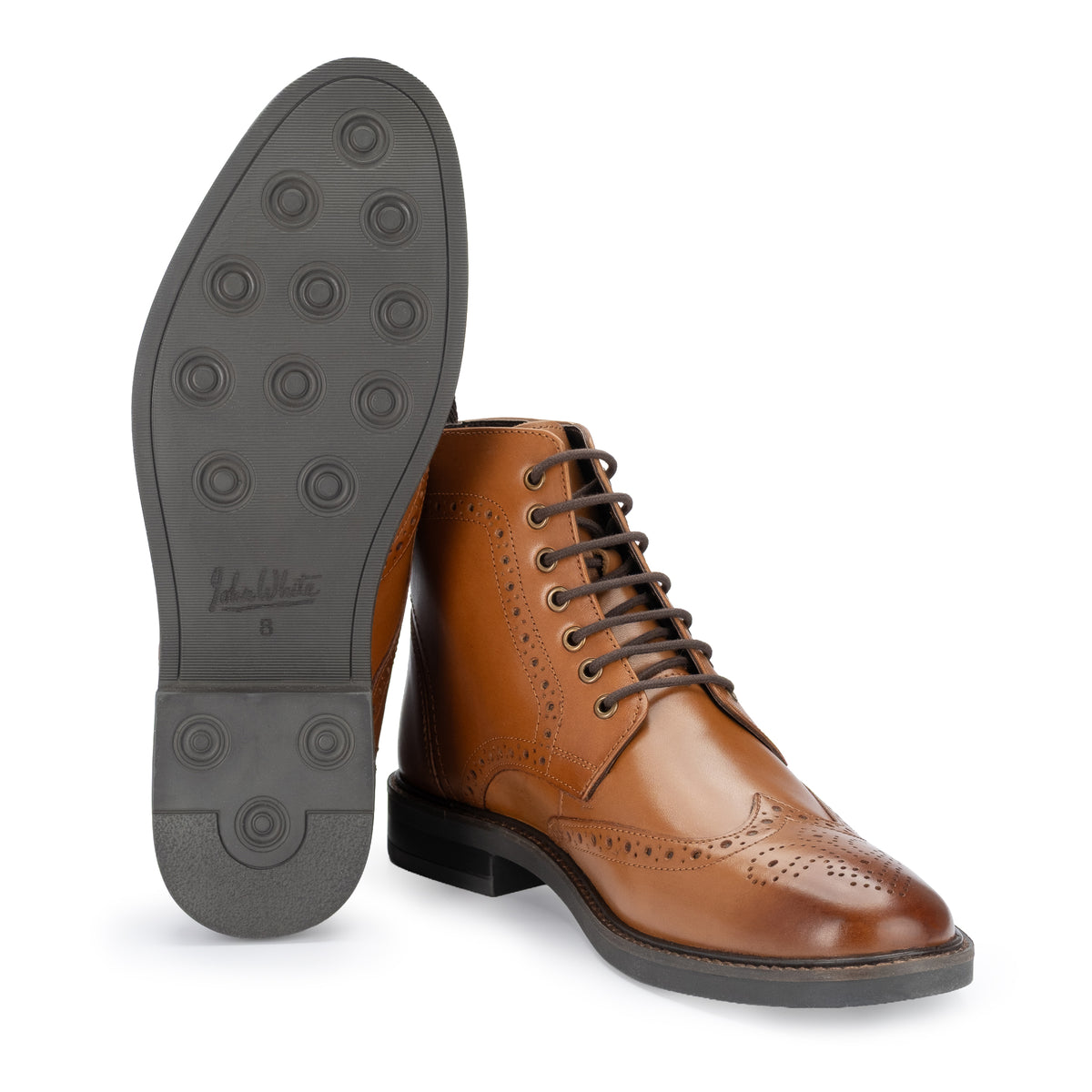
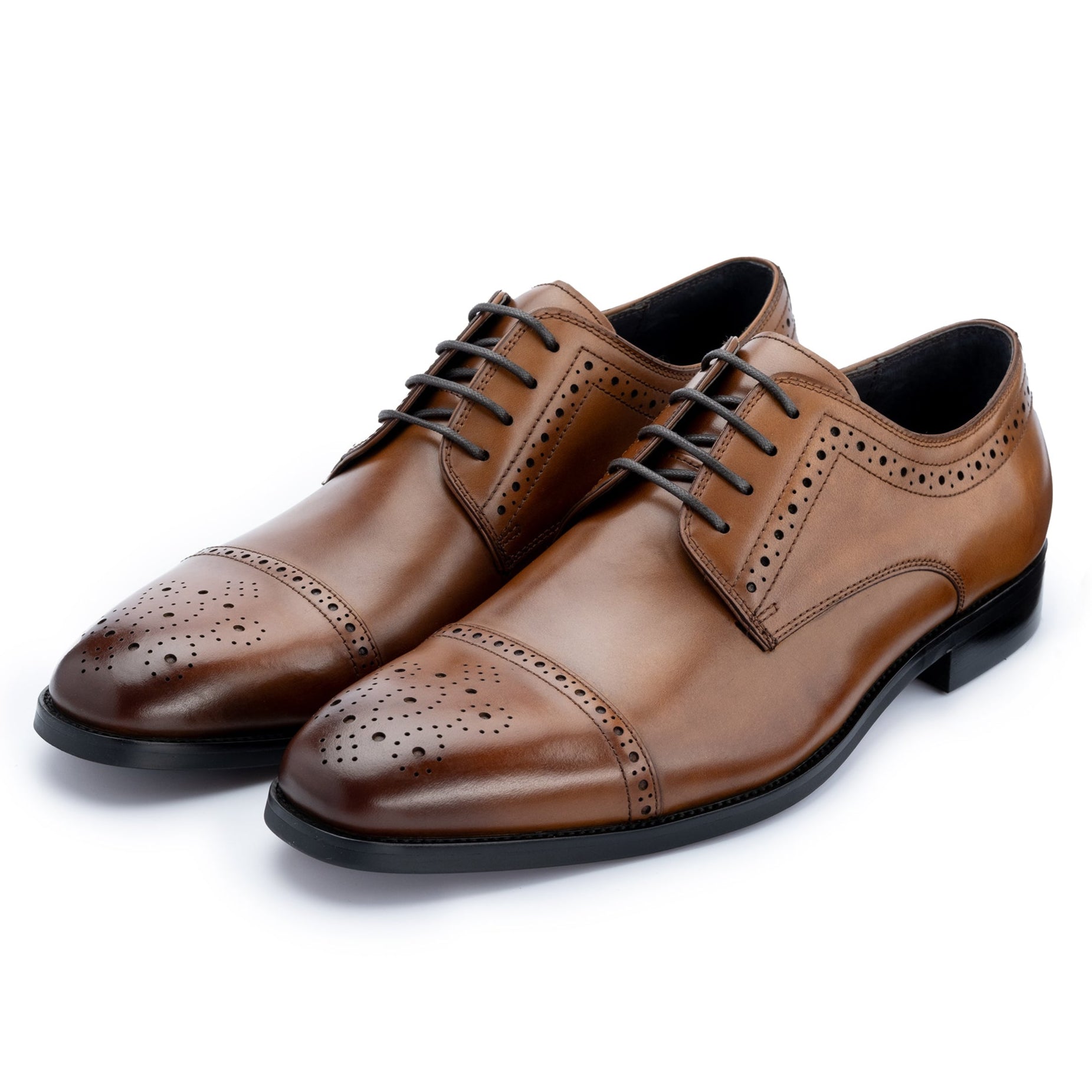
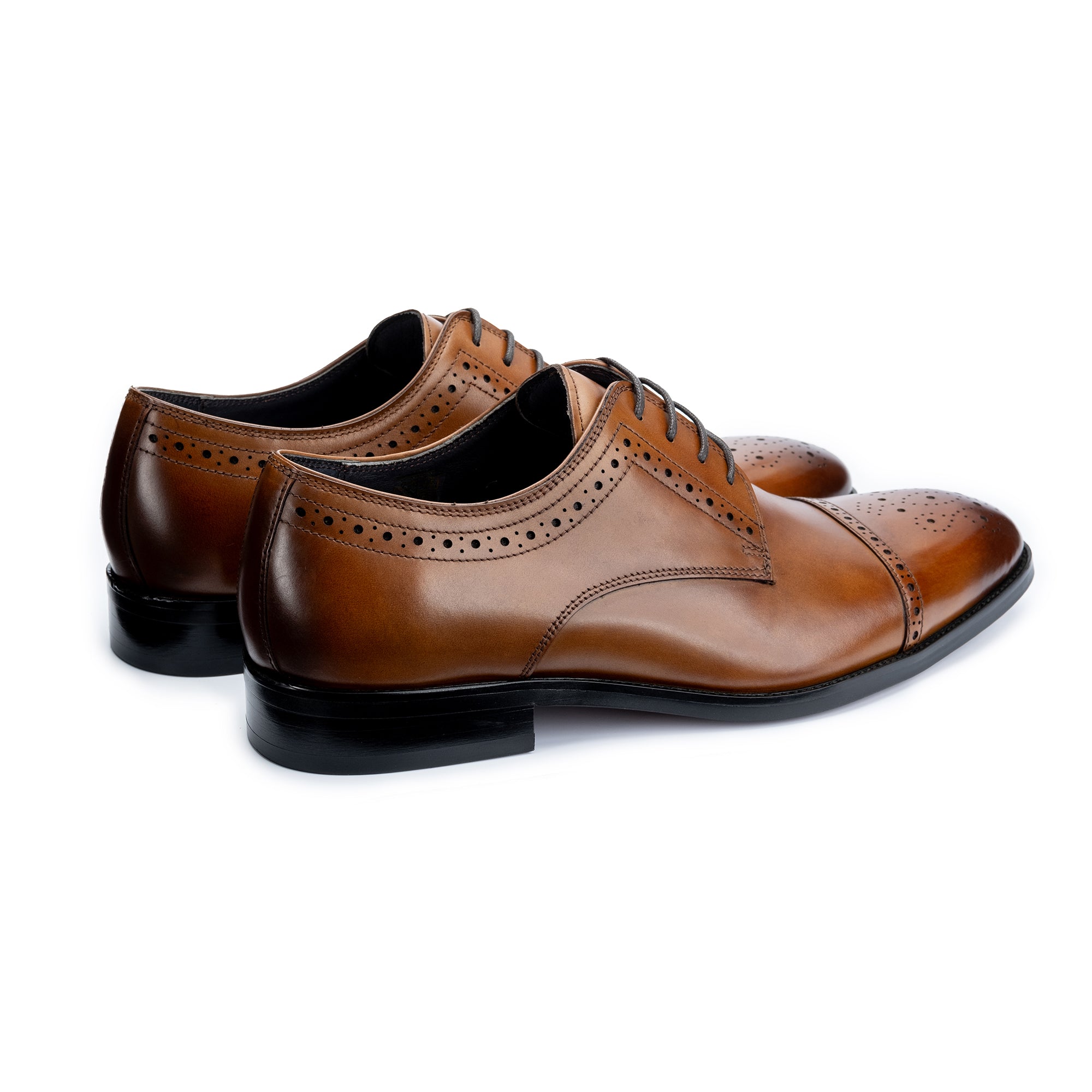
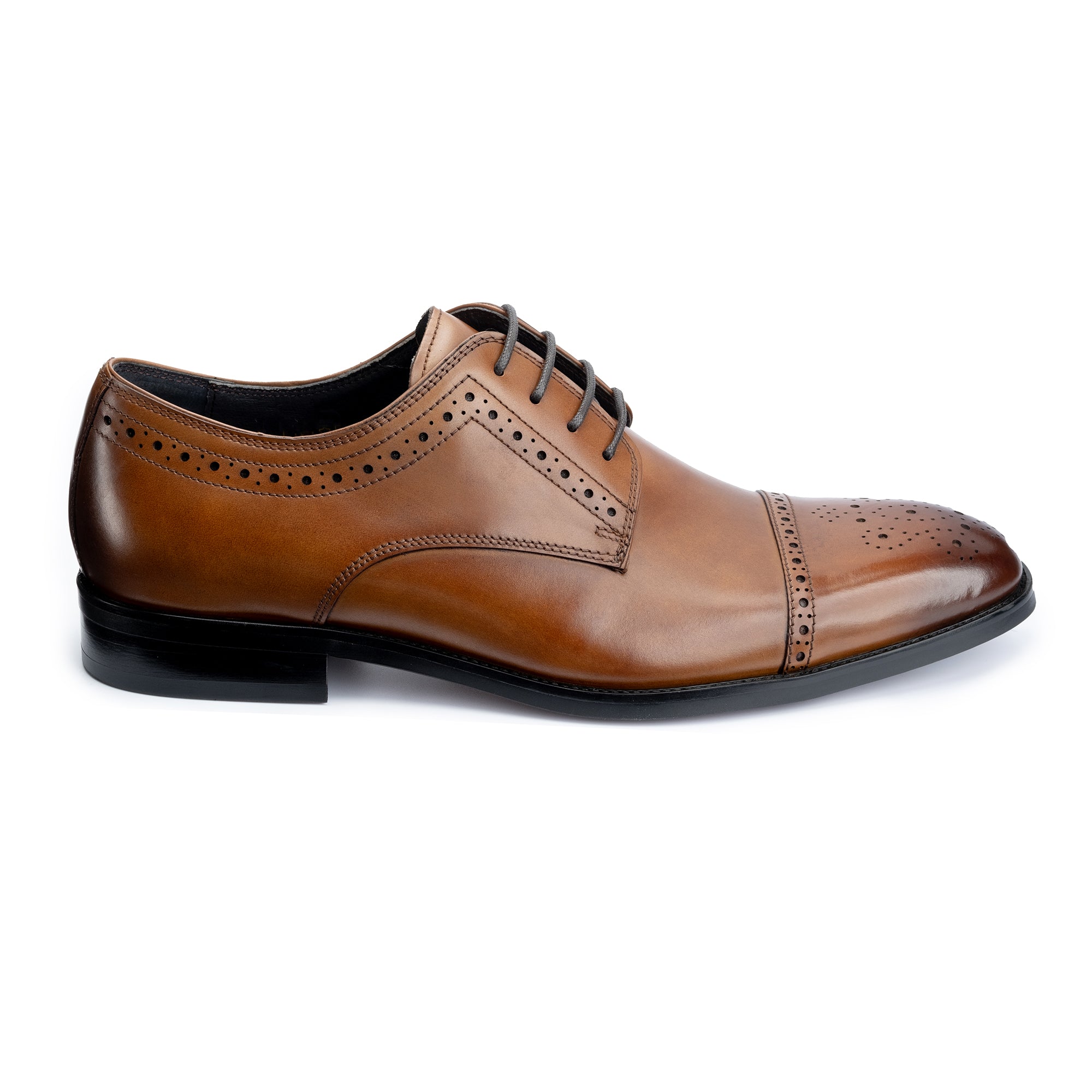
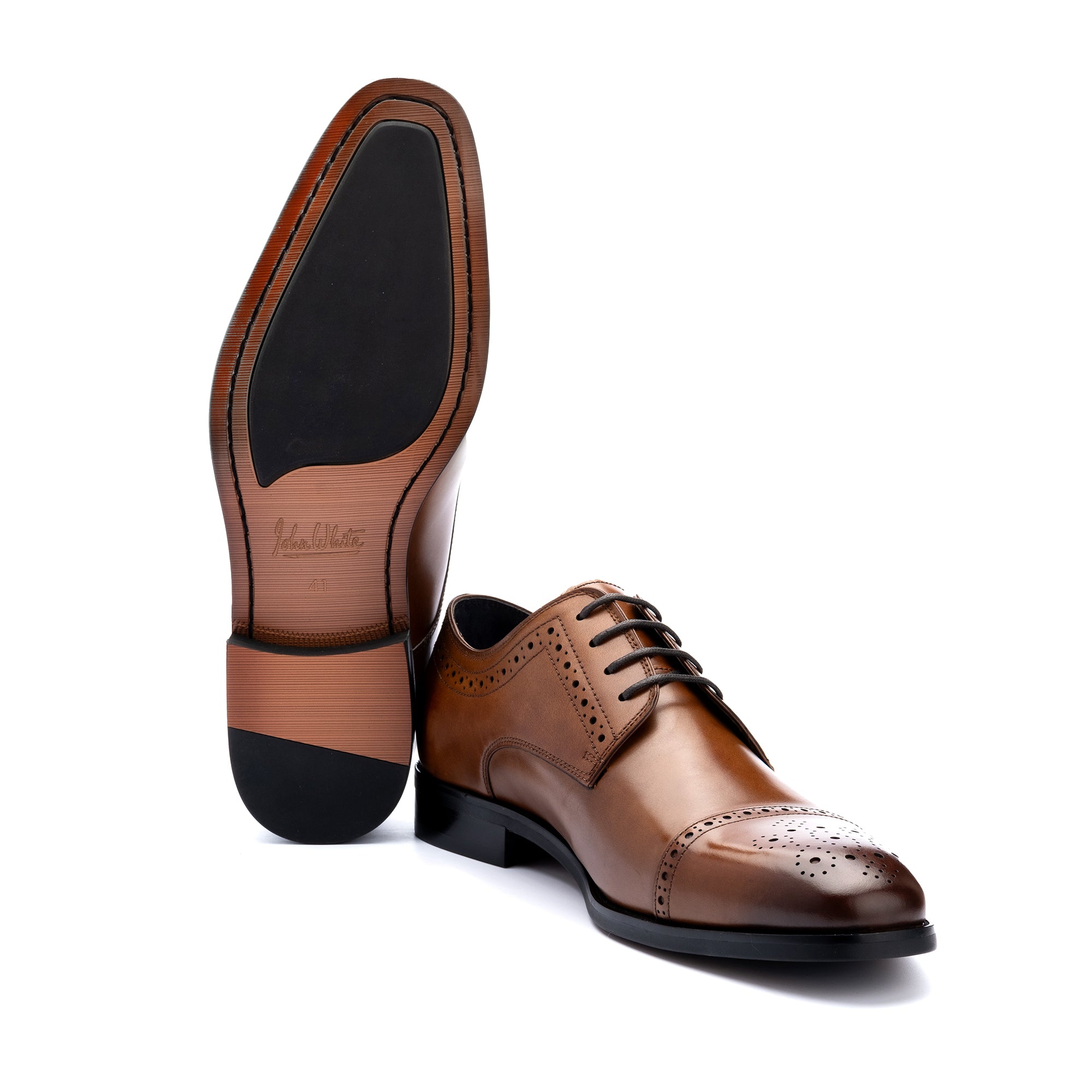
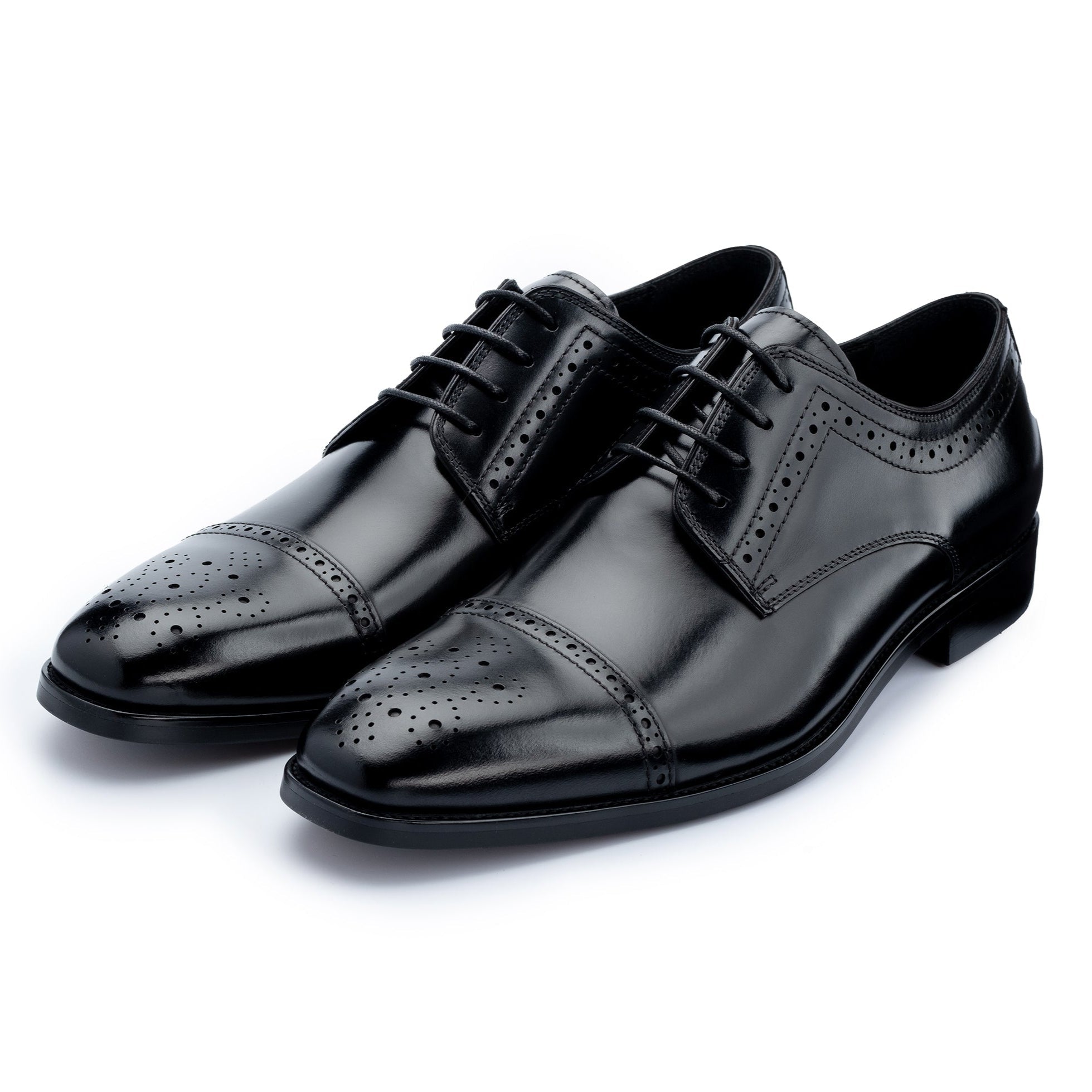
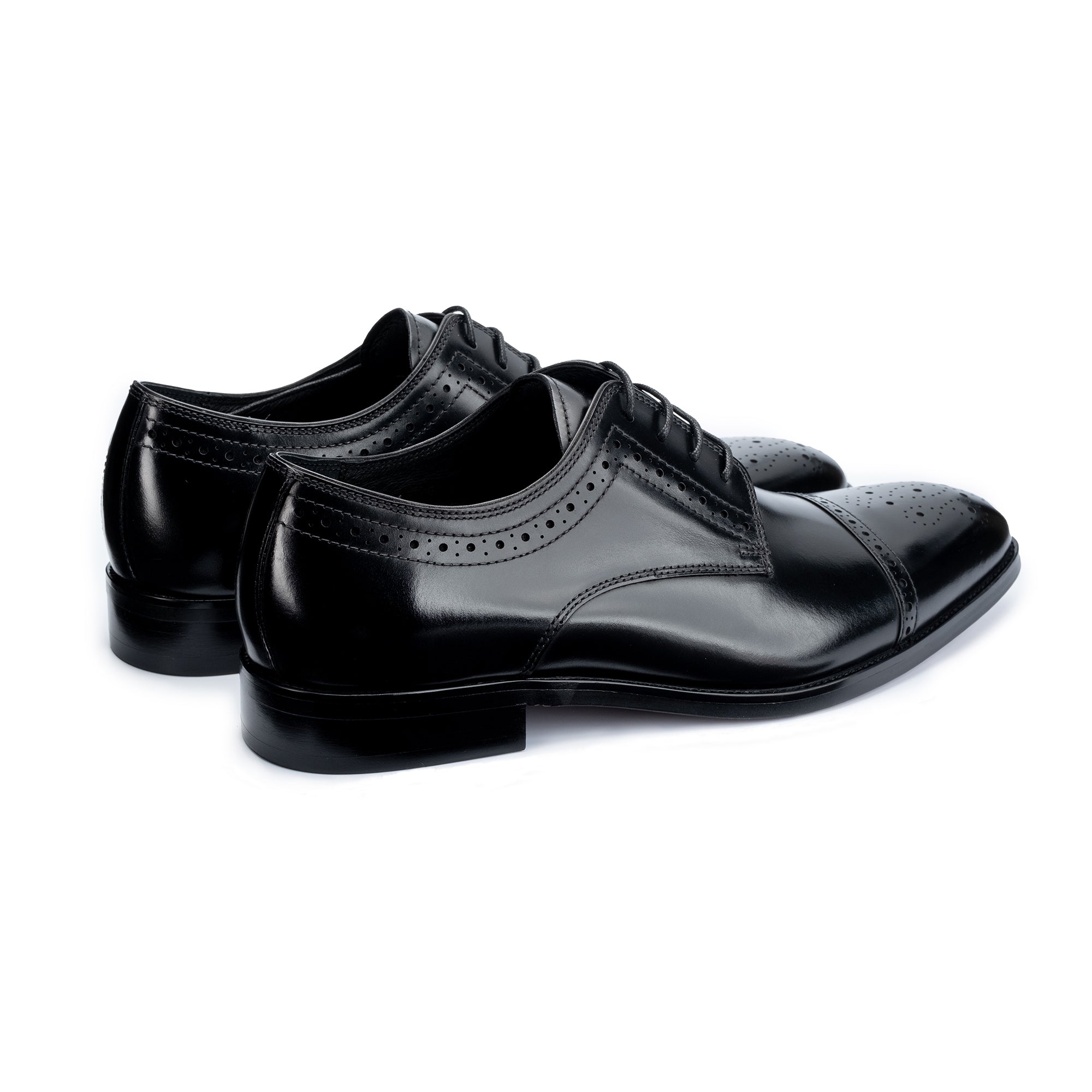
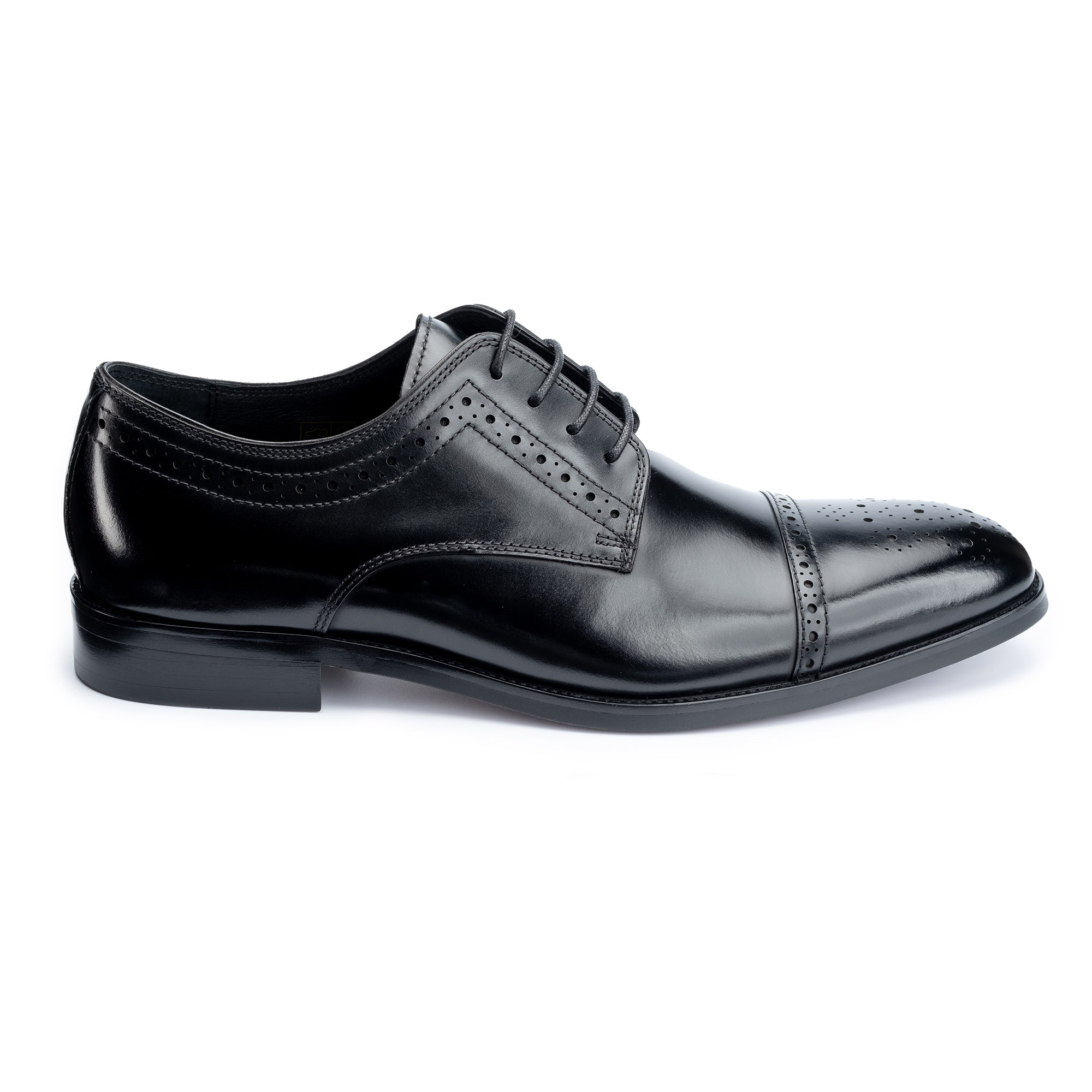
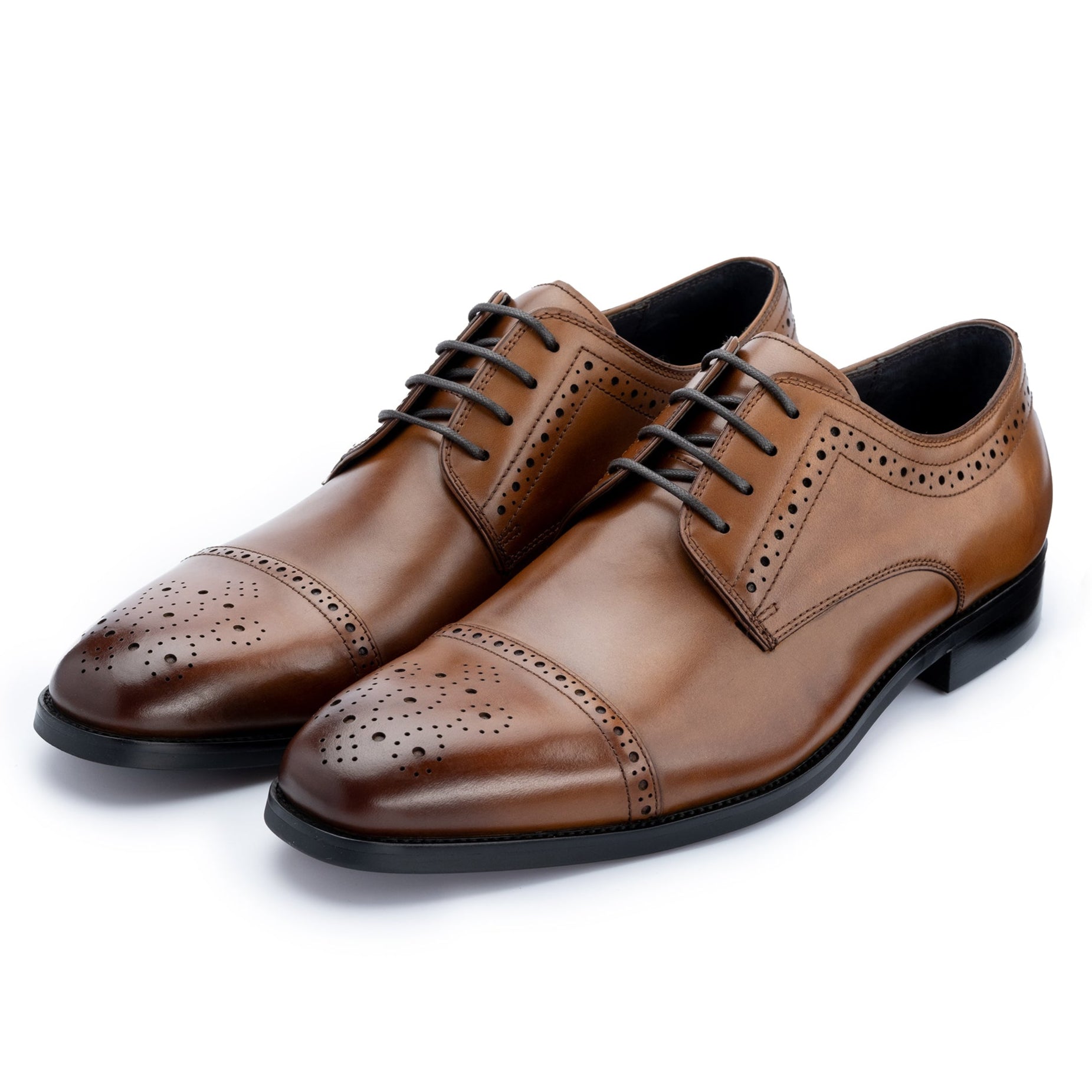
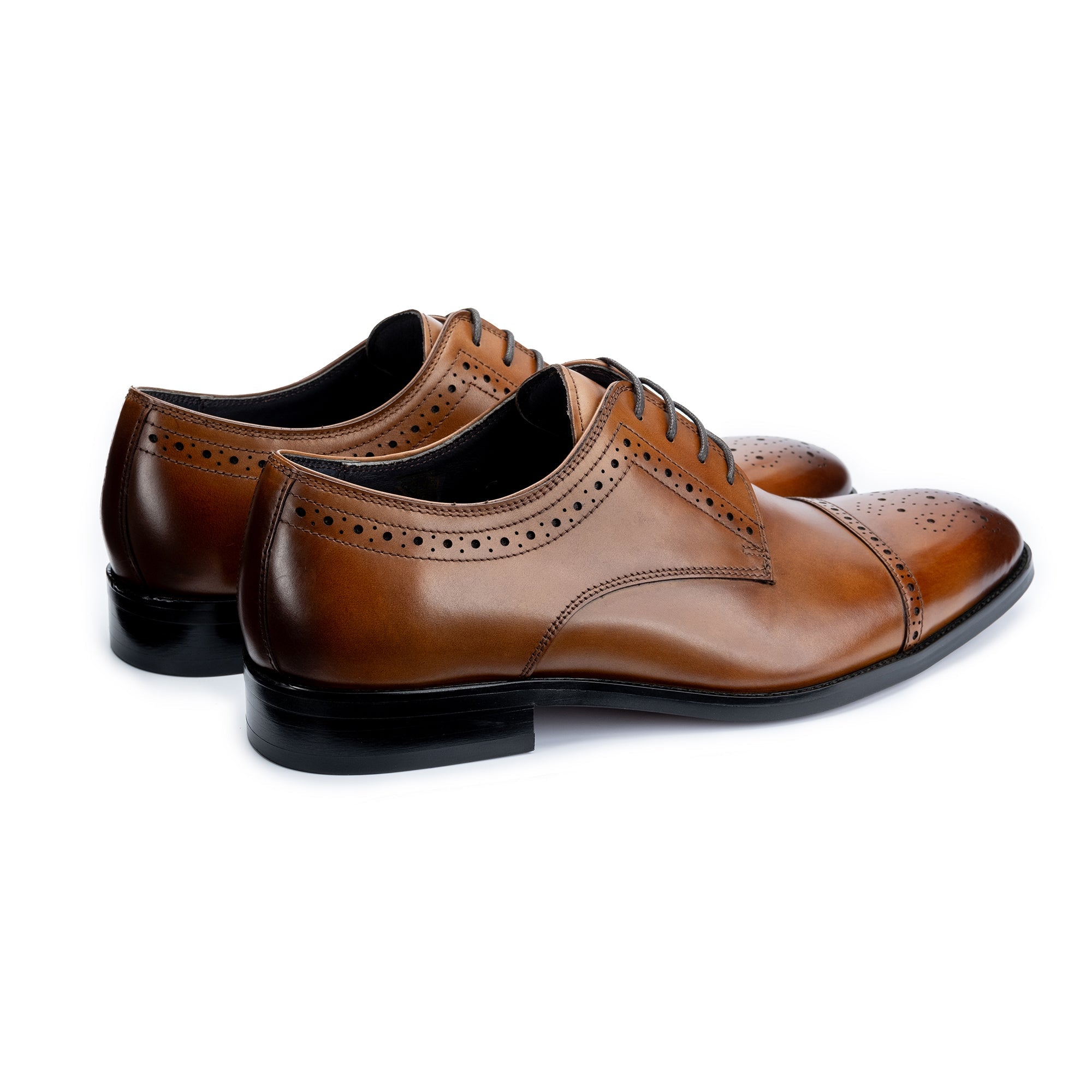
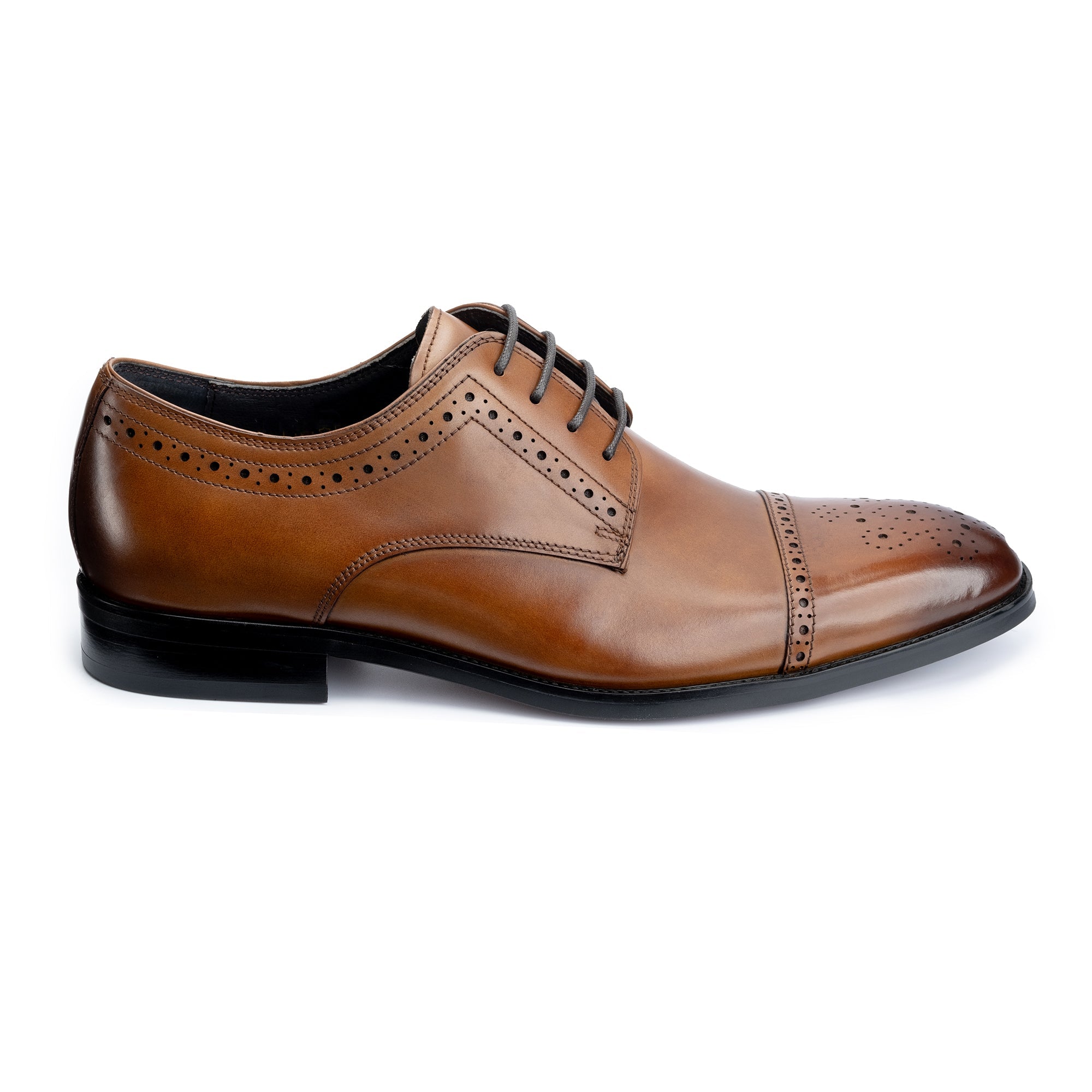
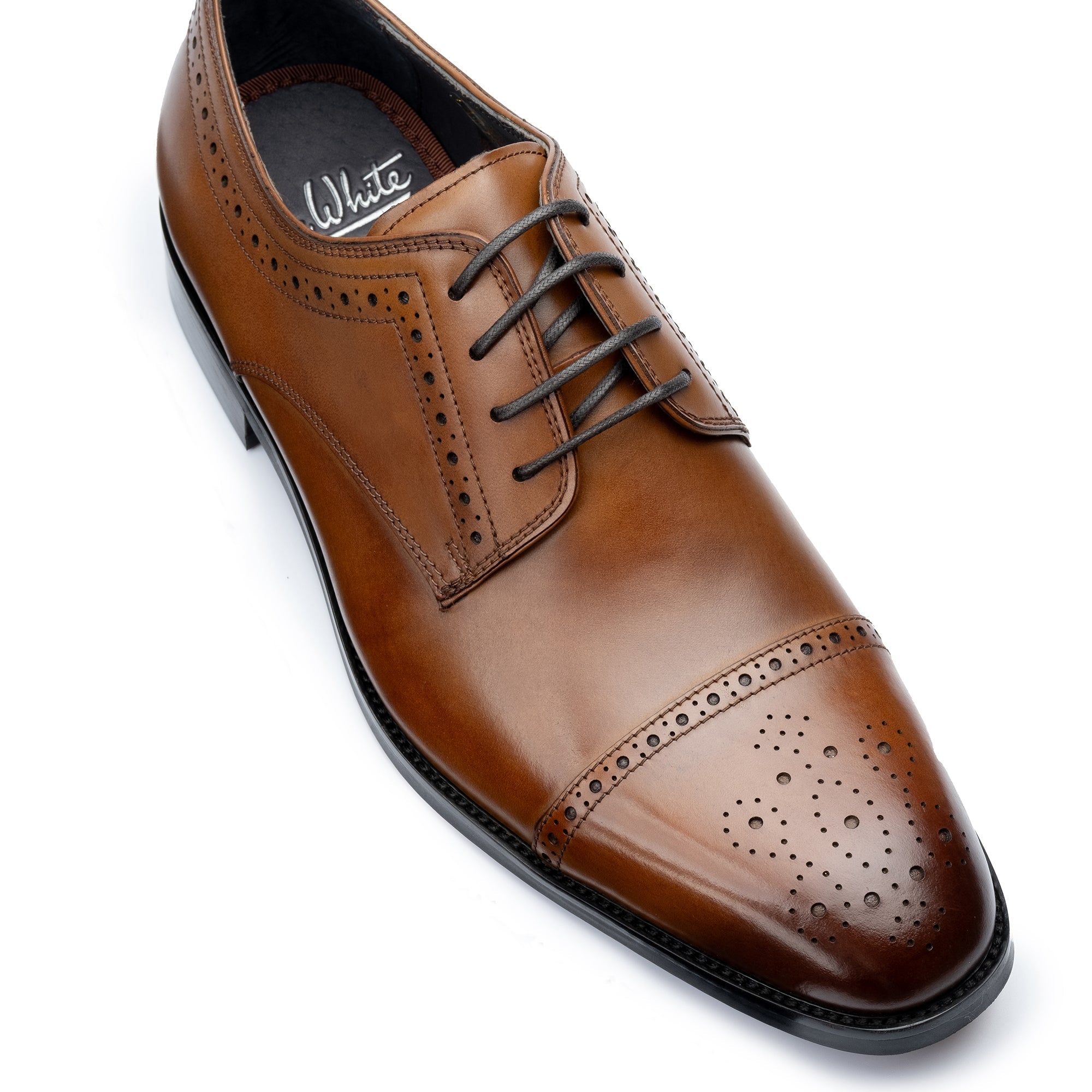
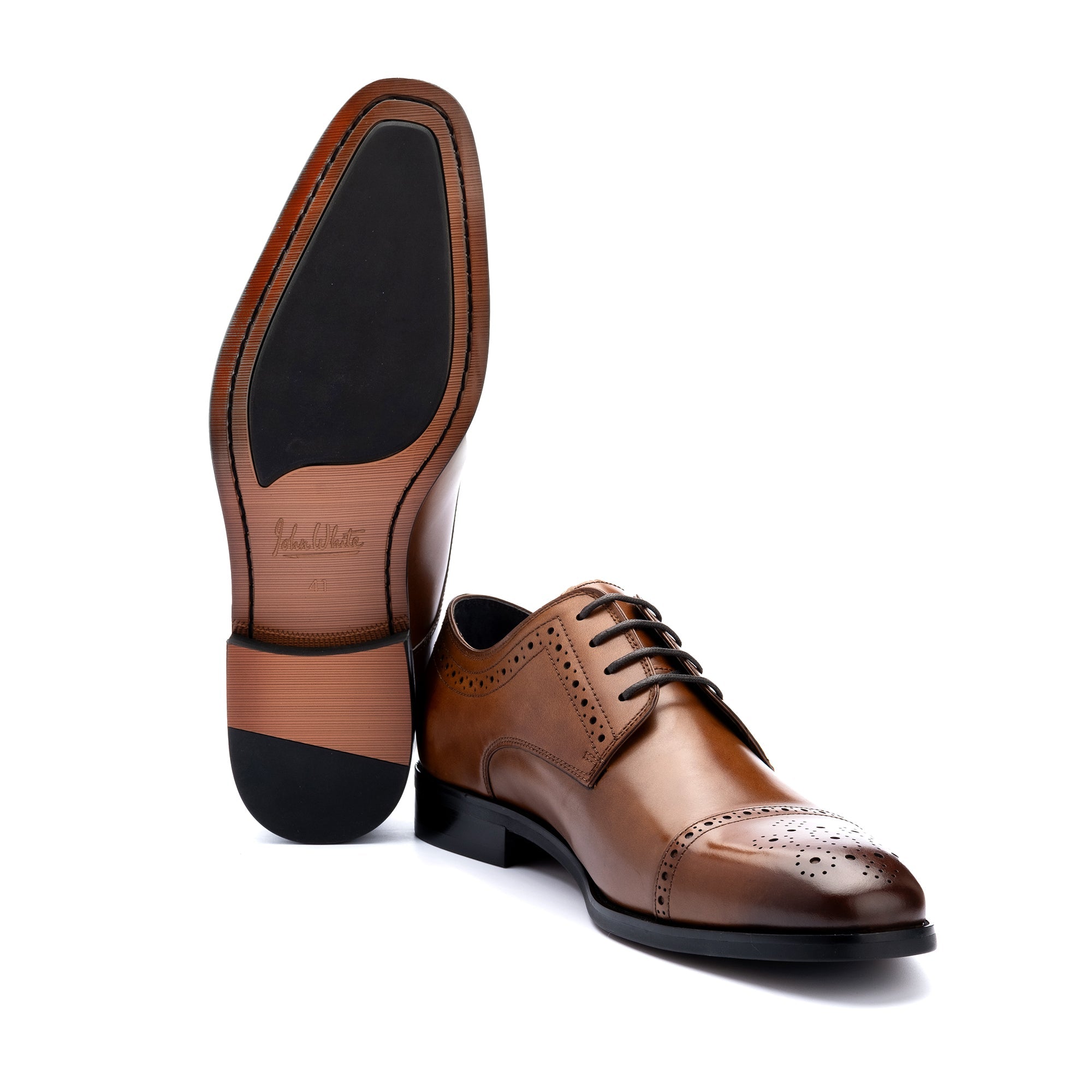
The semi-brogue occupies productive middle territory. The medallion on the toe cap and the broguing along the cap seam give the shoe personality without tipping into the full brogue’s weekend-adjacent character. In a business professional office, the semi-brogue in Black is a legitimate choice on most days. In a formal office, it earns its place toward the end of the working week when the register relaxes.
The Lucan Semi-Brogues in Black work on this principle. They carry enough formality for a suit but enough personality to prevent the wardrobe reading as entirely functional. In Tan, the Lucan moves into a different register entirely — a sharp smart-casual shoe for the less formal end of the professional week.
Black or Brown — Getting the Colour Right
Black shoes carry no ambiguity. They pair with charcoal, navy, mid-grey, and dark suits without any calculation required. In a formal office, they are the default and the correct default — not because brown is wrong, but because black requires no decision-making at six in the morning.
Brown shoes reward slightly more consideration. Brown works with navy and mid-grey suits — both standard working colours — and lifts the outfit away from the austerity that black produces. This is not a trivial difference: the visual warmth of a brown Derby under a navy suit is a deliberate choice that reads as such. Tan is the lighter end of the brown family: it suits charcoal less, suits mid-grey and light navy well, and is more seasonally calibrated to September than to January.
The practical approach: establish black first. Add brown when the black is working. Tan comes third, as a warm-weather or smart-casual option rather than a substitute for the darker pairs.
Rotation and the Long Game
One pair is not enough. This is not a commercial point; it is a structural one about how leather behaves.
Leather absorbs moisture throughout the working day — from perspiration, from rain, from contact with fabric. A shoe worn two days running cannot fully dry between uses. The interior lining degrades faster; the upper eventually loses structure. A minimum of two pairs in rotation, worn on alternate days, extends the lifespan of both considerably — often by several years.
Cedar shoe trees, inserted immediately after each wear, assist with moisture absorption and help the upper retain its shape through the drying process. The last that makes a Derby or Oxford sit correctly under a trouser break is what collapses first without support.
September is the right moment to establish or reinstate these habits. A quality shoe, rotated and maintained consistently, does not age quickly. The professional wardrobe is worth treating as a long-term investment rather than a replacement cycle — both for economy and for the effect a well-maintained shoe produces on first impression.